An amendment numbered 5 printed in House Report 108-48 to provide a feasibility study of issues relating to background checks for volunteers of groups that work with children, the disabled, and the elderly.
What it does: Inserts new text at the end of the bill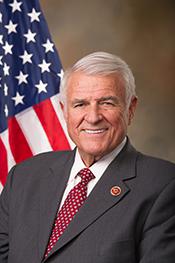 Rep. John R. Carter (R-TX)
Description
Amendment requires the Department of Justice to conduct a feasibility study and submit to Congress a report, including recommendations, which may include a proposal for grants to the States to develop or improve programs to collect fingerprints and perform background checks on individuals that seek to volunteer with organizations that work with children, the elderly, or the disabled.
What it changes
1 change to H.R. 1104
We couldn't match these changes to the text of H.R. 1104, so they're shown as written.
Inserts new text at the end of the bill
InsertsInserted: SEC. . FEASIBILITY STUDY FOR A SYSTEM OF BACKGROUND CHECKS FOR VOLUNTEERS.
Inserted: (a) Study Required.--The Attorney General shall conduct a feasibility study within 120 days after the date of the enactment of this Act. The study shall examine, to the extent discernible, the following:
Inserted: (1) The current state of fingerprint capture and processing at the State and local level, including the current available infrastructure, State system capacities, and the time for each State to process a civil or volunteer print from the time of capture to submission to the Federal Bureau of Investigation (FBI).
Inserted: (2) The intent of the States concerning participation in a nationwide system of criminal background checks to provide information to qualified entities.
Inserted: (3) The number of volunteers, employees, and other individuals that would require a fingerprint based criminal background check.
Inserted: (4) The impact on the FBI's Integrated Automated Fingerprint Identification System (IAFIS) in terms of capacity and impact on other users of the system, including the effect on FBI work practices and staffing levels.
Inserted: (5) The current fees charged by the FBI, States and local agencies, and private companies to process fingerprints.
Inserted: (6) The existence of "model" or best practice programs which could easily be expanded and duplicated in other States.
Inserted: (7) The extent to which private companies are currently performing background checks and the possibility of using private companies in the future to perform any of the background check process, including, but not limited to, the capture and transmission of fingerprints and fitness determinations.
Inserted: (8) The cost of development and operation of the technology and the infrastructure necessary to establish a nationwide fingerprint based and other criminal background check system.
Inserted: (9) Any other information deemed relevant by the Department of Justice.
Inserted: (b) Report.--Based on the findings of the feasibility study, the Attorney General shall, not later than 120 days after the date of the enactment of this Act, submit to Congress a report, including recommendations, which may include a proposal for grants to the States to develop or improve programs to collect fingerprints and perform background checks on individuals that seek to volunteer with organizations that work with children, the elderly, or the disabled.
Original wording
Add at the end the following:
Read automatically from the Congressional Record. Check the original before relying on it.
As printed
Add at the end the following:
SEC. . FEASIBILITY STUDY FOR A SYSTEM OF BACKGROUND CHECKS FOR VOLUNTEERS.
(a) Study Required.--The Attorney General shall conduct a feasibility study within 120 days after the date of the enactment of this Act. The study shall examine, to the extent discernible, the following:
(1) The current state of fingerprint capture and processing at the State and local level, including the current available infrastructure, State system capacities, and the time for each State to process a civil or volunteer print from the time of capture to submission to the Federal Bureau of Investigation (FBI).
(2) The intent of the States concerning participation in a nationwide system of criminal background checks to provide information to qualified entities.
(3) The number of volunteers, employees, and other individuals that would require a fingerprint based criminal background check.
(4) The impact on the FBI's Integrated Automated Fingerprint Identification System (IAFIS) in terms of capacity and impact on other users of the system, including the effect on FBI work practices and staffing levels.
(5) The current fees charged by the FBI, States and local agencies, and private companies to process fingerprints.
(6) The existence of “model” or best practice programs which could easily be expanded and duplicated in other States.
(7) The extent to which private companies are currently performing background checks and the possibility of using private companies in the future to perform any of the background check process, including, but not limited to, the capture and transmission of fingerprints and fitness determinations.
(8) The cost of development and operation of the technology and the infrastructure necessary to establish a nationwide fingerprint based and other criminal background check system.
(9) Any other information deemed relevant by the Department of Justice.
(b) Report.--Based on the findings of the feasibility study, the Attorney General shall, not later than 120 days after the date of the enactment of this Act, submit to Congress a report, including recommendations, which may include a proposal for grants to the States to develop or improve programs to collect fingerprints and perform background checks on individuals that seek to volunteer with organizations that work with children, the elderly, or the disabled.
Legislative Activity
Stay on top of the latest movement without scrolling through every action
House amendment offered
March 27, 2003
View full timeline
House amendment offered
March 27, 2003
Amendment agreed to Committee of the Whole
March 27, 2003 • 12:07 PM
House amendment agreed to: On agreeing to the Carter amendment (A005) Agreed to by voice vote.
March 27, 2003 • 12:07 PM
House amendment offered/reported by : Amendment (A005) offered by Mr. Carter.(consideration: CR H2426-2427; text: CR H2426)
March 27, 2003 • 12:02 PM
Amendment (A005) offered by Mr. Carter. (consideration: CR H2426-2427; text: CR H2426)
March 27, 2003 • 12:02 PM
On agreeing to the Carter amendment (A005) Agreed to by voice vote.
March 27, 2003 • 12:07 PM