An amendment to prohibit use of funds in the bill to issue a final rule in Docket No. 02-06201, "Cost-sharing for Animal and Plant Health Emergency Programs".
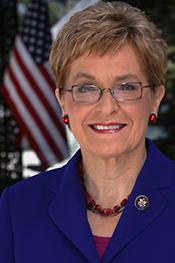 Rep. Marcy Kaptur (D-OH)
Description
Amendment prohibits funds in the bill from being used to issue a final rule on cost-sharing for animal and plant health emergency programs.
Legislative Activity
Stay on top of the latest movement without scrolling through every action
House amendment offered
July 14, 2003
View full timeline
House amendment offered
July 14, 2003
Amendment agreed to Committee of the Whole
July 14, 2003 • 3:31 PM
House amendment agreed to: On agreeing to the Kaptur amendment (A010) Agreed to by voice vote.
July 14, 2003 • 3:31 PM
House amendment offered/reported by : Amendment (A010) offered by Ms. Kaptur.(consideration: CR H6656; text: CR H6656)
July 14, 2003 • 3:30 PM
Amendment (A010) offered by Ms. Kaptur. (consideration: CR H6656; text: CR H6656)
July 14, 2003 • 3:30 PM
On agreeing to the Kaptur amendment (A010) Agreed to by voice vote.
July 14, 2003 • 3:31 PM
Text
Offered
AGRICULTURE, RURAL DEVELOPMENT, FOOD AND DRUG ADMINISTRATION, AND
RELATED AGENCIES APPROPRIATIONS ACT, 2004

Mr. BONILLA. Mr. Speaker, I move that the House resolve itself into
the Committee of the Whole House on the State of the Union for the
further consideration of the bill (H.R. 2673) making appropriations for
Agriculture, Rural Development, Food and Drug Administration, and
Related Agencies for the fiscal year ending September 30, 2004, and for
other purposes.
The motion was agreed to.

{time}  1525

In the Committee of the Whole

Accordingly, the House resolved itself into the Committee of the
Whole House on the State of the Union for the further consideration of
the bill, H.R. 2673, with Mr. Ryan of Wisconsin in the chair.

[[Page H6656]]

The Clerk read the title of the bill.
The CHAIRMAN pro tempore. When the Committee of the Whole House rose
earlier today, a request for a recorded vote on the amendment by the
gentleman from New York (Mr. Ackerman) had been postponed, and the bill
was open for amendment through page 72, line 23.
Pursuant to the order of the House today, no further amendment to the
bill may be offered except pro forma amendments offered by the chairman
or ranking minority member of the Committee on Appropriations or their
designees for the purpose of debate and
An amendment by Ms. Kaptur regarding biofuels, which will be
debatable for 20 minutes;
An amendment by Ms. Kaptur regarding APHIS;
An amendment by Ms. Kaptur regarding credit cards;
An amendment by Ms. Kaptur regarding the Website of the Department of
Agriculture;
An amendment by Mr. Brown of Ohio regarding food safety, which shall
be debatable for 20 minutes.
Each such amendment may be offered only by the Member designated in
this request, or a designee, shall not be subject to amendment, and
shall not be subject to a demand for a division of the question in the
House or in the Committee of the Whole.
Except as specified, each such amendment shall be debatable for 10
minutes, and debate on each amendment shall be equally divided and
controlled by the proponent and an opponent.
All points of order against each of the amendments shall be
considered as reserved pending completion of debate thereon; and each
of the amendments may be withdrawn by its proponent after debate
thereon.

Amendment Offered by Ms. Kaptur

Ms. KAPTUR. Mr. Chairman, I offer an amendment.
The Clerk read as follows:

Amendment offered by Ms. Kaptur:
At the end of the bill, add the following new section:
Sec.   . None of the funds appropriated or otherwise made
available in this Act shall be expended to violate Public Law
105-264.

The CHAIRMAN pro tempore. The gentlewoman from Ohio (Ms. Kaptur) is
recognized for 5 minutes.
Mr. LATHAM. Mr. Chairman, we would accept the amendment.
Ms. KAPTUR. Mr. Chairman, I yield myself such time as I may consume.
I thank my good friend from Iowa for that, and I just for purposes of
the Record wish to state that this amendment concerns the recent
allegations that have been put forward about individuals at the
Department of Agriculture misusing their Federal credit cards that they
possess on behalf of the agency.

{time}  1530

We look forward to working with the majority to ensure prompt
prosecution and also actions being taken by the Department of
Agriculture for us to monitor them as they move forward to make sure
that this never happens again. I thank the gentleman for his support.
Mr. Chairman, I yield back the balance of my time.
The CHAIRMAN pro tempore (Mr. Ryan of Wisconsin). The question is on
the amendment offered by the gentlewoman from Ohio (Ms. Kaptur).
The amendment was agreed to.

Amendment Offered by Ms. Kaptur

Ms. KAPTUR. Mr. Chairman, I offer an amendment.
The Clerk read as follows:

Amendment offered by Ms. Kaptur:
At the end of the bill, add the following new section:
Sec.   . None of the funds appropriated or otherwise made
available by this Act may be used to issue a final rule in
Docket No. 02-06201, ``Cost-Sharing for Animal and Plant
Health Emergency Programs,'' 68 Fed. Reg. 40541-40553 (July
8, 2003).

Ms. KAPTUR (during the reading). Mr. Chairman, I ask unanimous
consent that the amendment be considered as read and printed in the
Record.
The CHAIRMAN pro tempore. Is there objection to the request of the
gentlewoman from Ohio?
There was no objection.
Mr. LATHAM. Mr. Chairman, we would accept the amendment of the
gentlewoman from Ohio (Ms. Kaptur).
Ms. KAPTUR. Mr. Chairman, I yield myself such time as I may consume.
Mr. Chairman, I thank the gentleman from Iowa (Mr. Latham). Just for
purposes of the debate and the record, let us show that this amendment
would prohibit the U.S. Department of Agriculture from finalizing a
rule on cost sharing between the Federal Government and co-operators,
our States, local governments and industry groups on the cost of
responding to animal or pest emergencies that threaten U.S.
agriculture. We believe this to be a Federal responsibility.
Mr. Chairman, I yield back the balance of my time.
The CHAIRMAN pro tempore. The question is on the amendment offered by
the gentlewoman from Ohio (Ms. Kaptur).
The amendment was agreed to.

Amendment Offered by Ms. Kaptur

Ms. KAPTUR. Mr. Chairman, I offer an amendment.
The Clerk read as follows:

Amendment offered by Ms. Kaptur:
At the end of the bill, add the following new section:
``Sec.   . No funds appropriated or made available by this
Act may be used to identify by photograph on a department's
or agency's website any Member of the House of
Representatives or the Senate within 60 days before a federal
general election.''

The CHAIRMAN pro tempore. All points of order are reserved.
Pursuant to the order of the House of today, the gentlewoman from
Ohio (Ms. Kaptur) and a Member opposed each will control 5 minutes.
The Chair recognizes the gentlewoman from Ohio (Ms. Kaptur).
Ms. KAPTUR. Mr. Chairman, I yield myself such time as I may consume.
Mr. LATHAM. Mr. Chairman, will the gentlewoman yield?
Ms. KAPTUR. I yield to the gentleman from Iowa.
Mr. LATHAM. Mr. Chairman, we would accept the amendment.
Ms. KAPTUR. Mr. Chairman, I thank the chairman and appreciate the
chairman's acceptance of this amendment.
Mr. Chairman, I yield back the balance of my time.
The CHAIRMAN pro tempore. The question is on the amendment offered by
the gentlewoman from Ohio (Ms. Kaptur).
The amendment was agreed to.

Amendment Offered by Ms. Kaptur

Ms. KAPTUR. Mr. Chairman, I offer an amendment.
The Clerk read as follows:

Amendment offered by Ms. Kaptur:
Under the heading ``common computing environment'',
insert after the dollar amount on page 3, line 9, the
following: ``(reduced by $20,000,000)''.
Under the heading ``renewable energy program'', insert
after the dollar amount on page 43, line 4, the following:
``(increased by $20,000,000)''.

The CHAIRMAN pro tempore. All points of order are reserved.
Pursuant to the order of the House of today, the gentlewoman from
Ohio (Ms. Kaptur) and a Member opposed each will control 5 minutes.
The Chair recognizes the gentlewoman from Ohio (Ms. Kaptur).
Ms. KAPTUR. Mr. Chairman, I yield myself such time as I may consume.
Mr. LATHAM. Mr. Chairman, will the gentlewoman yield?
Ms. KAPTUR. I yield to the gentleman from Iowa.
Mr. LATHAM. Mr. Chairman, we would be more than happy to accept the
amendment, and we would like to expedite the process if we could.
Ms. KAPTUR. The gentleman will accept this amendment on biofuels?
Mr. LATHAM. If we could expedite the process.
Ms. KAPTUR. Mr. Chairman, I would be more than pleased to accept the
gentleman's acceptance and to say that there could be no more important
action of this government than dragging the U.S. Department of
Agriculture into the 21st century, and helping America to become energy
self-sufficient at last.
Mr. Chairman, I yield back the balance of my time.
The CHAIRMAN pro tempore. The question is on the amendment offered by
the gentlewoman from Ohio (Ms. Kaptur).
The amendment was agreed to.
The CHAIRMAN pro tempore. Are there any further amendments?
Ms. KAPTUR. Mr. Chairman, I move to strike the last word.
Mr. Chairman, I just wanted to thank the gentleman from Iowa (Mr.
Latham) for moving this bill along. I know there are other Members who
may be on their way to the floor right now, and

[[Page H6657]]

we wanted to allow a little time for that. But meanwhile, I wanted to
say a word about the overall bill and again to express my deep
disappointment that the overall level of this discretionary bill is
about 5 percent below last year's appropriated levels.
I come from a part of the country where we have experienced quite a
bit of flooding. We know that later this year we are going to have some
additional requests for disaster assistance. With the limited amount of
funding in this bill and the cuts across various accounts, it is going
to make it very difficult, barring a supplemental of some sort, to meet
all of the requirements that are necessary.
As we look toward Members asking us how good is this bill, I guess
the bottom line on this bill is that it is not nearly good enough in
view of the challenges that are facing agriculture today.
We appreciate all of the Members who have come down here today to
offer amendments. I think that every single one that was passed and
awaits votes this afternoon has improved the bill. Those that deal with
downed animals, those that deal with the Office of Civil Rights, those
that deal with our historically black colleges and Tuskegee Institute,
those that deal with improving the U.S. Department of Agriculture's
attention to biofuels production, all of these are improvements.
We were very pleased to see the gentlewoman from Guam (Mr. Bordallo)
come to the floor to talk about the insular territories and their very,
very significant dependence on agriculture, and over time the actual
ignorance by our government toward these critical areas to our country.
If I might just say an additional word on the energy title, one of
the reasons we were so concerned about the U.S. Department of
Agriculture's inattention to new fuels production is that there is not
a corner of rural America where this is not uppermost in people's
minds. Whether it is biodiesel, whether it is ethanol, farmers can see
the future. Many of them are inventing it. Without question, rural
America holds at least a minimum of 20 percent of the potential to
displace our overreliance on imported petroleum.
The budget, however, that the administration presented to us was
severely underfunded. Not only was the Department of Agriculture not
encouraged to move into the 21st century in energy production, but, in
fact, the Department of Energy's accounts that deal with energy
production and renewable energies were reduced 28 percent in the area
of biomass, for example. Members should imagine a future where our
capability in producing soy diesel and ethanol is enhanced by the
Government of the United States assisting our farmers to bring new
energy products online. These can actually produce real value-added and
real income to the farm families of our country in the form of new
fuels. We could do nothing more important in the first half of this
century, in my opinion in the first decade of this century, than
helping to convert from the hydrocarbon age to the carbohydrate age.
Today, over 3 million vehicles on our roads already use E-85,
ethanol, made of 85 percent ethanol. Every one of these vehicles is
made by our manufacturers. The problem is if you buy a vehicle and you
take it to the service station, drivers cannot get the fuel in every
State and in every location. You can get it in Iowa. You can get it in
Minnesota. Try to get it in Ohio.
The real question is how do we move this industry forward when we
know our farmers would rather produce to the market rather than produce
to the mailboxes with subsidy payments. I am enjoying this opportunity
to have the chairman of the authorizing committee sitting listening to
this because I look for a great partnership between the Committee on
Appropriations and the authorizing committee in the area of new fuels.
It has been a real disappointment to watch the lethargy at the
Department of Agriculture when energy futurists can see the potential
in every account. Take a look at research. We have not even invented
the plants yet that can give us the most Btus per ton. We are using
existing technology to produce the fuels that we are processing today.
But just in the research accounts, we are behind the times in getting
the plants that would give us the most convertible sugars, the most
Btus per ton.
Take a look at how processing facilities are being built across the
country, by farmers in places like the State of Minnesota. The State of
Minnesota is such a leader; I believe she had the first ethanol plant
in America. If we are going to have a national project for biofuels
production, we should call it the Minnesota Project because they
absolutely were first. Although when I was down in Iowa talking to
farmers, they said yes, but Iowa farmers working in Minnesota actually
accomplished it!
My point is that some parts of America have seen the future. Farmers
are using our waste products from the field, for example, and blending
them rather than putting them in landfills or burning them heedlessly
produces a Btu stream that we can process and then convert.
I think that the record shows by January 2002, last year, there were
well over 100 major fleets in our country that had implemented
biodiesel programs, and the leading Federal agency for converting
vehicles is not the Department of Agriculture. It is the U.S. Postal
Service. I believe they have over 12,000 vehicles that use clean-
burning fuels.
We look at the U.S. Air Force, Army, U.S. Department of Energy, NASA,
State fleets in States like my own, Ohio, Iowa, Virginia, Missouri,
Delaware and New Jersey, city buses in places like the Cincinnati
metropolitan area and the bi-state area of St. Louis, and major public
utility fleets such as Commonwealth Edison, Florida Power & Light, Duke
Energy, Alabama Power and others.
The CHAIRMAN pro tempore. The time of the gentlewoman from Ohio (Ms.
Kaptur) has expired.
(By unanimous consent, Ms. Kaptur was allowed to proceed for 5
additional minutes.)
Ms. KAPTUR. Mr. Chairman, we appreciate the opportunity this
afternoon to plant the seeds of biofuels in the U.S. Department of
Agriculture budget for the year 2004.
Ms. DeLAURO. Mr. Chairman, will the gentlewoman yield?
Ms. KAPTUR. I yield to the gentlewoman from Connecticut.
Ms. DeLAURO. Mr. Chairman, last week during consideration of the
Labor-HHS appropriations bill, I spoke of how this administration and
this Congress are making a choice between tax cuts for the wealthiest
Americans and other pressing priorities.
As a member of the subcommittee, I know that the programs in this
bill represent many of these vital priorities supporting our farmers,
revitalizing our rural communities, and helping the most needy in our
country meet their most basic nutritional needs, and safeguarding our
food supply. Yet as a result of the budget allocation given to our
subcommittee, the bill includes a nearly 5 percent decrease in funding
for agriculture, America's leading domestic industry which brings
approximately $2.1 billion into my State of Connecticut's economy and
provides 50,000 jobs for Connecticut each year.
One of the most critical things we do in this bill is ensure the
safety of our Nation's food supply; 76 million Americans become sick
and 5,000 people die every year from food-borne illness. At a time when
there have been record amounts of recalls and ongoing concerns about
USDA performance and the integrity of our food supply, this bill
underfunds food inspection by $12 million.
Last week we found out that imported meat inspections have gone down
from 17 to 6 percent in the last year.

{time}  1545

This bill is headed in the wrong direction.
In addition, this bill prevents implementation of country-of-origin
labeling for meat and meat products. Country-of-origin labeling gives
people the information that they need to make an informed choice to
protect the safety of their families. Thirty-five other countries we
trade with, including Canada, Mexico and members of the European Union,
already have a country-of-origin labeling system in place.
And American families recognize the need for this labeling. People
say that they are willing to pay more to know where their food is
coming from. At a time when food imports are increasing

[[Page H6658]]

but the number of inspections of imported meat is decreasing, consumers
deserve that right to know where their food is coming from. Given the
record 56 million pounds of recalled meat last year, again, that is 56
million pounds of recalled meat, this effort is also about being able
to trace back contaminated product in the event of a recall. Knowing
the source of an outbreak is a critical part of that process so that we
can quickly take action to prevent people from getting sick.
Country-of-origin labeling will not violate trade agreements or lead
to retaliation. It will not bankrupt the food industry. It will simply
let consumers know where their food is coming from. I hope my
colleagues will support the Rehberg-Hooley amendment to remove this
provision from the bill.
I am also concerned that the WIC program, which helps ensure that the
nutritional needs of women and children are met, may not be funded
sufficiently in this bill. That leaves no room for error. If the need
increases, if food or infant formula prices increase, there will be no
funds available to help those who depend the most on the program.
Another priority is prescription drugs, which are increasing on
average at a rate of 20 percent annually. The generic drugs program at
FDA helps us address those concerns by speeding the approval of
affordable drugs. Yet this bill underfunds that program by $5 million,
in addition to underfunding the Best Pharmaceuticals for Children Act
and the patient safety and adverse reporting initiative. All are
critically important to ensuring the health and safety of every
American.
Mr. Chairman, budgets reveal priorities. They reveal values. This
bill includes agencies and programs charged with some of our most
important responsibilities, many of which protect and oversee the
public health. Now is not the time to choose tax cuts for the wealthy
over these vital priorities. We must do better. Failure is not an
option.
Mr. BONILLA. Mr. Chairman, I move that the Committee do now rise.
The motion was agreed to.
Accordingly, the Committee rose; and the Speaker pro tempore (Mr.
Goodlatte) having assumed the chair, Mr. Ryan of Wisconsin, Chairman
pro tempore of the Committee of the Whole House on the State of the
Union, reported that that Committee, having had under consideration the
bill (H.R. 2673) making appropriations for Agriculture, Rural
Development, Food and Drug Administration, and Related Agencies for the
fiscal year ending September 30, 2004, and for other purposes, had come
to no resolution thereon.

____________________