Amendment in the nature of a substitute.
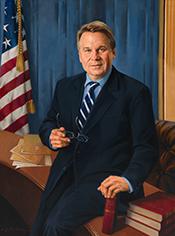 Rep. Christopher H. Smith (R-NJ)
Description
Amendment in the nature of a substitute consists of the text of the "Microenterprise Results and Accountability Act of 2004".
Legislative Activity
Stay on top of the latest movement without scrolling through every action
House amendment agreed to: On agreeing to the Smith (NJ) amendment (A001) Agreed to without objection.
November 20, 2004 • 4:06 PM
View full timeline
House amendment agreed to: On agreeing to the Smith (NJ) amendment (A001) Agreed to without objection.
November 20, 2004 • 4:06 PM
Amendment agreed to by House: On agreeing to the Smith (NJ) amendment (A001) Agreed to without objection.
November 20, 2004 • 4:06 PM
House amendment offered
November 20, 2004
House amendment offered/reported by : Amendment (A001) in the nature of a substitute offered by Mr. Smith (NJ).(consideration: CR H10214-10216; text: CR H10214-10216)
November 20, 2004 • 4:06 PM
Amendment (A001) in the nature of a substitute offered by Mr. Smith (NJ). (consideration: CR H10214-10216; text: CR H10214-10216)
November 20, 2004 • 4:06 PM
On agreeing to the Smith (NJ) amendment (A001) Agreed to without objection.
November 20, 2004 • 4:06 PM
Text
Offered
MICROENTERPRISE RESULTS AND ACCOUNTABILITY ACT OF 2004

Mr. SMITH of New Jersey. Mr. Speaker, I ask unanimous consent to take
from the Speaker's table the bill (H.R. 3818) to amend the Foreign
Assistance Act of 1961 to improve the results and accountability of
microenterprise development assistance programs, and for other
purposes, and ask for its immediate consideration in the House.
The Clerk read the title of the bill.
The SPEAKER pro tempore. Is there objection to the request of the
gentleman from New Jersey?
Mr. RANGEL. Mr. Speaker, reserving the right to object, I will not
object, but I just want to point out that the people in Haiti are
suffering. We have this small trade bill that we wanted so badly to
send some hope to these people. The House would not consider it because
the Senate did not agree that they would accept it. The Senate said
they could not accept what they have not seen, and here we leave today
telling the people in Haiti that this small bill that certainly could
not have hurt anybody in the textile industries here, could not offend
the labors even though there was objection, but we were too busy to do
this in the House.
Mr. Speaker, I will be fighting next year for the people in Haiti.
Mr. Speaker, I withdraw my reservation of objection.
The SPEAKER pro tempore. Is there objection to the request of the
gentleman from New Jersey?
There was no objection.
The Clerk read the bill, as follows:

H.R. 3818

Be it enacted by the Senate and House of Representatives of
the United States of America in Congress assembled,

SECTION 1. SHORT TITLE.

This Act may be cited as the ``Microenterprise Results and
Accountability Act of 2004''.

SEC. 2. FINDINGS AND POLICY.

Congress finds and declares the following:

[[Page H10212]]

(1) Congress has demonstrated its support for
microenterprise development assistance programs through the
enactment of two comprehensive microenterprise laws:
(A) The Microenterprise for Self-Reliance Act of 2000
(title I of Public Law 106-309; 114 Stat. 1082).
(B) Public Law 108-31 (an Act entitled ``An Act to amend
the Microenterprise for Self-Reliance Act of 2000 and the
Foreign Assistance Act of 1961 to increase assistance for the
poorest people in developing countries under microenterprise
assistance program under those Acts, and for other
purposes'', approved June 17, 2003).
(2) The United States Agency for International Development,
the agency responsible for implementing microenterprise
development assistance programs authorized under sections 108
and 131 of the Foreign Assistance Act of 1961 (22 U.S.C.
2151f and 2152a), is not presently organized to adequately
coordinate, implement, and monitor such programs, as
evidenced by the late submission by the Agency of the report
required by section 108 of the Microenterprise for Self-
Reliance Act of 2000.
(3) The Comptroller General, in a report dated November
2003, found that the United States Agency for International
Development has met some, but not all, of the key objectives
of such microenterprise development assistance programs.
(4) The Comptroller General's report found, among other
things, the following:
(A) Microenterprise development assistance generally can
help alleviate some impacts of poverty, improve income levels
and quality of life for borrowers and provide poor
individuals, workers, and their families with an important
coping mechanism.
(B) Although studies and academic analyses funded by the
United States Agency for International Development have found
that microenterprise activities generally serve the poor
clustered around the poverty line, few loans appear to be
reaching the very poor.
(C) Microenterprise development assistance programs of the
United States Agency for International Development have
encouraged women's participation in microfinance projects
and, according to data of the Agency, women have comprised
two-thirds or more of the micro-loan clients in Agency-funded
microenterprise projects since 1997.
(5)(A) The Comptroller General's report recommends that the
Administrator of the United States Agency for International
Development review the Agency's ``microenterprise results
reporting'' system with the goal of ensuring that its annual
reporting is complete and accurate.
(B) Specifically, the Administrator should review and
reconsider the methodologies used for the collection,
analysis, and reporting of data on annual spending targets,
outreach to the very poor, sustainability of microfinance
institutions, and the contribution of Agency's funding to the
institutions it supports.

SEC. 3. MICROENTERPRISE DEVELOPMENT ASSISTANCE.

Chapter 2 of part I of the Foreign Assistance Act of 1961
(22 U.S.C. 2166 et seq.) is amended by inserting after title
V the following new title:

``TITLE VI--MICROENTERPRISE DEVELOPMENT ASSISTANCE

``SEC. 251. FINDINGS AND POLICY.

``Congress finds and declares the following:
``(1) Access to financial services and the development of
microenterprise are vital factors in the stable growth of
developing countries and in the development of free, open,
and equitable international economic systems.
``(2) It is therefore in the best interest of the United
States to facilitate access to financial services and assist
the development of microenterprise in developing countries.
``(3) Access to financial services and the development of
microenterprises can be supported by programs providing
credit, savings, training, technical assistance, business
development services, and other financial services.
``(4) Given the relatively high percentage of populations
living in rural areas of developing countries, and the
combined high incidence of poverty in rural areas and growing
income inequality between rural and urban markets,
microenterprise programs should target both rural and urban
poor.
``(5) Microenteprise programs have been successful and
should continue to empower vulnerable women in the developing
world. Such programs should take into account the risks faced
by women who are potential victims of severe forms of
trafficking and the need for assistance for women who become
victims of severe forms of trafficking, as provided for in
section 106(a)(1) of the Trafficking Victims Protection Act
of 2000 (22 U.S.C. 7104(a)(1); Public Law 106-386).
``(6) Given that microenterprise programs have been
successful in empowering disenfranchised groups such as
women, microenterprise programs should also target
populations disenfranchised due to race or ethnicity in
countries where a strong relationship between poverty and
race or ethnicity has been demonstrated, such as countries in
Latin America.

``SEC. 252. AUTHORIZATION; IMPLEMENTATION; TARGETED
ASSISTANCE.

``(a) Authorization.--The President is authorized to
provide assistance on a grant basis for programs in
developing countries to increase the availability of credit,
savings, and other services to microenterprises lacking full
access to capital, training, technical assistance, and
business development services, through--
``(1) grants to microfinance institutions for the purpose
of expanding the availability of credit, savings, and other
financial services to microentreprise clients;
``(2) grants to microenterprise institutions for the
purpose of training, technical assistance, and business
development services for microenterprises to enable them to
make better use of credit, to better manage their
enterprises, to conduct market analysis and product
development for expanding domestic and international sales,
particularly to United States markets, and to increase their
income and build their assets;
``(3) capacity-building for microenterprise institutions in
order to enable them to better meet the credit, savings, and
training needs of microentreprise clients; and
``(4) policy and regulatory programs at the country level
that improve the environment for microentreprise clients and
microenterprise institutions that serve the poor and very
poor.
``(b) Implementation.--
``(1) Office of microenterprise development.--
``(A) Establishment.--There is established within the
Agency an Office of Microenterprise Development, which shall
be headed by a Director who shall be appointed by the
Administrator and who should possess technical expertise and
ability to offer leadership in the field of microenterprise
development.
``(B) Duties.--The Office shall coordinate and be
responsible for the provision of assistance under this title.
``(2) Assistance through grants to eligible
organizations.--Assistance under subsection (a) shall be
provided through grants executed, approved, or reviewed by
the Office to eligible implementing partner organizations
that have a capacity to develop and implement microenterprise
programs.
``(3) Review and approval.--With respect to assistance
under subsection (a) that is furnished through field missions
of the Agency, the Office shall be responsible for--
``(A) reviewing or approving each grant agreement prior to
obligation of funds under the agreement in order to ensure
that activities to be carried out using such funds are
efficacious, technically sound, and suitable for the
economic and security climate of the country or region
where the activities will be conducted; and
``(B) approving microenterprise development components of
strategic plans of missions, bureaus, and offices of the
Agency.
``(c) Targeted Assistance.--In carrying out sustainable
poverty-focused programs under subsection (a), 50 percent of
all microenterprise resources shall be targeted to very poor
clients, defined as those individuals living in the bottom 50
percent below the poverty line as established by the national
government of the country. Specifically, such resources shall
be used for--
``(1) support of programs under this section through
practitioner institutions that--
``(A) provide credit and other financial services to
clients who are very poor, with loans in 1995 United States
dollars of--
``(i) $1,000 or less in the Europe and Eurasia region;
``(ii) $400 or less in the Latin America region; and
``(iii) $300 or less in the rest of the world; and
``(B) can cover their costs in a reasonable time period; or
``(2) demand-driven business development programs that
achieve reasonable cost recovery that are provided to clients
holding poverty loans (as defined by the regional poverty
loan limitations in paragraph (1)(A)), whether they are
provided by microfinance institutions or by specialized
business development services providers.
``(d) Support for Central Mechanisms.--The Administrator
should increase the use of central mechanisms through
microenterprise, microfinance, and practitioner institutions
in the implementation of this title.

``SEC. 253. MONITORING SYSTEM.

``(a) Establishment.--In order to maximize the sustainable
development impact of assistance authorized under section
252(a), the Administrator of the Agency, acting through the
Director of the Office, shall establish a monitoring system
that meets the requirements of subsection (b).
``(b) Requirements.--The requirements referred to in
subsection (a) are the following:
``(1) The monitoring system establishes performance goals
for the assistance and expresses such goals in an objective
and quantifiable form, to the extent feasible.
``(2) The monitoring system establishes performance
indicators to be used in measuring or assessing the
achievement of the performance goals described in paragraph
(1) and the objectives of the assistance authorized under
section 252.
``(3) The monitoring system provides a basis for
recommendations for adjustments to the assistance to enhance
the sustainability and the impact of the assistance,
particularly the impact of such assistance on the very poor,
particularly poor women.
``(4) The monitoring system adopts the widespread use of
proven and effective poverty assessment tools to successfully
identify the very poor and ensure that they receive adequate
access to microenterprise loans, savings, and assistance.

``SEC. 254. DEVELOPMENT AND CERTIFICATION OF POVERTY
MEASUREMENT METHODS; APPLICATION OF METHODS.

``(a) Development and Certification.--
``(1) In general.--The Administrator of the Agency, in
consultation with microenterprise institutions and other
appropriate organizations, shall develop no fewer than two
low-cost methods for eligible implementing partner
organizations to use to assess the poverty levels of their
current or prospective clients. The Administrator shall
develop poverty indicators that correlate with the
circumstances of the very poor.
``(2) Field testing.--The Administrator shall field-test
the methods developed under paragraph (1). As part of the
testing, institutions and programs may use the methods on a
voluntary basis to demonstrate their ability to reach the
very poor.
``(3) Certification.--Not later than October 1, 2004, the
Administrator shall, from among the

[[Page H10213]]

low-cost poverty measurement methods developed under
paragraph (1), certify no fewer than two such methods as
approved methods for measuring the poverty levels of current
or prospective clients of microenterprise institutions for
purposes of assistance under section 252.
``(b) Application.--The Administrator shall require that,
with reasonable exceptions, all eligible implementing partner
organizations applying for microenterprise assistance under
this title use one of the certified methods, beginning not
later than October 1, 2005, to determine and report the
poverty levels of current or prospective clients.

``SEC. 255. AUTHORIZATION OF APPROPRIATIONS; ADDITIONAL
AUTHORITIES.

``(a) Authorization of Appropriations.--There are
authorized to be appropriated to the President to carry out
this subtitle $200,000,000 for fiscal year 2005 and such
sums as may be necessary for fiscal year 2006.
``(b) Additional Authorities.--(1) Amounts appropriated
pursuant to the authorization of appropriations under
subsection (a)--
``(A) may be referred to as the `Microenterprise
Development Assistance Account';
``(B) shall be allocated to the Office, and upon approval
by the Director of the Office, may be reallocated to field
missions of the Agency in furtherance of the purposes of this
title;
``(C) are authorized to remain available until expended;
and
``(D) are in addition to amounts otherwise available for
such purposes.
``(2) Notwithstanding any other provision of law, amounts
made available for assistance for microenterprise development
assistance under any provision of law other than this title
may be provided to further the purposes of this title. To the
extent assistance described in the preceding sentence is
provided in accordance with such sentence, the Administrator
of the Agency shall include, as part of the report required
under section 258, a detailed description of such assistance
and, to the extent applicable, the information required by
paragraphs (1) through (10) of subsection (b) of such section
with respect to such assistance.''.

SEC. 4. MICROENTERPRISE DEVELOPMENT CREDITS.

(a) Transfer.--Section 108 of the Foreign Assistance Act of
1961 (22 U.S.C. 2151f) is hereby--
(1) transferred from chapter 1 of part I of the Foreign
Assistance Act of 1961 to title VI of chapter 2 of part I of
such Act (as added by section 3 of this Act); and
(2) inserted after section 255 of the Foreign Assistance
Act of 1961.
(b) Redesignation.--Title VI of chapter 2 of part I of the
Foreign Assistance Act of 1961 is amended by redesignating
section 108 (as added by subsection (a)) as section 256.
(c) Conforming Amendments.--Title VI of chapter 2 of part I
of the Foreign Assistance Act of 1961 is amended--
(1) by inserting after the title heading the following:

``Subtitle A--Grant Assistance'';

(2) by inserting after section 255 the following:

``Subtitle B--Credit Assistance''; and

(3) in section 256 (as redesignated by subsection (b))--
(A) in the matter preceding paragraph (1) of subsection
(c), by striking ``Administrator of the agency primarily
responsible for administering this part'' and inserting
``Administrator of the Agency''; and
(B) in subsection (f)(1)--
(i) by striking ``section 131'' and inserting ``this
part''; and
(ii) by striking ``2001 through 2004'' and inserting ``2005
and 2006''.

SEC. 5. UNITED STATES MICROFINANCE LOAN FACILITY.

(a) Transfer.--Section 132 of the Foreign Assistance Act of
1961 (22 U.S.C. 2152b) is hereby--
(1) transferred from chapter 1 of part I of the Foreign
Assistance Act of 1961 to title VI of chapter 2 of part I of
such Act (as added by section 3 of this Act); and
(2) inserted after section 256 of the Foreign Assistance
Act of 1961 (as added by section 4 of this Act).
(b) Redesignation.--Title VI of chapter 2 of part I of the
Foreign Assistance Act of 1961 is amended by redesignating
section 132 (as added by subsection (a)) as section 257.
(c) Conforming Amendments.--Title VI of chapter 2 of part I
of the Foreign Assistance Act of 1961 is amended--
(1) by inserting after section 256 the following:

``Subtitle C--United States Microfinance Loan Facility''; and

(2) in section 257 (as redesignated by subsection (b))--
(A) in subsection (b)(3), by striking ``2001 and 2002'' and
inserting ``2005 and 2006'';
(B) in the matter preceding subparagraph (A) of subsection
(d)(1), by striking ``the fiscal year 2001'' and inserting
``each of the fiscal years 2005 and 2006''; and
(C) by striking subsection (e).

SEC. 6. MISCELLANEOUS PROVISIONS.

Title VI of chapter 2 of part I of the Foreign Assistance
Act of 1961 (as added by section 3 of this Act and amended by
sections 4 and 5 of this Act) is further amended by adding at
the end the following new subtitle:

``Subtitle D--Miscellaneous Provisions

``SEC. 258. REPORT.

``(a) In General.--Not later than December 31, 2005, and
each December 31 thereafter, the Administrator of the Agency
shall submit to the appropriate congressional committees a
report that contains a detailed description of the
implementation of this title for the previous fiscal year.
``(b) Contents.--The report shall contain the following:
``(1) The number of grants provided under section 252, with
a listing of--
``(A) the amount of each grant;
``(B) the name of each implementing partner organization;
and
``(C) a listing of the number of countries receiving
assistance authorized by sections 252.
``(2) The results of the monitoring system required under
section 253.
``(3) The process of developing and applying poverty
assessment procedures required under section 254.
``(4) The percentage of assistance furnished under section
252 that was allocated to the very poor based on the data
collected using the certified methods required by section
254.
``(5) The absolute number of the very poor reached with
assistance furnished under section 252.
``(6) The amount of assistance provided under section 252
through central mechanisms.
``(7) The name of each country that receives assistance
under section 256 and the amount of such assistance.
``(8) An estimate of the percentage of beneficiaries of
assistance under this title who are women, including, to the
extent practicable, the percentage of these women who have
been victims of sex trafficking, as well as information on
efforts to provide assistance under this title to women who
have been victims of severe forms of trafficking or who were
previously involved in prostitution.
``(9) Any additional information relating to the provision
of assistance authorized by this title, including the use of
the poverty measurement tools required by section 254, or
additional information on assistance provided by the United
States to support microenterprise development under this
title or any other provision of law.
``(10) An estimate of the percentage of beneficiaries of
assistance under this title in countries where a strong
relationship between poverty and race or ethnicity has been
demonstrated.
``(c) Limitation.--The content of the report required by
this section shall be produced by the Office established
under section 252(b)(1), and shall be made available for free
electronic distribution through such Office.

``SEC. 259. DEFINITIONS.

`` In this title:
``(1) Administrator.--The term `Administrator' means the
Administrator of the Agency.
``(2) Agency.--The term `Agency' means the United States
Agency for International Development.
``(3) Appropriate congressional committees.--The term
`appropriate congressional committees' means the Committee on
International Relations of the House of Representatives and
the Committee on Foreign Relations of the Senate.
``(4) Business development services.--The term `business
development services' means support for the growth of
microenterprises through training, technical assistance,
marketing assistance, improved production technologies, and
other related services.
``(5) Director.--The term `Director' means the Director of
the Office.
``(6) Eligible implementing partner organization.--The term
`eligible implementing partner organization' means an entity
eligible to receive assistance under this title which is--
``(A) a United States or an indigenous private voluntary
organization;
``(B) a United States or an indigenous credit union;
``(C) a United States or an indigenous cooperative
organization;
``(D) an indigenous governmental or nongovernmental
organization;
``(E) a microenterprise institution;
``(F) a microfinance institution; or
``(G) a practitioner institution.
``(7) Microenterprise institution.--The term
`microenterprise institution' means a not-for-profit entity
that provides services, including microfinance, training, or
business development services, for microentreprise clients in
foreign countries.
``(8) Microfinance institution.--The term `microfinance
institution' means a not-for-profit entity or a regulated
financial intermediary that directly provides, or works to
expand, the availability of credit, savings, and other
financial services to microentreprise clients in foreign
countries.
``(9) Microfinance network.--The term `microfinance
network' means an affiliated group of practitioner
institutions that provides services to its members, including
financing, technical assistance, and accreditation, for the
purpose of promoting the financial sustainability and
societal impact of microenterprise assistance.
``(10) Office.--The term `Office' means the Office of
Microenterprise Development established under section
252(b)(1).
``(11) Practitioner institution.--The term `practitioner
institution' means a not-for-profit entity or a regulated
financial intermediary, including a microfinance network,
that provides services, including microfinance, training, or
business development services, for microentreprise clients,
or provides assistance to microenterprise institutions in
foreign countries.
``(12) Private voluntary organization.--The term `private
voluntary organization' means a not-for-profit entity that--
``(A) engages in and supports activities of an economic or
social development or humanitarian nature for citizens in
foreign countries; and
``(B) is incorporated as such under the laws of the United
States, including any of its states, territories or the
District of Columbia, or of a foreign country.
``(13) United states-supported microfinance institution.--
The term `United States-

[[Page H10214]]

supported microfinance institution' means a financial
intermediary that has received funds made available under
this part for fiscal year 1980 or any subsequent fiscal year.
``(14) Very poor.--The term `very poor' means those
individuals--
``(A) living in the bottom 50 percent below the poverty
line established by the national government of the country in
which those individuals live; or
``(B) living on less than the equivalent of $1 per day.''.

SEC. 7. REPEALS.

(a) Foreign Assistance Act of 1961.--Section 131 of the
Foreign Assistance Act of 1961 (22 U.S.C. 2152a) is hereby
repealed.
(b) Public Law 108-31.--
(1) In general.--Section 4 of Public Law 108-31 (22 U.S.C.
2151f note) is amended by striking subsection (b).
(2) Conforming amendment.--Section 4 of Public Law 108-31
is amended by striking ``(a)'' and all that follows through
``Not later'' and inserting ``Not later''.

SEC. 8. REFERENCES.

Any reference in a law, regulation, agreement, or other
document of the United States to section 108, 131, or 132 of
the Foreign Assistance Act of 1961 shall be deemed to be a
reference to subtitle B of title VI of chapter 2 of part I of
the Foreign Assistance Act of 1961, subtitle A of title VI of
chapter 2 of part I of such Act, or subtitle C of title VI of
chapter 2 of part I of such Act, respectively.

Amendment In The Nature of a Substitute Offered By Mr. Smith Of New
Jersey

Mr. SMITH of New Jersey. Mr. Speaker, I offer an amendment in the
nature of a substitute in lieu of the amendment reported by the
Committee on International Relations.
The SPEAKER pro tempore. The Clerk will report the amendment in lieu
of the committee amendment.
The Clerk read as follows:

Amendment in the nature of a substitute offered by Mr.
Smith of New Jersey:
Strike all after the enacting clause and insert the
following:

SECTION 1. SHORT TITLE.

This Act may be cited as the ``Microenterprise Results and
Accountability Act of 2004''.

SEC. 2. FINDINGS AND POLICY.

Congress finds and declares the following:
(1) Congress has demonstrated its support for
microenterprise development assistance programs through the
enactment of two comprehensive microenterprise laws:
(A) The Microenterprise for Self-Reliance Act of 2000
(title I of Public Law 106-309; 114 Stat. 1082).
(B) Public Law 108-31 (an Act entitled ``An Act to amend
the Microenterprise for Self-Reliance Act of 2000 and the
Foreign Assistance Act of 1961 to increase assistance for the
poorest people in developing countries under microenterprise
assistance program under those Acts, and for other
purposes'', approved June 17, 2003).
(2) The report on the effectiveness of the United States
Agency for International Development's microfinance program,
prepared by the Consultative Group to Assist the Poor, rated
the Agency in the top tier of the 17 donors in this field.
(3) The Comptroller General, in a report dated November
2003, found that the United States Agency for International
Development has met some, but not all, of the key objectives
of such microenterprise development assistance programs.
(4) The Comptroller General's report found, among other
things, the following:
(A) Microenterprise development assistance generally can
help alleviate some impacts of poverty, improve income levels
and quality of life for borrowers and provide poor
individuals, workers, and their families with an important
coping mechanism.
(B) Microenterprise development assistance programs of the
United States Agency for International Development have
encouraged women's participation in microfinance projects
and, according to data of the Agency, women have comprised
two-thirds or more of the micro-loan clients in Agency-funded
microenterprise projects since 1997.
(5)(A) The Comptroller General's report recommends that the
Administrator of the United States Agency for International
Development review the Agency's ``microenterprise results
reporting'' system with the goal of ensuring that its annual
reporting is complete and accurate.
(B) Specifically, the Administrator should review and
reconsider the methodologies used for the collection,
analysis, and reporting of data on annual spending targets,
outreach to the very poor, sustainability of microfinance
institutions, and the contribution of Agency's funding to the
institutions it supports.

SEC. 3. MICROENTERPRISE DEVELOPMENT ASSISTANCE.

Chapter 2 of part I of the Foreign Assistance Act of 1961
(22 U.S.C. 2166 et seq.) is amended by inserting after title
V the following new title:

``TITLE VI--MICROENTERPRISE DEVELOPMENT ASSISTANCE

``SEC. 251. FINDINGS AND POLICY.

``Congress finds and declares the following:
``(1) Access to financial services and the development of
microenterprise are vital factors in the stable growth of
developing countries and in the development of free, open,
and equitable international economic systems.
``(2) It is therefore in the best interest of the United
States to facilitate access to financial services and assist
the development of microenterprise in developing countries.
``(3) Access to financial services and the development of
microenterprises can be supported by programs providing
credit, savings, training, technical assistance, business
development services, and other financial services.
``(4) Given the relatively high percentage of populations
living in rural areas of developing countries, and the
combined high incidence of poverty in rural areas and growing
income inequality between rural and urban markets,
microenterprise programs should target both rural and urban
poor.
``(5) Microenterprise programs have been successful and
should continue to empower vulnerable women in the developing
world. The Agency should work to ensure that recipients of
microenterprise and microfinance development assistance under
this title communicate and work with nongovernmental
organizations and government organizations to identify and
assist victims of trafficking as provided for in section
106(a)(1) of the Trafficking Victims Protection Act of 2000
(22 U.S.C. 7104(a)(1); Public Law 106-386) and women who are
victims of or susceptible to other forms of exploitation and
violence.
``(6) Given that microenterprise programs have been
successful in empowering disenfranchised groups such as
women, microenterprise programs should also target
populations disenfranchised due to race or ethnicity in
countries where a strong relationship between poverty and
race or ethnicity has been demonstrated, such as countries in
Latin America.

``SEC. 252. AUTHORIZATION; IMPLEMENTATION; TARGETED
ASSISTANCE.

``(a) Authorization.--The President is authorized to
provide assistance on a non-reimbursable basis for programs
in developing countries to increase the availability of
credit, savings, and other services to microfinance and
microenterprise clients lacking full access to capital,
training, technical assistance, and business development
services, through--
``(1) assistance for the purpose of expanding the
availability of credit, savings, and other financial and non-
financial services to microfinance and microenterprise
clients;
``(2) assistance for the purpose of training, technical
assistance, and business development services for
microenterprises to enable them to make better use of credit,
to better manage their enterprises, to conduct market
analysis and product development for expanding domestic and
international sales, particularly to United States markets,
and to increase their income and build their assets;
``(3) capacity-building for microfinance and
microenterprise institutions in order to enable them to
better meet the credit, savings, and training needs of
microfinance and microenterprise clients; and
``(4) policy, regulatory programs, and research at the
country level that improve the environment for microfinance
and microenterprise clients and institutions that serve the
poor and very poor.
``(b) Implementation.--
``(1) Office of microenterprise development.--There is
established within the Agency an office of microenterprise
development, which shall be headed by a Director who shall be
appointed by the Administrator and who should possess
technical expertise and ability to offer leadership in the
field of microenterprise development.
``(2) Additional provisions.--
``(A) Use of implementing partner organizations.--
Assistance under this section shall emphasize the use of
implementing partner organizations that best meet the
requirements of subparagraph (C).
``(B) Use of central funding mechanisms.--
``(i) Program.--In order to ensure that assistance under
this title is distributed effectively and efficiently, the
office shall also seek to implement a program of central
funding under which assistance is administered directly by
the office, including through targeted core support for
microfinance and microenterprise networks and other
practitioners.
``(ii) Funding.--Of the amount made available to carry out
this subtitle for a fiscal year, not less than $25,000,000
should be made available to carry out clause (i).
``(C) Efficiency and cost-effectiveness.--Assistance under
this section shall meet high standards of efficiency, cost-
effectiveness, and sustainability and shall especially
provide the greatest possible resources to the poor and very
poor. When administering assistance under this section, the
Administrator shall--
``(i) take into consideration the percentage of funds a
provider of assistance intends to expend on administrative
costs;
``(ii) take all appropriate steps to ensure that the
provider of assistance keeps administrative costs as low as
practicable to ensure the maximum amount of funds are used
for directly assisting microfinance and microenterprise
clients, for establishing sustainable microfinance and
microenterprise institutions, or for advancing the
microenterprise development field; and
``(iii) give preference to proposals from providers of
assistance that are the most technically competitive and have
a reasonable allocation to overhead and administrative costs.

[[Page H10215]]

``(3) Approval of strategic plans.--With respect to
assistance provided under this section, the office shall be
responsible for concurring in the microenterprise development
components of strategic plans of missions, bureaus, and other
offices of the Agency and providing technical support to
field missions to help the missions prepare such components.
``(c) Targeted Assistance.--In carrying out sustainable
poverty-focused programs under subsection (a), 50 percent of
all microenterprise resources shall be targeted to clients
who are very poor. Specifically, until September 30, 2006,
such resources shall be used for--
``(1) support of programs under this section through
practitioner institutions that--
``(A) provide credit and other financial services to
clients who are very poor, with loans in 1995 United States
dollars of--
``(i) $1,000 or less in the Europe and Eurasia region;
``(ii) $400 or less in the Latin America region; and
``(iii) $300 or less in the rest of the world; and
``(B) can cover their costs in a reasonable time period; or
``(2) demand-driven business development programs that
achieve reasonable cost recovery that are provided to clients
holding poverty loans (as defined by the regional poverty
loan limitations in paragraph (1)(A)), whether they are
provided by microfinance institutions or by specialized
business development services providers.

``SEC. 253. MONITORING SYSTEM.

``(a) In General.--In order to maximize the sustainable
development impact of assistance authorized under section
252(a), the Administrator of the Agency, acting through the
Director of the office, shall strengthen its monitoring
system to meet the requirements of subsection (b).
``(b) Requirements.--The requirements referred to in
subsection (a) are the following:
``(1) The monitoring system shall include performance goals
for the assistance and expresses such goals in an objective
and quantifiable form, to the extent feasible.
``(2) The monitoring system shall include performance
indicators to be used in measuring or assessing the
achievement of the performance goals described in paragraph
(1) and the objectives of the assistance authorized under
section 252.
``(3) The monitoring system provides a basis for
recommendations for adjustments to the assistance to enhance
the sustainability and the impact of the assistance,
particularly the impact of such assistance on the very poor,
particularly poor women.
``(4) The monitoring system adopts the widespread use of
proven and effective poverty assessment tools to successfully
identify the very poor and ensure that they receive adequate
access to microenterprise loans, savings, and assistance.

``SEC. 254. DEVELOPMENT AND CERTIFICATION OF POVERTY
MEASUREMENT METHODS; APPLICATION OF METHODS.

``(a) Development and Certification.--
``(1) In general.--The Administrator of the Agency, in
consultation with microenterprise institutions and other
appropriate organizations, shall develop no fewer than two
low-cost methods for implementing partner organizations to
use to assess the poverty levels of their current incoming or
prospective clients. The Administrator shall develop poverty
indicators that correlate with the circumstances of the very
poor.
``(2) Field testing.--The Administrator shall field-test
the methods developed under paragraph (1). As part of the
testing, institutions and programs may use the methods on a
voluntary basis to demonstrate their ability to reach the
very poor.
``(3) Certification.--Not later than April 1, 2005, the
Administrator shall, from among the low-cost poverty
measurement methods developed under paragraph (1), certify no
fewer than two such methods as approved methods for measuring
the poverty levels of current, incoming, or prospective
clients of microenterprise institutions for purposes of
assistance under section 252.
``(b) Application.--The Administrator shall require that,
with reasonable exceptions, all implementing partner
organizations applying for microenterprise assistance under
this title use one of the certified methods, beginning not
later than October 1, 2006, to determine and report the
poverty levels of current, incoming, or prospective clients.

``SEC. 255. ADDITIONAL AUTHORITIES.

``Notwithstanding any other provision of law, amounts made
available for assistance for microenterprise development
assistance under any provision of law other than this title
may be provided to further the purposes of this title. To the
extent assistance described in the preceding sentence is
provided in accordance with such sentence, the Administrator
of the Agency shall include, as part of the report required
under section 258, a detailed description of such assistance
and, to the extent applicable, the information required by
paragraphs (1) through (11) of subsection (b) of such section
with respect to such assistance.''.

SEC. 4. MICROENTERPRISE DEVELOPMENT CREDITS.

(a) Transfer.--Section 108 of the Foreign Assistance Act of
1961 (22 U.S.C. 2151f) is hereby--
(1) transferred from chapter 1 of part I of the Foreign
Assistance Act of 1961 to title VI of chapter 2 of part I of
such Act (as added by section 3 of this Act); and
(2) inserted after section 255 of the Foreign Assistance
Act of 1961.
(b) Redesignation.--Title VI of chapter 2 of part I of the
Foreign Assistance Act of 1961 is amended by redesignating
section 108 (as added by subsection (a)) as section 256.
(c) Conforming Amendments.--Title VI of chapter 2 of part I
of the Foreign Assistance Act of 1961 is amended--
(1) by inserting after the title heading the following:

``Subtitle A--Grant Assistance'';

(2) by inserting after section 255 the following:

``Subtitle B--Credit Assistance''; and

(3) in section 256 (as redesignated by subsection (b))--
(A) in the matter preceding paragraph (1) of subsection
(c), by striking ``Administrator of the agency primarily
responsible for administering this part'' and inserting
``Administrator of the Agency''; and
(B) in subsection (f)(1)--
(i) by striking ``section 131'' and inserting ``this
part''; and
(ii) by striking ``$1,500,000 for each of fiscal years 2001
through 2004'' and inserting ``such sums as may be necessary
for each of the fiscal years 2005 through 2009''.

SEC. 5. UNITED STATES MICROFINANCE LOAN FACILITY.

(a) Transfer.--Section 132 of the Foreign Assistance Act of
1961 (22 U.S.C. 2152b) is hereby--
(1) transferred from chapter 1 of part I of the Foreign
Assistance Act of 1961 to title VI of chapter 2 of part I of
such Act (as added by section 3 of this Act); and
(2) inserted after section 256 of the Foreign Assistance
Act of 1961 (as added by section 4 of this Act).
(b) Redesignation.--Title VI of chapter 2 of part I of the
Foreign Assistance Act of 1961 is amended by redesignating
section 132 (as added by subsection (a)) as section 257.
(c) Conforming Amendments.--Title VI of chapter 2 of part I
of the Foreign Assistance Act of 1961 is amended--
(1) by inserting after section 256 the following:

``Subtitle C--United States Microfinance Loan Facility''; and

(2) in section 257 (as redesignated by subsection (b))--
(A) in subsection (b)(3), by striking ``2001 and 2002'' and
inserting ``2005 through 2009'';
(B) in the matter preceding subparagraph (A) of subsection
(d)(1), by striking ``this part for the fiscal year 2001, up
to $5,000,000'' and inserting ``this part for each of the
fiscal years 2005 through 2009, such sums as may be
necessary''; and
(C) by striking subsection (e).

SEC. 6. MISCELLANEOUS PROVISIONS.

Title VI of chapter 2 of part I of the Foreign Assistance
Act of 1961 (as added by section 3 of this Act and amended by
sections 4 and 5 of this Act) is further amended by adding at
the end the following new subtitle:

``Subtitle D--Miscellaneous Provisions

``SEC. 258. REPORT.

``(a) In General.--Not later than June 30, 2006, and each
June 30 thereafter, the Administrator of the Agency, acting
through the Director of the office, shall submit to the
appropriate congressional committees a report that contains a
detailed description of the implementation of this title for
the previous fiscal year.
``(b) Contents.--The report shall contain the following:
``(1) The number of grants, cooperative agreements,
contracts, contributions, or other form of assistance
provided under section 252, with a listing of--
``(A) the amount of each grant, cooperative agreement,
contract, contribution, or other form of assistance;
``(B) the name of each recipient and each developing
country with respect to which projects or activities under
the grant, cooperative agreement, contract, contribution, or
other form of assistance were carried out; and
``(C) a listing of the number of countries receiving
assistance authorized by section 252.
``(2) The results of the monitoring system required under
section 253.
``(3) The process of developing and applying poverty
assessment procedures required under section 254.
``(4) The percentage of assistance furnished under section
252 that was allocated to the very poor based on the data
collected using the certified methods required by section
254.
``(5) The estimated number of the very poor reached with
assistance provided under section 252.
``(6) The amount of assistance provided under section 252
through central mechanisms.
``(7) The name of each country that receives assistance
under section 256 and the amount of such assistance.
``(8) Information on the efforts of the Agency to ensure
that recipients of United States microenterprise and
microfinance development assistance work closely with
nongovernmental organizations and foreign governments to
identify and assist victims or potential victims of severe
forms of trafficking in persons and women who are victims of
or susceptible to other forms of exploitation and violence.
``(9) Any additional information relating to the provision
of assistance authorized by this title, including the use of
the poverty measurement tools required by section 254,

[[Page H10216]]

or additional information on assistance provided by the
United States to support microenterprise development under
this title or any other provision of law.
``(10) An estimate of the percentage of beneficiaries of
assistance under this title in countries where a strong
relationship between poverty and race or ethnicity has been
demonstrated.
``(11) The level of funding provided through contracts, the
level of funding provided through grants, contracts, and
cooperative agreements that is estimated to be subgranted or
subcontracted, as the case may be, to direct service
providers, and an analysis of the comparative cost-
effectiveness and sustainability of projects carried out
under these mechanisms.
``(c) Availability to Public.--The report required by this
section shall be made available to the public on the Internet
website of the Agency.

``SEC. 259. DEFINITIONS.

`` In this title:
``(1) Administrator.--The term `Administrator' means the
Administrator of the Agency.
``(2) Agency.--The term `Agency' means the United States
Agency for International Development.
``(3) Appropriate congressional committees.--The term
`appropriate congressional committees' means the Committee on
International Relations of the House of Representatives and
the Committee on Foreign Relations of the Senate.
``(4) Business development services.--The term `business
development services' means support for the growth of
microenterprises through training, technical assistance,
marketing assistance, improved production technologies, and
other related services.
``(5) Director.--The term `Director' means the Director of
the office.
``(6) Implementing partner organization.--The term
`implementing partner organization' means an entity eligible
to receive assistance under this title which is--
``(A) a United States or an indigenous private voluntary
organization;
``(B) a United States or an indigenous credit union;
``(C) a United States or an indigenous cooperative
organization;
``(D) an indigenous governmental or nongovernmental
organization;
``(E) a microenterprise institution;
``(F) a microfinance institution; or
``(G) a practitioner institution.
``(7) Microenterprise institution.--The term
`microenterprise institution' means a not-for-profit entity
that provides services, including microfinance, training, or
business development services, for microenterprise clients in
foreign countries.
``(8) Microfinance institution.--The term `microfinance
institution' means a not-for-profit entity or a regulated
financial intermediary that directly provides, or works to
expand, the availability of credit, savings, and other
financial services to microfinance and microenterprise
clients in foreign countries.
``(9) Microfinance network.--The term `microfinance
network' means an affiliated group of practitioner
institutions that provides services to its members, including
financing, technical assistance, and accreditation, for the
purpose of promoting the financial sustainability and
societal impact of microenterprise assistance.
``(10) Office.--The term `office' means the office of
microenterprise development established under section
252(b)(1).
``(11) Practitioner institution.--The term `practitioner
institution' means a not-for-profit entity or a regulated
financial intermediary, including a microfinance network,
that provides services, including microfinance, training, or
business development services, for microfinance and
microenterprise clients, or provides assistance to
microenterprise institutions in foreign countries.
``(12) Private voluntary organization.--The term `private
voluntary organization' means a not-for-profit entity that--
``(A) engages in and supports activities of an economic or
social development or humanitarian nature for citizens in
foreign countries; and
``(B) is incorporated as such under the laws of the United
States, including any of its states, territories or the
District of Columbia, or of a foreign country.
``(13) United states-supported microfinance institution.--
The term `United States-supported microfinance institution'
means a financial intermediary that has received funds made
available under this part for fiscal year 1980 or any
subsequent fiscal year.
``(14) Very poor.--The term `very poor' means those
individuals--
``(A) living in the bottom 50 percent below the poverty
line established by the national government of the country in
which those individuals live; or
``(B) living on less than the equivalent of $1 per day (as
calculated using the purchasing power parity (PPP) exchange
rate method).''.

SEC. 7. SENSE OF CONGRESS.

It is the sense of Congress that, in carrying out title VI
of chapter 2 of part I of the Foreign Assistance Act of 1961
(as added by section 3 of this Act and amended by sections 4
through 6 of this Act), the Administrator of the United
States Agency for International Development--
(1) where applicable, should ensure that microenterprise
development assistance provided under such title is matched
by recipients with an equal amount of assistance from non-
United States Government sources, including private
donations, multilateral funding, commercial and concessional
borrowing, savings, and program income;
(2) should include in the report required by section 258 of
the Foreign Assistance Act of 1961 (as added by section 6 of
this Act) a description of all matching assistance (as
described in paragraph (1)) provided for the prior year by
recipients of microenterprise development assistance under
such title;
(3) should ensure that recipients of microenterprise
development assistance under such title do not expend an
unreasonably large percentage of such assistance on
administrative costs;
(4) should not use recipients of microenterprise
development assistance under such title to carry out critical
management functions of the Agency, including functions such
as strategy development or overall management of programs in
a country; and
(5) should consult with the appropriate congressional
committees with respect to the implementation of title VI of
chapter 2 of part I of the Foreign Assistance Act of 1961 not
later than 90 days after the date of the enactment of this
Act.

SEC. 8. REPEALS.

(a) Foreign Assistance Act of 1961.--Section 131 of the
Foreign Assistance Act of 1961 (22 U.S.C. 2152a) is hereby
repealed.
(b) Public Law 108-31.--
(1) In general.--Section 4 of Public Law 108-31 (22 U.S.C.
2151f note) is amended by striking subsection (b).
(2) Conforming amendment.--Section 4 of Public Law 108-31
is amended by striking ``(a)'' and all that follows through
``Not later'' and inserting ``Not later''.

SEC. 9. REFERENCES.

Any reference in a law, regulation, agreement, or other
document of the United States to section 108, 131, or 132 of
the Foreign Assistance Act of 1961 shall be deemed to be a
reference to subtitle B of title VI of chapter 2 of part I of
the Foreign Assistance Act of 1961, subtitle A of title VI of
chapter 2 of part I of such Act, or subtitle C of title VI of
chapter 2 of part I of such Act, respectively.

Mr. SMITH of New Jersey (during the reading). Mr. Speaker, I ask
unanimous consent that the amendment be considered as read and printed
in the Record.
The SPEAKER pro tempore. Is there objection to the request of the
gentleman from New Jersey?
There was no objection.
The amendment in the nature of a substitute was agreed to.
Mr. SMITH of New Jersey. Mr. Speaker, I yield myself such time as I
may consume. Mr. Speaker, I rise in support of H.R. 3818, ``The
Microenterprise Results and Accountability Act of 2004.'' I introduced
this bill at the beginning of the 108th Congress, and this final
product represents the culmination of months of hard work and
discussion by Republicans and Democrats in both the House and Senate,
members of the microenterprise community, and USAID, to build upon one
of our most progressive and successful foreign aid programs.
I would like to thank Mr. DeLay and our leadership for scheduling
this bill. We know that the House has been considering numerous
important pieces of foreign affairs legislation in recent months--from
the Foreign Aid appropriations bill to legislation reorganizing our
intelligence community and better securing our borders to fight the War
on Terrorism--and I am grateful that our leadership took time to
schedule this important measure.
I would like to thank Chairman Hyde, who has shown strong support for
this bill every step of the way and moved it promptly at the beginning
of this year. I would also like to thank Mr. Lantos, Mr. Weldon, and 81
other Members of Congress who cosponsored this legislation.
Mr. Speaker, this legislation is primarily about ensuring better
results, not authorizing additional money. A comprehensive GAO report
completed in November 2003 revealed that oversight and accountability
of microenterprise programs administered by AID is weak, and that
programs are not having the desired effect of reaching the very poor--
those earning less than the equivalent of $1/day--to the greatest
extent possible.
In response to those concerns, H.R. 3818 builds-in accountability
through a focus on cost-effectiveness and efficiency. H.R. 3818
establishes a dedicated Microenterprise Office within USAID which will
approve strategic plans of field missions, establish a monitoring
system in order to maximize the impact of programs and measure results,
and coordinate preparation of a yearly report to Congress. The
legislation also ensures that more funds go to the ``poorest of the
poor'' through the development and implementation of easy-to-use, cost-
effective poverty assessment techniques. Identifying and targeting the
poorest potential clients who would stand to benefit most from
microenterprise loans has proven to be more difficult than originally
anticipated. I am hopeful that once developed, these poverty assessment
techniques may prove useful not only for microenterprise but also in
other areas of our foreign aid.

[[Page H10217]]

This bill also stipulates that USAID should emphasize the use of
global microfinance networks and other non-profit voluntary
organizations in the implementation of microenterprise and microfinance
programs. In the last two years, I am concerned that USAID has been
shifting its focus away from non-profit organizations and networks to
contractors in the implementation of the Agency's microenterprise
program. While for-profit entities such as consulting firms are making
excellent contributions in the areas of technical assistance, research
and policy reform, global microfinance networks and non-profit
voluntary organizations have the operational experience and track
record in microenterprise and microfinance service delivery to poor
people. These organizations are able to get resources directly to
clients, and are well positioned to reach the very poorest economically
active entrepreneurs in the countries where they work. Further, such
networks have built self-sustaining microfinance institutions that now
cover, on average, almost all of their operating costs. More than $150
million in earned revenue was captured by these institutions in 2002 to
cover their operating costs, in addition to private donations that have
added significant leverage to USAID's investments. These networks have
excelled in rapidly developing microfinance institutions in volatile
and risky situations, including during the early stages of a country's
transition from war to peace. However, while H.R. 3818 also encourages
the use of indigenous governmental organizations as implementing
partners for microenterprise and microfinance programs, these
governmental organizations should be used only when necessary,
efficient and effective, and, in particular, only when they use the
best practices in this field. Since the reforms in H.R. 3818 are so
comprehensive, we expect USAID will work in close consultation with the
appropriate Congressional committees and offices regarding this and
other issues.

The term ``foreign aid'' often has a bad connotation--and there are
some good reasons why, too. Many times in the past, foreign aid was
sent in a ``top-down'' manner to corrupt governments and organizations
where it never really reached the intended recipients.
Microenterprise, on the other hand, takes a totally different
approach. It's a ``trickle-up'' approach that focuses on helping the
poorest people on the planet build themselves up, little by little,
into self-sufficiency. The success of microenterprise lending programs
to empower entrepreneurs and borrowers in the developing world cannot
be overstated.
Over two million clients are currently benefiting from USAID-assisted
programs that provide the necessary capital through small loans,
usually of a few hundred dollars or less, for entrepreneurs to start
and expand their own small businesses. It is estimated that 97 percent
of microenterprise loans are successfully repaid and 70 percent to
women, who are often very vulnerable, subjected to abuse, and in need
of economic opportunities in the developing world. Microenterprise is a
key vehicle to assist victims of trafficking and to raise the social
and economic status of women around the world.
Microenterprise also complements the principles President Bush has
outlined for more effective foreign aid through the Millennium
Challenge Account. Business owners assisted by micro-lending are not
only able to increase their own incomes, but through their efforts,
they create jobs and help economies grow.
Success stories from the beneficiaries of microenterprise are quite
numerous. Take for example, Dorothy Eyiah (EYE-ee-ah) from Ghana.
Dorothy was resourceful, but she had no idea how she was going to
support her AIDS-stricken sister and family when she brought them into
her home in Ghana. She used to support herself selling ice, but that
wasn't going to pay for the food and medicines she now needed. She
started praying. All doors seemed shut until Dorothy met some women
within her village who were part of an Opportunity International Trust
Bank. The Trust Bank could help her grow a small business--providing
her with financing, training, support. Five loans later, Dorothy is the
secretary of her Trust Bank and runs 3 businesses, employing 9 people
from her village. She is content. Her sister is comfortable, all the
children are in school, and their needs are being met. ``God has been
so good to me,'' she says.
Success stories such as this are what microfinance and H.R. 3818 are
all about. By building the best possible microenterprise program, our
goal is to reach the greatest possible number of poor people with
services that truly have an impact on their lives. As we compare the
effectiveness of various methods of implementation of funds, success
will be measured by the ability to reach very poor people and other
underserved populations, including women, and by the kind of impact
these programs have on poor families. We are concerned not only with
the efficient delivery of financial services, but also with the well-
being of those who receive those services. We want to see poor people
work their way out of poverty, increase their income, build their
assets, and grow their businesses, and we also want to see them educate
their children, achieve greater self-esteem, strengthen their families,
and improve the quality of their lives.
When we provide micro loans for the developing world, we export
values upon which our nation is based upon, including the ideal that if
you work hard and dream big, you can succeed. Again, I thank my
colleagues who have supported this legislation and I urge the rest of
my colleagues to do the same.
The bill was ordered to be engrossed and read a third time, was read
the third time, and passed, and a motion to reconsider was laid on the
table.

____________________