To provide Medicare beneficiaries with a drug discount card that ensures access to affordable prescription drugs.
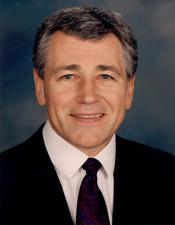 Sen. Chuck Hagel (R-NE)
Legislative Activity
Stay on top of the latest movement without scrolling through every action
Senate amendment not agreed to: Amendment SA 1026 not agreed to in Senate by Yea-Nay Vote. 21 - 75. Record Vote Number: 260.
June 26, 2003
View full timeline
Senate amendment not agreed to: Amendment SA 1026 not agreed to in Senate by Yea-Nay Vote. 21 - 75. Record Vote Number: 260.
June 26, 2003
Roll call votes on amendments in Senate: Amendment SA 1026 not agreed to in Senate by Yea-Nay Vote. 21 - 75. Record Vote Number: 260.
June 26, 2003
Considered by Senate. (consideration: CR S8606, S8663- S8674, S8674-8675; text as modified: CR S8666-8672)
June 26, 2003
Amendment SA 1026 not agreed to in Senate by Yea-Nay Vote. 21 - 75. Record Vote Number: 260.
June 26, 2003
Senate amendment proposed (on the floor): Amendment SA 1026 proposed by Senator Hagel.(consideration: CR S8493)
June 25, 2003
Amendment SA 1026 proposed by Senator Hagel. (consideration: CR S8493) To provide Medicare beneficiaries with a drug discount card that ensures access to affordable prescription drugs.
June 25, 2003
Senate amendment submitted
June 24, 2003
Votes
1 roll call on this amendment
Text
Modified
[[Page S8647]]

-----------------------------------------------------------------------

Senate

PRESCRIPTION DRUG AND MEDICARE IMPROVEMENT ACT OF 2003--Continued

Amendments Nos. 1014, 1015, 1059, 1106, 1086, 1067, 1033, 935, 959,
1038, 1095, En Bloc

Mr. GRASSLEY. Mr. President, I ask unanimous consent that the pending
amendments be temporarily set aside and that the following amendments
be called up en bloc: No. 1014, by Senator Bond, study of pharmacy
services; No. 1015, by Senator Dodd, study of blind and disabled; No.
1059, by Senator Hatch, HHS review; No. 1106, by Senator Hatch,
citizens councils; No. 1086, by Senator Murkowski, pharmacy access; No.
1067, by Senator Lincoln, kidney disease; No. 1033, by Senator
Mikulski, municipal health services; No. 935, by Senator Lincoln,
geriatric GME; No. 959, by Senator Lincoln, physical therapy demo; No.
1038, by Senator Jeffords, critical access hospital; No. 1095, by
Senator Johnson, therapy management.
I further ask unanimous consent that these amendments be agreed to en
bloc and the motion to reconsider be laid upon the table en bloc.
The PRESIDING OFFICER. Is there objection?
Without objection, it is so ordered.
The amendments were agreed to.

Vote on Amendment No. 1011

The PRESIDING OFFICER. Under the previous order, the question is on
agreeing to the Sessions amendment No. 1011.
Mr. BAUCUS. Mr. President, I ask for the yeas and nays.
The PRESIDING OFFICER. Is there a sufficient second?
There is a sufficient second.
The yeas and nays were ordered.
Mr. BAUCUS. Mr. President, I ask unanimous consent that the following
two votes be 10-minute votes.
The PRESIDING OFFICER. Without objection, it is so ordered.
The clerk will call the roll.
Mr. REID. I announce that the Senator from Massachusetts (Mr. Kerry)
and the Senator from Connecticut (Mr. Lieberman) are necessarily
absent.
I further announce that, if present and voting, the Senator from
Massachusetts (Mr. Kerry) would vote ``nay''.
The PRESIDING OFFICER (Mr. Cornyn). Are there any other Senators in
the Chamber desiring to vote?
The result was announced--yeas 33, nays 65, as follows:

[Rollcall Vote No. 256 Leg.]

YEAS--33

Allard
Allen
Bennett
Bunning
Burns
Byrd
Campbell
Chambliss
Cornyn
Craig
Crapo
Dole
Ensign
Enzi
Frist
Graham (SC)
Gregg
Hagel
Hatch
Hutchison
Inhofe
Kyl
Lott
McConnell
Murkowski
Nickles
Santorum
Sessions
Shelby
Stevens
Sununu
Talent
Thomas

NAYS--65

Akaka
Alexander
Baucus
Bayh
Biden
Bingaman
Bond
Boxer
Breaux
Brownback
Cantwell
Carper
Chafee
Clinton
Cochran
Coleman
Collins
Conrad
Corzine
Daschle
Dayton
DeWine
Dodd
Domenici
Dorgan
Durbin
Edwards
Feingold
Feinstein
Fitzgerald
Graham (FL)
Grassley
Harkin
Hollings
Inouye
Jeffords
Johnson
Kennedy
Kohl
Landrieu
Lautenberg
Leahy
Levin
Lincoln
Lugar
McCain
Mikulski
Miller
Murray
Nelson (FL)
Nelson (NE)
Pryor
Reed
Reid
Roberts
Rockefeller
Sarbanes
Schumer
Smith
Snowe
Specter
Stabenow
Voinovich
Warner
Wyden

NOT VOTING--2

Kerry
Lieberman

The amendment (No. 1011) was rejected.
Mr. GRASSLEY. I move to reconsider the vote.
Mr. GRAHAM of Florida. I move to lay that motion on the table.
The motion to lay on the table was agreed to.

Amendment 975, as Modified

The PRESIDING OFFICER. There are now 2 minutes evenly divided prior
to the next vote.
Mr. ROCKEFELLER. Mr. President, this next amendment has to do with
dual eligibility. Never in the history of Medicare have we precluded
Medicare beneficiaries from being Medicare beneficiaries. In the
underlying bill, for the very first time, we do.
The people I refer to are called dual eligibles. Their average income
is $6,500 a year. They tend to be over 85, single women, and very sick.
They are on Medicaid. Medicaid, however, is optional according to the
States. We know the States to be broke. The fastest growing expense
they face is Medicaid. So they are cutting the benefits. They are
cutting Medicaid. They will continue to do that. The States have no
choice but to cut Medicaid. Some will do it because they wish to, all
will do it because they have to.
When that possibility is gone, there is no place for these poorest of
the poor to go. They are then, under the underlying bill, precluded
from being Medicare beneficiaries. That is wrong. In my budget-neutral
amendment I attempt to fix it. I hope my colleagues will support the
amendment.
The PRESIDING OFFICER. The Senator from Iowa.
Mr. GRASSLEY. Two things for my colleagues to consider during the
consideration of how to vote on this amendment: No. 1 is the money that
is available to pay for his amendment, an offset, is the very same
amount of money we, Senator Baucus and I, are using to offset the cost
of a lot of demonstration projects that colleagues have asked us to do,
a lot of minor amendments they have asked us to do. If that money is
not there, there cannot be consideration given. That is not a threat;
it is just a practical aspect of how the budget law works.
Secondly, remember, these dual eligibles are being taken care of very
well

[[Page S8648]]

in our underlying legislation. The point being, they will not be taken
care of better. It is just it is going to cost the Federal Government
more.
I hope you will take those things into consideration and vote down
this amendment.
I ask for the yeas and nays.
The PRESIDING OFFICER. Is there a sufficient second? There is a
sufficient second.
The question is on agreeing to amendment No. 975, as modified. The
clerk will call the roll.
Mr. REID. I announce that the Senator from Massachusetts (Mr. Kerry)
and the Senator from Connecticut (Mr. Lieberman) are necessarily
absent.
I further announce that, if present and voting, the Senator from
Massachusetts (Mr. Kerry) would vote ``yea.''
The PRESIDING OFFICER. Are there any other Senators in the Chamber
desiring to vote?
The result was announced--yeas 47, nays 51, as follows:

[Rollcall Vote No. 257 Leg.]

YEAS--47

Akaka
Bayh
Biden
Bingaman
Boxer
Byrd
Cantwell
Carper
Clinton
Collins
Conrad
Corzine
Daschle
Dayton
DeWine
Dodd
Dorgan
Durbin
Edwards
Feingold
Feinstein
Graham (FL)
Harkin
Hollings
Inouye
Johnson
Kennedy
Kohl
Landrieu
Lautenberg
Leahy
Levin
Lincoln
Mikulski
Murray
Nelson (FL)
Pryor
Reed
Reid
Rockefeller
Sarbanes
Schumer
Snowe
Specter
Stabenow
Voinovich
Wyden

NAYS--51

Alexander
Allard
Allen
Baucus
Bennett
Bond
Breaux
Brownback
Bunning
Burns
Campbell
Chafee
Chambliss
Cochran
Coleman
Cornyn
Craig
Crapo
Dole
Domenici
Ensign
Enzi
Fitzgerald
Frist
Graham (SC)
Grassley
Gregg
Hagel
Hatch
Hutchison
Inhofe
Jeffords
Kyl
Lott
Lugar
McCain
McConnell
Miller
Murkowski
Nelson (NE)
Nickles
Roberts
Santorum
Sessions
Shelby
Smith
Stevens
Sununu
Talent
Thomas
Warner

NOT VOTING--2

Kerry
Lieberman

The amendment (No. 975), as modified, was rejected.
Mr. GRASSLEY. Mr. President, I move to reconsider the vote.
Mr. CRAIG. I move to lay that motion on the table.
The motion to lay on the table was agreed to.

Amendment No. 1066

The PRESIDING OFFICER. There are now 2 minutes equally divided on the
Bingaman amendment.
Mr. BINGAMAN. Mr. President, the bill before us has, in my view, a
significant flaw in it. We are holding out this prescription drug
benefit. But the bill we are considering here says if you want to take
advantage of the benefit, you are thereby prohibited from buying any
supplemental insurance to cover prescription drugs. Today, people are
able to buy Medigap policies that cover prescription drugs. In the
future they will not be able to, if this bill becomes law as it is.
My amendment would merely give people the option of buying a
prescription drug supplemental policy if they chose to do so. It
directs that two policies be developed that would accomplish that.
It is supported by the insurance industry. It is supported by the
Consumers Union. Seniors would like to have this opportunity to reduce
their risk of substantial out-of-pocket costs.
We ought to provide this benefit.
Mr. GRASSLEY. Mr. President, first of all, let me make very clear
that we know that Medigap is very important as part of Medicare. We
leave that untouched as it relates to 1965 model Medicare. In fact,
many of my Iowa constituents want to keep that. But we as a policy
matter have made it a very conscious choice to prevent the sale of
wraparound Medigap plans for the new Part D drug benefit. This policy
makes sense considering drug plans could be different everywhere else
in the United States.
It is impossible to standardize Medigap policies like we did about 15
years ago so that seniors don't get ripped off. But the Congressional
Budget Office tells us this new Medigap plan that is before us now will
increase the cost of our bill. The cost of this amendment is $1.5
billion over 10 years, according to the Congressional Budget Office.
That is because of the increased utilization that comes from having
additional insurance.
I share the Senator's concern with gaps in coverage. I wish we didn't
have any.
But we believe participating drug plans--especially drug plans
delivered by PPOs--will offer benefits in a comprehensive fashion,
lessening the need for expensive supplemental policies.
I urge my colleagues to reject this amendment.
Mr. BAUCUS. Mr. President, I ask for the yeas and nays.
The PRESIDING OFFICER. Is there a sufficient second?
There is a sufficient second.
The question is on agreeing to the amendment. The clerk will call the
roll.
The legislative clerk called the roll.
Mr. REID. I announce that the Senator from Massachusetts (Mr. Kerry)
and the Senator from Connecticut (Mr. Lieberman) are necessarily
absent.
I further announce that, if present and voting, the Senator from
Massachusetts (Mr. Kerry) would vote ``yea.''
The PRESIDING OFFICER (Mr. Chambliss). Are there any other Senators
in the Chamber desiring to vote?
The result was announced--yeas 43, nays 55, as follows:

[Rollcall Vote No. 258 Leg.]

YEAS--43

Akaka
Bayh
Biden
Bingaman
Boxer
Byrd
Cantwell
Carper
Clinton
Collins
Conrad
Corzine
Daschle
Dayton
Dodd
Dorgan
Durbin
Edwards
Feingold
Feinstein
Graham (FL)
Harkin
Hollings
Inouye
Johnson
Kennedy
Kohl
Landrieu
Lautenberg
Leahy
Levin
Mikulski
Murray
Nelson (FL)
Nelson (NE)
Pryor
Reed
Reid
Rockefeller
Sarbanes
Schumer
Stabenow
Wyden

NAYS--55

Alexander
Allard
Allen
Baucus
Bennett
Bond
Breaux
Brownback
Bunning
Burns
Campbell
Chafee
Chambliss
Cochran
Coleman
Cornyn
Craig
Crapo
DeWine
Dole
Domenici
Ensign
Enzi
Fitzgerald
Frist
Graham (SC)
Grassley
Gregg
Hagel
Hatch
Hutchison
Inhofe
Jeffords
Kyl
Lincoln
Lott
Lugar
McCain
McConnell
Miller
Murkowski
Nickles
Roberts
Santorum
Sessions
Shelby
Smith
Snowe
Specter
Stevens
Sununu
Talent
Thomas
Voinovich
Warner

NOT VOTING--2

Kerry
Lieberman

The amendment (No. 1066) was rejected.
Mr. GRASSLEY. Mr. President, I move to reconsider the vote and I move
to lay that motion on the table.
The motion to lay on the table was agreed to.
The PRESIDING OFFICER. The majority leader is recognized.
Mr. FRIST. Mr. President, very briefly, it is almost 6:25, and we
have just completed our 12th rollcall vote. We still have a fair amount
of work to do. But in discussion with the managers of the bill and the
Democratic leader, it is our intent to finish this bill tonight. I
optimistically think we can finish in 2 or 3 hours, or this bill can go
until midnight, or 1, or 2, or 3 in the morning.
Part of the problem we are having now is that people are still coming
up and submitting amendments, and because we have been working in good
faith over the last 2 weeks in the amendment process, we have not set
strict filing deadlines.
Now that we are in the last several hours of consideration, I want to
make the case and, in fact, plead with my colleagues that any
amendments that need to be considered--let us hear about them. Let the
managers hear about them in the next 15 minutes. That is the only way
we can get a list to deal with them, and we will have rollcall votes on
those that are necessary.
There will be a certain number of those amendments looked at by the
managers. The ones I encourage you to bring to them for consideration
to be accepted need to be budget neutral and have bipartisan support,
and they need to be scored by the CBO. People keep bringing amendments
forward now. I

[[Page S8649]]

will ask--and then I want the Democratic leader to comment--that
people, in the next 15 minutes or so, make sure the managers have the
amendments. That way we can move ahead. We will finish tonight.
The PRESIDING OFFICER. The Democratic leader is recognized.
Mr. DASCHLE. Mr. President, I hope we can do as the majority leader
has suggested. We have had a good debate. I think this has been an
excellent debate. The managers deserve credit for the way they have
managed the legislation. We have had 12 rollcall votes today already.
It is likely that we will have 16 or 17 by the end of the day, if not
more; we had 9 yesterday. More than 50 amendments have now been
considered.
I think it is time that we bring the debate to a close. There will be
many more opportunities to talk about prescription drugs and health
care with the array of legislative challenges that we face relating to
health. I think we have been able to do a good deal, and I hope we can
get cooperation now on both sides of the aisle. I hope the majority
leader will hold to the commitment that we finish tonight. That would
accommodate people's travel schedules tomorrow.
If we are going to do that--it is now 6:30--over the course of the
next 4 or 5 hours, we have a lot of work to do even with what we know
we have to vote on. I hope everybody will cooperate so we can minimize
the time required to consider amendments. I hope those who may have
remarks to make will perhaps hold off until after final passage and
make those remarks after final passage. That would accommodate our time
as well.
We will work with the majority leader to see if we can accomplish the
schedule he has laid out. I hope we can do so well before the
bewitching hour.
I yield the floor.
Mr. FRIST. Mr. President, when we finish this bill tonight, my
expectation would be that we would not have votes tomorrow. That is
assuming we are going to finish. I encourage anyone who has an
amendment that needs to be considered to get it to the managers within
the next 15 minutes. If we can do that, we can finish tonight and we
will be able to consider each of those amendments, as the Democratic
leader said.
I know some people want to talk for an hour but I ask Senators to
keep their comments to a few minutes and we can vote throughout the
night. We will have the opportunity after final passage tonight, or
through tomorrow, to make statements--for those who wish to continue
the debate.
The PRESIDING OFFICER. The Senator from New Hampshire is recognized.
Mr. GREGG. Mr. President, I rise to address this bill. I had hoped to
do it earlier in the day but, unfortunately, the managers of the bill
were unable to work the time in. I certainly regret taking time out of
the schedule, which is obviously crowded. I do think it is important to
speak up on the issue of this piece of legislation.
This is the most significant piece of spending legislation, and maybe
even public policy legislation, outside of an international issue, that
I expect I will vote on in my tenure in the Senate. Ironically, when I
ran for this job, after serving as Governor of New Hampshire, one of
the reasons I sought the job and one of the reasons I wanted to pursue
a term in the Senate was that I was concerned about entitlement
spending. In fact, during my first few years, I aggressively pursued
setting up an entitlement commission to address entitlement spending,
which I sponsored with Senator Kempthorne, who came in with me that
year, and Senator Coverdell and Senator Bennett, all of whom came in
the year I was elected, in a bill to end unfunded mandates, many of
which were entitlement oriented.
I tried to lead an effort in passing legislation to address reform of
the Social Security system. I consider that to be a huge entitlement
that we confront. My basic reason for seeking entitlement reform and
responsibility was that I was concerned that it not only is what is
driving the deficits of our country--which they continue to do--but,
more importantly, as the demographics shifted in the Nation and we saw
the baby boom generation, which represents a huge population, moving
toward retirement, we, as a nation, were going to be placing on our
children and our children's children an inordinate burden in the area
of taxes in order to support the older generation--my generation--which
would be retiring. It is because all the major programs, whether they
are Social Security or Medicare, are built on the theory that there is
a pyramid out there, that there will always be more people working and
a lot more people working than those people who are taking their
retirement benefits out of the system. That, of course, is the way it
began.

Back in 1950, there were 12.5 people working for every person who
retired under Social Security. Today, we are down to 3.5 people working
for every 1 person retired on Social Security and under Medicare, and
that is stressing the system.
Unfortunately, when we hit the retirement situation for the baby boom
generation, the largest generation in the history of our Nation, the
generation born between 1946 and 1955, we go down to two people working
for every one person retired. We go from a pyramid to basically a
rectangle, and the result is that we will end up putting an inordinate
amount of stress on those people who are working to support those folks
who are retired. So we need to address thoughtfully any entitlement
expansion, to say nothing of the entitlements that are already on the
books.
That is what brings me to the Chamber today to address this
legislation because I believe very strongly that needy senior citizens
should have a drug benefit. Clearly, prescription drugs have become the
new way to treat disease and maintain public health in our Nation. We
have been able to move from a system where you had to have invasive
activity in the health care system, where you had to go through
surgery, to a system where people can, as result of the keen use of our
scientific community, take a pharmaceutical and actually have a better
life than if they were to go under the knife, have surgery.
This is a revolution, and it is a revolution that is exploding and
growing. Biotech activity, the nanotech activity, is only going to lead
to more and more and better and better pharmaceuticals coming on the
market to help people with their health.
It is absolutely unfair, in my opinion, that people who are in a low-
income situation, especially retired people who are on a fixed low
income, have to choose between their food and their housing and maybe
their pharmaceuticals. That is not right in our society, and we can
certainly afford to have that addressed.
It was my hope as we brought forward a pharmaceutical drug benefit
for senior citizens that we would do it in a way that would address
low-income seniors. Equally important, it is important that a middle-
income senior should not have to spend all their assets for health care
as a result of pharmaceutical costs. After a certain amount of
spending, there should be catastrophic coverage that kicks in,
relieving that person of the full responsibility or a large portion of
their responsibility for the pharmaceutical cost. That is the type of
structure at which we should be looking.
Putting in place this brand new drug benefit, we also have to look at
the underlying Medicare system which we all know is fundamentally
broken as we look out into the future. When the baby boom generation
hits, it simply is not going to work. It is not going to support that
generation. That is because it is a 1959 design, an automobile built in
the fifties driving on the highways of the year 2000 which, when it
gets to 2015, is going to be too old to function effectively. It needs
to have put in place forces which are going to cause it to be more
efficient, to be more effective in addressing a person's approach to
their health care. Those forces have to be basically marketplace
oriented. They cannot be price-control oriented.

My hope, my goal, my belief was that we would create a drug benefit
that would help low-income seniors and, at the same time, give
catastrophic coverage, and that would, fundamentally, reform the
Medicare system so that we would end up with a more market-oriented
system, something that was going to contain costs as we moved into the
outyears.

[[Page S8650]]

What did we get? What is before us today? Essentially, what we have
before us today is a drug benefit that will plant a fiscal disease that
will afflict our children and our children's children. It is a drug
benefit that is going to put in place a fiscal disease that will
afflict our children for the next 75 years. By afflict them, I mean
that our children and our children's children, under the benefit in
this bill, are going to have to pay $6 trillion. That is the estimate.
That may be the high end. It is somewhere between $4.6 trillion and $6
trillion. When you get into those numbers, it is pretty hard to get
very definitive.
That is the burden this drug benefit in this bill puts on our
children and our children's children to support my generation which is
going to retire and take advantage of it.
That is a huge problem because what we are essentially saying to the
person who is working in a restaurant or working in a garage or working
on a computer line or working as a sales person, who is young and
trying to raise a family, is that they are going to have to pay an
inordinate amount of tax burden to support people who are retired with
this drug benefit.
That would not be so bad if the drug benefit was not an income
transfer from that person working in that garage, working in that
restaurant, or working on that computer line to somebody who is a great
deal wealthier than they are potentially. That would not be so bad if
it was a transfer from that person to people who are low income or
whose assets are about to be wiped out because of a drug expenditure.
That is not the way this bill works. The way this bill works is
essentially to nationalize the entire drug delivery service for senior
citizens to take all the present programs which presently benefit
senior citizens for drug benefits--and there are a lot of them; there
are a lot of seniors in this country today who already have a drug
benefit; something like 76 percent is the estimate--to take a large
percentage of those people and move them from their private programs to
the public programs.
If you retired from a major corporation or even a smaller corporation
in this country, it is very likely that in your retirement package,
depending on how aggressive your union was or how successful your
company was, you received a drug benefit during your retirement. But
when this bill passes, the incentive is going to be to take that drug
benefit which presently exists in the private sector under some sort of
contractual agreement which you had when you retired and move it out of
the private sector and throw it on the taxpayers of America.
Who are those taxpayers going to be? They are going to be our
children and our children's children, people who are working for a
living, trying to buy their kids a better education, a better home,
better food, or even just a nice car or a night out at the movies.
Their ability to do that is going to be undermined if this bill goes
forward in its present form because so much will have to flow back to
benefit people who already have the benefit in the private sector and
are now going to be migrated over to the public sector.
Mr. President, $4.5 trillion to $6 trillion is a huge amount of
money, a huge burden to put on our children. It is hard to put it in
terms that are realistic and are visible when we are talking those type
of dollars, but every American child born tonight--and there are a lot
of kids being born tonight in America--starts out with a $44,000 debt
they have to pay for Medicare for my retirement, for the retirement of
everybody in this room, for the retirement of most of the people who
are watching who are over the age of 45. They start out with a $44,000
debt.
When this bill passes, they will have another $12,000 to $15,000
added to that debt. So before they get through the first night of their
life, as a result of this legislation they are going to owe $60,000. It
is not fair. It is not right. We are not doing it the correct way.
There are ways to do this where the system is not nationalized, where
all the people who already have a drug benefit are told there is no
incentive for them to keep it.
We do not say in the private sector to the people who bought Medigap,
to the people who have reached contractual agreements in retirement, to
the people who have retained retirement coverage through the private
sector, that there is no advantage to them keeping their program or,
alternatively, the people who are giving them that program saying they
are not going to give it to them anymore, and move those folks onto the
public dole, onto the public system. It makes no sense.
Then there is the issue of the underlying question of Medicare. Not
only is the drug benefit in this bill fundamentally flawed because it
migrates huge numbers of people off the private sector and into the
public sector, but the underlying purpose of the Medicare effort in
this bill is flawed. If we are going to put in place this huge new
benefit for seniors, and especially if it is going to be as grand and
as pervasive, where we are basically saying to all seniors that they
get a benefit here, no matter what their income is--if that is going to
be put in place, that ought to at least be coupled with some sort of
reform of the underlying Medicare system to try to bring under control
those costs which are driving the outyear liability, which will be the
tax burden for our children and their children.
The estimated outyear cost of Medicare that is unfunded is $13.3
trillion. When the baby-boom generation starts to hit the system in
2008, that is when it really starts to crank up, by the year 2020,
2025, when there will be large retirement populations as a result of
this demographic shift, $13.3 trillion of unfunded liability.
Unfunded means it is just there. We have to pay it, but nobody has an
idea of how they are going to do it. There is no trust fund for it.
There is no money out there to do it. So the only way it is going to be
done is to raise taxes or to cut the benefit, which is politically
probably impossible, so to raise taxes on the young people who are
working.
There is a third way, however, to do it, and that is to make Medicare
a more cost-sensitive, more thoughtful, more efficient system for
delivery of health care. Regrettably, under this bill that does not
happen. There is a representation that that might happen, something
called a PPO, which is supposedly going to create an opportunity for
the private sector to come in and compete with the traditional Medicare
system. The price control system will have a chance to compete with a
marketplace system. That is the thematic statement of the bill.
Unfortunately, it is illusory. It will not happen under the bill. CBO
says maybe 2 percent of the people will migrate, will move over, to a
PPO system. The administration says it is 48 percent. Logic tells us it
is not going to fly, because the bill has been structured to defeat the
probability a PPO, a marketplace system, will be allowed to work. All
the little gimmicks in this bill are aimed at essentially undermining
that.
Classic was the amendment that we passed earlier, which had been so
gerrymandered, which was an effort by Senator Kyl. So what are we told?
Well, even though the bill has these fundamental flaws of having a drug
benefit that migrates a large number of people out of the private
sector into the public sector and essentially causes low-income working
Americans who are young to have to support middle-income Americans who
are retired and who had a private sector benefit, and even though the
bill has this illusory marketplace representation, basically no real
reform of Medicare, we are told we should vote for it because it is
going to be improved in conference. At least that is what we are being
told on our side of the aisle. I do not know what is being said on the
other side of the aisle. Maybe they are not getting that same message.
We are being told that by the administration.

The problem is, we are betting on the come. I mean, this is $6
trillion of unfunded liability we are talking about passing on to our
kids. It is massive. If this bill were to pass in its present form, or
anything near to its present form, it would fundamentally extinguish
the torch which the Republican Party has allegedly--and I thought
pretty effectively--carried for years which was the torch of spending
responsibility.
That is why I came here, as I said when I began my statement. I came
to try to do something about controlling the rate of growth of spending
in the Federal Government, especially in the area of entitlements. I
was told by one of the finest legislators I have ever met

[[Page S8651]]

in my experience in 20 years in Government--a man named Barber
Conable--one time on the floor of the House when I was mumbling about
the fact that some bill was coming through that was a little expensive,
you have to understand, Judd, all Government moves to the left, and it
is just a question of how many engines are on that train--think of it
as a train--as it moves to the left, and our job as fiscal
conservatives is to limit the number of engines that go on that train.
This bill, if it passes in its present form, is going to be all
engine, and it is going to undermine our capacity to assure our
children they have the opportunity to have the type of lifestyle which
we have, because it is going to put a huge and unfair tax burden on
them.
I yield the floor.
The PRESIDING OFFICER. The Senator from Louisiana.
Mr. BREAUX. Mr. President, this morning one of the very able
legislative assistants who has worked on this legislation for almost 7
years, going back to the time on the Medicare Commission when we first
started doing Medicare reform, was on the floor working with me on
amendments in this legislation. She had to temporarily leave because at
5:47 this afternoon she had a little baby girl. That is a very good
excuse to not be on the Senate floor. But my legislative director,
Sarah Walter, is doing fine. It is a baby girl. The name is yet to be
determined, but I wanted to bring that to the attention of my
colleagues and all of her colleagues on the professional staff.
I yield the floor.
The PRESIDING OFFICER. The Senator from Idaho.

Amendment No. 1087 Withdrawn

Mr. CRAIG. Mr. President, this afternoon I will speak to amendment
1087. That amendment was pulled up last night by the manager of the
bill, Senator Grassley. I believe that amendment is at the desk.
The PRESIDING OFFICER. The Senator is correct. The amendment has been
called up and is pending.
Mr. CRAIG. Mr. President, it is my intent within a few moments to
withdraw this amendment, but I thought I should speak to it tonight
because I am disappointed at this time that we could not get the
scoring from CBO we felt would produce a revenue-neutral bill, or a
cost-neutral bill, going into the final hours of this debate.
This is an amendment that produces in this legislation, and hopefully
to take up in conference, a consumer-driven health care plan under the
new MedicareAdvantage program all of us are talking about at this
moment. The Senator from New Hampshire gave a very impassioned speech
from the depths of his heart, frustrated that this bill does not
balance out and provide enough of the incentives in the market that
will offset and create the kind of competitive forces being designed
for Medicare with the extension of prescription drugs in it offers.
For a few moments tonight, I did want to speak about that and explain
it. As we get into conference with the House, the House has a consumer-
driven health care concept within their legislation that is critical.
It is something we ought to address.
First, the amendment before the Senate is designed to dovetail with
and not disturb the overall MedicareAdvantage competitive dynamic. As a
complement to MedicareAdvantage, consumer-driven health care plans
would be subject to the same competitive rules as preferred provider
organizations.
Second, I emphasize this amendment is carefully crafted. We thought
it would ensure budget neutrality. But CBO says tonight, no, and I am
not going to be too critical of them; we pushed them very hard in the
last good number of days to quickly analyze and bring forth estimates.
I think they are simply swamped. We will continue to work with them. We
believe what we are offering is budget neutral.
Additionally, the Finance Committee chairman, the majority leader,
and the White House have expressed the kind of support for these
concepts in amendments. I appreciate it. As everyone begins to examine
this structure, they become increasingly enthusiastic that this could
become a component of the MedicareAdvantage Program.
For the benefit of my colleagues, let me describe for a moment the
key features of this amendment. The amendment establishes a new
category of competition within Medicare Advantage designed to encourage
participation by consumer-driven health plans. These plans would be
subject to the same requirements of PPOs in MedicareAdvantage,
including prescription drug benefits and risk adjustment parameters.
Consumer-driven health care is one of the fastest growing innovations
emerging in the employer health insurance market. Already 1.5 million
Americans are estimated to be in consumer-driven health care in the
summer of 2002, and that number is now growing very rapidly.
What is the consumer-driven health care? It harnesses market forces
in ways similar to medical savings accounts. However, there are some
differences between medical savings accounts and consumer-driven health
care plans. For example, enrollees in consumer-driven health care do
not have to make contributions to the account. In the private sector,
the employer or in my amendment if it were to pass, Medicare makes the
contribution to the personal care account. There would be no tax
consequence for the senior under this amendment. In other words, it
would not be viewed as income. Some in Congress might be familiar with
the account because the American Postal Workers Union of the AFL-CIO
consumer-driven health care plan is now available. It is in that bundle
of choices that Federal employees have today to choose from. More and
more employees are signing up for this concept.
This is what the union Web site states: We believe that people who
have more control over how their health care dollars are spent are more
satisfied consumers and the APWU health plan consumer-driven option is
designed to give that kind of control.
It is the very thing the Senator from New Hampshire was talking
about. It is what we ought to be striving for to balance off the
differences and to create the competitive forces within the
MedicareAdvantage program.
Benefits make sense in consumer-driven health care plans. I draw your
attention to my chart. My amendment is designed to encourage market
flexibility. The information on this chart is one example of what
consumer-driven health care plans can provide. Web site education and
decision support is one example. In other words, you can go to the Web
site, look at it, make choices and decisions based on the best
available information. 100-percent preventive care coverage--the
very kind of thing we want in modern medicine today. Preventive
benefits keep healthy people healthy instead of making the repairs
after the human body breaks down.

There are no more barriers to necessary care, including annual
physicals, mammograms, and preventive services. All are within this
kind of health care plan. All are available today offered by the postal
workers.
Patient control of personal care accounts for routine health care
services are also included. Unused funds in these accounts then roll
over into the next year.
High deductibles, that is true insurance, to protect against
financial ruin in an acute health care crisis, in other words,
catastrophic coverage.
A limit on annual out-of-pocket spending is an especially important
feature. Traditional Medicare does not have an out-of-pocket limit and
drives many seniors into bankruptcy. In other words, it limits
financial risk when it kicks in at a certain point.
It includes care coordination, disease management, and provider
network discounts. Consumer-driven health care gives control of health
care back to patients. That is why more and more are enrolling in it.
We know today, many who work in the health care area with our seniors
know they look at the details of their spending; they look at the
billing; they know more about their health care and what is being
charged than most people realize. Patients and their physicians,
ultimately, with this kind of insurance, join in partnerships to seek
the finest care at the most reasonable costs.
Consumer-driven care is especially suited for patients who like to be
personally involved in their health care decisions. More and more
Americans who can use the necessary information

[[Page S8652]]

want that kind of personal involvement.
Consumer-driven care eliminates wasteful Medicare spending, it
increases patient awareness of health care costs, and encourages
prudent purchasing of health care services. Any unspent funds in the
personal care account would be returned to the Medicare trust fund upon
the death or the disenrollment. That is a key factor. Federal dollars
go into the trust fund and, if there are dollars remaining, they flow
back into the trust fund of Medicare upon disenrollment or the death of
the individual.
This amendment would be an important addition to the bill. I wish we
could get it into the bill tonight. But it would be unfair to the
manager of the bill at this time because it cannot get scored. I would
not want to drive the cost up of the already-fixed segment of the
MedicareAdvantage side. Already, it is less competitive than we would
like it to be. I don't want to add to that disadvantage.
We believe ultimately that this will be a budget-neutral program. At
that time, it will be the right thing to offer as part of the dynamics
that we want to see in a modern health care delivery system and in an
improved Medicare with a prescription drug program.
I thank my colleagues for listening. We will return with this when it
is a final product. It may well make it into the conference between the
House and the Senate. We will be working with our colleagues in the
House because they have already provided that kind of a provision
within the legislation which they are currently debating and voting
upon.
With that, I ask unanimous consent to withdraw amendment No. 1086.
The PRESIDING OFFICER. Without objection, it is so ordered.
The amendment (No. 1086) was withdrawn.
The PRESIDING OFFICER. The Senator from Pennsylvania.
Mr. SPECTER. Since Medicare was established in 1965, people are
living longer and living better. Today Medicare covers more than 40
million Americans, including 35 million over the age of 65 and nearly 6
million younger adults with permanent disabilities.
Congress now has the opportunity to modernize this important Federal
entity to create a 21st century Medicare Program that offers
comprehensive coverage for pharmaceutical drugs and improves the
Medicare delivery system.
The proposal before the Senate would make available a voluntary
Medicare prescription drug plan for all seniors. If enacted, Medicare
beneficiaries have access to a discount card for prescription drug
purchases starting in 2004. Projected savings from cards for consumers
would range between 10 to 25 percent. A $600 subsidy would be applied
to the card, offering additional assistance for low-income
beneficiaries defined as 160 percent or below the Federal poverty
level. Effective January 1, 2006, a new optional Medicare prescription
drug benefit would be established under Medicare Part D.
This bill has the potential to make a dramatic difference for
millions of Americans living with lower incomes and chronic health care
needs. Low-income Medicare beneficiaries, who make up 44 percent of all
Medicare beneficiaries, would be provided with prescription drug
coverage with minimal out-of-pocket costs. For these seniors,
copayments would not exceed 20 percent of the cost of the drugs.
For medical services, Medicare beneficiaries will have the freedom to
remain in traditional fee-for-service Medicare for drug coverage, or to
enroll in Health Maintenance Organizations (HMOs) or Preferred Provider
Organizations (PPOs), also called MedicareAdvantage, which offers
beneficiaries a wide choice of health care providers, while also
coordinating health care effectively, especially for those with
multiple chronic conditions. MedicareAdvantage health plans would be
required to offer at least the standard drug benefit, available through
traditional fee-for-service Medicare.
The legislation which is pending has been worked on, now, for many
years. I congratulate the chairman of the committee, Senator Grassley,
and the ranking member, Senator Baucus, for the outstanding work which
they have done. This is an extraordinarily complex subject, and it is a
very complex bill.
We already know that there are many criticisms directed to this bill
at various levels. Many would like to see the prescription drug program
cover all of the costs without deductibles and without copays. There
has been allocated in our budget plan $400 billion for prescription
drug coverage. That is, obviously, a very substantial sum of money.
There are a variety of formulas which could be worked out to utilize
this funding. The current plan, depending upon levels of income,
provides a deductible, then a copay, then what is called a donut hole
where the recipient pays the entire costs of their drug coverage, and
when it gets to a certain high level, it is catastrophic and there is
coverage that pays almost all of it.
As I have reviewed these projections and these analyses, it is hard
to say where the line ought to be drawn. It is a value judgment as to
what deductibles ought to be, and for whom, and what the copays ought
to be and for whom. I am seriously troubled by the so-called donut
hole. But it is calculated to encourage people to take the medical care
they really need, and at lower levels of income to have certain copays,
which it is projected will be affordable. Then, when the costs move
into the so-called catastrophic range, to have the plan pay for nearly
all of the medical costs.
I think passage by the Senate would be a significant step forward.
The House of Representatives, as usual, has a different plan--as is
customary, with our bicameral legislative approach. Then the bill can
be improved in conference.
The legislative process has the committee turning out a bill, and
then many amendments, which generally are not known to Members in
advance of brief debate and then votes. It is in the conference, after
the bill is analyzed, that another fresh look is taken at the bill to
produce the best legislative product in the public interest.

Amendment No. 983

I have already offered an amendment relating to end of life
directives, number 983, which was adopted by unanimous consent.
Commenting on it very briefly, we find statistically that nearly 30
percent of Medicare expenditures occur during a person's last year of
life. We find, beyond the last year of life, a tremendous percentage of
medical costs occur in the last month, in the last few weeks, in the
last week, or in the last few days.
Nobody should decide for anybody else what that person should have by
way of end-of-life medical care. What care ought to be available is a
very personal decision.

The living wills would give an individual an opportunity to make that
judgment, to make a decision as to how much care he or she wanted near
the end of his or her life and that is, to repeat, a matter highly
personalized for the individual.
But if that decision was made to eliminate some of the very high
costs at the very end of life, there would obviously be substantial
savings to our medical system. As long as that comports with the will
of the individual, that is something which ought to be considered.
The amendment directs the Secretary of Health and Human Services to
include in its annual ``Medicare And You'' handbook, to be provided to
each beneficiary, a section that specifies information on advanced
directives and details on living wills, durable powers of attorney for
health care, and directs the Secretary of HHS, in the introductory
letter to the ``Medicare And You'' handbook, to reference the inclusion
of advanced directives.

Amendment No. 1085

I have also submitted an amendment which is pending at the desk,
amendment No. 1085, which has not yet been acted upon but which I will
call up at an appropriate time.
This is an amendment which would update the Medicare physician fee
formula. It is a sense-of-the-Senate resolution. The projections from
the Medicare payment formula called for a 4.4-percent reduction on
March 1, which would have been very problematic. The fact is, the
Center for Medicare and Medicaid Services, CMS, now projects a Medicare
conversion factor figure of 4.2 percent will be projected for the year
2004. This reduction threatens to destabilize an important element of
the

[[Page S8653]]

Medicare Program; namely, physician participation and willingness to
accept Medicare payments. This instability is a result of the
sustainable growth rate, a system of annual spending which targets
physicians' services under Medicare.
This sense-of-the-Senate amendment would provide that the conferees
on Medicare reform and prescription drug legislation should include in
the conference agreement a provision to establish a minimum percentage
update in physician fees for the next 2 years, and should consider
adding provisions which would mitigate the swings in payment, such as
establishing multiyear adjustments to recoup the variance and creating
tolerance corridors for variations around the updated target trend.

Amendment No. 1118

I have also submitted an amendment designated as amendment No. 1118,
which provides for a lifestyle modification program demonstration. This
is projected on the factor that heart disease kills some 500,000
Americans each year. The costs of coronary disease currently relate to
an expenditure of some $58 billion annually. There has been a test
program of the Medicare lifestyle modification program operating in
some 12 States which has been demonstrated to reduce the need for
coronary procedures by 88 percent. This program could reduce
cardiovascular expenditures by as much as $36 billion annually.
Lifestyle choices such as diet and exercise affect heart disease and
heart disease outcomes by 50 percent or greater. This program has also
been applied to men with prostate cancer, who have shown significant
improvements in prostate cancer markers using a similar approach in
lifestyle modifications. My amendment expresses the sense of the Senate
that the Secretary of Health and Human Services should carry out the
lifestyle modification program demonstration at the national level and
then provide it on a permanent basis, and include as many Medicare
beneficiaries as would like to participate in the project on a
voluntary basis.
I have submitted one additional amendment, which is No. 1128 and
which relates to State pharmaceutical assistance programs for the
elderly and disabled. Currently, 18 States have comprehensive pharmacy
assistance programs which provide prescription drug coverage for more
than 1.1 million older and disabled Americans.
In my own State, Pennsylvania's Pharmaceutical Assistance Contract
for the Elderly, known as PACE, established in 1984 provides
prescription drug coverage to 230,000 Medicare beneficiaries, the vast
majority of whom have incomes below 160 percent of the Federal poverty
level. This enrollment is comprised largely of 70- and 80-year-old
widows who have multiple diseases and limited educational background
who have been enrolled in the PACE program for more than a decade.
There is a serious concern that if there is not a coordinated
program, people will not be informed as to how to move from PACE to
another program. This affects not only Pennsylvania but, as I stated,
17 other States.
The pending bill does not provide for coordination of benefits
between State pharmaceutical programs and private insurers. Without a
coordination of benefits for State plans to facilitate enrollment in
private plans, many of these State program beneficiaries will be unable
to assess the new Medicare drug benefit.
This amendment provides for coordination of benefits between States
and private insurance companies and facilitates the enrollment of State
pharmacy assistance beneficiaries in the private plans. Without this
amendment, the majority of seniors enrolled in their State pharmacy
programs will not be able to effectively access private plans.
I note the presence of other Senators who are seeking recognition. I
attempted to be brief in my general statement about the bill and also
in my descriptions of these four amendments, one of which has already
been adopted.
I ask unanimous consent that at the conclusion of my remarks, there
be printed in the Record a summary of the end-of-life directive
amendment, a summary of the updating of the Medicare physician fee
formula, a summary of the lifestyle modification program, and a summary
of the State pharmaceutical assistance programs for the elderly and
disabled, and also printed in the Record at this point the amendments
themselves.
There being no objection, the material was ordered to be printed in
the Record, as follows:

Summary on the End of Life Directive Amendment

The purpose of this amendment is to make it easier for
individuals to make their own choices regarding their
treatment when nearing the end of their life.
A health care advance directive is a document where a
beneficiary gives instructions about their health care if, in
the future, that beneficiary cannot speak for him or herself.
The beneficiary can give someone they name (``agent'' or
``proxy'') the power to make health care decisions on their
behalf. They may also give instructions about the kind of
health care they do or do not want.
In a traditional Living Will, a beneficiary would state
their wishes about life-sustaining medical treatments if he
or she is terminally ill. In a Health Care Power of Attorney,
one appoints someone else to make medical treatment decisions
for the beneficiary if they cannot make them on their own.
Unlike most Living Wills, a Health Care Advance Directive
is not limited to cases of terminal illness. If the
beneficiary cannot make or communicate decisions because of a
temporary or permanent illness or injury, a Health Care
Advance Directive helps them keep control over important
health care decisions.
Observers have long noted that individuals incur the
majority of health care costs in the last few months of life.
Nearly 30 percent of Medicare expenditures occur during a
person's last year of life.
Your amendment directs the Secretary of HHS to include in
its annual ``Medicare and You'' handbook, which is provided
to each beneficiary, a section that provides information on
advanced directives and details on living wills and durable
power of attorney for health care; and directs the Secretary
of HHS, in the introductory letter to the ``Medicare and
You'' handbook, to reference the inclusion of advanced
directives information.
____

Summary on the Amendment to Update the Medicare Physician Fee Formula

Earlier this year, Congress passed legislation as part of
the Fiscal Year 2003 Omnibus Appropriations bill (H.J. Res.
2) that avoided an impending 4.4 percent cut in the Medicare
conversion factor. Although this change resulted in a
welcomed 1.6 percent increase in the Medicare conversion
factor for 2003, the Centers for Medicare and Medicaid
Services' (CMS) preliminary Medicare conversion factor figure
predicts a 4.2 percent reduction for 2004.
It is clear that this scheduled 4.2 percent reduction in
the physician reimbursement formula threatens to destabilize
an important element of the Medicare program, namely
physician participation and willingness to accept Medicare
patients.
The primary source of this instability is the sustainable
growth rate (SGR), a system of annual spending targets for
physicians' services under Medicare.
The sustainable growh rate (SGR) system has a number of
defects that result in unrealistically low spending targets,
such as the use of the increase in the gross domestic product
(GDP) as a proxy for increases in the volume and intensity of
services provided by physicians, no tolerance for variance
between growth in Medicare beneficiary health care costs and
our Nation's GDP, and a requirement for the immediate
recoupment of the difference.
Both administrative and legislative action are needed to
return stability to the Medicare physician payment system.
In its March 2003 report, the Medicare Payment Advisory
Commission (MedPAC) stated that if ``Congress does not change
current law, then payments may not be adequate in 2003 and a
compensating adjustment in payments would be necessary in
2004.''
With 17 percent of its population eligible for Medicare,
the Pennsylvania Medical Society has calculated that
Pennsylvania's physicians have already suffered a $128.6
million loss, or $4,074 per physician, as a result of the
2002 Medicare payment reduction. If not corrected, the flawed
formula will cost Pennsylvania physicians another $553
million or $17,396 per physician for the period 2003-2005.
Your amendment expresses the sense of the Senate that the
conferees on Medicare reform and prescription drug
legislation should include in the conference agreement a
provision to establish a minimum percentage update in
physician fees for the next 2 years and should consider
adding provisions that would mitigate the swings in payment,
such as establishing multi-year adjustments to recoup the
variance and creating ``tolerance'' corridors for variations
around the update target trend.
____

Summary of the Amendment on the Lifestyle Modification Program

Heart disease kills more than 500,000 Americans per year.
The number and costs of interventions for the treatment of
coronary disease are rising and currently cost the health
care system $58 billion annually.

[[Page S8654]]

The Medicare Lifestyle Modification Program (also known as
the Dean Ornish Program for Reversing Heart Disease) has been
operating throughout 12 states and has been demonstrated to
reduce the need for coronary procedures by 88 percent per
year.
The Medicare Lifestyle Modification Program is less
expensive to deliver than interventional cardiac procedures
and could reduce cardiovascular expenditures by $36 billion
annually.
Lifestyle choices such as diet and exercise effect heart
disease and heart disease outcomes by 50 percent or greater.
Intensive lifestyle interventions which include teams of
nurses, doctors, exercise physiologists, registered
dieticians, and behavioral health clinicians have been
demonstrated to reduce heart disease risk factors and enhance
heart disease outcomes dramatically.
The National Institutes of Health estimates that 17 million
Americans have diabetes and the Centers for Disease Control
and Prevention estimates that the number of Americans who
have a diagnosis of diabetes increased 61 percent in the last
decade and is expected to more than double by 2050.
Lifestyle modification programs are superior to medication
therapy for treating diabetes. Individuals with diabetes are
now considered to have coronary disease at the date of
diagnosis of their diabetic state.
The Medicare Lifestyle Modification Program has been an
effective lifestyle program for the reversal and treatment of
heart disease.
Men with prostate cancer have shown significant improvement
in prostate cancer markers using a similar approach in
lifestyle modification. These lifestyle changes are therefore
likely to affect other chronic disease states, in addition to
heart disease.
Your amendment expresses the sense of the Senate that the
Secretary of Health and Human Services should carry out the
Lifestyle Modification Program Demonstration at the national
level on a permanent basis and include as many medicare
beneficiaries as would like to participate in the project on
a voluntary basis.
____

Summary of the Amendment on State Pharmaceutical Assistance Programs
for the Elderly and Disabled

Currently, 18 states have comprehensive pharmacy assistance
programs that provide prescription drug coverage to more than
1.1 million older and disabled residents.
The majority of these beneficiaries receive life saving
medications to treat high blood pressure, heart disease,
arthritis, diabetes, and eye disease.
Pennsylvania's Pharmaceutical Assistance Contract for the
Elderly (PACE), established in 1984, provides prescription
drug coverage to 230,000 Medicare beneficiaries, the vast
majority of whom have incomes below 160% of the federal
poverty level. This enrollment is comprised largely of 70 and
80-year-old widows who have multiple disease states, and less
than a tenth grade education, and have been enrolled in PACE
for more than a decade.
Currently, the pending bill the Senate does not provide for
`coordination of benefits', between state pharmaceutical
programs and private insurers. Without a coordination of
benefit mandate and a role for the state plans to facilitate
enrollment in private plans, many of these state program
beneficiaries will not be able to access the new Medicare
drug benefit.
This amendment provides for the coordination of benefits
between states and private insurance companies, and
facilitates the enrollment of state pharmacy assistance
beneficiaries into private plans, without this amendment the
majority of the seniors enrolled in their state pharmacy
programs will not be able to effectively access private
plans.
____

amendment no. 983

(Purpose: To provide medicare beneficiaries with information on advance
directives)

On page 676, after line 22, insert the following:

SEC. __. PROVISION OF INFORMATION ON ADVANCE DIRECTIVES.

Section 1804(c) of the Social Security Act (42 U.S.C.
1395b-2(c)) is amended--
(1) by redesignating paragraphs (1) through (4) as
subparagraphs (A) through (D), respectively;
(2) in the matter preceding subparagraph (A), as so
redesignated, by striking ``The notice'' and inserting ``(1)
The notice''; and
(3) by adding at the end the following:
``(2)(A) The Secretary shall annually provide each medicare
beneficiary with information concerning advance directives.
Such information shall be provided by the Secretary as part
of the Medicare and You handbook that is provided to each
such beneficiary. Such handbook shall include a separate
section on advanced directives and specific details on living
wills and the durable power of attorney for health care. The
Secretary shall ensure that the introductory letter that
accompanies such handbook contain a statement concerning the
inclusion of such information.
``(B) In this section:
``(i) The term `advance directive' has the meaning given
such term in section 1866(f)(3).
``(ii) The term `medicare beneficiary' means an individual
who is entitled to, or enrolled for, benefits under part A or
enrolled under part B, of this title.''.

amendment no.

(Purpose: To permit existing State pharmaceutical assistance programs
to wrap around the coverage provided by Medicare Prescription Drug
plans and to facilitate the enrollment of eligible beneficiaries for
prescription drug coverage)

On page 133, after line 25, insert the following:
``(3) Coordination With Existing State Pharmaceutical
Assistance Programs.--
``(A) In general.--An eligible entity offering a Medicare
Prescription Drug plan, or a MedicareAdvantage organization
offering a MedicareAdvantage plan (other than an MSA plan or
a private fee-for-service plan that does not provide
qualified prescription drug coverage), shall enter into an
agreement with each existing State pharmaceutical assistance
program to coordinate the coverage provided under the plan
with the assistance provided under the existing State
pharmaceutical assistance program.
``(B) Election.--Under the process established under
section 1860D-3(a), an eligible beneficiary who resides in a
State with an existing State pharmaceutical assistance
program and who is eligible to enroll in such program shall
elect to enroll in a Medicare Prescription Drug plan or
MedicareAdvantage plan through the existing State
pharmaceutical assistance program.
``(C) Existing state pharmaceutical assistance program
defined.--In this paragraph, the term `existing State
pharmaceutical assistance program' means a program that has
been established pursuant to a waiver under section 1115 or
otherwise before January 1, 2004.''

amendment no. 1085

(Purpose: To express the sense of the Senate regarding payment
reductions under the Medicare physician fee schedule)

At the end of title VI, insert the following:

SEC. __. SENSE OF THE SENATE ON PAYMENT REDUCTIONS UNDER
MEDICARE PHYSICIAN FEE SCHEDULE.

(a) Findings.--Congress finds that--
(1) the fees Medicare pays physicians were reduced by 5.4
percent across-the-board in 2002;
(2) recent action by Congress narrowly averted another
across-the-board reduction of 4.4 percent for 2003;
(3) based on current projections, the Centers for Medicare
& Medicaid Services (CMS) estimates that, absent legislative
or administrative action, fees will be reduced across-the-
board once again in 2004 by 4.2 percent;
(4) the prospect of continued payment reductions under the
Medicare physician fee schedule for the foreseeable future
threatens to destabilize an important element of the program,
namely physician participation and willingness to accept
Medicare patients;
(5) the primary source of this instability is the
sustainable growth rate (SGR), a system of annual spending
targets for physicians' services under Medicare;
(6) the SGR system has a number of defects that result in
unrealistically low spending targets, such as the use of the
increase in the gross domestic product (GDP) as a proxy for
increases in the volume and intensity of services provided by
physicians, no tolerance for variance between growth in
Medicare beneficiary health care costs and our Nation's GDP,
and a requirement for immediate recoupment of the difference;
(7) both administrative and legislative action are needed
to return stability to the physician payment system;
(8) using the discretion given to it by Medicare law, CMS
has included expenditures for prescription drugs and
biologicals administered incident to physicians' services
under the annual spending targets without making appropriate
adjustments to the targets to reflect price increases in
these drugs and biologicals or the growing reliance on such
therapies in the treatment of Medicare patients;
(9) between 1996 and 2002, annual Medicare spending on
these drugs grew from $1,800,000,000 to $6,200,000,000, or
from $55 per beneficiary to an estimated $187 per
beneficiary;
(10) although physicians are responsible for prescribing
these drugs and biologicals, neither the price of the drugs
and biologicals, nor the standards of care that encourage
their use, are within the control of physicians; and
(11) SGR target adjustments have not been made for cost
increases due to new coverage decisions and new rules and
regulations.
(b) Sense of the Senate.--It is the sense of the Senate
that--
(1) the Center for Medicare & Medicaid Services (CMS)
should use its discretion to exclude drugs and biologicals
administered incident to physician services from the
sustainable growth rate (SGR) system;
(2) CMS should use its discretion to make SGR target
adjustments for new coverage decisions and new rules and
regulations; and
(3) in order to provide ample time for Congress to consider
more fundamental changes to the SGR system, the conferees on
the Prescription Drug and Medicare Improvement Act of 2003
should include in the conference agreement a provision to
establish a minimum percentage update in physician fees for
the next 2 years and should consider adding provisions that
would mitigate the swings in payment, such as establishing
multi-year adjustments to recoup the variance and creating
``tolerance'' corridors for variations around the update
target trend.

[[Page S8655]]

amendment no.

(Purpose: To express the sense of the Senate regarding the
establishment of a nationwide permanent lifestyle modification program
for Medicare beneficiaries)

At the end of title VI, insert the following:

SEC. __. SENSE OF THE SENATE REGARDING THE ESTABLISHMENT OF A
NATIONWIDE PERMANENT LIFESTYLE MODIFICATION
PROGRAM FOR MEDICARE BENEFICIARIES.

(a) Findings.--Congress finds that:
(1) Heart disease kills more than 500,000 Americans per
year.
(2) The number and costs of interventions for the treatment
of coronary disease are rising and currently cost the health
care system $58,000,000,000 annually.
(3) The Medicare Lifestyle Modification Program has been
operating throughout 12 States and has been demonstrated to
reduce the need for coronary procedures by 88 percent per
year.
(4) The Medicare Lifestyle Modification Program is less
expensive to deliver than interventional cardiac procedures
and could reduce cardiovascular expenditures by
$36,000,000,000 annually.
(5) Lifestyle choices such as diet and exercise affect
heart disease and heart disease outcomes by 50 percent or
greater.
(6) Intensive lifestyle interventions which include teams
of nurses, doctors, exercise physiologists, registered
dietitians, and behavioral health clinicians have been
demonstrated to reduce heart disease risk factors and enhance
heart disease outcomes dramatically.
(7) The National Institutes of Health estimates that
17,000,000 Americans have diabetes and the Centers for
Disease Control and Prevention estimates that the number of
Americans who have a diagnosis of diabetes increased 61
percent in the last decade and is expected to more than
double by 2050.
(8) Lifestyle modification programs are superior to
medication therapy for treating diabetes.
(9) Individuals with diabetes are now considered to have
coronary disease at the date of diagnosis of their diabetic
state.
(10) The Medicare Lifestyle Modification Program has been
an effective lifestyle program for the reversal and treatment
of heart disease.
(11) Men with prostate cancer have shown significant
improvement in prostate cancer markers using a similar
approach in lifestyle modification.
(12) These lifestyle changes are therefore likely to affect
other chronic disease states, in addition to heart disease.
(b) Sense of the Senate.--It is the sense of the Senate
that--
(1) the Secretary of Health and Human Services should carry
out the demonstration project known as the Lifestyle
Modification Program Demonstration, as described in the
Health Care Financing Administration Memorandum of
Understanding entered into on November 13, 2000, on a
permanent basis;
(2) the project should include as many Medicare
beneficiaries as would like to participate in the project on
a voluntary basis; and
(3) the project should be conducted on a national basis.

Mr. SPECTER. I thank the Chair. I yield the floor.
Mr. REID. Mr. President, I ask unanimous consent that the
distinguished Senator from West Virginia be recognized to speak on the
bill for up to 20 minutes and that following his statement, the Senator
from Florida, Mr. Graham, be recognized for 15 minutes.
The PRESIDING OFFICER. Without objection, it is so ordered.
The Senator from West Virginia.
Mr. BYRD. Mr. President, I thank the distinguished Democratic whip
for his thoughtfulness and courtesies.
Mr. President, just last month we celebrated Older Americans Month, a
time of reflect on the contribution of older Americans to our society--
to their families, their communities, and their Nation. For many
seniors, these ``golden years'' are the most valuable time in their
lives, a time when they may no longer have the day-to-day aggravations
of work, and can concentrate their time and efforts on something else--
grandchildren, lifelong passions, learning new skills, acquiring
knowledge, or participating in creative endeavors.
But that is not the case for many seniors. In too many instances,
seniors who have worked and saved a lifetime find that today's cost of
living far exceeds the level they can afford. Despite planning and
frugality, today's costs simply have exceeded the means of many older
Americans, and they find that the visions of the secure life they had
expected post-retirement are now more a nightmare than a dream.
A big part of the problem is the value that our society places on the
elderly--it is much too low!
Age discrimination is all too prevalent in the workplace. Long-held
stereotypes--that seniors are slow, forgetful, less competent than
their younger counterparts--limit opportunities for older workers and
prevent businesses from benefiting from well-honed talents. Those
stereotypical images are just plain wrong.
To be 65 today is not like it was to be 65 when I was a young man.
The idea of pushing senior citizens out of the door to make room for
younger workers is, itself, antiquated.
I grew up during the Great Depression when one had to work hard just
to get a job and then work even harder to keep it. People of my
generation, the generation Tom Brokaw has referred to as ``The Greatest
Generation''--I kind of like that term, ``The Greatest Generation,''
although I don't quite agree with it.
Seniors in the workforce can be a positive and inspiring force.
The reason I don't agree with it is that I think the greatest
generation was that generation that produced the Constitution of the
United States and produced this constitutional system of government
that we have today. We will talk more about that on a later day.
I grew up during the Great Depression when one had to work hard, as I
say, just to get a job and then work harder to keep it. People of my
generation, coming from that experience, developed a work ethic which
can inspire young people today. Seniors in the workforce can be a
positive, inspiring force. Moreover, better health care and healthier
lifestyles have extended lifespans and led to a senior population with
vigor and vitality.
But when the health of seniors does decline, this Nation does an
embarrassingly poor job of dealing with their needs. Child care has
become a booming business in this Nation. Millions are spent on bigger,
brighter, better child care centers--lively places, filled with happy
activities and stimulation. That is as it should be. But when the
elderly need daily care, too often they are relegated to dim,
overcrowded centers, places that serve as little more than warehouses
that provide busy work for the hands, and little to fill the heart and
soul.
Inestimable numbers of scam artists focus on the elderly. The offices
of Attorney Generals across the nation are besieged with complaints
from seniors who were prey for some con artists and ended up losing
their life savings. Newspapers carry stories about CEOs of big, once-
profitable companies who are awarded big bonuses, while the pensions of
loyal retirees are squeezed. When this is how we treat our seniors,
something is wrong with America.
Older citizens should rejoice in their long lives, in their collected
experiences, and in their accomplishments. But in America today,
magazines showcase images of young, vibrant models. Movies and
television shows feature youthful actors and actresses. No one wants to
be ``old'' anymore. It has become a tarnished word.
Older citizens today are generally not appreciated as either
experienced ``elders'' or possessors of special wisdom. Older people
are respected only to the extent that they remain capable of working,
exercising, and taking care of themselves. In American culture,
increasing age seems to portend decreasing value as a human being. It
should be just the opposite.
How did the American culture develop such blatant disregard and
disrespect for the elderly? Well, however we got to such a point, we
are definitely here.
Senior citizens need to rise up and make their voices heard or else
they will be forgotten, especially when it comes to policy formation
that directly affects them, such as Medicare legislation before us
today. The Senate is in the midst of an important debate on a major
restructuring of Medicare--a debate that will shape the health care
choices of millions of our Nation's senior citizen for years to come.
The Medicare program is in desperate need of renovation to meet the
needs of today'a older citizens living in a new era with dramatic
advancements in the delivery of health care. Medicare was designed to
provide health care benefits to the most vulnerable segments of the
population, the elderly and the disabled.
When I voted, way back in 1965, to establish the Medicare program,
pharmaceutical treatments, then more of footnote in health care, were
not nearly as commonly available as they are now.

[[Page S8656]]

Today, they are a primary form of medical care and often substitute for
more costly treatments like hospitalization and surgery.
Today, 40 million Americans rely on Medicare to help provide for
their medical needs. With more than one-third of all Medicare
beneficiaries lacking insurance coverage for the cost of needed
medications, finding affordable prescription drug coverage is a
critical issue for our Nation's seniors. Prescription drugs are an
essential tool for treating and preventing many acute and chronic
conditions, but Medicare fails to cover them on an outpatient basis.
Too many seniors and disabled persons in this country, especially those
living on fixed incomes, are forced to choose each month between paying
for food and paying for shelter, or buying the essential medicines that
their doctors have prescribed.

Our Nation's senior citizens are losing their patience. They are
losing their dignity. And they are fed up with fast-rising drug costs
that they cannot afford. Older citizens should not have to travel in
bus loads to Canada and Mexico just to obtain the medications their
doctors prescribe. What does it say about this country and its values
when we fail to take care of our elderly citizens whose lifetime of
work and sacrifice and dedication and industry helped to endow this
country with the greatness it now enjoys?
Mr. President, I fear that the legislation before us today is a
glaring example of how this Nation shortchanges our senior citizens. We
are not taking care of our elderly citizens as they wrestle with the
most serious issue in their lives. We are offering a partial fix to
assuage senior anger. This bill fails to go far enough to meet the
needs of our Nation's senior citizens. I am concerned that this measure
would force Medicare beneficiaries to rely on a private, untried,
untested, drug-only insurance market for their prescription drug
coverage, rather than the traditional Medicare program that they know
and trust. We split drug benefit off from Medicare?
I am concerned that this administration and some Members of Congress
plan to phase out the traditional Medicare program as an option for new
beneficiaries in the future. Some people have asserted that this
legislation is merely a Trojan horse designed to get rid of Medicare. I
sincerely hope that this is not the case, but there is something very
suspicious about this particular horse.
I am worried that we may be endorsing the slow suicide of one of the
most popular and effective Government programs in history. I have been
down this tortured road before during my 50-year tenure in Congress. My
constituents and others around the Nation are reeling from public
programs that have been turned over to the so-called free market.
Utility rates, cable rates, airline rates, you name it, the free market
has ensured exorbitant prices with diminished service, especially for
rural areas such as West Virginia. Pensions and retirement security
have taken a similar beating.
The Medicare program, for which I voted in 1965, was originally
created because the private sector did not offer affordable and
reliable health insurance to the elderly and the disabled. Health care
has certainly changed in the past 38 years, but what has not changed is
the fact that the private market does not want to insure people who are
old or disabled or likely to need care. Mr. President, what is the
rationale for inventing some new hocus-pocus type of plan that exposes
senior citizens to the whims of private insurance companies which may
be more interested in profits than in providing comprehensive drug
benefits?

Mr. President, this legislation, as currently designed, does not even
provide sufficient prescription drug coverage. It would cover less than
a quarter of Medicare beneficiaries' estimated drug costs over the next
10 years, and the complicated coverage formula has a large donut hole
providing zero coverage just when seniors might need it most.
This legislation also includes copayments, premiums, and deductibles
that may be unaffordable for man low- and middle-income seniors. The
$35-per-month premium, the 50-percent copay, the $275 annual
deductible, and the $5,800 stop-loss amount that we have heard so much
about are only suggested amounts and certainly not a guarantee. A
closer look at the fine print of this legislation reveals that private
insurers could choose to charge senior citizens double or even triple
these amounts.
Let's fact it, the kind of prescription drug benefit that we have
repeatedly promised our Nation's elderly citizens, and that they now
rightly expect, would cost at least $800 billion over the next decade.
Yet the administration and congressional Republicans have only
allocated $400 billion for the next 10 years for a Medicare
prescription drug benefit. And during this same period, drug costs for
senior citizens alone, according to the Congressional Budget Office,
are expected to total almost $2 trillion.
One of the primary reasons this legislation contains such glaring
deficiencies in the drug benefits being offered to seniors is not
difficult to understand--this administration and Congress have chosen
to make tax cuts a higher priority than prescription drugs for senior
citizens. Since the Federal Treasury has already been raided, there is
not enough money to adequately cover prescription drugs. Senior
citizens ought to be outraged--outraged. Senior citizens ought to be
outraged. I am a senior citizen, and I represent a State with a lot of
senior citizens, and I am outraged! I am outraged!
What is the rationale for waiting until 2006--conveniently right
after the next election cycle--to implement this legislation? Why wait?
What are we so afraid of? We had Medicare up and running less than 12
months after creating it from scratch in 1965. So why can't we do it
now? Mr. President, it seems that this Congress is trying to pull the
wool over the eyes of our Nation's senior citizens--hoping to claim
victory and keep senior citizens in the dark until they become
painfully aware of the fine print--the fine print--of this legislation
upon a visit to their local pharmacist in 2006.
Mr. President, this legislation, as it stands, does not provide the
real, guaranteed, defined benefit that our senior citizens desperately
need and does little to address the high cost of prescription drugs. I
had hoped we could improve this legislation through the amendment
process, but that does not appear to be the will of this Senate in the
mad dash--the mad dash--to reach final passage before the recess. We
should do better for our older citizens. We owe them so much.
Mr. President, I yield the floor.
The PRESIDING OFFICER. The Senator from Florida.
Mr. GRAHAM of Florida. Mr. President, this is a sad evening for me. I
rise to oppose the prescription drug bill that we will be voting on
shortly. No issue that we have debated over recent years has held so
much promise, the promise that we could fundamentally reform Medicare
from a program which today requires you to be sick enough to go to the
doctor or the hospital in order to get services to one that would have
its focus on wellness, including the opportunity to participate in a
voluntary, comprehensive, universal, and affordable plan of
prescription drugs.
Prescription drugs are, in today's health care system, a fundamental
part of maintaining good health. I have spent the better part of the
last 5 years, as have so many of my colleagues--and in the case of
Senator Byrd, many more than 5 years--attempting to deliver a
meaningful drug benefit for our Nation's seniors. I have learned some
things during this period. Unfortunately, what I have learned convinces
me that the bill before us tonight is not worthy of America's seniors.
Because what we are about to deliver is a hollow promise and little
else.
Why do I believe this? Why have I come to the conclusion that this
proposal is not worthy of using all of the years of enthusiasm and
commitment of America's seniors and many of those such as myself who
represent a substantial number of those seniors? Why do we feel that
this path is not acceptable?
First, there are gaps in the benefit which are too large to overcome.
I could not go home to Florida or to any other place in America and
tell people that this legislation is a good deal. This is especially
the case for those with large out-of-pocket expenses. How do we tell a
senior who halfway through the first year in which this

[[Page S8657]]

will be available, 2006, their drug costs will double but they will
continue to pay the monthly premiums?
That would be analogous to car insurance which says: You will be
covered in case you have an accident from January to August but if you
have one from September to December it is out of your pocket. Who would
buy that automobile coverage?
The worst thing is that millions of seniors will never realize they
have bought in to such an inadequate policy until it is too late.
Second, this bill does not provide a universal drug benefit. Under
this plan, for instance, if you are a Medicare beneficiary but you are
also poor, you will not get the prescription drug benefits for
Medicare. That is right. Seniors at 74 percent or below the poverty
level would be excluded from the Medicare benefit. They would get their
prescription drugs through Medicaid. This is a clear effort for the
Federal Government to unload a substantial part of its prescription
drug expenses on the States, States which are already struggling with
serious financial problems.
It is for that reason that the National Governors Association has
opposed this design saying:

It is not good health policy. It is not good precedent.

The argument is made that this is all we can do. We cannot do better
because we do not have the resources to do better. This is analogous to
the child who just has shot his mother and his father and now throws
himself on the mercy of the court claiming to be an orphan. We have
made the decision to be in the financial status that we are, and
the consequence of that decision, as we debated a few weeks ago when we
adopted the Senate's budget for the year, is that we are going to have
to have an unnecessarily and unacceptably low level of financial
support for a meaningful prescription drug benefit.

Third, this plan will cost many seniors more than they can afford.
From repeated surveys, seniors have stated that they need a plan with
no deductible so that coverage starts from the first prescription. And
they need a premium of no more than $25 a month. Yet the sponsors of
this bill suggest a $275 deductible and an average premium of $35 per
month, an average premium which could actually be higher because the
private insurance companies will determine the level of the premium.
You can look through the over 600 pages of this bill and not find the
number $35. That is a hope number but the actual number will be
determined by the private insurance carriers.
Fourth, this bill would subject millions of America's seniors to a
giant experiment, a giant experiment in delivering prescription drugs
through an untested delivery system, a system which is unheard of in
the private markets. It is stated that this system will be justified
because it will be efficient and will use the power of competition to
suppress cost. If this was such a good system, why don't we provide it
for all Federal employees so they can get, we as Federal employees can
get, the benefit of this greater efficiency and cost savings? The
reason is because insuring drugs only is not an actuarially sustainable
risk. It has been analogized to buying a fire insurance policy just to
cover the kitchen. No insurance company is going to sell you a policy
for the most vulnerable area of your house to actually experience a
fire.
That is why no private insurance plan is available today which will
provide you a prescription-only coverage. That is the equivalent of the
kitchen in terms of its intensity and potential for explosion of cost
within health care. Yet we are about to say that some 40 million of the
most vulnerable and frail Americans are going to be the experiment for
this ideology.
I have said it before and I will say it again: There is simply no
reason to subject our Nation's seniors to this grand experiment,
particularly when we already know what works. There is no reason to
pump extra dollars into private insurance plans.
A few hours ago we adopted an amendment which will pump in $6 billion
for additional benefits to HMOs. Those $6 billion could have been used
to reduce the monthly premium, to close part of the gap of coverage.
But what did we decide to do? We are going to give it to the HMOs so
the Federal Government will be assuming more of the risk of coverage as
opposed to these plans whose reason for being is to assume the risk
and, therefore, have the incentive to provide the most efficient plans.
We are begging these HMOs to participate in the Medicare Program for
the sake of a private sector veneer, for the sake of an ideology
untested. We actually tried a version of this before. Guess what. It
didn't work. I speak from experience. Medicare HMOs have dumped
hundreds of thousands of Floridians from their rolls as they have in
virtually every other State, and more are being dumped each day. But
this Congress, rather than look to the reality of past experience, has
determined to embark on this collision course at the expense of seniors
and at the expense of common sense.
Fifth, I fear that we will have difficulty in convincing healthier
seniors to sign up for this prescription drug benefit. As it is with
virtually all insurance plans, it is critical that there be a mixture
of those who have the greater likelihood of experiencing the risk with
those who have the lesser likelihood in order to create an actuarially
sound balance.
One-third of our seniors would not break even under this legislation.
That is, one-third of seniors with drug spending of less than $1,135
per year would get no benefit should they voluntarily sign up for this
plan. Therefore, how do we induce them to do so? One of the ways that
we had induced them in the past was to have a meaningful catastrophic
care provision, so that seniors who, today, are relatively healthy are
insuring themselves against the risk that they might have a disease or
an accident that would put them into much higher prescription drug
costs.
Last year we determined that the level necessary to induce a large
enough number of healthy seniors to participate was $4,000 in an annual
drug expenditure, and if their previous employer made a contribution,
that would be counted toward that $4,000. This bill increases the level
at which a person would be eligible for catastrophic care to $5,800,
and employer contributions would be excluded. This new level is
significantly less of an inducement for healthy seniors to participate,
and the effect is likely to be disappointing levels of participation.
Mr. President, I ask unanimous consent that a copy of today's front
page article ``For Struggling Seniors, Medicare Drug Plan's Proof Is in
the Purse'' from the Washington Post be printed in the Record following
my remarks.
The PRESIDING OFFICER. Without objection, it is so ordered.
(See exhibit 1.)
Mr. GRAHAM of Florida. The reporter interviewed active, healthy
seniors at centers in Cleveland, OH, and they were skeptical of the
cost of the benefits that would be offered under this bill.
Sixth, the fact that this bill doesn't take effect until 2006 is
another brutal hoax on seniors, truly an abusive, shameful, misleading
ploy.
The fact is, many of those who most need prescription drug coverage
today simply will not live long enough to get any benefits under this
plan. As much as I have wanted to vote for a drug bill, for those
reasons, I simply cannot vote for the one before us this evening.
We have lost our focus. The focus should be on the Medicare Program
in reform and how to help our 40 million seniors and disabled persons.
Instead, the focus is everywhere else--insurance companies, drug
companies, and hiding the flaws which ought to be exposed.
This focus is often presented as the issue of choice. Choice has
different meanings. For the idealog, choice means a choice among
delivery systems. But for seniors, choice means doctors, hospitals,
and, hopefully, prescription drugs. Yes, this gives seniors a choice
among delivery systems. For instance, if you are one of the 89 percent
of seniors in a fee-for-service Medicare Program, you will get a choice
of between two or more prescription drug plans. If that fails, you will
then drop back into traditional Medicare.
The Stabenow amendment, which was defeated earlier in the debate,
would have given seniors at least real choice between a prescription
drug delivery system and fee-for-service Medicare as the delivery
system.
The tragedy is that we know what we ought to be doing. What we ought
to be doing is building on the strengths of

[[Page S8658]]

our current Medicare system--one of the most popular health care
programs in this Nation's history. We also ought to be seeing that we
have a plan that is affordable and comprehensive.
I think the dye is cast and this bill is likely to pass the Senate. I
will be hopeful that in conference it will improve but I think there is
every likelihood to suspect that it will get worse. It will be my
intention to introduce legislation that will correct the flaws of this
legislation which, among other things, will provide for a patients'
bill of rights, so that as we herd more seniors into HMOs, at least
they will know the standards by which they will be asked to operate
within that.
We are beginning to hear the first rumblings of dissent. Today's
Miami Herald looked at the legislation before the two Houses and this
is what they had to say:

House and Senate bills attempting to offer prescription
drug cost relief to Medicare seniors can be summed up with
the movie title, Dumb and Dumber.
Both bills promise dubious benefits without providing the
security that seniors want and have, with traditional
Medicare health coverage.

I ask unanimous consent that a copy of that editorial be printed in
the Record after my remarks.
The PRESIDING OFFICER. Without objection, it is so ordered.
(See exhibit 2.)
Mr. GRAHAM of Florida. Medicare has served our seniors superbly. And
where it has not, as in the area of prescription drugs, it has been
because Congress has not allowed it to do so.
I hope when this bill comes back from conference, it will be better
but I doubt that will be the case.
The PRESIDING OFFICER. The Senator has consumed 15 minutes.
Mr. GRAHAM of Florida. Mr. President, I will vote no today in the
hopes that soon we will have an opportunity to pass a prescription drug
bill that will fully meet the needs and expectations of older
Americans.

Exhibit 1

[From The Washington Post, June 26, 2003]

For Struggling Seniors, Medicare Drug Plan's Proof Is in the Purse

(By Ceci Connolly)

CLEVELAND--As the Medicare drug package moving through
Congress takes on an air of inevitability, Washington
politicians are already jostling for credit. But in this
working-class city 370 miles from Capitol Hill, prospects for
the plan's eventual success may lie deep inside the handbags
of women such as Marie A. Urban.
Stashed in there are her monthly Social Security statement,
a half-dozen prescription discount cards and insurance
letters rejecting several recent medical claims. The scraps
of paper--creased and scribbled on--document a life near the
financial edge.
After working 24 years as the secretary at St. Paul's
Shrine, Urban, 72 collects $843.70 a month in Social
Security. After housing and Medicare payments, she has $459
for utilities, food, car insurance, taxes and medication.
``Some months I have 87 cents to live on,'' she said. With
her drug bills this year already exceeding $1,500, she said
she probably will try to cobble together the money to buy the
prescription coverage that lawmakers plan to offer Medicare
recipients.
``I don't know,'' she said. ``My finances right now are
very tight. I guess I'd have to go with it.''
In interviews at two senior centers here, Urban and other
retirees expressed deeply mixed feelings about the voluntary
prescription drug benefit scheduled for votes in Congress as
early as today. They exhibited a visceral distrust of
Washington, voicing skepticism that elected officials would
deliver a package that fits their health needs and budgetary
constraints--in time for them to use it. They were
disappointed that in most cases, benefits would not begin
until a person spent nearly $1,000 a year on prescription
drugs. And they were annoyed--but not totally surprised--that
the program would not begin until 2006.
``They've been kicking this ball around for a while,'' said
Carrie Adams, 66. ``If they wanted to solve this, they would.
The people with the ball are not relating to the people out
here.''
Ruby Bogus, 83, was a bit more sanguine. ``We just have to
live longer, girls,'' she said.
Both the House and Senate plans would require seniors to
pay about $35 in monthly premiums and an annual deductible of
$250 to $275 before receiving any subsidy. The Senate plan
would cover half of a person's annual drug expenditures
between $276 and $4,500. The recipient would pay the next
$1,300 in prescription costs. If the person's total drug
costs rose above $5,800 in a year, subsidies would resume.
The House bill would offer retirees an 80 percent subsidy
on drug bills between $251 and $2,000 and no coverage for the
next $1,500 worth of medications. The ``catastrophic
coverage'' would begin when costs reached $3,501.
Asked whether either plan was attractive, Emily Eckert
pulled a tiny notebook from her purse. It listed her daily
medications: two pills to control sugar, one for high blood
pressure, another to regulate potassium. Using her People's
Drug Mart discount card--also tucked in her pocketbook--
Eckert spends about $100 a month on prescriptions, plus $22
for diabetes test strips.
At 79, she has outlived two husbands, but at a high cost.
Caring for her first husband, who had cancer, and the second,
who had diabetes, wiped out $7,000 in savings and two life
insurance policies valued at $3,000. Eckert has been in
bankruptcy and worries about helping her three children, 10
grandchildren and 10 great-grandchildren.
``If it wasn't for this center, I'd be starving,'' she
said, referring to the Senior Citizens Resources facility in
the Old Brooklyn neighborhood. She wants to buy the drug
coverage proposed for Medicare but isn't certain she will be
able to pay the premiums.
The situations of Marie Urban and Emily Eckert may sound
dire, but in many respects they are typical for the millions
of senior citizens and disabled people who rely on Medicare
for their health care. Not poor enough to qualify for
Medicaid, yet not fortunate enough to have substantial
savings or a lucrative retirement package, such people have
clamored for years for help with the rising cost of
medication.
Assuming the House and Senate pass their spending bills and
then resolve their differences, Congress hopes to answer
those demands by spending nearly $400 billion on drug
coverage over 10 years. The legislation would mark the
largest Medicare expansion in the program's 38-year history
and could provide a political boost to President Bush and
fellow Republicans who campaigned on the promise of
alleviating drug costs.
However, as the conversations in Cleveland illustrated,
many older Americans are watching with guarded optimism and
could revolt if the final package fails to meet expectations.
That would dash Republicans' hopes of taking away an issue
that has been mostly associated with Democrats for decades.
Their elderly residents' fundamental question is whether
they would save money under the new plans. The answer isn't
easy.
Urban is torn. Most years she spends about $800 on
medicine, so a benefit that does not begin paying off until
after $1,000 in out-of-pocket spending looks like a money
loser for her. But this year, a mysterious infection and
several hospitalizations pushed her drug bills to $1,500, and
the federally subsidized insurance would have saved her
money. Urban drives 30 minutes to several pharmacies in the
Cleveland suburbs to shop for the best deals. She gets
agitated thinking about the complex math of the new proposal.
Howard Bram, 77, also complained about the complexity of a
program that will involve choosing a plan, tracking out-of-
pocket expenses and knowing when the coverage kicks in,
lapses and then resumes in severe cases, all according to a
sliding scale of benefits.
``It's just gonna blow their minds,'' he said. Bram is
trying to figure out whether the drug plan would put a
significant dent in the cost of the eight medications he
takes.
Carrie Adams and Jean Nagorski are precisely the sort of
customer-patients that Medicare will need--comparatively
young, healthy and with some retirement income. Yet both
women doubt they would buy the Medicare drug coverage because
they believe they get a better bargain with the current
supplemental insurance plans. Without clients such as Adams
and Nagorski, policymakers worry, the new Medicare package
will draw the oldest, sickest and poorest patients, leading
to skyrocketing costs.
Despite the plan's limits, Adams predicted many friends
will sign up for any program that might lower their drug
bills. ``They're gonna jump on this like white on rice,'' she
said.
Zev Harel, 73, agreed.
``There are always those who hope for a revolution, but
what has worked in the United States is evolution,'' said
Harel, a professor at Cleveland State University and board
member of the Western Reserve Area Agency on Aging. Many of
his friends will be disappointed with the limits of the drug
coverage, he said, but he considers it ``a major improvement
over the current situation.''
If analyzed in the context of other types of insurance, the
Medicare drug plan is a reasonable approach, Harel said.
``This follows on the principle of purchasing protection.''
But many others said the fundamental promise of Medicare--a
system they supported through payroll taxes throughout their
careers--has always been health care for all, and in today's
world, that should include prescriptions.
``The politicians seem to say it's better than nothing, and
we should be grateful,'' Urban grumbled.
To some retirees here, who chip coupons and follow the
news, Washington's Medicare is just the latest example of the
doings of out-of-touch elitists.
Nagorski reached into her purse and retrieved a recent
newspaper clipping detailing the personal riches of the
United States' elected leaders. The article identified
several millionaires, including Sens. Bill Frist (R-Tenn.),
Edward M. Kennedy (D-Mass.) and Ohio's senators, Mike DeWine
and George V. Voinovich, both Republicans.
``Do you really think they care about the average person
with what they earn?'' Nagorski asked. ``I don't think any of
them are ever going to have to live on $1,100 a month.''

[[Page S8659]]

____
[From the Miami Herald, June 26, 2003]

The Wrong Prescription--Congress Considers Inadequate Bills

U.S. House and Senate bills attempting to offer
prescription-drug cost relief to Medicare seniors can be
summed up with a movie title: Dumb and Dumber. Both bills
promise dubious benefits without providing the security that
seniors want, and have, with traditional Medicare health
coverage.
With election-year politicking started already, the bad
news is that a bad bill may actually be enacted after years
of waiting. The politicians may easily be miscalculating.
Most seniors, who faithfully turn out to vote, want
prescription-drug coverage through Medicare--not the private
insurers that the GOP-controlled Congress and White House are
pushing.
Further, an increasing number of Americans--32 percent
today versus 16 percent in 1999--says that neither the
Republican Party nor the Democratic Party is doing a good job
on the issue of prescription-drug benefits for the elderly,
according to a recent poll by the Kaiser Family Foundation
and Harvard School of Public Health. The proposed
congressional legislation can only deepen that sense.
Each bill would cost about $400 billion over 10 years and
suffer from complexity and coverage gaps. Under the Senate
bill, for instance, a senior would pay the first $275 in drug
costs (the deductible), then half of the costs--up to $4,500.
They would then get no benefit until the bills total $5,800
(an out-of-pocket expense of $3,700), after which 90 percent
of the cost would be covered. Have you got that?
It gets worse. Beyond the deductible and co-payments,
seniors would pay a monthly premium--even while getting no
benefits when they are in the coverage gap. Although the
premium is ``estimated'' at $35 a month, it's actually
subject to a drug-cost inflator that, at the moment, is four
times higher than inflation. It's also subject to
interpretation by private insurers, who presumably would
contract with the government to administer this plan--an
uncertain assumption.
The Senate bill also provides for a ``fallback'': if a
region doesn't attract two competing private insurers, the
government may contract with pharmacy-benefit managers, firms
that actually manage the prescription-drug programs of most
large health-insurance plans. So why contract with the
private insurers in the first place when these pharmacy-
benefit managers have the expertise to drive down drug costs
by leveraging Medicare's enormous volume-buying power?
That the pharmaceutical companies are trying to strip this
fallback provision does indicate who wants the benefits
here--and we're not talking about Medicare seniors.
The House GOP measure, indeed, has no fallback provision--
which could leave large areas of the country without access
to the Medicare drug benefit. It has the same premium problem
and a bigger coverage gap. But it would provide more generous
benefits: A $250 deductible and 80 percent cost coverage up
to $2,000.
Neither bill offers the drug-price relief, simplicity and
security that seniors need. But what do you expect from a
Congress and White House that already have spent $1.7
trillion on tax cuts since 2001? Seniors, and critical
Medicare and Social Security concerns, apparently only matter
as talking points for an election year.

The PRESIDING OFFICER. The Senator from Nevada is recognized.
Mr. REID. Mr. President, I know the Senator from Arizona is here to
speak. He will speak for 10 or 15 minutes, is my understanding.
We are at a point where we have very few amendments left. We have a
couple that may take a little debate but I think most of them will be
disposed of with minimal debate. I hope everyone understands we are
moving this along as quickly as possible. The managers have worked for
2 weeks on this matter.
After the Senator from Arizona finishes his statement, we should be
in a position to have a number of votes lined up for later this
evening.
The PRESIDING OFFICER. The Senator from Arizona is recognized.
Mr. McCAIN. Mr. President, the passage of the Medicare prescription
drug benefits legislation is a difficult vote for me. It is
unacceptable that in a country as wealthy as ours seniors across the
country are struggling to afford the high cost of prescription drugs. I
have supported adding a prescription drug benefit to Medicare because I
believe no beneficiary should have to choose between life-sustaining
prescription medications and other vital necessities. Far too many
American seniors face those choices every day. Many ration their
supplies of medication, skip dosages, or cut pills in half.
In Arizona, busloads of seniors depart from Phoenix and Tucson every
week, heading south to Mexico to purchase lower cost prescription
drugs. The story is similar across the northern border, where seniors
make daily trips to Canadian pharmacies. Throughout the country, an
increasing number of seniors are looking to online pharmacies, selling
reduced-priced prescriptions imported from other countries, oftentimes
with questionable safety.
That said, I also recognize, as does every other Member of Congress,
that Medicare is on a fast track toward bankruptcy. The most recent
Trustee's Report adjusted down the year Medicare will reach financial
insolvency by 4 years, to 2026. Clearly, it is incumbent upon us to
include comprehensive reform of the system in any Medicare prescription
drug package in order to ensure that Medicare is financially sound for
current beneficiaries as well as future generations.
Medicine has changed substantially since the creation of the Medicare
system in 1965. Advances in medical technology and pharmaceuticals have
led to more prescription-based treatments. The simple fact is,
Americans now consume more prescriptions than ever before. In 1968,
soon after the enactment of Medicare, American seniors spent about $65
a year on a handful of prescription medications. Today, seniors fill an
average of 22 prescriptions a year, spending an estimated $999.
The bill before us represents one of the largest enhancements to
Medicare since its creation, setting up an entirely new bureaucracy and
establishing a sizable new entitlement program. I believe this bill
addresses a real problem, the need to help struggling middle and low-
income seniors. However, we must have no illusions. There are dangerous
complexities and potential unintended consequences associated with this
bill.
First, we must be realistic about the cost of this new entitlement
program. For anyone who believes this bill will cost a maximum of $400
billion over the next 10 years, I have some oceanfront property in Gila
Bend, AZ, to sell you.
Medicare and Social Security, together, represent an enormous
unfunded liability for our Nation. In a few short years, millions of
baby boomers will hit retirement age and the system will quickly become
insolvent.
The numbers speak for themselves. Medicare currently has an unfunded
liability of $13.3 trillion. Some have estimated the unfunded liability
of the package before us in the $6 to $7 trillion range. A scholar at
the American Enterprise Institute Scholar estimated that if passed, the
Senate's prescription drug benefit legislation will result in a $12
trillion unfunded liability. Social Security and Medicare, with a
prescription drug benefit, will together consume an estimated 21
percent of income taxes by the year 2020.

Long after the Members of this Congress and administration have left
office, our children and our grandchildren, and a future Congress and
administration, will be struck with the burden of cleaning up the mess
we have created.
In the past 2 years, we have passed two large tax cuts. Government
spending, however, has continued to increase well above the inflation
use. Much of that spending is unnecessary, and represents a lack of
fiscal discipline more common in times of federal budget surpluses. Yet
our current budget deficit and national debt have risen dramatically.
Security concerns in the post 9/11 era necessitate substantial
increases in spending on defense and homeland security. We cannot
sustain this level of fiscal profligacy indefinitely.
This extraordinary large new entitlement we are debating will impose
an equally extraordinary burden on taxpayers. The money has to come
from somewhere, and none of the ``somewheres'' are desirable. The
reality is, this new benefit will be funded by raiding other
entitlement trust funds, or by increasing our national debt, or by
substantially increasing taxes.
Despite the enormous cost of this bill, this new entitlement will not
provide the prescription drug coverage many seniors expect to receive.
Nor does it enact significant reform measures needed to ensure the
long-term solvency of the Medicare system.
Those seniors who think this bill will solve their financial problems
will soon learn that there are substantial limitations to the benefit.
When it does pass, the new prescription benefit will not be available
immediately. In fact, it will take several years just to establish the
new bureaucracy which will administer the prescription benefits.

[[Page S8660]]

Low-income seniors will benefit from this package, and I am pleased
that they will. Many other seniors, however, will not receive a
generous benefit, and might not even get out of the system what they
will pay in deductible sand premiums. The Congressional Budget Office
estimates that 37 percent of employers currently providing coverage to
Medicare eligible seniors, will drop coverage if this bill passes. Last
week, the Wall Street Journal quoted one analyst who called this bill
the ``automaker enrichment act,'' because companies such as the
automakers who currently provide their retired employees with a
prescription drug benefit are unlikely to continue doing so if the
Federal Government assumes part of the burden for them.

I am concerned that we are about to repeat--I emphasize repeat--an
enormous mistake. I have been around here long enough to remember
another large Medicare prescription drug entitlement program we enacted
in 1988, Medicare Catastrophic. The image of seniors outraged by the
high cost and ineffectiveness of that package should be a cautionary
tale to all of us.
Moreover, I am not confident that the Medicare Advantage portion of
this new scheme, which establishes regional PPO options for seniors,
will succeed. Many in the insurance industry have expressed skepticism
and concern that such plans will not be profitable. In the end, the
Federal Government, which acts as a fallback if no private plans are
available, might end up covering the majority of the country. Not
exactly the reform we all had hoped for.
The American people should be aware that this new benefit has
substantial cost to seniors, and to current and future generations of
taxpayers, who will bear the majority of a crushing financial burden.
There will be unintended consequences of our actions. We can be sure of
that. Moreover, we should be honest about the cost of this measure--
$400 billion is merely a down payment for what we are creating. Given
the fiscal realities we face, realities that will become more dire with
every passing year, Congress and the administration should have
committed to addressing the acute need for a drug benefit to alleviate
the impossible choices confronting lower income seniors. And, most
importantly, begun to seek consensus among responsible Members of both
parties for the reforms we all know are necessary to save Medicare.
I recently heard a good assessment of this package: it is ``an effort
to do too much with too little, and thus doing nothing very well at
all.''
There are several good amendments that have been adopted during this
debate. I am encouraged that a bill Senator Schumer and I worked on for
the last 4 years, might finally be enacted into law as part of this
package. Our amendment will increase competition in the pharmaceutical
industry and ensure that all Americans have access to lower cost
generic drugs. That amendments, which would not have been possible
without the leadership of Senator Gregg and the support of Senator
Kennedy, will reduce the cost to the government of any Medicare
prescription drug benefit.
I was happy to cosponsor an important amendment with Senators
Feinstein, Nickles, Chafee, and Graham, which I believe will add some
fiscal discipline to the bill and the Medicare program. The amendment
will add means testing to Medicare Part B--increasing co-payments for
wealthier seniors.
I am also pleased that several measures which I have supported and
cosponsored as separate bills, have been adopted as part of this
package, including the Immigrant Children's Health Improvement Act, the
Blind Empowerment Act, and funds to reimburse hospitals for the
uncompensated cost of caring for undocumented immigrants. Additionally,
there have been several good amendments that I think will improve
overall health care in our country. In particular, I believe Senator
Grassley's amendment which requires agreements between brand and
generic pharmaceutical companies to be reported to the Federal Trade
Commission and the Justice Department will shine some much needed light
on potential collusive agreements.
Despite these welcome improvements, and recognizing that this
legislation will address the crisis faced by lower income seniors, the
costs of this entitlement remain, simply put, beyond the means of this
country absent real reform of Medicare. Therefore, after much thought,
I regret that I cannot vote for this legislation. I have reached this
conclusion, not because I believe our seniors and disabled do not need
or deserve prescription drug coverage, but because I do not believe our
country can sustain the cost of this benefit, which will not, despite
it's staggering expense, provide the assistance many beneficiaries will
expect.
As I noted, Congress and the administration should have addressed the
acute need for assistance of lower income seniors. And before we
consider extending that assistance to other seniors, we should save
Medicare first by instituting the reforms we all know are necessary,
but which we apparently prefer to defer until we have retired from
public service. I know that those reforms pose a very difficult
political challenge to us, and that the bipartisanship we have
commended in the drafting and consideration of the legislation before
us today would be put to a far more severe test should we genuinely
attempt to save the Medicare system from insolvency. However, should we
simply add another huge, new unfunded liability to an already fiscally
unsound entitlement, imposing a breathtakingly heavy tax burden on our
children and their children, with devastating consequences for their
prosperity and the national economy, we will have done the one thing no
public servant should want to be remembered for, we will have left the
country worse off than we found it.
I yield the floor.
Mr. REID. I suggest the absence of a quorum.
The PRESIDING OFFICER (Mr. Alexander). The clerk will call the roll.
The assistant legislative clerk proceeded to call the roll.
Mr. REID. Mr. President, I ask unanimous consent that the order for
the quorum call be rescinded.
The PRESIDING OFFICER. Without objection, it is so ordered.
Mr. REID. Mr. President, the Senator from Michigan, Mr. Levin, has
been extremely patient. He has been waiting for us to get a unanimous
consent for his amendment. We are very shortly going to get that, but
prior to that being announced, the Senator from Michigan is going to
offer amendment No. 1111. He is going to speak for 10 minutes. Senator
Stabenow will speak for 5 minutes, and Senator Grassley and Senator
Baucus will speak for up to 10 minutes in opposition, if they need to.
The leaders will arrange a vote at some time that they have agreed
upon.
I ask unanimous consent that that be the case.
The PRESIDING OFFICER. Is there objection?
Without objection, it is so ordered.
The Senator from Michigan.

Amendment No. 1111

Mr. LEVIN. Mr. President, the amendment which I will be offering is
designed to ensure that the CBO estimate of 37 percent of current
retirees who now get their prescription drug coverage from their former
employer and who will lose that coverage as a result of this bill will
at least have the option of a prescription drug coverage under the
Medicare fallback.
There are a number of problems which have been identified with this
bill. Some of them are significant problems which cause many of us, who
very much favor having a prescription drug benefit available to our
seniors, great pause before we support this bill. For instance, there
is a so-called yo-yo effect in this legislation. Some have called it
the revolving door effect. The problem there is that seniors who are
offered two private plans in their service area must pick one of those
private plans. They cannot use the Medicare fallback. There will not be
a Medicare fallback with a guaranteed premium because if two or more
private companies offer a prescription drug program, with whatever
premium they decide upon, then the seniors in that service area must
pick one of those two private plans.
What happens then if the senior says, okay, I am going to pick that
private plan A, and then a couple of years later the private sector
decides to pull out of that service area? At that point, the senior
will be offered the Medicare fallback.

Then what happens if the private insurance folks decide to come back
into

[[Page S8661]]

that service area? Could the senior keep the Medicare fallback plan?
No. They are kicked out of that plan even if they want it. They have to
go into one of the private plans again. Then that can be repeated over
and over again. Each time private insurance companies decide to pull
out of an area, the seniors then can get into a Medicare fallback, but
when private companies come into the service area again, they are
removed from the Medicare Program and have to go back to one of the
plans. It is confusing, uncertain, unfair. It is the yo-yo effect, what
others call the revolving door. It is a real problem with this plan. We
ought to give much more certainty to that.
Another problem identified is the so-called donut hole problem. We
have heard quite a bit about that problem where once a senior is told
her drug spending reaches $4,500 for a year, she will have to pay 100
percent of the costs of the prescriptions until the total drug spending
reaches $5,800. Now, premiums will continue to be paid during that
period, but the gap in coverage will be there, so from $4,500 to
$5,800. There is not a 50/50 deal between the plan and the senior; it
is 100 percent burden of the senior during that period. That is a real
gap in coverage. That is a gaping hole in coverage. I don't know of any
other insurance program that is so unfairly structured. That is another
problem which has been identified. There have been efforts made to
correct that, without success.
Another problem identified is that the private insurance plans that
may come into a service area do not have a cap on the premium; it is an
unlimited premium. That is a problem which has been identified. The
effort to put a cap on the premiums has failed.
But of all the flaws that have been identified, the weaknesses in
this program, the one that troubles me most and that troubled seniors
most is the fact that it has been estimated by the CBO and by the
Health and Human Services folks who operate Medicare that 37 percent of
current retirees who have a prescription drug program through their
former employer are going to lose their prescription drug benefit
following the enactment of the plan before the Senate; that is, a
situation where we are actually going to see 37 percent of our
seniors--that is the estimate--who currently have a benefit being worse
off as a result of what we do.
There is a debate here as to whether the plan before the Senate is
going to be good for seniors because of the donut hole or because of
the fact there is no cap on premiums or because of this yo-yo effect,
this revolving door effect. Is it a good plan? Is it not a good plan?
Will seniors who don't have health insurance, a prescription drug
program now, actually want to opt into this program? That people can
debate. But, at a minimum, we should do no harm. At a minimum, we
should not have millions of seniors who will lose an existing
prescription drug program as a result of our enacting a plan. That is
the time bomb in the bill before the Senate. We should not leave people
worse off than they otherwise would be.
During the markup of this bill, we had some experts who testified.
One was Tom Scully, Administrator of the Centers for Medicare and
Medicaid Services at HHS:

Among employees who have employer-sponsored insurance, our
estimate is consistent with 37 percent having their coverage
dropped.

A little later on, page 6 of the transcript of the markup of the
Finance Committee:

TOM SCULLY: Thirty-seven percent of those retirees who have
employer-sponsored coverage . . . [will lose their coverage].

Then, a little later on in the markup of the Finance Committee,
Senator Conrad was going to ask a question of Mr. Holtz-Eakin, our CBO
Director, about this issue, and the majority leader posed a question.

Senator FRIST: Senator Conrad, could I--on that last--I'm
over here--on this employers dropping it, can I just ask a
follow-up question just real quick.
Senator CONRAD: Yeah. Absolutely.
Senator FRIST: You said--is it 37 percent of employers are
going to drop----
TOM SCULLY: Yes.

Colleagues, Senator Frist said something which I hope will
reverberate in this Chamber.

Senator FRIST: This has huge implications.

Then the Director of the CBO said the following:

Mr. HOLTZ-EAKIN: Thirty-seven percent of employees--of
retirees with such employee insurance.

Then there was a voice, unidentified by the reporter:

MALE VOICE: As I understand it, this 37 percent is the
effect of our legislation.
Mr. HOLTZ-EAKIN: Correct.

Colleagues, Senator Frist is correct. This has huge implications. And
we ought to address it. The least we can do is to direct Health and
Human Services to make available to designate a Medicare backup plan
for the 37 percent of our current seniors who have a prescription drug
program through their previous employer to make available to them the
Medicare backup program so they at least know there will be a Medicare
backup for them if they lose their current prescription drug program,
as is projected by the Congressional Budget Office and by Health and
Human Services. It seems to me that is the least we can do.
It still will be harmful because it is very unlikely for most of the
people that the Medicare backup will be as good as their current
prescription drug program. It is unlikely. But at least we can say, for
those people, there will be a Medicare backup plan designated by HHS
which will have the criteria established by HHS and the premium
established by HHS. That is the least we can do for those who are going
to lose their prescription drug benefit that they currently have
following the enactment of this legislation.
I reserve the remainder of my time.
The PRESIDING OFFICER. The Senator has 1 minute 15 seconds.
Mr. LEVIN. I reserve the remainder of my time.
I ask unanimous consent to call up amendment No. 1111.
The PRESIDING OFFICER. The amendment is pending.
Mr. LEVIN. I ask unanimous consent that my colleague from Michigan,
Senator Stabenow, be listed as a cosponsor of this amendment.
The PRESIDING OFFICER. Without objection, it is so ordered.
Mr. LEVIN. I ask unanimous consent that the excerpts from the quoted
testimony be printed in the Record.
There being no objection, the material was ordered to be printed in
the Record, as follows:

Senator ROCKEFELLER. Okay. Actual dollars in the plan that
are spent on, number one, the drug benefit itself, provider
add backs and that's all I can see. I don't need the third
one I've written down.
TOM SCULLY. These are figures that were in the table. We
issued it to the Committee. Since this table was put
together, there were some modest modifications to the drug
benefit. In particular, putting the cap at $4,500.00 instead
of $4,725.00. That changes the estimate on the drug benefit
from $408 billion to $402 billion over ten years.
Senator ROCKEFELLER. Four hundred two?
TOM SCULLY. Four hundred two. Six billion dollars lower.
And, the provider add backs are listed on pages 2 and 3--or,
pages 1 and 2----
Senator ROCKEFELLER. Could you give them to me?
TOM SCULLY. There's a long list of them, and simply adding
them up is not that--they interact in many ways.
Senator ROCKEFELLER. [Unintelligible].
TOM SCULLY. [Unintelligible].
Senator ROCKEFELLER. Next one is, percent of employers who
drop retiree coverage. And, the number and percent of
beneficiaries who will lose retiree coverage under this plan
so far.
TOM SCULLY. We don't have an estimate of the number of
employers. But, among employees who have employer-
sponsored insurance, our estimate is consistent with 37%
having their coverage dropped. Of that 37% of those who
have such coverage, about 11% of beneficiaries overall.
MALE VOICE. Could you repeat that? I didn't get the--you
might pull the microphone up a little closer to you.
TOM SCULLY. Thirty seven percent of those employees who
have employer-sponsored coverage, it's 11% of beneficiaries
overall.
Senator ROCKEFELLER. And, what percent would drop it?
TOM SCULLY. We don't know the number of employers who would
drop coverage. We know the number of employees who are
effected.
MALE VOICE. I thought you gave an estimate--excuse me--this
is Senator Rockefeller's time, and I just want to make sure
I----
TOM SCULLY. Let me repeat so it's----
MALE VOICE. Just repeat what you said.
TOM SCULLY. Underlying our estimate are that 37% of
employees who have beneficiaries who have employed-sponsored
insurance, retirees who have such employer-sponsored
coverage, 37% will lose their coverage. And, that is 11% of
total beneficiaries.

[[Page S8662]]

MALE VOICE. Could I also add into this, Senator
Rockefeller? What we also need to know is, what percentage of
the figure you said might drop--or, case would be dropped
even
Or, they could drop it entirely.
In those latter two cases, they can use the additional
resources to provide other kinds of employee compensation.
What we've done is examine the literature to the extent
that we can find it on employer responses to the shape of
compensation packages in shaping our estimate of the number
that would drop.
Senator CONRAD. Okay. Let me go to something that I have
found difficult to follow. And, I'd like, if I could, to have
the attention of the Chairman.
Senator FRIST. Senator Conrad, could I--on that last--I'm
over here--on this employers dropping it, can I just ask a
follow up question just real quick.
Senator CONRAD. Yeah. Absolutely.
Senator FRIST. You said--is it 37% of employers are going
to drop----
TOM SCULLY. Yes.
Senator FRIST. This has huge implications.
Mr. HOLTZ-EAKIN. Thirty seven percent of employees--of
retirees with such employee insurance.
Senator FRIST. Okay.
Mr. HOLTZ-EAKIN. And, that's 11% of overall Medicare
beneficiaries.
MALE VOICE. Okay. If we did nothing, how many would be
dropped over the next ten years? If you look at these curves,
the employees--yours are getting out of the business,
anyway--not out of the business, but the curve is going
down.
What would it be ten years from now?
Mr. HOLTZ-EAKIN. We don't have an estimate of that. We
isolated our estimate on the impact of the bill above the
baseline. That's a question about the baseline estimate, and
I don't have that.
MALE VOICE. Okay.
MALE VOICE. It's 37%, just so we're clear with each other.
As I understand it, this 37% is the effect of our
legislation.
Mr. HOLTZ-EAKIN. Correct.
MALE VOICE. I think the question Senator Frist has is, in
your baseline you have an assumption that there will be
changes, though, correct? Or, don't you?
Mr. HOLTZ-EAKIN. No, we do not.
MALE VOICE. And, would you suggest that that's an
inaccurate baseline?
Mr. HOLTZ-EAKIN. In reality----
MALE VOICE. Its reality is not that. And, I can have a few
of my retirees in Pennsylvania give you a call if you have
any questions on that subject.
I mean, I think that's an unfair--I mean, baselines are
supposed to be real, but not supposed to be artificial.
That's artificial.
Mr. HOLTZ-EAKIN. The baseline issue that we--that is most
important, that we capture is new retirees not having such
coverage.
This is a provision that would induce existing retirees who
have such coverage to have their coverage dropped or modified
by the their employer.
MALE VOICE. I understand what this provision does. I just
want you--I just want an understanding of what would happen
without this being calculated into the baseline.
MALE VOICE. Senator Santorum, we've looked at the
literature and the surveys of the employee benefits
consultants of retiree offerings.
What we understand is mainly happening is that, for current
workers who are newly hired, they are--employers are no
longer putting as part of their compensation package a
guarantee of retiree healthcare.
As far as we can tell, the base of people who are near
retirement or retired are not having their healthcare--
there's not that much erosion going on.
MALE VOICE. I'll have the people from Bethlehem Steel and
about seven other steel companies in Pennsylvania that I can
just think of off the top of my head give you a call, and let
you know that their retiree health benefits have been
eliminated. I mean, it's happening all over the place.
Senator Rockefeller, would you like to join into this? I
mean--so, I just--I think you need to look at your
baseline, please.
And, then give us an understanding of maybe looking back
over the last few years and projecting forward given the
trends what--how the baseline would be affected. And, I think
that would much--be a much fairer score as to what the impact
of this bill would be.
Senator CONRAD. Mr. Chairman?
The CHAIRMAN. Senator Conrad.
Senator CONRAD. Let me just say that I agree entirely with
Senator Santorum. We know that people are dropping--employers
are dropping their plans.
And, I understand your answer to this question is the
effect of this bill.
I think one of the things we've got to do--Senator Frist
said it well--this has got major implications; 37% having
their healthcare plans dropped. That means it's going from
being on the company's nickel to being on our nickel; that
dramatically increases the cost.
So, if we can find ways to hold that number down, that's in
our interest and we should pursue it.
Let me go----
Mr. HOLTZ-EAKIN. If we could, before we----
Senator CONRAD. Yes, sir.
Mr. HOLTZ-EAKIN. I understand the policy interest, and * *
*.

The PRESIDING OFFICER. The Senator from Michigan.
Ms. STABENOW. Mr. President, I am very proud to be joining with my
colleague on this very critical amendment. Can you imagine, you are
someone who has worked hard all of your life, you have been fortunate
enough to have a good-paying job with benefits, you are now retired and
you are fortunate to have good health benefits and you find yourself in
a situation that, as a result of an action taken here--and certainly
there is an effort to move forward and provide people with prescription
drug coverage--but if those who already have coverage find, as a result
of an action we take, there is an incentive for their employer to drop
their coverage, how would you feel about that?
I know how I would feel about that. This amendment is about making
sure those who have worked hard all of their lives, who have retired
and have had the confidence and the security to know that those health
care benefits, retirement benefits they have worked so hard to have in
their retirement, would be secure--to make sure if someone is covered
right now for prescription drugs that he or she not lose the ability to
continue, at least to know that if their employer changes their
benefit, they would have immediately the security of the backup
Medicare prescription drug plan.
This is very critical in a State such as Michigan where we have 37
percent of our retirees who have insurance, who right now are fortunate
enough to have health care insurance and prescription drug coverage.
While there are positives in this bill so there are those who will
receive help as a result of being low-income seniors, or those with
very high prescription drug costs who will receive help under this
bill, one of the glaring omissions and great concerns that I have
relates to what Senator Levin was just speaking about, the unfairness
of saying to a group of people who have been fortunate enough to have
insurance and prescription drug coverage that, as a result of something
done by the Congress, they would potentially lose that coverage. That
makes absolutely no sense.
What our amendment is saying is if, in fact, their employer would
have the incentive to change or drop their coverage, they should be
guaranteed that something else is right there, that Medicare as a
backup should be there.
My preference would be that we change the formulas so there is not
the incentive to drop anyone. That was one of the reasons I strongly
supported Senator Rockefeller's amendment and other amendments that
have been on the floor. Because my first choice is we take away any
incentive for anyone to lose their prescription drug coverage. But
unfortunately those amendments were not successful. We did not have the
support to do that here.
Given that, we are now coming in and saying if, in fact, an employer,
because of the incentives, makes a determination to drop coverage, that
at a minimum, out of a sense of decency and fairness, at a minimum that
retiree needs to know that Medicare prescription drug coverage, through
Medicare, is available without wading through tons of insurance forms
or picking through plans or going through all the ups and downs that
have been described so many times in this Chamber. They need to know,
after having coverage, having it available, having it dependable, that
another plan is right there for them. That is the least we can do.
I hope we will join together in a bipartisan way this evening to
agree to this very important amendment, and let us send a message to
those fortunate enough to have health care insurance and prescription
drug coverage that we remember them, we care about them, and we are
going to make sure no harm is done to them in the process of putting
together this prescription drug plan.
I yield the floor.
Mr. REID. Mr. President, I suggest the absence of a quorum.
The PRESIDING OFFICER. The clerk will call the roll.
The assistant legislative clerk proceeded to call the roll.
Mr. REID. Mr. President, I ask unanimous consent that the order for
the quorum call be rescinded.
The PRESIDING OFFICER. Without objection, it is so ordered.

[[Page S8663]]

Mr. REID. Mr. President, this is the greatest and most prosperous
Nation in history. Nobody has worked harder to make this country great
than our senior citizens. And few things weigh more heavily on their
minds than the soaring cost of prescription drugs.

You would think such a great, prosperous Nation would honor its
elders, by making sure they get the medicines they need. That is why a
comprehensive, meaningful and voluntary drug benefit for our senior
citizens has been among my highest priorities.
Over the last several weeks, this Senate has worked hard to achieve
that. In the process, many of us who shared that goal have disagreed
about how to react it. In the end, we wound up with a bill that is not
how I would have created a prescription drug benefit. But it is a
start.
I am voting for this bill, because I believe some benefit is better
than none. I am voting for it because of people like Shirley Rosamond
of Sparks, NV. Shirley, who is 78 years old, raised eight children in
the Sierra Nevada. She currently spends $400 a month on medicine, and
has less than $400 left over to live on. This bill would reduce her
monthly costs to less than $20 in medicine. And it would provide a
similar level of assistance for tens of thousands of Nevada seniors.
I am voting for this bill in the hope it will be like the camel's
nose under the tent--a foot in the door for our senior citizens.
I'm hoping we will pass this bill today, and then improve it in the
future. And, yes, there is plenty of room for improvement.
For example,this bill will do little to help seniors whose income is
$15,000 a year or more. Even if they spend more than $100 a month on
prescription drugs. That is why I voted to make the program more
generous.
This bill doesn't take effect soon enough. That is why I voted for
and cosponsored the Lautenberg amendment to move the start date up to
2004, instead of 2006.
There are gaps in the coverage this bill provides. That is why I
voted for Senator Boxers' amendment to close the coverage gap, and
Senator Graham's amendment to cancel premiums while coverage is
suspended.
There were other amendments that were very good but were not agreed
to. Finally, this plan is just plain confusing--which means it won't
give our senior citizens the peace of mind they deserve.
I voted to address all of these issues. I wish we had succeeded, and
that this bill would provide the kind of coverage our senior citizens
need. We didn't and it doesn't.
We have to be honest with our senior citizens, and with the American
people. This isn't the best we can do for our senior citizens, but it
is the best we can do tonight.
I will vote for this bill today, because it provides a start toward
fulfilling our promise to senior citizens. It a start, and I won't stop
fighting until we finish the job.
The PRESIDING OFFICER. The minority leader is recognized.
Mr. DASCHLE. Mr. President, I know we are waiting for some completion
on negotiations on an amendment. As I understand it, no one is seeking
recognition to continue work on other amendments. So I will speak for a
couple of minutes until somebody is prepared to come to the floor to
continue our work. I don't want to delay the business of the Senate but
I want to express myself, as the distinguished Democratic whip has been
doing with regard to the legislation.
I, too, intend to support this bill. I am thinking of the old joke
about a camel being a horse designed by a committee. Oftentimes, I
think of that as we work our will on legislation. In many respects,
this is the legislative version of a committee horse, a camel.
It is not the kind of bill I would write. It is not the kind of bill
I would cosponsor. It is not the kind of bill I would enthusiastically
endorse.
I look at some of the concerns we have about this legislation--
concerns about an unlimited volatility in the premium, uncertainty
about the benefit package, uncertainty with regard to the deductible,
uncertainty with regard to the backup, uncertainty with regard to the
way the provisions can be provided in rural areas. There are many
issues. Mostly I think there is far greater confusion than there is
understanding with regard to the benefits themselves as seniors attempt
to determine whether they will be assisted by this bill.
The confusion and the uncertainty will be issues that we have to
address at some later date. But having said that, I must say that the
rural provisions--the effort made by our two distinguished managers to
address the rural needs to overcome the inequities that exist today--
alone merit consideration and I would suggest support for this
legislation. The help for low-income seniors--tens of thousands of
South Dakotans will get help they are not getting today in part because
of this bill. The possibility that seniors could access generic drugs
with far more regularly and successfully, and the possibility that we
could reimport drugs at a lower price from Canada, all are reasons why
I think this bill merits our support.
As I look to the balance and look to all of those things I wish were
better, my response is that we are going to make them better. It may
take months, if not years, but we are going to continue to work to make
this a better bill and a better program.
There are so many ways that I hope we as Senators--Republican and
Democrat--can work together to make this a better bill in future years.
There is a warning and a hope as we complete our debate tonight. The
warning is that if this legislation comes back from conference in a
significantly different form we will not be in the same position we are
tonight. This bill will enjoy broad bipartisan support tonight. But if
we fail, if we endorse a bill with some of the provisions of the House,
then I daresay this legislation may still be in trouble.
My hope is that we can do what I have just suggested--that over the
course of the next several years we can take a very close look at ways
to make this legislation better and that we can address what I would
consider to be serious shortfalls, especially the benefits shutdown
that exists after a person pays $4,500. We are talking about a sickness
penalty that, frankly, cannot be sustained. We have to find a way to
address that serious shortcoming in this legislation. I hope it is done
sooner rather than later.

I come to the floor with my gratitude for the work that has been
done. This is the fifth year we have made an effort to pass meaningful
prescription drug legislation. We can wait no longer. We simply can't
allow the perfect to be the enemy of the good. We have to take what we
can do and move to build upon something that we will do in future years
to make it more meaningful, make it a better piece of legislation, and
make it a law that we can be enthusiastic about someday.
I vote tonight with that expectation and that hope. I am hopeful that
there will be many on both sides of the aisle who will share that
perspective and that expectation.
I yield the floor.
Mr. FRIST. Mr. President, I ask unanimous consent that at 9:15
tonight the Senate proceed to a vote in relation to the Levin
amendment, No. 1111, to be followed by a vote in relation to the Hagel-
Ensign amendment, No. 1026, with no second degrees in order to the
amendments prior to the votes and with 2 minutes of debate equally
divided prior to each vote.
I further ask unanimous consent that prior to the vote Senator Ensign
be recognized for up to 15 minutes and Senator Hagel, for up to 10
minutes, and the two managers be given up to 5 minutes each; further,
that it be in order for the Hagel-Ensign amendment to be modified up to
the beginning of the stacked votes.
The PRESIDING OFFICER. Is there objection?
Mr. DASCHLE. Mr. President, reserving the right to object, I suggest
that we make them perhaps 10-minute votes as well to expedite our
votes.
Mr. FRIST. Mr. President, let us make it 10-minute votes.
The PRESIDING OFFICER. Is there objection?
Without objection, it is so ordered.
The Senator from Nevada.

Amendment No. 1026

Mr. ENSIGN. Mr. President, I rise to speak on behalf of the amendment
on which Senator Hagel and I have been working actually for the last
several years. This amendment received bipartisan support in the last
Congress as a

[[Page S8664]]

stand-alone bill. We actually made some improvements to it. We think if
this amendment is adopted, it will dramatically improve what the
committee has attempted to do to add a prescription drug benefit to
Medicare. The only portion of the bill we are modifying in substantial
form is the prescription drug part of it.
Let me talk about what our amendment exactly does. It would say to a
person who is below 200 percent of poverty, they would pay the first
$1,500 out of pocket. After that, the Government is going to pay for
the rest of their drug costs, other than a 10-percent copay the person
would pay.
However, if a person is up to 160 percent of poverty, we will give
them, in a pharmaceutical benefit account, $500 per year, which they
can use to go to a local pharmacy to buy their prescription drugs or
they can use that money and negotiate the price of their prescription
drugs through a pharmaceutical benefit manager and mass buy them with
their drug discount card. If they want to use their local pharmacist,
they can do that. And this $500, if they did not spend it that year,
would be rolled over to the next year where it would cover the first
part of their deductible. So if you are below 160 percent of poverty,
the most you are going to pay out of pocket is less than $100 per
month.
There are several benefits to our plan. First of all, with the
committee mark, you pay a monthly premium of $35. You also have a
deductible of $275. With our bill, you have no monthly premiums, you
have a one-time annual fee of $25, and for low-income people, we waive
that.
Our plan is completely voluntary. It also gives the most help to
lower income seniors and gives progressively less help the more money
you make.
So between 200 percent and 400 percent of poverty, $3,500 is your
out-of-pocket expenses. Above that amount, the Government pays 90
percent. And from 400 percent to 600 percent of poverty, $5,500 is your
out-of-pocket expenses. Above that amount, 20 percent is your
deductible before catastrophic coverage kicks in.
For all of these people, though, who want to sign up for the plan,
they get a drug discount card where they will save between 25 to 40
percent on their prescription drug costs. It is a completely voluntary
program. And in this program, we have several benefits that we think
are better than the committee's underlying bill.
One is, under our bill, States that have already enacted programs
will be encouraged to keep their programs. Under the committee mark,
every State that has a program for low-income seniors is going to drop
those. There is no debate about that. As a matter of fact, the
Secretary of HHS was before us. The person who oversees Medicare was
before us. Both of them said there is nothing in this bill that will
say to the States: Don't drop your plans. And they agreed they will
probably drop their plans.
Our bill works with the States that have those programs, States such
as my State of Nevada, and encourages those programs to be kept.
A couple of other advantages that our bill has: I want to illustrate
those with a couple of examples. These are real-life cases. This is a
fictitious name, of course, to protect this woman's identity, but this
is a real person. We call her Doris Jones. She is 75 years old. She has
an income of about $17,000 a year. She is being treated for diabetes,
hypertension, and high cholesterol. She is taking medications that are
very typical of what this type of a disease management would require.
Her out-of-pocket expenses right now are $3,648.

Let's compare how our amendment, the Hagel-Ensign approach, would
affect her out-of-pocket expenses versus the bill on the floor if our
amendment is not accepted.
Under our bill, she would have $1,700 out-of-pocket expenses a year.
Under the committee bill that is before us today, she would have $2,383
a year. So it is a savings of almost $700 under our approach.
Another person: James is 68 years old. He has an income of about
$16,000 a year. He is being treated for diabetes, a pretty severe case
of diabetes, and he has all these different medications--very common
medications today for a diabetic. His total out-of-pocket expenses
today are $5,700.
How does he compare under the two provisions?
Under the Hagel-Ensign approach, about $1,900 would be his out-of-
pocket expenses for the year; under the bill that is before us today, a
little over $4,000 in out-of-pocket expenses a year. So the difference
is almost $2,200 to this senior who is sick. And we certainly would not
call him a rich person. I would call this person certainly a low- to
moderate-income senior.
Now, Betty is another example. These are real-life examples taking
real medicine, prescribed by real doctors. She is 66 years old. She has
an income of $15,500. She is being treated for breast cancer and she is
taking commonly prescribed medications for that. She is on low-dose
radiation. She pays about $8,000 for her prescription drugs a year.
What would happen to her under the two different scenarios?
Under our scenario, she would pay about $2,100 out of pocket. Under
the bill that is before us today, she would pay $4,300.
What we have done with our amendment is we have said: Let's help the
seniors who need it the most. And we put the dollars to them. Under our
amendment, people who are sick, with low and moderate income, they
really get help. For people above that, they are treated about the same
between our amendment and the bill. The out-of-pocket expenses for
people between 200 and 400 percent of poverty are about the same.
When you start getting to the wealthier seniors, there is no
question, the committee bill is more generous. For very low income
seniors, the committee bill is slightly more generous. But for those
who are really sick, our amendment is much better.
Also, there are a couple of other advantages.
In the future, to control costs, our amendment says: The person
receiving the medication has something at stake. They are paying out of
their own pocket for the first dollars, so they are going to shop. They
are going to go around and see: Do I need generics? First of all, do I
need the drug? Could I take a generic, which may be less expensive? Are
there perhaps other alternatives for treatment that may be cheaper and
just as effective? They will have that conversation with their doctor
because they have something at stake.
I would argue that what the committee is doing--and I applaud what
they are doing, trying in a bipartisan fashion--I believe our amendment
would strengthen the committee's bill dramatically because it would
target the dollars, those precious taxpayers' dollars, to the people
who need it the most. It will also, though, in the future, control
costs and, therefore, be more responsible to the next generation.
The committee mark, especially for very low income people, pays 97.5
percent of their drug costs, maybe a $1 to $2 copay. Well, there is
going to be a tremendous amount of overutilization in that group.
Our amendment gives that group help by putting $500 of their first
costs into an account. They will use that to go shop because if they do
not use it, it gets rolled over to the next year where it covers more
of their deductible. So they have something to benefit by if they do
not use it.
So I implore our colleagues to look and compare. If you look and
compare, you will see there truly is a difference.
Mr. President, I reserve the remainder of my time.
The PRESIDING OFFICER. Who yields time?
Mr. BAUCUS. Mr. President, I suggest the absence of a quorum.
The PRESIDING OFFICER. The clerk will call the roll.
The legislative clerk proceeded to call the roll.
Mr. GRASSLEY. Mr. President, I ask unanimous consent that the order
for the quorum call be rescinded.
The PRESIDING OFFICER. Without objection, it is so ordered.
Mr. GRASSLEY. I commend Senator Hagel and Senator Ensign because they
have been working very carefully over the last few years to help move
this process along. They have had a different approach than I have had.
I have had what I call a comprehensive, universal, voluntary approach.
They have

[[Page S8665]]

had one that is more targeted toward low-income people and toward
catastrophic. We deal with that in our legislation, but we are very
comprehensive. We are very universal. I don't attack their attempt, but
it is just not as good as what is before the Senate. S. 1 already
reflects the influence of their plan by providing a drug discount card
which will give seniors access to discounted drug prices.
I would like to point out a few things. The Hagel-Ensign plan has two
laudable objectives: to protect seniors against catastrophic costs and
to ensure that low-income seniors are fully protected.
I am happy to report that S. 1 already meets these goals. S. 1
provides a generous protection for low-income beneficiaries, very
generous. It also covers fully 90 percent of beneficiaries' out-of-
pocket costs beyond $3,700. Most seniors don't have catastrophic drug
costs and thus would not see any benefit from the coverage in the
Hagel-Ensign plan. S. 1, on the other hand, would provide a significant
basic benefit to most seniors each year. Passing a drug bill that most
seniors would see no benefit from is a prescription for disaster. I am
afraid of that.
So S. 1 already meets the main goals of the Hagel-Ensign plan, but it
provides additional value to a much broader group of beneficiaries as
well, the underlying bill, the one that they amend, the one they would
decimate.
Another thing S. 1 does very well is use competition to maximize
value to the taxpayers. There has been some concern that S. 1 doesn't
have as much competitive reform as many of us would have preferred. But
the Hagel-Ensign plan has far less reform and is much more government
run.
I would like to explain: First, this amendment would rule out any
true competition in the delivery of Medicare drug benefits. S. 1 would
let private drug plans assume a modest amount of financial risk, giving
them an incentive to drive hard bargains and keep taxpayers' costs
down. It seems to me that is very significant--the difference between
the underlying bill and their bill. We are going to drive drug prices
down more through competition.
The Hagel-Ensign plan, it is pretty obvious from my point of view,
allows for no such exemption, specifically mandating that the
Government--in this case we are talking about the taxpayers--bears all
the financial risk for delivering the benefit, much as Senator Bob
Graham's did the last year when we debated this very issue.
Under this amendment, the benefit would be delivered just like other
Medicare benefits are today--by contractors that merely pay the claims
that come in without any effort whatsoever, no effort to contain costs.
Second, the Hagel amendment doesn't include any of the improvements
to the Medicare Program that President Bush has proposed and our bill
includes. It does not include the role for private preferred provider
organization plans to deliver an improved Medicare benefit package. It
doesn't make modern innovations such as disease management services or
rational cost sharing available to beneficiaries who choose them. It
simply dumps a catastrophic drug benefit on to the 1965 vintage
Medicare system.

What the people of this country need is improvement in Medicare,
strengthening of Medicare, voluntary, universal, comprehensive. The
Ensign plan wouldn't improve S. 1, but it would make it substantially
worse.
I urge my colleagues to defeat the amendment.
I yield the floor.
The PRESIDING OFFICER. The Senator from Nevada.
Mr. ENSIGN. Mr. President, I want to clear up something. We don't
touch any of the other Medicare reforms in your bill. The whole thing
with the PPOs, we touch the prescription drug part of the underlying
bill.
You mentioned competition. I practiced veterinary medicine, built,
owned, and operated two different animal hospitals. Why do I bring that
up? It is because in veterinary medicine people pay out of their own
pocket. Veterinarians are in an incredibly competitive field because we
know that if somebody brings a case to you, they are going to shop
about half the time based on price. So veterinarians have to be very
competitive and price sensitive to that, so they work to become more
efficient, to keep their costs down, because individuals shop.
In our health care system today, individuals do not shop because we
have low deductible policies, and a lot of times the doctors waive
those deductibles. Senator Frist will be able to tell you about that.
The hospitals waive the deductibles. So the person receiving the care
is not accountable for the care, and so they don't shop. The doctor
tells them, go get this service or this drug, and they don't think
about it. They have modest, low copays, and they don't think about it.
The cost control, the competition, is established by 40 million
people on Medicare, 40 million people receiving drugs. If they are
paying out of their own pocket or low-income people have the $500 in a
pharmaceutical benefit account, they have something at stake, so they
go shop.
They ask the questions: Do I need the drug in the first place? Maybe
I can get a generic. So they do the shopping. Also, we have
pharmaceutical benefit managers in the bill. That is what the whole
drug discount card is about. So those pharmaceutical benefit managers
help lower the costs as well.
We have several reforms in this bill that are true reforms, that
introduce competition to keep the costs down. That is why our bill
actually scored lower.
Because of that, we were able to add a couple other things. When
Senator Hagel arrives, he will modify the amendment. For instance, we
will allow Medicaid, the dual eligibles that people have been talking
about today, to give States help in handling those dual eligibles
through Medicare because our prescription drug cost to the taxpayer was
less. It is because we have more reform on the prescription drug part
of it than the underlying bill. It just a difference of philosophy of
how you do it.
I come to this based on my experience in the private sector and how
health care can be delivered by individuals shopping.
I reserve the remainder of my time.
The PRESIDING OFFICER. Who yields time?
Mr. BAUCUS. Mr. President, I suggest the absence of a quorum and ask
unanimous consent that the time be equally charged.
The PRESIDING OFFICER. Without objection, it is so ordered. The clerk
will call the roll.
The legislative clerk proceeded to call the roll.
Mr. HAGEL. Mr. President, I ask unanimous consent that the order for
the quorum call be rescinded.
The PRESIDING OFFICER. Without objection, it is so ordered.
Mr. HAGEL. Mr. President, in the last 2 weeks the Senate has engaged
in an historic effort to reform and strengthen Medicare. When we opened
this debate 2 weeks ago, I said that what we would do here debating
this bill would affect every American and future generations.
Health care is a defining issue for our Nation and future
generations. Just a reminder: When Medicare was enacted in 1965, the
Federal Government's lead actuary at that time projected that the
hospital program, Medicare Part A, would grow to $9 billion by 1990. In
fact, the program, in 1990, had then cost the taxpayers $66 billion. So
we have some sense of how these programs can get out of hand if not
defined clearly at the front end.
In addition to the internal problems of the changing realities of
health care, Medicare is facing a looming external problem. The largest
generation in American history, the baby boomers, are aging. These
Americans--over 75 million of them--will be added to the Medicare rolls
over the next few years. The baby boom generation has changed and
shaped every market it has ever entered. Medicare will be no exception.
We have a responsibility to address this demographic pressure now or
risk the system collapsing under its own weight in the future.
Senator Ensign and I have come to the floor to offer an amendment to
substitute only title I of the Finance Committee's bill, providing a
prescription drug benefit for seniors. We believe any Medicare drug
benefit must be sustainable for future generations. The benefit must
deal with the realities that people are living longer and better and
have higher health care expectations than ever before. We believe we
can do better with our amendment.

[[Page S8666]]

Our amendment is a simple amendment. Seniors will be able to
understand it clearly. Unlike the underlying bill, our amendment
contains no premiums, no deductibles, and no gaps in coverage. Our
modified amendment addresses three of the major issues we have tried to
deal with in constructing this plan. First, it helps low-income
seniors, those who need it the most. Two, it protects seniors from high
out-of-pocket expenses, and it eases the burden prescription drug costs
have placed on the States.
Our modified amendment would replace the prescription drug benefit in
the Finance Committee plan with, No. 1, a prescription drug discount
card for all seniors on Medicare with $30 billion in added funds for
low-income seniors; No. 2, catastrophic coverage for all seniors; No.
3, $35 billion in cost-sharing for catastrophic drug costs with the
States for the lowest income seniors eligible for both Medicare and
Medicaid.
We give the Secretary of Health and Human Services the discretion to
divide $65 billion for seniors and for help with drug costs at the
State level. With our amendment, the Secretary will provide low-income
seniors with money on a drug discount card to help defray their drug
expenses.
States would also benefit under our amendment, and $35 billion is
available to help States cover the catastrophic drug expenses for the
dual eligibles. These are the very poorest of seniors.
These modifications to the amendment make it stronger by targeting
aid to those who need it the most. This bill has been scored. We fall
within the $400 billion budget number that is required.
This is a commonsense plan that is workable and responsible, and it
addresses prescription drug concerns in the right way.

Amendment No. 1026, As Modified

Mr. HAGEL. Mr. President, I have a modification at the desk to
amendment No. 1026. I ask unanimous consent that the amendment be
modified.
The PRESIDING OFFICER. The amendment is so modified.
The amendment (No. 1026), as modified, is as follows:

TITLE I--MEDICARE PRESCRIPTION DRUG DISCOUNT

SEC. 101. VOLUNTARY MEDICARE PRESCRIPTION DRUG DISCOUNT AND
SECURITY PROGRAM.

(a) Establishment of Program.--Title XVIII of the Social
Security Act (42 U.S.C. 1395 et seq.) is amended--
(1) by redesignating part D as part E; and
(2) by inserting after part C the following new part:

``Part D--Voluntary Medicare Prescription Drug Discount and Security
Program

``definitions

``Sec. 1860. In this part:
``(1) Covered drug.--
``(A) In general.--Except as provided in this paragraph,
the term `covered drug' means--
``(i) a drug that may be dispensed only upon a prescription
and that is described in subparagraph (A)(i) or (A)(ii) of
section 1927(k)(2); or
``(ii) a biological product described in clauses (i)
through (iii) of subparagraph (B) of such section or insulin
described in subparagraph (C) of such section,
and such term includes a vaccine licensed under section 351
of the Public Health Service Act and any use of a covered
drug for a medically accepted indication (as defined in
section 1927(k)(6)).
``(B) Exclusions.--
``(i) In general.--Such term does not include drugs or
classes of drugs, or their medical uses, which may be
excluded from coverage or otherwise restricted under section
1927(d)(2), other than subparagraph (E) thereof (relating to
smoking cessation agents), or under section 1927(d)(3).
``(ii) Avoidance of duplicate coverage.--A drug prescribed
for an individual that would otherwise be a covered drug
under this part shall not be so considered if payment for
such drug is available under part A or B for an individual
entitled to benefits under part A and enrolled under part B.
``(C) Application of formulary restrictions.--A drug
prescribed for an individual that would otherwise be a
covered drug under this part shall not be so considered under
a plan if the plan excludes the drug under a formulary and
such exclusion is not successfully appealed under section
1860D(a)(4)(B).
``(D) Application of general exclusion provisions.--A
prescription drug discount card plan or Medicare+Choice plan
may exclude from qualified prescription drug coverage any
covered drug--
``(i) for which payment would not be made if section
1862(a) applied to part D; or
``(ii) which are not prescribed in accordance with the plan
or this part.
Such exclusions are determinations subject to reconsideration
and appeal pursuant to section 1860D(a)(4).
``(2) Eligible beneficiary.--The term `eligible
beneficiary' means an individual who is--
``(A) eligible for benefits under part A or enrolled under
part B; and
``(B) not eligible for prescription drug coverage under a
State plan under the medicaid program under title XIX.
``(3) Eligible entity.--The term `eligible entity' means
any--
``(A) pharmaceutical benefit management company;
``(B) wholesale pharmacy delivery system;
``(C) retail pharmacy delivery system;
``(D) insurer (including any issuer of a medicare
supplemental policy under section 1882);
``(E) Medicare+Choice organization;
``(F) State (in conjunction with a pharmaceutical benefit
management company);
``(G) employer-sponsored plan;
``(H) other entity that the Secretary determines to be
appropriate to provide benefits under this part; or
``(I) combination of the entities described in
subparagraphs (A) through (H).
``(4) Poverty line.--The term `poverty line' means the
income official poverty line (as defined by the Office of
Management and Budget, and revised annually in accordance
with section 673(2) of the Omnibus Budget Reconciliation Act
of 1981) applicable to a family of the size involved.
``(5) Secretary.--The term `Secretary' means the Secretary
of Health and Human Services, acting through the
Administrator of the Centers for Medicare & Medicaid
Services.

``establishment of program

``Sec. 1860A. (a) Provision of Benefit.--The Secretary
shall establish a Medicare Prescription Drug Discount and
Security Program under which the Secretary endorses
prescription drug card plans offered by eligible entities in
which eligible beneficiaries may voluntarily enroll and
receive benefits under this part.
``(b) Endorsement of Prescription Drug Discount Card
Plans.--
``(1) In general.--The Secretary shall endorse a
prescription drug card plan offered by an eligible entity
with a contract under this part if the eligible entity meets
the requirements of this part with respect to that plan.
``(2) National plans.--In addition to other types of plans,
the Secretary may endorse national prescription drug plans
under paragraph (1).
``(c) Voluntary Nature of Program.--Nothing in this part
shall be construed as requiring an eligible beneficiary to
enroll in the program under this part.
``(d) Financing.--The costs of providing benefits under
this part shall be payable from the Federal Supplementary
Medical Insurance Trust Fund established under section 1841.

``enrollment

``Sec. 1860B. (a) Enrollment Under Part D.--
``(1) Establishment of process.--
``(A) In general.--The Secretary shall establish a process
through which an eligible beneficiary (including an eligible
beneficiary enrolled in a Medicare+Choice plan offered by a
Medicare+Choice organization) may make an election to enroll
under this part. Except as otherwise provided in this
subsection, such process shall be similar to the process for
enrollment under part B under section 1837.
``(B) Requirement of enrollment.--An eligible beneficiary
must enroll under this part in order to be eligible to
receive the benefits under this part.
``(2) Enrollment periods.--
``(A) In general.--Except as provided in this paragraph, an
eligible beneficiary may not enroll in the program under this
part during any period after the beneficiary's initial
enrollment period under part B (as determined under section
1837).
``(B) Special enrollment period.--In the case of eligible
beneficiaries that have recently lost eligibility for
prescription drug coverage under a State plan under the
medicaid program under title XIX, the Secretary shall
establish a special enrollment period in which such
beneficiaries may enroll under this part.
``(C) Open enrollment period in 2005 for current
beneficiaries.--The Secretary shall establish a period, which
shall begin on the date on which the Secretary first begins
to accept elections for enrollment under this part, during
which any eligible beneficiary may--
``(i) enroll under this part; or
``(ii) enroll or reenroll under this part after having
previously declined or terminated such enrollment.
``(3) Period of coverage.--
``(A) In general.--Except as provided in subparagraph (B)
and subject to subparagraph (C), an eligible beneficiary's
coverage under the program under this part shall be effective
for the period provided under section 1838, as if that
section applied to the program under this part.
``(B) Enrollment during open and special enrollment.--
Subject to subparagraph (C), an eligible beneficiary who
enrolls under the program under this part under subparagraph
(B) or (C) of paragraph (2) shall be entitled to the benefits
under this part beginning on the first day of the month
following the month in which such enrollment occurs.
``(4) Part d coverage terminated by termination of coverage
under parts a and b or eligibility for medical assistance.--

[[Page S8667]]

``(A) In general.--In addition to the causes of termination
specified in section 1838, the Secretary shall terminate an
individual's coverage under this part if the individual is--
``(i) no longer enrolled in part A or B; or
``(ii) eligible for prescription drug coverage under a
State plan under the medicaid program under title XIX.
``(B) Effective date.--The termination described in
subparagraph (A) shall be effective on the effective date
of--
``(i) the termination of coverage under part A or (if
later) under part B; or
``(ii) the coverage under title XIX.
``(b) Enrollment With Eligible Entity.--
``(1) Process.--The Secretary shall establish a process
through which an eligible beneficiary who is enrolled under
this part shall make an annual election to enroll in a
prescription drug card plan offered by an eligible entity
that has been awarded a contract under this part and serves
the geographic area in which the beneficiary resides.
``(2) Election periods.--
``(A) In general.--Except as provided in this paragraph,
the election periods under this subsection shall be the same
as the coverage election periods under the Medicare+Choice
program under section 1851(e), including--
``(i) annual coordinated election periods; and
``(ii) special election periods.
In applying the last sentence of section 1851(e)(4) (relating
to discontinuance of a Medicare+Choice election during the
first year of eligibility) under this subparagraph, in the
case of an election described in such section in which the
individual had elected or is provided qualified prescription
drug coverage at the time of such first enrollment, the
individual shall be permitted to enroll in a prescription
drug card plan under this part at the time of the election of
coverage under the original fee-for-service plan.
``(B) Initial election periods.--
``(i) Individuals currently covered.--In the case of an
individual who is entitled to benefits under part A or
enrolled under part B as of November 1, 2005, there shall be
an initial election period of 6 months beginning on that
date.
``(ii) Individual covered in future.--In the case of an
individual who is first entitled to benefits under part A or
enrolled under part B after such date, there shall be an
initial election period which is the same as the initial
enrollment period under section 1837(d).
``(C) Additional special election periods.--The
Administrator shall establish special election periods--
``(i) in cases of individuals who have and involuntarily
lose prescription drug coverage described in paragraph (3);
``(ii) in cases described in section 1837(h) (relating to
errors in enrollment), in the same manner as such section
applies to part B; and
``(iii) in the case of an individual who meets such
exceptional conditions (including conditions provided under
section 1851(e)(4)(D)) as the Secretary may provide.
``(D) Enrollment with one plan only.--The rules established
under subparagraph (B) shall ensure that an eligible
beneficiary may only enroll in 1 prescription drug card plan
offered by an eligible entity per year.
``(3) Medicare+choice enrollees.--An eligible beneficiary
who is enrolled under this part and enrolled in a
Medicare+Choice plan offered by a Medicare+Choice
organization must enroll in a prescription drug discount card
plan offered by an eligible entity in order to receive
benefits under this part. The beneficiary may elect to
receive such benefits through the Medicare+Choice
organization in which the beneficiary is enrolled if the
organization has been awarded a contract under this part.
``(4) Continuous prescription drug coverage.--An individual
is considered for purposes of this part to be maintaining
continuous prescription drug coverage on and after the date
the individual first qualifies to elect prescription drug
coverage under this part if the individual establishes that
as of such date the individual is covered under any of the
following prescription drug coverage and before the date that
is the last day of the 63-day period that begins on the date
of termination of the particular prescription drug coverage
involved (regardless of whether the individual subsequently
obtains any of the following prescription drug coverage):
``(A) Coverage under prescription drug card plan or
medicare+choice plan.--Prescription drug coverage under a
prescription drug card plan under this part or under a
Medicare+Choice plan.
``(B) Medicaid prescription drug coverage.--Prescription
drug coverage under a medicaid plan under title XIX,
including through the Program of All-inclusive Care for the
Elderly (PACE) under section 1934, through a social health
maintenance organization (referred to in section 4104(c) of
the Balanced Budget Act of 1997), or through a
Medicare+Choice project that demonstrates the application of
capitation payment rates for frail elderly medicare
beneficiaries through the use of a interdisciplinary team and
through the provision of primary care services to such
beneficiaries by means of such a team at the nursing facility
involved.
``(C) Prescription drug coverage under group health plan.--
Any prescription drug coverage under a group health plan,
including a health benefits plan under the Federal Employees
Health Benefit Plan under chapter 89 of title 5, United
States Code, and a qualified retiree prescription drug plan
(as defined by the Secretary), but only if (subject to
subparagraph (E)(ii)) the coverage provides benefits at least
equivalent to the benefits under a prescription drug card
plan under this part.
``(D) Prescription drug coverage under certain medigap
policies.--Coverage under a medicare supplemental policy
under section 1882 that provides benefits for prescription
drugs (whether or not such coverage conforms to the standards
for packages of benefits under section 1882(p)(1)) and if
(subject to subparagraph (E)(ii)) the coverage provides
benefits at least equivalent to the benefits under a
prescription drug card plan under this part.
``(E) State pharmaceutical assistance program.--Coverage of
prescription drugs under a State pharmaceutical assistance
program, but only if (subject to subparagraph (E)(ii)) the
coverage provides benefits at least equivalent to the
benefits under a prescription drug card plan under this part.
``(F) Veterans' coverage of prescription drugs.--Coverage
of prescription drugs for veterans under chapter 17 of title
38, United States Code, but only if (subject to subparagraph
(E)(ii)) the coverage provides benefits at least equivalent
to the benefits under a prescription drug card plan under
this part.
For purposes of carrying out this paragraph, the
certifications of the type described in sections 2701(e) of
the Public Health Service Act and in section 9801(e) of the
Internal Revenue Code of 1986 shall also include a statement
for the period of coverage of whether the individual involved
had prescription drug coverage described in this paragraph.
``(5) Competition.--Each eligible entity with a contract
under this part shall compete for the enrollment of
beneficiaries in a prescription drug card plan offered by the
entity on the basis of discounts, formularies, pharmacy
networks, and other services provided for under the contract.

``providing enrollment and coverage information to beneficiaries

``Sec. 1860C. (a) Activities.--The Secretary shall provide
for activities under this part to broadly disseminate
information to eligible beneficiaries (and prospective
eligible beneficiaries) regarding enrollment under this part
and the prescription drug card plans offered by eligible
entities with a contract under this part.
``(b) Special Rule for First Enrollment Under the
Program.--To the extent practicable, the activities described
in subsection (a) shall ensure that eligible beneficiaries
are provided with such information at least 60 days prior to
the first enrollment period described in section 1860B(c).

``enrollee protections

``Sec. 1860D. (a) Requirements for All Eligible Entities.--
Each eligible entity shall meet the following requirements:
``(1) Guaranteed issuance and nondiscrimination.--
``(A) Guaranteed issuance.--
``(i) In general.--An eligible beneficiary who is eligible
to enroll in a prescription drug card plan offered by an
eligible entity under section 1860B(b) for prescription drug
coverage under this part at a time during which elections are
accepted under this part with respect to the coverage shall
not be denied enrollment based on any health status-related
factor (described in section 2702(a)(1) of the Public Health
Service Act) or any other factor.
``(ii) Medicare+choice limitations permitted.--The
provisions of paragraphs (2) and (3) (other than subparagraph
(C)(i), relating to default enrollment) of section 1851(g)
(relating to priority and limitation on termination of
election) shall apply to eligible entities under this
subsection.
``(B) Nondiscrimination.--An eligible entity offering
prescription drug coverage under this part shall not
establish a service area in a manner that would discriminate
based on health or economic status of potential enrollees.
``(2) Disclosure of information.--
``(A) Information.--
``(i) General information.--Each eligible entity with a
contract under this part to provide a prescription drug card
plan shall disclose, in a clear, accurate, and standardized
form to each eligible beneficiary enrolled in a prescription
drug discount card program offered by such entity under this
part at the time of enrollment and at least annually
thereafter, the information described in section 1852(c)(1)
relating to such prescription drug coverage.
``(ii) Specific information.--In addition to the
information described in clause (i), each eligible entity
with a contract under this part shall disclose the following:

``(I) How enrollees will have access to covered drugs,
including access to such drugs through pharmacy networks.
``(II) How any formulary used by the eligible entity
functions.
``(III) Information on grievance and appeals procedures.
``(IV) Information on enrollment fees and prices charged to
the enrollee for covered drugs.
``(V) Any other information that the Secretary determines
is necessary to promote informed choices by eligible
beneficiaries among eligible entities.

``(B) Disclosure upon request of general coverage,
utilization, and grievance information.--Upon request of an
eligible beneficiary, the eligible entity shall provide the

[[Page S8668]]

information described in paragraph (3) to such beneficiary.
``(C) Response to beneficiary questions.--Each eligible
entity offering a prescription drug discount card plan under
this part shall have a mechanism for providing specific
information to enrollees upon request. The entity shall make
available, through an Internet website and, upon request, in
writing, information on specific changes in its formulary.
``(3) Grievance mechanism, coverage determinations, and
reconsiderations.--
``(A) In general.--With respect to the benefit under this
part, each eligible entity offering a prescription drug
discount card plan shall provide meaningful procedures for
hearing and resolving grievances between the organization
(including any entity or individual through which the
eligible entity provides covered benefits) and enrollees with
prescription drug card plans of the eligible entity under
this part in accordance with section 1852(f).
``(B) Application of coverage determination and
reconsideration provisions.--Each eligible entity shall meet
the requirements of paragraphs (1) through (3) of section
1852(g) with respect to covered benefits under the
prescription drug card plan it offers under this part in the
same manner as such requirements apply to a Medicare+Choice
organization with respect to benefits it offers under a
Medicare+Choice plan under part C.
``(C) Request for review of tiered formulary
determinations.--In the case of a prescription drug card plan
offered by an eligible entity that provides for tiered cost-
sharing for drugs included within a formulary and provides
lower cost-sharing for preferred drugs included within the
formulary, an individual who is enrolled in the plan may
request coverage of a nonpreferred drug under the terms
applicable for preferred drugs if the prescribing physician
determines that the preferred drug for treatment of the same
condition is not as effective for the individual or has
adverse effects for the individual.
``(4) Appeals.--
``(A) In general.--Subject to subparagraph (B), each
eligible entity offering a prescription drug card plan shall
meet the requirements of paragraphs (4) and (5) of section
1852(g) with respect to drugs not included on any formulary
in the same manner as such requirements apply to a
Medicare+Choice organization with respect to benefits it
offers under a Medicare+Choice plan under part C.
``(B) Formulary determinations.--An individual who is
enrolled in a prescription drug card plan offered by an
eligible entity may appeal to obtain coverage under this part
for a covered drug that is not on a formulary of the eligible
entity if the prescribing physician determines that the
formulary drug for treatment of the same condition is not as
effective for the individual or has adverse effects for the
individual.
``(5) Confidentiality and accuracy of enrollee records.--
Each eligible entity offering a prescription drug discount
card plan shall meet the requirements of the Health Insurance
Portability and Accountability Act of 1996.
``(b) Eligible Entities Offering a Discount Card Program.--
If an eligible entity offers a discount card program under
this part, in addition to the requirements under subsection
(a), the entity shall meet the following requirements:
``(1) Access to covered benefits.--
``(A) Assuring pharmacy access.--
``(i) In general.--The eligible entity offering the
prescription drug discount card plan shall secure the
participation in its network of a sufficient number of
pharmacies that dispense (other than by mail order) drugs
directly to patients to ensure convenient access (as
determined by the Secretary and including adequate emergency
access) for enrolled beneficiaries, in accordance with
standards established under section 1860D(a)(3) that ensure
such convenient access.
``(ii) Use of point-of-service system.--Each eligible
entity offering a prescription drug discount card plan shall
establish an optional point-of-service method of operation
under which--

``(I) the plan provides access to any or all pharmacies
that are not participating pharmacies in its network; and
``(II) discounts under the plan may not be available.

The additional copayments so charged shall not be counted as
out-of-pocket expenses for purposes of section 1860F(b).
``(B) Use of standardized technology.--
``(i) In general.--Each eligible entity offering a
prescription drug discount card plan shall issue (and
reissue, as appropriate) such a card (or other technology)
that may be used by an enrolled beneficiary to assure access
to negotiated prices under section 1860F(a) for the purchase
of prescription drugs for which coverage is not otherwise
provided under the prescription drug discount card plan.
``(ii) Standards.--The Secretary shall provide for the
development of national standards relating to a standardized
format for the card or other technology referred to in clause
(i). Such standards shall be compatible with standards
established under part C of title XI.
``(C) Requirements on development and application of
formularies.--If an eligible entity that offers a
prescription drug discount card plan uses a formulary, the
following requirements must be met:
``(i) Pharmacy and therapeutic (p&t) committee.--The
eligible entity must establish a pharmacy and therapeutic
committee that develops and reviews the formulary. Such
committee shall include at least 1 physician and at least 1
pharmacist both with expertise in the care of elderly or
disabled persons and a majority of its members shall consist
of individuals who are a physician or a practicing pharmacist
(or both).
``(ii) Formulary development.--In developing and reviewing
the formulary, the committee shall base clinical decisions on
the strength of scientific evidence and standards of
practice, including assessing peer-reviewed medical
literature, such as randomized clinical trials,
pharmacoeconomic studies, outcomes research data, and such
other information as the committee determines to be
appropriate.
``(iii) Inclusion of drugs in all therapeutic categories.--
The formulary must include drugs within each therapeutic
category and class of covered drugs (although not necessarily
for all drugs within such categories and classes).
``(iv) Provider education.--The committee shall establish
policies and procedures to educate and inform health care
providers concerning the formulary.
``(v) Notice before removing drugs from formulary.--Any
removal of a drug from a formulary shall take effect only
after appropriate notice is made available to beneficiaries
and physicians.
``(vi) Grievances and appeals relating to application of
formularies.--For provisions relating to grievances and
appeals of coverage, see paragraphs (3) and (4) of section
1860D(a).
``(2) Cost and utilization management; quality assurance;
medication therapy management program.--
``(A) In general.--Each eligible entity offering a
prescription drug discount card plan shall have in place with
respect to covered drugs--
``(i) an effective cost and drug utilization management
program, including medically appropriate incentives to use
generic drugs and therapeutic interchange, when appropriate;
``(ii) quality assurance measures and systems to reduce
medical errors and adverse drug interactions, including a
medication therapy management program described in
subparagraph (B); and
``(iii) a program to control fraud, abuse, and waste.
Nothing in this section shall be construed as impairing an
eligible entity from applying cost management tools
(including differential payments) under all methods of
operation.
``(B) Medication therapy management program.--
``(i) In general.--A medication therapy management program
described in this paragraph is a program of drug therapy
management and medication administration that is designed to
ensure, with respect to beneficiaries with chronic diseases
(such as diabetes, asthma, hypertension, and congestive heart
failure) or multiple prescriptions, that covered drugs under
the prescription drug discount card plan are appropriately
used to achieve therapeutic goals and reduce the risk of
adverse events, including adverse drug interactions.
``(ii) Elements.--Such program may include--

``(I) enhanced beneficiary understanding of such
appropriate use through beneficiary education, counseling,
and other appropriate means;
``(II) increased beneficiary adherence with prescription
medication regimens through medication refill reminders,
special packaging, and other appropriate means; and
``(III) detection of patterns of overuse and underuse of
prescription drugs.

``(iii) Development of program in cooperation with licensed
pharmacists.--The program shall be developed in cooperation
with licensed pharmacists and physicians.
``(iv) Considerations in pharmacy fees.--Each eligible
entity offering a prescription drug discount card plan shall
take into account, in establishing fees for pharmacists and
others providing services under the medication therapy
management program, the resources and time used in
implementing the program.
``(C) Treatment of accreditation.--Section 1852(e)(4)
(relating to treatment of accreditation) shall apply to
prescription drug discount card plans under this part with
respect to the following requirements, in the same manner as
they apply to Medicare+Choice plans under part C with respect
to the requirements described in a clause of section
1852(e)(4)(B):
``(i) Paragraph (1) (including quality assurance),
including any medication therapy management program under
paragraph (2).
``(ii) Subsection (c)(1) (relating to access to covered
benefits).
``(iii) Subsection (g) (relating to confidentiality and
accuracy of enrollee records).
``(D) Public disclosure of pharmaceutical prices for
equivalent drugs.--Each eligible entity offering a
prescription drug discount card plan shall provide that each
pharmacy or other dispenser that arranges for the dispensing
of a covered drug shall inform the beneficiary at the time of
purchase of the drug of any differential between the price of
the prescribed drug to the enrollee and the price of the
lowest cost drug covered under the plan that is
therapeutically equivalent and bioequivalent.

``annual enrollment fee

``Sec. 1860E. (a) Amount.--

[[Page S8669]]

``(1) In general.--Except as provided in subsection (c),
enrollment under the program under this part is conditioned
upon payment of an annual enrollment fee of $25.
``(2) Annual percentage increase.--
``(A) In general.--In the case of any calendar year
beginning after 2006, the dollar amount in paragraph (1)
shall be increased by an amount equal to--
``(i) such dollar amount; multiplied by
``(ii) the inflation adjustment.
``(B) Inflation adjustment.--For purposes of subparagraph
(A)(ii), the inflation adjustment for any calendar year is
the percentage (if any) by which--
``(i) the average per capita aggregate expenditures for
covered drugs in the United States for medicare
beneficiaries, as determined by the Secretary for the 12-
month period ending in July of the previous year; exceeds
``(ii) such aggregate expenditures for the 12-month period
ending with July 2005.
``(C) Rounding.--If any increase determined under clause
(ii) is not a multiple of $1, such increase shall be rounded
to the nearest multiple of $1.
``(b) Collection of Annual Enrollment Fee.--
``(1) In general.--Unless the eligible beneficiary makes an
election under paragraph (2), the annual enrollment fee
described in subsection (a) shall be collected and credited
to the Federal Supplementary Medical Insurance Trust Fund in
the same manner as the monthly premium determined under
section 1839 is collected and credited to such Trust Fund
under section 1840.
``(2) Direct payment.--An eligible beneficiary may elect to
pay the annual enrollment fee directly or in any other manner
approved by the Secretary. The Secretary shall establish
procedures for making such an election.
``(c) Waiver.--The Secretary shall waive the enrollment fee
described in subsection (a) in the case of an eligible
beneficiary whose income is below 200 percent of the poverty
line.

``benefits under the program

``Sec. 1860F. (a) Access to Negotiated Prices.--
``(1) Negotiated prices.--
``(A) In general.--Subject to subparagraph (B), each
prescription drug card plan offering a discount card program
by an eligible entity with a contract under this part shall
provide each eligible beneficiary enrolled in such plan with
access to negotiated prices (including applicable discounts)
for such prescription drugs as the eligible entity determines
appropriate. Such discounts may include discounts for
nonformulary drugs. If such a beneficiary becomes eligible
for the catastrophic benefit under subsection (b), the
negotiated prices (including applicable discounts) shall
continue to be available to the beneficiary for those
prescription drugs for which payment may not be made under
section 1860H(b). For purposes of this subparagraph, the term
`prescription drugs' is not limited to covered drugs, but
does not include any over-the-counter drug that is not a
covered drug.
``(B) Limitations.--
``(i) Formulary restrictions.--Insofar as an eligible
entity with a contract under this part uses a formulary, the
negotiated prices (including applicable discounts) for
nonformulary drugs may differ.
``(ii) Avoidance of duplicate coverage.--The negotiated
prices (including applicable discounts) for prescription
drugs shall not be available for any drug prescribed for an
eligible beneficiary if payment for the drug is available
under part A or B (but such negotiated prices shall be
available if payment under part A or B is not available
because the beneficiary has not met the deductible or has
exhausted benefits under part A or B).
``(2) Discount card.--The Secretary shall develop a uniform
standard card format to be issued by each eligible entity
offering a prescription drug discount card plan that shall be
used by an enrolled beneficiary to ensure the access of such
beneficiary to negotiated prices under paragraph (1).
``(3) Ensuring discounts in all areas.--The Secretary shall
develop procedures that ensure that each eligible beneficiary
that resides in an area where no prescription drug discount
card plans are available is provided with access to
negotiated prices for prescription drugs (including
applicable discounts).
``(b) Catastrophic Benefit.--
``(1) Ten percent cost-sharing.--Subject to any formulary
used by the prescription drug discount card program in which
the eligible beneficiary is enrolled, the catastrophic
benefit shall provide benefits with cost-sharing that is
equal to 10 percent of the negotiated price (taking into
account any applicable discounts) of each drug dispensed to
such beneficiary after the beneficiary has incurred costs (as
described in paragraph (3)) for covered drugs in a year equal
to the applicable annual out-of-pocket limit specified in
paragraph (2).
``(2) Annual out-of-pocket limits.--For purposes of this
part, the annual out-of-pocket limits specified in this
paragraph are as follows:
``(A) Beneficiaries with annual incomes below 200 percent
of the poverty line.--In the case of an eligible beneficiary
whose income (as determined under section 1860I) is below 200
percent of the poverty line, the annual out-of-pocket limit
is equal to $1,500.
``(B) Beneficiaries with annual incomes between 200 and 400
percent of the poverty line.--In the case of an eligible
beneficiary whose income (as so determined) equals or exceeds
200 percent, but does not exceed 400 percent, of the poverty
line, the annual out-of-pocket limit is equal to $3,500.
``(C) Beneficiaries with annual incomes between 400 and 600
percent of the poverty line.--In the case of an eligible
beneficiary whose income (as so determined) equals or exceeds
400 percent, but does not exceed 600 percent, of the poverty
line, the annual out-of-pocket limit is equal to $5,500.
``(D) Beneficiaries with annual incomes that exceed 600
percent of the poverty line.--In the case of an eligible
beneficiary whose income (as so determined) equals or exceeds
600 percent of the poverty line, the annual out-of-pocket
limit is an amount equal to 20 percent of that beneficiary's
income for that year (rounded to the nearest multiple of $1).
``(3) Application.--In applying paragraph (2), incurred
costs shall only include those expenses for covered drugs
that are incurred by the eligible beneficiary using a card
approved by the Secretary under this part that are paid by
that beneficiary and for which the beneficiary is not
reimbursed (through insurance or otherwise) by another
person.
``(4) Annual percentage increase.--
``(A) In general.--In the case of any calendar year after
2006, the dollar amounts in subparagraphs (A), (B), and (C)
of paragraph (2) shall be increased by an amount equal to--
``(i) such dollar amount; multiplied by
``(ii) the inflation adjustment determined under section
1860E(a)(2)(B) for such calendar year.
``(B) Rounding.--If any increase determined under
subparagraph (A) is not a multiple of $1, such increase shall
be rounded to the nearest multiple of $1.
``(5) Eligible entity not at financial risk for
catastrophic benefit.--
``(A) In general.--The Secretary, and not the eligible
entity, shall be at financial risk for the provision of the
catastrophic benefit under this subsection.
``(B) Provisions relating to payments to eligible
entities.--For provisions relating to payments to eligible
entities for administering the catastrophic benefit under
this subsection, see section 1860H.
``(6) Ensuring catastrophic benefit in all areas.--The
Secretary shall develop procedures for the provision of the
catastrophic benefit under this subsection to each eligible
beneficiary that resides in an area where there are no
prescription drug discount card plans offered that have been
awarded a contract under this part.

``requirements for entities to provide prescription drug coverage

``Sec. 1860G. (a) Establishment of Bidding Process.--The
Secretary shall establish a process under which the Secretary
accepts bids from eligible entities and awards contracts to
the entities to provide the benefits under this part to
eligible beneficiaries in an area.
``(b) Submission of Bids.--Each eligible entity desiring to
enter into a contract under this part shall submit a bid to
the Secretary at such time, in such manner, and accompanied
by such information as the Secretary may require.
``(c) Administrative Fee Bid.--
``(1) Submission.--For the bid described in subsection (b),
each entity shall submit to the Secretary information
regarding administration of the discount card and
catastrophic benefit under this part.
``(2) Bid submission requirements.--
``(A) Administrative fee bid submission.--In submitting
bids, the entities shall include separate costs for
administering the discount card component, if applicable, and
the catastrophic benefit. The entity shall submit the
administrative fee bid in a form and manner specified by the
Secretary, and shall include a statement of projected
enrollment and a separate statement of the projected
administrative costs for at least the following functions:
``(i) Enrollment, including income eligibility
determination.
``(ii) Claims processing.
``(iii) Quality assurance, including drug utilization
review.
``(iv) Beneficiary and pharmacy customer service.
``(v) Coordination of benefits.
``(vi) Fraud and abuse prevention.
``(B) Negotiated administrative fee bid amounts.--The
Secretary has the authority to negotiate regarding the bid
amounts submitted. The Secretary may reject a bid if the
Secretary determines it is not supported by the
administrative cost information provided in the bid as
specified in subparagraph (A).
``(C) Payment to plans based on administrative fee bid
amounts.--The Secretary shall use the bid amounts to
calculate a benchmark amount consisting of the enrollment-
weighted average of all bids for each function and each class
of entity. The class of entity is either a regional or
national entity, or such other classes as the Secretary may
determine to be appropriate. The functions are the discount
card and catastrophic components. If an eligible entity's
combined bid for both functions is above the combined
benchmark within the entity's class for the functions, the
eligible entity shall collect additional necessary revenue
through 1 or both of the following:
``(i) Additional fees charged to the beneficiary, not to
exceed $25 annually.
``(ii) Use of rebate amounts from drug manufacturers to
defray administrative costs.

[[Page S8670]]

``(d) Awarding of Contracts.--
``(1) In general.--The Secretary shall, consistent with the
requirements of this part and the goal of containing medicare
program costs, award at least 2 contracts in each area,
unless only 1 bidding entity meets the terms and conditions
specified by the Secretary under paragraph (2).
``(2) Terms and conditions.--The Secretary shall not award
a contract to an eligible entity under this section unless
the Secretary finds that the eligible entity is in compliance
with such terms and conditions as the Secretary shall
specify.
``(3) Requirements for eligible entities providing discount
card program.--Except as provided in subsection (e), in
determining which of the eligible entities that submitted
bids that meet the terms and conditions specified by the
Secretary under paragraph (2) to award a contract, the
Secretary shall consider whether the bid submitted by the
entity meets at least the following requirements:
``(A) Level of savings to medicare beneficiaries.--The
program passes on to medicare beneficiaries who enroll in the
program discounts on prescription drugs, including discounts
negotiated with manufacturers.
``(B) Prohibition on application only to mail order.--The
program applies to drugs that are available other than solely
through mail order and provides convenient access to retail
pharmacies.
``(C) Level of beneficiary services.--The program provides
pharmaceutical support services, such as education and
services to prevent adverse drug interactions.
``(D) Adequacy of information.--The program makes available
to medicare beneficiaries through the Internet and otherwise
information, including information on enrollment fees, prices
charged to beneficiaries, and services offered under the
program, that the Secretary identifies as being necessary to
provide for informed choice by beneficiaries among endorsed
programs.
``(E) Extent of demonstrated experience.--The entity
operating the program has demonstrated experience and
expertise in operating such a program or a similar program.
``(F) Extent of quality assurance.--The entity has in place
adequate procedures for assuring quality service under the
program.
``(G) Operation of assistance program.--The entity meets
such requirements relating to solvency, compliance with
financial reporting requirements, audit compliance, and
contractual guarantees as specified by the Secretary.
``(H) Privacy compliance.--The entity implements policies
and procedures to safeguard the use and disclosure of program
beneficiaries' individually identifiable health information
in a manner consistent with the Federal regulations
(concerning the privacy of individually identifiable health
information) promulgated under section 264(c) of the Health
Insurance Portability and Accountability Act of 1996.
``(I) Additional beneficiary protections.--The program
meets such additional requirements as the Secretary
identifies to protect and promote the interest of medicare
beneficiaries, including requirements that ensure that
beneficiaries are not charged more than the lower of the
negotiated retail price or the usual and customary price.
The prices negotiated by a prescription drug discount card
program endorsed under this section shall (notwithstanding
any other provision of law) not be taken into account for the
purposes of establishing the best price under section
1927(c)(1)(C).
``(4) Beneficiary access to savings and rebates.--The
Secretary shall require eligible entities offering a discount
card program to pass on savings and rebates negotiated with
manufacturers to eligible beneficiaries enrolled with the
entity.
``(5) Negotiated agreements with employer-sponsored
plans.--Notwithstanding any other provision of this part, the
Secretary may negotiate agreements with employer-sponsored
plans under which eligible beneficiaries are provided with a
benefit for prescription drug coverage that is more generous
than the benefit that would otherwise have been available
under this part if such an agreement results in cost savings
to the Federal Government.
``(e) Requirements for Other Eligible Entities.--An
eligible entity that is licensed under State law to provide
the health insurance benefits under this section shall be
required to meet the requirements of subsection (d)(3). If an
eligible entity offers a national plan, such entity shall not
be required to meet the requirements of subsection (d)(3),
but shall meet the requirements of Employee Retirement Income
Security Act of 1974 that apply with respect to such plan.

``payments to eligible entities for administering the catastrophic
benefit

``Sec. 1860H. (a) In General.--The Secretary may establish
procedures for making payments to an eligible entity under a
contract entered into under this part for--
``(1) the costs of providing covered drugs to beneficiaries
eligible for the benefit under this part in accordance with
subsection (b) minus the amount of any cost-sharing collected
by the eligible entity under section 1860F(b); and
``(2) costs incurred by the entity in administering the
catastrophic benefit in accordance with section 1860G.
``(b) Payment for Covered Drugs.--
``(1) In general.--Except as provided in subsection (c) and
subject to paragraph (2), the Secretary may only pay an
eligible entity for covered drugs furnished by the eligible
entity to an eligible beneficiary enrolled with such entity
under this part that is eligible for the catastrophic benefit
under section 1860F(b).
``(2) Limitations.--
``(A) Formulary restrictions.--Insofar as an eligible
entity with a contract under this part uses a formulary, the
Secretary may not make any payment for a covered drug that is
not included in such formulary, except to the extent provided
under section 1860D(a)(4)(B).
``(B) Negotiated prices.--The Secretary may not pay an
amount for a covered drug furnished to an eligible
beneficiary that exceeds the negotiated price (including
applicable discounts) that the beneficiary would have been
responsible for under section 1860F(a) or the price
negotiated for insurance coverage under the Medicare+Choice
program under part C, a medicare supplemental policy,
employer-sponsored coverage, or a State plan.
``(C) Cost-sharing limitations.--An eligible entity may not
charge an individual enrolled with such entity who is
eligible for the catastrophic benefit under this part any
copayment, tiered copayment, coinsurance, or other cost-
sharing that exceeds 10 percent of the cost of the drug that
is dispensed to the individual.
``(3) Payment in competitive areas.--In a geographic area
in which 2 or more eligible entities offer a plan under this
part, the Secretary may negotiate an agreement with the
entity to reimburse the entity for costs incurred in
providing the benefit under this part on a capitated basis.
``(c) Secondary Payer Provisions.--The provisions of
section 1862(b) shall apply to the benefits provided under
this part.

``determination of income levels

``Sec. 1860I. (a) Determination of Income Levels.--
``(1) In general.--The Secretary shall establish procedures
under which each eligible entity awarded a contract under
this part determines the income levels of eligible
beneficiaries enrolled in a prescription drug card plan
offered by that entity at least annually for purposes of
sections 1860E(c) and 1860F(b).
``(2) Procedures.--The procedures established under
paragraph (1) shall require each eligible beneficiary to
submit such information as the eligible entity requires to
make the determination described in paragraph (1).
``(b) Enforcement of Income Determinations.--The Secretary
shall--
``(1) establish procedures that ensure that eligible
beneficiaries comply with sections 1860E(c) and 1860F(b); and
``(2) require, if the Secretary determines that payments
were made under this part to which an eligible beneficiary
was not entitled, the repayment of any excess payments with
interest and a penalty.
``(c) Quality Control System.--
``(1) Establishment.--The Secretary shall establish a
quality control system to monitor income determinations made
by eligible entities under this section and to produce
appropriate and comprehensive measures of error rates.
``(2) Periodic audits.--The Inspector General of the
Department of Health and Human Services shall conduct
periodic audits to ensure that the system established under
paragraph (1) is functioning appropriately.

``appropriations

``Sec. 1860J. There are authorized to be appropriated from
time to time, out of any moneys in the Treasury not otherwise
appropriated, to the Federal Supplementary Medical Insurance
Trust Fund established under section 1841, an amount equal to
the amount by which the benefits and administrative costs of
providing the benefits under this part exceed the enrollment
fees collected under section 1860E.

``medicare competition and prescription drug advisory board

``Sec. 1860K. (a) Establishment of Board.--There is
established a Medicare Prescription Drug Advisory Board (in
this section referred to as the `Board').
``(b) Advice on Policies; Reports.--
``(1) Advice on policies.--The Board shall advise the
Secretary on policies relating to the Voluntary Medicare
Prescription Drug Discount and Security Program under this
part.
``(2) Reports.--
``(A) In general.--With respect to matters of the
administration of the program under this part, the Board
shall submit to Congress and to the Secretary such reports as
the Board determines appropriate. Each such report may
contain such recommendations as the Board determines
appropriate for legislative or administrative changes to
improve the administration of the program under this part.
Each such report shall be published in the Federal Register.
``(B) Maintaining independence of board.--The Board shall
directly submit to Congress reports required under
subparagraph (A). No officer or agency of the United States
may require the Board to submit to any officer or agency of
the United States for approval, comments, or review, prior to
the submission to Congress of such reports.
``(c) Structure and Membership of the Board.--
``(1) Membership.--The Board shall be composed of 7 members
who shall be appointed as follows:
``(A) Presidential appointments.--

[[Page S8671]]

``(i) In general.--Three members shall be appointed by the
President, by and with the advice and consent of the Senate.
``(ii) Limitation.--Not more than 2 such members may be
from the same political party.
``(B) Senatorial appointments.--Two members (each member
from a different political party) shall be appointed by the
President pro tempore of the Senate with the advice of the
Chairman and the Ranking Minority Member of the Committee on
Finance of the Senate.
``(C) Congressional appointments.--Two members (each member
from a different political party) shall be appointed by the
Speaker of the House of Representatives, with the advice of
the Chairman and the Ranking Minority Member of the Committee
on Ways and Means of the House of Representatives.
``(2) Qualifications.--The members shall be chosen on the
basis of their integrity, impartiality, and good judgment,
and shall be individuals who are, by reason of their
education, experience, and attainments, exceptionally
qualified to perform the duties of members of the Board.
``(3) Composition.--Of the members appointed under
paragraph (1)--
``(A) at least 1 shall represent the pharmaceutical
industry;
``(B) at least 1 shall represent physicians;
``(C) at least 1 shall represent medicare beneficiaries;
``(D) at least 1 shall represent practicing pharmacists;
and
``(E) at least 1 shall represent eligible entities.
``(d) Terms of Appointment.--
``(1) In general.--Subject to paragraph (2), each member of
the Board shall serve for a term of 6 years.
``(2) Continuance in office and staggered terms.--
``(A) Continuance in office.--A member appointed to a term
of office after the commencement of such term may serve under
such appointment only for the remainder of such term.
``(B) Staggered terms.--The terms of service of the members
initially appointed under this section shall begin on January
1, 2006, and expire as follows:
``(i) Presidential appointments.--The terms of service of
the members initially appointed by the President shall expire
as designated by the President at the time of nomination, 1
each at the end of--

``(I) 2 years;
``(II) 4 years; and
``(III) 6 years.

``(ii) Senatorial appointments.--The terms of service of
members initially appointed by the President pro tempore of
the Senate shall expire as designated by the President pro
tempore of the Senate at the time of nomination, 1 each at
the end of--

``(I) 3 years; and
``(II) 6 years.

``(iii) Congressional appointments.--The terms of service
of members initially appointed by the Speaker of the House of
Representatives shall expire as designated by the Speaker of
the House of Representatives at the time of nomination, 1
each at the end of--

``(I) 4 years; and
``(II) 5 years.

``(C) Reappointments.--Any person appointed as a member of
the Board may not serve for more than 8 years.
``(D) Vacancies.--Any member appointed to fill a vacancy
occurring before the expiration of the term for which the
member's predecessor was appointed shall be appointed only
for the remainder of that term. A member may serve after the
expiration of that member's term until a successor has taken
office. A vacancy in the Board shall be filled in the manner
in which the original appointment was made.
``(e) Chairperson.--A member of the Board shall be
designated by the President to serve as Chairperson for a
term of 4 years or, if the remainder of such member's term is
less than 4 years, for such remainder.
``(f) Expenses and Per Diem.--Members of the Board shall
serve without compensation, except that, while serving on
business of the Board away from their homes or regular places
of business, members may be allowed travel expenses,
including per diem in lieu of subsistence, as authorized by
section 5703 of title 5, United States Code, for persons in
the Government employed intermittently.
``(g) Meetings.--
``(1) In general.--The Board shall meet at the call of the
Chairperson (in consultation with the other members of the
Board) not less than 4 times each year to consider a specific
agenda of issues, as determined by the Chairperson in
consultation with the other members of the Board.
``(2) Quorum.--Four members of the Board (not more than 3
of whom may be of the same political party) shall constitute
a quorum for purposes of conducting business.
``(h) Federal Advisory Committee Act.--The Board shall be
exempt from the provisions of the Federal Advisory Committee
Act (5 U.S.C. App.).
``(i) Personnel.--
``(1) Staff director.--The Board shall, without regard to
the provisions of title 5, United States Code, relating to
the competitive service, appoint a Staff Director who shall
be paid at a rate equivalent to a rate established for the
Senior Executive Service under section 5382 of title 5,
United States Code.
``(2) Staff.--
``(A) In general.--The Board may employ, without regard to
chapter 31 of title 5, United States Code, such officers and
employees as are necessary to administer the activities to be
carried out by the Board.
``(B) Flexibility with respect to civil service laws.--
``(i) In general.--The staff of the Board shall be
appointed without regard to the provisions of title 5, United
States Code, governing appointments in the competitive
service, and, subject to clause (ii), shall be paid without
regard to the provisions of chapters 51 and 53 of such title
(relating to classification and schedule pay rates).
``(ii) Maximum rate.--In no case may the rate of
compensation determined under clause (i) exceed the rate of
basic pay payable for level IV of the Executive Schedule
under section 5315 of title 5, United States Code.
``(j) Authorization of Appropriations.--There are
authorized to be appropriated, out of the Federal
Supplemental Medical Insurance Trust Fund established under
section 1841, and the general fund of the Treasury, such sums
as are necessary to carry out the purposes of this
section.''.
(b) Conforming References to Previous Part D.--
(1) In general.--Any reference in law (in effect before the
date of enactment of this Act) to part D of title XVIII of
the Social Security Act is deemed a reference to part E of
such title (as in effect after such date).
(2) Secretarial submission of legislative proposal.--Not
later than 6 months after the date of enactment of this
section, the Secretary of Health and Human Services shall
submit to the appropriate committees of Congress a
legislative proposal providing for such technical and
conforming amendments in the law as are required by the
provisions of this section.
(c) Effective Date.--
(1) In general.--The amendment made by subsection (a) shall
take effect on the date of enactment of this Act.
(2) Implementation.--Notwithstanding any provision of part
D of title XVIII of the Social Security Act (as added by
subsection (a)), the Secretary of Health and Human Services
shall implement the Voluntary Medicare Prescription Drug
Discount and Security Program established under such part in
a manner such that--
(A) benefits under such part for eligible beneficiaries (as
defined in section 1860 of such Act, as added by such
subsection) with annual incomes below 200 percent of the
poverty line (as defined in such section) are available to
such beneficiaries not later than the date that is 6 months
after the date of enactment of this Act; and
(B) benefits under such part for other eligible
beneficiaries are available to such beneficiaries not later
than the date that is 1 year after the date of enactment of
this Act.

SEC. 102. ADMINISTRATION OF VOLUNTARY MEDICARE PRESCRIPTION
DRUG DISCOUNT AND SECURITY PROGRAM.

(a) Establishment of Center for Medicare Prescription
Drugs.--There is established, within the Centers for Medicare
& Medicaid Services of the Department of Health and Human
Services, a Center for Medicare Prescription Drugs. Such
Center shall be separate from the Center for Beneficiary
Choices, the Center for Medicare Management, and the Center
for Medicaid and State Operations.
(b) Duties.--It shall be the duty of the Center for
Medicare Prescription Drugs to administer the Voluntary
Medicare Prescription Drug Discount and Security Program
established under part D of title XVIII of the Social
Security Act (as added by section 101).
(c) Director.--
(1) Appointment.--There shall be in the Center for Medicare
Prescription Drugs a Director of Medicare Prescription Drugs,
who shall be appointed by the President, by and with the
advice and consent of the Senate.
(2) Responsibilities.--The Director shall be responsible
for the exercise of all powers and the discharge of all
duties of the Center for Medicare Prescription Drugs and
shall have authority and control over all personnel and
activities thereof.
(d) Personnel.--The Director of the Center for Medicare
Prescription Drugs may appoint and terminate such personnel
as may be necessary to enable the Center for Medicare
Prescription Drugs to perform its duties.

SEC. 103. EXCLUSION OF PART D COSTS FROM DETERMINATION OF
PART B MONTHLY PREMIUM.

Section 1839(g) of the Social Security Act (42 U.S.C.
1395r(g)) is amended--
(1) by striking ``attributable to the application of
section'' and inserting ``attributable to--
``(1) the application of section'';
(2) by striking the period and inserting ``; and''; and
(3) by adding at the end the following new paragraph:
``(2) the Voluntary Medicare Prescription Drug Discount and
Security Program under part D.''.

SEC. 104. MEDIGAP REVISIONS.

Section 1882 of the Social Security Act (42 U.S.C. 1395ss)
is amended by adding at the end the following new subsection:
``(v) Modernization of Medicare Supplemental Policies.--
``(1) Promulgation of model regulation.--
``(A) NAIC model regulation.--If, within 9 months after the
date of enactment of the Prescription Drug and Medicare
Improvement Act of 2003, the National Association of

[[Page S8672]]

Insurance Commissioners (in this subsection referred to as
the `NAIC') changes the 1991 NAIC Model Regulation (described
in subsection (p)) to revise the benefit package classified
as `J' under the standards established by subsection (p)(2)
(including the benefit package classified as `J' with a high
deductible feature, as described in subsection (p)(11)) so
that--
``(i) the coverage for prescription drugs available under
such benefit package is replaced with coverage for
prescription drugs that complements but does not duplicate
the benefits for prescription drugs that beneficiaries are
otherwise entitled to under this title;
``(ii) a uniform format is used in the policy with respect
to such revised benefits; and
``(iii) such revised standards meet any additional
requirements imposed by the Prescription Drug and Medicare
Improvement Act of 2003;
subsection (g)(2)(A) shall be applied in each State,
effective for policies issued to policy holders on and after
January 1, 2006, as if the reference to the Model Regulation
adopted on June 6, 1979, were a reference to the 1991 NAIC
Model Regulation as changed under this subparagraph (such
changed regulation referred to in this section as the `2006
NAIC Model Regulation').
``(B) Regulation by the secretary.--If the NAIC does not
make the changes in the 1991 NAIC Model Regulation within the
9-month period specified in subparagraph (A), the Secretary
shall promulgate, not later than 9 months after the end of
such period, a regulation and subsection (g)(2)(A) shall be
applied in each State, effective for policies issued to
policy holders on and after January 1, 2006, as if the
reference to the Model Regulation adopted on June 6, 1979,
were a reference to the 1991 NAIC Model Regulation as changed
by the Secretary under this subparagraph (such changed
regulation referred to in this section as the `2006 Federal
Regulation').
``(C) Consultation with working group.--In promulgating
standards under this paragraph, the NAIC or Secretary shall
consult with a working group similar to the working group
described in subsection (p)(1)(D).
``(D) Modification of standards if medicare benefits
change.--If benefits under part D of this title are changed
and the Secretary determines, in consultation with the NAIC,
that changes in the 2006 NAIC Model Regulation or 2006
Federal Regulation are needed to reflect such changes, the
preceding provisions of this paragraph shall apply to the
modification of standards previously established in the same
manner as they applied to the original establishment of such
standards.
``(2) Construction of benefits in other medicare
supplemental policies.--Nothing in the benefit packages
classified as `A' through `I' under the standards established
by subsection (p)(2) (including the benefit package
classified as `F' with a high deductible feature, as
described in subsection (p)(11)) shall be construed as
providing coverage for benefits for which payment may be made
under part D.
``(3) Application of provisions and conforming
references.--
``(A) Application of provisions.--The provisions of
paragraphs (4) through (10) of subsection (p) shall apply
under this section, except that--
``(i) any reference to the model regulation applicable
under that subsection shall be deemed to be a reference to
the applicable 2006 NAIC Model Regulation or 2006 Federal
Regulation; and
``(ii) any reference to a date under such paragraphs of
subsection (p) shall be deemed to be a reference to the
appropriate date under this subsection.
``(B) Other references.--Any reference to a provision of
subsection (p) or a date applicable under such subsection
shall also be considered to be a reference to the appropriate
provision or date under this subsection.''.

SEC. _. PARTIAL FEDERAL ASSUMPTION OF MEDICAID RESPONSIBILITY
FOR CATASTROPHIC COST-SHARING SUBSIDIES FOR
DUALLY ELIGIBLE INDIVIDUALS.

(1) In general.--Section 1903(a)(1) (42 U.S.C. 1396b(a)(1):
is amended by inserting before the semicolon the following:
``, reduced by the amount computed under section 1935(d)(1)
for the State and the quarter''.
(2) Amount described.--Section 1935, as inserted by
subsection (a)(2), is amended by adding at the end the
following new subsection:
``(d) Federal Assumption of Medicaid Prescription Drug
Costs for Dually-Eligible Beneficiaries.--
``(1) In general.--For purposes of section 1903(a)(1), for
a State that is one of the 50 States or the District of
Columbia for a calendar quarter in a year (beginning with
2005) the amount computed under this subsection is equal to
the product of the following:
``(A) Medicare benefits for medicaid eligibles.--The total
amount of payments made in the quarter because of the
operation of section 1845 that are attributable to
individuals who are residents of the State and are eligible
for medical assistance with respect to prescription drugs
under this title.
``(B) State matching rate.--A proportion computed by
subtracting from 100 percent the Federal medical assistance
percentage (as defined in section 1905(b)) applicable to the
State and the quarter.
``(C) Phase-out proportion.--The phase-out proportion (as
defined in paragraph (2)) for the quarter.
``(2) Phase-out proportion.--For purposes of paragraph
(1)(C), the `phase-out proportion' for a calendar quarter
in--
``(A) 2005 is 90 percent;
``(B) a subsequent year before 2014, is the phase-out
proportion for calendar quarters in the previous year
decreased by 10 percentage points; or
``(C) a year after 2013 is 0 percent.''.
(3) Medicaid providing wrap-around benefits.--Section 1935,
as so inserted and amended, is further amended by adding at
the end the following new subsection:
``(e) Medicaid as Secondary Payor.--In the case of an
individual who is entitled to benefits under part B of title
XVIII and is eligible for medical assistance with respect to
prescribed drugs under this title, medical assistance shall
continue to be provided under this title for prescribed drugs
to the extent payment is not made under such part B, without
regard to section 1902(n)(2).''.
(4) Limitation and caps.--The Secretary will implement the
above section to the extent possible within a total federal
authorization of $35,000,000,000.

SEC. _. ADDITION OF DOLLAR AMOUNT TO PRESCRIPTION DRUG
DISCOUNT CARDS; EFFECTIVE DATE.

(a) Addition of Dollar Amounts to Prescription Drug
Discount Cards.--Section 1860F (as added by section 101) is
amended by adding at the end the following:
``(c) Provision of Dollar Amounts on Cards.--
``(1) Amount of annual assistance.--
``(A) In general.--Subject to the succeeding provisions of
this subsection, each eligible entity with a contract under
this section shall provide coverage for the applicable amount
of expenses for prescription drugs incurred during each
calendar year by an eligible beneficiary enrolled in a
prescription drug discount card plan offered by such entity.
``(B) Applicable amount defined.--For purposes of
subparagraph (A), the term `applicable amount' means the
total amount that the Secretary determines will not cause
expenditures under this part to exceed the total amount that
would have been expended under this title if this part had
not been enacted by more than $30,000,000,000 during the
period beginning on January 1, 2005, and ending on September
30, 2010.
``(2) Reduction for late enrollment.--For each month during
a calendar quarter in which an eligible beneficiary is not
enrolled in a prescription drug discount card plan offered by
an eligible entity with a contract under this part, the
amount of assistance available under paragraph (1) shall be
reduced by $50.
``(3) Crediting of unused benefits toward future years.--
``(A) In general.--The dollar amount of coverage described
in paragraph (1) shall be increased by any amount of coverage
described in such subparagraph that was not used during the
previous calendar year.
``(B) Refund of excess amounts.--The Administrator shall
refund to the eligible beneficiary the amount (if any) by
which the dollar amount of coverage described in subparagraph
(A) exceeds the catastrophic limit described in subsection
(b).
``(4) Waiver to ensure provision of benefit.--The
Administrator may waive such requirements of this part as may
be necessary to ensure that each eligible beneficiary has
access to the assistance described in subparagraph (A).
``(5) Application of formulary restrictions.--A drug
prescribed for an eligible beneficiary that would otherwise
be a covered drug under this section shall not be so
considered under a prescription drug discount card plan if
the program excludes the drug under a formulary and such
exclusion is not successfully resolved under the grievance or
appeals processes provided for under this part.
``(6) Payments to plans.--The Administrator shall reimburse
each eligible entity for any costs incurred under this
subsection.''.
(b) Effective Date.--Part D is amended by adding at the end
the following new section:

``effective date

``Sec. 1860L. Nothwithstanding any other provision of this
part, the Voluntary Medicare Prescription Drug Discount and
Security Program under this part shall apply only during the
period beginning on January 1, 2005 and ending on December
31, 2010.''.

Mr. HAGEL. Mr. President, I now ask for the yeas and nays.
The PRESIDING OFFICER. Is there a sufficient second?
There is a sufficient second.
The yeas and nays were ordered.
Mr. HAGEL. I thank the Chair and yield the floor.
The PRESIDING OFFICER. Who yields time?
The Senator from Nevada is recognized.
Mr. ENSIGN. Mr. President, the prescription drug bill, Medicare
reform bill combination that we have before us today, as we all know,
is a freight train coming through this place and there is no stopping
it.
What is very unfortunate is that we have a very legitimate amendment
on

[[Page S8673]]

the floor today that is getting 20, 30 minutes' worth of debate. I put
up some examples on the chart here of how this amendment we are
offering is superior. I have tried to be objective, to say that above
200 percent of poverty, between 200 and 400 percent of poverty they are
pretty equal plans. For the very low income, our amendment is slightly
less generous, but it keeps the low-income people with something at
stake so they will shop. We have heard nothing about that from the
other side. There has been no debate, in other words. It is because
there is an agreement to defeat any substantive amendment. It is
unfortunate.
This is probably the most important vote, as far as an entitlement
program, that any of us in our careers will ever take, and this bill is
being rushed through so that we can get a ``bill'' to conference, where
all of the improvements are going to be made.
We have an amendment before us that I believe should be debated. If
you disagree, fine, but let's debate it and vote on it up or down. But
I don't think this kind of a process is healthy for the Senate.
I reserve the remainder of my time.
The PRESIDING OFFICER. The Senator from Louisiana is recognized.
Mr. BREAUX. Mr. President, I yield myself whatever time we have in
opposition to the amendment.
The PRESIDING OFFICER. Of whose time?
Mr. BREAUX. Off of the chairman, Senator Grassley's time.
The PRESIDING OFFICER. The Senator is recognized.
Mr. BREAUX. Mr. President, I start off by commending the authors of
the amendment for a real serious effort to try to improve the bill. But
I rise in opposition because there is not any segment of the senior
population that you could not isolate and target and say we can make,
for this particular group, a better deal than they have in this bill.
That is not the purpose of this legislation.
The purpose of Medicare is that it is universal. It is not a welfare
bill. It is not just for low-income individuals. It is for every
American citizen who has reached the age of 65, or older, and qualifies
for the program. That is one of the greatest features of the Medicare
Program--that everyone is essentially treated equal.
So it is easy, if you want to isolate a low-income group and say we
are going to give them a better deal. But when you are looking at the
entire population of almost 40 million Americans with whom we have to
deal, that, indeed, is the real challenge, and that is why the content
of this bill is far superior than to narrowly isolate only low-income
people and say we can do a better deal for them. Of course, but you are
not going to be able to do that in keeping with the general theme of
what Medicare is all about and taking care of all Medicare seniors with
the best possible deal.
I think that is what the goal of this Congress should be, and that is
why what we have in the provisions here to give them prescription
drugs, which would be within the Medicare Program, that people can
voluntarily continue to accept the traditional Medicare or, if they
would like, move into an expanded Medicare Advantage and get all of the
benefits through a private, competitively delivered system.
What we have is the beginning of a program that can be improved upon
and will be. But we have essentially an insurance-type program, similar
to what we have as Federal employees, which can be improved upon. But
it is for everybody. We, too, give special attention to lower income
individuals, and maybe they can do it better, but it is going to have
to come from somewhere else, and the somewhere else is the vast number
of other seniors who would have some of their benefits diluted and
reduced in order to make this a little better than what is in this
bill.
The goal is to try to create a universal program across the board,
and one that is fair to everyone. I think that is what is in the bill
as it now stands.
Mr. GREGG. Will the Senator yield for a question?
Mr. BREAUX. Yes, I am happy to yield.
Mr. GREGG. Would the Senator agree that there wasn't, in the original
program set up as an insurance program, which you would pay into during
your working life under the Part A part of the insurance program, with
the concept that when you retired, you would have paid for your health
insurance. That is why everyone is covered under it. But is it not also
true that under this drug benefit as proposed, nobody will have paid
into the Medicare insurance plan for the purposes of this drug program?
This drug program will be a new entitlement, and therefore it is
reasonable that since it is going to be borne not by the people who
worked for it but by the people who are working--it is going to be
borne by them rather than the recipients--then it should be set up in a
different structure along the lines that are proposed, which is you
benefit the low income and you benefit people who have a catastrophic
event rather than have a program that puts the benefit out to everyone
and forces 37 percent of the population off private insurance plans and
on to a public plan.

Mr. BREAUX. I am not sure whose time this is on. I will respond to
the Senator's question. We have a health delivery system supervised by
the Federal Government, and the beneficiaries are going to contribute
to it. Those benefiting from it are going to have an average premium of
$35 a month, a $275 deductible, and 50 percent copayment.
The PRESIDING OFFICER. The Senator's time has expired.
Mr. BREAUX. I yield the floor.
The PRESIDING OFFICER. The Senator from Montana.
Mr. BAUCUS. Parliamentary inquiry: Will the Chair inform the Senate
as to the time allowable on this amendment?
The PRESIDING OFFICER. The Senator from Nebraska has 4 minutes 30
seconds remaining. No time remains in opposition.
Mr. BAUCUS. I wonder if I can get consent to speak for 1 minute on
this amendment.
The PRESIDING OFFICER. Without objection, it is so ordered.
Mr. BAUCUS. Mr. President, two points: One, this amendment is totally
new. We have not seen the language. We have been asking for the
language for days. It has been filed in various forms. This is new
language. The Senate has no idea what is in this amendment. We saw it
for the first time maybe 15, 20, 30 minutes ago. It is impossible to
know what this amendment does.
Point No. 2, essentially what we can tell by a cursory glance at the
amendment is the amendment enters a whole new concept in Medicare that
has not been done before, and that is means testing. It means tests
those at the catastrophic levels.
I do not think we want to begin to go down that road tonight. It
makes more sense to stay with the underlying bill which essentially
gives a 44-percent rate to those beneficiaries with lower income.
The problem is it does not help, as our bill does, up to
catastrophic, and then catastrophic is means tested. That is not the
right thing to do, certainly at this hour after looking at it 30
minutes ago.
The PRESIDING OFFICER. The Senator's time has expired.
The Senator from Nevada.
Mr. ENSIGN. Mr. President, I ask unanimous consent for whatever time
I consume from Senator Hagel's time to respond.
The PRESIDING OFFICER. Without objection, it is so ordered.
Mr. HAGEL. Mr. President, I understand I have 4 minutes 20 seconds.
The PRESIDING OFFICER. That is correct.
Mr. HAGEL. I yield to my colleague whatever time he requires from my
time.
The PRESIDING OFFICER. Without objection, it is so ordered.
Mr. ENSIGN. Mr. President, means testing and universal have been
mentioned. The Senator from New Hampshire mentioned that this is a
brand new benefit, and that is why we are only talking about the
prescription drug part--a brand new benefit for which young people in
America are going to be paying for years and years. It seems to make
sense that we try to control those costs.
Yes, our bill means tests. So does the underlying bill. To sit up
here and say their bill does not means test is completely disingenuous.
They have several levels in the low-income areas they means test. They
are just means testing in a different area. If you

[[Page S8674]]

means test one, why is calling our bill means testing when their bill
means tests as well? How can they say our bill means tests and theirs
does not? That is disingenuous.
It is critical that we have this debate. There was a complaint that
they just saw this amendment tonight. Part of the reason is that we are
trying to rush this bill through what is supposed to be the most
deliberative body in the world, and we have this false deadline that we
must get this bill passed before the July break. I submit, this
deserves more debate. The debate cannot happen when it goes to
conference because most of the Senate is cut out then and there is no
debate when it comes back here.
With all due respect, I think we have a superior portion of the
prescription drug plan, and I hope our colleagues vote for this plan.
I reserve the remainder of our time.
The PRESIDING OFFICER. The Senator from Nebraska.
Mr. HAGEL. Mr. President, how much time is remaining?
The PRESIDING OFFICER. Two and a half minutes.
Mr. HAGEL. Mr. President, in addition to what my colleague from
Nevada has said in response to the distinguished Senator from Montana,
there is nothing new about this bill except two features.
This bill, the Hagel-Ensign bill, last year received more bipartisan
votes on the floor of this Senate than any other bill. There is nothing
new in this bill except two features. One is the $30 billion for low-
income seniors' additional coverage, and the other is the $35 billion
in cost sharing for catastrophic drug costs with Medicare and Medicaid
to dual eligibles. That is what is new in the bill.
To say this is new and we have just sprung this on the Senate is a
bit disingenuous. This bill has been around for almost 4 years in its
current form.
I yield the floor.
The PRESIDING OFFICER. Does the Senator yield back his time?
Mr. HAGEL. Mr. President, I yield back all of my time.

Amendment No. 1111

The PRESIDING OFFICER. There are 2 minutes evenly divided on the
Levin amendment No. 1111. Who yields time on the Levin amendment No.
1111?
Mr. BAUCUS. It is my understanding the sponsor, Senator Levin, is in
the Chamber.
Mr. LEVIN. I have already spoken on the amendment.
The PRESIDING OFFICER (Mr. Ensign). All time is yielded back.
The question is on agreeing to amendment No. 1111.
Mr. BAUCUS. I ask for the yeas and nays.
The PRESIDING OFFICER. Is there a sufficient second?
There appears to be a sufficient second. The clerk will call the
roll.
The legislative clerk called the roll.
Mr. McCONNELL. I announce that the Senator from New Mexico (Mr.
Domenici) and the Senator from Oklahoma (Mr. Inhofe) are necessarily
absent.
Mr. REID. I announce that the Senator from Massachusetts (Mr. Kerry)
and the Senator from Connecticut (Mr. Lieberman) are necessarily
absent.
I further announce that, if present and voting, the Senator from
Massachusetts (Mr. Kerry) would vote ``yea.''
The PRESIDING OFFICER (Mr. Gregg). Are there any other Senators in
the Chamber desiring to vote?
The result was announced--yeas 42, nays 54, as follows:

[Rollcall Vote No. 259 Leg.]

YEAS--42

Akaka
Bayh
Biden
Bingaman
Boxer
Byrd
Cantwell
Clinton
Conrad
Corzine
Daschle
Dayton
Dodd
Dorgan
Durbin
Edwards
Feingold
Feinstein
Graham (FL)
Harkin
Hollings
Inouye
Johnson
Kennedy
Kohl
Landrieu
Lautenberg
Leahy
Levin
Lincoln
Mikulski
Murray
Nelson (FL)
Nelson (NE)
Pryor
Reed
Reid
Rockefeller
Sarbanes
Schumer
Stabenow
Wyden

NAYS--54

Alexander
Allard
Allen
Baucus
Bennett
Bond
Breaux
Brownback
Bunning
Burns
Campbell
Carper
Chafee
Chambliss
Cochran
Coleman
Collins
Cornyn
Craig
Crapo
DeWine
Dole
Ensign
Enzi
Fitzgerald
Frist
Graham (SC)
Grassley
Gregg
Hagel
Hatch
Hutchison
Jeffords
Kyl
Lott
Lugar
McCain
McConnell
Miller
Murkowski
Nickles
Roberts
Santorum
Sessions
Shelby
Smith
Snowe
Specter
Stevens
Sununu
Talent
Thomas
Voinovich
Warner

NOT VOTING--4

Domenici
Inhofe
Kerry
Lieberman
The amendment (No. 1111) was rejected.
Mr. LOTT. Mr. President, I move to reconsider the vote and I move to
lay that motion on the table.
The motion to lay on the table was agreed to.

Amendment No. 1026, As Modified

The PRESIDING OFFICER. Before we can go to the next amendment, we
will have to have order in the Senate.
There are 2 minutes equally divided. Who seeks recognition? The
Senator from Nevada.
Mr. ENSIGN. Mr. President, I will use 30 seconds and Senator Hagel
will use 30 seconds on this side.
The Hagel-Ensign amendment corrects several problems in the bill. Let
me go over those real briefly.
We have no monthly premiums. We do not make middle-class taxpayers
pay for prescription drugs for wealthy seniors. We preserve the State
and the private plans that are already out there, which the underlying
bill does not do. We give most of our help to low- and moderate-income
seniors but we still control costs in our bill.
I encourage a ``yes'' vote on this amendment.
Mr. HAGEL. Mr. President, to summarize our amendment is simple: It
helps those who need it most. It helps the States provide a discount
drug card. It is affordable, with no monthly premiums, no deductibles,
catastrophic coverage, and accountable market-based tools. It is a
complete, affordable, discount drug plan that the next generation of
this country can support. We can be proud of what we are doing for our
seniors.
I yield the floor.
The PRESIDING OFFICER. The Senator from Montana.
Mr. BAUCUS. Mr. President, the major fatal problem with this
amendment is it dispenses with the underlying principle of the
underlying bill. That is universality. We are, in the legislation
before us, providing for universal benefits.
This amendment violates that principle by saying no, not across the
board for Americans but, rather, it introduces a whole new means
testing provision for catastrophic. I just think it fatally violates
the spirit of the legislation we are about to pass.
The PRESIDING OFFICER. All time has expired. The question is on
agreeing the amendment No. 1026, as modified. The clerk will call the
roll.
The assistant legislative clerk called the roll.
Mr. McCONNELL. I announce that the Senator from New Mexico (Mr.
Domenici) and the Senator from Oklahoma (Mr. Inhofe) are necessarily
absent.
Mr. REID. I announce that the Senator from Massachusetts (Mr. Kerry)
and the Senator from Connecticut (Mr. Lieberman) are necessarily
absent.
I further announce that, if present and voting, the Senator from
Massachusetts (Mr. Kerry) would vote ``nay''.
The PRESIDING OFFICER. Are there any other Senators in the Chamber
desiring to vote?
The result was announced--yeas 21, nays 75, as follows:

[Rollcall Vote No. 260 Leg.]

YEAS--21

Allard
Brownback
Burns
Chambliss
Crapo
Dole
Ensign
Graham (SC)
Gregg
Hagel
Hutchison
Lott
Lugar
McCain
McConnell
Reid
Roberts
Santorum
Sessions
Sununu
Talent

NAYS--75

Akaka
Alexander
Allen
Baucus
Bayh
Bennett
Biden
Bingaman
Bond
Boxer
Breaux
Bunning
Byrd
Campbell
Cantwell
Carper
Chafee
Clinton
Cochran
Coleman
Collins
Conrad
Cornyn
Corzine
Craig
Daschle
Dayton
DeWine
Dodd
Dorgan
Durbin
Edwards
Enzi
Feingold
Feinstein
Fitzgerald
Frist
Graham (FL)
Grassley
Harkin
Hatch
Hollings
Inouye
Jeffords
Johnson
Kennedy
Kohl
Kyl

[[Page S8675]]

Landrieu
Lautenberg
Leahy
Levin
Lincoln
Mikulski
Miller
Murkowski
Murray
Nelson (FL)
Nelson (NE)
Nickles
Pryor
Reed
Rockefeller
Sarbanes
Schumer
Shelby
Smith
Snowe
Specter
Stabenow
Stevens
Thomas
Voinovich
Warner
Wyden

NOT VOTING--4

Domenici
Inhofe
Kerry
Lieberman
The amendment (No. 1026), as modified, was rejected.
The PRESIDING OFFICER. The majority leader.
Mr. FRIST. Mr. President, for the information of Senators, we have
made tremendous progress today, and we are on the final leg. In
conversations with the managers, it appears we will have one more
series of stacked votes tonight and that will include final passage.
That series will be it. The bill will be done.
We need somewhere between 45 minutes and an hour--hopefully 45
minutes, and hopefully people can yield back their time--before we can
begin those votes. I think that is all we can say at this juncture,
working in good faith. There are a lot of details. We are waiting for
some of the final wording to come through in terms of the managers'
package. Once we have that, we will be able to proceed with the voting.
I don't know how many amendments it will be. It could be two
amendments; it could be four amendments; it could be one amendment or
passage. But it is going to be probably two or four amendments
beginning in about 45 minutes to an hour.
Mr. BYRD. Will the leader yield?
Mr. FRIST. Yes.
Mr. BYRD. On the preceding rollcall vote, 28 minutes were required.
On this rollcall vote, 22 or 23 minutes were required. So we have over
50 minutes on two rollcall votes. Now, time is worth a little something
around here to many of us who don't have much time left. I wonder if we
can't do better than that.
I think the Senate ought to treat itself better than that. Senators
owe to it other Senators to not just lag and cause rollcall votes to
last so long. Twenty-eight minutes on a rollcall vote? Why can't we go
over to tomorrow? We are going to be here anyhow. Why can't we go over?
Here it is 15 minutes after 10. Do I have the floor, Mr. President?
The PRESIDING OFFICER. The majority leader has the floor.
Mr. BYRD. Very well.
Mr. FRIST. Mr. President, we can do better, and I think we ought to
do our best to try to do maybe 10 minutes on the last series. It is
late at night. We have all been working about 12, 13 hours nonstop. It
is an important bill. We set out this morning to finish tonight. People
are here. They are ready to finish it. It is late. After talking to the
managers and the leadership on both sides, there is a general consensus
that we ought to push ahead, get this bill done for the American
people.
We can do it. Things have gone very well. We have had adequate time
for debate and amendment. The distinguished Senator from West Virginia
told me from day one: My advice to you as the majority leader is to
make sure you give time for debate and amendment. He did forget to tell
me that it is sometimes hard dealing back and forth as you are waiting
for language to come, as you are trying to get the order for amendments
in these last hours on a very complex bill, a bill that is as big as
any bill we have passed this year and as complex, and it has taken a
little bit more time.
I would have liked to have finished at 9 o'clock tonight. I think at
this juncture, if we proceed over the next 45 minutes--let's do those
rollcall votes in 10 minutes--we will be out of here. People will be
able to leave tomorrow or stay and come to the floor and talk. I think
that is the general sense of where we should go.
Mr. BYRD. Mr. President, will the Senator yield?
Mr. FRIST. The Senator is happy to yield to the Senator from West
Virginia.
Mr. BYRD. Mr. President, we are falling into this way of doing
things. Three-day work weeks. I will tell you, Mr. Leader, one night I
am going to get the floor and Senators will be planning on finishing
and going home the next day. They won't get to do that. I have seen
this happening over and over and over more recently. Three-day work
weeks, and we don't come in on Friday and work and vote.
If the Senator will continue to yield, just briefly?
Mr. FRIST. If the Senator will yield for a couple more minutes
because we do have people who want to get on to the business. I
certainly do yield for a few more minutes.
Mr. BYRD. Mr. President, I don't want to overtax the leader at this
point or overtax other Senators. Just suffice it to say, we had better
get out of this habit of just having 3-day workweeks, staying here
until 10, 11, 12 on Thursday night so that people can go out on Friday.
I started this thing of having a week at home every 4 weeks, but we
worked the 5 days. We worked 5 days in each of the 3 weeks in between,
and we started voting early on Mondays and we voted a full day on
Friday. I know things have changed. I am not majority leader. I don't
mean to be a problem to the majority leader. But this is getting to be
a problem with some of us.
Mr. FRIST. Mr. President, let me just reply and say: Last Friday, you
and I were on the floor at 3 in the afternoon. Just because we are not
voting doesn't mean we are not working. Some of us do have constituents
we go back to and spend time with. Some of us are working on bills and
reading. Just because we are not voting does not mean we are not
working.
Mr. BYRD. I understand that.
Mr. FRIST. Again, I suggest that we go back so we can work and debate
and get these two or four amendments finished. I would be happy to talk
to the Senator. I understand he wants us to be efficient and work 5
days a week. I would like to work 6 days a week.
Mr. BYRD. I have a wife at home and she needs me there. I ought to be
there. I have stopped early on two occasions lately just to go be with
her and let the Senate run its course. There is going to come a time
when this Senator is going to keep the Senate in session a while. He
can still do it.
I say this in the very best of spirit to the leader--and he is doing
the best he can--there comes a time when some of us have duties
elsewhere and we would like to keep our rollcall records clean. Soon I
will have cast 17,000 rollcall votes. So I have been here for my share
of the votes. I am getting a little bit fed up staying around here.
This last rollcall vote was 23 minutes and the one before that was 28
minutes. There is a lot of hooping and hollering. What do the American
people think of us? It is time we went home if we don't work.
I hope, Mr. Leader, that those of you who are so good at working out
these things can get people to have voice votes or maybe cut down the
time on their amendments.
Mr. FRIST. Mr. President, I suggest that, since we have our
colleagues here and ready to work, we go back to work now. I think the
Senator made his point. I am listening and I will heed that advice and
counsel. I suggest we go back to work so we can get home tonight to our
families as well.
I yield the floor.
The PRESIDING OFFICER. Who seeks recognition? The Senator from
Oklahoma is recognized.
Mr. NICKLES. Mr. President, I believe we are in the process of trying
to wrap up debate on a few amendments. I believe momentarily Senator
Feinstein and Senator Chafee and I will be discussing our amendment. I
will make my comments very brief. I know Senator Feinstein wishes to
speak on it. I hope we can conclude debate. I think there will only be
two more amendments. I urge colleagues to make their comments brief and
let's vote and finish action on this bill. I will defer my comments on
the amendment because I believe the Senator from California is ready to
speak.
The PRESIDING OFFICER. The Senator from California is recognized.

Amendment No. 1060, As Modified

Mrs. FEINSTEIN. Mr. President, I call up amendment No. 1060, as
modified.
The PRESIDING OFFICER. Without objection, the amendment, as modified,
is now the pending business.
The amendment (No. 1060), as modified, is as follows:
At the end of title IV, insert:

Subtitle D--Part B Premium

SEC. __. INCOME-RELATED INCREASE IN MEDICARE PART B PREMIUM.

(a) In General.--Section 1839 (42 U.S.C. 1395r) is amended
by adding at the end the following:

[[Page S8676]]

``(h) Increase in Premium for High-Income Beneficiaries.--
``(1) Amount of increase.--
``(A) In general.--Except as provided in paragraph (4), if
the modified adjusted gross income of an individual for a
taxable year ending with or within a calendar year (as
initially determined by the Secretary in accordance with
paragraph (2)) exceeds the threshold amount, the amount of
the premium under subsection (a) for the individual for the
calendar year shall, in lieu of the amount otherwise
determined under subsection (a), be equal to the applicable
percentage of an amount equal to 200 percent of the monthly
actuarial rate for enrollees age 65 and over as determined
under subsection (a)(1) for the calendar year.
``(B) Applicable percentage.--The term `applicable
percentage' means the percentage determined in accordance
with the following tables:
``(i) Individuals not filing joint returns.--

``If the modified adjusted gross income exceeds the threshold amount
by:                                     The applicable percentage is:
Not more than $50,000........................................50 percent
More than $50,000 but not more than $100,000.................75 percent
More than $100,000.........................................100 percent.
``(ii) Individuals filing joint returns.--

``If the modified adjusted gross income exceeds the threshold amount
by:                                     The applicable percentage is:
Not more than $100,000.......................................50 percent
More than $100,000 but not more than $200,000................75 percent
More than $200,000.........................................100 percent.
``(C) Definition of threshold amount.--For purposes of this
subsection, the term `threshold amount' means--
``(i) except as provided in clause (ii), $100,000; and
``(ii) $200,000 in the case of a taxpayer filing a joint
return.
``(D) Inflation adjustment for threshold amount.--
``(i) In general.--In the case of any calendar year
beginning after 2006, the dollar amount in clause (i) of
subparagraph (C) shall be increased by an amount equal to--

``(I) such dollar amount, multiplied by
``(II) the percentage (if any) by which the average of the
Consumer Price Index for all urban consumers (United States
city average) for the 12-month period ending with June of the
preceding calendar year exceeds such average for the 12-month
period ending with June 2005.

``(ii) Joint returns.--The dollar amount described in
clause (ii) of subparagraph (C) for any calendar year after
2006 shall be increased to an amount equal to twice the
amount in effect under clause (i) of subparagraph (C) (after
application of this subparagraph).
``(iii) Rounding.--If any dollar amount after being
increased under clause (i) is not a multiple of $1,000, such
dollar amount shall be rounded to the nearest multiple of
$1,000.
``(E) Definition of modified adjusted gross income.--For
purposes of this subsection, the term `modified adjusted
gross income' means adjusted gross income (as defined in
section 62 of the Internal Revenue Code of 1986)--
``(i) determined without regard to sections 135, 911, 931,
and 933 of such Code; and
``(ii) increased by the amount of interest received or
accrued by the taxpayer during the taxable year which is
exempt from tax under such Code.
``(F) Joint return.--For purposes of this subsection, the
term `joint return' has the meaning given such term by
section 7701(a)(38) of the Internal Revenue Code of 1986.
``(2) Determination of modified adjusted gross income.--The
Secretary shall make an initial determination of the amount
of an individual's modified adjusted gross income for a
taxable year ending with or within a calendar year for
purposes of this subsection as follows:
``(A) Notice.--Not later than September 1 of the year
preceding the year, the Secretary shall provide notice to
each individual whom the Secretary finds (on the basis of the
individual's actual modified adjusted gross income for the
most recent taxable year for which such information is
available or other information provided to the Secretary by
the Secretary of the Treasury) will be subject to an increase
under this subsection that the individual will be subject to
such an increase, and shall include in such notice the
Secretary's estimate of the individual's modified adjusted
gross income for the year. In providing such notice, the
Secretary shall use the most recent poverty line available as
of the date the notice is sent.
``(B) Calculation based on information provided by
beneficiary.--If, during the 60-day period beginning on the
date notice is provided to an individual under subparagraph
(A), the individual provides the Secretary with appropriate
information (as determined by the Secretary) on the
individual's anticipated modified adjusted gross income for
the year, the amount initially determined by the Secretary
under this paragraph with respect to the individual shall be
based on the information provided by the individual.
``(C) Calculation based on notice amount if no information
is provided by the beneficiary or if the secretary determines
that the provided information in not appropriate.--The amount
initially determined by the Secretary under this paragraph
with respect to an individual shall be the amount included in
the notice provided to the individual under subparagraph (A)
if--
``(i) the individual does not provide the Secretary with
information under subparagraph (B); or
``(ii) the Secretary determines that the information
provided by the individual to the Secretary under such
subparagraph in not appropriate.
``(3) Adjustments.--
``(A) In general.--If the Secretary determines (on the
basis of final information provided by the Secretary of the
Treasury) that the amount of an individual's actual modified
adjusted gross income for a taxable year ending with or
within a calendar year is less than or greater than the
amount initially determined by the Secretary under paragraph
(2), the Secretary shall increase or decrease the amount of
the individual's monthly premium under this part (as the case
may be) for months during the following calendar year by an
amount equal to \1/12\ of the difference between--
``(i) the total amount of all monthly premiums paid by the
individual under this part during the previous calendar year;
and
``(ii) the total amount of all such premiums which would
have been paid by the individual during the previous calendar
year if the amount of the individual's modified adjusted
gross income initially determined under paragraph (2) were
equal to the actual amount of the individual's modified
adjusted gross income determined under this paragraph.
``(B) Interest.--
``(i) Increase.--In the case of an individual for whom the
amount initially determined by the Secretary under paragraph
(2) is based on information provided by the individual under
subparagraph (B) of such paragraph, if the Secretary
determines under subparagraph (A) that the amount of the
individual's actual modified adjusted gross income for a
taxable year is greater than the amount initially determined
under paragraph (2), the Secretary shall increase the amount
otherwise determined for the year under subparagraph (A) by
an amount of interest equal to the sum of the amounts
determined under clause (ii) for each of the months described
in such clause.
``(ii) Computation.--Interest shall be computed for any
month in an amount determined by applying the underpayment
rate established under section 6621 of the Internal Revenue
Code of 1986 (compounded daily) to any portion of the
difference between the amount initially determined under
paragraph (2) and the amount determined under subparagraph
(A) for the period beginning on the first day of the month
beginning after the individual provided information to the
Secretary under subparagraph (B) of paragraph (2) and ending
30 days before the first month for which the individual's
monthly premium is increased under this paragraph.
``(iii) Exception.--Interest shall not be imposed under
this subparagraph if the amount of the individual's modified
adjusted gross income provided by the individual under
subparagraph (B) of paragraph (2) was not less than the
individual's modified adjusted gross income determined on the
basis of information shown on the return of tax imposed by
chapter 1 of the Internal Revenue Code of 1986 for the
taxable year involved.
``(C) Steps to recover amounts due from previously enrolled
beneficiaries.--In the case of an individual who is not
enrolled under this part for any calendar year for which the
individual's monthly premium under this part for months
during the year would be increased pursuant to subparagraph
(A) if the individual were enrolled under this part for the
year, the Secretary may take such steps as the Secretary
considers appropriate to recover from the individual the
total amount by which the individual's monthly premium under
this part for months during the year would have been
increased under subparagraph (A) if the individual were
enrolled under this part for the year.
``(D) Deceased beneficiary.--In the case of a deceased
individual for whom the amount of the monthly premium under
this part for months in a year would have been decreased
pursuant to subparagraph (A) if the individual were not
deceased, the Secretary shall make a payment to the
individual's surviving spouse (or, in the case of an
individual who does not have a surviving spouse, to the
individual's estate) in an amount equal to the difference
between--
``(i) the total amount by which the individual's premium
would have been decreased for all months during the year
pursuant to subparagraph (A); and
``(ii) the amount (if any) by which the individual's
premium was decreased for months during the year pursuant to
subparagraph (A).
``(4) Waiver by secretary.--The Secretary may waive the
imposition of all or part of the increase of the premium or
all or part of any interest due under this subsection for any
period if the Secretary determines that a gross injustice
would otherwise result without such waiver.
``(5) Transfer to part b trust fund.--
``(A) In general.--The Secretary shall transfer amounts
received pursuant to this subsection to the Federal
Supplementary Medical Insurance Trust Fund.

[[Page S8677]]

``(B) Disregard.--In applying section 1844(a), amounts
attributable to subparagraph (A) shall not be counted in
determining the dollar amount of the premium per enrollee
under paragraph (1)(A) or (1)(B) thereof.''
(b) Conforming Amendments.--(1) Section 1839 (42 U.S.C.
1395r) is amended--
(A) in subsection (a)(2), by inserting ``or section
subsection (h)'' after ``subsections (b) and (e)'';
(B) in subsection (a)(3) of section 1839(a), by inserting
``or subsection (h)'' after ``subsection (e)'';
(C) in subsection (b), inserting ``(and as increased under
subsection (h))'' after ``subsection (a) or (e)''; and
(D) in subsection (f), by striking ``if an individual'' and
inserting the following: ``if an individual (other than an
individual subject to an increase in the monthly premium
under this section pursuant to subsection (h))''.
(2) Section 1840(c) (42 U.S.C. 1395r(c)) is amended by
inserting ``or an individual determines that the estimate of
modified adjusted gross income used in determining whether
the individual is subject to an increase in the monthly
premium under section 1839 pursuant to subsection (h) of such
section (or in determining the amount of such increase) is
too low and results in a portion of the premium not being
deducted,'' before ``he may''.
(c) Reporting Requirements for Secretary of the Treasury.--
(1) In general.--Subsection (l) of section 6103 of the
Internal Revenue Code of 1986 (relating to confidentiality
and disclosure of returns and return information) is amended
by adding at the end the following new paragraph:
``(19) Disclosure of return information to carry out
income-related reduction in medicare part b premium.--
``(A) In general.--The Secretary may, upon written request
from the Secretary of Health and Human Services, disclose to
officers and employees of the Centers for Medicare & Medicaid
Services return information with respect to a taxpayer who is
required to pay a monthly premium under section 1839 of the
Social Security Act. Such return information shall be limited
to--
``(i) taxpayer identity information with respect to such
taxpayer,
``(ii) the filing status of such taxpayer,
``(iii) the adjusted gross income of such taxpayer,
``(iv) the amounts excluded from such taxpayer's gross
income under sections 135 and 911,
``(v) the interest received or accrued during the taxable
year which is exempt from the tax imposed by chapter 1 to the
extent such information is available, and
``(vi) the amounts excluded from such taxpayer's gross
income by sections 931 and 933 to the extent such information
is available.
``(B) Restriction on use of disclosed information.--Return
information disclosed under subparagraph (A) may be used by
officers and employees of the Centers for Medicare & Medicaid
Services only for the purposes of, and to the extent
necessary in, establishing the appropriate monthly premium
under section 1839 of the Social Security Act.''
(2) Conforming amendments.--
(A) Paragraph (3)(A) of section 6103(p) of such Code is
amended by striking ``or (18)'' each place it appears and
inserting ``(18), or (19)''.
(B) Paragraph (4) of section 6103(p) of such Code is
amended by striking ``or (16)'' and inserting ``(16), or
(19)''.
(d) Effective Date.--
(1) In general.--The amendments made by subsections (a) and
(b) shall apply to the monthly premium under section 1839 of
the Social Security Act for months beginning with January
2006.
(2) Information for prior years.--The Secretary of Health
and Human Services may request information under section
6013(l)(19) of the Social Security Act (as added by
subsection (c)) for taxable years beginning after December
31, 2002.

Mrs. FEINSTEIN. Mr. President, this amendment is presented on behalf
of myself, Senators Nickles, Chafee, Lindsey Graham, Alexander, and
McCain.
This amendment provides that Medicare beneficiaries with an annual
adjusted gross income of over $200,000, or above, pay the full cost of
the Medicare Part B premium. The amendment uses a sliding scale to ramp
up the beneficiary's share of the Part B premium.
The amendment we are offering would hold Medicare beneficiaries with
annual adjusted gross incomes between $100,000 and $150,000 a year
responsible for 50 percent of the cost of the premium. In 2003, this
amounts to $116.40 a month, or $1,396 annually, rather than $58.20
monthly, or $698 annually, which is what the beneficiary pays today for
the benefit.
Medicare beneficiaries with incomes between $150,000 a year and
$200,000 a year--that is $300,000 to $400,000 for a couple--would be
responsible for 75 percent of the total cost of the Part B premium. In
2003, this amounts to $174 or $2,095 annually.
Medicare beneficiaries with annual incomes above $200,000--that is
$400,000 for couples--would be responsible for 100 percent of the total
cost of the premium. In 2003, this amounts to $232.80 a month, or
$2,793 annually. Now, for a beneficiary with an annual income of
$200,000, this amounts to less than 1.4 percent of their annual income.
For the vast majority of Medicare beneficiaries, some 37 million of the
38 million beneficiaries, Part B premiums would remain the same as they
are today.
According to the Census Bureau, about 98 percent of all Medicare
beneficiaries have annual incomes below $100,000. So the amendment we
are proposing will affect about 2 percent of the most affluent and well
off Medicare beneficiaries.
Let me be clear. This amendment does not deprive any Medicare
beneficiary of any benefit. What this amendment says is that if you can
afford to pay the price for the Medicare Part B premium, you should.
Those Medicare beneficiaries who have annual incomes below $100,000 a
year will still be able to receive a 75-percent Government subsidy for
their premium.
Now, I strongly believe the time has come to begin to income-relate
some of these benefits. The Federal Government should not be
subsidizing the Part B premiums of those beneficiaries who can afford
to pay for the cost of the premiums themselves.
Much has changed since the creation of Medicare in 1965. People are
living longer, due in large part to improved diagnostic tools and
treatment. There is no way Congress could have predicted the number of
people who would come to rely on Medicare or the rate at which medical
expenses would grow. When Medicare was established in 1965, the Part B
premium was set at a level to cover about 50 percent of program costs.
With medical inflation, the dollar amount of the premium has declined
to cover only 25 percent of program costs.
The Omnibus Budget Reconciliation Act of 1993 established the
Medicare Part B premium to equal 25 percent of the program cost from
1996 to 1998. The Balanced Budget Act of 1997 permanently established
the Part B premium at 25 percent. The bill to balance the budget in
1997 that passed out of the Senate Finance Committee included a
provision to income relate the Medicare Part B premium. So this is
nothing new.
The provision included in 1997 would have had beneficiaries with
incomes over $50,000 for an individual and $75,000 for a couple paying
a greater share of the premium. This provision was stripped out during
conference.
Well, we were in a different financial situation when Congress made
the decision to set the beneficiary's share of the Part B premium at 25
percent in 1997. At that time, we had only a $22 billion deficit. The
next year the budget was in surplus to the tune of $69 billion.
With a Federal budget deficit of over $400 billion in the year 2003
and an increase in the Federal debt of $5.3 trillion, for a total of
$12 trillion in debt expected by 2013, I believe that now is the time
to rethink the premium structure of Medicare Part B.
As the baby boomers age, there will be an increasing reliance on and
demand for the Medicare Program.
The number of people age 65 and older will more than double over the
coming decades, rising from 37 million today to 70 million in 2030 and
82 million in 2050. Over the next 75 years, the Medicare program will
cost 71 percent more than that provided under current law in order to
meet its needs.
It is predicted the Medicare hospital trust fund will be insolvent by
2030. The CBO projects Medicare spending will nearly quadruple by 2075
in order to meet the growing need for the program, with budget outlays
of $277 billion in 2003. This means spending for the program could
reach $1.1 trillion by 2075.
With the legislation currently before the Senate, Congress is
proposing some major changes to the Medicare Program. I am in full
support of adding a drug benefit, but Congress should also rethink the
financing mechanisms of the program, and this bill is short in that
direction. High-income beneficiaries can afford to pay a larger share
of Medicare's costs, at least of

[[Page S8678]]

the premium. They can afford to pay for the benefits they receive.
In light of the fact the Federal Government has just provided tax
cuts in the range of $1,841 for people with incomes between $77,000 and
$154,000 and up to $30,000 for people with incomes above $374,000, it
seems to me people with annual incomes above $200,000 can afford to pay
$2,793, which is the annual premium for Medicare Part B this year.
We should focus funding so that 98 percent of Medicare beneficiaries
who have an annual adjusted gross income of less than $100,000 can
continue to access benefits. I think it is reasonable to ask those who
can afford it to pay a greater share of the premium. We are still
waiting for an official cost savings score from CBO, but I believe this
amendment could save billions of dollars.
Once again, Mr. President, this amendment affects less than 2 percent
and only those with incomes of more than $200,000 a year adjusted gross
income would pay the full premium of about $2,900 a year. We think this
is a reasonable proposal. It is scaled up. It impacts no one below
$100,000 adjusted gross income a year, and at the maximum for people of
over $200,000 a year in adjusted gross income, the premium would be
just $2,900.
The income limits would be indexed to medical inflation and,
according to current population survey data from 2002, only 2 percent,
or about 1 million people of the 38 million Medicare beneficiaries,
have incomes of over $100,000 a year. This would protect the tax
subsidy for people who need it by encouraging those who have the
dollars simply to pay either a greater share of the premium cost or the
full premium cost.
I thank the Chair. I yield the floor.
The PRESIDING OFFICER (Mr. Ensign). The Senator from Rhode Island.
Mr. CHAFEE. Mr. President, I join with Senator Feinstein, Senator
Nickles, and others in presenting this amendment this evening. I
believe this income-related Part B premium for only the wealthiest of
seniors, a little over 1 percent of the entire Medicare population, is
necessary to sustain the long-term solvency of the Medicare Program.
I wish to make just three points on this issue. First, as Senator
Feinstein has said, previous Congresses have worked on this issue. In
1997, the Senate voted 70 to 30 to do exactly what we are doing here,
and most of those Senators are still here today.
Second, many of these seniors can afford this added premium. Most
seniors, it is safe to say, who are making over $100,000 a year have
already paid off their mortgages. They have paid off their loans. They
have educated their children. They can afford these higher premiums
which would go from only $1,400 a year to $2,800 a year, at the most,
depending on the income they make. So seniors who are making $100,000
at the most will pay only $1,400 a year, and those making $200,000 will
pay $2,800 a year. I do not think that is too much to ask to help keep
this program solvent.

Finally, if we do not do this today, some other Congress is going to
do it. In 1997, the National Bipartisan Commission on the Future of
Medicare was created to resolve the long-term insolvency facing the
system. That was in 1997 and it was known as the Breaux-Frist
Commission. They did not report their work to Congress. They fell short
of the votes necessary to report their work to Congress.
However, it is interesting to note that one of the reasons they
failed to get the votes to report to Congress was the President at the
time, President Clinton, called for putting aside 15 percent of budget
surpluses the next 15 years to pay down the debt and to shore up
Medicare. Fifteen years of budget surpluses--when will we see those
again?--to shore up Medicare. Because the Breaux-Frist plan did not
include that, they did not get the votes necessary.
Mr. President, now is the time to adopt this amendment. If we do not
adopt it, future Congresses will have to wrestle with this dilemma.
I thank the Chair.
The PRESIDING OFFICER. The Senator from Oklahoma.
Mr. NICKLES. Mr. President, for the information of our colleagues, I
am going to make a couple comments on this amendment. There may be an
amendment by the Senator from Pennsylvania that will require a vote on
or in relation to Senator Corzine's amendment. I think we are close to
finishing. I hope we can. I just make those comments.
I compliment Senator Feinstein and also Senator Chafee, Senator
Alexander, Senator McCain, and others for supporting this amendment.
Senator Chafee mentioned we passed the income-related Part B premium
several years ago with 70 votes. I believe the majority of people, a
strong majority--looking at the people who voted for it--are still
here. I hope we vote for it again.
Medicare has some big problems long term. The bill before us has a
lot of new subsidies but does not have a lot of reform to make it
affordable for future generations.
Part B right now is subsidized by general revenues 3 to 1 Federal
Government and individuals. The amendment before us on Part B says if
individuals have income above $100,000, they should pay at least 50
percent. If they have income above $200,000, they should pay it all.
For couples, that would be $400,000. A couple could make $400,000
before they pay all their Part B premium.
Surely we can do that. Why should we ask our kids and/or our
grandkids, who might have incomes of $20,000 or $30,000, to be
subsidizing individuals to that degree?
I compliment my colleagues for this amendment. I will read from the
annual report of the board of trustees of the HI trust fund. It says:

Similarly, SMI general revenues in the year 2002 were
equivalent to about 7.8 percent of personal and corporate
Federal income tax collected in that year. If such tax is to
remain at the current level relative to the national economy,
then SMI--

That is Part B--

general revenue financing in 2077 would represent roughly 32
percent of total income taxes.
That is almost one-third of total income taxes. That is not
affordable. That is not sustainable. So I think the amendment we have
before us by Senator Feinstein and Senator Chafee and others is a small
step in the right direction to try to make this system more affordable
for future generations.
I compliment my colleagues for this amendment. I urge our colleagues
to support this small step toward reform.
I yield the floor.
The PRESIDING OFFICER. The Senator from Nevada.
Mr. REID. I suggest the absence of a quorum.
The PRESIDING OFFICER. The clerk will call the roll.
The legislative clerk proceeded to call the roll.
Mr. FRIST. Mr. President, I ask unanimous consent that the order for
the quorum call be rescinded.
The PRESIDING OFFICER. Without objection, it is so ordered.

____________________