To increase appropriations for workforce investment activities.
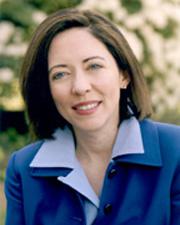 Sen. Maria Cantwell (D-WA)
Legislative Activity
Stay on top of the latest movement without scrolling through every action
Senate amendment proposed (on the floor): Amendment SA 108 proposed by Senator Cantwell.(consideration: CR S1409-1411, S1418; text: CR S1409)
January 23, 2003
View full timeline
Senate amendment proposed (on the floor): Amendment SA 108 proposed by Senator Cantwell.(consideration: CR S1409-1411, S1418; text: CR S1409)
January 23, 2003
Roll call votes on amendments in Senate: Motion to table amendment SA 108 agreed to in Senate by Yea-Nay Vote. 50 - 48. Record Vote Number: 24.
January 23, 2003
Amendment SA 108 proposed by Senator Cantwell. (consideration: CR S1409-1411, S1418; text: CR S1409) To increase appropriations for workforce investment activities.
January 23, 2003
Motion to table amendment SA 108 made in Senate.
January 23, 2003
Motion to table amendment SA 108 agreed to in Senate by Yea-Nay Vote. 50 - 48. Record Vote Number: 24.
January 23, 2003
Senate amendment submitted
January 21, 2003
Votes
1 roll call on this amendment
Text
Proposed
MAKING FURTHER CONTINUING APPROPRIATIONS FOR FISCAL YEAR 2003

The PRESIDING OFFICER. Under the previous order, the Senate will now
resume consideration of H.J. Res. 2, which the clerk will report.
The assistant legislative clerk read as follows:

A joint resolution (H.J. Res. 2) making further continuing
appropriations for the fiscal year 2003, and for other
purposes.

Pending:

Feingold Amendment No. 200, to restrict funds made
available for IMET assistance for Indonesian military
personnel to ``Expanded International Military Education and
Training'' assistance unless certain conditions are met.
Mikulski Amendment No. 61, to prohibit funds to be used to
establish, apply, or enforce certain goals relating to
Federal employees and public-private competitions or
workforce conversions.
Murray Amendment No. 39, to provide funding for the
community access program.

Mr. STEVENS. Mr. President, I suggest the absence of a quorum.
The PRESIDING OFFICER. The clerk will call the roll.
The assistant legislative clerk proceeded to call the roll.
Mr. BOND. Mr. President, I ask unanimous consent that the order for
the quorum call be rescinded.
The PRESIDING OFFICER. Without objection, it is so ordered.

Amendment No. 200

Mr. BOND. Mr. President, I rise today in strong opposition to the
Feingold amendment. The Feingold amendment, as my colleagues probably
know, deals with Indonesia and makes not too subtle suggestions about
evil doings and suggests that we can only work with them in certain
circumstances. As one who has traveled frequently to that region, I am
very much disturbed by the intent and the apparent direction of this
amendment.
It is very clear to the Government of Indonesia and its people that
there is a legitimate terrorism threat in that country today. The
tragic bombing in Bali, a major international tourist destination and
the source of essential revenue in the country, brought the reality of
terrorism squarely on the heads of the Indonesian Government. This is a
country which, if superimposed geographically on the United States,
would extend from San Francisco to Bermuda. It is the fourth largest
country in the world, with the largest Muslim population in the world.
It is also, unfortunately, home to many elements of al-Qaida and Jamaah
Islamiyah, another Islamic terrorist group.
The tragic bombing in Bali, with almost 300 people killed, has
brought home to that country the real threat of terrorism, and they are
taking that threat seriously.
I have talked with our resources in the area, our embassies. I have
talked with neighboring countries that are very much concerned about
the future of Indonesia. We believe they are performing a credible and
thorough investigation of the bombing. Arrests have been made. But the
investigation continues and the Government is committed to arresting
all those involved.

Indonesia is a majority Muslim nation. Many of its citizens,
regrettably, hear continually from extreme elements within the country
that the United States is targeting Muslims and is anti-Islam. This
creates a very difficult political climate for the country's moderate
Muslim President. She is one who has visited this country. I have met
with her on a number of occasions, and I know she understands the
importance of our relationship and the importance of their efforts
against terrorism.
The country is making an effort now to investigate the terrorists who
committed the bombing, to control the terrorism problem, and to
strengthen the military.
I ask, Is this the best we can offer in the Senate to encourage
cooperation between the two countries, to pursue a warmed-over agenda,
to embarrass the military because some activist groups are not
satisfied with the results of the tribunals that investigated the
outrages in East Timor?
This is a time when we in the United States have to be serious about
our relationship with moderate Muslim nations. We need to support the
people within these countries who are resisting the extremists. It is a
tremendous challenge for them to stand up to extreme voices. We should
be supportive. We ought not to be sticking a finger in their eye. We
ought not to be gratuitously slapping them in the face.
In the case of Indonesia, we should encourage strengthening those
institutions which the Government will rely on to investigate
terrorism, apprehend terrorists, and prevent further attacks. In
Indonesia, the only institution with that capacity is the military.
I have talked with our Secretary of State and our Secretary of
Defense, and I have asked them what we can do to improve our relations
with Indonesia to assure they have the strength to resist terrorism and
to provide their share of the role in the international battle against
terrorism.
What they have said, quite frankly, to bipartisan groups in front of
them is to stop congressional interference and slurs on the Indonesia
military. Unfortunately, rather than moving in a sensible direction to
encourage military-to-military contact, to take actions to raise the
standards of their military to levels we are comfortable with and to
promote relationships between officers, we would, by adopting this
measure, pursue a course that insults the people, strains relations,
and will aid the extremist elements in their efforts to demonize the
United States.
This may be presented as a harmless amendment, one that can be
satisfied easily by us and the Indonesians, but those people are our
friends. Our allies in Southeast Asia take note of what we do; they
hear our message. What we pass is loud, and it is clear; it resonates.
It is not only a bad idea, it is dangerous.
We need to stand up and support our friends, especially in these
challenging times. As I have met with friendly nations in Southeast
Asia, they have been dumbfounded that we continue to insult, denigrate,
and downgrade Indonesia. We should be supporting them.
This amendment is not grounded in legitimate policy concerns but,
rather, in an ongoing interest by some to refight the East Timor battle
year in and year out, despite the fact that East Timor is now an
independent country. It is hollow all the way through.
I urge my colleagues to join with me in defeating this amendment, to
send the message that we will support moderate Islam countries,
struggling democracies trying to fight terrorism.
I thank the managers and yield the floor.
The PRESIDING OFFICER. The Senator from Alaska.

[[Page S1380]]

Mr. STEVENS. Mr. President, in the interest of fairness, although I
do agree with my friend from Missouri, I ask unanimous consent that the
sponsor of the amendment, Senator Feingold, have 5 minutes when he
appears.
The PRESIDING OFFICER. Without objection, it is so ordered.
Mr. STEVENS. I suggest the absence of a quorum.
The PRESIDING OFFICER. The clerk will call the roll.
The assistant legislative clerk proceeded to call the roll.
Mr. STEVENS. Mr. President, I ask unanimous consent that the order
for the quorum call be rescinded.
The PRESIDING OFFICER. Without objection, it is so ordered.
Mr. STEVENS. I see Senator Feingold is on the floor. I did make
arrangements for Senator Feingold to have an extra 5 minutes, and I
call that to his attention. Senator Bond has just spoken on the
Feingold amendment. There are 5 minutes for Senator Feingold to speak,
if he wishes to do so.
I suggest the absence of a quorum.
The PRESIDING OFFICER. The clerk will call the roll.
The legislative clerk proceeded to call the roll.
Mr. STEVENS. Mr. President, I ask unanimous consent that the order
for the quorum call be rescinded.
The PRESIDING OFFICER. Without objection, it is so ordered.
The Senator from Nevada.
Mr. REID. Mr. President, I have conferred with the manager of the
bill on what the Democrats would like to do in offering their
amendments. I understand there will be Republican amendments
interspersed. Our first amendment with Senator Kennedy, there has been
a 30-minute time agreement on that; that has been agreed to. I ask
unanimous consent that that be approved. Senator Clinton, amendment No.
89, a time agreement of 30 minutes, evenly divided; Senator Bingaman,
amendment No. 138, I have no time agreement on that; Senator Cantwell,
amendment No. 108, a 30-minute time agreement; Senator Nelson,
amendment No. 178, a 10-minute time agreement equally divided; Senator
Corzine, amendment No. 233, I have no time agreement on that.
The PRESIDING OFFICER. Is there objection?
Mr. STEVENS. Reserving the right to object, Mr. President, I agree we
should set this order. We are still working on it. We hope we will have
a chance to have an amendment on one side and then the other. I will
come later and try to intersperse these with amendments from our side
of the aisle when they are identified.
Mr. REID. The only thing I would ask, Mr. President, is that there
would be no amendments except as I have already talked about to the
manager of the bill. The Nelson amendment----
Mr. STEVENS. Mr. President, I will have to reserve, I think, on one
or more of those. There may be a second-degree amendment. I don't have
any problem with the order, but I will come back.
Mr. REID. Then eliminate the time on the amendment. I ask that the--
Mr. STEVENS. That is fair. We will set the order and agree on the
time; and if there is an amendment, if there is any identified, at the
present time, Senators are willing to set the order with that
understanding.
Mr. REID. Should we eliminate the time though?
Mr. STEVENS. Yes.
Mr. REID. Why don't we have the time applicable unless you decide to
offer a second-degree.
Mr. STEVENS. Very well, I don't have any problem with that. But I do
want to reserve the right to schedule amendments from this side in
between if Senators wish to offer amendments in this period of time.
Mr. REID. I did mention that.
The PRESIDING OFFICER. Is there objection?
Without objection, it is so ordered.
Mr. STEVENS. For the information of Senators, as I indicated last
evening, we will have a series of amendments that we will offer in
small groupings very soon. I believe we will have some amendments
identified on our side of the aisle as soon as this first vote will
begin. It is my understanding that the vote on Senator Feingold's
amendment will commence at 11.
The PRESIDING OFFICER. The Senator is correct.
Mr. STEVENS. Is the Senator ready to start now?
The PRESIDING OFFICER (Mr. Burns). The Senator from Wisconsin.
Mr. FEINGOLD. My understanding is that I am to be allotted 5 minutes
in response to Senator Bond's comments on my amendment.
Mr. STEVENS. That was my request.
The PRESIDING OFFICER. The Senator is correct.
Mr. FEINGOLD. I thank the Chair and I thank the managers for their
fairness in light of the fact that we were going to have a minute on
each side. I appreciate the understanding that I do want to respond to
Senator Bond's remarks.
Senator Bond apparently has not actually read what my amendment does
with regard to the Indonesian military and the IMET Program. Obviously,
there is a terrorism threat in Indonesia today, as Senator Bond
indicated. That is one of the conditions this amendment is all about.
It is about making sure that Indonesia cooperates with us in fighting
terrorist attacks, such as the ones that were so awfully perpetrated on
the people in Bali.
What is even more troubling about Senator Bond's remarks is that he
doesn't even mention the fact that apparently the Indonesian military
was involved in an incident in Papua which killed American citizens.
Are we only going to be upset when American citizens are killed in
Yemen and Kuwait or are we going to respond and expect standards of
help and behavior from countries when our citizens are killed in a
place such as Indonesia?
All this amendment does is try to make sure, as we continue our
relationship with Indonesia--yes, a fledgling democracy--that we
actually have accountability of that Indonesian military with which we
would be involved. I am very troubled when we see the failure of
cooperation with the FBI's reasonable request to deal with this awful
murder of our citizens. We need a message to be sent clearly to the
Indonesian Government, and in particular to the Indonesian military,
that as the FBI returns to try to do this investigation again, we will
get cooperation.
The whole point here is not that we are trying to cut off military
help and assistance; it is that there have to be two preconditions to
make sure it is a legitimate enterprise in which to be involved. One is
that the Indonesian Government and military has to help us in dealing
with terrorism; secondly, they need to help us get to the bottom of
this awful massacre that occurred.
If Senators don't believe me, I refer them to the letter of Patricia
Lynn Spier of Colorado, whose husband was brutally murdered in this
incident. Ask her and the other families whether they think it is
appropriate for the Indonesian military to investigate itself with
regard to this incident or whether they should cooperate with the FBI.
Despite the attempt to distort what this amendment is about, my
amendment is simple. Until the President determines that Indonesia is
committed to fighting terrorism and committed to cooperating and
investigating the murder of American citizens, my amendment would deny
Indonesia access to IMET, though it would--I emphasize this to the
Senator from Missouri--permit access to expanded IMET courses that are
relevant to military reforms. So, yes, we want to promote a good
relationship with the military in Indonesia, if these preconditions are
met. We are going to continue counter-terrorism training, expanded IMET
sales of nonlethal defense articles, officer visits, educational
exchanges, and port visits. We are not cutting off these items.
Mr. BOND. Mr. President, will the Senator yield?
Mr. FEINGOLD. I have the floor, Mr. President.
Let's be clear, because the Senator from Missouri did not mention
this. Last August, two Americans were killed and eight were wounded in
an ambush in West Papua, Indonesia. Indonesia's police investigated,
and their report concluded that the Indonesian military was very likely
responsible for the deaths of these Americans. When the investigation
was turned over to the Indonesian military, it exonerated itself and it
failed to fully cooperate not only with the Indonesian authorities but
with our own FBI.
Some may say this amendment cuts off ties to the Indonesian military

[[Page S1381]]

when we need a strong coalition to fight terrorism. But nothing in my
amendment will prohibit important national security programs, including
counterterrorism training. Why would we hesitate? Why would we hesitate
to condition one element--only one element--of our relationship with
the Indonesian military on a demand that we simply get to the bottom of
this incident? Real partners in the fight against terrorism do not
murder American citizens and do not conspire to cover up such murders.
Mr. President, I reserve the remainder of my time.
Mr. BOND. Will the Senator yield for a question?
The PRESIDING OFFICER. Who yields time?
Mr. FEINGOLD. How much time do I have?
The PRESIDING OFFICER. The Senator has 24 seconds.
Mr. FEINGOLD. I yield to the Senator for a question.
Mr. BOND. Mr. President, I am not speaking on the time on this side.
I ask my colleague from Wisconsin if he has visited the area, if he has
talked with our officials in the region, if he has talked with the
people in governments who support us and who support Indonesia. Has he
had the opportunity to find out what the impact of this amendment would
be?
Mr. FEINGOLD. I have had daily contact with a wide variety of
individuals we are concerned with, including some the Senator
mentioned. I have been involved in this issue of Indonesia and East
Timor for 10 years, since I have been a Member of the Senate and a
member of the Subcommittee on Asia. I think I have a right to speak on
this as much as the Senator from Missouri. When it comes to the deaths
of American citizens, they should be cooperating with the FBI.
The PRESIDING OFFICER. The Senator's time has expired.
Who yields time?
Mr. McCONNELL. Mr. President, this is exactly the wrong time to be
taking away IMET from the Indonesian military. For 10 years they were
prohibited from having the kind of military-to-military relationship
with us that helps upgrade their military and teach them about human
rights and to do the right thing regarding their own people. It took a
long time to get IMET restored, and the leader of that effort was
Senator Inouye of Hawaii--that bipartisan effort to get IMET restored.
Now we would take a step in the wrong direction.
(At the request of Mr. McConnell, the following statement was ordered
to be printed in the Record.)
<bullet> Mr. INOUYE. Mr. President, I want to convey to my colleagues
my opposition to this amendment. During the markup of the foreign
operations bill by the full Appropriations Committee, I offered an
amendment to restore full International Military Education and Training
to Indonesia. I believe full participation in this important program is
essential to maintain our partnership with Indonesia in our global
fight against terrorism. The restriction on the participation of
Indonesia proposed by my colleague from Wisconsin will harm our
relationship and impede our fight against terrorism in one of the
front-line countries of this fight. I urge my colleagues to oppose this
amendment. The Feingold amendment will send a message to the
Indonesians that although we ask for their cooperation in our fight
against international terrorism, we will not provide them with the
training and tools necessary for that fight and view their country as
not worthy of full participation in our international assistance
programs. I do not believe this is the message we want to send to one
of our critical allies. It is in our national interest to have a stable
and democratic Indonesia and that their military is accountable and
professional. We can work toward these goals through the participation
of Indonesia's military in our IMET program.
Once again, I urge my colleagues to oppose the pending amendment.
Mr. President, I ask that a copy of the statement I made when I
offered my amendment before the Appropriations Committee be printed in
the Record.
The statement follows.

Introduction of the Amendment to Restore IMET to Indonesia

Mr. Chairman, together with my colleagues the senior
Senators from Alaska, Kentucky, and Missouri, I offer an
amendment to restore full International Military Education
and Training (IMET) program participation to Indonesia.
In April, Senators Stevens and I traveled to Asia. We
visited Indonesia where they had just brought into custody a
Muslim cleric who was quoted as having said, ``Osama bin
Laden is a lightweight.'' Indonesia has the world's largest
Muslim population and has only recently embraced democratic
principles. We must engage and support this fledgling
democracy by supporting reform of the military and helping to
build capacity to control and support modern, professional
armed forces. We believe that full access to IMET programs
will foster the necessary changes.
We also believe that the continued restriction on IMET
program participation of Indonesia sends a message to the
Indonesians. It is a message that they are second class
international citizens, unworthy of full participation in our
international assistance programs. Is this the message we
want to send?
I appreciate that this bill provides $400,000 for Expanded
(IMET (E-IMET) programs in Indonesia. However, the training
provided under E-IMER focuses on administration of the armed
forces and the dissemination of international human rights
information through the use of Mobile Education Teams that
are sent in country. The E-IMET program does provide valuable
skills in defense resource management and military justice,
but Indonesia needs to focus on professionalizing the
military. This can only be accomplished through our
assistance via the full IMET program.
I IMET program training is provided to all levels of the
military, from generals to enlisted personnel. This training,
much of which is provided in the United States, builds
invaluable connections between the United States and foreign
nations that provide long-term benefits. The Department of
Defense conducts a variety of activities for foreign military
and civilian officials. Formal instruction is offered
involving more than 2,000 courses taught at approximately 150
military schools and installations. The program is based upon
the premise that active promoting of democratic values is one
of the most effective means available for achieving U.S.
national security and foreign policy objectives and for
fostering peaceful relationships among the nations of the
world.
I understand that Senator Leahy views IMET as a reward and
does not believe it should be afforded to the TNI in light of
past abuses and failure to achieve the accountability
benchmarks set in last year's Foreign Operations
Appropriations bill. This is not a reward. IMET is a vehicle
to help TNI achieve those benchmarks. Indonesia has made some
progress toward meeting the Leahy conditions, but without
recognition of and response to what has been accomplished to
date, we will only bolster the arguments of those in
Indonesia opposed to reform who believe it is worthless to
try to please the United States since we are unwilling to
recognize their progress.
There are few countries in the world with democratic
governments where the rule of law is as firmly established as
in the United States. That cannot be our litmus test for
provision of assistance. Providing the requested assistance
to Indonesia would not be an exception to a well-established
rule. Our nation assists countries that are obviously not
democracies. Why do we do this? Because, it is in our
national interest. Were we helping a democracy when we
embarked on Operation Dessert Storm and put up our fortune
and our most precious resource, the lives of our soldiers?
No, we were not, but we were acting in our national interest.
It is in our national interest to have a stable and
democratic Indonesia. It is in our national interest that
Indonesia develops internal capabilities to address
international terrorism. It is in our national interest that
Indonesia's military is professional and accountable. We can
work toward these goals through the participation of
Indonesia's military in our IMET program.
Please be assured that I do not advocate lifting the
prohibition on the participation of Indonesia in the Foreign
Military Financing program. I believe a strong professional
and accountable TNI must be established before Indonesia's
participation in that program is renewed. However, I believe
participation in the full IMET program is vital to reaching
that goal, and I ask my colleagues to support this
amendment.<bullet>

Mr. BIDEN. Mr. President, I rise today to express my deep concern
about a deadly attack that occurred last August in West Papua,
Indonesia, and to call on the Government of Indonesia to cooperate
fully with U.S. law enforcement authorities to ensure that those
responsible are brought to justice.
Ted Burgon of Oregon and Rick Spier of Colorado were gunned down
along with an Indonesian, Bambang Riwanto. Eight Americans were
injured: Nancy Burgon, Saundra Hopkins, Ken Balk, and Taia Hopkins, all
of Oregon, Patsy Spier of Colorado, Francine Goodfriend of Illinois,
Steven Emma of Florida, and Lynn Poston, of Washington State.
The victims, school teachers from the International School and their

[[Page S1382]]

families, were associated with the Freeport-McMoran mine in West Papua.
I speak to this issue because the bill before us restores funding for
International Military Education and Training programs for Indonesia.
Before we do that, I think we need some answers.
Mr. President, there is troubling evidence that members of the
Indonesian military may have been behind the attack. It occurred less
than half a mile from an Indonesian military outpost.
Hundreds of rounds were fired at the teachers and their vehicles
during the ambush, which lasted 45 minutes, but the military was very
slow to respond and failed to apprehend any of the assailants.
The Indonesian police promptly began an investigation. They collected
evidence, interviewed witnesses, and reconstructed the ambush. The
senior police official in charge said last December that there is
evidence that soldiers from the army's strategic reserve force were
involved in the shooting. This same senior police official also
reported last November that a witness to the ambush reported seeing
members of the Indonesian army's special forces participating in the
attack.
The motive? The Army may have hoped to blame the murders on West
Papuan rebels who have been fighting a low level insurgency for years
seeking independence from Indonesia.
Bottom line: The police report on the murders concludes, quote:
``there is a strong possibility that the case was perpetrated by
members of the Indonesian National Army Force, however, it still needs
to be investigated further.''
Well, guess what happened? After they pointed the finger at the
military, the two senior police officials on the case, General Raziman
and Assistant Senior Police Commissioner Sumarjiyo were mysteriously
transferred, removed from all responsibility for investigating the
murders.
The investigation was handed over to the Indonesian military itself!
Not surprisingly, the military concluded that the armed forces had
nothing to do with the killings.
Mr. President, this is the same military that denied all culpability
for gross violations of human rights over 25 years in East Timor and
Aceh. The same military that has armed, trained, and protected militant
Islamic groups associated with grotesque, religiously motivated attacks
on innocent civilians elsewhere in Indonesia.
Mr. President, it is essential that the United States secure the full
support of Indonesia--a nation of 200 million people, most of them
Muslims--in the war on terrorism.
Indonesia itself has been the target of terrorists, as we witnessed
last year in the terrible bombing on Bali that left hundreds dead and
injured, many of them Australian tourists.
It is appropriate that in the wake of 9/11, the United States has
sought ways to strengthen our ties to Indonesia, including considering
the resumption of normal military training for the Indonesian Army.
Civilian authorities in Jakarta and some officers within the military
are trying to end the culture of impunity that has prevailed for the
past 30 years. I think it is in our national interests to establish
appropriate links to the Indonesian armed forces to improve their
professionalism, enhance intelligence sharing, and help prevent future
terrorist attacks in Indonesia or elsewhere.
But that does not mean we should turn a blind eye to continuing
abuses by the Indonesian Army.
We will not be doing ourselves or the Indonesian people any favors if
we ally ourselves with those who may themselves be responsible for
criminal acts.
Before we jump to restore IMET funding for Indonesia, I hope that
President Bush will give us his assurance that we are getting the full
cooperation of Indonesian authorities. The FBI should have full access
to all the evidence and to the witnesses to the attack. An independent
investigation should be launched of the possible Indonesian military
involvement.
These are American citizens we are talking about. Victims, perhaps,
of a cynical effort to manipulate United States public opinion and
convince our government to increase aid to the Indonesian armed forces
as part of the war on terrorism. We need to get to the bottom of what
happened.
Mr. McCONNELL. Mr. President, I ask unanimous consent that a letter
from the State Department opposing this amendment be printed in the
Record.
There being no objection, the material was ordered to be printed in
the Record, as follows:

U.S. Department of State, Assistant Secretary of State
for Legislative Affairs,
Washington, DC, January 22, 2003.
Hon. Mitch McConnell,
Chairman, Subcommittee on Foreign Operations, Committee on
Appropriations, U.S. Senate.
Dear Mr. Chairman: I am writing to express concern about
the proposed amendment to the FY 03 omnibus appropriation
bill by Senator Feingold that restricts IMET to Indonesia.
The Department of State opposes this amendment, which would
damage important U.S. foreign policy interests in Indonesia.
The amendment in question would limit Indonesian military
personnel to participation in the Expanded IMET program only,
absent a presidential determination ``that the Government of
Indonesia and the Indonesian Armed Forces are (1)
demonstrating a commitment to assist United States efforts to
combat international terrorism, including United States
interdiction efforts against al-Qaida and other terrorist
organizations, and taking effective measures to bring to
justice those responsible for the October 13, 2002 terrorist
attack on Bali, which killed U.S. citizens, and (2) taking
effective measures, including cooperating with the Federal
Bureau of Investigation, to bring to justice any member of
the Indonesian Armed Forces or Indonesian militia group
against whom there is credible evidence of involvement in the
August 31, 2002 attack which resulted in the deaths of United
States citizens, and in other gross violations of human
rights.''
We share Senator Feingold's concerns on both points and
have been working actively with the Indonesian Government on
them. Indonesia is engaged in the war against terrorism--
including a new police counter-terrorism unit that we are
helping to establish. Indonesia authorities are investigating
and prosecuting terrorists, including members of the al-Qaida
affiliated Jemaah Islamiyah (JI), while not sacrificing
newly-gained democratic freedoms. In the extremely
professional Bali bombing investigation, Indonesian National
Police investigators have detained over 30 supects to date,
and are cooperating with regional ASEAN neighbors to uncover
possible links to international terrorism. The Bali
investigation process has also seen good cooperation
between the Indonesian National Police and counterparts
from the Australian Federal Police, the FBI, and Scotland
Yard. It is also important to note that the Indonesian
Police, not the Indonesian Armed Forces, have the lead
responsibility in this and in other terrorist
investigations.
The killing of American citizens in Papua is a matter of
gravest importance to us. The President has directed that we
emphasize to the Government of Indonesia that there must be a
credible investigation and process of justice to avoid damage
to our entire bilateral relationship. We have done so at the
highest levels. In response to our repeated demarches, the
Indonesian Government has agreed to a new investigation of
this crime to include FBI participation. FBI agents will
arrive in Indonesia on January 22 to explore the terms of
their participation in the investigation.
We have requested that $400,000 in FY03 IMET be provided
for Indonesia. If approved by Congress, this will be the
first time in a decade that we will have the ability to use
IMET as a tool to pursue our national objectives in
Indonesia. These objectives include strengthening Indonesian
cooperation in the war on terrorism, as well as supporting
the democratic transition in, and the territorial integrity
of, Indonesia. IMET assists these objectives by providing us
with access to the Indonesian Armed Forces, which remains
among the most prominent national institutions in Indonesia.
IMET also provides a vehicle for the United States to impart
our ideas about civil-military relations to foreign military
audiences, and to promote military reform.
We ask that Congress proceed with its consideration of the
Administration's IMET request. The goals of the proposed
amendment by Senator Feingold are worthy and we share them.
But, they are now, and will remain, works in progress for
some time to come, not settled issues. In the interim, if
Congress approves our request, we will not obligate these
IMET funds without further consultation with Congress.
We hope that this information assists you in your
consideration of this amendment. Please contact us if you
have any questions.
Sincerely,
Paul V. Kelly,
Assistant Secretary.

Mr. McConnell. Mr. President, let me sum it up. The Bali bombing
underscores that when it come to terrorism, Indonesia is at ground
zero, right there in the middle of it. They are on our side. This
amendment should be roundly defeated.
Mr. ALLARD. Mr. President, with much reservation, I rise today in
support of the Feingold amendment. On

[[Page S1383]]

August 31, 2002 several Americans in West Papua--Indonesia were
brutally attacked by heavily armed assailants. Two Americans--Rick
Spier and Ted Burgon--were murdered during the 35 minute ambush and
many others were seriously wounded.
Last week, I met with Rick Spier's wife, Mrs. Patsy Spier, who was
also shot three times during the attack. She described with much
emotion the circumstances of the attack and the horrific result. I was
saddened by her loss and angered by the Indonesian Government's failure
to bring the perpetrators to justice. Following my meeting with Mrs.
Spier, I contacted the Department of States and later received a
detailed briefing from Deputy Assistant Secretary Matthew Daley. I also
contacted the Federal Bureau of Investigation and expressed my interest
in meeting the agents charged with investigation this case upon their
return from Indonesia.
Following these meetings, I wrote to President Bush to express my
strong views about this matter. I urged the President to press the
Indonesian Government to conduct a comprehensive investigation into the
attack. I further wrote that if the Indonesian Government fails to act,
a severe diplomatic response, including the suspension of funding for
the International Military Education Training Program for Indonesia,
should be considered. I ask unanimous consent to have printed in the
Record at the conclusion of my remarks my letter of January 16 to
President Bush.
The PRESIDING OFFICER. Without objection, it is as ordered.
(See exhibit 1).
Mr. ALLARD. I am pleased that Senator Mitch McConnell, Chairman of
the Foreign Operations Subcommittee, has included strong report
language on Indonesia. As I noted in a colloquy with Senator McConnell,
the references in the report language to the Americans murdered in West
Papua and the demands that justice be served for these crimes were
warranted and much appreciated.
The amendment before us would limit Indonesian military personnel to
participation in the IMET program only, absent a presidential
determination that the Indonesian government and armed forces are
``demonstrating a commitment to assist United States efforts to combat
international terrorism'' and ``taking effective measures, including
cooperating with the Federal Bureau of Investigation, to bring to
justice any member of the Indonesian Armed Forces or Indonesian
militia'' whom might be involved in the August 31 killings.
I understand that the Department of State opposes this amendment,
which it believes would damage important U.S. foreign policy interest
in Indonesia. In a letter sent to Senator McConnell, Assistant
Secretary of State James Kelly wrote:

. . . the President has directed that we [the Department of
State] emphasize to the Government of Indonesia that there
must be a credible investigation and process of justice to
avoid damage in our entire bilateral relationship.

He further wrote:

In response to our repeated demarches, the Indonesian
government has agreed to a new investigation of this crime to
include FBI participation. FBI agents will arrive in
Indonesia on January 22 to explore the terms of their
participation in the investigation.

While I applaud the administration for its involvement in this issue
and am encouraged by Indonesia Government's agreement to conduct a new
investigation, I strongly believe that the murder of innocent Americans
is unacceptable and demands serious action on our part. We cannot be
seen as rewarding the Indonesian government for covering up the killing
of Americans. Such an action would set a frightful precedent and give
other nations the impression that the murder of Americans would not
warrant a serious response on the part of the United States. Clearly,
the IMET funding in this bill sends the wrong signal at the wrong time.
Therefore, despite serious reservations, I will vote in support of the
Feingold amendment.
Like many of my colleagues here in the Senate, I will continue to
monitor this situation very closely, and should the Indonesian
Government conduct a full and fair investigation, I will consider
supporting new funding for Indonesia in the future.

Exhibit 1

U.S. Senate,

Washington, DC, January 16, 2003.
Hon. George W. Bush,
President, the White House,
Washington, DC.
Dear President Bush: I am writing to express my growing
concern about the lagging investigation into the August 31,
2002 attack on several Americans in West Papau, Indonesia.
Three people were killed, including two Americans, during the
attack, and eight others were seriously wounded.
As you may know, the Indonesian police completed its
preliminary investigation last fall and concluded that the
Indonesian military may have been responsible for the attack.
Despite being informed of the results of the police
investigation, the Indonesian military has failed to look
into this matter. In fact, press reports suggest that the
Indonesian military may have exonerated itself of any
responsibility.
I understand that senior officials at the Department of
State have expressed the concerns of your Administration
about the dogged pace of the investigation to the Indonesian
government. Your effort to determine who was responsible for
this brutal attack is commendable. However, more must be
done.
I urge you to press the Indonesian government to conduct a
comprehensive investigation into the attack. Such an
investigation should include active and meaningful
participation by United States law enforcement agencies who
should have complete access to evidence and witnesses.
The murder of innocent Americans overseas warrants a
serious response on our part. If the Indonesian government
fails to act, severe diplomatic actions, including the
suspension of IMET funding for Indonesia, should be
considered. We cannot afford to overlook further delays in
this important investigation.
Again, thank you for your efforts, and I look forward to
your response.
Sincerely,
Wayne Allard,
U.S. Senator.

The PRESIDING OFFICER. The Senator's time has expired. All time has
expired.
The question is on agreeing to amendment No. 200.
Mr. FEINGOLD. Mr. President, I ask for the yeas and nays.
The PRESIDING OFFICER. The yeas and nays have not been ordered.
Mr. STEVENS. We ask for the yeas and nays.
The PRESIDING OFFICER. Is there a sufficient second?
There is a sufficient second.
The clerk will call the roll.
The legislative clerk called the roll.
Mr. REID. I announce that the Senator from Iowa (Mr. Harkin), the
Senator from Hawaii (Mr. Inouye), and the Senator from Connecticut (Mr.
Lieberman) are necessarily absent.
The PRESIDING OFFICER. Are there any other Senators in the Chamber
desiring to vote?
The result was annouced--yeas 36, nays 61, as follows:

[Rollcall Vote No. 19 Leg.]

YEAS--36

Allard
Biden
Boxer
Campbell
Cantwell
Carper
Chafee
Clinton
Conrad
Corzine
Daschle
Dayton
Dodd
Dorgan
Durbin
Edwards
Feingold
Feinstein
Jeffords
Johnson
Kennedy
Kerry
Kohl
Lautenberg
Leahy
Levin
Lincoln
Mikulski
Murray
Pryor
Reed
Reid
Sarbanes
Smith
Stabenow
Wyden

NAYS--61

Akaka
Alexander
Allen
Baucus
Bayh
Bennett
Bingaman
Bond
Breaux
Brownback
Bunning
Burns
Byrd
Chambliss
Cochran
Coleman
Collins
Cornyn
Craig
Crapo
DeWine
Dole
Domenici
Ensign
Enzi
Fitzgerald
Frist
Graham (FL)
Graham (SC)
Grassley
Gregg
Hagel
Hatch
Hollings
Hutchison
Inhofe
Kyl
Landrieu
Lott
Lugar
McCain
McConnell
Miller
Murkowski
Nelson (FL)
Nelson (NE)
Nickles
Roberts
Rockefeller
Santorum
Schumer
Sessions
Shelby
Snowe
Specter
Stevens
Sununu
Talent
Thomas
Voinovich
Warner

NOT VOTING--3

Harkin
Inouye
Lieberman
The amendment (No. 200) was rejected.
Mr. STEVENS. Mr. President, I move to reconsider the vote.
Mr. LEAHY. I move to lay that motion on the table.
The motion to lay on the table was agreed to.
Mr. STEVENS. Mr. President, I ask unanimous consent the next vote be
10 minutes in length.
The PRESIDING OFFICER. Is there objection?
Can we have order in the Chamber, please. Will the Senator from
Alaska restate his request?

[[Page S1384]]

Mr. STEVENS. I ask unanimous consent time for the vote on the
Mikulski amendment be limited to 10 minutes.
The PRESIDING OFFICER. Is there objection?
Ms. MIKULSKI. There is objection. Reserving the right to object, Mr.
President, the Senate is not in order.
Mr. STEVENS. Mr. President, I suggest the absence of a quorum.
Ms. MIKULSKI. I ask unanimous consent the rollcall on the Mikulski
amendment be postponed until such time to be called up as agreed upon
by the two managers. We think we can work something out.
Mr. STEVENS. I have no objection.
The PRESIDING OFFICER. Without objection, it is so ordered. The
Senator from Nevada.
Mr. REID. Mr. President, I suggest the absence of a quorum.
The PRESIDING OFFICER. The clerk will call the roll.
The legislative clerk proceeded to call the roll.
Mr. STEVENS. Mr. President, I ask unanimous consent the order for the
quorum call be rescinded.
The PRESIDING OFFICER. Without objection, it is so ordered.

Amendment No. 39

Mr. STEVENS. Mr. President, the next amendment in order is Senator
Murray's amendment. There is a minute on each side, if the Senator
wishes to use it. I wish to state now we will accept this amendment and
it will be included in the across-the-board cut as an offset. Because
of an amendment that was adopted yesterday, we now have leeway in that
ceiling that we self-imposed, and we can take the amendment of the
Senator from Washington. I believe her amendment has the approval of
the House also. Many of us want to vote for it. We are prepared to
accept the amendment.
The PRESIDING OFFICER. Is there debate?
Mr. STEVENS. Let her offer it, please.
The PRESIDING OFFICER. The Senator from Washington.
Mrs. MURRAY. Mr. President, I thank the Senator from Alaska, and
Senators Frist and Gregg and others who worked with us on the Community
Access Program.
I urge adoption of the amendment.
Mr. STEVENS. I understand the Senator from Rhode Island has a
colloquy?
Mr. STEVENS. May I announce there will be no votes for a little while
now. We have worked out we will have another series in a few minutes.
Right now we would like to have the colloquy out of the way.
I urge we adopt the Murray amendment.
Mr. KENNEDY. Mr. President, I commend Senator Murray for her strong
leadership in restoring funds for the Healthy Communities Access
Program to improve the delivery of care to the uninsured. The program
provides grants to coalitions of health providers to improve the
coordination of care for the uninsured. Since its inception, we have
seen an overwhelmingly positive response to the program. Through these
grants, 150 communities have been able to increase care for the
uninsured, reduce unnecessary health costs, and create innovative
projects through collaboration and information-sharing. In
Massachusetts, the Cambridge Health Alliance used its grant to launch
an impressive outreach campaign to enroll 57,000 uninsured residents in
a comprehensive and well-coordinated system of care. The Alliance has
formed strong partnerships with local schools, law enforcement, and
advocacy groups who work together to meet the needs of the most
vulnerable members of the community.
The Healthy Communities Access Program embodies exactly the kind of
innovative approach to improving the quality of health care that we
need. Yet, despite its successes, the administration wants to zero out
the program and the Omnibus Bill eliminates its funding. We should not
allow the gains made in communities across the country to be lost
because of this shortsightedness. I urge the Senate to approve this
amendment and support our communities in this effective way to improve
care for the uninsured.
The PRESIDING OFFICER. All time is yielded back. The question is on
agreeing to the amendment.
The amendment (No. 39) was agreed to.
Mr. STEVENS. Mr. President, I move to reconsider the vote.
Mr. REID. I move to lay that motion on the table.
The motion to lay on the table was agreed to.
Mr. STEVENS. I inquire how much time the Senator from Rhode Island
and the Senator from West Virginia wish for their colloquy?
Mr. CHAFEE. I believe it would be about 10 minutes.
Mr. STEVENS. Ten minutes total?
Mr. ROCKEFELLER. We don't need that much.
Mr. STEVENS. I ask unanimous consent the Senator from Rhode Island
and the Senator from West Virginia be recognized for not to exceed 10
minutes total.
The PRESIDING OFFICER. Without objection, it is so ordered.
The Senator from Rhode Island.

S-CHIP

Mr. CHAFEE. Mr. President, I have been working for the last several
months with a bipartisan group of Members from the House and Senate to
protect funding for the State Children's Health Insurance Program, also
known as S-CHIP, which provides critical health care to millions of
children. In Rhode Island, over 12,000 children participate in this
program. There is strong, bipartisan support for a 2-year S-CHIP
proposal developed last fall that would preserve $2.7 billion in
Federal S-CHIP funds that either expired at the end of fiscal year 2002
or will expire at the end of the current fiscal year. Our proposal also
establishes a redistribution formula for the Centers for Medicare and
Medicaid Services to use to quickly redistribute unspent fiscal year
2000 funds to those states that have exhausted their allotments and
need additional funds.
Under Federal law, CMS is required to redistribute all unspent 2000
funds this year, but there is no Federal requirement on what formula it
should use. CMS is currently holding off redistributing unspent 2000
funds because it is awaiting Congressional action. However, a few
States, including Rhode Island, need the redistribution of 2000 funds
as soon as possible so they have sufficient funds for the rest of the
year to maintain services to the children currently enrolled in S-CHIP.
This S-CHIP issue is very time-sensitive. If we do not remedy this
situation soon, some States may scale back S-CHIP eligibility because
they will assume they will have far less in Federal funds available
than previously expected.
Unfortunately, it appears that we cannot address this issue in the
omnibus appropriations bill. I appreciate the willingness of the
chairman of the Finance and budget Committees, Senators Grassley and
Nickles, to work with us to address this issue in both the fiscal year
2004 budget resolution and then to move this legislation quickly in the
Finance Committee.
I also think it is imperative for us to work with CMS so that they
can move forward to begin to redistribute some of the unspent 2000
funds to States like mine that are facing a serious S-CHIP funding
problem. As Congress moves ahead to complete action on this proposal,
CMS should move forward on the immediate redistribution of these funds.
Mr. KENNEDY. Will the Senator yield for a moment? Does the Senator
have the time?
I want to commend my friend from Rhode Island. As one of the authors
of the S-CHIP Program, we gave the States an opportunity to use the
money and then we provided, if they did not use the money, that States
that were attempting to cover the children would have some access to it
and then eventually it would go back to the Treasury.
We are finding out now that there are a number of States that are
prepared to go ahead and insure these children. This program is so
enormously important, because if you put it with the Medicaid Program,
there is no real reason why any child in America isn't covered with
some form of health insurance.
I commend the Senator from Rhode Island. This program was agreed to
and accepted in a strong bipartisan way. As author, along with my
friend from Utah, Senator Hatch, if we had just not provided this
provision and let the States have a little more time to implement it,
we would have a lot more children covered. This makes a great

[[Page S1385]]

deal of sense. It is focused and it is a successful program. The point
the Senator from Rhode Island makes is that it will ensure that
hundreds of thousands of more children will be protected with health
insurance.
I thank the Senator.
The PRESIDING OFFICER. The Senator from West Virginia.
Mr. ROCKEFELLER. Mr. President, following on what the Senator from
Rhode Island said, it is extremely important that we get it done
immediately. This is a two-part problem. One is the $1.5 billion
shortfall in this fiscal year, and the $1.6 billion in the second
fiscal year. The States have the money. Since we did not put the
program under Medicaid at the very beginning, States started at various
rates. Some were faster than others. Therefore, not all the money has
been used. Rather than return it to the Treasury where it can't help
any child at all--we still have 8 million, or 10 million, or 12 million
children who need to be insured. We need to do the short-term fix,
which is what this colloquy is about. Then we need to get to a longer
term fix in the Finance Committee. I look forward to working with
Chairman Grassley and Chairman Baucus to mark up a bill which will
accomplish this objective on an annual basis, and then, of course, move
on to the next logical step, which is to include the parent or parents
of those same children.
I thank the Chair.
The PRESIDING OFFICER. The Senator from Iowa.
Mr. GRASSLEY. Mr. President, I would like to join in the colloquy
that has just been held because it comes under the jurisdiction--or at
least some of it--of the committee that I chair.
I thank my colleagues for their attention to this important
children's health care policy. They are correct that something must be
done to address the funds that have and will revert to the treasury in
the near future. They are also correct to note the constraints within
the omnibus bill. I strongly support the State Children's Health
Insurance Program. It is a program that provides heath care for over
16,000 low-income children in my state.
Senators Chafee, Snowe, and Rockefeller are looking to address a
necessary maintenance issue within S-CHIP. As Senator Snowe noted, I
worked very closely with Senator Baucus, Senator Chafee, Senator
Rockefeller, Chairman Tauzin, and Representative Dingell on a
bipartisan, bicameral proposal that would have addressed expired S-CHIP
funds.
The proposal reflected a balanced approach to redistributing S-CHIP
funding taking into account that some states are spending through their
existing allotments and other states are ramping up their programs and
will need additional funding in the years to come.
This proposal did not pass the Senate last year, but it is a fair
approach to redistributing S-CHIP funds. Unfortunately, I can not
support including this policy at this time. The omnibus bill is a poor
vehicle for this necessary maintenance.
I am sympathetic to the intent of this policy, although this is
neither the time nor the place to address this issue. The Senate and
the House have an agreement with the Administration to keep the omnibus
appropriation bill under $750 billion. The S-CHIP policy costs over
$1.2 billion in budget authority in 2003. An amendment of this nature
would break that agreement and that is simply not acceptable. I
appreciate Senator Snowe's, Chafee's and Rockefeller's willingness to
accept this reality.
I assure my colleagues that I will work with them in the near future
to update the S-CHIP redistribution policy in the near future as
chairman of the Finance Committee. It my understanding that Senator
Nickles, the chairman of the Budget Committee, is also interested in a
regular order approach and that he is interested in putting money aside
in the budget to address the needs of S-CHIP.
With this in mind, I believe the most appropriate way to address this
issue is to work with the Chairman of the Budget Committee, Senator
Nickles, to secure sufficient funding for this bipartisan S-CHIP
proposal and then to address it in the Finance Committee. I will also
continue my work with Energy and Commerce Committee Chairman Tauzin, so
the Senate and the House can move forward in a coordinated fashion.
I assure my colleagues that I will work with them once the budget
resolution for fiscal year 2004 has been adopted to move legislation
quickly through the Finance Committee that reflects a bipartisan,
bicameral two-year agreement on S-CHIP.
Mr. NICKLES. Mr. President, will the Senator yield?
Mr. GRASSLEY. Yes.
Mr. NICKLES. Mr. President, I compliment the chairman of the Finance
Committee. I will work with him. I tell the chairman of the
Appropriations Committee, if these amendments had come up, we would
have had problems. There were about three S-CHIP amendments. We will
not do the amendments on the appropriations bill. We will work to try
to make it possible to do them through the Budget Committee. If we did
pass one, it would go over to the House, and the House--which did pass
a budget, and they have exceeded their authorization--they would stop
it. I think this is the best way to work. When we pass a new budget
resolution, we will supersede last year's budget resolution. We will be
able to do this in regular order through the Finance Committee.
I look forward to working with the chairman, and also Senator Snowe,
Senator Collins, Senator Rockefeller, and others who have strong
interests in trying to make sure these unexpended funds that are set
aside for S-CHIP can be appropriately used.
Ms. SNOWE. Mr. President, I rise today to speak about the State
Children's Health Insurance Program and to thank my colleagues for
their willingness to work with me on restoring funding to this program
that is essential to ensuring continued health care coverage for
America's children.
For the past week, I have worked with my colleagues to secure this
agreement that will restore $2.7 billion in expired, or soon to expire,
SCHIP funding. This compromise, that has been endorsed by our Nation's
Governors, would ensure that this funding remains in the program and
continues to provide children with access to the care that is vital to
their healthy development.
I appreciate the willingness of Majority Leader Frist, Finance
Committee Chairman Grassley and Budget Committee Chairman Nickles to
work with us in developing this agreement. Because of their commitment
to finding a solution, we are able to move forward with this important
policy.
I believe this agreement is the most appropriate way to restore the
SCHIP funding. Because the budget resolution adopted by the House of
Representatives does not include adequate budget authority to restore
this funding, the floor amendment that I filed to the omnibus
appropriations bill would be subject to a budget point of order in the
House. Given the that this point of order would lie against the
provision, the likelihood that the House would strip this during
conference is great. In light of these circumstances, I believe that
this agreement is the most appropriate way to ensure that this funding
is restored.
The agreement that was struck would, in exchange for withdrawing the
amendments that my colleagues and I filed to the omnibus appropriations
bill to restore SCHIP funding--provide the support of the majority
leader and Chairman Grassley and Nickles to make necessary changes that
will remove the budget hurdles that have prevented this legislation
from being enacted.
Specifically, Senator Nickles has provided his commitment to
reallocate through the fiscal year 2004 budget process additional
budget authority for SCHIP in fiscal year 2003 and fiscal year 2004.
Senator Nickles, I am confident that under your leadership, the budget
process will move smoothly and expeditiously and that we will be able
to speed the adoption of this proposal in both the Senate and House of
Representatives.
Further, Chairman Grassley has agreed to move this policy through his
committee as soon as the necessary changes are made to the budget
allocations. Again, under his strong leadership, I am confident that we
will get this done.
Finally, Majority Leader Frist has agreed to place the legislation on
the

[[Page S1386]]

Senate calender as soon as it is reported from the Finance Committee.
I might add that while I am aware that this agreement was forged in
the Senate, the underlying policy proposal was developed through a
bipartisan, bicameral process led by Senators Grassley and Baucus last
fall. I hope that the House of Representatives will work with us to
make the necessary changes to the fiscal year 2003 and fiscal year 2004
budget allocations and to see this vital policy enacted in a timely
manner.
Since 1997, States have made historic progress in their effort to
insure low-income children under SCHIP. In fact, the National Center
for Health Statistics just released data this month showing that the
percentage of children 17 years of age and younger with health
insurance has increased from 86.1 percent in 1997 to 91.2 percent
during the first half of 2002. During this same period of time,
statistics show the percentage of children insured by government
programs, such as SCHIP, also increased to 27.2 percent. While these
statistics are encouraging, a great deal of work remains if we are to
address the critical issues of affordability and accessibility of
health insurance, especially as they relate to health care for our
children.
These compelling statistics reinforce the necessity that Congress
must act to restore the expiring SCHIP funds. If we delay, we could
jeopardize the substantial progress that has been made since 1997 in
increasing the number of insured children in America. It is estimated
that without restoration of this funding, almost one million children
could lose health insurance coverage.
How it works it this, once passed, the policy would restore $2.7
billion in SCHIP funding that has either reverted to the Treasury or is
scheduled to revert to HHS for redistribution. On October 1, 2002, $1.2
billion reverted to the Treasury in unspent SCHIP funding from 1998 and
1999. If we do not recapture this funding, it will be lost to the
program. Our agreement allows the States to reclaim this unspent money
and provides until the end of fiscal year 2004 to spend it on health
insurance provided by SCHIP.
It also strikes a compromise between States that have spent all of
their 2000 and 2001 allotments, and those that have not, by dividing
the funding evenly between them. Those States that have not spent all
of their allocations would be able to retain half of their funding,
while the remaining States would receive additional allotments from the
redistributed funding.
It also rewards those States that used Medicaid to expand access to
health care for low-income children prior to the creation of SCHIP, by
allowing them to access some of their SCHIP funding to serve this
population. This compromise has the endorsement of the National
Governors Association and children's health advocates from across the
country.
In my home State of Maine, this proposal would allow the State to
keep $13.4 million in SCHIP funding and would provide until the end of
fiscal year 2004 to spent, I do not know about your State, but in Maine
$13.24 million will help provide health care assistance to a lot of
children, children who otherwise would not have access to
immunizations, well-baby visits and yearly check-ups.
While my colleagues and I have agreed to forgo the appropriations
process as the vehicle to move this package, we certainly have not
abandoned our effort to restore the funding. If fact, we are more
committed then ever to seeing the SCHIP funding restored and have added
the support of the majority leader and chairs of the Finance and Budget
Committees. Adding their endorsement to this effort, which already has
garnered strong bipartisan support, will help to speed its passage.
In closing, I wish to highlight a quote from Secretary Thompson when
his agency released the positive new data I referenced earlier
regarding the level of health insurance for children in our country. He
said:

More and more children are getting the health care they
need, thanks in large measure to our success in working with
states to expand health coverage through the SCHIP program.
We are giving governors the flexibility they need to continue
to expand coverage to more children, and our strategy is
paying off for children and parents alike.

This strong endorsement of SCHIP should act as an impetus to getting
this policy enacted and ensuring that we do so in a timely fashion.
Again, I appreciate the support of my colleagues and look forward to
working with you as we move forward to enact this policy.
The PRESIDING OFFICER. The Senator from Alaska.
Mr. STEVENS. Mr. President, I ask unanimous consent that the time on
the Kennedy amendment be 30 minutes equally divided.
The PRESIDING OFFICER. Is there objection?
Mr. KENNEDY. What was the request?
Mr. STEVENS. My request was that the time on the Kennedy amendment be
30 minutes equally divided.
The PRESIDING OFFICER. Is there objection?
Mr. STEVENS. I also ask unanimous consent that the time on any
amendment be limited to 30 minutes unless specifically requested
otherwise by myself or the distinguished minority whip.
The PRESIDING OFFICER. Is there objection?
Mr. McCAIN. I object.
The PRESIDING OFFICER. Objection is heard.
Mr. STEVENS. Mr. President, I renew that request.
Mr. McCAIN. I remove my objection.
Mr. STEVENS. The unanimous consent request is that the time on any
amendment be limited to 30 minutes unless specifically requested
otherwise by myself or the minority whip.
The PRESIDING OFFICER. Is there objection?
Mr. DORGAN. Objection.
The PRESIDING OFFICER. Objection is heard.
The Senator from Nevada.
Mr. REID. Mr. President, I ask unanimous consent that on the Clinton
amendment numbered 89 the time be equally divided and limited to 30
minutes, and that there be no second-degree amendments in order prior
to the vote.
The PRESIDING OFFICER. Is there objection?
Without objection, it is so ordered.
Mr. REID. Mr. President, on amendment No. 138 offered by Senator
Bingaman, I ask unanimous consent that debate be limited to 30 minutes
and that there be no second-degree amendment prior to the vote.

The PRESIDING OFFICER. Is there objection?
Mr. REID. I have included the Clinton amendment numbered 89 with 30
minutes equally divided; the Bingaman amendment numbered 138 with 30
minutes equally divided, and I would like to do the same on the
Cantwell amendment.
Mr. STEVENS. I can't agree on the Cantwell amendment. We can agree on
the others.
Mr. REID. Those two will be fine.
The PRESIDING OFFICER. Is there objection?
Without objection, it is so ordered.
Mr. REID. Mr. President, staff has indicated that we were perhaps not
clear on the Kennedy amendment. There would be no second-degree
amendment prior to the vote.
The PRESIDING OFFICER. Is there objection?
Without objection, it is so ordered.
The Senator from Massachusetts.

Amendment No. 123

Mr. KENNEDY. Mr. President, I send an amendment to the desk.
The PRESIDING OFFICER. The clerk will report.
The legislative clerk read as follows:

The Senator from Massachusetts (Mr. Kennedy) proposes an
amendment numbered 123.

Mr. KENNEDY. Mr. President, I ask unanimous consent that reading of
the amendment be dispensed with.
The PRESIDING OFFICER. Without objection, it is so ordered.
The amendment is as follows:

(Purpose: To increase funding for reducing health disparities and
promoting minority health)

At the appropriate place, insert the following:
Sec. ____. (a) In General.--In addition to amounts
otherwise appropriated in this Act, there are appropriated
$584,646,000, of which--
(1) $43,492,000 shall be made available to the National
Center on Minority Health and Health Disparities;
(2) $21,015,000 shall be made available to the Office of
Minority Health of the Department of Health and Human
Services;

[[Page S1387]]

(3) $15,334,000 shall be made available to the Office for
Civil Rights of the Department of Health and Human Services
for discrimination-related enforcement and allocated to
enforcement actions and the investigation of complaints and
potential violations of law relating to discrimination and
racial disparities in health care;
(4) $491,500,000 shall be made available to the Department
of Health and Human Services for research and activities
under the Minority HIV/AIDS initiative; and
(5) $13,305,000 shall be made available to the Health
Resources and Services Administration for Health Professions
Training for Diversity programs.
(b) Office of Minority Health.--The amount appropriated
under subsection (a)(2), shall be made available to the
Office of Minority Health of the Department of Health and
Human Services to be used for activities including--
(1) to undertake, through and in collaboration with the
Public Health Service agencies, a coordinated Federal
initiative to reduce racial and ethnic disparities in health,
particularly in the six focus areas of infant mortality,
cancer screening and management, cardiovascular disease,
diabetes, HIV/AIDS, and immunizations;
(2) to increase funding for minority health initiatives and
collaborations at the multi-State, State, and local level
that employ proven public health strategies to reduce health
disparities in specific minority populations;
(3) to expand Federal efforts and assist States in the
collection and analysis of health status data that includes
standard racial and ethnic data;
(4) to conduct or support research on effective health
interventions in minority communities;
(5) to assist in the development and dissemination of cross
cultural curricula for the training of health professionals;
(6) to provide technical assistance to States to improve
public health infrastructures and outreach for health
disparity populations; and
(7) to sponsor National Forums on African American Health
Care, Latino Health Care, Asian American Health Care, and
Native American Health Care.

Mr. KENNEDY. Mr. President, I yield myself 8 minutes.
The PRESIDING OFFICER. Without objection, it is so ordered.
Mr. KENNEDY. Mr. President, this is a health amendment. It is related
to the broad disparities that exist in health care in our society,
which recently the President of the United States has recognized, and
also our majority leader.
I will take a moment or two to demonstrate these very significant
health disparities. This amendment is intended to support and expand
some of the existing programs which are in effect and a number of which
have been cut very deeply in this omnibus appropriations bill, to
restore funding to the appropriations, and then also to meet some of
the current needs.
Just very quickly, we have nearly one in four African Americans and
one in three Hispanics who are uninsured compared to 16 percent of all
Americans. The mortality rate for African Americans is 1.6 times higher
than for Whites, a ratio that is actually identical to the ratio in
1950. That has not changed since 1950--the last 50 years. The African-
American infant mortality rate is twice that of Whites. Diabetes
afflicts Hispanics twice as much as Whites. Minorities are less likely
to get heart medicines or cardiac surgery or even essential pain
medications. African-American men suffer prostate cancer twice as often
as White men.
This is the reality. And I could go on. There are very dramatic and
significant disparities. Take, for example, the health disparities in
HIV/AIDS. This chart shows the rate per 100,000 of the population. It
is 81.9 among Black Americans, 34.7 among Hispanics, 9.4 among American
Indians/Alaskans. And it is 8.4 among the White population. There is a
tremendous disparity.
What we have seen is that the minority HIV/AIDS initiative faces a
devastating cut in this omnibus bill. It is an 85-percent cut. Do we
hear that? An 85-percent cut.
In 2002, there was $381 million available for the initiative. In the
omnibus, it is $50 million. This amendment would put it at $540
million. It would take the $380 million and adjust it to the increased
demands we are facing.
It is absolutely intolerable that we have seen this dramatic
reduction in terms of outreach for services, for prescriptions, for
caring among minority populations. I think it is one of the glaring
deficiencies of this particular program.
Before continuing, I must make a brief comment on today's Washington
Post article on the front page where they say the AIDS panel choice
wrote of a ``gay plague''--a ``gay plague.'' ``Views of White House
Commission Nominee Draw Criticism.''
I would have thought, with all the debate and discussion we have had
here on the floor, going back to the debate and discussion on Ryan
White, and how we have debated and discussed the NIH budget and other
issues relating to minority health, that we could have moved beyond
this kind of serious stereotype of characterizing those with HIV or
AIDS as part of a ``gay plague.'' Most of us thought this country had
gone well beyond that kind of horrible insensitivity. I believe this
appointment should be withdrawn. It is an insult to gay Americans, to
those who have worked so hard to treat people with AIDS with
sensitivity and support.
Removing one individual is not enough. We must maintain and expand
our commitment to deal with the disease. When it comes to AIDS in the
minority community, this appropriations bill is missing in action.
This amendment also provides some assistance to the NIH Center on
Minorities and Health Disparities to try to make sure that the center,
which coordinates a national research agenda on minority health is
going to be adequately funded.
It also provides a very small and modest increase in the HHS Office
for Civil Rights. Many members of the minority community are being
excluded from treatment, care, and attention. It is difficult to think
that is the case, but that is happening all over this country. The HHS
Office for Civil Rights has more than 1,000 complaints on its desk that
are being unanswered. We provide a few million dollars, from $33
million up to $48 million, to be able to deal with this.
Finally, one of the most important provisions in all of this pertains
to programs that are directed to try to help meet the deficiencies in
training minority health professionals and support historically Black
schools. I just want to point out that in the Clinton year of 2000,
funding was $93 million; in 2001, it was $109 million; and in 2002, it
was $115 million; but the Bush request for this year is $10 million--
$10 million.
There has been an increase in the revised omnibus, but it still shows
a blatant and flagrant failure to understand the serious problem in the
declining numbers of minority health professionals. These series of
programs and the centers of excellence that enable many minorities to
make it to schools of professional training--in nursing, dentistry, and
medicine--those programs would have effectively been closed down. And
the scholarship programs which have been available to minority students
effectively would have been drastically reduced.
It does seem to me, after all we have heard in the debates over the
period of the last 2 weeks, on issues of affirmative action, on issues
of civil rights, that the one area on which we could all come together
is these extraordinary disparities in health care that have been out
there. These are the same disparities that have been around for the
last 50 years and, under this omnibus bill, programs that help to
alleviate the disparities are being cut back or abandoned in a very
significant and important way.
This amendment restores those funds and adds additional funding to it
to make sure we have realistic levels of assistance to reduce
disparities. It does seem that even though we have had debates that
have been divisive over recent times, on issues of affirmative action
and other judicial issues, we as a Senate ought to be able to come
together and say that whether you are going to get care and attention
on a particular sickness or disease should not depend on the color of
your skin. That is what is happening.
Mr. President, I yield myself 2 more minutes.
The PRESIDING OFFICER (Mr. Graham of South Carolina). Without
objection, it is so ordered.
Mr. KENNEDY. Mr. President, that is what is happening. In too many
instances we are finding that those whose skin is not white are being
denied medical care. They are being denied the services which are so
essential to individuals to improve their kind of health conditions.
This is an area we can do something about. We will have broad debates
on

[[Page S1388]]

other kinds of policy issues, but in terms of reducing the disparities
and having support for the tried and true programs, this amendment will
advance that cause. I hope we can accept it and move on.
Mr. President, I withhold the remainder of my time.
The PRESIDING OFFICER. Who yields time?
Does anyone yield time?
Mr. KENNEDY. Mr. President, I suggest the absence of a quorum and the
time to be applied equally.
The PRESIDING OFFICER. Without objection, it is so ordered.
The clerk will call the roll.
The assistant legislative clerk proceeded to call the roll.
Mr. KENNEDY. Mr. President, I ask unanimous consent that the order
for the quorum call be rescinded.
The PRESIDING OFFICER. Without objection, it is so ordered.
Mr. FRIST. Mr. President, this amendment by the Senator from
Massachusetts would increase funding by nearly $600 million. It would
increase funding for programs at the National Center on Minority Health
and Health Disparities, the Office of Minority Health at the Department
of Health and Human Services (HHS), the Office for Civil Rights at HHS,
the Department's Minority HIV/AIDS initiative, and the Health Resources
and Services Administration's (HRSA) Health Professionals Training for
Diversity Programs.
I support these programs. In fact, many of these programs were
established or authorized by legislation that I authored, including the
Minority Health and Health Disparities Act of 2000 and the Health
Professions Education Partnership Act of 1998.
However, this amendment provides no offsets for these spending
increases. At a time when we are facing significant spending pressures,
it is irresponsible to propose such spending without specifying how to
pay for them; and, although I support and will continue to support
these programs, I must oppose this amendment.
I would also note that the bill we are considering already contains
significant increases in many of these programs, and I would commend
Senators Stevens and Specter for their good work in this area. In fact,
for the National Center on Minority Health and Health Disparities and
for the Office of Minority Health, the bill before us today contains
exactly the same funding levels as the Democrats provided in their July
2002 Labor-HHS Appropriations bill.
In the case of Health Professions' programs in general, and the
Health Professionals Training for Diversity program in particular, the
bill already contains a drastic increase from that provided in the
Democrats' July bill. For the Health Professionals Training for
Diversity program that this amendment targets, I would point out that
the underlying bill contains $125 million--an increase from the
previous fiscal year--and that this program was zeroed out by the
Democrats in July. For them to now say that we are not providing
sufficient funding is disingenuous and disgraceful.
I am disappointed by this attempt to politicize an important issue
that we have successfully worked in the past to address on a bipartisan
basis. I have made this issue of health disparities a priority over the
past several years, and hope that, together, we can make additional
strides in an area of health disparities in the coming year.
Mr. KENNEDY. Mr. President, how much time remains?
The PRESIDING OFFICER. Five minutes.
Mr. KENNEDY. I have 5 minutes remaining?
The PRESIDING OFFICER. Yes.
Mr. KENNEDY. I yield myself 2\1/2\ minutes.
Mr. President, I would like to call attention to the Labor-HHS
appropriations conference report from FY 2002 on the Minority HIV/AIDS
Initiative.
What it shows is the appropriations for HIV/AIDS health programs for
FY 2002--$123 million for HRSA; $96 million for CDC; $7 million for
SAMHSA/Center for Mental Health Services; $57 million for SAMHSA/Center
for Substance Abuse Treatment; $38 million to the Center for Substance
Abuse Prevention; $50 million for the Office of the Secretary; $9.7
million for the Office of Minority Health. That adds up to $381
million.
The Senate fiscal year 2003 omnibus appropriations lists $50 million
for the Minority HIV/AIDS Initiative, Office of the Secretary. That is
it. It is all listed in very considerable detail in this 2002 report.
On the other hand, under this fiscal year 2003, minority HIV/AIDS has
just the $50 million, Office of the Secretary.
This is extremely important. The 2002 conference report illustrates
exactly where the funding has been directed and the support for it.
That is completely missing in this proposal.
Our amendment addresses these issues and provides the kind of support
which will make an important difference in reducing the disparities in
health care in our society.
Having listened to so many who have spoken so often in the last
several days on civil rights, there may be differences on one issue or
another affecting civil rights, but we should all come together on this
issue to address the disparities in health care which exist. We should
go beyond our differences.
I reserve the remainder of my time.
The PRESIDING OFFICER. Does anyone yield time?
Mr. KENNEDY. Mr. President, I yield myself 1 additional minute.
What do these cuts mean? They mean 10,000 minority women and
children, including HIV-infected pregnant women, will lose medical care
under title IV of Ryan White; 11,000 minority patients in the hardest
hit cities will lose lifesaving drugs and critical medical care through
title I of Ryan White; another 5,000 minority patients will lose
medical care funded through State governments under title II of Ryan
White. These are just some of what will happen unless we make major
changes in the omnibus appropriations bill, and my amendment does that.
I withhold my remaining time.
The PRESIDING OFFICER. Who yields time?
The Senator from Alaska.
Mr. STEVENS. Mr. President, this is an important program. As a matter
of fact, the amendment I have offered provides $130 million more than
the minority bill in the last Congress for these same programs. In
addition, the amendment I have offered, the omnibus amendment, provides
over $3.1 billion for minority health, education, and training
initiatives which was not in the bill that was prepared in the last
Congress when the leadership was on the other side of the aisle.
This $3.1 billion is an increase of $144.3 million over the level of
fiscal year 2002, which is the operating level now.
Has the Senator's time expired?
The PRESIDING OFFICER. The Senator has 2 minutes 33 seconds.
Mr. KENNEDY. I have 2 minutes which I will use.
Mr. STEVENS. Would the Senator consider reserving his 2 minutes and
have 2 minutes reserved on this side, and let's put this off? I know
many people have left the building now for lunch. I would like to see
this vote started at 1:15. At that time the Senator would have 2
minutes, and I would have 2 minutes before that vote. Is the Senator
agreeable to that?
Mr. KENNEDY. That is fine.
Mr. REID. Mr. President, if the Senator would yield, reserving the
right to object, it is my understanding what we are planning on trying
to do--Senator Clinton is in the Chamber, and she is willing to offer
her amendment. There is 30 minutes on that which would take us until
about 12:30. I understand Senator McCain is available.
Mr. STEVENS. It would be my hope, I say to the distinguished
Democratic whip, that we would have a series of amendments stacked and
start the votes at 1:15. A series of tabling motions, as a matter of
fact, would occur at 1:15.
Mr. REID. My only statement here, in reserving my right to object, is
that it is good we are stacking these votes. I have no problem with
that. But I would rather we did it when the debate on the third one
ends.
Mr. STEVENS. I don't have any objection to that. I think the third
one will end when I make the motion to table.
Mr. REID. Let's do that. Let's have Clinton. Let's have McCain.
Mr. STEVENS. Two McCains.
Mr. REID. There are two McCains? OK, fine. We would do those and then
have three stacked votes.

[[Page S1389]]

Mr. STEVENS. Clinton and two McCains, and we will have the vote take
place at the end of the last of those.
Mr. REID. I think that is appropriate.
The PRESIDING OFFICER. Without objection, it is so ordered.
Mr. STEVENS. Is that agreeable with the Senator from Massachusetts?
Mr. KENNEDY. Would the Senator be good enough to repeat?
Mr. REID. We are going to have a series of votes starting at
approximately 1:15, 1:30.
Mr. KENNEDY. I thank the leaders.
The PRESIDING OFFICER. The Senator from Alaska.
Mr. STEVENS. I have not yet made the motion to table because we have
2 minutes on a side. I will make it later. Is Senator Clinton prepared
to proceed now?
Mrs. CLINTON. Yes.
Mr. STEVENS. We will put off the McCain amendment until the Senator
has offered the amendment.

Amendment No. 89

(Purpose: To improve health care under the medicare and medicaid
programs)

Mrs. CLINTON. Mr. President, I call up amendment No. 89 and ask for
its consideration.
The PRESIDING OFFICER. The clerk will report.
The assistant legislative clerk read as follows:

The Senator from New York (Mrs. Clinton) proposes an
amendment numbered 89.

(The amendment is printed in the Record of January 21, 2003 under
``Text of Amendments.'')
Mrs. CLINTON. Mr. President, I rise to offer the 6-month Medicare and
Medicaid extenders amendment No. 89 to H.J. Res. 2. The modified
version of the amendment is at the desk. The modification assures that
the cost of this amendment is fully offset by extension of the Customs
user fee.
The current appropriations bill, like the extension of unemployment
insurance we passed earlier, represents unfinished business from last
year. We are dedicating so much time to deliberating this bill because
we recognize our obligation to take care of issues we left unresolved
in the last Congress. I stand before you today to discuss another
obligation that we left unfinished. That is Medicare.
Virtually every Senator on both sides of the aisle has in the past
expressed deep concern about the shortfalls of the Medicare system,
particularly the lack of a long overdue prescription drug benefit.
Now, regardless of the many DSH solutions that have been proposed and
debated, I think it is fair to say that all of us stand united in
saying Medicare needs fixing. Now, does this amendment provide that
long-awaited fix? No. But what it does do is effectively freeze
Medicare in its 2002 state.
As badly as we all believe that Medicare was functioning last year
because of the fiscal pressures, without action Medicare will be in
even worse shape this year. Many of the Medicare and Medicaid
provisions enacted in the Balanced Budget Act of 1999 or the
Beneficiary Improvement and Protection Act of 2001 either expired at
the end of fiscal year 2002 or will be expiring soon.
Last year, there was bipartisan interest, led by Senators Grassley
and Baucus, in addressing many of these ill-conceived cuts. But that
effort was caught up and procedurally tangled at the end of last year,
and many of the cuts we were trying to avert will now go into effect. I
believe a number of these cuts, once implemented, will be very
difficult to reverse. Yet because of procedural roadblocks, we won't be
able to address them, despite the overwhelming bipartisan majorities in
this body to fix these cuts and their impact.
This is policy by default and by neglect, not by deliberative
democracy. My bill provides a 6-month moratorium on this Medicare cliff
to prevent irreversible deterioration of services for beneficiaries
while Congress completes the unfinished debate from last year over a
more comprehensive Medicare reform package. The measures in this
amendment--with the exception of the physician payment update, which
lasts from March 1 to September 30--are scheduled to be implemented
from April 1 to September 30, 2003, the exact same time period as the
other rural hospital provision that is already included in the omnibus.
The specific measures of this amendment include an inflationary
update for hospitals and a continuation of the workforce add-on for
nursing facilities that are trying to maintain nurses in a time of
shortage. It also delays the automatic 15-percent home health cut. It
prevents cuts in dialysis services, and it helps stroke victims by
continuing a moratorium on the $1,500 cap for therapy services.
This amendment would also assure that hospitals serving a
disproportionate share of Medicaid and Medicare beneficiaries,
including teaching hospitals, are not crippled or even have services
basically shut down while Congress debates this issue. It assures that
doctors who have suffered a 5.4-percent cut last year, and are frozen
at last year's rate by this omnibus bill, would get a 2-percent
increase from last year's unacceptably low levels. It also extends the
QI Program, which I know my colleague Senator Bingaman is very
interested in; that provides support for low-income seniors who would
otherwise be unable to afford Medicare premiums. These seniors will be
kicked off Medicare on April 1. Once they are kicked off, it will be
hard to identify and reinstate them unless Congress extends their
eligibility.
Medicare+Choice plans are also increasing their premiums, cutting
benefits, and withdrawing services. I believe beneficiaries need
protections against these health plan deductions and we should debate
and pass these protections in the coming year.
In the meantime, I am troubled by reports of plans pulling out of
markets and leaving beneficiaries stranded. As you can tell from this
chart, until we can act to help beneficiaries, this amendment provides
for a 3-percent increase, increasing the 2 percent already scheduled,
which will hopefully prevent further pull-outs and the disruption they
cause to the continuity of care.

So what would happen if we didn't do anything? Well, as this chart
shows, hospitals are already struggling to keep up with rising health
care demands while trying to invest in the latest lifesaving
technology. They would lose roughly $1 billion, including over $100
million in New York alone. Medicaid DSH hospitals, which take care of a
disproportionately high number of uninsured patients, would lose an
additional $100 million.
Meanwhile, this chart shows the increasing amount of uncompensated
care that hospitals are forced to provide. Let me say a word about
physicians, many of whom were forced to limit their Medicare practice
due to last year's cut. This will--if we don't act, if we only
implement what is in the omnibus bill--continue to bring about
limitations in practice and decrease the numbers of patients who are
served.
Skilled nursing facilities already facing worsening nursing shortages
would lose $700 million. That amounts to about $32 per day per
resident. And for the average nursing facility, this amendment amounts
to about a $117,000 annual cut. That is enough to pay for two
registered nurses, three licensed practical nurses, or five certified
nursing assistants.
Home health agencies, which are so critical in allowing patients to
be taken care of at home rather than in expensive inpatient facilities,
would lose $500 million. These are just a few of the providers who form
the fabric of our seniors' health care system. If we allow the fabric
to fray, it will be much harder to weave it together again. As this
chart shows, the fabric is already framed. Over the past year, I have
talked to numerous providers from New York and from other States who
are just on the brink of halting services, not only to Medicare
patients but actually going out of business altogether. The common
refrain I hear is that once these providers leave the Medicare system,
they are not coming back, even if an eventual long-term solution is
found. In other words, it is far easier, and I argue far cheaper, to
preserve our current system and then strengthen it later than to allow
the current system to be destroyed with the hope of rebuilding it in
the future.
When a critically ill patient comes into the emergency room, he is
first seen in the ER, stabilized, then sent to surgery, if required.
Why? Well, we all know from watching television that the ER physician
knows that surgery will take a while. If immediate measures are not
taken, the patient could

[[Page S1390]]

die before the surgeon can even begin operating.
What we have with Medicare right now is a critically ill system, one
which I know requires major surgery in the very near future to
transplant the dying patient into once again a live and vigorous one.
But until we are ready to do that operation, we need to take immediate
action to stabilize the system and prevent it from collapsing before we
are able to act.
This amendment will act as that stabilizer, will give us time to
undertake the long-term task. I therefore urge my colleagues to support
the amendment. Continued inaction will leave Medicare so irreversibly
damaged that even the best healers among us will be unable to
revitalize it. I look forward to stabilizing our patients and getting
on to debating the right cure.
Mr. SCHUMER. Will my colleague yield for a question?
Mrs. CLINTON. Yes.
Mr. SCHUMER. Mr. President, I am happy to cosponsor this amendment. I
will ask the Senator a question. We in New York--and I think it is true
throughout the country--are seeing that our providers, whether they be
hospitals or clinics or home health care, are laying off people and are
not able to do the job anymore that they once did. There is no more fat
in the system. We cut that out in New York in the 1980s, and then we
did it further federally in the 1990s.
Aside from the No. 1 job, which is to provide the best health care
possible to our seniors and others, aren't our cutbacks in New York and
elsewhere causing the economy to go down even further because of the
layoffs of many people? These are some of the poorest citizens--people
who just climbed the ladder, with health care jobs, particularly at the
entry level, which are important to immigrants and so many others.
Doesn't she believe her amendment might have a small stimulative effect
on the economy, and, conversely, not doing this amendment and allowing
the cuts to go deeper would hurt our economy throughout the country?
Mrs. CLINTON. The Senator is absolutely correct. Health care is a
primary provider of jobs in every State that I know of and certainly in
the cities across the country. Our hospitals, nursing homes, home
health programs, physicians offices are all providing employment. That
is why it was so important that we tried to address this last year. We
could not get past the procedural roadblocks, despite the best efforts
of Senator Grassley and Senator Baucus. I supported their proposals.
Now we have to act because we are on the brink of an emergency.

I want to make sure that the modified version of the amendment with
the offsets we have found is at the desk because there seems to have
been some confusion.
Mr. DORGAN. Mr. President, will the Senator from New York yield?
Mrs. CLINTON. Yes, I will yield.
Mr. DORGAN. Mr. President, I say to the Senator from New York, it is
not a question of whether we address this issue; it is a question of
when and how. This is a very serious issue. It has a profound impact
especially on rural hospitals but on all hospitals and all facilities
that provide patient care. This Congress has to address this issue.
I really appreciate the amendment the Senator has offered. I hope
perhaps we can begin the process of addressing it today. If not, it has
to be soon.
Mrs. CLINTON. I thank the Senator from North Dakota. Clearly, if we
do not act, doctors are going to start pulling out of Medicare in a
month. Then we are going to have the rapid unraveling of the system,
which we all fear. It is going to be much harder to put it together
under the leadership of Senator Grassley and others who are addressing
this issue.
Mr. NICKLES. Mr. President, will the Senator from New York yield?
Mrs. CLINTON. Yes.
Mr. NICKLES. I heard the Senator mention a modification, but I have
not seen it yet. I am concerned in reading page 15, section 302, about
budget scorekeeping, that the Senator is modifying the Budget Act or
trying to waive the Budget Act.
Mrs. CLINTON. The Senator is correct to point that out. That is not
in the modified amendment. I apologize; the Senator has not gotten a
copy of the modified amendment.
Mr. NICKLES. For the Senator's information, none of us has a copy of
the modification. This Senator, for one, is going to be very reluctant
to agree to anything if we are modifying the budget or waiving the
budget.
Mrs. CLINTON. No.
Mr. NICKLES. I warn my colleague, she cannot be throwing up a
modification and saying we want you to accept this when the amendment
deals with substantive issues. The amendment deals with entitlements,
with issues that are under the Finance Committee jurisdiction. I have
made five speeches saying we should not be doing authorizing work on an
appropriations bill without the appropriate committees having
significant time to review the bill.
Mrs. CLINTON. Mr. President, I agree with the Senator. As the Senator
knows, as often happens around here, we have been working very closely
with staff of the Finance Committee. Many of these provisions have been
modified, and also we were able to fully offset the costs by extension
of the Customs user fee, knowing full well that is a concern of many of
my colleagues with respect to how this would be paid for. I will take
the position it is such an emergency that we should find new money, if
necessary, to give us the time to do this in a deliberative manner. But
we do have the offsets, and the modified amendment provides for those
offsets.
Mr. DURBIN. Mr. President, will the Senator yield for a question?
Mrs. CLINTON. Yes.
Mr. DURBIN. Can the Senator tell me whether this amendment addresses
the indirect medical education cost issue?
Mrs. CLINTON. The teaching hospitals will certainly help defray some
of the increasing costs that are not going to be taken care of
otherwise.
Mr. DURBIN. Mr. President, I say to the Members of the Senate, I hope
they have listened carefully to their hospital administrators across
their States, particularly at teaching hospitals which we count on to
deal with some of the most complicated medical cases that are
presented, and also hospitals that are responsible for teaching the
next generation of specialists, including children's hospitals.
If the Senator from New York does not prevail, I can tell her that in
my State of Illinois, some of the very best and most important care
will be compromised, and we will see the next generation of doctors who
we want to be the best and brightest in America not being prepared. How
can that be in the best interest of medical care in Illinois, New York,
Iowa, or Oklahoma?
I salute the Senator from New York. We have talked about a lot of
amendments to this appropriations bill, but I wish to ask the Senator
in closing----
The PRESIDING OFFICER. The time of the Senator from New York has
expired.
Mr. DURBIN. Does she believe, with the offset she has come up with,
that we have avoided any budget complaints that this bill is not being
paid for?
Mrs. CLINTON. The Senator's question is absolutely pertinent. We
worked very hard through the night addressing that point. I have been
informed by my staff, in consultation with the Finance Committee staff,
that the amount is offset. Clearly, as I have said, I think this is
such an emergency that we should spend new money, but we do have such
an offset.
The PRESIDING OFFICER. The time of the Senator from New York has
expired.
The Senator from Iowa.
Mr. GRASSLEY. Mr. President, if there is a question before the
Senate, I do not want to interfere.
Mr. NICKLES. Mr. President, for the information of my colleagues,
correct me--parliamentary inquiry--I do not believe there has been a
modification agreed to.
The PRESIDING OFFICER. There has not.
Mr. NICKLES. The modification has a tax increase to pay for it, I
understand that, but that may have some problems in itself. I want all
of our colleagues to know the amendment has not been modified as of
yet.
Mrs. CLINTON. Mr. President, I ask unanimous consent that the
modified amendment be accepted at the desk and be considered.
Mr. KYL. Reserving the right to object.
The PRESIDING OFFICER. The Senator from Arizona.

[[Page S1391]]

Mr. KYL. Mr. President, I wish to pose a question to the Senator from
New York, if I may. Do I understand the offset is with Customs user
fees; is that correct?
Mrs. CLINTON. Yes.
Mr. KYL. Mr. President, I object because the Customs user fees would
be one of the worst offsets we could provide, given the obligations of
the Homeland Security Department with Customs security at our borders.
The PRESIDING OFFICER. The minority whip.
Mr. REID. Mr. President, I suggest the absence of a quorum.
The PRESIDING OFFICER. The Senator does not have time.
Mrs. CLINTON addressed the Chair.
The PRESIDING OFFICER. The Senator from Iowa.
Mrs. CLINTON. Mr. President, I suggest the absence of a quorum.
The PRESIDING OFFICER. The Senator does not have time.
The Senator from Iowa.
Mr. GRASSLEY. Mr. President, it is my understanding I have 15
minutes.
The PRESIDING OFFICER. The Senator has 13\1/2\ minutes.
Mr. GRASSLEY. Mr. President, I yield myself 5 minutes, and then I
will yield Senator Kyl 5 minutes.
I want my colleagues to reject this amendment. I, like the Senator
from New York, agree we need to strengthen and improve Medicare, and I
proved that last year with a bipartisan bill on Medicare give-back.
Working with Senator Baucus, we put together a $43 billion bill that
would have improved health care in rural America and address many of
the issues the Senator from New York wants to address as well.
While I support addressing the needs of all Medicare providers, I
cannot support doing it in this way in the amendment being proposed. We
have to do this in a comprehensive, studied, and targeted way.
Everyone agrees that Medicare needs improving, and most of us would
agree that Medicare payments need to be updated, but we do not have
agreement on how that should be done. Some, including this Senator,
believe that at least some providers need more money, but other
Senators who might disagree with me say that providers are doing well
and that their funding should be reduced.
Even very recently, we had the nonpartisan Medicare Payment Advisory
Committee last week make recommendations to Congress calling for
reductions in some provider payments.
I do not take these recommendations as gospel truth, and they are not
going to govern my decisionmaking, but I believe we have a
responsibility in the Finance Committee to examine all of these issues
closely. More important, the only way we get anything done in this body
is by a bipartisan approach. So we have to build a consensus before we
pass a one-size-fits-all policy such as the one before us. I believe
the place to do that is the Finance Committee. We will do our homework.
That means listening to providers, beneficiaries, and experts to craft
payment adjustments that ensure access to services for Medicare
beneficiaries.
I will certainly ensure that the Finance Committee consider my
colleague's proposal. The two Medicare provisions in this omnibus bill
are limited in time and duration. They target the cases with the most
widespread support--physicians as well as rural and small urban
hospitals--while we can do it. These two items stand the best chance of
being preserved through conference and in negotiation with the White
House.
If this bill turns into some sort of Christmas tree for additional
health care provisions, then the reality is that these provisions are
likely to come out of the bill entirely, and we will not be helping
anybody. Consequently, particularly doctors are going to have to wait
until spring or summer. Let's not let the best be the enemy of the
good.
That is why I suggest we keep with the compromise in the bill and
expect our committee, which we will do, to bring forth recommendations.
I yield the floor.
The PRESIDING OFFICER. The Senator from Oklahoma.
Mr. NICKLES. Mr. President, to inform my colleague from New York, at
least at this point I have not decided to object to a unanimous consent
to modify her amendment, but I am concerned about the amendment. I am
concerned about the modification, of which I have just now received a
copy. I think I have the first copy on this side of the aisle.
These are entitlement changes. They are expensive and they affect a
lot of people.
I will also tell my colleague from New York, there are a lot of us
who have a lot of interest in a whole lot of these provisions. Being on
the Finance Committee, I have worked with a lot of provider groups that
have an interest in Medicare modifications and updates. This should go
through the Finance Committee, and it should be bipartisan. Ninety-
some-odd percent of the Medicare adjustments that have ever been made
since Medicare's inception have been bipartisan.
I might mention that when I read language we are going to waive the
budget and/or now we are going to raise taxes, that is not bipartisan;
that is not working together.
I reserve the right to object on the modification, but I say to my
colleagues, this is the type of bill that should have regular order,
should go through the committees, should be bipartisan through the
committees, with input from all members of those committees, instead of
being on an appropriations bill where we have not had a chance to
thoroughly analyze it to a greater degree.
I think we have some mutual objectives that can be accomplished in
short order, but I do not believe this is the right way to do it today.
The PRESIDING OFFICER. The Senator from Iowa.
Mr. GRASSLEY. How much time do I have remaining?
The PRESIDING OFFICER. Eight and a half minutes.
Mr. GRASSLEY. Okay. I yield 5 minutes to the Senator from Arizona and
then 3\1/2\ minutes to the Senator from Pennsylvania.
The PRESIDING OFFICER. The Senator from Arizona.
Mr. KYL. Mr. President, I have already objected to the modification
of the amendment because it includes an offset of U.S. Customs Service
fees. I have talked to the Senator from New York about my commitment to
try to find a way in the Finance Committee to develop a plan very early
in this year to find the reimbursement capability for the health care
providers that are included within her amendment because I have in the
past cosponsored legislation which would provide for adequate
reimbursement to all of the health care professions.
To set the record straight, we have ensured in this legislation that
the cut that was going to take place in physician reimbursements will
not take place. Additionally, there is funding for the rural hospitals.
That will be done because those were the emergency requirements that we
deal with in this legislation.
In addition to that, the add-ons to the reimbursements to all of the
other providers that are the subject of the amendment of the Senator
from New York are set to expire. It is my intention to work with the
Senator from New York to find a way to ensure that we can continue
those add-ons. That can be done in the Finance Committee, and I am
hopeful we will be able to do that.
The first point I want to make is that the true emergency--the
physicians--is being taken care of in this legislation. The expiration
of the add-ons is something I will work on with the Senator from New
York to try to accomplish, but we cannot do it by offsetting Customs
user fees. At a time when we are asking the Customs Department to aid
us in the war on terror at our borders and they are stretched as thin
as they can possibly be stretched, it would be the absolute wrong thing
to do. In talking with the Senator from New York, I am sure she agrees
that if this is, in fact, what would happen, this would not be a
necessarily good thing, that the funding that ordinarily would accrue
to the Customs Service would not necessarily accrue to the Customs
Service if an offset is permitted for this particular program.
I will quote two things from a statement before the Terrorism
Subcommittee last year. Bonni Tischler, the Acting Director of the
Customs Service, testified, and I will quote a couple of things she
said. I asked her about the effect of an offset on Customs user fees.
She said: My personal opinion is it would severely hamper us.

[[Page S1392]]

Later on she said: Yes, we would be severely hampered in how we
operated.
Then in a letter from the Customs Service from the Acting
Commissioner which was sent to all of us--it was actually a memorandum
from the Under Secretary for Enforcement--the point was that it would
negatively impact the available funding from the Customs Service.
I think my bone fides are pretty good. I helped to defeat a proposal
of my chairman, Chairman Grassley, which was also going to be using the
Customs user fees as an offset. This is the wrong way to achieve what
may well be good objectives, and therefore I was constrained to object.
We are all in agreement that we cannot allow the reimbursements to
physicians to be cut in March. We are taking care of that in this
legislation. In addition, we should try to find ways to prevent the
add-ons, or the other health care providers, from not continuing to be
in effect throughout the next year. It is my commitment to try to work
with the Senator from New York in a way to ensure that happens as part
of the Finance Committee deliberations probably on the Medicare
legislation.
Mr. REID. Mr. President, I understand the Senator from Iowa, Mr.
Grassley, controls the time; is that right?
Mr. GRASSLEY. The Senator from Arizona used his 5 minutes, and I have
yielded 3\1/2\ minutes to Senator Santorum.
Mr. REID. I ask for 30 seconds.
Mr. GRASSLEY. Of my time?
Mr. REID. Yes.
Mr. GRASSLEY. If it is not more than 30 seconds and we can get the
show on the road, let's do it.
Mr. REID. I say to everyone on that side of the aisle, we are going
to have a vote on this amendment one way or the other. It is not that
hard to do. So I think rather than having two votes, we should have
one. I suggest that as the votes have gone in the last week or so, they
have not been too favorable for us, and I do not know what the fear is
of having a vote. We are going to have a vote sometime today. I thank
the Senator very much for the 30 seconds.
Mr. GRASSLEY. I yield the remaining time to the Senator from
Pennsylvania.
The PRESIDING OFFICER. The Senator from Pennsylvania.
Mr. SANTORUM. I thank the Senator from Iowa. I take this opportunity
today to keep the Senate updated as to the ``spendometer'' that is
flying now at a very high rate of speed as a result of the last few
amendments. We have been going through all the different amendments,
and now they are at such a level I will not detail them all, but as of
the last time I spoke with this chart, we were at $341 billion. That
was yesterday at about this time. So within a 24-hour period, we have
gone from $341 billion added to the deficit, with the inclusion of the
amendments that have yet to be voted on--which are the Clinton, the
Kennedy, the Cantwell, and the Bingaman amendments--with those votes we
will be almost to the grand total of a half a trillion dollars in new
spending being proposed over the next 10 years by Members on the other
side of the aisle.
These are additions to the baseline which CBO will score as an amount
that will be added to with inflation, plus the interest costs of
carrying this additional deficit.
So when we hear the other side talk about how we cannot afford any
relief for the taxpayer, we cannot afford any economic stimulus package
because we will add to the deficit, this is money they want to add to
bills that should have been passed 3 months ago.
In a matter of a month or two, we will consider the 2004 budget. I
suspect we will see amendments probably double or triple this amount to
add to the 2004 budget on top of what they wanted to add to the 2003
budget. We are looking at an enormous expansion of Government that has
been voted on almost unanimously by the Members on the other side of
the aisle. Some of them, I agree, have been voted by us and I condemn
us for the ones that we have voted for, but they have been rather small
amounts of money.

I argue that we are heading down a path of Government growth in
spending that is simply not sustainable in this economy, and we need to
focus on growing the economy, not growing Government.
This is a fundamental difference between the two sides of the aisle.
We are about growing the economy through putting more money out in the
private sector. They are about growing the Government in the last week
to the tune of almost a half trillion dollars in new spending over the
next 10 years.
That is fine. If they want to go out to the American public and say
we think the answers to the economic woes this country is suffering are
going to be met with more Government spending to the tune of a half
trillion dollars over the next 10 years, go out and make the case, but
do not make the case that we do not have money to help this economy
grow because we are concerned about deficits.
No one who proposes half a trillion dollars in new spending--and, by
the way, votes for it almost unanimously--can make a legitimate claim
that they are worried about deficits. One cannot be worried about
deficits and vote unanimously, almost to a person on the other side,
for almost half a trillion dollars in new spending over the next 10
years. It is inconsistent. It is not honest.
Let's be consistent. We are either for more spending, we are for
higher deficits, or we are for growth in the economy. That is the
difference between the two parties. Let's face the facts.
I yield the remainder of my time.
The PRESIDING OFFICER. The Senator from Iowa retains 20 seconds.
Mr. GRASSLEY. Mr. President, I yield back the remainder of my time.
Mr. REID. I suggest the absence of a quorum.
The PRESIDING OFFICER. The clerk will call the roll.
The legislative clerk proceeded to call the roll.
Mr. CONRAD. Mr. President, I ask unanimous consent that the order for
the quorum call be rescinded.
The PRESIDING OFFICER. Without objection, it is so ordered.
Mr. CONRAD. Mr. President, I enjoyed very much the speech of my
colleague from Pennsylvania, but it has almost no relevance to what is
going on here at all. It was good for the amusement of the Chamber, but
those numbers bear no relationship to the amendments that have been
offered.
The Senator from Pennsylvania adds up some tote board scoring of
costs that bear no relationship to the amendments on which we voted.
These amendments were not spending for 10 years. These amendments were
to restore cuts that have been made in the budget for this year. This
does not have anything to do with spending for 10 years from now, or 5
years from now. So all those cumulative totals bear no relationship to
what has occurred in the Senate.
The concern with deficits of the Senator from Pennsylvania is
interesting, but it is a change for him because he supported the
massive tax cuts that have opened up this chasm, where we have gone
from a projection 2 years ago of $5.6 trillion of surpluses over the
next decade to now being $2 trillion in the hole. Where was he in his
concern for deficits then?
The assertion that each of these items that have been voted on can be
totaled is erroneous as well. We cannot just take each of these
amendments, every one of them which has been defeated, and total them.
One amendment is offered, it is defeated. That money cannot be treated
as though it has been spent. That is what the Senator from Pennsylvania
has done. It defies logic. It defies reason. It defies the facts.
These amendments were not offered in total. They were offered one at
a time. As they were defeated, another amendment was offered. So you
cannot total them. And you certainly cannot make 10-year totals from
any of them because they are 1-year pending proposals.
I am happy to yield to my colleague.
The PRESIDING OFFICER. The Senator from North Dakota has the floor.
Mr. DORGAN. If I might ask a question, it has been interesting to
hear this discussion. I saw the tote board.
Mr. McCAIN. What is the regular order?
The PRESIDING OFFICER. It is the understanding of the Chair, based on
previous conversations, that we were to proceed with the Senator from
Arizona and the offering of his amendment.
Mr. CONRAD. If I might ask the Chair, the Senator from North Dakota

[[Page S1393]]

sought recognition, was granted recognition, the Senator from North
Dakota still has the floor; is that not the case?
The PRESIDING OFFICER. That is correct.
Mr. CONRAD. That is correct. And I have yielded to my colleague, the
Senator from North Dakota, for a question.
Mr. DORGAN. If I might ask a question, the discussion was quite
interesting. I will be very brief.
Our colleague said our position is to grow Government. I am wondering
if growing Government would be something that occurs as a result of
proposals that dramatically increase the Federal deficit. Is it the
case that those who would propose and support policies that
dramatically increase the deficit, such as a $1.7 trillion tax cut or
$690 billion tax cut, all of which is borrowed, is it the case that
would target the growth of the economy?
Mr. CONRAD. Mr. President, deficits inhibit growth and hurt the
economic strength of the country. That is undeniable.
I yield the floor.
The PRESIDING OFFICER. The Senator from Arizona is recognized.

Amendment No. 214

Mr. McCAIN. Mr. President, I send an amendment to the desk and ask
for its immediate consideration. The amendment is numbered 214.
The PRESIDING OFFICER. The clerk will report.
The legislative clerk read as follows:

The Senator from Arizona [Mr. McCAIN] proposes an amendment
numbered 214.

Mr. McCAIN. I ask unanimous consent to dispense with the reading of
the amendment.
The PRESIDING OFFICER. Without objection, it is so ordered.
The amendment is as follows:

(Purpose: To require completion of the feasibility study required by
Public Law 105-245, and the other requirements of that law relating to
construction of an emergency outlet at Devils Lake, North Dakota,
before any appropriated funds are spent for the project)

On page 262, beginning with ``That'' in line 2, strike
through ``State,'' in line 24, and insert ``That the
Secretary of the Army, acting through the Chief of Engineers,
may use up to $5,000,000 of Construction, General funding as
provided herein for construction of an emergency outlet from
Devils Lake, North Dakota, to the Sheyenne River except that
the funds shall not become available until completion of the
feasibility study required by Public Law 150-245, for the
continuation of which the Secretary may use $500,000 of such
funding, and except that the funds for such construction
shall not become available unless the Secretary of the Army
determines that an emergency (as defined in section 102 of
the Robert T. Stafford Disaster Relief and Emergency
Assistance Act (42 U.S.C. 5122) exists with respect to the
emergency need for the outlet and reports to Congress that
the construction is technically sound, economically
justified, and environmentally acceptable and in compliance
with the National Environmental Policy Act of 1969 (42 U.S.C.
4321 et seq.): Provided further, That the economic
justification for the emergency outlet shall be prepared in
accordance with the principles and guidelines for economic
evaluation as required by regulations and procedures of the
Army Corps of Engineers for all flood control projects:
Provided further, That the economic justification be fully
described, including the analysis of the benefits and costs,
in the project plan documents: Provided further, That the
plans for the emergency outlet shall be reviewed and, to be
effective, shall contain assurances provided by the Secretary
of State, after consultation with the International Joint
Commission,''.

Mr. McCAIN. Mr. President, as soon as the Senator from Minnesota
arrives in the Chamber, I intend to propose a time agreement so we can
dispense with this amendment. I would like to consult with cosponsors
before we do. I don't think this issue needs to be debated very long.
But I will propose a time agreement very shortly.
I offer an amendment to a provision of a bill regarding a project to
construct an outlet in Devils Lake, ND. The project is very
controversial and its impact extends well beyond North Dakota into
Minnesota, Missouri, and Canada. I am pleased to be joined in support
of this by Senators Dayton and Coleman.
The outlet from the landlocked lake allows contaminated water to flow
into neighboring waterways, causing the introduction of invasive
species.
I ask unanimous consent to have letters of support be printed in the
Record.
There being no objection, the material was ordered to be printed in
the Record, as follows:

Friends of the Earth; Minnesota Center for Environmental
Advocacy; National Audubon Society; National Wildlife
Federation; Sierra Club,
January 22, 2003.
Re McCain-Dayton Devils Lake Amendment to the Omnibus
Appropriations Bill.

U.S. Senate,
Washington, DC.
Dear Senator: On behalf of our conservation organizations
and the millions of members and supporters we represent, we
urge you to support the McCain-Dayton Devils Lake amendment
to the Omnibus Appropriations Bill for FY 2003. That
amendment would remove an anti-environment, anti-taypayer
rider authorizing the Devils Lake ``Emergency'' Outlet
project in North Dakota. The rider waives the standard
requirement that the project's benefits must exceed its costs
and changes current law to weaken international consultation
requirements with Canada.
Far from a parochial state issue, the rider would authorize
a bad precedent-setting out-of-basin water transfer and a key
element of North Dakota's longstanding and highly
controversial Garrison Water Diversion Plan. The States of
Minnesota, Missouri, and the Great Lakes Commission all
oppose the Devils Lake project. So too do the Canadian
Government and the province of Manitoba.
The Bush Administration did not request any funding for the
Devils Lake outlet and the Army Corps of Engineers has
delayed issuing a Final Environmental Impact Statement for
the project, citing the need for additional analysis of the
project's environmental impacts in the U.S. and Canada. The
Corps has also calculated that the project benefit/cost would
only generate 37 cents of benefits on the dollar based on the
region's hydrologic record.
Because Devils Lake has no natural outlet, it contains high
concentrations of salts, dissolved solids and other
pollutants. Pumping the lake water into the Sheyenne River,
which flows to Minnesota and Manitoba, would take a dramatic
toll on water quality downstream--with serious impacts on
people, wildlife and the environment that could reach through
the Red River to Lake Winnipeg and as far as the Hudson Bay.
Far from an ``emergency,'' the water level of Devils Lake
has actually declined over the last two years. In addition,
taxpayers have already spent more than $350 million on
mitigation, including buying out affected property owners
around the lake. This project is not authorized and has not
been reviewed in hearings before the Senate Environment and
Public Works Committee. When considered through the proper
channels, it will become clear that there are far better and
less expensive solutions, such as restoring wetlands around
Devils Lake, than transferring its water out of basin.
We urge you to support the McCain amendment, which would
preserve a legitimate planning process for the Devils Lake
project, honor our international treaty obligations to
Canada, and protect wildlife and the environment and the
affected communities in Minnesota's Red River Valley.
Sincerely,
Sara Zdeb, Legislative Director, Friends of the Earth;
Peter Bachman, Executive Director, Minnesota Center for
Environmental Advocacy; Bob Perciasepe, Sr. Vice
President for Policy, National Audubon Society; Jim
Lyon, Senior Director for Congressional and Federal
Affairs, National Wildlife Federation; Debbie Sease,
Legislative Director, Sierra Club.

Mr. McCAIN. The Canadian Government is so concerned that it was a
leading item in recent talks between President Bush and the Prime
Minister of Canada.
The provision authorizes $5 million for construction and a total of
$100 million for the Corps of Engineers to have completed their
feasibility study or environmental review. In fact, the Corps has
indicated they do not believe the outlet would accomplish the purpose
for which it was intended.
There is a letter from the Canadian Ambassador addressed to the
Honorable Bill Young, chairman of the Appropriations Committee that I
ask unanimous consent to have printed in the Record.
There being no objection, the material was ordered to be printed in
the Record, as follows:

Canadian Embassy,

Washington, DC, March 8, 2000.
Re Devils Lake Supplemental Appropriation.

Hon. Bill Young,
Chairman, Appropriations Committee, House of Representatives,
Washington, DC.
Dear Chairman Young: I understand that you will soon be
considering the Administration's request for $6.6 million in
emergency supplemental funding for preconstruction activities
related to the Corps of Engineers' proposed construction of
an outlet from Devils Lake, North Dakota, to the Sheyenne
River. I am writing to express the strong opposition of the
Government of Canada and the Province of Manitoba to a
project that could lead to transfers of water, potentially
carrying non-native biota, including fish diseases, from
Devils Lake into the Red River

[[Page S1394]]

and Hudson Bay basin, a result that the International Joint
Commission concluded in 1977 could have ``irreversible and
catastrophic'' consequences for Manitoba's commercial fishing
industry.
While Canada sympathizes with North Dakota's problems with
Devils Lake flooding, it cannot agree to a solution that
poses a genuine threat to Canadian water resources, as well
as to those of other states. There are alternative, internal
solutions available to North Dakota, including the
construction of additional flood protection works and the
pursuit of upper basin storage approaches. Canada urges that
additional funds not be provided for the Devils Lake outlet
project unless and until all of the issues it raises are
thoroughly addressed through studies repeatedly mandated by
Congress, and following meaningful consultation with Canada
under the 1909 Boundary Waters Treaty.
There is little question that an outlet to the Sheyenne
River from Devils Lake would adversely affect water quality
in the Red River (into which the Sheyenne flows), due to the
high level of total dissolved solids, sulphates and
bioaccumulation of mercury in Devils Lake water. The initial
work done by the Corps of Engineers has raised serious doubts
about the possibility of operating an outlet in compliance
with existing US water quality standards. Water quality in
the Red River at the point where it flows into Canada has
already failed to meet established objectives, according to
the International Joint Commission. Additional, poor quality
water from Devils Lake would require municipalities which use
the Red River as their drinking water source to increase
their level of treatment, and incur increased costs.
Although the US Fish and Wildlife Service's preliminary
review in May 1999 did not address the impact of an outlet on
the Red River, it concluded that ``the combination of high
total dissolved solids (TDS), sulfates, and chlorides (plus
unknown levels of other toxic or harmful constituents) would
likely devastate the freshwater aquatic life in the Sheyenne
River.'' The US Fish and Wildlife Service also concluded that
the ``introduction of Devils Lake water into the Sheyenne
River will significantly degrade water quality, increase
erosion and sedimentation, and result in conditions
detrimental to aquatic mollusks, such as freshwater mussels,
pill clams, and snails.'' We understand that these concerns
are shared by the Minnesota Department of Natural Resources
and contribute to opposition to the outlet from Governor
Ventura and Senator Wellstone.
In addition to the impact on downstream water quality and
its effect on aquatic species, Canada is especially concerned
about the potential transfer of unknown biota from Devils
Lake to the Red River. While there is some knowledge of the
large fish species, very little is understood at this time
about microscopic organisms in either system such as fish
pathogens, viruses, etc. As you know, there are many examples
of prior man-made connections between major watersheds
causing severe regional and international problems because of
biota transfer, including the introduction of the sea lamprey
into the Great Lakes, the spread of zebra mussels to dozens
of states, and the invasion by round gobies (which are
displacing perch in Lake Michigan) of the Mississippi River
and Missouri River watersheds. Zebra mussel management in the
Great Lakes alone costs over $3 billion per year. President
Clinton recognized the seriousness of this national
problem last year in his Executive Order on Invasive
Species. If a Devils Lake outlet to the Sheyenne River is
constructed, it will provide a permanent route for
existing and future non-native biota to move into the
Hudson Bay basin.
From a technical standpoint, there is serious doubt that an
outlet with the proposed capacity would have any demonstrable
effect on the level of Devils Lake. After thorough review,
the Corps of Engineers announced in a June 1999 press release
its conclusion that an outlet is not the necessary or
appropriate solution, at this time, and recommended a review
of alternatives. Restoration of drained wetlands is one
possibility. As Devils Lake has no natural outlet, its high
levels may well have been exacerbated by the amount of run-
off from drained wetlands in the basin.
If the proposed outlet is nevertheless constructed and
found ineffective, this could result in pressure to increase
the flows, thereby increasing the volume of water flowing
into the Red River and Hudson Bay basin, and exacerbating
future flooding and water quality problems in both the United
States and Canada.
Of critical concern to Canada, Manitoba and US opponents of
the outlet is the link between the Bureau of Reclamation's
Garrison Diversion Unit and the stabilization of water levels
in Devils Lake. It is well known that water level
stabilization in Devils Lake was one of the original goals of
the Garrison project. Public statements by both local
government officials in the Devils Lake basin and by the
North Dakota congressional delegation clearly indicate that
this has been their long-term goal. While gaining an outlet
to Devils Lake is their immediate objective, once water
levels recede naturally following the end of the present wet
cycle--as they have historically--their next goal will be to
create an inlet to raise the lake level using water diverted
from the Missouri River. It is important to note that less
than ten years ago, North Dakota was examining proposals to
construct an inlet to Devils Lake from the Missouri River
because of concerns with low water levels. This objective has
remained evident in State of North Dakota literature on the
Garrison Diversion and on Devils Lake. This raises once again
Canadian and other concerns over inter-basin biota transfer
that caused such controversy over the Garrison Diversion
before the 1986 Reformulation Act.
The potential for imminent overflow of Devils Lake to the
Red River basin in minimal. U.S. federal agencies had
concluded in 1999 that, even with the previous rate of lake
level increase, such an overflow would not occur naturally
for another 10-18 years, and that planning for such an event
would not have to begin for another five or six years. This
year, it is predicted there will be a decrease in level for
the first time in several years, further supporting that
conclusion. This allows sufficient time for serious and
thoughtful examination of all potential alternatives and a
thorough assessment of environmental impacts.
For all these reasons, Canada is very concerned that the
Corps of Engineers has proposed in its Supplemental Fiscal
Year 2000 request, and in its request for Fiscal Year 2001,
the deletion of language contained in the last several Energy
and Water Development Appropriations Acts that requires a
showing of an emergency need and economic justification
before construction can proceed. Canada urges that those
restrictions, which among other things require compliance
with U.S. environmental laws and obligations under the
Boundary Water Treaty of 1909, remain intact.
I would be pleased to respond to any questions you may have
regarding Canada's position on the Devils Lake outlet or the
Garrison Diversion project.
Yours sincerely,
Raymond Chretien,
Ambassador.

Mr. McCAIN. In part it reads:

While Canada sympathizes with North Dakota's problems with
Devils Lake flooding, it cannot agree to a solution that
poses a genuine threat to Canadian water resources, as well
as to those of other states. There are alternative, internal
solutions available to North Dakota, including the
construction of additional flood protection works and the
pursuit of upper basin storage approaches. Canada urges that
additional funds not be provided for the Devils Lake outlet
project unless and until all of the issues it raises are
thoroughly addressed through studies repeatedly mandated by
Congress, and following meaningful consultation with Canada
under the 1909 Boundary Waters Treaty.
From a technical standpoint, there is serious doubt that an
outlet with the proposed capacity would have any demonstrable
effect on the level of Devils Lake. After thorough review,
the Corps of Engineers announced in a June 1999 press release
its conclusion that an outlet is not the necessary or
appropriate solution, at this time, and recommended a review
of alternatives. Restoration of drained wetlands is one
possibility. As Devils Lake has no natural outlet, its high
levels may well have been exacerbated by the amount of run-
off from drained wetlands in the basin.

I have had extended conversations with both Senators from North
Dakota. I do not claim to have extensive education and expertise on
this issue. I think it is serious when we have these concerns by Canada
and neighboring States and there is not a cost-benefit analysis.
My friends from North Dakota point out that it is under the way in
which that cost-benefit analysis is conducted. With a basin such as
this, that catches water and does not release water, as happens in the
case of rivers, this is very difficult, if not impossible, to do. I
still believe we should be able to fashion some kind of formula to find
out what the cost-benefit ratio is.
I also point out that, thanks to the good efforts of the Senators
from North Dakota, $350 million has been spent in the last several
years, raising highways and relocating individuals who live in
proximity to Devils Lake.
There are concerns raised. I think the concerns are serious. I also
assured my colleagues from North Dakota that I will send my staff out
to North Dakota.
Mr. STEVENS. Will the Senator yield?
Mr. McCAIN. I will be glad to yield.
Mr. STEVENS. Will the Senator entertain a time agreement now?
Mr. McCAIN. I would like to wait, if it is agreeable to the Senator
from Alaska. I understand the senior Senator from Minnesota is on his
way. If you could give me about 3 or 4 minutes?
Mr. STEVENS. All right. Thank you.
Mr. McCAIN. The senior Senator, as well as the junior Senator, from
Minnesota, have views on this issue. I would not like to enter into a
time agreement until such time as they at least are consulted. But I am
sure they would be agreeable to a reasonable time limit.
I did discuss with my colleagues from North Dakota that I sent staff
out to

[[Page S1395]]

Devils Lake to further look at this situation. I understand and
appreciate their long involvement--I understand 9 years--in this issue.
I would be more than willing to learn more about this issue.
At this time, I yield the floor.
The PRESIDING OFFICER. The Senator from North Dakota.
Mr. CONRAD. Mr. President, first of all, I thank our colleague from
Arizona for taking the time to listen to our concerns, because this is
a disaster of staggering proportion in our State. Let me just say it is
the unanimous view of every elected official in the State of North
Dakota, every single one, Republican and Democrat, that we must deal
with this unfolding crisis.
Here is what has happened to this lake. This lake, by the way, is
three times the size of the District of Columbia. This is a massive
lake. It has risen dramatically, some 26 vertical feet, since 1992. It
started rising then and, as you can see, it has been straight up since
then. This is a flood unlike any other in our Nation's history. The
reason for that is that there are only two closed basins in the entire
United States. The drainage basin for this lake is the size of the
State of Massachusetts. This lake, if it continues uncontrolled, will
reach the size of the State of Rhode Island. That is not just
conjecture. That has happened two times in history. Those two times
were at times when North Dakota and Minnesota were unpopulated.
Already the cost to the Federal Government already of this lake
rising has been over $350 million. Threatened structures have been
moved. Highways have been raised. A massive dike protecting the town of
Devils Lake has been increased twice already. The Federal Government is
poised to raise it again. So the hard reality is that unless more is
done, we face a catastrophic event.
The year before last, 50 miles outside this basin, there was an event
where 18 inches of rain fell in 1 day. If that event had occurred 50
miles to the west, this lake would have gone up, according to the Corps
of Engineers' calculations, by 3 feet, perhaps even more. That probably
would have overwhelmed the road system, because we now have roads
acting as dams, protecting homes, protecting people from catastrophic
loss. If that event would have occurred in the middle of the night, it
is entirely likely that lives would have been lost.

The consequences of a failure to act here are enormous. This lake,
which is already three times the size of the District of Columbia, has
had an uncontrolled release out of the east end twice before in its
history. If it happened again, it would be devastating to the hundreds
of thousands of people downstream.
I remind our colleagues, the first ones downstream are the people in
North Dakota, in the towns of Valley City, Fargo, and Grand Forks.
We have insisted that water quality has to be met with any outlet
procedure. The provision in this bill provides that the funds shall not
become available unless the Secretary of the Army determines that an
emergency exists with respect to the need for an outlet and reports to
Congress that the construction is technically sound, environmentally
acceptable, and in compliance with the National Environmental Policy
Act; provided further that the justification for the emergency outlet
shall be fully described, including the analysis of benefits and costs
to which the Senator from Arizona referred. There will be a requirement
that a cost-benefit analysis is done. Provided further that the plans
for the emergency outlet shall be reviewed and, to be effective, shall
contain assurances provided by the Secretary of State that the project
will not violate the treaty between the United States and Great Britain
relating to the boundary waters between the United States and Canada.
We have attempted to be environmentally sensitive and cost-friendly
to American taxpayers, but also to respond to this burgeoning crisis in
the Devils Lake Basin, a crisis that has already cost the taxpayers of
the United States $350 million. If the growth of this lake continues,
it has the prospect of costing the American taxpayers hundreds and
hundreds of millions of dollars more.
We have already had to buy out an entire town. We have already had to
buy out the town of Church's Ferry.
The next town on the list is Minnewaukan. There is the lake. It has
already eaten up the playing field of the high school there. That is
all under water. This entire town is now threatened.
American taxpayers have already had to buy out Church's Ferry. Next
is Minnewaukan, and if this continues, Devils Lake, a town of 10,000,
would potentially fall into the requirement of having to be bought out.
The cost of that to the American taxpayers would be billions of
dollars. That is the hard reality.
Let me close with this photo. We like to say this is the luckiest
fellow in North Dakota because he just escaped the advancing flood.
This is a lake that, as one Federal official came out and said: My God,
this looks like an ocean. Indeed, it is huge, three times the size of
the District of Columbia. If it continues to grow, we will see complete
devastation for hundreds and hundreds of thousands of acres and for
hundreds of thousands of people.
This is a picture of a home having to be burned because it was in
line with the floodwaters before it could be moved. Of course it would
have created a serious health hazard had it been allowed to go into the
water. So homes all across this area had to be burned and hundreds have
had to be moved.
This project needs to go forward to protect human life and to prevent
a disaster of stunning proportion. If this lake escapes uncontrolled
out of the east end, as it has twice in our history, we expect that the
downstream people would have a very serious adverse health effect.
I asked one time, when I heard repeatedly the Corps of Engineers talk
about the health effects that would occur, the illness that would be
the result of an uncontrolled release of the water out of the east end,
what kind of health problems would occur? They explained the water
systems downstream cannot handle the dissolved salts that are in this
lake. If it went out of the east end of the lake uncontrolled,
thousands of people downstream would be made ill.
There are many things that need to be done. Additional storage in the
upper basin, millions of dollars have been spent on that. Moving
threatened structures, raising roads, millions of dollars have been
spent on that. Raising the dike protecting Devils Lake, tens of
millions of dollars have been spent on that.
But one part of an overall strategy to deal with this crisis is to
provide for an outlet. As the Senator from Arizona correctly states,
there is no assurance that will solve the problem, but it is our best
hope to prevent a catastrophe of truly stunning proportion, one that
would not only adversely affect the people of North Dakota but the
people of Minnesota and the people of Canada as well.
I yield the floor.
Mr. REID. Mr. President, I ask unanimous consent that Senator Dorgan
be recognized for 5 minutes, Senator Dayton for 10 minutes, Senator
McCain for 2 minutes, and following that the debate on this be ended.
The PRESIDING OFFICER. Under the previous order, the vote will occur
at 1:15 on the Kennedy amendment.
Mr. STEVENS. Mr. President, I ask unanimous consent that the vote be
moved to 1:45.
The PRESIDING OFFICER. Is there objection?
Mr. REID. Mr. President, no objection.
The PRESIDING OFFICER. Without objection, it is so ordered.
The Senator from North Dakota.
Mr. DORGAN. Mr. President, my colleague has pretty much covered this
subject.
Let me say to my colleague from Arizona that I understand he raised
some concerns to which I think Senator Conrad has responded. I
appreciate the manner in which Senator McCain has raised this issue.
This is not an issue that is irrelevant to others. It is very important
to others. It is important to our neighbors. It is important to the
State of Minnesota. It is important to the neighboring country of
Canada to the north. It is important to the American taxpayers. It is,
obviously, important to my colleague from Arizona. I don't dismiss
concerns people have raised about these issues.

[[Page S1396]]

I want to say--as my colleague, Senator Conrad, said--that it is not
our intention to build an outlet from the lake itself in a manner that
injures anyone. We don't come to this project saying we would like to
have a project for our State. This is not something we are anxious to
do because we believe this project would be something that would be a
feather in our cap. We come to this because we have a lake that has
been chronically flooding for a long time.
As was mentioned earlier, there are only two closed basins in this
country. One is the Great Salt Lake and the other is Devils Lake. The
upper basin of Devils Lake is the size of the State of Massachusetts.
Water funnels down from that basin into Devils Lake. This picture
doesn't do justice to the lake. But it does show what is happening
here. What used to be a road and commerce and opportunity in this area
of our State that is very important to us is now flooded--inundated--
with water. This extends over to an Indian reservation called the
Spirit Lake Nation.
I recall one day driving around with the tribal chairman of the
Spirit Lake Nation with a man named Elmer White. Elmer is dead now.
Elmer passed away a couple of years ago. He said: Our elders told us
the water was coming. He said: All of these roads that are no longer
passable and all of these roads that are now inundated with water, our
elders told us this was going to happen.

What happened is we stranded part of this Indian reservation. We have
had to make substantial investments in roads in order to get people to
hospitals. They have to move around and meander in strange ways on
backroads.
This flooding has been chronic and very difficult. Frankly, I don't
expect anybody to understand lake flooding until they have seen it. My
notion of a flood is almost always the notion of the Red River Valley
flood or some other flood that I have seen on television someplace.
There is a coursing and a gushing river--a virtual torrent and wall of
water. It sweeps houses and trees and cattle downstream in a rush of
water and in a roar of noise. Then, 12 hours later, or 24 hours later,
or 48 hours later, the river is back in its banks, in all its calm.
That is what river flooding is. That is what we think of with flooding.
This lake has increased 26 feet in height in the last 9 years. It has
gobbled up more and more land.
One of the things we have to do to respond--not because we want to
but because we must in order to protect others--is try to take some
pressure off that lake and do it without hurting anyone else. If we
don't take pressure off that lake with a measured outlet, what is going
to happen is, if that water continues to rise, it goes over the divide
naturally in an uncontrolled way and you have people living
downstream--yes, in North Dakota our big population centers, but also
up in Canada--and the worst quality water is going to make literally
hundreds of thousands of people sick--North Dakotans, Minnesotans, and
Canadians. That is what will happen in an uncontrolled release of water
over the divide if we don't do something to reduce the risk.
That is what this proposed outlet is about.
I have a couple of final points. This outlet cannot be built unless
it meets all environmental standards. Under the NEPA Act, the studies
are ongoing. The studies must be done.
Second, this cannot be built and we cannot do anything unless we
pledge--as we have and unless our country determines as it has--that we
will not violate the boundary waters treaty with Canada. We don't
intend to take a problem that exists here and foist that problem on
someone else; certainly not on our constituents living downstream, not
on our neighbors, not on Minnesotans, and not on the Canadians.
This is a project that is critically necessary to reduce risks.
I understand my colleague from Arizona and the questions he has
raised. We had a long meeting this morning. I hope we will be able to
resolve all of these issues. But I believe this project is critically
important to a whole lot of folks who have been victimized by chronic
floods that came and stayed--by lake flooding that has been devastating
to this region of the country. We must find a way to reduce the risk
for the people who live in this region, for the American taxpayer--
especially for people who live downstream who would be the recipients
and victims of an uncontrolled release of water if we don't do
something to take the pressure off this lake.
I yield the floor.
The PRESIDING OFFICER. Under the previous order, the Senator from
Minnesota is recognized.
Mr. DAYTON. Mr. President, I thank the distinguished Senator from
Minnesota for taking on so many of the responsibilities here, and for
his involvement in the balance of our portfolios in Minnesota. I
welcome the Chair.
I don't like to disagree with my colleagues from North Dakota. We
have an excellent working relationship. In fact, our two States--other
than fighting over hockey players--generally get along pretty well on
everything else, and particularly on this matter related to the water
management. We have worked cooperatively on water problems in most
cases over the last couple of decades because it is absolutely
necessary to get something accomplished. Minnesota shouldn't be
foisting problems on North Dakota that are not of its creation and that
exacerbate their situation. We in Minnesota would ask the same of our
friends across the border in North Dakota. In this case, that is
exactly what would happen.
I am very disappointed that my colleagues from North Dakota have
chosen to try to insert this funding into the appropriations bill
authorizing a $100 million project that I am told did not go before the
Senate committees. It hasn't had that review. It hasn't gone through
the normal Senate process. It has been instead snuck into this measure.
I thank the distinguished Senator from Arizona, Mr. McCain, for his
vigilance in this matter. I am going to read bills as carefully and as
thoroughly as the Senator from Arizona does because he does a
phenomenal job at identifying these attempts to circumvent our Senate
process.
In 1999--this preceded my time in the Senate--according to the
Record, the States of Minnesota and North Dakota, along with the
Canadian Government, which may not have been in complete accord, worked
out language that was reflected in the 1999 bill which set forth basic
procedures that would have to be followed before this project could
move forward.
That language says very specifically, among other things, that the
economic justification for this emergency outlet shall be prepared in
accordance with the principles and guidelines for economic evaluation
as required by regulations and procedures of the Army Corps of
Engineers for all flood projects.
I am told the project itself does not meet those requirements.
Minnesota projects have been turned down by the Army Corps of Engineers
because of the cost-benefit analysis. The costs exceed the benefits. In
this area, we were told that the project would have a cost benefit of
0.37 percent. According to the EPA, that is an understatement because
it fails to take into account the environmental damage that would
ensue.
The solution, according to my colleagues, is to waive that
requirement and have them report on a cost-benefit analysis but not
have to apply the same standard or measure that is applied to the other
projects in Minnesota and other States across the country, which would
circumvent the will of the Congress in terms of how these projects are
managed, and to make it consistent across the Nation.
The funding would then allow water to be diverted initially to North
Dakota but then into the Red River, which is the common boundary
between Minnesota and North Dakota, and within the site of severe
flooding in recent years, which included cites that are on the
Minnesota and North Dakota border. But also, then, at the very northern
part, as we border Canada, the river diverts from North Dakota--the
Rainy River--and runs across our northern border.
I wish I could show my colleagues this picture. It is of this last
summer, the flooding that occurred in Roseau, MN. The entire city was
under water--everything except the Polaris manufacturing plant, which
employs 1,800 people in the northwestern corner of our State. If that
had been flooded, the

[[Page S1397]]

company's loss would have been just so devastating to the region; its
cost is almost incalculable. It was within half an inch of flooding
entirely and only because the entire city gave up on their homes and
went to sandbags. Just down the river in, Warroad, MN, the dikes were
an inch from overflowing and flooding the entire city.
So anything that would divert water from anywhere else and put that
water downstream into Minnesota poses a grave risk to our State. That
is the reason our Department of Natural Resources has opposed it, along
with local officials throughout Minnesota.
There are also concerns about the effect in terms of the solidity of
the water in Devils Lake. Because of its own problems, it is much
different in quality and characteristic from water elsewhere.
So, again, they are going to solve their problem by passing it on to
us. I think, again, this is grotesquely unfair and unwarranted.
This project is opposed by not only the State of Minnesota but by the
Environmental Protection Agency. We have castigated EPA recently--some
of us--in some of their decisions. In this case, EPA stands four square
with the environmental organizations in opposing this project.
The U.S. Fish and Wildlife oppose it. The State of Minnesota, the
Canadian Government, the Great Lakes Commission, Taxpayers for Common
Sense, the National Wildlife Federation, Minnesota Conservation
Federation, the Minnesota Center for Environmental Advocacy--just about
everybody opposes it except for North Dakota. I understand the reasons
that the North Dakota Senators would want to accomplish this project
but not at Minnesota's expense, not at the violation of our procedures
here, not at the circumvention of the way we send legislation through
our committees and the governmental relations we have between North
Dakota and Minnesota and Canada.
We are attempting to work constructively to solve these problems.
This is not the way to do that. I urge my colleagues to oppose this
measure.
I also point out that the Army Corps of Engineers, which is the very
entity that would be carrying out this project, itself has indicated
that it would not favor proceeding at this time. It was, I expect, the
decision of the Chief of Engineers, Robert Flowers, of the Army Corps
of Engineers, in August of last year, who announced he would not
approve the environmental impact statement because the Corps had not
given adequate consideration to the project's potential for serious
environmental damage. He recommended that the International Joint
Commission be given the opportunity to examine the report.
That unwillingness to proceed--again, a Federal Government agency
doing its job properly, as instructed by the rules and regulations of
laws passed by Congress and the rules and regulations that itself
promulgated--brought this project to a halt. So now we are going to
circumvent that entire professional judgment here in the Senate.

Mr. President, I conclude my remarks at this point, but I ask for the
yeas and nays on this amendment.
The PRESIDING OFFICER. Is there a sufficient second?
There appears to be a sufficient second.
The yeas and nays were ordered.
The PRESIDING OFFICER. The Senator from Arizona has 2 minutes.
Mr. McCAIN. Mr. President, I yield my 2 minutes to the Senator from
North Dakota, Mr. Conrad.
The PRESIDING OFFICER. The Senator from North Dakota.
Mr. CONRAD. Mr. President, I thank, again, Senator McCain, and I
thank my colleague, Senator Dayton. He is here defending his
constituency as he sees it. I just want to assure him of a couple of
things.
No. 1, on this notion that we are asking for a different standard of
measuring the cost-benefit test, that is true. And the reason is that
the standard that applies in the law has no relevance to what is
happening in North Dakota. The standard that applies in the law is
designed to deal with river flooding, where the water comes and the
water goes, and once the damage has been done you can rebuild.
That is not the circumstance here. That is why everyone who has
examined this circumstance has said the standard cost model is
irrelevant.
Mr. DAYTON. Will the Senator yield for a question?
Mr. CONRAD. I am happy to yield, but if I can just finish my thought.
What is required here is to understand this is cumulative damage as
this lake continues to rise. That is why we have had to raise this dike
twice, and the Federal Government is poised to raise it a third time.
That is why the roads have had to be raised twice. That is why hundreds
of threatened structures have had to have been moved. More will have to
be done. And the cumulative cost continues to grow.
Second, on the question of flooding in Minnesota, we share the border
with Minnesota. We are not going to do anything that will make the
flooding worse for our own people. We share the border with Minnesota.
We will do nothing to hurt Minnesota or North Dakota because that would
not be in our constituency interest.
Finally, we have to meet NEPA. That is what our amendment provides.
That is what is in this law. We have to meet the National Environmental
Policy Act. We have to meet the Boundary Waters Treaty with Canada. But
we should not be blocked, either, by Canada refusing to make a joint
referral to the IGC, which they have done for more than a year.
The PRESIDING OFFICER. The Senator's time has expired.
Mr. DAYTON. Mr. President, I understand I have a minute remaining.
The PRESIDING OFFICER. The Senator from Minnesota has 2 minutes
remaining.
Mr. DAYTON. Mr. President, then I will entertain questions from my
colleagues from North Dakota in return.
I will point out, I was not here in 1999, but my two colleagues from
North Dakota were. I do not know the circumstances under which this
language was adopted. That requires the Army Corps of Engineers to
undertake exactly the same kind of cost-benefit analysis for this
project as it does for others. If that was not applicable then, I do
not know why that was not raised in 1999 or 2000 or 2001.

Contrary to what the Senator implied, the language in this amendment
does not set up a different standard. It weighs the standard. It simply
says the Army Corps of Engineers will describe the cost benefit. It is
not going to have any standard it has to meet whatsoever other than the
fact that that analysis is done.
Mr. DORGAN. Will the Senator yield for a question?
Mr. DAYTON. When I finish my thought.
In terms of the two States, I cannot explain why, since we do share a
common border, our departments of natural resources view it
differently, although the interests are different. But I know for a
fact that part of that is because of the severe flooding which we
shared in 1997 in East Grand Forks and Grand Forks and Fargo and
Moorhead.
But also, as I indicated, in the last 2 years Minnesota farmers have
been devastated in the northwestern part of the State and the cities
there have been flooded after the river diverts from the North Dakota-
Minnesota border.
We have circumstances that are different; therefore, the interests of
our States differ. That is exactly the reason why Minnesota and North
Dakota and Canada should be working cooperatively on this and not have
one State go off on its own trying to finagle something which I think
undermines the trust and working relationship.
I will yield for a question.
Mr. DORGAN. I just point out, if this were to injure downstream
citizens in your State or ours, I would not support it. We do not
intend to foist a problem that exists in this basin on any other
constituency anywhere.
The PRESIDING OFFICER. The Senator's time has expired.
Mr. DAYTON. In the judgment of Minnesota, that is what you are doing.
I thank the Senator.
The PRESIDING OFFICER. The Senator from Alaska.
Mr. STEVENS. I move to table the Senator's amendment and ask for the
yeas and nays on that tabling motion. And I ask unanimous consent that
vote take place following the vote on Senator Clinton's amendment.
The PRESIDING OFFICER. Is there a sufficient second?

[[Page S1398]]

There is a sufficient second.
The yeas and nays were ordered.
The PRESIDING OFFICER (Mr. Cornyn). Without objection, the vote will
take place after the Clinton amendment.
Mr. STEVENS. Mr. President, Senator McCain has another amendment. It
is my understanding that the parties have agreed to a 20-minute time
agreement equally divided.
The PRESIDING OFFICER. Without objection, it is so ordered.
The Senator from Arizona.

Amendment No. 230

Mr. McCAIN. Mr. President, I call up amendment No. 230 and ask for
its immediate consideration.
The PRESIDING OFFICER. The clerk will report.
The legislative clerk read as follows:

The Senator from Arizona proposes (Mr. McCain) proposes an
amendment numbered 230.

Mr. McCAIN. Mr. President, I ask unanimous consent that reading of
the amendment be dispensed with.
The PRESIDING OFFICER. Without objection, it is so ordered.
The amendment is as follows:

(Purpose: To reduce the total construction general account in the Corps
of Engineers, Flood Control Mississippi River and Tributaries, etc.,
account by $14,750,000 and restore the appropriation for the Yazoo
Basin Backwater Pumping Plant to the $250,000 level recommended by the
President)

On page 263, beginning with ``$346,437,000,'' in line 24,
strike through line 6 on page 264 and insert ``$331,687,000,
to remain available until expended: Provided, That the
Secretary of the Army, acting through the Chief of Engineers,
using $250,000 of the funds provided herein, is directed to
continue environmental review and project plans for the Yazoo
Basin, Yazoo Backwater Pumping Plant, Mississippi.''.
Mr. McCAIN. Mr. President, I rise to offer an amendment to reduce
funding for the Yazoo Pump Project in Yazoo Basin, MS. I believe the
project is wasteful and environmentally harmful. It has not been
subjected to standard responsible environmental or economic assessment.
And although it was touted as a flood control project, the Yazoo pumps
are not designed to save homes and lives. Instead, in my view, the
pumps are specifically designed to drain wetlands so that large
landowners can increase agricultural production on marginal lands, the
majority of which are irreplaceable wetlands.
In fact the U.S. Environmental Protection Agency has indicated this
project will likely be subject to a Clean Water Act veto because the
project will drain and damage more than 200,000 acres of significant
wetlands in the Mississippi flyway. That is more than three times the
number of wetlands lost across the country in an entire year from all
causes. It is more than seven times as many wetlands as the Corps
allows private developers to destroy in an entire year nationwide under
the Clean Water Act section 404 permit program.
Wetlands drained will include more than 31,000 acres currently
enrolled in the Wetlands Reserve and Conservation Reserve programs
which the Federal taxpayers already have paid more than $30 million to
protect. Tens of thousands of acres of forest and wetlands located on
Federal and State lands will also be damaged. But the harm won't end
there. The pumps will alter the hydrology of the entire 925,000-acre
project area and of the Dear Creek, Steele Bayou, Little Sunflower, and
Big Sunflower Rivers that flow through that area. The project also
encourages increased pesticide use in an area of the country already
plagued by significant toxic contamination.
The U.S. Fish and Wildlife Service has also opposed the project due
to the severity of the ecological harm it will cause.
I ask unanimous consent to print in the Record the opposition
statement of the EPA.
There being no objection, the material was ordered to be printed in
the Record, as follows:

U.S. Environmental

Protection Agency,

Atlanta, GA, January 19, 2001.
Hon. Louis Caldera,
Secretary of the Army,
Washington, DC.
Dear Secretary Caldera: While there has been extensive
communication between the Environmental Protection Agency
(EPA) and the Corps of Engineers regarding the Yazoo
Backwater Pumping Plant, we are writing to express directly
to you the depth of our concern with the environmental
consequences of the Corps proposal. It would alter the
hydrology of over 200,000 acres of ecologically significant
wetlands. It would drain wetlands currently enrolled in the
Conservation Reserve Program and the Wetlands Reserve
Program, wetlands being managed as mitigation for previously
constructed projects in the region, and wetlands on national
forest, national wildlife refuge, and state lands. Moreover,
an independent evaluation has found serious flaws in the
Corps' cost-benefit analysis for this project. Our objections
are intensified because the unacceptable environmental
impacts are avoidable.
The Yazoo Backwater Pumping Plant would work against the
progress that has been made in reducing the losses of our
nation's wetlands resulting from the hard work of the Army
Corps, other agencies, and our non-federal partners. Just
last week Secretaries Babbitt and Glickman announced that the
net wetland loss rate has been reduced to less than 60,000
acres per year across the entire U.S., which puts in
perspective the massive scale of the wetlands at risk because
of the Yazoo project.
The Corps has not responded to our concerns that the
project exceeds the Congressional authorization. The Flood
Control Act of 1941, upon which the Corps derives its
authority to construct the Yazoo Pumps, prohibits the
draining of lands below the 90 foot elevation. This
prohibition has never been removed or altered. The
recommended plan, however, proposes to drain lands well below
the 90 foot elevation with significant adverse environmental
impacts. Over approximately 150,000 acres of forested and
cropped wetlands will be adversely impacted by draining below
the authorized elevation.
Explicit Congressional authorization would be required
before the Corps could proceed with the project or seek a
Clean Water Act exemption, and any such authorization would
be subject to the cost share requirements of 33 U.S.C.
Sec. 2213.
Because of the environmental effects, EPA strongly opposes
Congressional authorization of the project as proposed. We
hope that the Department of Army would share our objections.
We are reiterating EPA's offer to work with the Corps to
develop an alternative to meet project objectives, while
avoiding the significant level of environmental damage
associated with the Corps proposal. Other federal agencies
with programs that could be part of an alternative approach,
including the Federal Emergency Management Agency, the
Natural resources Conservation Service, and the U.S. Fish and
Wildlife Service have also expressed their willingness to
cooperate with the Corps in exploring less environmentally
damaging alternatives.
Thank you for your interest and involvement in this
important issue. If your wish to discuss this matter, please
contact John Meagher at 202-260-1917.
Sincerely,
J. Charles Fox,
Assistant Administrator, Office of Water.
John Hankinson,
Regional Administrator, EPA Region IV.
Mr. McCAIN. The controversy surrounding this project is not limited
to the environmental harm the pumps will cause. An independent economic
analysis conducted by a highly respected economist, who also chairs the
National Academy of Sciences panel, shows that the Yazoo pumps cannot
be economically justified. It shows that the Corps has overstated just
the agricultural benefits of the project by $144 million. It also shows
that the Corps of Engineers is asking Federal taxpayers to spend well
over $180 million simply to help large landowners earn more farm
subsidy payments.
Those subsidies are already substantial. In just the 2-year flood
plain of the project area, where 150,000 acres of wetlands will be
damaged, 51 landowners split $15.3 million on Federal farm subsidies in
the 6 years from 1996 to 2001. One of those landowners received $2.7
million during that time while four others received more than $1
million each.
Perhaps the worst thing about this project is that each and every
benefit could be achieved in a way that would avoid each and every
impact we are talking about. Nonstructural measures, including the
purchase of conservation and flowage easements and targeted flood
proofing of buildings, could reduce flood damages in the region. This
alternative has been suggested for years but has been brushed aside by
the Corps. The Corps has not finished its environmental review of this
project, has not finished the feasibility study for this project, and
it has not issued a record of decision. The Corps of Engineers has far
to go to satisfy its planning requirements. The draft environmental
review was so flawed that it was given the lowest possible rating by
the EPA.
This makes any directive to enter into a continuing contract for the

[[Page S1399]]

pumps supply contract entirely premature. Given the widespread
opposition to this project, the detailed and scientifically supported
challenges to the Corps project analysis, and the ecosystemwide harm
this project will cause, Congress would do an enormous disservice to
taxpayers and the environment to direct the Corps to begin
construction.
This amendment would allow the planning process to proceed without
interference. It would ensure we don't short circuit the ongoing
environmental and physical review of this project that could destroy an
entire ecosystem and cause taxpayers hundreds of millions of dollars.
Mr. President, I ask for the yeas and nays on the amendment.
The PRESIDING OFFICER. Is there a sufficient second?
At the moment, there is not.
There appears to be a sufficient second.
The yeas and nays were ordered.
Mr. McCAIN. Mr. President, I yield the floor.
The PRESIDING OFFICER. The Senator from Mississippi.
Mr. COCHRAN. Mr. President, I rise in opposition to the amendment of
the distinguished Senator from Arizona. Let me point out that there has
been a lot of discussion over the last several years about the impact
of the Yazoo Backwater project.
The Corps of Engineers several years ago undertook a reevaluation of
this project which was authorized over 40 years ago. As a matter of
fact, it is a part of a very large Mississippi River and tributaries
project. This is one of the last parts of that authorized project to be
constructed. Because it is one of the last projects to be constructed,
an intense amount of scrutiny has been devoted to the project. That is
just fine. That is an appropriate thing for people who are concerned
and interested in the environment and in agricultural production and in
the lives and well-being of the people who live in this area.
The point is, the project is not going to authorize the drainage of
any new wetlands. There will be no new lands cleared of bottom lined
hardwood for this project. There will be a small amount of land
cleared, 38 acres, in order to construct the project. But 62,500 acres
of existing agricultural land will be reforested. There will be new
habitat created, way beyond what exists now.
The purpose of this project is not to create new agricultural
opportunities in this part of the Mississippi Delta, but it is to save
lives. It is to prevent damage to existing infrastructure such as roads
and bridges. It is to prevent the flooding of schools and hospitals and
businesses. It is to address the concerns of people who want the
project to proceed, such as those who visited my office last week when
they heard there might be an amendment to strike the money to begin
this construction project.
These were not big shot farmers. These were poor people who have
homes and businesses in Mayersville and in Sharkey County in the area
where this project will be constructed.
I am hopeful that the Senate will reject this amendment. It is an
amendment designed to cut money the committee put in the bill, $14.5
million. It will cut almost all of that money.
The Corps of Engineers is nearing the point where they will be able
to enter into contracts for design and construction of the project and
to do some real estate activities that are necessary before the
construction is actually begun.
I urge the Senate to carefully look at the facts. I will include for
the Record 5 pages of misconceptions and the facts that prove those
misconceptions to be erroneous. I hope Senators will take the time to
look at them and to read these factual statistics and information as
relevant to this project. I ask unanimous consent that a document
entitled ``Yazoo Backwater Area, Mississippi'' be printed in the
Record.
There being no objection, the material was ordered to be printed in
the Record, as follows:

Yazoo Backwater Area, Mississippi

The Corps of Engineers initiated the reevaluation of flood
control plans for Mississippi's Yazoo Backwater Area, a
1,550-square-mile portion of the state's flood-prone lower
Delta region. The goal of the study was to provide protection
to businesses, infrastructure, and people of the area, while
notably improving the future of the region's environment.
Extensive coordination with customers and stakeholders took
place over the course of the study to find a solution that
addressed both the economic and environmental needs of the
Backwater Area. The Corps spent several years in a consensus
building process among environmental agencies and economic
interests in the Mississippi Delta. The effort resulted in a
multi-purpose approach that addresses the desire for a
balance between flood control, environmental restoration, and
the concerns of the private landowners in the Yazoo Backwater
area.
As a part of our public involvement program, it is the goal
of the Vicksburg District to provide the public with
unbiased, factual information about the Yazoo Backwater
Project. A considerable amount of inaccurate and/or
incomplete information is currently being circulated about
this proposed project.
The following misconceptions were selected based on the
comments we received since the release of our draft report.
Misconception 1: Contrary to federal policy, the Yazoo
Pumps are designed to drain wetlands to increase agricultural
production on lands that have always flooded.
Facts: The structural features of the Yazoo Backwater Area
Project are designed to lessen flooding in the Lower Delta
for those flood events that exceed a one-year flood. While
the lessening of flooding would possibly increase production
on existing agricultural lands, Federal agricultural policy
remains in place, which would preclude the clearing and
draining of any wetlands. In addition, the non-structural
flood control feature of the proposed project provides for
increasing bottomland hardwood wetland habitat by converting
up to 62,500 acres of lands currently in agricultural
production to forest lands.
Misconception 2: The project will drain and damage 200,000
acres of wetlands, two times the number of acres destroyed
each year across the country by all public and private
projects combined.
Facts: The wetland resources in the project area would be
increased by 23% under the proposed plan. The Yazoo Backwater
Area Project includes both a structural and non-structural
feature. The structural feature, the pumping plant, would not
change flooding on 62,500 acres of farmed or prior converted
wetlands or the 142,000 acres of bottomland hardwoods that
are now flooded by the 1-year flood. These lands would
continue to be flooded. The Corps of Engineers would purchase
conservation easements on up to 62,500 acres of farmed or
prior converted wetlands from willing sellers and reforest
this land. Lands above the 1-year flood plain would receive
reduced levels of flooding. In this area, there could be some
increase in the level of production on these lands and there
could be some shifting of crop types by the farmers; however,
no additional land would be cleared.
Misconception 3: The project would not make a single home
free from flooding.
Facts: There are 1,441 homes that would be impacted under
existing conditions by a 100-year flood. The average value of
these homes is approximately $36,000. With the implementation
of the proposed Yazoo Backwater Area Project, over 1,000 of
these homes would be free from flooding by the 100-year
event.
The proposed project would lower the elevation of the 100-
year flood by 4 to 4\1/2\ feet. For example, if a flood
similar to the 1973 flood occurred again, those homes that
had 4 to 4\1/2\ feet of water in them in 1973 would no longer
be flooded. Those homes and structures that had more than
4\1/2\ feet of water would still have water in them; however,
they would not be flooded as deep or for as long.
The Eagle Lake area would see significant reductions in
flooding. Almost all residences in this area would be
protected from the 100-frequency flood event. Only 5 of the
homes would still be subjected to the 100-year flood, but
even these 5 homes would benefit overall from the lessened
flooding. Flooding in other communities in the project area
would also be reduced significantly. No homes in the towns of
Cary, Valley Park, Anguilla, Rolling Fork, Mayersville, or
Hollandale would be flooded by the 100-year flood with the
project in place.
Flooding impacts even those residents whose homes have not
flooded in the past. Those residents have to contend with
significant flooding of roads and bridges. Flooding of roads
in the area disrupts transportation of children to schools,
causes access problems for emergency vehicles, and creates
problems for area residents in their daily lives. It becomes
difficult to get to the supermarket for food, or to see a
doctor or dentist. This proposed project would help to
alleviate much of the flooding of area roads and bridges.
Misconception 4: This project would promote increased
pesticide and fertilizer use in a region already plagued by
toxic contamination.
Facts: With the reforestation of up to 62,500 acres of
cropland, an increase in the usage of agricultural chemicals
associated with implementation of the recommended Yazoo
Backwater Project is unlikely. No additional land would be
cleared for agricultural production.
Misconception 5: The project would waste millions of tax
dollars to increase agricultural production when the federal
government is spending billions on farm subsidies and on
taking excess croplands out of production.

[[Page S1400]]

Facts: The amount of agricultural cropland in the Yazoo
Backwater Area would be reduced, not increased. In the case
of the Yazoo Backwater Area, the proposed project would not
change the flood patterns on the 62,500 acres of cropland or
the 142,000 acres of bottomland hardwoods in the 1-year
floodplain. These lands would still flood as they have in the
past. The Federal government would offer to purchase
conservation easements from willing sellers on these 62,500
acres of cropland and where these easements are purchased,
the agricultural intensification benefits associated with
this project would be limited to either increasing the amount
of a crop grown per acre of remaining cropland or switching
to grow a more valuable crop on the remaining cropland.
Misconception 6: The project is wasteful because it
benefits a few people at tremendous taxpayer expense.
Facts: In addition to local benefits, the project would
also provide additional national benefits. Everyone who uses
stores, schools, roads, medical facilities, or owns
businesses and farms would benefit. The project as proposed
would reverse the prior clearing of bottomland hardwood
forests in this important area by replanting up to 100 square
miles of the alluvial flood plain, which accounts for
approximately 20% of farmland that is now in use. Such local
benefits would be accomplished over and above a return of
$1.48 in economic benefits to the country for every $1
invested.
Misconception 7: The pumps would destroy some of the best
remaining bottomland hardwood forest in the lower Mississippi
River basin, which provide habitat for bald eagles,
alligators, bobcat, deer, and the threatened Louisiana black
bear.
Facts: The construction of the pump plant would result in
the loss of a 38-acre tract of forested land. No additional
clearing would be required for implementation of the project
and no additional clearing is expected due to project
implementation. The reforestation of up to 62,500 acres of
agricultural lands would provide a significant environmental
benefit to the backwater area. This land use conversion from
agricultural to bottomland hardwoods would result in a
significant increase in environmental habitat by connecting
fragmented tracts of forested land. This reforested land
would also create a significant buffer between agricultural
activities and the aquatic environment, which would result in
improved water quality in the lower Delta.
The project calls for raising low water levels during the
summer months, which would provide more wildlife habitat. The
excessive low water stages on the Mississippi River
experienced over the past two summers would have resulted in
an extreme hardship on the terrestrial and aquatic
environment had it not been for the operation of the Steele
Bayou Structure. Water was ponded approximately 20 feet
higher than that of the Mississippi River. The entire basin
would have essentially dried up if it were not for the
structure and the series of weirs in Steele Bayou constructed
by the Corps. The proposed project would allow for increased
stages to even further reduce the hardship on aquatic
habitat.
Separate habitat-based analyses for waterfowl, wetland,
terrestrial, and aquatic resources, have documented both the
positive and negative impacts to the environment from the
recommended plan. These studies showed that terrestrial
resources would increase 17 percent, wetland resources would
increase 23 percent, and aquatic resources would increase 19
percent; however, waterfowl resources would decrease 42
percent. The waterfowl decrease is the result of a reduction
in foraging habitat with the reforesting of agricultural
lands. The U.S. Fish and Wildlife Service has indicated that
the reforestation of agricultural lands is more important to
waterfowl than the loss of foraging habitat since sufficient
foraging habitat would remain in the area.
Misconception 8: The project would damage productive lakes
and swamps that support hunting, fishing, and ecotoursim
industry.
Facts: The pump project would not drain the delta. The
pumps would only operate during flood conditions when the
Steele Bayou Control Structure gates are closed and water
levels are above evaluation 87. At this level, there are
still about 170,000 acres that remain flooded on a yearly
basis. The pump would be used to reduce flooding for only the
more serious events.
Misconception 9: The pumps would be used for all floods.
Facts: The pump feature of the project is designed to
remove only that water which is above elevation 87.0 and
trapped behind the closed gates of the Steele Bayou
Structure. The Steele Bayou Structure gates are closed only
when the Mississippi River is at flood stage to prevent
backwater flooding into the protected area. Should the water
level be above elevation 87.0 while the gates of Steele Bayou
Structure are open, it is unlikely the pump would be utilized
because normal gravity flow would occur.
Misconception 10: The Vicksburg District is behind in its
mitigation requirements for other projects.
Facts: The Yazoo Backwater project requires no compensatory
mitigation. Several other projects under construction by the
Vicksburg District do require compensatory mitigation; the
Vicksburg District is committed to fulfilling all of its
authorized mitigation requirements. Lands required for
mitigation by the Vicksburg District are from willing sellers
and must meet certain environmental criteria such as use as a
moist soil area or frequency of flooding prior to purchase.
The lands purchased to meet this mitigation requirement are
acquired concurrent with project construction. As of June
2000, the Vicksburg District has purchased 82,050 acres of
mitigation lands for all projects requiring land acquisition.
This acreage is 12,450 acres more than the amount required to
be concurrent with construction of our projects.

The PRESIDING OFFICER. The Senator from Mississippi, Mr. Lott, is
recognized.
Mr. LOTT. Mr. President, I, too, rise in opposition to this amendment
and support the funds that are provided in this section of the energy
and water appropriations bill for the Yazoo Backwater Pump Project. I
thank the committee for the time they spent on this project and for the
funds they provided. Actually, they have a lot of knowledge about this
project because it is not new.
Let me take a minute to add a few points to the very good points my
colleague, the senior Senator from Mississippi, already made. First of
all, the Great Flood of 1927 that hit the Mississippi Delta covered
27,000 square miles, killed more than 500 people, and left 700,000
people homeless.
In response to this event and because water from 41 percent of the
United States drains through the Delta--I was listening to the
discussions about the Devil's Lake project in North Dakota and thinking
that the drainage begins way up there, but it all winds up down in this
funnel-like area of the Mississippi Delta. Being aware of that,
Congress passed the Flood Control Act of 1929 making flood protection
in the Mississippi River Valley a Federal responsibility.
The Yazoo Pump Project was actually authorized in 1941 as a part of
this overall effort. So, you see, this is not something that hasn't
been considered and worked on for years and years. The point was made
earlier that the Corps of Engineers hasn't finished its review. I
wonder, how long does it take? Year after year, these people who live
in this area are threatened with floods, as are their homes and
businesses and hospitals, as the Senator pointed out. It is a very
dangerous situation.
This pump actually will protect 1,000 homes--not just a few rich
farmers, as has been alleged, but 1,000 homes, and includes, very
importantly, the reforestation of over 62,000 acres currently in
agricultural production.
This is a win-win situation. It protects the people from flooding
while restoring large amounts of land to natural habitat. I thought
that was what we should be trying to do.
This is a project that is being moved forward very carefully. The
funding here is slightly short of $15 million. So it is being done
incrementally and in a way that will include the ability to improve
this natural habitat.
This pumping plant, by the way, is not unique. There are currently 15
similar plants in operation throughout Arkansas, Louisiana, and
Mississippi within 200 miles of the Yazoo pump. In fact, the W.G.
Huxtable Pump in Arkansas is almost the same size as the Yazoo but
drains only half the acreage of the Yazoo. The Yazoo will protect 2.6
million acres, while the Huxtable plant drains only 1.3 million acres.
This project has bipartisan support from Democrats such as
Congressman Bennie Thompson, who has been there and looked at the
damage and the threat to the people. He supports this project, as do
Democratic State elected officials.
Aside from that type of statistic, I think the most important thing
is the human side of this. Year after year--and it is almost every year
that people have water in their homes. You cannot believe what it is
like. I was looking at some of the pictures being shown earlier with
the Devil's Lake project. We can show you the same type of pictures
from Mississippi--people with sandbags around their houses and the
water is up above the porch level. These are hard-working, mostly poor
people in this area of the Mississippi Delta--five counties right down
at the end of the funnel, really.
By the way, in most of these counties, the African-American
population is the majority--the lowest is 54 percent, up to as much as
71.8 percent. The delegation Senator Cochran referred to who came to
see us was led by Ms. Ruby Johnson of Cary, MS. She met

[[Page S1401]]

with us to talk about these projects. She had a delegation of five. All
five of them were African Americans who literally were concerned about
being able to continue to live there. They were talking about how their
kids have left the Delta and can't come back. They cannot attract
businesses and industry because of, among other things, the threat of
the flooding year in and year out. They told us stories about having to
put their children in boats to take them to school when the water is
rising. They told us of fearing snakes, which find their way into their
homes after the waters recede.
The Federal Government has made a promise to these good people. This
project has been delayed, analyzed, and criticized in the media.
Special interest groups are saying it is not being done in an
environmentally sound way. It is. A project like this one which will
provide flood protection while restoring thousands of acres to its
natural habitat should be held up as a model for future environmental
projects.
I urge defeat of this amendment and support of the Yazoo Backwater
Pump. If we don't, we are going to end up with five counties in this
area that will have no people and no opportunity for a decent living,
or any kind of business, or economic development. We can have all of
these in this area if only we keep the promises first made by the
federal government over 70 years ago. The people of the Mississippi
Delta have waited long enough.
So I appreciate the opportunity to speak, and I plead for my
colleagues to oppose the amendment.
Mr. McCAIN. Mr. President, how much time do I have?
The PRESIDING OFFICER. The Senator from Arizona has 4\1/2\ minutes.
Mr. McCAIN. Mr. President, I know of no two Members of the Senate who
have worked harder on behalf of their constituents than my friends from
Mississippi. I also understand that they have special problems and
special needs in one of the least economically well-off parts of
America. I understand their dedication to this and other efforts they
have made on behalf of their constituents.
It is with that understanding that I still oppose this project. It
has nothing to do with the admiration and respect I have for both of my
dear friends.
Mr. President, I hope this amendment will be sustained by my
colleagues. I yield the remainder of my time.
Mr. STEVENS. I yield the remainder of our time.
The PRESIDING OFFICER. The time is yielded back.
Mr. STEVENS. Mr. President, we are going to proceed to a vote on four
amendments soon. There is an agreement for 2 minutes on each side
before Kennedy amendment No. 123.
I ask unanimous consent that there be 2 minutes before the Clinton
amendment No. 89, which will follow the Kennedy amendment. And then on
the McCain amendment No. 214, I have already made a motion to table
that amendment. The yeas and nays are in order. I move to table the
McCain amendment No. 230, and I ask for the yeas and nays.
The PRESIDING OFFICER. Is there a sufficient second?
There is a sufficient second.
The yeas and nays were ordered.
Mr. STEVENS. Mr. President, I ask unanimous consent that following
the Kennedy amendment, the votes on all three succeeding amendments be
limited to 10 minutes each.
Mr. REID. Reserving the right to object, Mr. President, I want to say
a couple things to the manager. First of all, the Clinton amendment--
have you moved to table that?
Mr. STEVENS. No.
Mr. REID. There is a question as to whether or not she is going to be
able to modify. Senator Nickles is not in the Chamber.
Mr. STEVENS. It is my hope that she will be able to modify the
amendment. We are trying to work that out. I have not asked for the
yeas and nays on the Clinton amendment yet.
Mr. REID. I also say that we have been through this and we are trying
to limit the votes to 10 minutes. We hope the majority leader will
condense the votes to 10 minutes; otherwise, we are going to be here
really late tonight.
Mr. STEVENS. We are saying 10 minutes. I think the Senate will see
what 10 minutes means this afternoon. If we are going to finish, we
must stick to that. So there will not be voting beyond 10 minutes.
The PRESIDING OFFICER. Without objection, it is so ordered.
Mr. STEVENS. Senator Kennedy has 2 minutes.
The PRESIDING OFFICER. The Senator from Massachusetts is recognized.

Amendment No. 123

Mr. KENNEDY. Mr. President, my good friend from Alaska has alleged
that the appropriations bill already has funds for minority health. The
fact is that this bill dramatically cuts funding for minority AIDS
treatment and prevention. It cuts the Office of Civil Rights and the
Office of Minority Health, and it has a small, inadequate increase for
other minority health problems.
Let me focus on what this bill does for minority AIDS. Bear in mind
that we have an epidemic of AIDS in the minority community that is
killing and infecting minority men and women and children every day.
Last year's appropriations bill set aside $123 million for AIDS efforts
out of the Health Resources and Service Administration for the minority
AIDS program. That is the Ryan White Program. You can search this
Senate appropriations bill from cover to cover. You will not find it;
it is not there. You will find $96 million for prevention and tracking
of AIDS through the CDC set-aside for minorities in last year's bill.
You can look cover to cover in this Senate bill and you won't find it;
it is not there. The list goes on.
So what does it mean to reject this amendment? It means that
thousands of minority students will not enter the health professions to
become doctors and nurses and scientists.
It means civil rights violations will continue to go uninvestigated
and unpunished. It means tens of thousands of minority men, women, and
children with AIDS will not get the medical care they need, and
prevention efforts will be reduced.
On this Dr. Martin Luther King birthday week, let us stand up for
minority health. Let us do what the new majority leader has said we
should do and put new emphasis on minority health. Let us do what the
true spirit of America calls us to do. Let us try to bring the blessing
of good health to all of our people.
The PRESIDING OFFICER. The Senator from Alaska.
Mr. STEVENS. Mr. President, I hope my good friend from Massachusetts
will agree that this amendment would provide an additional $584 million
for various programs, and the amendment I offered provides $130 million
more than the bill that was before the Senate last year when it was
managed by the Democratic Party.
My amendment also, I stated, provides $3.1 billion for a minority
health, education, and training initiative which was not in the July
bill that was before us. This is an increase of $144.3 million over the
2002 level. That is the current level of funding for these programs.
Mr. President, I move to table this amendment, and I ask for the yeas
and nays.
The PRESIDING OFFICER. Is there a sufficient second?
There appears to be a sufficient second.
The question is on agreeing to the motion. The clerk will call the
roll.
The legislative clerk called the roll.
Mr. REID. I announce that the Senator from Iowa (Mr. Harkin), the
Senator from Hawaii Inouye), and the Senator from Connecticut (Mr.
Leiberman) are necessarily absent.
The PRESIDING OFFICER (Mr. Alexander). Are there any other Senators
in the Chamber desiring to vote?
The result was announced--yeas 51, nays 46, as follows:

[Rollcall Vote No. 20 Leg.]

YEAS--51

Alexander
Allard
Allen
Bennett
Bond
Brownback
Bunning
Burns
Campbell
Chambliss
Cochran
Coleman
Collins
Cornyn
Craig
Crapo
DeWine
Dole
Domenici
Ensign
Enzi
Fitzgerald
Frist
Graham (SC)
Grassley
Gregg
Hagel
Hatch
Hutchison
Inhofe
Kyl
Lott
Lugar
McCain
McConnell
Miller
Murkowski
Nickles
Roberts
Santorum
Sessions
Shelby
Smith
Snowe
Specter

[[Page S1402]]

Stevens
Sununu
Talent
Thomas
Voinovich
Warner

NAYS--46

Akaka
Baucus
Bayh
Biden
Bingaman
Boxer
Breaux
Byrd
Cantwell
Carper
Chafee
Clinton
Conrad
Corzine
Daschle
Dayton
Dodd
Dorgan
Durbin
Edwards
Feingold
Feinstein
Graham (FL)
Hollings
Jeffords
Johnson
Kennedy
Kerry
Kohl
Landrieu
Lautenberg
Leahy
Levin
Lincoln
Mikulski
Murray
Nelson (FL)
Nelson (NE)
Pryor
Reed
Reid
Rockefeller
Sarbanes
Schumer
Stabenow
Wyden

NOT VOTING--3

Harkin
Inouye
Lieberman
The motion was agreed to.
Mr. STEVENS. I move to reconsider the vote.
Mr. NICKLES. I move to lay that motion on the table.
The motion to lay on the table was agreed to.

Amendment No. 89

Mr. STEVENS. Mr. President, the Senate will now consider Senator
Clinton's amendment numbered 89, with 2 minutes on each side. I ask
that Senator Nickles take the time on our side.
I remind the Senate that all votes now will be 10 minutes for the
rest of the afternoon, and 10 minutes means 10 minutes. If we are to
finish this evening, we cannot go on and on and on with these
amendments. Ten minutes means 10 minutes.
The PRESIDING OFFICER. Who yields time? The Senator from New York.
Mrs. CLINTON. Mr. President, I rise in support of my amendment. I
urge the Senate to take action now because, in the event we do not
freeze the cuts that would go into effect, we will be facing disastrous
impacts throughout our Nation with respect to our physicians, our home
health agencies, our skilled nursing homes, our Medicare+Choice
programs, our teaching hospitals, our community hospitals, our rural
hospitals--all of which need to keep up with inflation and increasing
costs and demands.
If you look across our country you can see specifically the amount of
money that our hospitals and all of our other health care providers
will lose if we do not take this action now to freeze these cuts before
they go into effect on the first of March.
This amendment provides for the freeze. It also provides for a 2-
percent increase for physicians who otherwise are going to be leaving
Medicare.
I really appreciate the commitment we have received from the Finance
Committee to address this issue. We will all be working diligently to
ensure we do address it. But in the meantime, our system is
deteriorating. The quality of service is decreasing. The numbers of
providers are not there to take care of the increased demand, and I
urge the Senate to take this intermediary step to vote this 6-month
action while we try to fix the program.
The PRESIDING OFFICER. Who yields time? The Senator from Oklahoma.
Mr. NICKLES. Mr. President, the Senate is not order in order.
The PRESIDING OFFICER. The Senate will be in order.
The Senator from Oklahoma.
Mr. NICKLES. Mr. President, first I want to make sure from the
Senator from New York this is the original proposal, not the modified
proposal?
Mrs. CLINTON. Yes, it is the original proposal.
Mr. NICKLES. I urge our colleagues to vote to sustain a budget point
of order that I will raise in just a moment. This is a bill that should
go through appropriate order, regular order. This is an entitlement
program. These are big changes. These are changes we should do in the
Finance Committee. These are changes for which we have bipartisan
support in the Finance Committee, many, but they have to be worked out.
This is an amendment many of us saw just moments ago. It deals with
billions of dollars--actually I think it is about $4.1 billion.
The chairman of the Finance Committee and also the ranking member of
the Finance Committee did a fix for doctors, but there are a lot of
other provisions we need to consider, dealing with some of the
provisions mentioned by the Senator from New York, but they need to be
dealt with in a bipartisan way through the regular order through the
committee. If we are going to bypass all the committees all the time,
maybe we don't need to have committees. Those on the Finance Committee
who have been working on this issue would like to have some input on it
as well.
Therefore, the pending amendment by Senator Clinton includes an
increase in mandatory spending and, if adopted, would certainly
increase the deficit. Therefore I raise a point of order pursuant to
section 207 of H. Con. Res. 68, the fiscal year 2000 budget resolution
as amended by S. Res. 304 from the 107th Congress.
The PRESIDING OFFICER. The majority leader.
Mr. FRIST. Mr. President, I ask to speak using leader time for
approximately 3 minutes.
The PRESIDING OFFICER. The majority leader is recognized.
Mr. FRIST. Mr. President, before doing that, I would be happy to
yield to the Senator from New York. Was she about to respond?
Mrs. CLINTON. Mr. Majority Leader, I was going to move to waive the
relevant section of the Budget Act and ask for the yeas and nays, but
let me wait until you are finished.
Mr. FRIST. It would be more appropriate for you to go ahead.
Mrs. CLINTON. Pursuant to section 207(C) of H. Con. Res. 68, the
concurrent resolution on the budget for fiscal year 2000, I move to
waive section 207(B) of that concurrent resolution for purposes of the
pending amendment, and I ask for the yeas and nays.
The PRESIDING OFFICER. Is there a sufficient second? There is a
sufficient second.
The yeas and nays were ordered.
The PRESIDING OFFICER. The majority leader.
Mr. FRIST. Using leader time, I just want to make a very brief
comment because this is a very important issue, an important issue to
the many seniors who are listening to this debate, and individuals with
disabilities, the physicians, the hospitals, the health care providers.
It is very clear to me that health care providers today are being
inadequately paid under the Medicare Program, and that is why I, as has
been pointed out earlier, regret the fact that we finished, adjourned
the 107th Congress, without passing legislation to provide seniors with
prescription drug coverage and have more comprehensive strengthening of
the Medicare system.
But now, once we get finished with some of the unfinished business
such as the appropriations bills, we have a new Congress, we have new
leadership, and we absolutely will address strengthening Medicare head
on, including provider payments, including a prescription drug benefit
package for our seniors and individuals with disabilities.
This particular amendment has not been considered by the Finance
Committee. There are urgent needs that we are addressing in the
underlying Stevens amendment. It has been mentioned one of those is a
flattening of this decrease in payments that we have seen for doctors
over time, by freezing what otherwise would be a 4.4-percent cut for
physicians. The underlying Stevens amendment addresses that.
What the Senator from New York has proposed--part of that is contrary
to the specific recommendations of MEDPAC, which is the advisory
commission specifically set up for us, in terms of learning what we
should be doing. A package such as this, as the Senator from Oklahoma
pointed out, does deserve careful vetting, careful consideration. We
simply have not had that opportunity to date.
Let me make it clear once again. My priority as majority leader, as a
physician, is to address in a comprehensive way, legislation that will
do things such as provide access to seniors, strengthen and improve the
Medicare Program, as well as address provider payments, which this
particular amendment attempts to do. I look forward to working with my
Finance Committee colleagues. I do want this to go through the Finance
Committee where we can have careful vetting and consideration as we
develop this legislation which will strengthen Medicare.
In closing, I urge Senators to vote no to waive the Budget Act.
The PRESIDING OFFICER. The Democratic leader.
Mr. DASCHLE. Mr. President, I hadn't intended to speak, but I will be

[[Page S1403]]

brief, and I will use some of my leader time to do so. Let me say three
things.
First, I don't know that there is a greater crisis in our country
today than in what we are witnessing with providers in rural and urban
areas alike. Whether it is doctors or nurses, facilities, nursing
homes--the crisis is as severe as any that I have seen in our lifetime.
Secondly, there are those who say this process ought to go through an
appropriate legislative process, the way we would normally do things. I
couldn't agree more that the legislative process is a good one and we
ought to respect it.
But we have talked about providing relief, now, for years. There is a
great deal in this bill that we are now supporting that had nothing to
do with the legislative process or committee consideration. This is an
emergency that has to be addressed. I don't know how much longer we can
wait. Of course, it is always better to go through the committee
process, and where that is possible we ought to do so. But this doesn't
preclude going through the committee process as we look at this issue
over and over again in the coming months and years.
So it is critical we send the right message. At least the Senate
ought to go on record today that, at this point, with as difficult a
time as our health care industry is having, with the crisis we are
facing at the provider level, at the facility level, at the
institutional level--throughout our country--we need to say without
equivocation that we are going to be partners in fixing it. There is no
better time to do that than right now. There is no better message to
send than the one we can send with this amendment. I urge my colleagues
to support it.
I yield the floor.
The PRESIDING OFFICER. The question is on agreeing to the motion to
waive. The yeas and nays have been ordered.
Mr. STEVENS. Mr. President, I have the authority of the leader to
yield 1 minute to me on this amendment.
The PRESIDING OFFICER. Without objection, it is so ordered.
Mr. STEVENS. I am trying to finish this bill tonight. We are trying
to get this bill into conference with the House and to settle the 11
bills that were not passed last year, for whatever reason they were not
passed.
This, with all due respect to the Senator from New York, is a Finance
Committee amendment. It would require the Ways and Means and Finance
Committees to meet, separate from us, in conference. It is not
something that belongs on this bill. This is an appropriations bill.
For years we had points of order that would take these out of our
consideration, but I urge the Senate not to do this. There are a whole
series of other amendments coming up just like this one that deal with
other subjects from other committees. They are legislative amendments.
We are going to finish this tonight by saying we are passing an
appropriations bill or we are going to sit here and debate other
legislative items that should go to Finance or Energy or other
committees all night.
I urge that the Senate vote no on this motion. I hope we will table
the other ones because we will have a series of them unless people
listen to us. Let us get out of here tonight.
I might add one little thing. In my lifetime, we have never met
before the State of the Union Message. Do you know why? Because
Presidents in the past were just like this one--trying to figure out
what should be in the State of the Union Message and what should be in
the budget. This President can't decide what should be in the State of
the Union Message because we haven't yet finished last year's budget. I
hope we can go home tonight.
The PRESIDING OFFICER. The question is on agreeing to the motion. The
yeas and nays have been ordered. The clerk will call the roll.
The legislative clerk called the roll.
Mr. REID. I announce that the Senator from Iowa (Mr. Harkin), the
Senator from Hawaii (Mr. Inouye), the Senator from Connecticut (Mr.
Lieberman), are necessarily absent.
The PRESIDING OFFICER. Are there any other Senators in the Chamber
desiring to vote?
The yeas and nays resulted--yeas 41, nays 56.

[Rollcall Vote No. 21 Leg.]

YEAS--41

Akaka
Bayh
Biden
Bingaman
Boxer
Byrd
Cantwell
Chafee
Clinton
Conrad
Corzine
Daschle
Dayton
Dodd
Dorgan
Durbin
Edwards
Feinstein
Hollings
Jeffords
Johnson
Kennedy
Kerry
Kohl
Landrieu
Lautenberg
Leahy
Levin
Lincoln
Mikulski
Murray
Nelson (FL)
Nelson (NE)
Pryor
Reed
Reid
Rockefeller
Sarbanes
Schumer
Stabenow
Wyden

NAYS--56

Alexander
Allard
Allen
Baucus
Bennett
Bond
Breaux
Brownback
Bunning
Burns
Campbell
Carper
Chambliss
Cochran
Coleman
Collins
Cornyn
Craig
Crapo
DeWine
Dole
Domenici
Ensign
Enzi
Feingold
Fitzgerald
Frist
Graham (FL)
Graham (SC)
Grassley
Gregg
Hagel
Hatch
Hutchison
Inhofe
Kyl
Lott
Lugar
McCain
McConnell
Miller
Murkowski
Nickles
Roberts
Santorum
Sessions
Shelby
Smith
Snowe
Specter
Stevens
Sununu
Talent
Thomas
Voinovich
Warner

NOT VOTING--3

Harkin
Inouye
Lieberman
The PRESIDING OFFICER. On this vote, the yeas are 41, the nays are
56. Three-fifths of the Senators duly chosen and sworn not having voted
in the affirmative, the motion is rejected. The point of order is
sustained, and the amendment fails.
Mr. DOMENICI. I move to reconsider the vote.
Mr. NICKLES. I move to lay that motion on the table.
The motion to lay on the table was agreed to.
The PRESIDING OFFICER. The Senator from Nevada.
Mr. REID. Mr. President, parliamentary inquiry: How long did that
vote take?
The PRESIDING OFFICER. Fourteen minutes.

Amendment No. 214

The Senator from Arizona.
Mr. McCAIN. Mr. President, how much time do I have?
The PRESIDING OFFICER. One minute.
Mr. McCAIN. Mr. President, I yield my minute to the Senator from
Minnesota, Mr. Dayton.
The PRESIDING OFFICER. The Senator from Minnesota.
Mr. DAYTON. Mr. President, I thank the Senator from Arizona whose
vigilance brought this matter to light.
This project is opposed by those who are supposed to carry it out,
the Army Corps of Engineers, the chief engineer of which, last August,
said this project does not meet environmental standards. It does not
meet the cost-benefit analysis standards that are applied to every
other water diversion project across the country.
So that North Dakota solution is, I am sorry to say: Well, let's
waive the standards and waive the tests. So we would not have a cost-
benefit analysis requirement. They do one, but it would not account for
anything. And they pass this problem on to Minnesota and to Canada,
both of which oppose this project. The Canadian Government is opposed,
the State of Minnesota is opposed, the EPA is opposed, the Army Corps
of Engineers is opposed, the major environmental groups in this area
are opposed, everyone is opposed to this project, except for the State
of North Dakota, which wants to pass this problem on to Minnesota.
That is why I ask my colleagues to join in opposition.
I yield the floor.
The PRESIDING OFFICER. Who yields time in opposition to the
amendment?
Mr. CONRAD. Mr. President, the time in opposition is on our side.
The PRESIDING OFFICER. The Senator from North Dakota.
Mr. CONRAD. Mr. President, what has just been stated is not the case.
The Corps of Engineers is not opposed to this project. They have been
working on this project for years. EPA has not registered opposition to
this project. We have met with the Director.
Let me show my colleagues the problem we face. We have a lake called
Devils Lake that has risen 26 vertical feet since 1992. The Federal
Government has already had to spend $350 million raising roads, raising
protective dikes, and moving threatened structures and

[[Page S1404]]

populations. The Corps of Engineers has determined that if we have to
continue to buy out communities--we have already had to buy one; the
water is lapping at the edge of a second town--if we have to buy out
the town of Devils Lake, it will cost billions of dollars.
The answer is, more storage in the upper basin and outlet.
The PRESIDING OFFICER. The Senator's time has expired.
Mr. CONRAD. I urge my colleagues to support the tabling motion.
The PRESIDING OFFICER. The question is on agreeing to the motion. The
yeas and nays have been ordered. The clerk will call the roll.
The legislative clerk called the roll.
Mr. REID. I announce that the Senator from Montana (Mr. Baucus), the
Senator from Iowa (Mr. Harkin), and the Senator from Connecticut (Mr.
Lieberman) are necessarily absent.
The PRESIDING OFFICER. Are there any other Senators in the Chamber
desiring to vote?
The result was announced--yeas 62, nays 34, as follows:

[Rollcall Vote No. 22 Leg.]

YEAS--62

Akaka
Allard
Allen
Bayh
Bennett
Bingaman
Bond
Boxer
Breaux
Brownback
Bunning
Burns
Byrd
Campbell
Chambliss
Clinton
Cochran
Conrad
Cornyn
Corzine
Craig
Crapo
Daschle
Dodd
Domenici
Dorgan
Durbin
Edwards
Enzi
Feinstein
Frist
Graham (FL)
Grassley
Hagel
Hollings
Jeffords
Johnson
Kennedy
Kohl
Landrieu
Lautenberg
Lincoln
Lott
Lugar
McConnell
Mikulski
Miller
Murkowski
Nelson (FL)
Nelson (NE)
Pryor
Reed
Reid
Roberts
Rockefeller
Santorum
Sarbanes
Schumer
Specter
Stevens
Thomas
Warner

NAYS--34

Alexander
Biden
Cantwell
Carper
Chafee
Coleman
Collins
Dayton
DeWine
Dole
Ensign
Feingold
Fitzgerald
Graham (SC)
Gregg
Hatch
Hutchison
Inhofe
Kerry
Kyl
Leahy
Levin
McCain
Murray
Nickles
Sessions
Shelby
Smith
Snowe
Stabenow
Sununu
Talent
Voinovich
Wyden

NOT VOTING--4

Baucus
Harkin
Inouye
Lieberman
The motion was agreed to.
Mr. STEVENS. Mr. President, I move to reconsider the vote.
Mr. CRAIG. I move to lay that motion on the table.
The motion to lay on the table was agreed to.
Mr. STEVENS. Mr. President, what is the next amendment?

Amendment No. 230

The PRESIDING OFFICER. The question recurs on a motion to table the
McCain amendment No. 230.
Mr. STEVENS. May we have order? The Senator has time.
The PRESIDING OFFICER. The Senate will be in order.
Who yields time?
Mr. NICKLES. Mr. President, the Senate is not in order.
The PRESIDING OFFICER. The Senate will be in order.
Who yields time?
The Senator from Arizona.
Mr. McCAIN. Mr. President, I understand I have 1 minute.
The PRESIDING OFFICER. The Senator is correct.
Mr. McCAIN. Mr. President, this amendment would eliminate $14.5
million for construction activities for the Yazoo Pump Station in
Mississippi. It would require the completion of feasibility studies,
environmental review, and the economic analysis that is required of
other core projects.
If the project proceeds unimpeded, there are 200,000 acres of
environmentally sensitive wetlands that would be destroyed and a host
of other environmental problems that will ensue.
It is telling that the other Federal agencies charged with evaluating
projects and protecting the Nation's environment are opposed to the
project. The EPA has given, in the core analysis of this project, its
lowest possible rating. And the analysis also revealed that the costs
of the project far outweigh the benefits, questions that should be
answered before this project proceeds. I urge my colleagues not to
table the amendment.

The PRESIDING OFFICER (Mr. Crapo). The Senator from Mississippi.
Mr. COCHRAN. Mr. President, Senators should understand this is a
project that actually protects the environment in a more aggressive way
than it would have without the project being funded. Mr. President,
62,500 acres of farmland will be reforested under this project, when
this project is complete. This is money that begins a process of
developing, design, and construction. It is at the early stage of work.
There are homes, hospitals, schools, businesses, roads, and bridges
that are flooded but for the construction of this project. It will get
worse rather than better. These are mostly poor people who are affected
in this area of Mississippi.
I urge the Senate to reject this amendment and vote aye on a motion
to table.
The PRESIDING OFFICER. The Senator from Alaska.
Mr. STEVENS. Mr. President, I ask unanimous consent for 1 minute
while I explain the process.
The PRESIDING OFFICER. Without objection, it is so ordered.
Mr. STEVENS. This is the last of the stacked votes. After this vote
is over, we will start the process of bringing before the Senate the
amendments we have on both sides agreed to accept in groups. We expect
that will take an hour or so to accomplish. As I understand it, between
4 and 5 there will be a briefing. We have asked for no votes during
that time.
I think Members know if their amendment is going to be accepted. If
there is anyone on either side who intends to ask for a vote on an
amendment, I urge them to notify either me or the Senator from Nevada,
and we will then, hopefully, have a process to get those amendments
voted upon before 6 o'clock.
Mr. REID. Will the Senator yield?
Mr. STEVENS. I ask unanimous consent that the Senator from Nevada
have a minute also.
The PRESIDING OFFICER. Without objection, it is so ordered.
Mr. REID. Mr. President, Senator Mikulski offered an amendment
earlier in the proceedings. There was some hope we could work that out.
We have not been able to do that.
Mr. STEVENS. The Senator is right. I thought it was worked out.
During this vote, we will try our best to work it out.
Ms. MIKULSKI. Mr. President, I say to the very cooperative Senator
from Alaska, we have not been able to work out our amendment because of
a disagreement with OMB. Our colleagues have been most collegial, but
we have not been able to work it out. We have been able to work out the
nurses amendment, but I do not believe we have been able to work out
the civil service quota amendment.
Mr. REID. The question is, Should we dispose of that after this vote?
Mr. STEVENS. If we do not dispose of it, it will be the first vote
when we come back at 5 o'clock.
Mr. REID. I also say, because there are a lot of Members in the
Chamber now, we have scrubbed our side quite well. I have amendments
still by Senators Bingaman, Cantwell, Nelson, Lautenberg, Durbin, Dodd,
Landrieu, and Wyden. They know the numbers of those amendments. I think
that is all we have. I hope that is all we have. That is eight. Even if
we have 10 minutes a side--my colleagues can add it up themselves--it
is going to be quite a long night. I hope this is all. If it is not, we
need to know right away.
The PRESIDING OFFICER. The question is on agreeing to the motion to
table amendment No. 230. The yeas and nays have been ordered. The clerk
will call the roll.
Mr. REID. I announce that the Senator from Iowa (Mr. Harkin), the
Senator from Hawaii (Mr. Inouye), and the Senator from Connecticut (Mr.
Lieberman) are necessarily absent.
The PRESIDING OFFICER. Are there any other Senators in the Chamber
desiring to vote?
The result was announced--yeas 67, nays 30, as follows:

[Rollcall Vote No. 23 Leg.]

YEAS--67

Alexander
Allard
Allen
Baucus
Bennett
Bond
Breaux
Brownback
Bunning
Burns
Byrd
Campbell
Chafee
Chambliss
Cochran
Collins
Conrad
Cornyn
Corzine
Craig
Crapo

[[Page S1405]]

Daschle
DeWine
Dole
Domenici
Dorgan
Durbin
Enzi
Fitzgerald
Frist
Graham (SC)
Grassley
Gregg
Hagel
Hatch
Hollings
Hutchison
Inhofe
Johnson
Kennedy
Kohl
Landrieu
Lincoln
Lott
Lugar
McConnell
Mikulski
Miller
Murkowski
Nelson (FL)
Nelson (NE)
Nickles
Pryor
Reid
Roberts
Rockefeller
Santorum
Sarbanes
Sessions
Shelby
Smith
Snowe
Specter
Stevens
Talent
Thomas
Warner

NAYS--30

Akaka
Bayh
Biden
Bingaman
Boxer
Cantwell
Carper
Clinton
Coleman
Dayton
Dodd
Edwards
Ensign
Feingold
Feinstein
Graham (FL)
Jeffords
Kerry
Kyl
Lautenberg
Leahy
Levin
McCain
Murray
Reed
Schumer
Stabenow
Sununu
Voinovich
Wyden

NOT VOTING--3

Harkin
Inouye
Lieberman
The motion was agreed to.

Change of Vote

The PRESIDING OFFICER. The Senator from North Carolina.
Mr. EDWARDS. Mr. President, on rollcall vote No. 23, I voted yea. It
was my intention to vote nay. Therefore, I ask unanimous consent that I
be permitted to change my vote since it will not affect the outcome of
the vote.
The PRESIDING OFFICER. Without objection, so ordered.
(The foregoing tally has been changed to reflect the above order.)
Mr. COCHRAN. I move to reconsider the vote.
Mr. STEVENS. I move to lay that motion on the table.
The motion to lay on the table was agreed to.
Mr. STEVENS. Mr. President, if I could have the attention of the
Senate, the managers have now reviewed the 245 amendments that were
filed by the deadline on the omnibus bill. At this juncture, we
continue to work to clear as many of these amendments as we can.
To facilitate the Senate's consideration of these amendments, we will
now present them grouped by the subcommittee with jurisdiction over
each amendment. We intend to proceed in the following order this
afternoon as we complete the review of each section.
The first section we will consider, and I will bring it to the desk
in a moment, will be the Legislative Branch-Treasury bill; the second,
Commerce, Justice, State; the third, Foreign Operations; the fourth,
Labor-Health and Human Services; the fifth, Transportation-HUD-VA;
sixth, Defense-Energy and Water; seventh, Agriculture; and the eighth,
Interior.
There are also separate groups of amendments that require
modification to be adopted. We are going to handle them in a separate
group.
The managers intend to call up amendments by number in each group and
ask for adoption en bloc. Any Senator, of course, is entitled to object
to these amendments and needs to be on the floor so we can proceed to
debate and vote on amendments that may be objected to. These have been
cleared on both sides of our Appropriations Committee by the
subcommittee staffs, by myself, and I believe the manager on the other
side.
If we can adopt this process, it is still possible to finish today.
We do not know on this side yet how many amendments we may wish to have
a vote upon. I think this process may identify some of those.
I yield the floor.
Mr. REID. Is the Senator wishing to move forward on the first block
at this time?

Amendments Nos. 165, 23, 70, 96, 113, 190, and 174

Mr. STEVENS. I will call that up now. I ask unanimous consent that
the following amendments be considered en bloc: No. 165 and 166 offered
by Senator Byrd; No. 23 offered by Senators Grassley and Baucus; No. 70
offered by Senator Frist; No. 96 offered by Senator Voinovich; No. 113
offered by Senator Kohl; No. 190 for Senators Boxer and Dorgan; and No.
174 offered by Senator Akaka. They all come under the heading of the
Legislative Appropriations bill.
Mr. REID. Every amendment is fine, except No. 166; we need to look at
that, the second amendment.
Mr. STEVENS. Senator Byrd's? I will pull that out of the package,
then.
The PRESIDING OFFICER. Is there objection to considering the
amendments en bloc with the noted exception?
Without objection, it is so ordered.
Mr. STEVENS. I ask unanimous consent they be agreed to en bloc.
The PRESIDING OFFICER. Without objection, the amendments are agreed
to.
The amendments agreed to en bloc are as follows:

amendment no. 165

(Purpose: To provide for the Office of the President pro tempore
emeritus)

On page 641, line 10, insert ``President Pro Tempore
emeritus, $7,500;'' before ``Chairmen of the Majority and
Minority Conference Committees''.
On page 641, line 13, strike ``$120,000'' and insert
``$127,500''.
On page 641, line 22, strike ``$116,891,000'' and insert
``$117,041,000''.
On page 642, between lines 3 and 4, insert:

office of the president pro tempore emeritus

For the Office of the President Pro Tempore emeritus,
$150,000.
On page 645, line 2, strike ``$18,513,000'' and insert
``$18,355,500''.
On page 650, between lines 23 and 24, insert:

SEC. 8. OFFICE OF THE PRESIDENT PRO TEMPORE EMERITUS OF THE
SENATE.

(a) Establishment.--There is established the Office of the
President pro tempore emeritus of the Senate.
(b) Designation.--Any Member of the Senate who--
(1) is designated by the Senate as the President pro
tempore emeritus of the United States Senate; and
(2) is serving as a Member of the Senate,
shall be the President pro tempore emeritus of the United
States Senate.
(c) Appointment and Compensation of Employees.--The
President pro tempore emeritus is authorized to appoint and
fix the compensation of such employees as the President pro
tempore emeritus determines appropriate.
(d) Expense Allowance.--There is authorized an expense
allowance for the President pro tempore emeritus which shall
not exceed $7,500 each fiscal year. The President pro tempore
emeritus may receive the expense allowance (1) as
reimbursement for actual expenses incurred upon certification
and documentation of such expenses by the President pro
tempore emeritus, or (2) in equal monthly payments. Such
amounts paid to the President pro tempore emeritus as
reimbursement of actual expenses incurred upon certification
and documentation under this subsection, shall not be
reported as income, and the expenses so reimbursed shall not
be allowed as a deduction under the Internal Revenue Code of
1986.
(e) Effective Date.--This section shall take effect on the
date of enactment of this Act and shall apply only with
respect to the 108th Congress.

amendment no. 23

(Purpose: To strike the provision relating to the treatment of certain
excise taxes)

On page 820, strike lines 3 through 13.

amendment no. 70

(Purpose: To provide additional funding for innovative programs at the
state and local level)

At the appropriate place add the following:

united states postal service

The United States Postal Service (USPS) is required under
Title 5, Chapter 83 United States Code, to fund Civil Service
Retirement System benefits attributable to USPS employment
since 1971;
The Office of Personnel Management has reviewed the USPS
financing of the Civil Service Retirement System and
determined current law payments overfund USPS liability;
Therefore, It is the Sense of the Senate that the Congress
should address the USPS funding of the Civil Service
Retirement System pension benefits.

amendment no. 96

(Purpose: To designate the Federal building and United States
courthouse located at 10 East Commerce Street in Youngstown, Ohio, as
the ``Nathaniel R. Jones Federal Building and United States
Courthouse'')

On page 852, between lines 4 and 5, insert the following:

SEC. 4____. DESIGNATION OF NATHANIEL R. JONES FEDERAL
BUILDING AND UNITED STATES COURTHOUSE.

(a) In General.--The Federal building and United States
courthouse located at 10 East Commerce Street in Youngstown,
Ohio, shall be known and designated as the ``Nathaniel R.
Jones Federal Building and United States Courthouse''.
(b) References.--Any reference in a law, map, regulation,
document, paper, or other record of the United States to the
Federal building and United States courthouse referred to in
subsection (a) shall be deemed to be a reference to the
Nathaniel R. Jones Federal Building and United States
Courthouse.

amendment no. 113

(Purpose: To provide a savings provision for certain transfer of
functions under the Homeland Security Act of 2002 (Public Law 107-296))

At the appropriate place, insert the following:

SEC. ____. SAVINGS PROVISION OF CERTAIN TRANSFERS MADE UNDER
THE HOMELAND SECURITY ACT OF 2002.

The transfer of functions under subtitle B of title XI of
the Homeland Security Act of

[[Page S1406]]

2003 (Public Law 107-296) shall not affect any pending or
completed administrative actions, including orders,
determinations, rules, regulations, personnel actions,
permits, agreements, grants, contracts, certificates,
licenses, or registrations, in effect on the date immediately
prior to the date of such transfer, or any proceeding, unless
and until amended, modified, superseded, terminated, set
aside, or revoked. Pending civil actions shall not be
affected by such transfer of functions.

amendment no. 190

SEC.   . SALARIES.

No funds shall be used to pay any federal employee or any
employee, member or chairperson of any federal commission,
board, committee, or council and annual salary in excess of
the annual salary of the President of the United States.

amendment no. 174

(Purpose: To express the senses of Congress that there should be parity
in the adjustment in pay rates for members of the uniform services and
civilian employees of the United States, including prevailing rate
employees, and for other purposes)

At the appropriate place, insert the following:
Sec.   . Sense of Congress on Pay Parity. It is the sense
of Congress that there should be parity between the
adjustments in the compensation of members of the uniformed
services and the adjustments in the compensation of civilian
employees of the United States, including blue collar federal
employees paid under the Federal Wage System.
Mr. STEVENS. I move to reconsider the vote.
Mrs. BOXER. I move to lay that motion on the table.
The motion to lay on the table was agreed to.
Mr. STEVENS. I suggest the absence of a quorum.
The PRESIDING OFFICER. The clerk will call the roll.
The legislative clerk proceeded to call the roll.
Mr. STEVENS. I ask unanimous consent that the order for the quorum
call be rescinded.
The PRESIDING OFFICER. Without objection, it is so ordered.

Amendments Nos. 46, 72, 100, 159, 160, 191, As Modified, 233, and 107

Mr. STEVENS. Mr. President, I turn now to the amendments we have
agreed to accept within the jurisdiction of the State, Justice,
Commerce Subcommittee. I have at the desk the following package:
Amendment No. 46 by Senators Wyden and Smith; No. 72 by Senator Leahy;
No. 100 by Senator Grassley; Nos. 159 and 160 for myself; No. 191 for
Senators Breaux and Landrieu; No. 233 for Senators Corzine and Clinton;
and amendment No. 107 for Senator Kennedy.
I send a modification to the desk of amendment No. 191 and ask that
it be substituted for the amendment in this package.
The PRESIDING OFFICER. Without objection, it is so ordered.
Mr. STEVENS. I know of no objection to these items. They have been
cleared on both sides. I ask unanimous consent that these amendments be
agree to en bloc.
The PRESIDING OFFICER. Without objection, the amendments are agreed
to en bloc.
The amendments agreed to en bloc are as follows:

amendment no. 46

(Purpose: To establish the West Coast Groundfish Fishing Capacity
Reduction Program)

On page   , between lines    and  , insert the following
new section:

SEC.   . WEST COAST GROUNDFISH FISHERY CAPACITY REDUCTION.

(a) The Secretary of Commerce shall implement a fishing
capacity reduction program for the West Coast groundfish
fishery pursuant to section 212 of P.L. 107-206 and 16 U.S.C.
1861a(b)-(e) except that, the program may apply to multiple
fisheries, except that: Within 90 days after the date of
enactment of this Act, the Secretary shall publish a public
notice in the Federal Register and issue an invitation to bid
for reduction payments that specifies the contractual terms
and conditions under which bids shall be made and accepted
under this section; except that: Section 144(d)(1)(K)(3) of
Title I, Division B of P.L. 106-544 shall apply to the
program implemented by this section.
(b) A reduction fishery is eligible for capacity reduction
under the program implemented under this section, except that
no vessel harvesting and processing whiting in the catcher-
processors section (section 19 660.323(a)(4)(A) of title 50,
Code of Federal Regulations) may participate in any capacity
reduction referendum or industry fee established under this
section.
(c) A referendum on the industry fee system shall occur
after bids have been submitted, and such bids have been
accepted by the Secretary, as follows: members of the
reduction fishery, and persons who have been issued
Washington, Oregon, or California Dungeness Crab and Pink
Shrimp permits, shall be eligible to vote in the referendum
to approve an industry fee system; referendum votes cast in
each fishery shall be weighted in proportion to the debt
obligation of each fishery, as calculated in subsection (f)
of this section; the industry fee system shall be approved if
the referendum votes cast in favor of the proposed system
constitute a simple majority of the participants voting;
except that notwithstanding 5 U.S.C. 553 and 16 U.S.C.
1861a(e), the Secretary shall not prepare or publish proposed
or final regulations for the implementation of the program
under this section before the referendum is conducted.
(d) Nothing in this section shall be construed to prohibit
the Pacific Fishery Management Council from recommending, or
the Secretary from approving, changes to any fishery
management plan, in accordance with applicable law; or the
Secretary from promulgating regulations (including
regulations governing this program), after an industry fee
system has been approved by the reduction fishery.
(e) The Secretary shall determine, and state in the public
notice published under paragraph (a), all program
implementation aspects the Secretary deems relevant.
(f) Any bid submitted in response to the invitation to bid
issued by the Secretary under this section shall be
irrevocable; the Secretary shall use a bid acceptance
procedure that ranks each bid in accordance with this
paragraph and with additional criteria, if any, established
by the Secretary: for each bid from a qualified bidder that
meets the bidding requirements in the public notice or the
invitation to bid, the Secretary shall determine a bid score
by dividing the bid's dollar amount by the average annual
total ex-vessel dollar value of landings of Pacific
groundfish, Dungeness crab, and Pink shrimp base on the 3
highest total annual revenues earned from such stocks that
the bidder's reduction vessel landed during 1998, 1999,
2000 or 2001. For purposes of this paragraph, the term
``total annual revenue'' means the revenue earned in a
single year from such stocks. The secretary shall accept
each qualified bid in rank order of bid score from the
lowest to the highest until acceptance of the next
qualified bid with the next lowest bid score would cause
the reduction cost to exceed the reduction loan's maximum
amount. Acceptance of a bid by the Secretary shall create
a binding reduction contract between the United States and
the person whose bid is accepted, the performance of which
shall be subject only to the conclusion of a successful
referendum, except that a person whose bid is accepted by
the Secretary under this section shall relinquish all
permits in the reduction fishery and any Dungeness crab
and Pink shrimp permits issued by Washington, Oregon, or
California, except that the Secretary shall revoke the
Pacific groundfish permit, as well as all Federal fishery
licenses, fishery permits, area, and species endorsements,
and any other fishery privileges issued to a vessel or
vessels (or to persons on the basis of their operation or
ownership of that vessel or vessels) removed under the
program.
(g) The Secretary shall establish separate reduction loan
sub-amounts and repayment fees for fish sellers in the
reduction fishery and for fish sellers in each of the fee-
share fisheries by dividing the total ex-vessel dollar value
during the bid scoring period of all reduction vessel
landings from the reduction fishery and from each of the fee-
share fisheries by the total such value of all such landings
for all such fisheries; and multiplying the reduction loan
amount by each of the quotients resulting from each of the
divisions above. Each of the resulting products shall be the
reduction loan sub-amount for the reduction fishery and for
each of the fee-share fisheries to which each of such
products pertains, except that, each fish seller in the
reduction fishery and in each of the fee-share fisheries
shall pay the fees required by the reduction loan sub-amounts
allocated to it under this paragraph, except that, the
Secretary may enter into agreements with Washington, Oregon,
and California to collect any fees established under this
paragraph.
(h) Notwithstanding 46 U.S.C. App. 1279(b)(4), the
reduction loan's term shall not be less than 30 years.
(i) It is the sense of the Congress that the States of
Washington, Oregon, and California should revoke all
relinquishment permits in each of the fee-share fisheries
immediately after reduction payment, and otherwise to
implement appropriate State fisheries management and
conservation provisions in each of the fee-share fisheries
that establishes a program that meets the requirements of 16
U.S.C. 141861a(b)(1)(B) as if were applicable to fee-share
fisheries.
(j) The term ``fee-share fishery'' means a fishery, other
than the reduction fishery, whose members are eligible to
vote in a referendum for an industry fee system under
paragraph (c). The term ``reduction fishery'' means that
portion of a fishery holding limited entry fishing permits
endorsed for the operation of trawl gear and issued under the
Federal Pacific Coast Groundfish Fishery Management Plan.

amendment no. 72

(Purpose: To provide necessary funding for the Crime-free Rural States
by offsetting funds by reducing the account for buildings and
facilities of the Federal Prison System)

At the appropriate place in the joint resolution, insert
the following:

[[Page S1407]]

Sec. ____. In addition to the funds provided elsewhere in
this joint resolution, the following sums are appropriated,
out of any money in the Treasury not otherwise appropriated,
for fiscal year 2003: $10,000,000 to provide for grants as
authorized by section 11027 of Public Law 107-273, to
implement the Crime-free Rural States Program.
(b) The amount made available under the account for
buildings and facilities of the Federal Prison System in this
joint resolution is reduced by $10,000,000.

amendment no. 100

(Purpose: To increase funding for methamphetamine reduction efforts,
and for other purposes)

On page 107, line 5, insert ``of which $10,000,000 will be
provided for the continuance of methamphetamine reduction
efforts'' before the semicolon.

amendment no. 159

On page 237, at the end of line 15, insert the following:
``Such amount shall be made available as a direct lump sum
payment to the Alaska Fisheries Marketing Board (hereinafter
``Board'') which is hereby established to award grants to
market, develop, and promote Alaska seafood and improve
related technology and transportation with emphasis on wild
salmon, of which 20 percent shall be transferred to the
Alaska Seafood Marketing Institute. The Board shall be
appointed by the Secretary of Commerce and shall be
administered by an Executive Director to be appointed by the
Secretary. The Board shall submit an annual report to the
Secretary detailing the expenditures of the board.''

amendment no. 160

On page 183, line 25, insert the following after
``contributions.'':
``Such amounts shall be subject only to conditions and
requirements required by the Maritime Administration.''

amendment no. 191

On page 127, line 17, insert after the ``:'' the following:
``Provided further, That of the funding provided for the
National Marine Fisheries Service, $3,000,000 may be made
available to the oyster industry in the State of Louisiana
for economic assistance to the oyster fishery affected by
Hurricane Isidore, and Hurricane Lili: Provided further, That
such funds may be used only for (A) personal assistance with
priority given to food, energy needs, housing assistance,
transportation fuel, and other urgent needs; (B) assistance
for small businesses including oystermen, oyster processors,
and related businesses serving the oyster industry; (C)
domestic product marketing and seafood promotion; and (D)
State seafood testing programs:''.

amendment no. 233

(Purpose: To prohibit funds appropriated under this Act from being used
to remove, deport, or detain an alien spouse or child of an individual
who died as a result of a September 11, 2001, terrorist attack, unless
certain circumstances exist)

On page 115, between lines 23 and 24, insert the following:
Sec. 110. None of the funds appropriated by this Act may be
used to remove, deport, or detain an alien spouse or child of
an individual who died as a result of a September 11, 2001,
terrorist attack, unless the alien spouse or child is--
(1) inadmissible under paragraph (2) or (3) of section
212(a) of the Immigration and Nationality Act (8 U.S.C.
1182(a)) or deportable under paragraph (2) or (4) of section
237(a) of that Act (8 U.S.C. 1227(a)) (including any
terrorist perpetrator of a September 11, 2001, terrorist
attack against the United States); or
(2) a member of the family of a person described in
paragraph (1).

amendment no. 107

(Purpose: To restore a provision regarding fees to cover the full costs
of all adjudication services)

At the appropriate place, insert the following new section:

SEC. ____. RESTORATION OF PROVISION REGARDING FEES TO COVER
THE FULL COSTS OF ALL ADJUDICATION SERVICES.

The Homeland Security Act of 2002 is amended by striking
section 457, including the amendment made by such section.

Methamphetamine Reduction

Mr. GRASSLEY. Mr. President, I would like to have a word with the
Chairman concerning funding for the war on methamphetamine production
and trafficking. I appreciate your accepting my amendment to allocate
$10 million for the continuance of methamphetamine reduction efforts. I
understand that these funds will come from the $50 million in the bill
designated for policing initiatives to combat methamphetamine
production and trafficking and to enhance policing initiatives in drug
hot spots. It is also my understanding that this $10 million will be
used to combat meth production and distribution in the State of Iowa.
This money will go to the Iowa Office of Drug Control Policy to fund
programs that I consider essential to treating and controlling the drug
problem in the State of Iowa. These programs would include a Drug-Free
Workplace Coordinator to help educate employees to deter and detect
use, and put procedures in place to take corrective action if there is
a workplace-related substance abuse problem; various community
prevention, intervention, and treatment programs; and for a Meth Safe
House in Iowa to provide a safe and drug-free environment for
recovering meth addicts, and help push them away from the negative
influences that previously fed their addiction.
Mr. STEVENS. I was pleased to be able to make the Senator's amendment
a part of the manager's package. The Senator's understanding is
correct. This $10 million will go to the Iowa Office of Drug Control
Policy to fund programs to combat methamphetamine production and
trafficking.
Mr. CORZINE. Mr. President, I rise today to introduce an amendment
along with Senator Clinton that would prevent the Immigration and
Naturalization Service from deporting the spouses of children of the
victims of the September 11 attacks. This simple legislation would
allow some 300 people who are still grieving the loss of their loved
ones to remain in the United States to sort out their affairs.
The Patriot Act responsibly included a provision that allowed
nonimmigrant survivors of victims of the September 11 attacks to remain
in the United States until September 11, 2002. That length of time,
however, was not sufficient for those families to sort out their
affairs before returning to their countries of origin.
I remain steadfast in my belief that these families should be
permitted to stay in the United States indefinitely as legal permanent
residents. I intend to raise that issue in the future. This amendment,
however, is crafted narrowly as a stopgap humanitarian response to the
everyday challenges these families face before being able to return to
their native countries. Tough in mourning for well over a year, many
widows and children have not recovered the remains of their loved ones.
Instead, they are awaiting DNA analyses of the samples collected from
the attack site.
The children of these widows and widowers are enrolled in American
schools. In fact, some are native-born American citizens and would have
to return to a country they don't know or face the prospect of
separating from their one surviving parent.
The great majority of these families is still awaiting awards from
the victims' compensation fund. They have homes that will need to be
sold and other unfamiliar financial matters to settle before returning
to their native countries. And many are participating in support groups
with other survivors, groups that simply will not exist in their birth
country. It would be inhumane to deport them at this time.
This amendment will provide these brave families with additional time
to attend to their affairs and undertake the unenviable task of
dismantling their lives in the United States.
I urge my colleagues to support this simple but important
legislation.
Mr. LEAHY. Mr. President, I rise to discuss a provision that the
Senate agreed to earlier today and that is of particular importance for
my State of Vermont--my amendment to appropriate $10 million for the
Crime-Free Rural States Program. I worked to authorize this program
last year in the 21st Century Department of Justice Appropriations
Authorization Act, which was signed into law last November.
This program will provide crucial law enforcement assistance to rural
States that are struggling with a variety of crime problems. It
provides for grants to State criminal justice, Byrne, or other
designated agencies to develop rural States' capacity to assist local
communities in the prevention and reduction of crime, violence, and
substance abuse.
This program gives States the flexibility to use the funding where it
is most needed. For example, Vermont is suffering terribly from a rapid
increase in the abuse of heroin that has put an extraordinary burden on
our communities and our law enforcement agencies. Vermont could use the
money provided by this program to help local governments address this
crisis.
Rural States face unique problems in their efforts to reduce crime,
with small numbers of law enforcement officers responsible for
protecting widely-dispersed communities. As drugs and

[[Page S1408]]

violent crime have become more prevalent in remote regions of our
Nation, law enforcement officers in those areas have seen their jobs
become increasingly difficult. This program, which States would
administer with the assistance of the National Crime Prevention
Council, would help State and local law enforcement by promoting
innovation in the development of crime-fighting technology and by
funding the development of statewide strategic plans, including
performance targets to ensure the funding is well-spent.
This program will provide crucial assistance to rural States. I thank
Senators Stevens, Byrd, Gregg, and Hollings for accepting it as part of
the managers' package. In addition, I urge the conference committee
that will reconcile the House and Senate-passed bills to retain this
provision, and give rural States assistance they so desperately need.
Mr. STEVENS. I move to reconsider the vote.
Mr. REID. I move to lay that motion on the table.
The motion to lay on the table was agreed to.

Amendment No. 191, As Modified

Mr. STEVENS. Mr. President, I have been asked, notwithstanding the
actions taken so far, to ask unanimous consent that amendment No. 191
be reconsidered--brought back to the desk in order that one word might
be changed.
The PRESIDING OFFICER. Is there objection to the request?
Without objection, it is so ordered.
Mr. STEVENS. I send the modification to the desk. It changes the word
``shall'' to ``may.''
The PRESIDING OFFICER. Without objection, the amendment is further
modified.
Mr. STEVENS. I ask unanimous consent that the modification I made to
amendment No. 191 be adopted.
The PRESIDING OFFICER. Without objection, it is so ordered.
Mr. STEVENS. I urge passage of that amendment.
The PRESIDING OFFICER. The question is on agreeing to the amendment.
The amendment (No. 191), as modified, was agreed to.
Mr. STEVENS. Mr. President, I move to reconsider the vote.
Mr. REID. I move to lay that motion on the table.
The motion to lay on the table was agreed to.
Mr. STEVENS. I suggest the absence of a quorum.
The PRESIDING OFFICER. The clerk will call the roll.
The legislative clerk proceeded to call the roll.
Mr. REID. Mr. President, I ask unanimous consent that the order for
the quorum call be rescinded.
The PRESIDING OFFICER. Without objection, it is so ordered.

Amendment No. 138

Mr. REID. I have spoken to the managers of the bill. In an effort to
save time, we ask that we move to the Bingaman amendment No. 138 and
there be 20 minutes equally divided.
The PRESIDING OFFICER. Without objection, it is so ordered.
Mr. REID. And prior to the vote, that there be no second-degree
amendment filed.
The PRESIDING OFFICER. Without objection, it is so ordered.
The Senator from New Mexico.
Mr. BINGAMAN. Mr. President, before discussing the Bingaman amendment
No. 138, I ask unanimous consent first, with regard to amendment No.
126, that Senator Domenici and Senator Landrieu be added as cosponsors.
The PRESIDING OFFICER. Without objection, it is so ordered.
Mr. BINGAMAN. Mr. President, I ask that that amendment be called up.
The PRESIDING OFFICER. The clerk will report the amendment.
The legislative clerk read as follows:

The Senator from New Mexico [Mr. Bingaman], for himself,
Ms. Collins, Mr. Kennedy, and Ms. Landrieu, proposes an
amendment numbered 138.

Mr. BINGAMAN. I ask unanimous consent that the reading of the
amendment be dispensed with.
The PRESIDING OFFICER. Without objection, it is so ordered.
The amendment is as follows:

amendment no. 138

(Purpose: To extend the QI-1 program under title XIX of the Social
Security Act through the end of fiscal year 2003)

On page 1047, between lines 19 and 20, insert the
following:
Sec. 404. Section 136 of Public Law 107-229, as added by
section 5 of Public Law 107-240, is amended by striking ``60
days after the date specified in section 107(c) of Public Law
107-229, as amended'' and inserting ``September 30, 2003''.

Mr. BINGAMAN. Mr. President, I offer this amendment on behalf of
myself, Senator Collins, Senator Kennedy, and Senator Landrieu. The
purpose is to extend a critical Federal-State program that assists low-
income Medicare beneficiaries to pay their health premium costs.
This program that has been on the books, now, since 1997 and that I
am trying to extend to the end of this fiscal year, the end of
September, is one which allows States to use Medicaid funds to assist
these low-income individuals in paying their Medicare premiums. It is
for low-income seniors. It was enacted as part of the 1997 Balanced
Budget Act. It was slated for reauthorization at the end of this last
year, 2002. Unfortunately, we did not enact any Medicare or Medicaid
legislation as part of the 107th Congress, so the program was extended
by the last two continuing resolutions.
The current continuing resolution under which we are operating the
Government right now provides for extension of this until March 12. The
amendment I am offering would further extend this through September 30
of 2003.
The program to which I am referring is called the QI-1 Program,
Qualifying Individual Program, within Medicaid. It is a block grant
payment to States to pay the Medicare Part B premium. This Part B
premium is $58.70 per month this year.
This program only applies to individuals who have monthly incomes
between $887 and $997. So if you have an income over $997 per month,
you are not qualified to participate in the program I am trying to
extend. In the case of a couple, the income of the couple can be
anywhere between $1,194 and $1,344. This represents an effort to cover
Medicare beneficiaries with incomes between 120 and 135 percent of the
Federal poverty level. This amounts to a little over $700 annually for
many of these older and disabled Americans who depend upon this payment
for a portion of their health care costs. This is for such things as
prescription drugs and supplemental coverage. We have over 120,000
people nationwide who currently rely on this QI-1 Program. They will be
hard pressed to afford Medicare coverage unless this assistance is
continued.
In short, to prevent the erosion of existing low-income protections,
Congress needs to extend the 5-year Federal allocation for the QI-1
Program this year.
We do not know the exact number of people who are eligible for this
particular program--that is, the number of Medicare beneficiaries who
have incomes between 120 percent and 135 percent of poverty--but the
estimate we have is there are about a million of these individuals. We
have about 120,000, as I indicated before, who are actually enrolled,
although the numbers are likely far higher than that. We have missing
data from several States, and it is very difficult to calculate it.
In my State of New Mexico, for example, we know there are almost
1,000 New Mexicans who are currently enrolled in the QI-1 Program. This
disenrolling of these low-income Medicare beneficiaries, which is what
we would do if we did not adopt my amendment--we would disenroll these
people from the program--it would cost each and every one of them $700
annually. It could have a significant impact on their health.
In a letter from the Medicare Rights Center, they gave an example of
the kind of person who is affected by this amendment. The example was a
69-year-old widow with severe arthritis, hypertension, and high
cholesterol who lives here in our Nation's Capital. This woman,
referred to as Mrs. B, does not qualify for Medicaid, yet she cannot
afford premiums for a Medicare HMO or a Medigap plan. The QI-1 Program
does cover her Part B premium of over $700 per year. If she loses that
assistance, as she will unless the amendment we are offering here is
adopted--if she loses that assistance, she does not know how she could
make ends meet since she already struggles to buy food, to pay her
Medicare copayment, and to purchase

[[Page S1409]]

prescription drugs. As I indicated before, in order to qualify for this
payment which she is now receiving, she cannot have an income of over
$997 per month.

This is a bipartisan issue. President Bush has included the QI-1
reauthorization in his fiscal year 2003 budget. When we had the
confirmation hearing in the Health and Education Committee on the new
Commissioner for the Food and Drug Administration, Mark McClellan, he
testified that the administration continues to support the
reauthorization of this program.
In addition, QI-1 reauthorization was also included in S. 3018, which
is the Beneficiary Access to Care and Medicare Equity Act. This was a
bill that Senators Grassley and Baucus introduced late last year.
During every Senate race around this country last fall, candidates on
both sides of the aisle promised our Nation's seniors and disabled
Medicare beneficiaries improved health coverage with the addition of a
prescription drug benefit. While they are waiting for us to enact that
prescription drug benefit, low-income Medicare beneficiaries should not
be blindsided by the loss of critically needed premium protection that
is provided in the QI-1 Program.
I urge the passage of this amendment to extend the program another
6\1/2\ months. I urge my colleagues to join me in addressing the issue
on a more permanent basis in the coming months. There are at least
120,000 low-income Medicare beneficiaries who are counting on us.
Let me also respond very briefly to some comments my colleague from
Pennsylvania made earlier, where he said all of these amendments that
are being offered are new money.
This is not new money. This is an existing program. It is a program
that has been in place for 5 years. There are 120,000 individuals out
there who are depending upon us continuing to assist them in making
these Medicare premium payments. This is not an example of growing
government, as was suggested. This is an example of maintaining a
benefit for low-income seniors and disabled individuals in our society.
Let me indicate a few of the numbers we are talking about in
different States so my colleagues have a sense of what is involved.
In the State of Alabama, there are 9,817 individuals currently
receiving this benefit; in the State of Arizona, there are 5,620; in
the State of Florida, there are 13,769; in the State of Kentucky,
4,329; Louisiana, 5,596; New Jersey, 7,214; North Carolina, 9,059;
Ohio, 8,362; and Oklahoma, 3,169. There are many individuals who depend
upon this payment. The correct thing to do, and the right thing to do,
is for us to adopt this amendment.
How much time remains?
The PRESIDING OFFICER. The Senator has 1 minute 10 seconds.
Mr. BINGAMAN. I reserve the remainder of my time.
The PRESIDING OFFICER. Who yields time in opposition?
Mr. STEVENS. Mr. President, I reserve the remainder of our time on
that amendment and ask unanimous consent that it be set aside
temporarily so Senator Cantwell might present her amendment.
Mr. REID. Mr. President, Senator Cantwell has agreed to bring up
amendment No. 104 with 20 minutes equally divided.
The PRESIDING OFFICER. Is there objection?
Mr. BINGAMAN. May I ask what the unanimous consent request is?
Mr. REID. Cantwell for 20 minutes.
Mr. BINGAMAN. I would still have the initial minute or so?
The PRESIDING OFFICER. That is correct.
Mr. REID. One minute prior to the vote.
Mr. BINGAMAN. I have no objection.
The PRESIDING OFFICER. Without objection, it is so ordered.
The Senator from Washington.

Amendment No. 108

Ms. CANTWELL. Mr. President, I send an amendment to the desk.
The PRESIDING OFFICER. The clerk will report.
The assistant legislative clerk read as follows:

The Senator from Washington [Ms. Cantwell], for herself and
Mr. Nelson, proposes an amendment numbered 108.

Ms. CANTWELL. Mr. President, I ask unanimous consent that reading of
the amendment be dispensed with.
The PRESIDING OFFICER. Without objection, it is so ordered.
The amendment is as follows:

amendment no. 108

(Purpose: To increase appropriations for workforce investment
activities)

On page 549, between lines 14 and 15, insert the following:
In addition to any amounts otherwise appropriated under
this Act for title I of the Workforce Investment Act of 1998
(29 U.S.C. 2801 et seq.), $678,551,000 is appropriated to
carry out that Act, of which--
(1) $156,965,000 (which is available for obligation for the
period April 1, 2003 through June 30, 2004) shall be for
making allotments and grants in accordance with subparagraphs
(B) and (C) of section 127(b)(1) of that Act (29 U.S.C.
2852(b)(1)) (relating to youth activities);
(2) $76,000,000 (which is available for obligation for the
period July 1, 2003 through June 30, 2004) shall be for
making allotments and grants in accordance with section
132(b)(1) of that Act (29 U.S.C. 2862(b)(1)) (relating to
employment and training activities for adults);
(3) $206,096,000 (which is available for obligation for the
period July 1, 2003 through June 30, 2004) shall be for
making allotments and grants in accordance with section
132(b)(2) of that Act (29 U.S.C. 2862(b)(2)) (relating to
employment and training activities for dislocated workers);
(4) $181,890,000 (which is available for obligation for the
period April 1, 2003 through June 30, 2004) shall be for use
under section 169 of that Act (29 U.S.C. 2914) (relating to
youth opportunity grants); and
(5) $57,600,000 (which is available for obligation for the
period July 1, 2003 through June 30, 2006) shall be for
carrying out subtitle C of title I of that Act (29 U.S.C.
2881 et seq.) (relating to the Job Corps).

Notwithstanding any other provision of this Act, funds
provided under the preceding sentence shall not result in a
further across-the-board rescission under section 601 of
division N.

Ms. CANTWELL. Mr. President, I ask unanimous consent to add the
following Senators as cosponsors of my amendment: Senators Kennedy,
Bingaman, Murray, Boxer, Akaka, Clinton, Sarbanes, and Feinstein.
The PRESIDING OFFICER. Without objection, it is so ordered.
Ms. CANTWELL. Mr. President, I rise today to urge my colleagues to
support this important amendment sponsored by myself, the Senator from
Florida, and others, which restores essential funding for education and
job training in America.
Job training should be our first priority, not our last priority.
American workers want to learn new skills, and businesses are looking
for skilled workers. So it would be a terrible decision today to deny
them the opportunity to provide job training so that they can go back
to work. But that is exactly what we are doing in this omnibus bill
today. In fact, this bill is a 10-percent cut in the fiscal year 2002
funding level. That is a 10-percent cut in the fiscal year 2002 level
after the Senate Appropriations Committee voted last year to increase
that number to a higher amount. My amendment restores the original
committee level.
Some would argue that these funds have no material impact because
they would like to say that fiscal year 2002 funds that haven't yet
been distributed could also be used to offset this cut that is being
proposed by the administration. That is like saying there is a magic
slush fund for job training when there isn't. The fact is that job
training dollars--because the programs continue for several years--are
committed over a 2- or 3-year period of time. That is how they make the
programs effective. In fact, if this amendment does not pass today and
we do not make a decision to restore these cuts, over 65,000 job
training opportunities will be lost in America.
To further bolster this notion of the fact that these cuts really
will take effect and have full impact, I point out to my colleague the
GAO study on this very issue on whether the States were spending their
workforce investment dollars. In fact, quoting from the report, it
said:

States are spending their funds faster than required by
law. And even though 44 percent of the program funds for year
2001 are being carried over to 2002, many of these funds have
already been committed. Furthermore, because of reporting
inconsistencies, the Department of Labor data do not
adequately reflect the funds and how they have been obligated
in long-term commitments.

What does this mean? It means that GAO is saying there is no magic
slush fund. If we make this cut today, we will actually see a cut in
reduction in programs.

[[Page S1410]]

Some of my colleagues ask: What is so serious about that? Maybe we
need a little belt tightening. I point out to my colleagues that we are
going through rough economic times. Actually retraining workers who are
then rehired by a company to add to their bottom-line profitability is
a good economic stimulus package. As Stephanie Powers, CEO of the
National Association of Workforce Boards, wrote me:

We strongly agree with the GAO's report and we support
maintaining current funding levels. We are on the front line
of serving over 2.3 million workers who have lost their jobs
over the last two years, and this cut would dramatically
impede our ability to meet these services at a very
critical time.

If there is a silver lining to this economic recession we have been
in, it is the fact that there are companies and there are businesses
that say they still want to hire workers but can't find the skilled
workers they need.
Take the health care industry, for example. The American Hospital
Association estimates that there are currently over 126,000 unfilled
nursing positions in the country. Why would we take money away from the
training programs to retrain individuals who have lost their jobs and
who could go into nursing to give their families an income and give the
health care industry the workers they need?
While we are facing tough economic times, we are also simply facing a
skills gap. The best way to deal with that skills gap is to give the
dislocated workers the opportunity to improve their skills. That is
why, given the high unemployment rate, and the unemployment claims just
last week increasing by 18,000 and over 2 million people having lost
their jobs in the last 2 years, this amendment would actually be the
economic stimulus we are looking for.
I don't think job training is a political issue or a partisan issue.
In fact, last year I was enthused by the fact that a majority of
Members of the Senate signed a letter asking the Senate Appropriators
to increase funding for Job Training Programs. Of those Senators who
signed the letter, I want to read from it and quote that they said:

We are writing to express our support for increasing the
funding for 2003. The ability of a skilled workforce is
critical to our Nation's economy and will provide the
adequate support for job training. We are concerned that the
unemployment landscape may not turn around rapidly and that
these displaced workers will not be able to return to their
former jobs. Many of them need to prepare for new jobs in the
workforce.

If the same colleagues who signed this letter will vote for this
amendment today, we can put this issue to rest and give the American
workers the kind of job training and skills they need.
This amendment will accomplish a stimulus for our economy that is
much needed. It will make sure that we don't say no to workers and no
to the businesses that are looking for help, and it will make sure that
we will say yes to tomorrow's economic opportunities for all of us. I
urge my colleagues to support this amendment.
I yield the floor.
The PRESIDING OFFICER. Who yields time?
The Senator from Florida.
Mr. NELSON of Florida. Mr. President, how much time does Senator
Cantwell have remaining?
The PRESIDING OFFICER. Three minutes three seconds.
The Senator from Florida.
Mr. NELSON of Florida. Mr. President, I am a cosponsor of Senator
Cantwell's amendment and the Workforce Investment Act program amount
she is seeking. The bottom line is workforce training in a time when
our economy is in a recession. One of the things we want to do is, when
people are thrown of work, we want to get them retrained with skills so
they can obtain work. So that is what this is all about.

This funding that we are trying to restore was already provided in
the Senate Appropriations Committee-passed bill; but subsequently, with
these across-the-board cuts, it has been severely nicked, to the tune
of what we are trying to restore.
Why do we want to restore this amount, other than because of the
commonsense answer that you want to provide job training for folks out
of work? It assists workers who lose their jobs as a result of
circumstances beyond their control. It helps Americans gain an element
of self-sufficiency.
This is not the time to cut funding for programs that give Americans
the tools, the guidance, and the skills they need to handle these
problems.
I am very much a proponent of this Workforce Investment Act because I
have seen what it can do. I have seen the workforce centers in Florida.
We have about four. I have been to one of those centers. And what do
they do? They train young people to have a saleable skill in the job
market. And they have an incredible success rate of placing 80 percent.
And those 80 percent are in jobs that last some number of months. That
is an incredible success rate.
Since its inauguration way back in 1964, the Job Corps has provided
over 2 million disadvantaged youth with the integrated, academic,
vocational, and social skills training they needed to gain
independence.
In closing, I wish to share an e-mail I recently received from an
organization committed to providing education to young adults down in
Tampa. This is what the e-mail said:

We have helped 178 youths get a High School Diploma, 171
youths enter college, 605 youths complete Job Readiness
Training and almost 800! youths have found jobs.

These are real results, results that may not be duplicated if we do
not continue to invest in providing employment training and opportunity
for disadvantaged Americans.
I yield the floor.
The PRESIDING OFFICER. The time has expired.
Who yields time in opposition?
All time in support of the amendment has been utilized.
Who yields time in opposition?
Mr. STEVENS. Mr. President, I suggest the absence of a quorum.
The PRESIDING OFFICER. The clerk will call the roll.
The assistant legislative clerk proceeded to call the roll.
Mr. STEVENS. Mr. President, I ask unanimous consent that the order
for the quorum call be rescinded.
The PRESIDING OFFICER. Without objection, it is so ordered.
Mr. STEVENS. Mr. President, I ask unanimous consent that amendment be
set aside, the time reserved as it is now, pending another amendment to
be offered and debated.
The PRESIDING OFFICER. Without objection, it is so ordered.
Mr. STEVENS. I suggest the absence of a quorum.
The PRESIDING OFFICER. The clerk will call the roll.
The assistant legislative clerk proceeded to call the roll.
Mr. STEVENS. Mr. President, I ask unanimous consent that the order
for the quorum call be rescinded.
The PRESIDING OFFICER. Without objection, it is so ordered.
Mr. STEVENS. Does the Senator from Wyoming wish to speak on the
Cantwell amendment?
Mr. ENZI. Yes.
Mr. STEVENS. Mr. President, how much time remains on the Cantwell
amendment?
The PRESIDING OFFICER. Eight minutes nine seconds.
Mr. STEVENS. I yield the Senator from Wyoming such time as he wishes.
The PRESIDING OFFICER. The Senator from Wyoming is recognized.
Mr. ENZI. I thank the chairman.
Mr. President, the amendment before us is the Workforce Investment
Act amendment which appropriates an additional $678 million for
programs under title I of the Workforce Investment Act. It has some
money for all of the different processes: youth activities, employment
and training activities, opportunity grants, and Job Corps.
The managers' amendment to the omnibus appropriations bill provides
$5.12 billion for training and employment services. That is $144.3
million above the budget request. Of this total amount, the bill
provides $1.38 billion for dislocated worker activities.
As chairman of the Subcommittee on Employment, Safety and Training, I
have been a strong supporter of the Workforce Investment Act. In fact,
I have joined with my colleagues on both sides of the aisle in efforts
to provide sufficient funding for the Workforce Investment Act.
Therefore, I have to carefully explain why I am opposing this
amendment. Let me be clear, I am not questioning the importance of job
training in these

[[Page S1411]]

difficult economic times, nor am I questioning the importance of the
Workforce Investment Act as our Federal workforce development system.
However, I am opposing an amendment that increases funding without
offsetting such increased amounts. I am opposing an amendment that
increases funding by $678 million that is not targeted to the
individuals who are most in need of job training and assistance. Of the
$678 million increase in funding, only $206.1 million will go to
dislocated worker programs, those individuals who are most in need of
assistance to get back to work.
The President's economic stimulus proposal gives $3.6 billion to fund
personal reemployment accounts to individuals who need the most help
getting back to work. These accounts can be used for job training,
child care, transportation, or other expenses associated with finding a
new job. These accounts will be administered through the Workforce
Investment Act's One-Stop Career Center. The personal reemployment
accounts proposed by the President are both targeted and flexible,
unlike the amendment before us.
Most importantly, the Workforce Investment Act is up for
reauthorization this year. My subcommittee will shortly be commencing
hearings on the reauthorization. During the reauthorization process, we
will be considering funding issues for the Workforce Investment Act to
determine how resources are most effectively used for people who need
it most. This is not the time to address these issues. We need to
complete our work on fiscal year 2003 appropriations now. The time to
address the Workforce Investment Act is during the reauthorization of
the bill this coming year which will be one of my priorities as
chairman of the Subcommittee on Employment, Safety, and Training.
Again, I encourage my colleagues to oppose the amendment. It is not
offset. It is new money. It is not directed toward the problem, and we
will be doing reauthorization.
I yield the floor and reserve the remainder of the time.
The PRESIDING OFFICER. The Senator from Nevada.
Mr. REID. Mr. President, I ask Democratic Senators Lautenberg, Dodd,
Wyden, and Kohl to come to the floor. We have amendments that need to
be offered, and we have now an hour. If we don't do that, it will be an
extra hour or more we will have to work later tonight.
Mr. STEVENS. Mr. President, on the Cantwell amendment, what is the
time situation?
The PRESIDING OFFICER. Four minutes fifty seconds remain for the
opponents.
Mr. STEVENS. Does Ms. Cantwell have any time remaining?
The PRESIDING OFFICER. No.
Mr. STEVENS. I yield back the remainder of our time. I move to table
the amendment and ask for the yeas and nays.
The PRESIDING OFFICER. Is there a sufficient second?
There appears to be a sufficient second.
The yeas and nays were ordered.
Mr. STEVENS. I ask unanimous consent that amendment be set aside
until a time agreed upon by the two managers after 5 o'clock.
The PRESIDING OFFICER. Without objection, it is so ordered.
Mr. STEVENS. I suggest the absence of a quorum.
The PRESIDING OFFICER (Mr. Enzi). The clerk will call the roll.
The assistant legislative clerk proceeded to call the roll.
Mr. STEVENS. Mr. President, I ask unanimous consent that the order
for the quorum call be rescinded.
The PRESIDING OFFICER. Without objection, it is so ordered.

Amendments Nos. 98, 99, And 162, En Bloc

Mr. STEVENS. Mr. President, I have on the desk a group of amendments
that come under the jurisdiction of the Foreign Operations
Subcommittee. I ask unanimous consent that we now consider, en bloc,
amendment No. 98 by Senators McConnell and Leahy; amendment No. 99 by
Senators McConnell and Leahy; and amendment No. 162 by Senators
Fitzgerald, Dole, and Clinton. I further ask that they be agreed to en
bloc.
The PRESIDING OFFICER. Is there objection?
Without objection, it is so ordered.
The amendments were agreed to, en bloc, as follows:

amendment no. 98

On page 366, line 26, strike ``this heading'' and insert in
lieu thereof: the heading ``Economic Support Fund''

amendment no. 99

On page 366, strike everything after ``the'' on line 3,
through ``Agency'' on line 4 and insert in lieu thereof:

headings ``Trade and Development Agency'', ``International
Military Education and Training'', ``Foreign Military
Financing Program'', ``Migration and Refugee Assistance'',
and ``Nonproliferation, Anti-Terrorism, Demining and Related
Programs''

amendment no. 162

(Purpose: To restrict the availability of funds for the International
Committee of the Red Cross)

On page 335, line 10, before the period at the end of the
line insert the following: ``Provided further, That funds
appropriated under this heading may be made available for a
headquarters contribution to the International Committee of
the Red Cross only if the Secretary of State determines (and
so reports to the appropriate committees of Congress) that
the Magen David Adom Society of Israel is not being denied
participation in the activities of the International Red
Cross and Red Crescent Movement''.

Amendments Nos. 35, 52, 58, 87, And 220, En Bloc

Mr. STEVENS. Mr. President, we have another group of amendments
before the Senate: Amendment No. 35 by Senator Kennedy; amendment No.
52 by Senator Grassley; amendment No. 58 by Senators Collins and Bond;
amendment No. 87 by Senators McConnell, Boxer, and Ensign; and
amendment No. 220 by Senator Specter. I ask unanimous consent that they
be considered and agreed to en bloc.
The PRESIDING OFFICER. Is there objection?
Without objection, it is so ordered.
The amendments were agreed to en bloc, as follows:

amendment no. 35

(Purpose: To provide funding for the mass layoff statistics program)

On page 563, line 14, insert before the period the
following: ``, and $6,600,000 to be used to fund the mass
layoff statistics program under section 15 of the Wagner-
Peyser Act (29 U.S.C. 49l-2). On page 640, line 2, increase
the amount by $6,600,000''.

amendment no. 52

Beginning on page 1043, strike line 19 and all that follows
through page 1044, line 3, and insert the following:

TITLE IV--TANF AND MEDICARE

Sec. 401. Section 114 of Public Law 107-229, as amended by
section 3 of Public Law 107-240 and by section 2 of Public
Law 107-294, is amended--
(1) by striking ``the date specified in section 107(c) of
this joint resolution'' and inserting ``September 30, 2003'';
and
(2) by striking ``: Provided further, That
notwithstanding'' and all that follows through the period and
inserting a period.

amendment no. 58

(Purpose: To provide for an extension of the temporary increase in
payments for medicare home health services furnished in a rural area)

At the appropriate place, insert the following:

SEC. ____. EXTENSION OF TEMPORARY INCREASE FOR HOME HEALTH
SERVICES FURNISHED IN A RURAL AREA.

(a) In General.--Section 508(a) of the Medicare, Medicaid,
and SCHIP Benefits Improvement and Protection Act of 2000
(114 Stat. 2763A-533), as enacted into law by section 1(a)(6)
of Public Law 106-554, is amended--
(1) by striking ``24-Month Increase Beginning April 1,
2001'' and inserting ``In General'';
(2) by striking ``April 1, 2003'' and inserting ``October
1, 2003''; and
(3) by inserting before the period at the end the
following: ``(or 5 percent in the case of such services
furnished on or after April 1, 2003, and before October 1,
2003)''.
(b) Conforming Amendment.--Section 547(c)(2) of the
Medicare, Medicaid, and SCHIP Benefits Improvement and
Protection Act of 2000 (114 Stat. 2763A-553), as enacted into
law by section 1(a)(6) of Public Law 106-554, is amended by
striking ``the period beginning on April 1, 2001, and ending
on September 30, 2002,'' and inserting ``a period under such
section''.

amendment no. 87

(Purpose: To amend title II of the Social Security Act to permit
Kentucky to operate a separate retirement system for certain public
employees)

At the appropriate place, insert the following:
Sec. ____. (a) Section 218(d)(6)(C) of the Social Security
Act (42 U.S.C. 418(d)(6)(C)) is amended by inserting
``Kentucky,'' after ``Illinois,''.
(b) The amendment made by subsection (a) takes effect on
January 1, 2003.

amendment no. 220

At the appropriate place, insert the following:

SEC.   . FUNDING FOR AFTER-SCHOOL PROGRAMS.

(a) Findings.--Congress finds that--

[[Page S1412]]

(1) There remains a great need for after-school programs.
The Census Bureau reported that at least 8 to 15 million
children have no place to go after school is out.
(2) According to the FBI, youth are most at risk for
committing violent acts and being victims of violent crimes
between 3:00 p.m. and 8:00 p.m.--after school is out and
before parents arrive home.
(3) Studies show that organized extracurricular activities,
such as after-school programs, reduce crime, drug use, and
teenage pregnancy.
(b) Sense of the Senate.--It is the sense of the Senate
that every effort should be made to--
(1) accommodate the waiting lists of children needing
access to after-school programs; and
(2) fund after-school programs at the level authorized in
the Leave No Child Behind Act.
Mr. STEVENS. Mr. President, I move to reconsider the vote.
Mr. REID. I move to lay that motion on the table.
The motion to lay on the table was agreed to.
Mr. STEVENS. Mr. President, I suggest the absence of a quorum.
The PRESIDING OFFICER. The clerk will call the roll.
The legislative clerk proceeded to call the roll.
Mr. STEVENS. Mr. President, I ask unanimous consent that the order
for the quorum call be rescinded.
The PRESIDING OFFICER. Without objection, it is so ordered.

Amendments Nos. 26, 48, 92, 69, And 224, En Bloc

Mr. STEVENS. Mr. President, I have a group of amendments at the desk
now that pertain to the Transportation and VA-HUD Subcommittee:
Amendment No. 26 by Senator Lott; amendment No. 48 by Senator Sarbanes;
amendment No. 92 by Senator Feinstein; amendment No. 69 by Senator
Clinton; and amendment No. 224 by Senators Bond and Mikulski.
I ask unanimous consent that those amendments be considered and
agreed to en bloc.
The PRESIDING OFFICER. Is there objection?
Without objection, it is so ordered.
The amendments were agreed to en bloc, as follows:

AMENDMENT NO. 26

(Purpose: To amend the Aviation and Transportation Security Act)

At the appropriate place add the following:
Section 145[c] of P.L. 107-71 is amended by striking the
number (18) and inserting the number (36).

amendment no. 48

(Purpose: To redirect funds to the Susquehanna Greenway, Maryland)

On page 787, after line 25, add the following:

SEC. 3____. SUSQUEHANNA GREENWAY, MARYLAND.

The table contained in section 1602 of the Transportation
Equity Act for the 21st Century is amended in item 1603 (112
Stat. 316) by striking ``Construct pedestrian bicycle bridge
across Susquehanna River between Havre de Grace and
Perryville'' and inserting ``Develop Lower Susquehanna
Heritage Greenway, including acquisition of property,
construction of hiker-biker trails, and construction or use
of docks, ferry boats, bridges, or vans to convey bikers and
pedestrians across the Susquehanna River between Cecil County
and Harford County''.

amendment no. 92

(Purpose: To strike the section that redefines the Alameda Corridor
East and Southwest Passage, California, that has previously been
designated as a high priority corridor on the National Highway System)

On page 772, strike lines 10 through 23.

amendment no. 69

(Purpose: To authorize the use of certain previously appropriated funds
by the Federal Emergency Management Agency to be used for health
examinations of emergency services personnel who responded to the
terrorist attacks on the United States on September 11, 2001)

On page 1014, after line 13, insert the following new
section:
``Sec. 423. From amounts previously appropriated under the
heading ``Emergency Response Fund'' in Public Law 107-038,
$90,000,000 shall be made available, until expended, for the
Federal Emergency Management Agency to administer baseline
and follow-up screening and clinical examinations and long-
term health monitoring and analysis for emergency services
personnel and rescue and recovery personnel, of which not
less than $25,000,000 shall made available for such services
for current and retired firefighters.''.

amendment no. 224

(Purpose: To permit certain qualified aliens and immigrants access to
public and assisted housing consistent with the intent of the 1996
welfare and immigration reform legislation)

On page 1014, after line 13, insert the following new
section, with the section renumbered as appropriate:
``Sec. 423. Section 214 of the Housing and Community
Development Act of 1980 (42 U.S.C. 1436a) is amended by--
(1) in subsection (a)(6), by striking ``or'' at the end;
(2) by renumbering paragraph (7) as (8) in subsection (a);
(3) by adding after paragraph (6) in subsection (a), the
following new paragraph:
``(7) a qualified alien described in 8 U.S.C. 1641, or'';
(4) in subsection (c)(1)(A), by striking ``paragraphs (1)
through (6)'' and inserting ``paragraphs (1) through (7)'';
and
(5) in subsection (c)(2)(A), by inserting ``(other than a
qualified alien as described in 8 U.S.C. 1641(c))'' after
``any alien''.''

amendment no. 48

Mr. SARBANES. Mr. President, the purpose of this amendment is to
redirect funding that was made available in the Transportation Equity
Act for the 21st Century for the construction of a pedestrian and
bicycle bridge across the Susquehanna between Havre de Grace and
Perryville, MD to a related project.
During a tour of Havre de Grace and Perryville in April 1998, the
mayors of the two towns and members of the Lower Susquehanna Heritage
Greenway Committee, briefed me on the Heritage Greenway plan and
expressed a hope that the two towns would one day be connected by a
pedestrian/bicycle bridge. There are three bridges spanning the
Susquehanna River at U.S. Route 1, I-95 and U.S. Route 40, but for
safety reasons Maryland State Highway Administration policy prohibits
pedestrian/bike traffic on these bridges. The Lower Susquehanna
Greenway Resource Report dated January, 1994 identified the need to
link greenway trails along the river in Harford and Cecil Counties via
a river crossing and identified a potential crossing site which would
utilize the old Route 40 piers that parallel the existing Amtrak
bridge.
In order to help facilitate construction of a pedestrian and bicycle
bridge at this site, Senator Mikulski and I succeeded in getting a
provision included in TEA-21 which provided $1.25 million for this
project. Using a portion of the funds, the State Highway Administration
conducted an engineering analysis of the existing piers and determined
that the piers could not support such a bridge without significant and
costly structural and other improvements. Since that time the
Susquehanna Heritage Greenway Committee has been examining other
options, including a ferry boat and a pedestrian/bicycle bridge
crossing further upstream. My amendment would give the committee
additional flexibility to undertake these potential crossing
alternatives and related Lower Susquehanna Heritage Greenway projects.
I urge adoption of the amendment.
Mr. STEVENS. I move to reconsider the vote, and I move to lay that
motion on the table.
The motion to lay on the table was agreed to.
Mr. STEVENS. Mr. President, I suggest the absence of a quorum.
The PRESIDING OFFICER. The clerk will call the roll.
The legislative clerk proceeded to call the roll.
Mr. STEVENS. Mr. President, I ask unanimous consent that the order
for the quorum call be rescinded.
The PRESIDING OFFICER. Without objection, it is so ordered.

Amendments Nos. 59, 34, 37, 38, 42, 49, 84, 128, 161, And 206, En Bloc

Mr. STEVENS. Mr. President, I present another group of amendments to
the desk. They are: Wyden amendment No. 59; Craig amendment No. 34;
Bunning and Bingaman amendment No. 37; Bunning amendment No. 38;
Domenici amendment No. 42; Sarbanes amendment No. 49; Reid amendment
No. 84; Levin and others amendment No. 128; Domenici and Bingaman
amendment No. 161; and Voinovich amendment No. 206.
I ask unanimous consent that these amendments be considered and
agreed to en bloc.
The PRESIDING OFFICER. Is there objection?
Without objection, it is so ordered.
The amendments were agreed to en bloc, as follows:

amendment no. 59

(Purpose: To provide certain limitations and prohibitions on the
development and deployment of the Total Information Awareness program)

At the end of title I of division M, add the following:

[[Page S1413]]

Sec. 111. (a) Limitation on Use of Funds for Research and
Development on Total Information Awareness Program.--
Notwithstanding any other provision of law, commencing 60
days after the date of the enactment of this Act, no funds
appropriated or otherwise made available to the Department of
Defense, whether to an element of the Defense Advanced
Research Projects Agency or any other element, or to any
other department, agency, or element of the Federal
Government, may be obligated or expended on research and
development on the Total Information Awareness program
unless--
(1) the report described in subsection (b) is submitted to
Congress not later than 60 days after the date of the
enactment of this Act; or
(2) the President certifies to Congress in writing, that--
(A) the submittal of the report to Congress within 60 days
after the date of the enactment of this Act is not
practicable; and
(B) the cessation of research and development on the Total
Information Awareness program would endanger the national
security of the United States.
(b) Report.--The report described in this subsection is a
report, in writing, of the Secretary of Defense, the Attorney
General, and the Director of Central Intelligence, acting
jointly, that--
(1) contains--
(A) a detailed explanation of the actual and intended use
of funds for each project and activity of the Total
Information Awareness program, including an expenditure plan
for the use of such funds;
(B) the schedule for proposed research and development on
each project and activity of the Total Information Awareness
program; and
(C) target dates for the deployment of each project and
activity of the Total Information Awareness program;
(2) assesses the likely efficacy of systems such as the
Total Information Awareness program in providing practically
valuable predictive assessments of the plans, intentions, or
capabilities of terrorists or terrorist groups;
(3) assesses the likely impact of the implementation of a
system such as the Total Information Awareness program on
privacy and civil liberties; and
(4) sets forth a list of the laws and regulations that
govern the information to be collected by the Total
Information Awareness program, and a description of any
modifications of such laws that will be required to use the
information in the manner proposed under such program;
(5) includes recommendations, endorsed by the Attorney
General, for practices, procedures, regulations, or
legislation on the deployment, implementation, or use of the
Total Information Awareness program to eliminate or minimize
adverse effects of such program on privacy and other civil
liberties.
(c) Limitation on Deployment of Total Information Awareness
Program.--(1) Notwithstanding any other provision of law and
except as provided in paragraph (2), if and when research and
development on the Total Information Awareness program, or
any component of such program, permits the deployment or
implementation of such program or component, no department,
agency, or element of the Federal Government may deploy or
implement such program or component, or transfer such program
or component to another department, agency, or element of the
Federal Government, until the Secretary of Defense--
(A) notifies Congress of that development, including a
specific and detailed description of--
(i) each element of such program or component intended to
be deployed or implemented; and
(ii) the method and scope of the intended deployment or
implementation of such program or component (including the
data or information to be accessed or used); and
(B) has received specific authorization by law from
Congress for the deployment or implementation of such program
or component, including--
(i) a specific authorization by law for the deployment or
implementation of such program or component; and
(ii) a specific appropriation by law of funds for the
deployment or implementation of such program or component.
(2) The limitation in paragraph (1) shall not apply with
respect to the deployment or implementation of the Total
Information Awareness program, or a component of such
program, in support of the following:
(A) Lawful military operations of the United States
conducted outside the United States.
(B) Lawful foreign intelligence activities conducted wholly
overseas, or wholly against non-United States persons.
(d) Sense of Congress.--It is the sense of Congress that--
(1) the Total Information Awareness program should not be
used to develop technologies for use in conducting
intelligence activities or law enforcement activities against
United States persons without appropriate consultation with
Congress or without clear adherence to principles to protect
civil liberties and privacy; and
(2) the primary purpose of the Defense Advanced Research
Projects Agency is to support the lawful activities of the
Department of Defense and the national security programs
conducted pursuant to the laws assembled for codification
purposes in title 50, United States Code.
(e) Definitions.--In this section:
(1) Total information awareness program.--The term ``Total
Information Awareness program''--
(A) means the computer hardware and software components of
the program known as Total Information Awareness, any related
information awareness program, or any successor program under
the Defense Advanced Research Projects Agency or another
element of the Department of Defense; and
(B) includes a program referred to in subparagraph (1), or
a component of such program, that has been transferred from
the Defense Advanced Research Projects Agency or another
element of the Department of Defense to any other department,
agency, or element of the Federal Government.
(2) Non-united states person.--The term ``non-United States
person'' means any person other than a United States person.
(3) United states person.--The term ``United States
person'' has the meaning given that term in section 101(i) of
the Foreign Intelligence Surveillance Act of 1978 (50 U.S.C.
1801(i)).

AMENDMENT NO. 37

At the appropriate place, insert the following:

SEC.  . GAO STUDY ON SUBTITLE D OF THE ENERGY EMPLOYEES
OCCUPATIONAL ILLNESS COMPENSATION PROGRAM ACT.

(a) Study.--The General Accounting Office (in this section
referred to as the ``GAO'') shall conduct a study on the
effectiveness of the benefit program under subtitle D of the
Energy Employees Occupational Illness Compensation Program
Act of 2000 (42 U.S.C. 7385o) in assisting the Department of
Energy (in this section referred to as the ``DOE'')
contractor employees in obtaining compensation for
occupational illness.
(b) Report to Congress.--Not later than 120 days after the
date of enactment of this Act, the GAO shall submit a report
to the Senate Energy and Natural Resources Committee and the
House of Representative Energy and Commerce Committee on the
results of the study conducted under subsection (a).

AMENDMENT NO. 38

At the appropriate place, insert the following:

SEC.  . GAO STUDY OF CLEANUP AT THE PADUCAH GASEOUS DIFFUSION
PLANT IN PADUCAH, KENTUCKY.

(a) Study.--The General Accounting Office (in this section
referred to as the ``GAO'') shall conduct a study of the
cleanup progress at the Paducah Gaseous Diffusion Plant in
Paducah, Kentucky.
(b) Report to Congress.--Not later than six months after
the date of enactment of this Act, the GAO shall submit a
report to the Senate Energy and Natural Resources Committee
and the House of Representative Energy and Commerce Committee
on the results of the study conducted under subsection (a).

amendment no. 42

(Purpose: To correct extension date and provide civil penalties in
Division M, Title II)

On Page 1027, line 17, strike ``August 1, 2002'' and insert
``December 31, 2004''.
On Page 1032, at the end of line 8, insert the following
new section:

``SEC. 210. CIVIL PENALTIES.

``(a) Repeal of Automatic Remission.--Section 234A b.(2) of
the Automatic Energy Act of 1954 (42 U.S.C. 2282a(b)(2)) is
amended by striking the last sentence.
``(b) Limitation for Not-for-Profit Institutions.--
Subsection d. of section 234A of the Atomic Energy Act of
1954 (42 U.S.C. 2282a(d)) is amended to read as follows:
``d.(1) Notwithstanding subsection a., in the case of any
not-for-profit contractor, subcontractor, or supplier, the
total amount of civil penalties paid under subsection a. may
not exceed the total amount of fees paid within any one-year
period (as determined by the Secretary) under the contract
under which the violation occurs.
``(2) For purposes of this section, the term `not-for-
profit' means that no part of the net earnings of the
contractor, subcontractor, or supplier inures, or may
lawfully inure, to the benefit of any natural person or for-
profit artificial person.''.
``(c) Effective Date.--The amendments made by this section
shall not apply to any violation of the Atomic Energy Act of
1954 occurring under a contract entered into before the date
of enactment of this section.''

amendment no. 49

(Purpose: To direct the Secretary of the Army to provide immediate
corrective maintenance to the project at Herring Creek-Tall Timbers,
Maryland, at full Federal expense)

At the appropriate place in the division relating to energy
and water, insert the following:

SEC. ____. HERRING CREEK-TALL TIMBERS, MARYLAND.

(a) In General.--Using funds made available by this Act,
the Secretary of the Army, acting through the Chief of
Engineers, shall provide immediate corrective maintenance to
the project at Herring Creek-Tall Timbers, Maryland, at full
Federal expense.
(b) Inclusions.--The corrective maintenance described in
subsection (a), and any other maintenance performed after the
date of enactment of this Act with respect to the project
described in that subsection, may include repair or
replacement, as appropriate,

[[Page S1414]]

of the foundation and structures adjacent and structurally
integral to the project.

Amendment No. 84

At the appropriate place, insert the following:

SEC. <inf>----</inf>. NORTH LAS VEGAS WATER REUSE PROJECT.

Sec. 1. (a) Authorization.--The Secretary of the Interior,
in cooperation with the appropriate local authorities, may
participate in the design, planning, and construction of the
North Las Vegas Water Reuse Project (hereinafter referred to
as the `Project') to reclaim and reuse water in the service
area of the North Las Vegas Utility Division Service Area of
the city North Las Vegas and county of Clark, Nevada.
(b) Cost Share.--The Federal share of the cost of the
Project shall not exceed 25 percent of the total cost.
(c) Limitation.--Funds provided by the Secretary shall not
be used for the operation or maintenance of the Project.
(d) Funding.--Funds appropriated pursuant to section 1631
of the Reclamation Wastewater and Groundwater Study and
Facilities Act (43 U.S.C. 390h-13) may be used for the
Project.
Sec. 2. Reclamation Wastewater and Groundwater Study and
Facilities Act.--Design, planning, and construction of the
Project authorized by this Act shall be in accordance with,
and subject to the limitations contained in the Reclamation
Wastewater and Groundwater Study and Facilities Act (106
Stat. 4663-4669, 43 U.S.C. 390h et seq.), as amended.

amendment no. 128

(Purpose: To set aside funds for the Chicago Ship and Sanitary Canal,
Illinois)

On page 259, line 19, strike ``projects:'' and insert
``projects; and of which $500,000 may be available for
dispersal barriers in the Chicago Ship and Sanitary Canal,
Illinois:''.

amendment no. 161

On page 295 at the end of line 24 insert the following new
section:
``Sec. 3.  None of the funds appropriated by this or any
other Act may be used to defer, deobligate, withdraw to
headquarters, reserve for contemplated future rescissions, or
otherwise adversely affect the planned and continuing
expenditure of funds previously made available for Cerro
Grande Fire Activities in P.L. 106-246 and P.L. 106-377.

amendment no. 206

(Purpose: To extend the prohibition on oil and gas drilling in the
Great Lakes through fiscal year 2005)

On page 424, between lines 12 and 13, insert the following:

SEC. 5  . EXTENSION OF PROHIBITION OF OIL AND GAS DRILLING IN
THE GREAT LAKES

Section 503 of the Energy and Water Resources Development
Appropriations Act, 2002 (115 Stat. 512), is amended by
striking ``2002 and 2003'' and inserting ``2002 through
2005''.

Price-Anderson

Mr. DOMENICI. Mr. President, I rise to discuss provisions in the
Omnibus Appropriations bill relating to Price-Anderson nuclear
liability. As you know Price-Anderson coverage for NRC licensees ended
last August 1. Extension of Price-Anderson had been agreed upon by
conferees on last Session's Comprehensive Energy Bill, but the demise
of that Bill ended hopes of extension of Price-Anderson before it
lapsed.
I've discussed this situation with Senator Inhofe and Senator
Voinovich, from their perspectives involving the Environment and Public
Works Committee with jurisdiction over Nuclear Regulatory Commission
issues. I'm pleased that they concur that the nation is best served by
prompt renewal of Price-Anderson legislation, retroactive to August 1
of last year, to ensure that both NRC licensees and Department of
Energy contractors are subject to its full provisions. I believe we
agreed that the language agreed to by the energy bill conferees last
year was adequate to accomplish this goal.
Mr. INHOFE. The Environment and Public Works Committee has had Price-
Anderson reauthorization bills referred to it in three consecutive
Congresses now--my bill, S. 2292, in the 106th Congress as well as
Senator Voinovich's bills, S. 1591 and S. 1360 from the 107th Congress
and S. 156 in this 108th Congress. I laud Senator Voinovich's diligent
and effective work on this legislation. I would also like to thank
Environmental and Public Works Committee staff and associated staff who
have worked on this legislation, especially Andrew Wheeler, Lewis
Renjel, Marty Hall, Brian Mormino, and Aloysius Hogan.
It is quite appropriate that the passage of this legislation be one
of the first actions of the new Republican majority in the U.S. Senate.
Indeed, I had scheduled the passage of Senator Voinovich's bill S. 156
for my first Environment and Public Works Committee mark-up as Chairman
in this 108th Congress. Moreover, in the Environment and Public Works
Committee I look forward to further productive oversight and
legislation regarding the Nuclear Regulatory Commission, control of
nuclear energy, infrastructure, and continued environmental enhancement
for our flora, fauna, air, water, and soil.
I support the opportunity to enact this legislation promptly on this
omnibus appropriations bill in lieu of Environment and Public Works
Committee action. By fostering the clean-up of our soil and water and
by fostering clean air energy sources, the legislation we pass in this
bill is good for our environment. The sooner we enact this legislation,
the better for our environment.
Mr. VOINOVICH. I concur with both of my colleagues, Senators Inhofe
and Domenici, that prompt, retroactive renewal of the Price-Anderson
program is in the best interest of the Nation. We need to do whatever
we can to promote a safe and efficient nuclear energy industry and
encourage the development of new nuclear reactors. Reauthorizing the
Price-Anderson Act is a major step in that direction.
Almost a year before the program was to expire, on August 3, 2001, I
introduced S. 1360 and shortly thereafter S. 1591 to reauthorize the
Act. During consideration of the Energy bill, I then proposed an
amendment that included the provisions of my bills. While my colleagues
recognized the importance of the amendment and passed it by a vote of
78-21, the Energy bill was ultimately not considered. Thus, I recently
reintroduced my bill from last Congress as S. 156.
I am pleased that this matter is finally being handled in the Omnibus
Appropriations bill with the inclusion of the House and Senate
compromise language of my amendment.

Amendment No. 49

Mr. SARBANES. Mr. President, the purpose of this amendment is to
ensure the integrity of a shoreline protection system that was
constructed by the Army Corps of Engineers in 1985 at Tall Times, MD to
mitigate the erosion induced by the Herring Creek entrance jetties.
The Herring Creek Navigation Project, located on the left bank of the
Potomac River in St. Mary's County, MD, was constructed in 1960 by the
U.S. Army Corps of Engineers to maintain a navigable channel at the
inlet. Although the jetties functioned as designed, they blocked the
natural drift of sand along the shoreline and caused significant
erosion in the area downstream of the project. To correct this erosion
problem, in 1985 the Corps of Engineers implemented a mitigation
project under the authority of section 111 of the River and Harbors Act
of 1968. The modification consisted of construction of 250 feet of
beach fill and 2,187 linear feet of stone revetment, and upgrading 350
linear feet of existing revetment along the Tall Timbers waterfront,
south of the project inlet. The revetment was constructed essentially
on top of an existing wooden bulkhead built by St. Mary's County in
1950. Herein lies the problem: the wooden bulkhead is failing in
sections, causing huge sinkholes on private property, and undermining
the integrity of the revetment.
Although the Local Cooperation Agreement specified that the Army
Corps of Engineers was responsible for maintaining the revetment, it
did not specify who would be responsible for maintaining the bulkhead.
St. Mary's County and local residents assert that this is a Corps
responsibility. The Corps asserts that it does not have the authority
to repair the bulkhead.
The amendment that Senator Mikulski and I are offering would clarify
the responsibilities of the Army Corps of Engineers to provide
maintenance of the project. It should be pointed out that, should the
entire bulkhead fail, the revetment will also fail and the Corps would
be responsible for replacing the entire revetment at a cost of well
over $1 million. This is an instance where an ounce of prevention now
will prevent a pound of federal expenditures later. I urge adoption of
the amendment.

amendment no. 59

Mr. REID. Mr. President, I rise to speak in support of an amendment
that was offered by my colleague from Oregon, Senator Wyden.
I want to begin with a USA Today article from February 27, 2002
entitled

[[Page S1415]]

``Bush Cheney Champion Privacy--for themselves'' by Tony Mauro.
The article describes how the administration is very concerned about
protecting privacy when it comes to protecting their meetings to
develop an energy policy for our Nation. As Mr. Mauro writes, ``Cheney
and Bush want privacy for their conversations, but not for anyone
else's.''
This article also sheds light on how the administration places a
premium on privacy. Unfortunately, its leaders seem to value secrecy
mainly to protect themselves from embarrassing revelations or to
protect their corporate cronies from public scrutiny.
And yet while the White House was fighting vigorously to prevent the
American people from getting access to government records, the
administration was working arduously to ensure that government would
have unprecedented access into the personal lives of the American
people through electronic records.
Today, my colleague from Oregon is offering an amendment to ensure
that such a program does not go forward unless the privacy of the
American people is assured.
This week, many of my colleagues have joined me in speaking on civil
rights and civil liberties. I feel strongly that we must defend the
civil liberties of Nevadans and all Americans, including their
fundamental right to privacy.
After September 11, our Nation was forced to reflect on the freedoms
we so often take for granted.
Americans have accepted many restrictions on those freedoms, because
they recognized some limits were necessary to provide security against
terrorists and other realistic threats, and because they believed these
restrictions would be administered justly.
So we tolerate waiting several hours to board airplanes, because we
know it necessary to check our luggage more rigorously than ever
before.
But the program my distinguished colleague from Oregon is describing
concerns me, and I have heard from many Nevadans expressing their
opposition to the White House plan unless we have greater assurances
that it will not infringe upon our precious privacy.

Senator Wyden's amendment aims to curtail the Total Information
Awareness program being funded at the Defense Advanced Research
Projects Agency, which is an effort to develop a digital description of
each and every one of us, available in nanoseconds.
This digital ``you'' will be made up of every credit card purchase,
every bank transaction, every driver's license application, every court
record, and every library book loan you ever borrowed.
The Federal Government will store all this information--ready to be
processed in a moment's notice.
Sound like a good idea?
I don't think so for a very simple reason: No one has figured out how
this information is going to be protected, so that you don't become the
victim of an overzealous Government snoop.
The Total Information Awareness program is doing nothing to protect
that privacy. Instead of being an electronic Fort Knox, TIA is going to
be a gold mine for privacy violations.
In fact, the White House decided to pick a John Poindexter to run the
project. He may be a brilliant man, but he was also convicted of lying
to Congress in the Iran-Contra scandal.
How are we supposed to believe a man who lied to Congress when he
tells us that your privacy is safe--that this clearinghouse of
confidential computer records won't be used improperly?
There other problems. Just look at the way this agency will work.
All the research to build this computer web will be done by
contractors--businesses who are allowed to market, sell and distribute
their work for commercial development.
That means the same technology the government is developing to snoop
on your video rentals could be used by the video rental companies to
peek on your publicly available government records.
You can bet the companies who buy this technological peeping tom
won't be using it to protect the public good, but merely to pad their
corporate profits.
Your privacy is not a privilege but a principle that must be
protected.
Senator Wyden's amendment is an important and necessary step to
prevent the Federal Government from trampling your privacy while still
allowing the Federal Government to protect us against terrorists.

amendment no. 59

Mr. WYDEN. Mr. President, as the Senate moves forward on the Omnibus
Appropriations bill, I wish to explain in greater detail the amendment
I first discussed the other day. I offered this amendment with Senators
Feinstein, Reid, Boxer, and Corzine to establish clear and unambiguous
congressional oversight over the Pentagon's Office of Total Information
Awareness, TIA. It is an amendment on which I have worked with
colleagues on both sides of the aisle, and I want to especially
recognize the invaluable guidance Senator Inouye has provided us in
crafting this amendment.
It is an amendment that would limit the scope of the Office of Total
Information Awareness. This is a program that is now being directed by
retired Admiral John Poindexter, the former National Security Adviser
to former President Reagan. It is one that raises a number of important
issues that have arisen in our country since the horrific events of 9/
11.
Let me be clear. The amendment does not kill the program; rather, the
amendment shifts the burden to the executive branch to make the case
for the program. The amendment would restrict funding for the program
unless the Secretary of Defense, the Attorney General and the Director
of Central Intelligence send to Congress within 60 days a report
answering a series of questions about the TIA program, or the President
certifies to Congress in writing that that cessation of TIA's research
and development work would endanger U.S. national security. Further,
the amendment would prohibit DOD from sharing this technology with any
Federal agency that wishes to deploy or implement it until the
Secretary of Defense informs Congress about the element of the
program's technology that would be deployed and the intended method and
scope of the deployment, and an authorization and an appropriations law
have been enacted to provide for the specific deployment or
implementation.
Given the fact that our country is engaged in fighting a war against
an enemy without boundaries, clearly we must, as a nation, take steps
that constantly strive to balance the rights of our citizens against
the need to protect the national security of our Nation.
My concern is the program that is being developed by Mr. Poindexter
is going forward without congressional oversight and without clear
accountability and guidelines. That is why I think it is important for
the Senate, as we reflect on the need to fight terrorism while
balancing the need to protect the rights of our citizens, to emphasize
how important it is that a program like this be subject to
congressional oversight, and that there be clear accountability.
On the Web site of this particular program, the Total Information
Awareness Program, is cited a Latin slogan--``Knowledge is power''--
something we would all agree with, and it states:

The total information awareness of translational threats
requires keeping track of individuals and understanding how
they fit in to models. To this end, this office would seek to
develop a way to integrate databases into a ``virtual
centralized grand database.

The ``centralized grand database'' would enable the federal
government to look at the education, financial, travel, medical, and
other activities of U.S. citizens, and develop risk profiles for
millions of Americans in the quest to examine questionable conduct and
certainly suspicious activity that would generate concern for the
safety of the American people. Our country must fight terrorists, but
America should not unleash virtual bloodhounds to sniff into the
personal financial, medical, and other records of millions of
Americans.

I am of the view the Senate has a special obligation to be vigilant
in this area so we do not approve actions or condone actions by this
particular office that could compromise the bedrock of this Nation: our
Constitution.
I sit on the Senate Intelligence Committee. I know it is a difficult
job to find and maintain the proper balance between constitutional
rights and the need to thoroughly track down every valid lead on
terrorism, but I will tell you, I think it is critically important

[[Page S1416]]

that the Senate have oversight over this program, and we make sure
there is not a program of what amounts to virtual bloodhounds.
We need to make sure there are guidelines and rules so that there has
to be, for example, evidence there is activity that could threaten the
country before additional intrusive steps are taken and, second, that
there are safeguards in place at a time when it is possible, because of
modern technology and new databases, to share information very quickly.
The fact is much of this information is already being shared in the
private sector, and that is why so many Americans are troubled about
the prospect of losing privacy right now. What is of concern to many
about the Office of Total Information Awareness is it will take the
current policies that threaten the privacy of the Americana people and
magnify those problems, given the fact we have not been informed as to
what safeguards and constitutional protections would be in place when
this program goes forward.
I am of the view that the Senate must act to suspend this massive
data-mining project unless and until the executive branch comes forward
to make the case for it and Congress determines whether the proposed
benefits of this technology come at too high a price to the privacy and
personal liberty of U.S. citizens.
Clearly, to fight terrorism, we have to have the confidence of the
American people. In doing so, we must protect their rights. My concern
is the Office of Total Information Awareness, as it is constituted
today, tips that balance against the procedural safeguards that are
needed to protect the rights of millions of Americans while fighting
terrorism.
That is why I and my distinguished colleagues believe Congress must
act now to limit the scope of the TIA office. The amendment will ensure
that as this program is developed in its early days it is done in a
fashion that is sensitive and respectful of constitutional protections
and safeguards, while still ensuring that our Nation can continue to
fight terrorism.
In closing, I again thank the distinguished ranking member of the
Senate Defense Appropriations Subcommittee for his generous assistance.

amendment no. 59

Mr. FEINGOLD. I support the Wyden-Feinstein Amendment. This amendment
would represent a critical first step towards addressing the concerns
that so many of our citizens have about one specific data-mining
system, the Total Information Awareness program in the Department of
Defense. The amendment would require specific congressional
authorization before the Total Information Awareness program could be
deployed.
Time after time at listening sessions I told throughout my home State
of Wisconsin people have expressed serious concerns about the prospect
of data mining. People want a government that can protect us, but not
at the expense of our most cherished liberties.
The untested and controversial intelligence procedure of data-mining
is capable of maintaining and accessing extensive files containing both
public and private Government records on each and every American. The
Total Information Awareness program represents a dangerous step that
threatens some of the very freedoms that we are fighting to preserve in
the fight against terrorism. Through comprehensive data mining, as
envisioned by the Information Awareness office at the Department of
Defense, everything from people's video rentals or drugstore purchases
made with a credit card to their most private health concerns could be
fed into a computer and monitored by the Federal Government.
It is important to emphasize that this amendment is only a first
step. I will continue to fight for further congressional oversight and
action on the important issue of data mining. The administration must
suspend not only the Total Information Awareness program but all other
data-mining initiatives in the Department of Defense and the Department
of Homeland Security until Congress can determine whether the proposed
benefits of aggressive data mining comes at too high a price for our
privacy and personal liberties.
I urge my colleagues to support the amendment.
Mr. STEVENS. Mr. President, I suggest the absence of a quorum.
The PRESIDING OFFICER. The clerk will call the roll.
The legislative clerk proceeded to call the roll.
Mr. STEVENS. Mr. President, I ask unanimous consent that the order
for the quorum call be rescinded.
The PRESIDING OFFICER. Without objection, it is so ordered.
Mr. STEVENS. Mr. President, I have another series of amendments.
These are the amendments we stopped. Senator Wyden's amendment No. 59,
Senator Bunning's amendment, with Senator Bingaman, amendment No. 37,
Senator Bunning's amendment No. 38, Senator Domenici's amendment No.
42, Senator Sarbanes' amendment No. 49, Senator Reid's amendment No.
84, Senator Levin's, and others, amendment No. 128. I read them before.
I am leaving out the second amendment. That is why I am reading them
through again. Domenici and Bingaman amendment No. 161, and Senator
Voinovich, No. 206.
There are nine amendments. Does the clerk agree? Amendment No. 34 is
set aside temporarily. It is not in the package.

Amendments Nos. 49, 128, 65, and 139, As Modified

Mr. STEVENS. Mr. President, I ask unanimous consent that where the
word ``shall'' appears in amendments Nos. 49, 128, 65, and 139, it be
changed to ``may.''
The PRESIDING OFFICER. Is there objection?
Mr. REID. I urge approval of the amendments en bloc.
The PRESIDING OFFICER. Without objection, the foregoing amendments
are modified.
The amendments, as modified, were agreed to as follows:

amendment no. 49, as modified

At the appropriate place in the division relating to energy
and water, insert the following:

SEC. ____. HERRING CREEK-TALL TIMBERS, MARYLAND.

(a) In General.--Using funds made available by this Act,
the Secretary of the Army, acting through the Chief of
Engineers, may provide immediate corrective maintenance to
the project at Herring Creek-Tall Timbers, Maryland, at full
Federal expense.
(b) Inclusions.--The corrective maintenance described in
subsection (a), and any other maintenance performed after the
date of enactment of this Act with respect to the project
described in that subsection, may include repair or
replacement, as appropriate, of the foundation and structures
adjacent and structurally integral to the project.

amendment no. 128, as modified

On page 259, line 19, strike ``projects:'' and insert
``projects; and of which $500,000 may be available for
dispersal barriers in the Chicago Ship and Sanitary Canal,
Illinois:''.
The PRESIDING OFFICER. The foregoing request to take amendment No. 34
out is agreed to.
Is there objection? Without objection, it is so ordered.
Mr. STEVENS. Mr. President, I want to make sure the clerk heard my
modifications. I do not remember the clerk acknowledging the words were
changed per my request.
The PRESIDING OFFICER. The clerk made the changes from ``shall'' to
``may.''
That request has been granted.
Mr. STEVENS. Mr. President, I acknowledge my error. We have two of
those in the next block. The amendments have been changed, as I
requested, and they now have been adopted.
The PRESIDING OFFICER. The clerk made all the corrections.
The amendments have been adopted.
Mr. STEVENS. I move to reconsider the vote and to lay that motion on
the table.
The motion to lay on the table was agreed to.
Mr. STEVENS. Mr. President, parliamentary inquiry: Was amendment No.
161 included in the last group?
The PRESIDING OFFICER. Yes.
Mr. STEVENS. I thank the Chair.

Amendment No. 74

Mr. STEVENS. Mr. President, I send amendment No. 74 to the desk,
which I introduce on behalf of the distinguished majority leader, to
reinforce the discretion of the Secretary of Homeland Security in
applying criteria to designate college- and university-based centers
for homeland security research.
Mr. REID. Mr. President, it is my understanding that we are not doing
this en bloc, that this is standing alone?
Mr. STEVENS. This is one item standing alone.

[[Page S1417]]

Mr. REID. We have no objection to the amendment.
The PRESIDING OFFICER. The clerk will report.
The legislative clerk read as follows:

The Senator from Alaska [Mr. Stevens], for Mr. Frist,
proposes an amendment numbered 74.

Mr. STEVENS. Mr. President, I ask unanimous consent that the reading
of the amendment be dispensed with.
The PRESIDING OFFICER. Without objection, it is so ordered.
The amendment is as follows:

amendment no. 74

(Purpose: To further reinforce the discretion of the Secretary of
Homeland Security in applying criteria to designate college- and
university-based centers for homeland security research)

In Division L, Homeland Security Act of 2002 Amendments, in
Section 101(1)(b)(2)(C), strike the first sentence and insert
in lieu thereof:
``To the extent that exercising such discretion is in the
interest of Homeland Security, and with respect to the
designation of any given university-based center for homeland
security, the Secretary may except certain criteria as
specified in 308(b)92)(B) and consider additional criteria
beyond those specified in 308(b)(2)(B).''
Mr. STEVENS. I ask for adoption of the amendment.
Mr. REID. No objection.
The PRESIDING OFFICER. Without objection, it is so ordered. The
amendment is agreed to.
The amendment (No. 74) was agreed to.
Mr. STEVENS. I move to reconsider the vote.
Mr. REID. I move to lay that motion on the table.
The motion to lay on the table was agreed to.
Mr. REID. Parliamentary inquiry.
The PRESIDING OFFICER. The Senator from Nevada.
Mr. REID. The group of amendments on defense and--energy and water
have been adopted; is that right?
Mr. STEVENS. Except for 34?
Mr. REID. Except for 34.
The PRESIDING OFFICER. That is correct.
Mr. REID. I say to my friend from Alaska that amendment No. 158 has
been cleared on this side. It is in the next batch on Interior.
Mr. STEVENS. I thank the Senator. We have one item we have to check.
I suggest the absence of a quorum.
The PRESIDING OFFICER. The clerk will call the roll.
The legislative clerk proceeded to call the roll.
Ms. LANDRIEU. Mr. President, I ask unanimous consent the order for
the quorum call be rescinded.
The PRESIDING OFFICER. Without objection, it is so ordered.

Amendment No. 137

Ms. LANDRIEU. I call up amendment No. 137 by Senator Lieberman and
myself.
The PRESIDING OFFICER. The clerk will report.
The legislative clerk read as follows:

The Senator from Louisiana (Ms. Landrieu), for herself, Mr.
Lieberman, Mr. Hollings, and Mr. Graham of Florida, proposes
an amendment numbered 137.

Ms. LANDRIEU. I ask unanimous consent the reading of the amendment be
dispensed with.
The PRESIDING OFFICER. Without objection, it is so ordered.
The amendment is as follows:

amendment no. 137

(Purpose: To authorize additional appropriations for historically black
colleges and universities and to decrease the cost-sharing requirement
relating to the additional appropriations)

On page 486, between lines 8 and 9, insert the following:

SEC. ____. HISTORICALLY BLACK COLLEGES AND UNIVERSITIES.

(a) Decreased Cost-Sharing Requirement.--Section 507(c) of
the Omnibus Parks and Public Lands Management Act of 1996 (16
U.S.C. 470a note) is amended--
(1) by striking ``(1) Except'' and inserting the following:
``(1) In general.--Except'';
(2) by striking ``paragraph (2)'' and inserting
``paragraphs (2) and (3)'';
(3) by striking ``(2) The Secretary'' and inserting the
following:
``(2) Waiver.--The Secretary'';
(4) by striking ``paragraph (1)'' and inserting
``paragraphs (1) and (3)''; and
(5) by adding at the end the following:
``(3) Exception.--The Secretary shall not obligate funds
made available under subsection (d)(2) for a grant with
respect to a building or structure listed on, or eligible for
listing on, the National Register of Historic Places unless
the grantee agrees to provide, from funds derived from non-
Federal sources, an amount that is equal to 30 percent of the
total cost of the project for which the grant is provided.''.
(b) Authorization of Appropriations.--Section 507(d) of the
Omnibus Parks and Public Lands Management Act of 1996 (16
U.S.C. 470a note) is amended--
(1) by striking ``Pursuant to'' and inserting the
following:
``(1) In general.--Under''; and
(2) by adding at the end the following:
``(2) Additional funding.--In addition to amounts made
available under paragraph (1), there is authorized to be
appropriated from the Historic Preservation Fund to carry out
this section $10,000,000 for each of fiscal years 2003
through 2008.''.
Ms. LANDRIEU. Mr. President, I thank the managers for working with us
on this amendment. I believe it has been accepted now on both sides. I
ask for 2 minutes to explain the amendment, and I think we are prepared
to accept it.
Mr. STEVENS. I have no objection to 2 minutes for the Senator.
The PRESIDING OFFICER. Without objection, it is so ordered.
Ms. LANDRIEU. Mr. President, as you may know, as the Chairman knows,
there is currently a very important program--it is not a large program,
but it is a very important program to historically Black colleges and
universities within the parameters of our Historic Preservation Fund.
It helps these universities, as they come up with private sector
dollars, to match the authorization that our program creates. It gives
them an opportunity to preserve these historic buildings, which are of
tremendous significance to this Nation, for our heritage, our culture,
and the current educational needs of over 300,000 students who attend
these fine institutions.
This amendment by Senator Lieberman and myself and many others on
both sides of the aisle basically reauthorizes the program. It expands
it from $5 million a year to $10 million a year, an authorization for 5
years to $50 million, reduces the match from 50 percent to 30 percent,
without adding any money to the current bill. It is strictly an
authorization.
This amendment reflects two bills that passed both the House and the
Senate that reflect this language. It has broad-based support and would
be very helpful to these universities.
I thank the managers for working this out. I urge adoption of the
amendment.
Mr. LIEBERMAN. Mr. President, I am proud to join with Senator
Landrieu in offering this amendment to provide historic preservation
funding for Historically Black Colleges and Universities. Sixteen of us
from both parties sponsored similar legislation last session, which
passed the Senate as well as the House. But the two pieces did not come
together in the closing days of the session.
American history has been a constant, if not always consistent, march
toward an ideal. That ideal is equal opportunity for all.
In every generation, it has taken the work of pioneers to open the
gates of the American community to people who had previously been
excluded. We have seen it happen with one immigrant group after
another. Pioneers have stepped forward when others would not, to
defiantly State, in effect, that we as a nation will not be defined by
surface characteristics. We will look deeper and try harder. The
pioneers have held us to our national promise, and reminded us that
America and Americanism are not about where you came from, what
language you speak, what religion you practice, or what you look like,
but about belief in basic ideals of responsibility, opportunity and
community.
Historically Black Colleges and Universities have been such pioneers
for generations, and they continue today to help America become its
best self.
In April of this year, I went to Allen University in Columbia, SC to
talk about reforming higher education to help more Americans at all
income levels not only go to college, but graduate--and get a good job
when they do. Today, about 30 percent of undergraduates at 4-year
colleges are minorities. That is an increase of 10 percent over the
last 10 years. HBCUs have helped expand that access to college.
However, we are still living in a country where if you are white, you
are twice as likely to obtain a bachelor's degree by the time you're 24
than if you are African American. And if you are wealthy, you are five
time more likely to actually

[[Page S1418]]

get a bachelor's degree than if you are from a low-income family. In
other words, we don't have equal opportunity--not yet.
Historically Black Colleges have always held us to the high human
standards to which America deserves to be held--and to which our people
demand we be held.
Today, America has over 100 Historically Black Colleges and
Universities, which educate about 300,000 undergraduate students and
thousands of graduate, professional and doctoral students.
In fact, 8 of the top 10 producers of African-American engineers are
HBCUs. And 42 percent of all the PhDs earned each year by African
Americans are earned by graduates of HBCUs.
Despite playing such a central role in our economy, society, and
culture, HBCUs have been physically eroding for years. In 1998, the
National Trust for Historic Preservation reported that most of the
HBCUs in the United States are showing serious signs of neglect. The
trust said that campus landmarks are decaying and college grounds are
badly in need of attention. And a 1998 General Accounting Office report
estimated that in HBCUs nationwide, there were more than 700 historic
buildings in disrepair.
That is why I am proudly sponsoring this amendment to provide more
restoration funding for historic sites at Historically Black Colleges
and Universities throughout the Nation.
These beautiful, architecturally significant structures are in most
cases over a hundred years old, and were often built using the help of
the students themselves. Their architectural beauty is a sign of
something deeper--the fact that they have served as critical portals of
opportunity for African Americans throughout our history. That is why
they deserve our strong protection and sensitive preservation.
I saw this firsthand. When I visited Allen University, I went to
Arnett Hall--a building that had been transformed from an eyesore into
a beautiful and stately facility with the help of Federal funds. In the
past, students and faculty would walk into the hall and get the message
that we as a nation were neglecting these historic treasures. Now, they
absorb the message that we consider historically black colleges and
universities central to our history and to our future.
Thanks in no small part to these institutions, the overarching
history of African Americans in this country has been not a tragedy, as
it once was, but a brilliant movement toward dignity, inclusion,
freedom, and opportunity.
that is the right message for African Americans and all Americans.
In closing, I would also like to reiterate that this amendment is not
new. Bills providing historic preservation funding to Historically
Black Colleges and Universities unanimously passed both Houses at the
end of last year. By approving this amendment, we will clean up last
year's unfinished business. Please join with me and Senator Landrieu to
adopt this amendment.
Mr. STEVENS. Mr. President, I thank the Senator from Louisiana. I am
prepared to ask that amendment be agreed to.
The PRESIDING OFFICER. The question is on agreeing to the amendment.
The amendment (No. 137) was agreed to.
Mr. STEVENS. Mr. President, I move to reconsider the vote, and I move
to lay that motion on the table.
The motion to lay on the table was agreed to.
Mr. STEVENS. Mr. President, I suggest the absence of a quorum.
The PRESIDING OFFICER. The clerk will call the roll.
The legislative clerk proceeded to call the roll.
Mr. STEVENS. Mr. President, I ask unanimous consent that the order
for the quorum call be rescinded.
The PRESIDING OFFICER (Mr. CORNYN). Without objection, it is so
ordered.
Mr. STEVENS. Mr. President, what is the regular order?
The PRESIDING OFFICER. There is a motion to table the Cantwell
amendment, and the yeas and nays have been ordered on that motion.
Mr. STEVENS. Following that, there are two other amendments that
would be the pending business?
The PRESIDING OFFICER. The Senator is correct. First, the Bingaman
amendment, followed by the Mikulski amendment.
Mr. REID. Mr. President, parliamentary inquiry.
The PRESIDING OFFICER. The Senator will state his inquiry.
Mr. REID. I say to my friend, the manager of the bill, it is my
understanding that the matter that recurs now is Mikulski?
The PRESIDING OFFICER. There is a pending motion to table the
Cantwell amendment.
Mr. REID. I say, then, for the benefit of Senators, we have Mikulski,
Bingaman, and Cantwell that are now pending, and we are going to
dispose of Cantwell now. What would be the parliamentary order after
that?
The PRESIDING OFFICER. The Bingaman amendment would be next, and then
the Mikulski amendment.
Mr. STEVENS. Mr. President, it would be my intention to attempt to
adopt the Bingaman amendment without a recorded vote. We will see how
that happens. May we proceed with the Cantwell vote now?

Amendment No. 108

The PRESIDING OFFICER. The question is on agreeing to the motion to
table amendment No. 108. The yeas and nays have been ordered. The clerk
will call the roll.
The legislative clerk called the roll.
Mr. REID, I announce that the Senator from Iowa (Mr. Harkin) and the
Senator from Hawaii (Mr. Inouye) are necessarily absent.
The PRESIDING OFFICER (Mr. Chambliss). Are there any other Senators
in the Chamber desiring to vote?
The result was announced--yeas 50, nays 48, as follows:

[Rollcall Vote No. 24 Leg.]

YEAS--50

Alexander
Allard
Allen
Bennett
Bond
Breaux
Brownback
Bunning
Burns
Campbell
Chambliss
Cochran
Coleman
Cornyn
Craig
Crapo
DeWine
Dole
Domenici
Ensign
Enzi
Fitzgerald
Frist
Graham (SC)
Grassley
Gregg
Hagel
Hatch
Hutchison
Inhofe
Kyl
Lott
Lugar
McCain
McConnell
Miller
Murkowski
Nickles
Roberts
Santorum
Sessions
Shelby
Smith
Specter
Stevens
Sununu
Talent
Thomas
Voinovich
Warner

NAYS--48

Akaka
Baucus
Bayh
Biden
Bingaman
Boxer
Byrd
Cantwell
Carper
Chafee
Clinton
Collins
Conrad
Corzine
Daschle
Dayton
Dodd
Dorgan
Durbin
Edwards
Feingold
Feinstein
Graham (FL)
Hollings
Jeffords
Johnson
Kennedy
Kerry
Kohl
Landrieu
Lautenberg
Leahy
Levin
Lieberman
Lincoln
Mikulski
Murray
Nelson (FL)
Nelson (NE)
Pryor
Reed (RI)
Reid (NV)
Rockefeller
Sarbanes
Schumer
Snowe
Stabenow
Wyden

NOT VOTING--2

Harkin
Inouye

The motion was agreed to.
Mr. STEVENS. Mr. President, I move to reconsider the vote.
Mr. DASCHLE. I move to lay that motion on the table.
The motion to lay on the table was agreed to.

Amendment No. 138

Mr. STEVENS. Mr. President, I ask that we bring up Bingaman amendment
No. 138. We previously discussed this amendment. Does the Senator wish
to say anything?
Mr. BINGAMAN. Mr. President, I ask to add Senators Johnson, Clinton,
and Hollings as cosponsors.
I very much appreciate the managers' willingness to agree to this
amendment. It is a very good amendment. I know it is supported on both
sides of the aisle.
The PRESIDING OFFICER. Without objection, it is so ordered.
Mr. STEVENS. I ask for agreement on the amendment.
The PRESIDING OFFICER. The question is on agreeing to the amendment.
The amendment (No. 138) was agreed to.
Mr. STEVENS. I move to reconsider the vote.
Mr. KYL. I move to lay that motion on the table.
The motion to lay on the table was agreed to.

Amendment No. 61

Mr. STEVENS. The third amendment was the amendment of Senator
Mikulski. I inquire if there is a modification at the desk?

[[Page S1419]]

Ms. MIKULSKI. I believe there is a unanimous consent.
Mr. STEVENS. Let me ask unanimous consent that we proceed to Senator
Mikulski's amendment and that it be in order to offer, if a second-
degree amendment is agreed to, it be in order for her to offer a
further second-degree perfecting amendment, and that there be 20
minutes equally divided between Senators Thomas and Mikulski prior to a
vote in relation to this amendment.
Mr. REID. Reserving the right to object, we need consent that the
Mikulski amendment, the order with respect to that, be vitiated first.
There is an order already in effect in that regard.
Mr. STEVENS. I am afraid I didn't read the whole unanimous consent.
The PRESIDING OFFICER. The only agreement was barring the second-
degree amendments, which the Senator has addressed.
Mr. REID. That will be fine.
Mr. STEVENS. I ask that that unanimous consent request be withdrawn
and I be permitted to offer a different one.
The PRESIDING OFFICER. The unanimous consent request is withdrawn.
Mr. STEVENS. I ask unanimous consent that the order----
The PRESIDING OFFICER. May we have order, please.
Mr. STEVENS. I ask unanimous consent that the order with respect to
the Mikulski amendment be vitiated and that Senator Thomas be
recognized to offer a perfecting second-degree amendment regarding
public-private competition; provided further that there be a 20-minute
period for debate equally divided between Senators Thomas and Mikulski
prior to a vote in relation to the second-degree amendment. I further
ask that following that debate time, the Senate proceed to a vote in
relation to the Thomas amendment. I further ask consent that if the
second-degree amendment is agreed to, Senator Mikulski be recognized in
order to offer a further second-degree perfecting amendment, provided
there be 20 minutes for debate equally divided between Senators Thomas
and Mikulski prior to the vote in relation to that amendment; finally,
if the Thomas second-degree amendment is not agreed to, the Senate
proceed immediately to vote in relation to the Mikulski first-degree
amendment and, notwithstanding the drafting of the Mikulski amendment,
if it were adopted, the first-degree amendment would be subject to
further amendment.
The PRESIDING OFFICER. Is there objection?
Mr. BYRD. Reserving the right to object, it was my understanding we
were going to have three rollcall votes.
The PRESIDING OFFICER. The Senator from Nevada.
Mr. REID. Yes. I say to the Senator, one of them was approved by
voice vote, so this is the third vote.
Mr. BYRD. This is the third vote. But this new request, what is this?
Mr. REID. This is to set up the order of debate on the Mikulski
amendment which is going to be second-degreed by Senator Thomas. This
is something we have worked on almost all day. So there will be two
votes on the Mikulski amendment, one on Thomas and one on Mikulski.
Mr. BYRD. For the moment, I object.
The PRESIDING OFFICER. Objection is heard.
Mr. REID. Reserving the right to object, is there any way--if I can
get the attention of the Senator from Wyoming and the Senator from
Maryland--is there any way we could save 10 minutes by having 15
minutes between each of them rather than 20?
Mr. THOMAS. Yes, that is fine.
Ms. MIKULSKI. I didn't hear the Senator.
Mr. REID. We have 40 minutes. I am asking if we can reduce that to 15
on each rather than 20, for a total of 30.
Ms. MIKULSKI. Yes.
Mr. REID. I ask that that be agreed to: Rather than 20 minutes on
each, it be 15 on each of the amendments for debate.
Mr. BYRD. Mr. President, I stated earlier that for the moment I
object.
The PRESIDING OFFICER. There is objection.
Mr. STEVENS. I suggest the absence of a quorum.
The PRESIDING OFFICER. The clerk will call the roll.
The assistant legislative clerk proceeded to call the roll.
Mr. REID. Mr. President, I ask unanimous consent that the order for
the quorum call be rescinded.
The PRESIDING OFFICER. Without objection, it is so ordered.
Mr. REID. I renew the Stevens request, as amended by me.
The PRESIDING OFFICER. Is there objection?
Mr. STEVENS. As what?
Mr. REID. The time.
Mr. STEVENS. OK.
The PRESIDING OFFICER. Is there objection?
Without objection, it is so ordered.
The Senator from Wyoming.

____________________