To ban commercial advertising on the National Mall.
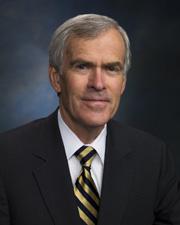 Sen. Jeff Bingaman (D-NM)
Legislative Activity
Stay on top of the latest movement without scrolling through every action
Roll call votes on amendments in Senate: Amendment SA 1740 agreed to in Senate by Yea-Nay Vote. 92 - 4. Record Vote Number: 358.
September 23, 2003
View full timeline
Roll call votes on amendments in Senate: Amendment SA 1740 agreed to in Senate by Yea-Nay Vote. 92 - 4. Record Vote Number: 358.
September 23, 2003
Senate amendment agreed to: Amendment SA 1740 agreed to in Senate by Yea-Nay Vote. 92 - 4. Record Vote Number: 358.
September 23, 2003
Considered by Senate. (consideration: CR S11780, S11804-11805)
September 23, 2003
Amendment SA 1740 agreed to in Senate by Yea-Nay Vote. 92 - 4. Record Vote Number: 358.
September 23, 2003
Senate amendment submitted
September 22, 2003
Senate amendment proposed (on the floor): Amendment SA 1740 proposed by Senator Bingaman.(consideration: CR S11733-11734; text: CR S11733)
September 22, 2003
Amendment SA 1740 proposed by Senator Bingaman. (consideration: CR S11733-11734; text: CR S11733) To ban commercial advertising on the National Mall.
September 22, 2003
Votes
1 roll call on this amendment
Text
Proposed
DEPARTMENT OF THE INTERIOR AND RELATED AGENCIES APPROPRIATIONS ACT,
2004

The PRESIDENT pro tempore. Under the previous order, the Senate will
resume consideration of H.R. 2691, which the clerk will report.
The assistant legislative clerk read as follows:

A bill (H.R. 2691) making appropriations for the Department
of the Interior and related agencies for the fiscal year
ending September 30, 2004, and for other purposes.

Pending:

Reid amendment No. 1731, to prohibit the use of funds for
initiating any new competitive sourcing studies.
Reid amendment No. 1732, to authorize the Secretary of the
Interior to acquire certain lands located in Nye County,
Nevada.
Reid amendment No. 1733, to provide for the conveyance of
land to the city of Las Vegas, Nevada, for the construction
of affordable housing for seniors.
Daschle amendment No. 1734, to provide additional funds for
clinical services of the Indian Health Service, with an
offset.
Daschle amendment No. 1739, to strike funding for
implementation of the Department of the Interior's
reorganization plan for the Bureau of Indian Affairs and the
Office of Special Trustee and to transfer the savings to the
Indian Health Service.

Mr. BURNS. Mr. President, I suggest the absence of a quorum.
The PRESIDENT pro tempore. The clerk will call the roll.
The assistant legislative clerk proceeded to call the roll.
Mr. BURNS. Mr. President, I ask unanimous consent that the order for
the quorum call be rescinded.
The PRESIDENT pro tempore. Without objection, it is so ordered.
Mr. BURNS. Mr. President, as we continue to work on the Interior
appropriations this afternoon and tomorrow--and it appears there will
be a couple of votes later on this evening--I wish to bring to the
attention of Senators and to this country what we are talking about
when we talk about healthy forests and why our requests for more money
to replace the accounts in the Forest Service, in the Department of
Agriculture, in the Bureau of Land Management, in the Fish and Wildlife
Service, and in the Park Service in the Department of the Interior are
important.
I stated on Thursday that this problem of forest fires which we have
had in the West is a national problem and one we have to address if we
are to manage our land for the environment, for the safety of those who
work and recreate on public lands, and if we are to have public lands
which Americans deserve and have paid for.
Once again, we have had a terrible fire season. Over 3 million acres
have burned--most of it in the West and about a third of the acreage in
my home State of Montana. I guess that makes us a little bit more
sensitive about what we can do and what we can't do when it comes to
forest fires and the protection of life, wildlife, and the health of
our forests.
We took a firsthand look at the devastating impact of these fires on
our parks, forests, and communities in August. We had a very dry and
hot August in Montana. The fires were so bad in Glacier National Park
and Yellowstone Park that they were closed to the public for many days.
The Montana Department of Environmental Quality was issuing a daily
alert for dangerous air and air quality throughout the State of
Montana.
The impact of these fires goes far beyond losing trees, brush, and
the flora of the forests of our Nation. We see a lot of the other
ramifications also. Wildlife is destroyed and wildlife habitat is
destroyed.
I will reiterate a conversation I had with some folks who lived here
in Maryland who were watching the fire burn in Glacier. They were
concerned about the loss of wildlife in those fires. They were
concerned about endangered species. Where do they go? I said wherever
they go, they will not have a habitat to come back to.
Another impact is poor air quality. Seniors and other people with
respiratory problems suffer from the heaviest smoke which we have seen
in many years. In fact, the airport in Missoula, MT, had to be shut
down one day because of smoke.
The aftermath of these fires means contaminated streams and
watersheds. Those watersheds not only feed wildlife but they also feed
the municipal water supplies of our State.
Tourism in Montana is a huge industry. So there are lost recreational
opportunities. Businesses and homes were destroyed. In fact, over 700
buildings and homes were lost. Unfortunately, there was also loss of
life. Statewide, 27 firefighters lost their lives this year in
wildfires.
We have an opportunity to act now to address the poor conditions of
our forests and rangelands before they get any worse. We have an
opportunity to change the conditions for the future of our kids and our
grandkids.
In back of me is a map that depicts a great deal of both the east
side and west side of the country which contain class 2 and 3
conditions. These conditions are classified as highly dangerous--or,
let us say, flammable. I think the color red is pretty apropos. Not
only do we see a lot of red up there in the panhandle of Idaho
northwest of Montana, but look at the conditions in Arizona, New
Mexico, Colorado, and you can't overlook the conditions in Oregon and
Northern California. In fact, those fire conditions run all the way
down the Sierras in California. We have seen devastating fires there;
fire conditions in South Dakota, in the Black Hills in the western part
of the State; and over in the eastern part of the State, conditions for
rain showers.

Nonetheless, we have to prepare for dry years. If you compare this
last year to the drought of the 1930s, which was just as bad, had we
not changed the way we farmed and ranched, we would have had another
Kansas dust bowl, an Oklahoma dust bowl. This time it would have been
more far reaching, reaching on up into the high plains of the Dakotas.
Look at northeastern Minnesota. Minnesota is almost solid red. Yet
their fuel on the floor, the density of their forests, tells us it is
high priority for fire. We see depicted the Ozarks of Missouri, the
southern part of the State around the Lake of the Ozarks, reaching down
almost to Poplar Bluff, into the southeastern part of the State.
If people in the northeast United States are not worried about what
is west of the Mississippi River, take a look at the northern part of
Pennsylvania and the wonderful forests of upstate New York. Right now
our fuel load is high. Of course, after the storm this last week we
might have a little more moisture; nonetheless, the fuel is there when
it dries out.
Look at West Virginia. Look at Virginia. Look at Alabama. All of this
is a national problem. Firefighters who were fighting the fires in the
West--in Oregon, Idaho, and Montana this last time--came from Florida;
the firefighters on the Robert fires were from North Carolina;
firefighters from Kentucky--they are all trying to get the fires under
control. This is not just a western problem; it is a problem for the
forests nationwide. That is what it is all about when we talk about
these situations.
The buildup of forest fuels occurred due to past management--or the
lack of past management practices. Those practices allowed ladder fuel
to grow into the healthy crowns of large trees; practices that did not
effectively treat insect infestations and thus the high mortality rates
in our forests; practices that did not effectively let us treat for
tree mortality.
We talk about thinning and taking fuel off the forest floor. I would
love to see a demo project comparing thinned and unthinned forests. Let
one forest grow with no management and have an area not too far away
that has been managed. Fire behavior in managed and unmanaged forests
is quite different.
I remember as a young man way back I was on a couple of fires: The
Edith Peak fire in Montana in 1953--and we lost a person on that fire,
by the way--and the Tango fire in 1953. We learned a lot about how
these fires react. I can state firsthand these fires now are hotter and
are more devastating. There is more fuel on the floor of the forests.
This picture on the left is of a forest that has been thinned. In
other words, the underbrush has been taken out, some of the trees have
been thinned, and the larger trees can then grow. Where the sun is shut
out part-time, you do not have nearly the amount of underbrush for
fuel. Compare that to the picture on the right where nothing was done
in the forest. Notice the downed timber and the old logs on the floor
of the forest. They bored the logs

[[Page S11732]]

and checked the moisture. Some only contained 6 percent moisture. That
is how dry and hot it was. The desks in this Chamber have at least 6
percent moisture. When the fire creates that much heat, it takes
everything. It takes the humus out of the soil. It loosens the soil. So
after the winter and then the spring thaw, we see erosion on the hills
because there is nothing to hold the dirt in place. That is the
difference.

The thinned forest is a managed forest. Sure, we will have fires. We
will have lightning. And someone will have a campfire get away from
them every now and then. We will always have fires, but they do not
have to be of the intensity of the unthinned forests.
We watched a rampage fire move almost 2 miles--they move quickly--
while we were standing there, in only 15 minutes. They had a 30-knot
wind and the flames shot almost 200 feet into the air. That is where
most of our problem is, trying to thin and to clean up under the fuel
that is on the forest floor.
Grazing takes care of part of this. Where we had grazing permits, we
did not have those hot fires because the fuel on the floor was not as
dense.
The next example describes forest health and fuels reduction and the
impact on the forest. See the healthy forest on the left. That is a
young forest with trees running from 8 to 12 inches in diameter. I
guarantee we cannot get from that young forest to this forest unless we
thin and get the fuel off the floor of the forest. It is that simple.
We cannot put a dense growth on the ground, experience drought and
lightning storms, and have it not burn. That is why you can only grow
so many trees if you want many big trees, beautiful forests, habitat
for wildlife, habitat for endangered species, also a place to enjoy
recreation. The forest needs a little intervention when it comes to
management.
It is very simple. That is the reason, when farmers plant corn--and I
appeal to my good friend in the chair today--they do not plant it an
inch apart or they will have nothing. Give them space. Let them grow.
Let them reproduce. We cannot get from the condition on the left to the
condition on the right without effectively treating the conditions that
have contributed to the poor health of our forests and our rangelands.
I have an illustration of the life history of a tree on the lower
right hand side. This is a boring taken from a 100-year-old Ponderosa
pine. Notice the healthy growth for the first 20 years. It is very
healthy. Then notice the declining growth for the next 70 years.
Finally, notice in the last 10 years, after the thinning occurred to
allow that tree to breathe. The growth rate picked up again after it
was thinned from competing brush and maybe other trees. That is what we
are talking about, the life of a tree. A tree is just like you and I:
It sprouts, it grows, it ages. Then one day it dies of old age, just
like the rest of us.
The House passed H.R. 1904, the Healthy Forest Restoration Act, a
couple months ago. Now we have the opportunity to do the same. I am
concerned about the healthy forest issue as I am concerned about
replenishing the money we borrowed to fight fires within the Forest
Service and Bureau of Land Management. So we have to work very hard to
make sure our prevention money is not used in suppression.

Now, there is one other thing we did not bring up. Any time you don't
thin, any time you lose trees, some die. And we have an infestation of
pine bark beetles up in our part of the world. I will show you a chart
that demonstrates the infestation of that.
Is it a western problem? No. That little beetle may be called a
different name somewhere else, but basically, again, we have a national
problem. The heaviest infestation is in California, northern
California, even down into the Sierras. Right now, it is estimated they
have anywhere from 400 to 800,000 acres infested with pine bark
beetles.
What pine bark beetles do is they kill the trees. In other words,
they destroy the cambium, its ability to grow. The cambium is the
growing part; it is what makes the rings. If you are counting the
rings, you are counting old cambium. It is the growing part of the
tree. I took a couple years of forestry. I surprise myself every now
and again.
That problem is not just west of the river. Look at Michigan. One of
the best forestry schools is in Madison, WI, the University of
Wisconsin. They have problems in their area, which is in the northern
part of their State, the northeastern part of Minnesota, and the
northwestern part of Wisconsin. It is also in the areas of Georgia,
Tennessee, and northern Alabama. We have a little bit of a problem over
there in a little State called New Jersey where we have a little bit of
a problem with pine bark beetles. It works the same, but I think it has
a different name. I am not big on names right now; I am just big on
bugs.
But, nonetheless, it gives you the understanding this is not just a
problem isolated to one region of the United States. It is time we come
together: industry, land managers, and people who use those lands maybe
for recreation, maybe to make a living. It is time we all come
together. But it seems as though every time we get together on this
bill everybody becomes a land manager and everybody becomes a forester,
and sometimes that does not work.
But we know one thing. We have absolutely been crippled--they call it
analysis by paralysis--in putting together a management plan to deal
with this problem: both disease and fire. But we can do it. We have the
ability to do it. We can do it in a way that I think Americans want it
done.
They are tired of seeing fires every night on their summertime
television and the destruction they bring and what they cost the
taxpayers. Actually, we are about $850 million in arrears right now in
the Forest Service, and that is taxpayer money. Everybody puts money
into that pot.
We need to put a little more into prevention rather than in this
devastating thing called fighting fires. So it is not a conservative or
liberal view. Agriculture and plants and soil and water and sunlight
don't claim any politics. The relationship of those four contributes to
how well we manage our forests. If you have ever been in a forest
fire--and I have--it is an experience you will never ever forget.
So we are going to have an amendment that puts money back into the
Forest Service and the BLM for things such as forest stewardship,
prevention, and water quality because, I will tell you, we will have--
and it was the case in the Yellowstone fires in 1988--we will have
erosion, we will have water quality problems for a long time just
because once the growth is gone from the side of the mountain, then the
soil comes down. There is nothing to hold it. So it is just not very
good conservation. Now we see preservation--don't touch it; that is the
way God meant it to be or whatever. This is a problem you run into
because there have been 30 years of no management. Let's not say bad
management but no management. We just could not get it done.

So we have an opportunity to do what is right for our forests and for
our agricultural lands because from these forests come livelihoods,
products that all of America demands. They are still building houses
and there is still a great demand for forests and forest products.
There is great demand for the recreational areas, great demand to
protect our wildlife. And, remember, once that forest is burned up,
there is no habitat to come back to. So we have an opportunity, and I
think we should seize that opportunity and do the right thing for our
forests.
Mr. President, I will yield the floor. I see my good friend from New
Mexico has an amendment he wants to offer and speak to. I have to go to
a little hearing on Iraq. I am not smart enough to shift gears quite
that fast. I can't go from one to the other quite that quickly. But I
took a little of the time of my good friend from New Mexico, and I
appreciate his indulgence.
I yield the floor.
The PRESIDING OFFICER (Mr. Alexander). The Senator from New Mexico.
Mr. BINGAMAN. Mr. President, first, I thank my colleague, the manager
of the bill, for his courtesy.
Mr. President, I ask unanimous consent that the pending amendment be
set aside temporarily and I be allowed to offer another amendment.
The PRESIDING OFFICER. Without objection, it is so ordered.

[[Page S11733]]

Amendment No. 1740

(Purpose: To ban commercial advertising on the National Mall)

Mr. BINGAMAN. Mr. President, I send an amendment to the desk.
The PRESIDING OFFICER. The clerk will report the amendment.
The assistant legislative clerk read as follows:

The Senator from New Mexico [Mr. Bingaman], for himself,
Mr. Dorgan, and Mr. Reid, proposes an amendment numbered
1740:
At the appropriate place, insert the following:
Sec.   . None of the funds appropriated or otherwise made
available by this or any other Act, hereafter enacted, may be
used to permit the use of the National Mall for a special
event, unless the permit expressly prohibits the erection,
placement, or use of structures and signs bearing commercial
advertising. The Secretary may allow for recognition of
sponsors of special events, provided that the size and form
of the recognition shall be consistent with the special
nature and sanctity of the Mall and any lettering or design
identifying the sponsor shall be no larger than one-third the
size of the lettering or design identifying the special
event. In approving special events, the Secretary shall
ensure, to the maximum extent practicable, that public use
of, and access to the Mall is not restricted. For purposes of
this section, the term ``special event'' shall have the
meaning given to it by section 7.96(g)(1)(ii) of title 36,
Code of Federal Regulations.

Mr. BINGAMAN. Mr. President, I thank the clerk for reading the full
amendment. I wanted her to read it so all Members would know what the
subject of the amendment was and also the substance of it.
This amendment would prohibit the National Park Service from issuing
any permit for a special event on the National Mall unless the permit
expressly prohibits the use of commercial advertising.
Last week, I spoke at length about my concern with a particular
special event that took place on The Mall earlier this month. This
event was described by the Department of Interior as a football and
musical festival entitled--and this whole thing is the title of the
event--the ``NFL Kickoff Live from the National Mall Presented by Pepsi
Vanilla.''
The Mall is often used for large public gatherings. We are all
familiar with the Smithsonian Folklife Festival during the Fourth of
July celebration and the Cherry Blossom Festival in the spring. The
National Mall is also, of course, one of the most significant, if not
the most significant, sites for public demonstrations in our Nation.
As Judge Buckley of the U.S. Court of Appeals for the District of
Columbia wrote:

It is here [on the National Mall] that the constitutional
right of speech and peaceful assembly find their fullest
expression.

The management of The Mall is entrusted to the Department of the
Interior. More specifically, it is entrusted to the National Park
Service. The Park Service's own regulations and guidelines make clear
that The Mall is not intended to be used for commercial purposes. The
Park Service guidelines state:

The theme of the special event must be consistent with the
mission of the park area in which it is to be held, including
consideration of possible damage and/or impairment to park
property and . . . values.

In my view, with respect to the recent event I have described, for
whatever reason, the Park Service decided to effectively ignore its own
policy.
Let me show a couple of photographs to make the point. I showed these
a week or so ago on the Senate floor. They fairly graphically point out
the problem I am trying to have addressed. This is a photograph that
appeared in the Washington Post. It is a photograph down The Mall. You
can see the Capitol Building in the distance. You can see the various
banners which were essentially just commercial advertising banners for
Pepsi Vanilla. And then down at the bottom, it does say, ``Take Pride
in America.'' But the main thrust of the banner, I suggest, to any
unbiased observer is that it is an ad for Pepsi Vanilla.
Obviously, this very large football is intended to advertise the
National Football League which we all support, but clearly, what we see
here in this photo is commercial activity being conducted on The Mall.
Let me show another event to make the point even further. This is a
photograph related to the same event. It shows a large fence put up
around a large portion of The Mall. It contains what are clearly
advertisements for various companies: AOL for broadband, Pepsi Vanilla,
Verizon, Coors Light. According to our Secretary of the Interior and to
the Director of the National Park Service, these are not
advertisements. Instead, in their view, these constitute sponsor
recognition. Frankly, this is a distinction of which I was not aware.
The Department of the Interior and the Park Service continue to
insist that this event, about which I have complained in the way it was
conducted, was entirely appropriate, that the banners and the signs
were just sponsor recognition. The Secretary of the Interior and the
head of the Park Service are, of course, by law the two public
officials appointed by the President and charged with the
responsibility of protecting The Mall and ensuring that the uses of The
Mall be appropriate. These photos clearly represent their view of what
is appropriate use of The Mall. I strongly disagree.
Let me explain specifically what it is that I am opposed to. The
Interior Department claims that the purpose of the event in this case
was to express support for the Department's ``Take Pride in America''
slogan, encouraging people to volunteer for projects on public lands
and to honor members of the Armed Forces. Obviously, all of us, all
Americans favor these good purposes. But the stated rationale for
approving the event is not consistent with what was taking place on The
Mall.
In my opinion, the Interior Department and the National Park Service
allowed a large portion of The Mall to be virtually closed to public
use for several days to allow essentially for a commercial event. When
I say ``for several days,'' the permit allowed the sponsor of this
event 17 days in which to organize and set up the extravaganza, conduct
the event, and then remove the various items put there as part of it.
But this was essentially a commercial event.

It featured commercial advertising by private corporations. The event
was used as the basis for a commercial television production. The
commercials featuring event sponsors were broadcast over large-screen
televisions set up in The Mall. Those commercial uses and commercial
advertising were not an appropriate use of The Mall.
I also believe it is not appropriate to close a large portion of The
Mall for a commercially related purpose for long periods of time to the
exclusion of the general public.
I received a letter last week from the Director of the National Park
Service. She wrote to express her concern that if sponsor recognition
were prohibited on The Mall, many special events that had been approved
in the past would not be able to take place in the future. Frankly, I
would have felt better had she also indicated in the letter some
concern for the need to protect The Mall and to protect the public
right to access to The Mall comparable to the level of interest that
she demonstrated for corporate sponsors. But I do agree with the main
point she was making, that most of these special events, many of which
involve races or walks or various charitable causes, do not infringe on
the public's ability to use The Mall. Most are not inherently
commercial.
The amendment I am offering would allow the National Park Service to
provide for limited sponsor recognition. It would require that the size
and form of the recognition be consistent with the special nature and
sanctity of The Mall, which is identical to the language we approved in
the Senate earlier this year with respect to the proposed education
center near the Vietnam Memorial on The Mall. It also would limit the
size of any sponsor recognition to one-third the size of the lettering
or design that is put there to name the special event.
As the photos indicate, during the last event, that was essentially
reversed. The sponsors' names were given by far the greatest
visibility.
Finally, the amendment directs that the Secretary, to the maximum
extent possible, ensure that public use of The Mall and access not be
restricted in leading up to or during or following these special
events.
I do not believe in trying to micromanage agency management decisions
through legislation. With respect to this amendment, we have tried to
give the Park Service flexibility to determine what is an appropriate
means to

[[Page S11734]]

recognize event sponsors, while making it clear that at least the
Congress believes commercial advertising should not be permitted.
Department of the Interior and National Park Service officials have
not shown the judgment necessary to protect the public's interest under
the authority they currently have. Instead, they have bent over
backwards to accommodate commercial interests that wanted to use The
Mall for commercial purposes. While it is impossible to legislate
common sense and good judgment, I believe the amendment would at least
make clear that The Mall, which the Park Service itself has described
as ``the single most significant public park and open space in our
Nation's Capital,'' should not be a venue for commercial use and for
advertising.
I believe this is an entirely reasonable amendment. It is one I am
offering on behalf of myself and Senators Dorgan and Reid of Nevada. I
hope it can gain unanimous support and that by adopting it we can send
a strong message that we believe The Mall's special place in our
national heritage needs to be preserved.
I yield the floor and suggest the absence of a quorum.
The PRESIDING OFFICER. The clerk will call the roll.
The assistant legislative clerk proceeded to call the roll.
Mr. THOMAS. Mr. President, I ask unanimous consent that the order for
the quorum call be rescinded.
The PRESIDING OFFICER (Mr. Sununu). Without objection, it is so
ordered.
Mr. THOMAS. I ask unanimous consent that I be permitted to speak in
morning business.
The PRESIDING OFFICER. Without objection, it is so ordered.
(The remarks of Mr. Thomas are printed in today's Record under
``Morning Business.'')
Mr. THOMAS. I suggest the absence of a quorum.
The PRESIDING OFFICER. The clerk will call the roll.
The legislative clerk proceeded to call the roll.
Mr. BURNS. Mr. President, I ask unanimous consent that the order for
the quorum call be rescinded.
The PRESIDING OFFICER. Without objection, it is so ordered.
Mr. BURNS. Mr. President, we have this bill narrowed down to about
five or six amendments we are working on right now. I would like to
alert Senators, though, if they have any amendments they want to be a
part of this bill, they should file them tonight if possible for their
consideration. We want to tie this bill up tomorrow and pass it and get
it into conference and to the President's desk. We don't want to deny
anybody their right to file their amendments, but we suggest they get
them over here tonight because we are going to finish the bill
tomorrow.
Mr. President, I suggest the absence of a quorum.
The PRESIDING OFFICER. The clerk will call the roll.
The assistant legislative clerk proceeded to call the roll.
Mr. DASCHLE. Mr. President, I ask unanimous consent that the order
for the quorum call be rescinded.
The PRESIDING OFFICER. Without objection, it is so ordered.
Mr. DASCHLE. Mr. President, I call for the regular order with respect
to amendment No. 1739.
The PRESIDING OFFICER. The regular order has been requested.

Amendment No. 1739, As Modified

Mr. DASCHLE. Mr. President, I send a modification of amendment No.
1739 to the desk.
The PRESIDING OFFICER. The amendment will be so modified.
The amendment (No. 1739), as modified, is as follows:
On page 46, line 7, strike ``expended: Provided, That'' and
insert the following: ``, and of which $79,000,000 (composed
of $20,000,000 from administrative accounts for operation and
support, $6,000,000 from the trust accountability account,
$15,000,000 from the field operations account, and
$38,000,000 from the historical accounting account) shall be
deducted from that amount, of which deducted amount
$63,000,000 shall be transferred to the Indian Health Service
and available for clinical services: Provided, That none of
the funds made available by this Act may be used for the
proposed trust reform reorganization of the Bureau of Indian
Affairs or the Office of Special Trustee: Provided further,
That''.

Mr. DASCHLE. Mr. President, I call for the regular order on amendment
No. 1734.
The PRESIDING OFFICER. The regular order has been called for.

Amendment No. 1734, As Modified

Mr. DASCHLE. Mr. President, I ask that amendment No. 1734 be
modified.
The PRESIDING OFFICER. The amendment will be so modified.
The amendment (No. 1734), as modified, is as follows:

On page 88, beginning on line 17, strike ``$2,546,524,000''
and all that follows through ``Provided'' on line 20, and
insert the following: ``$2,838,524,000, together with
payments received during the fiscal year pursuant to section
231(b) of the Public Health Service Act (42 U.S.C. 238(b))
for services furnished by the Indian Health Service, of which
$2,329,414,000 shall be available for clinical services:
Provided, That funds made available to tribes and tribal
organizations through contracts, Provided further''.

Mr. DASCHLE. Mr. President, I offer these modifications in part
because I have been informed that there are concerns about the
germaneness of the offset we had included in the health amendment (No.
1734), and to make a minor technical correction to the trust reform
amendment (No. 1739). The customs user fee is a very legitimate and, I
would say, appropriate offset; but under the constraints presented to
us under the rules, there is a technical point of order that can be
raised. So in order to avoid points of order, we will avoid using this
offset.
I regret that because I do believe that the offset would help us
alleviate some of the appropriations pressures that understandably the
ranking member and the chairman had to confront as they were addressing
the issues of the overall allocation and availability of funding.
Let me just go back to my comments last week when I offered the
amendments. Very briefly, the first amendment would provide for $292
million in additional funding for the Indian Health Service. This was
the amendment that, on an overwhelmingly bipartisan basis, we passed
during the budget resolution. I had offered an amendment that would
have provided for, I believe, $2.9 billion to fully fund the Indian
Health Service, in terms of meeting the basic health care needs of
their current user population. The President has asked for $1.9
billion, and it falls so dramatically short of what is needed that
there is a severe rationing of health care now on every reservation in
the country. That rationing has affected the quality of life and, in
fact, life itself in so many cases.
The allocation of resources on a per capita basis on the reservations
today is about $1,900. That is half of the $3,800 that we spend on
Federal prisoners today on a per capita basis. Federal prisoners today
are allocated, per capita, about $3,800 for the health care they
receive in Federal prison. An Indian child born on the reservation is
given $1,900. Yet the incidence of diabetes, fetal alcohol syndrome,
and some of the most difficult, challenging, and vexing problems we
face in health care today--alcoholism, violent death--all are problems
of far greater magnitude on reservations than anywhere else in the
country. So their problems are worse than they are in prison, worse
than in the general population in the country. The resources we
allocate are a fraction of what they are in prison or what we spend per
capita in the country.
Per capita health care spending for the U.S. general population is
about $5,000. So all this amendment says is we are going to put our
money where our mouth was last spring. We said we will give at least
$292 million. I do not think there was a dissenting vote. I think it
passed virtually unanimously, and yet here we are with efforts, I am
told, to defeat this almost embarrassingly minimal amendment as we
address the consequences of life and death on the reservations today.
The other amendment said, basically, the same thing. We are not
anywhere close to dealing with public policy issues involving trust
reform, trust policy. Unfortunately, the problems associated with
government-to-government relationships and trust responsibility are as
problematic as anything we are dealing with on reservations today. I
cannot think of a more vexing issue maybe except for the health care
problems we are facing.
Since we do not have the policy, it is almost impossible for us to
put together the infrastructure within the

[[Page S11735]]

bureaucracy to implement the policy. One has to have a policy before
they know what kind of a bureaucracy they are going to set up to
implement it, and yet this budget has $79 million to start creating the
infrastructure for the implementation of the policy without having a
clue what it is going to be.
So what some of us are suggesting is that before we start spending
another dollar on bureaucracy and infrastructure, let us, No. 1, agree
on the policy but then, No. 2, let us put the money where it could do
some good. Let us put it in the health care area, where we are so
deficient today.
We have a problem. Just this weekend I was home and was reminded
again what a dentistry problem we have. I think on all nine
reservations in South Dakota I was told this weekend that we have five
dentists--nine reservations, five dentists. We have such a chronic
shortage of dentists, and I will have to go back and verify whether
that number is accurate but whether it was five or six we do not even
have one dentist per reservation.
We are saying we do not have the money to allocate to health care,
but we have the money to allocate $79 million to this reorganization
within the BAA dealing with trust land responsibilities, and we do not
even have the policy. So we are putting the cart before the horse, and
we do not even have enough money to feed the horse when it comes to
health care.
Both of these amendments are minor in scope and impact but could send
a significant message that we understand the chronic problems we are
facing in health care, and I hope that on a bipartisan basis we can
support these amendments.
I understand there was some confusion about whether I was prepared to
offer these modifications today and have votes on them. I would very
much like to have the votes this evening. We had said we would work
with our Republican colleagues to finish this bill tomorrow, but it is
pretty hard to finish the bill if nobody is going to vote. So I want to
have both of these votes this afternoon. That is two votes we can have
this afternoon, and we can have a vote on the Bingaman amendment.
Senator Bingaman has indicated he is willing to have a vote. So now we
have three Democratic amendments on which we are prepared to vote. We
can do it at this moment. We could do it at 5 or 5:30.
In order to accommodate Senators who are traveling, we generally
agree not to have votes before 5, but I am certainly prepared to hold
the vote open to accommodate those Senators who are traveling. Let's
have at least those three votes this afternoon so we can work to
complete our scheduled debate on this bill by the end of the day
tomorrow.
I know the distinguished Senator from Montana, the chair of the
subcommittee, has offered a very important amendment on emergency
funding. I hope to have that vote as well.
There is nobody on this side holding up votes on these amendments,
and I would certainly hope that nobody on that side would, either. If
we are going to do what I had committed to last week, I had indicated
to the distinguished majority leader that we want to work with him to
see if we can finish this bill by tomorrow night, and so I do not want
anybody operating under an assumption that for some reason now we have
offered these amendments and we are not prepared to vote. We are
prepared to vote, and I hope we would begin doing so at 5.
I see my friend and colleague from Montana is standing and may want
to address these votes as well.
I yield the floor.
The PRESIDING OFFICER. The Senator from Montana.
Mr. BURNS. I thank my friend from South Dakota. We are running the
trapline now. We have an objection to the Bingaman amendment, and
someone wants to speak on it. Then we can vote in the morning. That
will go away very fast. We are now running the trapline on the
modifications of the Senator from South Dakota. We should have some
kind of answer on that. I do not think we are going to vote before
5:30.
With regard to the Senator's amendment on reforming the trust and
dealing with this problem, the policy has almost been set by the
courts, as the Senator well knows. There is litigation on this. So I
think what the Secretary of the Interior wants to do is to move forward
with a system so they can finally bring closure to this problem that
has been going on for how many years. This stretches more years than
the Senator from South Dakota and I have probably been in the Senate.
We have not managed the trust moneys very well. Just getting the
system up and knowing where we are so we can conform with parts of the
litigation is quite the challenge we have right now, and I think that
has to move forward because right now we cannot do it. I do not know if
anybody wants to identify the horse or the cart. In fact, I am not real
sure which one should go across the road first right now. I am not real
sure that they know at Interior but at least they have a system in
order to solve it, and we cannot move forward unless they have those
dollars. So that is where we are.
There are a lot of people in Indian country who are very concerned
about this and so we should move on that, but we are running the
traplines.
I appreciate the distinguished minority leader coming today and
offering his modification. We should have an answer for him pretty
quickly, and I thank the minority leader for that.
The PRESIDING OFFICER. The Senator from South Dakota.
Mr. DASCHLE. Mr. President, as always, I appreciate the response of
the distinguished Senator from Montana. I argue that the court
decisions have actually made the situation even murkier and have
created and compounded problems with regard to trust responsibility
that have to be clarified through a legislative decision. He is
absolutely right, this thing has gone on and on, but that is my point.
For us to lock into place, in bureaucracy somehow, a response to
these court decisions compounds and makes even more unlikely some
resolution to this issue, but that is obviously a view that is
arguable. For whatever reason, the administration continues to persist
in trying to lock in these court decisions, in my view in a very
shortsighted and unacceptable manner for those who are involved in its
implementation, especially on the reservations themselves. This is not
going to work. I can't find a tribal chairman, I can't find a tribal
council, that will tell you this is going to work. So to say we don't
care what you think and we are going to override the rule, your own
observations, or your own positions--our recognition of the need to
work this out jointly--is not the way to go about it. But that is what
this amendment is all about.

I appreciate, once again, the observations and the leadership
provided by the Senator from Montana.
I hope we could have votes at least on the two amendments that were
offered last week. I await the word from our colleagues.
I yield the floor.
The PRESIDING OFFICER. The Senator from Tennessee.
Mr. ALEXANDER. If the distinguished manager of the bill does not
object, I ask unanimous consent that I be allowed to speak for up to 10
minutes as in morning business.
The PRESIDING OFFICER. Without objection, it is so ordered.
(The remarks of Mr. Alexander are printed in today's Record under
``Morning Business.'')
Mr. ALEXANDER. Mr. President. I suggest the absence of a quorum.
The PRESIDING OFFICER. The clerk will call the roll.
The legislative clerk proceeded to call the roll.
Mr. DORGAN. Mr. President, I ask unanimous consent that the order for
the quorum call be rescinded.
The PRESIDING OFFICER. Without objection, it is so ordered.

Historic Senate Debate

Mr. DORGAN. Mr. President, we are awaiting a couple of votes, I
believe, at 5:30. We will vote on a couple of judgeships. Following the
votes today, we are going to see an event in the Senate that is unique.
I will describe briefly what this is about.
Senator Kyl, who is the chairman of the Republican Policy Committee,
and I have visited about sponsoring debates in the Senate on a series
of very big issues. I am chairman of the Democratic Policy Committee.
We thought it would be interesting and useful to create a setting in
the Senate that is

[[Page S11736]]

not connected to a specific piece of legislation on the Senate floor
and have a debate back and forth, a structured debate about a big
issue. We will do a series of those debates.
This evening, following the two votes will be the first of such
debates. I have asked, on the Democratic side, Senator Durbin and
Senator Corzine to be involved in this debate. The debate will be on
the subject of Social Security. I believe--I hope I am not misstating
the hypothesis--I believe the Republican side, which will be
represented by Senator Sununu and Senator Santorum, will be describing
their proposition that we ought to have private accounts in Social
Security and the Democratic side will describe, I believe, why having
private accounts in the Social Security system is inherently risky and
moving in the wrong direction to provide security for this important
program.
The point is, this is considered, and has always been considered, one
of the great deliberative bodies in the world. Senate debate is a
fascinating opportunity to not only inform Senators but inform the
American people about the respective positions of the Republican caucus
or the Democratic caucus on very significant issues that have national
importance or worldwide importance.
I suspect my colleague, Senator Kyl, will be here in a while, perhaps
when the debate begins. I wish to describe what will happen following
the two votes today.
I am pleased we are going to be able to do this with our two policy
committees. It is important to have an aggressive, structured debate
with ground rules and portray to the American people the importance of
an issue of this type. This is the first, but there will be a number of
additional debates in the coming months. We hope this will enhance the
reputation and ability of the Senate to sink its teeth into big and
important issues.
This is a great country in which we live. We are lucky to be
Americans. We are lucky to be alive now. Those who are fortunate to be
able to serve, or are given the privilege of serving in this great
body, never for a moment misunderstand the wonder of it all. As you
stand at these desks that have served this country in public debate and
the development of public policy for now two centuries, the more you
understand the grandeur of this great body. There are times all of us
grit our teeth a bit or wipe our brow and wring our hands and wonder if
the partisanship or the way these issues are presented is very
attractive to the American people. Yet for over two centuries this
democracy has endured, and the Senate, this great Chamber of debate
about significant, important national policies, about who we are as
Americans, about what we aspire to become as Americans, this Chamber
has been the location of all of those great debates.

Those in the Senate who describe our experiences very often describe
our experiences in the context of the Senate desk. I sat at a desk on
that side of the room. The first desk I was assigned permanently was a
desk of a man named Robert La Follette. He stood for many hours on May
29, 1908, doing a filibuster. Apparently, according to history, he sat
down for a turkey sandwich and a glass of eggnog. He lifted the eggnog
to his lips and spat it out and began screaming: ``I've been
poisoned.'' This was 1908. They sent the glass of eggnog to a
laboratory to have it analyzed and discovered someone had put enough
poison in his drink to have killed him if he had drunk it. One little
moment on the floor of the Senate. They never figured out who did that,
by the way. That is one little desk and one little story. There are
stories of majesty and courage and wonderful representation, great
debate.
This is the Chamber where Webster stood and gave his orations. It is
the Chamber where the great debates about this country's history and
future occur. I am not suggesting tonight's debate will rise to quite
that occasion, but we are starting tonight to have an opportunity to
exchange views in a debate sponsored by the Republican Policy Committee
and the Democratic Policy Committee. I say thank you to the four
colleagues who will participate and say I think this does advance the
opportunity to exchange views and to have the American people learn
from that exchange of views about the two parties' positions on some
very important issues.
I yield the floor and suggest the absence of a quorum.
The PRESIDING OFFICER. The clerk will call the roll.
The assistant legislative clerk proceeded to call the roll.
Mr. ALEXANDER. Mr. President, I ask unanimous consent that the order
for the quorum call be rescinded.
The PRESIDING OFFICER. Without objection, it is so ordered.

Unanimous Consent Agreement--Executive Calendar

Mr. ALEXANDER. Mr. President, on behalf of the leader, as in
executive session, I ask unanimous consent that, at 5:30 this evening,
the Senate proceed to a vote on the confirmation of Calendar No. 356,
to be followed immediately by a vote on the confirmation of No. 361,
provided that immediately following those votes the President be
notified of the Senate's action, and the Senate then resume legislative
session; finally, that there be 2 minutes equally divided for debate
prior to each of the votes.
Mr. REID. Reserving the right to object--and I shall not object--I do
want to have the Record spread with the same statement Senator Daschle
made earlier today. We have a number of amendments pending, two of
which were offered by our Democratic leader, on which we are ready to
vote. Senator Bingaman offered an amendment. We are ready to vote on
that. We are going to do everything we can to proceed through the
amendments tomorrow. We will cooperate as much as we can. There are
other Senators who have amendments to offer. We have indicated to the
majority leader that we want to finish this bill tomorrow so we can
move on to another appropriations bill.
I want the Record spread with the fact it is not we who are holding
up this bill. We are ready to vote as of 5 today--as of now. We still
think we can do the bill tomorrow. There are Senators who are going to
offer amendments, and we do not want them to believe they are rushed
because of our inactivity today.
The PRESIDING OFFICER. Without objection, it is so ordered.
Mr. ALEXANDER. Mr. President, I am informed that the manager is
working hard to try to establish a time in the morning for those votes.
Mr. REID. I suggest the absence of a quorum.
The PRESIDING OFFICER. The clerk will call the roll.
The assistant legislative clerk proceeded to call the roll.
Mr. ALLEN. Mr. President, I ask unanimous consent that the order for
the quorum call be rescinded.
The PRESIDING OFFICER (Mr. Alexander). Without objection, it is so
ordered.

____________________