S.Amdt. 1801
What it does: Adds Sec. 2313. (a) Congress makes the following findings: on page 38, between lines 20 and 21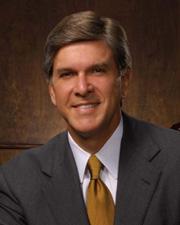 Sen. Gordon H. Smith (R-OR)
What it changes
1 change to S. 1585
Adds Sec. 2313. (a) Congress makes the following findings: on page 38, between lines 20 and 21
Adds a sectionPrinted pageInserted: Sec. 2313. (a) Congress makes the following findings:
Inserted: (1) The United States armed forces entered Iraq on March 19, 2003 to liberate the Iraqi people from Saddam Hussein and remove a threat to global security and stability.
Inserted: (2) Having liberated the country from its prior regime, the United States and its coalition partners now have the temporary responsibility of rebuilding Iraq's infrastructure and economy until a new Iraqi government can take over this work.
Inserted: (3) During the long reign of Saddam Hussein many public and private entities extended billions of dollars in loans to his regime despite his record of aggression and barbarism. Such debts must not be permitted to burden the new Iraq that is now emerging or be a factor in shaping current efforts to rebuild Iraq.
Inserted: (4) Pursuant to basic principles of bankruptcy law, such prior creditors are no longer entitled to repayment of their loans. These creditors extended money to a debtor regime that no longer exists and is the functional equivalent of a bankrupt estate.
Inserted: (5) Pursuant to basic principles of equity, the people of Iraq must not be burdened with the obligation of repaying loans that funded the very regime that oppressed them.
Inserted: (6) Entities which extended financial support to the regime of Saddam Hussein after his record of military aggression and war crimes became public did so contrary to international norms of decency and United States foreign policy. Those who thus aided and abetted Saddam Hussein were accessories before the fact to the atrocities committed by Saddam Hussein and should not be rewarded with repayment of their loans.
Inserted: (7) United Nations Security Council Resolution 1483, which passed unanimously on May 22, 2003, specifically provides that all proceeds from the sale of Iraqi oil be deposited into a United States-controlled development fund for the reconstruction of Iraq.
Inserted: (8) Pursuant to United Nations Security Council Resolution 1483, the United States has an obligation to use revenue generated by the sale of Iraqi oil to fund the reconstruction of Iraq.
Inserted: (9) Pursuant to basic principles of bankruptcy law, the United States is entitled to priority repayment of any loans the United States now extends to Iraq. Such loans are the equivalent of debtor-in-possession financing because the loans are being extended to an already distressed entity in order to help that entity rebuild. Loans made under such circumstances are traditionally repaid before any previously extended loans.
Inserted: (10) Pursuant to basic principles of secured transactions, the United States is entitled to priority repayment of any loans it now extends to Iraq. The United States is currently in control of Iraq and its assets and is therefore a secured creditor, a creditor in physical possession of collateral, entitled to priority repayment.
Inserted: (11) Pursuant to the norms of international financial aid, the United States is entitled to priority repayment of any loans it extends to Iraq. The role of the United States in Iraq is analogous to the role of the International Monetary Fund and the World Bank in extending credit to a distressed country to help it achieve solvency. Such International Monetary Fund and World Bank loans are repaid prior to any pre-existing loans.
Show 4 more inserted paragraphsShow less
Inserted: (12) Extending loans instead of outright grants to Iraq will not lend credibility to any assertion that the United States liberated Iraq merely to gain control of its oil assets. The United States seeks to use Iraqi oil revenues for one purpose only, namely, to rebuild Iraq for the good of the Iraqi people. The United States will not use these assets to pay for its own military expenses in Iraq (which far exceed the cost of reconstruction). Nor will the United States take any Iraqi assets with it when it leaves the country.
Inserted: (13) Extending loans instead of outright grants to Iraq will not make it more difficult for the United States to secure participation from other potential donor nations in the rebuilding of Iraq. If the United States provides all reconstruction funds in advance in the form of grants, there will be little need or incentive for other donor nations to contribute funds. If the United States provides only loans, however, it leaves open the question of whether and how much all donor nations, including the United States, should provide to Iraq in the form of grants.
Inserted: (14) The United States does not typically fund the development projects of other nations with outright grants. When Israel undertakes a major new infrastructure or development project, for example, the United States assists Israel by providing loan guarantees. Such loan guarantees have no cost to United States taxpayers if Israel repays its loans. Iraq should be treated no better than allies of the United States such as Israel.
Inserted: (b) Of the amount appropriated in title II under the subheading "Iraq Relief and Reconstruction Fund" under the heading "OTHER BILATERAL ECONOMIC ASSISTANCE FUNDS APPROPRIATED TO THE PRESIDENT", $20,304,000,000 shall be used as loans to, or used to guarantee loans entered into by, the Development Fund for Iraq acting on behalf of the people of Iraq. The Development Fund for Iraq shall act in consultation with the Governing Council in Iraq, or any successor governing authority in Iraq, and shall, as provided in United Nations Security Council Resolution 1483, be subject to audits supervised by the International Advisory and Monitoring Board of the Development Fund for Iraq. The members of such Board shall include duly qualified representatives of the United Nations Secretary General, of the Managing Director of the International Monetary Fund, of the Director General of the Arab Fund for Social and Economic Development, and the President of the World Bank.
Original wording
On page 38, between lines 20 and 21, insert the following new section:
Read automatically from the Congressional Record. Check the original before relying on it.
As printed
SA 1801. Mr. SMITH submitted an amendment intended to be proposed by him to the bill S. 1585, making appropriations for Departments of Commerce, Justice, and State, the Judiciary, and related agencies for the fiscal year ending September 30, 2004, and for other purposes; which was ordered to lie on the table; as follows:
On page 38, between lines 20 and 21, insert the following new section:
Sec. 2313. (a) Congress makes the following findings:
(1) The United States armed forces entered Iraq on March 19, 2003 to liberate the Iraqi people from Saddam Hussein and remove a threat to global security and stability.
(2) Having liberated the country from its prior regime, the United States and its coalition partners now have the temporary responsibility of rebuilding Iraq's infrastructure and economy until a new Iraqi government can take over this work.
(3) During the long reign of Saddam Hussein many public and private entities extended billions of dollars in loans to his regime despite his record of aggression and barbarism. Such debts must not be permitted to burden the new Iraq that is now emerging or be a factor in shaping current efforts to rebuild Iraq.
(4) Pursuant to basic principles of bankruptcy law, such prior creditors are no longer entitled to repayment of their loans. These creditors extended money to a debtor regime that no longer exists and is the functional equivalent of a bankrupt estate.
(5) Pursuant to basic principles of equity, the people of Iraq must not be burdened with the obligation of repaying loans that funded the very regime that oppressed them.
(6) Entities which extended financial support to the regime of Saddam Hussein after his record of military aggression and war crimes became public did so contrary to international norms of decency and United States foreign policy. Those who thus aided and abetted Saddam Hussein were accessories before the fact to the atrocities committed by Saddam Hussein and should not be rewarded with repayment of their loans.
(7) United Nations Security Council Resolution 1483, which passed unanimously on May 22, 2003, specifically provides that all proceeds from the sale of Iraqi oil be deposited into a United States-controlled development fund for the reconstruction of Iraq.
(8) Pursuant to United Nations Security Council Resolution 1483, the United States has an obligation to use revenue generated by the sale of Iraqi oil to fund the reconstruction of Iraq.
(9) Pursuant to basic principles of bankruptcy law, the United States is entitled to priority repayment of any loans the United States now extends to Iraq. Such loans are the equivalent of debtor-in-possession financing because the loans are being extended to an already distressed entity in order to help that entity rebuild. Loans made under such circumstances are traditionally repaid before any previously extended loans.
(10) Pursuant to basic principles of secured transactions, the United States is entitled to priority repayment of any loans it now extends to Iraq. The United States is currently in control of Iraq and its assets and is therefore a secured creditor, a creditor in physical possession of collateral, entitled to priority repayment.
(11) Pursuant to the norms of international financial aid, the United States is entitled to priority repayment of any loans it extends to Iraq. The role of the United States in Iraq is analogous to the role of the International Monetary Fund and the World Bank in extending credit to a distressed country to help it achieve solvency. Such International Monetary Fund and World Bank loans are repaid prior to any pre-existing loans.
(12) Extending loans instead of outright grants to Iraq will not lend credibility to any assertion that the United States liberated Iraq merely to gain control of its oil assets. The United States seeks to use Iraqi oil revenues for one purpose only, namely, to rebuild Iraq for the good of the Iraqi people. The United States will not use these assets to pay for its own military expenses in Iraq (which far exceed the cost of reconstruction). Nor will the United States take any Iraqi assets with it when it leaves the country.
(13) Extending loans instead of outright grants to Iraq will not make it more difficult for the United States to secure participation from other potential donor nations in the rebuilding of Iraq. If the United States provides all reconstruction funds in advance in the form of grants, there will be little need or incentive for other donor nations to contribute funds. If the United States provides only loans, however, it leaves open the question of whether and how much all donor nations, including the United States, should provide to Iraq in the form of grants.
(14) The United States does not typically fund the development projects of other nations with outright grants. When Israel undertakes a major new infrastructure or development project, for example, the United States assists Israel by providing loan guarantees. Such loan guarantees have no cost to United States taxpayers if Israel repays its loans. Iraq should be treated no better than allies of the United States such as Israel.
(b) Of the amount appropriated in title II under the subheading “Iraq Relief and Reconstruction Fund” under the heading “OTHER BILATERAL ECONOMIC ASSISTANCE FUNDS APPROPRIATED TO THE PRESIDENT”, $20,304,000,000 shall be used as loans to, or used to guarantee loans entered into by, the Development Fund for Iraq acting on behalf of the people of Iraq. The Development Fund for Iraq shall act in consultation with the Governing Council in Iraq, or any successor governing authority in Iraq, and shall, as provided in United Nations Security Council Resolution 1483, be subject to audits supervised by the International Advisory and Monitoring Board of the Development Fund for Iraq. The members of such Board shall include duly qualified representatives of the United Nations Secretary General, of the Managing Director of the International Monetary Fund, of the Director General of the Arab Fund for Social and Economic Development, and the President of the World Bank.
Legislative Activity
Stay on top of the latest movement without scrolling through every action
Senate amendment submitted
October 2, 2003