To authorize the award of the Iraqi Liberation Medal as a campaign medal for members of the Armed Forces who serve in Southwest Asia in connection with Operation Iraqi Freedom.
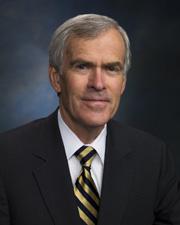 Sen. Jeff Bingaman (D-NM)
Legislative Activity
Stay on top of the latest movement without scrolling through every action
Senate amendment submitted
October 14, 2003
View full timeline
Senate amendment submitted
October 14, 2003
Senate amendment not agreed to: Amendment SA 1830 Division II not agreed to in Senate by Voice Vote.
October 14, 2003
Roll call votes on amendments in Senate: Amendment SA 1830 Division I not agreed to in Senate by Yea-Nay Vote. 47 - 48. Record Vote Number: 378.
October 14, 2003
Senate amendment not agreed to: Amendment SA 1830 Division I not agreed to in Senate by Yea-Nay Vote. 47 - 48. Record Vote Number: 378.
October 14, 2003
Senate amendment proposed (on the floor): Amendment SA 1830 proposed by Senator Bingaman.(consideration: CR S12490-12493, S12508-12510; text: CR S12491-12492)
October 14, 2003
Amendment SA 1830 proposed by Senator Bingaman. (consideration: CR S12490-12493, S12508-12510; text: CR S12491-12492) To authorize the award of the Iraqi Liberation Medal as a campaign medal for members of the Armed Forces who serve in Southwest Asia in connection with Operation Iraqi Freedom.
October 14, 2003
Amendment SA 1830 was divided into Divisions I and II.
October 14, 2003
Amendment SA 1830 Division I not agreed to in Senate by Yea-Nay Vote. 47 - 48. Record Vote Number: 378.
October 14, 2003
Amendment SA 1830 Division II not agreed to in Senate by Voice Vote.
October 14, 2003
Votes
1 roll call on this amendment
Text
Proposed
EMERGENCY SUPPLEMENTAL APPROPRIATIONS FOR IRAQ AND AFGHANISTAN SECURITY
AND RECONSTRUCTION ACT, 2004

The PRESIDING OFFICER (Mr. Enzi). Under the previous order, the
Senate will resume consideration of S. 1689, which the clerk will
report.
The assistant legislative clerk read as follows:

A bill, (S. 1689) making emergency supplemental
appropriations for Iraq and Afghanistan security and
reconstruction for the fiscal year ending September 30, 2004,
and for other purposes.

Pending:

Byrd amendment No. 1818, to impose a limitation on the use
of sums appropriated for the Iraq Relief and Reconstruction
Fund.
Byrd/Durbin amendment No. 1819, to prohibit the use of Iraq
Relief and Reconstruction Funds for low priority activities
that should not be the responsibility of U.S. taxpayers, and
shift $600 million from the Iraq Relief and Reconstruction
Fund to Defense Operations and Maintenance, Army, for
significantly improving efforts to secure and destroy
conventional weapons, such as bombs, bomb materials, small
arms, rocket propelled grenades, and shoulder-launched
missiles, in Iraq.
Reid (for Stabenow) amendment No. 1823, to provide
emergency relief for veterans health care, school
construction, health care and transportation needs in the
United States, and to create 95,000 new jobs.
Bond/Mikulski amendment No. 1825, to provide additional VA
Medical Care Funds for the Department of Veterans Affairs.
Dorgan amendment No. 1826, to require that Iraqi oil
revenues be used to pay for reconstruction in Iraq.

The PRESIDING OFFICER. The democratic assistant leader.
Mr. REID. Madam President, Senator Stevens is not here. I am covering
the floor for Senator Byrd this morning. I am sure Senator Stevens
would have no objection to the Senator from New Mexico offering an
amendment. I yield the floor for the Senator from New Mexico.
The PRESIDING OFFICER. The Senator from New Mexico.

Amendment No. 1830

Mr. BINGAMAN. I thank my colleague from Nevada.
Madam President, so there is no question about the opportunity for
others to speak, I was asked if I would describe my amendment first and
then at the end of my description I will ask to set aside the pending
amendment and send my amendment to the desk. That is how I will
proceed.
I intend to offer in a few minutes an amendment on behalf of myself,
Senator Lugar, Senator Lieberman, Senator Bayh, Senator Clinton,
Senator Durbin, Senator Landrieu, Senator Lincoln, Senator Smith, and
Senator Reid. This is an amendment to honor our service men and women
in Iraq who are serving far from home, far from family, far from
friends.
Let me indicate from the title of the amendment that I intend to send
to the desk what it would do: to authorize the award of the Iraqi
Liberation Medal as a campaign medal for members of the Armed Forces
who serve in Southwest Asia in connection with Operation Iraqi Freedom.
These service men and women, as we all know, have left the security
of this country and their home behind to provide freedom and security
for those who have not known it for many years. The human cost has been
substantial, over 300 American fighting men and women will never come
home. There are over 1,200 who will return wounded, far higher than
previous conflicts.
I have a chart that demonstrates the grim statistics, showing the
casualties our military has incurred in recent conflicts. In Operation
Desert Storm, with which we are all familiar, the casualties, total
deaths were 382, killed in action, 143, and the wounded were 467. In
the Kosovo campaign, there were 16 deaths. In Operation Iraqi Freedom,
as of last week, there were 196 killed in action, 309 total deaths, and
1,268 wounds.
So the casualties have been significant. This is not a minor military
activity. We have over 130,000 troops in the region. They remain to
ensure that those who died and those who were wounded did not suffer
and die in vain. They are also there to build a new Iraqi nation and to
provide stability and freedom in that nation.

The liberation of Iraq is turning out to be the most significant
military occupation and reconstruction effort, clearly, since the end
of the Vietnam war and perhaps even before that. Despite their
sacrifice and courage, these brave men and women will not, under
current policy, be specifically recognized for their service in Iraq.
Instead, the Department of Defense has decided to award them a Global
War on Terrorism Expeditionary Medal.
This issue was drawn to my attention by an article that appeared in
the Army Times and the Navy Times and the Air Force Times called ``One
Size Fits All?'' ``The Pentagon plans to award one medal for the wars
in Iraq and Afghanistan, and for any future campaigns related to the
war on terrorism.''
I believe this is a mistake in policy, that our military personnel
deserve better. Accordingly, my colleagues and I are offering this
amendment to correct the mistake by ensuring there is authorized an
Iraqi Liberation Medal in lieu of this Global War on Terrorism
Expeditionary Medal.
As all who have paid attention in the Senate know, some of us did not
agree with the administration's decision to proceed in Iraq when it
did, but clearly we have all been united in our support of the troops.
Young men and women, both active-duty personnel and National Guard and
Reserve, have come forward and done their duty. That is clearly the
essence of patriotism, and we all respect that.

[[Page S12491]]

They continue to serve even though they do not know when they will be
returning to their families and to their communities. They continue to
serve despite the tremendous hardships they face and despite the
constant threat to their lives.
The President, of course, has agreed entirely with this view of the
exemplary service our men and women have provided. He has made many
statements to that effect, and there is no partisan disagreement on any
of that.
Let me put up another chart in the Chamber.
During Operation Desert Storm, service members received three
separate military decorations for their service: the Armed Forces
Expeditionary Medal; the Liberation of Kuwait Medal, given by the
Government of Saudi Arabia; and the Liberation of Kuwait Medal, given
by the Government of Kuwait. Those are all three depicted on this
chart.
In the case of Kosovo, our service men and women received the NATO
Service Medal and the Kosovo Campaign Medal. And those two medals are
depicted on this part of the chart.
In the case of this current conflict in Iraq, the proposal by the
administration is to give them the Global War on Terrorism
Expeditionary Medal, and that would apply to Operation Enduring Freedom
or Operation Iraqi Freedom or any operation in the Philippines or any
future global war on terrorism operation.
The policy as it now exists would say that if you are in the military
and you are directed to duty in one or more of these operations, you
get this generic medal which indicates you are part of the global war
on terrorism, which we know is of indefinite duration and which we know
is not limited by any geographic limitation.
There is a difference--a substantial difference--between an
expeditionary medal on the one hand and a campaign medal. We only need
to look at an excerpt from the U.S. Army Qualifications for the Armed
Forces Expeditionary Medal and the Kosovo Campaign Medal. In order to
receive the Armed Forces Expeditionary Medal, you do not need to go to
war, you only need to be ``placed in such a position that, in the
opinion of the Joint Chiefs of Staff, hostile action by a foreign armed
force was imminent even though it does not materialize.'' So that is an
expeditionary medal.

To earn the Kosovo Campaign Medal, there was a higher standard. A
military member had to either ``[b]e engaged in actual combat, or duty
that is equally hazardous as combat duty, during the Operation with
armed opposition, regardless of time [spent] in the Area of
Engagement.''
Many within the military agree there is a significant difference
between an expeditionary medal and a campaign medal.
According to the Army Times:

Campaign medals help establish an immediate rapport with
individuals checking into a unit.

An expeditionary medal does not necessarily denote any combat or any
real connection to that particular area of potential combat. A campaign
medal is designed to recognize military personnel who have risked their
lives or are risking their lives in combat.
Obviously, all of us want to see proper recognition given to our
young men and women who are in Iraq, including Army SP Joseph Hudson
from my home State of New Mexico, from Alamogordo, NM. He was held as a
prisoner of war. The Nation was captivated, and particularly people of
my State were captivated, as we watched Specialist Hudson being
interrogated by the enemy on videotape. Asked to divulge his military
occupation, Specialist Hudson stared defiantly into the camera and
said: ``I follow orders.'' Those of us with sons and daughters were
united in worry with Specialist Hudson's family. The entire Nation
rejoiced when he was liberated. He is just one of many who deserve this
special recognition I am arguing for today.
We have also asked much of our Reserve and National Guard personnel.
The reconstruction of Iraq clearly would not be possible without the
commitment and sacrifice of the 170,000 Guard and reservists who are
currently on active duty. As recently as this last week, an additional
10,000 troops from Washington State and North Carolina were activated
for service in Iraq.
I think this is a straightforward amendment, one for which I hope we
can have very strong support. I am very pleased that it is being
proposed as a bipartisan amendment. My colleagues and I are committed
to appropriately honoring the 200,000 or so heroes who have served to
date or are serving in connection with the effort in Iraq. We believe
current administration policy does not properly honor those personnel,
and therefore we propose that in lieu of this Global War on Terrorism
Expeditionary Medal, a new decoration that characterizes the real
mission in Iraq--one that is distinctive and honors their sacrifice,
something in the nature of an Iraqi Liberation Medal--be provided.
Some will argue that Congress has no business legislating in this
area. But I point out there is ample precedent for what we are
proposing. Congress has been responsible for recognizing the sacrifice
and courage of our military forces throughout history. Congress has had
a significant and historically central role in authorizing
military decorations. Our Nation's highest decorations were authorized
by Congress. Those include the Congressional Medal of Honor, the Air
Force Cross, the Navy Cross, the Army's Distinctive Service Cross, the
Silver Star, and the Distinguished Flying Cross. All of those were
authorized by Congress.

We have also authorized campaign and liberation medals similar to
what is being proposed here in many cases. A partial list includes the
Spanish War Service Medal, the Army Occupation of Germany Medal, the
World War II Victory Medal, the Berlin Airlift Medal, the Korean
Service Medal, and the Prisoner of War Medal, in addition to the medals
I have referred to already.
The men and women of our military are doing their jobs every day in
Iraq. We should do our job by honoring them appropriately with a medal
that is specific to their sacrifice and to this campaign in Iraq.
Mr. President, I send the amendment to the desk and ask that it be
immediately considered.
The PRESIDING OFFICER. Without objection, the pending amendments are
set aside. The clerk will report.
The legislative clerk read as follows:

The Senator from New Mexico [Mr. Bingaman], for himself,
Mr. Lugar, Mr. Lieberman, Mr. Bayh, Mrs. Clinton, Mr. Durbin,
Ms. Landrieu, Mrs. Lincoln, Mr. Smith, and Mr. Reid, proposes
an amendment numbered 1830.

Mr. BINGAMAN. Mr. President, I ask unanimous consent that reading of
the amendment be dispensed with.
The PRESIDING OFFICER. Without objection, it is so ordered.
The amendment is as follows:

(Purpose: To authorize the award of the Iraqi Liberation Medal as a
campaign medal for members of the Armed Forces who serve in Southwest
Asia in connection with Operation Iraqi Freedom)

At the appropriate place, insert the following:
Sec. __. (a) Findings.--Congress makes the following
findings:
(1) According to President George W. Bush, Operation Iraqi
Freedom was ``fought for the cause of liberty, and for the
peace of the world . . .'' and ``to free a nation by breaking
a dangerous and aggressive regime''.
(2) The military victory in Iraq has been characterized by
President George W. Bush as one of the ``swiftest advances in
heavy arms in history''.
(3) There are more than 130,000 Soldiers, Sailors, Airmen,
and Marines of the United States serving in the Iraqi Theater
of Operations, far from family and friends, and for an
unknown duration.
(4) Since the beginning of Operation Iraqi Freedom, almost
300 members of the Armed Forces of the United States have
died in Iraq and nearly 1,500 have been wounded in action.
(5) Congress has authorized and Presidents have issued
specific decorations recognizing the sacrifice and service of
the members of the Armed Forces of the United States in the
Korean War, the Vietnam conflict, and the liberation of
Kuwait.
(6) Current Department of Defense guidance authorizes the
award of only one expeditionary medal for overseas duty in
Afghanistan, the Philippines, and Iraq.
(7) The conflict in Iraq is significant enough in scope and
sacrifice to warrant a specific military decoration for the
liberation of Iraq.
(b) Authorization of Award of Campaign Medal.--The
Secretary concerned may award a campaign medal of appropriate
design, with ribbons and appurtenances, to any person who
serves in any capacity with the Armed Forces in the Southwest
Asia region in connection with Operation Iraqi Freedom.
(c) Name of Medal.--The campaign medal authorized by
subsection (b) shall be known as the ``Iraqi Liberation
Medal''.
(d) Prohibition on Concurrent Award of Global War on
Terrorism Expeditionary

[[Page S12492]]

Medal.--A person who is awarded the campaign medal authorized
by subsection (b) for service described in that subsection
may not also be awarded the Global War on Terrorism
Expeditionary Medal for that service.
(e) Other Limitations.--The award of the campaign medal
authorized by subsection (b) shall be subject to such
limitations as the President may prescribe.
(f) Regulations.--(1) Each Secretary concerned shall
prescribe regulations on the award of the campaign medal
authorized by subsection (b).
(2) The regulations prescribed under paragraph (1) shall
not go into effect until approved by the Secretary of
Defense.
(3) The Secretary of Defense shall ensure that the
regulations prescribed under paragraph (1) are uniform, so
far as practicable.
(g) Secretary Concerned Defined.--In this section, the term
``Secretary concerned'' means the following:
(1) The Secretary of the Army with respect to matters
concerning members of the Army.
(2) The Secretary of the Navy with respect to matters
concerning members of the Navy, Marine Corps, and Coast Guard
when it is operating as a service in the Navy.
(3) The Secretary of the Air Force with respect to matters
concerning members of the Air Force.
(4) The Secretary of Homeland Security with respect to
matters concerning members of the Coast Guard when it is not
operating as a service in the Navy.

Mr. BINGAMAN. Mr. President, I will not ask for the yeas and nays at
this point. At an appropriate time, I will ask for the yeas and nays.
It is important that the Senate go on record in support of the awarding
of a medal of this type. I hope we can have a very strong vote on its
behalf.
I suggest the absence of a quorum.
The PRESIDING OFFICER. The clerk will call the roll.
The legislative clerk proceeded to call the roll.
Mr. STEVENS. Mr. President, I ask unanimous consent that the order
for the quorum call be rescinded.
The PRESIDING OFFICER. Without objection, it is so ordered.
Mr. STEVENS. Mr. President, I have been informed that the Department
of Defense does not support the Bingaman amendment, the pending
amendment No. 1830. It has bipartisan support.
Let me explain to the Senate why there is opposition from the
Department. At the request of the Joint Chiefs of Staff, Presidential
Executive Order 132-89, dated March 12, 2003, authorized global war on
terrorism, Expeditionary and Service Medals for members of the United
States Armed Forces who have served in military expeditions to combat
terrorism around the world as defined by Department regulations on or
after September 11, 2001.
This was created and tailored to recognize both combat and noncombat
operations not just in a single campaign or country but worldwide. To
be eligible for the Expeditionary Medal, service members must have
served within the area of eligibility. However, initially approved
operations for Expeditionary Medals are Operation Enduring Freedom and
Operation Iraqi Freedom. Battle stars for the Expeditionary Medal are
provided for service members who engaged in combat against the enemy in
the area of eligibility. Because antiterrorism operations are global in
nature, the area of eligibility for an approved operation may be deemed
to be noncontiguous. The combatant commander has authority to award
medals for personnel deployed within his or her theater. There is a
separate medal called the Service Medal that provides commanders the
flexibility of recognizing supporting personnel and will not be
restricted by geographical boundaries. Unlike the Expeditionary Medal,
the Service Medal includes not only support for Operation Enduring
Freedom and Operation Iraqi Freedom but also Operation Noble Eagle and
airport security operations from September 27, 2001, to May 1, 2002.
The Department urges against the establishment of an Iraqi Freedom
Medal for two reasons. First, it is redundant with the global war on
terrorism medal in its purpose. Second, it is divisive in that it
values participation in Operation Iraqi Freedom as being more worthy of
individual recognition than Operation Enduring Freedom. In other words,
there are people who have served in Afghanistan and Iraq, there are
people who have served in Afghanistan and not Iraq, and Iraq and not
Afghanistan.
The whole concept of this global war against terrorism is that there
are also combatants in the Philippines and in Indonesia and other
places throughout the world. I don't know how many there are, but I
have been told some of the global war on terrorism medals have been
awarded.
The problem about the Bingaman amendment is, what happens to those
people who received those medals? Do they give them back? Do they also
get an Iraqi medal of freedom? What happens to the people from
Afghanistan? As I understand it, I could be wrong, but it covers only
the Iraqi liberation medal.
Mr. REID. That is true.
Mr. STEVENS. But not Afghanistan.
So the best advice I can give the Senate is this: If the Senator from
New Mexico wishes a vote, I certainly will not oppose that and will
join in requesting a vote. However, I will say no matter what happens
here, whether the Senate approves or disapproves, the subject matter
will have to be dealt with in conference because it is a matter that
has been raised, and it is of great significance.
I talk too much about my own service in World War II, which was sort
of insignificant, but I got a CBI medal--China, Burma, India--but I
spent only a day or two in India and an hour or two in Burma. We all
thought we should have had a China medal, but the powers that be gave
us a China-Burma-India medal. The powers that be right now are the
Joint Chiefs of Staff. This is not a political issue is what I am
trying to tell the Senate. This is an issue that arose out of an
initiative from the Joint Chiefs of Staff themselves, is what I
understand.
They decided this current situation is so global in nature that
people are moved from one area to the other in terms of expertise and
need, that there ought to be a medal for the period we are in right now
which is really a global war on terrorism, and as such I am inclined to
support that concept. I will vote against the Bingaman amendment. But I
have a feeling it will pass because I think everyone would like to be
on record now of recognizing the need for medals.

That would be my last comment to the Senate. The Senator from Hawaii
is not here, but I do remember on two occasions when I have been with
him when he has raised the question with the members of the Joint
Chiefs of Staff: Where are the medals?
People, as they come home from a combat such as we are involved in
now, may or may not be eligible for the Purple Heart. The concept of
these other medals, however, has not settled down yet. I think as our
men and women in the Armed Services start coming home, they should be
recognized for their service with something of distinction, such as the
medal of the type we are talking about, either the Global War on
Terrorism Medal or the Expeditionary Medal, or the Service Medal,
whatever it is. As a matter of fact, if they have been there, I would
give them all three. Redundancy is not a crime in terms of medals for
service in uniform in combat, as far as I am concerned. But I do think
it has to be sorted out. The people who already have the Global War on
Terrorism Medal, who fought in Iraq, may want the Iraqi medal. On the
other hand, people who fought in Afghanistan may very much want the
Global War on Terrorism Medal. It is something I think really requires
pretty cautious thought in the Department of Defense and the Senate. I
intend to join in asking for a vote on the amendment at the proper time
and hope we can vote on it right after the vote that is set at 2:30
today, and then move on with further business of the Senate.
The PRESIDING OFFICER. The Senator from Nevada.
Mr. REID. Mr. President, the hour of 12:30 is fast approaching. I am
wondering if we could enter into an agreement now that that vote occur
immediately following the vote on genetic nondiscrimination?
Mr. STEVENS. Mr. President, I would so move and ask unanimous consent
it be in order at this time to order the yeas and nays.
Mr. REID. And that Senator Bingaman have 2 minutes prior to the vote
to speak on his amendment.
Mr. STEVENS. Mr. President, I would like 2 minutes on each side.
Mr. REID. Of course. With no amendments in order prior to the vote.
Mr. STEVENS. No other motions in order, and up or down on the
amendment. But I would like 2 minutes for

[[Page S12493]]

the Senator from New Mexico and for myself, and the vote to occur after
the already scheduled vote. I ask that it be in order to ask for the
yeas and nays now.
The PRESIDING OFFICER. It is in order to request the yeas and nays.
Mr. STEVENS. I do request the yeas and nays.
The PRESIDING OFFICER. Is there a sufficient second?
There appears to be a sufficient second.
The yeas and nays were ordered.
The PRESIDING OFFICER. Without objection, it is so ordered. The
request is agreed to.
Mr. STEVENS. Mr. President, parliamentary inquiry. I understand the
Senate will stand in recess at 12:30.
The PRESIDING OFFICER. Under the previous order, that is correct.
Mr. STEVENS. I yield the floor.
The PRESIDING OFFICER. The Senator from North Dakota.
Mr. DORGAN. Mr. President, the legislation pending before the Senate
is the emergency supplemental bill dealing with Iraq; and that has to
do with security: security for our troops, security in Iraq. But there
are other issues of security that affect us in our country: issues of
security that deal with protecting our homeland. We provide critically
needed funds to try to prevent another terrorist attack on our soil.
So I was surprised, as I was traveling the other day, to hear the
President talk about using Homeland Security assets to track down
Americans who are traveling in Cuba illegally and punishing those
Americans.
As you know, it is currently illegal for Americans to travel in Cuba,
except by a license given by the U.S. Treasury Department. The fact is,
though, that there are many Americans who do go to Cuba. Many go
because they think it is their right as Americans to travel freely, and
in many cases, they go because they are not aware that they are
breaking any rules.
I believe the travel ban unfairly punishes American citizens. In an
attempt to take a slap at Fidel Castro, it ends up restricting the
right of American people to travel. Many of us here think that makes no
sense at all.
When I heard the President describe his interest in having Homeland
Security people track down American tourists traveling in Cuba, I
thought I would come to the floor of the Senate, and talk about a
grandmother named Joan Slote. As you can see from this picture, Joan is
in her mid 70s. She is a Senior Olympian. She is a bicyclist. She
bicycles all over the world. She is in her mid 70s. And she joined a
bicycle tour of Cuba, with a cycling club from Canada. They bicycled in
the country of Cuba for, I believe, 8 or 9 days.
Joan Slote came back to this country from Cuba, and later on she was
off to Europe where she was on a bicycle tour. While she was in Europe,
she learned her son had brain cancer, and she rushed back to the United
States, and just stopped at her home for a minute, and then rushed down
to be with her son and attended to her son, who later died of brain
cancer.
When she finally came back to her home, apparently there was a letter
waiting for some long while from the U.S. Treasury Department that
said: Oh, by the way, you traveled to Cuba with a bicycle club from
Canada, and that was illegal, and so we are administering a $7,630
fine.
So Joan Slote, this mid 70s grandmother--no threat to this country
for sure--is one of those Americans who is now being punished by the
U.S. Government for travel in Cuba.
Now, we have folks down at the Department of the Treasury in an
organization called the Office of Foreign Assets Control, or OFAC for
short--and that is the organization that is charged with tracking money
to terrorist groups to protect our country. But instead of focusing on
that critically important mission, OFAC officials are tracking retired
grandmothers who are riding a bicycle in Cuba and try to slap them with
a big fine.
And now the President says: Oh, by the way, I would like to get more
involved here. I want the Homeland Security Department tracking these
people who are traveling to Cuba.
I thought our interest here in the Senate was to fund a Homeland
Security agency to protect our country against the threats of
terrorists, not to chase little old grandmothers who take a bicycle
trip to Cuba.
Incidentally, OFAC finally negotiated with a $2,000 fine for Joan
Slote. After I intervened, they said: All right, the $7,600 fine we
will reduce to $2,000. So she sent them the money. But do you know what
they did then? They sent a collection agency after her and told her
they were going to begin to garnish her Social Security payments. Why?
I do not have the foggiest idea. I guess it is just a bureaucratic
mess.
But I was just thinking as I was driving down the road the other day,
hearing President Bush say we have to get tough on Cuba, we are going
to take Homeland Security people to go chase American tourists in Cuba.
The interesting thing is, Americans can travel virtually everywhere.
You can travel to Communist China. Yes, that is a communist country.
You can travel to Vietnam. Yes, that is a communist country. But you
cannot travel to Cuba. And we are going to use Homeland Security
assets--people, time, money--to go track down little old ladies who are
bicycling in Cuba?

Are we really threatened by the poor guy who took the ashes of his
dead father to Cuba, which was his father's last wish, to be sprinkled
on the lawn by the church where he ministered in Cuba many years
before?
Yes, they tracked that fellow down for taking his dad's ashes to
Cuba. They fined him $7500.
It is story after story after story like this.
And now the President wants people in Homeland Security tracking
Americans to punish Americans for traveling in Cuba.
What about homeland security? How about tracking terrorists? Let's
track terrorists, not retired grandmothers who are riding bicycles.
Marshall McLuhan once said: I don't always believe everything I say.
I thought to myself, that must surely have been the case in the White
House when the President announced we are going to take Homeland
Security Agency resources and start tracking American citizens so we
can slap big fines on them for traveling into Cuba. This is
preposterous. What on Earth can the President be thinking?
I have talked to Joan Slote. She is just one of many examples of
ordinary U.S. citizens who meant absolutely no harm. I have talked to
another retired grandmother from Wisconsin. She traveled to Cuba
innocently and rode a bicycle as well. I have talked to many such
folks. I held a hearing on this. I had people show up who described
their travel to Cuba. They did not know it was illegal but--guess
what--they have the Federal Government after them.
In an attempt to slap Fidel Castro, we are punishing American people.
We are restricting the right of the American people to travel. And now
the President gets into the act, which, I assume is about Florida
politics, and says, oh, by the way, I want to divert Homeland Security
assets to see if we can't get tougher on people like Joan Slote.
This issue involves wasted resources, that could and should be spent
on real threats to our homeland security. Homeland security is about
protecting this country from the threat of terrorists, not chasing
senior citizens riding around on bicycles.
That is where the homeland security assets ought to be employed. That
is where the Department of the Treasury assets ought to be employed,
protecting our country from the threat of terrorist attacks, not
chasing Joan Slote. My hope is that perhaps they will have another
meeting at the White House and rethink this and finally do the right
thing, at least meet some basic test of common sense.
I yield the floor.

____________________