To provide competitive grants for training court reporters and closed captioners to meet requirements for realtime writers under the Telecommunications Act of 1996, and for other purposes.
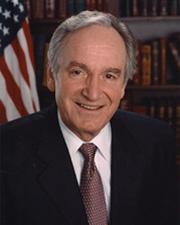 Sen. Tom Harkin (D-IA)
Legislative Activity
Stay on top of the latest movement without scrolling through every action
Senate amendment submitted
October 22, 2003
View full timeline
Senate amendment submitted
October 22, 2003
Senate amendment agreed to: Amendment SA 1895 agreed to in Senate by Voice Vote.
October 22, 2003
Senate amendment proposed (on the floor): Amendment SA 1895 proposed by Senator Harkin.(consideration: CR S13037-13039; text: CR S13037-13038)
October 22, 2003
Amendment SA 1895 proposed by Senator Harkin. (consideration: CR S13037-13039; text: CR S13037-13038) To provide competitive grants for training court reporters and closed captioners to meet requirements for realtime writers under the Telecommunications Act of 1996, and for other purposes.
October 22, 2003
Amendment SA 1895 agreed to in Senate by Voice Vote.
October 22, 2003
Text
Proposed
CAN-SPAM ACT OF 2003

Mr. McCAIN. Madam President, I ask unanimous consent that the Senate
now proceed to the consideration of Calendar No. 209, S. 877; provided
further that the committee amendment be agreed to and be considered
original text for the purpose of further amendment.
Madam President, I suggest the absence of a quorum.
The PRESIDING OFFICER. The clerk will call the roll.
The assistant legislative clerk proceeded to call the roll.
Mr. McCAIN. Madam President, I ask unanimous consent that the order
for the quorum call be rescinded.
The PRESIDING OFFICER. Without objection, it is so ordered.
The PRESIDING OFFICER. The clerk will report the bill by title.
The assistant legislative clerk read as follows:

A bill (S. 877) to regulate interstate commerce by imposing
limitations and penalties on the transmission of unsolicited
commercial electronic mail via the Internet.

The PRESIDING OFFICER. Is there objection to the Senator's request?
Without objection, it is so ordered.
The Senate proceeded to consider the bill which had been reported
from the Committee on Commerce, Science, and Transportation, with an
amendment to strike all after enacting clause and insert in lieu
thereof the following:
[Strike the part shown in black brackets and insert the part shown in
italic.]

S. 877

Be it enacted by the Senate and House of Representatives of
the United States of America in Congress assembled,

[SECTION 1. SHORT TITLE.

[This Act may be cited as the ``Controlling the Assault of
Non-Solicited Pornography and Marketing Act of 2003'', or the
``CAN-SPAM Act of 2003''.

[SEC. 2. CONGRESSIONAL FINDINGS AND POLICY.

[(a) Findings.--The Congress finds the following:
(1) There is a right of free speech on the Internet.
[(2) The Internet has increasingly become a critical mode
of global communication and now presents unprecedented
opportunities for the development and growth of global
commerce and an integrated worldwide economy.
[(3) In order for global commerce on the Internet to reach
its full potential, individuals and entities using the
Internet and other online services should be prevented from
engaging in activities that prevent other users and Internet
service providers from having a reasonably predictable,
efficient, and economical online experience.
[(4) Unsolicited commercial electronic mail can be a
mechanism through which businesses advertise and attract
customers in the online environment.
[(5) The receipt of unsolicited commercial electronic mail
may result in costs to recipients who cannot refuse to accept
such mail and who incur costs for the storage of such mail,
or for the time spent accessing, reviewing, and discarding
such mail, or for both.
[(6) Unsolicited commercial electronic mail may impose
significant monetary costs on providers of Internet access
services, businesses, and educational and nonprofit
institutions that carry and receive such mail, as there is a
finite volume of mail that such providers, businesses, and
institutions can handle without further investment in
infrastructure.
[(7) Some unsolicited commercial electronic mail contains
material that many recipients may consider vulgar or
pornographic in nature.
[(8) While some senders of unsolicited commercial
electronic mail messages provide simple and reliable ways for
recipients to reject (or ``opt-out'' of) receipt of
unsolicited commercial electronic mail from such senders in
the future, other senders provide no such ``opt-out''
mechanism, or refuse to honor the requests of recipients not
to receive electronic mail from such senders in the future,
or both.
[(9) An increasing number of senders of unsolicited
commercial electronic mail purposefully disguise the source
of such mail so as to prevent recipients from responding to
such mail quickly and easily.
[(10) An increasing number of senders of unsolicited
commercial electronic mail purposefully include misleading
information in the message's subject lines in order to induce
the recipients to view the messages.
[(11) In legislating against certain abuses on the
Internet, Congress should be very careful to avoid infringing
in any way upon constitutionally protected rights, including
the rights of assembly, free speech, and privacy.
[(b) Congressional Determination of Public Policy.--On the
basis of the findings in subsection (a), the Congress
determines that--
[(1) there is a substantial government interest in
regulation of unsolicited commercial electronic mail;
[(2) senders of unsolicited commercial electronic mail
should not mislead recipients as to the source or content of
such mail; and
[(3) recipients of unsolicited commercial electronic mail
have a right to decline to receive additional unsolicited
commercial electronic mail from the same source.

[SEC. 3. DEFINITIONS.

[In this Act:
[(1) Affirmative consent.--The term ``affirmative
consent'', when used with respect to a commercial electronic
mail message, means that the recipient has expressly
consented to receive the message, either in response to a
clear and conspicuous request for such consent or at the
recipient's own initiative.
[(2) Commercial electronic mail message.--
[(A) In general.--The term ``commercial electronic mail
message'' means any electronic mail message the primary
purpose of which is the commercial advertisement or promotion
of a commercial product or service (including content on an
Internet website operated for a commercial purpose).
[(B) Reference to company or website.--The inclusion of a
reference to a commercial entity or a link to the website of
a commercial entity in an electronic mail message does not,
by itself, cause such message to be treated as a commercial
electronic mail message for purposes of this Act if the
contents or circumstances of the message indicate a primary
purpose other than commercial advertisement or promotion of a
commercial product or service.
[(3) Commission.--The term ``Commission'' means the Federal
Trade Commission.
[(4) Domain name.--The term ``domain name'' means any
alphanumeric designation which is registered with or assigned
by any domain name registrar, domain name registry, or other
domain name registration authority as part of an electronic
address on the Internet.
[(5) Electronic mail address.--The term ``electronic mail
address'' means a destination, commonly expressed as a string
of characters, consisting of a unique user name or mailbox
(commonly referred to as the ``local part'') and a reference
to an Internet domain (commonly referred to as the ``domain
part''), to which an electronic mail message can be sent or
delivered.
[(6) Electronic mail message.--The term ``electronic mail
message'' means a message sent to an electronic mail address.
[(7) FTC act.--The term ``FTC Act'' means the Federal Trade
Commission Act (15 U.S.C. 41 et seq.).
[(8) Header information.--The term ``header information''
means the source, destination, and routing information
attached to an electronic mail message, including the
originating domain name and originating electronic mail
address.
[(9) Implied consent.--The term ``implied consent'', when
used with respect to a commercial electronic mail message,
means that--
[(A) within the 3-year period ending upon receipt of such
message, there has been a business transaction between the
sender and the recipient (including a transaction involving
the provision, free of charge, of information, goods, or
services requested by the recipient); and

[[Page S13013]]

[(B) the recipient was, at the time of such transaction or
thereafter in the first electronic mail message received from
the sender after the effective date of this Act, provided a
clear and conspicuous notice of an opportunity not to receive
unsolicited commercial electronic mail messages from the
sender and has not exercised such opportunity.

[If a sender operates through separate lines of business or
divisions and holds itself out to the recipient, both at the
time of the transaction described in subparagraph (A) and at
the time the notice under subparagraph (B) was provided to
the recipient, as that particular line of business or
division rather than as the entity of which such line of
business or division is a part, then the line of business or
the division shall be treated as the sender for purposes of
this paragraph.
[(10) Initiate.--The term ``initiate'', when used with
respect to a commercial electronic mail message, means to
originate such message or to procure the origination of such
message, but shall not include actions that constitute
routine conveyance of such message.
[(11) Internet.--The term ``Internet'' has the meaning
given that term in the Internet Tax Freedom Act (47 U.S.C.
151 nt).
[(12) Internet access service.--The term ``Internet access
service'' has the meaning given that term in section
231(e)(4) of the Communications Act of 1934 (47 U.S.C.
231(e)(4)).
[(13) Protected computer.--The term ``protected computer''
has the meaning given that term in section 1030(e)(2) of
title 18, United States Code.
[(14) Recipient.--The term ``recipient'', when used with
respect to a commercial electronic mail message, means an
authorized user of the electronic mail address to which the
message was sent or delivered. If a recipient of a commercial
electronic mail message has 1 or more electronic mail
addresses in addition to the address to which the message was
sent or delivered, the recipient shall be treated as a
separate recipient with respect to each such address. If an
electronic mail address is reassigned to a new user, the new
user shall not be treated as a recipient of any commercial
electronic mail message sent or delivered to that address
before it was reassigned.
[(15) Routine conveyance.--The term ``routine conveyance''
means the transmission, routing, relaying, handling, or
storing, through an automatic technical process, of an
electronic mail message for which another person has provided
and selected the recipient addresses.
[(16) Sender.--The term ``sender'', when used with respect
to a commercial electronic mail message, means a person who
initiates such a message and whose product, service, or
Internet web site is advertised or promoted by the message.
[(17) Transactional or relationship messages.--The term
``transactional or relationship message'' means an electronic
mail message the primary purpose of which is to facilitate,
complete, confirm, provide, or request information
concerning--
[(A) a commercial transaction that the recipient has
previously agreed to enter into with the sender;
[(B) an existing commercial relationship, formed with or
without an exchange of consideration, involving the ongoing
purchase or use by the recipient of products or services
offered by the sender; or
[(C) an existing employment relationship or related benefit
plan.
[(18) Unsolicited commercial electronic mail message.--The
term ``unsolicited commercial electronic mail message'' means
any commercial electronic mail message that--
[(A) is not a transactional or relationship message; and
[(B) is sent to a recipient without the recipient's prior
affirmative or implied consent.

[SEC. 4. CRIMINAL PENALTY FOR UNSOLICITED COMMERCIAL
ELECTRONIC MAIL CONTAINING FRAUDULENT ROUTING
INFORMATION.

[(a) In General.--Chapter 63 of title 18, United States
Code, is amended by adding at the end the following:

[``Sec.  1351. Unsolicited commercial electronic mail
containing fraudulent transmission information

[``(a) In General.--Any person who initiates the
transmission, to a protected computer in the United States,
of an unsolicited commercial electronic mail message, with
knowledge and intent that the message contains or is
accompanied by header information that is materially false or
materially misleading shall be fined or imprisoned for not
more than 1 year, or both, under this title. For purposes of
this subsection, header information that is technically
accurate but includes an originating electronic mail address
the access to which for purposes of initiating the message
was obtained by means of false or fraudulent pretenses or
representations shall be considered materially misleading.
[``(b) Definitions.--Any term used in subsection (a) that
is defined in section 3 of the CAN-SPAM Act of 2003 has the
meaning given it in that section.''.
[(b) Conforming Amendment.--The chapter analysis for
chapter 63 of title 18, United States Code, is amended by
adding at the end the following:

[``1351. Unsolicited commercial electronic mail containing fraudulent
routing information''.

[SEC. 5. OTHER PROTECTIONS AGAINST UNSOLICITED COMMERCIAL
ELECTRONIC MAIL.

[(a) Requirements for Transmission of Messages.--
[(1) Prohibition of false or misleading transmission
information.--It is unlawful for any person to initiate the
transmission, to a protected computer, of a commercial
electronic mail message that contains, or is accompanied by,
header information that is materially or intentionally false
or materially or intentionally misleading. For purposes of
this paragraph, header information that is technically
accurate but includes an originating electronic mail address
the access to which for purposes of initiating the message
was obtained by means of false or fraudulent pretenses or
representations shall be considered materially misleading.
[(2) Prohibition of deceptive subject headings.--It is
unlawful for any person to initiate the transmission to a
protected computer of a commercial electronic mail message
with a subject heading that such person knows would be likely
to mislead a recipient, acting reasonably under the
circumstances, about a material fact regarding the contents
or subject matter of the message.
[(3) Inclusion of return address or comparable mechanism in
unsolicited commercial electronic mail.--
[(A) In general.--It is unlawful for any person to initiate
the transmission to a protected computer of an unsolicited
commercial electronic mail message that does not contain a
functioning return electronic mail address or other Internet-
based mechanism, clearly and conspicuously displayed, that--
[(i) a recipient may use to submit, in a manner specified
by the sender, a reply electronic mail message or other form
of Internet-based communication requesting not to receive any
future unsolicited commercial electronic mail messages from
that sender at the electronic mail address where the message
was received; and
[(ii) remains capable of receiving such messages or
communications for no less than 30 days after the
transmission of the original message.
[(B) More detailed options possible.--The sender of an
unsolicited commercial electronic mail message may comply
with subparagraph (A)(i) by providing the recipient a list or
menu from which the recipient may choose the specific types
of commercial electronic mail messages the recipient wants to
receive or does not want to receive from the sender, if the
list or menu includes an option under which the recipient may
choose not to receive any unsolicited commercial electronic
mail messages from the sender.
[(C) Temporary inability to receive messages or process
requests.--A return electronic mail address or other
mechanism does not fail to satisfy the requirements of
subparagraph (A) if it is unexpectedly and temporarily unable
to receive messages or process requests due to technical or
capacity problems, if the problem with receiving messages or
processing requests is corrected within a reasonable time
period.
[(4) Prohibition of transmission of unsolicited commercial
electronic mail after objection.--If a recipient makes a
request to a sender, using a mechanism provided pursuant to
paragraph (3), not to receive some or any unsolicited
commercial electronic mail messages from such sender, then it
is unlawful--
[(A) for the sender to initiate the transmission to the
recipient, more than 10 business days after the receipt of
such request, of an unsolicited commercial electronic mail
message that falls within the scope of the request;
[(B) for any person acting on behalf of the sender to
initiate the transmission to the recipient, more than 10
business days after the receipt of such request, of an
unsolicited commercial electronic mail message that such
person knows or consciously avoids knowing falls within the
scope of the request; or
[(C) for any person acting on behalf of the sender to
assist in initiating the transmission to the recipient,
through the provision or selection of addresses to which the
message will be sent, of an unsolicited commercial electronic
mail message that the person knows, or consciously avoids
knowing, would violate subparagraph (A) or (B).
[(5) Inclusion of identifier, opt-out, and physical address
in unsolicited commercial electronic mail.--It is unlawful
for any person to initiate the transmission of any
unsolicited commercial electronic mail message to a protected
computer unless the message provides--
[(A) clear and conspicuous identification that the message
is an advertisement or solicitation;
[(B) clear and conspicuous notice of the opportunity under
paragraph (3) to decline to receive further unsolicited
commercial electronic mail messages from the sender; and
[(C) a valid physical postal address of the sender.
[(b) Prohibition of Transmission of Unlawful Unsolicited
Commercial Electronic Mail to Certain Harvested Electronic
Mail Addresses.--
[(1) In general.--It is unlawful for any person to initiate
the transmission, to a protected computer, of an unsolicited
commercial electronic mail message that is unlawful under
subsection (a), or to assist in the origination of such a
message through the provision or selection of addresses to
which the message will be sent, if such person knows

[[Page S13014]]

that, or acts with reckless disregard as to whether--
[(A) the electronic mail address of the recipient was
obtained, using an automated means, from an Internet website
or proprietary online service operated by another person; or
[(B) the website or proprietary online service from which
the address was obtained included, at the time the address
was obtained, a notice stating that the operator of such a
website or proprietary online service will not give, sell, or
otherwise transfer addresses maintained by such site or
service to any other party for the purpose of initiating, or
enabling others to initiate, unsolicited electronic mail
messages.
[(2) Disclaimer.--Nothing in this subsection creates an
ownership or proprietary interest in such electronic mail
addresses.
[(c) Compliance Procedures.--An action for violation of
paragraph (2), (3), (4), or (5) of subsection (a) may not
proceed if the person against whom the action is brought
demonstrates that--
[(1) the person has established and implemented, with due
care, reasonable practices and procedures to effectively
prevent violations of such paragraph; and
[(2) the violation occurred despite good faith efforts to
maintain compliance with such practices and procedures.

[SEC. 6. ENFORCEMENT BY FEDERAL TRADE COMMISSION.

[(a) Violation Is Unfair or Deceptive Act or Practice.--
Except as provided in subsection (b), this Act shall be
enforced by the Commission as if the violation of this Act
were an unfair or deceptive act or practice proscribed under
section 18(a)(1)(B) of the Federal Trade Commission Act (15
U.S.C. 57a(a)(1)(B)).
[(b) Enforcement by Certain Other Agencies.--Compliance
with this Act shall be enforced--
[(1) under section 8 of the Federal Deposit Insurance Act
(12 U.S.C. 1818), in the case of--
[(A) national banks, and Federal branches and Federal
agencies of foreign banks, and any subsidiaries of such
entities (except brokers, dealers, persons providing
insurance, investment companies, and investment advisers), by
the Office of the Comptroller of the Currency;
[(B) member banks of the Federal Reserve System (other than
national banks), branches and agencies of foreign banks
(other than Federal branches, Federal agencies, and insured
State branches of foreign banks), commercial lending
companies owned or controlled by foreign banks, organizations
operating under section 25 or 25A of the Federal Reserve Act
(12 U.S.C. 601 and 611), and bank holding companies and their
nonbank subsidiaries or affiliates (except brokers, dealers,
persons providing insurance, investment companies, and
investment advisers), by the Board;
[(C) banks insured by the Federal Deposit Insurance
Corporation (other than members of the Federal Reserve
System) insured State branches of foreign banks, and any
subsidiaries of such entities (except brokers, dealers,
persons providing insurance, investment companies, and
investment advisers), by the Board of Directors of the
Federal Deposit Insurance Corporation; and
[(D) savings associations the deposits of which are insured
by the Federal Deposit Insurance Corporation, and any
subsidiaries of such savings associations (except brokers,
dealers, persons providing insurance, investment companies,
and investment advisers), by the Director of the Office of
Thrift Supervision;
[(2) under the Federal Credit Union Act (12 U.S.C. 1751 et
seq.) by the Board of the National Credit Union
Administration with respect to any Federally insured credit
union, and any subsidiaries of such a credit union;
[(3) under the Securities Exchange Act of 1934 (15 U.S.C.
78a et seq.) by the Securities and Exchange Commission with
respect to any broker or dealer;
[(4) under the Investment Company Act of 1940 (15 U.S.C.
80a-1 et seq.) by the Securities and Exchange Commission with
respect to investment companies;
[(5) under the Investment Advisers Act of 1940 (15 U.S.C.
80b-1 et seq.) by the Securities and Exchange Commission with
respect to investment advisers registered under that Act;
[(6) under State insurance law in the case of any person
engaged in providing insurance, by the applicable State
insurance authority of the State in which the person is
domiciled, subject to section 104 of the Gramm-Bliley-Leach
Act (15 U.S.C. 6701);
[(7) under part A of subtitle VII of title 49, United
States Code, by the Secretary of Transportation with respect
to any air carrier or foreign air carrier subject to that
part;
[(8) under the Packers and Stockyards Act, 1921 (7 U.S.C.
181 et seq.) (except as provided in section 406 of that Act
(7 U.S.C. 226, 227)), by the Secretary of Agriculture with
respect to any activities subject to that Act;
[(9) under the Farm Credit Act of 1971 (12 U.S.C. 2001 et
seq.) by the Farm Credit Administration with respect to any
Federal land bank, Federal land bank association, Federal
intermediate credit bank, or production credit association;
and
[(10) under the Communications Act of 1934 (47 U.S.C. 151
et seq.) by the Federal Communications Commission with
respect to any person subject to the provisions of that Act.
[(c) Exercise of Certain Powers.--For the purpose of the
exercise by any agency referred to in subsection (b) of its
powers under any Act referred to in that subsection, a
violation of this Act is deemed to be a violation of a
requirement imposed under that Act. In addition to its powers
under any provision of law specifically referred to in
subsection (b), each of the agencies referred to in that
subsection may exercise, for the purpose of enforcing
compliance with any requirement imposed under this Act, any
other authority conferred on it by law.
[(d) Actions by the Commission.--The Commission shall
prevent any person from violating this Act in the same
manner, by the same means, and with the same jurisdiction,
powers, and duties as though all applicable terms and
provisions of the Federal Trade Commission Act (15 U.S.C. 41
et seq.) were incorporated into and made a part of this Act.
Any entity that violates any provision of that subtitle is
subject to the penalties and entitled to the privileges and
immunities provided in the Federal Trade Commission Act in
the same manner, by the same means, and with the same
jurisdiction, power, and duties as though all applicable
terms and provisions of the Federal Trade Commission Act were
incorporated into and made a part of that subtitle.
[(e) Enforcement by States.--
[(1) Civil action.--In any case in which the attorney
general of a State has reason to believe that an interest of
the residents of that State has been or is threatened or
adversely affected by any person engaging in a practice that
violates section 5 of this Act, the State, as parens patriae,
may bring a civil action on behalf of the residents of the
State in a district court of the United States of appropriate
jurisdiction or in any other court of competent
jurisdiction--
[(A) to enjoin further violation of section 5 of this Act
by the defendant; or
[(B) to obtain damages on behalf of residents of the State,
in an amount equal to the greater of--
[(i) the actual monetary loss suffered by such residents;
or
[(ii) the amount determined under paragraph (2).
[(2) Statutory damages.--
[(A) In general.--For purposes of paragraph (1)(B)(ii), the
amount determined under this paragraph is the amount
calculated by multiplying the number of willful, knowing, or
negligent violations by an amount, in the discretion of the
court, of up to $10 (with each separately addressed unlawful
message received by such residents treated as a separate
violation). In determining the per-violation penalty under
this subparagraph, the court shall take into account the
degree of culpability, any history of prior such conduct,
ability to pay, the extent of economic gain resulting from
the violation, and such other matters as justice may require.
[(B) Limitation.--For any violation of section 5 (other
than section 5(a)(1)), the amount determined under
subparagraph (A) may not exceed $500,000, except that if the
court finds that the defendant committed the violation
willfully and knowingly, the court may increase the
limitation established by this paragraph from $500,000 to an
amount not to exceed $1,500,000.
[(3) Attorney fees.--In the case of any successful action
under paragraph (1), the State shall be awarded the costs of
the action and reasonable attorney fees as determined by the
court.
[(4) Rights of federal regulators.--The State shall serve
prior written notice of any action under paragraph (1) upon
the Federal Trade Commission or the appropriate Federal
regulator determined under subsection (b) and provide the
Commission or appropriate Federal regulator with a copy of
its complaint, except in any case in which such prior notice
is not feasible, in which case the State shall serve such
notice immediately upon instituting such action. The Federal
Trade Commission or appropriate Federal regulator shall have
the right--
[(A) to intervene in the action;
[(B) upon so intervening, to be heard on all matters
arising therein;
[(C) to remove the action to the appropriate United States
district court; and
[(D) to file petitions for appeal.
[(5) Construction.--For purposes of bringing any civil
action under paragraph (1), nothing in this Act shall be
construed to prevent an attorney general of a State from
exercising the powers conferred on the attorney general by
the laws of that State to--
[(A) conduct investigations;
[(B) administer oaths or affirmations; or
[(C) compel the attendance of witnesses or the production
of documentary and other evidence.
[(6) Venue; service of process.--
[(A) Venue.--Any action brought under paragraph (1) may be
brought in the district court of the United States that meets
applicable requirements relating to venue under section 1391
of title 28, United States Code.
[(B) Service of process.--In an action brought under
paragraph (1), process may be served in any district in which
the defendant--
[(i) is an inhabitant; or
[(ii) maintains a physical place of business.
[(7) Limitation on state action while federal action is
pending.--If the Commission or other appropriate Federal
agency under subsection (b) has instituted a civil action or
an administrative action for violation of this Act, no State
attorney general may bring an action under this subsection
during the pendency of that action against

[[Page S13015]]

any defendant named in the complaint of the Commission or the
other agency for any violation of this Act alleged in the
complaint.
[(f) Action by Provider of Internet Access Service.--
[(1) Action authorized.--A provider of Internet access
service adversely affected by a violation of section 5 may
bring a civil action in any district court of the United
States with jurisdiction over the defendant, or in any other
court of competent jurisdiction, to--
[(A) enjoin further violation by the defendant; or
[(B) recover damages in an amount equal to the greater of--
[(i) actual monetary loss incurred by the provider of
Internet access service as a result of such violation; or
[(ii) the amount determined under paragraph (2).
[(2) Statutory damages.--
[(A) In general.--For purposes of paragraph (1)(B)(ii), the
amount determined under this paragraph is the amount
calculated by multiplying the number of willful, knowing, or
negligent violations by an amount, in the discretion of the
court, of up to $10 (with each separately addressed unlawful
message carried over the facilities of the provider of
Internet access service or sent to an electronic mail address
obtained from the provider of Internet access service in
violation of section 5(b) treated as a separate violation).
In determining the per-violation penalty under this
subparagraph, the court shall take into account the degree of
culpability, any history of prior such conduct, ability to
pay, the extent of economic gain resulting from the
violation, and such other matters as justice may require.
[(B) Limitation.--For any violation of section 5 (other
than section 5(a)(1)), the amount determined under
subparagraph (A) may not exceed $500,000, except that if the
court finds that the defendant committed the violation
willfully and knowingly, the court may increase the
limitation established by this paragraph from $500,000 to an
amount not to exceed $1,500,000.
[(3) Attorney fees.--In any action brought pursuant to
paragraph (1), the court may, in its discretion, require an
undertaking for the payment of the costs of such action, and
assess reasonable costs, including reasonable attorneys'
fees, against any party.

[SEC. 7. EFFECT ON OTHER LAWS.

[(a) Federal Law.--
[(1) Nothing in this Act shall be construed to impair the
enforcement of section 223 or 231 of the Communications Act
of 1934 (47 U.S.C. 223 or 231, respectively), chapter 71
(relating to obscenity) or 110 (relating to sexual
exploitation of children) of title 18, United States Code, or
any other Federal criminal statute.
[(2) Nothing in this Act shall be construed to affect in
any way the Commission's authority to bring enforcement
actions under FTC Act for materially false or deceptive
representations in commercial electronic mail messages.
[(b) State Law.--
[(1) In general.--This Act supersedes any State or local
government statute, regulation, or rule regulating the use of
electronic mail to send commercial messages.
[(2) Exceptions.--Except as provided in paragraph (3), this
Act does not supersede or pre-empt--
[(A) State trespass, contract, or tort law or any civil
action thereunder; or
[(B) any provision of Federal, State, or local criminal law
or any civil remedy available under such law that relates to
acts of fraud or theft perpetrated by means of the
unauthorized transmission of commercial electronic mail
messages.
[(3) Limitation on exceptions.--Paragraph (2) does not
apply to a State or local government statute, regulation, or
rule that directly regulates unsolicited commercial
electronic mail and that treats the mere sending of
unsolicited commercial electronic mail in a manner that
complies with this Act as sufficient to constitute a
violation of such statute, regulation, or rule or to create a
cause of action thereunder.
[(c) No Effect on Policies of Providers of Internet Access
Service.--Nothing in this Act shall be construed to have any
effect on the lawfulness or unlawfulness, under any other
provision of law, of the adoption, implementation, or
enforcement by a provider of Internet access service of a
policy of declining to transmit, route, relay, handle, or
store certain types of electronic mail messages.

[SEC. 8. STUDY OF EFFECTS OF UNSOLICITED COMMERCIAL
ELECTRONIC MAIL.

[(a) In General.--Not later than 24 months after the date
of the enactment of this Act, the Commission, in consultation
with the Department of Justice and other appropriate
agencies, shall submit a report to the Congress that provides
a detailed analysis of the effectiveness and enforcement of
the provisions of this Act and the need (if any) for the
Congress to modify such provisions.
[(b) Required Analysis.--The Commission shall include in
the report required by subsection (a) an analysis of the
extent to which technological and marketplace developments,
including changes in the nature of the devices through which
consumers access their electronic mail messages, may affect
the practicality and effectiveness of the provisions of this
Act.

[SEC. 9. SEPARABILITY.

[If any provision of this Act or the application thereof to
any person or circumstance is held invalid, the remainder of
this Act and the application of such provision to other
persons or circumstances shall not be affected.

[SEC. 10. EFFECTIVE DATE.

[The provisions of this Act shall take effect 120 days
after the date of the enactment of this Act.]

SECTION 1. SHORT TITLE.

This Act may be cited as the ``Controlling the Assault of
Non-Solicited Pornography and Marketing Act of 2003'', or the
``CAN-SPAM Act of 2003''.

SEC. 2. CONGRESSIONAL FINDINGS AND POLICY.

(a) Findings.--The Congress finds the following:
(1) Electronic mail has become an extremely important and
popular means of communication, relied on by millions of
Americans on a daily basis for personal and commercial
purposes. Its low cost and global reach make it extremely
convenient and efficient, and offer unique opportunities for
the development and growth of frictionless commerce.
(2) The convenience and efficiency of electronic mail are
threatened by the extremely rapid growth in the volume of
unsolicited commercial electronic mail. Unsolicited
commercial electronic mail is currently estimated to account
for over 45 percent of all electronic mail traffic, up from
an estimated 7 percent in 2001, and the volume continues to
rise. Most of these unsolicited commercial electronic mail
messages are fraudulent or deceptive in one or more respects.
(3) The receipt of unsolicited commercial electronic mail
may result in costs to recipients who cannot refuse to accept
such mail and who incur costs for the storage of such mail,
or for the time spent accessing, reviewing, and discarding
such mail, or for both.
(4) The receipt of a large number of unsolicited messages
also decreases the convenience of electronic mail and creates
a risk that wanted electronic mail messages, both commercial
and noncommercial, will be lost, overlooked, or discarded
amidst the larger volume of unwanted messages, thus reducing
the reliability and usefulness of electronic mail to the
recipient.
(5) Some unsolicited commercial electronic mail contains
material that many recipients may consider vulgar or
pornographic in nature.
(6) The growth in unsolicited commercial electronic mail
imposes significant monetary costs on providers of Internet
access services, businesses, and educational and nonprofit
institutions that carry and receive such mail, as there is a
finite volume of mail that such providers, businesses, and
institutions can handle without further investment in
infrastructure.
(7) Many senders of unsolicited commercial electronic mail
purposefully disguise the source of such mail.
(8) Many senders of unsolicited commercial electronic mail
purposefully include misleading information in the message's
subject lines in order to induce the recipients to view the
messages.
(9) While some senders of unsolicited commercial electronic
mail messages provide simple and reliable ways for recipients
to reject (or ``opt-out'' of) receipt of unsolicited
commercial electronic mail from such senders in the future,
other senders provide no such ``opt-out'' mechanism, or
refuse to honor the requests of recipients not to receive
electronic mail from such senders in the future, or both.
(10) Many senders of bulk unsolicited commercial electronic
mail use computer programs to gather large numbers of
electronic mail addresses on an automated basis from Internet
websites or online services where users must post their
addresses in order to make full use of the website or
service.
(11) Many States have enacted legislation intended to
regulate or reduce unsolicited commercial electronic mail,
but these statutes impose different standards and
requirements. As a result, they do not appear to have been
successful in addressing the problems associated with
unsolicited commercial electronic mail, in part because,
since an electronic mail address does not specify a
geographic location, it can be extremely difficult for law-
abiding businesses to know with which of these disparate
statutes they are required to comply.
(12) The problems associated with the rapid growth and
abuse of unsolicited commercial electronic mail cannot be
solved by Federal legislation alone. The development and
adoption of technological approaches and the pursuit of
cooperative efforts with other countries will be necessary as
well.
(b) Congressional Determination of Public Policy.--On the
basis of the findings in subsection (a), the Congress
determines that--
(1) there is a substantial government interest in
regulation of unsolicited commercial electronic mail on a
nationwide basis;
(2) senders of unsolicited commercial electronic mail
should not mislead recipients as to the source or content of
such mail; and
(3) recipients of unsolicited commercial electronic mail
have a right to decline to receive additional unsolicited
commercial electronic mail from the same source.

SEC. 3. DEFINITIONS.

In this Act:
(1) Affirmative consent.--The term ``affirmative consent'',
when used with respect to a commercial electronic mail
message, means that--
(A) the recipient expressly consented to receive the
message, either in response to a clear and conspicuous
request for such consent or at the recipient's own
initiative; and
(B) if the message is from a party other than the party to
which the recipient communicated such consent, the recipient
was given clear and conspicuous notice at the time the
consent was

[[Page S13016]]

communicated that the recipient's electronic mail address
could be transferred to such other party for the purpose
of initiating commercial electronic mail messages.
(2) Commercial electronic mail message.--
(A) In general.--The term ``commercial electronic mail
message'' means any electronic mail message the primary
purpose of which is the commercial advertisement or promotion
of a commercial product or service (including content on an
Internet website operated for a commercial purpose).
(B) Reference to company or website.--The inclusion of a
reference to a commercial entity or a link to the website of
a commercial entity in an electronic mail message does not,
by itself, cause such message to be treated as a commercial
electronic mail message for purposes of this Act if the
contents or circumstances of the message indicate a primary
purpose other than commercial advertisement or promotion of a
commercial product or service.
(3) Commission.--The term ``Commission'' means the Federal
Trade Commission.
(4) Domain name.--The term ``domain name'' means any
alphanumeric designation which is registered with or assigned
by any domain name registrar, domain name registry, or other
domain name registration authority as part of an electronic
address on the Internet.
(5) Electronic mail address.--The term ``electronic mail
address'' means a destination, commonly expressed as a string
of characters, consisting of a unique user name or mailbox
(commonly referred to as the ``local part'') and a reference
to an Internet domain (commonly referred to as the ``domain
part''), to which an electronic mail message can be sent or
delivered.
(6) Electronic mail message.--The term ``electronic mail
message'' means a message sent to a unique electronic mail
address.
(7) FTC act.--The term ``FTC Act'' means the Federal Trade
Commission Act (15 U.S.C. 41 et seq.).
(8) Header information.--The term ``header information''
means the source, destination, and routing information
attached to an electronic mail message, including the
originating domain name and originating electronic mail
address, and any other information that appears in the line
identifying, or purporting to identify, a person initiating
the message.
(9) Implied consent.--
(A) In general.--The term ``implied consent'', when used
with respect to a commercial electronic mail message, means
that--
(i) within the 3-year period ending upon receipt of such
message, there has been a business transaction between the
sender and the recipient (including a transaction involving
the provision, free of charge, of information, goods, or
services requested by the recipient); and
(ii) the recipient was, at the time of such transaction or
thereafter in the first electronic mail message received from
the sender after the effective date of this Act, provided a
clear and conspicuous notice of an opportunity not to receive
unsolicited commercial electronic mail messages from the
sender and has not exercised such opportunity.
(B) Mere visitation.--A visit by a recipient to a publicly
available website shall not be treated as a transaction for
purposes of subparagraph (A)(i) if the recipient did not
knowingly submit the recipient's electronic mail address to
the operator of the website.
(C) Separate lines of business or divisions.--If a sender
operates through separate lines of business or divisions and
holds itself out to the recipient, both at the time of the
transaction described in subparagraph (A)(i) and at the time
the notice under subparagraph (A)(ii) was provided to the
recipient, as that particular line of business or division
rather than as the entity of which such line of business or
division is a part, then the line of business or the division
shall be treated as the sender for purposes of this
paragraph.
(10) Initiate.--The term ``initiate'', when used with
respect to a commercial electronic mail message, means to
originate or transmit such message or to procure the
origination or transmission of such message, but shall not
include actions that constitute routine conveyance of such
message. For purposes of this paragraph, more than 1 person
may be considered to have initiated a message.
(11) Internet.--The term ``Internet'' has the meaning given
that term in the Internet Tax Freedom Act (47 U.S.C. 151 nt).
(12) Internet access service.--The term ``Internet access
service'' has the meaning given that term in section
231(e)(4) of the Communications Act of 1934 (47 U.S.C.
231(e)(4)).
(13) Procure.--The term ``procure'', when used with respect
to the initiation of a commercial electronic mail message,
means intentionally to pay or provide other consideration to,
or induce, another person to initiate such a message on one's
behalf, knowing, or consciously avoiding knowing, the extent
to which that person intends to comply with the requirements
of this Act.
(14) Protected computer.--The term ``protected computer''
has the meaning given that term in section 1030(e)(2)(B) of
title 18, United States Code.
(15) Recipient.--The term ``recipient'', when used with
respect to a commercial electronic mail message, means an
authorized user of the electronic mail address to which the
message was sent or delivered. If a recipient of a commercial
electronic mail message has 1 or more electronic mail
addresses in addition to the address to which the message was
sent or delivered, the recipient shall be treated as a
separate recipient with respect to each such address. If
an electronic mail address is reassigned to a new user,
the new user shall not be treated as a recipient of any
commercial electronic mail message sent or delivered to
that address before it was reassigned.
(16) Routine conveyance.--The term ``routine conveyance''
means the transmission, routing, relaying, handling, or
storing, through an automatic technical process, of an
electronic mail message for which another person has
identified the recipients or provided the recipient
addresses.
(17) Sender.--The term ``sender'', when used with respect
to a commercial electronic mail message, means a person who
initiates such a message and whose product, service, or
Internet web site is advertised or promoted by the message.
(18) Transactional or relationship message.--The term
``transactional or relationship message'' means an electronic
mail message the primary purpose of which is--
(A) to facilitate, complete, or confirm a commercial
transaction that the recipient has previously agreed to enter
into with the sender;
(B) to provide warranty information, product recall
information, or safety or security information with respect
to a commercial product or service used or purchased by the
recipient;
(C) to provide--
(i) notification concerning a change in the terms or
features of;
(ii) notification of a change in the recipient's standing
or status with respect to; or
(iii) at regular periodic intervals, account balance
information or other type of account statement with respect
to,
a subscription, membership, account, loan, or comparable
ongoing commercial relationship involving the ongoing
purchase or use by the recipient of products or services
offered by the sender;
(D) to provide information directly related to an
employment relationship or related benefit plan in which the
recipient is currently involved, participating, or enrolled;
or
(E) to deliver goods or services, including product updates
or upgrades, that the recipient is entitled to receive under
the terms of a transaction that the recipient has previously
agreed to enter into with the sender.
(19) Unsolicited commercial electronic mail message.--The
term ``unsolicited commercial electronic mail message'' means
any commercial electronic mail message that--
(A) is not a transactional or relationship message; and
(B) is sent to a recipient without the recipient's prior
affirmative or implied consent.

SEC. 4. CRIMINAL PENALTY FOR COMMERCIAL ELECTRONIC MAIL
CONTAINING FRAUDULENT ROUTING INFORMATION.

(a) In General.--Chapter 63 of title 18, United States
Code, is amended by adding at the end the following:

``Sec.  1351. Commercial electronic mail containing
fraudulent transmission information.

``(a) In General.--Any person who initiates the
transmission, to a protected computer in the United States,
of a commercial electronic mail message, with knowledge and
intent that the message contains or is accompanied by header
information that is materially false or materially misleading
shall be fined or imprisoned for not more than 1 year, or
both, under this title. For purposes of this subsection,
header information that is technically accurate but includes
an originating electronic mail address the access to which
for purposes of initiating the message was obtained by means
of false or fraudulent pretenses or representations shall be
considered materially misleading.
``(b) Definitions.--Any term used in subsection (a) that is
defined in section 3 of the CAN-SPAM Act of 2003 has the
meaning given it in that section.''.
(b) Conforming Amendment.--The chapter analysis for chapter
63 of title 18, United States Code, is amended by adding at
the end the following:

``1351. Commercial electronic mail containing fraudulent routing
information.''.

SEC. 5. OTHER PROTECTIONS FOR USERS OF COMMERCIAL ELECTRONIC
MAIL.

(a) Requirements for Transmission of Messages.--
(1) Prohibition of false or misleading transmission
information.--It is unlawful for any person to initiate the
transmission, to a protected computer, of a commercial
electronic mail message that contains, or is accompanied by,
header information that is false or misleading. For purposes
of this paragraph--
(A) header information that is technically accurate but
includes an originating electronic mail address the access to
which for purposes of initiating the message was obtained by
means of false or fraudulent pretenses or representations
shall be considered misleading; and
(B) a ``from'' line that accurately identifies any person
who initiated the message shall not be considered false or
misleading.
(2) Prohibition of deceptive subject headings.--It is
unlawful for any person to initiate the transmission to a
protected computer of a commercial electronic mail message
with a subject heading that such person knows would be likely
to mislead a recipient, acting reasonably under the
circumstances, about a material fact regarding the contents
or subject matter of the message.
(3) Inclusion of return address or comparable mechanism in
commercial electronic mail.--
(A) In general.--It is unlawful for any person to initiate
the transmission to a protected computer of a commercial
electronic mail message that does not contain a functioning
return electronic mail address or other Internet-based
mechanism, clearly and conspicuously displayed, that--
(i) a recipient may use to submit, in a manner specified in
the message, a reply electronic mail

[[Page S13017]]

message or other form of Internet-based communication
requesting not to receive future commercial electronic
mail messages from that sender at the electronic mail
address where the message was received; and
(ii) remains capable of receiving such messages or
communications for no less than 30 days after the
transmission of the original message.
(B) More detailed options possible.--The person initiating
a commercial electronic mail message may comply with
subparagraph (A)(i) by providing the recipient a list or menu
from which the recipient may choose the specific types of
commercial electronic mail messages the recipient wants to
receive or does not want to receive from the sender, if the
list or menu includes an option under which the recipient may
choose not to receive any unsolicited commercial electronic
mail messages from the sender.
(C) Temporary inability to receive messages or process
requests.--A return electronic mail address or other
mechanism does not fail to satisfy the requirements of
subparagraph (A) if it is unexpectedly and temporarily unable
to receive messages or process requests due to technical or
capacity problems, if the technical or capacity problems were
not reasonably foreseeable in light of the potential volume
of response messages or requests, and if the problem with
receiving messages or processing requests is corrected within
a reasonable time period.
(D) Exception.--The requirements of this paragraph shall
not apply to a message that is a transactional or
relationship message.
(4) Prohibition of transmission of unsolicited commercial
electronic mail after objection.--If a recipient makes a
request using a mechanism provided pursuant to paragraph (3)
not to receive some or any unsolicited commercial electronic
mail messages from such sender, then it is unlawful--
(A) for the sender to initiate the transmission to the
recipient, more than 10 business days after the receipt of
such request, of an unsolicited commercial electronic mail
message that falls within the scope of the request;
(B) for any person acting on behalf of the sender to
initiate the transmission to the recipient, more than 10
business days after the receipt of such request, of an
unsolicited commercial electronic mail message that such
person knows or consciously avoids knowing falls within the
scope of the request;
(C) for any person acting on behalf of the sender to assist
in initiating the transmission to the recipient, through the
provision or selection of addresses to which the message will
be sent, of an unsolicited commercial electronic mail message
that the person knows, or consciously avoids knowing, would
violate subparagraph (A) or (B); or
(D) for the sender, or any other person who knows that the
recipient has made such a request, to sell, lease, exchange,
or otherwise transfer or release the electronic mail address
of the recipient (including through any transaction or other
transfer involving mailing lists bearing the electronic mail
address of the recipient) for any purpose other than
compliance with this Act or other provision of law.
(5) Inclusion of identifier, opt-out, and physical address
in unsolicited commercial electronic mail.--It is unlawful
for any person to initiate the transmission of any
unsolicited commercial electronic mail message to a protected
computer unless the message provides--
(A) clear and conspicuous identification that the message
is an advertisement or solicitation;
(B) clear and conspicuous notice of the opportunity under
paragraph (3) to decline to receive further unsolicited
commercial electronic mail messages from the sender; and
(C) a valid physical postal address of the sender.
(b) Aggravated Violations Relating to Unsolicited
Commercial Electronic Mail.--
(1) Address harvesting and dictionary attacks.--
(A) In general.--It is unlawful for any person to initiate
the transmission, to a protected computer, of an unsolicited
commercial electronic mail message that is unlawful under
subsection (a), or to assist in the origination of such
message through the provision or selection of addresses to
which the message will be transmitted, if such person knows,
should have known, or consciously avoids knowing that--
(i) the electronic mail address of the recipient was
obtained using an automated means from an Internet website or
proprietary online service operated by another person, and
such website or online service included, at the time the
address was obtained, a notice stating that the operator of
such website or online service will not give, sell, or
otherwise transfer addresses maintained by such website or
online service to any other party for the purposes of
initiating, or enabling others to initiate, unsolicited
electronic mail messages; or
(ii) the electronic mail address of the recipient was
obtained using an automated means that generates possible
electronic mail addresses by combining names, letters, or
numbers into numerous permutations.
(B) Disclaimer.--Nothing in this paragraph creates an
ownership or proprietary interest in such electronic mail
addresses.
(2) Automated creation of multiple electronic mail
accounts.--It is unlawful for any person to use scripts or
other automated means to establish multiple electronic mail
accounts or online user accounts from which to transmit to a
protected computer, or enable another person to transmit
to a protected computer, an unsolicited commercial
electronic mail message that is unlawful under subsection
(a).
(3) Relay or retransmission through unauthorized access.--
It is unlawful for any person knowingly to relay or
retransmit an unsolicited commercial electronic mail message
that is unlawful under subsection (a) from a protected
computer or computer network that such person has accessed
without authorization.
(c) Compliance Procedures.--An action for violation of
paragraph (2), (3), (4), or (5) of subsection (a) may not
proceed if the person against whom the action is brought
demonstrates that --
(1) the person has established and implemented, with due
care, reasonable practices and procedures to effectively
prevent violations of such paragraph; and
(2) the violation occurred despite good faith efforts to
maintain compliance with such practices and procedures.

SEC. 6. BUSINESSES KNOWINGLY PROMOTED BY ELECTRONIC MAIL WITH
FALSE OR MISLEADING TRANSMISSION INFORMATION.

(a) In General.--It is unlawful for a person to promote, or
allow the promotion of, that person's trade or business, or
goods, products, property, or services sold, offered for
sale, leased or offered for lease, or otherwise made
available through that trade or business, in a commercial
electronic mail message the transmission of which is in
violation of section 5(a)(1) if that person--
(1) knows, or should have known in ordinary course of that
person's trade or business, that the goods, products,
property, or services sold, offered for sale, leased or
offered for lease, or otherwise made available through that
trade or business were being promoted in such a message;
(2) received or expected to receive an economic benefit
from such promotion; and
(3) took no reasonable action--
(A) to prevent the transmission; or
(B) to detect the transmission and report it to the
Commission.
(b) Limited Enforcement Against Third Parties.--
(1) In general.--Except as provided in paragraph (2), a
person (hereinafter referred to as the ``third party'') that
provides goods, products, property, or services to another
person that violates subsection (a) shall not be held liable
for such violation.
(2) Exception.--Liability for a violation of subsection (a)
shall be imputed to a third party that provides goods,
products, property, or services to another person that
violates subsection (a) if that third party--
(A) owns, or has a greater than 50 percent ownership or
economic interest in, the trade or business of the person
that violated subsection (a); or
(B)(i) has actual knowledge that goods, products, property,
or services are promoted in a commercial electronic mail
message the transmission of which is in violation of section
5(a)(1); and
(ii) receives, or expects to receive, an economic benefit
from such promotion.
(c) Exclusive Enforcement by FTC.--Subsections (e) and (f)
of section 7 do not apply to violations of this section.

SEC. 7. ENFORCEMENT BY FEDERAL TRADE COMMISSION.

(a) Violation Is Unfair or Deceptive Act or Practice.--
Except as provided in subsection (b), this Act shall be
enforced by the Commission as if the violation of this Act
were an unfair or deceptive act or practice proscribed under
section 18(a)(1)(B) of the Federal Trade Commission Act (15
U.S.C. 57a(a)(1)(B)).
(b) Enforcement by Certain Other Agencies.--Compliance with
this Act shall be enforced--
(1) under section 8 of the Federal Deposit Insurance Act
(12 U.S.C. 1818), in the case of--
(A) national banks, and Federal branches and Federal
agencies of foreign banks, and any subsidiaries of such
entities (except brokers, dealers, persons providing
insurance, investment companies, and investment advisers), by
the Office of the Comptroller of the Currency;
(B) member banks of the Federal Reserve System (other than
national banks), branches and agencies of foreign banks
(other than Federal branches, Federal agencies, and insured
State branches of foreign banks), commercial lending
companies owned or controlled by foreign banks, organizations
operating under section 25 or 25A of the Federal Reserve Act
(12 U.S.C. 601 and 611), and bank holding companies and their
nonbank subsidiaries or affiliates (except brokers, dealers,
persons providing insurance, investment companies, and
investment advisers), by the Board;
(C) banks insured by the Federal Deposit Insurance
Corporation (other than members of the Federal Reserve
System) insured State branches of foreign banks, and any
subsidiaries of such entities (except brokers, dealers,
persons providing insurance, investment companies, and
investment advisers), by the Board of Directors of the
Federal Deposit Insurance Corporation; and
(D) savings associations the deposits of which are insured
by the Federal Deposit Insurance Corporation, and any
subsidiaries of such savings associations (except brokers,
dealers, persons providing insurance, investment companies,
and investment advisers), by the Director of the Office of
Thrift Supervision;
(2) under the Federal Credit Union Act (12 U.S.C. 1751 et
seq.) by the Board of the National Credit Union
Administration with respect to any Federally insured credit
union, and any subsidiaries of such a credit union;
(3) under the Securities Exchange Act of 1934 (15 U.S.C.
78a et seq.) by the Securities and Exchange Commission with
respect to any broker or dealer;
(4) under the Investment Company Act of 1940 (15 U.S.C.
80a-1 et seq.) by the Securities and Exchange Commission with
respect to investment companies;
(5) under the Investment Advisers Act of 1940 (15 U.S.C.
80b-1 et seq.) by the Securities and Exchange Commission with
respect to investment advisers registered under that Act;
(6) under State insurance law in the case of any person
engaged in providing insurance, by

[[Page S13018]]

the applicable State insurance authority of the State in
which the person is domiciled, subject to section 104 of the
Gramm-Bliley-Leach Act (15 U.S.C. 6701);
(7) under part A of subtitle VII of title 49, United States
Code, by the Secretary of Transportation with respect to any
air carrier or foreign air carrier subject to that part;
(8) under the Packers and Stockyards Act, 1921 (7 U.S.C.
181 et seq.) (except as provided in section 406 of that Act
(7 U.S.C. 226, 227)), by the Secretary of Agriculture with
respect to any activities subject to that Act;
(9) under the Farm Credit Act of 1971 (12 U.S.C. 2001 et
seq.) by the Farm Credit Administration with respect to any
Federal land bank, Federal land bank association, Federal
intermediate credit bank, or production credit association;
and
(10) under the Communications Act of 1934 (47 U.S.C. 151 et
seq.) by the Federal Communications Commission with respect
to any person subject to the provisions of that Act.
(c) Exercise of Certain Powers.--For the purpose of the
exercise by any agency referred to in subsection (b) of its
powers under any Act referred to in that subsection, a
violation of this Act is deemed to be a violation of a
Federal Trade Commission trade regulation rule. In addition
to its powers under any provision of law specifically
referred to in subsection (b), each of the agencies referred
to in that subsection may exercise, for the purpose of
enforcing compliance with any requirement imposed under this
Act, any other authority conferred on it by law.
(d) Actions by the Commission.--The Commission shall
prevent any person from violating this Act in the same
manner, by the same means, and with the same jurisdiction,
powers, and duties as though all applicable terms and
provisions of the Federal Trade Commission Act (15 U.S.C. 41
et seq.) were incorporated into and made a part of this Act.
Any entity that violates any provision of that subtitle is
subject to the penalties and entitled to the privileges and
immunities provided in the Federal Trade Commission Act in
the same manner, by the same means, and with the same
jurisdiction, power, and duties as though all applicable
terms and provisions of the Federal Trade Commission Act were
incorporated into and made a part of that subtitle.
(e) Enforcement by States.--
(1) Civil action.--In any case in which the attorney
general of a State has reason to believe that an interest of
the residents of that State has been or is threatened or
adversely affected by any person engaging in a practice that
violates section 5 of this Act, the State, as parens patriae,
may bring a civil action on behalf of the residents of the
State in a district court of the United States of appropriate
jurisdiction or in any other court of competent
jurisdiction--
(A) to enjoin further violation of section 5 of this Act by
the defendant; or
(B) to obtain damages on behalf of residents of the State,
in an amount equal to the greater of--
(i) the actual monetary loss suffered by such residents; or
(ii) the amount determined under paragraph (2).
(2) Statutory damages.--
(A) In general.--For purposes of paragraph (1)(B)(ii), the
amount determined under this paragraph is the amount
calculated by multiplying the number of violations (with each
separately addressed unlawful message received by or
addressed to such residents treated as a separate violation)
by--
(i) up to $100, in the case of a violation of section
5(a)(1); or
(ii) $25, in the case of any other violation of section 5.
(B) Limitation.--For any violation of section 5 (other than
section 5(a)(1)), the amount determined under subparagraph
(A) may not exceed $1,000,000.
(C) Aggravated damages.--The court may increase a damage
award to an amount equal to not more than three times the
amount otherwise available under this paragraph if--
(i) the court determines that the defendant committed the
violation willfully and knowingly; or
(ii) the defendant's unlawful activity included one or more
of the aggravating violations set forth in section 5(b).
(3) Attorney fees.--In the case of any successful action
under paragraph (1), the State shall be awarded the costs of
the action and reasonable attorney fees as determined by the
court.
(4) Rights of federal regulators.--The State shall serve
prior written notice of any action under paragraph (1) upon
the Federal Trade Commission or the appropriate Federal
regulator determined under subsection (b) and provide the
Commission or appropriate Federal regulator with a copy of
its complaint, except in any case in which such prior notice
is not feasible, in which case the State shall serve such
notice immediately upon instituting such action. The Federal
Trade Commission or appropriate Federal regulator shall have
the right--
(A) to intervene in the action;
(B) upon so intervening, to be heard on all matters arising
therein;
(C) to remove the action to the appropriate United States
district court; and
(D) to file petitions for appeal.
(5) Construction.--For purposes of bringing any civil
action under paragraph (1), nothing in this Act shall be
construed to prevent an attorney general of a State from
exercising the powers conferred on the attorney general by
the laws of that State to--
(A) conduct investigations;
(B) administer oaths or affirmations; or
(C) compel the attendance of witnesses or the production of
documentary and other evidence.
(6) Venue; service of process.--
(A) Venue.--Any action brought under paragraph (1) may be
brought in the district court of the United States that meets
applicable requirements relating to venue under section 1391
of title 28, United States Code.
(B) Service of process.--In an action brought under
paragraph (1), process may be served in any district in which
the defendant--
(i) is an inhabitant; or
(ii) maintains a physical place of business.
(7) Limitation on state action while federal action is
pending.--If the Commission or other appropriate Federal
agency under subsection (b) has instituted a civil action or
an administrative action for violation of this Act, no
State attorney general may bring an action under this
subsection during the pendency of that action against any
defendant named in the complaint of the Commission or the
other agency for any violation of this Act alleged in the
complaint.
(f) Action by Provider of Internet Access Service.--
(1) Action authorized.--A provider of Internet access
service adversely affected by a violation of section 5 may
bring a civil action in any district court of the United
States with jurisdiction over the defendant, or in any other
court of competent jurisdiction, to--
(A) enjoin further violation by the defendant; or
(B) recover damages in an amount equal to the greater of--
(i) actual monetary loss incurred by the provider of
Internet access service as a result of such violation; or
(ii) the amount determined under paragraph (2).
(2) Statutory damages.--
(A) In general.--For purposes of paragraph (1)(B)(ii), the
amount determined under this paragraph is the amount
calculated by multiplying the number of violations (with each
separately addressed unlawful message that is transmitted or
attempted to be transmitted over the facilities of the
provider of Internet access service, or that is transmitted
or attempted to be transmitted to an electronic mail address
obtained from the provider of Internet access service in
violation of section 5(b)(1)(A)(i), treated as a separate
violation) by--
(i) up to $100, in the case of a violation of section
5(a)(1); or
(ii) $25, in the case of any other violation of section 5.
(B) Limitation.--For any violation of section 5 (other than
section 5(a)(1)), the amount determined under subparagraph
(A) may not exceed $1,000,000.
(C) Aggravated damages.--The court may increase a damage
award to an amount equal to not more than three times the
amount otherwise available under this paragraph if--
(i) the court determines that the defendant committed the
violation willfully and knowingly; or
(ii) the defendant's unlawful activity included one or more
of the aggravated violations set forth in section 5(b).
(3) Attorney fees.--In any action brought pursuant to
paragraph (1), the court may, in its discretion, require an
undertaking for the payment of the costs of such action, and
assess reasonable costs, including reasonable attorneys'
fees, against any party.

SEC. 8. EFFECT ON OTHER LAWS.

(a) Federal Law.--
(1) Nothing in this Act shall be construed to impair the
enforcement of section 223 or 231 of the Communications Act
of 1934 (47 U.S.C. 223 or 231, respectively), chapter 71
(relating to obscenity) or 110 (relating to sexual
exploitation of children) of title 18, United States Code, or
any other Federal criminal statute.
(2) Nothing in this Act shall be construed to affect in any
way the Commission's authority to bring enforcement actions
under FTC Act for materially false or deceptive
representations or unfair practices in commercial electronic
mail messages.
(b) State Law.--
(1) In general.--This Act supersedes any statute,
regulation, or rule of a State or political subdivision of a
State that expressly regulates the use of electronic mail to
send commercial messages, except for any such statute,
regulation, or rule that prohibits falsity or deception in
any portion of a commercial electronic mail message or
information attached thereto.
(2) State law not specific to electronic mail.--This Act
shall not be construed to preempt the applicability of State
laws that are not specific to electronic mail, including
State trespass, contract, or tort law, and State laws
relating to acts of fraud or computer crime.
(c) No Effect on Policies of Providers of Internet Access
Service.--Nothing in this Act shall be construed to have any
effect on the lawfulness or unlawfulness, under any other
provision of law, of the adoption, implementation, or
enforcement by a provider of Internet access service of a
policy of declining to transmit, route, relay, handle, or
store certain types of electronic mail messages.

SEC. 9. RECOMMENDATIONS CONCERNING DO-NOT-EMAIL REGISTRY.

Not later than 6 months after the Federal Trade Commission
has completed implementation of its national telemarketing
Do-Not-Call list, the Commission shall transmit to the
Congress recommendations for a workable plan and timetable
for creating a nationwide marketing Do-Not-Email list modeled
on the Do-Not-Call list, or an explanation of any practical,
technical, security, or privacy-related issues that cause the
Commission to recommend against creating such a list.

SEC. 10. STUDY OF EFFECTS OF UNSOLICITED COMMERCIAL
ELECTRONIC MAIL.

(a) In General.--Not later than 24 months after the date of
the enactment of this Act, the

[[Page S13019]]

Commission, in consultation with the Department of Justice
and other appropriate agencies, shall submit a report to the
Congress that provides a detailed analysis of the
effectiveness and enforcement of the provisions of this Act
and the need (if any) for the Congress to modify such
provisions.
(b) Required Analysis.--The Commission shall include in the
report required by subsection (a)--
(1) an analysis of the extent to which technological and
marketplace developments, including changes in the nature of
the devices through which consumers access their electronic
mail messages, may affect the practicality and effectiveness
of the provisions of this Act;
(2) analysis and recommendations concerning how to address
unsolicited commercial electronic mail that originates in or
is transmitted through or to facilities or computers in other
nations, including initiatives or policy positions that the
Federal government could pursue through international
negotiations, fora, organizations, or institutions; and
(3) analysis and recommendations concerning options for
protecting consumers, including children, from the receipt
and viewing of unsolicited commercial electronic mail that is
obscene or pornographic.

SEC. 11 SEPARABILITY.

If any provision of this Act or the application thereof to
any person or circumstance is held invalid, the remainder of
this Act and the application of such provision to other
persons or circumstances shall not be affected.

SEC. 12. EFFECTIVE DATE.

The provisions of this Act shall take effect 120 days after
the date of the enactment of this Act.

The committee amendment in the nature of a substitute was agreed to.
Mr. McCAIN. Madam President, this bill was introduced in April by
Senators Burns and Wyden, and the substitute version was approved by
the Senate Commerce Committee on June 19.
Also, we have had intensive negotiations with the Senator from New
York, Mr. Schumer, who is now on the floor, concerning a ``do not
spam'' aspect of this legislation.
First of all, I wish to thank, of course, Senator Hollings, the
ranking member of the committee, for all of his effort, but I
particularly acknowledge my two colleagues who are on the floor,
Senators Burns and Wyden. Around here, we have a tendency to take
credit for a lot of things that may not necessarily be true, although I
am not sure that is true in my case, but the fact is, Senator Burns and
Senator Wyden have worked for, I believe, 3 years on this issue. It is
complex. It is difficult. It has a lot to do with technology. The
issues are very technical in nature in some respects. They have
responded to what I think is a major concern of every young American
and every American who uses a computer, and that is this issue of
unwanted spam.
I again tell my colleagues that without the efforts Senator Burns and
Senator Wyden have made on this bill, we would not be here today, and I
am very grateful for their participation.
I believe the ranking member, Senator Hollings, wishes to make an
opening comment, and then I would like to be recognized after Senator
Hollings.
I yield the floor.
The PRESIDING OFFICER. Without objection, it is so ordered. The
Senator from South Carolina.
Mr. HOLLINGS. Madam President, I thank our distinguished chairman,
Senator McCain, for getting this bill to the floor. Actually, we
started 4 years ago under the leadership of Senator Wyden. In the last
Congress, we had a bill reported from the committee but we could not
get it up. We have learned lessons now from the Do Not Call effort,
where we had to forgo committee and floor procedures to finally get it
up. In this sense, I thank Senator McCain for getting this bill to the
floor for its consideration, as well as Senator Wyden and Senator Burns
for their leadership, and particularly my colleague from New York,
Senator Schumer. He has a very important amendment. He has been driving
forward for the expedition of this particular procedure, where the
Federal Trade Commission is given some 6 months, although I think it
can be done in a much shorter period.
We will be riding herd on the Federal Trade Commission to see if we
can congeal that time, get that list ready, and report it to the
committee so we can act. Other than that, if there is a need for a Do
Not Call list, there certainly is a need for a Do Not Spam list.
I again thank Senator Burns, Senator Dayton, and Senator Schumer for
their particular amendment and efforts on this case, and particularly
my colleague, Senator Wyden, for his leadership over the past 4 years.
It is under his drive that we have gotten it here.
The PRESIDING OFFICER. The Senator from Arizona.
Mr. McCAIN. Madam President, I will mention Senator Schumer's
amendment which we have agreed to, which as soon as opening statements
are completed we will propose, and I believe it will be without
objection. It does do several things. I will mention it now because
Senator Schumer has worked so hard on this amendment.
This amendment says that not later than 6 months after the date of
enactment of the act, the Commission will transmit to the Senate
Committee on Commerce, Science, and Transportation, and to the House of
Representatives Committee on Energy and Commerce a report that sets
forth a plan and timetable for establishing a nationwide market Do Not
E-mail Registry. It includes an explanation of any practical,
technical, security, privacy, enforceability, or other concerns the
Commission has regarding such a registry and includes an explanation of
how the registry would be applied with respect to children with e-mail
accounts.
Finally, it says the Commission may establish and implement the plan,
but not earlier than 9 months after the date of enactment of this act.
I say to my friend, Senator Schumer, that I will do everything in my
power to make sure that this is enacted and this plan, not earlier than
9 months, should be implemented. I hope that is satisfactory.
Again, I thank Senator Schumer. If we can implement a Do Not Spam
provision which is clearly modeled after the Do Not Call list, I think
it will have enormous benefit to all Americans.
I will make a few comments about the bill and then yield to my
colleagues and to Senator Schumer for their remarks.
If passed into law by Congress and signed by the President, the CAN-
SPAM Act would be the first Federal law to regulate senders of
commercial e-mail.
The bill would prohibit senders of commercial e-mail from falsifying
or disguising the following: their identity; the return address or
routing information of an e-mail; and the subject matters of their
messages. Violations of these provisions would result in both criminal
and civil penalties.
The bill would also require senders of commercial e-mail to give
their recipients an opportunity to opt out of receiving future messages
and to honor those requests. Except for e-mail that is transactional in
nature, such as purchase receipts or airlines ticket confirmations,
every commercial e-mail sent over the Internet to American consumers
would be required to provide this valid, working opt-out or unsubscribe
mechanism. These rules represent current industry best practices
regarding commercial e-mail messages.
For unsolicited commercial e-mail, however, the bill would require
more disclosures from the sender of the message, such as providing
recipients with instructions on how to operate the opt-out mechanism, a
valid physical address of the sender, and a clear notice in the body of
the message that it is an advertisement or solicitation.
In an amendment I offered in committee, this bill would also prohibit
businesses from knowingly promoting or permitting the promotion of
their business through e-mail transmitted with false or misleading
identity or routing information. Those that benefit the most from
sending fraudulent spam, the companies advertised in those messages,
should be held accountable, and they will.
As my colleagues, Senators Burns and Wyden, will explain in more
detail, the bill would also target many of the insidious mechanisms
used by today's spammers, including e-mail harvesting, dictionary
attacks, and the hijacking of consumer e-mail accounts in order to send
spam.
In addition to setting strict rules of the road for senders of
commercial e-mail, the CAN-SPAM Act would provide tough criminal and
civil penalties for offenders, and a multilayered approach to
enforcement. This bill provides for enforcement actions by the FTC,
State attorneys general, Internet service providers, and if Senator

[[Page S13020]]

Hatch's proposed criminal amendment is passed which I assume it will,
the Department of Justice.
I strongly support this bill and I urge my colleagues to join me,
Senators Burns, Wyden, Hollings, Hatch, and others, in passing this
bill as a first step toward giving consumers back some control of their
e-mail in-boxes.
I would like to make a few general observations about this issue that
I have come to learn over the years that the Commerce Committee has
examined it.
According to the Pew Internet & American Life Project, approximately
140 million Americans, nearly half of all U.S. citizens and 63 percent
of full-time or part-time workers regularly use e-mail. E-mail
messaging has fundamentally changed the way we communicate with family,
friends, coworkers and business partners; the way consumers communicate
with businesses that provide goods and services; and the way that
businesses may legitimately market products to consumers. The growing
affliction of spam, however, may threaten all of this.
We must keep in mind the tremendous promise that the Internet and
more specifically e-mail, holds for consumers and businesses alike. We
must recognize that the word ``spam'' means different things to
different people.
The Federal Trade Commission defines spam generally as ``unsolicited
commercial e-mail.'' and some Americans do not want any of it. Other
consumers like to receive unsolicited offers by e-mail; to these
consumers, spam means only the unwanted fraudulent or pornographic e-
mail that also floods their inbox.

Many American businesses view e-mail over the Internet as a new
medium through which to market or communicate more efficiently with
consumers. To them, this type of communication is not spam, but
commercial speech protected by the first amendment. The Direct
Marketing Association reports that 37 percent of consumers it surveyed
have bought something as a result of receiving unsolicited e-mail from
marketers.
Internet service provider are the businesses caught in the middle,
forced every day to draw distinctions between what they perceive as
legitimate e-mail and what is spam. In this environment, the risk of
ISPs blocking legitimate mail that consumers depend on, such as
purchase receipts or healthcare communications, is as much a concern as
the prospect of failing to block as much spam as possible in the face
of consumer demand. Often, the filters used by ISPs fail to meet their
subscribers' expectations on both accounts, failing to block the spam
and sometimes blocking legitimate e-mail from coming through, leaving
consumers, legitimate businesses and the ISPs themselves frustrated.
I think Senator Burns and Senator Wyden remember, as well as I do, a
professional spammer who came and testified before our committee. I
mentioned in passing that it took him approximately 4 hours to break
through a filter that had recently been in place, and he immediately
began his work again of spamming millions of people every day. He was a
man who was proud of his work, by the way. He was a very interesting
witness and, I might say in an otherwise dull hearing, a very
entertaining one.
We must be mindful that in our quest to stop spam, we may impose e-
mail restrictions that go too far and actually prohibit or effectively
prevent e-mail that customers want to receive and that legitimate
businesses depend on to service their customers.
I believe this bill strikes the proper balance, thanks to the efforts
of Senator Wyden, Senator Burns, Senator Schumer, and others, by
carefully targeting the spam that consumers reject while preserving the
fundamental benefits of e-mail to all Americans.
Regardless of whether we call all solicited commercial e-mail spam,
one fact is clear: Spam is rapidly on the rise. Its sheer volume is
significantly affecting how consumers and businesses use e-mail. Less
than 2 years ago, spam made up only 8 percent of all e-mail. In a
hearing before the Commerce Committee in May, my colleagues and I
learned that spam accounted for more than 45 percent of all global e-
mail traffic and, worse, it would probably exceed the 50 percent mark
by year's end.
In the committee's hearing, America Online--our Nation's largest
Internet service provider with roughly 30 million subscribers--
testified that it blocks 80 percent of all its inbound e-mail--nearly
2.4 billion out of 3 billion messages it receives each day. Not
surprisingly, this number of blocked messages was nearly 2.5 times
larger than the 1 billion messages AOL blocked per day only 2 months
prior to that hearing, and nearly 5 times larger than the 500 million
messages it blocked per day in December 2002.

It's not just AOL. Our Nation's second and third largest e-mail
providers, Microsoft and Earthlink, have also reported a tremendous
surge in spam. Microsoft, the provider of MSN mail and the free Hotmail
service, reported in May that both services combined block up to 2.4
billion spam messages each day. Earthlink, the third largest ISP in the
United States, also reported a 500 percent increase in its inbound spam
over the past 18 months.
I realize that these numbers may not mean as much to those who do not
follow e-commerce closely, so let me put it in perspective to what
nearly all Americans are familiar with--junk mail. The USA Today
recently reported that more than 2 trillion spam messages are expected
to be sent over the Internet this year, or 100 times the amount of
direct mail advertising pieces delivered by U.S. mail last year.
Managing this influx adds real monetary costs to consumers and
businesses.
A 2001 European Union study found that spam cost Internet subscribers
wouldwide $9.4 billion each year, and USA Today reported in April that
research organizations estimate fighting spam adds an average of $2 per
month to an individual's Internet bill.
Costs to businesses are also on the rise. Ferris Research currently
estimates that costs to U.S. businesses from spam in lost productivity,
network system upgrades, unrecoverable data, and increased personnel
costs, combined will top $10 billion in 2003. Of that total, Ferris
estimates that employee productivity losses from sifting through and
deleting spam account for nearly 40 percent of that--or $4 billion
alone.
There are other costs to our society besides monetary costs. All of
us are deeply concerned about the risks to our children who use e-mail
and may be victimized by the nearly 20 percent of spam that contains
pornographic material, including graphic sexual images.
Parents encourage their children to use the Internet to play and do
schoolwork, and to use e-mail to reach distant relatives. Yet, parents
today spend more and more of their time worrying that their children
may open up an e-mail, disguised to look like it's from a friend or
loved one, only to find pornography.
This greatly concerns me as a parent, as a legislator and as an
American citizen. First and foremost, parents should not have to think
twice before encouraging their children to use the computer at home.
In addition to pornography, the FTC also tells us that two-thirds of
all spam contains deceptive information, much of it peddling get-rich-
quick schemes, dubious financial or healthcare offers, and questionable
products and services.
Spam is a serious and rapidly growing problem that the Senate must
act on, but we must also be mindful of the complexity of the problem we
face. While I agree with my colleagues in the Senate who believe that
passing legislation is a necessary step, I also believe that
legislation alone will not solve the problem of spam.
Spammers today disregard our laws and are winning the technological
arms race with Internet service providers who try to block the spam
they send. The New York Times recently reported just one example of how
unscrupulous spammers were using technology to stay one step ahead of
the law--in this instance, by highjacking a local Virginia school's
computers to send out untraceable spam.
I repeat: A local Virginia schools computers. The same day, in the
Commerce Committee's hearing, Mr. Ronald Scelson--who is popularly
known by his moniker ``The Cajun Spammer''--testified that it took him
only 12 hours to ``crack'' the latest technology filter supplied by the
company of another witness at the table. Not only did he hack into
their filter and figure out how to defeat it, the

[[Page S13021]]

Cajun Spammer had distributed the keys to unlocking the filter to all
of his fellow spammers so that they too could send spam past the
filters to the ISP's subscribers.
Keeping up with resourceful spammers' latest technology is not the
only challenge. Jurisdictional barriers also complicate enforcement,
and as we heard in our hearing, nearly 90 percent of all spam is
untraceable and may be passing through mail servers outside of the
United States.
I mention these things only to emphasize the complexity of this
problem and to remind my colleagues that the odds of us defeating spam
by legislation alone are extremely low. The fact that there may be no
silver bullet to the problem of spam, however, does not mean that we
should stand idly by and do nothing at all about it.
The CAN-SPAM Act is a good first step, and one we should take today.
It is clear this Congress must act, but we should make no mistake--
unless we can effectively enforce the laws we write, those laws will
have little meaning or deterrent effect on any would-be purveyor of
spam.
At the Commerce Committee's executive session where we considered
this bill, I introduced an amendment that would empower the FTC to take
action against businesses that financially benefit from the sending of
spam with deliberately falisifed sender information. This amendment
passed unanimously and I would like to take a moment here to briefly
comment on it because it goes to the heart of this enforcement matter.
In two hearings before the Commerce Committee this past spring, the
chairman and Commissioners of the FTC testified to the Commission's
tremendous difficulty in tracking and finding spammers who send out
spam with fraudulent and often untraceable transmission information.
The chairman advised us, however, that their investigations are
usually most effective when ``following the money'' to track down
spammers. By this, they mean following the Web link or phone number in
the spam message that consumers follow with their money to purchase the
product or service promoted in the spam. From there, the FTC attempts
to prove a connection between the business and a spammer who sent it
out on their behalf. In essence, they spend significant time and effort
attempting to follow the money trail all the way back to the spammer--
if they can find them.
As an alternative to the inefficient and often slow moving process,
the amendment I proposed which is now section 6 of the bill was
designed to help the FTC enforce the law against those businesses at
the front end of the money trail that are promoted in the spam
consumers receive. They need to go further, and here is why.
Many unremarkable businesses employ sophisticated spammers to send e-
mail to consumers in large volumes with deliberately falsified identity
and routing information in order to get past the ISP's spam filters.
These businesses often escape liability because enforcement efforts are
too often focused on catching the spammer rather than the unscrupulous
businesses that hire them in the first place.
Section 6, however, would make it easier for the FTC to enforce the
law against businesses knowingly complicit in the use of spam to
promote their businesses with deliberately falsified routing
information. I urge my colleagues to support this principle of holding
businesses that benefit from spam messages accountable for the acts of
those they knowingly hire to fraudulently send spam to consumers on
their behalf.
I ask unanimous consent to have printed in the Record a number of
letters I have received in support of this provision.
There being no objection, the material was ordered to be printed in
the Record, as follows:

Consumers Union,

June 18, 2003.
Subject: McCain FTC Enforcement Amendment to Burns-Wyden Spam
bill.

U.S. Senate,
Washington, DC.
Dear Senator:
Consumers Union urges you to support the McCain Amendment
to the Burns-Wyden CAN-SPAM bill. This amendment is an
important improvement on the underlying bill. The amendment
would provide additional FTC enforcement authority to help
consumers curb spam. With this amendment, the bill would hold
businesses that use spam to advertise their products and
services accountable for actions by spammers who falsify
information regarding the origins of the e-mail in order to
evade spam filters.
However, we still have significant reservations about the
Burns-Wyden bill, because we believe that consumers will not
see a significant reduction in spam without a guarantee that
spam is disallowed unless the consumer opts to receive such
materials (an ``opt-in''), as well as an appropriate legal
remedy for consumers who have been harmed by spammers that
circumvent the anti-spam safeguards established in this
legislation (a private right of action).
Consumers Union hopes the Committee will address these
substantial consumer concerns before bringing this
legislation to the Senate floor.
Sincerely,
Chris Murray,
Legislative Counsel.
____

Business Software Alliance,

Washington, DC, June 18, 2003.
Hon. John McCain,
Chairman, Senate Commerce Committee,
U.S. Senate, Washington, DC.
Dear Chairman McCain: On behalf of the member companies of
the Business Software Alliance, I write in support of your
efforts to amend and report favorably S. 877 to address the
ability of the FTC to pursue those who use third parties to
send unsolicited commercial email, spam, on their behalf. As
the Committee is aware, spam continues to grow at an
exponential rate, clogging inboxes, diverting network
resources, damaging reputations and brands of responsible
companies, and discouraging the use of email as a
communications tool.
Those who deliberately engage third parties to send spam
with false or misleading transmission information should be
held as accountable as those who click on the send button. By
taking away the financial incentive to send spam, the
potential interest of a responsible company to utilize such a
deceptive form of marketing to reach customers now or in the
future would evaporate.
As you finalize the language of your amendment and proceed
to consideration on the Senate floor prior to markup, we look
forward to working with you and your staff on ways to further
pursue spammers. BSA believes that a combination of
legislation, technology, and enforcement is the right
approach. A copy of our principles regarding spam is attached
for your review.
Please contact me or Joe Keeley in BSA's office at (202)
872-5500 should you have any questions about the BSA position
on spam.
Sincerely,
Robert Holleyman,
President and CEO.
____

Dear Senator McCain: We would like to thank you for
scheduling this markup of S. 877, the Burns-Wyden CANSPAM
Act. Senators Burns and Wyden have been true leaders in the
effort to address the spam problem working with industry and
public interest groups to refine their legislation over the
last two sessions.
CDT is conducting a consultative study on the most
effective ways to prevent spam while still protecting privacy
and free expression. At this time, we have not endorsed any
specific bill. We look forward to continue working with you
and Senators Burns and Wyden on this important issue as the
legislative process unfolds.
In this context, we have reviewed your amendment to extend
FTC enforcement authority to businesses knowingly promoted
through electronic mail with false or misleading
transmission. We believe that this amendment will help the
FTC take action against wrongdoers. CDT supports its
inclusion in this bill and into the larger discussion on
preventing unsolicited commercial email. We hope that this
provision--in concert with effective baseline federal
legislation, new anti-spam technologies and industry
efforts--will help to begin to turn the rising tide of
unwanted email.
Sincerely,

Ari Schwartz,

Associate Director,
Center for Democracy and Technology.
____

June 18, 2003.
Hon. John McCain,
Chairman, Commerce, Science and Transportation Committee,
U.S. Senate, Washington, DC.
Dear Mr. Chairman: I am writing on behalf of the U.S.
Chamber of Commerce, the world's largest business federation,
representing more than three million businesses of every
size, sector and region, regarding S. 877, the CAN SPAM Act.
Spam has become more than a nuisance--it has become so
overwhelming that all aspects of the business community, from
ISPs who have to invest millions of dollars in bandwidth, to
retailers who have seen their opt-in emails deleted along
with the spam and pornography, and everyone in between, would
like to see this problem eradicated. We believe that stopping
spam is going to take a multi-pronged effort, including
technology, increased FTC enforcement, and enhanced ability
of ISPs to go after the bad actors.
Therefore, I would like to commend Senators Burns and Wyden
for their relentless pursuit of legislation to fill in a key
piece of the puzzle regarding this issue. The CAN

[[Page S13022]]

SPAM Act has been improved significantly, although it still
requires some modifications, mostly related to liability
issues that could potentially subject even legitimate
companies who communicate with their customers through opt-in
communications to potential frivolous, but expensive,
liability.
I would also like to specifically commend Chairman McCain,
and to offer our strong support for his amendment. There are
two principal issues that the Committee's educational hearing
on spam helped to clarify: the extent to which businesses,
whose products are promoted by the deluge of spam, are in
realty responsible for the amount of spam that permeates the
Internet; and the difficulty of finding actual ``spammers.''
The Chairman's amendment addresses both of these concerns,
and does so in a way that specifically targets those
underlying problems. In particular, the amendment empowers
the FTC, who has the expertise to find and stop the promoted
businesses, to go after those who actually benefit from
increased volume of spam--the ``companies'' that hire
spammers to sell their products and attract consumers to
their web sites.
Therefore, the Chamber urges the Committee to approve this
important component of the fight against spam, including the
McCain amendment, and we look forward to working with the
Committee to further improve the legislation as it moves to
the floor.
Sincerely,
R. Bruce Josten.
____

Yahoo!,

June 18, 2003.
Hon. John McCain,
Chairman, Senate Commerce, Science and Transportation
Committee, Senate Russell Building, Washington, DC.
Dear Chairman McCain: Yahoo! supports your amendment to S.
877, the CAN Spam Act of 2003, to hold the owners of websites
who knowingly employ spammers using fraudulent means to
deliver their advertisements.
The hearing on spam held by your committee revealed
significant changes in the marketplace. The volume of spam
has grown in exponential terms, and it is extremely difficult
to track down spammers who use fraud to conceal themselves.
Your amendment takes a new approach to finding these
spammers--getting at their revenue source. When a website
owner know the person advertising its website is using fraud
to get its message out, it must be held responsible. The FTC
will be empowered to pursue those who allow such techniques
to be used. This has the potential to put fraudulent spammers
out of business, as their customers refuse to work with them.
This, in turn, has potential to dramatically affect the
volume of spam crossing the networks of email service
providers. We are encouraged by this creative approach to get
at spammers from a new direction.
We also commend you for being absolutely true to your word
to bring before your committee legislation to address the
problem of spam early in this session. We look forward to
working with you and other members of the committee to bring
anti-spam legislation to the floor of the Senate before the
August recess.
Sincerely,
John Scheibel,
Vice President, Public Policy.

Mr. McCAIN. Madam President, the House will adopt a similar provision
in any House spam bill. I have received support for the provision from
every sector involved in the spam debate--consumers' groups, e-mail
providers, marketers, advertisers, online and offline retailers,
technology companies and the U.S. Chamber of Commerce.
I urge my colleagues to join me in responding to the demands of
millions of American consumers in doing all that we can to try to stop
spam. I urge them to support passage of the CAN-SPAM Act.
My comments were a little lengthy, and I apologize. This is a very
serious and important and complex issue, as I stated at the beginning
of my remarks. That is why my two colleagues have spent 4 years working
on this issue. I think they would be the first to agree that this may
not stop spam.
There are some very smart people out there who will do everything
they can for avoidance, including this issue I mention of organizations
outside the United States. For us to do nothing would be a great
disservice to millions of Americans, including the young ones, the
majority of whom in America are regular users of computers.
I thank my colleagues, Senator Wyden and Senator Burns. For the
benefit of my colleagues, we have three or four amendments. Maybe one
or two might require a vote. I hope we can dispose of this legislation
in a fairly short period of time.
I yield the floor.
The PRESIDING OFFICER. The Senator from Montana.
Mr. BURNS. Madam President, I thank Senator McCain, the chairman of
the full Committee on Commerce, for his diligence and insight on this,
and the ranking member, Senator Hollings. He laid out the facts. I will
not rehash everything he said because his numbers are right.
Also I thank my good friend from Oregon, Senator Wyden. We have
worked on this bill for 4 years. It is not an easy piece of legislation
to put together.
The simplest piece of legislation we ever put together, I say to
Senator Wyden, was the E 9-1-1 which is probably the best public safety
piece of legislation we have ever passed. It sounded like a no-brainer,
and it only took 2 years, so this must have been really complicated. I
thank you for your efforts. It was a pleasure working with you.
Also, two Senators not on the floor who have not been mentioned are
Senator Hatch and Senator Leahy. We appreciate their cooperation
incorporating a significantly expanded criminal package in this law.
The extent of bipartisan cooperation on this issue is no surprise, of
course, given the deluge of spam to the consumers and what they face in
their inbox each day. The cost of business, the cost to individuals, is
escalating and wide ranging.
The chairman asked a valid question: Does this piece of legislation
protect us from spam? It can have an effect on people thinking twice
before they send it. That is the answer. I have contended all along, as
my colleagues on the Commerce Committee have contended, that industry
is going to have to come along and get together, talk about the
technologies it takes to keep out unwanted mail or some organization or
technology that ferrets out the bad people but allows some in the
industry to be able to send some messages of what would be considered
spam today.

This especially affects people in rural areas. In Montana we have
people using the Internet who have to incur long-distance charges to
their ISPs. Servers all over the country have difficulty in blocking
spam. They are saying the systems are jammed up. The CAN-SPAM bill
empowers consumers and grants additional enforcement authority to the
Federal Trade Commission to take action against spammers and allows
State attorneys general to take action if they see fit.
The bill also provides additional tools to end this online
harassment, allowing users to remove themselves from mass email lists
and imposing steep fines up to $3 million on spammers. In cases where
outright deception is involved, penalties will be unlimited. That is a
big point.
The chairman also brings up another point: unwanted and pornographic
mail. In my State of Montana, something else is emerging regarding
protection of our children: sexual predators. This has to do with how
they work in our homes with our children. There are a couple of
amendments we will deal with as they come up.
I have a constituent in Montana. If you do not think it does not cost
companies money, Jeff Smith, who built a cutting-edge fiber hotel in
Missoula, MT, says unwanted spam costs his business about $300,000 a
year. His company is worth $2.5 million, so his costs are real.
Not only do we pass legislation, but I will participate in an I-SAFE
conference in Billings on Friday at Castle Rock School on how to deal
with this unwanted and pornographic mail that comes into our homes on
the Internet.
I thank my chairman, Senator McCain, for his patience. I have worn
him out a couple of times. He yells back, though, pretty well.
I thank my friend from Oregon, too, who has worked very hard on this
issue.
I yield the floor.
The PRESIDING OFFICER. The Senator from Oregon.
Mr. WYDEN. Madam President, kingpin spammers who send out emails by
the millions are threatening to drown the Internet in a sea of trash.
The American people want it stopped. Every single day the Senate
delays, these big-time spammers, the ones who are trying to take
advantage of the open and low-cost nature of the Internet, gives them
another opportunity to crank up their operations to even more dizzying
levels of volumes.
Every Member of the Senate is hearing from citizens. This is a
consumer abuse that is visited on millions of people every day. It is
now time to put in

[[Page S13023]]

place strong enforcement tools to protect the public.
Many are asking, what is the role of Federal legislation? My
colleagues have talked a bit about there not being a silver bullet. The
key is to pass this bill and come down on the violators with hobnail
boots. It is fair to say a lot of the big-time abusers are not exactly
quaking today about the prospect of Senate action. They are not
technological simpletons. They are very savvy and they figure any law
that is passed by the Senate they can get out in front of.
What is going to be important is for those who are charged with
enforcement--the Federal Trade Commission, the criminal authorities, we
give a role to the State attorneys general, the Internet service
providers--when this bill is signed into law, to bring a handful of
actions very quickly to establish that for the first time there is a
real deterrent, there will be real consequences when those big-time
spammers try to exploit our citizens. When the bill takes effect, for
the first time those violators are going to risk criminal prosecution,
Federal Trade Commission enforcement, and million-dollar lawsuits by
the State attorneys general and Internet service providers.
The reason that is the case is because big-time spammers have to
violate this bill in order for their sleazy business to work. If they
do not hide their identities, their messages end up getting filtered
out by the Internet service providers. If they do not use misleading
subject lines, people are going to click the messages straight into the
trash, unread. It is costly to deal with thousands of demands for
consumers to be removed from the lists. The day this bipartisan
legislation becomes law, for the first time big-time spamming will
become an outlaw business.
It is worth noting when Senator Burns and I started this effort
nearly 4 years ago, we had the strong support of Senator McCain.
Senator Hollings has been tremendous to me. I got involved in this
shortly after joining the Commerce Committee. A lot of people asked,
why in the world would Conrad Burns and I be spending our time on
something like this. They essentially intimated this was not the kind
of issue important enough for the Senate. They said, Senators deal with
key matters. They deal with war and peace and entitlement programs. Why
in the world would the Senate get involved with something like spam. It
was only 6 to 8 percent when we started in 2000. Why is the Senate
spending its time on that kind of concern? Suffice it to say, nobody is
saying any longer spam is just a minor annoyance. Nobody is saying the
delete key is now going to be a sufficient solution to the problem.

This is now something that threatens this medium. Spam, in the view
of experts, and in my view, stunts the growth of e-commerce. And if it
continues at the rate of growth we have seen in the last few years, I
think it will engulf the entire medium.
So something the American people use every day, something that is
considered a vibrant, exciting tool, that has empowered millions of
people to learn, to be part of cultural activities, to start small
businesses--if nothing is done, if somehow this legislation goes by the
board or the Senate and House cannot agree, I think what we are seeing
in the days ahead is a genuine threat to the entire medium.
So with respect to the specifics of the bill, I think there are a
number of key provisions. One I have stressed is the question of
misleading identities because I think that goes right to the heart of
how you set in place a strong enforcement regime.
But I also emphasize the role of the States here this afternoon. At
this point, over half the States have enacted State-level spam
legislation. It is pretty easy to see why the States have acted. They
are frustrated that the Congress has not moved.
But I believe a State-by-State approach cannot work in this area. The
numerous State laws to date certainly have not put in place a
coordinated effort against spam. Neither the Internet nor the big-time
spammers is sitting around saying: Let's tip our hat to State
jurisdictions. And certainly an e-mail address, unlike a phone number,
does not reveal the State in which the holder of the address is
located. So compliance with a patchwork of inconsistent State laws is
virtually impossible, and spammers do not even go through the motions
of trying.
What is needed is a uniform, nationwide spam standard to put the
spammers on notice and to empower the consumers to have an enforcement
regime consistent with their reasonable expectations.
Having emphasized the importance of a nationwide, uniform standard in
this area, the legislation does preserve an important role for the
States.
First, the State laws that address deception in spam--deception in
spam--would be preserved. Second, general consumer protection fraud and
computer abuse laws would remain enforceable as well. And third, the
bill authorizes States' attorneys general to use the Federal statute to
prosecute spammers.
The bottom line is, our States, which have done so much important and
innovative work in the area of consumer protection, are going to remain
active and important partners in the battle against spam.
Shortly, we will be talking about the Do Not E-mail Registry. I
commend Senators Schumer and Dayton. Both of them have introduced
legislation in this area. They deserve a great deal of credit with
respect to their patience on this legislation. And we know it is a
challenge. The telephone Do Not Call list is certainly facing a lot of
battles.
But I think this is an important idea. I think it is an idea that
makes a genuine contribution. It certainly is one that the American
consumer wants. We are going to work with the sponsors, Senator Schumer
and Senator Dayton, and others who have been so interested in this to
address the various questions that have been brought up with respect to
feasibility.

I also commend Senator Nelson of Florida. These big-time spammers--
there are only a few hundred of them. I think Senator McCain and I were
struck, as we listened to the debate, at the fact that we are talking
about a few hundred big-time violators. They seem to have gravitated to
a couple States, particularly Florida and Texas.
Senator Nelson has been very interested in ensuring that there are
tough enforcement provisions in this legislation. I share his view that
we ought to use all of the enforcement tools, including measures such
as the RICO statute, against these particularly reprehensible
violators. I commend Senator Nelson for this effort as well.
Finally, as we put together a coordinated game plan against the
spammers, I would also like to emphasize that we expect our trading
partners, and the many countries that look to do business with the
United States, to play a more activist role in this area. As sure as
night follows day, some of these kingpin spammers are going to just
move offshore and set up shop.
So as we look to the future, I have stressed enforcement. I think we
need to see aggressive enforcement action the day this bill is signed
into law. Then we have to push our trading partners around the world to
work with us to ensure that, as part of a coordinated strategy, we are
preventing the big-time violators from simply closing down in the
United States and moving offshore.
I have tried to specialize in technology issues in my time in the
Senate. My State cares greatly about this issue. I have been fortunate
to have a chairman in Senator McCain who has always encouraged these
efforts, to deal with Internet taxes, digital signatures, Y2K
liability--and the list goes on and on. And Senator Hollings, who is
not in the Chamber, has been extraordinarily supportive of my
involvement in these issues.
But I think it is fair to say that this spam question--of all the
technology issues we have tackled in the last few years in the Commerce
Committee, I cannot think of another one that has inflamed consumers
more, has been emphasized more to me at townhall meetings.
I can tell the Senate, at the time when we were all concerned about
the well-being of our troops and the conflict in Iraq, folks would also
say, in addition to standing up for our troops: Make sure you do
something about spam as well. I think it is indicative of how much
concern there is in the country with respect to these kingpin spammers
who really do put at risk--I do not say this lightly--an entire medium
that has made such a difference and been so important for millions of
Americans.

[[Page S13024]]

We are going to deal expeditiously with the amendments. A number of
colleagues have already asked of the managers what we thought the
timetable of this bill would be. My guess is, we can deal with this
legislation certainly within the next couple of hours, at most.
We urge Senators who have an interest in this matter to come to the
floor. This is an opportunity for the Senate to stand up for the
consumer.
We are not going to overpromise. We are not going to say that the day
this bill is signed, spam will magically vanish into the vapor. But
this legislation, coupled with an enforcement strategy that has the
Federal Trade Commission, criminal authorities, pushing spam as it
relates to these big-time violators up the priority list of the tasks
that they face--that kind of strategy can make a difference.
Madam President, with that, I yield the floor.
The PRESIDING OFFICER. The Senator from Arizona.
Mr. McCAIN. Madam President, I believe the Senator from Oregon has a
technical amendment and maybe would like to propose that at this time.
It is my understanding that the Senator from New York, Mr. Schumer, is
on his way over to propose his Do Not Spam amendment.
It is also my understanding that Senator Hatch, Senator Santorum, and
Senator Corzine are the ones who have amendments. I would urge them to
come forward when it is convenient so we can dispense with those
amendments in a timely fashion.
I yield the floor.
The PRESIDING OFFICER. The Senator from Oregon.

Amendment No. 1891

Mr. WYDEN. Madam President, I send an amendment to the desk.
The PRESIDING OFFICER. The clerk will report the amendment.
The assistant legislative clerk read as follows:

The Senator from Oregon [Mr. Wyden], for himself and Mr.
Burns, proposes an amendment numbered 1891.

The amendment is as follows:

(Purpose: To clarify the provision prohibiting false or misleading
transmission information, and for other purposes)

On page 37, lines 12, after the comma, insert ``whether or
not not displayed,''.
On page 44, line 20, strike ``false or misleading.'' and
insert ``materially false or materially misleading.''.
On page 45, line 2, strike ``misleading; and'' and insert
``materially misleading;''.
On page 45, line 5, strike ``false or misleading.'' and
insert ``materially false or materially misleading; and''.
On page 45, between 5 and 6, insert the following:
``(C) if header information attached to a message fails to
identify a protected computer used to initiate the message
because the person initiating the message knowingly uses
another protected computer to relay or retransmit the message
for purposes of disguising its origin, then such header
information shall be considered materially misleading.''.
On page 49, between lines 11 and 12, insert the following:
(6) Materiality defined.--For purposes of paragraph (1), an
inaccuracy or omission in header information is material if
it would materially impede the ability of a party seeking to
allege a violation of this Act to locate the person who
initiated the message or to investigate the alleged
violation.
On page 50, beginning in line 24, strike ``establish'' and
insert ``register for''.
On page 51, after line 22, insert the following:
``(d) Supplementary Rulemaking Authority.--The Commission
may be rule--
``(1) modify the 10-business-day period under subsection
(a)(4)(A) or subsection (a)(4)(B), or both, if the Commission
determines that a different period would be more reasonable
after taking into account--
``(A) the purposes of subsection (a);
``(B) the interests of recipients of commercial electronic
mail; and
``(C) the burdens imposed on senders of lawful commercial
electronic mail; and
``(2) specify additional activities or practices to which
subsection (b) applies if the Commission determines that
those activities or practices are contributing substantially
to the proliferation of commercial electronic mail messages
that are unlawful under subsection (a).''.
On page 58, beginning in line 16, strike ``jurisdiction or
in any other court of competent''.
On page 62, beginning in line 14, strike ``defendant, or in
any other court of competent jurisdiction, to--'' and insert
``defendant--''.
On page 65, beginning in line 7, strike ``for any such
statute, regulation, or rule that'' and insert ``to the
extent that any such statute, regulation, or rule''.
On page 65, line 16, strike ``State laws'' and insert
``other State laws to the extent that those laws relate''.
The PRESIDING OFFICER. The Senator from Oregon.
Mr. WYDEN. Madam President, I offer this amendment on behalf of
myself and Senator Burns. It is technical in nature. I know of no
opposition.
It clarifies that header information that is technically false, but
in such a minor way as to be nonmaterial, will not be actionable under
the legislation.
It clarifies that spammers who knowingly route messages through what
are called open relays in order to erase the message's originating
information--which is a technique used by these big-time spammers--will
be treated as having used false or misleading header information.
It permits the Federal Trade Commission to modify the bill's deadline
for how quickly ``opt-out requests'' must be processed. Currently, the
bill says that 10 business days after receiving a consumer's opt-out
request, any further e-mails from the sender become punishable.
The amendment permits the Federal Trade Commission to modify that
time period if it finds that a different period would be appropriate.
It permits the Federal Trade Commission, if it identifies new and
particularly nefarious techniques used by spammers, to add those
techniques to the list of what are called aggravated violations so that
spammers who use those techniques would be subject to higher penalties.
Finally, this amendment, which has the support of Chairman McCain and
Senator Hollings, would clarify that any lawsuits for violations of
Federal spam rules should be brought in Federal court. It is
noncontroversial in nature. I urge its passage.
The PRESIDING OFFICER. The Senator from Arizona.
Mr. McCAIN. Madam President, we support the amendment. It is helpful
to the legislation. I urge its adoption.
The PRESIDING OFFICER. Is there further debate?
If not, the question is on agreeing to amendment No. 1891.
The amendment was agreed to.
Mr. McCAIN. Madam President, I move to reconsider the vote.
Mr. WYDEN. I move to lay that motion on the table.
The motion to lay on the table was agreed to.

Amendment No. 1892

The PRESIDING OFFICER. The Senator from New York.
Mr. SCHUMER. Madam President, I have an amendment at the desk.
The PRESIDING OFFICER. The clerk will report.
The assistant legislative clerk read as follows:

The Senator from New York [Mr. Schumer], for himself, Mr.
McCain, Mr. Hollings, and Mr. Graham of South Carolina,
proposes an amendment numbered 1892.

Mr. SCHUMER. I ask unanimous consent that reading of the amendment be
dispensed with.
The PRESIDING OFFICER. Without objection, it is so ordered.
The amendment is as follows:

(Purpose: To authorize the Commission to implement a nationwide ``Do
Not E-mail'' registry)

On page 66, strike lines 1 through 11 and insert the
following:

SEC. 9. DO-NOT-E-MAIL REGISTRY.

(a) In General.--Not later than 6 months after the date of
enactment of this Act, the Commission shall transmit to the
Senate Committee on Commerce, Science, and Transportation and
the House of Representatives Committee on Energy and Commerce
a report that--
(1) sets forth a plan and timetable for establishing a
nationwide marketing Do-Not-E-mail registry;
(2) includes an explanation of any practical, technical,
security, privacy, enforceability, or other concerns that the
Commission has regarding such a registry; and
(3) includes an explanation of how the registry would be
applied with respect to children with e-mail accounts.
(b) Authorization To Implement.--The Commission may
establish and implement the plan, but not earlier than 9
months after the date of enactment of this Act.
Mr. SCHUMER. Madam President, I offer this amendment on behalf of
myself, Senator Graham of South Carolina, Senator McCain, and Senator
Hollings. I thank my good friend, Senator Lindsey Graham, who worked
long and hard on this issue with me. Senator Graham and I have been
working on quite a few pieces of legislation together. He is a good
legislator and a fighter for the things in which he believes. We do not
agree on everything, to say the least, but it is a pleasure to work
with him.

[[Page S13025]]

I thank my colleagues, Senator Burns and Senator Wyden, both of whom
have worked long and hard on this legislation for many years. They both
were willing to work with me and accommodate some changes which I hope
make the legislation better. I believe they do. But the foundation of
this bill is their hard work. This is a good day for both of them
because they have spent a long time and they deserve a great deal of
accolades for their hard work on this important legislation which,
hopefully, will pass today.
I thank my colleague, Senator Hollings, ranking member of the
Commerce Committee, who offers this amendment along with myself,
Senator Graham, and Senator McCain. We are all going to miss Fritz
Hollings. He is one of the true gems of the Senate. He is a forthright
man and a direct man. He is a smart man. He is a principled man. I, for
one, know that my amendment might not have happened, certainly wouldn't
be in the form it is now, without his intervention. I thank him for
that.
Finally, Senator McCain and I have worked on a whole number of things
together. It is a pleasure to work with him. Again, he is a man of his
word. He is able to bring different people together to produce good
legislation. He cares about the average person. He never lets any of
the special interests get in his way. We wouldn't be here today without
the Senator's leadership. I thank him very much.
Let me begin by saying how important this whole bill is to the
continued vitality of e-mail and the Internet itself. Unsolicited e-
mail has grown at astronomical rates over the past months. It is safe
to say we are now under siege. Armies of online marketers have overrun
e-mail inboxes across the country with advertisements for herbal
remedies, get-rich-quick schemes, and, unfortunately, pornography. What
was a simple annoyance last year has become a major concern this year
and could cripple one of the greatest inventions of the 20th century
next year if nothing is done.
Way back in 1999, the average e-mail user received just 40 pieces of
unsolicited commercial e-mail, spam, each year. This year the number is
expected to pass 2,500. I know that I am lucky if I don't get 40 pieces
of spam every day. As a result, a revolution against spam is brewing as
the epidemic against junk e-mail exacts an ever-increasing toll on
families, businesses, and the economy.
Let me illustrate this point with a story. My wife and I have two
wonderful daughters, one of whom is about to complete her first year at
college; the other, a 14-year-old, is an absolute whiz on the Internet.
She loves sending and receiving e-mails. As parents, we do our best to
make sure she has good values and that the Internet is a positive
experience for her, a device to help her with her school work or learn
about events taking place around the world, and maybe even a way to
order the latest In Sync CD, although I think she likes other groups
better.
You can imagine my anger and dismay when I saw my daughter on e-mail.
I would say: Great, she is not watching television. And then you can
imagine my dismay when I discovered that not only was she a victim of
spam like myself, but like all e-mail users, much of the junk mail she
was receiving advertised pornographic Web sites. Some of the things
that crossed her e-mail were things I would not want to see, let alone
my 14-year-old daughter. I was and remain virtually powerless to
prevent such garbage from reaching my daughter's inbox.
Recent surveys unambiguously show that the public shares my concern
about spam infested with pornography and how it impacts their children.
The bottom line is, if parents can control what their kids watch on TV,
they should be able to control what their children are exposed to on
the Internet. We have parental advisory notices on music, as well as
ratings for TV shows and movies to ensure that parents are able to keep
their children from being exposed to what they consider inappropriate.
So it makes you scratch your head about why there is no safeguard in
place to enable parents to protect their kids from vulgar e-mail. The
e-mailing public has been at the mercy of spammers for long enough.
They want to take back the Internet.
A recent survey conducted by UnSpam, one of the ardent foes of spam
and backer of my legislation, and InSightExpress, a research group,
backs that view. Here is a quick rundown of some of the highlights of
the survey:
Almost 9 in 10 parents say they are seriously concerned about their
children receiving inappropriate e-mail versus 5 percent who don't
care. Ninety-six percent of parents want the ability to block
pornography from their children's inboxes. A paltry 2 percent don't
want that right. Ninety-five percent think children should be given
extra protection under any anti-spam law, 3 percent undecided. And 93
percent think spammers should face enhanced penalties for sending
inappropriate messages to children.

Our amendment is a solution that will give parents--the only
solution--the ability to protect their children from offensive and
obscene e-mail spam by registering their children's e-mail address.
Parents across the country are increasingly worried about this problem,
and we should do the right thing by giving them a registry. Parents and
children are not the only ones who will benefit from a no e-mail
registry. Business owners and ISPs across the Nation can identify with
the frustration many of us feel in the battle against spam. With
surveys showing that nearly 50 percent of e-mail traffic qualifies as
spam, businesses spend millions of dollars each year on research-
filtering software and new servers to deal with the ever expanding
volume of junk e-mail being sent through the pipes.
According to Ferris Research, spam costs businesses in the United
States $10 billion each year in lost productivity, consumption of
information technology resources, and help desk time.
That is $10 billion that should be spent on growing American
businesses and jobs instead of fighting spam.
The Do Not E-mail Registry created by the FTC would allow businesses
to cut costs and improve productivity in the workplace by giving them
the ability to register their entire domain names. Very important to
businesses.
Some have expressed concern about creating a list of e-mail addresses
that spammers could exploit. The FTC has already said it is
technologically possible to create and secure the list. This is no
longer a worry and one of the breakthroughs we made in the last few
months that are allowing this legislation to come to the Senate floor.
In fact, we know that the database of addresses can be protected by
military-caliber encryption so that its valuable contents will not fall
into the wrong hands.
I want to take a few minutes to talk about the underlying bill and
other amendments, and then I will get into mine.
First, I commend Senators Burns and Wyden for their long efforts on
this bill. The bill will, for the first time, set minimum standards for
all commercial e-mail. It will require all commercial mail to include
valid return e-mail addresses and physical addresses of the sender. It
must provide accurate header and router information. And most messages
will be required to have an opt-out system.
It does not stop there. In addition to these provisions, it will take
aim at the mass collection of e-mail addresses and the rampant fraud
which, according to a report released by the FTC, is present in 66
percent of junk e-mail.
I am hopeful that we can add important criminal provisions to these
civil measures. I know both my colleagues, including Senators McCain
and Hollings, want to do that. I worked in the Judiciary Committee with
Senators Hatch and Leahy on a bill that makes it clear that fraud and
deception in e-mail will not be tolerated. And those who do not heed
the warnings in this bill will face stiff punishment. These criminal
provisions will outlaw some of the spammers' favorite tricks.
About our legislation as well, let me just say it is really important
that we put in the registry, which, in my judgment, is the best way to
get at spam. No system is foolproof and, as Mr. Morris of the FTC has
said, no bill will solve all of the problems. But the registry is the
most complete, comprehensive way to do it, combined with the criminal
penalties that we are adding in the Hatch-Leahy-Schumer amendment.
The minute somebody spams someone on the Do Not Call list, there will
be an immediate cause of action and criminal prosecution.

[[Page S13026]]

The good news is that since we know that a large amount of spam comes
from a small amount of people, we can get after these few people. This
legislation, as you know, gives the FTC 6 months to come back with a
comprehensive proposal. We then get 3 months here to examine it to see
if we want to change it, and then the FTC may implement it. I have
received--and they have both verbalized this on the Senate floor--
assurances from Senators McCain and Hollings that if the FTC should
decide they don't want to implement it, or come up with something that
is unworkable, they will use their clout with the FTC to straighten
things out and get this done. Otherwise, we in the Congress can
respond.
I believe this amendment will allow, without any further action by
Congress, as long as the House passes it and it stays in the bill--and
I thank Senator McCain for assuring me that he will not even sign a
conference report that doesn't have this amendment in it, and I know
all of my colleagues are for this legislation. But once it passes the
House and is signed into law, we set the road for a no-call registry.
It is all downhill after that.

Within a year, it is my belief we will have that registry and, just
as the no-call registry was a great success, I believe the no-spam
registry will be a great success. It will take a little longer, it will
be a little more difficult, but the same basic popularity and support
that the American people have given the no-call registry, they will
give, for sure, to the no-spam registry, and the combination of a good
proposal that the FTC will have to send to us in 6 months and vigilant
enforcement, plus the no-spam registry, plus the underlying base of the
bill, will put a crimp, a real dent in spam.
Are we ever going to eliminate all spam? For sure not. But is this
legislation, along with the amendment I am adding, going to be the
toughest, best approach, and greatly curtail spam? Indeed. It is my
belief that when we enter these portals a year from now, spam will have
greatly decreased.
One of the great inventions of the 20th century, which is now sick
and ailing, will be healthy and going full steam ahead. The bottom line
is that this is a very fine day for those who use computers and e-mail
and for American technology in general. It shows that we can all work
together and get something done--get something done that the American
people want.
I ask my colleagues to support this amendment and the underlying
legislation. Let's finally do something about one of the greatest
technological problems that we face right now in this country, the
proliferation of spam.
With that, I yield the floor.
Mr. WYDEN. Madam President, I suggest the absence of a quorum.
The PRESIDING OFFICER. The clerk will call the roll.
The assistant legislative clerk proceeded to call the roll.
Mr. SCHUMER. Madam President, I ask unanimous consent that the order
for the quorum call be rescinded.
The PRESIDING OFFICER. Without objection, it is so ordered.
Mr. SCHUMER. Madam President, I ask unanimous consent that we adopt
the amendment and add it to the legislation.
The PRESIDING OFFICER. Is there further debate?
The question is on agreeing to the amendment.
The amendment (No. 1892) was agreed to.

Amendment No. 1891, As Modified

Mr. WYDEN. Madam President, at this time, I ask unanimous consent
that the previously agreed-to Burns-Wyden technical amendment, No.
1891, be modified with the change I now send to the desk.
The PRESIDING OFFICER. Is there objection?
Without objection, the amendment is so modified.
The amendment (No. 1891), as modified is as follows:
On page 67, line 20, strike ``act'' and insert ``act, other
than section 9,''.
Mr. WYDEN. Madam President, this is also a very modest technical
amendment. This amendment simply ensures that the Do Not E-mail
Registry proposed would be considered on the timetable that all of the
parties who have worked on this had intended. It is very
noncontroversial.
The PRESIDING OFFICER. The Senator from Florida is recognized.
Mr. NELSON of Florida. Madam President, I rise to commend the
Senators who have brought this legislation forward and say how gracious
they have been to me in working to address the seriousness of this
issue of spam. Later on, when Senator Leahy comes to the floor, I will
have a colloquy with him about some of the provisions that are going to
be submitted in the Hatch-Leahy-Nelson amendment.
In the meantime, I wanted to commend the Senator from Oregon for his
leadership. I commend Senator Conrad Burns from Montana for his
leadership. I commend the Senators for how they saw the problem. They
saw it years ago, and they have been so persistent. Senator Wyden and
Senator Burns kept after it. It is an idea whose time has come simply
by virtue of the fact that people can hardly even use their e-mail now
it is so cluttered up with unwanted messages.

Mr. WYDEN. Will the Senator yield?
Mr. NELSON of Florida. I will be happy to yield.
The PRESIDING OFFICER. The Senator from Oregon.
Mr. WYDEN. Madam President, I will be very short.
Without turning this into a bouquet-tossing contest, let me thank my
friend from Florida. Of course, many of the worst violators are people
I call kingpin spammers who are located in his home State. The Senator
from Florida brought it to the attention of Senator Burns and I that to
have an effective enforcement strategy, we had to have in place tools
that would deal with the kind of shady operators who are present in his
home State.
The Senator from Florida has hammered on that message. I think by the
time we are done this afternoon and have Senator Leahy on the floor as
well, Senator Nelson's contribution will be especially helpful, not
just in Florida but in terms of dealing with these kingpin spammers,
the people who send out millions of e-mail now without consequences.
I thank my colleague for yielding, and I thank him for keeping this
issue on the radar.
Mr. NELSON of Florida. Madam President, I thank Senator Hatch and
Senator Leahy for working with me in their capacity as leaders of the
Judiciary Committee in attaching some strong penalties on the most
egregious kinds of spam.
Spam is clearly a nuisance, and it impedes the course of commerce.
When you can't even use your computer because it is so cluttered up,
that is one thing, but when spam is used for illicit purposes, such as
child pornography, then that is another thing. That needs to be dealt
with swiftly and severely.
By Senator Wyden and Senator Burns working with Senator Hatch and
Senator Leahy, we have, as part of their amendment--and I think it is
worth reading. This is a part of the amendment they will offer:

It is the sense of Congress that spam has become the method
of choice for those who distribute pornography and perpetrate
fraudulent schemes and also offers fertile ground for
deceptive trade practices;
And it is the sense of Congress that the Department of
Justice should use all existing law enforcement tools to
investigate and prosecute those who send bulk commercial e-
mail to facilitate the commission of Federal crimes,
including the tools contained in--

And it lists several chapters of the United States Code, one relating
to fraud and false statements; another relating to obscenity; another
relating to the sexual exploitation of children; and another relating
to racketeering.
By the adoption of this amendment, we will strengthen the penalties
and also give a directive to the United States Sentencing Commission,
which is the normal course of action, that they shall consider
sentencing enhancements for those convicted of other offenses,
including offenses involving fraud, identity theft, obscenity, child
pornography, and sexual exploitation of children, if those offenses
involve the sending of large quantities of unsolicited e-mail.

Why is this so egregious? We know what a nuisance it is. One day, I
went in my Tampa office to check the e-mail. We had a list of single-
spaced e-mail over the last evening filling up--single space, one sheet
of paper, all unsolicited. That was bad enough. But to a Senate office,
two of them were pornographic. If that is happening to my Tampa Senate
office, we can imagine

[[Page S13027]]

what is happening to the e-mail receipt of every consumer in America on
their computer. It has to stop. This is an attempt to stop it.
Under the old laws, when we tried to protect against activities such
as child pornography or taking advantage of senior citizens by some
extortion or deceptive scheme to bilk them out of money, before we had
e-mail, the criminal would send out 100, 150 letters to the
unsuspecting victims on whom they were preying on child pornography or
on fleecing senior citizens of their assets. That was 100, 150 letters.
Now with the punch of a button, they can send out 150 million. So we
see the insidious ability of a criminal mind to prey upon millions of
people by the use of this very new and fantastic tool that we ought to
be using for good, not for ill, and that is e-mail.
This Senator is very happy that this legislation is being considered,
and we are now going to attach some tough penalties to it for these
egregious types of activities.
I also commend the Senator from Arizona, the chairman of our
committee, and the Senator from South Carolina, the ranking member of
our committee, for being so vigilant in bringing this legislation to
the floor.
Madam President, I yield the floor.
The PRESIDING OFFICER. The Senator from Arizona.
Mr. McCAIN. Madam President, we would like to, obviously, finish the
bill as expeditiously as possible and yet offer all Members the
opportunity to propose amendments. As I understand it right now, we
have pending amendments by Senators Corzine, Santorum, and Hatch.
As Members know, there is a briefing at 4 p.m. by the Secretary of
Defense for all Members in room 407. Shortly before 4, I would like to
propose a unanimous consent agreement to lock in all amendments with no
time agreements agreed to. I ask my colleagues who may have additional
amendments to let us know between now and shortly before the hour of 4,
which is over a half an hour.
I will also say we are asking Senators Hatch, Santorum, and Corzine
to come over to offer their amendments so we can dispose of those
amendments.

Amendment No. 1892

Mr. McCain. Madam President, I wish to make a few comments about
Senator Schumer's amendment regarding the Do Not Spam list. As Senator
Schumer pointed out, it authorizes the Federal Trade Commission to
develop a Do Not Spam list similar to the Do Not Call list which has
been widely supported by Americans across the country.
The Senator from New York and I remember when apparently perhaps, in
the view of some, a misguided member of the judiciary stayed the Do Not
Call list and the reaction that followed was certainly extraordinary.
If we are able technologically to develop a Do Not Spam list, I think
it would be of great assistance to many Americans. So I think the
Senator from New York has a remarkable idea here.
As a first step, the FTC, which has testified they have some
technological reservations about creating such a list, although I am
sure the FTC would not object to it in principle, but they have some
reservations, Senator Schumer has modified his amendment so that the
FTC would be required to submit a report to the Congress within 6
months. It contains a plan for implementing the Do Not Spam list. The
FTC would be authorized to implement the list 3 months later, and I
would certainly urge them to do so.

As everyone is aware by now, there has been a tremendous amount of
discussion about this issue. I believe it is a good one and one that
provides the FTC with the authority to establish such a registry if
they believe it is the proper mechanism to stop the onslaught of spam
to consumers.
I think we have given them the flexibility to come back and show us
if there are serious problems. If there are serious problems, we would
be glad to look at them and help resolve those problems through any
kind of legislative or other assistance we can provide.
The Schumer amendment also absolutely emphasizes this is an idea that
has worked in the Do Not Call area and is a concept that should be
pursued to the fullest extent of our capabilities. So I thank the
Senator. I also thank Senator Nelson, a valued member of the committee,
for his involvement in this issue.
Again, I hope Senators who have amendments will come to the floor and
let us know about them.
Mr. SCHUMER. Will my colleague yield?
Mr. McCAIN. I am glad to yield.
Mr. SCHUMER. I once again thank my colleague from Arizona for helping
us with this list and his commitment in terms of keeping this in the
conference and then making sure the FTC moves forward with this in
every technological way possible. I very much appreciate it. As I
mentioned before, the Senator is a true gentleman, a man of his word.
We would not be here today without his good work.
Mr. WYDEN. Will the Senator yield?
Mr. SCHUMER. I think the Senator from Arizona has the floor.
Mr. McCAIN. I am glad to yield, but first, to add to my remarks, I
believe Senator Enzi may have an amendment as well.
I thank my friend from New York for his comments and I yield to the
Senator from Oregon.
Mr. WYDEN. I say to the Senator from New York, I appreciate his
patience on this. I think he knows from the outset my concern was not
with the nature of this, because clearly empowering consumers to make
these kinds of choices is essential. What is important is to try to
figure out how to do this right.
The Senator from New York knows people change their e-mail addresses
constantly. In that sense, this is different than a telephone. We all
understand that if a bad spammer, for example, one of these kingpin
operators, was to hack into this, what a gold mine for an evil person
who wanted to exploit our citizens. The Senator from New York has been
acutely aware of it and that is why he has worked with me, Senator
Burns, and all of those on the Commerce Committee. I commend him for
his patience.
This is an important contribution. We have a lot of work to do,
because we have seen with the Do Not Call list what the challenge is. I
personally believe in the telecommunications area we ought to
establish, as kind of a bedrock principle, that there is a First
Amendment right to communicate, but there also is a right of the
consumer to say, I have had it. In effect, that is what the Senator
from New York is allowing us to do in the spam area, and to do it in a
responsible way.
I thank my colleague from Arizona for giving me this time. With a
little luck, we will be able to dispose of the additional spam
amendments and send this bill on its way.
The PRESIDING OFFICER. The Senator from Arizona.
Mr. McCAIN. Madam President, I again urge my colleagues, particularly
Senators Santorum, Hatch, Corzine, and Enzi, to come to the floor to
give us their amendments so we can move expeditiously.
I also intend to propose a unanimous consent agreement in about 15
minutes that there be no further amendments in order at that time.
I suggest the absence of a quorum.
The PRESIDING OFFICER. The clerk will call the roll.
The legislative clerk proceeded to call the roll.
Mr. HATCH. Madam President, I ask unanimous consent that the order
for the quorum call be rescinded.
The PRESIDING OFFICER. Without objection, it is so ordered.

Amendment No. 1893

Mr. HATCH. Madam President, I send an amendment to the desk.
The PRESIDING OFFICER. The clerk will report.
The legislative clerk read as follows:

The Senator from Utah (Mr. Hatch), for himself, Mr. Leahy,
Mr. Nelson of Florida, and Mr. Schumer proposes an amendment
numbered 1893.

Mr. HATCH. Madam President, I ask unanimous consent that reading of
the amendment be dispensed with.
The PRESIDING OFFICER. Without objection, it is so ordered.
The amendment is as follows:

(Purpose: To revise the criminal penalty provisions of the bill as
reported, and for other purposes)

On page 43, beginning with line 11, strike through the
matter appearing between lines 10 and 11 on page 44 and
insert the following:

SEC. 4. PROHIBITION AGAINST PREDATORY AND ABUSIVE COMMERCIAL
E-MAIL.

(a) Offense.--

[[Page S13028]]

(1) In general.--Chapter 47 of title 18, Untied States
Code, is amended by adding at the end the following new
section:

``Sec. 1037. Fraud and related activity in connection with
electronic mail

``(a) In General.--Whoever, in or affecting interstate or
foreign commerce, knowingly--
``(1) accesses a protected computer without authorization,
and intentionally initiates the transmission of multiple
commercial electronic mail messages from or through such
computer,
``(2) uses a protected computer to relay or retransmit
multiple commercial electronic mail messages, with the intent
to deceive or mislead recipients, or any Internet access
service, as to the origin of such messages,
``(3) falsifies header information in multiple commercial
electronic mail messages and intentionally initiates the
transmission of such messages,
``(4) registers, using information that falsifies the
identity of the actual registrant, for 5 or more electronic
mail accounts or online user accounts or 2 or more domain
names, and intentionally initiates the transmission of
multiple commercial electronic mail messages from any
combination of such accounts or domain names, or
``(5) falsely represents the right to use 5 or more
Internet protocol addresses, and intentionally initiates the
transmission of multiple commercial electronic mail messages
from such addresses,

or conspires to do so, shall be punished as provided in
subsection (b).
``(b) Penalties.--The punishment for an offense under
subsection (a) is--
``(1) a fine under this title, imprisonment for not more
than 5 years, or both, if--
``(A) the offense is committed in furtherance of any felony
under the laws of the Untied States or
``(B) the defendant has previously been convicted under
this section or section 1030, or under the law of any State
for conduct involving the transmission of multiple commercial
electronic mail messages or unauthorized access to a computer
system;
``(2) a fine under this title, imprisonment for not more
than 3 years, or both, if--
``(A) the offense is an offense under sub-section (a)(1);
``(B) the offense is an offense under subsection (a)(4) and
involved 20 or more falsified electronic mail or online user
account registrations, or 10 or more falsified domain name
registrations;
``(C) the volume of electronic mail messages transmitted in
furtherance of the offense exceeded 2,500 during any 24-hour
period, 25,000 during any 30-day period, or 250,000 during
any 1-year period;
``(D) the offense caused loss to 1 or more persons
aggregating $5,000 or more in value during any 1-year period;
``(E) as a result of the offense any individual committing
the offense obtained anything of value aggregating $5,000 or
more during any 1-year period; or
``(F) the offense was undertaken by the defendant in
concert with 3 or more other persons with respect to whom the
defendant occupied a position of organizer or leader; and
``(3) a fine under this title or imprisonment for not more
than 1 year, or both, in any other case.
``(c) Forfeiture.--
``(1) In general.--The court, in imposing sentence on a
person who is convicted of an offense under this section,
shall order that the defendant forfeit to the United States--
``(A) any property, real or personal, constituting or
traceable to gross proceeds obtained from such offense; and
``(B) any equipment, software, or other technology used or
intended to be used to commit or to facilitate the commission
of such offense.
``(2) Procedures.--The procedures set forth in section 413
of the Controlled Substances Act (21 U.S.C. 853), other than
subsection (d) of that section, and in Rule 32.2 of the
Federal Rules of Criminal Procedure, shall apply to all
stages of a criminal forfeiture proceeding under this
section.
``(d) Definitions.--In this section:
``(1) Loss.--The term `loss' has the meaning given that
term in section 1030(e) of this title.
``(2) Multiple.--The term `multiple' means more than 100
electronic mail messages during a 24-hour period, more than
1,000 electronic mail messages during a 30-day period, or
more than 10,000 electronic mail messages during a 1-year
period.
``(3) Other terms.--Any other term has the meaning given
that term by section 3 of the CAN-SPAM Act of 2003.''.
(2) Conforming amendment.--The chapter analysis for chapter
47 of title 18, United States Code, is amended by adding at
the end the following:

``Sec.
``0137. Fraud and related activity in connection with electronic
mail.''.

(b) United States Sentencing commission.--
(1) Directive.--Pursuant to its authority under section
994(p) of title 28, United States Code, and in accordance
with this section, the United States Sentencing Commission
shall review and, as appropriate, amend the sentencing
guidelines and policy statements to provide appropriate
penalties for violations of section 1037 of title 18, United
States Code, as added by this section, and other offenses
that may be facilitated by the sending of large quantities of
unsolicited electronic mail.
Requirements.--In carrying out this subsection, the
Sentencing Commission shall consider providing sentencing
enhancements for--
(A) those convicted under section 1037 of title 18, United
States Code, who--
(i) obtained electronic mail addresses through improper
means, including--
(I) harvesting electronic mail addresses of the users of a
Web site, proprietary service, or other online public forum
operated by another person, without the authorization of such
person; and
(II) randomly generating electronic mail addresses by
computer; or
(ii) knew that the commercial electronic mail messages
involved in the offense contained or advertised an Internet
domain for which the registrant of the domain had provided
false registration information; and
(B) those convicted of other offenses, including offenses
involving fraud, identity theft, obscenity, child
pornography, and the sexual exploitation of children, if such
offenses involved the sending of large quantities of
unsolicited electronic mail.
(c) Sense of Congress.--It is the sense of Congress that--
(1) Spam has become the method of choice for those who
distribute pornography, perpetrate fraudulent schemes, and
introduce viruses, worms, and Trojan horses into personal and
business computer systems; and
(2) the Department of Justice should use all existing law
enforcement tools to investigate and prosecute those who send
bulk commercial e-mail to facilitate the commission of
Federal crimes, including the tools contained in chapters 47
and 63 of title 18, United States Code (relating to fraud and
false statements); chapter 71 of title 18, United States code
(relating to obscenity); chapter 110 of title 18, United
States Code (relating to the sexual exploitation of
children); and chapter 95 of title 18, United States Code
(relating to racketeering), as appropriate.
Mr. HATCH. Madam President, I rise today with Senator Leahy, Senator
Nelson of Florida, and Senator Schumer to offer an amendment to the CAN
SPAM Act of 2003. This amendment strengthens the act's criminal
provisions by incorporating key provisions of the Criminal Spam Act of
2003, which I worked closely with Senators Leahy, Grassley, Schumer,
Nelson of Florida and others to draft earlier this year and which was
favorably reported out of the Judiciary Committee. To send an effective
and adequate message of deterrence to the most egregious spammers,
stiff criminal penalties must be an element of any comprehensive anti-
spam legislative package.
Over the course of the past several Congresses we have become more
and more aware of the problems associated with unsolicited commercial
e-mail, or spam. Rarely a minute passes that American consumers and
their children are not bombarded with e-mail messages that promote
pornographic web sites, illegally pirated software, bogus charities,
pyramid schemes and other ``get rich quick'' or ``make money fast''
scams.
The rapid increase in the volume of spam has imposed enormous costs
on our economy--potentially $10 billion in 2003 alone--as well as
unprecedented risks on our children and other vulnerable components of
our society. Spam has become the tool of choice for those who
distribute pornography and indulge in fraud schemes. We all know of
children who have opened unsolicited e-mail messages with benign
subject lines only to be exposed to sexually explicit images. We have
heard of seniors using their hard earned savings to buy fraudulent
health care products advertised on-line or of being duped into sharing
sensitive personal information to later find themselves victims of
identity and credit card theft.
We cannot afford to stand idle and continue to allow sophisticated
spammers to use abusive tactics to send millions of e-mail messages
quickly, at an extremely low cost, with no repercussions. The sheer
volume of spam, which is growing at an exponential rate, is
overwhelming entire network systems, as well as consumers' in-boxes. By
year end, it is estimated that 50 percent of all e-mail traffic will be
spam. It is no exaggeration to say that spam is threatening the future
viability of all e-commerce. The time has come to curb the growth of
spam on all fronts--through aggressive civil and criminal enforcement
actions, as well as innovative technological solutions.
The criminal provisions that make up this amendment are intended to
target those who use fraudulent and deceptive means to send unwanted e-
mail messages. A recent study conducted by the Federal Trade Commission
demonstrates that this is no small number. According to the FTC, 66
percent of

[[Page S13029]]

spam contains some kind of false, fraudulent, or misleading
information, and one-third of all spam contains a fraudulent return e-
mail address that is included in the routing information, or header, of
the e-mail message. By concealing their identities, spammers succeed in
evading Internet filters, luring consumers into opening messages, and
preventing consumers, ISPs and investigators from tracking them down to
stop their unwelcomed messages.

This amendment significantly strengthens the criminal penalties
contained in the CAN SPAM Act by striking its misdemeanor false header
offense and replacing it with five new felony offenses. The amendment
makes it a crime to hack into a computer, or to use a computer system
that the owner has made available for other purposes, as a conduit for
bulk commercial e-mail. It prohibits sending bulk commercial e-mail
that conceals the true source, destination, routing or authentication
information of the e-mail, or is generated from multiple e-mail
accounts or domain names that falsify the identity of the actual
registrant. It also prohibits sending bulk commercial e-mail that is
generated from multiple e-mail accounts or domain names that falsify
the identity of the actual registrant, or from Internet Protocol, IP,
addresses that have been hijacked from their true assignees.
The amendment includes stiff penalties intended to deter the most
abusive spammers. Recidivists and those who send spam to commit another
felony face a sentence of up to 5 years' imprisonment. Those who hack
into another's computer system to send spam, those who send large
numbers of spam, and spam kingpins who direct others in their spam
operations, face up to 3 years' imprisonment. Other illegal spammers
face up to a year in prison. The amendment provides additional
deterrence with criminal forfeiture provisions and the potential for
sentencing enhancements for those who generate e-mail addresses through
harvesting and dictionary attacks.
I commend Senators Burns, Wyden, McCain, and Hollings for their hard
work over the course of the past several Congresses on the CAN SPAM
Act. They have worked diligently to enhance the privacy of consumers
without unnecessarily burdening legitimate electronic commerce. The
balance is a difficult one to strike. I compliment these fine Senators
for being able to strike that balance and get it done.
I believe enactment of the CAN SPAM Act is an important first step
toward curbing predatory and abusive commercial e-mail, but it is
certainly not the end. We all recognize that there is no single
solution to the spam problem. While we must critically and continually
monitor the effectiveness of any legislative solution we enact, we must
pursue other avenues as well. Technological fixes, education and
international enforcement are integral components to any effective
solution. To this end, we will need the assistance of private industry
and our international partners.
I look forward to working with my colleagues in both Houses as we
attempt to confront the spam problem on all fronts. I urge my
colleagues to support this amendment which will strengthen the
comprehensive legislative package that is before us today.
Mr. WYDEN. Madam President, will the Senator from Utah yield?
Mr. HATCH. I am happy to do that.
Mr. WYDEN. I commend the Senator from Utah for his efforts in this
area. The contribution the Senator from Utah makes is not just useful
but it is absolutely critical. We can write bills to fight spam until
we run out of paper, but unless we have the kind of enforcement the
Senator from Utah envisions, we are not going to get the job right.
I am particularly interested in working with the distinguished
chairman of the Judiciary Committee in making sure we have some
vigorous oversight after this bill is enacted into law. If after this
bill is passed we have the prosecutors, the Federal Trade Commission,
and others bring some tough enforcement actions, that will be a
tremendously valuable deterrent.
I would like to work with the distinguished chairman of the committee
to have some vigorous oversight hearings after this bill has gone into
effect. That is what it is going to take to make sure we have the teeth
in this legislation to make a difference. I thank my colleague.

Mr. HATCH. I thank my colleague for those kind remarks and thank him
and Senator McCain for their leadership in the Senate.
I ask unanimous consent to add Senator Grassley as a cosponsor of
this amendment, No. 1893. Senator Grassley has worked with me and
Senator Leahy every step of the way and deserves a lot of credit.
The PRESIDING OFFICER. Without objection, it is so ordered.
The Senator from Arizona.
Mr. McCAIN. I thank Senator Hatch and Senator Leahy for their work to
improve the criminal provisions and strengthen the Burns-Wyden CAN-SPAM
Act. The active participation of Senator Hatch and his committee on
this issue has been extremely valuable.
I join my friend from Oregon in urging Senator Hatch to have
oversight on how this law is enforced and that it is properly done. We
face challenges in enforcement of this act, particularly in light of
the changes in technology that will inevitably occur which will make
this legislation even harder to enforce than it is today. I thank
Senator Hatch, and I urge adoption of the amendment.
The PRESIDING OFFICER. The Senator from Florida.
Mr. NELSON of Florida. I encourage the adoption of this amendment. I
am one of the cosponsors along with Senator Hatch and Senator Leahy.
Let me state for the Record the essence of part of a colloquy between
myself and Senator Leahy.
We have all been stunned by how pervasive spam has become in e-mail
traffic. We have experienced the way the clogged inboxes, the unwanted
solicitations, and the unwelcome pornographic material make a session
on the computer less productive and less enjoyable.
I detailed earlier in my remarks the innumerable pornographic
messages that come into my Senate office computer in my offices back in
Florida. It is one of the top complaints I receive from my
constituents. I am very pleased to be working with the Senators from
Utah and Vermont to impose tough penalties on those who impose this
garbage on others.
I am always concerned with the type of spam that goes beyond the mere
nuisance variety. It is becoming clear with each passing month that
many criminal enterprises have adopted spam as their method of choice
for perpetrating criminal schemes. Spammers are now frequently
perpetrating fraud to cheat people out of their savings, stealing
people's identities, or trafficking in child pornography. What spam
allows them to do is to conduct these criminal activities on a much
broader scale at dramatically reduced costs. They can literally reach
millions of people at the push of a button.
I have given the example in the old days that someone would use the
mail to send out 100 or 150 letters. They would have nefarious schemes
such as bilking senior citizens out of money or perpetrating child
pornography. Now they do not send out 150 letters to do it. They punch
a button and they are sending out 150 million e-mail messages
perpetrating their schemes of fleecing senior citizens or perpetrating
child pornography.

The colloquy I propose with Senator Leahy at his convenience would be
to reinforce a ban--which is why I had originally introduced S. 1052--
in the Deceptive Unsolicited Bulk Electronic Mail Act. I introduced
that with Senator Pryor. That is why I have sought, with the help of
the Senator from Vermont and the Senator from Utah, to include
provisions in this legislation that make it clear our intent to treat
the use of spam to commit large-scale criminal activity as the
organized crime that it is.
We do it in two ways. First, by working with the United States
Sentencing Commission in the amendment being offered by the Senators
toward enhanced sentences for those who use spam or other unsolicited
bulk e-mail to commit fraud, identity theft, obscenity, child
pornography, or the sexual exploitation of children.
Second, we make the seriousness of our intentions clear in this
amendment by urging prosecutors to use all the tools at their disposal,
including RICO, to bring down the criminal enterprises that are
facilitated by the use of spam.
Specifically, we are talking about the RICO statute which not only
comes

[[Page S13030]]

with some of the stiffest penalties in the Criminal Code but it allows
for the seizure of assets of criminal organizations, it allows the
prosecutors to go after the criminal enterprise, and it allows for
civil suits brought by injured parties. It is tough enforcement like
this that will help bring the worst of the spammers to their knees.
Mr. McCAIN. Madam President, I ask consent that the following
amendments be the only first-degree amendments in order to the bill and
that they be subject to second-degrees which would be relevant to the
first degree to which they are offered: Corzine amendment, Santorum
amendment, Enzi amendment, Landrieu amendment, and Boxer amendment.
Mr. LEAHY. Reserving the right to object.
Mr. WYDEN. I ask unanimous consent to add Senator Harkin's name to
that list and then I support the unanimous consent.
The PRESIDING OFFICER. Does the Senator so modify his request?
Mr. LEAHY. Reserving the right to object.
The PRESIDING OFFICER. Does the Senator from Arizona so modify his
request?
Mr. McCAIN. I do modify my request.
Mr. LEAHY. Where is the Hatch-Leahy amendment?
Mr. McCAIN. Pending and about to be adopted.
Mr. LEAHY. It is not precluded by the unanimous consent request.
The PRESIDING OFFICER (Mr. Chambliss). It would not be precluded.
Without objection, it is so ordered.
Mr. McCAIN. Mr. President, I thank Senator Leahy for his work on this
amendment, along with Senator Hatch, who lends and contributes a great
deal of teeth to this bill. I know they have worked very hard.
As I mentioned to Senator Hatch, as did the Senator from Oregon, we
know that the Senator and his committee will be involved in the
oversight of the enforcement of this legislation. We thank you for his
valuable contribution.
I urge the sponsors of those amendments, Senators Corzine, Santorum,
Enzi, Landrieu, Boxer, and Harkin, to please come to the floor in
courtesy to their colleagues so we can take up and dispose of these
amendments. Please show some courtesy to your colleagues. If you have
amendments pending, please come. We are ready for them.
I yield the floor.
The PRESIDING OFFICER. The Senator from Vermont.
Mr. LEAHY. Mr. President, when the Senator from Arizona asked to make
his unanimous consent request, I was in the process of answering the
question of the Senator from Florida, who has spoken to me many times
about his interest in these areas.
I appreciate what he has done to strengthen this legislation.
We keep the authority to set sentences where it belongs, with the
Sentencing Commission, while remaining deferential, to the discretion
of prosecutors.
The provisions from the Senator from Florida make it unmistakably
clear that Congress expects this legislation to be used not just to
punish spammers but also to dismantle criminal operations that are
carried out with spam and other unsolicited bulk e-mail.
I also would note that the Senator from Florida has spoken about spam
evolving from being just a nuisance. He is absolutely right. Serious
crimes are being committed using this medium, which reaches a large
number of people. Senior citizens are more and more often targeted to
being bilked out of millions of dollars, and with very little effort on
the part of the spammers.
Mr. President, I will engage in a colloquy with Senator Nelson
because I think it is important for the purposes of the Record. With
all the work the Senator from Florida has done, I want the Record to be
very clear.
Mr. NELSON of Florida. Mr. President, would the Senator from Vermont
be willing to engage me in a colloquy?
Mr. LEAHY. I would be pleased to engage in a colloquy with the
Senator from Florida.
Mr. NELSON of Florida. Mr. President, I have been stunned, as have so
many of my colleagues, by how pervasive spam has become in email
traffic. We have all experienced the way clogged in-boxes, unwanted
solicitations, and unwelcome pornographic material make a session on
the computer less productive and less enjoyable. It is one of the top
complaints that I receive from my constituents, and I am very pleased
to be working with the Senators from Vermont and Utah to impose tough
penalties on those who impose this garbage on others.
But I am also concerned with a type of spam that goes beyond the mere
nuisance variety. It is becoming clearer with each passing month that
many criminal enterprises have adopted spam as their method of choice
for perpetrating their criminal schemes. Spammers are now frequently
perpetrating fraud to cheat people out of their savings, stealing
people's identities, or trafficking in child pornography. What spam
allows them to do is to conduct these criminal activities on a much
broader scale at dramatically reduced costs--they can literally reach
millions of people at the push of a button.
Mr. LEAHY. The Senator from Florida is correct. Nowadays, we see that
spam has moved far beyond being just a nuisance to people trying to use
email on their personal computers. Serious crimes are being committed
using this medium, which can reach large numbers of people in a matter
of seconds. For example, if a person or organization seeks to commit
fraud to bilk senior citizens out of their money, with spam they can
reach millions of potential victims at very low, even negligible costs.
With such low costs, and such wide reach, even a small rate of success
can make for a very profitable criminal enterprise.
Mr. NELSON of Florida. The Senator from Vermont has provided an
excellent example of the problem that we are trying to address. And
that is why I have sought, with the help of the Senator from Vermont
and the Senator from Utah, to include provisions in this legislation
that make clear our intent to treat the use of spam to commit large-
scale criminal activity as the organized crime that it is.
We do this in two ways: First, by working with the U.S. Sentencing
Commission toward enhanced sentences for those who use spam or other
unsolicited bulk email to commit fraud, identity theft, obscenity,
child pornography, or the sexual exploitation of children.
Second, we make the seriousness of our intentions clear by urging
prosecutors to use all tools at their disposal to bring down the
criminal enterprises that are facilitated by the use of spam. Among
other things, we are talking about the RICO statute, which not only
comes with some of the stiffest penalties in the criminal code, but
also allows for the seizure of the assets of criminal organizations,
and for civil suits brought by injured parties. It is tough enforcement
like this that will help bring the worst of the spammers to their
knees.
Mr. LEAHY. The Senator from Florida has made me aware of his interest
in these provisions on several occasions, and I appreciate his
contributions to this effort. They strengthen the legislation in
important ways. While keeping the authority to set sentences where it
belongs--with the Sentencing Commission--and while remaining
deferential to the discretion of prosecutors, these provisions makes
unmistakably clear that Congress expects this legislation to be used
not just to punish spammers, but also to dismantle the criminal
enterprises that are carried out with spam and other unsolicited bulk
e-mail.
Mr. NELSON of Florida. I thank the Senator from Vermont for his
outstanding leadership on this issue, and for his cooperation in
including my amendments in the legislation.
Mr. LEAHY. Mr. President, it is increasingly obvious that unwanted
commercial e-mail is more than just a nuisance. Businesses and
individuals sometimes have to wade through hours of spam. It makes it
impossible for them to do their work. It slows down whole enterprises.
In my home State of Vermont, one legislator logged on to his server
and found that two-thirds of the e-mails in his inbox were spam. Our
legislator is a citizen or legislature. He does not have staff or
anything else. This was after the legislator had installed spam-
blocking software. His computer stopped about 80 percent of it. But
even

[[Page S13031]]

after he blocked 80 percent, two-thirds of the e-mail he had was spam.
The e-mail users are having the online equivalent of the experience
of the woman in the classic Monty Python skit. She wanted to order a
Spam-free breakfast at a restaurant. Try as she might, she cannot get
the waitress to bring her the meal she wants. Every dish in the
restaurant comes with Spam; it is just a matter of how much. There is
eggs, bacon, and Spam; eggs, bacon, sausage, and Spam; Spam, bacon,
sausage, and Spam; Spam, egg, Spam, Spam, bacon, and Spam; Spam,
sausage, Spam, Spam, Spam, bacon, Spam, tomato, and Spam, and so on.
Finally, the customer said: I don't like Spam. I don't want Spam. I
hate Spam.
Now, I repeat that with apologies to John Cleese and everybody else
in the Monty Python skit.
Mr. President, anybody who goes on e-mail, including every member of
my family down to my 5-year-old grandchild, knows how annoying spam can
be.
A Harris poll taken last year found that 80 percent of the
respondents viewed spam as ``very annoying'' and 74 percent wanted to
make it illegal.
Some 30 States now have anti-spam laws but it is difficult to enforce
them.
There are actually billions of unwanted e-mails that are blocked by
ISPs every day. Hundreds of millions of spam e-mails get through just
the same.
Now, we have to be very careful when we regulate in cyberspace. We
must not forget that spam, like more traditional forms of commercial
speech, is protected by the first amendment. We cannot allow spam to
result in the ``virtual death'' of the Internet, as one Vermont
newspaper put it.
So what Senator Hatch and I have offered and is being accepted--the
Hatch-Leahy-Nelson-Schumer amendment--would, first, prohibit hacking
into another person's computer system and sending bulk spam from or
through that system.
Second, it would prohibit using a computer system that the owner
makes available for other purposes as a conduit for bulk spam, with the
intent to deceive the recipient as to where the spam came from.
The third prohibition targets another way that outlaw spammers evade
ISP filters: falsifying the ``header information'' that accompanies
every e-mail and sending bulk spam containing that fake header
information. The amendment prohibits forging information regarding the
origin of the e-mail message.
Fourth, the Hatch-Leahy-Nelson-Schumer amendment prohibits
registering for multiple e-mail accounts or Internet domain names and
sending bulk mail from those accounts or domains.
Fifth, and finally, our amendment addresses a major hacker spammer
technique for hiding identity that is a common and pernicious
alternative to domain name registration--that is, hijacking unused
expanses of Internet address space and using them to launch junk mail.
Now, penalties under the amendment are tough, but they are measured.
Recidivists and those who send spam in furtherance of another felon may
be imprisoned for up to 5 years. The sound of a jail cell closing for 5
years should focus their attention.
Large-volume spammers, those who hack into another person's computer
system to send bulk spam, and spam ``kingpins'' who use others to
operate their spamming operations may be imprisoned for up to 3 years,
and so on.
Then, of course, we direct the Sentencing Commission to look at other
areas.
So, Mr. President, I see my colleagues on the floor, Senator Burns
and Senator Wyden, who have done yeoman work on this legislation. I
compliment all those who worked together. I certainly compliment the
two of them, as well as Senator Hatch, Senator Nelson, and Senator
Schumer. I think we are putting together something that is worth
passing.
Mr. WYDEN. Will the Senator yield?
Mr. LEAHY. Sure.
Mr. WYDEN. Mr. President, just before he leaves the floor, I thank
the distinguished Senator from Vermont for all his help. I have already
told Senator Hatch how incredibly important the enforcement provision
is. You can write bills forever, but without the enforcement to which
the Senator from Vermont and the Senator from Utah are committed, those
bills are not going to get the job done.
Suffice it to say, when there were a lot of people in public life who
thought their computers were somehow a TV screen, the Senator from
Vermont was already leading the Senate and those who work in the public
policy arena to understand the implications of the medium.
There is nobody in public life whose counsel I value more on
telecommunications and Internet policy than the distinguished Senator
from Vermont. I appreciate his giving me this opportunity to work with
him on the enforcement provisions. It will be the lifeblood of making
this bill work.
Mr. LEAHY. Mr. President, I thank my dear friend from Oregon for his
far too generous words. I have enjoyed working with him. He has carried
over from his service in the other body. He has a strong interest in
this. Just as important as his strong interest is the fact he has
extraordinary expertise in this area. That is very helpful.
If you would allow me one quick personal story. This sort of humbles
you. I like to think I am very knowledgeable on this. My 5-year-old
grandson climbed in my lap and asked me to log on to a particular
interactive site for children. It is something he could do himself, but
we don't let him log on himself because of the problems with some sites
that appear to be for children, and are anything but.
So I log on for him, and he climbs up on my lap, takes the mouse out
of my hand and says: I better take over now because it gets very
complicated.
In some ways we are protecting those 5-year-olds because they are the
next generation using this technology. I thank my friend from Oregon
and good friend from Montana for the enormous amount of work they have
done here.
I yield the floor.
Mr. BURNS. Mr. President, I might add, Senator Leahy and I serve as
cochairs on the Internet caucus. We understand the ramifications of
this new medium that has come upon us, its importance, and all it has
to offer. Of course, getting rid of spam is one of those things that if
we don't do it, then I am afraid it will be the one that chokes this
very new way of communicating and brings us not only information but
new services.
I appreciate the work of the Senator from Vermont and thank him for
it.
I yield the floor.
The PRESIDING OFFICER. The Senator from North Dakota.
Mr. DORGAN. Mr. President, I have been watching. Everybody is pretty
much congratulating everybody else. Let me add my congratulations. This
is an important issue. There are some serious people who have done
serious work on this matter.
I don't know where the word spam came from. I suspect someone has
described that today. It is a luncheon meat in northern Minnesota in
our region of the country. But spam is a term used to describe those
unsolicited messages that are sent into your computer. It has become
much more than just a nuisance. It was not too long ago, perhaps even a
year or two, these unsolicited notices you receive through e-mail and
other devices were a nuisance. Now it is a very serious problem. Log on
to your computer and see what happens. You have intruders in that
computer, and they are flagging for you gambling sites and dating sites
and pornography, virtually everything. Go to your e-mail and find out
how many unsolicited e-mails you have had. You have more friends than
you thought you had. Dozens and dozens of people and groups are writing
to you. Most of them, of course, are pornographic, and they are
unsolicited kinds of messages you wouldn't want to explore, nor would
you want your family to explore.
If this afternoon someone drove up in front of your house with a
truck and knocked on the front door and said: I have some actors in the
back of this truck of mine, and we want to come into your home because
we know you have a 10-year-old and a 12-year-old child, we would like
to put on a show for you, it is going to be a pornographic sex show,
you would go to the phone and call the police. The police would come
and arrest them, and they would be prosecuted. Yet there are people who
come into our homes and put on these pornographic sex shows through the
computer--yes, to

[[Page S13032]]

unsuspecting children. Yes, it happens all the time. We know it. That
is why we are trying to determine what can we do to stop it.
There is a right of free speech, but no stranger has a right to
entertain 10-year-old kids in your home or our home with pornography.
No stranger has that right. That does not exist as a right of free
speech.
The question is, what kind of legislation can we craft that addresses
this in a serious way. There is so much spam on the Internet. I am
describing pornography, but there are so many commercial and other
devices with unsolicited messages that it almost completely overwhelms
the use of e-mail. It clogs the arteries of commerce for which the
Internet and e-mail have been very valuable.
In the last couple of years, we have a circumstance where 46 percent
of all e-mail traffic in the month of April this year was spam. It was
only 18 percent in April of 2002, more than double in just a year. It
does clog the arteries of commerce. It exposes children to things that
are harmful and inappropriate. The question is, what can we do about
it.
This legislation is an attempt to try to address it. We will best
congratulate ourselves if and after the legislation is passed, in
force, and we determine it works. If and when that is the case, then we
all should say congratulations for having done something useful. We
have, of course, tried this before. The Supreme Court struck down
legislation that came from the Commerce Committee dealing with this
issue. I think this is a better way to approach it. It is more
serious, more thoughtful, and more likely to be able to meet the test
of being constitutional.

We in the Commerce Committee have worked on other issues similar to
this, not so much dealing with spam but especially protecting children.
Senator Ensign and I coauthored legislation dealing with a new domain
name. We are creating a new domain in this country called dot U.S.,
just like there is a domain dot U.K. We will have a new one called dot
U.S. We decided by legislation we would attach to that domain a
condition that they must also create a domain within dot U.S. called
dot kids dot U.S. That will be a domain in which parents know that when
their children are in dot kids dot U.S., any site in dot kids dot U.S.,
they are going to be seeing things that are only appropriate for
children. That is going to be a big help to parents.
If you restrict the child to dot kids dot U.S. and you know that
child is not going to be exposed to things children should not be
exposed to, that is legislation that is going to be very helpful.
Let me also say this piece of legislation dealing with spam is
similarly helpful. We have a circumstance where what shows up on the
computers of virtually every American is not only unsolicited messages
but messages that come from anonymous sources all over the world,
messages that contain things you don't have any interest in, that are
grotesque, unwanted, and pornographic. You can't determine where they
come from.
This legislation, along with the amendments being offered, moves
exactly in the right direction to prohibit false and misleading
transmission of information. It prohibits the knowing use of deceptive
subject headings, requires a return address or comparable reply message
so you can figure out who sent it, requires the UCE be self-identified
as an advertisement or a solicitation. All of these things are very
important. At the end of time, when we have passed this legislation, it
is in force, and we determine it is workable, then we will know we have
done something very significant.
Let me make one additional point. I think computers and the Internet
are quite remarkable. It is difficult to find words to describe how
wonderful it can be. To be in a town like my hometown of nearly 300
people and have access through the Internet to the biggest library in
the world, have access on the Internet to the great museums of the
world. I grew up in a small town, with a high school senior class of
nine. We had a library the size of a coat closet. With the Internet,
that school now has a library the size of the largest library in the
world, the largest repository of human knowledge existing anywhere on
Earth--the Library of Congress. Yes, that exists in my hometown by
virtue of the Internet.

The Internet is remarkable, wonderful, and breathtaking. It opens
vistas of new opportunities for all Americans. We are dealing with the
other side of the Internet because there are two sides to this issue.
The other side contains some very serious issues and problems. We can
continue to ignore them at our peril, at the peril of our children, and
at the peril of business and commerce, which relies on the Internet as
an artery of commerce. We can ignore them or we can address them, as my
colleagues, Senators Wyden and Burns, chose to do with their leadership
in the Commerce Committee. I thank them and I also thank the Senator
from Arizona, Mr. McCain, and Senator Hollings.
We have a great committee, one on which I am proud to serve. We do a
lot of work and address a lot of issues. This is but one, but it is a
very important one and it is a timely piece of legislation to bring to
the floor. It appears that, based on the unanimous consent request,
this will now move and, with some amendments being offered, I think we
will get to final passage. I expect to have a very strong vote by the
entire Senate because it is a good piece of legislation. The time to do
this is now and this is the right thing to do.
I yield the floor.
The PRESIDING OFFICER. The Senator from Montana is recognized.
Mr. BURNS. Mr. President, I thank my friend from North Dakota for his
kind words. I tell all Senators, both here and watching, that the Boxer
amendment has been withdrawn. That gets us down to where we could get
this bill passed tonight.
I believe the pending business is the Hatch-Leahy amendment No. 1893.
I call for its adoption.
The PRESIDING OFFICER. Is there further debate?
The question is on agreeing to the amendment.
The amendment (No. 1893) was agreed to.
Mr. BURNS. Mr. President, I suggest the absence of a quorum.
The PRESIDING OFFICER. The clerk will call the roll.
The assistant legislative clerk proceeded to call the roll.
The PRESIDING OFFICER. The Senator from Oregon.
Mr. WYDEN. Mr. President, we are very close to being able to pass
this bill tonight. This is an extraordinarily important consumer
measure, a measure that literally touches the lives of millions of
people every single day. At this point, we have only three amendments
left. The Senator from New Jersey, Mr. Corzine, has an amendment; the
Senator from Wyoming, Mr. Enzi, is to offer an amendment with Senator
Santorum; and then Senator Landrieu has an amendment.
I am very hopeful we will be able to finish this bill fairly shortly.
I urge those Senators who have their amendments in order to come to the
floor at this point. This is legislation that has been worked on for
more than 4 years. During that time, this problem has grown
exponentially. A number of Senators have spoken about it, and the
Senate ought to move ahead.
I suggest the absence of a quorum.
The PRESIDING OFFICER. The clerk will call the roll.
The assistant legislative clerk proceeded to call the roll.
Mr. ALEXANDER. Mr. President, I ask unanimous consent that the order
for the quorum call be rescinded.
The PRESIDING OFFICER. Without objection, it is so ordered.
Mr. ALEXANDER. I ask unanimous consent that I be allowed to speak as
in morning business for 10 minutes.
The PRESIDING OFFICER. Without objection, it is so ordered.

The Internet Tax Freedom Act

Mr. ALEXANDER. Mr. President, in our political speeches, Senators,
especially we Republicans, have a lot to say in defense of the Tenth
Amendment, that all powers not expressly given to the central
government are reserved to the States. We are big talkers about local
control, about State responsibilities, and about State rights.
Somehow, when we get to Washington and away from home, a lot of that
goes up in smoke. We start thinking of grand ideas and sending State
and local governments the bill to pay for our grand ideas. Special
education for children with disabilities, but we say to the State and
local governments, you pay the bill. New construction to stop storm
water runoff, but we

[[Page S13033]]

say to the cities, you pay the bill. Higher standards for roads, we say
to the States, you pay the bill. New standards for highly qualified
teachers, you pay the bill. We call these unfunded mandates.
What I want to talk about today is the worst kind of unfunded
mandate. Not only do we have grand ideas and are telling State and
local governments that they have to pay for them, we now want to tell
them how to pay for them. The latest such example is to tell State and
local governments that a tax on Internet access or telephones is
somehow a worse tax, a bad tax they should not be allowed to pursue,
than a tax on medicine, food, or an income tax.
I supported a moratorium for 7 years on State and local access to the
Internet so the Internet could get up and get going, but now it is up
and going. It ought to be absolutely on its own with other commercial
activity. Yet our friends in the House of Representatives and some in
the Senate would not only extend the moratorium on State and local
taxes on Internet access, they would broaden it.
This is none of the Congress's business. It is a State and local
responsibility to decide how to pay the bill to fund State parks, local
schools, roads, prisons, colleges, and universities. That is what
Governors do. That is what legislators do. That is what mayors do. That
is what county commissioners and city council men and women do.
The inevitable result of such unfunded mandates from Washington, DC,
telling States what taxes they can and cannot use, is to transfer more
government to Washington, DC, because here we can print money to pay
for it. It sounds awfully good to say we are banning a tax, but what we
are actually doing is favoring one tax over another tax with the
decision made in Washington, DC.
For example, if Tennessee's ability to have a broad-based sales tax
is limited, then the chances that Tennessee will have an income tax are
higher, or a higher tax on medicine or food, or higher college tuition
for families to pay. The same goes for Florida, Texas, Washington
State, or any other State.
Some say this interference in State prerogatives and local
prerogatives is justified by the interstate commerce clause of the
Constitution, and that the Internet is too important to carry its fair
share of the taxes. I ask: Is access to the Internet more important
than food? If not, then why not limit the State sales tax on food,
medicine, electricity, natural gas, water, corporations generally, car
tags, telephones, cable TV? They are all in interstate commerce. Let us
limit the tax on all of them from Washington, DC.
Unless we want to get rid of State and local governments and transfer
all responsibilities for local schools, colleges, prisons, State parks,
and roads to Washington, DC, and claim all wisdom resides here, then we
have no business telling State and local governments how they pay the
bill for legitimate services.
We should read the Tenth Amendment to the Constitution and get back
to our basic job of funding war, welfare, Social Security, Medicare,
and debt. And leave decisions about what services to provide and what
taxes to impose to State and local governments and to State and locally
elected officials.

Under the rules of the Senate, because this bill imposes costs on
States without paying for them, it is an unfunded mandate and subject
to a point of order to pass this bill that would extend the moratorium
on State and local ability to tax access to the Internet.
In its cost estimate of September 9, 2003, the Congressional Budget
Office determined that S. 150, as reported by the Commerce Committee,
would impose direct costs on State and local governments of lost
revenues of $80 million to $120 million per year beginning in 2007.
Because the estimate exceeds the threshold of $64 million for 2007,
this is an intergovernmental mandate, subject to a point of order.
According to the Multi-state Tax Commission, the bill has the potential
to exempt telephone and cable companies from a broad array of State and
local taxes that could amount to an unfunded mandate on State and local
governments of up to $9 billion a year. Every Senator who votes to
overturn the point of order to this bill would be voting for an
unfunded mandate, which most of us have promised not to do. Let the
moratorium on access to the Internet die a well-deserved and natural
death when it expires on November 1 and let us remember the Republican
Congress 10 years ago promised to end unfunded mandates.
I ask unanimous consent that certain information from the
Congressional Budget Act describing unfunded mandates and the point of
order that is possible to be raised in opposition to such mandates be
printed in the Record.
There being no objection, the material was ordered to be printed in
the Record, as follows:

[Congressional Budget Office Cost Estimate]

S. 150--INTERNET TAX NONDISCRIMINATION ACT

As ordered reported by the Senate Committee on Commerce, Science, and
Transportation on July 31, 2003.

Summary

S. 150 would permanently extend a moratorium on certain
state and local taxation of online services and electronic
commerce, and after October 1, 2006, would eliminate an
exception to that prohibition for certain states. Under
current law, the moratorium is set to expire on November 1,
2003. CBO estimates that enacting S. 150 would have no impact
on the federal budget, but beginning in 2007, it would impose
significant annual costs on some state and local governments.
By extending and expanding the moratorium on certain types
of state and local taxes, S. 150 would impose an
intergovernmental mandate as defined in the Unfunded Mandates
Reform Act (UMRA). CBO estimates that the mandate would cause
state and local governments to lose revenue beginning in
October 2006; those losses would exceed the threshold
established in UMRA ($64 million in 2007, adjusted annually
for inflation) by 2007. While there is some uncertainty about
the number of states affected, CBO estimates that the direct
costs to states and local governments would probably total
between $80 million and $120 million annually, beginning in
2007. The bill contains no new private-sector mandates as
defined in UMRA.

Estimated Cost to the Federal Government

CBO estimates that enacting S. 150 would have no impact on
the federal budget.

Intergovernmental Mandates Contained in the Bill

The Internet Tax Freedom Act (ITFA) currently prohibits
state and local governments from imposing taxes on Internet
access until November 1, 2003. The ITFA, enacted as Public
Law 105-277 on October 21, 1998, also contains an exception
to this moratorium, sometimes referred to as the
``grandfather clause,'' which allows certain state and local
governments to tax Internet access if such tax was generally
imposed and actually enforced prior to October 1, 1998.
S. 150 would make the moratorium permanent and, after
October 1, 2006, would eliminate the grandfather clause. The
bill also would state that the term ``Internet access'' or
``Internet access services'' as defined in ITFA would not
include telecommunications services except to the extent that
such services are used to provide Internet access (known as
``aggregating'' or ``bundling'' of services). These
extensions and expansions of the moratorium constitute
intergovernmental mandates as defined in UMRA because they
would prohibit states from collecting taxes that they
otherwise could collect.

Estimated Direct Costs of Mandates to State and Local Governments

CBO estimates that repealing the grandfather clause would
result in revenue losses for as many as 10 states for several
local governments totaling between $80 million and $120
million annually, beginning in 2007. We also estimate that
the change in the definition of Internet access could affect
tax revenues for many states and local governments, but we
cannot estimate the magnitude or the timing of any such
additional impacts at this time.
UMRA includes in its definition of the direct costs of a
mandate the amounts that state and local governments would be
prohibited from raising in revenues to comply with the
mandate. The direct costs of eliminating the grandfather
clause would be the tax revenues that state and local
governments are currently collecting but would be precluded
from collecting under S. 150. States also could lose revenues
that they currently collect on certain services, if those
services are redefined as Internet access under the bill.
Over the next five years there will likely be changes in
the technology and the market for Internet access. Such
changes are likely to affect, at minimum, the price for
access to the Internet as well as the demand for and the
methods of such access. How these technological and market
changes will ultimately affect state and local tax revenues
is unclear, but for the purposes of this estimate, CBO
assumes that over the next five years, these effects will
largely offset each other, keeping revenues from taxes on
Internet access within the current range.

[[Page S13034]]

the grandfather clause

The primary budget impact of this bill would be the revenue
losses--starting in October 2006--resulting from eliminating
the grandfather clause that currently allows some state and
local governments to collect taxes on Internet access. While
there is some uncertainty about the number of jurisdictions
currently collecting such taxes--and the precise amount of
those collections--CBO believes that as many as 10 states
(Hawaii, New Hampshire, New Mexico, North Dakota, Ohio, South
Dakota, Tennessee, Texas, Washington, Wisconsin) and several
local jurisdictions in Colorado, Ohio, South Dakota, Texas,
Washington, and Wisconsin are currently collecting such taxes
and that these taxes total between $80 million and $120
million annually. The estimate is based on information from
the states involved, from industry sources, and from the
Department of Commerce. In arriving at this estimate, CBO
took into account the fact that some companies are
challenging the applicability of the tax to the service they
provide and thus may not be collecting or remitting the taxes
even though the states feel they are obligated to do so. So
potential liabilities are not included in the estimate.
It is possible that if the moratorium were allowed to
expire as scheduled under current law, some state and local
governments would enact new taxes or decide to apply existing
taxes to Internet access during the next five years. It is
also possible that some governments would repeal existing
taxes or preclude their application to these services.
Because such changes are difficult to predict, for the
purposes of estimating the direct costs of the mandate, CBO
considered only the revenues from taxes that are currently in
place and actually being collected.

definition of internet access

Depending on how the language altering the definition of
what telecommunications services are taxable is interpreted,
that language also could result in substantial revenue losses
for states and local governments. It is possible that states
could lose revenue if services that are currently taxes are
redefined as Internet ``access'' under the definition in S.
150. Revenues could also be lost if Internet access providers
choose to bundle products and call the product Internet
access. Such changes would reduce state and local revenues
from telecommunications taxes and possibly revenues from
content currently subject to sales and use taxes. However,
CBO cannot estimate the magnitude of these losses.

Estimated Impact on the Private Sector

This bill would impose no new private-sector mandates as
defined in UMRA.

Previous CBO Estimate

On July 21, 2003, CBO transmitted a cost estimate for H.R.
49, the Internet Tax Nondiscrimination Act, as ordered
reported by the House Committee on the Judiciary on July 16,
2003. Unlike H.R. 49, which would eliminate the grandfather
clause upon passage, S. 150 would allow the grandfather
clause to remain in effect until October 2006. Thus, while
both bills contain an intergovernmental mandate with costs
above the threshold, the enactment of S. 150 would not result
in revenue losses to states until October 2006.

Estimate Prepared by:

Impact on State, Local, and Tribal Governments: Sarah Puro
Federal Costs: Melissa Zimmerman
Impact on the Private Sector: Paige Piper/Bach

Estimate Approved By:

Peter H. Fontaine
Deputy Assistant Director for Budget Analysis

SEC. 424. [2 U.S.C. 658C] DUTIES OF THE DIRECTOR; STATEMENTS
ON BILLS AND JOINT RESOLUTIONS OTHER THAN
APPROPRIATIONS BILLS AND JOINT RESOLUTIONS.

(a) Federal Intergovernmental Mandates in Reported Bills
and Resolutions.--For each bill or joint resolution of a
public character reported by any committee of authorization
of the Senate or the House of Representatives, the Director
of the Congressional Budget Office shall prepare and submit
to the committee a statement as follows:
(1) Contents.--If the Director estimates that the direct
cost of all Federal intergovernmental mandates in the bill or
joint resolution will equal or exceed $50,000,000 (adjusted
annually for inflation) in the fiscal year in which any
Federal intergovernmental mandate in the bill or joint
resolution (or in any necessary implementing regulation)
would first be effective or in any of the 4 fiscal years
following such fiscal year, the Director shall so state,
specify the estimate, and briefly explain the basis of the
estimate.
(2) Estimates.--Estimates required under paragraph (1)
shall include estimates (and brief explanations of the basis
of the estimates) of--
(A) the total amount of direct cost of complying with the
Federal intergovernmental mandates in the bill or joint
resolution;
(B) if the bill or resolution contains an authorization of
appropriations under section 425(a)(2)(B), the amount of new
budget authority for each fiscal year for a period not to
exceed 10 years beyond the effective date necessary for the
direct cost of the intergovernmental mandate; and
(C) the amount, if any, of increase in authorization of
appropriations under existing Federal financial assistance
programs, or of authorization of appropriations for new
Federal financial assistance, provided by the bill or joint
resolution and usable by State, local or tribal governments
for activities subject of the Federal intergovernmental
mandates.
(3) Additional flexibility information.--The Director shall
include in the statement submitted under this subsection, in
the case of legislation that makes changes as described in
section 421(5)(B)(i)(II)--
(A) if no additional flexibility is provided in the
legislation, a description of whether and how the States can
offset the reduction under existing law; or
(B) if additional flexibility is provided in the
legislation, whether the resulting savings would offset the
reductions in that program assuming the States fully
implement that additional flexibility.
(4) Estimate not feasible.--If the Director determines that
it is not feasible to make a reasonable estimate that would
be required under paragraphs (1) and (2), the Director shall
not make the estimate, but shall report in the statement that
the reasonable estimate cannot be made and shall include
the reasons for that determination in the statement. If
such determination is made by the Director, a point of
order under this part shall lie only under section
425(a)(1) and as if the requirement of section 425(a)(1)
had not been met.
(b) Federal Private Sector Mandates in Reported Bills and
Joint Resolutions.--For each bill or joint resolution of a
public character reported by any committee of authorization
of the Senate or the House of Representatives, the Director
of the Congressional Budget Office shall prepare and submit
to the committee a statement as follows:
(1) Contents.--If the Director estimates that the direct
cost of all Federal private sector mandates in the bill or
joint resolution will equal or exceed $100,000,000 (adjusted
annually for inflation) in the fiscal year in which any
Federal private sector mandate in the bill or joint
resolution (or in any necessary implementing regulation)
would first be effective or in any of the 4 fiscal years
following such fiscal year, the Director shall so state,
specify the estimate, and briefly explain the basis of the
estimate.
(2) Estimates.--Estimates required under paragraph (1)
shall include estimates (and a brief explanation of the basis
of the estimates) of--
(A) the total amount of direct costs of complying with the
Federal private sector mandates in the bill or joint
resolution; and
(B) the amount, if any, of increase in authorization of
appropriations under existing Federal financial assistance
programs, or of authorization of appropriations for new
Federal financial assistance, provided by the bill or joint
resolution usable by the private sector for the activities
subject to the Federal private sector mandates.
(3) Estimate not feasible.--If the Director determines that
it is not feasible to make a reasonable estimate that would
be required under paragraphs (1) and (2), the Director shall
not make the estimate, but shall report in the statement that
the reasonable estimate cannot be made and shall include the
reasons for that determination in the statement.
(c) Legislation Falling Below the Direct Costs
Thresholds.--If the Director estimates that the direct costs
of a Federal mandate will not equal or exceed the thresholds
specified in subsections (a) and (b), the Director shall so
state and shall briefly explain the basis of the estimate.
(d) Amended Bills and Joint Resolutions; Conference
Reports.--If a bill or joint resolution is passed in an
amended form (including if passed by one House as an
amendment in the nature of a substitute for the text of a
bill or joint resolution from the other House) or is reported
by a committee of conference in amended form, and the amended
form contains a Federal mandate not previously considered by
either House or which contains an increase in the direct cost
of a previously considered Federal mandate, then the
committee of conference shall ensure, to the greatest extent
practicable, that the Director shall prepare a statement as
provided in this subsection or a supplemental statement for
the bill or joint resolution in that amended form.

SEC. 425. [2 U.S.C. 658D] LEGISLATION SUBJECT TO POINT OF
ORDER

(a) In General.--It shall not be in order in the Senate or
the House of Representatives to consider--
(1) any bill or joint resolution that is reported by a
committee unless the committee has published a statement of
the Director on the direct costs of Federal mandates in
accordance with section 423(f) before such consideration,
except this paragraph shall not apply to any supplemental
statement prepared by the Director under section 424(d); and
(2) any bill, joint resolution, amendment, motion, or
conference report that would increase the direct costs of
Federal intergovernmental mandates by an amount that causes
the thresholds specified in section 424(a)(1) to be exceeded,
unless--
(A) the bill, joint resolution, amendment, motion, or
conference report provides new budget authority or new
entitlement authority in the House of Representatives or
direct spending authority in the Senate for each fiscal year
for such mandates included in the bill, joint resolution,
amendment, motion, or conference report in an amount equal to
or exceeding the direct costs of such mandate; or

[[Page S13035]]

(B) the bill, joint resolution, amendment, motion, or
conference report includes an authorization for
appropriations in an amount equal to or exceeding the direct
cost of such mandate, and--
(i) identifies a specific dollar amount of the direct costs
of such mandate for each year up to 10 years during which
such mandate shall be in effect under the bill, joint
resolution, amendment, motion or conference report, and such
estimate is consistent with the estimate determined under
subsection (e) for each fiscal year;
(ii) identifies any appropriations bill that is expected to
provide for Federal funding of the direct cost referred to
under clause (i); and
(iii)(I) provides that for any fiscal year the responsible
Federal agency shall determine whether there are insufficient
appropriation for that fiscal year to provide for the direct
costs under clause (i) of such mandate, and shall (no later
than 30 days after the beginning of the fiscal year) notify
the appropriate authorizing committees of Congress of the
determination and submit either--
(aa) a statement that the agency has determined, based on a
re-estimate of the direct costs of such mandate, after
consultation with State, local, and tribal governments, that
the amount appropriated is sufficient to pay for the direct
costs of such mandate; or
(bb) legislative recommendations for either implementing a
less costly mandate or making such mandate ineffective for
the fiscal year;
(II) provides for expedited procedures for the
consideration of the statement or legislative recommendations
referred to in subclause (I) by Congress no later than 30
days after the statement or recommendations are submitted to
Congress; and
(III) provides that such mandate shall--
(aa) in the case of a statement referred to in subclause
(I)(aa), cease to be effective 60 days after the statement is
submitted unless Congress has approved the agency's
determination by joint resolution during the 60-day period;
(bb) cease to be effective 60 days after the date the
legislative recommendations of the responsible Federal agency
are submitted to Congress under subclause (I)(bb) unless
Congress provides otherwise by law; or
(cc) in the case that such mandate that has not yet taken
effect, continue not to be effective unless Congress provides
otherwise by law.
(b) Rule of Construction.--The provisions of subsection
(a)(2)(B)(iii) shall not be construed to prohibit or
otherwise restrict a State, local, or tribal government from
voluntarily electing to remain subject to the original
Federal intergovernmental mandate, complying with the
programmatic or financial responsibilities of the original
Federal intergovernmental mandate and providing the funding
necessary consistent with the costs of Federal agency
assistance, monitoring, and enforcement.
(c) Committee on Appropriations.--
(1) Application.--The provisions of subsection (a)--
(A) shall not apply to any bill or resolution reported by
the Committee on Appropriations of the Senate or the House of
Representatives; except
(B) shall apply to--
(i) any legislative provision increasing direct costs of a
Federal intergovernmental mandate contained in any bill or
resolution reported by the Committee on Appropriations of the
Senate or House of Representatives;
(ii) any legislative provision increasing direct costs of a
Federal intergovernmental mandate contained in any amendment
offered to a bill or resolution reported by the Committee on
Appropriations of the Senate or House of Representatives;
(iii) any legislative provision increasing direct costs of
a Federal intergovernmental mandate in a conference report
accompanying a bill or resolution reported by the Committee
on Appropriations of the Senate or House of Representatives;
and
* * *
The PRESIDING OFFICER. The Senator from Oregon.
Mr. WYDEN. Before the Senator from Tennessee leaves the floor, I say
to him I have my hands full today with spam so I am not going to get
into the substance of the Internet Tax Freedom Act that, as my friend
knows, I have been a sponsor of in the Senate with Congressman Cox in
the other body. I am always anxious to work with my colleague from
Tennessee.
Essentially, the arguments being made today against the Internet Tax
Freedom Act are identical to the ones that were made 5 years ago. If we
were to look at the transcript 5 years ago before the Senate Commerce
Committee, we were told the States and localities would be stripped of
the revenue they needed. We were pretty much told western civilization
was going to end at that time.
Ever since then, as we have gone through 5 years of experience, we
have not seen that to be the case. States and localities have not been
stripped of the revenue they need. Internet sales are still perhaps
only 2 percent of the economy. No jurisdiction has shown that they have
been hurt by their inability to discriminate against the Internet, and
that is all this law stands for is technological neutrality, treating
the online world like the offline world is treated.
As I said to my good friend, I have my hands full today with spam so
we will debate the Internet Tax Freedom Act another day. I am anxious
to work with my colleague. I would only point out the reauthorization
of the Internet Tax Freedom Act passed the Commerce Committee
unanimously. It is the first time since we have been at this that it
has been passed unanimously. I think it is going to be an important
debate I will certainly be anxious to talk with my colleague about at
that time.
Again, we are hoping those with the amendments that have been made in
order to the spam bill will come to the floor. We could finish this
legislation in perhaps half an hour, pass a very important proconsumer
measure by pretty close to a unanimous vote in the Senate. Senator
Burns and I are certainly hoping that will be the case and hope in
particular that Senator Corzine, Senator Enzi, and Senator Santorum
will come to the floor and we could be done very quickly.
I suggest the absence of a quorum.
The PRESIDING OFFICER. The clerk will call the roll.
The assistant legislative clerk proceeded to call the roll.
Mr. McCAIN. Madam President, I ask unanimous consent that the order
for the quorum call be rescinded.
The PRESIDING OFFICER (Ms. Collins). Without objection, it is so
ordered.

Amendment No. 1894

Mr. McCAIN. Madam President, I send an amendment to the desk on
behalf of Senators Santorum and Enzi, and I ask for its immediate
consideration.
The PRESIDING OFFICER. The clerk will report.
The legislative clerk read as follows:

The Senator from Arizona [Mr. McCain], for Mr. Enzi and Mr.
Santorum, proposes an amendment numbered 1894.

Mr. McCAIN. Madam President, I ask unanimous consent that reading of
the amendment be dispensed with.
The PRESIDING OFFICER. Without objection, it is so ordered.
The amendment is as follows:

(Purpose: To require warning labels on sexually explicit commercial e-
mail)

On page 51, after line 22, insert the following:
(d) Requirement To Place Warning Labels on Commercial
Electronic Mail Containing Sexually Oriented Material.--
(1) In general.--No person may initiate in or affecting
interstate commerce the transmission, to a protected
computer, of any unsolicited commercial electronic mail
message that includes sexually oriented material and--
(A) fail to include in subject heading for the electronic
mail message the marks or notices prescribed by the
Commission under this subsection; or
(B) fail to provide that the matter in the message that is
initially viewable to the recipient, when the message is
opened by any recipient and absent any further actions by the
recipient, includes only--
(i) to the extent required or authorized pursuant to
paragraph (2), any such marks or notices;
(ii) the information required to be included in the message
pursuant to subsection (a)(5); and
(iii) instructions on how to access, or a mechanism to
access, the sexually oriented material.
(2) Prescription of marks and notices.--Not later than 120
days after the date of the enactment of this Act, the
Commission in consultation with the Attorney General shall
prescribe clearly identifiable marks or notices to be
included in or associated with unsolicited commercial
electronic mail that contains sexually oriented material, in
order to inform the recipient of that fact and to facilitate
filtering of such electronic mail. The Commission shall
publish in the Federal Register and provide notice to the
public of the marks or notices prescribed under this
paragraph.
(3) Definition.--In this subsection, the term ``sexually
oriented material'' means any material that depicts sexually
explicit conduct (as that term is defined in section 2256 of
title 18, United States Code), unless the depiction
constitutes a small and insignificant part of the whole, the
remainder of which is not primarily devoted to sexual
matters.
(4) Penalty.--A violation of paragraph (1) is punishable as
if it were a violation of section 1037(a) of title 18, United
States Code.

Mr. ENZI. Madam President, today I introduce an amendment to the CAN-
SPAM Act. As some of my colleagues have already expressed, unsolicited
commercial e-mail, also known as

[[Page S13036]]

spam, aggravates many computer users. Not only can it be a nuisance,
but its cost may be passed on to consumers in the form of wasted time,
energy and money spent to handle and filter out unwanted spam e-mails.
Also, e-mail service providers incur substantial costs when they are
forced to upgrade their equipment to process the millions of spam e-
mails that they receive every day. Spam e-mail is a time and money
vacuum. I support the CAN-SPAM Act because it empowers us to stop these
unwanted and unwelcome e-mails.
A recent study conducted by the Federal Trade Commission found that
66 percent of spam contains false or misleading claims. Another 18
percent contains pornographic or adult content. My amendment mandates
stronger restrictions that would prevent the increasing amount of spam
e-mail containing explicit content from reaching unintended recipients.
There is clearly a need to address this in the CAN-SPAM Act because it
is potentially the most offensive type of spam on the Internet today.
There are sorely misguided individuals--spamers--whose sole mission is
to e-mail as many people as possible, regardless of age, indecent
material. Internet users, especially minors, should not be
involuntarily exposed to explicit content by simply checking their e-
mail inbox. My amendment would protect these people in two ways:
First, it would place a notice, approved by the FTC, in the subject
header of spam e-mail that contains explicit content. Usually, a
subject header is a title line noting the content of the message that
has arrived in your inbox. However, in a virtual world already
saturated with millions of pieces of spam e-mail, spammers often title
e-mails with catchy phrases and whatever they think will get the most
people to open the message and read their advertisements. Now spam e-
mail with explicit and offensive material is often camouflaged by an
inviting and completely misleading subject heading. This is a common
way that many e-mail users end up being involuntarily exposed to
offensive sexual content. Adding a notice in the subject heading would
immediately alert the computer user that the message contained within
has explicit and possibly offensive content and should not be viewed by
minors. This notice would alert the e-mail recipient and allow him or
her to organize and filter their mail for any unwanted material.
Second, my amendment would require that all spam e-mail with explicit
content add an opening page to all copies of their e-mail being sent to
unknown recipients. This opening page would not contain any explicit
images or text, but instead have a link that would link users to that
content if they wished. This valuable provision would protect minors
and other e-mail users by requiring that the recipient purposefully act
and ``click'' in order to get to the explicit images or text. Adding
this firewall allows users to opt out of spam e-mail lists and delete
offensive e-mails from their inbox without ever being exposed to their
content.
As a Senator from the rural State of Wyoming, I fully appreciate the
value that the Internet holds for electronic communication and business
across long distances. This amendment would allow both communication
and business to continue and prosper. However, it also takes an
important step in protecting Internet and e-mails users, especially
minors, from receiving sexually explicit, offensive and unwanted
content in their e-mails. Most people check their inboxes without an
idea of what might have landed there or who might have sent it. This
amendment makes that process more transparent and gives control back to
the Internet user who doesn't want to be exposed to indecent, offensive
or explicit content.
Mr. McCAIN. Madam President, this amendment by Senators Santorum and
Enzi requires warning labels on sexually explicit commercial e-mail to
regulate interstate commerce by imposing limitations and penalties on
the transmission of unsolicited commercial electronic mail via the
Internet.
Basically, this amendment says no person may initiate or affect
interstate commerce the transmission, to a protected computer, of any
unsolicited commercial electronic mail message that includes sexually
oriented material and fail to include in the subject heading for the
electronic mail message the marks or notices prescribed by the
Commission, or fail to provide that the matter in the message that is
initially viewable to the recipient, when the message is opened by any
recipient, and absent any further actions by the recipient, includes
only to the extent required or authorized pursuant to any such marks or
notices; the information required to be included in the message is
clear.
This amendment also prescribes that not later than 120 days after the
date of the enactment of this act, the Commission, the Federal Trade
Commission, in consultation with the Attorney General, shall prescribe
clearly identifiable marks or notices to be included in or associated
with unsolicited commercial electronic mail that contains sexually
oriented material, in order to inform the recipient of this message, of
the material, of that fact to facilitate filtering of such electronic
mail.
As all of us have discussed in consideration of this bill, one of the
great concerns all of us have is pornographic material that is
transmitted in the form of spam. According to several experts, 20
percent of unsolicited spam is pornography. This is an effort on the
part of Senators Enzi and Santorum to try to at least begin addressing
this issue. It is a valuable and important contribution in the form of
trying to identify it and to bring it under control. It would make it a
crime to send unsolicited e-mail that contains sexually oriented
material unless they labeled it as prescribed by the FTC. The criminal
penalties for this section would be the same as those contained in the
Hatch-Leahy amendment.
I strongly support the amendment and urge its adoption.
The PRESIDING OFFICER. The Senator from Oregon.
Mr. WYDEN. Madam President, let me associate myself with the remarks
of the distinguished chairman of the committee. Every Member
understands that pornography being transmitted through spam is a
scourge. There is no question about it. What we have done, because we
have just seen this, is we have asked the minority on the Judiciary
Committee, under the leadership of Senator Leahy, to take a look at
this. We are very hopeful that we will be able to approve this language
in just a few minutes. Again, we are hoping that this bill will be
passed, certainly within 20, 25 minutes, and we will have a comment
from the Democrats on the Judiciary Committee very shortly.
I share Chairman McCain's view that this is an extremely important
issue. When you think about spam, the first thing parents all over this
country think about is the flood that is being targeted at families
from coast to coast. I am hopeful we will get this approved in a matter
of minutes.
I suggest the absence of a quorum.
The PRESIDING OFFICER. The clerk will call the roll.
The legislative clerk proceeded to call the roll.
Mr. McCAIN. Madam President, I ask unanimous consent that the order
for the quorum call be rescinded.
The PRESIDING OFFICER. Without objection, it is so ordered.
Mr. McCAIN. Madam President, for the benefit of my colleagues, we
have a Landrieu amendment which the Senator from Louisiana has been
kind enough to withdraw, but we need to discuss what we need to do in
the form of sending a letter to the Federal Trade Commission
instructing them to take certain actions which I will discuss in a
minute; a Corzine amendment which has two parts to it, which both sides
have agreed to; and then I don't believe there will be any further
amendments, although that is not completely clear. We could expect a
vote on final passage relatively soon.
Senator Landrieu was going to offer an amendment that would have
required the Consumer Product Safety Commission to undertake a
rulemaking to have manufacturers create a database for consumers to be
notified of certain product recalls. I have committed to Senator
Landrieu to work with the CPSC to solicit these views on her
legislation and ask how best to accomplish her worthy goals of better
informing consumers about product recalls.
Senator Landrieu has hit on a very important issue. Unless you happen
to see it by accident mentioned on television, the recalls are very
seldom

[[Page S13037]]

known by at least a majority of those who would be affected by it. I
commit to Senator Landrieu to see how we can best accomplish that. I
appreciate her forbearance at this time in withdrawing the amendment. I
hope we can satisfy her concerns by asking for rapid action on the part
of the Consumer Product Safety Commission.
I yield the floor.
The PRESIDING OFFICER. The Senator from Oregon.
Mr. WYDEN. Madam President, on behalf of the minority, Senator
Hollings believes that Senator Landrieu is raising a very important
issue for consumers and kids. We do want to work closely with her and
move ahead on her initiative. It is an important one for families.
Mr. McCAIN. Madam President, as we are nearing the end, I am waiting
for the Corzine amendment that we will discuss and adopt. Then I
believe we will be able to move to final passage. I am not positive,
but I think we will be able to. I would like to again express my
appreciation to the Senator from Montana, Mr. Burns, and Senator Wyden.
Four years is a long time to work on a single issue. When these two
Senators began work on this issue, spam was minuscule as compared to
what it is today. I must admit, I didn't pay much attention to it then,
nor did the members of the Commerce Committee, nor the oversight
agencies. Both Senators had the foresight to see the incredible
proportions that this spamming would reach and the effect that it would
have not only on our ability to use e-commerce and e-communications but
also on our ability to improve productivity.
The costs involved in the spamming issue are pretty incredible when
you count it all up according to certain experts.
So I thank our staffs who have worked on this for so long. Without
the leadership of the Senator from Montana, Mr. Burns, and that of
Senator Wyden, we would not have been able to move this, after several
hearings in the Commerce Committee, to the floor of the Senate. I have
some confidence that our friends on the other side of the Capitol will
act with some dispatch since they are as wary as we are of the gravity
of this problem. As soon as we get the Corzine amendment, we will move
forward.
The PRESIDING OFFICER. The Senator from Montana is recognized.
Mr. BURNS. Madam President, I associate myself with the words of the
chairman of the committee. Four years ago we started on this, and it
has blossomed. I think it was pretty obvious to a lot of us what the
impact of the Internet would be on our everyday communications and the
technologies and services and information it provides. But also
starting then was this unwanted mail that would show up in your
mailbox. It didn't mean much at first, but it was obvious to a lot of
us, who have been working on this legislation for 4 years, that this
was something that was going to be picked up by a lot of people--the
good, the bad, and the ugly, so to speak.
So we went to work on it then and we have been working on it ever
since. We thought we had a chance last year to pass it. I would say we
had not really done all of our homework, and we didn't get it passed.
I appreciate the leadership of both the chairman and ranking member
of the Commerce Committee and also my good friend from Oregon. We have
worked hard on this legislation.
I really believe, with the debate going on in the House now, that the
time has come. I don't go to a townhall meeting or meet a friend who
doesn't say: Take care of that spam. I tell my friends also that this
will not do it totally. The industry is going to have to come together
using new technologies in order to get it done, and I think the
industry will now because they know we are serious about criminal
charges, fines, the result of violations of this law.
So I think we send a very strong message to those people who would
use the Internet to do what is not acceptable to the American public.
I thank my friends and I yield the floor.
The PRESIDING OFFICER. The Senator from Oregon is recognized.
Mr. WYDEN. Madam President, I think we are about ready to actually
move to final passage. We have the Corzine amendment and another one
coming from the Senator from Iowa. I think we are very close to being
able to move ahead.
I wish to express my thanks to the leadership of the committee and my
partner for over 4 years, Senator Burns, on this legislation.
The bottom line here is that when this bill becomes law, big-time
spamming, in effect, becomes an outlaw business. For the first time,
the kingpin spammers are going to be at risk of Federal prosecution,
Federal Trade Commission enforcement, million-dollar lawsuits by State
attorneys general and Internet service providers. The reason that is
the case is that big-time spammers would have to violate this bill in
order for their sleazy operations to continue. If they don't hide their
identity, their messages will get filtered out. If they don't use
misleading subject lines, people are going to go click and these
garbage messages will go straight into the trash unread.
It seems to me there is a chance now, recognizing that we still need
international cooperation and tough enforcement, to make a very
significant step forward for consumers all across the country.
I will conclude by way of saying that, again, I think enforcement is
going to be the key to making this legislation work. When this bill is
signed into law, I have been saying that the enforcers--the Justice
Department, State attorneys general, Internet service providers, and
others--have to be prepared to come down on those 200 or 300 big-time
spammers with hobnail boots. A lot of them are not exactly quaking
tonight at the prospect of Senate action. They are not convinced that
the Senate is really going to insist on strong oversight. We saw today,
because of what was said by Senator Hatch and Senator Leahy, that they
are committed to strong enforcement and vigorous oversight.
I believe as a result of the attention the Senate has given to this
issue, when this bill is signed into law, we are going to see very
quickly a handful of very tough, significant enforcement actions with
real penalties and the prospect of spammers going to jail and paying
million-dollar fines. That is the kind of deterrence we need.
The text of this law is very important, but it is only as good a law
as we see backed up by enforcement. We have a commitment today from
Chairman Hatch and Senator Leahy to follow up and ensure that that kind
of enforcement takes place. With that, I think we take a very
significant step forward in terms of protecting the rights of consumers
who right now find a blizzard of spam every single time they turn on
their computer.
I yield the floor and I suggest the absence of a quorum.
The PRESIDING OFFICER. The clerk will call the roll.
The legislative clerk proceeded to call the roll.
Mr. McCAIN. I ask unanimous consent that the order for the quorum
call be rescinded.
The PRESIDING OFFICER. Without objection, it is so ordered.
Mr. McCAIN. Madam President, I ask unanimous consent that we lay
aside the pending amendment so Senator Harkin may be recognized.

Amendment No. 1895

Mr. HARKIN. Madam President, I send an amendment to the desk.
The PRESIDING OFFICER. The clerk will report.
The assistant legislative clerk read as follows:

The Senator from Iowa [Mr. Harkin], for himself, and Mr.
Grassley, proposes an amendment numbered 1895.

Mr. HARKIN. Madam President, I ask unanimous consent that further
reading of the amendment be dispensed with.
The PRESIDING OFFICER. Without objection, it is so ordered.
The amendment is as follows:

(To provide competitive grants for training court reporters and closed
captioners to meet requirements for realtime writers under the
Telecommunications Act of 1996, and for other purposes)

At the appropriate place add the following:

SECTION 1. SHORT TITLE.

This title may be cited as the ``Training for Realtime
Writers Act of 2003''.

SEC. 2. FINDINGS.

Congress makes the following findings:
(1) As directed by Congress in section 723 of the
Communications Act of 1934 (47 U.S.C.

[[Page S13038]]

613), as added by section 305 of the Telecommunications Act
of 1996 (Public Law 104-104; 110 Stat. 126), the Federal
Communications Commission adopted rules requiring closed
captioning of most television programming, which gradually
require new video programming to be fully captioned beginning
in 2006.
(2) More than 28,000,000 Americans, or 8 percent of the
population, are considered deaf or hard of hearing, and many
require captioning services to participate in mainstream
activities.
(3) More than 24,000 children are born in the United States
each year with some form of hearing loss.
(4) According to the Department of Health and Human
Services and a study done by the National Council on Aging--
(A) 25 percent of Americans over 65 years old are hearing
impaired;
(B) 33 percent of Americans over 70 years old are hearing
impaired; and
(C) 41 percent of Americans over 75 years old are hearing
impaired.
(5) The National Council on Aging study also found that
depression in older adults may be directly related to hearing
loss and disconnection with the spoken word.
(6) Empirical research demonstrates that captions improve
the performance of individuals learning to read English and,
according to numerous Federal agency statistics, could
benefit--
(A) 3,700,000 remedial readers;
(B) 12,000,000 young children learning to read;
(C) 27,000,000 illiterate adults; and
(D) 30,000,000 people for whom English is a second
language.
(7) Over the past 5 years, student enrollment in programs
that train court reporters to become realtime writers has
decreased significantly, causing such programs to close on
many campuses.

SEC. 3. AUTHORIZATION OF GRANT PROGRAM TO PROMOTE TRAINING
AND JOB PLACEMENT OF REALTIME WRITERS.

(a) In General.--The National Telecommunications and
Information Administration shall make competitive grants to
eligible entities under subsection (b) to promote training
and placement of individuals, including individuals who have
completed a court reporting training program, as realtime
writers in order to meet the requirements for closed
captioning of video programming set forth in section 723 of
the Communications Act of 1934 (47 U.S.C. 613) and the rules
prescribed thereunder.
(b) Eligible Entities.--For purposes of this Act, an
eligible entity is a court reporting program that--
(1) can document and demonstrate to the Secretary of
Commerce that it meets minimum standards of educational and
financial accountability, with a curriculum capable of
training realtime writers qualified to provide captioning
services;
(2) is accredited by an accrediting agency recognized by
the Department of Education; and
(3) is participating in student aid programs under title IV
of the Higher Education Act of 1965.
(c) Priority in Grants.--In determining whether to make
grants under this section, the Secretary of Commerce shall
give a priority to eligible entities that, as determined by
the Secretary of Commerce--
(1) possess the most substantial capability to increase
their capacity to train realtime writers;
(2) demonstrate the most promising collaboration with local
educational institutions, businesses, labor organizations, or
other community groups having the potential to train or
provide job placement assistance to realtime writers; or
(3) propose the most promising and innovative approaches
for initiating or expanding training and job placement
assistance efforts with respect to realtime writers.
(d) Duration of Grant.--A grant under this section shall be
for a period of two years.
(e) Maximum Amount of Grant.--The amount of a grant
provided under subsection (a) to an entity eligible may not
exceed $1,500,000 for the two-year period of the grant under
subsection (d).

SEC. 4. APPLICATION.

(a) In General.--To receive a grant under section 3, an
eligible entity shall submit an application to the National
Telecommunications and Information Administration at such
time and in such manner as the Administration may require.
The application shall contain the information set forth under
subsection (b).
(b) Information.--Information in the application of an
eligible entity under subsection (a) for a grant under
section 3 shall include the following:
(1) A description of the training and assistance to be
funded using the grant amount, including how such training
and assistance will increase the number of realtime writers.
(2) A description of performance measures to be utilized to
evaluate the progress of individuals receiving such training
and assistance in matters relating to enrollment, completion
of training, and job placement and retention.
(3) A description of the manner in which the eligible
entity will ensure that recipients of scholarships, if any,
funded by the grant will be employed and retained as realtime
writers.
(4) A description of the manner in which the eligible
entity intends to continue providing the training and
assistance to be funded by the grant after the end of the
grant period, including any partnerships or arrangements
established for that purpose.
(5) A description of how the eligible entity will work with
local workforce investment boards to ensure that training and
assistance to be funded with the grant will further local
workforce goals, including the creation of educational
opportunities for individuals who are from economically
disadvantaged backgrounds or are displaced workers.
(6) Additional information, if any, of the eligibility of
the eligible entity for priority in the making of grants
under section 3(c).
(7) Such other information as the Administration may
require.

SEC. 5. USE OF FUNDS.

(a) In General.--An eligible entity receiving a grant under
section 3 shall use the grant amount for purposes relating to
the recruitment, training and assistance, and job placement
of individuals, including individuals who have completed a
court reporting training program, as realtime writers,
including--
(1) recruitment;
(2) subject to subsection (b), the provision of
scholarships;
(3) distance learning;
(4) development of curriculum to more effectively train
realtime writing skills, and education in the knowledge
necessary for the delivery of high-quality closed captioning
services;
(5) assistance in job placement for upcoming and recent
graduates with all types of captioning employers;
(6) encouragement of individuals with disabilities to
pursue a career in realtime writing; and
(7) the employment and payment of personnel for such
purposes.
(b) Scholarships.--
(1) Amount.--The amount of a scholarship under subsection
(a)(2) shall be based on the amount of need of the recipient
of the scholarship for financial assistance, as determined in
accordance with part F of title IV of the Higher Education
Act of 1965 (20 U.S.C. 1087kk).
(2) Agreement.--Each recipient of a scholarship under
subsection (a)(2) shall enter into an agreement with the
National Telecommunications and Information Administration to
provide realtime writing services for a period of time (as
determined by the Administration) that is appropriate (as so
determined) for the amount of the scholarship received.
(3) Coursework and employment.--The Administration shall
establish requirements for coursework and employment for
recipients of scholarships under subsection (a)(2), including
requirements for repayment of scholarship amounts in the
event of failure to meet such requirements for coursework and
employment. Requirements for repayment of scholarship amounts
shall take into account the effect of economic conditions on
the capacity of scholarship recipients to find work as
realtime writers.
(c) Administrative Costs.--The recipient of a grant under
section 3 may not use more than 5 percent of the grant amount
to pay administrative costs associated with activities funded
by the grant.
(d) Supplement Not Supplant.--Grants amounts under this Act
shall supplement and not supplement other Federal or non-
Federal funds of the grant recipient for purposes of
promoting the training and placement of individuals as
realtime writers.

SEC. 6. REPORTS.

(a) Annual Reports.--Each eligible entity receiving a grant
under section 3 shall submit to the National
Telecommunications and Information Administration, at the end
of each year of the grant period, a report on the activities
of such entity with respect to the use of grant amounts
during such year.
(b) Report Information.--
(1) In general.--Each report of an entity for a year under
subsection (a) shall include a description of the use of
grant amounts by the entity during such year, including an
assessment by the entity of the effectiveness of activities
carried out using such funds in increasing the number of
realtime writers. The assessment shall utilize the
performance measures submitted by the entity in the
application for the grant under section 4(b).
(2) Final report.--The final report of an entity on a grant
under subsection (a) shall include a description of the best
practices identified by the entity as a result of the grant
for increasing the number of individuals who are trained,
employed, and retained in employment as realtime writers.

SEC. 7. AUTHORIZATION OF APPROPRIATIONS.

There is authorized to be appropriated to carry out this
Act, amounts as follows:
(1) $20,000,000 for each of fiscal years 2004, 2005, and
2006.
(2) Such sums as may be necessary for fiscal year 2007.

Mr. HARKIN. Madam President, today I am offering an amendment, a bill
I introduced earlier this year, S. 480, the Training for Realtime
Writers Act of 2003, on behalf of myself and Senator Grassley. The 1996
Telecom Act requires that all television broadcasts were to be
captioned by 2006. This was a much-needed reform that has helped
millions of deaf and hard-of-hearing Americans to be able to take full
advantage of television programming. As of today, it is estimated that

[[Page S13039]]

3,000 captioners will be needed to fulfill this requirement, and that
number continues to increase as more and more broadband stations come
online. Unfortunately, the United States only has 300 captioners. If
our country expects to have media fully captioned by 2006, something
must be done.
This is an issue that I feel very strongly about because my late
brother Frank was deaf. I know personally that access to culture, news,
and other media was important to him and to others in achieving a
better quality of life. More than 28 million Americans, or 8 percent of
the population, are considered deaf or hard of hearing and many require
captioning services to participate in mainstream activities. In 1990, I
authored legislation that required all television sets to be equipped
with a computer chip to decode closed captioning. This bill completes
the promise of that technology, affording deaf and hard of hearing
Americans the same equality and access that captioning provides.
Though we do not necessarily think about it, the morning of September
11 was a perfect example of the need for captioners. Holli Miller of
Ankeny, IA, was captioning for Fox News. She was supposed to do her
three and a half hour shift ending at 8 a.m. but, as we all know,
disaster struck. Despite the fact that she had already worked most of
her shift and had two small children to care for, Holli Miller stayed
right where she was and for nearly 5 more hours continued to caption.
Without even the ability to take bathroom breaks, Holli Miller made
sure that deaf and hard of hearing people got the same news the rest of
us got on September 11. I want to personally say thank you to Holli
Miller and all the many captioners and other people across the country
that made sure all Americans were alert and informed on that tragic
day.
But let me emphasize that the deaf and hard of hearing population is
only one of a number of groups that will benefit from this legislation.
The audience for captioning also includes individuals seeking to
acquire or improve literacy skills, including approximately 27 million
functionally illiterate adults, 3 to 4 million immigrants learning
English as a second language, and 18 million children learning to read
in grades kindergarten through 3. In addition, I see people using
closed captioning to stay informed everywhere--from the gym to the
airport. Captioning helps people educate themselves and helps all of us
stay informed and entertained when audio isn't the most appropriate
medium.
Madam President, although we have two years to go until the deadline
given by the 1996 Telecom Act, our Nation is facing a serious shortage
of captioners. Over the past five years, student enrollment in programs
that train court reporters to become realtime writers has decreased
significantly, causing such programs to close on many campuses. Yet,
the need for these skills continues to rise. That is why I thank the
chairman and ranking member for giving me this opportunity to present
this vital amendment, and, hopefully, it can be accepted.
To reiterate, in 1990 I authored a bill, that became legislation,
that required that all television sets that have a size 13-inch screen
or larger have incorporated into that set a chip that would
automatically decode for closed captioning. That went into effect in
1996, and all television sets now have a chip in them. If you have a
remote, you can punch it and closed captions will come up.
Then in 1996, Congress passed legislation that said that, by the year
2006, we would have a policy that all television programming would be
real-time captioned. Right now if you watch the Senate in debate, you
will see real-time captioning coming across the screen. You see that on
news programs and sports programs. So it is engaging.
But we wanted real-time captioners so that deaf and hard-of-hearing
people around the country could watch television in a real-time setting
and have real-time captioning. So again, we said that by 2006 we wanted
to have this done. Real-time captioning is a highly trained skill that
people have to have, and it is estimated that it is going to take about
3,000 captioners nationwide to do this.
Madam President, right now there are only about 300 captioners
nationally. We only have 2 years to go before the congressionally
mandated deadline of meeting this requirement. So, earlier this year, I
introduced a bill, S. 480, along with 40 cosponsors on both sides of
the aisle, providing for competitive grants. These grants would go to
authorize entities, accredited by their State education agencies, that
could then use these grants to fund programs to get scholarships for
recruitment, training, and job placement to get this pipeline filled as
soon as possible with these real-time captioners over the next couple
of years.
That is the amendment I have sent to the desk. As I said, it has
broad support. It is basically in the Commerce Committee jurisdiction.
I know with the press of time, it wasn't acted on this year. I thought
this might be an appropriate place to put it. I think it will be widely
supported by everybody.
I thank the ranking member and others for their positive reception of
this amendment on this bill.
The PRESIDING OFFICER (Mr. Alexander). The Senator from Arizona.
Mr. McCAIN. Mr. President, I ask unanimous consent that Senator Hatch
be added as a cosponsor to the Enzi-Santorum amendment No. 1894, and I
ask unanimous consent that I be added as a cosponsor of S. 877.
The PRESIDING OFFICER. Without objection, it is so ordered.
Mr. McCAIN. Mr. President, I think the amendment of the Senator from
Iowa is a worthy cause. We appreciate very much Senator Harkin's
continued commitment to those who are hearing impaired in America. He
has been a consistent and longtime advocate of this group of Americans.
I thank him for his other contributions.
I urge adoption of the amendment.
The PRESIDING OFFICER. The Senator from Oregon.
Mr. WYDEN. Mr. President, on behalf of Senator Hollings, this is what
we think Government ought to be about: going to bat for these people. I
encourage the Senate to adopt the Harkin amendment.
The PRESIDING OFFICER. Is there further debate on the amendment? If
not, without objection, the amendment is agreed to.
The amendment (No. 1895) was agreed to.
Mr. HARKIN. Mr. President, I ask unanimous consent to print in the
Record the cosponsors of the amendment.
There being no objection, the material was ordered to be printed in
the Record, as follows:

Cosponsors

Senators Max Baucus [MT], Jeff Bingaman [NM], Jim Bunning
[KY], Saxby Chambliss [GA], Thad Cochran [MS], Michael D.
Crapo [ID], Christopher J. Dodd [CT], Russell D. Feingold
[WI], Charles E. Grassley [IA], Tim Johnson [SD], John F.
Kerry [MA], Mary L. Landrieu [LA], Patrick J. Leahy [VT],
Blanche Lincoln [AR], Richard G. Lugar [IN], Bill Nelson
[FL], Harry M. Reid [NV], Charles E. Schumer [NY], Gordon
Smith [OR], Debbie Stabenow [MI], Evan Bayh [IN], John B.
Breaux [LA], Conrad R. Burns [MT], Hillary Rodham Clinton
[NY], Larry E. Craig [ID], Michael DeWine [OH], John Edwards
[NC], Lindsey O. Graham [SC], James M. Jeffords [VT], Edward
M. Kennedy [MA], Herb Kohl [WI], Frank R. Lautenberg [NJ],
Joseph I. Lieberman [CT], Trent Lott [MS], Patty Murray [WA],
Mark Lunsford Pryor [AR], Rick Santorum [PA], Jeff Sessions
[AL], Olympia J. Snowe [ME], Ron Wyden [OR].

Mr. REID. I move to reconsider the vote.
Mr. McCAIN. I move to lay that motion on the table.
The motion to lay on the table was agreed to.
Mr. McCAIN. Mr. President, Senator Santorum would like to speak about
the Santorum-Enzi amendment, and then we will have the Corzine
amendment, which I will propose, and then we will be ready, I believe,
for final passage.
I yield the floor.
The PRESIDING OFFICER. The Senator from Pennsylvania.

Amendment No. 1894

Mr. SANTORUM. I thank the Chair. Mr. President, I say to the Senator
from Arizona that I appreciate he and the ranking member accepting this
amendment that Senator Enzi and I have proposed. As a father of six
little children who spend some time--not a lot of time--but some time
on the Internet, just viewing the amount of spam, the pornographic spam
that comes into my 10-year-old's site, in

[[Page S13040]]

some cases, is just absolutely frightening.
Senator Enzi and I had been working on separate tracks, and those
tracks came together today in proposing an amendment which would
provide a warning label on those kinds of materials that will be in the
subject line of the e-mail so young people, as well as old, do not have
to subject themselves to this rather disgusting attempt at advertising,
if you want to call it that. This is an important piece of legislation.
I ask the Senator from Arizona, if I can get his attention for a
moment.
Mr. WYDEN. Will the Senator yield?
Mr. SANTORUM. I am happy to yield to the Senator from Oregon.
Mr. WYDEN. Mr. President, very briefly, I think the Senator from
Pennsylvania is trying to address a very important issue. We have asked
for the Democrats on the Senate Judiciary Committee, under Senator
Leahy's leadership, to take a look at it. I think we will have that
answer quickly.
As the Senator knows, some of the definitions in this area can get
fairly technical. We also understand that pornography, which is
conveyed through spam across the Internet, is a real public scourge. We
are interested in getting the Senator's amendment adopted. I am hopeful
we will be able to support it.

Mr. SANTORUM. Mr. President, I say to both the Senator from Oregon
and the Senator from Arizona, I hear their words of encouragement. I
encourage them and would like their assurance that this amendment, as
it is adopted, will be held in conference. This is an important issue
that we need to deal with, and I hope they will fight to make sure this
amendment--the House has a similar amendment, but I would argue it is
not as strong as this one, and I hope they will fight for the stronger
language of the Senate amendment in conference.
Mr. McCAIN. Mr. President, I assure the Senator from Pennsylvania
that we will do everything we can to hold it. I have to tell my friend
from Pennsylvania that probably the greatest single aspect of this
spamming that is so disturbing to families all over America is the
issue the Senator from Pennsylvania raises, and that is this graphic
pornography that pops into view when children are trying to do their
homework, much less other entertaining aspects of using the computer.
I want to work with the Senator from Pennsylvania in every way we can
to see if we can enact whatever safeguards to prevent this pollution of
young Americans' minds.
Mr. SANTORUM. I thank the Senator from Arizona. My 10-year-old John
takes cyberclasses on the Internet. I am appalled by the filth he has
to go through every day, whether it is e-mails or pop-ups, in trying to
get his work done.
We have to do something about this. I am as much for free speech and
free advertising as anybody else, but it reaches a point where it is
intruding upon the American family and doing real damage to young
people, and we have to take a stand.
I appreciate the support of the Senator from Oregon and the Senator
from Arizona. I speak on behalf of Senator Enzi; we appreciate their
consideration and adoption of this amendment.
Mr. McCAIN. Mr. President, as we await the completion of the Corzine
amendment, I suggest the absence of a quorum.
The PRESIDING OFFICER. The clerk will call the roll.
The legislative clerk proceeded to call the roll.
Mr. McCAIN. Mr. President, I ask unanimous consent that the order for
the quorum call be rescinded.
The PRESIDING OFFICER. Without objection, it is so ordered.
Mr. McCAIN. I believe the pending amendment is the Santorum-Enzi
amendment.
The PRESIDING OFFICER. That is correct.
Mr. McCAIN. Mr. President, we have discussed this amendment and we
have now received clearance from both sides of the aisle and I urge its
adoption.
The PRESIDING OFFICER. Is there further debate on the amendment? If
not, the question is on agreeing to amendment No. 1894.
The amendment (No. 1894) was agreed to.
Mr. McCAIN. I am told by the staff that we will commence this vote at
6:30. I hope by that time we would have the final writing of the
Corzine amendment, which I could propose at that time and have adopted
since it is agreed to by both sides. We are waiting for that. Is that
correct?
Mr. LOTT. Mr. President, will the Senator yield?
Mr. McCAIN. I am glad to yield.
Mr. LOTT. Is the vote going to be at 6:30? Was the Senator asking
consent that the final passage be at 6:30?
The PRESIDING OFFICER. The Senator from Nevada.
Mr. REID. Mr. President, it is my understanding the only amendment in
order that has not been resolved is the Corzine amendment. Is that
correct?
Mr. McCAIN. It has been resolved. We are just waiting for the
language to be done. We may have to fire some staff people, I am
afraid. Senator Wyden was writing them before.
Mr. REID. So it is my understanding the vote on this matter would
occur at 6:30, is that what is being requested?
Mr. McCAIN. Let me put it this way: I ask unanimous consent that
after the adoption of the Corzine amendment, the bill be read a third
time and a final vote be taken at 6:30, with the understanding that if
the Corzine amendment is not adopted that would not happen.
The PRESIDING OFFICER. Is there objection? Without objection, it is
so ordered.
Mr. McCAIN. I suggest the absence of a quorum.
The PRESIDING OFFICER. The clerk will call the roll.
The assistant legislative clerk proceeded to call the roll.
Mr. McCAIN. Mr. President, I ask unanimous consent that the order for
the quorum call be rescinded.
The PRESIDING OFFICER. Without objection, it is so ordered.

Amendment No. 1896

Mr. McCAIN. On behalf of Senator Corzine, I have an amendment at the
desk. I ask for its immediate consideration.
The PRESIDING OFFICER. The clerk will report.
The assistant legislative clerk read as follows:

The Senator from Arizona [Mr. McCain], for Mr. Corzine, for
himself, and Mr. Graham of South Carolina, proposes an
amendment numbered 1896.

The amendment is as follows:

(Purpose: To direct the FTC to develop a system for rewarding those who
supply information about violations of this Act and a system for
requiring ADV labeling on unsolicited commercial electronic mail)

At the appropriate place, insert the following:

SEC. __. IMPROVING ENFORCEMENT BY PROVIDING REWARDS FOR
INFORMATION ABOUT VIOLATIONS; LABELING.

(a) In General.--The Commission shall transmit to the
Senate Committee on Commerce, Science, and Transportation and
the House of Representatives Committee on Energy and
Commerce--
(1) A report within 9 months after the date of enactment of
this Act, that sets forth a system for rewarding those who
supply information about violations of this Act, including--
(A) procedures for the Commission to grant a reward of not
less than 20 percent of the total civil penalty collected for
a violation of this Act to the first person that--
(i) identifies the person in violation of this Act; and
(ii) supplies information that leads to the successful
collection of a civil penalty by the Commission; and
(B) procedures to minimize the burden of submitting a
complaint to the Commission concerning violations of this
Act, including procedures to allow the electronic submission
of complaints to the Commission; and
(2) A report, within 18 months after the date of enactment
of this Act, that sets forth a plan for requiring unsolicited
commercial electronic mail to be identifiable from its
subject line, by means of compliance with Internet
Engineering Task Force standards, the use of the characters
``ADV'' in the subject line, or other comparable identifier,
or an explanation of any concerns the Commission has that
cause the Commission to recommend against the plan.
(b) Implementation of Reward Systems.--The Commission may
establish and implement the plan under subsection (a)(1), but
not earlier than 12 months after the date of enactment of
this Act.

Mr. CORZINE. Mr. President, this amendment is based on legislation I
introduced earlier this year, S. 1327, which proposed an innovative way
to improve anti-spam laws. The amendment would move us toward a system
that creates an incentive for individuals to assist the FTC in
identifying spammers, by giving them a portion of

[[Page S13041]]

any collections resulting from information provided to the Commission.
It also calls for the FTC to set forth a plan for requiring all
unsolicited commercial e-mail to be identifiable from its subject line
by means of the use of the characters ``ADV'' or other comparable
identifier. If the Commission recommends against such a plan, it will
have to provide Congress with a full explanation.
The fundamental problem in dealing with spam is enforcement. It is
one thing to propose rules governing e-mails. But it is often hard for
Government officials to track down those who violate those standards.
Spammers typically use multiple e-mail addresses or disguised routing
information to avoid being identified. As a result, finding spammers
can take not just real expertise, but persistence, time, energy and
commitment.
The concept of requiring the FTC to pay a bounty to those who track
down spammers actually isn't my idea. It was originally proposed by one
of the leading thinkers about the Internet, Professor Lawrence Lessig
of Stanford Law School, and introduced in the House of Representatives
by Congresswoman Zoe Lofgren. The proposal would invite anyone who uses
the Internet to hunt down these law-violating spammers. These would
include people who send fraudulent e-mail, e-mail with inaccurate
routing information, and e-mail that fails to include the required opt-
out. The FTC would then fine the spammer and pay a portion of that fine
as a reward to the person who provided the information.
Creating incentives for private individuals to help track down
spammers is likely to substantially strengthen the enforcement of anti-
spam laws. It promises to create an army of computer geeks who seek out
spammers for their and the public's--benefit. Those who share my belief
in the efficiency of entrepreneurial capitalism should understand the
potential value of this free market approach to enforcement.
At the request of the managers, I have modified the original proposal
I introduced earlier this year. This amendment calls for the FTC to
develop a plan to implement a bounty hunting system and issue a report
to the Congress within 9 months of enactment. The Commission then could
implement the plan, but not before 12 months after the date of
enactment. While this doesn't go quite as far as I proposed originally,
I think it is an important step forward. And I am pleased that the
managers have committed to me that they will secure inclusion of the
proposal in any related conference report.
I also am pleased that the amendment calls on the FTC to investigate
another proposal that I actually believe is very important in the
reduction of spam, and that also was included in legislation I
introduced earlier this year: a requirement that the subject line of
unsolicited commercial e-mails include a so-called ``ADV'' label. In my
view, such an approach would give individuals and ISPs considerable
power to keep spam out of their in boxes, and I am hopeful that we will
return to this proposal before long. In fact, I understand that some
members of the House of Representatives will be pursuing this on a
related bill, and I hope there will be a way to include an enforceable
labeling requirement in a conference report on anti-spam legislation.
Mr. McCAIN. Mr. President, I support the amendment by Senator
Corzine. I thank my colleagues for reaching a compromise at this time.
I thank those who rapidly wrote this amendment on short notice so we
could complete work on this legislation.
The amendment has two components. The first part addresses labeling
of unsolicited commercial e-mail with the term ADV and also addresses
the possibility of industry self-regulation. The Federal Trade
Commission has raised serious concerns with both of these proposals
with respect to ADV labeling. The FTC has written to me in opposition
to labeling:

First, consumer groups, ISPs, and emailers at the SPAM
Forum roundly criticized the mandatory use of an ``ADV''
label. Labeling requirements could harm legitimate marketers,
while illegitimate marketers are likely to ignore the
requirement. Indeed, although several States require ``ADV''
labels on unsolicited commercial email, in its recent study
on False Claims in SPAM, Commission staff found that only 2
percent of email messages analyzed contained such a label.

In lieu of Senator Corzine's original proposal to make ADV labeling
an industry self-regulation, the amendment has been modified to require
the Federal Trade Commission to report to Congress on whether the ADV
labeling and industry self-regulation should be implemented.
So I think this is a sensible solution in light of the Federal Trade
Commission's concerns as I just read from their report to Congress.
The second part of the amendment would authorize the Federal Trade
Commission to adopt a bounty hunter proposal to give people a portion
of the fines collected from spammers that they hope to catch. As with
the Do Not Spam Registry, the FTC would be authorized to act after
first sending a report to Congress.
I support the amendment.
The PRESIDING OFFICER. The Senator from Oregon.
Mr. WYDEN. Mr. President, I also support the amendment. This is a
compromise. Both of these topics are topics about which we really have
not heard a lot. We have not had a chance to discuss them in hearings.
Senator Corzine has been working constructively with us. I urge the
passage of it.
The bounty issue essentially comes from Professor Lessig at Stanford,
looking at innovative ways to create incentives to deal with the
problem. It is certainly one the Federal Trade Commission should look
at. The question about making sure every unsolicited e-mail has ADV has
been contentious among a number of small business groups, ones that
have really been burdened by these costs. But I think this is a fair
compromise. It gives the Federal Trade Commission ample opportunity to
study this and look at the feasibility of it. I urge our colleagues to
support it.
As soon as we agree to the Corzine amendment, I believe Senator
Harkin has a unanimous consent request he needs to make, and then we
are ready to go to final passage. I urge my colleagues now to support
the Corzine amendment.
The PRESIDING OFFICER. If there is no further debate, without
objection, the amendment is agreed to.
The amendment (No. 1896) was agreed to.
Mr. PRYOR. Mr. President, last month, this body overwhelmingly voted
to stop unwanted phone calls from telemarketers. We put our foot down
and stopped these uninvited guests from barging into our home,
interrupting our family time and invading our privacy. I would like to
think that families can enjoy a peaceful dinner now that we have
allowed the Do-Not-Call list to move forward.
Today we address a similar problem--America's e-mail inboxes have
been invaded by unwanted and deceptive e-mail solicitations. Not only
is this practice annoying and frustrating to our constituents, but the
practice is costing consumers and businesses valuable time and
resources.
In a report dated January 22, 2003, the Federal Trade Commission
indicated that at least 40 percent of all e-mail is spam, with more
than half considered to contain false and deceptive information. This
has been a problem in my State of Arkansas. The FTC recorded 2,048
fraud and identity theft complaints from Arkansas consumers who
reported having lost $1.3 million to these scams.
In addition, businesses are losing money as employees spend time
wading through unsolicited e-mail messages and are forced to
continuously update their servers and software in an attempt to avoid
spam and prevent worms and viruses that are submitted through spam.
One thing I have learned as Senator is that this body does not agree
often on the root of a problem. But I know for sure that each of us can
agree that we have better things to do with our time than delete dozens
of emails about the latest diet craze or money scheme. Even more, I
know none of the mothers and fathers in this body want their children
to receive emails that contain inappropriate sexual material. Neither
do the mothers and fathers in Arkansas.
Now is the time to crack down on deceptive and unsolicited spam once
and for all.
This bill which I support has two strong elements:

[[Page S13042]]

First, it would require anyone sending unsolicited bulk e-mail
directly, or through an intermediary, to provide each recipient with a
valid ``opt-out'' process for declining any future spam.
Second, it would outlaw transmitting high-volume unsolicited e-mail
sources if they contain false, misleading or deceptive routing
information, or forged e-mail addresses.

I am pleased that this bill has been made even stronger with the
inclusion of Senator Bill Nelson's RICO statute amendment. I am proud
to be named as the provision's original cosponsor.
This amendment encourages the prosecution of those people who use
spam to seek money illegally or who engage in other illegal acts by
making use of the civil Federal Racketeer Influenced and Corrupt
Organizations Act, commonly known as RICO.
RICO makes it illegal to acquire or maintain a business through a
pattern of racketeering activity. This law lets authorities seize the
assets of such an operation and allows victims grounds for recovery in
civil court.
By adopting the amendment, this body has given the overall bill
teeth, which will go along way toward punishing those scam artists who
prey on the everyday trusting, law-abiding citizens of our land.
As Attorney General I fought to curtail mail fraud and I think some
of the spam being sent to Arkansans online is in that same category.
The only difference is that this type of fraud reaches many more
victims in a shorter period of time.
I look forward to the completion of this bill, and I am pleased that
we have again been able to work in a bipartisan matter to carry out the
will of the populace.
Mr. LEAHY. Mr. President, it is increasingly apparent that unwanted
commercial e-mail, commonly known as ``spam,'' is more than just a
nuisance. In the past few years, it has become a serious and growing
problem that threatens to undermine the vast potential of the Internet.
Businesses and individuals currently wade through tremendous amounts
of spam in order to access e-mail that is of relevance to them--and
this is after ISPs, businesses, and individuals have spent time and
money blocking a large percentage of spam from reaching its intended
recipients.
In my home State of Vermont, one legislator recently found that two-
thirds of the 96 e-mails in his inbox were spam. And this occurred
after the legislature had installed new spam-blocking software on its
computer system that seemed to be catching 80 percent of the spam. The
assistant attorney general in Vermont was forced to suggest to computer
users the following means to avoid these unsolicited commercial e-
mails: ``It's very bad to reply, even to say don't send anymore. It
tells the spammer they have a live address . . . The best thing you can
do is just keep deleting them. If it gets really bad, you may have to
change your address.'' This experience is echoed nationwide.
E-mail users are having the online equivalent of the experience of
the woman in the Monty Python skit, who seeks to order a Spam-free
breakfast at a restaurant. Try as she might, she cannot get the
waitress to bring her the meal she desires. Every dish in the
restaurant comes with Spam; it's just a matter of how much. There's
``egg, bacon and Spam''; ``egg, bacon, sausage and Spam''; ``Spam,
bacon, sausage and Spam''; ``Spam, egg, Spam, Spam, bacon and Spam'';
``Spam, sausage, Spam, Spam, Spam, bacon, Spam, tomato and Spam''; and
so on. Exasperated, the woman finally cries out: ``I don't like Spam! .
. . I don't want ANY Spam!''
Individuals and businesses are reacting similarly to electronic spam.
A Harris poll taken late last year found that 80 percent of respondents
view spam as ``very annoying,'' and fully 74 percent of respondents
favor making mass spamming illegal. Earlier this month, more than 3 out
of 4 people surveyed by Yahoo! Mail said it was ``less aggravating to
clean a toilet'' than to sort through spam. Americans are fed up.
Some 30 States now have antispam laws, but the globe-hopping nature
of e-mail makes these laws difficult to enforce. Technology will
undoubtedly play a key role in fighting spam, but a technological
solution to the problem is not likely in the foreseeable future. ISPs
block billions of unwanted e-mails each day, but spammers are winning
the battle.
Millions of unwanted, unsolicited commercial e-mails are received by
American businesses and individuals each day, despite their own,
additional filtering efforts. A recent study by Ferris Research
estimates that spam costs U.S. firms $8.9 billion annually in lost
worker productivity, consumption of bandwidth, and the use of technical
support to configure and run spam filters and provide helpdesk support
for spam recipients.
The costs of spam are significant to individuals as well, including
time spent identifying and deleting spam, inadvertently opening spam,
installing and maintaining antispam filters, tracking down legitimate
messages mistakenly deleted by spam filters, and paying for the ISP's
blocking efforts.
And there are other prominent and equally important costs of spam. It
may introduce viruses, worms, and Trojan horses into personal and
business computer systems, including those that support our national
infrastructure.
The public has recently witnessed the potentially staggering effects
of a virus, not only through the Blaster case I discussed earlier, but
with the appearance of the SoBigF virus just 8 days after Blaster began
chewing its way through the Internet. This variant also infected
Windows machines via e-mail, then sent out dozens of copies of itself.
Antivirus experts say one of the main reasons virus writers continue to
modify and re-release this particular piece of ``malware'' is that it
downloads a Trojan horse to infected computers, which are then used to
send spam.
Spammers are constantly in need of new machines through which to
route their garbage e-mail, and a virus makes a perfect delivery
mechanism for the engine they use for their mass mailings. Some
analysts said the SoBigF virus may have been created with a more
malicious intent than most viruses, and may even be linked to spam e-
mail schemes that could be a source of cash for those involved in the
scheme.
The interconnection between computer viruses and spam is readily
apparent: Both flood the Internet in an attempt to force a message on
people who would not otherwise choose to receive it. Criminal laws I
wrote prohibiting the former have been invoked and enforced from the
time they were passed it is the latter dilemma we must now confront
headon.
Spam is also fertile ground for deceptive trade practices. The FTC
has estimated that 96 percent of the spam involving investment and
business opportunities, and nearly half of the spam advertising health
services and products, and travel and leisure, contains false or
misleading information.
This rampant deception has the potential to undermine Americans'
trust of valid information on the Internet. Indeed, it has already
caused some Americans to refrain from using the Internet to the extent
they otherwise would. For example, some have chosen not to participate
in public discussion forums, and are hesitant to provide their
addresses in legitimate business transactions, for fear that their e-
mail addresses will be harvested for junk e-mail lists. And they are
right to be concerned. The FTC found spam arriving at its computer
system just 9 minutes after posting an e-mail address in an online chat
room.
I have often said that Congress must exercise great caution when
regulating in cyberspace. Any legislative solution to spam must tread
carefully to ensure that we do not impede or stifle the free flow of
information on the Internet. The United States is the birthplace of the
Internet, and the whole world watches whenever we decide to regulate
it. Whenever we choose to intervene in the Internet with government
action, we must act carefully, prudently, and knowledgeably, keeping in
mind the implications of what we do and how we do it. And we must not
forget that spam, like more traditional forms of commercial speech, is
protected by the first amendment.
At the same time, we must not allow spam to result in the ``virtual
death'' of the Internet, as one Vermont newspaper put it.

[[Page S13043]]

The Internet is a valuable asset to our Nation, to our economy, and
to the lives of Americans, and we should act prudently to secure its
continued viability and vitality.
On June 19 of this year, Senator Hatch and I introduced S.1293, the
Criminal Spam Act, together with several of our colleagues on the
Judiciary Committee. On September 25, the committee unanimously voted
to report the bill to the floor. Today, Senators Hatch, Nelson,
Schumer, Grassley and I offered the criminal provisions of S. 1293 as
an amendment to S. 877, the CAN SPAM Act. The amendment was adopted by
voice vote.
I thank the lead cosponsors of S. 877 for working with us on this
amendment, and for their support and cosponsorship of the Criminal Spam
Act. I also thank Senator Bill Nelson for his contribution to the
amendment.
The Hatch-Leahy amendment prohibits five principal techniques that
spammers use to evade filtering software and hide their trails.
First, our amendment prohibits hacking into another person's computer
system and sending bulk spam from or through that system. This
criminalizes the common spammer technique of obtaining access to other
people's e-mail accounts on an ISP's e-mail network, whether by
password theft or by inserting a ``Trojan horse'' program--that is, a
program that unsuspecting users download onto their computers and that
then takes control of those computers--to send bulk spam.
Second, our amendment prohibits using a computer system that the
owner makes available for other purposes as a conduit for bulk spam,
with the intent of deceiving recipients as to the spam's origins. This
prohibition criminalizes another common spammer technique--the abuse of
third parties' ``open'' servers, such as e-mail servers that have the
capability to relay mail, or Web proxy servers that have the ability to
generate ``form'' mail. Spammers commandeer these servers to send bulk
commercial e-mail without the server owner's knowledge, either by
``relaying'' their e-mail through an ``open'' e-mail server, or by
abusing an ``open'' Web proxy server's capability to generate form e-
mails as a means to originate spam, thereby exceeding the owner's
authorization for use of that e-mail or Web server. In some instances
the hijacked servers are even completely shut down as a result of tens
of thousands of undeliverable messages generated from the spammer's e-
mail list.
The amendment's third prohibition targets another way that outlaw
spammers evade ISP filters: falsifying the ``header information'' that
accompanies every e-mail, and sending bulk spam containing that fake
header information. More specifically, the amendment prohibits forging
information regarding the origin of the e-mail message, and the route
through which the message attempted to penetrate the ISP filters.
Fourth, the Hatch-Leahy amendment prohibits registering for multiple
e-mail accounts or Internet domain names, and sending bulk e-mail from
those accounts or domains. This provision targets deceptive ``account
churning,'' a common outlaw spammer technique that works as follows.
The spammer registers--usually by means of an automatic computer
program--for large numbers of e-mail accounts or domain names, using
false registration information, then sends bulk spam from one account
or domain after another. This technique stays ahead of ISP filters by
hiding the source, size, and scope of the sender's mailings, and
prevents the e-mail account provider or domain name registrar from
identifying the registrant as a spammer and denying his registration
request. Falsifying registration information for domain names also
violates a basic contractual requirement for domain name registration
falsification.
Fifth and finally, our amendment addresses a major hacker spammer
technique for hiding identity that is a common and pernicious
alternative to domain name registration--hijacking unused expanses of
Internet address space and using them as launch pads for junk e-mail.
Hijacking Internet Protocol--IP--addresses is not difficult: Spammers
simply falsely assert that they have the right to use a block of IP
addresses, and obtain an Internet connection for those addresses.
Hiding behind those addresses, they can then send vast amounts of spam
that is extremely difficult to trace.
Penalties for violations of these new criminal prohibitions are tough
but measured. Recidivists and those who send spam in furtherance of
another felony may be imprisoned for up to 5 years. Large-volume
spammers, those who hack into another person's computer system to send
bulk spam, and spam ``kingpins'' who use others to operate their
spamming operations may be imprisoned for up to 3 years. Other
offenders may be fined and imprisoned for no more than one year.
Convicted offenders are also subject to forfeiture of proceeds and
instrumentalities of the offense.
In addition to these penalties, the Hatch-Leahy amendment directs the
Sentencing Commission to consider providing sentencing enhancements for
those convicted of the new criminal provisions who obtained e-mail
addresses through improper means, such as harvesting, and those who
knowingly sent spam containing or advertising a falsely registered
Internet domain name. We have also worked with Senator Nelson on
language directing the Sentencing Commission to consider enhancements
for those who commit other crimes that are facilitated by the sending
of spam.
I should note that the Criminal Spam Act, from which the amendment is
taken, enjoys broad support from ISPs, direct marketers, consumer
groups, and civil liberties groups alike. It is also supported by the
administration: In its September 11, 2003, views letter regarding the
CAN SPAM Act, the administration advocated the addition to CAN SPAM of
felony triggers similar to those proposed in the Criminal Spam Act. The
administration further supported our proposal, advanced in the Hatch-
Leahy amendment, to direct the Sentencing Commission to consider
sentencing enhancements for convicted spammers that have additionally
obtained e-mail addresses by harvesting.
Again, the purpose of the Hatch-Leahy amendment is to deter the most
pernicious and unscrupulous types of spammers--those who use trickery
and deception to induce others to relay and view their messages.
Ridding America's inboxes of deceptively delivered spam will
significantly advance our fight against junk e-mail. But it is not a
cure-all for the spam pandemic.
The fundamental problem inherent to spam--its sheer volume--may well
persist even in the absence of fraudulent routing information and false
identities. In a recent survey, 82 percent of respondents considered
unsolicited bulk e-mail, even from legitimate businesses, to be
unwelcome spam. Given this public opinion, and in light of the fact
that spam is, in essence, cost-shifted advertising, we need to take a
more comprehensive approach to our fight against spam.
While I am generally supportive of the CAN SPAM Act, and will vote in
favor of passage, it does raise some concerns. The bill takes an ``opt
out'' approach to spam--that is, it requires all commercial e-mail to
include an ``opt out'' mechanism, by which e-mail recipients may opt
out of receiving further unwanted spam. My concern is that this
approach permits spammers to send at least one piece of spam to each e-
mail address in their database, while placing the burden on e-mail
recipients to respond. People who receive dozens, even hundreds, of
unwanted e-mails each day may have little time or energy for anything
other than opting-out from unwanted spam.
According to one organization's calculations, if just one percent of
the approximately 24 million small businesses in the U.S. sent every
American just one spam a year, that would amount to over 600 pieces of
spam for each person to sift through and opt out of each day. And this
figure may be conservative, as it does not include the large businesses
that also engage in online advertising.
I am also troubled by the labeling requirement in the CAN SPAM Act,
which makes it unlawful to send an unsolicited commercial e-mail
message unless it provides, among other things, `` clear and
conspicuous identification that the message is an advertisement or
solicitation,'' and ``a valid physical postal address of the sender''.
While we all want to curb spam, we must be mindful of its status as
protected commercial speech, and ensure that any restrictions we impose
on it are as narrowly tailored as possible.

[[Page S13044]]

Reducing the volume of junk commercial e-mail, and so protecting
legitimate Internet communications, is not an easy matter. There are
important First Amendment interests to consider, as well as the need to
preserve the ability of legitimate marketers to use e-mail responsibly.
We must be sure we get this right, so as not to exacerbate an already
terribly vexing problem. This is especially important given the
preemption provisions of the CAN SPAM Act, which will override many of
the tough anti-spamming laws already enacted by the States.
My distinguished colleagues from Wyoming and Pennsylvania offered an
amendment requiring ``warning labels'' on certain commercial electronic
mail. While I appreciate my colleagues' efforts to protect our children
from the on-line assault of internet pornography--an important goal
that we all share--I fear the amendment has been drafted in haste and
raises significant constitutional issues that require further analysis.
First, the amendment incorporates broad and vague phrases such as
``devoted to sexual matters'' that are not otherwise defined in the
law. I expressed similar concerns during debate on the Communications
Decency Act, CDA, which the Supreme Court struck down as
unconstitutional in 1996. The CDA also punished as a felony anyone who
transmitted ``obscene'' or ``indecent'' material over the Internet. The
CDA was deemed too vague as to what was ``indecent'' or ``obscene.''
Some of the terms and phrases used in the Enzi-Santorum amendment may
be deemed equally vague when subjected to judicial scrutiny.
There are also first amendment concerns to regulating commercial
electronic mail in ways that require specific labels on protected
speech. Such requirements inhibit both the speaker's right to express
and the listener's right to access constitutionally protected material.
More importantly, existing laws already ban obscenity, harassment,
child pornography and enticing minors into sexual activity.
As a father and a grandfather, I well appreciate the challenge of
limiting a child's exposure to sexually inappropriate material. Yet, no
legislation we could pass would be an effective substitute for parental
involvement. We must be vigilant about feel-good efforts to involve
government, either directly or indirectly, in regulating the content of
the Internet.
For these reasons, the Enzi-Santorum amendment raises serious legal
issues that mandate further exploration before a determination can be
made on the proposed law's constitutional viability.
I look forward to continuing to work with the sponsors of the CAN
SPAM Act on these issues as the bill proceeds to conference.
Ms. CANTWELL. Mr. President, I rise today in support of the Burns-
Wyden CAN-SPAM Act, which would impose limitations and penalties on the
transmission of unsolicited commercial electronic mail via the
Internet.
I would like to thank my colleagues, Senators Wyden and Burns, for
their leadership in tackling this problem which affects so many
consumers in my State of Washington. Unsolicited commercial email or
``spam'' is a major irritant to consumers and businesses alike. Spam
exposes computer users--often young children--to pornography, sexual
predators, fraudulent schemes, and other unwanted or harmful messages.
In addition, spam costs American business close to $10 billion each
year in lost productivity, additional infrastructure costs, and legal
fees--costs that are ultimately borne by consumers. By clogging our
computers, spam threatens to deprive us of the tremendous benefits
provided by the Internet.
This bill represents a crucial first step in combating the
exponential increase in the volume of spam, which today accounts for
half of all email messages. Because of the global nature of this
problem and the anonymity that the Internet affords spammers, it is
impossible for states or individuals alone to take meaningful steps to
reduce the impact of this nuisance, and self-regulation is simply not
an option. The overwhelming volume of sleazy and fraudulent
solicitations originating from criminal organizations demands a tough
response that imposes both civil and criminal penalties.
That is precisely why this bill is so necessary. To protect computer
users in my State and across the country, we must take immediate steps
to stem the mountain of spam hitting email inboxes every day.
The Burns-Wyden bill is a long-awaited step in the right direction.
The bill has been carefully negotiated and improved. By allowing
enforcement by State attorneys general and by Internet service
providers, we have increased the odds of successful enforcement against
the worst spammers. By prohibiting harvesting of email addresses, the
use of technology to send thousands of spammed messages, and by
prohibiting false and misleading message headers, the bill will send a
clear message to the most abusive spammers that their practices will no
longer be tolerated.
But enforcement will remain a challenge. Spammers have every
incentive to increase the volume of their messages because the marginal
cost of sending another message is virtually nothing. And because of
the anonymity and global nature of the internet, spammers can hide
their identity and move their operations offshore.
While the bill before us will finally put in place a Federal approach
to the global problem of spam, there is no single solution to this
complex problem. I am pleased that the bill will require the Federal
Trade Commission to develop legislation to establish a national Do Not
Email registry modeled on the Do Not Call registry, but I believe there
may come a point at which additional protections are necessary to
protect consumers and to protect the growth of the information economy.
I think we all recognize that we have much more work to do to solve
this problem, but the Burns-Wyden bill is an excellent first step in
addressing the problem, and I am pleased to help pass this important
legislation.
Mr. McCAIN. Mr. President, I suggest the absence of a quorum. Under
the previous order, I believe the vote will start at 6:30.
The PRESIDING OFFICER. That is correct. The clerk will call the roll.
The assistant legislative clerk proceeded to call the roll.
Mr. BURNS. Mr. President, I ask unanimous consent that the order for
the quorum call be rescinded.
The PRESIDING OFFICER. Without objection, it is so ordered.
Under the previous order, the question is on the engrossment and
third reading of the bill.
The bill was ordered to be engrossed for a third reading and was read
the third time.
The bill having been read the third time, the question is, Shall it
pass?
Mr. BURNS. Mr. President, I ask for the yeas and nays.
The PRESIDING OFFICER. Is there a sufficient second?
There is a sufficient second.
The clerk will call the roll.
Mr. REID. I announce that the Senator from North Carolina (Mr.
Edwards), the Senator from Hawaii (Mr. Inouye), and the Senator from
Massachusetts (Mr. Kerry) are necessarily absent.
I further announce that, if present and voting, the Senator from
Massachusetts (Mr. Kerry) would vote ``yea.''
The PRESIDING OFFICER (Mr. Talent). Are there any other Senators in
the Chamber desiring to vote?
The result was announced--yeas 97, nays 0, as follows:

[Rollcall Vote No. 404 Leg.]

YEAS--97

Akaka
Alexander
Allard
Allen
Baucus
Bayh
Bennett
Biden
Bingaman
Bond
Boxer
Breaux
Brownback
Bunning
Burns
Byrd
Campbell
Cantwell
Carper
Chafee
Chambliss
Clinton
Cochran
Coleman
Collins
Conrad
Cornyn
Corzine
Craig
Crapo
Daschle
Dayton
DeWine
Dodd
Dole
Domenici
Dorgan
Durbin
Ensign
Enzi
Feingold
Feinstein
Fitzgerald
Frist
Graham (FL)
Graham (SC)
Grassley
Gregg
Hagel
Harkin
Hatch
Hollings
Hutchison
Inhofe
Jeffords
Johnson
Kennedy
Kohl
Kyl
Landrieu
Lautenberg
Leahy
Levin
Lieberman
Lincoln
Lott
Lugar
McCain
McConnell
Mikulski
Miller
Murkowski
Murray
Nelson (FL)
Nelson (NE)

[[Page S13045]]

Nickles
Pryor
Reed
Reid
Roberts
Rockefeller
Santorum
Sarbanes
Schumer
Sessions
Shelby
Smith
Snowe
Specter
Stabenow
Stevens
Sununu
Talent
Thomas
Voinovich
Warner
Wyden

NOT VOTING--3

Edwards
Inouye
Kerry
The bill (S. 877), as amended, was passed, as follows:
Mr. DASCHLE. Mr. President, I suggest the absence of a quorum.
The PRESIDING OFFICER. The clerk will call the roll.
The legislative clerk proceeded to call the roll.
Mr. FRIST. Mr. President, I ask unanimous consent that the order for
the quorum call be rescinded.
The PRESIDING OFFICER. Without objection, it is so ordered.

____________________