S.Amdt. 2098Senate108th Congress (2003-2005)
To define the term "eligible rural community."
Sponsored by 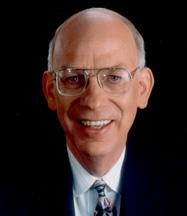 Sen. Robert F. Bennett (R-UT)
Sen. Robert F. Bennett (R-UT)Submitted November 5, 2003
Legislative Activity
Stay on top of the latest movement without scrolling through every action
Floor
Latest Action
Senate amendment submitted
November 5, 2003
View full timeline
Floor
Senate amendment submitted
November 5, 2003
Floor
Senate amendment proposed (on the floor): Amendment SA 2098 proposed by Senator Bennett.(consideration: CR S14007; text: CR S14007)
November 5, 2003
Floor
Senate amendment agreed to: Amendment SA 2098 agreed to in Senate by Voice Vote.
November 5, 2003
Floor
Amendment SA 2098 proposed by Senator Bennett. (consideration: CR S14007; text: CR S14007) To define the term "eligible rural community."
November 5, 2003
Floor
Amendment SA 2098 agreed to in Senate by Voice Vote.
November 5, 2003
Text
Proposed
AGRICULTURE, RURAL DEVELOPMENT, FOOD AND DRUG ADMINISTRATION, AND
RELATED AGENCIES APPROPRIATIONS ACT, 2004--Continued

Mr. BENNETT. Mr. President, it is our intention to move next to the
amendment of the Senator from Hawaii, Mr. Akaka; and, after that, to
the amendment of Senator Cantwell. However, Senator Specter from
Pennsylvania has an amendment which he wishes to propose. The time will
not be long and he has another time commitment. I ask unanimous consent
that Senator Specter be recognized before we proceed in the manner that
I have outlined.
The PRESIDING OFFICER. Is there objection? Without objection, it is
so ordered.
The Senator from Pennsylvania.
Mr. SPECTER. Mr. President, I thank the distinguished Senator from
Utah.

Amendment No. 2080

Mr. SPECTER. Mr. President, I call up amendment No. 2080, which is at
the desk.
The PRESIDING OFFICER. Without objection, the pending amendment is
set aside. The clerk will report.
The legislative clerk read as follows:

The Senator from Pennsylvania [Mr. Specter] proposes an
amendment numbered 2080.

Mr. SPECTER. Mr. President, I ask unanimous consent that reading of
the amendment be dispensed with.
The PRESIDING OFFICER. Without objection, it is so ordered.
The amendment is as follows:

(Purpose: To limit the use of funds to allocate the rate of price
support between the purchase prices for nonfat dry milk and butter in a
manner that does not support the price of milk at the rate prescribed
by law)

On page 79, between lines 7 and 8, insert the following:

SEC. 7__. LIMITATION ON ALLOCATION OF PURCHASE PRICES FOR
BUTTER AND NONFAT DRY MILK.

None of the funds made available by this Act may be used to
pay the salaries or expenses of employees of the Department
of Agriculture to allocate the rate of price support between
the purchase prices for nonfat dry milk and butter in a
manner does not support the price of milk in accordance with
section 1501(b) of the Farm Security and Rural Investment Act
of 2002 (7 U.S.C. 7981(b)).

Mr. SPECTER. Mr. President, this is an amendment which I am offering
following a letter on July 8, 2003, to the Secretary of Agriculture,
cosigned by some 20 Senators. This amendment provides that the
Secretary must take immediate action concerning the Commodity Credit
Corporation's purchase price for dairy products. The market price for
individual products has fallen below the support levels, thus allowing
the price of milk products to fall below the statutory level of $9.90
per hundredweight.
In the year 2000, 7 out of 12 months the price was below the $9.90
set at $8.57. In 2002, 4 out of 12 months were below the support price,
and currently, in 2003, 6 out of 12 months were below the support price
set at $9.11.
This amendment prohibits the expenditures in the Department of
Agriculture unless they follow the clear-cut mandate of existing law,
which is to have the prices set.
I had understood a few moments ago that this was cleared on both
sides, but it may be that there are some objections to be lodged. It is
my hope that this can be worked out in the course of the afternoon.
I thank my colleagues for yielding these few minutes. I yield the
floor.
Mr. BENNETT. Mr. President, I suggest the absence of a quorum.
The PRESIDING OFFICER. The clerk will call the roll.
The legislative clerk proceeded to call the roll.
Mr. BENNETT. Mr. President, I ask unanimous consent that the order
for the quorum call be rescinded.
The PRESIDING OFFICER. Without objection, it is so ordered.

Amendment No. 2088

Mr. AKAKA. Mr. President, I rise today to offer an amendment to H.R.
2673, the Agriculture, Rural Development, Food and Drug Administration,
and Related Agencies Appropriations Act for fiscal year 2004, that will
help protect the health of the American public. This amendment would
prohibit the U.S. Department of Agriculture (USDA) from utilizing funds
under this Act to approve downed animals for human consumption. I thank
Senators Levin, Cantwell, and Lieberman for cosponsoring this
amendment.
Downed animals are livestock such as cattle, sheep, swine, goats,
horses, mules, or other equines that are too sick to stand or walk
unassisted. Many of these animals are dying from infectious diseases
and present a significant pathway for the spread of disease.
I commend USDA and livestock organizations for their efforts to
address the issue of downed animals. However, I am deeply concerned
about diseases such as BSE, Bovine Spongiform Encephalopathy, more
commonly known as mad cow disease, that pose a serious risk to the
United States cattle industry and human health. A food inspection study
conducted in Germany in 2001 found that BSE is present in a higher
percentage of downed livestock than in the general cattle population.
USDA stated that downed animals are one of the most significant
potential pathways that have not been addressed in previous efforts to
reduce risks from BSE. Stronger legislation is needed to ensure that
these animals do not enter our food chain. My amendment prevents downed
animals from being approved for consumption at our dinner tables.
On January 21st of this year, USDA's Animal and Plant Health
Inspection

[[Page S13998]]

Service (APHIS) proposed rules in the Federal Register asking for
comments on reducing the risks of BSE from downed and dead livestock.
In the proposed rules, USDA acknowledges that downed animals serve as a
potential pathway for the spread of BSE. Currently, before slaughter,
USDA's Food Safety Inspection Service (FSIS) diverts downer livestock
that exhibit clinical signs associated with BSE or other types of
diseases until further tests may be taken. However, this does not mean
that downed livestock cannot be processed for human consumption. If
downer cattle presented for slaughter pass both the pre- and post-
inspection process, meat and meat by-products from such cattle can be
used for human consumption. Routinely, BSE is not correctly
distinguished from many other diseases and conditions that show similar
symptoms. This was demonstrated by the surveillance of a similar
inspection process in Europe, showing that the process is inadequate
for detecting BSE. Consequently, BSE-infected cattle can be approved
for human and animal consumption.
Although USDA increased the number of cattle tested for BSE from
5,200 during the year 2001 to 19,990 in the year 2002, this still
represents less than one percent of the industry that is tested. Of the
5,200 cattle tested for BSE in fiscal year 2001, approximately 87
percent of the animals targeted for testing were downed. Today, USDA
has increased its efforts to test approximately 10 percent of downed
cattle per year for BSE. It is interesting to note, however, that Japan
currently tests each of its 1.3 million beef cattle slaughtered
annually for BSE. While I am not asking the industry and Federal
Government to test every slaughtered cow, I am asking the Federal
Government to address and reduce the real risks associated with BSE and
similar diseases in the U.S.
Some individuals fear that my amendment would place an excessive
financial burden on the livestock industry. I want to remind my
colleagues that one single downed cow in Canada diagnosed with BSE this
year shut down the world's third largest beef exporter. It is estimated
that the Canadian beef industry lost over $1 billion as a result of the
discovery of BSE and more than 30 countries banned Canadian cattle and
beef. As the Canadian cattle industry continues to recover from its
economic loss, it is prudent for the United States to be proactive in
preventing BSE and other animal diseases from entering our food chain.
We must protect our livestock industry and human health from diseases
such as BSE. My amendment reduces the threat of passing diseases from
downed livestock to our food supply. USDA only tests a small sample of
downed animals for diseases. This is not enough. My amendment ensures
downed animals will not be used for human consumption. It also requires
higher standards for food safety and protects human health from
diseases and the livestock industry from economic distress.
I urge my colleagues to support this important amendment.
Mr. BENNETT. Mr. President, it would be my intention on this side to
accept this amendment.
Mr. AKAKA. I ask my amendment be set aside momentarily and we return
to it at a future time.
The PRESIDING OFFICER. The Senator has not formally sent up the
amendment.
Mr. BENNETT. I assumed we would go to the amendment from the Senator
from Washington.
The PRESIDING OFFICER. The Senator from Hawaii has not sent his
amendment to the desk.
Without objection, the pending amendments are set aside.
The clerk will report.
The legislative clerk read as follows:

The Senator from Hawaii [Mr. Akaka], for himself, and Mr.
Levin, Mr. Lieberman, and Ms. Cantwell, proposes an amendment
numbered 2088.

The amendment is as follows:

(Purpose: To restrict funding for the approval for human consumption of
meat produced from downed animals)

On page 79, between lines 7 and 8, insert the following:

SEC. 7__. PROTECTION OF DOWNED ANIMALS.

None of the funds appropriated or otherwise made available
by this Act to pay the salaries or expenses of employees or
agents of the Department of Agriculture may be used to
approve for human consumption under the Federal Meat
Inspection Act (21 U.S.C. 601 et seq.) any cattle, sheep,
swine, goats, horses, mules, or other equines that are unable
to stand or walk unassisted at an establishment subject to
inspection at the point of examination and inspection, as
required by section 3(a) of that Act (21 U.S.C. 603(a)).

Mr. BENNETT. I ask unanimous consent that this amendment be set
aside.
The PRESIDING OFFICER. Without objection, it is so ordered.
The Senator from Washington.

Amendment No. 2087

Ms. CANTWELL. Mr. President, I call up my amendment and I send it to
the desk.
The PRESIDING OFFICER. The clerk will report.
The bill clerk read as follows:

The Senator from Washington [Ms. Cantwell] proposes an
amendment numbered 2087.

Ms. CANTWELL. Mr. President, I ask unanimous consent that reading of
the amendment be dispensed with.
The PRESIDING OFFICER. Without objection, it is so ordered.
The amendment is as follows:

(Purpose: To prohibit energy market manipulation)

On page 79, between lines 7 and 8, insert the following:

SEC. 7__. PROHIBITION OF ENERGY MARKET MANIPULATION.

(a) Prohibition.--Part II of the Federal Power Act (16
U.S.C. 824 et seq.) is amended by adding at the end the
following:

``SEC. 215. PROHIBITION OF MARKET MANIPULATION.

``It shall be unlawful for any person, directly or
indirectly, to use or employ, in connection with the purchase
or sale of electric energy or the purchase or sale of
transmission services subject to the jurisdiction of the
Commission, any manipulative or deceptive device or
contrivance in contravention of such regulations as the
Commission may promulgate as appropriate in the public
interest or for the protection of electric ratepayers.''.
(b) Rates Resulting From Market Manipulation.--Section
205(a) of the Federal Power Act (16 U.S.C. 824d(a)) is
amended by inserting after ``not just and reasonable'' the
following: ``or that result from a manipulative or deceptive
device or contrivance''.

Ms. CANTWELL. I ask unanimous consent that Senators Bingaman,
Hollings, Jeffords, Dorgan, and Feingold be added as cosponsors to this
amendment.
The PRESIDING OFFICER. Without objection, it is so ordered.
Ms. CANTWELL. Mr. President, I appreciate the time to discuss this
issue.
Some colleagues may wonder why we are talking about energy
legislation and market manipulation on the Agriculture appropriations
bill. As my colleague from California pointed out in the previous
amendment on derivatives legislation and market manipulation
prevention, this was part of an agreement that the Western Senators
worked out when we were discussing the Energy bill prior to our August
recess. The fact that we were willing to move off that debate on a
variety of amendments was because we had a commitment for a chance to
have further discussion on important issues that impacted the economies
of Western States.
That was the agreement made at that time, and today is the moment in
which Senator Feinstein and I both have our opportunities to discuss
what we consider very important legislation and to get the Congress on
the record and make sure the Senate takes a stand against market
manipulation.
Many Members know a lot has happened since the time of discussion of
these issues about the energy crisis and what we should do. But we
should be clear about the sequencing of things that the United States
now knows and understands. The Senate knows and understands that Enron
has admitted market manipulation. They have executives who have said,
yes, these contracts were manipulated and prices were faulty.
We have a report by the Federal Energy Regulatory Commission so thick
it is hard for me to hold in one hand that goes through a variety of
issues in relation to market manipulation in which FERC found there was
not only manipulation, but a demonstration for the need of explicit
prohibitions on this kind of harmful and fraudulent market behavior.
That is exactly what this amendment tries to address. The amendment I
have offered, and Senator Bingaman and others have offered, says
something very basic and simple that probably many Americans, and I
guarantee many Washingtonians, assumed would

[[Page S13999]]

already be in a Federal statute such as the Federal Power Act. The
amendment simply says that manipulation or manipulated contracts under
the Federal Power Act cannot be just and reasonable.

Some of my colleagues may have remembered an earlier amendment where
we prescribed some solutions. This amendment has been compromised and
offers no specific remedies to the legislation but is specific in
saying that market manipulation, in fact, is not something that can be
just and reasonable under the Federal Power Act and it is not the kind
of activity that the Commission should consider as lawful activity.
Most of my colleagues would say that manipulation and fraud surely
has no place in the Federal Power Act; sanctioning those activities is
somehow legal. But the absence of that prohibition in the Federal Power
Act is leaving some doubt in people's minds that, in fact, manipulation
is unlawful.
I bring that up because Washingtonians--as Ohio, Indiana, Nevada,
California, Utah--have been suffering from high energy costs related to
these manipulations of Enron contracts. Not only will they be stuck
with paying those Enron contracts over a long period of time, but my
State, the State of Washington, had utilities as much as a 50-percent
rate increase because of Enron's contracts, and we will be stuck with
those contracts over 5 years.
While Ken Lay remains uncharged, or at least not paying any dues for
the crime he perpetrated, and he keeps the millions of dollars of money
that he has gotten from Enron, my ratepayers in Washington State for
the next 5 years will end up paying the high prices of those
manipulated contracts. Not only will we end up paying the high prices
of those manipulated contracts, but the utilities in my State and other
States--Nevada, California, Oregon, some of the other Midwest States I
mentioned--have tried to basically deal with Enron. They have been
basically sued by the company. So not only is my ratepayer stuck with
paying those high utility bills, they are actually trying to fight the
legal battle against Enron, which is turning around and suing them.
My amendment does something very simple today. It basically says in
the Federal Power Act that for the prospective issue of making sure it
is clear to people throughout the country that the Senate does not
tolerate market manipulation.
I have to say we have done great work on this issue as it relates to
the Securities and Exchange Commission, and as it relates to making
sure that accounting practices have been changed. But nowhere have we
been specific in saying that market manipulation is an unlawful
practice and cannot be just and reasonable under the Power Act. That is
simply what we are trying to say today.
Why is that needed? I have a letter I circulated to my colleagues
from one of the newest nominees to the Federal Energy Regulatory
Commission, a Republican nominee who spent many hours in the
legislative branch working under Energy Secretary Abraham and spent
time in the House Energy and Commerce Committee, to whom I posed this
question as a nominee before FERC because I wanted to understand where
FERC nominees were going in the future.
Mr. Kelliher responded exactly where I think the input needs to be to
the Senate. He said:

I agree with much of what you have said. I agree that the
markets subject to manipulation cannot operate properly and
there is an urgent need to proscribe manipulation of
electricity markets.

He further states:

You have correctly noted that there is no express
prohibition of market manipulation in the Federal Power Act
and have proposed legislation to establish that prohibition.
This is a critical point. The Federal Regulatory Commission
only has the tools Congress chooses to give it, and Congress
has never given the Commission express authority to prohibit
market manipulation. I believe the time has come for Congress
to take that step.

That is an exact quote from a letter by the FERC nominee Joseph
Kelliher from the administration saying, ``You want me to be a FERC
commissioner? I am telling you exactly what I think about the FERC
rules. And I am telling you we need the language that is in this
amendment.''
I ask unanimous consent that letter be printed in the Record.
There being no objection, the material was ordered to be printed in
the Record, as follows:

November 5, 2003.
Hon. Maria Cantwell,
U.S. Senate,
Washington, DC.
Dear Senator Cantwell: I am writing at your request to
explain at greater length my views on legislation to prohibit
manipulation of electricity markets.
I have followed your comments on market manipulation with
great interest during the two years since my nomination was
announced. I agree with much of what you have said. I agree
that markets subject to manipulation cannot operate properly
and there is an urgent need to proscribe manipulation of
electricity markets. You have correctly noted there is no
express prohibition of market manipulation in the Federal
Power Act and have proposed legislation to establish an
express prohibition. This is a critical point. The Federal
Energy Regulatory Commission only has the tools that Congress
chooses to give it, and Congress has never given the
Commission express authority to prohibit market manipulation.
I believe the time has come for Congress to take that step.
Market manipulation is a relatively recent development in
electricity markets, but it is not a new problem.
Manipulation has occurred in other markets, and Congress has
enacted laws to proscribe manipulation in these markets.
These laws can serve as models for legislation to prohibit
manipulation of electricity markets.
Securities and commodities law establish an express
prohibition of market manipulation and authorize a regulatory
agency to prohibit specific manipulative practices by
rulemaking. That approach allows an agency to act quickly
once manipulative practices are identified. These models have
worked well over time and could serve as the basis for
legislation to prohibit manipulation of electricity markets.
The penalties authorized by congress in the Federal Power
Act are unlikely to discourage criminal behavior. For that
reason, tougher penalties--both higher monetary penalties and
longer prison terms--are needed. Legislation is necessary to
accomplish this. I should note that I advocated tougher
penalties well before the Western electricity crisis and
subsequent release of the Enron marketing memoranda. In
addition to higher monetary penalties and longer prison
terms, I recommend Congress grant the Commission authority to
impose a lifetime ban on individuals found guilty of criminal
violations of market manipulation laws. That authority exists
at the regulatory agencies that oversee securities and
commodities markets, and I see no reason why market
manipulation in electricity markets should be subject to
lesser sanction.
This is not to say that the Commission cannot take steps to
prevent market manipulation under its existing legal
authority. For example, the Commission can revoke the
authorization of a public utility to sell electricity at
market-based rates if it determines the public utility
engaged in market manipulation. Further, I believe the
Commission could prohibit manipulative practices under
section 206 of the Federal Power Act if it determined that
such practices were inherently unjust, unreasonable, unduly
discriminatory or preferential. Since there would likely be
legal challenges to any such effort to proscribe manipulative
practices, it would be helpful for Congress to give the
Commission clear authority to prohibit market manipulation.
At you request, I have reviewed your marked manipulation
amendment. I support the goals of your amendment and believe
it would go far towards effectively prohibiting manipulation
of electricity markets.
I appreciate the opportunity to share my views on this
subject with you.
Sincerely,
Joseph T. Kelliher.

Ms. CANTWELL. Mr. President, I think the Kelliher letter and the
report we have seen by the Federal Energy Regulatory Commission on
price manipulation in western markets is the evidence we need. We have
all admitted this manipulation has taken place. What is not clear to
the American public is if we plan to do anything about it or if we plan
to prohibit it in the future.
I think we need to be clear. The language I have offered in this
amendment, as I said, is very simple and straightforward. It is that
way because we want to make sure the Federal Energy Regulatory
Commission does not misinterpret the intent of Congress, that Congress
needs to say manipulating prices cannot be just and reasonable or in
the public interest, and their job is to basically protect electric
ratepayers from these kinds of manipulation.
I am not going to continue to take up the time of my colleagues who
have heard about this amendment and have had an opportunity to review
it. I urge them, as part of our further understanding of where the
Energy bill is, that it is being set aside. This is the opportunity
before us to make sure we

[[Page S14000]]

take a stand against market manipulation and we need to make it clear
to the Federal Energy Regulatory Commission, which seems to be unclear
about what authority they currently have, and to make it explicit that
market manipulation cannot be tolerated.
I yield the floor.
The PRESIDING OFFICER. The Senator from Utah.
Mr. BENNETT. Mr. President, quick housekeeping.

Amendment No. 2088

Mr. President, I ask unanimous consent that we go back to the Akaka
amendment.
The PRESIDING OFFICER. Without objection, it is so ordered.
Mr. BENNETT. I call for a vote on the Akaka amendment.
The PRESIDING OFFICER. If there is no further debate, the question is
on agreeing to amendment No. 2088.
The amendment (No. 2088) was agreed to.
Mr. BENNETT. I move to reconsider the vote and I move to lay that
motion on the table.
The motion to lay on the table was agreed to.

Amendment No. 2087

Mr. BENNETT. Mr. President, I move that we go back to the Cantwell
amendment.
The PRESIDING OFFICER. Without objection, it is so ordered.
Ms. CANTWELL. Mr. President, I ask for the yeas and nays.
The PRESIDING OFFICER. Is there a sufficient second?
There appears to be a sufficient second.
The yeas and nays were ordered.
The PRESIDING OFFICER. The Senator from Utah.
Mr. BENNETT. Mr. President, I am not familiar with this issue, but I
have asked members of the Energy Committee about it, and they have
indicated opposition to the Cantwell amendment. There are some members
of that committee who are on their way here. In the meantime, I will
share with my colleagues the contents of a memorandum with respect to
the Cantwell amendment that has been provided to Senator Domenici.
In this memorandum, the following objections are raised.
First:

FERC has and is using its authority to stop fraud and
manipulation. . . .
FERC has demonstrated that it will use the full extent of
its authority to assure honest, fair wholesale electricity
markets.

FERC has taken a number of initiatives which are listed in the memo
and which I will share with Members if the appropriate members of the
Energy Committee do not arrive.
The second objection to the Cantwell amendment is that it is too
vague. It is suggested that:

It is written in such general terms that it will lead to
greater uncertainty. A general ban on manipulation will not
help companies determine what conduct amounts to manipulation
and what conduct is appropriate behavior in a competitive
market. . . . [A] blanket prohibition on ``manipulation,''
without defining the elements of what constitutes
manipulation . . . could have a chilling effect on the market
without meaningfully adding to the protections already
available to electricity customers under existing law.

The third objection is that:

The Cantwell Amendment could lead to duplication and
confusion among the agencies.
The enabling statutes of the Commodity and Futures Trading
Commission (CFTC) and the Securities Exchange Commission
(SEC) already contain broad prohibitions against conduct that
is intended to manipulate markets. Adding such another broad
general prohibition to the Federal Power Act would only lead
to unnecessary duplication and potential conflict between
various enforcement agencies.
In addition, the Federal Power Act already prohibits
wholesale electricity prices that are not ``just and
reasonable.'' Therefore, FERC has the authority to
investigate electricity prices and to require refunds if
prices are not ``just or reasonable'' or modify contracts if
it is in the public interest to do so.
The House and Senate Energy bills both would enhance FERC's
existing refund authority and increase civil and criminal
penalties for violations of the Federal Power Act.

The memo makes the point that this issue has been addressed in the
Energy bill, and that is the place for it to be done.
The next objection raised is:

The number of Federal investigations and prosecutions by a
broad array of agencies demonstrates there is no need for the
Cantwell Amendment.
Federal agencies have been and continue to be active in
investigating criminal offenses in the energy industry.

These agencies as listed in the memorandum include the President's
Corporate Fraud Task Force, the Federal Bureau of Investigation, the
Federal Energy Regulatory Commission, the Securities and Exchange
Commission, the Commodity Futures Trading Commission, the United States
Postal Service, and numerous U.S. Attorney's offices across the
country.

Through ``cooperative enforcement,'' these agencies have
focused on investigations of possible round trip trading,
false reporting and fraud and manipulation by energy
companies and their affiliates, employees and agents. There
have been a number of arrests, settlements and continued
investigations and prosecutions reported based on these
agencies' efforts.

And the argument is made that:

The Cantwell Amendment will not improve or change these
actions.

Then reference is made to:

The Domenici Electricity Amendment effectively deals with
market manipulation.

This is the amendment that is part of the Energy bill that is now in
conference. The memo outlines all the reasons why that particular
amendment is sufficient.
As I say, I am waiting for a member of the Energy Committee to come
make these arguments with perhaps a little more background than I have.
I would like to move to a vote on this amendment, so I ask, before I
would suggest the absence of a quorum, if the Senator from Washington
would agree to a vote, let us say, at 4:20. Would that be a sufficient
period of time for the Senator?
The PRESIDING OFFICER (Mr. Cornyn). The Senator from Washington.
Ms. CANTWELL. Mr. President, I have not taken up a significant amount
of time because I think Members have been educated on this issue, so I
would suggest we just go ahead and vote on the issue and move ahead.
Mr. BENNETT. The Senator is suggesting we vote right now? I am
willing. I am anxious to move as much time as possible. If the Senator
is ready, if there is no one else who wants to speak on this issue----
Ms. CANTWELL. Mr. President, I am sure there are Members who, if they
had the time, would come and speak, but I think to make this process
move as smoothly as possible, I see no need to continue to wait for
Members of the Energy Committee to show up. If Members are here who
want to speak on behalf of the amendment, one way or another----
Mr. BENNETT. I see the Senator from Nevada is on the floor, and he
may wish to speak.
I would ask, then, following the remarks of the Senator from Nevada,
if no other Senator has come wishing to speak, we proceed directly to
the vote.
Mr. REID. I object.
The PRESIDING OFFICER. Objection is heard.
The Senator from Nevada.
Mr. REID. Mr. President, I have always been a great admirer of the
Senator from the State of Washington. She always steps forward with
amendments that are extremely important.
Mr. BENNETT. Mr. President, will the Senator yield for another
unanimous consent request?
Mr. REID. I am happy to yield for a question.
Mr. BENNETT. I would propound a unanimous consent request that the
vote occur at 4:30.
Mr. REID. I object.
The PRESIDING OFFICER. Objection is heard.
Mr. BENNETT. I thank the Senator.
Mr. REID. Mr. President, I do not think there is going to be a vote
very soon on this matter. I think it is going to be quite a long time
before we vote. We have a lot of things we need to talk about.
(The remarks of Mr. Reid are located in today's Record under
``Morning Business.'')
Mr. REID. Mr. President, I believe maybe we need a vote.
So when would my friend from Utah like to vote?
Mr. BENNETT. Mr. President, I would be happy to vote on the Cantwell
amendment immediately and then go on to other business connected to the
bill.
Mr. REID. I think the Senator should move forward.

[[Page S14001]]

The PRESIDING OFFICER. Is there further debate?
If not, the question is on agreeing to the Cantwell amendment No.
2087. The yeas and nays have been ordered. The clerk will call the
roll.
The legislative clerk called the roll.
Mr. REID. I announce that the Senator from North Carolina (Mr.
Edwards), the Senator from Massachusetts (Mr. Kerry), and the Senator
from Connecticut (Mr. Lieberman) are necessarily absent.
I further announce that, if present and voting, the Senator from
Massachusetts (Mr. Kerry) would vote ``yea''.
The PRESIDING OFFICER. Are there any other Senators in the Chamber
desiring to vote?
The result was announced--yeas 57, nays 40, as follows:

[Rollcall Vote No. 439 Leg.]

YEAS--57

Akaka
Baucus
Bayh
Biden
Bingaman
Boxer
Breaux
Byrd
Cantwell
Carper
Chafee
Clinton
Collins
Conrad
Corzine
Daschle
Dayton
Dodd
Dorgan
Durbin
Ensign
Feingold
Feinstein
Fitzgerald
Graham (FL)
Gregg
Harkin
Hollings
Inouye
Jeffords
Johnson
Kennedy
Kohl
Landrieu
Lautenberg
Leahy
Levin
Lincoln
McCain
Mikulski
Murray
Nelson (FL)
Nelson (NE)
Pryor
Reed
Reid
Rockefeller
Santorum
Sarbanes
Schumer
Smith
Snowe
Specter
Stabenow
Sununu
Voinovich
Wyden

NAYS--40

Alexander
Allard
Allen
Bennett
Bond
Brownback
Bunning
Burns
Campbell
Chambliss
Cochran
Coleman
Cornyn
Craig
Crapo
DeWine
Dole
Domenici
Enzi
Frist
Graham (SC)
Grassley
Hagel
Hatch
Hutchison
Inhofe
Kyl
Lott
Lugar
McConnell
Miller
Murkowski
Nickles
Roberts
Sessions
Shelby
Stevens
Talent
Thomas
Warner

NOT VOTING--3

Edwards
Kerry
Lieberman
The amendment (No. 2087) was agreed to.
Ms. CANTWELL. Mr. President, I move to reconsider the vote.
Mrs. MURRAY. I move to lay that motion on the table.
The motion to lay on the table was agreed to.
The PRESIDING OFFICER. The Senator from Utah.
Mr. BENNETT. Mr. President, I understand there are several Senators
who have amendments they would like to offer. Senator Dayton has one.
Senator Bingaman has one. We have not yet had an opportunity to go
through the Bingaman amendment which came to us relatively recently. So
I would prefer to go to Senator Dayton to give us a little more time to
examine the Bingaman amendment, but that could be the decision of the
minority. I prefer to go to Senator Dayton's amendment next if that is
agreeable.
The PRESIDING OFFICER. The Senator from New Mexico.
Mr. BINGAMAN. Mr. President, I defer to the manager of the bill. If
he would like time to review the amendment that I have given him, I
have no problem with that course of action.
Mr. BENNETT. Mr. President, I ask Senator Dayton if he would give us
some indication of how long he thinks he will take on his amendment and
see if we cannot enter into a time agreement so that we can know when
we might be able to vote.
Mr. DAYTON. Mr. President, responding to the distinguished manager of
the bill, I myself will take less than 10 minutes. It is my
understanding there may be one or two other Senators who wish to speak
on this matter. I do not have their requests before me.
Mr. BENNETT. Mr. President, I ask unanimous consent then that we vote
on the Dayton amendment at 5:15.
Mr. REID. I object. I object.
The PRESIDING OFFICER. Objection is heard.
The Senator from Minnesota.
Mr. DAYTON. It is my understanding then that I have the floor to
proceed but there is no further agreement thereafter; is that correct?
The PRESIDING OFFICER. There is no agreement.

Amendment No. 2089

(Purpose: To provide emergency disaster assistance to Agricultural
producers)

Mr. DAYTON. Mr. President, I send an amendment to the desk and ask
for its immediate consideration.
The PRESIDING OFFICER. Without objection, the pending amendment is
laid aside. The clerk will report.
The assistant legislative clerk read as follows:

The Senator from Minnesota [Mr. Dayton] proposes an
amendment numbered 2089.

Mr. DAYTON. I ask unanimous consent that the reading of the amendment
be dispensed with.
The PRESIDING OFFICER. Without objection, it is so ordered.
(The amendment is printed in today's Record under ``Text of
Amendments.'')
Mr. DAYTON. Mr. President, this summer farmers in my State of
Minnesota suffered one of the worst droughts in the State's history.
Throughout the critical months of July and August, Minnesota received
no rain whatsoever. Those cloudless blue skies with lots of warm
sunshine which are considered good summer weather become deadly when it
becomes relentless. Ninety-five percent of Minnesota's crop acres
suffered some loss as a result, and 62 of our 87 counties were declared
by the Secretary of Agriculture to be disaster area counties. Yields,
moisture content, and overall quality of crops were all adversely
affected by this drought.
To add misery to injury, insect infestation attacked thousands of
soybean acres in southern Minnesota, further destroying plants,
lowering yields, and forcing already hard-pressed growers to spend
$10,000, $20,000, or even more to spray their fields in order to fight
off total devastation.
In total, Minnesota farmers lost more than $1.1 billion in expected
crop revenues. That is over 30 percent of our State's total crop
revenue.
Yet, tragically, another disaster afflicts those unfortunate farmers
and thousands of other farmers who suffered similar losses in other
States this year. That disaster is that there is no disaster aid
funding in the current farm law which was enacted last year. The Senate
bill that we passed here provided disaster aid. The House bill did not.
The conference report, regrettably, took the House and the
administration's position, with the result that if you are hurt by low
prices, you are helped under the current law, but if you are
devastated, you are on your own and receive no assistance whatsoever.
My amendment provides assistance when disaster does strike. It does
so by starting with the formula that was used in last year's disaster
aid bill; from losses exceeding 35 percent of total value, farmers
received disaster aid payments equal to 65 percent of the losses above
the 35 percent threshold. It is a survival payment. It is not a break-
even and certainly not a profit payment.
My amendment also adds a lower reimbursement for losses between 25
percent and 35 percent of value. Formerly, those losses would have
received no assistance whatsoever. This formula pays 40 percent of
those losses between 20 percent and 35 percent of total value.
The amendment also covers unreimbursed losses during the 2001 and
2002 seasons. As my colleagues will recall, farmers who suffered
disasters in both of those years were allowed to receive payments from
losses in only one of them. In other words, disaster aid is Sophie's
choice. This amendment would compensate those farmers for their losses
in the second year.
My amendment as written covered program crop losses and specialty
crop losses throughout the country. However, I have also added, at the
request of other Members, losses suffered during the year, which means
the amendment now covers losses of shrimp in Louisiana, North Carolina,
South Carolina, Georgia, Florida, Alabama, Mississippi, and Texas, and
other losses which occurred in the States of Michigan, Florida, and
California, as well as other national specialty crops.
The total cost of my amendment, as estimated by the Congressional
Budget Office, is approximately $6.3 billion. Because it is, in my
view, an emergency expenditure, I do not believe it requires, under the
Budget Act, an offset, and I am not providing one.

I yield the floor.
I suggest the absence of a quorum.
The PRESIDING OFFICER. The clerk will call the roll.
The assistant legislative clerk proceed to call the roll.

[[Page S14002]]

Mr. DURBIN. Mr. President, I ask unanimous consent that the order for
the quorum call be rescinded.
The PRESIDING OFFICER. Without objection, it is so ordered.
Mr. DURBIN. I ask the chairman if this is an appropriate time for me
to make a 10- or 15-minute statement relative to an amendment which you
have accepted on the FDA and dietary supplements.
Mr. BENNETT. I ask the Senator if he would withhold for just a
moment. We are trying to pull a few things together. But I am more than
happy to have the time appropriately spent other than in a quorum call.
If the Senator will withhold for just a few moments, I will be in a
position to respond.
Mr. DURBIN. I thank the Chair and I suggest the absence of a quorum.
The PRESIDING OFFICER. The clerk will call the roll.
The assistant legislative clerk proceeded to call the roll.
Mr. BINGAMAN. Mr. President, I ask unanimous consent that the order
for the quorum call be rescinded.
The PRESIDING OFFICER. Without objection, it is so ordered.
Mr. BENNETT. Mr. President, the chairman of the Budget Committee is
anxious to come over to develop the issue of the budget point of order
for emergency designation with respect to the amendment offered by
Senator Dayton. As he has indicated, it is $6.3 billion, and there is
no offset in the bill. Our bill is $1 billion below last year's fiscal
year 302(b) allocation, and therefore this is obviously a very
significant number.
Until the Senator from Oklahoma, the chairman of the Budget
Committee, has an opportunity to be here to review this matter with us,
I would be willing to allow the Senator from New Mexico to begin the
description of his amendment because I understand he would like to get
that done. He has a timeframe tonight. And we could view the
possibility of voting on both amendments at some point when the debate
on both amendments has subsided rather than keeping the time tied up in
a quorum call.
With recognition of the pressures the Senator from New Mexico is
under, I would like to perhaps move ahead on both of those amendments
on a double track situation.
Mr. REID. I object. If there is going to be a request to set aside
the Dayton amendment, I object.
Mr. BENNETT. All right. There is objection. Therefore, I do not
pursue that. I suggest to the Senator from Illinois this might be a
good time to hear from him.
The PRESIDING OFFICER. The Senator from Illinois.
Mr. DURBIN. I thank the Chair of the committee and the ranking
member, Senator Kohl of Wisconsin, for agreeing to an amendment which
will be offered here in a moment as part of a managers' amendment, to
my understanding. This is an amendment with which I tried to construct
a deal, facing what I consider to be an extremely serious situation.
We now have a body of law in America relative to products which are
sold for human consumption, and there are different laws and standards
for different products. The ordinary American walking into a pharmacy
or drugstore or health food store or nutrition store may not know that,
depending on which product you take off the shelf, there is a different
standard of care, a different legal requirement.
I would like to spend a moment to discuss the differences.
If you were to go into your local pharmacy and have a prescription
filled--which many of us have--this is what you know. This prescription
drug has been tested for three things before it was sold to you. First,
that it is safe, that you can consume it without injuring yourself;
second, that it is efficacious, meaning it will do what it is supposed
to do; and, third, it has been packaged and manufactured in a fashion
so when they say it is 200 milligrams, it is in fact 200 milligrams.
You know that. The Food and Drug Administration has required clinical
tests to make sure it is safe--efficacious--and packaged in a fashion
as it is represented. With that assurance, your doctor prescribes it
and you take the medicine.
Now you walk down from the pharmacy counter in the drugstore and you
decide to pick up some cough syrup such as this. You have bought this
cough syrup. The question is: What standard of care, what body of law
governed the manufacture of this over-the-counter drug, in this case,
Robitussin DM, which was previously a prescription drug. It went
through the same test for safety and efficacy to determine whether or
not it met those tests and could be sold. Then it reached a point where
a medical decision was made that you no longer needed a prescription
and the component parts of this drug meet the same test of safety and
efficacy and it is packaged in such a fashion that you know what you
are buying.
I might also add for both the prescription drug and the over-the-
counter drugs, which I have just described, if something happens--if
you take this prescription, for example, and have a bad health result
or this over-the-counter drug with a bad health report and you report
it to the company or to your doctor, it is expected and required that
adverse event, as it is known, will be reported to the Food and Drug
Administration. They keep track of those. If they find out what they
thought was a safe drug turns out to have a bad reaction, they will
pull it from the market. The same is true with an over-the-counter
drug. You know the standard of care for both prescription drugs and
over-the-counter drugs.
We have other things which you will find in that same drugstore. One
of them would be ordinary vitamin pills, the kind I took this morning.
What are the standards for these vitamins--vitamin C or ordinary
multivitamins? Unfortunately, the standards are much different. In this
case, they are basically being manufactured and sold without the same
clinical tests. No one has tested them for safety, for efficacy.
Frankly, the standards for many are questionable as to even how they
are packaged and sold to the public. But the belief is most of these
naturally occurring minerals and vitamins and this type of supplement
are generally good for your health. Those who believe in them take them
for a variety of conditions. It is believed they cause no great harm;
in fact, that they may have real health benefits.
We passed a law about 9 years ago which established a standard for
something we call dietary supplements which are also for sale in the
same drugstore with prescription drugs, over-the-counter drugs, and
vitamins. These dietary supplements might be one such as this, natural
herbal formula to promote energy and diet. What kind of standard of
testing went into this product? The answer is none. There was
no testing in advance required by law that what is included in this
bottle is safe for human consumption or in fact even helps you when it
comes to your energy or diet, and few, if any, standards about whether
or not when they say this is 200 grams of one thing or another, in
fact, are included. When you buy a dietary supplement, frankly, there
are no standards of testing and care before the product is put on the
shelf for the consumers.

I tell you this by way of background because that is why this
amendment is important. When we passed the Dietary Supplement Health
Education Act, we said we were dealing with natural supplements like
vitamin C and garlic, multivitamins and the like. What has happened
over the past 8 or 9 years is we have gone way beyond the basic
vitamins. We now find a witches brew of a variety of different dietary
supplements way beyond vitamins and minerals that are being sold under
the same law with no testing standards, with no establishment of their
safety or efficacy, no standards as to how they are packaged, and no
requirement that they report adverse events to the FDA. As you walk
into the drugstore and fill your prescription and walk past the
counters, the American consumer has no idea that at end of the counter,
the standard of protection and care changes depending on what you are
buying.
That is why I am offering an amendment to this bill which earmarks
$250,000 for the Food and Drug Administration to examine one particular
compound being sold in dietary supplements. The compound is ephedrine.
Ephedrine is a naturally occurring chemical that one finds similar to
the synthetic chemical ephedra. Ephedrine is very closely monitored by
FDA in

[[Page S14003]]

both prescription drugs and over-the-counter drugs. But when it is sold
in these types of dietary supplements, it isn't tested for safety, it
isn't tested for efficacy, and it isn't tested in terms of how much is
included in the bottle, and certainly no requirement for adverse events
to be reported to the FDA.
Sadly, this product I have in my hand, known as Yellow Jackets, is
sold as an extreme energizer, an herbal dietary supplement containing
ephedrine. The reason I have kept this bottle is because 30 miles from
my hometown in Springfield, IL, just last year a young man who was a
high school senior and a football player in preparation for a football
game decided he needed a shot of energy, a boost of strength to go out
and play for his team. He went into a local gas station and bought
these Yellow Jacket energizers and washed them down with Mountain Dew,
which is heavy in caffeine, had a heart attack, and died. Ephedra
products, as a consequence, have been under suspicion for a long time.
The sad reality is the United States is almost last in the world when
it comes to dealing with ephedra products. You may not know it, but
almost 2 years ago Canada banned ephedra products for sale in their
country. They said it is too dangerous. Over a year ago, the American
Medical Association said to the Food and Drug Administration, take
these ephedra products off the shelf; they are dangerous. After 30
service men and women had serious adverse health effects, we have
removed all ephedra products from military commissaries across the
United States. The National Football League, the NCAA, the National
Basketball Association, and major league baseball have banned the use
of these products. You can't use them if you want to compete in Olympic
competition. Yet kids in junior high and high school can walk into a
gas station and still buy this in most States, with the exception of
Illinois, and I believe New York and California have joined suit in
banning ephedra products.

Over a year ago, I wrote to Secretary Tommy Thompson of Health and
Human Services and said you have to do something. If Canada believes
they are dangerous, if we think they are dangerous for service men and
women, if the American Medical Association says they are dangerous, and
if major sports have banned them, why in the world do we allow them to
be sold in America?
What happened in the meantime is the Government did absolutely
nothing--issued a press release and did nothing to take these products
off the shelf.
What happened was a lot of the victims and their families went into
courtrooms. A lot of people are critical of people filing lawsuits.
This is a clear example where that was the only place to turn to
protect innocent families and victims across America. Because of the
class action lawsuits that were filed, we have now determined there
were over 16,500 adverse events reports related to ephedra products
that had been accumulated by all the companies that were selling them.
Now they had to turn them over and disclose them.
Within those 16,500 adverse events there were events including
seizures, strokes, and 155 deaths. I think, frankly, we all know what
is at stake here. We realize major drugstores see liability if they
continue to sell products like these Yellow Jackets and they will take
them off the shelf. Walgreen's, CVS, Eckerd, Rite Aid, and Wal-Mart,
representing 17,300 stores nationwide, have pulled these ephedra-
containing dietary supplements from shelves. GNC, the largest specialty
retailer of nutritional supplements in the country, with 5,300 stores
nationwide, stopped selling ephedra products in June.
One of the largest sellers of ephedra products, Metabolite--I am sure
you have heard that name--sold ephedra compounds and was sued right and
left because of these compounds. They said at one point they didn't
have any adverse event reports. After they were pressed in a lawsuit
they turned over thousands of examples of people who had bad health
events because they took Metabolite's ephedra products.
Metabalife is now advertising what they are selling is ``Ephedra
free.'' Despite all this having taken place, our Government has done
nothing, absolutely nothing. I have written over and over again to
Secretary Thompson. I have met with Dr. McClellan, the doctor in charge
of the Food and Drug Administration, and asked: When are you going to
start protecting Americans? We have a clinical trial in America today.
We are selling Ephedra to innocent people and seeing if they have a
seizure or heart attack.
Secretary Thompson, in April, said he was concerned about Ephedra and
had taken more and stronger actions to address public health issues
raised by Ephedra alkaloid than in the previous decade.
That was his letter to me in April. Since Secretary Thompson wrote
that letter to me, another 38 reports of death related to Ephedra have
been accumulated, bringing the total to 155.
A representative of the FDA spoke in front of the Senate Commerce
Committee last week and said the Agency is in the process of analyzing
30,000 comments they have received in response to the reopening of the
1997 proposed rule on Ephedra and they are reviewing scientific
evidence. Of course, delay means death, delay means injury, and delay
is evidence that the Food and Drug Administration is not meeting its
obligation under the law to protect American families from dangerous
products.
We had a hearing in the Senate Commerce Committee before Senator
McCain last week. A case was made very clearly that it is time to
change the law. But first, get Ephedra off the shelves. That is why I
introduced this amendment, put $250,000 in the FDA, earmarked to deal
with Ephedra, to get an answer, get a conclusion and get it off the
shelf as quickly as possible.
When that is done, we will have made progress. But we need to do
more. The makers of dietary supplements such as this one must be
required by law to report to the Food and Drug Administration if people
are dying from their products. That is not too much to ask in this
society. Those who say that, because I am going after a deadly product
like yellow jackets, that my real war is against vitamin C just do not
understand the reality. The reality is vitamin C can help. Vitamin C is
not going to kill you.
This product killed a 16-year-old high school football player in
Lincoln, IL. It has been attributed to the death of a Major League
baseball player of the Baltimore Orioles.
I asked the committee to earmark this money. I am glad the chairman
has accepted. I hope that finally this will push Health and Human
Services into doing the right thing and banning this dangerous
substance.
I yield the floor.
The PRESIDING OFFICER (Ms. Collins). The Senator from Nebraska.
Mr. NELSON of Nebraska. Madam President, thank you very much for this
opportunity to speak on an issue important not only to my State but
also to other States in my country as it continues to plague
agricultural producers all over the United States. I thank Senator
Dayton, my colleague from Minnesota, for offering this amendment and
for his continuing good work on this important issue.
Last year at this time this Chamber had a prolonged debate on whether
to provide much needed emergency drought assistance to those hurt by
continuing record drought. Some argued that there should be no
assistance; others argued that, unlike with every other national
disaster, assistance for drought victims should be funded through
offsets. Some even argued we could always come back to take care of
these victims at a later date.
Still some argued that a drought is no less devastating than a
hurricane or flood for those who are affected and it should be treated
as we would treat other natural disasters, by providing full
assistance, treat it as an emergency, which, in fact, it is.
It took a while to get any help to our agricultural producers.
Despite the plague of bankruptcies and the anticipated loss of
thousands of family farms across the country, we could not get drought
assistance passed until last spring, nearly 2 years after the worst of
the drought had begun. That assistance came at a cost.
It covered less than half of the damage the USDA estimated had been
caused by the drought, and it was paid for out of elements of the new
farm

[[Page S14004]]

bill, robbing Paul to pay Paul. To survive, our farmers would have to
sacrifice their future for their present.
Despite all that, despite waiting months for Congress to act, despite
getting what assistance was offered at the expense of the farm bill,
even now, more than 7 months after the passage of that inadequate bill,
many of those hurt are just beginning to receive emergency payments.
Some have received nothing while the least fortunate went bankrupt
during the wait.
The drought package passed last spring offered a little over $3
billion for drought losses, half the estimated $6 billion in actual
damages. By October 1, $1.85 billion had been distributed, just over a
quarter of actual damages through 2002. Nebraska, which alone had $1.2
billion in damages, has received only $138 million in crop disaster
payments, barely 10 cents on the $1 of what it lost. As of September
15, the sugar beet program had not even been implemented, leaving those
producers with nothing.
Still, the drought continues. That is why I am here today. And still,
because that drought continues, our farmers and ranchers need help.
I am here today to remind those who settle for less that we still
need to do more. This map reflects the current drought impact in the
United States. The red and brown areas are those areas that have been
labeled as a drought area by the U.S. Drought Monitor at the University
of Nebraska. The red areas within the regions have been declared as
drought areas by the State or Federal Government. The brown areas have
not been declared. As I said, they are considered to be declared
drought areas by the U.S. Drought Monitor. The green areas are
recovering from drought but could be impacted by recurring or lingering
conditions. The yellow areas are under drought watch.

This map is for the time period of September 5 through October 2 of
this year, less than 60 days ago. We can see this drought continues.
As is clear from this map, 16 States have seen at least half of their
counties declared drought disasters and another 5 have some declared
drought area and 2 additional States are considered drought States by
the U.S. Drought Monitor but not all declared drought regions. All
told, 23 States at the present time have at least some drought regions
as labeled by the U.S. Drought Monitor. Another six States have some
areas under drought watch.
This map makes it very clear, and it should be clear for everyone to
see, the drought has not ended. It remains a national problem and has
taken another planting season, another growing season, and another
harvest. We need to provide more assistance for our farmers and our
ranchers. We need to do more to mitigate the effects of this drought.
Finally, we need to take seriously the fact that a drought is no less
devastating to those afflicted than of any other natural disaster.
The unfortunate thing on a comparison basis, some natural disasters
are immediate or nearly immediate. This natural disaster takes time to
develop. In this case, it is continuing.
If some believe this drought is not as damaging as other natural
disasters, I invite them to visit Nebraska and the other States, visit
farmers and ranchers who are selling their lands, selling their herds
or those who have already sold their land and herds. I invite them to
tour our rural communities to see how damaging this drought has been to
small businesses, Main Street America, small communities that comprise
those Main Streets that are connected to the land and the economic
activity that it produces. I invite them to talk to the Governor of
Nebraska who a few days ago asked the Department of Agriculture to
declare our entire State a disaster area because of drought damages.
I tried a number of measures to focus some attention on the plight of
our agricultural producers. I even tried to name the drought, Drought
David, thinking that would give it some sort of focus, just as we name
hurricanes. I even brought drought ribbons that some of my colleagues
were good enough to wear a year ago because they understood the
national impact of this drought as well as the impact on their
particular States. I worked with leaders in this area such as Senators
Daschle, Harkin, Baucus, Dayton, and Johnson, who also pushed for
comprehensive drought assistance. But still it has not been enough. We
need to do more. With economic conditions being what they are, we
cannot risk losing more family farms, we cannot risk losing rural
businesses, and we cannot risk agricultural bankruptcies and
foreclosures.

This issue has not been resolved--not through the rains these
counties and States need, and not through the paltry assistance
provided by the Federal Government. We need to do more.
So today I rise in support of Senator Dayton's amendment to provide
more support for our family farmers. In fact, I considered offering an
amendment myself on this very issue. And that, again, shows the breadth
of the disaster. Such States as Nebraska and Minnesota, and everything
in between, and all around, are still in dire trouble. Our Nation is at
economic risk.
If we dislike importing 50 to 60 percent of our oil for our energy
needs, let me assure you, we will hate importing our food if it ever
gets to the point that we lose agriculture as we have it today.
So we must act. We must act now or it will be too late for tens of
thousands of more family farms and the rural way of life.
I thank you, Madam President. I thank the chairman, and I yield the
floor.
Mr. BAUCUS. Mr. President, I would like to thank Senator Dayton for
offering this amendment to secure emergency agricultural disaster
assistance for our drought stricken agricultural producers.
I worked the past 2 years to pass meaningful disaster assistance. For
2 years, I worked to attach a disaster assistance package onto every
piece of legislation I could. It passed twice in the Senate--once with
70 votes. Unfortunately, the House and the administration failed to see
the necessity of disaster assistance for our Nation's agricultural
producers.
A disaster package was eventually signed into law, but this package
was a mere ghost of the original disaster package and did little to
help those who were hurt the most by drought. Producers in my State of
Montana experienced devastating drought in 2001 and 2002, but the
package that was signed into law only provided relief for one of those
years. I don't know many businessmen who would stay in business after 2
years of more than 35 percent losses.
Our Nation's agricultural producers are still hurting. I can count on
one hand how many days it has rained in Billings, MT since June. The
lack of moisture in my State combined with consecutive days of 100-plus
temperatures during the summer exasperated the multiyear drought
conditions.
The effects of the drought have gone beyond our farmers and ranchers.
Businesses are closing their doors, employees are being laid off, and
main streets are literally drying up.
When drought hits, it affects everyone in the area. In Geraldine, MT,
which is located in Choteau County--right in the heart of the drought--
students who qualify for free and reduced meals increased from 47
percent to 64 percent over the past year. This signals a dramatic fall
in income for this area. Farmers who grow food for a living are asking
for help to feed their families.
As a Nation, we provide emergency assistance when a hurricane smashes
into the East Coast, when a tornado rips through the Midwest, or when a
flood destroys southern communities. We step in and help our neighbors
who are in need and offsets are not required. There is no reason that a
double standard should apply to drought.
The agricultural producers in Montana hung on to strings of hope last
year as we were fighting for disaster assistance for drought. After
witnessing the atrocity of a package that passed, many of them were
forced to sell their farms, their livelihood, their way of life. It was
heartbreaking. Many people are still hanging on by their fingertips
though and that is why I support this amendment. We need to save these
producers--the people who wake up at the crack of dawn every day to
ensure that our Nation has a safe, abundant, and inexpensive food
supply.
This is about providing relief for the small businessmen and women
who raise our food and experienced a natural disaster.

[[Page S14005]]

I urge my colleagues to do what is right and what is fair and to vote
for this amendment.
The PRESIDING OFFICER. The Senator from Utah.
Mr. BENNETT. Madam President, I see no other Senators wishing to
speak on this matter. The chairman of the Budget Committee has not
presented himself. But speaking on his behalf, I will raise a budget
point of order about the emergency designation.
Utah is at the bull's eye of the drought. We have more drought
problems in Utah perhaps than any other State, and it is with some
reluctance that I raise this point of order. But this is $6.3 billion,
and there is no offset for it.
I think if it is of value, it is of sufficient value that it is
worthwhile to have a supermajority to support going $6.3 billion into
an emergency. I think an emergency designation for this much money is
something for which this procedure is designed.
Therefore, I raise a point of order against the emergency designation
contained in the pending amendment, that it violates section 502 of the
concurrent budget resolution on the budget for fiscal year 2004, and
therefore is not in order.
The PRESIDING OFFICER. The Senator from Minnesota.
Mr. DAYTON. Madam President, with due respect to the Senator from
Utah, it seems to me that if we are going to measure whether something
is an emergency by the extent of the emergency, we are misperceiving
those situations.
I regret that the cost of this measure is estimated to be $6.3
billion, but that is a function of the extent of the disaster which has
occurred nationwide. If disaster aid is not itself considered to be an
emergency, frankly, I don't know what possibly could be under the
Budget Act.
So, Madam President, I move to waive the budget point of order and
ask for the yeas and nays.
The PRESIDING OFFICER. Is there a sufficient second?
There appears to be a sufficient second.
The question is on agreeing to the motion.
The clerk will call the roll.
The assistant legislative clerk called the roll.
Mr. McCONNELL. I announce that the Senator from New Mexico (Mr.
Domenici) is necessarily absent.
Mr. REID. I announce that the Senator from North Carolina (Mr.
Edwards), the Senator from Massachusetts (Mr. Kerry), the Senator from
Connecticut (Mr. Lieberman), and the Senator from Georgia (Mr. Miller)
are necessarily absent.
I further announce that, if present and voting, the Senator from
Massachusetts (Mr. Kerry) would vote ``yea.''
The PRESIDING OFFICER. Are there any other Senators in the Chamber
desiring to vote?
The yeas and nays resulted--yeas 40, nays 55, as follows:

[Rollcall Vote No. 440 Leg.]

YEAS--40

Akaka
Baucus
Bayh
Bingaman
Bond
Boxer
Breaux
Byrd
Cantwell
Clinton
Coleman
Conrad
Daschle
Dayton
Dodd
Dorgan
Durbin
Feinstein
Graham (FL)
Harkin
Inouye
Jeffords
Johnson
Kennedy
Landrieu
Levin
Lincoln
Mikulski
Murray
Nelson (FL)
Nelson (NE)
Pryor
Reed
Reid
Rockefeller
Sarbanes
Schumer
Stabenow
Talent
Wyden

NAYS--55

Alexander
Allard
Allen
Bennett
Biden
Brownback
Bunning
Burns
Campbell
Carper
Chafee
Chambliss
Cochran
Collins
Cornyn
Corzine
Craig
Crapo
DeWine
Dole
Ensign
Enzi
Feingold
Fitzgerald
Frist
Graham (SC)
Grassley
Gregg
Hagel
Hatch
Hollings
Hutchison
Inhofe
Kohl
Kyl
Lautenberg
Leahy
Lott
Lugar
McCain
McConnell
Murkowski
Nickles
Roberts
Santorum
Sessions
Shelby
Smith (OR)
Snowe
Specter
Stevens
Sununu
Thomas
Voinovich
Warner

NOT VOTING--5

Domenici
Edwards
Kerry
Lieberman
Miller
The PRESIDING OFFICER. On this vote, the yeas are 40, the nays are
55. Three-fifths of the Senators duly chosen and sworn not having voted
in the affirmative, the motion is rejected. The point of order is
sustained. The emergency designation is stricken.
The question is on agreeing to the amendment.
The Senator from Utah.
Mr. BENNETT. Madam President, the amendment is still pending. It is
now $6.3 billion for which there is no offset. Therefore, I believe we
should vote the amendment down. We have already said this was the last
vote today, but if the Senator wants a vote, I suppose there could be
one. This is now $6.3 billion for which there is no offset with the
emergency designation stricken.
The PRESIDING OFFICER. The Senator from Minnesota.
Mr. DAYTON. Madam President, I will agree to a voice vote if the
Senator from Utah concurs.
Mr. BENNETT. Under those circumstances, Madam President, I raise the
point of order that this is in violation of the Budget Act since there
is no emergency designation and urge a ``no'' vote on this amendment.
The PRESIDING OFFICER. The point of order is well taken, and it is
sustained. The amendment falls.
Mr. BENNETT. Madam President, we now have a group of amendments which
have been offered by a number of Senators and examined by a number of
Senators on both sides of the aisle, all of which have been agreed to
and cleared. I would like to send them to the desk, asking for a voice
vote on each one. In every case, the amendment is in behalf of myself
and Senator Kohl--I apologize, Madam President, there are other
Senators involved. It is just the first amendment that is in behalf of
myself and Senator Kohl.

Amendment No. 2091

Mr. BENNETT. Madam President, I send an amendment to the desk on
behalf of myself and Senator Kohl and ask for its immediate
consideration.
The PRESIDING OFFICER. The clerk will report the amendment.
The assistant legislative clerk read as follows:

The Senator from Utah [Mr. Bennett], for himself and Mr.
Kohl, proposes an amendment numbered 2091.

Mr. BENNETT. Madam President, I ask unanimous consent that the
reading of the amendment be dispensed with.
The PRESIDING OFFICER. Without objection, it is so ordered.
The amendment is as follows:

On page 50, line 14, strike ``$27,745,981,000'' and insert
in lieu thereof ``$29,945,981,000''.

Mr. BENNETT. Madam President, due to increased projections of
unemployment which result in higher participation and food inflation,
it is necessary that we increase the Food Stamp Program by $2.2
billion, and this amendment will enable all qualified applicants to
participate in this mandatory program. I ask for a voice vote.
The PRESIDING OFFICER. Is there further debate on the amendment?
The question is on agreeing to the amendment.
The amendment (No. 2091) was agreed to.

Amendment No. 2092

Mr. BENNETT. Madam President, I send an amendment to the desk on
behalf of Senator Durbin and ask for its immediate consideration.
The PRESIDING OFFICER. The clerk will report the amendment.
The assistant legislative clerk read as follows:

The Senator from Utah [Mr. Bennett], for Mr. Durbin,
proposes an amendment numbered 2092.

Mr. BENNETT. Madam President, I ask unanimous consent that the
reading of the amendment be dispensed with.
The PRESIDING OFFICER. Without objection, it is so ordered.
The amendment is as follows:

On page 79, between lines 7 and 8, insert the following new
section:
``Sec.  . Hereafter, no funds provided in this or any other
Act shall be available to the Secretary of Agriculture acting
through the Foreign Agricultural Service to promote the sale
or export of tobacco or tobacco products.''.

Mr. BENNETT. Madam President, this amendment will ensure that USDA
funding is not used to promote the sale or export of tobacco or tobacco
products. This provision was inadvertently left out of the subcommittee
bill. I ask for a voice vote.
The PRESIDING OFFICER. The question is on agreeing to the amendment.

[[Page S14006]]

The amendment (No. 2092) was agreed to.

Amendment No. 2093

Mr. BENNETT. Madam President, I send an amendment to the desk on
behalf of myself and Senator Kohl and ask for its immediate
consideration.
The PRESIDING OFFICER. The clerk will report the amendment.
The assistant legislative clerk read as follows:

The Senator from Utah [Mr. Bennett], for himself and Mr.
Kohl, proposes amendment numbered 2093.

Mr. BENNETT. Madam President, I ask unanimous consent that the
reading of the amendment be dispensed with.
The PRESIDING OFFICER. Without objection, it is so ordered.
The amendment is as follows:

On page 51, lines 14 through 17, strike ``special'' and all
that follows through ``1985,'' and insert in lieu thereof
``special assistance (in a form determined by the Secretary
of Agriculture) for the nuclear affected islands, as
authorized by section 103(h)(2) of the Compact of Free
Association Act of 1985 (48 U.S.C. 1903(h)(2)) (or a
successor law),''.

Mr. BENNETT. Madam President, this technical amendment clarifies the
statutory authority for special assistance to the nuclear affected
islands. I ask for a voice vote.
The PRESIDING OFFICER. The question is on agreeing to the amendment.
The amendment (No. 2093) was agreed to.

Amendment No. 2094

Mr. BENNETT. Madam President, I send an amendment to the desk on
behalf of Senators Murkowski, Stevens, Inouye, and Akaka, and ask for
its immediate consideration.
The PRESIDING OFFICER. The clerk will report the amendment.
The assistant legislative clerk read as follows:

The Senator from Utah [Mr. Bennett], for Ms. Murkowski for
herself and Mr. Stevens, Mr. Inouye, and Mr. Akaka, proposes
an amendment numbered 2094.

The amendment is as follows:

On page 33, line 9, strike ``$769,479,000'' and insert in
lieu thereof ``767,479,000'' and on page 37, line 2, strike
$25,000,000'' and insert in lieu thereof ``$23,000,000''.
On page 79, between lines 7 and 8, insert the following new
section:
``Sec.  . (a) In General.--Section 3(o)(4) of the Food
Stamp Act of 1977, as amended, (7 U.S.C. 2012(o)(4)) is
amended by inserting before the period at the end the
following: ``, and except that on October 1, 2003 in the case
of households residing in Alaska and Hawaii the Secretary may
not reduce the cost of such diet in effect on September 30,
2002.''
``(b) Effective Date.--The amendment made by subsection (a)
shall be effective beginning on September 30, 2003.''.

Mr. BENNETT. Madam President, this amendment will prohibit the food
stamp benefit for participants in Alaska and Hawaii from decreasing in
the fiscal year 2004. The amendment has been cleared by the Agriculture
Committee, and I ask for a voice vote.
The PRESIDING OFFICER. The question is on agreeing to the amendment.
The amendment (No. 2094) was agreed to.

Amendment No. 2095

Mr. BENNETT. Madam President, I send an amendment to the desk on
behalf of Senators Snowe and Dorgan and ask for its immediate
consideration.
The PRESIDING OFFICER. The clerk will report the amendment.
The assistant legislative clerk read as follows:

The Senator from Utah [Mr. Bennett], for Ms. Snowe, for
herself and Mr. Dorgan, proposes an amendment numbered 2095.

The amendment is as follows:

On page 79, between lines 7 and 8, insert the following new
section:

``SEC. _. MODIFICATION OF BOUNDARIES OF AROOSTOOK COUNTY AND
GRIGGS-STEELE EMPOWERMENT ZONES.

``(a) Aroostook County Empowerment Zone.--Notwithstanding
any other provision of law, the Aroostook County empowerment
zone shall include for the period such empowerment zone
remains designated, in addition to the area designated as of
the date of the enactment of this Act, the remaining area of
the county not included in such designation.
``(b) Griggs-Steele Empowerment Zone.--Notwithstanding any
other provision of law, the Griggs-Steele empowerment zone
shall include for the period such empowerment zone remains
designated, in addition to the area designated as of the date
of the enactment of this Act, the remaining area of Griggs
County not included in such designation.''.

Ms. COLLINS. Mr. President, I am pleased to join my colleague,
Senator Olympia Snowe, in offering an amendment that will expand the
borders of the Aroostook County Empowerment Zone to include the entire
county, so that the benefits of empowerment zone designation can be
fully realized throughout the northernmost county in Maine.
The Department of Agriculture's Empowerment Zone program addresses a
comprehensive range of community challenges, including many that have
traditionally received little Federal assistance, reflecting the fact
that rural problems do not come in standardized packages but can vary
widely from one place to another. The Empowerment Zone Program
represents a long-term partnership between the Federal Government and
rural communities--10 years in most cases--so that communities have
enough time to implement projects to build the capacity to sustain
their development beyond the term of the partnership. An Empowerment
Zone designation gives designated regions potential access to millions
of dollars in Federal grants for social services and community
redevelopment as well as tax and regulatory relief over a ten-year
period.
Aroostook County is the largest county east of the Mississippi River.
Yet, despite the impressive character and work ethic of its citizens,
the County has fallen on hard times. The 2000 Census indicated a 15
percent loss in population since 1990. Loring Air Force Base, which was
closed in 1994, also caused an immediate out-migration of 8,500 people
and a further out-migration of families and businesses that depended on
Loring for their customer base.
Unfair trade practices have also struck a blow to the County's
economy. Aroostook shares more border miles with Canada than most
northern states. It is bordered for approximately 280 miles to the
west, north and east by Canada. Canadian farmers and businesses have
been extremely competitive in Aroostook's traditional business markets;
as a result, Aroostook's farmers have experienced a loss in sales which
has caused additional job loss, and still more people migrating from
Aroostook County. Aroostook's economic situation has been further
worsened by the strong value of the Canadian dollar in relation to the
U.S. dollar and the restrictive personal exemption duty limits that
Canada imposes on its citizens when they make shopping trips to U.S.
businesses on the border.
In response to these developments, the Northern Maine Development
Commission and other economic development organizations, the private
business sector, and community leaders in Aroostook County have joined
forces to stabilize, diversify, and grow the area's economy. The
designation of Aroostook as an Empowerment Zone has been a vital
element of this ongoing effort to enhance both the present and the
future economic prosperity of the county.
There is, however, a restriction in the law governing empowerment
zones that prevents this tremendous program from benefitting all of the
small rural communities in Aroostook. Currently, the law limits the
Aroostook empowerment zone to 1,000 square miles, despite the fact that
Aroostook covers some 6,672 square miles and only has a population of
approximately 72,000 people. Including all of the county in the
empowerment zone will guarantee that parts of the county will not be
left behind as economic prosperity returns to the area. It does little
good to have a company move from one community to another within the
County simply to take advantage of empowerment zone benefits.
America's greatest success can only be achieved when everyone has the
opportunity to enjoy the fruits of a strong economy. It is only fair
that all of Aroostook County's population be given the opportunity to
fully benefit from the Empowerment Zone Program.
Mr. BENNETT. Madam President, this amendment would expand the
boundaries of the Arrostook Empowerment Zone in the State of Maine and
the Griggs-Steele Empowerment Zone in the State of North Dakota to
encompass the remaining area of the respective counties not currently
included in the empowerment zone designation. I ask for a voice vote.
The PRESIDING OFFICER. The question is on agreeing to the amendment.

[[Page S14007]]

The amendment (No. 2095) was agreed to.

Amendment No. 2096

Mr. BENNETT. Madam President, I send an amendment to the desk on
behalf of Senator Levin and ask for its immediate consideration.
The PRESIDING OFFICER. The clerk will report the amendment.
The assistant legislative clerk read as follows:

The Senator from Utah [Mr. Bennett], for Mr. Levin and Ms.
Stabenow, proposes an amendment numbered 2096.

The amendment is as follows:

(Purpose: To prohibit the use of funds to issue to implement the
proposed rule on cost-sharing for animal and plant health emergency
programs)

On page 79, between lines 7 and 8, insert the following:

SEC. 7__. COST-SHARING FOR ANIMAL AND PLANT HEALTH EMERGENCY
PROGRAMS.

None of the funds made available by this Act may be used to
issue a final rule in furtherance of, or otherwise implement,
the proposed rule on cost-sharing for animal and plant health
emergency programs of the Animal and Plant Health Inspection
Service published on July 8, 2003 (Docket No. 02-062-1; 68
Fed. Reg. 40541).

Mr. BENNETT. Madam President, this amendment prohibits APHIS from
requiring affected States to match emergency funding provided by the
Federal Government. Many States are currently experiencing their own
fiscal problems and may not have sufficient funds to provide a match.
If a State is unable to provide matching funds, Federal funds would not
be released to address the emergency situation under this proposed
rule. I ask for a voice vote.
The PRESIDING OFFICER. The question is on agreeing to the amendment.
The amendment (No. 2096) was agreed to.

Amendment No. 2097

Mr. BENNETT. Madam President, I send an amendment to the desk on
behalf of Senator Inhofe and ask for its immediate consideration.
The PRESIDING OFFICER. The clerk will report.
The assistant legislative clerk read as follows:

The Senator from Utah [Mr. Bennett], for Mr. Inhofe,
proposes an amendment numbered 2097.

The amendment is as follows:

On page 77, line 18, strike the comma and insert ``; the
City of Guymon, Oklahoma; the City of Shawnee, Oklahoma; and
the City of Altus, Oklahoma,''.

Mr. BENNETT. This amendment would allow three communities in the
State of Oklahoma to be eligible for the Rural Community Advancement
Program. I ask for a voice vote.
The PRESIDING OFFICER. The question is on agreeing to the amendment.
The amendment (No. 2097) was agreed to.

Amendment No. 2098

Mr. BENNETT. Madam President, I send an amendment to the desk on
behalf of myself and Senator Kohl and ask for its immediate
consideration.
The PRESIDING OFFICER. The clerk will report.
The assistant legislative clerk read as follows:

The Senator from Utah [Mr. Bennett], for himself, and Mr.
Kohl, proposes an amendment numbered 2098.

The amendment is as follows:

On page 79, between lines 7 and 8, insert the following new
section:
``Sec.  . Section 601(b)(2) of the rural Electrification
Act of 1936 (7 U.S.C. 950bb(b)(2) is amended to read as
follows:
`(2) Eligible rural community.--The term `eligible rural
community' means any area of the United States that is not
contained in an incorporated city or town with a population
in excess of 20,000 inhabitants.'.''.

Mr. BENNETT. Madam President, the amendment would allow rural
communities with a population of less than 20,000 people to be eligible
for broadband grants and loans. This amendment has been cleared by the
Senate Agriculture Committee. I ask for a voice vote.
The PRESIDING OFFICER. The question is on agreeing to the amendment.
The amendment (No. 2098) was agreed to.

Amendment No. 2099

Mr. BENNETT. Madam President, I send an amendment to the desk on
behalf of Senator Inouye and ask for its immediate consideration.
The PRESIDING OFFICER. The clerk will report.
The assistant legislative clerk read as follows:

The Senator from Utah [Mr. Bennett], for Mr. Inouye,
proposes an amendment numbered 2099.

The amendment is as follows:

On page 79, between lines 7 and 8, insert the following new
section:
``Sec.  . Notwithstanding any other provision of law, for
all activities under programs of the Rural Development
Mission Area within the County of Honolulu, Hawaii, the
Secretary may designate any portion of the county as a rural
area or eligible rural community that the Secretary
determines is not urban in character.''.

Mr. BENNETT. The amendment allows the Secretary of Agriculture to
designate any portion of Honolulu County as a rural area for purposes
of programs under the rural development mission area. I ask for a voice
vote.
The PRESIDING OFFICER. The question is on agreeing to the amendment.
The amendment (No. 2099) was agreed to.

Amendment No. 2100

Mr. BENNETT. I send an amendment to the desk on behalf of myself and
Senator Kohl and ask for its immediate consideration.
The PRESIDING OFFICER. The clerk will report.
The assistant legislative clerk read as follows:

The Senator from Utah [Mr. Bennett], for himself, and Mr.
Kohl, proposes an amendment numbered 2100.

The amendment is as follows:

On page 79, between lines 7 and 8, insert the following new
section:
``Sec.  . The first sentence of section 306(g)(1) of the
National Housing Act (12 U.S.C. 1721(g)(1)) is amended--
``(1) by striking `or title V of the Housing Act of 1949';
and
``(2) by inserting after `1944' the following: `, title V
of the Housing Act of 1949,'.''.

Mr. BENNETT. The amendment would allow the Government National
Mortgage Association, Ginnie Mae, to join other financial institutions
in participating in the Multifamily Housing Guarantee Program. I ask
for a voice vote.
The PRESIDING OFFICER. The question is on agreeing to amendment.
The amendment (No. 2100) was agreed to.

Amendment No. 2101

Mr. BENNETT. Madam President, I send an amendment to the desk on
behalf of Senator Kohl and ask for its immediate consideration.
The PRESIDING OFFICER. The clerk will report.
The assistant legislative clerk read as follows:

The Senator from Utah [Mr. Bennett], for Mr. Kohl, proposes
an amendment numbered 2101.

The amendment is as follows:

On page 79, between lines 7 and 8, insert the following new
section:
``Sec.  . Notwithstanding the provisions of the
Consolidated Farm and Rural Development Act (including the
associated regulations) governing the Community Facilities
Program, the Secretary shall allow all Community Facility
Program facility borrowers and grantees to enter into
contracts with not-for-profit third parties for services
consistent with the requirements of the Program, grant, and/
or loan: Provided, That the contracts protect the interests
of the Government regarding cost, liability, maintenance, and
administrative fees.''.

Mr. BENNETT. This amendment would allow a small town which does not
have sufficient internal resources to utilize an outside not-for-profit
party to perform the service for which the grant was made. For
instance, if a community received a grant for a childcare facility, the
community could contract with a third party to provide the childcare.
I ask for a voice vote.
The PRESIDING OFFICER. The question is on agreeing to the amendment.
The amendment (No. 2101) was agreed to.

Amendment No. 2102

Mr. BENNETT. Madam President, I send an amendment to the desk on
behalf of Senator Brownback and ask for its immediate consideration.
The PRESIDING OFFICER. The clerk will report.
The assistant legislative clerk read as follows:

The Senator from Utah [Mr. Bennett], for Mr. Brownback,
proposes an amendment numbered 2102.

The amendment is as follows:

On page 72, line 20, after the word ``Utah'' insert the
following: ``, and four flood control structures in Marmaton,
Kansas''.

[[Page S14008]]

Mr. BENNETT. This amendment adds four flood control structures in
Kansas to the list of projects which may receive financial and
technical assistance through the Watershed and Flood Prevention
Operations Program. I ask for a voice vote.
The PRESIDING OFFICER. The question is on agreeing to the amendment.
The amendment (No. 2102) was agreed to.

Amendment No. 2103

Mr. BENNETT. Madam President, I send an amendment to the desk and ask
for its immediate consideration.
The PRESIDING OFFICER. The clerk will report.
The assistant legislative clerk read as follows:

The Senator from Utah [Mr. Bennett] proposes an amendment
numbered 2103.

The amendment is as follows:

On page 42, line 1, insert ``Utah,'' after
``Mississippi,''.''.

Mr. BENNETT. This amendment adds the State of Utah to the list of
States in which a processing worker demonstration pilot project is to
be initiated. I ask for a voice vote.
The PRESIDING OFFICER. The question is on agreeing to the amendment.
The amendment (No. 2103) was agreed to.

Amendment No. 2104

Mr. BENNETT. Madam President, I send an amendment to the desk on
behalf of myself and Senator Kohl and ask for its immediate
consideration.
The PRESIDING OFFICER. The clerk will report.
The assistant legislative clerk read as follows:

The Senator from Utah [Mr. Bennett], for himself, and Mr.
Kohl, proposes an amendment numbered 2104.

The amendment is as follows:

On page 74, line 7, insert ``(a)'' before the word
``Notwithstanding'' and on line 15 insert the following new
subsection:
``(b) The Secretary shall publish a proposed rule to carry
out Section 313A of the Rural Electrification Act of 1936
within 60 days of enactment of this Act.''.

Mr. BENNETT. This amendment directs the Secretary to move forward
with the implementation of the Rural Economic Development Loan and
Grant Program authorized in the 2002 farm bill. I ask for a voice vote.
The PRESIDING OFFICER. The question is on agreeing to the amendment.
The amendment (No. 2104) was agreed to.

Amendment No. 2105

Mr. BENNETT. Madam President, I send an amendment to the desk on
behalf of Senators Grassley and Dorgan and ask for its immediate
consideration.
The PRESIDING OFFICER. The clerk will report.
The assistant legislative clerk read as follows:

The Senator from Utah [Mr. Bennett], for Mr. Grassley, and
Mr. Dorgan, proposes an amendment numbered 2105.

The amendment is as follows:

(Purpose: To limit payments under the environmental quality incentives
program)

On page 79, between lines 7 and 8, insert the following:

SEC. 7__. EQIP PAYMENT LIMIT.

None of the funds made available under this Act or any
other Act shall be used to pay the salaries and expenses of
personnel to carry out chapter 4 of subtitle D of the Food
Security Act of 1985 (16 U.S.C. 3839aa et seq.) to make
payments to an individual, entity, or agricultural operation,
directly or indirectly, in excess of an aggregate of $300,000
for all contracts entered into by the individual, entity, or
agricultural operation during the period of fiscal years 2002
through 2007.

Mr. BENNETT. Madam President, in recognition that this is the last
one of this stack, I ask for a voice vote.
The PRESIDING OFFICER. The question is on agreeing to the amendment.
The amendment (No. 2105) was agreed to.
The PRESIDING OFFICER (Mr. Alexander). The Senator from North Dakota.
Mr. DORGAN. I wonder if the Senator from Utah will yield for a
question.
Mr. BENNETT. I would be happy to yield.
Mr. DORGAN. I am not certain exactly what the status of the bill is.
I know we have been working on it all day. My understanding is that we
have had the last vote of the day so that may suggest that other
amendments will not be offered, or certainly not voted on. I did want
to inquire of the Senator from Utah about his plans for this bill.
I have a sense-of-the-Senate amendment that deals with the
importation of live cattle from Canada. As my colleagues know, last
week the Secretary of Agriculture took some action to put Canada on a
minimum risk category. This is a country within the last 6 or 8 months
that has had one case of mad cow disease. I am very concerned about
that, and I want to offer a sense-of-the-Senate amendment dealing with
the importation of live cattle from Canada and my concerns about that.
I would certainly be available to do that in the morning or at a time
appropriate. I wanted to inquire what the Senator anticipates may
happen on this legislation this evening.
Mr. BENNETT. Mr. President, I say to the Senator and to all Senators
that I was prepared to go on further tonight but I have been informed
that no amendments will be offered tonight. Therefore, no more debate
and certainly no more votes. I would be happy to welcome the amendment
from the Senator when he is prepared to offer it. It is certainly my
intention to go forward tomorrow. I hope the decision not to offer any
amendments tonight will be lifted by tomorrow and that we will have
amendments before us and therefore items to debate and vote on.

Mr. DORGAN. Mr. President, if the Senator would yield further for an
inquiry.
I have worked with the Senator from Utah as a ranking member when he
chaired the subcommittee. He is easy to work with and I know we will be
able to work with the Senator from Utah and the Senator from Wisconsin
on this issue.
Especially in the last week or so, I have been immensely concerned
about this issue of the importation of live cattle from Canada, only
because the circumstances of live cattle coming across borders from a
country in which there has been a case of mad cow disease is a very
difficult situation. We want to be very careful about our country's
beef herd and the potential devastation to that herd were we to have an
outbreak or a case of mad cow disease.
We belong to an organization called the Office of International Des
Epizooties, which establishes the guidelines that our country and
others follow with respect to animal health. I want to talk about that
at some length and then offer the sense-of-the-Senate resolution
because I think all of us ought to be very concerned about when and how
we decide to take action with respect to the import of live cattle from
Canada.
Finally, I might say I regret Canada has suffered this problem. It is
a devastating problem for them to have had a mad cow case, but we ought
to be very concerned and very careful about our beef herd in this
country, and my amendment will address that subject.
I thank the Senator from Utah for his courtesy.
Mr. BENNETT. Mr. President, I say to the Senator, if he wanted to
offer that amendment tonight and debate it tonight, certainly that
would be very much in order. It has been made very clear there will be
no further votes tonight.
I suggest the absence of a quorum.
The PRESIDING OFFICER. The clerk will call the roll.
The assistant legislative clerk proceeded to call the roll.
Mr. CORNYN. Mr. President, I ask unanimous consent the order for the
quorum call be rescinded.
The PRESIDING OFFICER. Without objection, it is so ordered.
Mr. CORNYN. Mr. President, I ask unanimous consent to speak for a
period not exceeding 10 minutes as in morning business.
The PRESIDING OFFICER. Without objection, it is so ordered.
(The remarks of Mr. Cornyn pertaining to the introduction of S.J.
Res. 23 are printed in today's Record under ``Statements on Introduced
Bills and Joint Resolutions.'')

Amendment No. 2106

Mr. BENNETT. Mr. President, I send an amendment to the desk on behalf
of Senator Craig.
The PRESIDING OFFICER. The clerk will report.
The assistant clerk read as follows:

The Senator from Utah [Mr. Bennett], for Mr. Craig,
proposes an amendment numbered 2106.

[[Page S14009]]

Mr. BENNETT. Mr. President, I ask unanimous consent that reading of
the amendment be dispensed with.
The PRESIDING OFFICER. Without objection, it is so ordered.
The amendment is as follows:

(Purpose: To facilitate cooperative agreements for wildlife services
programs of the Animal and Plant Health Inspection Service of the
Department of Agriculture)

At the appropriate place insert the following:
Notwithstanding any other provision of law, the Secretary
of Agriculture may use appropriations available to the
Secretary for activities authorized under 7 U.S.C. 426-426c,
under this or any other Act, to enter into cooperative
agreements, with a State, political subdivision, or agency
thereof, a public or private agency, organization, or any
other person, to lease aircraft if the Secretary determines
that the objectives of the agreement will: (1) serve a mutual
interest of the parties to the agreement in carrying out the
programs administered by the Animal Plant Health Inspection
Service, Wildlife Service; and (2) all parties will
contribute resources to the accomplishment of these
objectives; award of a cooperative agreement authorized by
the Secretary may be made for an initial term not to exceed 5
years.
Mr. BENNETT. Mr. President, I ask for a voice vote.
The PRESIDING OFFICER. The question is on agreeing to the amendment.
The amendment (No. 2106) was agreed to.

Amendment No. 2107

Mr. BENNETT. Mr. President, I send an amendment to the desk.
The PRESIDING OFFICER. The clerk will report.
The assistant legislative clerk read as follows:

The Senator from Utah [Mr. Bennett], for Mr. Graham of
Florida, and Mr. Nelson of Florida, proposes an amendment
numbered 2107.

Mr. BENNETT. Mr. President, I ask unanimous consent that reading of
the amendment be dispensed with.
The PRESIDING OFFICER. Without objection, it is so ordered.
The amendment is as follows:

(Purpose: To make a technical amendment to ensure that assistance is
provided for tree replacement for losses due to citrus canker)

On page 79, between lines 7 and 8, insert the following:

SEC. 7__. CITRUS CANKER ASSISTANCE.

Section 211 of the Agricultural Assistance Act of 2003 (117
Stat. 545) is amended--
(1) in the section heading, by inserting ``TREE REPLACEMENT
AND'' after ``FOR''; and
(2) in subsection (a), by inserting ``tree replacement
and'' after ``Florida for''.

Mr. BENNETT. Mr. President, I ask for a voice vote.
The PRESIDING OFFICER. The question is on agreeing to the amendment.
The amendment (No. 2107) was agreed to.

Amendment No. 2108

Mr. BENNETT. Mr. President, I send an amendment to the desk.
The PRESIDING OFFICER. The clerk will report.
The assistant legislative clerk read as follows:

The Senator from Utah [Mr. Bennett], for Mr. Burns, and
Mrs. Clinton, proposes an amendment numbered 2108.

Mr. BENNETT. Mr. President, I ask unanimous consent that reading of
the amendment be dispensed with.
The PRESIDING OFFICER. Without objection, it is so ordered.
The amendment is as follows:

(Purpose: To permit the use of certain unoblogated carryover funds to
carry out the 911 access loan program)

On page 79, between lines 7 and 8, insert the following:

SEC. 7__. RURAL ELECTRIFICATION.

For fiscal year 2004, the Secretary of Agriculture may use
any unobligated carryover funds made available for any
program administered by the Rural Utilities Service (not
including funds made available under the heading ``Rural
Community Advancement Program'' in any Act of appropriation)
to carry out section 315 of the Rural Electrification Act of
1936 (7 U.S.C. 940e).

Mr. BENNETT. Mr. President, I ask for a voice vote.
The PRESIDING OFFICER. The question is on agreeing to the amendment.
The amendment (No. 2108) was agreed to.

Amendment No. 2109

Mr. BENNETT. Mr. President, I call up an amendment which is at the
desk on behalf of Senator Durbin.
The PRESIDING OFFICER. The clerk will report.
The assistant legislative clerk read as follows:

The Senator from Utah [Mr. Bennett], for Mr. Durbin,
proposes an amendment numbered 2109.

Mr. BENNETT. Mr. President, I ask unanimous consent that reading of
the amendment be dispensed with.
The PRESIDING OFFICER. Without objection, it is so ordered.
The amendment is as follows:

(Purpose: To insert a provision relating to funding the processing of
comments in response to a Federal Register item concerning ephedra)

At the appropriate place, insert the following:
Sec.  . The Commissioner of the Food and Drug
Administration shall provide no less than $250,000, from
within funds appropriated or otherwise made available in this
Act for the Food and Drug Administration, to process comments
submitted in response to Docket No. 95N-0304 published in the
Federal Register on March 5, 2003 (68 FR 10417). Provided
further, the Commission should expedite and complete review
of available scientific evidence of ephedra's pharmacology
and mechanism of action.

Mr. BENNETT. Mr. President, I ask for a voice vote.
The PRESIDING OFFICER. The question is on agreeing to the amendment.
The amendment (No. 2109) was agreed to.

Amendment No. 2110

Mr. BENNETT. Mr. President, I send an amendment to the desk on behalf
of Senator Schumer.
The PRESIDING OFFICER. The clerk will report.
The assistant legislative clerk read as follows:

The Senator from Utah [Mr. Bennett], for Mr. Schumer,
proposes an amendment numbered 2110.

Mr. BENNETT. Mr. President, I ask unanimous consent that reading of
the amendment be dispensed with.
The PRESIDING OFFICER. Without objection, it is so ordered.
The amendment is as follows:

(Purpose: To ensure that amounts are made available for the generic
drugs program)

On page 57, line 4, insert ``and of which no less than
$52,845,000 shall be available for the generic drugs
program'' before the semicolon.

Mr. BENNETT. Mr. President, I ask for a voice vote.
The PRESIDING OFFICER. The question is on agreeing to the amendment.
The amendment (No. 2110) was agreed to.

Amendment No. 2111

Mr. BENNETT. Mr. President, I send an amendment to the desk on behalf
of Senator Miller.
The PRESIDING OFFICER. The clerk will report.
The assistant legislative clerk read as follows:

The Senator from Utah [Mr. Bennett], for Mr. Miller,
proposes an amendment numbered 2111.

Mr. BENNETT. Mr. President, I ask unanimous consent that reading of
the amendment be dispensed with.
The PRESIDING OFFICER. Without objection, it is so ordered.
The amendment is as follows:

(Purpose: To restrict the expenditure of funds for the salary of the
Under Secretary for Farm and Foreign Agricultural Services)

On page 79, between lines 7 and 8, insert the following:

SEC. 7__. WORKLOAD ANALYSIS OF FARM SERVICE AGENCY.

None of the funds made available by this Act may be used to
pay more than \1/2\ of the salary of the Under Secretary for
Farm and Foreign Agricultural Services after January 31,
2004, unless and until the Secretary of Agriculture provides
to the Committee on Agriculture of House of Representatives
and the Committee on Agriculture, Nutrition, and Forestry of
the Senate a workload analysis of employees of the Farm
Service Agency for each of fiscal years 2001, 2002, and 2003
(including an analysis of the number of workload items and
required man-years, by State).

Mr. BENNETT. Mr. President, I ask for a voice vote.
The PRESIDING OFFICER. The question is on agreeing to the amendment.
The amendment (No. 2111) was agreed to.

Amendment No. 2112

Mr. BENNETT. Mr. President, I send an amendment to the desk on behalf
of Senators Frist and Daschle.
The PRESIDING OFFICER. The clerk will report.
The assistant legislative clerk read as follows:

[[Page S14010]]

The Senator from Utah [Mr. Bennett], for Mr. Frist and Mr.
Daschle, proposes an amendment numbered 2112.

Mr. BENNETT. Mr. President, I ask unanimous consent that reading of
the amendment be dispensed with.
The PRESIDING OFFICER. Without objection, it is so ordered.
The amendment is as follows:

(Purpose: To require the Secretary of Agriculture to establish
university-based research, extension, and educational programs to
implement biobased energy technologies, products, and economic
diversification in rural areas of the United States)

On page 79, between lines 7 and 8, insert the following:

SEC. 7__. SUN GRANT RESEARCH INITIATIVE.

(a) Short Title.--This section may be cited as the ``Sun
Grant Research Initiative Act of 2003''.
(b) Research, Extension, and Educational Programs on
Biobased Energy Technologies and Products.--Title IX of the
Farm Security and Rural Investment Act of 2002 (7 U.S.C. 8101
et seq.) is amended by adding at the end the following:

``SEC. 9011. RESEARCH, EXTENSION, AND EDUCATIONAL PROGRAMS ON
BIOBASED ENERGY TECHNOLOGIES AND PRODUCTS.

``(a) Purposes.--The purposes of the programs established
under this section are--
``(1) to enhance national energy security through the
development, distribution, and implementation of biobased
energy technologies;
``(2) to promote diversification in, and the environmental
sustainability of, agricultural production in the United
States through biobased energy and product technologies;
``(3) to promote economic diversification in rural areas of
the United States through biobased energy and product
technologies; and
``(4) to enhance the efficiency of bioenergy and biomass
research and development programs through improved
coordination and collaboration between the Department of
Agriculture, the Department of Energy, and the land-grant
colleges and universities.
``(b) Definitions.--In this section:
``(1) Land-grant colleges and universities.--The term
`land-grant colleges and universities' means--
``(A) 1862 Institutions (as defined in section 2 of the
Agricultural Research, Extension, and Education Reform Act of
1998 (7 U.S.C. 7601));
``(B) 1890 Institutions (as defined in section 2 of that
Act) and West Virginia State College; and
``(C) 1994 Institutions (as defined in section 2 of that
Act).
``(2) Secretary.--The term `Secretary' means the Secretary
of Agriculture.
``(c) Establishment.--To carry out the purposes described
in subsection (a), the Secretary shall establish programs
under which--
``(1) the Secretary shall provide grants to sun grant
centers specified in subsection (d); and
``(2) the sun grant centers shall use the grants in
accordance with this section.
``(d) Grants to Centers.--The Secretary shall use amounts
made available for a fiscal year under subsection (j) to
provide a grants in equal amounts to each of the following
sun grant centers:
``(1) North-central center.--A north-central sun grant
center at South Dakota State University for the region
composed of the States of Illinois, Indiana, Iowa, Minnesota,
Montana, Nebraska, North Dakota, South Dakota, Wisconsin, and
Wyoming.
``(2) Southeastern center.--A southeastern sun grant center
at the University of Tennessee at Knoxville for the region
composed of--
``(A) the States of Alabama, Florida, Georgia, Kentucky,
Mississippi, North Carolina, South Carolina, Tennessee, and
Virginia;
``(B) the Commonwealth of Puerto Rico; and
``(C) the United States Virgin Islands.
``(3) South-central center.--A south-central sun grant
center at Oklahoma State University for the region composed
of the States of Arkansas, Colorado, Kansas, Louisiana,
Missouri, New Mexico, Oklahoma, and Texas.
``(4) Western center.--A western sun grant center at Oregon
State University for the region composed of--
``(A) the States of Alaska, Arizona, California, Hawaii,
Idaho, Nevada, Oregon, Utah, and Washington; and
``(B) territories and possessions of the United States
(other than the territories referred to in subparagraphs (B)
and (C) of paragraph (2)).
``(5) Northeastern center.--A northeastern sun grant center
at Cornell University for the region composed of the States
of Connecticut, Delaware, Massachusetts, Maryland, Maine,
Michigan, New Hampshire, New Jersey, New York, Ohio,
Pennsylvania, Rhode Island, Vermont, and West Virginia.
``(e) Use of Funds.--
``(1) Centers of excellence.--Of the amount of funds that
are made available for a fiscal year to a sun grant center
under subsection (d), the center shall use not more than 25
percent of the amount for administration to support
excellence in science, engineering, and economics at the
center to promote the purposes described in subsection (a)
through the State agricultural experiment station,
cooperative extension services, and relevant educational
programs of the university.
``(2) Grants to land-grant colleges and universities.--
``(A) In general.--The sun grant center established for a
region shall use the funds that remain available for a fiscal
year after expenditures made under paragraph (1) to provide
competitive grants to land-grant colleges and universities in
the region of the sun grant center to conduct, consistent
with the purposes described in subsection (a),
multiinstitutional and multistate--
``(i) research, extension, and educational programs on
technology development; and
``(ii) integrated research, extension, and educational
programs on technology implementation.
``(B) Programs.--Of the amount of funds that are used to
provide grants for a fiscal year under subparagraph (A), the
center shall use--
``(i) not less than 30 percent of the funds to carry out
programs described in subparagraph (A)(i); and
``(ii) not less than 30 percent of the funds to carry out
programs described in subparagraph (A)(ii).
``(3) Indirect costs.--A sun grant center may not recover
the indirect costs of making grants under paragraph (2) to
other land-grant colleges and universities.
``(f) Plan.--
``(1) In general.--Subject to the availability of funds
under subsection (j), in cooperation with other land-grant
colleges and universities and private industry in accordance
with paragraph (2), the sun grant centers shall jointly
develop and submit to the Secretary, for approval, a plan for
addressing at the State and regional levels the bioenergy,
biomass, and gasification research priorities of the
Department of Agriculture and the Department of Energy for
the making of grants under paragraphs (1) and (2) of
subsection (e).
``(2) Gasification coordination.--
``(A) In general.--In developing the plan under paragraph
(1) with respect to gasification research, the sun grant
centers identified in paragraphs (1) and (2) of subsection
(d) shall coordinate with land grant colleges and
universities in their respective regions that have ongoing
research activities with respect to the research.
``(B) Funding.--Funds made available under subsection (d)
to the sun grant center identified in subsection (e)(2) shall
be available to carry out planning coordination under
paragraph (1) of this subsection.
``(g) Grants to Other Land-Grant Colleges and
Universities.--
``(1) Priority for grants.--In making grants under
subsection (e)(2), a sun grant center shall give a higher
priority to programs that are consistent with the plan
approved by the Secretary under subsection (f).
``(2) Term of grants.--The term of a grant provided by a
sun grant center under subsection (e)(2) shall not exceed 5
years.
``(h) Grant Information Analysis Center.--The sun grant
centers shall maintain a Sun Grant Information Analysis
Center at the sun grant center specified in subsection (d)(1)
to provide sun grant centers analysis and data management
support.
``(i) Annual Reports.--Not later than 90 days after the end
of a year for which a sun grant center receives a grant under
subsection (d), the sun grant center shall submit to the
Secretary a report that describes the policies, priorities,
and operations of the program carried out by the center
during the year, including a description of progress made in
facilitating the priorities described in subsection (f).
``(j) Authorization of Appropriations.--
``(1) In general.--There are authorized to be appropriated
to carry out this section--
``(A) $25,000,000 for fiscal year 2005;
``(B) $50,000,000 for fiscal year 2006; and
``(C) $75,000,000 for each of fiscal years 2007 through
2010.
``(2) Grant inforamtion analysis center.--Of amounts made
available under paragraph (1), not more than $4,000,000 for
each fiscal year shall be made available to carry out
subsection (h).''.

Mr. DASCHLE. Mr. President, today Senator Frist and I are offering an
amendment to authorize a new program that we call the Sun Grant
Initiative. The Sun Grant Initiative--or SGI--is an effort to provide
an innovative approach to creating new biobased products and markets
for farmers, thereby enhancing the environment and developing new
industries in our Nation's rural communities.
The SGI would establish five Sun Grant Centers across the Nation to
stimulate needed research and development projects, while providing
leadership and coordination for a regional competitive grant program
that will address national research issues and educational needs at the
regional and local levels. This new program will provide a much-needed
bridge between our Government's current national research efforts and
the State-based research education networks of the Land-Grant
universities. The SGI will forge a new partnership between the national
leadership and energy expertise of the

[[Page S14011]]

Federal Government and the agricultural and rural community development
expertise of the Agricultural Experiment Stations and the Cooperative
Extension System.
The United States has steadily increased its reliance on imported
oil. Alternative sources of energy and industrial chemicals must be
developed as soon as possible. The Sun Grant Initiative will stimulate
the production of bioenergy resources to complement and augment
petroleum energy resources, while helping to reduce our dependence on
imported oil and constrain energy costs for American industries and
consumers.
Additionally, American farmers need new products and viable market
alternatives. Sun Grant research, development and education programs
will stimulate the development bioenergy and bioproducts on American
farms, creating an opportunity for an additional, significant source of
income to farmers. The SGI will encourage new biobased industries and
new capital investments, stimulating the economies of these rural
communities.
I want to thank Senator Frist, Chairman Bennett, and Senators Kohl,
Cochran, Harkin and Smith for their support of this innovative and
exciting effort to build a biobased economy that can assist our Nation
in so many ways.
Mr. BENNETT. Mr. President, I ask for a voice vote.
The PRESIDING OFFICER. The question is on agreeing to the amendment.
The amendment (No. 2112) was agreed to.

Amendment No. 2090

Mr. BENNETT. Mr. President, I call up amendment No. 2090.
The PRESIDING OFFICER. The clerk will report.
The assistant legislative clerk read as follows:

The Senator from Utah [Mr. Bennett] for Mr. Hatch, Mr.
Harkin, and Mr. Durbin, proposes an amendment numbered 2090.

Mr. BENNETT. Mr. President, I ask unanimous consent that reading of
the amendment be dispensed with.
The PRESIDING OFFICER. Without objection, it is so ordered.
The amendment is as follows:

(Purpose: To specify a minimum level of funding for regulation of
dietary supplements)

On page 79, between lines 7 and 8, insert the following:

SEC. 7__. DIETARY SUPPLEMENTS.

The Commissioner of Food and Drugs shall provide not less
than $11,400,000 from within funds appropriated or otherwise
made available by this Act for regulation by the Food and
Drug Administration of dietary supplements.

Mr. HATCH. Mr. President, I thank the managers, Chairman Bennett and
Senator Kohl, for agreeing to the amendment that Senators Harkin,
Durbin and I offer today.
The purpose of our amendment is simple. The Food and Drug
Administration has advised us that, in fiscal year 2004, it will spend
$10.4 million to regulate dietary supplements. The Hatch-Harkin-Durbin
amendment would increase those activities by 10 percent, or $1 million.
Let me explain why this amendment is necessary. First, I will explain
the pertinent law that the FDA administers.
There is no question that tens of millions of Americans rely daily on
safe dietary supplements to maintain and improve their healthy
lifestyles. The popularity of these products and the concern over their
regulation are what led to enactment of the Dietary Supplement Health
and Education Act, DSHEA, in 1994, a bill that Senator Harkin and I
were proud to author with now-Governor of New Mexico Bill Richardson.
DSHEA is a strong law that properly implemented will protect the
interests of consumers. But, as with any law, it has to be implemented
for it to work.
Enactment of DSHEA followed literally decades of Food and Drug
Administration animosity toward dietary supplement products. This
animosity and the lack of a clear regulatory structure for supplements
were clearly demonstrated prior to passage of DSHEA. That is why two-
thirds of the Senate cosponsored our bill. That is why a majority of
the House cosponsored the bill. And that is why it passed so
overwhelmingly.
The basic structure of DSHEA allowed all products marketed as dietary
supplements when the bill was enacted to stay on the market unless the
FDA could show safety problems with a particular product or line of
products--this is the so-called ``grandfather'' provision;
manufacturers must notify the FDA before any new ingredients are
marketed. At the same time, we provided the FDA with the full range of
enforcement mechanisms to act against unsafe or misbranded supplements,
including seizure, injunction, civil monetary penalties and even
criminal penalties.
When Chairman Dingell and Chairman Waxman expressed lingering
concerns that an unsafe product might be marketed and FDA would not
have adequate authority to act against it, we added a new tool--
imminent hazard--so that the Secretary could take immediate action
against a product that he believed poses an imminent hazard to public
health. I might add, the definition as to what constitutes an
``imminent hazard'' is entirely up to the Department of Health and
Human Services, so this is a very broad authority.
Even so, there are some who believe that dietary supplements should
not be marketed in the United States without a preclearance similar to
that for pharmaceuticals. We who drafted and passed DSHEA along with
millions of Americans were persuaded that was not necessary.
First, most supplements cannot be patented, so there is little
incentive for manufacturers to undergo the expensive and time-consuming
FDA approval process.
Second, many supplements have been used safely for literally
centuries, if not millennia, so it is not necessary to subject them to
the approval process. That was why even the most liberal members felt
comfortable with the grandfather structure.
Finally, we added a provision so that FDA would have the time to
examine any ingredient not previously marketed and the evidence of its
safety before that product actually reached the stores.
When we drafted DSHEA, ensuring the safety of products was at the
forefront of our efforts. The law gives the FDA abundant tools to
remove products that are unsafe from the market. It includes a safety
standard that was carefully crafted with Senator Kennedy and
Representatives Dingell and Waxman, the chairs of FDA-related panels in
1994.
There is no excuse for a supplement manufacturer to market products
that are unsafe or inaccurately labeled or that make outlandish claims.
Unfortunately, a small number of irresponsible supplement companies are
taking advantage of consumers. I contend that the law is adequate to
deal with them if FDA implements and enforces it. So, we come to the
purpose of our amendment.
In the nine-plus years since DSHEA was enacted, there has been too
much talk that the law handcuffs FDA and too little effort to apply the
law.
It is impossible for this law to protect consumers if it is not
enforced.
I am not here to criticize the FDA or throw barbs. Frankly, the FDA
under Commissioner Mark McClellan has done more to enforce DSHEA than
the previous administration had. I credit Commissioner McClellan for
his commitment to implement the law fully. I truly believe he wants to
make this law work. Congress must support him.
That is why I have joined with Senator Harkin to introduce the DSHEA
Full Implementation and Enforcement Act of 2003, S. 1538. And that is
why we are offering this amendment today, which we consider to be a
down payment on S. 1538.
Yes, there is a small number of products that do raise serious
concerns. Ephedra is one. As I have done for many years, I urge the FDA
to act definitively on this issue based on the best available science,
not politics. If the agency deems that ephedra poses a significant or
unreasonable risk of illness or injury when used as labeled, than the
agency can and must move to take the product off the market. This has
gone on for too long. That is the reason I am happy to cosponsor the
companion amendment offered by Senator Durbin.
Earlier this year, the FDA advised me it had received 3,000 comments
and 12,000 letters in response to the agency's proposed rule-making on
ephedra.

[[Page S14012]]

This has obviously placed a burden on this tiny agency, which needs
funding to complete the job it has undertaken.
Indeed, as this example shows, the fight for resources is a huge
challenge for FDA. The FDA simply does not have the staff or money it
needs to do the job. In short, the agency is woefully underfunded,
especially when it comes to dietary supplement regulation. That is the
only reason I can see that the safety standard we enacted has never
been invoked. That has to be the reason that it has taken almost a
decade to promulgate the good manufacturing practice standards that can
help guarantee the safety, the purity, and the accurate labeling of
products. And that must be the reason that a product like
androstenedione, which I believe is not even a dietary supplement,
continues to be marketed in this country.
I have been very concerned about the safety of steroid precursor
products like andro--and especially when they fall into the hands of
our youth.
That is why I have joined with Senator Biden, Senator Harkin and
Senator Grassley to cosponsor the Anabolic Steroid Control Act, S.
1780, that will add andro and other steroid precursors, as well as THG,
to the list of controlled substances. I intend for the Judiciary
Committee to make adoption of S. 1780 a priority, and I hope my
colleagues will join me in supporting both S. 1780 and S. 1538.
We have a very solid dietary supplement law that can deal with
problems that arise. But, the FDA must use that law for it to be
effective, and Congress must support the agency in that effort.
Mr. BENNETT. Mr. President, I ask for a voice vote.
This language has been cleared by both sides.
The PRESIDING OFFICER. The question is on agreeing to the amendment.
The amendment (No. 2090) was agreed to.
Mr. BENNETT. Mr. President, I suggest the absence of a quorum.
The PRESIDING OFFICER. The clerk will call the roll.
The assistant legislative clerk proceeded to call the roll.

Beaver Control Cost-share Program in Maine

Ms. SNOWE. Mr. President, I rise today to engage in a colloquy with
the distinguished chairman of the Agriculture Appropriations
Subcommittee. As the chairman of this subcommittee, my good friend from
Utah is no doubt aware of the important role that wildlife services
provided by the Animal and Plant Health Inspection Service (APHIS) have
in managing and protecting wildlife. I am pleased that the subcommittee
maintained funding for these operations as many States, including my
own, depend on the cooperative efforts of the Federal Government to
meet the growing demands for wildlife services. Given the need for
beaver management in my State, I would ask the Chairman to work to have
APHIS continue providing cooperative beaver management services in
Maine.
The State's Cooperative Beaver Management Program (CBMP) was
established in 1995 by Maine Wildlife Services as a cooperative effort
between State, Federal, and local governments to provide services to
landholders, the Maine Department of Transportation, towns and
municipalities who are experiencing problems caused by beavers. With
the cost-share agreement between the State and APHIS, CBMP has been
able to mitigate beaver related property, road, water, and
environmental damage.
A reduction in cost share assistance to Maine would have a severe
impact on many of the State's public resources and roadways. Beaver-
flooded roadways endanger the driving public while beaver-flooded sewer
and septic systems create a health hazard as well as incur significant
repair expenses. In addition to helping avoid costly repairs to our
public infrastructure, cost-share assistance to the CBMP can reduce
damage to private logging roads that are important to the forest
products based local economies. It reduces environmental damage, such
as erosion, sedimentation, and habitat degradation, caused by road
wash-outs.
The State of Maine reports that the CBMP provides significant
benefits to the public in a very effective way. For example, in fiscal
year 2002 CBMP activities prevented the loss of, or damage to, $1.3
million in resources. For the driving public, the benefits are
particularly significant. The program saved $500,000 in roadway repair
costs by alleviating flooded roads and rights-of way along the
interstate and other State maintained highways. Comparing the cost of
the program to the value of resources saved gives a cost-benefit ratio
of 1 to 10. In other words, for every dollar spent, ten dollars were
saved over the long-term.
Ever since the creation of the CBMP in 1995, funding has remained
level. Under this agreement Maine has received $75,000 annually. In
recent years, however, demand for CBMP services has outstripped program
funding thereby limiting the State's ability to prevent property damage
and threats to human health and safety. Additionally, the State is
concerned that highway safety is being compromised because of flooding
caused by beaver dams.
I recognize that the subcommittee has worked to maintain APHIS
wildlife services in the face of budget limitations. I appreciate the
chairman's effort to continue this program and thank the chairman for
considering options to address the unique beaver management needs in
Maine.
Mr. BENNETT. I thank the distinguished Senator from Maine for
bringing this issue to my attention. It is evident that the funding
used for Maine's Cooperative Beaver Management Program has been used
wisely. I expect APHIS to continue its cooperative wildlife agreements
with the funding provided by the fiscal year 2004 Agriculture
appropriations bill, and I will work in conference to see that these
funds continue to be available for the State of Maine.

Improving Emergency Communications Systems

Mr. BURNS. Mr. President, the Farm Security and Rural Investment Act
of 2002 added new a new provision of the Rural Electrification Act
giving the Rural Utilities Service, (RUS), Administrator the authority
to make loans ``to expand or improve 911 access and integrated
emergency communications systems in rural areas.''
This new provision was in response to the pressing need in rural
America to upgrade and improve the ability to communicate in times of
individual and mass emergencies.
In the wake of 9/11 there is no higher telecommunications priority
than to ensure that communications systems work best when they are
needed most.
Senator Clinton and I proposed the emergency communications provision
in the Agriculture Appropriations bill to give life to that new section
of the Rural Electrification Act.
Mrs. CLINTON. I am pleased to join the Senator from Montana in this
initiative. Last week the Federal Communications Commission held a two
day meeting on their E-911 Initiative. One issue that requires both
attention and resources is access to modern emergency communications in
rural areas. I was pleased that Ed Cameron represented the Rural
Utilities Service at that meeting and reminded the participants of the
long partnership the agency has had with rural telephone consumers and
carriers and the commitment Administrator Hilda Gay Legg has to
improving safety in rural areas.
Mr. BURNS. The Rural Utilities Service, through its talented staff of
engineers, operations specialists can play an important role in
ensuring that emergency responders can communicate in rural and remote
areas.
The Burns-Clinton provision in this appropriations bill would not
increase or decrease spending, but would give the administrator of the
RUS the flexibility to use funding from several sources within the
agency to give emergency communications projects in rural areas the
high priority they deserve. It also gives the RUS Administrator a
source of loan funds which compliment the grant funds available for
emergency communications systems in the Community Facilities program.
Mrs. CLINTON. It is our intent that this funding flexibility not come
at the expense of other worthy RUS loan or grant programs.
Mr. BURNS. That is correct. At any given time, there are authorities
which are oversubscribed and others which are undersubscribed. This
provision gives the Administrator flexibility to use underutilized
funds for this high priority purpose.

[[Page S14013]]

As a member of the Agriculture Appropriations Committee, I will seek
Conference report language to clarify that funding would be available
to current and prospective RUS borrowers and that a wide range of
projects be eligible for funding including 911 upgrades, broad
emergency communications initiatives, statewide emergency
communications projects which include rural areas and projects that
provide a dual public safety and commercial uses.
Mrs. CLINTON. I strongly support the Senator's effort in this regard.
As States and localities in rural parts of New York, Montana and across
the country struggle to find sufficient funds to upgrade public safety
radio and data systems, there are new opportunities to combine public
safety needs with commercial efforts to deploy new wireless and
broadband networks. These dual use networks also have the advantage of
generating revenues which can be used to pay back loans under this
section while bringing advanced voice and data capabilities to rural
areas. As my colleague from Montana and I both know through our efforts
with the Congressional E-911 Caucus, these funds would represent just a
first step in the direction of ensuring deployment of a ubiquitous 911
system across our country.
Mr. BURNS. The emergency communications amendment will help ensure
that rural America does not fall on the wrong side of a public safety
divide.

NRCS Clarifications

Mr. COCHRAN. Mr. President, I would like to thank my distinguished
colleague, the chairman of the Appropriations Subcommittee on
Agriculture, Rural Development and Related Agencies, Senator Bennett,
for his outstanding work on the fiscal year 2004 Agriculture
Appropriations bill.
I would also like to take the opportunity to clarify three provisions
that it contains. Upon reviewing the bill I wish to bring to your
attention three changes I hope can be incorporated in the statement of
managers. First, I request that two separate projects, described as Old
Canton Road and Watkins Drive in the current bill, be combined to
include the same overall funding amount and read as follows: ``The
Conference agreement provides $350,000 for erosion control and drainage
improvements in Hinds County, Mississippi.'' Second, I request that
reference to a specific floodwater retarding structure be removed from
language regarding Town Creek in Tupelo, MS, and that the statement of
managers read as follows: ``The Conference agreement provides funds for
the agency to continue assistance for the Town Creek in Lee County,
Mississippi.'' Finally, I request that funding for Oaklimeter
Watershed, as provided through the Conservation Operations section of
the bill, be provided instead through the Watershed and Flood Control
section.
I would ask that the chairman work to incorporate these changes to
this bill.
Mr. BENNETT. Mr. President, I appreciate my colleague from
Mississippi bringing these changes to my attention and will work with
him to incorporate them in the statement of managers.
Mr. COCHRAN. I thank the Chairman for his assistance in clarifying
these issues and for his leadership as we complete work on this bill.

animal fighting

Mr. ALLARD. Mr. Chairman, I appreciate your help addressing a long-
standing concern of mine--the need for greater enforcement by USDA of
the Federal law regarding animal fighting. Earlier this year, I and
many of our colleagues--a bipartisan group of 38 other Senators--
requested $800,000 to enable USDA's Office of Inspector General to
focus on strengthening enforcement of the Federal animal fighting law.
I am grateful that you were able, in the committee report, to include
this $800,000 for the OIG to improve enforcement in this area.
However, I did want to ask the chairman for a bit of clarification on
this item, as it was included in the committee report. I noted that the
report provides ``an increase of $800,000 for OIG to address violations
of the Animal Welfare Act and to coordinate with State and local law
enforcement personnel in this effort.'' Would the chairman be willing
to clarify that this funding would be used specifically to improve
enforcement of Section 26 of the Animal Welfare Act, which deals
exclusively with animal fighting, rather than having these funds used
to enforce the entire Animal Welfare Act? This clarification could be
finalized in conference.
Mr. BENNETT. Yes, I will work with the House of Representatives
during conference negotiations to ensure that the $800,000 is provided
to address animal fighting.
Mr. ALLARD. Senator Kohl, is it your intention as well that this
funding would be used specifically to improve enforcement of Section 26
of the Animal Welfare Act?
Mr. KOHL. Yes. I agree with what Chairman Bennett has said regarding
the committee's intentions, and will work with him to make sure this is
clear in the final bill.
Mr. ALLARD. I'm grateful to both of you for your help and leadership
on this issue.

NUTRITION ASSISTANCE PROGRAM

Mr. KOHL. I would like to engage in a brief colloquy with the
distinguished chairman to clarify the intent of language included in
the Senate report regarding studies and evaluations in the Nutrition
Programs Administration account. In our Senate report, we have included
language stating that the committee is providing $3,195,000, the same
as the fiscal year 2003 level, for studies and evaluations in the
Nutrition Programs Administration Account.
I have since been contacted by USDA noting that the $3,195,000
provided in fiscal year 2003 was actually an increase over their base
funding. Therefore, the question becomes whether our intent was simply
to maintain $3,195,000 in funding for studies and evaluations, or to
maintain the $3,195,000 increase provided in fiscal year 2003. It is
may belief that our intention was to maintain the increase, and while I
believe we should clarify this in the Statement of Managers during
conference negotiations, I also wanted to mention it during our Senate
debate.
Is it your understanding that it was our intention to maintain the
increase in funding provided in this account?
Mr. BENNETT. I appreciate you bringing this to my attention and I
agree our intention was to maintain increased funding for studies and
evaluations.

rus telemedicine language

Mr. COCHRAN. Mr. President, I would like to thank my distinguished
colleague, the chairman of the Appropriations Subcommittee on
Agriculture, Rural Development and Related Agencies, Senator Bennett,
for his outstanding work on the FY 2004 Agriculture Appropriations
bill.
Upon review of the bill, I request that the following language be
included in the statement of the managers:

The conferees are aware of and encourage the Secretary to
support the utilization of remote telemedicine services
capable of transmitting medical information in both real-time
and stored scenarios for diagnosis, medical monitoring and
emergency purposes. Furthermore, the conferees recognize the
need for integration and interoperability of real-time remote
mobile medical technology with other devices, systems and
services which together offer increased capabilities,
functionality, and levels of care.

I would ask that the Chairman work to incorporate this language in
the bill.
Mr. BENNETT. Mr. President, I appreciate my colleague from
Mississippi bringing this language to my attention and will work with
him to incorporate it in the statement of the managers.
Mr. COCHRAN. I thank the Chairman for his assistance with this
language and for his leadership as we complete work on this bill.

national agriculture statistics service potato pricing survey

Mr. CRAIG. Mr. President, I would like to engage in a colloquy with
the chairman and ranking member of the Appropriations Subcommittee on
Agriculture, Rural Development, and Related Agencies regarding the
National Agricultural Statistics Service--NASS--and the potato size and
grade survey.
The NASS provides critical information to growers, processors,
shippers, and all other segments of the agricultural industry. Its
history of doing so reaches back to the Presidency of Abraham Lincoln
and travels forward in time to the present, where those in the
agricultural industry now rely heavily on information for planting and
pricing decisions.

[[Page S14014]]

Of great importance to my State and others is the information NASS
provides regarding the potato size and grade survey. The intent of this
survey is to provide all market participants with comprehensive potato
size and grade data. These data are crucial information to both potato
growers and buyers in estimating the current potato crop's quality.
This unbiased information will be used by all parties when negotiating
sale or purchase contracts of processing potatoes.
The National Potato Council--NPC, which represents all segments of
the potato industry, has identified that these data are imperative to
the orderly marketing of the annual potato crop. These data also ensure
no one group uses their market position to distort the true picture of
annual crop quality. The size and grade data will complement the annual
production data already provided by NASS and supply the necessary
information for the orderly marketing of the potato crop.
Given the importance of the potato industry to the United States, I
wish to add language to the fiscal year 2004 Agriculture Appropriations
Act that simply asks the NASS to continue its work on the potato size
and grade survey within the available funds of the agency.
I would ask the chairman and ranking member, given the subcommittee's
continued support for NASS, whether it is also the Committee's intent
to continue the vital work of this survey?
Mr. BENNETT. I understand the Senator's interest in this important
survey. The Senator is correct that the committee intends that the
Department maintain this important work. We will continue to work with
the Senator in this area as this bill moves forward.
Mr. KOHL. I appreciate the Senator's comments and agree that this
work merits appropriate emphasis in our upcoming conference on
Agriculture appropriations.

ALKALINE DIGESTER

Mr. ROBERTS. Mr. President, I would like to engage my good friend and
colleague Senator Bennett, the distinguished chairman of the Senate
Agriculture Appropriations Subcommittee, in a colloquy regarding
funding for an alkaline digester for Kansas State University. This
digester will be used to conduct important animal disease research to
protect the United States from an agroterrorist attack.
Mr. BENNETT. I would be pleased.
Mr. ROBERTS. The published committee report for this legislation
indicates that $225,000 has been provided for the digester. However, I
understand this is typographical error and the Committee has actually
provided $1 million. Is that correct?
Mr. BENNETT. That is correct.
Mr. ROBERTS. I thank the Chairman for his support.

ALLIANCE FOR FOOD PROTECTION

Mr. CHAMBLISS. I thank the Chairman for your hard work on this
appropriations bill. I would like to bring to your attention a
Cooperative State Research, Education and Extension Service project
that is funded in the fiscal year 2004 Agriculture Appropriations bill,
the Alliance for Food Protection. At the time which the Subcommittee on
Agriculture Appropriations marked up the fiscal year 2004 bill, I had
not been notified that the work on this project had been completed.
Mr. BENNETT. How does the Senator from Georgia wish to proceed since
$268,000 has been designated in this bill for the Alliance for Food
Protection project?
Mr. CHAMBLISS. My intention, with the Chairman's approval, of course,
would be to move the funding designated for the Alliance for Food
Protection project to the Cooperative State Research, Education and
Extension Service Integrated Fruit and Vegetable research project which
is in Cooperation with the University of Georgia Cooperative Extension
Service.
Mr. BENNETT. I thank the Senator from Georgia for his explanation,
and I will be happy to work with him during conference to address his
concerns.
Mr. CHAMBLISS. I appreciate the Chairman's cooperation with my
request.

RELOCATING THE WILDLIFE HABITAT MANAGEMENT INSTITUTE

Mr. COCHRAN. Mr. President, it is my understanding that the
provisions in the Agriculture appropriations bill before the Senate
would in no way affect the proposed reorganization of the Natural
Resources Conservation Service's field laboratory structure. Does the
Senator from Utah agree with that interpretation?
Mr. BENNETT. That is my understanding as well.
Mr. COCHRAN. Is the Senator aware that the Wildlife Habitat
Management Institute, an NRCS facility in Jackson, MS, is unique among
NRCS facilities in that it is a ``virtual institute'' which draws on
staff from all across the country to develop innovative habitat
management recommendations for landowners?
Mr. BENNETT. I was not.
Mr. COCHRAN. Would the Senator agree that relocating this Institute,
given its unique organization and the dispersion of its staff, would
not yield significant savings or efficiency?
Mr. BENNETT. I agree.
Mr. COCHRAN. Given this information, would it be the intent of the
subcommittee that the Wildlife Habitat Management Institute remain in
its current location and excluded from the reorganization?
Mr. BENNETT. That is correct.
Mr. COCHRAN. I appreciate the opportunity to discuss this with the
distinguished chairman of the appropriations subcommittee.

chronic wasting disease

Mr. DOMENICI. Mr. President, I appreciate the work that you have done
in regard to funding for Chronic Wasting Disease (CWD). As you know,
this is a fatal neurological disease of farmed and wild elk and deer
that belongs to the family of diseases known as transmissible
spongiform encephalopathies (TSE's). My State of New Mexico is
inhabited with ample numbers of elk and deer. The elk are oftentimes
harvested by hunters who get each animal tested for CWD. With that in
mind, there continues to be a demand for the State to provide hunters
with an accessible location that can perform the test in a timely
fashion.
The State of New Mexico is a Tier I State, which means a confirmed
case of CWD has been discovered and the disease is present. I am
hopeful that the final version of the fiscal year 2004 Agriculture
Appropriations bill will provide the opportunity for the State of New
Mexico to work in collaboration with the Department of Agriculture to
establish an approved CWD testing facility. The State of New Mexico has
requested approval of a proposal to establish, equip, and operate a
laboratory to conduct a rapid screening test for CWD in the New Mexico
elk and deer population. This would be done at State expense.
Mr. BENNETT. I thank the Senator from New Mexico and will encourage
the Department of Agriculture to review the current situation. If the
review warrants a testing facility, I will suggest that the Department
of Agriculture consider establishing a testing facility in the State of
New Mexico.

NutriCore Northeast and Geisinger Rural Aging Study (GRAS)

Mr. SPECTER. Mr. President, I have sought recognition of the chairman
of the Agriculture Appropriations Subcommittee to bring to his
attention two projects that are of great importance to the Commonwealth
of Pennsylvania: NutriCore Northeast and Geisinger Rural Aging Study.
Mr. BENNETT. Mr. President, I am more than willing to acknowledge my
colleague from Pennsylvania with regard to his two projects.
Mr. SPECTER. NutriCore Northeast would be a self-managed and
ultimately self-sustaining not-for-profit corporation existing in
Pennsylvania working in a cooperative research and development
agreement with the United States Department of Agriculture to provide a
50-year road map assessing progress toward a healthy and fit populace.
Additionally, Geisinger Rural Aging Study is a USDA Agricultural
Research Service cohort study of 21,646 rural older Pennsylvanians that
would assist them with proper dietary intake as well as formulate a
longitudinal nutrition database. I am hopeful that we can work together
to consider these requests as you complete action on the bill.
Mr. BENNETT. I thank my distinguished colleague for bringing these
important projects to my attention. While this committee is working
within a very tight budget, I will give your requests all due
consideration.

[[Page S14015]]

Mr. SPECTER. I am keenly aware of the tight budgetary constraints
under which you are operating, and I appreciate whatever assistance you
may be able to provide with respect to these requests.

food aid programs

Mr. ROBERTS. Mr. President, currently, USDA does not distinguish
between white (food grade) sorghum and yellow feed grade sorghum in our
food aid programs. Unfortunately, sorghum that is used to make animal
and pet food, or used to make ethanol, is being sent to African
countries where people have been eating sorghum for generations. In
fact, sorghum originated in Africa. They are keenly aware of the
difference between the food grade sorghum that they eat and the feed
grade sorghum that is fed to cattle. It is my view that USDA should
provide recipient countries with sorghum that has the food qualities
and characteristics with which the people receiving the aid are
familiar.
Mr. BENNETT. I understand the Senator's concern and would also like
to see that USDA make that distinction.
Mr. ROBERTS. By all appearances, the demand for sorghum in our food
aid will be growing in the near future. USAID has doubled the amount of
sorghum programmed in food aid over the past three years. My sorghum
farmers are appreciative of this fact. I think both of us want USAID
and USDA to provide food aid recipients with the commodity that they
want, whenever the commodity is available in the market place.
Mr. BENNETT. That is correct.
Mr. ROBERTS. I thank the chairman for his support.

eliminating avian influenza in rhode island

Mr. REED. Mr. President, I rise to engage in a colloquy with the
distinghished Chairman and Ranking Member of the Agriculture
Appropriations Subcommittee, as well as my colleague from Rhode Island,
Senator Chafee, regarding the presence of Avian Influenza in Rhode
Island. Since March of this year, the Rhode Island Department of
Environmental Management's Division of Agriculture has been working to
contain an outbreak of Low Pathogenic Avian Influenza in a poultry
operation in Foster, Rhode Island, as well as a live bird market in
Providence. The virus has been definitively identified as H7N2 Avian
Influenza, of the same genetic sequence as the virus recently found in
nearby poultry operations in Connecticut. Little Rhody Farms, the last
of the traditional egg houses in Rhode Island, currently houses 32,000
hens producing brown eggs for sale in markets and food stores. Sales
and distribution of eggs from the farm have declined due to customers'
concerns that the produce may be tainted, and a federally imposed
quarantine that has frozen the operation at half capacity. To eliminate
the risk of the disease spreading further and to give the farm a
greater chance to survive, state officials have strongly recommended
depopulating the infected flock and disinfecting the premises. We have
been unable to secure financial assistance from USDA to make
depopulation possible.
I look forward to working with the Chairman and Ranking Member to
include language in the fiscal year 2004 Agriculture, Rural
Development, and Related Agencies Appropriations bill to direct USDA's
Animal and Plant Health Inspection Service to provide assistance to
Rhode Island Egg producers who have depopulated their flocks.
Mr. CHAFEE. I am grateful to my colleagues on the Appropriations
Committee, Senator Bennett and Senator Kohl, for giving us an
opportunity to discuss this matter on the floor. Let me just underscore
a few of the points that Senator Reed has made.
First, everyone involved with this situation agrees that depopulation
is the best strategy for dealing with the problem. The Rhode Island
Division of Agriculture, the State Veterinarian, and the farmer favor
depopulation and disinfection. And I understand that APHIS has been
successful in taking this approach with poultry operations in Virginia
and Texas.
Second, it is evident that without some compensation, the farm will
face bankruptcy. Maintaining the viability of Rhode Island's family
farms is a critical element of our efforts to preserve the state's
character, as well as the natural landscape.
Third, I am told that in rare circumstances, low pathogenic forms of
avian influenza can transform into high pathogenic organisms that pose
serious threats to human health. Not surprisingly, the presence of
avian influenza on American poultry and egg farms is a matter of grave
concern to our trading partners. No one wants to give the virus and
opportunity to mutate.
Given the risks associated with avian influenza and the clear
evidence that the current protocol was not successful in containing the
original Connecticut outbreak, I am anxious to find a solution to this
problem. I thank the chairman and ranking member for working with us,
and hope that language directing APHIS to provide the necessary
financial assistance can be included in the bill.
Mr. BENNETT. I appreciate Senator Chafee and Senator Reed bringing
this situation in Rhode Island to the attention of the Agriculture
Appropriations Subcommittee. For all of the reasons that my colleagues
have raised, I agree that it makes sense to try to eradicate this
organism from American poultry flocks. I look forward to working with
the two Senators and the Ranking Member of the Subcommittee, Senator
Kohl, to develop language that directs APHIS to play an active role in
depopulating these flocks in Rhode Island.
Mr. KOHL. I rise to join Senator Reed and Senator Chafee in
expressing my concern about this outbreak of Low-Path Avian Influenza
in Rhode Island. This disease has resulted in substantial losses in
poultry producers in several states and, in response, Congress has
previously directed APHIS to help poultry producers cover costs
associated with depopulating infected flocks. I agree with the
importance of doing what we can to prevent avian influenza from
threatening the livelihood of poultry operations in Rhode Island and
southern New England. I will work with the distinguished subcommittee
chairman and try to include language in the fiscal year 2004
Agriculture, Rural Development, and Related Agencies Appropriations
bill to ensure that APHIS provides assistance with depopulation of
infected flocks in Rhode Island.

southern plains range research station

Mr. NICKLES. Mr. President, Chairman Bennett faces many difficult
funding decisions as he puts together this year's bill. I appreciate
the work he has done in a challenging job. I rise today regarding the
United States Department of Agriculture Southern Plains Range Research
Station in Woodward, OK.
As you know, the Agricultural Research Service is currently
undergoing a facility modernization at the Southern Plains Range
Research Station in Woodward. I submitted a request for Phase II
funding to allow the ARS to complete construction of the facility and
begin realizing the benefits that this facility will bring to both the
ARS and the Woodward community.
The Research Station provides economic opportunities for the citizens
of Woodward, OK and contributes to USDA's mission of building a
competitive agriculture economy while enhancing the natural resources
base in the Southern Plains.
This funding is necessary to implement the recommendations of the
recent ARS review of facility needs at SPRRS: construction of a new
greenhouse, a new laboratory, an office building, and new parking
structures and site upgrades. According to USDA, ``The [SPRRS]
laboratories are in dire need of repair and renovation.'' This
modernization is necessary for SPRRS to employ cutting-edge techniques
and procedures in rangeland and pasture research.
It is my hope that you will work with me to provide the funds
necessary to complete construction at the USDA Southern Plains Range
Research Station in Woodward, OK.
Mr. BENNETT. I appreciate my colleague's comments and the opportunity
to discuss the USDA Southern Plains Range Research Station. I am aware
of this project's importance to Oklahoma and the Oklahoma delegation.
My colleague is uniquely aware of the constraints of the budget we must
work within, and of the many areas in need of funding. I look forward
to working with my colleague to address the issue of funding for Phase
II of construction

[[Page S14016]]

at the Southern Plains Range Research Station in Woodward.
Mr. NICKLES. I appreciate the difficult challenges that the Chairman
is facing as he puts together the FY 2004 Agriculture Appropriations
bill. I thank him for his attention to this very important need and for
his willingness to work with me to address this issue.
Mr. KENNEDY. Mr. President, I commend Chairman Bennett and Senator
Kohl for their help in obtaining funds for cranberry research in the
Agriculture appropriations bill. Cranberry production is an issue of
great importance to Massachusetts, and I hope that the Manager's will
continue to work with Senator Kerry and me to obtain $280,000 for the
University of Massachusetts Cranberry Station in Wareham for a complete
renovation of the State Cranberry Bog.
The State Cranberry Bog provides income for Cranberry Station
operations. More importantly, it is a research site for the Cranberry
Station faculty and students. The bog is especially useful for
conducting research not appropriate for cranberry farms in production.
The faculty and students are able to use the facility to conduct
research on new pesticide alternatives, or research that involves
changes in practices not yet adopted by farmers.
Unfortunately, over time, the average yield of the state facility has
declined because of its research activities, and the bog itself, built
on peat, has begun to sink. The funds that Senator Kerry and I have
requested will be used for a complete renovation of the bog, so that
the Cranberry Station will again be able to conduct cutting-edge
research plant physiology, pest and nutrient management, and irrigation
management. The renovation will also enhance the Station's ability to
demonstrate new technologies and practices as part of its educational
mission. All of these activities contribute to both the economic health
of the local economy and the overall vitality of the nation's cranberry
industry.
Mr. KERRY. Mr. President, I again express my appreciation to Chairman
Bennett and Senator Kohl for their assistance in developing the Fiscal
Year 2004 Senate Agriculture Appropriations bill and their ongoing
assistance to the Cranberry farmers in Massachusetts who are facing
economic difficulties. I would like to express my support for the
comments made by Senator Kennedy regarding funding for Cranberry
research in the Fiscal Year 2004 Agriculture appropriations conference
report. This important research will develop new technologies to help
improve yields of cranberry bogs and help these farmers maintain their
livelihood. I look forward to working with the Managers of this
legislation to make sure this program receives funding in the
Conference Report. I appreciate the Managers' attention to this matter.
Mr. Kohl. Since Wisconsin is also one of the top-producing cranberry
states in the country, I recognize the need to support innovative
research within this industry. I will continue to work with Senator
Kennedy and Senator Kerry on this issue, and I will do what I can to be
of assistance.

Funding for Seafood Safety

Mr. KENNEDY. Mr. President, I commend Chairman Bennett and Senator
Kohl for their effective work on the Agriculture appropriations bill. I
particularly commend Senator Kohl for his help in obtaining $422,000
for Seafood Safety in Massachusetts. I'm hopeful that two worthwhile
research programs--the Safe Seafood Project at the University of
Massachusetts in Amherst, and the Center for Marine Phytoremediation
Technologies at Northeastern University will be funded in the Fiscal
Year 2004 Agriculture appropriations conference report.
In recent years, the Department of Agriculture, through the
Cooperative State Research, Education, and Extension Services, has
awarded grants to the University of Massachusetts, Amherst for their
work on the Safe Seafood Project. The goal of this project is to
provide useful, science-based recommendations to enhance the seafood
industry's potential for producing safe, economically viable products.
It is essential for the project to receive funding again this year in
order to continue its essential work on seafood quality and health.
Northeastern University is also an impressive research university on
marine issues. Funding will be used by the Center for Marine
Phytoremediation Technologies to develop techniques employing marine
plants to eliminate pollutants that result from fish aquaculture, as
well as toxic materials found in our waters, such as mercury and TNT.
The Center will also establish methods for restoring seagrass habitats
where they have been destroyed.
We know that waste from the increasing number of fish aquaculture
facilities leads to the production of harmful algae and the destruction
of other marine life. If these problems continue, the fish aquaculture
industry cannot be sustained, since it will cause greater risks in
eating fish, and also endanger seagrass habitats, which are critical to
the coastal economy of many states.
Mr. KERRY. Mr. President, I would like to take this opportunity to
express my appreciation for the efforts of Chairman Bennett and Senator
Kohl for their work in developing the Fiscal Year 2004 Senate
Agriculture Appropriations bill. Their work is especially noteworthy
because of the difficult authorization level set by the Budget
Resolution. I would like to express my support for the comments made by
Senator Kennedy  regarding the Center of Marine Phytoremediation
Technologies at Northeastern University. The Center has developed a
proposal which I believe is an important opportunity to develop new
technologies and help eliminate pollutants from fish aquaculture. This
research can help the marine life in our oceans and eliminate
pollutants from the seafood we enjoy. It is my hope that Senator
Kennedy and I could work with the Manager's of this legislation to make
sure that these important programs receive funding in the Fiscal Year
2004 Agriculture appropriations conference report.
Mr. KOHL. I agree with both Senator Kennedy and Senator Kerry on the
importance of funding food safety initiatives, and I am glad we were
able to obtain funding for seafood safety research in Massachusetts.
The University of Massachusetts, Amherst, and Northeastern University
have impressive programs vital to improving marine issues and seafood
safety. I will continue to work with both Senator Kennedy  and Senator
Kerry, as the bill progresses, and do what I can to see that these
resources are available to these institutions.

Section 306 (a)

Ms. MURKOWSKI. Mr. President, I would like to address a provision
that Chairman Bennett has added to the manager's amendment to the
fiscal year 2004 Agriculture Appropriations bill on my behalf.
Mr. BENNETT. Mr. President, I would be happy if Senator Murkowski
explained this provision in greater detail.
Ms. MURKOWSKI. The provision in question makes the Alaska Department
of Community and Economic Development eligible to receive a water and
waste disposal grant under section 306(a) of the Consolidated Farm and
Rural Development Act in an amount that is not less than 75 percent of
the total cost of providing water and sewer service to the proposed
hospital in the Matanuska-Susitna Borough in Alaska. In addition, this
provision allows the funds to be passed through the department to the
local governmental entity that will do the water and sewer work on the
hospital. This local governmental entity will be chosen by the
Regulatory Commission of Alaska.
Mr. BENNETT. Mr. President, I would like Ms. Murkowski to explain her
rationale for including this provision in the manager's amendment.
Ms. MURKOWSKI. This new hospital project will be an economic boon for
the Matanuska-Susitna Borough. Currently, there is a hospital in
Palmer, which is one of the larger communities in the borough. However,
this is the only full-service hospital in the entire borough. This
borough, which is the home to many people who commute to work in
Anchorage, has grown a great deal over the years. In fact, the
borough's population is projected to double in the next ten years.
Therefore, a new hospital is needed in this borough. This proposed
hospital will be located halfway between the communities of Wasilla and
Palmer and will be more

[[Page S14017]]

easily accessible to more of the borough's residents.
Currently, the site on which the proposed hospital will be located
does not have a water or sewer connection. Therefore, such a connection
is critical to the success of the hospital project, which will serve so
many people in a high-growth area in my State.
Please allow me to share with you some details on the economic effect
that this hospital project will have on the Matanuska-Susitna Borough.
It will create 680 full time and part time construction jobs during the
first phase of the construction. Once the hospital is complete, 1,200
to 1,800 new jobs will be created through new hospital operations. It
will add $22.8 million in construction labor income. The new hospital
will pay approximately $1.3 million in local property taxes and will
produce a total of $2.08 million in local and State revenues from
construction and another $3.84 million from new hospital operations.
These statistics don't begin to depict the more significant
statistics on lives saved and people healed. This project is a win-win
for the Matanuska-Susitna Borough and the State of Alaska. It will have
the single largest positive impact on the borough's economy for the
next decade. More importantly, it will yield the single largest
positive impact on the health of the community and residents, as well.
Mr. BENNETT. Mr. President, I thank Senator Murkowski for explaining
the need for her provision in the manager's amendment to this important
legislation.

ARS Research

Mrs. LINCOLN. Mr. President, I wish to enter into a colloquy with the
distinguished Chairman of the Appropriations Subcommittee on
Agriculture to highlight a USDA agency that does extremely good work in
my home State of Arkansas. First, I want to commend the chairman's
efforts to provide resources to our Nation's most important
agricultural and rural development priorities. It has been a difficult
task and I appreciate your dedication.
In particular, I want to thank the chairman for his efforts to
continue the necessary support for agricultural research, both within
the USDA and with the State university partners. The USDA Agricultural
Research Service is a critical agency in this effort. With the
leadership of the chairman, I am pleased to note that ARS research will
continue to have the strong support of Congress.
Mr. BENNETT. I thank the Senator and I share her assessment of the
importance of agricultural research and the value of the USDA and its
State partners.
Mrs. LINCOLN. The USDA ARS has a small, but vital presence in
Arkansas. For example, is the chairman aware that my home State ranks
seventh in the Nation in total net farm income?
Mr. BENNETT. I did not know that.
Mrs. LINCOLN. Yes. In fact, few States in the Nation, and none in the
South, are blessed with a higher percentage of their economic activity
dependent upon agriculture than is Arkansas. I am also aware that
traditionally, however, the ARS presence in Arkansas has been
surprisingly small, especially in relation to the importance of
agriculture to the economy and size of your contribution to the net
farm income of the United States.
Mr. BENNETT. In spite of this, I know that the research conducted in
Arkansas benefits us all.
Mrs. LINCOLN. Yes, that is certainly true. We are proud of the ARS
presence that we do have and the impact of its research on the Nation
as a whole. The research that has been generated from Arkansas
locations has been of great importance to the rice, poultry, small
fruits, and aquaculture industries of the U.S. Additionally, the
breakthroughs in human nutrition research that have come from the ARS
human nutrition center in Arkansas have been remarkable. In light of
the great importance of the research work being carried out at the ARS
or ARS-supported research centers in Arkansas, I urge your continued
support and ask that every effort be made, including in conference, to
insure that the ARS units in Arkansas enter the 2004 fiscal year with
no less than the same fiscal resources that they had in 2003.
Additionally, I ask the chairman's assistance in working with Members
of the House who will be on the conference committee to adopt the most
favorable funding recommendations that are brought into conference by
either House.
Mr. BENNETT. I share the Senator's commitment to agricultural
research and to the ARS. And, I recognize the importance of the ARS
research conducted in Arkansas to your State, to the region, and to the
Nation. During our conference deliberations with the House, I will keep
the importance of these research activities in mind. I look forward to
working with my colleagues from the House in conference to insure the
highest level of funding possible taking into consideration national
research priorities. I am sure the Arkansas units will rank highly on
that list of priorities. I thank the Senator for bringing this
important matter to my attention.

travel and purchase card abuse

Mr. BENNETT. Mr. President, the Senator from Iowa brought an issue to
me which he hopes to remedy through Agriculture Appropriations. The
issue involves the Department of Agriculture and the documented fraud
and abuse occurring within both the purchase and travel card programs.
I would like to ask the Senator from Iowa for further clarification.
Mr. GRASSLEY. I thank the chairman for his interest in this issue.
Additionally, I want to thank him for his concern regarding credit card
abuse. Working together I'm confident we can help USDA remedy this
issue.
As Chairman Bennett knows, the Department's own Office of Inspector
General (OIG) has stated that USDA's travel card program is plagued
with problems including fraud, abusive ATM usage, ``bounded'' check
payments, and lack of specific travel card policies and penalties. Many
of these problems still remain unchecked despite recommendations from
an OIG audit over 5 years ago.
USDA employees accumulated over $5.8 million in fraudulent charges in
a six-month period. The majority of these charges were racked up when
individuals were not even on travel. Purchases were made at The Gap,
Bath and Body, Cigarettes for Less, Tatoo and More Ink, and an Oregon
Liquor Store. They also included 900 trips to Wal-Mart, K-Mart and
Target; tickets to Ozzy Osbourne, and automotive payments including the
purchase of a $6,000 vehicles.
This is a clear abuse of government-issued cards and the trust
embodied in these employees. Despite individuals signing an agreement
acknowledging that the travel card is solely for work-related travel
this abuse continues. The travel card is not meant to be a line of
credit for employees, or to be used by individuals as a personal credit
card. There is no excuse for this type of abuse.
When I was first made aware of this abuse I asked how this was
allowed to occur at USDA. What I found was outdated or non-existent
internal controls that do nothing more than provide lip-service to the
concept of accountability. USDA's travel card program is operating
under 19-year old regulations. Nineteen years ago our banking
infrastructure was fundamentally different than it is today. Nineteen
years ago we didn't even have ATM's!
In fact, ATM's pose the single most significant vulnerability to
travel card misuse due to cash advances fees and other bank surcharges.
During the six month review by the OIG, ATM transactions cost the
government more than $137,000 in advance fees. There is chronic and
intentional misuse with ATM withdrawals, for example, nearly $200,000
was withdrawn to pay personal debts during the six-month review period.
If that isn't bad enough, when individuals leave the department they
don't always surrender their travel card! So individuals are out using
the travel card as a personal credit card. OIG found that 1,549
individuals still had cards that could be used despite their departure
from the Department. One individual was using his travel card nearly 2
years after he left the department!
OIG identified $650,000 in returned checks, stop payment fees and
returned check fees in just a six-month period. A little diligence up
front could prevent millions of dollars in fraudulent purchases.
I would point out that USDA has made recent efforts to limit abuse.
USDA has attempted to reduce the number of credit card holders, revised

[[Page S14018]]

departmental regulations on purchase cards, and instituted new system
alerts to catch abusive transactions.
With Chairman Bennett's help I plan to monitor the new efforts being
made by USDA to remedy these problems I'm cautiously optimistic that
USDA will recognize that the reforms must be successful, or we will
establish new, more stringent reforms for USDA next year.
Mr. BENNETT. I concur with my colleague's remarks. We will allow USDA
to remedy the problems my colleague from Iowa has described. If USDA
does not take action immediately and make substantive advances to fix
these problems, we'll likely give them something more than
encouragement in next year's agriculture appropriations legislation.
Mr. HOLLINGS. I would like to take a moment of the chairman and
ranking members' time to discuss a project that has been supported by
the committee since 1999. The Natural Resource Conservation Service
(NRCS) in South Carolina and the Earth Sciences and Resources Institute
at the University of South Carolina (ESRI-USC) have successfully
developed technology to aid NRCS, both in South Carolina and throughout
the Nation, to meet the needs of the agricultural community in a more
effective and efficient manner. Over the years, the University of South
Carolina has demonstrated their capabilities and the quality of their
products while building a solid working partnership with the NRCS.
The implementation of the software tools they developed has produced
significant savings in manpower and cost for many of NRCS's
conservation programs. For example, it is estimated that the man-hours
needed to create waste management plans using the traditional paper-
based way was on the order of 230 man-hours per plan. Using the ESRI-
USC geographic information systems tools, this time requirement was
reduced to just over 100 man-hours per plan--that is 130 man-hours
saved per plan. The evolving products ESRI-USC has developed for
comprehensive nutrient management planning have resulted in even
greater time, and cost savings than the earlier tools. As a result of
the use of another program, EQIP-for-the-Web, South Carolina NRCS has
conservatively saved three man-years of effort. Using another tool,
NASIS-for-the-Web, we estimate that this automated access to the soil
survey reports results in five man-hours per day in NRCS personnel
savings. There is also a benefit to the public, which can access these
data via the Web. The time savings to foresters, engineers, farmers,
and other users of soil survey data is enormous. There are over 170
users of a particular program in 17 States and a user base in 31
States.
Consequently, I wish to continue to pursue this project at the next
level and establish a Center of Excellence within ESRI-USC to assure a
long-term, cost-effect means to provide a stable and sustained
environment for the development of new technologies as well as support
of existing capabilities such as AFOPro, C-Grax, NASIS for the Web, and
EQIP for the Web. ESRI-USC's value added NRCS programs provide
functional, rapidly developed and deployed applications that can be
used by conservationists and field office staff level.
Mr. KOHL. I would concur with my friend from South Carolina. I agree
it is important for any federal agency to have the ability to establish
the appropriate technology to provide functional, rapidly developed and
deployed applications that can be used by the field personal in a
reliable, user friendly manner. Given the nationwide interest in their
applications, it is time that the USDA seriously consider directly
longer-term support with ESRI-USC.
Mr. BENNETT. I thank the senior Senator from South Carolina for
bringing this matter to my attention. I encourage you to pursue this
designation with NRCS. Additionally, In encourage NRCS to give every
consideration to the Senator's proposal.
Mr. HOLLINGS. I thank my friend and colleague for your time. It may
also be worth noting that Bruce Knight, Chief of NRCS recently visited
the University this past April and was very impressed with their
capabilities. He concurs that the work completed by ESRI-USC has been
of high value to NRCS software development efforts.

ASSISTANCE TO THE MENOMINEE TRIBE

Mr. KOHL. It has recently come to my attention that the Menominee
Indian Tribe in Wisconsin is in need of additional assistance from
Rural Development. The latest poverty figures indicate 60 percent of
rural Americans who are living in poverty reside in census tracks
containing or adjacent to Indian reservations. Unfortunately, 50
percent of the members residing on the three reservations of the
Menominee Tribe in my State of Wisconsin live below the poverty rate
with less than 72 percent of children receiving a high school diploma.
Unemployment exceeds 20 percent. The Department of Agriculture needs to
consider meritorious applications for water and waste and business
development programs which will benefit this tribe.
It is my intention that during our upcoming conference deliberations
with the House, to include language in the statement of managers to
support the consideration of an application in relation to the Mole
Lake Water and Sewer System within the Water and Waste Loan and Grant
account to address the current sanitary needs and provide opportunities
to attract new homeowners. In addition, there is a need to construct a
Menominee Mini-Mall Development project and the Forest Enterprises
Technology Center to attract new businesses and create a business
incubator. I intend to seek recognition that these two projects be
included under the Rural Business Enterprise Grant account. Further,
the Menominee Tribal Enterprises should receive consideration under the
Intermediary Relending account to support small business loans and
thereby, to provide sustainability to the community. The last request
includes the Menominee Tribal Enterprises to be considered for the
Rural Business Opportunity Grant in order to establish a business
network including a market analysis.

Resource Conservation

Mr. NELSON of Nebraska. Resource conservation is an essential element
of our Nation's agriculture programs that has proven to be very popular
with farmers and ranchers. The incentives incorporated in programs such
as the Farmland Protection Program, the Conservation Reserve Program,
and the Environmental Quality Incentives Program, have not only
heightened the awareness and value of good conservation practices, but
they have made it possible for families to continue limited production
and be compensated for protecting fragile resources. The success of
these programs is that family farms can retain their economic viability
and continue to contribute to the stability of communities throughout
the Nation.
Conservation programs have touched on many fragile resources, but
have not sufficiently encouraged the protection of the historic
heritage that is embodied in historic buildings, structures, objects,
and archaeological sites on farmland. Congress has declared that the
spirit and direction of the nation is reflected in its historic
heritage, and that the preservation of this heritage is in the public
interest. Therefore, I believe we must work together to protect our
common heritage embedded on these private lands.
Senator Kohl, today I am requesting a report to the United States
Congress from the United States Department of Agriculture evaluating
their conservation programs under the Natural Resources Conservation
Service with the objective of determining what affirmative and
programmatic actions are being taken to conserve and protect
archaeological and historical resources on agricultural lands.
Furthermore, this report should also provide or suggest new methods or
program modifications to the conservation programs which will increase
the protection of historical and archaeological resources on
agricultural lands and help determine the manner in which these type of
lands can be included within the overall goal of natural resources
protection.
Finally, I am requesting that this report be completed within 120
days of enactment of the FY04 Agriculture Appropriations bill.
Senator Kohl, will you support this request and work towards its
inclusion in the final conference report of the FY 04 Agriculture
Appropriations bill?
Mr. KOHL. I thank the Senator for bringing this matter to my
attention. I will work to include this provision during conference
negotiations of this bill.

[[Page S14019]]

tree assistance program funding

Mr. SCHUMER. Mr. President, I would like to recognize Senator Bennett
and Senator Kohl for their effort on behalf of our Nation's farmers. At
this time, I would like to engage them in a colloquy regarding the need
to provide aid to the fruit orchards of Western New York through the
Tree Assistance Program.
Mr. BENNETT. I thank the Senator from New York for his kind remarks,
and would be happy to engage in a colloquy with him.
Mr. KOHL. I am also happy to engage in this colloquy with the Senator
from New York.
Mr. SCHUMER. As the Senators may know, New York is the third largest
producer of tart cherries in the nation and Wayne County is the largest
cherry-producing county in New York. Unfortunately, fruit orchards
throughout Western New York sustained major damages as a result of a 3-
day long ice storm in April. Approximately 85 percent of the tart
cherry trees in Wayne County were severely damaged or destroyed by the
storm. Throughout the region, sweet cherry, peach, pear, apple and plum
trees were destroyed by the violent ice storm. The impact that these
losses are already having on the fruit tree industry in New York is
devastating and will continue to effect growers in for years to come
since it takes new trees over eight years to mature. In fact, it is
estimated that losses resulting from this April's storms could reach a
total of $15,000,000.
Federal assistance is greatly needed to cover the expenses of
removing and replacing the ruined trees. The Tree Assistance Program
(TAP) was created in order to help farmers facing the challenges now
faced by those in Western New York. The TAP provides assistance to
eligible growers who have lost trees used for commercial purposes as a
result of a natural disaster.
Since its reauthorization, the TAP has yet to receive funding in
order to carry out its mission. However, the House-passed version of
the FY04 Agricultural Appropriations Act contains $5,000,000 in funding
for the TAP program in order to provide assistance to the growers of
Western New York. The inclusion of these funds in this year's USDA
budget are extremely important to the long term health of the fruit
industry in New York.
Mr. BENNETT. I appreciate the comments of the Senator from New York,
and assure him that I will take his concerns into consideration when
conferencing the House and Senate bills.
Mr. KOHL. I too, appreciate the difficulties facing these farmers,
and will work with the chairman to do what we can during conference.

eelgrass restoration in rhode island

Mr. REED. Mr. President, I rise to engage in a brief colloquy with
the distinguished ranking member of the Senate Appropriations
Committee's Subcommittee on Agriculture, Senator Kohl, regarding
language in the Committee's report to accompany S. 1427, the fiscal
year 2004 Agriculture, Rural Development, Food and Drug Administration,
and Related Agencies Appropriations bill. I thank the Senator from
Wisconsin for including language in the committee's report recognizing
the importance of eelgrass habitats to marine ecosystems along the
coast of the Atlantic Ocean, and urging the Department of Agriculture
to make funds available for projects in Rhode Island to enhance these
habitats. I understand that it was the Committee's intention to
encourage USDA to make such funding available through the Wildlife
Habitat Incentives Program (WHIP), rather than through the
Environmental Quality Incentives Program (EQIP) as stated on page 101
of Senate Report 108-107. The purpose of our colloquy today is to
clarify that the report language should have read as follows: ``The
Committee urges the Department to give consideration to the use of WHIP
funding for projects in Rhode Island, and similar areas, that will
enhance these habitats.''
Mr. KOHL. Mr. President, the Senator from Rhode Island is correct. I
join him in stating for the record that the Committee urges the
Department of Agriculture to make funding available through the
Wildlife Habitat Incentives Program for eelgrass habitat projects in
Rhode Island.

heber springs

Mr. PRYOR. Mr. President, it has recently come to my attention that
there is urgent need to construct a new medical facility with the
associated water and sewer capability in Heber Springs in my home State
of Arkansas.
Heber Springs is located in the medically underserved rural part of
north-central Arkansas. It is the only hospital in Cleburne County and
surrounding areas providing treatment for local citizens.
Mr. KOHL. Just to make sure I understand, this is a medically
underserved area?
Mr. PRYOR. Yes, this 34-year-old facility is the only one in this
county and surrounding areas. Secondary facilities are approximately
one hour in driving distance. Additionally, the population of Cleburne
County and secondary service areas have grown more than threefold
during the past thirty-four years.
Mr. KOHL. What are the numbers of emergency room visits for that
increased population?
Mr. PRYOR. The emergency room experienced over 8,000 visits during
2001. This volume of patients cannot be managed safely or efficiently
in a thirty-four year old emergency room with a four patient capacity.
Additionally, the hospital operated on 851 patients in 2001 with only
one small preoperative room available and three beds available for
recovery. The volume of outpatients reached 13,649 in that year. The
current facility has been found deficient by both the Joint Commission
on Accreditation of Healthcare Organizations and the Arkansas
Department of Health.
I would request that this community be included in the conference
report under the Rural Community Advancement Program (RCAP) for the
Community Facility Loan and Grant Program and the Water and Waste Loan
and Grant Program for consideration of funding for a new facility with
water and sewer assistance.
Mr. KOHL. I thank the Senator for making me and the committee aware
of Heber Springs' situation and I will work with you to address these
issues in conference.
Mr. PRYOR. I thank you for consideration of these requests.

energy photovoltaics in rural areas

Mr. LAUTENBERG. Mr. President, I would like to bring to your
attention a renewable energy program for rural communities that I
believe should be given strong consideration for funding. There is a
program in my state of New Jersey in Gloucester, Burlington, and
Hunterdon Counties that will use photovoltaics to generate electricity
in remote agriculture locations to power water supply systems for farm
animals and ventilation systems in livestock barns.
Mr. KOHL. I thank the Senator from the State of New Jersey. This
program sounds interesting, but tell me, are rural areas being deprived
of adequate energy sources?
Mr. LAUTENBERG. I am glad the Senator asked that question. The
economic pressure of rapid suburbanization is forcing farmers to lower
operating costs to preserve their farming operations in New Jersey.
Farms with livestock often need remote watering stations, ventilation
in barns, and shade in grazing fields. Satisfying these requirements
traditionally requires substantial capital investment and increases
operating costs. The use of electricity from photovoltaics would offer
the lowest cost option for farmers to apply these improvements. Energy
Photovoltaics, Inc., based in Lawrenceville, NJ, will provide and
monitor this technology.
Mr. KOHL. This sounds like the type of initiative that should receive
consideration under the Renewable Energy Program. I thank the Senator
from New Jersey for bringing this program to my attention. As we
proceed to conference, I will do what I can to see that this activity
receives proper attention.

louisiana programs

Ms. LANDRIEU. Mr. President, I would like to thank the chairman and
ranking member of the Senate Agriculture appropriations subcommittee
for the opportunity to address several issues as the Agricultural
appropriations bill for fiscal year 2004 is considered on the floor of
the Senate as well as in a conference with House Agricultural
Appropriations Subcommittee. It is my intention in this statement to
express positions with respect to several areas of particular
importance to me and my State of Louisiana that the

[[Page S14020]]

chairman and ranking member will take during conference with the House.
I would also like to thank both the chairman and ranking member for the
number of my requests that have been addressed in S. Rept. 108-107.
First, there are two instances where the House Committee report, 108-
193, included references to items that were not provided for in the
Senate report. On page 28 of the House Report, $1.5 million was
provided for planning and design in the establishment of a new facility
at the ARS Sugarcane Research Laboratory in Houma, Louisiana. Also, on
page 18 of the same report, language was included that referenced the
Pennington Biomedical Research Center (PBRC). Although, neither item is
included in Senate Report, 108-107, I request that the Senate defer to
the House and provide for both items in a final conference report just
exactly as they are referenced in the House Report.
Second, during the fiscal year 2003 appropriation process, both the
Senate Agricultural Appropriations Committee Report, 107-223, p. 55 and
Senate Amendment 1 to the Consolidated Appropriations Resolution, H.J.
Res. 2 or Omnibus Appropriations Bill for fiscal year 2003, provided
$70,000 to be used to initiate a multi-year program to conduct clinical
epidemiologic research on diseases associated with intensive reptile
disease research in Louisiana. Unfortunately, this funding was not
included in H.J. Res. 2 as signed into law on February 20, 2003, P.L.
108-7. Although I included this same request among my requests
submitted to the Senate Agriculture Appropriations Subcommittee in
fiscal year 2004, unfortunately there was no funding provided in either
the Senate or House Bills. I am hopeful that during conference
negotiations, the chairman and ranking member of the Senate Agriculture
Subcommittee can provide some funding for this urgent research.
Third, I am hopeful that during conference negotiations, the Chairman
and Ranking Member can recognize the expertise of Grambling State
University in Louisiana, one of 117 Historically Black Colleges and
Universities (HBCUs) which for over 100 years has been providing
African American farmers the education and skills to produce better
crops. Specifically, Grambling's contribution in the area of
aquaculture research has and would continue to spur economic
development and sustainability within impoverished communities in North
Central Louisiana and the Louisiana Delta Region. In addition, the
significant impact of this research would be felt among farmers and
businesses throughout the State. Furthermore, this research would
accentuate the intent of the White House Initiatives on HBCUs regarding
increasing both the capacity and capability for HBCUs to engage in
research. Grambling State University would serve as the lead
institution in a collaborative effort that will lend the expertise of
institutional resources and technical support in assisting individuals
and communities among the tri-State areas of Arkansas, Louisiana and
Mississippi.
Finally, I want to thank the chairman and ranking member for
maintaining the funding at the same levels as fiscal year 2003 for four
accounts that greatly impact the Nation's 18 historically black land-
grant colleges and universities or the 1890s as they are often
referred. Southern University of my State of Louisiana is among this
group of very important and unique public universities. These four
accounts include: Evans Allen--research formula funds; Extension
formula funds; Capacity building Grants Program and Facilities Funding
Grants. While I realize that the Subcommittee's spending cap for this
year is significantly less than last year, I request that these four
accounts be increased during conference negotiations with the House.
With adequate funding the 1890 black land-grant colleges and
universities could build and sustain new areas of specialization and,
thus become more competitive in attracting public and private
financing. Capacity Building is the model for eradicating historic
inequities in State and Federal funding to the 1890 black land-grant
colleges/universities, especially with regards to chronically under-
funded faculty capacity. In fact, a recently released GAO study, 03-
541, May 2003, entitled ``USDA's Outreach to Minority Serving
Institutions Could Improve Grant Competition'' highlights capacity
building and facilities funding as two key areas necessary for
successful competitive grant awards. The GAO study finds that many
1890s need to attract top faculty to perform research, and it is very
difficult to do so when research facilities are underfunded. An
increase in facilities funding is necessary to fund costs of badly
needed facilities while not hindering the improvements today for
research, extension, students and faculty on 1890s campuses.
Increased Research and Extension formula funding means saving
otherwise lost faculty positions at the Nation's historically black
land-grant universities. Cash-strapped States are actually forcing cuts
and substantial tuition increases on these institutions who served
students from the lower economic scale. Formula funds constitute the
core of 1890 land-grant programs and are critical to sustaining the
1890s land-grant mission of teaching, research and extension and public
service. I am hopeful that we can find a way to increase the funding
for some if not all of these four accounts.
Mr. KOHL. Mr. President, I recognize the importance of the above
items to the Senator from Louisiana and will be as helpful as I can
during conference negotiations to address these issues as she has
requested.

north carolina agromedicine institute

Mr. EDWARDS. As a partnership of three strong North Carolina
universities, the North Carolina Agromedicine Institute is a leader in
developing collaborative initiatives with colleagues in agencies and
universities throughout the country. The Institute is having a
significant impact in my State of North Carolina, across the Southeast
region, and across the country, on the health and safety of workers and
their families in agriculture, forestry, and commercial fishing--three
of the four most dangerous occupations in the Nation.
Support from the Congress over the past 3 years has provided
essential core funding to the Institute as it has strived to initiate
research projects to address some of the important health and safety
issues that are found, not just in North Carolina, but also in all the
southeastern States and across the Nation. In addition, fiscal year
2003 funding has been used to expand the Institute's focus to address
the important areas of food safety, agricultural disasters, and
agroterrorism. The Institute is working with the NC State Health
Department, Department of Agriculture and other governmental agencies
in these efforts. This year, the Senate Agriculture Appropriations
Committee appropriated $139,000 while the House Agriculture
Appropriations set aside $278,000 for the Institute. It is vital that
the Institute receive the House level if it is to maintain its cutting-
edge work.
When the House and Senate conference committee considers the fiscal
year 2004 agriculture appropriations measure, I strongly urge you and
your fellow conferees to provide $278,000 for the NC Agromedicine
Institute.
Senator Kohl, you have been a strong supporter of the Institute and I
greatly appreciate your efforts.
Mr. Kohl. I appreciate your request and I assure you I and my fellow
conferees will give your request full consideration.

garden state ethanol

Mr. CORZINE. Mr. President, I would like to commend Senators Bennett
and Kohl for their leadership on this appropriations bill for
Agriculture and related agencies for fiscal year 2004.
I would also like to take a moment to engage my colleagues Mr. Kohl
and Mr. Bennett in a colloquy.
Mr. KOHL. I thank my colleague for his kind words and would be happy
to engage in a colloquy with the Senator from New Jersey.
Mr. BENNETT. And I the same.
Mr. CORZINE. Mr. President, it has come to my attention that in Title
III of this bill, a new program in renewable energy has been added to
the bill. the Senate committee report accompanying this bill identified
a number of worthy projects under this program.
I hope that the conferees to this bill will consider adding to this
list a promising project from my State. The State of New Jersey has
entered a partnership with Garden State Ethanol, a consortium of
farmers that wants to provide the farmers of New Jersey and surrounding
States with an alternative

[[Page S14021]]

market for their field corn, while generating a profit for its
investors and producing a domestic, renewable transportation fuel. They
plan to create an ethanol plant in order to provide a new opportunity
for area producers to sell their grain, and to employ directly
significant numbers of farmers and laborers. In addition, this project
will create jobs related to the construction/renovation of the plant,
generate an increase in wages, and increase the output of the regional
economy.
With a strong commitment to agriculture combined with its close
proximity to high-value markets, New Jersey makes an excellent location
for an ethanol production plant.
Mr. KOHL. I share my colleague from New Jersey's interest in this
project and also urge the conferees on this bill to include this
project in the conference report under the Renewable Energy Program.
Mr. BENNETT. I would like to join my colleague, Mr. Kohl, in voicing
my support for this project, and also hope that it will be added in
conference.
Mr. CORZINE. I thank the distinguished chairman and ranking member of
the Senate Appropriations Subcommittee on Agriculture for their
interest in this project and for their outstanding leadership on this
essential appropriations bill.

tree assistance program

Mrs. CLINTON. On September 14, I was pleased to have the opportunity
to host our second annual Farm Day, an event that I derive great
pleasure from. While showcasing agriculture, our State's No. 1
industry, my excitement was put in check by some visitors that stopped
by my office before the festivities. Cherry growers from Wayne County
had made the long trek down to Washington, not to partake in the fun of
Farm Day, but to remind me, and the rest of our country, of the perils
of their profession.
Mr. KOHL. It is my understanding that these farmers suffered a
devastating loss this spring.
Mrs. CLINTON. That is correct. We depend on farmers for the food on
our tables but rarely do we contemplate the vital part farmers and
growers play in our local and State economies. On April 3, 2003, Mother
Nature dealt our New York cherry growers an unbearable hardship.
Seventy-five percent of our cherry orchards and 20 percent of our peach
orchards were destroyed by an atypically severe ice storm.
Today, I strongly believe that we as a country have an obligation to
specialty crop producers. New York State growers have historically been
self-sufficient, asking for little and receiving next to nothing in
comparison to large staple crop producers. Ineligible for the crop
insurance that many other farmers benefit from, fruit growers' need for
direct assistance from the Federal Government is all the more
imperative during times of natural disaster.
Mr. KOHL. What assistance is available to these farmers?
Mrs. CLINTON. As I explained in my letter to the Committee dated
April 16, 2003, without our help in funding the Tree Assistance Program
(TAP), most, if not all cherry growers will not be able to afford the
costs of replanting on top of the estimated 20 percent annual income
loss they will incur over the next 7 to 10 years while new cherry trees
mature to regular production capacity. Wayne County farmers cannot bear
this and neither can the economy of New York, a State that ranks second
only to Michigan in tart cherry production. I respectfully ask that you
recede to the House on this measure in conference.
Mr. KOHL. I understand the concerns of the Senator from New York, and
I assure her that I will do what I can to be helpful during our
conference with the House.

farmers' market electronic benefits transfer program

Mrs. CLINTON. I would like to ask today that Senator Kohl and other
members of the Appropriations Committee give consideration to a matter
of great importance to me. Few would disagree that we are living in an
increasingly complex world. It is a world dominated by technological
innovation but still ruled by the most basic of needs. Two years ago,
New York was chosen for a special pilot program related to the Food
Stamp Program. Since the food stamp program changed to the debit card
system, farmers' markets across the country have been left out of the
food stamp program. Lacking electricity or the necessary phone lines to
hard wire the terminals needed to process the new food stamp cards,
farmers' markets have been forced to refuse business, while food stamp
recipients have been denied the opportunity to patronize local fresh
markets.
Mr. KOHL. I understand that in previous Agriculture Appropriations
bills, the State of New York received a grant to try to curb this
problem. What was that funding used for, and what needs remain?
Mrs. CLINTON. USDA grants have paid for the purchase of over 50
electronic benefit transfer machines. Now it is up to us to make sure
this investment proves to be a worthwhile one. Though there are already
positive reports about the use of this new technology in New York
farmers' markets, we have an obligation to insure that in the upcoming
fiscal year the necessary funds are made available to facilitate the
integration of this new equipment, in such a way that we may have an
accurate picture of the viability of EBT nationwide. To do anything
less is illogical and unfair to the many communities that have openly
embraced this pilot program. I therefore request that you support the
House language continuing the electronic benefit transfer grant program
in conference.
Mr. KOHL. I appreciate the Senator from New York bringing this to my
attention, and appreciate the hard work she does on behalf of her
constituents. I will keep her concerns under consideration as we work
to complete this bill in our conference with the House.

Delmarva Conservation Corridor Demonstration Program

Mr. BIDEN. Mr. President, I rise today, joined by my good friend and
colleague from Delaware, Senator Carper, to bring to the attention of
the esteemed ranking member of the Agriculture Appropriations
Subcommittee an important provision in his bill relating to the
Delmarva Conservation Corridor Demonstration Program.
I just want to take a few minutes to emphasize the importance of this
provision for the State of Delaware and for the entire Delmarva
peninsula. As you know, the Secretary of the Department of Agriculture
was authorized to develop a Delmarva Conservation Corridor
Demonstration Program in the 2002 farm bill. Unfortunately, the USDA
has not implemented the program.
The Delmarva Conservation Corridor Demonstration Program does,
however, complement the existing conservation provisions in the bill
and allows the USDA to target the benefits of watershed-based
conservation programs to farmlands that local stakeholders have
determined to be the most ecologically and economically important.
We must prevent the shrinking and fragmentation of undeveloped open
space that results from increasing growth pressures. By fortifying and
restoring green infrastructure, we can maximize the ecological and
working lands' potential of our landscape. Creating extensive corridors
of both natural and agricultural lands will safeguard wildlife habitat,
contiguous headwaters, wetlands and open space. Left unprotected, our
remaining green infrastructure is vulnerable and will be further
reduced or fragmented.
The Delmarva Peninsula is blessed with an abundance of important
natural resources and productive working lands that support
agriculture, forestry and the seafood industry. We believe that this is
the right time to make this commitment to conservation that reaches
across state lines and is important to a much larger region.
Mr. CARPER. Mr. President, let me say that I agree with everything
the Senator has said about the importance of the Delmarva Conservation
Corridor Demonstration Program.
In addition to your comments, I would only add a request to our
colleagues who have been working on this Agriculture appropriations
bill that they be made aware that the 2002 Farm bill included specific
language that authorized the Secretary to develop this program with the
intent that it would provide a benefit not just to the three states of
Delaware, Maryland and Virginia, but also to other programs being
considered throughout the country. The lessons learned from work on the
Delmarva Conservation Corridor will improve similar efforts elsewhere.

[[Page S14022]]

Conferees should also be made aware that their colleagues in the
House agree that the intent of the provision was to allow the Secretary
of Agriculture and the States appropriate flexibility in using the
resources of existing agricultural conservation and forestry programs.
In supporting this program during the farm bill, it was not our intent,
nor is it today, to require new or earmarked funding. The USDA has not
yet implemented this program because of what I believe is a
misunderstanding regarding the concept of the program and the
congressional intent contained within the farm bill. This confusion
should be resolved so that this example of effective conservation
policy can be realized.
Mr. KOHL. I thank my colleagues for their interest in this program,
and I want you to know that I understand the importance the Delmarva
Conservation Corridor Demonstration Program has to the State of
Delaware and the entire Delmarva Peninsula. I can assure you both that
I will support this project in conference and do all I can to see that
it becomes a reality.

viticulture assistance for the state of iowa

Mr. GRASSLEY. Mr. President, the State of Iowa has a blossoming
viticulture industry, but the demand for technical assistance far
exceeds the State's current resources. I have discussed this problem
with the Senator from Utah and I appreciate his interest in the issue.
Mr. BENNETT. The Senator from Iowa has explained to me that his State
is in need of specialized assistance through funding for a viticulture
technician to provide on-site technical assistance.
Mr. GRASSLEY. A viticulture technician would help new producers with
the basic knowledge needed about the industry. Such assistance will
enable growers to benefit from increased production, and in turn,
produce more successful vineyard businesses in Iowa.
This proposal has tremendous support from the Iowa Grape Growers
Association, the Mississippi Valley Grape Growers Association, the
Western Iowa Grape Growers Association, and the Iowa Wine and Grape
Development Commission.

study on north carolina horticulture industry

Mrs. DOLE. Mr. President, the horticulture industry in North Carolina
is a fast growing industry contributing significantly to the State's
economy. Though local, State and Federal officials know that the
industry is important, there has been no analysis done to quantify the
impact of this industry on North Carolina's economy.
Perhaps a possible remedy might be to direct the USDA Economic
Research Service to coordinate with the North Carolina Department of
Agriculture and NC State University to collect the economic data and do
the statistical analysis necessary to conduct this study.
Mr. BENNETT. Mr. President, let me say to the Senator from North
Carolina that I appreciate the suggestion particularly in light of the
budget constraints that we face. I will be happy to look into this
matter to see if there is a workable solution that will achieve the
desired result.
Mrs. DOLE. Mr. President, I thank the Senator for his consideration
on this matter.

national rural development partnership

Mr. CRAIG. Mr. President I would like to engage in a colloquy with
the distinguished Chairman and Ranking Member of the Agriculture
Appropriations Subcommittee regarding funding for the National Rural
Development Partnership (NRDP) for federal fiscal year 2004.
Last year, Congress included in the Farm Bill the provisions of the
National Rural Development Partnership Act, which I sponsored along
with the Senior Senator from North Dakota and 43 of our colleagues. The
Farm Bill's NRDP language authorizes annual appropriations of up to $10
million. This authorization was included because of a recognition that
the funding arrangement for the Partnership, which has been in place
since its establishment a dozen years ago, has failed to provide
adequate resources for the NRDP and the state rural development
councils (SRDCs). That funding arrangement has depended on voluntary
contributions of discretionary funds from USDA and four other federal
agencies, as well as matching funds from the states and others.
The work of the NRDP and SRDCs is more important than ever. The
current economic downturn has hit rural America hard. Drought and low
prices have had a devastating impact on production agriculture, which
continues to be the economic foundation of many rural communities.
Other rural communities that depend on logging or mining have seen
employment and economic activity diminish in those important
industries. The nationwide decline in manufacturing has resulted in the
closure of thousands of factories in rural areas, eliminating the sole
or principal source of good-paying jobs in many rural communities. This
situation has been aggravated by the fiscal challenges facing most
State governments. As States slash budgets, the level of vital services
upon which rural residents depend--from education and health care to
transportation and libraries--has been greatly diminished. At this dire
time in rural America, we must support organizations like the SRDCs
which can help our citizens respond to the many challenges they face.
This year's committee report accompanying the fiscal year 2004
Agriculture Appropriations Bill includes language encouraging the USDA
to continue its support of the NRDP and SRDCs by providing stable
funding, technical support, and guidance practices as they have done
over past years. Similar language was included in the Senate
subcommittee's report on the fiscal year 2003 Agricultural
Appropriations bill.
I appreciate the support the Chairman and Ranking Member have shown
for the NRDP and SRDCs. Besides continuing current USDA involvement, it
is important to continue and intensify its efforts to secure support
for the NRDP and SRDCs from other federal agencies and with rural
responsibilities as it has done successfully in the past. This is
consistent with the intention of Congress in the Conference Committee
Report of the 2002 Farm Bill.
The committee report has spoken to the importance of the Department
continuing to support the continued development and increased
involvement of the NRDP and SRDCs. I would also appreciate the
Committee's continued emphasis on importance of multi-agency
cooperation with USDA to strengthen this vital effort to spur and
strengthen our rural economies.
Mr. BENNETT. Mr. President, I concur with my colleague's sentiments
on the importance of multi-agency involvement in rural development. I
appreciate the Senator's comments and look forward to our continuing to
work together to support this effort when this bill goes to conference.
Mr. KOHL. Mr. President, our subcommittee has a consistent history of
supporting this rural development effort and promoting this kind of
multi-disciplinary approach. That was the intent of our committee
report and, I am sure, will continue to be an important focus of the
subcommittee.
Mr. BENNETT. Mr. President, I ask unanimous consent that the order
for the quorum call be rescinded.
The PRESIDING OFFICER. Without objection, it is so ordered.

____________________