To exempt any civil action against a person from the provisions of the bill if the gross negligence or reckless conduct of the person proximately caused death or injury.
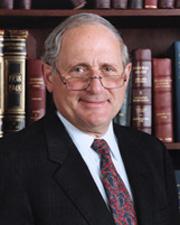 Sen. Carl Levin (D-MI)
Legislative Activity
Stay on top of the latest movement without scrolling through every action
Roll call votes on amendments in Senate: Motion to table amendment SA 2631 agreed to in Senate by Yea-Nay Vote. 56 - 41. Record Vote Number: 29.
March 2, 2004
View full timeline
Roll call votes on amendments in Senate: Motion to table amendment SA 2631 agreed to in Senate by Yea-Nay Vote. 56 - 41. Record Vote Number: 29.
March 2, 2004
Considered by Senate. (consideration: CR S1948, S1974-1975)
March 2, 2004
Motion to table amendment SA 2631 agreed to in Senate by Yea-Nay Vote. 56 - 41. Record Vote Number: 29.
March 2, 2004
Considered by Senate. (consideration: CR S1901)
March 1, 2004
Senate amendment submitted
February 27, 2004
Senate amendment proposed (on the floor): Amendment SA 2631 proposed by Senator Levin.(consideration: CR S1864-1865, S1867-1871; text: CR S1864-1865)
February 27, 2004
Amendment SA 2631 proposed by Senator Levin. (consideration: CR S1864-1865, S1867-1871; text: CR S1864-1865) To exempt any civil action against a person from the provisions of the bill if the gross negligence or reckless conduct of the person proximately caused death or injury.
February 27, 2004
Votes
1 roll call on this amendment
Text
Proposed
PROTECTION OF LAWFUL COMMERCE IN ARMS ACT

The PRESIDING OFFICER. Under the previous order, the Senate will
resume consideration of S. 1805, which the clerk will report.
The assistant legislative clerk read as follows:

A bill (S. 1805) to prohibit civil liability actions from
being brought or continuing against manufacturers,
distributors, dealers, or importers of firearms or ammunition
for damages resulting from the misuse of their products by
others.

Pending:

Hatch (for Campbell) amendment No. 2623, to amend title 18,
United States Code, to exempt qualified current and former
law enforcement officers from State laws prohibiting the
carrying of concealed handguns.
Kennedy amendment No. 2619, to expand the definition of
armor piercing ammunition and to require the Attorney General
to promulgate standards for the uniform testing of
projectiles against body armor.
Craig (for Frist/Craig) amendment No. 2625, to regulate the
sale and possession of armor piercing ammunition.

The PRESIDING OFFICER. The Senator from Idaho.
Mr. CRAIG. Mr. President, today we begin the third day of debate on
this important bill, S. 1805, addressing the problem that should
outrage many Members of this Senate and by the cosponsorship we have at
this moment, I believe that is the case. That outrage should be against
the abuse of our courts by those who cannot change public policy
through representative government but instead are attempting an end run
around the State and Federal legislatures to impose their political
agenda on the people of this country through litigation. In this case,
their target is the one consumer product whose access is protected by
nothing less than the U.S. Constitution itself; that is, firearms.
The bill, the Protection of Lawful Commerce In Arms Act, we are
talking about today and debated thoroughly yesterday and the day
before, would stop what I call junk lawsuits that attempt to pin the
blame and the cost of criminal misbehavior on business men and women
who are following the law and selling a legal product.
This bill responds to a series of lawsuits filed primarily by
municipalities advancing a variety of theories as to why gun
manufacturers and sellers should be liable for the cost of injuries
caused by people over whom they have no control, criminals who use
firearms illegally.
This is a bipartisan bill. Let me acknowledge my Democrat sponsor,
Max Baucus of Montana, for his work on this initiative. Many others
have helped advance it, as well as the leaders and the assistant
leaders on both sides. By that demonstration, this bill is truly a
bipartisan effort. The cosponsors we have to date are substantial. With
myself and Senator Baucus included, we now have 54 cosponsors.
We introduced the bill nearly a year ago, last March, with more than
half of the Senate as cosponsors at that time: Senator Alexander,
Senator Allard, Senator Allen, Senator Bennett, Senator Bond, Senator
Breaux, Senator Brownback, Senator Bunning, Senator Burns, Senator
Campbell, Senator Chambliss, Senator Cochran, Senator Coleman, Senator
Collins, Senator Cornyn, Senator Crapo, Senator Dole, Senator Domenici,
Senator Dorgan, Senator Ensign, Senator Enzi, Senator Graham of South
Carolina, Senator Grassley, Senator Gregg, Senator Hagel, Senator
Hatch, Senator Hutchison, Senator Inhofe, Senator Johnson, Senator Kyl,
Senator Landrieu, Senator Lincoln, Senator Lott, Senator Miller,
Senator Murkowski, Senator Nelson of Nebraska, Senator Nickles, Senator
Roberts, Senator Santorum, Senator Sessions, Senator Shelby, Senator
Snowe, Senator Smith, Senator Specter, Senator Stevens, Senator Sununu,
Senator Talent, Senator Thomas, and Senator Voinovich.
This range of cosponsorship reflects extraordinarily widespread
support that crosses party and geographical lines and covers the
spectrum of political ideologies that is clearly always represented in
the Senate. It demonstrates a strong commitment by a majority of this
body to take a stand against a trend of predatory litigation that
impugns the integrity of our courts, threatens a domestic industry that
is critical to our Nation's defense, jeopardizes hundreds of thousands
of good-paying jobs, and puts at risk access Americans have to a legal
product used for hundreds of years across this Nation for lawful
purposes such as recreation and defense.
We have been joined in this effort by a host of supporting
organizations representing literally tens of millions of Americans from
all walks of life. I thank them all for their effort to help pass the
Protection of Lawful Commerce in Arms Act. I invite my colleagues to
consider a broad cross section of American citizens represented by such
diverse organizations as unions, including United Mine Workers of
America, United Steelworkers of America, United Automobile, Aerospace
and Agricultural Implement Workers of America, the locals of the
International Association of Machinists and Aerospace Workers; business
groups, including the U.S. Chamber of Commerce, the Alliance of
America's Insurers, the National Association of Wholesale Distributors,
the National Association of Manufacturers, and the American Tort Reform
Association, the National Rifle Association; and more than 30 different
sportsmen's groups and organizations whose members are engaged in the
conservation and hunting and the shooting sports industry in all 50
States across this great Nation.
I have used the term ``junk lawsuits,'' and I want to make it very
clear, because this was part of our discussion yesterday, to anyone
listening to this debate, I do not mean any disrespect to the victims
of gun violence in any way who might be involved or brought into these
actions by other groups.
Although their names are sometimes used in the lawsuits, they are not
the people who came up with the notion of going after the industry
instead of going after criminals responsible for their injuries or for
their losses. The notion originated with some bureaucrats and some
anti-gun advocates, and the lawyers they were with.
Victims, including their families and communities, deserve our
support and our compassion, not to mention our insistence, on the
aggressive enforcement of the laws that provide punishment for the
criminals who have caused harm to them.
There are adequate laws out there now, and we constantly encourage
our courts to go after the criminal, to lock them up, and to toss the
key away when they are involved in gun violence and when they use a gun
in the commission of a crime. If those laws need to be toughened, our
law enforcement efforts improved, then the proper source of help is the
legislatures and the governments, not the courts, and certainly not
law-abiding businessmen and workers who have nothing to do with their
victimization. No.
The reason there are junk lawsuits is that they do not target the
responsible party for those terrible crimes. They are predatory
litigation looking for a convenient deep pocket to pay for somebody
else's criminal behavior. Let me repeat that. I define junk lawsuits as
predatory litigation looking for a convenient deep pocket to pay for
somebody else's criminal behavior.

[[Page S1861]]

They are junk lawsuits by any definition of the word because they are
driven by political motives to hobble or bankrupt the gun industry as a
way to control guns, not to control crime.
By definition, the legislation we are considering today aims to stop
lawsuits that are trying to force the gun industry into paying for the
crimes of people over whom they have absolutely no control.
Let me stop a minute right here and make sure everyone understands
the very limited nature of this bill. I have expressed it. I have
explained it. I have talked about it. I have asked all of our Members
to read S. 1805.
What this bill does not do is as important as what it does. This is
not a gun industry immunity bill. This bill does not create a legal
shield for anyone who manufacturers or sells firearms. It does not
protect members of the gun industry from every lawsuit or legal action
that could be filed against them. It does not prevent them from being
sued for their own misconduct.
Let me repeat that. It does not prevent them--``them,'' the gun
industry--from being sued for their own misconduct. This bill only
stops one extremely narrow category of lawsuits: lawsuits that attempt
to force the gun industry to pay for the crimes of third parties over
whom they have no control.
We have tried to make that limitation clear in the bill in several
ways. For instance, section 2 of the bill says its No. 1 purpose is:

To prohibit causes of action against manufacturers,
distributors, dealers, and importers of firearms or
ammunition products for the harm caused by the criminal or
unlawful misuse of firearm products or ammunition products by
others when the product functioned as designed and intended.

We have also tried to make the bill's narrow purpose clear by
defining the kind of lawsuit that is prohibited. Section 4 defines the
one and only kind of lawsuit prohibited by this bill. Let me repeat
that. Section 4 defines the one and only kind of lawsuit prohibited by
this bill. Let me quote:

a civil action brought by any person against a manufacturer
or seller of a qualified product, or a trade association, for
damages resulting from the criminal or unlawful misuse of a
qualified product by the person or a third party . . .

We have also tried to make the narrow scope of the bill clear by
listing specific kinds of lawsuits that are not prohibited. Section 4
says they include: actions for harm resulting from defects in the
firearm itself when used as intended--that is product liability suits--
actions based on the negligence or negligent entrustment by the gun
manufacturer, seller, or trade association; actions for breach of
contract by those parties.
Furthermore, if someone has been convicted under title 18, section
924(h), in plain English, that means someone who has been convicted of
transferring a firearm knowing that the gun will be used to commit a
crime of violence or drug trafficking, that individual is not shielded
from a civil lawsuit by someone harmed by the firearms transfer.
Finally, the bill does not protect any member of the gun industry
from lawsuits for harm resulting from any illegal action they have
committed. Let me repeat that. If a gun dealer, manufacturer, or trade
association violates the law, this bill is not going to protect them
from a lawsuit brought against them for harm resulting from that
misconduct.
What I have listed for my colleagues' convenience is all spelled out
in section 4 of the bill. We have been through that section several
times over the last several days. Again, this is a rundown of the
universe of lawsuits against members of the firearms industry that
would not be stopped--I repeat, not be stopped--by this narrowly
targeted bill.
What all these nonprohibited lawsuits have in common is that they
involve actual misconduct or wrongful actions of some sort by a gun
manufacturer, seller, or trade association. Whether you support or
oppose the bill, I think we can all agree that individuals should not
be shielded from the legal repercussions of their own lawless acts. The
Protection of Lawful Commerce in Arms Act expressly does not provide
such a shield.
I am going to repeat this again because some opponents continue to
mischaracterize the bill. This is not a gun industry immunity bill. It
prohibits one kind of lawsuit: a suit trying to fix the blame of a
third party's criminal acts or misdeeds on the manufacturer or seller
of the firearm used in that crime.
Even though this is a narrowly focused bill, it is an extremely
important bill. The junk lawsuits we are addressing today would reverse
a longstanding legal principle in this country that manufacturers of
products are not responsible for the criminal--I repeat, the criminal--
misuse of their products.
You do not have to be a lawyer to know that runaway juries and
activist judges can turn common sense on its head in specific cases,
setting precedents that have had dramatic repercussions. The potential
repercussions here could be devastating.
If a gun manufacturer is held liable for the harm done by a criminal
for misusing a gun, then there is nothing to stop the manufacturers of
any products used in crimes from having to bear the cost of those
crimes. Since when is this country going to step to that level? So
automobile manufacturers will have to take the blame for the death of a
bystander who gets in the way of a drunk driver? Yes, there are some
who would suggest that. The local hardware store will be held
responsible for a kitchen knife it sold that was later used in the
crime of rape? A baseball team, whose bat was used to bludgeon a
victim, will have to pay for the cost of that crime?
Now, does that sound silly to the average listener? It may. But those
kinds of charges are being brought today because this country does not
want to hold its criminal element accountable, in many instances.
It is not just unfair to hold law-abiding businesses and workers
responsible for criminal misconduct with the products they make and
sell, but it would also bring havoc to our marketplaces.
Hold on to your wallets, America, because those businesses that don't
actually go into bankruptcy will have to pass their costs through to
the consumer. My guess is that many in the anti-gun community would
say: That is just fine; if we cannot bankrupt the business, then let's
price the product out of the range of the average law-abiding citizen
who would like to afford a gun. To the criminal element that probably
steals for a living, they may have the kind of funds to buy that gun in
the black market at any price, and oftentimes they do.
Even without being successful, this litigation imposes enormous
financial burdens on the gun industry. It is important to keep in mind
that the deep pocket of the gun industry isn't all that deep. In
hearings on the House side, experts testified that the firearms
industry, taken together--I mean put them all together, look at their
assets, their income--would not collectively equal one Fortune 500
company.
Last year it was estimated--and we can only estimate because the
costs of litigation are confidential business information--that these
baseless lawsuits have cost the firearms industry more than $100
million. Furthermore, don't think these companies can just pass the
costs off to their insurer because in nearly every case, insurance
carriers have denied coverage.
I quote from what a Massachusetts union had to say about the issue,
the union whose members work at the Savage Arms Company in Westfield,
MA:

Today, we have 160 members from Savage workforce. By
comparison, about a dozen years ago, we had over 500 Savage
workers who were members of our Local. . . .

Savage Arms is not alone. Other businesses have closed their doors,
and the jobs have not been lost because of the sheer cost, the jobs
have been lost because of the sheer cost of fighting these junk
lawsuits.
The impact on innocent workers and communities is not the only
potential repercussion of these lawsuits. If U.S. firearms
manufacturers close their doors, where will our military and peace
officers have to go to obtain their guns? Do we then have to start a
government gun manufacturing company? I doubt that the efficiencies and
the qualities and the costs would be the same. Surely we don't want
foreign suppliers to control our national defense and community law
enforcement, not to mention the ability of individual American citizens
to exercise their second amendment protected rights through accessing
firearms for self-defense, recreation, and other lawful purposes.

[[Page S1862]]

For all these reasons, more than 30 States have laws on the books
offering some protection for the gun industry from these extraordinary
suits. Support has steadily grown in Congress for taking action at the
Federal level. This would not be the first time Congress had acted to
prevent this kind of threat to industries. Some would suggest it is
unprecedented, it has never happened before.
Let me give an example. There are a number of Members in this Chamber
who were serving when the Congress passed the General Aviation
Revitalization Act barring product liability suits against
manufacturers of planes that were more than 18 years old. Just a couple
of years ago, in the Homeland Security Act, Congress placed limits on
the liability of a half a dozen industries, including manufacturers of
smallpox vaccine and sellers of antiterrorist technologies. These
are only a couple examples out of a significant list of Federal tort
reform measures that have been enacted over the years when Congress
perceived a need to protect a specific sector of our economy or defense
interests from burdensome, unfair, and/or frivolous litigation.

I could go on. I have said enough for the moment. My colleagues are
here. Senator Reed, who is handling the opposition, has statements to
make. I believe Senator Levin has an amendment he would like to offer.
But clearly, this is an issue whose time has come. It is time to step
out and say: We are not going to suggest to law-abiding citizens that
you ought to bear the brunt of the criminal action. That is not the
case. Law-abiding citizens already bear a substantial amount of that
brunt. Taxpayers usually pick up most of the bills in these tragic
instances. That is why enforcing the law, putting those who misuse
firearms behind bars, is what it really ought to be all about.
But for social purposes, for political purposes, for whatever reason
that the anti-gun community has not been able to legislate either on
the floor of the Senate, on the floor of the House, or in State
legislatures across the Nation, they now run to the court system.
We suggest they can't do that, nor should they do that. We want to
protect the victims. We certainly want to protect them from the
criminal element. Much legislation is talked about now for the victim
and victims' rights. I support all of those kinds of things. But why
should the law-abiding manufacturer of any product in this country,
that is quality but simply misused and that misuse takes the life of a
third party--why should that manufacturer be responsible? We already
have a broad range of areas in which that responsibility is described
and in which the consumer is protected if that responsibility is not
followed by the manufacturer or those who sell that product in the
marketplace. That is an arena that is well litigated today. That is an
arena in tort law that is well spelled out.
Here today and in past lawsuits, we have had great imagination that
tries to cook up the issue of negligence or to redefine it or shape it
in a way that Americans have said and that tort law has said for
centuries: You shall not go there; you cannot go there.
Judges are saying that today and have said it consistently in these
kinds of lawsuits. That doesn't stop the lawsuits from coming. That
does not stop these lawsuits from draining hundreds of millions of
dollars out of a law-abiding, responsible commercial and manufacturer
entities.
I reserve the remainder of my time and yield the floor.
The PRESIDING OFFICER (Mrs. Dole). The Senator from Rhode Island.
Mr. REED. Madam President, the legislation before us can't be all
things. It can't be an effective barrier against litigation to protect
the gun industry and yet a way to protect the legitimate rights of
citizens who have been harmed by guns.
In fact, it is not both; it is one of them. It is carefully, cleverly
worded legislation to immunize the gun industry--dealers,
manufacturers, and the National Rifle Association--from any type of
liability with respect to guns, virtually.
There are perhaps minor exceptions, but the cases we see before us
today--the case of the DC snipers, the case of two police officers in
New Jersey--would be barred. These cases have already been filed. In
fact, one of the sweeping aspects of this legislation is, it doesn't
attempt to set the rules prospectively, to say as we go forward these
cases would not be heard by the courts. It literally walks in and tells
people who have filed cases, cases that have survived summary judgment
motions already by State court judges: You are out of court.
This is sweeping, and it is unprecedented. It deals a serious blow to
citizens throughout this country while enhancing dramatically the legal
protections for the gun industry.
Consistently the proponents say: You can't hold someone responsible
for the criminal actions of another. That is not what these cases are
about. These cases suggest, declare, allege that an individual failed
in his or her duties, his or her responsibility to do what is
necessary, responsibility in the conduct of their activity--in the case
of gun dealers, to take sensible, reasonable precautions, the standard
of care that a business person would use, the standard of care that any
business person must use in the United States.
The allegation is they fail to do that. The evidence is overwhelming
there was no standard of adequate care. Here is a gun dealer who could
not account for 238 weapons, who claims a teenager--he didn't realize
it at the time--must have walked in and shoplifted an automatic weapon,
a sniper weapon, and carried it away undetected. In fact, this weapon
was missing without his knowledge for weeks and months, undetermined.
Is that the standard of care we would expect a businessperson to
exercise, particularly one who deals in products that can kill? I don't
think so. That is what this is about. This is not about punishing
people for the criminal activity of others. It is about holding
individuals up to a standard of conduct we expect from anyone. There
are various examples. Some say, my God, if the hardware store sells a
knife to somebody and it is used in a crime, they are not responsible.
If you have a car dealer who leaves the keys in the cars and has no
security, and a teenager takes that car and gets into an accident and
harms someone, certainly I think the parents of the individuals harmed
or that individual could legitimately go to court and say this dealer
didn't meet the rational standard of care of anybody in the automobile
industry. They have to secure these cars. You cannot make them
available to people and teenagers who might steal them. That is common
sense.
That would apply to the automobile dealer, but if this legislation
passes, common sense doesn't apply to the gun industry in this country.
In fact, this is really a license for irresponsibility we are
considering today. As I said before, when they get the Federal firearms
license, if this bill passes, you can get another license. You are
being irresponsible. That is not to suggest all dealers are
irresponsible, but many are.
We talk about junk lawsuits. It is not a junk lawsuit when your
husband has been shot while sitting in the bus waiting to go to work. I
don't think the Johnson family volunteered to be part of this social
experiment. I think any suggestion to that effect is offensive. They
have been harmed grievously. A wife has lost her husband; children have
lost their father. Their livelihoods are in question. They seek
redress, as anyone would. That is not a junk suit. That is someone who
says I have been harmed by the negligence of someone and that person
should pay.
The suggestion that this suit is in response to some avalanche of
lawsuits that is devastating the firearm manufacturers is without any
foundation. The industry is so stressed they have raised $100 million
to protect themselves, not just legally, but also in terms of
controlling the documents and communications between themselves and
their attorneys. This is not an industry that seems to be without
resources. But I can tell you many of the families of victims of the
Washington snipers are looking forward to a lifetime where they might
have the resources to send children to college and do the things they
would have been able to do if their spouse was still alive. The
industry, it has been suggested, is being pushed into bankruptcy
because of these frivolous junk lawsuits.
Well, Savage Arms was mentioned. It is a company that was founded in
1894. It has provided firearms for now over a century. It went bankrupt
in 1988 because, according to the CEO, Ron

[[Page S1863]]

Coburn: ``We had too many products, each of them in dire need of re-
engineering.''
There is no suggestion they were being intimidated by these fancy
political science lawsuits. Under the bankruptcy plan, Coburn reduced
the product line and fired 400 employees. There has been contraction in
this industry, as in every manufacturing industry, but it is not as a
result of these suits.
Since that time, Savage has done remarkably well. They have taken the
lead in many different aspects. They are a responsible company. They
were honored as manufacturer of the year and in many other aspects. It
has been suggested this company, in effect, is overwhelmed by these
lawsuits. I don't think that is the case. I think they make business
judgments as any business--based upon products, demand, and all these
things.
We are not facing a situation where we would be without the benefit
of gun manufacturers in the United States because of these lawsuits.
The suggestion that this somehow would interfere with our national
security is outlandish. The suggestion we would then have to turn to
foreign suppliers for our military is rather odd. Indeed, today, many
of the suppliers for our national defense are the subsidiaries of
foreign companies. Browning, Winchester and Fabrique Nationale, which
supplies M-16 A-4 assault rifles and the M-2 49G squad automatic
weapon, are subsidiaries of Herstal, a Belgium firm. The Pentagon
contracted with Heckler and Koch, a German firm, to help develop the
next generation of industry weapons.
Clearly, the Pentagon doesn't feel American manufacturers are so
distressed that they have to go overseas. They are going overseas
because they are looking for superior weapons. They are dealing with
American subsidiaries of foreign companies. This is not about
preserving the defense and the ability to access weapons. This is about
protecting one industry from the legal responsibility to exercise
caution any individual must exercise--one industry, when all industries
must do that, or indeed the vast majority. This is not about protecting
the integrity of the courts. What does it say to the integrity of the
courts of West Virginia when a judge already found that a suit
involving these two New Jersey police officers should proceed, when we
say, no, you are wrong, this case is out the door? This is not about
protecting courts. It is about protecting an industry.
We have been asked to look closely at the law. We have to look
closely at the law in terms of the cases we know are pending because,
frankly, we could hypothesize about cases in the future. This is the
law:

A qualified civil liability action may not be brought in
any Federal or State court.

That is not a particularly narrow excerpt. It is not a listing of
those exemptions the gun industry made available themselves. This is
broad and sweeping, barring the doors of these types of suits. In
addition to that--talking about overreaching, dismissal of pending
actions--it is rare indeed that this Congress could go in and tell
plaintiffs who have a case in progress you are out the door, you cannot
proceed. This is extraordinary, to me.

A qualified civil liability action that is pending on the
date of enactment of this act shall be immediately dismissed
by the court.

Not reviewed but dismissed. I think, again, that is extraordinarily
broad and sweeping. The real aspect of this legislation goes to the
definition on the next chart.

A qualified civil liability action means a civil action
brought by any person against a manufacturer or a seller of a
qualified product or trade association, for damages resulting
from the criminal or unlawful misuse of the qualified product
by the person or a third party, but shall not include--

So it is any action, again not narrowly constrained, carefully worded
legislation.
Then there are several exemptions. Let me point out, if this were a
narrowly crafted piece of legislation, the exemption I think should
apply to the gun industry, not to the litigants. It should be those
safe harbors where if they do certain things, they are protected, if
they exercise due care. That is the way we want to draft narrowly
worded legislation. And this is quite to the contrary.
The burden is now on the individual to show that they qualify to
bring their case to court, not on the companies to show that their case
is somehow outside the normal range of negligent actions.
The key provision, in terms of the sniper case--and I will talk about
the sniper case in a moment--is sections ii and iii. Madam President,
ii is ``actions brought against a seller for ``negligent entrustment''
or ``negligence per se.''
Negligent entrustment is a defined term in the legislation. It means:

. . . the supplying of a qualified product by a seller for
use by another person when the seller knows, or should know,
the person to whom the product is supplied to is likely to,
and does, use the product in a manner involving unreasonable
risk of physical injury to the person or others.

The key element is ``know.'' For example, in the sniper case, the
dealer claims he did not know that the weapon was missing. It has been
acknowledged by the sniper that the weapon was shoplifted. This theory
will not provide that case to go forward.
``Negligence per se,'' again, is an element of knowledge which does
not seem to exist within the facts as we know them about the Bull's Eye
situation. By the way, it has been abrogated as a theory of law in
Washington State which would be an appropriate forum for the trial, or
at least for consideration. That doesn't work.
The next section is actions in which a manufacturer or seller of a
qualified product who violated a State or Federal statute and, quite
importantly, that violation was a proximate cause of the harm.
In the case of the sniper shootings, literally it would have to be
shown that the individual gun dealer at Bull's Eye knew the particular
weapon was missing more than 48 hours before he was confronted by the
ATF and that he failed to report it and, as a result, the sniper using
that weapon inflicted the harm. But, of course, the facts suggest
otherwise. The weapon was shoplifted. The individual claimed he did not
know it was missing at all.
All of these carefully worded exceptions do not provide relief for
individual plaintiffs. They do not provide it for the plaintiffs in the
case of the snipers. They do not provide relief in the case of the two
police officers in New Jersey. Yesterday, we had an opportunity to
correct that, just a small correction that would allow for these
situations, and we failed to do that.
This legislation is designed with one purpose: to immunize the gun
industry. I think it is unfortunate, it is unprecedented, and it leads
to the conclusion that we are essentially encouraging the kind of
reckless behavior, the kind of irresponsible behavior which is not the
norm, but it is certainly present and, indeed, it is present in the
context that firearms pose a particular danger to the community.
We talked about Bull's Eye Shooter Supply in Tacoma, WA, over 238
weapons missing. You are not supposed to have any weapons missing.
Then there are the situations, for example, of Buckner Enterprises,
Pro Guns and Sporting Goods, D&D Discount, Hock Shop, Julie's Pawn,
Kent Arms, Northwest Shooters, Woodstove Supply, and Steve's Guns and
Archery, all in Michigan.
Over a 4-month period, an undercover State trooper and a 20-year-old
convicted felon traveled to 14 firearms retailers and attempted to make
a straw purchase. The eight stores I mentioned above agreed to make the
straw deal--irresponsible and reckless and, under this legislation,
perhaps invulnerable to a suit by someone who might have been hurt as a
result of the potential straw sales.
Bob's Gunshop, Bristol, PA, repeatedly sold firearms to convicted
felons and out-of-State residents, including a 9 mm Taurus sold to a
New Jersey convicted felon. The owners of the store counseled criminals
and out-of-State residents to find a local resident to complete the
background check.
Is that irresponsible? Yes. Is that against the law? Perhaps not.
It goes on and on. One gun store with which I am intrigued is
Illinois Gun Works in Chicago, IL. John ``No Nose'' DiFronzo, a reputed
mobster, owns the property where Illinois Gun works is located.
Illinois Gun Works is one of the leading suppliers of crime guns to
local criminals. This is from the Chicago Sun Times.
There are gun dealers out there who are acting irresponsibly and
negligently. They will escape liability if this legislation passes.
There are manufacturers that are not policing the

[[Page S1864]]

ranks of their dealers effectively enough who continue to sell to
dealers such as these, who continue to report, as Bushmaster, the
company that manufactured the sniper weapon, reported in regard to
Bull's Eye. They are a good company. Even after all of this, they will
escape liability.
We are in an extraordinarily important moment. Will we extend this
unprecedented protection to an industry, will we signal to an industry
that they can be irresponsible, they can be negligent? That is what we
are talking about today.
I know my colleague, Senator Levin, is here to offer an amendment.
Let me ask that he be allowed to do that. I retain my time for
additional comments later.
The PRESIDING OFFICER. The Senator from Michigan.
Mr. CRAIG. Madam President, may I briefly say, I think the Senator is
here for the offering of an amendment, and then I believe Senator
Warner would like to follow him in the offering of an amendment. If
there is no objection, I ask unanimous consent that be the procedure.
Mr. LEVIN. Reserving the right to object, it is my understanding the
Senator from Virginia wants to offer an amendment.
Mr. WARNER. Following the Senator from Michigan, that is correct.
Mr. LEVIN. Madam President, I ask the Senator from Virginia, is it a
second-degree amendment?
Mr. WARNER. Madam President, no, it is a freestanding amendment in no
way related to the amendment of my distinguished colleague from
Michigan.
Mr. LEVIN. I would agree to that providing--
Mr. CRAIG. Let me clarify--
Mr. LEVIN. I want to make sure we get a vote on my amendment. This is
what this is all about. We might as well get this out in the open as to
whether or not there will be votes that will be agreed to on the
amendments that are offered. The unanimous consent agreement talked
about amendments being offered today and Monday. The Senator from
Idaho, I think, as well as I believe the Senator from Nevada, talked
about votes on these amendments, but it is not clear in the UC that the
amendments offered would be voted upon.
I do not want to lose the regular order that my amendment would be
disposed of by agreeing to a unanimous consent agreement that my good
friend from Virginia would then come next. That is the issue, I tell my
good friend from Idaho.
Mr. CRAIG. If the Senator will yield.
Mr. LEVIN. I will be happy to yield.
Mr. CRAIG. It is our belief, it is my purpose today to disallow any
votes from occurring. There will be no votes today.
Mr. LEVIN. Of course.
Mr. CRAIG. On any action. The Senator can offer his amendment. We
have just seen it. Senator Reed and I will review it over the weekend,
or our staffs will. I think that is fair and appropriate. Because the
amendment of the Senator from Virginia is not in the second degree, it
is my understanding the amendment of the Senator from Michigan would
have to be set aside for the purpose of offering the amendment by the
Senator from Virginia.
Mr. LEVIN. I would then offer--Madam President, do I have the floor?
The PRESIDING OFFICER. The Senator from Michigan has the floor.
Mr. LEVIN. I then suggest the amendment in a unanimous consent
request, that my amendment again be the regular order first thing on
Monday. The reason for this is that it is important to assure that
there be votes on these amendments. I do not know what the intention of
the Senator from Idaho is relative to----
Mr. CRAIG. I object to that unanimous consent. There may be other
amendments offered today by other parties.
Mr. LEVIN. I have no objection, of course, to that, but my question
to the Senator from Idaho is, is it the intention of the Senator from
Idaho that there be votes on amendments that are offered on Monday?
Mr. CRAIG. I believe the leadership on both sides intends for there
to be votes, or a vote on an amendment, but I cannot tell the Senator
what that amendment will be. I object to a specific amendment at this
time.
Mr. LEVIN. Then I would have to object because otherwise I am no
longer the regular order.
The PRESIDING OFFICER. The objection is heard.
Mr. WARNER. Might I seek a clarification from the distinguished floor
manager?
The PRESIDING OFFICER. The Senator from Michigan has the floor.
Mr. LEVIN. I am happy to yield for a question without losing my right
to the floor.
Mr. WARNER. Well, I do not seek to take the floor, but if the Senator
carried out his objection to the full meaning, it would prohibit any
amendments coming up today unless the Senator agreed to laying his
amendment aside so that another amendment could come up. Is that the
desire of the Senator?
Mr. LEVIN. Not at all. My desire is that I not lose my opportunity to
have a vote on my amendment.
I do not want a vote today. Let's be very clear on this. When the
operating UC was entered into, it was my understanding that amendments
would be allowed to be offered today and Monday. It was also my
understanding that there was an intention that that meant those
amendments would be voted on at some point--not today but at some
point. If there is any doubt that that is the intention of the
leadership or of the floor managers, to allow votes on amendments that
are offered today, the only way I can come close to having assurance
that there will be a vote on my amendment at some point will be to
modify any UC to agree to set aside my amendment, which will be fine,
but then make it a part of the UC that my amendment then be the
amendment that is in order on Monday, because otherwise I am weakening
the position I have.
Mr. WARNER. Madam President, there is no intention of this Senator to
weaken. As a matter of fact, I intend to vote in favor of the Senator's
amendment, subject to a colloquy we will have to clarify a question I
have in my mind. But the Senate must go forward today on amendments. I
am trying to figure out what is the procedure by which we do it so that
my colleague from Michigan is protected.
The PRESIDING OFFICER. The Senator from Michigan has the floor.
Mr. LEVIN. I have no objection to yielding the floor for an answer to
that question, without losing my right to the floor.

The PRESIDING OFFICER. The Senator from Idaho.
Mr. CRAIG. Certainly the explanation of the Senator as to what
leadership proposed in the unanimous consent request, that amendments
could be offered today and Monday, is accurate. But the unanimous
consent request guaranteed votes only to those amendments that were
within the unanimous consent request. I am not today going to allow
that unanimous consent request to be amended for the purpose of
stacking up a variety of votes. I am willing to look at that on Monday.
I have not yet seen the Senator's amendment. We just received it. We
are reviewing it now. There may be other amendments I want to review
with staff over the weekend.
So I renew my objection to allowing the Senator to become in order
again. We have an amendment that we did not get to last night, and that
is Senator Bingaman's amendment that was in order under the unanimous
consent agreement. The hour was late and most were wanting to go home.
The Senator was kind enough to put that vote over. It is my
understanding that that will be at least one amendment that could be
voted on, because it is entitled to be voted on within the unanimous
consent agreement, late Monday afternoon.
Mr. LEVIN. I thank my good friend from Idaho.

Amendment No. 2631

Mr. LEVIN. Madam President, I send my amendment to the desk and ask
for its immediate consideration.
The PRESIDING OFFICER. The clerk will report.
The assistant Journal clerk read as follows:

The Senator from Michigan [Mr. Levin] proposes an amendment
numbered 2631:

(Purpose: To exempt any civil action against a person from the
provisions of the bill if the gross negligence or reckless conduct of
the person proximately caused death or injury)

On page 11, after line 19, add the following:

[[Page S1865]]

SEC. 5. GROSS NEGLIGENCE OR RECKLESS CONDUCT.

(a) In General.--None of the provisions in the Act shall be
construed to prohibit a civil liability action from being
brought or continued against a person if that person's own
gross negligence or reckless conduct was a proximate cause of
death or injury.
(b) Definitions.--As used in this section--
(1) the term ``gross negligence'' has the meaning given the
term in subsection (b)(7) of the Bill Emerson Good Samaritan
Food Donation Act (42 U.S.C. 1791(b)(7)); and
(2) the term ``reckless'' has the meaning given the term in
the application notes under section 2A1.4 of the Federal
Sentencing Guidelines Manual.

The PRESIDING OFFICER. The Senator from Idaho.
Mr. CRAIG. Madam President, let us try to sort this out so that the
Senator from Virginia is not left out.
I suggest the absence of a quorum.
The PRESIDING OFFICER. The clerk will call the roll.
The assistant Journal clerk proceeded to call the roll.
Mr. CRAIG. Madam President, I ask unanimous consent the order for the
quorum call be rescinded.
The PRESIDING OFFICER. Without objection, it is so ordered.
Mr. CRAIG. Madam President, let me place a unanimous consent request
to facilitate actions of the two Senators on the floor. I ask unanimous
consent the Levin amendment be temporarily set aside for the purpose of
allowing the Senator from Virginia to offer his amendment. Once that
amendment is offered and discussed, the Warner amendment would then be
set aside for the purpose of returning to the Levin amendment.
The PRESIDING OFFICER. Is there objection?
Mr. LEVIN. Do I understand, then, that the Levin amendment would
continue to be the regular order under that unanimous consent?
Mr. WARNER. I believe that is correct, yes.
The PRESIDING OFFICER. It would be the pending question.
Mr. LEVIN. I thank the Senator from Idaho. It is fine with me.
The PRESIDING OFFICER. Without objection, it is so ordered.
Mr. CRAIG. I thank the Senator for his cooperation and turn to the
Senator from Virginia.

Amendment No. 2624

Mr. WARNER. I thank my colleagues. I ask that amendment No. 2624 be
the pending business.
The PRESIDING OFFICER. The clerk will report the amendment.
The senior Journal clerk read as follows:

The Senator from Virginia [Mr. Warner] proposes an
amendment numbered 2624.

Mr. WARNER. I ask unanimous consent the reading of the amendment be
dispensed with.
The PRESIDING OFFICER. Without objection, it is so ordered.
(The amendment is printed in today's Record under ``Text of
Amendments.'')
Mr. WARNER. Madam President, I want to make it eminently clear that I
desire in every way to cooperate with the joint leadership which, in a
bipartisan way, has indicated their desire, together with expressions
of the President, that this bill move forward. This is not a dilatory
tactic on my part, nor is it to be construed in any way as a political
tactic. The subject of this amendment simply is a very heartfelt,
personal matter for me.
Each of us counts our joys and benefits through life. I was blessed
with two very strong and wonderful parents. My father devoted his life
to the medical profession. He served in World War I as a very young
doctor in the trenches. He returned a decorated soldier, and
established his practice as a surgeon. He concluded a lifetime of total
dedication to the profession of medicine, his patients, and the healing
of those who have the misfortune of illnesses and other diseases. It is
for that reason I bring up this amendment for consideration in the
Senate. In brief, this amendment states that if the Senate believes
certain protections from lawsuits should be afforded to the gun
industry, then certain protections should be likewise afforded to the
medical profession. It is as simple as that.
Earlier this week, we dealt with a similar piece of legislation. But
this amendment differs in the sense that I have purposely removed any
reference to insurance companies or to those companies engaged in the
manufacture of healing drugs. I have done this to point out with
absolute clarity in the minds of all Senators that if the underlying
bill does move forward, then should comparable fair treatment be
extended to the medical profession that serves every single American.
The gun industry has a narrow following, in terms of those served
under this bill. I don't say that with any disrespect. I, throughout my
life, have owned and enjoyed guns. My father gave me my first gun when
I was 9 years old, and I have a modest collection to this day. I enjoy
the fields and the streams. I pride myself as being a hunter and an
outdoorsman. In no way, do I make any personal affront against those
who similarly follow the joys of the outdoors.
But, I believe it is essential that if this mighty institution of the
Senate move forward with the underlying bill, they carry with it an
amendment which accords the same protections to the medical
profession, whether it is an emergency room or the doctor's office.

With that in mind, I hope my colleagues look upon my effort as one of
purity of heart, and not for political reason. I have no reason to try
to impede the underlying bill, but I simply want to give the medical
profession such benefits as the Senate is now contemplating in giving
to a very narrow segment of our industry; namely, the gun industry and
the gun dealers.
I rise today to offer an amendment to address the issue of a form of
tort reform. Today the Senate is debating tort reform for the gun
industry. I wish to take a few minutes to raise the issue of tort
reform with regard to another industry--the health care profession.
I have indicated my father's lifework was in medicine. I had often
thought as a young man to pursue that profession. But without getting
too personal about this, I served briefly in World War II in the Navy.
My father died just months after I returned home. I think had he lived
I might well have followed in his profession. But nevertheless, I went
on to law school, and had a modest career in the practice of law and in
one thing and another. And here I am today, proud to represent my great
State in the Senate.
Soon, the Senate will vote on S. 1805, legislation to provide certain
legal protections to the gun industry--legal protections which are
denied almost across the board to almost every other industry in the
private sector, and certainly the medical profession.
It is a very selective piece of legislation for a very selective
group. Proponents have argued this legislation is necessary because
lawsuits are driving gun dealers and gun manufacturers out of business.
It is very simple. The same thing is happening to the medical
profession. Simply stated, the same situation, although far more
serious in my judgment and in the judgment of others, is happening to
the medical profession. Doctors, nurses, and other health care
professionals are leaving the practice of medicine due to the
astronomical cost of malpractice insurance, frivolous lawsuits, and
what is regarded as runaway jury verdicts where awards, by any standard
of fairness, far exceed the damages which some may have suffered as a
consequence of receiving medical attention.
In my view, if we are going to be protecting the gun industry from
lawsuits, we at least ought to protect the medical profession. We have
all heard the real stories from doctors about the rapidly increasing
cost of medical malpractice insurance. Some States' malpractice
insurance premiums have increased as much as 75 percent in a single
year.
As a result, the fact is these doctors, unable to afford ever
increasing premiums, are leaving the profession altogether and patients
are losing access to health care.
Again, my father's profession was surgery primarily, but he also
practiced gynecology.
I was astonished to learn that in many medical schools today those
young people studying to go into the various segments of medical
practice are shunning gynecology. Some medical schools are not even
graduating those engaged in gynecology. They have just stopped that
segment of the profession because they know of the difficulties to
practice gynecology as a result of medical malpractice suits.
I have here today the front pages of two of the leading magazines we
all read. There it is. One: ``The Doctor Is

[[Page S1866]]

Out.'' The other: ``Lawsuit Hell--How Fear of Litigation Is Paralyzing
Our Professions.''
There is the story.
All I am asking is if this bill passes the Senate that doctors,
nurses, and other practitioners in health care are given the same equal
treatment as the gun dealers and the gun manufacturers. It is as simple
as that.
I have received numerous letters, as have every single Member of this
body, from medical professionals in the Commonwealth of Virginia that
share with me the very real difficulties they are encountering with
malpractice insurance as a consequence of this problem.
I myself went through a modest medical procedure the other day. The
radiologist literally cornered me as I was exiting the examination, and
stopped to talk to me--not one, not two, but about eight came in
knowing the Senator from Virginia was in the facility. They had me flat
on my back. I listened very carefully as they explained--not
complaining nor whining in any way, but in a factual way--how the
radiologists in their profession have watched the astronomical increase
in cost of their insurance.
Let me read a letter I just received. I will withhold the name. But
the letter is in my office. This young doctor writes:

I am writing you to elicit your support and advice for the
acute malpractice crisis going on in Virginia. . . . I am a
48-year-old single parent of a 14- and 17-year-old. After all
the time and money spent training to practice OB-GYN, I find
myself on the verge of almost certain unemployment and
unemployability because of the malpractice crisis. I have
been employed by a small OB-GYN Group for the last 7 years.
Our malpractice premiums were increased by 60 percent in May
2003. The prediction from our malpractice carrier is that our
rates will probably double at our renewal date in May 2004.
The reality is that we will not be able to keep the practice
open and cover the malpractice insurance along with other
expenses of practice.

Colleagues, that is happening in just about every State in this great
country of ours. We have here and now the chance to address this crisis
in a fair and constructive way.
I mentioned the two magazines: The June 2003 edition of Time magazine
had a cover story on the effects of rising malpractice insurance costs.
The story, entitled ``The Doctor Is Out,'' discusses several doctors
all across America who have had to either stop practicing medicine or
have had to take other action due to increased insurance premiums. One
example cited in this magazine is the case of Dr. Mary-Emma Beres. Time
reports this doctor, a family practitioner from Sparta, NC--
incidentally, the distinguished Presiding Officer represents this State
with great distinction. That doctor in Sparta, NC ``has always loved
delivering babies. But last year, Beres, 35 years old, concluded that
she couldn't afford the tripling of her $17,000 malpractice premium and
had to stop'' caring for those women going through perhaps the greatest
joy of life; that is, childbirth.
The article continues:
``With just one obstetrician left in town for high-risk cases, some
women who need C-sections now must take a 40-minute ambulance ride'' to
other communities to try to get that service.
Dr. Beres' case makes clear that not only doctors are being affected
by the medical practice insurance crisis, but patients are as well.
With increased frequency, due to rising malpractice rates, more and
more patients are not able to find the medical specialists they need.
The second magazine, Newsweek, also recently had a cover story on the
medical liability crisis entitled ``Lawsuit Hell.''
I was particularly struck by the feature in this magazine about a
doctor from Ohio who saw his malpractice premiums rise in 1 year from
$12,000 to $57,000--1 year. As a result, this doctor ``decided to lower
his bill by cutting out higher-risk procedures like vasectomies,
setting broken bones and delivering babies--even though obstetrics was
his favorite part of the practice. Now he glances wistfully at the
cluster of baby photos still tacked to his wall in the office. 'I miss
that part of the practice terribly,' he says.''

While these stories are compelling on their own, the consequences of
this malpractice crisis can be more profound. On February 11, 2003, a
young woman in Gulfport, MS, shared with both the HELP Committee in the
Senate, on which I serve, and the Judiciary Committee her personal
story about how this crisis affected her.
This woman told us how on July 5, 2002, her husband Tony was involved
in a single car accident, in which he had a head injury, and was rushed
to a hospital in Gulfport where he received medical attention. He could
not be treated at the Gulfport hospital because they did not have the
specialist necessary to care for him. After a 6-hour wait, he was
airlifted to University Medical Center.
Today, Tony is permanently brain damaged. According to the person
delivering this story, no specialist was on staff that night in
Gulfport because overriding medical costs forced almost all the brain
specialists in that community to abandon their practice. As a result,
Tony had to wait 6 hours before the only specialist left in Gulfport
could treat him to reduce the swelling of his brain.
Without a doubt, the astronomical increases in medical malpractice
premiums are having wide-ranging effects. It is a national problem. It
is time for a fair and national solution. This moment in the life of
this great Senate is the chance to address that.
The President has indicated that the medical liability system in
America is largely responsible for the rising costs of malpractice
insurance. The American Medical Association and the American College of
Surgeons agree with him as does almost every doctor in Virginia who I
have discussed the issue with.
The president of the AMA, Dr. John Nelson, has publicly stated, ``We
cannot afford the luxury of waiting until the liability crisis gets
worse to take action. Too many patients will be hurt.''
The American College of Surgeons concurs by stating, ``More and more
Americans aren't getting the care they need when they need it. . . .
The `disappearing doctor' phenomenon is getting progressively and
rapidly worse. It is an increasingly serious threat to everyone's
ability to get the care they need.''
Let me state unequivocally that I agree with our President, with the
AMA, with the American College of Surgeons, and with the vast majority
of doctors all across Virginia. That is why I am offering my amendment
today.
My amendment is simple, like other measures that have come before the
Senate, my amendment provides a nationwide cap on damages in medical
malpractice lawsuits.
My amendment differs from other measures that have been voted on in
the Senate in one key aspect--whereas these other bills would have
applied to doctors, my amendment is solely limited to the caring
medical professionals who take care of each and every one of us when we
need medical care.
It is a commonsense solution to a serious problem.
Now that I have laid out the amendment, I would like to reiterate one
important point. As you know, the gun immunity bill provides broad
protection to gun manufacturers and gun dealers in both Federal and
State court. The bill is aimed at protecting the manufacturers and
dealers from lawsuits that result from the criminal or unlawful use of
a firearm. The basic data is that if a manufacturer or dealer follows
the statutory law in the manufacturing and sale of a legal product,
they should not be held responsible for the actions of a third party.
While some may claim that this gun immunity bill might be an
important component of tort reform, in my opinion, health care
liability reform is even more important. We must protect the medical
profession and the patients it serves.
How can we give near absolute protection from litigation for one
industry--the gun industry--and do absolutely nothing for another
industry that is solely dedicated to saving lives?
Let's ask ourselves, in the event that a bullet from a firearm is
shot into an innocent victim, is our healthcare system prepared to help
that victim? Without healthcare liability reform, it may not be, as
there might not be the appropriate doctor in the area to tend to the
patient. That is why my amendment goes hand-in-hand with the gun
immunity bill.
So now it is up to my colleagues in the Congress. It is your choice.
If we are going to give legal protections to the gun industry, all I
say is let's give it to the doctors as well.

[[Page S1867]]

If you gave this choice to the American people, there is no doubt
that the doctors would win by a 100 to 1 margin.
I urge my colleagues to support my amendment.
I yield the floor.

Amendment No. 2631

The PRESIDING OFFICER. The Senator from Michigan.
Mr. LEVIN. Madam President, what is the pending amendment?
The PRESIDING OFFICER. The Senator's amendment is pending, the Levin
amendment.
Mr. LEVIN. Madam President, in the fall of 2002 the entire country
was focused on the Washington, DC, area as an unknown sniper
indiscriminately shot 16 innocent people in little more than a month,
from September 14 to October 24. Among the sniper victims were Jim
Martin, shot and killed on October 2 while walking across a Shoppers
Food Warehouse parking lot in Wheaton, MD, after purchasing groceries
for his church; Sarah Ramos was shot and killed while sitting on a
bench in front of a post office. She was waiting for a ride to take her
to a babysitting job; Thirteen-year-old Iran Brown, the youngest of the
victims, was shot in the chest and wounded on October 7 after getting
out of a car at his middle school; and Conrad Johnson, a 35-year-old
busdriver, was shot and killed on October 22 while standing on the top
step of his bus at a ride-on bus staging area in Aspen Hill, MD.
On Thursday, October 24, members of the sniper task force arrested
John Allen Muhammad and John Lee Boyd Malvo at a rest stop on I-75 in
Frederick County. They were charged with shooting the victims with a
Bushmaster semiautomatic assault rifle. Both were prohibited under
Federal law from possessing a gun. Malvo is a juvenile and Muhammad was
the subject of a domestic violence restraining order. Both have been
convicted of capital murder in Virginia.
The sniper rifle used by Malvo and Muhammad was later traced to
Bull's Eye Shooter Supply in Takoma, WA. Bull's Eye representatives
claim not to have any record of sale of the weapon, cannot account for
how the snipers obtained the assault rifle. Malvo later admitted he had
shoplifted the gun.
The sniper case prompted an ATF investigation of Bull's Eye. The
investigation revealed that the gun dealer had no record that the gun
used by the snipers was missing from the inventory. The ATF
investigation also determined that 77 other guns were missing from the
Bull's Eye store. Four prior audits of the dealer found at least 160
additional guns missing from the store. The guns that were missing from
Bull's Eye were not all handguns that could walk out the door in
somebody's pocket. The gun shoplifted by Malvo was an assault rifle.
The families of the sniper victims filed a lawsuit against Bull's Eye
and Bushmaster, the manufacturers that supplied the sniper weapon to
the dealer, claiming that Bull's Eye operated its business in such a
grossly negligent manner that scores of guns routinely disappeared from
its store and that Bushmaster continued to supply that dealer even
after years of audits by ATF showing that scores of guns were missing
from the dealer's inventory.
Did Bull's Eye or Bushmaster violate any Federal or State statute?
That is the issue. That is the heart of the issue we are debating. If
you are reckless in your operations, even though you may not have acted
illegally, but if you are reckless or if you are grossly negligent in
your operations, should you be held accountable for your own actions?
That is the question. Should you be held accountable for your
own reckless or grossly negligent actions if that gross negligence or
recklessness is the proximate cause of somebody else's death or injury?

That is what this amendment is all about. Frankly, that is what the
bill is all about, to eliminate the possibility of recovery in cases
where somebody can prove recklessness or negligence unless they can
also prove illegality. That is the purpose of the bill, to give that
immunity unless plaintiffs can prove illegality. The purpose of this
amendment is to say that if you can prove gross negligence or
recklessness on the part of an individual, and if that recklessness and
gross negligence is the proximate cause of injury or death, then you
are entitled to bring a lawsuit.
I listened to this debate; I have not been here for much of it, but I
read a great deal and tried to follow it. It seems to me that is the
heart of the matter and what it comes down to. That is what this
amendment is intended to clarify.
Mr. WARNER. Could I ask my distinguished colleague a question,
because Virginia was hard hit, as were Maryland and other States, by
that sniper case, which the Senator recounted in the opening remarks.
It is my understanding--and I have followed the debate very carefully
on all aspects of this legislation--but the legislation, if it were to
pass, would put in doubt, to some considerable extent, the right of the
many families. The greater community of the Nation's Capital was in
semiparalysis. Schools closed. People could not conduct their normal
activities because of the sense of lack of safety. They could not even
do something simple such as filling the gas tank of the car.
It seems to me unless we let the full force and brunt of all the
legal remedies available to citizens of our Nation be utilized to bring
to justice, either civilly or criminally, all those who may have
contributed--as the Senator says, by gross negligence--then we are
denying, particularly to these sniper victims' families and others
across the Nation, some very fundamental rights.
I commend my distinguished colleague from Michigan. It is my intent
to support the Senator.
Am I correct in my premise, in my question?
Mr. LEVIN. The Senator from Virginia is very much on point and is
correct. This is a victim's right remedies issue. Do we provide a
remedy for a victim of somebody's gross negligence or recklessness that
has injured that victim where the proximate cause of the injury--or a
proximate cause of the injury, to be technically correct--is the
defendant's recklessness or gross negligence or are we going to deny
victims that remedy? Are we going to tell a victim: You have to prove
that someone violated a law in order to get recovery, even though you
can prove gross negligence or recklessness. Even though you can prove
that recklessness or gross negligence on the part of someone you sue
was a proximate cause of death or injury, you have to prove that there
was a violation of law?

Why would we immunize any particular industry from that kind of
recovery where it is not somebody else who is being sued for their
contribution to somebody's injury but it is the industry itself or a
gunstore itself or any store that contributed, through recklessness or
gross negligence, to somebody's death or injury?
I have read and heard a lot in this debate about individual
responsibility and accountability, that you should not be accountable
for somebody else's actions injuring somebody else, and I do not
disagree with that. My amendment says where it is your own recklessness
or gross negligence which is a proximate cause of an injury or a death,
you should not be immunized. That is what my amendment provides, that
if your own recklessness or your own gross negligence is a proximate
cause of death or injury, you should still be held accountable.
That is what we are going to be voting on. I hope we are going to be
voting on it, I should say.
Mr. WARNER. Mr. President, for clarification, when my distinguished
colleague from Michigan refers to ``victims,'' we should make it clear
that oftentimes victims perish, so it is their spouses, their families
we are talking about. I think in our discussion we ought to make it
clear it is a class of people we are trying to protect.
Mr. LEVIN. The Senator is correct. In terms of the definition of
``victims,'' we are talking here about families who lose loved ones as
well as people who are injured themselves.
I want to emphasize one fact here, which is there was a motion to
dismiss this case in the State of Washington brought by victims against
Bull's Eye and against Bushmaster. On June 27, 2003, the court denied
the motions, and here is what the court said:

[T]he facts in the present case indicate that a high degree
of risk of harm to the plaintiffs was created by Bull's Eye
Shooter Supply's alleged reckless or incompetent conduct in
distributing firearms.

The court said it was the defendant's actions that caused damage to
the

[[Page S1868]]

plaintiffs. It seems to me for us to say even though Bull's Eye caused
damage through recklessness or gross negligence to victims, we are
going to deny those victims a remedy unless they can prove there was an
illegal action--not just a reckless action, but an illegal action--is
to mistreat this particular class of victims.
To single out this class of victims and say, ``You cannot recover
unless you can prove illegal action on the part of the defendant''--not
just that they were reckless, not just that they were negligent--I
think is highly arbitrary and discriminatory treatment of real victims
who right now can go to court, and if they can show reckless behavior,
negligent behavior on the part of the defendants that was a proximate
cause of their injury, then they can recover.
I do not even know that Congress can constitutionally destroy the
pending claim. I hope not. I hope we cannot destroy a claim that is
pending for an injury that has already been caused, constitutionally,
but I do know we should not try. We should not be trying to remove the
rights of victims to sue people whose recklessness or gross negligence
was a proximate cause of their injury.

That is what this amendment would assure, that that right of action
for recklessness or gross negligence which is a proximate cause of the
injury can be compensated for.
There are a number of other troubling cases that have been referred
to that would be jeopardized. Again, I do not know that we can
constitutionally eliminate a claim based on an action which has already
taken place. I sure hope not. But I know what the intent of this bill
is, which is to immunize the defendants whose reckless or negligent
conduct is being sued upon.
The Guzman case, on Christmas Eve 1999--this was a man who was killed
by a shot to his heart while standing in front of a Worcester, MA,
nightclub. About a week later, the police recovered a handgun in a lot
near where this man, Danny Guzman, was killed. The gun was lacking a
serial number. It was found by a 4-year-old child. A ballistics test
determined the gun was the one that killed Danny Guzman.
The investigation following the shooting revealed the gun was one of
several stolen by employees of Kahr Arms. It was discovered that one of
the employees in the Kahr manufacturing facility had stolen the gun
used to kill Danny Guzman and sold it to buy crack cocaine.
Publicly available records, summarized in a complaint filed by Danny
Guzman's family, indicate this employee of the Kahr facility had not
only been arrested on various charges over the years but as early as
1995 had been addicted to cocaine and was ``habitually stealing money
to support his cocaine habit.''
In March of 2000, the police arrested the Kahr employee who later
pled guilty to the gun thefts. The investigation also led to the arrest
of a second Kahr employee who also pled guilty to stealing a gun.
According to a complaint that was filed by Danny Guzman's family,
Kahr Arms not only apparently hired a drug addict with a record of
criminal charges, but the company also chose not to utilize basic
security measures that could have prevented the theft, or an inventory
tracking system that could have determined that guns were missing.
According to the family's complaint, Kahr Arms did not conduct
background checks on employees. The company did not install medal
detectors, security cameras, x-ray machines, or other devices to ensure
that employees did not just walk off with guns.
In fact, an affidavit signed by ATF Special Agent Michael Curran says
the person who stole the gun that ended up killing Danny Guzman once
said--we all should listen to those words--``he had taken the firearm
out of the company, that he does it all the time, and that he can just
walk out with them.'' Those are his words. He takes guns out of here
``all the time''--this drug addict. He can just walk out with them.
The company did not track its inventory in any meaningful way. And
according to the complaint, from February 1998 to February 1999,
approximately 16 shipments of handguns from Kahr Arms failed to arrive
at their points of destination.
Did Kahr Arms violate a State or Federal statute? Nobody has claimed
they did. And unless they did, under this pending bill, immunity from
suit would result. It seems to me this is something all of us ought to
be troubled by and focus on because there is a lot of uncertainty and
confusion, I believe, as to what this bill would provide.
But at its heart, the issue is this: Should we say unless you can
prove an act was illegal on the part of the defendant, you will not be
able to recover for damages caused by that defendant's recklessness or
gross negligence?
Should that defendant be immune from suit even though his
recklessness or gross negligence has caused your injuries, unless you
can prove that that conduct was also illegal?
The lawsuit that was filed by Danny Guzman's surviving family members
alleges the wrongful death based on Kahr Arms alleged negligence. While
the defendants moved to dismiss this case on April 7, 2003, the
Massachusetts Superior Court denied the motions. This bill is aimed at
nullifying that kind of case. I hope we can't constitutionally do it
retroactively. I hope we cannot destroy that cause of action. But we
should not try and we surely should not single out one industry to help
immunize them against their own acts of recklessness or gross
negligence.
In a third case, a team of Orange, NJ, police officers was operating
undercover at a gas station that had been robbed repeatedly over the
course of several months. Detective Lemongello was among the officers
taking part in the undercover surveillance. In the course of a
stakeout, Detective Lemongello attempted to question a man who had
suspiciously approached the gas station. Lemongello walked up to the
man and asked him to remove his hand from his pockets, whereupon the
man turned and opened fire, shooting Detective Lemongello three times--
once each in his stomach, chest, and left arm.
Detective Lemongello was able to announce over his police radio that
he had been shot and that the suspect had fled the scene. In response
to the radio call, Officer Kenneth McGuire set off on foot after the
shooter, who had fled into a nearby neighborhood. When Officer McGuire
entered a backyard where the suspect was hiding, the suspect emptied
his ammunition clip, shooting Officer McGuire in the abdomen and leg.
Officer McGuire managed to return fire, killing the suspect. It turned
out that the man who shot Officer McGuire and Detective Lemongello was
wanted for attempted murder and had at least three felony convictions
on his record. This man could not have legally purchased a gun, so the
question is, Where did he get it?
Mr. President, I have been asked by my good friend from Vermont to
interject a statement on a different subject at this point. To
accommodate him, I would be perfectly happy if the Senator from Idaho
would be willing to have me yield to him for a statement, without
losing my right to the floor.
Mr. CRAIG. If the Senator will yield, we had hoped to conclude the
offering of amendments. I know there are many on your side who asked
for morning business time today, some to make fairly extensive
statements. I would not object to this happening. I hope you can get
another Senator here for the offering of that amendment. Then we could
step off the bill into morning business and open up other
opportunities.
Mr. REID. Will the Senator from Michigan yield?
Mr. LEVIN. Yes.
Mr. REID. Mr. President, we have a situation we have to address. We
know Senator Lautenberg is coming to the floor to offer an amendment,
but that can't be done unless Senator Levin sets his amendment aside.
If Senator Levin sets his amendment aside, he loses his rights to maybe
have a vote. I certainly have no problem whatsoever with the Senator
from Vermont speaking for 10 minutes since that is my understanding.
Senator Levin would get the floor again. But I think for Senator
Lautenberg, he should understand that he may not be able to offer his
amendment today, as it is my understanding from my conversations with
the Senator from Michigan, he is not going to allow his amendment to be
set aside.

Mr. LEVIN. I would be happy to have my amendment set aside, providing

[[Page S1869]]

that after the Lautenberg amendment is offered, the floor then be
returned to me.
Mr. REID. We could certainly do it that way.
Mr. LEAHY. If the Senator will yield for a question, I saw the
distinguished Senator from New Jersey just enter the Chamber. I ask my
friends, the senior Senators from Michigan, Nevada, Rhode Island, and
Idaho, if perhaps the senior Senator from Vermont could proceed for
about 10 minutes on the subject of land mines without the Senator from
Michigan losing his right to reclaim the floor. In the meantime, maybe
through the work that is always done with such finesse by the senior
Senator from Nevada, something can be worked out.
Mr. REID. I ask unanimous consent that the Senator from Vermont be
allowed to speak as in morning business for up to 10 minutes and,
following that, the Senator from Michigan would reclaim his right to
the floor. He would be recognized after that.
The PRESIDING OFFICER (Mr. Sessions). Is there objection?
Mr. CRAIG. Reserving the right to object, what the Senator from
Michigan did a few moments ago--the Senator from Nevada may not have
been present--was yield to the Senator from Virginia for the offering
of an amendment. He did not lose his place. We returned to that. So if
you are willing to extend that kind of courtesy to the Senator from New
Jersey, we certainly have no objection.
Mr. REID. What we should do is have it go back to the Senator from
Michigan, and then we will try to do something that will get us out of
here today.
Mr. CRAIG. I have no objection.
The PRESIDING OFFICER. Without objection, it is so ordered.
The Senator from Vermont is recognized.

President Bush's Policy on Landmines

Mr. LEAHY. Mr. President, as an aside, for one who has been here for
29 years, sometimes the press talks about the rancor in the Senate.
This was a matter of courtesy shown by the senior Senator from Idaho,
the senior Senator from Rhode Island, and the senior Senator from
Michigan to the Senator from Vermont. These are the kind of things that
make the Senate work. I appreciate it.
Mr. President, back in the 1980s, about 15 years ago, I flew in a
helicopter from Tegucigalpa, Honduras to the border of Honduras and
Nicaragua. It was at the height of the Iran-contra war. On the way I
met with the contras there at their camp. And on the way back, there
was a clearing in the jungle. You could see a Quonset hut with a red
cross on the top. We landed there. It was a field hospital. There was a
dirt floor inside, with beds, and an operating room next to it.
Inside I met a little boy, probably about 12 years old, with one leg;
he had a homemade crutch. He had no place to live, and the doctors let
him stay there on sort of a makeshift bed of blankets and rags in the
corner.
He was a nice boy. He had no idea who I was or what I was doing
there. He was just excited to see a helicopter come in. I talked with
him through a translator. He had lost his leg from a landmine along one
of the trails near where his family lived. They were farmers.
I asked him if the landmine was placed there by a Sandinista or a
contra. He didn't have the foggiest idea. He wasn't even sure what this
country, just a few miles away across the border, Nicaragua, was.
What he did know was his life was changed forever, and that he would
not be able to run again, or work in the fields, or be a farmer like
his father. It was a tragic story.
I came back and started work on a fund for mine victims, which
through the courtesy of the Republican side is now known as the Leahy
War Victims Fund, and it has had strong bipartisan support. But while
that fund has helped many mine victims get artificial limbs and walk
again, I soon realized that no matter how much money we spend we would
never stem the loss of life from landmines that way.
Since I met that boy over a decade and a half ago, I have spoken on
this floor about the dangers of landmines to innocent civilians and
American soldiers so many times I have lost count. Perhaps I sound like
a broken record, but I feel so passionately about this.
Years ago, I sponsored the first law anywhere in the world to stop
the export of antipersonnel landmines. My distinguished friend from
West Virginia and my distinguished friend from Michigan voted for it.
The United States had the first law in the world stopping the export of
antipersonnel landmines. That led to similar actions by other nations.
In a short time, our allies took far bolder steps. Just 5 years later,
a treaty banning antipersonnel mines was signed in Ottawa. I was there
when it was signed. Today, over 150 nations have joined that treaty,
including every NATO ally and every country in the Western Hemisphere,
except two, the United States and Cuba.
It is interesting to recall the speech of former Foreign Minister
Lloyd Axworthy, who laid down the challenge in Ottawa. Yet today,
almost a decade later, in this hemisphere only two countries, the
United States and Cuba remain the outcasts.
During the Clinton administration, I worked closely with the White
House on this issue. I was disappointed that President Clinton did not
join the Ottawa Treaty, even though he could have, but he pledged to
work aggressively to find alternatives to landmines so the United
States could join by 2006.
Until this morning, that pledge was United States policy and the
Pentagon publicly embraced it.
I ask unanimous consent that a May 15, 1998, letter to me from the
former National Security Advisor, Sandy Berger, which spells out that
policy be printed in the Record at the end of my remarks.
The PRESIDING OFFICER. Without objection, it is so ordered.
(See exhibit 1.)
Mr. LEAHY. The Pentagon said publicly that they would uphold the
pledge of the President of the United States, but behind the scenes
they worked assiduously to undermine the Clinton policy. Today, we see
the result in an announcement that the White House and Pentagon
carefully leaked to the press last night in an attempt to put a
positive spin on what anyone who knows the issue can see is a step
backward.
We see that the Bush administration has abandoned any pretext of
joining other civilized nations to eliminate these outmoded,
indiscriminate weapons.
Before I explain why the administration's policy is so deeply
disappointing to those of us who have worked on this issue for years, I
want to be clear of my respect for Secretary of State Powell, for
Assistant Secretary Lincoln Bloomfield, and others in the State
Department who administer our humanitarian demining programs. These
programs save lives and limbs, and this administration's plan to
increase funding for these programs by $20 million is constructive. It
is far too little, especially for the wealthiest Nation on earth, but
it is a positive step.
I also want to emphasize that, except for in Korea, the United States
no longer uses the type of landmines which pose the gravest risk to
innocent people, the way some nations and rebel forces do. Instead, we
are helping countries clear their minefields. Just this week, the
Vietnam Veterans of America Foundation, led so courageously by Bobby
Muller, signed an agreement with the Vietnamese Ministry of Defense to
conduct a countrywide survey of unexploded mines and other bombs, many
of which were left by our soldiers, as well as by Vietnamese soldiers,
and which continue to maim and kill innocent people. Once that survey
is completed, we and other nations can help remove these explosives and
end the deadly legacy of that war.

So the issue for the United States is not whether the U.S. is using
mines that are causing civilian casualties. In fact, we have not used
landmines since 1991 in the first Gulf war, and there is no evidence
those mines had any effect whatsoever. In fact there is no evidence the
Iraqis even knew they were there. The real issue, which the Pentagon
and White House are either incapable of grasping or, more likely, want
to ignore, is that as long as the United States, with by far the most
powerful Armed Forces ever known in history, continues to insist on its
right to use these indiscriminate weapons, other nations with armies
far weaker than ours are going to insist on their right to use them
also.

[[Page S1870]]

The victims are going to be innocent civilians and U.S. soldiers who,
even today, are losing their lives and limbs from mines in Iraq.
Mr. President, over 2 years ago, the Bush administration announced it
would review U.S. landmine policy. I welcomed that review. I told
President Bush, the Secretary of State, and officials in the Pentagon
that I wanted to find an approach with broad, bipartisan support,
including from the Pentagon. Also, as much as I wanted us to be one of
the overwhelming majority of nations that have joined the treaty, I
knew the Bush administration was not likely to do that. I felt that
working together we could move toward that goal by strengthening our
own policy.
Today, over 2 years later, and after refusing to consult with me or
other Members of Congress on either side, the White House announced its
plans. We now see that we would have been far better off if the
administration had not conducted its review in the first place. Except
for a few positive aspects, the policy is a disappointing step
backward.
What we see is another squandered opportunity for U.S. leadership on
a crucial arms control and humanitarian issue. We see the United States
saying we will continue to use landmines indefinitely.
Once again, we had the opportunity to join the civilized world in
solving a global crisis, as all our NATO allies have. And once again,
we have chosen unilateral arrogance over leadership and cooperation.
The administration's press office has done an impressive job
portraying this policy as an important advance, but it is not.
They say they will eliminate persistent landmines by 2010. That is
constructive. But in fact, except for Korea, the United States has not
used these types of mines for decades.
Six years ago, the Clinton administration, including the Pentagon,
pledged to ``search aggressively'' for alternatives to self-destructing
anti-vehicle mine systems by 2006. The Bush administration abandons
this pledge and will allow the use of these mines anywhere,
indefinitely.
In 1998, the Clinton administration pledged that it would sign the
Ottawa treaty banning anti-personnel mines by 2006, if suitable
alternatives to these mines were fielded by then. The Bush
administration abandons this pledge.
The Bush administration says it will seek a worldwide ban on the sale
or export of persistent mines, but that we will keep our self-destruct
mines indefinitely. Let's be honest. We tried that back in 1994, and
the reason it failed was, not surprisingly, that other countries said
``if you, the world's strongest military power are unwilling to give up
your landmines, why should we give up ours?''
Mr. President, I had hoped that the President would seize this
opportunity to show real leadership. We can solve this problem if we
set the example. It could be done so easily. Instead, the President has
taken us backwards.
I will speak more about this in future weeks. I do appreciate the
consideration of my colleagues in giving me this time.
I yield the floor.

Exhibit 1

The White House,

Washington, May 15, 1998.
Hon. Patrick J. Leahy,
U.S. Senate,
Washington, DC.
Dear Senator Leahy: The President has asked me to confirm
our understanding regarding the one-year statutory moratorium
on the use of anti-personnel landmines (APLs) that is due to
take effect next February. We very much appreciate your
working so closely with us to define an approach that meets
not only our solemn obligation to provide for the protection
and safety of our Armed Forces in battle, but also our mutual
goal of advancing our efforts to rid the world of APLs.
We are very gratified that you will not oppose adding
flexibility to the 1996 moratorium legislation in the form of
a Presidential waiver authority that would be attached to the
pending FY 1999 defense authorization bill when it is
considered by the Senate next week.
In this context, let me reiterate the following commitments
on the part of the Administration:
The United States will destroy by 1999 all of its non-self-
destructing APLs, except those needed for Korea.
The United States will end the use of all APLs outside
Korea by 2003, including those that self-destruct.
The United States will aggressively pursue the objective of
having APL alternatives ready for Korea by 2006, including
those that self-destruct.
The United States will search aggressively for alternatives
to our mixed anti-tank systems by (a) actively exploring the
use of APL alternatives in place of the self-destructing
anti-personnel submunitions currently used in our mixed
systems and (b) exploring the development of other
technologies and/or operational concepts that result in
alternatives that would enable us to eliminate our mixed
systems entirely.
Finally, the United States will sign the Ottawa Convention
by 2006 if we succeed in identifying and fielding suitable
alternatives to our anti-personnel landmines and mixed anti-
tank systems by then.
Again, I thank you for your leadership on this issue.
Sincerely,

Samuel R. Berger,

Assistant to the President
for National Security Affairs.

The PRESIDING OFFICER. The Senator from Nevada.
Mr. REID. Mr. President, I know under the order, Senator Levin is to
have the floor. I ask unanimous consent that I be allowed to propound a
unanimous consent request and that he have the floor following that.
The PRESIDING OFFICER. Without objection, it is so ordered.
Mr. REID. Mr. President, the Senator from Michigan says he will
complete his statement in 10 minutes. The Senator from New Jersey has
two amendments he wishes to offer, 10 minutes on each amendment, for a
total of 20 minutes. I will propound a unanimous consent request in
just a second, but I want everyone to know what is going on. That will
take a half hour. Following that, I ask that there be a time to go to
morning business. There will be no more amendments offered today, and
we would go to morning business and Senator Levin's amendment would be
the amendment that would recur following the two amendments of the
Senator from New Jersey.
I will propound that in the form of a unanimous consent request
unless someone at this stage believes there is anything inappropriate
with it. I know Senator Byrd has been waiting. He asked yesterday to
come and speak, but we didn't know it would take as long. I tell the
Senator from West Virginia, it will be approximately a half hour before
we get to morning business.
Mr. BYRD. Mr. President, will the distinguished Democratic whip
yield?
Mr. REID. Yes.
Mr. BYRD. About what time would it be possible for me to get the
floor?
Mr. REID. Mr. President, I tell the distinguished senior Senator from
West Virginia, it would be a little bit after 1 o'clock, thereabouts.
Then we have Senator Conrad who wishes to speak for 45 minutes and
Senator Harkin who wishes to speak for a half hour. I am not going to
set the order, but I ask that Senator Byrd be recognized initially in
morning business.
Mr. BYRD. I thank the Chair.
Mr. CRAIG. Mr. President, will the Senator yield?
Mr. REID. I will be happy to yield.
Mr. CRAIG. Mr. President, I do not believe I have any disagreement
with that concept or the UC the Senator will propound, just as long as
we have adequately served all Senators who want to offer amendments to
S. 1805. It appears the numbers are here for that purpose.
Mr. REID. I say to my friend from Rhode Island, Senator Reed, who is
in the Chamber, we are still in the process of trying to work out
definite times on Monday so that he, Senator Feinstein, and those who
are speaking in opposition--which will take a total of 3 to 4 hours--
will have time on Monday.
Mr. President, I ask unanimous consent that Senator Levin be
recognized for up to 10 minutes to complete debate on his amendment;
following that, that his amendment be set aside temporarily and that
Senator Lautenberg be recognized to offer two amendments and that
Senator Lautenberg be able to speak for a total of 20 minutes on his
two amendments; following that, the amendment of the Senator from
Michigan would recur; and that following that, we go to a period for
the transaction of morning business, and that Senator Byrd be
recognized.
The PRESIDING OFFICER. Without objection, it is so ordered. The
Senator from Michigan.
Mr. LEVIN. Mr. President, I thank the Chair and thank the Senator
from Nevada.

[[Page S1871]]

I want to go back to the case of the two police officers who were
shot with a gun that was sold under extremely suspicious circumstances
by a gun dealer who was then sued by these two police officers.
The lawsuit alleged on the part of the defendants some very serious
negligence, gross negligence, recklessness in terms of that sale. The
person who purchased the gun bought 11 other guns at the same time,
selected by somebody else. The person who filled out the purchase
paperwork was not the person who actually bought the guns. They were
picked out by a second person.
Like the New Jersey man who shot these two officers, the man who
selected the guns was a convicted felon. The guns were paid for
entirely in cash, several thousand dollars. The gun purchase was about
the second in 3 weeks from the same two buyers from that dealer.
These were significant allegations that were brought by two police
officers who were severely injured by that gun, claiming that the
action on the part of the gun dealer was negligent and reckless
behavior. There is a lot of evidence suggesting that it was.
A West Virginia judge refused to dismiss this case that these two
police officers brought saying there was sufficient evidence to go to a
jury; that is, evidence of recklessness or negligence on the part of
the defendants. It was their recklessness, their negligence which was
the proximate cause, allegedly, of the damage.
We have heard a lot about whether people should be held accountable
for somebody else's illegal action. That is not what this amendment is
about. That is not what this bill is about. What this bill is about is
to immunize a certain industry from their own reckless and negligent
behavior, not somebody else's, but from their own reckless and
negligent behavior, unless the people who are injured can also show
that they acted illegally.
This is special treatment for one particular industry.
We owe a great debt to these police officers who put their lives on
the line, and it seems to me it is an insult for the response to their
bravery to be: You cannot bring an action against a gun dealer who
acted negligently or recklessly and whose negligence or recklessness
was a proximate cause of your injury. Sorry, you have to prove that gun
dealer acted illegally; that he acted reckless is not enough; that you
were injured as a proximate result of that recklessness is not enough.
We are going to immunize that particular gun dealer and anyone like him
from their own reckless, negligent behavior unless you can carry an
additional burden that they also acted illegally.
That is the response to officers who are gunned down and where their
injuries were a proximate result of the recklessness and negligence of
that gunshop.
Those are the allegations. Should they be allowed to prove them? The
intention of the legislation in front of us is that they not be allowed
to prove them unless they can also allege there was illegal action on
the part of that gunshop. I think we can see why so many associations
of police officers are very much opposed to this legislation and its
purpose.
A number of law enforcement officers wrote Senators a letter opposing
what this bill intends. In it they said police officers like Ken
McGuire and David Lemongello put their lives on the line every day to
protect the public. Instead of honoring them for their service, this
bill would deprive them of their basic rights as American citizens to
prove their case in a court of law.
Manufacturers and dealers of guns have a right to make and sell guns,
but that right also is not unlimited because it comes with some
responsibility. Like every other business in this country, people who
are in the gun business have a responsibility to conduct that business
with reasonable care. If a gun manufacturer or gun dealer fails to do
so, and their negligence or recklessness leads to someone being killed
or injured, they should not be immune from suit.
According to a recent report, 57 percent of crime guns in the United
States could be traced back to 1 percent of the gun dealers in this
country. We should not let that 1 percent off the hook. We should not
single out one industry for these special protections.
Earlier this Congress, the Senate Judiciary Committee, considered an
amendment to exempt class action lawsuits filed against the gun
industry from the diversity and removal provisions of the class action
bill. The committee rejected that amendment and in its report on the
bill the majority put it this way:

Simply put, there should not be one set of rules for one
category of defendants and another for another group of
defendants.

Well, if that holds true in the case of a class action bill, it
should be true also relative to this legislation. This bill not only
singles out one industry for special favored treatment, but in the
process it undermines long-standing principles of tort law.
Traditionally, tort law has been left to the States to define, and if
changes have been necessary Congress has usually deferred to State
legislatures to make those changes. This bill seeks to impose a Federal
tort regime that would virtually eliminate the ability of State courts
to hear and decide cases involving even grossly negligent or reckless
conduct by gun dealers and manufacturers, even where existing State law
would permit such cases.
A Georgetown University Center law professor by the name of Heidi
Feldman put it this way about this bill:

. . . one of the most radical statutory revisions of the
common law of torts that any legislature--Federal or State--
has ever considered, let alone passed.

I have looked at a lot of Federal laws that affect the civil
liability of various industries, and I, too, have seen nothing that
comes close to what this bill would do.
Whatever we are going to do, it seems to me we ought to do it
knowingly. We ought to understand what it is that we are being asked to
do. What the bill says is, unless someone who is injured by somebody
else's reckless or negligent conduct, unless that plaintiff can also
show that the conduct was illegal, they will not be able to recover
damages for their injuries. That is a radical departure from fairness,
not just from the common law. That is a radical departure from
protecting victims and trying to preserve their rights.
We should not take that step without at least understanding what we
are doing. The purpose of my amendment is to make sure that we at least
have an opportunity to vote on a central proposition: Whether or not
when somebody is injured as a proximate result of somebody else's gross
negligence or recklessness that that person who is injured should have
an opportunity to recover damages, even if they are unable to show that
the defendant's reckless or negligent conduct was also illegal.
That is the central issue this bill addresses. It is the central
issue my amendment addresses. I think it is important that this Senate
not only understand what the central issue is but have an opportunity
to vote on that specific issue, and that is what my amendment is all
about.
My amendment will give us the opportunity to vote on whether we
intend to give immunity to persons who cause injuries to others through
their own--and I emphasize ``their own''--reckless and grossly
negligent behavior, where that behavior is a proximate cause of
somebody else's injuries.
I hope the Senate will adopt my amendment. I hope we will modify the
bill in front of us so that we can protect victims, and that is really
what the amendment and the bill is all about.
I yield the floor.
The PRESIDING OFFICER. The Senator from New Jersey.

Amendment No. 2632

Mr. LAUTENBERG. Mr. President, I send an amendment to the desk, and I
ask for its immediate consideration.
The PRESIDING OFFICER. Under the previous order, the pending
amendment is set aside and the clerk will report the Lautenberg
amendment.
The assistant legislative clerk read as follows:

The Senator from New Jersey [Mr. Lautenberg] proposes an
amendment numbered 2632.

Mr. LAUTENBERG. Mr. President, I ask unanimous consent that the
reading of the amendment be dispensed with.
The PRESIDING OFFICER. Without objection, it is so ordered.

[[Page S1872]]

The amendment is as follows:

(Purpose: To require that certain notifications occur whenever a query
to the National Instant Criminal Background Check System reveals that a
person listed in the Violent Gang and Terrorist Organization File is
attempting to purchase a firearm, and for other purposes)

At the appropriate place, insert the following:

SEC. --. AMENDMENTS TO BRADY HANDGUN VIOLENCE PREVENTION ACT.

(a) Short Title.--This section may be cited as the
``Terrorist Apprehension Act''.
(b) Amendments.--Section 103 of the Brady Handgun Violence
Prevention Act (18 U.S.C. 922 note) is amended--
(1) in subsection (i), by striking ``No department'' and
inserting ``Except as provided in subsection (j), no
department'';
(2) by redesignating subsections (j) and (k) as subsections
(k) and (l), respectively; and
(3) by inserting after subsection (i) the following:
``(j) Terrorist Apprehension.--
``(1) Initial notification.--If the system established
under this section determines that a prospective transferee
is listed in the Violent Gang and Terrorist Organization file
or a similar terrorist watch list, regardless of the
eligibility of such person to purchase a firearm, the system
shall provide this information to the employee at the
Criminal Justice Information Services Division of the Federal
Bureau of Investigation that is accessing the national
instant criminal background check system (referred to in this
subsection as the `NICS operator').
``(2) Notification of law enforcement.--Upon receiving
information under paragraph (1), the NICS operator shall
immediately provide the Federal Bureau of Investigation, the
Department of Homeland Security, the terrorist task force,
and State and local law enforcement in the jurisdiction in
which the firearm purchase is being attempted with--
``(A) the name, date of birth, and any other identifying
information reported by the prospective transferee;
``(B) the time and place of the attempted firearm purchase;
and
``(C) the type of weapon, if known, that the prospective
transferee attempted to purchase.
``(3) Notification of originating agency.--In addition to
the notifications under paragraph (2), the NICS operator
shall immediately provide the agency that placed the name of
the suspected terrorist on the terrorist watch list with the
information described in subparagraphs (A) through (C) of
paragraph (2).''.

Mr. LAUTENBERG. Mr. President, this amendment would override what I
see as a misguided Department of Justice policy that adds to the
threats to our homeland security and leaves our country more vulnerable
to terrorist attacks. This amendment is identical to bipartisan
legislation I previously introduced. It was called the Terrorist
Apprehension Act, and it was cosponsored by Senator DeWine with me.
This amendment will direct the administration to do all it can to
apprehend potential terrorists within our borders.
We found out if someone on the terrorist watch list, someone who is a
potential threat to communities across the country, purchases a weapon,
and that information is logged into the gun background check system,
the Department of Justice has an order that prevents that background
check information not to be put on an alert. They do not even share the
critical information with law enforcement concerning the whereabouts of
the terrorists.
It sounds kind of backwards to me. I find it very disturbing that we
could have a nationwide lookout for known terrorists within our
borders, and if he obtained a weapon the Justice Department's policy is
to conceal that information from the FBI or other interested law
enforcement personnel.
I know there are differences on gun policy that we may have within
the Government, but I cannot believe there is anyone in this body who
would not want to see us do whatever we can to alert the FBI or the
appropriate parties to the fact that there is a terrorist lurking
around trying to purchase a gun or who has purchased a gun.
I know many pro-gun groups have said terrorists are not likely to or
would not buy a firearm on the legal market anyway, but the evidence we
have discovered points otherwise.
An investigation by my staff revealed that a small sample of gun
purchases reviewed by the Department of Justice showed that over a few
months 13 people on the terrorist watch list successfully purchased a
firearm at gunshops. The access that terrorists in our country have to
guns is chilling, such as the .50 caliber assault weapon which could
take down a helicopter, according to the Congressional Research
Service. We learned also that that weapon can penetrate 6 inches of
steel plating and has the range of a mile; that a target can be hit
from a mile away, and it can also carry an incendiary bullet that would
immediately cause the surroundings to burst into flames.
I know the Justice Department's position is at odds with the
Department of Homeland Security, but again I cannot believe that either
one of those Departments are not anxious to get as much information as
they can about terrorist activity relating to guns.
During his confirmation earlier this year, Tom Ridge acknowledged to
me the dangers of terrorist access to guns, and under oath at another
hearing the General Counsel of the Department of Homeland Security told
me it was his belief that someone on the terrorist watch list should
not be at all permitted to purchase guns.
Unlike the Department of Homeland Security, the Department of Justice
apparently sees things very differently. DOJ is not willing to give
critical information to law enforcement sectors when someone on the
terrorist watch list purchases a firearm. In fact, the Department of
Justice requires the FBI to prove--believe this--that the terrorist
should not be able to legally buy a gun and DOJ gives the FBI 3 days to
come up with a reason. But if no reason is given in 3 days, then the
gun is handed over to the terrorist.

It is quite an anomaly, that the Department of Justice requires the
FBI to prove a terrorist should not be able to legally buy a gun. That
doesn't make sense to me.
To make matters worse, the policy of the Department of Justice is not
to tell law enforcement the details of the transaction, including where
it took place and when it took place. So we could have a nationwide
lookout for a terrorist and the Department of Justice, knowing that the
terrorist just obtained a gun, will not tell the appropriate law
enforcement people where the terrorist is.
This is a misguided policy of the Department of Justice. It has to
change. My amendment would make that change. My amendment is simple and
to the point. It says if a terrorist buys a gun, law enforcement must
be notified promptly that this transaction has taken place. The FBI,
local police, and the regional terrorist task force must be told the
time and place of the purchase, without excuses. Every minute we allow
the current Department of Justice policy to stand, we put our
constituents at unnecessary risk.
I ask my colleagues to support this commonsense, bipartisan
amendment. It is my hope that amendment will carry. We are all
interested in reducing the threat of terrorism as much as we possibly
can.
Mr. President, of course, we have to lay the first amendment aside
before we can proceed to the second.
The PRESIDING OFFICER. Under the previous order, the first Lautenberg
amendment is set aside.
Mr. LAUTENBERG. Mr. President, I neglected to use the graph I have to
demonstrate what happens. The subject of a terrorist watch list
purchases weapons, the NICS gun background check system is in place, it
is entered in the NCIC crime database, and here there is a silent
alarm. It doesn't really tell anything to the FBI terrorist task force.
That is almost totally incomprehensible.

Amendment No. 2633

Mr. President, pursuant to the request I made that the other
amendment be laid aside, I now send an amendment to the desk and ask
for its immediate consideration.
The PRESIDING OFFICER. The clerk will report the amendment.
The assistant legislative clerk read as follows:

The Senator from New Jersey [Mr. Lautenberg] proposes an
amendment numbered 2633.

Mr. LAUTENBERG. I ask unanimous consent the reading of the amendment
be dispensed with.
The PRESIDING OFFICER. Without objection, it is so ordered.
The amendment is as follows:

(Purpose: To exempt lawsuits involving injuries to children from the
definition of qualified civil liability action)

On page 9, between lines 2 and 3 insert the following:
``(vi) any action involving injury to children.''.

Mr. LAUTENBERG. Mr. President, this amendment is designed to protect

[[Page S1873]]

the rights of our most vulnerable and most precious resource, our
children. If this bill is enacted without this amendment to the pending
bill, we will be passing legislation that protects the interests of the
National Rifle Association and negligent gun dealers and manufacturers,
errant manufacturers, at the expense of our kids.
It is really coldhearted, as we see if we examine this legislation.
How distant do we want to make ourselves from a condition that is so
tragic that even just hearing about it, if it is in your own household,
sends chills up and down the spine? We have already rejected in this
debate the rights of sniper victims and police officers. But are we now
willing to go ahead and victimize our children? Children who are
injured by a gun, the families of children killed by guns, do we want
to shut down their rights? I am a proud grandfather of 10 wonderful
grandchildren. It pains me to think that the Senate in which I serve is
willing to expose them to greater danger. That process is pretty easy,
if there is no punishment severe enough to curb either negligent or
reckless behavior on the part of manufacturers, dealers, or
distributors.
I think the biggest rogue of all that we all talk about is the shop
that permitted Lee Malvo to get the gun he had, the Bull's Eye shop.
They had guns all over the place on display and couldn't detect that
237 or so guns were unaccounted for. That suggests even greater danger.
What I really hope we can do is not take away a tool that helped make
this society safer for our kids.
How can we leave out the children, the children's families, when it
comes to seeking redress if this kind of tragedy strikes that family?
Every day we hear more about another child falling victim to gun
violence. It is a national epidemic. In 2002 alone, the Centers for
Disease Control and Prevention estimates there were 13,000 kids injured
by a firearm. From 1996 to 2001, more than 1,500 children were killed
in firearm accidents. The CDC also found the overall firearm-related
death rate among United States children below the age of 15 was nearly
12 times higher than it is in 25 other industrialized countries
combined. This horrible trend in our Nation must be stopped. We should
be working to enhance the safety of our children and not reduce it.
Tennille Jefferson, the mother of a child victim, understands only
too well what dangers can result from negligent gun dealers. On April
19, 1999, her son Nathan was shot and killed by a young boy who found
the gun on the street, a gun belonging to a gun trafficker named Perry
Bruce, who bought the gun from a disreputable gun dealer. The gun
dealer sold Perry Bruce guns, despite many obvious signs that he was
trafficking in guns. Bruce had shown a welfare card as his only form of
identification. Yet somehow he was never questioned about how he
managed to scrape up the thousands of dollars necessary to purchase 10
guns.
The gun trafficker, Mr. Bruce, admitted the gun dealer ``had to know
what I was doing,'' and that he was high on marijuana each time he
bought guns from this company. But the dealer acted recklessly. He had
the information. Yet he sold the guns to Bruce. The result was the
death of Nathan Jefferson. If this bill passes, families like the
Jeffersons will not be able to hold the negligent, careless,
irresponsible dealers and manufacturers who sell them to be liable for
the murder of innocent children. This bill chooses special interests
over the innocents. It is a sad commentary on this Senate. To be blunt,
this immunity bill is a form of child abuse. We still have a chance to
reverse the course and I hope we are going to do it. Meanwhile, I urge
my colleagues to support this amendment and preserve the rights of
America's children.
Mr. President, I yield the floor.
The PRESIDING OFFICER (Mr. Sununu). The Senator from West Virginia.

____________________