To redirect $1.214 trillion in revenues that would have been lost by implementing the President's entire tax cut agenda into a reserve fund to strengthen the Social Security trust funds over the long-term.
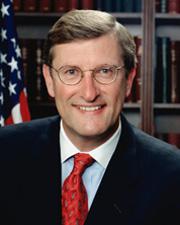 Sen. Kent Conrad (D-ND)
Legislative Activity
Stay on top of the latest movement without scrolling through every action
Senate amendment submitted
March 18, 2003
View full timeline
Senate amendment submitted
March 18, 2003
Senate amendment proposed (on the floor): Amendment SA 266 proposed by Senator Conrad.(consideration: CR S3841-3854, S3854-3855; text: CR S3841-3842)
March 18, 2003
Roll call votes on amendments in Senate: Motion to table amendment SA 266 agreed to in Senate by Yea-Nay Vote. 57 - 42. Record Vote Number: 58.
March 18, 2003
Amendment SA 266 proposed by Senator Conrad. (consideration: CR S3841-3854, S3854-3855; text: CR S3841-3842) To redirect $1.214 trillion in revenues that would have been lost by implementing the President's entire tax cut agenda into a reserve fund to strengthen the Social Security trust funds over the long-term.
March 18, 2003
Motion to table amendment SA 266 agreed to in Senate by Yea-Nay Vote. 57 - 42. Record Vote Number: 58.
March 18, 2003
Votes
1 roll call on this amendment
Text
Proposed
CONGRESSIONAL BUDGET FOR THE UNITED STATES GOVERNMENT FOR FISCAL YEAR
2004--Continued

The PRESIDING OFFICER. The Senator from Oklahoma is recognized.
Mr. NICKLES. Mr. President, I yield the Senator from Utah 20 minutes.
The PRESIDING OFFICER. The Senator from Utah is recognized.
Mr. HATCH. Mr. President, I ask unanimous consent that the time I use
be charged against the resolution.
The PRESIDING OFFICER. Without objection, it is so ordered.

Medical Litigation Crisis

Mr. HATCH. Mr. President, today I rise to speak about the medical
liability and litigation crisis in our country.
This is a crisis that is preventing patients from accessing high-
quality health care--or, in some cases, any care at all--because
doctors are being driven out of practice. It is a crisis that is
needlessly increasing the cost of health care for every American.
This is not the first time we have addressed this issue. As many of
you will recall, we debated, and passed, medical litigation relief in
the Commonsense Product Liability and Legal Reform Act back in 1995.
Unfortunately, the language we passed was stripped from that bill in
conference.
I am sorely disappointed that--in the ensuing eight years--we have
not addressed this problem. As a result, the situation has become
worse, not better; the problem has expanded, not shrunk. We must act
now if we are to fix the crisis in health care delivery this has caused
in many parts of our country.
I was pleased last summer when President Bush announced his desire to
address this issue. I am even more pleased that the President has
continued to emphasize the importance of the problem and the need for
reform in speeches around the country, and in his State of the Union
Address. We in the Senate welcome the President's support in this
effort.
Make no mistake. We have a health care crisis in this country, one
that is due in large part to litigation that is out of control. But not
all Americans may be aware of just how serious are the ramifications of
this crisis.
This map, with data supplied by the American Medical Association,
shows the states that currently are experiencing a medical liability
crisis and those that are showing signs of developing a crisis. The 18
red states are in crisis. The 27 yellow states are showing problem
signs. Only five states are currently ``ok''. On a map with last year's
data, only 12 states were in crisis. The problem is growing and it
reaches from coast to coast.
I ask unanimous consent to have printed in the Record a July 18,
2002, Associated Press article, ``Soaring Malpractice Insurance
Squeezes out Doctors, Clinics,'' that highlights some of the problems
faced by patients and doctors.
There being no objection, the material was ordered to be printed in
the Record, as follows:

[From the Associated Press, July 18, 2002]

Soaring Malpractice Insurance Squeezes Out Doctors, Clinics

(By Theresa Agovino)

The shock from Jim Lawson's July 4 death in a Nevada auto
accident was felt well beyond his family and friends.
The two-car crash on a busy street leading to Las Vegas
airport came just one day after the nearest trauma clinic, at
the University Medical Center, closed down. The 58 orthopedic
surgeons who rotate through the hospital had insisted on
relief from the soaring cost of medical malpractice
insurance.
No one can be sure his death, confirmed at an emergency
room an hour away, could have been avoided. Trauma centers
generally offer more effective attention for accident
victims.
But it prompted a quick July 13 reopening of the university
center. Some 10 to 15 of the doctors agreed to become
temporary employees of the county hospital, limiting their
liability to $50,000, while the governor tries to enact
legislation that would restrict medical malpractice awards.
On a much broader level, it brought new attention to a
national problem that doctors say is obliging many of them to
flee certain states or give up certain specialties--or the
entire profession--because of skyrocketing insurance premiums
linked to soaring jury awards.
The impact of the trauma center's closure in Las Vegas was
summed up by its director, Dr. John Fildes: ``The standard of
care in our community was set back 25 years.''
The number of communities suffering similar problems is
mushrooming.
This summer, two Pennsylvania hospitals, one Arizona
hospital and a clinic in Oregon closed their obstetrics
units.
Several counties in upstate New York have no obstetricians
covering night shifts.
Soon, two counties in Pennsylvania won't have a
neurosurgeon. Seven hospitals on the Mississippi coast share
3 neurosurgeons, one of whom, Terry Smith in Biloxi, is
likely to leave next month because he can't find insurance.
Thirteen insurance companies have refused to cover Dr.
Smith, who currently pays $65,000 in annual premiums. One
company may agree to cover him, but it is likely to cost
$100,000, an amount he says he can't afford.
Smith said he often puts in seven-day weeks now to meet the
community's needs.
``This is an area with lots of poor and minority people, so
you as a doctor feel you're doing something important,''
Smith said. ``I feel guilty about leaving but I just don't
have a choice.
``The two guys I'm leaving behind are friends of mine and
they'll be working even harder,'' he said.
Mississippi is one of 12 states where rising premiums, tied
to awards by state juries in malpractice cases, are creating
a crisis, according to the American Medical Association. The
others are New York, Nevada, Florida, Ohio, Texas, Georgia,
Pennsylvania, New Jersey, Washington, Oregon and West
Virginia.
Because of risks associated with certain medical conditions
and forms of treatment, some specialties pay especially high
rates, and those rates are compounded by being charged in
states where laws place fewer limits on jury awards.
For example, while premium increases this year average
about 15 percent nationwide for all practices, rates for
obstetricians and gynecologists in Pennsylvania are set to
balloon by anywhere from 40 percent to even 81 percent,
according to Medical Liability Monitor, a trade publication.
In West Virginia, they are catapulting anywhere from 29
percent to 36 percent.
The average jury award for medical malpractice doubled to
$1 million in the six years ending in 2000, according to Jury
Verdict Research, a private database used by lawyers,
insurers and doctors. Lawyers who handle malpractice cases
are critical of the database, pointing out that it is not
comprehensive and contending that its findings are inflated.
In any event, verdicts of more than $1 million are common
in states like Mississippi and Nevada. in the first six
months of this year, there were five jury awards in in
Mississippi and the average verdict was $5.6 million,
according to the state's medical association.
``I think juries are just frustrated with managed care and
health care in general, so they take it out on doctors,''
said Dr. Michael Daubs, an orthopedic surgeon who said he may
leave Las Vegas if his rates keep rising.
He says he has never been sued but his insurance jumped
$20,000 to $60,000 a year. He has applied for medical
licenses in three other states.
Some insurance companies are leaving the medical liability
business. St. Paul Cos, the second largest provider of
medical malpractice insurance, announced last December it
would stop writing policies, leaving 42,000 doctors searching
for coverage. St. Paul said it lost close to $1 billion on
its medical malpractice line last year.
Smaller insurers are also cutting back or leaving the
business. Pennsylvania's second-largest medical malpractice
insurer, Phico Insurance Co., failed earlier this year and
was liquidated by the state.
Legislation has been introduced in Congress that would
limit the pain and suffering portion of malpractice awards to
$250,000. The bill, intended to override state laws,

[[Page S3837]]

would also curtail lawyers' fees and allow juries to hear
about the plaintiffs' other sources of income.
``We absolutely need tort reform,'' said Dr. Donald
Palmisano, president elect of the AMA. ``The situation has
spiraled out of control.
The AMA lists six states as having their malpractice
situations under control: California, Colorado, New Mexico,
Wisconsin, Indiana and Louisiana. In Wisconsin, where there
is a limit on awards, St. Paul did not suffer a loss.
Trial lawyers are opposed to the caps. They cite surveys
showing juries rule in favor of doctors in two thirds of all
malpractice lawsuits. They say doctors and hospitals should
focus on reducing mistakes, not jury awards.
``If you run over someone over by accident, no one is
putting a cap on what you will have to pay them. Why do we
want to elevate one group in society above another?'' said
Leo Boyle, president of the Association of Trial Lawyers of
America.
Boyle blames insurance companies for keeping rates
artificially low in the 1990s to win business as they
expanded wildly, a practice made possible by blooming returns
in the stock market. ``Insurance companies were reckless in
their pricing and now patients are supposed to pay for it?''
he said.
Joseph Roethel, who follows the medical insurance industry
as assistant vice president at A.M. Best Co., an insurance
rating agency, parcels out the blame equally: Insurance
companies kept rates too low in the 1990s and jury awards
have gone too high.
Now, he said, ``Insurance companies don't have the reserves
for these types of jury awards.''
Some doctors are resorting to working without insurance,
using a credit line or their own money to cover malpractice
expenses. The practice isn't common but is done, especially
in Florida. Most hospitals won't allow that practice.
Two hospitals in West Virginia have begun directly
employing more doctors and paying their insurance to
alleviate the doctor shortage. Many hospitals consider such
an option too expensive.
At Bluefield Regional Medical Center in West Virginia,
doctors are more careful now in delivering medicine,
according to hospital president Eugene Palowski. But they are
also much less willing to care for high-risk patients with
multiple conditions, leaving them to find physicians in
surrounding states.
Many patients are confused, or just plain angry.
Marine Hawkins, 20, of Boyle, Miss., was shocked to hear
from her obstetrician that he was closing his practice--just
two weeks before her due date of July 21.
The nearest doctor is 30 minutes away. She doesn't have a
car, and will have to rely on relatives to get there.
``This isn't what I needed now,'' she said.

Mr. HATCH. The article points to the ``national problem that doctors
say is obliging many of them to flee certain states or give up certain
specialties--or the entire profession--because of skyrocketing
insurance premiums linked to soaring jury awards.''
The article notes, as I am sure my colleagues from Nevada are acutely
aware, that the University Medical Center trauma clinic in Las Vegas--
the only Level one trauma center in Nevada--closed on July 3 last year.
The 58 doctors who were associated with the trauma center had
requested, but had not received, much-needed relief from soaring
medical liability insurance costs.
Let me give you just one example of the havoc this wreaked. On the
4th of July, the day after the center closed, Jim Lawson could not
access the Level one trauma care that he needed. Mr. Lawson was the
victim of a serious traffic accident, and on that day, the closest
Level one trauma center was more than an hour away by air!
Unfortunately, Mr. Lawson did not survive. The trauma center was
hurriedly reopened on July 13, but with only 10-15 doctors working on a
temporary basis, with limited liability. Commenting on the trauma
center's closure, its director, Dr. John Fildes, stated, ``The standard
of care in our community was set back 25 years.''
Mr. Lawson's family spoke at a press conference here in the Senate
last week. His death was a tragedy to his family and to his community.
No one knows whether Mr. Lawson could have been saved had he been
treated at the nearby trauma center. But would any of us want that to
happen to one of our loved ones? To be forced to bypass the nearest
trauma center, and travel an hour to receive emergency care?
I certainly would not. And, the Senate should take the necessary
steps to ensure that it does not happen to anyone else. But this crisis
is not limited to emergency services. Ensuring the availability of
adequate obstetric care is also an increasing problem.
According to the same Associated Press article, one Arizona hospital,
a clinic in Oregon, and two Pennsylvania hospitals closed their
obstetrics units recently. Several counties in upstate New York have no
obstetricians covering night shifts.
What does that say to the expectant mother whose child comes into the
world at night . . . ``There's no room at the inn''?
The crisis is particularly acute in the farming and ranching
communities of rural America. Mr. President, I ask unanimous consent to
print in the Record a Washington Post article from February 3, 2003,
titled ``Insurance Crisis Hits Hard on Prairie; Denied Coverage,
Obstetrician for 3 Wyoming Counties Ends Practice.''
There being no objection, the material was ordered to be printed in
the Record, as follows:

[From the Washington Post, Feb. 3, 2003]

Insurance Crisis Hits Hard on Prairie; Denied Coverage, Obstetrician
for 3 Wyoming Counties Ends Practice

(By T.R. Reid)

When the Wheatland High Bulldogs hosted arch-rival Douglas
for a basketball game the other night, the gym was jammed
with fans roaring support for the home team. But one
prominent Wheatland citizen watched the game with mixed
loyalties. Willard Woods, the local obstetrician, had
delivered just about every player on both the Wheatland and
Douglas teams.
As the only ``baby doctor'' serving a three-county swath of
the khaki-brown Wyoming prairie for the past quarter-century,
Woods has delivered about 2,500 infants, including almost all
the high school athletes in Wheatland, Douglas, Chugwater and
other rural communities. But this winter, Woods ended his
obstetrical practice.
``I love delivering babies,'' the intense physician, 56,
said. ``I really love delivering the babies of women I
delivered a couple decades ago. And I know this community
needs an obstetrician.
``But you can't practice without [malpractice] insurance.
And I can't get coverage for deliveries any more.''
The national malpractice insurance crisis that President
Bush spoke of in his State of the Union address last week hit
home for Wheatland this winter when Woods' insurance company
joined a number of national malpractice carriers in declaring
bankruptcy.
That left only two firms selling malpractice insurance in
Wyoming, and neither one was willing to take on a new
obstetrical coverage. Woods did get insurance for his
gynecological practice--a branch of medicine that spawns far
fewer lawsuits than delivering babies--but the annual premium
costs him $116,000, three times what he paid a year ago.
In this wheat-growing region of eastern Wyoming, where
medical services are sparse and scattered--Platte County,
with a population of less than 9,000, has five doctors, equal
to the number of veterinarians--the impact has been acute.
Women with normal pregnancies can still have their babies
delivered in the hospital; Woods's two partners, both general
practitioners, share the delivery duties.
``But if you have any kind of problem, like I did,'' said
Wheatland mother Kori Wilhelm, who has a genetic blood
mutation that makes pregnancy dangerous, ``you have to go to
Cheyenne now--and it's a three-hour round trip--to get the
specialized treatment we used to get right down the street at
Dr. Woods's clinic.''
Woods' problem has turned into a financial problem for
Platte County Memorial Hospital, a 43-bed facility that is
Wheatland's biggest building. ``The economics of a rural
hospital are always tight,'' noted hospital director Mike
Matthews. ``If I don't have all my physicians providing
services here, I'm losing revenue. And if I have to cut
back--well, this hospital is the third-biggest employer in
the county.''
The two family practitioners who share Woods's practice
have found their lives complicated by the insurance problems.
Their malpractice premiums have gone up sharply, though
neither one has ever been sued. Even worse has been the
impact on their daily schedules.
``We're now the only docs delivering babies in the whole
area,'' said Steve Peasley, a Douglas native who returned to
the prairie after finishing Georgetown Medical School. ``So
each one of us has to be on call every other day. That means
you can't leave town. You can't have a beer at the barbecue.
And after a full day of regular practice, you get a call from
the hospital at 3 a.m. saying somebody's in labor.''
Wheatland's medical problem is replicated in communities
large and small across the country as more and more doctors
find malpractice insurance out of reach. Some doctors in New
Jersey plan to demonstrate today to protest the high cost of
insurance, while doctors have already staged protests in West
Virginia, Nevada and Florida. Bush's proposed solution to the
growing crisis is to put a limit on the amount of damages
an injured patient can win. That would reduce the number
of multimillion-dollar jury verdicts, cutting the risk for
doctors and their insurance companies. In Woods's view,
the president has it just right.

[[Page S3838]]

``We love that plan,'' he said. ``It will save medicine in
Wyoming.'' In the neighboring state of Colorado, he notes,
which has a limit on pain-and-suffering awards, malpractice
premiums tend to be a fraction of the Wyoming rates.
Wyoming's state constitution prohibits any limit on damage
claims against a corporation--a ban that goes back to the
1880's, when the Union Pacific Railroad was the most
powerful, and most hated, institution in the state. But a
federal law capping damages would presumably override the
state constitution.
Still, there are doubts here about the Bush plan. ``The cap
on damages sounds like a simple solution, but it isn't one,''
said Dave Freudenthal, a lawyer and Wyoming's newly elected
Democratic governor. ``We just had hearings in the
legislature on this issue. The insurance companies said a cap
on damages would not reduce rates, and would not induce any
more companies to sell [malpractice insurance] in Wyoming.''
The governor said he hopes to appoint a blue-ribbon panel
to study ``new approaches that would work in a rural,
sparsely populated state like this.'' Wyoming covers a land
area bigger than Maryland and Virginia combined but has fewer
residents, and fewer doctors, than the District.
While the study is underway, Wheatland has to get by
without an obstetrician.
``I can't practice OB anymore, and nobody else will do it,
either,'' Woods said with a grimace. ``My daughter wants to
be a doctor, and she asked me what kind of medicine she can
do so she doesn't have to worry about insurance. And I said,
`Well, you sure don't want to deliver babies.' ''

Mr. HATCH. Mr. President, the article describes the plight of the
people of Platte County, WY, population 9000, where the only
obstetrician has been forced to give up delivering babies because
obstetrics liability insurance is unavailable.
The article states:

As the only ``baby doctor'' serving a three-county swath of
the . . . Wyoming prairie for the past quarter-century, (Dr.)
Woods has delivered about 2,500 infants, including almost all
the high school athletes in Wheatland, Douglas, Chugwater and
other rural communities. But this winter, Woods ended his
obstetrical practice. ``I love delivering babies,'' the
intense (56-year-old) physician said. ``I really love
delivering the babies of women I delivered a couple of
decades ago. And I know this community needs an obstetrician.
But you can't practice without (malpractice) insurance. And I
can't get coverage for deliveries any more.''

This is not news to the rural West. There is an increasing shortage
in my home state of Utah as well. Studies by both the Utah Medical
Association and the Utah Chapter of the American College of
Obstetricians and Gynecologists underscore the problem in my state.
According to the Utah Medical Association:

50.5 percent of Family Practitioners in Utah have already
given up obstetrical services or never practiced obstetrics.
Of the remaining 49.5 percent who still deliver babies, 32.7
percent say they plan to stop providing OB services within
the next decade. Most plan to stop within the next five
years.

The Utah Medical Association study also relates:

Professional liability concerns [were] given as the chief
contributing factor in the decision to discontinue
obstetrical services. Such concerns include the cost of
liability insurance premiums, the hassles and costs involved
in defending against obstetrical lawsuits and a general fear
of being sued in today's litigious environment.

Mr. President, ensuring the availability of high-quality prenatal and
delivery care for pregnant women and their babies, the most vulnerable
members of our society, is imperative. But these are not the only
members of society who have difficulty in accessing healthcare.
According to the July 2002 Department of Health and Human Services
report, ``Confronting the New Health Care Crisis: Improving Health Care
Quality and Lowering Cost by Fixing our Medical Liability System,'' the
indigent are finding it increasingly difficult to access care also.
The HHS report states that ``[m]any doctors cannot volunteer their
services for a patient who cannot pay, and the proportion of the
physicians who provide charity care at all has declined, because
doctors cannot afford the required liability coverage.''
The July, 2002 report and the Department's report released this
month, ``Addressing the New Health Care Crisis: Reforming the Medical
Litigation System to Improve the Quality of Health Care,'' describe the
economic consequences of rising insurance costs also.
While many Americans have experienced problems accessing healthcare
due to excessive litigation, all Americans are paying for it. This is a
national problem and one that requires a national solution.
In my letter of March 12 to Budget Committee Chairman Nickles and
ranking Democrat Conrad, I emphasized the important implications of
medical liability litigation on the Federal budget.
In that letter, I wrote:

The Federal Government pays directly for health care for
members of the armed forces, veterans, and patients served in
the Indian Health Service. The Federal Government provides
reimbursements for the Medicare and Medicaid programs.
According to the Department of Health and Human Services
March 3, 2003, report . . . the Federal Government spends
$33.7 billion-$56.2 billion per year for malpractice coverage
and the costs of defensive medicine. That report states,
``reasonable limits on non-economic damages would reduce the
amount of taxpayers' money the Federal Government spends by
$28.1 billion-$50.6 billion per year.''

I continued to write:

In my view, federal legislation that would decrease costly
frivolous medical liability lawsuits and limit awards for
non-economic damages is necessary, not only to ensure patient
access to health care, but to curb increasing Federal health
care costs. Because of the substantial and important
budgetary implications, particularly to the Medicare and
Medicaid programs, we request that the budget resolution
include language calling for medical liability legislation
reform.

I am pleased to report that the budget resolution we are considering
today recognizes the tremendous impact of medical liability costs. In
fact, the budget resolution as reported includes $11.3 billion in
savings over 10 years as a result of medical liability reform, based on
CBO calculations. The Medicare program alone will save $7.9 billion,
while Medicaid will save $2.9 billion. The remaining savings will occur
in the Federal Employee Health Benefits Program and the Department of
Defense.
Medical liability litigation directly and dramatically increases
health care costs for all Americans. But, skyrocketing medical
litigation costs also increase health care costs indirectly by changing
the way doctors practice medicine. In an effort to avoid frivolous
suits, doctors often feel compelled to perform diagnostic tests that
are costly and unnecessary.

This defensive medicine is wasteful, but for doctors it has
unfortunately become necessary. According to a recent Harris poll, fear
of being sued has led 79 percent of doctors to order more tests than
are medically needed, 74 percent to refer patients to specialists more
often than necessary, 51 percent to recommend invasive procedures that
they thought were unnecessary, and 41 percent to prescribe more
medications, including antibiotics, that they did not think were
necessary.
Defensive medicine increases health care costs, but the real risk of
the current medical liability system and the resulting practice of
defensive medicine is that it also puts Americans at risk. Every test
and every treatment poses a risk to the patient. Every unnecessary
test, procedure, and treatment potentially puts a patient in harm's
way. According to the Harris poll, 76 percent of the physicians are
concerned that malpractice litigation has hurt their ability to provide
quality care to patients.
And so, that brings us to the big question: What can we do to address
this crisis? The answer is plenty. There are excellent examples of what
works. The March, 2003 Department of Health and Human Services report
describes how reasonable reforms in some states have reduced health
care costs and improved access to quality health care. According to the
report, over the last two years, in states with limits of $250,000 to
$350,000 on non-economic damages, premiums have increased at an average
of 18 percent compared to 45 percent in States without such limits.
California enacted the Medical Injury Compensation Reform Act, also
known as MICRA, over 25 years ago in 1975. MICRA slowed the rate of
increase in medical liability premiums dramatically without affecting
negatively the quality of health care received by the State's
residents. As a result, doctors are not leaving California.
Furthermore, between 1976 and 2000, premiums increased by 167 percent
in California. But, believe it or not, they increased three times as
much, an incredible 505 percent, in the rest of the country.
Consequently, Californians were saved billions of dollars in health
care costs

[[Page S3839]]

and Federal taxpayers were saved billions of dollars in the Medicare
and Medicaid programs.
The March, 2003 report goes on to state:

A leading study estimates that reasonable limits on non-
economic damages such as California has had in effect for 25
years, can reduce health care costs by 5-9 percent without
``substantial effects on mortality or medical
complications.'' With national health care expenditures
currently estimated to be $1.4 trillion, if this reform were
adopted nationally, it would save $70-126 billion in health
care costs per year.

I would guess that no one in this body--with perhaps the exception of
our colleague from Tennessee, Dr. Bill Frist, our majority leader--is
more keenly aware of the defects in this system than I. Before coming
to Congress, I litigated several medical liability cases as a defense
lawyer. I have seen heart-wrenching cases in which mistakes were made.
But, more often, I have seen heart-wrenching cases in which mistakes
were not made and doctors were forced to expend valuable time and
resources defending themselves against frivolous lawsuits.
It has been estimated that 66 percent of all medical liability
lawsuits brought are frivolous. They are brought by plaintiff's
attorneys who seek to obtain the costs of defense, costs that approach
$100,000 per case.
Let me take a moment to address the unfortunate incident that
occurred recently in North Carolina. As the country is so painfully
aware, Jesica Santillan, a young girl who needed a heart and lung
transplant, received organs of the wrong blood type. Her death was a
tragedy and our hearts go out to everyone involved.
Some are seizing on Jesica's most unfortunate death to argue that we
should not proceed with medical liability reform legislation. I would
argue just the opposite: Jesica's death shows the need for reform of
the current system. Let me make clear that we do not know all of the
facts surrounding Jesica's case. We are not the doctors, the family,
the Duke personnel or their lawyers. But we do know that the current
medical liability system did not prevent Jesica's death. In fact, many
experts believe that the current system, by discouraging communication
between doctors, nurses, and hospitals, increases the likelihood that
medical errors will occur.
The recent Institute of Medicine report, ``To Err is Human''
described the impact of preventable medical errors in America's health
care system. One of the report's main conclusions was that:

The majority of medical errors do not result from
individual recklessness or the actions of a particular group
this is not a ``bad apple'' problem. More commonly, errors
are caused by faulty systems, processes, and conditions that
lead people to make mistakes or fail to prevent them.

We do not know all of the facts of Jesica's case. But, we do know
that more lawsuits cannot prevent medical errors from occurring. Her
death should not be used by those who oppose medical litigation reform
to prevent other patients from receiving access to the care they
deserve. No, Jesica's death does not indicate that medical liability
reform is unnecessary. If anything, cases such as this support the need
for reform.
We need reform to identify better and more efficiently when
malpractice has occurred and which patients should be compensated. We
need reform to identify better when malpractice has not occurred. The
reform that I envision would address litigation abuses in order to
provide swift and appropriate compensation for malpractice victims,
redress for serious problems, and ensure that medical liability costs
do not prevent patients from accessing the care they need.
Jesica's death was a tragedy. But it would be a greater tragedy if we
let her death prevent other little boys and girls from receiving access
to the life-saving care they need. That is what is happening in many
parts of America today. And that is what will continue to happen if we
do not address this crisis in this Congress.
And so, we need to move ahead with legislation to improve patient
safety and reduce medical errors. I agree that we need to find an
appropriate way to address egregious cases. No one believes more than I
that victims of malpractice should be compensated swiftly and
appropriately for their losses. But that is not what is happening in
our current medical legal system. Patients are forced to meander
through a complicated legal system and often are awarded damages only
after years of legal bickering. Juries are awarding astounding and
unreasonable sums for pain and suffering. A sizable portion of those
awards goes to the attorney rather than the patient. The result:
Doctors cannot get insurance and patients cannot get the care they
need.
As Chairmen of the HELP and Judiciary Committees, Senator Gregg and I
held a joint hearing earlier this month in an attempt to identify the
root causes of the crisis. We heard from a patient who experienced an
adverse outcome due to a medical error. But, we also heard from a
patient and a patient's wife who were victims of the current crisis,
unable to find the medical care they or their loved ones desperately
needed because medical liability insurance costs had driven doctors out
of practice.
We heard from a lawyer who believes that insurance reform is the
answer. But, in addition, we heard from the Texas State Insurance
Commissioner and also from the president of Physician Insurance
Association of America, representing provider-owned or operated
insurance companies that provide insurance for the majority of American
doctors. These gentlemen face this crisis and its consequences every
day. Their data and their studies as well as those from the Department
of Health and Human Services show that increasingly frequent frivolous
lawsuits and skyrocketing awards are responsible for rapidly rising
premiums.
Has the recent downturn in the economy and the stock market affected
medical liability premiums? Possibly, but this does not appear to be a
major cause of the current crisis. Insurance companies invest
conservatively, primarily in bonds and State insurance commissioners
monitor and regulate insurance business practices closely. Moreover,
insurance companies are precluded from increasing premiums to make up
for past losses.
As a matter of fact, they have to cover these losses. The country's
largest medical liability insurance company, St. Paul, no longer
provides this insurance. Now doctors are forming their own nonprofit
corporations to handle these matters and one can imagine that they are
doing their best to reduce costs.
It seems to me that the insurance reform discussed at the hearing not
only misses the mark badly; it would do nothing to address the cause of
the crisis and it would prevent State Insurance Commissioners from
performing the job they were appointed to do. I have to say that I came
away from our hearing convinced that out-of-control medical litigation
is the major cause of the crisis and that we must do something to stop
it.
The current medical litigation system resembles a lottery more than
it does a justice system. This system harms patients in many ways and
raids every American's wallet. All Americans deserve the access to
care, the cost savings and the legal protections that States like
California provide their residents. This problem has reached crisis
proportions and it is high time that we act. The task before us is to
design a system that protects both the patient and the provider. It is
important that we take steps to benefit both patients and health care
providers, not the trial lawyers. Or else, we are in danger of losing
access to necessary healthcare.
Let's put some sense into the system by passing medical litigation
improvement legislation this year that gives patients access to their
doctors and enables doctors to provide high quality cost-effective
medical care. I yield the floor.
The PRESIDING OFFICER. Who yields time? The Senator from Nevada.
Mr. REID. On behalf of the Senator from North Dakota, the manager of
the amendment, I yield 10 minutes to the Senator from Maryland.
The PRESIDING OFFICER. Without objection, it is so ordered.
The Senator from Maryland.

Support for The Military

Ms. MIKULSKI. Mr. President, as America braces for war, my thoughts
are with our troops. Our men and women in uniform have my steadfast
support. Though there is disagreement about the best way to disarm
Saddam, there is something we all agree upon,

[[Page S3840]]

and that is that America must be united in support for our troops. We
must defend our defenders and stand up for the brave men and women of
our military.
Each and every member of our military is part of an American family.
They are about to make tremendous sacrifices and undertake great risks.
They need to know that the United States of America is with them, and
that we owe them a debt of gratitude. But the military does not need
just our words; they need our help. We must support them not only with
words but with deeds. That means to ensure our troops have the best
training and the best equipment we can provide.
We also need to stand up for American families, for the military
families who are facing long separations and terrible worries about the
safety of their loved ones. While they worry about their spouses
overseas, they do not need to be facing financial worries at home.
America needs to make sure these families do not face financial
hardship.
With our U.S. military overseas, their spouses should not be worried
about counting pennies. Their spouses should not have to worry about
going on food stamps. Their spouses should not have to, as the Guard
and Reserve is being called up, worry about if they are going to have
to go through their savings and their family's college accounts. So
while we are talking about tax cuts for Joe Billionaire, let us make
sure we do not forget GI Joe and GI Jane. We need to remember them not
only with parades, but we need to remember them in the Federal
checkbook and we need to remember them in the Federal Tax Code. We need
to get behind those troops and use this budget and other actions we
will be taking up to support our troops.

Let's not forget why we are at this point. The fault lies squarely
with Saddam Hussein. For the last 12 years, he has ignored U.N.
resolutions and embargoes while rebuilding his illegal chemical and
biological weapons. U.N. Resolution 1441 gave Saddam a final
opportunity to come clean and destroy his prohibited weapons and to
fully report to the U.N. He continues to ignore that. He is dangerous
and duplicitous. He needs to be disarmed.
Americans have differing views on how best to do this. Saddam is a
danger to the world; therefore, the world should share the burden of
defanging him. The risks and consequences of acting alone are much
greater than they would be from multilateral action. The risks to our
troops are greater, and the challenge in postconflict Iraq will be
greater if other nations do not share the burden.
That is why, during the debate, I voted against unilateral action but
voted for Senator Levin's amendment to demand that Iraq disarm and to
authorize the use of multinational force if Iraq refused to comply, and
to do this through the United Nations. Once we gave unilateral
authority to the President, I believe it let the international
community off the hook. Why would members of the U.N. Security Council
make any tough decisions? They did not have to. They knew we would go
it alone. Why would they stand up and make tough decisions and take
tough actions? They did not have to. They knew we would go it alone. I
believe by authorizing unilateral action, the Senate actually weakened
the negotiating position of our President and the Secretary of State at
the U.N. Why would other countries send their troops in harm's way if
America was ready to do it without them? Unfortunately, this is what
has happened.
The U.N. refused to act, and the United States is now poised to act
alone with a modest coalition of the willing. We cannot let this be the
end of diplomacy. The President must continue to work with other
nations to expand that coalition of the willing so that the dangers of
war are shared along with the cost. He needs to go back to the U.N. to
share the responsibility and the economic cost of rebuilding Iraq. I
know we will face a significant humanitarian crisis, and we already are
facing significant humanitarian need in the United States of America.
While we are going to talk about rebuilding Baghdad, we cannot end up
paying the whole bill ourselves. Because while we rebuild Baghdad, I
have to worry about rebuilding Baltimore, and Salisbury, and other
communities.
I face a budget, as an appropriator, that is skimpy, spartan, and
takes it out on public housing residents and shrinks opportunity at the
very time we want to be able to go it alone.
The President has made his choice. We are going to support the
decision of the United States of America. We are going to support our
troops. Let's support our troops in the budget. When we take a look at
the budget, let's take a patriotic pause, and make sure we can afford
not only to be a world power and stand up for America but make sure we
have a budget where we stand up for what America stands for:
Empowerment, hope, and opportunity.
The PRESIDING OFFICER. The Senator from North Dakota.
Mr. CONRAD. Mr. President, I thank the very able Senator from
Maryland for her statement and for the values expressed in that
statement.
I think we have reached a critical moment. We have 250,000 troops
poised on the border with Iraq. There are a number of additional troops
from the U.K. Other nations may be involved, as well. There is no
provision for the cost of this conflict in the budget.
It does strike me as the better part of wisdom to say we ought to
limit any additional measures that add to the deficit by either
spending or tax cuts, with the two exceptions I have noted before. On
the spending side, certainly we would exempt national defense and
homeland security. On the tax side, we would be wise to exempt the
funds for a stimulus package in 2003 and 2004. Beyond that, we would
require a supermajority vote that adds to deficits when we are on the
brink of conflict, the cost of which has not been quantified.
That is what my amendment is about. I hope as we move closer to the
time toward a vote on that amendment, our colleagues will give
thoughtful consideration to what I have offered.
Mr. KOHL. Mr. President, I rise in strong support of the amendment of
the Senator from North Dakota. Though cloaked in the arcane language of
a Budget Act point of order, the goal of the amendment is clear and
important. The amendment says that this Congress should not pass new
spending or new tax cuts until we have adequately budgeted for the war.
The Conrad amendment contains exceptions for spending on national
security, homeland security, or stimulative tax cuts with no budgetary
effect after 2005. But beyond those essential measures, Congress could
not pass any of our new policy initiatives--not Democratic or
Republican initiatives--not new entitlement programs or new tax cuts--
until we are sure we have the resources to fund the war we will almost
certainly begin this week.
It is amazing that we even have to have this debate. It will be even
more unbelievable if this amendment fails. The budget is our spending
blueprint for the next fiscal year. It lays out our spending and tax
priorities. Yet nowhere in the budget are there funds allocated for
military action in Iraq, for recovery after the war, for the foreign
aid promised to our allies, for increased protection domestically from
retaliatory terrorist attacks. Not a dime.
Is that because the supporters of this budget don't want to pay for
the costs of fighting the war in Iraq? Of course not. I am confident
that every member of Congress fully supports our troops as they deploy
overseas. The President will send us a bill for the war and the
resulting increases in homeland security, and Congress will pay it--
promptly and fully.
So why is it not in the budget? One simple reason. The authors of
this budget want an enormous tax cut: $1.4 billion in tax cuts--most of
which will benefit upper income tax payers--over the next 10 years.
Half of those cuts are even given our special, fast track treatment
through the reconciliation process. The authors also want to show a
balanced budget within the next decade. And they do that by cutting
domestic spending, including defense. The largest cuts come in the last
5 years of the budget.
But if we figure in the costs of the war, the after-war Iraq
restoration, and increased homeland security, there's no way our budget
will balance in 10, or even 20, years. There is no way we can afford
the war we are all already committed to fund and an enormous tax cut.
No way.

[[Page S3841]]

It is irresponsible to commit to unnecessary, enormous tax giveaways
at a time our scarce resources might be needed to fight a war. In the
name of responsible budgeting--in the name of sane budgeting--shouldn't
we at least delay the tax cuts until we have a better idea of what the
war will cost?
The American people are willing to sacrifice for war--especially
those who are leaving their families and homes to fight in a foreign
land. Shouldn't we be willing to sacrifice as well? Shouldn't we give
up these ridiculous budget games and do our jobs. In my mind, that
means making sure our troops have adequate funds to successfully win
the war in Iraq, that our country is safe from terrorist attacks, and
that our debt doesn't grow so large that it strangles growth and
opportunity for future generations.
The Conrad amendment will help us write a budget that is
responsible--to our troops overseas, to our families at home, and to
the future generations who count on us to leave their country better
off than we inherited it. I urge my colleagues to support it.
Mr. REID. Will the Senator yield?
Mr. CONRAD. I am happy to yield.
Mr. REID. I have worked with the two managers of the bill and the two
leaders, and it appears that we will be able to have two back-to-back
votes around 5 p.m. today. The staff is in the process of preparing a
written announcement. There very likely will be two votes on two
separate amendments at or about 5 o'clock today.
Mr. NICKLES. I suggest the absence of a quorum.
The PRESIDING OFFICER. The clerk will call the roll.
The assistant legislative clerk proceeded to call the roll.
Mr. NICKLES. Mr. President, I ask unanimous consent that the order
for the quorum call be rescinded.
The PRESIDING OFFICER. Without objection, it is so ordered.
Mr. NICKLES. Mr. President, I ask unanimous consent that following a
point of order against the Conrad amendment No. 264, Senator Conrad be
recognized in order to make a motion to waive relative to his amendment
and that the amendment and the motion then be temporarily set aside;
provided further that Senator Conrad be recognized in order to offer an
amendment, the text of which is at the desk, and that the time until 5
o'clock be equally divided in relation to the amendment; further, I ask
that at 5 o'clock the Senate proceed to a vote in relation to the
motion to waive with respect to amendment No. 264, and regardless of
the outcome, the Senate then immediately proceed to a vote in relation
to the second Conrad amendment. Also, no second-degree amendments be in
order prior to the above amendments.
The PRESIDING OFFICER. Is there objection? Without objection, it is
so ordered.
Mr. NICKLES. Mr. President, I believe the pending amendment, No. 264,
offered by the Senator from North Dakota, Mr. Conrad, proposes to
create a new point of order prohibiting the consideration of certain
spending and tax measures until the President sends information
regarding the costs of the war. The language is not germane to the
measure now before the Senate; therefore, I raise an objection under
section 305(b)(2) of the Congressional Budget Act of 1974.
The PRESIDING OFFICER. The Senator from North Dakota.
Mr. CONRAD. Mr. President, pursuant to section 904 of the
Congressional Budget Act of 1974, I move to waive the applicable
sections of that act for purposes of the pending amendment.
I ask for the yeas and nays.
The PRESIDING OFFICER. Is there a sufficient second? There is a
sufficient second.
The yeas and nays were ordered.
The PRESIDING OFFICER. The Senator from Nevada.
Mr. REID. Mr. President, would the two managers of the bill allow 2
minutes of debate equally divided prior to the second vote?
Mr. NICKLES. Certainly.
Mr. REID. I ask unanimous consent that the agreement be modified to
that effect.
The PRESIDING OFFICER. Without objection, it is so ordered.
The Senator from North Dakota.

Amendment No. 266

Mr. CONRAD. Mr. President, I send the amendment to the desk.
The PRESIDING OFFICER. The clerk will report the amendment.
The bill clerk read as follows:

The Senator from North Dakota (Mr. Conrad) proposes an
amendment numbered 266.

Mr. CONRAD. I ask unanimous consent that the reading of the amendment
be dispensed with.
The PRESIDING OFFICER. Without objection, it is so ordered.
The amendment is as follows:

(Purpose: To redirect $1.214 trillion in revenues that would have been
lost by implementing the President's entire tax cut agenda into a
reserve fund to strengthen the Social Security trust funds over the
long-term)

On page 3 line 9, decrease the amount by $50,472,000,000
On page 3 line 10, increase the amount by $118,203,000,000.
On page 3 line 11, increase the amount by $103,103,000,000.
On page 3 line 12, increase the amount by $67,667,000,000.
On page 3 line 13, increase the amount by $48,733,000,000.
On page 3 line 14, increase the amount by $45,877,000,000.
On page 3 line 15, increase the amount by $46,217,000,000.
On page 3 line 16, increase the amount by $51,107,000,000.
On page 3 line 17, increase the amount by $185,171,000,000.
On page 3 line 18, increase the amount by $279,411,000,000.
On page 3 line 19, increase the amount by $296,254,000,000.
On page 3 line 23, decrease the amount by $50,472,000,000.
On page 4 line 1, increase the amount by $118,203,000,000.
On page 4 line 2, increase the amount by $103,103,000,000.
On page 4 line 3, increase the amount by $67,667,000,000.
On page 4 line 4, increase the amount by $48,733,000,000.
On page 4 line 5, increase the amount by $45,877,000,000.
On page 4 line 6, increase the amount by $46,217,000,000.
On page 4 line 7, increase the amount by $51,107,000,000.
On page 4 line 8, increase the amount by $185,171,000,000.
On page 4 line 9, increase the amount by $279,411,000,000.
On page 4 line 10, increase the amount by $296,254,000,000.
On page 4 line 14, increase the amount by $373,000,000.
On page 4 line 15, decrease the amount by $681,000,000.
On page 4 line 16, decrease the amount by $5,789,000,000.
On page 4 line 17, decrease the amount by $10,895,000,000.
On page 4 line 18, decrease the amount by $14,956,000,000.
On page 4 line 19, decrease the amount by $18,291,000,000.
On page 4 line 20, decrease the amount by $21,806,000,000.
On page 4 line 21, decrease the amount by $25,743,000,000.
On page 4 line 22, decrease the amount by $33,540,000,000.
On page 4 line 23, decrease the amount by $59,747,000,000.
On page 4 line 24, decrease the amount by $77,943,000,000.
On page 5 line 4, decrease the amount by $373,000,000.
On page 5 line 5, decrease the amount by $681,000,000.
On page 5 line 6, decrease the amount by $5,789,000,000.
On page 5 line 7, decrease the amount by $10,895,000,000.
On page 5 line 8, decrease the amount by $14,956,000,000.
On page 5 line 9, decrease the amount by $18,291,000,000.
On page 5 line 10, decrease the amount by $21,806,000,000.
On page 5 line 11, decrease the amount by $25,743,000,000.
On page 5 line 12, decrease the amount by $33,540,000,000.
On page 5 line 13, decrease the amount by $59,747,000,000.
On page 5 line 14, decrease the amount by $77,943,000,000.
On page 5 line 17, decrease the amount by $50,845,000,000.
On page 5 line 18, increase the amount by $118,884,000,000.
On page 5 line 19, increase the amount by $108,892,000,000.
On page 5 line 20, increase the amount by $78,562,000,000.
On page 5 line 21, increase the amount by $63,689,000,000.
On page 5 line 22, increase the amount by $64,168,000,000.
On page 5 line 23, increase the amount by $68,023,000,000.
On page 5 line 24, increase the amount by $76,850,000,000.
On page 5 line 25, increase the amount by $218,711,000,000.
On page 6 line 1, increase the amount by $339,158,000,000.
On page 6 line 2, increase the amount by $374,197,000,000.
On page 6 line 5, increase the amount by $50,845,000,000.

[[Page S3842]]

On page 6 line 6, decrease the amount by $60,038,000,000.
On page 6 line 7, decrease the amount by $176,931,000,000.
On page 6 line 8, decrease the amount by $255,492,000,000.
On page 6 line 9, decrease the amount by $319,181,000,000.
On page 6 line 10, decrease the amount by $383,350,000,000.
On page 6 line 11, decrease the amount by $451,373,000,000.
On page 6 line 12, decrease the amount by $528,223,000,000.
On page 6 line 13, decrease the amount by $746,934,000,000.
On page 6 line 14, decrease the amount by
$1,086,092,000,000.
On page 6 line 15, decrease the amount by
$1,460,289,000,000.
On page 6 line 18, increase the amount by $50,845,000,000.
On page 6 line 19, decrease the amount by $68,038,000,000.
On page 6 line 20, decrease the amount by $176,931,000,000.
On page 6 line 21, decrease the amount by $225,492,000,000.
On page 6 line 22, decrease the amount by $319,181,000,000.
On page 6 line 23, decrease the amount by $383,350,000,000.
On page 6 line 24, decrease the amount by $451,373,000,000.
On page 6 line 25, decrease the amount by $528,223,000,000.
On page 7 line 1, decrease the amount by $746,934,000,000.
On page 7 line 2, decrease the amount by
$1,086,092,000,000.
On page 7 line 3, decrease the amount by
$1,460,289,000,000.
On page 32 line 6, increase the amount by $26,000,000.
On page 32 line 7, increase the amount by $26,000,000.
On page 32 line 10, decrease the amount by $11,458,000,000.
On page 32 line 11, decrease the amount by $11,458,000,000.
On page 32 line 14, decrease the amount by $10,901,000,000.
On page 32 line 15, decrease the amount by $10,901,000,000.
On page 40 line 2, increase the amount by $373,000,000.
On page 40 line 3, increase the amount by $373,000,000.
On page 40 line 6, decrease the amount by $681,000,000.
On page 40 line 7, decrease the amount by $681,000,000.
On page 40 line 10, decrease the amount by $5,789,000,000.
On page 40 line 11, decrease the amount by $5,789,000,000.
On page 40 line 14, decrease the amount by $10,895,000,000.
On page 40 line 15, decrease the amount by $10,895,000,000.
On page 40 line 18, decrease the amount by $14,956,000,000.
On page 40 line 19, decrease the amount by $14,956,000,000.
On page 40 line 22, decrease the amount by $18,291,000,000.
On page 40 line 23, decrease the amount by $18,291,000,000.
On page 41 line 2, decrease the amount by $21,806,000,000.
On page 41 line 3, decrease the amount by $21,806,000,000.
On page 41 line 6, decrease the amount by $25,743,000,000.
On page 41 line 7, decrease the amount by $25,743,000,000.
On page 41 line 10, decrease the amount by $33,566,000,000.
On page 41 line 11, decrease the amount by $33,566,000,000.
On page 41 line 14, decrease the amount by $48,289,000,000.
On page 41 line 15, decrease the amount by $48,289,000,000.
On page 41 line 18, decrease the amount by $67,042,000,000.
On page 41 line 19, decrease the amount by $67,042,000,000.
Strike all from line 20 on page 45 through line 2 on page
46.
At the appropriate place, insert the following:

``SEC. ______. RESERVE FUND TO STRENGTHEN SOCIAL SECURITY.

If legislation is reported by the Senate Committee on
Finance, or an amendment thereto is offered or a conference
report thereon is submitted that would strengthen Social
Security and extend the solvency of the Social Security Trust
Funds, the Chairman of the Senate Committee on the Budget may
revise the aggregates, functional totals, allocations, and
other appropriate levels and limits in this resolution by up
to $1,214,000,000,000 in budget authority and outlays for the
total of fiscal years 2003 through 2013.
Mr. NICKLES. Mr. President, I know the Senator from Texas has been
waiting patiently. I will recognize the Senator from Texas for 20
minutes.
The PRESIDING OFFICER (Mr. Crapo). The Senator from Texas.
Mr. CORNYN. Mr. President, I thank the distinguished chairman of the
Budget Committee on which I had the honor of serving for his work on
this budget resolution and for his leadership on the Budget Committee.
My compliments as well to the ranking member, Senator Conrad, for the
civil but spirited way in which the committee debated the markup of
this budget resolution.
I believe the budget resolution we have before us represents the
priorities of the Federal Government and, more importantly, of the
American people. I rise today to discuss some fundamental questions
which I believe are important to this debate, and to address arguments
that have been made in support of spending more of the taxpayers' money
in the name of fiscal restraint, as odd as that may sound, and at the
same time to talk about cutting deficits.
As many of my colleagues on the committee and here on the floor, I
support this budget resolution, including the President's jobs and
growth package. I believe it can make a real difference, not only to my
State of Texas but to the Nation. I believe, if we hold to our
principles and our priorities, we can assure that the needs of the
Nation are met and help our economy grow.
If we are successful, we can help prevent future generations from
being saddled with the bill for excessive spending that some in this
body seem determined to create. Over what remains of the 50 hours
allotted under the Congressional Budget Act under this debate, many
amendments will be offered and have already been offered that reduce
the amount of the President's growth package. If that were not enough,
many of those who want to cut tax relief want to turn around and spend
what would have been tax relief on bigger government. Rather than allow
American taxpayers to choose how they want to spend their hard-earned
money, those who would seek to cut tax relief and increase spending
want to choose for the American people how that money should be spent
and grow Government ever larger.
The fundamental question in this debate is simple: Should we support
higher taxes, more Federal spending, and bigger government or should we
facilitate economic opportunity and jobs? For me, that is what this
debate is all about. Who should spend that money: politicians and
bureaucrats or taxpayers? Families or the Government? Small business
owners on investment and job creation or the Federal Government? Senior
citizens on enhancing their retirement security or the Federal
Government?
This debate is really about who we should trust to get done the job
of growing our economy and creating greater economic opportunity for
all Americans. Should we help people keep more of their money so they
can spend it, invest it, or save it as they wish or should we simply
add more taxes to an already beleaguered American taxpayer, giving up
on economic growth and increasing the deficit?
I urge my colleagues, don't be fooled. This debate is not about
shrinking deficits. It is about growing spending.
The first chart to which I would like to direct my colleagues is one
that demonstrates a rather dramatic fact; that is, over the last couple
of years we have seen spending soar, while Government revenues have
shrunk. In fact, revenues have fallen by nearly 9 percent over the last
2 years. At the same time, though, Congress has seemed not to have even
noticed because spending has increased by 12 percent over that same
period.

We all agree on the need to control deficits. Our friends on the
other side of the aisle contend that allowing more people to keep what
they themselves earned would, in fact, balloon the deficit. I disagree.
It is not spending by taxpayers that balloons deficits; it is spending
by Congress, as this chart dramatically represents.
If you listen to this debate closely, you will notice that opponents
of the President's growth package and this budget resolution do not
propose that we pay down the debt instead of tax relief. They, in fact,
propose spending hundreds of billions of dollars instead of tax relief
and this growth package. They want to spend every penny of what would
be relief to taxpayers and an investment in economic growth on
something else altogether.
Those on the other side of the aisle, and on the other side of this
issue, seem to be concerned about deficits when there is a proposal to
provide relief to the beleaguered American taxpayer. They spend hours
on the Senate floor and in committee rooms warning

[[Page S3843]]

that taxpayers keeping more of what they earned is a risky proposition.
We have heard all that before and it still does not wash. Notice
carefully that they are not shy about spending more of the taxpayers'
money, even if that spending causes the very same deficits they
complain about here on the floor. In fact, despite the deficit, despite
a sluggish economy, despite the costs of waging war and rebuilding our
military, many of our colleagues want to increase discretionary
spending but not just on the Department of Defense and on homeland
security. That funding is already provided for in this budget
resolution. The money that should flow back to the taxpayers will, if
our colleagues who oppose this resolution are successful, flow instead
to more and more Government spending.

The next chart I show to my colleagues is a list of Budget Committee
amendments to what was ultimately voted out as the budget resolution.
Each of these amendments failed. But as you can see, this chart, I
believe, is an indicator of what those who oppose this budget
resolution propose instead.
For example, here is one amendment for an additional $2.2 billion.
You can see the figure of $200 billion more for Medicare, an additional
$1.8 billion for function 700 for veterans, another for increased
spending on natural resources--all of which are provided for, to some
extent, in the budget resolution that was voted out of committee. But
you can see from the chart the total of these amendments would have
added, if they were not defeated, approximately $440 billion in new
spending.
That is why I say those who complain so loudly about budget deficits
but at the same time propose huge increases of hundreds of billions of
dollars in new Federal spending really do not have their story
straight. Because, of course, if we do not cut spending, and if we do
not see the economy grow, that means less hope and less opportunity for
American workers. And that means more taxes for the beleaguered
American taxpayer.
My question is simply this: Why shouldn't the Government be required
to do what American families have to do during lean times? Why
shouldn't the Government have to tighten its belt in lean times?
Indeed, the growth of Government continues, but the economic recovery
will not under these tax-and-spend proposals. Shared sacrifice, which
is what is called for during lean times, is not shared, at least by the
American taxpayers, if they continue to see nondiscretionary increases
in spending with no end in sight.
I support the President's growth package as recommended in this
resolution because I believe individuals and families in my State and
across America, the people who pay the taxes and earn the money, can
better save, spend, and invest their money as they see fit--far better
than can the Federal Government. I believe Texans know better what they
need than the spenders in the Halls of Congress.
According to the latest Scripps Howard Texas poll, the people of my
State are worried about not having enough money for their retirement,
about skyrocketing energy prices, and about college tuition for our
children. They are worried about the issues that affect their lives
directly.
The President's jobs-and-growth plan addresses these concerns by
providing a short-term economic stimulus that will encourage investment
and job growth, as well as strengthening our long-term economic growth.
The President's plan will create more wealth, provide higher wages and
more jobs, thereby leaving more money for families, while increasing
their standard of living.
As for the argument that this proposal would cause greater deficits,
I disagree. If we were to hold the line on new spending, if we were
responsible with the taxpayers' money--the money they send to
Washington every year--and if we make the most out of the revenues we
have by following the limits set out in this budget resolution, then we
will prevent growing deficits and extinguish this deficit entirely in
the foreseeable future.
It is only by spending beyond our means that we create deficits. Last
year's failure to pass a budget resolution is a clear example of the
failure to act, the failure to set important guidelines for the Federal
budget. The failure of last year's Senate leadership to accomplish what
we are now doing on the Senate floor meant the Senate had few
guidelines to follow, few limits on spending, and no responsibility, at
least within the constraints of a budget resolution, to control
boundless spending by the Government.

Let's recall a little bit of history that revisionist historians both
in this body and outside seem to forget.
The chart I have in the chamber shows, of course, what we all
remember; that is, at the time President Bush came into office, we saw
a tremendous trend downward in terms of the growth of our gross
domestic product. And, of course, we have seen a tremendous decline in
the stock market. It has really only been by virtue of the tax cuts
that were passed in 2001--which would be made permanent--that we see
increased money in consumers' pockets, money they have been able to use
to buy a car, to buy a house, in conjunction with lower interest rates.
That is what has kept the meager recovery we have seen as good as it
has been.
Of course, the economic recovery was staggered by the events of 9/11
and, of course, the continuing war against terrorism and, obviously,
the uncertainty associated with the geopolitical situation in the
Middle East.
As a result, our economy has been sluggish and investor confidence
remains low. GDP has grown at an anemic rate, while the labor market
has remained soft, with an unemployment rate in February of 5.8
percent.
To address the economic challenges that confront our Nation and
confront America's families, the President proposed, and I support, and
this budget resolution reflects, a jobs-and-growth package. This
package will spur near-term and long-term economic growth. It will
provide an opportunity for more robust business investment and, yes, it
will encourage new job growth.
His proposal, which this budget resolution includes, would first
accelerate to January 2003 portions of the tax bill that was passed by
this body in 2001 that are currently scheduled to be phased in,
including a reduction in marginal income tax rates, additional relief
from the marriage penalty, a larger tax credit for children, and
increasing the size of the 10-percent income tax bracket. The net
effect of these proposals is allowing taxpayers to keep more of what
they earn, so they can spend it as they see fit.
Who benefits? Well, obviously, the individual taxpayer. But just as
importantly, small business owners, including sole proprietors and
partnerships, most of whom report and pay taxes on their personal
income tax returns.
This plan will increase the incentives for small business owners to
invest in technology, machinery, and other equipment to help them
expand and create jobs, and reduce the cost of capital needed to help
small businesses grow. And, of course, as a result, people who are
looking for work, who want to work but cannot find a job, will benefit,
too.
As the President has stated:

[M]ore than two-thirds of taxpayers who pay the highest
marginal tax rates are small business owners who include
their profits when they file their individual tax returns
with the IRS.
All together, the tax relief I propose will give 23 million
small business owners an average tax cut of $2,042 this year.
And I'm asking Congress to make those reductions permanent,
so that America's entrepreneurs can plan for the future, add
more employees, and invest in our economy.

Those were the words of the President of the United States when he
made this proposal. Again, it translates into a single word, and that
word is ``jobs.''
Under this proposal, this budget resolution, a married couple with
two children and an income of $40,000 will see their income tax reduced
by $1,133, a 96-percent decline; an older couple with an income of
$40,000 will see their taxes reduced by 41 percent; a married couple
with one child and an income of $40,000 will see their taxes decline by
33 percent; a married couple with two children and an income of $60,000
will see their taxes decline by 24 percent; and a married couple with
two children who earn $75,000 between them will see their taxes reduced
by 19 percent.
I also want to address briefly that portion of the budget resolution
that eliminates the double taxation of corporate income such that
dividend income will no longer be taxed at the individual level.

[[Page S3844]]

As the chairman of the Budget Committee has pointed out earlier,
American taxpayers pay some of the highest taxes in the world--second
only to Japan, I believe, on corporate dividends. Under current law,
dividends can be taxed once at the corporate level and up to the
highest tax bracket for individual taxpayers, once those dividends are
paid by a corporation to its shareholders. That is more than any nation
in Western Europe.
Under the President's proposal--which is only fair--those dividends
will be taxed once and not twice. There are numerous economic benefits
to the economy, and I really believe this is one of the most important
aspects of this growth package. The first effect will be to lower the
cost of capital. This will make new investments in technology and
equipment more attractive to firms while providing investors with
larger after-tax returns. For individual taxpayers and families, this
means more money to spend, save, or further invest. For companies, as
individuals invest more, increasing the amount of capital available in
the capital markets, worker productivity will increase, real wages will
rise, and more jobs will be created.
This proposal will also--not incidentally--remove the current bias
toward debt financing.
As Alan Greenspan said in testimony before the House Financial
Services Committee in February:

In my judgment, the elimination of double taxation will be
helpful to everybody. . . . There is no question that this
particular program will be, net, a benefit to virtually
everyone in the economy over the long run, and that's one of
the reasons I strongly support it.

The PRESIDING OFFICER. The Senator's 20 minutes have expired.
Mr. CORNYN. I ask the chairman for 2 or 3 more minutes.
Mr. NICKLES. I yield an additional 5 minutes to the Senator.
Mr. CORNYN. My thanks to Senator Nickles.
Finally, I want to point out that 45 percent of those who earn
$50,000 a year or less--many of whom are seniors--will benefit from
this ability to enhance and secure their retirement years. It will also
boost the stock market and the value of hundreds of thousands of
retirement plans, as corporations that don't currently pay dividends
choose to do so because of the elimination of the bias against payment
of corporate dividends in our Tax Code, and grow the stock market value
in all likelihood, and, as I say, help secure the retirement of
American workers.

Finally, this budget resolution increases to $75,000 the amount small
businesses may expense from taxable income in the year that investment
occurs. This incentive to further investment by small businesses--which
create the vast majority of jobs in our country--will help lower the
tax-adjusted cost of capital for small business, the ``job factory of
America,'' as the President has called it. This increases the ability
of small businesses to make new purchases, invest in new equipment,
hire new workers, or retain current ones. That is more jobs and more
growth.
In conclusion, while the Congressional Budget Office has scored this
proposal by the President, this growth package, in a static way, both
sides of the aisle recognize--indeed, one of the Democratic
alternatives to the President's proposal embraces the concept--a
stimulus effect and growth effect by tax cuts.
PriceWaterhouseCoopers, for example, has reported that the
President's growth package would increase the number of jobs by an
average of 1.2 million a year during the first 5 years and an average
of 900,000 per year over 10 years, and that the proposal would add $738
billion in new income to the economy during the first 5 years and about
$1.5 trillion over 10 years, and other private sector estimates are
even higher.
The President's Council of Economic Advisers estimates that the jobs
and growth plan will create 1.4 million new jobs by the end of 2004.
Mr. President, if we are serious about growing jobs, about putting
this economy back on track, and if we are serious about the need to
restrain massive Government spending, then we must get serious about
setting these priorities in our budget blueprint. Let's not just talk
about preventing deficits while at the same time calling for more
spending. Let's not decry a plan that benefits the economy by
benefiting taxpayers and call for that money instead to be spent by
Government. Let's, instead, set limits and stick by them.
I yield the floor.
The PRESIDING OFFICER. The Senator from North Dakota is recognized.
Mr. CONRAD. Mr. President, first of all, I ask unanimous consent that
Senator Daschle, Senator Feingold, Senator Kennedy, and Senator Corzine
appear as cosponsors of my amendment which is currently pending.
The PRESIDING OFFICER. Without objection, it is so ordered.
Mr. CONRAD. Mr. President, I am going to take a few minutes to
respond to my able colleague, the Senator from Texas, who is a member
of the Budget Committee. He has suggested that on our side we are just
out here spending money as much as they have proposed in tax cuts; so
it is either take the Democrats' spending or the Republicans' tax cuts,
and here come the deficits, and don't worry about the future of Social
Security and Medicare. I could not disagree more strongly.
Facts are stubborn. The facts show that the assertion by the Senator
from Texas simply is without merit. Democrats are not proposing
additional spending at the size of the tax cuts proposed on the other
side--nothing close to it.
The Senator presented a chart that showed a series of amendments
offered in the Budget Committee by our side, totaling $440 billion--
additional money for prescription drugs, for education, and for
homeland security. Yes, we offered amendments to reprioritize, but we
paid for each of those by reducing the tax cut, and every time we went
further to reduce the budget deficits.
Remember, their tax cuts are $1.4 trillion; with the interest cost,
$1.7 trillion. So even if our amendments to change the priorities--more
in line with the American people--had been adopted, we would still have
been more than a trillion dollars better off in terms of the deficits
and debt of this country. That is a fact.
The other side is proposing to borrow the money to give these tax
cuts and to finance the spending initiatives that are in their plans.
They are going to be borrowing money as far as the eye can see--and
right on the eve of the retirement of the baby boom generation.
Many of us on our side, and I also acknowledge a number on their
side, believe that is a mistake. Senator McCain talked this morning
about the fact that he thought adding spending or tax cuts at this
point is ill-advised. I must say, I agree with the Senator from
Arizona.
More than that, our colleague is suggesting that somehow their plan
reduces deficits. No, it does not. It explodes deficits. We are going
to have a debate out here. Let's be truthful with each other and
truthful with the American people. Their plan does not reduce deficits;
their plan explodes deficits.
Two years ago, we had projected surpluses of $5.6 trillion. If we now
adopt the President's spending and tax cut plans, instead we will have
$2.1 trillion of deficits. Those are not my numbers. Those are the
numbers from the nonpartisan Congressional Budget Office.
Where did the money go, because that is money over a 10-year period?
Thirty-eight percent is going to tax cuts under the President's plan,
those already passed and those proposed. That is where the money is
going. Twenty-seven percent has gone to spending. Where is that
spending? Almost exclusively in increases for defense and homeland
security which the President asked for, quite rightly, and which we
supported, again, quite rightly. Twenty-six percent is technical
changes which simply means overestimations of revenue apart from the
tax cuts. The models are not giving the correct answers in terms of
actual revenue generated for various levels of economic activity. About
9 percent is the economic downturn.
When our colleagues suggest they have a plan that is going to
eliminate deficits, that the President's plan somehow does, it does
not. We are required by law to exclude Social Security from the
calculation of deficits. When we do that, the deficit in 2004 under the
President's plan is going to be $512 billion, and those deficits never

[[Page S3845]]

get below $400 billion every year for the next 10 years. What are they
talking about they have a plan that is going to eliminate deficits?
There is no elimination of deficits; there is no end to deficits under
this plan that the President has put before us.
This is from his own budget document. You do not have to take my word
for it, take his word for it. This is right out of his budget document,
page 43, ``Analytical Perspectives.'' This is what happens, according
to the President, looking long term, and what it shows is we are in the
``sweet'' spot now. We are in the good times because this is when the
Social Security and Medicare trust funds are producing hundreds of
billions of dollars of surpluses. This year alone, the Social Security
surplus will be $160 billion. They are taking it all, every penny. And
under the President's plan, they are going to do that the entire next
decade. Every penny of Social Security surplus will go to pay for tax
cuts and other spending.
Some of us think that is a disaster for this country. Why? Because
very soon the baby boomers are going to start to retire, and then what
are we going to do? We should be taking that money and paying down debt
or prepaying the liability but not using it to pay other bills, not
using it to pay for tax cuts.
If there was a private sector firm in America that tried to take the
expenses, they would be headed for a Federal institution, but it would
not be the Congress of the United States, and it would not be the White
House. They would be headed for a Federal facility all right. It would
be a Federal prison because that is fraud.

Let's just get down and get honest about the fiscal circumstances of
the country. The President's budget says we never get out of deficit
under his plan, and, in fact, if we adopt his spending plan, if we
adopt his tax plan, the deficits explode right at the time we see an
explosion of expense to the Federal Government because of the
retirement of the baby boom generation, the cost of the President's tax
cuts explode, and we have a sea of red ink and deficits and debt that
are utterly unsustainable.
The head of the Congressional Budget Office told us last year that if
we proceed down this path, we will have massive debt, massive tax
increases, tax increases of as much as 50 percent, massive cuts in
benefits in Social Security and Medicare. Let me predict today, if the
President's plan is adopted or anything close to it, very soon our
colleagues on the other side will be coming to us with massive cuts in
Medicare and Social Security, and if anyone doubts it, just look at the
House budget offered this year. They have already started it. They have
over $470 billion of cuts to programs such as Medicare and Medicaid,
and over $200 billion of cuts to domestic discretionary spending, law
enforcement, and all the rest.
The jig is going to be up because this does not add up, and this plan
drives this country deep into deficits and debt, and that is a fact.
That is according to the President's own calculations, his own budget
documents. This is not a question that is even a close call as to
whether the plan before us increases deficits or reduces them. It
dramatically increases them, and it is going to get much worse when the
baby boomers start to retire.
I was glad to see our colleague put up a chart that showed total
outlays and total revenues. It is the relationship between outlays and
revenues that determines deficits. Our friends on the other side, or at
least some of them, seem to think the only thing that creates a deficit
is spending. No, no, no. It is the relationship between revenue and
spending that determines whether you have a deficit or a surplus. It is
when spending exceeds revenue that one runs a deficit. That is a very
simple concept, but somehow it has been lost. That is what creates a
deficit.
This chart shows the long-term pattern of spending and revenue over
the last 20 years. This goes back to 1981. The blue line is the revenue
line. The red line is the spending line. You can see we had a big gap
back in 1981, 1982. These were the Reagan years. In fact, I will put up
what the history of deficits has been under these various
administrations.
Here it is: When President Reagan came into office, deficits were
running about $80 billion. He then pursued the economic policy that is
being repeated today, and deficits exploded to over $200 billion a
year. They improved marginally before the first President Bush took
office, and then they got much worse. In fact, we had the past record
deficit under the previous President Bush, $290 billion. President
Clinton came in, and we passed a plan in 1993 that every single
Republican opposed--everyone in the House, everyone in the Senate. They
said it would crater the economy. We can go back and look now. It is
very easy to determine who had it right and who had it wrong.
Our Republican friends said in 1993: If you pass this plan, it will
crater the economy. It will increase deficits. It will increase debt.
It will increase unemployment. Let's check the record.
We passed the plan in 1993. Every single year of that 5-year plan the
deficits were decreased. During this period, we kicked off the longest
economic expansion in our Nation's history, the lowest unemployment in
30 years, the lowest inflation in 30 years, and the highest level of
business investment in our Nation's history.
In 1997, we then passed a bipartisan plan in which we joined together
and finished the job and pulled this Nation completely out of deficit
and actually stopped the raid on the Social Security trust fund.
We stopped taking Social Security trust funds and using them for
other purposes, and that was the combined effect of the 1993 plan and
the 1997 plan. Actually, the 1993 plan did about 80 percent of the
heavy lifting. Then President Bush came into office proposing massive
tax cuts and saying we could have it all. He said we could pass the tax
cuts and we did not need to worry about deficits, that he had enough
margin to be assured that, even if the economy weakened, deficits would
not return.
Well, he was proved to be wrong, not just because of the tax cuts.
Let's be fair. Let's be direct. It is a combination that led us back
into the swamp of deficits. In the short term, the biggest effects were
the economic slowdown and the attack on this country which required us
to increase defense spending and homeland security spending. But over
the longer term, over the 10 years of the Bush plan, the biggest
reason, as I have indicated, was the size of the tax cuts. It is the
biggest single reason for our fiscal deterioration, not in the short
term, not in 2003, not in 2002. The biggest reasons in the short term
were the economic slowdown and the attack on the country, without
question, but over the 10 years of his plan, the biggest culprit is the
tax cuts, driving us deep into deficit.
These numbers do not even tell the full story because, in truth, the
full story is much more serious than these numbers reveal. The truth
is, this does not show the effect of taking Social Security trust fund
money every year for the next 10 years, in total more than $2.7
trillion of Social Security money taken.
Mr. President, I am very pleased to see a former colleague, Senator
Mack, join us on the floor. He was an outstanding colleague, who we
enjoyed serving with very much, truly a gentleman and somebody who we
miss in this Chamber. Nobody did more to add an air of civility to this
Chamber than our colleague Senator Mack, and we are delighted to see
him back.
Mr. NICKLES. If the Senator will yield?
Mr. CONRAD. I would be happy to yield.
Mr. NICKLES. I think he was wanting to speak on the Senator's
amendment.
Mr. CONRAD. No doubt he would if he still were a Member of the
Chamber.
Let me now turn my attention to the presentation of the amendment
that is the next one for consideration because it goes to the central
question that we have been talking about. What are we going to do about
these deficits?
Let me say to my Republican colleagues, it is important to focus on
spending, but we cannot just focus on spending. We have to focus on the
revenue side as well. And my colleagues cannot say they care about
deficits when they are adopting a budget that is going to cost $1.7
trillion in tax cuts and the associated interest costs that are going
to drive us deeper into deficit and make believe they care about
deficits. That dog will not hunt.

[[Page S3846]]

Now, we are going to give our colleagues another opportunity to face
up to these long-term obligations that we face as a country because the
amendment I am offering now takes $1.2 trillion in the tax cuts and
redirects them to a reserve fund to strengthen Social Security. Instead
of raiding $2.7 trillion, we are going to reduce it. We are going to
reduce the tax cut by $1.2 trillion, and we are going to apply it, not
for spending but to strengthen Social Security.

This is a vote for history. This is a vote for the ages. This is a
vote that people are going to look back on, years ahead, and say, who
stood up to protect Social Security and who wanted to take the money
raised with payroll tax dollars and use it for a tax cut that goes
primarily to the wealthiest among us? That is the question before us.
I hope every Member of this Chamber will say we ought to reduce the
tax cut and use that money to strengthen Social Security. That still
leaves almost $200 billion available in tax cuts--actually, something
less than that. With that amount of money, we could provide a short-
term stimulus along the lines offered by Senator Daschle, a plan that
provides important tax relief for working families and small
businesses, or we could choose to accelerate the marriage penalty
relief and the increase in the child tax credit that were scheduled to
be phased in over a period of years when they were enacted in 2001, or
we could accelerate the across-the-board tax rate cuts now scheduled to
occur in 2004 and 2006. We concluded that was the best way to stimulate
the economy. Or we could provide protection for individuals from the
alternative minimum tax.
My amendment would not prevent us from providing a significant
increase in the amount of investment small businesses could immediately
deduct rather than depreciating over a number of years.
The bottom line is that the amount provided for stimulus in our
amendment would allow for considerable flexibility in responding both
to the needs of our economy and of our taxpayers. My amendment does not
dictate how these resources ought to be used to strengthen the Social
Security Program over the long term. Rather, our amendment simply
reserves budget resources so that when Congress does act to strengthen
Social Security, resources will be available to do it.
Nearly every Social Security reform plan that has been proposed
requires additional resources. In fact, the plans recommended by the
President's own commission to strengthen Social Security requires over
a trillion dollars of resources from the general fund.
There are a variety of ways that these resources could be used to
strengthen the Social Security Program. Some of our colleagues might
prefer to use these resources to pre-fund the Social Security benefit
through individual accounts or collective investments. Others might
support using these resources to transfer revenues to the Social
Security trust funds or to pay down debt and free up future resources
to meet benefit commitments. Until Congress and the President act to
strengthen this important program, the resources in this reserve fund
would be dedicated to deficit reduction.
Why is this amendment important? Today, we are at an important fiscal
crossroads. I think we all know where we are headed. We are in record
deficit, and according to the President's own documents, these are the
good times. This is the budget sweet spot. We are ready for a leap off
the cliff if the proposal before us by the President is adopted.
I hope my colleagues will take a close look at this amendment. We
know that Social Security goes cash negative, the trust funds, in 2018.
We know that Medicare goes cash negative in 2013 and becomes insolvent
by 2026. We know these challenges are real. They are not projections.
The baby boom generation has been born. They are alive today. They are
eligible for Social Security and Medicare.
If we put up the chart that shows the future of Social Security, we
see that the trust fund now is running substantial surpluses, but they
turn to massive deficits after 2018. This is going to happen, and we
can either prepare for it or fail to do so. The choice is ours, and the
most fundamental choice is going to be made very soon. It is going to
be made when we determine the outlines of this budget resolution.
It is not just Social Security; it is Medicare as well. The Medicare
trust fund is running surpluses now but will turn to massive cash
deficits starting in 2013.
The question before us is, How do we respond? The CBO Director, Dan
Crippen, said to us:

Put more starkly, Mr. Chairman, the extremes of what will
be required to address our retirement are these: We will have
to increase borrowing by very large, likely unsustainable
amounts; raise taxes to 30 percent of GDP, obviously
unprecedented in our history; or eliminate most of the rest
of Government as we know it. That is the dilemma that faces
us in the long run, Mr. Chairman, and these next 10 years
will only be the beginning.

Unfortunately, he has it right. What the President has proposed is
truly stunning in terms of the long-term costs of the tax cuts he has
proposed.
This chart shows the Social Security shortfall, according to the
Center on Budget and Policy Priorities, some $4 trillion in the 75-year
period; medicare shortfall, $5 trillion. The tax cuts the President
proposed and which have already been enacted are $12 trillion.
We can take a bad situation and make it much worse or we can begin
the process of being serious about our fiscal challenges. That means
yes, being tough on spending. It also means being tough on the size of
future tax cuts.
I urge my colleagues to give careful consideration to this amendment.
I ask unanimous consent my colleague, Senator Corzine, be listed as a
cosponsor.
The PRESIDING OFFICER. Without objection, it is so ordered.
Mr. DORGAN. Will the Senator yield?
Mr. CONRAD. I am happy to yield.
Mr. DORGAN. I note the last comment about discipline with respect to
spending. It is the case that the amendment the Senator offered not
only has a pause with respect to tax cuts but also on the spending
side, is that correct?
Mr. CONRAD. That is the amendment I offered earlier that we will be
voting on at 5 o'clock. We are now on my second amendment, an amendment
that takes $1.2 trillion of the proposed tax cut and uses it to
strengthen Social Security. It is absolutely correct that the other
amendment I have offered would create a requirement to a supermajority
vote to have new spending initiatives, as well as new tax cuts, other
than spending for national defense and homeland security and other than
for tax cuts that would provide for an immediate lift to the economy.
Mr. DORGAN. If the Senator will yield further, I was not aware you
had gone to the second amendment.
The first amendment, which I intend to support, has a pause with
respect both to spending and a tax cut in the name of fiscal sanity to
try to resolve massive deficits in the outyears.
The Senator makes the same point, in many ways, with respect to the
Social Security amendment as we get into the period of time when the
war babies, the largest baby class in American history, begin to
retire. The explosion of costs in Social Security to meet those demands
will cause us to have serious shortfalls unless we plan for it now. It
is precisely the reason we have a so-called ``surplus'' in Social
Security each year. It is not truly surplus. It is to be put away in a
trust fund and used for that period of time when we need it when we
have maximum strength on the Social Security.
If I may make an additional comment. The charts make the compelling
case that this fiscal policy is completely out of whack. It reminds me
of the joke about the guy caught stealing who said to the policeman,
Are you going to believe me or your own eyes?
The presentation is so clear that we are headed towards a cliff. We
better stop this one way or the other and find a way to have a pause,
find a way to restore some stability and solvency to the Social
Security system.
I intend to support both amendments.
Mr. CONRAD. The Senator from New Jersey?
Mr. CORZINE. If the Senator from North Dakota would reflect on a
question. I think the numbers are we have 37 million seniors 65 and
older, and we are on our way to something approaching 75 million in the
next 15 years. Do

[[Page S3847]]

I understand that this amendment you are proposing is designed to make
sure we begin to prepare for that inevitability, the charges against
Social Security, which reduce the poverty rate of seniors in America
from when it was conceived from about 50 percent of all seniors to
right at 10 percent? Is that correct?
Mr. CONRAD. The Senator is exactly correct. We are going to a
circumstance in which we will have 77 million senior citizens, more
than double what we currently have. This is unprecedented in our
history and perhaps it is one reason we have a hard time coping. It is
not something we have ever seen before. Perhaps that is one reason we
have a hard time understanding the dimensions of this change.
Mr. CORZINE. If the Senator from North Dakota would clarify another
element of how budget practices work. Presumably payroll taxes, which
each individual who is working pays into the Social Security and
Medicare trust funds, are designed so that people invest in receiving
guaranteed benefits--in the case of Social Security--relative to what
they expect will be there.

Is it true, or am I analyzing this properly, that we are now
potentially, given the kind of framework of the budget outlay before us
today, using payroll taxes that people were expecting to be used to
build up the Social Security trust fund and Medicare trust fund, to be
made available to cut taxes, maybe even dividend taxes for those who
may be doing well already in society? We are using payroll taxes to
indirectly fund the tax cuts being proposed or allowed in the budget
resolution?
Mr. CONRAD. Certainly that is the conclusion I come to. We are taking
this year alone $160 billion of Social Security trust fund surpluses
and using it for other purposes. We are not paying down debt with it.
We are not prepaying the liability with it. We are not investing it. We
are taking it to use to fund operating expenses, including other tax
cuts.
Looking ahead under the President's plan over the next 10 years, we
will take every penny of the Social Security trust fund surplus. We
will not pay down debt with it, we will not prepay the liability, we
will not invest it. We will use it to help finance these tax cuts. So
we are taking payroll taxes, in part, and using them to fund an income
tax cut that will go predominantly to the wealthiest among us.
Some say to make that comment is class warfare. I don't think it is
class warfare. I think it is a fact. You are taking payroll taxes from
people and using it to fund income tax cuts for higher income people.
What is most troubling is we are borrowing it all. That is leading us
into a very deep deficit-and-debt ditch.
Mr. CORZINE. I thank the Senator from North Dakota.
Speaking in the context of what true fiscal responsibility is about,
one needs to make sure the fundamental programs that are accepted by
the American people, such as Social Security and Medicare benefits, are
properly funded. It certainly strikes me that using the very taxes that
are supposed to be supportive of those programs to fund tax cuts that
are going to create deficits for as far as the eye can see is a very
hard swallow when three out of four Americans pay more in payroll taxes
than they actually pay in income taxes.
Mr. CONRAD. My colleague from New Jersey is one of the most
sophisticated investors, one of the most sophisticated financial
managers in America, with a track record that is clear for all to see.
He headed one of the most prominent, most successful financial
management houses in the world, and enjoyed an extraordinary reputation
there. When the Senator speaks on the question of the effects of fiscal
policy on our economy and the future strength of our economy, I think
people would be wise to listen.
Is the Senator seeking time?
Mr. CORZINE. I would like to make a few comments with regard to the
amendment.
Mr. CONRAD. I am happy to yield 5 minutes off the resolution to the
Senator from New Jersey.
The PRESIDING OFFICER. The Senator from New Jersey is recognized for
5 minutes.
Mr. CORZINE. Mr. President, I rise to strongly support this amendment
because I believe it is so important we understand that fiscal
responsibility is really what is at stake. This amendment, more than
almost anything that I see, actually addresses the issue of making sure
we start to reserve for this great need, Social Security, that the able
Senator from North Dakota has pointed out we will have to address in
subsequent years. It does it by paying down debt now. It really
addresses this issue of not using our payroll taxes to fund tax cuts
for those who are already doing well in society.
We are making a very large mistake, as the analysis of the ranking
member of the Budget Committee showed, with respect to using those
resources in a way that is going to leave us with budget deficits over
the next 10, 12, 13 years. I think that is hard to understand,
particularly in the context of Social Security, which has been such a
successful program in America, one that has reduced the poverty rates
for seniors from well over 50 percent to down about 10 percent as we go
forward.
This is one that is very difficult to understand, particularly in the
context of trying to allow room for a dividend exclusion tax for which
I have difficulty finding support based on the idea that it is going to
be stimulus for job growth or, on any objective analytical basis, be
promotive of the well-being of our economy.
One of the places we just turned--everybody has their favorite
economist. We just happen to have 10 Nobel Prize-winning economists who
spoke out on the tax cut plan proposed by President Bush, saying:

It is not the answer to our problems. Regardless of how one
views the specifics of the plan, there is wide agreement on
permanent change in the tax structure and not the creation of
jobs and growth in the near term.

I cannot find people who say this proposal is going to do anything to
turn around the current state of the economy. And what we are doing is
financing it with one of those taxes that is the most heavy burden on
those who have the least ability to pay.
It strikes me, again--I mentioned three out of four working Americans
pay more in payroll taxes than they do in income taxes, than they
certainly receive with respect to any kind of dividend taxation.
This is a very hard swallow--not particularly for the seniors today;
we have the resources to fulfill our promises with respect to
guaranteed benefits for seniors today. But if we do not address this
problem with regard to Social Security over the long run, future
generations are not going to have the same guaranteed benefits that
have been promised, as they are being committed to as they pay into the
Social Security trust fund today. It is a breach of faith. One of the
things we need to do is make sure we address it today.
Frankly, the President's tax cut over the period of time that we are
looking at the solvency of Social Security, on its lowest, it is about
$12 trillion. That is over 57 years. That will help people evaluate the
solvency of Social Security. Right now, it will be able to meet the
guaranteed benefits out to about 2042, about halfway. Twelve trillion
dollars, we are eroding the revenues of the Federal Government. Again,
we are eroding it by using payroll taxes to fund tax cuts for the very
best off in our society. And the obligation of fixing this Social
Security problem is only $3.5 trillion. It sounds like not so much
money, but when you compare it to what we are putting into this tax cut
that the President is laying on the table and has allowed for in this
budget resolution, it is about three times the size.

That is what this amendment is about. It is asking us to make those
steps where we can begin to extend that solvency and protect Social
Security. By the way, we are paying down the debt at the same time. At
least we are limiting the growth of the debt relative to where it would
be, which has all the other positive ingredients. The Federal
Government is not in the capital markets of the country competing with
the private sector to take capital that they will be borrowing to pay
for these tax cuts and other expenditures we make for the overall
levels of government involvement in the economy. It is called crowding
out. It has been a problem at other times in our history. We are
creating a format where this will absolutely be the case in the future,
and that is why this amendment

[[Page S3848]]

is such an important one to support by protecting Social Security and
putting in place a framework for fiscal responsibility for the long
term. I support the amendment and hope my colleagues will as well.
The PRESIDING OFFICER (Mr. Cornyn). The Senator from Oklahoma.
Mr. NICKLES. Mr. President, I am going to speak in opposition to both
amendments. To remind our colleagues, we expect a vote on both of the
amendments offered by our friend and colleague from North Dakota,
Senator Conrad, at 5 o'clock. Both of these amendment also are very
important.
Let me just address the first Conrad amendment, the first one we will
vote on. In my opinion, it is fatally flawed for a couple of reasons.
One, it creates a new 60-vote point of order against the spending and
tax legislation until the President sends Congress a report on the cost
of the war and reconstruction of Iraq. I think it is a serious mistake
for Congress to ever limit itself depending on what another branch of
Government does, whether it is the executive or the judicial branch. I
think that is a serious mistake. Certainly if you think of balance of
powers, does that really make sense? I don't think so. So I urge my
colleagues to support a budget point of order against it.
I guess that will be a motion to waive the point of order. But I hope
my colleagues will think for a moment what we are doing. We are saying
we are not going to act until the executive branch does something.
There are a lot of different ways of getting the executive branch's
attention other than saying we are not going to deal with the budget or
issues before Congress. I think it is very constraining and
shortsighted.
It is shortsighted from the standpoint it makes an exemption or an
exception. It says we can't do it to consider legislation that deals
with spending--except for defense. I agree with that; homeland
security, and I agree with that. Then it says: Except for a growth
package. Then it kind of defines out the Democrat leader's growth
package.
I heard our colleagues on the Democrat side say it has a pause in
spending. It doesn't have a pause in spending. I look at the Senate
Democrats' stimulus plan. It has $85 billion in new spending in 2003
and $26 billion in new spending in 2004. It has a tax cut in 2003 but a
tax increase in 2004, and a tax increase in 2005.
In other words, we are going to have a resolution that says you have
to have 60 votes to do anything other than our package. You can't do
your package, can't do somebody else's package, but it is OK to do the
Democrats' package. I find that to be fatally flawed.
Then I find it repeated in the second amendment. The second amendment
is the largest tax increase we have had offered before the Senate in a
long time. This amendment is mind-boggling.
First let me state, in the President's initial budget he requested
about $1.5 trillion in revenue reductions over the 10-year period of
time. Keep in mind, we are talking about over a base of $26 trillion or
$27 trillion. We reduced that to $1.3 trillion in the budget resolution
we have before us.
Senator Conrad's second amendment would reduce that 1.3--I keep
hearing 1.4, but actually it is 1.314 trillion in our resolution. He
would reduce that to $121 billion. I believe that would allow for $87
billion in the first year.
Maybe it is a coincidence, but the Democrats' Economic Recovery Act,
introduced by Senator Daschle, has spending of $85.6 billion in the
first year.
So both amendments basically say, we want to have no tax cuts or we
want to have no tax cuts whatsoever except that we want to be able to
do our stimulus plan, and even though the amendment may not define it,
the stimulus plan as introduced in S. 414, Senator Daschle's plan, on
which Joint Tax and CBO score its spending at $85.6 billion in the
first year and $26.2 billion the second year--that is additional,
incremental spending.
The budget resolution we have before us, just to put it in
perspective, has about $10 billion in new nondefense spending. So this
would be an increase of about 8.5 times the amount of incremental, new
spending we have in our bill.
That is a big spending increase. That is a humongous spending
increase, not to mention its impact on future taxes.
The budget resolution we have before us assumes that present law, the
2001 tax bill--which is scheduled to sunset in the year 2010--would be
extended. It assumes that it would be extended to the years 2011, 2012,
and 2013. That is about a $600 billion package.
Senator Conrad's second amendment assumes that is not the case. In
other words, that would not be the case. In other words, there would be
a tax increase. It means the people who are paying at the 10-percent
income tax level would go to the 15-percent level.
It means for the people who would be paying at the 25-percent level,
their rate will go back up to 28 percent. It means that people who
would be paying at the 35-percent level will be paying 39.6 percent.
It means that couples who have children, who would have a $1,000 tax
credit per child, will go back to $500. It means that couples who saw
their marriage penalty greatly reduced will see it greatly reenacted.
It means that married couples who have net effective tax rates or
taxable income of $56,000 today, who pay a 15-percent rate on all
income up to that level, will find a great percentage of that income
taxed at 28 percent.
It is a humongous tax increase. So I urge our colleagues to vote no.
I will again make a couple comments.
I heard, in statements of support, that: Well, this would stop those
tax cuts for the wealthy. Well, wait a minute. What is wealthy about a
couple making $56,000? What is wealthy about a $1,000 tax credit per
child? What is wealthy about trying to get rid of the marriage penalty
for married couples who make $56,000? What is so wealthy about that?
Why should individuals be paying at rates in excess of what General
Motors pays? People who are sole proprietors, people who own their own
business, why should they pay income tax rates in excess of the largest
corporations in America?
Why don't we just try to pass--I guess this amendment is just that--
you try to pass a big tax increase and see if that really helps the
economy. I don't believe it will. I think it would hurt the economy. I
think it would cost thousands and thousands of jobs.
I heard our colleague from New Jersey say he had a couple of
economists that do not support the elimination of double taxation. I
have a whole list of economists who say getting rid of double taxation
on dividends would be very positive and have a very stimulative impact
on the market. And that would help anybody, not just people who
currently own taxable stock or dividends that might be taxable. It
would help anybody who happens to have investments in their retirement
accounts that are tracking the market, which would include probably
every teacher, every public employee, every union member, all of whom
have savings plans, retirement plans which are dependent on a vibrant
stock market. The President has a plan that would grow that. Our
colleagues do not.

Then let me make a couple other comments on Social Security. I keep
hearing all this comment about: Well, this budget raids Social
Security. I have heard the figure, $2.6 trillion or $2.7 trillion. If
you use that analogy, the budget that was reported out of the Budget
Committee last year, but not considered on the floor of the Senate,
would have so-called raided Social Security of $2.1 trillion.
I want to add some facts on just Social Security and Medicare. The
reason I add the two together--maybe this is my old business hat--but I
look at payroll taxes and individuals who are self-employed. I used to
be self-employed. They pay 15.3 percent of payroll taxes, up to--the
taxable amount this year is what? I think it is $87,000. Now, it just
so happens that 12.4 percent of that is Social Security and 2.9 percent
of that is Medicare. So if you add the two together, it is a combined
total of 15.3 percent of payroll.
I actually looked for the last 20 years. I wanted to see how much
money is going in from the payroll taxes and how much money is going
out in benefits. I did that.
As this chart shows, the income coming in is shown on the blue lines,
and the benefits going out are shown on the red lines. And I notice
from the years 2003 to 2013, the amount of money coming in is less than
the money going out.

[[Page S3849]]

I am not crediting interest on these so-called trust funds. I will
touch on that for a second.
If an individual is self-employed or they are working for a company
where the company matches, they pay 7.45 percent of the 15.3 percent.
Their employer matches this amount to create the combined total. That
is what is coming in to fund Social Security and Medicare. So the total
taxes coming in, in the year 2003, for these functions would be $731
billion. And the amount of money going out in Social Security and
Medicare is $746 billion. There is more money going out than coming in.
I wanted to look back at the last 20 years or the last 10 years prior
to that to see what happened in actual dollars coming in and going out.
On this chart, the amount of money coming in is the lighter color,
and the amount of money going out is the darker color. In almost every
year--not every year, but in almost every year--more money is going out
than coming in. In a few years there is a surplus.
But then I wanted to know: Wait a minute, if there is a surplus,
where did that surplus come from? And I kind of notice there is a
general fund surplus or general fund transfer from the general fund
into Medicare. In other words, for most of these years, but not every
year, you will notice there is more money paid out in Social Security
and Medicare.
So I guess you could say: Oh, they had some surpluses in Social
Security, but we are raiding it. Well, if you are raiding it, you are
moving it out to pay Medicare.
Frankly, an employee, an individual, an employer, they don't really
make that fine distinction between Social Security taxes and Medicare
taxes. They pay the payroll tax. And it just so happens, they pay the
payroll tax and the Government is paying out more than what is coming
in.
Even in those few years where there was a surplus--more money came in
than went out combined--for those few years, if you look at the amount
of money in the general fund, transferred in to Part B--and we
subsidize Part B, the doctors' portion of Medicare; we subsidize that
to the tune of 3 to 1, 75 percent Federal Government; not payroll
taxes, general revenue funds going in to subsidize Part B, the doctors'
payments--those amounts exceed any positive amount, as shown over here
on the chart. So the point is, more money is coming out than if you add
Social Security and Medicare together. Maybe there is some synergy
there.
If you look at the amount that some of our colleagues--and I agree
with Senator Conrad on many aspects of Medicare and Social Security and
long-term challenges that we have. We have an unfunded liability in
Medicare that is about $15.3 trillion. It is about two or three times
that of Social Security. Demographically, we have a big challenge. We
need to be addressing it in a bipartisan way. We do not make changes
around here in Medicare without bipartisan support. So we need to be
working together to help save the system and improve the system.
In our budget, we provide for up to $400 billion to strengthen,
improve, and save Medicare. That is a lot of money. That is a big
expansion of an entitlement, not just for prescription drugs but also
to save the system that we know needs to be addressed. We need to do it
in a bipartisan way. I hope we will.
But I want to make a couple of analyses. I keep hearing about raiding
Social Security, and I think: Wait a minute. Do they not know we are
paying all this money extra for Medicare?
Do they not know Medicare has an enormous unfunded liability? Do they
not know we are paying a lot of general fund money to subsidize
Medicare? Those things also should be computed and added. If Social
Security is being raided, it is being raided to pay Medicare.
A lot of this trust fund symbolism is because Congress, over the
years--well, we have strengthened the Medicare trust fund and HI fund
because we moved home health away from HI into Part B, which is
subsidized by the general fund. This made the HI fund look more
solvent. In reality, it was financial maneuvering. The real security
for Medicare and Social Security is a healthy economy. If we don't have
that, we don't have jobs, we don't have payroll taxes coming in, and we
won't be able to pay benefits.
Both systems are basically on a pay-go system. If they were funded
systems, we would be put in jail because we have not funded the
liabilities in the systems. I used to be a fiduciary and trustee of a
pension plan. There are liabilities to an employer if you don't fund
the plans. We don't do that for public employees. We never have in
Social Security or in other Federal employee plans. So I just mention
that.
Finally, I want to touch on this comment about ``raiding the trust
fund.'' I want to make sure people understand this. Social Security--if
we enact no bill, or our budget stays as it is, we will end up having a
$4.1 trillion trust fund. If we don't do a budget, we will have $4.1
trillion in the trust fund, period. So, again, the important aspect of
being able to pay Social Security and Medicare, frankly, is a growing
economy. The President has a plan to grow the economy.
If we adopt either of these two amendments pending before us, what we
will say is the only growth package we can enact is the one that is
offered by our colleagues on the Democrat side. Looking at their
package--look at the composition of it; it is not a tax package, it is
basically a spending package. In 2003, it says, we will spend $85.6
billion, and we will have a tax reduction in 2003 of $16.2 billion, but
we will have a tax increase in 2004--next year, 6 months from now--of
$17.8 billion, and a tax increase in 2005 of $16 billion. We will take
away the bonus depreciation provision that was in the 2002 tax bill
that had strong bipartisan support, that many people are talking about
maybe we should extend or improve or enhance. So we really would
encourage investment.
This provision would take it away. If you want to do something to
dampen the economy, it would be to adopt these amendments. I cannot
think of anything more negative on the economy than if we adopted these
provisions. They are consistent in saying, yes, we want to cut your tax
bill, but we want to have our proposal, which is not a tax bill, it is
really a spending bill.
In about 45 minutes, I urge my colleagues to vote no on both of the
underlying amendments.
The PRESIDING OFFICER. Who yields time?
The Senator from North Dakota is recognized.
Mr. CONRAD. Mr. President, I don't know, honestly, what amendment our
chairman is looking at, but it is not mine. I don't have spending in
the amendment. I have not provided for the Democratic leader's plan--I
have not. In the amendment the chairman is discussing, I have $150
billion of tax cuts, including $25 billion of refundables, which the
chairman has in his own package. I have matched his own package on
refundables. I have no spending.
The only thing that, perhaps, he is looking at is in the early years,
because I more front-end-loaded the plan. We have additional interest
costs initially. But over the life of the plan, it is substantially
less interest cost. This isn't a plan with spending in it; it is a plan
that has tax cuts in it.
Mr. NICKLES. Will the Senator yield?
Mr. CONRAD. Yes.
Mr. NICKLES. I am reading your first amendment, and correct me if I
am wrong. S. Con. Res. 23--it is a point of order amendment; 264 is the
amendment number. On pages 1 and 2, it says:

It shall not be in order in the Senate to consider any
bill, joint resolution, motion, amendment, or conference
report that would increase the deficit in any fiscal year,
other than one economic growth and jobs creation measure
providing significant economic stimulus in 2003 and 2004,
which does not increase the deficit over the time period of
fiscal years 2005 through 2013. . . .

But it does allow--correct me if I am wrong--a significant increase
in spending in 2003 and 2004, comparable to that as introduced by
Senator Daschle.
Mr. CONRAD. The Senator is talking about my first amendment.
Mr. NICKLES. Yes.
Mr. CONRAD. That amendment provides for a stimulus package. The
Senator is correct. In 2003 and 2004, that provides for both tax cuts
and spending. In the second amendment I am offering, to reduce the size
of the tax cut and still leave $150 billion in tax cuts, there is no
provision of spending. So I guess this is an example of why it is
better if we handle each of these

[[Page S3850]]

amendments individually rather than to stack them, because we get
confused about what amendment we are addressing. I guess that is why we
are designed here to offer an amendment at a time.
Let me just say, on the second amendment, it is--I say this directly
to the chairman--not designed to accommodate the Democratic leader's
stimulus plan. It doesn't have the spending that is in his stimulus
plan. It simply has $150 billion in tax cuts, $25 billion of which is
refundables. I have done that to try to give our colleagues different
opportunities to address what I consider the greatest threat we face,
which is sinking into this abyss of deficits and debt. I believe, with
everything that is in me, that we ought to do something on both the
spending side and the tax-cutting side, and that is what the first
amendment represents. It is an attempt to say to our colleagues that we
are on the brink of war and we don't know what it will cost, we are in
record deficit now, and that what we should do is make it more
difficult to spend money and to have tax cuts, with two exceptions: We
don't make it more difficult to spend money on defense or homeland
security, and we don't make it more difficult to have tax cuts to the
extent that they are for 2003 and 2004, to accommodate a stimulus
package to give lift to the economy.
Mr. DODD. Will my colleague yield?
Mr. CONRAD. Yes, I am happy to.
Mr. DODD. I believe this is the chart regarding the second amendment
that really makes the point very clearly. He showed this to me the
other day, and it struck me as graphically describing exactly what the
Senator from North Dakota is saying. Here are the years 2003 to 2008,
and 2013. These are surplus numbers. Correct me if I am wrong, but
these are surplus numbers we are looking at, in terms of the Social
Security surplus. The light blue at the top is the Medicare surplus.
That begins to run down and out around here, just the time that these
tax cuts go into effect.
The point I have understood him to make is that this seems to be
designed specifically to starve our ability to see to it that both
Social Security and Medicare have the resources they need. The
President calls for more than $1 trillion in resources to support his
tax cuts. Right at about the time these tax cuts will really hit home,
we then lose the revenue ability to respond to the needs of Social
Security and Medicare; is that correct?
Mr. CONRAD. The Senator from Connecticut does a very good job of
describing the enormous challenge we face. The hard reality is that we
have record budget deficits now, and this is before the baby boom
generation retires. When the baby boom generation retires, the trust
funds will turn cash negative.

I want to clear up one thing if I can. The Senator from Oklahoma, the
chairman of the Budget Committee, says if you take Medicare and Social
Security and lump them together, we are spending more than we are
taking in. But what he has done here is mix apples and oranges, if I
can say so.
First of all, the Social Security trust fund is separate and apart.
It is not lumped with Medicare. If you look at the Social Security
trust fund, this is what you will see. Right now it is running
substantial surpluses. This year the Social Security trust fund will
run a $160 billion surplus. We should be using that money to pay down
debt or prepay the liability or invest it, but instead we are taking it
and using it for tax cuts.
We know what is going to happen. In 2018, that trust fund is going to
turn cash negative, and when it does, it is like falling off a cliff.
At the very time it turns cash negative, the costs of the President's
tax cuts explode, meaning only one thing: massive deficits, massive
debt.
If we look at the Medicare trust fund, and what the Senator from
Oklahoma has done, as we know, there is a part A to Medicare. It is
largely for hospitals. That has a trust fund. That trust fund is now
running surpluses. It is much smaller than the Social Security trust
fund, but nonetheless there are surpluses in the tens of millions of
dollars. But that, too, is going to go cash negative in 2013 right at
the end of this budget period. When it goes cash negative, it goes cash
negative in a dramatic way and, again, right at the time the cost of
the President's tax cuts explode, leaving us unable to respond to the
crisis that is going to occur. If I can conclude by saying what the
Senator from Oklahoma has done is he has combined the part A of
Medicare, which has a trust fund, the Social Security trust fund, and
part B of Medicare, which largely goes to fund the cost of doctors.
The part B of Medicare is funded in a completely different way. The
Senator from Oklahoma is correct, three-quarters of that money comes
not from payroll taxes but comes from general fund transfers. That is
what we did long ago. We have had various formulas, but we decided long
ago that part B was going to be funded in part by payroll taxes and in
part by general fund transfers.
Lumping these all together obscures the fact we do have trust funds
and that those trust funds are running cash surpluses. They are going
to go into massive cash deficit, and to run budget deficits on top of
that right before the baby boomers retire, and it is going to force
excruciating decisions in the future, either massive cuts in benefits
or massive tax increases or some combination.
That is the problem I see with the budget plan put to us by the
President and put to us by our colleague from Oklahoma.
Mr. DODD. Mr. President, can I receive 5 minutes or so?
Mr. CONRAD. Mr. President, how much time do I have?
The PRESIDING OFFICER. The Senator has 15 minutes 45 seconds.
Mr. CONRAD. I will be happy to yield 5 minutes to the Senator from
Connecticut.
Mr. DODD. I thank my colleague. I see my colleague from Colorado is
here as well and wants some time to speak. I will be brief so he can be
heard.
These two amendments are different in thrust. I will address the
first amendment. I know others have spoken about it.

I heard over and over, and I agree--in fact, I listened to the Vice
President the other day on one of our national news programs say how
the world really has been divided into two parts over the last 18
months: What was going on prior to 9/11 and what has happened since 9/
11. I agree with him. I think we have to look at the world in two
parts. We will never be the same again. Others have said that over and
over. I do not know anyone who fundamentally disagrees with that point.
I am concerned about this budget process coming right on the eve, if
you will, of significant, major conflict, and the fact we are debating
the budget needs and priorities of our Nation and excluding from this
debate the cost of this conflict and the cost of the reconstruction
that will come afterwards. For the life of me, it is almost as if we
are engaging in an Alice-in-Wonderland world here. On the one hand, the
entire world is anxious about what may happen within hours of this
debate, and on the other hand, we are debating a budget process that
locks us in for a decade, and there is no discussion about what is
going to become a major issue for us: the cost of this conflict and the
cost of the reconstruction period afterwards.
This morning I tried to go through the news media to see if I could
find an article about this debate. I found very little about this
debate. Obviously, the attention is on what will happen in Iraq. Yet
what we are debating today, and will be debating tomorrow and the next
day, in the midst of this conflict, I will argue is as significant in
many ways as the impending conflict in the Middle East. But what
concerns me is that we are literally locking ourselves into budget
priorities that are excluding a tremendous cost, a cost, by the way, as
one who supported the resolution last fall, I accept. It is one that we
have to bear, but I do not know how the budget can be debated without
talking about the major costs of war that we all know will be coming.
The amendment offered by the Senator from North Dakota says that we
ought to at least require that the President provide Congress with a
report on the costs of the imminent war with Iraq before the Senate
acts on any new tax cuts or spending initiatives. I am not expecting a
detailed accounting here. Obviously, you cannot do that, but you are
not going to convince this Senator that there have not been people at
the executive branch level who have anticipated best- and worst-case
scenarios of this conflict.

[[Page S3851]]

We have heard estimates anywhere from $60 billion to $95 billion,
just on the military part. In fact, I gather we have already spent some
$25 billion just in getting our forces and equipment to the Middle
East. We are already incurring a cost, and yet there is no mention of
those costs in this budget.
Certainly, the idea that we have not incurred the cost yet because
the conflict has not started, therefore, we cannot mention these
numbers yet, I think flies in the face of reality. Clearly, we have
costs already.
I tried to historically see if I could find another example of when
we were on a brink of a conflict when we actually had a tax cut of the
magnitude we are talking about here. I cannot find any historical
precedent for what we are about to do. In fact, Harry Truman, who is
revered today as a courageous American President, prior to Korea said:
We will do this, but, by the way, I am going to have tax increases to
pay for it. If we are going into a conflict in the Pacific rim, I
cannot very well ask us to go and not bear the financial cost of doing
so.
The only time I recall we went into a conflict and did not face the
music financially was during the Vietnam conflict. We saw the ultimate
results of trying to wage a fight there and not pay for it
simultaneously.

As someone who is supportive of the fact that we have to go to war--
reluctantly I regret that is the case but understand it must be so--I
for one would like to see us adopt the amendment of the Senator from
North Dakota because I think the American public would expect nothing
less of us here. This is absolutely critical. We are prepared to put
young men and women's lives at risk, who are about to bear the burden--
and let's be honest--almost solely so, certainly solely financially--
and yet we are engaged in a budget debate and discussion that does not
even bring up a red nickel in the cost of this conflict and the cost of
reconstruction.
The amendment of the Senator from North Dakota says let's determine
what these costs are. Let's factor that all in and then decide whether
or not we want to support a $1.3 trillion or a $1.4 trillion tax cut
over the next 10 years.
I do not for the life of me understand why we would not pause a few
moments here, a few days even, necessarily to see how this issue is
going and come back to this issue and resolve it. I am hopeful our
colleagues will support this amendment. I think it is patriotic. Can
you imagine if this does not go as well as we might like and these
costs explode and here we are locked into a situation in which we
cannot afford to pay the costs? How ridiculous we will look as a Senate
that we did not wait a few days to determine whether or not we needed
extra resources to pay for these costs.
My time has expired. I urge my colleagues to support this amendment
and support the second amendment as well. With respect to the first
amendment, I cannot believe we are going to go on record and adopt a
budget that does not take into consideration one of the greatest
challenges we face as an American people.
Mr. President, I yield the floor.
The PRESIDING OFFICER. The Senator from Colorado.
Mr. ALLARD. I ask that the Senator from Oklahoma yield me some time.
Mr. NICKLES. Mr. President, how much time remains on our side?
The PRESIDING OFFICER. Twenty-one and a half minutes.
Mr. NICKLES. I yield 10 minutes to the Senator from Colorado.
The PRESIDING OFFICER. The Senator from Colorado.
Mr. ALLARD. Mr. President, I thank the Senator from Oklahoma for
yielding me 10 minutes.
Before I start my prepared remarks, I wish to thank the chairman of
the Budget Committee, Senator Nickles, for a great job. This is the
first year he has taken on the responsibilities of the Budget
Committee. It is a tough environment today. With this tough economic
environment and being on the brink of war, he has brought a budget bill
that holds down spending, cuts taxes, and actually has a plan in which
we can eliminate deficit spending over a 10-year period. In today's
environment, I think that is phenomenal work.
As a member of the Budget Committee, it has been a pleasure for me to
work with him because he has made a commitment to work with members on
the Budget Committee to try to put together a reasonable proposal. It
is important we get a budget passed in this Congress, this session.
Last year we experienced the problem of what happens when we do not
pass a budget from the Senate, and we see the free-for-all that happens
in spending.
I think we are in a spending spree. There have been some speakers
earlier today who tried to blame the current economic problems we are
having on this President. I have to remind the Members of this body
that the economy was starting to show a downturn the first few months
that the President was in office. He did not have any effect on that
economic downturn that was coming. In fact, what this President did was
he proposed a tax cut. It ended up being a temporary tax cut because it
was opposed by the other side, but it was a 10-year tax cut. It was put
in place and the argument was made, well, here we are, we are just
doing something that is going to benefit the wealthy.
If we look at the figures of who pays the individual income taxes in
this country, the top 50 percent of the income producers of this
country pay nearly all of the taxes. There is only about 4 percent of
the taxes that are paid by the lower 50 percent of the income producers
in this country. The other 50 percent pays 96 percent of the taxes. So
how can there be a tax cut policy without addressing the needs of those
producers who we have in this country?
The naysayers criticize the temporary tax cut, but about October of
last year we began to hear some of them admit, yes, the tax cut, even
though it was temporary in the spring of 2001, it did help the economy.
It helped buoy up the economy. Even an editorial last October in the
Washington Post, which is no friend of those of us who want to continue
to cut taxes, had to admit that it was the temporary tax cut that
helped buoy up the economy.
We are looking at an economy today that is struggling. I had a town
meeting this last weekend in my home State of Colorado, the largest
county in the State of Colorado in Denver, and we talked about the
economy. I talked with them about just having gone through a spending
spree--a spending spree, I might add, that started before this
President stepped in to office. I said, if we look over the past 4
years or so of spending, it has been the largest amount of spending
that we have incurred in any 4 years, excluding World War II. If
spending is what it is going to take to stimulate this economy, why
have we not seen the economy improve today? At that point nobody wanted
to increase spending at that town meeting.

I asked, well, why don't we just do nothing? I mean, some Members of
the Senate are saying let's do nothing, leave the current laws as they
are and let it ride. I asked, do you think a do-nothing proposal is
what we need to help today's economy? Nobody agreed to that.
So what is left? What is left is we need to cut taxes because if we
look as a percentage of the gross domestic product, the amount of taxes
that are being paid today by Americans is among the highest it has ever
been in history. It is not the highest. We peaked down a little bit.
Several years ago it was the highest, but we are still among the
highest as far as a percentage of gross domestic product. That is very
significant because the gross domestic product has been growing in the
last decade or so at phenomenal rates. So it is a huge burden.
I commend the President for coming forward with a tax cut that would
actually increase jobs in this economy. I am looking at some figures
that have been supplied to me about the job growth in this country, and
there have been a number of studies that have been put out. Some of
them say that 60 percent of what the President is providing in tax cuts
will actually spill over to create more job growth and that is going to
be reflected in growth in revenue to the Federal Treasury, and as a
result of that, the fiscal notes that we have in the Congress are not
as severe as some may believe because we are not taking into account
the real world of what happens when we actually do a tax cut, how that
stimulates the economy.

[[Page S3852]]

Now we looked at some individual States where they have done some
analysis. This is not the one that says it is 60 percent; it is not the
lowest one, which is 40 percent. I might add, the 40-percent economic
analysis on number of jobs was made by President Clinton's former
assistants in OMB, Office of Management and Budget. The figures are
around 57 percent that they came up with, and so we see a growth in
jobs in all the States.
Take my State of Colorado, in 2004 we see 16,200 new jobs created
because of the economic stimulus plan that is put forward by the
President. We go down and look at, for example, Oklahoma, where the
chairman of the Budget Committee is from, 11,600 jobs. We can look at
Texas, the State of the Presiding Officer, we are looking somewhere at
74,000 new jobs created in the State of Texas. Look at North Dakota,
for example, a much smaller State but still there is a proven growth
impact of 2,300 jobs. As a result of the President's proposal,
economists have analyzed that they anticipate this job growth to occur.
The point can be made, well, we are having to spend money if we use
the static analysis that we use in the Congress, but there is a return
on that. That same study has indicated that for every dollar of
investment, there is a $3.22 return.
I remember when I started my business I had to incur a debt to get
things going, to create jobs, to be able to buy equipment and get
moving. I considered that was a worthy investment. I think we are going
to have to make an investment in today's future. I think we need to
make that investment in terms of a tax cut, and I think we need to do
something along what the President is suggesting we ought to be doing,
that for each $1 in tax cuts we are going to get a $3.22 return over a
10-year period.
That brings me to the two amendments that are before us now. The
first amendment we will vote on, where we are cutting out all the whole
proposal basically other than what is going to be proposed by the other
side of the aisle, which has a lot of severe restrictions on it. There
are a couple of problems I have with that amendment. I think we pretty
easily defined defense, but in homeland security, sure, we want to
protect the homeland security in general terms. That means securing our
borders and providing assistance to those people who will deal with
emergencies in case of some kind of a terrorist attack, and that is
police and firemen in this country. There are individuals who are
trying to expand that definition of homeland security.
The point I make is that homeland security has not been well defined,
and in some instances we may open up a hole for more spending than what
we intend to do.
The other thing I point out that we have, I will take them at their
word, $150 billion is what they want to use to stimulate the economy.
It does not do much. If we took that $150 billion and put it out over
11 years, it is only .5 of an impact on the total amount of taxes
collected over that period of time. That does not do much. We need to
do more.
Mr. President, $150 billion is a drop in the bucket. We need to look,
at a minimum, at what the President is looking at. Maybe we ought to do
more. Time of war I don't think is the time to be pulling back on the
economy. It is the time to try and stimulate the economy. When we
stimulate the economy, we create job growth, we allow individuals and
businesses to retain more of the money in their own pockets. They spend
money on equipment, and that means we will begin to see this economy
grow.
I will vote no on the two amendments. I urge my colleagues to do the
same.
I thank Senator Nickles for granting me the time, and I yield the
floor.
Mr. NICKLES. How much time remains on both sides?
The PRESIDING OFFICER. There remain 10\1/2\ minutes for the majority
and 5\1/2\ minutes for the minority.
Mr. NICKLES. I suggest the absence of a quorum and ask that the time
be equally divided.
The PRESIDING OFFICER. Without objection, it is so ordered.
The clerk will call the roll.
The bill clerk proceeded to call the roll.
Mr. CONRAD. Mr. President, I ask unanimous consent that the order for
the quorum call be rescinded.
The PRESIDING OFFICER. Without objection, it is so ordered.
Mr. CONRAD. Mr. President, how much time do I have remaining?
The PRESIDING OFFICER. Six minutes.
Mr. CONRAD. And the vote is scheduled for 5 o'clock?
The PRESIDING OFFICER. That is correct.
Mr. CONRAD. Mr. President, let me take a few minutes to talk about
the two amendments I have offered that are now pending. The first
amendment I offered says we should not add to new spending initiatives
or tax cuts until we have a full idea of the cost of this war.
As my colleagues know, there is no provision in this budget, either
in the one sent to us by the President or the one that has come out of
the Budget Committee, for war costs. We know the number is not zero.
That is the number that is in the budget.
So the first amendment I offered is to make it more difficult to add
to deficits by spending or tax cuts, with two exceptions. On the
spending side we would have an exception for national defense or
homeland security. On the tax-cutting side, we would have an exception
for a stimulus package with costs in 2003 or 2004. So that is the first
amendment I have offered.

The second amendment I have offered would reduce the tax cut by $1.2
trillion, still leaving a $150 billion tax cut but using the $1.2
trillion to strengthen Social Security, given the fact that the baby
boom generation is about to retire, given the fact under the budget
resolution before us, virtually every penny of Social Security surplus
during the entire next decade is being used to pay for other things. It
is being used to pay for tax cuts. It is being used to pay for other
expenses of Government.
Those are the two amendments I have pending. I hope very much my
colleagues will give serious consideration to them.
Again, the first amendment says simply this:

The Senate may not consider legislation that would increase
the deficit until the President submits to Congress a
detailed report on the overall estimated costs of the war.

That is enforced with a 60-vote point of order, so it could be
overcome if there were a supermajority vote here in the Senate. There
are two exceptions: On the spending side, legislation relating to
national or homeland security and, on the tax-cutting side, an economic
recovery and job creation package which does not increase the deficit
over the time period 2005 to 2013. That would permit a stimulus package
in 2003 and 2004. Again, the second amendment reduces the tax cut,
which approaches $1.4 trillion, by $1.2 trillion, and reserves that
money to strengthen Social Security.
I again welcome support from my colleagues on both of these
amendments.
I yield the floor.
The PRESIDING OFFICER. The Senator from Oklahoma.
Mr. NICKLES. Mr. President, I have already made a budget point of
order on the first amendment. Senator Conrad moved to waive it. I urge
my colleagues to vote no on the motion to waive.
The amendment creates a new 60-vote point of order against spending
and tax legislation until the President does something, until the
executive branch does something. I think that is a serious mistake. We
are going to handicap what congressional action can be waiting on what
the executive branch must do. There are other ways of getting the
administration's attention than saying we are not going to legislate.
So I think that's a serious mistake.
Also, it is very interesting but fatally flawed from its definition.
It says we won't do anything except for--well, maybe the Democrat
stimulus plan. In other words, we are not going to consider anything
but maybe our bill, because it says we have an exemption in 2003 and
2004, and also not increase the deficit in 2005 to 2013.
If I look at the Democratic leader's package, it has significant
deficit increases in the first year of about $100 billion in 2003;
$85.6 billion in spending, $16 billion in tax reduction for a total of
a $101 billion increase in deficit in

[[Page S3853]]

2003. Then in 2004 it has $26 billion in new spending but a tax
increase of $17.5 billion, and a tax increase in 2005 of $16 billion.
It assumes the bonus depreciation that we passed in 2002 would be
curtailed; In other words, a tax increase on business. Even though we
have already given it to you, we are going to take that away from you.
That is really going to help the economy?

I think this resolution is fatally flawed, and I hope our colleagues
would vote no on it.
On the second amendment, it is an amendment that basically says we
should have at least $1.2 trillion more tax increases than proposed by
the President or the budget resolution that is pending before us; a
$1.2 trillion tax increase. It is not every day we vote for something
that large. It also says no reconciliation bill. It says let's do a
$150 billion--actually $121 in tax reduction, $29 billion in spending
in the first year or so. Again, it is kind of patterned where maybe
this would fit for the Democrats' proposal but not anything like the
President's proposal. Let's have our stimulus or growth package or just
gut the bill.
What is the net increase? It assumes the 2001 tax cuts that are
scheduled to sunset in 2010, that will not happen. Those tax increases
we are going to hit. So people who are paying 10 percent, look out,
your tax rate will go to 15 percent.
In our proposal we assumed we would extend those tax cuts, but we did
not do it in reconciliation, so Congress would have another 6 years or
7 years to make that decision. Senator Conrad's amendment assumes we
are going to have those tax increases hit. We are going to allow all
the changes we made in 2001 to sunset; therefore, you are going to see
death tax rates go back up to 55 percent; you are going to see rates
climb back to higher levels. It means for couples who were receiving
$1,000 per child, that is going to be reduced to $500. It means couples
who have a combined income of $56,000 and are paying in the 15 percent
tax bracket are going to find about $12,000 of that income is going to
be taxed at 28 percent instead of 15 percent.
It is a big tax increase compared to the resolution we have before
us. I urge my colleagues to vote no on both amendments.
These are important amendments. I thank my friend and colleague from
North Dakota because I told people, if people want to cut the growth
package, let's vote and find out where the votes are. This is an
amendment to say the growth package should be maybe $150 billion, but
even at that we are going to reduce the total amount of tax reduction
assumed in our bill to zero on the growth package, other than the $150
billion, and assume there will be very large tax increases actually
hitting the American people in the years 2010, 2011, and 2012.
I hope we would not enact such a plan. I think it would be a
disastrous move for the economy.
The PRESIDING OFFICER (Mrs. Dole). The Senator from North Dakota.
Mr. CONRAD. Madam President, let me be clear. My first amendment does
not contain the Daschle growth package. It does not. It simply is not
reading my amendment. My amendment says very clearly the following:
That we would prevent additional increases to the deficit by spending,
or by taxes. And we would enforce it with a 60-vote point of order with
two exceptions: On spending for national security, homeland security,
national defense; on taxes, you can have a stimulus package in 2003 and
2004. It could be the Daschle package. It could be the Nickles package.
But you could not have a stimulus package that adds to the deficit in
2005 and beyond.
That in no way restricts you to the Daschle package. It would allow
it, but it would not prevent any other stimulus package from being
enacted for 2003 and 2004.
On my second amendment, which reduces the tax cut by $1.2 trillion,
still leaving a tax cut of $150 billion, the money is used to
strengthen Social Security. It is held in a reserve fund. That allows
us to reduce the deficit and reduce the debt. If we want to have a
growth package here, we better get serious about the deficit and the
debt because most economists are telling us the President's so-called
growth package doesn't grow the economy at all. It actually hurts long-
term economic growth. Why? Because the President's tax cuts are not
offset by spending reductions. The President's tax cuts are offset by
borrowing.

That increased borrowing, that increased deficit, that increased debt
reduces the pool of societal savings, reduces the pool of money
available for investment and reduces economic growth.
The PRESIDING OFFICER. The time of the Senator has expired.
Mr. CONRAD. Madam President, how much time remains?
The PRESIDING OFFICER. The Senator has 2 minutes.
Mr. NICKLES. Madam President, I thank my colleague and want to inform
our colleagues we will be voting in 2 minutes on two important
amendments, and I encourage our colleagues to vote no.
I have a list of economists who state the President's package would
help the economy and help grow it. It is several pages. I don't know if
I want to clutter the Record further. I ask unanimous consent to have
printed at least a couple of pages. I do not want to burden the
taxpayers.
There being no objection, the material was ordered to be printed in
the Record, as follows:

Here is what prominent economist and industry leaders are
saying about the President's economic growth proposal:
``President Bush's fiscal stimulus package is desirable not
only to deal with the current sluggishness in the economy,
but also with the longer term problems arising from
disincentives to save, invest and work in America.'' (Richard
Vedder, Distinguished Professor of Economics, Ohio
University)
``The President's economic growth package is a very
positive step forward for investors, workers, and taxpayers.
For the sake of the economy, we hope that Congress will
speedily enact the President's tax relief proposals and NTU
will be working toward that goal.'' (John Berthoud,
President, National Taxpayers Union)
``The package is a great New Year's surprise. We'll be
raising our economic and equity outlooks and lowering our
unemployment rate expectations.'' (David Malpass, Bear
Stearns & Co. Inc.)
``A brilliant, double-barrelled tax cut that will increase
the income of every American worker and create millions of
new and better jobs.'' (Martin Anderson, Keith and Jan
Hurlbut Fellow, Hoover Institution, Stanford University)
``President Bush's proposed growth plan is not just a bunch
of random tax cuts, it is a plan that really pushes the
`growth buttons' by improving incentives to work, save and
invest, and is a step toward real tax reform. This package,
along with recent improvements in the tax treatment of
business investment, will give a real lift to jobs and GDP.''
(Stephen J. Entin, President and Executive Director,
Institute for Research on the Economics of Taxation (IRET))
``By accelerating tax rate reductions and eliminating the
double-taxation of dividends, President Bush's tax package
would significantly increase the economy's performance. But
the proposal also represents much-need tax reform and is a
significant step toward a simple and fair system like the
flat tax.'' (Dan Mitchell, The Heritage Foundation)
``President Bush's proposal on dividends ameliorates the
double-taxation of corporate profits, ending the incentives
in our tax code #1 to over-leverage business, with the
consequence of too much debt and vulnerability to the
business cycle, and #2 to over-rely on accounting numbers
rather than the pay-out of cash. His proposal on expensing of
capital expenditures will help invigorate our economic
recovery.'' (Clifford F. Thies, Professor of Economics and
Finance at Shenandoah University, and member of the Board of
Directors of the American Association of Small Property
Owners (AASPO))
``The double taxation of dividends has never made sense and
this is a perfect time to remove this crazy form of taxation.
It not only harms economic growth in the obvious ways, but
also in subtle ways. Given the wave of recent corporate
scandals, this is the perfect time to introduce a policy
change that will simultaneously increase investor confidence
while creating greater accountability for managers.'' (Brian
J. Hall, Associate Professor, Harvard Business School)
``Taxpayers at all income levels should cheer President
Bush's call for greater tax relief. These pro-growth and pro-
family tax cuts are well-timed to provide stimulus for the
U.S. economy.'' (Russell Lamb, North Carolina State
University)
``The President's proposal eliminates unfairness in the tax
code, distributes the gains widely to Americans who pay
income taxes, and creates incentives for growth. What more
can we ask?'' (Don Booth, Professor of Economics, Chapman
University)
``The President's Economic Growth Package is a solid and
aggressive plan to further boost economic growth and job
creation in 2003 and beyond. The cuts in marginal tax rates
will allow all individuals to better spend, save, and invest,
and they are especially beneficial to the ongoing viability
of

[[Page S3854]]

the small businesses that pay taxes at the individual level
such as Subchapter S Corporations.'' (Paul Merski, Chief
Economist & Director of Federal Tax Policy, Independent
Community Bankers of America)
``I think this is a bold economic package that both
provides much-needed near-term economic stimulus and boosts
after-tax incentives for growth and investment. The current
double-taxation of dividends is unjustifiable on economic
efficiency grounds and its elimination should provide a
welcome lift to the equity market by increasing after-tax
returns on stocks and further improve corporate governance by
encouraging firms to increase dividend payouts. The
acceleration of the margin tax rate cuts from 2006 into 2003
should eliminate incentives to defer income and economic
activity, which in turn should further boost economic growth
in 2003. This is the most significant proposal to roll back
tax disincentives to growth and stimulate the economy since
the Reagan tax cuts.'' (John Ryding, Chief Market Economist,
Bear Stearns & Co. Inc.)
``This is the type of bold action needed to jump start the
stagnant U.S. economy. When these measures go into effect,
the U.S. industrial sector will resume its role of innovating
and creating jobs to provide an engine for growth in the
global economy.'' (Thomas J. Duesterberg, President and Chief
Executive Officer of the Manufacturers Alliance/MAPI, a
public policy and business research organization in
Arlington, VA)
``The President's plan is directly targeting consumer
spending and investment incentives. The reduction of marriage
penalty, the increase in child tax credit, the extension of
unemployment benefit and speeding up tax relief will help
revive consumer spending, increase confidence and boost
aggregate demand in the short-run. The end of double taxation
of dividends and increasing incentives for small businesses
should help sustain momentum in favor of job creation and
long-term growth.'' (Magda Kandil, International Monetary
Fund)
``Once again, President Bush is demonstrating his strong
leadership ability. This stimulus package is just the type of
measure his economy needs to get back on track. Just upon
hearing about it the markets have reacted wildly in response.
Imagine how it'll be when it's enacted.'' (Horace Cooper,
Centre for New Black Leadership)
``Business investment is key to fostering healthy levels of
economic growth. President Bush's plan offers much needed
capital and incentives to the sector of the economy
shouldering the bulk of job creation, economic growth and
innovation--small businesses and entrepreneurs. We are also
encouraged by the President's proposal to eliminate the
double taxation of dividends. With the strength of the
economy becoming increasingly dependent on the health of the
equity markets, this measure will help restore both certainty
and investor confidence. The overall package is good for
small business, which means it's good for America.'' (Karen
Kerrigan, Chair, Small Business Survival Committee)
``The President's plan alleviates one of the most
economically destructive distortions in the tax law and also
provides welcome relief to small businesses.'' (David R.
Burton, The Argus Group)
``President Bush's `Taking Action to Strengthen America's
Economy' plan is a sound and well thought out policy package.
The plan offers not only short-term stimulus for the American
economy but it also lays the foundation for long-term, non-
inflationary, economic growth for the decades ahead. By
extending unemployment benefits, the plan reaches out to
those workers who, through no fault of their own, find
themselves out of work. In addition, the creation of the new
Personal Reemployment Accounts will help to ensure that
America has the most dynamic labor markets the world has ever
seen. One of the most impressive things about the plan is
that it is not limited to only short-term stimulus. President
Bush obviously understands the importance of long-term
economic growth for America's future. By eliminating the
double taxation of dividend income President Bush's plan will
allow Americans to save more effectively for their
retirements and to save money for their children's future. In
addition, by encouraging small business to invest and invent
the plan will help to ensure the rapid advancement of
American productivity. These productivity increases will help
to insure that America's children of today will enjoy a
higher standard of living than their parents and their
grandparents. The positive effects of the President's plan
will be felt for decades into the future.'' (Michael W.
Brandl, Ph.D., The University of Texas at Austin, McCombs
School of Business, Department of Finance)
``A far-reaching reform of the U.S. tax system to reduce
the large distortions implied by the existing structure of
taxes on capital income is long overdue. Studies published in
leading economics journals show that the welfare of U.S.
households improves by an amount equivalent to an increase of
between 1.5 to 3 percent per quarter forever because of the
tremendous efficiency gains that the economy stands to make
from lower taxes on dividends and other forms of capital
income. These findings are not driven by glossy budgetary
arithmetics. In fact, they follow from economic models that
impose tough assumptions keeping current levels of government
expenditures and transfer payments covered and making the
long-run rate of economic growth independent of the tax
cuts.'' (Enrique Mendoza, University of Maryland)

Mr. NICKLES. I also have a list of economists who say the President's
package would greatly increase the stock market: James Glassman from
Chase, 10 percent to 15 percent; Charles Schwab, 10 to 15 percent; and
on and on. Some of us would love to see the stock market increase. The
amendment of the Senator would basically gut the growth package. There
would be zero growth package--maybe $150 billion in the first 2 years,
but that is not long-term growth. And his first amendment does say a
point of order would lie unless there was significant economic stimulus
in 2003 and 2004, and also you can't have any increases. It happens to
fit the Daschle plan. It doesn't fit any plan I have seen on this side,
so it is kind of a carve-out. We will have a budget point of order or
super point of order against any bill I have seen, but certainly not
the minority leader's plan.

I urge our colleagues to vote no on the motion to waive. And then I
will move to table the second amendment at the appropriate time.
Also, Madam President, I ask unanimous consent that the vote on the
second amendment be limited to 10 minutes.
The PRESIDING OFFICER. Is there objection?
Without objection, it is so ordered.
Mr. NICKLES. Madam President, I yield the floor.
The PRESIDING OFFICER. The question is on agreeing to the motion to
waive the Budget Act with respect to amendment No. 264. The yeas and
nays have been ordered. The clerk will call the roll.
The assistant legislative clerk called the roll.
Mr. REID. I announce that the Senator from North Carolina (Mr.
Edwards) is necessarily absent.
The PRESIDING OFFICER. Are there any other Senators in the Chamber
desiring to vote?
The yeas and nays resulted--yeas 43, nays 56, as follows:

[Rollcall Vote No. 57 Leg.]

YEAS--43

Akaka
Biden
Bingaman
Boxer
Byrd
Cantwell
Carper
Clinton
Conrad
Corzine
Daschle
Dayton
Dodd
Dorgan
Durbin
Feingold
Feinstein
Graham (FL)
Harkin
Hollings
Inouye
Jeffords
Johnson
Kennedy
Kerry
Kohl
Landrieu
Lautenberg
Leahy
Levin
Lieberman
Lincoln
Mikulski
Murray
Nelson (FL)
Pryor
Reed
Reid
Rockefeller
Sarbanes
Schumer
Stabenow
Wyden

NAYS--56

Alexander
Allard
Allen
Baucus
Bayh
Bennett
Bond
Breaux
Brownback
Bunning
Burns
Campbell
Chafee
Chambliss
Cochran
Coleman
Collins
Cornyn
Craig
Crapo
DeWine
Dole
Domenici
Ensign
Enzi
Fitzgerald
Frist
Graham (SC)
Grassley
Gregg
Hagel
Hatch
Hutchison
Inhofe
Kyl
Lott
Lugar
McCain
McConnell
Miller
Murkowski
Nelson (NE)
Nickles
Roberts
Santorum
Sessions
Shelby
Smith
Snowe
Specter
Stevens
Sununu
Talent
Thomas
Voinovich
Warner

NOT VOTING--1

Edwards

The PRESIDING OFFICER. On this vote, the yeas are 43, the nays are
56. Three-fifths of the Senators duly chosen and sworn not having voted
in the affirmative, the motion is rejected. The point of order is
sustained and the amendment falls.

Amendment No. 266

The PRESIDING OFFICER. There are now 2 minutes of debate prior to the
vote in relation to amendment No. 266.
Who yields time?
The PRESIDING OFFICER. The Senator from North Dakota.
Mr. CONRAD. I thank the Chair.
Madam President, this amendment reduces the tax cut by $1.2 trillion,
leaving a tax cut of $150 billion, and with the reduction in the tax
cut, it is put in the reserve fund to strengthen Social Security. That
means it will be used to reduce the deficit until it is needed to help
supplement the Social Security system.
The PRESIDING OFFICER. The Senator from Oklahoma.
Mr. NICKLES. Madam President, I am going to move to table the
amendment, so I urge our colleagues to vote aye in favor of the motion
to table.

[[Page S3855]]

This amendment says we should have zero stimulus except for $150
billion up front; zero extension of the current law. In other words, we
have a lot of taxpayers right now who are paying 10 percent. Their rate
would go to 15 percent. We have a lot of taxpayers who are paying 25
percent. Their rate would go to 28 percent. We have some taxpayers
paying 35 percent. Their rate would go to 39.6 percent. We would have
increases in the death tax, the marriage penalty, and a decrease in the
child tax credit from $1,000 to $500.
I urge my colleagues to vote against this $1.2 trillion tax increase
compared to the budget resolution before us.
I move to table the amendment and ask for the yeas and nays.
The PRESIDING OFFICER. Is there a sufficient second?
There appears to be a sufficient second.
The question is on agreeing to the motion. The clerk will call the
roll.
The legislative clerk called the roll.
Mr. REID. I announce that the Senator from North Carolina (Mr.
Edwards) is necessarily absent.
The PRESIDING OFFICER. Are there any other Senators in the Chamber
desiring to vote?
The result was announced--yeas 57, nays 42, as follows:

[Rollcall Vote No. 58 Leg.]

YEAS--57

Alexander
Allard
Allen
Baucus
Bayh
Bennett
Bond
Breaux
Brownback
Bunning
Burns
Campbell
Chafee
Chambliss
Cochran
Coleman
Collins
Cornyn
Craig
Crapo
Dayton
DeWine
Dole
Domenici
Ensign
Enzi
Fitzgerald
Frist
Graham (SC)
Grassley
Gregg
Hagel
Hatch
Hutchison
Inhofe
Kyl
Lott
Lugar
McCain
McConnell
Miller
Murkowski
Nelson (NE)
Nickles
Roberts
Santorum
Sessions
Shelby
Smith
Snowe
Specter
Stevens
Sununu
Talent
Thomas
Voinovich
Warner

NAYS--42

Akaka
Biden
Bingaman
Boxer
Byrd
Cantwell
Carper
Clinton
Conrad
Corzine
Daschle
Dodd
Dorgan
Durbin
Feingold
Feinstein
Graham (FL)
Harkin
Hollings
Inouye
Jeffords
Johnson
Kennedy
Kerry
Kohl
Landrieu
Lautenberg
Leahy
Levin
Lieberman
Lincoln
Mikulski
Murray
Nelson (FL)
Pryor
Reed
Reid
Rockefeller
Sarbanes
Schumer
Stabenow
Wyden

NOT VOTING--1

Edwards

The motion was agreed to.
The PRESIDING OFFICER (Mr. Alexander). The majority leader.
Mr. FRIST. I take a second to update Members as to the schedule for
this evening and the remainder of the week. There are approximately 35
hours remaining for the consideration of the budget resolution. The two
managers were here late into the evening yesterday and have been here
all day today. Both are ready for business. Thus, we will continue to
around 11 o'clock tonight. Members who will be offering amendments
should notify the chairman or ranking member so there can be some sense
of order to the process, both tonight and over the next several days,
as well.
We will finish the budget resolution this week. To that effort, the
Senate will need to remain in session late into the evening tonight,
tomorrow night, and likely the next night. With that, we will consume
the statutory limit of time. Members should be aware of these lengthy
sessions this week and adjust their schedules accordingly.
With respect to tonight, there will be one other amendment laid down
shortly. That amendment will relate to ANWR. A number of Senators will
want to speak on that issue tonight. I do not anticipate any further
rollcall votes tonight.
Again, I will alert Members that we will remain in session late.
Mr. REID. If the leader will yield, speaking for this side of the
aisle, the ANWR amendment will be laid down. Senator Conrad, the
manager on our side, and our leader, have indicated it would be to
everyone's interest on our side to debate ANWR tonight. So if Members
have a speech to give on ANWR on our side, it should be done tonight
because there will shortly be a unanimous consent agreement that we
will attempt to have approved that has the approval of both leaders
that will take us to other amendments tomorrow morning, pay-go and the
tax cut to be offered on our side. The two leaders have indicated these
would be stacked for votes sometime tomorrow afternoon.
On our side, I repeat, we have all night tonight to debate as much as
people want on ANWR. Tomorrow morning and afternoon on our side will be
a very limited time to speak on ANWR.
Mr. FRIST. Madam President, we will also encourage our Members to
speak on ANWR tonight. I do know there is at least one Member who wants
to speak on ANWR tomorrow--at least two people.
The other statements were correct. Pay-go will be laid down tomorrow,
another amendment will be laid down in the morning, and we will likely
have stacked votes some time tomorrow afternoon, the time to be
determined based on people's schedules.
The PRESIDING OFFICER. Who yields time?
Mr. BURNS. I suggest the absence of a quorum.
The PRESIDING OFFICER. The clerk will call the roll.
The legislative clerk proceeded to call the roll.
Mr. REID. I ask unanimous consent that the order for the quorum call
be rescinded.
The PRESIDING OFFICER. Without objection, it is so ordered.
Mr. REID. Madam President, on behalf of Senator Conrad, I yield as
much time as the Senator from California desires to speak at this time.
The PRESIDING OFFICER. The Senator from California is recognized.

Amendment No. 272

Mrs. BOXER. I send an amendment to the desk and ask for its immediate
consideration. I ask the following cosponsors be included on this
amendment: Mr. Chafee, Mr. Lieberman, Ms. Snowe, Mr. Kerry, Mr.
Feingold, Mr. Daschle, Mr. Lautenberg, Mrs. Murray, Mr. Durbin, Mr.
Wyden, Mr. Reid of Nevada, Ms. Stabenow, Mr. Harkin, Mr. Kennedy, Mr.
Edwards, and Mr. Bingaman.
The PRESIDING OFFICER. The clerk will report.
The legislative clerk read as follows:

The Senator from California [Mrs. Boxer], for herself, and
Mr. Chafee, Mr. Lieberman, Ms. Snowe, Mr. Kerry, Mr.
Feingold, Mr. Daschle, Mr. Lautenberg, Mrs. Murray, Mr.
Durbin, Mr. Wyden, Mr. Reid, Ms. Stabenow, Mr. Harkin, Mr.
Kennedy, Mr. Edwards, and Mr. Bingaman, proposes an amendment
numbered 272.

Mrs. BOXER. I ask unanimous consent reading of the amendment be
dispensed with.
The PRESIDING OFFICER. Without objection, it is so ordered.
The amendment is as follows:

(Purpose: To prevent consideration of drilling in the Arctic National
Wildlife Refuge in a fast-track budget reconciliation bill)

On page 45, beginning on line 13, strike subsection (a)
(the reconciliation instruction to the Committee on Energy
and Natural Resources).
Mrs. BOXER. Madam President, it is a great honor for me to offer this
amendment. I hope very much that Members on both sides will support it.
The amendment is very simple. It strikes the reconciliation
instructions given to the Energy Committee that will lead to oil
drilling in a pristine place in America, a God-given gift, the Arctic
National Wildlife Refuge.
We are striking, in essence, the instructions, and that will in
essence say, no, we will not have drilling in this pristine area.
There are so many Members on both sides of the aisle that want to
speak on this tonight, I will give a little instruction as to the
beauty of the refuge, and then I will yield to my colleagues as they
come over, and get back to the stream of my four-part argument.
In light of the world situation, we need to see something beautiful.
This is something quite beautiful. I will show some beautiful
photographs from the Alaska National Wildlife Refuge. This is Wild
Sweet Pea and Marsh Creek in the coastal plain. It speaks volumes to
what God has given us.
This picture on the plain shows the caribou and beautiful mountains
with the water in front. The last time we debated this issue, I showed
this photograph and one of my colleagues from Alaska said this is not
where it is going to happen. We quickly called to Alaska and had their
wildlife people confirm that is a fact.
Let me show more of the wildlife. This is a magnificent bird, the
chart

[[Page S3856]]

bird. This unbelievable photograph shows a polar bear reflected in the
water. Cast your eyes on this. This is pretty extraordinary. One cannot
paint anything quite as magnificent as what God has created. The musk
oxen is seen running through this area. The next photograph shows the
porcupine caribou swimming. These are pretty extraordinary photographs.
This gives Members an idea of what we are trying to save and why we
ask colleagues from both sides of the aisle to please support us in
striking this instruction from the budget.
I first make an argument about process. After I do that, I am going
to yield to my colleague from Connecticut for up to 10 minutes.
This debate over the Arctic National Wildlife Refuge, though it is
coming in the evening at 6 p.m., is a very important debate. It is a
very important environmental issue. If you look at some of the polling
data from every one of our States, people believe very strongly that
this place should be preserved, as it was when it was given to us.
The fact we are discussing it as an amendment to the budget bill is,
it seems to me, inappropriate. It deserves to have much more debate. It
deserves to have much more consideration. It deserves to have much more
public input. It deserves to have much more time. But this is the hand
we are dealt. We are dealt a hand where, without even mentioning the
Arctic National Wildlife Refuge except in one line, it really is kind
of snuck into this budget resolution.

But be that as it may, the result is the same. We then move forward
under reconciliation and we could not stop it except if we were able to
get the majority vote. We could not really filibuster it.
I want to have printed in the Record a letter on this point from
Olympia Snowe, Lincoln Chafee, and there are four others on this. I
will read their names: Susan Collins, John McCain, Mike DeWine, Peter
Fitzgerald. I ask unanimous consent to have this letter printed in the
Record.
There being no objection, the material was ordered to be printed in
the Record, as follows:

U.S. Senate,

Washington, DC, January, 30, 2003.
Hon. Bill Frist,
Senate Majority Leader, Russell Senate Office Building,
Washington, DC.
Dear Senator Frist: With the start of the 108th Congress,
we believe the Senate has an opportunity and obligation to
set the nation's fiscal priorities by ensuring that a sound
and responsible budget blueprint is adopted. As this
important work begins, we respectfully ask for your
leadership in promoting an FY 2004 budget that does not
include an assumption for the leasing of the Arctic National
Wildlife Refuge or reconciliation instructions directing the
raising of such revenue.
Because the opening of the Arctic Refuge to drilling raises
a host of policy concerns, including serious environmental
ramifications, we do not believe this issue should be
injected in the budget process. Opening up the Arctic Refuge
proved to be extremely controversial in the 107th Congress
and was debated at length during the Senate's consideration
of an omnibus energy bill. Ultimately, on April 18, 2002, by
a vote of 54-46, the Senate defeated a procedural motion to
invoke cloture on an amendment that would have opened the
Arctic Refuge to drilling. With its strict rules limiting
debate, the budget is not conducive to adequate consideration
of an issue of this magnitude.
We believe that the Arctic Refuge should be preserved and
that budgetary effects of oil leases in the Refuge are
incidental when considering the profound negative impact of
drilling in the Arctic Refuge.
Accordingly, given the strict rules governing debate of the
budget and the significance of our national policy on the
Arctic Refuge, we respectfully ask that you resist efforts to
include provisions in the FY 2004 budget resolution related
to opening up the Arctic Refuge for drilling.
Thank you for your consideration of this important matter.
Sincerely,
Olympia Snowe.
Lincoln Chafee.
Susan Collins.
Mike DeWine.
John McCain.
Peter Fitzgerald.

Mrs. BOXER. They make this point I think quite eloquently. They say:

Because the opening of the Arctic refuge to drilling raises
a host of policy concerns including serious environmental
ramifications, we do not believe the issue should be injected
into the budget process.

I have to applaud my Republican friends who wrote this letter. Such
an important issue about such a place involving such beauty should not
be the subject of a little amendment here dealing with reconciliation.
We need to have much more serious debate.
I will close this part of my statement in this way. In 1960, when
President Eisenhower set aside 8.9 million acres to form the original
Arctic Range, his Secretary of the Interior noted that the area was:

one of the most magnificent wildlife and wilderness areas
in North America, a wilderness experience not duplicated
elsewhere.

As you can see, nothing has changed about that description. It
remains a special place, richer in wildlife than perhaps any other part
of the country.
I say to my Republican friends, it was a Republican President who
said let's preserve this place forever. It seems sad that the
Republican President now is saying let's simply turn our back on this
legacy. I hope Republicans and Democrats will join together. I think we
have a good chance to do it and stand up tonight during debate and
tomorrow when we have this vote, and make the case that this is a
special place that deserves protection.
There is not enough oil in it to make a whit of difference, which I
will get into later. Let's do the right thing here.
I am very pleased Senator Lieberman is here. He has taken a
tremendous leadership role on this issue. It is my delight to yield him
10 minutes, or if he needs more time, I am happy to yield that as well.
The PRESIDING OFFICER. The Senator from Connecticut.
Mr. LIEBERMAN. Mr. President, I thank my friend and colleague from
California, Senator Boxer, for introducing this amendment and taking
the lead role on it. It is characteristic of the way in which, ever
since she came to the Senate, she has been a great champion for
environmental protection, for natural resource conservation, and for
the protection of the American people from the assaults on their health
that are so often represented by environmental pollution.
I rise to support the amendment and to say, once again, the issue is
joined here about the Arctic National Wildlife Refuge. Will we allow
oil companies to drill for oil on this extraordinary piece of America,
one of God's great gifts to this country? The pictures speak much more
than 1,000 words about the beauty and magnificence, the tranquility,
the sense that you are looking at a piece of Earth the way it looked
around the time of creation, if I may take some liberties with the
description.
Is it worth desecrating--and I use that word advisedly--this
magnificent part of America for oil, 6 months' worth of oil, to ruin
the natural beauty of the Arctic National Wildlife Refuge forever for 6
months' worth of oil which will reduce our dependency on foreign oil by
the year 2020, if, God forbid, drilling is allowed, from 62 percent to
60 percent?
This question before us invokes the extent to which we value and wish
to protect in the spirit not only of Eisenhower but in the spirit of
the seminal figure in American government for the conservation ethic,
which is another great Republican President, Teddy Roosevelt. Do we
value this land and are we prepared to protect it or are we going to
desecrate it, diminish it, change it forever for a small amount of oil?
Is that really what our energy policy should be about? Does it really
offer us any hope of more energy independence which we strive for? The
answer of course is, no, it is not worth it.
This is a battle that has gone on now in Congress for more than a
quarter of a century. It is one of the reasons why I sought to come to
the Senate of the United States in my campaign in 1988, because the
incumbent Senator I declared against had voted in favor of drilling for
oil in the Arctic Refuge. It is a battle I have been proud to continue
to wage with colleagues on both sides of the aisle over the 14-plus
years I have been here. I feel sometimes as if we are guards at the
borders protecting the beauty that those pictures illuminate.
Here the issue is joined again and joined, if I may say so, in a way
that is a backdoor method. It is kind of an abuse of process, if I can
use a term from my old law practice and attorney general days. It is an
abuse of practice because it attempts to allow for the drilling for oil
in the Arctic Refuge by including the permission and authorization in a
budget bill. It does it, of course, for one reason, which is to

[[Page S3857]]

overcome and avoid the Senate's proud tradition of unlimited debate.
Senator Byrd is in the Chamber. I have heard him speak so eloquently
about this, and about the extent to which the Senate honors this
tradition. Of course, this goes back to the very way in which our
Founders and Framers conceived of the Senate, the famous saucer and cup
metaphor. I have heard the Senator say, and have been moved by it, the
rule of unlimited debate--filibuster, if you will--is there to protect
the Nation, its values--in this case its resources, unmatched natural
beauty and resources--from falling to the passions of the moment that
destroy something timeless, our values, or in this case, again, the
natural beauty of a part of America. For what?
That is exactly why we ought not as a matter of process allow this
end run to occur. I would like to think that even those who favor
drilling in the Arctic Refuge would consider voting for this amendment
Senator Boxer has introduced just on the principle of it, the process
principle of it. If we allow this controversy to be settled in a
backdoor method with far less than 60 votes, which would be required on
cloture, we are opening the door for this to happen on more and more
issues that are of concern to our colleagues.
That is the fundamental question that is raised as a matter of
process, the substance I have spoken to, a 62- to 60-percent reduction
in dependence on foreign oil. This is of course the wrong policy. But
we need to invest our resources in alternative, renewable, clean
sources of energy. We have so many. We need to depend on sources of
energy that are within our possession, not dispersed in unsettled areas
of the world that compromise our international security and
international independence. We need to require vehicles to be more fuel
efficient. That would save much more energy and make us a much stronger
country than the drilling for oil in this most beautiful place.
The coastal plain of the Arctic Refuge has been called the American
Serengeti. It is inhabited by 135 species of birds and 45 species of
land mammals. The plain crosses all five different eco-regions of the
Arctic. It is breathtakingly beautiful.
Some will argue in this debate, as they have off the floor, that you
can somehow put oil wells and pipelines into this area, and it is just
going to be kind of a small blemish on the landscape of the refuge--a
little brown mark on a red apple. But, believe me, this apple will soon
be rotten to the core. If we allow these pipelines to go on there and
this drilling to occur, there will be a series of blemishes--dozens of
holes that will be connected together by roads, pipelines, and other
infrastructure. Spidering out of these blemishes would be an elaborate
additional infrastructure of roads and pipelines and airstrips and
processing plants.
The effect of all this has been documented over and over again, most
recently in an independent study authorized and requested by the
National Academy of Sciences, which documented the impact of the
drilling that has gone on in other areas in this part of America, and
documented it in a very discouraging and upsetting way.
This is going to be a close vote. We have had many close calls in
this long-term, very worthy effort to protect the Arctic Refuge.
I was with a group of people the other day, advocates who are
concerned about the refuge. We were commenting that this battle has
been going on for more than a quarter century here in the Senate. I
mentioned I had been fighting it for my 15 years in the Senate. There
was a lady, a very distinguished woman from the Gwich'in Native
American people who inhabit this area, and she said: We have been
living here and working to protect and preserve this sacred ground for
more than 10,000 years.
That is what is on the line here: whether not just the Gwich'in
people but all the American people are going to be able to enjoy the
tranquility, the perspective, for another 10,000 years, and another
10,000 years beyond that, that comes from the natural magnificence that
is dramatized in the pictures Senator Boxer has shown us.
This is not a time to ignore the basic conservationist--I would add,
conservative--values of our country that teach us we ought not to look
at every available natural resource area in our country as something
more to exploit. Our values are stronger than that and longer term than
that. We owe the Earth that God has given us more respect than that.
Nature, after all, reminds us of our humanity. And that is what
conservation and this battle on this amendment are all about.
So I thank my colleagues of both parties for standing with us. I
thank Senator Boxer again for being such a leader, a battler, a
champion for what is right. I urge my colleagues to support this
amendment.
I thank the Chair and yield the floor.
The PRESIDING OFFICER. The Senator from Nevada.
Mr. REID. Mr. President, on behalf of the manager of the bill,
Senator Conrad, I yield 15 minutes off the resolution to the Senator
from West Virginia.
The PRESIDING OFFICER. The Senator from California.
Mrs. BOXER. Mr. President, if I might add, if we could make clear
that when Senator Byrd concludes, Senator Kerry be recognized for 10 to
15 minutes to speak on the amendment that is pending.
Mr. REID. That would be yielded off of the amendment.
The PRESIDING OFFICER. Without objection, it is so ordered.
The Senator from West Virginia.
Mr. BYRD. Mr. President, I thank the distinguished Senator from
California, Mrs. Boxer, for her thoughtfulness and her characteristic
courtesy.

Amendment No. 264

Mr. President, I speak with reference to the Conrad amendment No.
264, which was voted on earlier today. I had hoped to speak prior to
the vote on that amendment, but I was unable to do so.
Mr. President, the amendment that was before the Senate at that time
was one of simple common sense. The President, last night, spoke to the
Nation of imminent military action. The American people know that war
is looming. The Senate knows that war is looming. And yet the budget
resolution before the Senate ignores that war. It ignores the obvious
costs that are staring all of us square in the face. This Senate ought
to be up front with the Nation and anticipate the costs of war in this
budget.
Last night, I went to the White House with a number of my colleagues
from this body and from the other body. The message I carried was a
simple one. I will support the funds as ranking member of the
Appropriations Committee to ensure the safety of the men and women in
our Armed Forces. They did not ask for this mission. They did not ask
to go overseas. But they are there. They are ready to carry out their
orders. They are ready to defend America. I will not flinch when it
comes to their safety and support.
But I do not support the policy that sent them there or that sends
them there even though they will not have the support and endorsement
of the United Nations.
What I will not support is a blank check for this administration to
allow military action in Iraq to slowly creep into other operations,
into other lands. We have seen how the goal of disarmament in Iraq has
changed to fighting terrorism in Iraq, to ousting the leadership of
Iraq, to bringing peace to the Middle East through war in Iraq, to
forcing Saddam Hussein and his sons from Iraq. Is it any wonder that I
and others worry what goal may be next? Where is this preemptive
strategy taking us? Where are we taking the world?
I have stood in this Chamber time and again to warn of the dangers of
this policy of preemptive strike without imminent threat. I have urged
the President to step back and reconsider his decisions. But the
administration has its eyes shut, its ears covered, its mind closed.
The decision, apparently, has been made.
This is a war that does not have to be. This is a war that could be
avoided. But the President has placed this Nation on the road to war,
and there is little hope, if any, of turning back.
In the coming days, we will hear again from the President. I hope
that, as he gives the command to commence military action, he and his
administration will be looking at several moves ahead.
Reconstruction and peacekeeping will be huge tasks. The American
people must be prepared for the strains of

[[Page S3858]]

these missions. We should not feed them rosy scenarios that a war will
be painless or that an occupation would be of minimal length. Nor
should we keep them in the dark. It is imperative that, in times of
crisis, the American people can maintain trust in their Government.
We must repair our alliances. Already our move to war has had fallout
for our closest ally, Britain, with the resignation of Britain's
Foreign Secretary. There is an ever-increasing chance of serious
repercussions in the Middle East. We will need the combined political
strength of all of our friends and allies, and the process of repairing
our ties must begin immediately.
Winston Churchill once said about war:

The statesman who yields to war fever must realize that
once the signal is given, he is no longer the master of
policy but the slave of unforeseeable and uncontrollable
events.

It is those unforeseeable and uncontrollable events that may be
precipitated by a war with Iraq that keep me awake at night. I wish I
could share the President's confidence that the toppling of Saddam
Hussein and his regime will set into motion a peaceful revolution in
the Middle East. Perhaps it will. We may be lucky. But I have watched
too many decades of strife and bloodshed in the Middle East to believe
that yet another war can serve as a reliable road map to peace.
It is true that no one can predict the final cost of this war. But it
certainly is not zero. That is what the President has asked us to
budget, zero, and that is what the resolution would budget. Absolutely
nothing. It is as if the looming war where simply a figment of one's
imagination.
If only that were the case.
Mrs. BOXER. Will the Senator yield for a question before Senator
Kerry takes us back to this very important environmental amendment?
Mr. BYRD. Yes.
Mrs. BOXER. I just want to thank my colleague once again for
continuing to speak out from his heart on an issue that is on
everyone's mind. I remember so well standing with my friend on this
issue and coming to the floor in October and laying out a number of
questions. How much would this war cost, I was asking in October. How
long do we plan to stay in Iraq? Who would bear the combat risk with
us? Who was going to pick up the bill? Are there any other countries,
and what would they pay? And what is the impact of this war on
terrorism here at home? Are we prepared?
It seems to me amazing--the question I have for my friend is--that
here we are debating the budget for this year and everyone knows
exactly what is going to happen because the President has been very
open about it. We are going in there. I say to my friend, does he have
one more answer today than he had those 5 months ago, in October? Does
he have one more answer to those economic questions or those very
important questions that were raised at that time than he had 5 months
ago?
Mr. BYRD. Mr. President, I have had no answer. I received no answer,
no estimates whatsoever. And the administration, through some of its
department heads, has said: That is impossible. It is impossible. And
why should we do that? That would be--if I may use my own words--a
wasteful exercise. The administration has sent forth no estimate.
Of course, we all understand that there can be no hard and fast
estimate at this point. Many of us have been Members of this body and/
or the other one through previous wars. We know how difficult it is to
come up with solid estimates. But we also know when an administration
is leveling with us. After all, we are the elected representatives of
the American people. They send us here. They are entitled to know the
answers to these questions. The American people are entitled to know
what is the best estimate at this particular time and, under the
conditions the administration foresees at this point, what are the best
estimates of the actual cost of the war in treasure and blood, what is
the best estimate with respect to the occupation of Iraq, the morning
after, reconstruction in Iraq. But we get nothing. We get nothing from
the administration.
The administration treats the elected representatives of the American
people with seeming contempt. When the representatives of the people
ask those questions, the answer, may I say to the Senator, is what it
was then: We don't have the estimates.
The administration is no nearer now than it was then in giving it to
us. I think it is our duty to continue to ask.
Mrs. BOXER. I thank my friend. I certainly will continue to ask.
I believe under the previous order Senator Kerry gets the floor; is
that correct?
The PRESIDING OFFICER. The Senator is correct.
Mr. STEVENS. Was a request made?
The PRESIDING OFFICER. Yes, it was made without objection.
Mr. STEVENS. I have been waiting for time. I would hope we would not
enter a unanimous consent request without some consultation.
The PRESIDING OFFICER. An order has already been entered.
Mr. STEVENS. I thank the Chair.
The PRESIDING OFFICER. The Senator from Massachusetts.
Mr. KERRY. For parliamentary purposes, I don't want to have the
Senator from Alaska believe something was abused here. I would like to
see what he would like. There was no effort to try to slide something
by. There was nobody else on the floor, and the Senator just asked if
we could have a little bit of time.
Mr. STEVENS. Mr. President, I am perfectly happy. I will seek
recognition when the lady has finished.
Mr. KERRY. Mr. President, I think the request was for 10 to 15
minutes. That is all. Then I will yield the floor. The Senator can
proceed as he desires.
Mr. STEVENS. I have no objection.
The PRESIDING OFFICER. The Senator from Massachusetts.
Mr. KERRY. Mr. President, I ask unanimous consent to proceed for 1
minute outside of that time. I want to say a few words to the Senator
from West Virginia.
The PRESIDING OFFICER. Without objection, it is so ordered.
Mr. KERRY. I thank the Senator from West Virginia, to whom I have
listened over the course of the last months, who has asked
extraordinarily important questions of the Senate. While we differ on
the vote, we don't differ in our goals or on what we believe have been
the failures of diplomacy over the course of the last months. He is
absolutely correct about the failure to be forthcoming. One can desire
a goal and hope that an administration is in fact going to implement
the goal effectively. Many of us feel bitterly disappointed by the way
in which diplomacy, relations with Congress, the transparency, the
degree of effectiveness of our involvement with allies--there are a
host of failures that raise extraordinary questions.
I thank the Senator from West Virginia whose years here are
unparalleled and whose credibility as a consequence is unmatched by
anybody here.
Mr. BYRD. Mr. President, I thank the distinguished Senator for his
kind remarks. He is overly charitable, and I deeply appreciate them.

Amendment No. 272

Mr. KERRY. Mr. President, I rise in support of the amendment of the
Senator from California. I thank her for bringing this amendment, which
is one of the most important issues we will vote on in the Senate this
year. It is not just a vote to protect a refuge; it is a refuge; it is
a pristine wilderness.
The words ``pristine wilderness'' together mean something. They carry
more than just the notion of a policy put in place by President
Eisenhower in 1960, I believe, reinforced later in the Alaska Lands Act
signed by President Carter. This is a national treasure. The words
``pristine wilderness'' both are destroyed, the entire concept is
destroyed, by what this amendment seeks to do, may I add, not in the
normal process of legislation as we approach it here but slipped into
the budget for the specific purpose of trying to bypass the normal
rules of the Senate.
Now, certainly, any tool is available to anybody, but I think
Americans ought to judge whether or not they want a pristine wilderness
destroyed in its pristineness and in its wilderness for the sake of a
minor, tiny percentage of oil that has no impact on world oil prices,
has no impact--or negligible, to be accurate, about a 2 percent impact
ultimately, 10 years from now, if it delivers its potential--on the
total amount of dependency on American oil from abroad.

[[Page S3859]]

In 1975, when President Carter first began to wrestle with the issue
of America's dependency on oil, we were about 35 percent dependent on
foreign oil. At that time, we sought to reduce that dependency and to
create alternatives, renewables, and to move to a different kind of
energy base.
Today, after all the talk of seriousness of purpose, guess what. The
United States of America is no longer 35 percent dependent; we are
approaching 60 percent dependency on foreign oil. God only gave us 3
percent of the world's oil. Saudi Arabia has 46 percent. The Middle
East, in total, has about 65 percent. So do the equation. Any kid in
America can do this equation.
If the United States only has 3 percent of the world's oil, and the
Middle East has 65 percent of the world's oil, and your demand for oil
is going from 35 percent to 60 percent, a 2 percent difference for the
destruction of the wilderness does not solve America's problem.
The bottom line is, there is only one way to solve America's problem.
You cannot drill your way out of America's problem. You have to invent
your way out of America's problem. Inventing your way out of America's
problem means beginning to push the curve on the creation of an
entirely differently based economy--a hydrogen-based economy or some
other. We could do that if we were to harness the energy of our
colleges, universities, and venture capitalists and create the tens of
thousands--if not hundreds of thousands--of high-value-added jobs that
would come from pushing in that direction.
So my objection is to the proposal by those who want to drill in the
Arctic Wildlife Refuge, which is shortsighted and destructive of a
wilderness. This photograph represents what the wilderness looks like
today. If you start drilling, this other photo is what it could look
like. It will be no longer a wilderness.
Most recently, the GAO issued a report that said there is an enormous
negative downside to the environment in those areas in which we have
already agreed to drill. In those areas in which we have already agreed
to drill, there is an extraordinary amount of drilling left to be done.
We have enormous leases that are available and open that can be
pursued. We don't need to drill in the Arctic Wildlife Refuge. In fact,
the most important oil companies of the country are not particularly
seeking to drill there. They don't have any intention of drilling
there, except to the degree that it is opened up and someone else goes
there; then they may believe, competitively, that they have to.
Lord John Brown, the president of British Petroleum--which has been
working hard to push solar and alternatives and renewables--said
publicly: We don't really need the Alaska refuge. We don't think it is
the principal place to drill.
The real drilling for America's future is offshore drilling in the
Gulf of Mexico. I know some will argue that it is an energy security
magic bullet. But I have described why it is not a magic bullet, No. 1.
No. 2, this is not sound energy policy.

The United States of America is still spending, I think, about $6
billion in order to provide oil and gas fossil fuel incentives. The
total incentive of the United States for alternatives and renewables is
$24 million. Billions of dollars to go after fossil fuel, which we know
is a dependency that leads us nowhere--in fact, it leads us to
increased global warming problems, to increased dependency on foreign
oil--$24 million going into alternatives and renewables.
Europe has a much better sense of the future than, apparently, this
administration in the United States right now. Great Britain has
determined that they are going to provide almost all of their
electricity in Great Britain--even though they are oil rich in the
North Sea--from windmills, wind power, over the next 10 to 15 years. If
you go to Holland or Denmark, you will see in the bays off those
countries windmills that are providing enormous power.
In Minnesota, in our own country, I have met farmers who are actually
earning more providing wind power to their local farm neighbors. From
windmills, wind power, they are earning more, providing some 2,000
farms with power, than they are from farming. Think of what you could
do if you began to move to biomass ethanol or corn-based ethanol for
Iowa and for other States that grow and farm, which are already in huge
dependency on the U.S. Government for billions of dollars--to do
nothing or to not grow.
We are completely on the wrong track. This effort to try to drill in
the Arctic Wildlife Refuge is a misguided effort to try to keep America
locked into a place that takes us nowhere. I believe we need to open up
a different future for this country, and the Energy Information
Administration concluded last year that drilling in the refuge would
only reduce oil imports by a tiny 2 percent, which provides no security
to the United States at all. It is not good environmental policy, it is
a terrible excuse for an energy policy, and it seems to me that
domestic and renewable sources are urgently needed.
Why? Well, no foreign government can embargo them. No Saddam Hussein
can seize control of them and reduce the flow. No cartel can play games
with them. No American soldier will ever have to go and protect them
with his or her life because they are here, they are home grown, and
they don't put us into that predicament.
So I will be voting in support of Senator Boxer's amendment in favor
of protecting the Arctic National Wildlife Refuge. I strongly urge my
colleagues to do the same. We have had this debate before. A majority
of the Senate had decided previously that this does not contribute to
the energy policy of our Nation, and I hope we will stand by that
decision.
I yield the floor.
The PRESIDING OFFICER. The Senator from Alaska is recognized.
Mr. STEVENS. Mr. President, I ask unanimous consent that I be able to
yield 10 minutes to the Senator from Wyoming and that I be recognized
after that time.
Mr. DURBIN. Mr. President, reserving the right to object, may I have
an understanding as to how much time will be used on your side before
it returns to our side of the aisle?
Mr. STEVENS. Mr. President, it is my intention to use such time as
may be available to me in making statements to answer comments made by
the Senator from California and the Senator from Massachusetts. I have
no estimate of how long I am going to take.
Mr. DURBIN. Mr. President, reserving the right to object, it is my
understanding--and I may be mistaken--all I am trying to establish is
how long you will speak on your side before it returns to this side of
the aisle. Can the Senator give us an estimation of the time that you
will use?
Mr. STEVENS. I don't think I am limited in time. I will yield myself
time off the bill, by authority of the manager on our side. I don't
know how much time. I will not agree to a time limit.
The PRESIDING OFFICER. Is there objection?
Mrs. BOXER. Mr. President, I am just confused. Senator Thomas is
going to speak for how many minutes?
Mr. STEVENS. Ten minutes.
Mrs. BOXER. Is it on this measure? Senator Durbin has been here, and
he would like 10 minutes, too. If you can work him in following Senator
Thomas, then the Senator from Alaska can talk the night away if he
wants.
Mr. STEVENS. Mr. President, I say to the Senator that I will speak
now, and then I will yield to him later. I have the floor.
The PRESIDING OFFICER. The Senator from Alaska----
Mr. NICKLES. Will the Senator from Alaska yield for a second?
Mr. STEVENS. Yes.
Mr. NICKLES. Just to clarify, I believe the Senator from California
yielded to both the Senator from West Virginia and the Senator from
Massachusetts, in addition to making an opening speech. So there were
at least three speakers.
The Senator from Wyoming wanted 10 minutes, and the Senator from
Alaska wishes to speak as well. So we would like to have the idea that
we would alternate back and forth, but I believe there were three
consecutive speakers on your side.
Mrs. BOXER. Mr. President, I say to my friend, if he does not mind
yielding to me for an answer, we were very brief on this side. I spoke
about 7 minutes. Several speakers spoke for 10 minutes.

[[Page S3860]]

All I am trying to do is get Senator Durbin into the debate. Senator
Stevens may well want to go on for an hour or so. We just do not know.
We are just trying to work Senator Durbin in at some point.
Mr. STEVENS. Mr. President, I have a request pending, and I ask it
either be agreed to or I be permitted to start speaking. I believe I
still have the floor; is that correct?
The PRESIDING OFFICER. The Senator from Alaska has the floor.
Mr. STEVENS. I have withdrawn my request. If the Senator wishes to
ask me a question, I will be glad to answer the question. I would be
pleased to make a request that the Senator from Wyoming be accommodated
in his request to speak for 10 minutes. I do not wish at this time to
be limited to the amount of time I can speak. I am speaking about my
State. I am speaking about the future of my State, and I do not see why
I should be yielding back and forth 5 minutes at a time in terms of
speaking on this issue. It is a very important issue to me. I do not
know how long I am going to speak, but I am not going to speak all
night, obviously. I am not prone to long speeches, but I do not wish to
say how long I am going to speak at this time.
I renew the request that the Senator from Wyoming have 10 minutes;
after that, I be recognized to make my statement about an issue so
vital to my State.
The PRESIDING OFFICER (Mr. Talent). Without objection, it is so
ordered. The Senator from Wyoming.
Mr. THOMAS. I thank the Chair. Mr. President, I appreciate the
opportunity to talk a few moments about energy for this country, about
an energy policy that we have not yet developed and have the
responsibility to develop. I appreciate the opportunity to talk about
the requirement for an energy policy.
We worked on this issue last year, my colleagues will recall, and did
not get this done. It is more necessary now than before that we have an
energy policy for the future of this country's economy. It is a little
naive to talk about all the little problems when we do not talk about
where we need to be. And if we paid attention at all to what has been
done in energy over the last several years and what the demands are
going to be for energy, we would start being a little more realistic
about where we want to go.
I have listened for several years to the environmentalists and the
political aspect of energy, and I think that is what it is. We need to
talk about the realism of providing energy for American families and
for the jobs that are required.
Energy is such an important element in our lives. I live in a State
that is a producer of energy. I live in a State where we have lots of
public lands. I live in a State where we have been able to have access
to public lands and production from public lands without ruining the
environment.
Most of us recognize that America is now 60 percent or more dependent
on foreign sources of oil. Much of that comes from areas of the world
that are now in great upheaval and are hostile to the interests of the
United States. Oil represents about one-third of our trade deficit. We
spend hundreds of millions of dollars per day overseas to support
unstable regimes around the world. ANWR is one of America's best
chances for a major discovery, as much as 16 billion barrels of oil.
Each barrel produced at home is one less we need to buy abroad.

Just a few months ago, we saw the labor strike in Venezuela shut down
oil production there. It halted nearly 15 percent of our imports. A
threatened strike in Nigeria also constrained oil supplies, and we saw
the result of that in prices this time. One of these days, we will see
the result in a shortage of energy.
Domestic oil inventories are at an all-time low level, the lowest in
27 years, destroyed by the strike in Venezuela and a colder than
average winter. There is very little excess capacity in the world for
oil production. The International Energy Agency recently said that the
global oil supply is running on empty. They said that on March 13.
Development of ANWR will, of course, ease the strain on global markets
but ensure a continued stable supply.
In addition, of course, higher oil prices are a tax increase on the
U.S. economy, and every American citizen feels that loss. Economists
estimate a loss of 0.5 percent in GDP for every $10 increase in oil
costs. Every American family spends more of their money on energy, and
it leaves less money for other important priorities, such as education,
health care, investments in new homes, and in the economy.
Energy costs hit lower income Americans the hardest. A family earning
less than $15,000 a year spends 14 percent of its household budget on
energy compared to only 2.3 percent for a family earning $50,000 a
year, and we are very concerned about that. We talk about it all the
time. Here is an opportunity to do something about it. Diesel prices
and truckers--there are lots of issues, and we all know what they are.
I think, too, we ought to talk--and I am sure the Senator from Alaska
will--about the development of oil and gas in ANWR. It will be
conducted with the best advanced technology available in America today:
Ice roads, directional drilling, 3-D seismic exploration, many we have
used in Wyoming. We know it can be done. New technologies allow a field
the size of Prudhoe Bay, with 20 percent of U.S. oil supply for the
last 25 years, to be developed in an area less than the size of Dulles
Airport.
This proposed development at ANWR would be limited to less than 2,000
acres in an area of 19 million acres, close to the coast, not up in the
mountains as the picture always shows. The picture is not valid. It is
not true. It is not there.
Exploration will be limited to the winter months, November to May, to
protect breeding and wildlife migration patterns.
I have been through this a number of times. I have been to Alaska. I
have been to this area. I am satisfied it is going to be a great boon
to our need for energy. I am satisfied it can be done in a way that is
environmentally satisfactory, and I think it can be a great boon for
our economy. I certainly hope we can take an opportunity to provide a
better chance for our future economy by opening this field.
I thank my colleague for the time and yield the floor.
The PRESIDING OFFICER. The Senator from Alaska.
Mr. STEVENS. Mr. President, my blood pressure goes up when this
amendment comes up because I was in the Eisenhower administration, and
I was one of those who participated in drawing the order which led to
the creation of the Arctic National Wildlife Range. That order stated
specifically that the area involved was withdrawn from all forms of
appropriations under the public land laws, including the mining but not
the mineral leasing laws. So starting in that period in the fifties,
the area of Alaska way up in the corner, 9 million acres, was set aside
at the request of the Fairbanks Women's Garden Club.
My then-boss, Secretary Fred Seaton, Secretary of the Interior,
decided to take that action, and it was subsequently confirmed by
President Eisenhower 2 years later.
That land along the Arctic has never been closed--never been closed--
to oil and gas leasing and exploration. In 1980, President Carter
signed a law after the election which set aside over 100 million acres
of Alaska land.
I start off with this map to show our State is the largest State in
the Union. One-fifth the size of all the land under the American flag
is in Alaska. When one looks at this map, all the colored areas have
been set aside by an act of Congress. They are no longer available for
development in Alaska. These lands were set aside after prolonged
battle over the Alaska lands.
One of the few conditions, stipulations we requested was that this
area of the Arctic Plain be open for oil and gas exploration. At that
time, I parted from my then-colleague, Senator Gravel of Alaska, and
allowed this bill to become law in 1980, which President Carter
signed based upon the commitment that was made to me by two Senators.

This is the photograph that was taken at the time we entered that
agreement, Senator Jackson of Washington, Senator Tsongas of
Massachusetts, and myself, in 1980. I was the minority whip, Senator
Jackson was chairman of the Interior Committee, and Senator Tsongas was
a member of that committee. I was in the minority.
These gentlemen wished to withdraw over 100 million acres of Alaska.
We

[[Page S3861]]

asked for some stipulations pertaining to access and other such matters
that were in the bill President Carter signed. The one area we asked be
maintained to be available for oil and gas was the Arctic Plain. I say
this in all humility, but those who come to this floor and say that is
wilderness are not telling the truth. It is not a wilderness area. It
has never been a wilderness area. It was specifically left out of the
designation of wilderness and it is not wilderness.
Those photographs we have seen of caribou, the caribou are the
porcupine herd. They come up from Canada. They come up and they calve
in this area in the summertime. Oil and gas exploration does not take
place in the summertime. The tundra is soft. We wait until it is frozen
and we build ice roads across. The caribou are not there when the oil
and gas exploration takes place, and the assertion that it is
wilderness is absolutely not true. Those who offer these photographs
and claim this is wilderness ought to come in here and say that.
By the way, I do not know where that crossing is which the Senator
from California is displaying in her chart, but I presume that it is in
June sometime when the caribou come up and leave within, at the
maximum, 6 weeks. As a matter of fact, in recent years, they have not
come up at all. They have gone up to calve on the Canadian side of the
Arctic.
In any event, of the enormous amount of caribou that reside in
Alaska, and they do reside there year round, this herd does not reside
there year round. It migrates up for a few days in the summertime. The
central Alaska herd which is up around Prudhoe Bay--I heard all of
these arguments about caribou and I saw the beautiful pictures at the
time the oil pipeline amendment was on the floor to authorize the
construction, the right of way of the Alaska oil pipeline. We heard
claims that the action in building that pipeline would destroy the
caribou, that they would suffer all sorts of harm. As a matter of fact,
that is a myth. The caribou herd in the vicinity of the oil pipeline is
almost six times larger than it was at the time the pipeline was built.
Oil and gas activity does not harm the caribou at all. There is no
proof whatsoever it ever harmed the caribou.
That is not the only caribou herd. There is a western caribou herd.
There are more resident caribou, not migrating caribou, in Alaska than
people. I represent more caribou than I do people. I am trying to
represent those caribou, too, because they are maligned by this
assertion that oil and gas activity has harmed them when their numbers
have grown so greatly since that took place.
Some claim this oil and gas activity we seek to have take place in
the 1002 area, as we call it, is opposed by the native people. We are
going to hear that from people on the other side of the aisle. That is
not true, either. There is one group of Alaska Indians whose basic home
is in Canada, the Gwich'ins, who reside on the South Slope of the
Brooks Range. At the most, they number a thousand of our people and
some of them are in Canada. They oppose it. All the people of the North
Slope and the Alaska Federation of Natives, which represents over
100,000 Alaska native people, support going forward with the oil and
gas activity in this 1002 area.

The real problem about it is, I have trouble trying to get people to
understand the size of Alaska. I want to show Alaska's map superimposed
on the South 48, as we call it. As we can see, Alaska is almost as wide
and almost as deep as the United States. Up in the corner is the Arctic
National Wildlife Refuge which was created in 1980, which engulfed the
Arctic Range. The Arctic Range came down like this, and this is the
1002 area in green. It is not part of the wildlife refuge.
When the oil and gas activity is over, we stipulated it would revert
to the Refuge. My colleagues cannot see it, but right up there is a
little dot. This green area is a million and a half acres. That little
dot is 2,000 acres. We have agreed that not more than 2,000 acres will
be used out of the million and a half acres set aside for oil and gas
development in prosecuting the exploration and development of oil and
gas in the North Slope.
I think we have to take a look at what is going on in terms of the
estimates that have been made. I understand there have been assertions
of fact that I disagree with entirely. The largest untapped oil field
in the North American continent is the area of the Arctic Plain, or the
1002 area. There is estimated recoverable oil there of 10.3 billion
barrels.
For historic basis, let's go back to the time that Prudhoe Bay was
discovered and we were trying to build this enormous pipeline from
Valdez to Prudhoe Bay. The estimate then was there would be a billion
barrels of oil in that reserve at Prudhoe Bay. Last year, out of
Prudhoe Bay, we produced the fourteenth billionth barrel of oil. The
estimates were conservative fourteen times over. They said there would
be about a billion barrels of oil, and we have produced already 14
billion barrels and we know we have more to go.
Some people assert this is a small amount of oil. It is more than is
produced in Texas. Our reserves are greater than Texas's. The estimated
daily production is about 1.4 million barrels a day from the 1002 area,
from the area we are talking about. Texas produces 1,065,000 barrels.
We can see across the level of production as far as the--we produce
972,000 barrels from Prudhoe Bay now and that is another story. That is
one of the stories I did not want to be limited on because I want to
tell the Senate this story.
At the time we had the Persian Gulf war, at the request of the
Federal Government, the throughput of the Alaska oil pipeline was
increased from 1.9 million barrels a day to 2.1 million barrels. We
went up 200,000 barrels a day to offset the loss of access to oil at
that time and the increased demand for oil because of the war.
Today, that throughput is 972,000 barrels. That pipeline is less than
half full. Why? Since the 1970s, it has been producing from the Prudhoe
Bay area, and we need additional daily production. Where is it to come
from? Where did we believe it would come from? We believed it would
come from the 1002 area, from the area that is in dispute as to whether
or not we should drill it. If that area is not drilled and we do not
get additional reserves, the time will come when it will be
uneconomical to use the oil pipeline. That is really what these people
want. They want to go back and reverse history because they do not like
the oil pipeline becoming filled again.
This is the greatest reserve we have in the United States. This is
another depiction of the situation at the Arctic National Wildlife
Refuge. This is the refuge. The area in light brown is wilderness. The
area in green is not wilderness. It is reserved for oil and gas
exploration, and the balance of the area is wildlife refuge. The
Coastal Plain is the 1002 area, a million and a half acres. Its
description and its boundaries were drawn by Senator Jackson and
Senator Tsongas in order to make sure the area would be available to
oil and gas exploration. As a matter of fact, when he signed the bill,
President Carter referred to that. I quote from the signing ceremony
from the administration of Jimmy Carter in 1980:

This act reaffirms our commitment to the environment. It
strikes a balance between protecting areas of great beauty
and value and allowing development of Alaska's vital oil and
gas and mineral and timber resources.

The only area covered by that bill that had any oil and gas potential
was the 1002 area. We have the right to explore and develop this 1.5
million acres, and President Carter withdrew over 100 million acres.

Now this amendment seeks, once again, to renege on that commitment my
two friends from the Senate in 1980 made and put into law. It was not
just a verbal commitment but a proposed development of the Arctic
Coastal Plain of up to 1.5 million acres.
We have included in this resolution a reference to income that will
come from the bidding to develop oil in that area. It is $2.1 billion.
That is the beginning. We estimate the income to the Federal Government
from the development of that area on an annual basis will be roughly $1
billion a year. That is from the royalties that come from developing
Federal land.
What has to be recognized is this is an area of barren tundra. Ask
anyone who has been there in the wintertime. This is not some picture
of caribou and

[[Page S3862]]

lakes and a dreamy sort of place to be. As a matter of fact, one of the
reasons the caribou do not come up is, the bugs are so bad, they go
into Canada. When they are really bad in that part of Alaska, they go
to Canada. They go up there and get in the water to avoid the bugs.
If they want to show a picture of the 1002 area, that is it, as far
as you can see--nothing but frozen tundra. You do not see any caribou;
you do not see any bears; you do not see pictures of beautiful flowers.
There are tourists in the summertime, the 6 weeks the caribou are
there, and they leave with the caribou. My Eskimo people stay there and
live there. They want this land drilled so they can have some income to
support their lifestyle.
Before the oil and gas came up there, I used to go up there in the
1950s, and it was a terrible place, to see how those people lived. Now,
because of the revenue they get from the development of oil on the
North Slope, they have nice homes, they have nice buildings, they have
one building with a nice elevator, they have a beautiful small college,
they have one of the most beautiful set of schools to be found anywhere
in America. They support it with their money, coming from the taxes
they derive from drilling and activities on their land.
One time I took a postmaster general up there to visit the area. We
got into a bus right off the airplane and went over to the post office.
He went into the post office. I thought he would faint because the
digital thermometer said minus 99. It was a wind chill factor
thermometer, minus 99. My people were living up there. We went to the
post office; we went to lunch that day.
This is a picture of some of these children in Kaktovik. This is the
one village in the center of the area that people say is a wilderness
area. Right in the center is this village of Kaktovik. You do not have
development in wilderness--that is my memory. These are beautiful
people. And they know what they want. They want that area drilled so
they can continue to get the income, send their children to school,
have telephones, and have the kind of facilities we have everywhere
else in the country. Without it, they have no basic income. Their
income is in resources.
By the way, to shock the Senate, half the coal in the United States
is also in Alaska. We do not produce it because a Senator came on the
floor one day and offered an amendment to prohibit the mining for coal
unless the natural contour was restored after taking the coal out--a
virtual impossibility: Take tons of coal out of the tundra, and you are
supposed to restore the natural tundra. That has blocked coal
development in Alaska for 45 years. That is another typical type of
amendment that comes from people with minds that oppose this.

Look at that picture. I hope the camera can compare that with where
the children are in wintertime. This is propaganda of the worst sort,
from the richest people in the United States, who finance these extreme
environmental organizations and come here and tell us how to live in
Alaska. They spend more money in lobbying than the oil industry. They
spend less money than the oil industry in protecting the environment. I
have an aside on that, too, which I will get to tomorrow.
Another aspect of this is pipeline prices. One of the problems about
the supply of oil in the United States is the ability to maintain some
stability in prices. This is a busy chart, but it shows the
relationship of the throughput of Alaska pipeline to the price of oil
in the United States. The green line is the throughput of the oil
pipeline. The red line is the price of oil. As the throughput started,
as we started to build the pipeline, the price kept going up. But when
we reached the peak of production, the price was the lowest in the
United States that it has been in 30 years. When we keep going, as the
pipeline throughput declined--and this is the current situation--the
price of gasoline in the whole United States went up. Our ability to
produce 25 percent of the domestically produced oil in the United
States stabilizes the price of oil and stabilizes the price of gasoline
in the United States.
The price of gasoline today is up considerably. The price of aviation
gas is almost double. The spiking price on gas, top demand gas, went up
about 900 percent this last week. We are running short of both oil and
gas domestically produced. The way to keep prices down is to maintain
the ability to approve a substantial portion of what we consume. At the
time of the oil embargo of the 1970s, we imported 34 percent of our
oil. Today, we import 56 percent of our oil. That is what is causing
that price to go up.
This is a chart that shows the potential of production from ANWR to
the amount of imported crude oil by the barrels we are bringing in. We
are bringing in 1.5 million barrels a day from Saudi Arabia; Canada
sends 1.4; Mexico, 1.2; Venezuela, 1.2; Iraq, half a million, but the
stability for prices comes from our ability to produce oil.
What is happening today is, the pipeline is less than half full. We
need to get greater reserves and start producing at the rate of at
least 1,000 barrels a day, fill up the pipeline, and we will maintain
some stability in the price of oil.
Now to the problem of people who I call extremists who say there is
only a 6-month supply of oil in ANWR. That assumes ANWR has only 3
billion barrels, and the estimate is at least three times that. It also
assumes the only oil the United States uses in that 6-month period is
that from ANWR. You could apply the same suggestion to Texas. If all
the current production of Texas was used and that was the only oil we
used, it would be a 9-month supply. This one deposit in Alaska, under
their computation, is 6 months. That is the worst statistic
economically I have ever seen used on the floor of the Senate. It is so
misleading as to be dishonest. It is a dishonest statistic.

I really believe we have to find some way to get Senators to
understand what this is basically all about.
When Prudhoe Bay was developed, the technology then required using a
substantial amount of land. Of the 19 million acres in the area known
as ANWR, the Coastal Plain is 1.5 million acres, as I have said. The
limitation under the proposal before the Senate is 2,000 acres. This
would depict the size of Dulles Airport--13,000 acres. We are looking
at an area that is so small it would fit into Dulles Airport more than
six times. We are not using a lot of land. We will not use a lot of
land. We agreed to this limitation. Not more than 2,000 of the million
and a half acres will be used for oil and gas development.
The other thing they say is there will be permanent damage to our
arctic tundra. This is an area that was developed. That was an oil well
at one time. The whole area has been restored.
One of the interesting sidelights is what the University of Alaska
did when there was development of the Arctic. They developed a whole
new set of grasses that are planted in the area which produced some of
the best forage for caribou that was ever known. That is why that one
herd increased almost six times.
This, at one time, what I just showed you, was a well right here
similar to this well. As a matter of fact, it has been totally restored
by virtue of the activities of our universities, as they have led the
country in rehabilitation of land used for oil and gas development. We
have a commitment in every contract for drilling in Alaska to restore
the area to its original state or better. There will be no real
problem.
In terms of restoration, to date the oil industry has spent over $200
million in restoring the area that is used for oil development. We also
have more than $30 million committed to go further, to restore and
study the vegetation, make certain everything is going to survive.
We have a problem with regard to gravel. Gravel itself has been
removed from drill beds and replaced. This is the most scientifically
designed oil and gas development in the world, on Alaska's North Slope.
What the opponents would rather have us do is go to Russia, I guess.
One of them even suggested that in a debate last year, we should look
to Russia. I know Russia is going to produce substantial oil in the
future. But there is no question that assertions made that we will be
permanently damaging this property is wrong.
As a matter of fact, the permit issued by the Federal Government to
use this land states categorically that if and when the permittee
desires to abandon the activity authorized by the district

[[Page S3863]]

engineer, the permittee must restore the area to a condition
satisfactory to the engineer. The State of Alaska says:

All operating areas shall be maintained and on completion
of the operation shall be left in a condition satisfactory to
the director.

We have absolute control over anyone's ability to abandon an area.
They must restore it under Federal and State law.
Where are we, when it comes right down to this? The real problem is--
what are we talking about? We are talking about jobs for our people,
and not just jobs for Alaskans, by the way. But I believe the experts,
in terms of job creation, are America's unions. America's unions are
behind us in terms of our desire to open this area for oil and gas
exploration: The Teamsters, the Seafarers International Union, the
Building Construction Trades, the Iron Workers, Laborers, Operating
Engineers, Masons, Sheetmetal Workers, Maritime Workers, Carpenters,
Plumbers and Pipefitters.
There is no question in my mind that those people who are interested
in the security of the United States, in terms of energy, should look
to the Arctic.
I heard the Senator from Massachusetts talk about windmills. I invite
him to go to Alaska. We have some windmills in Alaska. They are working
fairly well to supply power to very small areas.
He mentioned the United Kingdom and their fuel supply. Forty percent
of the United Kingdom's fuel supply comes from natural gas; 32.2
percent comes from petroleum oil; only 1.1 percent comes from renewable
energy. Are we to rely on the 1.1 percent for the future of America?
He had a chart here that shows how much land it would take to have
the equivalent of this energy reproduced with wind power. It is
something one must look at. I will refer to it as soon as it gets here.
One of my predecessors as chairman of the Appropriations Committee,
Senator Hatfield, stood here on the floor one day and explained to the
Senate why he was voting for the development of this area. He said he
hoped never to see the day when one American would have to go overseas
to try to protect an area's oil production when that could be produced
in the United States, that oil could be produced here in the United
States. This is a sound proposition for America, I believe.
The equivalent of Rhode Island and Connecticut both would have to be
totally in wind power to equal the daily product that will be produced
from this area, roughly 1.4 million barrels of oil a day. People who
want to talk about wind power ought to talk about how much land it will
take. We are going to take 2,000 acres to drill for oil, on an area
that is 1.5 million acres on the Arctic. It would take 3.7 million
acres to have wind power sufficient to have the same amount of energy
produced on a daily basis.
I should allow other people to speak, as the Senator from California
has indicated. I intend to speak a little bit more tomorrow when we
come back to the amendment.
I know of nothing in my service in the Senate that represents the
issue this is for me because at the time that 1980 bill passed, I went
against the other members of my delegation, Congressional delegation,
to support getting a bill done. We had been arguing 7 years over how
much of Alaska's land should be withdrawn. We finally came to a
conclusion and that conclusion is represented by the basic map I have
here. All of those areas there, all of them, were withdrawn by
President Carter.
The only thing we got out of the whole bill in land guarantees was
the guarantee that 1.5 million acres of the Arctic Plain would remain
open to oil and gas. It was left open by President Eisenhower. I
understand the Senator from California mentioned President Eisenhower.
It remained open. It was specifically mentioned in the order that was
issued on the Arctic Wildlife Range that it was open to oil and gas. As
these withdrawals were made--just think of this.
Think of this: That bill created 13 new national parks and added land
to 3 other national parks; it created 9 wildlife refuges and added
additional land to another 9 wildlife refuges. And all that Alaskans
received, when all of those lands were set aside, was a commitment that
these 1.5 million acres would remain open for oil and gas exploration
and would not be part of the refuge until that period of oil and gas
exploration was completed.
Now, I do not know what other people think, but I have always acted
on the basis that Members of the Senate would be bound by the law, that
we would follow the law and understand what led to the passage of the
law, that we would honor the commitments that were made by our
predecessors, and if they were wrong, we would find some way to handle
a matter of correcting their wrong without damaging the people who had
relied upon the commitment that was made by the United States in a
public law.
The people of my State on the North Slope relied upon that commitment
that oil and gas exploration would be permitted. We started in 1981 to
fulfill that commitment. This is 22 years later, and we are still here
arguing against the same people who tried to block the Alaska oil
pipeline, and may well block this.
It is a very close vote for everyone. So was the Alaska oil pipeline.
That pipeline, as I said in the beginning, was authorized after an
action here in the Senate based on a tie vote, which Vice President
Agnew broke when he voted for the building of the Alaska oil pipeline.
I hope Senators tomorrow, when we vote, will think about the history
of this area, the commitments that have been made to the people of this
area by the Senate and by the Congress of the United States, and will
vote no on the amendment that has been offered by the Senator from
California and the Senator from Connecticut.
I yield the floor.
The PRESIDING OFFICER. The Senator from California is recognized.
Mrs. BOXER. Mr. President, for the benefit of my colleagues, I will
not be speaking long at all. I just want to put a few things in the
Record and wrap up my comments for tonight. It will probably take me 10
minutes--maybe a little longer--and that will be it for me. I know
Senator Murkowski and Senator Alexander would like to speak. I see
Senator Cantwell is in the Chamber.
Let me put a few things in the Record.
The first thing I want to have printed in the Record is a letter from
the Alaska Inter-Tribal Council, which represents 187 Alaskan tribes.
They oppose drilling in the Alaska National Wildlife Refuge. I ask
unanimous consent that that letter be printed in the Record.
There being no objection, the material was ordered to be printed in
the Record, as follows:

Alaska Inter-Tribal Council,

Anchorage, AK, December 11, 2002.
Dear Senator: We urge you to reject H.R. 4 and any other
proposals to authorize oil exploration and development of the
birthplace and nursery of the Porcupine Caribou Herd, the
coastal plain of the Arctic National Wildlife Refuge, during
the conference committee on the National Energy bill. The
very heart of the Gwich'in culture is at stake and their way
of life must not be negotiated or traded in any shortsighted
schemes to open the last 5% of America's Arctic coast to
development when 95% is already open to oil and gas
exploration and development.
The Gwich'in continue to live a subsistence-based way of
life. The Gwich'in remain firm in resistance of oil and gas
development of the birthplace and nursery of the Porcupine
Caribou Herd, the coastal plain of the Arctic National
Wildlife Refuge--Vadzaii Googii Vi Dehk'it Gwanlii The Sacred
Place Where Life Begins. The Gwich'in rely upon the Caribou
to meet their essential physical, cultural, spiritual,
economic and social needs. The Gwich'in ancestral way of life
is a birthright, to bestow upon their unborn future
generations. Oil development of this sacred place will have
devastating impacts on the very health and well being of the
Gwich'in.
The U.S. Geological Survey concluded that there is only six
months of oil in the Arctic Refuge. The future of the
Gwich'in must not be jeopardized for such a short-term fix of
oil. We believe that there are solutions that would be more
appropriate. Our energy policy should emphasize decreasing
the demand rather than increasing the supply, of fossil
fuels. There are reliable and sensible means of achieving
these ends--such as energy conservation, alternative energies
and improved energy efficiency--which can reduce our
dependence on oil without sacrificing Gwich'in culture and
the last intact arctic ecosystem.
This issue is about the basic inherent fundamental human
rights of the Gwich'in to continue to live their ancestral
way of life. These rights are affirmed by civilized Nations
in the international convenants on human rights. Article 1 of
both the International Covenant on Civil and Political Rights
and the Internatonal Covenant on

[[Page S3864]]

Economic, Social, and Cultural Rights read in part:
``In no case may a people he deprived of their own means of
subsistence.''
We support the Gwich'in to seek permanent protection of
this sacred Arctic Refuge, which is vital to their
livelihood. Regardless of how much oil may be in the refuge,
it is morally wrong to expect the Gwich'in to sacrifice their
way of life to meet this country's energy needs. What will be
lost and what is at stake is too high a price to pay.
The American public has consistently defended the rights of
the Gwich'in, and the integrity of the Arctic Refuge. We urge
you to defend their plea and reject efforts to destroy this
essential Sacred Place Where Life Begins.
Sincerely,

Mike Williams,

Chairman,
Alaska Inter-Tribal Council.

Mrs. BOXER. Mr. President, I would also like to have printed in the
Record an editorial that was published just yesterday in the Los
Angeles Times. I think it said it very well. I would like to read part
of it, and then I will have it printed in the Record. The first thing
they do is call attention to the Fish and Wildlife Service. They have a
Web site. And the Web site says:

The Arctic refuge is among the most complete, pristine and
undisturbed ecosystems on Earth . . . a combination of
habitats, climate and geography unmatched by any other
northern conservation area. . . .

And they say:

The refuge will no longer be complete, pristine or
undisturbed if President Bush and [Secretary Gale] Norton
have their way.

And they point out that Secretary Norton showed a slide and said:

This image of flat, white nothingness is what you would see
the majority of the year.

The LA Times makes the point that it is really an interesting
situation. As a matter of fact, the headline is: ``A Curious
Commemoration.'' It says:

The U.S. Fish and Wildlife Service is proudly celebrating
the 100th anniversary of the national wildlife refuge system,
which it manages.

Then it just points out how ironic it is that Secretary Norton calls
it an ``image of flat, white nothingness.''
I want to put that in Record. I think it is a good editorial. I ask
unanimous consent that the editorial be printed in the Record.
There being no objection, the material was ordered to be printed in
the Record, as follows:

A Curious Commemoration

The U.S. Fish and Wildlife Service is proudly celebrating
the 100th anniversary of the national wildlife refuge system,
which it manages. Theodore Roosevelt created the first
refuge, Pelicans Island in Florida, 100 years ago this month
to save brown pelicans from hunters who gunned them down for
their feathers. The system's 575 refuges today cover 95
million acres and shelter everything from tropical fish to
polar bears.
The service is marking the occasion by ``showcasing and
strengthening the entire agency's programs.'' It's curious
then that the service's ultimate boss, Secretary of the
Interior Gale A. Norton, should have asked Congress last week
to subject one of the nation's most celebrated refuges to oil
and gas exploration and production. Even more curious, Norton
painted the Arctic National Wildlife Refuge on Alaska's North
Slope as a barren, uninviting place where it would scarcely
matter if some tundra was torn up.
Showing House members a slide, Norton said, ``This image of
flat, white nothingness is what you would see majority of the
year.'' Never mind that the refuge often teems with birds,
fish and wildlife, including the Porcupine caribou herd,
polar bears and wolves. Environmentalists call the refuge
America's Serengeti because of the richness of its wildlife.
The decision may hang by a single votes. Democratic Sens.
Blanche Lambert Lincoln and Mark Pryor, both of Arkansas,
Sen. Gordon Smith (R-Ore.) and Sen. Norm Coleman (R-Minn.)
are being heavily lobbied to abandon the fragile majority
opposed to drilling.
Norton's Appeal Wednesday was that Alaska's Arctic coastal
plain (she mostly avoided referring to it as refuge) could
produce more oil than any state. That may sound impressive,
but the nation could save more oil and sooner, by raising
fuel-economy standards by a few miles per gallon.
Norton said oil companies would be required to use new
technology and to drill with little or no damage to the
tundra. She did not add that if oil was found, the wells
would be linked by collection pipelines that must be
maintained in summer and winter. This industrial support
infrastructure is what most mars the landscape and creates a
hostile environment for wildlife.
The Fish and Wildlife Service makes a compelling case on
its own Web site for keeping the refuge as it is: ``The
Arctic refuge is among the most complete, pristine and
undisturbed ecosystem on Earth. . . a combination of
habitats, climate and geography unmatched by any other
northern conservation area. . .'' The refuge will no longer
be complete, pristine or undisturbed if President Bush and
Norton have their way.

tMrs. BOXER. Mr. President, then there is the question of how much
oil is there. Senator Stevens basically said, anyone who says it is 6
months' worth of oil is not--I don't want to put words in his mouth--
telling the truth was the essence of his remarks.
I want to make a point. In the USGS report in 1998, they said there
was a 50 percent chance that the amount of economically recoverable oil
is 3.25 billion barrels. So I think what we are seeing here is a very
different point of view. And CRS estimated that the Alaska wildlife
production would range from 200,000 to 1 million barrels daily, and
maybe at some point reach 1.9 million barrels a day.
The point is, when Senator Stevens says people who are saying there
is 6 months' worth of oil are being disingenuous, that is just not the
case.
I also want to put in the Record a paper entitled ``Caribou in the
Arctic National Wildlife Refuge.'' It talks about the caribou and what
is happening and kind of backs up what was stated here, that the Native
peoples are saying the oil activity is driving the caribou herds away.
And they explain what has happened to the caribou.
The Senator from Alaska, I certainly respect his point of view, but
these are Alaska groups that have this very important discussion about
what has happened to the Porcupine caribou herd. I ask unanimous
consent that that paper be printed in the Record.
There being no objection, the material was ordered to be printed in
the Record, as follows:

Caribou in the Arctic National Wildlife Refuge

There are two separate caribou herds found in the Arctic
Refuge. The Porcupine Caribou herd--named after the Porcupine
River found within its range--which numbers about 128,000 and
makes long migrations each year between winter habitat in
Canada and Alaska south of the Brooks Range, and summer
habitat (calving and post-calving) on the Arctic Refuge
coastal plain. The second herd is the Central Arctic Herd,
which uses the central portion of the North Slope including
the area around Prudhoe Bay and the western part of the
Refuge, and numbers about 27,000 animals. Almost 30 years of
data have shown that the concentrated calving and post-
calving area of the Porcupine herd is located within the
Refuge's coastal plain nearly every year. Both herds
frequently use the northwest portion of the Refuge during the
post-calving period for insect relief habitat.
One of the greatest myths concerning caribou is that oil
development has caused an increased in the Central Arctic
herd's numbers. Before development, the herd contained about
5,000 animals. Today it number around 27,000. This increase
is largely attributable to several years with mild weather
and has nothing to do with development. In truth, the Central
Arctic herd's calving activity has shifted away from
developed areas to alternative calving grounds with poorer
quality habitat.
The Porcupine herd has no alternative calving areas to
shift to because of the densities of the herd and the
narrowness of the coastal plain within the Arctic Refuge;
there are 5 time more caribou in about one-fifth the area
compared to Prudhoe Bay. On the few occasions when weather
has prevented the Porcupine herd from reaching the coastal
plain before calving, calf survival was significantly
diminished. The caribou need the coastal plain during the
calving and post-calving periods because the core calving
area of the Arctic Refuge coastal plain provides the highest
quality forage, lowest density of predators, and optimal
insect relief. Should they be forced to shift their calving
activities away from the region because of oil development,
calves would be vulnerable to higher predation and lower
quality forage possible leading to a decline in their
numbers. Numerous scientific articles written by leading
caribou researchers clearly document that industrial
development has resulted in changing caribou movements and
distribution within the oil fields displacing caribou from
the highest quality habitat.

Mrs. BOXER. Mr. President, in closing my remarks, I have shown the
beauty of the wildlife refuge. Now I want to talk about the yield from
the wildlife refuge when you compare it to what you could gain in
energy with some very simple things we could do.
For example, better tires: We are talking about a 4.3 percent
reduction in dependence on foreign oil if we could just get that out of
tires. And this chart shows, in the billions of barrels, what could be
saved in the same period of time.
Also, if you close the SUV loophole, look at how many billions of
barrels you save by 2030. These are all by the year 2030. If we just
said that cars would average 35 miles per gallon, look at the fuel
economy we would save if that occurred by the year 2013. So by

[[Page S3865]]

the year 2030, look at this: We could do so much more for our country
without giving up one bit of our quality of life, just getting the SUVs
to have the same fuel economy as our autos. Every 6 years, you would
actually have another ANWR field.
So for people to say we have to drill, we have to drill, we have to
drill, I just would tell them, these are just a few ideas that some of
us have on how we can avoid drilling in a place that looks like this
chart shows, a place that President Eisenhower chose to save.
So I really think, if you look at the several arguments I have laid
out--first, the fact is, this is not the way to go about debating the
Arctic Wildlife Refuge: a little bit of a sentence in the big budget.
That is not right. It deserves a lot more discussion.
This is a God-given, this God-given land. This is precious, and it
deserves more debate than we are going to be able to give it tonight
and a little bit in the morning. So it makes no sense. It is a
magnificent area.
Second, we can get the equivalent way more--way more--than what you
could get in the Arctic, by doing some very simple conservation. Just
to take this SUV loophole: saying that they get the same mileage as
cars, we could reduce our dependence on foreign oil by 16 percent. This
reduces it by 2 percent. Let's do it by 16 percent.
If we increase the CAFE, the corporate average fuel economy, to 35
miles per gallon by the year 2013, by the year 2030--listen to this;
this will really get you excited if you are listening to this debate--
we could cut back on the importation of foreign oil by 43 percent.
So when anyone tells you, we have to drill in a place that looks
like--you know what I want to show you, those beautiful pink flowers;
here it is--that looks like this, yes, not every month of the year--
Washington does not look so great right now, but in a couple of months
it is going to look good.
I don't think we want to bring the oil cranes on to the Capitol
Grounds, although it kind of looks something like that right now.
I will close by showing some of the wildlife to my friend from
Washington. These are so magnificent.
I ask unanimous consent that she be given 10 minutes upon completion
of my remarks.
The PRESIDING OFFICER. Without objection, it is so ordered.
Mrs. BOXER. To be followed by the Senator from Tennessee, if he
wishes, 10 minutes after that.
Mr. ALEXANDER. I thank the Senator.
The PRESIDING OFFICER. Without objection, it is so ordered.
Mrs. BOXER. I close the debate the way I started it and leave it to
my good friend to wrap things up. This is what we are talking about. No
one could make this up: The polar bear; the muskoxen. Look at this;
this is called the chart bird, so we have it on a chart. Quite
extraordinary, isn't it? I say to my friends, think about what you are
about to do here. Don't have this on your conscience when you could
just raise fuel economy and have 10 ANWRs, 20 ANWRs, because when you
save this, you save it over and over again.
I hope my amendment will pass. I am very proud that Senators Chafee
and Snowe are on the amendment and other Republicans because this is
not about politics, this is about saving a God-given gift. That is the
way I see it.
I yield the floor and thank my colleagues for their patience.
The PRESIDING OFFICER. The Senator from Washington is recognized.
Ms. CANTWELL. Mr. President, I commend the Senator from California
for her articulate presentation of this issue, not only protecting a
very important part of our wildlife refuge system but also for talking
about the issue from an energy consumption perspective. Where is the
best place for the United States to be investing its time and energy
and to get the highest return, particularly at a time when our foreign
dependence on oil is very important for us to make those decisions to
move forward?
I commend the Senator from California for her time and energy and for
her amendment that we will be voting on tomorrow, a very important
amendment that, on the one hand, you could say got a lot of attention
in a debate last year. This body heard many hours of presentation from
a variety of Members and made a decision on that issue. Tomorrow I will
support Senator Boxer's amendment, but I question seriously why we have
to go to this extent of having Senator Boxer's amendment at all. Why is
this issue coming up on a budget resolution when a more appropriate
time and place would be for us to take it up as part of our energy
discussion, even though we did that last year and decided that it
wasn't a priority for us in the Senate?
I support what we are trying to do in protecting the Arctic National
Wildlife Refuge because by protecting that wildlife, we are protecting
as well a great part of what has been the last great wilderness in the
United States. Proponents of drilling in the Arctic Refuge talk about
reducing dependence on foreign energy supplies. I also support us
focusing on reducing that foreign energy. But the best way to meet
that goal is to develop a domestic natural gas resource, particularly
looking at Alaska, and also to promote renewable energy technologies
and reduce oil consumption through conservation measures.

Alaska is a very important source of domestic energy. Make no mistake
about that. The North Slope has trillions of cubic feet of natural gas.
We should develop that natural gas on Federal lands, including the
National Petroleum Reserve which was set aside for development. I am
eager to work with my colleagues, Senator Stevens and Senator Murkowski
and others, to build that gas pipeline to bring natural gas to the
marketplace. Building a gas pipeline and developing the NPRA in an
environmentally sound manner will create jobs in Alaska and will
benefit the Native communities. It will strengthen our overall energy
policy.
We also, though, need to develop renewable energy sources, including
domestically produced biofuels, and to focus on energy efficiency
technologies, some of which I am sure we will be discussing later in an
energy bill. These technologies can reduce our dependence on foreign
oil sources.
For example, Senator Boxer showed a chart on what could be done by
using low-friction tires. That was an interesting chart because we have
seen that in focusing on these new cars to help them comply with fuel
standards, these new tires could cut gasoline consumption of all U.S.
vehicles by 3 percent. That is a savings to our Nation of about 5
billion barrels of oil over the next 50 years. As Senator Boxer pointed
out, the reason that number is so important is, it is the same amount,
5 billion barrels over the next 50 years, that the U.S. Geological
Survey says can be economically recovered from drilling in ANWR.
Why take what is a national treasure in the last great wilderness for
these 5 billion barrels when we can do the same thing by moving to a
more efficient energy economy?
I believe through a balanced approach, we can demonstrate our
commitment both to wildlife conservation and strengthening energy
security.
However, this budget resolution is not a balanced approach. Drilling
in the Arctic really is a reversal in America of about 100 years of
commitment to conservation. I say that because, most importantly, the
resolution would violate our duty as stewards of the Arctic Refuge, in
the National Wildlife Refuge System as a major system, and would take
away what has been one of our most valuable national treasures.
During this debate, we must consider the number of people who have
been involved and how we have been involved over the last 100 years to
work to protect the sensitive wildlife habitat in this country and
specifically the Arctic Refuge. Senator Boxer showed many pictures
demonstrating what that wildlife refuge looks like and how pristine it
is today and the wildlife that exists there. Everyone in this body
wants to see us continue the Wildlife Refuge System.
Last week, we marked our 100th anniversary of establishing the
National Wildlife Refuge System. That was done by President Theodore
Roosevelt at Pelican Island--the 100-year anniversary. Through that
work, countless Americans have helped build a system of over 500
refuges in every State in the country. Tens of thousands of volunteers,
several hundred ``friends organizations,'' scores of partnership
organizations have worked closely with the

[[Page S3866]]

U.S. Fish and Wildlife Service to maintain the integrity of the system.
In Washington State, local volunteers have built and helped protect
various lands: Willapa Bay, the Nisqually River, the Hanford Reach of
the Columbia River, and many other locations. Americans have worked to
build the system because they love wildlife and because there is the
trust that we in Congress will be good stewards of these lands.
Unfortunately, that stewardship is being called into question with
this budget resolution as an assault on the system as a whole. This
budget undermines the work of millions of Americans, including hunters,
anglers, wildlife enthusiasts, and many others.
It is very important that the hard work and focus of maintaining our
wildlife, not just in the Arctic but all throughout America, be
celebrated this week as we have reached this 100th anniversary, and
that we support the Boxer amendment tomorrow, to say there is a wiser
way for us to preserve and to move forward our energy conservation and
security, and that there is a wiser way for us to get off our foreign
dependence on oil, and that wiser way will mean making the right
investment in natural gas, in technology, in conservation, and in
preserving the Arctic Refuge.

I yield the floor.
The PRESIDING OFFICER. Under the previous order, the Senator from
Tennessee is recognized.
Mr. ALEXANDER. Mr. President, I ask unanimous consent that my
statement count against the opposition's time on the amendment, which
is our side's time.
The PRESIDING OFFICER. Without objection, it is so ordered.
Mr. ALEXANDER. Mr. President, I support the Budget Committee's
recommendation that there be an instruction to the Energy and Natural
Resources Committee, on which I serve, to permit leasing and drilling
for the oil in Alaska.
I listened carefully to what the senior Senator from Alaska told us
about history tonight. He reminded us that most recently, in 1980, our
country made a decision. Congress debated it here, and President
Carter, during his administration, made this decision. He approved of
and made both parts of the decision as President. One was to set aside
100 million acres of land in Alaska, an astonishing amount for
wilderness area--of which I approved--and then to set aside 1.5 million
acres for drilling. That was the decision our country made.
Almost all of our decisions about energy and the environment
intersect. They almost always are balanced. In 1980, we decided 100
million acres in Alaska for conservation and 1.5 million acres for
drilling. And then we are talking, in this proposal, about 2,000 of
those 1.5 million acres that we would drill.
I would not stand here and say there is no environmental burden when
we drill for oil. Of course, there is. But I would like to assert that
we almost always seek to find a reasonable balance. What is on the
other side of the balance? Why do we need the oil? We are being
reminded of that in a great many ways today. We are a nation about to
go to war. We are a nation where gasoline prices and gas prices are
going up in remarkable numbers. That means for us fewer jobs. That
means for us cold homes. We know we are a nation that depends upon a
reliable supply of energy. We also know that this Alaskan Refuge we are
debating tonight has--as the Senator from Alaska reminded us--more
reserves than the State of Texas. So it is not incidental, unless
somebody wants to call the oil of Texas incidental. I would not.
It is also more than a million barrels of oil a day through the
pipeline. By one estimate--the one by the Senator from Alaska--it is
1.4 million a day. So it seems the 1980 balance that this Senate, this
Congress, and President Carter made was the right balance, which ought
to be honored. A hundred million acres in Alaska for conservation, 1.5
million for drilling, and we will drill on 2,000 of those 1.5 million.
I, too, agree that I am ready to see us become serious in our country
about finding a new energy base for our economy. I was pleased with the
President's proposal for a hydrogen car. In the Energy Subcommittee,
which I chair, we will spend a lot of time on that. But the hydrogen
car and a hydrogen-based economy are 20 years away. In the meantime, we
need jobs and we need to be able to drive to work. We cannot afford to
have energy prices and home heating oil and natural gas prices going up
to a level our citizens cannot afford. So we have to strike a
reasonable balance. I believe the Budget Committee did that, and I
support that.
Second, I want to point out something else the Budget Committee did
that hasn't been mentioned in the debate, as far as I am able to tell.
The Budget Committee has within it the creation of a new reserve fund
for the State grant program of the Land and Water Conservation Fund.

If this budget resolution is passed by the Senate, I, along with
Senator Sununu of New Hampshire, and Senator Stevens and Senator
Murkowski of Alaska--and I hope many other Senators--will introduce
legislation to take the first $250 million of each year's revenues from
drilling in this Alaska venture and put it into the State side of the
Land and Water Conservation Fund. Let me repeat that. If we produce, by
authorizing this drilling for oil in the 2,000 acres, the $1 billion a
year that is expected, which should happen in about the year 2005 or
2006, the legislation I propose, along with other Senators, would take
the first $250 million and put it into the State side--not the Federal
side--of the Land and Water Conservation Fund.
This money is used by States and cities and communities to create
neighborhood parks, greenways, and land trusts. In other words, we
would be balancing what we are doing. We might be creating some
environmental burden, taking some environmental risk, but we would be
balancing that by a huge environmental benefit on the other side by
helping build numbers of State parks and greenways and land trusts,
closer to where people live, near their homes.
The legislation I propose would more than double the Federal dollars,
creating critically needed neighborhood parks, trails, and greenways.
More important, it would substantially and reliably fund that State
grant program, as Congress intended and the President pledged we would
do.
The Land and Water Conservation Fund is one of the most popular
programs in America with State and local officials. It stems from the
recommendations of the Rockefeller Commission, appointed by President
Johnson in 1963. When Ronald Reagan was President, he sought to have a
followup to the Rockefeller Commission. I was its chairman. We called
it the President's Commission on America's Outdoors. It had four
Members of Congress as participants. The vice chairman was Gilbert
Grovner, president of the National Geographic Society, and it included
such distinguished members as Patrick Noonan, who is today president of
the Conservation Fund.
We made a number of recommendations in 1985 and 1986 to Congress, to
the President, and to the Nation. One of the most important of those
recommendations was that we use money from nonrenewable energy sources
to create permanent assets for the Land and Water Conservation Fund.
This was a conservation commission, and we recognized that we would be
drilling for gas and oil, but we wanted to use some of that money to
build neighborhood parks.
Twenty years after President Reagan's Commission on America's
Outdoors, I still believe in that principle. I believe we should use
revenue from oil and gas drilling, and other activities that deplete
our natural resources, to fund conservation efforts, and I believe
smart development always includes strong environmental stewardship.
The State grant part of the National Park Service Land and Water
Conservation Fund provides matching grants that can be used for
planning, acquisition, and site development in all 50 States. Many
States have actually increased their revenues so that they can match
these popular programs. But the State grant program of the Land and
Water Conservation Fund has been underfunded by 70 percent, or more,
and it has been very unreliable. It has gone up, and it has gone down.
Our cities are in desperate need of more funding for neighborhood
parks and recreation areas. It is a nice idea to drive all the way out
to Yellowstone if you live in New York City, or in Nashville, but most
people cannot

[[Page S3867]]

drive that far. Eighty percent of the people do their outdoor
recreation in the neighborhood where they live. The most important park
to them is the park that is somewhere in their neighborhood, and this
$250 million a year would help create thousands and thousands of new
neighborhood parks, walking trails, and greenways. It would create a
source of reliable funding. The funding, as I said, has been volatile
and inconsistent. This legislation would make the reserve fund from the
ANWR revenues mandatory.
The Arctic National Wildlife Refuge--the land we are discussing that
is near there--is owned by all the people, and all should benefit.
By allocating a portion of these revenues, a generous portion, in a
mandatory way for the benefit of communities everywhere in America, we
would be making sure that we balanced our conservation ethic with our
need for energy and oil.
Mr. President, I ask unanimous consent to print in the Record a
comparison of land and water conservation funds.
There being no objection, the material was ordered to be printed in
the Record, as follows:

COMPARISON OF LAND AND WATER CONSERVATION FUND--$160 MILLION \1\ (FY 04
PROPOSED ADMINISTRATION BUDGET) AND AUTHORIZED LEVEL OF $450 MILLION
------------------------------------------------------------------------
FY 2004       Estimate @
State                       Admin.       $410 million
------------------------------------------------------------------------
Alabama.................................      $2,584,985      $6,795,505
Alaska..................................       1,381,136       3,630,049
Arizona.................................       2,912,142       7,655,896
Arkansas................................       1,926,581       5,064,133
California..............................      13,510,052      35,524,587
Colorado................................       2,630,623       6,915,630
Connecticut.............................       2,465,933       6,482,745
Delaware................................       1,481,806       3,894,824
Florida.................................       6,768,113      17,795,546
Georgia.................................       3,666,264       9,638,538
Hawaii..................................       1,612,710       4,239,025
Idaho...................................       1,533,066       4,029,463
Ilinois.................................       5,437,145      14,295,560
Indiana.................................       3,135,341       8,242,683
Iowa....................................       1,979,392       5,202,963
Kansas..................................       1,975,615       5,193,127
Kentucky................................       2,295,321       6,033,633
Louisiana...............................       2,671,004       7,021,793
Maine...................................       1,529,729       4,020,692
Maryland................................       3,119,929       8,202,469
Massachusetts...........................       3,544,075       9,317,863
Michigan................................       4,581,752      12,046,252
Minnesota...............................       2,739,571       7,201,988
Mississippi.............................       1,899,539       4,992,921
Missouri................................       2,937,097       7,721,351
Montana.................................       1,416,617       3,723,276
Nebraska................................       1,689,124       4,439,842
Nevada..................................       1,851,381       4,866,585
New Hampshire...........................       1,577,981       4,147,650
New Jersey..............................       4,348,865      11,434,222
New Mexico..............................       1,733,898       4,557,587
New York................................       7,982,453      20,988,950
North Carolina..........................       3,612,306       9,496,646
North Dakota............................       1,388,885       3,650,430
Ohio....................................       5,063,914      13,314,119
Oklahoma................................       2,223,613       5,845,233
Oregon..................................       2,275,889       5,982,773
Pennsylvania............................       5,464,786      14,368,336
Rhode Island............................       1,598,430       4,201,527
South Carolina..........................       2,443,725       6,424,064
South Dakota............................       1,400,563       3,681,106
Tennessee...............................       2,946,607       7,746,330
Texas...................................       8,160,283      21,456,000
Utah....................................       1,926,824       5,064,961
Vermont.................................       1,358,927       3,571,631
Virginia................................       3,519,932       9,254,038
Washington..............................       3,190,738       8,388,500
West Virginia...........................       1,686,882       4,433,903
Wisconsin...............................       2,866,580       7,535,933
Wyoming.................................       1,335,704       3,510,584
District of Columbia....................         240,257         631,446
Puerto Rico.............................       2,163,575       5,687,775
Virgin Islands..........................          49,719         130,672
Guam....................................          62,621         164,580
American Samoa..........................          50,000          68,539
Northern Marianas.......................          50,000          73,526
-------------------------------
Totals..............................     156,000,000     410,000,000
------------------------------------------------------------------------
\1\ $4 million of Proposed FY 04 Funds are directed toward
administration of the program.

Mr. ALEXANDER. Mr. President, it compares on one side the
administration's proposals for this budget we are debating. For the
year 2004, there is $160 million in President Bush's budget. By my
calculation, with full funding of the State side of the Land and Water
Conservation Fund, we would go to $450 million. That would mean, for
example, in California, instead of having $13 million for neighborhood
parks, there would be $35 million, or in Tennessee, instead of $3
million for neighborhood parks, there would be $7.7 million.
The PRESIDING OFFICER. If the Senator will suspend for a moment, the
Chair informs the Senator he has used the 10 minutes which he was
yielded under the previous order. Would the Senator like to ask consent
for more time?
Mr. ALEXANDER. I ask unanimous consent for 1 more minute.
The PRESIDING OFFICER. Without objection, it is so ordered.
Mr. ALEXANDER. In Missouri, instead of $3 million, there would be
$7.7 million. In Washington State, there is $3 million for neighborhood
parks under the President's proposal; this would raise it to $8.3
million.
I call to this body's attention two parts of the budget resolution.
The first part has to do with drilling in ANWR. The second part is a
new reserve fund that would permit taking the first $250 million of
money that comes from the oil drilling and put it in the State grant
program for the Land and Water Conservation Fund which would more than
double the amount of Federal dollars available for neighborhood parks.
I thank the Chair. I yield the floor.
The PRESIDING OFFICER. The Senator from Alaska is recognized.
Ms. MURKOWSKI. I thank the Chair. Mr. President, I ask unanimous
consent that my statement count against the opposition's time to the
amendment.
The PRESIDING OFFICER. Without objection, it is so ordered.
Ms. MURKOWSKI. Mr. President, it is actually quite fortuitous I am
standing before you tonight. I have not spoken on the floor but once
since I have been here in my new role as the junior Senator from
Alaska. But I stand before you tonight to do the one thing I have been
asked by the residents, the people of Alaska to do, and that is to work
for jobs, for a sustainable economy for my State and for my
constituents. So to stand tonight to talk about ANWR and what ANWR
means not only to my State but to all of America is, as I say,
significant because ANWR is about jobs, it is about the economy, it is
about economic security, domestic energy production. It is also about
Native rights in my home State, and it is about common sense.
I have been listening very closely to the comments that have been
made tonight, some by my fellow colleague from Alaska, quite
passionately arguing the facts. We have seen some beautiful pictures,
and we have seen some numbers thrown around. I think it is so important
that we put into perspective what ANWR really is, what it means. To do
that, we have to go back a bit in history. We have to look to the
history of ANWR.
We have known about ANWR's oil potential since the early 1900s. It
was in 1913, 1914 that the U.S. Geological Survey found strong
indications of oil. So we have known that oil reserves, strong oil
reserves, are on the North Slope.

This area now known as the Arctic National Wildlife Refuge was
originally created in 1960 by Executive order under the Eisenhower
administration. This Executive order has been pointed to a couple times
tonight. It seems that it has been construed that it was recognized by
this order that somehow ANWR, the Coastal Plain, should be reserved as
some wilderness or should be put off limits. It is important to go back
to the language of that Executive order so we understand clearly what
President Eisenhower recognized in 1960.
The order states:

For the purposes of preserving the wildlife, the
wilderness, and the recreational values described in
northeastern Alaska containing approximately 8.9 million
acres, is hereby subject to valid existing withdrawals,
withdrawn from all forms of appropriations under the public
land laws, including mining, but not the mineral leasing
laws.

This is where people are failing to read the rest of that order:
``but not the mineral leasing laws.''
In 1960, through Executive order, was the first time it was
recognized that the potential for mineral and oil was significant on
the Coastal Plain.
I have a chart that details exactly what is in the refuge. The
Coastal Plain, which is 1.5 million acres, was created in 1980 under
ANILCA. The wilderness area in yellow was also set out in ANILCA. When
the initial refuge was set up, it was this portion, additional refuge
land, which is not wilderness, which was created under section 303 of
ANILCA. It added this section.
When we talk about ANWR, the refuge, and the wilderness and the 1002
area, it is important to keep in mind that we are talking about
different animals, if you will. The Coastal Plain, the 1002 area, is
separate and distinct from the wilderness area that has been created
and separate from that refuge.
In 1959, Alaska had become a State with certain rights guaranteed to
it under the Statehood Act. Within that act was a recognition by
President Eisenhower--again through the Executive order--that the North
Slope had

[[Page S3868]]

vast oil and gas potential and that it should remain available at all
times for domestic use.
There was a recognition in 1960 that something was different about
the Coastal Plain--a Federal recognition that the oil and gas potential
along the plain is too important to lock it up.
Go forward 13 years when Congress authorized through the Trans-Alaska
Oil Pipeline Authorization Act the construction of the Trans-Alaska
pipeline. This pipeline was to carry up to 2.1 million barrels of oil
from the North Slope to the tidewater in Valdez for export to the lower
48. This was the next recognition, if you will, of the potential for
reserves in the North Slope.
Our pipeline spans 800 miles from the north of the State all the way
down to the southern terminus in Valdez. It goes through some of the
most rugged and beautiful country one is ever going to see, and this
pipeline carries the oil safely and efficiently without harm to the
environment or the wildlife. It survived the biggest earthquakes the
designers could have foreseen. We had a 7.1 earthquake in November. It
was a construction marvel that pipeline worked the way the designers
had envisioned it would.
Our pipeline is an amazing wonder of American ingenuity and spirit.
This pipeline has been around for three decades now, and it has been
doing a good job. As Senator Stevens pointed out earlier this evening,
our pipeline is half full. We need additional oil deposits to maintain
operations.
I have said this is an 800-mile pipeline, but again I think it helps
to put things in perspective if one is not from the State of Alaska.
This pipeline covers a span of country equal to the distance between
Duluth, MN, and New Orleans, LA. To date, it has carried over 14
billion barrels of Alaska oil to the lower 48--day in, day out.
This pipeline was constructed in 1973. We have been transporting oil
in it ever since. In 1980, Congress enacted the Alaska National
Interest Land Conservation Act, which is commonly known as ANILCA. This
bill was a culmination of 5 years' worth of legislative negotiations
spanning three separate Congresses. There was an agreement reached,
which Senator Stevens mentioned earlier, between Senator Scoop Jackson
of Washington and Senator Paul Tsongas of Massachusetts, two Democrats
and two protectors of the environment. The bill included language which
was agreed to by Alaska to ensure access to the Coastal Plain for oil
and gas exploration.
This is where we get the phrase or why we keep referring to this
parcel as the 1002, because it came from section 1002 of ANILCA. It
specifically set forth the requirements for exploration and development
of oil and gas reserves in this small portion of ANWR, consistent with
the protections for wildlife.
With ANILCA, we doubled the size of President Eisenhower's Arctic
National Wildlife Range. This was the range initially. We doubled the
size by adding the refuge and changed the name to the Arctic National
Wildlife Refuge.
Through ANILCA, we put half of the land in refuge, 8 million in
wilderness and 1.5 million reserved as an energy bank for the United
States. Again, I point out, it is important to mention that the 1002
area is technically not part of the refuge. It lies within the outer
boundaries of the refuge, but it is technically not part of it. It is
essentially an area in legal limbo waiting for Congress to fulfill the
statutory requirements that were set out in section 1002 of ANILCA, and
to fulfill the promises that were made to Alaska on statehood.
It is not really in the refuge, but it is definitely not a part of
the wilderness, and it is not part of the wilderness by definition or
in just the everyday sense of the word.
If one looks up ``wilderness'' in Webster's, it is defined as an
unsettled and uncultivated region. The Coastal Plain does not meet this
definition of wilderness, because for years we have had military
installations that have been involved in monitoring Soviet and cross
polar activity. We have a community. We have the village of Kaktovik
which sits right within the 1002 area. These people call the area home.
They have their homes there. They have a school there. They have
community centers there. They have hospitals. They have a community.
This is not a wilderness.
Some of the pictures we have seen lead one to believe there is
nothing up there, but when you take your camera, you can look in
whatever direction you want to prove your point. So I think we need to
keep in mind, let's envision what we have up there. We have made offers
to people. If they have not seen ANWR, come up and see what we are
talking about. See what the Coastal Plain is. See what drilling looks
like in Alaska.
At the outset, I mentioned this also had to do with Native rights
issues. Under the Alaska Native Claims Settlement Act, some Alaska
Natives were given the right to select lands on the North Slope. A
group of Alaska Natives from the North Slope region selected 92,000
acres within the boundaries of the 1002 area specifically for its oil
and gas potential. Those Natives who have selected those lands are
denied any opportunity to develop. Through the 1971 act of Congress,
they were given the right to select those lands. They selected them,
but there is nothing further they can do with them. They are being
denied the right to do with the land what they feel should be done. If
they need jobs and opportunities, we are denying them that opportunity.
This refusal to allow the Natives to use their land is another
example of the hand of Government falling upon Natives and Indians in
America, because Government knows how to do it best. So that is kind of
our preliminary history lesson about ANWR.
Let's get to some of the facts, though, that have been mentioned this
evening. We are importing nearly 11 million barrels of oil every day
from other countries. Most of them are from countries that are not so
very friendly or not so very stable. Alaska is producing 1 million
barrels of oil per day, when the pipeline can carry twice that amount.
We are wasting this national asset. We have a pipeline that is half
full.
Prior to the last gulf war, Alaska produced nearly 2.1 million
barrels of oil per day, all of it destined for West Coast ports in the
lower 48. Now, rather than move to open a small portion of the Coastal
Plain to responsible oil and natural gas development, our opponents are
suggesting we can basically conserve our way out of the reduced
dependency in an economically responsible manner.
I will be the first to tell my colleagues we must work on our
conservation efforts, but we must be realistic about what it is we can
and cannot do. I have heard those who state that ANWR is a false choice
when compared with higher CAFE standards, that that is the way we need
to go. But desiring tougher standards at the expense of more domestic
production is the real false choice. It is a false choice because we
have to do both. We have to pursue conservation, but we have to pursue
increased domestic production if we are going to get our energy
situation back on track.
To suggest we do not do any more, that we cut it off, that there is
no need for any more oil, that we are going to go to this wonderful
hydrogen-based society and we are all going to be able to power our
vehicles on something other than gasoline, it is not today, it is not
tomorrow, it is probably not 10 years. Having said that, should we not
work toward it? Sure, that is fine, but let's keep in mind that we use
gasoline for more than powering our vehicles. We use gasoline in a
whole host of ways.
I was talking to a group of students this morning. They said,
gasoline is used for cars, and if we change the way our vehicles are
fueled, surely we will not need to rely on gasoline.
But it is used for home fuel oil, jet fuel, petrochemicals, asphalt,
kerosene, lubricants, maritime fuel, other products. If we look at this
chart, of the gasoline that we consume, one barrel of oil makes 44.2
gallons of economic essentials. So 44 percent of a barrel of oil is
going into the gasoline component. The remainder, 56 percent, is going
into all of these other things.
So the kids wanted to know, what are all of these other things? They
are plastics, CDs, crayons, contact lenses, panty hose, photographs,
roofing material, dentures, shaving cream, perfumes, umbrellas, golf
balls, aspirin, bandages, deodorant, tents, footballs.

[[Page S3869]]

To suggest we need to cut back on oil because we do not want to have
a society that is dependent on oil for our vehicles is one thing. We
can look to alternatives for how we might power our vehicles. But we
have to recognize we are oil-dependent: 56 percent, 58 percent of the
oil we consume in the United States is imported oil. That is not a good
place to be, particularly when we can do better domestically. We want
to be able to do that.
Alaska has been a proud supplier of 20 percent of this country's oil
production for the past 25 years. We produce this oil in the harshest
environment imaginable. We do it better and we do it safer and we do it
in a more environmentally sound and scientific manner than anywhere on
Earth. Every spill on the North Slope is reported. Every drop. If a can
of soda pop is dropped, it is reported. We are conscious. We know what
is going on. We are being careful and cautious.
The National Academy of Sciences 2 weeks ago released a report on the
cumulative impact of North Slope oil development. What did they find
about oil spills on the North Slope? No major oil spills had occurred.
There was no cumulative effect. The discussion about how to drill and
where to drill is moot because we are in a situation where we have
essentially a professional environmental community that says no
development at all anywhere. They are using ANWR as their rallying cry.
What they are doing by stopping development in ANWR and by saying you
cannot go there, they are shutting down not only oil development but
human progress. There is a community in Kaktovik, a community on the
North Slope in Barrow, existing because of oil. Their school, their
hospital, their community exists because they have jobs and a resource
base. That is human progress that most would see as positive.
There was an interesting article in the Washington Post a few days
back. Phillip Clapp, president of the National Environmental Trust,
summed up what today's modern professional environmental movement is
about, talking about drilling in ANWR and talking about the technology
and whether cumulative impact had been good or bad. He noted, even if
new technology has lessened the environment damage, it is not the
drilling itself but the other activities, such as road building,
housing for workers, the infrastructure needed to support them, that
cause damage.
If you think that through, if it is the school, if it is the house,
if it is the road that causes the damage, it is not necessarily the
drilling. They are doing the drilling fine. The road is that way or the
house is blocking the wind and causing snow to drift and that will
accumulate and then melt and puddle in the spring; that is a negative
change. We are going to have all kinds of problems. By Mr. Clapp's
standard, the elementary school in Fayetteville, AR, causes a negative
impact.
We have to be realistic. We deal with this not-in-my-backyard
syndrome and it seems this NIMBY is now morphing into BANANA, build
almost nothing anywhere near anyone. If you carry it further to a
little more ludicrous level, you have the term NOPE: not On planet
Earth.
We in Alaska are starting to feel cut off from the rest of the world,
that the rest of the world or the rest of the country would just as
soon lock us up and say nothing, nada, zip, you cannot do anything. You
are not responsible enough to carry on development because we are
concerned about the environment.

Again, I challenge Members to come up, see the oil development, how
we bring oil out of the ground safely every single day and deliver it
to the rest of the lower 48. We do a good job. Give us credit.
We had a bit of an example about the technology used on the North
Slope now. The comment was made earlier when we first began producing
in Prudhoe Bay, the size of the oil fields, the pads, the footprint was
bigger, but the technology in the past 30 years has brought us to a
remarkable place where we can drill, and for all intents and purposes
you do not know we are there. We have a picture that shows when the
drill is complete there is a stump put in the ground. That is what you
look at at the end. You do not have a huge infrastructure.
I had a meeting this afternoon with an independent oil company
working in Alaska, explaining to us some incredible new technology that
allows for construction of modules on the tundra, elevated so the
tundra is not affected by any warmth or heat coming off the building.
These modules are supported on beams not made from ice but inserted in
an ice sleeve so when drilling is complete, when the project is
complete, they melt the ice, pick everything up, and they are out of
there. The technology we have today is so remarkable, so incredible, we
can go in, we can do the job, and we can do it in a manner that does
not disturb the environment.
The point was made earlier about the size we are talking about. The
maps of Alaska do not do justice to the size or the expanse. The
development of the Coastal Plain would use an area of land smaller than
the Little Rock airport. It was mentioned that in the area of drilling
we are looking to do in the 1002 area, six of them would fit within
Dulles Airport. Conceptualize this: An area 290 times smaller than Ted
Turner's private ranch in New Mexico. I have not been there, but I can
visualize it. Or an area the size of George Washington's Mount Vernon
when he first inherited the property in 1761.
This is what we are talking about, a tiny sliver on the Arctic
Coastal Plain. Yes, we did see lovely pictures taken during the summer
when the tundra is abloom. Those flowers do exist, although I don't
know, I have seen the purple flowers. But most of the time it looks
like the moon. It is white, it is deserted. Most days you cannot tell
the sky from the land. This is the world that we are talking about. It
is frozen 9 months out of the year. It is windswept. It is bitter cold.
It is not hospitable country. Yet small groups of Alaskan Eskimos have
chosen to call this home and want to be able to stay there, have decent
jobs there. This is what we are talking about when we talk about ANWR.

I was going on about the size of ANWR. It was pointed out to me that
the amount of land we need is the same size as the world famous
Pinehurst Golf Resort in North Carolina, home to eight world-class golf
courses. In fact, a new golf course opens every day in the U.S., which
means that the amount of land that we need to produce billions of
barrels of oil for the American consumer is gobbled up in just 8 days
by golf courses nationwide.
It seems kind of silly to be comparing ANWR and the incredible
contribution you are going to be getting from ANWR and its resources to
a golf course, but I think it helps to put it in perspective. First,
think about the size we are talking about and think about our land use.
This is not an area you would want to go and have a round of golf.
Also tonight there has been discussion about the wildlife up in the
1002 area. Since Alaska oil production began nearly three decades ago,
the caribou herds have increased an average of 450 percent; duck,
geese, and other migratory birds are flourishing. As has been
mentioned, there are more caribou in Alaska than there are people. The
caribou are doing fine. They hope it is not going to be another bad bug
year, but the caribou are thriving.
When we get right down to what ANWR is about to the Alaskan people,
it is about economic opportunity; it is about real jobs for them. But I
don't stand here and try to suggest that only my State is going to
benefit, that the only reason we should open ANWR is so people in the
State of Alaska can have jobs. This is jobs for the Nation. This is
jobs for America.
By opening the Coastal Plain as intended by President Eisenhower, we
would create hundreds of thousands of jobs nationwide, employ thousands
of union and nonunion members in many States, and produce $2.1 billion
in the first few years alone for the Federal Treasury.
Going back to the jobs I mentioned, it is not just Alaska. There was
a study done. It was just completed in Alaska by probably the most
reputable analyst in the State, the McDowell Group. They did an
assessment of ANWR-developed-related employment throughout the United
States. They base their numbers on $36-a-barrel oil. But given that
price range throughout the 50 States, it is estimated that a total of
575,000 jobs would be created across the country.

[[Page S3870]]

We are talking today, tomorrow, and the following day about the
President's economic stimulus plan, the economic growth plan. I am here
to tell you, if we want economic growth, if we want economic stimulus,
we need jobs. And 575,000 jobs across the country is nothing to shake a
stick at.
It is not just jobs on the west coast. Just pick a number here.
Pennsylvania: 27,000 jobs; Tennessee--the good Senator was here
speaking earlier: 11,000 jobs are estimated to be available in
Tennessee.
The sponsor of this amendment, from California--California will see
63,000 jobs. The Senator from Washington was here earlier: 10,000 jobs
in Washington.
You can go down the list. There is no State that somehow or other
does not stand to gain if we are able to open ANWR.
You say, how are we really getting 10,000 jobs in Washington or
63,000 jobs in California? We are going to need the pipes, the valves,
the drill bits, the trucks--everything else that goes along with
drilling and opening a new field and connecting these pipes. So these
are real.

It is not an accident that this is included in this budget
resolution. It is part of the President's priority and agenda because
this is about jobs.
To many of the unions across the country, they have truly identified
this as a jobs issue and are working very hard on this issue. To many
of the families who are struggling, this is a family issue.
We talk about the caribou and we are concerned about the caribou and
we care for the wildlife. But the fact is, you have to have money to
buy your kids shoes and put food on the table, and only the jobs can
provide that.
The other thing about the jobs that will come, they will be real jobs
with real wages for people in my State. To hear the opponents of ANWR
talk, you would think that they want Alaska to be locked up and to be
just this big, beautiful tourist attraction so they can come and visit.
That is nice. We want to have visitors to our State. We want people to
come up and see Prudhoe Bay. We want them to come and see the good job
that we do.
But this thought process implies that they want California or
Massachusetts or New York or other States to produce tangible items for
our economy. Alaskan residents, my constituents, the jobs they will get
are carrying bags for these people when they come to visit as a
tourist. Those are not the kinds of jobs that I want for my
constituents. That is not the kinds of jobs that Alaskans want. We want
real jobs. We want the ability to create real jobs.
It is demeaning and it is unfair to say that Massachusetts can keep
its 20,000 petroleum-based jobs; that New Jersey can keep its 27,000
petroleum-industry jobs; and New York can keep its 36,000 petroleum-
industry jobs, while Alaska supposedly looks to other alternatives. Why
is it OK for everybody else to do it, and yet in Alaska for some reason
we are not responsible, we can't handle it, we don't do it right, we
need to lock it up and preserve it because it is the last Serengeti?
By opening ANWR, we are trying to save the 11,000 petroleum-industry
jobs that we have in Alaska. We want to provide other States with
similar opportunities.
When it comes to resource development in Alaska, we are not looking
to spoil the environment. We want the environmental safeguards. We want
to make sure we do it right. We want to make sure that we, those of us
who choose to live there, are going to continue to want to stay there
because it is the quality of life that attracts us. We don't want to
circumvent any environmental requirements or processes. We want to use
the most safe and most clean and most expensive technology available to
get this oil out of the ground.
I have lived my whole life in Alaska. I was born there. I am third
generation. In fact I am the first person to represent Alaska in the
Congress who was actually born in the State. I was actually born during
territorial days. I have no desire to see the environment of my State
ruined.
My husband came to Alaska because he was attracted by the beauty of
the State, by the fishing, by the wildlife. My husband and I are
raising two sons who live for hunting and fishing and camping. This is
why we are in Alaska. I would be the last person to suggest that we
should do anything to ruin our environment.
But I have seen what we can do. I know we can do it right. And we can
balance the development with the environment. They are not
contradictory terms.

It is difficult to stand here as a new Senator and go over these
arguments, but I cannot imagine what it must be like to stand in the
senior Senator's shoes, and having had this argument and this
discussion and this debate about opening ANWR for the past 20, 25
years, and to hear the same concerns and the same argument and the same
discussion, and still our oil is locked up. It is a long time to be
talking about this. It is a long time.
If we had been successful--actually, they were successful in 1995,
when ANWR passed the Congress, but President Clinton vetoed that ANWR
legislation in 1995. If he had not vetoed that, the oil from ANWR would
soon be on its way down the existing Alaska oil pipeline in time for
who knows what lies ahead.
I have mentioned we have a lot to look forward to in the years ahead,
and it is not necessarily an oil-based economy. We have mentioned that
the President's initiative, the hydrogen initiative to power our cars,
is out there. We are looking forward to that. But we have also talked
about the need to continue with our oil reserves for all those other
resources and products that we have out there.
I have not touched on the desire, the concern, the request from
Alaskans. Alaskans are looking at ANWR and saying: Well, wait a minute.
Why is it so difficult? If we are willing to accept the development in
our State, why can't we move forward with this?
We listen very well and very closely to the arguments and concerns in
other locales. In the Midwest, right now, they are saying: No, don't
drill in the Great Lakes. We don't want to do that. And I would say: If
you don't want drilling in the Great Lakes, and you are the people who
live there, and you say, no, we don't want it in our area, then, no,
there is no need to go there.
But in Alaska, we have said: We accept it. We want it. We are here to
help. Yet we are being turned down. We are being refused. We are being
blocked by outside interests that seem to think they know better than
Alaskans about what we need to do.
In Alaska, we do not have this NIMBY syndrome. We are saying: Put it
in our backyard. We will accept it. We will be responsible stewards for
this environment and for this resource. Let us help you.
We respect and defer to the opinions of those in other parts of the
country who do not want drilling near them. All that we ask is that
same deference be afforded to us.
I agree with many of my colleagues that we need to increase our use
of renewable fuel sources. We have had some good discussions with
several Senators about biodiesel, ethanol. But the Senators from those
States also need to recognize that in order to grow the crops necessary
to make these renewable fuels, they are going to need fertilizers.
Fertilizers come from natural gas. I have been talking, for most of
the evening, about oil. But we need to also keep in mind that ANWR has
vast deposits of natural gas, as much as 10 trillion cubic feet of
natural gas that could be used to mitigate the unusually high natural
gas prices we are seeing.
Yesterday we received a letter from the American Farm Bureau
Federation. In it the Farm Bureau requests support of environmentally
sound energy development in ANWR and supports its inclusion in the
Senate budget resolution. They recognize it is critical, it is
important, for the farmers of America. If they are going to get the
fertilizer they need, they are going to need that natural gas from
somewhere. They are projecting ahead; they are anticipating that
demand, and asking that we assist with the supply. And ANWR can assist
with the supply.
Mr. President, I ask unanimous consent that this letter from the
American Farm Bureau be printed in the Record.
There being no objection, the material was ordered to be printed in
the Record,  as follows:

[[Page S3871]]

American Farm Bureau Federation,

Washington, DC, March 17, 2003.
Hon. Lisa A. Murkowski,
U.S. Senate, Hart Senate Office Building, Washington, DC.
Dear Senator Murkowski: The American Farm Bureau Federation
requests that you support environmentally sound energy
development in the Arctic National Wildlife Refuge (ANWR) and
support its inclusion in the Senate Budget Resolution.
America's farmers and ranchers utilize numerous energy
sources in the most efficient ways possible to grow the
products that help feed and clothe the world. Current world
circumstances have clearly pointed out this nation's over-
reliance of foreign sources to meet our energy needs.
American agriculture will spend from $1-2 billion more this
year than last and that is just to complete the planting
season and to get a crop in the ground. The instability of
current energy prices negatively affects each and every
aspect of agricultural production. From the fuel we use
directly to the natural gas that is turned into fertilizer
for crops to the diesel used in the locomotives and barges to
transport agricultural commodities to processors and
consumers; we are all reliant on affordable energy.
A balanced national energy agenda, complete with new
technology advancements, renewable energy allowances and a
significant increase in the domestic production of oil and
gas supplies will help meet the energy needs of America's
growing economy and population while providing a more
reliable, affordable and environmentally responsible energy
supply.
AFBF supports the environmentally sound energy development
in ANWR and urges you to oppose any attempt to remove this
language from the budget resolution.
Sincerely,
Bob Stallman,
President.

Ms. MURKOWSKI. Mr. President, I was commenting a moment ago about the
desire or the willingness of Alaskans to take on ANWR development, that
we are receptive to it. Earlier, on the floor this evening, the good
Senator from California mentioned, and I believe had printed in the
Record, a statement of opposition to drilling from a tribal entity. I
have not seen that. I am not certain from where it came.
But I would like to also have in the Record that the Alaska
Federation of Natives, which is the federation of all the Natives in
the State of Alaska, has passed a resolution in support of the opening
of ANWR and urging the Congress ``to adopt legislation to open the
Coastal Plain area of ANWR to an environmentally responsible program of
oil and gas leasing and development.'' I ask unanimous consent that
this resolution be printed in the Record.
There being no objection, the material was ordered to be printed in
the Record, as follows:

Alaska Federation of Natives, Inc., Board of Directors, Resolution 95-
05

Whereas, the members of the Alaska Congressional
Delegation, as representatives of the people and in their
capacity as newly elected Chairmen of the Senate and House
Committees having jurisdiction over matters related to Alaska
Native people and the management of the energy and natural
resources on public lands, have requested the Alaska
Federation of Natives' Board of Directors to adopt a
resolution in support of the opening of the Coastal Plain;
and
Whereas, the Governor of the State of Alaska has requested
the Alaska Federation of Natives' Board of Directors to adopt
a resolution in support of the opening of the Coastal Plain
of ANWR, with a proviso for the protection of the Porcupine
Caribou Herd and the subsistence needs for the Native people
of Alaska; and
Whereas, the Alaska State Legislature has adopted a
resolution calling upon the U.S. Congress to adopt
legislation that would open the Coastal Plain of the Arctic
National Wildlife Refuge to responsible oil and gas leasing
and development, with protection for the Porcupine Caribou
Herd and the subsistence needs for the Native people of
Alaska; and
Whereas, North Slope oil production has declined from more
than two million B/D in 1990, to less than 1.6 million B/D
today; and
Whereas, revenues from oil production have been providing
about 85 percent of the State's revenues to fund programs to
meet the educational, social welfare, and other needs of
Alaska's people; and
Whereas, the small 1.5 million acre Coastal Plain study
area of ANWR, adjacent of Prudhoe Bay and other producing
fields is the nation's best prospect for major new oil and
gas discoveries; and
Whereas, opening the Coastal Plain area to an
environmentally responsible and carefully regulated program
of environmental oil and gas leasing would provide important
revenue benefits to the U.S. and to the State of Alaska; and
Whereas, opening the Coastal Plain will create new jobs for
Alaska Native people, new contracting opportunities for
Native-owned companies, and stimulate the State's local and
regional economies: Now, therefore, be it
Resolved, That the members of the Board of Directors of the
Alaska Federation of Natives calls upon the Congress of the
United States to adopt legislation to open the Coastal Plain
area of the Arctic National Wildlife Refuge to an
environmentally responsible program of oil and gas leasing
and development.
Ms. MURKOWSKI. Mr. President, this is, obviously, an issue that
generates a lot of passion. We have seen that on the floor this
evening. It has generated a lot of facts and figures. I would caution
people to look critically at the facts. Make sure they add up.
We have heard discussion from a couple of different individuals
tonight about the amount of oil that is out there. And is it a 6-month
supply? And, if so, we surely should not open up ANWR.
As was pointed out by my fellow Senator from Alaska, that is assuming
there is no other source produced domestically or used domestically. It
is an overt effort to skew the facts to one side's advantage.
In a debate such as this, it is critical that we know that our facts
are sound, that our science is sound. So I ask people not to be swayed
by the emotion. Caribou are beautiful animals, but I can tell you, we
are caring for the caribou, our caribou are doing fine, our caribou are
multiplying at a wondrous rate, and they are doing it around the areas
of development.
So it is important to try to show the rest of the country what ANWR
is. But keep in mind, these little, tiny brief snapshots of a flowered
field, with beautiful mountains in the background, are not where the
1002 area is that we are intending to drill. We are intending to drill
an area that is the size of the Pinehurst Golf Resort in North
Carolina, in an area that looks like the Moon.
I appreciate the hour. I appreciate the attention to this issue
because in my State there is nothing more important that is happening.
I would certainly encourage my colleagues tomorrow to listen intently
to the debate.
I hope we move forward on oil and gas exploration along Alaska's
Coastal Plain and oppose the Boxer amendment.
I don't see anyone else in the Chamber. I suggest the absence of a
quorum.
The PRESIDING OFFICER. Without objection, the clerk will call the
roll.
The assistant legislative clerk proceeded to call the roll.
Ms. MURKOWSKI. Mr. President, I ask unanimous consent that the order
for the quorum call be rescinded.
The PRESIDING OFFICER. Without objection, it is so ordered.
Mr. HARKIN. Mr. President, I am proud to join my colleagues as a
cosponsor of this amendment, because the provision in the Budget
Resolution on the Arctic National Wildlife Refuge, also known more
commonly as ``ANWR,'' has no place in this resolution.
There are so many great things about our country. And one of them is
the progress made to protect our natural resources, including wildlife
refuges such as ANWR. ANWR--which constitutes just five percent of the
area of Alaska's North Slope--is the last remaining stretch of the
North Slope that is closed by law to oil and gas development. Even if
the oil in this small patch there were plentiful, which it is not, the
provision in this resolution still would not be the path we want to
choose.
The oil in the refuge could supply only a tiny percentage of our
needs, and is not worth the likelihood of permanent damage to wildlife
in this vital habitat. A recent report from the National Academy of
Sciences highlighted the current damage to Alaska's North Slope from
energy production. For example, animals have been affected in different
ways, including direct mortality and displacement, reduced reproductive
rates of birds due to enhanced predator populations, diversion of
bowhead whale migrations, and altered distributions and productivity of
caribou. Furthermore, the National Academy of Sciences report concluded
that while new technologies have reduced some effects from energy
production, expansion in new areas is certain to exacerbate existing
effects and generate new ones. I see no need to risk an American
treasure in an environmentally-damaging hunt for this very limited,
unsustainable fossil fuel source.
The long-term solution to our fuel needs is to tap a variety of
renewable

[[Page S3872]]

energy sources, such as ethanol and biodiesel, wind, and biomass, as
well as energy efficient technologies such as hydrogen-powered fuel
cells.
My continual support for ethanol is only strengthened by the topic on
the table right now. Ethanol offers a much more environmentally
friendly and economically sustainable energy option than the short-
sighted approach embodied by the ANWR drilling plans. Fuel that is 80
percent ethanol--developed over the next decade or two--will
dramatically reduce our dependence on fossil and foreign fuels.
Another source of renewable energy is soy diesel. For example, over
30 buses in Cedar Rapids, IA, now run on soy diesel.
The transition to cleaner, domestically-produced fuels offers near
and long term benefits, and we must start investing now in these
renewable fuels. Pinning our energy hopes on reaping a relatively small
amount of oil from an ecologically fragile area is not a long term
strategy. It is, in fact, very short-sighted, and will not meaningfully
reduce our dependence on foreign oil.
The Department of Energy has estimated that without drilling in the
Arctic refuge, we'll import 62 percent of our oil in the year 2020. If
we do drill, the department says we'll still be importing 60 percent of
our oil in 2020, when ANWR production will reach its peak, according to
the Energy Information Agency. Furthermore, according to the U.S.
Geological Survey, the Arctic Refuge contains less economically
recoverable oil than the U.S. consumes in 6 months. Oil company
executives confirm it would take at least 10 years of exploration and
development before this oil would reach markets. That's scarcely a
compelling case for despoiling this environmental treasure.
And with 10 year build-up, this is not a short term, immediate
stimulant for our economy. The revenue won't be seen for years, and it
will be a small amount at that! Instead, we should focus on developing
new domestic energy sources in this country by supporting the
development of renewable fuels.
Further, we shouldn't be authorizing this kind of policy in a budget.
Inserting controversial policy changes into a budget measure via
reconciliation instructions shortchanges the normal legislative process
by limiting debate. This ANWR debacle short circuits the normal
legislative process used for consideration of controversial policy
issues of this magnitude in the Senate.
I am committed to protecting and preserving our wilderness areas,
parks, forests and wildlife. I cherish these resources, and I will
continue to do what I can to see that they are protected. I am likewise
committed to energy security for our Nation. The only way truly to
achieve that goal is with renewable sources of energy available right
here in our country.
Because of the concerns I have stated here, I am opposed to the
Budget Resolution's reconciliation instructions to the Energy and
Natural Resources Committee to write a bill that would open up ANWR so
that the Federal Government can receive revenue from drilling in that
fragile area. Consequently, I urge my colleagues to join me in voting
for this important amendment.
Mr. FEINGOLD. Mr. President, I rise today to support amendment No.
272, which is similar to one I offered in the Budget Committee. It
would strike the reconciliation instruction to the Energy Committee
contained in the budget resolution before us.
This instruction requires the Energy Committee to produce $2.15
billion by reporting out legislation by May 1, 2003, with the
assumption that they open the coastal plain of the Arctic National
Wildlife Refuge to oil drilling.
Management of the Arctic Refuge coastal plain has been hotly debated
for many years. Some Senators, like myself, believe that this area
should be designated as a Federal wilderness area. Other Senators
believe that this area should be explored for its oil potential.
I support this amendment because I believe that the fate of the
coastal plain of the Arctic Refuge is a question of Federal National
Wildlife Refuge management, not budgetary policy. And if a Senator
believes that oil reserves which may be located under the coastal plain
are needed today or 20 years from now, for reasons of enhancing this
country's energy security, then the fate of the refuge is a question of
energy policy, not budgetary policy.
No matter where a Senator might consider himself or herself in the
discussion over the fate of the refuge--and this issue was debated at
length during the Senate's consideration of the energy bill last year--
no Senator has said that the primary reason to change the management of
the Refuge was because we just needed the revenue.
In fact, the chairman of the Budget Committee, Mr. Nickles, again
stated, when I offered my amendment in committee, that these
instructions are included in the budget resolution because Arctic
drilling is needed to stimulate the economy, create jobs, and produce
oil.
I know there are strongly held views on this topic, and I do not
intend here to go into all the reasons why I have concerns about the
possibility of oil drilling in the refuge. Other Senators who join in
offering this amendment will be making that case.
I feel that the fate of the coastal plain of the Arctic Refuge is too
important to become a number in the budget process.
I also think that, for several reasons, Senators who support drilling
in the refuge should support this amendment and object to using the
budget resolution and reconciliation to achieve that goal.
As Senators know, debate on a reconciliation bill and all amendments,
debatable motions, and appeals related to it is limited to a total of
20 hours. After 20 hours, debate ends. Consideration of amendments then
may continue without debate.
I am concerned that using a fast track procedure like reconciliation
to open the refuge exposes the Senate to criticism that we are using
the refuge revenues in part for tax cuts or to authorize new spending
programs.
Particularly, the Senate may be accused of dispensing refuge revenues
in unrelated accounts to gain political support for refuge drilling.
Our constituents may also be concerned that we will have to spend a
great deal to implement a drilling program in the Arctic Refuge because
much of the infrastructure needed to bring oil from the Refuge to the
rest of the country does not exist today.
As well, I am concerned that some Senators are supporting drilling in
the refuge because they feel that it can be done in an
``environmentally safe'' way or they feel that it should be done
jointly with energy efficiency, oil savings, and alternative energy
programs to reduce our dependence upon foreign oil.
But reconciliation limits the way in which Senators who are concerned
about these issues, and who do not serve on the Energy Committee, are
able to address those issues on the floor.
The Congressional Budget Act explicitly prohibits the offering of
nongermaine amendments to a reconciliation bill. If a Senator felt that
the Energy Committee's reconciliation bill opening the refuge did not
go far enough to regulate environmental impacts associated with Arctic
drilling, or to promote alternative energy in light of Arctic drilling,
the Senator may not be able to offer amendments on the floor to improve
the bill.
Such amendments, which might improve the bill from an environmental
standpoint, might well be considered extraneous because they do not
raise revenue. I would caution all Members of the Senate who have
committed to support Arctic drilling only in certain cases, or only if
certain other legislative or regulatory actions take place, to think
seriously about whether reconciliation serves their interests and their
constituents' interests.
Finally, I oppose using reconciliation because I believe it is being
used to limit consideration of a controversial issue. The American
people have strongly held views on drilling in the refuge, and they
want to know that the Senate is working to pass legislation to manage
the area appropriately in a forthright and open process.
That will not be achieved if reconciliation instruction on the Arctic
Refuge is included in the resolution before us. I urge support for the
amendment of the Senator from California, Mrs. Boxer.
Ms. COLLINS. Mr. President, I rise today to express my opposition to
the

[[Page S3873]]

inclusion of provisions in the fiscal year 2004 budget resolution that
would provide for oil drilling in the Arctic National Wildlife Refuge.
The United States critically needs to reduce its dependence on
foreign oil. Some believe we can drill our way to energy independence.
That is simply not the case.
If we were today to start drilling in ANWR, our largest remaining
domestic oil reserve, we would do almost nothing to decrease our
reliance on foreign oil. It is a cold, hard fact: the United States
uses about 25 percent of the world's oil, but only possesses 3 percent
of the world's known oil reserves.
The Department of Energy has projected that if current trends
continue, we will need an additional 5 million barrels of oil per day
by 2020. Even under the most optimistic scenarios, ANWR could supply
only a small fraction of that amount.
The alternative is to increase energy efficiency and develop
alternative technologies. Simply increasing fuel economy standards for
automobiles would do far more to reduce our imports of foreign oil than
would drilling in the Arctic. Not only that, but it would also save
Americans billions of dollars.
Protecting the Arctic National Wildlife Refuge is the right thing to
do for the environment. Along with increased fuel efficiency and
renewable energy production, protecting the Arctic is also the right
thing to do for the economy and for America's energy security. Most
important, it is the right thing to do for future generations.
I call on my colleagues to join me in support of removing provisions
from the fiscal year 2004 budget resolution that would open ANWR to oil
drilling.
Mrs. FEINSTEIN. Mr. President, I rise in support of Senator Boxer's
amendment to strike the budget resolution provision opening the Arctic
National Wildlife Refuge to oil drilling.
To begin, I do not believe that the ANWR provision should be attached
to a budget resolution. ANWR is a prominent national issue, arousing
the passions of people of both sides. Regardless of one's view on the
issue, the question of whether to open the refuge to drilling warrants
an independent debate on the floor of the U.S. Senate.
We must also remember that a majority of Americans--55 percent
according to the latest poll--oppose drilling in the refuge. We should
not use backdoor techniques to sneak a drilling provision through on a
technicality.
The budget bill is simply not the appropriate forum for the Arctic
Refuge debate.
As a member of the Energy Committee, I believe the ANWR debate is
better addressed in the context of an energy bill.
Now to discuss the provision itself. Proponents of drilling claim
that drilling in ANWR will free us from our dependence on oil from the
Middle East. This is simply not the case.
The bottom line is that, according to estimates from the United
States Geological Survey, the Arctic Refuge would yield only about 6
months' worth of oil.
Facts are, we would have to get the oil over a longer period but
would still receive less than a million barrels of oil per day even at
peak production.
Furthermore, the oil would not flow for at least 10 years and would
do nothing for our current national security situation.
Even the Energy Information Administration, the most optimistic
forecaster of ANWR's oil potential, estimates that drilling in ANWR
would reduce our oil imports by only 2 percent by 2020. And for a
reduction of 2 percent, we would damage a national treasure.
Proponents of drilling would also have us believe that we can drill
in ANWR without significant environmental cost. However, as the recent
report by the National Academies shows us, even with the newest
technologies, oil exploration and development harm the North Slope's
Wildlife, ecosystems, and wilderness qualities.
The report tells us that the effects of previous development on the
North Slope will remain for centuries, and we know that the oil is a
short term supply.
To quote the report, we face an essential trade-off in assessing
``whether the benefits derived from oil and gas activities justify
acceptance of the inevitable accumulated undesirable effects'' that
accompany development on the North Slope. My answer to this question is
a resounding no, the small benefits are simply not worth the costs.
Development's effects on wildlife warrant more discussion. According
to the National Academies' report, oil exploration and development has
negatively affected--and will continue to affect--caribou and bowhead
whales.
In some developed areas, feeding on garbage has caused population
explosions of predators and the local populations of nesting birds can
no longer support themselves without immigration from undeveloped
areas.
As more and more of the North Slope falls prey to oil development,
one has to wonder from where the additional birds will come.
Therefore, while I agree that we are too dependent on foreign oil,
and need to reduce that dependence, drilling for oil in the Arctic
National Wildlife Refuge is simply not the answer. Drilling would not
give us energy security and would carry huge environmental costs.
Reducing oil consumption and increasing Corporate Average Fuel
Economy, or CAFE standards, is the better route to energy security.
In contrast to a small, temporary supply available far in the future
and including serious environmental consequences, simply raising
average fuel economy standards for sport utility vehicles could save us
more than a million barrels per day by 2020.
The savings from increasing efficiency would begin sooner than oil
from ANWR and, unlike oil from ANWR, the savings would not run out.
Raising CAFE standards for all vehicles would save even more oil.
I would like to focus on energy security for a moment. If we truly
want to increase our energy independence, it is vital that we
understand why we are now so dependent on foreign oil.
The United States contains only 2 percent of the world's oil reserves
and only 4 percent of the world population. And yet we consume 25
percent of the oil produced worldwide.
Almost two-thirds of that oil goes to fuel the transportation sector.
Given our current level of consumption in relation to our domestic
reserves, it is clear that modest increases in domestic production--as
from ANWR--will not solve our energy problems.
Reducing consumption is the key to increasing America's energy
security.
Our system of fuel economy standards needs updating. When CAFE
standards were created in 1975, the U.S. consumed about 16 million
barrels of oil per day and imported a little more than a third of that
oil. Today, American consumes about 19 million barrels each day but we
now import more than half of that oil.
When fuel economy standards were first implemented, a lower standard
was created for light trucks because they were not considered passenger
vehicles. At the time, light duty trucks made up a small percentage of
vehicles on the road and were primarily used for agriculture and
commerce, not as passenger vehicles.
Today, however, SUVs are predominantly passenger vehicles and yet
they are still held to a lower fuel economy standard than other cars.
The fuel economy standard for other passenger automobiles has
remained constant at 27.5 miles per gallon since 1990, while the
standard for SUVs and light trucks has been just 20.7 miles per gallon
since 1991. This lower standard is called the ``SUV loophole.''
When there were few SUVs and light trucks on our roads, the SUV
loophole did not affect our national oil consumption. However, with
SUVs and light duty trucks now making up almost half of all new
vehicles sold, overall fuel economy has reached its lowest level in two
decades. We have been moving backwards.
Senator Snowe and I have introduced a bill which would require SUVs
and light duty trucks, which are used as passenger vehicles, to meet
the same fuel economy standards as other passenger vehicles by 2011.
According to the National Academy of Sciences, automakers can meet
the higher standard with existing technologies.
The Feinstein-Snowe bill would save 1 million barrels of oil a day,
more than we can expect to recover from ANWR, and, again, these
benefits would not run out.
Our legislation would increase SUV fuel economy, reduce oil
consumption,

[[Page S3874]]

and increase energy security. But just closing the SUV loophole is not
enough.
The Feinstein-Snowe legislation would also increase the average fuel
economy of the Federal Government's fleet of vehicles. With Federal
vehicles comprising about one percent of all vehicles sold in the U.S.
each year, the Federal Government should set an example and reduce the
Federal fleet's fuel consumption.
Increasing fuel economy includes additional benefits. First,
increased efficiency will protect consumers from higher gasoline costs.
Our bill would save American motorists billions of dollars per year at
the pump.
Second, the Feinstein-Snowe bill would fight global warming by
preventing about 240 million tons of carbon dioxide from entering the
atmosphere each year.
Still, we should also go beyond the Feinstein-Snowe legislation and
increase average fuel economy standards for all cars.
Raising average fuel economy standards to 39 miles per gallon, an
achievable goal, would save 51 billion barrels of oil over the next 50
years, 5 to 10 times more than what is technically recoverable from
ANWR.
So if this were really a debate on our dependence on foreign oil, we
would already have passed legislation to improve fuel economy
standards.
Drilling in ANWR, on the other hand, would not significantly increase
our energy security and would not fight climate change. Because the
price of oil is set on the world market and the quantity of oil in ANWR
would not affect the world price, drilling in ANWR also would not save
consumers any money.
To sum up, drilling in ANWR is simply not worth the price. The Arctic
National Wildlife Refuge is a crown jewel of the National Wildlife
Refuge system.
ANWR is the only conservation unit in the U.S. encompassing a
complete range of arctic ecosystems, and the coastal plain provides
essential habitat for many species.
The coastal plain, which proponents of drilling paint as small and
insignificant, is the ecological heart of the refuge, the center of
wildlife activity, and the calving area of the porcupine caribou herd.
Proponents of drilling would have us risk all of this for a small
amount of oil that would not even begin to flow for 10 years and would
barely reduce our dependence on foreign oil.
The National Academies' report shows us that we should not consider
the drilling provision in isolation. We must consider both the role of
the coastal plain in the overall refuge and the cumulative effects of
development in surrounding areas.
ANWR is a crucial part of the larger landscape and is now the only
sliver of the North Slope coastal plain that the administration is not
opening to leasing.
In short, the refuge's coastal plain is too precious, and contains
too little oil, for us to allow drilling to take place.
Although the National Academies' report is silent regarding ANWR
policy, the chairman of the committee, Dr. Gordon Orians, has said that
he hopes the report will inform the debate. The committee's findings
should inform our decision. The price of drilling is simply too high.
Future generations will thank us for our foresight in protecting the
ANWR coastal plain and its wildlife. They will thank us for finding
other avenues to increased energy security.
Ms. MIKULSKI. Mr. President, I rise in support of a patriotic pause
amendment to the budget resolution.
America stands on the brink of war. Yet this budget resolution
ignores the war and ignores the costs of war. We need to take a
patriotic pause and not proceed with huge permanent tax breaks when we
don't yet know the cost of this war--or the costs that come after the
war, in the rebuilding of Iraq.
This budget resolution calls for a $1.4 trillion tax cut. These are
permanent tax breaks that would add to the structural deficit even
without war. The patriotic pause amendment states that before we
consider tax cuts, we need to ensure the Federal budget addresses our
very real national security needs. That means the cost of deploying our
troops; the cost of fighting the war; the cost of keeping troops in the
region afterward and the cost of rebuilding Iraq.
The budget must also provide for the continuing war on terrorism. It
must cover the costs of other conflicts and potential conflicts, such
as standing sentry on North Korea. The budget must ensure that we can
help our troops and their families face the hardships of deployment.
And it must meet the costs of homeland security--and hometown security.
I supported a multilateral approach to confronting Iraq--to enable
the world to share the costs and the burden. I believe that because
Saddam Hussein is a danger to the world the world should share the
burden of defanging him. America must redouble our diplomatic efforts
to broaden the coalition of the willing. That means returning to the
U.N. to share the costs of the war and the costs of rebuilding Iraq.
In the meantime, the administration must consider the costs of this
war. The former White House economic adviser, Lawrence Lindsay,
estimated that the war in Iraq could cost $100 to $200 billion. The
fact that some of these costs may be hard to predict does not excuse
assuming they won't cost anything at all. One thing we know for sure is
that the cost is not zero. We must ensure that our national security
needs are covered before considering tax cuts. We need to think about
national security--and economic security.
I urge my colleagues to join me in supporting a patriotic pause in
the budget process.

____________________