To protect United States workers from competition of foreign workforces for performance of Federal and State contracts.
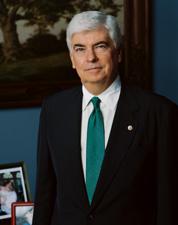 Sen. Christopher J. Dodd (D-CT)
Legislative Activity
Stay on top of the latest movement without scrolling through every action
Roll call votes on amendments in Senate: Amendment SA 2660 as modified agreed to in Senate by Yea-Nay Vote. 70 - 26. Record Vote Number: 32.(text as modified: CR S2206)
March 4, 2004
View full timeline
Roll call votes on amendments in Senate: Amendment SA 2660 as modified agreed to in Senate by Yea-Nay Vote. 70 - 26. Record Vote Number: 32.(text as modified: CR S2206)
March 4, 2004
Senate amendment agreed to: Amendment SA 2660 as modified agreed to in Senate by Yea-Nay Vote. 70 - 26. Record Vote Number: 32.(text as modified: CR S2206)
March 4, 2004
Considered by Senate. (consideration: CR S2188-2192, S2206, S2209-2210)
March 4, 2004
Amendment SA 2660 as modified agreed to in Senate by Yea-Nay Vote. 70 - 26. Record Vote Number: 32. (text as modified: CR S2206)
March 4, 2004
Senate amendment submitted
March 3, 2004
Senate amendment proposed (on the floor): Amendment SA 2660 proposed by Senator Dodd.(consideration: CR S2088; text: CR S2088)
March 3, 2004
Amendment SA 2660 proposed by Senator Dodd. (consideration: CR S2088; text: CR S2088) To protect United States workers from competition of foreign workforces for performance of Federal and State contracts.
March 3, 2004
Votes
1 roll call on this amendment
Amendments
2 amendmentsOffered to this amendment
Amendments
2 amendmentsOffered to this amendment
No matches
To protect United States workers from competition of foreign workforces for performance of Federal and State contracts.
Amendment SA 2685 agreed to in Senate by Unanimous Consent. · Sponsored by John McCain · Amends S.Amdt. 2660
To protect the jobs of American workers.
Amendment SA 2680 as modified agreed to in Senate by Unanimous Consent. (text as modified: CR S2206) · Sponsored by Mitch McConnell · Amends S.Amdt. 2660
Text
Modified
JUMPSTART OUR BUSINESS STRENGTH (JOBS) ACT

The PRESIDING OFFICER. Under the previous order, the hour of 10:30
a.m. having arrived, the Senate will resume consideration of S. 1637,
which the clerk will report.
The assistant legislative clerk read as follows:

A bill (S. 1637) to amend the Internal Revenue Code of 1986
to comply with the World Trade Organization rulings on the
FSC/ETI benefit in a manner that preserves jobs and
production activities in the United States, to reform and
simplify the international taxation rules of the United
States, and for other purposes.

Pending:

Dodd amendment No. 2660, to protect United States workers
from competition of foreign workforces for performance of
Federal and State contracts.

Mr. GRASSLEY. I yield the floor.
The PRESIDING OFFICER. The Senator from Massachusetts.

Amendment No. 2660

Mr. KENNEDY. Mr. President, first, I thank the Finance Committee and
the leadership for getting this measure before us. This is important
legislation. What is extremely important is the Dodd amendment.
As we approach early March, we have to ask ourselves in this body
what we are doing about the general challenges we are facing all across
this country, with very few exceptions. I will come back later to the
state of our economy.
This legislation provides some resolution to some of the challenges
we are facing. I think the Dodd amendment is enormously important and
one that I strongly support and hope the Senate will take action on. I
know there is consideration that we go off this bill and on to the
budget, but it does seem to me, in terms of the timetable because of
the strict limitations of time on the budget, we ought to continue the
debate on the issues of jobs and the economy which is of central
importance and consequence to people all over this Nation.
This debate should go on. I certainly join with those who believe the
institution is ill served if we refuse to give the Dodd amendment the
opportunity for a clear vote in the Senate. What the American people
are looking for is action. They want accountability. They want
responsibility. This amendment is a thoughtful amendment. It will be
one that will make a difference in terms of the state of our economy in
a very key area of economic policy, and that is the utilization of
taxpayers' resources to effectively subsidize jobs going overseas.
We ought to be able to make a judgment about that in the Senate. So I
applaud the Senator from Connecticut for this amendment.
I will take a moment or two to try to put it into some kind of
perspective because, as he and others have pointed out, we are facing a
serious economic challenge across this Nation. It is virtually uniform.
In 48 out of the 50 States, new jobs pay 21 percent less than the old
jobs they replace, with the exceptions of Nevada and Nebraska.
In the State I have had a chance to visit over the period of the last
week, the State of New York, the new jobs are paying 38 percent less
than the jobs they replaced. That is happening across this Nation, and
I will get into the greater detail of it.
That is a national challenge and a national problem, and yet our
Republican leadership refuses to permit us to deal with some of these
issues. We can deal with a number of the issues. We can deal with the
issue of the increase in the minimum wage where a majority of the
Members of this body favor an increase. It would take about half an
hour to debate that issue. We all know what that is about.
We could extend the unemployment compensation. Fifty-eight Members of
the Senate want to extend unemployment compensation but our Republican
leadership says no and this President says no. We could also defeat the
Bush proposal to deny overtime from some 8 million of our workers in
this country. This is the first time since the Fair Labor Standards Act
has been enacted in this country, which recognizes a 40-hour workweek,
that we have an administration proposing the elimination of overtime,
and we will come back to that. This all starts down in the White House,
make no mistake about it.
We have to have a President who wakes up every morning and says, we
have a challenge and we can do something about it. Presidential
leadership makes an important difference in terms of the state of our
economy. We saw it in the early 1960s where we had the longest period
of economic growth and price stability up until the time of the
dramatic expansion of the Vietnam War, all during which we had
Democratic leadership. We saw it with President Clinton, when
Republicans refused to give us a single vote for an economic policy
that produced 22 million jobs.
I remember my good friend on the other side, Phil Gramm, who said:
This proposal makes no sense. Interest rates will go as high as the
ceiling of the Senate and we will have the unemployed who will circle
the Capitol.

[[Page S2189]]

I remember those words. How wrong he was, and how wrong this
administration is and this President is about the state of our economy.
We have to have a President who wakes up in the morning and
understands that the economy needs focus and attention. This President
does not, and I will demonstrate why he does not.
I have the State of the Union speech: The pace of economic growth was
the fastest in nearly 20 years. This is the state of the Union. This is
the President's view of where we are nationwide, when 48 States out of
50 find new jobs are paying 21 percent less than the old jobs.
This is what he says: The pace of economic growth in the third
quarter was the fastest in 20 years. Productivity is high and jobs are
on the rise. This is the state of the Union.

Just a few days later he is speaking about the state of the Union
when the President meets with the workers on his travels to
Springfield, MO: We have overcome a lot. That is because we are
growing. The growth is good. New jobs are being created. Interest rates
are low. A lot of it had to do with the fact we cut your taxes. The
economy is growing, growing, growing.
The President of the United States says that about the state of the
economy.
Here he is just a week ago at the National Governors Association: The
economy and jobs are on my mind. I am pleased the economy is growing.
Tell that to the more than 2 million Americans who have lost their
jobs under this administration, who are waiting for jobs. Tell them the
economy is just going hunky-dory.
Now what is happening? This is the projection the President has made
about job growth since the time he became President of the United
States. The difference between his projection and the reality is 5.2
million jobs short of his promise when he became President of the
United States. That is the reality.
Take a look at what he said each year and where these promises have
come out. When we take a look at the year 2002 promise by the purple
line, these are the projections of growth. Well, then he comes back to
2003. That is not going to happen. We are going to come back to 2003.
This is the millions of jobs that are going to grow in the United
States. It is going to be that green line. No, no, that is not right;
2002 was not right. I am going to tell you what is going to happen in
2003. It is going to be this level.
The fact is, this is the red line and it is constantly down. Why does
the President constantly misrepresent what is happening in terms of
jobs across this country? The fact is, people are hurting.
We can look at the restored economy. The President refers to the
state of the economy and how the recession is over. Look at the state
of comparing the current recovery to the recoveries over the period of
the last 40 or 50 years. Let's look at job growth recoveries even
before 1991. The recoveries from 1991 to 1993 under the Democratic
administration, look at the job growth going up. Look at where the jobs
are occurring under the current recovery, and this President says
everything is hunky-dory?
Talk about jobs, look at the record. The record speaks for itself.
Look at what is happening to the average wage of jobs lost in 2001 and
the average wage of jobs created today. This is the Bureau of Labor
Statistics. The average wage in 2001 of jobs lost was $44,570. The
average wage of jobs gained is $35,000. That is a 21-percent reduction
in the average wage between 2001 and today.
This President says in the State of the Union that everything is
fine. Economic growth is at the fastest rate in 20 years, jobs are on
the rise.
This is what is happening out in real America. This is happening out
across this country. It is happening not only in the Northeast, it is
happening in South Carolina, which has lost more manufacturing jobs per
population than any other State in the country, let alone what is
happening in the Midwest and the Southwest.
Look at this chart, which is an indicator of what happens to wages
when coming out of a recession. The President said we had inherited a
recession but now everything is going well.
We have had these series of recessions from the 1990s all the way up
to 2000. In the fourth quarter, that is what the uniform measurement is
to indicate, whether one is coming out of a recession.
Look at the increase in wages from $16 to $18, all during the 1990s,
up to the year 2000. Look at the current recovery from 2001 to 2003:
old jobs $16, new ones $15. There it is again. This Bush economy
creates new low-paying jobs, and it is reflecting itself across this
country.
This chart shows the States with jobs shifting to lower paying
industries. The darker green are all the States where that has
happened. There are two States, Nebraska and Nevada, in the country
where the new jobs are paying more than the old jobs. They are the only
two States. In the other 48 States, new jobs are paying an average 21
percent less.
That is happening. Not only are we over 2 million jobs below where we
were when this President took office, but even the new jobs that are
being created under this administration are tragically low paying.
In terms of what they are doing to the families, the result of this
is very clear. This is just a very quick picture of what is happening
to families under this administration. You have 13 million children,
now, who are going hungry. You have 8 million Americans who are
unemployed, and 8 million Americans who fear they are going to lose
overtime. This isn't bad enough about what is happening to wages, but
now the administration says it is going to take overtime pay away from
workers. We might have a lot of economic problems in this country, but
the idea that firefighters, policemen, and nurses are getting paid too
much doesn't appear to me to be one of them. It does to the
administration.
Look what has happened. We have 7 million workers waiting 7 years for
a raise in the minimum wage. Where are the Members in the Republican
leadership? When is this President going to say 7 years at $5.15 is too
little in this country? We have a majority of the Members of this body
who will vote for an increase in the minimum wage. Why are you stifling
that? Why do you block it, year after year after year? That is the
record, 7 million.
The recipients of the minimum wage are mostly women, 62 percent
women. It is a women's issue. It is a children's issue because one-
third of the women have children. It is a children's issue and a
women's issue. We don't want to hear from the other side about family
values anymore. These are families, single women, trying to bring up
their children. It is a civil rights issue. Most of those who earn the
minimum wage are men and women of color. And it is a fairness issue.
All Americans understand fairness. They say if you work 40 hours a
week, 52 weeks a year, you should not live in poverty.
But, no, we can't even get a vote. We can't even get accountability.
Everything is going fine. That is what the President said in the State
of the Union. That is what he just told the Nation's Governors.
Everything is fine. Everything is good.
Now the Senator from Connecticut has a concrete proposal to do
something about it, and he is denied the opportunity to get a vote up
or down. What is with this Republican leadership?
These are some of the challenges we are facing. I will just give an
example of what has happened in recent times, in terms of our recovery.
We hear how well things are going on Wall Street. We have heard that
time in and time out. Look at this chart. This is ``The Corporate
Profits Ballooned Compared to Workers' Wages.''
Look at what happens, the difference between wages and corporate
profits for the economic recoveries during the 1990s: 60 percent of the
expansion of the economy went to wages; 39 percent went to corporate
profits. Now, in the year 2002, look at today's recovery: 86 percent is
going to profits and 13 percent to wages.
You wonder why workers aren't getting paid as much? There it is, it
is as clear as can be. There may be a chart here you might be able to
explain, but you can't explain them all. You can't explain the number
of children in poverty, the number of children who are hungry. You
can't explain the allocation of wages and what is happening in

[[Page S2190]]

real wages. You can't explain the fact that 48 out of the 50 States are
losing good-paying jobs that are being replaced with jobs that don't
pay as much. This economy needs focus, it needs attention, and it needs
action.

The proposal of the Senator from Connecticut is action. We have
debated it, discussed it, but somehow we have a sense we get a slow
walk around here, a slow walk. We are being denied the opportunity to
get a chance to address some of these issues. Why aren't we getting a
chance to address some of these issues on unemployment? We have 58
Members of this body, Republican and Democrat alike, who want to extend
the unemployment compensation to workers who have worked hard and paid
into that fund. The fund is $15 billion in surplus which these workers
paid in. The total cost of the proposal of the Senator from Washington
is $5.5 billion. It will still be in surplus.
We have 90,000 workers a week--listen to this. Mr. President, 90,000
workers a week across this country are losing their unemployment
compensation; 90,000 a week. That is per week. That is happening all
across this country. These are men and women who have paid into the
unemployment compensation fund. Generally, when we have had these kinds
of economic crisis, we have extended the unemployment compensation to
workers when we have a decline in the economy. Does anyone in the world
believe that workers in 48 out of 50 States who are losing their jobs,
who are seeing a decline in their income, that it is their fault? Of
course it is not their fault. It is the failed economic policies.
You know, it would be one thing if we had an administration and
President who said: Oh, yes, that is right. But here we just have
statements after statements about how well it is all going for workers
across this country, and that just is not so. That is of central
concern to families all across this Nation.
We have an opportunity this morning to make a small downpayment with
the Dodd amendment. It demands action. It makes sense. It will do
something--not everything, but it will be a strong indication to
workers in this country that we are taking their plight seriously and
that we want action on their behalf. That is what the Dodd amendment
is. It would be absolutely irresponsible if this body refused to give
us a chance to get a vote on this kind of amendment. It is so important
for workers, for families in this country. It would send such a message
to families across this country that this institution hears what is
happening to their children, to the young people, to the families who
can no longer afford the college tuition that has been exploding; to
the families who can't afford the prescription drugs because the costs
escalated so dramatically over this period of time.
To all of those families and the families who are losing their
unemployment compensation, who are going to have difficulty paying the
mortgage and putting food on the table and looking out for their
children, this is a family issue, a fairness issue, and the Dodd
amendment moves us in the right direction.
Mr. DODD. Will my colleague yield?
Mr. KENNEDY. I yield.
Mr. DODD. I raise an issue, because it has been raised in the last 24
hours or so, that one of the things the administration is doing is
putting resources into vocational education, education and job
training. I know my colleague, from his extensive work in this area,
and knowing the committees we serve on together deal with some of these
issues, but you might just recount what the proposals are in vocational
education, job training, all of these programs that would put more
resources out there to make it possible when people lose their jobs to
find additional work. Isn't it a fact we are cutting back in these
budgets?

Mr. KENNEDY. The Senator is quite correct. The Senator probably
remembers the State of the Union speech where the President announced a
new program in association with community colleges--$250 million. Then
he went out the next couple of days and went to community colleges and
worked with local workforce groups about this issue.
At the same time, they have cut $800 million from the identical
training programs in the last two budgets. That is the record. We can
go back. I haven't got the appropriations here, but I know it. I am
familiar with it because we resisted it and we had amendments here.
Again, there was an amendment from the Senator from the State of
Washington to restore the training programs. Nonetheless, those
programs were cut.
You talk one way one day and another way another day. We saw the
classic example of it in the State of the Union. We were talking about:
Oh, yes, we are going to have a workforce community-based community
college program to upgrade the skills. But in the previous year, and
the year before, cutting those work training programs. People aren't
stupid on this. They know it. I am sure they know it in Connecticut. I
know they know in my State, on these workforce investment boards, what
is happening and its devastating impact.
We had a strong bipartisan effort, when Senator Kassebaum and Senator
Jeffords chaired, as the Senator from Connecticut remembers. First we
had the JTPA, a program we worked out in a bipartisan way in the
committee that was chaired by Senator Dan Quayle. People differ about
Senator Quayle. He was a stalwart on job training. It was the only
social program that passed, as the Senator remembers, during the first
4 years of President Reagan and it took a lot of courage for Dan
Quayle.
Then we went beyond that. Because we had over 125 different job
training programs in 12 different agencies, we wanted to get these
pulled together, so we had a Kassebaum-Kennedy commitment to get
workforce training in one place. It was bipartisan. We began to fund it
and then what happens? As soon as we begin to get life in that, this
administration effectively guts this program.
Mr. DODD. I remind my colleague, and I am sure he knows these
numbers, this year's budget proposal reduces worker investment programs
by $400 million. So here you have 2.8 million jobs being lost in
manufacturing. Those people who cannot find work are getting jobs at
far less wages and salaries than they had in their previous job. Yet we
find when it comes to worker education and investment issues the budget
actually reduces the amount we are going to commit to those programs by
almost a half a billion dollars. I wonder if my colleague has something
to say about that.
Mr. KENNEDY. The Senator is absolutely correct.
I answer the Senator in this way. The Senator's amendment is so
timely. We have three--I believe we have seven, and I have others back
at my office--national or international magazines. This is February 21,
The Economist, ``New Job Migration.'' Here is BusinessWeek, ``Will
Outsourcing Hurt America's Supremacy?'' Here is Time magazine, March 1,
``Are Too Many Jobs Going Abroad?''
These are national publications--national magazines. That is what the
debate is about. The Senator from Connecticut has an amendment dealing
with these very issues. Nothing could be more current.
Why aren't we getting an opportunity to debate these issues which
just about every publication in the country understands is a major
issue, and certainly every working family in this country understands.
The Senator has proposed an approach on this that can make a major
difference. I am troubled, as he must be, that he is not able to get a
clear-cut judgment decision.
Mr. DODD. I thank my colleague. I was prepared to vote. We offered
the amendment at about 3:30 yesterday afternoon. This is a very simple
proposal.
There are those who are for outsourcing. The administration has
indicated that it is a good thing for the economy to outsource jobs. I
presume there are people in the Chamber who share that view. Why not
vote up or down instead of going through the gyration of trying to find
some cute way of avoiding having to vote on this issue or coming up
with some phony alternative believing that outsourcing is good for the
economy? I think shipping jobs away, destroying the manufacturing base
and human capital investment that makes it possible in the 21st century
for us to be competitive in a global economy is the wrong way to
proceed.

[[Page S2191]]

I understand there are those who disagree with me on that. If they
do, come down and vote no. It is that simple, and the Senate can speak
on this issue.
Mr. KENNEDY. The Senator has put the case well. The other part goes
beyond the question about whether you favor that or not--the tax
provisions which have been included in the proposal which are basically
subsidizing. You have workers who are basically subsidizing the export
of other jobs, which is being addressed by the Senator. You ask, What
in the world? This is a matter of public policy. Does that make sense?
Several enormously important public policy issues and questions are
included in the Dodd amendment. They deserve debate and they deserve
action on the floor of the Senate.
I conclude and remind our colleagues about what is happening across
the world. That is on this chart. American workers are working longer.
American workers are working harder. American workers saw their incomes
go down over the period of the last 2\1/2\ years.
These are all of the other industrialized nations in the world.
It isn't only these workers. Women in our society, women are working
longer and harder.
Our challenge isn't about American workers, it is about the policies.
The Dodd amendment gets to those policies. The American workers are
entitled to accountability on it.
He has an excellent amendment, one that I support and which hopefully
we will have an opportunity to get to.
The PRESIDING OFFICER. The Senator from Utah.
Mr. HATCH. Mr. President, I have sat here and listened to my two
distinguished colleagues on the other side of the aisle. I have to
admit I believe the distinguished Senator from Massachusetts is one of
our most colorful Senators in the Senate. He is a person I respect, and
with whom I have a personal friendship. But that doesn't mean we agree
on a lot of the things he says. In fact, we don't.
I don't think President Bush has been saying the economy is hunky-
dory, to paraphrase what the distinguished Senator from Massachusetts
characterized the President as saying. I think the President realizes
there have been lots of problems that have arisen, as each President
has had to face problems. He has faced them in large measure in a whole
variety of ways, but in large measure by cutting taxes, which now
happens to be paying off because we have gotten great benefits from the
cuts in taxes. Frankly, 125,000 jobs a month are coming back. That is
not something to sneer at.
I might also mention we get nothing but screams on the other side of
the aisle that unemployment compensation isn't being continued. But I
remember back in the Clinton administration when unemployment was, I
believe, at 9 percent--certainly higher than it is today--and they
discontinued unemployment compensation, and they controlled the Senate
floor. Today, we have a 5.6-percent unemployment rate, which is one of
the lowest we have had in years. If you look at it from the other
survey, which I think is probably more accurate, it is probably lower
than that.
For anybody to say we don't have problems in this society today would
be wrong. But we had problems in our society through all of the Clinton
years as well.
By the way, when President Clinton came into office, we were
definitely coming out of a recession, and he reaped the benefits of
many of the things that President Bush 1 actually did. He had a number
of very good years. I don't believe it was because they increased taxes
the way they did. It was because we were already starting to come out
of the recession and one of those cyclical periods.
Let me just say this: When President Clinton left office, I don't
think anybody could deny that in the last year of his term in office we
were starting into a recession again, which President Bush inherited.
To stand there and blame President Bush for everything that has gone
on is wrong, and it shouldn't be done. And to indicate that President
Bush says everything is hunky-dory, that there are no problems in our
society, is to ignore many of the statements President Bush has made
and that his administration has made.
If we had listened to our friends on the other side, over the last
year alone we would have spent $1 trillion more. Our budget would have
been so out of whack we would never get it back.
Yet they are trying to tell the American people they are the fiscally
responsible party? We can't bring up a spending bill that they don't
want to double. They think that is good for the economy.
On the minimum wage, look, I suspect minimum wage will be increased
this year. I remember only one time when the Senate voted down the
minimum wage, and that was because the distinguished Senator from
Massachusetts and others tried to overdo it just a short time after the
last raise.
We are talking about jobs, too. Just remember that every time the
minimum wage rate goes up, all kinds of kids--mainly young African-
American kids who can't get those starter jobs--wind up being on the
unemployment rolls, many of them for the rest of their lives. Some
estimate it as high as 600,000 of them every time the minimum wage is
increased.
I think it is a great argument to argue about the minimum wage and
how we want to get people more money, and then turn around and say we
are losing jobs in North Carolina and South Carolina without
acknowledging the fact that the reason we are is because China is
paying people 39 cents an hour for textile work.
We are either going to have to have the Federal Government pay to
resolve these problems in every way, which would cost billions and
billions of dollars more, boosting up one aspect of our economy that
basically we have lost because of competition--or, we will all have to
begin to understand competition. This country is the most competitive
country in the world. We are the most productive country in the world.
However, we need to recognize and focus on our strengths.

In all honesty, if our friends on the other side are really sincere
about creating jobs, why did they refuse to go to conference on the
Workforce Investment Act? That bill has been put back light years
because of the refusal to go to conference and resolve this matter.
This has offended the House and now we may or may not get that bill.
That would be a helpful bill with regard to jobs.
We should be wary of retaliation. I respect my friend from
Connecticut, as well. But sometimes we do not think it through when we
do these broad, oversweeping things like preventing government
outsourcing. We should be wary of retaliation against United States
companies that get awarded foreign government contracts. Let me give a
few examples.
Entrust is a perfect example. Internet security company Entrust Inc.
was awarded a $17.6 million contract by BCE Nexxia for enhanced
Internet security software and services for the Canadian Government's
Secure Channel project.
By the way, you could name dozens of companies that are doing the
same.
``The contract is the largest in Entrust's history and reflects how
we are collaborating with service providers to deliver solutions
tailored to the government, financial and Global 100 enterprise market
sectors we announced in early June,'' CEO Bill Conner said in a
statement.
BCE Nexxia, leading a consortium including BCE Emergis and CGI, was
awarded a $37.6 million contract to build and manage a technology
infrastructure for the Canadian Government. The company, a division of
Bell Canada, provides communications services and operates an IP-
broadband network. Bell Canada is 80-percent owned by BCE Inc. of
Montreal and 20 percent by SBC Communications Inc. of San Antonio.
I could go on and on about this.
Computer Sciences Corp. of El Segundo, CA, won a contract to replace
Human Resources Development, Canada's network operating system, with
new hardware and software, the company announced November 15.
Human Resources Development Canada provides Canadians with employment
insurance, income security, employment programs, corporate services,
and homelessness and labor services using several means, including
walk-in services, automated telephone systems, and self-service kiosks.
About 26,000 agency employees use the network. The contract includes IT
architecture,

[[Page S2192]]

software license arrangements, server hardware, and services for
transition, migration, implementation, support, and maintenance.
My gosh, one reason we are trying to do the FSC/ETI-JOBS bill is to
jump-start our economy and because we are being assessed $4 billion in
trade sanctions if we do not resolve some of these conflicts in our
relationship with the E.U.
Want to lose jobs? Don't support this bill or keep gumming it up. And
we are gumming it up with legislation that literally will cause even
more angst and will probably cost us $4 billion in the end. And that
means jobs.
``This is an important contract for CSC in the Canadian federal
government information technology market and further expands our
presence in Ottawa region,'' said Tony Canning, president of CSC's
Canadian operations. ``We look forward to serving HRDC in implementing
and supporting the state-of-the-art networking system.''

In support of CSC, Compaq Canada Inc., Richmond Hill, Ontario,
subsidiary of Houston-based Compaq Computer Corporation, will provide
server technology and CDI Corporate Education Services Corporation of
Toronto will offer training services.
Digimarc ID Systems, a wholly owned subsidiary of Portland-based
Digimarc Corporation, has extended an agreement with the Brazilian
Government.
The Bedford, MA, based--that is a Massachusetts company, by the way--
based subsidiary announced Tuesday the Brazil Federal Police has
contracted with Digimarc ID Systems to continue producing the country's
alien ID cards. Since 1997, the Brazil Federal Police has issued more
than 1.5 million of the cards to people who live in Brazil under work
or immigration visas. Digimarc ID Systems provides hardware, software,
maintenance, and operations support to the Brazil Federal Police.
What are we going to do, have countries all over the world retaliate
against us because we are going to have a bill here that is filled up
with this type of stuff?
Harris Corporation, an international communications equipment
company, and RAYLEX S.A, Harris's representative in Chile, announced
today the signing of a contract valued at $11 million with the Chilean
Government. The contract includes the complete supply and buildout of
the world's largest microwave network. The network will cover a total
of 4,500 kilometers, interconnecting phone services, data, video
conferencing, and other multimedia services for the customer. Extending
from Arica in northern Chile to Puerto Mont in the southern part of the
country, the network is expected to benefit both cities' metropolitan
regions as well as all major cities between Arica and Puerto Mont.
We are all concerned about preserving American jobs, but we need to
make sure the cure is not worse than the disease.
I am getting tired of cheap shots being made against President Bush.
I got tired of some that were made against President Clinton and
against President Carter, because I was here. It is time to work
together and this bill is one of the most important bills in recent
history because it will create jobs. It will jump-start the economy. It
will save us $4 billion in trade sanctions. It will help us.
We should not be debating this for days and days. We ought to pass
this bill. We ought to pass this bill and get it going. We have to
resolve the conflicts between the House and the Senate. That is always
difficult, but we have been able to do it in some of the major bills of
the past.
It is misleading for people to come to this floor and just chop up
the President, who is doing the best he can, and who is a great sponsor
and supporter of this particular piece of legislation, which is one of
the most important pieces of legislation with regard to jump-starting
this economy and jump-starting jobs in this economy.
It is time to work together and quit trying to make political points
and get something done. I suggest we do a little less screaming on the
floor and a little more work and get this bill passed as soon as we
possibly can.

Amendment No. 2680 to Amendment No. 2660

Mr. McCONNELL. On behalf of myself and Senator Frist, I send a
second-degree amendment to the desk and ask for its immediate
consideration.
The PRESIDING OFFICER. The clerk will report.
The legislative clerk read as follows:

The Senator from Kentucky [Mr. McConnell] for himself and
Mr. Frist, proposes an amendment numbered 2680 to amendment
2660.

Mr. McCONNELL. Mr. President, I ask unanimous consent that the
reading of the amendment be dispensed with.
The PRESIDING OFFICER. Without objection, it is so ordered.
The amendment is as follows:

(Purpose: To protect the jobs of American workers)

On page 7, strike lines 10 through 14 and insert the
following:
This title and the amendments made by this title shall take
effect 30 days after the Secretary of Commerce certifies that
the amendments made by this title will not result in the loss
of more jobs than it will protect and will not cause harm to
the U.S. economy. Such certification must be renewed on or
before January 1 of each year in order for the amendments
made by this title to be in effect for that year.

Mr. McCONNELL. I rise today to offer on behalf of the majority leader
and myself a second-degree amendment on behalf of the 6.4 million
Americans who earn their livelihood in our country while working for
foreign corporations.
This amendment is very simple. It delays the effective date of the
outsourcing provisions until the Secretary of Commerce certifies the
amendment made by this title will not result in the loss of more jobs
than it will protect and will not cause harm to the United States
economy. In short, it is a do-no-harm provision. Remember, 6.4 million
Americans have their jobs in the United States as a result of foreign
companies doing business here.
Senator Dodd's fundamental goal of encouraging and protecting
American jobs is certainly a sound one. No one can argue with that.
However, it may jeopardize many more jobs in the process of trying to
achieve a laudable goal. These 6.4 million Americans depend on salaries
from foreign corporations to feed their children, provide them shelter,
education, and health care.
If America erects a global jobs barrier, nations around this world
may retaliate in kind. This would put at risk those 6.4 million jobs I
have been talking about. These are real numbers, real jobs, and real
families put at risk.
Yesterday, the Senator from Connecticut stated he was told over the
next decade over 3 million American jobs may be outsourced.
Unfortunately, with American jobs at stake we cannot risk what is or
what may be. What is, right now, is the existence of 6.4 million
American jobs, not over the next decade but right now, real numbers
calculated by the Census Bureau.
Let's just take Kentucky, for example. We have 104,100 people in my
State employed by foreign companies or their affiliates. That is a lot
of jobs in a State of 4 million people. It is a huge number of jobs.

In Connecticut, 116,000--even more than in Kentucky--jobs are held by
citizens of Connecticut who are working for foreign corporations doing
business in Connecticut. These pale in comparison to what is at stake
in the State of Massachusetts--223,300 jobs--Massachusetts citizens
working in Massachusetts for foreign corporations--an astonishing
number, indeed. Again, in Massachusetts, nearly a quarter of a million
workers, their families and their children, are put at risk potentially
by the amendment of the Senator from Connecticut--real jobs and real
families facing real unemployment and real hardship.
For the sake of these jobs, I strongly urge my colleagues to adopt
the amendment I have just offered. The underlying legislation is the
JOBS bill. That is what this underlying bill is all about: American
jobs.
It is counter to this legislation and our duties here as Members of
this body to take action which puts 6.4 million American workers' jobs
at risk. That is not what we ought to be doing on the floor of the
Senate.
Finally, let's just drive the point home by looking on a State-by-
State basis at how many jobs are in the United States as a result of
foreign corporations doing business in our various States.
Let's start at the top of the alphabet: Alabama,76,800 jobs; Alaska,
11,600 jobs;

[[Page S2193]]

Arizona, 75,200 jobs; Arkansas, 40,400 jobs; California, 737,600 jobs--
the number of people in California in jobs as a result of foreign
corporations doing work in California; in Colorado, 101,000 jobs; in
Connecticut, as I mentioned earlier, 116,000 jobs; in Delaware, 33,400
jobs; in the District of Columbia, 17,100 jobs; in Florida, 306,900
jobs--Floridians working for foreign corporations; in Georgia, 223,900
jobs; in Hawaii, 43,300 jobs; in Idaho, 14,200 jobs; in Illinois,
317,100 jobs; in Indiana, 165,900 jobs; in Iowa, 40,300 jobs; in
Kansas, 60,600 jobs; as I mentioned earlier, in the Commonwealth of
Kentucky, 104,100 jobs; in Louisiana, 61,100 jobs; in Maine, 33,400
jobs; in Maryland, 110,400 jobs; as I mentioned earlier, in
Massachusetts, 223,300 jobs; in Michigan, 246,500 jobs; in Minnesota,
103,100 jobs; in Mississippi, 23,900 jobs; in Missouri, 105,100 jobs;
in Montana, 6,800 jobs; in Nebraska, 21,800 jobs; in Nevada, 35,700
jobs; in New Hampshire, 45,900 jobs; in New Jersey, 269,100 jobs; in
New Mexico, 16,300 jobs; in New York, 471,600 jobs; in North Carolina,
261,600 jobs; in North Dakota, 8,600 jobs; in Ohio, 259,400 jobs; in
Oklahoma, 41,800 jobs; in Oregon, 62,300 jobs; in Pennsylvania, 280,800
jobs; in Rhode Island, 24,400 jobs; in South Carolina, 137,600 jobs; in
South Dakota, 6,900 jobs; in Tennessee, 148,600 jobs; in Texas almost a
half million--437,900--jobs; in Utah, 37,400 jobs; in Vermont, 11,600
jobs; in Virginia, 179,200 jobs; in Washington, 104,200 jobs; in West
Virginia, 27,600 jobs; in Wisconsin, 106,800 jobs; in Wyoming, 7,800
jobs.
There is an enormous number of Americans--6.4 million Americans--
working in America, working in our country, employed by foreign
corporations. We do not want to gamble with that. Outsourcing is a
matter of concern, but we are proud of the insourcing that is going on,
too, and the fact there is an enormous number of foreign corporations
that have come into our country because they think it has a
good business environment, because they want to employ Americans to
produce products here in our country.

Mr. President, I hope this amendment on behalf of the majority leader
and myself will be adopted.
Mr. GREGG. Mr. President, will the Senator yield for a question?
Mr. McCONNELL. I will.
The PRESIDING OFFICER. The Senator from New Hampshire.
Mr. GREGG. I think the Senator has made an extraordinarily strong
point. I noticed when he got to New Hampshire, he said 45,000 jobs in
New Hampshire are tied to businesses which are non-American owned. Is
the Senator aware the largest employer in the State of New Hampshire is
not an American company?
Mr. McCONNELL. I did not know that, and I think that is a very
interesting point to be made.
Mr. GREGG. Literally thousands of people's lives would be affected if
that country, which happens to be England--our closest ally, closest
friend, one of our largest trading partners, after Canada--if that
country were to take the view that is being taken by the Senator from
Connecticut, that they should deny their companies creating jobs in the
United States. That company would be closed down in Nashua, NH, our
second largest city and our largest employer. Is the Senator aware of
that?
Mr. McCONNELL. I was not aware of that, but it certainly illustrates
the point the Senator from Kentucky was trying to make.
Mr. DODD. Will the Senator yield on that very point just made?
Mr. GREGG. I do not have the time.
Mr. McCONNELL. I have the floor. I yielded to the Senator from New
Hampshire.
Mr. DODD. I would just like to point out----
The PRESIDING OFFICER. The Senator from Kentucky has the floor.
Mr. McCONNELL. If we could have one at a time, Mr. President. I
yielded to the Senator from New Hampshire for a question.
Mr. GREGG. Mr. President, I was wondering if this does not also flow
into the issue of our ability to access other markets. If we are in the
business of trade, where 30 percent of the jobs in New Hampshire are
tied not to being owned by a foreign country but being able to sell
products to a foreign country--30 percent of our jobs; for one in three
workers in the State of New Hampshire, their job is directly related to
the fact that the product they make is sold overseas--is it not logical
that if we begin to close down our borders, we are basically opening a
trade war, and that we could potentially close down those jobs, too,
because some nation may retaliate in some other way other than not
allowing outsourcing?
Mr. McCONNELL. I say to my friend from New Hampshire, that is
precisely the point. I think retaliation would be the order of the day.
I will give you an example in my State. The Japanese corporation Toyota
chose to outsource from Japan to the United States over 8,000 jobs to
Georgetown, KY, to build the Toyota Camry. Eight thousand Kentuckians
are employed at that particular site as a result of the outsourcing
from Japan of those jobs into my State. They are high-paying jobs. We
are extremely pleased they are there, and we would not want to do
anything to jeopardize the existence of Toyota or the 50 or 60 supplier
plants that have come into my State as a result of the Toyota company
being there to send parts to the Toyota plant. Under their ``just in
time'' supplier strategy, they send parts up there every day to be
installed in those cars, employing a dramatic number of Kentuckians in
addition to the 8,000 who are there at that site.

So the Senator from New Hampshire is exactly on point. I thank him
for his contribution.
Mr. GREGG. Mr. President, I appreciate the Senator pointing those out
in specific terms as to what the potential effect of this language
might be. It is using a club to address an issue which is an issue, a
concern, which is, obviously, our competitiveness as a society. But
isn't the key to our competitiveness not to shut down markets, but to
open markets, and to allow products which we make better than other
countries to be sold into those countries?
Wouldn't this amendment in the end probably lead to a loss of jobs in
the United States, not only from nations such as Japan saying they were
not going to outsource their jobs, but our people who are employed in
selling products overseas potentially losing their jobs?
Wouldn't it fundamentally undermine the whole concept of opening
barriers for trade, creating more opportunities for trade and, as a
result, lead to potentially a chilling environment which would have a
huge impact on our economy, the largest in the world?
Mr. McCONNELL. I think the Senator from New Hampshire is precisely
correct. It has been the policy of the leaders of both political
parties in recent decades to break down barriers overseas, to expand
trade, to move us into the global economy in a more and more dramatic
fashion, the feeling being that America in the global economy can be a
winner and is a winner.

I think the Senator from New Hampshire is precisely on target, and I
thank him for his question.
Mr. GREGG. If I may ask an additional question, this is such a
crucial issue. We hear now, from the patter of the national campaign on
the other side of the aisle, that maybe we should move back toward
protectionism. This amendment to me is a stalking dog for that sort of
an attitude. It is colored by fairness and reasonableness. But as a
practical matter, its effect will be to create retaliation, as we have
discussed.
I guess my question is this: Are we a nation that believes we can
compete in the world or aren't we? Are we a nation that believes our
people are smarter, brighter, and more productive than anybody else in
the world or aren't we?
I look at New Hampshire and I know our people are smarter, brighter,
and more competitive. I look at Connecticut, a neighboring State which
I know quite well. Every time I drive through Connecticut I am
impressed. I know it is built on smart, bright people. I suspect that
is the case in Kentucky, too.
My question is, Are we so fearful of our capacity to compete as a
nation that we must put forward this new concept which we hear
pattering from the other side of the aisle toward us of protectionism
or should we follow what the great leaders of our Nation--Truman,
Roosevelt, Franklin by the way, not Theodore, Kennedy, Johnson,
Clinton--stood for, which is that we are a nation that competes and
competes well?

[[Page S2194]]

Mr. McCONNELL. We absolutely should stand for competition and be
confident that our own people have the intelligence and the ingenuity
and the energy to compete in the global economy.
I don't think we should be afraid of this at all. I think the Senator
from New Hampshire is precisely on target. This is why the voting
record of, say, for example, the Democratic nominee for President
reflects a belief in free trade, a consistent pattern of voting for
free trade agreements.
I hope this bipartisan support we have had for breaking down barriers
and competing in the word market and moving in the direction of free
trade will not be jeopardized in this Presidential election year.
Mr. GREGG. I appreciate the Senator's courtesy.
Mr. McCONNELL. I yield the floor.
The PRESIDING OFFICER (Mr. Graham of South Carolina). The Senator
from Iowa.
Mr. GRASSLEY. Mr. President, these Senators speaking remind me that
``made in America'' has always been a badge of honor, a badge of
distinction--``made in America.'' It shows that America can compete.
America has competed and America has won over the long, long haul.
We have been hearing from the defeatist wing of the Democratic Party,
not from the wing of the Democratic Party that says the United States
can compete and win and can even do it from a position of leadership. I
am not prepared to be a defeatist in international trade. I intend to
wear that badge ``made in America'' with honor, as it has been for
decades and decades.
I think we need to remind the Senate now, after 24 hours on this
legislation, what we are facing. It looks as if we have from here until
hell freezes over to get this legislation passed. Already we are in a
situation where the United States is suffering as a result of inaction
by Congress. People need to remember that Senator Baucus and I worked
very carefully to put together a bill that would go through this body
very easily, and now we are seeing it stalled with things that may be
legitimate issues. But while people are complaining about jobs going
overseas, this bill that was voted out of committee 19 to 2 is being
stalled.
In the process of stalling, U.S. manufacturing is already facing a 5-
percent surcharge by Europe, to the point where it is not a case of
just paying 5 percent more.
It is probably the case with a lot of our products that our products
might not even be competitive and we are not selling. When you can't
sell, people are laid off. So I think instead of worrying about
situations that you want to help for the future, we have an opportunity
to keep jobs that we know exist today, will continue to exist, and are
only in jeopardy because of sanctions being put on our products by
Europe.
We might be facing an amendment on overtime coming up shortly. It is
one thing to worry about people getting overtime, but if you don't have
a job, you can't even get overtime. So we have to get back to the
basics. The basics are what this legislation is all about--maintaining
the competitiveness of our industry, not going backwards.
While this bill is being stalled by other issues that are very
legitimate--and I have talked to the Senator from Connecticut about the
legitimacy of his issue and also about some modifications he made to
get this through--it is holding up a bill that came out of committee 19
to 2. Those two votes were not cast by Democrats against the bill. They
were cast by Republicans.
This bill should go forward to get rid of that 5-percent surcharge
that we have on our products. In April it is going to be 6 percent, and
in May it is going to be 7 percent. By the election it is going to be
12 percent. That is the basic issue before us.
I also wish to address some of the things that Senator Kennedy said.
I don't want to address them from my point of view. I wish to address
them from the point of view of the intellectual wing of the Democratic
Party. We heard from the political wing of the Democratic Party by
Senator Kennedy. So I would like to refer to an article written by
Robert B. Reich, Secretary of Labor in the Clinton administration, a
Secretary of Labor concerned about the rights of labor, concerned about
jobs. He also is an adviser to the Democratic candidate for President.
He ought to be listened to. This is what former Secretary Reich had to
say in an article, printed December 26:

It's hard to listen to a politician or pundit these days
without hearing that America is ``losing jobs'' to poorer
nations--manufacturing jobs to China, back-office work to
India, just about every job to Latin America. This lament
distracts our attention from the larger challenge of
preparing more Americans for better jobs.

It seems to me that what Secretary Reich is saying to the political
wing of the Democratic Party from the intellectual wing of the
Democratic Party is we ought to be looking to the future, there are big
challenges out there, and you should not spend all of your time
haranguing about stuff that maybe you can't do a whole lot about.
``Most jobs losses over the last 3 years,'' Professor Reich says,
``haven't been due to American jobs moving anywhere.''
I will start that over again:

Most jobs losses over the last 3 years haven't been due to
American jobs moving anywhere. They have resulted from an
unusually long job recession. Hopefully, that is coming to an
end.

It is, and that is my parenthetical comment.

We can debate whether the Bush administration has done a
good job, or the right things to accelerate a job recovery,
but job growth eventually will resume--

Parenthetically, we know it is resuming--

as aggregate demand bounces back.

Continuing to quote:

It is true that U.S. manufacturing employment has been
dropping for many years, but that's not primarily due to
foreigners taking these jobs.

Let me stop there. Senator Kennedy, do you realize the intellectual
wing of your party says manufacturing employment dropping hasn't been
primarily due to foreigners taking these jobs? Then I quote:

Factory jobs are vanishing all over the world. Economists
at Alliance Capital Management took a look at employment
trends in 20 large economies and found that between 1995 and
2002, 22 million factory jobs had disappeared. The United
States wasn't even the biggest loser. We lost about 11
percent of our manufacturing jobs in that period--

Wasn't most of that 5 years during the Clinton administration?

[B]ut the Japanese lost 16 percent of theirs. Even
developing nations lost factory jobs: Brazil suffered a 20
percent decline, China a 15 percent drop. What happened to
factory jobs? In two words, higher productivity.

Parenthetically, that is exactly what we have seen in the U.S.--
higher productivity over the last year and a half. Last month was the
highest productivity in 50 years. You have to go back to July 1950 to
have the productivity gains that we have had.
Professor Reich goes on to say:

I recently toured a U.S. factory containing two employees
and 400 computerized robots. The two live people sat in front
of computer screens and instructed the robots. In a few
years, this factory won't have a single employee on site,
except for an occasional visiting technician who repairs and
upgrades the robots, like the gas man changing your meter.

I suppose I could quote the whole long article, but there is one
other thing I ought to say. The intellectual wing of the Democratic
Party is advising everybody, but it is good advice for the political
wing of the Democratic Party as well:

We should stop pining after the days when millions of
Americans stood along assembly lines and continuously bolted,
fit, soldered, or clamped whatever went by. Those days are
over. And stop blaming poor nations whose workers get very
low wages.

Professor Reich asks the question: ``Want to blame something?''
If the political wing of the Democratic Party wants to blame
something for loss of these assembly line jobs, he says: ``Blame new
knowledge.''
Well, isn't that something we expect in the evolving world--new
knowledge and making use of new knowledge?
He says here:

The Internet has taken over the routine tasks of travel
agents, real estate brokers, stockbrokers, and accountants.
With digitization, high-speed data networks and improved
global band width, a lot of back-office work can now be done
more cheaply abroad. Last year, companies headquartered in
the U.S. paid workers in India, China and the Philippines
almost $10 billion to handle customer service and paperwork.

Well, this article is probably summed up in a subheadline in the
middle of the article, which says: ``Remember the elevator operator?
Jobs become extinct.''

[[Page S2195]]

Isn't that true? But in the Senate we still have elevator operators
running automatic elevators, pushing buttons that somehow a Senator
doesn't have time to push or something.
What does the political wing of the Democratic Party want? Do they
still want people making buggy whips when we don't have buggies
anymore? Times change, but the defeatist wing of the Democratic Party
has lost confidence in America. They don't think ``made in America'' is
a badge of distinction anymore.
There is one other reference I would like to make. When this issue
was talked about on ABC News on February 22, we had these exchanges
between George Stephanopolous, Senator John Edwards, and Senator John
Kerry. I don't hear this complaining that I hear from the political
wing of the Democratic Party from these three Democrats. I don't hear
their suggestions for solving this problem having anything to do with
the amendment of the Senator from Connecticut. So I am going to quote
George Stephanopolous, as he has a short interview with these two
candidates:

Another big jobs issue has come up in the last couple of
weeks, the issue of outsourcing.

The very issue of this amendment.

The chairman of the Council of Economic Advisers for
President Bush got into a lot of trouble when he said that
outsourcing is a plus for the American economy.

We have been over that 100 times.

But when you look at this issue--

He is asking Senator Edwards--

what can you do about it?

Senator Edwards:

This is a very complicated issue.

OK, can we agree that it is a very complicated issue? If it is a
complicated issue, I doubt if just President Bush is responsible for it
or just President Bush is going to do anything about it. Anyway, he
says:

This is a very complicated issue. It has caused a whole
group of things. One is--the thing that actually concerns me
the most is that I worry that we are starting to lose our
edge in science, math, and technology. China graduated about
half a million engineers last year. We graduated 60,000 to
65,000. And since we are going to have the standard of living
we have in this country, in fact we want to improve it, not
make it worse. We always--it is going to be critical for the
American worker to be more productive than other workers
around the world.

Then he goes on, after a short comment by George Stephanopolous, to
say:

We--training, education. We need better and stronger
science and math curriculums, particularly in our early
grades. We need to strengthen our graduate programs in this
area. The other thing that we can--where we can have a real
image is we ought to build broadband high-speed Internet out
in every community in the next four years, because there are
lots of parts of America where it is easier for these
companies to do business in India and China because they have
access, and they don't have that access in rural communities
in a lot of America.

Every one of us ought to be able to buy into that, but it seems that
Senator Edwards is speaking for the intellectual wing of the Democratic
Party, looking to the long view, education and training, not some short
solution that probably won't work and might even do more harm than
good.
And then George Stephanopolous asks this question to John Kerry:

Senator Edwards says the most important thing to do is to
improve math and science education. Do you agree with that?

Senator Kerry:

It's one of the most important things to do. If you don't
give the American worker a fair playing field to compete on,
we're going to continue to be disadvantaged. I'll give you an
example. China manipulates the currency. China does not
enforce intellectual property laws. China and other countries
have not allowed us to have fair access to the marketplace.

Skipping down:

Education, I mean that's not new. Education was the
centerpiece of Bill Clinton's Presidency. It's the
centerpiece of my proposals. There are a whole series of
things that we can do.

Here again the person who is following the advice of Robert Reich
representing the intellectual wing of the Democratic Party is looking
ahead. I do not see these people offering any of the political sound-
bite type solutions that have to be used if we are going to solve this
problem, which I would put in the category of the political wing of the
Democratic Party that we have heard from this morning.
I yield the floor.
The PRESIDING OFFICER. The Senator from Illinois.
Mr. DURBIN. Mr. President, in Illinois, and I would say in Iowa, in
North Dakota, in Connecticut, in Nevada--you pick the town, you pick
the spot on Main Street, and you pick the first person walking by and
ask them the following question: Is it a good thing for America that
good-paying jobs are now going overseas, that businesses are
outsourcing their jobs to foreign countries and taking jobs away from
Americans?
You pick it, and I will stand by the results of that informal poll
anywhere in America. You know the answer.
True or false: Is it good or bad for American companies to be
eliminating jobs in the United States and outsourcing them overseas?
That is what is before us. That is the question.
If you think the answer is obvious, it is not obvious to the
President, nor to his economic advisers because the President's
economic adviser, Mr. Mankiw, reported to Congress on his behalf a few
weeks ago that it was, indeed, a good thing we are now outsourcing jobs
to other countries.
I am sure you are saying: I expect to hear that from Durbin because
he sits on the other side of the aisle, and he is bound to misrepresent
what the President's Council of Economic Advisers says to Congress, so
allow me to read:

One facet of increased service trade is the increased use
of offshore outsourcing in which a company relocates labor
intensive service industry functions to another country.

He goes on to say:

The basic economic forces behind the transactions are the
same, however, when a good or service is produced
more cheaply abroad, it makes more sense to import it than
to make or provide it domestically.

The commonsense answer to the question about whether American jobs
outsourced overseas are good for America that you are going to get on
the streets in any city of America is not the same conclusion reached
by the Bush administration in their economic report.
What was the reaction on Capitol Hill to Mr. Mankiw's statement that
outsourcing jobs to foreign producers would be a good thing?
The Republican leaders, including the Republican Speaker of the
House, ran from this report like a scalded cat. They disavowed it and
said he was wrong. He put out 2 or 3 days' worth of corrections about
it.
But the bottom line is, if you look at what has happened in America,
Senator Dodd's amendment addresses the reality. More and more service
jobs--good-paying service jobs--are going overseas.
In my apartment in Chicago Saturday afternoon at 4 o'clock, the phone
rings. It happened to me twice, two different Saturdays. I do not know
why 4 o'clock is the right time, but maybe as I tell the story you will
understand why it is.
Mr. Durbin?
Yes.
This is Nancy. I wanted to call and tell you that your Discover card
is on the way.
Nancy, I didn't order a Discover card.
Well, we are going to send you one anyway.
Nancy, where are you calling from?
And Nancy says to me: I'm calling from Delaware.
Really, what city in Delaware, Nancy?
Pause.
I said New Delhi.
She said: No, Bangalore.
She was calling from India. She honestly acknowledged that, as did a
caller a few weeks later. So major credit card companies, such as Visa
and Discover, are starting to use callers in India and other countries
in Asia to call into the United States. Those are jobs lost in America.
I visited India 2 weeks ago. I ran into a delightful woman in New
Delhi who said she had a Ph.D. in mathematics, and she was working for
an American brokerage company, Fidelity. I know Fidelity. I do business
there. She handles their information technology in India. Is this good?
Is it good for us to lose computer programmers, software engineers,
good-paying high-tech jobs to India and China? I don't think it is such
a good thing. But, frankly, the President's economic adviser says it is
a healthy thing.

[[Page S2196]]

Senator Dodd comes in and with a very modest amendment says: Perhaps
when it comes to our own Government work, we should draw the line on
whether or not the Federal Government will give money to an entity
which turns around and outsources jobs overseas. He makes exceptions.
Senator Dodd, in his amendment, says if it is necessary for national
security, then we will waive it, or if the service to be performed is
not capable of being performed in the United States, we will waive it.
I believe there is also a waiver if the country where the jobs are
going to be placed allows the United States to contract for services
there so there is some reciprocity.
This is an extremely reasonable and sensible amendment. But if you
will listen to my colleagues on the Republican side of the aisle, they
are scared to death of this amendment. They do not want to vote on it.
In their heart of hearts, they obviously agree with Mr. Mankiw. They
think the outsourcing of jobs overseas is a healthy thing. I do not.
But I would defy any of my colleagues to go home to Main Street--you
pick the town--and defend it. Say to the people that the 4,000 jobs
that leave IBM and go to India is a good thing for America. I don't
believe it is.

Senator Dodd has made a modest proposal that says let's stop the
bleeding. Let's start talking about jobs in America. Let's try to go
beyond the obvious, and that is this economy is in recession and
struggling to recover, and start talking about focusing on jobs in
America.
I voted for free trade. I believe in trade. I believe globalization
is as inevitable as gravity. It is happening. It is going to happen.
But I continue to be concerned that when it comes to these trade
agreements, the first thing our negotiators do, after we pass them into
law, is to wave the white flag and say: We surrender; come take
advantage of the United States. And people do.
It has happened to us time and again. It has happened to us in the
manufacturing of durable goods. Steel is a good illustration. Japan,
Brazil, and Russia dumped steel in the United States for years and ran
companies out of business. It cost thousands of steelworker jobs. And
the Clinton administration at that time sadly did little or nothing
about it. The Bush administration imposed a tariff for a short time and
recently removed it.
Frankly, our steel industry is, once again, not only weak but
vulnerable because we are not taking a tough position in enforcing the
trade agreements for which we voted.
I am for expanding trade but under rules that will be enforced so
when people engage in unfair trade practices against the United States,
we stand up immediately for the workers and businesses that are
disadvantaged.
Look at the situation in China. My friend and colleague, Senator
Schumer of New York, is coming forward with a bill, which I support,
and I know the Presiding Officer is involved in it as well, which says
the Chinese currency valuation gives them a 15- to 40-percent advantage
over American manufacturers. What does it mean?
Companies in China are running American manufacturers out of business
because they manipulate their currency. That is an unfair trade
practice, and they are killing us with it.
They now enjoy a huge surplus of trade with the United States. The
Senator from North Dakota said there was over $100 billion in Chinese
trade surplus with the United States?
Mr. DORGAN. One hundred thirty billion dollars.
Mr. DURBIN. One hundred thirty billion dollars. Let me give a
footnote to this conversation. Ten percent of all of the Chinese
exports to the United States, $13 billion worth of Chinese goods, go to
one company in the United States: Wal-Mart. So when a person goes into
Wal-Mart and they see ``made in China,'' do not be surprised. This is
no longer a U.S.-flag-waving company. This is a company which sells
Chinese goods that are cheap because they manipulate currency to the
disadvantage of American producers.
Senator Dodd makes a proposal. He says when it comes to spending
Government money, taxpayer money, we are going to ask a question: If
someone is receiving this money, are they going to create jobs in the
United States with it or jobs overseas? If they are going to create
jobs overseas, no thanks, unless they meet one of the exceptions:
National security, Presidential waiver, that sort of thing.
I say to the Senator from Connecticut, I will take this proposition
to any town in Illinois, and I know what the answer is going to be.
They are going to say to me: Senator, it is my taxpayer dollars, and it
is not unreasonable for you to say that American workers should be
employed with those dollars. That, I think, is a reasonable approach.
What did the Republican side and the administration come back with?
Picture this: They have an amendment which says--and Senator Dodd can
correct me if I do not represent this correctly--that the Secretary of
Commerce, Mr. Evans, a member of the President's Cabinet, will have the
power to certify whether such an amendment, as Senator Dodd's
amendment, will harm the American economy. If he so certifies that it
``will harm the American economy,'' it will not go into effect.
Frankly, the amendment does not even say when he makes the
certification. So the amendment guts the Dodd proposal. The President's
Cabinet will certify exactly what they told us. They believe in
outsourcing. They think it is healthy to have outsourcing of jobs
overseas. So do my colleagues expect the President and the Secretary of
the Commerce to defy his economic advisers? No way. They are going to
say that the Dodd amendment is a bad thing, that it keeps jobs in
America that should be going overseas where the companies would have to
pay a lot less for the same services and goods.
I want to vote on the Dodd amendment. I want to defeat this attempt
to give the Secretary of Commerce the power to gut it. I want to vote
on it. I want my colleagues on both sides of the aisle to stand up and
be counted, and I want them to go home and explain their vote. If they
think it is unreasonable, as the Senator from Connecticut suggests,
that taxpayer dollars be spent to encourage American jobs in America, I
think they are going to find that the reception at home is not very
positive. We have lost too many jobs in America, more jobs under this
administration than any President since Herbert Hoover. I do not think
that is a positive thing. I think it is a negative thing.
Senator Dodd makes a small but valiant and important effort to make
certain that our jobs in America and our workers have a fighting
chance, and I stand in support of his amendment.

Mr. DODD. If my colleague will yield, I want to thank my colleague
from Illinois for his eloquent comments. He made an opening comment and
proposed that we go to any Main Street anywhere in the country and ask
the simple question: Should your tax dollars be used to subsidize the
exportation of an American job? To equate the outsourcing of a person's
job with that of a service or a product--as if somehow someone losing a
job and knowing what that means, that that individual and their family
will have an inability to have the kind of health care coverage, if
they had it, that they need, and it is going to be difficult to find
another job, we now know--and I am sure my colleague can comment on
this--that that person who loses their job as a result of outsourcing
and then seeks another job, except for two States, in Nebraska and
Nevada, the salaries or wages they are getting are on average some 25-
percent less than the job they lost.
What we are asking to do is what any self-respecting government would
do, and that is to stand up and defend people's jobs in this country. I
think the question the Senator posed is an excellent one. I would point
out, the Senator has the amendment correct.
I find the second-degree amendment rather amusing. It says the
administration--none of this language will go into effect unless the
Secretary of Commerce certifies that there is some harm occurring to
the economy. So if he never certifies anything, this entire amendment
falls. It is kind of a phony amendment when talking about what to do.
I appreciate immensely the Senator's comments. I wonder if he might
share some additional thoughts on just what happens when people look
for second jobs and how difficult that is.

[[Page S2197]]

Mr. DURBIN. I say to the Senator from Connecticut, we have trade
adjustment assistance, which was enacted years ago, which says if a
person loses their manufacturing job, a job that produces goods, to
trade overseas, they will have an extra advantage in that we provide
unemployment benefits and give an opportunity for retraining.
We are in a new world now, and the new world includes not just losing
jobs producing goods but jobs involving services, and trade adjustment
assistance does not apply. So the 4,000 computer programmers at IBM who
gave their jobs to India and China cannot qualify for trade adjustment
assistance. The Senator from Connecticut is right; they then get into
fierce competition for the limited jobs available in America.
I have met with the men and women who are in the ranks of the
unemployed, and they are finding it extremely difficult to find any job
that pays nearly what they made before. The first casualty of
unemployment is their health insurance, and then, of course, their home
and their savings. All of these things are casualties as Congress not
only is insensitive to this loss of jobs overseas, this outsourcing of
jobs, but even fails to include unemployment insurance for these
workers.
I say to the Senator from Connecticut--I will yield the floor because
I see another colleague--if the election in November is a referendum on
this report as to whether or not it is healthy for America to see jobs
outsourced and sent overseas, bring it on.
If my colleagues think they can rationalize the sending of these jobs
overseas because Mr. Mankiw and President Bush's Council of Economic
Advisers happen to have some theoretical model behind them, they ought
to take these wonderful Wall Street models to Main Street in America.
I hope before the end of the day we will count noses in the Senate on
the Dodd amendment. Let us find out how many people buy the Mankiw
vision of the world and how many people buy the reality of this world.
Mr. DODD. I thank my colleague from Illinois very much.
The PRESIDING OFFICER. The Senator from North Dakota.
Mr. DORGAN. Mr. President, I have listened to my colleagues from
Illinois and Connecticut discuss this issue. It is interesting to me
that the amendment that is offered by the Senator from Connecticut is
portrayed by some as some very substantial, potentially devastating
piece of public policy that could bring down the roof and undermine
this economy. It is, of course, nothing of the sort. It is a relatively
modest amendment, as a matter of fact.
My colleague from Illinois, Senator Durbin, said he wants a vote on
it. I want a vote on this amendment. They can second-degree it until
the cows come home, but in the end we will get a vote on this
amendment. If we have this kind of bill on the Senate floor, we have a
right to vote on this amendment.
The central question that is asked by my colleague from Connecticut
is this: Should tax dollars be used to send jobs overseas? I am going
to have this followed up with another amendment asking, should we
provide tax breaks to send jobs overseas?
My colleague, Senator Dodd, says--and I agree with him
wholeheartedly--we ought not to have the American people pay tax
dollars into our Government and then have various functions of
Government decide where we are going to do the essential functions that
we have to perform and then make a decision: let's do them in
Bangladesh; let's do them in Indonesia; let's do them in India. That is
not something we want to have happen with the dollars the American
taxpayers pay into their Government. Senator Dodd says let's stop that,
with some exemptions and some exceptions.
It makes good sense to me. It is absolutely the right thing to do.
I am going to offer an amendment which I will describe briefly.
Senator Dodd talks about the use of tax dollars. Let me describe my
amendment, which is the use of tax breaks. If one is an American
company doing business in this country and they decide they want to set
up a wholly owned foreign subsidiary and they move their American jobs
to this foreign subsidiary, make the same product and then ship the
product back into this marketplace, they lose what is called tax
deferral.
We actually now provide a tax benefit if you do that. We say if you
do--shut down your American plant, produce the same product overseas
and ship it back into this country--we will give you a tax break. You
don't have to repatriate your income. You don't have to pay taxes on
that income.
So here are two companies. Both produce garage door openers, both are
located in the same American city. One moves to Asia. Guess what. The
one that moves has a tax advantage over the one that stayed. I am going
to offer an amendment that shuts that down for products that are
shipped back into this marketplace by companies that move their
American jobs overseas. We ought not provide a tax break for that. That
is another amendment we will vote on.
Again, when we bring this bill to the floor, which is a tax bill, we
have every right to offer these amendments and expect we will vote on
them.
The second degree that has been offered just moments ago represents a
desire to prevent a vote on the amendment. Certification--this is an
opportunity for an escape hatch, to allow governments, in this case in
the Dodd amendment, to keep doing what they have done in some cases,
and that is to outsource jobs overseas.
This obviously plays right to the question of the larger issue.
Senator Durbin said we have globalized. Indeed we have. Globalization
has moved very quickly, very rapidly. I don't suggest we can in some
way bring it back. This economy is now a global economy.
What I do suggest is this: The rules for this global economy have not
kept pace with the pace of globalization. We fought for 100 years over
some very important issues. Should workers have a right to organize?
Should they have the right to expect they are working in a safe
workplace? Should they have a right to expect someone is not going to
hire 12-year-olds to engage in labor that will be undercutting workers
in this country? Do they have a right to expect they are not working in
a plant that is dumping chemicals into the air and the water?
We fought for 100 years over these issues and resolved them. Now, if
a company, or a government can pole-vault over all of those issues and
say: You know something, let's just do our business in Bangladesh or
Indonesia or India; we don't have to worry about all that; we can hire
12-year-olds and work them 12 hours a day 7 days a week and pay them 12
cents an hour and ship the product to Fargo or Los Angeles or Chicago,
in my judgment there has to be some basic admission price to the
American economy, to the marketplace in this country. The rules of
trade have not kept pace with globalization, and that is what is at the
foundation of this great debate of ours about moving jobs overseas.
I understand why people move jobs overseas, why corporations move
jobs overseas, why some governments do. I don't like it. I want to stop
it. But I understand why they do it.
It is about money. Huffy bicycles is the best example I know. They
were 20 percent of the American marketplace. You could buy them at
Sears, K-Mart, Wal-Mart. Huffy bicycles were made by proud people in
this country making $11 an hour in plants in Ohio. They used to have
between the handlebars and the fender a little decal that was the
American flag.
Now that is gone. The last job performed in Ohio by the workers at
the Huffy bicycle plant was to take that decal off and replace it with
a decal of the globe. The American flag is gone, the globe is there.
Why? Because Huffy bicycle is now made in China. Not for $11 an hour.
Those folks lost their jobs in Ohio because they were too expensive.
Those jobs don't exist here anymore. Those workers were fired. Now
Huffy bicycles are made in China by people working 12 to 14 hours a
day, 7 days a week for 33 cents an hour. They come to this country, not
with an American flag on the front but with a picture of the globe. In
my judgment, this is an appropriate way to describe what has happened
here.

Huffy bicycles, if they had human qualities, would have to have
citizenship, and they would be American. But

[[Page S2198]]

somehow they decided they didn't want to be American anymore; they
wanted to be Chinese. But they want to be sold in America because there
is no marketplace quite like this on the face of the Earth.
This is a big issue. This is a really big issue and a set of big
questions with which this Congress needs to grapple. We grapple with
part of it in the context of international trade agreements. We have a
mess. We have the biggest trade deficit in the history of humankind.
This is not about Republicans or Democrats; it is about bad trade
agreements for long periods of time that undercut the productive
capability of this country to decimate our manufacturing base. The
reason I care about that is no country will long remain a world
economic power without a good manufacturing base.
Just one piece of this the Senator from Connecticut attempts to deal
with is the increasing likelihood, these days, of companies such as
EarthLink--they announced: We are moving our outsourcing overseas. Our
servicing is gone. We are going overseas. Companies such as IBM: We are
going to outsource and do our servicing overseas. And we also know that
governments in some cases have done the same thing.
The Senator from Connecticut takes that small piece and says let's
stop that. Let's at least stop that as we work on the rest of it. If we
can't do this, we are not serious about any of this. Don't come ever to
the floor of the Senate and talk about jobs if you are not willing to
do this.
I don't know of one politician who has ever lost his or her job
because they were outsourced--not one. For that matter, no economists
have ever lost their job because they were outsourced. It is not
necessarily the case they would recognize it if it happened, but no
politicians or economists have lost their jobs because they were
outsourced. If that were to happen, you would hear a different mantra
coming out of economists. If that were happening, what you would have
is this Chamber full of people wanting to speak in support not just of
this amendment but of the bigger bites that are necessary to fix what
is wrong with our strategy with respect to trade and the outsourcing of
American jobs.
Senator Durbin indicated that the President's chief economic adviser
said to us: This is good. Outsourcing is good. I am assuming this comes
from the doctrine of comparative advantage, the old Ricardo strategy of
saying you do what you do best, then trade with someone who does what
they do best, and that is the way the world works best.
Of course, Ricardo has been long dead and he described a world that
doesn't exist. He described trade between countries, not corporations.
What is happening is the comparative advantage, as a doctrine, is not
any longer comparative advantage with respect to natural resources.
It is a comparative advantage with respect to politics, and the
politics is this: If you happen to be in a country in which your
government says, ``Oh, by the way, if you try to organize as a worker
you are fired or you are put in prison,'' that is a political decision
by a country that says we won't allow people to organize.

It is a political decision for a country to say we don't care about
pollution; we are going to pollute the air and the water. It is a
political decision for a government to decide we are going to hire 12-
year-old kids in our plants, and we are going to let them work 12 hours
a day and pay them 12 cents an hour. That is not the doctrine of
comparative advantage Ricardo described. These are political issues and
governments decide the conditions of production in their country.
Then we have economists who somehow say: Gosh, Ricardo described this
comparative advantage, so why shouldn't we access lower cost labor? A
country that pollutes the air and hires kids and puts them in unsafe
plants and pays them pennies an hour? That doesn't need an answer. We
all understand the answer to that question. That should not continue.
I am going to conclude because I am going in a broader discussion
than Senator Dodd's amendment. But my point is this: If we can't even
do this small piece, how on Earth can we deal with the broader issues?
I held a hearing recently about some young women who were working in
manufacturing plants in Honduras.
They were actually making clothing for Puff Daddy, whose name, I
believe, now is P. Diddy. I get confused now sometimes when people
change their names, but Puff Daddy changed to P. Diddy. Apparently, he
has a clothing line and that clothing is made in some plant in
Honduras.
A couple of young women in that plant came to talk to us about the
conditions in that plant. It was exactly as you would expect. There
were circumstances where they had no capability to affect their
destiny. You are put in that plant; you work in that plant; and if you
try to organize, you are fired; you are out. The conditions were
terribly unsatisfactory. Since that hearing, I understand that there
have been improvements in the Honduras factory I described. But that is
just one factory out of many. Conditions there are bleak.
Is that what we want? Is that really the global economy that
advantages the American people? Or jobs that move from here to there
and then we say but that is all right because, if you have young kids
producing this product being paid 20 cents an hour, think of how cheap
it is going to be for us on the shelf.
I am sorry, with what income will the Americans who lost their jobs
purchase those products? With what income will they purchase those
products when their jobs are gone?
One of the interesting things about this U.S. economic engine is that
it is the only economic engine on Earth that is as strong. But like
every engine, it requires some maintenance. What we have is people
hanging around who don't want to maintain this engine.
Jobs are at the root of success in this country. There is no social
program that is as important as a good job that pays well--none. Jobs
are important.
When we have the Chairman of the Council of Economic Advisers--the
President's chief economist--saying it is just fine that jobs go
overseas, it is fine and you don't understand, that it will all work
out--John Manard Keynes said: In the long run we are all dead. If it
all works out, 100 years from now--as we struggle through and this all
works out--I guess none of us will experience that.
I am right now very interested in making sure that the rules of trade
keep pace with the pace of globalization. They have not. It is our job
to bring them to present day policies and to debate them and discuss
them. That is what Senator Dodd is doing with one small piece.
Should your tax dollar pay for sending jobs overseas through
government contracts? The answer is, of course, not. Are you kidding.
This isn't rocket science. I suggest that my colleagues go to Main
Street someplace and ask the question, Is it good that your
manufacturing plants in your town should be required to compete and
your workers should be required to compete with someone in Shrilanka
where they are going to be paid pennies and they do not conform to
environmental laws and fire people if they try to organize workers? We
know the answer to that. This doesn't take a lot of depth in thought.
This amendment is a first. Senator Mikulski and I have one that deals
directly on taxation. We are anxious to offer it. I suspect we will not
be able to do that until after the budget debate on the floor. This is
the first step of addressing the question about jobs. Anybody who
dismisses this question of jobs fundamentally misunderstands the role
of jobs in this economy. It is the enabler that enables everything else
to happen. It enables people to provide for their families and to do
the other things.
One final point, if I might: I have mentioned this before, but I
think it bears repeating. It is just one example of so many towns, so
many workers, and so many manufacturing plants. When those folks came
home from their plant one night and said to their spouse and to their
children, ``I lost my job today,'' that is a hard thing to do. The
family wonders if they weren't good workers. Was there something wrong
with what dad or mom did while they worked during the day? Couldn't
they keep up?
It wasn't that at all. They have to come home and say, ``I lost my
job

[[Page S2199]]

today,'' not because I was making $11 an hour trying to provide for my
family but that someone else was willing to work for 33 cents an hour,
and that job has now gone 10,000 miles from here. The rules don't exist
by which we describe whether there is fair trade, whether that is fair
for this country and why that is in this country's interest.
When the chief economic adviser to the President says this movement
of jobs overseas is really a good thing because in the long run it all
works out, I say no, it is not a good thing if you lost your job. I
think if economists and politicians lost a few jobs from outsourcing
they might understand that a bit.
I will vote for the Dodd amendment. I want to cosponsor the
amendment. I am just one voice, but I hope Senator Dodd will say it as
well. If they try to second-degree this to death thinking that somehow
they will avoid a vote on the underlying amendment, as long as this
bill is on the Senate floor, this is coming back and back and back. We
deserve a vote on the underlying amendment. Let us find out where
people stand. Stand up and vote on this rather than try to vote on some
diversionary second-degree amendment.
I know my colleague is waiting for the floor. I yield the floor.
The PRESIDING OFFICER. The Senator from Michigan.
Ms. STABENOW. Mr. President, I simply, first, wanted to thank my
colleague from North Dakota, and to stand in support of everything he
has said. Tomorrow, our friend from North Dakota will be chairing an
important hearing. I will have two individuals from Michigan from a
small town called Greenville. I appreciate the fact that we have
someone who will be sharing their story tomorrow.
But just to reinforce what they said, this is a town of 9,000 people
in rural west Michigan. They make refrigerators. They make Frigidaire
refrigerators, and they work for Electrolux. Of the 9,000 people in
town, 2,700 people work making refrigerators. They have added a third
shift. They make a profit. Electrolux indicated that they make a profit
in the United States. But they decided they could make a bigger profit
if they moved to Mexico and paid $2.50 an hour with no health benefits.
So that is what they have decided to do.
We see a community now that is losing 2,700 jobs. When you count the
businesses in the surrounding area that are affected, it is 8,000 jobs.
I agree with the Senator's conclusion. I said to the folks at
Electrolux: At $2.50 an hour with no health benefits, who is going to
afford to buy your refrigerators making $2.50 an hour?
Mr. DORGAN. As the Senator from Michigan indicated, at 10 o'clock
tomorrow morning the Democratic Policy Committee is going to hold a
hearing on the outsourcing of jobs to other countries. I appreciate
that the Senator from Michigan will be there and will be a significant
part of that with constituents from Michigan.
It occurred to me as the Senator talked about refrigerators, the next
time you go to eat at a Mexican restaurant, remember that Fig Newtons
are now made in Mexico. Why? They used to be made in the United States.
But Fig Newtons jobs have left and gone to Mexico. Why? Lower wages, I
am guessing. Levis, Fruit of the Loom underwear, you name it. We could
have a hearing that would last for years if we wanted to talk to the
people who had good jobs in this country but whose jobs are now gone
because even Fig Newtons went to Mexico.
I am anxious for the hearing tomorrow, and I appreciate the Senator
from Michigan mentioning it.
Ms. STABENOW. Mr. President, I support the amendment of the Senator
from Connecticut. I think it is the least we can do on this issue. We
need to set an example. If we can't as a Federal Government set an
example for our own country through our own contracts and our own
outsourcing policies, then how can we ask others to do the same thing?
As I indicated, we have one community losing 2,700 jobs to Mexico. We
lost more jobs last year than any other State. We have lost over
167,000 jobs in Michigan in the last 3 years. As I look at the paper
every day--literally I can go to papers throughout Michigan, from the
Upper Peninsula to Detroit to west Michigan to southern Michigan--there
will be stories of plant closings, of job outsourcing or exporting of
jobs, and layoffs.
This is the most critical issue facing the people of our country.
Therefore, it needs to be the most serious issue facing us in the
Senate. We need to spend whatever time is necessary, take whatever
actions are necessary and put in place a set of policies that stops the
exporting of jobs, that creates a level playing field for our
businesses and our workers. If we give them a level playing field, they
will compete and they will win. But we don't have that now.
We don't have that when it comes to the issue of manipulating
currency, which China and Japan are doing. When it costs a Michigan
business up to a 40-percent tax to sell into China, and when Chinese
products come back and are sold at artificially lower prices, and our
government doesn't do anything about it when we could, there is
something wrong.
Why does China do that? They want us to move the plants to China.
They want to make it as difficult as possible to sell goods in China
because they want the plants there. We don't want the plants there. We
want to be able to take advantage of smart trade policies and sell
goods and services to China, Mexico, Japan, and all around the world.
That is what trade is all about, and that is how we make it positive
for us. But right now we have a situation where instead of having smart
trade policies, instead of addressing those issues to create a level
playing field, we are seeing a set of policies that actually encourages
a race to the bottom by saying to folks in Greenville, MI: The only way
we are going to stay here is if you make $2.50 an hour with no health
benefits.
What does that say for the future of our country? What does that say,
if any business could say that? The Federal Government could say that.
We will not have a middle class and we will not have middle-income
families. We will not have what has made us great as a country in terms
of opportunity and small business growth, if we don't stop this.
That is why I am very pleased to be supporting the amendment of the
Senator from Connecticut. We need to lead by example, and that is what
this amendment does. It says while we are asking that businesses in the
private sector change policies, and we are asking others not to export,
we ought not to be exporting jobs either. We need policies that will
stop that and invest in our own workers and in our own people.
I hope that rather than secondary amendments and other possibilities
of slowing this amendment down or killing this amendment, we would be
joining together--all 100 Members--in saying we do not support the
report of the President's Council of Economic Advisers. We do not
support Mr. Mankiw's comments that exporting jobs is good for our
families, for our businesses. We reject that.

We come together saying the Federal Government needs to lead by
example. If we do the right thing and put the right incentives in
place, we can then turn to others and ask them to do the same thing.
This is about jobs. It is about the future of our country and our
quality of life. I hope we will join in supporting the Dodd amendment.
I suggest the absence of a quorum.
The PRESIDING OFFICER (Mr. Smith). The clerk will call the roll.
The assistant legislative clerk proceeded to call the roll.
Mr. DODD. I ask unanimous consent that the order for the quorum call
be rescinded.
The PRESIDING OFFICER. Without objection, it is so ordered.
Mr. DODD. Mr. President, I thank my colleague from Michigan for her
support of this amendment and also commend her for her comments and her
eloquent testimony about the 2,700 people in the small town of western
Michigan of 9,000 people who are about to watch the economic vitality
and livelihood of their community move on.
This has gone on, of course, across the country and is one of the
problems we face every single day, too often in too many communities
across our Nation. One of the aspects is the outsourcing that is going
on.
Again, we can offer tax incentives to try to discourage people from
making those decisions, but in the final analysis they can reject the
tax incentive and decide they will outsource jobs.

[[Page S2200]]

We are saying with this amendment--and I appreciate the Senator's
strong endorsement--you may be able to do that with your own money, but
the question is, Should you be able to do it with taxpayers' money? We
don't think so.
We have created all sorts of waivers and exceptions for national
security. If there is no other source that would allow this work to be
done except by outsourcing, I have made provisions throughout the
amendment where the head of an agency--it does not require the
President of the United States--can check the box. I assume someone
will say this will undercut our national security because we outsource
a lot of jobs in the defense contract area. Just check the box. If the
Joint Strike Fighter is in trouble, check the box.
I don't want you to begin the day by saying it does not make any
difference if I outsource. It does make a difference. That is what my
colleague from Michigan is saying. It makes a difference. If there is a
reason and rationale for purposes of national security, or because you
cannot get the product anyplace else other than through outsourcing, we
accept that.

We are not being difficult about this but at least draw that
conclusion, not just the bottom line conclusion, that I can make a
bigger profit off it because I outsource the job.
I am deeply grateful to the Senator for her comments about the
underlying motivations.
I can offer incentives and disincentives which someone can take or
not take, but when it comes to the taxpayers' dime, the money the
taxpayers, out of their hard-earned dollars, send to this city to
support various activities, the fact we are using taxpayer money to
ship someone's job overseas, that I object to. I don't think that is an
outrageous request at a time when we are watching the acceleration of
outsourcing going on day after day after day. That is what my colleague
and I object to.
I have been on the floor with my amendment for 24 hours and all I
want is a vote. If you think outsourcing is a good thing, and many
people do; the administration clearly does--their month-old economic
report, which the Senator from Illinois again referenced a few minutes
ago; I talked about it yesterday; here it is; it is not my comments,
not the comments of the Senator from Michigan; this is their authority
in which they conclude that outsourcing of jobs is good for the
economy--then vote against my amendment.
I am not trying to be difficult. If I am defeated, I am defeated. I
have offered amendments and lost before. I am not shocked when I bring
up an amendment and lose, but if you think I am on the right track,
vote for it. But vote.
Ms. STABENOW. Will the Senator yield?
Mr. DODD. I am happy to yield.
Ms. STABENOW. Would the Senator agree on its face that it would
appear his amendment is about whether folks support that report and if,
in fact, they believe, as the Senator said, that exporting jobs is a
good idea, folks can vote against your amendment. This is really a time
to stand up and say yes or no.
Mr. DODD. That is exactly the case.
Let me address the amendment offered by the Senator from Kentucky,
Mr. McConnell, and some comments made at the time of the introduction
of that amendment which are worthy of note.
First, my friend from Kentucky went on and recited the 6 million jobs
that exist in this country where people work for foreign corporations
that are located in the United States and he went down each State and
identified the jobs. About 90 or 95 percent of those corporations come
from the 27 or 28 nations that are exempted under this amendment.
My friend from New Hampshire talked about a large employer in New
Hampshire from the United Kingdom. The United Kingdom is not covered by
this amendment. Someone else talked about Japan. Japan is not covered
by this amendment. As a result of an inquiry made by my friend from
Montana to make sure we exempted those countries with which we have
joint procurement policies under the World Trade Organization, the
language of this amendment excludes those nations.
The idea somehow that these jobs in America will be in jeopardy is
not based on any fact whatever. I will be happy to list them for my
colleagues: Austria, Belgium, Canada, Denmark, European Community,
Finland, France, Germany, Greece, Hungary, Iceland, Ireland, Israel,
Korea, Liechtenstein, the Netherlands, Aruba, Norway, Portugal,
Singapore, Spain, Sweden, Spain, Switzerland, and the United Kingdom.
There may be others. That is about 90 to 95 percent, as best we can
tell, of the so-called jobs that might be in jeopardy.

I suggest if we cannot have equal access to government procurement in
various other countries, then we do have a problem. Of those countries
where there is not a level playing field, for those that are for fair
and free trade, as I listened to my colleague from Iowa talk about it
earlier, the United States cannot compete for government procurement
contracts in India. We cannot compete in China. We cannot compete in
those other countries. If they are willing to say we can compete for
their government procurement contracts, this Senator has a different
point of view. But we are being told we cannot do it. Do not tell me
that is fair or free trade. It is not--by any estimation.
I will not take a backseat to anyone when it comes to trading
policies. I supported many. I believe that is where we must be if we
will succeed in the 21st century.
I have waivers in here on national security. I understand there is
outsourcing that goes on when national security issues are involved.
I have written a specific provision, just check the box. You tell me
this will jeopardize national security, the Secretary of Defense checks
the box. That is it. You can go ahead and outsource.
I am not trying to make it difficult for anyone. I don't want to make
it more bureaucratic. But when I hear the Pentagon talk about
bureaucracy and I look at some of the requirements for even purchasing
a personal computer, 38 pages, the idea is there of making a
determination that something is in the national security interests and
therefore you do not have to do it.
Let me offer to my colleague from Kentucky an alternative to his
amendment which, if he is willing to accept, I am willing to take. I
want to get answers out of these issues.
Instead of his amendment as it reads, virtually nothing has to
happen, and nothing happens with this bill because he says the title of
this amendment shall take effect 30 days after the Secretary of
Commerce certifies that the provisions of this title will not result in
the loss of more jobs or be harmful to the U.S. economy. If the
Secretary never certifies then, of course, none of the provisions go
into law. This amendment, if adopted, would virtually gut everything we
have tried to talk about over these last 24 hours. That amendment is
unacceptable.
If you are willing to say the initial certification shall be made by
the Secretary of Commerce no later than 30 days after the enactment of
this act, then I am willing to consider that because that requires an
affirmative action for saying that outsourcing is what we want to
continue doing.

I do not like amending my amendment with this kind of a provision.
But if you want to go that route, I am willing to listen, even though
the Secretary of Commerce is the President's campaign manager and so
forth, and the administration is already on record saying they think it
is a good thing.
I am willing to admit there are many good people who think
outsourcing is a good thing. I am not disparaging people who believe
that. All I am saying is, there are a lot of us who do not think we
ought to be promoting it with U.S. taxpayer money. For those of us who
do not think it is a great idea--I suspect a lot of our fellow
Americans agree with that conclusion--we would like to vote up or down.
If you think it is a bad idea, as apparently the Senator from Kentucky
does and the Senator from New Hampshire--and I respect them immensely--
then, very simply, vote against the amendment and shoot it down. Then
we will move on to the next subject matter.
But to clutter it up with amendments, suggesting somehow that you
agree with what I am suggesting, or at least implicitly do, because you
are not challenging the underlying amendment but, rather, offering
something that, if

[[Page S2201]]

adopted, would make it impossible--unless the Secretary of Commerce
decided to change political parties and contradict his President and
decided he was going to certify something--this amendment requires
nothing, no action on his part at all and, thus, obviously the entire
provision dealing with outsourcing would fall.
It is kind of a cute way of not having to vote on my amendment but,
in effect, killing it with the adoption of the second-degree amendment.
So I have sent over, through staff, some alternative language which I
am asking them to consider as a way, instead, of wrapping this up. As I
say, I was prepared to vote on this at 4:30 yesterday afternoon, or at
5:30, whenever people wanted to, but there is obviously another game
going on. There is the old New England expression: I was born at night
but not last night.
I think I understand the game. We are not going to deal with this
issue. We are not going to vote on this, or at least we are going to
try to avoid voting on it through every possible maneuver. I regret
that, but I guess that is the way things are. I think it is
unfortunate. I think we should be speaking. The American people care
about this issue. They care about trade. I think most people believe
trade is in the best interest of the United States. I agree with them
on that.
I also think it is in our interest not to squander our human capital.
I think we need to do everything possible to see to it that we are in a
position to continue to defend ourselves by trying to do what we can to
preserve the jobs that are necessary and the underlying industries for
which they work so we will have the capacity to be able to build the
infrastructures that we need both for our domestic products as well as
our national security structure.
I have 5,400 small manufacturers in my State. They are worried they
are going to be cut out because there is always a better deal someplace
else. I think the short-term quarterly analysis that fails to take into
consideration the long-term implications for our country are dangerous.
That is one Senator's point of view. That is one of the reasons I
offered this amendment, again, not because I am a protectionist, an
isolationist--my 24 years here deny that kind of a label
categorically--but because I honestly believe this is something we
better address now. If we do not, I think we will look back and deeply
regret that we did not.
Let me stop. I know the Senator from Arizona has some thoughts he
would like to share. I yield the floor.
The PRESIDING OFFICER. The Senator from Arizona.
Mr. McCAIN. Mr. President, first, I would like to begin my remarks
with my respect and appreciation for the knowledge and expertise that
the Senator from Connecticut has on foreign policy and national
security issues. I believe he is unequaled or he has few peers in this
body as to his knowledge and experience on foreign policy issues. For
many years, the Senator and I have worked together on issues that are
of importance to our Nation as far as the conduct of policy and
national security is concerned. I have the highest regard and respect
for him.
I hope I can work with the Senator from Connecticut to remove some
unintended consequences of the Dodd amendment; that is, the Dodd
amendment as it relates to defense/national security.
The Senator from Connecticut knows, as well or better than I do, the
interrelationships of the North Atlantic Treaty Organization, the
commonality of equipment, the fact that many times we build an
aircraft, the F-16, a country buys it, and a lot of that aircraft is
built in the country that purchases it. That is part of the deal that
goes on. For example, significant parts of the F-16 aircraft that are
bought by European countries are constructed there. That is also true
with a broad array of defense equipment.
The Senator from Connecticut is also aware there is a huge imbalance
as far as the purchasing of military equipment. In other words, our
European friends--and I will freely admit, because they do not spend
the money on research and development that the United States does, the
United States builds superior equipment--buy a tremendous amount--by a
factor of 15 or 20 in dollars--of U.S. equipment versus equipment that
the United States buys from our European allies. We build the best
defense equipment there is. We continue to maintain that lead, and we
are all proud of it.
What I worry about, in the Dodd amendment, is that this would upset
the relationship I just described.
Second, there are many times, many occasions when our troops
overseas, our ships overseas, our deployments have to purchase from the
local economy equipment, food, supplies, whatever it is.
So I could not certify that it is a national security requirement
when the USS Enterprise pulls into a port and has to buy some equipment
or machinery from the local economy which is manufactured there but
fits their needs because there is a tremendous amount of
interoperability amongst ourselves and our European allies.
I am sure the Senator from Connecticut is well aware of everything I
am saying, and I do not mean to insult his intelligence by saying so.
What I am trying to do--look, straight talk. I do not support the
amendment offered by the Senator from Connecticut. But what I would
hope we could do is work out some language which would ensure, one,
that at no time would our military be prevented from purchasing goods,
services, or equipment on a needed basis, and, second, to preserve the
relationship we have amongst our allies as far as the purchase of
defense equipment is concerned, maintaining interoperability, and, very
frankly, the jobs which are the object of his amendment, the jobs which
are maintained in the United States of America because of the
production of a great deal of defense equipment which is bought by
other nations.
Now, the reason why I say that is important is because, if we do not
allow the purchase of foreign-manufactured defense equipment, then
sooner or later they will retaliate by not purchasing ours. That could
have significant effect.
I have a rather interesting letter from Mr. Wynne, who is the Acting
Under Secretary of Defense, saying ``this provision''--talking about
the Dodd amendment--``would impact our ability to sustain our troops
stationed overseas and the refueling and re-stocking of our naval
vessels as they carry out their missions. Often times, the support of
these activities comes from foreign sources. . . .'' It goes on.
I know my friend from Connecticut does not want to impair this. It is
clearly not the object of his amendment. So I have an amendment which
would make clear that there are exemptions for national security.
Perhaps better than forcing a vote on it, perhaps the Senator from
Connecticut and I can work out an agreement to amend his amendment or
change the language of his amendment so it does meet these concerns,
which I know he shares. If not, then I would be proposing an amendment,
after the McConnell amendment is disposed of, to try to ensure that.
I am talking now about national defense and national security. I have
concerns about the impact of the Dodd amendment which has been debated
ad nauseam. But I hope we can work out an agreement at least on the
national security/national defense side of this issue.
Mr. President, I yield the floor.
Mr. GRASSLEY. Mr. President, I suggest the absence of a quorum.
The PRESIDING OFFICER. The clerk will call the roll.
The legislative clerk proceeded to call the roll.
Mr. WARNER. Mr. President, I ask unanimous consent that the order for
the quorum call be rescinded.
The PRESIDING OFFICER. Without objection, it is so ordered.
Mr. WARNER. Mr. President, I commend my distinguished colleague from
Arizona, Senator McCain, who has been working on an amendment with me,
and I will be his principal cosponsor on the amendment.
Senator McCain and I and other members of the Armed Services
Committee, in the course of last year's authorization bill, had
extensive deliberations on the core issue with regard to how such
legislation, as proposed by the distinguished Senator from Connecticut,
would impair our ability to work with so many of our allies on defense
contracts, and the high dependence today that we have on that working
relationship between a number of individual allies.

[[Page S2202]]

For example, the Joint Strike Fighter, which is to hopefully be the
plane that will be utilized in the cause of fighting freedom by so many
nations that are working on it, nine different nations are on that
particular contract. Great Britain has already put down $2 billion
toward that contract. At some point, I will put in the Record a printed
letter written by the Ambassador of Great Britain in the context of the
debate we had on last year's authorization bill, which is directly
apropos of the matter before us.

Furthermore, I am going to hand to the Senator from Arizona a letter
that arrived from the Under Secretary of Defense.
Mr. McCAIN. Will the Senator yield for a question?
Mr. WARNER. Yes.
Mr. McCAIN. The distinguished chairman of the Armed Services
Committee, as he mentioned, and I worked hard last year, with the
President and Secretary of Defense, to exclude some very onerous ``buy
American'' measures. It took an entire year before the authorizing bill
was passed, which is always very unfortunate. I want to ask the
distinguished chairman about another aspect of this.
Last time I checked, we have allied forces in Bosnia, Kosovo,
Afghanistan, and Iraq from as many as 30 countries who have contributed
troops to our efforts in all of those countries, including the fact
that a number of those allied countries have sacrificed the lives of
their young soldiers in the cause of freedom, particularly in
Afghanistan and Iraq.
Mr. WARNER. The Senator is correct, Mr. President.
Mr. McCAIN. In fact, in Afghanistan we have a significantly expanded
NATO operation. I say this with the greatest respect to our friend from
Connecticut, Senator Dodd. My question is--suppose we tell the
government of a tiny country that lost soldiers in Iraq that we want
your young men and women there, and we want them to be ready to
sacrifice and die but, by the way, we are not going to buy anything
from you. If you produce something that is a quality product, we are
not going to buy it from you because we are going to protect American
jobs in the United States of America.
My question to the distinguished chairman is, What effect does that
have on their willingness and desire to help us bring peace and freedom
to the people of Bosnia, Kosovo, Afghanistan, and Iraq?
Mr. WARNER. Mr. President, my distinguished colleague, a
distinguished military professional in his own right, knows the answer
full well. It was given to us this morning by General Jones, the NATO
commander. The Senator was sitting next to me. It was given to us by
General Abizaid, Director of Central Command, which has jurisdiction
over Afghanistan and Iraq. They are fighting in both of those areas
with coalition forces--again, troops being lost, life and limb--of
nations that would be affected by this amendment as presently drawn.
I just observed where the distinguished Senator from Connecticut and
yourself had a colloquy, which I followed off the floor. I think you
are making progress toward the amendment that the Senator has, to which
I have affixed my cosponsorship, which will resolve this problem. But
it is important that we come to the floor--the Senator from Arizona and
myself, and perhaps others--to alert colleagues. You have men and women
in the Armed Forces from each of your States engaged in the very
conflicts that the Senator from Arizona has recounted.
Mr. McCAIN. I have one more question. The Senator and I, both in our
declining years, have spent a lot of time traveling around the world.
One of the things that took me a long time to appreciate is the effect
of what we do in the world. It is astonishing----

Mr. WARNER. Right here in the Senate on this floor, Mr. President.
Mr. McCAIN. Yes. We have passed sense-of-the-Senate resolutions that
neither you nor I have paid any attention to, and all of a sudden it is
headlines in the country it has affected.
My question to the Senator from Virginia is this: All of those
countries that have contributed troops--Bosnia, Kosovo, Afghanistan,
and Iraq--they see a headline tomorrow that says the Congress of the
United States bars purchase of any military equipment from the
manufacturers in these countries. How do you think that affects an
already fragile public opinion in these countries?
Mr. WARNER. Mr. President, the Senator is quite observant in his long
experience. It is a very negative effect. I also bring to the Senator's
attention that we heard this morning that we are thinking of reducing
some of our very large bases in Europe and putting a smaller U.S.
presence in a number of countries--I mean, actually going in, spending
MILCON, and putting our troops in more forward positions in this most
uncertain war on terrorism. So it affects that, as well as the ability
of that country to engage with us in military alliances.
Mr. McCAIN. I thank the Senator.
Mr. WARNER. Mr. President, I rise in opposition to the Dodd amendment
and support of the McCain second degree amendment. The Dodd amendment
would prohibit any portion of work covered under a Federal contract for
goods or services from being performed at locations outside the United
States. This will do incalculable damage to our national security,
undermine our relationship with our allies, and violate many of our
trade agreements with respect to defense procurement. The Dodd
amendment will spark a trade war in aerospace and defense trade--one of
the few remaining areas that the United States has a manufacturing
trade surplus. It will lead to the destruction of the U.S. aerospace
industry and the loss of thousands of jobs that will migrate overseas.
How can I be so sure of the impact of this legislation? It is
because, last year, the Senate Armed Services Committee fought off on a
bipartisan basis similar legislation from the House of Representatives.
For 6 months, this issue was debated in the National Defense
Authorization Conference. In the end, we narrowly averted a national
catastrophe that would have put every soldier, sailor, airman and
Marine in harms way. This legislation, like the legislation from the
House on last year's defense bill, marks a return to the days of Smoot-
Hawley and the Buy American Act of 1933, which were passed at the
height of the depression and extended the misery for so many Americans
during that decade.
The Dodd legislation would significantly change the Defense
Department's industrial base policy and have a devastating effect on
the health of the U.S. aerospace industry. The Dodd amendment, if
passed, would erase decades of procurement reforms designed to
integrate the civilian and military industrial bases that support DOD,
destroy our global aviation trade surplus, increase program costs, and
substantially delay the transformation our forces.
One might ask how would such a well meaning amendment do such harm?
First, one has to understand what has happened in the defense market in
the last 15 years. After the first Gulf War, it was realized that DOD
no longer dominated many of the most dynamic industries such as the
computer and telecommunications industries. To maintain and transform
the force, DOD needed to tap into this commercial market, but none of
these industries wanted to sell to DOD because of the extraordinary red
tape involved with Government contracting. The Clinton administration
and the Congress passed far-reaching acquisition reform measures to
allow DOD to tap into the commercial marketplace. The Dodd amendment
places this progress in jeopardy.
Under the Dodd amendment, the Defense Department would no longer
realize the efficiencies of using commercial buying practices, as many
commercial companies with a relatively small portion of their business
base devoted to defense would stop selling to the Defense Department.
Why? Because commercial companies will be required to identify every
microchip, every part, all of its raw materials to ensure that they
were produced in the United States. As was the case before the 1994 and
1996 acquisition reforms very few commercial companies will want to do
this.
As a result, the Defense Department will have to pay more for its
products and will not have access to the most advanced electronics and
information technologies from the commercial marketplace. Every weapon
system in the U.S. inventory uses information technologies and
electronics systems no

[[Page S2203]]

longer being made in the United States. DOD will have to recreate a DOD
specific supply chain with contractors that only support the Defense
Department at a cost of hundreds of billions of dollars.
To conform with the Dodd amendment, the Defense Department would need
to require companies to comply with a substantial data gathering
exercise, merely for the right to bid on a program. It is likely that
DOD would have to impose burdensome compliance and certification
requirements which would expose bidders to significant liabilities,
even in cases where a contract is awarded to another bidder. A
commercial contractor who may do less than 1 percent of its business
with the DOD is not going to expend this kind of effort for so little
return.
To comply with the Dodd amendment, defense and nondefense business
segments would have to be separated, slowing the development of next-
generation war fighting systems and increasing program costs. For
example, the aircraft engine business supports both civilian and
military requirements and is only competitive because of the economies
of scale inherent in producing for both markets. To conform with this
language, U.S. engine manufactures would have to establish two sources
of supply and two different production lines--one for the military and
one for the civilian marketplace. Military and civilian engines costs
would skyrocket and, most likely, the commercial engine market will be
lost to overseas competitors because it will be cheaper to buy European
engines. Thus, these jobs will be ``off-shored,'' something that the
authors of this legislation are trying to prevent.

The international considerations of the Dodd amendment are immense.
this isolationist, go-it-alone approach will have serious consequences
on our relationship with our allies. Currently, our allies purchase
over 26 percent of their defense needs from the United States compared
to less than 1 percent that the United States buys from our allies. We
don't need protectionist measures to protect our aerospace industry.
However, if we pass this legislation, our allies will retaliate and the
ability to sell U.S. equipment as a means to greater interoperability
with NATO and non-NATO allies would be seriously undercut. Critical
international programs, such as the Joint Strike Fighter and missile
defense, would likely be terminated as our allies reassess our defense
cooperative trading relationship.
As a result, U.S. aerospace trade and the jobs and benefits that it
brings to the U.S. economy will be jeopardized. Aerospace exports 40
percent of its products. In 2002, the U.S. aerospace industry delivered
a $30 billion export surplus, the largest of any sector of the U.S.
economy.
What will the Dodd amendment mean for the budget? The cost of defense
programs would skyrocket putting even greater pressure on domestic
programs. Since companies would have to separate their defense and
commercial businesses, overhead and program costs will increase.
Because the number of companies willing to sell to the Government would
also decrease, there would be less competition, less innovation, and
fewer new technologies in defense products. With international programs
jeopardized, there would be little or no cost-sharing by our allies
such as the $4 billion invested by our allies in the Joint Strike
Fighter program, further adding to the costs that the U.S. taxpayer
will have to bear.
Overall program cost increases would force a scaling back of
procurement and R&D programs. Operational costs would rise as older
legacy systems would remain in use for longer periods. The safety of
our men and women in the Armed Forces will be put at risk with this
older equipment.
Defense transformation and the acquisition of new technologies would
be drastically slowed or curtailed. The electronics and information
technology building blocks would no longer be available from American
commercial sources for our weapon systems. This would disrupt existing
programs such as the Virginia class submarine, the Future Combat System
and the F-22. An inefficient technology base serving only defense will
have to be constituted at great expense in funding and time. The long-
term result would be less equipment and technology in the hands of our
warfighters.
Finally, the aerospace and defense industry competes with other
industry sectors for investment based on a number of economic factors
such as projected rate of return. The investment community would likely
be concerned about investing in an industry that would be cut off from
commercial sources of advanced technology, forcibly disengaged from the
global marketplace and forced to rely on a single customer's
requirements.
Now the supporters of this amendment will state that they have
provided for a national security exemption. Unfortunately, this
exemption is unworkable as it needs to be made at either the
Presidential or the Secretary of defense level for each contract. The
Department of Defense has over 500,000 contracts and many more
individual task orders on these contracts. This is an impossible and
unnecessary waiver to implement.
Mr. President, again, supporters will also state that the
requirements of the Dodd amendment do not apply to procurement covered
by the WTO's agreement on Government procurement. That is helpful for
the rest of Government, but most defense contracts are not covered by
the WTO, World Trade Organization. DOD has separate trade agreements
that cover defense cooperation. These include so-called memorandums of
understanding with 21 of our closest allies, additional agreements with
Canada, and seven declarations of principal countries, over 60
acquisition and cross-servicing agreements, and additional provisions
in NAFTA and those that apply to the Caribbean Basin countries. All of
these agreements would be overridden by the proposed Dodd amendment.
The sponsors of the amendment have tried to limit the damage by only
applying those restrictions to ``new'' contracts. This would be of
limited help, for example, on the Joint Strike Fighter. In essence, the
sponsors would welcome foreign nations' participation and money on the
current development contract, but these nations would not be allowed to
participate on any follow-on production contract. Under these
conditions, the Joint Strike Fighter partner countries will leave the
program and JSF will be terminated. It is simply that. And we
desperately need it in this country. We may have to foot the entire
bill of the JSF out of our own military budget if this type of
legislation were to pass.
So my conclusion is that this amendment is not in the best interest
of the security efforts of our Nation. It would jeopardize, as the
Senator from Arizona has said, the efforts of our men and women in the
Armed Forces as they work, fighting along with coalition partners in
many parts of the world. So I strongly join with Senator McCain on the
second-degree amendment to exempt DOD contracts from the restrictions
contained in the Dodd amendment.
I urge the support of my colleagues. Please contact your own defense
contractors if there is any doubt in your mind. You each have them.
Mr. President, at this point, I yield the floor.
The PRESIDING OFFICER. The Senator from Montana is recognized.
Mr. BAUCUS. Mr. President, we are at a stage where we are hoping to
get some action on some amendments. This is an extremely important
bill. This bill will provide a very significant break to all companies
manufacturing products in America. It is about a 9-percent deduction on
the costs of manufacturing products in States. That translates to about
a 3-percentage point reduction in their income tax returns. To a
corporation paying the top rate of 35 percent, that means they are
going to have a tax rate on that production of 32 percent. It is a very
important bill.
There are lots of different ideas about how this bill can be
improved. We have already adopted an amendment by the Senator from
Utah, Mr. Hatch, cosponsored by myself. In fact, this is a bill that
Senator Hatch and I have introduced for many years. It will increase
the research and development tax credit for at least 18 months and also
modify it in a way to make it more attractive to more companies.
We all know the real pursuit is how do we get more jobs in America,
how do we create more jobs in America, how do we keep those jobs in
America, and

[[Page S2204]]

how do we train people who lose jobs in America.
We are a wonderful and wealthy country. We are very lucky to be
Americans. People from all over the world want to live in America. I
will not say they all do but there are certainly an awful lot of people
who want to live in the United States. That is why we have so many
immigrants coming to our country.
We do not see very many people heading for the door. Not very many
people living in America want to go live in other countries. There is a
real reason for that. I think the basic reason is because we are a
country of great opportunity. We are a country of great mobility. We
are a country where a person can pretty much do what he or she wants to
do.
Sure, there are some limitations that some people face, depending
upon where they are born or where they grew up in America, but still,
compared with any other country in the world, there are opportunities
in the United States of America that are just wonderful. We are
incredibly lucky to be Americans.
We are now faced with a question, though, of jobs and job loss in
America, particularly manufacturing job loss, and even some service
industry job loss. We have lost close to 3 million jobs in the last
several years. Those are manufacturing jobs. Those are good-paying
jobs.
It is also true that virtually every other country in the world is
losing jobs, too. We are not the only country that is losing
manufacturing jobs. I will not be callous about it, but those are
problems that those countries face, and we wish them very well. We wish
more people in the world had better incomes; that people who are not
the most wealthy would be doing pretty well by themselves. But our goal
is here in the United States. How are we going to get more job creation
in the United States? How are we going to get more job retention in the
United States? How are we going to retrain people? There is no silver
bullet, no panacea, no magic answers that are going to solve this
problem.

There are lots of reasons why we are facing this, if we are totally
honest with ourselves, and clearly we must be if we are going to solve
it. One reason, frankly, is just the dramatic increase, to use a fancy
word the economists use, in productivity in the last several years.
That is, with ingenuity and with research and development and
technology improvements, companies are able now to produce more
widgets, more products, more cars, whatever it is, with fewer people.
It is easier, then, for that company to sell products and make money,
but unfortunately a byproduct of that is it is with fewer people, fewer
jobs, so people are laid off. It is a huge problem. It is not only the
shock of a person who loses his job, it is lost benefits, lost wages.
But some of this is due to productivity increases. It is a fact. We
just have to recognize it. But having recognized it doesn't mean we
should look the other way. It means we should find some other way to
deal with it.
The job displacement that has occurred in America over the last
several years has happened all over the world, in all developed
countries, not just the United States. It is because of the general
nature of economies moving a little more to services compared with
manufacturing. Service industry jobs just don't pay as much.
This movement to services--it is like health care services. It is
professional services. It is doctors, lawyers, accountants. They are
all great professions, and they are services. But by and large, service
jobs don't pay quite as much as manufacturing jobs. Again, that is a
worldwide phenomenon.
I might say, too, one of the reasons for job loss is foreign
competition. It is true in many countries that because of the lower
wages it is cheaper to make a product than it is in the United States.
There is no doubt about that. Benefits are a lot lower in other
countries. There is no doubt about that either. It is true, American
companies, as the case with companies in other countries, have to be
competitive. They have to be competitive; otherwise, they go out of
business.
Having said that, there are other reasons, too, for the phenomenon we
are facing. We have to find answers and, as I said, honest answers, not
just glib answers.
Frankly, I believe we have to focus on three major areas and be very
positive. One is, How do we create new jobs. I would put a lot more
effort into research and development than we now do. We should have
more basic research in universities and companies than we now have. We
have to figure out ways to develop new products. This is a bit corny
and a bit dramatic, but it wasn't too many years ago--in the year 1900
nobody even dreamed of automobiles or airplanes. Yet somebody developed
an automobile, somebody developed an airplane, and lately it is the
Internet, it is broadband, it is fiber optics, it is a lot of new
technologies nobody knew about.
A lot of that is because of the dollars devoted to research and
development. It is ingenuity and opportunity. Persons knew if they
spent time developing those products they could sell them in the United
States and overseas and they could make a go of it. They could make
something happen. Just think of the joy of maybe inventing something
and making it work and selling it. That is one way. We have to figure
out ways to create new jobs.

Another way is we have to keep the jobs we have. That is complex.
Part of it is the much more vigorous enforcement of our trade laws. I
have said it before and I will say it again: we hear of all these call
centers going to India, Bangalore, other places in India. You pick up a
telephone and try to order something, a credit card company or
something, and find the call center is in India or someplace else. But
we don't hear of American companies selling products to India. You
don't hear of sales to India. Why is that? It is because India is a
closed country. It is a very closed country. It is very hard for United
States business people to sell their goods and their services and their
products to India because India is a closed country.
They also pirate intellectual property. Billions of dollars of
intellectual property created by Americans is pirated by people
overseas. Various countries either do not have intellectual property
legislation or they don't enforce it. It is very difficult. So a way to
keep jobs in America is to be much more vigorous as we enforce our
trade laws, and this country is not enforcing our trade laws. We are
not opening up markets overseas the way we should. It is more laissez
faire, let things happen. If some country wants to close its market,
fine. That is basically the attitude of this administration as I see
it. I have spent a lot of years in trade policy and I cannot remember a
time when an administration was so laissez faire, so ``who cares'' when
it comes to whether a country opens up its market to American products.
India is a good example. China is another example. There are so many
examples. Rather, what does this administration do? I am not being
critical here; I am just calling it as I see it. I am being objective
in how I see this administration's trade policy to be operating.
Still, we reach trade agreements with minuscule economies: Bahrain,
Morocco. Those are wonderful countries. But why are we spending the
limited resources we have in the United States Trade Representative
Office reaching free trade agreements with countries that would have
virtually no or very little commercial value to the United States? Why?
Because it is easy.
We should be taking the extra effort and going to countries, as I
mentioned earlier, that are closed and have huge potential markets. We
sell to India, a country of 1 billion people, half of what we Americans
sell to Switzerland, a country of 7 million people.
Wait a minute. I know the per-capita income in India is lower than it
is in Switzerland, but not that much lower, not by such huge orders of
magnitude. One way to keep jobs, again, is to enforce our trade laws.
We have to tackle health care costs in the United States, which are
much higher than they are in other countries. There are lots of efforts
we could undertake.
I will now focus on one aspect of this bill I think is very
important. I think most Members of the Senate agree with me. It is
further reason why we should move expeditiously and bring up amendments
so we can pass this legislation. We will be doing a great disservice to
the people of our country if we don't quickly pass this legislation.

[[Page S2205]]

Already the World Trade Organization penalties levied on the United
States amount to 5 percent of the $4 billion the WTO has said can be
levied against the United States now because the United States has not
repealed certain legislation which is the underlying part of this bill.
WTO said that is illegal so we have to repeal a lot of it. That is $4
billion in penalties levied against the United States products we are
trying to export to Europe. That is $200 million in this month alone,
March, and there is going to be a 1-percent increase in each of the
succeeding months. Why in the world aren't we passing legislation so we
don't have to pay those penalties, so we don't have to penalize
American companies, and therefore penalize American workers?
One way to send jobs overseas is to not pass this bill. Every day we
don't pass this bill means additional costs of doing business in
America on products manufactured in America and exported to Europe. If
we repeal this penalty, then that cost to American businesspeople will
be much less, and that would help them keep producing and keep their
employees.
In drafting this bill which provides for a 9-percent deduction on
domestic manufacturing, we believed it made good sense for that 9-
percent deduction to apply not just to C corporations--that is the
standard garden variety corporation--but also to virtually every other
company in the United States, small partnerships, proprietorships,
passthrough entities, and smaller companies that do not pay a corporate
income tax.
I would like to show a couple of charts to give us a little sense of
how U.S. companies organize themselves and why that is important to
this legislation.
As this chart to my left demonstrates, about a quarter of American
companies are C corporations. The other three-quarters of American
companies are partnerships, sole proprietorships, somebody in business
for themselves. Another entity called S corporations essentially means
that the owners of the corporation are liable themselves and pay taxes
themselves on the income of the organization.
About one-quarter are corporations. They are the big guys.
Going to the next chart, I point out that 99 percent of U.S. firms
are actually small businesses. If you look at all the companies in
America and you organize them according to whether they are a big or a
small business, 99 percent are small businesses. By small business, we
mean 500 or fewer employees. Virtually every company in the U.S. is not
a big corporation but, rather, a small business.
That is important because the legislation we were repealing gives a
tax break only to big C corporations. We believed that if we repealed
that--and we have to repeal it because WTO says we must--we must be
sure we replace it with something much more broad-based. So not only
the larger C corporations but the other, smaller, American companies
also get the benefit of the provisions of this bill.
I mentioned earlier that about a quarter of American companies are
large companies, so-called C corporations. They have at lot of people
working for them. About half of the employees in America work for small
business; about half work for big business. It is an interesting
statistic. Ninety-nine percent of all companies are small businesses.
Still a full half of all employees in America work for small
businesses.
Why do I say that? Because basically most new jobs are created by
small business.
This chart shows that. Small businesses create jobs much more than
big businesses. Even though half of all employees are in the category
of small business, still three-quarters of the new jobs--this is a
historical fact over the years with small business. Small business is
more flexible; they can move more quickly; they see more opportunity
right away; they can hire more, whereas big business takes time with
all the decisions that have to be made going through all the various
levels of hierarchy. But small business is where the job creation is.
That is relevant because if you look at private sector jobs in
America, you will see the United States since 1994 has had a huge
creation of jobs, until the year roughly 2000. Since the year 2000,
about 3 million jobs have been lost in America. That is a net figure.
That is not gross.
I mentioned earlier that half of those are small businesses. I
mentioned earlier that job creation is generally through small
business, not big business.
I also mentioned before, to repeat myself, this bill says: OK. We
don't care whether you are a big or small business; you can still get
that 9-percent deduction.
That is why I think this is a very good bill. I say that in part
because there are other versions of this legislation in Washington that
do not extend the same treatment to small business but essentially only
to larger businesses.
I hope when we move on this bill and pass it and take it to the next
stages that we keep in mind the importance of small business and keep
in mind that we must retain the small business provisions in this bill.
I yield the floor. I suggest the absence of a quorum.
The PRESIDING OFFICER. The clerk will call the roll.
The assistant journal clerk proceeded to call the roll.
Mr. THOMAS. Madam President, I ask unanimous consent that the order
for the quorum call be rescinded.
The PRESIDING OFFICER (Ms. Murkowski). Without objection, it is so
ordered.
Mr. THOMAS. On behalf of the leader, I ask unanimous consent that
Senator Dodd be recognized to modify his amendment; provided further
that the McConnell second-degree amendment be modified further with the
changes that are at the desk, and it then be agreed to; provided
further that I be recognized in order to call up a further second-
degree amendment on behalf of Senator McCain, and that following the
reporting of the amendment it be agreed to.
I further ask consent that the time until 4 today be equally divided
for debate; that at 4 the Senate proceed to a vote on the adoption of
the Dodd amendment, as amended, without further intervening action or
debate.
Mr. REID. Reserving the right to object.
The PRESIDING OFFICER. The Senator from Nevada.
Mr. REID. Madam President, a lot of work has gone into this
arrangement that we are now going to approve shortly. Everyone is to be
commended. Senator Dodd spent the last 24 hours or more on this
floor. Senator Baucus has been very patient, waiting to have this bill
move forward. He and Senator Grassley feel so strongly about and I
think the majority of the Senate feel strongly about this.

I don't mean to burden the acting majority leader but I do want to
say very simply, we have tried to be as upfront as we can be with what
we want to accomplish with this most important legislation. We have an
amendment that we want to get to. We agreed on the Dodd amendment to
take 1 hour evenly divided. We understand the next amendment to be the
amendment offered by the Senator from Kentucky and the Senator from
Michigan, Senators Bunning and Stabenow. Senator Stabenow--it was her
amendment and it has not changed at all; it is just who has their name
on it first--was willing to take an hour evenly divided. We could
finish this vote at 4:20, go to that, finish at 5:20, and go to our
next amendment in order, which, as everyone knows, is the overtime
amendment which the Democratic leader will offer for Senator Harkin, or
Senator Harkin will offer for himself.
I don't understand why so much effort is being made to avoid a vote
on that amendment. We have been told on the Bunning amendment what will
happen. Rather than filling the tree with amendments that are good and
will improve this legislation, tax extenders and things of that nature,
there is going to be an amendment offered by the majority to fill the
tree so there can be no amendments offered, or, in fact, the Harkin
amendment could be offered to speed this up.
I think we need to get this matter finished. We, on our side, believe
this is very important legislation. Yes, we want to talk about
outsourcing, and we have done that. Yes, we want to talk about
overtime. We have not been able to have a vote on that because of the
parliamentary barriers thrown up by the majority.

[[Page S2206]]

I hope we can get past that, move on, and get this most important
legislation passed. I have no objection.
The PRESIDING OFFICER. Without objection.
The Senator from Connecticut.

Amendment No. 2660, As Modified

Mr. DODD. I send a modification to the Dodd amendment to the desk and
ask it be so modified.
The PRESIDING OFFICER. The amendment is modified.
The amendment (No. 2660), as modified, is as follows:
At the end of the bill, add the following:

TITLE V--PROTECTION OF UNITED STATES WORKERS FROM COMPETITION OF
FOREIGN WORKFORCES

SEC. 501. LIMITATIONS ON OFF-SHORE PERFORMANCE OF CONTRACTS.

(a) Limitations.--
(1) In general.--The Office of Federal Procurement Policy
Act (41 U.S.C. 403 et seq.) is amended by adding at the end
the following new section:

``SEC. 42. LIMITATIONS ON OFF-SHORE PERFORMANCE OF CONTRACTS.

``(a) Conversions to Contractor Performance of Federal
Activities.--An activity or function of an executive agency
that is converted to contractor performance under Office of
Management and Budget Circular A-76 may not be performed by
the contractor or any subcontractor at a location outside the
United States except to the extent that such activity or
function was previously performed by Federal Government
employees outside the United States.
``(b) Other Federal Contracts.--(1) A contract that is
entered into by the head of an executive agency may not be
performed outside the United States except to meet a
requirement of the executive agency for the contract to be
performed specifically at a location outside the United
States.
``(2) The prohibition in paragraph (1) does not apply in
the case of a contract of an executive agency if--
``(A) the President determines in writing that it is
necessary in the national security interests of the United
States for the contract to be performed outside the United
States; or
``(B) the head of such executive agency makes a
determination and reports such determination on a timely
basis to the Director of the Office of Management and Budget
that--
``(i) the property or services needed by the executive
agency are available only by means of performance of the
contract outside the United States; and
``(ii) no property or services available by means of
performance of the contract inside the United States would
satisfy the executive agency's need.
``(3) Paragraph (1) does not apply to the performance of a
contract outside the United States under the exception
provided in subsection (a).
``(c) State Contracts.--(1) Except as provided in paragraph
(2), funds appropriated for financial assistance for a State
may not be disbursed to or for such State during a fiscal
year unless the chief executive of that State has transmitted
to the Administrator for Federal Procurement Policy, not
later than April 1 of the preceding fiscal year, a written
certification that none of such funds will be expended for
the performance outside the United States of contracts
entered into by such State.
``(2) The prohibition on disbursement of funds to or for a
State under paragraph (1) does not apply with respect to the
performance of a State contract outside the United States
if--
``(A) the chief executive of such State--
``(i) determines that the property or services needed by
the State are available only by means of performance of the
contract outside the United States and no property or
services available by means of performance of the contract
inside the United States would satisfy the State's need; and
``(ii) transmits a notification of such determination to
the head of the executive agency of the United States that
administers the authority under which such funds are
disbursed to or for the State; and
``(B) the head of the executive agency receiving the
notification of such determination--
``(i) confirms that the facts warrant the determination;
``(ii) approves the determination; and
``(iii) transmits a notification of the approval of the
determination to the Director of the Office of Management and
Budget.
``(3) In this subsection, the term `State' means each of
the several States of the United States, the District of
Columbia, the Commonwealth of Puerto Rico, the Commonwealth
of the Northern Mariana Islands, the Virgin Islands, Guam,
American Samoa, and the Trust Territory of the Pacific
Islands.
``(d) subsections (b) and (c) shall not apply to
procurement covered by the WTO Government Procurement
Agreement.
``(e) Responsibilities of OMB.--The Director of the Office
of Management and Budget shall--
``(1) maintain--
``(A) the waivers granted under subsection (b)(2), together
with the determinations and certifications on which such
waivers were based; and
``(B) the notifications received under subsection
(c)(2)(B)(iii); and
``(2) submit to Congress promptly after the end of each
quarter of each fiscal year a report that sets forth--
``(A) the waivers that were granted under subsection (b)(2)
during such quarter; and
``(B) the notifications that were received under subsection
(c)(2)(B)(iii) during such quarter.
``(f) Annual GAO Review.--The Comptroller General shall--
``(1) review, each fiscal year, the waivers granted during
such fiscal year under subsection (b)(2) and the
disbursements of funds authorized pursuant to the exceptions
in subsections (c)(2) and (e) and
``(2) promptly after the end of such fiscal year, transmit
to Congress a report containing a list of the contracts
covered by such waivers and exception together with a brief
description of the performance of each such contract to the
maximum extent feasible outside the United States.''.
(2) Clerical amendment.--The table of sections in section
1(b) of such Act is amended by adding at the end the
following new item:

``Sec. 42. Limitations on off-shore performance of contracts.''.

(b) Inapplicability to States During First Two Fiscal
Years.--Section 42(c) of the Office of Federal Procurement
Policy Act (as added by subsection (a)) shall not apply to
disbursements of funds to a State during the fiscal year in
which this Act is enacted and the next fiscal year.

SEC. 502. REPEAL OF SUPERSEDED LAW.

Section 647 of the Transportation, Treasury, and
Independent Agencies Appropriations Act, 2004 (division F of
Public Law 108-199) is amended by striking subsection (e).

SEC. 503. EFFECTIVE DATE AND APPLICABILITY.

This title and the amendments made by this title shall take
effect 30 days after the date of the enactment of this Act
and, subject to subsection (b) of section 501, shall apply
with respect to new contracts entered into on or after such
date.

Amendment No. 2680, As Modified, To Amendment No. 2660

The PRESIDING OFFICER. Under the previous order, the McConnell
second-degree amendment is modified with the changes at the desk, and
it is agreed to.
The amendment (No. 2680), as modified, was agreed to, as follows:

On page 7, strike lines 10 through 14 and insert the
following:
(a) This title and the amendments made by this title shall
take effect 30 days after the Secretary of Commerce certifies
that the amendments made by this title will not result in the
loss of more jobs than it will protect and will not cause
harm to the U.S. economy. The initial certification shall be
made by the Secretary of Commerce no later than 90 (ninety)
days after the enactment of this Act. Such certification must
be renewed on or before January 1 of each year in order for
the amendments made by this title to be in effect for that
year.
(b) Consistency with International Agreements. The
provisions of this title shall not apply to the extent that
they may be inconsistent with obligations under international
agreements. Within 90 days of this legislation, OMB, in
consultation with the office of the USTR, shall develop
guidelines for the implementation of this provision.
The PRESIDING OFFICER. The Senator from Wyoming.

Amendment No. 2685 To Amendment No. 2660, As Modified And Amended

Mr. THOMAS. I send an amendment to the desk on behalf of Senator
McCain.
The PRESIDING OFFICER. The clerk will report.
The legislative clerk read as follows:

The Senator from Wyoming [Mr. Thomas], for Mr. McCain, for
himself and Mr. Warner, proposes an amendment numbered 2685
to amendment No. 2660, as modified and amended.

The amendment is as follows:

(Purpose: To protect United States workers from competition of foreign
workforces for performance of Federal and State contracts)

On page 5, insert after line 16 the following:
(e) National Security Exemption.--Subsection (b) shall not
apply to any procurement for national security purposes
entered into by:
(1) the Department of Defense or any agency or entity
thereof;
(2) the Department of the Army, the Department of the Navy,
the Department of the Air Force, or any agency or entity of
any of the military departments;
(3) the Department of Homeland Security;
(4) the Department of Energy or any agency or entity
thereof, with respect to the national security programs of
that Department; or
(5) any element of the intelligence community.

The PRESIDING OFFICER. Under the order, the amendment is agreed to.
The amendment (No. 2685) was agreed to.
Mr. DODD. Madam President, what is the order now?
Mr. THOMAS. The time will be equally divided now, as I understand.

[[Page S2207]]

Mr. DODD. How much time do we have?
Mr. THOMAS. Until 4 o'clock.
The PRESIDING OFFICER. The time is evenly divided until 4 o'clock.
Mr. DODD. Let me take a couple of minutes and, first, explain what
has transpired in the last number of seconds. It is rather a quick
action on a number of hours of discussion.
First, let me thank Senator McCain and Senator McConnell for their
willingness to work on some language. I thank the leader, Senator
Daschle. Senator Baucus, of course, has worked tirelessly, and Senator
Grassley, the chairman of the Finance Committee, and many others have
been involved in their comments.
This is a significant breakthrough occurring with the adoption, I
hope we will have now, of my amendment. It says you should not be using
Federal taxpayer money to subsidize the outsourcing of jobs.
The McCain amendment is something we fundamentally agreed to in the
underlying amendment, but it reinforces the notion that certainly, when
national security issues are involved and there is a conclusion that
we, in effect, have a waiver or have an exception with that being
involved, certainly we are not suggesting there should not be the
outsourcing of a job if national security is in jeopardy. That was not
the intention. The adoption of the McCain amendment reinforces that
idea. We incorporated it anyway.
I am grateful to Senator McCain and Senator Warner who talked about
that issue. There was no disagreement, even with the initial proposal I
made on that issue. So we accept. It strengthens the issue for those
who were concerned this may have been a vulnerability. We welcome that
addition.
The language with Senator McConnell, which we worked on as well,
invites the Secretary of Commerce, within 90 days of the passage of the
legislation, to certify that in fact there are no job losses in the
country occurring as a result of outsourcing.
So we look forward to their involvement in furthering discussion.
But we have for the first time established at least one principle and
that is we believe, generally speaking with some exceptions, we ought
not, with Federal taxpayer money, be subsidizing the outsourcing of
jobs that could be done here at home. This is a significant
accomplishment if it is adopted in the coming minutes before the
conclusion of this debate.
I welcome the participation of all. I think all of us are concerned.
We read about a continuing flow, accelerated flow of jobs going
offshore, particularly nations that do not recognize our right to
compete for government procurement. We exempted 28 countries with which
we have reciprocal arrangements. So when the argument was made earlier
in the day by one of our colleagues that this amendment was somehow
going to jeopardize American jobs in the United States for people who
are working for foreign corporations located here, the fact is, most of
those foreign corporations, the overwhelming majority of them, come
from the 28 countries, many of which are among the European nations and
Pacific rim countries, to the exclusion of Japan, with which we have
reciprocal arrangements on procurement. So those nations were excluded.
We are focusing our attention on where some of the major outsourcing
is going where you don't have those kinds of protections, where the
level playing field does not exist in our country for our ability to
compete for jobs.
For those of us who support fair and free trade, we want those
options to exist. They don't today in too many places. This legislation
is designed to try to address part of that.
There are other issues we need to talk about, but this is one
significant piece, we think, of that puzzle. With that in mind, I am
happy to yield the floor and listen to others who may want to discuss
this before we actually vote on the Dodd amendment in a few minutes.
But I, again, thank all of those involved who made it possible for us
to achieve what I think is a good result and one that will invite
further involvement. Needless to say, in the months ahead if we find
out there has been a lot more erosion in this area, we may have other
ideas to address this issue, but for the time being we think this is a
major step forward.
The PRESIDING OFFICER. The Senator from Wyoming.
Mr. THOMAS. Madam President, let me say, first, I am pleased we are
able to move forward. We are working on a bill that has to do with
trade, one in which we are under the pressure from the WTO to get
finished in a certain length of time or it is going to be very
expensive. So I am glad we are moving forward. I thank the Senator from
Connecticut for working to find an agreement to get this moving
forward.
We all care about lost jobs. Certainly the administration cares
deeply about jobs, despite some of the remarks that have been made on
the floor. Losing a job is painful. It is an awful experience. Jobs are
the foundation of the American dream. Jobs give people dignity and the
hope of a better tomorrow.
It is true jobs are how people provide for their families and for
their children, for education, and the well-being of their loved ones.
This President cares deeply about jobs.
Economic growth is, of course, the answer. The question is, How do we
create more jobs? The answer is clear. We need a growing economy. A
growing and expanding economy is the key to more jobs. That is why the
President's tax cuts are so important. They have made the American
economy much stronger. The economy is now growing and expanding. We
have had a GDP growth rate of 8.2 in the third quarter of last year,
4.1 in the fourth quarter, and 3.1 for 2003.
Job training and job skills are key. We are living in a dynamic
economy, and that is good. It creates higher wages and higher standards
of living. But it also requires us to make sure people have the
opportunity to learn new skills and upgrade existing skills.
The key to a good job is training and skill. The President is focused
on that. He understands the linkage between job training, job skills,
and jobs of the future. That is why he has proposed his jobs for the
21st century initiative and focused so much attention on community
colleges and education in general, because training and skill
development are the pathway to jobs in the future.
That is also why the President supported the expansion of the Trade
Adjustment Assistance in 2002; the trade act tripled the levels of
before.
Americans can compete with anyone when we have a level playing field.
Despite what some of our critics are saying, economic isolation is not
the answer. Only 5 percent of the global population lives in the U.S.
That means that 95 percent of our potential market is outside the U.S.
We need to stay engaged with the rest of the world. We need those
markets opened to our farmers, our service industry and our
manufacturers. We have the best workforce in the world, the most
innovative businesses and the most competitive companies. We can
compete with anybody when markets are opened and we have a level
playing field. In the service industry alone, more than 108 million
Americans have good-paying jobs. The service industry's share of GDP
has grown to about 64 percent. The service sector employs 80 percent of
Americans, and, over the past two decades, has added almost 40 million
employees across the full range of services. On average, these service
jobs pay wages on par with those in the manufacturing sector, and wages
for service jobs have increased at a faster rate than wages for
manufacturing jobs. Many of those services are exported. We have a big
services trade surplus. We sell to the world our movies, our music, our
software, the products of our architects and our engineers, our
consulting services, our insurance products, our teachers and trainers,
and our telecommunications services.
We will only grow our economy by expanding the opportunities of our
world-class service workers to sell their services to the world. We
must say ``no'' to economic isolation.
What goes around comes around. We should be concerned about
retaliation. Foreign investors employed 6.4 million Americans in 2001,
including one in eight U.S. manufacturing workers. Thousands of auto
workers in Ohio and South Carolina, or financial services workers in
New York or California, or the guy repairing your car at the BP Amoco
station, have jobs that depend on our market being open to foreign
investors. Most of these workers earn considerably above the average
U.S.

[[Page S2208]]

manufacturing wage. We need to be deeply concerned about those
Americans who lose a job, any job. But if our answer is to put up walls
around America, we run the risk that tens of millions of Americans will
be hurt.
We are moving forward by strengthening this amendment and
strengthening this bill. It is one that we need to finish. We need to
understand there is a movement of billions of dollars a day around this
world. Sometimes it is difficult, but it is the way it is. We can
compete. We have the most effective economy in the world. We have the
most efficient workers in the world.
I am pleased we can now go forward and get on with this task that is
before us so we can begin to do the things we need to do in terms of
fair trade.
I yield the floor.
The PRESIDING OFFICER. The Senator from Oklahoma.

Asbestos Litigation

Mr. INHOFE. Madam President, I applaud the Senator from Wyoming for
recognizing what we need to do for jobs in this country. That is the
very thing that turns this economy around.
I say to my good friend from Connecticut that it was not a Republican
idea; it was a Democratic idea when John Kennedy said the way to
increase revenues is to reduce marginal tax rates. That works. That is
what is happening now. With this President having inherited a recession
which started back in March of 2000, we are now pulling out of it, and
we are going to see a dramatic improvement.
I have been listening to this talk on job loss and sending jobs
overseas. I know my colleagues, Senators Hatch and Bond have spoken
about the impact of asbestos litigation on our economy and the need to
pass S. 1125 this year.
I want to reiterate the enormous loss of jobs our country will suffer
and the impact on economic growth if something is not done to resolve
this problem.
I also want to note a press release from the EPA that says on
February 25, several members of Topor Contracting, a demolition and
asbestos abatement business in Buffalo, NY, along with the owner of
Payco, a pre-demolition asbestos firm in New York, pled guilty to State
charges after their firms were involved in the demolition of two
buildings in Buffalo, NY. They were charged with falsely stating that
asbestos had been removed from the work area.
If asbestos is not removed before demolition begins, those working in
the area are susceptible to asbestos exposure. We know, when inhaled,
asbestos can cause such fatal illnesses as lung cancer and
mesothelioma.
In another, related civil case, the owners of Topor and Payco were
permanently barred from conducting asbestos abatement work in New York
State.
The New York Area Office of EPA's Criminal Investigation Division,
the State of New York and the FBI are appropriately investigating this
case.
This example shows that asbestos can be controlled appropriately
under reasonable law and legal procedures--making excessive lawsuits
all the more outrageous.
The U.S. Supreme Court has called asbestos litigation an
``elephantine mass . . . that defies customary judicial administration
and calls for national legislation.''
Senior U.S. District Judge Jack Weinstein has cautioned:

If the acceleration of asbestos lawsuits continues
unaddressed, it is not impossible that every company with
even a remote connection to asbestos may be driven into
bankruptcy.

Many newspapers and publications have also commented on this crisis
and its affects.
The Hartford Courant has said:

Congress must not let this opportunity pass. The
alternative is more chaos, in which additional companies are
driven into bankruptcy, thousands of workers lose their jobs
and those who suffer from asbestos-related illnesses often
wait many years for payments.

Georgia Pacific is a company headquartered in Atlanta, and is one of
the world's leading manufacturers of tissue, packaging, paper, building
products, pulp, and related chemicals. It sells more than $23 billion
in products annually and employs about 61,000 people at 400 locations
in North America and Europe. It operates three facilities in Oklahoma,
including a building products distribution center in Tulsa and a tissue
and a paper production plant in Muskogee. It employs more than 1,600
people in Oklahoma. Its operations generate about $76 million in
taxable wages each year in Oklahoma alone.
Before 1977, the company manufactured gypsum products, which
contained asbestos fibers. Since that year, it has not used asbestos in
any of its products.
Over time, the company as a whole has paid about $629 million to
settle over 313,000 asbestos claims. A large portion of these payouts
goes to attorneys and to many who aren't actually sick. In fact, about
60 percent of its asbestos claims have been paid to lawyers. Another 20
percent has been paid to people who were not sick. The remaining 20
percent was actually paid to sick people. At the end of 2003, it had
over 64,000 pending claims nationally and its payments extended into
2013.
Just yesterday I met with another nationwide company, McDermott
International, whose power generation division, Babcock and Wilcox has
filed for Chapter 11 bankruptcy. In the end, the company and its
insurers will pay over $1.6 billion to claimants and lawyers.
Other companies filing for bankruptcy include Weyerhauser--a national
paper product manufacturing company with facilities in Oklahoma,
Bethlehem Steel, Harbison Walker, North American Refractories, Owens
Corning, W.R. Grace & Co., U.S. Gypsum Co., Kaiser Aluminum, and
Halliburton's DII Industries unit.
Overall, asbestos litigation has already forced at least 70 companies
into bankruptcy--causing the loss of many jobs. According to a report
by Joseph Stiglitz in 2002, as many as 60,000 jobs have been lost due
to asbestos-related bankruptcies. Employees of these bankrupt companies
have seen their 401k's drop by an average of 25 percent.
According to a 2002 report from the RAND Institute for Civil
Justice--a bipartisan group--in 1982, litigation cost American
businesses $1 billion; in 2000, the total cost of litigation rose to
$54 billion; in 2002, litigation costs jumped to over $70 billion.
Forty-seven States--Hawaii, Rhode Island and North Dakota are the
only States that do not have a facility affected by asbestos
bankruptcy--have at least one facility affected by asbestos bankruptcy.
Workers displaced by asbestos bankruptcies have lost $25,000 to
$50,000 in wages.
For every 10 jobs lost in asbestos bankruptcy, a community will lose
as many as eight additional jobs. If we do not enact legislation this
year, economic growth could be reduced by $2.4 billion per year which
could prevent 800,000 jobs from being created and a loss of $64 billion
in economic growth over a 27-year period. It could cost businesses up
to $210 billion to respond to 500,000 to 2.4 million asbestos claims.
This legislation will guarantee a fair and generous compensation for
victims--those are the ones who are really hurt--and will replace the
unpredictable court costs with certainty for victims and businesses. It
will provide contingent money if the fund runs short or provide money
upfront to get the fund running. It protects the claims if the fund
runs dry, and it uses no taxpayers' money.
I am not optimistic we will get it passed. There will have to be a
wake-up call. Look at what happened a week or so ago. We had the Health
for Mothers and Babies Access to Care Act. It was supposed to help get
the money to the mothers and babies who need it so much. Trial lawyers
won that in the Senate. They got amendments in there that totally
destroyed what we were trying to do.
The gun liability bill last week. Standing right next to me was the
Senator from Idaho, Senator Larry Craig, who has been a hero in this
area trying to do something to protect the second amendment rights and
to have some type of legislation that would have an effect on reducing
the magnitude of lawsuits against gun manufacturers or distributors and
in many other areas. With the amendments the trial lawyers were able to
get in to protect trial lawyers, it ended up being killed by the very
people who introduced it.
I am hoping there has been a wake-up call and this will not happen in
the

[[Page S2209]]

case of S. 1125 and we will be able to get this thing passed this year.
Every month that goes by, every week that goes by, there are more and
more lawsuits. Keep in mind, 60 percent of the money has gone to
lawyers and 20 percent has gone to people who have not sustained any
types of injuries themselves.
With that, I encourage my colleagues to pass S. 1125 as soon as
possible.
I yield the floor.
Mr. DODD. Madam President, I comment briefly again on the pending
matter while he is still in the Senate. I say to the Senator from
Oklahoma regarding the asbestos legislation, something I have been
involved in for a number of years, as late as last evening I met with
asbestos study group people. The insurance industry is deeply involved,
as is organized labor, relating to a large extent to some of the
victims of exposure to asbestos. I am very hopeful, still hopeful we
can reach a conclusion.
There are some 700,000 pending cases. I don't know if the Senator
mentioned that number specifically, but it is a staggering number of
cases. Some 60,000 or 70,000 new cases are being filed each year of
people claiming harm and injury as a result of exposure to asbestos.
There have been at least 70 bankruptcies declared by businesses
directly related to the exposure of people who have been exposed to
asbestos, and claims filed against them. There is a danger of many more
occurring.
This is a matter that does cry out for solution. We think we have a
potential solution, not that anything is perfect, but there have been a
lot of people working on this over the last number of months, most
intensely the last year or so. I thank Senator Frist, the majority
leader of the Senate, and his staff, for working very hard along with
Senator Hatch. Senator Leahy has been terrific. Tom Daschle, the
Democratic leader, has made strong commitments and is interested in
seeing a bill we can support.
It is almost like a three-legged stool. We will have to reach an
agreement between the manufacturers, the insurance industry, which will
end up paying the lion's share of this, and the victims themselves or
groups that represent them. No one wants a situation where we try to
come up with a solution that would take the matter out of the courts,
having medical criteria established so people who are really sick will
get the help, and those who are not sick obviously would not be able to
take advantage of this. But we do not want, at the end of the day, a
Johns Manville situation, a resolution of people who have been exposed
to products of Johns Manville Corporation where ultimately the amount
of money set aside results in 5 cents on the dollar for victims. No one
wants to see that happen at the end of the day.
The medical criteria question has been resolved. Thanks to Senator
Specter of Pennsylvania and work he has done, the administration of how
this would work has largely been agreed to by all the major three
groups, the people involved. We are still some distance apart on what
the final amount of money ought to be to put in a fund that would
adequately provide for those who would meet the medical criteria laid
out in the legislation.
If people are committed to this, we can get this done. While there
may be a lot of bills around here people want to take credit for, as
being major accomplishments, I cannot think of anything more important
as an economic message than to come up with a good resolution of the
asbestos problem.
I commend my colleague from Oklahoma for coming to the Senate and
talking about this.
Mr. INHOFE. Let me respond briefly. I did mention the Hartford
Courier newspaper that has been aggressive. I knew the Senator was
aware of this and actively concerned because his State of Connecticut,
which probably is suffering, is in the top three or four States in the
United States with problems.

I suggest there is a fourth leg of the stool and that is for trial
lawyers to get this work out.
Mr. DODD. Obviously, they have a strong interest in this.
We will try to take something out of the court system and come up
with an answer that would not involve--although we would not
necessarily eliminate that, at the end of the day if the fund was
inadequate, you could go back. But the idea would be to get
compensation to victims, give some finality and certainty to everyone.
The danger for businesses and the industry is they want certainty.
Tell me what I owe, what we have to do so we can move on.
My hope is in the coming weeks we can solve that matter.
I thank the Senator from Oklahoma.

Amendment No. 2660

If I can come back to the matter before us, I thank Senator Daschle,
the Democratic leader, on the asbestos issue, and Senator Leahy, among
others, along with Senator Frist and Senator Hatch, who really have
been doing a tremendous job in keeping everyone at the table to work at
that issue. I thank several other people for their work on this
proposal dealing with the outsourcing of American jobs.
Again, this is a major achievement. We never have done something like
this before, but this Congress and this body is stepping to the plate
and saying this continuing erosion of jobs in this country is something
the Federal Government, anyway, will be far more diligent about than we
have been.
I thank Senator Baucus and Senator Grassley, the floor leaders of the
Finance Committee, which has jurisdiction of the underlying bill. I
particularly thank Senator Baucus for his support of the underlying
Dodd amendment yesterday. I am very grateful to him for expressing that
support and Senator Grassley indicating, as well, his support. I thank
Senator Coleman, who wanted to be a cosponsor of the bill very early. I
thank him for that. I thank Senator Harry Reid of Nevada, who is
tireless in his participation on these matters all the time. He has
been very helpful over the last several days, along with his staff, in
getting this resolved. Senator Corzine of New Jersey spoke yesterday
about this bill; Senator Kennedy of Massachusetts, who spoke with such
great passion about the issue of jobs and what is happening to American
workers and their families; Senator Durbin of Illinois, who is always
eloquent on these matters; Senator Stabenow, from Michigan, who spoke
very directly about conditions in her own State and what happens with
job loss. Senator Boxer of California spent some time here yesterday
talking about conditions in California and specifically in the
agricultural sector which she cares deeply about, in watching Federal
tax dollars being used to purchase agricultural products outside of the
United States, thus causing job loss. She made that point very strongly
yesterday and I commend her for it; Senator Dorgan of North Dakota, as
well, for his remarks in support of this proposal; others who were
cosponsors, including Senator Mikulski, who supported the legislation.
I thank her for backing this proposal, as well.
Again, this was a very positive step. I am hoping the bill will be
adopted. We will have a vote on it.
For those who think outsourcing is a good thing, then you ought to
vote against this amendment. I would like your vote, but if you think
outsourcing jobs in the United States with Federal taxpayer money is
something we ought to continue to pursue, then you will have an
opportunity to vote against this amendment. If that is an honest
reflection of your views, then you ought to express them accordingly.
If you feel as I and others do that we ought to be sending a message
using ourselves as an example and a model and saying we ought to be
trying to do better, and that is when it comes to Federal dollars here,
we ought to be doing everything we can to encourage the employment of
people in the United States, for a lot of reasons, not the least of
which is that you cannot continually erode the human capital in this
country and expect to reconstitute it during moments of crisis or need.

If we continually erode the human capital elements and destroy, in
the process, a manufacturing base, which is occurring at an incredible
rate of speed--as I pointed out earlier yesterday and today, some 2.8
million jobs have been lost in the last 36 months in the manufacturing
sector alone--as those jobs leave, the ability to come back and
reconstitute them in a way that we may find absolutely necessary, not
only for the production of domestic products for sale at home and
globally, but also in the manufacture of critical components of our
defense structures--

[[Page S2210]]

very shortly we could find ourselves in this century ill-prepared to
meet new challenges.
So there are a lot of good reasons we ought to be concerned, not the
least of which is what happens to these families when they painfully
discover their job has been lost, and someone, at a fraction of their
wage or salary, has been hired merely because it looks better, because
it increases profitability on a quarter-to-quarter basis. We ought to
be thinking in the longer term. In my view, we ought to be thinking
about the coming generation and what kind of country we will leave.
So while I respect the business decisions that are made to
outsource--although I disagree with many of them, I understand them--I
hope business understands, for those of us in the public sector who
have a broader responsibility--not just to those who are engaged in the
business and their bottom line but to those who work for them as well--
that we are going to try to do what we can to discourage the
outsourcing of jobs where it is not necessary either for the national
security needs of the Nation or because you cannot acquire these
products anywhere in the United States. Certainly, we provide for
exceptions in the legislation to cover those circumstances.
So, again, I think this is a major step forward. And I will be
looking forward to how the administration reacts.
Let me also point out I will come back to another item in a minute as
to a comment made by Senator Inhofe, but I hope the Dodd amendment will
be voted on favorably.
Madam President, I do not know if the yeas and nays have been asked
for on the Dodd amendment.
The PRESIDING OFFICER. They have not.
Mr. DODD. I ask for the yeas and nays on the Dodd amendment.
The PRESIDING OFFICER. Is there a sufficient second?
There appears to be a sufficient second.
The yeas and nays were ordered.
Mr. DODD. I thank the Chair.
Madam President, let me just say, if I may--and I will be glad to
yield the floor after this--according to the official arbiters of the
economy, the National Bureau of Economic Research, the recession that
we are still in, to some extent--although we seem to be coming out of
it--began in March of 2001, not in the first quarter of 2000. And I
know my friend from Oklahoma made the point that the recession began in
the last year of the Clinton administration, when, in fact, the
objective observers about when the recession actually began say it was
in March of 2001, a year later.
With that, Madam President, I am happy to yield the floor.
I suggest the absence of a quorum.
The PRESIDING OFFICER. The clerk will call the roll.
The legislative clerk proceeded to call the roll.
Mr. THOMAS. Madam President, I ask unanimous consent that the order
for the quorum call be rescinded.
The PRESIDING OFFICER. Without objection, it is so ordered.
The PRESIDING OFFICER. All time has expired. The question is on
agreeing to amendment No. 2660, as modified, as amended.
The yeas and nays have been ordered.
The clerk will call the roll.
The assistant legislative clerk called the roll.
Mr. REID. I announce that the Senator from Louisiana (Mr. Breaux),
the Senator from North Carolina (Mr. Edwards), the Senator from South
Dakota (Mr. Johnson), and the Senator from Massachusetts (Mr. Kerry)
are necessarily absent.
I further announce that, if present and voting, the Senator from
Massachusetts (Mr. Kerry) would vote ``yea.''
The PRESIDING OFFICER. Are there any other Senators in the Chamber
desiring to vote?
The result was announced--yeas 70, nays 26, as follows:

[Rollcall Vote No. 32 Leg.]

YEAS--70

Akaka
Allen
Baucus
Bayh
Biden
Bingaman
Bond
Boxer
Bunning
Byrd
Cantwell
Carper
Chafee
Clinton
Coleman
Collins
Conrad
Corzine
Daschle
Dayton
DeWine
Dodd
Dole
Domenici
Dorgan
Durbin
Ensign
Feingold
Feinstein
Frist
Graham (FL)
Graham (SC)
Grassley
Harkin
Hollings
Hutchison
Inhofe
Inouye
Jeffords
Kennedy
Kohl
Landrieu
Lautenberg
Leahy
Levin
Lieberman
Lincoln
McConnell
Mikulski
Miller
Murkowski
Murray
Nelson (FL)
Nelson (NE)
Pryor
Reed
Reid
Rockefeller
Santorum
Sarbanes
Schumer
Sessions
Shelby
Smith
Snowe
Specter
Stabenow
Talent
Voinovich
Wyden

NAYS--26

Alexander
Allard
Bennett
Brownback
Burns
Campbell
Chambliss
Cochran
Cornyn
Craig
Crapo
Enzi
Fitzgerald
Gregg
Hagel
Hatch
Kyl
Lott
Lugar
McCain
Nickles
Roberts
Stevens
Sununu
Thomas
Warner

NOT VOTING--4

Breaux
Edwards
Johnson
Kerry
The amendment (No. 2660) was agreed to.
Mr. GRASSLEY. Madam President, I move to reconsider the vote.
Mr. STEVENS. I move to lay that motion on the table.
The motion to lay on the table was agreed to.

____________________