S.Amdt. 2848Senate108th Congress (2003-2005)
to correct the scoring for Project Bioshield.
Sponsored by 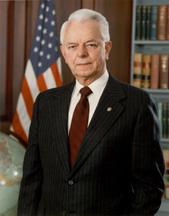 Sen. Robert C. Byrd (D-WV)
Sen. Robert C. Byrd (D-WV)Submitted March 11, 2004
Legislative Activity
Stay on top of the latest movement without scrolling through every action
Floor
Latest Action
Senate amendment submitted
March 11, 2004
View full timeline
Floor
Senate amendment submitted
March 11, 2004
Floor
Senate amendment agreed to: Amendment SA 2848 agreed to in Senate by Unanimous Consent.
March 11, 2004
Floor
Senate amendment proposed (on the floor): Amendment SA 2848 proposed by Senator Nickles for Senator Byrd.(consideration: CR 3/12/2004 S2674-2675; text: CR 3/12/2004 S2674)
March 11, 2004
Floor
Amendment SA 2848 proposed by Senator Nickles for Senator Byrd. (consideration: CR 3/12/2004 S2674-2675; text: CR 3/12/2004 S2674) to correct the scoring for Project Bioshield.
March 11, 2004
Floor
Amendment SA 2848 agreed to in Senate by Unanimous Consent.
March 11, 2004
Text
Proposed
[[Page S2651]]

Senate

CONGRESSIONAL BUDGET FOR THE UNITED STATES GOVERNMENT FOR FISCAL YEAR
2005--Continued

Mr. AKAKA. Mr. President, I rise today in support of this important
amendment offered by Senator Tom Daschle. The Senate Committee on
Indian Affairs, of which I am a member, has held hearings on the
President's fiscal year 2005 budget request for Indian programs. We
have heard from Indian country about the inadequate funding provided
for many programs in Indian country. We have heard that American
Indians and Alaska Natives have a life expectancy six years less than
that of the rest of the United States population, with rates of
cardiovascular disease being twice as high for native peoples.
Native people die at a rate 500 percent higher than other Americans
from tuberculosis and 390 percent higher from diabetes. With the
technological advancements that we have made in these areas, most of
these illnesses could be prevented if basic health care were available.
Unfortunately, the President's budget provides $2.1 billion for IHS
clinical services, leaving a shortfall of over 60 percent for fiscal
year 2005.
The time is now and we must provide Indian country with the ability
to ensure that native peoples are given access to essential health care
services. I urge my colleagues to support this important amendment, and
I thank my dear friend, Senator Daschle, for offering this amendment.
The PRESIDING OFFICER. The Senator from Oklahoma.
Mr. NICKLES. Mr. President, this is another one of these amendments--
we have had a dozen of them now--that says we are going to pay for this
by increasing taxes on wealthy people. I don't know how many times we
have to vote on it. Then I look at the spending. It says we will
increase spending by $3.4 billion from 2.1 to 5.5. That is a 164-
percent increase. It is a big tax increase. It is a humongous spending
increase. I urge my colleagues to vote no.
Mr. DASCHLE. Mr. President, I ask for the yeas and nays.
The PRESIDING OFFICER. Is there a sufficient second?
There appears to be a sufficient second.
The question is on agreeing to amendment No. 2774. The clerk will
call the roll.
The assistant journal clerk called the roll.
Mr. DASCHLE. I announce that the Senator from North Carolina (Mr.
Edwards), the Senator from South Dakota (Mr. Johnson), and the Senator
from Massachusetts (Mr. Kerry) are necessarily absent.
I also announce that the Senator from Nevada (Mr. Reid) is absent
attending a funeral.
The PRESIDING OFFICER. Are there any other Senators in the Chamber
desiring to vote?
The result was announced--yeas 42, nays 54, as follows:

[Rollcall Vote No. 52 Leg.]

YEAS--42

Akaka
Bayh
Biden
Bingaman
Boxer
Breaux
Byrd
Cantwell
Clinton
Conrad
Corzine
Daschle
Dayton
Dodd
Dorgan
Durbin
Feingold
Feinstein
Graham (FL)
Harkin
Hollings
Inouye
Jeffords
Kennedy
Kohl
Landrieu
Lautenberg
Leahy
Levin
Lieberman
Lincoln
Mikulski
Murray
Nelson (FL)
Nelson (NE)
Pryor
Reed
Rockefeller
Sarbanes
Schumer
Stabenow
Wyden

NAYS--54

Alexander
Allard
Allen
Baucus
Bennett
Bond
Brownback
Bunning
Burns
Campbell
Carper
Chafee
Chambliss
Cochran
Coleman
Collins
Cornyn
Craig
Crapo
DeWine
Dole
Domenici
Ensign
Enzi
Fitzgerald
Frist
Graham (SC)
Grassley
Gregg
Hagel
Hatch
Hutchison
Inhofe
Kyl
Lott
Lugar
McCain
McConnell
Miller
Murkowski
Nickles
Roberts
Santorum
Sessions
Shelby
Smith
Snowe
Specter
Stevens
Sununu
Talent
Thomas
Voinovich
Warner

NOT VOTING--4

Edwards
Johnson
Kerry
Reid
The amendment (No. 2774) was rejected.
The PRESIDING OFFICER. The Senator from Oklahoma.
Mr. NICKLES. Mr. President, we are making progress. Senator Conrad
and I are reducing the amendments pretty quickly. I compliment him for
that. We are trying to accommodate Members on both sides of the aisle.
Maybe we can get this legislation finished tonight.
I believe the Senator from Alaska has an amendment.
The PRESIDING OFFICER. The Senator from Alaska.

Amendment No. 2822

Ms. MURKOWSKI. Mr. President, I send an amendment to the desk and ask
for its immediate consideration.
The PRESIDING OFFICER. The clerk will report.
The assistant legislative clerk read as follows:

The Senator from Alaska [Ms. Murkowski], for herself and
Mr. Campbell, proposes an amendment numbered 2822.

Ms. MURKOWSKI. Mr. President, I ask unanimous consent that the
reading of the amendment be dispensed with.
The PRESIDING OFFICER. Without objection, it is so ordered.
The amendment is as follows:

(Purpose: To increase funding for the Indian Health Services)

On page 16, line 12, increase the amount by $282,000,000.
On page 16, line 13, increase the amount by $251,000,000.
On page 16, line 17, increase the amount by $28,000,000.
On page 16, line 21, increase the amount by $2,000,000.

[[Page S2652]]

On page 23, line 5, decrease the amount by $282,000,000.
On page 23, line 6, decrease the amount by $251,000,000.
On page 23, line 10, decrease the amount by $28,000,000.
On page 23, line 14, decrease the amount by $2,000,000.
The PRESIDING OFFICER. The Senator from Alaska.
Ms. MURKOWSKI. Mr. President, this amendment also relates to the
Indian Health Service. This amendment would increase the budget for the
Indian Health Service by $282 million. This is intended to track the
recommendation that the Indian Affairs Committee sent to the Budget
Committee in its views and estimates letter.
It provides the funding for those priorities that were set out in the
committee's list. We are looking at increases for clinical services, a
50-percent increase for services to urban Indians, a $90 million
increase for contract support costs and an additional $61 million for
health facilities construction. This amendment would make all of these
increases possible.
Of particular interest to me, the amendment enables an additional $10
million increase in funding for sanitation facilities construction,
which is incredibly important to my home State. 40 percent of the unmet
need for sanitation, as identified by the Indian Health Service, is in
Alaska.
This amendment also envisions a substantial funding increase for the
Community Health Aide Practitioner Program, which the Indian Health
Service regards as a national model.
The increases in this amendment are defensible. We recognize we have
a long way to go when it comes to improving the health condition of our
Native peoples, but I think this is a good and reasonable step in that
direction.
I urge Members to support this amendment.
Mr. President, I ask unanimous consent to add Senator Murray as a
cosponsor of this amendment.
The PRESIDING OFFICER. Without objection, it is so ordered. The
Senator from North Dakota.
Mr. CONRAD. Mr. President, this amendment is cosponsored by Senator
Murray on this side. We strongly support the amendment and hope our
colleagues will accept it.
Mr. DASCHLE. Mr. President, the Senate has just missed an opportunity
to fund the basic health care needs of the current Indian Health
Service user population. We had a chance to provide a $3.44 billion
increase for IHS clinical services. Unfortunately, we lost that chance
because not a single Republican Senator was willing to apply toward
Indian health a small fraction of the revenue that will be raised from
closing tax loopholes that allow people to avoid paying their fair
share of taxes.
Some may view this budget resolution as an insignificant exercise. It
is not. Unless we do something to increase the funding available to the
Appropriations Committee--specifically the Interior Appropriations
Subcommittee--it will be next to impossible to increase Indian health
funding to any significant degree.
I hope my colleagues will stop and think about the weight of the
decisions they are making today. Because its budget is so woefully
inadequate, the Indian Health Service is forced to use a literal ``life
or limb'' standard to ration health care for Indian men, women, and
children--people whose health care is supposed to be guaranteed. Indian
people are suffering--some are literally dying--because we are failing
to provide them the kind of care that most Americans, and every single
one of us, take for granted.
We have been here before. We had this same debate last year. Then,
like today, my Republican colleagues opposed a real increase for IHS
clinical services and instead offered a phantom increase that was one-
tenth of the amount of the increase needed to meet the basic health
care needs of the current IHS user population.
The only difference this year is that the ``increase'' they are
offering is less than one-tenth of the amount of the increase needed to
meet the basic health care needs of the current IHS user population,
and even less than the amount they offered last year.
Of course, any increase for the Indian Health Service is welcome. I
will be glad if we can treat even one more Indian child the way that he
or she deserves to be treated. But my colleagues should know that the
Murkowski amendment does not add one penny to the Appropriations
Committee's allocation. It does not increase the amount of money
available to the subcommittee appropriators who must find the funding
this amendment claims to provide. It leaves the Indian Health Service
to compete for funds with Indian education, tribal colleges, tribal
courts and police, reservation roads, as well as the Denali National
Park, Mount Rushmore, and all the other important priorities that
subcommittee funds.
The function 920 account is not a secret pot of money from which to
draw. This amendment--if it is not dropped in conference the way last
year's amendment was--would force the Appropriations Committee to cut
the domestic discretionary programs already severely shortchanged under
this scandalous budget resolution. Remember, this budget resolution
already cuts domestic discretionary spending by $14.6 billion compared
to last year.
Will the money come from our national parks? No Child Left Behind--
and we know they are being left behind? HUD? NIH? COPS? Perhaps the
BIA's reorganization initiative? I might support that cut.
They will not tell us which programs they would cut, because they
know our domestic discretionary accounts can't absorb any more cuts,
and because this amendment isn't real. It will not add a penny to the
IHS clinical services account.
Will the phantom money be there after the House and Senate
Republicans return from conference? It certainly was not last year.
That money was missing from the fiscal year 2004 Interior
appropriations bill, too, when 45 Republican senators blocked my
amendment to make real their professed $292 million commitment to
Indian health.
Yet again, my colleagues on the other side are making a specious
argument. At the same time they're refusing to close loopholes that
allow people who owe taxes to avoid paying their fair share, at the
same time they are proposing new tax cuts for millionaires, they are
saying this country cannot afford to honor its treaty obligation--and
its clear moral obligation--to Native Americans.
I hope the Senate will reject that argument and put us on the road to
righting this indefensible wrong.
Senators can vote for this amendment, but no one should be confused
about its impact. I can assure you that Native Americans will not be.
Still, I will support this amendment with the hope that the conferees
will find a way to provide a real increase for the Indian Health
Service.
The PRESIDING OFFICER. Is there further debate? If not, the question
is on agreeing to amendment No. 2822.
The amendment (No. 2822) was agreed to.
The PRESIDING OFFICER. The Senator from North Dakota.
Mr. CONRAD. Mr. President, Senator Dodd is next on our side with an
amendment. I ask Senator Dodd to proceed at this point.
The PRESIDING OFFICER. The Senator from Connecticut.

Amendment No. 2762

Mr. DODD. Mr. President, I call up amendment No. 2762.
The PRESIDING OFFICER. The clerk will report.
The legislative clerk read as follows:

The Senator from Connecticut [Mr. Dodd], for himself, Mr.
Kerry, Mr. Corzine, Ms. Stabenow, and Mr. Kohl, proposes an
amendment numbered 2762.

Mr. DODD. Mr. President, I ask unanimous consent that the reading of
the amendment be dispensed with.
The PRESIDING OFFICER (Mr. ENSIGN). Without objection, it is so
ordered.
The amendment is as follows:

(Purpose: To create a reserve fund to allow for an increase in the 21st
Century Community Learning Centers Program by $1 billion and lower the
national debt by eliminating tax loopholes)

On page 3, line 9, increase the amount by $60,000,000.
On page 3, line 10, increase the amount by $1,301,000,000.
On page 3, line 11, increase the amount by $541,000,000.
On page 3, line 12, increase the amount by $100,000,000.
On page 3, line 17, increase the amount by $60,000,000.

[[Page S2653]]

On page 3, line 18, increase the amount by $1,301,000,000.
On page 3, line 19, increase the amount by $541,000,000.
On page 3, line 20, increase the amount by $100,000,000.
On page 4, line 20, increase the amount by $60,000,000.
On page 4, line 21, increase the amount by $1,301,000,000.
On page 4, line 22, increase the amount by $541,000,000.
On page 4, line 23, increase the amount by $100,000,000.
On page 5, line 3, decrease the amount by $60,000,000.
On page 5, line 4, decrease the amount by $1,361,000,000.
On page 5, line 5, decrease the amount by $1,902,000,000.
On page 5, line 6, decrease the amount by $2,002,000,000.
On page 5, line 7, decrease the amount by $2,002,000,000.
On page 5, line 11, decrease the amount by $60,000,000.
On page 5, line 12, decrease the amount by $1,361,000,000.
On page 5, line 13, decrease the amount by $1,902,000,000.
On page 5, line 14, decrease the amount by $2,002,000,000.
On page 5, line 15, decrease the amount by $2,002,000,000.
At the end of Title III, insert the following:

SEC.  . RESERVE FUND FOR THE 21ST CENTURY COMMUNITY LEARNING
CENTERS PROGRAM.

The Chairman of the Committee on the Budget of the Senate
shall revise the aggregates, functional totals, allocations
to the Committee on Appropriations of the Senate,
discretionary spending limits, and other appropriate levels
and limits in this resolution by up to $1,000,000,000 in
budget authority for fiscal year 2005, and by the amount of
outlays flowing therefrom in 2005 and subsequent years, for a
bill, joint resolution, motion, amendment, or conference
report that provides additional fiscal year 2005
discretionary appropriations, in excess of levels provided in
this resolution, for the 21st Century Community Learning
Centers program in the Department of Education.

Mr. DODD. Mr. President, this amendment deals with afterschool
programs. I know most of my colleagues are tremendously supportive of
this program. When we passed the No Child Left Behind Act 2 years ago,
we insisted that we fund, to the extent possible, $2 billion for
afterschool programs.
Over the last 2 years, we have only funded half of that program,
serving a little more than 1 million children when the need exceeds 2
million children. I think all of us have given talks in our States
about the value of afterschool programs. The President himself has
talked eloquently about it, saying afterschool programs keep kids safe,
help working families, and improve academic achievements. He is
absolutely right. But we are leaving more than 1 million children
behind as a result of not fully funding at the authorized levels
afterschool programs.
I am asking, with this amendment, that we fund with an additional $1
billion to reach more than 1 million kids who could really use this
critically important program. Over the years this body has
overwhelmingly supported afterschool initiatives. This is an
opportunity for us to live up to the requirements that we insisted upon
when we passed the No Child Left Behind Act 2 years ago.
I urge my colleagues to be supportive of this effort. We pay for the
$1 billion by reducing the tax cut for the most affluent Americans by
$1 billion. That is a tiny fraction that can serve over 1 million
children in afterschool programs.
I urge adoption of the amendment and ask for the yeas and nays.
The PRESIDING OFFICER. Is there a sufficient second?
There appears to be a sufficient second.
The yeas and nays were ordered.
The PRESIDING OFFICER. The Senator from Oklahoma.
Mr. NICKLES. Mr. President, I was hoping my colleague from
Connecticut, my very good friend, since the hour is getting late, would
accept a voice vote. Maybe not yet. Maybe people will start considering
that option. Most people know how the votes might come out.
This is a $2 billion tax increase. Again, it is only directed at the
millionaires or the upper income bracket, but, of course, that is not
what the Finance Committee gets. The Finance Committee gets a
resolution that says raise revenues.
Then I look at the function it hopes to have the money go to. It
would increase by 100 percent. I keep hearing people say we want
deficit reduction, but I keep seeing programs grow by 100 percent, 140
percent.
I urge our colleagues to vote no on the amendment.
The PRESIDING OFFICER. Is there further debate? If not, the question
is on agreeing to amendment No. 2822. The yeas and nays have been
ordered. The clerk will call the roll.
The legislative clerk called the roll.
Mr. DASCHLE. I announce that the Senator from North Carolina (Mr.
Edwards), the Senator from South Dakota (Mr. Johnson), and the Senator
from Massachusetts (Mr. Kerry) are necessarily absent.
I also announce that the Senator from Nevada (Mr. Reid) is absent
attending a funeral.
The PRESIDING OFFICER. Are there any other Senators in the Chamber
desiring to vote?
The result was announced--yeas 42, nays 54, as follows:

[Rollcall Vote No. 53 Leg.]

YEAS--42

Akaka
Baucus
Bayh
Biden
Bingaman
Boxer
Byrd
Cantwell
Clinton
Conrad
Corzine
Daschle
Dayton
Dodd
Dorgan
Durbin
Feingold
Feinstein
Graham (FL)
Harkin
Hollings
Inouye
Jeffords
Kennedy
Kohl
Landrieu
Lautenberg
Leahy
Levin
Lieberman
Lincoln
Mikulski
Murray
Nelson (FL)
Nelson (NE)
Pryor
Reed
Rockefeller
Sarbanes
Schumer
Stabenow
Wyden

NAYS--54

Alexander
Allard
Allen
Bennett
Bond
Breaux
Brownback
Bunning
Burns
Campbell
Carper
Chafee
Chambliss
Cochran
Coleman
Collins
Cornyn
Craig
Crapo
DeWine
Dole
Domenici
Ensign
Enzi
Fitzgerald
Frist
Graham (SC)
Grassley
Gregg
Hagel
Hatch
Hutchison
Inhofe
Kyl
Lott
Lugar
McCain
McConnell
Miller
Murkowski
Nickles
Roberts
Santorum
Sessions
Shelby
Smith
Snowe
Specter
Stevens
Sununu
Talent
Thomas
Voinovich
Warner

NOT VOTING--4

Edwards
Johnson
Kerry
Reid
The amendment (No. 2762) was rejected.
The PRESIDING OFFICER. The Senator from Oklahoma.
Mr. NICKLES. Mr. President, we are making very good progress. For the
information of our Members, I think momentarily we will be able to
dispose of seven or eight amendments.
I believe the Senator from Georgia wishes to discuss an amendment.
The PRESIDING OFFICER. The Senator from Georgia.
Mr. CHAMBLISS. Mr. President, I had an amendment I intended to offer,
but after consultation with the committee chairman, the hour is late
and I probably would have wound up withdrawing the amendment anyway.
What my amendment sought to do was to make a correction in an
amendment that was presented at the full committee markup. At that
markup, there was an amendment passed relative to the issue of payment
limitation in the farm bill.
Payment limitation in the farm bill doesn't mean a whole lot to
anybody unless you are a farmer. Farmers, as long as they are treated
equally, have no problem with the various farm programs we have under
the farm bill. But what has happened with the payment limitation is we
have rewritten the farm bill during the middle of the farm bill and
that is not fair.
What my amendment sought to do was to take one portion of the overall
farm bill, which is the ethanol portion, and simply equalize payments
to those growers of corn who participate in the ethanol program, add
the payments they receive--and they don't receive them directly. We
would have to figure out, through a complicated formula, how much they
get, add the amount of money to their payment limitation portion so it
would equalize. They would be equal with every other farmer across the
country with respect to payment limitation.
It would be a complicated situation, and I think at some point in
time down the road, if those who insist on revision of the payment
limitations do so prior to the expiration of the farm bill, we are
simply going to come back with an amendment. We will come back with an
amendment at a later time to seek

[[Page S2654]]

to do that. However, I hope all Members of the Senate who come from
agricultural States will continue to work together for the interest of
our farmers and make sure we carry out the terms of the current farm
bill. When it expires in 2008, we will again look at all these issues
and decide what is fair to the American consumer and for the American
farmer.
I yield the floor.
The PRESIDING OFFICER. The Senator from Oklahoma.
Mr. NICKLES. Mr. President, No. 1, I thank my colleague from Georgia
for his brief discussion and for not offering the amendment. I think if
he offered the amendment we might be here a little while.
I believe the chairman of the Agriculture Committee would like to
make a few comments.
Mr. COCHRAN. Mr. President, I want to express my opposition to the
provision in the budget resolution that shifts $1.221 billion over the
next 5 years from farm programs to other programs under the
jurisdiction of the Agriculture Committee.
This provision assumes reducing statutory payment limitations for
farm program payments to producers of wheat, feed grains, oilseeds,
cotton and rice from $40,000 to $20,000 for direct payments and from
$65,000 to $30,000 for counter-cyclical payments. In addition, the
proposal would include certificate transactions and loan forfeitures
under the marketing loan program's payment limitation.
I oppose this provision for a number of reasons. First, the 2002 farm
bill, enacted less than 2 years ago, has already reduced payment
limitations compared to the 1996 farm bill by establishing a means test
for farm program benefits in which individuals with over $2.5 million
in adjusted gross income are ineligible for payments unless at least 75
percent of that income comes from agriculture. Moreover, the 2002 farm
bill's limit of $105,000 for the sum of direct and counter cyclical
payments is 12 percent less than the 1977 farm bill's limit on
comparable purpose deficiency payments after adjustment for inflation.
Senators should remember that these payments do not necessarily
represent profit to the farmer, but rather this shows that in real
terms, we already have reduced farm program supports in two separate
ways.
Second, the 2002 farm bill established a Commission on the
Application of Payment Limitations to analyze and to make
recommendations regarding these issues in a report to the President and
to the House and Senate Agriculture Committees. The Commission, which
is composed of 10 individuals who possess a tremendous amount of
experience in, and knowledge about, U.S. agriculture, released its
report in August of last year. The Commission's first and primary
consensus recommendation was that no substantial changes should be made
to the 2002 farm bill's system of farm program payment limitations
until the farm bill is reauthorized for the 2008 and later crops. The
Commission reasoned that the multiyear nature of farm bills provides
stability for production agriculture and that producers, their lenders,
and other agribusiness firms make long-term investment decisions based
on this multiyear legislation. The Senate should follow the
Commission's recommendation and should not make changes in farm program
payment limitations.
Third, southern cotton and rice farms tend to be larger, and the
costs of production are much greater, than wheat, corn, and soybean
farms in other regions. The Grassley provision would reduce government
payments to cotton and rice producers. Moreover, the provision would
severely complicate crop farmers' ability to use the marketing loan
program, particularly during periods of low market prices when
producers need it most. The marketing loan program, as its name
implies, helps farmers market their crops by providing them with
benefits when market prices fall below government established loan
rates. In such situations, program benefits offset the impact of low
prices with a minimum of government involvement in the marketplace.
This provision would, for the first time, require that loan program
certificate transactions and loan forfeitures be included under the
program's payment limitation. The provision, if implemented, would mean
that once a producer reaches the limit, marketing loan benefits would
be cut off regardless of the market situation.
Fourth, the budget resolution should provide us with a broad plan for
Federal revenues and expenditures but leave policy decisions within
that budget framework to the authorizing committees. This proposal
violates that principle by attempting to dictate policy to the
Agriculture Committee without having any impact on the overall level of
Federal expenditures. It simply shifts over $1 billion in payments from
one group of farmers to another. That is a decision that should be made
by the Agriculture Committee--not the Budget Committee.
Fourteen major agriculture and commodity organizations have written
to the Budget Committee opposing changes in the farm bill. The budget
resolution, as adopted, would make changes in the commitments that were
made to farmers and ranchers in the Farm Bill.
I ask unanimous consent that two letters from farm groups and
producers who oppose the Grassley provision be printed in the Record.
There being no objection, the material was ordered to be printed in
the Record, as follows:

March 1, 2004.
Hon. Don Nickles,
Chairman, Senate Budget Committee, U.S. Senate, Washington,
DC.
Hon. Kent Conrad,
Ranking Member, Senate Budget Committee, U.S. Senate,
Washington, DC.
Dear Chairman Nickles and Ranking Member Conrad: On behalf
of the undersigned U.S. farm and commodity organizations, we
write to express concern over the agricultural provisions of
the budget proposal submitted by the administration for
fiscal year 2005.
Under the President's plan, the U.S. Department of
Agriculture's budget authority for discretionary programs in
2005 would be reduced about $1.7 billion or 8.1 percent
compared to the spending levels adopted for the current
fiscal year. When the increased spending for additional
homeland security responsibilities are included, the
effective reduction in budget authority for traditional USDA
programs climbs to nearly $2.1 billion or 10 percent of total
discretionary spending authority.
Due in part to weather related production shortfalls in
many parts of the world, including the U.S., over the past
three years and modest improvements in both export and
domestic market conditions, commodity program support and
related payments declined by about $4.8 billion in FY 2004
compared to the August 2003 baseline. The five-year cost of
the farm bill is now projected to cost $14.6 billion less
than projected by the Congressional Budget Office in its
August 2002 estimates which were made shortly after the 2002
farm legislation was enacted. These savings represent
additional ``real'' dollar reductions in federal expenditures
for commodity program outlays that are not fully considered
in the budget process.
When all these factors are considered, production
agriculture and rural communities are being asked to take a
disproportionate reduction in important programs, including
conservation, research, energy, rural development, and
international food assistance, that were authorized in the
bi-partisan farm legislation signed by the president in 2002.
Agricultural producers and rural communities have yet to
recover from the effects of the agricultural recession which
for many began in 1997 and the severe economic losses
associated with ongoing weather disasters that have occurred
since the 2001 production year for which assistance has been
minimal.
As you consider a budget for FY 2005, we urge that you
oppose reductions in the commitments made in the 2002 farm
bill. As such, we urge that you oppose the adoption of a
resolution that either incorporates the President's
agriculture spending proposals or includes reconciliation
instruction to the agriculture authorizing committee.
Efforts to enhance economic opportunities for America's
farmers and rural communities require that the federal budget
be able to accommodate a meaningful economic safety net for
producers, expand our nation's resource conservation,
renewable energy and agricultural research activities while
addressing a broad range of rural development and global
hunger needs.
Thank you for your consideration of our views.
Sincerely,
American Corn Growers Association,
American Farm Bureau Federation,
Farm Credit Council,
National Association of Wheat Growers,
National Cotton Council,
National Farmers Union,
National Grain Sorghum Producers,
National Grange,
National Grape Cooperative,
R-CALF USA,

[[Page S2655]]

Soybean Producers of America,
U.S.A. Rice Federation,
U.S. Rice Producers Association.
______

March 3, 2004.
Hon. Don Nickles,
Chairman, Senate Budget Committee,
Dirksen Senate Building,
Washington, DC.
Dear Chairman Nickles: I am writing today on behalf of the
National Corn Growers Association (NCGA) and our 33,000
grower members regarding the Fiscal Year 2005 Budget
Resolution now under consideration by your committee. While
we recognize the concerns over rising federal budget
deficits, NCGA strongly opposes any action that reopens the
2002 Farm Bill, including amendments that reduce payment
limits within the farm safety net programs. Today's farm bill
is a carefully balanced measure that required give and take
among farm organizations and multiple stakeholders.
NCGA believes that proposals to further restrict farm
support payments are extremely divisive as well as
inequitable for those producers who must make sound, long
range business and financing decisions based on the current
farm bill provisions. Changes that would impose even more
restricting payment limits will cut off support to producers
when they most need assistance--at times of extremely low
prices. The fact is today's farm bill includes more stringent
limitations than those of the previous farm policy. NCGA
continues to support those limitations on direct and
countercyclical payments as well as marketing loan benefits.
While our grower members remain very supportive of
additional funding for new conservation initiatives,
nutrition programs, and rural development value-added grants,
it is the view of NCGA that amendments to achieve budget
savings for these programs at the expense of the farm safety
net would result in more harm than good. We can ill afford to
undermine a policy that is designed to restore long-term
fiscal discipline in agriculture spending. The Congressional
Budget Office's recent projection of $8 billion dollars in
reduced expenditures over the next ten years underscores the
need for Congress to maintain a steady course and keep its
commitment to the 2002 Farm Bill.
Finally, NCGA urges the Committee to consider the work of
the Payment Limitations commission. This bipartisan committee
authorized by Congress thoroughly reviewed the data from
agriculture policy experts, opposing points of view from
individual producers and farm organizations and recommended
no substantial changes prior to the expiration of the 2002
Farm Bill. The Commission, in fact, suggested administrative
and enforcement practices that call for improvements to
better implement the current law.
Again, NCGA recognizes the difficult task before you and
the members of the Senate Budget Committee. We appreciate
your leadership and careful consideration of our growers'
concerns as you proceed with your work on the FY 2005 Budget
Resolution.
Sincerely,
Dee Vaughan,
President.
The PRESIDING OFFICER. The Senator from Oklahoma.
Mr. NICKLES. I thank our colleagues from Mississippi and Georgia,
because collectively they saved the Senate probably about two hours. I
thank both of our colleagues for their cooperation. We are having very
good cooperation. We are getting rid of a lot of amendments. I know
there are a few that people want to have votes on, so please be patient
and we will try to have voice votes on every other amendment we
consider tonight.
Mr. President, I suggest the absence of a quorum for a very brief
moment.
The PRESIDING OFFICER. The clerk will call the roll.
The legislative clerk proceeded to call the roll.
Mr. NICKLES. Mr. President, I ask unanimous consent the order for the
quorum call be rescinded.
The PRESIDING OFFICER. Without objection, it is so ordered.
Mr. NICKLES. Mr. President, I believe that the chairman of the
Environment and Public Works Committee has an amendment.
The PRESIDING OFFICER. The Senator from Oklahoma.

Amendment No. 2823

Mr. INHOFE. Mr. President, Senator Bingaman and I have an amendment
that has been agreed to on both sides. I call up amendment No. 2823 and
ask for its immediate consideration.
The PRESIDING OFFICER. The clerk will report.
The bill clerk read as follows:

The Senator from Oklahoma [Mr. Inhofe], for himself and Mr.
Bingaman, proposes an amendment numbered 2823.

Mr. INHOFE. I ask unanimous consent the reading of the amendment be
dispensed with.
The PRESIDING OFFICER. Without objection, it is so ordered.
The amendment is as follows:

(Purpose: To return to the original scoring of the energy savings
performance contract program)

On page 43, between lines 20 and 21, insert the following:
(c) Energy Savings Performance Contract Program.--In
recognition that the energy savings performance contract
program recoups its costs through guaranteed savings without
increasing budgetary outlays, the Congressional Budget Office
shall score the energy savings performance contract program
under title VIII of the National Energy Conservation Policy
Act (42 U.S.C. 801 et seq.) as zero. For the purposes of any
point of order under any concurrent resolution on the budget
and the Congressional Budget Act of 1974, the cost of the
energy savings performance contract program under title VIII
of the National Energy Conservation Policy Act (42 U.S.C. 801
et seq.) shall be zero.

Mr. INHOFE. Mr. President, this amendment addresses the Energy
Savings Performance Contract Program. It is a program that costs no
money. It is all paid for by the savings that are accumulated. This has
been cleared on both sides. Everyone is for it. I can't find anyone who
is against it. The problem arose when CBO started scoring this after
not having scored it. By its very nature, it will not cost any money.
Mr. BINGAMAN. Mr. President, let me congratulate my colleague,
Senator Inhofe, for putting this amendment forward. It is a very
meritorious amendment. I urge all of my colleagues to support it.
Mr. CONRAD. Mr. President, might I just inquire of the sponsor, what
is the cost of this amendment and what is the source of the funding for
it?
Mr. INHOFE. There is no cost to it. This is the Energy Savings
Performance Contract Program that allows a company to go into an Air
Force base to show them how they can, through energy savings, save $2
or $3 million a year. Then they are compensated from the savings, and
from that point forward it goes back to the recipient. There is no
cost.
Mr. CONRAD. Mr. President, my understanding is this is directed
scorekeeping. The committees are told this doesn't cost any money, but
it does cost money. I was willing to take this amendment when I was
under the impression this didn't cost any money. But if we are going to
start down the road of saying things that cost money don't cost money,
then we have a real problem. I have a real problem with that amendment.
Mr. INHOFE. May I respond? There is no cost to this program, because
no public dollars are involved. It is where someone goes in and finds
ways to save energy and, if they are successful in doing that, they
merely pay the money back. The Government doesn't get involved at all
in the program. So there is no cost.
Mr. DOMENICI. Mr. President, it was said nobody objects. I object. I
don't insist on a vote, but I am going to conference, and neither of
those Members advocating it are going to conference.
Mr. CONRAD. Mr. President, in the interest of moving things along, I
want to register, to the extent there is directed scoring here, strong
opposition. We cannot go down the path of saying things don't cost
money. Maybe there is a view that it doesn't. But if the scorekeepers
say it does, and we start telling them it doesn't, that creates a
serious problem. I am not going to insist on a vote. I have confidence
this will be taken care of in conference.
The PRESIDING OFFICER. Is there further debate on the amendment?
The question is on agreeing to the amendment.
The amendment (No. 2823) was agreed to.

Amendments Nos. 2831, 2833, 2717, 2699, and 2794

Mr. CONRAD. Mr. President, I ask the Senator from Oklahoma if we
might take the package of seven we reached agreement on.
Mr. NICKLES. Mr. President, I am happy to do that. I compliment our
staffers, and I see them running to the floor.
We have four amendments our joint staffs have worked on: One, Senator
Conrad's amendment on tribal colleges; one by Senator Bingaman on the
pediatric vaccine reserve fund; one by Senator Wyden on healthy
forests; and one by Senator Kennedy on the SCHIP.
We have reviewed those, and I believe they have been approved by both
sides.
I add one additional amendment by Senator Thomas and Senator Conrad,
No. 2794, dealing with rural health.
I ask unanimous consent that these five amendments be considered en
bloc.

[[Page S2656]]

The PRESIDING OFFICER. Without objection, it is so ordered.
Mr. CONRAD. Mr. President, these five are fine. We have an agreement
on both sides on these five.
The PRESIDING OFFICER. Without objection, the amendments are agreed
to.
The amendments were agreed to en bloc, as follows:

AMENDMENT NO. 2831

(Purpose: To express the sense of the Senate regarding tribal colleges
and universities)

At the end of the resolution, insert the following:

SEC. __. SENSE OF THE SENATE REGARDING TRIBAL COLLEGES AND
UNIVERSITIES.

(a) Findings.--The Senate finds the following:
(1) American Indians from 250 federally recognized tribes
nationwide attend tribal colleges and universities, a
majority of whom are first-generation college students.
(2) Tribal colleges and universities are located in some of
the most isolated and impoverished areas in the Nation, yet
they are the Nation's most poorly funded institutions of
higher education. While the Tribally Controlled College or
University Assistance Act, or ``Tribal College Act'' provides
funding based solely on Indian students, the colleges have
open enrollment policies providing access to postsecondary
education opportunities to all interested students, about 20
percent of whom are non-Indian. With rare exception, tribal
colleges and universities do not receive operating funds from
the States for these non-Indian State resident students. Yet,
if these same students attended any other public institutions
in their States, the State would provide basic operating
funds to the institution.
(3) While Congress has been increasing annual
appropriations for tribal colleges in recent years, the
President's fiscal year 2005 budget recommends a $5,500,000
decrease in institutional operating funds. This represents
the third consecutive year that the President's budget
proposed decreases that Congress must restore.
(4) Because of congressional budget restorations, the
tribal colleges funded through titles I and II of the
Tribally Controlled College or University Assistance Act are
within $19,000,000 of full funding at their authorized level.
(b) Sense of the Senate.--It is the sense of the Senate
that--
(1) this resolution recognizes the funding challenges faced
by tribal colleges and universities and assumes that priority
consideration will be provided to them through funding of the
Tribally Controlled College or University Assistance Act, the
Equity in Educational Land Grant Status Act, title III of the
Higher Education Act, and the National Science Foundation
Tribal College Program; and
(2) such priority consideration reflects the intent of
Congress to continue to work toward statutory Federal funding
authorization goals for tribal colleges and universities.

AMENDMENT NO. 2833

(Purpose: To establish a reserve fund for expansion of the pediatric
vaccine distribution program)

At the end of subtitle A of title III, add the following:

SEC. 3__. RESERVE FUND FOR EXPANSION OF PEDIATRIC VACCINE
DISTRIBUTION PROGRAM.

If the Committee on Finance of the Senate reports a bill or
joint resolution, or an amendment thereto is offered or a
conference report thereon is submitted, that expands the
pediatric vaccine distribution program established under
section 1928 of the Social Security Act (42 U.S.C. 1396s) to
include coverage for children administered a vaccine at a
public health clinic or Indian clinic and repeals the price
cap for pre-1993 vaccines, the chairman of the Committee on
the Budget may revise allocations of new budget authority and
outlays, the revenue aggregates, and other appropriate
aggregates to reflect such legislation, provided that such
legislation would not increase the deficit for fiscal year
2005 and for the period of fiscal years 2005 through 2009.

amendment no. 2717

(Purpose: To increase investments in implementation of the Healthy
Forests Restoration Act to benefit national, forests, the environment,
local communities, and local, economies)

On page 11, line 9, increase the amount by $343,000,000.
On page 11, line 10, increase the amount by $84,000,000.
On page 11, line 14, increase the amount by $84,000,000.
On page 11, line 18, increase the amount by $84,000,000.
On page 11, line 22, increase the amount by $53,000,000.
On page 12, line 1, increase the amount by $38,000,000.
On page 23, line 5, decrease the amount by $343,000,000.
On page 23, line 6, decrease the amount by $84,000,000.
On page 23, line 10, decrease the amount by $84,000,000.
On page 23, line 14, decrease the amount by $84,000,000.
On page 23, line 18, decrease the amount by $53,000,000.
On page 23, line 22, decrease the amount by $38,000,000.

AMENDMENT NO. 2699

(Purpose: To prevent unspent SCHIP funds from reverting to the Treasury
rather than being used to provide coverage for low-income children)

On page 26, line 4, after ``measures'' insert ``and
including legislation to reallocate and maintain expiring
SCHIP funds rather than allowing such funds to revert to the
Treasury''.

AMENDMENT NO. 2794

(Purpose: To restore discretionary funding levels for crucial rural
health programs, such as the rural health and outreach grant program,
the rural hospital flexibility grant program, the small hospital
improvement program, telehealth, trauma programs, and rural AED
programs to fiscal year 2004 levels and offset this change by
reductions in overall government travel expenses)

On page 16, line 12, increase the amount by $100,000,000.
On page 16, line 13, increase the amount by $100,000,000.
On page 23, line 5, decrease the amount by $100,000,000.
On page 23, line 6, decrease the amount by $100,000,000.

amendment no. 2699

Mr. KENNEDY. Mr. President, every child deserves a healthy start in
life, but too many children do not receive it. Their parents work hard,
40 hours a week, 52 weeks a year, but all their hard work is not enough
to buy the health insurance their children need.
The consequences for the 8 million children who are uninsured are
devastating. Three hundred thousand children suffer from asthma and
never see a doctor because they are uninsured. Three hundred and fifty
thousand children with recurrent earaches or severe sore throats never
see a doctor because their families are uninsured. Uninsured children
are more likely to miss school, have worse grades, and are less likely
to succeed later in life.
While the 8.5 million children who remain uninsured challenge our
conscience as a nation and tell us how much more needs to be done, for
millions of these low- and moderate-income children of working parents,
the Child Health Insurance Program has been a lifeline and safety net.
The CHIP program has been extraordinarily successful in providing
health insurance coverage to children. Even as the number of uninsured
adults has risen dramatically, the number of uninsured children has
actually fallen. Almost 6 million children are now enrolled in CHIP and
getting the care they need and the care they deserve.
The children's program has had growing pains--it took longer than
anticipated for the program to get off the ground and even today, more
than 4 million children are uninsured even though they are eligible for
either Medicaid or CHIP. Yet, the program is working well and the only
limitation to its continued expansion is lack of funds. More than $1
billion in unused CHIP dollars are due to revert to the Treasury this
year at the same time that many states are running out of CHIP dollars.
It would be tragic if these funds are lost to the children who need
help, and it would be a sad commentary on our national priorities if we
allow it to happen.
Last year, we faced a similar situation and, with overwhelming
bipartisan support, we passed legislation to keep expiring CHIP funds
available for children. We need to take the same decisive action this
year. This amendment gives the Congress the flexibility to meet this
need. It would clarify that the existing, budget neutral reserve fund
to address the needs of the uninsured could be used to prevent CHIP
funds from reverting.
This is a bipartisan amendment and it deserves bipartisan support.
Sick children belong to no political party. And members on both sides
of the aisle have an obligation to act now, as they have in the past,
to meet their needs.

Amendment No. 2810, As Modified

Mr. NICKLES. Mr. President, I also believe there is a sense-of-the-
Senate resolution by the Senator from Arkansas, Senator Pryor, dealing
with LIHEAP. That is at no cost, and we have no objection to that sense
of the Senate as well. I ask for its consideration.
The PRESIDING OFFICER. Without objection, the amendment is agreed to.
The amendment (No. 2810), as modified, was agreed to, as follows:

[[Page S2657]]

(Purpose: Stating the sense of the Senate regarding the Low-Income Home
Energy Assistance Program and the weatherization assistance program)

At the end of title V, insert the following:

SEC. __. FINDINGS AND SENSE OF THE SENATE.

(a) Findings.--The Senate finds that--
(1) the United States is in the grip of pervasively higher
home energy prices;
(2) high natural gas, heating oil, and propane prices are,
in general, having an effect that is rippling through the
United States economy and are, in particular, impacting home
energy bills;
(3) while persons in many sectors can adapt to natural gas,
heating oil, and propane price increases, persons in some
sectors simply cannot;
(4) elderly and disabled citizens who are living on fixed
incomes, the working poor, and other low-income individuals
face hardships wrought by high home energy prices;
(5) the energy burden for persons among the working poor
often exceeds 20 percent of those persons' incomes under
normal conditions;
(6) under current circumstances, home energy prices are
unnaturally high, and these are not normal circumstances;
(7) while critically important and encouraged, State energy
assistance and charitable assistance funds have been
overwhelmed by the crisis caused by the high home energy
prices;
(8) the Federal Low-Income Home Energy Assistance Program
(referred to in this section as ``LIHEAP'') and the companion
weatherization assistance program (referred to in this
section as ``WAP''), are the Federal Government's primary
means to assist eligible low-income individuals in the United
States to shoulder the burdens caused by their home cooling
and heating needs;
(9) in 2003, LIHEAP reached only 15 percent of the persons
in the United States who were eligible for assistance under
the program;
(10) since LIHEAP's inception, its inflation-adjusted
buying power has eroded by 58 percent; and
(11) current Federal funding for LIHEAP is not sufficient
to meet the cooling and heating needs of low-income families.
(b) Sense of the Senate.--It is the sense of the Senate
that the levels in this concurrent resolution assume--
(1) an adequate increase in funding for each of fiscal
years 2005 and 2006 to carry out the LIHEAP program;
(2) an adequate increase in funding for fiscal year 2005
and an adequate increase in funding for fiscal year 2006 to
carry out the WAP program;
(3) appropriations, for these programs, of sufficient
additional funds to realistically address the cooling and
heating needs of low-income families; and
(4) advance appropriations of the necessary funds to ensure
the smooth operation of the programs during times of peak
demand.

Mr. NICKLES. Mr. President, I thank our colleagues. We are making
good progress. We have a few more to go. We might have to have a couple
more votes. I want people to be patient and expect as much.
My colleague from Kentucky has been waiting and he is ready to offer
an amendment. Possibly it can be accepted.
Mr. CONRAD. Mr. President, if I might ask that we hold off until we
have had the ranking member of the Finance Committee look at that
amendment.
Mr. NICKLES. Mr. President, for the information of all colleagues, we
are still shopping a few more amendments. We are trying to get
bipartisan agreement on about half a dozen amendments.
I suggest the absence of a quorum.
The PRESIDING OFFICER. The clerk will call the roll.
The legislative clerk proceeded to call the roll.
Mr. NICKLES. Mr. President, I ask unanimous consent that the order
for the quorum call be rescinded.
The PRESIDING OFFICER. Without objection, it is so ordered.

Amendment No. 2832

Mr. NICKLES. Mr. President, Senator Enzi and Senator Cantwell have an
amendment which I believe both sides have agreed to. I send the
amendment to the desk.
The PRESIDING OFFICER. The clerk will report.
The legislative clerk read as follows:

The Senator from Oklahoma [Mr. Nickes] for Mr. Enzi and Ms.
Cantwell, proposes an amendment numbered 2832.

Mr. NICKLES. Mr. President, I ask unanimous consent that reading of
the amendment be dispensed with.
The PRESIDING OFFICER. Without objection, it is so ordered.
The amendment is as follows:

(Purpose: Increase funding for the Workforce Investment Act (WIA) by
$250 million in FY 2005, by increasing Function 500)

On page 15, line 16, increase the amount by $250,000,000.
On page 15, line 17, increase the amount by $32,000,000.
On page 15, line 21, increase the amount by $166,000,000.
On page 15, line 25, increase the amount by $44,000,000.
On page 16, line 4, increase the amount by $5,000,000.
On page 23, line 5, decrease the amount by $250,000,000.
On page 23, line 6, decrease the amount by $32,000,000.
On page 23, line 10, decrease the amount by $166,000,000.
On page 23, line 14, decrease the amount by $44,000,000.
On page 23, line 18, decrease the amount by $5,000,000.

Mr. NICKLES. Mr. President, I compliment my colleague from Wyoming,
Senator Enzi, and also Senator Cantwell. Again, this is going to save
us about 45 minutes because they had different amendments and they came
to a compromise.
I compliment them for that and urge the adoption of the amendment.
The PRESIDING OFFICER. Is there further debate on the amendment?
The Senator from North Dakota.
Mr. CONRAD. Can we slow down a minute.
Mr. BYRD. Mr. President, what does the amendment do?
Mr. CONRAD. Could we ask a sponsor to briefly describe the amendment
for colleagues.
Mr. ENZI. Mr. President, this bill provides $250 million for the
Workforce Investment Act training, and it takes it out of 920.
The PRESIDING OFFICER. Is there further debate on the amendment?
The question is on agreeing to the amendment.
The amendment (No. 2832) was agreed to.

Amendment No. 2780

Mr. CONRAD. Mr. President, on behalf of Senator Clinton, we have an
amendment that establishes a reserve fund for addressing minority
health disparities, an agreement on both sides.
I ask for approval of our colleagues.
The PRESIDING OFFICER. The clerk will report.
The legislative clerk read as follows:

The Senator from North Dakota [Mr. Conrad], for Mrs.
Clinton, for herself, Mr. Kennedy, Mr. Daschle, and Mr.
Bingaman, proposes an amendment numbered 2780.

Mr. CONRAD. Mr. President, I ask unanimous consent that the reading
of the amendment be dispensed with.
The PRESIDING OFFICER. Without objection, it is so ordered.
The amendment is as follows:

(Purpose: To establish a reserve fund for addressing minority health
disparities)

On page 28, after line 7, insert the following:

SEC.__ . RESERVE FUND FOR ADDRESSING MINORITY HEALTH
DISPARITIES.

If the Committee on Appropriations of the Senate reports a
bill or joint resolution, or an amendment thereto is offered
or a conference report thereon is submitted, that addresses
minority health disparities through activities including
those at the HHS Office of Minority Health, the Office of
Civil Rights, the National Center on Minority Health and
Health Disparities, the Minority HIV/AIDS initiative, health
professions training, and through the Racial and Ethnic
Approaches to Community Health at the Centers for Disease
Control and provides not to exceed $400,000,000 in new budget
authority for fiscal year 2005, the chairman of the Committee
on the Budget may revise allocations of new budget authority
and outlays and other appropriate aggregates to reflect such
legislation, provided that such legislation would not
increase the deficit for fiscal year 2005 and for the period
of fiscal years 2005 through 2009.

Mr. KENNEDY. Mr. President, it is long past time for our country to
face up to the fact of the health care crisis for minorities. African
Americans infants are twice as likely to die from Sudden Infant Death
Syndrome as white babies. African Americans ages 55 to 64 are three
times as likely to die from stroke as whites. HIV infection in African
American women is four times the rate in white women. For almost every
disease, African Americans are more likely to live sicker and die
sooner.
These troubling health statistics are not unique to African
Americans. Latinos, American Indians, Alaska Natives, and a number of
Asian American populations face significantly higher rates of illness,
disability, and death from acute or chronic diseases.
The administration says it is committed to improving minority health
but the Republican budget doesn't reflect this commitment. Instead, as
the health crisis continues to escalate, the budget stays the same or
is actually reduced for some programs.

[[Page S2658]]

This amendment is a specific step to improve minority health and
minority health care. It creates a deficit-neutral reserve fund for
addressing minority health disparities through federal health agencies
and programs. By contrast, the President's budget cut funding for the
Office of Minority Health and sets the budget of the Office for Civil
Rights so low that the office will be virtually powerless to carry out
its mission. Our amendment provides more funds for both offices.
With additional funding, the CDC's REACH program, which funds
community-based efforts to reduce disparities, will be expanded, and so
will the Minority HIV/AIDS program. Greater support is needed for the
National Center for Minority Health and Health Disparities, and our
amendment will provide it.
The President's budget essentially zeroed out funds for training in
the health professions, including programs that support diversity
training and cultural competency programs. Yet, just a year ago, on the
birthday of Martin Luther King, Jr, the President said, ``We should not
be satisfied with the current number of minorities on America's college
campuses.'' Diversity programs in medical schools and in the health
professions deserve continued funding, and our amendment will provide
it.
Minority Americans will suffer unfairly from the administration's
neglect. We can't turn a blind eye to the health needs of a quarter of
our population. The need is too great and I urge the Senate to do the
right thing.
The PRESIDING OFFICER. Is there further debate on the amendment?
The Senator from Oklahoma.
Mr. NICKLES. Mr. President, we have reviewed the amendment and have
no objection.
For the information of our colleagues, that eliminates a couple of
amendments. I thank our colleagues for cooperation and urge its
adoption.
The PRESIDING OFFICER. The question is on agreeing to the amendment.
The amendment (No. 2780) was agreed to.
Mr. CONRAD. Mr. President, my colleague, Senator Landrieu, is next on
this side. She is prepared to go.
I say to Senator McConnell, the ranking member of the Finance
Committee has looked over his amendment, and that is not something we
could accept at this point. I don't know if he is interested in going
forward with the amendment at this stage.
Mr. McCONNELL. I say to my friend from North Dakota, I would like to
go on and offer the amendment. I am perfectly content to have it laid
aside and have a vote. I will ask for a vote.
Mr. BAUCUS. There should be some discussion on this amendment. It is
a very important amendment. This is an amendment that raises a point of
order against any revenue measure which has the effect of an increase
in the tax rate at the top bracket. I don't think that is something----
The PRESIDING OFFICER. The Senator from North Dakota has the floor.
Mr. CONRAD. Mr. President, I just ask what the Senator wants to do at
this point. Does he want to proceed on a discussion? This is obviously
something that cannot be accepted and would require some discussion at
this point.
What is the desire of the chairman?
Mr. NICKLES. Mr. President, I believe we have had lots and lots of
votes. I hope we can avoid any more votes, but my guess is we will have
to have some. My guess is we will have a vote on NIH--maybe not; maybe
that can be agreed to. We may have to have a vote on this. That is
fine. You just mentioned an additional amendment, and that was Senator
Landrieu?
Mr. CONRAD. Senator Landrieu has a pending amendment, Senator Durbin
has an amendment pending, Senator Schumer has a pending amendment,
Senator Graham of Florida, Senator Reed, Senator Levin.
Mr. NICKLES. Don't keep pointing. It is not fair to tell our
colleague from Kentucky he does not get a vote and we have six people
raising their hands.
Mr. CONRAD. Let's be clear. No one on our side is saying the Senator
cannot get a vote. He certainly can get a vote. The point is it will
take a vote and some discussion. There is a point of order that lies
against his amendment. The Senator has every right to seek a vote.
The PRESIDING OFFICER. The Senator from Oklahoma.
Mr. NICKLES. I will ask my colleague to call upon one of his
colleagues to offer an amendment that will require a vote. In the
meantime, we will see if we cannot negotiate an agreeable arrangement
for the Senator from Kentucky to have a vote on his amendment and on
the NIH.
Mr. CONRAD. Senator Landrieu would be next on our side.
The PRESIDING OFFICER. The Senator from Louisiana.

Amendment No. 2775

Ms. LANDRIEU. Mr. President, I ask to call up amendment No. 2775.
The PRESIDING OFFICER. The clerk will report.
The legislative clerk read as follows:

The Senator from Louisiana [Ms. Landrieu] proposes an
amendment numbered 2775.

Ms. LANDRIEU. Mr. President, I ask unanimous consent that the reading
of the amendment be dispensed with.
The PRESIDING OFFICER. Without objection, it is so ordered.
The amendment is as follows:

(Purpose: To provide for eliminating the Survivor Benefit Plan--Social
Security offset for military widows and widowers while reducing the
debt, offset by the elimination of tax benefits to individuals and
corporations that avoid United States taxation by establishing a
foreign domicile and other tax loopholes and tax shelters)

On page 3, line 9, increase the amount by $876,000,000.
On page 3, line 10, increase the amount by $1,054,000,000.
On page 3, line 11, increase the amount by $998,000,000.
On page 3, line 12, increase the amount by $1,066,000,000.
On page 3, line 13, increase the amount by $1,520,000,000.
On page 3, line 17, increase the amount by $876,000,000.
On page 3, line 18, increase the amount by $1,054,000,000.
On page 3, line 19, increase the amount by $998,000,000.
On page 3, line 20, increase the amount by $1,066,000,000.
On page 3, line 21, increase the amount by $1,520,000,000.
On page 4, line 20, increase the amount by $876,000,000.
On page 4, line 21, increase the amount by $1,054,000,000.
On page 4, line 22, increase the amount by $998,000,000.
On page 4, line 23, increase the amount by $1,066,000,000.
On page 4, line 24, increase the amount by $1,520,000,000.
On page 5, line 3, increase the amount by $876,000,000.
On page 5, line 4, increase the amount by $1,930,000,000.
On page 5, line 5, increase the amount by $2,928,000,000.
On page 5, line 6, increase the amount by $3,994,000,000.
On page 5, line 7, increase the amount by $5,514,000,000.
On page 5, line 11, increase the amount by $876,000,000.
On page 5, line 12, increase the amount by $1,930,000,000.
On page 5, line 13, increase the amount by $2,928,000,000.
On page 5, line 14, increase the amount by $3,994,000,000.
On page 5, line 15, increase the amount by $5,514,000,000.
At the end of Title III, insert the following:

SEC.   . RESERVE FUND FOR ELIMINATING SURVIVOR BENEFIT PLAN--
SOCIAL SECURITY OFFSET.

If the Committee on Armed Services or the Committee on
Appropriations reports a bill or joint resolution, or an
amendment thereto is offered or a conference report thereon
is submitted, that provides for an increase to the minimum
Survivor Benefit Plan basic annuity for surviving spouses age
62 and older, the Chairman of the Committee on the Budget
shall revise the aggregates, functional totals, allocations,
discretionary caps, and other appropriate levels and limits
in this resolution by up to $2,757,000,000 in budget
authority and $2,757,000,000 in outlays over the total of
fiscal years 2005 through 2009.

Ms. LANDRIEU. On behalf of myself, Senator Murray, Senator Mikulski,
Senator Lincoln, Senator Daschle, Senator Reid of Nevada, Senator
Nelson of Florida, Senator Johnson, Senator Clinton, and on behalf of
5.5 million members of the military coalition and their families, I ask
my colleagues to consider giving us the 51 votes necessary to pass this
important amendment tonight. This amendment will restore the full
pension promised and counted on by widows and widowers of our military
personnel. This particular group of patriots is ironically the only
group of Federal employees to see their

[[Page S2659]]

pension plan reduced by an average of 37 percent.
If we receive 51 votes in this Chamber tonight, there will be 250,000
widows, primarily, some widowers, who will see their pensions
increased, and over a million potential widows and widowers will see
their pension increased.
For the State of Alabama, 6,000 families will be directly affected;
the State of Georgia, 9,000 families; Maryland, 5,700; North Carolina,
8,000; Ohio, 5,000; Pennsylvania, 7,000; South Carolina, 6,000; Texas,
21,000; and Virginia, 13,000. If we do not pass this amendment, all of
these families and widows will receive hundreds of dollars less per
month than they were counting on and we promised.
The offset would be to make sure that people who earn money in the
United States and try to flee and go other places and claim that they
are patriots, we would let them pay the tax so these real patriots, the
people who moved every 2 years and put their lives on the line and then
counted on their pension, would really get it.
The Senator from Oklahoma will say it costs money and it will close a
tax loophole for those who flee so they do not pay taxes to support our
troops. This body should pay the pensions of the military widows and
widowers. That is what my amendment will do.
The PRESIDING OFFICER. The Senator from Oklahoma.
Mr. NICKLES. We just need a little time to look at the amendment. I
got caught off guard. We will consider your amendment. If the Senator
does not mind, we will set it aside temporarily and try to dispose of
it in a very short period of time.
I suggest the absence of a quorum. We need a little break to assess
where we are.
The PRESIDING OFFICER. The clerk will call the roll.
The legislative clerk proceeded to call the roll.
Mr. CONRAD. Mr. President, I ask unanimous consent that the order for
the quorum call be rescinded.
The PRESIDING OFFICER. Without objection, it is so ordered.
Mr. CONRAD. Mr. President, for the information of our colleagues,
this is where we stand at this moment on this side. We are down to
about 10 amendments that would require votes if we are not able to work
them out.
Let me list, on our side, the amendments and the rough order. Please
do not hold me to this specific order, other than the first five,
because it is really the first five that we have made commitments on:
Senator Landrieu, the amendment she has already offered; Senator Levin,
on homeland security; Senator Durbin, on global AIDS; Senator
Lautenberg, on debt limit; Senator Schumer, an amendment that relates
to the Energy bill; and then, in addition to that, Senator Dayton, on
IDEA; Senator Graham, on Pell grants; Senator Byrd, on bioshield;
Senator Lincoln, with respect to the childcare tax credit; and Senator
Kennedy, on Medicare.
Those are the remaining major amendments on this side. I think that
gets them all. There is also an amendment that is cosponsored by a
number of people on our side as well as people on the other side. We
also have a Reed amendment on higher education; and Pryor on IRA, that
was not agreed to. We also have an amendment that is in negotiation, I
might say, from Senator Leahy, on nutrition.
On the other side, there is an amendment from Senator Dole on
nutrition. There are amendments on the other side that maybe the
chairman could review.
The PRESIDING OFFICER. The Senator from Oklahoma.
Mr. NICKLES. Mr. President, we have a couple, three on our side that
may require votes. I think we may be able to work out a few of these
without votes. That is my intention. It is my hope. I am relatively
sure we are not going to agree to Senator Dayton's amendment. If he
insists on a rollcall vote, we can vote on that. We need to have a
rollcall vote, I believe, on NIH. We only have a couple on our side.
And we have had very few on our side.
I might just mention, we agreed to about four, six Democrat
amendments, and you agreed to one or two of ours. We need a little more
cooperation. I think we can finish tonight. That would be my intention.
I apologize because I know for some colleagues it is getting very late,
but I am afraid if we come back tomorrow we might have 20 votes. I do
believe we can continue plowing ahead.
I thought when we agreed to Senator Pryor's one amendment, that was
it for the night. Maybe we did not have quite the understanding I
thought we did.
I would suggest this. Let's lay aside Senator Landrieu's amendment
because we might be able to work that one out. I am not familiar with
what Senator Levin's amendment is. I am familiar with Senator Dayton's
amendment. We can dispose of that very quickly. Pell grants--we have
already had four amendments on Pell grants, and we adopted an amendment
on Pell grants. I do not think we need another vote on Pell grants, is
my initial thought.
I would suggest, let's put one or two of these in the votes, and then
maybe we can work out the rest of these while we are voting on a couple
of amendments.
The PRESIDING OFFICER. The Senator from North Dakota.
Mr. CONRAD. Mr. President, might I recommend, in terms of the order
on this side, if we are putting aside Landrieu, with the hopes of
perhaps working that out, that we go to Senator Levin. He is next on
our side.
If the chairman would want to go to your side?
Mr. NICKLES. Could you give me a hint what his amendment might be?
Mr. LEVIN. Staff has a copy.
Mr. NICKLES. Still, I do not know what it is.
Mr. CONRAD. We have to ask for people's patience, because, please
understand, the staff of the chairman of the committee and my staff now
have in a queue a whole series of amendments that have been shared on
both sides but have not necessarily been evaluated fully by staff on
both sides.
Senator Levin's is on homeland security.
Mr. NICKLES. Mr. President, we have voted on homeland security four
or five times.
Mr. LEVIN. This is a Levin-Collins amendment. It halts deliveries to
the Strategic Petroleum Reserve for the next 50 million barrels given
the price of gasoline and jet fuel.
Mr. NICKLES. Let's look at it. I haven't looked at it yet. If the
Senator wants to call up an amendment for a rollcall vote, I suggest we
do the Dayton amendment. I remember that from last year.
Mr. CONRAD. That is not next on our list. Next on our list after
Levin--and perhaps that can be worked out, the Levin-Collins amendment;
it is not additional money--is the Durbin global AIDS amendment. That
is the next in our line.
Mr. NICKLES. Again, we have an amendment that Senator Lugar has on
global AIDS in foreign affairs. Maybe they can get together and we can
eliminate a vote on both of those.
Mr. President, I suggest the absence of a quorum.
The PRESIDING OFFICER. The clerk will call the roll.
The legislative clerk proceeded to call the roll.
Mr. NICKLES. Mr. President, I ask unanimous consent that the order
for the quorum call be rescinded.
The PRESIDING OFFICER. Without objection, it so ordered.
Mr. NICKLES. Mr. President, Senator Crapo and Senator Sarbanes have
an amendment that we have agreed to. Then I believe Senator Pryor wants
to discuss his amendment. I think we can handle both of those.
Senator Sarbanes, do you want to start?

Amendment No. 2784

Mr. SARBANES. Mr. President, this is an amendment Senator Crapo and
Senator Jeffords and I and others have joined in cosponsoring, Senator
Collins, Senator Harry Reid, Senators Kerry, Mikulski, and Clinton.
This is to boost the funding for the Environmental Protection Agency
for the clean water and safe drinking water State revolving funds. It
would be offset by account 920.
As I understand it, it is acceptable to the managers of the bill. We
hope it will be adopted.
The PRESIDING OFFICER. The Senator from Idaho.
Mr. CRAPO. Mr. President, I call up the amendment.
The PRESIDING OFFICER. The clerk will report.

[[Page S2660]]

The legislative clerk read as follows:

The Senator from Idaho [Mr. Crapo], for himself, Mr.
Sarbanes, Mr. Jeffords, Ms. Collins, Mr. Reid, Mr. Kerry, Ms.
Mikulski, and Mrs. Clinton, proposes an amendment numbered
2784.

Mr. CRAPO. I ask unanimous consent that reading of the amendment be
dispensed with.
The PRESIDING OFFICER. Without objection, it is so ordered.
The amendment is as follows:

(Purpose: To increase funding for the Environmental Protection Agency
for the Clean Water and Safe Drinking Water State Revolving Funds)

On page 11 line 9, increase the amount by $3,000,000,000.
On page 11 line 10, increase the amount by $150,000,000.
On page 11 line 14, increase the amount by $450,000,000.
On page 11 line 18, increase the amount by $900,000,000.
On page 11 line 22, increase the amount by $900,000,000.
On page 12 line 1, increase the amount by $450,000,000.
On page 23 line 5, decrease the amount by $3,000,000,000.
On page 23 line 6, decrease the amount by $150,000,000.
On page 23 line 10, decrease the amount by $450,000,000.
On page 23 line 14, decrease the amount by $900,000,000.
On page 23 line 18, decrease the amount by $900,000,000.
On page 23 line 22, decrease the amount by $450,000,000.

Mr. CRAPO. Mr. President, this is an amendment that deals with one of
the most critical environmental issues in our Nation today. That is the
infrastructure needs of our cities and counties across the Nation. We
have a very significant unmet need in our water infrastructure that is
critical for the clean water and safe drinking water promises we have
made to our people. Accordingly, this amendment will add approximately
$3.2 billion to the clean and safe drinking water revolving loan funds,
giving them the ability to significantly enhance the opportunities for
our communities across this Nation to assure clean and safe water.
Mr. NICKLES. Mr. President, I urge adoption of the amendment.
Mr. JEFFORDS. Mr. President, I rise before you today as a cosponsor
of the Crapo amendment to increase the funds available for the clean
water and the drinking water State revolving funds.
I ask unanimous consent that letters of endorsement for the Crapo
amendment from the League of Conservation Voters, the League of Cities,
various environmental organizations, labor, water and wastewater
infrastructure groups be printed in the Record.
There being no objection, the material was ordered to be printed in
the Record, as follows:

Association of State and Interstate Water pollution
Control Administrators,
Washington, DC, March 10, 2004.
Re Crapo/Sarbanes/Jeffords amendment in Support of Clean
Water Revolving Fund.

Dear Senator: The nation's rivers and lakes are our most
precious natural resource for drinking water and
environmental protection. The Budget Amendment offered by
Senators Crapo, Sarbanes and Jeffords would provide $3.2
Billion in budget authority for the Clean Water State
Revolving Loan Fund (CWSRF). State Water Pollution Control
Programs are in significant need of these funds.
The CWSRF has been an extremely effective and efficient
mechanism to address point and nonpoint sources of pollution.
Increased capitalization not only will protect the
environment and public health, but also create jobs and
provide funds for securing the nation's water infrastructure.
Analysis suggests that at least $3 Billion is needed annually
to adequately capitalize the Fund. The return on Federal
investment in the CWSRF is excellent--over 1.97 times or is
nearly double the Federal capitalization.
The CWSRF has served the nation well, helping to achieve
environmental and public health goals and meet Clean Water
Act requirements. The Crapo/Sarbanes/Jeffords Amendment would
enable States to better meet the extremely large water
pollution control needs in local communities.
Sincerely,
Robbi Savage,
Executive Director.
____

Water Environment Federation

March 9, 2004.

Support the Crapo/Sarbanes/Jeffords Amendment to Budget $5.2 Billion
for the Clean & Safe Drinking Water SRFs

Dear Senator: The undersigned organizations strongly urge
you to support the amendment by Senators Crapo, Sarbanes and
Jeffords to provide $3.2 billion in budget authority for the
Clean Water State Revolving Loan Fund (SRF) and $2 billion in
budget authority for the Drinking Water State Revolving Loan
Fund. The SRFs help local communities meet water quality
standards, repair and replace old and decaying pipelines and
plants, protect public health, and ensure continued progress
in restoring the health and safety of America's water bodies.
This investment is a much-needed down payment to improve
our nation's water and wastewater treatment plants. Your
support for additional funding for the SRFs would help
stimulate the economy, create jobs and provide funds for
securing our water infrastructure for generations to come.
Water infrastructure in the U.S. has become antiquated, with
many pipes as much as 50-100 years old. The funding increase
provided by this amendment is essential to protect our
nation's rivers and lakes and to assure clean water for
communities across the country.
When the Clean Water Act was passed more than thirty years
ago the federal government made a commitment to the American
people to clean up the nation's waters. At that time the
federal government funded 75 percent of the costs of
maintaining a clean water infrastructure in America; today
the federal government funds a mere 5%. At the current rate
of expenditures, the gap in funding for clean water
infrastructure would be more than half a trillion dollars by
2019.
We support this amendment because it increases water
funding substantially this year and takes a step toward a
longer-term solution for our nation's water needs.
Maintaining clean and safe water remains one of our
nation's highest priorities even though funding its continued
improvement is one of our greatest challenges.
$5.2 billion for the Clean & Safe Drinking Water SRFs.
We urge you to support the amendment to the Senate Budget
Resolution that would provide $5.2 billion for the Clean
Water and Safe Drinking Water SRFs.
Sincerely,
Jack Hoffbuhr,
Executive Director, American Water Works Association.
Diane VanDe Hei,
Executive Director, Association of Metropolitan Water
Agencies.
William Bertera,
Executive Director, Water Environment Federation.
Steve Hall,
Executive Director, Association of California Water
Agencies.
____

League of Conservation Voters,

Washington, DC, March 10, 2004.
Re oppose S. Con. Res. 95, the Senate Budget Committee mark;
support pro-environmental amendments to the Fiscal Year
2005 Budget Resolution.

U.S. Senate,
Washington, DC.
Dear Senator: The League of Conservation Voters (LCV) is
the political voice of the national environmental community.
Each year, LCV publishes the National Environmental
Scorecard, which details the voting records of Members of
Congress on environmental legislation.
LCV urges Congress to oppose S. Con. Res. 95, the Senate
Committee Mark of the Fiscal Year 2005 Budget Resolution
which disproportionately targets programs that protect our
environment and natural resources, threatening clean air,
clean water, national parks, wildlife, and other critical
priorities. We urge you to protect our environment by voting
for all amendments that would provide needed resources to
protect the environment. In particular, we urge you to
support:
Lautenberg (D-NJ)--Boxer (D-CA) amendment to reinstate
Superfund ``polluter pays'' fees. Superfund waste sites
remain a serious public health threat. Taxpayers have picked
up an increasingly large share of the bill for cleanups since
the polluter pays fee expired in 1995, while overall funding
for the program has dropped by 35 percent. As a result, EPA
completed only 40 cleanups last year, half the average number
of cleanups during the mid to late-1990s. The Lautenberg-
Boxer amendment would reinstate the polluter pays mechanism,
providing nearly $1.6 billion in annual revenue and enabling
more cleanups to be completed.
Crapo (R-ID)--Sarbanes (D-MD)--Jeffords (I-VT) amendment to
increase clean water funding. Three decades after enactment
of the Clean Water Act, 40 percent of our nation's waters are
still too polluted for fishing and swimming. In addition, EPA
has estimated that over the next 20 years over $535 billion
in water infrastructure funding will be needed. This
amendment would provide a combined $5.2 billion for the Clean
Water State Revolving Fund and Safe Drinking Water State
Revolving Fund, enabling the federal government to help
states maintain and improve water and wastewater
infrastructure.
While we appreciate the need for Congress to address our
nation's fiscal problems, we oppose using this need as cover
for starving critical environmental programs while leaving
larger budget problems unresolved. We urge you to oppose the
Budget Committee mark, and to vote for needed spending
increases for clean water, healthy communities, national
parks, wildlife preservation, and the Land and Water
Conservation Fund.
LCV's Political Advisory Committee will consider including
votes on these issues in compiling LCV's 2004 Scorecard. If
you need

[[Page S2661]]

more information, please call Betsy Loyless in my office at
(202) 785-8683.
Sincerely,
Deb Callahan,
President.
____

National League of Cities,

Washington, DC, March 10, 2004.
U.S. Senate,
Washington, DC.
Dear Senator: On behalf of the National League of Cities
and the 18,000 cities and towns across the nation we
represent, we urge you to support the amendment to the Budget
Resolution being proposed by Senators Crapo, Sarbanes and
Jeffords which would allocate 5.2 billion for the nation's
water infrastructure needs.
While the State Revolving Funds (SRFs) for wastewater and
drinking water have provided valuable assistance to local
governments, many municipalities face critical needs--as
documented by studies and surveys from EPA, GAO, CBO and the
Water Infrastructure Network indicating a gap of $23 billion
annually to meet water infrastructure repair and replacement
needs--that simply cannot be addressed by raising rates or by
the level of funding currently available through the SRF
program.
NLC recognizes the current fiscal constraints facing all
levels of government. To address these limitations
effectively will require the development of new and
innovative partnerships and joint ventures if we are to
maintain and improve the nation's water quality goals and
priorities. All levels of government have a vested interest
in clean water and safe drinking water and total financial
responsibility for these objectives cannot be solely the
responsibility of local governments. Clean and safe water
have economic consequences, not only in municipalities, but
also of statewide and national significance. Therefore
investments in these objectives must also be shared.
We believe a reinvigorated federal financial partnership is
essential to assist local governments in maintaining and
enhancing this critical infrastructure and urge you to
support the Crapo-Sarbanes-Jeffords amendment allocating $5.2
billion for fiscal 2005 for the Clean Water and Drinking
Water State Revolving Funds.
Very truly yours,
Charles Lyons,
President, Selectman, Arlington, MA.
____

March 9, 2004.
Re support Senate Budget Resolution of $5.2 billion for Clean
& Safe Drinking Water SRFs.

Dear Senator: We write on behalf of our millions of members
who urge you to protect human health and the environment by
supporting the amendment sponsored by Senators Sarbanes,
Crapo, and Jeffords to provide $3.2 billion in budget
authority for the Clear Water State Revolving Loan Fund (SRF)
and $2 billion in budget authority for the Drinking Water
State Revolving Loan Fund. The SRFs help local communities
meet water quality standards, repair and replace old and
decaying pipelines and treatment plants, protect public
health, and ensure continued progress in restoring the health
and safety of America's water bodies.
This investment is a much-needed down payment to improve
our nation's water and wastewater treatment plants. Your
support for additional funding for the SRFs would help
stimulate the economy, create jobs and provide funds for
securing our water infrastructure for generations to come. As
the recent crisis with lead contamination from old pipes in
Washington, D.C. highlights, the nation faces a serious
drinking water problem as aging infrastructure deteriorates.
Water infrastructure in the U.S. has become antiquated, with
many pipes as much as 50-100 years old. The funding increase
provided by this amendment is essential to protect our
nation's rivers and lakes and to assure clean water for
communities across the country.
When the Clean Water Act was passed more than thirty years
ago the Federal Government made a commitment to the American
people to clean up the Nation's waters. At that time the
Federal Government funded 75% of the costs of maintaining a
clean water infrastructure in America; today the federal
government funds a mere 5%. At the current rate of
expenditures, the gap in funding for clean water
infrastructure would be more than half a trillion dollars by
2019. We support this amendment because it increases water
funding substantially this year and takes a step toward a
longer-term solution for our nation's water needs.
Maintaining clean and safe water remains one of our
Nation's highest priorities even though funding its continued
improvement is one of our greatest challenges. We again urge
you to support the amendment to the Senate Budget Resolution
that would provide $5.2 billion for the Clean Water and Safe
Drinking Water SRFs.

American Rivers, Association of Metropolitan Sewerage
Agencies, Clean Water Action Alliance of Massachusetts, Clean
Water for North Carolina, Defenders of Wildlife,
Earthjustice, Environmental Integrity Project, Friends of the
Earth, Informed Choices, Legal Environmental Assistance
Foundation, Michigan Clean Water Action, Mono Lake Committee,
Natural Resources Defense Council, National Audubon Society,
National Consumer Law Center on behalf of our low-income
clients, National Environmental Trust, NJ Coalition Against
Toxics, Ohio River Foundation, Pennsylvania Clean Water
Action, Physician for Social Responsibility, Portland Cement
Association, Public Citizen, Rural Community Assistance
Program, Sierra Club, The Ocean Conservancy, The Wilderness
Society, Underground Contractors Association of Illinois,
Western Coalition of Arid States.
____

National Heavy &

Highway Alliance,

Washington, DC, March 11, 2004.
Dear Senators: On behalf of the skilled construction
workers whom we represent, I write to urge you to support the
amendment by Senators Sarbanes, Crapo and Jeffords which will
provide an additional $5.2 billion in budget authority for
the Clean Water and Safe Drinking Water state revolving loan
funds during the 2005 fiscal year.
In addition to the various positive environmental impacts
which these funds will have on America's water supply, tens
of thousands of new construction jobs will be created by
adoption of this amendment. We need not remind you of the
pervasive anxiety shared by many Americans concerning our
economy and the so-called ``jobless recovery'' which persists
throughout the country. Congress needs to invest and grow the
economy through these types of water infrastructure
investments.
Please support the Sarbanes, Crapo and Jeffords amendment.
Sincerely,
Raymond J. Poupore,
Executive Director.

Mr. JEFFORDS. In the clean water arena, the budget before us today
fails to recognize the staggering water resource needs of this Nation.
A recent poll by Frank Luntz, a well-known Republican pollster,
documents the widespread support among Americans for Federal
investments in clean water protections.
The poll showed that 91 percent of Americans are concerned that our
waterways will not be clean for our children and grandchildren.
It showed that 91 percent of Americans agree that if we are willing
to invest billions of dollars annually in highways and airways, we
should be willing to make the necessary investments in our Nation's
waterways.
It showed that 90 percent of Americans believe that a Federal
investment to guarantee clean water is a critical component of our
Nation's environmental well-being.
The Water Infrastructure Network in 2000 estimated $380 billion
dollars are needed for clean water and drinking water over 20 years.
The EPA in 2002 estimated $270 billion are needed for clean water and
$265 billion are needed for drinking water.
The Congressional Budget Office estimated a range of $132 and $388
billion are needed for clean water and $70 and $362 billion are needed
for drinking water.
In light of these statistics, the administration responded with a 37-
percent cut in the fiscal year 2005 budget.
This is truly astonishing.
In the last 5 years, an extremely broad consensus has emerged that
more money is needed for water infrastructure.
Time after time Americans express their outrage at the weakening of
clean and safe water protections and express their willingness to pay
to maintain water quality standards.
However, time after time, these strong statements fall on deaf ears
in this administration.
The administration seems to recognize the need for water
infrastructure in Iraq, but fails to recognize it here at home.
The administration seeks close to $3.5 billion for water and sewer
services repair in Iraq, at the same time that it seeks a $500 million
cut, close to a 40 percent reduction for clean water infrastructure
spending, at home.
The administration seeks $775 million for water resources
improvements in Iraq, and a 5 percent cut for the Army Corps of
Engineers at home.
It is the Army Corps of Engineers that is executing many of the
public works improvements in Iraq using expertise built at home.
The administration's cut was accompanied by a lengthy discussion of
how that cut was actually an increase due to outyear assumptions about
spending.
My only reaction to these types of statements is that Americans can't
get cleaner water with outyear assumptions.
The District of Columbia can't get lead-free pipes today with budget
gimmicks and future promises.
The residents of Washington and our entire Nation need clean and safe
water now.

[[Page S2662]]

Some say that the reductions proposed by the administration are only
part of the budget game--that the administration really hopes that
Congress will reinstate previous funding levels.
Perhaps this would be believable if these were isolated instances
where this administration completely failed to support clean and safe
water programs.
But this is not an isolated instance.
This reduction was proposed against the backdrop of systematic
actions to weaken, rollback, and fail to enforce clean and safe water
protections.
The fiscal year 2005 budget is not the proposal of an administration
that has made clean water a priority.
It is the proposal of an administration that from day one until the
present has systematically turned its back on the 90 percent of
Americans who are concerned about water quality.
I can only hope that those Americans are paying attention to today's
debate.
In 2004, I joined my colleagues, Senators Crapo and Sarbanes in
offering an amendment to the fiscal year 2004 budget resolution that is
similar to the amendment we offer today.
It was accepted without controversy by the full Senate, but later
dropped in conference with the House.
It is time that we all start listening to the Americans who tell us
over and over again that clean water is important to them. It is time
to send a strong statement to the House of Representatives and the
President that we will not stand by while water quality needs are
shortchanged.
I urge my colleagues to vote ``yes'' on the Crapo amendment.
Mr. SARBANES. Mr. President, I am pleased to join with my colleagues,
Senators Crapo and Jeffords in, once again, offering this amendment to
boost Federal funding for the clean water and safe drinking water state
revolving funds, SRF, from the level recommended in the budget
resolution, $2.191 billion to $5.2 billion--$3.2 billion for the clean
water SRF and $2 billion for the safe drinking water SRF. The amendment
is similar to the amendment which we offered to the fiscal year 2004
budget resolution and which was agreed to by voice vote, but
regrettably not approved by the House-Senate conference committee.
I spoke last year about the compelling need for increasing Federal
support for our Nation's water infrastructure, and I just want to
underscore some of the key arguments today.
The President's fiscal year 2005 budget and this resolution once
again severely shortchange, in my judgment, the funds needed by State
and local governments to upgrade their aging wastewater and drinking
water infrastructure. The President's budget provides only $1.7 billion
for both State revolving funds, split equally. This budget resolution
recommends $2.191 billion for both funds--which represents the fiscal
year 2004 enacted level of funding, but that is still far short of what
is needed.
Despite important progress over the last three decades, EPA reports
that more than 40 percent of our Nation's lakes, rivers, and streams
are still too impaired for fishing or swimming. Discharges from aging
and failing sewerage systems, urban storm water and other sources,
continue to pose serious threats to our Nation's waters, endangering
not only public health, but fishing and recreation industries.
Population growth and development are placing additional stress on the
Nation's water infrastructure and its ability to sustain hard-won water
quality gains.
Across the Nation, our wastewater and drinking water systems are
aging. In some cases, systems currently in use were built more than a
century ago and have outlived their useful life. For many communities,
current treatment is not sufficient to meet water quality goals.
In April 2000, the Water Infrastructure Network, WIN, a broad
coalition of local elected officials, drinking water and wastewater
service providers, State environmental and health administrators,
engineers and environmentalists released a report, ``Clean & Safe Water
for the 21st Century.'' The report documented a $23 billion a year
shortfall in funding needed to meet national environmental and public
health priorities in the Clean Water Act and Safe Drinking Water Act
and to replace aging and failing infrastructure.
In May 2002, the Congressional Budget Office released a report that
estimated the spending gap for clean water needs between $132 billion
and $388 billion over 20 years and the spending gap for drinking water
needs at between $70 billion and $362 billion over 20 years.
In September 2002, the EPA released a ``Clean Water and Drinking
Water Infrastructure Gap Analysis'' which found that there will be a
$535 billion gap between current spending and projected needs for water
and wastewater infrastructure over the next 20 years if additional
investments are not made. This figure does not even account for
investments necessary to meet water quality goals in nutrient impaired
waters, such as the Chesapeake Bay.
The need for additional investment in wastewater and drinking water
infrastructure is clearly documented. But, States, localities and
private sources can't meet the funding gap alone. States are currently
facing the worst fiscal crisis in 50 years and cannot afford to make
new investments in clean water and drinking water infrastructure. Water
pollution is an interstate problem that demands a Federal response.
Water from six States flows into the Chesapeake Bay. Even if Maryland
had the resources to complete construction of all needed wastewater
infrastructure, the Chesapeake Bay cleanup efforts will only be
successful if similar investments are made in the five other States in
the Chesapeake Bay watershed. Without Federal assistance, however, it
is unlikely that the upstream States will make a substantial investment
in the water quality of the Bay. The Congress understood the interstate
dynamic of pollution in 1972 when a bipartisan majority passed the
Clean Water Act and began funding waste treatment infrastructure. In
1979 and 1980, the Congress provided $5 billion in clean water
construction grants alone to assist municipalities with wastewater
infrastructure needs. Over the years, budgetary pressures and other
factors have reduced that funding level, and in fiscal year 2004, we
provided only $1.34 billion in clean water State revolving loan funds.
It is vital that the Federal Government maintain a strong partnership
with States and local governments in averting the massive projected
funding gap and share in the burden of maintaining and improving the
Nation's water infrastructure. Municipalities need significant
resources to comply with Federal clean water and drinking water
standards. In the 107th Congress, House and Senate committees approved
bills to authorize $20 billion over 5 years for the clean water act
SRF, underscoring the recognition that something must be done to
address this funding gap. An increase in funding for the clean water
SRF to $3.2 billion and for the drinking water SRF to $2 billion in
fiscal year 2004 is the first step necessary to meet the Federal
Government's longstanding commitment in this regard.
This is an investment in the health of Americans and in a clean
environment that will pay substantial dividends. Wastewater treatment
plants not only prevent billions of tons of pollutants each year from
reaching our rivers, lakes, streams, and coasts, they also help prevent
water-borne diseases and make waters safe for swimming and fishing.
According to the Water Infrastructure Network:

Clean water supports a $50 billion a year water-based
recreation industry, at least $300 billion a year in coastal
tourism, a $45 billion annual commercial fishing and shell
fishing industry, and hundreds of billions of dollars a year
in basic manufacturing that relies on clean water. Clean
rivers, lakes, and coastlines attract investment in local
communities and increase land values on or near the water,
which in turn, create jobs, add incremental tax base, and
increase income and property tax revenue to local, state, and
the federal government. Some 54,000 community drinking water
systems provide drinking water to more than 250 million
Americans. By keeping water supplies free of contaminants
that cause disease, these systems reduce sickness and related
health care costs and absenteeism in the workforce.

They also create jobs--indeed tens of thousands of jobs--and provide
stimulus to the economy. Each $1 billion in sewer and water
improvements creates an estimated 40,000 jobs. With more than $5
billion in water infrastructure projects ready for construction, these

[[Page S2663]]

jobs would be created immediately with Federal assistance. According to
OMB, every Federal dollar invested in water infrastructure generates up
to $4 for project loans, so the potential for job creation from this
amendment is tremendous.
As I stated earlier, the case for this amendment is compelling.
Today, maintaining clear, safe water remains one of our greatest
national and global challenges. This budget resolution should not, and
need not, come at the expense of human health or a clean environment.
I urge my colleagues to support this amendment and help address the
massive funding gap that looms on the horizon. Failure to act now risks
undermining 30 years of progress in cleaning up our Nation's waters.
Mr. INHOFE. Mr. President, several analyses of the water
infrastructure funding gap have been released. The analyses show gaps
ranging from $3 billion a year to $23 billion a year. Regardless of
which number one chooses, the evidence is mounting that we as a nation
are not investing enough in the infrastructure that provides Americans
with clean and safe water.
Much of that gap is due to the rising cost municipalities must incur
to meet ever-growing Federal regulations. Regulations that are kicking
in at a time when many treatment plants are exceeding their expected
life time.
Clearly, if the Federal Government is going to continue imposing
insurmountable costs on our towns, it must be willing to put forth a
fair share of the money. As the Chairman of the Environment and Public
Works Committee, I am working with two of the sponsors of this
amendment, Senator Jeffords and Crapo, to craft a water infrastructure
bill.
One thing that we have had in common throughout these negotiations is
a belief that more money is needed. I was very pleased to see that the
budget committee restored the funding cut to the clear water SRF.
However, cutting or even level funding the program is not the answer.
We simply must find a way to provide more resources to these programs,
fulfill our obligations and then allow the States to run their programs
without further Federal contributions, as Congress always intended.
While I very much support my colleagues' efforts to get more money
for these programs, I have not yet settled on what I believe is the
appropriate level. I am supporting this amendment in concept and urge
my colleagues to also vote yes. As chairman of the EPW Committee, I
assure my colleagues that we are on the verge of a true crisis.
I support the Crapo-Jeffords amendment.
The PRESIDING OFFICER. Is there further debate on the amendment?
If not, the question is on agreeing to amendment No. 2784.
The amendment (No. 2784) was agreed to.
Mr. SARBANES. Mr. President, I move to reconsider the vote.
Mr. NICKLES. I move to lay that motion on the table.
The motion to lay on the table was agreed to.
Mr. NICKLES. Mr. President, I suggest the absence of a quorum.
The PRESIDING OFFICER. The clerk will call the roll.
The legislative clerk proceeded to call the roll.
Mr. DOMENICI. Mr. President, I ask unanimous consent that the order
for the quorum call be rescinded.
The PRESIDING OFFICER. Without objection, it is so ordered.
Mr. DOMENICI. Mr. President, I am speaking now to the chairman of the
committee. May I ask him a question, please, or his counterpart?
You were going through a list of amendments. We all try to be
prepared so we can be helpful to you. I heard an amendment by the
Senator from New York. I asked the Senator from New York, who is on the
floor, if she had one. She didn't. It had something to do with the
energy bill. Are you aware of what that is? Could we ask the other side
what the amendment of the distinguished Senator from New York regarding
the energy bill is. Who knows? You don't know either.
Mr. CONRAD. We don't have the amendment in our hands. We are seeking
to get it. We will share it with the Senator as soon as we have it.
Mr. DOMENICI. I thank the Senator very much.
Mr. CONRAD. Senator Pryor would like to discuss his amendment. I
yield him 2 minutes off the resolution.
The PRESIDING OFFICER. The Senator from Arkansas.
Mr. PRYOR. Mr. President, I have an amendment today that deals with
IRA accounts. I would like to set up a situation where people who have
exhausted their unemployment benefits--they are entitled to no more
unemployment benefits--could access up to $15,000 in their own IRA
account--it is their own money--in order to meet whatever short-term
needs they have. We have already done this in other context. We have
done this when it comes to first-time homeowners. We have done this
sending your children to college. But now the Senate needs to give
strong consideration to expanding this for people who have exhausted
their unemployment benefits. Right now you have a fairly hefty penalty,
and there are tax consequences for doing that. I would like to suspend
those.
But today, because the hour is late and because we are working with
everybody here, I want to just announce to my colleagues that I will be
working on this and be looking for the very next available legislative
vehicle to get this done.
Hopefully at some point in the next few weeks I will offer this
amendment. I will ask for a rollcall. I will not do it tonight. But I
want to ask my colleagues on both sides of the aisle to consider it. I
think it is something that has value and something that we can do to
possibly help thousands, maybe tens of thousands or more Americans get
through this very difficult time.
With that, I yield the floor.
Mr. CONRAD. Mr. President, I ask that we recognize Senator Graham to
discuss his amendment on Pell grants. I give him 2 minutes off of the
resolution.
The PRESIDING OFFICER. The Senator from Florida is recognized.
Mr. GRAHAM of Florida. Mr. President, Senator Clinton and I have been
concerned about the status of the nontraditional college student, the
adult who comes back to college at 35 or 40 to get some additional
skills or, particularly, in these changing economic times, to get a new
skill that has economic value.
Most of our student financial aid programs are thinking about the 18-
year-old student coming directly from high school. As an example, Pell
grants do not apply to summer school. Many adults wishing to get
through their training as rapidly as possible go year round. There are
also some costs that are not recognized in the Pell grant, such as
child care. Very few 18-year-olds have a need for child care; lots of
35-year-olds do.
One of the key parts of the amendment we were going to offer was to
increase the amount of the basic Pell grant to $4,500, which is what
Senator Coleman has done with his amendment. So Senator Clinton and I
are not going to offer our amendment, since that part has already been
accomplished. That represented the overwhelming amount of the cost of
this program.
Recognize that when we get to the Higher Education Reauthorization
Act, or some other appropriate legislation, we will be offering
amendments to deal with these aspects of Pell grants that do not
respond to the realities of the nontraditional student.
We look forward to coming back on this field of battle at the
earliest opportunity. We will not offer the amendment.
Mr. CONRAD. Mr. President, I thank the Senator from Florida for
setting a remarkably good example at 5 minutes after 10 o'clock. If
there are any other Senators who want to withdraw their pending
amendments, or not offer an amendment at this time, they would be
greeted with open arms and have a very positive effect on their
legislative proposals when we return after the break.
Mr. NICKLES. If the Senator will yield, I think we should elevate
them to higher office. Mr. President, I compliment my colleague from
Florida and thank him for his cooperation.
Mr. GRAHAM of Florida. I thank the Senator.

Amendments Nos. 2837, 2838, 2839, and 2733, En Bloc

Mr. NICKLES. Mr. President, we have at least four more amendments

[[Page S2664]]

that we have agreed to. We are working to see if we cannot agree to a
couple of others in the queue.
First, we have an amendment by Senators Lincoln, Baucus, Snowe, and
Breaux. I believe it has been cleared.
Another is a sense-of-the-Senate amendment by Senators Grassley,
Lugar, and others, dealing with agriculture research.
Another is an amendment by Senator Snowe and others dealing with SBA.
Our staff said it is agreed to.
Another amendment is by Senators Sessions, Cornyn, Graham, and
Nelson, and Shelby, dealing with NASA funding. We ask that these
amendments be agreed to en bloc.
Mr. CONRAD. Mr. President, I suggest the absence of a quorum.
The PRESIDING OFFICER. The clerk will call the roll.
The legislative clerk proceeded to call the roll.
Mr. CONRAD. Mr. President, I ask unanimous consent that the order for
the quorum call be rescinded.
The PRESIDING OFFICER. Without objection, it is so ordered.
Mr. CONRAD. Mr. President, the four amendments that were sent to the
desk referenced by the chairman have no objection on this side.
The PRESIDING OFFICER. Is there further debate on the amendments? If
not, the question is on agreeing to amendments Nos. 2837, 2838, 2839,
and 2733.
The amendments were agreed to, en bloc, as follows:

amendment no. 2837

(Purpose: To prevent tax increases for families who receive the child
tax credit)

On page 25, line 3, after ``2009'', insert ``, and to
increase outlays by not more than $2,000,000,000 for the
period of fiscal years 2005 through 2009.''

amendment no. 2838

(Purpose: Expressing a sense of the Senate for support of funding
restoration for agriculture research and extension)

At the end of title V. add the following:

SEC. 5. SENSE OF THE SENATE SUPPORTING FUNDING RESTORATION
FOR AGRICULTURE RESEARCH AND EXTENSION.

(a) Findings.--Congress finds that--
(1) funding for 33 programs administered by the Cooperative
State Research, Education, and Extension Service of the
Department of Agriculture were each reduced by 10 percent in
the Agriculture, Rural Development, Food and Drug
Administration, and Related Agencies Appropriations Act, 2004
(118 Stat. 9);
(2) those cuts are already hurting a wide range of proven
programs that help people, communities, and businesses;
(3) the cuts have put at risk important advances made in
all 50 States and United States territories, including--
(A) combating obesity through programs such as the Expanded
Food and Nutrition Education Program;
(B) expanding environmentally-minded pest management
programs;
(C) ensuring food safety; and
(D) educating farmers and ranchers about new sustainable
agricultural practices;
(4) the National Research Initiative is the flagship
competitive grants program funded through the Cooperative
State Research, Education, and Extension Service;
(5) because of limited funding the Service is able to fund
only a small fraction of the meritorious research proposals
that the Service receives under the National Research
Initiative program; and
(6) base funding at the Service that supports the research
infrastructure has fallen steadily over the past decade.
(b) Sense of the Senate.--It is the sense of the Senate
that levels in this concurrent resolution assume that in
making appropriations and revenue decisions, the Senate
supports--
(1) the restoration of the 33 accounts of the Cooperative
State Research, Education, and Extension Service;
(2) the fiscal year 2005 funding of the National Research
Initiative; and
(3) the fiscal year 2005 funding of competitive research
programs of the Cooperative State Research, Education, and
Extension Service in an amount that is adequate to--
(A) fight obesity and stave off chronic diseases;
(B) combat insects and animal and plant diseases;
(C) establish new crops, improved live-stock, and economic
opportunities for producers; and
(D) keep pathogens and other dangers out of the air, water,
soil, plants, and animals.

amendment no. 2839

(Purpose: To increase funding for the SBA 7(a) loan guarantee,
Microloan and other small business programs and to offset the cost of
that spending through across-the-board cuts in function 920)

On page 13, line 2, increase the amount by $121,000,000.
On page 13, line 3, increase the amount by $68,000,000.
On page 13, line 7, increase the amount by $40,000,000.
On page 13, line 11, increase the amount by $7,000,000.
On page 23, line 5, decrease the amount by $121,000,000.
On page 23, line 6, decrease the amount by $68,000,000.
On page 23, line 10, decrease the amount by $40,000,000.
On page 23, line 14, decrease the amount by $7,000,000.

amendment no. 2733

(Purpose: To provide full funding for NASA's FY2005 space exploration
initiatives)

At the appropriate place insert the following:
On page 21, line 13, decrease the amount by $600,000,000.
On page 21, line 14, decrease the amount by $600,000,000.
On page 9, line 17, increase the amount by $600,000,000.
On page 9, line 18, increase the amount by $600,000,000.

Mr. NICKLES. Mr. President, moving right along. I believe the Senator
from Michigan and the Senator from Maine have an amendment.
Unfortunately, I feel compelled not to agree to that amendment. Maybe
we can dispose of it very quickly.
The PRESIDING OFFICER. The Senator from North Dakota.
Mr. CONRAD. Mr. President, might I inquire of the Senator how long it
will take to describe this amendment?
Mr. LEVIN. We would like perhaps 3 or 4 minutes on our side.
Mr. CONRAD. I give 3 minutes off the resolution to the Senator from
Michigan.
Mr. LEVIN. I will divide that time with the Senator from Maine.
The PRESIDING OFFICER. The Senator from Michigan.

Amendment No. 2817

Mr. LEVIN. Mr. President, I send an amendment to the desk on behalf
of myself, Senator Collins, Senator Clinton, and Senator Stabenow.
The PRESIDING OFFICER. The clerk will report.
The legislative clerk read as follows:

The Senator from Michigan [Mr. Levin], for himself, and Ms.
Collins, proposes an amendment numbered 2817.

Mr. LEVIN. Mr. President, I ask unanimous consent that the reading of
the amendment be dispensed with.
The PRESIDING OFFICER. Without objection, it is so ordered.
The amendment is as follows:

(Purpose: To lower crude oil prices resulting from the cancellation of
planned future deliveries of oil to the Strategic Petroleum Reserve and
using the funding made available to provide $1.7 billion in funding for
homeland security grants for first responders, firefighter assistance,
and port security, and to reduce the debt)

On page 4, line 4, decrease the amount by $1,700,000,000.
On page 4, line 12, decrease the amount by $1,700,000,000.
On page 4, line 20, increase the amount by $1,700,000,000.
On page 5, line 3, decrease the amount by $1,700,000,000.
On page 5, line 4, decrease the amount by $1,700,000,000.
On page 5, line 5, decrease the amount by $1,700,000,000.
On page 5, line 6, decrease the amount by $1,700,000,000.
On page 5, line 7, decrease the amount by $1,700,000,000.
On page 5, line 11, decrease the amount by $1,700,000,000.
On page 5, line 12, decrease the amount by $1,700,000,000.
On page 5, line 13, decrease the amount by $1,700,000,000.
On page 5, line 14, decrease the amount by $1,700,000,000.
On page 5, line 15, decrease the amount by $1,700,000,000.
On page 10, line 13, decrease the amount by $1,700,000,000.
On page 10, line 14, decrease the amount by $1,700,000,000.

SEC.   . RESERVE FUND FOR HOMELAND SECURITY GRANT PROGRAM,
ASSISTANCE TO FIREFIGHTER GRANTS, AND PORT
SECURITY GRANTS.

The Chairman of the Committee on the Budget of the Senate
shall revise the aggregate, functional totals, allocations to
the Committee on Appropriations of the Senate, discretionary
spending limits, and other appropriate levels and limits in
this resolution by up to $1,545,000,000 in budget authority
for fiscal year 2005, and by the amount of outlays flowing
therefrom in 2005 and subsequent years, for a bill,
amendment, motion, or conference report that provides
additional fiscal year 2005 discretionary appropriations, in
excess of the levels provided in this resolution, for the
programs at the Department of Homeland Security.

SEC.   . STATE HOMELAND SECURITY GRANT PROGRAM.

It is the sense of the Senate that, of the funds for the
Department of Homeland Security, $800,000,000 shall be
allocated for the State Homeland Security Grant program;
$250,000,000 for the Assistance to Firefighters Grant
program; and $275,000,000 for Port Security Grants. It is
further the sense of the

[[Page S2665]]

Senate that the State Homeland Security Grant Program shall
be increased by $220,000,000 in order to provide for a more
equitable formula for distributing funds.

SEC.   . STRATEGIC PETROLEUM RESERVE.

It is the sense of the Senate that the increased funding
for the Homeland Security Department programs shall come from
the cancellation of planned future deliveries of oil to the
Strategic Petroleum Reserve.

Mr. LEVIN. Mr. President, we have skyrocketing gas prices and oil
prices in most parts of the country. The major reason for this is
private sector inventories are low. The major reason private sector
inventories are low is we, at the same time, have seen a decline in
those inventories of 50 million barrels in the last 2 years.
We have deposited in the Strategic Petroleum Reserve approximately 85
million barrels. Even the staff of the Department of Energy a year ago
said the following:

Commercial petroleum inventories are low. Retail product
prices are high, and economic growth is slow. The Government
should avoid acquiring oil for the Strategic Petroleum
Reserve under these circumstances.

We would halt the deposit of oil in the Reserve, and we would use the
money, approximately $1.7 billion, to restore a number of accounts in
the Homeland Security Department; namely, we would restore about 80
percent of the money cut from the Homeland Security grant program; $250
million we would restore to firefighter grants to bring them up to last
year. We would add money for port security, $150 million for deficit
reduction, and about $220 million for an equity account.
This is a twofer. I yield the remainder of my time to the Senator
from Maine.
Ms. COLLINS. Mr. President, it makes no sense at all for the Federal
Government to put further pressure on the oil supplies through large
purchases for the Strategic Petroleum Reserve at this time when oil
prices are at record high levels.
Through proper management of the Reserve, we can ease the economic
impact drastically rising gasoline prices are having on the American
family.
There are three different studies which demonstrate suspending
deliveries of oil to the SPR at this time would decrease gas prices by
anywhere from 10 cents to 25 cents per gallon.
I want my colleagues to know the Reserve is currently 92 percent
full. So halting these deliveries will have no impact at all on our
national security, but will be of great benefit to American consumers.
In addition, our legislation would transfer the savings to restore
cutbacks in homeland security. We would increase the basic Homeland
Security grant program our States and communities rely upon so it would
be equal to the level of last year.
We would include a restoration of funding for the FIRE Act, again to
last year's level. And finally, we would invest in port security which
experts tell us is one of our greatest vulnerabilities. The remainder
of the funding would be used for deficit reduction.
This amendment makes good common sense. It will help relieve the
pressure on gasoline prices, while at the same time allowing us to
devote more resources to strengthening our homeland security and
reducing our deficit.
I yield back to Senator Levin any remaining time.
The PRESIDING OFFICER. All time has expired.
The Senator from Oklahoma.
Mr. NICKLES. Mr. President, I regret I cannot accept this amendment.
I will follow the will of the Senate. This is basically saying let's
take out $1.7 billion from SPR and spread it around in homeland
security. We are fully funding the President's request for homeland
security which is 15 percent over last year, 10 percent if you take out
bioshield.
We already have several amendments on homeland security. I urge our
colleagues not to support the amendment.
I call upon the chairman of the Energy Committee, Senator Domenici,
to conclude.
The PRESIDING OFFICER. The Senator from New Mexico.
Mr. DOMENICI. Mr. President, I will only use 1 minute. First, I have
the greatest respect for the distinguished Senator from Maine, but let
me say to everyone here, you all remember, SPR is to put oil in the
ground in case we have an emergency. We use it in an emergency.
The Energy Information Administration's last forecast predicts by the
year 2025--and SPR is future thinking; it is not today; it is thinking
in the future--they say by the year 2025, we will be 70 percent
dependent on imported oil.
The point of it is, we can never have too much oil in SPR. The idea
was a good idea. It is even a better idea today. To say we ought to
stop filling it so we can start filling gaps in a budget, especially
saying we take care of all the inland security problems by not taking
care of SPR, seems to me to be the wrong thing to do.
I could find a lot of things to do in Government. If we could just
sell all the oil in SPR, we could take care of every program in this
Government. My colleagues could all go home. We would have about $150
billion. We could just spread it everywhere. That is much the same as
saying: Quit buying it and what you were going to buy, spend on other
things.
I hope we do not adopt the amendment. I thank the Chair.
Mr. LEVIN. Mr. President, oil and gasoline prices are at or near
record-high levels. Oil and gasoline supplies are at or near record-low
levels. If there are any disruptions in oil or gasoline supplies or
production, there will be an insufficient amount of oil and gasoline to
meet demand, and prices will skyrocket even further.
Yet, incredibly, in the face of this crisis, the administration is
decreasing rather than increasing the supply of oil. Day after day,
month after month, regardless of how high the cost for acquiring this
oil, the administration is taking millions of barrels of oil off the
market and depositing them into the Strategic Petroleum Reserve. By
taking this badly needed oil off the market and placing it in the SPR,
at extremely high prices, the administration is increasing the price of
oil and gasoline.
The Levin-Collins amendment will increase Federal revenues by
approximately $1.7 billion by, in effect, directing DOE to delay the
filling of the SPR. The amendment will lower oil and gasoline prices by
increasing oil and gasoline supplies in the commercial inventories. It
will improve our overall energy security by moving us away from the
brink of a crisis in supply. Moreover, it is both sound fiscal and
resource management policy to put oil on the open market when prices
are high, and place them into reserves later when prices are low.
As nearly every American knows, gasoline prices are at record-high
levels. The average price of a gallon of gasoline, nationwide, as well
as in my home State of Michigan, is $1.74 per gallon. In some states it
is even higher. In California, for example, the average price for a
gallon of gasoline is $2.18 per gallon.
Crude oil prices also are at near-record prices. Spot prices are over
$37 per barrel. Futures prices for oil for the next several months are
at or near $37 per barrel as well.
A major reason oil prices are so high is that the amount of crude oil
in private sector inventories in the United States is at record low
levels. Crude oil inventories are now lower than at any time in the 28
years that the Department of Energy has been tracking them. Oil prices
are directly related to the amount of crude oil in inventories, since
overall supply levels depend on both amounts produced and amounts in
inventory. This is why prices are so high.
One of the reasons that supplies of oil are so low is that since late
2001 the Department of Energy (DOE) has been steadily taking millions
of barrels of oil off the market and placing them into the U.S.
Strategic Petroleum Reserve (SPR). In late 2001, the Reserve held about
560 million barrels of oil. Today it holds nearly 650 million barrels.
DOE anticipates that at the current fill rate it will reach its goal of
filling the SPR to its current physical capacity of 700 million barrels
in the middle of 2005.
Clearly, now is not the time to be taking more oil off the market
when the price of oil is so high. We need more oil and gasoline in
refineries.
The Levin-Collins amendment is simple. It would, in effect, result in
the deferral of the deposit of the 53 million barrels of oil that DOE
currently plans to ship to the SPR over the next year. Assuming an
average price of $33 per barrel--which is based on the current

[[Page S2666]]

futures prices for oil for the next 14 months, as well as the trend in
spot prices over the past year--this would yield over $1.7 billion in
Federal revenues. This will help lower oil and gasoline prices for
consumers and businesses as well. This amendment is a win-win for
consumers, taxpayers, and the Government.
The Levin-Collins amendment would apply these funds to strengthen our
homeland security. We cannot expect our first responders to be well-
trained, properly equipped and fully staffed to protect us, if we cut
their funding sources. Our amendment restores $800 million to the State
Homeland Security Grant program, which will bring the total funding for
that program up to $1.5 billion; adds $250 million to the Assistance to
Firefighters Grant program; and $275,000,000 for Port Security Grants.
The amendment will also provide $155 million for deficit reduction.
Finally, the amendment provides an additional $220 million to the
State Homeland Security Grant Program in order to provide for a more
equitable formula for distributing funds under that program.
Mr. NICKLES. Can we voice vote the amendment?
Mr. LEVIN. That depends on how loud the voices are.
Mr. NICKLES. Mr. President, I ask for the yeas and nays.
The PRESIDING OFFICER. Is there a sufficient second?
There is a sufficient second.
The question is on agreeing to amendment No. 2817. The clerk will
call the roll.
The legislative clerk called the roll.
Mr. McCONNELL. I announce that the Senator from Virginia (Mr. Warner)
is necessarily absent.
Mr. DASCHLE. I announce that the Senator from North Carolina (Mr.
Edwards), the Senator from South Dakota (Mr. Johnson), and the Senator
from Massachusetts (Mr. Kerry) are necessarily absent.
I also announce that the Senator from Nevada (Mr. Reid) is absent
attending a funeral.
The result was announced--yeas 52, nays 43, as follows:

[Rollcall Vote No. 54 Leg.]

YEAS--52

Akaka
Allen
Baucus
Biden
Bingaman
Boxer
Burns
Byrd
Carper
Clinton
Coleman
Collins
Conrad
Corzine
Daschle
Dayton
DeWine
Dorgan
Durbin
Feingold
Feinstein
Fitzgerald
Graham (FL)
Graham (SC)
Harkin
Hollings
Inouye
Jeffords
Kohl
Landrieu
Lautenberg
Leahy
Levin
Lieberman
Lincoln
Lott
McCain
Mikulski
Nelson (FL)
Nelson (NE)
Pryor
Reed
Rockefeller
Sarbanes
Schumer
Snowe
Specter
Stabenow
Sununu
Talent
Voinovich
Wyden

NAYS--43

Alexander
Allard
Bayh
Bennett
Bond
Breaux
Brownback
Bunning
Campbell
Cantwell
Chafee
Chambliss
Cochran
Cornyn
Craig
Crapo
Dodd
Dole
Domenici
Ensign
Enzi
Frist
Grassley
Gregg
Hagel
Hatch
Hutchison
Inhofe
Kennedy
Kyl
Lugar
McConnell
Miller
Murkowski
Murray
Nickles
Roberts
Santorum
Sessions
Shelby
Smith
Stevens
Thomas

NOT VOTING--5

Edwards
Johnson
Kerry
Reid
Warner
The amendment (No. 2817) was agreed to.
Mr. LEVIN. Mr. President, I move to reconsider the vote.
Mr. NICKLES. I move to lay that motion on the table.
The motion to lay on the table was agreed to.
The PRESIDING OFFICER. The Senator from Oklahoma.
Mr. NICKLES. Mr. President, just for the information of our
colleagues, we are making good progress. I believe we have the
amendment of Senator Durbin that will be modified by Senator Lugar and
that will be accepted. I believe we have the amendment of Senator Byrd
which will be agreed to momentarily. I am not positive. I need to run
that by Senator Gregg. I think we are going to be able to work out the
amendment of Senator Lincoln. We do expect a couple of amendments on
our side. I believe Senator McConnell has an amendment and I hope he
would be recognized next.

Amendment No. 2840

The PRESIDING OFFICER. The Senator from Kentucky.
Mr. McCONNELL. I send an amendment to the desk and ask for its
immediate consideration.
The PRESIDING OFFICER. The clerk will report.
The legislative clerk read as follows:
The Senator from Kentucky [Mr. McCONNELL] proposes an amendment
numbered 2840.
Mr. McCONNELL. I ask unanimous consent the reading of the amendment
be dispensed with.
The PRESIDING OFFICER. Without objection, it is so ordered.
The amendment is as follows:

(Purpose: To prohibit future income tax hikes on upper incomes that
fail to exempt small businesses that file individual income tax returns
as partnerships, sole proprietors, or subchapter S corporations)

At the appropriate place, insert the following:

SEC.   . PROTECTION OF SMALL BUSINESSES FROM TAX HIKES ON
``THE RICH'' POINT OF ORDER.

(a) In General.--It shall not be in order in the Senate to
consider any bill, amendment, resolution or conference
reports that would--
(1) raise federal income taxes on upper incomes households,
and
(2) fail to exempt small businesses that bear most of the
burden of the top marginal tax rates.
(b) Waiver.--This subsection may be waived or suspended in
the Senate only by the affirmative vote of three-fifths of
the Members, duly chosen and sworn.
(c) Appeals.--Appeals in the Senate from the decisions of
the Chair relating to any provisions of this subsection shall
be limited to 1 hour, to be equally divided between, and
controlled by the appellant and the manager of the bill,
joint resolution or as the case may be. An affirmative vote
of three-fifths of the Members of the Senate, duly chosen and
sworn, shall be required to sustain an appeal of the ruling
of the Chair on a point of order raised under this section.
(d) Definition.--For purposes of this section, a small
business shall be any individual or enterprise that files
federal individual income tax returns as a partnership, sole
proprietor or subchapter S corporation.
(e) Determination of Impact on Small Businesses.--For
purposes of this section, the impact of any income tax
legislation on small businesses shall be determined on the
basis of estimates made by the Committee on the Budget of the
Senate.

Mr. McCONNELL. Mr. President, talking about taxes, it is essential to
remember small businesses are the backbone of our economy. Small
business entrepreneurs create more than two out of every three new jobs
and generate roughly half of our Nation's gross domestic product. Yet
they are saddled with the heaviest tax burden.
Small businesses predominantly pay their income taxes using
individual income tax returns, which means they frequently pay the
highest marginal tax rate. While they file less than 1 percent of all
tax returns, small businesses account for more than 31 percent of all
tax payments. Make no mistake, these are not highly paid executives or
people living off their investments; these are ordinary people trying
to make a living as they pursue the American dream.
Who pays the tax on the rich? Seventy-nine percent of the top rate
literally falls on small business. To ignore this small business tax
factor is to risk breaking the backbone of our economy. This point of
order which this amendment would establish would protect small
businesses from tax hikes on the rich.
I yield the floor.
The PRESIDING OFFICER. Is there further debate on the amendment? The
Senator from Arkansas.
Mrs. LINCOLN. Mr. President, I thank my colleague from Kentucky for
raising this issue. I have been very concerned about our small
businesses and how they fare as well. That was one of the reasons I
requested information from the IRS on this very issue concerning how
our small businesses are affected.
Addressing this argument about small business and cutting the top
rates: According to the IRS statistics we received back from the IRS,
only 3.8 percent of small business and farm returns have income over
$200,000. So you have to earn $319,100 before you even make it to the
top tax bracket. All of your income up until that amount is taxed at
the lower rate.
If you look at the statistics that the IRS brings to us, 62 percent
of small businesses and farm returns in this country have incomes of
$50,000 or less.

[[Page S2667]]

They do not fall into this top category of income that is being
discussed.
I appreciate the Senator bringing this up so we can really talk about
who falls into this category.
I ask my colleagues to recognize we are talking about taxable income,
which is after expenses. This is take-home pay, take-home pay for these
companies. This is the money that is not being invested in new plants
or new equipment, this is not money that is going to employment,
increasing jobs which we know our small businesses are capable of if
they have the resources to invest there. This is taxable income after
expenses, so it is taxable income that has really gone to the bank
already. I think it is very important for us to recognize what we are
talking about.
It also might be of interest to my colleagues tonight to know that
after I had a very similar discussion about these statistics with the
Secretary of the Treasury, he called me the other day and told me he
had reviewed my charts and found them accurate.
He said they were hard to read but they were accurate. They are a
little bit small. But I think it is so important for us to recognize.
The reason it hit home for me is because Arkansas finds itself actually
in a little bit higher circumstance than that. Well over 62 percent of
our small businesses in Arkansas are our largest employers. Roughly
upwards of 70 percent find themselves in that 50 percent or less
category. Again, this is after expenses. This is what they are taking
home.
I know my colleague in his amendment talks about individual income
tax returns as a partnership, or a sole proprietor, or subject chapter
S corporation.
But I encourage my colleagues to understand that these are
flowthrough entities. If you are talking about these individuals and
these groups, they are very small as a percentage of what we are
talking about in small businesses.
These are individuals who might file schedule C or schedule S.
I think it is so important for us to look at the numbers. I agree
wholeheartedly with my colleagues that small businesses are the engine
of this economy. They are the ones that provide the most jobs. Most of
the jobs in Arkansas are provided by our small businesses.
It is important we accurately look at the resources we are trying to
put back into the hands of small businesses so they can reinvest and
grow the jobs we know we need to continue to build on this economy. I
hope we will take a look at the numbers which have been provided. We
talk some about upward mobility. I know that has been discussed as well
by many of our colleagues about the opportunity that Americans want to
have, the potential they want in order to reach those upper brackets.
But, quite frankly, if you look at the upward mobility in my State,
in 1991 the per capita personal income was about $15,175. Today, it is
$22,750. That is an increase of about 33 percent over the decade. But
Arkansans, on average, are still earning less than $23,000 a year. Less
than 10 percent of our Arkansans earn over $200,000 a year. I just try
to make this point.
I hope my colleagues will look at incomes in their own States. When
you find in other States such as ours that 50 percent of the people
have an adjusted gross income of less than $25,000 and over 80 percent
roughly have an adjusted gross income of less than $50,000 a year, we
have to look at putting money into the pockets of people who are going
to grow this economy. We have to keep a balance.
I hope my colleagues will look at what is happening. If you talk
about upward mobility, it will take a 1,400-percent increase in income
to reach those upper margins that are being talked about from where
most of our small business and other income earners in our State are. I
hope my colleagues will take a second look at what he is trying to
propose.
I hope my other colleagues realize, if what we want to do is make
sure we are growing the economy and protecting small businesses, we
need to look at the statistics the IRS has given us about where those
small businesses are and where those resources lie.
The PRESIDING OFFICER. Who yields time?
Mr. CONRAD. Mr. President, I yield 1 minute to the Senator from
Montana.
The PRESIDING OFFICER. The Senator from Montana is recognized.
Mr. BAUCUS. Mr. President, this is not a small business amendment. It
is purportedly a small business amendment. It is not. Why? As the able
Senator from Arkansas stated, only 2 percent--only 2 percent--of small
businesses are in the upper bracket. The remaining are not. They are
not small businesses.
More importantly, this is an amendment that makes it much more
difficult to raise taxes on the wealthiest top bracket than it is in
the effort to raise taxes on the middle-income taxpayers. It provides
for a point of order on any revenue measure that would have the effect
of raising taxes on the top bracket. It only applies to the top
bracket. It wouldn't apply to any other bracket. We don't want that.
I can't for the life of me understand why the Senator from Kentucky
is on the floor even daring to offer that amendment. At the appropriate
time, I am going to suggest that the amendment is not germane because
it is not germane. I can only do so when all time is yielded.
The PRESIDING OFFICER. The Senator from Kentucky.
Mr. McCONNELL. Mr. President, I will be very brief and then I will be
prepared to relinquish whatever time I have.
According to the Office of Tax Analysis of the U.S. Treasury, last
year, January 7, 2003, I repeat, small business owners, entrepreneurs,
and farmers account for more than two-thirds of the top bracket income
tax returns and receive 79 percent of the top bracket tax relief. That
is what this amendment is all about. I hope the Senate will approve it.
I have no further observations to make, if the Senator would like to
make his motion.
Mr. BAUCUS. Mr. President, the pending amendment is not germane, and
therefore I raise a point of order that the amendment violates section
305(b)(2) of the Congressional Budget Act of 1974.
Mr. McCONNELL. Mr. President, I move to waive the point of order, and
I ask for the yeas and nays.
The PRESIDING OFFICER. Is there a sufficient second?
There is a sufficient second.
The question is on agreeing to the motion. The clerk will call the
roll.
The legislative clerk called the roll.
Mr. DASCHLE. I announce that the Senator from North Carolina (Mr.
Edwards), the Senator from South Dakota (Mr. Johnson), and the Senator
from Massachusetts (Mr. Kerry) are necessarily absent.
I also announce that the Senator from Nevada (Mr. Reid) is absent
attending a funeral.
The PRESIDING OFFICER (Mr. Graham of South Carolina). Are there any
other Senators in the Chamber desiring to vote?
The result was announced--yeas 51, nays 45, as follows:

[Rollcall Vote No. 55 Leg.]

YEAS--51

Alexander
Allard
Allen
Bennett
Bond
Brownback
Bunning
Burns
Campbell
Chambliss
Cochran
Coleman
Collins
Cornyn
Craig
Crapo
DeWine
Dole
Domenici
Ensign
Enzi
Fitzgerald
Frist
Graham (SC)
Grassley
Gregg
Hagel
Hatch
Hutchison
Inhofe
Kyl
Lott
Lugar
McCain
McConnell
Miller
Murkowski
Nickles
Roberts
Santorum
Sessions
Shelby
Smith
Snowe
Specter
Stevens
Sununu
Talent
Thomas
Voinovich
Warner

NAYS--45

Akaka
Baucus
Bayh
Biden
Bingaman
Boxer
Breaux
Byrd
Cantwell
Carper
Chafee
Clinton
Conrad
Corzine
Daschle
Dayton
Dodd
Dorgan
Durbin
Feingold
Feinstein
Graham (FL)
Harkin
Hollings
Inouye
Jeffords
Kennedy
Kohl
Landrieu
Lautenberg
Leahy
Levin
Lieberman
Lincoln
Mikulski
Murray
Nelson (FL)
Nelson (NE)
Pryor
Reed
Rockefeller
Sarbanes
Schumer
Stabenow
Wyden

NOT VOTING--4

Edwards
Johnson
Kerry
Reid
The PRESIDING OFFICER. On this vote, the yeas are 51, the nays are
45. Three-fifths of the Senators duly chosen and sworn not having voted
in the

[[Page S2668]]

affirmative, the motion is not agreed to. The point of order is
sustained and the amendment falls.
The Senator from Oklahoma.

Amendments Nos. 2841 through 2843, en bloc

Mr. NICKLES. Mr. President, we are making good progress. I think we
have three additional amendments that have been cleared on both sides:
an amendment by Senator Hagel; an amendment by Senator Santorum; and an
amendment by Senators Hatch and Biden and Kohl. I send all three to the
desk and ask for their immediate consideration.
The PRESIDING OFFICER. The Senator from North Dakota.
Mr. CONRAD. Mr. President, those three amendments have been cleared
on this side, and there is no objection.
The PRESIDING OFFICER. Without objection, the amendments are
considered en bloc and agreed to en bloc.
The amendments were agreed to, en bloc, as follows:

amendment no. 2841

(Purpose: To express the sense of the Senate on the need for a United
States animal identification program as an effective disease
surveillance, monitoring, and control tool serving the needs of the
United States livestock industry and public health)

At the appropriate place, insert the following:

SEC. __. SENSE OF THE SENATE CONCERNING A NATIONAL ANIMAL
IDENTIFICATION PROGRAM.

(a) Findings.--The Senate finds that--
(1) animal identification is important for operational
management, herd health, and increased trade opportunities;
(2) animal identification is a critical component of the
animal health infrastructure of the United States;
(3) it is vital to the well-being of all people in the
United States to protect animal agriculture in the United
States by safeguarding animal health;
(4) the ability to collect information in a timely manner
is critical to an effective response to an imminent threat to
animal health or food safety.
(b) Sense of the Senate.--It is the sense of the Senate
that the levels in this concurrent resolution assume that in
making appropriations and revenue decisions, the Senate
supports--
(1) the development and implementation of a national animal
identification program recognizing the need for resources to
carry out the implementation of the plan;
(2) the provision by the Secretary of Agriculture of a
time-line for the development and implementation of the
program as soon as practicable after the date of approval of
this concurrent resolution;
(3) the provision by the Secretary of Agriculture to ensure
the Animal and Plant Health Inspection Service, State animal
health agencies, and agricultural producers are provided
funds necessary to implement a national animal identification
program; and
(4) the establishment of a program that is not overly
burdensome to agricultural producers and ensures the privacy
of information of agricultural producers.

amendment no. 2842

(Purpose: To reaffirm the United States ratio for contributions to The
Global Fund to Fight AIDS, Tuberculosis, and Malaria)

On page 54, after line 22, insert the following:

SEC. __. SENSE OF THE SENATE REGARDING CONTRIBUTIONS TO THE
GLOBAL FUND TO FIGHT AIDS, TUBERCULOSIS, AND
MALARIA.

(a) Findings.--The Senate finds that--
(1) the United States--
(A) helped establish The Global Fund to Fight AIDS,
Tuberculosis, and Malaria (referred to in this section as the
``Fund'');
(B) provided its first donation; and
(C) provides leadership to the Fund under Fund Board
Chairman Tommy Thompson, Secretary of the Department of
Health and Human Services;
(2) as a complement to the President's historic 15-country
AIDS initiative, the Fund provides resources to fight AIDS,
tuberculosis, malaria, and related diseases around the world;
(3) section 202 of the United States Leadership Against
HIV/AIDS, Tuberculosis, and Malaria Act of 2004 (22 U.S.C.
7622) authorizes contributions to the Fund to the extent that
United States contributions do not exceed 33 percent of all
contributions to the Fund, allowing the United States to
contribute $1 for every $2 contributed by other sources.
(4) during fiscal years 2001 through 2003, the United
States provided $623,000,000 of the total contributions of
$1,900,000,000 to the Fund, which represents approximately
\1/3\ of total contributions to the Fund;
(5) Congress has appropriated $547,000,000 to the Fund for
fiscal year 2004, which has been matched by confirmed pledges
of $994,000,000, and is slightly more than \1/3\ of total
pledges, with additional pledges expected;
(6) over the life of the Fund, Congress has appropriated
sufficient amounts to match contributions from other sources
to The Global Fund to Fight AIDS, Tuberculosis, and Malaria
on a 1-to-2 basis; and
(7) transparency and accountability are critical to fund
grant-making and the U.S. should work with foreign
governments and international organizations to support the
Fund's efforts to use its contributions most effectively.
(b) Sense of the Senate.--It is the sense of the Senate
that this concurrent resolution and subsequent appropriations
acts should provide sufficient funds to continue matching
contributions from other sources to The Global Fund to Fight
AIDS, Tuberculosis, and Malaria on a 1-to-2 basis.

amendment no. 2843

(Purpose: To restore law enforcement assistance, and juvenile justice
assistance, especially Title V, and JAB6 to the Department of Justice)

On page 20, line 17, increase the amount by $600,000,000.
On page 20, line 18, increase the amount by $132,000,000.
On page 20, line 22, increase the amount by $180,000,000.
On page 21, line 1, increase the amount by $120,000,000.
On page 21, line 5, increase the amount by $90,000,000.
On page 21, line 9, increase the amount by $78,000,000.
On page 21, line 13, decrease the amount by $600,000,000.
On page 21, line 14, decrease the amount by $132,000,000.
On page 21, line 18, decrease the amount by $180,000,000.
On page 21, line 22, decrease the amount by $120,000,000.
On page 22, line 1, decrease the amount by $90,000,000.
On page 22, line 5, decrease the amount by $78,000,000.
The PRESIDING OFFICER. The Senator from Oklahoma.

Amendment No. 2844

Mr. NICKLES. Mr. President, I also believe that an amendment by
Senator Dole and Senator Leahy has been agreed to, and I send it to the
desk as well.
The PRESIDING OFFICER. The clerk will report.
The legislative clerk read as follows:

The Senator from Oklahoma [Mr. Nickles], for Mrs. Dole, for
herself and Mr. Leahy, proposes an amendment numbered 2844.

Mr. NICKLES. Mr. President, I ask unanimous consent that reading of
the amendment be dispensed with.
The PRESIDING OFFICER. Without objection, it is so ordered.
The amendment is as follows:

On page 18, line 4, increase the amount by $156,000,000.
On page 18, line 5, increase the amount by $135,000,000.
On page 18, line 8, increase the amount by $162,000,000.
On page 18, line 9, increase the amount by $160,000,000.
On page 18, line 12, increase the amount by $169,000,000.
On page 18, line 13, increase the amount by $170,000,000.
On page 18, line 16, increase the amount by $175,000,000.
On page 18, line 17, increase the amount by $175,000,000.
On page 18, line 20, increase the amount by $180,000,000.
On page 18, line 21, increase the amount by $180,000,000.
On page 23, line 5, decrease the amount by $156,000,000.
On page 23, line 6, decrease the amount by $135,000,000.
On page 23, line 9, decrease the amount by $162,000,000.
On page 23, line 10, decrease the amount by $160,000,000.
On page 23, line 13, decrease the amount by $169,000,000.
On page 23, line 14, decrease the amount by $170,000,000.
On page 23, line 17, decrease the amount by $175,000,000.
On page 23, line 18, decrease the amount by $175,000,000.
On page 23, line 21, decrease the amount by $180,000,000.
On page 23, line 22, decrease the amount by $180,000,000.
At the appropriate place insert:

SEC.  . SENSE OF THE SENATE CONCERNING CHILD NUTRITION
FUNDING.

(a) Findings.--The Senate finds that--
(1) Federal child nutrition programs have long played a
critical role in providing children in the United States with
quality nutrition from birth through secondary school;
(2) recognizing the value of these benefits to children in
the United States, Congress has an enduring tradition of
bipartisan support for these programs;
(3) children in the United States are increasingly at
nutritional risk due to poor dietary habits, lack of access
to nutritious foods, and obesity and diet-related diseases
associated with poor dietary intake;
(4) many children in the United States who would benefit
from Federal child nutrition programs do not receive benefits
due to financial or administrative barriers; and
(5) Federal child nutrition programs are expected to be
reauthorized in the 108th Congress.
(b) Sense of the Senate.--It is the sense of the Senate
that the levels in this concurrent resolution assume that in
making appropriations and revenue decisions, the Senate
supports the retention in the conference

[[Page S2669]]

report for this concurrent resolution of the additional funds
provided in this concurrent resolution for the
reauthorization of Federal child nutrition programs.
Mrs. DOLE. Mr. President, last year I gave my maiden speech on the
issue of hunger. I believe now, just as I did then, that we must make a
concerted effort to eradicate this problem. It is the silent enemy that
lurks in too many American homes. I am not one to duck tough issues.
And this is a problem that I know we can conquer with both sides of the
aisle working together. There are a number of areas where one could
focus in this effort, and the amendment I send to the desk represents a
good first step toward strengthening the National School Lunch program
which is very popular and effective.
Under the current program, children from families with incomes at or
below 130 percent of poverty are eligible for free meals. Children from
families with incomes between 130 percent and 185 percent of poverty
are eligible for reduced price meals--charging no more than 40 cents
per meal. This may seem like a nominal amount, but that is not what I
am hearing in North Carolina and from folks around the country. To
quote the resolution from the North Carolina Department of Education,
``many families in the reduced price income category are finding it
difficult to pay the reduced fee and, for some families, the fee is an
insurmountable barrier to participation.
Sharlyn Logan, the Child Nutrition Supervisor for Cumberland County
Schools in North Carolina says--. . . ``In many of our schools, we
daily see children with no money. Many times we allow the child to eat
and the Child Nutrition program takes a loss. When the problem
persists, we will provide a peanut butter sandwich and milk at no cost
to the child to insure they receive some nutritional sustenance. This
may be the only meal they receive.''
Recently, I spoke at the American School Food Service Association's
annual banquet, where I was inspired by more than 1000 enthusiastic
people who have devoted their careers to making sure children get the
nutrition they need. You probably saw them on the Hill wearing their
buttons that said ``ERP''--eliminate reduced price. They are on the
front lines on this issue, and they have tremendous passion. It was an
evening that I will never forget.
They will be the first to tell you that these income eligibility
guidelines are inconsistent with other federal assistance programs. For
example, families whose incomes are at or below 185 percent of poverty
are eligible for free benefits through the WIC program--the Special
Supplemental Nutrition Program for Women, Infants and Children. It just
makes sense to harmonize these income eligibility guidelines allowing
us to clarify this bureaucratic situation. Doing so would enable us to
immediately certify children from WIC families for the National School
Lunch and Breakfast programs.
More than 500 State and local school boards have passed resolutions
urging the Congress to eliminate the reduced price category, thereby
expanding free lunches and breakfasts to all of those children whose
family incomes are at or below 185 percent of poverty. In addition,
the Association of School Business Officials, the National Association
of Elementary School Principals, and the American Public Health
Association have endorsed this idea.

This is the right thing to do. For this reason, I was pleased to
introduce S. 1549, to eliminate the reduced price meal program in
graduated steps over a 5 year period. Since introduction of this
legislation, colleagues on both sides of the aisle have joined me, and
two bills have been introduced in the House of Representatives.
The amendment that I have at the desk does not provide funding for
the total elimination of reduced price meals over a five year period as
laid out in S. 1549. Rather, it would enable the Senate Agriculture
Committee to permanently increase the eligibility guideline for free
school meals from 130 percent of poverty to 140 percent of poverty--the
first step of the graduated approach outlined in S. 1549--when the
Committee reauthorizes the Child Nutrition programs. Of course, we will
still have a long way to go to eliminate the reduced price category,
but progress is better than status quo, any day.
Hunger and malnourishment among children--that's a battle that can be
won. This is not a partisan issue, and enactment of this amendment will
mark the first step in our crusade to strengthen the National School
Lunch program and begin to address a serious problem for many families
in need across this country--and especially those who have been laid
off and are out of work. I urge my colleagues to support this
amendment.
Mr. President, the American School Food Service Association, Child
Nutrition Forum, the Association of School Business Officials, the
National Association of Elementary School Principals, the American
Public Health Association, and organizations in 44 States have passed
resolutions endorsing elimination of reduced price meals.
Mr. HARKIN. Mr. President, I am pleased that the Budget Committee
reported out a budget resolution that provided $232 million for the
Senate Committee on Agriculture, Nutrition, and Forestry to enable the
extension of several expiring provisions of child nutrition law. This
was the amount that Agriculture Committee Chairman Cochran and I noted
in our letter to the Budget Committee would, at a minimum, be necessary
to ensure that children who qualify for benefits under current law
would not lose them.
However, more is clearly needed. Given the nutritional risks to
American children today and the numerous unmet needs that exist in
Federal child nutrition programs, I commend Senators Dole and Leahy for
their bipartisan effort to provide additional funding for federal child
nutrition programs. If these additional funds remain in the conference
report, they will help the Senate Agriculture Committee to take
important steps in pending child nutrition legislation. The need for
additional funds is significant, including, for instance, the expansion
the Summer Food Service Program and the fruit and vegetable pilot
projects, lowering area eligibility for the Child and Adult Care Food
Program, helping children who still face financial barriers to
participate in the National School Lunch and Breakfast Programs, and
improving the entire nutritional environment in American schools.
If additional funds are provided in the conference report, it is,
however, critical to understand that, by relying on function 920 to
offset this amendment, a number of critical issues remain. The use of
function 920 fails to specify the source of the new funds, meaning that
they could accrue either by increasing the national debt or as a result
of unspecified program cuts. Of course, the question of the actual cuts
that may be specified is an important one. I am particularly concerned
that any cuts that fall within the jurisdiction of the Senate Committee
on Agriculture could pit one set of interests against another in a way
that could reopen the Farm Security and Rural Investment Act passed
just 2 years ago. Neither the members of the committee nor the
interested stakeholders in the agriculture and nutrition communities
would be well served by such an unfortunate situation. I, and I believe
my colleagues on the committee, would be very hesitant to pit the needs
of rural America against the similarly important needs of needy
children and working families.
Mr. NICKLES. Mr. President, I compliment our colleague, Senator Dole
from North Carolina and Senator Leahy for cooperating. They saved us a
lot of time by putting their amendments together.
I urge adoption of the amendment.
The PRESIDING OFFICER. Without objection, it is so ordered. The
amendment is agreed to.
The amendment (No. 2844) was agreed to.
Mr. NICKLES. Mr. President, my colleague, Senator Specter, has
probably been more patient than anyone for the last 3 days. He has been
requesting an opportunity to offer an amendment, so I yield to the
Senator from Pennsylvania.
The PRESIDING OFFICER. The Senator from Pennsylvania.

Amendment No. 2741, As Modified

Mr. SPECTER. Mr. President, I call up amendment No. 2741 and send a
modification to the desk.
The PRESIDING OFFICER. Without objection, the clerk will report.
The legislative clerk read as follows:

The Senator from Pennsylvania [Mr. Specter], for himself
and Ms. Collins, proposes an amendment numbered 2741, as
modified.

[[Page S2670]]

Mr. SPECTER. Mr. President, I ask unanimous consent that reading of
the amendment be dispensed with.
The PRESIDING OFFICER. Without objection, it is so ordered.
The amendment is as follows:

(Purpose: Increase discretionary health funding by $2,000,000,000)

On page 16, line 12, increase the amount by $1,300,000,000.
On page 16, line 13, increase the amount by $1,300,000,000.
On page 23, line 5, decrease the amount by $1,300,000,000.
On page 23, line 6, decrease the amount by $1,300,000,000.

Mr. SPECTER. Mr. President, for the information of my colleagues,
this is an amendment which seeks to add $1.3 billion to funding for the
National Institutes of Health, with an offset against function 920,
amounting to one-sixth of 1 percent on administrative costs.
I express my concern about offering an amendment at 11:04 p.m. for a
rollcall vote, but as stated by the chairman of the Budget Committee, I
have been patient waiting for 3\1/2\ days to offer this amendment. And
I do so because of the importance of funding for the National
Institutes of Health, which has made such enormous progress against
many deadly maladies.
Last year, we had a spirited debate, at about this same hour, on an
amendment I offered for a $1.5 billion increase, which required 60
votes, and failed with 52 votes in the affirmative--8 votes short of
the 60 necessary at that time.
The National Institutes of Health have made phenomenal progress
against the most deadly diseases: autism, stroke, obesity, Alzheimer's,
Parkinson's, spinal muscular atrophy, scleroderma, ALS, muscular
dystrophy, diabetes, osteoporosis--a variety of cancers: breast,
cervical, and ovarian; lymphoma, multiple myeloma, prostate,
pancreatic, colon, head and neck, brain, and lung--pediatric renal
disorders, multiple sclerosis, deafness and other communication
disorders, glaucoma, macular degeneration, sickle cell anemia, heart
disease, spinal cord injury, Sudden Infant Death Syndrome, arthritis,
schizophrenia and other mental disorders, polycystic kidney disease,
hepatitis, Cooley's Anemia, primary immune deficiency disorders,
stroke, and obesity.
But I would supplement this list for the Record, Mr. President. When
those disorders and diseases are articulated, they cover some 128
million Americans. This increase in funding is necessary if the NIH is
to proceed with very important research.
For example, the NIH cannot initiate the necessary clinical trials to
test four new drugs for the treatment of Parkinson's disease. The
experts have testified we are within 5 years of a cure on Parkinson's.
Without this kind of funding, there is no clinical trial for a
promising new drug treatment for amyotrophic lateral sclerosis, and the
NIH must postpone the production and clinical testing of four potential
pandemic influenza vaccines for a year or more. And we know the
tremendous impact on the influenza problem.
Without this funding, the NIH cannot launch a clinical trials network
to test new therapies for age-related macular degeneration, nor can NIH
launch an initiative to identify and test approaches to reducing
cardiovascular disease that are specific to American Indian and Alaska
Native populations.
Without this funding, NIH cannot use its clinical trial networks to
launch trials on the consequences of the use of more than one
psychiatric medication by the severely mentally ill.
I have a long additional list. I see the impatience of the chairman
of the Budget Committee, and I share his impatience. I understand the
hour, so I ask unanimous consent that the full next of the test trials
which cannot be undertaken by the NIH be printed in the Record.
There being no objection, the material was ordered to be printed in
the Record, as follows:

10 Examples of NIH Research That Can Not Be Funded Under This Budget
Resolution

(1) The NIH cannot initiate the large clinical trials
necessary to test 4 new drugs for the treatment of
Parkinson's disease.
(2) The NIH cannot conduct a clinical trial of a promising
new drug for the treatment of ALS (Lou Gehrig's Disease).
(3) The NIH must postpone the production and clinical
testing of 4 potential pandemic influenza vaccines by one
year or more.
(4) The NIH cannot launch a clinical trials network to test
new therapies for age-related macular degeneration, which is
the leading cause of vision loss among Americans over 65.
(5) The NIH cannot launch an initiative to identify and
test approaches to reducing cardiovascular disease that are
specific to American Indian and Alaska Native populations.
(6) The NIH cannot use its clinical trial networks to
launch trials on the consequences of the use of more than one
psychiatric medication by the severely mentally ill.
(7) The NIH cannot support research to rapidly develop
computer-assisted, image-guided microsurgery, which could
replace traditional surgery.
(8) The NIH cannot test milk thistle, a promising dietary
supplement, for the treatment of liver diseases.
(9) The NIH cannot launch chemical counterterrorism
research to combat nerve agents.
(10) The NIH cannot proceed with a project to identify at
birth hundreds of single gene defects associated with mental
retardation, and other fatal or disabling conditions.

Mr. SPECTER. Mr. President, in conclusion--the two most popular words
of any speech--in a budget of $2.4 trillion, funding of $30 billion is
not too much on this major problem.
I yield the floor.
The PRESIDING OFFICER. The Senator from Oklahoma.
Mr. NICKLES. Mr. President, I compliment my colleague from
Pennsylvania. He is persistent, to say the least, on this subject.
The night is late. I see my colleague, the Senator from New Mexico,
wishes to speak. I will yield my colleague 1 minute--2 minutes?
Mr. DOMENICI. Well, I say to the Senator, while he has been waiting
however long he has been----
Mr. NICKLES. Would the Senator like 2 minutes?
Mr. DOMENICI. Maybe 3. I probably won't use it.
Mr. NICKLES. Mr. President, I yield my colleague from New Mexico 3
minutes.
The PRESIDING OFFICER. The Senator from New Mexico.
Mr. DOMENICI. Fellow Senators, I normally get up to argue a case when
I think I can win. And sometimes--not too often--I get up to argue a
case on the floor of the Senate because I think the case deserves my
argument, even if I do not think I am going to win. And who in the
world would think any Senator could deny this money to the National
Institutes of Health? You surely would have to be a bigger Senator than
from New Mexico to argue this kind of case and win.
I want to tell you something: You have heard about people in the
Federal Government who want more and more and more for their agencies.
We have nicknames for them. You have some; I have some. I hate to say
it. The NIH is one of the best agencies in the world, but they have
turned into pigs, pigs. They can't keep their ``oinks'' closed. They
send a Senator down here to argue as if they are broke.
Will you listen to what has happened to NIH in 5 years and you tell
me that they should get this much money? And while you are doing that,
ask about the rest of the sciences. Is America going to survive on NIH
alone? When will we run out of physicists? When will we run out of
scientists? Do you know what? We already are. We are importing them
from all over the world.
You go ask NIH what they need most and they will say: We need
scientists to come and join us.
And what do we do? I will tell you. The lead agency for America,
supposedly, that invests in nonmedical, non-NIH research, is the NSF.
Do you want to know how much they get? The NSF gets $3.6 billion a year
for basic research. How does that strike you? Well, maybe that wouldn't
strike you at all unless you knew how much NIH got. NIH, this year,
with the increase they are going to get, will be $28.7 billion without
this amendment. NIH has spent $145 billion over the last 7 years. And
guess what that is. That is a 109-percent increase in a period of 7
years. Do you have it?
They wrote these little brochures, and they ought to be embarrassed.
They came to my office and I told them: You are lucky you have old Bob
Michel along with you because, as far as you doctors are concerned, I
would kick you out of here so fast you

[[Page S2671]]

couldn't find the door. But I will let Bob stay here for a minute and
argue. They got these kind of reports saying: Well, we are so sorry the
President has let us down this year.
The PRESIDING OFFICER. The Senator's time has expired.
Mr. DOMENICI. I ask for an additional minute.
Mr. NICKLES. I yield the Senator 1 minute.
Mr. DOMENICI. He has only given us inflation. After all these years,
he only gave us inflation this year. And they almost sound as if he is
against them, the President who has funded them more than any President
in history. Then we come down to the floor underfunding the National
Science Foundation, underfunding research that is going to take place
at NASA, underfunding science at DOE. It is never enough. Come to the
floor with another amendment saying: This isn't enough. Our ``oink''
somehow is not full, and come down here and say: We can't do this; we
can't do that.
Of course, when you are a big science institute, you can invent
something every day that you ought to do. I tell you, a 109-percent
increase in 7 years is enough. If I had a little time, they wouldn't
get it because I tell you, I would substitute for these other
impoverished programs and make you choose. I would make you say you
don't want to put any money in NSF. You want to put some more in this
one. But I can't do that on this bill. I will get it done one of these
days. We are going to have a choice of keeping on funding this place or
funding some other science in America before we have none left.
I am sorry I took your time.
Mr. SPECTER. Mr. President, 1 minute in reply?
Mr. NICKLES. Mr. President, how much time do I have remaining? I
don't have the additional time to yield, I tell my colleague?
Mr. SPECTER. Thirty seconds in reply?
The PRESIDING OFFICER. The sponsor of the amendment has time as well
as the manager.
Mr. NICKLES. I yield my colleague from Pennsylvania 30 seconds.
Mr. SPECTER. The NIH did not send this Senator anywhere. My views
arrive from my own research. When I hear the Senator from New Mexico
disagreeing with the research, I think about how many times he has come
to me and I have helped him on funding for mental health. That is a
very vital part of what NIH is doing, a matter of great importance to
the Senator from New Mexico, just as so many of these maladies are
important to every Senator in this Chamber.
Mr. SARBANES. Mr. President, I say to the Senator from Pennsylvania,
he is the sponsor of the amendment. He has an hour's time on his
amendment.
Mr. SPECTER. Mr. President, I ask for the yeas and nays.
The PRESIDING OFFICER. Is there a sufficient second?
There appears to be a sufficient second.
The yeas and nays were ordered.
Mr. DOMENICI. Mr. President, I am sorry if I inferred that somebody
sent you here. I don't mean that. I can only tell you what they told
me. They told me yesterday that you would be here because they asked
you. That is all I have to say.
I yield the floor.
The PRESIDING OFFICER. If all time is yielded back on the amendment,
the question is on agreeing to amendment No. 2741, as modified.
The yeas and nays have been ordered. The clerk will call the roll.
The assistant legislative clerk called the roll.
Mr. DASCHLE. I announce that the Senator from North Carolina (Mr.
Edwards), the Senator from South Dakota (Mr. Johnson), and the Senator
from Massachusetts (Mr. Kerry) are necessarily absent.
I also announce that the Senator from Nevada (Mr. Reid) is absent
attending a funeral.
The PRESIDING OFFICER. Are there any other Senators in the Chamber
desiring to vote?
The result was announced--yeas 72, nays 24, as follows:

[Rollcall Vote No. 56 Leg.]

YEAS--72

Akaka
Allen
Baucus
Bayh
Bennett
Biden
Bingaman
Boxer
Byrd
Cantwell
Carper
Chafee
Chambliss
Clinton
Cochran
Coleman
Collins
Conrad
Cornyn
Corzine
Daschle
Dayton
DeWine
Dodd
Dole
Dorgan
Durbin
Ensign
Feingold
Feinstein
Fitzgerald
Graham (FL)
Grassley
Gregg
Harkin
Hatch
Hollings
Hutchison
Inouye
Jeffords
Kennedy
Kohl
Landrieu
Lautenberg
Leahy
Levin
Lieberman
Lincoln
Lott
Lugar
Mikulski
Miller
Murkowski
Murray
Nelson (FL)
Nelson (NE)
Pryor
Reed
Roberts
Rockefeller
Santorum
Sarbanes
Schumer
Shelby
Smith
Snowe
Specter
Stabenow
Stevens
Talent
Warner
Wyden

NAYS--24

Alexander
Allard
Bond
Breaux
Brownback
Bunning
Burns
Campbell
Craig
Crapo
Domenici
Enzi
Frist
Graham (SC)
Hagel
Inhofe
Kyl
McCain
McConnell
Nickles
Sessions
Sununu
Thomas
Voinovich

NOT VOTING--4

Edwards
Johnson
Kerry
Reid
The amendment (No. 2741) was agreed to.
The PRESIDING OFFICER. The Senator from Oklahoma.
Mr. NICKLES. Mr. President, we are making progress. I hope our
colleagues will continue to be patient. I know the hour is late. Again,
I thank my colleague from North Dakota. He has been very helpful.
We have had some success with Senator Lugar and Senator Durbin. They
have been able to combine their amendments. I thank both for their
cooperation.

Amendment No. 2845

Mr. NICKLES. I send the Lugar-Durbin amendment to the desk and ask
for its immediate consideration.
The PRESIDING OFFICER. The clerk will report.
The assistant legislative clerk read as follows:

The Senator from Oklahoma [Mr. Nickles], for himself, Mrs.
Feinstein, Mr. Durbin, Mr. DeWine, Mr. Hagel, Mrs. Murray,
Mr. Chafee, Mr. Jeffords, Mr. Lautenberg, Ms. Cantwell, Mr.
Smith, Mr. Santorum, Mr. McCain, Mr. Biden, Mr. Sununu, and
Mr. Levin, proposes an amendment numbered 2845.

Mr. NICKLES. Mr. President, I ask unanimous consent that the reading
of the amendment be dispensed with.
The PRESIDING OFFICER. Without objection, it is so ordered.
The amendment is as follows:
On page 8, line 21, increase the amount by $1,400,000,000.
On page 8, line 22, increase the amount by $153,000,000.
On page 8, line 25, increase the amount by $97,000,000.
On page 9, line 1, increase the amount by $621,000,000.
On page 9, line 4, increase the amount by $98,000,000.
On page 9, line 5, increase the amount by $359,000,000.
On page 9, line 8, increase the amount by $98,000,000.
On page 9, line 9, increase the amount by $237,000,000.
On page 9, line 12, increase the amount by $98,000,000.
On page 9, line 13, increase the amount by $154,000,000.
On page 23, line 5, decrease the amount by $1,400,000,000.
On page 23, line 6, decrease the amount by $153,000,000.
On page 23, line 9, decrease the amount by $97,000,000.
On page 23, line 10, decrease the amount by $621,000,000.
On page 23, line 13, decrease the amount by $98,000,000.
On page 23, line 14, decrease the amount by $359,000,000.
On page 23, line 27, decrease the amount by $98,000,000.
On page 23, line 18, decrease the amount by $237,000,000.
On page 23, line 21, decrease the amount by $98,000,000.
On page 23, line 22, decrease the amount by $154,000,000.

Mrs. FEINSTEIN. Mr. President, I rise today to express my support for
the amendment offered by Senator Lugar and myself to restore the
International Affairs function 150 account to the President's requested
funding level and add additional resources to the fight against global
HIV/AIDS.
Now is not the time to take a step backwards in our commitment to
ensuring that the international affairs budget remains a vital tool of
American foreign policy in the fight against terror and global poverty.
Our amendment adds $1.4 billion in funding for the international
affairs budget to exceed the President's request of $31.5 billion for
fiscal year 2005

[[Page S2672]]

by $300 million. Last year, the Senate accepted a Lugar-Feinstein
amendment that restored $1.15 billion to the fiscal year 2004
international budget.
As I stated last year, I strongly believe the United States should
devote additional resources to the international affairs budget above
this amendment. Nevertheless, in this difficult fiscal environment, I
fully understand that this amendment is the best opportunity to
maintain the momentum of increasing the international affairs budget
and demonstrating the importance of our foreign aid programs.
I also understand that the offset used in this amendment--the
function 920 account--is not ideal, but the Lugar/Feinstein amendment
is the best vehicle we have at this time to restore the President's
request, provide additional assistance to the fight against global HIV/
AIDS and help the United States sustain a leadership role in bringing
hope to the developing world and fighting global terror.
The statistics about our international affairs budget are well known
to some of my colleagues but they are worth repeating to underscore the
importance of acting now to provide additional funds. The United States
spends approximately one percent of our budget on foreign aid, barely
one-tenth of one percent of GDP.
According to the Organization for Economic Cooperation and
Development, the United States in recent years ranks next to last among
21 industrialized donor countries in per capita foreign assistance.
We can do better and I am pleased that over the past few years the
administration, Congress, and the American people have come together to
push for greater commitments to our international affairs budget.
In the simplest terms, foreign aid programs provide assistance to
those in need. They help countries combat diseases such as HIV/AIDS,
build schools to fight illiteracy, train doctors to provide care for
mothers and their newborn children, and help indigenous peoples prevent
environmental degradation.

In addition, foreign aid programs protect our embassies and foreign
service personnel, built export markets for our goods and services, and
spread America's message of freedom and democracy around the world.
In the post September 11 world, however, the international affairs
budget has taken on an increased significance. It has become
increasingly clear that we cannot rely on our military might alone to
protect our citizens and advance the U.S. foreign policy agenda. As
Richard Sokolsky and Joseph McMillan of the National Defense University
have written:

The events of September 11th have a direct impact on
American national security . . . A robust and focused foreign
assistance program is one of the weapons we must have to
prevail.

Our troops have performed magnificently in overthrowing Saddam
Hussein in Iraq and the Taliban in Afghanistan while combating al-Qaeda
around the globe. Nevertheless, the costs in terms of lives and
resources have been substantial and we can expect additional costs for
many years to come.
Increasing the foreign aid budget allows us to attack the conditions
that foster terror and autocratic governments--poverty, illness,
disease, illiteracy--at a far lower cost and with less bloodshed than
military interventions in the future. We should not wait until a nation
hits rock bottom to build schools, open hospitals, and provide food to
those in the developing world who so desperately need it.
As Secretary of State Colin Powell has stated:

We have to make sure that, as we fight terrorism using
military means and legal means and law enforcement and
intelligence means and going after the financial
infrastructure of terrorist organizations, we also have to
put hope back in the hearts of people.

By acting sooner rather than later, we not only have a better
opportunity to promote stability, economic prosperity, and vibrant
democratic institutions, but we also protect our own national interests
and the lives of all Americans.
Sometimes our values and intentions are misconstrued and
misrepresented around the world. I am increasingly concerned about the
negative perceptions of the United States and Americans that abound in
the Middle East and other parts of the developing world.
We are a generous people and foreign aid represents the best of our
values and demonstrates our commitment to seeing other peoples rise
from the ashes of poverty. When we succeed in this endeavor, we change
hearts and minds and protect our own. I urge my colleagues to support
this bipartisan amendment.
Mr. LUGAR. Mr. President, I rise today to offer an amendment to the
2005 budget resolution. The Budget Committee has presented the Senate
with a product of intense labor. Its members are determined to produce
a budget resolution in a timely manner, and I have confidence that we
will get this job done. I applaud the chairman of the committee,
Senator Nickles, for his leadership and the way he has moved this
process forward.
My amendment would increase funding for the foreign affairs account
by $1.1 billion, an amount that would bring the budget resolution up to
President Bush's request for this purpose. In cooperation with Senator
Durbin and others, my amendment has been modified to reflect an
additional $300 million to address the global AIDS epidemic. The
amendment would be offset by Section 920 Allowances.
Much of our discussion in this budget will focus on taxes, health
care, education, and Social Security. These issues will be fought out
in the context of highly partisan perspectives. But even as we maneuver
for advantage in these areas, we must recognize that international
threats, particularly the threat of catastrophic terrorism, puts all
these domestic objectives at risk. The threat of catastrophic terrorism
now exists as an overarching negative condition on investor confidence,
insurance cost and availability, trade flows, energy supplies, budget
flexibility, the amount of national assets devoted to increasing
productivity, and many other factors that are crucial to our economy.
Our future economic prospects rest squarely on our Government's
ability to defeat terrorism and to secure weapons and materials of mass
destruction to a degree that encourages investment, improves public
confidence, and protects the economy against severe economic shocks. If
the United States fails to organize and stabilize the world, our
economy will never reach its potential.
The bottom line is this: for the foreseeable future, the United
States and its allies will face an existential threat from the
intersection of terrorism and weapons of mass destruction. This is the
domestic issue of our time, because virtually any large-scale idea to
improve life in America will be circumscribed by the economic
limitations imposed by this threat.
In the 30 months since the September 11 attacks, the United States
has refined its military capabilities, created a Department of Homeland
Security, improved airport and seaport security, and scrutinized the
efficiency of our intelligence services. We have carried the fight
against terrorism to Afghanistan and Iraq.
But to win the war against terrorism, the United States must assign
U.S. economic and diplomatic capabilities the same strategic priority
that we assign to military capabilities.
Today we are experiencing a confluence of foreign policy crises that
is unparalleled in the post-Cold War era. Our Nation has experienced
the September 11 tragedy; we have gone to war in Afghanistan and Iraq;
we have been confronted by a nuclear crisis in North Korea; and we have
undertaken a worldwide diplomatic offensive to secure allies in the
broader war on terror. We have experienced strains in the Atlantic
Alliance, even as we have expanded it. We are still searching for a
peace settlement in the Middle East. We are trying to respond to the
AIDS pandemic in Africa and elsewhere. In our own hemisphere, we have
experienced a crisis in Haiti that requires immediate attention. We are
assisting a war against drugs and terrorism in Colombia, and we have a
challenge to democracy in Venezuela. Mexico, Brazil and other nations
are becoming increasingly important to our economy.
The ability of our military has not been in doubt. What has been in
doubt are factors related to our diplomatic strength and our standing
in the world. Can we get the cooperation of the U.N. Security Council?
Can we secure the

[[Page S2673]]

necessary basing and overflight rights? Can we limit anti-American
reactions to war in the Arab world? Can we secure allied participation
in the work of reconstructing Iraq? Can we prevent poverty and disease
from destabilizing countries throughout the developing world? The
answers of these questions have depended largely on the diplomatic work
done by the State Department. The answers will depend in the future on
the work funded by the very budget that we discuss today.
Under President Bush and Secretary of State Powell, foreign affairs
spending has received important increases since September 11, 2001. But
we dug a very deep hole for ourselves during the mid- and late-1990s,
when complacency about the role of our diplomats led foreign affairs
spending to be greatly devalued. This year, the Budget Committee
listened to our arguments sympathetically and provided what it believed
it could, given difficult budgetary constraints. But I believe
restoring full funding of the President's 150 Account request is the
appropriate step at this point in the process.
Last week the Foreign Relations Committee passed our State Department
and Foreign Assistance Authorization bills by a unanimous vote. These
bills were constructed through bipartisan work, and they reflect
priorities valued by many of our Members. We stayed within the limits
of the President's budget request. We believe that the President's full
budget request for the 150 Account is necessary to fund critical
priorities, including embassy security, non-proliferation efforts,
child survival and health, and programs that fight the spread of AIDS.
I concluded by saying that Americans demand that U.S. military
capabilities be unrivaled in the world. Should not our diplomatic
strength meet the same test? Relative to our international needs and
the risks that we are facing, this amendment is modest. If a greater
commitment of resources can prevent the bombing of one of our
embassies, or the proliferation of a nuclear weapons, or the spiral
into chaos of a vulnerable nation wracked by disease and hunger, the
investment will have yielded dividends far beyond its cost.
I thank the co-sponsors of this amendment: Senators Feinstein,
Durbin, DeWine, Hagel, Murray, Jeffords, Chafee, Cantwell, Smith,
Lautenberg, Santorum, McCain, Biden, Sununu, and Levin. Senator
Feinstein, the lead co-sponsor of my amendment, has been a champion of
the 150 Account and has worked closely with me during the budget
process, both last year and this year. I also want to specifically
thank Senator DeWine, who had two amendments to increase the 150
Account that were focused on Haiti and child survival and health
programs. He has co-sponsored this amendment as a way to make
additional funds available for these purposes. These are extremely
important priorities, and both have been a big part of our discussions
in the Foreign Relations Committee.
I thank the Budget Committee and Chairman Nickles for their help and
counsel.
The PRESIDING OFFICER. The Senator from North Dakota.
Mr. CONRAD. Mr. President, I thank Senator Lugar and Senator Durbin
for working together to clear this amendment so we could get this
accomplished without a rollcall vote. We appreciate that very much.
I yield 1 minute to the Senator from Illinois.
The PRESIDING OFFICER. The Senator from Illinois.
Mr. DURBIN. Mr. President, I thank Senator Lugar, as well as Senator
Nickles and Senator Conrad. What we achieved with the Lugar-Durbin
amendment is this: We will increase the funding to fight global AIDS by
almost $500 million. We are still short of what we need to meet our
promised goals when the President made a historic commitment for the
United States to deal with this war on AIDS. But we are moving closer.
The bipartisan cooperation this evening with Senator Lugar has
allowed us to move closer to that moment, and it is equally good news
for Members gathered here. It eliminates a need for me calling up my
amendment and a vote.
I ask unanimous consent that the following Senators be added as
cosponsors of Senator Lugar's amendment. These were sponsors of my
amendment. Senators Bingaman, Lautenberg, Schumer, Stabenow, Clinton,
Feinstein, Kerry, Kohl, Levin, and Murray.
The PRESIDING OFFICER. Without objection, it is so ordered.
Is all time yielded back? If so, the question is on agreeing to
amendment No. 2845.
The amendment (No. 2845) was agreed to.
Mr. NICKLES. Mr. President, I thank all of our colleagues for their
cooperation on eliminating two amendments.
Mr. President, I call upon the Senator from Alaska who has an
amendment.
The PRESIDING OFFICER. The Senator from Alaska.

Amendment No. 2846

Ms. MURKOWSKI. Mr. President, I send an amendment to the desk and ask
for its immediate consideration.
The PRESIDING OFFICER. The clerk will report.
The assistant journal clerk read as follows:

The Senator from Alaska [Ms. Murkowski], for herself, Mr.
Specter, Mr. Bond, Mr. Ensign, Mr. DeWine, Mr. Cornyn, Mr.
Campbell, Mr. Graham, Mr. Allen, Mr. Stevens, and Ms.
Mikulski, proposes an amendment numbered 2846.

Ms. MURKOWSKI. Mr. President, I ask unanimous consent that the
reading of the amendment be dispensed with.
The PRESIDING OFFICER. Without objection, it is so ordered.
The amendment is as follows:

(Purpose: To increase Veterans Medical Care by $1,200,000,000)

On page 19, line 21, increase the amount by $1,200,000,000.
On page 19, line 22, increase the amount by $1,080,000,000.
On page 20, line 1, increase the amount by $108,000,000.
On page 20, line 5, increase the amount by $5,000,000.
On page 20, line 9, increase the amount by $1,000,000.
On page 23, line 5, decrease the amount by $1,200,000,000.
On page 23, line 6, decrease the amount by $1,080,000,000.
On page 23, line 10, decrease the amount by $108,000,000.
On page 23, line 14, decrease the amount by $5,000,000.
On page 23, line 18, decrease the amount by $1,000,000.
Ms. MURKOWSKI. Mr. President, on behalf of myself, Senators Specter,
Bond, Stevens, DeWine, Cornyn, Campbell, Graham, Allen, Ensign, and
Mikulski, I propose the following.
Many of us have had the opportunity this week to be visited by
veterans from our respective States, folks who are in town for their
annual convention and meetings. I am pleased to offer an amendment that
will boost the spending for our veterans health care. This would be an
increase in veterans health care by $1.2 billion in fiscal year 2005.
This is a relatively straightforward amendment. The funds will come
from function 920 and offset the spending increase. The budget, as it
currently stands, provides $70.4 billion for fiscal year 2005 veterans
programs. So this would be an increase of $9 billion or 15 percent from
the current fiscal year.
We need to look at what our veterans have given to this Nation and
think about what we should do as we help them. When we look at this
amendment, we help eliminate the wait list for veterans in need of
medical care, hopefully shorten the time it will take to process a
veteran's disability claim and to process our veterans' benefits in a
timely manner.
I urge my colleagues to support this amendment.
Mr. NICKLES. Mr. President, I thank Senator Murkowski and also
Senator Mikulski for their leadership in putting this amendment
together. I urge its adoption.
The PRESIDING OFFICER. The Senator from North Dakota.
Mr. CONRAD. Mr. President, we need to be clear with our colleagues,
there is no new money. This is rearranging debt. To the extent that
means it is not terribly real, that is the reality. I thank my
colleagues.
Mr. SPECTER. Mr. President, I am pleased to comment briefly at this
time to express my support and cosponsorship, as Chairman of the Senate
Committee on Veterans' Affairs, of the amendment that has been offered
by the Senator from Alaska, Ms. Murkowski, pertaining to veterans'
medical care funding.

[[Page S2674]]

Senator Murkowski's amendment would increase funding for most
critical discretionary account of the Department of Veterans Affairs,
VA, VA medical care account, by $1.2 billion. According to materials
distributed by the Budget Committee, the resolution reported out by the
Budget Committee had already proposed to increase such funding by $1.4
billion. Thus, approval of the Murkowski amendment will up VA medical
care spending, relative to the Congressional Budget Office-computed
baseline, by $2.6 billion. This number compares quite favorably to the
medical care appropriations ``plus up'' of $2.1 billion that the
Ranking Member of the Veterans' Affairs Committee, Senator Bob Graham,
and I indicated was necessary in the ``views and estimates letter''
that we provided to the Budget Committee on March 4, 2004. It also
compares quite favorably to the two record-breaking increases of $2.4
billion and $2.9 billion that have been provided by Congress in the
past 2 fiscal years for the VA medical care account. Clearly, this
Congress--and this President--are fulfilling the commitment that we, as
a nation, owe to those who have served.
I urge all of my colleagues to support this amendment. It is good for
veterans, and it is good for the Nation.
The PRESIDING OFFICER. Time is yielded back. The question is on
agreeing to amendment No. 2846.
Without objection, the amendment is agreed to.
The amendment (No. 2846) was agreed to.
The PRESIDING OFFICER. The Senator from Oklahoma.

Amendments Nos. 2847 And 2848, En Bloc

Mr. NICKLES. Mr. President, I have two amendments that have been
agreed upon by both sides of the aisle. One is an amendment by Senator
Grassley, and an amendment by Senator Byrd and Senator Cochran. I ask
for their immediate consideration.
The PRESIDING OFFICER. The clerk will report.
The assistant journal clerk read as follows:

The Senator from Oklahoma [Mr. Nickles] proposes amendments
numbered 2847 and 2848, en bloc.

Mr. NICKLES. Mr. President, I ask unanimous consent that the reading
of the amendments be dispensed with.
The PRESIDING OFFICER. Without objection, it is so ordered.
The amendments are as follows:

amendment no. 2847

(Purpose: To express the sense of the Senate regarding compensation for
exposure to toxic substances at Department of Energy facilities)

On page 54, after line 22, insert the following:

SEC. __. SENSE OF THE SENATE REGARDING COMPENSATION FOR
EXPOSURE TO TOXIC SUBSTANCES AT THE DEPARTMENT
OF ENERGY.

(a) Findings.--The Senate finds the following:
(1) The Energy Employees Occupational Illness Compensation
Program Act of 2000 (42 U.S.C. 7384 et seq.) (referred to in
this section as the ``EEOICPA'') is intended to ensure the
timely payment of uniform and adequate compensation to
covered employees suffering from occupational illnesses
incurred during their work for the Department of Energy.
(2) The Department of Labor is responsible for implementing
the provisions under subtitle B of the EEOICPA, relating to
claims for radiation related cancers, beryllium disease, and
silicosis. The Department of Labor has, within its area of
responsibility, processed over 95 percent of the 52,000
claims it has received, and is processing these claims in an
average of 73 days.
(3) As of the date of enactment of this resolution, the
Department of Health and Human Services has not promulgated
the regulations required under section 3626 of the EEOICPA
for allowing claimants to petition to be members of the
Special Exposure Cohort. Special Exposure Cohorts provide a
presumption in favor of the claimant for radiation related
cancers if--
(A) it is not feasible to estimate radiation dose with
sufficient accuracy; and
(B) there is a reasonable likelihood that the health of the
class of workers may have been endangered.
(4) The Department of Energy, which is responsible for
implementing subtitle D of the EEOICPA, relating to
occupational illness caused by exposure to toxic substances
at Department of Energy facilities, finalized its regulations
on August 14, 2002. The Department of Energy has processed 1
percent of the 22,000 claims received through the Department
of Energy physicians panels since its regulations were made
final.
(5) The Department of Energy has no willing payor for up to
50 percent of the claims that its physicians panels determine
to be related to exposure to a toxic substance at the
Department of Energy. As a consequence, many claimants with a
positive determination from the physicians panel will be
denied benefits. Many States, including Alaska, Colorado,
Iowa, Kentucky, Missouri, Ohio, New Mexico, Idaho, and
Nevada, may not have a willing payor.
(b) Sense of the Senate.--It is the sense of the Senate
that--
(1) claims for occupational illness, which are determined
to be caused by exposure to toxic substances at Department of
Energy facilities under subtitle D of the EEOICPA, should be
promptly, equitably, and efficiently compensated;
(2) administrative and technical changes should be made to
the EEOICPA to--
(A) improve claims processing and review by physicians
panels to ensure cost-effective and efficient consideration
and determination of workers' claims;
(B) provide for membership in additional special exposure
cohorts; and
(C) address eligibility issues at facilities with residual
radiation; and
(3) the President and Congress should work together at the
earliest opportunity to develop a plan that effectively
resolves the issue of a lack of a willing payor for many
claims that are determined under subtitle D of the EEOICPA to
be related to exposure to a toxic substance at Department of
Energy facilities.

amendment no. 2848

(Purpose: To correct the scoring for Project Bioshield)

On page 43, strike lines 11 through 20, and insert the
following:
(b) Funding for Bioshield.--The chairman of the Committee
on Budget of the Senate shall revise the aggregates,
functional totals, and allocations to the Committee on
Appropriations of the Senate, discretionary spending limits,
and other appropriate levels and limits in this resolution by
$2,528,000,000 in budget authority for fiscal year 2005, and
by the amount of outlays flowing therefrom in fiscal year
2005 and subsequent years for Project Bioshield, for a bill,
joint resolution, amendment, or conference report that makes
appropriations for the Department of Homeland Security for
the fiscal year ending September 30, 2005.

Mr. BYRD. Mr. President, this budget resolution contains a back-door
cut that could result in an 8 percent cut in the budget for the
Department of Homeland Security. In addition, the resolution contains a
provision that will undermine the Pell Grant higher education program.
This amendment, which is cosponsored by the chairmen and ranking
members of the Homeland Security and Labor/HHS/Education Subcommittees,
addresses these issues.
Project Bioshield is a new program, first requested by the President
in February of 2003, that will expand the Federal Government's
preparedness for a bioterrorist attack by making it easier to purchase
the most effective pharmaceuticals and vaccines.
The fiscal year 2004 budget resolution, the discretionary limit for
fiscal year 2005 was set at $814 billion. Above and beyond the $814
billion limit, the resolution assumed $5.6 billion for Project
Bioshield as mandatory spending for legislation considered in the
Senate. In the House, the budget resolution assumed that funding for
bioshield would be discretionary.
To help resolve the difference between the House and the Senate, the
President submitted a formal budget request on September 12, 2003 for
$5.6 billion of advanced appropriations as discretionary spending in
the fiscal year 2004 Homeland Security Appropriations Act. Congress
approved the request and the President signed the first Homeland
Security Appropriations Act into law.
Six months later, Chairman Nickles has decided to disregard that
agreement. His budget resolution now assumes that the $2.5 billion of
Project Bioshield funding that is available for the next 4 years will
all count against the $814 billion limit for fiscal year 2005, forcing
the Appropriations Committee to absorb the cost.
What this means is less funding for first responder grants, less
funding of the Coast Guard, less funding for border security, less
money for FEMA to respond to disasters and less money to implement our
immigration laws. This is unacceptable. My amendment will restore the
Project Bioshield scoring treatment that was requested by the President
and approved by the Senate last September and strike the language in
the resolution concerning Pell Grants.
I urge adoption of the amendment.
Mr. COCHRAN. Mr. President, this amendment would strike section 404
from the budget resolution, and provide for the release of the reserve
funds originally intended for Bioshield in addition to appropriations
provided for

[[Page S2675]]

the Department of Homeland Security for fiscal year 2005.
The fiscal year 2004 budget resolution established a $5.593 billion
``reserve'' for Project Bioshield, outside the fiscal years 2004 and
2005 discretionary caps.
This fiscal year 2005 budget resolution, as reported, assumes that
the $2.5 billion advance appropriations for Project Bioshield will now
be scored against the fiscal year 2005 cap.
At the same time, it imposes in section 404(b) a new procedural
barrier to prohibit the Senate Appropriations Committee from getting
credit for reducing Bioshield funds to live within the cap.
The effect is that the Senate Appropriations Committee, unlike the
House, will have to find an additional $2.5 billion in spending
reductions. This will likely have an adverse impact on ongoing
programs, including essential homeland security activities.
Advance appropriations were provided to ensure that a stable source
of funding would be available for this initiative.
No new scorekeeping precedent needs to be established to protect this
program.
I urge my colleagues to support this amendment.
Mr. NICKLES. Mr. President, one of these is an amendment Senator Byrd
alluded to yesterday. Of these amendments was one Senator Byrd had
mentioned that Senator Conrad had on his list. It is an amendment that
is very complicated, and I will work with Senator Byrd and also Senator
Cochran who raised it, and Senator Judd Gregg, all who are involved in
bioshield and how it was scored. We will try to score it correctly, and
we will work with our colleagues in a manner to do that. We are happy
to accept that amendment. The second amendment is an amendment by
Senator Grassley.
The PRESIDING OFFICER. The Senator from North Dakota.
Mr. CONRAD. Mr. President, this is a very complex scoring issue. It
may take some work after it leaves the Chamber tonight to get this
right. We very much appreciate the fact that all the parties have
worked together to avoid a rollcall vote.
The PRESIDING OFFICER. Time is yielded back. Without objection, the
amendments are agreed to, en bloc.
The amendments (Nos. 2847 and 2848) were agreed to.
The PRESIDING OFFICER. The Senator from Oklahoma.
Mr. NICKLES. I want to thank our colleagues. We are making progress.
I especially want to thank Senator Ensign who just withdrew his
amendment on firewall. I am sure that will save us a substantial amount
of time.
On our side I believe we have amendments still pending. It would be
the Kyl amendment and, I am hopeful, final passage.
If Senator Conrad would look at this, I believe we have both agreed
to clear an amendment of Senator Specter and Senator Harkin.
For the information of our colleagues, we are down to maybe two
amendments on our side.
I see Senator Lautenberg is standing up.
Mr. LAUTENBERG. I am.
Mr. NICKLES. Does Senator Conrad want to go with Senator Lautenberg's
amendment?
Mr. CONRAD. Mr. Chairman, I think it would be useful to do that. This
has a bit of a complexity.
Mr. NICKLES. This is late at night, and I urge our colleagues to
confine their statements to 1 minute each. As a matter of fact, I ask
unanimous consent that statements made on behalf of and in opposition
to any remaining amendments be limited to 1 minute each.
Mr. DURBIN. I object.
The PRESIDING OFFICER. The objection is heard.
Mr. NICKLES. Mr. President, I call upon our colleague and friend from
New Jersey to offer an amendment.
The PRESIDING OFFICER. The Senator from New Jersey.

Amendment No. 2797

Mr. LAUTENBERG. Mr. President, I send an amendment to the desk and
ask for its immediate consideration.
The PRESIDING OFFICER. The clerk will report.
The assistant journal clerk read as follows:

The Senator from New Jersey [Mr. Lautenberg] proposes an
amendment numbered 2797.

Mr. LAUTENBERG. Mr. President, I ask unanimous consent that the
reading of the amendment be dispensed with.
The PRESIDING OFFICER. Without objection, it is so ordered.
The amendment is as follows:
On page 25, strike lines 4 through 8.
Mr. LAUTENBERG. Mr. President, this amendment is designed to make
clear to the American people what it is we do here tonight. It is far
from certain all the Members of the Senate are totally familiar with
everything that is enmeshed in the arcane language and complicated
processes in this budget resolution.
Our amendment says as we see deficits hemorrhaging and the debt limit
stretched to $7.4 trillion, we want to be certain it is known this
budget bill carries hidden in its mystical language an increase of $664
billion with instruction to the Senate and the House to go up to a
total of $8 trillion on the debt limit; therefore, virtually
automatically permitting more borrowing to take place without review
and direct approval.
Can my colleagues imagine how the American people will feel if
tonight we add $2,400 worth of debt to each and every one of them and
give them in exchange an average of $200 in tax relief? Imagine, $2,400
worth of debt and $200 worth of cash. It makes Shylock look like an
amateur.
I urge my colleagues to support this amendment so we can defer any
attempt to increase our debt limit unless it is clear to all what we
are going to do by taking our debt limit through the roof. I hope we
can get support for this so we can have an intelligent debate
specifically on the debt limit at a later time.
I yield the floor.
The PRESIDING OFFICER. The Senator from Oklahoma.
Mr. NICKLES. I hope we do not need reconciliation to pass a debt
limit. I do know it is important to pass a debt limit. This is a
political season. Maybe people want to play games with it and offer
unlimited amendments. I do not know that we would do that. We did not
do that last year. We actually passed the debt limit in 1 day, I
believe. I hope we can do it in 1 day and I hope we can do it outside
of reconciliation. We should be able to do it. This gives us at least
some additional protection to make sure the full faith and credit of
the United States is adhered to, that we pay our bills on time.
I urge our colleagues to vote no on the pending amendment, and I ask
for the yeas and nays.
The PRESIDING OFFICER. Is there a sufficient second?
There appears to be a sufficient second.
The question is on agreeing to amendment No. 2797.
The clerk will call the roll.
The assistant journal clerk called the roll.
Mr. DASCHLE. I announce that the Senator from North Carolina (Mr.
Edwards), the Senator from South Dakota (Mr. Johnson), and the Senator
from Massachusetts (Mr. Kerry) are necessarily absent.
I also announce that the Senator from Nevada (Mr. Reid) is absent
attending a funeral.
The PRESIDING OFFICER. Are there any other Senators in the Chamber
desiring to vote?
The result was announced--yeas 42, nays 54, as follows:

[Rollcall Vote No. 57 Leg.]

YEAS--42

Akaka
Baucus
Bayh
Biden
Bingaman
Boxer
Byrd
Cantwell
Carper
Clinton
Conrad
Corzine
Daschle
Dayton
Dodd
Dorgan
Durbin
Feingold
Feinstein
Graham (FL)
Harkin
Hollings
Inouye
Jeffords
Kennedy
Kohl
Landrieu
Lautenberg
Leahy
Levin
Lieberman
Lincoln
Mikulski
Murray
Nelson (FL)
Pryor
Reed
Rockefeller
Sarbanes
Schumer
Stabenow
Wyden

NAYS--54

Alexander
Allard
Allen
Bennett
Bond
Breaux
Brownback
Bunning
Burns
Campbell
Chafee
Chambliss
Cochran
Coleman
Collins
Cornyn
Craig
Crapo
DeWine
Dole
Domenici
Ensign
Enzi
Fitzgerald
Frist
Graham (SC)
Grassley
Gregg
Hagel
Hatch
Hutchison
Inhofe
Kyl
Lott
Lugar
McCain
McConnell
Miller
Murkowski
Nelson (NE)
Nickles
Roberts

[[Page S2676]]

Santorum
Sessions
Shelby
Smith
Snowe
Specter
Stevens
Sununu
Talent
Thomas
Voinovich
Warner

NOT VOTING--4

Edwards
Johnson
Kerry
Reid
The amendment (No. 2797) was rejected.
The PRESIDING OFFICER (Mr. Sununu). The Senator from Oklahoma.
Mr. NICKLES. Mr. President, for the information of our colleagues, we
are getting closer.
Mr. BOND. I hope not further away.
Mr. NICKLES. A couple of more days and we can finish this.
Mr. BOND. Right.

Amendments Nos. 2850, 2697, and 2715, En Bloc

Mr. NICKLES. Mr. President, we have three amendments that Senator
Conrad and I have agreed to. I send them to the desk and ask for their
immediate consideration: An amendment by Senator Brownback and two
amendments, one by Senator DeWine and Senator Leahy and one by Senator
Nelson of Florida and Senator Coleman.
The PRESIDING OFFICER. The clerk will report.
The assistant journal clerk read as follows:

The Senator from Oklahoma [Mr. Nickles] proposes amendments
Nos. 2850, 2697, and 2715, en bloc.

Mr. CONRAD. I ask unanimous consent that the reading of the
amendments be dispensed with.
The PRESIDING OFFICER. Without objection, it is so ordered.
The amendments are as follows:

amendment no. 2850

(Purpose: To increase budget authority and outlays in Function 450
(Community and Regional Development) and Function 500 (Education,
Training, Employment, and Social Security) to establish a New Homestead
Venture Capital Fund to make equity and near equity investments in
start-up and expanding businesses located in high out-migration rural
counties and to repay up to 50 percent of college loans (up to $10,000)
for recent graduates who live and work in such counties for five years,
respectively; and to express the sense of the Senate that any revenue
measure passed by Congress in the future should include tax incentives
designed to address the devastating problem of chronic out-migration
from rural communities in America's Heartland and that those tax
incentives should be fully offset)

On page 14, line 19, increase the amount by $260,000,000.
On page 14, line 20, increase the amount by $18,000,000.
On page 14, line 23, increase the amount by $260,000,000.
On page 14, line 24, increase the amount by $226,000,000.
On page 15, line 2, increase the amount by $260,000,000.
On page 15, line 3, increase the amount by $260,000,000.
On page 15, line 6, increase the amount by $260,000,000.
On page 15, line 7, increase the amount by $260,000,000.
On page 15, line 10, increase the amount by $260,000,000.
On page 15, line 11, increase the amount by $260,000,000.
On page 15, line 16, increase the amount by $660,000,000.
On page 15, line 17, increase the amount by $561,000,000.
On page 15, line 20, increase the amount by $60,000,000.
On page 15, line 21, increase the amount by $150,000,000.
On page 15, line 24, increase the amount by $60,000,000.
On page 15, line 25, increase the amount by $60,000,000.
On page 16, line 3, increase the amount by $60,000,000.
On page 16, line 4, increase the amount by $60,000,000.
On page 16, line 7, increase the amount by $60,000,000.
On page 16, line 8, increase the amount by $60,000,000.
On page 23, line 5, decrease the amount by $920,000,000.
On page 23, line 6, decrease the amount by $579,000,000.
On page 23, line 9, decrease the amount by $320,000,000.
On page 23, line 10, decrease the amount by $376,000,000.
On page 23, line 13, decrease the amount by $320,000,000.
On page 23, line 14, decrease the amount by $320,000,000.
On page 23, line 17, decrease the amount by $320,000,000.
On page 23, line 18, decrease the amount by $320,000,000.
On page 23, line 21, decrease the amount by $320,000,000.
On page 23, line 22, decrease the amount by $320,000,000.
On page 54, after line 22, insert the following:

SEC. __. SENSE OF THE SENATE REGARDING TAX INCENTIVES FOR
CERTAIN RURAL COMMUNITIES.

It is the sense of the Senate that if tax relief measures
are passed in accordance with the assumptions in this
resolution in this session of Congress, such legislation
should include--
(1) tax and other financial incentives, similar to those
included in the New Homestead Act (S. 602), to help rural
communities fight the economic decimation caused by chronic
out-migration by giving such communities the tools they need
to attract individuals to live and work, or to start and grow
a business, in such rural areas, and
(2) revenue provisions which fully offset the cost of such
tax and other financial incentives.

amendment no. 2697

(Purpose: To increase the new budget authority in the International
Affairs function by $330,000,000 for fiscal year 2005 to provide
adequate funding for the Child Survival and Health Program, with a
corresponding offset in function 920)

On page 8, line 21, strike ``$30,140,000,000'' and insert
``$30,470,000,000''.
On page 23, line 5, strike ``-$100,000,000'' and insert
``-$430,000,000''.

amendment 2715

(Purpose: To increase funding to facilitate reconstruction in Haiti)

On page 8, line 21, increase the amount by $100,000,000.
On page 8, line 22, increase the amount by $100,000,000.
On page 8, line 25, increase the amount by $100,000,000.
On page 9, line 1, increase the amount by $100,000,000.
On page 9, line 4, increase the amount by $100,000,000.
On page 9, line 5, increase the amount by $100,000,000.
On page 9, line 8, increase the amount by $100,000,000.
On page 9, line 9, increase the amount by $100,000,000.
On page 9, line 12, increase the amount by $100,000,000.
On page 9, line 13, increase the amount by $100,000,000.
On page 23, line 5, decrease the amount by $100,000,000.
On page 23, line 6, decrease the amount by $100,000,000.
On page 23, line 9, decrease the amount by $100,000,000.
On page 23, line 10, decrease the amount by $100,000,000.
On page 23, line 13, decrease the amount by $100,000,000.
On page 23, line 14, decrease the amount by $100,000,000.
On page 23, line 17, decrease the amount by $100,000,000.
On page 23, line 18, decrease the amount by $100,000,000.
On page 23, line 21, decrease the amount by $100,000,000.
On page 23, line 22, decrease the amount by $100,000,000.
Mr. DeWINE. Mr. President, I rise today to discuss an amendment I
have sponsored, along with Senator Nelson of Florida and Senator
Coleman of Minnesota, to increase the amount of funding that we can
provide to the people of Haiti. It is a commonsense amendment, as it
recognizes the reality of the situation in Haiti right now. It
recognizes that we have a lot of work ahead of us in Haiti and that it
is going to require considerable resources and a long-term commitment.
And, it mirrors the suggested $150 million budget benchmark which was
included in S. 2144, the Foreign Relations Authorization Act, which was
passed out of the Senate Foreign Relations Committee last week.
As many of my colleagues know, over the last 9 years since I have
been in the Senate, I have traveled to Haiti 13 or 14 different times.
And, if I have learned anything in the course of those trips, it is
this: There is no other nation in our hemisphere like Haiti.
Haiti is different. Haiti is unique. No other nation in our
hemisphere is as impoverished. Today, at least 80 percent of all
Haitians live in dire poverty, with at least 75 to 85 percent
underemployed or unemployed. Per capita annual income is less than
$400.
No other nation in our hemisphere has a higher rate of HIV/AIDS.
Today, AIDS is the number one cause of all adult deaths in Haiti,
killing at least 30,000 Haitians annually and orphaning 200,000
children.
No other nation in our hemisphere has a higher infant mortality rate
or a lower life expectancy rate.
And no other nation in our hemisphere is as environmentally strapped.
Haiti is an ecological disaster, with a 98-percent deforestation rate
and extreme topsoil erosion.
Despite its radical differences, Haiti remains in our backyard. It is
intrinsically linked to the United States--by history, geography,
humanitarian concerns, the illicit drug trade, and the ever-present
possibility of waves of incoming refugees. Haiti's problems are

[[Page S2677]]

our problems, and we are not going to be able to do anything about any
of these problems unless Haiti, the United States, and the
international community are willing to take several bold, radical
steps.
First, the international community must help Haiti restore a
democratically elected government--one free of corruption and the
influence and involvement of violent, human rights abusing thugs and
killers.
Second, we must free Haiti of its $1.17 billion in foreign debt.
Third, we must increase trade and create jobs. Along with Congressman
Clay Shaw, I have written a trade bill--the ``Haiti Economic Recovery
Opportunity Act,'' S. 489. If enacted, this legislation will help
restore some of those jobs and create new ones.
Fourth, we must help Haiti develop a self-sufficient system of
agriculture.
Fifth, we must help Haiti restore the rule of law. The international
community needs to resume programs for mentoring magistrate and judges,
and the new Haitian Government needs to create a functioning
disciplinary body to oversee the entire judiciary.
Sixth, we must help Haiti establish an independent, professional
national police force--one capable of quelling the violence of the
armed thugs who threaten the streets of Haiti with abandon.
And finally, the international community should immediately restore
the direct aid to the government that was suspended under Aristide, so
Haiti can rebuild much-needed institutions and infrastructure for the
delivery of food, humanitarian aid, and health care.
In 1994, prior to Mr. Aristide's reinstatement of power--during a
time of military dictatorship, under Lieutenant General Cedras--our
assistance to Haiti was far greater than it is today. Back in 1994, we
provided $69.5 million. In fact, our assistance to Haiti reached an all
time high in 1995, when it spiked to $235.2 million. The following
year, it drastically fell by over half to $104.9 million. Four years
later, it fell even more--down to $58.2 million. And today, we are
looking at a $54 million budget. It simply isn't enough. That is why
our amendment is so important.
Ultimately, the United States can't ``fix'' Haiti, nor can the
international community. But we can improve the situation, and we can
help Haiti begin to help itself. But, it is going to take a serious,
sustained commitment. Things won't change overnight, and we must remain
committed to Haiti for as long as it takes for reforms to take root and
for a democratic system of government to emerge. The first step in this
process is providing a realistic level of funding for these efforts.
The PRESIDING OFFICER. Without objection, the amendments are agreed
to en bloc.
The amendments (Nos. 2850, 2697, and 2715) were agreed to en bloc.
Mr. NICKLES. Mr. President, our colleague from Minnesota has been
very patient, and I appreciate that. I wish to recognize our colleague
from Minnesota.
The PRESIDING OFFICER. The Senator from Minnesota.

Amendment No. 2786

Mr. DAYTON. Mr. President, this amendment has three parts. First, it
increases the Federal funding for special education to the 40-percent
share that was promised for the last 27 years. This year the Federal
funding for special education is less than half of what was promised 27
years ago. In my State of Minnesota, this broken promise for special
education means cuts in Federal programs that occur across all schools
for all students, and it also means higher property taxes for the
citizens of my State.
I can't believe the other States in this Nation don't encounter the
same problems when the Federal Government doesn't fund one of its two
most important commitments to education at even half the level it has
promised for over a quarter of a century.
The second amendment would reduce the Federal deficit by $1 million a
year for each of the next 5 years. To pay for this, I would increase
the top tax rate from 35 percent to 38.5 percent. The average income of
Americans in that top tax bracket is over $1.1 million. Of course, they
don't pay that top rate. Their income from dividends and from capital
gains is now taxed at 15 percent. With the lower rates and other
loopholes, most of America's multimillionaires and billionaires pay
lower tax rates than most middle-class working Americans.
The question is, Whose needs are more important america's
schoolchildren who have the greatest needs or America's superrich who
have the greatest connections?
The answer is we have seen at least a dozen times tonight that the
superrich are the best connected people in America. All of these
phantom family farmers and struggling small business owners of
companies the size of Lockheed whose incomes exceed over $1.1 million a
year, none of whom are located in Minnesota, but they are out there
somewhere.
I call up my amendment and will agree once it has been read to accept
the decision on a voice vote.
The PRESIDING OFFICER. The clerk will report.
The assistant journal clerk read as follows:

The Senator from Minnesota [Mr. Dayton] proposes an
amendment numbered 2786.

Mr. DAYTON. Mr. President, I ask unanimous consent that reading of
the amendment be dispensed with.
The PRESIDING OFFICER. Without objection, it is so ordered.
The amendment is as follows:

(Purpose: To provide full mandatory funding for the Individuals with
Disabilities Educational Act (IDEA)  part B grants over five years by
reducing tax breaks for the wealthiest taxpayers)

On page 3, line 9, increase the amount by $11,485,000,000.
On page 3, line 10, increase the amount by $11,136,000,000.
On page 3, line 11, increase the amount by $11,864,000,000.
On page 3, line 12, increase the amount by $12,629,000,000.
On page 3, line 13, increase the amount by $13,415,000,000.
On page 3, line 17, increase the amount by $11,485,000,000.
On page 3, line 18, increase the amount by $11,136,000,000.
On page 3, line 19, increase the amount by $11,864,000,000.
On page 3, line 20, increase the amount by $12,629,000,000.
On page 3, line 21, increase the amount by $13,415,000,000.
On page 4, line 4, increase the amount by $10,485,000,000.
On page 4, line 5, increase the amount by $10,136,000,000.
On page 4, line 6, increase the amount by $10,864,000,000.
On page 4, line 7, increase the amount by $11,629,000,000.
On page 4, line 8, increase the amount by $12,415,000,000.
On page 4, line 12, increase the amount by $210,000,000.
On page 4, line 13, increase the amount by $7,123,000,000.
On page 4, line 14, increase the amount by $10,052,000,000.
On page 4, line 15, increase the amount by $10,653,000,000.
On page 4, line 16, increase the amount by $11,385,000,000.
On page 4, line 20, decrease the amount by $11,275,000,000.
On page 4, line 21, decrease the amount by $4,013,000,000.
On page 4, line 22, decrease the amount by $1,812,000,000.
On page 4, line 23, decrease the amount by $1,976,000,000.
On page 4, line 24, decrease the amount by $2,030,000,000.
On page 5, line 3, decrease the amount by $11,275,000,000.
On page 5, line 4, decrease the amount by $15,288,000,000.
On page 5, line 5, decrease the amount by $17,100,000,000.
On page 5, line 6, decrease the amount by $19,076,000,000.
On page 5, line 7, decrease the amount by $21,106,000,000.
On page 5, line 11, decrease the amount by $11,275,000,000.
On page 5, line 12, decrease the amount by $15,288,000,000.
On page 5, line 13, decrease the amount by $17,100,000,000.
On page 5, line 14, decrease the amount by $19,076,000,000.
On page 5, line 15, decrease the amount by $21,106,000,000.
On page 15, line 16, increase the amount by
$10,485,000,000.
On page 15, line 17, increase the amount by $210,000,000.
On page 15, line 20, increase the amount by
$10,136,000,000.
On page 15, line 21, increase the amount by $7,123,000,000.
On page 15, line 24, increase the amount by
$10,864,000,000.
On page 15, line 25, increase the amount by
$10,052,000,000.
On page 16, line 3, increase the amount by $11,629,000,000.
On page 16, line 4, increase the amount by $10,653,000,000.
On page 16, line 7, increase the amount by $12,415,000,000.
On page 16, line 8, increase the amount by $11,385,000,000.

[[Page S2678]]

At the end of Section 303, insert the following:

SEC. 304. RESERVE FUND FOR THE INDIVIDUALS WITH DISABILITIES
EDUCATION ACT.

The Chairman of the Committee on the Budget of the Senate
shall, in consultation with the Members of the Committee on
the Budget and the Chairman and Ranking Member of the
appropriate committee, increase the allocations pursuant to
section 302(a) of the Congressional Budget Act of 1974 to the
Committee on Health, Education, Labor, and Pensions of the
Senate by up to $10,485,000,000 in new budget authority and
$210,000,000 in outlays for fiscal year 2005, and
$55,529,000,000 in new budget authority and $39,423,000,000
in outlays for the total of fiscal years 2005 through 2009,
for a bill, amendment, or conference report that would
provide increased funding for part B grants, other than
section 619, under the Individuals with Disabilities
Education Act (IDEA), with the goal that funding for these
grants, when taken together with amounts provided by the
Committee on Appropriations, provides 40 percent of the
national average per pupil expenditure for children with
disabilities.

The PRESIDING OFFICER. Is there further debate on the amendment?
Mr. NICKLES. Mr. President, we voted on this amendment last year. I
thought our colleague was going to withdraw it. The amendment will
increase spending by $55.5 billion and increase taxes by $60.5 billion.
I urge our colleagues to vote no on the amendment.
The PRESIDING OFFICER. Is there further debate? If not, the question
is on agreeing to the amendment.
The amendment (No. 2786) was rejected.
Mr. NICKLES. Mr. President, first, let me compliment my colleague. I
think we should handle the rest of our votes by a voice vote. I thank
our friend from Minnesota.

Amendment No. 2790

Mr. REED. Mr. President, I send an amendment to the desk.
The PRESIDING OFFICER. The clerk will report.
The assistant journal clerk read as follows:

The Senator from Rhode Island [Mr. Reed], for himself, Mr.
Kennedy, Mrs. Clinton, Mrs. Murray, Ms. Mikulski, Mr.
Bingaman, Mr. Dodd, Mr. Schumer, Mrs. Lincoln, Mr. Corzine,
Mr. Pryor, Mr. Levin, Mr. Rockefeller, Mr. Biden, Mr. Nelson
of Nebraska, Mr. Kohl, Mr. Akaka, and Mr. Lautenberg,
proposes an amendment numbered 2790.

Mr. REED. Mr. President, I ask unanimous consent that reading of the
amendment be dispensed with.
The PRESIDING OFFICER. Without objection, it is so ordered.
The amendment is as follows:

(Purpose: To create a reserve fund to increase funding for college and
student financial aid programs, including the Pell Grant program,
campus-based assistance, Leveraging Educational Assistance Partnership,
TRIO, GEAR UP, and graduate level programs, and lower the national debt
by closing tax loopholes)

On page 3, line 9, increase the amount by $1,332,000,000.
On page 3, line 10, increase the amount by $4,560,000,000.
On page 3, line 11, increase the amount by $220,000,000.
On page 3, line 12, increase the amount by $52,000,000.
On page 3, line 17, increase the amount by $1,332,000,000.
On page 3, line 18, increase the amount by $4,560,000,000.
On page 3, line 19, increase the amount by $220,000,000.
On page 3, line 20, increase the amount by $52,000,000.
On page 4, line 20, increase the amount by $1,332,000,000.
On page 4, line 21, increase the amount by $4,560,000,000.
On page 4, line 22, increase the amount by $220,000,000.
On page 4, line 23, increase the amount by $52,000,000.
On page 5, line 3, decrease the amount by $1,332,000,000.
On page 5, line 4, decrease the amount by $5,892,000,000.
On page 5, line 5, decrease the amount by $6,112,000,000.
On page 5, line 6, decrease the amount by $6,164,000,000.
On page 5, line 7, decrease the amount by $6,164,000,000.
On page 5, line 11, decrease the amount by $1,332,000,000.
On page 5, line 12, decrease the amount by $5,892,000,000.
On page 5, line 13, decrease the amount by $6,112,000,000.
On page 5, line 14, decrease the amount by $6,164,000,000.
On page 5, line 15, decrease the amount by $6,164,000,000.
At the end of Title III, insert the following:

SEC.   . RESERVE FUND FOR COLLEGE AND STUDENT FINANCIAL AID
PROGRAMS.

The Chairman of the Committee on the Budget of the Senate
shall revise the aggregates, functional totals, allocations
to the Committee on Appropriations of the Senate,
discretionary spending limits, and other appropriate levels
and limits in this resolution by up to $3,082,000,000 in
budget authority for fiscal year 2005, and by the amount of
outlays flowing therefrom in 2005 and subsequent years, for a
bill, joint resolution, motion, amendment, or conference
report that provides additional fiscal year 2005
discretionary appropriations, in excess of levels provided in
this resolution, for college and student financial aid
programs in the Department of Education, including the Pell
Grant program, campus-based assistance, Leveraging
Educational Assistance Partnership, TRIO, GEAR UP, and
graduate level programs.

Mr. REED. Mr. President, I offer this amendment together with
Senators Kennedy, Clinton, Murray, Mikulski, Bingaman, Dodd, Schumer,
Lincoln, Corzine, Pryor, Levin, Rockefeller, Biden and Nelson of
Nebraska. And I ask unanimous consent to add Senators Kohl, Lautenberg,
and Akaka as cosponsors.
The PRESIDING OFFICER. Without objection, it is so ordered.
Mr. REED. Mr. President, this amendment would create a $3.1 billion
reserve fund to boost student financial aid programs, programs such as
the LEAP program, leveraging opportunities, a partnership with the
Federal Government to provide resources for young people of modest
means to go on to college, the work-study program, the TRIO program,
the GEAR UP program, and the graduate assistance program.
Every time we talk about our economy and talk about our future, we
inherently come back to education and higher education as a key. This
budget does not fund these programs sufficiently.
This proposal has been embraced and supported by the Student Aid
Alliance, a coalition of more than 60 organizations representing
students, colleges, and universities.
At a time when costs of colleges are going out of sight, when
literally hundreds of thousands of young people are not able to go to
school or must defer their chances to go to school, we have to do more.
I hope we can support the amendment.
At this point, let me say I will be prepared to accept a voice vote
at the conclusion of the debate. I urge support for this amendment.
I also ask unanimous consent to add Senator Sarbanes as a cosponsor.
The PRESIDING OFFICER. Without objection, it is so ordered.
Mr. NICKLES. Mr. President, did the Senator withdraw his amendment?
Mr. REED. I will accept a voice vote.
Mr. NICKLES. Mr. President, I thank our colleague for his willingness
to have a voice vote. I urge our colleagues to vote no on his
amendment.
The PRESIDING OFFICER. The question is on agreeing to the amendment.
The amendment (No. 2790) was rejected.
Mr. NICKLES. Mr. President, I thank my colleague from Rhode Island
for his cooperation. This is moving things along. We are making great
progress.
The Senator from Arizona has been waiting somewhat impatiently to
call up his amendment. I hope he will be recognized.
The PRESIDING OFFICER. The Senator from Arizona.

Amendment No. 2849

Mr. KYL. Mr. President, I send an amendment to the desk.
The PRESIDING OFFICER. The clerk will report.
The assistant journal clerk read as follows:

The Senator from Arizona [Mr. Kyl] proposes an amendment
numbered 2849.

(Purpose: To create a reserve fund to permit an increase in veterans'
medical care that is fully offset with an assessment on excessive
lawyer fees paid under the tobacco settlement)

At the appropriate place, insert the following:

SEC.  . RESERVE FUND FOR VETERANS' MEDICAL CARE.

If the Committee on Finance or the Committee on Veterans'
Affairs of the Senate reports a bill or joint resolution, or
an amendment thereto is offered or a conference report
thereon is submitted, that (1) provides an increase in
veterans' medical program funding and (2) is fully offset by
an assessment on lawyer fees paid under the tobacco
settlement, the Chairman of the Committee on the Budget of
the Senate may revise the allocations of new budget
authority, outlays, the revenue aggregates and other
appropriate aggregates by not more than $1.7 billion for the
period fiscal year 2005 to 2009 to

[[Page S2679]]

reflect such legislation, provided that such legislation
would not increase the deficit for fiscal year 2005 and for
the period of fiscal years 2005 through 2009.
The PRESIDING OFFICER. The Senator from Arizona.
Mr. KYL. Mr. President, I appreciate the full reading of the
amendment, but it probably is not clear from its reading, so let me
explain what the amendment would do.
This amendment restores at least $1.7 billion to the Federal Treasury
to be used for veterans health care, paid for by blocking tobacco
lawyers from extracting obscenely excessive and unethical attorney fees
from the multistate tobacco settlement. The amendment caps future fee
payments from this agreement at $20,000 an hour. In an 8-hour day that
is more money than, of course, our salary.
The amendment does not apply to any fees from any cases that have
already been judicially reviewed and approved by the court and would
only apply prospectively, to fees paid in the future, out of the
tobacco settlement taxes that have not yet been collected. The trial
lawyers still will receive billions of dollars under this amendment. So
far, they have received in the billions of dollars. At $20,000 an hour,
I suggest this amendment would impose perhaps a one yacht per lawyer
per day rule.
It is actually a serious proposition. The people who are being ripped
off here are, of course, the people who are supposed to benefit from
the tobacco settlement. But the fees in some of the cases amount to
more than $100,000 an hour and ultimately involve little or no original
legal work.
Do not take my word for it. These fees are indefensible and
outrageous. Even some in the trial bar are in agreement. Here is what
noted plaintiffs' lawyers, including tobacco lawyers, have had to say
about the tobacco fee award. Michael Ciresi, a pioneer in the tobacco
litigation who represented the State of Minnesota in its lawsuit, and
who is no doubt familiar with these lawsuits, said the Texas, Florida,
and Mississippi lawyers' fees awards ``are far in excess of these
lawyers' contribution to any of the state results.''
Washington, DC lawyer tobacco industry opponent John Coale has
denounced the fee awards as ``beyond human comprehension,'' stating
that ``the work does not justify them.''
Even the Association of American Trial Lawyers, the Nation's premier
representative of the plaintiffs' bar, has condemned attorneys' fees
requested in these State tobacco settlements. Here is what the
President of ATLA noted:

Common sense suggests that a one billion dollar fee is
excessive and unreasonable and certainly should invite the
scrutiny [of the courts.] ATLA generally refrains from
expressing an institutional opinion regarding a particular
fee in a particular case, but we have a strong negative
reaction to reports that at least one attorney on behalf of
the plaintiffs in the Florida case is seeking a fee in excess
of one billion dollars.

Finally, to get the academic side of it, quoting from Professor
Lester Brickman, professor of law at Cardozo Law School and a noted
authority on legal ethics and attorneys' fees:

Under the rules of legal ethics, promulgated partly as a
justification for the legal profession's self-governance,
fees cannot be `clearly excessive.' Indeed, that standard has
been superseded in most states by an even more rigorous
standard: Fees have to be `reasonable.' Are these fees, which
in many cases amount to effective hourly rates of return of
tens of thousands--and even hundreds of thousands--dollars an
hour, reasonable? I think to ask the question is to answer
it.

The choice before the Senate is we can either allow the tobacco
settlement to continue to be diverted to pay $100,000 an hour fees to
billionaire lawyers or we can put the excess of those fees to a proper
use, serving a national need, such as veterans health benefits, while
still allowing the tobacco lawyers to earn up to $20,000 an hour.
The PRESIDING OFFICER. The Senator from Illinois.
Mr. DURBIN. Mr. President, the Senator from Arizona is on to an
interesting concept and I will offer a second-degree amendment to
expand a good idea. The amendment which I will offer will suggest we
can also offset the expenses of veterans health care by profits paid to
and penalties paid by sole-source contractors doing business in Iraq.
I took a look at some of the companies doing business in Iraq. It
turns out they are making not only outrageous profits, but they are
under investigation by our Government. Sole-source contractors, such as
Halliburton and Bechtel--and as you look at some of the figures, I
would concede some of the figures relative to fees are stunning but,
frankly, Halliburton puts them to shame. Halliburton's Kellogg Brown &
Root subsidiary is under mounting scrutiny since last fall over
suspicions that a fuel contract the company signed in May overcharged
United States taxpayers by $61 million, up to the end of September and
$20 million a month since then.
This is rather lengthy. I will try to get it together quickly because
there are so many things Halliburton has been involved in. Let me go
through the chronology of Halliburton and how we believe they
substantially overcharged the taxpayers. Incidentally, this is not a
partisan observation. The Pentagon has turned Halliburton in to the
SEC. Let me go through the chronology.
December 11, 2003, a Pentagon audit finds substantial overcharging in
$1.2 billion of Halliburton fuel sales in Iraq;
January 14, 2004, Pentagon audit asks Defense inspector general to
launch a formal investigation;
January 22, Halliburton discloses two workers took large kickbacks as
part of a $6.3 million overcharging scheme involving a Kuwaiti-based
company;
February 1, investigators find Halliburton overcharged more than 16
million for meals at a United States base in Kuwait;
February 3, total overbill for meals rises to $36 million.
This keeps growing. February 16, the company agrees to withhold
billing on additional $140 million in food services. Now the numbers
are really adding up quickly.
March 10, Defense inspector general asks Justice Department to begin
the investigation of Halliburton. Halliburton has multiple contracts
valued at up to $188 billion to support the Army and repair oil fields
in Iraq. And the profits, I might add for my colleagues, they are
generating obviously allow them to run some very fine television
advertising.
I hope my colleagues have all had a chance to see the patriotism of
Halliburton and its advertising, but we cannot seem to find the
patriotism when it comes to their doing business with the Government.
They are overcharging taxpayers, we are being penalized, they are under
investigation, and the Senator from Arizona has come up with a
wonderful idea. We should tap into the excess profits and penalties of
sole-source contractors in Iraq to help veterans health care.
I am sorry we turned down the amendment of the Senator from South
Dakota: $2.7 billion for veterans health care the other night was
defeated. Of course, I understand why the other side defeated it. We
wanted to cut the tax break for the wealthiest Americans from $140,000
a year to $112,000 a year. That was an outrageous idea rejected by the
Senate. We said the veterans have to wait for another day.

The day has arrived. We are going after the tobacco settlement. We
are going to add Halliburton and Bechtel into this. Frankly, we are
going to find excess profits and penalties that can make a difference.
The Members of the Senate may recall not too long ago the Senator
from Vermont offered a very valuable amendment during the Omnibus
Appropriations bill on profiteering by contractors in Iraq. If I am not
mistaken, I believe it passed by a vote of 97-0 in the Senate.
If it is appropriate, I ask the Senator from Vermont, I don't believe
that amendment survived the conference committee on the Omnibus
Appropriations bill.
Mr. LEAHY. If I could respond.
The PRESIDING OFFICER. Who yields time?
Mr. DURBIN. I am not yielding the floor.
The PRESIDING OFFICER. The Senator only yields for a question.
Mr. DURBIN. If the Senator from Vermont would like to ask a question.
The PRESIDING OFFICER. Time in opposition is controlled by the
minority bill manager. The Senator can yield for a question.
Mr. LEAHY. May I ask the Senator from Illinois a question?
Mr. DURBIN. I am happy to yield.
Mr. LEAHY. I ask the Senator from Illinois if he was aware of the
fact the

[[Page S2680]]

committee in conference, even though there was bipartisan support for
the war profiteering amendment that was based word for word on what we
used after World War II, after the Korean war, I was told the
leadership in the House said they were under orders from the White
House to remove the war profiteering.
Did the Senator from Illinois know the White House came in and said
what was generally called the Halliburton amendment had to be taken out
of the committee of conference?
Mr. DURBIN. I was not aware of that. And if I am not mistaken, I
think the Senator from Vermont modeled his amendment after a World War
II amendment on profiteering. It is amazing to me we struck the
language on profiteering in the omnibus bill, and now look what has
happened with Halliburton and other companies. They are being
investigated. They are being charged with gouging taxpayers. We are
losing money. Frankly, I do not think it is reasonable for taxpayers to
have to pay this. The Senator from Arizona is on to a good idea.
Let me give you a couple other examples he might be interested in.
According to a recent NBC News report, another politically connected
Pentagon contractor, DynCorps, is hiring senior people to train Iraqi
police at a cost to American taxpayers of some $400,000 a year per
trainer. Counting living expenses, tax liability, and reimbursements,
it is worth about $50 million so far. It turns out the contract only
had one bidder. It is expected to generate about $800 million in
revenue to DynCorps over the next 2 years.
Let me say, when the Senator from Arizona yields back his time, I
will be offering a second-degree amendment. We will have a chance to
vote on Halliburton before we get to the tobacco settlement.
The PRESIDING OFFICER. The Senator from Arizona.
Mr. KYL. Mr. President, I would respectfully ask my colleague from
Illinois to withdraw his second-degree amendment. If he wishes to have
a vote on the amendment----
The PRESIDING OFFICER. There is no pending second-degree amendment.
Mr. KYL. If the Senator does not wish to lay down his second-degree
amendment, then that is fine, because we have not had any second-degree
amendments yet. If it is not his intention to lay it down, then we can
proceed to a vote on the amendment I have offered.
The PRESIDING OFFICER. Is there further debate?
The Senator from Illinois.
Mr. DURBIN. Mr. President, when the Senator from Arizona yields back
his time, I will be offering the second-degree amendment.
The PRESIDING OFFICER. The Senator from Arizona.
Mr. KYL. Mr. President, let me renew my request, with all due respect
to my friend from Illinois. I do not know how many scores of amendments
have been voted on by this body in the last 48 hours or so, most of
which have been offered by Members on the Democratic side. We have not
second-degreed a single one of those amendments. I have checked.
Of course, it is possible to get a vote on an amendment. Everybody
around here knows that. At this late date, I just wonder if my
colleagues want to go through the time and the process that requires. I
have no objection to my colleague having a vote on the proposal which
he says he is going to propound here as soon as I yield back my time.
But I also think he should permit me to have a vote on the amendment I
have laid down, as we have done for every one of the other amendments
here. Therefore, again, I would ask my colleague, if he wishes to lay
down an amendment and have a vote on that amendment--and I certainly
would not do anything to get in the way of that or object to it--that
he permit a vote on this as a freestanding amendment. Because if that
does not happen, then it is going to take us a very long time tonight.
But we will still get a vote on each of these amendments.

The PRESIDING OFFICER. Who yields time?
Mr. DURBIN addressed the Chair.
The PRESIDING OFFICER. Who yields to the Senator from Illinois?
Mr. NICKLES addressed the Chair.
The PRESIDING OFFICER. The Senator from Oklahoma.
Mr. NICKLES. Mr. President, we have made great progress.
The PRESIDING OFFICER. Who yields time? The time on this amendment is
controlled by the Senator from Arizona and the minority manager.
Mr. KYL. Mr. President, I would be happy to yield to my colleague,
the chairman of the Budget Committee.
The PRESIDING OFFICER. The Senator from Oklahoma.
Mr. NICKLES. If the Senator would yield for a question, I understand
your request is to have a vote on your amendment and to have a vote on
the Durbin amendment back to back. Is that your request?
Mr. KYL. Mr. President, if the Senator from Illinois wishes to lay
down an amendment, I have, as I said, no objection to having a vote on
his amendment.
Mr. NICKLES. If the Senator will yield further, I want to thank my
colleague from North Dakota because it has been very much because of
his leadership--and I think we have helped as well--that we have not
had a second-degree vote yet, and I do not think we should. We have
done that because we have worked together.
I wish for us to continue working together. I wish for us to have, if
necessary, a vote on the Kyl and Durbin amendments, and a vote on--I
believe Senator Kennedy has an amendment. I would hope we could do that
by voice, but it looks like we need a rollcall vote on that. I think we
may be able to take Senator Landrieu's amendment, and then we can vote
on final passage.
The PRESIDING OFFICER. The Senator from North Dakota.
Mr. CONRAD. Mr. President, this has been 4 long days and 4 difficult
days in which the two sides have worked together with a remarkable
spirit of cooperation and good will.
I would call on my two colleagues--both Senator Kyl, whom I like and
respect, and Senator Durbin, about whom I feel the same way--and ask
them both to allow those two votes to go away. They can come back on
other vehicles at a later point.
Here we are, at 12:30, with an amendment that has a political agenda
and calls for a political response. I think it is not appropriate, at
12:25, after we have worked together for 4 days with substantive
disagreements which we have dealt with in an orderly and cooperative
way. Can't we just withhold on this budget resolution and deal with
this issue on a later vehicle?
The PRESIDING OFFICER. The Senator from Arizona.
Mr. KYL. Mr. President, I would respond to the ranking member of the
Budget Committee, what he says is absolutely true. Everything has been
done, up until now, by comity. And I complimented--I am not sure you
heard it, but to the Senator from North Dakota, I complimented his
handling of this issue as much as the chairman's.

As the chairman of the Budget Committee will acknowledge, I had been
waiting for a long time to offer my amendment. He urged me to wait, to
wait, to wait. Had I offered it earlier, this issue would not even be
before us. Many of the other amendments that were offered had political
overtones. I think we all have to acknowledge that. I will acknowledge
mine does. I think you would have to acknowledge an awful lot of the
amendments that have been offered here on which we had rollcall votes
had political overtones. We all understand that.
I do not need to take any more time on this. I simply put forth an
amendment that took me about 5 minutes to discuss. I would like to get
a vote on it. I have no objection to the Senator from Illinois offering
his proposal and getting a vote on that. We can probably get this done
quickly instead of talking about it, and just get it done.
The PRESIDING OFFICER. Is there further debate on the amendment?
Do the Senators yield back their time?
Mr. KYL. Mr. President, perhaps before I yield back the time, I would
like to ask my colleague from Illinois if he would be willing to have
two back-to-back votes?
The PRESIDING OFFICER. Without objection, the Senator may yield for
that question.
Mr. DURBIN. Mr. President, of course I would yield to a question. I
would say, I am not going to withdraw the second-degree amendment. I
will

[[Page S2681]]

not ask for any further debate. We can have up-or-down votes in the
interest of time. But I think because of the comity that has been
displayed to this point, perhaps if both amendments retreated and were
saved for another day, it would be in the best interest of the Senate.
The PRESIDING OFFICER. The Senator from Arizona.

Amendment No. 2849 Withdrawn

Mr. KYL. Mr. President, I withdraw my amendment.
The PRESIDING OFFICER. The Senator has that right.
The amendment is withdrawn.
Mr. NICKLES. Mr. President, I suggest the absence of a quorum.
The PRESIDING OFFICER. The clerk will call the roll.
The legislative clerk proceeded to call the roll.
Mr. CONRAD. Mr. President, I ask unanimous consent that the order for
the quorum call be rescinded.
The PRESIDING OFFICER. Without objection, it is so ordered.
Mr. CONRAD. Mr. President, this has been a remarkably good 4 days for
the Senate. On a bipartisan basis, we have debated this budget
resolution. Yes, there have been differences. Yes, there have been
debates. But it has been at a high level with a good tone. Can't we end
it on that basis? If we cannot, there are other alternatives open. I
hope my colleagues are listening because there are other alternatives
open. The alternatives open are to offer amendment after amendment
after amendment after amendment, and we can be here all night and all
day tomorrow and all day Saturday and all day Sunday and all day
Monday, and we can just keep on voting.
Either this is resolved in a responsible and respectful way or I can
assure my colleagues we have hundreds of amendments that are all
prepared that we have just spent hours talking our colleagues out of
offering.
I will say to my colleagues on this side, dust off your amendments.
Let's get ready to debate and discuss and vote for a long time, if we
can't have a reasonable ending to this predicament.
The PRESIDING OFFICER. The Senator from Oklahoma.
Mr. NICKLES. Mr. President, I want to make a request and see if my
colleagues will abide by this. We have an amendment offered by Senator
Kyl. We have an amendment offered by Senator Durbin. We have an
amendment pending in the wings by Senator Kennedy, and we have an
amendment pending in the wings by Senator Santorum. I would ask all
four of those amendments to disappear in the twilight of this morning,
that we have a voice vote on Senator Landrieu's amendment, and we vote
on final passage.
The PRESIDING OFFICER. The Senator from North Dakota.
Mr. CONRAD. Mr. President, let me indicate that it is not just those
four amendments. Let me just advise my colleagues, when we started this
process, we had 130 amendments. If we don't dispose of these other four
in the way the chairman has indicated, I will call each and every one
of those amendments.
The PRESIDING OFFICER. The Senator from Oklahoma.

Amendments Nos. 2785 And 2851, En Bloc

Mr. NICKLES. Mr. President, tempers are starting to rise. This is not
good for the cause.
We are very close to the finish line. Senator Conrad and I have been
working together very closely. We have agreed to a sense-of-the-Senate
resolution by Senator Lugar and an amendment by Senator Specter. I send
those to the desk and ask for their immediate consideration.
The PRESIDING OFFICER. The clerk will report the amendments.
The assistant journal clerk read as follows:

The Senator from Oklahoma [Mr. Nickles], for Mr. Lugar,
proposes an amendment numbered 2785.
The Senator from Oklahoma [Mr. Nickles], for Mr. Specter,
proposes an amendment numbered 2851.

The amendments are as follows:

amendment no. 2785

(Purpose: To express the sense of the Senate concerning summer food
pilot projects)

At the appropriate place, insert the following:

SEC. __. SENSE OF THE SENATE CONCERNING SUMMER FOOD PILOT
PROJECTS.

It is the sense of the Senate that the levels in this
concurrent resolution assume that in making appropriations
and revenue decisions in Function 600 (Income Security), the
Senate supports the provision, to the Food and Nutrition
Service and other appropriate agencies within the Department
of Agriculture, of $15,000,000 for fiscal year 2005, and
$127,000,000 for the period of fiscal years 2005 through
2009, to enable those agencies to expand the summer food
pilot projects established under section 18(f) of the Richard
B. Russell National School Lunch Act (42 U.S.C. 1769(f)) to
all States of the United States and to all service
institutions (including service institutions described in
section 13(a)(7) of that Act).

amendment no. 2851

(Purpose: Strike Section 404)

Strike section 404(a).
The PRESIDING OFFICER. Is there objection to considering the
amendments en bloc? Without objection, it is so ordered.
Is there further debate on the amendments? If not, the question is on
agreeing to amendments Nos. 2785 and 2851, en bloc.
The amendments (Nos. 2785 and No. 2851) were agreed to.

Amendment No. 2852

Mr. NICKLES. Mr. President, I believe Senator Collins has an
amendment. I send it to the desk and ask for its immediate
consideration.
The PRESIDING OFFICER. The clerk will report.
The legislative clerk read as follows:

The Senator from Oklahoma [Mr. Nickles], for Ms. Collins,
proposes an amendment numbered 2852.

Mr. CONRAD. Mr. President, I ask unanimous consent that reading of
the amendment be dispensed with.
The PRESIDING OFFICER. Without objection, it is so ordered.
The amendment is as follows:

(Purpose: To provide a deficit neutral reserve fund for Postal Service
reform)

On page 28, between lines 7 and 8, insert the following:

SEC. 304. RESERVE FOR POSTAL SERVICE REFORM.

If the Committee on Governmental Affairs of the Senate
reports a bill or joint resolution, or an amendment thereto
is offered or a conference report thereon is submitted, that
reforms the United States Postal Service to improve its
economic viability, the Chairman of the Committee on the
Budget may revise committee allocations for the Committee on
Governmental Affairs and other appropriate budgetary
aggregates and allocations of new budget authority and
outlays by the amount provided by that measure for that
purpose, if that measure would not increase the deficit for
fiscal year 2005 and for the period of fiscal years 2005
though 2009.

Ms. COLLINS. Mr. President, I rise today with my good friend, Senator
Carper, to offer an amendment that will help the Governmental Affairs
Committee--GAC, which I chair, report out legislation reforming the
United States Postal Service.
The Postal Service is the linchpin of a $900 billion industry that
employs nine million Americans in fields as diverse as direct mailing,
printing, catalog production, publishing, and paper manufacturing. The
health of the Postal Service is essential to thousands of companies and
the millions that they employ. It is vital that we in Congress, the
Postal Service, its employees, and the mailing industry work together
to save and strengthen this institution on which so many Americans
rely.
What many people do not realize is that the Postal Service cannot
survive without fundamental reform. Last month, Comptroller General
David Walker wrote to me to urge comprehensive--not incremental--reform
to ensure the USPS' future viability. In a letter to me, he stressed
that ``comprehensive postal reform is urgently needed'' and noted that
the Postal Service's current business model ``is not well aligned with
21st century realities.'' If anything, David Walker is understating the
point.
The Postal Service is faced with enormous debts. It owes $6.5 billion
in debt to the U.S. Treasury and its long-term liabilities include
nearly $7 billion for Workers' Compensation claims, $5 billion for
retirement costs, and as much as $45 billion to cover retiree health
care costs. The fact is, if the Postal Service no longer provided
universal service at affordable rates, no private company could step in
and fill the void. The economies simply would not work.
That is why the Governmental Affairs Committee has embarked on a
deliberative effort to produce and report out legislation reforming the
United States Postal Service. We have held six

[[Page S2682]]

hearings to date, and we are not yet finished. Once we have heard from
all interested parties and gathered and analyzed as much information as
possible, Senator Carper and I plan to introduce reform legislation.
This amendment will help us move our bill toward enactment.
Our amendment sets up a deficit-neutral reserve fund to accommodate
postal reform. Under the terms of the amendment, if the Governmental
Affairs Committee reports out a postal reform bill that is fully
offset, then the Budget Committee chairman can allocate to GAC the
direct spending authority we would need to bring our bill to the floor
without it being subject to a budget act point of order. It is my
intent to seek only offsets for our bill that enjoy a broad, bipartisan
consensus of our committee. Our amendment would permit the bill to
offset direct spending increases with parallel revenue increases--say,
by closing abusive tax loopholes--which is an avenue I plan to explore
further. Of course, if a suitable offset cannot be found, it would be
my intent to move forward nonetheless.
I urge my colleagues to support this important amendment.
The PRESIDING OFFICER. Is there further debate on the amendment? If
not, the question is on agreeing to amendment No. 2852.
The amendment (No. 2852) was agreed to.
Mr. NICKLES. Mr. President, the Senator from Louisiana, Ms. Landrieu,
has an amendment at the desk.
The PRESIDING OFFICER. The amendment is pending.
Is there further debate on the amendment?
Mr. NICKLES. We have no objection to the amendment.
Mr. CONRAD. It is also cleared on this side.
The PRESIDING OFFICER. The question is on agreeing to the amendment.
The amendment (No. 2775) was agreed to.
Mr. NICKLES. Mr. President, Senator Corzine has an amendment pending.
Mr. CORZINE. Mr. President, has the chairman and the ranking member
been able to resolve the question on the floor with regard to the other
withdrawals? If that is the case, I will be prepared to withdraw the
amendment.
The PRESIDING OFFICER. The Senator has that right.
Mr. NICKLES. Mr. President, we give extra points for colleagues who
withdraw amendments after 12 o'clock. Three colleagues will make about
2 minutes worth of remarks and then we can be voting on final passage.
I believe Senator Kennedy is first.
The PRESIDING OFFICER. All remaining general debate time is
controlled by the Senator from North Dakota.
Mr. CONRAD. I yield 2 minutes to the Senator from Massachusetts.
Mr. KENNEDY. Mr. President, I had an important amendment dealing with
a Medicare proposal to follow the recommendation of the Medicare
actuaries, which indicate that we are paying the HMOs and the PPOs
$1,100 a year more than is being paid to Medicare, which over a 10-year
period is $42 billion.
My amendment would have used that $42 billion to offset the expenses
under the current prescription drug program. I understand now that
there has been a proposal offered by the leaders. I have the assurance
from our leader he will make the best effort to give us the opportunity
to address this in a timely way in the next legislation that comes
through here. On that basis, I withdraw the amendment.
Mr. NICKLES. Mr. President, I thank my colleague from Massachusetts
for his generosity.
The PRESIDING OFFICER. Who yields time?
Mr. NICKLES. Mr. President, I yield to the Senator from Arizona.
Mr. KYL. Mr. President, it is my understanding that as a result of
the suggestion of the chairman of the Budget Committee, the four
pending matters would not be voted on, which would include the proposal
I offered, the proposal of the Senator from Illinois, and the proposal
of the Senator from Pennsylvania, who will speak last, and as Senator
Kennedy mentioned, his as well. I want my colleagues to know this is
being done by the four of us in an effort to try to get finished here
very soon.
It seems to me we ought to take one lesson from what has occurred
here tonight, which is that those of us who wish to bring amendments to
the floor, to have them debated and voted on, who I think have every
right to have those amendments voted on, will have to in the future
offer these amendments at a different time in the process. I hope my
colleagues will recognize that when we do that, it is for the purpose
of getting that vote.
I think my colleagues would have to agree that the process followed
here tonight was not fair and the only reason I have withdrawn the
amendment I proposed was so we can complete action. Rest assured that
the proposal will be back and my colleagues will have an opportunity to
vote on it in the future.
Mr. NICKLES. Mr. President, I yield to the Senator from Pennsylvania
2 minutes.
The PRESIDING OFFICER. The time is controlled by the minority
manager.
Mr. CONRAD. Mr. President, in the interest of fostering this
bipartisan feeling that has been so prevalent throughout these 4 days,
I will yield to the Senator from Pennsylvania for 2 minutes.

amendment no. 2853

Mr. SANTORUM. I thank the Senator from North Dakota.
Mr. President, I send my amendment to the desk and ask for its
immediate consideration.
The PRESIDING OFFICER. The clerk will report.
The legislative clerk read as follows:

The Senator from Pennsylvania [Mr. Santorum] proposes an
amendment numbered 2853.

(The amendment is printed in today's Record under ``Text of
Amendments.'')
Mr. SANTORUM. Mr. President, I send this documentation in support of
the amendment to the desk, and I ask unanimous consent that it be
printed in the Record.
There being no objection, the material was ordered to be printed in
the Record, as follows:

CANDIDATE KERRY'S BUDGET PROPOSALS
--------------------------------------------------------------------------------------------------------------------------------------------------------
Year 1          Year 2          Year 3          Year 4          Year 5        5-yr total
--------------------------------------------------------------------------------------------------------------------------------------------------------
Tax Proposals:
Repeal EGTRRA/JGTRAA provisions to raise taxes on               26.3            44.5            46.4            51.0            55.2           223.4
folks AGI >200k....................................
Close loopholes/eliminate subsidies.................             0.0            20.0            20.0            20.0            20.0            80.0
Extend other EGTRRA/JGTRRA provisions...............           -12.3           -20.2           -18.6           -14.6           -11.5           -77.2
Outlays from EGTRRA/JGTRRA provisions...............             0.0            -4.8            -4.5            -4.5            -4.5           -18.3
-----------------------------------------------------------------------------------------------
Subtotal, tax proposals...........................            14.0            39.5            43.3            51.9            59.2           207.9
===============================================================================================
Spending Proposals:
State tax relief--920 (disc)........................           -25.0           -25.0             0.0             0.0             0.0           -50.0
Health care--550....................................           -89.5           -89.5           -89.5           -89.5           -89.5          -447.5
Homeland--450 (disc)................................             0.0            -5.0            -5.0            -5.0            -5.0           -20.0
Jobs programs--500 (disc)...........................             0.0           -10.0           -10.0           -10.0           -10.0           -40.0
No child left behind--500 (disc)....................             0.0            -8.0            -8.0            -8.0            -8.0           -32.0
Special education--500 (disc).......................             0.0           -12.0           -12.0           -12.0           -12.0           -48.0
College education--500 (disc).......................             0.0            -3.5            -3.5            -3.5            -3.5           -14.0
Energy & environment--300 (disc)....................             0.0            -3.5            -3.5            -3.5            -3.5           -14.0
Global AIDS--150 (disc).............................            -7.5            -7.5            -7.5            -7.5             0.0           -30.0
Veterans' health--700...............................            -8.2            -8.2            -8.2            -8.2            -8.2           -41.0
Transportation--400 (disc)..........................             0.0            -7.0            -8.0            -8.0            -8.0           -31.0
Housing--600 (disc).................................             0.0            -1.0            -1.0            -1.0            -1.0            -4.0
-----------------------------------------------------------------------------------------------
Subtotal, Kerry spending..........................          -130.2          -180.2          -156.2          -156.2          -148.7          -771.5

[[Page S2683]]

Add back--freeze to inflated baseline--920..........           -13.4           -27.6           -45.1           -65.4           -87.3          -238.7
-----------------------------------------------------------------------------------------------
Subtotal, spending proposals for amendment........          -143.6          -207.8          -201.3          -221.6          -236.0         -1010.2
===============================================================================================
Kerry, Deficit Impact w/o debt serv.....................           116.2           140.7           112.9           104.3            89.5           563.6
===============================================================================================
For amendment:
Total 150 (disc)....................................            -7.5            -7.5            -7.5            -7.5             0.0           -30.0
Total 300 (disc)....................................             0.0            -3.5            -3.5            -3.5            -3.5           -14.0
Total 400 (disc)....................................             0.0            -7.0            -8.0            -8.0            -8.0           -31.0
Total 450 (disc)....................................             0.0            -5.0            -5.0            -5.0            -5.0           -20.0
Total 500 (disc)....................................             0.0           -33.5           -33.5           -33.5           -33.5          -134.0
Total 550...........................................           -89.5           -89.5           -89.5           -89.5           -89.5          -447.5
Total 600 (disc)....................................             0.0            -1.0            -1.0            -1.0            -1.0            -4.0
Total 700...........................................            -8.2            -8.2            -8.2            -8.2            -8.2           -41.0
Total 920 (disc)....................................           -38.4           -52.6           -45.1           -65.4           -87.3          -288.7
-----------------------------------------------------------------------------------------------
Subtotal, spending proposals......................          -143.6          -207.8          -201.3          -221.6          -236.0         -1010.2
--------------------------------------------------------------------------------------------------------------------------------------------------------
Sources: Washington Post, Kerry's Spending, Tax Plans Fall Short, February 29, 2004; Joint Committee on Taxation; National Taxpayers' Union;
JohnKerry.com; LA Times, May 25, 2003.

NUMBERS TO WRITE IN BUDGET RESOLUTION
[Show all numbers as positive--use on-budget changes and totals only]
--------------------------------------------------------------------------------------------------------------------------------------------------------
2005            2006            2007            2008            2009
--------------------------------------------------------------------------------------------------------------------------------------------------------
(1)(A) Level of Federal Revenus: Write      ...............      38,296.000      79,080.000      69,123.000      76,240.000      88,626.000      351,365
increase if positive/decrease if negative.
(1)(B) Change in Revenues: Write increase   ...............      38,296.000      79,080.000      69,123.000      76,240.000      88,626.000  ...........
if positive/decrease if negative and add
``reduction in revenues''.
(2) New Budget Authority (function          ...............     151,052.136     221,280.576     223,955.256     252,798.059     276,318.737    1,125,405
spending + interest): Write ``increase''
or ``decrease''.
(3) Budget Outlays (function spending +     ...............     145,439.136     215,107.576     216,217.256     244,706.059     267,907.737    1,089,378
interest): Write ``increase'' or
decrease''.
(4) Deficits: To make deficit smaller,      ...............     107,143.136     136,027.576     147,094.256     168,466.059     179,281.737      738,013
increase by positive number, To make
deficit bigger, decrease by positive
number.
(5) Public Debt: Write ``increase'' or      ...............     107,143.136     243,170.712     390,264.968     558,731.027     738,012.764    2,037,323
decrease'' but show as positive.
(6) Debt Held by the Public: Write          ...............     107,143.136     243,170.712     390,264.968     558,731.027     738,012.764  ...........
``increase'' or decrease'' but show as
positive.
103 Function BA and O: Write ``increase''
or decrease'' but show as positive:
Fct. 050..............................  BA                        0.000           0.000           0.000           0.000           0.000  ...........
O                         0.000           0.000           0.000           0.000           0.000  ...........
Fct. 150..............................  BA                    7,500.000       7,500.000       7,500.000       7,500.000           0.000
O                     7,500.000       7,500.000       7,500.000       7,500.000           0.000  ...........
Fct. 250..............................  BA                        0.000           0.000           0.000           0.000           0.000  ...........
O                         0.000           0.000           0.000           0.000           0.000  ...........
Fct. 270..............................  BA                        0.000           0.000           0.000           0.000           0.000  ...........
O                         0.000           0.000           0.000           0.000           0.000  ...........
Fct. 300..............................  BA                        0.000       3,500.000       3,500.000       3,500.000       3,500.000  ...........
O                         0.000       3,500.000       3,500.000       3,500.000       3,500.000  ...........
Fct. 350..............................  BA                        0.000           0.000           0.000           0.000           0.000  ...........
O                         0.000           0.000           0.000           0.000           0.000  ...........
Fct. 370..............................  BA                        0.000           0.000           0.000           0.000           0.000  ...........
O                         0.000           0.000           0.000           0.000           0.000  ...........
Fct. 400..............................  BA                        0.000       7,000.000       8,000.000       8,000.000       8,000.000  ...........
O                         0.000       7,000.000       8,000.000       8,000.000       8,000.000  ...........
Fct. 450..............................  BA                        0.000       5,000.000       5,000.000       5,000.000       5,000.000  ...........
O                         0.000       5,000.000       5,000.000       5,000.000       5,000.000  ...........
Fct. 500..............................  BA                        0.000      33,500.000      33,500.000      33,500.000      33,500.000  ...........
O                         0.000      33,500.000      33,500.000      33,500.000      33,500.000  ...........
Fct. 550..............................  BA                   89,500.000      89,500.000      89,500.000      89,500.000      89,500.000  ...........
O                    89,500.000      89,500.000      89,500.000      89,500.000      89,500.000  ...........
Fct. 570..............................  BA                        0.000           0.000           0.000           0.000           0.000  ...........
O                         0.000           0.000           0.000           0.000           0.000  ...........
Fct. 600..............................  BA                        0.000       1,000.000       1,000.000       1,000.000       1,000.000  ...........
O                         0.000       1,000.000       1,000.000       1,000.000       1,000.000  ...........
Fct. 700..............................  BA                    8,200.000       8,200.000       8,200.000       8,200.000       8,200.000  ...........
O                     8,200.000       8,200.000       8,200.000       8,200.000       8,200.000  ...........
Fct. 750..............................  BA                        0.000           0.000           0.000           0.000           0.000  ...........
0                         0.000           0.000           0.000           0.000           0.000  ...........
Fct. 800..............................  BA                        0.000           0.000           0.000           0.000           0.000  ...........
0                         0.000           0.000           0.000           0.000           0.000  ...........
Fct. 900..............................  BA                    1,884.136       7,298.576      14,926.256      23,145.059      31,897.737  ...........
0                     1,884.136       7,298.576      14,926.256      23,145.059      31,897.737  ...........
Fct. 920..............................  BA                   43,968.000      58,782.000      52,829.000      73,453.000      95,721.000  ...........
O                    38,355.000      52,609.000      45,091.000      65,361.000      87,310.000  ...........
Fct. 950 (Write increase or decrease    BA                        0.000           0.000           0.000           0.000           0.000  ...........
reduction in receipts).
O                         0.000           0.000           0.000           0.000           0.000  ...........
--------------------------------------------------------------------------------------------------------------------------------------------------------

Mr. SANTORUM. Mr. President, what I sent to the desk was a budget as
proposed by Senator Kerry. This is a combination of the documentation
from the L.A. Times, Washington Post, and other sources, of the
proposals he has made with respect to this year's budget.
For the information of Members, the proposal reflects 129 different
line items in the budget, of which 124 are increases and 5 are
decreases. As a result of the proposals put forth by Senator Kerry,
taxes would be raised on the American people $351 billion over the next
5 years.
Mrs. BOXER. Will the Senator yield for a question?
The PRESIDING OFFICER. The Senator does not control the time.
Mr. SANTORUM. If I may continue, Mr. President. The Government would
spend $1.89 trillion more over the next 5 years and borrow $738 billion
more. In other words, the deficit would be $738 billion more under the
proposals put forth by Senator Kerry. When asked about that, his
campaign said they have more refinements to do.
The bottom line is what we have proposed is a responsible budget to
cut the deficit in half over the next 3 years, and what the Senator
from Massachusetts is offering around the country is a budget that
would increase the deficit by $738 billion, increase taxes on the
American people by $350 billion, and increase spending in Washington,
DC, by almost $1.1 trillion.

Amendment No. 2853, Withdrawn

I would love to have had a vote on the amendment. But in the spirit
of comity that we have here at quarter of 1 in the morning, I will
withdraw my amendment.
The PRESIDING OFFICER. The Senator has that right. The amendment is
withdrawn.
Mr. CONRAD. Mr. President, I have the Bush budget and I could send
that to the desk. I am the only one who has time remaining here
tonight. I would say to my colleagues, I have 300 charts, and I would
be willing to go through all of them tonight, talking about the
deficiencies of the Bush budget.
Let's just start with the debt that is being added and put on the
American people by the Bush budget: $3 trillion of additional debt in
just the next 5 years when we already have record budget deficits--the
biggest budget deficit in the history of the country. The President is
asking us to take $2.4 trillion from Social Security--every penny of
Social Security surplus--over the next 10 years and use it to pay for
income tax cuts primarily directed to the wealthiest among us.

[[Page S2684]]

We could go on and on and on about the deficiencies of this budget: a
94-percent cut in the COPS Program; a 60- percent cut in port security
at a time when our security is at risk; a 33-percent cut to
firefighters.
We could have an extended and lengthy discussion about the
deficiencies of the Bush budget. We could go through the entire history
of this President, who told us 3 years ago that we could have massive
tax cuts and we would still have no budget deficits. He told us at the
time he would completely protect Social Security, not taking it to use
for other purposes, and now he takes $2.4 trillion, violating that
pledge.
We could go to his statement in the next year in which he promised us
that the deficits would be small and short-term. Instead, now we see
the biggest deficits in the history of our country.
Then we could go to the third year, when the President told us the
deficits would be small by historical standards. Instead of being
small, they are the biggest deficits in the history of the United
States.

Now he has told us the deficit will be cut in half if only we adopt
his budget. Let me say to my colleagues, the only way he gets that is
he leaves out big chunks of Federal expenditures.
First, he says there is no cost for the war past September 30. None.
Does anybody believe that? There is no cost for Iraq, there is no cost
for Afghanistan, there is no additional cost for the war on terror?
The Congressional Budget Office says there is $280 billion of
residual costs. Not one penny of it is in the President's budget.
I could go on and on about the deficiencies of this budget. I will
not send the Bush budget to the desk. I will not ask for a vote. In the
interest of the good tone that has been set, and out of friendship and
respect for the chairman who has conducted himself in a most honorable
and decent way, I ask that we go to final passage.
I also yield, again in the spirit of bipartisanship, 3 minutes to the
chairman of the Budget Committee.
The PRESIDING OFFICER. The Senator from Oklahoma.
Mr. NICKLES. Mr. President, I thank all of our colleagues. I knew
that we were attempting a lot to try to finish this tonight. I knew we
would have a lot of votes and, I say to Senator Byrd, I knew it would
not be easy. I thank Senator Byrd for his help. I thank all colleagues
for their patience. With a little exception in the last hour, this has
been managed quite well.
I thank my friend and colleague, Senator Conrad, for his work. We
have handled I don't know how many amendments. I think we voted on 15,
16 amendments today. We had a lot of cooperation. We got a lot of good
work accomplished. We have a budget which we are ready to pass that
will cut the deficit in half in 3 years.
I thank our colleagues. I thank Senator Conrad's staff; Mary Naylor,
Sue Nelson, and his entire team, as well as Hazen Marshall, Stacey
Hughes, and my entire team. They worked endless hours.
I urge adoption of the resolution. I ask for the yeas and nays.
The PRESIDING OFFICER. Is there a sufficient second?
There appears to be a sufficient second.
The yeas and nays were ordered.

mental health parity

Mr. DOMENICI. Mr. President, I want to begin by complimenting my
friend from Oklahoma and the Chairman of the Senate Budget Committee on
a job well done. He has skillfully navigated a difficult course to
produce the Budget Resolution before us today. Congratulations.
I also want to tell him that even though he has served as the
Chairman of the Senate Budget Committee for only two short years, he
has set a very high bar for future Chairmen to meet.
I would like to raise the issue of mental health parity as the Senate
debates the FY 2005 Senate Budget Resolution.
It is my understanding the Resolution before us assumes the revenue
impact of enacting a mental health parity law at a cost of $2.3 billion
over five years. However, I want to make sure that this is indeed the
case because the assumption I just mentioned is not specifically
referenced in S. Con. Res. 95. Rather, the overall revenue number is
such that it assumes Congress will pass mental health parity
legislation.
Mr. NICKLES. I understand the concern of the distinguished senior
Senator from New Mexico regarding mental health parity legislation and
I would concur with my colleague's assessment. S. Con. Res. 95 does
assume the revenue impact of enacting mental health parity legislation.
Mr. DOMENICI. I thank the distinguished Chairman for his
consideration and explanation of this important matter.

AMTRAK FUNDING

Mr. CONRAD. Mr. President, I am aware that some of my colleagues are
concerned about budgeting sufficient funding for Amtrak. I would like
to point out that this budget does not specifically provide sufficient
funding for the continuing operations of Amtrak, our Nation's intercity
passenger rail carrier. The President's budget this year proposes $900
million for Amtrak, an amount generally and widely considered to be
insufficient to safely operate the railroad; it would likely have to be
shut down. Amtrak officials have stated that $1.798 billion would
sufficiently fund their operations and capital needs in fiscal year
2005. This amount would help Amtrak return to a good state-of-repair,
and let them provide safe, reliable service. Commerce, Science, and
Transportation Committee Ranking Member Hollings has shown great
leadership as a supporter of passenger rail service in our country, and
I want him and others to know that we are not endorsing the President's
budget request for Amtrak.
Mr. HOLLINGS. Mr. President, I thank the ranking member of the Budget
Committee. His hard work in highlighting shortcomings in the
President's budget is truly commendable. As my friend from North Dakota
states, I feel it is important to recognize the need for adequate
funding for Amtrak. Earlier this year, the Senate passed S. 1072, the
Safe, Accountable, Flexible, and Efficient Transportation Equity Act of
2004, SAFE-TEA, which reauthorized many Federal surface transportation
programs. As part of that reauthorization package, we authorized $2
billion per year for Amtrak for 6 years. The Senate recognized that
funding for Amtrak is a priority. Rail travel provides passengers an
alternative to air travel and driving, and the benefits are numerous.
Ridership on Amtrak trains totaled over 24 million last year. I am
certain we will not allow funding for this important service to fall
below adequate levels requested by Amtrak President and CEO David Gunn,
who has made such great progress recently. It is important that we
maintain the critical momentum he has established.
Mr. LAUTENBERG. Mr. President, my good friend from South Carolina,
the ranking member of the Senate Committee on Commerce, Science, and
Transportation, has been a tireless and influential advocate for
passenger rail, and his leadership is unparalleled on this issue.
Although my friend Senator Conrad, the ranking member on the Senate
Budget Committee, has pointed out that this budget does not explicitly
provide for adequate funding for Amtrak, I am hopeful that Senator
Hollings' efforts will lead to a long-term funding source for the
railroad so that it may finally take advantage of efficient, multi-year
planning and realize additional efficiencies on its system. The attacks
on 9/11 taught us a valuable lesson concerning transportation options,
and we need to heed that lesson so we do not find ourselves in a
situation again where options for travelers are severely limited and
our economy suffers because of it.
Last year, the Congress appropriated $1.2 billion for Amtrak--the
highest amount ever. Also last year, Amtrak carried over 24 million
passengers--their highest amount ever. I am quite certain this is no
coincidence. It is also no coincidence that this record was achieved
during the first full year under the leadership of Mr. Gunn. He is
doing a remarkable job of improving the reliability of the railroad,
and his success is a success shared by our Nation as a whole.
In the meantime, given the funding levels we are finally providing to
Amtrak, I am pleased that my colleagues are seeing that we can no
longer nickel-and-dime our national passenger railroad. I hope that we
can do the right thing to continue to ensure that

[[Page S2685]]

Amtrak is given the resources it needs to continue on its path to a
state-of-good-repair.

yucca mountain

Mr. DOMENICI. Mr. President, I rise today to speak about an issue
that has come up during this year's budget debate regarding the nuclear
waste disposal fund and Yucca Mountain. I am glad to see that my
friends, Majority Leader Frist and Chairman Nickles, are on the floor
to discuss this issue with me.
Let me start by explaining that the President requests $880 million
this year in his budget for the nuclear waste repository at Yucca
Mountain. Of that amount, $131 million is provided in discretionary
appropriations under the proposed discretionary cap in the same manner
as last year. However, $749 million of this amount is funded by a new
proposal that will require a change in law. This change in law would
take receipts that now go to the nuclear waste disposal fund and use
them to pay for activities at Yucca Mountain. Let me be clear, that
without this law change, the President's budget only provides $131
million for Yucca Mountain under the proposed discretionary cap.
Now let me turn to the Senate budget resolution. This year's
resolution assumes discretionary appropriations of $577 million for
Yucca Mountain in 2005, which is same level that was enacted in 2004.
It should also be noted that the resolution does not assume the change
in law with respect to the nuclear waste disposal fund receipts. I ask
Chairman, Nickles, I am wondering if the Senator could confirm that I
am correct in my description of the budget resolution.
Mr. NICKLES. Yes, Senator Domenici is correct in his statement.
Mr. DOMENICI. I thank Chairman Nickles. I want to explain why there
is a problem. It appears that in the budget resolution and probably
throughout the rest of the year, we will live within the President's
proposed discretionary cap. But within the President's proposed cap
level, only $131 million is assumed for Yucca Mountain if the law
change is not enacted. However, the administration and many in Congress
still expect that we will provide funding for Yucca Mountain above $131
million in the Energy and water development appropriations bill. Under
this scenario, the Energy and water bill finds itself in the hole by at
least $303 million, which is the difference between what is assumed in
the Senate budget resolution and what the President has requested for
Yucca Mountain, and by as much as $749 million if the allocation to my
subcommittee were only to include the President's requested amount of
$131 million.
In order to support this budget resolution, I need to have confidence
that I will have the resources available to the Energy and water
appropriations bill to provide funding for Yucca Mountain without
having to take funds out of other programs in the Energy and water bill
such as the Corps, DOE civilian science, and DOE labs.
Mr. NICKLES. I thank Senate Domenici for his statement. This is a
tough issue, and I want him to know that I understand the dilemma he is
facing. I appreciate his willingness to work with me on this, and I
give him my commitment to support a level of discretionary funding in
the budget resolution conference report and throughout the rest of the
year that will provide the resources necessary for his committee to
fund Yucca Mountain without having to take resources from the other
programs in the Energy and water bill if the President's law change is
not enacted.
Mr. FRIST. I thank Senator Domenici and Senator Nickles for working
so hard to resolve this issue. I understand the difficult position that
Senator Domenici finds himself in this year with regard to Yucca
Mountain. I want him to know that he has my support in getting the
necessary resources for Yucca Mountain in the Energy and water
appropriations bill without having to take funding from other programs
in the bill if the President's proposed law change is not enacted.
(At the request of Mr. Daschle, the following statement was ordered
to be printed in the Record.)

<bullet> Mr. KERRY. Mr. President, I join Mr. Bingaman in offering an
amendment to the fiscal year 2005 budget resolution that helps small
businesses by restoring, and in some cases reasonably increasing above
fiscal year 2004 appropriated levels, funding cuts proposed by
President Bush for the Small Business Administration.
The President's budget requests 15 percent less in funding for the
SBA than requested last year, while promising more assistance in
lending and counseling. For example, the budget request claims to save
taxpayers $100 million by cutting all funding for the SBA's largest
small business lending program, while at the same time claiming to
increasing access to loans by 30 percent. Sound familiar? It should.
The President proposed eliminating all funding for these small business
loans his first year in office, that time shifting the more than $100
million in funding to borrowers and lenders by increasing fees, fees
that the General Accounting Office exposed as excessive for 8 years.
The administration wanted to overcharge them even more. We in Congress
rejected it. This time the President has proposed paying for it through
accounting and program gimmicks that are unworkable and the small
business community and small business lenders have rejected.
We are all in favor of more efficient and cost-effective government,
but the SBA's 7(a) loan program does not need fixing. It already is
structured to provide long-term loans to small business at a cost of
about 1 percent. That is one Federal dollar generating $99, an
excellent bang for the buck! This valuable resource just needs
reasonable funding. The problems over the past four years have all been
created by unreasonable budgets, propped up by funding schemes that
never materialize and create unnecessary instability in the delivery of
capital for small businesses.
Today we are trying to address the needs of small businesses next
year, fiscal year 2005, to prevent the same funding crises that we have
experienced in the SBA small business loans year after year. If the
President's fiscal year 2005 Budget for the SBA is adopted, there will
be zero funding for the SBA's largest loan program, which provides
about 40 percent of all long-term capital to small businesses in this
country; termination of all micro-entrepreneur loans and complementary
business training; termination of ten of 20 small business counseling
and development programs, including assistance to Native Americans and
Women's Business Centers.
For the SBA's counseling and business development programs, this is
the most damaging budget the President has proposed in four years. Cuts
to or inadequate funding of these programs are routinely attributed to
vague and unfounded claims of duplication. Such claims mistake a common
mission of training and counseling for duplication, ignoring the
reality that small businesses vary greatly and have different needs.
Just as it would be ineffective to have only one type of loan or
venture capital financing structure for 23 million small businesses in
this country, it would be ineffective to water down specialized
management and training programs to impose counseling and training
assistance, most are grant programs that have cost-sharing components
with state and local entities, such as matching grants, so they
leverage more for the small businesses than the face value of the
Federal grant.
Without funding, budget gimmicks will force borrowers to face higher
fees or lack of access to affordable capital; high interest credit card
loans; higher bankruptcies because they go into business with
inordinately high debt or can't get counseling to survive the rough
times. At worst, because the most damaging budget gimmick attacks the
small businesses' source of more than 40 percent of long-term loans, it
is very possible that, together with the overall cuts, the Agency would
be little more than an insurance agency for cookie-cutter loans made by
a handful of large banks in only a fraction of the states and areas now
served, or closing its doors within a couple of years.
This amendment also takes a step in the right direction for restoring
funding to the New Markets Venture Capital initiative that was
rescinded in the fiscal year 2003 Omnibus Appropriations bill: $10.5
million for guaranteed debentures, and $13.75 million in grants for
NMVC technical assistance. That

[[Page S2686]]

money was reserved for a second round of funding, and our Committee had
an agreement with the SBA that it would offer that round in the fall of
2002. However, as companies spent significant money and time to begin
preparing proposals, SBA broke the agreement and did not issue a
solicitation for the second round of funding. Because the $24.25
million reserved for a second round of funding was not obligated, it
was available to be rescinded and it was rescinded as part of the
fiscal year 2003 appropriations process. New markets venture capital is
important for developing public-private partnerships to invest in areas
with high unemployment where the private sector rarely invests. This
amendment helps restore some of the critically needed New Markets
Venture Capital funds.
The amendment I am offering with Mr. Bingaman takes a reasonable
approach. In general, the $171 million paid for in this amendment
restores funding to programs that are critical to small business
development and job creation in our towns and cities.
The $171 million results from:
Adding $101m to the 7(a) Loan Program (zero-funded).
Adding $3m to the Microloan Program (terminated).
Adding $25m to the Microloan Technical Assistance Program
(terminated).
Adding $8m to the Program for Investment in Microentrepreneurs
(PRIME) (terminated).
Adding $2m to Native American Outreach Program (terminated).
Adding $3.5m to Export Assistance Centers Program (terminated).
Adding $3m to the Small Business Innovation Research (SBIR) FAST
Program (terminated).
Adding $1m to the Small Business Innovation Research (SBIR) Rural
Outreach Program (terminated).
Adding $2m to the New Markets Venture Capital Program (zero-funded)
Adding $3m to the New Markets Technical Assistance Grants Program
(zero-funded).
Adding $1.5m to the Women's Business Centers Program (increases
funding to $13.5m).
Adding $17m to the Small Business Development Centers (increases
funding to $105m).
Adding $500k to the 7(j)/8(a) Programs (increases funding to $2m).
Adding $250k to the Veterans' Outreach Program (increases funding to
$1m).
Adding $250k to Small Disadvantaged Business Program (increases
funding to $1.75m)
Americans need jobs. And many who have them are scared of losing
them. Adequately funding public-private partnerships of the SBA is one
of the fastest ways to fuel the economy, creating businesses, creating
jobs, and improving the innovation of this country. I ask my colleagues
to vote for this amendment.<bullet>

amendment no. 2759

Mr. HATCH. Mr. President, I speak on Senate amendment 2759, which
Senator Kohl and I introduced to restore juvenile justice funding to
the Department of Justice. The proposed amendment would increase the
administration of justice function by $122 million and offset the
allowances function of the budget.
The prevalence of justice crime continues to be among the greatest
criminal justice challenges faced by our nation, and a major concern to
every parent. In 2002, juveniles accounted for 16.5 percent of all
criminal arrests in the United States. Persons under 18 committed 10
percent of all murders, over 17 percent of all rapes, nearly 24 percent
of all robberies, and 50 percent of all arsons. Additionally, in 2002,
101 juveniles under 15 were arrested for murder. Juveniles under 15
were responsible for six percent of all rapes, 11 percent of all
burglaries, and one-third of all arsons. And, unbelievably, juveniles
under 15--who are not old enough to legally drive in any state--in 2002
were responsible for 8 percent of all auto thefts.
To put this in some context, consider this: in 2002, youngsters age
15 to 18, who are only seven percent of the population, committed 16.5
percent of all crimes. Even with recent modest reductions in the
juvenile crime rate, I believe that there is strong potential for
significant increases in juvenile crime above already too-high rates as
the children of the baby boom generation are coming into the prime age
for criminal activity.
The national juvenile crime problem required a change in the Federal
approach, which the Congress addressed in the 107th Congress. As one of
the primary authors of the reauthorization of the Juvenile Justice and
Delinquency Prevention Act of 1974 which passed last Congress, I
focused this act works on reducing juvenile delinquency while
adequately addressing the needs of juvenile offenders. Moreover, those
reforms made federal policy on juvenile crime consistent with the
realities of the problem.
As part of the reauthorization, we restructured juvenile justice
assistance programs, including the Juvenile Accountability Incentive
Block Grant, JABG, Program. The reauthorization reformed the federal
role in the nation's juvenile justice system by providing relief from
burdensome federal mandates and authorizing block grant assistance to
states and local governments, which includes accountability-based
juvenile justice programs. These grants have been successful in
reducing the recidivism rate of juveniles by up to 70%.
Another major component of juvenile assistance, delinquency
prevention, was also strengthened in the reauthorization. Delinquency
prevention funding supports valuable mentoring programs, after school
programs, therapy and other services for troubled children. These
programs offer education and community activities to deter children
from drugs, gangs, and other opportunities to engage in criminal
behavior.
The authorization strengthened the act, and authorized it at $350
million each year.
Despite Congressional authorization, the President has requested
drastically reduced levels for juvenile justice for the past 3 years.
Overall funding has been cut by almost two-thirds. According to the
President's budget request for Fiscal Year 2005, juvenile justice
programs are to receive $150 million less than the congressionally-
authorized amount. The Kohl-Hatch amendment would restore juvenile
justice funding to the same level it was in Fiscal Year 2004--$320
million which is still under the authorized amount.
I urge my colleagues to support this much needed amendment to the
Budget Resolution. We must put stock in our children and help them stay
away from a life of crime.

amendment no. 2771

Mr. HATCH. Mr. President, I discuss Senate Amendment 2771, an
amendment I propose to the budget resolution. This amendment seeks to
restore $600 million to the Department of Justice's Office of Justice
Programs for law enforcement assistance.
The Office of Justice Assistance provides grants to the states and
localities to aid law enforcement officers in the fight against crime.
In addition to the COPS Office grants, the Office of Justice Programs
offers states the Byrne Grant program and the Local Law Enforcement
Block Grant, LLEBG Program, both of which have dramatically increased
the capabilities and effectiveness of state and local law enforcement
agencies.
Despite this tremendous help to our states, the President has not
requested any money specifically for the Byrne Grant program or the
Local Law Enforcement Block Grant, LLEBG program in the Fiscal Year
2005 budget request. As he has done for the past 2 years, the President
proposes, and the budget resolution recommends, to consolidate these
grant programs into one Justice Assistance Grant Program. However, in
the process of consolidation, the new proposal seeks to eliminate a
number of components of these grant programs. In addition, the budget
proposes to reduce funding for COPS, thus reducing overall law
enforcement assistance funding by 63 percent, or just over $1.035
billion.
The Byrne Grant program funds a number of successful crime reduction
programs and is the Department of Justice's most flexible assistance
account. Without these funds, many states would not be able to focus
their resources at or operate specific programs. For example, in my own
state of Utah, Byrne Grants provide the majority of funding for
multijurisdictional drug task forces and DARE training. I am concerned
that without these task forces, Utah's ability to wage the war against
drugs would be seriously diminished.

[[Page S2687]]

Byrne Grants assist many states in controlling and preventing drug
abuse, crime, and violence, and in improving the functioning of the
criminal justice system. Currently, Byrne Grants have 29 specific
purpose areas to combat drugs, gangs, financial and white collar
crimes, and to improve the court system, the correctional facilities,
and forensic capabilities. The proposed Justice Assistance Grant would
only have six purpose areas. Many functions covered under the Byrne
grants would no longer be eligible for much needed funds.
The Local Law Enforcement Block Grant program has also been
successful by offering state and local law enforcement agencies the
ability to hire officers and purchase needed equipment. These programs
have made it possible for local police and sheriffs departments to
acquire efficiency-enhancing technology and equipment. Without these
funds, our law enforcement offices would loose valuable equipment which
has been able to enhance their crime fighting objectives.
My amendment seeks to restore local law enforcement assistance back
to the Fiscal Year 2004 level. In order to do this, I am requesting
that the offset come from function 800 in the budget resolution,
general Government.
As many of you know, the Department of Treasury is funded under this
function. The Department of Treasury has $11.658 billion in
discretionary budget authority for Fiscal Year 2005. In Fiscal Year
2001, the Department of Treasury had $10.332 billion in discretionary
budget authority.
I recognize the needs of the Internal Revenue Service to modernize
its systems, to fight abusive tax shelters, to reduce the tax gap, and
to provide service to taxpayers. However, despite the increased needs
of the IRS, because of the reorganization the Department of Treasury
has lost two major components since 2001--the United States Secret
Service and the Bureau of Alcohol, Tobacco, and Firearms. These two
agencies had a combined budget of $1.584 billion in Fiscal Year 2001.
With a significant reduction in resources, one would imagine that the
Department of Treasury's budget would have significantly decreased as
well. However, instead of seeing a decrease in budget authority, of at
least $1.584 billion, the Department of Treasury's budget has continued
to increase since Fiscal Year 2001.
In light of this, my amendment proposes to offset funds for the
Office of Justice Programs with funds from Treasury that previously
went towards major law enforcement agencies.
I hope that the appropriators will continue to fund the Byrne Grants
and the Local Law Enforcement Block Grants at the same level they have
in the past. However, there will not be room in the budget for them to
do so unless my amendment passes.
These highly successful and popular programs provide needed
assistance to state and local law enforcement for a wide variety of
programs and services. Eliminating these programs represents a severe
blow to federal efforts to assist our communities in the war against
crime.
I urge my colleagues to support this amendment.

amendment no. 2793

Mr. HATCH. Mr. President, I rise to discuss Senator Dorgan's
amendment to S. Con. Res. 95, the budget resolution. Although I am
highly supportive of increased funding for law enforcement assistance,
I cannot support this amendment. This amendment proposes to reduce
unnecessarily the tax cut in order to achieve the important goal of
enhancing law enforcement efforts.
As I have stated before, I am supportive of existing Federal
assistance to law enforcement officers, such as the Byrne grants, the
Local Law Enforcement Block grants, and the COPS grants. These highly
successful, effective and popular programs provide needed assistance to
state and local law enforcement for a wide variety of programs and
services.
Eliminating funding for these programs represents a severe blow to
communities and neighborhoods across the country desperately in need of
Federal resources to win the war against crime. In fact, I have filed
my own amendment--with Senator Biden's support--to restore the Office
of Justice Programs' law enforcement assistance to the same level as
that in Fiscal Year 2004. However, my amendment does not reduce the tax
cut. It simply allocates funds from other areas of the budget.
That being said, I cannot vote for a reduction in the tax cut. A $2.2
billion reduction in the tax cut affecting the top 1 percent of
taxpayers may seem like a good idea to some. However, as many Senators
on my side of the aisle have pointed out, a high percentage of small
businesses pay taxes at the individual level, not as corporations.
These include sole proprietorships, partnerships, S corporations, and
limited liability companies. Smaller businesses are the engine of job
creation in this country. Why in the world, during this time when jobs
are very much needed, would we want to harm the potential for some of
these businesses to expand and create more jobs?
Under today's law, the top individual tax rate is 35 percent, the
same tax rate that corporations pay. Because so many privately-held
businesses do pay tax at the individual and not the corporate rate, it
is important that we keep this parity in the tax law. This amendment
would raise the individual rate above the corporate rate and once again
introduce a disparity in the tax rates on businesses in this country.
This would be poor public policy so I must oppose it.
In conclusion, I urge my colleagues to support my amendment which
does not affect the tax cut, and not to support Senator Dorgan's
amendment.

amendment no. 2783

Mr. GRASSLEY. Mr. President, the Boxer amendment purports to deal
with the loss of manufacturing jobs and the outsourcing problem. If
some on the other side want to do something about manufacturing jobs,
they should stop obstructing the FSC/ETI bill with poison pill
political amendments. When we come back after next week, I'd ask those
on the other side to put results ahead of politics and let us finish
the bipartisan JOBS bill.
This amendment, on the other hand, just suggests that the Finance
Committee repeal the tax policy of deferral and raise taxes on small
manufacturers. The tax policy of deferral insures that American
companies like Intel and Hewlett-Packard, compete on a level playing
field with foreign companies. Eliminating deferral means U.S. companies
will face a tax burden that is not shared by Japanese, German, British
or other competing companies.
The Boxer amendment, though styled as a tax increase on the wealthy,
contains a tax increase on our small business manufacturers. It would
reverse the bipartisan Finance Committee bill's lower rate for
manufacturers. Instead of 32 percent, small business manufacturers tax
rates would be raised to a level higher than what the Fortune 500 pay.
If you care about manufacturing jobs, why would you punish our
manufacturers by raising their marginal tax rates? If you care about
manufacturing jobs, help us get the FSC/ETI bill passed and don't raise
taxes on manufacturers.
I urge my colleagues to oppose the Boxer amendment.
Mr. BIDEN. Mr. President, like a lot of my colleagues this week, I
have been visited here in Washington by a number of my constituents.
We get to hear, first hand, about the lives of the people we
represent, about how we can help them or hurt them.
As we debated the budget this week, a couple of those meetings really
stood out in my mind. When I met with Delaware's League of Local
Governments, their top priority was increased funding for public safety
and homeland security. These are the mayors and county executives from
my State, the public officials closest to the needs of our communities.
They came to tell us that they need more cops on the beat, they need
more resources and more attention from us here in Washington to deal
with the security of the chemical plants in their towns, to name just
one important example.
As they brought this message to us here in Washington, not just to me
but to all of us in the Congress, we were presented with this budget
resolution, that cuts 30 percent from the support for first responders,
the very fire fighters and police officers that we so often pay lip
service to. Lip service is all they get from this budget.
I joined with my colleagues in offering an amendment to restore and
increase funding for homeland security,

[[Page S2688]]

in keeping with the message we heard this week from our State and local
officials. But that amendment was rejected, because it would have taken
a small amount from the tax cuts--just a small amount--from the tax
cuts going to those with the top 1 percent of incomes in this country.
I offered an amendment during the budget debate to restore funds cut
from the COPS Program, that has put more policemen and women on the
streets of towns and cities in Delaware and across the country. This
budget, in a false economy, had reduced funding for law enforcement
grants by over 60 percent.
My amendment would have restored a billion dollars to the COPS
program, the Local Law Enforcement Block Grant, and the Byrne program.
And it would have taken an additional 1 billion dollars off of the
deficit.
Those amendments were rejected to protect the tax cuts that go to the
top 1 percent of income earners in this country. Those are not the
priorities of the local government officials who came here this week
looking for help to strengthen public safety in their communities.
But that is the top priority of this budget resolution: sacrificing
every other priority to avoid shaving barely 1 percent off of a tax cut
that will total $690 billion dollars for people in the top 1 percent
income level in this country over the next 10 years.
I also had the pleasure of meeting with the American Legion of
Delaware this week. It is always moving, and a little humbling, to meet
with the men and women who have given so much to this country. But
these days, with so many of our troops still in the field, these
meetings have even more meaning.
I know that a lot of my colleagues met with their veterans this week,
too, and that they heard the same thing I did: health care is their top
priority. This budget makes it harder for veterans to get health care,
and makes it more expensive.
We offered amendments this week to add $2.7 billion to this budget
for veterans' health care, and to pay for it by shaving less than 1
half of 1 percent off of the tax cuts for those in the top 1 percent of
income earners in this country. That amendment was rejected, too.
To prevent a tiny reduction in the tax breaks for those who have the
most we refused to add funds for veterans' health care.
In the debate this week on the budget resolution we made fundamental
choices, and those choices revealed the principles, the values, that
will guide us for the rest of this legislative session, and for years
to come.
The values in this budget are not those of the local officials who
came to see me this week. They are not the values of the veterans who
came to town, either. And they are not my values.
When you write a budget, you have to put your money where your mouth
is. At the end of the day, you have to be willing to make the choices--
you have to set the priorities. And at the end of the day, those
priorities, those values, will be written in black and white--and in
the gallons of red ink in this budget resolution.
The statement made by this budget is one that I categorically reject,
and that I urge my colleagues to reject.
I have to say that the budget resolution that is before us this week
is perhaps the most irresponsible, disingenuous, and I have to add, the
most callous that I have seen in my time here in the Senate.
This budget resolution, puts us on a track toward historical levels
of debt, to be left to our children and grandchildren. This budget
resolution slights the most basic responsibilities of our Government,
with cuts in homeland security, in education, health care,
transportation, clean water, and scientific research, despite growing
needs in all of those areas.
This budget resolution will cripple our ability to meet the looming
crisis in the Social Security System because it borrows virtually all
of the reserves that Social Security is now building up in anticipation
of the retirement in just over 10 years of the baby boom generation.
Even borrowing all of those Social Security reserves does not balance
this budget. Even cutbacks in heath care, in medical research, in law
enforcement, in education won't bring this budget back into balance.
These false economies that will cost us more in the future will not
bring the budget into balance.
In fact, under this budget, deficits continue to grow and grow, into
the future. On paper, this budget claims to reduce the deficit over the
next 5 years. There are 2 problems with that claim.
First, the claim that this resolution will reduce the deficit ignores
the cost of the continuing war in Iraq, the war in Afghanistan, and the
continuing war on terrorism. Whatever those costs may be, there is one
number that we know for a fact is false, is dead wrong, and that number
is zero.
By the estimate of the Congressional Budget Office, those costs could
run to $280 billion over the next 10 years.
There is supposedly an allowance in this budget for $30 billion, but
that is only a small fraction of what we can expect, and it is not even
counted as part of the deficit. If we spend it, it will add to the
deficit, but in this resolution, it is not counted, nor is the $250
billion more the CBO expects us to spend.
Millions of Americans are finding out now, and tens of millions will
soon find out, that the Alternative Minimum Tax, designed to make sure
millionaires did not manage to escape paying tax altogether, is set to
fall on middle-class families. It will cost tens of billions of dollars
to prevent that from happening. The administration agrees that it needs
fixing, too. But this resolution assumes only 1 year of AMT relief,
leaving out of the deficit count tens of billions in certain costs over
the coming years.
The claim that this resolution reduces the deficit over the next 5
years is based on taking all of the reserves of the Social Security
system, reserves that will be needed in the next decade for the largest
wave of retirements in our country's history. If you leave that out,
the deficit 5 years out will be closer to $550 billion, not the $237
billion they claim.
The other problem with the claim that this resolution will reduce the
deficit in the next 5 years, is that the next 5 years, as bad as they
are, are not real problem. The real problem our Nation will face lies
in the years after that, when the deficits explode, on a collision
course with the coming crisis in the Social Security system. It matters
little what happens in the next 5 years if we careen into budget
collapse in the years that follow.
That is just what this resolution would do. It leaves us on a path to
add more than $2 trillion to our debt over the next 10 years.
It demands sacrifice from the middle class, who face rising health
care costs and high college tuition payments at a time when job
security is shaky, when the search for a new job takes longer and
longer, and when we are losing the bedrock manufacturing jobs that have
been the foundation of our middle class.
This budget demands sacrifice from everyone, except those Americans
who have already been most blessed by the opportunities and advantages
offered by this great country. For those Americans, who have received
and will receive the lion's share of the recent tax cuts, not a dime of
sacrifice will be asked.
Out of a total, 10-year tax cut of over $1.8 trillion, the top one
percent will get $690 billion. The average taxpayer in the top 1
percent will get a 10-year tax cut of over half a million dollars. That
is what this budget resolution, and the votes we have taken here on the
Senate floor, will go to any length to protect. The reason that the
rest of us must sacrifice, we are told, is that we face massive
deficits. We just don't have enough money.
Like the child who killed his parents, and then begged for mercy
because he was an orphan, the majority, who has insisted in the face of
exploding deficits on tax cut after tax cut after tax cut, now claims
we do not have the money to fund the most basic promises to American
citizens.
To make up for those deficits, to pay for those tax cuts, this budget
goes after those who are least able to help themselves. Unfortunately,
their sacrifices will be in vain because this budget will still leave
us with a massive burden of increasing debt. But this budget does not
ask for a dime of sacrifice from those who have enjoyed the greatest
economic success in this country, and who--on top of their growing

[[Page S2689]]

wealth and incomes--have been the major beneficiaries of the recent
rounds of tax cuts.
Over and over in this debate we have debated amendments to restore
cuts in public safety and homeland security, in veterans' health care,
in education funding--to keep the many promises to Americans that we
have made. To support those priorities that help average Americans,
those amendments called for small reductions in the tax cuts going to
the top 1 percent of Americans.
We are not talking about cancelling tax cuts for average Americans.
And we are not talking about cancelling tax cuts for the wealthiest
among us. We are just talking about reducing the already huge tax cuts
that they are going to receive.
If this budget resolution is adopted, we will break promises to
governors, mayors, school boards, teachers, parents, and children. The
No Child Left Behind program will be funded at a level $8.6 billion
below what we promised when that law was passed.
If this resolution is adopted, we will leave veterans' health care
$2.7 billion below what it is needed to keep our commitment to those
who have already given so much--who continue to give so much--to our
country.
If this resolution is adopted, we will shortchange the working poor
in this country who are doing just what we hoped they would do when we
reformed welfare. But the earned income tax credit, that President
Reagan himself called the best anti-poverty program we have, will be
cut by $3 billion. That program will be cut by $3 billion, because this
Senate refused to take a tiny nick out of the tax cuts going to those
with an average income of a million dollars a year. This Senate would
rather take $3 billion from the working poor than take a tiny fraction
from the those who already have so much.
The list goes on. It includes Senator Lieberman's amendment, to
provide an additional $7 billion for homeland security. These funds
would have helped to secure our ports and our borders and our
transportation system, guard against bioterror, and support first
responders.
That amendment, that would take a little more than 1 percent of the
total tax cut going to the wealthiest 1 percent--leaving them with more
than nine-tenths of their tax cut, more than $680 billion--that
amendment was rejected.
This budget resolution has one principle and one principle only:
protect those tax cuts at any cost, including trillions of dollars in
additional deficits and debt.
We know what those cuts will cost us in the future, and how much
sacrifice they demand from those who can least afford it, but what have
they done for us so far?
I ask my colleagues to remember the first time that President Bush
called for tax cuts. That was back in the last presidential campaign,
when the economy was booming and the budget was in surplus. He promised
us that we could afford huge tax cuts, that were designed to shrink
federal revenues, and to prevent the build-up of budget surpluses. Hard
is as it to recall, the threat he was most concerned with was that we
would balance the budget and then keep on building up surpluses.
Then, as the economy slowed down, he claimed that those same tax cuts
would stimulate growth--the tax cuts he designed in the midst of the
strongest economic boom our country had ever seen.
When those tax cuts failed to stimulate growth, and as deficits began
to expand, virtually wiping out the $5.6 trillion ten-year surplus
projected when he came into office, we were told that we needed even
more tax cuts. Not only have the deficits continued to grow, but those
deficits and the tax cuts that brought them on have done nothing to
create jobs.
You have to go all the way back to the Hoover administration to find
a record of job losses to rival this one. We have come out of
recession, and have restored a respectable level of economic growth,
and the stock market has come back to around the levels it reached in
1998. We are 37 months past the last peak in the business cycle, and on
those measures things are looking up.
But this recovery is unique in our history. When it comes to jobs--
the one real measure of economic health--we are, compared to our
experience, 5.4 million jobs behind where we should be. While we have
lost 2.4 million jobs over this period, we have also failed to produce
new jobs at normal rates.
As the population grows, that means that more and more people are out
of work, more than just the 2.4 million who had a job when this
administration came into office, and who don't have one now.
In addition, there are millions who should be in the labor force, who
have either dropped out and stopped looking, or never entered the labor
force--over two and a half million. So while the unemployment rate is
officially 5.6 percent, counting those who have despaired of finding
work in this economy the rate is actually 7.4 percent.
The reason so many are discouraged from looking for work is clear--
the duration of unemployment is the longest in 20 years. The number of
people who have exhausted their long-term unemployment benefits is
growing. Despite repeated efforts, this Congress has refused to extend
long-term unemployment benefits.
Last month, no new private sector jobs were created. None. The small
amount of hiring that happened was done by governments, not by the
private sector, the only engine for real, sustained economic growth.
We have enacted tax cuts that will cost us $2.3 trillion dollars,
counting the extra interest needed because all of that money is
borrowed. We have turned balanced budgets, and historically high
surpluses, into historically high deficits.
We are still 2.4 million jobs in the hole, by official numbers and
millions more jobs short of where we should be this far into an
economic recovery.
This resolution shrugs off these sorry facts. It does nothing to
change course in the face of these failures. As a matter of fact, this
budget resolution will result in higher deficits than no change in
current policy. No budget resolution at all would be better than the
one before us today. I will vote against it and hope my colleagues will
join me.
Mr. ENZI. Mr. President, I support the budget resolution, S. Con.
Res. 95. Let me begin by commending Chairman Nickles for his
outstanding leadership as chairman of the Senate Budget Committee. He
has fairly and respectfully brought both sides of the aisle to the
table on an issue that is inherently partisan. He has done so in a
manner that encouraged cooperation, if not agreement. Last week, we
completed a difficult markup in less than 2 days. We could not have
done so without the leadership of both the chairman and the ranking
member and the hard work of all of the Republican and Democrat members
on the Budget Committee.
After more than 20 years on the Senate Budget Committee, this will be
Chairman Nickles' last floor debate on the Congressional Budget
Resolution. We will miss him as both our chairman and as one of the
Senate's most responsible and trusted protectors of the taxpayer
dollar. Chairman Nickles has built a reputation for being fiscally
conservative not by saying he's a fiscal conservative, but by actually
being one. I applaud him and his dedication to fair budgeting and wish
him the best of luck in his future endeavors.
I would also like to thank the ranking member for the technical
knowledge he brings to the table during these debates. Last week, he
explained very succinctly how the budget caps and assumptions work. I
was pleased to hear my friend from North Dakota talk about the
importance of the caps versus the assumptions. Both the Republicans and
Democrats have stacks and stacks of assumptions that identify our
funding priorities, but these assumptions don't set in stone the
specific levels of funding. They just help us set targets. Sometimes
those targets are higher, sometimes those targets are more to the left
or more to the right, but they never shift downward partly because we
pass dozens of amendments every year that wrongly focus on the
individual programs, not the overall limits.
Despite attempts by my colleagues to turn this into a debate on
appropriations, I'd like to remind everybody that we are not taking
shots at the targets yet. The appropriators are the first ones who
actually get to do that. Today, we're talking about the targets

[[Page S2690]]

set by the President and the committee-reported budget resolution. Like
last year, when the President released his budget in February, I read
the entire thing. I read the summaries and studied the tables and
analyzed the assumptions; and, I truly believe the President laid the
foundation for a good budget. Some people disagree with the underlying
assumptions of the President's proposal and the budget plan that it was
built upon and some want to turn it upside down. But, these arguments
are more political than substantial, and they hinder our progress
toward appropriations.
I believe the Budget committee rightly built upon the strong
foundation laid by the President with respect to the Committee-reported
resolution. We reported a resolution that will cut the deficit in half
in three years and allow America to continue down the road to economic
recovery. Yet, we did not have much luck passing this resolution in the
committee in a bipartisan fashion. The vote was 12 in favor and 10
opposed.
Why the split? Because we, as Republicans, voted to hold the line on
spending and live up to our promise to provide tax relief for all
Americans. In contrast, we had more than 30 amendments from our
colleagues on the other side of the aisle who wanted to increase
spending and raise taxes to pay for it. Again, these amendments were
more political than substantial, and they delayed our progress
tremendously. The proponents of these amendments were trying to tell
the Finance Committee how and when to raise taxes, but they cannot do
that. Raising taxes is firmly under the jurisdiction of the Finance
Committee, and they certainly do not need to take our advice on the
subject.
In most cases, these proposed amendments would have increased
discretionary spending and increased the deficit. During a time when
deficit spending is higher in nominal terms than ever before, wouldn't
it make more sense to decrease spending rather than increase it? We
have a huge deficit and yet we still cannot control the spending of our
colleagues. The debate on the floor this week is turning out to be
similar.
Throughout the week, too many amendments have been introduced that
would certainly have increased the size of the Federal government and
blown the Federal deficit out of the water. Many of these amendments
have also proposed to simply shift funds from one program to another
based on budget ``assumptions.'' Let me again remind my colleagues that
the budget resolution does not set spending levels for individual
programs. Unfortunately, I don't think this message is getting through
to some people. As such, I have no doubt that many more amendments like
those we've seen so far will be offered before the final vote.
For example, an amendment that proposes to increase funding under
function 450 for Firefighter Assistance Grants by eliminating tax
relief for working Americans does not guarantee that funding will
actually find its way into those grant accounts. That decision will be
made by the appropriators and the Senate during the debate on
appropriations. That means much of the rhetoric we've heard throughout
the debate is political, not practical. Right now, we can only decide
the amount of money, not where it will end up.
We are not making the decisions this week as to which individual
programs will be funded. We are setting the spending limits for our
Appropriations Committees. We are setting the limits that will hold our
colleagues in check when it comes to spending. The whole process
reminds me of the cartoon that shows two bears in the woods--one has a
target on his chest and the friend is saying ``rotten birthmark.''
Thankfully, we are not shooting at the bear today. The Appropriations
Committee will do the shooting.

Some of that shooting will be monitored down the road. My friend and
colleague from Pennsylvania established a spend-o-meter last year that
shows exactly how much our colleagues across the aisle want to increase
spending on appropriations bills and under authorizing legislation.
Most recently, the spend-o-meter proved useful during debate on the
omnibus bill when the other side of the aisle proposed amendments that
would have increased spending from $341 billion to almost half a
trillion dollars in less than 24 hours. My friend and colleague has
been using the spend-o-meter to keep track of how the proposed
amendments on the budget resolution would impact the deficit, and let
me tell you, the results are just as troubling. According to the charts
presented by the Senator from North Dakota, he adds $5 billion and $6
billion and only gets $1 billion more spent. When I add $6 and $5
billion, I get $11 billion in budget requests.
If we were talking about a business, and we were the owners, we would
be looking for areas of waste and unnecessary costs so we could trim
costs and reinvest the money. The President did suggest the same kind
of cuts based on GPRA in over 60 programs, resulting in $4.9 billion of
savings. Not much you say? Show me your cuts. The economy grew while we
constrained spending. We balanced it by growth of the economy, not by
cutting a dime.
Constraining spending and shifting the targets we've been talking
about can happen at the same time. Although few in number, some of the
amendments offered today, including one I intend to offer, would
actually shift the targets to a better position that will help us grow
the economy. But, I think it's safe to say that most of the amendments
offered by the other side will be outrageous attempts to raise taxes
under the guise of increasing appropriations for very popular programs.
Again, let's be clear that we will not be passing an appropriations
bill today.
We will continue working on the budget resolution, which I believe
sets forth a good budget. This year we had to make tough choices about
our priorities. This budget reflects those priorities. Of the 3.3
percent increase in discretionary funding, 92 percent of it goes to the
soldiers and citizens protecting our men and women overseas and at
home. This budget gives our men and women serving in the Armed Forces
and our diplomatic corps the tools they need to fight for democracy and
win the war on terror.
This budget, however, isn't just about defense and homeland security.
This budget is also about creating a better and brighter future for our
kids. The committee-reported resolution supports the President's
efforts to provide more funding for education than ever before in the
history of the United States.
We have heard many arguments and we will continue to hear many
arguments today and throughout the week, claiming that this budget
resolution is an attempt to sell our education system short. That is
simply not true. Under this budget, we assume that the Appropriations
Committee will invest billions more in Title I grants under the No
Child Left Behind Act, in Part B grants for individuals with
disabilities, and Pell grants to students who want to take their
education one step further.
Writing this budget resolution was not an easy process. It is never
easy to cut or freeze spending. But we had to make tough choices this
year. We had to freeze spending in most categories and limit percentage
growth in all others. We had to clamp down on the tax relief we could
provide to working Americans. We had to set spending caps at a
responsible level that would allow our Appropriations Committees to
pass 13 appropriations bills. To the credit of the Budget Committee, we
made these tough choices. We produced a resolution that will allow
Congress and America to move forward without overstepping the authority
of the Budget Committee. We do not make the decisions on where to spend
the money, just on how much is spent, although many amendments would
give you the opposite impression.
I said this during the committee markup and I'll say it again today--
this budget is about moving forward. We've faced some tough times in
recent years. The huge spike in spending during the last year of the
Clinton administration set the stage for troubled times in 2001. With
the technology bust of the late 1990s and the year 2000, many of our
healthiest industries were struck down to the point of barely
breathing. But, that was just the beginning.
The terrorist attacks of 2001 and the international war against
terror have forced us to address the decisions by previous
administrations to gradually weaken our Armed Forces. Now, we are
paying the price. We are playing a

[[Page S2691]]

catch-up game--a catch-up game that costs billions, not millions, of
dollars.
That's why we need to pass a budget this week that will rein in
spending while allowing our defense sector and our economy as a whole
to continue to recover. The budget resolution before us today makes
some general, but critical assumptions. One of the most important
assumptions focuses on preventing attempts by our colleagues to raise
taxes on our working families.
The committee-reported resolution proposes to extend the personal tax
relief currently scheduled to expire at the end of 2004. Contrary to
the statements made by my colleagues, this tax relief helps middle- and
lower-income taxpayers. The $1,000-per-child tax credit, the 10 percent
income tax bracket expansion, and the marriage penalty relief are three
of the most important tax provisions passed in decades. These
provisions put more money back into the hands of our neighbors,
families and friends.
This week, we have an opportunity to pass a budget that plans for the
future, while taking care of our present-day needs. This budget aims to
cut the budget deficit in half in just a few short years. I believe we
can do it.
The tax relief put in place last year has already resulted in growth
in almost every sector of our economy. Our gross domestic product
increased by more than 4 percent last quarter and robust spending on
technology, infrastructure and equipment points to strong continued
growth through the next year. This growth will lead to more companies
paying into the Federal pot and more money flowing from the private
sector to the public sector and back again.
That is what this debate should be about--passing a budget that will
help, not hurt, America's recovering business sector and job markets.
We have heard the scare tactics on Social Security and unemployment and
outsourcing, but what we haven't heard a lot about is how to help
address the problems. This debate should focus on progress, not
politics. I have been working with my colleagues from both sides of the
aisle on an amendment that would propose a step in the right direction.
My amendment would add $250 million to the Nation's job training
programs.
For generations, the skills and ingenuity of the American workforce
have fueled the greatest economy in the world. Today, America faces an
emerging challenge that threatens the prosperity of generations to
come. Our challenge is to equip our workforce with the skills needed
for jobs in the new, global economy. Our prosperity rests with our
ability to create and fill the high-skilled jobs that the 21st century
economy demands.
We have talked about the loss of American jobs because of increasing
globalization. We have talked about the loss of American jobs because
of increasing productivity. I am here to talk about how we can keep
high-paying jobs in America's factories, in America's businesses, and
on America's shores. As we consider job creation in this country, we
must address the growing skills gap that threatens our ability to
compete--and succeed--in a more complex, knowledge-based economy.
As the country continues its economic recovery, people are asking:
``where are the jobs?'' It may surprise you to learn that many high-
skilled jobs in this country remain unfilled because employers can't
find qualified workers. According to a 2003 survey conducted by the
Center for Workforce Preparation, an affiliate of the U.S. Chamber of
Commerce, half of the employers reported difficulty in finding
qualified workers. The problem is greatest for small employers. Nearly
60 percent of employers with 11 to 50 workers report having a hard time
finding qualified workers. Small employers--our greatest source of
economic growth--can't create jobs if they don't have the skilled
workers to fill the jobs.
The gap between the demand for high-skilled workers and the supply
will only widen in the future. Looking ahead 2 years, only 30 percent
of the employers surveyed believe that the skills of their workforce
will keep pace with demand. According to the 2003 study by the Center
for Workforce Preparation, the manufacturing industry--which has faced
some of the most severe job loss--faces the greatest skills gap.
Manufacturers predict that by 2005 only 21 percent of their workforce
will have the necessary skills. Almost 80 percent of American workers
won't be qualified for American manufacturing jobs.
Without any action, technology and other advances will outpace the
ability of American workers and business to update skills needed to
compete in the new economy. But there is good news. There is action we
can take to retrain workers to fill the jobs needed in this country,
now and in the future. First, we can increase budgetary resources for
job training programs under the Workforce Investment Act. Second, and
more importantly, we can make sure the Nation's job training system
created under the Workforce Investment Act effectively prepares our
workforce for good jobs that the evolving economy demands. This
amendment will do the first. To do the second, my Colleagues must agree
to send legislation reauthorizing and improving the Workforce
Investment Act into Conference.
I am offering this amendment to increase job-training budget
authority because I agree with Federal Reserve Chairman Alan Greenspan
that: ``what will ultimately determine the standard of living of this
country is the skill of the people.'' Job training under the Workforce
Investment Act will help our workers get back to work or find better
jobs. It will improve the lives of our workers and help them achieve
the American Dream for themselves and their families.
This investment in our Nation's job training and employment system is
an important investment in our future. Like any investment of the
taxpayers' money, the investment in Federal job training programs must
be fiscally responsible and generate results. While I support an
increase in resources for job training, it cannot come at the expense
of fiscal discipline. Therefore, my amendment is offset fully from
account 920. My amendment will increase resources for Fiscal Year 2005
in the job training function. It will responsibly shift the target in
this area. Beyond that, we must improve the workforce development
system to better meet the needs of American workers and businesses
before investing additional resources.
We cannot meet the challenges of the 21st century economy by simply
throwing more money into the existing workforce development system. We
have to improve the Workforce Investment Act to better prepare American
workers for the good jobs of today and tomorrow. Again, there is good
news. We have a bill that does this. It is a bipartisan bill that
passed out of the Health, Education, Labor and Pensions Committee
unanimously. We passed it on the Floor unanimously last November.
That's as bipartisan as you can possibly get.
Where is the bill now? Here is the bad news. We can't appoint a
conference committee, which is the committee made up of Republicans and
Democrats who would meet with the House to work out differences between
what they passed and what we passed. The Workforce Investment Act can
help more than 900,000 dislocated workers a year find the well-paying
jobs in this country that are available. That is 900,000 opportunities
that can help fill the skills gap and make American workers and
businesses more competitive. I have heard a lot of talk about losing
American jobs. If we really want to take care of jobs in this country
and make sure jobs stay in this country, we would appoint a conference
committee for the Workforce Investment Act bill and enact this vital
legislation.
Last week, the Health, Education, Labor and Pensions Committee held a
hearing that addressed the skills of the American workforce. Dr. Diana
Oblinger, executive director of Higher Education for Microsoft--an
American company that symbolizes innovation and growth--presented some
of the best testimony I have ever heard. She said that being able to
``outthink the rest of the world'' may be the most important
competitive advantage. In this knowledge-based, global economy, I agree
with Dr. Oblinger that the brainpower of our workforce is our greatest
resource.
This amendment recognizes that the first priority for workers who
have lost their job is finding a new job. But this

[[Page S2692]]

amendment is only a band-aid. It will not fix the Nation's job training
programs. If we are going to continue to ``outthink the rest of the
world'', we must improve the job-skills and training of our greatest
resource now and into the future.
With that, I believe this budget is a fiscally responsible measure
and I urge my colleagues to work together to pass both my amendment and
the resolution by the end of the week. Once again, I thank Chairman
Nickles, Ranking Member Conrad, and all of the committee members for
their work so far and hope we can move to final adoption of the
Congressional Budget Resolution before the April 15 deadline.
Mr. GRASSLEY. Mr. President, I rise today to discuss the importance
of accurate data to the debate over the budget resolution, particularly
as it relates to the distribution of the tax burden. Over the past
several days, a number of my colleagues have made claims that the tax
relief we have enacted over the past three years only benefits the
wealthiest of Americans.
In this debate, as well as all tax policy debates, it is important to
use accurate data, and to debate the issues in an intellectually honest
manner.
One of the key questions in any tax relief package is fairness. In
evaluating fairness, we frequently look at whether a proposal retains
or improves the progressivity of our tax system. Critics of tax relief
continue to attempt to use distribution tables to show that tax relief
proposals disproportionately benefit upper income taxpayers.
The tax relief that has been enacted to date, in the 2001 and 2003
tax relief packages, is promoting investment incentives so that
companies will purchase additional capital and labor.
Criticizing these plans for benefiting wealthy taxpayers assumes that
the rich stay rich and the poor stay poor.
Recent studies, including one produced by the National Center for
Policy Analysis, indicate that this is untrue. The May 2003 study
measures income mobility by breaking same age workers into five income
levels and by monitoring their movement between the income quintiles
over 15 years.
The study shows there is considerable economic mobility in America
and that large numbers of people move up and down the economic ladder
in relatively short periods of time. Moreover, in recent years earning
mobility has increased.
The study demonstrates that within a single 1-year time frame that
one-third of workers in the bottom quintile move up and one-fourth of
workers in the top quintile move down. One-half of the remaining labor
force changed quintiles within one year and 60 percent of workers are
upwardly mobile within 10 years. The study also showed that after 10
years, two-thirds of workers change quintiles.
A University of Michigan study also concludes that taxpayers tend to
move between income groups during their lifetimes. This makes sense.
Taxpayers are likely to be lower-income earners early and late in life
but are likely to be higher-income earners during the mid-points of
their lives.
My understanding is that the Congressional Budget Office--CBO--is
considering the use of income mobility concepts in its analyses. I'm
pleased that the non-partisan official scorekeeping organization
recognizes the important issue of income mobility.
What allowed these people to escape the lowest income quintile and
start earning more money is college education and acquiring necessary
skills on the job. Interestingly, anecdotal evidence shows 80 percent
of individuals on the Forbes 400 list were self-made, as opposed to
those who inherited fortunes.
Again, this underlines the importance of taking advantage of
educational opportunities. Education allowed these people to overcome
differences in parental income, increased their chances to escape low
wage jobs, and determined the success of their future earnings.
Too often distribution tables are used in an almost fetish-like
manner. It is important to understand that the tables are, at best,
snapshots. The reality is much more complex. Distribution tables are
useful policy tools, but they must be used in context.
The NCPA study confirms that there is substantial economic mobility
between generations. Almost 60 percent of sons whose parents' incomes
were in the bottom 20 percent are in a higher income group; 31 percent
have incomes in the top 60 percent.
Therefore, whoever is saying that once rich, Americans stay rich, and
once poor, they stay poor, is purely mistaken. I welcome this data on
this important matter for one simple reason: it sheds light on what
America really is all about--vast opportunities and economic mobility.
Built by people from all over the world, our country truly provides
unique opportunities for everyone. These opportunities include better
education, healthcare services, land financial security. But most
importantly, our country provides people with freedom to obtain
necessary skills to climb the economic ladder and live better lives.
We are a free nation. We are a mobile nation. We are a nation of
hard-working, innovative, skilled and resilient people who like to take
risks when necessary in order to succeed. We have an obligation as
lawmakers to incorporate these fundamental principles into our tax
system.
Mr. LEVIN. Mr. President, I cannot support final passage of this
budget resolution. In my judgment, this budget, like the President's
budget that it reflects, is divorced from the reality that working
families in Michigan and across the country face every day. The
challenges facing our country today are enormous. We are allocating
resources around the globe to combat terrorism. Our troops are putting
their lives on the line every day to secure and rebuild Iraq and
Afghanistan. Social Security and Medicare face unprecedented strains as
the baby boom generation nears retirement. At the same time, the
Federal deficit is ballooning to historic proportions.
Crafting a budget to accommodate these and other priorities requires
a careful and balanced approach. But unfortunately, the
administration's budget and the resolution before us today focus too
heavily on promoting massive tax cuts mainly for the wealthiest
Americans, adding a large amount to our national debt and forcing
painful cuts in our Nation's priorities like education, health care and
protection of the environment--cuts that have real consequences for all
of us.
This resolution, like the President's proposal, would make permanent
the tax cuts pushed through Congress by the President in 2001 and 2003,
which the Congressional Budget Office (CBO) estimates will cost $1.1
trillion over the next 10 years. Substantial revenue reductions like
these have already left in their wake the largest annual deficit in our
Nation's history, estimated by CBO to be a staggering $478 billion for
this year and they are projected to continue.
Moreover, this resolution hides its true future effects by failing to
account for large expenses that we all know are coming. By using 5-year
projections instead of the customary 10-year numbers, this budget
disguises the size of our deficits. The cost of extending the tax cuts
past 2010 explodes just outside of the 5-year window. It is also
outside of this 5-year window that the surplus we have in the Social
Security trust fund disappears, thereby making the unified budget
figures even worse. When this budget plan is played out over 10 years,
our deficits skyrocket and use up every penny of the Social Security
surplus, funds that Social Security will need as our baby boomers start
to retire.
The President's budget blueprint also failed to include a number of
inevitable costs, such as the cost of continued military operations in
Iraq and Afghanistan. I am glad to see that the Budget Committee
recognized this fact and placed into a special reserve fund $30 billion
for military operations in Iraq and Afghanistan for 2005. However, it
is clear that more will be needed; it is unrealistic to fail to reserve
amounts for Iraq or Afghanistan in 2006 or subsequent years.
This budget also doesn't take into account likely reforms to the
Alternative Minimum Tax, reforms that are needed to keep tens of
millions of middle class taxpayers from paying a tax that was
originally meant to apply only to a small portion of high-income
taxpayers. Because of these and other omissions, achieving the
President's goal of cutting the deficit in half by

[[Page S2693]]

2009 is hollow rhetoric, especially if he continues to stick to his
agenda.
Following the path of continuing the President's tax breaks is
fiscally irresponsible. The tax cuts are heavily slanted toward the
wealthiest Americans. The average tax cut for the wealthiest 1 percent
would be nearly 90 times larger than the average tax cut for middle-
income households.
In its attempt to accommodate these reckless and inequitable tax
cuts, this budget proposes a significant number of cuts to vital
programs. Despite the fact that millions of jobs have been lost since
the beginning of the Bush Administration--many in the manufacturing
industry--this budget offers little help to those looking for
employment. I am disappointed that we couldn't pass the amendment
offered by Senator Boxer that would have placed top priority on
creating jobs in the U.S. now, discouraging the shipping of jobs
overseas, and helping workers dislocated by global forces beyond their
control.
Instead this resolution contains significant cuts to one of the most
successful federal/state partnerships in government, the Manufacturing
Extension Program (MEP). The MEP creates programs to help our country's
manufacturers be more productive and competitive, thus, keeping jobs
here at home. The resolution also completely slashes funding for The
National Institute of Standards and Technology's Advanced Technology
Program (ATP), which focuses on improving the competitiveness of
American companies in the global marketplace by encouraging R&D through
public-private collaboration in the development of promising
technologies. In the face of a loss of 2.6 million manufacturing jobs
over the past few years, we should be doing all we can to promote
programs that help create manufacturing and hi-tech jobs. Supporting
the MEP and ATP programs is one way to do this.
Additionally, I am extremely disappointed that this plan fails to
extend unemployment insurance to workers who have exhausted their
benefits. The number of individuals exhausting their regular State
unemployment benefits and not qualifying for further benefits is higher
than at any other time on record--about 90,000 workers a week;
extending unemployment insurance is the right thing to do for displaced
workers and for the economy because it provides an economic stimulus by
putting money in the pockets of people who need it most.
And the misguided priorities don't stop there. Despite our attempts
to amend it, this budget inadequately addresses the needs of our
children by failing to fund our education programs.
The No Child Left Behind Act, approved overwhelmingly by this body
just over 2 years ago, is intended to help our school children make
progress toward reaching their full potential by providing things such
as smaller classes, after-school programs, and technology and
technology training for teachers. But the President's budget refuses to
provide our school systems the funding they were promised. And now,
despite attempts to change this, the budget resolution also
inadequately addresses the need for increases in education funding to
assist local schools. We cannot expect our schools to adequately meet
the high academic standards that have been set if we neglect to provide
them with the tools they need to succeed.
Not only does this budget fail our young school children, it also
fails our older children who seek financial assistance to attend
college. The Pell grant program is the single largest source of Federal
Government grant aid devoted to financing postsecondary education. This
program reaches over one-fifth of all undergraduates each year. Despite
the program's successes, this body opposed increasing the maximum Pell
grant by a $1,050 by reducing tax breaks for the wealthiest among us.
This budget also fails to meet the needs of our veterans by
underfunding the Department of Veterans Affairs, forcing real cuts in
the health services for America's veterans. Not only should we be
redoubling our efforts to care for those who have already served in the
military, but as a new generation of soldiers returns home from
countries around the globe, we must ensure that they have access to a
veterans' health system that is able to provide them with the care and
services they have earned. Despite these obligations to the men and
women who have been sent into harm's way to protect us and our way of
life, I am disappointed that this body voted down more than an
amendment to increase veterans' medical care, even when the cost was
fully offset. Our veterans deserve not only our recognition and our
gratitude, but also the appropriate funding for well-earned services
and benefits.
And the unwise cuts don't end there. This budget would make steep
cuts in housing programs that provide assistance to low-income
families, our seniors, and the disabled. The proposal also cuts foreign
aid, environmental programs, health programs and the list goes on and
on, calling for significant reductions in nearly every part of
government in an attempt to pay for the President's tax cuts.
I am pleased that the Senate passed the amendment offered by the
Senator from North Dakota, Senator Baucus, to strike the reconciliation
instructions requiring mandatory program cuts targeted at critical
programs like Medicaid and the Earned Income Tax Credit (EITC). I hope
this will end the attempts to cut these vital programs that serve low-
income families and individuals, populations that are, unfortunately,
growing. This is not the time to cut these critical and effective
programs.
Medicaid, as my colleagues know, is the largest source of funding for
medical and health-related services for low-income individuals. In
2003, the program assisted 24.8 million children, and 13.6 disabled,
blind, and elderly individuals. The EITC program has been highly
successful in assisting persons in low-income families raising children
to transition from welfare to work. EITC helps individuals and
families, particularly single working mothers, meet essential needs,
from putting food on the table to paying monthly rent to assisting in
required educations expenditures. According to the U.S. Census Bureau,
the EITC helps lift over four million people out of poverty annually,
including more than 2.7 million children. Cuts to either of these
programs are unacceptable.
This budget is divorced from the reality that American families face
every day. It burrows us deeper into the deficit ditch, continues our
reckless reliance on the Social Security surplus and fails to provide
vital programs with adequate funding. I cannot support it.
Mr. LEAHY. Mr. President, I rise today to oppose the budget
resolution that the Senate is voting on today. We have been presented a
fiscally irresponsible budget that calls for record budget deficits and
deep cuts in programs for education, first responders, veterans, and
the environment. I find it difficult to pin point exactly how this
budget benefits the hard working Americans who are being asked to pay
for this reckless fiscal plan.
This budget plan does nothing to address the growing Federal debt
that we are preparing to pass onto our children and grandchildren. In
fact, this budget calls for a record $477 billion deficit this year, on
top of the record $450 billion deficit last year. We have a
responsibility to bring accountability back to the budget process. The
$1.7 trillion in tax cuts that we have enacted over the past three
years have not fulfilled any of their promise--they have not done
anything to curb our growing economic problems; they have not continued
the budget surpluses we reached under the previous administration; and
they have not restored confidence in the fiscal decisions of our
Government.
Perhaps even more disturbing, this budget fails to reflect the
spending realities that face our country in the coming years. The
endemic long-term deficits forecast in this budget will significantly
add to the Federal debt that is expected to top $15 trillion by 2014.
This five-year budget plan also contains no funds for our continuing
commitments in Iraq and Afghanistan. The costs for these operations are
so excessive--an estimated $280 billion over ten years--that including
them in the budget would produce an unfathomably large national budget.
Where will the money come from for future requests? The hope to cut the
deficit continues to move farther and farther from reality.
Once again, this Congress is poised to enact a fiscally irresponsible
budget

[[Page S2694]]

plan offered by this administration. Time after time the President and
many of my Republican colleagues have shown that they do not care about
the long-term effects his policies have on our financial future. After
record budget surpluses during the final years of the Clinton
administration, the Bush administration has sent Congress three budgets
in a row that have turned record surpluses into record deficits. The
President's own budget predictions call for the Government to be a
record $521 billion in the hole in 2004. This budget resolution is full
of red ink for as far as the eye can see. With the retirement of the
first of the baby boom generation just four years away, we can no
longer afford to continue on the President's path of fiscal
irresponsibility.
Mr. DODD. Mr. President, just this week the National Conference of
State Legislatures released its latest Unfunded Mandates Report. Based
on President Bush's budget request, and the budget resolution before
us, the NCSL Report labels the $40 million in fiscal year 2005 funding
for election reform under the Help America Vote Act an unfunded mandate
of $560 million.
The budget resolution before us does not include sufficient funds to
ensure that necessary election reforms can be achieved by the States in
time for the 2006 elections. I regret that the resolution does not
reflect the bipartisan recommendation of the Senate Rules Committee
with regard to payments to the States for election reform under the
Help America Vote Act, P.L. 107-252, HAVA.
In our letter of February 24 to the Budget Committee, Chairman Lott
and I expressed our concerns that the $40 million funding level
proposed by President Bush's budget for fiscal year 2005 was
insufficient to fully fund the required election reforms which States
must implement by the first Federal election in 2006. Based on
estimates by the States, the bipartisan Carter-Ford, Commission, and
numerous experts, Congress authorized a total of $3 billion over 3
fiscal years for implementing these requirements. To date, Congress has
funded roughly $2.4 billion in section 257 requirements payments. It is
imperative that the remaining $600 million be provided in fiscal year
2005 to ensure that the States will be able to meet the requirements of
HAVA, including the replacement of punch card systems and the
deployment of fully disabled-accessible voting systems, by 2006.
Folloiwng the November 2000 election debacle, Congress responded by
placing new requirements on the States for the conduct of Federal
elections with the promise that we would fund 95 percent of the cost of
those mandates. For the first time in our Nation's history, the Federal
Government will be a full partner with the States in the funding of
Federal elections. To expect cash-strapped State and local governments
to make up for the shortfall in promised Federal funds threatens to
derail the very election reforms Congress mandated that the States
implement.
Voting is the voice of a free and democratic society. I believe that
Congress can, and will, find the necessary funds to fulfill our promise
to the States and our commitment to the American electorate to see that
every eligible voter has an equal opportunity to vote and have their
vote counted. While I will not insist on offering an amendment to this
budget resolution, I am serving notice that I intend to work with my
colleagues to see that we fully fund HAVA in fiscal year 2005 to ensure
that the bipartisan reforms we enacted are implemented by the 2006
elections.
Mr. Daschle. Mr. President, I had hoped to offer an amendment to
increase funding for the Rural Education Achievement Program. I will
withhold that amendment, but I would like to take this opportunity to
highlight the challenges facing rural schools.
Rural schools play a very important role in educating our Nation's
children. Nearly 40 percent of America's schoolchildren attend public
schools in rural areas or small towns with populations of less than
25,000. Almost 50 percent of the Nation's public schools are located in
rural areas and small towns, and 41 percent of public school educators
teach in rural community schools.
Rural schools face formidable challenges in their efforts to provide
a high-quality education to each of their students. These school
districts tend to be less effective in obtaining State and Federal
competitive grants, in large part because many cannot afford
professional grant writers. The costs of providing a good education
also tend to be higher in rural districts. Teachers, for example, are
paid the same whether they are teaching 30 or 5 students in a
classroom. Transportation costs are much higher in rural districts,
since school buses must travel longer distances. Unfortunately, these
costs can adversely affect the budgets of rural districts and make it
harder for them to provide the services necessary for high achievement.
Nevertheless, and appropriately, the same level of academic results
are expected of them as in urban and suburban school systems. These
students certainly deserve an equal opportunity to achieve those
results. The geographic isolation of rural districts will make it more
difficult to achieve the goals of the No Child Left Behind Act. Schools
found in need of improvement may not have the ability or the resources
to implement provisions such as public school choice and supplemental
services.
Increasing funding for the Rural Education Achievement program would
provide rural school districts with additional funding and flexibility
to help these students achieve proficiency. Providing additional
funding to rural districts would give them more options for providing
high-quality services to children, such as distance learning and more
teacher training.
The President proposes to freeze funding for the Rural Education
Achievement Program in his budget for fiscal year 2005, despite the
major challenges facing schools in rural communities. I believe we
should provide the full $300 million as promised by title VI of the No
Child Left Behind Act, and I hope to work with my colleagues to achieve
that goal as we work on the appropriations bills this year.
Mr. KOHL. Mr. President, I am in opposition to the budget before the
Senate. Many pundits will argue that the Senate budget is meaningless
political posturing and a waste of time. After all, no money is
appropriated by the decisions we make in this resolution. No taxes are
changed. No laws are passed.
But those who write off the budget debate are making a real mistake
and missing a real opportunity. The Senate's budget resolution is our
one chance to demonstrate that we have a coherent plan for our country.
The budget is our opportunity to show that we have the courage to face
our challenges, the common sense to meet our obligations, and the
vision to lead the nation into a brighter future.
Sadly, the budget before us fails on all three counts.
Our current fiscal situation is a disaster. The Federal balance sheet
has swung from a record surplus of $236 billion in fiscal year 2000 to
a record deficit of $477 billion projected for this fiscal year. Now--
as the baby boom generation prepares to retire, as our nation faces
unprecedented threats to our security, as well-paying manufacturing
jobs bleed off our shores--does our budget face our fiscal shortfall
with the gravity and seriousness of purpose the situation demands?
No, it does not. Instead, we have a document that masks Treasury-
draining tax policy with 5-year projections--closing the window to the
public before the price tag for the President's ill-considered tax
breaks reaches the trillions of dollars. Instead, we have a budget that
doesn't include in its bottom line the estimated $280 billion in
additional funds over the next 10 years it will take to continue to
fight wars in Afghanistan and Iraq.
Certainly, the cost of the war in Iraq is a contentious issue. The
exploding price of the President's tax breaks is unsettling. And the
$2.8 trillion the budget before us plans to add to the federal debt in
the next 5 years is downright terrifying. A courageous budget would
acknowledge those hard, cold numbers honestly. This budget does not.
Nor does it contain the sort of common sense that might make it a
fiscal plan worth supporting.
As school districts everywhere cut back on teachers, academic
options, counseling, books, even heat to pay for the mandates of the
Leave No Child Behind Act, does this budget meet the

[[Page S2695]]

government's acknowledged obligation to pays its fair share?
As Republican and Democratic Governors alike struggle to meet the
health needs of the uninsured, does this budget propose to meet the
federal government's obligations to the States under Medicaid? No.
As the costs to the government and society of young criminal
offenders pile up, does this budget meet its obligation to fund the
cost savings juvenile crime prevention programs that keep kids out of
jail? No.
As farmers and ranchers struggle with shrinking profit margins,
violent weather conditions, and market-wrecking diseases like mad cow
disease, does this budget meet its obligation to guarantee a safe and
available food supply? No.
The list of unmet obligations is longer than the budget document
itself: TANF reauthorization, transportation reauthorization, higher
education reauthorization, Federal nutrition program reauthorization--
health, education, safety, welfare--all needs unmet; all duties undone.
If the first rule of commonsense budgeting is pay what you owe, then
this budget is a violation of common sense.
But perhaps even more than common sense--or courage--what this budget
lacks is vision.
We should face head on and plan for--the hemorrhage of manufacturing
jobs. But this budget merely dabs at the wound with unrelated upper
income tax cuts, ill-conceived trade agreements, and empty promises of
better times to come.
We should face head on--and plan for--the looming crisis in Social
Security shoved onto the baby boom generation by our precarious fiscal
situation. But this budget merely shortens its time frame to 5 years
and ignores the train wreck just around the corner.
We should plan for a prosperous future for next generation. But this
budget skimps on feeding them when they're born, skimps on teaching
them as they grow, and is generous only in loading them down with debt
when they enter the working world.
We are capable of producing a budget with courage, common sense, and
vision. We have not. The people of this country deserve a budget with
courage, common sense and vision--everything this budget is not. For
those reasons, I oppose the resolution.
Mr. ROCKEFELLER. Mr. President, I rise to oppose the budget
resolution that the Senate is considering today. Quite simply, this
resolution does not reflect the priorities of West Virginians. The
policies promoted here would not be in the best interests of the
overwhelming majority of West Virginians.
This budget resolution calls for more of the same failed economic
policies that have been implemented over the last 3 years. It provides
for additional tax cuts for the wealthy. It short-changes investment in
important domestic programs. It understates the cost of supporting our
troops serving in Iraq and Afghanistan. And it forecasts more
outrageous deficits for our children to pay off.
West Virginians are rightfully worried about our economy right now.
Many of them are unemployed, and many others are nervous that their
jobs will be the next ones shipped overseas. They are having trouble
making ends meet on wages that have stagnated. They are struggling to
have health care for themselves and their families. They have a right
to expect that when laying out our economic policy for the coming year,
Congress will address these pressing concerns. I am very disappointed
that the budget resolution we are considering today offers no
leadership on these important issues.
Instead, as has been the pattern of the last 3 years, this budget
resolution provides for more tax cuts for the wealthiest Americans. Let
me be clear. Some of the tax cuts called for in this budget resolution
are ones that I look forward to supporting. The increase in the child
tax credit, relief from the marriage penalty, expansion of the lowest
tax bracket--these are tax cuts for hard-working Americans that
Democrats have been fighting for all along. Families in West Virginia
deserve to have these tax cuts extended, and I will work with my
colleagues to ensure that we do so.
However, this budget resolution calls for additional tax cuts for the
very wealthiest Americans as well. The legislation asks us to
accelerate the elimination of estate tax--something that helps married
couples with estates worth more than $7 million. The resolution asks us
to extend the tax cuts on dividends and capital gains income--something
that will benefit less than 20 percent of the people in my state. I
simply do not believe that Congress ought to consider additional tax
cuts for the most fortunate in our society in a year when our troops
are in the fields, millions of Americans are feeling the pain of
joblessness, and the government is running record deficits. To those
who hid behind the spurious argument that tax cuts for the wealthy are
really for small businesses, I would remind them that less than 2
percent of our Nation's small businesses pay taxes in the highest
bracket.
With tax revenues already at their lowest point in decades, as a
share of the economy, critical Government services are underfunded in
this budget resolution. The resolution provides just $369 billion for
all domestic, discretionary spending outside of homeland security.
While that may sound like a great deal of money, it is just $2 billion
more than last year, and certainly not enough to keep pace with
inflation or program growth.
Let me give you just a few examples of the painful results of such a
budget. First, this budget turns its back on our schools and reneges on
a promise Congress made when it enacted the No Child Left Behind
legislation. In 2000, I voted for the No Child Left Behind Act because
I strongly believe that education is the key to our future and we must
invest in higher academic standards. Based on that legislation, our
schools have accepted annual testing, and its expense, higher academic
standards for students, and higher standards for teachers. But this
budget does not follow through with the resources we promised schools
that accepted these changes. This year alone, we are $8.6 billion short
of promised funding. In West Virginia, funding is $60 million less than
promised.
Students are not the only ones to lose out under this budget
resolution. Anthony Principi, the Secretary of Veterans' Affairs, told
Congress that Veterans Administration health care is underfunded. He
testified that he needed $1.2 billion in additional funds. At a time
when military personnel are serving in Afghanistan and Iraq, new
veterans are coming home, and 60,000 veterans are on waiting lists for
health care, we simply must fund VA health care. Yet, this budget does
not.
The Federal Government also has a responsibility to maintain its
commitment to Medicaid in order to protect access to health care for
our poor children, needy families and seniors in nursing homes. This is
especially true during times of economic downturn when Medicaid
beneficiaries need it the most. Last year, I worked with several of my
colleagues in the House and Senate to successfully pass $20 billion in
State fiscal relief. This legislation prevented several States from
making cuts to their Medicaid programs. However, the projected budget
deficits for states in the coming year are between $39-$41 billion--in
spite of the slight upturn in the economy. Eighteen States have already
introduced measures to reduce Medicaid coverage, eliminate benefits,
increase copays, limit access to prescription drugs, or decrease
payments to providers. Additional states will be forced to enact
similar measures if fiscal relief expires on June 30.
Instead of trying to undermine Medicaid funding, we should continue
to provide state fiscal relief in order to hasten our nation's economic
recovery and improve coverage options for the uninsured. And I am very
disappointed that this budget resolution offers no assistance to states
to prevent these devastating cuts.
As the ranking Democrat on the Aviation Subcommittee of the Commerce
Committee, I cannot help but note that this resolution does not provide
sufficient funds for the Essential Air Service program or the Small
Community Air Service Development Program. I will certainly fight for
adequate funding to maintain the Federal Government's commitment to
making sure that small and rural communities continue to be connected
to the national air transportation system. This

[[Page S2696]]

budget resolution will make that fight an uphill battle.
I cannot support this budget. I refuse to believe that this is the
best that Congress can do, and I will not try to explain to West
Virginians that there is room for additional tax cuts, but not enough
money for education, child care, health care, infrastructure
improvements, homeland security, and other important domestic
initiatives.
I also refuse to ask West Virginia's children to assume enormous
amounts of additional debt to fund such misguided priorities. Make no
mistake, while this budget imposes painful restrictions on services
that West Virginians care about, it still increases our national debt
by unprecedented amounts in the coming years. These outrageous deficits
will have a tangible, negative impact for middle-class Americans. As
Government borrowing goes up, we know that interest rates will also
arise for families with home mortgages, student loans, car loans, or
credit card debt.
If this resolution is to be the blueprint for our economic policy
this year, then we are in for another dismal year. I ask my colleagues
to oppose this budget resolution and to work together to craft a budget
that is consistent with the values of hard working American families.
Mr. DASCHLE. Mr. President, as we continue to debate the priorities
of this year's budget resolution, I want to take this opportunity to
discuss a growing problem in America--one that has had an especially
devastating impact on South Dakota and other rural States. That problem
is the spread of methamphetamine.
Over the course of the last decade, there has been a dramatic
increase in the trafficking and abuse of methamphetamine in rural
States. In fact, a spokesman for the Drug Enforcement Agency recently
stated, ``Meth is now the number one drug in rural America--absolutely,
positively, end of question.'' South Dakota, like many States across
the country, is struggling to find ways to combat this latest drug
epidemic.
Methamphetamine is highly addictive, and can have devastating health
effects, including psychotic behavior and brain damage, and produces
withdrawal symptoms of depression, anxiety, fatigue, paranoia, and
aggression. Chronic methamphetamine use can cause anxiety, confusion,
and violent behavior. Every year, hundreds of people die from
methamphetamine-related causes, and the number of admissions to
treatment for methamphetamine throughout the United States increased
from 14,554 in 1992 to 80,678 in 2001, an increase of over 500 percent.
The problem is getting worse. In 2001, 10 percent of all South
Dakotans who sought State-funded inpatient treatment services indicated
that meth was the primary substance of abuse. In 2002, the number grew
to 17 percent. In June 2003, that percentage jumped to 33 percent.
Fifty-seven out of 66 counties in South Dakota in 2001 reported
problems with methamphetamine use, and because meth-related problems
are showing increased movement from the outside edges of the State
toward the center, the sad truth is that soon there won't be a single
county in my State that is not seriously affected by methamphetamine.
In addition to having serious adverse health affects, methamphetamine
presents our Nation's law enforcement agencies with unique and
significant challenges.
Unlike other illegal drugs that are produced in foreign countries and
smuggled into America, meth is being produced and distributed right
here in America. Methamphetamine can be manufactured in small,
clandestine labs that operate out of homes, barns, hotel rooms, and
even car trunks. The equipment, ingredients, and even the recipe are
readily available in pharmacies, hardware stores and on the Internet.
Producers of methamphetamine tend to be small-scale operations seeking
to make only enough for personal use and minor sales--much like the old
alcohol stills--so that police can't simply choke off a major supply by
targeting a big dealer. And because these clandestine operations are
usually making only small quantities, shutting down a single meth lab
does little to limit supply.
So law enforcement faces one of its most urgent and complex
challenges. It is being asked to shut down something as deadly as
heroin, but as easy to make as bathtub gin.
We must act to reverse this trend before it is too late. That is why
I am supporting amendments to the budget resolution that will provide
needed assistance to rural communities in their efforts to combat
methamphetamine. Programs such as COPS, Byrne Grant, and Local Law
Enforcement Block Grants play an essential role in providing the
resources for our State and local law enforcement officers in their
efforts.
Just last night, on NBC nightly news, one of the lead stories was
entitled ``Meth labs, a toxic threat to rural America.'' We don't need
more stories in the news to know methamphetamine trafficking and abuse
are already a major problem in rural areas. There is evidence that the
drug is beginning to take hold in our Nation's urban and suburban
areas. We must act now to prevent further damage.
Mr. KOHL. Mr. President, yesterday the Senate passed the Baucus
amendment to strike what would amount to devastating cuts to the
Medicaid program. I am pleased that this amendment was adopted, and I
believe it was an important step in correcting what I believe was a
gross misplacement of priorities in the Budget Resolution before the
Senate.
At the same time that this budget resolution cuts taxes for wealthier
Americans by billions of dollars, it also included a provision that
will help clear the way for an $11 billion cut in Medicaid. This cut
would be devastating to millions of low-income families, children,
disabled and senior citizens who are served by this critical health
care program.
And to make matters worse, this cut would come at a particularly bad
time. States continue to face fiscal crises as a result of a weakened
economy. They are already struggling to keep up with the rising demands
and costs of Medicaid as more families need help during trying economic
times. This budget resolution would have made it even harder for States
to meet the needs of families, and would certainly lead to more
uninsured Americans as States are forced to make painful cuts in
Medicaid.
Estimates show that an $11 billion cut in Medicaid would cost
Wisconsin approximately $200 million over 5 years. Wisconsin has been a
leader in providing comprehensive health services that working families
need, but how would our State be expected to absorb a cut of this
magnitude and continue to provide the comprehensive services people
count on? This provision could force cuts in critical health benefits,
preventive benefits, dental coverage, vision coverage, or speech and
occupational therapy. It could force States to limit enrollment and
lead to an increase in the number of uninsured families. It could lead
to higher costs for seniors enrolled in State prescription drug
assistance programs. It could limit options for long-term care for the
elderly and disabled. And it could lead to cuts in reimbursement to
health care providers.
We should be appalled by the prospect of cuts in basic safety net
programs like Medicaid during a time when many lower-income Americans
need more help. We should be especially shocked when the cut occurs at
the same time that we provide billions in tax cuts for the wealthy. But
this budget resolution would have put $11 billion in Medicaid cuts on a
fast track and left low-income working families, children, seniors and
people with disabilities out in the cold.
I am pleased that the Senate voted to reject these harmful Medicaid
cuts and to finally begin to put this budget's priorities in the proper
order for our Nation's working families.
Mr. CHAMBLISS. Mr. President, I rise today to speak on S. Con. Res.
95, the fiscal year 2005 budget resolution.
I support the budget before us because I believe it strikes a good
balance between fiscal discipline, continued tax relief, and strong
support for our military and the security of our homeland.
Before I expand on S. Con. Res. 95, I would like to reflect on a few
events and developments that have shaped the current landscape in
America. Since President Bush's inauguration in 2001 America has faced
a myriad of debilitating events such as: a stock market

[[Page S2697]]

that had been in decline since 2000 along with a recession according to
leading economists; unprecedented corporate scandals; and, terrorism on
American soil. This triad of events was a perfect recipe for increased
unemployment, a ballooning deficit and a struggling economy. In an
attempt to rectify these problems, the President, in conjunction with
the House and the Senate passed necessary sweeping tax reform that has
helped right the stock market, reduce unemployment and pave the way to
sustained economic growth in the future.
While these past legislative accomplishments were essential and have
produced phenomenal results such as; gross domestic product, GDP, in
the third quarter last year grew at the fastest quarterly rate in two
decades, unemployment has dropped drastically and the combined value of
the New York Stock Exchange, NYSE, and the NASDAQ has increase 40
percent. And we need to do more to assure this unprecedented growth
continues. That is why this budget rejects tax increases on working
families, maintains tax relief for married couples and maintains the
10-percent income tax rate for low-wage workers. In addition to
maintaining tax relief, this budget, in order to allow for continued
economic prosperity, holds the line on spending and cuts the deficit in
half in merely three short years. This reduction in spending and
exercise in fiscal discipline will help curb our towering deficit.
The United States has also made bounding leaps in the war on
terrorism. In the past year alone, the United States has toppled two
evil regimes, in Afghanistan and Iraq, rid the world of Iraq's weapons
programs, and captured Saddam Hussein. The Budget committee sent to the
floor an increase in defense funding of $20 billion. After agreeing to
Senator Warner's amendment, of which I was a cosponsor, the Senate has
increased military funding by $27 billion for 2005 to make sure troops
have the resources necessary to continue to fight this war on terrorism
and protect and defend our interests around the world. In addition to
providing funding for our military, this budget also takes into account
the importance of adequately providing funding to secure our home front
by increasing homeland security funds by $4 billion over last year's
level.
With our renewed economic growth and Congress' diligent efforts to
focus spending on only our essential priorities, we can continue this
economic prosperity and secure America at home and abroad.
Mr. DASCHLE. Mr. President, as we debate the fiscal year 2005 budget
resolution before us, each of us is obligated to measure the budget
against our State and national priorities. Monday I talked about the
many ways this budget shortchanges the Nation's priorities. Today I
want to focus on the ways the budget shortchanges South Dakota's
priorities.
South Dakotans want to ensure that our fiscal health and Social
Security remain sound and stable. They want men and women who have
worked hard all their lives to retire with dignity. Since January 2001,
they have watched with alarm as the Bush administration and Congress
have spent both the budget surpluses it took us so long to accrue and
the Social Security trust funds that, only a few years ago, both
political parties declared untouchable. This budget exacerbates that
dismal situation, and I will be supporting an amendment to protect
Social Security for generations to come.
South Dakotans want America's veterans to be treated with dignity,
too. They want us to honor our commitments to them and ``care for him
who shall have borne the battle and for his widow and orphan.'' Here
again, this budget fails. Nearly 60,000 veterans are on waiting lists
for care at VA hospitals. When our troops fighting in Iraq and
Afghanistan return home, the lines could get even longer. But despite
the extraordinary sacrifices our soldiers have made for us, the
Republican budget offers veterans only longer waits and higher fees. I
will be offering an amendment to fully fund veterans' health care.
South Dakotans believe the men and women of the National Guard and
Reserves should have the right to come home to health care, too. That
is why I will be offering an amendment to allow those without health
insurance to purchase TRICARE coverage when they return from active
duty. The amendment would give Guard members and reservists permanent
access to TRICARE coverage for themselves and their families.
South Dakotans feel the pain of low wages, high unemployment, and
American jobs going overseas. That is why I will be supporting an
amendment to encourage job creation, discourage shipping American jobs
overseas, and provide dislocated workers the assistance they need.
South Dakotans want their children to have a world-class education.
They believe that, in that effort, we should leave no child behind.
Even if that child lives in a small, rural school district. Even if
that child lives on an Indian reservation. The No Child Left Behind Act
said, if you hold our students to higher standards, we will guarantee
you the funding to meet those standards. Schools are holding up their
end of the bargain, but the President and this budget are not. I will
support an amendment to make good on our national promise and fully
fund the No Child Left Behind Act, including the Rural Education
Assistance Program.
South Dakotans believe we should also make good on our promises to
Native Americans. In that regard, and in so many areas, our Government
has fallen short. Perhaps the most flagrant violation of our commitment
to Native Americans is our failure to provide essential health care
services to the people who depend on the Indian Health Service. This
budget provides less than 40 percent of the funding needed to provide
basic health care services to Indian Country. On a per capita basis,
that equals about half of what our nation spends on federal prisoners'
health care. Again, I will be offering an amendment to right that
indefensible wrong.
South Dakotans value clean water. The President's budget and this
budget resolution shortchange critical drinking water projects, as well
as basic water and sewer services for rural communities. Throughout
this year's budget and appropriations processes, I will be working to
restore those funds.
South Dakotans value their forest land and want to protect it. Last
December, Congress and the administration enacted the Healthy Forests
Restoration Act to authorize funds for hazardous fuels reduction in our
national forests. The President's budget underfunds that program,
leaving our forests vulnerable and many communities at high risk of
devastating fire. These funds must also be restored.
South Dakotans believe that the communities that put food on our
table deserve our gratitude and a fair chance to maintain their way of
life. The President's budget and this budget resolution cut essential
conservation and rural development programs and threaten the economic
future of rural communities. I will be working to restore those funds,
too.
This budget, like all budgets, is about more than numbers. It is
about choices. It is about priorities. And from the looks of this
budget, our priorities are all wrong.
Our Nation is at war, our economy is flagging, our schools are
struggling, our people are going without health care, and our
government is facing record deficits as far as the eye can see. But
despite the tremendous challenges our nation faces, this budget
inexplicably proposes a staggering $1.3 trillion in new tax breaks,
primarily for the wealthiest among us.
South Dakotans have a different set of priorities. In the course of
this debate, I plan to support a series of amendments that aim to
reflect those priorities. The amendments will offer a strategy to
repair our fiscal problems, keep our promises, and prepare our country
for the challenges of the future.
Each amendment will fix a glaring weakness in this budget and each
will be fully paid for. In fact, most will actually reduce the deficits
that Republican budgets have created. And they will reflect the
priorities of South Dakotans, who, like virtually all other Americans,
expect us to make responsible choices.
Mrs. FEINSTEIN. The Federal budget deficit will reach a record $477
billion this year, according to figures released in February by the
Congressional Budget Office. And, if you believe the President's own
numbers, the

[[Page S2698]]

budget deficit will come in at $521 billion this year. This is a
stunning turnaround from 3 years ago, when the budget was in surplus.
But this is just the tip of the iceberg. Over the next 10 years, the
deficit is projected to grow to $5.5 trillion--another record.
Deficits do matter, and unless we face up to them, they could
seriously harm our Nation's economy. Here is why:
First, deficits mean increased spending on interest instead of
priorities. In the short term, deficits can help stimulate the economy
or pay for emergency spending. But in the long term, they limit our
Nation's ability to fund much needed priorities. This means less money
for education, less money for environmental protection, and less money
for health care. The administration--largely because of the projected
deficits--has pledged to limit spending on domestic programs this year
to 1 percent growth.
The budget before the Senate today reflects these constraints by:
failing to reimburse state and local governments for the federal
responsibilities in paying for the incarceration of illegal immigrants;
reducing the effectiveness of our police officers by cutting almost
$700 million from the COPS program; cutting almost $250 million from
firefighter grants; underfunding No Child Left Behind by $8.9 billion;
and underfunding Port Security by more than $550 million. These are not
frivolous or unimportant programs: these are vital priorities that must
be funded.
Last year we spent $318 billion in interest on the national debt
alone. Our total non-defense discretionary spending last year was only
modestly larger, coming in at $421 billion. Every dollar of that $318
billion was money that could have been available for education,
healthcare, defense, infrastructure, job development, homeland
security--or to return to the American people as tax cuts, if we had
paid down the debt.
Second, deficits lead to interest rate increases. We have been
fortunate in recent years; interest rates and inflation have remained
low. But as the economy picks up, the downward pressure on interest
rates will be relieved and the impact of deficits will be felt. This
will add huge expenses to variable home mortgages and auto loans. An
increase of just 1 percent would add $2,000 per year to the cost of a
$200,000 home mortgage. This is more than the majority of American
taxpayers will receive from the President's latest tax cut.
Third, deficits prevent us from addressing the looming Social
Security and Medicare crises. This is an issue that is not addressed in
this budget resolution. We can not continue to avoid it forever. The
retirement of the baby boomers will place a tremendous strain on our
social safety net. In fact, if we do not address the problem, the
Medicare trust fund will go broke by the year 2030, and the Social
Security trust fund by 2040.
Our Nation was poised to deal with these crises at the end of the
Clinton administration. In 1998, the 30-year trend of deficit spending
had been reversed, and we paid off $448 billion of the Nation's
publicly held debt. This opportunity, however, has been lost. Not only
have we failed to shore up the Social Security and Medicare trust
funds, but we are also tapping the Social Security trust fund to pay
our bills--to the tune of $164 billion this year alone.
So what do we do?
One possibility is to simply continue along our current path and pass
our problems on to our children and grandchildren. In fact, the budget
resolution we are dealing with today raises the federal debt ceiling by
$644 billion--essentially borrowing from future generations because we
are unable to muster the political will necessary to pay today's
obligations today.
So I strongly believe that the time has come to chart a different
course, and make the tough choices that the President and this budget
resolution avoid making. We must adopt a balanced approach to both
taxes and spending and return to a program of fiscal sanity. This is
what we did when I first came to the Senate over a decade ago. At that
time, a small, bipartisan group of Senators came together to get our
fiscal house in order. Democrats worked to bring spending under
control. And Republicans pledged not to push for additional tax cuts.
Today, we must come together again to address the deficit and restore
our Nation's economic security.
On taxes, I believe that we must consider rolling back the tax cut on
the wealthiest in the Nation, to bring the income tax rate from its
current 35 percent back up to 38.6 percent--what it was just last year.
This will affect those who earn more than $312,000 per year. And, will
impact less than one percent of American taxpayers, but will save
nearly $130 billion over the next decade. Making the President's tax
cuts permanent, as he called for in his State of the Union Address,
represents the height of fiscal irresponsibility. In fact, the Tax
Policy Institute estimates the cost of making these tax cuts permanent
would cost $1.8 trillion over ten years--$1.8 trillion at just the time
that baby boomers will start retiring and Social Security and Medicare
need to be stabilized.
The tragedy of our current circumstance is that, given the surpluses
he inherited, President Bush should have the resources available to
devote additional spending to healthcare, education, and the
environment. But the wrong policies, at the wrong time, combined with
the war on terror, escalating the 2001 tax cuts, and now moving to make
them permanent, plus the recession, have contributed toward the largest
budget deficit in history.
And now, the fact of the matter is that we are going to need to
tighten our belts and bring spending under control. I have no problem
holding the line on spending, but believe that it must be done in the
context of a more responsible approach to tax policy.
Finally, we need to take a good, hard look at Social Security and
Medicare, and start addressing some of the deeper structural problems
with these programs now--before they fall into crisis. These are not
easy answers. But holding off on additional tax cuts, bringing spending
under control, and dealing with Social Security and Medicare is the
only path to long term fiscal order, a balanced budget, and a healthy
and vibrant economy.
The PRESIDING OFFICER. The majority leader.

Unanimous-Consent Agreement--Executive Calendar

Mr. FRIST. Mr. President, as in executive session, I ask unanimous
consent that following the vote on the adoption of the budget
resolution, the Senate proceed to executive session and to consecutive
votes on the following nominations on today's Executive Calendar:
Calendar Nos. 562 and 565.
I further ask unanimous consent that following the votes, the motions
to reconsider be laid upon the table, the President be immediately
notified of the Senate's action, and the Senate then return to
legislative session with no intervening action or debate.
The PRESIDING OFFICER. Is there objection?
Mr. LEAHY. Reserving the right to object, and I shall not object, I
ask the distinguished leader if he would amend his unanimous consent
request for it to be in order to ask for the yeas and nays at this
point.
Mr. FRIST. Mr. President, what we are doing, so people will stay for
another 15 minutes or so, is we are going to act on 2 of the 12 judges
who were reported by the Judiciary Committee last Thursday. The judges
have been cleared on our side and are ready to have a voice vote on
each nomination.
I understand there is going to be a request for a rollcall vote from
the other side of the aisle. If no one requests such a vote, I will be
prepared to announce that the vote on adoption of the budget resolution
be the final vote prior to the recess, but if votes are needed on the
judges, then Senators should be prepared to stay for these two rollcall
votes.
Mr. LEAHY. Mr. President, again reserving the right to object, there
will be a request for a rollcall vote, and I assume the leader would
join in that, that there would be a request for a rollcall vote on the
two judges, 10-minute rollcall votes so we are only here for 11
minutes, and everybody will be out on the second one. I only ask to
protect my rights to ask for those rollcall votes.
Mr. FRIST. Mr. President, it looks as if we will have final passage,
and then we will have two rollcall votes. For scheduling what will
come, I announce that we will be in session tomorrow

[[Page S2699]]

briefly to finish clearing some legislation, but we will not have
rollcall votes tomorrow.
We are also attempting to clear additional executive nominations,
including Mark McClellan to be Administrator of the Centers for
Medicare and Medicaid Services. Following Friday's session, we will
reconvene on Monday, March 22. I previously announced there will be no
rollcall votes on that day. However, we will resume consideration of
the FSC/ETI bill on that day. I will have more to say on that in
closing later tonight.
Having said that, following the last vote tonight, the next vote will
occur on Tuesday, March 23. We will go to final passage now, and then
two rollcall votes on the judges.
The PRESIDING OFFICER. Is there objection to the unanimous consent
request? Without objection, it is so ordered.
The Senator from North Dakota.
Mr. CONRAD. Mr. President, before we conclude, I again thank the
chairman of the Budget Committee. I also thank his excellent staff:
Hazen Marshall, Stacey Hughes, and Beth Felder, who worked closely with
us through these difficult days.
I say to our side, I urge you to vote no on this budget resolution.
It adds $2.86 trillion to the national debt. I do not see any cutting
of the deficit in half in 3 years or 4 years or 5 years under this
budget resolution. Instead, I see it adding to the deficit each and
every year by an additional $177 billion. I urge my colleagues to vote
no.
The PRESIDING OFFICER. All time is yielded back. The question is on
agreeing to S. Con. Res. 95, as amended. The yeas and nays have been
ordered. The clerk will call the roll.
The legislative clerk called the roll.
Mr. DASCHLE. I announce that the Senator from North Carolina (Mr.
Edwards), the Senator from South Dakota (Mr. Johnson), and the Senator
from Massachusetts (Mr. Kerry) are necessarily absent.
I also announce that the Senator from Nevada (Mr. Reid) is absent
attending a funeral.
The PRESIDING OFFICER. Are there any other Senators in the Chamber
desiring to vote?
The result was announced--yeas 51, nays 45, as follows:

[Rollcall Vote No. 58 Leg.]

YEAS--51

Alexander
Allard
Allen
Bennett
Bond
Brownback
Bunning
Burns
Campbell
Chafee
Chambliss
Cochran
Coleman
Collins
Cornyn
Craig
Crapo
DeWine
Dole
Domenici
Ensign
Enzi
Fitzgerald
Frist
Graham (SC)
Grassley
Gregg
Hagel
Hatch
Hutchison
Inhofe
Kyl
Lugar
McCain
McConnell
Miller
Murkowski
Nickles
Roberts
Santorum
Sessions
Shelby
Smith
Snowe
Specter
Stevens
Sununu
Talent
Thomas
Voinovich
Warner

NAYS--45

Akaka
Baucus
Bayh
Biden
Bingaman
Boxer
Breaux
Byrd
Cantwell
Carper
Clinton
Conrad
Corzine
Daschle
Dayton
Dodd
Dorgan
Durbin
Feingold
Feinstein
Graham (FL)
Harkin
Hollings
Inouye
Jeffords
Kennedy
Kohl
Landrieu
Lautenberg
Leahy
Levin
Lieberman
Lincoln
Lott
Mikulski
Murray
Nelson (FL)
Nelson (NE)
Pryor
Reed
Rockefeller
Sarbanes
Schumer
Stabenow
Wyden

NOT VOTING--4

Edwards
Johnson
Kerry
Reid
The concurrent resolution (S. Con. Res. 95) was agreed to.
(The concurrent resolution will be printed in a future edition of the
Record.)
Mr. CRAIG. Mr. President, I move to reconsider the vote.
Mr. FRIST. I move to lay that motion on the table.
The motion to lay on the table was agreed to.
The PRESIDING OFFICER. The majority leader is recognized.

____________________