to amend part B of the Individuals with Disabilities Education Act to reach full Federal funding of such part in 6 years, and for other purposes.
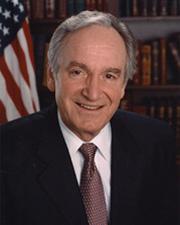 Sen. Tom Harkin (D-IA)
Legislative Activity
Stay on top of the latest movement without scrolling through every action
Senate amendment submitted
May 12, 2004
View full timeline
Senate amendment submitted
May 12, 2004
Roll call votes on amendments in Senate: Motion to waive the Budget Act with respect to amendment SA 3144 rejected in Senate by Yea-Nay Vote. 56 - 41. Record Vote Number: 93.
May 12, 2004
Senate amendment proposed (on the floor): Amendment SA 3144 proposed by Senator Harkin.(consideration: CR S5327-5328, S5344-5345; text: S5327-5328)
May 12, 2004
Amendment SA 3144 proposed by Senator Harkin. (consideration: CR S5327-5328, S5344-5345; text: S5327-5328) to amend part B of the Individuals with Disabilities Education Act to reach full Federal funding of such part in 6 years, and for other purposes.
May 12, 2004
Point of order raised in Senate with respect to amendment SA 3144. (consideration: CR H5345)
May 12, 2004
Motion to waive the Budget Act with respect to amendment SA 3144 rejected in Senate by Yea-Nay Vote. 56 - 41. Record Vote Number: 93.
May 12, 2004
Amendment SA 3144 ruled out of order by the chair.
May 12, 2004
Votes
1 roll call on this amendment
Text
Proposed
INDIVIDUALS WITH DISABILITIES EDUCATION IMPROVEMENT ACT OF 2003

The PRESIDING OFFICER. Under the previous order, the Senate will
proceed to the consideration of S. 1248, which the clerk will report.
The assistant legislative clerk read as follows:

A bill (S. 1248) to reauthorize the Individuals with
Disabilities Education Act, and for other purposes.

There being no objection, the Senate proceeded to consider the bill,
which had been reported from the Committee on Health, Education, Labor,
and Pensions, with an amendment to strike all after the enacting clause
and inserting in lieu thereof the following:

S. 1248

Be it enacted by the Senate and House of Representatives of
the United States of America in Congress assembled,

[SECTION 1. SHORT TITLE.

[This Act may be cited as the ``Individuals with
Disabilities Education Improvement Act of 2003''.

[TITLE I--AMENDMENTS TO THE INDIVIDUALS WITH DISABILITIES EDUCATION ACT

[SEC. 101. AMENDMENTS TO THE INDIVIDUALS WITH DISABILITIES
EDUCATION ACT.

[Parts A through D of the Individuals with Disabilities
Education Act (20 U.S.C. 1400 et seq.) are amended to read as
follows:

[``PART A--GENERAL PROVISIONS

[``SEC. 601. SHORT TITLE; TABLE OF CONTENTS; FINDINGS;
PURPOSES.

[``(a) Short Title.--This Act may be cited as the
`Individuals with Disabilities Education Act'.
[``(b) Table of Contents.--The table of contents for this
Act is as follows:

[``Part A--General Provisions

[``Sec. 601. Short title; table of contents; findings; purposes.
[``Sec. 602. Definitions.
[``Sec. 603. Office of Special Education Programs.
[``Sec. 604. Abrogation of State sovereign immunity.
[``Sec. 605. Acquisition of equipment; construction or alteration of
facilities.
[``Sec. 606. Employment of individuals with disabilities.
[``Sec. 607. Requirements for prescribing regulations.
[``Sec. 608. State administration.
[``Sec. 609. Report to Congress

[``Part B--Assistance for Education of All Children With Disabilities

[``Sec. 611. Authorization; allotment; use of funds; authorization of
appropriations.
[``Sec. 612. State eligibility.
[``Sec. 613. Local educational agency eligibility.
[``Sec. 614. Evaluations, eligibility determinations, individualized
education programs, and educational placements.
[``Sec. 615. Procedural safeguards.
[``Sec. 616. Monitoring, technical assistance, and enforcement.
[``Sec. 617. Administration.
[``Sec. 618. Program information.
[``Sec. 619. Preschool grants.

[``Part C--Infants and Toddlers With Disabilities

[``Sec. 631. Findings and policy.
[``Sec. 632. Definitions.
[``Sec. 633. General authority.
[``Sec. 634. Eligibility.
[``Sec. 635. Requirements for statewide system.
[``Sec. 636. Individualized family service plan.
[``Sec. 637. State application and assurances.
[``Sec. 638. Uses of funds.
[``Sec. 639. Procedural safeguards.
[``Sec. 640. Payor of last resort.
[``Sec. 641. State Interagency Coordinating Council.
[``Sec. 642. Federal administration.
[``Sec. 643. Allocation of funds.
[``Sec. 644. Authorization of appropriations.

[``Part D--National Activities To Improve Education of Children With
Disabilities

[``Sec. 650. Findings and purpose.

[``Subpart 1--State Personnel Preparation and Professional Development
Grants

[``Sec. 651. Purpose; definition; program authority.
[``Sec. 652. Eligibility and collaborative process.
[``Sec. 653. Applications.
[``Sec. 654. Use of funds.
[``Sec. 655. Authorization of appropriations.

[``Subpart 2--Scientifically Based Research, Technical Assistance,
Model Demonstration Projects, and Dissemination of Information

[``Sec. 660. Purpose.
[``Sec. 661. Administrative provisions.

[[Page S5251]]

[``Sec. 662. Research to improve results for children with
disabilities.
[``Sec. 663. Technical assistance, demonstration projects,
dissemination of information, and implementation of
scientifically based research.
[``Sec. 664. Personnel development to improve services and results for
children with disabilities.
[``Sec. 665. Studies and evaluations.

[``Subpart 3--Supports To Improve Results for Children With
Disabilities

[``Sec. 670. Purposes.
[``Sec. 671. Parent training and information centers.
[``Sec. 672. Community parent resource centers.
[``Sec. 673. Technical assistance for parent training and information
centers.
[``Sec. 674. Technology development, demonstration, and utilization;
and media services.
[``Sec. 675. Authorization of appropriations.

[``Subpart 4--Interim Alternative Educational Settings, Behavioral
Supports, and Whole School Interventions

[``Sec. 681. Purpose.
[``Sec. 682. Definition of eligible entity.
[``Sec. 683. Program authorized.
[``Sec. 684. Program evaluations.
[``Sec. 685. Authorization of appropriations.
[``(c) Findings.--Congress finds the following:
[``(1) Disability is a natural part of the human experience
and in no way diminishes the right of individuals to
participate in or contribute to society. Improving
educational results for children with disabilities is an
essential element of our national policy of ensuring equality
of opportunity, full participation, independent living, and
economic self-sufficiency for individuals with disabilities.
[``(2) Before the date of the enactment of the Education
for All Handicapped Children Act of 1975 (Public Law 94-142),
the educational needs of millions of children with
disabilities were not being fully met because--
[``(A) the children did not receive appropriate educational
services;
[``(B) the children were excluded entirely from the public
school system and from being educated with their peers;
[``(C) undiagnosed disabilities prevented the children from
having a successful educational experience; or
[``(D) a lack of adequate resources within the public
school system forced families to find services outside the
public school system.
[``(3) Since the enactment and implementation of the
Education for All Handicapped Children Act of 1975, this Act
has been successful in ensuring children with disabilities
and the families of such children access to a free
appropriate public education and in improving educational
results for children with disabilities.
[``(4) However, the implementation of this Act has been
impeded by low expectations, and an insufficient focus on
applying replicable research on proven methods of teaching
and learning for children with disabilities.
[``(5) Over 25 years of research and experience has
demonstrated that the education of children with disabilities
can be made more effective by--
[``(A) having high expectations for such children and
ensuring their access to the general education curriculum in
the regular classroom to the maximum extent possible in order
to--
[``(i) meet developmental goals and, to the maximum extent
possible, the challenging expectations that have been
established for all children; and
[``(ii) be prepared to lead productive and independent
adult lives, to the maximum extent possible;
[``(B) strengthening the role and responsibility of parents
and ensuring that families of such children have meaningful
opportunities to participate in the education of their
children at school and at home;
[``(C) coordinating this Act with other local, educational
service agency, State, and Federal school improvement
efforts, including improvement efforts under the Elementary
and Secondary Education Act of 2001, in order to ensure that
such children benefit from such efforts and that special
education can become a service for such children rather than
a place where they are sent;
[``(D) providing appropriate special education and related
services, and aids and supports in the regular classroom, to
such children, whenever appropriate;
[``(E) supporting high-quality, intensive preservice
preparation professional development for all personnel who
work with children with disabilities in order to ensure that
such personnel have the skills and knowledge necessary to
improve the academic achievement and functional performance
of children with disabilities, including the use of
scientifically based instructional practices, to the maximum
extent possible;
[``(F) providing incentives for whole-school approaches,
scientifically based early reading programs, positive
behavioral interventions and supports, and prereferral
intervention to reduce the need to label children as disabled
in order to address their learning and behavioral needs;
[``(G) focusing resources on teaching and learning while
reducing paperwork and requirements that do not assist in
improving educational results; and
[``(H) supporting the development and use of technology,
including assistive technology devices and assistive
technology services, to maximize accessibility for children
with disabilities.
[``(6) While States, local educational agencies, and
educational service agencies are primarily responsible for
providing an education for all children with disabilities, it
is in the national interest that the Federal Government have
a supporting role in assisting State and local efforts to
educate children with disabilities in order to improve
results for such children and to ensure equal protection of
the law.
[``(7) A more equitable allocation of resources is
essential for the Federal Government to meet its
responsibility to provide an equal educational opportunity
for all individuals.
[``(8)(A) The Federal Government must be responsive to the
growing needs of an increasingly more diverse society.
[``(B) America's ethnic profile is rapidly changing. In the
year 2000, 1 of every 3 persons in the United States was a
member of a minority group or was limited English proficient.
[``(C) Minority children comprise an increasing percentage
of public school students.
[``(D) With such changing demographics, recruitment efforts
for special education personnel should focus on increasing
the participation of minorities in the teaching profession.
[``(9)(A) The limited English proficient population is the
fastest growing in our Nation, and the growth is occurring in
many parts of our Nation.
[``(B) Studies have documented apparent discrepancies in
the levels of referral and placement of limited English
proficient children in special education.
[``(C) This poses a special challenge for special education
in the referral of, assessment of, and services for, our
Nation's students from non-English language backgrounds.
[``(10)(A) Greater efforts are needed to prevent the
intensification of problems connected with mislabeling and
high dropout rates among minority children with disabilities.
[``(B) More minority children continue to be served in
special education than would be expected from the percentage
of minority students in the general school population.
[``(C) African-American children are over identified as
having mental retardation and emotional disturbance at rates
greater than their white counterparts.
[``(D) In the 1998-1999 school year, African-American
children represented just 14.8 percent of the population aged
6 through 21, but comprised 20.2 percent of all children with
disabilities.
[``(E) Studies have found that schools with predominately
Caucasian students and teachers have placed
disproportionately high numbers of their minority students
into special education.
[``(11)(A) As the number of minority students in special
education increases, the number of minority teachers and
related services personnel produced in colleges and
universities continues to decrease.
[``(B) The opportunity for minority individuals,
organizations, and Historically Black Colleges and
Universities to participate fully in awards for grants and
contracts, boards of organizations receiving funds under this
Act, and peer review panels, and in the training of
professionals in the area of special education is essential
if we are to obtain greater success in the education of
minority children with disabilities.
[``(d) Purposes.--The purposes of this title are--
[``(1)(A) to ensure that all children with disabilities
have available to them a free appropriate public education
that emphasizes special education and related services
designed to meet their unique needs and prepare them for
employment, further education, and independent living;
[``(B) to ensure that the rights of children with
disabilities and parents of such children are protected; and
[``(C) to assist States, localities, educational service
agencies, and Federal agencies to provide for the education
of all children with disabilities;
[``(2) to assist States in the implementation of a
Statewide, comprehensive, coordinated, multidisciplinary,
interagency system of early intervention services for infants
and toddlers with disabilities and their families;
[``(3) to ensure that educators and parents have the
necessary tools to improve educational results for children
with disabilities by supporting systemic-change activities;
coordinated research and personnel preparation; coordinated
technical assistance, dissemination, and support; and
technology development and media services; and
[``(4) to assess, and ensure the effectiveness of, efforts
to educate children with disabilities.

[``SEC. 602. DEFINITIONS.

[``Except as otherwise provided, as used in this Act:
[``(1) Assistive technology device.--The term `assistive
technology device' means any item, piece of equipment, or
product system, whether acquired commercially off the shelf,
modified, or customized, that is used to increase, maintain,
or improve functional capabilities of a child with a
disability.

[[Page S5252]]

[``(2) Assistive technology service.--The term `assistive
technology service' means any service that directly assists a
child with a disability in the selection, acquisition, or use
of an assistive technology device. Such term includes--
[``(A) the evaluation of the needs of such child, including
a functional evaluation of the child in the child's customary
environment;
[``(B) purchasing, leasing, or otherwise providing for the
acquisition of assistive technology devices by such child;
[``(C) selecting, designing, fitting, customizing,
adapting, applying, maintaining, repairing, or replacing of
assistive technology devices;
[``(D) coordinating and using other therapies,
interventions, or services with assistive technology devices,
such as those associated with existing education and
rehabilitation plans and programs;
[``(E) training or technical assistance for such child, or,
where appropriate, the family of such child; and
[``(F) training or technical assistance for professionals
(including individuals providing education and rehabilitation
services), employers, or other individuals who provide
services to, employ, or are otherwise substantially involved
in the major life functions of such child.
[``(3) Child with a disability.--
[``(A) In general.--The term `child with a disability'
means a child--
[``(i) with mental retardation, hearing impairments
(including deafness), speech or language impairments, visual
impairments (including blindness), serious emotional
disturbance (hereinafter referred to as `emotional
disturbance'), orthopedic impairments, autism, traumatic
brain injury, other health impairments, or specific learning
disabilities; and
[``(ii) who, by reason thereof, needs special education and
related services.
[``(B) Child aged 3 through 9.--The term `child with a
disability' for a child aged 3 through 9 (or any subset of
that age range, including ages 3 through 5), may, at the
discretion of the State and the local educational agency,
include a child--
[``(i) experiencing developmental delays, as defined by the
State and as measured by appropriate diagnostic instruments
and procedures, in 1 or more of the following areas: physical
development, cognitive development, communication
development, social or emotional development, or adaptive
development; and
[``(ii) who, by reason thereof, needs special education and
related services.
[``(4) Core academic subject.--The term `core academic
subject' has the meaning given the term in section 9101(11)
of the Elementary and Secondary Education Act of 1965.
[``(5) Educational service agency.--The term `educational
service agency'--
[``(A) means a regional public multiservice agency--
[``(i) authorized by State law to develop, manage, and
provide services or programs to local educational agencies;
and
[``(ii) recognized as an administrative agency for purposes
of the provision of special education and related services
provided within public elementary schools and secondary
schools of the State; and
[``(B) includes any other public institution or agency
having administrative control and direction over a public
elementary school or secondary school.
[``(6) Elementary school.--The term `elementary school'
means a nonprofit institutional day or residential school
that provides elementary education, as determined under State
law.
[``(7) Equipment.--The term `equipment' includes--
[``(A) machinery, utilities, and built-in equipment, and
any necessary enclosures or structures to house such
machinery, utilities, or equipment; and
[``(B) all other items necessary for the functioning of a
particular facility as a facility for the provision of
educational services, including items such as instructional
equipment and necessary furniture; printed, published, and
audio-visual instructional materials; telecommunications,
sensory, and other technological aids and devices; and books,
periodicals, documents, and other related materials.
[``(8) Excess costs.--The term `excess costs' means those
costs that are in excess of the average annual per-student
expenditure in a local educational agency during the
preceding school year for an elementary school or secondary
school student, as may be appropriate, and which shall be
computed after deducting--
[``(A) amounts received--
[``(i) under part B of this title;
[``(ii) under part A of title I of the Elementary and
Secondary Education Act of 1965; and
[``(iii) under parts A and B of title III of that Act; and
[``(B) any State or local funds expended for programs that
would qualify for assistance under any of those parts.
[``(9) Free appropriate public education.--The term `free
appropriate public education' means special education and
related services that--
[``(A) have been provided at public expense, under public
supervision and direction, and without charge;
[``(B) meet the standards of the State educational agency;
[``(C) include an appropriate preschool, elementary school,
or secondary school education in the State involved; and
[``(D) are provided in conformity with the individualized
education program required under section 614(d).
[``(10) Highly qualified; consultative services.--
[``(A) Highly qualified.--The term `highly qualified', when
used with respect to any special education teacher teaching
in a State, means a teacher who--
[``(i)(I) meets the definition of that term in section
9101(23) of the Elementary and Secondary Education Act of
1965, including full State certification as a special
education teacher through a State approved special education
teacher preparation program (including certification obtained
through State or local educational agency approved
alternative routes); or
[``(II) has passed a State special education licensing
examination and holds a license to teach special education in
such State,

except that when used with respect to any teacher teaching in
a public charter school, the term means that the teacher
meets the requirements set forth in the State's statute on
public charter schools; and
[``(ii) does not have certification or licensure
requirements waived on an emergency, temporary, or
provisional basis;
[``(iii) if the teacher provides only consultative services
to a regular education teacher with respect to a core
academic subject, the special education teacher shall meet
the standards for subject knowledge and teaching skills
described in section 9101(23) of the Elementary and Secondary
Education Act of 1965 that apply to elementary school
teachers; and
[``(iv) if the teacher provides instruction in a core
academic subject to middle or secondary students who are
performing at the elementary level, the teacher shall meet
the standards for subject knowledge and teaching skills
described in section 9101(23) of the Elementary and Secondary
Education Act of 1965 that apply to elementary school
teachers.
[``(B) Consultative services.--As used in subparagraph
(A)(iii), the term `consultative services' means--
[``(i) consultation on adapting curricula, using positive
behavioral supports and interventions, and selecting
appropriate accommodations, and does not include direct
instruction of students; or
[``(ii) teaching in collaboration with a regular education
teacher or teachers who is or are highly qualified in the
core academic subjects being taught.
[``(11) Indian.--The term `Indian' means an individual who
is a member of an Indian tribe.
[``(12) Indian tribe.--The term `Indian tribe' means any
Federal or State Indian tribe, band, rancheria, pueblo,
colony, or community, including any Alaska Native village or
regional village corporation (as defined in or established
under the Alaska Native Claims Settlement Act).
[``(13) Individualized education program.--The term
`individualized education program' or `IEP' means a written
statement for each child with a disability that is developed,
reviewed, and revised in accordance with section 614(d).
[``(14) Individualized family service plan.--The term
`individualized family service plan' has the meaning given
such term in section 636.
[``(15) Infant or toddler with a disability.--The term
`infant or toddler with a disability' has the meaning given
such term in section 632.
[``(16) Institution of higher education.--The term
`institution of higher education'--
[``(A) has the meaning given such term in section 101 (a)
and (b) of the Higher Education Act of 1965; and
[``(B) also includes any community college receiving
funding from the Secretary of the Interior under the Tribally
Controlled College or University Assistance Act of 1978.
[``(17) Local educational agency.--
[``(A) The term `local educational agency' means a public
board of education or other public authority legally
constituted within a State for either administrative control
or direction of, or to perform a service function for, public
elementary schools or secondary schools in a city, county,
township, school district, or other political subdivision of
a State, or for such combination of school districts or
counties as are recognized in a State as an administrative
agency for its public elementary schools or secondary
schools.
[``(B) The term includes--
[``(i) an educational service agency, as defined in
paragraph (4); and
[``(ii) any other public institution or agency having
administrative control and direction of a public elementary
school or secondary school.
[``(C) The term includes an elementary school or secondary
school funded by the Bureau of Indian Affairs, but only to
the extent that such inclusion makes the school eligible for
programs for which specific eligibility is not provided to
the school in another provision of law and the school does
not have a student population that is smaller than the
student population of the local educational agency receiving
assistance under this Act with the smallest student
population, except that the school shall not be subject to
the jurisdiction of any State educational agency other than
the Bureau of Indian Affairs.

[[Page S5253]]

[``(18) Native language.--The term `native language', when
used with respect to an individual of limited English
proficiency, means the language normally used by the
individual, or in the case of a child, the language normally
used by the parents of the child.
[``(19) Nonprofit.--The term `nonprofit', as applied to a
school, agency, organization, or institution, means a school,
agency, organization, or institution owned and operated by 1
or more nonprofit corporations or associations no part of the
net earnings of which inures, or may lawfully inure, to the
benefit of any private shareholder or individual.
[``(20) Outlying area.--The term `outlying area' means the
United States Virgin Islands, Guam, American Samoa, and the
Commonwealth of the Northern Mariana Islands.
[``(21) Parent.--The term `parent'--
[``(A) includes a legal guardian; and
[``(B) except as used in sections 615(b)(2) and 639(a)(5),
includes an individual assigned under either of those
sections to be a surrogate parent.
[``(22) Parent organization.--The term `parent
organization' has the meaning given such term in section
671(g).
[``(23) Parent training and information center.--The term
`parent training and information center' means a center
assisted under section 671 or 672.
[``(24) Related services.--The term `related services'
means transportation, and such developmental, corrective, and
other supportive services (including speech-language
pathology and audiology services, psychological services,
physical and occupational therapy, recreation, including
therapeutic recreation, social work services, school health
services, counseling services, including rehabilitation
counseling, orientation and mobility services, and medical
services, except that such medical services shall be for
diagnostic and evaluation purposes only) as may be required
to assist a child with a disability to benefit from special
education, and includes the early identification and
assessment of disabling conditions in children.
[``(25) Secondary school.--The term `secondary school'
means a nonprofit institutional day or residential school
that provides secondary education, as determined under State
law, except that it does not include any education beyond
grade 12.
[``(26) Secretary.--The term `Secretary' means the
Secretary of Education.
[``(27) Special education.--The term `special education'
means specially designed instruction, at no cost to parents,
to meet the unique needs of a child with a disability,
including--
[``(A) instruction conducted in the classroom, in the home,
in hospitals and institutions, and in other settings; and
[``(B) instruction in physical education.
[``(28) Specific learning disability.--
[``(A) In general.--The term `specific learning disability'
means a disorder in 1 or more of the basic psychological
processes involved in understanding or in using language,
spoken or written, which disorder may manifest itself in the
imperfect ability to listen, think, speak, read, write,
spell, or do mathematical calculations.
[``(B) Disorders included.--Such term includes such
conditions as perceptual disabilities, brain injury, minimal
brain dysfunction, dyslexia, and developmental aphasia.
[``(C) Disorders not included.--Such term does not include
a learning problem that is primarily the result of visual,
hearing, or motor disabilities, of mental retardation, of
emotional disturbance, or of environmental, cultural, or
economic disadvantage.
[``(29) State.--The term `State' means each of the 50
States, the District of Columbia, the Commonwealth of Puerto
Rico, and each of the outlying areas.
[``(30) State educational agency.--The term `State
educational agency' means the State board of education or
other agency or officer primarily responsible for the State
supervision of public elementary schools and secondary
schools, or, if there is no such officer or agency, an
officer or agency designated by the Governor or by State law.
[``(31) Supplementary aids and services.--The term
`supplementary aids and services' means aids, services, and
other supports that are provided in regular education
classes or other education-related settings to enable
children with disabilities to be educated with nondisabled
children to the maximum extent appropriate in accordance
with section 612(a)(5).
[``(32) Transition services.--The term `transition
services' means a coordinated set of activities for a child
with a disability (as defined in paragraph (3)(A)) that--
[``(A) is designed to be within a results-oriented process,
that is focused on improving the academic and functional
achievement of the child with a disability to facilitate the
child's movement from school to post-school activities,
including post-secondary education, vocational training,
integrated employment (including supported employment),
continuing and adult education, adult services, independent
living, or community participation;
[``(B) is based on the individual child's needs, taking
into account the child's capacity, preferences, and
interests; and
[``(C) includes instruction, related services, community
experiences, the development of employment and other post-
school adult living objectives, and, when appropriate,
acquisition of daily living skills and functional vocational
evaluation.

[``SEC. 603. OFFICE OF SPECIAL EDUCATION PROGRAMS.

[``(a) Establishment.--There shall be, within the Office of
Special Education and Rehabilitative Services in the
Department of Education, an Office of Special Education
Programs, which shall be the principal agency in such
Department for administering and carrying out this Act and
other programs and activities concerning the education of
children with disabilities.
[``(b) Director.--The Office established under subsection
(a) shall be headed by a Director who shall be selected by
the Secretary and shall report directly to the Assistant
Secretary for Special Education and Rehabilitative Services.
[``(c) Voluntary and Uncompensated Services.--
Notwithstanding section 1342 of title 31, United States Code,
the Secretary is authorized to accept voluntary and
uncompensated services in furtherance of the purposes of this
Act.

[``SEC. 604. ABROGATION OF STATE SOVEREIGN IMMUNITY.

[``(a) In General.--A State shall not be immune under the
11th amendment to the Constitution of the United States from
suit in Federal court for a violation of this Act.
[``(b) Remedies.--In a suit against a State for a violation
of this Act, remedies (including remedies both at law and in
equity) are available for such a violation to the same extent
as those remedies are available for such a violation in the
suit against any public entity other than a State.
[``(c) Effective Date.--Subsections (a) and (b) apply with
respect to violations that occur in whole or part after the
date of enactment of the Education of the Handicapped Act
Amendments of 1990.

[``SEC. 605. ACQUISITION OF EQUIPMENT; CONSTRUCTION OR
ALTERATION OF FACILITIES.

[``(a) In General.--If the Secretary determines that a
program authorized under this Act will be improved by
permitting program funds to be used to acquire appropriate
equipment, or to construct new facilities or alter existing
facilities, the Secretary is authorized to allow the use of
those funds for those purposes.
[``(b) Compliance With Certain Regulations.--Any
construction of new facilities or alteration of existing
facilities under subsection (a) shall comply with the
requirements of--
[``(1) appendix A of part 36 of title 28, Code of Federal
Regulations (commonly known as the `Americans with
Disabilities Accessibility Guidelines for Buildings and
Facilities'); or
[``(2) appendix A of subpart 101-19.6 of title 41, Code of
Federal Regulations (commonly known as the `Uniform Federal
Accessibility Standards').

[``SEC. 606. EMPLOYMENT OF INDIVIDUALS WITH DISABILITIES.

[``The Secretary shall ensure that each recipient of
assistance under this Act makes positive efforts to employ
and advance in employment qualified individuals with
disabilities in programs assisted under this Act.

[``SEC. 607. REQUIREMENTS FOR PRESCRIBING REGULATIONS.

[``(a) In General.--The Secretary may issue such
regulations as are necessary to ensure that there is
compliance with this Act.
[``(b) Protections Provided to Children.--The Secretary may
not implement, or publish in final form, any regulation
prescribed pursuant to this Act that--
[``(1) violates or contradicts any provision of this Act;
and
[``(2) procedurally or substantively lessens the
protections provided to children with disabilities under this
Act, as embodied in regulations in effect on July 20, 1983
(particularly as such protections related to parental consent
to initial evaluation or initial placement in special
education, least restrictive environment, related services,
timelines, attendance of evaluation personnel at
individualized education program meetings, or qualifications
of personnel), except to the extent that such regulation
reflects the clear and unequivocal intent of the Congress in
legislation.
[``(c) Public Comment Period.--The Secretary shall provide
a public comment period of not less than 60 days on any
regulation proposed under part B or part C of this Act on
which an opportunity for public comment is otherwise required
by law.
[``(d) Policy Letters and Statements.--The Secretary may
not issue policy letters or other statements (including
letters or statements regarding issues of national
significance) that--
[``(1) violate or contradict any provision of this Act; or
[``(2) establish a rule that is required for compliance
with, and eligibility under, this Act without following the
requirements of section 553 of title 5, United States Code.
[``(e) Explanation and Assurances.--Any written response by
the Secretary under subsection (d) regarding a policy,
question, or interpretation under part B of this Act shall
include an explanation in the written response that--
[``(1) such response is provided as informal guidance and
is not legally binding;
[``(2) when required, such response is issued in compliance
with the requirements of section 553 of title 5, United
States Code; and
[``(3) such response represents the interpretation by the
Department of Education of the applicable statutory or
regulatory requirements in the context of the specific facts
presented.

[[Page S5254]]

[``(f) Correspondence From Department of Education
Describing Interpretations of This Act.--
[``(1) In general.--The Secretary shall, on a quarterly
basis, publish in the Federal Register, and widely
disseminate to interested entities through various additional
forms of communication, a list of correspondence from the
Department of Education received by individuals during the
previous quarter that describes the interpretations of the
Department of Education of this Act or the regulations
implemented pursuant to this Act.
[``(2) Additional information.--For each item of
correspondence published in a list under paragraph (1), the
Secretary shall--
[``(A) identify the topic addressed by the correspondence
and shall include such other summary information as the
Secretary determines to be appropriate; and
[``(B) ensure that all such correspondence is issued, where
applicable, in compliance with the requirements of section
553 of title 5, United States Code.

[``SEC. 608. STATE ADMINISTRATION.

[``(a) Rulemaking.--Each State that receives funds under
this Act shall--
[``(1) ensure that any State rules, regulations, and
policies relating to this Act conform to the purposes of this
Act; and
[``(2) identify in writing to its local educational
agencies and the Secretary any such rule, regulation, or
policy as a State-imposed requirement that is not required by
this Act and Federal regulations.
[``(b) Support and Facilitation.--State rules, regulations,
and policies under this Act shall support and facilitate
local educational agency and school-level systemic reform
designed to enable children with disabilities to meet the
challenging State student academic achievement standards.

``SEC. 609. REPORT TO CONGRESS.

[``The Comptroller General shall conduct a review of
Federal, State, and local requirements to determine which
requirements result in excessive paperwork completion burdens
for teachers, related services providers, and school
administrators, and shall report to Congress not later than
18 months after the date of enactment of the Individuals with
Disabilities Education Improvement Act of 2003 regarding such
review along with strategic proposals for reducing the
paperwork burdens on teachers.

[``PART B--ASSISTANCE FOR EDUCATION OF ALL CHILDREN WITH DISABILITIES

[``SEC. 611. AUTHORIZATION; ALLOTMENT; USE OF FUNDS;
AUTHORIZATION OF APPROPRIATIONS.

[``(a) Grants to States.--
[``(1) Purpose of grants.--The Secretary shall make grants
to States and the outlying areas, and provide funds to the
Secretary of the Interior, to assist them to provide special
education and related services to children with disabilities
in accordance with this part.
[``(2) Maximum amount.--The maximum amount available for
awarding grants under this part for any fiscal year is--
[``(A) the total number of children with disabilities in
the 2002-2003 school year in the States who received special
education and related services and who were--
[``(i) aged 3 through 5, if the State was eligible for a
grant under section 619; and
[``(ii) aged 6 through 21; multiplied by
[``(B) 40 percent of the average per-pupil expenditure in
public elementary schools and secondary schools in the United
States; adjusted by
[``(C) the rate of change in the sum of--
[``(i) 85 percent of the change in the nationwide total of
the population described in (d)(3)(A)(i)(II); and
[``(ii) 15 percent of the change in the nationwide total of
the population described in (d)(3)(A)(i)(III).
[``(b) Outlying Areas and Freely Associated States.--
[``(1) Funds reserved.--From the amount appropriated for
any fiscal year under subsection (i), the Secretary shall
reserve not more than 1 percent, which shall be used--
[``(A) to provide assistance to the outlying areas in
accordance with their respective populations of individuals
aged 3 through 21; and
[``(B) to provide each of the freely associated States
grants that do not exceed the level each such freely
associated State received for fiscal year 2003 under this
part, but only if the freely associated State meets the
requirements of section 611(b)(2)(C) as such section was in
effect on the day before the date of enactment of the
Individuals with Disabilities Education Improvement Act of
2003.
[``(2) Special rule.--The provisions of Public Law 95-134,
permitting the consolidation of grants by the outlying areas,
shall not apply to funds provided to the outlying areas or
the freely associated States under this section.
[``(3) Definition.--As used in this subsection, the term
`freely associated States' means the Republic of the Marshall
Islands, the Federated States of Micronesia, and the Republic
of Palau.
[``(c) Secretary of the Interior.--From the amount
appropriated for any fiscal year under subsection (i), the
Secretary shall reserve 1.226 percent to provide assistance
to the Secretary of the Interior in accordance with
subsection (i).
[``(d) Allocations to States.--
[``(1) In general.--After reserving funds for studies and
evaluations under section 665, and for payments to the
outlying areas, the freely associated States, and the
Secretary of the Interior under subsections (b) and (c) for a
fiscal year, the Secretary shall allocate the remaining
amount among the States in accordance with this subsection.
[``(2) Special rule for use of fiscal year 1999 amount.--If
a State received any funds under this section for fiscal year
1999 on the basis of children aged 3 through 5, but does not
make a free appropriate public education available to all
children with disabilities aged 3 through 5 in the State in
any subsequent fiscal year, the Secretary shall compute the
State's amount for fiscal year 1999, solely for the purpose
of calculating the State's allocation in that subsequent year
under paragraph (3) or (4), by subtracting the amount
allocated to the State for fiscal year 1999 on the basis
of those children.
[``(3) Increase in funds.--If the amount available for
allocations to States under paragraph (1) for a fiscal year
is equal to or greater than the amount allocated to the
States under this paragraph for the preceding fiscal year,
those allocations shall be calculated as follows:
[``(A) Allocation of increase.--
[``(i) In general.--Except as provided in subparagraph (B),
the Secretary shall allocate for the fiscal year--

[``(I) to each State the amount the State received under
this section for fiscal year 1999;
[``(II) 85 percent of any remaining funds to States on the
basis of the States' relative populations of children aged 3
through 21 who are of the same age as children with
disabilities for whom the State ensures the availability of a
free appropriate public education under this part; and
[``(III) 15 percent of those remaining funds to States on
the basis of the States' relative populations of children
described in subclause (II) who are living in poverty.

[``(ii) Data.--For the purpose of making grants under this
paragraph, the Secretary shall use the most recent population
data, including data on children living in poverty, that are
available and satisfactory to the Secretary.
[``(B) Limitations.--Notwithstanding subparagraph (A),
allocations under this paragraph shall be subject to the
following:
[``(i) Preceding year allocation.--No State's allocation
shall be less than its allocation under this section for the
preceding fiscal year.
[``(ii) Minimum.--No State's allocation shall be less than
the greatest of--

[``(I) the sum of--

[``(aa) the amount the State received under this section
for fiscal year 1999; and
[``(bb) \1/3\ of 1 percent of the amount by which the
amount appropriated under subsection (i) for the fiscal year
exceeds the amount appropriated for this section for fiscal
year 1999;

[``(II) the sum of--

[``(aa) the amount the State received under this section
for the preceding fiscal year; and
[``(bb) that amount multiplied by the percentage by which
the increase in the funds appropriated for this section from
the preceding fiscal year exceeds 1.5 percent; or

[``(III) the sum of--

[``(aa) the amount the State received under this section
for the preceding fiscal year; and
[``(bb) that amount multiplied by 90 percent of the
percentage increase in the amount appropriated for this
section from the preceding fiscal year.
[``(iii) Maximum.--Notwithstanding clause (ii), no State's
allocation under this paragraph shall exceed the sum of--

[``(I) the amount the State received under this section for
the preceding fiscal year; and
[``(II) that amount multiplied by the sum of 1.5 percent
and the percentage increase in the amount appropriated under
this section from the preceding fiscal year.

[``(C) Ratable reduction.--If the amount available for
allocations under this paragraph is insufficient to pay those
allocations in full, those allocations shall be ratably
reduced, subject to subparagraph (B)(i).
[``(4) Decrease in funds.--If the amount available for
allocations to States under paragraph (1) for a fiscal year
is less than the amount allocated to the States under this
section for the preceding fiscal year, those allocations
shall be calculated as follows:
[``(A) Amounts greater than fiscal year 1999 allocations.--
If the amount available for allocations is greater than the
amount allocated to the States for fiscal year 1999, each
State shall be allocated the sum of--
[``(i) the amount the State received under this section for
fiscal year 1999; and
[``(ii) an amount that bears the same relation to any
remaining funds as the increase the State received under this
section for the preceding fiscal year over fiscal year 1999
bears to the total of all such increases for all States.
[``(B) Amounts equal to or less than fiscal year 1999
allocations.--
[``(i) In general.--If the amount available for allocations
under this paragraph is equal to or less than the amount
allocated to the States for fiscal year 1999, each State
shall be allocated the amount the State received for fiscal
year 1999.
[``(ii) Ratable reduction.--If the amount available for
allocations under this paragraph is insufficient to make the
allocations described in clause (i), those allocations shall
be ratably reduced.
[``(e) State-Level Activities.--
[``(1) State administration.--

[[Page S5255]]

[``(A) In general.--For the purpose of administering this
part, including paragraph (3), section 619, and the
coordination of activities under this part with, and
providing technical assistance to, other programs that
provide services to children with disabilities--
[``(i) each State may reserve not more than the maximum
amount the State was eligible to reserve for State
administration for fiscal year 2003 or $800,000 (adjusted by
the cumulative rate of inflation since fiscal year 2003 as
measured by the percentage increase, if any, in the Consumer
Price Index For All Urban Consumers, published by the Bureau
of Labor Statistics of the Department of Labor), whichever is
greater; and
[``(ii) each outlying area may reserve not more than 5
percent of the amount the outlying area receives under
subsection (b) for any fiscal year or $35,000, whichever is
greater.
[``(B) Part c.--Funds reserved under subparagraph (A) may
be used for the administration of part C, if the State
educational agency is the lead agency for the State under
that part.
[``(C) Certification.--Prior to expenditure of funds under
this paragraph, the State shall certify to the Secretary that
the arrangements to establish responsibility for services
pursuant to section 612(a)(12)(A) are current.
[``(2) Other state-level activities.--
[``(A) In general.--For the purpose of providing State-
level activities, each State may reserve for each of the
fiscal years 2004 and 2005, not more than 10 percent of the
amount that remains after subtracting the amount reserved
under paragraph (1) from the amount of the State's allocation
under subsection (d) for fiscal years 2004 and 2005,
respectively. For fiscal years 2006, 2007, 2008, and 2009,
the State may reserve the maximum amount the State was
eligible to reserve under the preceding sentence for fiscal
year 2005 (adjusted by the cumulative rate of inflation since
fiscal year 2005 as measured by the percentage increase, if
any, in the Consumer Price Index For All Urban Consumers,
published by the Bureau of Labor Statistics of the Department
of Labor).
[``(B) Required activities.--Funds reserved under
subparagraph (A) shall be used to carry out the following
activities:
[``(i) For monitoring, enforcement and complaint
investigation.
[``(ii) To establish and implement the mediation processes
required by section 615(e)(1), including providing for the
costs of mediators and support personnel;
[``(iii) To fund the State protection and advocacy system,
or other legal organizations that have expertise in--

[``(I) dispute resolution and due process;
[``(II) efforts to educate families regarding due process;
[``(III) voluntary mediation; and
[``(IV) the opportunity to resolve complaints.

[``(C) Authorized activities.--Funds reserved under
subparagraph (A) may be used to carry out the following
activities:
[``(i) To provide technical assistance, personnel
development and training.
[``(ii) To support paperwork reduction activities,
including expanding the use of technology in the IEP process.
[``(iii) To assist local educational agencies in providing
positive behavioral interventions and supports and mental
health services for children with disabilities.
[``(iv) To improve the use of technology in the classroom
by children with disabilities to enhance learning.
[``(v) To support the development and use of technology,
including universally designed technologies and assistive
technology devices, to maximize accessibility to the general
curriculum for students with disabilities.
[``(vi) Development and implementation of transition
programs, including coordination of services with agencies
involved in supporting the transition of students with
disabilities to post-secondary activities.
[``(vii) To assist local educational agencies in meeting
personnel shortages.
[``(viii) To support capacity building activities and
improve the delivery of services by local educational
agencies to improve results for children with disabilities.
[``(ix) Alternative programming for children who have been
expelled from school, and services for children in
correctional facilities, children enrolled in State-operated
or State-supported schools, and children in charter schools.
[``(x) To support the development and provision of
appropriate accommodations for children with disabilities, or
the development and provision of alternate assessments that
are valid and reliable for assessing the performance of
children with disabilities, in accordance with sections
1111(b) and 6111 of the Elementary and Secondary Education
Act of 1965.
[``(3) Local educational agency risk pool.--
[``(A) In general.--For the purpose of assisting local
educational agencies (and charter schools that are local
educational agencies) in addressing the needs of high-need
children and the unanticipated enrollment of other children
eligible for service under this part, each State shall
reserve for each of the fiscal years 2004 through 2009, 2
percent of the amount that remains after subtracting the
amount reserved under paragraph (1) from the amount of the
State's allocation under subsection (d) for each of the
fiscal years 2004 through 2009, respectively, to--
[``(i) establish a high-cost fund; and
[``(ii) make disbursements from the high-cost fund to local
educational agencies in accordance with this paragraph.
[``(B) Required disbursements from the fund.--Each State
educational agency shall make disbursements from the fund
established under subparagraph (A) to local educational
agencies to pay the percentage, described in subparagraph
(D), of the costs of providing a free appropriate public
education to high-need children.
[``(C) Application.--A local educational agency that
desires a disbursement under this subsection shall submit an
application to the State educational agency at such time, in
such manner, and containing such information as the State
educational agency may require. Such application shall
include assurances that funds provided under this
paragraph shall not be used to pay costs that otherwise
would be reimbursable as medical assistance for a child
with a disability under the State medicaid program under
title XIX of the Social Security Act.
[``(D) Disbursements.--
[``(i) In general.--A State educational agency shall make a
disbursement to a local educational agency that submits an
application under subparagraph (C) in an amount that is equal
to 75 percent of the costs that are in excess of 4 times the
average per-pupil expenditure in the United States or in the
State where the child resides (whichever average per-pupil
expenditure is lower) associated with educating each high
need child served by such local educational agency in a
fiscal year for whom such agency desires a disbursement.
[``(ii) Appropriate costs.--The costs associated with
educating a high need child under clause (i) are only those
costs associated with providing direct special education and
related services to such child that are identified in such
child's appropriately developed IEP.
[``(E) Legal fees.--The disbursements under subparagraph
(D) shall not support legal fees, court costs, or other costs
associated with a cause of action brought on behalf of such
child to ensure a free appropriate public education for such
child.
[``(F) Permissible disbursements from remaining funds.--A
State educational agency may make disbursements to local
educational agencies from any funds that are remaining in the
high cost fund after making the required disbursements under
subparagraph (D) for a fiscal year for the following
purposes:
[``(i) To pay the costs associated with serving children
with disabilities who moved into the areas served by such
local agencies after the budget for the following school year
had been finalized to assist the local educational agencies
in providing a free appropriate public education for such
children in such year.
[``(ii) To compensate local educational agencies for
extraordinary costs, as determined by the State, of any
children eligible for services under this part due to--

[``(I) unexpected enrollment or placement of children
eligible for services under this part; or
[``(II) a significant underestimate of the average cost of
providing services to children eligible for services under
this part.

[``(G) Remaining funds.--Funds reserved under subparagraph
(A) in any fiscal year but not expended in that fiscal year
pursuant to subparagraph (D) or subparagraph (F) shall--
[``(i) be allocated to local educational agencies pursuant
to subparagraphs (D) or (F) for the next fiscal year; or
[``(ii) be allocated to local educational agencies in the
same manner as funds are allocated to local educational
agencies under subsection (f).
[``(H) Assurance of a free appropriate public education.--
Nothing in this section shall be construed--
[``(i) to limit or condition the right of a child with a
disability who is assisted under this part to receive a free
appropriate public education pursuant to section 612(a)(1) in
a least restrictive environment pursuant to section
612(a)(5); or
[``(ii) to authorize a State educational agency or local
educational agency to indicate a limit on what is expected to
be spent on the education of a child with a disability.
[``(I) Medicaid services not affected.--Disbursements
provided under this subsection shall not be used to pay costs
that otherwise would be reimbursable as medical assistance
for a child with a disability under the State medicaid
program under title XIX of the Social Security Act.
[``(J) Definitions.--In this paragraph:
[``(i) Average per-pupil expenditure.--The term `average
per-pupil expenditure' has the meaning given the term in
section 9101 of the Elementary and Secondary Education Act of
1965.
[``(ii) High-need child.--The term `high-need', when used
with respect to a child with a disability, means a child with
a disability for whom a free appropriate public education in
a fiscal year costs more than 4 times the average per-pupil
expenditure for such fiscal year.
[``(K) Special rule for risk pool and high-need assistance
programs in effect as of january 1, 2003.--Notwithstanding
the provisions of subparagraphs (A) through (J), a State may
use funds reserved pursuant to this paragraph for
administering and implementing a placement neutral cost-
sharing and reimbursement program of high-need, low-
incidence, emergency, catastrophic, or

[[Page S5256]]

extraordinary aid to local educational agencies that provides
services to students eligible under this part based on
eligibility criteria for such programs that were operative on
January 1, 2003.
[``(4) Inapplicability of certain prohibitions.--A State
may use funds the State reserves under paragraphs (1), (2),
and (3) without regard to--
[``(A) the prohibition on commingling of funds in section
612(a)(17)(B); and
[``(B) the prohibition on supplanting other funds in
section 612(a)(17)(C).
[``(5) Report on use of funds.--As part of the information
required to be submitted to the Secretary under section 612,
each State shall annually describe how amounts under this
section--
[``(A) will be used to meet the requirements of this Act;
and
[``(B) will be allocated among the activities described in
this section to meet State priorities based on input from
local educational agencies.
[``(f) Subgrants to Local Educational Agencies.--
[``(1) Subgrants required.--Each State that receives a
grant under this section for any fiscal year shall distribute
any funds the State does not reserve under subsection (e) to
local educational agencies (including public charter schools
that operate as local educational agencies) in the State that
have established their eligibility under section 613 for use
in accordance with this part.
[``(2) Procedure for allocations to local educational
agencies.--
[``(A) Procedure.--For each fiscal year for which funds are
allocated to States under subsection (d), each State shall
allocate funds under paragraph (1) as follows:
[``(i) Base payments.--The State shall first award each
local educational agency described in paragraph (1) the
amount the local educational agency would have received under
this section for fiscal year 1999, if the State had
distributed 75 percent of its grant for that year under
section 611(d) as section 611(d) was then in effect.
[``(ii) Allocation of remaining funds.--After making
allocations under clause (i), the State shall--

[``(I) allocate 85 percent of any remaining funds to those
local educational agencies on the basis of the relative
numbers of children enrolled in public and private elementary
schools and secondary schools within the local educational
agency's jurisdiction; and
[``(II) allocate 15 percent of those remaining funds to
those local educational agencies in accordance with their
relative numbers of children living in poverty, as determined
by the State educational agency.

[``(3) Reallocation of funds.--If a State educational
agency determines that a local educational agency is
adequately providing a free appropriate public education to
all children with disabilities residing in the area served by
that local educational agency with State and local funds, the
State educational agency may reallocate any portion of the
funds under this part that are not needed by that local
educational agency to provide a free appropriate public
education to other local educational agencies in the State
that are not adequately providing special education and
related services to all children with disabilities residing
in the areas served by those other local educational
agencies.
[``(g) Definitions.--For the purpose of this section--
[``(1) the term `average per-pupil expenditure in public
elementary schools and secondary schools in the United
States' means--
[``(A) without regard to the source of funds--
[``(i) the aggregate current expenditures, during the
second fiscal year preceding the fiscal year for which the
determination is made (or, if satisfactory data for that year
are not available, during the most recent preceding fiscal
year for which satisfactory data are available) of all local
educational agencies in the 50 States and the District of
Columbia; plus
[``(ii) any direct expenditures by the State for the
operation of those local educational agencies; divided by
[``(B) the aggregate number of children in average daily
attendance to whom those local educational agencies provided
free public education during that preceding year; and
[``(2) the term `State' means each of the 50 States, the
District of Columbia, and the Commonwealth of Puerto Rico.
[``(h) Use of Amounts by Secretary of the Interior.--
[``(1) Provision of amounts for assistance.--
[``(A) In general.--The Secretary of Education shall
provide amounts to the Secretary of the Interior to meet the
need for assistance for the education of children with
disabilities on reservations aged 5 through 21 who are
enrolled in elementary schools and secondary schools for
Indian children operated or funded by the Secretary of the
Interior. The amount of such payment for any fiscal year
shall be equal to 80 percent of the amount allotted under
subsection (c) for that fiscal year.
[``(B) Calculation of number of children.--In the case of
Indian students aged 3 through 5 who are enrolled in programs
affiliated with the Bureau of Indian Affairs (hereafter in
this subsection referred to as `BIA') schools, and that are
required by the States in which such schools are located to
attain or maintain State accreditation, and which schools had
such accreditation prior to the date of enactment of the
Individuals with Disabilities Education Act Amendments of
1991, the school shall be allowed to count those children for
the purpose of distribution of the funds provided under this
paragraph to the Secretary of the Interior. The Secretary of
the Interior shall be responsible for meeting all of the
requirements of this part for these children, in accordance
with paragraph (2).
[``(C) Additional requirement.--With respect to all other
children aged 3 through 21 on reservations, the State
educational agency shall be responsible for ensuring that all
of the requirements of this part are implemented.
[``(2) Submission of information.--The Secretary of
Education may provide the Secretary of the Interior amounts
under paragraph (1) for a fiscal year only if the Secretary
of the Interior submits to the Secretary of Education
information that--
[``(A) demonstrates that the Department of the Interior
meets the appropriate requirements, as determined by the
Secretary of Education, of sections 612 (including monitoring
and evaluation activities) and 613;
[``(B) includes a description of how the Secretary of the
Interior will coordinate the provision of services under this
part with local educational agencies, tribes and tribal
organizations, and other private and Federal service
providers;
[``(C) includes an assurance that there are public
hearings, adequate notice of such hearings, and an
opportunity for comment afforded to members of tribes, tribal
governing bodies, and affected local school boards before the
adoption of the policies, programs, and procedures described
in subparagraph (A)
[``(D) includes an assurance that the Secretary of the
Interior will provide such information as the Secretary of
Education may require to comply with section 618;
[``(E) includes an assurance that the Secretary of the
Interior and the Secretary of Health and Human Services have
entered into a memorandum of agreement, to be provided to the
Secretary of Education, for the coordination of services,
resources, and personnel between their respective Federal,
State, and local offices and with State and local educational
agencies and other entities to facilitate the provision of
services to Indian children with disabilities residing on or
near reservations (such agreement shall provide for the
apportionment of responsibilities and costs including, but
not limited to, child find, evaluation, diagnosis,
remediation or therapeutic measures, and (where appropriate)
equipment and medical or personal supplies as needed for a
child to remain in school or a program); and
[``(F) includes an assurance that the Department of the
Interior will cooperate with the Department of Education in
its exercise of monitoring and oversight of this application,
and any agreements entered into between the Secretary of the
Interior and other entities under this part, and will fulfill
its duties under this part. Section 616(a) shall apply to the
information described in this paragraph.
[``(3) Payments for education and services for indian
children with disabilities aged 3 through 5.--
[``(A) In general.--With funds appropriated under
subsection (i), the Secretary of Education shall make
payments to the Secretary of the Interior to be distributed
to tribes or tribal organizations (as defined under section 4
of the Indian Self-Determination and Education Assistance
Act) or consortia of the above to provide for the
coordination of assistance for special education and related
services for children with disabilities aged 3 through 5 on
reservations served by elementary schools and secondary
schools for Indian children operated or funded by the
Department of the Interior. The amount of such payments under
subparagraph (B) for any fiscal year shall be equal to 20
percent of the amount allotted under subsection (c).
[``(B) Distribution of funds.--The Secretary of the
Interior shall distribute the total amount of the payment
under subparagraph (A) by allocating to each tribe or tribal
organization an amount based on the number of children with
disabilities ages 3 through 5 residing on reservations as
reported annually, divided by the total of those children
served by all tribes or tribal organizations.
[``(C) Submission of information.--To receive a payment
under this paragraph, the tribe or tribal organization shall
submit such figures to the Secretary of the Interior as
required to determine the amounts to be allocated under
subparagraph (B). This information shall be compiled and
submitted to the Secretary of Education.
[``(D) Use of funds.--The funds received by a tribe or
tribal organization shall be used to assist in child find,
screening, and other procedures for the early identification
of children aged 3 through 5, parent training, and the
provision of direct services. These activities may be carried
out directly or through contracts or cooperative agreements
with the BIA, local educational agencies, and other public or
private nonprofit organizations. The tribe or tribal
organization is encouraged to involve Indian parents in the
development and implementation of these activities. The above
entities shall, as appropriate, make referrals to local,
State, or Federal entities for the provision of services or
further diagnosis.
[``(E) Biennial report.--To be eligible to receive a grant
pursuant to subparagraph (A), the tribe or tribal
organization shall

[[Page S5257]]

provide to the Secretary of the Interior a biennial report of
activities undertaken under this paragraph, including the
number of contracts and cooperative agreements entered into,
the number of children contacted and receiving services for
each year, and the estimated number of children needing
services during the 2 years following the year in which the
report is made. The Secretary of the Interior shall include a
summary of this information on a biennial basis in the report
to the Secretary of Education required under this subsection.
The Secretary of Education may require any additional
information from the Secretary of the Interior.
[``(F) Prohibitions.--None of the funds allocated under
this paragraph may be used by the Secretary of the Interior
for administrative purposes, including child count and the
provision of technical assistance.
[``(4) Plan for coordination of services.--The Secretary of
the Interior shall develop and implement a plan for the
coordination of services for all Indian children with
disabilities residing on reservations covered under this Act.
Such plan shall provide for the coordination of services
benefiting these children from whatever source, including
tribes, the Indian Health Service, other BIA divisions, and
other Federal agencies. In developing the plan, the Secretary
of the Interior shall consult with all interested and
involved parties. The plan shall be based on the needs of the
children and the system best suited for meeting those needs,
and may involve the establishment of cooperative agreements
between the BIA, other Federal agencies, and other entities.
The plan shall also be distributed upon request to States,
State and local educational agencies, and other agencies
providing services to infants, toddlers, and children with
disabilities, to tribes, and to other interested parties.
[``(5) Establishment of advisory board.--To meet the
requirements of section 612(a)(20), the Secretary of the
Interior shall establish, under the BIA, an advisory board
composed of individuals involved in or concerned with the
education and provision of services to Indian infants,
toddlers, children, and youth with disabilities, including
Indians with disabilities, Indian parents or guardians of
such children, teachers, service providers, State and local
educational officials, representatives of tribes or tribal
organizations, representatives from State Interagency
Coordinating Councils under section 641 in States having
reservations, and other members representing the various
divisions and entities of the BIA. The chairperson shall be
selected by the Secretary of the Interior. The advisory board
shall--
[``(A) assist in the coordination of services within the
BIA and with other local, State, and Federal agencies in the
provision of education for infants, toddlers, and children
with disabilities;
[``(B) advise and assist the Secretary of the Interior in
the performance of the Secretary's responsibilities described
in this subsection;
[``(C) develop and recommend policies concerning effective
inter- and intra-agency collaboration, including
modifications to regulations, and the elimination of barriers
to inter- and intra-agency programs and activities;
[``(D) provide assistance and disseminate information on
best practices, effective program coordination strategies,
and recommendations for improved educational programming for
Indian infants, toddlers, and children with disabilities; and
[``(E) provide assistance in the preparation of information
required under paragraph (2)(D).
[``(6) Annual reports.--
[``(A) In general.--The advisory board established under
paragraph (5) shall prepare and submit to the Secretary of
the Interior and to Congress an annual report containing a
description of the activities of the advisory board for
the preceding year.
[``(B) Availability.--The Secretary of the Interior shall
make available to the Secretary of Education the report
described in subparagraph (A).
[``(i) Authorization of Appropriations.--For the purpose of
carrying out this part, other than section 619, there are
authorized to be appropriated such sums as may be necessary.

[``SEC. 612. STATE ELIGIBILITY.

[``(a) In General.--A State is eligible for assistance
under this part for a fiscal year if the State submits a plan
that provides assurances to the Secretary that the State has
in effect policies and procedures to ensure that the State
meets each of the following conditions:
[``(1) Free appropriate public education.--
[``(A) In general.--A free appropriate public education is
available to all children with disabilities residing in the
State between the ages of 3 and 21, inclusive, including
children with disabilities who have been suspended or
expelled from school.
[``(B) Limitation.--The obligation to make a free
appropriate public education available to all children with
disabilities does not apply with respect to children--
[``(i) aged 3 through 5 and 18 through 21 in a State to the
extent that its application to those children would be
inconsistent with State law or practice, or the order of any
court, respecting the provision of public education to
children in those age ranges; and
[``(ii) aged 18 through 21 to the extent that State law
does not require that special education and related services
under this part be provided to children with disabilities
who, in the educational placement prior to their
incarceration in an adult correctional facility--

[``(I) were not actually identified as being a child with a
disability under section 602(3); or
[``(II) did not have an individualized education program
under this part.

[``(2) Full educational opportunity goal.--The State has
established a goal of providing full educational opportunity
to all children with disabilities and a detailed timetable
for accomplishing that goal.
[``(3) Child find.--
[``(A) In general.--All children with disabilities residing
in the State, including children with disabilities attending
private schools, regardless of the severity of their
disabilities, and who are in need of special education and
related services, are identified, located, and evaluated and
a practical method is developed and implemented to determine
which children with disabilities are currently receiving
needed special education and related services.
[``(B) Construction.--Nothing in this Act requires that
children be classified by their disability so long as each
child who has a disability listed in section 602 and who, by
reason of that disability, needs special education and
related services is regarded as a child with a disability
under this part.
[``(4) Individualized education program.--An individualized
education program, or an individualized family service plan
that meets the requirements of section 636(d), is developed,
reviewed, and revised for each child with a disability in
accordance with section 614(d).
[``(5) Least restrictive environment.--
[``(A) In general.--To the maximum extent appropriate,
children with disabilities, including children in public or
private institutions or other care facilities, are educated
with children who are not disabled, and special classes,
separate schooling, or other removal of children with
disabilities from the regular educational environment occurs
only when the nature or severity of the disability of a child
is such that education in regular classes with the use of
supplementary aids and services cannot be achieved
satisfactorily.
[``(B) Additional requirement.--
[``(i) In general.--A State funding mechanism shall not
result in placements that violate the requirements of
subparagraph (A), and a State shall not use a funding
mechanism by which the State distributes funds on the basis
of the type of setting in which a child is served that will
result in the failure to provide a child with a disability a
free appropriate public education according to the unique
needs of the child as described in the child's IEP.
[``(ii) Assurance.--If the State does not have policies and
procedures to ensure compliance with clause (i), the State
shall provide the Secretary an assurance that the State will
revise the funding mechanism as soon as feasible to ensure
that such mechanism does not result in such placements.
[``(6) Procedural safeguards.--
[``(A) In general.--Children with disabilities and their
parents are afforded the procedural safeguards required by
section 615.
[``(B) Additional procedural safeguards.--Procedures to
ensure that testing and evaluation materials and procedures
utilized for the purposes of evaluation and placement of
children with disabilities will be selected and administered
so as not to be racially or culturally discriminatory. Such
materials or procedures shall be provided and administered in
the child's native language or mode of communication, unless
it clearly is not feasible to do so, and no single procedure
shall be the sole criterion for determining an appropriate
educational program for a child.
[``(7) Evaluation.--Children with disabilities are
evaluated in accordance with subsections (a) through (c) of
section 614.
[``(8) Confidentiality.--Agencies in the State comply with
section 617(c) (relating to the confidentiality of records
and information).
[``(9) Transition from part c to preschool programs.--
Children participating in early-intervention programs
assisted under part C, and who will participate in preschool
programs assisted under this part, experience a smooth and
effective transition to those preschool programs in a manner
consistent with section 637(a)(8). By the third birthday of
such a child, an individualized education program or, if
consistent with sections 614(d)(2)(B) and 636(d), an
individualized family service plan, has been developed and is
being implemented for the child. The local educational agency
will participate in transition planning conferences
arranged by the designated lead agency under section
637(a)(8).
[``(10) Children in private schools.--
[``(A) Children enrolled in private schools by their
parents.--
[``(i) In general.--To the extent consistent with the
number and location of children with disabilities in the
State who are enrolled by their parents in private elementary
schools and secondary schools in the school district served
by a local educational agency, provision is made for the
participation of those children in the program assisted or
carried out under this part by providing for such children
special education and related services in accordance with the
following requirements, unless the Secretary

[[Page S5258]]

has arranged for services to those children under subsection
(f):

[``(I) Amounts to be expended for the provision of those
services (including direct services to parentally placed
children) by the local educational agency shall be equal to a
proportionate amount of Federal funds made available under
this part.
[``(II) Such services may be provided to children with
disabilities on the premises of private, including religious,
schools, to the extent consistent with law.
[``(III) Each local educational agency shall maintain in
its records and provide to the State educational agency the
number of children evaluated under this paragraph, the number
of children determined to be a child with a disability, and
the number of children served under this subsection.

[``(ii) Child-find requirement.--

[``(I) In general.--The requirements of paragraph (3) of
this subsection (relating to child find) shall apply with
respect to children with disabilities in the State who are
enrolled in private, including religious, elementary schools
and secondary schools. Such child find process shall be
conducted in a comparable time period as for other students
attending public schools in the local educational agency.
[``(II) Equitable participation.--The child find process
shall be designed to ensure the equitable participation of
parentally placed private school children and an accurate
count of such children.
[``(III) Activities.--In carrying out this clause, the
local educational agency, or where applicable, the State
educational agency, shall undertake activities similar to
those activities undertaken for its public school children.
[``(IV) Cost.--The cost of carrying out this clause,
including individual evaluations, may not be considered in
determining whether a local education agency has met its
obligations under clause (i).
[``(V) Completion period.--Such child find process shall be
completed in a time period comparable to that for other
students attending public schools served by the local
educational agency.

[``(iii) Consultation.--To ensure timely and meaningful
consultation, a local educational agency, or where
appropriate, a State educational agency, shall consult, with
representatives of children with disabilities parentally
placed in private schools, during the design and development
of special education and related services for these children,
including consultation regarding--

[``(I) the child find process and how parentally placed
private school children suspected of having a disability can
participate equitably, including how parents, teachers, and
private school officials will be informed of the process;
[``(II) the determination of the proportionate share of
Federal funds available to serve parentally placed private
school children with disabilities under this paragraph,
including the determination of how the proportionate share of
those funds were calculated;
[``(III) the consultation process among the school
district, private school officials, and parents of parentally
placed private school children with disabilities, including
how such process will operate throughout the school year to
ensure that parentally placed children with disabilities
identified through the child find process can meaningfully
participate in special education and related services;
[``(IV) how, where, and by whom special education and
related services will be provided for parentally placed
private school children, including a discussion of alternate
service delivery mechanisms, how such services will be
apportioned if funds are insufficient to serve all children,
and how and when these decisions will be made; and
[``(V) how, if the local educational agency disagrees with
the views of the private school officials on the provision of
services through a contract, the local educational agency
shall provide to the private school officials a written
explanation of the reasons why such the local educational
agency chose not to use a contractor.

[``(iv) Written affirmation.--When timely and meaningful
consultation as required by this section has occurred, the
local educational agency shall obtain a written affirmation
signed by the representatives of participating private
schools, and if such officials do not provide such
affirmations within a reasonable period of time, the local
educational agency shall forward the documentation of the
consultation process to the State educational agency.
[``(v) Compliance.--

[``(I) In general.--A private school official shall have
the right to complain to the State educational agency that
the local educational agency did not engage in
consultation that was meaningful and timely, or did not
give due consideration to the views of the private school
official.

[``(II) Procedure.--If the private school official wishes
to complain, the official shall provide the basis of the
noncompliance with this section by the local educational
agency to the State educational agency, and the local
educational agency shall forward the appropriate
documentation to the State educational agency. If the private
school official is dissatisfied with the decision of the
State educational agency, such official may complain to the
Secretary by providing the basis of the noncompliance with
this section by the local educational agency to the
Secretary, and the State educational agency shall forward the
appropriate documentation to the Secretary.

[``(vi) Provision of equitable services.--

[``(I) Direct services.--To the extent practicable, the
local educational agency shall provide direct services to
children with disabilities parentally placed in private
schools.
[``(II) Directly or through contracts.--A public agency may
provide special education and related services directly or
through contracts with public and private agencies,
organizations, and institutions.
[``(III) Secular, neutral, nonideological.--Special
education and related services provided to children with
disabilities attending private schools, including materials
and equipment, shall be secular, neutral, and nonideological.

[``(vii) Public control of funds.--The control of funds
used to provide special education and related services under
this section, and title to materials, equipment, and property
purchased with those funds, shall be in a public agency for
the uses and purposes provided in this Act, and a public
agency shall administer the funds and property.
[``(B) Children placed in, or referred to, private schools
by public agencies.--
[``(i) In general.--Children with disabilities in private
schools and facilities are provided special education and
related services, in accordance with an individualized
education program, at no cost to their parents, if such
children are placed in, or referred to, such schools or
facilities by the State or appropriate local educational
agency as the means of carrying out the requirements of this
part or any other applicable law requiring the provision of
special education and related services to all children with
disabilities within such State.
[``(ii) Standards.--In all cases described in clause (i),
the State educational agency shall determine whether such
schools and facilities meet standards that apply to State and
local educational agencies and that children so served have
all the rights the children would have if served by such
agencies.
[``(C) Payment for education of children enrolled in
private schools without consent of or referral by the public
agency.--
[``(i) In general.--Subject to subparagraph (A), this part
does not require a local educational agency to pay for the
cost of education, including special education and related
services, of a child with a disability at a private school or
facility if that agency made a free appropriate public
education available to the child and the parents elected to
place the child in such private school or facility.
[``(ii) Reimbursement for private school placement.--If the
parents of a child with a disability, who previously received
special education and related services under the authority of
a public agency, enroll the child in a private elementary
school or secondary school without the consent of or referral
by the public agency, a court or a hearing officer may
require the agency to reimburse the parents for the cost of
that enrollment if the court or hearing officer finds that
the agency had not made a free appropriate public education
available to the child in a timely manner prior to that
enrollment.
[``(iii) Limitation on reimbursement.--The cost of
reimbursement described in clause (ii) may be reduced or
denied--

[``(I) if--

[``(aa) at the most recent IEP meeting that the parents
attended prior to removal of the child from the public
school, the parents did not inform the IEP Team that they
were rejecting the placement proposed by the public agency to
provide a free appropriate public education to their child,
including stating their concerns and their intent to enroll
their child in a private school at public expense; or
[``(bb) 10 business days (including any holidays that occur
on a business day) prior to the removal of the child from the
public school, the parents did not give written notice to the
public agency of the information described in division (aa);

[``(II) if, prior to the parents' removal of the child from
the public school, the public agency informed the parents,
through the notice requirements described in section
615(b)(3), of its intent to evaluate the child (including a
statement of the purpose of the evaluation that was
appropriate and reasonable), but the parents did not make the
child available for such evaluation; or
[``(III) upon a judicial finding of unreasonableness with
respect to actions taken by the parents.

[``(iv) Exception.--Notwithstanding the notice requirement
in clause (iii)(I), the cost of reimbursement--

[``(I) shall not be reduced or denied for failure to
provide such notice if--

[``(aa) the school prevented the parent from providing such
notice; or
[``(bb) the parents had not received notice, pursuant to
section 615, of the notice requirement in clause (iii)(I);
and

[``(II) may, in the discretion of a court or a hearing
officer, not be reduced or denied for failure to provide such
notice if--

[``(aa) the parent is illiterate and cannot write in
English; or
[``(bb) compliance with clause (iii)(I) would likely have
resulted in physical or serious emotional harm to the child.
[``(11) State educational agency responsible for general
supervision.--
[``(A) In general.--The State educational agency is
responsible for ensuring that--

[[Page S5259]]

[``(i) the requirements of this part are met; and
[``(ii) all educational programs for children with
disabilities in the State, including all such programs
administered by any other State or local agency--

[``(I) are under the general supervision of individuals in
the State who are responsible for educational programs for
children with disabilities; and
[``(II) meet the educational standards of the State
educational agency.

[``(B) Limitation.--Subparagraph (A) shall not limit the
responsibility of agencies in the State other than the State
educational agency to provide, or pay for some or all of the
costs of, a free appropriate public education for any child
with a disability in the State.
[``(C) Exception.--Notwithstanding subparagraphs (A) and
(B), the Governor (or another individual pursuant to State
law), consistent with State law, may assign to any public
agency in the State the responsibility of ensuring that the
requirements of this part are met with respect to children
with disabilities who are convicted as adults under State law
and incarcerated in adult prisons.
[``(12) Obligations related to and methods of ensuring
services.--
[``(A) Establishing responsibility for services.--The Chief
Executive Officer of a State or designee of the officer shall
ensure that an interagency agreement or other mechanism for
interagency coordination is in effect between each public
agency described in subparagraph (B) and the State
educational agency, in order to ensure that all services
described in subparagraph (B)(i) that are needed to ensure a
free appropriate public education are provided, including the
provision of such services during the pendency of any dispute
under clause (iii). Such agreement or mechanism shall include
the following:
[``(i) Agency financial responsibility.--An identification
of, or a method for defining, the financial responsibility of
each agency for providing services described in subparagraph
(B)(i) to ensure a free appropriate public education to
children with disabilities, provided that the financial
responsibility of each public agency described in
subparagraph (B), including the State Medicaid agency and
other public insurers of children with disabilities, shall
precede the financial responsibility of the local educational
agency (or the State agency responsible for developing the
child's IEP).
[``(ii) Conditions and terms of reimbursement.--The
conditions, terms, and procedures under which a local
educational agency shall be reimbursed by other agencies.
[``(iii) Interagency disputes.--Procedures for resolving
interagency disputes (including procedures under which local
educational agencies may initiate proceedings) under the
agreement or other mechanism to secure reimbursement from
other agencies or otherwise implement the provisions of the
agreement or mechanism.
[``(iv) Coordination of services procedures.--Policies and
procedures for agencies to determine and identify the
interagency coordination responsibilities of each agency to
promote the coordination and timely and appropriate delivery
of services described in subparagraph (B)(i).
[``(B) Obligation of public agency.--
[``(i) In general.--If any public agency other than an
educational agency is otherwise obligated under Federal or
State law, or assigned responsibility under State policy,
pursuant to subparagraph (A), or pursuant to an agreement
under paragraph (C), to provide or pay for any services that
are also considered special education or related services
(such as, but not limited to, services described in section
602(1) relating to assistive technology devices, 602(2)
relating to assistive technology services, 602(24) relating
to related services, 602(31) relating to supplementary aids
and services, and 602(32) relating to transition services)
that are necessary for ensuring a free appropriate public
education to children with disabilities within the State,
such public agency shall fulfill that obligation or
responsibility, either directly or through contract or other
arrangement pursuant to subparagraph (A).
[``(ii) Reimbursement for services by public agency.--If a
public agency other than an educational agency fails to
provide or pay for the special education and related services
described in clause (i), the local educational agency (or
State agency responsible for developing the child's IEP)
shall provide or pay for such services to the child. Such
local educational agency or State agency is authorized to
claim reimbursement for the services from the public agency
that failed to provide or pay for such services and such
public agency shall reimburse the local educational agency or
State agency pursuant to the terms of the interagency
agreement or other mechanism described in subparagraph (A)(i)
according to the procedures established in such agreement
pursuant to subparagraph (A)(ii).
[``(C) Special rule.--The requirements of subparagraph (A)
may be met through--
[``(i) State statute or regulation;
[``(ii) signed agreements between respective agency
officials that clearly identify the responsibilities of each
agency relating to the provision of services; or
[``(iii) other appropriate written methods as determined by
the Chief Executive Officer of the State or designee of the
officer and approved by the Secretary through the review and
approval of the State's plan pursuant to this section.
[``(13) Procedural requirements relating to local
educational agency eligibility.--The State educational agency
will not make a final determination that a local educational
agency is not eligible for assistance under this part without
first affording that agency reasonable notice and an
opportunity for a hearing.
[``(14) Personnel standards.--
[``(A) In general.--The State educational agency has
established and maintains standards to ensure that personnel
necessary to carry out this part are appropriately and
adequately prepared and trained, including that those
personnel have the content knowledge and skills to serve
children with disabilities.
[``(B) Related services personnel and paraprofessionals.--
The standards under subparagraph (A) include standards for
related services personnel and paraprofessionals that--
[``(i) are consistent with any State-approved or State-
recognized certification, licensing, registration, or other
comparable requirements that apply to the professional
discipline in which those personnel are providing special
education or related services; and
[``(ii) allow paraprofessionals and assistants who are
appropriately trained and supervised, in accordance with
State law, regulation, or written policy, in meeting the
requirements of this part to be used to assist in the
provision of special education and related services under
this part to children with disabilities.
[``(C) Standards for special education teachers.--The
standards described in subparagraph (A) shall ensure that
each special education teacher in the State who teaches in an
elementary, middle, or secondary school is highly qualified
not later than the 2006-2007 school year.
[``(D) Policy.--In implementing this section, a State shall
adopt a policy that includes a requirement that local
educational agencies in the State take measurable steps to
recruit, hire, train, and retain highly qualified personnel
to provide special education and related services under this
part to children with disabilities.
[``(15) Performance goals and indicators.--The State--
[``(A) has established goals for the performance of
children with disabilities in the State that--
[``(i) promote the purposes of this Act, as stated in
section 601(d);
[``(ii) are the same as the State's definition of adequate
yearly progress, including the State's objectives for
progress by children with disabilities, under section
1111(b)(2)(C) of the Elementary and Secondary Education Act
of 1965;
[``(iii) address drop out rates, as well as such other
factors as the State may determine; and
[``(iv) are consistent, to the extent appropriate, with any
other goals and standards for children established by the
State;
[``(B) has established performance indicators the State
will use to assess progress toward achieving the goals
described in subparagraph (A), including measurable annual
objectives for progress by children with disabilities under
section 1111(b)(2)(C)(v)(II)(cc) of the Elementary and
Secondary Education Act of 1965; and
[``(C) will annually report to the Secretary and the public
on the progress of the State, and of children with
disabilities in the State, toward meeting the goals
established under subparagraph (A).
[``(16) Participation in assessments.--
[``(A) In general.-- All children with disabilities are
included in all general State and districtwide assessment
programs and accountability systems, including assessments
and accountability systems described under section 1111 of
the Elementary and Secondary Education Act of 1965, with
appropriate accommodations, alternate assessments where
necessary, and as indicated in their respective
individualized education programs.
[``(B) Accommodation guidelines.--The State (or, in the
case of a districtwide assessment, the local educational
agency) has developed guidelines for the provision of
appropriate accommodations.
[``(C) Alternate assessments.--
[``(i) In general.--The State (or, in the case of a
districtwide assessment, the local educational agency) has
developed and implemented guidelines for the participation of
children with disabilities in alternate assessments for those
children who cannot participate in regular assessments under
subparagraph (B) as indicated in their respective
individualized education programs.
[``(ii) Requirements for alternate assessments.--The
guidelines under clause (i) shall provide for alternate
assessments that--

[``(I) are aligned with the State's challenging academic
content and academic achievement standards; or

[``(II) measure the achievement of students against
alternate academic achievement standards that are aligned
with the State's academic content standards.

[``(iii) Conduct of alternative assessments.--The State
conducts the alternate assessments described in this
subparagraph.
[``(D) Reports.--The State educational agency (or, in the
case of a districtwide assessment, the local educational
agency) makes available to the public, and reports to the
public with the same frequency and in

[[Page S5260]]

the same detail as it reports on the assessment of
nondisabled children, the following:
[``(i) The number of children with disabilities
participating in regular assessments, and the number of those
children who were provided accommodations in order to
participate in those assessments.
[``(ii) The number of children with disabilities
participating in alternate assessments described in
subparagraph (C)(ii)(I).
[``(iii) The number of children with disabilities
participating in alternate assessments described in
subparagraph (C)(ii)(II).
[``(iv) The performance of children with disabilities on
regular assessments and on alternate assessments (if the
number of children with disabilities participating in those
assessments is sufficient to yield statistically reliable
information and reporting that information will not reveal
personally identifiable information about an individual
student), compared with the achievement of all children,
including children with disabilities, on those assessments.
[``(E) Universal design.--The State educational agency (or,
in the case of a districtwide assessment, the local
educational agency) shall, to the extent possible, use
universal design principles in developing and administering
any assessments under this paragraph.
[``(17) Supplementation of state, local, and other federal
funds.--
[``(A) Expenditures.--Funds paid to a State under this part
will be expended in accordance with all the provisions of
this part.
[``(B) Prohibition against commingling.--Funds paid to a
State under this part will not be commingled with State
funds.
[``(C) Prohibition against supplantation and conditions for
waiver by secretary.--Except as provided in section 613,
funds paid to a State under this part will be used to
supplement the level of Federal, State, and local funds
(including funds that are not under the direct control of
State or local educational agencies) expended for special
education and related services provided to children with
disabilities under this part and in no case to supplant such
Federal, State, and local funds, except that, where the State
provides clear and convincing evidence that all children with
disabilities have available to them a free appropriate public
education, the Secretary may waive, in whole or in part, the
requirements of this subparagraph if the Secretary concurs
with the evidence provided by the State.
[``(18) Maintenance of state financial support.--
[``(A) In general.--The State does not reduce the amount of
State financial support for special education and related
services for children with disabilities, or otherwise made
available because of the excess costs of educating those
children, below the amount of that support for the preceding
fiscal year.
[``(B) Reduction of funds for failure to maintain
support.--The Secretary shall reduce the allocation of funds
under section 611 for any fiscal year following the fiscal
year in which the State fails to comply with the requirement
of subparagraph (A) by the same amount by which the State
fails to meet the requirement.
[``(C) Waivers for exceptional or uncontrollable
circumstances.--The Secretary may waive the requirement of
subparagraph (A) for a State, for 1 fiscal year at a time, if
the Secretary determines that--
[``(i) granting a waiver would be equitable due to
exceptional or uncontrollable circumstances such as a natural
disaster or a precipitous and unforeseen decline in the
financial resources of the State; or
[``(ii) the State meets the standard in paragraph (17)(C)
for a waiver of the requirement to supplement, and not to
supplant, funds received under this part.
[``(D) Subsequent years.--If, for any year, a State fails
to meet the requirement of subparagraph (A), including any
year for which the State is granted a waiver under
subparagraph (C), the financial support required of the State
in future years under subparagraph (A) shall be the amount
that would have been required in the absence of that failure
and not the reduced level of the State's support.
[``(E) Regulations.--
[``(i) In general.--The Secretary shall, by regulation,
establish procedures (including objective criteria and
consideration of the results of compliance reviews of the
State conducted by the Secretary) for determining whether to
grant a waiver under subparagraph (C)(ii).
[``(ii) Timeline.--The Secretary shall publish proposed
regulations under clause (i) not later than 6 months after
the date of enactment of the Individuals with Disabilities
Education Improvement Act of 2003, and shall issue final
regulations under clause (i) not later than 1 year after such
date of enactment.
[``(19) Public participation.--Prior to the adoption of any
policies and procedures needed to comply with this section
(including any amendments to such policies and procedures),
the State ensures that there are public hearings, adequate
notice of the hearings, and an opportunity for comment
available to the general public, including individuals with
disabilities and parents of children with disabilities.
[``(20) State advisory panel.--
[``(A) In general.--The State has established and maintains
an advisory panel for the purpose of providing policy
guidance with respect to special education and related
services for children with disabilities in the State.
[``(B) Membership.--Such advisory panel shall consist of
members appointed by the Governor, or any other official
authorized under State law to make such appointments, that is
representative of the State population and that is composed
of individuals involved in, or concerned with, the
education of children with disabilities, including--
[``(i) parents of children with disabilities ages birth
through 26;
[``(ii) individuals with disabilities;
[``(iii) teachers;
[``(iv) representatives of institutions of higher education
that prepare special education and related services
personnel;
[``(v) State and local education officials;
[``(vi) administrators of programs for children with
disabilities;
[``(vii) representatives of other State agencies involved
in the financing or delivery of related services to children
with disabilities;
[``(viii) representatives of private schools and public
charter schools;
[``(ix) at least 1 representative of a vocational,
community, or business organization concerned with the
provision of transition services to children with
disabilities; and
[``(x) representatives from the State juvenile and adult
corrections agencies.
[``(C) Special rule.--A majority of the members of the
panel shall be individuals with disabilities ages birth
through 26 or parents of such individuals.
[``(D) Duties.--The advisory panel shall--
[``(i) advise the State educational agency of unmet needs
within the State in the education of children with
disabilities;
[``(ii) comment publicly on any rules or regulations
proposed by the State regarding the education of children
with disabilities;
[``(iii) advise the State educational agency in developing
evaluations and reporting on data to the Secretary under
section 618;
[``(iv) advise the State educational agency in developing
corrective action plans to address findings identified in
Federal monitoring reports under this part; and
[``(v) advise the State educational agency in developing
and implementing policies relating to the coordination of
services for children with disabilities.
[``(21) Suspension and expulsion rates.--
[``(A) In general.--The State educational agency examines
data to determine if significant discrepancies are occurring
in the rate of long-term suspensions and expulsions of
children with disabilities--
[``(i) among local educational agencies in the State; or
[``(ii) compared to such rates for nondisabled children
within such agencies.
[``(B) Review and revision of policies.--If such
discrepancies are occurring, the State educational agency
reviews and, if appropriate, revises (or requires the
affected State or local educational agency to revise) its
policies, procedures, and practices relating to the
development and implementation of IEPs, the use of behavioral
interventions, and procedural safeguards, to ensure that such
policies, procedures, and practices comply with this Act.
[``(22) Instructional materials.--
[``(A) In general.--The State adopts the national
instructional materials accessibility standard for the
purposes of providing instructional materials to blind
persons or other persons with print disabilities in a timely
manner after the publication of the standard by the Secretary
in the Federal Register.
[``(B) Purchase requirement.--Not later than 2 years after
the date of the enactment of the Individuals with
Disabilities Education Improvement Act of 2003, the State
educational agency, when purchasing instructional materials
for use in public elementary and secondary schools within the
State, requires the publisher of the instructional materials,
as a part of any purchase agreement that is made, renewed, or
revised, to prepare and supply electronic files containing
the contents of the instructional materials using the
national instructional materials accessibility standard.
[``(C) Definition.--For purposes of this paragraph, the
term `instructional materials' means printed textbooks and
related core materials that are written and published
primarily for use in elementary school and secondary school
instruction and are required by a State educational agency or
local educational agency for use by pupils in the classroom.
[``(b) State Educational Agency as Provider of Free
Appropriate Public Education or Direct Services.--If the
State educational agency provides free appropriate public
education to children with disabilities, or provides direct
services to such children, such agency--
[``(1) shall comply with any additional requirements of
section 613(a), as if such agency were a local educational
agency; and
[``(2) may use amounts that are otherwise available to such
agency under this part to serve those children without regard
to section 613(a)(2)(A)(i) (relating to excess costs).
[``(c) Exception for Prior State Plans.--
[``(1) In general.--If a State has on file with the
Secretary policies and procedures that demonstrate that such
State meets any requirement of subsection (a), including any
policies and procedures filed under this part as in effect
before the effective date of the Individuals with
Disabilities Education Improvement Act of 2003, the Secretary
shall consider such State to have met such requirement for
purposes of receiving a grant under this part.

[[Page S5261]]

[``(2) Modifications made by state.--Subject to paragraph
(3), an application submitted by a State in accordance with
this section shall remain in effect until the State submits
to the Secretary such modifications as the State determines
necessary. This section shall apply to a modification to an
application to the same extent and in the same manner as this
section applies to the original plan.
[``(3) Modifications required by the secretary.--If, after
the effective date of the Individuals with Disabilities
Education Improvement Act of 2003, the provisions of this Act
are amended (or the regulations developed to carry out this
Act are amended), there is a new interpretation of this Act
by a Federal court or a State's highest court, or there is an
official finding of noncompliance with Federal law or
regulations, then the Secretary may require a State to modify
its application only to the extent necessary to ensure the
State's compliance with this part.
[``(d) Approval by the Secretary.--
[``(1) In general.--If the Secretary determines that a
State is eligible to receive a grant under this part, the
Secretary shall notify the State of that determination.
[``(2) Notice and hearing.--The Secretary shall not make a
final determination that a State is not eligible to receive a
grant under this part until after providing the State--
[``(A) with reasonable notice; and
[``(B) with an opportunity for a hearing.
[``(e) Assistance Under Other Federal Programs.--Nothing in
this title permits a State to reduce medical and other
assistance available, or to alter eligibility, under titles V
and XIX of the Social Security Act with respect to the
provision of a free appropriate public education for children
with disabilities in the State.
[``(f) By-Pass for Children in Private Schools.--
[``(1) In general.--If, on the date of enactment of the
Education of the Handicapped Act Amendments of 1983, a State
educational agency was prohibited by law from providing for
the equitable participation in special programs of children
with disabilities enrolled in private elementary schools and
secondary schools as required by subsection (a)(10)(A), or if
the Secretary determines that a State educational agency,
local educational agency, or other entity has substantially
failed or is unwilling to provide for such equitable
participation, then the Secretary shall, notwithstanding such
provision of law, arrange for the provision of services to
such children through arrangements which shall be subject to
the requirements of such subsection.
[``(2) Payments.--
[``(A) Determination of amounts.--If the Secretary arranges
for services pursuant to this subsection, the Secretary,
after consultation with the appropriate public and private
school officials, shall pay to the provider of such services
for a fiscal year an amount per child that does not exceed
the amount determined by dividing--
[``(i) the total amount received by the State under this
part for such fiscal year; by
[``(ii) the number of children with disabilities served in
the prior year, as reported to the Secretary by the State
under section 618.
[``(B) Withholding of certain amounts.--Pending final
resolution of any investigation or complaint that may result
in a determination under this subsection, the Secretary may
withhold from the allocation of the affected State
educational agency the amount the Secretary estimates will be
necessary to pay the cost of services described in
subparagraph (A).
[``(C) Period of payments.--The period under which payments
are made under subparagraph (A) shall continue until the
Secretary determines that there will no longer be any failure
or inability on the part of the State educational agency to
meet the requirements of subsection (a)(10)(A).
[``(3) Notice and hearing.--
[``(A) In general.--The Secretary shall not take any final
action under this subsection until the State educational
agency affected by such action has had an opportunity, for at
least 45 days after receiving written notice thereof, to
submit written objections and to appear before the Secretary
or the Secretary's designee to show cause why such action
should not be taken.
[``(B) Review of action.--If a State educational agency is
dissatisfied with the Secretary's final action after a
proceeding under subparagraph (A), such agency may, not later
than 60 days after notice of such action, file with the
United States court of appeals for the circuit in which such
State is located a petition for review of that action. A copy
of the petition shall be forthwith transmitted by the clerk
of the court to the Secretary. The Secretary thereupon shall
file in the court the record of the proceedings on which the
Secretary based the Secretary's action, as provided in
section 2112 of title 28, United States Code.
[``(C) Review of findings of fact.--The findings of fact by
the Secretary, if supported by substantial evidence, shall be
conclusive, but the court, for good cause shown, may remand
the case to the Secretary to take further evidence, and the
Secretary may thereupon make new or modified findings of fact
and may modify the Secretary's previous action, and shall
file in the court the record of the further proceedings. Such
new or modified findings of fact shall likewise be conclusive
if supported by substantial evidence.
[``(D) Jurisdiction of court of appeals; review by united
states supreme court.--Upon the filing of a petition under
subparagraph (B), the United States court of appeals shall
have jurisdiction to affirm the action of the Secretary or to
set it aside, in whole or in part. The judgment of the court
shall be subject to review by the Supreme Court of the United
States upon certiorari or certification as provided in
section 1254 of title 28, United States Code.

[``SEC. 613. LOCAL EDUCATIONAL AGENCY ELIGIBILITY.

[``(a) In General.--A local educational agency is eligible
for assistance under this part for a fiscal year if such
agency submits a plan that provides assurances to the State
educational agency that the local educational agency meets
each of the following conditions:
[``(1) Consistency with state policies.--The local
educational agency, in providing for the education of
children with disabilities within its jurisdiction, has in
effect policies, procedures, and programs that are consistent
with the State policies and procedures established under
section 612.
[``(2) Use of amounts.--
[``(A) In general.--Amounts provided to the local
educational agency under this part shall be expended in
accordance with the applicable provisions of this part and--
[``(i) shall be used only to pay the excess costs of
providing special education and related services to children
with disabilities;
[``(ii) shall be used to supplement State, local, and other
Federal funds and not to supplant such funds; and
[``(iii) shall not be used, except as provided in
subparagraphs (B) and (C), to reduce the level of
expenditures for the education of children with disabilities
made by the local educational agency from local funds below
the level of those expenditures for the preceding fiscal
year.
[``(B) Exception.--Notwithstanding the restriction in
subparagraph (A)(iii), a local educational agency may reduce
the level of expenditures where such reduction is
attributable to--
[``(i) the voluntary departure, by retirement or otherwise,
or departure for just cause, of special education personnel;
[``(ii) a decrease in the enrollment of children with
disabilities;
[``(iii) the termination of the obligation of the agency,
consistent with this part, to provide a program of special
education to a particular child with a disability that is
an exceptionally costly program, as determined by the
State educational agency, because the child--

[``(I) has left the jurisdiction of the agency;
[``(II) has reached the age at which the obligation of the
agency to provide a free appropriate public education to the
child has terminated; or
[``(III) no longer needs such program of special education;
or

[``(iv) the termination of costly expenditures for long-
term purchases, such as the acquisition of equipment or the
construction of school facilities.
[``(C) Treatment of federal funds in certain fiscal
years.--
[``(i) 8 percent rule.--Notwithstanding clauses (ii) and
(iii) of subparagraph (A), a local educational agency may
treat as local funds, for the purposes of such clauses, not
more than 8 percent of the amount of funds the local
educational agency receives under this part.
[``(ii) 40 percent rule.--Notwithstanding clauses (ii) and
(iii) of subparagraph (A), for any fiscal year for which
States are allocated the maximum amount of grants pursuant to
section 611(a)(2), a local educational agency may treat as
local funds, for the purposes of such clauses, not more than
40 percent of the amount of funds the local educational
agency receives under this part, subject to clause (iv).
[``(iii) Early intervening prereferral services.--

[``(I) 8 percent rule.--If a local educational agency
exercises authority pursuant to clause (i), the 8 percent
funds shall be counted toward the percentage and amount of
funds that may be used to provide early intervening
prereferral services pursuant to subsection (f).
[``(II) 40 percent rule.--If a local educational agency
exercises authority pursuant to clause (ii), the local
educational agency shall use an amount of the 40 percent
funds from clause (ii) that represents 15 percent of the
total amount of funds the local educational agency receives
under this part, to provide early intervening prereferral
services pursuant to subsection (f).

[``(iv) Special Rule.--Funds treated as local funds
pursuant to clause (i) or (ii) may be considered non-Federal
or local funds for the purposes of--

[``(I) clauses (ii) and (iii) of subparagraph (A); and
[``(II) the provision of the local share of costs for title
XIX of the Social Security Act.

[``(v) Prohibition.--If a State educational agency
determines that a local educational agency is unable to
establish and maintain programs of free appropriate public
education that meet the requirements of this subsection, then
the State educational agency shall prohibit the local
educational agency from treating funds received under this
part as local funds under clause (i) or (ii) for that fiscal
year, but only if the State educational agency is authorized
to do so by the State constitution or a State statute.
[``(vi) Report.--For each fiscal year in which a local
educational agency exercises its authority pursuant to this
paragraph and

[[Page S5262]]

treats Federal funds as local funds, the local educational
agency shall report to the State educational agency the
amount of funds so treated and the activities that were
funded with such funds.
[``(D) Schoolwide programs under title i of the esea.--
Notwithstanding subparagraph (A) or any other provision of
this part, a local educational agency may use funds received
under this part for any fiscal year to carry out a schoolwide
program under section 1114 of the Elementary and Secondary
Education Act of 1965, except that the amount so used in any
such program shall not exceed--
[``(i) the number of children with disabilities
participating in the schoolwide program; multiplied by
[``(ii)(I) the amount received by the local educational
agency under this part for that fiscal year; divided by
[``(II) the number of children with disabilities in the
jurisdiction of that agency.
[``(3) Personnel development.--The local educational agency
shall ensure that all personnel necessary to carry out this
part are appropriately and adequately prepared, consistent
with the requirements of section 612(a)(14) of this Act and
section 2122 of the Elementary and Secondary Education Act of
1965.
[``(4) Permissive use of funds.--
[``(A) Uses.--Notwithstanding paragraph (2)(A) or section
612(a)(17)(B) (relating to commingled funds), funds provided
to the local educational agency under this part may be used
for the following activities:
[``(i) Services and aids that also benefit nondisabled
children.--For the costs of special education and related
services, and supplementary aids and services, provided in a
regular class or other education-related setting to a child
with a disability in accordance with the individualized
education program of the child, even if 1 or more nondisabled
children benefit from such services.
[``(ii) Early intervening services.--To develop and
implement comprehensive, coordinated, early intervening
educational services in accordance with subsection (f).
[``(B) Case management and administration.--A local
educational agency may use funds received under this part to
purchase appropriate technology, for recordkeeping, data
collection, and related case management activities of
teachers and related services personnel providing services
described in the individualized education program of children
with disabilities, that is necessary to the implementation of
such case management activities.
[``(5) Treatment of charter schools and their students.--In
carrying out this part with respect to charter schools that
are public schools of the local educational agency, the local
educational agency--
[``(A) serves children with disabilities attending those
charter schools in the same manner as the local educational
agency serves children with disabilities in its other
schools, including providing supplementary and related
services on site at the charter school to the same extent to
which the local educational agency has a policy or practice
of providing such services on the site to its other public
schools; and
[``(B) provides funds under this part to those charter
schools on the same basis, including proportional
distribution based on relative enrollment of children with
disabilities, and at the same time, as the local educational
agency distributes State, local, or a combination of State
and local, funds to those charter schools under the State's
charter school law.
[``(6) Purchase of instructional materials.--Not later than
2 years after the date of the enactment of the Individuals
with Disabilities Education Improvement Act of 2003, the
local educational agency, when purchasing instructional
materials for use in public elementary schools or secondary
schools served by the local educational agency, requires the
publisher of the instructional materials, as a part of any
purchase agreement that is made, renewed, or revised, to
prepare and supply electronic files containing the
contents of the instructional materials using the national
instructional materials accessibility standard described
in section 612(a)(22).
[``(7) Information for state educational agency.--The local
educational agency shall provide the State educational agency
with information necessary to enable the State educational
agency to carry out its duties under this part, including,
with respect to paragraphs (15) and (16) of section 612(a),
information relating to the performance of children with
disabilities participating in programs carried out under this
part.
[``(8) Public information.--The local educational agency
shall make available to parents of children with disabilities
and to the general public all documents relating to the
eligibility of such agency under this part.
[``(b) Exception for Prior Local Plans.--
[``(1) In general.--If a local educational agency or State
agency has on file with the State educational agency policies
and procedures that demonstrate that such local educational
agency, or such State agency, as the case may be, meets any
requirement of subsection (a), including any policies and
procedures filed under this part as in effect before the
effective date of the Individuals with Disabilities Education
Improvement Act of 2003, the State educational agency shall
consider such local educational agency or State agency, as
the case may be, to have met such requirement for purposes of
receiving assistance under this part.
[``(2) Modification made by local educational agency.--
Subject to paragraph (3), an application submitted by a local
educational agency in accordance with this section shall
remain in effect until the local educational agency submits
to the State educational agency such modifications as the
local educational agency determines necessary.
[``(3) Modifications required by state educational
agency.--If, after the effective date of the Individuals with
Disabilities Education Improvement Act of 2003, the
provisions of this Act are amended (or the regulations
developed to carry out this Act are amended), there is a new
interpretation of this Act by Federal or State courts, or
there is an official finding of noncompliance with Federal or
State law or regulations, then the State educational agency
may require a local educational agency to modify its
application only to the extent necessary to ensure the local
educational agency's compliance with this part or State law.
[``(c) Notification of Local Educational Agency or State
Agency in Case of Ineligibility.--If the State educational
agency determines that a local educational agency or State
agency is not eligible under this section, then the State
educational agency shall notify the local educational agency
or State agency, as the case may be, of that determination
and shall provide such local educational agency or State
agency with reasonable notice and an opportunity for a
hearing.
[``(d) Local Educational Agency Compliance.--
[``(1) In general.--If the State educational agency, after
reasonable notice and an opportunity for a hearing, finds
that a local educational agency or State agency that has been
determined to be eligible under this section is failing to
comply with any requirement described in subsection (a), the
State educational agency shall reduce or shall not provide
any further payments to the local educational agency or State
agency until the State educational agency is satisfied that
the local educational agency or State agency, as the case may
be, is complying with that requirement.
[``(2) Additional requirement.--Any State agency or local
educational agency in receipt of a notice described in
paragraph (1) shall, by means of public notice, take such
measures as may be necessary to bring the pendency of an
action pursuant to this subsection to the attention of the
public within the jurisdiction of such agency.
[``(3) Consideration.--In carrying out its responsibilities
under paragraph (1), the State educational agency shall
consider any decision made in a hearing held under section
615 that is adverse to the local educational agency or State
agency involved in that decision.
[``(e) Joint Establishment of Eligibility.--
[``(1) Joint establishment.--
[``(A) In general.--A State educational agency may require
a local educational agency to establish its eligibility
jointly with another local educational agency if the State
educational agency determines that the local educational
agency will be ineligible under this section because the
local educational agency will not be able to establish and
maintain programs of sufficient size and scope to effectively
meet the needs of children with disabilities.
[``(B) Charter school exception.--A State educational
agency may not require a charter school that is a local
educational agency to jointly establish its eligibility under
subparagraph (A) unless the charter school is explicitly
permitted to do so under the State's charter school law.
[``(2) Amount of payments.--If a State educational agency
requires the joint establishment of eligibility under
paragraph (1), the total amount of funds made available to
the affected local educational agencies shall be equal to the
sum of the payments that each such local educational agency
would have received under section 611(f) if such agencies
were eligible for such payments.
[``(3) Requirements.--Local educational agencies that
establish joint eligibility under this subsection shall--
[``(A) adopt policies and procedures that are consistent
with the State's policies and procedures under section
612(a); and
[``(B) be jointly responsible for implementing programs
that receive assistance under this part.
[``(4) Requirements for educational service agencies.--
[``(A) In general.--If an educational service agency is
required by State law to carry out programs under this part,
the joint responsibilities given to local educational
agencies under this subsection shall--
[``(i) not apply to the administration and disbursement of
any payments received by that educational service agency; and
[``(ii) be carried out only by that educational service
agency.
[``(B) Additional requirement.--Notwithstanding any other
provision of this subsection, an educational service agency
shall provide for the education of children with disabilities
in the least restrictive environment, as required by section
612(a)(5).
[``(f) Early Intervening Services.--
[``(1) In general.--A local educational agency may not use
more than 15 percent of the amount such agency receives under
this part for any fiscal year, less any amount treated as
local funds pursuant to subsection (a)(2)(C), if any, in
combination with other amounts (which may include amounts
other

[[Page S5263]]

than education funds), to develop and implement
comprehensive, coordinated, early intervening educational
services, which may include interagency financing
structures, for students in kindergarten through grade 12
(with a particular emphasis on students in kindergarten
through grade 3) who have not been identified as needing
special education or related services but who require
additional academic and behavioral support to succeed in a
general education environment.
[``(2) Activities.--In implementing comprehensive,
coordinated, early intervening educational services under
this subsection, a local educational agency may carry out
activities that include--
[``(A) professional development (which may be provided by
entities other than local educational agencies) for teachers
and other school staff to enable such personnel to deliver
scientifically based academic and behavioral interventions,
including scientifically based literacy instruction, and,
where appropriate, instruction on the use of adaptive and
instructional software;
[``(B) providing educational and behavioral evaluations,
services, and supports, including scientifically based
literacy instruction; and
[``(C) developing and implementing interagency financing
structures for the provision of such services and supports.
[``(3) Construction.--Nothing in this subsection shall be
construed to either limit or create a right to a free
appropriate public education under this part.
[``(4) Reporting.--Each local educational agency that
develops and maintains comprehensive, coordinated, early
intervening educational services with funds made available
for this subsection, shall annually report to the State
educational agency on--
[``(A) the number of children served under this subsection;
and
[``(B) the number of children served under this subsection
who are subsequently referred to special education.
[``(5) Coordination with certain projects under elementary
and secondary education act of 1965.--Funds made available to
carry out this subsection may be used to carry out
comprehensive, coordinated, early intervening educational
services aligned with activities funded by, and carried out
under, the Elementary and Secondary Education Act of 1965 if
such funds are used to supplement, and not supplant, funds
made available under the Elementary and Secondary Education
Act of 1965 for the activities and services assisted under
this subsection.
[``(g) Direct Services by the State Educational Agency.--
[``(1) In general.--A State educational agency shall use
the payments that would otherwise have been available to a
local educational agency or to a State agency to provide
special education and related services directly to children
with disabilities residing in the area served by that local
educational agency, or for whom that State agency is
responsible, if the State educational agency determines that
the local educational agency or State agency, as the case may
be--
[``(A) has not provided the information needed to establish
the eligibility of such agency under this section;
[``(B) is unable to establish and maintain programs of free
appropriate public education that meet the requirements of
subsection (a);
[``(C) is unable or unwilling to be consolidated with 1 or
more local educational agencies in order to establish and
maintain such programs; or
[``(D) has 1 or more children with disabilities who can
best be served by a regional or State program or service
delivery system designed to meet the needs of such children.
[``(2) Manner and location of education and services.--The
State educational agency may provide special education and
related services under paragraph (1) in such manner and at
such locations (including regional or State centers) as the
State agency considers appropriate. Such education and
services shall be provided in accordance with this part.
[``(h) State Agency Eligibility.--Any State agency that
desires to receive a subgrant for any fiscal year under
section 611(f) shall demonstrate to the satisfaction of the
State educational agency that--
[``(1) all children with disabilities who are participating
in programs and projects funded under this part receive a
free appropriate public education, and that those children
and their parents are provided all the rights and procedural
safeguards described in this part; and
[``(2) the agency meets such other conditions of this
section as the Secretary determines to be appropriate.
[``(i) Disciplinary Information.--The State may require
that a local educational agency include in the records of a
child with a disability a statement of any current or
previous disciplinary action that has been taken against the
child and transmit such statement to the same extent that
such disciplinary information is included in, and transmitted
with, the student records of nondisabled children. The
statement may include a description of any behavior engaged
in by the child that required disciplinary action, a
description of the disciplinary action taken, and any other
information that is relevant to the safety of the child and
other individuals involved with the child. If the State
adopts such a policy, and the child transfers from 1 school
to another, the transmission of any of the child's records
shall include both the child's current individualized
education program and any such statement of current or
previous disciplinary action that has been taken against the
child.
[``(j) State Agency Flexibility.--
[``(1) Treatment of federal funds in certain fiscal
years.--If a State educational agency pays or reimburses
local educational agencies within the State for not less than
80 percent of the non-Federal share of the costs of special
education and related services, or the State is the sole
provider of free appropriate public education or direct
services pursuant to section 612(b), then the State
educational agency, notwithstanding sections 612(a) (17) and
(18) and 612(b), may treat funds allocated pursuant to
section 611 as general funds available to support the
educational purposes described in paragraph (2) (A) and (B).
[``(2) Conditions.--A State educational agency may use
funds in accordance with paragraph (1) subject to the
following conditions:
[``(A) 8 percent rule.--A State educational agency may
treat not more than 8 percent of the funds the State
educational agency receives under this part as general funds
to support any educational purpose described in the
Elementary and Secondary Education Act of 1965, needs-based
student or teacher higher education programs, or the non-
Federal share of costs of title XIX of the Social Security
Act.
[``(B) 40 percent rule.--For any fiscal year for which
States are allocated the maximum amount of grants pursuant to
section 611(a)(2), a State educational agency may treat not
more than 40 percent of the amount of funds the State
educational agency receives under this part as general funds
to support any educational purpose described in the
Elementary and Secondary Education Act of 1965, needs-based
student or teacher higher education programs, or the non-
Federal share of costs of title XIX of the Social Security
Act, subject to subparagraph (C).
[``(C) Requirement.--A State educational agency may
exercise its authority pursuant to subparagraph (B) only if
the State educational agency uses an amount of the 40 percent
funds from subparagraph (B) that represents 15 percent of the
total amount of funds the State educational agency receives
under this part, to provide, or to pay or reimburse local
educational agencies for providing, early intervening
prereferral services pursuant to subsection (f).
[``(2) Prohibition.--Notwithstanding subsection (a), if the
Secretary determines that a State educational agency is
unable to establish, maintain, or oversee programs of free
appropriate public education that meet the requirements of
this part, then the Secretary shall prohibit the State
educational agency from treating funds allocated under this
part as general funds pursuant to paragraph (1).
[``(3) Report.--For each fiscal year for which a State
educational agency exercises its authority pursuant to
paragraph (1) and treats Federal funds as general funds, the
State educational agency shall report to the Secretary the
amount of funds so treated and the activities that were
funded with such funds.

[``SEC. 614. EVALUATIONS, ELIGIBILITY DETERMINATIONS,
INDIVIDUALIZED EDUCATION PROGRAMS, AND
EDUCATIONAL PLACEMENTS.

[``(a) Evaluations and Reevaluations.--
[``(1) Initial evaluations.--
[``(A) In general.--A State educational agency, other State
agency, or local educational agency shall conduct a full and
individual initial evaluation in accordance with this
paragraph and subsection (b), before the initial provision of
special education and related services to a child with a
disability under this part.
[``(B) Request for initial evaluation.--Consistent with
subparagraph (D), either a parent of a child, or a State
educational agency, other State agency, or local educational
agency may initiate a request for an initial evaluation to
determine if the child is a child with a disability.
[``(C) Procedures.--Such initial evaluation shall consist
of procedures--
[``(i) to determine whether a child is a child with a
disability (as defined in section 602(3)) within 60 days of
receiving parental consent for the evaluation, or, if the
State has established a timeframe within which the evaluation
must be conducted, within such timeframe; and
[``(ii) to determine the educational needs of such child.
[``(D) Parental consent.--
[``(i) In general.--The agency proposing to conduct an
initial evaluation to determine if the child qualifies as a
child with a disability as defined in section 602(3) (A) or
(B) shall obtain an informed consent from the parent of such
child before the evaluation is conducted. Parental consent
for evaluation shall not be construed as consent for
placement for receipt of special education and related
services.
[``(ii) Refusal.--If the parents of such child refuse
consent for the evaluation, the agency may continue to pursue
an evaluation by utilizing the mediation and due process
procedures under section 615, except to the extent
inconsistent with State law relating to parental consent.
[``(iii) Refusal or failure to consent.--If the parent of a
child does not provide informed consent to the receipt of
special education and related services, or the parent fails
to respond to a request to provide the

[[Page S5264]]

consent, the local educational agency shall not be considered
to be in violation of the requirement to make available a
free appropriate public education to the child.
[``(2) Reevaluations.--
[``(A) In general.--A local educational agency shall ensure
that a reevaluation of each child with a disability is
conducted in accordance with subsections (b) and (c)--
[``(i) if the local educational agency determines that the
educational or related services needs, including improved
academic achievement and functional performance, of the child
warrant a reevaluation; or
[``(ii) if the child's parents or teacher requests a
reevaluation.
[``(B) Limitation.--A reevaluation conducted under
subparagraph (A) shall occur--
[``(i) not more than once a year, unless the parent and the
local educational agency agree otherwise; and
[``(ii) at least once every 3 years, unless the parent and
the local educational agency agree that a reevaluation is
unnecessary.
[``(b) Evaluation Procedures.--
[``(1) Notice.--The local educational agency shall provide
notice to the parents of a child with a disability, in
accordance with subsections (b)(3), (b)(4), and (c) of
section 615, that describes any evaluation procedures such
agency proposes to conduct.
[``(2) Conduct of evaluation.--In conducting the
evaluation, the local educational agency shall--
[``(A) use a variety of assessment tools and strategies to
gather relevant functional, developmental, and academic
information, including information provided by the parent,
that may assist in determining--
[``(i) whether the child is a child with a disability; and
[``(ii) the content of the child's individualized education
program, including information related to enabling the child
to be involved in and progress in the general curriculum, or
for preschool children, to participate in appropriate
activities;
[``(B) not use any single procedure, measure, or assessment
as the sole criterion for determining whether a child is a
child with a disability or determining an appropriate
educational program for the child; and
[``(C) use technically sound instruments that may assess
the relative contribution of cognitive and behavioral
factors, in addition to physical or developmental factors.
[``(3) Additional requirements.--Each local educational
agency shall ensure that--
[``(A) tests and other evaluation materials used to assess
a child under this section--
[``(i) are selected and administered so as not to be
discriminatory on a racial or cultural basis;
[``(ii) are provided and administered, to the extent
practicable, in the language and form most likely to yield
accurate information on what the child knows and can do
academically, developmentally, and functionally;
[``(iii) are used for purposes for which the assessments or
measures are valid and reliable;
[``(iv) are administered by trained and knowledgeable
personnel; and
[``(v) are administered in accordance with any instructions
provided by the producer of such tests;
[``(B) the child is assessed in all areas of suspected
disability; and
[``(C) assessment tools and strategies that provide
relevant information that directly assists persons in
determining the educational needs of the child are provided.
[``(4) Determination of eligibility.--Upon completion of
administration of tests and other evaluation materials--
[``(A) the determination of whether the child is a child
with a disability as defined in section 602(3) shall be made
by a team of qualified professionals and the parent of the
child in accordance with paragraph (5); and
[``(B) a copy of the evaluation report and the
documentation of determination of eligibility shall be given
to the parent.
[``(5) Special rule for eligibility determination.--In
making a determination of eligibility under paragraph (4)(A),
a child shall not be determined to be a child with a
disability if the determinant factor for such determination
is--
[``(A) lack of scientifically based instruction in reading;
[``(B) lack of instruction in mathematics; or
[``(C) limited English proficiency.
[``(6) Specific learning disabilities.--
[``(A) In general.--Notwithstanding section 607, when
determining whether a child has a specific learning
disability as defined in section 602, a local educational
agency shall not be required to take into consideration
whether a child has a severe discrepancy between achievement
and intellectual ability in oral expression, listening
comprehension, written expression, basic reading skill,
reading comprehension, mathematical calculation, or
mathematical reasoning.
[``(B) Additional authority.--In determining whether a
child has a specific learning disability, a local educational
agency may use a process that determines if the child
responds to scientific, research-based intervention.
[``(c) Additional Requirements for Evaluation and
Reevaluations.--
[``(1) Review of existing evaluation data.--As part of an
initial evaluation (if appropriate) and as part of any
reevaluation under this section, the IEP Team described in
subsection (d)(1)(B) and other qualified professionals, as
appropriate, shall--
[``(A) review existing evaluation data on the child,
including evaluations and information provided by the parents
of the child, current classroom-based assessments, and
observations, and teacher and related services providers
observations; and
[``(B) on the basis of that review, and input from the
child's parents, identify what additional data, if any, are
needed to determine--
[``(i) whether the child has a particular category of
disability, as described in section 602(3), or, in case of a
reevaluation of a child, whether the child continues to have
such a disability;
[``(ii) the present levels of performance and educational
needs of the child;
[``(iii) whether the child needs special education and
related services, or in the case of a reevaluation of a
child, whether the child continues to need special education
and related services; and
[``(iv) whether any additions or modifications to the
special education and related services are needed to enable
the child to meet the measurable annual goals set out in the
individualized education program of the child and to
participate, as appropriate, in the general curriculum.
[``(2) Source of data.--The local educational agency shall
administer such tests and other evaluation materials as may
be needed to produce the data identified by the IEP Team
under paragraph (1)(B).
[``(3) Parental consent.--Each local educational agency
shall obtain informed parental consent, in accordance with
subsection (a)(1)(D), prior to conducting any reevaluation of
a child with a disability, except that such informed parental
consent need not be obtained if the local educational agency
can demonstrate that the local educational agency had taken
reasonable measures to obtain such consent and the child's
parent has failed to respond.
[``(4) Requirements if additional data are not needed.--If
the IEP Team and other qualified professionals, as
appropriate, determine that no additional data are needed to
determine whether the child is or continues to be a child
with a disability the local educational agency--
[``(A) shall notify the child's parents of--
[``(i) that determination and the reasons for the
determination; and
[``(ii) the right of such parents to request an assessment
to determine whether the child is or continues to be a child
with a disability; and
[``(B) shall not be required to conduct such an assessment
unless requested by the child's parents.
[``(5) Evaluations before change in eligibility.--
[``(A) In general.--Except as provided in subparagraph (B),
a local educational agency shall evaluate a child with a
disability in accordance with this section before determining
that the child is no longer a child with a disability.
[``(B) Exception.--
[``(i) In general.--The evaluation described in
subparagraph (A) shall not be required before the termination
of a child's eligibility under this part due to graduation
from secondary school with a regular diploma, or to exceeding
the age eligibility for a free appropriate public education
under State law.
[``(ii) Summary of performance.--For a child whose
eligibility under this part terminates under circumstances
described in clause (i), a local educational agency shall
provide the child with a summary of the child's academic
achievement and functional performance, which shall include
any further recommendations on how to assist the child in
meeting the child's postsecondary goals.
[``(d) Individualized Education Programs.--
[``(1) Definitions.--As used in this title:
[``(A) Individualized education program.--
[``(i) In general.--The term `individualized education
program' or `IEP' means a written statement for each child
with a disability that is developed, reviewed, and revised in
accordance with this section and that includes--

[``(I) a statement of the child's present levels of
academic achievement and functional performance, including--

[``(aa) how the child's disability affects the child's
involvement and progress in the general curriculum; or
[``(bb) for preschool children, as appropriate, how the
disability affects the child's participation in appropriate
activities;

[``(II) a statement of measurable annual goals, including
academic and functional goals, designed to--

[``(aa) meet the child's needs that result from the child's
disability to enable the child to be involved in and make
progress in the general curriculum; and
[``(bb) meet each of the child's other educational needs
that result from the child's disability;

[``(III) a statement of how the child's progress toward the
annual goals described in subclause (II) will be measured,
including through the use of quarterly or other periodic
reports, concurrent with the issuance of report cards, that
delineate the progress the child is making toward meeting the
annual goals;
[``(IV) a statement of the special education and related
services, and supplementary aids and services, to be provided
to the child, or on behalf of the child, and a statement of
the program modifications or supports for school personnel
that will be provided for the child--

[``(aa) to advance appropriately toward attaining the
annual goals;

[[Page S5265]]

[``(bb) to be involved in and make progress in the general
curriculum in accordance with subclause (I) and to
participate in extracurricular and other nonacademic
activities; and
[``(cc) to be educated and participate with other children
with disabilities and nondisabled children in the activities
described in this paragraph;

[``(V) an explanation of the extent, if any, to which the
child will not participate with nondisabled children in the
regular class and in the activities described in subclause
(IV)(cc);
[``(VI)(aa) a statement of any individual appropriate
accommodations that are necessary to measure the academic
achievement and functional performance of the child on State
and districtwide assessments consistent with section
612(a)(16)(A); and
[``(bb) if the IEP Team determines that the child shall
take an alternate assessment on a particular State or
districtwide assessment of student achievement, a statement
of why--

[``(AA) the child cannot participate in the regular
assessment; and
[``(BB) the particular alternate assessment selected is
appropriate for the child;

[``(VII) the projected date for the beginning of the
services and modifications described in subclause (IV), and
the anticipated frequency, location, and duration of those
services and modifications; and
[``(VIII) beginning not later than the first IEP to be in
effect when the child is 14, and updated annually
thereafter--

[``(aa) appropriate measurable postsecondary goals based
upon age appropriate transition assessments related to
training, education, employment, and, where appropriate,
independent living skills;
[``(bb) the transition services (including courses of
study) needed by the child to reach those goals, including
services to be provided by other agencies when needed; and
[``(cc) beginning at least 1 year before the child reaches
the age of majority under State law, a statement that the
child has been informed of the child's rights under this
title, if any, that will transfer to the child on reaching
the age of majority under section 615(m).
[``(ii) Rule of construction.--Nothing in this section
shall be construed to require--

[``(I) that additional information be included in a child's
IEP beyond what is explicitly required in this section; and
[``(II) the IEP Team to include information under 1
component of a child's IEP that is already contained under
another component of such IEP.

[``(B) Individualized education program team.--The term
`individualized education program team' or `IEP Team' means a
group of individuals composed of--
[``(i) the parents of a child with a disability;
[``(ii) at least 1 regular education teacher of such child
(if the child is, or may be, participating in the regular
education environment);
[``(iii) at least 1 special education teacher, or where
appropriate, at least 1 special education provider of such
child;
[``(iv) a representative of the local educational agency
who--

[``(I) is qualified to provide, or supervise the provision
of, specially designed instruction to meet the unique needs
of children with disabilities;
[``(II) is knowledgeable about the general curriculum; and
[``(III) is knowledgeable about the availability of
resources of the local educational agency;

[``(v) an individual who can interpret the instructional
implications of evaluation results, who may be a member of
the team described in clauses (ii) through (vi);
[``(vi) at the discretion of the parent or the agency,
other individuals who have knowledge or special expertise
regarding the child, including related services personnel as
appropriate; and
[``(vii) whenever appropriate, the child with a disability.
[``(C) IEP team attendance.--
[``(i) Attendance not necessary.--A member of the IEP Team
shall not be required to attend an IEP meeting, in whole or
in part, if the parent of a child with a disability and the
local educational agency agree that the attendance of such
member is not necessary because no modification to the
member's area of the curriculum or related services is being
modified or discussed in the meeting.
[``(ii) Excusal.--A member of the IEP Team may be excused
from attending an IEP meeting, in whole or in part, when the
meeting involves a modification to or discussion of the
member's area of the curriculum or related services, if--

[``(I) the parent and the local educational agency consent
to the excusal; and
[``(II) the member submits input into the development of
the IEP prior to the meeting.

[``(2) Requirement that program be in effect.--
[``(A) In general.--At the beginning of each school year,
each local educational agency, State educational agency, or
other State agency, as the case may be, shall have in effect,
for each child with a disability in its jurisdiction, an
individualized education program, as defined in paragraph
(1)(A).
[``(B) Program for child aged 3 through 5.--In the case of
a child with a disability aged 3 through 5 (or, at the
discretion of the State educational agency, a 2-year-old
child with a disability who will turn age 3 during the school
year), an individualized family service plan that contains
the material described in section 636, and that is developed
in accordance with this section, may serve as the IEP of the
child if using that plan as the IEP is--
[``(i) consistent with State policy; and
[``(ii) agreed to by the agency and the child's parents.
[``(3) Development of iep.--
[``(A) In general.--In developing each child's IEP, the IEP
Team, subject to subparagraph (C), shall consider--
[``(i) the strengths of the child;
[``(ii) the concerns of the parents for enhancing the
education of their child;
[``(iii) the results of the initial evaluation or most
recent evaluation of the child; and
[``(iv) the academic, developmental, and functional needs
of the child.
[``(B) Consideration of special factors.--The IEP Team
shall--
[``(i) in the case of a child whose behavior impedes the
child's learning or that of others, provide for positive
behavioral interventions and supports, and other strategies
to address that behavior;
[``(ii) in the case of a child with limited English
proficiency, consider the language needs of the child as such
needs relate to the child's IEP;
[``(iii) in the case of a child who is blind or visually
impaired--

[``(I) provide for instruction in Braille and the use of
Braille unless the IEP Team determines, after an evaluation
of the child's reading and writing skills, needs, and
appropriate reading and writing media (including an
evaluation of the child's future needs for instruction in
Braille or the use of Braille), that instruction in Braille
or the use of Braille is not appropriate for the child; and
[``(II) consider, when appropriate, instructional services
related to functional performance skills, orientation and
mobility, and skills in the use of assistive technology
devices, including low vision devices;

[``(iv) in the case of a child who is deaf or hard of
hearing, consider the child's language and communication
needs, opportunities for direct communications with peers and
professional personnel, and access to the general curriculum
and instruction at the child's academic level in the child's
language and communication mode; and
[``(v) consider whether the child requires assistive
technology devices and services.
[``(C) Requirement with respect to regular education
teacher.--A regular education teacher of the child, as a
member of the IEP Team shall, to the extent appropriate,
participate in the development of the IEP of the child,
including the determination of appropriate positive
behavioral interventions and supports, and other strategies,
and the determination of supplementary aids and services,
program modifications, and support for school personnel
consistent with paragraph (1)(A)(i)(IV).
[``(D) Agreement.--In making changes to a child's IEP after
the annual IEP meeting for a school year, the parent of a
child with a disability and the local educational agency may
agree not to convene an IEP meeting for the remainder of the
school year, and instead develop a written document to
amend or modify the child's current IEP.
[``(E) Consolidation of iep team meetings.--To the extent
possible, the local educational agency shall encourage the
consolidation of reevaluations of a child with IEP Team
meetings for the child.
[``(4) Review and revision of iep.--
[``(A) In general.--The local educational agency shall
ensure that, subject to subparagraph (B), the IEP Team--
[``(i) reviews the child's IEP periodically, but not less
than annually, to determine whether the annual goals for the
child are being achieved; and
[``(ii) revise the IEP as appropriate to address--

[``(I) any lack of expected progress toward the annual
goals and in the general curriculum, where appropriate;
[``(II) the results of any reevaluation conducted under
this section;
[``(III) information about the child provided to, or by,
the parents, as described in subsection (c)(1)(B);
[``(IV) the child's anticipated needs; or
[``(V) other matters.

[``(B) Requirement with respect to regular education
teacher.--A regular education teacher of the child, as a
member of the IEP Team, shall, consistent with paragraph
(1)(C), participate in the review and revision of the IEP of
the child.
[``(5) Three-year iep.--
[``(A) Development of 3-year iep.--The local educational
agency may offer a child with a disability who has reached
the age of 18, the option of developing a comprehensive 3-
year IEP. With the consent of the parent, when appropriate,
the IEP Team shall develop an IEP, as described in paragraphs
(1) and (3), that is designed to serve the child for the
final 3-year transition period, which includes a statement
of--
[``(i) measurable goals that will enable the child to be
involved in and make progress in the general education
curriculum and that will meet the child's transitional and
postsecondary needs that result from the child's disability;
and
[``(ii) measurable annual goals for measuring progress
toward meeting the postsecondary goals described in clause
(i).
[``(B) Review and revision of 3-year iep.--
[``(i) Requirement.--Each year the local educational agency
shall ensure that the IEP Team--

[[Page S5266]]

[``(I) provides an annual review of the child's IEP to
determine the child's current levels of progress and
determine whether the annual goals for the child are being
achieved; and
[``(II) revises the IEP, as appropriate, to enable the
child to continue to meet the measurable transition goals set
out in the IEP.

[``(ii) Comprehensive review.--If the review under clause
(i) determines that the child is not making sufficient
progress toward the goals described in subparagraph (A), the
local educational agency shall ensure that the IEP Team
provides a review, within 30 calendar days, of the IEP under
paragraph (4).
[``(iii) Preference.--At the request of the child, or when
appropriate, the parent, the IEP Team shall conduct a review
of the child's 3-year IEP under paragraph (4) rather than an
annual review under subparagraph (B)(i).
[``(6) Failure to meet transition objectives.--If a
participating agency, other than the local educational
agency, fails to provide the transition services described in
the IEP in accordance with paragraph (1)(A)(i)(VIII), the
local educational agency shall reconvene the IEP Team to
identify alternative strategies to meet the transition
objectives for the child set out in that program.
[``(7) Children with disabilities in adult prisons.--
[``(A) In general.--The following requirements shall not
apply to children with disabilities who are convicted as
adults under State law and incarcerated in adult prisons:
[``(i) The requirements contained in section 612(a)(16) and
paragraph (1)(A)(i)(V) (relating to participation of children
with disabilities in general assessments).
[``(ii) The requirements of items (aa) and (bb) of
paragraph (1)(A)(i)(VII) (relating to transition planning and
transition services), do not apply with respect to such
children whose eligibility under this part will end, because
of their age, before they will be released from prison.
[``(B) Additional requirement.--If a child with a
disability is convicted as an adult under State law and
incarcerated in an adult prison, the child's IEP Team may
modify the child's IEP or placement notwithstanding the
requirements of sections 612(a)(5)(A) and 614(d)(1)(A) if the
State has demonstrated a bona fide security or compelling
penological interest that cannot otherwise be accommodated.
[``(e) Educational Placements.--Each local educational
agency or State educational agency shall ensure that the
parents of each child with a disability are members of any
group that makes decisions on the educational placement of
their child.
[``(f) Alternative Means of Meeting Participation.--When
conducting IEP Team meetings and placement meetings pursuant
to this section, the parent of a child with a disability and
a local educational agency may agree to use alternative means
of meeting participation, such as video conferences and
conference calls.

[``SEC. 615. PROCEDURAL SAFEGUARDS.

[``(a) Establishment of Procedures.--Any State educational
agency, State agency, or local educational agency that
receives assistance under this part shall establish and
maintain procedures in accordance with this section to ensure
that children with disabilities and their parents are
guaranteed procedural safeguards with respect to the
provision of free appropriate public education by such
agencies.
[``(b) Types of Procedures.--The procedures required by
this section shall include--
[``(1) an opportunity for the parents of a child with a
disability to examine all records relating to such child and
to participate in meetings with respect to the
identification, evaluation, and educational placement of the
child, and the provision of a free appropriate public
education to such child, and to obtain an independent
educational evaluation of the child;
[``(2) procedures to protect the rights of the child
whenever the parents of the child are not known, the agency
cannot, after reasonable efforts, locate the parents, or the
child is a ward of the State, including the assignment of an
individual (who shall not be an employee of the State
educational agency, the local educational agency, or any
other agency that is involved in the education or care of the
child) to act as a surrogate for the parents;
[``(3) written prior notice to the parents of the child, in
accordance with subsection (c)(1), whenever the local
educational agency--
[``(A) proposes to initiate or change; or
[``(B) refuses to initiate or change,
the identification, evaluation, or educational placement of
the child, or the provision of a free appropriate public
education to the child;
[``(4) procedures designed to ensure that the notice
required by paragraph (3) is in the native language of the
parents, unless it clearly is not feasible to do so;
[``(5) an opportunity for mediation in accordance with
subsection (e);
[``(6) an opportunity for either party to present
complaints with respect to any matter relating to the
identification, evaluation, or educational placement of the
child, or the provision of a free appropriate public
education to such child;
[``(7)(A) procedures that require either party, or the
attorney representing a party, to provide due process
complaint notice in accordance with subsection (c)(2) (which
shall remain confidential)--
[``(i) to the other party, in the complaint filed under
paragraph (6), and forward a copy of such notice to the State
educational agency; and
[``(ii) that shall include--
[``(I) the name of the child, the address of the residence
of the child, and the name of the school the child is
attending;
[``(II) a description of the nature of the problem of the
child relating to such proposed initiation or change,
including facts relating to such problem; and
[``(III) a proposed resolution of the problem to the extent
known and available to the party at the time; and
[``(B) a requirement that a party may not have a due
process hearing until the party, or the attorney representing
the party, files a notice that meets the requirements of
subparagraph (A)(ii);
[``(8) a requirement that the local educational agency
shall send a prior written notice pursuant to subsection
(c)(1) in response to a parent's due process complaint notice
under paragraph (7) if the local educational agency has not
sent such a prior written notice to the parent regarding the
subject matter contained in the parent's due process
complaint notice; and
[``(9) procedures that require the State educational agency
to develop a model form to assist parents in filing a
complaint and due process complaint notice in accordance with
paragraphs (6) and (7), respectively.
[``(c) Notification Requirements.--
[``(1) Content of prior written notice.--The prior written
notice of the local educational agency required by subsection
(b)(3) shall include--
[``(A) a description of the action proposed or refused by
the agency;
[``(B) an explanation of why the agency proposes or refuses
to take the action;
[``(C) a description of any other options that the agency
considered and the reasons why those options were rejected;
[``(D) a description of each evaluation procedure, test,
record, or report the agency used as a basis for the proposed
or refused action;
[``(E) a description of any other factors that are relevant
to the agency's proposal or refusal;
[``(F) a statement that the parents of a child with a
disability have protection under the procedural safeguards of
this part and, if this notice is not an initial referral for
evaluation, the means by which a copy of a description of the
procedural safeguards can be obtained; and
[``(G) sources for parents to contact to obtain assistance
in understanding the provisions of this part.
[``(2) Due process complaint notice.--
[``(A) In general.--The due process complaint notice
required under subsection (b)(7)(A) shall be deemed to be
sufficient unless the party receiving the notice notifies the
hearing officer in writing that the party believes the notice
has not met the requirements of that subsection.
[``(B) Timing.--The party sending a hearing officer
notification under subparagraph (A) shall send the
notification within 20 days of receiving the complaint.
[``(C) Determination.--Within 5 days of receipt of the
notification provided under subparagraph (B), the hearing
officer shall make a determination on the face of the notice
of whether the notification meets the requirements of
subsection (b)(7)(A).
[``(d) Procedural Safeguards Notice.--
[``(1) In general.--A copy of the procedural safeguards
available to the parents of a child with a disability shall
be given to the parents only 1 time a year, except that a
copy also shall be given to the parents--
[``(A) upon initial referral or parental request for
evaluation;
[``(B) upon registration of a complaint under subsection
(b)(6);
[``(C) at any individualized education program meeting
required in accordance with subsection (k)(1); and
[``(D) upon request by a parent.
[``(2) Contents.--The procedural safeguards notice shall
include a full explanation of the procedural safeguards,
written in the native language of the parents, unless it
clearly is not feasible to do so, and written in an easily
understandable manner, available under this section and under
regulations promulgated by the Secretary relating to--
[``(A) independent educational evaluation;
[``(B) prior written notice;
[``(C) parental consent;
[``(D) access to educational records;
[``(E) opportunity to present complaints, including the
time period in which to make those complaints;
[``(F) the child's placement during pendency of due process
proceedings;
[``(G) procedures for students who are subject to placement
in an interim alternative educational setting;
[``(H) requirements for unilateral placement by parents of
children in private schools at public expense;
[``(I) mediation;
[``(J) due process hearings, including requirements for
disclosure of evaluation results and recommendations;
[``(K) State-level appeals (if applicable in that State);
[``(L) civil actions, including the time period in which to
file such actions; and
[``(M) attorney's fees.
[``(e) Mediation.--
[``(1) In general.--Any State educational agency or local
educational agency that receives assistance under this part
shall ensure

[[Page S5267]]

that procedures are established and implemented to allow
parties to disputes involving any matter, including matters
arising prior to the filing of a complaint pursuant to
subsection (b)(6), to resolve such disputes through a
mediation process.
[``(2) Requirements.--Such procedures shall meet the
following requirements:
[``(A) The procedures shall ensure that the mediation
process--
[``(i) is voluntary on the part of the parties;
[``(ii) is not used to deny or delay a parent's right to a
due process hearing under subsection (f), or to deny any
other rights afforded under this part; and
[``(iii) is conducted by a qualified and impartial mediator
who is trained in effective mediation techniques.
[``(B) Opportunity to meet with a disinterested party.--A
local educational agency or a State agency may establish
procedures to offer to parents who choose not to use the
mediation process, an opportunity to meet, at a time and
location convenient to the parents, with a disinterested
party who is under contract with--
[``(i) a parent training and information center or
community parent resource center in the State established
under section 671 or 672; or
[``(ii) an appropriate alternative dispute resolution
entity,

to encourage the use, and explain the benefits, of the
mediation process to the parents.
[``(C) List of qualified mediators.--The State shall
maintain a list of individuals who are qualified mediators
and knowledgeable in laws and regulations relating to the
provision of special education and related services.
[``(D) Costs.--The State shall bear the cost of the
mediation process, including the costs of meetings described
in subparagraph (B).
[``(E) Scheduling and location.--Each session in the
mediation process shall be scheduled in a timely manner and
shall be held in a location that is convenient to the parties
to the dispute.
[``(F) Written mediation agreement.--An agreement reached
by the parties to the dispute in the mediation process shall
be set forth in a written mediation agreement that is
enforceable in any State court of competent jurisdiction or
in a district court of the United States.
[``(G) Mediation discussions.--Discussions that occur
during the mediation process shall be confidential and may
not be used as evidence in any subsequent due process
hearings or civil proceedings, and the parties to the
mediation process may be required to sign a confidentiality
pledge prior to the commencement of such process.
[``(f) Impartial Due Process Hearing.--
[``(1) In general.--
[``(A) Hearing.--Whenever a complaint has been received
under subsection (b)(6) or (k), the parents or the local
educational agency involved in such complaint shall have an
opportunity for an impartial due process hearing, which shall
be conducted by the State educational agency or by the local
educational agency, as determined by State law or by the
State educational agency.
[``(B) Opportunity to resolve complaint.--
[``(i) Preliminary meeting.--Prior to the opportunity for
an impartial due process hearing under subparagraph (A), the
local educational agency shall convene a meeting with the
parents and the IEP Team--

[``(I) within 15 days of receiving notice of the parents'
complaint;
[``(II) which shall include a representative of the public
agency who has decisionmaking authority on behalf of such
agency; and
[``(III) which may not include an attorney of the local
educational agency unless the parent is accompanied by an
attorney; and
[``(IV) where the parents of the child discuss their
complaint, and the specific issues that form the basis of the
complaint, and the local educational agency is provided the
opportunity to resolve the complaint,

unless the parents and the local educational agency agree in
writing to waive such meeting, or agree to use the mediation
process described in subsection (e).
[``(ii) Hearing.--If the local educational agency has not
resolved the complaint to the satisfaction of the parents
within 15 days of the receipt of the complaint, the due
process hearing may occur, and all of the applicable
timelines for a due process hearing under this part shall
commence.
[``(iii) Written settlement agreement.--In the case that an
agreement is reached to resolve the complaint at such
meeting, the agreement shall be set forth in a written
settlement agreement that is enforceable in any State court
of competent jurisdiction or in a district court of the
United States and signed by both the parent and a
representative of the public agency who has decisionmaking
authority on behalf of such agency.
[``(2) Disclosure of evaluations and recommendations.--
[``(A) In general.--Not less than 5 business days prior to
a hearing conducted pursuant to paragraph (1), each party
shall disclose to all other parties all evaluations completed
by that date, and recommendations based on the offering
party's evaluations, that the party intends to use at the
hearing.
[``(B) Failure to disclose.--A hearing officer may bar any
party that fails to comply with subparagraph (A) from
introducing the relevant evaluation or recommendation at the
hearing without the consent of the other party.
[``(3) Limitations on hearing.--
[``(A) Person conducting hearing.--A hearing officer
conducting a hearing pursuant to paragraph (1)(A) shall, at a
minimum--
[``(i) not be--

[``(I) an employee of the State educational agency or the
local educational agency involved in the education or care of
the child; or
[``(II) a person having a personal or professional interest
that conflicts with the person's objectivity in the hearing;

[``(ii) possess a fundamental understanding of this Act,
Federal and State regulations pertaining to this Act, and
interpretations of this Act by State and Federal courts;
[``(iii) possess the knowledge and ability to conduct
hearings in accordance with appropriate, standard legal
practice; and
[``(iv) possess the knowledge and ability to render and
write decisions in accordance with appropriate, standard
legal practice.
[``(B) Subject matter of hearing.--The party requesting the
due process hearing shall not be allowed to raise issues at
the due process hearing that were not raised in the notice
filed under subsection (b)(7), unless the other party agrees
otherwise.
[``(C) Rule of construction.--Nothing in this section shall
be construed to preclude a parent from filing a separate due
process complaint on an issue separate from a due process
complaint already filed.
[``(D) Statute of limitations.--A parent or public agency
shall request an impartial due process hearing within 2 years
of the date the parent or public agency knew or should have
known about the alleged action that forms the basis of the
complaint, or, if the State has an explicit time limitation
for requesting such a hearing under this part, in such time
as the State law allows.
[``(E) Exception to the statute of limitations.--The
statute of limitations described in subparagraph (D) shall
not apply if the parent was prevented from requesting the
hearing due to--
[``(i) failure of the local educational agency to provide
prior written or procedural safeguards notices;
[``(ii) false representations that the local educational
agency was attempting to resolve the problem forming the
basis of the complaint; or
[``(iii) the local educational agency's withholding of
information from parents.
[``(F) Decision of hearing officer.--
[``(i) In general.--Subject to clause (ii), a decision made
by a hearing officer shall be made on substantive grounds
based on a determination of whether the child received a free
appropriate public education.
[``(ii) Procedural issues.--In matters alleging a
procedural violation, a hearing officer may find that a child
did not receive a free appropriate public education only if
the procedural inadequacies--

[``(I) compromised the child's right to an appropriate
public education;
[``(II) seriously hampered the parents' opportunity to
participate in the process; or
[``(III) caused a deprivation of educational benefits.

[``(iii) Enforceability.--A decision made by the hearing
officer is enforceable in any State court of competent
jurisdiction or in a district court of the United States,
unless either party appeals such decision under the provision
of subsection (g) or (i)(2).
[``(G) Rule of construction.--Nothing in this section shall
be construed to affect the right of a parent to file a
complaint with the State educational agency.
[``(g) Appeal.--If the hearing required by subsection (f)
is conducted by a local educational agency, any party
aggrieved by the findings and decision rendered in such a
hearing may appeal such findings and decision to the State
educational agency. Such State educational agency shall
conduct an impartial review of such decision. The officer
conducting such review shall make an independent decision
upon completion of such review.
[``(h) Safeguards.--Any party to a hearing conducted
pursuant to subsection (f) or (k), or an appeal conducted
pursuant to subsection (g), shall be accorded--
[``(1) the right to be accompanied and advised by counsel
and by individuals with special knowledge or training with
respect to the problems of children with disabilities;
[``(2) the right to present evidence and confront, cross-
examine, and compel the attendance of witnesses;
[``(3) the right to a written, or, at the option of the
parents, electronic verbatim record of such hearing; and
[``(4) the right to a written, or, at the option of the
parents, electronic findings of fact and decisions, which
findings and decisions--
[``(A) shall be made available to the public consistent
with the requirements of section 617(c) (relating to the
confidentiality of data, information, and records); and
[``(B) shall be transmitted to the advisory panel
established pursuant to section 612(a)(20).
[``(i) Administrative Procedures.--
[``(1) In general.--
[``(A) Decision made in hearing.--A decision made in a
hearing conducted pursuant to subsection (f) or (k) shall be
final, except that any party involved in such hearing may
appeal such decision under the provisions of subsection (g)
and paragraph (2).
[``(B) Decision made at appeal.--A decision made under
subsection (g) shall be final,

[[Page S5268]]

except that any party may bring an action under paragraph
(2).
[``(2) Right to bring civil action.--
[``(A) In general.--Any party aggrieved by the findings and
decision made under subsection (f) or (k) who does not have
the right to an appeal under subsection (g), and any party
aggrieved by the findings and decision under this subsection,
shall have the right to bring a civil action with respect to
the complaint presented pursuant to this section, which
action may be brought in any State court of competent
jurisdiction or in a district court of the United States,
without regard to the amount in controversy.
[``(B) Limitation.--The party bringing the action shall
have 90 days from the date of the decision of the hearing
officer to bring such an action, or, if the State has an
explicit time limitation for bringing such action under this
part, in such time as the State law allows.
[``(C) Additional requirements.--In any action brought
under this paragraph, the court--
[``(i) shall receive the records of the administrative
proceedings;
[``(ii) shall hear additional evidence at the request of a
party; and
[``(iii) basing its decision on the preponderance of the
evidence, shall grant such relief as the court determines is
appropriate.
[``(3) Jurisdiction of district courts; attorneys' fees.--
[``(A) In general.--The district courts of the United
States shall have jurisdiction of actions brought under this
section without regard to the amount in controversy.
[``(B) Award of attorneys' fees.--In any action or
proceeding brought under this section, the court, in its
discretion, may award reasonable attorneys' fees as part of
the costs to the parents of a child with a disability who is
the prevailing party.
[``(C) Determination of amount of attorneys' fees.--Fees
awarded under this paragraph shall be based on rates
prevailing in the community in which the action or proceeding
arose for the kind and quality of services furnished. No
bonus or multiplier may be used in calculating the fees
awarded under this subsection.
[``(D) Prohibition of attorneys' fees and related costs for
certain services.--
[``(i) In general.--Attorneys' fees may not be awarded and
related costs may not be reimbursed in any action or
proceeding under this section for services performed
subsequent to the time of a written offer of settlement to a
parent if--

[``(I) the offer is made within the time prescribed by Rule
68 of the Federal Rules of Civil Procedure or, in the case of
an administrative proceeding, at any time more than 10 days
before the proceeding begins;
[``(II) the offer is not accepted within 10 days; and
[``(III) the court or administrative hearing officer finds
that the relief finally obtained by the parents is not more
favorable to the parents than the offer of settlement.

[``(ii) IEP team meetings.--Attorneys' fees may not be
awarded relating to any meeting of the IEP Team unless such
meeting is convened as a result of an administrative
proceeding or judicial action, or, at the discretion of the
State, for a mediation described in subsection (e).
[``(iii) Opportunity to resolve complaints.--A meeting
conducted pursuant to subsection (f)(1)(B)(i) shall not be
considered--

[``(I) a meeting convened as a result of an administrative
hearing or judicial action; or
[``(II) an administrative hearing or judicial action for
purposes of this paragraph.

[``(E) Exception to prohibition on attorneys' fees and
related costs.--Notwithstanding subparagraph (D), an award of
attorneys' fees and related costs may be made to a parent who
is the prevailing party and who was substantially justified
in rejecting the settlement offer.
[``(F) Reduction in amount of attorneys' fees.--Except as
provided in subparagraph (G), whenever the court finds that--
[``(i) the parent, or the parent's attorney, during the
course of the action or proceeding, unreasonably protracted
the final resolution of the controversy;
[``(ii) the amount of the attorneys' fees otherwise
authorized to be awarded unreasonably exceeds the hourly rate
prevailing in the community for similar services by attorneys
of reasonably comparable skill, reputation, and experience;
[``(iii) the time spent and legal services furnished were
excessive considering the nature of the action or proceeding;
or
[``(iv) the attorney representing the parent did not
provide to the local educational agency the appropriate
information in the notice of the complaint described in
subsection (b)(7)(A),

the court shall reduce, accordingly, the amount of the
attorneys' fees awarded under this section.
[``(G) Exception to reduction in amount of attorneys'
fees.--The provisions of subparagraph (F) shall not apply in
any action or proceeding if the court finds that the State or
local educational agency unreasonably protracted the final
resolution of the action or proceeding or there was a
violation of this section.
[``(j) Maintenance of Current Educational Placement.--
Except as provided in subsection (k)(4), during the pendency
of any proceedings conducted pursuant to this section, unless
the State or local educational agency and the parents
otherwise agree, the child shall remain in the then-current
educational placement of such child, or, if applying for
initial admission to a public school, shall, with the consent
of the parents, be placed in the public school program until
all such proceedings have been completed.
[``(k) Placement in Alternative Educational Setting.--
[``(1) Authority of school personnel.--
[``(A) In general.--School personnel under this section may
order a change in the placement of a child with a disability
who violates a code of student conduct to an appropriate
interim alternative educational setting, another setting, or
suspension, for not more than 10 school days (to the extent
such alternatives are applied to children without
disabilities).
[``(B) Additional authority.--If school personnel seek to
order a change in placement that would exceed 10 school days
and the behavior that gave rise to the violation of the
school code is determined not to be a manifestation of the
child's disability pursuant to subparagraph (C), the relevant
disciplinary procedures applicable to children without
disabilities may be applied to the child in the same
manner in which the procedures would be applied to
children without disabilities, except as provided in
section 612(a)(1).
[``(C) Manifestation determination.--
[``(i) In general.--Except as provided in subparagraphs (A)
and (D), within 10 school days of any decision to change the
placement of a child with a disability because of a violation
of a code of student conduct, the IEP Team shall review all
relevant information in the student's file, any information
provided by the parents, and teacher observations, to
determine--

[``(I) if the conduct in question was the result of the
child's disability; or
[``(II) if the conduct in question resulted from the
failure to implement the IEP or develop and implement
behavioral interventions as required by section
614(d)(3)(B)(i).

[``(ii) Manifestation.--If the IEP Team determines that
either subclause (I) or (II) of clause (i) is applicable for
the child, the conduct shall be determined to be a
manifestation of the child's disability.
[``(D) Special circumstances.--In cases where a child
carries or possesses a weapon at school or a school function,
possesses or uses drugs or sells or solicits the sale of
drugs while at school or a school function, or has committed
serious bodily injury upon another person while at school or
at a school function, school personnel may remove a student
to an interim alternative educational setting for not more
than 45 school days, without regard to whether the behavior
is determined to be a manifestation of the child's
disability.
[``(E) Services.--A child with a disability who is removed
from the child's current placement under subparagraph (B) or
(D) shall--
[``(i) continue to receive educational services pursuant to
section 612(a)(1), so as to enable the child to continue to
participate in the general education curriculum, although in
another setting, and to progress toward meeting the goals set
out in the child's IEP; and
[``(ii) receive behavioral intervention services as
described in section 614(d)(3)(B)(i) designed to address the
behavior violation so that the violation does not recur.
[``(2) Determination of setting.--The alternative
educational setting shall be determined by the IEP Team.
[``(3) Appeal.--
[``(A) In general.--The parent of a child with a disability
who disagrees with any decision regarding disciplinary
action, placement, or the manifestation determination under
this subsection may request a hearing.
[``(B) Authority of hearing officer.--
[``(i) In general.--If a parent of a child with a
disability disagrees with a decision as described in
subparagraph (A), the hearing officer may determine whether
the decision regarding such action was appropriate.
[``(ii) Change of placement order.--A hearing officer under
this section may order a change in placement of a child with
a disability to an appropriate interim alternative
educational setting for not more than 45 school days if the
hearing officer determines that maintaining the current
placement of such child is substantially likely to result in
injury to the child or to others.
[``(4) Placement during appeals.--When a parent requests a
hearing regarding a disciplinary procedure described in
paragraph (1)(B) or challenges the interim alternative
educational setting or manifestation determination--
[``(A) the child shall remain in the interim alternative
educational setting pending the decision of the hearing
officer or until the expiration of the time period provided
for in paragraph (1)(B), whichever occurs first, unless the
parent and the State or local educational agency agree
otherwise; and
[``(B) the State or local educational agency shall arrange
for an expedited hearing which shall occur within 20 school
days of the date the hearing is requested.
[``(5) Protections for children not yet eligible for
special education and related services.--
[``(A) In general.--A child who has not been determined to
be eligible for special education and related services under
this part and who has engaged in behavior that violates a
code of student conduct, may assert any of the protections
provided for in this part if the local educational agency had

[[Page S5269]]

knowledge (as determined in accordance with this paragraph)
that the child was a child with a disability before the
behavior that precipitated the disciplinary action occurred.
[``(B) Basis of knowledge.--A local educational agency
shall be deemed to have knowledge that a child is a child
with a disability if, before the behavior that precipitated
the disciplinary action occurred--
[``(i) the parent of the child has expressed concern in
writing (unless the parent is illiterate or has a disability
that prevents compliance with the requirements contained in
this clause) to personnel of the appropriate educational
agency that the child is in need of special education and
related services;
[``(ii) the parent of the child has requested an evaluation
of the child pursuant to section 614;
[``(iii) the teacher of the child, or other personnel of
the local educational agency, has expressed concern about a
pattern of behavior demonstrated by the child, to the
director of special education of such agency or to other
administrative personnel of the agency; or
[``(iv) the child has engaged in a pattern of behavior that
should have alerted personnel of the local educational agency
that the child may be in need of special education and
related services.
[``(C) Exception.--A local educational agency shall not be
deemed to have knowledge that the child has a disability if
the parent of the child has not agreed to allow an evaluation
of the child pursuant to section 614.
[``(D) Conditions that apply if no basis of knowledge.--
[``(i) In general.--If a local educational agency does not
have knowledge that a child is a child with a disability
(in accordance with subparagraph (B) or (C)) prior to
taking disciplinary measures against the child, the child
may be subjected to disciplinary measures applied to
children without disabilities who engaged in comparable
behaviors consistent with clause (ii).
[``(ii) Limitations.--If a request is made for an
evaluation of a child during the time period in which the
child is subjected to disciplinary measures under paragraph
(1), the evaluation shall be conducted in an expedited
manner. If the child is determined to be a child with a
disability, taking into consideration information from the
evaluation conducted by the agency and information provided
by the parents, the agency shall provide special education
and related services in accordance with this part, except
that, pending the results of the evaluation, the child shall
remain in the educational placement determined by school
authorities.
[``(6) Referral to and action by law enforcement and
judicial authorities.--
[``(A) Construction.--Nothing in this part shall be
construed to prohibit an agency from reporting a crime
committed by a child with a disability to appropriate
authorities or to prevent State law enforcement and judicial
authorities from exercising their responsibilities with
regard to the application of Federal and State law to crimes
committed by a child with a disability.
[``(B) Transmittal of records.--An agency reporting a crime
committed by a child with a disability shall ensure that
copies of the special education and disciplinary records of
the child are transmitted for consideration by the
appropriate authorities to whom the agency reports the crime.
[``(7) Definitions.--For purposes of this subsection, the
following definitions apply:
[``(A) Drug.--The term `drug'--
[``(i) means a drug or other substance identified under
schedules I, II, III, IV, or V in section 202(c) of the
Controlled Substances Act (21 U.S.C. 812(c)); and
[``(ii) does not include such a substance that is legally
possessed or used under the supervision of a licensed health-
care professional or that is legally possessed or used under
any other authority under that Act or under any other
provision of Federal law.
[``(B) Weapon.--The term `weapon' has the meaning given the
term `dangerous weapon' under section 930(g)(2) of title 18,
United States Code.
[``(C) Serious bodily injury.--The term `serious bodily
injury' has the meaning given the term `serious bodily
injury' under paragraph (3) of subsection (h) of section 1365
of title 18, United States Code.
[``(l) Rule of Construction.--Nothing in this title shall
be construed to restrict or limit the rights, procedures, and
remedies available under the Constitution, the Americans with
Disabilities Act of 1990, title V of the Rehabilitation Act
of 1973, or other Federal laws protecting the rights of
children with disabilities, except that before the filing of
a civil action under such laws seeking relief that is also
available under this part, the procedures under subsections
(f) and (g) shall be exhausted to the same extent as would be
required had the action been brought under this part.
[``(m) Transfer of Parental Rights at Age of Majority.--
[``(1) In general.--A State that receives amounts from a
grant under this part may provide that, when a child with a
disability reaches the age of majority under State law
(except for a child with a disability who has been determined
to be incompetent under State law)--
[``(A) the public agency shall provide any notice required
by this section to both the individual and the parents;
[``(B) all other rights accorded to parents under this part
transfer to the child;
[``(C) the agency shall notify the individual and the
parents of the transfer of rights; and
[``(D) all rights accorded to parents under this part
transfer to children who are incarcerated in an adult or
juvenile Federal, State, or local correctional institution.
[``(2) Special rule.--If, under State law, a child with a
disability who has reached the age of majority under State
law, who has not been determined to be incompetent, but who
is determined not to have the ability to provide informed
consent with respect to the educational program of the child,
the State shall establish procedures for appointing the
parent of the child, or if the parent is not available,
another appropriate individual, to represent the educational
interests of the child throughout the period of eligibility
of the child under this part.

[``SEC. 616. MONITORING, TECHNICAL ASSISTANCE, AND
ENFORCEMENT.

[``(a) Federal and State Monitoring.--
[``(1) In general.--The Secretary shall--
[``(A) monitor implementation of this Act through--
[``(i) oversight of the States' exercise of general
supervision, as required in section 612(a)(11); and
[``(ii) the system of indicators, described in subsection
(b)(2);
[``(B) enforce this Act in accordance with subsection (c);
and
[``(C) require States to monitor implementation of this Act
by local educational agencies and enforce this Act in
accordance with paragraph (3) of this subsection and
subsection (c).
[``(2) Focused monitoring.--The primary focus of Federal
and State monitoring activities described in paragraph (1)
shall be on improving educational results and functional
outcomes for all children with disabilities, while ensuring
compliance with program requirements, with a particular
emphasis on those requirements that are most closely related
to improving educational results for children with
disabilities.
[``(3) Monitoring priorities.--The Secretary shall monitor,
and shall require States to monitor, the following priority
areas:
[``(A) Provision of a free appropriate public education in
the least restrictive environment.
[``(B) Provision of transition services, as defined in
section 602(32).
[``(C) State exercise of general supervisory authority,
including the effective use of complaint resolution and
mediation.
[``(D) Overrepresentation of racial and ethnic groups in
special education and related services, to the extent the
overrepresentation is the result of inappropriate policies,
procedures, and practices.
[``(4) Permissive areas of review.--The Secretary may
examine other relevant information and data, including data
provided by States under section 618, and data from the
State's compliance plan under subsection (b)(2)(C).
[``(b) Indicators.--
[``(1) System.--The Secretary shall implement and
administer a system of required indicators as described in
paragraph (2) that measures the progress of States in
improving their performance under this Act.
[``(2) Indicators.--
[``(A) In general.--Using the performance indicators
established by States under section 612(a)(15), the Secretary
shall review--
[``(i) the performance of children with disabilities in the
State on assessments, including alternate assessments,
dropout rates, and graduation rates, which for purposes of
this paragraph means the number and percentage of students
with disabilities who graduate with a regular diploma within
the number of years specified in a student's IEP; and
[``(ii) the performance of children with disabilities in
the State on assessments, including alternate assessments,
dropout rates, and graduation rates, as compared to the
performance and rates for all children.
[``(B) Secretary's assessment.--Based on that review and a
review of the State's compliance plan under subparagraph (C),
the Secretary shall assess the State's progress in improving
educational results for children with disabilities.
[``(C) State compliance plan.--Not later than 1 year after
the date of the enactment of the Individuals with
Disabilities Education Improvement Act of 2003, each State
shall have in place a compliance plan developed in
collaboration with the Secretary. Each State's compliance
plan shall--
[``(i) include benchmarks to measure continuous progress on
the priority areas described in subsection (a)(3);
[``(ii) describe strategies the State will use to achieve
the benchmarks; and
[``(iii) be approved by the Secretary.
[``(3) Data collection and analysis.--The Secretary shall--
[``(A) review the data collection and analysis capacity of
States to ensure that data and information determined
necessary for implementation of this subsection is collected,
analyzed, and accurately reported to the Secretary; and
[``(B) provide technical assistance to improve the capacity
of States to meet these data collection requirements.
[``(c) Compliance and Enforcement.--
[``(1) In general.--The Secretary shall examine relevant
State information and data annually, to determine whether the
State is

[[Page S5270]]

making satisfactory progress toward improving educational
results for children with disabilities using the indicators
described in subsection (b)(2)(A) and the benchmarks
established in the State compliance plan under subsection
(b)(2)(C), and is in compliance with the provisions of this
Act.
[``(2) Lack of satisfactory progress by a state.--
[``(A) In general.--If after examining data, as provided in
subsection (b)(2) (A) and (C), the Secretary determines that
a State failed to make satisfactory progress in meeting the
indicators described in subsection (b)(2)(A) or has failed to
meet the benchmarks described in subsection (b)(2)(C) for 2
consecutive years after the State has developed its
compliance plan, the Secretary shall notify the State that
the State has failed to make satisfactory progress, and shall
take 1 or more of the following actions:
[``(i) Direct the use of State level funds for technical
assistance, services, or other expenditures to ensure that
the State resolves the area or areas of unsatisfactory
progress.
[``(ii) Withhold not less than 20, but not more than 50,
percent of the State's funds for State administration and
activities for the fiscal year under section 611(e), after
providing the State the opportunity to show cause why the
withholding should not occur, until the Secretary determines
that sufficient progress has been made in improving
educational results for children with disabilities.
[``(B) Additional secretarial action.--If, at the end of
the 5th year after the Secretary has approved the compliance
plan that the State has developed under subsection (b)(2)(C),
the Secretary determines that a State failed to meet the
benchmarks in the State compliance plan and make satisfactory
progress in improving educational results for children with
disabilities pursuant to the indicators described in
subsection (b)(2)(A), the Secretary shall take 1 or more of
the following actions:
[``(i) Seek to recover funds under section 452 of the
General Education Provisions Act.
[``(ii) After providing reasonable notice and an
opportunity for a hearing to the State educational agency
involved, withhold, in whole or in part, any further payments
to the State under this part pursuant to subsection (c)(5).
[``(iii) After providing reasonable notice and an
opportunity for a hearing to the State educational agency
involved, refer the matter for appropriate enforcement
action, which may include referral to the Department of
Justice.
[``(iv) Pending the outcome of any hearing to withhold
payments under clause (ii), the Secretary may suspend
payments to a recipient, suspend the authority of the
recipient to obligate Federal funds, or both, after such
recipient has been given reasonable notice and an
opportunity to show cause why future payments or authority
to obligate Federal funds should not be suspended.
[``(C) Substantial noncompliance.--Notwithstanding
subparagraph (B), at any time that the Secretary determines
that a State is not in substantial compliance with any
provision of this part or that there is a substantial failure
to comply with any condition of a local agency's or State
agency's eligibility under this part, the Secretary shall
take 1 or more of the following actions:
[``(i) Request that the State prepare a corrective action
plan or improvement plan if the Secretary determines that the
State should be able to correct the problem within 1 year.
[``(ii) Identify the State as a high-risk grantee and
impose special conditions on the State's grant under this
part.
[``(iii) Require the State to enter into a compliance
agreement under section 457 of the General Education
Provisions Act, if the Secretary has reason to believe that
the State cannot correct the problem within 1 year.
[``(iv) Recovery of funds under section 452 of the General
Education Provisions Act.
[``(v) After providing reasonable notice and an opportunity
for a hearing to the State educational agency involved,
withhold, in whole or in part, any further payments to the
State under this part.
[``(vi) After providing reasonable notice and an
opportunity for a hearing to the State educational agency
involved, refer the matter for appropriate enforcement
action, which may include referral to the Department of
Justice.
[``(vii) Pending the outcome of any hearing to withhold
payments under clause (v), the Secretary may suspend payments
to a recipient, suspend the authority of the recipient to
obligate Federal funds, or both, after such recipient has
been given reasonable notice and an opportunity to show cause
why future payments or authority to obligate Federal funds
should not be suspended.
[``(3) Egregious noncompliance.--At any time that the
Secretary determines that a State is in egregious
noncompliance or is willfully disregarding the provisions of
this Act, the Secretary shall take such additional
enforcement actions as the Secretary determines to be
appropriate from among those actions specified in paragraph
(2)(C), and, additionally, may impose 1 or more of the
following sanctions upon that State:
[``(A) Institute a cease and desist action under section
456 of the General Education Provisions Act.
[``(B) Refer the case to the Office of the Inspector
General.
[``(4) Report to congress.--The Secretary shall report to
Congress within 30 days of taking enforcement action pursuant
to paragraph (2) (B) or (C), or (3), on the specific action
taken and the reasons why enforcement action was taken.
[``(5) Nature of withholding.--If the Secretary withholds
further payments under paragraphs (2)(B)(ii) and (2)(C)(v),
the Secretary may determine that such withholding will be
limited to programs or projects, or portions thereof,
affected by the failure, or that the State educational agency
shall not make further payments under this part to specified
local educational agencies or State agencies affected by the
failure. Until the Secretary is satisfied that there is no
longer any failure to make satisfactory progress as specified
in paragraph (2)(B), or to comply with the provisions of this
part, as specified in paragraph (2)(C), payments to the State
under this part shall be withheld in whole or in part, or
payments by the State educational agency under this part
shall be limited to local educational agencies and State
agencies whose actions did not cause or were not involved in
the failure, as the case may be. Any State educational
agency, State agency, or local educational agency that has
received notice under paragraph (2)(B) or (2)(C) shall, by
means of a public notice, take such measures as may be
necessary to bring the pendency of an action pursuant to this
subsection to the attention of the public within the
jurisdiction of such agency.
[``(6) Judicial review.--
[``(A) In general.--If any State is dissatisfied with the
Secretary's final action with respect to the eligibility of
the State under section 612, such State may, not later than
60 days after notice of such action, file with the United
States court of appeals for the circuit in which such State
is located a petition for review of that action. A copy of
the petition shall be forthwith transmitted by the clerk of
the court to the Secretary. The Secretary thereupon shall
file in the court the record of the proceedings upon which
the Secretary's action was based, as provided in section 2112
of title 28, United States Code.
[``(B) Jurisdiction; review by united states supreme
court.--Upon the filing of such petition, the court shall
have jurisdiction to affirm the action of the Secretary or to
set it aside, in whole or in part. The judgment of the court
shall be subject to review by the Supreme Court of the United
States upon certiorari or certification as provided in
section 1254 of title 28, United States Code.
[``(C) Standard of review.--The findings of fact by the
Secretary, if supported by substantial evidence, shall be
conclusive, but the court, for good cause shown, may remand
the case to the Secretary to take further evidence, and the
Secretary may thereupon make new or modified findings of fact
and may modify the Secretary's previous action, and shall
file in the court the record of the further proceedings. Such
new or modified findings of fact shall likewise be conclusive
if supported by substantial evidence.
[``(d) Divided State Agency Responsibility.--For purposes
of this section, where responsibility for ensuring that the
requirements of this part are met with respect to children
with disabilities who are convicted as adults under State law
and incarcerated in adult prisons is assigned to a public
agency other than the State educational agency pursuant to
section 612(a)(11)(C), the Secretary, in instances where the
Secretary finds that the failure to comply substantially with
the provisions of this part are related to a failure by the
public agency, shall take appropriate corrective action to
ensure compliance with this part, except that--
[``(1) any reduction or withholding of payments to the
State shall be proportionate to the total funds allotted
under section 611 to the State as the number of eligible
children with disabilities in adult prisons under the
supervision of the other public agency is proportionate to
the number of eligible individuals with disabilities in the
State under the supervision of the State educational agency;
and
[``(2) any withholding of funds under paragraph (1) shall
be limited to the specific agency responsible for the failure
to comply with this part.
[``(e) State and Local Monitoring.--
[``(1) In general.--The State educational agency shall
monitor and enforce implementation of this Act, implement a
system of monitoring the benchmarks in the State's compliance
plan under subsection (b)(2)(C), and require local
educational agencies to monitor and enforce implementation of
this Act.
[``(2) Additional enforcement options.--If a State
educational agency determines that a local educational agency
is not meeting the requirements of this part, including the
benchmarks in the State's compliance plan, the State
educational agency shall prohibit the local educational
agency from treating funds received under this part as local
funds under section 613(a)(2)(C) for any fiscal year.

[``SEC. 617. ADMINISTRATION.

[``(a) Responsibilities of Secretary.--The Secretary
shall--
[``(1) cooperate with, and (directly or by grant or
contract) furnish technical assistance necessary to, a State
in matters relating to--
[``(A) the education of children with disabilities; and
[``(B) carrying out this part; and
[``(2) provide short-term training programs and institutes.
[``(b) Rules and Regulations.--In carrying out the
provisions of this part, the

[[Page S5271]]

Secretary shall issue regulations under this Act only to the
extent that such regulations are necessary to ensure that
there is compliance with the specific requirements of this
Act.
[``(c) Confidentiality.--The Secretary shall take
appropriate action, in accordance with section 444 of the
General Education Provisions Act (20 U.S.C. 1232g), to assure
the protection of the confidentiality of any personally
identifiable data, information, and records collected or
maintained by the Secretary and by State and local
educational agencies pursuant to this part.
[``(d) Personnel.--The Secretary is authorized to hire
qualified personnel necessary to carry out the Secretary's
duties under subsection (a) and under sections 618, 661, and
664, without regard to the provisions of title 5, United
States Code, relating to appointments in the competitive
service and without regard to chapter 51 and subchapter III
of chapter 53 of such title relating to classification and
general schedule pay rates, except that not more than 20 such
personnel shall be employed at any 1 time.
[``(e) Model Forms.--Not later than the date that the
Secretary publishes final regulations under this Act, to
implement amendments made by the Individuals with
Disabilities Education Improvement Act of 2003, the Secretary
shall publish and disseminate widely to States, local
educational agencies, and parent and community training and
information centers--
[``(1) a model IEP form;
[``(2) a model form of the notice of procedural safeguards
described in section 615(d); and
[``(3) a model form of the prior written notice described
in section 615 (b)(3) and (c)(1) that is consistent with the
requirements of this part and is sufficient to meet such
requirements.

[``SEC. 618. PROGRAM INFORMATION.

[``(a) In General.--Each State that receives assistance
under this part, and the Secretary of the Interior, shall
provide data each year to the Secretary of Education on--
[``(1)(A)--the number and percentage of children with
disabilities, by race, ethnicity, limited English proficiency
status, and disability category, who are receiving a free
appropriate public education;
[``(B) the number and percentage of children with
disabilities, by race, ethnicity, and limited English
proficiency status who are receiving early intervention
services;
[``(C) the number and percentage of children with
disabilities, by race, ethnicity, limited English proficiency
status, and disability category, who are participating in
regular education;
[``(D) the number and percentage of children with
disabilities, by race, ethnicity, limited English proficiency
status, and disability category, who are in separate classes,
separate schools or facilities, or public or private
residential facilities;
[``(E) the number and percentage of children with
disabilities, by race, ethnicity, limited English proficiency
status, and disability category, who, for each year of age
from age 14 through 21, stopped receiving special education
and related services because of program completion or other
reasons, and the reasons why those children stopped receiving
special education and related services;
[``(F) the number and percentage of children with
disabilities, by race, and ethnicity, who, from birth through
age 2, stopped receiving early intervention services because
of program completion or for other reasons;
[``(G)(i) the number and percentage of children with
disabilities, by race, ethnicity, limited English proficiency
status, and disability category, who are removed to an
interim alternative educational setting under section
615(k)(1);
[``(ii) the acts or items precipitating those removals; and
[``(iii) the number of children with disabilities who are
subject to long-term suspensions or expulsions;
[``(H) the incidence and duration of disciplinary actions
by race, ethnicity, limited English proficiency status, and
disability category, of children with disabilities, including
suspensions of 1 day or more;
[``(I) the number and percentage of children with
disabilities who are removed to alternative educational
settings or expelled as compared to children without
disabilities who are removed to alternative educational
settings or expelled;
[``(J) the number of due process complaints filed under
section 615 and the number of hearings conducted;
[``(K) the number of hearings requested under section
615(k) and the number of changes in placements ordered as a
result of those hearings;
[``(L) the number of hearings requested under section
615(k)(3)(B) and the number of changes in placements ordered
as a result of those hearings; and
[``(M) the number of mediations held and the number of
settlement agreements reached through such mediations;
[``(2) the number and percentage of infants and toddlers,
by race, and ethnicity, who are at risk of having substantial
developmental delays (as defined in section 632), and who are
receiving early intervention services under part C; and
[``(3) any other information that may be required by the
Secretary.
[``(b) Technical Assistance.--The Secretary may provide
technical assistance to States to ensure compliance with the
data collection and reporting requirements under this Act.
[``(c) Disproportionality.--
[``(1) In general.--Each State that receives assistance
under this part, and the Secretary of the Interior, shall
provide for the collection and examination of data to
determine if significant disproportionality based on race is
occurring in the State with respect to--
[``(A) the identification of children as children with
disabilities, including the identification of children as
children with disabilities in accordance with a particular
impairment described in section 602(3);
[``(B) the placement in particular educational settings of
such children; and
[``(C) the incidence, duration, and type of disciplinary
actions, including suspensions and expulsions.
[``(2) Review and revision of policies, practices, and
procedures.--In the case of a determination of significant
disproportionality with respect to the identification of
children as children with disabilities, or the placement in
particular educational settings of such children, in
accordance with paragraph (1), the State or the Secretary of
the Interior, as the case may be, shall provide for the
review and, if appropriate, revision of the policies,
procedures, and practices used in such identification or
placement to ensure that such policies, procedures, and
practices comply with the requirements of this Act.

[``SEC. 619. PRESCHOOL GRANTS.

[``(a) In General.--The Secretary shall provide grants
under this section to assist States to provide special
education and related services, in accordance with this
part--
[``(1) to children with disabilities aged 3 through 5,
inclusive; and
[``(2) at the State's discretion, to 2-year-old children
with disabilities who will turn 3 during the school year.
[``(b) Eligibility.--A State shall be eligible for a grant
under this section if such State--
[``(1) is eligible under section 612 to receive a grant
under this part; and
[``(2) makes a free appropriate public education available
to all children with disabilities, aged 3 through 5, residing
in the State.
[``(c) Allocations to States.--
[``(1) In general.--The Secretary shall allocate the amount
made available to carry out this section for a fiscal year
among the States in accordance with paragraph (2) or (3), as
the case may be.
[``(2) Increase in funds.--If the amount available for
allocations to States under paragraph (1) is equal to or
greater than the amount allocated to the States under this
section for the preceding fiscal year, those allocations
shall be calculated as follows:
[``(A) Allocation.--
[``(i) In general.--Except as provided in subparagraph (B),
the Secretary shall--

[``(I) allocate to each State the amount the State received
under this section for fiscal year 1997;
[``(II) allocate 85 percent of any remaining funds to
States on the basis of the States' relative populations of
children aged 3 through 5; and
[``(III) allocate 15 percent of those remaining funds to
States on the basis of the States' relative populations of
all children aged 3 through 5 who are living in poverty.

[``(ii) Data.--For the purpose of making grants under this
paragraph, the Secretary shall use the most recent population
data, including data on children living in poverty, that are
available and satisfactory to the Secretary.
[``(B) Limitations.--Notwithstanding subparagraph (A),
allocations under this paragraph shall be subject to the
following:
[``(i) Preceding years.--No State's allocation shall be
less than its allocation under this section for the preceding
fiscal year.
[``(ii) Minimum.--No State's allocation shall be less than
the greatest of--

[``(I) the sum of--

[``(aa) the amount the State received under this section
for fiscal year 1997; and
[``(bb) \1/3\ of 1 percent of the amount by which the
amount appropriated under subsection (j) for the fiscal year
exceeds the amount appropriated for this section for fiscal
year 1997;

[``(II) the sum of--

[``(aa) the amount the State received under this section
for the preceding fiscal year; and
[``(bb) that amount multiplied by the percentage by which
the increase in the funds appropriated under this section
from the preceding fiscal year exceeds 1.5 percent; or

[``(III) the sum of--

[``(aa) the amount the State received under this section
for the preceding fiscal year; and
[``(bb) that amount multiplied by 90 percent of the
percentage increase in the amount appropriated under this
section from the preceding fiscal year.
[``(iii) Maximum.--Notwithstanding clause (ii), no State's
allocation under this paragraph shall exceed the sum of--

[``(I) the amount the State received under this section for
the preceding fiscal year; and
[``(II) that amount multiplied by the sum of 1.5 percent
and the percentage increase in the amount appropriated under
this section from the preceding fiscal year.

[``(C) Ratable reductions.--If the amount available for
allocations under this paragraph is insufficient to pay those
allocations

[[Page S5272]]

in full, those allocations shall be ratably reduced, subject
to subparagraph (B)(i).
[``(3) Decrease in funds.--If the amount available for
allocations to States under paragraph (1) is less than the
amount allocated to the States under this section for the
preceding fiscal year, those allocations shall be calculated
as follows:
[``(A) Allocations.--If the amount available for
allocations is greater than the amount allocated to the
States for fiscal year 1997, each State shall be allocated
the sum of--
[``(i) the amount the State received under this section for
fiscal year 1997; and
[``(ii) an amount that bears the same relation to any
remaining funds as the increase the State received under this
section for the preceding fiscal year over fiscal year 1997
bears to the total of all such increases for all States.
[``(B) If the amount available for allocations under this
paragraph is equal to or less than the amount allocated under
this section to the States for fiscal year 1997, each State
shall be allocated the amount the State received for that
year, ratably reduced, if necessary.
[``(d) Reservation for State Activities.--
[``(1) In general.--Each State may reserve not more than
the amount described in paragraph (2) for administration and
other State-level activities in accordance with subsections
(e) and (f).
[``(2) Amount described.--For each fiscal year, the
Secretary shall determine and report to the State educational
agency an amount that is 25 percent of the amount the State
received under this section for fiscal year 1997,
cumulatively adjusted by the Secretary for each succeeding
fiscal year by the lesser of--
[``(A) the percentage increase, if any, from the preceding
fiscal year in the State's allocation under this section; or
[``(B) the percentage increase, if any, from the preceding
fiscal year in the Consumer Price Index For All Urban
Consumers published by the Bureau of Labor Statistics of the
Department of Labor.
[``(e) State Administration.--
[``(1) In general.--For the purpose of administering this
section (including the coordination of activities under this
part with, and providing technical assistance to, other
programs that provide services to children with disabilities)
a State may use not more than 20 percent of the maximum
amount the State may reserve under subsection (d) for any
fiscal year.
[``(2) Administration of part c.--Funds described in
paragraph (1) may also be used for the administration of part
C of this Act, if the State educational agency is the lead
agency for the State under that part.
[``(f) Other State-Level Activities.--Each State shall use
any funds the State reserves under subsection (d) and does
not use for administration under subsection (e)--
[``(1) for support services (including establishing and
implementing the mediation process required by section
615(e)), which may benefit children with disabilities younger
than 3 or older than 5 as long as those services also benefit
children with disabilities aged 3 through 5;
[``(2) for direct services for children eligible for
services under this section;
[``(3) for activities at the State and local levels to meet
the performance goals established by the State under section
612(a)(15) and to support implementation of the State plan
under subpart 1 of part D if the State receives funds under
that subpart; or
[``(4) to supplement other funds used to develop and
implement a statewide coordinated services system designed to
improve results for children and families, including children
with disabilities and their families, but not more than 1
percent of the amount received by the State under this
section for a fiscal year.
[``(g) Subgrants to Local Educational Agencies.--
[``(1) Subgrants required.--Each State that receives a
grant under this section for any fiscal year shall distribute
all of the grant funds that the State does not reserve under
subsection (d) to local educational agencies in the State
that have established their eligibility under section 613, as
follows:
[``(A) Base payments.--The State shall first award each
local educational agency described in paragraph (1) the
amount that agency would have received under this section for
fiscal year 1997 if the State had distributed 75 percent of
its grant for that year under section 619(c)(3), as such
section was then in effect.
[``(B) Allocation of remaining funds.--After making
allocations under subparagraph (A), the State shall--
[``(i) allocate 85 percent of any remaining funds to those
local educational agencies on the basis of the relative
numbers of children enrolled in public and private elementary
schools and secondary schools within the local educational
agency's jurisdiction; and
[``(ii) allocate 15 percent of those remaining funds to
those local educational agencies in accordance with their
relative numbers of children living in poverty, as determined
by the State educational agency.
[``(2) Reallocation of funds.--If a State educational
agency determines that a local educational agency is
adequately providing a free appropriate public education to
all children with disabilities aged 3 through 5 residing in
the area served by that agency with State and local funds,
the State educational agency may reallocate any portion of
the funds under this section that are not needed by that
local educational agency to provide a free appropriate public
education to other local educational agencies in the State
that are not adequately providing special education and
related services to all children with disabilities aged 3
through 5 residing in the areas the other local educational
agencies serve.
[``(h) Part C Inapplicable.--Part C of this Act does not
apply to any child with a disability receiving a free
appropriate public education, in accordance with this
part, with funds received under this section.
[``(i) Definition.--For the purpose of this section, the
term `State' means each of the 50 States, the District of
Columbia, and the Commonwealth of Puerto Rico.
[``(j) Authorization of Appropriations.--For the purpose of
carrying out this section, there are authorized to be
appropriated to the Secretary such sums as may be necessary
for each of the fiscal years 2004 through 2009.

[``PART C--INFANTS AND TODDLERS WITH DISABILITIES

[``SEC. 631. FINDINGS AND POLICY.

[``(a) Findings.--Congress finds that there is an urgent
and substantial need--
[``(1) to enhance the development of infants and toddlers
with disabilities, to minimize their potential for
developmental delay, and to recognize the significant brain
development which occurs during a child's first 3 years of
life;
[``(2) to reduce the educational costs to our society,
including our Nation's schools, by minimizing the need for
special education and related services after infants and
toddlers with disabilities reach school age;
[``(3) to maximize the potential for individuals with
disabilities to live independently in society;
[``(4) to enhance the capacity of families to meet the
special needs of their infants and toddlers with
disabilities; and
[``(5) to enhance the capacity of State and local agencies
and service providers to identify, evaluate, and meet the
needs of all children, particularly minority, low-income,
inner city, and rural children.
[``(b) Policy.--It is the policy of the United States to
provide financial assistance to States--
[``(1) to develop and implement a statewide, comprehensive,
coordinated, multidisciplinary, interagency system that
provides early intervention services for infants and toddlers
with disabilities and their families;
[``(2) to facilitate the coordination of payment for early
intervention services from Federal, State, local, and private
sources (including public and private insurance coverage);
[``(3) to enhance State capacity to provide quality early
intervention services and expand and improve existing early
intervention services being provided to infants and toddlers
with disabilities and their families; and
[``(4) to encourage States to expand opportunities for
children under 3 years of age who would be at risk of having
substantial developmental delay if they did not receive early
intervention services.

[``SEC. 632. DEFINITIONS.

[``As used in this part:
[``(1) At-risk infant or toddler.--The term `at-risk infant
or toddler' means an individual under 3 years of age who
would be at risk of experiencing a substantial developmental
delay if early intervention services were not provided to the
individual.
[``(2) Council.--The term `council' means a State
interagency coordinating council established under section
641.
[``(3) Developmental delay.--The term `developmental
delay', when used with respect to an individual residing in a
State, has the meaning given such term by the State under
section 635(a)(1).
[``(4) Early intervention services.--The term `early
intervention services' means developmental services that--
[``(A) are provided under public supervision;
[``(B) are provided at no cost except where Federal or
State law provides for a system of payments by families,
including a schedule of sliding fees;
[``(C) are designed to meet the developmental needs of an
infant or toddler with a disability in any 1 or more of the
following areas:
[``(i) physical development;
[``(ii) cognitive development;
[``(iii) communication development;
[``(iv) social or emotional development; or
[``(v) adaptive development;
[``(D) meet the standards of the State in which the
services are provided, including the requirements of this
part;
[``(E) include--
[``(i) family training, counseling, and home visits;
[``(ii) special instruction;
[``(iii) speech-language pathology and audiology services;
[``(iv) occupational therapy;
[``(v) physical therapy;
[``(vi) psychological services;
[``(vii) service coordination services;
[``(viii) medical services only for diagnostic or
evaluation purposes;
[``(ix) early identification, screening, and assessment
services;
[``(x) health services necessary to enable the infant or
toddler to benefit from the other early intervention
services;
[``(xi) social work services;

[[Page S5273]]

[``(xii) vision services;
[``(xiii) assistive technology devices and assistive
technology services; and
[``(xiv) transportation and related costs that are
necessary to enable an infant or toddler and the infant's or
toddler's family to receive another service described in this
paragraph;
[``(F) are provided by qualified personnel, including--
[``(i) special educators;
[``(ii) speech-language pathologists and audiologists;
[``(iii) occupational therapists;
[``(iv) physical therapists;
[``(v) psychologists;
[``(vi) social workers;
[``(vii) nurses;
[``(viii) nutritionists;
[``(ix) family therapists;
[``(x) orientation and mobility specialists; and
[``(xi) pediatricians and other physicians;
[``(G) to the maximum extent appropriate, are provided in
natural environments, including the home, and community
settings in which children without disabilities participate;
and
[``(H) are provided in conformity with an individualized
family service plan adopted in accordance with section 636.
[``(5) Infant or toddler with a disability.--The term
`infant or toddler with a disability'--
[``(A) means an individual under 3 years of age who needs
early intervention services because the individual--
[``(i) is experiencing developmental delays, as measured by
appropriate diagnostic instruments and procedures in 1 or
more of the areas of cognitive development, physical
development, communication development, social or emotional
development, and adaptive development; or
[``(ii) has a diagnosed physical or mental condition which
has a high probability of resulting in developmental delay;
and
[``(B) may also include, at a State's discretion, at-risk
infants and toddlers.

[``SEC. 633. GENERAL AUTHORITY.

[``The Secretary shall, in accordance with this part, make
grants to States (from their allotments under section 643) to
assist each State to maintain and implement a statewide,
comprehensive, coordinated, multidisciplinary, interagency
system to provide early intervention services for infants and
toddlers with disabilities and their families.

[``SEC. 634. ELIGIBILITY.

[``In order to be eligible for a grant under section 633, a
State shall demonstrate to the Secretary that the State--
[``(1) has adopted a policy that appropriate early
intervention services are available to all infants and
toddlers with disabilities in the State and their families,
including Indian infants and toddlers with disabilities and
their families residing on a reservation geographically
located in the State; and
[``(2) has in effect a statewide system that meets the
requirements of section 635.

[``SEC. 635. REQUIREMENTS FOR STATEWIDE SYSTEM.

[``(a) In General.--A statewide system described in section
633 shall include, at a minimum, the following components:
[``(1) A definition of the term `developmental delay'
that--
[``(A) will be used by the State in carrying out programs
under this part; and
[``(B) covers, at a minimum, all infants and toddlers
with--
[``(i) a developmental delay of 35 percent or more in 1 of
the developmental areas described in section 632(5)(A)(i); or
[``(ii) a developmental delay of 25 percent or more in 2 or
more of the developmental areas described in section
632(5)(A)(i).
[``(2) A State policy that is in effect and that ensures
that appropriate early intervention services are available to
all infants and toddlers with disabilities and their
families, including Indian infants and toddlers and their
families residing on a reservation geographically located in
the State.
[``(3) A timely, comprehensive, multidisciplinary
evaluation of the functioning of each infant or toddler with
a disability in the State, and a family-directed
identification of the needs of each family of such an infant
or toddler, to appropriately assist in the development of the
infant or toddler.
[``(4) For each infant or toddler with a disability in the
State, an individualized family service plan in accordance
with section 636, including service coordination services in
accordance with such service plan.
[``(5) A comprehensive child find system, consistent with
part B, including a system for making referrals to service
providers that includes timelines and provides for
participation by primary referral sources.
[``(6) A public awareness program focusing on early
identification of infants and toddlers with disabilities,
including the preparation and dissemination by the lead
agency designated or established under paragraph (10) to all
primary referral sources, especially hospitals and
physicians, of information for parents on the availability of
early intervention services, and procedures for determining
the extent to which such sources disseminate such information
to parents of infants and toddlers.
[``(7) A central directory that includes information on
early intervention services, resources, and experts available
in the State and research and demonstration projects being
conducted in the State.
[``(8) A comprehensive system of personnel development,
including the training of paraprofessionals and the training
of primary referral sources with respect to the basic
components of early intervention services available in the
State, which comprehensive system may include--
[``(A) implementing innovative strategies and activities
for the recruitment and retention of early education service
providers;
[``(B) promoting the preparation of early intervention
providers who are fully and appropriately qualified to
provide early intervention services under this part;
[``(C) training personnel to work in rural and inner-city
areas; and
[``(D) training personnel to coordinate transition services
for infants and toddlers served under this part from an early
intervention program under this part to preschool or other
appropriate services.
[``(9) Subject to subsection (b), policies and procedures
relating to the establishment and maintenance of standards to
ensure that personnel necessary to carry out this part are
appropriately and adequately prepared and trained, including
the establishment and maintenance of standards which are
consistent with any State-approved or recognized
certification, licensing, registration, or other comparable
requirements which apply to the area in which such personnel
are providing early intervention services, except that
nothing in this part (including this paragraph) shall be
construed to prohibit the use of paraprofessionals and
assistants who are appropriately trained in accordance with
State law, regulation, or written policy, to assist in the
provision of early intervention services under this part to
infants and toddlers with disabilities.
[``(10) A single line of responsibility in a lead agency
designated or established by the Governor for carrying out--
[``(A) the general administration and supervision of
programs and activities receiving assistance under section
633, and the monitoring of programs and activities used by
the State to carry out this part, whether or not such
programs or activities are receiving assistance made
available under section 633, to ensure that the State
complies with this part;
[``(B) the identification and coordination of all available
resources within the State from Federal, State, local, and
private sources;
[``(C) the assignment of financial responsibility in
accordance with section 637(a)(2) to the appropriate
agencies;
[``(D) the development of procedures to ensure that
services are provided to infants and toddlers with
disabilities and their families under this part in a timely
manner pending the resolution of any disputes among public
agencies or service providers;
[``(E) the resolution of intra- and interagency disputes;
and
[``(F) the entry into formal interagency agreements that
define the financial responsibility of each agency for paying
for early intervention services (consistent with State law)
and procedures for resolving disputes and that include all
additional components necessary to ensure meaningful
cooperation and coordination.
[``(11) A policy pertaining to the contracting or making of
other arrangements with service providers to provide early
intervention services in the State, consistent with the
provisions of this part, including the contents of the
application used and the conditions of the contract or other
arrangements.
[``(12) A procedure for securing timely reimbursements of
funds used under this part in accordance with section 640(a).
[``(13) Procedural safeguards with respect to programs
under this part, as required by section 639.
[``(14) A system for compiling data requested by the
Secretary under section 618 that relates to this part.
[``(15) A State interagency coordinating council that meets
the requirements of section 641.
[``(16) Policies and procedures to ensure that, consistent
with section 636(d)(5) to the maximum extent appropriate,
early intervention services are provided in natural
environments unless a specific outcome cannot be met
satisfactorily for the infant or toddler in a natural
environment.
[``(b) Policy.--In implementing subsection (a)(9), a State
may adopt a policy that includes making ongoing good-faith
efforts to recruit and hire appropriately and adequately
trained personnel to provide early intervention services to
infants and toddlers with disabilities, including, in a
geographic area of the State where there is a shortage of
such personnel, the most qualified individuals available who
are making satisfactory progress toward completing applicable
coursework necessary to meet the standards described in
subsection (a)(9), consistent with State law within 3 years.

[``SEC. 636. INDIVIDUALIZED FAMILY SERVICE PLAN.

[``(a) Assessment and Program Development.--A statewide
system described in section 633 shall provide, at a minimum,
for each infant or toddler with a disability, and the
infant's or toddler's family, to receive--
[``(1) a multidisciplinary assessment of the unique
strengths and needs of the infant or toddler and the
identification of services appropriate to meet such needs;
[``(2) a family-directed assessment of the resources,
priorities, and concerns of the family and the identification
of the supports and services necessary to enhance the
family's capacity to meet the developmental needs of the
infant or toddler; and

[[Page S5274]]

[``(3) a written individualized family service plan
developed by a multidisciplinary team, including the parents,
as required by subsection (e), including a description of the
appropriate transition services for the child.
[``(b) Periodic Review.--The individualized family service
plan shall be evaluated once a year and the family shall be
provided a review of the plan at 6-month intervals (or more
often where appropriate based on infant or toddler and family
needs).
[``(c) Promptness After Assessment.--The individualized
family service plan shall be developed within a reasonable
time after the assessment required by subsection (a)(1) is
completed. With the parents' consent, early intervention
services may commence prior to the completion of the
assessment.
[``(d) Content of Plan.--The individualized family service
plan shall be in writing and contain--
[``(1) a statement of the infant's or toddler's present
levels of physical development, cognitive development,
communication development, social or emotional development,
and adaptive development, based on objective criteria;
[``(2) a statement of the family's resources, priorities,
and concerns relating to enhancing the development of the
family's infant or toddler with a disability;
[``(3) a statement of the measurable outcomes expected to
be achieved for the infant or toddler and the family,
including, as appropriate, pre-literacy and language skills,
and the criteria, procedures, and timelines used to determine
the degree to which progress toward achieving the outcomes is
being made and whether modifications or revisions of the
outcomes or services are necessary;
[``(4) a statement of specific early intervention services
necessary to meet the unique needs of the infant or toddler
and the family, including the frequency, intensity, and
method of delivering services;
[``(5) a statement of the natural environments in which
early intervention services will appropriately be provided,
including a justification of the extent, if any, to which the
services will not be provided in a natural environment;
[``(6) the projected dates for initiation of services and
the anticipated length, duration, and frequency of the
services;
[``(7) the identification of the service coordinator from
the profession most immediately relevant to the infant's or
toddler's or family's needs (or who is otherwise qualified to
carry out all applicable responsibilities under this part)
who will be responsible for the implementation of the plan
and coordination with other agencies and persons, including
transition services; and
[``(8) the steps to be taken to support the transition of
the toddler with a disability to preschool or other
appropriate services.
[``(e) Parental Consent.--The contents of the
individualized family service plan shall be fully explained
to the parents and informed written consent from the parents
shall be obtained prior to the provision of early
intervention services described in such plan. If the parents
do not provide consent with respect to a particular early
intervention service, then only the early intervention
services to which consent is obtained shall be provided.

[``SEC. 637. STATE APPLICATION AND ASSURANCES.

[``(a) Application.--A State desiring to receive a grant
under section 633 shall submit an application to the
Secretary at such time and in such manner as the Secretary
may reasonably require. The application shall contain--
[``(1) a designation of the lead agency in the State that
will be responsible for the administration of funds provided
under section 633;
[``(2) a designation of an individual or entity responsible
for assigning financial responsibility among appropriate
agencies;
[``(3) information demonstrating eligibility of the State
under section 634, including--
[``(A) information demonstrating to the Secretary's
satisfaction that the State has in effect the statewide
system required by section 633; and
[``(B) a description of services to be provided to infants
and toddlers with disabilities and their families through the
system;
[``(4) if the State provides services to at-risk infants
and toddlers through the system, a description of such
services;
[``(5) a description of the uses for which funds will be
expended in accordance with this part;
[``(6) a description of the State policies and procedures
that require the referral for early intervention services of
a child under the age of 3 who--
[``(A) is involved in a substantiated case of child abuse
or neglect; or
[``(B) is identified as affected by illegal substance
abuse, or withdrawal symptoms resulting from prenatal drug
exposure;
[``(7) a description of the procedure used to ensure that
resources are made available under this part for all
geographic areas within the State;
[``(8) a description of State policies and procedures that
ensure that, prior to the adoption by the State of any other
policy or procedure necessary to meet the requirements of
this part, there are public hearings, adequate notice of the
hearings, and an opportunity for comment available to the
general public, including individuals with disabilities and
parents of infants and toddlers with disabilities;
[``(9) a description of the policies and procedures to be
used--
[``(A) to ensure a smooth transition for toddlers receiving
early intervention services under this part to preschool,
other appropriate services, or exiting the program, including
a description of how--
[``(i) the families of such toddlers will be included in
the transition plans required by subparagraph (C); and
[``(ii) the lead agency designated or established under
section 635(a)(10) will--

[``(I) notify the local educational agency for the area in
which such a child resides that the child will shortly reach
the age of eligibility for preschool services under part B,
as determined in accordance with State law;
[``(II) in the case of a child who may be eligible for such
preschool services, with the approval of the family of the
child, convene a conference among the lead agency, the
family, and the local educational agency at least 90 days
(and at the discretion of all such parties, not more than 6
months) before the child is eligible for the preschool
services, to discuss any such services that the child may
receive; and
[``(III) in the case of a child who may not be eligible for
such preschool services, with the approval of the family,
make reasonable efforts to convene a conference among the
lead agency, the family, and providers of other appropriate
services for children who are not eligible for preschool
services under part B, to discuss the appropriate services
that the child may receive;

[``(B) to review the child's program options for the period
from the child's third birthday through the remainder of the
school year; and
[``(C) to establish a transition plan, including, as
appropriate, steps to exit from the program; and
[``(10) such other information and assurances as the
Secretary may reasonably require.
[``(b) Assurances.--The application described in subsection
(a)--
[``(1) shall provide satisfactory assurance that Federal
funds made available under section 643 to the State will be
expended in accordance with this part;
[``(2) shall contain an assurance that the State will
comply with the requirements of section 640;
[``(3) shall provide satisfactory assurance that the
control of funds provided under section 643, and title to
property derived from those funds, will be in a public agency
for the uses and purposes provided in this part and that a
public agency will administer such funds and property;
[``(4) shall provide for--
[``(A) making such reports in such form and containing such
information as the Secretary may require to carry out the
Secretary's functions under this part; and
[``(B) keeping such reports and affording such access to
the reports as the Secretary may find necessary to ensure the
correctness and verification of the reports and proper
disbursement of Federal funds under this part;
[``(5) provide satisfactory assurance that Federal funds
made available under section 643 to the State--
[``(A) will not be commingled with State funds; and
[``(B) will be used so as to supplement the level of State
and local funds expended for infants and toddlers with
disabilities and their families and in no case to supplant
those State and local funds;
[``(6) shall provide satisfactory assurance that such
fiscal control and fund accounting procedures will be adopted
as may be necessary to ensure proper disbursement of, and
accounting for, Federal funds paid under section 643 to the
State;
[``(7) shall provide satisfactory assurance that policies
and procedures have been adopted to ensure meaningful
involvement of underserved groups, including minority, low-
income, and rural families, in the planning and
implementation of all the requirements of this part; and
[``(8) shall contain such other information and assurances
as the Secretary may reasonably require by regulation.
[``(c) Standard for Disapproval of Application.--The
Secretary may not disapprove such an application unless the
Secretary determines, after notice and opportunity for a
hearing, that the application fails to comply with the
requirements of this section.
[``(d) Subsequent State Application.--If a State has on
file with the Secretary a policy, procedure, or assurance
that demonstrates that the State meets a requirement of this
section, including any policy or procedure filed under part
C, as in effect before the date of enactment of the
Individuals with Disabilities Education Improvement Act of
2003, the Secretary shall consider the State to have met the
requirement for purposes of receiving a grant under this
part.
[``(e) Modification of Application.--An application
submitted by a State in accordance with this section shall
remain in effect until the State submits to the Secretary
such modifications as the State determines necessary. This
section shall apply to a modification of an application to
the same extent and in the same manner as this section
applies to the original application.
[``(f) Modifications Required by the Secretary.--The
Secretary may require a State to modify its application under
this section, but only to the extent necessary to ensure the
State's compliance with this part, if--

[[Page S5275]]

[``(1) an amendment is made to this Act, or a Federal
regulation issued under this Act;
[``(2) a new interpretation of this Act is made by a
Federal court or the State's highest court; or
[``(3) an official finding of noncompliance with Federal
law or regulations is made with respect to the State.

[``SEC. 638. USES OF FUNDS.

[``In addition to using funds provided under section 633 to
maintain and implement the statewide system required by such
section, a State may use such funds--
[``(1) for direct early intervention services for infants
and toddlers with disabilities, and their families, under
this part that are not otherwise funded through other public
or private sources;
[``(2) to expand and improve on services for infants and
toddlers and their families under this part that are
otherwise available;
[``(3) to provide a free appropriate public education, in
accordance with part B, to children with disabilities from
their third birthday to the beginning of the following school
year; and
[``(4) in any State that does not provide services for at-
risk infants and toddlers under section 637(a)(4), to
strengthen the statewide system by initiating, expanding, or
improving collaborative efforts related to at-risk infants
and toddlers, including establishing linkages with
appropriate public or private community-based organizations,
services, and personnel for the purposes of--
[``(A) identifying and evaluating at-risk infants and
toddlers;
[``(B) making referrals of the infants and toddlers
identified and evaluated under subparagraph (A); and
[``(C) conducting periodic follow-up on each such referral
to determine if the status of the infant or toddler involved
has changed with respect to the eligibility of the infant or
toddler for services under this part.

``SEC. 639. PROCEDURAL SAFEGUARDS.

[``(a) Minimum Procedures.--The procedural safeguards
required to be included in a statewide system under section
635(a)(13) shall provide, at a minimum, the following:
[``(1) The timely administrative resolution of complaints
by parents. Any party aggrieved by the findings and decision
regarding an administrative complaint shall have the right to
bring a civil action with respect to the complaint in any
State court of competent jurisdiction or in a district court
of the United States without regard to the amount in
controversy. In any action brought under this paragraph, the
court shall receive the records of the administrative
proceedings, shall hear additional evidence at the request of
a party, and, basing its decision on the preponderance of the
evidence, shall grant such relief as the court determines is
appropriate.
[``(2) The right to confidentiality of personally
identifiable information, including the right of parents to
written notice of and written consent to the exchange of such
information among agencies consistent with Federal and State
law.
[``(3) The right of the parents to determine whether they,
their infant or toddler, or other family members will accept
or decline any early intervention service under this part in
accordance with State law without jeopardizing other early
intervention services under this part.
[``(4) The opportunity for parents to examine records
relating to assessment, screening, eligibility
determinations, and the development and implementation of the
individualized family service plan.
[``(5) Procedures to protect the rights of the infant or
toddler whenever the parents of the infant or toddler are not
known or cannot be found or the infant or toddler is a ward
of the State, including the assignment of an individual (who
shall not be an employee of the State lead agency, or other
State agency, and who shall not be any person, or any
employee of a person, providing early intervention services
to the infant or toddler or any family member of the infant
or toddler) to act as a surrogate for the parents.
[``(6) Written prior notice to the parents of the infant or
toddler with a disability whenever the State agency or
service provider proposes to initiate or change, or refuses
to initiate or change, the identification, evaluation, or
placement of the infant or toddler with a disability, or the
provision of appropriate early intervention services to the
infant or toddler.
[``(7) Procedures designed to ensure that the notice
required by paragraph (6) fully informs the parents, in the
parents' native language, unless it clearly is not feasible
to do so, of all procedures available pursuant to this
section.
[``(8) The right of parents to use mediation in accordance
with section 615, except that--
[``(A) any reference in the section to a State educational
agency shall be considered to be a reference to a State's
lead agency established or designated under section
635(a)(10);
[``(B) any reference in the section to a local educational
agency shall be considered to be a reference to a local
service provider or the State's lead agency under this part,
as the case may be; and
[``(C) any reference in the section to the provision of
free appropriate public education to children with
disabilities shall be considered to be a reference to the
provision of appropriate early intervention services to
infants and toddlers with disabilities.
[``(b) Services During Pendency of Proceedings.--During the
pendency of any proceeding or action involving a complaint by
the parents of an infant or toddler with a disability, unless
the State agency and the parents otherwise agree, the infant
or toddler shall continue to receive the appropriate early
intervention services currently being provided or, if
applying for initial services, shall receive the services not
in dispute.

[``SEC. 640. PAYOR OF LAST RESORT.

[``(a) Nonsubstitution.--Funds provided under section 643
may not be used to satisfy a financial commitment for
services that would have been paid for from another public or
private source, including any medical program administered by
the Secretary of Defense, but for the enactment of this part,
except that whenever considered necessary to prevent a delay
in the receipt of appropriate early intervention services by
an infant, toddler, or family in a timely fashion, funds
provided under section 643 may be used to pay the provider of
services pending reimbursement from the agency that has
ultimate responsibility for the payment.
[``(b) Reduction of Other Benefits.--Nothing in this part
shall be construed to permit the State to reduce medical or
other assistance available or to alter eligibility under
title V of the Social Security Act (relating to maternal and
child health) or title XIX of the Social Security Act
(relating to Medicaid for infants or toddlers with
disabilities) within the State.

[``SEC. 641. STATE INTERAGENCY COORDINATING COUNCIL.

[``(a) Establishment.--
[``(1) In general.--A State that desires to receive
financial assistance under this part shall establish a State
interagency coordinating council.
[``(2) Appointment.--The council shall be appointed by the
Governor. In making appointments to the council, the Governor
shall ensure that the membership of the council reasonably
represents the population of the State.
[``(3) Chairperson.--The Governor shall designate a member
of the council to serve as the chairperson of the council, or
shall require the council to so designate such a member. Any
member of the council who is a representative of the lead
agency designated under section 635(a)(10) may not serve as
the chairperson of the council.
[``(b) Composition.--
[``(1) In general.--The council shall be composed as
follows:
[``(A) Parents.--At least 20 percent of the members shall
be parents of infants or toddlers with disabilities or
children with disabilities aged 12 or younger, with knowledge
of, or experience with, programs for infants and toddlers
with disabilities. At least 1 such member shall be a parent
of an infant or toddler with a disability or a child with a
disability aged 6 or younger.
[``(B) Service providers.--At least 20 percent of the
members shall be public or private providers of early
intervention services.
[``(C) State legislature.--At least 1 member shall be from
the State legislature.
[``(D) Personnel preparation.--At least 1 member shall be
involved in personnel preparation.
[``(E) Agency for early intervention services.--At least 1
member shall be from each of the State agencies involved in
the provision of, or payment for, early intervention services
to infants and toddlers with disabilities and their families
and shall have sufficient authority to engage in policy
planning and implementation on behalf of such agencies.
[``(F) Agency for preschool services.--At least 1 member
shall be from the State educational agency responsible for
preschool services to children with disabilities and shall
have sufficient authority to engage in policy planning and
implementation on behalf of such agency.
[``(G) State medicaid agency.--At least 1 member shall be
from the agency responsible for the State medicaid program.
[``(H) Head start agency.--At least 1 representative from a
Head Start agency or program in the State.
[``(I) Child care agency.--At least 1 representative from a
State agency responsible for child care.
[``(2) Other members.--The council may include other
members selected by the Governor, including a representative
from the Bureau of Indian Affairs, or where there is no BIA-
operated or BIA-funded school, from the Indian Health Service
or the tribe or tribal council.
[``(c) Meetings.--The council shall meet at least quarterly
and in such places as the council determines necessary. The
meetings shall be publicly announced, and, to the extent
appropriate, open and accessible to the general public.
[``(d) Management Authority.--Subject to the approval of
the Governor, the council may prepare and approve a budget
using funds under this part to conduct hearings and forums,
to reimburse members of the council for reasonable and
necessary expenses for attending council meetings and
performing council duties (including child care for parent
representatives), to pay compensation to a member of the
council if the member is not employed or must forfeit wages
from other employment when performing official council
business, to hire staff, and to obtain the services of such
professional, technical, and clerical personnel as may be
necessary to carry out its functions under this part.
[``(e) Functions of Council.--

[[Page S5276]]

[``(1) Duties.--The council shall--
[``(A) advise and assist the lead agency designated or
established under section 635(a)(10) in the performance of
the responsibilities set forth in such section, particularly
the identification of the sources of fiscal and other support
for services for early intervention programs, assignment of
financial responsibility to the appropriate agency, and the
promotion of the interagency agreements;
[``(B) advise and assist the lead agency in the preparation
of applications and amendments thereto;
[``(C) advise and assist the State educational agency
regarding the transition of toddlers with disabilities to
preschool and other appropriate services; and
[``(D) prepare and submit an annual report to the Governor
and to the Secretary on the status of early intervention
programs for infants and toddlers with disabilities and their
families operated within the State.
[``(2) Authorized activity.--The council may advise and
assist the lead agency and the State educational agency
regarding the provision of appropriate services for children
from birth through age 5. The council may advise appropriate
agencies in the State with respect to the integration of
services for infants and toddlers with disabilities and at-
risk infants and toddlers and their families, regardless of
whether at-risk infants and toddlers are eligible for early
intervention services in the State.
[``(f) Conflict of Interest.--No member of the council
shall cast a vote on any matter that is likely to provide a
direct financial benefit to that member or otherwise give the
appearance of a conflict of interest under State law.

[``SEC. 642. FEDERAL ADMINISTRATION.

[``Sections 616, 617, and 618 shall, to the extent not
inconsistent with this part, apply to the program authorized
by this part, except that--
[``(1) any reference in such sections to a State
educational agency shall be considered to be a reference to a
State's lead agency established or designated under section
635(a)(10);
[``(2) any reference in such sections to a local
educational agency, educational service agency, or a State
agency shall be considered to be a reference to an early
intervention service provider under this part; and
[``(3) any reference to the education of children with
disabilities or the education of all children with
disabilities shall be considered to be a reference to the
provision of appropriate early intervention services to
infants and toddlers with disabilities.

[``SEC. 643. ALLOCATION OF FUNDS.

[``(a) Reservation of Funds for Outlying Areas.--
[``(1) In general.--From the sums appropriated to carry out
this part for any fiscal year, the Secretary may reserve not
more than 1 percent for payments to Guam, American Samoa, the
United States Virgin Islands, and the Commonwealth of the
Northern Mariana Islands in accordance with their respective
needs.
[``(2) Consolidation of funds.--The provisions of Public
Law 95-134, permitting the consolidation of grants to the
outlying areas, shall not apply to funds those areas receive
under this part.
[``(b) Payments to Indians.--
[``(1) In general.--The Secretary shall, subject to this
subsection, make payments to the Secretary of the Interior to
be distributed to tribes, tribal organizations (as defined
under section 4 of the Indian Self-Determination and
Education Assistance Act), or consortia of the above entities
for the coordination of assistance in the provision of early
intervention services by the States to infants and toddlers
with disabilities and their families on reservations served
by elementary schools and secondary schools for Indian
children operated or funded by the Department of the
Interior. The amount of such payment for any fiscal year
shall be 1.25 percent of the aggregate of the amount
available to all States under this part for such fiscal year.
[``(2) Allocation.--For each fiscal year, the Secretary of
the Interior shall distribute the entire payment received
under paragraph (1) by providing to each tribe, tribal
organization, or consortium an amount based on the number of
infants and toddlers residing on the reservation, as
determined annually, divided by the total of such children
served by all tribes, tribal organizations, or consortia.
[``(3) Information.--To receive a payment under this
subsection, the tribe, tribal organization, or consortium
shall submit such information to the Secretary of the
Interior as is needed to determine the amounts to be
distributed under paragraph (2).
[``(4) Use of funds.--The funds received by a tribe, tribal
organization, or consortium shall be used to assist States in
child find, screening, and other procedures for the early
identification of Indian children under 3 years of age and
for parent training. Such funds may also be used to provide
early intervention services in accordance with this part.
Such activities may be carried out directly or through
contracts or cooperative agreements with the BIA, local
educational agencies, and other public or private nonprofit
organizations. The tribe, tribal organization, or consortium
is encouraged to involve Indian parents in the development
and implementation of these activities. The above entities
shall, as appropriate, make referrals to local, State, or
Federal entities for the provision of services or further
diagnosis.
[``(5) Reports.--To be eligible to receive a grant under
paragraph (2), a tribe, tribal organization, or consortium
shall make a biennial report to the Secretary of the Interior
of activities undertaken under this subsection, including the
number of contracts and cooperative agreements entered into,
the number of children contacted and receiving services for
each year, and the estimated number of children needing
services during the 2 years following the year in which the
report is made. The Secretary of the Interior shall include a
summary of this information on a biennial basis to the
Secretary of Education along with such other information as
required under section 611(h)(3)(E). The Secretary of
Education may require any additional information from the
Secretary of the Interior.
[``(6) Prohibited uses of funds.--None of the funds under
this subsection may be used by the Secretary of the Interior
for administrative purposes, including child count, and the
provision of technical assistance.
[``(c) State Allotments.--
[``(1) In general.--Except as provided in paragraphs (2)
and (3) from the funds remaining for each fiscal year after
the reservation and payments under subsections (a) and (b),
the Secretary shall first allot to each State an amount that
bears the same ratio to the amount of such remainder as the
number of infants and toddlers in the State bears to the
number of infants and toddlers in all States.
[``(2) Minimum allotments.--Except as provided in paragraph
(3), no State shall receive an amount under this section for
any fiscal year that is less than the greater of--
[``(A) \1/2\ of 1 percent of the remaining amount described
in paragraph (1); or
[``(B) $500,000.
[``(3) Ratable reduction.--
[``(A) In general.--If the sums made available under this
part for any fiscal year are insufficient to pay the full
amounts that all States are eligible to receive under this
subsection for such year, the Secretary shall ratably reduce
the allotments to such States for such year.
[``(B) Additional funds.--If additional funds become
available for making payments under this subsection for a
fiscal year, allotments that were reduced under subparagraph
(A) shall be increased on the same basis the allotments were
reduced.
[``(4) Definitions.--For the purpose of this subsection--
[``(A) the terms `infants' and `toddlers' mean children
under 3 years of age; and
[``(B) the term `State' means each of the 50 States, the
District of Columbia, and the Commonwealth of Puerto Rico.
[``(d) Reallotment of Funds.--If a State elects not to
receive its allotment under subsection (c), the Secretary
shall reallot, among the remaining States, amounts from such
State in accordance with such subsection.

[``SEC. 644. AUTHORIZATION OF APPROPRIATIONS.

[``For the purpose of carrying out this part, there are
authorized to be appropriated such sums as may be necessary
for each of the fiscal years 2004 through 2009.

[``PART D--NATIONAL ACTIVITIES TO IMPROVE EDUCATION OF CHILDREN WITH
DISABILITIES

[``SEC. 650. FINDINGS.

[``Congress finds the following:
[``(1) The Federal Government has an ongoing obligation to
support activities that contribute to positive results for
children with disabilities, enabling them to lead productive
and independent adult lives.
[``(2) Systemic change benefiting all students, including
children with disabilities, requires the involvement of
States, local educational agencies, parents, individuals with
disabilities and their families, teachers and other service
providers, and other interested individuals and organizations
to develop and implement comprehensive strategies that
improve educational results for children with disabilities.
[``(3) State educational agencies, in partnership with
local educational agencies, parents of children with
disabilities, and other individuals and organizations, are in
the best position to improve education for children with
disabilities and to address their special needs.
[``(4) An effective educational system serving students
with disabilities should--
[``(A) maintain high academic achievement standards and
clear performance goals for children, consistent with the
standards and expectations for all students in the
educational system, and provide for appropriate and effective
strategies and methods to ensure that all children with
disabilities have the opportunity to achieve those standards
and goals;
[``(B) clearly define, in objective, measurable terms, the
school and post-school results that children with
disabilities are expected to achieve; and
[``(C) promote transition services as described in section
602(32) and coordinate State and local education, social,
health, mental health, and other services, in addressing the
full range of student needs, particularly the needs of
children with disabilities who need significant levels of
support to participate and learn in school and the community.
[``(5) The availability of an adequate number of qualified
personnel is critical to serve effectively children with
disabilities, to assume leadership positions in
administration

[[Page S5277]]

and direct services, to provide teacher training, and to
conduct high quality research to improve special
education.
[``(6) High quality, comprehensive professional development
programs are essential to ensure that the persons responsible
for the education or transition of children with disabilities
possess the skills and knowledge necessary to address the
educational and related needs of those children.
[``(7) Models of professional development should be
scientifically based and reflect successful practices,
including strategies for recruiting, preparing, and retaining
personnel.
[``(8) Continued support is essential for the development
and maintenance of a coordinated and high quality program of
research to inform successful teaching practices and model
curricula for educating children with disabilities.
[``(9) A comprehensive research agenda should be
established and pursued to promote the highest quality and
rigor in special education research, and to address the full
range of issues facing children with disabilities, parents of
children with disabilities, school personnel, and others.
[``(10) Training, technical assistance, support, and
dissemination activities are necessary to ensure that parts B
and C are fully implemented and achieve high quality early
intervention, educational, and transitional results for
children with disabilities and their families.
[``(11) Parents, teachers, administrators, and related
services personnel need technical assistance and information
in a timely, coordinated, and accessible manner in order to
improve early intervention, educational, and transitional
services and results at the State and local levels for
children with disabilities and their families.
[``(12) Parent training and information activities assist
parents of a child with a disability in dealing with the
multiple pressures of parenting such a child and are of
particular importance in--
[``(A) playing a vital role in creating and preserving
constructive relationships between parents of children with
disabilities and schools by facilitating open communication
between the parents and schools; encouraging dispute
resolution at the earliest possible point in time; and
discouraging the escalation of an adversarial process between
the parents and schools;
[``(B) ensuring the involvement of parents in planning and
decisionmaking with respect to early intervention,
educational, and transitional services;
[``(C) achieving high quality early intervention,
educational, and transitional results for children with
disabilities;
[``(D) providing such parents information on their rights,
protections, and responsibilities under this Act to ensure
improved early intervention, educational, and transitional
results for children with disabilities;
[``(E) assisting such parents in the development of skills
to participate effectively in the education and development
of their children and in the transitions described in section
602(32);
[``(F) supporting the roles of such parents as participants
within partnerships seeking to improve early intervention,
educational, and transitional services and results for
children with disabilities and their families; and
[``(G) supporting such parents who may have limited access
to services and supports, due to economic, cultural, or
linguistic barriers.
[``(13) Support is needed to improve technological
resources and integrate technology, including universally
designed technologies, into the lives of children with
disabilities, parents of children with disabilities, school
personnel, and others through curricula, services, and
assistive technologies.

[``Subpart 1--State Personnel Preparation and Professional Development
Grants

[``SEC. 651. PURPOSE; DEFINITION; PROGRAM AUTHORITY.

[``(a) Purpose.--The purpose of this subpart is to assist
State educational agencies in reforming and improving their
systems for personnel preparation and professional
development in early intervention, educational, and
transition services in order to improve results for children
with disabilities.
[``(b) Definition.--In this subpart the term `personnel'
means special education teachers, general education teachers,
principals, administrators, related services personnel,
paraprofessionals, and early intervention personnel serving
infants, toddlers, preschoolers, or children with
disabilities.
[``(c) Program Authority.--
[``(1) Competitive grants.--
[``(A) In general.--For any fiscal year for which the
amount appropriated under section 655 is less than
$100,000,000, the Secretary is authorized to award grants, on
a competitive basis, to State educational agencies to carry
out the activities described in the State plan submitted
under section 654.
[``(B) Priority.--The Secretary may give priority to
awarding grants under subparagraph (A) to State educational
agencies that--
[``(i) have the greatest personnel shortages; or
[``(ii) demonstrate the greatest difficulty meeting the
requirements of section 615(a)(14).
[``(C) Minimum.--The Secretary shall make a grant to each
State educational agency selected under subparagraph (A) in
an amount for each fiscal year that is--
[``(i) not less than $500,000, nor more than $2,000,000, in
the case of the 50 States, the District of Columbia, and the
Commonwealth of Puerto Rico; and
[``(ii) not less than $80,000 in the case of an outlying
area.
[``(D) Increases.--The Secretary may increase the amount
described in subparagraph (C) to account for inflation.
[``(E) Factors.--The Secretary shall set the amount of each
grant under subparagraph (A) after considering--
[``(i) the amount of funds available for making the grants;
[``(ii) the relative population of the State or outlying
area;
[``(iii) the types of activities proposed by the State or
outlying area;
[``(iv) the alignment of proposed activities with section
612(a)(15);
[``(v) the alignment of proposed activities with the plans
and applications submitted under sections 1111 and 2112,
respectively, of the Elementary and Secondary Education Act
of 1965; and
[``(vi) the use, as appropriate, of scientifically based
activities.
[``(2) Formula grants.--
[``(A) In general.--For any fiscal year for which the funds
appropriated under section 655 are equal to or greater than
$100,000,000, the Secretary shall--
[``(i) reserve from such funds an amount sufficient to
continue to make payments for the fiscal year in accordance
with the terms of each multi-year grant awarded under
paragraph (1) for which the grant period has not ended; and
[``(ii) use the remainder of such funds to award grants to
State educational agencies, from allotments under
subparagraph (B), to enable the State educational agencies to
award contracts and subgrants, on a competitive basis, to
carry out the authorized activities described in section 654.
[``(B) Allotment.--Except as provided in subparagraph (C),
from the remainder of funds described in subparagraph (A)(ii)
for a fiscal year, the Secretary shall make an allotment to
each State educational agency in an amount that bears the
same relation to such remainder as the amount of funds the
State received under section 611(d)(3) for the preceding
fiscal year bears to the amount of funds received by all
States under such section for the preceding fiscal year.
[``(C) Minimum allotment.--The amount of any State
educational agency's allotment under this paragraph for any
fiscal year shall not be less than \1/4\ of 1 percent of the
amount made available under this part for such year.

[``SEC. 652. ELIGIBILITY AND COLLABORATIVE PROCESS.

[``(a) Eligible Applicants.--A State educational agency may
apply for a grant under this subpart for a grant period of
not less than 1 year and not more than 5 years.
[``(b) Partners.--
[``(1) In general.--In order to be considered for a grant
under this subpart, a State educational agency shall
establish a partnership with local educational agencies and
other State agencies involved in, or concerned with, the
education of children with disabilities, including
institutions of higher education and the State agencies
responsible for administering part C, child care, and
vocational rehabilitation.
[``(2) Other partners.--In order to be considered for a
grant under this subpart, a State educational agency shall
work in partnership with other persons and organizations
involved in, and concerned with, the education of children
with disabilities, which may include--
[``(A) the Governor;
[``(B) parents of children with disabilities ages birth
through 26;
[``(C) parents of nondisabled children ages birth through
26;
[``(D) individuals with disabilities;
[``(E) parent training and information centers or community
parent resource centers;
[``(F) community based and other nonprofit organizations
involved in the education and employment of individuals with
disabilities;
[``(G) general and special education teachers,
paraprofessionals, related services personnel, and early
intervention personnel;
[``(H) the State advisory panel established under part B;
[``(I) the State interagency coordinating council
established under part C;
[``(J) institutions of higher education within the State;
[``(K) individuals knowledgeable about vocational
education;
[``(L) the State agency for higher education;
[``(M) the State vocational rehabilitation agency;
[``(N) public agencies with jurisdiction in the areas of
health, mental health, social services, and juvenile justice;
[``(O) other providers of professional development that
work with infants, toddlers, preschoolers, and children with
disabilities; and
[``(P) other individuals.

[``SEC. 653. APPLICATIONS.

[``(a) In General.--
[``(1) Submission.--A State educational agency that desires
to receive a grant under this subpart shall submit to the
Secretary an application at such time, in such manner, and
including such information as the Secretary may require.
[``(2) State plan.--The application shall include a plan
that identifies and addresses

[[Page S5278]]

the State and local needs for the professional development of
administrators, principals, and teachers, as well as
individuals who provide direct supplementary aids and
services to children with disabilities, and that--
[``(A) is designed to enable the State to meet the
requirements of section 612(a)(14);
[``(B) is based on an assessment of State and local needs
that identifies critical aspects and areas in need of
improvement related to the preparation, ongoing training, and
professional development of personnel that serve infants,
toddlers, preschoolers, and children with disabilities within
the State, including--
[``(i) current and anticipated personnel vacancies and
shortages; and
[``(ii) the number of preservice programs; and
[``(C) is integrated and aligned, to the maximum extent
possible, with State plans and activities under the
Elementary and Secondary Education Act of 1965, the
Rehabilitation Act of 1973, and the Higher Education Act of
1965, as appropriate.
[``(3) Requirement.--The State application shall contain an
assurance that the State educational agency shall carry out
each of the strategies described in subsection (b)(4).
[``(b) Elements of State Personnel Preparation and
Professional Development Plan.--Each professional development
plan shall--
[``(1) describe a partnership agreement that is in effect
for the period of the grant, which agreement shall specify--
[``(A) the nature and extent of the partnership described
in section 652(b) and the respective roles of each member of
the partnership; and
[``(B) how the State will work in partnership with other
persons and organizations involved in, and concerned with,
the education of children with disabilities, including the
respective roles of each of the persons and organizations;
[``(2) describe how the strategies and activities described
in paragraph (4) will be coordinated with other public
resources (including part B and part C funds retained for use
at the State level for personnel and professional development
purposes) and private resources;
[``(3) describe how the State will align its professional
development plan under this subpart with the plan and
application submitted under sections 1111 and 2112,
respectively, of the Elementary and Secondary Education Act
of 1965;
[``(4) describe what strategies the State will use to
address the professional development and personnel needs
identified under subsection (a)(2) and how those strategies
will be implemented, including--
[``(A) a description of the preservice and inservice
programs and activities to be supported under this subpart
that will provide personnel with the knowledge and skills to
meet the needs of, and improve the performance and
achievement of, infants, toddlers, preschoolers, and children
with disabilities; and
[``(B) how such strategies shall be integrated, to the
maximum extent possible, with other activities supported by
grants funded under this part, including those under section
664;
[``(5) provide an assurance that the State will provide
technical assistance to local educational agencies to improve
the quality of professional development available to meet the
needs of personnel who serve children with disabilities;
[``(6) provide an assurance that the State will provide
technical assistance to entities that provide services to
infants and toddlers with disabilities to improve the quality
of professional development available to meet the needs of
personnel serving such children;
[``(7) describe how the State will recruit and retain
highly qualified teachers and other qualified personnel in
geographic areas of greatest need;
[``(8) describe the steps the State will take to ensure
that poor and minority children are not taught at higher
rates by teachers who are not highly qualified; and
[``(9) describe how the State will assess, on a regular
basis, the extent to which the strategies implemented under
this subpart have been effective in meeting the performance
goals described in section 612(a)(15).
[``(c) Peer Review.--
[``(1) In general.--The Secretary shall use a panel of
experts who are competent, by virtue of their training,
expertise, or experience, to evaluate applications for grants
under section 651(c)(1).
[``(2) Composition of panel.--A majority of a panel
described in paragraph (1) shall be composed of individuals
who are not employees of the Federal Government.
[``(3) Payment of fees and expenses of certain members.--
The Secretary may use available funds appropriated to carry
out this subpart to pay the expenses and fees of panel
members who are not employees of the Federal Government.
[``(d) Reporting Procedures.--Each State educational agency
that receives a grant under this subpart shall submit annual
performance reports to the Secretary. The reports shall
describe the progress of the State in implementing its plan
and analyzing the effectiveness of the State's activities
under this subpart.

[``SEC. 654. USE OF FUNDS.

[``(a) Professional Development Activities.--A State
educational agency that receives a grant under this subpart
shall use the grant funds to support activities in accordance
with the State's plan described in section 653, including 1
or more of the following:
[``(1) Carrying out programs that provide support to both
special education and regular education teachers of children
with disabilities, such as programs that--
[``(A) provide teacher mentoring, team teaching, reduced
class schedules and case loads, and intensive professional
development; and
[``(B) use standards or assessments for guiding beginning
teachers that are consistent with challenging State student
academic achievement and functional standards and with the
requirements for professional development as defined in
section 9101(34) of the Elementary and Secondary Education
Act of 1965.
[``(2) Encouraging and supporting the training of special
education and regular education teachers and administrators
to effectively utilize and integrate technology--
[``(A) into curricula and instruction, including training
to improve the ability to collect, manage, and analyze data
to improve teaching, decisionmaking, school improvement
efforts, and accountability;
[``(B) to enhance learning by children with disabilities;
and
[``(C) to effectively communicate with parents.
[``(3) Providing professional development activities that--
[``(A) improve the knowledge of special education and
regular education teachers concerning--
[``(i) the academic and developmental or functional needs
of students with disabilities; or
[``(ii) effective instructional strategies, methods, and
skills, and the use of State academic content standards and
student academic achievement and functional standards, and
State assessments, to improve teaching practices and student
academic achievement; and
[``(B) improve the knowledge of special education and
regular education teachers and principals and, in appropriate
cases, paraprofessionals, concerning effective instructional
practices and that--
[``(i) provide training in how to teach and address the
needs of students with different learning styles;
[``(ii) involve collaborative groups of teachers and
administrators;
[``(iii) provide training in methods of--

[``(I) positive behavior interventions and supports to
improve student behavior in the classroom;
[``(II) scientifically based reading instruction, including
early literacy instruction;
[``(III) early and appropriate interventions to identify
and help children with disabilities;
[``(IV) effective instruction for children with low
incidence disabilities;
[``(V) successful transitioning to postsecondary
opportunities; and
[``(VI) using classroom-based techniques to assist children
prior to referral for special education;

[``(iv) provide training to enable special education and
regular education teachers and principals to work with and
involve parents in their child's education, including parents
of low income and limited English proficient children with
disabilities;
[``(v) provide training for special education, regular
education, principals, and related services personnel in
planning, developing, and implementing effective and
appropriate IEPs; and
[``(vi) providing training to meet the needs of students
with significant health, mobility, or behavioral needs prior
to serving such students;
[``(C) train administrators, principals, and other relevant
school personnel in conducting effective IEP meetings; and
[``(D) develop and enhance instructional leadership skills
of principals.
[``(4) Developing and implementing initiatives to promote
the recruitment and retention of highly qualified special
education teachers, particularly initiatives that have been
proven effective in recruitment and retaining highly
qualified teachers, including programs that provide--
[``(A) teacher mentoring from exemplary special education
teachers, principals, or superintendents;
[``(B) induction and support for special education teachers
during their first 3 years of employment as teachers,
respectively; or
[``(C) incentives, including financial incentives, to
retain special education teachers who have a record of
success in helping students with disabilities.
[``(5) Carrying out programs and activities that are
designed to improve the quality of personnel who serve
children with disabilities, such as--
[``(A) innovative professional development programs (which
may be provided through partnerships that include
institutions of higher education), including programs that
train teachers and principals to integrate technology into
curricula and instruction to improve teaching, learning, and
technology literacy, which professional development shall be
consistent with the definition of professional development
described in section 9101(34) of the Elementary and Secondary
Education Act of 1965; and
[``(B) development and use of proven, cost effective
strategies for the implementation of professional development
activities, such as through the use of technology and
distance learning.

[[Page S5279]]

[``(b) Other Activities.--A State educational agency that
receives a grant under this subpart shall use the grant funds
to support activities in accordance with the State's plan
described in section 653, including 1 or more of the
following:
[``(1) Reforming special education and regular education
teacher certification (including recertification) or
licensing requirements to ensure that--
[``(A) special education and regular education teachers
have--
[``(i) the training and information necessary to address
the full range of needs of children with disabilities across
disability categories; and
[``(ii) the necessary subject matter knowledge and teaching
skills in the academic subjects that they teach;
[``(B) special education and regular education teacher
certification (including recertification) or licensing
requirements are aligned with challenging State academic
content standards; and
[``(C) special education and regular education teachers
have the subject matter knowledge and teaching skills,
including technology literacy, necessary to help students
meet challenging State student academic achievement and
functional standards.
[``(2) Programs that establish, expand, or improve
alternative routes for State certification of special
education teachers for highly qualified individuals with a
baccalaureate or master's degree, including mid-career
professionals from other occupations, paraprofessionals,
and recent college or university graduates with records of
academic distinction who demonstrate the potential to
become highly effective special education teachers.
[``(3) Teacher advancement initiatives for special
education teachers that promote professional growth and
emphasize multiple career paths (such as paths to becoming a
career teacher, mentor teacher, or exemplary teacher) and pay
differentiation.
[``(4) Developing and implementing mechanisms to assist
local educational agencies and schools in effectively
recruiting and retaining highly qualified special education
teachers.
[``(5) Reforming tenure systems, implementing teacher
testing for subject matter knowledge, and implementing
teacher testing for State certification or licensing,
consistent with title II of the Higher Education Act of 1965.
[``(6) Funding projects to promote reciprocity of teacher
certification or licensing between or among States for
special education teachers, except that no reciprocity
agreement developed under this paragraph or developed using
funds provided under this subpart may lead to the weakening
of any State teaching certification or licensing requirement.
[``(7) Developing or assisting local educational agencies
to serve children with disabilities through the development
and use of proven, innovative strategies to deliver intensive
professional development programs that are both cost
effective and easily accessible, such as strategies that
involve delivery through the use of technology, peer
networks, and distance learning.
[``(8) Developing, or assisting local educational agencies
in developing, merit based performance systems, and
strategies that provide differential and bonus pay for
special education teachers.
[``(9) Supporting activities that ensure that teachers are
able to use challenging State academic content standards and
student academic and functional achievement standards, and
State assessments for all children with disabilities, to
improve instructional practices and improve the academic
achievement of children with disabilities.
[``(10) Coordinating with, and expanding centers
established under, section 2113(c)(18) of the Elementary and
Secondary Education Act of 1965 to benefit special education
teachers.
[``(c) Contracts and Subgrants.--Each such State
educational agency--
[``(1) shall award contracts or subgrants to local
educational agencies, institutions of higher education,
parent training and information centers, or community parent
resource centers, as appropriate, to carry out its State plan
under this subpart; and
[``(2) may award contracts and subgrants to other public
and private entities, including the lead agency under part C,
to carry out such plan.
[``(d) Use of Funds for Professional Development.--A State
educational agency that receives a grant under this subpart
shall use--
[``(1) not less than 75 percent of the funds the State
educational agency receives under the grant for any fiscal
year for activities under subsection (a); and
[``(2) not more than 25 percent of the funds the State
educational agency receives under the grant for any fiscal
year for activities under subsection (b).
[``(e) Grants to Outlying Areas.--Public Law 95-134,
permitting the consolidation of grants to the outlying areas,
shall not apply to funds received under this subpart.

[``SEC. 655. AUTHORIZATION OF APPROPRIATIONS.

[``There are authorized to be appropriated to carry out
this subpart such sums as may be necessary for each of the
fiscal years 2004 through 2009.

[``Subpart 2--Scientifically Based Research, Technical Assistance,
Model Demonstration Projects, and Dissemination of Information

[``SEC. 660. PURPOSE.

[``The purpose of this subpart is--
[``(1) to provide Federal funding for scientifically based
research, technical assistance, model demonstration projects,
and information dissemination to improve early intervention,
educational, and transitional results for children with
disabilities; and
[``(2) to assist State educational agencies and local
educational agencies in improving their education systems.

[``SEC. 661. ADMINISTRATIVE PROVISIONS.

[``(a) Comprehensive Plan.--
[``(1) In general.--After receiving input from interested
individuals with relevant expertise, the Secretary shall
develop and implement a comprehensive plan for activities
carried out under this subpart (other than activities
assisted under sections 662 and 665) in order to enhance the
provision of early intervention, educational, related and
transitional services to children with disabilities under
parts B and C. The plan shall be coordinated with the agenda
developed pursuant to section 662(d) and shall include
mechanisms to address early intervention, educational,
related service and transitional needs identified by State
educational agencies in applications submitted for State
program improvement grants under subpart 1.
[``(2) Public comment.--The Secretary shall provide a
public comment period of at least 60 days on the plan.
[``(3) Distribution of funds.--In implementing the plan,
the Secretary shall, to the extent appropriate, ensure that
funds are awarded to recipients under this subpart to carry
out activities that benefit, directly or indirectly, children
with the full range of disabilities and of all ages.
[``(4) Reports to congress.--The Secretary shall annually
report to Congress on the Secretary's activities under this
subpart, including an initial report not later than 12 months
after the date of enactment of the Individuals with
Disabilities Education Improvement Act of 2003.
[``(b) Eligible Applicants.--
[``(1) In general.--Except as otherwise provided in this
subpart, the following entities are eligible to apply for a
grant, contract, or cooperative agreement under this subpart:
[``(A) A State educational agency.
[``(B) A local educational agency.
[``(C) A public charter school that is a local educational
agency under State law.
[``(D) An institution of higher education.
[``(E) Any other public agency.
[``(F) A private nonprofit organization.
[``(G) An outlying area.
[``(H) An Indian tribe or a tribal organization (as defined
under section 4 of the Indian Self-Determination and
Education Assistance Act).
[``(I) A for-profit organization.
[``(2) Special rule.--The Secretary may limit the entities
eligible for an award of a grant, contract, or cooperative
agreement to 1 or more categories of eligible entities
described in paragraph (1).
[``(c) Special Populations.--
[``(1) Application requirement.--In making an award of a
grant, contract, or cooperative agreement under this subpart,
the Secretary shall, as appropriate, require an applicant to
meet the criteria set forth by the Secretary under this
subpart and demonstrate how the applicant will address the
needs of children with disabilities from minority
backgrounds.
[``(2) Required outreach and technical assistance.--
Notwithstanding any other provision of this Act other than
paragraph (1), the Secretary shall reserve at least 1 percent
of the total amount of funds made available to carry out this
subpart for 1 or both of the following activities:
[``(A) To provide outreach and technical assistance to
Historically Black Colleges and Universities, and to
institutions of higher education with minority enrollments of
at least 25 percent, to promote the participation of such
colleges, universities, and institutions in activities under
this subpart.
[``(B) To enable Historically Black Colleges and
Universities, and the institutions described in subparagraph
(A), to assist other colleges, universities, institutions,
and agencies in improving educational and transitional
results for children with disabilities.
[``(C) Reservation of funds.--The Secretary may reserve
funds made available under this subpart to satisfy the
requirements of subparagraphs (A) and (B).
[``(d) Priorities.--The Secretary, in making an award of a
grant, contract, or cooperative agreement under this subpart,
may, without regard to the rulemaking procedures under
section 553(a) of title 5, United States Code, limit
competitions to, or otherwise give priority to--
[``(1) projects that address 1 or more--
[``(A) age ranges;
[``(B) disabilities;
[``(C) school grades;
[``(D) types of educational placements or early
intervention environments;
[``(E) types of services;
[``(F) content areas, such as reading; or
[``(G) effective strategies for helping children with
disabilities learn appropriate behavior in the school and
other community based educational settings;
[``(2) projects that address the needs of children based on
the severity or incidence of their disability;
[``(3) projects that address the needs of--
[``(A) low achieving students;
[``(B) underserved populations;
[``(C) children from low income families;

[[Page S5280]]

[``(D) limited English proficient children;
[``(E) unserved and underserved areas;
[``(F) rural or urban areas;
[``(G) children whose behavior interferes with their
learning and socialization;
[``(H) children with reading difficulties; or
[``(I) children in charter schools;
[``(4) projects to reduce inappropriate identification of
children as children with disabilities, particularly among
minority children;
[``(5) projects that are carried out in particular areas of
the country, to ensure broad geographic coverage;
[``(6) projects that promote the development and use of
universally designed technologies, assistive technology
devices, and assistive technology services to maximize
children with disabilities' access to and participation in
the general curriculum; and
[``(7) any activity that is authorized in this subpart or
subpart 3.
[``(e) Applicant and Recipient Responsibilities.--
[``(1) Development and assessment of projects.--The
Secretary shall require that an applicant for, and a
recipient of, a grant, contract, or cooperative agreement for
a project under this subpart--
[``(A) involve individuals with disabilities or parents of
individuals with disabilities ages birth through 26 in
planning, implementing, and evaluating the project; and
[``(B) where appropriate, determine whether the project has
any potential for replication and adoption by other entities.
[``(2) Additional responsibilities.--The Secretary may
require a recipient of a grant, contract, or cooperative
agreement under this subpart to--
[``(A) share in the cost of the project;
[``(B) prepare the research and evaluation findings and
products from the project in formats that are useful for
specific audiences, including parents, administrators,
teachers, early intervention personnel, related services
personnel, and individuals with disabilities;
[``(C) disseminate such findings and products; and
[``(D) collaborate with other such recipients in carrying
out subparagraphs (B) and (C).
[``(f) Application Management.--
[``(1) Standing panel.--
[``(A) In general.--The Secretary shall establish and use a
standing panel of experts who are competent, by virtue of
their training, expertise, or experience, to evaluate
applications under this subpart (other than applications for
assistance under sections 662 and 665) that, individually,
request more than $75,000 per year in Federal financial
assistance.
[``(B) Membership.--The standing panel shall include, at a
minimum--
[``(i) individuals who are representatives of institutions
of higher education that plan, develop, and carry out high
quality programs of personnel preparation;
[``(ii) individuals who design and carry out scientifically
based research targeted to the improvement of special
education programs and services;
[``(iii) individuals who have recognized experience and
knowledge necessary to integrate and apply scientifically
based research findings to improve educational and
transitional results for children with disabilities;
[``(iv) individuals who administer programs at the State or
local level in which children with disabilities participate;
[``(v) individuals who prepare parents of children with
disabilities to participate in making decisions about the
education of their children;
[``(vi) individuals who establish policies that affect the
delivery of services to children with disabilities;
[``(vii) parents of children with disabilities ages birth
through 26 who are benefiting, or have benefited, from
coordinated research, personnel preparation, and technical
assistance; and
[``(viii) individuals with disabilities.
[``(C) Term.--Unless approved by the Secretary due to
extenuating circumstances related to shortages of experts in
a particular area of expertise or for a specific competition,
no individual shall serve on the standing panel for more than
3 consecutive years.
[``(2) Peer review panels for particular competitions.--
[``(A) Composition.--The Secretary shall ensure that each
sub panel selected from the standing panel that reviews
applications under this subpart (other than sections 662 and
665) includes--
[``(i) individuals with knowledge and expertise on the
issues addressed by the activities authorized by this
subpart; and
[``(ii) to the extent practicable, parents of children with
disabilities ages birth through 26, individuals with
disabilities, and persons from diverse backgrounds.
[``(B) Federal employment limitation.--A majority of the
individuals on each sub panel that reviews an application
under this subpart (other than an application under sections
662 and 665) shall be individuals who are not employees of
the Federal Government.
[``(3) Use of discretionary funds for administrative
purposes.--
[``(A) Expenses and fees of non-Federal panel members.--The
Secretary may use funds made available under this subpart to
pay the expenses and fees of the panel members who are not
officers or employees of the Federal Government.
[``(B) Administrative support.--The Secretary may use not
more than 1 percent of the funds made available to carry out
this subpart to pay non-Federal entities for administrative
support related to management of applications submitted under
this subpart.
[``(4) Availability of certain products.--The Secretary
shall ensure that recipients of grants, cooperative
agreements, or contracts under this subpart and subpart 3
make available in formats that are accessible to individuals
with disabilities any products developed under such grants,
cooperative agreements, or contracts that the recipient is
making available to the public.
[``(g) Program Evaluation.--The Secretary may use funds
made available to carry out this subpart to evaluate
activities carried out under this subpart.
[``(h) Minimum Funding Required.--
[``(1) In general.--Subject to paragraph (2), the Secretary
shall ensure that, for each fiscal year, at least the
following amounts are provided under this subpart to address
the following needs:
[``(A) $12,832,000 to address the educational, related
services, transitional, and early intervention needs of
children with deaf-blindness.
[``(B) $4,000,000 to address the postsecondary, vocational,
technical, continuing, and adult education needs of
individuals with deafness.
[``(C) $4,000,000 to address the educational, related
services, and transitional needs of children with an
emotional disturbance and those who are at risk of developing
an emotional disturbance.
[``(2) Ratable reduction.--If the total amount appropriated
to carry out sections 662, 664, and 674 for any fiscal year
is less than $130,000,000, the amounts listed in paragraph
(1) shall be ratably reduced.
[``(i) Eligibility for Financial Assistance.--No State or
local educational agency, or other public institution or
agency, may receive a grant or enter into a contract or
cooperative agreement under this subpart that relates
exclusively to programs, projects, and activities pertaining
to children aged 3 through 5, inclusive, unless the State is
eligible to receive a grant under section 619(b).

[``SEC. 662. RESEARCH TO IMPROVE RESULTS FOR CHILDREN WITH
DISABILITIES.

[``(a) National Center for Special Education Research.--
[``(1) Establishment.--
[``(A) In general.--There is established, in the Institute
of Education Sciences established under section 111 of the
Education Sciences Reform Act of 2002 (hereinafter in this
section referred to as `the Institute'), the National Center
for Special Education Research.
[``(B) Mission.--The mission of the National Center for
Special Education Research (hereafter in this section
referred to as the `Center') shall be to--
[``(i) sponsor research to expand knowledge and
understanding of the needs of infants, toddlers, and children
with disabilities in order to improve the developmental,
educational, and transitional results of such individuals;
[``(ii) sponsor research to improve services provided
under, and support the implementation of, this Act; and
[``(iii) evaluate the implementation and effectiveness of
this Act in coordination with the National Center for
Education Evaluation.
[``(2) Commissioner.--The Center shall be headed by a
Commissioner for Special Education Research (hereinafter in
this section referred to as `the Commissioner'). The
Commissioner shall be appointed by the Director of the
Institute (hereinafter in this section referred to as `the
Director') in accordance with section 117 of the Education
Sciences Reform Act of 2002. The Commissioner shall have
substantial knowledge of the Center's activities, including a
high level of expertise in the fields of research, research
management, and the education of children with disabilities.
[``(3) Applicability of education sciences reform act of
2002.--Parts A and E of the Education Sciences Reform Act of
2002, and the standards for peer review of applications and
for the conduct and evaluation of research under sections
133(a) and 134 of such Act, respectively, shall apply to the
Secretary, the Director, and the Commissioner in carrying out
this section.
[``(4) Grants, contracts, and cooperative agreements.--In
carrying out the duties under this part, the Director may
award grants to, or enter into contracts or cooperative
agreements with, eligible entities.
[``(b) Authorized Activities.--Activities that may be
carried out under this section include research activities
to--
[``(1) improve services provided under this Act in order to
improve academic achievement, functional outcomes, and
educational results for children with disabilities;
[``(2) identify scientifically based educational practices
that support learning and improve academic achievement,
functional outcomes, and educational results for all students
with disabilities;
[``(3) examine the special needs of preschool aged
children, infants, and toddlers with disabilities, including
factors that may result in developmental delays;
[``(4) identify scientifically based related services and
interventions that promote participation and progress in the
general education curriculum and general education settings;

[[Page S5281]]

[``(5) improve the alignment, compatibility, and
development of valid and reliable assessments, including
alternate assessments as described in section 1111(b) of the
Elementary and Secondary Education Act of 1965;
[``(6) examine State content standards and alternate
assessments for students with significant cognitive
impairment in terms of academic achievement, individualized
instructional need, appropriate education settings, and
improved post-school results;
[``(7) examine the educational, developmental, and
transitional needs of children with high incidence and low
incidence disabilities;
[``(8) examine the extent to which overidentification and
underidentification of children with disabilities occurs, and
the causes thereof;
[``(9) improve reading and literacy skills of children with
disabilities;
[``(10) examine and improve secondary and postsecondary
education and transitional outcomes and results for children
with disabilities;
[``(11) examine methods of early intervention for children
with disabilities who need significant levels of support;
[``(12) examine and incorporate universal design concepts
in the development of standards, assessments, curricula, and
instructional methods as a method to improve educational and
transitional results for children with disabilities;
[``(13) improve the preparation of personnel who provide
educational and related services to children with
disabilities to increase the academic achievement of students
with disabilities;
[``(14) examine the excess costs of educating a child with
a disability and expenses associated with high cost special
education and related services; and
[``(15) help parents improve educational results for their
children, particularly related to transition issues.
[``(c) Standards.--The Commissioner shall ensure that
activities assisted under this section--
[``(1) conform to high standards of quality, integrity,
accuracy, validity, and reliability;
[``(2) are carried out in conjunction with the standards
for the conduct and evaluation of all research and
development established by the National Center for Education
Research; and
[``(3) are objective, secular, neutral, and nonideological,
and are free of partisan political influence, and racial,
cultural, gender, regional, or disability bias.
[``(d) Plan.--The Commissioner shall propose to the
Director a research plan, developed in collaboration with the
Assistant Secretary for Special Education and Rehabilitative
Services, that--
[``(1) is consistent with the priorities and mission of the
Institute of Education Sciences and the mission of the
Special Education Research Center;
[``(2) shall be carried out, updated, and modified, as
appropriate;
[``(3) is consistent with the purpose of this Act;
[``(4) contains an appropriate balance across all age
ranges and types of children with disabilities;
[``(5) provides for research that is objective and uses
measurable indicators to assess its progress and results;
[``(6) is coordinated with the comprehensive plan developed
under section 661; and
[``(7) provides that the research conducted under this part
is relevant to special education practice and policy.
[``(e) Applications.--An eligible entity that wishes to
receive a grant, or enter into a contract or cooperative
agreement, under this section shall submit an application to
the Director at such time, in such manner, and containing
such information as the Director may require.
[``(f) Dissemination.--The Center shall--
[``(1) synthesize and disseminate, through the National
Center for Education Evaluation and Regional Assistance, the
findings and results of special education research conducted
or supported by the Center; and
[``(2) assist the Director in the preparation of a biennial
report, as described in section 119 of the Education Sciences
Reform Act of 2003.
[``(g) Authorization of Appropriations.--There are
authorized to be appropriated to carry out this section such
sums as may be necessary for each of fiscal years 2004
through 2009.

[``SEC. 663. TECHNICAL ASSISTANCE, DEMONSTRATION PROJECTS,
DISSEMINATION OF INFORMATION, AND
IMPLEMENTATION OF SCIENTIFICALLY BASED
RESEARCH.

[``(a) In General.--From amounts made available under
section 675, the Secretary, on a competitive basis, shall
award grants to, or enter into contracts or cooperative
agreements with, eligible entities to provide technical
assistance, carry out model demonstration projects,
disseminate useful information, and implement activities that
are supported by scientifically based research.
[``(b) Required Activities.--The Secretary shall support
activities to improve services provided under this Act,
including the practices of professionals and others involved
in providing such services to children with disabilities,
that promote academic achievement and functional performance
to improve educational results and functional outcomes for
children with disabilities through--
[``(1) implementing effective strategies that are conducive
to learning and for addressing inappropriate behavior of
students with disabilities in schools, including strategies
to prevent children with emotional and behavioral problems
from developing emotional disturbances that require the
provision of special education and related services;
[``(2) improving the alignment, compatibility, and
development of valid and reliable assessment methods,
including alternate assessment methods and evaluation
methods, for assessing adequately yearly progress as
described in section 1111(b)(2)(B) of the Elementary and
Secondary Education Act of 1965;
[``(3) providing information to both regular education
teachers and special education teachers to address the
different learning styles and disabilities of students;
[``(4) disseminating innovative, effective, and efficient
curricula, materials (including those that are universally
designed), instructional approaches, and strategies that--
[``(A) support effective transitions between educational
settings or from school to post-school settings;
[``(B) support effective inclusion of students with
disabilities in general education settings, especially
students with low-incidence disabilities; and
[``(C) improve educational and transitional results at all
levels of the educational system in which the activities are
carried out and, in particular, that improve the progress of
children with disabilities, as measured by assessments within
the general education curriculum involved; and
[``(5) demonstrating and applying scientifically-based
findings to facilitate systematic changes related to the
provision of services to children with disabilities.
[``(c) Authorized Activities.--Activities that may be
carried out under this section include activities to improve
services provided under this Act, including the practices of
professionals and others involved in providing such services
to children with disabilities, that promote academic
achievement and functional outcomes to improve results for
children with disabilities through--
[``(1) applying and testing research findings in typical
service settings to determine the usability, effectiveness,
and general applicability of those findings in such areas as
improving instructional methods, curricula, and tools, such
as textbooks and media;
[``(2) demonstrating and applying scientifically-based
findings to facilitate systemic changes related to the
provision of services to children with disabilities, in
policy, procedure, practice, and the training and use of
personnel;
[``(3) supporting and promoting the coordination of early
intervention, education, and transitional services for
children with disabilities with services provided by health,
rehabilitation, and social service agencies;
[``(4) promoting improved alignment and compatibility of
general and special education reforms concerned with
curriculum and instructional reform, and evaluating of such
reforms;
[``(5) enabling professionals, parents of children with
disabilities, and other persons, to learn about, and
implement, the findings of scientifically based research and
effective practices developed in model demonstration
projects, relating to the provision of services to children
with disabilities;
[``(6) disseminating information relating to successful
approaches to overcoming systemic barriers to the effective
and efficient delivery of early intervention, educational,
and transitional services, to personnel who provide services
to children with disabilities;
[``(7) assisting States and local educational agencies with
the process of planning systemic changes that will promote
improved early intervention, educational, and transitional
results for children with disabilities;
[``(8) promoting change through a multi-State or regional
framework that benefits States, local educational agencies,
and other participants in partnerships that are in the
process of achieving systemic-change outcomes;
[``(9) focusing on the needs and issues that are specific
to a population of children with disabilities, such as
providing single-State and multi-State technical assistance
and in-service training--
[``(A) to schools and agencies serving deaf-blind children
and their families;
[``(B) to programs and agencies serving other groups of
children with low-incidence disabilities and their families;
and
[``(C) to address the postsecondary education needs of
individuals who are deaf or hard-of-hearing;
[``(10) demonstrating models of personnel preparation to
ensure appropriate placements and services for all students
with disabilities and to reduce disproportionality in
eligibility, placement, and disciplinary actions for minority
and limited English proficient children; and
[``(11) disseminating information on how to reduce racial
and ethnic disproportionalities.
[``(d) Balance Among Disabilities and Age Ranges.--In
carrying out this section, the Secretary shall ensure that
there is an appropriate balance across all age ranges and
disabilities.
[``(e) Linking States to Information Sources.--In carrying
out this section, the Secretary may support projects that
link States to technical assistance resources, including
special education and general education resources, and may
make research and related products available through
libraries, electronic networks, parent training projects, and
other information sources.

[[Page S5282]]

[``(f) Applications.--
[``(1) In general.--An eligible entity that desires to
receive a grant, or to enter into a contract or cooperative
agreement, under this section shall submit an application to
the Secretary at such time, in such manner, and containing
such information as the Secretary may require.
[``(2) Contents.--The Secretary may, as appropriate,
require eligible entities to demonstrate that the projects
described in their applications are supported by
scientifically based research that has been carried out in
conjunction with the standards for the conduct and evaluation
of all research and development established by the National
Center for Education Research.
[``(3) Priority.--As appropriate, the Secretary shall give
priority to applications that propose to serve teachers and
school personnel directly in the school environment or that
strengthen State and local agency capacity to improve
instructional practices of personnel to improve educational
results for children with disabilities in the school
environment.

[``SEC. 664. PERSONNEL DEVELOPMENT TO IMPROVE SERVICES AND
RESULTS FOR CHILDREN WITH DISABILITIES.

[``(a) In General.--The Secretary, on a competitive basis,
shall award grants to, or enter into contracts or cooperative
agreements with, eligible entities--
[``(1) to help address State identified needs for highly
qualified personnel in special education, related services,
early intervention, transition, and regular education, to
work with children with disabilities, consistent with the
needs identified in the State plan described in section
653(a)(2) and the standards described in section 612(a)(14);
[``(2) to ensure that those personnel have the necessary
skills and knowledge, derived from practices that have been
determined, through scientifically based research, to be
successful in serving those children;
[``(3) to encourage increased focus on academics and core
content areas in special education personnel preparation
programs;
[``(4) to ensure that regular education teachers have the
necessary skills and knowledge to provide instruction to
students with disabilities in the regular education
classroom;
[``(5) to ensure that all special education teachers
teaching in core academic subjects are highly qualified;
[``(6) to ensure that preservice and in-service personnel
preparation programs include training in--
[``(A) the use of new technologies;
[``(B) the area of early intervention, educational, and
transition services;
[``(C) effectively involving parents; and
[``(D) positive behavior supports; and
[``(7) to provide high-quality professional development for
principals, superintendents, and other administrators,
including training in--
[``(A) instructional leadership;
[``(B) behavioral supports in the school and classroom;
[``(C) paperwork reduction;
[``(D) promoting improved collaboration between special
education and general education teachers;
[``(E) assessment and accountability;
[``(F) ensuring effective learning environments; and
[``(G) fostering positive relationships with parents.
[``(b) Personnel Development; Authorized Activities.--
[``(1) In general.--In carrying out this section, the
Secretary shall support activities to prepare personnel,
including activities for the preparation of personnel who
will serve children with high-incidence and low-incidence
disabilities, consistent with the objectives described in
subsection (a).
[``(2) Authorized activities.--Activities that may be
carried out under this subsection include the following:
[``(A) Supporting collaborative personnel preparation
activities undertaken by institutions of higher education,
local educational agencies, and other local entities--
[``(i) to improve and reform their existing programs, to
support effective existing programs, to support the
development of new programs, and to prepare teachers and
related services personnel--

[``(I) to meet the diverse needs of children with
disabilities for early intervention, educational, and
transitional services; and
[``(II) to work collaboratively in regular classroom
settings; and

[``(ii) to incorporate best practices and scientifically
based research about preparing personnel--

[``(I) so the personnel will have the knowledge and skills
to improve educational results for children with
disabilities; and
[``(II) to implement effective teaching strategies and
interventions to prevent the misidentification,
overidentification, or underidentification of children as
having a disability, especially minority and limited English
proficient children.

[``(B) Developing, evaluating, and disseminating innovative
models for the recruitment, induction, retention, and
assessment of highly qualified teachers to reduce shortages
in personnel.
[``(C) Providing continuous personnel preparation,
training, and professional development designed to provide
support and ensure retention of teachers and personnel who
teach and provide related services to children with
disabilities.
[``(D) Developing and improving programs for
paraprofessionals to become special education teachers,
related services personnel, and early intervention personnel,
including interdisciplinary training to enable the
paraprofessionals to improve early intervention, educational,
and transitional results for children with disabilities.
[``(E) Demonstrating models for the preparation of, and
interdisciplinary training of, early intervention, special
education, and general education personnel, to enable the
personnel to acquire the collaboration skills necessary to
work within teams and to improve results for children with
disabilities, particularly within the general education
curriculum.
[``(F) Promoting effective parental involvement practices
to enable the personnel to work with parents and involve
parents in the education of such parents' children.
[``(G) Promoting the transferability, across State and
local jurisdictions, of licensure and certification of
teachers and administrators working with such children.
[``(H) Developing and disseminating models that prepare
teachers with strategies, including positive behavioral
interventions, for addressing the conduct of children with
disabilities that impedes their learning and that of others
in the classroom.
[``(I) Developing and improving programs to enhance the
ability of general education teachers, principals, school
administrators, and school board members to improve results
for children with disabilities.
[``(J) Supporting institutions of higher education with
minority enrollments of at least 25 percent for the purpose
of preparing personnel to work with children with
disabilities.
[``(K) Preparing personnel to work in high need elementary
schools and secondary schools, including urban schools, rural
schools, and schools operated by an entity described in
section 7113(d)(1)(A)(ii) of the Elementary and Secondary
Education Act of 1965, and schools that serve high numbers or
percentages of limited English proficient children.
[``(L) Developing, evaluating, and disseminating innovative
models for the recruitment, induction, retention, and
assessment of new, qualified teachers, especially from groups
that are underrepresented in the teaching profession,
including individuals with disabilities.
[``(c) Low Incidence Disabilities; Authorized Activities.--
[``(1) In general.--In carrying out this section, the
Secretary shall support activities, consistent with the
objectives described in subsection (a), that benefit children
with low incidence disabilities.
[``(2) Authorized activities.--Activities that may be
carried out under this subsection include activities such as
the following:
[``(A) Preparing persons who--
[``(i) have prior training in educational and other related
service fields; and
[``(ii) are studying to obtain degrees, certificates, or
licensure that will enable the persons to assist children
with low incidence disabilities to achieve the objectives set
out in their individualized education programs described in
section 614(d), or to assist infants and toddlers with low
incidence disabilities to achieve the outcomes described in
their individualized family service plans described in
section 636.
[``(B) Providing personnel from various disciplines with
interdisciplinary training that will contribute to
improvement in early intervention, educational, and
transitional results for children with low incidence
disabilities.
[``(C) Preparing personnel in the innovative uses and
application of technology, including universally designed
technologies, assistive technology devices, and assistive
technology services--
[``(i) to enhance learning by children with low incidence
disabilities through early intervention, educational, and
transitional services; and
[``(ii) to improve communication with parents.
[``(D) Preparing personnel who provide services to visually
impaired or blind children to teach and use Braille in the
provision of services to such children.
[``(E) Preparing personnel to be qualified educational
interpreters, to assist children with low incidence
disabilities, particularly deaf and hard of hearing children
in school and school related activities, and deaf and hard of
hearing infants and toddlers and preschool children in early
intervention and preschool programs.
[``(F) Preparing personnel who provide services to children
with significant cognitive disabilities and children with
multiple disabilities.
[``(3) Definition.--As used in this section, the term `low
incidence disability' means--
[``(A) a visual or hearing impairment, or simultaneous
visual and hearing impairments;
[``(B) a significant cognitive impairment; or
[``(C) any impairment for which a small number of personnel
with highly specialized skills and knowledge are needed in
order for children with that impairment to receive early
intervention services or a free appropriate public education.
[``(4) Selection of recipients.--In selecting recipients
under this subsection, the Secretary may give preference to
eligible entities submitting applications that include 1 or
more of the following:

[[Page S5283]]

[``(A) A proposal to prepare personnel in more than 1 low
incidence disability, such as deaf and blindness.
[``(B) A demonstration of an effective collaboration with
an eligible entity and a local educational agency that
ensures recruitment and subsequent retention of highly
qualified personnel to serve children with disabilities.
[``(C) A proposal to address the personnel and professional
development needs in the State, as identified in section
653(a)(2).
[``(5) Preparation in use of braille.--The Secretary shall
ensure that all recipients of assistance under this
subsection who will use that assistance to prepare personnel
to provide services to visually impaired or blind children
that can appropriately be provided in Braille will prepare
those individuals to provide those services in Braille.
[``(d) Leadership Preparation; Authorized Activities.--
[``(1) In general.--In carrying out this section, the
Secretary shall support leadership preparation activities
that are consistent with the objectives described in
subsection (a).
[``(2) Authorized activities.--Activities that may be
carried out under this subsection include activities such as
the following:
[``(A) Preparing personnel at the graduate, doctoral, and
postdoctoral levels of training to administer, enhance, or
provide services to improve results for children with
disabilities.
[``(B) Providing interdisciplinary training for various
types of leadership personnel, including teacher preparation
faculty, administrators, researchers, supervisors,
principals, related services personnel, and other persons
whose work affects early intervention, educational, and
transitional services for children with disabilities.
[``(e) Enhanced Support and Training for Beginning Special
Educators; Authorized Activities.--
[``(1) In general.--In carrying out this section, the
Secretary shall support personnel preparation activities that
are consistent with the objectives described in subsection
(a).
[``(2) Authorized activities.--Activities that may be
carried out under this subsection include--
[``(A) enhancing and restructuring an existing program or
developing a preservice teacher education program, to prepare
special education teachers, at colleges or departments of
education within the institution of higher education, by
incorporating an additional 5th year clinical learning
opportunity, field experience, or supervised practicum into a
program of preparation and coursework for special education
teachers; or
[``(B) Creating or supporting professional development
schools that provide--
[``(i) high quality mentoring and induction opportunities
with ongoing support for beginning special education
teachers; or
[``(ii) inservice professional development to veteran
special education teachers through the ongoing exchange of
information and instructional strategies.
[``(3) Eligible partnerships.--Eligible recipients of
assistance under this subsection are partnerships--
[``(A) that shall consist of--
[``(i) 1 or more institutions of higher education with
special education personnel preparation programs;
[``(ii) 1 or more local educational agencies; and
[``(iii) in the case of activities assisted under paragraph
(2)(B), an elementary school or secondary school; and
[``(B) that may consist of other entities eligible for
assistance under this part, such as a State educational
agency.
[``(4) Priority.--In awarding grants or entering into
contracts or cooperative agreements under this subsection,
the Secretary shall give priority to partnerships that
include local educational agencies that serve--
[``(A) high numbers or percentages of low-income students;
or
[``(B) schools that have failed to make adequate yearly
progress toward enabling children with disabilities to meet
academic achievement standards.
[``(f) Training To Support General Educators; Authorized
Activities.--
[``(1) In general.--In carrying out this section, the
Secretary shall support personnel preparation activities that
are consistent with the objectives described in subsection
(a).
[``(2) Authorized activities.--Activities that may be
carried out under this subsection include--
[``(A) high quality professional development for general
educators that develops the knowledge and skills, and
enhances the ability, of general educators to--
[``(i) utilize classroom-based techniques to identify
students who may be eligible for special education services,
and deliver instruction in a way that meets the
individualized needs of children with disabilities through
appropriate supports, accommodations, and curriculum
modifications;
[``(ii) utilize classroom-based techniques, such as
scientifically based reading instruction;
[``(iii) work collaboratively with special education
teachers and related services personnel;
[``(iv) implement strategies, such as positive behavioral
interventions--

[``(I) to address the behavior of children with
disabilities that impedes the learning of such children and
others; or
[``(II) to prevent children from being misidentified as
children with disabilities;

[``(v) prepare children with disabilities to participate in
statewide assessments (with and without accommodations) and
alternative assessment, as appropriate;
[``(vi) develop effective practices for ensuring that all
children with disabilities are a part of all accountability
systems under the Elementary and Secondary Education Act of
1965;
[``(vii) work with and involve parents of children with
disabilities in their child's education;
[``(viii) understand how to effectively construct IEPs,
participate in IEP meetings, and implement IEPs; and
[``(ix) in the case of principals and superintendents, be
instructional leaders and promote improved collaboration
between general educators, special education teachers, and
related services personnel; and
[``(B) release and planning time for the activities
described in this subsection.
[``(3) Eligible partnerships.--Eligible recipients of
assistance under this subsection are partnerships--
[``(A) that shall consist of--
[``(i) 1 or more institutions of higher education with
special education personnel preparation programs;
[``(ii) 1 or more local educational agencies; and
[``(B) that may consist of other entities eligible for
assistance under this part, such as a State educational
agency.
[``(g) Applications.--
[``(1) In general.--Any eligible entity that desires to
receive a grant, or enter into a contract or cooperative
agreement, under this section shall submit an application
to the Secretary at such time, in such manner, and
containing such information as the Secretary may require.
[``(2) Identified state needs.--
[``(A) Requirement to address identified needs.--Any
application under subsection (b), (c), (d), (e), or (f) shall
include information demonstrating to the satisfaction of the
Secretary that the activities described in the application
will address needs identified by the State or States the
applicant proposes to serve, consistent with the needs
identified in the State plan described in section 653(a)(2).
[``(B) Cooperation with state educational agencies.--Any
applicant that is not a local educational agency or a State
educational agency shall include in the application
information demonstrating to the satisfaction of the
Secretary that the applicant and 1 or more State educational
agencies have engaged in a cooperative effort to carry out
and monitor the project to be assisted.
[``(3) Acceptance by states of personnel preparation
requirements.--The Secretary may require applicants to
provide assurances from 1 or more States that such States--
[``(A) intend to accept successful completion of the
proposed personnel preparation program as meeting State
personnel standards for serving children with disabilities or
serving infants and toddlers with disabilities; and
[``(B) need personnel in the area or areas in which the
applicant proposes to provide preparation, as identified in
the States' comprehensive systems of personnel development
under parts B and C.
[``(h) Selection of Recipients.--
[``(1) Impact of project.--In selecting award recipients
under this section, the Secretary shall consider the impact
of the proposed project described in the application in
meeting the need for personnel identified by the States.
[``(2) Requirement for applicants to meet state and
professional standards.--The Secretary shall make grants and
enter into contracts and cooperative agreements under this
section only to eligible applicants that meet State and
professionally recognized standards for the preparation of
special education and related services personnel, if the
purpose of the project is to assist personnel in obtaining
degrees.
[``(3) Preferences.--In selecting recipients under this
section, the Secretary may give preference to institutions of
higher education that are--
[``(A) educating regular education personnel to meet the
needs of children with disabilities in integrated settings;
[``(B) educating special education personnel to work in
collaboration with regular educators in integrated settings;
and
[``(C) successfully recruiting and preparing individuals
with disabilities and individuals from groups that are
underrepresented in the profession for which the institution
of higher education is preparing individuals.
[``(i) Service Obligation.--Each application for funds
under subsections (b), (c), (d), and (e) shall include an
assurance that the applicant will ensure that individuals who
receive a scholarship under the proposed project will
subsequently provide special education and related services
to children with disabilities for a period of 1 year for
every year for which assistance was received, or repay all or
part of the cost of that assistance, in accordance with
regulations issued by the Secretary.
[``(j) Scholarships.--The Secretary may include funds for
scholarships, with necessary stipends and allowances, in
awards under subsections (b), (c), (d), and (e).
[``(k) Definitions.--In this section the term `personnel'
means special education

[[Page S5284]]

teachers, general education teachers, principals,
administrators, related services personnel,
paraprofessionals, and early intervention personnel serving
infants, toddlers, preschoolers, or children with
disabilities.
[``(l) Authorization of Appropriations.--There are
authorized to be appropriated to carry out this section such
sums as may be necessary for each of the fiscal years 2004
through 2010.

[``SEC. 665. STUDIES AND EVALUATIONS.

[``(a) Studies and Evaluations.--
[``(1) Delegation.--The Secretary shall delegate to the
Director of the Institute for Education Sciences
responsibility to carry out this section.
[``(2) Assessment.--The Secretary shall, directly or
through grants, contracts, or cooperative agreements awarded
on a competitive basis, assess the progress in the
implementation of this Act, including the effectiveness of
State and local efforts to provide--
[``(A) a free appropriate public education to children with
disabilities; and
[``(B) early intervention services to infants and toddlers
with disabilities, and infants and toddlers who would be at
risk of having substantial developmental delays if early
intervention services were not provided to them.
[``(b) National Assessment.--
[``(1) In general.--The Secretary shall carry out a
national assessment of activities carried out with Federal
funds under this Act in order--
[``(A) to determine the effectiveness of this Act in
achieving its purposes;
[``(B) to provide timely information to the President,
Congress, the States, local educational agencies, and the
public on how to implement this Act more effectively; and
[``(C) to provide the President and Congress with
information that will be useful in developing legislation to
achieve the purposes of this Act more effectively.
[``(2) Consultation.--The Secretary shall plan, review, and
conduct the national assessment under this subsection in
consultation with researchers, State practitioners, local
practitioners, parents of children with disabilities, and
other appropriate individuals.
[``(3) Scope of assessment.--The national assessment shall
assess the--
[``(A) implementation of programs assisted under this Act
and the impact of those programs on addressing the
developmental, educational, and transitional needs of, and
improving the academic achievement and functional outcomes
of, children with disabilities to enable the children to
reach challenging developmental goals and challenging State
academic content standards based on State academic
assessments, including alternative assessments;
[``(B) types of programs and services that have
demonstrated the greatest likelihood of helping students
reach the challenging State academic content standards and
developmental goals;
[``(C) implementation of the personal preparation
professional development activities assisted under this Act
and the impact on instruction, student academic achievement,
and teacher qualifications to enhance the ability of special
education teachers and regular education teachers to improve
results for children with disabilities; and
[``(D) effectiveness of schools, local educational
agencies, States, and other recipients of assistance under
this Act, in achieving the purposes of this Act in--
[``(i) improving the academic achievement of children with
disabilities and their performance on regular statewide
assessments, and the performance of children with
disabilities on alternate assessments;
[``(ii) improving the participation rate of children with
disabilities in the general education curriculum;
[``(iii) improving the transitions of children with
disabilities at natural transition points;
[``(iv) placing and serving children with disabilities,
including minority children, in the least restrictive
environment appropriate;
[``(v) preventing children with disabilities, especially
children with emotional disturbances and specific learning
disabilities, from dropping out of school;
[``(vi) addressing the reading and literacy needs of
children with disabilities;
[``(vii) coordinating services provided under this Act with
each other, with other educational and pupil services
(including preschool services), and with health and social
services funded from other sources;
[``(viii) improving the participation of parents of
children with disabilities in the education of their
children;
[``(ix) resolving disagreements between education personnel
and parents through alternate dispute resolution activities
including mediation and voluntary binding arbitration; and
[``(x) reducing the misidentification of children,
especially minority and limited English proficient children.
[``(4) Interim and final reports.--The Secretary shall
submit to the President and Congress--
[``(A) an interim report that summarizes the preliminary
findings of the national assessment not later than 3 years
after the date of enactment of the Individuals with
Disabilities Education Improvement Act of 2003; and
[``(B) a final report of the findings of the assessment not
later than 5 years after the date of enactment of the
Individual with Disabilities Education Improvement Act of
2003.
[``(c) Study on Ensuring Accountability for Students With
Significant Disabilities.--The Secretary shall carry out a
national study or studies to examine--
[``(1) the criteria that States use to determine
eligibility for alternate assessments and the number and type
of children who take those assessments;
[``(2) the validity and reliability of alternate assessment
instruments and procedures;
[``(3) the alignment of alternate assessments with State
academic content and achievement standards or with alternate
academic achievement standards; and
[``(4) the use and effectiveness of alternate assessments
in appropriately measuring student progress and outcomes
specific to individualized instructional need.
[``(d) Annual Report.--The Secretary shall provide an
annual report to Congress that--
[``(1) summarizes the research conducted under section 662;
[``(2) analyzes and summarizes the data reported by the
States and the Secretary of the Interior under section 618;
[``(3) summarizes the studies and evaluations conducted
under this section and the timeline for their completion;
[``(4) describes the extent and progress of the national
assessment; and
[``(5) describes the findings and determinations resulting
from reviews of State implementation of this Act.
[``(e) Authorized Activities.--In carrying out this
subsection, the Secretary may support objective studies,
evaluations, and assessments, including studies that--
[``(1) analyze measurable impact, outcomes, and results
achieved by State educational agencies and local educational
agencies through their activities to reform policies,
procedures, and practices designed to improve educational and
transitional services and results for children with
disabilities;
[``(2) analyze State and local needs for professional
development, parent training, and other appropriate
activities that can reduce the need for disciplinary actions
involving children with disabilities;
[``(3) assess educational and transitional services and
results for children with disabilities from minority
backgrounds, including--
[``(A) data on--
[``(i) the number of minority children who are referred for
special education evaluation;
[``(ii) the number of minority children who are receiving
special education and related services and their educational
or other service placement;
[``(iii) the number of minority children who graduated from
secondary programs with a regular diploma in the standard
number of years; and
[``(iv) the number of minority children who drop out of the
educational system; and
[``(B) the performance of children with disabilities from
minority backgrounds on State assessments and other
performance indicators established for all students;
[``(4) measure educational and transitional services and
results of children with disabilities served under this Act,
including longitudinal studies that--
[``(A) examine educational and transitional services and
results for children with disabilities who are 3 through 17
years of age and are receiving special education and related
services under this Act, using a national, representative
sample of distinct age cohorts and disability categories; and
[``(B) examine educational results, transition services,
postsecondary placement, and employment status of individuals
with disabilities, 18 through 21 years of age, who are
receiving or have received special education and related
services under this Act; and
[``(5) identify and report on the placement of children
with disabilities by disability category.
[``(f) Reservation for Studies and Technical Assistance.--
[``(1) In general.--Except as provided in paragraph (2) and
notwithstanding any other provision of this Act, the
Secretary may reserve not more than \1/2\ of 1 percent of the
amount appropriated under parts B and C for each fiscal year
to carry out this section, of which $3,000,000 shall be
available to carry out subsection (c).
[``(2) Maximum amount.--For the first fiscal year for which
the amount described in paragraph (1) is at least
$40,000,000, the maximum amount the Secretary may reserve
under paragraph (1), is $40,000,000. For each subsequent
fiscal year, the maximum amount the Secretary may reserve
under paragraph (1) is $40,000,000, increased by the
cumulative rate of inflation since the fiscal year described
in the previous sentence.
[``(3) Use of maximum amount.--In any fiscal year described
in paragraph (2) for which the Secretary reserves the maximum
amount described in that paragraph, the Secretary shall use
at least \1/2\ of the reserved amount for activities under
subsection (d).

[``Subpart 3--Supports To Improve Results for Children With
Disabilities

[``SEC. 670. PURPOSES.

[``The purposes of this subpart are to ensure that--
[``(1) children with disabilities and their parents receive
training and information on their rights, responsibilities,
and protections under this Act, in order to develop the
skills necessary to cooperatively and effectively participate
in planning and decision making relating to early
intervention, educational, and transitional services;

[[Page S5285]]

[``(2) parents, teachers, administrators, early
intervention personnel, related services personnel, and
transition personnel receive coordinated and accessible
technical assistance and information to assist them in
improving early intervention, educational, and transitional
services and results for children with disabilities and their
families; and
[``(3) appropriate technology and media are researched,
developed, and demonstrated, to improve and implement early
intervention, educational, and transitional services and
results for children with disabilities and their families.

[``SEC. 671. PARENT TRAINING AND INFORMATION CENTERS.

[``(a) Program Authorized.--The Secretary may award grants
to, and enter into contracts and cooperative agreements with,
parent organizations to support parent training and
information centers to carry out activities under this
section.
[``(b) Required Activities.--Each parent training and
information center that receives assistance under this
section shall--
[``(1) provide training and information that meets the
needs of parents of children with disabilities living in the
area served by the center, particularly underserved parents
and parents of children who may be inappropriately
identified, to enable their children with disabilities to--
[``(A) meet developmental and functional goals, and
challenging academic achievement goals that have been
established for all children; and
[``(B) be prepared to lead productive independent adult
lives, to the maximum extent possible;
[``(2) serve the parents of infants, toddlers, and children
with the full range of disabilities described in section
602(3);
[``(3) assist parents to--
[``(A) better understand the nature of their children's
disabilities and their educational, developmental, and
transitional needs;
[``(B) communicate effectively and work collaboratively
with personnel responsible for providing special education,
early intervention, transition services, and related
services;
[``(C) participate in decisionmaking processes and the
development of individualized education programs under part B
and individualized family service plans under part C;
[``(D) obtain appropriate information about the range,
type, and quality of options, programs, services,
technologies, and research based practices and interventions,
and resources available to assist children with disabilities
and their families in school and at home;
[``(E) understand the provisions of this Act for the
education of, and the provision of early intervention
services to, children with disabilities; and
[``(F) participate in school reform activities;
[``(4) in States where the State elects to contract with
the parent training and information center, contract with
State educational agencies to provide, consistent with
subparagraphs (B) and (D) of section 615(e)(2), individuals
who meet with parents to explain the mediation process to the
parents;
[``(5) assist parents in resolving disputes in the most
expeditious and effective way possible, including encouraging
the use, and explaining the benefits, of alternative methods
of dispute resolution, such as the mediation process
described in section 615(e);
[``(6) assist parents and students with disabilities to
understand their rights and responsibilities under this Act,
including those under section 615(m) on the student's
reaching the age of majority;
[``(7) assist parents to understand the availability of,
and how to effectively use, procedural safeguards under this
Act;
[``(8) assist parents in understanding, preparing for, and
participating in, the process described in section
615(f)(1)(B);
[``(9) network with appropriate clearinghouses, including
organizations conducting national dissemination activities
under section 663, and with other national, State, and local
organizations and agencies, such as protection and advocacy
agencies, that serve parents and families of children with
the full range of disabilities described in section 602(3);
and
[``(10) annually report to the Secretary on--
[``(A) the number and demographics of parents to whom the
center provided information and training in the most recently
concluded fiscal year;
[``(B) the effectiveness of strategies used to reach and
serve parents, including underserved parents of children with
disabilities; and
[``(C) the number of parents served who have resolved
disputes through alternative methods of dispute resolution.
[``(c) Optional Activities.--A parent training and
information center that receives assistance under this
section may provide information to teachers and other
professionals to assist the teachers and professionals in
improving results for children with disabilities.
[``(d) Application Requirements.--Each application for
assistance under this section shall identify with specificity
the special efforts that the parent organization will
undertake--
[``(1) to ensure that the needs for training and
information of underserved parents of children with
disabilities in the area to be served are effectively met;
and
[``(2) to work with community based organizations.
[``(e) Distribution of Funds.--
[``(1) In general.--The Secretary shall--
[``(A) make at least 1 award to a parent organization in
each State for a parent training and information center which
is designated as the statewide parent training and
information center; or
[``(B) in the case of a large State, make awards to
multiple parent training and information centers, but only if
the centers demonstrate that coordinated services and
supports will occur among the multiple centers.
[``(2) Selection requirement.--The Secretary shall select
among applications submitted by parent organizations in a
State in a manner that ensures the most effective assistance
to parents, including parents in urban and rural areas, in
the State.
[``(f) Quarterly Review.--
[``(1) Meetings.--The board of directors of each parent
organization that receives an award under this section shall
meet at least once in each calendar quarter to review the
activities for which the award was made.
[``(2) Continuation award.--When an organization requests a
continuation award under this section, the board of directors
shall submit to the Secretary a written review of the parent
training and information program conducted by the
organization during the preceding fiscal year.
[``(g) Definition of Parent Organization.--As used in this
section, the term `parent organization' means a private
nonprofit organization (other than an institution of higher
education) that has a board of directors--
[``(1) the majority of whom are parents of children with
disabilities ages birth through 26;
[``(2) that includes--
[``(A) individuals working in the fields of special
education, related services, and early intervention; and
[``(B) individuals with disabilities;
[``(3) the parent and professional members of which are
broadly representative of the population to be served; and
[``(4) has as its mission serving families of children and
youth with disabilities who--
[``(A) are ages birth through 26; and
[``(B) have the full range of disabilities described in
section 602(3).

[``SEC. 672. COMMUNITY PARENT RESOURCE CENTERS.

[``(a) In General.--The Secretary may award grants to, and
enter into contracts and cooperative agreements with, local
parent organizations to support parent training and
information centers that will help ensure that underserved
parents of children with disabilities, including low income
parents, parents of children with limited English
proficiency, and parents with disabilities, have the training
and information the parents need to enable the parents to
participate effectively in helping their children with
disabilities--
[``(1) to meet developmental and functional goals, and
challenging academic achievement goals that have been
established for all children; and
[``(2) to be prepared to lead productive independent adult
lives, to the maximum extent possible.
[``(b) Required Activities.--Each community parent resource
center assisted under this section shall--
[``(1) provide training and information that meets the
training and information needs of parents of children with
disabilities proposed to be served by the grant, contract, or
cooperative agreement;
[``(2) carry out the activities required of parent training
and information centers under paragraphs (2) through (9) of
section 671(b);
[``(3) establish cooperative partnerships with the parent
training and information centers funded under section 671;
and
[``(4) be designed to meet the specific needs of families
who experience significant isolation from available sources
of information and support.
[``(c) Definition.--As used in this section, the term
`local parent organization' means a parent organization, as
defined in section 671(g), that--
[``(1) has a board of directors the majority of whom are
parents of children with disabilities ages birth through 26
from the community to be served; and
[``(2) has as its mission serving parents of children with
disabilities who--
[``(A) are ages birth through 26; and
[``(B) have the full range of disabilities described in
section 602(3).

[``SEC. 673. TECHNICAL ASSISTANCE FOR PARENT TRAINING AND
INFORMATION CENTERS.

[``(a) In General.--The Secretary may, directly or through
awards to eligible entities, provide technical assistance for
developing, assisting, and coordinating parent training and
information programs carried out by parent training and
information centers receiving assistance under sections 671
and 672.
[``(b) Authorized Activities.--The Secretary may provide
technical assistance to a parent training and information
center under this section in areas such as--
[``(1) effective national coordination of parent training
efforts, which includes encouraging collaborative efforts
among award recipients under sections 671 and 672;
[``(2) dissemination of information, scientifically based
research, and research based practices and interventions;
[``(3) promotion of the use of technology, including
universal designed technologies,

[[Page S5286]]

assistive technology devices, and assistive technology
services;
[``(4) reaching underserved populations;
[``(5) including children with disabilities in general
education programs;
[``(6) facilitation of transitions from--
[``(A) early intervention services to preschool;
[``(B) preschool to elementary school;
[``(C) elementary school to secondary school; and
[``(D) secondary school to postsecondary environments; and
[``(7) promotion of alternative methods of dispute
resolution, including mediation.

[``SEC. 674. TECHNOLOGY DEVELOPMENT, DEMONSTRATION, AND
UTILIZATION; AND MEDIA SERVICES.

[``(a) In General.--The Secretary, on a competitive basis,
shall award grants to, and enter into contracts and
cooperative agreements with, eligible entities to support
activities described in subsections (b) and (c).
[``(b) Technology Development, Demonstration, and Use.--
[``(1) In general.--In carrying out this section, the
Secretary shall support activities to promote the
development, demonstration, and use of technology.
[``(2) Authorized activities.--The following activities may
be carried out under this subsection:
[``(A) Conducting research on and promoting the
demonstration and use of innovative, emerging, and
universally designed technologies for children with
disabilities, by improving the transfer of technology from
research and development to practice.
[``(B) Supporting research, development, and dissemination
of technology with universal design features, so that the
technology is accessible to the broadest range of individuals
with disabilities without further modification or adaptation.
[``(C) Demonstrating the use of systems to provide parents
and teachers with information and training concerning early
diagnosis of, intervention for, and effective teaching
strategies for, young children with reading disabilities.
[``(D) Supporting the use of Internet-based communications
for students with cognitive disabilities in order to maximize
their academic and functional skills.
[``(c) Educational Media Services; Optional Activities.--In
carrying out this section, the Secretary may support--
[``(1) educational media activities that are designed to be
of educational value in the classroom setting to children
with disabilities;
[``(2) providing (A) video description, (B) open
captioning, (C) closed captioning of television programs,
videos, or other materials appropriate for use in the
classroom setting, or (D) news (but news only until September
30, 2006), when such services are not provided by the
producer or distributor of such information, materials, or
news, including programs and materials associated with new
and emerging technologies, such as CDs, DVDs, video
streaming, and other forms of multimedia;
[``(3) distributing materials described in paragraphs (1)
and (2) through such mechanisms as a loan service; and
[``(4) providing free educational materials, including
textbooks, in accessible media for visually impaired and
print disabled students in elementary schools and secondary
schools.
[``(d) Applications.--Any eligible entity that wishes to
receive a grant, or enter into a contract or cooperative
agreement, under this section shall submit an application to
the Secretary at such time, in such manner, and containing
such information as the Secretary may require.
[``(e) Authorization of Appropriations.--There are
authorized to be appropriated to carry out this section such
sums as may be necessary for each of the fiscal years 2004
through 2009.

[``SEC. 675. AUTHORIZATION OF APPROPRIATIONS.

[``There are authorized to be appropriated to carry out
sections 671, 672, 673, and 663 such sums as may be necessary
for each of the fiscal years 2004 through 2009.

[``Subpart 4--Interim Alternative Educational Settings, Behavioral
Supports, and Whole School Interventions

``SEC. 681. PURPOSE.

[``The purpose of this subpart is to authorize resources to
foster a safe learning environment that supports academic
achievement for all students by improving the quality of
interim alternative educational settings, providing more
behavioral supports in schools, and supporting whole school
interventions.

[``SEC. 682. DEFINITION OF ELIGIBLE ENTITY.

[``In this subpart, the term `eligible entity' means--
[``(1) a local educational agency; or
[``(2) a consortium consisting of a local educational
agency and 1 or more of the following entities:
[``(A) another local educational agency;
[``(B) a community-based organization with a demonstrated
record of effectiveness in helping special needs students
with behavioral challenges succeed;
[``(C) an institution of higher education;
[``(D) a mental health provider; or
[``(E) an educational service agency.

[``SEC. 683. PROGRAM AUTHORIZED.

[``The Secretary is authorized to award grants, on a
competitive basis, to eligible entities to enable the
eligible entities--
[``(1) to establish or expand behavioral supports and whole
school behavioral interventions by providing for effective,
research-based practices, including--
[``(A) comprehensive, early screening efforts for students
at risk for emotional and behavioral difficulties;
[``(B) training for school staff on early identification,
prereferral, and referral procedures;
[``(C) training for administrators, teachers, related
services personnel, behavioral specialists, and other school
staff in whole school positive behavioral interventions and
supports, behavioral intervention planning, and classroom and
student management techniques;
[``(D) joint training for administrators, parents,
teachers, related services personnel, behavioral specialists,
and other school staff on effective strategies for positive
behavioral interventions and behavior management strategies
that focus on the prevention of behavior problems;
[``(E) developing or implementing specific curricula,
programs, or interventions aimed at addressing behavioral
problems;
[``(F) stronger linkages between school-based services and
community-based resources, such as community mental health
and primary care providers; or
[``(G) using behavioral specialists, related services
personnel, and other staff necessary to implement behavioral
supports; or
[``(2) to improve interim alternative educational settings
by--
[``(A) improving the training of administrators, teachers,
related services personnel, behavioral specialists, and other
school staff (including ongoing mentoring of new teachers);
[``(B) attracting and retaining a high quality, diverse
staff;
[``(C) providing for on-site counseling services;
[``(D) utilizing research-based interventions, curriculum,
and practices;
[``(E) allowing students to use instructional technology
that provides individualized instruction;
[``(F) ensuring that the services are fully consistent with
the goals of the individual student's IEP;
[``(G) promoting effective case management and
collaboration among parents, teachers, physicians, related
services personnel, behavioral specialists, principals,
administrators, and other school staff;
[``(H) promoting interagency coordination and coordinated
service delivery among schools, juvenile courts, child
welfare agencies, community mental health providers, primary
care providers, public recreation agencies, and community-
based organizations; or
[``(I) providing for behavioral specialists to help
students transitioning from interim alternative educational
settings reintegrate into their regular classrooms.

[``SEC. 684. PROGRAM EVALUATIONS.

[``(a) Report and Evaluation.--Each eligible entity
receiving a grant under this subpart shall prepare and submit
annually to the Secretary a report on the outcomes of the
activities assisted under the grant.
[``(b) Best Practices on Web Site.--The Secretary shall
make available on the Department's web site information for
parents, teachers, and school administrators on best
practices for interim alternative educational settings,
behavior supports, and whole school intervention.

[``SEC. 685. AUTHORIZATION OF APPROPRIATIONS.

[``There are authorized to be appropriated to carry out
this subpart $50,000,000 for fiscal year 2004 and such sums
as may be necessary for each of the 5 succeeding fiscal
years.''.

[TITLE II--REHABILITATION ACT OF 1973

[SEC. 201. FINDINGS.

[Section 2(a) of the Rehabilitation Act of 1973 (29 U.S.C.
701(a)) is amended--
[(1) in paragraph (5), by striking ``and'' at the end;
[(2) in paragraph (6), by striking the period and inserting
``; and''; and
[(3) by adding at the end the following:
[``(7) there is a substantial need to improve and expand
services for students with disabilities under this Act.''.

[SEC. 202. DEFINITIONS.

[Section 7 of the Rehabilitation Act of 1973 (29 U.S.C.
705) is amended--
[(1) by redesignating paragraphs (35) through (39) as
paragraphs (36) through (40), respectively;
[(2) in subparagraph (A)(ii) of paragraph (36) (as
redesignated in paragraph (1)), by striking ``paragraph
(36)(C)'' and inserting ``paragraph (37)(C)''; and
[(3) by inserting after paragraph (34) the following:
[``(35)(A) The term `student with a disability' means an
individual with a disability who--
[``(i) is not younger than 14 and not older than 21;
[``(ii) has been determined to be eligible under section
102(a) for assistance under this title; and
[``(iii)(I) is eligible for, and is receiving, special
education under part B of the Individuals with Disabilities
Education Act (29 U.S.C. 1411 et seq.); or
[``(II) is an individual with a disability, for purposes of
section 504.
[``(B) The term `students with disabilities' means more
than 1 student with a disability.''.

[SEC. 203. ADDITIONAL AUTHORIZATION OF APPROPRIATIONS.

[Section 100 of the Rehabilitation Act of 1973 (29 U.S.C.
720) is amended--

[[Page S5287]]

[(1) by redesignating subsection (d) as subsection (e); and
[(2) by inserting after subsection (c) the following:
[``(d) Additional Authorization of Appropriations for
Services to Students With Disabilities.--In addition to any
funds appropriated under subsection (b)(1), there are
authorized to be appropriated such sums as may be necessary
for fiscal years 2004 through 2009 to carry out programs and
activities under sections 101(a)(25)(B) and 103(b)(6).''.

[SEC. 204. STATE PLAN.

[(a) Assessment and Strategies.--Section 101(a)(15) of the
Rehabilitation Act of 1973 (29 U.S.C. 721(a)(15)) is
amended--
[(1) in subparagraph (A)(i)--
[(A) in subclause (II), by striking ``and'' at the end;
[(B) in subclause (III), by adding ``and'' at the end; and
[(C) by adding at the end the following:

[``(IV) students with disabilities, including their need
for transition services;''; and

[(2) in subparagraph (D)--
[(A) by redesignating clauses (iii), (iv), and (v) as
clauses (iv), (v), and (vi), respectively; and
[(B) by inserting after clause (ii) the following:
[``(iii) the methods to be used to improve and expand
vocational rehabilitation services for students with
disabilities, including the coordination of services designed
to facilitate the transition of such students from the
receipt of educational services in school to the receipt of
vocational rehabilitation services under this title.''.
[(b) Services for Students With Disabilities.--Section
101(a) of the Rehabilitation Act of 1973 (29 U.S.C. 721(a))
is amended by adding at the end the following:
[``(25) Services for students with disabilities.--The State
plan shall provide an assurance satisfactory to the Secretary
that the State--
[``(A) has developed and implemented strategies to address
the needs identified in the assessment described in paragraph
(15), and achieve the goals and priorities identified by the
State, to improve and expand vocational rehabilitation
services for students with disabilities on a statewide basis
in accordance with paragraph (15); and
[``(B) will use funds appropriated under section 100(d) to
carry out programs or activities designed to improve and
expand vocational rehabilitation services for students with
disabilities that--
[``(i) facilitate the transition of the students with
disabilities from the receipt of educational services in
school, to the receipt of vocational rehabilitation services
under this title, including, at a minimum, those services
specified in the interagency agreement required in paragraph
(11)(D);
[``(ii) improve the achievement of post-school goals of
students with disabilities, including improving the
achievement through attendance at meetings regarding
individualized education programs developed under section 614
of the Individuals with Disabilities Education Act (20 U.S.C.
1414);
[``(iii) provide vocational guidance, career exploration
services, and job search skills and strategies and technical
assistance to students with disabilities;
[``(iv) support the provision of training and technical
assistance to State and local educational agency and
designated State agency personnel responsible for the
planning and provision of services to students with
disabilities; and
[``(v) support outreach activities to students with
disabilities who are eligible for, and need, services under
this title.''.

[SEC. 205. SCOPE OF SERVICES.

[Section 103 of the Rehabilitation Act of 1973 (29 U.S.C.
723) is amended--
[(1) in subsection (a)(15), by inserting ``, including
services described in clauses (i) through (iii) of section
101(a)(25)(B)'' before the semicolon; and
[(2) in subsection (b), by striking paragraph (6) and
inserting the following:
[``(6)(A)(i) Consultation and technical assistance services
to assist State and local educational agencies in planning
for the transition of students with disabilities from school
to post-school activities, including employment.
[``(ii) Training and technical assistance described in
section 101(a)(25)(B)(iv).
[``(B) Services for groups of individuals with disabilities
who meet the requirements of clauses (i) and (iii) of section
7(35)(A), including services described in clauses (i), (ii),
(iii), and (v) of section 101(a)(25)(B), to assist in the
transition from school to post-school activities.''.

[SEC. 206. STANDARDS AND INDICATORS.

[Section 106(a) of the Rehabilitation Act of 1973 (29
U.S.C. 726(a)) is amended by striking paragraph (1)(C) and
all that follows through paragraph (2) and inserting the
following:
[``(2) Measures.--The standards and indicators shall
include outcome and related measures of program performance
that--
[``(A) facilitate the accomplishment of the purpose and
policy of this title;
[``(B) to the maximum extent practicable, are consistent
with the core indicators of performance, and corresponding
State adjusted levels of performance, established under
section 136(b) of the Workforce Investment Act of 1998 (29
U.S.C. 2871(b)); and
[``(C) include measures of the program's performance with
respect to the transition to post-school activities, and
achievement of the post-school goals, of students with
disabilities served under the program.''.]

SECTION 1. SHORT TITLE.

This Act may be cited as the ``Individuals with
Disabilities Education Improvement Act of 2003''.

SEC. 2. ORGANIZATION OF THE ACT.

This Act is organized into the following titles:

TITLE I--AMENDMENTS TO THE INDIVIDUALS WITH DISABILITIES EDUCATION ACT

TITLE II--AMENDMENTS TO THE REHABILITATION ACT OF 1973

TITLE III--NATIONAL CENTER FOR SPECIAL EDUCATION RESEARCH

TITLE IV--COMMISSION ON UNIVERSAL DESIGN AND THE ACCESSIBILITY OF
CURRICULUM AND INSTRUCTIONAL MATERIALS

TITLE I--AMENDMENTS TO THE INDIVIDUALS WITH DISABILITIES EDUCATION ACT

SEC. 101. AMENDMENTS TO THE INDIVIDUALS WITH DISABILITIES
EDUCATION ACT.

Parts A through D of the Individuals with Disabilities
Education Act (20 U.S.C. 1400 et seq.) are amended to read as
follows:

``PART A--GENERAL PROVISIONS

``SEC. 601. SHORT TITLE; TABLE OF CONTENTS; FINDINGS;
PURPOSES.

``(a) Short Title.--This Act may be cited as the
`Individuals with Disabilities Education Act'.
``(b) Table of Contents.--The table of contents for this
Act is as follows:

``Part A--General Provisions

``Sec. 601. Short title; table of contents; findings; purposes.
``Sec. 602. Definitions.
``Sec. 603. Office of Special Education Programs.
``Sec. 604. Abrogation of State sovereign immunity.
``Sec. 605. Acquisition of equipment; construction or alteration of
facilities.
``Sec. 606. Employment of individuals with disabilities.
``Sec. 607. Requirements for prescribing regulations.
``Sec. 608. State administration.
``Sec. 609. Report to Congress.

``Part B--Assistance for Education of All Children With Disabilities

``Sec. 611. Authorization; allotment; use of funds; authorization of
appropriations.
``Sec. 612. State eligibility.
``Sec. 613. Local educational agency eligibility.
``Sec. 614. Evaluations, eligibility determinations, individualized
education programs, and educational placements.
``Sec. 615. Procedural safeguards.
``Sec. 616. Monitoring, technical assistance, and enforcement.
``Sec. 617. Administration.
``Sec. 618. Program information.
``Sec. 619. Preschool grants.

``Part C--Infants and Toddlers With Disabilities

``Sec. 631. Findings and policy.
``Sec. 632. Definitions.
``Sec. 633. General authority.
``Sec. 634. Eligibility.
``Sec. 635. Requirements for statewide system.
``Sec. 636. Individualized family service plan.
``Sec. 637. State application and assurances.
``Sec. 638. Uses of funds.
``Sec. 639. Procedural safeguards.
``Sec. 640. Payor of last resort.
``Sec. 641. State Interagency Coordinating Council.
``Sec. 642. Federal administration.
``Sec. 643. Allocation of funds.
``Sec. 644. Authorization of appropriations.

``Part D--National Activities To Improve Education of Children With
Disabilities

``Sec. 650. Findings.

``Subpart 1--State Personnel Preparation and Professional Development
Grants

``Sec. 651. Purpose; definition; program authority.
``Sec. 652. Eligibility and collaborative process.
``Sec. 653. Applications.
``Sec. 654. Use of funds.
``Sec. 655. Authorization of appropriations.

``Subpart 2--Scientifically Based Research, Technical Assistance, Model
Demonstration Projects, and Dissemination of Information

``Sec. 660. Purpose.
``Sec. 661. Administrative provisions.
``Sec. 662. Research to improve results for children with disabilities.
``Sec. 663. Technical assistance, demonstration projects, dissemination
of information, and implementation of scientifically
based research.
``Sec. 664. Personnel development to improve services and results for
children with disabilities.
``Sec. 665. Studies and evaluations.

``Subpart 3--Supports To Improve Results for Children With Disabilities

``Sec. 670. Purposes.
``Sec. 671. Parent training and information centers.
``Sec. 672. Community parent resource centers.
``Sec. 673. Technical assistance for parent training and information
centers.

[[Page S5288]]

``Sec. 674. Technology development, demonstration, and utilization; and
media services.
``Sec. 675. Accessibility of instructional materials.
``Sec. 676. Authorization of appropriations.

``Subpart 4--Interim Alternative Educational Settings, Behavioral
Supports, and Whole School Interventions

``Sec. 681. Purpose.
``Sec. 682. Definition of eligible entity.
``Sec. 683. Program authorized.
``Sec. 684. Program evaluations.
``Sec. 685. Authorization of appropriations.
``(c) Findings.--Congress finds the following:
``(1) Disability is a natural part of the human experience
and in no way diminishes the right of individuals to
participate in or contribute to society. Improving
educational results for children with disabilities is an
essential element of our national policy of ensuring equality
of opportunity, full participation, independent living, and
economic self-sufficiency for individuals with disabilities.
``(2) Before the date of the enactment of the Education for
All Handicapped Children Act of 1975 (Public Law 94-142), the
educational needs of millions of children with disabilities
were not being fully met because--
``(A) the children did not receive appropriate educational
services;
``(B) the children were excluded entirely from the public
school system and from being educated with their peers;
``(C) undiagnosed disabilities prevented the children from
having a successful educational experience; or
``(D) a lack of adequate resources within the public school
system forced families to find services outside the public
school system.
``(3) Since the enactment and implementation of the
Education for All Handicapped Children Act of 1975, this Act
has been successful in ensuring children with disabilities
and the families of such children access to a free
appropriate public education and in improving educational
results for children with disabilities.
``(4) However, the implementation of this Act has been
impeded by low expectations, and an insufficient focus on
applying replicable research on proven methods of teaching
and learning for children with disabilities.
``(5) Over 25 years of research and experience has
demonstrated that the education of children with disabilities
can be made more effective by--
``(A) having high expectations for such children and
ensuring their access to the general education curriculum in
the regular classroom to the maximum extent possible in order
to--
``(i) meet developmental goals and, to the maximum extent
possible, the challenging expectations that have been
established for all children; and
``(ii) be prepared to lead productive and independent adult
lives, to the maximum extent possible;
``(B) strengthening the role and responsibility of parents
and ensuring that families of such children have meaningful
opportunities to participate in the education of their
children at school and at home;
``(C) coordinating this Act with other local, educational
service agency, State, and Federal school improvement
efforts, including improvement efforts under the Elementary
and Secondary Education Act of 1965, in order to ensure that
such children benefit from such efforts and that special
education can become a service for such children rather than
a place where they are sent;
``(D) providing appropriate special education and related
services, and aids and supports in the regular classroom, to
such children, whenever appropriate;
``(E) supporting high-quality, intensive preservice
preparation and professional development for all personnel
who work with children with disabilities in order to ensure
that such personnel have the skills and knowledge necessary
to improve the academic achievement and functional
performance of children with disabilities, including the use
of scientifically based instructional practices, to the
maximum extent possible;
``(F) providing incentives for whole-school approaches,
scientifically based early reading programs, positive
behavioral interventions and supports, and prereferral
interventions to reduce the need to label children as
disabled in order to address their learning and behavioral
needs;
``(G) focusing resources on teaching and learning while
reducing paperwork and requirements that do not assist in
improving educational results; and
``(H) supporting the development and use of technology,
including assistive technology devices and assistive
technology services, to maximize accessibility for children
with disabilities.
``(6) While States, local educational agencies, and
educational service agencies are primarily responsible for
providing an education for all children with disabilities, it
is in the national interest that the Federal Government have
a supporting role in assisting State and local efforts to
educate children with disabilities in order to improve
results for such children and to ensure equal protection of
the law.
``(7) A more equitable allocation of resources is essential
for the Federal Government to meet its responsibility to
provide an equal educational opportunity for all individuals.
``(8) Parents and schools should be given expanded
opportunities to resolve their disagreements in positive and
constructive ways.
``(9) Teachers, schools, local educational agencies, and
States should be relieved of irrelevant and unnecessary
paperwork burdens that do not lead to improved educational
outcomes.
``(10)(A) The Federal Government must be responsive to the
growing needs of an increasingly more diverse society.
``(B) America's ethnic profile is rapidly changing. In the
year 2000, 1 of every 3 persons in the United States was a
member of a minority group or was limited English proficient.
``(C) Minority children comprise an increasing percentage
of public school students.
``(D) With such changing demographics, recruitment efforts
for special education personnel should focus on increasing
the participation of minorities in the teaching profession.
``(11)(A) The limited English proficient population is the
fastest growing in our Nation, and the growth is occurring in
many parts of our Nation.
``(B) Studies have documented apparent discrepancies in the
levels of referral and placement of limited English
proficient children in special education.
``(C) This poses a special challenge for special education
in the referral of, assessment of, and services for, our
Nation's students from non-English language backgrounds.
``(12)(A) Greater efforts are needed to prevent the
intensification of problems connected with mislabeling and
high dropout rates among minority children with disabilities.
``(B) More minority children continue to be served in
special education than would be expected from the percentage
of minority students in the general school population.
``(C) African-American children are identified as having
mental retardation and emotional disturbance at rates greater
than their white counterparts.
``(D) In the 1998-1999 school year, African-American
children represented just 14.8 percent of the population aged
6 through 21, but comprised 20.2 percent of all children with
disabilities.
``(E) Studies have found that schools with predominately
Caucasian students and teachers have placed
disproportionately high numbers of their minority students
into special education.
``(13)(A) As the number of minority students in special
education increases, the number of minority teachers and
related services personnel produced in colleges and
universities continues to decrease.
``(B) The opportunity for minority individuals,
organizations, and Historically Black Colleges and
Universities to participate fully in awards for grants and
contracts, boards of organizations receiving funds under this
Act, and peer review panels, and in the training of
professionals in the area of special education is essential
if we are to obtain greater success in the education of
minority children with disabilities.
``(14) As the graduation rates for children with
disabilities continue to climb, providing effective
transition services to promote successful post-school
employment or education is an important measure of
accountability for children with disabilities.
``(d) Purposes.--The purposes of this title are--
``(1)(A) to ensure that all children with disabilities have
available to them a free appropriate public education that
emphasizes special education and related services designed to
meet their unique needs and prepare them for employment,
further education, and independent living;
``(B) to ensure that the rights of children with
disabilities and parents of such children are protected; and
``(C) to assist States, localities, educational service
agencies, and Federal agencies to provide for the education
of all children with disabilities;
``(2) to assist States in the implementation of a
Statewide, coordinated, multidisciplinary, interagency system
of early intervention services for infants and toddlers with
disabilities and their families;
``(3) to ensure that educators and parents have the
necessary tools to improve educational results for children
with disabilities by supporting systemic-change activities;
coordinated research and personnel preparation; coordinated
technical assistance, dissemination, and support; and
technology development and media services; and
``(4) to assess, and ensure the effectiveness of, efforts
to educate children with disabilities.

``SEC. 602. DEFINITIONS.

``Except as otherwise provided, as used in this Act:
``(1) Assistive technology device.--The term `assistive
technology device' means any item, piece of equipment, or
product system, whether acquired commercially off the shelf,
modified, or customized, that is used to increase, maintain,
or improve functional capabilities of a child with a
disability. The term does not include a medical device that
is surgically implanted, or the post-surgical maintenance,
programming, or replacement of such device, or an external
device connected with the use of a surgically implanted
medical device (other than the costs of performing routine
maintenance and monitoring of such external device at the
same time the child is receiving other services under this
Act).
``(2) Assistive technology service.--The term `assistive
technology service' means any service that directly assists a
child with a disability in the selection, acquisition, or use
of an assistive technology device. Such term includes--
``(A) the evaluation of the needs of such child, including
a functional evaluation of the child in the child's customary
environment;
``(B) purchasing, leasing, or otherwise providing for the
acquisition of assistive technology devices by such child;
``(C) selecting, designing, fitting, customizing, adapting,
applying, maintaining, repairing, or replacing of assistive
technology devices;
``(D) coordinating and using other therapies,
interventions, or services with assistive technology devices,
such as those associated with existing education and
rehabilitation plans and programs;

[[Page S5289]]

``(E) training or technical assistance for such child, or,
where appropriate, the family of such child; and
``(F) training or technical assistance for professionals
(including individuals providing education and rehabilitation
services), employers, or other individuals who provide
services to, employ, or are otherwise substantially involved
in the major life functions of such child.
``(3) Child with a disability.--
``(A) In general.--The term `child with a disability' means
a child--
``(i) with mental retardation, hearing impairments
(including deafness), speech or language impairments, visual
impairments (including blindness), serious emotional
disturbance (hereinafter referred to as `emotional
disturbance'), orthopedic impairments, autism, traumatic
brain injury, other health impairments, or specific learning
disabilities; and
``(ii) who, by reason thereof, needs special education and
related services.
``(B) Child aged 3 through 9.--The term `child with a
disability' for a child aged 3 through 9 (or any subset of
that age range, including ages 3 through 5), may, at the
discretion of the State and the local educational agency,
include a child--
``(i) experiencing developmental delays, as defined by the
State and as measured by appropriate diagnostic instruments
and procedures, in 1 or more of the following areas: physical
development, cognitive development, communication
development, social or emotional development, or adaptive
development; and
``(ii) who, by reason thereof, needs special education and
related services.
``(4) Core academic subject.--The term `core academic
subject' has the meaning given the term in section 9101(11)
of the Elementary and Secondary Education Act of 1965.
``(5) Educational service agency.--The term `educational
service agency'--
``(A) means a regional public multiservice agency--
``(i) authorized by State law to develop, manage, and
provide services or programs to local educational agencies;
and
``(ii) recognized as an administrative agency for purposes
of the provision of special education and related services
provided within public elementary schools and secondary
schools of the State; and
``(B) includes any other public institution or agency
having administrative control and direction over a public
elementary school or secondary school.
``(6) Elementary school.--The term `elementary school'
means a nonprofit institutional day or residential school
that provides elementary education, as determined under State
law.
``(7) Equipment.--The term `equipment' includes--
``(A) machinery, utilities, and built-in equipment, and any
necessary enclosures or structures to house such machinery,
utilities, or equipment; and
``(B) all other items necessary for the functioning of a
particular facility as a facility for the provision of
educational services, including items such as instructional
equipment and necessary furniture; printed, published, and
audio-visual instructional materials; telecommunications,
sensory, and other technological aids and devices; and books,
periodicals, documents, and other related materials.
``(8) Excess costs.--The term `excess costs' means those
costs that are in excess of the average annual per-student
expenditure in a local educational agency during the
preceding school year for an elementary school or secondary
school student, as may be appropriate, and which shall be
computed after deducting--
``(A) amounts received--
``(i) under part B of this title;
``(ii) under part A of title I of the Elementary and
Secondary Education Act of 1965; and
``(iii) under parts A and B of title III of that Act; and
``(B) any State or local funds expended for programs that
would qualify for assistance under any of those parts.
``(9) Free appropriate public education.--The term `free
appropriate public education' means special education and
related services that--
``(A) have been provided at public expense, under public
supervision and direction, and without charge;
``(B) meet the standards of the State educational agency;
``(C) include an appropriate preschool, elementary school,
or secondary school education in the State involved; and
``(D) are provided in conformity with the individualized
education program required under section 614(d).
``(10) Highly qualified.--The term `highly qualified' means
the following:
``(A) All special education teachers.--When used with
respect to any public elementary school or secondary school
special education teacher teaching in a State, means that the
teacher holds at least a bachelor's degree and that--
``(i) the teacher has obtained full State certification as
a special education teacher through a State-approved special
education teacher preparation program (including
certification obtained through alternative routes to
certification) or other comparably rigorous methods, or
passed the State teacher special education licensing
examination, and holds a license to teach in the State as a
special education teacher, except that when used with respect
to any teacher teaching in a public charter school, the term
means that the teacher meets the requirements set forth in
the State's public charter school law;
``(ii) the teacher has not had certification or licensure
requirements waived on an emergency, temporary, or
provisional basis; and
``(iii) the teacher demonstrates knowledge of special
education and the teaching skills necessary to teach children
with disabilities.
``(B) New elementary school special education teachers.--
When used with respect to a special education elementary
school teacher who is new to the profession, means that the
teacher demonstrated, by passing a rigorous State test,
subject knowledge and teaching skills in reading, writing,
mathematics, and other areas of the basic elementary school
curriculum (which may consist of passing a State-required
certification or licensing test or tests in reading, writing,
mathematics, and other areas of the basic elementary school
curriculum).
``(C) New middle school and secondary school special
education teachers.--When used with respect to a special
education middle school or secondary school teacher who is
new to the profession, means that the teacher has
demonstrated a high level of competency in each of the
academic subjects in which the teacher teaches by--
``(i) passing a rigorous State academic subject test in
each of the academic subjects in which the teacher teaches
(which may consist of a passing level of performance on a
State-required certification or licensing test or tests in
each of the academic subjects in which the teacher teaches);
or
``(ii) successful completion, in each of the academic
subjects in which the teacher teaches, of an academic major,
graduate degree, coursework equivalent to an undergraduate
academic major, or advanced certification or credentialing.
``(D) Veteran special education teachers.--When used with
respect to an elementary school, middle school, or secondary
school special education teacher who is not new to the
profession, means that the teacher has--
``(i) met the applicable standard in subparagraph (B) or
(C), which includes an option for a test; or
``(ii) has demonstrated competence in all the academic
subjects in which the teacher teaches based on a high
objective uniform State standard of evaluation for special
education teachers that--

``(I) is set by the State for both grade-appropriate
academic subject matter knowledge and special education
teaching skills;
``(II) is aligned with challenging State academic content
and student academic achievement standards and developed in
consultation with special education teachers, core content
specialists, teachers, principals, and school administrators;
``(III) provides objective, coherent information about the
teachers' attainment of knowledge of core content knowledge
in the academic subjects in which a teacher teaches;
``(IV) is applied uniformly to all special education
teachers who teach in the same academic subject and the same
grade level throughout the State;
``(V) takes into consideration, but is not based primarily
on, the time the teacher has been teaching in the academic
subject;
``(VI) is made available to the public on request; and
``(VII) may involve multiple objective measures of teacher
competency.

``(E) Teachers providing consultative services.--
``(i) In general.--Notwithstanding subparagraphs (B)
through (D), when used with respect to a special education
teacher who provides only consultative services to a highly
qualified regular education teacher (as the term highly
qualified is defined in section 9101(23) of the Elementary
and Secondary Education Act of 1965), means that the teacher
meets the requirements of subparagraph (A).
``(ii) Consultative services.--As used in clause (i), the
term `consultative services' means services that adjust the
learning environment, modify instructional methods, adapt
curricula, use positive behavior supports and interventions,
and select and implement appropriate accommodations to meet
the needs of individual children.
``(F) Exception.--Notwithstanding subparagraphs (B) through
(D), when used with respect to a special education teacher
who teaches more than 1 subject, primarily to middle school
and secondary school-aged children with significant cognitive
disabilities, means that the teacher has demonstrated subject
knowledge and teaching skills in reading, mathematics, and
other areas of the basic elementary school curriculum by--
``(i) passing a rigorous State test (which may consist of
passing a State-required certification or licensing test or
tests in those areas); or
``(ii) demonstrating competency in all the academic
subjects in which the teacher teaches, based on a high
objective uniform State standard as described in subparagraph
(D)(ii).
``(11) Indian.--The term `Indian' means an individual who
is a member of an Indian tribe.
``(12) Indian tribe.--The term `Indian tribe' means any
Federal or State Indian tribe, band, rancheria, pueblo,
colony, or community, including any Alaska Native village or
regional village corporation (as defined in or established
under the Alaska Native Claims Settlement Act).
``(13) Individualized education program.--The term
`individualized education program' or `IEP' means a written
statement for each child with a disability that is developed,
reviewed, and revised in accordance with section 614(d).
``(14) Individualized family service plan.--The term
`individualized family service plan' has the meaning given
such term in section 636.
``(15) Infant or toddler with a disability.--The term
`infant or toddler with a disability' has the meaning given
such term in section 632.
``(16) Institution of higher education.--The term
`institution of higher education'--
``(A) has the meaning given such term in section 101 (a)
and (b) of the Higher Education Act of 1965; and

[[Page S5290]]

``(B) also includes any community college receiving funding
from the Secretary of the Interior under the Tribally
Controlled College or University Assistance Act of 1978.
``(17) Limited english proficient.--The term `limited
English proficient' has the meaning given the term in section
9101(25) of the Elementary and Secondary Education Act of
1965.
``(18) Local educational agency.--
``(A) The term `local educational agency' means a public
board of education or other public authority legally
constituted within a State for either administrative control
or direction of, or to perform a service function for, public
elementary schools or secondary schools in a city, county,
township, school district, or other political subdivision of
a State, or for such combination of school districts or
counties as are recognized in a State as an administrative
agency for its public elementary schools or secondary
schools.
``(B) The term includes--
``(i) an educational service agency, as defined in
paragraph (5); and
``(ii) any other public institution or agency having
administrative control and direction of a public elementary
school or secondary school.
``(C) The term includes an elementary school or secondary
school funded by the Bureau of Indian Affairs, but only to
the extent that such inclusion makes the school eligible for
programs for which specific eligibility is not provided to
the school in another provision of law and the school does
not have a student population that is smaller than the
student population of the local educational agency receiving
assistance under this Act with the smallest student
population, except that the school shall not be subject to
the jurisdiction of any State educational agency other than
the Bureau of Indian Affairs.
``(19) Native language.--The term `native language', when
used with respect to an individual of limited English
proficiency, means the language normally used by the
individual, or in the case of a child, the language normally
used by the parents of the child.
``(20) Nonprofit.--The term `nonprofit', as applied to a
school, agency, organization, or institution, means a school,
agency, organization, or institution owned and operated by 1
or more nonprofit corporations or associations no part of the
net earnings of which inures, or may lawfully inure, to the
benefit of any private shareholder or individual.
``(21) Outlying area.--The term `outlying area' means the
United States Virgin Islands, Guam, American Samoa, and the
Commonwealth of the Northern Mariana Islands.
``(22) Parent.--The term `parent'--
``(A) includes a legal guardian; and
``(B) except as used in sections 615(b)(2) and 639(a)(5),
includes an individual assigned under either of those
sections to be a surrogate parent.
``(23) Parent organization.--The term `parent organization'
has the meaning given such term in section 671(g).
``(24) Parent training and information center.--The term
`parent training and information center' means a center
assisted under section 671 or 672.
``(25) Related services.--The term `related services' means
transportation, and such developmental, corrective, and other
supportive services (including speech-language pathology and
audiology services, interpreting services, psychological
services, physical and occupational therapy, recreation,
including therapeutic recreation, social work services,
school health services, counseling services, including
rehabilitation counseling, orientation and mobility services,
travel training instruction, and medical services, except
that such medical services shall be for diagnostic and
evaluation purposes only) as may be required to assist a
child with a disability to benefit from special education,
and includes the early identification and assessment of
disabling conditions in children. The term does not include a
medical device that is surgically implanted, or the post-
surgical maintenance, programming, or replacement of such
device, or an external device connected with the use of a
surgically implanted medical device (other than the costs of
performing routine maintenance and monitoring of such
external device at the same time the child is receiving other
services under this Act).
``(26) Secondary school.--The term `secondary school' means
a nonprofit institutional day or residential school that
provides secondary education, as determined under State law,
except that it does not include any education beyond grade
12.
``(27) Secretary.--The term `Secretary' means the Secretary
of Education.
``(28) Special education.--The term `special education'
means specially designed instruction, at no cost to parents,
to meet the unique needs of a child with a disability,
including--
``(A) instruction conducted in the classroom, in the home,
in hospitals and institutions, and in other settings; and
``(B) instruction in physical education.
``(29) Specific learning disability.--
``(A) In general.--The term `specific learning disability'
means a disorder in 1 or more of the basic psychological
processes involved in understanding or in using language,
spoken or written, which disorder may manifest itself in the
imperfect ability to listen, think, speak, read, write,
spell, or do mathematical calculations.
``(B) Disorders included.--Such term includes such
conditions as perceptual disabilities, brain injury, minimal
brain dysfunction, dyslexia, and developmental aphasia.
``(C) Disorders not included.--Such term does not include a
learning problem that is primarily the result of visual,
hearing, or motor disabilities, of mental retardation, of
emotional disturbance, or of environmental, cultural, or
economic disadvantage.
``(30) State.--The term `State' means each of the 50
States, the District of Columbia, the Commonwealth of Puerto
Rico, and each of the outlying areas.
``(31) State educational agency.--The term `State
educational agency' means the State board of education or
other agency or officer primarily responsible for the State
supervision of public elementary schools and secondary
schools, or, if there is no such officer or agency, an
officer or agency designated by the Governor or by State law.
``(32) Supplementary aids and services.--The term
`supplementary aids and services' means aids, services, and
other supports that are provided in regular education classes
or other education-related settings to enable children with
disabilities to be educated with nondisabled children to the
maximum extent appropriate in accordance with section
612(a)(5).
``(33) Transition services.--The term `transition services'
means a coordinated set of activities for a child with a
disability (as defined in paragraph (3)(A)) that--
``(A) is designed to be within a results-oriented process,
that is focused on improving the academic and functional
achievement of the child with a disability to facilitate the
child's movement from school to post-school activities,
including post-secondary education, vocational training,
integrated employment (including supported employment),
continuing and adult education, adult services, independent
living, or community participation;
``(B) is based on the individual child's needs, taking into
account the child's strengths, preferences, and interests;
and
``(C) includes instruction, related services, community
experiences, the development of employment and other post-
school adult living objectives, and, when appropriate,
acquisition of daily living skills and functional vocational
evaluation.

``SEC. 603. OFFICE OF SPECIAL EDUCATION PROGRAMS.

``(a) Establishment.--There shall be, within the Office of
Special Education and Rehabilitative Services in the
Department of Education, an Office of Special Education
Programs, which shall be the principal agency in such
Department for administering and carrying out this Act and
other programs and activities concerning the education of
children with disabilities.
``(b) Director.--The Office established under subsection
(a) shall be headed by a Director who shall be selected by
the Secretary and shall report directly to the Assistant
Secretary for Special Education and Rehabilitative Services.
``(c) Voluntary and Uncompensated Services.--
Notwithstanding section 1342 of title 31, United States Code,
the Secretary is authorized to accept voluntary and
uncompensated services in furtherance of the purposes of this
Act.

``SEC. 604. ABROGATION OF STATE SOVEREIGN IMMUNITY.

``(a) In General.--A State shall not be immune under the
11th amendment to the Constitution of the United States from
suit in Federal court for a violation of this Act.
``(b) Remedies.--In a suit against a State for a violation
of this Act, remedies (including remedies both at law and in
equity) are available for such a violation to the same extent
as those remedies are available for such a violation in the
suit against any public entity other than a State.
``(c) Effective Date.--Subsections (a) and (b) apply with
respect to violations that occur in whole or part after the
date of enactment of the Education of the Handicapped Act
Amendments of 1990.

``SEC. 605. ACQUISITION OF EQUIPMENT; CONSTRUCTION OR
ALTERATION OF FACILITIES.

``(a) In General.--If the Secretary determines that a
program authorized under this Act will be improved by
permitting program funds to be used to acquire appropriate
equipment, or to construct new facilities or alter existing
facilities, the Secretary is authorized to allow the use of
those funds for those purposes.
``(b) Compliance With Certain Regulations.--Any
construction of new facilities or alteration of existing
facilities under subsection (a) shall comply with the
requirements of--
``(1) appendix A of part 36 of title 28, Code of Federal
Regulations (commonly known as the `Americans with
Disabilities Accessibility Guidelines for Buildings and
Facilities'); or
``(2) appendix A of subpart 101-19.6 of title 41, Code of
Federal Regulations (commonly known as the `Uniform Federal
Accessibility Standards').

``SEC. 606. EMPLOYMENT OF INDIVIDUALS WITH DISABILITIES.

``The Secretary shall ensure that each recipient of
assistance under this Act makes positive efforts to employ
and advance in employment qualified individuals with
disabilities in programs assisted under this Act.

``SEC. 607. REQUIREMENTS FOR PRESCRIBING REGULATIONS.

``(a) In General.--In carrying out the provisions of this
Act, the Secretary shall issue regulations under this Act
only to the extent that such regulations are necessary to
ensure that there is compliance with the specific
requirements of this Act.
``(b) Protections Provided to Children.--The Secretary may
not implement, or publish in final form, any regulation
prescribed pursuant to this Act that--
``(1) violates or contradicts any provision of this Act;
and
``(2) procedurally or substantively lessens the protections
provided to children with disabilities under this Act, as
embodied in regulations in effect on July 20, 1983
(particularly as such protections related to parental consent
to initial evaluation or initial placement in special
education, least restrictive environment, related services,
timelines, attendance of evaluation personnel at
individualized education program

[[Page S5291]]

meetings, or qualifications of personnel), except to the
extent that such regulation reflects the clear and
unequivocal intent of the Congress in legislation.
``(c) Public Comment Period.--The Secretary shall provide a
public comment period of not more than 90 days on any
regulation proposed under part B or part C of this Act on
which an opportunity for public comment is otherwise required
by law.
``(d) Policy Letters and Statements.--The Secretary may not
issue policy letters or other statements (including letters
or statements regarding issues of national significance)
that--
``(1) violate or contradict any provision of this Act; or
``(2) establish a rule that is required for compliance
with, and eligibility under, this Act without following the
requirements of section 553 of title 5, United States Code.
``(e) Explanation and Assurances.--Any written response by
the Secretary under subsection (d) regarding a policy,
question, or interpretation under part B of this Act shall
include an explanation in the written response that--
``(1) such response is provided as informal guidance and is
not legally binding;
``(2) when required, such response is issued in compliance
with the requirements of section 553 of title 5, United
States Code; and
``(3) such response represents the interpretation by the
Department of Education of the applicable statutory or
regulatory requirements in the context of the specific facts
presented.
``(f) Correspondence From Department of Education
Describing Interpretations of This Act.--
``(1) In general.--The Secretary shall, on a quarterly
basis, publish in the Federal Register, and widely
disseminate to interested entities through various additional
forms of communication, a list of correspondence from the
Department of Education received by individuals during the
previous quarter that describes the interpretations of the
Department of Education of this Act or the regulations
implemented pursuant to this Act.
``(2) Additional information.--For each item of
correspondence published in a list under paragraph (1), the
Secretary shall--
``(A) identify the topic addressed by the correspondence
and shall include such other summary information as the
Secretary determines to be appropriate; and
``(B) ensure that all such correspondence is issued, where
applicable, in compliance with the requirements of section
553 of title 5, United States Code.

``SEC. 608. STATE ADMINISTRATION.

``(a) Rulemaking.--Each State that receives funds under
this Act shall--
``(1) ensure that any State rules, regulations, and
policies relating to this Act conform to the purposes of this
Act; and
``(2) identify in writing to its local educational agencies
and the Secretary any such rule, regulation, or policy as a
State-imposed requirement that is not required by this Act
and Federal regulations.
``(b) Support and Facilitation.--State rules, regulations,
and policies under this Act shall support and facilitate
local educational agency and school-level systemic reform
designed to enable children with disabilities to meet the
challenging State student academic achievement standards.

``SEC. 609. REPORT TO CONGRESS.

``The Comptroller General shall conduct a review of
Federal, State, and local requirements relating to the
education of children with disabilities to determine which
requirements result in excessive paperwork completion burdens
for teachers, related services providers, and school
administrators, and shall report to Congress not later than
18 months after the date of enactment of the Individuals with
Disabilities Education Improvement Act of 2003 regarding such
review along with strategic proposals for reducing the
paperwork burdens on teachers.

``PART B--ASSISTANCE FOR EDUCATION OF ALL CHILDREN WITH DISABILITIES

``SEC. 611. AUTHORIZATION; ALLOTMENT; USE OF FUNDS;
AUTHORIZATION OF APPROPRIATIONS.

``(a) Grants to States.--
``(1) Purpose of grants.--The Secretary shall make grants
to States and the outlying areas, and provide funds to the
Secretary of the Interior, to assist them to provide special
education and related services to children with disabilities
in accordance with this part.
``(2) Maximum amount.--The maximum amount available for
awarding grants under this section for any fiscal year is--
``(A) the total number of children with disabilities in the
2002-2003 school year in the States who received special
education and related services and who were--
``(i) aged 3 through 5, if the State was eligible for a
grant under section 619; and
``(ii) aged 6 through 21; multiplied by
``(B) 40 percent of the average per-pupil expenditure in
public elementary schools and secondary schools in the United
States; adjusted by;
``(C) the rate of change in the sum of--
``(i) 85 percent of the change in the nationwide total of
the population described in subsection (d)(3)(A)(i)(II); and
``(ii) 15 percent of the change in the nationwide total of
the population described in subsection (d)(3)(A)(i)(III).
``(b) Outlying Areas and Freely Associated States.--
``(1) Funds reserved.--From the amount appropriated for any
fiscal year under subsection (i), the Secretary shall reserve
not more than 1 percent, which shall be used--
``(A) to provide assistance to the outlying areas in
accordance with their respective populations of individuals
aged 3 through 21; and
``(B) to provide each freely associated State a grant in
the amount that such freely associated State received for
fiscal year 2003 under this part, but only if the freely
associated State meets the applicable requirements of this
part, as well as the requirements of section 611(b)(2)(C) as
such section was in effect on the day before the date of
enactment of the Individuals with Disabilities Education
Improvement Act of 2003.
``(2) Special rule.--The provisions of Public Law 95-134,
permitting the consolidation of grants by the outlying areas,
shall not apply to funds provided to the outlying areas or
the freely associated States under this section.
``(3) Definition.--As used in this subsection, the term
`freely associated States' means the Republic of the Marshall
Islands, the Federated States of Micronesia, and the Republic
of Palau.
``(c) Secretary of the Interior.--From the amount
appropriated for any fiscal year under subsection (i), the
Secretary shall reserve 1.226 percent to provide assistance
to the Secretary of the Interior in accordance with
subsection (i).
``(d) Allocations to States.--
``(1) In general.--After reserving funds for studies and
evaluations under section 665, and for payments to the
outlying areas, the freely associated States, and the
Secretary of the Interior under subsections (b) and (c) for a
fiscal year, the Secretary shall allocate the remaining
amount among the States in accordance with this subsection.
``(2) Special rule for use of fiscal year 1999 amount.--If
a State received any funds under this section for fiscal year
1999 on the basis of children aged 3 through 5, but does not
make a free appropriate public education available to all
children with disabilities aged 3 through 5 in the State in
any subsequent fiscal year, the Secretary shall compute the
State's amount for fiscal year 1999, solely for the purpose
of calculating the State's allocation in that subsequent year
under paragraph (3) or (4), by subtracting the amount
allocated to the State for fiscal year 1999 on the basis of
those children.
``(3) Increase in funds.--If the amount available for
allocations to States under paragraph (1) for a fiscal year
is equal to or greater than the amount allocated to the
States under this paragraph for the preceding fiscal year,
those allocations shall be calculated as follows:
``(A) Allocation of increase.--
``(i) In general.--Except as provided in subparagraph (B),
the Secretary shall allocate for the fiscal year--

``(I) to each State the amount the State received under
this section for fiscal year 1999;
``(II) 85 percent of any remaining funds to States on the
basis of the States' relative populations of children aged 3
through 21 who are of the same age as children with
disabilities for whom the State ensures the availability of a
free appropriate public education under this part; and
``(III) 15 percent of those remaining funds to States on
the basis of the States' relative populations of children
described in subclause (II) who are living in poverty.

``(ii) Data.--For the purpose of making grants under this
paragraph, the Secretary shall use the most recent population
data, including data on children living in poverty, that are
available and satisfactory to the Secretary.
``(B) Limitations.--Notwithstanding subparagraph (A),
allocations under this paragraph shall be subject to the
following:
``(i) Preceding year allocation.--No State's allocation
shall be less than its allocation under this section for the
preceding fiscal year.
``(ii) Minimum.--No State's allocation shall be less than
the greatest of--

``(I) the sum of--

``(aa) the amount the State received under this section for
fiscal year 1999; and
``(bb) \1/3\ of 1 percent of the amount by which the amount
appropriated under subsection (i) for the fiscal year exceeds
the amount appropriated for this section for fiscal year
1999;

``(II) the sum of--

``(aa) the amount the State received under this section for
the preceding fiscal year; and
``(bb) that amount multiplied by the percentage by which
the increase in the funds appropriated for this section from
the preceding fiscal year exceeds 1.5 percent; or

``(III) the sum of--

``(aa) the amount the State received under this section for
the preceding fiscal year; and
``(bb) that amount multiplied by 90 percent of the
percentage increase in the amount appropriated for this
section from the preceding fiscal year.
``(iii) Maximum.--Notwithstanding clause (ii), no State's
allocation under this paragraph shall exceed the sum of--

``(I) the amount the State received under this section for
the preceding fiscal year; and
``(II) that amount multiplied by the sum of 1.5 percent and
the percentage increase in the amount appropriated under this
section from the preceding fiscal year.

``(C) Ratable reduction.--If the amount available for
allocations under this paragraph is insufficient to pay those
allocations in full, those allocations shall be ratably
reduced, subject to subparagraph (B)(i).
``(4) Decrease in funds.--If the amount available for
allocations to States under paragraph (1) for a fiscal year
is less than the amount allocated to the States under this
section for the preceding fiscal year, those allocations
shall be calculated as follows:
``(A) Amounts greater than fiscal year 1999 allocations.--
If the amount available for allocations is greater than the
amount allocated to the States for fiscal year 1999, each
State shall be allocated the sum of--
``(i) the amount the State received under this section for
fiscal year 1999; and

[[Page S5292]]

``(ii) an amount that bears the same relation to any
remaining funds as the increase the State received under this
section for the preceding fiscal year over fiscal year 1999
bears to the total of all such increases for all States.
``(B) Amounts equal to or less than fiscal year 1999
allocations.--
``(i) In general.--If the amount available for allocations
under this paragraph is equal to or less than the amount
allocated to the States for fiscal year 1999, each State
shall be allocated the amount the State received for fiscal
year 1999.
``(ii) Ratable reduction.--If the amount available for
allocations under this paragraph is insufficient to make the
allocations described in clause (i), those allocations shall
be ratably reduced.
``(e) State-Level Activities.--
``(1) State administration.--
``(A) In general.--For the purpose of administering this
part, including paragraph (3), section 619, and the
coordination of activities under this part with, and
providing technical assistance to, other programs that
provide services to children with disabilities--
``(i) each State may reserve not more than the maximum
amount the State was eligible to reserve for State
administration for fiscal year 2003 or $800,000 (adjusted by
the cumulative rate of inflation since fiscal year 2003 as
measured by the percentage increase, if any, in the Consumer
Price Index For All Urban Consumers, published by the Bureau
of Labor Statistics of the Department of Labor), whichever is
greater; and
``(ii) each outlying area may reserve not more than 5
percent of the amount the outlying area receives under
subsection (b) for any fiscal year or $35,000, whichever is
greater.
``(B) Part c.--Funds reserved under subparagraph (A) may be
used for the administration of part C, if the State
educational agency is the lead agency for the State under
that part.
``(C) Certification.--Prior to expenditure of funds under
this paragraph, the State shall certify to the Secretary that
the arrangements to establish responsibility for services
pursuant to section 612(a)(12)(A) are current as of the date
of submission of the certification.
``(2) Other state-level activities.--
``(A) State-level activities.--
``(i) In general.--For the purpose of carrying out State-
level activities, each State may reserve for each of the
fiscal years 2004 and 2005, not more than 10 percent of the
amount that remains after subtracting the amount reserved
under paragraph (1) from the amount of the State's allocation
under subsection (d) for fiscal years 2004 and 2005,
respectively. For fiscal years 2006, 2007, 2008, and 2009,
the State may reserve the maximum amount the State was
eligible to reserve under the preceding sentence for fiscal
year 2005 (adjusted by the cumulative rate of inflation since
fiscal year 2005 as measured by the percentage increase, if
any, in the Consumer Price Index for All Urban Consumers,
published by the Bureau of Labor Statistics of the Department
of Labor).
``(ii) Small State adjustment.--Notwithstanding clause (i),
in the case of a State for which the maximum amount reserved
for State administration under paragraph (1) is not greater
than $800,000 (as adjusted pursuant to paragraph (1)(A)(i)),
the State may reserve for the purpose of carrying out State-
level activities for each of the fiscal years 2004 and 2005,
not more than 12 percent of the amount that remains after
subtracting the amount reserved under paragraph (1) from the
amount of the State's allocation under subsection (d) for
fiscal years 2004 and 2005, respectively. For each of the
fiscal years 2006, 2007, 2008, and 2009, each such State may
reserve for such purpose the maximum amount the State was
eligible to reserve under the preceding sentence for fiscal
year 2005 (adjusted by the cumulative rate of inflation since
fiscal year 2005 as measured by the percentage increase, if
any, in the Consumer Price Index For All Urban Consumers,
published by the Bureau of Labor Statistics of the Department
of Labor).
``(B) Required activities.--Funds reserved under
subparagraph (A) shall be used to carry out the following
activities:
``(i) For monitoring, enforcement and complaint
investigation.
``(ii) To establish and implement the mediation, processes
required by section 615(e)(1), including providing for the
costs of mediators and support personnel;
``(iii) To support the State protection and advocacy system
to advise and assist parents in the areas of--

``(I) dispute resolution and due process;
``(II) voluntary mediation; and
``(III) the opportunity to resolve complaints.

``(C) Authorized activities.--Funds reserved under
subparagraph (A) may be used to carry out the following
activities:
``(i) For support and direct services, including technical
assistance, personnel preparation, and professional
development and training.
``(ii) To support paperwork reduction activities, including
expanding the use of technology in the IEP process.
``(iii) To assist local educational agencies in providing
positive behavioral interventions and supports and mental
health services for children with disabilities.
``(iv) To improve the use of technology in the classroom by
children with disabilities to enhance learning.
``(v) To support the development and use of technology,
including universally designed technologies and assistive
technology devices, to maximize accessibility to the general
curriculum for children with disabilities.
``(vi) Development and implementation of transition
programs, including coordination of services with agencies
involved in supporting the transition of students with
disabilities to post-secondary activities.
``(vii) To assist local educational agencies in meeting
personnel shortages.
``(viii) To support capacity building activities and
improve the delivery of services by local educational
agencies to improve results for children with disabilities.
``(ix) Alternative programming for children who have been
expelled from school, and services for children in
correctional facilities, children enrolled in State-operated
or State-supported schools, and children in charter schools.
``(x) To support the development and provision of
appropriate accommodations for children with disabilities, or
the development and provision of alternate assessments that
are valid and reliable for assessing the performance of
children with disabilities, in accordance with sections
1111(b) and 6111 of the Elementary and Secondary Education
Act of 1965.
``(3) Local educational agency risk pool.--
``(A) In general.--For the purpose of assisting local
educational agencies (and charter schools that are local
educational agencies) in addressing the needs of high-need
children and the unanticipated enrollment of other children
eligible for services under this part, each State shall
reserve for each of the fiscal years 2004 through 2009, 2
percent of the amount that remains after subtracting the
amount reserved under paragraph (1) from the amount of the
State's allocation under subsection (d) for each of the
fiscal years 2004 through 2009, respectively, to--
``(i) establish a high-cost fund; and
``(ii) make disbursements from the high-cost fund to local
educational agencies in accordance with this paragraph.
``(B) Required disbursements from the fund.--
``(i) In general.--Each State educational agency shall make
disbursements from the fund established under subparagraph
(A) to local educational agencies to pay the percentage,
described in subparagraph (D), of the costs of providing a
free appropriate public education to high-need children.
``(ii) Special rule.--If funds reserved for a fiscal year
under subparagraph (A) are insufficient to pay the percentage
described in subparagraph (D) to assist all the local
educational agencies having applications approved under
subparagraph (C), then the State educational agency shall
ratably reduce the amount paid to each local educational
agency that receives a disbursement for that fiscal year.
``(C) Application.--A local educational agency that desires
a disbursement under this subsection shall submit an
application to the State educational agency at such time, in
such manner, and containing such information as the State
educational agency may require. Such application shall
include assurances that funds provided under this paragraph
shall not be used to pay costs that otherwise would be
reimbursable as medical assistance for a child with a
disability under the State medicaid program under title XIX
of the Social Security Act.
``(D) Disbursements.--
``(i) In general.--A State educational agency shall make a
disbursement to a local educational agency that submits an
application under subparagraph (C) in an amount that is equal
to 75 percent of the costs that are in excess of 4 times the
average per-pupil expenditure in the United States or in the
State where the child resides (whichever average per-pupil
expenditure is lower) associated with educating each high
need child served by such local educational agency in a
fiscal year for whom such agency desires a disbursement.
``(ii) Appropriate costs.--The costs associated with
educating a high need child under clause (i) are only those
costs associated with providing direct special education and
related services to such child that are identified in such
child's appropriately developed IEP.
``(E) Legal fees.--The disbursements under subparagraph (D)
shall not support legal fees, court costs, or other costs
associated with a cause of action brought on behalf of such
child to ensure a free appropriate public education for such
child.
``(F) Permissible disbursements from remaining funds.--A
State educational agency may make disbursements to local
educational agencies from any funds that are remaining in the
high cost fund after making the required disbursements under
subparagraph (D) for a fiscal year for the following
purposes:
``(i) To pay the costs associated with serving children
with disabilities who moved into the areas served by such
local agencies after the budget for the following school year
had been finalized to assist the local educational agencies
in providing a free appropriate public education for such
children in such year.
``(ii) To compensate local educational agencies for
extraordinary costs, as determined by the State, of any
children eligible for services under this part due to--

``(I) unexpected enrollment or placement of children
eligible for services under this part; or
``(II) a significant underestimate of the average cost of
providing services to children eligible for services under
this part.

``(G) Remaining funds.--Funds reserved under subparagraph
(A) in any fiscal year but not expended in that fiscal year
pursuant to subparagraph (D) or subparagraph (F) shall--
``(i) be allocated to local educational agencies pursuant
to subparagraphs (D) or (F) for the next fiscal year; or
``(ii) be allocated to local educational agencies in the
same manner as funds are allocated to local educational
agencies under subsection (f).
``(H) Assurance of a free appropriate public education.--
Nothing in this section shall be construed--
``(i) to limit or condition the right of a child with a
disability who is assisted under this part to receive a free
appropriate public education

[[Page S5293]]

pursuant to section 612(a)(1) in a least restrictive
environment pursuant to section 612(a)(5); or
``(ii) to authorize a State educational agency or local
educational agency to indicate a limit on what is expected to
be spent on the education of a child with a disability.
``(I) Medicaid services not affected.--Disbursements
provided under this subsection shall not be used to pay costs
that otherwise would be reimbursable as medical assistance
for a child with a disability under the State medicaid
program under title XIX of the Social Security Act.
``(J) Definitions.--In this paragraph:
``(i) Average per-pupil expenditure.--The term `average
per-pupil expenditure' has the meaning given the term in
section 9101 of the Elementary and Secondary Education Act of
1965.
``(ii) High-need child.--The term `high-need', when used
with respect to a child with a disability, means a child with
a disability for whom a free appropriate public education in
a fiscal year costs more than 4 times the average per-pupil
expenditure for such fiscal year.
``(K) Special rule for risk pool and high-need assistance
programs in effect as of january 1, 2003.--Notwithstanding
the provisions of subparagraphs (A) through (J), a State may
use funds reserved pursuant to this paragraph for
administering and implementing a placement-neutral cost-
sharing and reimbursement program of high-need, low-
incidence, emergency, catastrophic, or extraordinary aid to
local educational agencies that provides services to students
eligible under this part based on eligibility criteria for
such programs that were operative on January 1, 2003.
``(4) Inapplicability of certain prohibitions.--A State may
use funds the State reserves under paragraphs (1), (2), and
(3) without regard to--
``(A) the prohibition on commingling of funds in section
612(a)(17)(B); and
``(B) the prohibition on supplanting other funds in section
612(a)(17)(C).
``(5) Report on use of funds.--As part of the information
required to be submitted to the Secretary under section 612,
each State shall annually describe how amounts under this
section--
``(A) will be used to meet the requirements of this Act;
and
``(B) will be allocated among the activities described in
this section to meet State priorities based on input from
local educational agencies.
``(6) Flexibility in using funds for part c.--Any State
eligible to receive a grant under section 619 may use funds
made available under paragraph (1)(A), subsection (f)(3), or
section 619(f)(5) to develop and implement a State policy
jointly with the lead agency under part C and the State
educational agency to provide early intervention services
(which shall include an educational component that promotes
school readiness and incorporates pre-literacy, language, and
numeracy skills) in accordance with part C to children with
disabilities who are eligible for services under section 619
and who previously received services under part C until such
children enter, or are eligible under State law to enter,
kindergarten.
``(f) Subgrants to Local Educational Agencies.--
``(1) Subgrants required.--Each State that receives a grant
under this section for any fiscal year shall distribute any
funds the State does not reserve under subsection (e) to
local educational agencies (including public charter schools
that operate as local educational agencies) in the State that
have established their eligibility under section 613 for use
in accordance with this part.
``(2) Procedure for allocations to local educational
agencies.--
``(A) Procedure.--For each fiscal year for which funds are
allocated to States under subsection (d), each State shall
allocate funds under paragraph (1) as follows:
``(i) Base payments.--The State shall first award each
local educational agency described in paragraph (1) the
amount the local educational agency would have received under
this section for fiscal year 1999, if the State had
distributed 75 percent of its grant for that year under
section 611(d) as section 611(d) was then in effect.
``(ii) Allocation of remaining funds.--After making
allocations under clause (i), the State shall--

``(I) allocate 85 percent of any remaining funds to those
local educational agencies on the basis of the relative
numbers of children enrolled in public and private elementary
schools and secondary schools within the local educational
agency's jurisdiction; and
``(II) allocate 15 percent of those remaining funds to
those local educational agencies in accordance with their
relative numbers of children living in poverty, as determined
by the State educational agency.

``(3) Reallocation of funds.--If a State educational agency
determines that a local educational agency is adequately
providing a free appropriate public education to all children
with disabilities residing in the area served by that local
educational agency with State and local funds, the State
educational agency may reallocate any portion of the funds
under this part that are not needed by that local educational
agency to provide a free appropriate public education to
other local educational agencies in the State that are not
adequately providing special education and related services
to all children with disabilities residing in the areas
served by those other local educational agencies.
``(g) Definitions.--For the purpose of this section--
``(1) the term `average per-pupil expenditure in public
elementary schools and secondary schools in the United
States' means--
``(A) without regard to the source of funds--
``(i) the aggregate current expenditures, during the second
fiscal year preceding the fiscal year for which the
determination is made (or, if satisfactory data for that year
are not available, during the most recent preceding fiscal
year for which satisfactory data are available) of all local
educational agencies in the 50 States and the District of
Columbia; plus
``(ii) any direct expenditures by the State for the
operation of those local educational agencies; divided by
``(B) the aggregate number of children in average daily
attendance to whom those local educational agencies provided
free public education during that preceding year; and
``(2) the term `State' means each of the 50 States, the
District of Columbia, and the Commonwealth of Puerto Rico.
``(h) Use of Amounts by Secretary of the Interior.--
``(1) Provision of amounts for assistance.--
``(A) In general.--The Secretary of Education shall provide
amounts to the Secretary of the Interior to meet the need for
assistance for the education of children with disabilities on
reservations aged 5 through 21 who are enrolled in elementary
schools and secondary schools for Indian children operated or
funded by the Secretary of the Interior. The amount of such
payment for any fiscal year shall be equal to 80 percent of
the amount allotted under subsection (c) for that fiscal
year.
``(B) Calculation of number of children.--In the case of
Indian students aged 3 through 5 who are enrolled in programs
affiliated with the Bureau of Indian Affairs (hereafter in
this subsection referred to as `BIA') schools, and that are
required by the States in which such schools are located to
attain or maintain State accreditation, and which schools had
such accreditation prior to the date of enactment of the
Individuals with Disabilities Education Act Amendments of
1991, the school shall be allowed to count those children for
the purpose of distribution of the funds provided under this
paragraph to the Secretary of the Interior. The Secretary of
the Interior shall be responsible for meeting all of the
requirements of this part for these children, in accordance
with paragraph (2).
``(C) Additional requirement.--With respect to all other
children aged 3 through 21 on reservations, the State
educational agency shall be responsible for ensuring that all
of the requirements of this part are implemented.
``(2) Submission of information.--The Secretary of
Education may provide the Secretary of the Interior amounts
under paragraph (1) for a fiscal year only if the Secretary
of the Interior submits to the Secretary of Education
information that--
``(A) demonstrates that the Department of the Interior
meets the appropriate requirements, as determined by the
Secretary of Education, of sections 612 (including monitoring
and evaluation activities) and 613;
``(B) includes a description of how the Secretary of the
Interior will coordinate the provision of services under this
part with local educational agencies, tribes and tribal
organizations, and other private and Federal service
providers;
``(C) includes an assurance that there are public hearings,
adequate notice of such hearings, and an opportunity for
comment afforded to members of tribes, tribal governing
bodies, and affected local school boards before the adoption
of the policies, programs, and procedures described in
subparagraph (A);
``(D) includes an assurance that the Secretary of the
Interior will provide such information as the Secretary of
Education may require to comply with section 618;
``(E) includes an assurance that the Secretary of the
Interior and the Secretary of Health and Human Services have
entered into a memorandum of agreement, to be provided to the
Secretary of Education, for the coordination of services,
resources, and personnel between their respective Federal,
State, and local offices and with State and local educational
agencies and other entities to facilitate the provision of
services to Indian children with disabilities residing on or
near reservations (such agreement shall provide for the
apportionment of responsibilities and costs including, but
not limited to, child find, evaluation, diagnosis,
remediation or therapeutic measures, and (where appropriate)
equipment and medical or personal supplies as needed for a
child to remain in school or a program); and
``(F) includes an assurance that the Department of the
Interior will cooperate with the Department of Education in
its exercise of monitoring and oversight of this application,
and any agreements entered into between the Secretary of the
Interior and other entities under this part, and will fulfill
its duties under this part.
``(3) Applicability.--Section 616(a) shall apply to the
information described in this paragraph.
``(4) Payments for education and services for indian
children with disabilities aged 3 through 5.--
``(A) In general.--With funds appropriated under subsection
(i), the Secretary of Education shall make payments to the
Secretary of the Interior to be distributed to tribes or
tribal organizations (as defined under section 4 of the
Indian Self-Determination and Education Assistance Act) or
consortia of the above to provide for the coordination of
assistance for special education and related services for
children with disabilities aged 3 through 5 on reservations
served by elementary schools and secondary schools for Indian
children operated or funded by the Department of the
Interior. The amount of such payments under subparagraph (B)
for any fiscal year shall be equal to 20 percent of the
amount allotted under subsection (c).
``(B) Distribution of funds.--The Secretary of the Interior
shall distribute the total amount of the payment under
subparagraph (A) by allocating to each tribe or tribal
organization an

[[Page S5294]]

amount based on the number of children with disabilities ages
3 through 5 residing on reservations as reported annually,
divided by the total of those children served by all tribes
or tribal organizations.
``(C) Submission of information.--To receive a payment
under this paragraph, the tribe or tribal organization shall
submit such figures to the Secretary of the Interior as
required to determine the amounts to be allocated under
subparagraph (B). This information shall be compiled and
submitted to the Secretary of Education.
``(D) Use of funds.--The funds received by a tribe or
tribal organization shall be used to assist in child find,
screening, and other procedures for the early identification
of children aged 3 through 5, parent training, and the
provision of direct services. These activities may be carried
out directly or through contracts or cooperative agreements
with the BIA, local educational agencies, and other public or
private nonprofit organizations. The tribe or tribal
organization is encouraged to involve Indian parents in the
development and implementation of these activities. The above
entities shall, as appropriate, make referrals to local,
State, or Federal entities for the provision of services or
further diagnosis.
``(E) Biennial report.--To be eligible to receive a grant
pursuant to subparagraph (A), the tribe or tribal
organization shall provide to the Secretary of the Interior a
biennial report of activities undertaken under this
paragraph, including the number of contracts and cooperative
agreements entered into, the number of children contacted and
receiving services for each year, and the estimated number of
children needing services during the 2 years following the
year in which the report is made. The Secretary of the
Interior shall include a summary of this information on a
biennial basis in the report to the Secretary of Education
required under this subsection. The Secretary of Education
may require any additional information from the Secretary of
the Interior.
``(F) Prohibitions.--None of the funds allocated under this
paragraph may be used by the Secretary of the Interior for
administrative purposes, including child count and the
provision of technical assistance.
``(5) Plan for coordination of services.--The Secretary of
the Interior shall develop and implement a plan for the
coordination of services for all Indian children with
disabilities residing on reservations covered under this Act.
Such plan shall provide for the coordination of services
benefiting these children from whatever source, including
tribes, the Indian Health Service, other BIA divisions, and
other Federal agencies. In developing the plan, the Secretary
of the Interior shall consult with all interested and
involved parties. The plan shall be based on the needs of the
children and the system best suited for meeting those needs,
and may involve the establishment of cooperative agreements
between the BIA, other Federal agencies, and other entities.
The plan shall also be distributed upon request to States,
State and local educational agencies, and other agencies
providing services to infants, toddlers, and children with
disabilities, to tribes, and to other interested parties.
``(6) Establishment of advisory board.--To meet the
requirements of section 612(a)(20), the Secretary of the
Interior shall establish, under the BIA, an advisory board
composed of individuals involved in or concerned with the
education and provision of services to Indian infants,
toddlers, children, and youth with disabilities, including
Indians with disabilities, Indian parents or guardians of
such children, teachers, service providers, State and local
educational officials, representatives of tribes or tribal
organizations, representatives from State Interagency
Coordinating Councils under section 641 in States having
reservations, and other members representing the various
divisions and entities of the BIA. The chairperson shall be
selected by the Secretary of the Interior. The advisory board
shall--
``(A) assist in the coordination of services within the BIA
and with other local, State, and Federal agencies in the
provision of education for infants, toddlers, and children
with disabilities;
``(B) advise and assist the Secretary of the Interior in
the performance of the Secretary's responsibilities described
in this subsection;
``(C) develop and recommend policies concerning effective
inter- and intra-agency collaboration, including
modifications to regulations, and the elimination of barriers
to inter- and intra-agency programs and activities;
``(D) provide assistance and disseminate information on
best practices, effective program coordination strategies,
and recommendations for improved educational programming for
Indian infants, toddlers, and children with disabilities; and
``(E) provide assistance in the preparation of information
required under paragraph (2)(D).
``(7) Annual reports.--
``(A) In general.--The advisory board established under
paragraph (6) shall prepare and submit to the Secretary of
the Interior and to Congress an annual report containing a
description of the activities of the advisory board for the
preceding year.
``(B) Availability.--The Secretary of the Interior shall
make available to the Secretary of Education the report
described in subparagraph (A).
``(i) Authorization of Appropriations.--For the purpose of
carrying out this part, other than section 619, there are
authorized to be appropriated such sums as may be necessary.

``SEC. 612. STATE ELIGIBILITY.

``(a) In General.--A State is eligible for assistance under
this part for a fiscal year if the State submits a plan that
provides assurances to the Secretary that the State has in
effect policies and procedures to ensure that the State meets
each of the following conditions:
``(1) Free appropriate public education.--
``(A) In general.--A free appropriate public education is
available to all children with disabilities residing in the
State between the ages of 3 and 21, inclusive, including
children with disabilities who have been suspended or
expelled from school.
``(B) Limitation.--The obligation to make a free
appropriate public education available to all children with
disabilities does not apply with respect to children--
``(i) aged 3 through 5 and 18 through 21 in a State to the
extent that its application to those children would be
inconsistent with State law or practice, or the order of any
court, respecting the provision of public education to
children in those age ranges; and
``(ii) aged 18 through 21 to the extent that State law does
not require that special education and related services under
this part be provided to children with disabilities who, in
the educational placement prior to their incarceration in an
adult correctional facility--

``(I) were not actually identified as being a child with a
disability under section 602(3); or
``(II) did not have an individualized education program
under this part.

``(C) State flexibility.--A State that provides early
intervention services in accordance with part C to a child
who is eligible for services under section 619, is not
required to provide such child with a free appropriate public
education.
``(2) Full educational opportunity goal.--The State has
established a goal of providing full educational opportunity
to all children with disabilities and a detailed timetable
for accomplishing that goal.
``(3) Child find.--
``(A) In general.--All children with disabilities residing
in the State, including children with disabilities attending
private schools, regardless of the severity of their
disabilities, and who are in need of special education and
related services, are identified, located, and evaluated and
a practical method is developed and implemented to determine
which children with disabilities are currently receiving
needed special education and related services.
``(B) Construction.--Nothing in this Act requires that
children be classified by their disability so long as each
child who has a disability listed in section 602 and who, by
reason of that disability, needs special education and
related services is regarded as a child with a disability
under this part.
``(4) Individualized education program.--An individualized
education program, or an individualized family service plan
that meets the requirements of section 636(d), is developed,
reviewed, and revised for each child with a disability in
accordance with section 614(d).
``(5) Least restrictive environment.--
``(A) In general.--To the maximum extent appropriate,
children with disabilities, including children in public or
private institutions or other care facilities, are educated
with children who are not disabled, and special classes,
separate schooling, or other removal of children with
disabilities from the regular educational environment occurs
only when the nature or severity of the disability of a child
is such that education in regular classes with the use of
supplementary aids and services cannot be achieved
satisfactorily.
``(B) Additional requirement.--
``(i) In general.--A State funding mechanism shall not
result in placements that violate the requirements of
subparagraph (A), and a State shall not use a funding
mechanism by which the State distributes funds on the basis
of the type of setting in which a child is served that will
result in the failure to provide a child with a disability a
free appropriate public education according to the unique
needs of the child as described in the child's IEP.
``(ii) Assurance.--If the State does not have policies and
procedures to ensure compliance with clause (i), the State
shall provide the Secretary an assurance that the State will
revise the funding mechanism as soon as feasible to ensure
that such mechanism does not result in such placements.
``(6) Procedural safeguards.--
``(A) In general.--Children with disabilities and their
parents are afforded the procedural safeguards required by
section 615.
``(B) Additional procedural safeguards.--Procedures to
ensure that testing and evaluation materials and procedures
utilized for the purposes of evaluation and placement of
children with disabilities will be selected and administered
so as not to be racially or culturally discriminatory. Such
materials or procedures shall be provided and administered in
the child's native language or mode of communication, unless
it clearly is not feasible to do so, and no single procedure
shall be the sole criterion for determining an appropriate
educational program for a child.
``(7) Evaluation.--Children with disabilities are evaluated
in accordance with subsections (a) and (b) of section 614.
``(8) Confidentiality.--Agencies in the State comply with
section 617(c) (relating to the confidentiality of records
and information).
``(9) Transition from part c to preschool programs.--
Children participating in early-intervention programs
assisted under part C, and who will participate in preschool
programs assisted under this part, experience a smooth and
effective transition to those preschool programs in a manner
consistent with section 637(a)(8). By the third birthday of
such a child, an individualized education program or, if
consistent with sections 614(d)(2)(B) and 636(d), an
individualized family service plan, has been developed and is
being implemented for the child. The local educational agency
will participate in

[[Page S5295]]

transition planning conferences arranged by the designated
lead agency under section 635(a)(10).
``(10) Children in private schools.--
``(A) Children enrolled in private schools by their
parents.--
``(i) In general.--To the extent consistent with the number
and location of children with disabilities in the State who
are enrolled by their parents in private elementary schools
and secondary schools in the school district served by a
local educational agency, provision is made for the
participation of those children in the program assisted or
carried out under this part by providing for such children
special education and related services in accordance with the
following requirements, unless the Secretary has arranged for
services to those children under subsection (f):

``(I) Amounts to be expended for the provision of those
services (including direct services to parentally placed
children) by the local educational agency shall be equal to a
proportionate amount of Federal funds made available under
this part.
``(II) Such services may be provided to children with
disabilities on the premises of private, including religious,
schools, to the extent consistent with law.
``(III) Each local educational agency shall maintain in its
records and provide to the State educational agency the
number of children evaluated under this paragraph, the number
of children determined to be children with disabilities, and
the number of children served under this subsection.

``(ii) Child-find requirement.--

``(I) In general.--The requirements of paragraph (3) of
this subsection (relating to child find) shall apply with
respect to children with disabilities in the State who are
enrolled in private, including religious, elementary schools
and secondary schools. Such child find process shall be
conducted in a comparable time period as for other students
attending public schools in the local educational agency.
``(II) Equitable participation.--The child find process
shall be designed to ensure the equitable participation of
parentally placed private school children and an accurate
count of such children.
``(III) Activities.--In carrying out this clause, the local
educational agency, or where applicable, the State
educational agency, shall undertake activities similar to
those activities undertaken for its public school children.
``(IV) Cost.--The cost of carrying out this clause,
including individual evaluations, may not be considered in
determining whether a local education agency has met its
obligations under clause (i).

``(iii) Consultation.--To ensure timely and meaningful
consultation, a local educational agency, or where
appropriate, a State educational agency, shall consult, with
representatives of children with disabilities who are
parentally placed in private schools, during the design and
development of special education and related services for
these children, including consultation regarding--

``(I) the child find process and how parentally placed
private school children suspected of having a disability can
participate equitably, including how parents, teachers, and
private school officials will be informed of the process;
``(II) the determination of the proportionate share of
Federal funds available to serve parentally placed private
school children with disabilities under this paragraph,
including the determination of how the proportionate share of
those funds were calculated;
``(III) the consultation process among the school district,
private school officials, and parents of parentally placed
private school children with disabilities, including how such
process will operate throughout the school year to ensure
that parentally placed children with disabilities identified
through the child find process can meaningfully participate
in special education and related services;
``(IV) how, where, and by whom special education and
related services will be provided for parentally placed
private school children, including a discussion of alternate
service delivery mechanisms, how such services will be
apportioned if funds are insufficient to serve all children,
and how and when these decisions will be made; and
``(V) how, if the local educational agency disagrees with
the views of the private school officials on the provision of
services through a contract, the local educational agency
shall provide to the private school officials a written
explanation of the reasons why the local educational agency
chose not to provide services through a contract.

``(iv) Written affirmation.--When timely and meaningful
consultation as required by this section has occurred, the
local educational agency shall obtain a written affirmation
signed by the representatives of participating private
schools, and if such officials do not provide such
affirmations within a reasonable period of time, the local
educational agency shall forward the documentation of the
consultation process to the State educational agency.
``(v) Compliance.--

``(I) In general.--A private school official shall have the
right to complain to the State educational agency that the
local educational agency did not engage in consultation that
was meaningful and timely, or did not give due consideration
to the views of the private school official.
``(II) Procedure.--If the private school official wishes to
complain, the official shall provide the basis of the
noncompliance with this section by the local educational
agency to the State educational agency, and the local
educational agency shall forward the appropriate
documentation to the State educational agency. If the private
school official is dissatisfied with the decision of the
State educational agency, such official may complain to the
Secretary by providing the basis of the noncompliance with
this section by the local educational agency to the
Secretary, and the State educational agency shall forward the
appropriate documentation to the Secretary.

``(vi) Provision of equitable services.--

``(I) Direct services.--To the extent practicable, the
local educational agency shall provide direct services to
children with disabilities parentally placed in private
schools.
``(II) Directly or through contracts.--A public agency may
provide special education and related services directly or
through contracts with public and private agencies,
organizations, and institutions.
``(III) Secular, neutral, nonideological.--Special
education and related services provided to children with
disabilities attending private schools, including materials
and equipment, shall be secular, neutral, and nonideological.

``(vii) Public control of funds.--The control of funds used
to provide special education and related services under this
section, and title to materials, equipment, and property
purchased with those funds, shall be in a public agency for
the uses and purposes provided in this Act, and a public
agency shall administer the funds and property.
``(B) Children placed in, or referred to, private schools
by public agencies.--
``(i) In general.--Children with disabilities in private
schools and facilities are provided special education and
related services, in accordance with an individualized
education program, at no cost to their parents, if such
children are placed in, or referred to, such schools or
facilities by the State or appropriate local educational
agency as the means of carrying out the requirements of this
part or any other applicable law requiring the provision of
special education and related services to all children with
disabilities within such State.
``(ii) Standards.--In all cases described in clause (i),
the State educational agency shall determine whether such
schools and facilities meet standards that apply to State and
local educational agencies and that children so served have
all the rights the children would have if served by such
agencies.
``(C) Payment for education of children enrolled in private
schools without consent of or referral by the public
agency.--
``(i) In general.--Subject to subparagraph (A), this part
does not require a local educational agency to pay for the
cost of education, including special education and related
services, of a child with a disability at a private school or
facility if that agency made a free appropriate public
education available to the child and the parents elected to
place the child in such private school or facility.
``(ii) Reimbursement for private school placement.--If the
parents of a child with a disability, who previously received
special education and related services under the authority of
a public agency, enroll the child in a private elementary
school or secondary school without the consent of or referral
by the public agency, a court or a hearing officer may
require the agency to reimburse the parents for the cost of
that enrollment if the court or hearing officer finds that
the agency had not made a free appropriate public education
available to the child in a timely manner prior to that
enrollment.
``(iii) Limitation on reimbursement.--The cost of
reimbursement described in clause (ii) may be reduced or
denied--

``(I) if--

``(aa) at the most recent IEP meeting that the parents
attended prior to removal of the child from the public
school, the parents did not inform the IEP Team that they
were rejecting the placement proposed by the public agency to
provide a free appropriate public education to their child,
including stating their concerns and their intent to enroll
their child in a private school at public expense; or
``(bb) 10 business days (including any holidays that occur
on a business day) prior to the removal of the child from the
public school, the parents did not give written notice to the
public agency of the information described in division (aa);

``(II) if, prior to the parents' removal of the child from
the public school, the public agency informed the parents,
through the notice requirements described in section
615(b)(3), of its intent to evaluate the child (including a
statement of the purpose of the evaluation that was
appropriate and reasonable), but the parents did not make the
child available for such evaluation; or
``(III) upon a judicial finding of unreasonableness with
respect to actions taken by the parents.

``(iv) Exception.--Notwithstanding the notice requirement
in clause (iii)(I), the cost of reimbursement--

``(I) shall not be reduced or denied for failure to provide
such notice if--

``(aa) the school prevented the parent from providing such
notice; or
``(bb) the parents had not received notice, pursuant to
section 615, of the notice requirement in clause (iii)(I);
and

``(II) may, in the discretion of a court or a hearing
officer, not be reduced or denied for failure to provide such
notice if--

``(aa) the parent is illiterate and cannot write in
English; or
``(bb) compliance with clause (iii)(I) would likely have
resulted in physical or serious emotional harm to the child.
``(11) State educational agency responsible for general
supervision.--
``(A) In general.--The State educational agency is
responsible for ensuring that--
``(i) the requirements of this part are met; and
``(ii) all educational programs for children with
disabilities in the State, including all such programs
administered by any other State or local agency--

[[Page S5296]]

``(I) are under the general supervision of individuals in
the State who are responsible for educational programs for
children with disabilities; and
``(II) meet the educational standards of the State
educational agency.

``(B) Limitation.--Subparagraph (A) shall not limit the
responsibility of agencies in the State other than the State
educational agency to provide, or pay for some or all of the
costs of, a free appropriate public education for any child
with a disability in the State.
``(C) Exception.--Notwithstanding subparagraphs (A) and
(B), the Governor (or another individual pursuant to State
law), consistent with State law, may assign to any public
agency in the State the responsibility of ensuring that the
requirements of this part are met with respect to children
with disabilities who are convicted as adults under State law
and incarcerated in adult prisons.
``(12) Obligations related to and methods of ensuring
services.--
``(A) Establishing responsibility for services.--The Chief
Executive Officer of a State or designee of the officer shall
ensure that an interagency agreement or other mechanism for
interagency coordination is in effect between each public
agency described in subparagraph (B) and the State
educational agency, in order to ensure that all services
described in subparagraph (B)(i) that are needed to ensure a
free appropriate public education are provided, including the
provision of such services during the pendency of any dispute
under clause (iii). Such agreement or mechanism shall include
the following:
``(i) Agency financial responsibility.--An identification
of, or a method for defining, the financial responsibility of
each agency for providing services described in subparagraph
(B)(i) to ensure a free appropriate public education to
children with disabilities, provided that the financial
responsibility of each public agency described in
subparagraph (B), including the State Medicaid agency and
other public insurers of children with disabilities, shall
precede the financial responsibility of the local educational
agency (or the State agency responsible for developing the
child's IEP).
``(ii) Conditions and terms of reimbursement.--The
conditions, terms, and procedures under which a local
educational agency shall be reimbursed by other agencies.
``(iii) Interagency disputes.--Procedures for resolving
interagency disputes (including procedures under which local
educational agencies may initiate proceedings) under the
agreement or other mechanism to secure reimbursement from
other agencies or otherwise implement the provisions of the
agreement or mechanism.
``(iv) Coordination of services procedures.--Policies and
procedures for agencies to determine and identify the
interagency coordination responsibilities of each agency to
promote the coordination and timely and appropriate delivery
of services described in subparagraph (B)(i).
``(B) Obligation of public agency.--
``(i) In general.--If any public agency other than an
educational agency is otherwise obligated under Federal or
State law, or assigned responsibility under State policy
pursuant to subparagraph (A), to provide or pay for any
services that are also considered special education or
related services (such as, but not limited to, services
described in section 602(1) relating to assistive technology
devices, 602(2) relating to assistive technology services,
602(25) relating to related services, 602(32) relating to
supplementary aids and services, and 602(33) relating to
transition services) that are necessary for ensuring a free
appropriate public education to children with disabilities
within the State, such public agency shall fulfill that
obligation or responsibility, either directly or through
contract or other arrangement pursuant to subparagraph (A) or
an agreement pursuant to subparagraph (C).
``(ii) Reimbursement for services by public agency.--If a
public agency other than an educational agency fails to
provide or pay for the special education and related services
described in clause (i), the local educational agency (or
State agency responsible for developing the child's IEP)
shall provide or pay for such services to the child. Such
local educational agency or State agency is authorized to
claim reimbursement for the services from the public agency
that failed to provide or pay for such services and such
public agency shall reimburse the local educational agency or
State agency pursuant to the terms of the interagency
agreement or other mechanism described in subparagraph (A)(i)
according to the procedures established in such agreement
pursuant to subparagraph (A)(ii).
``(C) Special rule.--The requirements of subparagraph (A)
may be met through--
``(i) State statute or regulation;
``(ii) signed agreements between respective agency
officials that clearly identify the responsibilities of each
agency relating to the provision of services; or
``(iii) other appropriate written methods as determined by
the Chief Executive Officer of the State or designee of the
officer and approved by the Secretary.
``(13) Procedural requirements relating to local
educational agency eligibility.--The State educational agency
will not make a final determination that a local educational
agency is not eligible for assistance under this part without
first affording that agency reasonable notice and an
opportunity for a hearing.
``(14) Personnel standards.--
``(A) In general.--The State educational agency has
established and maintains standards to ensure that personnel
necessary to carry out this part are appropriately and
adequately prepared and trained, including that those
personnel have the content knowledge and skills to serve
children with disabilities.
``(B) Related services personnel and paraprofessionals.--
The standards under subparagraph (A) include standards for
related services personnel and paraprofessionals that--
``(i) are consistent with any State-approved or State-
recognized certification, licensing, registration, or other
comparable requirements that apply to the professional
discipline in which those personnel are providing special
education or related services;
``(ii) ensure that related services personnel who deliver
services in their discipline or profession meet the
requirements of clause (i) and have not had certification or
licensure requirements waived on an emergency, temporary, or
provisional basis; and
``(iii) allow paraprofessionals and assistants who are
appropriately trained and supervised, in accordance with
State law, regulation, or written policy, in meeting the
requirements of this part to be used to assist in the
provision of special education and related services under
this part to children with disabilities.
``(C) Standards for special education teachers.--
``(i) In general.--The standards described in subparagraph
(A) shall ensure that each person employed as a special
education teacher in the State who teaches in an elementary,
middle, or secondary school is highly qualified not later
than the end of the 2006-2007 school year.
``(ii) Compliance.--Notwithstanding paragraphs (2) and (3)
of section 1119(a) of the Elementary and Secondary Education
Act of 1965, for purposes of determining compliance with such
paragraphs--

``(I) the Secretary, the State educational agency, and
local educational agencies shall apply the definition of
highly qualified in section 602(10) to special education
teachers; and
``(II) the State shall ensure that all special education
teachers teaching in core academic subjects within the State
are highly qualified (as defined in section 602(10)) not
later than the end of the 2006-2007 school year.

``(iii) Parents' right to know.--In carrying out section
1111(h)(6) of the Elementary and Secondary Education Act of
1965 with respect to special education teachers, a local
educational agency shall--

``(I) include in a response to a request under such section
any additional information needed to demonstrate that the
teacher meets the applicable requirements of section 602(10)
relating to certification or licensure as a special education
teacher; and
``(II) apply the definition of highly qualified in section
602(10) in carrying out section 1111(h)(6)(B)(ii).

``(D) Policy.--In implementing this section, a State shall
adopt a policy that includes a requirement that local
educational agencies in the State take measurable steps to
recruit, hire, train, and retain highly qualified personnel
to provide special education and related services under this
part to children with disabilities.
``(E) Rule of construction.--Notwithstanding any other
individual right of action that a parent or student may
maintain under this part, nothing in this subsection shall be
construed to create a right of action on behalf of an
individual student for the failure of a particular State
educational agency or local educational agency staff person
to be highly qualified, or to prevent a parent from filing a
complaint about staff qualifications with the State
educational agency as provided for under this part.
``(15) Performance goals and indicators.--The State--
``(A) has established goals for the performance of children
with disabilities in the State that--
``(i) promote the purposes of this Act, as stated in
section 601(d);
``(ii) are the same as the State's definition of adequate
yearly progress, including the State's objectives for
progress by children with disabilities, under section
1111(b)(2)(C) of the Elementary and Secondary Education Act
of 1965;
``(iii) address graduation rates and drop out rates, as
well as such other factors as the State may determine; and
``(iv) are consistent, to the extent appropriate, with any
other goals and standards for children established by the
State;
``(B) has established performance indicators the State will
use to assess progress toward achieving the goals described
in subparagraph (A), including measurable annual objectives
for progress by children with disabilities under section
1111(b)(2)(C)(v)(II)(cc) of the Elementary and Secondary
Education Act of 1965; and
``(C) will annually report to the Secretary and the public
on the progress of the State, and of children with
disabilities in the State, toward meeting the goals
established under subparagraph (A).
``(16) Participation in assessments.--
``(A) In general.-- All children with disabilities are
included in all general State and districtwide assessment
programs and accountability systems, including assessments
and accountability systems described under section 1111 of
the Elementary and Secondary Education Act of 1965, with
appropriate accommodations, alternate assessments where
necessary, and as indicated in their respective
individualized education programs.
``(B) Accommodation guidelines.--The State (or, in the case
of a districtwide assessment, the local educational agency)
has developed guidelines for the provision of appropriate
accommodations.
``(C) Alternate assessments.--
``(i) In general.--The State (or, in the case of a
districtwide assessment, the local educational agency) has
developed and implemented guidelines for the participation of
children with disabilities in alternate assessments for those
children who cannot participate in regular assessments under
subparagraph (B) as indicated in their respective
individualized education programs.

[[Page S5297]]

``(ii) Requirements for alternate assessments.--The
guidelines under clause (i) shall provide for alternate
assessments that--

``(I) are aligned with the State's challenging academic
content and academic achievement standards; and
``(II) if the State has adopted alternate academic
achievement standards permitted under section 1111(b)(1) of
the Elementary and Secondary Education Act of 1965, measure
the achievement of children with disabilities against those
standards.

``(iii) Conduct of alternative assessments.--The State
conducts the alternate assessments described in this
subparagraph.
``(D) Reports.--The State educational agency (or, in the
case of a districtwide assessment, the local educational
agency) makes available to the public, and reports to the
public with the same frequency and in the same detail as it
reports on the assessment of nondisabled children, the
following:
``(i) The number of children with disabilities
participating in regular assessments, and the number of those
children who were provided accommodations in order to
participate in those assessments.
``(ii) The number of children with disabilities
participating in alternate assessments described in
subparagraph (C)(ii)(I).
``(iii) The number of children with disabilities
participating in alternate assessments described in
subparagraph (C)(ii)(II).
``(iv) The performance of children with disabilities on
regular assessments and on alternate assessments (if the
number of children with disabilities participating in those
assessments is sufficient to yield statistically reliable
information and reporting that information will not reveal
personally identifiable information about an individual
student), compared with the achievement of all children,
including children with disabilities, on those assessments.
``(E) Universal design.--The State educational agency (or,
in the case of a districtwide assessment, the local
educational agency) shall, to the extent feasible, use
universal design principles in developing and administering
any assessments under this paragraph.
``(17) Supplementation of state, local, and other federal
funds.--
``(A) Expenditures.--Funds paid to a State under this part
will be expended in accordance with all the provisions of
this part.
``(B) Prohibition against commingling.--Funds paid to a
State under this part will not be commingled with State
funds.
``(C) Prohibition against supplantation and conditions for
waiver by secretary.--Except as provided in section 613,
funds paid to a State under this part will be used to
supplement the level of Federal, State, and local funds
(including funds that are not under the direct control of
State or local educational agencies) expended for special
education and related services provided to children with
disabilities under this part and in no case to supplant such
Federal, State, and local funds, except that, where the State
provides clear and convincing evidence that all children with
disabilities have available to them a free appropriate public
education, the Secretary may waive, in whole or in part, the
requirements of this subparagraph if the Secretary concurs
with the evidence provided by the State.
``(18) Maintenance of state financial support.--
``(A) In general.--The State does not reduce the amount of
State financial support for special education and related
services for children with disabilities, or otherwise made
available because of the excess costs of educating those
children, below the amount of that support for the preceding
fiscal year.
``(B) Reduction of funds for failure to maintain support.--
The Secretary shall reduce the allocation of funds under
section 611 for any fiscal year following the fiscal year in
which the State fails to comply with the requirement of
subparagraph (A) by the same amount by which the State fails
to meet the requirement.
``(C) Waivers for exceptional or uncontrollable
circumstances.--The Secretary may waive the requirement of
subparagraph (A) for a State, for 1 fiscal year at a time, if
the Secretary determines that--
``(i) granting a waiver would be equitable due to
exceptional or uncontrollable circumstances such as a natural
disaster or a precipitous and unforeseen decline in the
financial resources of the State; or
``(ii) the State meets the standard in paragraph (17)(C)
for a waiver of the requirement to supplement, and not to
supplant, funds received under this part.
``(D) Subsequent years.--If, for any year, a State fails to
meet the requirement of subparagraph (A), including any year
for which the State is granted a waiver under subparagraph
(C), the financial support required of the State in future
years under subparagraph (A) shall be the amount that would
have been required in the absence of that failure and not the
reduced level of the State's support.
``(19) Public participation.--Prior to the adoption of any
policies and procedures needed to comply with this section
(including any amendments to such policies and procedures),
the State ensures that there are public hearings, adequate
notice of the hearings, and an opportunity for comment
available to the general public, including individuals with
disabilities and parents of children with disabilities.
``(20) State advisory panel.--
``(A) In general.--The State has established and maintains
an advisory panel for the purpose of providing policy
guidance with respect to special education and related
services for children with disabilities in the State.
``(B) Membership.--Such advisory panel shall consist of
members appointed by the Governor, or any other official
authorized under State law to make such appointments, that is
representative of the State population and that is composed
of individuals involved in, or concerned with, the education
of children with disabilities, including--
``(i) parents of children with disabilities ages birth
through 26;
``(ii) individuals with disabilities;
``(iii) teachers;
``(iv) representatives of institutions of higher education
that prepare special education and related services
personnel;
``(v) State and local education officials;
``(vi) administrators of programs for children with
disabilities;
``(vii) representatives of other State agencies involved in
the financing or delivery of related services to children
with disabilities;
``(viii) representatives of private schools and public
charter schools;
``(ix) at least 1 representative of a vocational,
community, or business organization concerned with the
provision of transition services to children with
disabilities; and
``(x) representatives from the State juvenile and adult
corrections agencies.
``(C) Special rule.--A majority of the members of the panel
shall be individuals with disabilities ages birth through 26
or parents of such individuals.
``(D) Duties.--The advisory panel shall--
``(i) advise the State educational agency of unmet needs
within the State in the education of children with
disabilities;
``(ii) comment publicly on any rules or regulations
proposed by the State regarding the education of children
with disabilities;
``(iii) advise the State educational agency in developing
evaluations and reporting on data to the Secretary under
section 618;
``(iv) advise the State educational agency in developing
corrective action plans to address findings identified in
Federal monitoring reports under this part; and
``(v) advise the State educational agency in developing and
implementing policies relating to the coordination of
services for children with disabilities.
``(21) Suspension and expulsion rates.--
``(A) In general.--The State educational agency examines
data to determine if significant discrepancies are occurring
in the rate of long-term suspensions and expulsions of
children with disabilities--
``(i) among local educational agencies in the State; or
``(ii) compared to such rates for nondisabled children
within such agencies.
``(B) Review and revision of policies.--If such
discrepancies are occurring, the State educational agency
reviews and, if appropriate, revises (or requires the
affected State or local educational agency to revise) its
policies, procedures, and practices relating to the
development and implementation of IEPs, the use of behavioral
interventions, and procedural safeguards, to ensure that such
policies, procedures, and practices comply with this Act.
``(22) Access to instructional materials.--
``(A) In general.--The State adopts the national
Instructional Materials Accessibility Standard described in
section 675(a) for the purposes of providing instructional
materials to blind persons or other persons with print
disabilities in a timely manner after the publication of the
standard in the Federal Register.
``(B) Preparation and delivery of files.--Not later than 2
years after the date of enactment of the Individuals with
Disabilities Education Improvement Act of 2003, a State
educational agency, as part of any print instructional
materials adoption process, procurement contract, or other
practice or instrument used for purchase of print
instructional materials, enters into a written contract with
the publisher of the print instructional materials to--
``(i) prepare, and on or before delivery of the print
instructional materials, provide to the National
Instructional Materials Access Center, established pursuant
to section 675(b), electronic files containing the contents
of the print instructional materials using the Instructional
Materials Accessibility Standard; or
``(ii) purchase instructional materials from a publisher
that are produced in or may be rendered in the specialized
formats described in section 675(a)(4)(C).
``(C) Assistive technology.--In carrying out subparagraph
(B), the State educational agency, to the maximum extent
possible, shall work collaboratively with the State agency
responsible for assistive technology programs.
``(b) State Educational Agency as Provider of Free
Appropriate Public Education or Direct Services.--If the
State educational agency provides free appropriate public
education to children with disabilities, or provides direct
services to such children, such agency--
``(1) shall comply with any additional requirements of
section 613(a), as if such agency were a local educational
agency; and
``(2) may use amounts that are otherwise available to such
agency under this part to serve those children without regard
to section 613(a)(2)(A)(i) (relating to excess costs).
``(c) Exception for Prior State Plans.--
``(1) In general.--If a State has on file with the
Secretary policies and procedures that demonstrate that such
State meets any requirement of subsection (a), including any
policies and procedures filed under this part as in effect
before the effective date of the Individuals with
Disabilities Education Improvement Act of 2003, the Secretary
shall consider such State to have met such requirement for
purposes of receiving a grant under this part.
``(2) Modifications made by state.--Subject to paragraph
(3), an application submitted by a State in accordance with
this section shall remain in effect until the State submits
to the Secretary such modifications as the State determines
necessary. This section shall apply to a

[[Page S5298]]

modification to an application to the same extent and in the
same manner as this section applies to the original plan.
``(3) Modifications required by the secretary.--If, after
the effective date of the Individuals with Disabilities
Education Improvement Act of 2003, the provisions of this Act
are amended (or the regulations developed to carry out this
Act are amended), there is a new interpretation of this Act
by a Federal court or a State's highest court, or there is an
official finding of noncompliance with Federal law or
regulations, then the Secretary may require a State to modify
its application only to the extent necessary to ensure the
State's compliance with this part.
``(d) Approval by the Secretary.--
``(1) In general.--If the Secretary determines that a State
is eligible to receive a grant under this part, the Secretary
shall notify the State of that determination.
``(2) Notice and hearing.--The Secretary shall not make a
final determination that a State is not eligible to receive a
grant under this part until after providing the State--
``(A) with reasonable notice; and
``(B) with an opportunity for a hearing.
``(e) Assistance Under Other Federal Programs.--Nothing in
this title permits a State to reduce medical and other
assistance available, or to alter eligibility, under titles V
and XIX of the Social Security Act with respect to the
provision of a free appropriate public education for children
with disabilities in the State.
``(f) By-Pass for Children in Private Schools.--
``(1) In general.--If, on the date of enactment of the
Education of the Handicapped Act Amendments of 1983, a State
educational agency was prohibited by law from providing for
the equitable participation in special programs of children
with disabilities enrolled in private elementary schools and
secondary schools as required by subsection (a)(10)(A), or if
the Secretary determines that a State educational agency,
local educational agency, or other entity has substantially
failed or is unwilling to provide for such equitable
participation, then the Secretary shall, notwithstanding such
provision of law, arrange for the provision of services to
such children through arrangements which shall be subject to
the requirements of such subsection.
``(2) Payments.--
``(A) Determination of amounts.--If the Secretary arranges
for services pursuant to this subsection, the Secretary,
after consultation with the appropriate public and private
school officials, shall pay to the provider of such services
for a fiscal year an amount per child that does not exceed
the amount determined by dividing--
``(i) the total amount received by the State under this
part for such fiscal year; by
``(ii) the number of children with disabilities served in
the prior year, as reported to the Secretary by the State
under section 618.
``(B) Withholding of certain amounts.--Pending final
resolution of any investigation or complaint that may result
in a determination under this subsection, the Secretary may
withhold from the allocation of the affected State
educational agency the amount the Secretary estimates will be
necessary to pay the cost of services described in
subparagraph (A).
``(C) Period of payments.--The period under which payments
are made under subparagraph (A) shall continue until the
Secretary determines that there will no longer be any failure
or inability on the part of the State educational agency to
meet the requirements of subsection (a)(10)(A).
``(3) Notice and hearing.--
``(A) In general.--The Secretary shall not take any final
action under this subsection until the State educational
agency affected by such action has had an opportunity, for at
least 45 days after receiving written notice thereof, to
submit written objections and to appear before the Secretary
or the Secretary's designee to show cause why such action
should not be taken.
``(B) Review of action.--If a State educational agency is
dissatisfied with the Secretary's final action after a
proceeding under subparagraph (A), such agency may, not later
than 60 days after notice of such action, file with the
United States court of appeals for the circuit in which such
State is located a petition for review of that action. A copy
of the petition shall be forthwith transmitted by the clerk
of the court to the Secretary. The Secretary thereupon shall
file in the court the record of the proceedings on which the
Secretary based the Secretary's action, as provided in
section 2112 of title 28, United States Code.
``(C) Review of findings of fact.--The findings of fact by
the Secretary, if supported by substantial evidence, shall be
conclusive, but the court, for good cause shown, may remand
the case to the Secretary to take further evidence, and the
Secretary may thereupon make new or modified findings of fact
and may modify the Secretary's previous action, and shall
file in the court the record of the further proceedings. Such
new or modified findings of fact shall likewise be conclusive
if supported by substantial evidence.
``(D) Jurisdiction of court of appeals; review by united
states supreme court.--Upon the filing of a petition under
subparagraph (B), the United States court of appeals shall
have jurisdiction to affirm the action of the Secretary or to
set it aside, in whole or in part. The judgment of the court
shall be subject to review by the Supreme Court of the United
States upon certiorari or certification as provided in
section 1254 of title 28, United States Code.

``SEC. 613. LOCAL EDUCATIONAL AGENCY ELIGIBILITY.

``(a) In General.--A local educational agency is eligible
for assistance under this part for a fiscal year if such
agency submits a plan that provides assurances to the State
educational agency that the local educational agency meets
each of the following conditions:
``(1) Consistency with state policies.--The local
educational agency, in providing for the education of
children with disabilities within its jurisdiction, has in
effect policies, procedures, and programs that are consistent
with the State policies and procedures established under
section 612.
``(2) Use of amounts.--
``(A) In general.--Amounts provided to the local
educational agency under this part shall be expended in
accordance with the applicable provisions of this part and--
``(i) shall be used only to pay the excess costs of
providing special education and related services to children
with disabilities;
``(ii) shall be used to supplement State, local, and other
Federal funds and not to supplant such funds; and
``(iii) shall not be used, except as provided in
subparagraphs (B) and (C), to reduce the level of
expenditures for the education of children with disabilities
made by the local educational agency from local funds below
the level of those expenditures for the preceding fiscal
year.
``(B) Exception.--Notwithstanding the restriction in
subparagraph (A)(iii), a local educational agency may reduce
the level of expenditures where such reduction is
attributable to--
``(i) the voluntary departure, by retirement or otherwise,
or departure for just cause, of special education personnel;
``(ii) a decrease in the enrollment of children with
disabilities;
``(iii) the termination of the obligation of the agency,
consistent with this part, to provide a program of special
education to a particular child with a disability that is an
exceptionally costly program, as determined by the State
educational agency, because the child--

``(I) has left the jurisdiction of the agency;
``(II) has reached the age at which the obligation of the
agency to provide a free appropriate public education to the
child has terminated; or
``(III) no longer needs such program of special education;
or

``(iv) the termination of costly expenditures for long-term
purchases, such as the acquisition of equipment or the
construction of school facilities.
``(C) Treatment of federal funds in certain fiscal years.--
``(i) 8 percent rule.--Notwithstanding clauses (ii) and
(iii) of subparagraph (A), a local educational agency may
treat as local funds, for the purposes of such clauses, not
more than 8 percent of the amount of funds the local
educational agency receives under this part.
``(ii) 40 percent rule.--Notwithstanding clauses (ii) and
(iii) of subparagraph (A), for any fiscal year for which
States are allocated the maximum amount of grants pursuant to
section 611(a)(2), a local educational agency may treat as
local funds, for the purposes of such clauses, not more than
40 percent of the amount of funds the local educational
agency receives under this part, subject to clause (iv).
``(iii) Early intervening services.--

``(I) 8 percent rule.--If a local educational agency
exercises authority pursuant to clause (i), the 8 percent
funds shall be counted toward the percentage and amount of
funds that may be used to provide early intervening
educational services pursuant to subsection (f).
``(II) 40 percent rule.--If a local educational agency
exercises authority pursuant to clause (ii), the local
educational agency shall use an amount of the 40 percent
funds from clause (ii) that represents 15 percent of the
total amount of funds the local educational agency receives
under this part, to provide early intervening educational
services pursuant to subsection (f).

``(iv) Special rule.--Funds treated as local funds pursuant
to clause (i) or (ii) may be considered non-Federal or local
funds for the purposes of--

``(I) clauses (ii) and (iii) of subparagraph (A); and
``(II) the provision of the local share of costs for title
XIX of the Social Security Act.

``(v) Report.--For each fiscal year in which a local
educational agency exercises its authority pursuant to this
subparagraph and treats Federal funds as local funds, the
local educational agency shall report to the State
educational agency the amount of funds so treated and the
activities that were funded with such funds.
``(D) Schoolwide programs under title i of the esea.--
Notwithstanding subparagraph (A) or any other provision of
this part, a local educational agency may use funds received
under this part for any fiscal year to carry out a schoolwide
program under section 1114 of the Elementary and Secondary
Education Act of 1965, except that the amount so used in any
such program shall not exceed--
``(i) the number of children with disabilities
participating in the schoolwide program; multiplied by
``(ii)(I) the amount received by the local educational
agency under this part for that fiscal year; divided by
``(II) the number of children with disabilities in the
jurisdiction of that agency.
``(3) Personnel development.--The local educational agency
shall ensure that all personnel necessary to carry out this
part are appropriately and adequately prepared, consistent
with the requirements of section 612(a)(14) of this Act and
section 2122 of the Elementary and Secondary Education Act of
1965.
``(4) Permissive use of funds.--
``(A) Uses.--Notwithstanding paragraph (2)(A) or section
612(a)(17)(B) (relating to commingled funds), funds provided
to the local educational agency under this part may be used
for the following activities:
``(i) Services and aids that also benefit nondisabled
children.--For the costs of special education and related
services, and supplementary aids and services, provided in a
regular

[[Page S5299]]

class or other education-related setting to a child with a
disability in accordance with the individualized education
program of the child, even if 1 or more nondisabled children
benefit from such services.
``(ii) Early intervening services.--To develop and
implement coordinated, early intervening educational services
in accordance with subsection (f).
``(B) Administrative case management.--A local educational
agency may use funds received under this part to purchase
appropriate technology for recordkeeping, data collection,
and related case management activities of teachers and
related services personnel providing services described in
the individualized education program of children with
disabilities, that is needed for the implementation of such
case management activities.
``(5) Treatment of charter schools and their students.--In
carrying out this part with respect to charter schools that
are public schools of the local educational agency, the local
educational agency--
``(A) serves children with disabilities attending those
charter schools in the same manner as the local educational
agency serves children with disabilities in its other
schools, including providing supplementary and related
services on site at the charter school to the same extent to
which the local educational agency has a policy or practice
of providing such services on the site to its other public
schools; and
``(B) provides funds under this part to those charter
schools on the same basis, including proportional
distribution based on relative enrollment of children with
disabilities, and at the same time, as the local educational
agency distributes State, local, or a combination of State
and local, funds to those charter schools under the State's
charter school law.
``(6) Purchase of instructional materials.--Not later than
2 years after the date of enactment of the Individuals with
Disabilities Education Improvement Act of 2003, a local
educational agency, when purchasing print instructional
materials, acquires these instructional materials in the same
manner as a State educational agency described in section
612(a)(22).
``(7) Information for state educational agency.--The local
educational agency shall provide the State educational agency
with information necessary to enable the State educational
agency to carry out its duties under this part, including,
with respect to paragraphs (15) and (16) of section 612(a),
information relating to the performance of children with
disabilities participating in programs carried out under this
part.
``(8) Public information.--The local educational agency
shall make available to parents of children with disabilities
and to the general public all documents relating to the
eligibility of such agency under this part.
``(9) Records regarding migratory children with
disabilities.--The local educational agency shall cooperate
in the Secretary's efforts under section 1308 of the
Elementary and Secondary Education Act of 1965 (20 U.S.C.
6398) to ensure the linkage of records pertaining to
migratory children with a disability for the purpose of
electronically exchanging, among the States, health and
educational information regarding such children.
``(b) Exception for Prior Local Plans.--
``(1) In general.--If a local educational agency or State
agency has on file with the State educational agency policies
and procedures that demonstrate that such local educational
agency, or such State agency, as the case may be, meets any
requirement of subsection (a), including any policies and
procedures filed under this part as in effect before the
effective date of the Individuals with Disabilities Education
Improvement Act of 2003, the State educational agency shall
consider such local educational agency or State agency, as
the case may be, to have met such requirement for purposes of
receiving assistance under this part.
``(2) Modification made by local educational agency.--
Subject to paragraph (3), an application submitted by a local
educational agency in accordance with this section shall
remain in effect until the local educational agency submits
to the State educational agency such modifications as the
local educational agency determines necessary.
``(3) Modifications required by state educational agency.--
If, after the effective date of the Individuals with
Disabilities Education Improvement Act of 2003, the
provisions of this Act are amended (or the regulations
developed to carry out this Act are amended), there is a new
interpretation of this Act by Federal or State courts, or
there is an official finding of noncompliance with Federal or
State law or regulations, then the State educational agency
may require a local educational agency to modify its
application only to the extent necessary to ensure the local
educational agency's compliance with this part or State law.
``(c) Notification of Local Educational Agency or State
Agency in Case of Ineligibility.--If the State educational
agency determines that a local educational agency or State
agency is not eligible under this section, then the State
educational agency shall notify the local educational agency
or State agency, as the case may be, of that determination
and shall provide such local educational agency or State
agency with reasonable notice and an opportunity for a
hearing.
``(d) Local Educational Agency Compliance.--
``(1) In general.--If the State educational agency, after
reasonable notice and an opportunity for a hearing, finds
that a local educational agency or State agency that has been
determined to be eligible under this section is failing to
comply with any requirement described in subsection (a), the
State educational agency shall reduce or shall not provide
any further payments to the local educational agency or State
agency until the State educational agency is satisfied that
the local educational agency or State agency, as the case may
be, is complying with that requirement.
``(2) Additional requirement.--Any State agency or local
educational agency in receipt of a notice described in
paragraph (1) shall, by means of public notice, take such
measures as may be necessary to bring the pendency of an
action pursuant to this subsection to the attention of the
public within the jurisdiction of such agency.
``(3) Consideration.--In carrying out its responsibilities
under paragraph (1), the State educational agency shall
consider any decision made in a hearing held under section
615 that is adverse to the local educational agency or State
agency involved in that decision.
``(e) Joint Establishment of Eligibility.--
``(1) Joint establishment.--
``(A) In general.--A State educational agency may require a
local educational agency to establish its eligibility jointly
with another local educational agency if the State
educational agency determines that the local educational
agency will be ineligible under this section because the
local educational agency will not be able to establish and
maintain programs of sufficient size and scope to effectively
meet the needs of children with disabilities.
``(B) Charter school exception.--A State educational agency
may not require a charter school that is a local educational
agency to jointly establish its eligibility under
subparagraph (A) unless the charter school is explicitly
permitted to do so under the State's charter school law.
``(2) Amount of payments.--If a State educational agency
requires the joint establishment of eligibility under
paragraph (1), the total amount of funds made available to
the affected local educational agencies shall be equal to the
sum of the payments that each such local educational agency
would have received under section 611(f) if such agencies
were eligible for such payments.
``(3) Requirements.--Local educational agencies that
establish joint eligibility under this subsection shall--
``(A) adopt policies and procedures that are consistent
with the State's policies and procedures under section
612(a); and
``(B) be jointly responsible for implementing programs that
receive assistance under this part.
``(4) Requirements for educational service agencies.--
``(A) In general.--If an educational service agency is
required by State law to carry out programs under this part,
the joint responsibilities given to local educational
agencies under this subsection shall--
``(i) not apply to the administration and disbursement of
any payments received by that educational service agency; and
``(ii) be carried out only by that educational service
agency.
``(B) Additional requirement.--Notwithstanding any other
provision of this subsection, an educational service agency
shall provide for the education of children with disabilities
in the least restrictive environment, as required by section
612(a)(5).
``(f) Early Intervening Services.--
``(1) In general.--A local educational agency may not use
more than 15 percent of the amount such agency receives under
this part for any fiscal year, less any amount treated as
local funds pursuant to subsection (a)(2)(C), if any, in
combination with other amounts (which may include amounts
other than education funds), to develop and implement
coordinated, early intervening educational services, which
may include interagency financing structures, for students in
kindergarten through grade 12 (with a particular emphasis on
students in kindergarten through grade 3) who do not meet the
definition of a child with a disability under section 602(3)
but who need additional academic and behavioral support to
succeed in a general education environment.
``(2) Activities.--In implementing coordinated, early
intervening educational services under this subsection, a
local educational agency may carry out activities that
include--
``(A) professional development (which may be provided by
entities other than local educational agencies) for teachers
and other school staff to enable such personnel to deliver
scientifically based academic and behavioral interventions,
including scientifically based literacy instruction, and,
where appropriate, instruction on the use of adaptive and
instructional software;
``(B) providing educational and behavioral evaluations,
services, and supports, including scientifically based
literacy instruction; and
``(C) developing and implementing interagency financing
structures for the provision of such services and supports.
``(3) Construction.--Nothing in this subsection shall be
construed to either limit or create a right to a free
appropriate public education under this part.
``(4) Reporting.--Each local educational agency that
develops and maintains coordinated, early intervening
educational services with funds made available for this
subsection, shall annually report to the State educational
agency on--
``(A) the number of children served under this subsection;
and
``(B) the number of children served under this subsection
who are subsequently referred to special education.
``(5) Coordination with certain projects under elementary
and secondary education act of 1965.--Funds made available to
carry out this subsection may be used to carry out
coordinated, early intervening educational services aligned
with activities funded by, and carried

[[Page S5300]]

out under, the Elementary and Secondary Education Act of 1965
if such funds are used to supplement, and not supplant, funds
made available under the Elementary and Secondary Education
Act of 1965 for the activities and services assisted under
this subsection.
``(6) Report to congress.--Not later than 1 year after the
date of enactment of the Individuals with Disabilities
Education Improvement Act of 2003, the Comptroller General
shall conduct a study on the types of services provided to
children served under this subsection, and shall submit a
report to Congress regarding the study.
``(g) Direct Services by the State Educational Agency.--
``(1) In general.--A State educational agency shall use the
payments that would otherwise have been available to a local
educational agency or to a State agency to provide special
education and related services directly to children with
disabilities residing in the area served by that local
educational agency, or for whom that State agency is
responsible, if the State educational agency determines that
the local educational agency or State agency, as the case may
be--
``(A) has not provided the information needed to establish
the eligibility of such agency under this section;
``(B) is unable to establish and maintain programs of free
appropriate public education that meet the requirements of
subsection (a);
``(C) is unable or unwilling to be consolidated with 1 or
more local educational agencies in order to establish and
maintain such programs; or
``(D) has 1 or more children with disabilities who can best
be served by a regional or State program or service delivery
system designed to meet the needs of such children.
``(2) Manner and location of education and services.--The
State educational agency may provide special education and
related services under paragraph (1) in such manner and at
such locations (including regional or State centers) as the
State agency considers appropriate. Such education and
services shall be provided in accordance with this part.
``(h) State Agency Eligibility.--Any State agency that
desires to receive a subgrant for any fiscal year under
section 611(f) shall demonstrate to the satisfaction of the
State educational agency that--
``(1) all children with disabilities who are participating
in programs and projects funded under this part receive a
free appropriate public education, and that those children
and their parents are provided all the rights and procedural
safeguards described in this part; and
``(2) the agency meets such other conditions of this
section as the Secretary determines to be appropriate.
``(i) Disciplinary Information.--The State may require that
a local educational agency include in the records of a child
with a disability a statement of any current or previous
disciplinary action that has been taken against the child and
transmit such statement to the same extent that such
disciplinary information is included in, and transmitted
with, the student records of nondisabled children. The
statement may include a description of any behavior engaged
in by the child that required disciplinary action, a
description of the disciplinary action taken, and any other
information that is relevant to the safety of the child and
other individuals involved with the child. If the State
adopts such a policy, and the child transfers from 1 school
to another, the transmission of any of the child's records
shall include both the child's current individualized
education program and any such statement of current or
previous disciplinary action that has been taken against the
child.
``(j) State Agency Flexibility.--
``(1) Treatment of federal funds in certain fiscal years.--
If a State educational agency pays or reimburses local
educational agencies within the State for not less than 80
percent of the non-Federal share of the costs of special
education and related services, or the State is the sole
provider of free appropriate public education or direct
services pursuant to section 612(b), then the State
educational agency, notwithstanding sections 612(a) (17) and
(18) and 612(b), may treat funds allocated pursuant to
section 611 as general funds available to support the
educational purposes described in paragraph (2) (A) and (B).
``(2) Conditions.--A State educational agency may use funds
in accordance with paragraph (1) subject to the following
conditions:
``(A) 8 percent rule.--A State educational agency may treat
not more than 8 percent of the funds the State educational
agency receives under this part as general funds to support
any educational purpose described in the Elementary and
Secondary Education Act of 1965, needs-based student or
teacher higher education programs, or the non-Federal share
of costs of title XIX of the Social Security Act.
``(B) 40 percent rule.--For any fiscal year for which
States are allocated the maximum amount of grants pursuant to
section 611(a)(2), a State educational agency may treat not
more than 40 percent of the amount of funds the State
educational agency receives under this part as general funds
to support any educational purpose described in the
Elementary and Secondary Education Act of 1965, needs-based
student or teacher higher education programs, or the non-
Federal share of costs of title XIX of the Social Security
Act, subject to subparagraph (C).
``(C) Requirement.--A State educational agency may exercise
its authority pursuant to subparagraph (B) only if the State
educational agency uses an amount of the 40 percent funds
from subparagraph (B) that represents 15 percent of the total
amount of funds the State educational agency receives under
this part, to provide, or to pay or reimburse local
educational agencies for providing, early intervening
prereferral services pursuant to subsection (f).
``(2) Prohibition.--Notwithstanding subsection (a), if the
Secretary determines that a State educational agency is
unable to establish, maintain, or oversee programs of free
appropriate public education that meet the requirements of
this part, then the Secretary shall prohibit the State
educational agency from treating funds allocated under this
part as general funds pursuant to paragraph (1).
``(3) Report.--For each fiscal year for which a State
educational agency exercises its authority pursuant to
paragraph (1) and treats Federal funds as general funds, the
State educational agency shall report to the Secretary the
amount of funds so treated and the activities that were
funded with such funds.

``SEC. 614. EVALUATIONS, ELIGIBILITY DETERMINATIONS,
INDIVIDUALIZED EDUCATION PROGRAMS, AND
EDUCATIONAL PLACEMENTS.

``(a) Evaluations and Reevaluations.--
``(1) Initial evaluations.--
``(A) In general.--A State educational agency, other State
agency, or local educational agency shall conduct a full and
individual initial evaluation in accordance with this
paragraph and subsection (b), before the initial provision of
special education and related services to a child with a
disability under this part.
``(B) Request for initial evaluation.--Consistent with
subparagraph (D), either a parent of a child, or a State
educational agency, other State agency, or local educational
agency may initiate a request for an initial evaluation to
determine if the child is a child with a disability.
``(C) Procedures.--Such initial evaluation shall consist of
procedures--
``(i) to determine whether a child is a child with a
disability (as defined in section 602(3)) within 60 days of
receiving parental consent for the evaluation, or, if the
State has established a timeframe within which the evaluation
must be conducted, within such timeframe; and
``(ii) to determine the educational needs of such child.
``(D) Parental consent.--
``(i) In general.--The agency proposing to conduct an
initial evaluation to determine if the child qualifies as a
child with a disability as defined in section 602(3) (A) or
(B) shall obtain an informed consent from the parent of such
child before the evaluation is conducted. Parental consent
for evaluation shall not be construed as consent for
placement for receipt of special education and related
services.
``(ii) Refusal.--If the parents of such child refuse
consent for the evaluation, the agency may continue to pursue
an evaluation by utilizing the mediation and due process
procedures under section 615, except to the extent
inconsistent with State law relating to parental consent.
``(iii) Refusal or failure to consent.--If the parent of a
child does not provide informed consent to the receipt of
special education and related services, or the parent fails
to respond to a request to provide the consent, the local
educational agency shall not be considered to be in violation
of the requirement to make available a free appropriate
public education to the child for the failure to provide the
special education and related services for which the local
educational agency requests such informed consent.
``(2) Reevaluations.--
``(A) In general.--A local educational agency shall ensure
that a reevaluation of each child with a disability is
conducted in accordance with subsections (b) and (c)--
``(i) if the local educational agency determines that the
educational or related services needs, including improved
academic achievement and functional performance, of the child
warrant a reevaluation; or
``(ii) if the child's parents or teacher requests a
reevaluation.
``(B) Limitation.--A reevaluation conducted under
subparagraph (A) shall occur--
``(i) not more than once a year, unless the parent and the
local educational agency agree otherwise; and
``(ii) at least once every 3 years, unless the parent and
the local educational agency agree that a reevaluation is
unnecessary.
``(b) Evaluation Procedures.--
``(1) Notice.--The local educational agency shall provide
notice to the parents of a child with a disability, in
accordance with subsections (b)(3), (b)(4), and (c) of
section 615, that describes any evaluation procedures such
agency proposes to conduct.
``(2) Conduct of evaluation.--In conducting the evaluation,
the local educational agency shall--
``(A) use a variety of assessment tools and strategies to
gather relevant functional, developmental, and academic
information, including information provided by the parent,
that may assist in determining--
``(i) whether the child is a child with a disability; and
``(ii) the content of the child's individualized education
program, including information related to enabling the child
to be involved in and progress in the general curriculum, or
for preschool children, to participate in appropriate
activities;
``(B) not use any single procedure, measure, or assessment
as the sole criterion for determining whether a child is a
child with a disability or determining an appropriate
educational program for the child; and
``(C) use technically sound instruments that may assess the
relative contribution of cognitive and behavioral factors, in
addition to physical or developmental factors.
``(3) Additional requirements.--Each local educational
agency shall ensure that--
``(A) tests and other evaluation materials used to assess a
child under this section--
``(i) are selected and administered so as not to be
discriminatory on a racial or cultural basis;

[[Page S5301]]

``(ii) are provided and administered, to the extent
practicable, in the language and form most likely to yield
accurate information on what the child knows and can do
academically, developmentally, and functionally;
``(iii) are used for purposes for which the assessments or
measures are valid and reliable;
``(iv) are administered by trained and knowledgeable
personnel; and
``(v) are administered in accordance with any instructions
provided by the producer of such tests;
``(B) the child is assessed in all areas of suspected
disability; and
``(C) assessment tools and strategies that provide relevant
information that directly assists persons in determining the
educational needs of the child are provided.
``(4) Determination of eligibility.--Upon completion of
administration of tests and other evaluation materials--
``(A) the determination of whether the child is a child
with a disability as defined in section 602(3) shall be made
by a team of qualified professionals and the parent of the
child in accordance with paragraph (5); and
``(B) a copy of the evaluation report and the documentation
of determination of eligibility shall be given to the parent.
``(5) Special rule for eligibility determination.--In
making a determination of eligibility under paragraph (4)(A),
a child shall not be determined to be a child with a
disability if the determinant factor for such determination
is--
``(A) lack of scientifically based instruction in reading;
``(B) lack of instruction in mathematics; or
``(C) limited English proficiency.
``(6) Specific learning disabilities.--
``(A) In general.--Notwithstanding section 607(b), when
determining whether a child has a specific learning
disability as defined in section 602(29), a local educational
agency shall not be required to take into consideration
whether a child has a severe discrepancy between achievement
and intellectual ability in oral expression, listening
comprehension, written expression, basic reading skill,
reading comprehension, mathematical calculation, or
mathematical reasoning.
``(B) Additional authority.--In determining whether a child
has a specific learning disability, a local educational
agency may use a process that determines if the child
responds to scientific, research-based intervention as a part
of the evaluation procedures described in paragraphs (2) and
(3).
``(c) Additional Requirements for Evaluation and
Reevaluations.--
``(1) Review of existing evaluation data.--As part of an
initial evaluation (if appropriate) and as part of any
reevaluation under this section, the IEP Team described in
subsection (d)(1)(B) and other qualified professionals, as
appropriate, shall--
``(A) review existing evaluation data on the child,
including evaluations and information provided by the parents
of the child, current classroom-based assessments, and
observations, and teacher and related services providers
observations; and
``(B) on the basis of that review, and input from the
child's parents, identify what additional data, if any, are
needed to determine--
``(i) whether the child has a particular category of
disability, as described in section 602(3), or, in case of a
reevaluation of a child, whether the child continues to have
such a disability;
``(ii) the present levels of performance and educational
needs of the child;
``(iii) whether the child needs special education and
related services, or in the case of a reevaluation of a
child, whether the child continues to need special education
and related services; and
``(iv) whether any additions or modifications to the
special education and related services are needed to enable
the child to meet the measurable annual goals set out in the
individualized education program of the child and to
participate, as appropriate, in the general curriculum.
``(2) Source of data.--The local educational agency shall
administer such tests and other evaluation materials and
procedures as may be needed to produce the data identified by
the IEP Team under paragraph (1)(B).
``(3) Parental consent.--Each local educational agency
shall obtain informed parental consent, in accordance with
subsection (a)(1)(D), prior to conducting any reevaluation of
a child with a disability, except that such informed parental
consent need not be obtained if the local educational agency
can demonstrate that the local educational agency had taken
reasonable measures to obtain such consent and the child's
parent has failed to respond.
``(4) Requirements if additional data are not needed.--If
the IEP Team and other qualified professionals, as
appropriate, determine that no additional data are needed to
determine whether the child is or continues to be a child
with a disability, the local educational agency--
``(A) shall notify the child's parents of--
``(i) that determination and the reasons for the
determination; and
``(ii) the right of such parents to request an assessment
to determine whether the child is or continues to be a child
with a disability; and
``(B) shall not be required to conduct such an assessment
unless requested by the child's parents.
``(5) Evaluations before change in eligibility.--
``(A) In general.--Except as provided in subparagraph (B),
a local educational agency shall evaluate a child with a
disability in accordance with this section before determining
that the child is no longer a child with a disability.
``(B) Exception.--
``(i) In general.--The evaluation described in subparagraph
(A) shall not be required before the termination of a child's
eligibility under this part due to graduation from secondary
school with a regular diploma, or to exceeding the age
eligibility for a free appropriate public education under
State law.
``(ii) Summary of performance.--For a child whose
eligibility under this part terminates under circumstances
described in clause (i), a local educational agency shall
provide the child with a summary of the child's academic
achievement and functional performance, which shall include
recommendations on how to assist the child in meeting the
child's postsecondary goals.
``(d) Individualized Education Programs.--
``(1) Definitions.--As used in this title:
``(A) Individualized education program.--
``(i) In general.--The term `individualized education
program' or `IEP' means a written statement for each child
with a disability that is developed, reviewed, and revised in
accordance with this section and that includes--

``(I) a statement of the child's present levels of academic
achievement and functional performance, including--

``(aa) how the child's disability affects the child's
involvement and progress in the general curriculum; or
``(bb) for preschool children, as appropriate, how the
disability affects the child's participation in appropriate
activities;

``(II) a statement of measurable annual goals, including
academic and functional goals, designed to--

``(aa) meet the child's needs that result from the child's
disability to enable the child to be involved in and make
progress in the general curriculum; and
``(bb) meet each of the child's other educational needs
that result from the child's disability;

``(III) a description of how the child's progress toward
meeting the annual goals described in subclause (II) will be
measured and when periodic reports on the progress the child
is making toward meeting the annual goals (such as through
the use of quarterly or other periodic reports, concurrent
with the issuance of report cards) will be provided;
``(IV) a statement of the special education and related
services, and supplementary aids and services, to be provided
to the child, or on behalf of the child, and a statement of
the program modifications or supports for school personnel
that will be provided for the child--

``(aa) to advance appropriately toward attaining the annual
goals;
``(bb) to be involved in and make progress in the general
curriculum in accordance with subclause (I) and to
participate in extracurricular and other nonacademic
activities; and
``(cc) to be educated and participate with other children
with disabilities and nondisabled children in the activities
described in this paragraph;

``(V) an explanation of the extent, if any, to which the
child will not participate with nondisabled children in the
regular class and in the activities described in subclause
(IV)(cc);
``(VI)(aa) a statement of any individual appropriate
accommodations that are necessary to measure the academic
achievement and functional performance of the child on State
and districtwide assessments consistent with section
612(a)(16)(A); and
``(bb) if the IEP Team determines that the child shall take
an alternate assessment on a particular State or districtwide
assessment of student achievement, a statement of why--

``(AA) the child cannot participate in the regular
assessment; and
``(BB) the particular alternate assessment selected is
appropriate for the child;

``(VII) the projected date for the beginning of the
services and modifications described in subclause (IV), and
the anticipated frequency, location, and duration of those
services and modifications; and
``(VIII) beginning not later than the first IEP to be in
effect when the child is 14, and updated annually
thereafter--

``(aa) appropriate measurable postsecondary goals based
upon age appropriate transition assessments related to
training, education, employment, and, where appropriate,
independent living skills;
``(bb) the transition services (including courses of study)
needed by the child to reach those goals, including services
to be provided by other agencies when needed; and
``(cc) beginning at least 1 year before the child reaches
the age of majority under State law, a statement that the
child has been informed of the child's rights under this
title, if any, that will transfer to the child on reaching
the age of majority under section 615(m).
``(ii) Rule of construction.--Nothing in this section shall
be construed to require--

``(I) that additional information be included in a child's
IEP beyond what is explicitly required in this section; and
``(II) the IEP Team to include information under 1
component of a child's IEP that is already contained under
another component of such IEP.

``(B) Individualized education program team.--The term
`individualized education program team' or `IEP Team' means a
group of individuals composed of--
``(i) the parents of a child with a disability;
``(ii) at least 1 regular education teacher of such child
(if the child is, or may be, participating in the regular
education environment);
``(iii) at least 1 special education teacher, or where
appropriate, at least 1 special education provider of such
child;
``(iv) a representative of the local educational agency
who--

``(I) is qualified to provide, or supervise the provision
of, specially designed instruction to meet the unique needs
of children with disabilities;
``(II) is knowledgeable about the general curriculum; and

[[Page S5302]]

``(III) is knowledgeable about the availability of
resources of the local educational agency;

``(v) an individual who can interpret the instructional
implications of evaluation results, who may be a member of
the team described in clauses (ii) through (vi);
``(vi) at the discretion of the parent or the agency, other
individuals who have knowledge or special expertise regarding
the child, including related services personnel as
appropriate; and
``(vii) whenever appropriate, the child with a disability.
``(C) IEP team attendance.--
``(i) Attendance not necessary.--A member of the IEP Team
shall not be required to attend an IEP meeting, in whole or
in part, if that member, the parent of a child with a
disability, and the local educational agency agree that the
attendance of such member is not necessary because no
modification to the member's area of the curriculum or
related services is being modified or discussed in the
meeting.
``(ii) Excusal.--A member of the IEP Team may be excused
from attending an IEP meeting, in whole or in part, when the
meeting involves a modification to or discussion of the
member's area of the curriculum or related services, if--

``(I) that member, the parent, and the local educational
agency consent to the excusal; and
``(II) the member submits input into the development of the
IEP prior to the meeting.

``(iii) Written agreement and consent required.--A parent's
agreement under clause (i) and consent under clause (ii)
shall be in writing.
``(2) Requirement that program be in effect.--
``(A) In general.--At the beginning of each school year,
each local educational agency, State educational agency, or
other State agency, as the case may be, shall have in effect,
for each child with a disability in its jurisdiction, an
individualized education program, as defined in paragraph
(1)(A).
``(B) Program for child aged 3 through 5.--In the case of a
child with a disability aged 3 through 5 (or, at the
discretion of the State educational agency, a 2-year-old
child with a disability who will turn age 3 during the school
year), an individualized family service plan that contains
the material described in section 636, and that is developed
in accordance with this section, may serve as the IEP of the
child if using that plan as the IEP is--
``(i) consistent with State policy; and
``(ii) agreed to by the agency and the child's parents.
``(3) Development of iep.--
``(A) In general.--In developing each child's IEP, the IEP
Team, subject to subparagraph (C), shall consider--
``(i) the strengths of the child;
``(ii) the concerns of the parents for enhancing the
education of their child;
``(iii) the results of the initial evaluation or most
recent evaluation of the child; and
``(iv) the academic, developmental, and functional needs of
the child.
``(B) Consideration of special factors.--The IEP Team
shall--
``(i) in the case of a child whose behavior impedes the
child's learning or that of others, provide for positive
behavioral interventions and supports, and other strategies
to address that behavior;
``(ii) in the case of a child with limited English
proficiency, consider the language needs of the child as such
needs relate to the child's IEP;
``(iii) in the case of a child who is blind or visually
impaired--

``(I) provide for instruction in Braille and the use of
Braille unless the IEP Team determines, after an evaluation
of the child's reading and writing skills, needs, and
appropriate reading and writing media (including an
evaluation of the child's future needs for instruction in
Braille or the use of Braille), that instruction in Braille
or the use of Braille is not appropriate for the child; and
``(II) consider, when appropriate, instructional services
related to functional performance skills, orientation and
mobility, and skills in the use of assistive technology
devices, including low vision devices;

``(iv) consider the communication needs of the child, and
in the case of a child who is deaf or hard of hearing,
consider the child's language and communication needs,
opportunities for direct communications with peers and
professional personnel in the child's language and
communication mode, academic level, and full range of needs,
including opportunities for direct instruction in the child's
language and communication mode; and
``(v) consider whether the child requires assistive
technology devices and services.
``(C) Requirement with respect to regular education
teacher.--A regular education teacher of the child, as a
member of the IEP Team shall, to the extent appropriate,
participate in the development of the IEP of the child,
including the determination of appropriate positive
behavioral interventions and supports, and other strategies,
and the determination of supplementary aids and services,
program modifications, and support for school personnel
consistent with paragraph (1)(A)(i)(IV).
``(D) Agreement.--In making changes to a child's IEP after
the annual IEP meeting for a school year, the parent of a
child with a disability and the local educational agency may
agree not to convene an IEP meeting for the purposes of
making such changes, and instead may develop a written
document to amend or modify the child's current IEP.
``(E) Consolidation of iep team meetings.--To the extent
possible, the local educational agency shall encourage the
consolidation of reevaluations of a child with IEP Team
meetings for the child.
``(4) Review and revision of iep.--
``(A) In general.--The local educational agency shall
ensure that, subject to subparagraph (B), the IEP Team--
``(i) reviews the child's IEP periodically, but not less
than annually, to determine whether the annual goals for the
child are being achieved; and
``(ii) revise the IEP as appropriate to address--

``(I) any lack of expected progress toward the annual goals
and in the general curriculum, where appropriate;
``(II) the results of any reevaluation conducted under this
section;
``(III) information about the child provided to, or by, the
parents, as described in subsection (c)(1)(B);
``(IV) the child's anticipated needs; or
``(V) other matters.

``(B) Requirement with respect to regular education
teacher.--A regular education teacher of the child, as a
member of the IEP Team, shall, consistent with paragraph
(1)(C), participate in the review and revision of the IEP of
the child.
``(5) Three-year iep.--
``(A) Development of 3-year iep.--The local educational
agency may offer a child with a disability who has reached
the age of 18, the option of developing a comprehensive 3-
year IEP. With the consent of the parent, when appropriate,
the IEP Team shall develop an IEP, as described in paragraphs
(1) and (3), that is designed to serve the child for the
final 3-year transition period, which includes a statement
of--
``(i) measurable goals that will enable the child to be
involved in and make progress in the general education
curriculum and that will meet the child's transitional and
postsecondary needs that result from the child's disability;
and
``(ii) measurable annual goals for measuring progress
toward meeting the postsecondary goals described in clause
(i).
``(B) Review and revision of 3-year iep.--
``(i) Requirement.--Each year the local educational agency
shall ensure that the IEP Team--

``(I) provides an annual review of the child's IEP to
determine the child's current levels of progress and
determine whether the annual goals for the child are being
achieved; and
``(II) revises the IEP, as appropriate, to enable the child
to continue to meet the measurable transition goals set out
in the IEP.

``(ii) Comprehensive review.--If the review under clause
(i) determines that the child is not making sufficient
progress toward the goals described in subparagraph (A), the
local educational agency shall ensure that the IEP Team
provides a review, within 30 calendar days, of the IEP under
paragraph (4).
``(iii) Preference.--At the request of the child, or when
appropriate, the parent, the IEP Team shall conduct a review
of the child's 3-year IEP under paragraph (4) rather than an
annual review under subparagraph (B)(i).
``(6) Failure to meet transition objectives.--If a
participating agency, other than the local educational
agency, fails to provide the transition services described in
the IEP in accordance with paragraph (1)(A)(i)(VIII), the
local educational agency shall reconvene the IEP Team to
identify alternative strategies to meet the transition
objectives for the child set out in that program.
``(7) Children with disabilities in adult prisons.--
``(A) In general.--The following requirements shall not
apply to children with disabilities who are convicted as
adults under State law and incarcerated in adult prisons:
``(i) The requirements contained in section 612(a)(16) and
paragraph (1)(A)(i)(V) (relating to participation of children
with disabilities in general assessments).
``(ii) The requirements of items (aa) and (bb) of paragraph
(1)(A)(i)(VIII) (relating to transition planning and
transition services), do not apply with respect to such
children whose eligibility under this part will end, because
of their age, before they will be released from prison.
``(B) Additional requirement.--If a child with a disability
is convicted as an adult under State law and incarcerated in
an adult prison, the child's IEP Team may modify the child's
IEP or placement notwithstanding the requirements of sections
612(a)(5)(A) and 614(d)(1)(A) if the State has demonstrated a
bona fide security or compelling penological interest that
cannot otherwise be accommodated.
``(e) Educational Placements.--Each local educational
agency or State educational agency shall ensure that the
parents of each child with a disability are members of any
group that makes decisions on the educational placement of
their child.
``(f) Alternative Means of Meeting Participation.--When
conducting IEP Team meetings and placement meetings pursuant
to this section, the parent of a child with a disability and
a local educational agency may agree to use alternative means
of meeting participation, such as video conferences and
conference calls.

``SEC. 615. PROCEDURAL SAFEGUARDS.

``(a) Establishment of Procedures.--Any State educational
agency, State agency, or local educational agency that
receives assistance under this part shall establish and
maintain procedures in accordance with this section to ensure
that children with disabilities and their parents are
guaranteed procedural safeguards with respect to the
provision of free appropriate public education by such
agencies.
``(b) Types of Procedures.--The procedures required by this
section shall include--
``(1) an opportunity for the parents of a child with a
disability to examine all records relating to such child and
to participate in meetings with respect to the
identification, evaluation, and educational placement of the
child, and the provision of a free appropriate public
education to

[[Page S5303]]

such child, and to obtain an independent educational
evaluation of the child;
``(2) procedures to protect the rights of the child
whenever the parents of the child are not known, the agency
cannot, after reasonable efforts, locate the parents, or the
child is a ward of the State, including the assignment of an
individual (who shall not be an employee of the State
educational agency, the local educational agency, or any
other agency that is involved in the education or care of the
child) to act as a surrogate for the parents;
``(3) written prior notice to the parents of the child, in
accordance with subsection (c)(1), whenever the local
educational agency--
``(A) proposes to initiate or change; or
``(B) refuses to initiate or change,

the identification, evaluation, or educational placement of
the child, or the provision of a free appropriate public
education to the child;
``(4) procedures designed to ensure that the notice
required by paragraph (3) is in the native language of the
parents, unless it clearly is not feasible to do so;
``(5) an opportunity for mediation in accordance with
subsection (e);
``(6) an opportunity for either party to present complaints
with respect to any matter relating to the identification,
evaluation, or educational placement of the child, or the
provision of a free appropriate public education to such
child;
``(7)(A) procedures that require either party, or the
attorney representing a party, to provide due process
complaint notice in accordance with subsection (c)(2) (which
shall remain confidential)--
``(i) to the other party, in the complaint filed under
paragraph (6), and forward a copy of such notice to the State
educational agency; and
``(ii) that shall include--
``(I) the name of the child, the address of the residence
of the child, and the name of the school the child is
attending;
``(II) in the case of a homeless child or youth (within the
meaning of section 725(2) of the McKinney-Vento Homeless
Assistance Act (42 U.S.C. 11434a(2)), available contact
information for the child and the name of the school the
child is attending;
``(III) a description of the nature of the problem of the
child relating to such proposed initiation or change,
including facts relating to such problem; and
``(IV) a proposed resolution of the problem to the extent
known and available to the party at the time; and
``(B) a requirement that a party may not have a due process
hearing until the party, or the attorney representing the
party, files a notice that meets the requirements of
subparagraph (A)(ii);
``(8) a requirement that the local educational agency shall
send a prior written notice pursuant to subsection (c)(1) in
response to a parent's due process complaint notice under
paragraph (7) if the local educational agency has not sent
such a prior written notice to the parent regarding the
subject matter contained in the parent's due process
complaint notice; and
``(9) procedures that require the State educational agency
to develop a model form to assist parents in filing a
complaint and due process complaint notice in accordance with
paragraphs (6) and (7), respectively.
``(c) Notification Requirements.--
``(1) Content of prior written notice.--The prior written
notice of the local educational agency required by subsection
(b)(3) shall include--
``(A) a description of the action proposed or refused by
the agency;
``(B) an explanation of why the agency proposes or refuses
to take the action;
``(C) a description of any other options that the agency
considered and the reasons why those options were rejected;
``(D) a description of each evaluation procedure, test,
record, or report the agency used as a basis for the proposed
or refused action;
``(E) a description of any other factors that are relevant
to the agency's proposal or refusal;
``(F) a statement that the parents of a child with a
disability have protection under the procedural safeguards of
this part and, if this notice is not an initial referral for
evaluation, the means by which a copy of a description of the
procedural safeguards can be obtained; and
``(G) sources for parents to contact to obtain assistance
in understanding the provisions of this part.
``(2) Due process complaint notice.--
``(A) In general.--The due process complaint notice
required under subsection (b)(7)(A) shall be deemed to be
sufficient unless the party receiving the notice notifies the
hearing officer and the other party in writing that the
receiving party believes the notice has not met the
requirements of that subsection.
``(B) Timing.--The party sending a hearing officer
notification under subparagraph (A) shall send the
notification within 20 days of receiving the complaint.
``(C) Determination.--Within 5 days of receipt of the
notification provided under subparagraph (B), the hearing
officer shall make a determination on the face of the notice
of whether the notification meets the requirements of
subsection (b)(7)(A), and shall immediately notify both
parties in writing of such determination.
``(D) Parent's amended notice of complaint.--
``(i) In general.--A parent may amend the parent's due
process complaint notice only if--

``(I) the public agency consents in writing to such
amendment and is given the opportunity to resolve the
complaint through a meeting held pursuant to subsection
(f)(1)(B); or
``(II) the hearing officer grants permission, but may do so
only before a due process hearing occurs.

``(ii) Applicable timeline.--The applicable timeline for a
due process hearing under this part shall recommence at the
time the party files an amended notice.
``(d) Procedural Safeguards Notice.--
``(1) In general.--A copy of the procedural safeguards
available to the parents of a child with a disability shall
be given to the parents only 1 time a year, except that a
copy also shall be given to the parents--
``(A) upon initial referral or parental request for
evaluation;
``(B) upon registration of a complaint under subsection
(b)(6); and
``(C) upon request by a parent.
``(2) Contents.--The procedural safeguards notice shall
include a full explanation of the procedural safeguards,
written in the native language of the parents, unless it
clearly is not feasible to do so, and written in an easily
understandable manner, available under this section and under
regulations promulgated by the Secretary relating to--
``(A) independent educational evaluation;
``(B) prior written notice;
``(C) parental consent;
``(D) access to educational records;
``(E) the opportunity to present and resolve complaints,
including--
``(i) the time period in which to make a complaint;
``(ii) the opportunity for the agency to resolve the
complaint; and
``(iii) the availability of mediation;
``(F) the child's placement during pendency of due process
proceedings;
``(G) procedures for students who are subject to placement
in an interim alternative educational setting;
``(H) requirements for unilateral placement by parents of
children in private schools at public expense;
``(I) due process hearings, including requirements for
disclosure of evaluation results and recommendations;
``(J) State-level appeals (if applicable in that State);
``(K) civil actions, including the time period in which to
file such actions; and
``(L) attorney's fees.
``(e) Mediation.--
``(1) In general.--Any State educational agency or local
educational agency that receives assistance under this part
shall ensure that procedures are established and implemented
to allow parties to disputes involving any matter, including
matters arising prior to the filing of a complaint pursuant
to subsection (b)(6), to resolve such disputes through a
mediation process.
``(2) Requirements.--Such procedures shall meet the
following requirements:
``(A) The procedures shall ensure that the mediation
process--
``(i) is voluntary on the part of the parties;
``(ii) is not used to deny or delay a parent's right to a
due process hearing under subsection (f), or to deny any
other rights afforded under this part; and
``(iii) is conducted by a qualified and impartial mediator
who is trained in effective mediation techniques.
``(B) Opportunity to meet with a disinterested party.--A
local educational agency or a State agency may establish
procedures to offer to parents and schools who choose not to
use the mediation process, an opportunity to meet, at a time
and location convenient to the parents, with a disinterested
party who is under contract with--
``(i) a parent training and information center or community
parent resource center in the State established under section
671 or 672; or
``(ii) an appropriate alternative dispute resolution
entity,
to encourage the use, and explain the benefits, of the
mediation process to the parents.
``(C) List of qualified mediators.--The State shall
maintain a list of individuals who are qualified mediators
and knowledgeable in laws and regulations relating to the
provision of special education and related services.
``(D) Costs.--The State shall bear the cost of the
mediation process, including the costs of meetings described
in subparagraph (B).
``(E) Scheduling and location.--Each session in the
mediation process shall be scheduled in a timely manner and
shall be held in a location that is convenient to the parties
to the dispute.
``(F) Written mediation agreement.--An agreement reached by
the parties to the dispute in the mediation process shall be
set forth in a written mediation agreement that is
enforceable in any State court of competent jurisdiction or
in a district court of the United States.
``(G) Mediation discussions.--Discussions that occur during
the mediation process shall be confidential and may not be
used as evidence in any subsequent due process hearings or
civil proceedings, and the parties to the mediation process
may be required to sign a confidentiality pledge prior to the
commencement of such process.
``(f) Impartial Due Process Hearing.--
``(1) In general.--
``(A) Hearing.--Whenever a complaint has been received
under subsection (b)(6) or (k), the parents or the local
educational agency involved in such complaint shall have an
opportunity for an impartial due process hearing, which shall
be conducted by the State educational agency or by the local
educational agency, as determined by State law or by the
State educational agency.
``(B) Opportunity to resolve complaint.--
``(i) Preliminary meeting.--Prior to the opportunity for an
impartial due process hearing under subparagraph (A), the
local educational agency shall convene a meeting with the
parents and the IEP Team--

``(I) within 15 days of receiving notice of the parents'
complaint;
``(II) which shall include a representative of the public
agency who has decisionmaking authority on behalf of such
agency;
``(III) which may not include an attorney of the local
educational agency unless the parent is accompanied by an
attorney; and

[[Page S5304]]

``(IV) where the parents of the child discuss their
complaint, and the specific issues that form the basis of the
complaint, and the local educational agency is provided the
opportunity to resolve the complaint,

unless the parents and the local educational agency agree in
writing to waive such meeting, or agree to use the mediation
process described in subsection (e).
``(ii) Hearing.--If the local educational agency has not
resolved the complaint to the satisfaction of the parents
within 15 days of the receipt of the complaint, the due
process hearing may occur, and all of the applicable
timelines for a due process hearing under this part shall
commence.
``(iii) Written settlement agreement.--In the case that an
agreement is reached to resolve the complaint at such
meeting, the agreement shall be set forth in a written
settlement agreement that is--

``(I) signed by both the parent and a representative of the
public agency who has decisionmaking authority on behalf of
such agency; and
``(II) enforceable in any State court of competent
jurisdiction or in a district court of the United States.

``(2) Disclosure of evaluations and recommendations.--
``(A) In general.--Not less than 5 business days prior to a
hearing conducted pursuant to paragraph (1), each party shall
disclose to all other parties all evaluations completed by
that date, and recommendations based on the offering party's
evaluations, that the party intends to use at the hearing.
``(B) Failure to disclose.--A hearing officer may bar any
party that fails to comply with subparagraph (A) from
introducing the relevant evaluation or recommendation at the
hearing without the consent of the other party.
``(3) Limitations on hearing.--
``(A) Person conducting hearing.--A hearing officer
conducting a hearing pursuant to paragraph (1)(A) shall, at a
minimum--
``(i) not be--

``(I) an employee of the State educational agency or the
local educational agency involved in the education or care of
the child; or
``(II) a person having a personal or professional interest
that conflicts with the person's objectivity in the hearing;

``(ii) possess a fundamental understanding of this Act,
Federal and State regulations pertaining to this Act, and
interpretations of this Act by State and Federal courts;
``(iii) possess the knowledge and ability to conduct
hearings in accordance with appropriate, standard legal
practice; and
``(iv) possess the knowledge and ability to render and
write decisions in accordance with appropriate, standard
legal practice.
``(B) Subject matter of hearing.--The party requesting the
due process hearing shall not be allowed to raise issues at
the due process hearing that were not raised in the notice
filed under subsection (b)(7), unless the other party agrees
otherwise.
``(C) Rule of construction.--Nothing in this section shall
be construed to preclude a parent from filing a separate due
process complaint on an issue separate from a due process
complaint already filed.
``(D) Timeline for requesting hearing.--A parent or public
agency shall request an impartial due process hearing within
2 years of the date the parent or public agency knew or
should have known about the alleged action that forms the
basis of the complaint, or, if the State has an explicit time
limitation for requesting such a hearing under this part, in
such time as the State law allows.
``(E) Exception to the statute of limitations.--The statute
of limitations described in subparagraph (D) shall not apply
if the parent was prevented from requesting the hearing due
to--
``(i) failure of the local educational agency to provide
prior written or procedural safeguards notices;
``(ii) false representations that the local educational
agency was attempting to resolve the problem forming the
basis of the complaint; or
``(iii) the local educational agency's withholding of
information from parents.
``(F) Decision of hearing officer.--
``(i) In general.--Subject to clause (ii), a decision made
by a hearing officer shall be made on substantive grounds
based on a determination of whether the child received a free
appropriate public education.
``(ii) Procedural issues.--In matters alleging a procedural
violation, a hearing officer may find that a child did not
receive a free appropriate public education only if the
procedural inadequacies--

``(I) compromised the child's right to an appropriate
public education;
``(II) seriously hampered the parents' opportunity to
participate in the process; or
``(III) caused a deprivation of educational benefits.

``(iii) Rule of construction.--Nothing in this paragraph
shall be construed to preclude a hearing officer from
ordering a local educational agency to comply with procedural
requirements under this section.
``(G) Rule of construction.--Nothing in this section shall
be construed to affect the right of a parent to file a
complaint with the State educational agency.
``(g) Appeal.--If the hearing required by subsection (f) is
conducted by a local educational agency, any party aggrieved
by the findings and decision rendered in such a hearing may
appeal such findings and decision to the State educational
agency. Such State educational agency shall conduct an
impartial review of such decision. The officer conducting
such review shall make an independent decision upon
completion of such review.
``(h) Safeguards.--Any party to a hearing conducted
pursuant to subsection (f) or (k), or an appeal conducted
pursuant to subsection (g), shall be accorded--
``(1) the right to be accompanied and advised by counsel
and by individuals with special knowledge or training with
respect to the problems of children with disabilities;
``(2) the right to present evidence and confront, cross-
examine, and compel the attendance of witnesses;
``(3) the right to a written, or, at the option of the
parents, electronic verbatim record of such hearing; and
``(4) the right to a written, or, at the option of the
parents, electronic findings of fact and decisions, which
findings and decisions--
``(A) shall be made available to the public consistent with
the requirements of section 617(b) (relating to the
confidentiality of data, information, and records); and
``(B) shall be transmitted to the advisory panel
established pursuant to section 612(a)(20).
``(i) Administrative Procedures.--
``(1) In general.--
``(A) Decision made in hearing.--A decision made in a
hearing conducted pursuant to subsection (f) or (k) shall be
final, except that any party involved in such hearing may
appeal such decision under the provisions of subsection (g)
and paragraph (2).
``(B) Decision made at appeal.--A decision made under
subsection (g) shall be final, except that any party may
bring an action under paragraph (2).
``(2) Right to bring civil action.--
``(A) In general.--Any party aggrieved by the findings and
decision made under subsection (f) or (k) who does not have
the right to an appeal under subsection (g), and any party
aggrieved by the findings and decision under this subsection,
shall have the right to bring a civil action with respect to
the complaint presented pursuant to this section, which
action may be brought in any State court of competent
jurisdiction or in a district court of the United States,
without regard to the amount in controversy.
``(B) Limitation.--The party bringing the action shall have
90 days from the date of the decision of the hearing officer
to bring such an action, or, if the State has an explicit
time limitation for bringing such action under this part, in
such time as the State law allows.
``(C) Additional requirements.--In any action brought under
this paragraph, the court--
``(i) shall receive the records of the administrative
proceedings;
``(ii) shall hear additional evidence at the request of a
party; and
``(iii) basing its decision on the preponderance of the
evidence, shall grant such relief as the court determines is
appropriate.
``(3) Jurisdiction of district courts; attorneys' fees.--
``(A) In general.--The district courts of the United States
shall have jurisdiction of actions brought under this section
without regard to the amount in controversy.
``(B) Award of attorneys' fees.--In any action or
proceeding brought under this section, the court, in its
discretion, may award reasonable attorneys' fees as part of
the costs to the parents of a child with a disability who is
the prevailing party.
``(C) Determination of amount of attorneys' fees.--Fees
awarded under this paragraph shall be based on rates
prevailing in the community in which the action or proceeding
arose for the kind and quality of services furnished. No
bonus or multiplier may be used in calculating the fees
awarded under this subsection.
``(D) Prohibition of attorneys' fees and related costs for
certain services.--
``(i) In general.--Attorneys' fees may not be awarded and
related costs may not be reimbursed in any action or
proceeding under this section for services performed
subsequent to the time of a written offer of settlement to a
parent if--

``(I) the offer is made within the time prescribed by Rule
68 of the Federal Rules of Civil Procedure or, in the case of
an administrative proceeding, at any time more than 10 days
before the proceeding begins;
``(II) the offer is not accepted within 10 days; and
``(III) the court or administrative hearing officer finds
that the relief finally obtained by the parents is not more
favorable to the parents than the offer of settlement.

``(ii) IEP team meetings.--Attorneys' fees may not be
awarded relating to any meeting of the IEP Team unless such
meeting is convened as a result of an administrative
proceeding or judicial action, or, at the discretion of the
State, for a mediation described in subsection (e).
``(iii) Opportunity to resolve complaints.--A meeting
conducted pursuant to subsection (f)(1)(B)(i) shall not be
considered--

``(I) a meeting convened as a result of an administrative
hearing or judicial action; or
``(II) an administrative hearing or judicial action for
purposes of this paragraph.

``(E) Exception to prohibition on attorneys' fees and
related costs.--Notwithstanding subparagraph (D), an award of
attorneys' fees and related costs may be made to a parent who
is the prevailing party and who was substantially justified
in rejecting the settlement offer.
``(F) Reduction in amount of attorneys' fees.--Except as
provided in subparagraph (G), whenever the court finds that--
``(i) the parent, or the parent's attorney, during the
course of the action or proceeding, unreasonably protracted
the final resolution of the controversy;

[[Page S5305]]

``(ii) the amount of the attorneys' fees otherwise
authorized to be awarded unreasonably exceeds the hourly rate
prevailing in the community for similar services by attorneys
of reasonably comparable skill, reputation, and experience;
``(iii) the time spent and legal services furnished were
excessive considering the nature of the action or proceeding;
or
``(iv) the attorney representing the parent did not provide
to the local educational agency the appropriate information
in the notice of the complaint described in subsection
(b)(7)(A),

the court shall reduce, accordingly, the amount of the
attorneys' fees awarded under this section.
``(G) Exception to reduction in amount of attorneys'
fees.--The provisions of subparagraph (F) shall not apply in
any action or proceeding if the court finds that the State or
local educational agency unreasonably protracted the final
resolution of the action or proceeding or there was a
violation of this section.
``(4) Parents representing their children in court.--
Subject to subsection (m), and notwithstanding any other
provision of Federal law regarding attorney representation
(including the Federal Rules of Civil Procedure), a parent of
a child with a disability may represent the child in any
action under this part in Federal or State court, without the
assistance of an attorney.
``(j) Maintenance of Current Educational Placement.--Except
as provided in subsection (k)(4), during the pendency of any
proceedings conducted pursuant to this section, unless the
State or local educational agency and the parents otherwise
agree, the child shall remain in the then-current educational
placement of such child, or, if applying for initial
admission to a public school, shall, with the consent of the
parents, be placed in the public school program until all
such proceedings have been completed.
``(k) Placement in Alternative Educational Setting.--
``(1) Authority of school personnel.--
``(A) In general.--School personnel under this section may
order a change in the placement of a child with a disability
who violates a code of student conduct to an appropriate
interim alternative educational setting, another setting, or
suspension, for not more than 10 school days (to the extent
such alternatives are applied to children without
disabilities).
``(B) Additional authority.--If school personnel seek to
order a change in placement that would exceed 10 school days
and the behavior that gave rise to the violation of the
school code is determined not to be a manifestation of the
child's disability pursuant to subparagraph (C), the relevant
disciplinary procedures applicable to children without
disabilities may be applied to the child in the same manner
in which the procedures would be applied to children without
disabilities, except as provided in section 612(a)(1).
``(C) Manifestation determination.--
``(i) In general.--Except as provided in subparagraphs (A)
and (D), within 10 school days of any decision to change the
placement of a child with a disability because of a violation
of a code of student conduct, the IEP Team shall review all
relevant information in the student's file, any information
provided by the parents, and teacher observations, to
determine--

``(I) if the conduct in question was the result of the
child's disability; or
``(II) if the conduct in question resulted from the failure
to implement the IEP or to implement behavioral interventions
as required by section 614(d)(3)(B)(i).

``(ii) Manifestation.--If the IEP Team determines that
either subclause (I) or (II) of clause (i) is applicable for
the child, the conduct shall be determined to be a
manifestation of the child's disability.
``(D) Special circumstances.--In cases where a child--
``(i) carries or possesses a weapon to or at school, on
school premises, or to or at a school function under the
jurisdiction of a State or local educational agency; or
``(ii) knowingly possesses or uses illegal drugs, or sells
or solicits the sale of a controlled substance, while at
school or a school function under the jurisdiction of a State
or local educational agency; or
``(iii) has committed serious bodily injury upon another
person while at school or at a school function under the
jurisdiction of a State or local educational agency,

school personnel may remove a student to an interim
alternative educational setting for not more than 45 school
days, without regard to whether the behavior is determined to
be a manifestation of the child's disability.
``(E) Notification.--Not later than the date on which the
decision to take disciplinary action is made, the local
educational agency shall notify the parents of that decision,
and of all procedural safeguards accorded under this section.
``(F) Services.--A child with a disability who is removed
from the child's current placement under subparagraph (B) or
(D) shall--
``(i) continue to receive educational services pursuant to
section 612(a)(1), so as to enable the child to continue to
participate in the general education curriculum, although in
another setting, and to progress toward meeting the goals set
out in the child's IEP; and
``(ii) receive behavioral intervention services as
described in section 614(d)(3)(B)(i), and a functional
behavioral assessment (but only if the local educational
agency did not conduct such an assessment before the
violation occurred), designed to address the behavior
violation so that the violation does not recur.
``(2) Determination of setting.--The alternative
educational setting shall be determined by the IEP Team.
``(3) Appeal.--
``(A) In general.--The parent of a child with a disability
who disagrees with any decision regarding disciplinary
action, placement, or the manifestation determination under
this subsection, or a local educational agency that believes
that maintaining the current placement of the child is
substantially likely to result in injury to the child or to
others, may request a hearing.
``(B) Authority of hearing officer.--
``(i) In general.--If a parent of a child with a disability
disagrees with a decision as described in subparagraph (A),
the hearing officer may determine whether the decision
regarding such action was appropriate.
``(ii) Change of placement order.--A hearing officer under
this section may order a change in placement of a child with
a disability to an appropriate interim alternative
educational setting for not more than 45 school days if the
hearing officer determines that maintaining the current
placement of such child is substantially likely to result in
injury to the child or to others.
``(4) Placement during appeals.--When a parent requests a
hearing regarding a disciplinary procedure described in
paragraph (1)(B) or challenges the interim alternative
educational setting or manifestation determination--
``(A) the child shall remain in the interim alternative
educational setting pending the decision of the hearing
officer or until the expiration of the time period provided
for in paragraph (1)(B), whichever occurs first, unless the
parent and the State or local educational agency agree
otherwise; and
``(B) the State or local educational agency shall arrange
for an expedited hearing, which shall occur within 20 school
days of the date the hearing is requested.
``(5) Protections for children not yet eligible for special
education and related services.--
``(A) In general.--A child who has not been determined to
be eligible for special education and related services under
this part and who has engaged in behavior that violates a
code of student conduct, may assert any of the protections
provided for in this part if the local educational agency had
knowledge (as determined in accordance with this paragraph)
that the child was a child with a disability before the
behavior that precipitated the disciplinary action occurred.
``(B) Basis of knowledge.--A local educational agency shall
be deemed to have knowledge that a child is a child with a
disability if, before the behavior that precipitated the
disciplinary action occurred--
``(i) the parent of the child has expressed concern in
writing (unless the parent is illiterate or has a disability
that prevents compliance with the requirements contained in
this clause) to personnel of the appropriate educational
agency that the child is in need of special education and
related services;
``(ii) the parent of the child has requested an evaluation
of the child pursuant to section 614;
``(iii) the teacher of the child, or other personnel of the
local educational agency, has expressed concern about a
pattern of behavior demonstrated by the child, to the
director of special education of such agency or to other
administrative personnel of the agency; or
``(iv) the child has engaged in a pattern of behavior that
should have alerted personnel of the local educational agency
that the child may be in need of special education and
related services.
``(C) Exception.--A local educational agency shall not be
deemed to have knowledge that the child has a disability if
the parent of the child has not agreed to allow an evaluation
of the child pursuant to section 614.
``(D) Conditions that apply if no basis of knowledge.--
``(i) In general.--If a local educational agency does not
have knowledge that a child is a child with a disability (in
accordance with subparagraph (B) or (C)) prior to taking
disciplinary measures against the child, the child may be
subjected to disciplinary measures applied to children
without disabilities who engaged in comparable behaviors
consistent with clause (ii).
``(ii) Limitations.--If a request is made for an evaluation
of a child during the time period in which the child is
subjected to disciplinary measures under paragraph (1), the
evaluation shall be conducted in an expedited manner. If the
child is determined to be a child with a disability, taking
into consideration information from the evaluation conducted
by the agency and information provided by the parents, the
agency shall provide special education and related services
in accordance with this part, except that, pending the
results of the evaluation, the child shall remain in the
educational placement determined by school authorities.
``(6) Referral to and action by law enforcement and
judicial authorities.--
``(A) Construction.--Nothing in this part shall be
construed to prohibit an agency from reporting a crime
committed by a child with a disability to appropriate
authorities or to prevent State law enforcement and judicial
authorities from exercising their responsibilities with
regard to the application of Federal and State law to crimes
committed by a child with a disability.
``(B) Transmittal of records.--An agency reporting a crime
committed by a child with a disability shall ensure that
copies of the special education and disciplinary records of
the child are transmitted for consideration by the
appropriate authorities to whom the agency reports the crime.
``(7) Definitions.--For purposes of this subsection, the
following definitions apply:
``(A) Controlled substance.--The term `controlled
substance' means a drug or other substance identified under
schedule I, II, III, IV, or

[[Page S5306]]

V in section 202(c) of the Controlled Substances Act (21
U.S.C. 812(c)).
``(B) Illegal drug.--The term `illegal drug' means a
controlled substance but does not include a controlled
substance that is legally possessed or used under the
supervision of a licensed health-care professional or that is
legally possessed or used under any other authority under
that Act or under any other provision of Federal law.
``(C) Weapon.--The term `weapon' has the meaning given the
term `dangerous weapon' under section 930(g)(2) of title 18,
United States Code.
``(D) Serious bodily injury.--The term `serious bodily
injury' has the meaning given the term `serious bodily
injury' under paragraph (3) of subsection (h) of section 1365
of title 18, United States Code.
``(l) Rule of Construction.--Nothing in this title shall be
construed to restrict or limit the rights, procedures, and
remedies available under the Constitution, the Americans with
Disabilities Act of 1990, title V of the Rehabilitation Act
of 1973, or other Federal laws protecting the rights of
children with disabilities, except that before the filing of
a civil action under such laws seeking relief that is also
available under this part, the procedures under subsections
(f) and (g) shall be exhausted to the same extent as would be
required had the action been brought under this part.
``(m) Transfer of Parental Rights at Age of Majority.--
``(1) In general.--A State that receives amounts from a
grant under this part may provide that, when a child with a
disability reaches the age of majority under State law
(except for a child with a disability who has been determined
to be incompetent under State law)--
``(A) the public agency shall provide any notice required
by this section to both the individual and the parents;
``(B) all other rights accorded to parents under this part
transfer to the child;
``(C) the agency shall notify the individual and the
parents of the transfer of rights; and
``(D) all rights accorded to parents under this part
transfer to children who are incarcerated in an adult or
juvenile Federal, State, or local correctional institution.
``(2) Special rule.--If, under State law, a child with a
disability who has reached the age of majority under State
law, who has not been determined to be incompetent, but who
is determined not to have the ability to provide informed
consent with respect to the educational program of the child,
the State shall establish procedures for appointing the
parent of the child, or if the parent is not available,
another appropriate individual, to represent the educational
interests of the child throughout the period of eligibility
of the child under this part.
``(n) E-Mail.--A parent of a child with a disability may
elect to receive notices required under this section by e-
mail communication, if the public agency makes such option
available.

``SEC. 616. MONITORING, TECHNICAL ASSISTANCE, AND
ENFORCEMENT.

``(a) Federal and State Monitoring.--
``(1) In general.--The Secretary shall--
``(A) monitor implementation of this Act through--
``(i) oversight of the States' exercise of general
supervision, as required in section 612(a)(11); and
``(ii) the system of indicators, described in subsection
(b)(2); and
``(B) enforce this Act in accordance with subsection (c);
and
``(C) require States to monitor implementation of this Act
by local educational agencies and enforce this Act in
accordance with paragraph (3) of this subsection and
subsection (c).
``(2) Focused monitoring.--The primary focus of Federal and
State monitoring activities described in paragraph (1) shall
be on improving educational results and functional outcomes
for all children with disabilities, while ensuring compliance
with program requirements, with a particular emphasis on
those requirements that are most closely related to improving
educational results for children with disabilities.
``(3) Monitoring priorities.--The Secretary shall monitor,
and shall require States to monitor, the following priority
areas:
``(A) Provision of a free appropriate public education in
the least restrictive environment.
``(B) Provision of transition services, as defined in
section 602(33).
``(C) State exercise of general supervisory authority,
including the effective use of complaint resolution and
mediation.
``(D) Overrepresentation of racial and ethnic groups in
special education and related services, to the extent the
overrepresentation is the result of inappropriate policies,
procedures, and practices.
``(4) Permissive areas of review.--The Secretary may
examine other relevant information and data, including data
provided by States under section 618, and data from the
State's compliance plan under subsection (b)(2)(C).
``(b) Indicators.--
``(1) System.--The Secretary shall implement and administer
a system of required indicators as described in paragraph (2)
that measures the progress of States in improving their
performance under this Act.
``(2) Indicators.--
``(A) In general.--Using the performance indicators
established by States under section 612(a)(15), the Secretary
shall review--
``(i) the performance of children with disabilities in the
State on assessments, including alternate assessments,
dropout rates, and graduation rates, which for purposes of
this paragraph means the number and percentage of students
with disabilities who graduate with a regular diploma within
the number of years specified in a student's IEP; and
``(ii) the performance of children with disabilities in the
State on assessments, including alternate assessments,
dropout rates, and graduation rates, as compared to the
performance and rates for all children.
``(B) Secretary's assessment.--Based on that review and a
review of the State's compliance plan under subparagraph (C),
the Secretary shall assess the State's progress in improving
educational results for children with disabilities.
``(C) State compliance plan.--Not later than 1 year after
the date of the enactment of the Individuals with
Disabilities Education Improvement Act of 2003, each State
shall have in place a compliance plan developed in
collaboration with the Secretary. Each State's compliance
plan shall--
``(i) include benchmarks to measure continuous progress on
the priority areas described in subsection (a)(3);
``(ii) describe strategies the State will use to achieve
the benchmarks; and
``(iii) be approved by the Secretary.
``(D) Public reporting and privacy.--
``(i) In general.--After the Secretary approves a State's
compliance plan under subparagraph (C), the State shall use
the benchmarks in the plan and the indicators described in
this subsection to analyze the progress of each local
educational agency in the State on those benchmarks and
indicators.
``(ii) Report.--The State shall report annually to the
public on each local educational agency's progress under
clause (i), except where doing so would result in the
disclosure of personally identifiable information about
individual children or where the available data is
insufficient to yield statistically reliable information.
``(3) Data collection and analysis.--The Secretary shall--
``(A) review the data collection and analysis capacity of
States to ensure that data and information determined
necessary for implementation of this subsection is collected,
analyzed, and accurately reported to the Secretary; and
``(B) provide technical assistance to improve the capacity
of States to meet these data collection requirements.
``(c) Compliance and Enforcement.--
``(1) In general.--The Secretary shall examine relevant
State information and data annually, to determine whether the
State is making satisfactory progress toward improving
educational results for children with disabilities using the
indicators described in subsection (b)(2)(A) and the
benchmarks established in the State compliance plan under
subsection (b)(2)(C), and is in compliance with the
provisions of this Act.
``(2) Lack of satisfactory progress by a state.--
``(A) In general.--If after examining data, as provided in
subsection (b)(2) (A) and (C), the Secretary determines that
a State failed to make satisfactory progress in meeting the
indicators described in subsection (b)(2)(A) or has failed to
meet the benchmarks described in subsection (b)(2)(C) for 2
consecutive years after the State has developed its
compliance plan, the Secretary shall notify the State that
the State has failed to make satisfactory progress, and shall
take 1 or more of the following actions:
``(i) Direct the use of State level funds for technical
assistance, services, or other expenditures to ensure that
the State resolves the area or areas of unsatisfactory
progress.
``(ii) Withhold not less than 20, but not more than 50,
percent of the State's funds for State administration and
activities for the fiscal year under section 611(e), after
providing the State the opportunity to show cause why the
withholding should not occur, until the Secretary determines
that sufficient progress has been made in improving
educational results for children with disabilities.
``(B) Additional secretarial action.--If, at the end of the
5th year after the Secretary has approved the compliance plan
that the State has developed under subsection (b)(2)(C), the
Secretary determines that a State failed to meet the
benchmarks in the State compliance plan and make satisfactory
progress in improving educational results for children with
disabilities pursuant to the indicators described in
subsection (b)(2)(A), the Secretary shall take 1 or more of
the following actions:
``(i) Seek to recover funds under section 452 of the
General Education Provisions Act.
``(ii) After providing reasonable notice and an opportunity
for a hearing to the State educational agency involved,
withhold, in whole or in part, any further payments to the
State under this part pursuant to subsection (c)(5).
``(iii) After providing reasonable notice and an
opportunity for a hearing to the State educational agency
involved, refer the matter for appropriate enforcement
action, which may include referral to the Department of
Justice.
``(iv) Pending the outcome of any hearing to withhold
payments under clause (ii), the Secretary may suspend
payments to a recipient, suspend the authority of the
recipient to obligate Federal funds, or both, after such
recipient has been given reasonable notice and an opportunity
to show cause why future payments or authority to obligate
Federal funds should not be suspended.
``(C) Substantial noncompliance.--Notwithstanding
subparagraph (B), at any time that the Secretary determines
that a State is not in substantial compliance with any
provision of this part or that there is a substantial failure
to comply with any condition of a local agency's or State
agency's eligibility under this part, the Secretary shall
take 1 or more of the following actions:
``(i) Request that the State prepare a corrective action
plan or improvement plan if the Secretary determines that the
State should be able to correct the problem within 1 year.

[[Page S5307]]

``(ii) Identify the State as a high-risk grantee and impose
special conditions on the State's grant under this part.
``(iii) Require the State to enter into a compliance
agreement under section 457 of the General Education
Provisions Act, if the Secretary has reason to believe that
the State cannot correct the problem within 1 year.
``(iv) Recovery of funds under section 452 of the General
Education Provisions Act.
``(v) After providing reasonable notice and an opportunity
for a hearing to the State educational agency involved,
withhold, in whole or in part, any further payments to the
State under this part.
``(vi) After providing reasonable notice and an opportunity
for a hearing to the State educational agency involved, refer
the matter for appropriate enforcement action, which may
include referral to the Department of Justice.
``(vii) Pending the outcome of any hearing to withhold
payments under clause (v), the Secretary may suspend payments
to a recipient, suspend the authority of the recipient to
obligate Federal funds, or both, after such recipient has
been given reasonable notice and an opportunity to show cause
why future payments or authority to obligate Federal funds
should not be suspended.
``(3) Egregious noncompliance.--At any time that the
Secretary determines that a State is in egregious
noncompliance or is willfully disregarding the provisions of
this Act, the Secretary shall take such additional
enforcement actions as the Secretary determines to be
appropriate from among those actions specified in paragraph
(2)(C), and, additionally, may impose 1 or more of the
following sanctions upon that State:
``(A) Institute a cease and desist action under section 456
of the General Education Provisions Act.
``(B) Refer the case to the Office of the Inspector
General.
``(4) Report to congress.--The Secretary shall report to
Congress within 30 days of taking enforcement action pursuant
to paragraph (2) (B) or (C), or (3), on the specific action
taken and the reasons why enforcement action was taken.
``(5) Nature of withholding.--If the Secretary withholds
further payments under paragraphs (2)(B)(ii) and (2)(C)(v),
the Secretary may determine that such withholding will be
limited to programs or projects, or portions thereof,
affected by the failure, or that the State educational agency
shall not make further payments under this part to specified
local educational agencies or State agencies affected by the
failure. Until the Secretary is satisfied that there is no
longer any failure to make satisfactory progress as specified
in paragraph (2)(B), or to comply with the provisions of this
part, as specified in paragraph (2)(C), payments to the State
under this part shall be withheld in whole or in part, or
payments by the State educational agency under this part
shall be limited to local educational agencies and State
agencies whose actions did not cause or were not involved in
the failure, as the case may be. Any State educational
agency, State agency, or local educational agency that has
received notice under paragraph (2)(B) or (2)(C) shall, by
means of a public notice, take such measures as may be
necessary to bring the pendency of an action pursuant to this
subsection to the attention of the public within the
jurisdiction of such agency.
``(6) Judicial review.--
``(A) In general.--If any State is dissatisfied with the
Secretary's final action with respect to the eligibility of
the State under section 612, such State may, not later than
60 days after notice of such action, file with the United
States court of appeals for the circuit in which such State
is located a petition for review of that action. A copy of
the petition shall be forthwith transmitted by the clerk of
the court to the Secretary. The Secretary thereupon shall
file in the court the record of the proceedings upon which
the Secretary's action was based, as provided in section 2112
of title 28, United States Code.
``(B) Jurisdiction; review by united states supreme
court.--Upon the filing of such petition, the court shall
have jurisdiction to affirm the action of the Secretary or to
set it aside, in whole or in part. The judgment of the court
shall be subject to review by the Supreme Court of the United
States upon certiorari or certification as provided in
section 1254 of title 28, United States Code.
``(C) Standard of review.--The findings of fact by the
Secretary, if supported by substantial evidence, shall be
conclusive, but the court, for good cause shown, may remand
the case to the Secretary to take further evidence, and the
Secretary may thereupon make new or modified findings of fact
and may modify the Secretary's previous action, and shall
file in the court the record of the further proceedings. Such
new or modified findings of fact shall likewise be conclusive
if supported by substantial evidence.
``(d) Divided State Agency Responsibility.--For purposes of
this section, where responsibility for ensuring that the
requirements of this part are met with respect to children
with disabilities who are convicted as adults under State law
and incarcerated in adult prisons is assigned to a public
agency other than the State educational agency pursuant to
section 612(a)(11)(C), the Secretary, in instances where the
Secretary finds that the failure to comply substantially with
the provisions of this part are related to a failure by the
public agency, shall take appropriate corrective action to
ensure compliance with this part, except that--
``(1) any reduction or withholding of payments to the State
shall be proportionate to the total funds allotted under
section 611 to the State as the number of eligible children
with disabilities in adult prisons under the supervision of
the other public agency is proportionate to the number of
eligible individuals with disabilities in the State under the
supervision of the State educational agency; and
``(2) any withholding of funds under paragraph (1) shall be
limited to the specific agency responsible for the failure to
comply with this part.
``(e) State and Local Monitoring.--
``(1) In general.--The State educational agency shall
monitor and enforce implementation of this Act, implement a
system of monitoring the benchmarks in the State's compliance
plan under subsection (b)(2)(C), and require local
educational agencies to monitor and enforce implementation of
this Act.
``(2) Additional enforcement options.--If a State
educational agency determines that a local educational agency
is not meeting the requirements of this part, including the
benchmarks in the State's compliance plan, the State
educational agency shall prohibit the local educational
agency from treating funds received under this part as local
funds under section 613(a)(2)(C) for any fiscal year.

``SEC. 617. ADMINISTRATION.

``(a) Responsibilities of Secretary.--The Secretary shall--
``(1) cooperate with, and (directly or by grant or
contract) furnish technical assistance necessary to, a State
in matters relating to--
``(A) the education of children with disabilities; and
``(B) carrying out this part; and
``(2) provide short-term training programs and institutes.
``(b) Confidentiality.--The Secretary shall take
appropriate action, in accordance with section 444 of the
General Education Provisions Act (20 U.S.C. 1232g), to assure
the protection of the confidentiality of any personally
identifiable data, information, and records collected or
maintained by the Secretary and by State and local
educational agencies pursuant to this part.
``(c) Personnel.--The Secretary is authorized to hire
qualified personnel necessary to carry out the Secretary's
duties under subsection (a) and under sections 618, 661, and
664, without regard to the provisions of title 5, United
States Code, relating to appointments in the competitive
service and without regard to chapter 51 and subchapter III
of chapter 53 of such title relating to classification and
general schedule pay rates, except that not more than 20 such
personnel shall be employed at any 1 time.
``(d) Model Forms.--Not later than the date that the
Secretary publishes final regulations under this Act, to
implement amendments made by the Individuals with
Disabilities Education Improvement Act of 2003, the Secretary
shall publish and disseminate widely to States, local
educational agencies, and parent and community training and
information centers--
``(1) a model IEP form;
``(2) a model individualized family service plan (IFSP)
form;
``(3) a model form of the notice of procedural safeguards
described in section 615(d); and
``(4) a model form of the prior written notice described in
section 615 (b)(3) and (c)(1) that is consistent with the
requirements of this part and is sufficient to meet such
requirements.

``SEC. 618. PROGRAM INFORMATION.

``(a) In General.--Each State that receives assistance
under this part, and the Secretary of the Interior, shall
provide data each year to the Secretary of Education and the
public on--
``(1)(A) the number and percentage of children with
disabilities, by race, ethnicity, limited English proficiency
status, gender, and disability category, who are receiving a
free appropriate public education;
``(B) the number and percentage of children with
disabilities, by race, gender, and ethnicity, who are
receiving early intervention services;
``(C) the number and percentage of children with
disabilities, by race, ethnicity, limited English proficiency
status, gender, and disability category, who are
participating in regular education;
``(D) the number and percentage of children with
disabilities, by race, ethnicity, limited English proficiency
status, gender, and disability category, who are in separate
classes, separate schools or facilities, or public or private
residential facilities;
``(E) the number and percentage of children with
disabilities, by race, ethnicity, limited English proficiency
status, gender, and disability category, who, for each year
of age from age 14 through 21, stopped receiving special
education and related services because of program completion
(including graduation with a regular secondary school
diploma), or other reasons, and the reasons why those
children stopped receiving special education and related
services;
``(F) the number and percentage of children with
disabilities, by race, gender, and ethnicity, who, from birth
through age 2, stopped receiving early intervention services
because of program completion or for other reasons;
``(G)(i) the number and percentage of children with
disabilities, by race, ethnicity, limited English proficiency
status, gender, and disability category, who are removed to
an interim alternative educational setting under section
615(k)(1);
``(ii) the acts or items precipitating those removals; and
``(iii) the number of children with disabilities who are
subject to long-term suspensions or expulsions;
``(H) the incidence and duration of disciplinary actions by
race, ethnicity, limited English proficiency status, gender,
and disability category, of children with disabilities,
including suspensions of 1 day or more;
``(I) the number and percentage of children with
disabilities who are removed to alternative educational
settings or expelled as compared to children without
disabilities who are removed to alternative educational
settings or expelled;

[[Page S5308]]

``(J) the number of due process complaints filed under
section 615 and the number of hearings conducted;
``(K) the number of hearings requested under section 615(k)
and the number of changes in placements ordered as a result
of those hearings;
``(L) the number of hearings requested under section
615(k)(3)(B)(ii) and the number of changes in placements
ordered as a result of those hearings; and
``(M) the number of mediations held and the number of
settlement agreements reached through such mediations;
``(2) the number and percentage of infants and toddlers, by
race, and ethnicity, who are at risk of having substantial
developmental delays (as defined in section 632), and who are
receiving early intervention services under part C; and
``(3) any other information that may be required by the
Secretary.
``(b) Data Reporting.--The data described in subsection (a)
shall be reported by each State at the school district and
State level in a manner that does not result in the
disclosure of data identifiable to individual children.
``(c) Technical Assistance.--The Secretary may provide
technical assistance to States to ensure compliance with the
data collection and reporting requirements under this Act.
``(d) Disproportionality.--
``(1) In general.--Each State that receives assistance
under this part, and the Secretary of the Interior, shall
provide for the collection and examination of data to
determine if significant disproportionality based on race is
occurring in the State with respect to--
``(A) the identification of children as children with
disabilities, including the identification of children as
children with disabilities in accordance with a particular
impairment described in section 602(3);
``(B) the placement in particular educational settings of
such children; and
``(C) the incidence, duration, and type of disciplinary
actions, including suspensions and expulsions.
``(2) Review and revision of policies, practices, and
procedures.--In the case of a determination of significant
disproportionality with respect to the identification of
children as children with disabilities, or the placement in
particular educational settings of such children, in
accordance with paragraph (1), the State or the Secretary of
the Interior, as the case may be, shall provide for the
review and, if appropriate, revision of the policies,
procedures, and practices used in such identification or
placement to ensure that such policies, procedures, and
practices comply with the requirements of this Act.

``SEC. 619. PRESCHOOL GRANTS.

``(a) In General.--The Secretary shall provide grants under
this section to assist States to provide special education
and related services, in accordance with this part--
``(1) to children with disabilities aged 3 through 5,
inclusive; and
``(2) at the State's discretion, to 2-year-old children
with disabilities who will turn 3 during the school year.
``(b) Eligibility.--A State shall be eligible for a grant
under this section if such State--
``(1) is eligible under section 612 to receive a grant
under this part; and
``(2) makes a free appropriate public education available
to all children with disabilities, aged 3 through 5, residing
in the State.
``(c) Allocations to States.--
``(1) In general.--The Secretary shall allocate the amount
made available to carry out this section for a fiscal year
among the States in accordance with paragraph (2) or (3), as
the case may be.
``(2) Increase in funds.--If the amount available for
allocations to States under paragraph (1) is equal to or
greater than the amount allocated to the States under this
section for the preceding fiscal year, those allocations
shall be calculated as follows:
``(A) Allocation.--
``(i) In general.--Except as provided in subparagraph (B),
the Secretary shall--

``(I) allocate to each State the amount the State received
under this section for fiscal year 1997;
``(II) allocate 85 percent of any remaining funds to States
on the basis of the States' relative populations of children
aged 3 through 5; and
``(III) allocate 15 percent of those remaining funds to
States on the basis of the States' relative populations of
all children aged 3 through 5 who are living in poverty.

``(ii) Data.--For the purpose of making grants under this
paragraph, the Secretary shall use the most recent population
data, including data on children living in poverty, that are
available and satisfactory to the Secretary.
``(B) Limitations.--Notwithstanding subparagraph (A),
allocations under this paragraph shall be subject to the
following:
``(i) Preceding years.--No State's allocation shall be less
than its allocation under this section for the preceding
fiscal year.
``(ii) Minimum.--No State's allocation shall be less than
the greatest of--

``(I) the sum of--

``(aa) the amount the State received under this section for
fiscal year 1997; and
``(bb) \1/3\ of 1 percent of the amount by which the amount
appropriated under subsection (j) for the fiscal year exceeds
the amount appropriated for this section for fiscal year
1997;

``(II) the sum of--

``(aa) the amount the State received under this section for
the preceding fiscal year; and
``(bb) that amount multiplied by the percentage by which
the increase in the funds appropriated under this section
from the preceding fiscal year exceeds 1.5 percent; or

``(III) the sum of--

``(aa) the amount the State received under this section for
the preceding fiscal year; and
``(bb) that amount multiplied by 90 percent of the
percentage increase in the amount appropriated under this
section from the preceding fiscal year.
``(iii) Maximum.--Notwithstanding clause (ii), no State's
allocation under this paragraph shall exceed the sum of--

``(I) the amount the State received under this section for
the preceding fiscal year; and
``(II) that amount multiplied by the sum of 1.5 percent and
the percentage increase in the amount appropriated under this
section from the preceding fiscal year.

``(C) Ratable reductions.--If the amount available for
allocations under this paragraph is insufficient to pay those
allocations in full, those allocations shall be ratably
reduced, subject to subparagraph (B)(i).
``(3) Decrease in funds.--If the amount available for
allocations to States under paragraph (1) is less than the
amount allocated to the States under this section for the
preceding fiscal year, those allocations shall be calculated
as follows:
``(A) Allocations.--If the amount available for allocations
is greater than the amount allocated to the States for fiscal
year 1997, each State shall be allocated the sum of--
``(i) the amount the State received under this section for
fiscal year 1997; and
``(ii) an amount that bears the same relation to any
remaining funds as the increase the State received under this
section for the preceding fiscal year over fiscal year 1997
bears to the total of all such increases for all States.
``(B) If the amount available for allocations under this
paragraph is equal to or less than the amount allocated under
this section to the States for fiscal year 1997, each State
shall be allocated the amount the State received for that
year, ratably reduced, if necessary.
``(d) Reservation for State Activities.--
``(1) In general.--Each State may reserve not more than the
amount described in paragraph (2) for administration and
other State-level activities in accordance with subsections
(e) and (f).
``(2) Amount described.--For each fiscal year, the
Secretary shall determine and report to the State educational
agency an amount that is 25 percent of the amount the State
received under this section for fiscal year 1997,
cumulatively adjusted by the Secretary for each succeeding
fiscal year by the lesser of--
``(A) the percentage increase, if any, from the preceding
fiscal year in the State's allocation under this section; or
``(B) the percentage increase, if any, from the preceding
fiscal year in the Consumer Price Index For All Urban
Consumers published by the Bureau of Labor Statistics of the
Department of Labor.
``(e) State Administration.--
``(1) In general.--For the purpose of administering this
section (including the coordination of activities under this
part with, and providing technical assistance to, other
programs that provide services to children with disabilities)
a State may use not more than 20 percent of the maximum
amount the State may reserve under subsection (d) for any
fiscal year.
``(2) Administration of part c.--Funds described in
paragraph (1) may also be used for the administration of part
C of this Act, if the State educational agency is the lead
agency for the State under that part.
``(f) Other State-Level Activities.--Each State shall use
any funds the State reserves under subsection (d) and does
not use for administration under subsection (e)--
``(1) for support services (including establishing and
implementing the mediation process required by section
615(e)), which may benefit children with disabilities younger
than 3 or older than 5 as long as those services also benefit
children with disabilities aged 3 through 5;
``(2) for direct services for children eligible for
services under this section;
``(3) for activities at the State and local levels to meet
the performance goals established by the State under section
612(a)(15);
``(4) to supplement other funds used to develop and
implement a statewide coordinated services system designed to
improve results for children and families, including children
with disabilities and their families, but not more than 1
percent of the amount received by the State under this
section for a fiscal year; or
``(5) to provide early intervention services (which shall
include an educational component that promotes school
readiness and incorporates pre-literacy, language, and
numeracy skills) in accordance with part C to children with
disabilities who are eligible for services under this section
and who previously received services under part C until such
children enter, or are eligible under State law to enter,
kindergarten.
``(g) Subgrants to Local Educational Agencies.--
``(1) Subgrants required.--Each State that receives a grant
under this section for any fiscal year shall distribute all
of the grant funds that the State does not reserve under
subsection (d) to local educational agencies in the State
that have established their eligibility under section 613, as
follows:
``(A) Base payments.--The State shall first award each
local educational agency described in paragraph (1) the
amount that agency would have received under this section for
fiscal year 1997 if the State had distributed 75 percent of
its grant for that year under section 619(c)(3), as such
section was then in effect.
``(B) Allocation of remaining funds.--After making
allocations under subparagraph (A), the State shall--
``(i) allocate 85 percent of any remaining funds to those
local educational agencies on the basis of the relative
numbers of children enrolled in public and private elementary
schools

[[Page S5309]]

and secondary schools within the local educational agency's
jurisdiction; and
``(ii) allocate 15 percent of those remaining funds to
those local educational agencies in accordance with their
relative numbers of children living in poverty, as determined
by the State educational agency.
``(2) Reallocation of funds.--If a State educational agency
determines that a local educational agency is adequately
providing a free appropriate public education to all children
with disabilities aged 3 through 5 residing in the area
served by that agency with State and local funds, the State
educational agency may reallocate any portion of the funds
under this section that are not needed by that local
educational agency to provide a free appropriate public
education to other local educational agencies in the State
that are not adequately providing special education and
related services to all children with disabilities aged 3
through 5 residing in the areas the other local educational
agencies serve.
``(h) Part C Inapplicable.--Part C of this Act does not
apply to any child with a disability receiving a free
appropriate public education, in accordance with this part,
with funds received under this section.
``(i) Definition.--For the purpose of this section, the
term `State' means each of the 50 States, the District of
Columbia, and the Commonwealth of Puerto Rico.
``(j) Authorization of Appropriations.--For the purpose of
carrying out this section, there are authorized to be
appropriated such sums as may be necessary.

``PART C--INFANTS AND TODDLERS WITH DISABILITIES

``SEC. 631. FINDINGS AND POLICY.

``(a) Findings.--Congress finds that there is an urgent and
substantial need--
``(1) to enhance the development of infants and toddlers
with disabilities, to minimize their potential for
developmental delay, and to recognize the significant brain
development which occurs during a child's first 3 years of
life;
``(2) to reduce the educational costs to our society,
including our Nation's schools, by minimizing the need for
special education and related services after infants and
toddlers with disabilities reach school age;
``(3) to maximize the potential for individuals with
disabilities to live independently in society;
``(4) to enhance the capacity of families to meet the
special needs of their infants and toddlers with
disabilities; and
``(5) to enhance the capacity of State and local agencies
and service providers to identify, evaluate, and meet the
needs of all children, particularly minority, low-income,
inner city, and rural children.
``(b) Policy.--It is the policy of the United States to
provide financial assistance to States--
``(1) to develop and implement a statewide, comprehensive,
coordinated, multidisciplinary, interagency system that
provides early intervention services for infants and toddlers
with disabilities and their families;
``(2) to facilitate the coordination of payment for early
intervention services from Federal, State, local, and private
sources (including public and private insurance coverage);
``(3) to enhance State capacity to provide high quality
early intervention services and expand and improve existing
early intervention services being provided to infants and
toddlers with disabilities and their families; and
``(4) to encourage States to expand opportunities for
children under 3 years of age who would be at risk of having
substantial developmental delay if they did not receive early
intervention services.

``SEC. 632. DEFINITIONS.

``As used in this part:
``(1) At-risk infant or toddler.--The term `at-risk infant
or toddler' means an individual under 3 years of age who
would be at risk of experiencing a substantial developmental
delay if early intervention services were not provided to the
individual.
``(2) Council.--The term `council' means a State
interagency coordinating council established under section
641.
``(3) Developmental delay.--The term `developmental delay',
when used with respect to an individual residing in a State,
has the meaning given such term by the State under section
635(a)(1).
``(4) Early intervention services.--The term `early
intervention services' means developmental services that--
``(A) are provided under public supervision;
``(B) are provided at no cost except where Federal or State
law provides for a system of payments by families, including
a schedule of sliding fees;
``(C) are designed to meet the developmental needs of an
infant or toddler with a disability in any 1 or more of the
following areas:
``(i) physical development;
``(ii) cognitive development;
``(iii) communication development;
``(iv) social or emotional development; or
``(v) adaptive development;
``(D) meet the standards of the State in which the services
are provided, including the requirements of this part;
``(E) include--
``(i) family training, counseling, and home visits;
``(ii) special instruction;
``(iii) speech-language pathology and audiology services,
and sign language and cued language services;
``(iv) occupational therapy;
``(v) physical therapy;
``(vi) psychological services;
``(vii) service coordination services;
``(viii) medical services only for diagnostic or evaluation
purposes;
``(ix) early identification, screening, and assessment
services;
``(x) health services necessary to enable the infant or
toddler to benefit from the other early intervention
services;
``(xi) social work services;
``(xii) vision services;
``(xiii) assistive technology devices and assistive
technology services; and
``(xiv) transportation and related costs that are necessary
to enable an infant or toddler and the infant's or toddler's
family to receive another service described in this
paragraph;
``(F) are provided by qualified personnel, including--
``(i) special educators;
``(ii) speech-language pathologists and audiologists;
``(iii) teachers of the deaf;
``(iv) occupational therapists;
``(v) physical therapists;
``(vi) psychologists;
``(vii) social workers;
``(viii) nurses;
``(ix) nutritionists;
``(x) family therapists;
``(xi) orientation and mobility specialists;
``(xii) vision specialists, including opthamologists and
optometrists; and
``(xiii) pediatricians and other physicians;
``(G) to the maximum extent appropriate, are provided in
natural environments, including the home, and community
settings in which children without disabilities participate;
and
``(H) are provided in conformity with an individualized
family service plan adopted in accordance with section 636.
``(5) Infant or toddler with a disability.--The term
`infant or toddler with a disability'--
``(A) means an individual under 3 years of age who needs
early intervention services because the individual--
``(i) is experiencing developmental delays, as measured by
appropriate diagnostic instruments and procedures in 1 or
more of the areas of cognitive development, physical
development, communication development, social or emotional
development, and adaptive development; or
``(ii) has a diagnosed physical or mental condition which
has a high probability of resulting in developmental delay;
and
``(B) may also include, at a State's discretion--
``(i) at-risk infants and toddlers; and
``(ii) children with disabilities who are eligible for
services under section 619 and who previously received
services under this part until such children enter, or are
eligible under State law to enter, kindergarten.

``SEC. 633. GENERAL AUTHORITY.

``The Secretary shall, in accordance with this part, make
grants to States (from their allotments under section 643) to
assist each State to maintain and implement a statewide,
comprehensive, coordinated, multidisciplinary, interagency
system to provide early intervention services for infants and
toddlers with disabilities and their families.

``SEC. 634. ELIGIBILITY.

``In order to be eligible for a grant under section 633, a
State shall demonstrate to the Secretary that the State--
``(1) has adopted a policy that appropriate early
intervention services are available to all infants and
toddlers with disabilities in the State and their families,
including Indian infants and toddlers with disabilities and
their families residing on a reservation geographically
located in the State; and
``(2) has in effect a statewide system that meets the
requirements of section 635.

``SEC. 635. REQUIREMENTS FOR STATEWIDE SYSTEM.

``(a) In General.--A statewide system described in section
633 shall include, at a minimum, the following components:
``(1) A definition of the term `developmental delay' that--
``(A) will be used by the State in carrying out programs
under this part; and
``(B) covers, at a minimum, all infants and toddlers with--
``(i) a developmental delay of 35 percent or more in 1 of
the developmental areas described in section 632(5)(A)(i); or
``(ii) a developmental delay of 25 percent or more in 2 or
more of the developmental areas described in section
632(5)(A)(i).
``(2) A State policy that is in effect and that ensures
that appropriate early intervention services are available to
all infants and toddlers with disabilities and their
families, including Indian infants and toddlers and their
families residing on a reservation geographically located in
the State.
``(3) A timely, comprehensive, multidisciplinary evaluation
of the functioning of each infant or toddler with a
disability in the State, and a family-directed identification
of the needs of each family of such an infant or toddler, to
appropriately assist in the development of the infant or
toddler.
``(4) For each infant or toddler with a disability in the
State, an individualized family service plan in accordance
with section 636, including service coordination services in
accordance with such service plan.
``(5) A comprehensive child find system, consistent with
part B, including a system for making referrals to service
providers that includes timelines and provides for
participation by primary referral sources.
``(6) A public awareness program focusing on early
identification of infants and toddlers with disabilities,
including the preparation and dissemination by the lead
agency designated or established under paragraph (10) to all
primary referral sources, especially hospitals and
physicians, of information for parents on the availability of
early intervention services, and procedures for determining
the extent to which such sources disseminate such information
to parents of infants and toddlers.

[[Page S5310]]

``(7) A central directory that includes information on
early intervention services, resources, and experts available
in the State and research and demonstration projects being
conducted in the State.
``(8) A comprehensive system of personnel development,
including the training of paraprofessionals and the training
of primary referral sources with respect to the basic
components of early intervention services available in the
State, which comprehensive system may include--
``(A) implementing innovative strategies and activities for
the recruitment and retention of early education service
providers;
``(B) promoting the preparation of early intervention
providers who are fully and appropriately qualified to
provide early intervention services under this part;
``(C) training personnel to work in rural and inner-city
areas; and
``(D) training personnel to coordinate transition services
for infants and toddlers served under this part from an early
intervention program under this part to preschool or other
appropriate services.
``(9) Policies and procedures relating to the establishment
and maintenance of standards to ensure that personnel
necessary to carry out this part are appropriately and
adequately prepared and trained, including the establishment
and maintenance of standards which are consistent with any
State-approved or recognized certification, licensing,
registration, or other comparable requirements which apply to
the area in which such personnel are providing early
intervention services, except that nothing in this part
(including this paragraph) shall be construed to prohibit the
use of paraprofessionals and assistants who are appropriately
trained in accordance with State law, regulation, or written
policy, to assist in the provision of early intervention
services under this part to infants and toddlers with
disabilities.
``(10) A single line of responsibility in a lead agency
designated or established by the Governor for carrying out--
``(A) the general administration and supervision of
programs and activities receiving assistance under section
633, and the monitoring of programs and activities used by
the State to carry out this part, whether or not such
programs or activities are receiving assistance made
available under section 633, to ensure that the State
complies with this part;
``(B) the identification and coordination of all available
resources within the State from Federal, State, local, and
private sources;
``(C) the assignment of financial responsibility in
accordance with section 637(a)(2) to the appropriate
agencies;
``(D) the development of procedures to ensure that services
are provided to infants and toddlers with disabilities and
their families under this part in a timely manner pending the
resolution of any disputes among public agencies or service
providers;
``(E) the resolution of intra- and interagency disputes;
and
``(F) the entry into formal interagency agreements that
define the financial responsibility of each agency for paying
for early intervention services (consistent with State law)
and procedures for resolving disputes and that include all
additional components necessary to ensure meaningful
cooperation and coordination.
``(11) A policy pertaining to the contracting or making of
other arrangements with service providers to provide early
intervention services in the State, consistent with the
provisions of this part, including the contents of the
application used and the conditions of the contract or other
arrangements.
``(12) A procedure for securing timely reimbursements of
funds used under this part in accordance with section 640(a).
``(13) Procedural safeguards with respect to programs under
this part, as required by section 639.
``(14) A system for compiling data requested by the
Secretary under section 618 that relates to this part.
``(15) A State interagency coordinating council that meets
the requirements of section 641.
``(16) Policies and procedures to ensure that, consistent
with section 636(d)(5) to the maximum extent appropriate,
early intervention services are provided in natural
environments unless a specific outcome cannot be met
satisfactorily for the infant or toddler in a natural
environment.
``(b) Flexibility To Serve Children 3 Years of Age to Under
6 Years of Age.--
``(1) In general.--A statewide system described in section
633 may include a State policy, developed and implemented
jointly by the lead agency and the State educational agency,
under which parents of children with disabilities who are
eligible for services under section 619 and previously
received services under this part, may choose the
continuation of early intervention services (which shall
include an educational component that promotes school
readiness and incorporates preliteracy, language, and
numeracy skills) for such children under this part until such
children enter, or are eligible under State law to enter,
kindergarten.
``(2) Requirements.--If a statewide system includes a State
policy described in paragraph (1), the statewide system shall
ensure--
``(A) that parents of infants or toddlers with disabilities
(as defined in section 632(5)(A)) provide informed written
consent to the State, before such infants and toddlers reach
3 years of age, as to whether such parents intend to choose
the continuation of early intervention services pursuant to
this subsection for such infants or toddlers;
``(B) that the State policy will not affect the right of
any child served pursuant to this subsection to instead
receive a free appropriate public education under part B;
``(C) that parents of children served pursuant to this
subsection are provided with annual notice--
``(i) of such parents' right to elect services pursuant to
this subsection or under part B; and
``(ii) fully explaining the differences between receiving
services pursuant to this subsection and receiving services
under part B, including--

``(I) the types of services available under both
provisions;
``(II) applicable procedural safeguards under both
provisions, including due-process protections and mediation
or other dispute resolution options; and
``(III) the possible costs, if any (including any fees to
be charged to families as described in section 632(4)(B)) to
parents under both provisions;

``(D) that the conference under section
637(a)(9)(A)(ii)(II), the review under section 637(a)(9)(B),
and the establishment of a transition plan under section
637(a)(9)(C) occur not less than 90 days (and at the
discretion of the parties to the conference, not more than 9
months) before each of the following:
``(i) the time the child will first be eligible for
services under part B, including under section 619; and
``(ii) if the child is receiving services in accordance
with this subsection, the time the child will no longer
receive those services;
``(E) the continuance of all early intervention services
outlined in the child's individualized family service plan
under section 636 while any eligibility determination is
being made for services under this subsection;
``(F) that services provided pursuant to this subsection
include an educational component that promotes school
readiness and incorporates preliteracy, language, and
numeracy skills and are provided in accordance with an
individualized family service plan under section 636; and
``(G) the referral for evaluation for early intervention
services of a child below the age of 3 who experiences a
substantiated case of exposure to violence or trauma.
``(3) Reporting requirement.--If a statewide system
includes a State policy described in paragraph (1), the State
shall submit to the Secretary, in the State's report under
section 637(b)(4)(A), a report on--
``(A) the percentage of children with disabilities who are
eligible for services under section 619 but whose parents
choose for such children to continue to receive early
intervention services under this part; and
``(B) the number of children who are eligible for services
under section 619 who instead continue to receive early
intervention services under this part.
``(4) Rule of construction.--Nothing in this subsection
shall be construed to require a provider of services under
this part to provide a child served under this part with a
free appropriate public education.
``(5) Available funds.--If a statewide system includes a
State policy described in paragraph (1), the policy shall
describe the funds (including an identification as Federal,
State, or local funds) that will be used to ensure that the
option described in paragraph (1) is available to eligible
children and families who provide the consent described in
paragraph (2)(A), including fees to be charged to families as
described in section 632(4)(B).

``SEC. 636. INDIVIDUALIZED FAMILY SERVICE PLAN.

``(a) Assessment and Program Development.--A statewide
system described in section 633 shall provide, at a minimum,
for each infant or toddler with a disability, and the
infant's or toddler's family, to receive--
``(1) a multidisciplinary assessment of the unique
strengths and needs of the infant or toddler and the
identification of services appropriate to meet such needs;
``(2) a family-directed assessment of the resources,
priorities, and concerns of the family and the identification
of the supports and services necessary to enhance the
family's capacity to meet the developmental needs of the
infant or toddler; and
``(3) a written individualized family service plan
developed by a multidisciplinary team, including the parents,
as required by subsection (e), including a description of the
appropriate transition services for the child.
``(b) Periodic Review.--The individualized family service
plan shall be evaluated once a year and the family shall be
provided a review of the plan at 6-month intervals (or more
often where appropriate based on infant or toddler and family
needs).
``(c) Promptness After Assessment.--The individualized
family service plan shall be developed within a reasonable
time after the assessment required by subsection (a)(1) is
completed. With the parents' consent, early intervention
services may commence prior to the completion of the
assessment.
``(d) Content of Plan.--The individualized family service
plan shall be in writing and contain--
``(1) a statement of the infant's or toddler's present
levels of physical development, cognitive development,
communication development, social or emotional development,
and adaptive development, based on objective criteria;
``(2) a statement of the family's resources, priorities,
and concerns relating to enhancing the development of the
family's infant or toddler with a disability;
``(3) a statement of the measurable outcomes expected to be
achieved for the infant or toddler and the family, including,
as appropriate, preliteracy and language skills, and the
criteria, procedures, and timelines used to determine the
degree to which progress toward achieving the outcomes is
being made and whether modifications or revisions of the
outcomes or services are necessary;
``(4) a statement of specific early intervention services
necessary to meet the unique needs of the infant or toddler
and the family, including

[[Page S5311]]

the frequency, intensity, and method of delivering services;
``(5) a statement of the natural environments in which
early intervention services will appropriately be provided,
including a justification of the extent, if any, to which the
services will not be provided in a natural environment;
``(6) the projected dates for initiation of services and
the anticipated length, duration, and frequency of the
services;
``(7) the identification of the service coordinator from
the profession most immediately relevant to the infant's or
toddler's or family's needs (or who is otherwise qualified to
carry out all applicable responsibilities under this part)
who will be responsible for the implementation of the plan
and coordination with other agencies and persons, including
transition services; and
``(8) the steps to be taken to support the transition of
the toddler with a disability to preschool or other
appropriate services.
``(e) Parental Consent.--The contents of the individualized
family service plan shall be fully explained to the parents
and informed written consent from the parents shall be
obtained prior to the provision of early intervention
services described in such plan. If the parents do not
provide consent with respect to a particular early
intervention service, then only the early intervention
services to which consent is obtained shall be provided.

``SEC. 637. STATE APPLICATION AND ASSURANCES.

``(a) Application.--A State desiring to receive a grant
under section 633 shall submit an application to the
Secretary at such time and in such manner as the Secretary
may reasonably require. The application shall contain--
``(1) a designation of the lead agency in the State that
will be responsible for the administration of funds provided
under section 633;
``(2) a certification to the Secretary that the
arrangements to establish financial responsibility for
services provided under this part pursuant to section 640(b)
are current as of the date of submission of the
certification;
``(3) information demonstrating eligibility of the State
under section 634, including--
``(A) information demonstrating to the Secretary's
satisfaction that the State has in effect the statewide
system required by section 633; and
``(B) a description of services to be provided to infants
and toddlers with disabilities and their families through the
system;
``(4) if the State provides services to at-risk infants and
toddlers through the system, a description of such services;
``(5) a description of the uses for which funds will be
expended in accordance with this part;
``(6) a description of the State policies and procedures
that require the referral for evaluation for early
intervention services of a child under the age of 3 who--
``(A) is involved in a substantiated case of child abuse or
neglect; or
``(B) is identified as affected by illegal substance abuse,
or withdrawal symptoms resulting from prenatal drug exposure;
``(7) a description of the procedure used to ensure that
resources are made available under this part for all
geographic areas within the State;
``(8) a description of State policies and procedures that
ensure that, prior to the adoption by the State of any other
policy or procedure necessary to meet the requirements of
this part, there are public hearings, adequate notice of the
hearings, and an opportunity for comment available to the
general public, including individuals with disabilities and
parents of infants and toddlers with disabilities;
``(9) a description of the policies and procedures to be
used--
``(A) to ensure a smooth transition for toddlers receiving
early intervention services under this part (and children
receiving those services under section 635(b)) to preschool,
other appropriate services, or exiting the program, including
a description of how--
``(i) the families of such toddlers and children will be
included in the transition plans required by subparagraph
(C); and
``(ii) the lead agency designated or established under
section 635(a)(10) will--

``(I) notify the local educational agency for the area in
which such a child resides that the child will shortly reach
the age of eligibility for preschool services under part B,
as determined in accordance with State law;
``(II) in the case of a child who may be eligible for such
preschool services, with the approval of the family of the
child, convene a conference among the lead agency, the
family, and the local educational agency at least 90 days
(and at the discretion of all such parties, not more than 9
months) before the child is eligible for the preschool
services, to discuss any such services that the child may
receive; and
``(III) in the case of a child who may not be eligible for
such preschool services, with the approval of the family,
make reasonable efforts to convene a conference among the
lead agency, the family, and providers of other appropriate
services for children who are not eligible for preschool
services under part B, to discuss the appropriate services
that the child may receive;

``(B) to review the child's program options for the period
from the child's third birthday through the remainder of the
school year; and
``(C) to establish a transition plan, including, as
appropriate, steps to exit from the program; and
``(10) such other information and assurances as the
Secretary may reasonably require.
``(b) Assurances.--The application described in subsection
(a)--
``(1) shall provide satisfactory assurance that Federal
funds made available under section 643 to the State will be
expended in accordance with this part;
``(2) shall contain an assurance that the State will comply
with the requirements of section 640;
``(3) shall provide satisfactory assurance that the control
of funds provided under section 643, and title to property
derived from those funds, will be in a public agency for the
uses and purposes provided in this part and that a public
agency will administer such funds and property;
``(4) shall provide for--
``(A) making such reports in such form and containing such
information as the Secretary may require to carry out the
Secretary's functions under this part; and
``(B) keeping such reports and affording such access to the
reports as the Secretary may find necessary to ensure the
correctness and verification of the reports and proper
disbursement of Federal funds under this part;
``(5) provide satisfactory assurance that Federal funds
made available under section 643 to the State--
``(A) will not be commingled with State funds; and
``(B) will be used so as to supplement the level of State
and local funds expended for infants and toddlers with
disabilities and their families and in no case to supplant
those State and local funds;
``(6) shall provide satisfactory assurance that such fiscal
control and fund accounting procedures will be adopted as may
be necessary to ensure proper disbursement of, and accounting
for, Federal funds paid under section 643 to the State;
``(7) shall provide satisfactory assurance that policies
and procedures have been adopted to ensure meaningful
involvement of underserved groups, including minority, low-
income, and rural families, in the planning and
implementation of all the requirements of this part; and
``(8) shall contain such other information and assurances
as the Secretary may reasonably require by regulation.
``(c) Standard for Disapproval of Application.--The
Secretary may not disapprove such an application unless the
Secretary determines, after notice and opportunity for a
hearing, that the application fails to comply with the
requirements of this section.
``(d) Subsequent State Application.--If a State has on file
with the Secretary a policy, procedure, or assurance that
demonstrates that the State meets a requirement of this
section, including any policy or procedure filed under part
C, as in effect before the date of enactment of the
Individuals with Disabilities Education Improvement Act of
2003, the Secretary shall consider the State to have met the
requirement for purposes of receiving a grant under this
part.
``(e) Modification of Application.--An application
submitted by a State in accordance with this section shall
remain in effect until the State submits to the Secretary
such modifications as the State determines necessary. This
section shall apply to a modification of an application to
the same extent and in the same manner as this section
applies to the original application.
``(f) Modifications Required by the Secretary.--The
Secretary may require a State to modify its application under
this section, but only to the extent necessary to ensure the
State's compliance with this part, if--
``(1) an amendment is made to this Act, or a Federal
regulation issued under this Act;
``(2) a new interpretation of this Act is made by a Federal
court or the State's highest court; or
``(3) an official finding of noncompliance with Federal law
or regulations is made with respect to the State.

``SEC. 638. USES OF FUNDS.

``In addition to using funds provided under section 633 to
maintain and implement the statewide system required by such
section, a State may use such funds--
``(1) for direct early intervention services for infants
and toddlers with disabilities, and their families, under
this part that are not otherwise funded through other public
or private sources;
``(2) to expand and improve on services for infants and
toddlers and their families under this part that are
otherwise available;
``(3) to provide a free appropriate public education, in
accordance with part B, to children with disabilities from
their third birthday to the beginning of the following school
year;
``(4) with the written consent of the parents, to continue
to provide early intervention services under this part to
children with disabilities from their 3rd birthday to the
beginning of the following school year, in lieu of a free
appropriate public education provided in accordance with part
B; and
``(5) in any State that does not provide services for at-
risk infants and toddlers under section 637(a)(4), to
strengthen the statewide system by initiating, expanding, or
improving collaborative efforts related to at-risk infants
and toddlers, including establishing linkages with
appropriate public or private community-based organizations,
services, and personnel for the purposes of--
``(A) identifying and evaluating at-risk infants and
toddlers;
``(B) making referrals of the infants and toddlers
identified and evaluated under subparagraph (A); and
``(C) conducting periodic follow-up on each such referral
to determine if the status of the infant or toddler involved
has changed with respect to the eligibility of the infant or
toddler for services under this part.

``SEC. 639. PROCEDURAL SAFEGUARDS.

``(a) Minimum Procedures.--The procedural safeguards
required to be included in a statewide system under section
635(a)(13) shall provide, at a minimum, the following:
``(1) The timely administrative resolution of complaints by
parents. Any party aggrieved by the findings and decision
regarding an administrative complaint shall have the right to
bring a

[[Page S5312]]

civil action with respect to the complaint in any State court
of competent jurisdiction or in a district court of the
United States without regard to the amount in controversy. In
any action brought under this paragraph, the court shall
receive the records of the administrative proceedings, shall
hear additional evidence at the request of a party, and,
basing its decision on the preponderance of the evidence,
shall grant such relief as the court determines is
appropriate.
``(2) The right to confidentiality of personally
identifiable information, including the right of parents to
written notice of and written consent to the exchange of such
information among agencies consistent with Federal and State
law.
``(3) The right of the parents to determine whether they,
their infant or toddler, or other family members will accept
or decline any early intervention service under this part in
accordance with State law without jeopardizing other early
intervention services under this part.
``(4) The opportunity for parents to examine records
relating to assessment, screening, eligibility
determinations, and the development and implementation of the
individualized family service plan.
``(5) Procedures to protect the rights of the infant or
toddler whenever the parents of the infant or toddler are not
known or cannot be found or the infant or toddler is a ward
of the State, including the assignment of an individual (who
shall not be an employee of the State lead agency, or other
State agency, and who shall not be any person, or any
employee of a person, providing early intervention services
to the infant or toddler or any family member of the infant
or toddler) to act as a surrogate for the parents.
``(6) Written prior notice to the parents of the infant or
toddler with a disability whenever the State agency or
service provider proposes to initiate or change, or refuses
to initiate or change, the identification, evaluation, or
placement of the infant or toddler with a disability, or the
provision of appropriate early intervention services to the
infant or toddler.
``(7) Procedures designed to ensure that the notice
required by paragraph (6) fully informs the parents, in the
parents' native language, unless it clearly is not feasible
to do so, of all procedures available pursuant to this
section.
``(8) The right of parents to use mediation in accordance
with section 615, except that--
``(A) any reference in the section to a State educational
agency shall be considered to be a reference to a State's
lead agency established or designated under section
635(a)(10);
``(B) any reference in the section to a local educational
agency shall be considered to be a reference to a local
service provider or the State's lead agency under this part,
as the case may be; and
``(C) any reference in the section to the provision of free
appropriate public education to children with disabilities
shall be considered to be a reference to the provision of
appropriate early intervention services to infants and
toddlers with disabilities.
``(b) Services During Pendency of Proceedings.--During the
pendency of any proceeding or action involving a complaint by
the parents of an infant or toddler with a disability, unless
the State agency and the parents otherwise agree, the infant
or toddler shall continue to receive the appropriate early
intervention services currently being provided or, if
applying for initial services, shall receive the services not
in dispute.

``SEC. 640. PAYOR OF LAST RESORT.

``(a) Nonsubstitution.--Funds provided under section 643
may not be used to satisfy a financial commitment for
services that would have been paid for from another public or
private source, including any medical program administered by
the Secretary of Defense, but for the enactment of this part,
except that whenever considered necessary to prevent a delay
in the receipt of appropriate early intervention services by
an infant, toddler, or family in a timely fashion, funds
provided under section 643 may be used to pay the provider of
services pending reimbursement from the agency that has
ultimate responsibility for the payment.
``(b) Obligations Related to and Methods of Ensuring
Services.--
``(1) Establishing financial responsibility for services.--
``(A) In general.--The Chief Executive Officer of a State
or designee of the officer shall ensure that an interagency
agreement or other mechanism for interagency coordination is
in effect between each public agency and the State
educational agency, in order to ensure--
``(i) the provision of, and financial responsibility for,
services provided under this part; and
``(ii) such services are consistent with the requirements
of section 635 and the State's application pursuant to
section 637, including the provision of such services during
the pendency of any dispute.
``(B) Consistency between agreements or mechanisms under
parts b and d.--The Chief Executive Officer of a State or
designee of the officer shall ensure that the terms and
conditions of such agreement or mechanism are consistent with
the terms and conditions of the State's agreement or
mechanism under section 612(a)(12).
``(2) Reimbursement for services by public agency.--
``(A) In general.--If a public agency other than an
educational agency fails to provide or pay for the services
pursuant to an agreement required under paragraph (1) the
local educational agency or State agency (as determined by
the Chief Executive Officer or designee) shall provide or pay
for the provision of such services to the child.
``(B) Reimbursement.--Such local educational agency or
State agency is authorized to claim reimbursement for the
services from the public agency that failed to provide or pay
for such services and such public agency shall reimburse the
local educational agency or State agency pursuant to the
terms of the interagency agreement or other mechanism
required under paragraph (1).
``(3) Special rule.--The requirements of paragraph (1) may
be met through--
``(A) State statute or regulation;
``(B) signed agreements between respective agency officials
that clearly identify the responsibilities of each agency
relating to the provision of services; or
``(C) other appropriate written methods as determined by
the Chief Executive Officer of the State or designee of the
officer and approved by the Secretary through the review and
approval of the State's application pursuant to section 637.
``(c) Reduction of Other Benefits.--Nothing in this part
shall be construed to permit the State to reduce medical or
other assistance available or to alter eligibility under
title V of the Social Security Act (relating to maternal and
child health) or title XIX of the Social Security Act
(relating to Medicaid for infants or toddlers with
disabilities) within the State.

``SEC. 641. STATE INTERAGENCY COORDINATING COUNCIL.

``(a) Establishment.--
``(1) In general.--A State that desires to receive
financial assistance under this part shall establish a State
interagency coordinating council.
``(2) Appointment.--The council shall be appointed by the
Governor. In making appointments to the council, the Governor
shall ensure that the membership of the council reasonably
represents the population of the State.
``(3) Chairperson.--The Governor shall designate a member
of the council to serve as the chairperson of the council, or
shall require the council to so designate such a member. Any
member of the council who is a representative of the lead
agency designated under section 635(a)(10) may not serve as
the chairperson of the council.
``(b) Composition.--
``(1) In general.--The council shall be composed as
follows:
``(A) Parents.--At least 20 percent of the members shall be
parents of infants or toddlers with disabilities or children
with disabilities aged 12 or younger, with knowledge of, or
experience with, programs for infants and toddlers with
disabilities. At least 1 such member shall be a parent of an
infant or toddler with a disability or a child with a
disability aged 6 or younger.
``(B) Service providers.--At least 20 percent of the
members shall be public or private providers of early
intervention services.
``(C) State legislature.--At least 1 member shall be from
the State legislature.
``(D) Personnel preparation.--At least 1 member shall be
involved in personnel preparation.
``(E) Agency for early intervention services.--At least 1
member shall be from each of the State agencies involved in
the provision of, or payment for, early intervention services
to infants and toddlers with disabilities and their families
and shall have sufficient authority to engage in policy
planning and implementation on behalf of such agencies.
``(F) Agency for preschool services.--At least 1 member
shall be from the State educational agency responsible for
preschool services to children with disabilities and shall
have sufficient authority to engage in policy planning and
implementation on behalf of such agency.
``(G) State medicaid agency.--At least 1 member shall be
from the agency responsible for the State medicaid program.
``(H) Head start agency.--At least 1 representative from a
Head Start agency or program in the State.
``(I) Child care agency.--At least 1 representative from a
State agency responsible for child care.
``(J) Agency for health insurance.--At least 1 member shall
be from the agency responsible for the State regulation of
health insurance.
``(2) Other members.--The council may include other members
selected by the Governor, including a representative from the
Bureau of Indian Affairs, or where there is no BIA-operated
or BIA-funded school, from the Indian Health Service or the
tribe or tribal council.
``(c) Meetings.--The council shall meet at least quarterly
and in such places as the council determines necessary. The
meetings shall be publicly announced, and, to the extent
appropriate, open and accessible to the general public.
``(d) Management Authority.--Subject to the approval of the
Governor, the council may prepare and approve a budget using
funds under this part to conduct hearings and forums, to
reimburse members of the council for reasonable and necessary
expenses for attending council meetings and performing
council duties (including child care for parent
representatives), to pay compensation to a member of the
council if the member is not employed or must forfeit wages
from other employment when performing official council
business, to hire staff, and to obtain the services of such
professional, technical, and clerical personnel as may be
necessary to carry out its functions under this part.
``(e) Functions of Council.--
``(1) Duties.--The council shall--
``(A) advise and assist the lead agency designated or
established under section 635(a)(10) in the performance of
the responsibilities set forth in such section, particularly
the identification of the sources of fiscal and other support
for services for early intervention programs, assignment of
financial responsibility to the appropriate agency, and the
promotion of the interagency agreements;

[[Page S5313]]

``(B) advise and assist the lead agency in the preparation
of applications and amendments thereto;
``(C) advise and assist the State educational agency
regarding the transition of toddlers with disabilities to
preschool and other appropriate services; and
``(D) prepare and submit an annual report to the Governor
and to the Secretary on the status of early intervention
programs for infants and toddlers with disabilities and their
families operated within the State.
``(2) Authorized activity.--The council may advise and
assist the lead agency and the State educational agency
regarding the provision of appropriate services for children
from birth through age 5. The council may advise appropriate
agencies in the State with respect to the integration of
services for infants and toddlers with disabilities and at-
risk infants and toddlers and their families, regardless of
whether at-risk infants and toddlers are eligible for early
intervention services in the State.
``(f) Conflict of Interest.--No member of the council shall
cast a vote on any matter that is likely to provide a direct
financial benefit to that member or otherwise give the
appearance of a conflict of interest under State law.

``SEC. 642. FEDERAL ADMINISTRATION.

``Sections 616, 617, and 618 shall, to the extent not
inconsistent with this part, apply to the program authorized
by this part, except that--
``(1) any reference in such sections to a State educational
agency shall be considered to be a reference to a State's
lead agency established or designated under section
635(a)(10);
``(2) any reference in such sections to a local educational
agency, educational service agency, or a State agency shall
be considered to be a reference to an early intervention
service provider under this part; and
``(3) any reference to the education of children with
disabilities or the education of all children with
disabilities shall be considered to be a reference to the
provision of appropriate early intervention services to
infants and toddlers with disabilities.

``SEC. 643. ALLOCATION OF FUNDS.

``(a) Reservation of Funds for Outlying Areas.--
``(1) In general.--From the sums appropriated to carry out
this part for any fiscal year, the Secretary may reserve not
more than 1 percent for payments to Guam, American Samoa, the
United States Virgin Islands, and the Commonwealth of the
Northern Mariana Islands in accordance with their respective
needs.
``(2) Consolidation of funds.--The provisions of Public Law
95-134, permitting the consolidation of grants to the
outlying areas, shall not apply to funds those areas receive
under this part.
``(b) Payments to Indians.--
``(1) In general.--The Secretary shall, subject to this
subsection, make payments to the Secretary of the Interior to
be distributed to tribes, tribal organizations (as defined
under section 4 of the Indian Self-Determination and
Education Assistance Act), or consortia of the above entities
for the coordination of assistance in the provision of early
intervention services by the States to infants and toddlers
with disabilities and their families on reservations served
by elementary schools and secondary schools for Indian
children operated or funded by the Department of the
Interior. The amount of such payment for any fiscal year
shall be 1.25 percent of the aggregate of the amount
available to all States under this part for such fiscal year.
``(2) Allocation.--For each fiscal year, the Secretary of
the Interior shall distribute the entire payment received
under paragraph (1) by providing to each tribe, tribal
organization, or consortium an amount based on the number of
infants and toddlers residing on the reservation, as
determined annually, divided by the total of such children
served by all tribes, tribal organizations, or consortia.
``(3) Information.--To receive a payment under this
subsection, the tribe, tribal organization, or consortium
shall submit such information to the Secretary of the
Interior as is needed to determine the amounts to be
distributed under paragraph (2).
``(4) Use of funds.--The funds received by a tribe, tribal
organization, or consortium shall be used to assist States in
child find, screening, and other procedures for the early
identification of Indian children under 3 years of age and
for parent training. Such funds may also be used to provide
early intervention services in accordance with this part.
Such activities may be carried out directly or through
contracts or cooperative agreements with the BIA, local
educational agencies, and other public or private nonprofit
organizations. The tribe, tribal organization, or consortium
is encouraged to involve Indian parents in the development
and implementation of these activities. The above entities
shall, as appropriate, make referrals to local, State, or
Federal entities for the provision of services or further
diagnosis.
``(5) Reports.--To be eligible to receive a grant under
paragraph (2), a tribe, tribal organization, or consortium
shall make a biennial report to the Secretary of the Interior
of activities undertaken under this subsection, including the
number of contracts and cooperative agreements entered into,
the number of children contacted and receiving services for
each year, and the estimated number of children needing
services during the 2 years following the year in which the
report is made. The Secretary of the Interior shall include a
summary of this information on a biennial basis to the
Secretary of Education along with such other information as
required under section 611(h)(3)(E). The Secretary of
Education may require any additional information from the
Secretary of the Interior.
``(6) Prohibited uses of funds.--None of the funds under
this subsection may be used by the Secretary of the Interior
for administrative purposes, including child count, and the
provision of technical assistance.
``(c) State Allotments.--
``(1) In general.--Except as provided in paragraphs (2) and
(3), from the funds remaining for each fiscal year after the
reservation and payments under subsections (a), (b), and (e),
the Secretary shall first allot to each State an amount that
bears the same ratio to the amount of such remainder as the
number of infants and toddlers in the State bears to the
number of infants and toddlers in all States.
``(2) Minimum allotments.--Except as provided in paragraph
(3), no State shall receive an amount under this section for
any fiscal year that is less than the greater of--
``(A) \1/2\ of 1 percent of the remaining amount described
in paragraph (1); or
``(B) $500,000.
``(3) Ratable reduction.--
``(A) In general.--If the sums made available under this
part for any fiscal year are insufficient to pay the full
amounts that all States are eligible to receive under this
subsection for such year, the Secretary shall ratably reduce
the allotments to such States for such year.
``(B) Additional funds.--If additional funds become
available for making payments under this subsection for a
fiscal year, allotments that were reduced under subparagraph
(A) shall be increased on the same basis the allotments were
reduced.
``(4) Definitions.--For the purpose of this subsection--
``(A) the terms `infants' and `toddlers' mean children
under 3 years of age; and
``(B) the term `State' means each of the 50 States, the
District of Columbia, and the Commonwealth of Puerto Rico.
``(d) Reallotment of Funds.--If a State elects not to
receive its allotment under subsection (c), the Secretary
shall reallot, among the remaining States, amounts from such
State in accordance with such subsection.
``(e) Reservation for State Bonus Grants.--The Secretary
shall reserve 10 percent of the amount by which the amount
appropriated under section 644 for any fiscal year exceeds
$434,159,000 to make allotments to States that are carrying
out the policy described in section 635(b), in accordance
with the formula described in subsection (c)(1) without
regard to subsections (c) (2) and (3).

``SEC. 644. AUTHORIZATION OF APPROPRIATIONS.

``For the purpose of carrying out this part, there are
authorized to be appropriated such sums as may be necessary
for each of the fiscal years 2004 through 2009.

``PART D--NATIONAL ACTIVITIES TO IMPROVE EDUCATION OF CHILDREN WITH
DISABILITIES

``SEC. 650. FINDINGS.

``Congress finds the following:
``(1) The Federal Government has an ongoing obligation to
support activities that contribute to positive results for
children with disabilities, enabling them to lead productive
and independent adult lives.
``(2) Systemic change benefiting all students, including
children with disabilities, requires the involvement of
States, local educational agencies, parents, individuals with
disabilities and their families, teachers and other service
providers, and other interested individuals and organizations
to develop and implement comprehensive strategies that
improve educational results for children with disabilities.
``(3) State educational agencies, in partnership with local
educational agencies, parents of children with disabilities,
and other individuals and organizations, are in the best
position to improve education for children with disabilities
and to address their special needs.
``(4) An effective educational system serving students with
disabilities should--
``(A) maintain high academic achievement standards and
clear performance goals for children with disabilities,
consistent with the standards and expectations for all
students in the educational system, and provide for
appropriate and effective strategies and methods to ensure
that all children with disabilities have the opportunity to
achieve those standards and goals;
``(B) clearly define, in objective, measurable terms, the
school and post-school results that children with
disabilities are expected to achieve; and
``(C) promote transition services and coordinate State and
local education, social, health, mental health, and other
services, in addressing the full range of student needs,
particularly the needs of children with disabilities who need
significant levels of support to participate and learn in
school and the community.
``(5) The availability of an adequate number of qualified
personnel is critical to serve effectively children with
disabilities, to assume leadership positions in
administration and direct services, to provide teacher
training, and to conduct high quality research to improve
special education.
``(6) High quality, comprehensive professional development
programs are essential to ensure that the persons responsible
for the education or transition of children with disabilities
possess the skills and knowledge necessary to address the
educational and related needs of those children.
``(7) Models of professional development should be
scientifically based and reflect successful practices,
including strategies for recruiting, preparing, and retaining
personnel.
``(8) Continued support is essential for the development
and maintenance of a coordinated and high quality program of
research to inform successful teaching practices and model
curricula for educating children with disabilities.
``(9) A comprehensive research agenda should be established
and pursued to promote the highest quality and rigor in
special education research, and to address the full range of
issues

[[Page S5314]]

facing children with disabilities, parents of children with
disabilities, school personnel, and others.
``(10) Training, technical assistance, support, and
dissemination activities are necessary to ensure that parts B
and C are fully implemented and achieve high quality early
intervention, educational, and transitional results for
children with disabilities and their families.
``(11) Parents, teachers, administrators, and related
services personnel need technical assistance and information
in a timely, coordinated, and accessible manner in order to
improve early intervention, educational, and transitional
services and results at the State and local levels for
children with disabilities and their families.
``(12) Parent training and information activities assist
parents of a child with a disability in dealing with the
multiple pressures of parenting such a child and are of
particular importance in--
``(A) playing a vital role in creating and preserving
constructive relationships between parents of children with
disabilities and schools by facilitating open communication
between the parents and schools; encouraging dispute
resolution at the earliest possible point in time; and
discouraging the escalation of an adversarial process between
the parents and schools;
``(B) ensuring the involvement of parents in planning and
decisionmaking with respect to early intervention,
educational, and transitional services;
``(C) achieving high quality early intervention,
educational, and transitional results for children with
disabilities;
``(D) providing such parents information on their rights,
protections, and responsibilities under this Act to ensure
improved early intervention, educational, and transitional
results for children with disabilities;
``(E) assisting such parents in the development of skills
to participate effectively in the education and development
of their children and in the transitions described in section
673(b)(6);
``(F) supporting the roles of such parents as participants
within partnerships seeking to improve early intervention,
educational, and transitional services and results for
children with disabilities and their families; and
``(G) supporting such parents who may have limited access
to services and supports, due to economic, cultural, or
linguistic barriers.
``(13) Support is needed to improve technological resources
and integrate technology, including universally designed
technologies, into the lives of children with disabilities,
parents of children with disabilities, school personnel, and
others through curricula, services, and assistive
technologies.

``Subpart 1--State Personnel Preparation and Professional Development
Grants

``SEC. 651. PURPOSE; DEFINITION; PROGRAM AUTHORITY.

``(a) Purpose.--The purpose of this subpart is to assist
State educational agencies in reforming and improving their
systems for personnel preparation and professional
development in early intervention, educational, and
transition services in order to improve results for children
with disabilities.
``(b) Definition.--In this subpart, the term `personnel'
means special education teachers, regular education teachers,
principals, administrators, related services personnel,
paraprofessionals, and early intervention personnel serving
infants, toddlers, preschoolers, or children with
disabilities, except where a particular category of
personnel, such as related services personnel, is identified.
``(c) Competitive Grants.--
``(1) In general.--Except as provided in subsection (d),
for any fiscal year for which the amount appropriated under
section 655, that remains after the Secretary reserves funds
under subsection (e) for the fiscal year, is less than
$100,000,000, the Secretary shall award grants, on a
competitive basis, to State educational agencies to carry out
the activities described in the State plan submitted under
section 653.
``(2) Priority.--In awarding grants under paragraph (1),
the Secretary may give priority to State educational agencies
that--
``(A) are in States with the greatest personnel shortages;
or
``(B) demonstrate the greatest difficulty meeting the
requirements of section 612(a)(14).
``(3) Minimum.--The Secretary shall make a grant to each
State educational agency selected under paragraph (1) in an
amount for each fiscal year that is--
``(A) not less than $500,000, nor more than $4,000,000, in
the case of the 50 States, the District of Columbia, and the
Commonwealth of Puerto Rico; and
``(B) not less than $80,000 in the case of an outlying
area.
``(4) Increases.--The Secretary may increase the amounts
under in paragraph (3) to account for inflation.
``(5) Factors.--The Secretary shall set the amount of each
grant under paragraph (1) after considering--
``(A) the amount of funds available for making the grants;
``(B) the relative population of the State or outlying
area;
``(C) the types of activities proposed by the State or
outlying area;
``(D) the alignment of proposed activities with section
612(a)(14);
``(E) the alignment of proposed activities with the State
plans and applications submitted under sections 1111 and
2112, respectively, of the Elementary and Secondary Education
Act of 1965; and
``(F) the use, as appropriate, of scientifically based
activities.
``(d) Formula Grants.--
``(1) In general.--Except as provided in paragraphs (2) and
(3), for the first fiscal year for which the amount
appropriated under section 655, that remains after the
Secretary reserves funds under subsection (e) for the fiscal
year, is equal to or greater than $100,000,000, and for each
fiscal year thereafter, the Secretary shall allot to each
State educational agency, whose application meets the
requirements of this subpart, an amount that bears the same
relation to the amount appropriated as the amount the State
received under section 611(d) for that fiscal year bears to
the amount of funds received by all States (whose
applications meet the requirements of this subpart) under
section 611(d) for that fiscal year.
``(2) Minimum allotments for states that received
competitive grants.--
``(A) In general.--The amount allotted under this
subsection to any State that received a competitive multi-
year grant under subsection (c) for which the grant period
has not expired shall be at least the amount specified for
that fiscal year in the State's grant award document under
that subsection.
``(B) Special rule.--Each such State shall use the minimum
amount described in subparagraph (A) for the activities
described in its competitive grant award document for that
year, unless the Secretary approves a request from the State
to spend the funds on other activities.
``(3) Minimum allotment.--The amount of any State
educational agency's allotment under this subsection for any
fiscal year shall not be less than--
``(A) the greater of $500,000 or \1/2\ of 1 percent of the
total amount available under this subsection for that year,
in the case of each of the 50 States, the District of
Columbia, and the Commonwealth of Puerto Rico; and
``(B) $80,000, in the case of an outlying area.
``(e) Continuation Awards.--
``(1) In general.--Notwithstanding any other provision of
this subpart, from funds appropriated under section 655 for
each fiscal year, the Secretary shall reserve the amount that
is necessary to make a continuation award to any State (at
the request of the State) that received a multi-year award
under this part (as this part was in effect on the day before
the date of enactment of the Individuals with Disabilities
Education Improvement Act of 2003), to enable the State to
carry out activities in accordance with the terms of the
multi-year award.
``(2) Prohibition.--A State that receives a continuation
award under paragraph (1) for any fiscal year may not receive
any other award under this subpart for that fiscal year.

``SEC. 652. ELIGIBILITY AND COLLABORATIVE PROCESS.

``(a) Eligible Applicants.--A State educational agency may
apply for a grant under this subpart for a grant period of
not less than 1 year and not more than 5 years.
``(b) Partners.--
``(1) In general.--In order to be considered for a grant
under this subpart, a State educational agency shall
establish a partnership with local educational agencies and
other State agencies involved in, or concerned with, the
education of children with disabilities, including
institutions of higher education and the State agencies
responsible for administering part C, child care, and
vocational rehabilitation programs.
``(2) Other partners.--In order to be considered for a
grant under this subpart, a State educational agency shall
work in partnership with other persons and organizations
involved in, and concerned with, the education of children
with disabilities, which may include--
``(A) the Governor;
``(B) parents of children with disabilities ages birth
through 26;
``(C) parents of nondisabled children ages birth through
26;
``(D) individuals with disabilities;
``(E) parent training and information centers or community
parent resource centers funded under sections 671 and 672,
respectively;
``(F) community based and other nonprofit organizations
involved in the education and employment of individuals with
disabilities;
``(G) personnel as defined in section 651(b);
``(H) the State advisory panel established under part B;
``(I) the State interagency coordinating council
established under part C;
``(J) individuals knowledgeable about vocational education;
``(K) the State agency for higher education;
``(L) public agencies with jurisdiction in the areas of
health, mental health, social services, and juvenile justice;
``(M) other providers of professional development that work
with infants, toddlers, preschoolers, and children with
disabilities; and
``(N) other individuals.
``(3) Required partner.--If State law assigns
responsibility for teacher preparation and certification to
an individual, entity, or agency other than the State
educational agency, the State educational agency shall--
``(A) include that individual, entity, or agency as a
partner in the partnership under this subsection; and
``(B) ensure that any activities the State will carry out
under this subpart that are within that partner's
jurisdiction (which may include activities described in
section 654(b)) are carried out by that partner.

``SEC. 653. APPLICATIONS.

``(a) In General.--
``(1) Submission.--A State educational agency that desires
to receive a grant under this subpart shall submit to the
Secretary an application at such time, in such manner, and
including such information as the Secretary may require.
``(2) State plan.--The application shall include a plan
that identifies and addresses the State and local needs for
the personnel preparation and professional development of
administrators, principals, and teachers, as well as
individuals who provide direct supplementary aids

[[Page S5315]]

and services to children with disabilities, and that--
``(A) is designed to enable the State to meet the
requirements of section 612(a)(14) and section 635(a) (8) and
(9);
``(B) is based on an assessment of State and local needs
that identifies critical aspects and areas in need of
improvement related to the preparation, ongoing training, and
professional development of personnel that serve infants,
toddlers, preschoolers, and children with disabilities within
the State, including--
``(i) current and anticipated personnel vacancies and
shortages; and
``(ii) the number of preservice programs; and
``(C) is integrated and aligned, to the maximum extent
possible, with State plans and activities under the
Elementary and Secondary Education Act of 1965, the
Rehabilitation Act of 1973, and the Higher Education Act of
1965.
``(3) Requirement.--The State application shall contain an
assurance that the State educational agency will carry out
each of the strategies described in subsection (b)(4).
``(b) Elements of State Personnel Preparation and
Professional Development Plan.--Each professional development
plan under subsection (a)(2) shall--
``(1) describe a partnership agreement that is in effect
for the period of the grant, which agreement shall specify--
``(A) the nature and extent of the partnership described in
section 652(b) and the respective roles of each member of the
partnership, including the partner described in section
652(b)(3) if applicable; and
``(B) how the State will work with other persons and
organizations involved in, and concerned with, the education
of children with disabilities, including the respective roles
of each of the persons and organizations;
``(2) describe how the strategies and activities described
in paragraph (4) will be coordinated with other public
resources (including part B and part C funds retained for use
at the State level for personnel and professional development
purposes) and private resources;
``(3) describe how the State will align its professional
development plan under this subpart with the plan and
application submitted under sections 1111 and 2112,
respectively, of the Elementary and Secondary Education Act
of 1965;
``(4) describe what strategies the State will use to
address the professional development and personnel needs
identified under subsection (a)(2) and how those strategies
will be implemented, including--
``(A) a description of the preservice and inservice
programs and activities to be supported under this subpart
that will provide personnel with the knowledge and skills to
meet the needs of, and improve the performance and
achievement of, infants, toddlers, preschoolers, and children
with disabilities; and
``(B) how such strategies shall be integrated, to the
maximum extent possible, with other activities supported by
grants funded under this part, including those under section
664;
``(5) provide an assurance that the State will provide
technical assistance to local educational agencies to improve
the quality of professional development available to meet the
needs of personnel who serve children with disabilities;
``(6) provide an assurance that the State will provide
technical assistance to entities that provide services to
infants and toddlers with disabilities to improve the quality
of professional development available to meet the needs of
personnel serving such children;
``(7) describe how the State will recruit and retain highly
qualified teachers and other qualified personnel in
geographic areas of greatest need;
``(8) describe the steps the State will take to ensure that
poor and minority children are not taught at higher rates by
teachers who are not highly qualified; and
``(9) describe how the State will assess, on a regular
basis, the extent to which the strategies implemented under
this subpart have been effective in meeting the performance
goals described in section 612(a)(15).
``(c) Peer Review.--
``(1) In general.--The Secretary shall use a panel of
experts who are competent, by virtue of their training,
expertise, or experience, to evaluate applications for grants
under section 651(c)(1).
``(2) Composition of panel.--A majority of a panel
described in paragraph (1) shall be composed of individuals
who are not employees of the Federal Government.
``(3) Payment of fees and expenses of certain members.--The
Secretary may use available funds appropriated to carry out
this subpart to pay the expenses and fees of panel members
who are not employees of the Federal Government.
``(d) Reporting Procedures.--Each State educational agency
that receives a grant under this subpart shall submit annual
performance reports to the Secretary. The reports shall
describe the progress of the State in implementing its plan
and analyze the effectiveness of the State's activities under
this subpart.

``SEC. 654. USE OF FUNDS.

``(a) Professional Development Activities.--A State
educational agency that receives a grant under this subpart
shall use the grant funds to support activities in accordance
with the State's plan described in section 653, including 1
or more of the following:
``(1) Carrying out programs that provide support to both
special education and regular education teachers of children
with disabilities and principals, such as programs that--
``(A) provide teacher mentoring, team teaching, reduced
class schedules and case loads, and intensive professional
development; and
``(B) use standards or assessments for guiding beginning
teachers that are consistent with challenging State student
academic achievement and functional standards and with the
requirements for professional development as defined in
section 9101(34) of the Elementary and Secondary Education
Act of 1965.
``(2) Encouraging and supporting the training of special
education and regular education teachers and administrators
to effectively use and integrate technology--
``(A) into curricula and instruction, including training to
improve the ability to collect, manage, and analyze data to
improve teaching, decisionmaking, school improvement efforts,
and accountability;
``(B) to enhance learning by children with disabilities;
and
``(C) to effectively communicate with parents.
``(3) Providing professional development activities that--
``(A) improve the knowledge of special education and
regular education teachers concerning--
``(i) the academic and developmental or functional needs of
students with disabilities; or
``(ii) effective instructional strategies, methods, and
skills, and the use of State academic content standards and
student academic achievement and functional standards, and
State assessments, to improve teaching practices and student
academic achievement;
``(B) improve the knowledge of special education and
regular education teachers and principals and, in appropriate
cases, paraprofessionals, concerning effective instructional
practices and that--
``(i) provide training in how to teach and address the
needs of children with different learning styles and children
with limited English proficiency;
``(ii) involve collaborative groups of teachers and
administrators;
``(iii) provide training in methods of--

``(I) positive behavioral interventions and supports to
improve student behavior in the classroom;
``(II) scientifically based reading instruction, including
early literacy instruction;
``(III) early and appropriate interventions to identify and
help children with disabilities;
``(IV) effective instruction for children with low
incidence disabilities;
``(V) successful transitioning to postsecondary
opportunities; and
``(VI) using classroom-based techniques to assist children
prior to referral for special education;

``(iv) provide training to enable personnel to work with
and involve parents in their child's education, including
parents of low income and limited English proficient children
with disabilities;
``(v) provide training for special education personnel and
regular education personnel in planning, developing, and
implementing effective and appropriate IEPs; and
``(vi) providing training to meet the needs of students
with significant health, mobility, or behavioral needs prior
to serving such students; and
``(C) train administrators, principals, and other relevant
school personnel in conducting effective IEP meetings.
``(4) Developing and implementing initiatives to promote
the recruitment and retention of highly qualified special
education teachers, particularly initiatives that have been
proven effective in recruitment and retaining highly
qualified teachers, including programs that provide--
``(A) teacher mentoring from exemplary special education
teachers, principals, or superintendents;
``(B) induction and support for special education teachers
during their first 3 years of employment as teachers; or
``(C) incentives, including financial incentives, to retain
special education teachers who have a record of success in
helping students with disabilities.
``(5) Carrying out programs and activities that are
designed to improve the quality of personnel who serve
children with disabilities, such as--
``(A) innovative professional development programs (which
may be provided through partnerships that include
institutions of higher education), including programs that
train teachers and principals to integrate technology into
curricula and instruction to improve teaching, learning, and
technology literacy, which professional development shall be
consistent with the definition of professional development in
section 9101(34) of the Elementary and Secondary Education
Act of 1965; and
``(B) the development and use of proven, cost effective
strategies for the implementation of professional development
activities, such as through the use of technology and
distance learning.
``(6) Carrying out programs and activities that are
designed to improve the quality of early intervention
personnel, including paraprofessionals and primary referral
sources, such as--
``(A) professional development programs to improve the
delivery of early intervention services;
``(B) initiatives to promote the recruitment and retention
of early intervention personnel; and
``(C) interagency activities to ensure that personnel are
adequately prepared and trained.
``(b) Other Activities.--A State educational agency that
receives a grant under this subpart shall use the grant funds
to support activities in accordance with the State's plan
described in section 653, including 1 or more of the
following:
``(1) Reforming special education and regular education
teacher certification (including recertification) or
licensing requirements to ensure that--
``(A) special education and regular education teachers
have--
``(i) the training and information necessary to address the
full range of needs of children with disabilities across
disability categories; and
``(ii) the necessary subject matter knowledge and teaching
skills in the academic subjects that they teach;

[[Page S5316]]

``(B) special education and regular education teacher
certification (including recertification) or licensing
requirements are aligned with challenging State academic
content standards; and
``(C) special education and regular education teachers have
the subject matter knowledge and teaching skills, including
technology literacy, necessary to help students with
disabilities meet challenging State student academic
achievement and functional standards.
``(2) Programs that establish, expand, or improve
alternative routes for State certification of special
education teachers for highly qualified individuals with a
baccalaureate or master's degree, including mid-career
professionals from other occupations, paraprofessionals, and
recent college or university graduates with records of
academic distinction who demonstrate the potential to become
highly effective special education teachers.
``(3) Teacher advancement initiatives for special education
teachers that promote professional growth and emphasize
multiple career paths (such as paths to becoming a career
teacher, mentor teacher, or exemplary teacher) and pay
differentiation.
``(4) Developing and implementing mechanisms to assist
local educational agencies and schools in effectively
recruiting and retaining highly qualified special education
teachers.
``(5) Reforming tenure systems, implementing teacher
testing for subject matter knowledge, and implementing
teacher testing for State certification or licensing,
consistent with title II of the Higher Education Act of 1965.
``(6) Funding projects to promote reciprocity of teacher
certification or licensing between or among States for
special education teachers, except that no reciprocity
agreement developed under this paragraph or developed using
funds provided under this subpart may lead to the weakening
of any State teaching certification or licensing requirement.
``(7) Developing or assisting local educational agencies to
serve children with disabilities through the development and
use of proven, innovative strategies to deliver intensive
professional development programs that are both cost
effective and easily accessible, such as strategies that
involve delivery through the use of technology, peer
networks, and distance learning.
``(8) Developing, or assisting local educational agencies
in developing, merit based performance systems, and
strategies that provide differential and bonus pay for
special education teachers.
``(9) Supporting activities that ensure that teachers are
able to use challenging State academic content standards and
student academic and functional achievement standards, and
State assessments for all children with disabilities, to
improve instructional practices and improve the academic
achievement of children with disabilities.
``(10) When applicable, coordinating with, and expanding
centers established under, section 2113(c)(18) of the
Elementary and Secondary Education Act of 1965 to benefit
special education teachers.
``(c) Contracts and Subgrants.--Each such State educational
agency--
``(1) shall award contracts or subgrants to local
educational agencies, institutions of higher education,
parent training and information centers, or community parent
resource centers, as appropriate, to carry out its State plan
under this subpart; and
``(2) may award contracts and subgrants to other public and
private entities, including the lead agency under part C, to
carry out such plan.
``(d) Use of Funds for Professional Development.--A State
educational agency that receives a grant under this subpart
shall use--
``(1) not less than 75 percent of the funds the State
educational agency receives under the grant for any fiscal
year for activities under subsection (a); and
``(2) not more than 25 percent of the funds the State
educational agency receives under the grant for any fiscal
year for activities under subsection (b).
``(e) Grants to Outlying Areas.--Public Law 95-134,
permitting the consolidation of grants to the outlying areas,
shall not apply to funds received under this subpart.

``SEC. 655. AUTHORIZATION OF APPROPRIATIONS.

``There are authorized to be appropriated to carry out this
subpart such sums as may be necessary for each of the fiscal
years 2004 through 2009.

``Subpart 2--Scientifically Based Research, Technical Assistance, Model
Demonstration Projects, and Dissemination of Information

``SEC. 660. PURPOSE.

``The purpose of this subpart is--
``(1) to provide Federal funding for scientifically based
research, technical assistance, model demonstration projects,
and information dissemination to improve early intervention,
educational, and transitional results for children with
disabilities; and
``(2) to assist State educational agencies and local
educational agencies in improving their education systems.

``SEC. 661. ADMINISTRATIVE PROVISIONS.

``(a) Comprehensive Plan.--
``(1) In general.--After receiving input from interested
individuals with relevant expertise, the Secretary shall
develop and implement a comprehensive plan for activities
carried out under this subpart (other than activities
assisted under section 665 and subpart 3) in order to enhance
the provision of early intervention, educational, related and
transitional services to children with disabilities under
parts B and C. The plan shall be coordinated with the plan
developed pursuant to section 177(c) of the Education
Sciences Reform Act of 2002 and shall include mechanisms to
address early intervention, educational, related service and
transitional needs identified by State educational agencies
in applications submitted for State Personnel and
Professional Development grants under subpart 1 and for
grants under this subpart.
``(2) Public comment.--The Secretary shall provide a public
comment period of at least 60 days on the plan.
``(3) Distribution of funds.--In implementing the plan, the
Secretary shall, to the extent appropriate, ensure that funds
are awarded to recipients under this subpart, subpart 3, and
subpart 4 to carry out activities that benefit, directly or
indirectly, children with the full range of disabilities and
of all ages.
``(4) Reports to congress.--The Secretary shall annually
report to Congress on the Secretary's activities under this
subpart, subpart 3, and subpart 4, including an initial
report not later than 12 months after the date of enactment
of the Individuals with Disabilities Education Improvement
Act of 2003.
``(b) Eligible Applicants.--
``(1) In general.--Except as otherwise provided in this
subpart, the following entities are eligible to apply for a
grant, contract, or cooperative agreement under this subpart:
``(A) A State educational agency.
``(B) A local educational agency.
``(C) A public charter school that is a local educational
agency under State law.
``(D) An institution of higher education.
``(E) Any other public agency.
``(F) A private nonprofit organization.
``(G) An outlying area.
``(H) An Indian tribe or a tribal organization (as defined
under section 4 of the Indian Self-Determination and
Education Assistance Act).
``(I) A for-profit organization.
``(2) Special rule.--The Secretary may limit the entities
eligible for an award of a grant, contract, or cooperative
agreement to 1 or more categories of eligible entities
described in paragraph (1).
``(c) Special Populations.--
``(1) Application requirement.--In making an award of a
grant, contract, or cooperative agreement under this subpart,
subpart 3, and subpart 4, the Secretary shall, as
appropriate, require an applicant to meet the criteria set
forth by the Secretary under this subpart and demonstrate how
the applicant will address the needs of children with
disabilities from minority backgrounds.
``(2) Outreach and technical assistance.--Notwithstanding
any other provision of this Act, the Secretary shall reserve
at least 1 percent of the total amount of funds made
available to carry out this subpart, subpart 3, or subpart 4
for 1 or both of the following activities:
``(A) To provide outreach and technical assistance to
Historically Black Colleges and Universities, and to
institutions of higher education with minority enrollments of
at least 25 percent, to promote the participation of such
colleges, universities, and institutions in activities under
this subpart.
``(B) To enable Historically Black Colleges and
Universities, and the institutions described in subparagraph
(A), to assist other colleges, universities, institutions,
and agencies in improving educational and transitional
results for children with disabilities.
``(d) Priorities.--The Secretary, in making an award of a
grant, contract, or cooperative agreement under this subpart,
subpart 3, or subpart 4, may, without regard to the
rulemaking procedures under section 553(a) of title 5, United
States Code, limit competitions to, or otherwise give
priority to--
``(1) projects that address 1 or more--
``(A) age ranges;
``(B) disabilities;
``(C) school grades;
``(D) types of educational placements or early intervention
environments;
``(E) types of services;
``(F) content areas, such as reading; or
``(G) effective strategies for helping children with
disabilities learn appropriate behavior in the school and
other community based educational settings;
``(2) projects that address the needs of children based on
the severity or incidence of their disability;
``(3) projects that address the needs of--
``(A) low achieving students;
``(B) underserved populations;
``(C) children from low income families;
``(D) limited English proficient children;
``(E) unserved and underserved areas;
``(F) rural or urban areas;
``(G) children whose behavior interferes with their
learning and socialization;
``(H) children with reading difficulties;
``(I) children in charter schools; or
``(J) children who are gifted and talented;
``(4) projects to reduce inappropriate identification of
children as children with disabilities, particularly among
minority children;
``(5) projects that are carried out in particular areas of
the country, to ensure broad geographic coverage;
``(6) projects that promote the development and use of
universally designed technologies, assistive technology
devices, and assistive technology services to maximize
children with disabilities' access to and participation in
the general education curriculum; and
``(7) any activity that is authorized in this subpart or
subpart 3.
``(e) Applicant and Recipient Responsibilities.--
``(1) Development and assessment of projects.--The
Secretary shall require that an applicant for, and a
recipient of, a grant, contract, or cooperative agreement for
a project under this subpart, subpart 3, or subpart 4--
``(A) involve individuals with disabilities or parents of
individuals with disabilities ages birth through 26 in
planning, implementing, and evaluating the project; and
``(B) where appropriate, determine whether the project has
any potential for replication and adoption by other entities.

[[Page S5317]]

``(2) Additional responsibilities.--The Secretary may
require a recipient of a grant, contract, or cooperative
agreement under this subpart, subpart 3, or subpart 4 to--
``(A) share in the cost of the project;
``(B) prepare any findings and products from the project in
formats that are useful for specific audiences, including
parents, administrators, teachers, early intervention
personnel, related services personnel, and individuals with
disabilities;
``(C) disseminate such findings and products; and
``(D) collaborate with other such recipients in carrying
out subparagraphs (B) and (C).
``(f) Application Management.--
``(1) Standing panel.--
``(A) In general.--The Secretary shall establish and use a
standing panel of experts who are competent, by virtue of
their training, expertise, or experience, to evaluate
applications under this subpart (other than applications for
assistance under section 665), subpart 3, and subpart 4 that,
individually, request more than $75,000 per year in Federal
financial assistance.
``(B) Membership.--The standing panel shall include, at a
minimum--
``(i) individuals who are representatives of institutions
of higher education that plan, develop, and carry out high
quality programs of personnel preparation;
``(ii) individuals who design and carry out scientifically
based research targeted to the improvement of special
education programs and services;
``(iii) individuals who have recognized experience and
knowledge necessary to integrate and apply scientifically
based research findings to improve educational and
transitional results for children with disabilities;
``(iv) individuals who administer programs at the State or
local level in which children with disabilities participate;
``(v) individuals who prepare parents of children with
disabilities to participate in making decisions about the
education of their children;
``(vi) individuals who establish policies that affect the
delivery of services to children with disabilities;
``(vii) parents of children with disabilities ages birth
through 26 who are benefiting, or have benefited, from
coordinated research, personnel preparation, and technical
assistance; and
``(viii) individuals with disabilities.
``(C) Term.--Unless approved by the Secretary due to
extenuating circumstances related to shortages of experts in
a particular area of expertise or for a specific competition,
no individual shall serve on the standing panel for more than
3 consecutive years.
``(2) Peer review panels for particular competitions.--
``(A) Composition.--The Secretary shall ensure that each
sub panel selected from the standing panel that reviews
applications under this subpart (other than section 665),
subpart 3, and subpart 4 includes--
``(i) individuals with knowledge and expertise on the
issues addressed by the activities authorized by the relevant
subpart; and
``(ii) to the extent practicable, parents of children with
disabilities ages birth through 26, individuals with
disabilities, and persons from diverse backgrounds.
``(B) Federal employment limitation.--A majority of the
individuals on each sub panel that reviews an application
under this subpart (other than an application under section
665), subpart 3, and subpart 4 shall be individuals who are
not employees of the Federal Government.
``(3) Use of discretionary funds for administrative
purposes.--
``(A) Expenses and fees of non-federal panel members.--The
Secretary may use funds made available under this subpart,
subpart 3, and subpart 4 to pay the expenses and fees of the
panel members who are not officers or employees of the
Federal Government.
``(B) Administrative support.--The Secretary may use not
more than 1 percent of the funds made available to carry out
this subpart, subpart 3, or subpart 4 to pay non-Federal
entities for administrative support related to management of
applications submitted under this subpart.
``(4) Availability of certain products.--The Secretary
shall ensure that recipients of grants, cooperative
agreements, or contracts under this subpart, subpart 3, and
subpart 4 make available in formats that are accessible to
individuals with disabilities any products developed under
such grants, cooperative agreements, or contracts that the
recipient is making available to the public.
``(g) Program Evaluation.--The Secretary may use funds made
available to carry out this subpart, subpart 3, and subpart 4
to evaluate activities carried out under this subpart.
``(h) Minimum Funding Required.--
``(1) In general.--Subject to paragraph (2), the Secretary
shall ensure that, for each fiscal year, at least the
following amounts are provided under this subpart and subpart
3 to address the following needs:
``(A) $12,832,000 to address the educational, related
services, transitional, and early intervention needs of
children with deaf-blindness.
``(B) $4,000,000 to address the postsecondary, vocational,
technical, continuing, and adult education needs of
individuals with deafness.
``(C) $4,000,000 to address the educational, related
services, and transitional needs of children with an
emotional disturbance and those who are at risk of developing
an emotional disturbance.
``(2) Ratable reduction.--If the total amount appropriated
to carry out this subpart, subpart 3, and part E of the
Education Sciences Reform Act of 2002 for any fiscal year is
less than $130,000,000, the amounts listed in paragraph (1)
shall be ratably reduced.
``(i) Eligibility for Financial Assistance.--No State or
local educational agency, or other public institution or
agency, may receive a grant or enter into a contract or
cooperative agreement under this subpart that relates
exclusively to programs, projects, and activities pertaining
to children aged 3 through 5, inclusive, unless the State is
eligible to receive a grant under section 619(b).

``SEC. 662. RESEARCH COORDINATION TO IMPROVE RESULTS FOR
CHILDREN WITH DISABILITIES.

``The Secretary shall coordinate research carried out under
this subpart with research carried out under part E of the
Education Sciences Reform Act of 2002.

``SEC. 663. TECHNICAL ASSISTANCE, DEMONSTRATION PROJECTS,
DISSEMINATION OF INFORMATION, AND
IMPLEMENTATION OF SCIENTIFICALLY BASED
RESEARCH.

``(a) In General.--From amounts made available under
section 675, the Secretary, on a competitive basis, shall
award grants to, or enter into contracts or cooperative
agreements with, eligible entities to provide technical
assistance, carry out model demonstration projects,
disseminate useful information, and implement activities that
are supported by scientifically based research.
``(b) Required Activities.--The Secretary shall support
activities to improve services provided under this Act,
including the practices of professionals and others involved
in providing such services to children with disabilities,
that promote academic achievement and functional performance
to improve educational results and functional outcomes for
children with disabilities through--
``(1) implementing effective strategies that are conducive
to learning and for addressing inappropriate behavior of
students with disabilities in schools, including strategies
to prevent children with emotional and behavioral problems
from developing emotional disturbances that require the
provision of special education and related services;
``(2) improving the alignment, compatibility, and
development of valid and reliable assessment methods,
including alternate assessment methods and evaluation
methods, for assessing adequately yearly progress as
described in section 1111(b)(2) of the Elementary and
Secondary Education Act of 1965;
``(3) providing information to both regular education
teachers and special education teachers to address the
different learning styles and disabilities of students;
``(4) disseminating information on innovative, effective,
and efficient curricula, materials (including those that are
universally designed), instructional approaches, and
strategies that--
``(A) support effective transitions between educational
settings or from school to post-school settings;
``(B) support effective inclusion of students with
disabilities in general education settings, especially
students with low-incidence disabilities; and
``(C) improve educational and transitional results at all
levels of the educational system in which the activities are
carried out and, in particular, that improve the progress of
children with disabilities, as measured by assessments within
the general education curriculum involved; and
``(5) demonstrating and applying scientifically-based
findings to facilitate systematic changes related to the
provision of services to children with disabilities.
``(c) Authorized Activities.--Activities that may be
carried out under this section include activities to improve
services provided under this Act, including the practices of
professionals and others involved in providing such services
to children with disabilities, that promote increased
academic achievement and enhanced functional outcomes for
children with disabilities through--
``(1) supporting and promoting the coordination of early
intervention, education, and transitional services for
children with disabilities with services provided by health,
rehabilitation, and social service agencies;
``(2) promoting improved alignment and compatibility of
general and special education reforms concerned with
curriculum and instructional reform, and evaluating of such
reforms;
``(3) enabling professionals, parents of children with
disabilities, and other persons, to learn about, and
implement, the findings of scientifically based research and
effective practices relating to the provision of services to
children with disabilities;
``(4) disseminating information relating to successful
approaches to overcoming systemic barriers to the effective
and efficient delivery of early intervention, educational,
and transitional services, to personnel who provide services
to children with disabilities;
``(5) assisting States and local educational agencies with
the process of planning systemic changes that will promote
improved early intervention, educational, and transitional
results for children with disabilities;
``(6) promoting change through a multi-State or regional
framework that benefits States, local educational agencies,
and other participants in partnerships that are in the
process of achieving systemic change;
``(7) focusing on the needs and issues that are specific to
a population of children with disabilities, such as providing
single-State and multi-State technical assistance and in-
service training--
``(A) to schools and agencies serving deaf-blind children
and their families;
``(B) to programs and agencies serving other groups of
children with low-incidence disabilities and their families;
``(C) to address the postsecondary education needs of
individuals who are deaf or hard-of-hearing; and

[[Page S5318]]

``(D) to schools and personnel providing special education
and related services for children with autism spectrum
disorders;
``(8) demonstrating models of personnel preparation to
ensure appropriate placements and services for all students
with disabilities and to reduce disproportionality in
eligibility, placement, and disciplinary actions for minority
and limited English proficient children: and
``(9) disseminating information on how to reduce racial and
ethnic disproportionalities.
``(d) Balance Among Disabilities and Age Ranges.--In
carrying out this section, the Secretary shall ensure that
there is an appropriate balance across all age ranges and
disabilities.
``(e) Linking States to Information Sources.--In carrying
out this section, the Secretary may support projects that
link States to technical assistance resources, including
special education and general education resources, and may
make research and related products available through
libraries, electronic networks, parent training projects, and
other information sources.
``(f) Applications.--
``(1) In general.--An eligible entity that desires to
receive a grant, or to enter into a contract or cooperative
agreement, under this section shall submit an application to
the Secretary at such time, in such manner, and containing
such information as the Secretary may require.
``(2) Contents.--The Secretary may, as appropriate, require
eligible entities to demonstrate that the projects described
in their applications are supported by scientifically based
research that has been carried out in conjunction with the
standards for the conduct and evaluation of all research and
development established by the National Center for Education
Research under sections 133 and 134 of the Education Sciences
Reform Act of 2002.
``(3) Priority.--As appropriate, the Secretary shall give
priority to applications that propose to serve teachers and
school personnel directly in the school environment or that
strengthen State and local agency capacity to improve
instructional practices of personnel to improve educational
results for children with disabilities in the school
environment.

``SEC. 664. PERSONNEL DEVELOPMENT TO IMPROVE SERVICES AND
RESULTS FOR CHILDREN WITH DISABILITIES.

``(a) In General.--The Secretary, on a competitive basis,
shall award grants to, or enter into contracts or cooperative
agreements with, eligible entities for 1 or more of the
following:
``(1) To help address the needs identified in the State
plan described in section 653(a)(2) for highly qualified
personnel, as defined in section 651(b), to work with
infants, toddlers, or children with disabilities, consistent
with the standards described in section 612(a)(14).
``(2) To ensure that those personnel have the necessary
skills and knowledge, derived from practices that have been
determined, through scientifically based research, to be
successful in serving those children.
``(3) To encourage increased focus on academics and core
content areas in special education personnel preparation
programs.
``(4) To ensure that regular education teachers have the
necessary skills and knowledge to provide instruction to
students with disabilities in the regular education
classroom.
``(5) To ensure that all special education teachers are
highly qualified.
``(6) To ensure that preservice and in-service personnel
preparation programs include training in--
``(A) the use of new technologies;
``(B) the area of early intervention, educational, and
transition services;
``(C) effectively involving parents; and
``(D) positive behavioral supports.
``(7) To provide high-quality professional development for
principals, superintendents, and other administrators,
including training in--
``(A) instructional leadership;
``(B) behavioral supports in the school and classroom;
``(C) paperwork reduction;
``(D) promoting improved collaboration between special
education and general education teachers;
``(E) assessment and accountability;
``(F) ensuring effective learning environments; and
``(G) fostering positive relationships with parents.
``(b) Personnel Development; Authorized Activities.--
``(1) In general.--In carrying out this section, the
Secretary shall support activities to prepare personnel,
including activities for the preparation of personnel who
will serve children with high-incidence and low-incidence
disabilities, consistent with the objectives described in
subsection (a).
``(2) Authorized activities.--Activities that may be
carried out under this subsection include the following:
``(A) Supporting collaborative personnel preparation
activities undertaken by institutions of higher education,
local educational agencies, and other local entities--
``(i) to improve and reform their existing programs, to
support effective existing programs, to support the
development of new programs, and to prepare teachers,
principals, administrators, and related services personnel--

``(I) to meet the diverse needs of children with
disabilities for early intervention, educational, and
transitional services; and
``(II) to work collaboratively in regular classroom
settings; and

``(ii) to incorporate best practices and scientifically
based research about preparing personnel--

``(I) so the personnel will have the knowledge and skills
to improve educational results for children with
disabilities; and
``(II) to implement effective teaching strategies and
interventions to prevent the misidentification,
overidentification, or underidentification of children as
having a disability, especially minority and limited English
proficient children.

``(B) Developing, evaluating, and disseminating innovative
models for the recruitment, induction, retention, and
assessment of highly qualified teachers to reduce teachers
shortages.
``(C) Providing continuous personnel preparation, training,
and professional development designed to provide support and
ensure retention of teachers and personnel who teach and
provide related services to children with disabilities.
``(D) Developing and improving programs for
paraprofessionals to become special education teachers,
related services personnel, and early intervention personnel,
including interdisciplinary training to enable the
paraprofessionals to improve early intervention, educational,
and transitional results for children with disabilities.
``(E) Demonstrating models for the preparation of, and
interdisciplinary training of, early intervention, special
education, and general education personnel, to enable the
personnel to acquire the collaboration skills necessary to
work within teams and to improve results for children with
disabilities, particularly within the general education
curriculum.
``(F) Promoting effective parental involvement practices to
enable the personnel to work with parents and involve parents
in the education of such parents' children.
``(G) Promoting the transferability, across State and local
jurisdictions, of licensure and certification of teachers,
principals, and administrators working with such children.
``(H) Developing and disseminating models that prepare
teachers with strategies, including positive behavioral
interventions, for addressing the conduct of children with
disabilities that impedes their learning and that of others
in the classroom.
``(I) Developing and improving programs to enhance the
ability of general education teachers, principals, school
administrators, and school board members to improve results
for children with disabilities.
``(J) Supporting institutions of higher education with
minority enrollments of at least 25 percent for the purpose
of preparing personnel to work with children with
disabilities.
``(K) Preparing personnel to work in high need elementary
schools and secondary schools, including urban schools, rural
schools, and schools operated by an entity described in
section 7113(d)(1)(A)(ii) of the Elementary and Secondary
Education Act of 1965, and schools that serve high numbers or
percentages of limited English proficient children.
``(L) Developing, evaluating, and disseminating innovative
models for the recruitment, induction, retention, and
assessment of new, highly qualified teachers, especially from
groups that are underrepresented in the teaching profession,
including individuals with disabilities.
``(M) Developing and improving programs to train special
education teachers to develop an expertise in autism spectrum
disorders.
``(c) Low Incidence Disabilities; Authorized Activities.--
``(1) In general.--In carrying out this section, the
Secretary shall support activities, consistent with the
objectives described in subsection (a), that benefit children
with low incidence disabilities.
``(2) Authorized activities.--Activities that may be
carried out under this subsection include activities such as
the following:
``(A) Preparing persons who--
``(i) have prior training in educational and other related
service fields; and
``(ii) are studying to obtain degrees, certificates, or
licensure that will enable the persons to assist children
with low incidence disabilities to achieve the objectives set
out in their individualized education programs described in
section 614(d), or to assist infants and toddlers with low
incidence disabilities to achieve the outcomes described in
their individualized family service plans described in
section 636.
``(B) Providing personnel from various disciplines with
interdisciplinary training that will contribute to
improvement in early intervention, educational, and
transitional results for children with low incidence
disabilities.
``(C) Preparing personnel in the innovative uses and
application of technology, including universally designed
technologies, assistive technology devices, and assistive
technology services--
``(i) to enhance learning by children with low incidence
disabilities through early intervention, educational, and
transitional services; and
``(ii) to improve communication with parents.
``(D) Preparing personnel who provide services to visually
impaired or blind children to teach and use Braille in the
provision of services to such children.
``(E) Preparing personnel to be qualified educational
interpreters, to assist children with low incidence
disabilities, particularly deaf and hard of hearing children
in school and school related activities, and deaf and hard of
hearing infants and toddlers and preschool children in early
intervention and preschool programs.
``(F) Preparing personnel who provide services to children
with significant cognitive disabilities and children with
multiple disabilities.
``(3) Definition.--As used in this section, the term `low
incidence disability' means--
``(A) a visual or hearing impairment, or simultaneous
visual and hearing impairments;
``(B) a significant cognitive impairment; or
``(C) any impairment for which a small number of personnel
with highly specialized skills and knowledge are needed in
order for children with that impairment to receive early
intervention services or a free appropriate public education.
``(4) Selection of recipients.--In selecting recipients
under this subsection, the Secretary may give preference to
eligible entities submitting applications that include 1 or
more of the following:

[[Page S5319]]

``(A) A proposal to prepare personnel in more than 1 low
incidence disability, such as deafness and blindness.
``(B) A demonstration of an effective collaboration with an
eligible entity and a local educational agency that promotes
recruitment and subsequent retention of highly qualified
personnel to serve children with disabilities.
``(5) Preparation in use of braille.--The Secretary shall
ensure that all recipients of assistance under this
subsection who will use that assistance to prepare personnel
to provide services to visually impaired or blind children
that can appropriately be provided in Braille will prepare
those individuals to provide those services in Braille.
``(d) Leadership Preparation; Authorized Activities.--
``(1) In general.--In carrying out this section, the
Secretary shall support leadership preparation activities
that are consistent with the objectives described in
subsection (a).
``(2) Authorized activities.--Activities that may be
carried out under this subsection include activities such as
the following:
``(A) Preparing personnel at the graduate, doctoral, and
postdoctoral levels of training to administer, enhance, or
provide services to improve results for children with
disabilities.
``(B) Providing interdisciplinary training for various
types of leadership personnel, including teacher preparation
faculty, administrators, researchers, supervisors,
principals, related services personnel, and other persons
whose work affects early intervention, educational, and
transitional services for children with disabilities.
``(e) Enhanced Support and Training for Beginning Special
Educators; Authorized Activities.--
``(1) In general.--In carrying out this section, the
Secretary shall support personnel preparation activities that
are consistent with the objectives described in subsection
(a).
``(2) Authorized activities.--Activities that may be
carried out under this subsection include--
``(A) enhancing and restructuring an existing program or
developing a preservice teacher education program, to prepare
special education teachers, at colleges or departments of
education within the institution of higher education, by
incorporating an additional 5th year clinical learning
opportunity, field experience, or supervised practicum into a
program of preparation and coursework for special education
teachers; or
``(B) Creating or supporting professional development
schools that provide--
``(i) high quality mentoring and induction opportunities
with ongoing support for beginning special education
teachers; or
``(ii) inservice professional development to veteran
special education teachers through the ongoing exchange of
information and instructional strategies.
``(3) Eligible partnerships.--Eligible recipients of
assistance under this subsection are partnerships--
``(A) that shall consist of--
``(i) 1 or more institutions of higher education with
special education personnel preparation programs; and
``(ii) 1 or more local educational agencies; and
``(iii) in the case of activities assisted under paragraph
(2)(B), an elementary school or secondary school; and
``(B) that may include other entities eligible for
assistance under this part, such as a State educational
agency.
``(4) Priority.--In awarding grants or entering into
contracts or cooperative agreements under this subsection,
the Secretary shall give priority to partnerships that
include local educational agencies that serve--
``(A) high numbers or percentages of low-income students;
or
``(B) schools that have failed to make adequate yearly
progress toward enabling children with disabilities to meet
academic achievement standards.
``(f) Training To Support General Educators; Authorized
Activities.--
``(1) In general.--In carrying out this section, the
Secretary shall support personnel preparation activities that
are consistent with the objectives described in subsection
(a).
``(2) Authorized activities.--Activities that may be
carried out under this subsection include--
``(A) high quality professional development for general
educators that develops the knowledge and skills, and
enhances the ability, of general educators to--
``(i) use classroom-based techniques to identify students
who may be eligible for special education services, and
deliver instruction in a way that meets the individualized
needs of children with disabilities through appropriate
supports, accommodations, and curriculum modifications;
``(ii) use classroom-based techniques, such as
scientifically based reading instruction;
``(iii) work collaboratively with special education
teachers and related services personnel;
``(iv) implement strategies, such as positive behavioral
interventions--

``(I) to address the behavior of children with disabilities
that impedes the learning of such children and others; or
``(II) to prevent children from being misidentified as
children with disabilities;

``(v) prepare children with disabilities to participate in
statewide assessments (with or without accommodations) and
alternate assessments, as appropriate;
``(vi) develop effective practices for ensuring that all
children with disabilities are a part of all accountability
systems under the Elementary and Secondary Education Act of
1965;
``(vii) work with and involve parents of children with
disabilities in their child's education;
``(viii) understand how to effectively construct IEPs,
participate in IEP meetings, and implement IEPs; and
``(ix) in the case of principals and superintendents, be
instructional leaders and promote improved collaboration
between general educators, special education teachers, and
related services personnel; and
``(B) release and planning time for the activities
described in this subsection.
``(3) Eligible partnerships.--Eligible recipients of
assistance under this subsection are partnerships--
``(A) that consist of--
``(i) 1 or more institutions of higher education with
special education personnel preparation programs; and
``(ii) 1 or more local educational agencies; and
``(B) that may include other entities eligible for
assistance under this part, such as a State educational
agency.
``(g) Applications.--
``(1) In general.--Any eligible entity that desires to
receive a grant, or enter into a contract or cooperative
agreement, under this section shall submit an application to
the Secretary at such time, in such manner, and containing
such information as the Secretary may require.
``(2) Identified state needs.--
``(A) Requirement to address identified needs.--Any
application under subsection (b), (c), (d), (e), or (f) shall
include information demonstrating to the satisfaction of the
Secretary that the activities described in the application
will address needs identified by the State or States the
applicant proposes to serve, consistent with the needs
identified in the State plan described in section 653(a)(2).
``(B) Cooperation with state educational agencies.--Any
applicant that is not a local educational agency or a State
educational agency shall include in the application
information demonstrating to the satisfaction of the
Secretary that the applicant and 1 or more State educational
agencies or local educational agencies have engaged in a
cooperative effort to carry out and monitor the project to be
assisted.
``(3) Acceptance by states of personnel preparation
requirements.--The Secretary may require applicants to
provide assurances from 1 or more States that such States
intend to accept successful completion of the proposed
personnel preparation program as meeting State personnel
standards for serving children with disabilities or serving
infants and toddlers with disabilities.
``(h) Selection of Recipients.--
``(1) Impact of project.--In selecting award recipients
under this section, the Secretary shall consider the impact
of the proposed project described in the application in
meeting the need for personnel identified by the States.
``(2) Requirement for applicants to meet state and
professional standards.--The Secretary shall make grants and
enter into contracts and cooperative agreements under this
section only to eligible applicants that meet State and
professionally recognized standards for the preparation of
special education and related services personnel, if the
purpose of the project is to assist personnel in obtaining
degrees.
``(3) Preferences.--In selecting recipients under this
section, the Secretary may give preference to institutions of
higher education that are--
``(A) educating regular education personnel to meet the
needs of children with disabilities in integrated settings;
``(B) educating special education personnel to work in
collaboration with regular educators in integrated settings;
and
``(C) successfully recruiting and preparing individuals
with disabilities and individuals from groups that are
underrepresented in the profession for which the institution
of higher education is preparing individuals.
``(i) Service Obligation.--Each application for funds under
subsections (b), (c), (d), and (e) shall include an assurance
that the applicant will ensure that individuals who receive
assistance under the proposed project will subsequently
provide special education and related services to children
with disabilities for a period of 1 year for every year for
which assistance was received, or repay all or part of the
cost of that assistance, in accordance with regulations
issued by the Secretary.
``(j) Scholarships.--The Secretary may include funds for
scholarships, with necessary stipends and allowances, in
awards under subsections (b), (c), (d), and (e).
``(k) Authorization of Appropriations.--There are
authorized to be appropriated to carry out this section such
sums as may be necessary for each of the fiscal years 2004
through 2009.

``SEC. 665. STUDIES AND EVALUATIONS.

``(a) Studies and Evaluations.--
``(1) Delegation.--The Secretary shall delegate to the
Director of the Institute for Education Sciences
responsibility to carry out this section, other than
subsections (d) and (f).
``(2) Assessment.--The Secretary shall, directly or through
grants, contracts, or cooperative agreements awarded on a
competitive basis, assess the progress in the implementation
of this Act, including the effectiveness of State and local
efforts to provide--
``(A) a free appropriate public education to children with
disabilities; and
``(B) early intervention services to infants and toddlers
with disabilities, and infants and toddlers who would be at
risk of having substantial developmental delays if early
intervention services were not provided to them.
``(b) National Assessment.--
``(1) In general.--The Secretary shall carry out a national
assessment of activities carried out with Federal funds under
this Act in order--
``(A) to determine the effectiveness of this Act in
achieving its purposes;
``(B) to provide timely information to the President,
Congress, the States, local educational agencies, and the
public on how to implement this Act more effectively; and

[[Page S5320]]

``(C) to provide the President and Congress with
information that will be useful in developing legislation to
achieve the purposes of this Act more effectively.
``(2) Consultation.--The Secretary shall plan, review, and
conduct the national assessment under this subsection in
consultation with researchers, State practitioners, local
practitioners, parents of children with disabilities, and
other appropriate individuals.
``(3) Scope of assessment.--The national assessment shall
assess the--
``(A) implementation of programs assisted under this Act
and the impact of those programs on addressing the
developmental, educational, and transitional needs of, and
improving the academic achievement and functional outcomes
of, children with disabilities to enable the children to
reach challenging developmental goals and challenging State
academic content standards based on State academic
assessments, including alternate assessments;
``(B) types of programs and services that have demonstrated
the greatest likelihood of helping students reach the
challenging State academic content standards and
developmental goals;
``(C) implementation of the personnel preparation and
professional development activities assisted under this Act
and the impact on instruction, student academic achievement,
and teacher qualifications to enhance the ability of special
education teachers and regular education teachers to improve
results for children with disabilities; and
``(D) effectiveness of schools, local educational agencies,
States, and other recipients of assistance under this Act, in
achieving the purposes of this Act in--
``(i) improving the academic achievement of children with
disabilities and their performance on regular statewide
assessments, and the performance of children with
disabilities on alternate assessments;
``(ii) improving the participation rate of children with
disabilities in the general education curriculum;
``(iii) improving the transitions of children with
disabilities at natural transition points;
``(iv) placing and serving children with disabilities,
including minority children, in the least restrictive
environment appropriate;
``(v) preventing children with disabilities, especially
children with emotional disturbances and specific learning
disabilities, from dropping out of school;
``(vi) addressing the reading and literacy needs of
children with disabilities;
``(vii) coordinating services provided under this Act with
each other, with other educational and pupil services
(including preschool services), and with health and social
services funded from other sources;
``(viii) improving the participation of parents of children
with disabilities in the education of their children;
``(ix) resolving disagreements between education personnel
and parents through alternate dispute resolution activities
including mediation; and
``(x) reducing the misidentification of children,
especially minority and limited English proficient children.
``(4) Interim and final reports.--The Secretary shall
submit to the President and Congress--
``(A) an interim report that summarizes the preliminary
findings of the national assessment not later than 3 years
after the date of enactment of the Individuals with
Disabilities Education Improvement Act of 2003; and
``(B) a final report of the findings of the assessment not
later than 5 years after the date of enactment of the
Individuals with Disabilities Education Improvement Act of
2003.
``(c) Study on Ensuring Accountability for Students With
Significant Disabilities.--The Secretary shall carry out a
national study or studies to examine--
``(1) the criteria that States use to determine eligibility
for alternate assessments and the number and type of children
who take those assessments;
``(2) the validity and reliability of alternate assessment
instruments and procedures;
``(3) the alignment of alternate assessments with State
academic content and achievement standards or with alternate
academic achievement standards; and
``(4) the use and effectiveness of alternate assessments in
appropriately measuring student progress and outcomes
specific to individualized instructional need.
``(d) Annual Report.--The Secretary shall provide an annual
report to Congress that--
``(1) summarizes the research conducted under section 662;
``(2) analyzes and summarizes the data reported by the
States and the Secretary of the Interior under section 618;
``(3) summarizes the studies and evaluations conducted
under this section and the timeline for their completion;
``(4) describes the extent and progress of the national
assessment; and
``(5) describes the findings and determinations resulting
from reviews of State implementation of this Act.
``(e) Authorized Activities.--In carrying out this section,
the Secretary may support objective studies, evaluations, and
assessments, including studies that--
``(1) analyze measurable impact, outcomes, and results
achieved by State educational agencies and local educational
agencies through their activities to reform policies,
procedures, and practices designed to improve educational and
transitional services and results for children with
disabilities;
``(2) analyze State and local needs for professional
development, parent training, and other appropriate
activities that can reduce the need for disciplinary actions
involving children with disabilities;
``(3) assess educational and transitional services and
results for children with disabilities from minority
backgrounds, including--
``(A) data on--
``(i) the number of minority children who are referred for
special education evaluation;
``(ii) the number of minority children who are receiving
special education and related services and their educational
or other service placement;
``(iii) the number of minority children who graduated from
secondary programs with a regular diploma in the standard
number of years; and
``(iv) the number of minority children who drop out of the
educational system; and
``(B) the performance of children with disabilities from
minority backgrounds on State assessments and other
performance indicators established for all students;
``(4) measure educational and transitional services and
results of children with disabilities served under this Act,
including longitudinal studies that--
``(A) examine educational and transitional services and
results for children with disabilities who are 3 through 17
years of age and are receiving special education and related
services under this Act, using a national, representative
sample of distinct age cohorts and disability categories; and
``(B) examine educational results, transition services,
postsecondary placement, and employment status of individuals
with disabilities, 18 through 21 years of age, who are
receiving or have received special education and related
services under this Act; and
``(5) identify and report on the placement of children with
disabilities by disability category.
``(f) Study.--The Secretary shall study, and report to
Congress regarding, the extent to which States adopt policies
described in section 635(b)(1) and on the effects of those
policies.
``(g) Reservation for Studies and Evaluations.--
``(1) In general.--Except as provided in paragraph (2) and
notwithstanding any other provision of this Act, the
Secretary may reserve not more than \1/2\ of 1 percent of the
amount appropriated under parts B and C for each fiscal year
to carry out this section, of which not more than $3,000,000
shall be available to carry out subsection (c).
``(2) Maximum amount.--The maximum amount the Secretary may
reserve under paragraph (1) for any fiscal year is
$40,000,000, increased by the cumulative rate of inflation
since fiscal year 2003.

``Subpart 3--Supports To Improve Results for Children With Disabilities

``SEC. 670. PURPOSES.

``The purposes of this subpart are to ensure that--
``(1) children with disabilities and their parents receive
training and information on their rights, responsibilities,
and protections under this Act, in order to develop the
skills necessary to cooperatively and effectively participate
in planning and decision making relating to early
intervention, educational, and transitional services;
``(2) parents, teachers, administrators, early intervention
personnel, related services personnel, and transition
personnel receive coordinated and accessible technical
assistance and information to assist them in improving early
intervention, educational, and transitional services and
results for children with disabilities and their families;
and
``(3) appropriate technology and media are researched,
developed, and demonstrated, to improve and implement early
intervention, educational, and transitional services and
results for children with disabilities and their families.

``SEC. 671. PARENT TRAINING AND INFORMATION CENTERS.

``(a) Program Authorized.--The Secretary may award grants
to, and enter into contracts and cooperative agreements with,
parent organizations to support parent training and
information centers to carry out activities under this
section.
``(b) Required Activities.--Each parent training and
information center that receives assistance under this
section shall--
``(1) provide training and information that meets the needs
of parents of children with disabilities living in the area
served by the center, particularly underserved parents and
parents of children who may be inappropriately identified, to
enable their children with disabilities to--
``(A) meet developmental and functional goals, and
challenging academic achievement goals that have been
established for all children; and
``(B) be prepared to lead productive independent adult
lives, to the maximum extent possible;
``(2) serve the parents of infants, toddlers, and children
with the full range of disabilities described in section
602(3);
``(3) assist parents to--
``(A) better understand the nature of their children's
disabilities and their educational, developmental, and
transitional needs;
``(B) communicate effectively and work collaboratively with
personnel responsible for providing special education, early
intervention services, transition services, and related
services;
``(C) participate in decisionmaking processes and the
development of individualized education programs under part B
and individualized family service plans under part C;
``(D) obtain appropriate information about the range, type,
and quality of options, programs, services, technologies, and
research based practices and interventions, and resources
available to assist children with disabilities and their
families in school and at home;

[[Page S5321]]

``(E) understand the provisions of this Act for the
education of, and the provision of early intervention
services to, children with disabilities; and
``(F) participate in school reform activities;
``(4) in States where the State elects to contract with the
parent training and information center, contract with State
educational agencies to provide, consistent with
subparagraphs (B) and (D) of section 615(e)(2), individuals
who meet with parents to explain the mediation process to the
parents;
``(5) assist parents in resolving disputes in the most
expeditious and effective way possible, including encouraging
the use, and explaining the benefits, of alternative methods
of dispute resolution, such as the mediation process
described in section 615(e);
``(6) assist parents and students with disabilities to
understand their rights and responsibilities under this Act,
including those under section 615(m) on the student's
reaching the age of majority;
``(7) assist parents to understand the availability of, and
how to effectively use, procedural safeguards under this Act;
``(8) assist parents in understanding, preparing for, and
participating in, the process described in section
615(f)(1)(B);
``(9) establish cooperative partnerships with community
parent resource centers funded under section 672;
``(10) network with appropriate clearinghouses, including
organizations conducting national dissemination activities
under section 663, and with other national, State, and local
organizations and agencies, such as protection and advocacy
agencies, that serve parents and families of children with
the full range of disabilities described in section 602(3);
and
``(11) annually report to the Secretary on--
``(A) the number and demographics of parents to whom the
center provided information and training in the most recently
concluded fiscal year;
``(B) the effectiveness of strategies used to reach and
serve parents, including underserved parents of children with
disabilities; and
``(C) the number of parents served who have resolved
disputes through alternative methods of dispute resolution.
``(c) Optional Activities.--A parent training and
information center that receives assistance under this
section may provide information to teachers and other
professionals to assist the teachers and professionals in
improving results for children with disabilities.
``(d) Application Requirements.--Each application for
assistance under this section shall identify with specificity
the special efforts that the parent organization will
undertake--
``(1) to ensure that the needs for training and information
of underserved parents of children with disabilities in the
area to be served are effectively met; and
``(2) to work with community based organizations.
``(e) Distribution of Funds.--
``(1) In general.--The Secretary shall--
``(A) make at least 1 award to a parent organization in
each State for a parent training and information center which
is designated as the statewide parent training and
information center; or
``(B) in the case of a large State, make awards to multiple
parent training and information centers, but only if the
centers demonstrate that coordinated services and supports
will occur among the multiple centers.
``(2) Selection requirement.--The Secretary shall select
among applications submitted by parent organizations in a
State in a manner that ensures the most effective assistance
to parents, including parents in urban and rural areas, in
the State.
``(f) Quarterly Review.--
``(1) Meetings.--The board of directors of each parent
organization that receives an award under this section shall
meet at least once in each calendar quarter to review the
activities for which the award was made.
``(2) Continuation award.--When an organization requests a
continuation award under this section, the board of directors
shall submit to the Secretary a written review of the parent
training and information program conducted by the
organization during the preceding fiscal year.
``(g) Definition of Parent Organization.--As used in this
section, the term `parent organization' means a private
nonprofit organization (other than an institution of higher
education) that--
``(1) has a board of directors--
``(A) the majority of whom are parents of children with
disabilities ages birth through 26;
``(B) that includes--
``(i) individuals working in the fields of special
education, related services, and early intervention; and
``(ii) individuals with disabilities;
``(C) the parent and professional members of which are
broadly representative of the population to be served; and
``(2) has as its mission serving families of children and
youth with disabilities who--
``(A) are ages birth through 26; and
``(B) have the full range of disabilities described in
section 602(3).

``SEC. 672. COMMUNITY PARENT RESOURCE CENTERS.

``(a) In General.--The Secretary may award grants to, and
enter into contracts and cooperative agreements with, local
parent organizations to support parent training and
information centers that will help ensure that underserved
parents of children with disabilities, including low income
parents, parents of children with limited English
proficiency, and parents with disabilities, have the training
and information the parents need to enable the parents to
participate effectively in helping their children with
disabilities--
``(1) to meet developmental and functional goals, and
challenging academic achievement goals that have been
established for all children; and
``(2) to be prepared to lead productive independent adult
lives, to the maximum extent possible.
``(b) Required Activities.--Each community parent resource
center assisted under this section shall--
``(1) provide training and information that meets the
training and information needs of parents of children with
disabilities proposed to be served by the grant, contract, or
cooperative agreement;
``(2) carry out the activities required of parent training
and information centers under paragraphs (2) through (9) of
section 671(b);
``(3) establish cooperative partnerships with the parent
training and information centers funded under section 671;
and
``(4) be designed to meet the specific needs of families
who experience significant isolation from available sources
of information and support.
``(c) Definition.--As used in this section, the term `local
parent organization' means a parent organization, as defined
in section 671(g), that--
``(1) has a board of directors the majority of whom are
parents of children with disabilities ages birth through 26
from the community to be served; and
``(2) has as its mission serving parents of children with
disabilities who--
``(A) are ages birth through 26; and
``(B) have the full range of disabilities described in
section 602(3).

``SEC. 673. TECHNICAL ASSISTANCE FOR PARENT TRAINING AND
INFORMATION CENTERS.

``(a) In General.--The Secretary may make an award to 1
parent organization (as defined in section 671(g)) that
receives assistance under section 671 to enable the parent
organization to provide technical assistance for developing,
assisting, and coordinating parent training and information
programs carried out by parent training and information
centers receiving assistance under sections 671 and 672.
``(b) Authorized Activities.--The Secretary may provide
technical assistance to a parent training and information
center under this section in areas such as--
``(1) effective national coordination of parent training
efforts, which includes encouraging collaborative efforts
among award recipients under sections 671 and 672;
``(2) dissemination of information, scientifically based
research, and research based practices and interventions;
``(3) promotion of the use of technology, including
universally designed technologies, assistive technology
devices, and assistive technology services;
``(4) reaching underserved populations;
``(5) including children with disabilities in general
education programs;
``(6) facilitation of transitions from--
``(A) early intervention services to preschool;
``(B) preschool to elementary school;
``(C) elementary school to secondary school; and
``(D) secondary school to postsecondary environments; and
``(7) promotion of alternative methods of dispute
resolution, including mediation.
``(c) Regional Parent Centers.--The recipient of the award
described in section 673(a) shall establish no fewer than 4
regional centers from the parent training and information
centers and community parent resource centers receiving
assistance under sections 671 and 672 for the purpose of
carrying out the authorized activities described in
subsection (b). These regional centers shall be selected on
the basis of the center's--
``(1) willingness to be a regional parent center;
``(2) demonstrated expertise in the delivery of required
parent training and information center activities described
in section 671(b);
``(3) demonstrated capacity to deliver the authorized
activities described in subsection (b);
``(4) history of collaboration with other parent training
and information centers, community parent resource centers,
regional resource centers, clearinghouses, and other
projects; and
``(5) geographic location.
``(d) Collaboration With the Resource Centers.--The
recipient of the award described in subsection (a), in
conjunction with the regional parent centers described in
subsection (c), shall develop collaborative agreements with
the geographically appropriate Regional Resource Center to
further parent and professional collaboration.

``SEC. 674. TECHNOLOGY DEVELOPMENT, DEMONSTRATION, AND
UTILIZATION; AND MEDIA SERVICES.

``(a) In General.--The Secretary, on a competitive basis,
shall award grants to, and enter into contracts and
cooperative agreements with, eligible entities to support
activities described in subsections (b) and (c).
``(b) Technology Development, Demonstration, and Use.--
``(1) In general.--In carrying out this section, the
Secretary shall support activities to promote the
development, demonstration, and use of technology.
``(2) Authorized activities.--The following activities may
be carried out under this subsection:
``(A) Conducting research on and promoting the
demonstration and use of innovative, emerging, and
universally designed technologies for children with
disabilities, by improving the transfer of technology from
research and development to practice.
``(B) Supporting research, development, and dissemination
of technology with universal design features, so that the
technology is accessible to the broadest range of individuals
with

[[Page S5322]]

disabilities without further modification or adaptation.
``(C) Demonstrating the use of systems to provide parents
and teachers with information and training concerning early
diagnosis of, intervention for, and effective teaching
strategies for, young children with reading disabilities.
``(D) Supporting the use of Internet-based communications
for students with cognitive disabilities in order to maximize
their academic and functional skills.
``(c) Educational Media Services; Optional Activities.--
``(1) In general.--In carrying out this section, the
Secretary shall support--
``(A) educational media activities that are designed to be
of educational value in the classroom setting to children
with disabilities;
``(B) providing video description, open captioning, or
closed captioning, that is appropriate for use in the
classroom setting, of--
``(i) television programs;
``(ii) videos;
``(iii) other materials, including programs and materials
associated with new and emerging technologies, such as CDs,
DVDs, video streaming, and other forms of multimedia; or
``(iv) news (but only until September 30, 2006);
``(C) distributing materials described in subparagraphs (A)
and (B) through such mechanisms as a loan service; and
``(D) providing free educational materials, including
textbooks, in accessible media for visually impaired and
print disabled students in elementary schools and secondary
schools.
``(2) Limitation.--The video description, open captioning,
or closed captioning described in paragraph (1)(B) shall only
be provided when the description or captioning has not been
previously provided by the producer or distributor, or has
not been fully funded by other sources.
``(d) Applications.--Any eligible entity that wishes to
receive a grant, or enter into a contract or cooperative
agreement, under this section shall submit an application to
the Secretary at such time, in such manner, and containing
such information as the Secretary may require.
``(e) Authorization of Appropriations.--There are
authorized to be appropriated to carry out this section such
sums as may be necessary for each of the fiscal years 2004
through 2009.

``SEC. 675. ACCESSIBILITY OF INSTRUCTIONAL MATERIALS.

``(a) Instructional Materials Accessibility Standard.--
``(1) Accessibility standard.--Not later than 180 days
after the date of enactment of the Individuals with
Disabilities Education Improvement Act of 2003, the Secretary
shall, by rulemaking, promulgate an Instructional Materials
Accessibility Standard which shall constitute the technical
standards to be used by publishers for the preparation of
electronic files for States under section 612(a)(22).
``(2) Relationship to other laws.--For purposes of this
section:
``(A) Authorized entity.--Notwithstanding the provisions of
section 106 of title 17, United States Code, it is not an
infringement of copyright for an authorized entity to
reproduce or to distribute copies of the electronic files
described in section 612(a)(22)(B), containing the contents
of the print instructional materials using the Instructional
Materials Accessibility Standard, if such copies are used
solely for reproduction or distribution of the contents of
such print instructional materials in specialized formats
designed exclusively for use by the blind or other persons
with print disabilities.
``(B) Publisher.--Notwithstanding the provisions of section
of 106 of title 17, United States Code, it is not an
infringement of copyright for a publisher to create and
distribute copies of the electronic files described in
section 612(a)(22)(B), containing the contents of the print
instructional materials using the Instructional Material
Accessibility Standard, if such copies are used solely for
reproduction or distribution of the contents of such print
instructional materials in specialized formats designed
exclusively for use by the blind or other persons with print
disabilities.
``(C) Copies.--Copies of the electronic files containing
the contents of the print instructional materials using the
Instructional Materials Accessibility Standard shall be made
in compliance with the provisions of section 121(b) of title
17, United States Code, regarding the reproduction and
distribution of copyrighted print instructional materials in
specialized formats.
``(3) Definitions.--In this section:
``(A) Instructional Materials Accessibility Standard.--The
term `Instructional Materials Accessibility Standard' means
the technical standards described in paragraph (2), to be
used in the preparation of electronic files suitable and used
solely for efficient conversion into specialized formats.
``(B) Blind or other persons with print disabilities.--The
term `blind or other persons with print disabilities' means
children served under this Act and who may qualify in
accordance with the Act entitled ``An Act to provide books
for the adult blind'', approved March 3, 1931 (2 U.S.C. 135a;
46 Stat. 1487) to receive books and other publications
produced in specialized formats.
``(C) Specialized formats.--The term `specialized formats'
has the meaning given the term in section 121(c)(3) of title
17, United States Code, and for the purposes of this section,
includes synthesized speech, digital audio, and large print.
``(D) Print instructional materials.--The term `print
instructional materials' means printed textbooks and related
printed core materials that are written and published
primarily for use in elementary school and secondary school
instruction and are required by a State educational agency or
local educational agency for use by pupils in the classroom.
``(E) Authorized entity.--The term `authorized entity' has
the meaning given the term in section 121(c)(1) of title 17,
United States Code.
``(4) Applicability.--This section shall apply to print
instructional materials published and copyrighted after the
date on which the final rule establishing the Instructional
Materials Accessibility Standard is published in the Federal
Register.
``(b) National Instructional Materials Access Center.--
``(1) Establishment.--Not later than 2 years after the date
of enactment of the Individuals with Disabilities Education
Improvement Act of 2003, the Secretary shall establish a
center, to be known as the National Instructional Materials
Access Center, which shall coordinate the acquisition and
distribution of print instructional materials prepared in the
Instructional Materials Accessibility Standard described in
subsection (a)(2).
``(2) Responsibilities.--The duties of the National
Instructional Materials Access Center are the following:
``(A) To receive and maintain a catalog of print
instructional materials made available under section
612(a)(22) and section 613(a)(6).
``(B) To provide authorized entities with access to such
print instructional materials, free of charge, in accordance
with such terms and procedures as the National Instructional
Materials Access Center may prescribe.
``(C) To develop, adopt, and publish procedures to protect
against copyright infringement and otherwise to
administratively assure compliance with title 17, United
States Code, with respect to the print instructional
materials provided under section 612(a)(22) and section
613(a)(6).
``(3) Contract authorized.--To assist in carrying out
paragraph (1), the Secretary shall award, on a competitive
basis, a contract renewable on a biennial basis with a
nonprofit organization, or with a consortium of such
organizations, determined by the Secretary to be best
qualified to carry out the responsibilities described in
paragraph (2). The contractor shall report directly to the
Assistant Secretary for Special Education and Rehabilitative
Services.
``(4) Authorization of appropriations.--There are
authorized to be appropriated to carry out this subsection
such sums as may be necessary.

``SEC. 676. AUTHORIZATION OF APPROPRIATIONS.

``There are authorized to be appropriated to carry out
sections 671, 672, 673, and 663 such sums as may be necessary
for each of the fiscal years 2004 through 2009.

``Subpart 4--Interim Alternative Educational Settings, Behavioral
Supports, and Whole School Interventions

``SEC. 681. PURPOSE.

``The purpose of this subpart is to authorize resources to
foster a safe learning environment that supports academic
achievement for all students by improving the quality of
interim alternative educational settings, providing more
behavioral supports in schools, and supporting whole school
interventions.

``SEC. 682. DEFINITION OF ELIGIBLE ENTITY.

``In this subpart, the term `eligible entity' means--
``(1) a local educational agency; or
``(2) a consortium consisting of a local educational agency
and 1 or more of the following entities:
``(A) another local educational agency;
``(B) a community-based organization with a demonstrated
record of effectiveness in helping children with disabilities
who have behavioral challenges succeed;
``(C) an institution of higher education;
``(D) a mental health provider; or
``(E) an educational service agency.

``SEC. 683. PROGRAM AUTHORIZED.

``The Secretary is authorized to award grants, on a
competitive basis, to eligible entities to enable the
eligible entities--
``(1) to establish or expand behavioral supports and whole
school behavioral interventions by providing for effective,
research-based practices, including--
``(A) comprehensive, early screening efforts for students
at risk for emotional and behavioral difficulties;
``(B) training for school staff on early identification,
prereferral, and referral procedures;
``(C) training for administrators, teachers, related
services personnel, behavioral specialists, and other school
staff in whole school positive behavioral interventions and
supports, behavioral intervention planning, and classroom and
student management techniques;
``(D) joint training for administrators, parents, teachers,
related services personnel, behavioral specialists, and other
school staff on effective strategies for positive behavioral
interventions and behavior management strategies that focus
on the prevention of behavior problems;
``(E) developing or implementing specific curricula,
programs, or interventions aimed at addressing behavioral
problems;
``(F) stronger linkages between school-based services and
community-based resources, such as community mental health
and primary care providers; or
``(G) using behavioral specialists, related services
personnel, and other staff necessary to implement behavioral
supports; or
``(2) to improve interim alternative educational settings
by--
``(A) improving the training of administrators, teachers,
related services personnel, behavioral specialists, and other
school staff (including ongoing mentoring of new teachers);
``(B) attracting and retaining a high quality, diverse
staff;
``(C) providing for on-site counseling services;
``(D) using research-based interventions, curriculum, and
practices;
``(E) allowing students to use instructional technology
that provides individualized instruction;

[[Page S5323]]

``(F) ensuring that the services are fully consistent with
the goals of the individual student's IEP;
``(G) promoting effective case management and collaboration
among parents, teachers, physicians, related services
personnel, behavioral specialists, principals,
administrators, and other school staff;
``(H) promoting interagency coordination and coordinated
service delivery among schools, juvenile courts, child
welfare agencies, community mental health providers, primary
care providers, public recreation agencies, and community-
based organizations; or
``(I) providing for behavioral specialists to help students
transitioning from interim alternative educational settings
reintegrate into their regular classrooms.

``SEC. 684. PROGRAM EVALUATIONS.

``(a) Report and Evaluation.--Each eligible entity
receiving a grant under this subpart shall prepare and submit
annually to the Secretary a report on the outcomes of the
activities assisted under the grant.
``(b) Best Practices on Website.--The Secretary shall make
available on the Department's website information for
parents, teachers, and school administrators on best
practices for interim alternative educational settings,
behavior supports, and whole school intervention.

``SEC. 685. AUTHORIZATION OF APPROPRIATIONS.

``There are authorized to be appropriated to carry out this
subpart $50,000,000 for fiscal year 2004 and such sums as may
be necessary for each of the 5 succeeding fiscal years.''.

TITLE II--AMENDMENTS TO THE REHABILITATION ACT OF 1973

SEC. 201. FINDINGS.

Section 2(a) of the Rehabilitation Act of 1973 (29 U.S.C.
701(a)) is amended--
(1) in paragraph (5), by striking ``and'' at the end;
(2) in paragraph (6), by striking the period and inserting
``; and''; and
(3) by adding at the end the following:
``(7) there is a substantial need to improve and expand
services for students with disabilities under this Act.''.

SEC. 202. DEFINITIONS.

Section 7 of the Rehabilitation Act of 1973 (29 U.S.C. 705)
is amended--
(1) by redesignating paragraphs (35) through (39) as
paragraphs (36), (37), (38), (40), and (41), respectively;
(2) in subparagraph (A)(ii) of paragraph (36) (as
redesignated in paragraph (1)), by striking ``paragraph
(36)(C)'' and inserting ``paragraph (37)(C)'';
(3) by inserting after paragraph (34) the following:
``(35)(A) The term `student with a disability' means an
individual with a disability who--
``(i) is not younger than 14 and not older than 21;
``(ii) has been determined to be eligible under section
102(a) for assistance under this title; and
``(iii)(I) is eligible for, and is receiving, special
education under part B of the Individuals with Disabilities
Education Act (20 U.S.C. 1411 et seq.); or
``(II) is an individual with a disability, for purposes of
section 504.
``(B) The term `students with disabilities' means more than
1 student with a disability.''; and
(4) by inserting after paragraph (38) the following:
``(39) The term `transition services expansion year'
means--
``(A) the first fiscal year for which the amount
appropriated under section 100(b) exceeds the amount
appropriated under section 100(b) for fiscal year 2004 by not
less than $100,000,000; and
``(B) each fiscal year subsequent to that first fiscal
year.''.

SEC. 203. STATE PLAN.

(a) Assessment and Strategies.--Section 101(a)(15) of the
Rehabilitation Act of 1973 (29 U.S.C. 721(a)(15)) is
amended--
(1) in subparagraph (A)(i)--
(A) in subclause (II), by striking ``and'' at the end;
(B) in subclause (III), by adding ``and'' at the end; and
(C) by adding at the end the following:

``(IV) in a transition services expansion year, students
with disabilities, including their need for transition
services;''; and

(2) in subparagraph (D)--
(A) by redesignating clauses (iii), (iv), and (v) as
clauses (iv), (v), and (vi), respectively; and
(B) by inserting after clause (ii) the following:
``(iii) in a transition services expansion year, the
methods to be used to improve and expand vocational
rehabilitation services for students with disabilities,
including the coordination of services designed to facilitate
the transition of such students from the receipt of
educational services in school to the receipt of vocational
rehabilitation services under this title or to postsecondary
education or employment;''.
(b) Services for Students With Disabilities.--Section
101(a) of the Rehabilitation Act of 1973 (29 U.S.C. 721(a))
is amended by adding at the end the following:
``(25) Services for students with disabilities.--The State
plan for a transition services expansion year shall provide
an assurance satisfactory to the Secretary that the State--
``(A) has developed and implemented strategies to address
the needs identified in the assessment described in paragraph
(15), and achieve the goals and priorities identified by the
State, to improve and expand vocational rehabilitation
services for students with disabilities on a statewide basis
in accordance with paragraph (15); and
``(B) from funds reserved under section 110A, shall carry
out programs or activities designed to improve and expand
vocational rehabilitation services for students with
disabilities that--
``(i) facilitate the transition of the students with
disabilities from the receipt of educational services in
school, to the receipt of vocational rehabilitation services
under this title, including, at a minimum, those services
specified in the interagency agreement required in paragraph
(11)(D);
``(ii) improve the achievement of post-school goals of
students with disabilities, including improving the
achievement through participation in meetings regarding
individualized education programs developed under section 614
of the Individuals with Disabilities Education Act (20 U.S.C.
1414);
``(iii) provide vocational guidance, career exploration
services, and job search skills and strategies and technical
assistance to students with disabilities;
``(iv) support the provision of training and technical
assistance to State and local educational agency and
designated State agency personnel responsible for the
planning and provision of services to students with
disabilities; and
``(v) support outreach activities to students with
disabilities who are eligible for, and need, services under
this title.''.

SEC. 204. SCOPE OF SERVICES.

Section 103 of the Rehabilitation Act of 1973 (29 U.S.C.
723) is amended--
(1) in subsection (a), by striking paragraph (15) and
inserting the following:
``(15) transition services for students with disabilities,
that facilitate the achievement of the employment outcome
identified in the individualized plan for employment,
including, in a transition services expansion year, services
described in clauses (i) through (iii) of section
101(a)(25)(B);''; and
(2) in subsection (b), by striking paragraph (6) and
inserting the following:
``(6)(A)(i) Consultation and technical assistance services
to assist State and local educational agencies in planning
for the transition of students with disabilities from school
to post-school activities, including employment.
``(ii) In a transition services expansion year, training
and technical assistance described in section
101(a)(25)(B)(iv).
``(B) In a transition services expansion year, services for
groups of individuals with disabilities who meet the
requirements of clauses (i) and (iii) of section 7(35)(A),
including services described in clauses (i), (ii), (iii), and
(v) of section 101(a)(25)(B), to assist in the transition
from school to post-school activities.''.

SEC. 205. STANDARDS AND INDICATORS.

Section 106(a) of the Rehabilitation Act of 1973 (29 U.S.C.
726(a)) is amended by striking paragraph (1)(C) and all that
follows through paragraph (2) and inserting the following:
``(2) Measures.--The standards and indicators shall include
outcome and related measures of program performance that--
``(A) facilitate the accomplishment of the purpose and
policy of this title;
``(B) to the maximum extent practicable, are consistent
with the core indicators of performance, and corresponding
State adjusted levels of performance, established under
section 136(b) of the Workforce Investment Act of 1998 (29
U.S.C. 2871(b)); and
``(C) include measures of the program's performance with
respect to the transition to post-school activities, and
achievement of the post-school goals, of students with
disabilities served under the program.''.

SEC. 206. RESERVATION FOR EXPANDED TRANSITION SERVICES.

The Rehabilitation Act of 1973 is amended by inserting
after section 110 (29 U.S.C. 730) the following:

``SEC. 110A. RESERVATION FOR EXPANDED TRANSITION SERVICES.

``(a) Reservation.--From the State allotment under section
110 in a transition services expansion year, each State shall
reserve an amount calculated by the Commissioner under
subsection (b) to carry out programs and activities under
sections 101(a)(25)(B) and 103(b)(6).
``(b) Calculation.--The Commissioner shall calculate the
amount to be reserved for such programs and activities for a
fiscal year by each State by multiplying $50,000,000 by the
percentage determined by dividing--
``(1) the amount allotted to that State under section 110
for the prior fiscal year; by
``(2) the total amount allotted to all States under section
110 for that prior fiscal year.''.

SEC. 207. CONFORMING AMENDMENT.

Section 1(b) of the Rehabilitation Act of 1973 is amended
by inserting after the item relating to section 110 the
following:

``Sec. 110A. Reservation for expanded transition services.''.

TITLE III--NATIONAL CENTER FOR SPECIAL EDUCATION RESEARCH

SEC. 301. NATIONAL CENTER FOR SPECIAL EDUCATION RESEARCH.

(a) Amendment.--The Education Sciences Reform Act of 2002
(20 U.S.C. 9501 et seq.) is amended--
(1) by redesignating part E as part F; and
(2) by inserting after part D the following:

``PART E--NATIONAL CENTER FOR SPECIAL EDUCATION RESEARCH

``SEC. 175. ESTABLISHMENT.

``(a) Establishment.--There is established in the Institute
a National Center for Special Education Research.
``(b) Mission.--The mission of the National Center for
Special Education Research (in this part referred to as the
`Special Education Research Center') is--
``(1) to sponsor research to expand knowledge and
understanding of the needs of infants, toddlers, and children
with disabilities in order to

[[Page S5324]]

improve the developmental, educational, and transitional
results of such individuals;
``(2) to sponsor research to improve services provided
under, and support the implementation of, the Individuals
with Disabilities Education Act; and
``(3) to evaluate the implementation and effectiveness of
the Individuals with Disabilities Education Act in
coordination with the National Center for Education
Evaluation and Regional Assistance.
``(c) Applicability of Education Sciences Reform Act of
2002.--Parts A and F, and the standards for peer review of
applications and for the conduct and evaluation of research
under sections 133(a) and 134, respectively, shall apply to
the Secretary, the Director, and the Commissioner in carrying
out this part.

``SEC. 176. COMMISSIONER FOR SPECIAL EDUCATION RESEARCH.

``The Special Education Research Center shall be headed by
a Commissioner for Special Education Research (in this part
referred to as `the Special Education Research Commissioner')
who shall have substantial knowledge of the Special Education
Research Center's activities, including a high level of
expertise in the fields of research, research management, and
the education of children with disabilities.

``SEC. 177. DUTIES.

``(a) General Duties.--The Special Education Research
Center shall carry out research activities under this part
consistent with the mission described in section 175(b), such
as activities that--
``(1) improve services provided under the Individuals with
Disabilities Education Act in order to improve--
``(A) academic achievement, functional outcomes, and
educational results for children with disabilities; and
``(B) developmental outcomes for infants and toddlers;
``(2) identify scientifically based educational practices
that support learning and improve academic achievement,
functional outcomes, and educational results for all students
with disabilities;
``(3) examine the special needs of preschool aged children,
infants, and toddlers with disabilities, including factors
that may result in developmental delays;
``(4) identify scientifically based related services and
interventions that promote participation and progress in the
general education curriculum and general education settings;
``(5) improve the alignment, compatibility, and development
of valid and reliable assessments, including alternate
assessments, as required by section 1111(b) of the Elementary
and Secondary Education Act of 1965;
``(6) examine State content standards and alternate
assessments for students with significant cognitive
impairment in terms of academic achievement, individualized
instructional need, appropriate education settings, and
improved post-school results;
``(7) examine the educational, developmental, and
transitional needs of children with high incidence and low
incidence disabilities;
``(8) examine the extent to which overidentification and
underidentification of children with disabilities occurs, and
the causes thereof;
``(9) improve reading and literacy skills of children with
disabilities;
``(10) examine and improve secondary and postsecondary
education and transitional outcomes and results for children
with disabilities;
``(11) examine methods of early intervention for children
with disabilities, including children with multiple or
complex developmental delays;
``(12) examine and incorporate universal design concepts in
the development of standards, assessments, curricula, and
instructional methods as a method to improve educational and
transitional results for children with disabilities;
``(13) improve the preparation of personnel, including
early intervention personnel, who provide educational and
related services to children with disabilities to increase
the academic achievement and functional performance of
students with disabilities;
``(14) examine the excess costs of educating a child with a
disability and expenses associated with high cost special
education and related services;
``(15) help parents improve educational results for their
children, particularly related to transition issues; and
``(16) address the unique needs of children with
significant cognitive disabilities.
``(b) Standards.--The Commissioner of Special Education
Research shall ensure that activities assisted under this
section--
``(1) conform to high standards of quality, integrity,
accuracy, validity, and reliability;
``(2) are carried out in conjunction with the standards for
the conduct and evaluation of all research and development
established by the National Center for Education Research;
and
``(3) are objective, secular, neutral, and nonideological,
and are free of partisan political influence, and racial,
cultural, gender, regional, or disability bias.
``(c) Plan.--The Commissioner of Special Education Research
shall propose to the Director a research plan, developed in
collaboration with the Assistant Secretary for Special
Education and Rehabilitative Services, that--
``(1) is consistent with the priorities and mission of the
Institute and the mission of the Special Education Research
Center;
``(2) is carried out, updated, and modified, as
appropriate;
``(3) is consistent with the purpose of the Individuals
with Disabilities Education Act;
``(4) contains an appropriate balance across all age ranges
and types of children with disabilities;
``(5) provides for research that is objective and uses
measurable indicators to assess its progress and results;
``(6) is coordinated with the comprehensive plan developed
under section 661 of the Individuals with Disabilities
Education Act; and
``(7) provides that the research conducted under part D of
the Individuals with Disabilities Education Act is relevant
to special education practice and policy.
``(d) Grants, Contracts, and Cooperative Agreements.--In
carrying out the duties under this section, the Director may
award grants to, or enter into contracts or cooperative
agreements with, eligible entities.
``(e) Applications.--An eligible entity that wishes to
receive a grant, or enter into a contract or cooperative
agreement, under this part shall submit an application to the
Director at such time, in such manner, and containing such
information as the Director may require.
``(f) Dissemination.--The Special Education Research Center
shall--
``(1) synthesize and disseminate, through the National
Center for Education Evaluation and Regional Assistance, the
findings and results of special education research conducted
or supported by the Special Education Research Center; and
``(2) assist the Director in the preparation of a biennial
report, as described in section 119.
``(g) Authorization of Appropriations.--There are
authorized to be appropriated to carry out this part such
sums as may be necessary for each of fiscal years 2004
through 2009.''.
(b) Conforming Amendments.--
(1) Education sciences reform act of 2002.--The Education
Sciences Reform Act of 2002 (20 U.S.C. 9501 et seq.) is
amended--
(C) in section 111(b)(1)(A) (20 U.S.C. 9511(b)(1)(A)), by
inserting ``and special education'' after ``early childhood
education''.
(B) in section 111(c)(3) (20 U.S.C. 9511(c)(3))--
(i) in subparagraph (B), by striking ``and'' after the
semicolon;
(ii) in subparagraph (C), by striking the period and
inserting ``; and''; and
(iii) by adding at the end the following:
``(D) the National Center for Special Education Research
(as described in part E).'';
(C) in section 115(a) (20 U.S.C. 9515(a)), by striking
``including those'' and all that follows through ``such as''
and inserting ``including those associated with the goals and
requirements of the Elementary and Secondary Education Act of
1965 (20 U.S.C. 6301 et seq.), the Individuals with
Disabilities Education Act (20 U.S.C. 1400 et seq.), and the
Higher Education Act of 1965 (20 U.S.C. 1001 et seq.), such
as''; and
(D) in section 116(c)(4)(A)(ii) (20 U.S.C.
9516(c)(4)(A)(ii) is amended by inserting ``special education
experts,'' after ``early childhood experts,''.
(2) Elementary and secondary education act of 1965.--
Section 1117(a)(3) of the Elementary and Secondary Education
Act of 1965 (20 U.S.C. 6317(a)(3)) is amended by striking
``part E'' and inserting ``part D''.
(c) Transition Provisions.--
(1) Orderly transition.--Notwithstanding any other
provision of law, the Secretary of Education shall take such
steps as are necessary to provide for the orderly transition
to, and implementation of, part E of the Education Science
Reform Act of 2002, as enacted by subsection (a), from
research activities carried out under section 672 of the
Individuals with Disabilities Education Act (as such section
was in effect on the day before the date of enactment of this
Act).
(2) Continuation of awards.--The Secretary of Education
shall continue research awards made under section 672 of the
Individuals with Disabilities Education Act (as such section
was in effect on the day before the date of enactment of this
Act) that are in effect on the day before the date of
enactment of this Act in accordance with the terms of those
awards.
(d) Effective Dates.--Notwithstanding any other provision
of law--
(1) the amendments made by subsections (a) and (b) of this
section shall take effect on October 1, 2004; and
(2) section 672 of the Individuals with Disabilities
Education Act (as such section was in effect on the day
before the date of enactment of this Act) shall remain in
effect through September 30, 2004.

TITLE IV--COMMISSION ON UNIVERSAL DESIGN AND THE ACCESSIBILITY OF
CURRICULUM AND INSTRUCTIONAL MATERIALS

SEC. 401. COMMISSION ON UNIVERSAL DESIGN AND THE
ACCESSIBILITY OF CURRICULUM AND INSTRUCTIONAL
MATERIALS.

(a) Establishment and Purpose.--
(1) Establishment.--There is established a Commission
(hereafter in this section referred to as the ``Commission'')
to study, evaluate, and make appropriate recommendations to
the Congress and to the Secretary on universal design and
accessibility of curriculum and instructional materials for
use by all children, with a particular focus on children with
disabilities, in elementary schools and secondary schools.
(2) Purpose.--The purpose of the Commission is--
(A) to survey the issues related to improving access to
curriculum and instructional materials for children with
disabilities, with and without assistive technologies;
(B) to study the benefits, current or potential costs, and
challenges of developing and implementing a standard
definition of the term universal design as a means to achieve
accessibility of curriculum and instructional materials, and
as the Commission determines necessary, to recommend a
definition for the term universal design, or other terms,
taking into consideration educational objectives, investment
of resources, state of technology, and effect on development
of curriculum and instructional materials;

[[Page S5325]]

(C) to examine issues related to the need for and current
availability and accessibility of curriculum and
instructional materials for use in elementary schools and
secondary schools by children with disabilities, gaps in or
conflicts among relevant technical standards, educational
quality, availability of instructional materials, technical
standards, intellectual property rights, and the economic and
technical feasibility of implementing any recommended
definitions; and
(D) to provide the Congress and the Secretary, not later
than 24 months after the date of enactment of this Act, the
report described in subsection (d).
(b) Membership.--
(1) Composition.--The Commission shall be composed of 21
members, of which--
(A) 3 members shall be appointed by the Majority Leader of
the Senate;
(B) 2 members shall be appointed by the Minority Leader of
the Senate;
(C) 3 members shall be appointed by the Speaker of the
House of Representatives;
(D) 2 members shall be appointed by the Minority Leader of
the House;
(E) 8 members shall be appointed by the Secretary including
representatives of States, local educational agencies,
publishers of instructional material, individuals with
disabilities, technical standard setting bodies, and
authorized entities as defined in section 121(c)(1) of title
17, United States Code; and
(F) 3 members shall be appointed by the Registrar of
Copyrights.
(2) Expertise of commissioners.--All members of the
Commission shall be individuals who have been appointed on
the basis of technical qualifications, professional
expertise, and demonstrated knowledge and shall include at
least 4 representatives of each of the following:
(A) publishers of instructional materials, including of
textbooks, software, and other print, electronic, or digital
curricular materials;
(B) elementary and secondary education, including teachers,
special educators, and State and local education officials or
administrators;
(C) researchers in the fields of disabilities, technology,
and accessible media;
(D) experts in intellectual property rights; and
(E) advocates of children with disabilities, including
parents of blind, visually impaired, deaf, hearing impaired,
physically challenged, cognitively impaired, or learning
disabled, or representatives of organizations that advocate
for such children.
(3) Date.--The appointment of the members of the Commission
shall be made not later than 60 days after the date of
enactment of this Act.
(4) Period of appointment and vacancies.--Members shall be
appointed for the life of the Commission. Any vacancy in the
Commission shall not affect its powers, but shall be filled
in the same manner as the original appointment.
(5) Initial meeting.--Not later than 45 days after the date
on which all members of the Commission have been appointed,
the Commission shall hold the Commission's first meeting.
(6) Meetings.--The Commission shall meet at the call of the
Chairperson.
(7) Quorum.--A majority of the members of the Commission
shall constitute a quorum, but a lesser number of members may
hold hearings.
(8) Chairperson and vice chairperson.--The Commission shall
select a chairperson and vice chairperson from among the
members of the Commission.
(c) Duties of the Commission.--The Commission shall study
and make recommendations to Congress and the Secretary
regarding--
(1) the purposes of the Commission described in subsection
(a)(2);
(2) priority topics for additional research;
(3) the availability and accessibility of curricula and
instructional materials, including print, software, CD-ROM,
video, and Internet, for use in elementary schools and
secondary schools by children with disabilities, including--
(A) the numbers of affected children with disabilities, by
grade, age, and type of disability;
(B) the technical and other means by which such materials
are made accessible, such as assistive technologies,
electronic versions, large print, closed captioning, video
description, and Braille, and any conflicts between relevant
technical standards by which instructional materials are made
accessible;
(C) the steps taken by State and local educational agencies
to support accessibility, including through State adoption
and procurement policies, the acquisition and integration of
assistive technology, and any State and local requirements or
standards;
(D) timeliness of receipt of such materials by children
with disabilities; and
(E) continued barriers to access to such materials; and
(4) the potential and likely effects of providing
accessible or universally designed materials for all students
in elementary schools and secondary schools, with a
particular focus on children with disabilities, including--
(A) an analysis of the current and potential costs to
develop and provide accessible instructional materials, with
and without specialized formats, to publishers, States, local
educational agencies, schools, and others, broken down by--
(i) type of disability, including physical, sensory, and
cognitive disability;
(ii) type of instructional materials, including by grade
and by basal and supplemental materials; and
(iii) type of media, including print, electronic, software,
web-based, audio, and video; and
(B) an analysis of the effects of any recommended
definitions regarding--
(i) the availability and quality of instructional materials
for nondisabled students, and innovation in the development
and delivery of these materials;
(ii) State learning content standards that are media-,
skill-, or pedagogically-based and may therefore be
compromised;
(iii) prices of instructional materials and the impact of
the definitions on State and local budgets; and
(iv) intellectual property rights in connection with the
development, distribution, and use of curriculum and
instructional materials.
(d) Public Hearings.--As part of the study conducted under
this subsection, the Commission shall hold public hearings,
including through the use of the Internet or other
technologies, for the purposes referred to in subsection (a).
(e) Report.--
(1) Interim report.--Not later than 12 months after the
establishment of the Commission, the Commission shall provide
to the Secretary and Congress an interim report on the
Commission's activities during the Commission's first year
and any preliminary findings.
(2) Final report.--Not later than 24 months after the
establishment of the Commission, the Commission shall submit
a report to the Secretary and Congress that shall contain--
(A) recommendations determined necessary regarding
definitions of the terms described in subsection (a)(2)(B);
(B) recommendations for additional research; and
(C) a detailed statement of the findings and conclusions of
the Commission resulting from the study of the issues
identified in subsection (a)(2)(C).
(f) Powers of the Commission.--
(1) Authority of commission.--The Commission may hold such
hearings, convene and act at such times and places, take such
testimony, and receive such evidence, as the Commission
considers necessary to carry out the responsibilities of the
Commission.
(2) Use of mail.--The Commission may use the United States
mails in the same manner and under the same conditions as
other departments and agencies of the Federal Government.
(3) Gifts.--The Commission may accept, use, and dispose of
gifts or donations of services or property.
(4) Compensation.--Except as provided in paragraph (5),
each member of the Commission who is not an officer or
employee of the Federal Government shall serve without
compensation. All members of the Commission who are officers
or employees of the United States shall serve without
compensation in addition to that received for their services
as officers or employees of the United States.
(5) Per diem.--The members of the Commission shall be
allowed travel expenses, including per diem in lieu of
subsistence, at rates authorized for employees of agencies
under subchapter I of chapter 57 of title 5, United States
Code, while away from their homes or regular places of
business in the performance of services for the Commission.
(6) Employment and compensation of employees.--Except as
otherwise provided in this section and consistent with
section 3161 of title 5, United States Code, the Chairperson
may appoint, fix the compensation of, and terminate an
executive director and such additional employees as may be
necessary to enable the Commission to perform the
Commission's duties.
(7) Detailing of federal employees.--Any Federal Government
employee may be detailed to the Commission without
reimbursement, and such detail shall be without interruption
or loss of civil service status or privilege.
(8) Temporary and intermittent services.--The Chairperson
of the Commission may procure temporary and intermittent
services under section 3109(b) of title 5, United States
Code, at rates for individuals that do not exceed the daily
equivalent of the annual rate of basic pay prescribed for
level V of the Executive Schedule under section 5316 of such
title.
(g) Termination of the Commission.--The Commission shall
terminate on the date that is 90 days after the date on which
the Commission submits its final report under subsection
(e)(2).
(h) Authorization of Appropriations.--
(1) Authorization.--There are authorized to be appropriated
$750,000 for fiscal year 2004, and such sums as necessary for
fiscal year 2005 to carry out the provisions of this section.
(2) Availability.--Any sums appropriated under the
authorization contained in this subsection shall remain
available, without fiscal year limitation, until expended.

Mr. GREGG. Mr. President, I suggest the absence of a quorum.
The PRESIDING OFFICER. The clerk will call the roll.
The assistant legislative clerk proceeded to call the roll.
Mr. GREGG. Mr. President, I ask unanimous consent that the order for
the quorum call be rescinded.
The PRESIDING OFFICER. Without objection, it is so ordered.
Mr. GREGG. Mr. President, I ask unanimous consent that following the
opening statements by the two managers, Senator Harkin be recognized to
offer his amendment regarding funding. I further ask that immediately
upon the reporting of that amendment, it be temporarily set aside and
the I be recognized to offer a first-degree amendment regarding
funding; provided further, that there be 2 hours of debate equally
divided between the two managers, or their designees, to debate both
first-degree amendments concurrently. I ask also that following that
debate, the Senate proceed to a vote in relationship to my amendment,
to be followed by a vote in relationship to

[[Page S5326]]

the Harkin amendment, with no second-degree amendments in order to
either amendment.
Finally, I ask unanimous consent that no further amendments relating
to funding be in order to the bill, and that there be 2 minutes of
debate equally divided between the votes, and that the votes begin at
1:45 p.m.
The PRESIDING OFFICER. Is there objection?
Mr. REID. Mr. President, I ask the Senator to modify the consent
agreement to say that the time from now until 1:45 be equally divided
between the two sides. It is more than 2 hours.
The PRESIDING OFFICER. Is there objection?
Without objection, it is so ordered.
Mr. GREGG. Mr. President, I suggest the absence of a quorum.
The PRESIDING OFFICER. The clerk will call the roll.
The assistant legislative clerk proceeded to call the roll.
Mr. KENNEDY. Mr. President, I ask unanimous consent that the order
for the quorum call be rescinded.
The PRESIDING OFFICER. Without objection, it is so ordered.
Mr. KENNEDY. Mr. President, I see my friend and colleague from Iowa,
who will be offering an extremely important amendment dealing with the
funding issue for the special needs education program. As he is
gathering his papers, I want to say to our colleagues in the Senate
that this legislation represents the best effort of our committee,
which is truly bipartisan.
I pay tribute to Senator Gregg, our chairman, for his leadership in
helping bring all of the members together on this legislation. We
virtually have a unanimous committee recommendation. We have a few
public policy issues, which appropriately the Senate will address, and
then we will move ahead.
Many times around this institution we wonder how it functions and
works. I think recognizing the extraordinary challenges that so many of
these children are facing has sort of brought out the best of our
Members.
I thank our chairman, and I thank all of my colleagues on my side who
took great interest and great involvement in this issue. I will go into
greater detail as we go through the process.
I always pay tribute to my friend and colleague from Iowa, Senator
Harkin, who has had a special leadership role in issues involving the
disabled and handicapped since the time he has been in the Senate. I
always thank him, as well as the rest of our colleagues.
As we move through the course of the morning, we will have a more
detailed description of what is in the legislation and the importance
of the support of this institution.
The PRESIDING OFFICER. The Senator from New Hampshire.
Mr. GREGG. Mr. President, I join the senior Senator from
Massachusetts. I specifically thank the senior Senator from
Massachusetts for his cooperation and the cooperation of the entire
committee.
This is a bill that is 90 percent agreed to. There are some public
policy issues we are going to debate on the floor, specifically on the
process of funding this bill. It is a very strong step forward in the
area of addressing the needs of children who have special needs,
basically focused on making sure there is less bureaucracy and more
care, that teachers have more flexibility and parents have more
involvement, and that there is less litigation and more results.
Kids who have special needs, rather than just being put through a
process of checking off boxes, are actually given the opportunity to
learn, and we have accountability standards for that learning.
It is a very good bill. We will get into more depth on its substance
as we move forward. I appreciate the courtesy of the Senator from Iowa
for moving expeditiously his amendment, along with one of the
amendments I will be offering, one of the primary issues that needs to
be addressed on the floor. I look forward to him offering his
amendment. I will offer mine, and we will get into the substance of
that debate.
Mr. HARKIN. Mr. President, the Individuals with Disabilities
Education Act is a landmark civil rights law that has had a powerfully
positive impact on millions of Americans.
Before moving to the substance of my remarks, I would like to thank
the chairman of our committee, the Senator from New Hampshire, Mr.
Gregg, and the ranking member, my friend from Massachusetts, Senator
Kennedy, for their dedicated work on this bill. The reauthorization of
a bill of this size is a considerable undertaking, and I want to
recognize the excellent work of Annie White of Senator Gregg's staff,
and Connie Garner of Senator Kennedy's staff, along with many other
committee staff who have worked so hard on this reauthorization.
Let me take a moment to put the Individuals with Disabilities Act in
historical context. IDEA was passed almost three decades ago, in 1975,
the year after I was first elected to the House of Representatives. So
I have watched the progress of this law since its inception. I am proud
of what IDEA has achieved. No question, we have further to go to
achieve equal educational opportunity for children with disabilities.
But we have made tremendous progress since 1975.
We must not forget that, prior to the early 1970s, children with
disabilities were routinely kept out of school. More than 1 million
children were excluded entirely from their local public schools, and
more than half of all children with disabilities in the United States
did not receive appropriate educational services. If they did get an
education, it was often in segregated schools or institutional
settings.
But in the early 1970s, that began to change. Two landmark cases,
PARC v. Commonwealth of Pennsylvania in 1971, and Mills v. Board of
Education in 1972 established that children with disabilities had the
right to an equal opportunity for education under the fourteenth
amendment to the Constitution.
In 1975, Congress wrote IDEA for two reasons. First, we fleshed out
the substance and details of what was required to achieve equality for
children with disabilities. Congress specified critical protections for
parents and children to transform the constitutional requirement into a
practical reality throughout the country. While we still have further
to go, I believe that we have made major progress since the days when 1
million children were entirely excluded from school. The latest figures
available indicate that some 6.6 million children are receiving
services under IDEA.
A second important purpose of IDEA was to help States meet their
constitutional obligations. And here we have fallen far short of our
goals. When IDEA was passed, the Federal Government pledged to help
with 40 percent of the excess costs of special education. At the
present time, we are funding less than 20 percent of these costs. I
will have more to say about this later when I offer an amendment along
with my friend and colleague, the senior Senator from Nebraska.
I think it is important to keep fixed in our minds these two
historic purposes of IDEA, because these purposes must inform our
discussion over the next few days here in the Senate. The protections
that we wrote into the law to ensure opportunity for all continue to be
critical today. And the need for Federal help to meet states'
obligation also continues to be critical to realizing the full promise
of this law.
These matters are vitally important because the education that a
child receives has a profound impact on his or her future. This is true
for all children, whether or not they have disabilities.
IDEA is a critical cornerstone of the Federal Government's
commitment to ensuring equality for individuals with disabilities. When
we passed the landmark Americans with Disabilities Act in 1990, we said
that this Nation's four great goals for individuals with disabilities
are equal opportunity, full participation, independent living and
economic self-sufficiency. These same goals are referenced in IDEA.
Obviously, a quality education is essential to achieving all four of
these goals.
These may be broad goals, but they are not abstractions. To the
contrary, they have enormous practical, nitty-gritty consequences for
individuals with disabilities. They have the power to transform
individual lives.
On that score, I want to tell you about my good friend, Danny Piper
from Ankeny, IA. Tragically, Danny died in a car accident more than a
year ago, but he left behind a legacy of friends, family, and personal
achievement.

[[Page S5327]]

From an early age, Danny's parents insisted that he be educated with
his peers. He was an integral part of his school community, performing
in the school play and active in a variety of school activities. Once,
after he testified before my subcommittee on the ADA, I asked him how
testifying before Congress compared to being in the school play. He
answered, ``Not so bad.''
Danny went on to finish high school and get a job. I spent one day
with him on the job at Osco drugstore, where he worked everyday. He
showed me the ropes--how to correctly stock the shelves, how to load
the cardboard box machine to avoid getting hurt, and so on. We had
lunch together, too. It was a day I will always cherish.
Danny had what we want for all of our children--a fulfilling life of
independence and dignity. He lived with a friend in an apartment. He
worked every day. This is what IDEA is all about. It is why I strongly
support the protections this law provides--and why it is time for the
Federal Government to fully fund the act.
We have a long way to go to ensure that all children have access to a
quality education, and the opportunities that come with it. This
reauthorization correctly emphasizes enforcement of the act. I thank my
friend from Massachusetts for his leadership on this issue. This bill
contains provisions that require states to meet compliance benchmarks.
It specifies that the Secretary and the States must take action if
there is a consistent failure to provide an appropriate education to
children with disabilities.
The bill also ensures that a child's individualized education
program, known as an IEP, provides services up front to ensure that a
child succeeds. So each child will have access to the behavioral health
services that will ensure a good experience for the child and his or
her classmates. Getting that plan in place in the first place, rather
than after any problems occur, is critical to making this law work for
everyone.
The bill has several important provisions to assist deaf children get
the education that they need to succeed. It specifies that interpreters
are a related service required under the act, and it preserves critical
access to captioning for deaf and hard-of-hearing students. These
provisions are very important to me because, as many of you know, my
brother Frank was deaf. These are the kinds of services that would have
made a huge difference for Frank. So I am especially proud to support
these provisions in the reauthorization.
This bill also maintains all of the early intervention and preschool
education programs that get children off on the right foot so they can
achieve in school.
As we debate this reauthorization, let's be guided by the vision that
IDEA is an investment in children's lives and futures. We are investing
money at the front end--with early intervention, with interpreters,
with behavioral health and other related services. And the return on
that investment is productive, independent, taxpaying citizens. We get
individuals who are prepared to go on to higher education, to gainful
employment, and to independent living in our communities.
But we have to make investments in order to get the results we want.
We have to ensure that schools provide the appropriate education
required by the law. And we have to meet our commitment to help local
public schools by, at long last, providing them with full Federal
funding IDEA. As I said, IDEA was passed in 1975. It has been almost
three decades, and we are not even half way toward meeting our original
commitment to pay 40 percent of the excess costs of special education.
I will be offering an amendment later with my friend, the senior
Senator from Nebraska, to remedy this longstanding failure of the
Federal Government. Over the years, we have talked again and again
about full funding. I say to my colleagues that its time for us not
just to talk the talk, but to walk the walk. It is time to make good on
the critical investment of federal funds that we pledged over 30 years
ago.
I will have more to say on this later. For now, I conclude by noting
that IDEA is about the kind of country we want America to be. We must
fully fund the act, and we must renew our commitment to its cornerstone
protections. Only then will every child in America have the opportunity
not only to dream, but to make his or her dreams a reality.
The PRESIDING OFFICER. The Senator from Iowa.

Amendment No. 3144

Mr. HARKIN. Mr. President, I send an amendment to the desk on behalf
of myself and Senator Hagel and ask for its immediate consideration.
The PRESIDING OFFICER. The clerk will report.
The assistant legislative clerk read as follows:

The Senator from Iowa [Mr. Harkin], for himself, Mr. Hagel,
Mr. Kennedy, Ms. Collins, Mr. Jeffords, Mr. Coleman, Mrs.
Clinton, Mr. Roberts, Ms. Mikulski, Mr. Dodd, Mr. Reed, Ms.
Stabenow, Mr. Levin, Mr. Rockefeller, Mr. Corzine, Mr.
Schumer, Mr. Warner, and Ms. Murkowski, proposes an amendment
numbered 3144.

Mr. HARKIN. Mr. President, I ask unanimous consent that the reading
of the amendment be dispensed with.
The PRESIDING OFFICER. Without objection, it is so ordered.
The amendment is as follows:

(Purpose: To amend part B of the Individuals with Disabilities
Education Act to reach full Federal funding of such part in 6 years,
and for other purposes)

In section 611 of the Individuals with Disabilities
Education Act (as amended by section 101 of the bill) strike
subsection (i) and insert the following:
``(i) Funding.--
``(1) In general.--For the purpose of carrying out this
part, other than section 619, there are authorized to be
appropriated--
``(A) $12,268,000,000 or the maximum amount available for
awarding grants under subsection (a)(2), whichever is lower,
for fiscal year 2005, and, there are hereby appropriated
$2,200,000,000 for fiscal year 2005, which shall become
available for obligation on July 1, 2005 and shall remain
available through September 30, 2006, except that if the
maximum amount available for awarding grants under subsection
(a)(2) is less than $12,268,000,0000, then the amount
appropriated in this subparagraph shall be reduced by the
difference between $12,268,000,000 and the maximum amount
available for awarding grants under subsection (a)(2);
``(B) $14,468,000,000 or the maximum amount available for
awarding grants under subsection (a)(2), whichever is lower,
for fiscal year 2006, and, there are hereby appropriated
$4,400,000,000 for fiscal year 2006, which shall become
available for obligation on July 1, 2006 and shall remain
available through September 30, 2007, except that if the
maximum amount available for awarding grants under subsection
(a)(2) is less than $14,468,000,000, then the amount
appropriated in this subparagraph shall be reduced by the
difference between $14,468,000,000 and the maximum amount
available for awarding grants under subsection (a)(2);
``(C) $16,668,000,000 or the maximum amount available for
awarding grants under subsection (a)(2), whichever is lower,
for fiscal year 2007, and, there are hereby appropriated
$6,600,000,000 for fiscal year 2007, which shall become
available for obligation on July 1, 2007 and shall remain
available through September 30, 2008, except that if the
maximum amount available for awarding grants under subsection
(a)(2) is less than $16,668,000,000, then the amount
appropriated in this subparagraph shall be reduced by the
difference between $16,668,000,000 and the maximum amount
available for awarding grants under subsection (a)(2);
``(D) $18,868,000,000 or the maximum amount available for
awarding grants under subsection (a)(2), whichever is lower,
for fiscal year 2008, and, there are hereby appropriated
$8,800,000,000 for fiscal year 2008, which shall become
available for obligation on July 1, 2008 and shall remain
available through September 30, 2009, except that if the
maximum amount available for awarding grants under subsection
(a)(2) is less than $18,868,000,000, then the amount
appropriated in this subparagraph shall be reduced by the
difference between $18,868,000,000 and the maximum amount
available for awarding grants under subsection (a)(2);
``(E) $21,068,000,000 or the maximum amount available for
awarding grants under subsection (a)(2), whichever is lower,
for fiscal year 2009, and, there are hereby appropriated
$11,000,000,000 for fiscal year 2009, which shall become
available for obligation on July 1, 2009 and shall remain
available through September 30, 2010, except that if the
maximum amount available for awarding grants under subsection
(a)(2) is less than $21,068,000,000, then the amount
appropriated in this subparagraph shall be reduced by the
difference between $21,068,000,000 and the maximum amount
available for awarding grants under subsection (a)(2); and
``(F) the maximum amount available for awarding grants
under subsection (a)(2) for fiscal year 2010 and each
succeeding fiscal year, and, there are hereby appropriated
for each such year an amount equal to the maximum amount
available for awarding grants under subsection (a)(2) for the
fiscal year for which the determination is made minus
$10,068,000,000, which shall become available for obligation
on July 1 of the fiscal year for which the determination is
made and shall remain available through September 30 of the
succeeding fiscal year.

[[Page S5328]]

``(2) Reauthorization.--Nothing in this subsection shall be
construed to prevent or limit the authority of Congress to
reauthorize the provisions of this Act.

Amendment No. 3145

Mr. GREGG. Mr. President, I ask that my amendment be called up.
The PRESIDING OFFICER. The pending amendment will be set aside. The
clerk will report the amendment.
The assistant legislative clerk read as follows:

The Senator from New Hampshire [Mr. Gregg] proposes an
amendment numbered 3145.

Mr. GREGG. Mr. President, I ask unanimous consent that the reading of
the amendment be dispensed with.
The PRESIDING OFFICER. Without objection, it is so ordered.
The amendment is as follows:

(Purpose: To authorize appropriations for part B of the Individuals
with Disabilities Education Act)

On page 443, strike lines 3 and 4, and insert the
following:

there are authorized to be appropriated--
``(1) $12,358,376,571 for fiscal year 2005;
``(2) $14,648,647,143 for fiscal year 2006;
``(3) $16,938,917,714 for fiscal year 2007;
``(4) $19,229,188,286 for fiscal year 2008;
``(5) $21,519,458,857 for fiscal year 2009;
``(6) $23,809,729,429 for fiscal year 2010;
``(7) $26,100,000,000 for fiscal year 2011; and
``(8) such sums as may be necessary for fiscal year 2012
and each succeeding fiscal year.

The PRESIDING OFFICER. The Senator from Iowa.
Mr. HARKIN. Mr. President, I am joined by my colleague from Nebraska,
Senator Hagel, and many others to offer an amendment that will ensure
at long last the Congress meets its commitment it made almost 30 years
ago. At that time, we told children with disabilities, their families,
schools, and States that the Federal Government would pay 40 percent of
the extra cost of special education. We have never lived up to that
commitment. In fact, we are not even halfway there.
This is really about the credibility of the Congress. It is about the
credibility of each and every one of us. We tell our children all the
time to keep your promises, do what you say you are going to do. We
teach them if they do not follow through, other people will be hurt.
Yet the Congress has not kept its word. We have not done what we have
told children, parents, schools, and States we would do, and people
have been hurt as a result.
People are harmed every time parents of children with disabilities
are pitted against parents with children without disabilities for a
limited pot of funds. They are harmed every time a family opts not to
ask for what their child truly needs because they have been told it
costs too much and other children will suffer. They are harmed every
time a school district struggles to provide educational opportunities
for all its students.
Congress had two purposes when it passed the predecessor to IDEA in
1975. First, we wanted to codify the constitutional obligation to
provide education to all children, including those with disabilities.
There had been several Federal court cases, including the PARC case in
Pennsylvania and the Mills case in DC, that challenged the exclusion of
kids with disabilities from public schools. These cases held that if
schools do provide for public education of their kids, then they must
educate all children. So Congress passed a law, and we spelled out what
schools have to do to meet these constitutional obligations.
The other purpose of the law was to provide financial support for the
education of children with disabilities. Congress recognized that
serving additional students would cost substantially more money, and it
committed to paying 40 percent of the excess costs of special
education, which is known as the full funding amount.
Almost 30 years later, we are reauthorizing this bill, and I say to
my friends and colleagues that we need to think about what we
originally wanted to do and promised to do. We wanted to show Federal
support for the principle that all children deserve a quality
education, and we wanted to help State and local governments meet the
costs involved. The amendment of Senator Hagel and I will help us at
long last to achieve these goals.
Recent history leaves no doubt that discretionary increases will not
get us to full funding. The charade is over. Educators, parents,
children, and State and local government officials all know that we
need mandatory increases. Promised increases on the discretionary side
will not get us to full funding. They have not worked for 29 years;
they will not work now.
If Members of this body are still not convinced that we need
mandatory full funding, they only have to look at the past 2 years.
This chart shows that, in 2003, President Bush proposed a $1 billion
increase for IDEA. The Senate increased it to $2.3 billion. And the
final tally was $1.3 billion.

Last year, it was the same story. President Bush wanted a $650
million increase. The Senate went up to $2.2 billion, and we came down
to $1.2 billion, actually less of an increase than we had the year
before.
Again this year President Bush asked for $1 billion, and we do not
know how it will come out next year. We can look at the last 2 years
and say probably the same thing will happen again.
The reason is simple, there are a lot of other important education
programs that also need money. The President has consistently
shortchanged the No Child Left Behind Act, especially title I. There
simply has not been enough discretionary money to meet our obligations
on IDEA while also funding programs to help schools meet the mandate of
the No Child Left Behind Act. So special education funding gets
squeezed.
Again, we are on track for a similar situation this year. The
President, as I said, has proposed $1 billion for IDEA. The Senate
budget resolution includes the same amount. So, according to the
Congressional Research Service, we will never reach full funding if we
increase IDEA at the rate of $1 billion a year under current law.
Under the revised funding formula in S. 1248, we will not reach full
funding until fiscal year 2028, nearly a quarter century from now, 53
years after Congress first committed to that goal and made that
promise. A child born today would not see full funding of IDEA during
his or her entire education. That is unacceptable.
Fully funding IDEA within 6 years, as we do in our amendment, takes
$2.2 billion a year, not $1 billion as the President has proposed.
Where is the additional money from IDEA going to come from this year
if we do not use mandatory funding? Do my colleagues want to cut title
1? Do we want to cut afterschool centers? Do we want to cut teacher
training? The money simply is not there in the President's budget to
find $2.2 billion a year for special education unless we use mandatory
funding.
My colleague from Nebraska, Senator Hagel, and I have been trying to
meet this goal for a long time now. We came close once before.
When the No Child Left Behind Act passed the Senate, this body agreed
unanimously to mandate increases for IDEA until we reached full funding
in 6 years. But strong opposition from the President and the House
leadership thwarted the will of the Senate. At that time, we were told
in conference to wait until reauthorization of IDEA took place. Well,
here we are. We are reauthorizing IDEA.
So again I want to make this point very clear. Two years ago, this
Senate unanimously approved mandatory funding for IDEA. It was only
taken out in conference. It was taken out saying we have to wait until
the reauthorization of IDEA. Well, as I said, we are on the
reauthorization of IDEA right now and that is why Senator Hagel and I
and others are proposing this amendment.
We have waited long enough; children with disabilities and their
parents have waited long enough; schools have waited long enough and,
quite frankly, our property taxpayers have waited long enough.
Back home, I have heard from parents, school administrators,
teachers, State legislators, chambers of commerce, taxpayers'
associations, and others about the need to fully fund IDEA. I am sure
every Senator in this body has heard the same thing from his or her own
constituents. These voices are unanimous in support of mandatory full
funding because they know that is the only way we are ever going to
reach that.
Mandatory funding is also widely supported by all of the national
disability and education groups. During this reauthorization, the
education and disability communities disagreed on a

[[Page S5329]]

lot of issues, but they are unanimous and united on mandatory funding.
This chart shows a list of all of those who are in support. There are
36 organizations that are members of the Consortium of Citizens with
Disabilities Education Task Force, plus 38 organizations that are part
of the IDEA Funding Coalition.
The National Governors Association also has a clear position
supporting mandatory full funding. To quote the joint policy of the NGA
and the Council of Chief State School Officers:

Mandatory full funding of the Federal share of IDEA is
essential.

They further state:

Congress should do the following: Provide mandatory full
funding at the federally committed level of 40 percent of the
average per pupil expenditure.

The Governors support mandatory full funding because they know how
much it will mean to each of their States. I have a chart that shows
how much more each State will get under the amendment Senator Hagel and
I are proposing as compared to what they would get if it is not
supported. Again, I am not going to run through every State, but it is
here for Senators to look at it if they would like. I urge each of my
colleagues to look up their own State.
My own State of Iowa stands to gain $2 billion over 10 years under
this amendment, an increase of $460 million over what they would get
with the annual $1 billion increases.
I will talk for a minute about the investments IDEA funding pays for.
It pays for the teachers who help children learn. It pays for
occupational and physical therapy to help children grow stronger. It
pays for interpreters and captioning for deaf and hard-of-
hearing students, and Braille materials that allow blind children to
read their textbooks. It pays for the behavioral health services that
allow children with mental health needs to succeed. It pays for
assistive technology, for example, software that helps a blind child
use the classroom materials, or augmentative communication devices that
help kids with cerebral palsy communicate with their teachers and their
peers.

IDEA is an investment in children's lives and in their future. We are
investing money at the front end with early intervention, with
interpreters, with behavioral health and other related services. The
return on that investment is productive, independent, taxpaying
citizens. We get individuals who are prepared to go on to higher
education, to gainful employment, and to independent living in their
communities.
The unemployment rate for people with disabilities right now is about
70 percent. That is right, 70 percent. IDEA is critical to ensuring
that we bring that rate down and increase the number of individuals
with disabilities who are working.
Our House colleague, former Congressman Tony Coelho, always liked to
say people with disabilities are the one group that really wants to pay
taxes. They want to work. They want to have the opportunity to
contribute to our society and economy.
IDEA has also cut down on the number of children who have to live in
institutions. Dr. Charlie Lakin of the University of Minnesota
estimates $6.5 billion a year is saved on institutional costs by making
it possible for children with disabilities to live in their own homes
and communities. The true value of this is impossible to measure in
dollars. How does one measure the value of keeping a family together?
In closing, when Congress first passed this law in 1975, we created a
beacon of hope for children who previously had none. We said to
children with disabilities and their parents that all children deserve
educational opportunity, all children deserve to take part in the
American dream, all children deserve to look forward to having a home
and a job when they grow up. To that end, we made a pledge to these
children and their parents. We promised the Federal Government would
pay its fair share of the costs, up to 40 percent on average per-pupil
expense, to ensure this dream becomes a reality.
Today, nearly three decades later, it is time for Congress to make
good on that commitment. So I urge my colleagues to vote yes on the
amendment offered by Senator Hagel, this Senator from Iowa, and so many
others.
I see my colleague and cosponsor of the amendment, Senator Hagel. He
is a great leader on this issue. I yield to him at this time.
The PRESIDING OFFICER. The Senator from Nebraska.
Mr. HAGEL. Mr. President, I thank my colleague, the distinguished
Senator from Iowa, for his years of effort and leadership and focus on
this issue.
I rise this morning to join with Senator Harkin in introducing this
amendment to S. 1248, the Individuals With Disabilities Education Act,
IDEA, reauthorization. Our amendment will provide mandatory increases
in funding of $2.2 billion per year to fully fund part B of the IDEA
Program over the next 6 years.
This amendment will allow us to reach our Federal funding commitment
to IDEA by fiscal year 2010 and fulfill our nearly 30-year-old Federal
commitment to the States, our schools, our children with disabilities.
In 1975, Congress guaranteed children with disabilities the right to
a free and appropriate public education. This means whatever the cost,
States and local school districts are mandated by Federal law to
provide necessary services to educate a child with a disability.
Congress understood this Federal mandate would be costly. As a result,
Congress agreed over 30 years ago to provide States with 40 percent of
the cost of educating these children. Unfortunately, States have been
bearing the bulk of the costs associated with IDEA for this time.
States have upheld their part of the deal. Congress has not. This is
why Senator Harkin and I and others believe mandatory funding is
warranted for the IDEA Program.
IDEA is one of the largest unfunded mandates imposed on the States.
As a matter of fact, I recall in a speech on the Senate floor earlier
this year the junior Senator from Tennessee, the former Governor of
Tennessee, Mr. Alexander, talking about unfunded mandates that he dealt
with in his 8 years as Governor of Tennessee. He pointed out
specifically that IDEA was one of those unfunded mandates.
Everyone in this body has heard from their Governors, school boards,
administrators, teachers and parents about the importance of this
issue. Unfortunately, instead of making IDEA funding a priority,
Congress continues to pass new education programs that require more
money, more resources, and more responsibility from the States. So we
continue to force down upon the States, more unfunded mandates. Even
though the purpose is noble, the cause is right, and we say on the
floor of the Congress that we will help, we will provide those
resources and those funds--in the case of IDEA, for 30 years we have
not done that. We have not fulfilled the statutory commitments that we
made to the States and the school districts--and ultimately to our
children.

For the past 7 years, I have worked on a bipartisan basis with
Senators Harkin, Dodd, Kennedy, Jeffords, Warner, Collins, Chafee,
Snowe, Coleman, Roberts, and others to accomplish this task. Three
years ago, as was noted by my distinguished colleague from Iowa, the
Senate agreed to an amendment that Senator Harkin and I offered to the
No Child Left Behind Act. The amendment provided mandatory funding for
the IDEA program. Unfortunately, this amendment was removed during a
House-Senate conference in 2001.
Today we have another opportunity to show the Senate's support for
mandatory IDEA funding by passing the Harkin-Hagel amendment. Although
we have had great success in increasing IDEA appropriations from $2.3
billion in fiscal year 1996 to $10.1 billion in fiscal year 2004, we
still have a long way to go before meeting our total Federal IDEA
funding responsibilities. The cost of special education is high. We
understand that. But it is the thing that is most important for the
parents, the teachers, and the children. By underfunding the Federal
Government's portion of IDEA, States and local school districts are
forced to pick up the additional costs, adding to their already heavy
tax burdens.
Our amendment has nothing to do with expanding the Federal role. It
has nothing to do with expanding the Federal role in education. It is
about meeting the existing commitments of the Federal Government under
the current law.
While I share the same budgetary concerns as others in this body--we
all

[[Page S5330]]

must share those concerns and act as prudent, wise stewards of the
people's money--I remind my colleagues that despite our recent progress
on IDEA, we are still only about halfway to meeting our Federal
obligation that we made to the people of this country 30 years ago. We
are not now meeting those statutory commitments. Although we made
budget promises year after year, we continue to fail in meeting our
annual discretionary funding goals for IDEA.
Last year the Senate adopted a budget amendment that would have
increased IDEA funds by $2.2 billion in fiscal year 2004.
Unfortunately, we came up $1 billion short, even though we had passed
it in the Senate, by the time we finished the appropriations process.
This is just another example of why mandatory funding is absolutely
necessary to fulfill the commitment of Congress to IDEA. Meeting our
Federal commitment to IDEA would help school districts fund additional
education priorities such as facility improvements, teacher salaries,
and purchasing upgraded hardware and software for the classroom.
On another point that needs some clarification, the Harkin-Hagel
amendment, this amendment that we debate this morning, would not take
away the authority of Congress to reauthorize this program. There seems
to be some misunderstanding about that issue. In fact, our amendment
includes language that states that nothing shall prevent future
reauthorizations.
I urge my colleagues to vote today to fulfill America's commitment to
IDEA funding. I yield the floor.
The PRESIDING OFFICER. Who yields time?
Mr. KENNEDY. Mr. President, I yield at least 7 minutes to the Senator
from Vermont, my friend and colleague who has spent a great part of his
life and career in the Senate on educational issues, and especially on
this particular issue. It is important that we hear his voice. I yield
7 minutes--more time if he so desires.
The PRESIDING OFFICER. The Senator from Vermont is recognized.
Mr. JEFFORDS. Mr. President, it was many years ago the Senator from
Massachusetts and I sat on the committee that designed this bill and
passed it with all the expectations of it being fulfilled. But we still
are a long ways from that.
I support the bipartisan Harkin-Hagel amendment to S. 1248, the
Individuals with Disabilities Education Improvement Act of 2003.
This amendment would fully fund the Federal share of special
education within 6 years, and finally meet the commitment that Congress
made in 1975 when the original IDEA law was enacted.
And although I am supporting this amendment, I must admit that my
emotions are mixed.
That is because we have been trying to accomplish this task for 29
years, and for 29 years we have failed. Quite simply, this should have
been done a long time ago, and it pains me that we are still debating
this issue.
In 1975 I was a member of the House-Senate conference committee that
authored the Education for All Handicapped Children Act.
This came after courts across this country ruled that State and
Federal constitutions obliged schools to provide all children with a
free and appropriate education.
At that time, we in the Congress enacted a funding schedule for the
Federal Government's share IDEA dollars.
We calculated the cost of educating a disabled child to be about
twice that of a non-disabled child. Based on that calculation, we
committed the Federal Government to pay 40 percent of the national per-
pupil expenditure for each disabled child's education.
The schedule was for the Federal Government to pay 5 percent by 1978;
10 percent by 1979; 20 percent by 1980, 30 percent by 1981; and 40
percent by 1982.
Currently, we are not even meeting the 1980 allocation of 20 percent.
In fact, we are only providing states with 18.6 percent of the costs.
This is a disgrace.
And according to the Congressional Research Service, if we continue
increasing funding at a rate of one billion dollars each year, we will
never reach our goal of 40 percent set in 1975.
Every dollar that the Federal Government fails to provide must be
supplied by the State and local governments, which usually translates
to higher property taxes.
For communities that often struggle to pass school budgets, our
failure to meet our promise may fuel resentment against families that
already have enough to deal with in raising a child with special needs.
In many small towns, such as those in Vermont, Iowa, and Nebraska, a
single child with severe disabilities can have a significant impact on
a school's budget.
Yet even though the Federal Government has broken its promise year
after year, great progress has been made and the States and local
school districts deserve a lot of the credit for providing quality
education to so many children.
It is long overdue that we here in the Congress stand up to our
responsibility to support all of our children, schools and communities.
If 29 years has shown us anything, it is that our children do not
benefit from hollow promises.
The underlying bill is a solid piece of bipartisan legislation. There
are some compromises on difficult issues such as how children are
disciplined. But none of these issues addressed in the bill is as
important as the subject of the amendment--fully funding IDEA and
treating the annual funding increases as mandatory spending.
Although I am supporting this amendment, I am deeply troubled that
some may consider the funding mechanism being proposed here is a
gimmick since the current $10 billion Federal allocation will remain as
discretionary spending in the language before us. If we are successful
in passing this amendment--and I hope we will be--the integrity of the
amendment will only be upheld if the current $10 billion continues to
be used only for IDEA.
Further, that $10 billion must remain $10 billion and not be reduced
and used for non-IDEA programming. As important as it is to vote for
this amendment before us, it is equally important to commit to
protecting the level of funding.
I urge my colleagues to support the amendment. The time is long
overdue for fulfilling our promise.
I have a question for the Senator from Iowa, the sponsor of the
amendment.
As we have discussed, the amendment before this body makes IDEA
funding increases mandatory. The Senator from Iowa is a member of the
Appropriations Committee and a ranking member of the subcommittee that
overseas IDEA spending. Is it the understanding of the Senator from
Iowa that the current discretionary allocation for IDEA, which is $10
billion, will continue to be dedicated only to IDEA programming and not
reduced if this amendment is agreed to?
Mr. HARKIN. Mr. President, if the Senator will yield, I respond by
saying to my friend from Vermont that I appreciate his question. I want
to assure him that, as he knows, I am committed to fully funding IDEA.
This amendment--I know I can speak for my colleague from Nebraska
also--presumes that the discretionary rates will remain dedicated to
special education, and I am fully confident that will be the case.
I have been on the Appropriations Committee now for 20 years and on
the subcommittee that funds IDEA. My experience in 20 years is that it
has never been cut. Maybe it has not been added to much, but I have
never known anyone to try to cut it. Right now, Senator Specter is the
chair of that subcommittee. I want to assure the Senator that no one
has any intention of cutting IDEA. Those of us on committee would
resist that. Again, Senator Gregg is also on the subcommittee, and I
assume he doesn't want to cut IDEA either. There has not been a cut in
IDEA funding in 25 years. There will not be any now on the
discretionary account.
Mr. JEFFORDS. I thank the Senator for that commitment and
understanding.
I yield the floor.
The PRESIDING OFFICER. Who yields time?
Mr. KENNEDY. Mr. President, I yield 3 minutes to the Senator from
Washington.
The PRESIDING OFFICER. The Senator from Washington is recognized for
3 minutes.
Mrs. MURRAY. Mr. President, I rise in support of the amendment to
fully

[[Page S5331]]

fund IDEA offered by Senator Harkin and Senator Hagel.
Nearly 30 years ago the Federal Government made a commitment of equal
opportunity to our Nation's children with disabilities. With that
commitment, we promised that the Federal Government would uphold its
end of the bargain and pay 40 percent of the average per-student cost
for every special education student. Today, however, the Federal
Government is paying less than 19 percent of that cost.
Over the past couple of years, IDEA has received significant
increases but, according to the Congressional Research Service, at
increases of $1 billion each year, the Federal Government will never
fulfill its promise of funding at 40 percent. Further, if annual
increases were $1 billion plus inflation, we would not reach the
promised level of 40 percent until 2035, more than 30 years from now.
The Harkin-Hagel amendment increases IDEA funding over 8 years by $2
billion per year through mandatory funding. Mandatory funding is what
it is going to take because local schools today are already struggling
with the requirements of the No Child Left Behind Act, the lack of
promised Federal funding, and the dismal financial picture still facing
many of our States and local governments. It is going to take real
funding through mandatory spending to make up for all of those gaps.
This gap in special education funding, by the way, doesn't just hurt
disabled students; it hurts their classmates as well because we are
forcing schools to make difficult decisions with regard to which kids
get funding. In order to make up for the Federal funding shortfall,
many school districts have been forced to take money from their general
education budget, which affects every single student. I know we can do
better for America's disabled students. Let us not make them wait
another 30 years to fully fund this law.
I urge my colleagues to fulfill the promise of IDEA and support the
Hagel-Harkin amendment.
Thank you, Mr. President. I yield the floor.
Mr. KENNEDY. Mr. President, we have a number of other speakers. I
yield myself 6 minutes.
First of all, I congratulate the Senator from Iowa for his
perseverance in ensuring that this issue would be brought to the floor
of the Senate so the Senate can have an opportunity to vote on this
very important question that makes an enormous difference to hundreds
of thousands--millions--of our fellow citizens, primarily the parents
but certainly the children who will also be affected. I commend him for
his doggedness and perseverance in pursuing what is basically a
fundamental civil right.
The holdings by the courts of this country have said under the equal
protection laws that these children need to have the kind of necessary
and reasonable accommodation they are entitled to under our Federal
Constitution; therefore, we have the responsibility to make sure they
are going to be protected and they are going to receive these kinds of
educational opportunities.
As my good friend from Vermont pointed out, he has made special
education one of his real priorities in this institution. Over the
course of his very distinguished career, he has added immeasurably to
the scope and understanding of the realization of the education for
needy children with special needs in this country. But he remembers, as
I do, when we were trying to provide--going back to 1965 when we passed
the Elementary and Secondary Education Act--some funding for special
needs children. Over a period of years, we enhanced that funding to try
to provide some help for special needs children. But all of that
changed dramatically after we had the court decisions that interpreted
the Equal Protection Clause to ensure that we were going to have to
make sure children with special needs were going to be able to have
educational opportunities.
We passed the IDEA bill. What was the rational here in the U.S.
Congress? What was the rational with the President at that particular
time? It was a general recognition that to educate a special needs
child, it was going to cost effectively double what it costs to
normally educate a child in this country. It is going to cost double
that--double of that in my State of Massachusetts. It varies slightly
from different States, but, nonetheless, we recognized that it was
going to be effectively doubled. That was the best estimate. That was
the testimony cited. It was the judgment and the decision that the
Congress was going to help and assist the States and local communities.
We ensure over 80 percent of the funds provided in this program go to
the local community. There is some money that can be retained at the
State level in terms of training programs and coordination of various
services, but this program was driven to the local level to help offset
the additional burdens that taxpayers would have in local communities.

As we all know, one of the extraordinary demands we have seen in
small and large communities is when a family has a special needs child
who takes the extra services. They go to those town meetings and we
find out who is going to end up paying for those needs. In my own
State, even with the IDEA, it only offsets 8 percent of the education
program. We will come back to that later. However, it is only 8
percent. The greatest percent, 50 percent, is raised at the local level
in local taxes. So we have services that will be necessary for special
needs children, causing particular hardships on small communities
because of these additional expenditures.
When we fail in the Senate to provide that 40 percent, so often,
particularly now when we have scarce resources, we see the kind of
tension that is taking place between parents who have children who do
not have disabilities and want to see the educational opportunities
enhanced and those who have special needs and want to make sure their
children are going to be covered. It brings enormous tension in local
communities, neighbors struggling against neighbors.
We made the judgment and decision in 1979 when we passed the first
IDEA act. At that time, we were only covering 2 million of the disabled
children. Generally, it was considered to be 4.5 million children. The
States were covering 2 million children. There were 37 States that had
IDEA-type legislation, but by and large, we were not providing help and
assistance to these children, even though too often we saw the
situation where these children were effectively being warehoused,
pushed off into basements, pushed off into attics, pushed off into
remote areas.
The idea they were getting a benefit of any education defied the
imagination.
We decided we were going to encourage the States, and the way to
encourage the States was to indicate that we at the national level were
going to be in partnership with the States, and most importantly, in
partnership with local communities. That is where this commitment lies,
with the local communities, the local towns. They pay the greatest
percent of this burden. We were going to work with those local
communities to help offset the expenditures.
We made a commitment that it was going to be 40 percent of that
additional cost. That is the basis of the argument for the 40 percent--
why it is 40 percent and not 50 percent, why it was not 100 percent. We
wanted to be a partner. This is what the decision was. That was a
decision and a judgment relied on by States and by local communities
all across this country. That is a commitment and pledge that has not
been kept.
As result of the fact we have not kept that commitment, local
communities have been making up the difference and seeing their taxes
rise to try to offset the challenges that local communities will face
when they have special needs children. That is the issue we are trying
to address today.
Today, we know we are fulfilling 19 percent of the challenge. The
Congressional Research Service says, under the President's program, the
way the administration is going, it would never be reached with
increases of $1 billion a year. It will never be reached.
Senator Harkin and Senator Hagel have said we have committed
ourselves to doing this. We ought to meet our responsibilities and
provide these resources which are so necessary and can make such an
important difference.

With the legislation before the Senate, with all of the changes--and
I will wait to go over those various changes

[[Page S5332]]

made in the legislation, that we now will support and the contrast from
1997--we have brought this legislation up to where it can make an
extraordinary difference, will make an extraordinary difference for
those special needs children.
Now, people can ask, Where are you going to get the resources and
where are you going to get the money given the kinds of challenges we
are facing?
I just saw on the business page of the Washington Post, on Tuesday,
May 4, ``The Federal Deficit Likely to Narrow by $100 Billion.'' That
is this year alone. The Harkin amendment would take $2.2 billion out of
that $100 billion that they expect this year over the other
predictions. That is the responsible way.
I will not take the time now to go through the favorable comments
that those in the Treasury and the Budget Committee have made in terms
of what they are expecting regarding the windfall. It is a matter of
priority. It seems to me, if we will have a $100 billion windfall that
will come over the course of the summer, we ought to be able to afford
$2.2 billion to meet our responsibilities to local communities all
across this country that are trying to meet their responsibilities to
educate children who have special needs. That is the issue.
I have great respect for my colleague and friend, the chairman of our
committee. I am going to vote in favor of his amendment that will
increase the authorization. If we increase the authorization, we are
able to get the funding for that program, we would get to that 40
percent over a 7-year period, but, unfortunately, in terms of the
authorization with the No Child Left Behind Act, we have seen what is
actually appropriated and what is authorized are going in different
directions.
It seems to me, if we are serious in trying to meet the needs of
special needs children, we have the ability with this legislation,
which will make the greatest difference in the world to special needs
children in this country, that understands the importance of early
intervention, understands the importance of transition, has brought
into place changes in terms of the discipline, brings in other kinds of
agencies so they will involve themselves. It involves the local school
community to a greater extent, with greater flexibility, but still has
strong accountability.
We have a very important piece of legislation. This can make an
extraordinary difference. I hope our colleagues and friends will pay
heed to the opportunities we have with the Harkin-Hagel amendment. It
can make a very important difference. This is an obligation we have. We
ought to meet the obligations we have made to families across this
country. They are being hard pressed and particularly hard pressed now
when many of the States are cutting back their support in terms of
education funds. The burden is falling increasingly on these families.
We have an opportunity. With this positive news that is coming, we
ought to make sure we support the Harkin-Hagel amendment and meet our
responsibilities to special needs children.
I withhold the remainder of my time.
The PRESIDING OFFICER. Who yields time?
Mr. GREGG. Mr. President, I yield myself such time as I may need.
Mr. President, first of all, I, once again, thank the members of the
committee for assisting in pulling together a bill which is a very
positive piece of legislation in the area of special education. We all
understand the historical development of special education. It has been
outlined quite adequately and well by the Senator from Massachusetts,
the fact that for many years these children were put in special rooms
or put in the basement and left there to basically be warehoused, for
all intents and purposes.
Then, with the passage of the special education law back in 1976,
that all changed, and these kids ended up having an opportunity, a shot
at decent education, and, where mainstreaming came into play, we tried
to get them into the classroom, and to the extent they could not be in
the classroom, they would get high-quality care.
I have had a personal involvement in this issue for a long time. I
chaired, was the president of, and a member of the board of directors,
of a very excellent center for special needs children, which is an
educational facility, not a hospital, called the Crotched Mountain
Rehabilitation Center, in New Hampshire. I was basically very active in
that center for many years, until the mid to late 1980s. So it is an
issue that concerns me a lot.
I want to make sure these kids get adequate care and adequate
education. This bill makes giant strides toward addressing some of the
problems that have evolved over the years relative to special needs
students, especially as we attempt to reduce the amount of bureaucracy
and paperwork that teachers for special needs children specifically
have to handle.
It is estimated that some teachers for special needs children--
probably even a majority--spend almost a day and a half of every week
essentially doing paperwork to maintain the lesson plans and the
planning process and making sure all the different regulatory activity
is addressed relative to their jobs, instead of actually being with the
child and doing the classroom work that is so important. So this bill
tries to address that.
It also tries to address the excessive litigiousness that has
occurred over the years relative to special needs children, trying to
reduce that, and getting us out of the courtroom and back into the
classroom with these kids. It is a very important factor.
It also addresses the question of discipline. This has been a
problem. It tries to give teachers and school officials a little more
control, significantly more control, in how they manage their
classrooms and dealing with children who are, unfortunately,
disruptive, but does it without uniquely penalizing a child whose
disruption is a function of their problem which they may have which
gives them special needs. So I think we reach a balance that is very
constructive.
The bill is a positive step forward in trying to make the special
education laws more responsive to the outpouring of concerns we heard
from school teachers, administrators, and parents across the country,
but especially, in my case, from New Hampshire. So we are trying to
address and improve the law to make it more efficient and effective.
We focus it now more on accountability. We want to make sure these
children learn to the extent they are capable of learning. Rather than
just going through a series of checking off boxes because this has been
done and that has been done, what we want to know is, are there
results? We try to adjust the process to focus on results versus
bureaucracy and input. So that is the goal of this bill.

It is a good piece of legislation. It is bipartisan, as has been
mentioned. The issues which remain are significant, but they are not
the core of the bill. The core of the bill is how it addresses the
needs of that child.
One of the major issues, obviously, that remains is how we fund this
legislation. This has been a primary concern of mine since I was
elected. When I had the good fortune to serve as Governor of New
Hampshire, I believed that the single largest unfunded requirement the
Federal Government was putting on us, outside of some of the
environmental requirements, was this issue of how we paid for special
education. I did come here with the intention, and have, I believe, had
reasonable impact on getting those dollars up, getting the Federal
dollars up, the commitment up. It has been a long and very difficult
road, but it has been a road where significant success has been
accomplished also.
I do not think we should ignore the fact that we have dramatically
increased funding in the special education accounts. In fact, if you
look at the special education funding accounts, I believe you will find
they are, as a percentage--obviously, not in gross dollars, but as a
percentage--the fastest growing funding area in the Federal Government,
and have been in that arena for the last 4 years during this
President's time, and even prior to that since the Republicans took
over the Senate.
I think it is important we refer to some of the history of what was
happening, and how we have increased funding in these accounts. First
off, in 1996, when we Republicans retook control of the Senate, myself
and other Members of the Senate, including Senator Lott and Senator
Specter, decided to make it an absolute priority.

[[Page S5333]]

In fact, it became S. 1 at that time, the first bill we introduced,
that we would increase the funding for special education programs.
We started a process of increasing the commitment to funding to those
programs, which was significant. This chart reflects that increase. We
have gone from $2.3 billion--and each one of these increases represents
very substantive and dramatic increases. By the way, almost $1 billion
a year, since 1996, on a compounded basis, has been going into the
special education accounts. So we went from $2.3 billion, when we
started this aggressiveness--and I would like to think I was one of the
initiators of this, as was Senator Jeffords at the time--and have now
moved it up to $11.3 billion.
As a percentage, in 1996, when we started, the Federal Government was
paying maybe 6 percent of the cost of special needs children. Now we
are paying about 20 percent of the cost of special needs children.
I think it is very important in the context of the debate to put this
in perspective relative to what the commitments made by the Clinton
administration were during this time because what happened during this
period was that, actually, President Clinton did not send up any
budgets which increased special education funding until the last 2
years of his administration. In fact, he was flat-funding special
education throughout his administration, for all intents and purposes.
It was not until the Republican Senate insisted that dollars be put
into special education, and we increased the funding by $1 billion a
year, as I mentioned, starting in 1996, that President Clinton actually
responded to that, and in the last 2 years of his administration
started to put funds into this account.

If you look at it by year, you will notice essentially the Clinton
administration's funding levels were basically flat. If you look at our
funding, you will see that it increased dramatically during this
period. In fact, in gross terms, over the 8 years of the Clinton
administration, his commitment to special education was $29 billion. In
the first 4 years of the Bush administration, the increase is $38
billion. So just in a period of 4 years, President Bush has
dramatically increased--almost by 50 percent--the total increases which
were made to special education funding during the 8 years of President
Clinton's administration.
This reflects the fact that once the Presidency changed, and
President Bush came into office, there was actually even an
acceleration of funding into the special education accounts beyond what
was occurring when we had a Republican Senate and a Democratic
President and the Republican Senate was pushing the issue. Now we had
an actual President who was in agreement with accelerating special
education funding, and we accelerated that funding rather dramatically.
President Bush, in every budget he has brought forward since becoming
President, has proposed an increase of at least $1 billion--and that is
a compounded number--so that we have seen this rather dramatic increase
in funding from the administration over this period of time which has
led to this huge increase--significant increase--which, as I said, is
one of the fastest growing percentages in the Federal budget, if not
the fastest growing percentage in the Federal budget of funding for any
account. And that has occurred in the special education accounts.
In fact, when I looked at Senator Harkin's chart, I found it
interesting that at least he gave credit to the fact that the President
was increasing funding $1 billion a year--$1 billion a year; $1 billion
on top of $1 billion. That was not enough to reach the goals that we
had hoped to reach. But it was those big increases that he was
reflecting there. And it is ironic that that would be attacked, that
the President would be attacked for only increasing funding $1 billion
a year--``only,'' using the term from the other side--only increasing
funding $1 billion a year and $1 billion the next year which is $2
billion, and a billion dollars the next year which is $3 billion, that
he would be attacked for that. When the Democrats controlled the Senate
and the Democrats controlled the Presidency, they flat-funded this
account. When President Clinton was President and we controlled the
Senate, we had to really pull teeth to get the funding up. Now we have
a President who has been actively promoting the expansion of funding in
these accounts, aggressively and rather dramatically expanding it, and
what do we hear from the other side: You are only doing $3 billion, $1
billion 1 year, $1 billion on top of that, $1 billion the next year. It
is a little inconsistent, to say the least, if not a touch hypocritical
to make that statement in the context of the last time the budget was
actually under their control.

In fact, if you go back to the last time Senator Harkin was the
appropriating chairman--there was a period here where the Democratic
Party did control the Senate, while President Bush was President, has
been President. During that period Senator Harkin brought forward an
appropriation, when he had control over the appropriations accounts
that deal with special education, which did not come anywhere near the
number which he now claims should have been funded. He is claiming the
funding increase should have been $2.2 billion a year under his own
chart. That is what he is saying.
Under his budget, as he brought it out--actually he never brought it
at the floor of the Senate. It was passed through committee. They never
actually brought a budget to the floor and they never brought an
appropriations bill to the floor. Under his appropriations bill as it
passed out of his committee, I believe his number was $875 million that
he had for an increase in the account. It might have been $1 billion.
Whatever it was, it was less than the full funding he now says has to
be given or should have been given, even during that time under his own
charge, to special education.
So there is a disconnect. When they are in charge, when they control
the Presidency, when they control the Senate, they flat-fund special
education. When they control the Presidency and we control the Senate,
we have to pull teeth to get their President to send up a budget that
increases special education. When they control the Senate and we
control the Presidency, they send out an appropriations bill which is
at least $1 billion less than what they claim we should be doing. There
is, to say the least, a disconnect.
The fact is under this President we have seen the fastest growth in
special education funding that has occurred in the history of the
accounts. We have seen growth in special education funding in 4 years
of $38 billion by President Bush as compared with $29 billion over 8
years of the Clinton administration.
I believe when we make the case on this side of the aisle that we are
committed to special education funding, that we are doing what we think
is reasonable and capable within the context of this budget process--
remember, we are running a deficit--to fund special education, where
we are giving it the single biggest increases of any account in the
Federal Government year after year after year on a percentage basis,
that we come to this argument with significant credibility on our
commitment to fund special education and fund it aggressively.

That brings us to the substance of the debate on the amendment today.
What Senator Harkin has proposed is we take prospective payments to
special education accounts and make them mandatory. Remember, this
creates a whole new concept of how we fund things around here. This is
a brand new idea--and not a very good one--which suggests we create a
new highway where you are going to have discretionary accounts funding
the vast majority of the spending, and then you are going to put on top
of the discretionary accounts, like a layer cake, a mandatory account.
This creates some pretty significant problems.
The first problem it creates is it creates a new mandatory account.
Mandatory accounts are not a good idea when you are running a deficit
because they basically mean you do not set priorities. We as a
government, when you are running a $300 billion deficit, maybe more,
$400 billion--according to Senator Kennedy, we are going to save $100
billion this year, so maybe we are down to $300 billion or we may be at
$400 billion--but when you are running this type of deficit, we as a
government have some responsibility to our constituents to be
responsible and to make choices, to prioritize needs.

[[Page S5334]]

We, as the Senate, have historically prioritized special education
very highly, at least whenever the Republicans have controlled the
Senate. And we have asked for what would amount to a pathway to full
funding by 2010. We have put in Senate proposals that have represented
that approximately $2.2 billion in annual increases. We have done it
the right way. We have, when we have done that, cut other accounts.
When we have passed these increases in our budget proposals that have
been at $2.2 billion, we have reduced other accounts to offset those
increases. That is the priority we should set as a government.
But when you set up a mandatory account, you basically ignore
priorities and you essentially say, let's add the money to the deficit,
which is exactly what the Senator from Massachusetts is suggesting.
That is a different approach. It doesn't happen to be our approach on
this side of the aisle.
We think fiscal responsibility requires, especially in a time when we
are running a deficit, that you set priorities. We believe we have
shown, beyond any question on the facts, with these dramatic increases
in special education funding, which we have done under Republican
Presidents, under a Republican Senate, that in a competition for funds,
special education wins and has won and will continue to win.
So to set up a mandatory account is a mistake, especially when you
are running a deficit. It also creates a couple of other problems. One
is that under the rules of the Senate, when you set up a mandatory
account, you must reduce discretionary accounts dollar for dollar for
that mandatory account. That is our budget rule. So as a practical
matter, it is very possible that unless we decide to waive that budget
item, we will actually end up reducing the discretionary spending that
is committed toward special education, the $11 billion, in order to
fund the mandatory spending. And we will probably end up or we
potentially could end up, because this bill calls for $2 billion of
mandatory spending, with a $2 billion reduction in discretionary
spending so you would level-fund the mandatory. You would level-fund
special education if the budget rules kick in the way they are written.

The practical effect would be there would be no net gain for special
education funding, or it would be very limited. So this becomes a bit
of an illusory term, when you are using mandatory and you merge it with
discretionary accounts. If it were pure mandatory, I guess you could
argue the funding would occur. But under our rules, it is not going to
be pure mandatory. It is going to be this new hybrid, this layer cake,
half mandatory, half discretionary.
The practical implication under our rules is you have to reduce
dollar for dollar the discretionary accounts by the mandatory increase.
What does that mean? Zero increase for special education, if these
rules are applied in their present form.
There is another problem this creates, this new hybrid animal. For
example, if we accept the fact the mandatory money is coming through
and that the discretionary accounts are not reduced--in other words,
say we waive this budget rule--we will create a scenario where the
appropriators--of which I happen to be one and am very proud, and we do
a wonderful job, but as an appropriator, I will tell you what I am
thinking. I am thinking I just got $2 billion I don't have to spend on
this discretionary account. I can put it somewhere else. Basically you
are not guaranteeing this money at all. What you are doing is you are
creating more dollar availability for the appropriator who has that
discretionary account to use in some other area.
That is the distinct potential here because there is no--let us call
it ``maintenance of effort'' language in this amendment for the
Appropriations Committee. So as a practical matter, you don't resolve
the problem this way. The only way you resolve the problem is to do it
straight up, which is to say we should fund this account on a glidepath
toward full funding, which is what the Senate has said.
We should use our appropriations authority and keep that discretion
within the appropriations authority to accomplish that. We should set
the priorities so that special education gets fully funded. That is
what my amendment does. It sets up the authorization levels to allow
the Appropriations Committee to proceed down that path.
Why do I think it will occur? Well, primarily because of the history
here, which is that when we as Republicans control the Senate--and now
we have a Republican President--we are making these huge increases in
the special education accounts. So the alternative that we presented
here is the more fiscally responsible way to do this. I think it is the
more practical way to get to the ends at which we are aimed.
You can throw out this term ``mandatory.'' When you go home to your
town meetings, it resonates well. I don't deny that for a second. But
it is illusory when it is used in conjunction with the discretionary
funding accounts and when used in conjunction with the budget rules as
presently structured in the Senate. It literally means nothing. The
only thing that is going to accomplish full funding for special
education is the willingness of the Senate and the House, hopefully,
which has not joined us in the past, to assert the $2.2 billion
increase and move down that road and protect ourselves in conference
with the House.
To pass the Harkin amendment may make us feel good politically, but
it creates bad policy and doesn't accomplish our goals, which is to get
full funding of special education. That is why I have put forward this
alternative, which I think is a much more constructive approach.
I reserve our time and yield the floor.
The PRESIDING OFFICER (Ms. MURKOWSKI). The Senator from Delaware is
recognized.
Mr. CARPER. Madam President, I ask to be recognized for 3 minutes.
The PRESIDING OFFICER. The Senator is recognized for 3 minutes.
Mr. CARPER. Madam President, as a former Governor for Delaware and
chairman of the National Governors Association, for a long time I have
supported full funding for IDEA. In fact, when Senator Gregg was
Congressman Gregg, we served together in the House, and we talked about
full funding for IDEA. We talked about the Government's commitment to
40 percent of the funding for special education and that we weren't
coming close to it. Today, we are actually making progress in getting
closer to that number. We are about halfway there. We have a good way
to go. Senator Harkin's and Senator Hagel's amendment will take us
where we need to go.
I rise to say I would like to be able to offer an amendment to the
Harkin-Hagel amendment, but I cannot do it. Under the unanimous consent
agreement, this pay-go amendment is precluded. Since I cannot offer it,
I ask unanimous consent that this amendment be printed in the Record.
There being no objection, the material was ordered to be printed in
the Record, as follows:

(Purpose: To pay for mandatory full funding of part B of the
Individuals with Disabilities Education Act by restoring the top income
tax rate to its pre-2001 level)

At the end add the following:

SEC. __. RESTORATION OF HIGHEST INCOME TAX RATE TO PRE-2001
LEVEL.

(a) In General.--The last column in the table contained in
section 1(i)(2) of the Internal Revenue Code of 1986
(relating to reductions in rates after June 30, 2001) is
amended by striking ``35.0%'' and inserting ``39.6%''.
(b) Effective Date.--The amendment made by this section
shall apply to taxable years beginning after December 31,
2004.

Mr. CARPER. Madam President, I printed this amendment for Senator
Chafee, myself, and Senator Feingold, who have been among the champions
for the pay-go principle. I think if things are worth doing, we ought
to pay for them. If it is worth investing more money in our efforts in
Iraq, we ought to pay for it. If it is worth funding special education,
we ought to pay for that. I think that argument goes for both
meritorious causes.
The thing about pay-go is that it calls for a 60-vote margin in order
to bust the budget and the caps. We used to operate under these
guidelines throughout the 1990s, when we went from huge deficits to
balancing the budget.
Pay-go lapsed in 2001. We need to restore it. One of the issues being
discussed and debated now in the conference on the budget resolution is
whether to reestablish the pay-go principle. It ought to be restored
and reestablished.
Today, rather than being denied the opportunity to offer this
amendment

[[Page S5335]]

because of the procedures we are operating under, we would be able to
cite the Budget Act pay-go principles and automatically have a 60-vote
procedure before us. Having said that, we are operating under a rule
that will--in this instance at least--require 60 votes, so that
threshold of a 60-vote supermajority will apply even without pay-go.
I will vote for this amendment. I just wish we had the pay-as-you-go
principle in place so we would not be denied the opportunity to offer
this amendment and we could offer it routinely. That is what I wanted
to say today. I especially thank Senator Baucus who was in line ahead
of me.
I yield the floor.
The PRESIDING OFFICER. The Senator from Montana is recognized.
Mr. BAUCUS. Madam President, I ask to speak for 5 minutes in favor of
the amendment.
The PRESIDING OFFICER. Without objection, it is so ordered.
Mr. BAUCUS. Madam President, I thank my friend from Delaware. I agree
with him. I believe we should have pay-go principles in the Senate. I
hope the Budget Committee adopts pay-go. I think it would be a
dereliction of duty not to. I also support his view on this amendment.
For the last 10, 15 minutes I have heard a lot of complaints against
the Clinton administration, against Democrats, how they have not really
helped special education. One can use that argument and point the
finger, playing one party against the other. I have all kinds of data
that resoundingly refute the allegations made by the chairman of the
committee. It is just not accurate. But I will not get into that. That
is not why we are here.
We are not here to blame and say who is doing a better job,
Republicans or Democrats. People back home don't care two hoots about
that. They care about whether we are doing our job as a body. I submit
that we are not doing our job with respect to providing the dollars for
special education. I don't know about you, Madam President, but when I
am in my State, I hear constantly from school districts, school
administrators, about how pressed they are and their inability to meet
costs and the cost increases.
As you well know, we have in America a system where elementary and
secondary education is paid for basically by taxpayer dollars, property
taxes. That is what it comes down to. People are stressed, with the
economy not doing too well in our States. School levies are not going
through. People cannot pay more property taxes to support anything.
They would love to support their schools, but they cannot afford it.
Costs for school districts in Montana have gone up over 1,000 percent
in the last 20 years; that is for special education and elementary
education in general. That is the cost increase. School districts in
Montana--and I daresay most school districts across the country--are
facing this. What do we do about it?
As you know, Madam President, back in 1975, Congress passed a law--
IDEA--regarding special education. What did that law provide? It
provided for ramping up 40 percent payment of IDEA, of special
education costs. That was the law in 1975. Beginning in 1978, there
would be a 5-percent increase; in 1979, 10 percent of the funding; in
1980, 20 percent would be paid; up to 1982 when 40 percent--the full
amount--of special education costs would be provided for by Uncle Sam.
That was back in 1975 when that statute was passed.
Here we are in 2004, and I think we are only at 18 percent. We have
not made good on our promise. We are way off base. So a lot of the data
we have heard about a 365-percent increase is misleading. You can do
anything with statistics. Those statistics start from a very low base,
and I am just telling you what the law is. The law was that back in
1975 we would ramp it up to 40 percent by 1982. That is why it is our
failure to do so. We are only at 18 percent; that is all we come up
with. With costs going up so much at home, that is why I believe the
Harkin approach makes sense. We need mandatory increases up to 2014--
not discretionary, because it has been discretionary. And when the
President is given discretion what has happened? Virtually nothing.
Sure, we are getting some increases, just a little bit, but it is
virtually nothing. Congress always finds a way, Presidents always find
a way, not to spend money on education. Other things seemingly are more
important.
If we do not pass the Harkin amendment, mark my words, there is no
way we are ever going to get up even close to 40 percent. We are not
going to get up to 25 percent by the year 2014. It is not going to
happen. It is only going to happen if we keep our feet to the fire and
force the President and the Congress to come up with the promise that
we should fulfill. We should fulfill it because we made that promise.
I ask for an additional 2 minutes.
The PRESIDING OFFICER. Without objection, it is so ordered.
Mr. BAUCUS. That is a promise we made. We should live up to our
promise. No. 2, we are coming nowhere near living up to our promise.
No. 3, costs are going up dramatically in all our States for special
education, and we are not helping address that. And No. 4 is the
tremendous importance of education in this country. We are competing
worldwide with elementary and high school students in Pusan, Korea, in
Czechoslovakia, high schools and elementary schools all around the
world. Education is going to be the key to America's economic success
in the future. It is going to have to be education. It cannot be
anything else.
We need to educate our kids. We ought to set priorities for educating
our kids rather than spending money elsewhere.
We have a lot of programs on which I do not think money should be
spent. I think most Americans think our priorities are a little askew
and that we should spend more on education, helping our kids, than we
are thus far.
I heard the argument, well, gee, if it is mandatory, first, that is
not necessary. That is the main argument to be made. I have shown how
necessary it is.
The second argument I hear is, well, it is illusory, that perhaps the
discretionary portion will not be provided. That is a false statement.
First, we are talking about the very worst case scenario. The mandatory
portion will be provided for. It is possible that the discretionary
portion may not be provided for by Congress. That is possible. The very
worst possible situation is that we only get the mandatory increase
under this amendment, but sure as I am standing here, my colleagues
know doggoned well that Congress is not going to provide the
discretionary money, too.
We are talking about education, and with the mandatory increase
provided for we are certainly going to provide for the discretionary
portion, too. This amendment is a no-brainer. It is clear to this
Senator this amendment must and should pass, for the sake of our kids.
We have a duty on the face of this Earth, I believe a moral obligation,
to leave this place in as good a shape or better shape than we found
it. Clearly, that includes making sure our kids, special education
students, are in as good a shape or better shape than we had when we
were being educated, particularly given the competitive forces in the
world.
I strongly urge the passage of this amendment.
The PRESIDING OFFICER. The Senator from Alabama.
Mr. SESSIONS. Madam President, I thank Senator Judd Gregg for his
leadership on this issue. When I came to the Senate some years ago,
there was no greater champion for IDEA funding by the Federal
Government or improving IDEA than Senator Gregg. He has maintained that
and he continues to be an expert, as my colleagues can tell when they
hear him speak about it.
We have made tremendous progress since I came to the Senate in
funding special education. We have seen the numbers, how much they have
increased since 1996, and we will continue to make progress. We have
gone from 7 percent of the funding for this education program for our
schools around the country to almost 20 percent. We are going to keep
on increasing that.
The legislation we have before us today, however, unanimously came
out of our HELP Committee, of which I am a member. It was a product of
a lot of hard work and hours and hours of discussion. There are a
number of provisions in the bill that I would like to see improved and
strengthened. Maybe some on the other side think it could

[[Page S5336]]

be improved more, but we hammered out this agreement because we need to
move this bill forward. We need to increase funding, once again
significantly, for IDEA. We need to give more control and make a better
commitment to the practical application of the law.
The special education bill was enacted in 1975 with the goal of
encouraging schools to mainstream students with disabilities, keep them
in the normal classroom where possible and give special treatment where
necessary.
States that follow Federal rules receive federal financial
assistance, and in 2002, 6.5 million students were served through IDEA.
Schools have responded to this challenge positively, and they are
expending very large sums of money to meet the goals of this law. In
fact, I remember distinctly several years ago the school board
superintendent of a county in Vermont testifying that 40 percent of his
county's budget for that school system went to the IDEA program.
In recent years, the President and Congress have increased the
federal investment in this program. If the President's proposed budget
is enacted, IDEA funding will have increased 376 percent since 1996, 8
years ago.
I have been repeatedly told, however, when I travel in my State, and
I made this a special project of mine, that this funding is not the
only problem. Repeatedly I have been told there are things bigger and
more important than funding. One teacher who had been working in
special education for many years, who is very bright and has a master's
degree, told me: Jeff, we are not looking out for our children. We have
lost sight of what is good for the students. What we are doing is
filling out paperwork and keeping our sight on the lawyers. It is
threatening the integrity of the system, and we are not focusing on how
to help each individual child achieve their highest and best skills.
The paperwork procedures are burdensome to a significant degree. I
have asked them about it. Too often teachers and principals are faced
with a literal maze of regulations and laws that must be met before a
disruptive child can be removed from a classroom. Too often school
districts are forced to spend thousands of dollars on attorneys and
litigation costs that could be avoided if the parties simply sat down
and discussed the issues rather than forcing the disputes to court.
These problems not only distract our dedicated educators from the core
mission of teaching our children, they cause stress and confrontation
that can be avoided if common sense were applied.
I have received letters from hundreds of teachers in my State, from
parents and educators, who are concerned about the current management
of this system. The frustration, the anger, and the compassion in these
letters are powerful.
I have also visited schools across the State of Alabama and heard
firsthand from educators about the problems the current law creates for
students, parents, and teachers. I go into schools and I ask them to
tell me what the problems are, what frustrates them the most. Almost
universally special education, IDEA, comes up as one of the top
examples of a program they believe is micromanaged from Washington,
does not allow teachers who love children to be able to have the
freedom to help those children in the best way possible. They have told
me that problems with the current law are going to drive them out of
the profession. They are going to leave the profession over these
frustrations. They have dedicated their lives to improving the welfare
of disabled children.
A veteran special education teacher wrote me this:

I consider myself on the front lines of the ongoing battles
that take place on a daily basis in our Nation's schools. I
strongly believe that the current IDEA law fuels these
struggles. The law, though well intended, has become one of
the single greatest obstacles that educators face in our
fight to provide all of our children with a quality education
delivered in a safe environment. I have dedicated my life to
helping children with special needs. However, at times my
frustration has been so high that I have literally gotten in
my car to leave--

Leave the profession, she means--

but my moral responsibilities to the children I have in my
class have kept me there. The law must be reformed now. As my
grandmother said, ``right is right and wrong is wrong'' and
to enable the current system to continue is just wrong.

Another 32-year special education veteran wrote:

If IDEA is not revised to be less restrictive and
burdensome, we might as well as kiss public education good-
bye. If changes are not made, we will have one of the largest
teaching shortages on record. In the past I have had 5 to 10
college students coming to me in the spring to apply for
positions. This year I have none. Most are fearful of
entering the special education field because of the threat
of litigation brought about by IDEA.

They are afraid of being sued. The regulations are complex and there
are a group of lawyers and specialists in this who descend on the
system on a regular basis. So it is time for a change and Congress
should be leading the charge for positive change, to make it better.
I have a number of other letters from teachers and students who fear
for their safety every day. They feel handcuffed by the current rules
and feel overwhelmed with the requirements of the current law. I
believe it will be a tragedy if we lose proven, dedicated teachers
because of the shortcomings of a Federal law that is not adequately
fulfilling its purposes.
I saw a poll recently, I think in the State of Washington, of special
education teachers. An astounding number said they did not expect to be
in the profession in 5 years. This is the reason that is occurring.
President Bush has recognized the importance of the IDEA law, and the
need to bring real reform to the system. In order to get an accurate
picture, the President appointed a commission to review the law and
provide recommendations. The commission held 13 hearings and meetings
throughout the Nation and listened to the concerns and comments of
parents and teachers, principals, and so forth. Over 100 expert
witnesses and more than 175 parents, teachers, students with
disabilities, and others addressed the commission. Hundreds have
provided letters and written statements.
The commission distilled this information into a set of principles
that were used during the reauthorization process. First, decrease the
emphasis on compliance with procedure and increase the emphasis on
results. That means decrease paperwork and that kind of thing, and ask
whether children are benefitting to the maximum extent by the special
efforts we are expending.
Second, simplify the law's burdensome due process requirements, which
create inordinate amounts of paperwork, limit the ability of schools to
properly discipline children with disabilities for inappropriate
behavior, and intensify adversity between parents and schools. This is
a big problem. Put two children in a classroom, one a disabled child,
that child has substantially greater expectation of not receiving the
same discipline as another child for the same offense. Sometimes the
disability is totally unconnected to the discipline problem that shows
up in a classroom.
A child who sells drugs, for instance. That behavior is very unlikely
to be a part or product of the disability and that child should be
disciplined as other children where that makes sense, and under the
appropriate rules of the school.
Third, reduce misidentification of students, which has fueled growing
IDEA costs. Too many students are being placed in IDEA programs who do
not need to be there, and that is not good for the children and it is
not good for the school system.
Finally, increase the role of parents in determining the most
appropriate setting for their child's education.
This legislation does much to achieve those principles. It reflects a
balanced approach that, as I said, was voted out of our committee
unanimously.
On the question of discipline, that is something I have talked a lot
about and our committee has worked on it. We didn't make big changes in
the bill that came out of committee. We made some changes. We made some
improvements in the law that I think certainly will put us on a more
rational basis and will help reduce excessive litigation.
One of the things, for example, is this: Before a lawsuit is filed
and a school board has to go to court, they have to be notified
specifically of what it is the school is alleged to have done
improperly with regard to their child, and the school board has a
chance to

[[Page S5337]]

correct it. What we are finding is lawsuits have been filed all over
the country, schools have been taken to court at great expense, and by
the time they finish the litigation not only do they have to pay their
own attorneys, not only are their own principals and teachers called
out of classrooms to testify and prepare for trial, but they have to
pay the costs of the plaintiffs' attorney if one thing they did was
wrong. They may make eight allegations, but if they are wrong in any
way and are found liable, then they have to pay the child's attorney.
We need to figure out how we can avoid some of this litigation. It is
money out of the pocket of the school system. It is money not being
spent to educate children but to litigate in court, and sometimes these
cases cost hundreds of thousands of dollars in expenses for school
systems. Nearly 8 in 10 teachers say there are persistent troublemakers
in the school who need to be removed and we have created a system that
is so complex and so litigious it is not working and it is driving up
costs in an unwise way.
I will offer some more comments for the Record, but I will conclude
by saying this: Special education is a big program in America today.
This Congress, this Senate is increasing funding steadily for this
program. We need to continue to do that and need to continue to reach
toward that commitment Congress made before I came here to pay 40
percent of that cost. I think we should do that and we should be on the
road to that.
However, as Senator Gregg knows--who is the senior member of the
Budget Committee also and knows how things work here in reality--this
is a weird deal, to mix and match discretionary and mandatory spending.
In fact, we are criticized substantially in this body for going toward
mandatory spending for too many programs. In fact, most objective
observers in Congress believe that has diminished the ability of
Congress to set priorities and accomplish good things for our children.
We do not need to put this in mandatory spending. We need to continue
the steady goals and progress we have made to reach the highest level
of funding, reach the full funding we are committed to do.
I believe we can do that. I believe this bill is a tremendous step in
the right direction toward that goal. I will continue to work for it.
I yield the floor.
The PRESIDING OFFICER. The Senator from New Jersey.
Mr. BAUCUS. On behalf of Senator Kennedy, I yield 4 minutes to the
Senator from New Jersey.
Mr. CORZINE. Madam President, like many of my colleagues I rise in
strong support of the Harkin-Hagel amendment to require full funding of
IDEA, providing these increases over 6 years on a mandatory basis. It
is straightforward. I think it is absolutely necessary. As a number of
my colleagues have said, there is nothing that strikes more at the
heart of my dialog with my constituents and those who are involved in
the educational system than getting to full funding on IDEA. It is
absolutely essential.
Before I go into some of the reasons, I also want to say how pleased
I am with the work of the committee, for taking up this legislation,
structuring it, and moving it forward, and with reform, but also for
including some things I think were essential. There are provisions that
were added at our request with regard to making funds available to
improve programs for autism spectrum disorder, which is a very
significantly growing, recognized disability many children are facing.
We need to have funding in addressing it, particularly the early
childhood elements.
I am also pleased the committee was willing to work with us to
clarify parents' rights to represent their children in due process
hearings.
I think it makes a huge difference as we go forward in making sure
all of our children are represented. But my main point is it is not
enough to say we all embrace dealing with special education. This
program is drastically underfunded, and it is posing a significant
burden on the citizens of my State and across our Nation.
It gets at the heart of the tax question. We put down what I think is
a terrific legislative initiative in 1975 to deal with disabilities
among children and to improve their educational opportunity. But we
also put down an objective that we were going to move to 40 percent of
the average funding for each child with disabilities. We are nowhere
close. I think it is 18.5 percent or so. We are way behind. That is why
it is mandatory to step it up over the next 6 years. It is so
important. It is real common sense.
I have to tell you in my home State of New Jersey, school budgets are
capped at only 3 percent annual growth per year. When the spending on
special education goes up more, we end by accommodating mandates which
are required by cutting other costs in our educational system. We set
up a horrific dynamic in our local communities. The only other out on
that is local property taxes, which at least in my State are the
highest in the Nation, and we are already extraordinarily burdened by
them. That is true across the country.
It is absolutely essential that we get to full funding. The
difference in 2004 versus where we are today and where we would be if
we had fully funded 40 percent is almost $300 million--$320 million,
$319 million is what we are going to receive, and $641 million is what
we would have received if we had full funding. It is a huge difference
on the tax base in our community.
I cannot tell you that there is any other issue which generates more
heat because it sets neighbor against neighbor in the school districts
about how they have to make tough choices, or it forces us to go to the
taxpayer and raise local property tax burdens which are already
extraordinarily high in my State. But it is also true in other places.
I have an example of a situation in New Jersey where an individual
talks about her son whose needs are being addressed in special
education but also reflecting what it has translated into not only for
her son but to the special education programs and the rising burden on
individual property taxes. It is setting up a system of failure and
conflict in our communities. That is unacceptable.
We need to accept our responsibility here in Washington to fulfill
our pledge and our promise to move to that 40 percent so we don't have
these dynamics. It is time it happened.
I fully support and compliment the distinguished Senator from Iowa. I
hope my colleagues will support this amendment.
The PRESIDING OFFICER. The Senator from Wyoming.
Mr. ENZI. Madam President, we are going to hear a lot of rhetoric
today. I want people to know exactly what it is about.
I will be opposing Senator Harkin's amendment. I will be supporting
Senator Gregg's amendment. Senator Gregg's amendment will actually work
us toward achieving the goal of full funding for IDEA. It is not a
political statement. We have been having this debate for some time.
There hasn't been the kind of progress any of us would like to have on
it, but there has been steady progress. There has been more steady
progress since this President and Senator Gregg have been working on
this issue.
During the 8 years President Clinton was in office, the increase in
part B funds was $1.4 billion. Under this President--a much shorter
time--it has been $3.7 billion. That is reality versus rhetoric.
I want to make a few comments about the bill as a whole because we
haven't had a chance to actually debate that. I want to point out how
bipartisan the reauthorization was that came out of committee, how well
people worked on it, worked on it together, resolved differences and
made it possible for it to come to the floor and now to pass the floor
in a relatively short time, I hope, so we hopefully can have a
conference committee and work out any differences with the House and
get this legislation into place.
This reauthorization is past due. I am pleased the Senate has begun
consideration of S. 1248, the Individuals With Disabilities Education
Improvement Act of 2003. There are few issues as important as the
education of our Nation's youth. Making sure all children receive a
good education has been a longstanding goal of this body. I am pleased
the committee was able to reach unanimous support of the underlying
bill, and I hope this body will act

[[Page S5338]]

quickly to agree to this important legislation and send it to
conference.
Since Congress first began providing State grant funding for the
education of disabled students in 1966, the process for ensuring every
disabled student receives a free, appropriate public education has been
refined and improved from one reauthorization to the next. I believe
this legislation is another important step in that process.
While there are many improvements to the law in this legislation, I
want to highlight four changes which I feel are most important to my
home State of Wyoming.
First, there is an increased emphasis on early identification and
intervention. Wyoming currently uses the model that identifies students
as disabled once they fall more than two grade levels behind. Many
States use the same method, or a method called the IQ discrepancy test.
Both of these models tend to limit the positive effects that timely
services will have on a student's growth. Unfortunately, States are
compelled to use these models because of the requirements that exist in
Federal law.
This bill provides for a set-aside of part B funds that can be used
for services such as tutoring or other special assistance to students
who are at risk of being identified as needing special education. That
will help these students meet their potential.
Research by the President's Commission on Special Education and the
National Research Council has identified important benefits to
providing early educational intervention. They suggest early
educational intervention can reduce the number of children referred to
special education.
That research also shows students receiving early educational
intervention and who are referred to special education frequently
require less intensive services.
I believe this is an important step toward ensuring that other
disabled students receive the services they need without placing
children in the special education programs unnecessarily. By using
funds for early intervention services, schools will be able to provide
services in a very seamless fashion to students with disabilities or
students who may be unnecessarily referred to special education
programs.

Second, this legislation addresses the needs of rural States by
clearly defining what is a highly qualified teacher. Under the No Child
Left Behind Act, which received large bipartisan support in Congress,
all teachers in public elementary and secondary schools must meet the
highly qualified teacher standard.
In rural States such as Wyoming, many teachers, including special
education teachers, are responsible for multiple subjects. In my home
State, they are sometimes responsible for multiple grades as well. The
legislation we are considering would work hand in hand with the No
Child Left Behind Act to help address the concerns of teachers in this
challenging position.
This bill requires every disabled child to be taught by a highly
qualified teacher, but it also maintains State flexibility to determine
what constitutes highly qualified. The only requirement is that special
education teachers have an undergraduate degree and be fully certified
as special education instructors, and that the students have a chance
to be taught by an instructor who is highly qualified in the subject
area. The bill does not even require that be the same person.
In many schools, disabled students are placed in classrooms with
their non-disabled peers, and they receive instructions from more than
one teacher. Students with disabilities would be instructed in the
appropriate subject area by a highly qualified teacher who has
demonstrated mastery of the subject, but they would also receive
support from a teacher who meets the highly qualified standard for
special education. It is a very important distinction.

For teachers who are responsible for both the special education and
the content area, this legislation preserves the flexibility of the
State that was created under No Child Left Behind to define what
constitutes a highly qualified teacher.
I continue to be impressed that more than 95 percent of Wyoming
teachers meet the highly qualified teacher standard, including its
special educators.
This legislation will support the commitment of States such as
Wyoming with a 95-percent rate to place a highly qualified teacher in
every classroom, whether it is a special education classroom or not.
The third point of the bill, that I want to address is that this
legislation makes improvements to the disciplinary system that operates
under current law. A concern I have heard from parents and educators is
that the discipline of students with disabilities has led to the
creation of a two-tier disciplinary system. Students with disabilities
are treated differently from their peers because it is required by law.
I don't believe that is in the best interest of these students when
we are asking, for academic purposes, that we place them in the least
restrictive environment. It is inconsistent to say we would treat
disabled students as we treat their peers until they are in need of
discipline. Disabled students are able to learn responsibility just
like their peers. We should give them a chance to learn the same kind
of responsibility we expect of other students.
Many parents I talk with about discipline are concerned that we not
allow teachers to discipline disabled students too harshly. I agree. I
think everyone agrees. I support the bill we are considering because it
preserves protections for disabled students, like the protection that
schools must abide by the manifest determination standard, which
requires schools to determine if the student's disability led to the
behavior--that is a key--if the student's disability led to the
behavior.
This bill also preserves the rights of parents to question the
school's decision. I also believe this legislation makes significant
improvements in permitting teachers and school administrators to
properly discipline students with disabilities when a need is
identified.
Schools are given a margin of flexibility to remove disabled students
from their classroom when a dangerous situation presents itself. The
school is still accountable to the parent, however, and must make every
effort to return the student to the classroom as soon as possible.
Finally, I wish to highlight the issue of State flexibility. For
years, local educational agencies have been permitted to use
flexibility with their funding. As the Federal Government increases its
commitment to funding special education programs, local districts in
most States are able to shift funding into other priorities.
Traditionally, their funding has not even been limited in its use to
educational purposes.
This flexibility has never benefitted Wyoming. That is because
Wyoming has decided to use an alternative financing method for its
special education programs.
Instead of the State passing Federal funding on to the local
districts, Wyoming retains the bulk of the funding at the State level
and reimburses districts for their special education expenses. Part of
the reason for this approach is we do not pay for our education with
property taxes as most States do. We use mineral taxes, which come from
a few spots in the State. This system has worked in Wyoming for several
reasons, including the help it provides to shield local districts from
the cost of services for severely disabled students.
Some of the districts in Wyoming are so small that a single student
with a severe disability would require all of the funding available to
that district to be spent on a single student. That would threaten the
services to other children with disabilities and subject the district
to due process hearings under the law.

Instead, Wyoming has elected to use its allocations under part B of
the special education program as reimbursements. Even very small
districts can confidently provide services to students with
disabilities with the understanding that the State will reimburse them
for those services.
Even though the system is much more effective at providing services
to students with disabilities, the lack of flexibility in the use of
Federal funding has tied the hands of the State's administrators who
would like to use the funding for early identification and other
educational programs. The irony

[[Page S5339]]

is, if Wyoming were to operate their special education programs
differently, and less effectively, they would enjoy much more
flexibility with their funding. Right now in Wyoming, families of
students with disabilities are moving from other States to enroll their
children in Wyoming schools because we have done so well at meeting
their needs. Even though our programs are among the best in the
region--and, I argue, among the best in the country--Wyoming is
penalized for doing a good job just because we do it differently than
Federal law suggests we do it.
The phrase ``one size fits all'' has been used a lot in the Senate
lately on the subject of education. But at the risk of abusing the
term, this is a perfect example of a one-size-fits-all program that
does not fit Wyoming. If Wyoming were to pursue a less effective model
of providing services to students with disabilities, the State could
use more flexibility. Instead, because the State decided to use a
system that places the needs of the students first, we are denied the
same flexibility provided every other State.
The legislation we are considering now would address this concern. It
would allow States that are responsible for the largest share of non-
Federal special education funding to enjoy more flexibility at the
State level. It is important to note that this flexibility is only
applied to educational programs so no State can drain funding away from
its educational programs for other purposes. The funding has to be used
in conjunction with State educational efforts.
This is a critical piece of legislation, and one I feel strongly
about retaining both in this legislation and the bill that is produced
by the conference process.
Those are the four main points of the actual legislation. That is
legislation, again, that we unanimously supported out of the Health,
Education, Labor and Pensions Committee--that is no small achievement.
It is important we move forward in the process. That is what we are
doing now.
Of course, we are debating two amendments, the Harkin amendment and
the Gregg amendment, which will each be voted on this afternoon. I will
make a few comments in support of the Gregg amendment to fully fund the
IDEA program.
According to assumptions in the Senate budget resolution this body
passed earlier this year, we will have increased spending by 75 percent
from 2001 levels. The Gregg amendment builds on those increases and
sets us on a path to reach full funding by 2011. That is a very
realistic path, one that we can do, one that we can slightly
accelerate. It is not just a statement but something that can happen.
I have heard colleagues comment that we can do anything with
statistics. That is a common perception. But if my colleagues would
rather look at the real dollars, we spend more now on education than we
ever have in this country at the Federal level. Right now, under the
assumptions of the fiscal year 2005 budget, we will be at 20 percent of
the share of Federal special education. The Gregg amendment would take
us to the 40-percent mark in 7 years. That is the mark we have in the
original legislation.
I have mentioned, again, that happened in 1966. We are at a higher
level now than we have ever been. It is pretty remarkable since it took
over 30 years to get to 20 percent, but most of the progress that has
occurred has occurred under this President in the past 4 years.
I want to make it clear, we are closer to full funding now than we
ever have been in the history of this IDEA program. To get there within
7 years is within reach, but we should not be confused that mandatory
spending is the right solution. I can hear the Members who made
previous speeches saying: No, no, this is not mandatory. The way I read
it, it is mandatory. But even if it were not mandatory, I am not aware
of a program, particularly not this program, where we reduced spending.
Whatever level we take it to at this moment is where it will stay. Then
we will fight to show we are more concerned than anyone else in raising
the revenues in the future.
So we need to have a rational, realistic, and regular approach to
raising the level of IDEA funding until we can come in compliance with
the 40 percent that we promised.
We have made significant progress in the past 4 years toward full
funding under the current administration and congressional leadership.
There is no reason to assume we will not continue to make significant
progress in the near future.
I want to mention again that under the previous President, during his
8 years, we increased part B funding $1.4 billion. Under this
President, in 3 years we have increased it $3.7 billion.
I have to point out, under the previous administration we were
funding during a surplus. We were funding in period of growth, not a
recession. We were not funding during a time of terrorism. We were not
funding during a time of war in Afghanistan. We were not funding during
a time of war in Iraq. We were funding during a surplus, and we did not
meet that 40-percent goal.
Now, when we have severe budget constraints, there is a political
statement that says: Give it all to them. And then there is a balanced
approach that Senator Gregg has that says: Let's grow it and really get
it done and quit making the political statements on it.
We have an opportunity to advance IDEA and to advance the funding on
it. I know we will take advantage of both.
I yield the floor and reserve the remainder of the time.
The PRESIDING OFFICER (Mr. Hagel). Who yields time?
The Senator from Massachusetts.
Mr. KENNEDY. Mr. President, how much time remains on each side?
The PRESIDING OFFICER. The Senator from Massachusetts has 17 minutes
40 seconds remaining.
Mr. KENNEDY. How much time is on the other side?
The PRESIDING OFFICER. The other side has 25 minutes 15 seconds.
Mr. KENNEDY. Mr. President, I yield 7 minutes to the Senator from
Iowa.
The PRESIDING OFFICER. The Senator from Iowa.
Mr. HARKIN. Mr. President, I did not hear that. The Senator from
Massachusetts yielded me?
The PRESIDING OFFICER. The Senator from Iowa is yielded 7 minutes.
Mr. HARKIN. I thank the Presiding Officer. I did not hear that.
Mr. President, first, I would like to respond to my friend from New
Hampshire who was in the Chamber earlier, and maybe some others, who
talked about the GOP record. He had a chart that said Republicans have
done more any way you slice it, and then went on to say that President
Bush is attacked for increasing spending by $1 billion a year.
I want to address that with my friend from New Hampshire in the
Chamber. I never attacked President Bush for this. I have not heard
anyone on this side attack Republicans or President Bush for this. In
the 30 years we have been discussing, amending, and fashioning
disability policy in the Senate and the Congress, it has never been a
partisan issue. It was not when we first did IDEA. It was not when we
did the Americans with Disabilities Act. We may disagree on funding and
stuff and how we do it, but I have never known it to be a partisan
issue. I have purposely not attacked the President, the Republicans, or
anyone else for this. No one on our side has on this point, and we are
not attacking anyone.
So I refuse to look upon this as any kind of partisan issue. You can
go back and look at who did what when, and all that, but what I want to
focus on is the here and now. Where are we now? What did Congress
promise? What kind of situation are we in? Let's look at the future.
I am sorry somebody is trying to put this in a partisan framework. It
has never been that way. It has always been a bipartisan issue. We
ought to continue on that approach. Yes, we can disagree on whether or
not it would be discretionary or mandatory, but not on a partisan
basis.
I want to talk also about the mix of mandatory and discretionary.
There has been some talk that this is some kind of--I heard it said--
``weird mix'' of mandatory and discretionary money. We have done that
before. We have the childcare block grant. We have safe and stable
families. We have some NIH funding. I have come up with this right now.
There are probably a lot more programs for which we have both mandatory
and discretionary funding.

[[Page S5340]]

Also, my friend from New Hampshire said there is some kind of budget
rule--I did not get this clear--that means our amendment would result
in a reduction in discretionary spending. That is absolutely not so. It
is only so if you move money from discretionary to mandatory.
That is not what we are doing. We are adding money over and above
discretionary. So there is no cut in any discretionary funding. So what
the Senator from New Hampshire says is just not so.
I responded earlier to a question from Senator Jeffords that on the
discretionary side we have never cut funding for IDEA, and we are not
going to do so in the future.
Now, the Gregg amendment before us simply authorizes more money. But
we have been doing that for 30 years--30 years--and we are still only
at 19 percent of the 40 percent we had promised. The Gregg amendment
does not change one thing. It does not change a thing--nothing. Kids,
families, and schools will still be sold short.
Now, if anyone wants to know what authorizations mean around here, I
would just use a statement from the Senator from New Hampshire that he
made last September on a Byrd amendment. The Senator from New Hampshire
himself said:

Now, let's go to another issue, this concept that the
authorized level has to be funded. This is a very unusual
concept for Congress because for all intents and purposes
Congress does not fund anything to the authorized level.

The Senator then went on to say: Authorizations simply are statements
of intent, purpose, and good will.
Well, that is exactly what the Gregg amendment is. It is a statement
of intent and good will, but it does not do anything. The Senator from
New Hampshire himself said we do not fund to authorized levels. And
that is all he has done, just raised the authorized level. It does not
do one thing. If we want to meet our obligations and fulfill our
promise, we have to adopt the Hagel and Harkin amendment to provide for
mandatory funding.
Mr. President, let's get off all this talking about money and stuff
and shifting it around. Listen to what Julie Reynolds said. She runs
the Parent Training and Information Center in Iowa. She said to me that
families and kids with disabilities are unfairly blamed for the
shortfalls in schools. Parents are told not to ask for what the child
needs because it costs too much. Parents are told their children with
disabilities take away resources from other kids.
Families with kids with disabilities are not to blame. If there is
anyone to blame, it is us in Congress for shirking our responsibilities
for 30 years and not meeting that 40-percent level.
I am hopeful the Senate will step to the plate. I repeat, 2 years
ago, this Senate unanimously--unanimously--adopted the same amendment
that the Senator from Nebraska and I are offering today to provide for
full mandatory funding up to that 40-percent level. Unanimously we
adopted it. It was cut out in conference, and we were told we should
come back when IDEA is reauthorized. Well, reauthorization is here. I
hope the Senate will speak again with that same forceful voice.
Mr. President, I yield the floor and reserve the time I may have.
The PRESIDING OFFICER. Who seeks recognition?
Mr. SUNUNU. Mr. President, I ask unanimous consent that I be allowed
to yield myself time from the majority side.
The PRESIDING OFFICER. Without objection, it is so ordered.
The Senator from New Hampshire.
Mr. SUNUNU. Mr. President, I rise in support of the Gregg amendment
and in opposition to the Hagel-Harkin amendment.
I begin by commending the leadership of my State's senior Senator,
Mr. Judd Gregg, on this issue. IDEA and special education funding is an
issue that has been a hallmark of the leadership provided by Senator
Gregg in New Hampshire and across the country.
In New Hampshire we still fund education locally. That is one of the
reasons we have had historically such a strong school system. That
means people really understand the shortfalls, the problems associated
with education funding.
In New Hampshire people have recognized we have not done our job as a
Congress and as a nation in funding the original commitment made well
over 20 years ago to support IDEA and special education.
Since 1996, we have made enormous steps forward, again, under the
leadership of Senator Gregg, Senator Jeffords, and others in this body,
Congressman Charles Bass in the House, working on the Budget Committee,
where I was privileged to serve as well. We have increased funding $8.7
billion for IDEA since 1996, increased funding $4.7 billion since 2001.
That is the kind of leadership on meeting a funding obligation that had
not been seen in this Congress in 20 years under Democratic support. I
think that, to use a phrase, is putting our collective money where our
mouth is, recognizing that IDEA funding needs to be a priority for
American education.
The President's leadership on this issue has been outstanding. Those
on the other side of the aisle might not like to admit this, but it is
hard to argue with the budgets that President Bush has sent up where
IDEA funding is concerned. There have been historic increases year
after year since President Bush took office, increases in commitments
in funding for special education that put the prior administration's
budget requests to shame. That needs to be recognized as well as part
of the debate.
We have a lot more work to do. Senator Gregg has outlined the need to
continue these funding increases and, in the 2005 budget, that
commitment is there, continuing the fight to meet our funding
obligations. But putting the spending on autopilot, creating a new area
of mandatory funding is not the solution.
Even more to the point, to the Harkin amendment, this new idea where
only the increases are mandatory is effectively a shell game, where
current funding is left as discretionary, only the increases are
mandatory. Under our current budget resolution and the 2005 budget
resolution, these mandatory funding increases would require a dollar-
for-dollar cut in other discretionary programs, of course, that are not
specified in this legislation. That is simply wrong.
Placing funding on autopilot rarely, if ever, is the answer to the
problems that we wrestle with in Congress. Even more problematic, this
amendment falls short on oversight. Throwing the funding on autopilot
removes Congress from its oversight responsibility. Most everyone who
has followed the debate on this program recognizes that more needs to
be done to make sure the program works better for those parents and
children who are truly in need of the program's benefits.
Second, the Harkin amendment enables Congress to avoid setting
priorities. That is simply wrong. It enables Congress to put the
funding on autopilot, this mandatory spending idea, and then not have
to make sometimes very tough but important choices around funding
priorities. I ask my colleagues on the other side whether they have
ever voted for amendments that actually reallocate appropriations from
other programs in the Department of Education or anywhere else in the
Labor-Education bill and put it into additional discretionary special
education funding, much less offered such an amendment? It is not
always an easy vote to take, but it is a vote that I have taken in the
House to actually stand up and say: Given a current level of spending,
whatever our budget is, I am willing to vote to take funding from one
program and put it into special education because we recognize that it
is the most important funding priority we could have at the Federal
level where education is concerned. I am willing to stand up and take
that vote.
I am anxious to see whether the authors of this amendment bring other
amendments to the Senate floor in the appropriations process that
reallocate those funds. It is always easy to come to the Senate floor
with an amendment that adds $2 billion or $3 billion or $4 billion or
$5 billion, increasing the deficit without regard. It is a lot tougher
to come to the floor with an amendment that moves funding from one area
to another and show that we are willing to set priorities and make
sometimes difficult choices we are elected to make when we come to
serve in the Senate.

[[Page S5341]]

I believe putting this spending on autopilot takes us away from that
commitment to make tough choices and set priorities. That is why I will
not support the Hagel-Harkin amendment and will stand with Senator
Gregg and the important work he is trying to do as chairman of our
Education and Health Committee.
I yield the floor.
The PRESIDING OFFICER. The Senator from Massachusetts.
Mr. KENNEDY. Mr. President, I understand we have 10 minutes.
The PRESIDING OFFICER. The Senator from Massachusetts has 10 minutes
30 seconds remaining.
Mr. KENNEDY. Mr. President, I yield myself 4 \1/2\ minutes.
I join with my friend and colleague, Senator Harkin, in making sure
that this body understands, and our friends all across the country,
that this really isn't a partisan issue. I, quite frankly, commend the
fact that we had an increase in IDEA funding, and I give tribute to the
Senator from New Hampshire for that increase in funding. It is true
that under President Clinton we had the expansion, moving toward
smaller class size, afterschool programs. We had enhancement of teacher
training and other kinds of factors in terms of the previous
administration. But there is no question that there has been an
increase in IDEA funding. We grant that.
As Senator Harkin has pointed out, the issue is what are we going to
do in the future. This discussion is really at a rather significant
time in our American history because next Monday we celebrate the 50th
anniversary of Brown v. Board of Education, one of the most important
judgments in terms of knocking down walls of discrimination in our
country, recognizing that we were going to knock down the walls of
discrimination on the basis of race.
Now for 29 years we knock down the walls of discrimination on special
needs children, but we still have not fulfilled the requirement and the
opportunity that presents. That is what the Harkin amendment is all
about.
Pass the Harkin amendment and we meet that responsibility, and we
meet that obligation in 6 years. That is what we do.
I am going to vote for the Gregg amendment that says he will increase
the authorization. I am for it. If that is what passes, I will be there
with Senator Harkin and with Senator Hagel battling to get the
increased appropriations, but let's do it right. Why have we held these
families up?
I have four books here, a foot and a half tall, with individual life
stories that represent families and special needs children who are
trying to make it in the United States. The question is, are we going
to meet our responsibility? We have from newspaper reports now that we
are going to have a bonus of $100 billion this June, $100 billion more.
The Harkin amendment says, let's take $2.2 billion of that and commit
it to these families right here who are struggling and trying to make
it every single day.
Let me read from a typical letter, and it is replicated by the
thousands. This is from Carla Leone of Arlington, MS:

I have a 15-year-old son with Tourette Syndrome and
associated disorders who is on an IEP,

--an individual education program--

as well as a daughter in ``regular'' education. I had to quit
my job in order to obtain special education services from the
school district for my son--it was a full-time, complex job.
First, the school didn't want to identify him as needing an
IEP, then there was a several-year battle over what services
he needed, and then once they agreed to services, there were
a lot of problems with the school failing to provide the
services (a common problem with implementation of IEPs).
The basis for the problem is lack of funding, which pits
regular education against special education, and gives the
school major impetus from keeping the kids from being
identified as needing special education . . . and most
importantly fund this heretofore unfunded mandate.

That could not be any more clear or compelling. We ought to not only
think of the children but of their mothers and fathers. That is what
this is about. Certainly, this is a question of priority. We in this
country cannot afford to not meet what we committed. This body
committed to this. The House of Representatives committed to it. A
previous administration committed to help those families all over the
country. We are only reaching half of that commitment now.
The Harkin amendment will make sure we meet our responsibilities to
all of them. What could be a better opportunity, a better priority?
Money isn't everything, Mr. President, but it is an indication of a
nation's priorities. That is what we have the opportunity to have in
the Senate. That is why I believe the Harkin amendment should be
approved.
I withhold the remainder of our time.
Mr. SUNUNU. Mr. President, I yield the Senator from Virginia 6
minutes.
Mr. WARNER. Mr. President, I ask unanimous consent that I may speak
as in morning business.
The PRESIDING OFFICER. Without objection, it is so ordered.

Pictures of the Prisoner Abuse in Iraq

Mr. WARNER. Mr. President, I wish to address my colleagues with
regard to the pictures of prisoner abuse in Iraq which will be sent up
by the Department of Defense and will be available for all Members to
review in room S-407 in 45 minutes.
Bottom line, I urge all Senators to avail themselves of the
opportunity to examine this body of evidence. While I have not seen it
specifically, it has been described to me. It is, in my judgment,
another distasteful, nevertheless factual, part of this tragic incident
regarding the allegations and the facts that document abuse by
uniformed people of the U.S. Armed Forces against Iraqi prisoners. At 2
p.m., I urge your attendance.
I thank the leadership for their assistance in this matter.
Yesterday, I contacted Senator Frist and suggested that he and I and
Senator Daschle and Senator Levin sit down and make the arrangements
regarding these photos, and those arrangements were concluded late
yesterday. The pictures will be brought up. They will remain in the
custody at all times of the Department of Defense, and then they will
be returned to the Department at the conclusion of our meeting.
Speaking just for myself, my guidelines as I look at these pictures
are how I am obligated to address my constituents and indeed share my
views with colleagues. These are the guideposts I will follow. First,
at the hearing of the Armed Services--the first hearing on May 7--with
Secretary Rumsfeld and the Chairman of the Joint Chiefs, as chairman, I
was privileged to ask the first question. This is my question to
General Myers:

I would anticipate that you have consulted with your
colleagues, not only the Joint Chiefs, but particularly in
Central Command, and you are making, or have made, or will
continue to make an assessment of the possible increase in
risk to the men and women of the Armed Forces, the personal
increase in risk to them, and indeed their colleagues in the
coalition forces, regarding the release of these photos, and
this story continues to reflect very deeply on the thinking
and actions of other people.

We learned yesterday of the tragic event of the Berg family having
lost that individual. You not only have to consider men and women in
uniform, but that brave bunch of contractors who are taking a certain
amount of risk to help rebuild the infrastructure in Iraq and to assist
the men and women in the Armed Forces in carrying out their missions.
General Myers replied very clearly:

Absolutely, we will. And we should not underestimate that
impact.

Further, he said:

I think we have a lot of troops in Iraq right now, after
talking to General Smith and others, that are probably
walking with--I mean, they're involved in combat, but they're
walking with their head just a bit lower right now because
they have to bear the brunt of what their colleagues up in
Abu Ghraib did.

That is straight talk. We have had good, straight talk from the
Secretary of Defense and all the witnesses in the course of our
hearings. I commend the Department of Defense, from the President on
down, for the manner in which they are dealing with this situation.
That is my principal statement.
Second, we are a nation which operates on the rule of law. The
Department of the Army and the Department of Defense are bringing
accountability to those who allegedly have perpetrated these
situations. That trial process must go forward in such a way that the
release of these photos does not adversely impact or jeopardize their
rights. It is for that reason that I

[[Page S5342]]

simply say to my colleagues that I think we have to be extremely
cautious as we finish our work this afternoon, and then fulfill our
obligation, in verbalizing--the pictures cannot be copied--our own
interpretations and meaning of these photos, so as not to incite anger,
in any way further, against our forces or others working in the cause
of freedom. That is my view.
Further, I think caution should be used so as not to jeopardize under
the Uniform Code of Military Justice and such other laws--and others
may be brought to bear in accountability--in any way to jeopardize
those trials. This Nation is a nation of laws. We are a strong
democracy.
Secretary Rumsfeld, in his opening remarks, said:

Mr. Chairman, I know you join me today in saying to the
world, judge us by our actions, watch how Americans, watch
how a democracy deals with wrongdoing and with scandal and
the pain of acknowledging and correcting our mistakes and our
own weaknesses. And then, after they have seen America in
action, then ask those who teach resentment and hatred of
America if our behavior doesn't give lie to the falsehood and
the slander they speak about our people and about our way of
life . . . Ask them if the willingness of Americans to
acknowledge their own failures before humanity doesn't light
the world as surely as the great ideas and beliefs that made
this nation a beacon of hope and liberty for all who strive
to be free.

The strength of America will be brought to bear as we address these
problems in our military and go about handling this situation under the
rule of law and holding those accountable. That shows the strength of a
democracy. I think that is very important.
There is a Privacy Act which, in the minds of some lawyers, protects
these pictures in a certain way from public disclosure.
So I simply counsel Senators--to the extent the executive branch has
a responsibility to deal with future distribution of these pictures--to
err on the side of caution. I think it would not be wise at this time
to publish them. I believe the time to publish such photos should be
during the course of the trials when the prosecution has a right to
bring out certain photographs, the defense has a right to go and bring
out other photographs, so you will have a balance of interests as to
the photographs that are made public. Those trials will be public. At
that time, no one could accuse the United States, for whatever reason,
having released these photos earlier, of either jeopardizing the trial
or trying to influence public opinion. Those procedures would be in
accordance with the procedures of the Uniform Code of Military Justice.

Sadness, I know, fills the heart of all Americans regarding this
episode in the otherwise very proud history of our military. Going back
more than 200 years in our Republic, and looking forward, today 99.99
percent of the men and women in uniform are carrying out their missions
in accordance with our finest traditions. They are going into harm's
way, taking risks, and performing their missions. We must think of
them. That is very much on my mind, and I hope it is in the minds of
others as we look at this.
The Berg case has a specific reference to that heinous crime being
committed to avenge the treatment of the prisoners in that prison. That
is why I think further release at this time of these photographs,
indeed, would put on another layer, but basically I don't think it will
contribute materially to a further understanding of this tragic
problem, to the extent that it overrides the other concerns of the
safety of our forces, the safety of the civilian backup infrastructure,
and the need for these trials to go forward in such a manner that no
one can contest the integrity of the Department of Defense and the Army
as they proceed to address this and hold those responsible accountable.
Mr. President, I suggest that the release of this material, which is
not before the Senate--I repeat, we do not have custody of the photos--
be considered by the executive branch--and perhaps wiser minds than I
have a different perspective, but in the end, I counsel all caution as
we verbalize our own views and understanding of these pictures, and as
the executive branch moves forward with a decision regarding release.
I yield the floor.
Mrs. CLINTON. Mr. President, I rise today in support of the Harkin-
Hagel Amendment which will meet the funding promises in the Individuals
with Disabilities in Education Act, IDEA.
Almost three decades ago when Congress passed IDEA, this legislative
body understood the additional costs that would be associated with
providing an appropriate education to children with disabilities.
Congress agreed back then that this fiscal responsibility should not
fall entirely on the States and local communities. It decided the
Federal Government would pick up at least 40 percent of the total cost
of educating these children.
This promise was made nearly 30 years ago. Yet Congress has never
fulfilled it. The Harkin-Hagel amendment, which has strong bipartisan
support, will right this wrong by ensuring the Federal Government
provides its fair share of the cost to educate all children with
disabilities. That is why I am proud to cosponsor it.
The funds provided by this amendment will ensure that every child
with special needs receives a free, appropriate public education.
Today, all over New York and the Nation, children with special needs
are being shortchanged because schools are wrestling to fulfill the
competing demands on their budgets. Deficits are rising and State
budgets are shrinking. And the funds provided by these amendments are
crucial to ensuring all children receive a world-class education.
The Republican substitute for this amendment keeps funding for IDEA
discretionary, which does not guarantee full funding. As we have seen
with funding for No Child Left Behind, authorizations are an empty
promise with this administration and the Republicans in Congress in
control.
According to a report issued by the National Education Association
last month, States and schools received only $18.6 billion of the $26.8
billion in Federal money authorized under the law during the last
fiscal year. This amount falls significantly short of the total cost to
implement No Child Left Behind, which, according to the NEA, will reach
$41.8 billion this year. As one example of the high cost of NCLB, the
Ohio Department of Education released a study last month estimating
that the State will spend about $1.5 billion a year--more than twice as
much as it now gets from the Federal Government to fund NCLB. And a
recent Phi Delta Kappan article reported that public K-12 spending
needs to rise by at least 20 to 35 percent to meet the goals of NCLB--
an increase of $85 to $150 billion a year.
We cannot allow IDEA to continue on the same path as NCLB. Mandatory
spending is the only way to ensure that Congress will actually fund the
real costs associated with meeting these requirements so that our
children and their families do not shoulder this burden.

Now more than ever, our school districts desperately need this
support as they grapple with deep budget cuts and rising student
enrollments. It is unconscionable for Congress to stand by and continue
to fail to meet its funding commitments while schools in New York and
across the Nation are laying off teachers, cutting critical classes and
eliminating academic services.
Let me paint the picture of what is happening in school districts in
some school districts in New York.
The Buffalo School district, where 80 percent of students come from
families that are at or below the poverty index, is facing a $9.7
million cut in its education budget. To balance its budget, the Buffalo
School District has had to lay off approximately 700 school personnel,
cut vital services to students, and close down 5 schools this year.
These choices will ultimately lower the quality of education for all of
the 44,000 students enrolled in Buffalo schools, including the 9,266
students with disabilities.
However, this issue is not about budget cuts. It is about broken
promises.
The Harkin-Hagel amendment says simply--the Federal Government's
going to keep its word. It ensures that children with disabilities
receive the programs and services they need to learn by providing the
40 percent of the cost that was promised back in 1973.
These funds mean children with special needs will achieve at higher
levels and transition into the workforce as productive citizens. It
guarantees the resources to recruit qualified personnel, provide
teacher training and

[[Page S5343]]

ongoing professional development and provide supplementary services to
effectively educate these children. Schools need actual resources to
provide these services, not empty promises.
Before the passage of IDEA, children with disabilities received
woefully inadequate schooling or no schooling at all. Each year
Congress fails to live up to its commitment to adequately invest in
IDEA our schools fall further behind in meeting their special education
costs and our parents of children with disabilities have to fight
harder to ensure their children receive appropriate educational
services.
Children with special needs and their families should not have to
shoulder this burden. We must do better by our children and their
parents. I therefore urge my colleagues to vote yes on the Harkin-Hagel
amendment.
Ms. COLLINS. Mr. President, I am pleased to be a cosponsor of the
Harkin-Hagel amendment to fully fund the Federal share of the
individuals with Disabilities Education Act. This proposal is long
overdue and will help every school district in Maine.
IDEA is based on two fundamental principles: First, that all disabled
children are entitled to a free and appropriate public education; and,
second, to the maximum extent possible, these children should be
educated alongside their nondisabled peers.
To help States achieve these principles, in 1975 Congress authorized
funding at 40 percent of the average per pupil expenditure.
Unfortunately, this funding level has never been realized, leaving
States with insufficient resources and jeopardizing the achievement of
IDEA's worthy goals.
In 1996, the year I was first elected to the Senate, the Federal
Government provided only $2.3 billion for IDEA funding, about 7 percent
of the promised level. Through our efforts in the Senate, IDEA funding
has steadily climbed, reaching nearly $10.1 billion in fiscal year
2004, an increase of more than 300 percent. Despite this considerable
progress, current IDEA funding still represents only half of the
original 40 percent promised by Congress. This is an unfunded mandate
that affects every State in the Nation.
Over the years, this shortfall in IDEA funding has placed a
tremendous financial strain on communities in providing these services,
and in particular, on small rural towns, such as those in Maine.
According to recent CRS estimates, if IDEA were fully funded, Maine
would receive approximately $104 million in part B funding, an increase
of approximately $56 million over current levels.
While the shortfalls affecting Maine and other States are startling,
they fail to convey the crushing financial blow which can result to a
small community when a medically fragile, high-cost child with special
needs locates there.
In these cases, school systems are often forced to cut back in
services to all children in an attempt to meet their legal obligations.
Unfortunately, this can result in resentment of these special needs
children by members of their own community.
During my time in the Senate, I have consistently supported efforts
to fully fund IDEA. In 2001, during Senate consideration of No Child
Left Behind, I was pleased to join Senators Hagel and Harkin in
sponsoring another amendment to fully fund IDEA. Although the amendment
passed the Senate, unfortunately, it was removed during conference with
the House.
After over 2 years of work, we now have before us a bill to
reauthorize IDEA. S. 1248 has strong bipartisan support and reflects a
bipartisan commitment to make the improvements necessary to ensure
better educational services for disabled students.
For example, it contains modifications designed to improve parental
involvement, to resolve conflicts more effectively and without
litigation, and to reduce unnecessary paperwork. With these reforms in
place, it is time for Congress to step up and meet its funding
obligations under IDEA.
Our amendment would provide crucial resources necessary to support
communities and special education students throughout the country.
Specifically, it would provide mandatory funding increases of $2.2
billion each year for the next 6 years to reach full funding by 2010,
and then maintain full funding in subsequent years.
I urge my colleagues to join us in support of this amendment. Let's
make this the year where we finally make good on the promise to fully
fund IDEA.
The PRESIDING OFFICER. Who yields time?
The Senator from Massachusetts.
Mr. KENNEDY. How much time do I have remaining?
The PRESIDING OFFICER. The Senator from Massachusetts has 5\1/2\
minutes remaining, and the other side has 9\1/2\ minutes remaining.
The Senator from New Hampshire.
Mr. GREGG. Mr. President, I presume the Senator from Iowa wants to
close.
Mr. HARKIN. Yes.
Mr. GREGG. I have no problem with that.
We have talked a lot about, and I think debated rather extensively,
the issue of what the proper way to fund this bill is. Again, I think
our track record on funding is strong and reflects a very deep and
aggressive commitment to getting the money that is necessary to address
special needs children.
While we are discussing this bill and there is some attention on the
bill, I did want to, however, mention--and I know we are going to
discuss it later on--this commitment in this bill. There are a couple
of items which are very important. The first is the commitment to go to
basically an accountability system which looks at what a student learns
versus what the procedure may have been to teach them. Rather than
checking inputs, we are interested in outputs. We are interested in
whether a special needs child is actually improving their academic
ability.
This bill changes the focus of how we view the plans that are
developed for children. It eliminates the very burdensome and
unreasonable 813 procedural checklist that States have to follow in
order to be deemed in compliance with IDEA. This type of checklist, in
our opinion, was excessive bureaucracy and counterproductive to the
basic goal, which is to get a child in the classroom and teach them to
the fullness of their capabilities. So I think it makes significant
progress in that area.
It also addresses a number of other issues, but specifically the
overidentification of children into special needs. This is a real
problem, excessive coding of children. It is especially a problem in
minority communities where quite often children simply get coded
because they do not have the skills when they get to school to be
competitive with their peers and make a presentation on an IQ test
which is adequate. This bill takes the IQ test and deemphasizes it as a
way for coding these children and rather allows a variety of different
proposals which came out of an extensive study in this area, the
Commission on Excellence in Special Education, to be used for the
purposes of deciding whether a child should be moved into the special
education classification.
It is critical that we get control over this coding area because in
some school systems upwards of 30 percent of the kids are being coded,
and this is clearly inappropriate. It means the resources which should
be focused on the children who really need assistance are being spread
to a lot of kids who maybe are being coded because it is the easiest
way to handle them and to move them through the system, not necessarily
for their benefit but for the benefit of the administration of the
school system. So we have tried to address that issue.
I happen to see that specific issue of overcoding as probably being
the biggest problem we have in the whole structure of special education
because not only does it mean that resources are spread too thin, but
equally important, it means kids end up being stigmatized unfortunately
early on with a special education status which affects their
educational experience for the rest of their schooling, and that is not
good for them if they did not need that sort of assistance.

Thirdly, it basically continues to move the goalpost. It is virtually
impossible for us to get the full funding if every time we start to
move toward full funding the goalposts of what full funding means get
moved down the field further. That is what happens when there is this
excessive coding.
So it has a debilitating effect not only relative to the child's
experience

[[Page S5344]]

but also on the ability of the school system to get the funds where
they need to be and also on the basis of how we are going to get enough
funds into the school systems to meet our commitments. So this is a big
issue. I think it is one that we have tried to address. We obviously
have not solved the problem, but we have at least moved down the road
toward addressing the issue in a constructive and bipartisan way in
this bill.
So with those two points being made, I will reserve the remainder of
my time and turn to the Senator from Iowa to close. If the Senator from
Iowa is the last speaker, we will simply run the clock until we get to
the time for the vote.
Mr. KENNEDY. I yield the remaining time to the Senator from Iowa.
The PRESIDING OFFICER. The Senator from Iowa.
Mr. HARKIN. I thank Senator Gregg for his generosity in letting me
close the debate. I also thank the Senator from New Hampshire and the
Senator from Massachusetts for putting together a good bill. This is a
good bill, except for the funding. There is a lot of good in this bill,
and the Senator from New Hampshire and the Senator from Massachusetts
have worked together, as we all have, to come together with a
nonpartisan approach.
As I have said, this is the way we ought to deal with disability
issues. We have in our long history, and we have continued that again
in this bill, too.
When this Congress passed the Americans with Disabilities Act 14
years ago, we stated four goals. For people with disabilities we wanted
equal opportunity, full participation, independent living, and economic
self-sufficiency. Those were basically the same goals of the
Individuals with Disabilities Education Act. We now see people working
more in our society, people with disabilities being employed on jobs,
but the basis of it all is education. That is where it starts.
If families with kids with disabilities are not getting the
supportive services and the kind of teacher training that is needed to
be able to teach kids with disabilities, if they do not have the
materials, say, in Braille for kids who are blind, or interpreters for
kids who are deaf, or if they do not have some mental health providers
who can help kids who have perhaps mental problems in school, then all
of the promises of the Americans with Disabilities Act is for naught
because these kids will not get the education they need that will give
them equal opportunity, full participation, independent living, and
economic self-sufficiency.

The occupant of the Chair, my colleague and cosponsor of this
amendment, Senator Hagel, stated in his comments earlier about this
being an unfunded mandate. This is one of the largest unfunded mandates
that we have in our country. We hear about it all the time from the
schools, from the parents, from the school boards. We have mandated
that they must provide these services and then we said we are going to
provide up to 40 percent. That was 30 years ago, and we are only at 19
percent.
So we have to ask ourselves about our priorities. This is an unfunded
mandate. We made a promise; we have not kept the promise. Some say but
the Harkin-Hagel amendment will add to the deficit. Well, it will add
$2 billion on a budget next year of $2.3 trillion--less than one-tenth
of 1 percent. When one looks at the whole national debt of $8 trillion,
we are talking about a minuscule amount. For that minuscule amount, it
means kids will get the services they need.
It means we will have more Danny Pfiffers, the young man I knew in
Iowa who went to school, who was mainstreamed, the manager of his
football team, acted in a school play. Danny suffered from Downs
Syndrome. He got out of school. He got a job. He lived by himself. He
was a taxpayer. This is what we want. It saves our society countless
dollars in the long run, but even more important than that it enriches
Danny Pfiffer's life, and it will enrich more kids' lives.
We have waited too long to make good on our promise. Now is the time
to do it. It has to do with priorities. It has to do with integration.
It has to do with all of us living together, sharing and caring about
one another. We are all better off as a society when kids with
disabilities are educated and mainstreamed in our public schools.
Lastly, the Gregg amendment will be the first vote. I do not see
anything wrong with the Gregg amendment. It is authorization as a
statement of intent, purpose, and goodwill. To quote my friend from New
Hampshire who used the words to describe authorization last year, there
is nothing wrong with it.
The Senator from New Hampshire is authorizing more money. That is
fine, but it does not add one nickel to this unfunded mandate.
So the Gregg amendment is fine as a statement of purpose and good
will and intention, but statements of purpose and intention and good
will do not get the funds out to meet our obligation.
We said 30 years ago we would provide up to 40 percent. We are at 19
percent. This is the vote that will say to the families of kids with
disabilities, we are going to meet our commitments and fund this
unfunded mandate.
The PRESIDING OFFICER. The Senator from New Hampshire.
Mr. GREGG. I ask unanimous consent that we now proceed to a vote. I
ask for the yeas and nays, and we will yield back the remainder of our
time.
The PRESIDING OFFICER. Is there a sufficient second?
Mr. HARKIN. Mr. President, I ask unanimous consent to add Senator
Pryor as a cosponsor.
The PRESIDING OFFICER. Without objection, it is so ordered.
Is there a sufficient second? There is a sufficient second.
Mr. KENNEDY. Could we ask consent that be for both of the amendments?
The PRESIDING OFFICER. Is there objection pertaining to the yeas and
nays on both?
Mr. GREGG. I intend to make a point of order on the second amendment.
That will not be of prejudice to us?
The PRESIDING OFFICER. It will not be prejudicial. Without objection,
it is so ordered.
The question is on agreeing to the amendment No. 3145. The yeas and
nays have been ordered. The clerk will call the roll.
The legislative clerk called the roll.
Mr. McCONNELL. I announce that the Senator from Pennsylvania (Mr.
Santorum) is necessarily absent.
Mr. REID. I announce that the Senator from South Carolina (Mr.
Hollings) and the Senator from Massachusetts (Mr. Kerry) are
necessarily absent.
The PRESIDING OFFICER (Mr. Sununu). Are there any other Senators in
the Chamber desiring to vote?
The result was announced--yeas 96, nays 1, as follows:

[Rollcall Vote No. 92 Leg.]

YEAS--96

Akaka
Alexander
Allard
Allen
Baucus
Bayh
Bennett
Biden
Bingaman
Bond
Boxer
Breaux
Brownback
Bunning
Burns
Byrd
Campbell
Cantwell
Carper
Chafee
Chambliss
Clinton
Cochran
Coleman
Collins
Conrad
Cornyn
Corzine
Craig
Crapo
Daschle
Dayton
DeWine
Dodd
Dole
Domenici
Dorgan
Durbin
Edwards
Ensign
Enzi
Feingold
Feinstein
Fitzgerald
Frist
Graham (FL)
Graham (SC)
Grassley
Gregg
Hagel
Harkin
Hatch
Hutchison
Inhofe
Inouye
Jeffords
Johnson
Kennedy
Kohl
Kyl
Landrieu
Lautenberg
Leahy
Levin
Lieberman
Lincoln
Lott
Lugar
McCain
McConnell
Mikulski
Miller
Murkowski
Murray
Nelson (FL)
Nelson (NE)
Pryor
Reed
Reid
Roberts
Rockefeller
Sarbanes
Schumer
Sessions
Shelby
Smith
Snowe
Specter
Stabenow
Stevens
Sununu
Talent
Thomas
Voinovich
Warner
Wyden

NAYS--1

Nickles

NOT VOTING--3

Hollings
Kerry
Santorum
The amendment (No. 3145) was agreed to.
Mr. KENNEDY. I move to reconsider the vote.
Mr. GREGG. I move to lay that motion on the table.
The motion to lay on the table was agreed to.

Amendment No. 3144

The PRESIDING OFFICER. Under the previous order, there will now be 2
minutes equally divided prior to a vote on the Harkin amendment, on
which the yeas and nays have been ordered.
The Senator from Iowa.
Mr. HARKIN. Mr. President, we just voted--I did, and so many of us--
to say

[[Page S5345]]

we want to get more money into special education. That is what the
Gregg amendment says, that we want to increase authorizations.
Right now, under present law, we can do whatever we want because it
authorizes such sums as necessary. The Senator from New Hampshire put
in there specific amounts, but it does not add one nickel to special
education.
The next amendment, the Hagel and Harkin amendment, does that. It
adds real money in mandatory spending, $2.2 billion a year for 6 years
to get to that 40-percent level we promised 30 years ago.
This is one of the biggest unfunded mandates we have in our country.
It is time that Congress lives up to the promise we made 30 years ago
to help fund special education.
I ask for an aye vote on the Harkin-Hagel amendment.
The PRESIDING OFFICER. The Senator from New Hampshire.
Mr. GREGG. Mr. President, this Congress and this President have an
exceptional track record on increasing funding for special education--
over $1 billion a year, on a cumulative basis.
The issue of how you fund special education is a priority, and we
have shown a commitment to that priority. It should be done within the
context of setting priorities. Putting it into a mandatory account
would take it out of the ability of this Congress to have the priority-
setting process which is appropriate.
Furthermore, the way this amendment is structured, it might actually
end up leading to a cut in discretionary funding in the special
education accounts because of the uniqueness of our budget rules.
But, in any event, I make a point of order against the amendment. The
pending amendment No. 3144, offered by the Senator from Iowa, increases
direct spending in excess of the allocation to the HELP Committee under
the most recently adopted budget resolution, H. Con. Res. 91, the
concurrent resolution on the budget for fiscal year 2004. Therefore, I
raise a point of order against the amendment pursuant to section 302(f)
of the Budget Act.
The PRESIDING OFFICER. A point of order is made.
The Senator from Iowa.
Mr. HARKIN. Mr. President, I move to waive the relevant portions of
the Budget Act to permit the consideration of my amendment, and I ask
for the yeas and nays.
The PRESIDING OFFICER. The yeas and nays have been requested.
Is there a sufficient second?
There appears to be a sufficient second.
The question is on agreeing to the motion.
The clerk will call the roll.
The assistant legislative clerk called the roll.
Mr. McCONNELL. I announce that the Senator from Pennsylvania (Mr.
Santorum) is necessarily absent.
Mr. REID. I announce that the Senator from South Carolina (Mr.
Hollings) and the Senator from Massachusetts (Mr. Kerry) are
necessarily absent.
The PRESIDING OFFICER. Are there any other Senators in the Chamber
desiring to vote?
The yeas and nays resulted--yeas 56, nays 41, as follows:

[Rollcall Vote No. 93 Leg.]

YEAS--56

Akaka
Baucus
Bayh
Biden
Bingaman
Boxer
Breaux
Byrd
Cantwell
Carper
Chafee
Clinton
Coleman
Collins
Conrad
Corzine
Daschle
Dayton
Dodd
Dorgan
Durbin
Edwards
Feingold
Feinstein
Graham (FL)
Hagel
Harkin
Inouye
Jeffords
Johnson
Kennedy
Kohl
Landrieu
Lautenberg
Leahy
Levin
Lieberman
Lincoln
McCain
Mikulski
Murkowski
Murray
Nelson (FL)
Nelson (NE)
Pryor
Reed
Reid
Roberts
Rockefeller
Sarbanes
Schumer
Snowe
Specter
Stabenow
Warner
Wyden

NAYS--41

Alexander
Allard
Allen
Bennett
Bond
Brownback
Bunning
Burns
Campbell
Chambliss
Cochran
Cornyn
Craig
Crapo
DeWine
Dole
Domenici
Ensign
Enzi
Fitzgerald
Frist
Graham (SC)
Grassley
Gregg
Hatch
Hutchison
Inhofe
Kyl
Lott
Lugar
McConnell
Miller
Nickles
Sessions
Shelby
Smith
Stevens
Sununu
Talent
Thomas
Voinovich

NOT VOTING--3

Hollings
Kerry
Santorum
The PRESIDING OFFICER. On this vote, the yeas are 56, the nays are
41. Three-fifths of the Senators duly chosen and sworn not having voted
in the affirmative, the motion is rejected.
The point of order is sustained and the amendment falls.
Mr. GREGG. Mr. President, I move to reconsider the vote.
Mr. KENNEDY. I move to lay that motion on the table.
The motion to lay on the table was agreed to.

Amendment No. 3146

Mrs. CLINTON. Mr. President, I have an amendment at the desk.
The PRESIDING OFFICER. The clerk will report.
The assistant legislative clerk read as follows:

The Senator from New York [Mrs. Clinton] proposes an
amendment numbered 3146.

Mrs. CLINTON. Mr. President, I ask unanimous consent that further
reading of the amendment be dispensed with.
The PRESIDING OFFICER. Without objection, it is so ordered.
The amendment is as follows:

(Purpose: To require the Department of Education to participate in the
long-term child development study authorized under the Children's
Health Act of 2000)

At the end of the bill, add the following:

TITLE V--MISCELLANEOUS

SEC. 501. AMENDMENT TO CHILDREN'S HEALTH ACT OF 2000.

Section 1004 of the Children's Health Act of 2000 (42
U.S.C. 285g note) is amended--
(1) in subsection (b), by striking ``Agency'' and inserting
``Agency, and the Department of Education''; and
(2) in subsection (c)--
(A) in paragraph (2), by striking ``and'' after the
semicolon;
(B) in paragraph (3), by striking the period at the end and
inserting ``; and''; and
(C) by adding at the end the following:
``(4) be conducted in compliance with section 444 of the
General Education Provisions Act (20 U.S.C. 1232g), including
the requirement of prior parental consent for the disclosure
of any education records, except without the use of authority
or exceptions granted to authorized representatives of the
Secretary of Education for the evaluation of Federally-
supported education programs or in connection with the
enforcement of the Federal legal requirements that relate to
such programs.''.

Mrs. CLINTON. Mr. President, I rise in support of my amendment to the
Individuals with Disabilities Education Act that is being considered
today. Before I get into the amendment, I thank the chairman and the
ranking member of the committee, Senators Gregg and Kennedy, for all
their hard work in bringing this bill to the floor. It has been a long
and, at times, I know a tedious process.
The issues inherent in this bill are complicated, and I respect the
strong effort of both Senators Gregg and Kennedy to work together in a
bipartisan fashion to move the process forward. I also thank their two
key staff members, Connie Garner for Senator Kennedy and Annie White
for Senator Gregg, because they have worked extraordinarily hard and
diligently to ensure that this legislation, which affects millions of
children with disabilities, will be reauthorized and will improve the
lives of so many of these children and their families.
I also thank Senators Gregg and Kennedy for being supportive of this
amendment.
My amendment is very simple and straightforward but I think very
important. It proposes to make the Department of Education a key
partner in the development and execution of the National Children's
Study.
The National Children's Study will be the most important study of
children with disabilities ever undertaken. It will provide a
comprehensive examination of the effects of environmental influences,
as well as many other factors affecting growth and development, from
birth until age 21. The overarching goal of this study is to give us
information to enable us to improve the health and well-being of our
children and, in particular, what more can be done to prevent, treat,
ameliorate, and cure disabilities.
The National Children's Study was authorized by the Children's Health
Act of 2000. All of the key Federal departments with jurisdiction over
children's health and welfare, including

[[Page S5346]]

the National Institute of Child Health and Human Development, the
National Institute of Environmental Health Sciences, the Centers for
Disease Control and Prevention, and the Environmental Protection
Agency, are sponsors and partners in the completion of this critical
study.
It is absolutely essential that these agencies work together, but
missing from the list is the Department of Education. Despite the fact
that children in our country spend 6 to 8 hours or more in school, the
Department of Education is not one of the agencies explicitly included
as a participant in the national children's study.
I believe this study has the potential to provide significant value,
but it will be missing a critical source of information if the
Department of Education is not a full partner.
Two studies that I would remind my colleagues of, that are similar to
what we are attempting to do with this national children's study, is
the Framingham study that followed a number of people in Framingham,
MA, for a very long period of time. From that, we learned all kinds of
information about heart attacks, cancers, and other factors that affect
our health. Similarly the nurses study which followed several thousand
nurses gave us other useful information.
So now we are trying to provide this information, based on very well
run studies, to not only parents but practitioners, public officials,
and others.
The participation of the Department of Education will ensure that
school records can be, with appropriate permission, incorporated into
the findings. Why is that important? Because only schools have
information about children's educational outcomes, about special
education classifications and the special services that children are
receiving. Without this critical piece of information, the study would
be incomplete.
The Department also needs to be a key player in order to get in on
the ground floor of the planning for this study. We need to make sure
that the educational component is considered from the very beginning.
It is also possible, through this amendment and the inclusion of the
Department of Education, to compare how different States and schools
classify children with disabilities. Currently, every State has a
different standard for how they classify children with disabilities.
That makes it very difficult, if not impossible, for researchers and
advocates to compare data on children with disabilities across State
lines. It is also very frustrating for parents who may live in one
State where their child is classified as special education and eligible
for services but because of a job change or other reason for a move,
they move to another State where that is no longer the case.
If the national children's study were to collect data directly from
schools on children's disabilities and how they are classified, we
would have valuable information that I think would be very informative
for our States and local school districts, as well as parents and
others.
In addition to all of these reasons, the participation of the
Department of Education will help us better understand how
environmental factors are associated with the development of
disabilities in childhood.
Every single day children are exposed to environmental hazards. They
are exposed in their homes, neighborhoods, communities, and even in
their schools. It is important that we begin to understand how to
figure out what it is that we need to prevent in order to deal with the
increasing numbers of children classified as in need of special
education.
I want to thank a number of groups that have supported this
amendment, including the Council for Exceptional Children, and Easter
Seals, the National Education Association, the Parents Support Network
of New York, the Children and Adults with Attention Deficit/
Hyperactivity Disorder, National Arc, the Council for Occupational
Therapists, the Learning Disabilities Association of America, and the
Consortium for Citizens with Disabilities, which is a national
disability organization that is a coalition of 100 groups.
I ask unanimous consent that the letters of support on behalf of this
amendment be printed in the Record.
There being no objection, the material was ordered to be printed in
the Record, as follows:

The American Occupational

Therapy Association, Inc.,

Bethesda, MD, April 22, 2004.
Hon. Hillary Rodham Clinton,
U.S. Senate, Russell Senate Office Building, Washington, DC.
Dear Senator Clinton: the American Occupational Therapy
Association (AOTA) is writing in support of your amendment to
S. 1248 that would expand the federal agency participants in
the National Children's Study. Authorized by the Children's
Health Act of 2000 (Pub. L. 106-310), this longitudinal study
will investigate the effects of environmental influences on
the health and development of children. Your amendment would
add the U.S. Department of Education as a participating
agency in the study.
AOTA agrees that there is a need for a long term
comprehensive examination of children's health, development
and well-being. Occupational therapists have long recognized
the influence of the environmental context on children's
ability to participate in everyday activities, or
occupations, at school, at home and in the community. In
fact, this is one of the hallmarks of occupational therapy.
AOTA believes with you that the study should include
relevant data about children's learning and educational
experiences and how that learning is affected by
environmental factors. Without including education and
educational outcomes in the comprehensive study, children's
``development'' cannot be fully and completely assessed. The
addition of the Department of Education and its various areas
of expertise will enable the study to develop a more accurate
view of the child and provide for the inclusion of valuable
school-based data that is already available from our Nation's
schools.
Thank you for introducing this important modification to
the National Children's Study. Please do not hesitate to let
us know if we can provide any additional assistance.
Sincerely,
Christina Metzler,
Director, Federal Affairs Department.
____

Council for Exceptional Children,

Arlington, VA, May 11, 2004.
Hon. Hillary Rodham Clinton,
U.S. Senate, Russell Senate Office Building, Room 476,
Washington, DC.
Dear Senator Clinton: The Council for Exceptional Children
(CEC) is the largest professional organization of teachers,
administrators, parents, and others concerned with the
education of children with disabilities, giftedness, or both.
CEC supports your amendment to S. 1248, the Individuals with
Disabilities Education Act to include the Department of
Education as one of the participants in the National
Children's Study. As you know, the Children's Health Act of
2000 (Pub. L. 106-310) authorized the study of environmental
influences on the health and development of children.
The National Children's Study will provide the most
comprehensive examination to date of the effects of
environmental influences on the health and development of
children, from birth until age 21, across the United States.
The overarching goal of the study is to improve the health
and well-being of all children, although children with
disabilities will be a special focus of the investigation.
The National Children's Study will be one of, if not the,
richest resources for answering questions related to children
with disabilities' health and development and will form the
basis of child health guidance, interventions, and policy for
generations to come. Yet schools, where children spend more
time than any place other than their homes, are not
integrated into this investigation. It is important that the
Department of Education participate in this study. CEC
recommends that assurances be in place that provide for
sufficient resources for the Department of Education to
participate in the study.
Thank you for championing this important addition to the
National Children's Study. For more information, please
contact me at
[email protected]
; 703-264-9406 or Dan Blair,
Senior Director for Public Policy at
[email protected]
; 703-
264-9403.
Sincerely,

Deborah A. Ziegler,

Associate Executive Director,
Policy and Communication Services.
____

Coalition for Equity

in Special Education,

Washington, DC, May 10, 2004.
Members of the U.S. Senate:
Dear Senator: We write to you on behalf of our coalition of
private and religious school-affiliated organizations to urge
members of the Senate to support S. 1248--the reauthorization
of the Individuals with Disabilities Education Act (IDEA) as
it is considered on the floor this week. Because IDEA impacts
elementary and secondary schools, completing work on it is
essential to ensure implementation in the next school year.
All schools that serve learning disabled and other children
with disabilities have a strong stake in the reauthorization
of IDEA and we are very pleased that we have worked with
Senators of both political parties to strengthen IDEA to
better meet the special education needs of children enrolled
by their parents in our schools. While issues of importance
to our communities still exist, we are most eager to have
Congress complete action

[[Page S5347]]

on this legislation so that it may be signed by the President
and its benefit to our communities implemented in the next
school year. Thus, we urge you to support S. 1248's final
passage as well as the appointment of conferees and the
immediate convening of a conference committee.
As you are aware, a unanimous consent agreement limiting
the number of amendments to be offered on S. 1248 has already
been entered into. We hope you will take this major step
toward better serving America's special needs children this
year. Many thanks for all of your work on behalf of America's
children, including children attending private and religious
schools.
Rev. William F. Davis, OSFS,
Deputy Secretary for Schools, U.S. Conference of Catholic
Bishops.
Nathan Diament,
Director, Institute for Public Affairs, Union of Orthodox
Jewish Congregations.
____

April 7, 2004.
Hon. Hillary Rodham Clinton,
U.S. Senate, Russell Senate Office Building, Washington, DC.
Dear Senator Clinton: Children & Adults with Attention-
Deficit/Hyperactivity Disorder (CHADD) is writing to support
your efforts to provide an amendment to the Individuals with
Diabetes Education Act (IDEA) that will expand the
participants in the National Children's Study. The Children's
Health Act of 2000 (Pub. L. 106-310) authorized the study of
environmental influences on the health and development of
children. The Amendment would add the U.S. Department of
Education as one of the participating organizations in the
study. CHADD supports this amendment.
CHADD is intimately involved in the area of the
relationship of children's health and their educational
outcomes. The Centers for Disease Control and Prevention
(CDC) funded CHADD's National Resource Center on AD/HD that
was established to both be the national clearinghouse for
science-based information on AD/HD and encourage and
disseminate research on AD/HD's prevalence and treatment. The
linkage between health and learning is of paramount
importance to both this aspect of our mission and most other
aspects as well. A May 2002 CDC Study (CDC Vital and Health
Statistics) documented that over 50 percent of the children
with AD/HD had a co-occurring learning disability. Without
including education and educational outcomes in the
comprehensive study, children's ``development'' cannot be
fully assessed.
The outline of the National Children's Study represents a
very expansive view of ``environmental influences'' and these
must include these found within the school and related areas.
The inclusion of the Department of Education and its various
areas of expertise will enable the study to take a much more
complete view of the child and provide for the inclusion of
valuable school-based data that is already provided from the
Nations schools.
Thank you for introducing this import modification to the
National Children's Study.
Further information on this issue is available from Stephen
Spector, CHADD's Director of Public Policy who can be reached
at 301-306-7070, extension 109.
Respectfully submitted,
E. Clarke Ross, D.P.A.,
Chief Executive Officer.

Mrs. CLINTON. Over the last several years, I have become even more
concerned about how the environment affects a child's health and
cognitive development. I think we have a lot of work to do to
understand this and then to act on it. We know that 25 years of
research and experience with developmental disabilities has
demonstrated the increasing threat that these disabilities pose to our
children's learning and also to the costs and expenses borne by
families, school districts, and other public agencies around our
country.
Since 1977, enrollment in special education programs for children
with learning disabilities has doubled, and 12 million children under
the age of 18 are now diagnosed with a developmental learning or
behavioral disability. Now, obviously some of that is due to our
greater understanding and our willingness to admit that these kinds of
disabilities exist, but there are other reasons as well.
A National Academy of Sciences study suggests that 28 percent of
developmental disabilities are caused by environmental hazards. A
recent study in the New England Journal of Medicine showed that even
low levels of lead exposure can reduce a child's IQ by as much as 7.4
points. For many children, this literally could mean the difference
between being developmentally disabled or not.
According to a General Accounting Office study, almost half of all
children in our country attend schools with at least one unsatisfactory
environmental condition. I have seen a lot of those in my own travels.
I have seen horrible mold conditions. I have seen exposed dust and
building materials. I have seen schools that were built over toxic
waste dumps. It goes on and on.
We also know that one of the most prevalent environmental health
problems is poor indoor air quality. According to recent studies, that
is present in nearly half of our 115,000 schools. Almost a quarter of
these schools have inadequate heating, ventilation, and air-
conditioning systems, and about 21,000 have faulty roofs.
Now, poor indoor air quality severely aggravates allergies, asthma,
and other infections and respiratory diseases. It is something we know
more and more about but actually still have a lot of work to do.
I have worked to address these problems through legislation that
crosses different jurisdictional lines. I introduced the act to prevent
developmental disabilities in education, which has evolved into the
amendment we have before us today. I have strongly supported the 12
centers for children's environmental health and disease prevention
research funded by our Government because they are focusing on issues
that are so critically important, such as studying the potential
environmental causes of autism, a condition that we know is increasing.
We are looking at new ways of researching, identifying, treating, and
ultimately preventing autism and other diseases that may or may not
have an environmental link. We just do not know enough yet.
Similarly, I have proposed a general health tracking bill that would
coordinate pollution and contamination data with disease data so we can
learn more about the possible links between the two. I am not one who
thinks there are as many different problems as one can imagine
depending upon the environmental condition, but I think common sense
tells us that there are a good number of them. Right now we do not know
which. We cannot give good information to parents about how best to
protect their children.
In the No Child Left Behind Act, a provision that I championed called
the Healthy, High-Performance Schools Program was adopted. That would
assist States in creating and disseminating information and technical
assistance to our neediest schools to help them improve indoor air
quality and energy efficiency, and we know it can make a difference.
In Greenwich, NY, a school renovation project left cement and
construction dust all over the buildings, fiberglass exposed in the
library, paint fumes in the elementary classrooms, heavy equipment and
jackhammers outside, and electric wires and pipes exposed. In another
New York school, a parent of an asthmatic child was so upset by the
child's repeated absences because of being exposed to the toxic
chemicals that were used in the installation of a gym floor.

These are just two of the multitude of examples that argue for us
learning more about what we are doing inside our schools to perhaps
better control these problems so that, if we cannot eliminate them,
certainly the information will help us to decrease the health problems
from which these children suffer.
I hope this amendment will be a real encouragement for the National
Children's Study because it is one of the most important research
studies we can undertake in our country.
As I said, the Framingham Heart Study, which has been going on now
for 50 years, has yielded remarkable advances in the prevention of
heart disease. The Nurses Health Study that began in 1976 has given
women invaluable information about how to protect our health. The
National Children's Study is the same. It will give us so much help,
trying to figure out what we should do in the public health arena in
our schools and in our homes.
I am hopeful we will fully fund this National Children's Study
because it is important that we begin the hard work of getting answers
to many of the questions my constituents ask me.
We need an additional $15 million for this study to be carried out.
These are critical funds. I hope we will be able to appropriate them.
This amendment will enable the study to take advantage of the expertise
in the Department

[[Page S5348]]

of Education and particularly zero in on the needs of children with
disabilities.
I thank my colleagues for their support. I appreciate their strong
advocacy on behalf of this reauthorization of the bill and in
particular this amendment.
The PRESIDING OFFICER. The Senator from New Hampshire.
Mr. GREGG. Mr. President, the amendment would call for the inclusion
of the United States Department of Education in a consortium of Federal
agencies that are working on a study regarding environmental influences
on children's health and development, which may result in developmental
disorders in these children.
This consortium, which is to be headed by the Director of the
National Institute of Child Health and Human Development, also includes
the Centers for Disease Control and Prevention and the Environmental
Protection Agency.
This amendment ensures that, should any collection of information
from the study involve student education records, parents must provide
prior consent before the information is released. This ensures
compliance with the Family Educational Rights and Privacy Act of 1974)
(20 U.S.C. 1232g) (FERPA) and comports with the federal policy of
preserving parental consent.
Quite simply, information in records maintained by schools about
individual children should not be accessible by the CDC, or Federal
agencies, or their contractors without the knowledge and prior consent
of those children's parents.
We appreciate the amendment of the Senator from New York. It is
constructive and positive and we are willing to accept it.
I ask unanimous consent that the amendment of the Senator from New
York be agreed to.
The PRESIDING OFFICER. Without objection, the amendment is agreed to.
The amendment (No. 3146) was agreed to.
Mrs. CLINTON. Mr. President, I move to reconsider the vote.
Mr. KENNEDY. I move to lay that motion on the table.
The motion to lay on the table was agreed to.
Mr. KENNEDY. Mr. President, I will take a moment to thank the Senator
from New York for offering this amendment. She is quite right. This
longitudinal study that will be done with regard to children's health
will be the most important work outside the Academy of Sciences' work
that will be done on the development of children's brains and what
early intervention means, in terms of their educational capabilities.
There are a lot of different factors such as bus fumes, asbestos in
the schools, lead paint in the playgrounds, let alone lead paint in the
walls. There are a series of different issues regarding mental health
and a wide range of different areas affecting children and children's
health.
The fact the Department of Education was not included was a major
oversight. The amendment of the Senator from New York addresses that.
It is very welcome. It will make that study a much more comprehensive
and accurate reflection of where children are in our society. I thank
her for offering it.
We all know that what happens during a child's early years can mean
the difference between lifelong success and lifelong struggle. Good
nutrition, a nurturing home, a healthy and safe neighborhood, and
countless other factors provide children with the foundation from which
they grow into a productive adulthood.
But for too many children, the basic elements of a healthy start are
missing. Children whose environments are lacking or even dangerous are
at much higher risk of developing disabilities--disabilities that can
be prevented if we understand more about the factors at play. That is
why the Children's Health Act of 2000, and its study on child
development, is so important.
But, as the Senator from New York has pointed out, the study has a
major flaw. It is incomplete because the Department of Education is not
included as a partner and school experiences are not examined. This
study cannot put together the puzzle of child development when this
crucial piece of every child's life is missing. The Senator from New
York's amendment puts the final piece into place.
Including the Department of Education in this study is just common
sense. School is a child's primary environment outside the home. From
early childhood through adolescence, children spend a majority of their
day in a classroom.
In fact, the school environment may be even more important for
children with disabilities. Most disabilities are diagnosed in school,
and most special education services are provided there. What happens
for disabled children in schools has a tremendous lasting effect.

The Department of Education has data to share with the study's other
partners that is critical to capturing every aspect of disabled
children's development. When this data is being shared, the amendment
is careful to protect children's educational privacy rights.
The more we know about how a child's environment impacts
developmental disorders, the more we can do to prevent them and ensure
that all children grow to be healthy adults. This study, and the
Department of Education's participation in it, will provide us with
important information for years to come.
I applaud the Senator from New York for her advocacy on this issue
and on so many other issues concerning the health of our Nation's
children. I urge my colleagues to support this amendment.
The PRESIDING OFFICER. The Senator from New Hampshire.

Amendment No. 3147

Mr. GREGG. Mr. President, I send an amendment to the desk and ask for
its immediate consideration.
The PRESIDING OFFICER. The clerk will report.
The assistant legislative clerk read as follows:

The Senator from New Hampshire [Mr. Gregg], for himself,
Mr. Enzi and Mr. Grassley, proposes an amendment numbered
3147.

Mr. GREGG. I ask unanimous consent that the reading of the amendment
be dispensed with.
The PRESIDING OFFICER. Without objection, it is so ordered.
The amendment is as follows:

(Purpose: To provide for attorneys' fees)

On page 558, strike lines 7 through 12, and insert the
following:
``(B) Award of attorneys' fees.--
``(i) In general.--In any action or proceeding brought
under this section, the court, in its discretion, may award
reasonable attorneys' fees as part of the costs--

``(I) to a prevailing party who is the parent of a child
with a disability;
``(II) to a prevailing party who is a State educational
agency or local educational agency against the attorney of a
parent who files a complaint or subsequent cause of action
that is frivolous, unreasonable, or without foundation, or
against the attorney of a parent who continued to litigate
after the litigation clearly became frivolous, unreasonable,
or without foundation; or
``(III) to a State educational agency or local educational
agency against the attorney of a parent, or against the
parent, if the parent's complaint or subsequent cause of
action was presented for any improper purpose, such as to
harass or to cause unnecessary delay or needless increase in
the cost of litigation.

``(ii) Rule of construction.--Nothing in this subparagraph
shall be construed to affect section 432 of the District of
Columbia Appropriations Act, 2004.

Mr. GRASSLEY. Mr. President, I rise in support of the Gregg amendment
to provide a little more equity to school districts in the often overly
litigious world of special education.
Currently, IDEA only allows parents who are prevailing parties to
collect attorney's fees. Even if the school district prevails in court,
it must pay its attorneys out of its own budget. Under the Gregg
amendment, this would still be the case in vast majority of cases.
The Gregg amendment does not cap attorney's fees allowed under IDEA
and it is not even a straight ``loser pays'' provision.
The Gregg amendment simply provides that State or local education
agencies may be awarded attorney's fees, at the judges discretion, only
in those very limited cases where the parent's case is--``frivolous,
unreasonable, or without foundation, or the parent continued to
litigate even after it became clear that the case was frivolous'' or--
if the parent's complaint was ``presented for any improper purpose.''
This is a very strict standard and is based on existing laws and
precedents.
This strikes me as a very limited, reasonable amendment.

[[Page S5349]]

I should mention that in Iowa, we do not have a great many due
process hearings and they rarely go to court. In fact, Iowa is a model
of dispute resolution in the area of special education. It also helps
that Iowa schools generally provide an excellent education to all
students.
However, I have heard from many Iowa educators that the Federal IDEA
law is too litigious. School districts often find themselves at a
disadvantage when trying to prove that they have done right by a child.
School districts find that it is usually easier and cheaper to give in
to parents' demands rather than to go to court, even if school
officials are convinced they have acted properly.
I am not suggesting we tip the scales the other way so that parents
of disabled children are less able to advocate for the education they
feel their children need.
The standard in the Gregg amendment is strict enough that it would
still be to the advantage of school districts to settle all but the
most egregious, frivolous complaints.
This amendment would not discourage any parent from pursuing any
legitimate complaint, even if the parent might ultimately lose the
case.
Parents must be able to defend the right of their child to a free,
appropriate public education, even in court if necessary. However,
frivolous due process complaints under IDEA abuse the rights of parents
and hurt children.
When a school district must spend money to defend against frivolous
cases, it drains funds away from needed services for other disabled
children.
This amendment also protects parents from unscrupulous attorneys who
would prey on parents when they are most vulnerable by encouraging them
to litigate or prolong litigation in order to collect fees.
The law should protect children, not the pockets of trial lawyers.
Again, this amendment would in no way limit or discourage parents
from pursuing legitimate complaints against a school district if they
feel their child's school has not provided a free, appropriate public
education. It would simply give school districts a little relief from
abuses of the due process rights found in IDEA and ensure that our
taxpayer dollars go toward educating children, not lining the pockets
of unscrupulous trial lawyers.
Mr. GREGG. Mr. President, IDEA currently allows only parents who are
``prevailing parties'' in disputes to collect attorney's fees, in the
court's discretion. The law does not permit school districts that
prevail in a case to recover their attorney's fees. In most cases, this
is the right policy, as we do no want to discourage parents from
seeking redress when they believe their child is not getting what is
promised under IDEA.
However, there are sometimes cases where the parent's case was
frivolous, unreasonable, or without foundation, or the parent continued
to litigate the case even after it became clear that the case was
frivolous. Or, there are sometimes situations where a parent or their
attorney files a number of complaints and requests for due process
hearings, triggering the school district to spring into action to
prepare for the hearing. The parent subsequently drops the complaint,
but the school has spent considerable time and money preparing for the
hearing; a closer look at the facts reveals that the complaints were
not filed for any proper purpose, but instead were done to harass or
retaliate against the school district.
In these limited instances, school districts should be able to
recover their attorney's fees.
This amendment makes such a change to the law. The amendment provides
that a court, in its discretion, may award reasonable attorney's fees
to a school district if the parent's complaint or subsequent cause of
action is frivolous, unreasonable, or without foundation, or the parent
continued to litigate after it clearly became so, or was presented for
any improper purpose, such as to harass or to cause unnecessary delay
or needless increase in the cost of litigation.
The legal standards in this amendment are not new concepts, but are
based upon well-established laws.
The first part of the amendment comes from the U.S. Supreme Court
case of Christiansburg Garment Co. v. EEOC 1978, which involved an
employment discrimination claim under title vii of the civil rights act
of 1964. Christiansburg held that a plaintiff which brings an action
that is frivolous, unreasonable, or without foundation may be held
liable for the prevailing defendant's attorney's fees. It is fair to
apply this same standard in IDEA. In fact, a 1985 senate labor and
human resources committee report on the predecessor of idea stated the
committee's intent

to adopt the policy of christiansburg garment company v.
eeoc, which is that a party which brings an action that is
`frivolous, unreasonable, or without foundation' may be held
liable for the prevailing defendant's attorney fees.

It is important to note that this is a very high standard and
prevailing defendants are rarely able to meet it and obtain a
reimbursement of their attorney's fees. The Supreme Court has said: to
award attorney fees to defendants in a civil rights suit, the
plaintiff's action must be meritless in the sense that it is groundless
or without foundation; the fact that plaintiff may ultimately lose his
case is not in itself sufficient justification for fee award.
Finally, case law directs courts to consider the financial resources
of the plaintiff in awarding attorney's fees to a prevailing defendant.
The second provision in the amendment--that relates to bringing
lawsuits for an improper purpose, such as to harass or cause
unnecessary delay or needless increase in the cost of litigation--comes
from another well-established Federal law: Federal Rule of Civil
Procedure 11.
In interpreting this language from Rule 11, courts must apply an
objective standard of reasonableness to the facts of the case.
Let me give you some examples of frivolous or improper lawsuits,
where the school districts had no recourse.
In DeLeon Indepen. Sch. Dist. v. Seth B., 4:CV-00-1770-Y (N.D. Tex.
2001), a school district asked for injunctive relief against a parent
who had filed seven requests for due process hearings over the course
of 2 years. The school district asserted that the parent required the
school district to convene at least 20 IEP meetings during that time,
and claimed that the parent had abused her entitlements under IDEA by
filing repeated requests for hearings and later canceling or refusing
to attend. The school district further alleged that it had spent over
$154,000 in attorney's fees and costs to defend the parents' filings.
The court held that the IDEA law did not give the court subject matter
jurisdiction to provide the school's requested relief.
We heard from a small district with an annual budget of $10,000,000.
At the end of the 2001 school year an IEP student graduated and failed
to pass an exam for entrance into a postsecondary trade school. The
parents sued the district demanding among other things $1 million in
lost future wages because the school had allegedly failed to address
his learning needs sufficiently for him to get into the trade school.
The district believed that it followed all legal requirements properly
for full parent cooperation and agreement during the child's years in
school. A decision was made to settle for $140,000 spread over four
years partially in fear of consequences if a court battle ended in
favor of the parents. A demand of one million dollars would have the
effect putting the district into a negative fund balances and the risk
of no longer being able to function.
A director of pupil personnel with special education responsibility
reports:

Next month I will go to Federal court with an attorney who
is seeking fees for a recent Due Process Hearing. The
District prevailed on 100 percent of the issues, not even a
hand slap was given to the District. Why are we going to
Federal Court? Because the attorney wants fees and the only
way he can get them is threaten Federal court and hope we
settle the fees versus the cost of Federal court.

She described the situation as blackmail.
One principal says:

Attorneys that drag out a hearing for weeks, do so because
once the attorney fees equal the post of the placement, the
case gets resolved. I was involved in a case 9 years ago in
which an aggressive attorney insisted on a 10 day evidentiary
hearing. When it was clear the hearing officer had no control
over the hearing, the district caved to the parents' position
and wrote a settlement agreement.

But the worst example of egregious conduct comes from a suburban
school

[[Page S5350]]

district with over 33,000 students and 1,600 teachers. I will come to
that in a minute.
Mr. President, we need to have a mechanism to protect schools in the
rare instances in which the complaint filed against them is frivolous,
or when litigation is being used to harass or retaliate against the
school district.
This amendment is fair and reasonable. It would apply established
legal principles and standards to protect defendants from burdensome
litigation having no legal or factual basis.
The intent of this amendment is not to discourage parents from using
the procedural safeguards under IDEA to bring complaints against school
districts. And I don't believe this amendment will do that.
However, other Federal attorney fee statutes--(e.g., title vii of the
civil rights act and section 1983 claims)--allow prevailing defendants
to ask for attorneys' fees in egregious instances. Why can't we allow
for the same mechanism under IDEA?
We want Government dollars targeted for IDEA to go to special
education services for children with disabilities--not for school
districts to pay attorney's fees to defend themselves in frivolous law
suits.
This amendment will not chill representation--it does not put a new
dollar limit on attorney's fees. Rather, this amendment is intended to
give school districts some relief in those rare situations where a
parent has abused their due process rights.
Let me tell you about the most egregious example of frivolous,
groundless behavior against a school.
I know of a suburban school district with over 33,000 students and
1,600 teachers. Noted for excellence, student performance, and
distinguished programs, this district has received local, State, and
national recognition.
Within this district, ``Mrs. X,'' as I will call her for privacy
reasons, has two children attending the schools in the district: a high
school-age son, identified as a special education student, and a middle
school regular education daughter.
In May of 1998, the district settled a playground injury claim
brought by Mrs. X resulting from her daughter's fall from monkey bars.
That incident has been followed by the most egregious and long-standing
abuse of every form of complaint, fair hearing, and litigation
processes.
In summary, Mrs. X has filed complaints with the office of civil
rights, tort liability suits, and multiple district internal personnel
complaints--ranging from senior district personnel ``dishonesty'' to a
substitute teacher leaving the door open in her son's room. Mrs. X
currently has six suits filed in Federal Court against the district--
the Board of Education Trustees, the Assistant Superintendent, the
Executive Director of Special Education, the Program Specialist, the
Director of Special Education, the Deputy Superintendent, the
Superintendent, the Attorney retained by the district; nine hearing
officers; the U.S. Department of Education Office for Civil Rights,
Region IX; and the California Department of Education Superintendent of
Schools.
As difficult and vexatious as these proceedings may be, by far the
most expensive and draining of all of Mrs. X's actions are those
resulting from her rights under the IDEA. Since June 1998, she has
filed 15 complaints and fair hearing requests. These demands are
accompanied by a daily barrage of letters, faxes, and telephone voice
messages left for various District employees. Because of IDEA
requirements, these need a timely response.
The District has spent $195,000 on attorney's fees to defend against
these cases.
In November 2001, the District office began a log these
communications so that the level of harassment and disruptions to the
organization could be documented. Since that time, 828 communications
have been sent to District personnel, representing well over 2,440
pages.

Currently, one of the District's program specialists devotes the
majority of her time handling the issues generated by this one parent.
This detracts from the District's ability to deal with the urgent and
legitimate special education needs of students and parents.
Here is the list of the due process filings by Mrs. X. I ask
unanimous consent it be printed in the Record.
There being no objection, the material was ordered to be printed in
the Record, as follows:
Case No. 1 filed: June 30, 1998. Issue(s): Denial of FAPE
1997-98. Resolution: Settled by agreement at mediation.
Case No. 2 filed: December 26, 1998. Issue(s): Untimely
IEP. Resolution: Settled by mediated agreement at the hearing
by hearing officer.
Case No. 3 filed: March 28, 1999. Issue(s): Denial of FAPE
1997-98 and 1998-99. Resolution: District prevailed on all
issues on hearing officer determination.
Case No. 4 filed: February 10, 2000. Issue(s): Denial of
FAPE by placement at certain school. Resolution: District
Prevailed on all issues on hearing officer determination.
Case No. 5 filed: August 23, 2000. Issue(s): Denial of FAPE
by placement at certain school. Resolution: Settled by
mediated agreement at hearing, by hearing officer.
Case No. 6 filed: April 2, 2001. Issue(s): Denial of FAPE
2000-2001. Resolution: District prevailed on all issues
except occupational therapy assessment, on hearing officer
determination.
Case No. 7 filed: November 5, 2001. Issues(s): Placement,
services, goals for 2001-2002. Resolution: Settled by
mediated agreement at hearing.
Case No. 8 filed: May 7, 2002. Issue(s): Denial of FAPE for
8th grade year (2001-2002). Resolution: Withdrawn by parent.
Case No. 9 filed: May 29, 2002. Issue(s): Eight issues
concerning FAPE in 2001-2002. Resolution: Dismissed in its
entirety by hearing officer.
Case No. 10 filed: July 24, 2002. Issue(s): FAPE for 2002-
2003 and assessment in occupational therapy and physical
therapy. Resolution: District prevailed on all issues but
occupational therapy goal inclusion, on hearing officer
determination.
Case No. 11 filed: February 24, 2003. Issue(s): Denial of
FAPE at January 17, 2003 IEP meeting. Resolution: District
prevailed on all issues on hearing officer determination.
Case No. 12 filed: March 3, 2003. Issue(s): Timeliness of
District's functional analysis assessment. Resolution:
Dismissed in its entirety by hearing officer.
Case No. 13 filed: August 27, 2003. Issue(s): Denial of
FAPE by failing to allow communication with WHS. Resolution:
District prevailed on hearing officer determination.
Case No. 14 filed: September 5, 2003. Issue(s): District
denied special ed. eligibility. Resolution: Withdrawn by
parent before hearing.
Case No. 15 filed: January 16, 2004. Issue(s): Author of
vision therapy goals on 9/18/02 IEP. Resolution: Dismissed in
its entirety by hearing officer.

Mr. GREGG. Through all this IDEA litigation, the school district has
never been able to collect its attorney's fees in defending any of
these cases.
And because there is no disincentive or negative consequences of
filing complaint after complaint, making call after call, flooding the
district with thousands of pages of documents, Mrs. X has continued her
actions against the district.
Now, we know that this example is the rare exception--however, we
need to do something to help protect schools against frivolous,
egregious behavior, which drains resources away from providing special
education and related services to children with disabilities.
The District writes:

The purpose of IDEA is to protect the interests of special
education students. It would be in this interest to guard
against the egregious and vexatious behavior of a very small
minority of parents whose actions negatively impact the
ability of a school district to provide service to all
special education students.

Mr. President, that is exactly what this amendment is designed to do.
The PRESIDING OFFICER. The Senator from Massachusetts.
Mr. KENNEDY. Mr. President, I rise today in support of this
amendment because no one wants to see our courts abused by frivolous
cases and everyone wants to see less IDEA litigation.
While I can support preventing abuses of our legal system, I cannot
stand by and listen to a debate that unfairly characterizes the
majority of parents and the majority of attorneys as eager to sue
schools. This could not be further from the truth--and the record needs
to be set straight.
No parent wants to have confrontation with their child's school.
Despite what has been said on the Senate floor today, every parent
would rather be a partner in their children's education instead of an
adversary. However, there are times that a parent has no choice but to
right for their disabled child's educational rights. There are times
when a school's violation of the law is so extreme, or when a school
refuses over and over to do the right thing, that a parent's only
recourse is to seek help from the legal system.

[[Page S5351]]

Parents facing this challenge need the help of attorneys who can
represent the best interests of their child. But for too many low- and
middle-income families the cost of an attorney is simply out of reach.
That is why the IDEA requires schools that violate the law to pay the
legal fees of parents. Without these provisions, the cost of an
attorney to advocate for a disabled child's educational rights can mean
a family must sacrifice another child's college education or even their
home.
For example, the Hannagan family from Florida has been seeking an
appropriate education for their disabled daughter for 5 years. They owe
$90,000 in legal fees and have had to get a second mortgage on their
home, mortgage their parent's home, and use up all of their credit
cards.
Or take the Bonney family from Missouri who also had to fight to
guarantee their disabled son's right to an appropriate education. Even
though they asked to go to mediation instead of court, the school
refused. As a result, they have had to mortgage three properties--two
of which had already been paid off--in order to cover $100,000 in legal
fees.
The IDEA give parents a fighting chance to get the education their
children need without bankrupting the family.
Schools claim that, because IDEA helps families in this way, they
are being overrun by IDEA lawsuits and costs. But the reality is
different from the rhetoric.
The vast majority of IDEA parents do not file cases, and the vast
majority of schools are not being sued. National data showing that IDEA
litigation is extremely rare. A 2003 GAO study shows that nationally
there were only 5 due process hearings per 10,000 special education
students. A 2003 Department of Education national study shows that 94
percent of districts had no dispute cases go to due process hearings.
But some will argue that a single lawsuit is one too many because IDEA
cases are extraordinarily expensive. Again--this is not true.
The national data on the cost of solving IDEA problems paints a very
different picture. According to a Department of Education study, only a
fraction of IDEA funds are spent on solving problems. In 2000, $50
billion of State, Federal, and local funds were spent on special
education. Only .3 percent of that total went to school expenses for
mediation, due process hearings, and court cases. With over 6 million
students served by IDEA, the cost of dispute resolution was only $24
per student nationally.
Mr. President, I have listened to the debate today. I have listened
while supporters of this amendment describe rapid attorneys waiting to
pounce on schools. You would think that high-priced attorneys are lined
up around the block to take schools to court. This simply is not true.
Most parents don't have access to any attorney, or must rely on low-
cost legal aid. And data from surveys shows that even this help is in
short supply.
Mr. President, 55 percent of the States lack sufficient low-cost or
free attorney services in their State. Only 686 low-cost or free
attorneys regularly take IDEA cases. This is about 1 attorney for every
10,000 special education students. Eight States have 5 or fewer
attorneys in the entire State. One State had no free or low-cost
attorneys in the entire State who take IDEA cases with so few attorneys
available to help parents, families face two grave and unpleasant
choices: represent their child in due process alone or allow the school
to continue violating their child's rights.
Those parents who have the courage to go it alone face schools that
are well represented. State data shows that in 2003 schools were much
more likely to bring an attorney to a hearing than parents were. In
California, parents had attorneys only 21 percent of the time while
schools had attorneys 42 percent of the time. In Missouri, parents had
attorneys only 60 percent of the time while schools had attorneys 87
percent of the time. In Connecticut, parents had attorneys only 65
percent of the time while schools had attorneys 95 percent of the time.
In Illinois, parents had attorneys only 35 percent of the time while
schools had attorneys 91 percent of the time. In New York, parents had
attorneys only 31 percent of the time while schools had attorneys 100
percent of the time.
How can anyone look at this data and say that schools are at a
disadvantage in the legal system? How can anyone look at this data and
say that parents and their attorneys are the problem? It is parents who
continue to be at a disadvantage when it comes to the IDEA.
For example, Sheila, the mother of a disabled child from Oklahoma,
wrote me about her fight for her son's right to an appropriate
education. Her case took 3\1/2\ years because the school district hired
not one but four attorneys to fight her. The district subpoenaed dozens
of witnesses in order to question her integrity, instead of focusing on
the real issue: how to help this severely autistic child as he grew
older and his needs became more serious.
I want nothing more than to reduce IDEA due process and spare
families and schools the toll it takes on them. I agree that the ideal
number of IDEA cases would be zero, and the ideal cost of IDEA
litigation would be zero dollars because every dollar that goes to a
parent's or school's attorney is a dollar that does not go to a
classroom. So I can support this amendment to deter bad cases that
waste time and money.
But I cannot agree with anyone who says that litigation is the result
of demanding parents or greedy lawyers. It is not a result of IDEA
attorney's fee provisions. Litigation is a direct result of a school's
failure to comply with the law. So long as schools continue to fail
disabled students, parents will continue to be the enforcers of the
law. This amendment cannot change that.
The real solution to the so-called IDEA litigation problem is to hold
schools accountable for providing every disabled child with an
appropriate education. This bill delivers meaningful enforcement for
the first time in the history of the IDEA and this will go further to
reduce litigation than any change to attorney's fees. Anyone who
supports this amendment--anyone who supports reducing IDEA litigation--
should also support stronger enforcement.
Instead of focusing the debate on parents and their attorneys, I urge
my colleagues to focus on fulfilling the promise of an appropriate
education made by the Congress nearly 30 years ago.
I thank the Senator for working with us on this issue. It is
enormously important. I think we have worked out a very satisfactory
solution. I thank the Senator and hope the Senate will accept the
amendment.
Mrs. HUTCHISON. Mr. President, I commend the Senator from New
Hampshire for his work on the Individuals with Disabilities Education
Act, IDEA, reauthorization bill. In particular, I appreciate his
amendment to address the issue of attorneys' fees. I agree
wholeheartedly that every child should be adequately represented, but
we must ensure people do not take advantage of the system. As a member,
and former chairman, of the DC Appropriations Subcommittee, I became
aware of how the District of Columbia Public Schools has experienced
large numbers of lawsuits filed against it under IDEA and had to pay
millions in attorneys' fees.
In an effort to keep these expenditures under control, the District
of Columbia Appropriations Acts for fiscal years 1999, 2000 and 2001
limited the amount of appropriated funds that could be paid to
prevailing parties for attorneys' fees. However, in fiscal year 2002
these caps were lifted. It quickly became clear this was a mistake.
After lifting the cap, the number of special education related
administrative hearings increased in one year by 20 percent. In 2002,
the city received 2,750 hearing requests, up from 1,500 3 years
earlier. The backlog of assessments increased significantly and the
backlog of hearings tripled. Attorneys' fees as a percentage of total
special education spending tripled to almost 6 percent, increasing by
$10 million in 1 year.
The problem in DC was uniquely egregious. There are numerous
instances in which DC had to pay outrageous sums. In one case a lawyer
charged $43,500 for a case that was settled and never actually went to
a hearing. On other occasions when the case was settled prior to a
hearing ever being held, lawyers charged as much as $22,000. Some firms
apparently have split one case into multiple hearings, rather than
addressing them in a single complaint, in order to generate excess
fees. In addition, the DC Auditor issued a report in May 2003, on legal
fees paid

[[Page S5352]]

in relation to special education and concluded that certain law firms
had relationships with advocacy groups that appear to have been
unethical or illegal.
Clearly, some people have been using a system intended to help
children in need of special education assistance for their personal
gain. The rule that allows parents to receive payment to cover
attorneys' fees when they win is intended to ensure parents who may not
have the means can get representation. It is not intended to be a cash
cow for attorneys, soaking up money that would otherwise be spent on
educating children.
Mr. GREGG. Will the Senator yield?
Mrs. HUTCHISON. I am happy to yield.
Mr. GREGG. It is clear something was wrong, because DC has accounted
for 40 percent of all IDEA administrative due process hearing requests
in the country but has less than one-quarter of a percent of the U.S.
population. During 2000-2002, DC public schools received 7,883 due
process hearing requests, more than the entire State of California, and
the vast majority of hearings have been for procedural and
implementation issues, which often could be handled outside of the
hearing process.
Mrs. HUTCHISON. I thank the Senator. The Federal Government has a
particular interest in this issue for DC because of its constitutional
responsibility to oversee the Nation's Capital and because it provides
approximately twice as much in education funding, in percentage terms,
for DC as for the country overall.
In FY2003, we reinstated attorney fee caps, and they have been
successful in curbing the problem. In FY03, DCPS saved $4.4 million, or
30 percent, due to the attorneys' fees cap. Based on those savings,
DCPS was able to create 550 new classroom seats at 50 schools during
the 2003-2004 school year to serve children with special needs,
including children with autism, students who are hearing or vision
impaired, mentally retarded, learning disabled or emotionally disabled,
and early childhood special education students. The conflicts of
interests between attorneys and companies providing special education
services also appear to have ended as a result of this law.
FY04 savings from the cap can again be reinvested into capacity
building. In the 2004-2005 school year, DCPS expects to create 450
additional classroom seats with the savings.
While the changes made by Senator Gregg's amendment make good sense
for most of the country, I believe in extreme circumstances, such as in
DC caps may be necessary. That is why I supported clarifying in the
amendment that the measures for which I have fought so hard with the
support of the school board president to protect DC are not intended to
be replaced by this provision.
Mr. GREGG. I thank the Senator from Texas for her work on this issue.
I agree that the District of Columbia is a unique situation and
understand it has required unusual actions to ensure the rights under
the IDEA law are not abused.
Mr. ENZI. Mr. President, I rise in support of the amendment offered
by Senator Gregg on attorney's fees. I am concerned about the effect
frivolous lawsuits are having on the ability of our schools to provide
services to special education students. Schools with limited resources,
particularly small or rural schools, are especially vulnerable to the
financial impact a frivolous complaint can have on scarce resources and
limited funds.
I believe an important part of the debate on this amendment should
focus on the practical impact that frivolous complaints have on the
provision of services to students with disabilities.
When Federal funding was originally established for services to
students with disabilities it was meant to be used for services, not
for legal fees. I believe that is still the case. Unfortunately, some
frivolous lawsuits against schools are having the effect of diverting
funds from necessary services.
There are documented cases where schools have spent hundreds of
thousands of dollars battling frivolous complaints that were filed
under IDEA. As my colleague from New Hampshire has pointed out, there
is one instance of a school spending $154,000 over a 2-year period to
address seven complaints from the same parent. Another school spent
$195,000 on complaints from one parent.
In Wyoming, $154,000 is more than some school district's entire
special education administrative budget. It is very difficult to
imagine successfully providing services to children with disabilities
when faced with this kind of legal obligation to defend frivolous
lawsuits.
The piece of the puzzle that get overlooked is that school districts
do not have unlimited funds. If a school district spends $154,000 on
legal fees defending a frivolous lawsuit, that is $154,000 that does
not get spent on educational purposes.
I do not want to leave anyone with the impression that I think all
complaints filed under IDEA are frivolous. We are talking about a very
small minority of complaints, probably less than 1 percent.
Still, even though the number of frivolous complaints may not be
significant to the big picture, but the cost to schools can be very
significant.
A second major point I would like to make is that frivolous
complaints undermine the effort of Congress to ``fully fund'' IDEA.
The issue of ``full funding'' for IDEA has received a lot of
attention and we have been discussing it on the floor in this body as
it relates to the underlying bill. I have never understood ``full
funding'' to mean that the Federal Government should fully fund the
legal fees for schools to resolve complaints under IDEA.
The ``full funding'' of IDEA that I am familiar with is the Federal
goal of providing 40 percent of the cost of special education services
to students. No one that I hear speaking of full funding talks about
lawsuits, they talk about services to children.
Unfortunately, schools do not have the luxury of ignoring complaints,
however frivolous they may be. They must assume that every complaint
filed with be upheld and prepare accordingly. That diverts funds from
other educational services.
Once the complaint is filed, the school must find a way to pay for
the legal services it will require, and local education funding is the
only pool of resources available to school districts.
This means local education will suffer when a frivolous lawsuit is
filed, because the school will have to divert funds away from other
priorities, even special education services, to pay for the cost of
resolving the complaint.
This body should not overlook the fact that frivolous lawsuits are
diverting limited resources away from services, eroding the effect of
increased Federal appropriations.
This amendment would create a simple protection to defend schools
from frivolous lawsuits and help retain Federal funds in proper streams
to provide services for disabled students.
Parents filing legitimate complaints would not be liable for
attorney's fees. The standard set by this amendment is higher than the
standard currently followed by the courts in civil rights cases.
Some will argue that this amendment infringes on the rights of
parents to pursue a complaint against a school district. That is not
the case at all. This amendment simply provides a means for school
districts to avoid the unnecessary costs of defending themselves from a
frivolous lawsuit.
Legitimate complaints under IDEA would not be affected. Even
complaints that could be considered marginally frivolous would not be
affected. Only those complaints that meet a high standard of frivolity
would be met with approved sanctions by the courts.
I believe this is a reasonable approach to an important issue and one
that the Senate should be able to accept without objection.
Mr. GREGG. I ask unanimous consent that the amendment be agreed to.
The PRESIDING OFFICER. Without objection, the amendment is agreed to.
The amendment (No. 3147) was agreed to.
Mr. GREGG. Mr. President, I move to reconsider the vote.
Mr. KENNEDY. I move to lay that motion on the table.
The motion to lay on the table was agreed to.
Mr. GREGG. Mr. President, I suggest the absence of a quorum.
The PRESIDING OFFICER. The clerk will call the roll.
The assistant legislative clerk proceeded to call the roll.

[[Page S5353]]

Mr. KENNEDY. Mr. President, I ask unanimous consent that the order
for the quorum call be dispensed with.
The PRESIDING OFFICER. Without objection, it is so ordered.
The Senator from Washington.

Amendment No. 3148

Mrs. MURRAY. Mr. President, I send an amendment to the desk.
The PRESIDING OFFICER. The clerk will report.
The assistant legislative clerk read as follows:

The Senator from Washington [Mrs. Murray], for herself, Mr.
DeWine, and Mr. Feingold, proposes an amendment numbered
3148.

Mrs. MURRAY. Mr. President, I ask unanimous consent that reading of
the amendment be dispensed with.
The PRESIDING OFFICER. Without objection, it is so ordered.
(The amendment is printed in today's Record under ``Text of
Amendments.'')
Mrs. MURRAY. Mr. President, I rise this afternoon to offer a
bipartisan amendment with Senators DeWine and Feingold to ensure that
our country's most vulnerable disabled students can reach their full
potential.
Today the Senate is discussing the IDEA, the Individuals With
Disabilities Education Act. It is a bill that is based on the American
principle of equal opportunity. IDEA recognizes that students have a
civil right to a free, appropriate public education even if they have
special needs that require additional resources. We still have a long
way to go to meet the Federal Government's promise to fund 40 percent
of special education, and we are working on that challenge.
In the meantime, we need to address the unique needs facing three
groups of disabled students, and I am honored to join with Senators
DeWine and Feingold in offering this bipartisan amendment.
Our amendment makes small but very important changes to IDEA to
ensure that disabled students who are homeless or who live in foster
homes or who have their education disrupted because of their family's
military service get the help they need. I thank the following
organizations for their help and support of this amendment: The
National Association for the Education of Homeless Children and Youth,
the Military Family Education Coalition, STOMP, the Specialized
Training of Military Parents, the National Association of Federally
Impacted Schools, Children's Defense Fund, the National Education
Association, the National PTA, the National Court Appointed Special
Advocates Association, the Council for Exceptional Children, and the
Consortium for Citizens with Disabilities Education Task Force.

The consortium represents more than 70 national disability
organizations, including the American Occupational Authority
Association, the ARC, United Cerebral Palsy Association, Easter Seals,
the Higher Education Consortium for Special Education and Teacher
Education Division, and the Children and Adults with Attention-Deficit/
Hyperactivity Disorder Association.
All of those organizations understand the challenges facing our most
vulnerable children, and all of them support this bipartisan amendment.
Congress has a long and proud tradition of supporting and protecting
educational opportunities for our most vulnerable young people. It is
what we did when we passed the Elementary and Secondary Education Act
in 1965. It is what we did when we created Head Start. And it is what
we did when we started giving out Pell grants. It is time for us to
step up once again and make the changes needed to make IDEA work for
homeless and foster children with disabilities and children with
disabilities in military families.
I take just a minute to describe the special challenges facing these
children and how our amendment will help them. Let me start with foster
children. Today in America there are nearly 500,000 children in foster
care. Thirty percent of them are in special education. We know foster
children often do not function as well in school because of their
experiences. Foster children have usually been separated from their
biological families because of child abuse or neglect. That can leave
both emotional and physical marks for life. Given the shortage of
foster parents in our country, children in foster care are often
shuttled between many different homes and schools.
One young man shared with me his story of living in more than 100
homes throughout his childhood. Often, every new home means enrolling
in a new school. And every new school means starting over again and
getting the support and services they need.
In addition to frequent absences and transfers, foster children often
do not have parents to advocate for their educational needs. Almost
every parent whose child has a disability will tell you that their role
as advocate for their child directly impacts the quality of the
education their child receives. Without a parent to advocate for them,
foster children can languish for years with unrecognized disabilities
or insufficient services to help them succeed in school. These
experiences can leave children in foster care without the education and
support to lead functional, productive lives.
I will share the true story of two foster children in New York City
who need the help this amendment provides. Eric and his sister Joanna
have been in foster care for 6 years. They have been in four different
foster homes and each home was in a different borough. Each time they
moved to a new home they were taken out of school in the middle of the
school year. Frequently, they were not reenrolled in their new schools
for weeks or months, and their records were not transferred from school
to school.

Both Eric and Joanna have learning disabilities. Each time they
arrived in a new school, the teachers did not know they needed special
education services. So over the years, Eric and Joanna missed months of
school and have only occasionally received needed services.
Upon their last move to a foster home in Queens, Eric's new high
school refused to enroll him because he was 16 and he had no credits.
The Advocates for Children assisted Eric and Joanna's case worker in
enrolling both students in school after they had been out of school for
3 months. Their advocates also secured records from 2 years ago that
show that Eric had obtained 10 credits and passed a regent's exam.
Because their records were never transferred, Eric had been placed in
the ninth grade for the third time. Eric's current guidance counselor
was informed at school and Eric's records are being transferred.
Our amendment helps disabled foster children such as Eric and Joanna
by ensuring that their records follow them from school to school
quickly and that they have an advocate who is on their side in
developing an education plan.
Let me turn to another group of students our amendment will help.
Homeless children in our country also face significant hurdles to
succeed in school, and these hurdles are higher for homeless children
who have disabilities. The Urban Institute estimates that 1.35 million
children experience homelessness each year. A high proportion of
homeless children with disabilities also need special education
services. Yet many have trouble getting the help they need. Children
experiencing homelessness are diagnosed with learning disabilities at
twice the rate of other children. They suffer from emotional or
behavioral problems that interfere with learning at almost three times
the rate of other children. These mental and emotional difficulties
often begin at birth as infants who are homeless have higher rates of
low birthweight and need special care immediately after birth, four
times as often as other children.
Like other children and youth surviving in extreme poverty, homeless
children and youth face appalling living conditions. Many of these
horrific conditions directly contribute to physical, mental, and
emotional disabilities.
For example, students experiencing homelessness often suffer from
poor nutrition, inadequate health care, higher rates of other health
problems, and severe emotional stress related to conditions of extreme
poverty and instability.
Unfortunately, even though homeless children suffer from disabilities
at a disproportionate rate, children who are homeless are underserved
by special education programs. A recent study of children in homeless
shelters in Los Angeles found that while 45 percent of the children met
the criteria for special education evaluation, only 22 percent had ever
received special education testing or placement.

[[Page S5354]]

In 2000, 50 percent of States reporting data to the U.S. Department
of Education reported that students in homeless situations had
difficulties accessing special education programs.
Children who experience homelessness desperately need stability in
their lives. But they cannot stay in the same school or even the same
district long enough for the individualized education plan to be
developed and implemented.

In addition, like foster children, some homeless youth have no legal
guardian to watch out for their educational needs and to advocate for
their special interests or their best interests. I share the story of a
young girl in Virginia our amendment would help. She is a 13-year-old
girl. Her mother fled domestic violence. Over the course of 2 years
they moved to temporary living situations in several school districts.
The girl suffered extreme trauma and was hospitalized on two occasions.
The hospital evaluations clearly show that she qualified for special
education, and her mother had requested special education services from
several school districts. However, because they moved around, no school
ever completed the evaluation process. Each successive school started
the process from the very beginning. Even when the girl attended a
single school for several months, the school did not complete the
evaluation process. Instead, it chose to wait it out until the family
moved again.
Finally, the girl's mother found a special education attorney to take
on her case.
Our amendment would help students like her by ensuring that homeless
students have continuous educational services no matter how many times
they are forced to move.
Finally, I turn to a third group of disabled students whose special
circumstances are often overlooked. Children in military families often
experience disruptions in their education because they move frequently.
According to the Military Child Education Coalition, 13 percent of
children in military families receive special education services or
other special support. Further, children in military families move an
average of every 2 to 3 years. That translates into attending six to
nine schools from kindergarten until high school graduation. Children
with disabilities in these highly mobile families need consistent
services so they do not fall further behind each time they move.

Especially in times of war, and when parents are serving our country
on extended tours of duty, children in military families need support
and stability in their lives and in their education.
I would like to share some of the words I received from military
families across the country who support my amendment. I received a
letter from Natalie Cyphers of McGuire Air Force Base in New Jersey.
Natalie writes:

Thank you for your consideration of military families with
special needs children. My husband is active duty Air Force
and we have a 14-year-old with mild cognitive deficiency. I
find one of the hardest parts of our son's education occurs
every time we move.
It is difficult to implement the current IEP and often the
educators do not realize the importance of continuity for our
children.
Any assistance in these situations would be helpful to all
of us.

That is from Natalie Cyphers at McGuire Air Force Base in New Jersey.
I also received a letter from Kristina Rice of Boise, ID. Kristina is
a parent of a disabled child and a case manager for children with
disabilities. She wrote:

The members of highly-mobile military families who suffer
most educationally are children with disabilities as
transitions are more difficult, and levels of service vary
greatly from state to state.
Evaluation processes are cumbersome, expensive and time-
consuming, and the children being served do not have the time
to wait while new teachers and service providers try to re-
create a picture of their needs and re-determine eligibility.
Once several months have gone by without adequate services,
a child may regress so far that he or she can lose a whole
school year. [The] suggestions in this amendment are
practical, fair, and necessary.
Military families already sacrifice enough to serve our
country. They do not need the added burden of delayed
services for their children.

That is from Kristina Rice, of Boise, ID.
These stories reflect just a few of the many disabled students who
this amendment will help.
So, again, specifically, our amendment will help students who change
schools or school districts by ensuring that all students receive
continued special education services when they transfer schools.
Our amendment ensures that records are transferred quickly so
students do not waste critical time.
Our amendment increases opportunities for early evaluation and
intervention for homeless and foster infants and toddlers with
disabilities, and for children with disabilities in military families.
Our amendment also ensures that these vulnerable children are
represented on the State policy committees that decide their future.
In addition, our amendment expands the definition of ``parent'' to
include relatives or other caregivers who are equipped to make sound
decisions in a child's best interest when there is no biological parent
available to do so. Finally, our amendment improves the coordination of
services and information so educational and social services agencies
can work together more efficiently to help these students.
As we reauthorize IDEA, we have an obligation to pay extra attention
to these children and to provide the resources and support they need.
The real test of how we treat children in America is measured in how we
treat the most vulnerable among us. This amendment gives us a chance to
do the right thing.
I urge the Senate to join with more than 70 national disability,
military family, foster, homeless, and education organizations in
supporting the bipartisan Murray-DeWine amendment.
Mr. President, I yield the floor.
The PRESIDING OFFICER. The Senator from Massachusetts.
Mr. KENNEDY. Mr. President, I thank my friend and colleague from
Washington for her attention to this issue that can make a major
difference to many families with special needs children, recognizing
the increased mobility of our population, and, most particularly, the
needs of those in the military who are moving through the school
systems in different parts of our Nation in increasing numbers, and
also giving special focus and attention to the too many Americans and
American families who are homeless and have some special needs.
So I rise in support of this amendment because it will ensure that
the disabled children who change schools will continue to get the
services they need.
America is increasingly a mobile society. The demands of our economy
and shifts in our culture mean Americans will move to new communities
during their lives. Today, it is unlikely that a child will stay in the
same school district or even the State, for that matter, throughout
their school years.
Families and schools do all they can to make the transition easier
for children when they move from place to place, but many children
still have a difficult adjustment to make in their new home and school.
This is especially true for students with disabilities.
Disabled children are extremely likely to have problems when they
leave one school for another. Sometimes they have difficulty with
change because of their disability, but more often it is because their
new school does not provide them with the services they need. Because
each State and school district does things differently, disabled
students who move often wait months for their new school to provide
them with special education.
In the life of a disabled child--in the life of any child--missing a
few days, let alone a few months, of instruction is a huge loss. Many
disabled children actually lose skills they have already gained when
they go without the services they need for any length of time. These
children are already struggling in school and fall further and further
behind.
Imagine what it is like, then, for a disabled child with a parent
serving in the military. Imagine what it is like for a disabled child
who is homeless or in foster care. It is one step forward and two steps
back every time they change schools.
The amendment offered by the Senator from Washington will help solve
this problem by guaranteeing that disabled students who move do not
have to wait. It guarantees that disabled students do not go without
special education during the time it takes for the

[[Page S5355]]

school and the parents to decide how best to meet the child's needs.
Will this be difficult for some schools to do? Certainly. Every
school does it differently, and the flexibility in this amendment
recognizes this fact. There will be times that a student moves to a
district that is not ready to provide all of the services he or she
needs. But a disabled child's education--a disabled child's future--
should not suffer because the school needs time to get prepared.
As the Senator from Washington has explained, this amendment also
makes numerous changes to the IDEA that will improve special education
for disabled children who are homeless or in foster care. Although
children who are homeless are four times more likely to have delayed
development than other children, they have a more difficult time
accessing special education. These children are truly more vulnerable.
They are the vulnerable of the vulnerable. I applaud the Senator for
her tireless efforts on their behalf.
This amendment will make it easier for schools to provide disabled
homeless and foster children with the services they need, and will
smooth the transition for all disabled children who move to new
schools.
Mr. President, this recognizes the reality; that is, we are in a
mobile society. Children are moving. Families are moving. In a bill
that is dealing with special needs children, not to recognize that
issue would be an omission. I think the Senator has made some excellent
recommendations.
We still have some work to do in terms of working through this issue,
but it does seem to me that she has identified an extremely important
area of need, and one to which we should attend. So I thank her for
bringing it to the attention of the Senate.
The PRESIDING OFFICER. The Senator from New Hampshire.
Mr. GREGG. Mr. President, we have agreed to accept this amendment. I
ask unanimous consent that the amendment be agreed to.
The PRESIDING OFFICER. Without objection, it is so ordered. The
amendment is agreed to.
The amendment (No. 3148) was agreed to.
Mr. GREGG. I move to reconsider the vote.
Mr. KENNEDY. I move to lay that motion on the table.
The motion to lay on the table was agreed to.
Mr. GREGG. I suggest the absence of a quorum.
The PRESIDING OFFICER. The clerk will call the roll.
The legislative clerk proceeded to call the roll.
Mr. WARNER. Mr. President, I ask unanimous consent that the order for
the quorum call be rescinded.
The PRESIDING OFFICER. Without objection, it is so ordered.

Photos of Iraqi Prisoner Abuse

Mr. WARNER. Mr. President, at 2 o'clock today, the Department of
Defense delivered to S-407 material relating to the issue of
mistreatment by Americans in uniform and perhaps others under contract
against the prisoners in a prison in Iraq. Several hundred of these
photos have been shown to a large group of Senators.
The Department of Defense prepared a document as guidance for
Senators as to how hopefully they will handle their knowledge of these
photos as they relate their responsibilities to their constituents and
others in giving their views.
I ask unanimous consent to print in the Record a letter Senator Levin
and I, in our capacity as chairman and ranking member of the Armed
Services Committee, wrote to the Department of Defense with regard to
the transmission of these documents.
There being no objection, the material was ordered to be printed in
the Record, as follows:

U.S. Senate,

Committee on Armed Services,

Washington, DC, May 11, 2004.
Hon. Donald H. Rumsfeld,
Secretary of Defense,
Pentagon, Washington, DC.
Dear Mr. Secretary: We request the Department of Defense
provide the Committee on Armed Services an opportunity to
review the photos and videos regarding the abuse of prisoners
at Abu Ghraib prison in Iraq. Further, it is our intent to
extend this opportunity to all Members of the United States
Senate.
These materials should be brought to the Senate for review,
but will remain under the control of the Defense Department.
At no time will the Committee, the Senate, or any Member or
employee thereof, take custody of, or assume responsibility
for, these materials. A Defense Department official will
return these materials to the Pentagon after the materials
have been reviewed by Members, subject to our subsequent
recall if necessary.
Committee staff will coordinate the details of this request
directly with your office.
Sincerely,
Carl Levin,
Ranking Member.
John W. Warner,
Chairman.

Mr. WARNER. Mr. President, I would like to read the material that was
provided to Senators. It is entitled ``White Paper For Persons Who Have
Viewed The Detainee Abuse Photos.''

The Privacy Act prohibits the disclosure of ``any record
which is contained in a system of records'' to ``any person
or to another agency,'' except with ``prior written consent
of the individual to whom the record pertains.'' 5 U.S.C.
Section 552a(b). The statute applies only to records about
U.S. citizens or permanent resident aliens (``U.S.
nationals'').
The Iraqi detainee abuse photos and videos . . .

--we saw some video--

were collected by and are maintained in the files of the
military criminal investigative organization in the
[Department of Defense]. The photos are subject to the
Privacy Act to the extent they disclose the identities of
U.S. nationals.
Any release of the photos to persons outside the
[Department of Defense] (with very limited exceptions
concerning releases to Congress and certain Executive Branch
officials) would risk liability under the Privacy Act.

That liability in this sentence is to the Department of Defense. I
ask unanimous consent to print in the Record the pertinent sections of
the Privacy Act.
(b) Conditions of Disclosure.--No agency shall disclose any
record which is contained in a system of records by any means
of communication to any person, or to another agency, except
pursuant to a written request by, or with the prior written
consent of, the individual to whom the record pertains,
unless disclosure of the record would be--
(9) to either House of Congress, or, to the extent of
matter within its jurisdiction, any committee or subcommittee
thereof, any joint committee of Congress or subcommittee of
any such joint committee;

Mr. WARNER. There are certain exceptions as it relates to the
Congress of the United States. Senators should read this and draw their
own conclusions from it.

Any description of the photos (or any particular photo)
that would reveal the identity of a U.S. national depicted in
the photos would also risk liability under the Privacy Act.
To the extent that any description of the photos is offered
at all, it should be limited to generic statements about the
conduct depicted in the photos without any reference that
would tend to reveal the identity of any U.S. national
involved in the conduct photographed.
The disclosure of photographs or detainees could constitute
a violation of the Geneva Conventions, which provide that
such persons shall be protected ``against insults and public
curiosity.''

As I stated earlier today, speaking for myself, I believe very
strongly these photographs should not be made public. That is not a
decision that is up to the Senate or the Congress but to other
authorities in the executive branch. I believe it could possibly
endanger the men and women of the Armed Forces as they are serving
valiantly and at great risk, not only in Iraq and Afghanistan but other
areas of the world.
Secondly, this Nation is founded on the rule of law. We are
proceeding--I say we, the Department of Defense, and they are to be
commended--carefully within the rule of law as it relates to this
evidence and the trials which will be forthcoming of those who will be
brought to justice by virtue of the Uniform Code of Military Justice.
At those trials, they will be public. At those trials, such portions of
these photos as a prosecutor deems necessary can be released and put
into the public domain. As well, the defense counsel, likewise, through
discovery can determine such photos that might in some way enhance the
defense in that case. It is not as if there will be no public
disclosure. It is the time and the circumstances under which that
disclosure is made.
Again, the credibility of the country is being examined in connection
with these tragic incidents that have taken place, tragic incidents
against a background of 99.99 percent of the men and women of the U.S.
military performing

[[Page S5356]]

all over the world at this very minute at personal risk but in the
cause of freedom, to protect this Nation and our allies. I firmly
believe the guidelines are out there certainly for colleagues. I have
given you my best counsel on this. Here are the rules prescribed by the
Department. I think it is in the best interest that we all, in a very
calm, collected manner, continue to address this issue.
The Committee on Armed Services has concluded two hearings. At this
moment the Committee on Intelligence, of which I am also a member, is
conducting a hearing. Speaking for the Senate, and I believe the House,
the proper oversight is being administered. The Appropriations
Committee likewise addressed this issue in some context today. The
Government of our Nation, the executive and the legislative branch
together--I find total cooperation with the Department of Defense--is
doing the best we know how to protect the interests of our Nation and
protect the men and women of the Armed Forces and protect all others in
this set of very tragic circumstances.
I yield the floor.
The PRESIDING OFFICER. The Senator from New Hampshire.
Mr. GREGG. Mr. President, I thank the Senator from Virginia for his
extraordinary leadership in the Senate, especially with the extremely
difficult issues in our country today. We are very fortunate to have
him as chairman of the Armed Services Committee.
Mr. WARNER. Mr. President, I thank my good friend and colleague. I am
privileged also to serve on his committee.
Mr. GREGG. We are fortunate to have him on our committee also. That
is an extra plus. But his leadership on issues protecting our Nation is
second to none.

Amendment No. 3149

Mr. GREGG. Mr. President, I send to the desk an amendment on behalf
of Senator Santorum.
The PRESIDING OFFICER. The clerk will report.
The bill clerk read as follows:

The Senator from New Hampshire [Mr. Gregg], for Mr.
Santorum, proposes an amendment numbered 3149.

Mr. GREGG. Mr. President, I ask unanimous consent that further
reading of the amendment be dispensed with.
The PRESIDING OFFICER. Without objection, it is so ordered.
The amendment is as follows:

(Purpose: To provide for a paperwork reduction demonstration)

Amend section 609 of the Individuals with Disabilities
Education Act, as amended by section 101 of the bill, to read
as follows:

``SEC. 609. PAPERWORK REDUCTION.

``(a) Report to Congress.--The Comptroller General shall
conduct a review of Federal, State, and local requirements
relating to the education of children with disabilities to
determine which requirements result in excessive paperwork
completion burdens for teachers, related services providers,
and school administrators, and shall report to Congress not
later than 18 months after the date of enactment of the
Individuals with Disabilities Education Improvement Act of
2003 regarding such review along with strategic proposals for
reducing the paperwork burdens on teachers.
``(b) Paperwork Reduction Demonstration.--
``(1) Pilot program.--
``(A) Purpose.--The purpose of this subsection is to
provide an opportunity for States to identify ways to reduce
paperwork burdens and other administrative duties that are
directly associated with the requirements of this Act, in
order to increase the time and resources available for
instruction and other activities aimed at improving
educational and functional results for children with
disabilities.
``(B) Authorization.--
``(i) In general.--In order to carry out the purpose of
this subsection, the Secretary is authorized to grant waivers
of statutory requirements of, or regulatory requirements
relating to, this part for a period of time not to exceed 4
years with respect to not more than 20 States based on
proposals submitted by States to reduce excessive paperwork
and noninstructional time burdens that do not assist in
improving educational and functional results for children
with disabilities.
``(ii) Exception.--The Secretary shall not waive any
statutory requirements of, or regulatory requirements
relating to, applicable civil rights requirements.
``(iii) Rule of construction.--Nothing in this subsection
shall be construed to--

``(I) affect the right of a child with a disability to
receive a free appropriate public education under this part;
and
``(II) permit a State or local educational agency to waive
procedural safeguards under section 615.

``(C) Proposal.--
``(i) In general.--A State desiring to participate in the
program under this subsection shall submit a proposal to the
Secretary at such time and in such manner as the Secretary
may reasonably require.
``(ii) Content.--The proposal shall include--

``(I) a list of any statutory requirements of, or
regulatory requirements relating to, this part that the State
desires the Secretary to waive or change, in whole or in
part; and
``(II) a list of any State requirements that the State
proposes to waive or change, in whole or in part, to carry
out a waiver granted to the State by the Secretary.

``(D) Termination of waiver.--The Secretary shall terminate
a State's waiver under this subsection if the Secretary
determines that the State--
``(i) has failed to make satisfactory progress in meeting
the indicators described in section 616; or
``(ii) has failed to appropriately implement its waiver.
``(2) Report.--Beginning 2 years after the date of
enactment of the Individuals with Disabilities Education
Improvement Act of 2003, the Secretary shall include in the
annual report to Congress submitted pursuant to section 426
of the Department of Education Organization Act information
related to the effectiveness of waivers granted under
paragraph (1), including any specific recommendations for
broader implementation of such waivers, in--
``(A) reducing--
``(i) the paperwork burden on teachers, principals,
administrators, and related service providers; and
``(ii) noninstructional time spent by teachers in complying
with this part;
``(B) enhancing longer-term educational planning;
``(C) improving positive outcomes for children with
disabilities;
``(D) promoting collaboration between IEP Team members; and
``(E) ensuring satisfaction of family members.

Mr. GREGG. Mr. President, I suggest the absence of a quorum.
The PRESIDING OFFICER. The clerk will call the roll.
The bill clerk proceeded to call the roll.
Mr. GREGG. Mr. President, I ask unanimous consent that the order for
the quorum call be rescinded.
The PRESIDING OFFICER. Without objection, it is so ordered.
Mr. GREGG. Mr. President, I ask unanimous consent that immediately
following morning business on Thursday, May 13, the Senate resume
consideration of the pending IDEA bill and there then be 30 minutes
equally divided with respect to the pending Santorum amendment No.
3149; provided further that there be one relevant second-degree
amendment in order to the amendment and it be offered by Senator
Bingaman; further, that the amendment be limited to the same time
limitation of the first degree. I further ask unanimous consent that
the only other amendment in order be a Gregg-Kennedy managers'
amendment to be agreed upon by both managers.
I further ask consent that following disposition of the above
amendments there be an additional 20 minutes of debate equally divided
between the two managers for closing remarks, and following that time
the provisions of the previous order remain in effect.
The PRESIDING OFFICER (Mr. Cornyn). Is there objection? Without
objection, it is so ordered.
The Senator from Nevada.
Mr. REID. While the distinguished Senator from New Hampshire is on
the floor, we could finish this bill before noon if things worked out
right. I say, through the Chair to my friend, I spoke yesterday to the
senior Senator from New Mexico, Mr. Domenici. He is interested, as are
a number of other Senators, in moving forward on the mental health
parity legislation. This may be the window that we can do that, and I
say that because what we have been waiting on is a proposed amendment
dealing with the scope of that matter from the distinguished chairman
of the HELP Committee. I ask my friend if he has an idea when that
might be ready because that is all that is holding up going to our
legislation, as I understand it.
Mr. GREGG. Mr. President, I have tried to be very cooperative with
the Senator from New Mexico and certainly he has tried to be
cooperative with me. This has been an issue that has involved not only
our body but the House and the White House. I have actually agreed that
this language not go through our committee, which I think is a very
generous act on our part, not

[[Page S5357]]

having it to mark up in committee and allowing it to move directly to
the floor. Of course, before we can draft our amendment we actually
have to see the language of the Senator from New Mexico. We have not
seen it.
As soon as we get his language, we will be able to probably put
together our amendment. The understanding is we are going to move
promptly at that time because I understand Senator Domenici wants this
moved, and I respect him. He certainly has made a huge commitment in
this area and I want to try to expedite it and be constructive in this
initiative.
Mr. REID. As with all things in life, communication is everything,
and I think this communication has been most helpful. I will do
everything I can to get the distinguished chairman a copy of the
proposed amendment as soon as possible. As I said, this would be an
opportunity to do that. As I said last night in closing, this will have
been a good week for us. We have been able to finish the FSC bill. We
are going to be able to finish this IDEA legislation tomorrow, and if
we can do the mental health parity, that would be three very important
pieces of legislation in 1 week. For us in the Senate, that says a lot.
Mr. GREGG. Mr. President, if we could add the confirmation of some of
the judges who have been waiting for months, that would make this a
good week.
Mr. REID. Mr. President, I say in response to my friend, we have
confirmed 173. I think we are in a position to do more. Although there
are some negotiations going on dealing with recess appointments, as
soon as that matter is resolved--and I think it can be with a matter of
a phone call from the White House--we could move forward and set up
votes on maybe not all the judges but a lot of them.
Mr. GREGG. Unless there is further business, I suggest the absence of
a quorum.
The PRESIDING OFFICER. The clerk will call the roll.
The bill clerk proceeded to call the roll.
Ms. LANDRIEU. Madam President, I ask unanimous consent that the order
for the quorum call be rescinded.
The PRESIDING OFFICER (Ms. Collins). Without objection, it is so
ordered.
Ms. LANDRIEU. Mr. President, I will speak on the underlying bill for
15 minutes.
I wanted to take this opportunity to come to the floor and speak for
a minute about the important subject of education and, in particular,
special education, which we refer to around here as IDEA. We authorize
this very important piece of legislation every 5 or 6 years. In the
midst of all that is going on with Iraq and with our debate over tax
policy regarding the economy, some would not consider this the most
important issue before us. But for our students, our families, and for
our educators, in particular, it is a very important issue.
I say on the eve of our commemorating the 50th anniversary of the
Brown v. Board of Education decision, it is appropriate that we would
spend a couple of days in the Senate and in Congress speaking about an
issue that really does affect millions of our families. I know people
in Louisiana are very concerned about special education.
I commend the chairman and the ranking member for bringing us a bill
that, in the midst of all of this rancorous debate and gridlock--some
of it, from my perspective, deserved because there are some things that
our side doesn't want to move forward, so we appropriately stop those
actions. Nonetheless, in the midst of all of this, we should take some
time to work in a bipartisan way to move the agenda of special
education and make some very needed improvements. I also commend the
administration and the commission that worked very hard to try to
outline for us a focus regarding special education. Some of the
findings of the recent study that was concluded are worth repeating.
They were mentioned earlier on the floor.
I want to say again how important I think the work of this commission
was when they noted that we as a Congress, as the educational leaders,
should focus more on student outcomes. We have been, since we created
this provision of the law in 1975, in my mind--and I think the Chair
shares this opinion--too much focused on the process of making sure
that each of our special needs students and their families and schools
were following things step by step, paper trail by paper trail, and
taking our eyes off the outcomes. What do we want these students, who
are called special needs students--but they are just students who need
special attention. Every student needs special attention, and some
students because of where they start, with challenges or disabilities,
need extra attention. I know that is true in Louisiana.
We have been, for these 30 years or so, too wrapped up in the process
and not focused on the outcome. Are we, in fact, teaching children to
read at grade level? Are we, in fact, intervening in the case of gross
neglect or abuse to make sure that the proper outcome is that the abuse
and neglect is stopped and children are placed in an environment that
is more suitable to their needs, or are we focused on process, such as
if the pink slip was turned in on time to match the yellow slip, or if
the money was appropriately recorded. I am proud that study is moving
up toward outcome and results.

I also want to say that the study has been good about suggesting to
us--and this bill outlines some of the new thoughts--that we should be
focused on prevention. Yes, we want to identify our students who need
special attention, but if we could put in place better teaching
techniques, early intervention strategies that would prevent young
children from being labeled as special education, not only would that
be better for the student, it would be better for the parents, the
school districts, and it would also save the taxpayers some money.
Today, taxpayers would like to save money where and when they can.
The third finding I thought worth noting was that we should begin to
embrace more fully the concept that we only have one educational system
for all of our children. We don't have, and should not have, a two-
tiered system or separate system--one for ``regular'' children and one
for ``special needs'' children. They are all our children. They all
need special attention. But special education, or IDEA, is to give
added resources--we, in Louisiana, call that ``lagniappe,'' a little
extra--to a certain group of students who might need it because of
their physical or emotional or mental circumstance.
Those are the three very important findings of the commission. I
commend our leadership for helping us to focus on that. Let us not
focus so much on the process, let us focus on the outcomes. Are we
succeeding with these children? Let us not just continue to label
children as the need arises, but let's focus on preventing the labeling
at the earliest stage. Let us stop talking about two separate systems
and realize that we are talking about one system and embrace that
notion.
There are four other short points I want to make regarding the
underlying bill and, in general, they are positive comments.
There has been great concern in Louisiana about the issue of
discipline in our schools, and I think rightfully so. We want to
support our teachers and our administrators. We want to empower them to
make good choices about maintaining an atmosphere of discipline in a
school so all children can learn.
If 1, 2, or 3 children are disruptive--it only takes 1--but if 1
child is disruptive in a classroom, it wrecks the opportunity for those
other 25, 20, 18, 15--whatever the number is--children to learn, and it
robs them of an opportunity to have a full and productive day.
Because our laws have been perhaps not as carefully written as
possible, maybe our regulations have been too onerous, and perhaps some
court decisions have led us to a place where in America today--and I
know in Louisiana because my teachers and superintendents tell me:
Senator, we are afraid to discipline a child. We are afraid of a
lawsuit. Or we don't know where to stand on this issue.
As an example, as hard to believe as this is--and I am going to
submit for the Record information to document it--we actually had an
incident a couple years ago where two students--I know those listening
will find this hard to believe--actually burned down a school, and
because they were labeled

[[Page S5358]]

special education children, the actions taken against them were not
what you and I would think would be appropriate in that they were
basically allowed to go to a temporary school because they burned down
the original school. People of that community did not think they could
take appropriate action because they were prevented by some Federal law
or regulation.
I am happy to say, in large measure that discipline issue is
addressed in this bill. That is why I am happy to support it. We can
now, under this new bill, suspend or expel a child with no questions
asked and no hearings necessary for bombs, guns, drugs, or bodily
injury to another student or a teacher. Then for issues that are not as
clear as bombs, guns, drugs, and bodily injury to a student or teacher,
there is a more streamlined process that does not get everybody tied up
in legal knots and provides discipline in the classroom, in the
hallways, in the gym, and in other places in the school environment so
that learning can take place. I commend this leadership.
Perhaps we do not go as far as I would have liked on this issue. I
know the Senator from Alabama, Mr. Sessions, and I have talked about
even going further than this bill. But at least this is a step in the
right direction to return discipline and empower our teachers to take
appropriate actions.
Let me be quick to say, we do not want any child who is suffering
from a physical injury or disability, particularly if a child is deaf
or visually impaired, to suffer in any inappropriate way by disciplines
that might come. But it has gotten out of hand in the sense that our
regulations have tied the hands of our principals, superintendents, and
teachers. We have addressed that situation.
On the labeling issue, we have made some progress. I am going to put
up a chart in a few moments to show that we have a long way to go.
One of the other issues is funding. This bill gives us a new
authorization level. It does not give us a funding level. This is where
I want to express some disappointment.
We just had a vote to authorize this bill at $13.5 billion for 2002,
$16 billion for 2003, $18.5 billion for 2004, and $20.5 billion for
2005. But the numbers appropriated are $20 million for 2002, 11.69 for
2003, 12.34 for 2004, and 13.3 for 2005.
There is a difference between authorized levels and appropriated
levels. For No Child Left Behind and IDEA, authorized levels are
promised levels. Authorized levels are what we promise to fund;
appropriated levels are actually what we do.
For today, this is a serious issue, and there is a serious
differential. If we were truly funding IDEA the way we promised when we
initially created it and the way we continue to promise each time we
authorize it, Louisiana, just our State, would be getting an additional
$240 million a year.
With 15 percent of our total population labeled as ``special
education,'' and with one out of every four children in poverty and
with two out of three African-American children in poverty in our
State, this $240 million would go a long way to helping us correct the
inequities, to close the achievement gap, and to provide a quality
education for all of our children.
When we add the shortfall in IDEA with the shortfall in No Child Left
Behind, it comes to an astonishing $440 million shortfall for Louisiana
alone. I have not calculated the shortfall for Maine. I am sure the
Presiding Officer, because she is a leader in this issue, is familiar
with what that number would be. For the large States, such as
California, Florida, and Texas, it would have to be millions of dollars
short because Louisiana, with only 4 percent of the Nation's
population, is short $450 million.
With $440 million, we could do a lot better job helping every child
in Louisiana learn to read at an early age and live up to the call of
the special education report that says an ounce of prevention is worth
a pound of cure. If we could prevent the labeling and teach children to
read at age 6, 7, or 8, it would go a long way to preventing the
labeling of ``special education.''
Let me go to this chart that will show my point. There are almost 3
million children who are identified around the country as special
education children. I am almost getting uncomfortable using that term
because the more we use it, the more people get the idea that these
children are damaged goods, that there is something wrong with these
children. They have special needs. I think it was the Senator from
Maryland, Ms. Mikulski, who said it so beautifully: That might be true,
but what these children really need is special attention.
I give my daughter special attention every night. I read to her for
almost 30 minutes, and I try to do it every night. She needs special
attention, and I try to provide that because she is at a critical stage
of learning to read.
Most of these children who are in special education, as you can see,
the vast majority of them, have speech or language disabilities. That
is not to say there is something wrong with their God-given, innate
intelligence. There is nothing wrong with the way God made their brain
or fashioned it. He actually did a magnificent job. But we have not
done our job as they grow to be little humans teaching them speech or
language. So they come to school underprepared. Not mentally retarded,
not visually impaired, not deaf, not autistic, but they just have
difficulty speaking and with language.

Madam President, as you know, we are learning so much about the early
brain development of children from 0 to 3. We understand how critical
it is as parents raising our own children to look directly in the eyes
of a child, to speak with clear diction, to actually show them how to
speak and to talk to children, and to have a conversation with them,
even if they are unable to speak but just hearing the language.
So many of our children from poor and disadvantaged backgrounds and
some children from actually wealthier backgrounds who are neglected,
but in large measure from poor and disadvantaged backgrounds, come to
school not hearing the language properly, not having been spoken to in
a direct way. So they start out at a tremendous disadvantage.
In criticism of this administration and our actions here, if we would
put our money where our mouth is and start funding early childhood
education, which could be done through either funding No Child Left
Behind fully so States have choices about where to spend their money--
in large measure, they could spend it on early childhood education--or
fully funding IDEA, we could eliminate 80 percent of the children
because we could catch their speech or language earlier with effective
programs.
How do I know this? Because we are doing it in Louisiana. Our
superintendent, even being short of Federal dollars, even after the
years we promised to give the money and we have not, has taken the bull
by the horns with our Governor and our board of elementary and
secondary education and with State dollars are creating what we call
Louisiana Four, LA Four.
We are trying to identify every 4-year-old in our State who needs
help, who wants help. It is voluntary. Children are not forced to go to
school at 4 years old, but for the parents who do want to enroll their
child in a quality education, with parental involvement, we are
providing our own State money. Just think what we could do with $440
million. The results are astonishing.
Children who are taught to read at the earliest ages and given the
basics of phonics and language avoid being labeled as special
education. So then we could focus our attention on those children who
really are challenged by things that, in large measure, are out of our
control.
The jury is still out on autism. We are not sure what causes autism.
We do not believe, with all the studies I have read, that it is
anything that is caused by human activity or inactivity. It seems to be
a brain malfunctioning or a nerve malfunctioning. As I said, we are not
clear yet on the research. Such a small percentage of the children who
are in special education are autistic and that is an appropriate place
for them to be, because autistic children have real special needs. It
takes skill to educate and deal with them.
Deafness and blindness, obviously, bring their own challenges.
Traumatic brain injury, our children are sometimes in accidents,
sometimes it is a birth defect, but we can hardly even see this graph
because it is such a small percentage of children.
If we could take care of children coming to school unprepared, which
is

[[Page S5359]]

in our power to do, if we could take care of speech and language
impairment, and if we would properly diagnosis mental retardation--and
I am convinced, because I have seen studies that indicate we are not
accurately identifying or overidentifying children who are mentally
retarded, in other words saying they are mentally retarded but they are
not really; we are just testing them in that way or making that
judgment when really they have been grossly neglected and abused and
their IQ is perfectly fine. Our testing measures are just not what they
need to be. If we could take care of speech or language ability, which
is in our control, we would dramatically reduce the number of children
who would need this special intervention and therefore do a better job
of educating them, reducing labeling, reducing the cost to the
taxpayer, and making our children and their families much more
satisfied. We would not be labeling them and putting that moniker on
their back for their life.
When children are labeled and told they are special education, most
children receive that as there is something wrong with them. They lower
their own expectations for themselves.
I will conclude on a couple of points. I guess having low
expectations from your parents is very difficult to deal with. If one
has a notion about themselves and their parents did not go to college
or they did not finish high school, they set low expectations. Also,
having low expectations from one's teachers is difficult, but the most
difficult expectation to overcome is if someone has low expectations of
themselves. That is almost impossible to overcome.
When we put labels on our children unnecessarily at an early age,
thinking we are helping them but we are actually hurting them, those
children lower their own expectations for themselves. That is very
damaging to them and to our society.

So let us do a better job of intervening early. The best way to do
that is to better use the funding we have and to demand of ourselves
full funding for special education and No Child Left Behind.
The final point I wish to mention is this bill again focuses on
outcomes. Leave No Child Behind also attempts to focus on outcomes.
That is where we have to stay the course.
There are some who are suggesting that testing is too high stakes.
Well, I say to them that life is a pretty high stakes game and nothing
we do is worth doing if it cannot be measured.
All action that we undertake, in almost every aspect of our life, is
measurable. So schools, in their outcomes, in their processes, can be
measured. We are on the road and let us stay the course. Of course, it
would be helpful, and I think imperative, that we fund these efforts.
In conclusion, we have made great progress with this bill. We have
taken some good steps in the area of stronger discipline. We are trying
to address the discrepancy in funding, although we are still short in
this effort. We still are overlabeling our children when early
prevention would do so much.
I thank the Members for allowing me to speak on behalf of the
thousands of teachers in Louisiana and our families that are greatly
concerned. We see some hope in this underlying legislation that we are
moving in the right direction.
I yield the floor.
The PRESIDING OFFICER. The assistant Democratic leader.
Mr. REID. Madam President, whenever I hear the distinguished Senator
from Louisiana speak, I think of the wonderful weekend I had in New
Orleans. We were working with her on some projects. She wanted me to
look at some projects that were funded in the Energy and Water
Subcommittee that I have had the pleasure of chairing and being the
ranking member on over the years. I have been in New Orleans on other
occasions to be a tourist, but this was the first time I had ever gone
there to work.
I had wanted to see New Orleans for years. One of the things I told
the Senator I wanted to see was these great pumps. New Orleans is below
sea level, and to keep it dry their pumps go 24 hours a day. They are
big pumps. I had read an article in the Smithsonian Magazine about
these old, old pumps that had not been changed since before the turn of
the century that still keep New Orleans dry.
So I had the pleasure of going there and seeing something that I
wanted to see. The place where these big old pumps were was as clean as
a restaurant.
We then went to a big lake where I was----
Ms. LANDRIEU. Lake Pontchartrain.
Mr. REID. Yes, Lake Pontchartrain, and I was so educated. For
decades, they had been taking the shells from crustaceans out of the
bottom of that lake and using them to pave roads around the city of New
Orleans. They finally stopped as a matter of law, but in my mind I
could not imagine there could be that many shells. Anyway, it was a
wonderful trip.
It was highlighted by my trip to Senator Landrieu's childhood home.
We took a vehicle there. They were doing a lot of construction in the
area. Her mother and father live in the same home that she and I think
9 of her 10 siblings were raised. She was raised in quite a small home,
and the famous Moon Landrieu, who had served as mayor of New Orleans
and cabinet secretary, was there making and cooking candy.
My payoff for going to New Orleans was I got candy from the great
Moon Landrieu that I took home to my wife. Of course, one could see in
the Landrieus the pride for their famous daughter. Last year she gave a
speech that is one of the finest speeches I have ever heard. It was not
long after that that I sent a copy of her speech on the Senate floor to
her mom and dad. The next time I saw them, you could just see the pride
they have telling me about the speech Senator Landrieu had given. They
were so proud of her.
So any time I hear her speak, I cannot take out of my mind from where
she came and what a great contribution she makes to the Senate.
Ms. LANDRIEU. If the Senator will yield for a moment, I thank the
Senator for those kind remarks. The Senator is invited to come back any
time for that famous Moon Landrieu peanut brittle. I am motivated to
speak on the floor about this particular subject because in our
household our parents helped to educate nine of us on a shoestring
budget. It became such a passion of mine, as I could see how that has
helped each of us to go forward in our lives and to see what it had
done for my father and mother. They both came from families where only
one grandparent had gone to college. In my father's case, neither of
his parents even went to high school. So when I come to the floor--I
know you graduated from that large school of yours, with eight in the
graduating class--you can appreciate the importance of the work
regarding education, fighting hard to make sure every family is like
the Landrieu family or Reid family--at least having a chance for a good
education.

If we write good laws and policies, it happens. If we don't, it
doesn't.
I thank the Senator for those comments and I am happy to share my few
thoughts about the underlying bill.
Mr. CORZINE. Mr. President, I will take a few minutes to talk about
an epidemic that affects not only children in my home state of New
Jersey, but 1 in 250 children across the Nation--autism spectrum
disorder (ASD). I have been working closely with groups such as Parents
of Autistic Children and the New Jersey Center for Outreach and
Community Services for the Autism Community (NJCOSAC) to address the
staggering number of children who have been diagnosed with ASD. In
fact, I introduced legislation, the TEACH Act, S. 1422, which
highlights the needs of autistic children by bringing more qualified
teachers into the classroom, helping families receive the support and
services they need for their children, and helping ensure vocational
programs to assist people with autism transition from school to work
are functioning as intended.
With autism diagnoses skyrocketing, we must continue to make every
effort to expand the quality and accessibility of treatments for
children with ASD. That is why I am happy to report that some
provisions of the TEACH Act have been included in the Senate
reauthorization of IDEA, S. 1248. S. 1248 contains provisions making
funds available to develop and improve programs using cutting-edge
research in order to provide in-service training to

[[Page S5360]]

schools and personnel who teach children with ASD. These funds will
ensure quality professional development for special education teachers
through the use of scientifically based research on the treatment of
autism.
With the demand for services grossly outpacing the supply of
specially trained teachers and therapists, these provisions are
critical to increasing the number of special education teachers
qualified to teach children diagnosed with ASD. Expanding access to
treatment, especially at an early age, is essential to improving the
outcomes for children affected by ASD.
I thank Connie Garner and the entire HELP Committee for their
assistance in getting this important language in the bill. I look
forward to continuing to work with my colleagues and the autism
community to ensure that all children with ASD have access to early
intervention by quality teachers trained in providing the most
effective treatments.
Mr. President, I also wish to mention a small but important part of
this IDEA reauthorization that is crucial to parents of children with
disabilities. I have had the privilege of working closely with Maura
Collinsgru and the Parent Information Center of New Jersey to ensure
the rights of parents to represent their children in due process
hearings without an attorney. I am happy to report that S. 1248
includes language clarifying this right so that parents can be
effective advocates for their children.
I would like to mention one New Jersey case in particular that
highlights the issue of parental rights in due process hearings. In
Collinsgru V. Palmra Board of Education, Robert and Maura Collinsgru
were denied the right to represent their son, Francis Robert and Maura
Collinsgru were denied the right to represent their son, Francis
Collinsgru, during due process hearings. Far from an isolated case, the
decision could have broad implications that could be detrimental to
families of children with disabilities.
As we know, parents' access to attorneys is already very limited. Not
only are there very few attorneys willing to take IDEA cases, but there
are even fewer who actually specialize in IDEA. Moreover, of those
attorneys who do specialize in IDEA, most are already overloaded with
cases. Finally, the cost of many of these attorneys is prohibitively
expensive, especially for parents who are caring for a disabled child.
Attorney's fees are an extra cost that they often cannot afford. With
so few available attorneys, therefore, it is essential that parents
have the right to stand up for their children in court when faced with
an injustice in the system.
I would like to take this time to thank Connie Garner for the HELP
Committee for her help in getting this language included in the bill.
Her efforts have made it possible for parents to retain their right to
due process and help their children receive the services they deserve.

____________________