To clarify the application of Presidential action under the International Emergency Economic Powers Act.
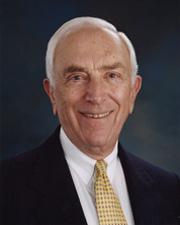 Sen. Frank R. Lautenberg (D-NJ)
Legislative Activity
Stay on top of the latest movement without scrolling through every action
Senate amendment not agreed to: Amendment SA 3151 not agreed to in Senate by Yea-Nay Vote. 49 - 50. Record Vote Number: 101.
May 19, 2004
View full timeline
Senate amendment not agreed to: Amendment SA 3151 not agreed to in Senate by Yea-Nay Vote. 49 - 50. Record Vote Number: 101.
May 19, 2004
Roll call votes on amendments in Senate: Amendment SA 3151 not agreed to in Senate by Yea-Nay Vote. 49 - 50. Record Vote Number: 101.
May 19, 2004
Considered by Senate. (consideration: CR S5767, S5768, S5784-5785; text as modified: CR S5768)
May 19, 2004
Amendment SA 3151 not agreed to in Senate by Yea-Nay Vote. 49 - 50. Record Vote Number: 101.
May 19, 2004
Considered by Senate. (consideration: CR S5569)
May 18, 2004
Senate amendment submitted
May 17, 2004
Senate amendment proposed (on the floor): Amendment SA 3151 proposed by Senator Lautenberg.(consideration: CR S5522-5523; text: CR S5522)
May 17, 2004
Amendment SA 3151 proposed by Senator Lautenberg. (consideration: CR S5522-5523; text: CR S5522) To clarify the application of Presidential action under the International Emergency Economic Powers Act.
May 17, 2004
Votes
1 roll call on this amendment
Text
Modified
NATIONAL DEFENSE AUTHORIZATION ACT FOR FISCAL YEAR 2005

The PRESIDING OFFICER. The Senate will resume consideration of S.
2400, which the clerk will report.
The legislative clerk read as follows:

A bill (S. 2400) to authorize appropriations for fiscal
year 2005 for military activities of the Department of
Defense, for military construction, and for defense
activities of the Department of Energy, to prescribe
personnel strengths for such fiscal year for the Armed
Services, and for other purposes.

Pending:

Lautenberg amendment No. 3151, to clarify the application
of Presidential action under the International Emergency
Economic Powers Act.

Mr. WARNER. Mr. President, my understanding is that the pending
business is the Lautenberg amendment.
The PRESIDING OFFICER. The Senator is correct.
Mr. WARNER. At this time, Mr. President, my colleague from Arizona is
seeking recognition.
The PRESIDING OFFICER. The Senator from Arizona is recognized.

Amendment No. 3191 to Amendment No. 3151

Mr. KYL. Mr. President, I call up amendment No. 3191, which is at the
desk.
The PRESIDING OFFICER. The clerk will report.
The legislative clerk read as follows:

The Senator from Arizona [Mr. Kyl], for himself and Mr.
Cornyn, proposes an amendment numbered 3191 to amendment
numbered 3151.

[[Page S5768]]

Mr. KYL. Mr. President, I ask unanimous consent that further reading
of the amendment be dispensed with.
The PRESIDING OFFICER. Without objection, it is so ordered.
(The amendment is printed in today's Record under ``Text of
Amendments.'')
Mr. KYL. Mr. President, I pose an inquiry. I am prepared to discuss
this amendment and move forward with it. I was advised that possibly
the Senator from West Virginia wishes to use this time to make some
remarks. I say to the Senator, if he wishes to do that, I would be
happy to defer.
Mr. WARNER. Mr. President, that is correct. I thank the Senator from
Arizona. It is my understanding that our distinguished Senator from
West Virginia desires to address the Senate, in which case the pending
business is the amendment in the second degree, and we will return to
that.
Mr. REID. Mr. President, may I direct a question through the Chair to
the chairman of the committee. Senator Lautenberg wishes to modify his
amendment, which doesn't take unanimous consent. Can we get that out of
the way?
Mr. WARNER. Absolutely.
The PRESIDING OFFICER. The Senator from New Jersey is recognized.

Amendment No. 3151, As Modified

Mr. LAUTENBERG. Mr. President, I send a modification to my original
amendment to the desk.
The PRESIDING OFFICER. The amendment is so modified.
The amendment, as modified, is as follows:

On page 184, between lines 16 and 17, insert the following:

Subtitle F--Provisions Relating To Certain Sanctions

SEC. 856. CLARIFICATION OF CERTAIN SANCTIONS.

(a) Clarification of Certain Actions Under IEEPA.--In any
case in which the President takes action under the
International Emergency Economic Powers Act (50 U.S.C. 1701
et seq.) to prohibit a United States person from engaging in
transactions with a foreign country, where a determination
has been made by the Secretary of State that the government
of that country has repeatedly provided support for acts of
international terrorism, such action shall apply to any
foreign subsidiaries or affiliate, including any permanent
foreign establishment of that United States person, that is
controlled in fact by that United States person.
(b) Definitions.--In this section:
(1) Controlled in fact.--The term ``controlled in fact''
means--
(A) in the case of a corporation, holds at least 50 percent
(by vote or value) of the capital structure of the
corporation; and
(B) in the case of any other kind of legal entity, holds
interests representing at least 50 percent of the capital
structure of the entity.
(2) United states person.--The term ``United States
person'' means any United States citizen, permanent resident
alien, entity organized under the law of the United States
(including foreign branches) or any person in the United
States.
(c) Applicability.--
(1) In general.--In any case in which the President has
taken action under the International Emergency Economic
Powers Act and such action is in effect on the date of
enactment of this Act, the provisions of subsection (a) shall
not apply to a United States person (or other person) if such
person divests or terminates its business with the government
or person identified by such action within 90 days after the
date of enactment of this Act.
(2) Actions after date of enactment.--In any case in which
the President takes action under the International Emergency
Economic Powers Act on or after the date of enactment of this
Act, the provisions of subsection (a) shall not apply to a
United States person (or other person) if such person divests
or terminates its business with the government or person
identified by such action within 90 days after the date of
such action.

SEC. 857 NOTIFICATION OF CONGRESS OF TERMINATION OF
INVESTIGATION BY OFFICE OF FOREIGN ASSETS
CONTROL.

(a) Notification Requirement.--The Office of Federal
Procurement Policy Act (41 U.S.C. 403 et seq.) is amended by
adding at the end the following new section:

``Sec. 42. Notification of Congress of termination of investigation by
Office of Foreign Assets Control.''.

``The Director of the Office of Foreign Assets Control
shall notify Congress upon the termination of any
investigation by the Office of Foreign Assets Control of the
Department of the Treasury if any sanction is imposed by the
Director of such office as a result of the investigation.''.

Mr. KYL. Mr. President, I ask unanimous consent that at the
conclusion of Senator Byrd's remarks, I be recognized to get back on my
amendment. Also, I inquire of the Senator approximately how long he
wishes to take.
Mr. BYRD. Mr. President, in response to the distinguished Senator
from Arizona, I expect to take 15 to 18 minutes.
The PRESIDING OFFICER. Without objection, it is so ordered.
The Senator from West Virginia is recognized.

Commending the Armed Services Committee

Mr. BYRD. Mr. President, I thank all Senators for their courtesies. I
especially want to take this moment to thank the chairman of the Senate
Armed Services Committee and the ranking member for the splendid
hearings they have been conducting.
I have never sat on a committee through such a series of hearings
that have been so well ordered and so well chaired by both Members, the
distinguished Senator from Virginia and the distinguished Senator from
Michigan, as I have experienced in these few days as this committee has
been conducting its hearings into the serious matters that have
confronted us in the Middle East. I just want to take this occasion to
say I could never ask for a chairman to be more fair, more just, more
reasonable than the Senator from Virginia.
I marvel at his equanimity, at his good nature. He is always, always
a man of good will. I count it a great privilege to serve on his
committee.
Mr. WARNER. Mr. President, I thank our distinguished colleague.
Senator Levin and I have had 26 years on that committee, and we work
side by side for the highest degree of bipartisanship achievable.
I want to say to all members of the committee--and the distinguished
Senator from West Virginia knows this--this is the third hearing, and
it has been 100-percent attendance, except for one individual who is
out of town, in each of the hearings, showing the intensity of the
subject, the solemnity of the proceeding. I believe all members of our
committee, both sides, comported themselves in the finest traditions of
the Senate, given the seriousness of this problem. I thank the Senator.
Mr. LEVIN. If the Senator will yield for a thank-you from me for his
nice comments.
Mr. BYRD. Yes.
Mr. LEVIN. As always, the Senator from Virginia shares the kudos
which properly belong to him. I am grateful to the Senator from West
Virginia for bringing to the attention of this body the extraordinary
chairman we have on the Armed Services Committee.
Mr. BYRD. Mr. President, I thank the distinguished Senator. I have
said along this line that it was a great pleasure serving on this
committee with Senator Sam Nunn of Georgia. I thought he was a great
chairman. He was. When he left the committee, I felt it would certainly
be a long time before his shoes and his chair would be as well filled
as one could hope.
I find that the distinguished Senator from Michigan has done a
splendid job. He handles himself preeminently well on television, and
he approaches each problem on the committee in a very studious fashion.
When he reads a bill, one can say that bill has been read. When he
writes a bill, one can say it has been written well--every period,
comma, semicolon, colon, en dash, em dash, whatever it is. He would
have gone over it thoroughly. I thank him. He has certainly stepped
into the shoes of Sam Nunn very ably. I have every confidence in him.
Mr. WARNER. Mr. President, we wish to restore the time the Senator
asked for, but I want to say I share that about Senator Levin. Senator
Levin and I and Senator Nunn were taught by some of the greatest
teachers in the Senate, foremost the Senator from West Virginia, Mr.
Byrd, John Stennis, John Tower, Barry Goldwater, and Scoop Jackson.
As I look back on my quarter of a century in the Senate, those were
the teachers who set the course and speed of that committee, and the
Senator from Michigan and I do our best to do that with the help of the
Senator from West Virginia. We thank the Senator from West Virginia.
Mr. BYRD. I thank the Senator. Among those giants who walked these
halls, may I add one name: the name of the illustrious Richard Brevard
Russell of Winder, GA, who was chairman of that committee when I first
came to the Senate.

[[Page S5769]]

Securing Our Energy Future: A New Strategy

Mr. BYRD. Mr. President, on another matter, a perfect storm has been
brewing. Americans have already felt the leading edge of the
approaching squalls. Today, we are more dependent upon imported oil
than ever before. More than 54 percent of the oil that Americans
consume comes from foreign countries, especially OPEC-producing
nations. Instead of striving to disentangle ourselves from this foreign
oil dependency, the Bush administration seems intent on sinking our
military and energy fortunes deeper and deeper into the sands of the
Middle East.
Last week, gas prices in many regions of West Virginia were above $2
per gallon. Within days, these prices could easily exceed the $2 per
gallon average nationwide. The price of natural gas is at a historic
high, and consumers and manufacturers in West Virginia and across the
country are struggling to pay their bills. Though some advocate
reducing this pressure by importing liquified natural gas in the
future, we must also recognize that this will create a new and growing
resource dependency. It is hard to believe that the energy and foreign
policy decisions made in places elsewhere in the world are having such
a dramatic impact on the lives and pocketbooks of our citizens, but
that is today's reality.
Another aspect of that gathering storm is the poor state of our
electricity grid, the lifeline of our economy. However, decade-long
efforts to deregulate electricity markets have, in some cases, led to
market manipulation and fracturing rather than producing a more
integrated, reliable system. Given the blackout last summer, few
observers would doubt that our electric transmission system needs to be
made more robust. Furthermore, economic and environmental regulations
governing energy production and use are often in conflict with our
disjointed energy policies. Continued uncertainties make investment
decisions difficult and clearly demonstrate that these ongoing debates
must be resolved. Due to the lack of political will, special interest
entrenchment, and other constraints, policymakers have been unable to
untangle this Gordian knot.
These concerns are central to the long-term interests of our Nation,
and they represent very ominous clouds on the horizon. Sadly, our
energy problems are being addressed with Band-Aid solutions. In recent
years, we have witnessed attempts to put a moratorium on Federal gas
taxes, to tap the Strategic Petroleum Reserve, and to make secretive
deals with Saudi Arabia to produce more oil. We have unnecessarily
endeavored to treat the symptoms and not the core problem for far too
long. Instead, our Nation needs to begin defining alternative pathways
and new approaches that go beyond the extremist debates and simplistic
solutions that define our very demanding energy and environmental
challenges.
Three years ago this week, the Bush administration released the
National Energy Policy report. Unfortunately, Americans have yet to
receive the benefits that this energy plan promised to provide. Given
the plan's 3 year anniversary, I am announcing that I, along with other
Senators, have asked the General Accounting Office to undertake a broad
and comprehensive review of the Federal Government's energy funding,
policies, and overall goals to determine whether the U.S. does, in
fact, have strategic plan in place.
The U.S. is without a serious energy policy, and no energy bill
currently before this Congress can adequately rectify that problem. The
U.S. faces the simultaneous challenges of an expanding energy appetite,
a need to reduce its dependence on imported resources, and a decreasing
tolerance for environmental impacts. Sadly, policymakers have time and
time again failed to craft a comprehensive approach--a failure which
continues to jeopardize our Nation's security, economic health, and
environment. Too much is at stake to continue to ignore these looming
problems.
America's energy policies have been driven primarily by a reaction to
supply shortages and crises. The energy policy approaches of numerous
administrations are littered with false starts and abrupt shifts--
lurching first in one direction then in another. When it comes to
securing America's energy future, the Bush White House is stuck in
short-sighted, high-risk initiatives which seem largely guided by big
dollar campaign contributors. Despite its rhetoric, this White House's
lipservice and corporate coddling have been the sum total of its energy
policy. It began with the Vice President's national energy policy task
force and concluded with the exclusion of Democrats from the energy
conference. As a result, the Bush administration appears to see energy
policy as a way to reward its friends while sidestepping the serious,
lingering challenges that face this country and, in fact, the world.
In spite of our Nation's herky-jerky responses to energy policy,
there have been some successful energy policy initiatives. Surely, the
Strategic Petroleum Reserve, the Public Utility Regulatory Policy Act,
and the clean coal technology program have proved invaluable. However,
for the most part, there has been little foresight, no coherent
framework, and no clear objectives on which to base future decisions.
The Nation needs a long-term energy plan that includes criteria and
benchmarks by which to measure progress. In short, it requires a more
integrated, cohesive roadmap.
Now is the time for the cornerstones of our Nation's energy strategy
to be solidly established. Opportunities exist for entrenched parties
to come together on a more comprehensive and cohesive approach. This
approach must integrate four fundamental principles: Diversity of
energy sources to protect our Nation's security; fiscal soundness to
ensure stakeholder support and increase economic growth; consumer
protections to guard against fraud and manipulation; and safeguards to
minimize energy's environmental footprint.
A serious energy efficiency program, bolstered by the promotion of
renewable energy and other clean home-grown energy sources, provides a
compass point for a U.S. energy strategy. At its core, we must rely on
our Nation's domestic energy assets, especially coal. Coal must become
a primary fuel source for new energy demands into the 21st century.
However, to do so requires that we think differently about coal. We
must accelerate the deployment of commercial-scale technologies that
move us away from simply burning coal toward the enhanced ability to
transform coal into a variety of energy products. We can begin to meet
this challenge by deploying advanced power generation and carbon
sequestration technologies as well as by producing hydrogen and
synthetic fuels for use in other sectors of the economy. Parallel
efforts must also be initiated to resolve the outstanding environmental
and regulatory issues attendant to coal production and reclamation.
This broad approach also requires sending strong and clear regulatory
and market signals which can significantly reconcile numerous
environmental and climate change concerns, stimulate technology
deployment, and set the stage for a renewed era for coal.
Furthermore, our Nation must recognize the incredible impact that
U.S. technologies and ideas can have in helping to meet other nations'
energy needs in a more sustainable way. We must work to open and expand
international markets for a range of U.S. clean energy technologies and
simultaneously address global energy security, economic, trade, and
environmental objectives.
The path that I am proposing here today goes far beyond the so-called
comprehensive energy legislation currently before us. Pursuing this
course will take steadfast leadership, hard work, and American
ingenuity to move forward in a responsible, balanced, and intelligent
way. It is time for industry, labor, academic, environmental, and
community interests to work with policymakers to find common ground.
Commonsense market-based and regulatory approaches, emerging technology
platforms, and new policy perspectives can bring these divergent groups
together. By doing so, we can champion a new energy and environmental
legacy that will benefit all the world's citizens.
I yield the floor and I suggest the absence of a quorum.
The PRESIDING OFFICER. The clerk will call the roll.
The bill clerk proceeded to call the roll.

[[Page S5770]]

Mr. WARNER. Mr. President, I ask unanimous consent that the order for
the quorum call be rescinded.
The PRESIDING OFFICER. Without objection, it is so ordered.
Mr. WARNER. Mr. President, the distinguished ranking member, Senator
Levin, and myself, together with Senator Lautenberg and Senator Kyl,
are endeavoring to structure a program for the next 2 or 3 hours,
hopefully.
In the meantime, our distinguished colleague, the Senator from New
Mexico, would like to respond to some earlier remarks made in the
Senate.
The PRESIDING OFFICER. The Senator from New Mexico.
Mr. DOMENICI. Mr. President, first, I thank the chairman for
accommodating me and I thank the Senate for listening for a few
minutes.
I was not here in person when Senator Byrd spoke about the need for
an energy policy but I heard most of it. I will share with the Senate
the reality of the energy problem in the United States.
I heard the distinguished Senator from West Virginia speak about
issues such as electricity, the blackout that occurred, the shortage of
crude oil that we have to import, natural gas problems, and all of
those kinds of issues. I suggest it is wonderful to have somebody come
to the Senate, especially from that side of the aisle, and talk about
these problems and the need to do something about it, because the truth
is, they have prevented the Senate from doing it. The very things he
spoke of are in one or the other of the Energy bills we have put before
the Senate and been denied. Most of the time the denial was because
very few Democrats would support it.
So we did not get alternative fuels, so we did not get a fix to
electricity blackout potential, we did not get a bill that produces
huge quantities of American natural gas, we did not get a bill that
fixed electricity so we would not have blackouts--on and on and on, all
the issues and more that were spoken of by the distinguished Senator
Byrd.
To talk about the fact that our country needs them or that the
President did not do them is to forget, in a short period of time--it
did not take long to forget--that all of these proposals have been
voted down by the Democrats in this Senate.
Maybe there were other things in the bill they did not like, but I
have never had anyone propose that if we change this and added that
from that side of the aisle we could get a major energy bill. All we
have heard is a filibuster and a vote against it.
One time they claimed there was a provision that was onerous to them
and we got 58 votes and lost a filibuster. We removed that provision
which they said was onerous. We then tried the bill without it.
And let's go again on the issues: huge production of American natural
gas, some quick, some over time; a fix to the blackout problem;
incentives for the electric grid to grow and prosper; incentives so we
will have wind, which is right on the verge of becoming a major
source--wind electricity--solar energy; and on and on. There are
incentives for all those.

When you add them up, it was a comprehensive bill that fixed what was
broken, added things we needed, and ultimately said to the world:
America is ready to do something. They have finally stood up. And where
there are no solutions, they did not find them. Anybody who thinks we
could have a solution to produce more crude oil, step up. The only way
we know is to tell Americans to use small cars. That would save
gasoline. We tried it. The Senate is not for it. The House is not for
it. I tried it in crowds. People are not for it. So that is the only
one. It is out of the way.
So what can we do? We have to take care of the other energy sources.
We have to make sure we do not get natural gas dependent, which we are
about to be. We should tell the world we have alternatives to produce
electricity. And we do, if we pass one of these bills. The problem is
not that the President took too long, not that the President did not
send us a proposal or that he did something in secret. We did our bill
in public. So regardless of what you claim about him, we had an energy
bill. We have an energy bill. As a matter of fact, I will offer it
again before this session is out.
I understand somebody wants to put energy on this Armed Services
authorization bill. Have at it. We will let you vote on the Energy bill
at the same time. We will let you do that, and we will stand up and
say: Are you ready or do you want to talk? Do you want to increase
natural gas or do you want to blame somebody? Do you want to increase
wind energy in America or do you want to complain?
I understand somebody around here wants to offer an amendment that we
ought to fix this oil problem with the SPR, Strategic Petroleum
Reserve. I was talking about that with my staff--and I would not do
this, at least as of now--but I am thinking about it.
I say to the Senator, Jon, what we ought to do is we ought to offer
an amendment, when they offer that, and say that we want bin Laden to
turn himself in; a resolution: We resolve that--after this, that, and
the other--he ought to turn himself in to America. Why would I do that?
Because that is about as apt to happen as we are apt to save anything
on the price of gasoline with an amendment that says: Use SPR. We tried
it once. It saved 1 cent.
It is there because we are in jeopardy. If somebody has a major
explosion, a terrorist action, we need that SPR to take care of us.
That is what it is for. That is why it ought to stay there. That is why
it ought to be filled.
So if I sound like I am concerned, I am, because I get tired of
people saying we need an energy policy and then voting against the very
things they talk about.
I understand some Senators are opposed to specific pieces. We are
open minded and ready to talk. If there are people who say, the way to
get what we are talking about and complaining about is this, that, and
the other, we listen. But until they have one, we want to continue to
ask them to vote for an energy bill that is almost the same as their
rhetoric, that almost does as much as their rhetoric asks for.
Mr. INHOFE. Mr. President, will the Senator yield?
Mr. DOMENICI. Every time this comes up, I will come down here and go
through this laundry list, and ask them where they have been.
I will be glad to yield.
Mr. INHOFE. Is the Senator aware in the committee that I chair, the
Environment and Public Works Committee, we have held several hearings:
one on natural gas and the prices being spiked, one on fuel that we
burn in our automobiles. We have had witnesses who have documented that
we have two primary causes. One is all of these unreasonable
environmental regulations these refiners are exposed to, and it
directly relates to the cost of energy in this case. And the other is
the Energy bill.

I say to the Senator, as you point out, we had a good energy bill.
The House has a good energy bill. In that energy bill we had the
ability to drill for oil in places where we cannot right now that would
open up ANWR. If you look at the production in States, such as my State
of Oklahoma and your State of New Mexico, the marginal wells--those are
wells that produce 15 barrels a day or less--the statistic has never
been refuted that if we had all of the marginal wells that have been
plugged in the last 10 years flowing today, that would equal more than
we are currently importing from Saudi Arabia.
So we have a solution to the problem. With all those people crying
about the high prices, those are the major reasons we have high prices.
I say to the Senator, you are right, we are going to have to have an
energy bill to correct this situation. Do you agree?
Mr. DOMENICI. I agree.
I thank the Senator for his comments.
Let me say again, for purposes of discussion, I think we ought to
have a resolution--if the Democrats offer a resolution regarding SPR--
that says two things. I think the resolution ought to say: We think and
we direct that Saudi Arabia pump more oil and sell more oil. The Senate
says we resolve that they ought to do that. And, second, we think the
terrorist we have been looking all over Afghanistan for should turn
himself in. That should be the second part of our resolution.
Why I say that is because we would do as much for the energy crisis
with that resolution as we will with one that tries to convince the
American

[[Page S5771]]

people that the way to do this is to play around with the Strategic
Petroleum Reserve.
I yield the floor.
The PRESIDING OFFICER. The Senator from Virginia.
Mr. WARNER. Mr. President, before the Senator leaves, I say to the
distinguished Senator from New Mexico, we are prepared to accept, on
both sides, the important amendment you had yesterday.
Mr. DOMENICI. Let me get it.
Mr. WARNER. Actually, it is at the desk. We could ask for its
adoption, to meet your convenience.
Mr. President, I offered an amendment yesterday. Somebody said it had
been withdrawn.
The PRESIDING OFFICER. The amendment has been withdrawn.
Mr. DOMENICI. But does that mean it still might be up there?
Mr. WARNER. Here we are.
Mr. DOMENICI. I have it.
Mr. WARNER. Mr. President, I think the Senator has his amendment.
Mr. DOMENICI. Is it in order?
Mr. LEVIN. You have to set aside the Lautenberg amendment
temporarily.

Amendment No. 3192

Mr. DOMENICI. Mr. President, I ask unanimous consent that the pending
amendment be set aside so that I can offer this amendment.
The PRESIDING OFFICER. Is there objection?
Without objection, it is so ordered.
Mr. DOMENICI. Mr. President, I am shortly going to send the amendment
to the desk. It has about 15 cosponsors from both sides of the aisle.
This amendment has to do with accelerating internationally the removal
of fissile materials; that is, insecure radiological material and
related equipment that cause us to be vulnerable to proliferation.
Many of us have worked very hard to put together a program where we
and other nations will go to work at ridding the world of proliferation
of nuclear products from the nuclear age. We think it is an exciting
approach. Eventually, we have to fund it and Presidents have to
implement it. But the Senate would be saying today it is good policy to
get the world concerned about getting rid of radioactive material that
came from the nuclear age.
My principal cosponsors are Senators Feinstein, Lugar, Biden,
Bingaman, and a whole array of Senators. I send the amendment to the
desk and ask for its immediate consideration.
The PRESIDING OFFICER. The clerk will report.
The assistant legislative clerk read as follows:

The Senator from New Mexico [Mr. Domenici], for himself,
Mrs. Feinstein, Mr. Lugar, Mr. Biden, Mr. Alexander, Mr.
Bingaman, Mr. Reed, and Mr. Akaka, proposes an amendment
numbered 3192.

Mr. DOMENICI. Mr. President, I ask unanimous consent that further
reading of the amendment be dispensed with.
The PRESIDING OFFICER. Without objection, it is so ordered.
The amendment is as follows:

(Purpose: To accelerate the removal or security of fissile materials,
radiological materials, and related equipment at vulnerable sites
worldwide)

At the end of subtitle C of title XXXI, add the following:

SEC. 3132. ACCELERATION OF REMOVAL OR SECURITY OF FISSILE
MATERIALS, RADIOLOGICAL MATERIALS, AND RELATED
EQUIPMENT AT VULNERABLE SITES WORLDWIDE.

(a) Sense of Congress.--(1) It is the sense of Congress
that the security, including the rapid removal or secure
storage, of high-risk, proliferation-attractive fissile
materials, radiological materials, and related equipment at
vulnerable sites worldwide should be a top priority among the
activities to achieve the national security of the United
States.
(2) It is the sense of Congress that the President may
establish in the Department of Energy a task force to be
known as the Task Force on Nuclear Materials to carry out the
program authorized by subsection (b).
(b) Program Authorized.--The Secretary of Energy may carry
out a program to undertake an accelerated, comprehensive
worldwide effort to mitigate the threats posed by high-risk,
proliferation-attractive fissile materials, radiological
materials, and related equipment located at sites potentially
vulnerable to theft or diversion.
(c) Program Elements.--(1) Activities under the program
under subsection (b) may include the following:
(A) Accelerated efforts to secure, remove, or eliminate
proliferation-attractive fissile materials or radiological
materials in research reactors, other reactors, and other
facilities worldwide.
(B) Arrangements for the secure shipment of proliferation-
attractive fissile materials, radiological materials, and
related equipment to other countries willing to accept such
materials and equipment, or to the United States if such
countries cannot be identified, and the provision of secure
storage or disposition of such materials and equipment
following shipment.
(C) The transportation of proliferation-attractive fissile
materials, radiological materials, and related equipment from
sites identified as proliferation risks to secure facilities
in other countries or in the United States.
(D) The processing and packaging of proliferation-
attractive fissile materials, radiological materials, and
related equipment in accordance with required standards for
transport, storage, and disposition.
(E) The provision of interim security upgrades for
vulnerable, proliferation-attractive fissile materials and
radiological materials and related equipment pending their
removal from their current sites.
(F) The utilization of funds to upgrade security and
accounting at sites where proliferation-attractive fissile
materials or radiological materials will remain for an
extended period of time in order to ensure that such
materials are secure against plausible potential threats and
will remain so in the future.
(G) The management of proliferation-attractive fissile
materials, radiological materials, and related equipment at
secure facilities.
(H) Actions to ensure that security, including security
upgrades at sites and facilities for the storage or
disposition of proliferation-attractive fissile materials,
radiological materials, and related equipment, continues to
function as intended.
(I) The provision of technical support to the International
Atomic Energy Agency (IAEA), other countries, and other
entities to facilitate removal of, and security upgrades to
facilities that contain, proliferation-attractive fissile
materials, radiological materials, and related equipment
worldwide.
(J) The development of alternative fuels and irradiation
targets based on low-enriched uranium to convert research or
other reactors fueled by highly-enriched uranium to such
alternative fuels, as well as the conversion of reactors and
irradiation targets employing highly-enriched uranium to
employment of such alternative fuels and targets.
(K) Accelerated actions for the blend down of highly-
enriched uranium to low-enriched uranium.
(L) The provision of assistance in the closure and
decommissioning of sites identified as presenting risks of
proliferation of proliferation-attractive fissile materials,
radiological materials, and related equipment.
(M) Programs to--
(i) assist in the placement of employees displaced as a
result of actions pursuant to the program in enterprises not
representing a proliferation threat; and
(ii) convert sites identified as presenting risks of
proliferation regarding proliferation-attractive fissile
materials, radiological materials, and related equipment to
purposes not representing a proliferation threat to the
extent necessary to eliminate the proliferation threat.
(2) The Secretary of Energy shall, in coordination with the
Secretary of State, carry out the program in consultation
with, and with the assistance of, appropriate departments,
agencies, and other entities of the United States Government.
(3) The Secretary of Energy shall, with the concurrence of
the Secretary of State, carry out activities under the
program in collaboration with such foreign governments, non-
governmental organizations, and other international entities
as the Secretary considers appropriate for the program.
(d) Reports.--(1) Not later than March 15, 2005, the
Secretary shall submit to Congress a classified interim
report on the program under subsection (b).
(2) Not later than January 1, 2006, the Secretary shall
submit to Congress a classified final report that includes
the following:
(A) A survey by the Secretary of the facilities and sites
worldwide that contain proliferation-attractive fissile
materials, radiological materials, or related equipment.
(B) A list of sites determined by the Secretary to be of
the highest priority, taking into account risk of theft from
such sites, for removal or security of proliferation-
attractive fissile materials, radiological materials, or
related equipment, organized by level of priority.
(C) A plan, including activities under the program under
this section, for the removal, security, or both of
proliferation-attractive fissile materials, radiological
materials, or related equipment at vulnerable facilities and
sites worldwide, including measurable milestones, metrics,
and estimated costs for the implementation of the plan.
(3) A summary of each report under this subsection shall
also be submitted to Congress in unclassified form.
(e) Funding.--Amounts authorized to be appropriated to the
Secretary of Energy for defense nuclear nonproliferation
activities shall be available for purposes of the program
under this section.
(f) Definitions.--In this section:
(1) The term ``fissile materials'' means plutonium, highly-
enriched uranium, or other material capable of sustaining an
explosive nuclear chain reaction, including irradiated

[[Page S5772]]

items containing such materials if the radiation field from
such items is not sufficient to prevent the theft or misuse
of such items.
(2) The term ``radiological materials'' includes Americium-
241, Californium-252, Cesium-137, Cobalt-60, Iridium-192,
Plutonium-238, Radium-226 and Strontium-90, Curium-244,
Strontium-90, and irradiated items containing such materials,
or other materials designated by the Secretary of Energy for
purposes of this paragraph.
(3) The term ``related equipment'' includes equipment
useful for enrichment of uranium in the isotope 235 and for
extraction of fissile materials from irradiated fuel rods and
other equipment designated by the Secretary of Energy for
purposes of this section.
(4) The term ``highly-enriched uranium'' means uranium
enriched to or above 20 percent in isotope 235.
(5) The term ``low-enriched uranium'' means uranium
enriched below 20 percent in isotope 235.
(6) The term ``proliferation-attractive'', in the case of
fissile materials and radiological materials, means
quantities and types of such materials that are determined by
the Secretary of Energy to present a significant risk to the
national security of the United States if diverted to a use
relating to proliferation.

Mr. DOMENICI. Mr. President, since the collapse of the Soviet Union,
I have recognized the danger posed by the potential risk of
proliferation of materials or expertise from that nation. Through work
with Senators Nunn and Lugar for the original Nunn-Lugar Cooperative
Threat Reduction legislation, and later with the Nunn-Lugar-Domenici
Defense Against Weapons of Mass Destruction Act, I have worked to
minimize this risk. Through these bills, and through several other
initiatives, we have made progress on the nonproliferation front. But
these are complex and difficult programs, success is measured in small
steps. While we have come a long ways, we still have a long ways to go.
Some of the programs we have established, such as materials
protection control and accounting, the initiatives for proliferation
prevention, and the nuclear cities initiative, are working fairly well
to address some of the major threat issues.
The HEU Deal is working to reduce stockpiles of highly enriched
uranium, a prime concern for proliferation, although it has needed
congressional help at times to keep it alive. The plutonium disposition
deal is seriously stalled and needs attention at the highest levels in
both the United States and Russia.
Even though we are making progress, the focus on terrorism over the
last few years has substantially amplified the level of our concerns.
In the process, we have learned more about the complicated routes
through which important equipment technologies, such as enrichment
capabilities, have moved to unfortunate destinations.
Our focus on Russia was appropriate a decade ago. But it is very
clear today that proliferation must be viewed as a global problem. We
must broaden our programs so that they have a global impact, not only
focused on the former Soviet Union.
The increased threat of terrorism should encourage us to seek new
ways to expedite the management, security, and disposition of materials
that could be dangerous to our national security if they were to fall
into the wrong hands. These materials include a range of fissile
materials, with highly enriched uranium and plutonium being the ones of
greatest concern.
Fissile materials and the specialized equipment to produce them
aren't the only concerns. We have also heard concerns about
radiological dispersion devices, or ``dirty bombs'' as they are usually
called. Materials that would be useful in dirty bombs also need to be
under far better control all around the world.
The amendment I am offering today is aimed at expediting global
cleanout of nuclear materials and equipment that could represent
proliferation risks. It includes in one package a range of
authorizations, all of which need acceleration toward the overall goal.
Of greatest importance, it provides authorization for global
activities, not only for activities focused on the former Soviet Union.
And it encourages that we act in partnership with other governments,
nongovernmental organizations, and other international groups that can
assist us in this undertaking.
Fissile materials are targeted no matter where they are located, from
existing vulnerable storage sites to research reactors to other reactor
systems. The highly enriched uranium that fuels many of these research
reactors, including those supplied by both the United States and
Russia, represents a major concern for proliferation. Recent operations
have led to removal of some of these materials, but many more reactors
need attention.
As one example of a potential concern beyond the research reactors,
the Russian ice breakers are powered with nuclear reactors using highly
enriched uranium. I hope we can help to convert those reactors in the
course of this program.
Authorities are provided to transport materials to secure storage,
either here or abroad, along with provision of improved security at
vulnerable sites. In addition, attention is paid to the operation of
improved security systems once they are installed.
Technical support is authorized for the International Atomic Energy
Agency or other countries to help in removal of material or upgrading
of security. In addition, several initiatives address some of the
current uses of highly enriched uranium.
New fuels are to be developed to replace fuels that use highly
enriched uranium. New reactor targets are to be developed to replace
targets that involve highly enriched uranium. And assistance with
conversion of both reactors and targets to these new alternatives is
provided.
Faster blend-down of highly enriched uranium is included in the new
provisions. It is vital to get more of this material out of a weapons-
ready form more quickly than only relying on the rates of blend-down
established in the existing HEU deal.
The amendment also authorizes assistance in closure and
decommissioning of sites of proliferation concern. In addition,
programs are authorized for helping displaced employees from such sites
and converting these sites to other uses. We have had similar programs
in place for the former Soviet Union for years, but now with this
amendment we can extend these programs to other countries as well.
With this global cleanout amendment, we will take a giant step toward
providing the Department of Energy, in coordination with other Federal
agencies, with the tools they need to minimize proliferation risks from
nuclear materials wherever they are found around the world. In the
process, we can help to make this world a safer place.
Mrs. FEINSTEIN. Mr. President, I rise today with my colleague from
New Mexico, Senator Domenici, to introduce an amendment to address one
of the critical security issues in the post-9/11 world: the existence
of weapons-usable nuclear materials at hundreds of vulnerable
facilities around the world.
President Bush has singled out terrorist nuclear attacks on the
United States as the defining threat our Nation will face in the
future.
In making the case against Saddam Hussein, he argued: ``If the Iraqi
regime is able to produce, buy, or steal an amount of uranium a little
bigger than a softball, it could have a nuclear weapon in less than a
year.''
What he did not mention is that with the same amount of uranium, al-
Qaida, Hezbollah, Hamas, or any terrorist organization could do the
same and smuggle a weapon across U.S. borders.
And the fact that Pakistani nuclear scientist A.Q. Khan's network put
actual bomb designs on the black market only heightens the need to make
sure these materials are not available.
Nonetheless, there are hundreds of vulnerable facilities around the
world that store from kilograms to tons of plutonium or highly enriched
uranium. The State Department has identified 24 of these locations as
high priority sites.
In response to this threat, the administration has focused its
efforts on removing vulnerable international nuclear materials through
four projects: the take-back by Russia of highly enriched uranium fuels
from Soviet-supplied reactors; the ongoing effort to convert Soviet-
designed research reactors from using highly enriched uranium to using
non-bomb-grade fuels; the decades-long effort to convert U.S.-supplied
research reactors from highly enriched uranium to low enriched uranium
and the on-going effort to take back U.S.-supplied uranium.
These are important steps, but I am deeply concerned that these
efforts are

[[Page S5773]]

not sufficient and do not adequately address the seriousness of the
issue. For example, the current approach will take 10-20 years to
complete at the current rate of about 1 facility per year. This time
frame ignores the near-term dangers we face.
Under the current approach to the take-back of Soviet-supplied
uranium, there have been only two successful removals of highly-
enriched uranium in more than two years, at Vinca and at Pitesti. But
the Vinca operation also required the additional contribution of $5
million from the Nuclear Threat Initiative to complete, because of the
Bush administration's claim of inadequate authority to pursue various
actions to facilitate Serbian cooperation.
The U.S.-Russian bilateral agreement on a broader take-back effort
has taken years to complete--and even once final Russian government
approval is secured, many obstacles remain. Indeed, Russia has never
prepared certain types of environmental assessments related to these
weapons. To move forward with this agreement, it will require
sustained, high-level pressure.

U.S. efforts to convert highly enriched uranium-fueled reactors
within Russia are still moving slowly on the technical front, in part
because of insufficient funding. And we are only now beginning to take
the first steps toward providing incentives directly to facilities to
give up their highly enriched uranium.
The scope of the conversion effort in Russia is inadequate. It covers
only research reactors, ignoring critical assemblies, pulsed powered
reactors, and civilian and military naval fuels. This leaves numerous
vulnerable HEU stockpiles scattered across the former Soviet Union.
Under the current U.S. uranium take-back effort, if no new incentives
are offered, tons of U.S.-supplied nuclear materials will remain abroad
when the program is complete. And scores of U.S.-supplied reactors may
continue to use highly enriched uranium indefinitely.
If weapons of mass destruction, WMD, out of the hands of terrorists
is the defining threat to our Nation, then removing weapons-usable
material from facilities susceptible to terrorist theft should be a top
priority for U.S. national security policy.
Yet, currently there is no single, integrated U.S. government program
to facilitate the removal of these materials. To address this problem,
Senator Domenici and I have offered this amendment to: urge the
President to establish a task force within the Department of Energy on
nuclear removal; provide a specific mandate for a program to remove
nuclear material from vulnerable sites around the world as quickly as
possible, whether the material was supplied by the U.S. or the Soviet
Union; provide flexible approaches, tailored to each site, to encourage
facilities to give up their nuclear material, and; authorize funding to
begin these efforts.
Osama bin Laden has declared the acquisition of weapons of mass
destruction a ``religious duty.'' After the Taliban was defeated,
blueprints for a crude nuclear weapon were found in a deserted al-Qaida
headquarters in Afghanistan. It is clear that obtaining a nuclear
weapon is a top priority of al-Qaida.
And a report released last year by the John F. Kennedy School of
Government at Harvard University demonstrated the severity of the
threat posed by a nuclear weapon in the hands of terrorists.
The report described a scenario in which a 10-kiloton nuclear bomb is
smuggled into Manhattan and detonated, resulting in the deaths of
500,000 people and causing $1 trillion in direct economic damage.
We must do everything in our power to prevent this from ever
happening.
This amendment will give our Government the direction and resources
necessary to remove nuclear materials from vulnerable sites around the
world in an expeditious manner.
We have little time to spare. I urge my colleagues to support this
amendment.
Mr. BIDEN. Mr. President, I am proud to co-sponsor the amendment
offered by my colleagues, Senator Domenici and Senator Feinstein, which
authorizes a program to accelerate U.S. efforts to remove, secure,
store, or destroy fissile and radiological material that might
otherwise be accessible to rogue states or terrorists.
There could hardly be a higher priority--it is clear that terrorists
seek to acquire materials to make a nuclear bomb. Many experts believe
that terrorists would be capable of creating a nuclear weapon if they
took possession of fissile material. Even the simpler, gun-type design,
the type of bomb exploded at Hiroshima, could kill from tens of
thousands to a million people if detonated in a large city.
Terrorists are also known to be interested in radiological material
for a so-called ``dirty bomb,'' also known as a radiological dispersion
device. While an attack with a dirty bomb would not cause many
fatalities, it could render large areas uninhabitable and cause long-
term economic devastation and psychological damage.
I thank Senator Domenici, and Senator Feinstein for their work and
leadership on this issue. Senator Domenici, in his role as Chairman of
the Appropriations Energy and Water Subcommittee, has done much to
shape the nuclear non-proliferation programs at the Department of
Energy. Senator Feinstein, also a member of that subcommittee,
introduced legislation to facilitate the removal of nuclear material
from vulnerable sites around the world. They have worked together to
craft the bipartisan amendment before us today.
While many raised the alarm about the possibility of terrorists using
weapons of mass destruction before September 11, 2001, the events of
that day made clear to all what devastation could have been wrought had
the terrorists attacked with weapons of mass destruction.
Witnesses at a hearing I chaired before the Senate Foreign Relations
Committee on March 6, 2002, emphasized the need for multiple layers of
defense against nuclear terrorism and said that the very first priority
must be controlling fissile and radioactive material in the United
States and abroad.
Since that time, there has been progress in securing, storing and
destroying fissile and radiological material. But much more needs to be
done.
The Department of Energy's International Materials Protection,
Control, and Cooperation Program and its Radiological Dispersion
Devices Program seek to secure nuclear weapons, weapons-usable nuclear
materials, and radiological sources by upgrading security and
consolidating these materials.
From fiscal year 1993 through this fiscal year, 2004, Congress has
appropriated $1.58 billion for these Department of Energy programs,
mostly to secure nuclear weapons and nuclear material in Russia.
Because of them, and the related Cooperative Threat Reduction programs
at the Department of Defense, hundreds of tons of bomb material is more
secure and the nuclear material that could have been made into
thousands of nuclear weapons has been destroyed.

Why, when so much has been accomplished, is this amendment necessary?
One answer is that while much has indeed been accomplished in Russia,
highly enriched uranium, or HEU, and plutonium exist in many countries
and in both military and civilian sites. There are 345 operational or
shut research reactors that used HEU in 58 countries. Many of these
countries have inadequate resources to operate or clean up these
reactors. Few of them can afford to convert their HEU-fueled reactors,
or their HEU targets used to produce medical isotopes, without outside
assistance.
Another answer is that even in Russia, only a fraction of its highly
enriched uranium has been destroyed. Many experts, including those
involved with the Project on Managing the Atom at Harvard University,
have urged that efforts be accelerated to ``blend down'' highly
enriched uranium to low-enriched uranium, which is usable for nuclear
power, but not readily for weapons. At current rates, it could take
decades to blend down Russia's excess HEU. The urgency of the potential
threat from the tons of HEU in Russia argues for a more robust program
that would blend down HEU in years, not decades. The amendment before
us today wisely authorizes an acceleration of our HEU blend-down
programs.

[[Page S5774]]

In addition to authorizing accelerated HEU recovery and blend-down
programs, this amendment would accelerate our efforts to help move
nuclear facilities away from the use of HEU in nuclear reactor fuel and
medical isotope production. It will also encourage increased efforts to
recover and secure plutonium and radiological sources that might
otherwise be accessible to terrorists.
The Domenici-Feinstein amendment provides for a comprehensive program
to: securely ship at-risk fissile and radiological materials; raise
processing and packing standards; provide interim security upgrades and
improve management of vulnerable sites; manage materials at secure
facilities; provide technical assistance to the International Atomic
Energy Agency, as well as to countries; and provide assistance in the
closure of risky sites.
This amendment will also improve our efforts to convert risky sites
to, and place displaced nuclear workers in, activities that do not
represent a proliferation threat. Both the Department of Energy and the
Department of State have programs to help displaced workers, but there
many worthy projects in this area go unfunded each year. We can and we
must do more to ensure that nuclear weapons scientists and technical
personnel are not left prey to the lures of contracts in rogue states
or sales to terrorists.
The Domenici-Feinstein amendment will not solve all the problems that
our non-proliferation programs face. We also need sustained attention
by the President to removing roadblocks that have hindered our existing
programs in Russia. Whether the question is access to sites, or
immunity from taxation, or immunity from liability for U.S. persons
involved in these programs, we need effective intervention at the
highest level to solve those problems. It would be ironic, indeed, if
our authorization of accelerated efforts were to be undone by the
inability of President Bush and Putin to work out the implementation of
those programs.
This amendment must do more than spur the Department of Energy to put
more resources into our non-proliferation programs. It must galvanize
the government at the highest levels to do more and do it quickly,
before some terrorist group gains access to fissile our radiological
material and uses it against us.
I commend Senators Domenici and Feinstein for their important
amendment and I urge my colleagues to support it.
The PRESIDING OFFICER. The Senator from Virginia.
Mr. WARNER. Mr. President, I commend our distinguished colleague.
This is a very important, innovative approach to one of the serious
problems facing the world. I ask unanimous consent to be added as a
cosponsor.
The PRESIDING OFFICER. Without objection, it is so ordered.
Mr. WARNER. I believe my distinguished colleague from Michigan has
cleared it on his side and we are ready for action.
The PRESIDING OFFICER. The Senator from Michigan.
Mr. LEVIN. Mr. President, I commend Senator Domenici. He has worked
long and hard on this issue. I am proud to be a cosponsor of the
amendment. The bottom line is there are a number of instances where the
Department of Energy has run into situations where it does not have,
nor do other agencies have, the authorities which are necessary to
remove or otherwise deal with this nuclear material which is at risk.
The Domenici amendment will provide those essential authorities in
order to take some very strong antiproliferation steps. It is a very
good amendment. We support it on this side of the aisle.
Mr. WARNER. Mr. President, I urge adoption of the amendment.
The PRESIDING OFFICER. Is there further debate on the amendment? If
not, the question is on agreeing to amendment No. 3192.
The amendment (No. 3192) was agreed to.
Mr. WARNER. Mr. President, I move to reconsider the vote.
Mr. LEVIN. I move to lay that motion on the table.
The motion to lay on the table was agreed to.
The PRESIDING OFFICER. The Senator from New Mexico.
Mr. DOMENICI. Mr. President, I thank the managers for their
cooperation and their statements. I am not sure Senator Levin is
presently a cosponsor. I ask unanimous consent that he be added as a
cosponsor.
The PRESIDING OFFICER. Without objection, it is so ordered.
Mr. DOMENICI. And Senator Warner has already asked.
Mr. WARNER. Yes, I have.
Mr. DOMENICI. I yield the floor.
Mr. WARNER. I see a Senator seeking recognition, so we will withhold
a quorum call. My understanding is the Senator from Arizona wishes to
talk about the proposal now under consideration, if that is agreeable.
Mr. LEVIN. Of course. If I may ask the chairman a question, I have no
problem with that.
The PRESIDING OFFICER. The Senator from Michigan.
Mr. LEVIN. Is it still our intention to try to order the sequencing
of two votes on these amendments?
Mr. WARNER. The Senator is correct. We have under consideration by
our respective leadership at this time a program you and I have put to
them to continue debate this afternoon on the Lautenberg amendment and
the second degree by my colleague from Arizona at which time votes will
be scheduled in the 5 to 6 timeframe.
I yield the floor.

Amendment No. 3191

The PRESIDING OFFICER. The Senator from Arizona.
Mr. LAUTENBERG addressed the Chair.
The PRESIDING OFFICER. Under the previous order, the Senator from
Arizona has been recognized to speak on his second-degree amendment.
Mr. KYL. I am happy to yield to the Senator from New Jersey for a
question.
Mr. LAUTENBERG. If the Senator from Arizona will yield for a
question, is a second-degree amendment still the proposal?
Mr. WARNER. Mr. President, the terminology is being worked on right
now. Nothing is agreed upon at the moment.
Mr. LAUTENBERG. I thank the Senator.
Mr. KYL. Mr. President, what we have pending right now is a second-
degree amendment to the Lautenberg amendment, and there will be
discussions about precisely how that will be treated when this
amendment and the Lautenberg amendment are voted on at the end of the
afternoon.
Let me begin by noting what some of my objections are to the
Lautenberg amendment. Then I will speak to the second-degree amendment
which I have offered. The point of the Lautenberg amendment is to
change the way in which sanctions are put on companies doing business
abroad. The State Department has issued some objections to this
amendment which I will speak to later. To summarize: That it would
interfere with the President's discretion in conducting foreign
affairs; that it would lead to a number of foreign policy problems for
the United States; that it is unnecessary because the President
exercises authority with respect to these foreign subsidiaries today.
To be precise about a particular concern the State Department
expresses, the amendment would actually only focus on ownership, which
is a standard that could easily be circumvented by these companies
against whom we would all want sanctions to apply, and would be less
effective than the administration's current approach utilized by the
President. By defining this under the definition of control to mean
owning at least 50 percent of the capital structure of the entity, the
test could easily be circumvented by manipulating the percentage of
ownership so that it remains under 50 percent, but at the same time
maintaining control in fact.
Under current law, the U.S. Treasury Department considers both
ownership and control so the President has the ability to exert this
kind of sanction authority in a much more flexible way than would be
the case under the amendment offered by the Senator from New Jersey.
The Lautenberg amendment diminishes the President's authority and
reduces the scope of the sanctions.
Finally, its impact on existing sanction programs is unclear. The
authority exists already. The Lautenberg amendment would raise
questions, complications, and reduce the President's flexibility in
ways we don't

[[Page S5775]]

think would be appropriate. That is one of the reasons we are offering
this alternative, this substitute or second-degree amendment, depending
upon how we agree to characterize it.
This is an amendment which has been offered as a way to raise
revenues for different purposes, but the revenues--perhaps $9 billion
in revenues generated here, but in any event some amount, substantial
billions of dollars--would be available for expenditures by the
Secretary of Defense on a variety of equipment such as replacement of
equipment lost in combat, ammunition, and selected items of high
priority such as vehicles or night vision devices, Javelin missiles,
sensors, unmanned aerial vehicles. In fact, to the degree that we would
want to expand the existing program, which will be completed shortly
for our own troops for additional add-on protection for shoulder and
side-body areas or interceptor body armor for Iraqi troops, for
example, or additional add-on ballistic protection for medium and heavy
wheeled vehicles or multipurpose wheeled vehicles, all of those things
could be paid for with the fees that would be generated out of this
particular amendment.
What is this amendment? I had actually offered versions of this
before. The point was to try to prevent the tobacco settlement of 1998
from resulting in a windfall to certain of the trial lawyers who were
involved in that settlement. What we did is to utilize an existing Tax
Code provision which says in cases of trusts, for example, where the
trustee pays himself too much or an unreasonable fee, the IRS can
impose an excessive tax. I say excessive because it is 200 percent of
income. The purpose of it is to discourage the behavior of a trustee
who would bilk the trust in effect by charging himself fees that are
not deemed reasonable. And we utilize that same concept here, adding a
second section immediately following that section of the Internal
Revenue Code to provide similar treatment with respect to these
unreasonable lawyer fees. So the concept is already in the Tax Code. We
would simply apply it to the master settlement agreement for lawyer
fees as well.
I make it very clear that, first of all, the amendment does not apply
to any fees that have already been judicially reviewed and approved by
courts under appropriate standards. It does not apply retroactively. It
is only prospectively, to fees paid in the future out of the tobacco
settlement on which taxes have yet to be collected. And by the way,
there are about $100 million in fees paid out of this settlement every
year. The trial lawyers will still receive billions of dollars in fees
under this amendment, far more than their actual legal work would
justify.
What we have done is to say that the cap on fees we had suggested
before of $2,000 an hour--if you stop and think about it, that is a lot
of money--we have scrapped that. Some people said, no, some lawyers
might actually have been worth $2,000 an hour. Think about your plumber
and what he charges per hour.
But we said, OK, how about $10,000 an hour. And they said, no, that
is still not enough. These lawyers need more than $10,000 an hour. So
what we have done in this amendment is to say: OK, we will bend over
backward here, be fair to these poor trial lawyers. We are going to let
them earn $20,000 an hour for every hour they put in. I think that is
enough.
I am not sure that would meet most people's definition of reasonable,
but we are going to say that that is reasonable, that they can earn
$20,000 an hour. But that isn't enough. Some people have said this is
the ``one yacht per lawyer rule.'' I am not sure what a yacht goes for.

The bottom line is that there is a point at which the fees are
obscene and unreasonable and unethical, and under the existing IRS
Code, this kind of conduct is taken care of by a special tax that is
imposed of 200 percent. The same thing would be true here. Obviously,
what the lawyer would do is to limit his fee to $20,000 an hour and
then return anything in excess of that, so he would not be taxed at 200
percent--returning that money, in this case, to the Treasury of the
United States of America.
So the tobacco companies are still going to pay every dime they
committed to pay in lawyer fees. But the money, instead of going to the
trial lawyers, after they have collected $20,000 an hour, will go to
the U.S. Treasury to pay for the military equipment that is the subject
of the bill before us right now.
Now, let me make a point about these fees being excessive. Some may
dispute this, although, in view of the history, I cannot imagine
anybody seriously disputing it. Let me give you some examples. I will
start with reminding my colleagues exactly how the tobacco fees were
awarded.
In the State of Texas, for example, trial lawyers were awarded $3.3
billion for their legal work--work that amounted in this case to filing
a copycat lawsuit. The fee would amount to an effective hourly rate for
these lawyers of over $100,000 an hour. Most people don't make $100,000
in a year. I don't even know how many hours there are in a year, but it
is a lot. This is $100,000 an hour. That is wrong. I don't think they
would suffer too much if we cut them down to $20,000 an hour.
My colleague from Texas, Senator Cornyn, was attorney general of the
State of Texas and he had a firsthand relationship with this issue. In
fact, it was a pretty difficult situation. Let me read to you some of
the things he described about what happened in Texas. I am quoting the
junior Senator from Texas:

In my home State of Texas, trial lawyers have accused the
then Attorney General of demanding $1 million in campaign
contributions in exchange for their being included on the
State's tobacco litigation team. One prominent lawyer--a
former President of the Texas Trial Lawyers Association--has
since said that the attorney general's solicitation was so
blatant that ``I knew that instant . . . that I could not be
involved in the matter,'' and he even later wondered if the
meeting had been a ``sting operation.'' Another lawyer simply
characterized his encounter with the attorney general as a
bribery solicitation.

He describes the rewards these trial lawyers reaped for their
political investment:

As for the five law firms that actually did represent Texas
in the tobacco litigation, they filed relatively late
lawsuits based on other lawyers' work--and were awarded $3.3
billion in attorneys fees. This award amounts to compensation
that, even had these attorneys worked all day, every day
during the entire period of the litigation, is well in excess
of $100,000 an hour. As one newspaper editorial has noted,
for the amount of money that these lawyers were awarded,
Texas could hire 10,000 additional teachers or policemen for
ten years.

Senator Cornyn also described how these excessive and, I suggest,
clearly unethical fees were obtained by lawyers in other States:

In Maryland, [a tort lawyer, a billionaire] demanded a $1
billion fee for his work on that State's case, even though,
according to the State senate President, the State
legislature had retroactively ``changed centuries of
precedent to ensure [his] win in the case. [He] ultimately
received an accelerated $150 million payment for this no-risk
lawsuit.
In Massachusetts, according to other tobacco plaintiffs'
lawyers, Massachusetts' suit piggybacked on the work of other
lawyers and was not pivotal to the outcome of the tobacco
litigation. Result: $775 million was awarded to the
Massachusetts lawyers in that [State's arbitration on the
tobacco case.]
In Missouri, a State supreme court justice in Missouri
resigned his post in order to join one of the private law
firms expected to receive a portion of the [tobacco fee
award.] Ultimately, the firms representing the State spent
just 5 months on the State's lawsuit. They received a fee
award of $111 million. One State leader has described the
award as ``the biggest rip-off in the 180-year history of the
State.'' The law firms receiving these fees had donated more
than $500,000 to State politicians and parties in the years
leading up to their selection as the State's outside counsel.

As I mentioned earlier, these fee contracts were awarded in a variety
of ways, including through political cronyism, and really resulted in
very little original legal work. That is my assertion to you. Don't
take my word for it. On this tort reform issue, even many of the trial
bar lawyers are in full agreement that the lawyers' fees here were
excessive. They certainly should know; they are experts in this area.
This is what some folks, including some tobacco lawyers, had to say:
Michael Ciresi, a pioneer in tobacco litigation who represented the
State of Minnesota in its lawsuit, and who is very familiar with these
lawsuits, has said that the Texas, Florida, and Mississippi lawyers'
fees awards ``are far in excess of these lawyers' contribution to any
of the State results.''

[[Page S5776]]

Washington, DC lawyer and tobacco industry opponent, John Coale, has
denounced the fee awards as ``beyond human comprehension'' and stated
that ``the work does not justify them.''
Even the Association of American Trial Lawyers, the Nation's premier
representative of the plaintiffs bar, has condemned attorneys' fees
requested in the State tobacco settlement. The President of ATLA
stated:

Common sense suggests that a $1 billion fee is excessive
and unreasonable and certainly should invite the scrutiny [of
the courts.] [ATLA] generally refrains from expressing an
institutional opinion regarding a particular fee in a
particular case, but we have a strong negative reaction to
reports that at least one attorney on behalf of the
plaintiffs in the Florida case is seeking a fee in excess of
$1 billion.

Perhaps the best gloss on the tobacco fee awards is that provided by
Professor Lester Brickman, a professor of law at Cardozo Law School, a
noted authority on legal ethics and attorney fees:

Under the rules of legal ethics, promulgated partly as a
justification for the legal profession's self-governance,
fees cannot be ``clearly excessive.'' Indeed, that standard
has now been superseded in most States by an even more
rigorous standard: Fees have to be ``reasonable.'' Are these
fees, which in many cases amount to effective hourly rates of
return of tens of thousands--and even hundreds of thousands--
of dollars an hour, reasonable? I think to ask the question
is to answer it.

Let me emphasize one more point. Lawyers are universally held in the
law to be fiduciaries. That is, they owe a duty of trust to their
clients, a special duty of trust. One can easily understand why that is
so. As such, as a fiduciary, under the legal ethics that apply to every
lawyer, lawyers are not allowed to take advantage of their clients with
regard to their fees. A contract for an unreasonable or unethical fee,
for example, is unenforceable in the courts, and the excessive portion
of the fee must be returned to the client. Numerous legal authorities
confirm that lawyers are fiduciaries whose fees have always been
subject to enforceable reasonableness requirements. I say this because,
of course, that is what we are doing right here.
We have done that with respect to other fiduciaries in the Tax Code--
the trustees I spoke of earlier--and we can obviously do it here also.
One court said:

We realize that business contracts may be enforced between
those in equal bargaining capacities, even though they turn
out to be unfair, inequitable, or harsh. However, a fee
agreement between lawyer and client is not an ordinary
business contract. The profession has both an obligation of
public service and duties to clients which transcend ordinary
business relationships and prohibit the lawyer from taking
advantage of the client.

I will tell you what another court said:

An attorney is only entitled to fees which are fair and
just and which adequately compensate him for his services.
This is true no matter what fee is specified in the contract,
because an attorney, as a fiduciary, cannot bind his client
to pay a greater compensation for his services than the
attorney would have a right to demand if no contract had been
made. Therefore, as a matter of public policy, reasonableness
is an implied term in every contract for attorney's fees.

So the choice before the Senate is either to allow the tobacco
settlements to be diverted to self-dealing billionaire tobacco lawyers,
or to provide our troops in Iraq and Afghanistan with additional combat
equipment to help them perform their missions.
The choice could not be more clear: We can either allow the de facto
taxes imposed by the tobacco settlement to continue to be diverted to
pay $100,000-an-hour fees to these politically connected billionaire
lawyers or we can put those taxes to use providing our troops with
additional equipment.
We already have the precedent of doing this with respect to other
fiduciaries in the Tax Code, specifically section 4958. This adds a new
section immediately following, section 4959, that applies the very same
concept to these particular fees. It is prospective only. It does not
apply to anything that the court has already approved.
I cannot imagine how this would not be a good idea. The amendment is
a sense of the Senate to pass this proposition. I urge my colleagues to
support it, assuming we have a vote on this perhaps in an hour and a
half or so this afternoon.
Mr. President, if there is no one else seeking recognition, I suggest
the absence of a quorum.
The PRESIDING OFFICER. The clerk will call the roll.
The legislative clerk proceeded to call the roll.
Mr. LAUTENBERG. Mr. President, I ask unanimous consent that the order
for the quorum call be rescinded.
The PRESIDING OFFICER. Without objection, it is so ordered.
The Senator from New Jersey.
Mr. LAUTENBERG. Mr. President, we have had some discussion about what
we can do to help raise the funds to finance our fight against
terrorism. At this point, we are spending $5 billion a month in Iraq. I
think if we wanted to really get some money raised to continue that
assignment, which we must, then perhaps we ought to consider repealing
the top tax rate cut for all millionaires and raise even more money for
our troops than what has been offered.
I have an amendment. It has been modified. It is fairly obvious that
we are talking around the issue. It is surprising that we cannot get
together in an effort to dissuade companies, to prevent companies that
are doing business with terrorist states from continuing to do that. My
amendment says if a U.S. company owns 50 percent or more of a
corporation, that it would be a violation of law for them to continue
to do business with terrorist states.
I do not know what the concerns are about this amendment. It is
fairly clear we are spending so much money, so much effort, and so many
lives to fight terrorism. When we register concern about American
companies doing business with these terrorist states, we seem to have
created a climate that has people objecting and, frankly, I don't
understand why.
When we talk about supplying revenue opportunities to Iran, we have
to remember that they funded the 1983 terror attack in Beirut, killing
240 U.S. marines. We are talking about an Iranian Government that funds
Hamas, Islamic jihad, and Hezbollah. I ask my colleagues whether there
is anyone here who would stand up and tell the American people why we
should be helping Iran. Is there anyone here who can explain how it
helps our soldiers to make sure that funds and potential profits are
funneled to Iran? How does it help our troops to make sure Iran has
more money to pass on to terrorists? We want to shut that down.
My amendment offers a simple proposition: You are either with us or
against us, and if we are serious about the war on terror, then we have
to cut off every revenue source we can of those sponsors of terror.
President Bush said himself, ``Money is the lifeblood of terrorist
operations.'' He is right. We know that terrorist groups, such as Hamas
and Islamic jihad, are funded by Iran and other rogue states, and we
need to cut off that funding opportunity.
Terrorist operations cannot survive without funds, and that is why
our sanctions program is so critical. No American business should
provide revenues to state sponsors of terror, and the nations that
sponsor terrorism need to learn they will be denied business
opportunities as long as they are funding terror groups.
Right now, American companies are doing business with terrorist
states through foreign subsidiaries, and we must stop this practice. As
long as this loophole is in place, our sanctions laws have no teeth.
We know that many companies find tax loopholes or regulatory
loopholes that they exploit from time to time, but in this case, we are
talking about companies exploiting loopholes just so they can do
business with terrorists--sham corporations.
I urge my colleagues to look at this chart because it demonstrates
how companies utilize this loophole.
If a U.S. corporation has a foreign subsidiary, they can send money
to Iran. Iran can then send money to support Hezbollah or Hamas in
their terror, suicide bombings, with their interests in developing
weapons of mass destruction. We all believe that is in the works now.
We should not in any way permit these companies--American companies
created here, earning their living here, the executives earning their
bonuses here--to be able to get some of that money as a result of
sending funds to places such as Iran and other terrorist states.
U.S. companies often have several subsidiaries, and most U.S.
companies

[[Page S5777]]

and their subsidiaries do not cross the line that prevents business
with terrorist states, but some do.
President Bush also has declared that Iran is part of the ``axis of
evil,'' and he couldn't be more right. My amendment says that if we are
going to impose sanctions on rogue nations such as Iran, then let's be
serious about it. Let's make sure Iran is isolated for their
sponsorship of terrorism.
In addition to the 240 marines who were brutally murdered in their
sleep in 1983 in Beirut, Iranian-backed terror killed these 2 young
American women, 22-year-old Sara Duker and 14-year-old Abigail Litle.
They were traveling in Israel. Sarah Duker was a constituent of mine
from Teaneck, NJ. A summa cum laude graduate of Barnard College, Sara
was killed with her fiance when the bus she was riding on in Jerusalem
was blown up in 1996 by Hamas. Again, Hamas receives funding and
support from the Iranian Government.
Last year, 14-year-old Abigail, originally from New Hampshire, was
riding home from school in Haifa when her bus exploded as a result of a
suicide bombing. That attack killed 15 people and was directly linked
to terrorists funded by Syria and Iran.
Iran sponsors terrorism, and they glow in that relationship. They
love to let the world know they are out to harm Americans. The terror
they help fund has killed hundreds of Americans and yet American
companies are utilizing a loophole in order to do business with the
Iranian Government. I want to close the loophole.
It is inexcusable for U.S. companies to engage in any business
practices that provide revenue for terrorism. The bottom line is that
big businesses, even those with financial ties to the top members of
our Government, do not get a free pass in this war on terrorism.
I hope that when my amendment comes up for a vote later on that all
of my colleagues will step up and ask the questions of themselves: Why
do we want to promote anything that would send funds to Iran or other
rogue terrorist nations? I cannot understand why that would be.
There are laws that say it should not happen, but they lack teeth.
The process does not work. So I urge my colleagues, when the
opportunity comes a little later in the day, to pass this amendment to
close a terrorist funding loophole.
The PRESIDING OFFICER. The Senator from California.
Mrs. FEINSTEIN. Mr. President, today I join Senators Lautenberg and
Feingold in cosponsoring an amendment to the Department of Defense
authorization bill.
This amendment will close loopholes that have allowed some American
companies to skirt U.S. law by working with and operating in countries
that have been identified by the President as supporters of terrorism.
Although Federal law prohibits U.S. companies from conducting
business with nations that sponsor terrorism, a few firms have
exploited a loophole in the International Emergency Economic Powers Act
and are doing business through foreign subsidiaries, thereby providing
terrorist states with revenue and other potentially important benefits.
Under the amendment we are introducing today, foreign subsidiaries
are barred from engaging in commercial transactions with terrorist-
sponsoring states under the same standards and under the same
circumstances as their parent companies.
The definition of corporate entity would include not only U.S.
companies and all foreign branches, but also foreign subsidiaries.
Subsidiaries of certain companies have been using foreign
subsidiaries to conduct business in countries such as Iran.
Many of these foreign subsidiaries are often formed and incorporated
overseas for the specific purpose of bypassing U.S. sanctions laws.
This amendment does not change which countries are subject to U.S.
sanctions or interfere with the President's ability to invoke the
International Emergency Economic Powers Act; and it does not change the
sanctions under the act in anyway.
It simply clarifies who is subject to the sanctions when and if they
are invoked by the President.
Currently Iran, North Korea, Cuba, and Libya have been targeted by
the President under the International Emergency Economic Powers Act,
all countries that we can agree deserve to be on the list.
Despite the tens of billions of dollars that we are spending on the
defense of our homeland, we still have a law on our books that allows
U.S. companies to assist the very nations that support terrorist
activities aimed at us. This is unconscionable.
I want to applaud the efforts of New York City Comptroller, the New
York Police Department, and the New York Fire Department to bring this
problem to the Nation's attention.
Mr. LAUTENBERG. I suggest the absence of a quorum.
The PRESIDING OFFICER. The clerk will call the roll.
The legislative clerk proceeded to call the roll.
Mr. WARNER. Mr. President, I ask unanimous consent the order for the
quorum call be rescinded.
The PRESIDING OFFICER (Mr. Cornyn). Without objection, it is so
ordered.
Mr. WARNER. Mr. President, on behalf of the leadership, and working
with my ranking member, the Senator from Michigan, I make the following
unanimous consent request.
I ask unanimous consent that the time until 5:30 be divided between
the chairman and ranking member or their designees as follows: 55
minutes to Senator Levin, 30 minutes to the Senator from Virginia;
provided further that the Senate vote in relation to the Kyl amendment,
which is to be drafted as a first-degree, to be followed by a vote in
relation to the Lautenberg amendment; provided further that no second-
degree amendment be in order to either amendment prior to the votes.
Finally, I ask unanimous consent that following the votes the Senator
from Virginia or his designee be recognized in order to offer the next
amendment, and following that, that the Senator from Michigan be
recognized in order to offer the sequential amendment.
The PRESIDING OFFICER. Is there objection?
Mr. REID. Mr. President, using what the Senator, the distinguished
chairman outlined, we would vote at 5:30 or thereabouts; is that right?
The PRESIDING OFFICER. That is correct.
Mr. REID. No objection.
The PRESIDING OFFICER. It is so ordered.
Mr. WARNER. Mr. President, I would like to say a few words about the
underlying amendment. In the opinion of the Senator from Virginia, the
amendment would make it more difficult for the President to impose
sanctions on states that support terrorism. At present, the President
must weigh the benefits of imposing sanctions against the costs of such
sanctions, including costs to U.S. businesses that may be affected.
Second, the amendment will introduce a new factor into this balance,
weighing against the imposition of sanctions: the objections of foreign
countries to the extension of U.S. sanctions laws to reach companies
organized under their jurisdiction. European countries in particular
have strenuously objected to U.S. actions they perceive to involve the
extraterritorial application of U.S. law.
Because the amendment leaves the President no discretion not to cover
companies organized under the laws of other countries, and thus avoid
such objections, the amendment introduces a new cost the President must
overcome in any decision to use sanctions to fight terrorism.
The amendment is unnecessary because existing law already provides
the President the ability to prevent U.S. companies from evading U.S.
sanctions through the use of foreign subsidiaries. Existing U.S.
sanctions regulations prohibit actions by U.S. companies to evade or
avoid U.S. sanctions. U.S. companies that create foreign subsidiaries
for the purpose of evading U.S. sanctions laws may be prosecuted for
such evasions. Existing U.S. sanctions regulations also prohibit U.S.
companies from approving or facilitating actions by their foreign
subsidiaries that would constitute violations of U.S. sanctions laws if
undertaken by a U.S. company. Similarly, U.S. sanctions regulations
prohibit any U.S. citizen employed by a foreign company from taking
actions in violation of relevant U.S. sanctions.
I yield the floor.

[[Page S5778]]

The PRESIDING OFFICER. Who yields time?
Mr. WARNER. I yield such time as the distinguished Senator from
Kentucky may wish.
The PRESIDING OFFICER. The Republican whip.
Mr. McCONNELL. Mr. President, I commend my friend from Arizona,
Senator Kyl, for offering his important amendment. It seeks to remedy
an unethical fee schedule and provide a way for us to protect the
soldiers, the taxpayers, and the public treasury all at the same time.
Lawyers, of course, have a fiduciary duty to their clients and one
component of that duty is, to put it plainly, not to rip them off. But
in the tobacco cases, as my friend noted, plaintiffs' lawyers got as
much as $100,000 an hour for providing ``legal services,'' and I use
the term ``services'' loosely. Their efforts were often duplicative of
legal work others had done.
I think the notion that those who file what are in large part copycat
lawsuits should get paid as much as $100,000 per hour for such work is
absurd on its face. Absolutely absurd.

If anyone does not believe me, let's look at what some of the lawyers
themselves have said about the situation I have described. Michael
Cerisi, who pioneered the tobacco litigation and who represented the
State of Minnesota in its lawsuit against the tobacco industry, said
the fees of the lawyers who brought the lawsuits on behalf of Texas,
Florida, and Mississippi ``are far in excess of these lawyers'
contribution to any of the state results.''
John Coale, Washington, DC, lawyer and noted opponent of the tobacco
industry, has denounced the fee awards as ``beyond human
comprehension'' and stated that ``the work does not justify them.''
Even our friends at the American Trial Lawyers Association have found
it very difficult to defend this practice. The past president of ATLA
has said:

Common sense suggests that a one billion dollar fee is
excessive and unreasonable and certainly should invite. . . .
scrutiny.

That is the past president of ATLA. He goes on to say that ATLA:

. . . generally refrains from expressing an institutional
opinion regarding a particular fee in a particular case, but
we have a strong negative reaction to reports that at least
one attorney . . . is seeking a fee in excess of one billion
dollars.

The Tax Code already provides a remedy for abuses by certain
fiduciaries. It requires trustees to disgorge themselves of ill-gotten
gains that are due to the violation of their duty as fiduciaries. The
Kyl amendment simply expresses the sense of the Senate that we ought to
amend this section of the Tax Code so that it encompasses other
important fiduciaries--namely, personal injury lawyers in mass tort
cases. I would be shocked if my colleagues opposed it. If they do, they
would be saying it is more important for personal injury lawyers to
receive more than $20,000 an hour than it is to use excessive fees to
protect our troops.
The Kyl amendment notes some of the things that could be purchased by
requiring the disgorgement of these ill-gotten gains: up-armored high-
mobility multipurpose wheeled vehicles; add-on ballistic missile
protection for medium and heavy wheeled vehicles; interceptor body
armor including add-on protection for the shoulder and side body areas;
unmanned aerial vehicles; ammunition; night-vision devices; sensors;
Javelin missiles; and replacement of equipment lost in combat.
This amendment does not turn personal injury lawyers into paupers. It
only applies in mass tort cases where the judgment is over $100
million, and it merely ensures that lawyers do not take advantage of
their own clients.
With respect to the tobacco litigation in particular, it provides
that plaintiffs' lawyers are guaranteed to make no less than $20,000 an
hour. That is right--not $20,000 a week, not $20,000 a day, but $20,000
an hour. In short, it guarantees plaintiffs' lawyers a minimum wage of
$20,000 per hour. If they can show somehow that it is appropriate for
them to be paid more, then I suppose they could even get more than
$20,000 per hour. What it will prevent, however, is personal injury
lawyers being able to get, as a matter of course, unjustified and
excessive fees from their clients to the tune of $100,000 per hour or
even more. My friend from Arizona has referred to this as the ``one
yacht per lawyer'' rule. With a minimum wage of $20,000 per hour, I
think it is more appropriate to term it the ``one yacht per lawyer per
week'' rule.
I hope my colleagues will not choose trial lawyers over the troops.
I yield the floor.
The PRESIDING OFFICER. Who yields time?
Mr. REID. Mr. President, I ask my friend to yield whatever time I may
consume.
Mr. LEVIN. I am happy to do that.
Mr. REID. Mr. President, I have been called upon in the past, as have
other Members of this body, to interfere with what goes on in
corporations--that is, to tell corporations they are limited in what
they can pay their corporate executives. I have chosen not to become
involved in that. I truly believe, even though some of these
compensation packages are outlandish, in my opinion, it is not up to
me. In our free enterprise system, it is up to the board of the
directors of those corporations to determine what someone is worth. It
is inappropriate, in this free enterprise system in which we are
living, we take away the ability of corporations to run corporations.
I have always looked at the salaries of ballplayers. We have a 14-
year-old boy named Freddie Adu, who is the highest paid player in the
American Soccer League. Now, are they paying a 14-year-old boy too much
money? He is making more than people who have played soccer for 20 and
25 years. It is kind of up to them to determine how much money he
should get.
The average salary of a professional Major League baseball player in
America today is around $2 million a year. That is a lot of money for a
person who bats a ball, throws a ball, catches a ball, and runs around
the bases, but that is what they get in our free market system. They
get a lot of money.
My friend Greg Maddux from Las Vegas made $15 million last year. He
pitched about 30 times. I don't know how much that amounts to, but that
is a lot of money he makes. This year he has taken a tremendous cut in
pay. He is only making $8 million a year. However, Greg Maddux is being
paid what the market determined he was worth. He was released by the
Atlanta Braves and he shopped around. The Mets wanted him, the
Baltimore Orioles looked at him, and he determined, rather than go with
San Diego and the other teams I mentioned, he would play in Chicago for
$7 million or $8 million a year. That is what America is all about, the
free enterprise system.
If we want to be picky and talk about how much is too much, we might
want to take a look at a man by the name of Reuben Mark--Colgate-
Palmolive--who in 2003 was paid $149,970,000. That is a lot of money.
That does not take into consideration a lot of the stock options he
could have exercised if he had wanted to. I have the amount of money he
could make from the stock options he could exercise if he chose to. It
is, again, in the tens of millions of dollars. I cannot find it right
now. Let's see if I can flip over to that. But it is a lot of money.

George David, of United Technologies, last year made almost $71
million. Again, it does not take into consideration the other money he
could have made had he wanted to. Is United Technologies paying him too
much money? It is none of my business, I believe, as a Member of
Congress to tell United Technologies how much money they can pay George
David.
Is it my business to determine how much Lehman Brothers can pay
Richard S. Fuld, Jr? Last year he made almost $68 million. I do not
think so. I think it is up to this company. Even though I think this is
a huge figure to be paid, and I think it is unfair to the stockholders,
I am not on the board of directors, and they may know things I do not
know. And, in fact, they do.
Henry R. Silverman, with a company called Cendant, made over $60
million last year. Should we interfere with this? The answer is no.
Right here in the Washington, DC, area, there is a man by the name of
Dwight Schar. I wish I had known this guy was as rich as he was. Or
maybe I do not wish that. When we moved here 22 years ago, we bought
the home that he lived in. He was living there. I went and met Dwight
Schar, kind of a quiet guy. He did not say much. I understand now why
he was unwilling to negotiate

[[Page S5779]]

the price of that home. He said that is what he wanted, and he was
unwilling to change that. Obviously, he is a good negotiator because
last year he made over $58 million from NVR. They build homes.
Oracle Company paid Lawrence Ellison almost $41 million last year.
And on and on, with these huge corporate salaries.
Using the logic of my friend, the distinguished junior Senator from
Arizona--a fine man; I have great respect for him, but using the logic
he used today, then, the free enterprise system really must not apply
to everybody, only to some. We know there are companies that are well
known around here. As I indicated, Reuben Mark of Colgate-Palmolive was
the champion last year, that we know of at least, at $148 million. He
did quite well. He had, just from stock alone, $131 million last year.
And he is just one of a number of people.
But we have others who did quite well last year who are almost
household names around here--not because they are known as good
businesspeople, as are those people I have mentioned to this point;
every one of these men I have talked to, Dwight Schar and all the rest,
are known as extremely good businesspeople. But as we get down to some
of these corporations, for example, we could take a look at David
Lesar, who is the chairman and president of the Halliburton Company.
Last year he did not do as well probably as some. He only made about $8
million last year from Halliburton. But he has, of course, $26 million
in unexercised stock options that he could have used. But I guess with
all that is going on with Halliburton--and that, of course, is the
basis for this amendment that has been offered by my distinguished
friend from New Jersey, Senator Lautenberg.
We do not, as Members of Congress, have the right, in my opinion, to
interfere with the private sector. I have no right to say that Freddie
Adu is making too much money playing soccer as a 14-year-old boy, or
that Barry Bonds is making too much money, or that some guy who is
batting .220 playing in the Major Leagues is making too much money
being paid $15 million a year. Should we in Congress say that because
he is not batting more than .240, his salary should not be more than $6
million? I do not think so.

Do we have any right to tell these companies that I have mentioned
here that they are paying their people too much money and that Congress
should step in and stop them from doing so? I do not think so. I have
never felt that way.
We have here before us now a situation where we have a sense-of-the-
Senate resolution. It was filed in that sense because had it been filed
any other way there would be technical objections to it. So this is a
so-called message amendment. It has no real impact. Even if it passed,
it does not mean anything. But it is an attempt to embarrass people. It
was offered because people are very uncomfortable with the amendment
offered by my friend from New Jersey.
The distinguished Senator from New Jersey has offered an amendment
that directs attention to some of the things that are going on with
American companies, saying their foreign subsidiaries should not be
able to do business with terrorist organizations and countries that
work with terrorist organizations.
Mr. President, I was a lawyer. I am not ashamed, embarrassed, or
concerned that in the past I have taken cases on contingent fees. What
does that mean? It means someone came to me, and they had no money to
prosecute their own case, and they said: Mr. Reid, here is what has
happened to me.
I can give you a couple examples that come to my mind. I can remember
a woman by the name of Billie Robinson who came to me. I mentioned her
name once before on this floor several months ago. Billie Robinson came
to me. She was from Searchlight, NV, where I was born and raised. When
she came to see me, I did not know her. I, of course, had been gone
from Searchlight since I was a little boy. But she knew my mother who
lived in Searchlight.
She could not talk very well. I proceeded to visit with her, and her
problem was this: Billie Robinson had headaches, and she would come
over to Searchlight to see various doctors. They told her: The only
thing wrong with you, Billie, is you need to sober up. You are a drunk.
What they did not know and she tried to explain to these people is
her headaches were so bad she drank a lot. By the time they realized,
after about a year and a half, that she was having headaches because
she had a tumor--they had misdiagnosed her condition--they operated.
That is when it affected her a lot. She was not the same person after
the surgery.
So she came to me and said: What should I do? So I represented her. I
took that case on a contingent fee. For every dollar I got for Billie
Robinson, I got a third of it. That was a standard fee. It still is a
fairly standard fee. I did not know if I was going to be able to
recover anything because when you go against doctors sometimes these
cases are very complicated and involve expert witnesses. They fought
this case for a while. Finally, I was able to arrive at an agreement,
and we settled the lawsuit for Billie Robinson. I got a third of what
we recovered.
Now, how much was I paid an hour? I really do not know. I was
probably paid pretty good by the hour. But it was a case that she had
shopped around, and other people would not take her case. I took a
chance. I advanced fees for Billie Robinson, and I got her enough money
that she led a comfortable life. She bought a new mobile home that she
parked there in Searchlight. She had someone who could come in and help
her. Now, does this Congress have the right to come in and say that the
agreement she made with me was a bad deal, that I was paid too much
money? I do not think so.

I remember a woman by the name of Joyce Martinez who came to see me.
She was a really nice woman. She had been all over town trying to find
a lawyer to take her case. This woman was a cocktail waitress at the
Hacienda Hotel on the Strip in Las Vegas. She was there in her little
skimpy gown they have, serving drinks to people, and the Las Vegas
Police Department came and arrested her, took her off to jail because
of her having written bad checks. She had not written any bad checks.
So I filed a lawsuit against Safeway Stores, and people, including
the judge, said: What are you doing taking our time on this case? I
demanded a jury. And I got a lot of money for Joyce Martinez. That was
on a contingent fee. I took a chance on that case, and I won the case.
I was paid pretty good by the hour. I do not have any reservations
about having been paid a pretty good sum by the hour.
This Congress has no right in our free enterprise system to second-
guess what Joyce Martinez did. What we are doing here is saying that
attorneys, who entered into contracts to represent people--and
sometimes not contracts, sometimes the State came in later and looked
at the good works that they did--I do not know all the facts of this
tobacco stuff, but I do know there were a number of lawyers, a handful
of lawyers, in America who decided they would take on the tobacco
industry.
It took a lot of money to fight one of the biggest businesses in the
world, tobacco. And after many years, they won. It is a benefit to
everyone in America that they won because now they cannot at will go
out and solicit young children to smoke cigarettes and to become sick
and addicted to tobacco. We owe those lawyers a debt of gratitude, not
to say they are making too much money. Had it not been for those
lawyers, we would still be having children openly and notoriously being
attacked by advertising and other means to start smoking. That is what
they did. The lawsuits uncovered the fact that they knew how much
tobacco was addictive, and they went after these children. These
children now are dying of emphysema.
I don't know for sure, but Smarty Jones' owner, I will bet, was a big
smoker, and I bet he started as a kid. That is why you see him now
being wheeled around and trying to breathe through that apparatus.
At my home in Searchlight, Fritz Hahn had a place there and watched
my home for 15 years. He started smoking as a teenager. He is dead now,
having died within the past 6 weeks as a result of tobacco, cancer of
the throat. He suffered and suffered, and he is

[[Page S5780]]

dead. Now as a result of the work of these tobacco lawyers, there are
going to be fewer Fritz Hahns in the world. I don't apologize for how
much money these lawyers made. They did me, my children, my
grandchildren, and my children's children a favor.
I also believe the pending amendment is discriminatory,
unprecedented, unconstitutional, and just plain bad policy. This
amendment endorses the idea that Congress should fix the rates
attorneys are allowed to charge for providing services, not for
everybody but certain types of clients. If a lawyer earns more than
Congress allows, that person will have to pay back the extra or pay a
200-percent penalty. A 200-percent tax on income is unprecedented in
this great Nation. Our Nation's tax system has never had this before.
Never in the history of this Nation have we assessed a 200-percent tax
on income that is legally earned that I have heard of.
Justice Marshall said it best when, in the infancy of this country,
he declared the power to tax is the power to destroy. There could be no
better illustration of that concept than this amendment.
In this Congress, my friends on the other side pay a lot of
lipservice to the free market. But they don't like the free market very
much now in this case with this amendment. First of all, this amendment
would interfere with legal private contracts just like the one I had
with Joyce Martinez, just like the one I had with Billy Robinson. Legal
fees are not assessed taxes. They are not assessed out of the control
of the clients. When someone wants to hire a lawyer, they can generally
choose from a variety of attorneys who will perform the necessary
services.
I gave two examples where these women couldn't find anybody else to
represent them. I have taken a lot of cases, I am sorry to say--I am
not sorry to say, it is part of the system. I have taken cases where I
didn't get anything back, but I thought I was doing the right thing by
taking them. I can remember a case where a little girl stepped off a
schoolbus and was hit by a car on Russell Road in Las Vegas. I tried
that case to a jury. I thought I deserved to win that case. I lost it.
I felt bad about that. But that is what our free enterprise system is
all about, the free market system.

This amendment would interfere with legal private contracts. Clients
don't have the power to negotiate rates with attorneys they retain all
the time. If a client feels a rate is unfair, there is nothing to
prevent that client from taking the business elsewhere.
Beyond being bad policy, I oppose this amendment because it
encourages constitutional taking of private property. By forcing
attorneys to return their fees or suffer a 200-percent penalty without
any semblance of legal process, this amendment demands these
professionals simply hand over to others income they have lawfully
earned.
There may be some who believe a tobacco lawyer earned too much money,
just as I feel Reuben Mark made too much money, just as I feel George
David made too much money, Richard Fuld made too much money, Henry
Silverman made too much money, and Dwight Schar made too much money.
But it is not my right as a Member of this Congress to tell them they
can't make that much money.
It is no secret why Members of the other side of the aisle, in my
opinion, are interested in passing this kind of amendment. This
amendment uses the Tax Code and the full power of big Government to
punish one particular kind of lawyer, the kind who tries to protect
consumers from big corporations.
A Republican governor in the State of Nevada, Kenny Guinn, my friend,
established what is called in Nevada the millennial scholarships,
giving scholarships to large numbers of children who have a B average
when they graduate from high school. With what are those scholarships
paid? Tobacco money. From where did the tobacco money come? From these
lawyers who went to court and took a chance. That is where the money
comes from.
In Nevada, as in many other States, there are programs similar to
that. We are saying, what did these lawyers do to earn their money? Ask
a kid going to college in Nevada who wouldn't have the opportunity to
go to college but for Kenny Guinn's millennial scholarships.
These lawyers, the ones they are trying to castigate and punish here,
are the lawyers who try to protect consumers from big corporations.
These tobacco companies are big corporations, and due to the lawyers
they are getting smaller all the time. The same people who want to cut
taxes for the wealthiest corporations in our country now want to impose
an unprecedented 200-percent tax on attorneys who hold these powerful
companies accountable when they cause injury to ordinary Americans and
their families.
This amendment sets a terrible, horrible precedent that next we are
going to be looking at these salaries. Next we are going to be looking
at Freddie Adu's salary to see if he is making too much money or that
man who plays baseball who is batting .210 and getting paid $18 million
a year.
If we look back, it is a dark chapter in the history of our Federal
Government, but one of the articles of impeachment against President
Nixon dealt with his abusive and discriminatory use of tax laws to
harass his political enemies. I don't compare this to that, but I think
it is something that draws reference, that what we have here is an
effort to punish and use discriminatory tax laws to harass someone you
don't like, the tobacco lawyers.
This is a bad amendment. I am confident people of goodwill will join
together, Democrats and Republicans, and resoundingly defeat this very
un-American amendment.
The PRESIDING OFFICER. The Senator from Arizona.
Mr. KYL. Mr. President, I would like to respond to the comments of my
friend from Nevada. He had five basic arguments. I think they could all
be dispensed with fairly quickly.
His first argument is there are a lot of people who make money in
this country, a lot of money, CEOs of businesses, sports figures, and
others who receive very large salaries. He wondered if there is any
difference between that and the tobacco lawyers who are billionaires
because of the money they have made off the tobacco settlement. The
answer is, yes, there is a huge difference. The CEOs and the sports
figures are not fiduciaries. They are not in a trust relationship with
the people who pay their salary. A sports figure, for example, uses a
representative of the union and negotiates a fee with the baseball
team, and they do pretty well. But it is all a contract negotiation.
If George Steinbrenner is willing to take any New York Yankee player,
whatever he is willing to pay him, that is what he thinks he is worth,
that is what he brings in the gate, that player is not taking advantage
of George Steinbrenner or the New York Yankee fans based upon any
fiduciary responsibility.
It is the same thing with respect to the boards of directors who set
the salaries of CEOs of major corporations. What I quoted before from
professors of law and others is that there is a special category of
people who are in a fiduciary relationship. I know my friend from
Nevada, as a good lawyer, knows this concept. Lawyers owe their clients
a very special duty, a duty far and above what normal contract law is.
You cannot take advantage of your client. Even if you can get your
client to sign an agreement regarding fees, that agreement will be
thrown out of court if the court determines it is unfair.
That doesn't apply with the rich CEOs or the rich sports figures, but
it applies in the case, for example, of lawyers, of fiduciaries who are
trustees of a trust.
That gets to the second argument--that this is unprecedented. No, it
is not. I refer my colleague to section 4958 of the Tax Code. The
section deals with an intermediate sanctions tax on fiduciaries,
trustees who pay themselves too much money out of a trust. They are
held to a standard of a reasonable fee. If they exceed that fee, they
pay what? A 200-percent tax.
We got the idea from the Tax Code. We didn't make this up. It is not
unprecedented. So our section follows that section; it is 4959. So
4958, existing law, says if you are a fiduciary, a trustee, and you
charge your trust too much money for your salary so that the
beneficiary is being hurt and it is unfair, then you are going to pay a
200-percent tax to the IRS unless, of course, you give the excessive
part back and the tax is waived. That is the whole idea. We never
collect the 200-percent tax because nobody is foolish enough to take

[[Page S5781]]

the money and pay twice as much back.
They just don't take the money in excess of what is fair. It is in
the code and it applies to fiduciaries, people in this special trust
relationship.
The third argument was that the tobacco settlement was good, and it
is good. There were scholarships, and a lot of people benefited from
it. What bothers me is the fact that lawyers benefited unreasonably
from it--not all lawyers; a lot of tobacco lawyers did a lot of work
and got paid a lot for it, but they put the work in. Others rode along
on the work of others and charged far in excess of what any reasonable
fee would be.
That gets to the next argument. My friend from Nevada talked about
cases he took on a contingency fee, a one-third fee. He is correct.
That is common for plaintiffs' lawyers. When they win, they get a third
of the settlement. In many cases, that is a totally fair and reasonable
fee. I know in the case of my colleague of Nevada, it was fair and
reasonable because that is exactly the kind of person he is. If for
some reason it would not have been, the court would not have allowed it
because of this special fiduciary relationship with his clients. The
court would not have allowed it if it exceeded that amount. I am sure--
and I would not ask my colleague--that none of those fees topped
$20,000 an hour. That is the amount we have set forth in this bill.
Again, these are not my words. I will quote a couple of people. John
Coale, who is a big tobacco industry opponent in Washington, DC,
denounced these fee awards as ``beyond human comprehension'' and stated
that ``the work does not justify them.''
The president of the organization to which these lawyers belong, the
Association of American Trial Lawyers, said:

Common sense suggests that a $1 billion fee is excessive
and unreasonable and certainly should invite the scrutiny [of
the courts.]

The point is, a one-third contingency fee in a typical case is
perfectly fine. But a one-third contingency fee in tobacco litigation--
the kind of reward these lawyers are receiving--is totally unreasonable
by any standard, including that of the president of the organization to
which these few lawyers belong. These lawyers have already received
about $4 billion in awards. None of that will be touched. They are
going to get another $\1/2\ billion a year under the settlement.
All we are saying is that a reasonableness test has to apply, just as
it does to other fiduciaries under the Tax Code. The excess refers to
the Treasury so we can pay for things the Defense Department needs.
Another argument was this would interfere with private contracts. No,
it doesn't. It has no applicability between lawyers and clients--none.
All this applies to is this master settlement agreement that
automatically pays out a $\1/2\ billion in fees per year to these
lawyers. It doesn't apply retroactively; it only applies if and when
the collection by the lawyer gets to the point that it represents more
than $20,000 an hour. These lawyers can be paid until the cows come
home at $19,999 an hour. But when the level finally gets to $20,000, we
say that is enough. Just as the Tax Code today makes the trustee pay
the rest of it back, we say the rest of it gets paid back. It doesn't
hurt the plaintiffs at all. The plaintiffs have received what they are
going to receive out of the settlement. It doesn't help the tobacco
companies. They still have to pay the money. But the tax--in effect,
the money the tobacco companies pay goes partially to the trial
lawyers, and the rest goes to the U.S. Treasury, rather than all of it
going to the trial lawyers. So the tobacco lawyers get paid what is
fair--more than fair--and the plaintiffs have already received their
reward. The tobacco companies still have to pay what they had to pay
originally. The benefit is to the U.S. Treasury, Department of Defense,
and the people we put in harm's way to carry out their missions.
The final argument made was one that I am not sure why it was made.
My colleague acknowledged he knew this wasn't my motivation. Since I
offered the amendment, it is unclear whose motivation therefore it
would be--that it was a discriminatory tax policy to get at political
enemies. This is what Nixon is alleged to have done. Of course, that is
not the case here. I don't even know who these people are. I could not
give you the name of one of them. I don't know how many there are. I
don't know their politics or anything else. All I know is what others
have said about them, which is that their fees are unconscionable,
beyond human comprehension, that the work doesn't justify them, that
the fees are excessive and unreasonable and should invite scrutiny, and
so on and so on.
The question the law professor asked after going through the ethics
rules about lawyers fees always having to be reasonable, the kind of
fee contracts that my colleague from Nevada had with his clients--he
goes through that and says fees cannot be clearly excessive. The fees
have to be reasonable. Then he asked:

Are these fees, which in many cases amount to effective
hourly rates of return of tens of thousands--and even hundreds of
thousands--of dollars an hour, reasonable? I think to ask the question
is to answer it.

At the end of the day, the arguments raised against this amendment,
frankly, are all fallacious. There is no relationship to CEOs or other
people who make a lot of money. They don't have the same fiduciary
relationship that a lawyer has to his client. A one-third contingency
fee is a good thing. We all stipulate to that. But it still cannot be
unreasonable.
In this case, the amounts are so egregious that they go far beyond
what the Senator from Nevada was talking about. Unprecedented? No. It
is in the Tax Code today--the same 200-percent tax, the same
application to the fiduciaries who charge more than reasonable fees.
By the way, that also applies to another kind of fiduciaries--these
particular tobacco lawyers. It would not interfere with other private
contracts. By its terms, it doesn't apply to that.
I think the bottom line here is that we are faced with the same
choice we had before. We have an opportunity to generate some funds to
pay for the things our troops need. We are on the Defense authorization
bill. We are trying to authorize a lot of programs. Eventually, we are
going to have to appropriate money for them. This amendment provides
additional funds of, by my calculation, something on the order of about
$9 billion, that we can apply toward the acquisition of this important
equipment and the other things needed in our Defense bill.
I suggest we need to give that stuff to our troops, that this is a
way to pay for it, and that we have the added benefit of conforming our
Tax Code to a situation here that is totally unreasonable and
unconscionable, in the words of many, and that is that some of the
tobacco lawyers are reaping a windfall.
Money that is paid by the tobacco companies instead would be paid to
the Treasury because it is far in excess of what is a reasonable fee.
We have said, OK, we will not limit it at $2,000. Some people said a
reasonable fee might be more than that. We said, how about $10,000 an
hour? No, that might be a reasonable fee someplace. We said $20,000. I
have not found anybody who can come on this floor and say to me that a
legal fee, even in this case, of $20,000 an hour for all of these hours
of work is reasonable and will meet the laugh test or the
reasonableness test, which is the test all lawyers must meet and the
test of the IRS Code with respect to fiduciary duties in the trustee
context.

It seems to me we have a great opportunity to help our troops. We are
not hurting anybody by this amendment. I do not even think we can argue
we are hurting these billionaire lawyers. I think it would be hard for
them to spend all they have, and the little bit they are going to be
denied here can do a whole lot more good in equipment in the hands of
our troops. They cannot justify those fees coming to them in a
prospective way under the settlement agreement they are taking
advantage of today.
This is the amendment we will vote on first. I urge my colleagues to
vote for it.
Then I urge my colleagues to vote against the underlying Lautenberg
amendment. The easiest way to summarize the Lautenberg amendment--the
Senator from New Jersey presented photographs and told some very
disheartening stories of people who had been taken advantage of by
other countries that harbor terrorists and that

[[Page S5782]]

the United States does not consider places where American companies
should do business.
I totally agree with the Senator from New Jersey. We need to have a
provision for sanctions in a case such as that. If it were not for the
fact we already have one, I would be supportive of the Senator's
amendment. But we do already have a provision. It is being applied by
the President of the United States.
The point I tried to make earlier is that--and I am sure he did not
mean to do it this way, but the language of the amendment of the
Senator from New Jersey is even more restrictive than current law
because it talks about ownership and control and defines it as at least
50 percent when, in fact, you can keep the ownership under the 50
percent and still have effective control of the corporation.
In the case of the application of sanctions the way the President
does it, he takes into account both factors so that a company that
keeps the ownership at that level, under 50 percent, is not at all
exempt from the application of sanctions imposed by the President of
the United States because we also take into account the element of
control.
The Treasury Department and the State Department oppose the
Lautenberg amendment because it restricts the President's authority in
ways it is not restricted today.
If there are any situations in which we need to apply these sanctions
to countries where they are not applied today, I am perfectly willing
to discuss that with anybody and urge the administration to do so. We
have the authority today. The President is utilizing it. It does not
seem to me, therefore, that the amendment of the Senator from New
Jersey should be supported.
I urge my colleagues to support the Kyl amendment, which will be
voted on first, and oppose the Lautenberg amendment. That vote, I
understand, will begin at 5:30 this afternoon.
I yield the floor.
The PRESIDING OFFICER. The Senator from Nevada, the Democratic whip.
Mr. REID. Mr. President, Senator Levin is in the Chamber. I asked
that he allow me to speak again, which he indicated he will.
Mr. LEVIN. Mr. President, I am happy to yield time to the Senator
from Nevada. I do not know if we have other speakers. How much time
remains?
Mr. REID. There is 32 minutes left; is that right, Mr. President?
The PRESIDING OFFICER. That is correct.
Mr. KYL. Mr. President, will the Senator from Nevada yield for a
question? Is there a division of time for both sides? Has the Chair
announced how much time remains on both sides?
The PRESIDING OFFICER. There is 8 minutes remaining on the majority
side; 31\1/2\ minutes on the minority side.
Mr. REID. Mr. President, a great book, certainly a classic, was
written in 1776 by Adam Smith called ``The Wealth Of Nations.'' This
was the first time it was put down on paper that someone understood,
from an economist's point of view, what the free enterprise system was
and could be, and that is the basis for our country, this free
enterprise system we hear so much about, capitalism, free markets. That
is, in effect, what this debate is all about.
It is about free markets; what people have the right to do and not
do. We have given an illustration of baseball players and other court
cases. The top 10 executives, as far as compensation in 2003, made
about $14.6 million a month. That is what they made. I think my math is
right. No, the top 10 executives made last year about $600 million.
That is a whole lot of money, as we know. Is that too much money, more
than half a billion dollars for the top 10 corporate executives in
America to make?
As I said before, I think so, but what right do I have to go to
Nevada businesspeople--take, for example, the MGM corporation. MGM
corporation, the vast majority of stock is owned by one of my former
clients, Kirk Kerkorian, a great businessman, a wonderful human being.
I have no idea how much Kirk Kerkorian makes, but he does not pay
himself much money. He drives a relatively small car. He has a few
things that appear to be luxurious, but not too many. He pays his
corporate executives lots of money. Why? Because they deserve it.
His No. 1 executive is a man by the name of Terry Lanny. Terry Lanny
makes lots of money. According to the figures here, he did not make the
top 10, but he is way up at the top. Why? Because the marketplace
indicates that is what Terry Lanny is worth. It is no different than
these lawyers. Terry Lanny has a contract. I have not seen it, but it
calls for compensation today, next year, and I am sure years after
that. If he left today, Kirk Kerkorian's company would keep paying him
deferred compensation. That is what it is all about. That is what these
lawyers have. We have no right to interfere.
We are talking about some law professor. I have the highest respect
for law professors, but they are some of the most underpaid people in
America, and I bet they are so jealous of people making money that they
could hardly wait to run to tell somebody they are being paid too much.
Windfall--anything to a law professor is a windfall. So I am not
impressed with a law professor saying some lawyer is making too much
money.

What I would like to say is that law professor should be out seeing
how much money he can make, but I am not going to say that. What he is
doing is second-guessing what the free market does.
I understand the examples my friend from Arizona has given, how he
thinks my argument is distinctive from the facts, but I think it is
pretty clear what I am talking about, the points I have made.
The example he has given with the fiduciary trust relationship is a
totally different situation. The distinguished Presiding Officer is a
lawyer who is certainly qualified to discuss legal matters, having been
the attorney general of one of the most populated States in America. We
know problems arise with people who have trust agreements. Many of them
are not lawyers, and there has to be some control set because they do
have a fiduciary relationship. Many of the people they represent are
babes in the woods, so to speak, and there has to be some oversight
there, and I agree with that. But I am not here to say corporate
executives make too much money, or, I repeat, ballplayers make too much
money, and lawyers make too much money. I think we should let the
market control this situation.
I hope this Congress, which talks so much about our capitalistic form
of Government, this Senate which talks about it, I hope they will put
their votes where their mouths have been in the past.
I suggest the absence of a quorum and ask that the time run against
both sides.
The PRESIDING OFFICER. Without objection, it is so ordered. The clerk
will call the roll.
The assistant legislative clerk proceeded to call the roll.
Mr. REID. Madam President, I ask unanimous consent that the order for
the quorum call be rescinded.
The PRESIDING OFFICER (Ms. Collins). Without objection, it is so
ordered.
Mr. REID. I ask unanimous consent that the distinguished Senator from
Nevada, Mr. Ensign, be allowed to speak as in morning business and the
time that he uses run equally against both sides.
The PRESIDING OFFICER. Without objection, it is so ordered. The
Senator from Nevada.

Honoring Our Armed Forces

Mr. ENSIGN. Madam President, I rise to speak for a few minutes about
the men and women in uniform who are serving this Nation in Iraq,
Afghanistan, and around the world.
I know the recent news has focused on the actions of a few of our
service men and women, but I rise today because they truly are the
exception.
I want to thank the members of our armed services who continue to
exhibit extraordinary bravery, integrity, and commitment. I want to
remind them we are grateful for them each and every day as they defend
our freedom and our security.
My State of Nevada is proud and blessed to have many sons and
daughters among the ranks of those on the front lines of our war on
terrorism, people such as Jon Carpenter. Jon Carpenter is a 42-year-old
marine reservist on his second tour in Iraq. Back in Las Vegas he has a
wife and five children, and a proud community.

[[Page S5783]]

Jon wrote a letter earlier this year to his friends and family
explaining why he would return to Iraq with the First Marine Division.
I ask unanimous consent that the entire letter be printed in the
Record.
There being no objection, the material was ordered to be printed in
the Record, as follows:

Why is Jon going back to Iraq?
It is a question my wife and I have heard from quite a few
people recently after announcing that I am getting orders to
return to Iraq with the 1st Marine Division.
Some have asked with a quizzical tone, assuming that I had
already done my duty for the country with my first trip to
Iraq last spring.
Some have asked with expressed concern that I have a good
wife, five good kids, a good church and a good job here at
home that all need me, and that I should let the younger men
and women run off to war and serve their country.
When people ask why I am going back to Iraq, I say
``Because the country has asked.''
Our country is at war, and even though the battlefields are
different than those of WWII, the dangers of not winning this
war are at least as great as those of our country's previous
wars.
It is very easy to forget that we are at war, due to the
level of prosperity we have here and the lack of terrorists
attacks we have had since the beginning of this war on
terror. But we are at war, and during times of war, men and
women must make sacrifices.
I look at the sacrifices that our fellow countrymen have
made during the world wars; and my previous deployments pale
in comparison.
When people ask why I am going back to war, to fight on
foreign soil, to prevent the war from being fought on our
soil, endangering my family and friends, I say, ``Because I
can.''
The next question is usually, ``What will Jon be doing
there?''
I will be deployed with 1st Marine Division (Forward), when
they go back to an area near Baghdad. I will be part of the
Government Support Team, and assigned to the Police Training
team, responsible for retraining the Iraqi Police to retake
control of law enforcement functions and maintaining the
peace.
The next question is usually ``How can we help you or your
family?''
I usually say to pray regularly for my wife, family and I,
and to be supportive of the President and his policies in
Iraq. Both of these are extremely important, especially in
light of the relentless attack on the President, during a
time of war, by our country's own extremist citizens; i.e.
the liberals and media elite who hate that another socialist
country has fallen (Iraq), and that conservatives can take
credit for the tremendous successes we have had in the war on
terrorism.
From experience, I can tell you how demoralizing all of the
criticism of the military and the dissension in the country
is on the troops in Iraq. It also encourages the radical
criminals and terrorists we are fighting over there to
continue fighting in hopes we will pull out.
We are doing the right thing there, we are winning, and the
majority of the Iraqi citizens truly appreciate what we are
doing for them.
So, thank you for your past support and thank you for your
future support of this next mission in Iraq.
Sincerely--Jon Carpenter.

Mr. ENSIGN. He states:

When people ask why I am going back to Iraq, I say,
``Because the country has asked.'' Our country is at war, and
even though battlefields are different than those of WWI, the
dangers of not winning this war are at least as great as
those of our country's previous wars.

He continues on to write:

But we are at war, and during times of war, men and women
must make sacrifices.

Jon was wounded a few weeks ago when he was shot through the neck. He
has recovered now, pinned with a Purple Heart, has returned to his work
training Iraqi police officers. Actually, he could not wait to get back
to his fellow troops.
It is commendably common for our wounded troops to return to the
front lines when given the option. That is because they are focused on
the mission and determined to get the job done.
Army PFC Sean Freeman, Sparks, NV, is another example of a determined
soldier. He was wounded in a June 22 ambush last year in Baghdad where
he was stationed as an artillery crewman. Sean suffered back, shoulder,
and arm wounds and is stationed in Germany while he recovers. He is
motivated to do so, so he can return to Iraq.
The stories of bravery and heroism are truly inspiring and there is
no shortage.
Dr. Thom Merry in Douglas County, NV, volunteered for duty in Iraq as
a flight surgeon and has since been decorated with a Bronze Star for
entering a minefield, without regard for his own personal safety, to
rescue a severely injured marine.
TSgt William Kudzia, stationed at Nellis Air Force Base in Las Vegas,
was engaged in ground operations against an opposing armed force in
Iraq and hand-excavated 226,000 pounds of high explosive bombs buried
by fleeing Iraqi forces.
With disregard for his own personal safety, he hand-removed a burning
projectile, saving the lives of his team members and averting a
catastrophic detonation. He was also awarded the Bronze Star with
Valor.
As brave as our men and women are, I think there is an equal amount
of emotional bravery exhibited by the spouses, parents, and children
left behind to wait for their loved one's safe return. Nevada Highway
Patrol Trooper SGT Jim Olschlager's son, James Jr., is on an aircraft
carrier. His daughter Laurie is in the Army and will be sent to Iraq in
September, and his son-in-law Kendall is currently serving in Karbala,
near Baghdad.
In Fallon, NV, Juanita and Kevin Porteous got to visit with their son
Jon for only a few days before his leave was cut short and he had to
return to Iraq. I had looked forward to meeting and thanking Jon on a
recent trip to Fallon, but was honored to deliver my appreciation via
his parents. They are extremely proud of him, but that does not make
the waiting or the worrying any easier.
My prayers are with the Olschlager and Porteous families and every
other family which is anxiously awaiting the return of a loved one. We
all thank them for the sacrifices they have made to keep this Nation
safe. The men and women of our Armed Forces are truly defending our
security. Our missions in Iraq and Afghanistan are critical to the
continued ability to fight terrorism on foreign soil rather than on our
shores.
Make no mistake about it, a war on our homeland would be devastating.
That is why it is so important for us to continue steadfastly
supporting our troops. Although we cherish our freedom of speech and
the opportunity to debate, our united voice of support is essential if
we want our troops to continue giving 110 percent to the mission.
It is easy to pretend what we as elected officials say is not heard
by the men and women on the front lines, or for that matter by our
enemies, but listen to what Jon Carpenter, the marine I talked about
earlier, wrote before heading back to Iraq:

From experience, I can tell you how demoralizing all the
criticism of the military and the dissension in the country
is on the troops in Iraq. It also encourages the radical
criminals and terrorists we are fighting over there to
continue fighting in hopes we will pull out. We are doing the
right thing there, we are winning, and the majority of the
Iraqi citizens truly appreciate what we are doing for them.

God bless Jon Carpenter and all of the men and women who are willing
to lay their lives down for this Nation. Our prayers are with you and
your families. God bless America, truly the home of the brave.
I yield the floor, and I suggest the absence of a quorum.
The PRESIDING OFFICER. The clerk will call the roll.
The assistant legislative clerk proceeded to call the roll.
Mr. WARNER. Madam President, I ask unanimous consent that the order
for the quorum call be dispensed with.
The PRESIDING OFFICER. Without objection, it is so ordered.
Mr. FEINGOLD. Mr. President, I want to express my unwavering support
for the men and women who wear this country's uniform and who are so
bravely serving in dangerous areas throughout the world on our behalf.
I have strongly supported and will continue to strongly support efforts
to ensure that these courageous men and women continue to receive all
of the resources they need to perform their duties. This is a serious
issue that deserves serious focus. It should not be a part of gimmickry
or a political sideshow and for that reason I oppose the amendment
offered by the Senator from Arizona, Mr. Kyl.
Mrs. BOXER. Mr. President, Senator Kyl has offered an amendment
expressing the sense of the Senate that an excise tax should be imposed
on any lawyer's contingency fees in tobacco cases when those fees
exceed the equivalent of $20,000 per hour.
I oppose this amendment because it singles out only one group of
people who will be subjected to a government-

[[Page S5784]]

imposed salary cap--lawyers who go after the tobacco companies.
The Kyl amendment does not apply to the CEO of Halliburton or Enron.
It does not apply to the CEO of an HMO or a drug company. It does not
even apply to lawyers who defend tobacco companies.
I would be happy to consider a fair and balanced amendment. But this
one-sided amendment that goes after lawyers because they go after the
tobacco companies should be defeated.
Mr. WARNER. Madam President, I understand the vote is set for 5:30.
The PRESIDING OFFICER. The Senator is correct.
Mr. WARNER. I see the distinguished Senator from Alabama, and I yield
the floor.
The PRESIDING OFFICER. Without objection, the Senator from Alabama is
recognized.
Mr. LEVIN. Madam President, how much time is left on both sides?
The PRESIDING OFFICER. There is no time left on the majority side.
There is 3\1/2\ minutes left on the minority side.
Mr. LEVIN. Madam President, is the Senator from Alabama speaking in
opposition or in support of the amendment?
Mr. SHELBY. I am speaking in opposition to the Lautenberg amendment.
Mr. LEVIN. There is a chance Senator Lautenberg may be returning. If
so, he would have wanted time. I have no problem agreeing to that.
Mr. SHELBY. Madam President, I ask unanimous consent for 3 minutes.
The PRESIDING OFFICER. Is there objection?
Mr. REID. If Senator Lautenberg wants to come, he can come.
Mr. LEVIN. We ask unanimous consent, if Senator Lautenberg does
return after Senator Shelby is finished, that Senator Lautenberg be
recognized for 3 minutes immediately prior to the vote.
The PRESIDING OFFICER. Is there objection? Without objection, it is
so ordered.
The Senator from Alabama.
Mr. SHELBY. Madam President, I rise in strong support of the motion
to table the amendment of the Senator from New Jersey, Mr. Lautenberg.
As chairman of the Banking Committee which has jurisdiction over
legislation pertaining to U.S. economic sanctions, I am more than a
little familiar with the issue addressed by the amendment of the
Senator from New Jersey. While his intent may be laudatory, the
language of his amendment and the manner in which it has been proposed
are not.
There is a reason all administrations oppose legislation such as this
amendment. Not only do they argue that it infringes on their
constitutional right to conduct foreign policy--an argument we
admittedly employ or ignore as the need arises--but, more importantly,
the White House invariably recognizes the potential for the law of
unintended consequences to come into play. There has been no
opportunity for those consequences to be considered in a truly
deliberative manner because the legislation has not been brought before
the Banking Committee for any type of hearing.
I take a backseat to no Member in this body in my support of strong
economic sanctions as a vital tool in our foreign policy and national
security arsenal, and I have been a strong advocate of closing
loopholes that weaken those sanctions. My support for the Helms-Burton
legislation was a case in point.
In addition, as one of the few Members of the Senate who opposes
weakening the Government's ability to prevent the flow of military-
sensitive technologies to countries with poor records in the areas of
proliferation and support for terrorists, I believe my credentials in
this area are quite strong.
The intent, as I understand it, behind the amendment of the Senator
from New Jersey is certainly meritorious. We all support the war
against terrorism and the need to staunch the flow of dollars to
terrorist organizations. Under my chairmanship, the Banking Committee
has been investigating the issue of terrorist financing for over a
year, and has additional hearings scheduled on the subject in the weeks
ahead.
We are taking this issue very seriously. We are examining the
structure of the Federal Government to stem the flow of dollars to
terrorist organizations. We work very closely with the Treasury
Department Office of Foreign Assets and Control which is the
Government's vehicle for enforcing U.S. economic sanctions to further
prevent these organizations from gaining access to sources of revenue
with which to fund their operation. OFAC, the Federal office
responsible for enforcing sanctions, opposes the Lautenberg
legislation.
I stand ready to work with the Senator from New Jersey to ensure U.S.
economic sanctions have the requisite team to accomplish the objective
for which they are imposed. But this amendment is not the way to go.
I urge my colleagues to support the motion to table.
Mr. WARNER. I ask for the yeas and nays.
The PRESIDING OFFICER. Is there a sufficient second?
There is a sufficient second.
The yeas and nays are ordered.
Mr. REID. I ask unanimous consent that after we vote on the Kyl
amendment, there be 4 minutes equally divided prior to the vote on the
Lautenberg amendment.
Mr. WARNER. Reserving the right to object, I will not object, but
that does not preclude a motion to table.
Mr. REID. That is right.
The PRESIDING OFFICER. Without objection, it is so ordered.
The question is on agreeing to the amendment offered by Senator Kyl,
as modified.
The clerk will call the roll.
The legislative clerk called the roll.
Mr. REID. I announce that the Senator from Massachusetts (Mr. Kerry)
is necessarily absent.
The PRESIDING OFFICER. Are there any other Senators in the Chamber
desiring to vote?
The result was announced--yeas 37, nays 62, as follows:

[Rollcall Vote No. 100 Leg.]

YEAS--37

Alexander
Allard
Bond
Brownback
Bunning
Burns
Campbell
Cochran
Cornyn
Craig
Dole
Domenici
Ensign
Enzi
Fitzgerald
Frist
Grassley
Gregg
Hagel
Hutchison
Inhofe
Kyl
Lugar
McCain
McConnell
Miller
Murkowski
Nickles
Roberts
Santorum
Sessions
Snowe
Stevens
Sununu
Talent
Thomas
Warner

NAYS--62

Akaka
Allen
Baucus
Bayh
Bennett
Biden
Bingaman
Boxer
Breaux
Byrd
Cantwell
Carper
Chafee
Chambliss
Clinton
Coleman
Collins
Conrad
Corzine
Crapo
Daschle
Dayton
DeWine
Dodd
Dorgan
Durbin
Edwards
Feingold
Feinstein
Graham (FL)
Graham (SC)
Harkin
Hatch
Hollings
Inouye
Jeffords
Johnson
Kennedy
Kohl
Landrieu
Lautenberg
Leahy
Levin
Lieberman
Lincoln
Lott
Mikulski
Murray
Nelson (FL)
Nelson (NE)
Pryor
Reed
Reid
Rockefeller
Sarbanes
Schumer
Shelby
Smith
Specter
Stabenow
Voinovich
Wyden

NOT VOTING--1

Kerry

The amendment (No. 3191) was rejected.
The PRESIDING OFFICER. The Senator from Idaho.

Change of Vote

Mr. CRAPO. On rollcall vote 100, I voted ``yea.'' It was my intention
to vote ``nay.'' Therefore, I ask unanimous consent that I be permitted
to change my vote since it will not affect the outcome.
The PRESIDING OFFICER. Without objection, it is so ordered.
The Senator from Maine.
Ms. COLLINS. Mr. President, on rollcall vote 100, I voted ``aye.'' It
was my intention to vote ``nay.'' Therefore, I ask unanimous consent
that I be permitted to change my vote since it will not affect the
outcome.
The PRESIDING OFFICER. Without objection, it is so ordered.
(The foregoing tally has been changed to reflect the above order.)
Mr. HOLLINGS. Madam President, I move to reconsider the vote.
Mr. LEVIN. I move to lay that motion on the table.
The motion to lay on the table was agreed to.

Amendment No. 3151

Mr. WARNER. Parliamentary inquiry, Madam President: Is not the
Lautenberg amendment the pending amendment?

[[Page S5785]]

The PRESIDING OFFICER. There are 4 minutes equally divided prior to
the vote on the amendment.
Who yields time?
Mr. LEVIN. I think Senator Lautenberg has 2 minutes, and Senator Kyl
has 2 minutes.
The PRESIDING OFFICER. The Senator from New Jersey.
Mr. LAUTENBERG. Mr. President, I ask my colleagues please to permit
us to have order in the Senate. We don't have much time to talk about
this. I would appreciate the opportunity to speak.
The PRESIDING OFFICER (Mr. Alexander). The Senate will be in order.
Mr. LAUTENBERG. Mr. President, please try to help us maintain order.
This is very quick, very simple. My amendment is straightforward.
Current sanctions law has a loophole that permits foreign subsidiaries
of U.S. companies to do business with nations that sponsor terrorism,
such as Iraq. My amendment closes the loophole. It is that simple. It
only applies to foreign subsidiaries in which U.S. parent companies
have a majority interest.
The question is, do we want U.S. companies to sell oilfield equipment
through a sham foreign subsidiary to a country such as Iran--which the
President has rightly called the axis of evil--so Iran can sell its oil
at greater profits and funnel those profits to Hezbollah, Hamas, or
Islamic Jihad, terrorist groups that killed 240 marines in Beirut,
Lebanon.
These two young women in this photo, from New Jersey and New
Hampshire, were killed in Israel by terrorist activities sponsored by
Iran. It is very simple. The amendment says: Are you with us or against
us? If you are with us and want them to stop killing our kids in Iraq,
then you have to stand up and say, yes, this amendment counts, and,
yes, we want to close this loophole. We just had a vote relating
somewhat to my amendment. I hope my colleagues will stand up and say
close the door.
I thank the Chair.
Mr. WARNER. Mr. President, I yield our time to Senator Kyl.
The PRESIDING OFFICER. The Senator from Arizona is recognized.
Mr. KYL. Mr. President, the State Department and Treasury Department
strongly oppose this amendment because it is more restrictive than the
current authority exercised by the President under IEEPA. The amendment
would focus solely on ownership, which is a standard that can easily be
circumvented and would be less effective than the administration's
approach, which applies not only to ownership but also to control.
It is very easy for a company to get just under 50-percent ownership
but still control the subsidiary. Under the Senator's amendment, no
sanction would be permitted in that circumstance. So rather than
broadening the authority and making it more capable of adding sanctions
to what we already have, it would actually restrict the authority the
President currently has.
That is why both Treasury and the State Department say let the
President exert the current authority he has, which is broader. It is
not a choice between helping people such as the Senator alluded to.
This President is applying sanctions in those countries precisely where
this condition exists.
I urge my colleagues to vote against the Lautenberg amendment and
don't weaken the provisions already existing. Allow the President the
flexibility he needs.
Mr. WARNER. Mr. President, have the yeas and nays been ordered?
The PRESIDING OFFICER. They have not.
Mr. LEAHY. Mr. President, I ask for the yeas and nays.
The PRESIDING OFFICER. Is there a sufficient second?
There is a sufficient second.
The question is on agreeing to the amendment.
The clerk will call the roll.
The assistant legislative clerk called the roll.
Mr. REID. I announce that the Senator from Massachusetts (Mr. Kerry)
is necessarily absent.
The PRESIDING OFFICER. Are there any other Senators in the Chamber
desiring to vote?
The result was announced--yeas 49, nays 50, as follows:

[Rollcall Vote No. 101 Leg.]

YEAS--49

Akaka
Bayh
Biden
Bingaman
Boxer
Breaux
Byrd
Cantwell
Carper
Clinton
Collins
Conrad
Corzine
Daschle
Dayton
Dodd
Dorgan
Durbin
Edwards
Feingold
Feinstein
Graham (FL)
Harkin
Hollings
Inouye
Jeffords
Johnson
Kennedy
Kohl
Landrieu
Lautenberg
Leahy
Levin
Lieberman
Lincoln
Mikulski
Murray
Nelson (FL)
Nelson (NE)
Pryor
Reed
Reid
Rockefeller
Sarbanes
Schumer
Snowe
Specter
Stabenow
Wyden

NAYS--50

Alexander
Allard
Allen
Baucus
Bennett
Bond
Brownback
Bunning
Burns
Campbell
Chafee
Chambliss
Cochran
Coleman
Cornyn
Craig
Crapo
DeWine
Dole
Domenici
Ensign
Enzi
Fitzgerald
Frist
Graham (SC)
Grassley
Gregg
Hagel
Hatch
Hutchison
Inhofe
Kyl
Lott
Lugar
McCain
McConnell
Miller
Murkowski
Nickles
Roberts
Santorum
Sessions
Shelby
Smith
Stevens
Sununu
Talent
Thomas
Voinovich
Warner

NOT VOTING--1

Kerry

The amendment (No. 3151) was rejected.
Mr. LAUTENBERG. Mr. President, I move to reconsider the vote.
Mr. WARNER. I move to lay that motion on the table.
The motion to lay on the table was agreed to.
The PRESIDING OFFICER. The Senator from Virginia.
Mr. WARNER. Mr. President, several colleagues are anxious to address
the Chair, so I yield the floor momentarily.
Mr. LAUTENBERG. Mr. President, I just want to say I thank my
colleagues who worked so hard to get this legislation passed. But I
want everybody to remember that this vote that was just taken said it
is all right to do business with Iran. Look at the list of the dead and
missing and see whether it is all right to vote for companies that sell
to Iran. When we had a chance to close the loophole, the party lines
were clear. No, stick with the companies. Forget about those who are
serving in Iraq. Forget about those kids who want to come home in one
piece. That is the kind of vote that just took place, and I hope the
constituents back home will note it and remember it.
I yield the floor.
The PRESIDING OFFICER. The Senator from Virginia.
Mr. WARNER. Mr. President, the distinguished Senator from Michigan,
the ranking member on the committee, Mr. Levin, and I will momentarily
process a number of agreed-upon amendments. So at this time, seeing no
Senator seeking recognition, I will suggest the absence of a quorum.
The PRESIDING OFFICER. The clerk will call the roll.
The legislative clerk proceeded to call the roll.
Mr. WARNER. Mr. President, I ask unanimous consent that the order for
the quorum call be dispensed with.
The PRESIDING OFFICER. Without objection, it is so ordered.
Mr. WARNER. Mr. President, as is the practice with my distinguished
colleague, Mr. Levin, we have arrived at an agreement on a series of
amendments. I would like at this point in time to proceed with perhaps
a dozen or so.

Amendment No. 3205

Mr. LEVIN. Mr. President, I send an amendment to the desk.
the PRESIDING OFFICER. The clerk will report.
The legislative clerk read as follows:

The Senator from Virginia [Mr. Warner], for himself and Mr.
Levin, proposes an amendment numbered 3205.

The amendment is as follows:

(Purpose: To correct the characterization of the funding authority for
up-armored high mobility multi-purpose wheeled vehicles and wheeled
vehicle ballistic add-on armor protection)

On page 18, strike line 11, strike ``AUTHORIZATION OF
APPROPRIATIONS FORK''.
On page 18, strike lines 15 through 24, and insert the
following:
(a) Amount.--Of the amount authorized to be appropriated
for the Army for fiscal year 2005 for other procurement under
section 101(5), $610,000,000 shall be available for both of
the purposes described in subsection (b) and may be used for
either or both of such purposes.
(b) Purposes.--The purposes referred to in subsection (a)
are as follows:

[[Page S5786]]

On page 19, beginning on line 7, strike ``authorized to be
appropriated in'' and insert ``available under''.
On page 19, line 17, strike ``authorized to be
appropriated'' and insert ``available under''.

Mr. WARNER. Mr. President, this is a technical amendment which has
been cleared by both sides.
Am I correct?
Mr. LEVIN. The amendment has been cleared.
The PRESIDING OFFICER. Is there further debate?
If not, without objection, the amendment is agreed to.
The amendment (No. 3205) was agreed to.
Mr. WARNER. Mr. President, I move to reconsider the vote.
Mr. LEVIN. I move to lay that motion on the table.
The motion to lay on the table was agreed to.

Amendment No. 3206

Mr. WARNER. Mr. President, I offer an amendment that makes a
technical correction. The amendment has been cleared on both sides.
The PRESIDING OFFICER. The clerk will report.
The legislative clerk read as follows:

The Senator from Virginia [Mr. Warner] proposes an
amendment numbered 3206.

The amendment is as follows:

(Purpose: To correct a funding discrepancy)

On page 25, line 25, strike ``$9,698,958,000'' and insert
``$9,686,958,000''.

Mr. LEVIN. The amendment has been cleared on this side.
The PRESIDING OFFICER. The question is on agreeing to the amendment.
The amendment (No. 3206) was agreed to.
Mr. WARNER. I move to reconsider the vote.
Mr. LEVIN. I move to lay that motion on the table.
The motion to lay on the table was agreed to.

Amendment No. 3207

Mr. WARNER. I offer an amendment to make a technical correction
related to military construction.
The PRESIDING OFFICER. The clerk will report.
The legislative clerk read as follows:

A Senator from Virginia [Mr. Warner] proposes an amendment
numbered 3207.

The amendment is as follows:

(Purpose: To make a technical correction relating to military
construction)

On page 318, line 2, strike ``$980,557,000'' and insert
``$1,062,463,000''.

Mr. LEVIN. That has been cleared on this side.
The PRESIDING OFFICER. The question is on agreeing to the amendment.
The amendment (No. 3207) was agreed to.
Mr. WARNER. I move to reconsider the vote.
Mr. LEVIN. I move to lay that motion on the table.
The motion to lay on the table was agreed to.

Amendment No. 3208

Mr. WARNER. Mr. President, on behalf of myself and Senator Levin, I
offer an amendment to make a technical change in title 10, to conform
with actions taken in last year's bill.
The PRESIDING OFFICER. The clerk will report.
The legislative clerk read as follows:

The Senator from Virginia, [Mr. Warner], for himself and
Mr. Levin, proposes an amendment numbered 3208.

The amendment is as follows:

(Purpose: To make a technical correction to a cross reference in title
10, United States Code)

On page 247, between lines 13 and 14, insert the following:

SEC. 1022. TECHNICAL CORRECTION TO REFERENCE TO CERTAIN
ANNUAL REPORTS.

Section 2474(f)(2) of title 10, United States Code, is
amended by striking ``section 2466(e)'' and inserting
``section 2466(d)''.

Mr. LEVIN. The amendment has been cleared on this side.
The PRESIDING OFFICER. The question is on agreeing to the amendment.
The amendment (No. 3208) was agreed to.
Mr. WARNER. I move to reconsider the vote.
Mr. LEVIN. I move to lay that motion on the table.
The motion to lay on the table was agreed to.

Amendment No. 3209

Mr. WARNER. Mr. President, I offer an amendment for myself and
Senator Levin to authorize the Secretary of Defense to continue home
health benefits for covered beneficiaries as the Department implements
legislative changes to home health services enacted in fiscal year
2002.
The PRESIDING OFFICER. The clerk will report.
The legislative clerk read as follows:

The Senator from Virginia [Mr. Warner], for himself and Mr.
Levin, proposes an amendment numbered 3209.

The amendment is as follows:

(Purpose: To provide for continuation of part-time or intermittent home
health care benefits during transition to the sub-acute care program)

At the end of title VII, add the following:

SEC.   . CONTINUATION OF SUB-ACUTE CARE FOR TRANSITION
PERIOD.

Section 1074j(b) of title 10, United States Code, is
amended by adding at the end the following new paragraph:
``(4) The Secretary of Defense may take such actions as are
necessary to ensure that there is an effective transition in
the furnishing of part-time or intermittent home health care
benefits for covered beneficiaries who were receiving such
benefits before the establishment of the program under this
section. The actions taken under this paragraph may include
the continuation of such benefits on an extended basis for
such time as the Secretary determines appropriate.''.

Mr. LEVIN. It has been cleared on this side.
The PRESIDING OFFICER. The question is on agreeing to the amendment.
The amendment (No. 3209) was agreed to.
Mr. WARNER. I move to reconsider the vote.
Mr. LEVIN. I move to lay that motion on the table.
The motion to lay on the table was agreed to.

Amendment No. 3210

Mr. WARNER. I offer an amendment for myself and Mr. Levin that will
provide temporary authority to the Secretary of Defense to waive
collection of TRICARE payments made on behalf of certain individuals
who were unaware of the requirement to obtain Part B coinsurance under
Medicare in order to remain eligible for TRICARE actions underway by
the Centers for Medicare and Medicaid Services to offer a new
enrollment period for those individuals as a remedy to this matter.
The PRESIDING OFFICER. The clerk will report.
The legislative clerk read as follows:

The Senator from Virginia [Mr. Warner], for himself and Mr.
Levin, proposes an amendment numbered 3210. The amendment is
as follows:

(Purpose: To provide temporary authority for waiver of collection of
payments due for CHAMPUS benefits received by disabled persons unaware
of loss of CHAMPUS eligibility and continuation of such benefits)

At the end of subtitle B of title VII, insert the
following:

SEC. 717. TEMPORARY AUTHORITY FOR WAIVER OF COLLECTION OF
PAYMENTS DUE FOR CHAMPUS BENEFITS RECEIVED BY
DISABLED PERSONS UNAWARE OF LOSS OF CHAMPUS
ELIGIBILITY.

(a) Authority To Waive Debt.--(1) The Secretary of Defense,
in consultation with the other administering Secretaries, may
waive (in whole or in part) the collection of payments
otherwise due from a person described in subsection (b) for
health benefits received by such person under section 1086 of
title 10, United States Code, after the termination of that
person's eligibility for such benefits.
(2) If the Secretary of Defense waives collection of
payments from a person under paragraph (1), the Secretary may
also authorize a continuation of benefits for such person
under such section 1086 for a period ending not later than
the end of the period specified in subsection (c) of this
section.
(b) Eligible Persons.--A person is eligible for relief
under subsection (a)(1) if--
(1) the person is described in paragraph (1) of subsection
(d) of section 1086 of title 10, United States Code;
(2) except for such paragraph, the person would have been
eligible for the health benefits under such section; and
(3) at the time of the receipt of such benefits--
(A) the person satisfied the criteria specified in
paragraph (2)(B) of such subsection (d); and
(B) the person was unaware of the loss of eligibility to
receive the health benefits.
(c) Period of Applicability.--The authority provided under
this section to waive collection of payments and to continue
benefits shall apply, under terms and conditions prescribed
by the Secretary of Defense, to health benefits provided
under section 1086 of title 10, United States Code, during
the period beginning on July 1, 1999, and ending at the end
of December 31, 2004.
(d) Consultation With Other Administering Secretaries.--(1)
The Secretary of Defense shall consult with the other
administering Secretaries in exercising the authority
provided in this section.

[[Page S5787]]

(2) In this subsection, the term ``administering
Secretaries'' has the meaning given such term in section
1072(3) of title 10, United States Code.

Mr. LEVIN. The amendment has been cleared on this side.
The PRESIDING OFFICER. The question is on agreeing to the amendment.
The amendment (No. 3210) was agreed to.
Mr. WARNER. I move to reconsider the vote.
Mr. LEVIN. I move to lay that motion on the table.
The motion to lay on the table was agreed to.

Amendment No. 3211

Mr. WARNER. Mr. President, on behalf of Senator Allard, I offer an
amendment which clarifies that local stakeholder organizations working
in cooperation with the Department of Energy after closure of
environmental management sites will be made up of local elected
officials and their designees.
This amendment, I believe, has been cleared on the other side.
The PRESIDING OFFICER. The clerk will report.
The legislative clerk read as follows:

The Senator from Virginia [Mr. Warner], for Mr. Allard,
proposes an amendment numbered 3211.

The amendment is as follows:

(Purpose: To improve section 3120, relating to local stakeholder
organizations for Department of Energy Environmental Management 2006
closure sites)

Strike section 3120 and insert the following:

SEC. 3120. LOCAL STAKEHOLDER ORGANIZATIONS FOR DEPARTMENT OF
ENERGY ENVIRONMENTAL MANAGEMENT 2006 CLOSURE
SITES.

(a) Establishment.--(1) The Secretary of Energy shall
establish for each Department of Energy Environmental
Management 2006 closure site a local stakeholder organization
having the responsibilities set forth in subsection (c).
(2) The local stakeholder organization shall be established
in consultation with interested elected officials of local
governments in the vicinity of the closure site concerned.
(b) Composition.--A local stakeholder organization for a
Department of Energy Environmental Management 2006 closure
site under subsection (a) shall be composed of such elected
officials of local governments in the vicinity of the closure
site concerned as the Secretary considers appropriate to
carry out the responsibilities set forth in subsection (c)
who agree to serve on the organization, or the designees of
such officials.
(c) Responsibilities.--A local stakeholder organization for
a Department of Energy Environmental Management 2006 closure
site under subsection (a) shall--
(1) solicit and encourage public participation in
appropriate activities relating to the closure and post-
closure operations of the site;
(2) disseminate information on the closure and post-closure
operations of the site to the State government of the State
in which the site is located, local and Tribal governments in
the vicinity of the site, and persons and entities having a
stake in the closure or post-closure operations of the site;
(3) transmit to appropriate officers and employees of the
Department of Energy questions and concerns of governments,
persons, and entities referred to paragraph (2) on the
closure and post-closure operations of the site; and
(4) perform such other duties as the Secretary and the
local stakeholder organization jointly determine appropriate
to assist the Secretary in meeting post-closure obligations
of the Department at the site.
(d) Deadline for Establishment.--The local stakeholder
organization for a Department of Energy Environmental
Management 2006 closure site shall be established not later
than six months before the closure of the site.
(e) Inapplicability of Federal Advisory Committee Act.--The
Federal Advisory Committee Act (5 U.S.C. App.) shall not
apply to local stakeholder organizations under this section.
(f) Department of Energy Environmental Management 2006
Closure Site Defined.--In this section, the term ``Department
of Energy Environmental Management 2006 closure site'' means
each clean up site of the Department of Energy scheduled by
the Department as of January 1, 2004, for closure in 2006.

Mr. LEVIN. The amendment has been cleared on this side.
The PRESIDING OFFICER. The question is on agreeing to the amendment.
The amendment (No. 3211) was agreed to.
Mr. WARNER. I move to reconsider the vote.
Mr. LEVIN. I move to lay that motion on the table.
The motion to lay on the table was agreed to.

Amendment No. 3212

Mr. LEVIN. On behalf of Senator Byrd, I offer an amendment which
would require the Secretary of Defense to increase the size of the
acquisition workforce to address the huge management challenges that we
face in this area.
I believe this amendment has been cleared on the other side.
The PRESIDING OFFICER. The clerk will report.
The legislative clerk read as follows:

The Senator from Michigan [Mr. Levin], for Mr. Byrd,
proposes an amendment numbered 3212.

The amendment is as follows:

(Purpose: To require an increase in the size of the defense acquisition
and support workforce during fiscal years 2005, 2006, and 2007)

On page 177, strike lines 14 through 24, and insert the
following:
(b) Increase and Realignment of Workforce.--(1)(A) During
fiscal years 2005, 2006, and 2007, the Secretary of Defense
shall increase the number of persons employed in the defense
acquisition and support workforce as follows:
(i) During fiscal year 2005, to 105 percent of the baseline
number (as defined in subparagraph (B)).
(ii) During fiscal year 2006, to 110 percent of the
baseline number.
(iii) During fiscal year 2007, to 115 percent of the
baseline number.
(B) In this paragraph, the term ``baseline number'', with
respect to persons employed in the defense acquisition and
support workforce, means the number of persons employed in
such workforce as of September 30, 2003 (determined on the
basis of full-time employee equivalence).
(C) The Secretary of Defense may waive a requirement in
subparagraph (A) and, subject to subsection (a), employ in
the defense acquisition and support workforce a lesser number
of employees if the Secretary determines and certifies to the
congressional defense committees that the cost of increasing
such workforce to the larger size as required under that
subparagraph would exceed the savings to be derived from the
additional oversight that would be achieved by having a
defense acquisition and support workforce of such larger
size.
(2) During fiscal years 2005, 2006, and 2007, the Secretary
of Defense may realign any part of the defense acquisition
and support workforce to support reinvestment in other,
higher priority positions in such workforce.

Mr. BYRD. Mr. President, it's difficult to imagine a subject that is
more obscure and more arcane than the federal procurement process. At
times, it seems as though an impenetrable fog hangs over government
contractors, clouding the process by which taxpayer funds are awarded
and spent.
Nowhere is the issue of federal procurement more clouded, more
obscured from public scrutiny than in the Defense Department.
What little information makes it into the mainstream media usually
reinforces the worst cliches about government waste. The stories are
familiar. We have all heard them. They are a grotesque litany of
negligence and greed.
We read that the Pentagon has awarded billions of dollars to a
contractor to produce a new supersonic stealth fighter. Twenty aircraft
come off the production line and hundreds more are planned--only then
do we find out that nobody has tested the new fighter to see if it
actually works.
We read of how a contractor has charged the Federal Government for
products and services never provided, and then of how the government
must engage in lengthy, costly efforts to get the taxpayers' money
back.
And then there is the over-billing.
We read about Defense Department officials who must wrestle with
contractors over inflated pricing of spare parts. A disputed bill for
airplane parts in 1999 includes: $2,522 for a 4\1/2\-inch metal sleeve,
$744 for a washer, $714 for a rivet, and $5,217 for a 1-inch metal
bracket.
Whatever the excuses--and I am sure there are legions of them--it is
unfathomable to me that, year after year, administration after
administration, our Government continues to endure the waste of
billions and billions of taxpayer dollars on incompetent and negligent
defense contractors who continually fail to deliver products and
services on time and at a cost commensurate with what they promised.
Even with our troops overseas in Iraq--where, in too many cases, some
of their most basic needs for armor and food are going unaddressed--the
Defense Department continues to tolerate enormous waste from its
contractors. Not enough questions asked, not enough accountability
required.
In March, the new inspector general of the U.S.-led authority in
Iraq, with

[[Page S5788]]

colossal understatement, identified ``improper procedures and limited
competition'' as ``issues of concern'' with regard to contractors in
Iraq.
The Inspector General reported only 20 percent of the 1,500 contracts
awarded last fiscal year--about $2 billion of the $10 billion in
taxpayer funds awarded to defense contractors in Iraq--has been awarded
through full and open competition.
The Inspector General noted that the Defense Contract Audit Agency
has issued more than 187 audit reports related to nearly $7 billion in
reconstruction work. These audits have found $133 million in
questionable costs and $307 million in unsupported costs and have led
to $176.5 million in suspended billings.
The Inspector General reported that the Defense Criminal
Investigative Service has opened four bribery and corruption cases,
four theft cases, two false claims cases, three weapons recovery cases,
four counterfeit cases, and one conflict of interest case.
The Inspector General's report is the tip of an enormous and largely
hidden iceberg. The Defense Department's contract oversight system is a
sloppy, incomprehensible mess, and it has left the Defense Department
with the unfortunate reputation of ignoring contractor rip-offs.
Procurement managers must be held accountable. Agency heads must be
held accountable. Contracting officers must be held accountable. And,
yet, they are not. The abuse and waste of the taxpayers' dollars is
somehow allowed to continue.
The problem is attributable, in part, to the draconian staff cuts in
the federal acquisition workforce. These are the civil servants who
analyze proposed prices on bids, who keep tabs on cost overruns, who
commit contractual fine print to memory so they can make sure
requirements and standards are met. Since 1989, the number of these
civil servants has been cut in half--one of the most dramatic
reductions in the entire federal workforce since the end of the cold
war.
Meanwhile, as procurement and contract oversight staffs have been
shrinking, Defense's contracting activity has soared. It is now routine
for the Pentagon to award multi-billion dollar contracts for logistics
support for an entire weapon system or a host of support services for
U.S. troops deployed in an overseas operation. These are the contracts
the American public reads about most in the newspapers, where companies
are alleged to have overcharged the taxpayers for fuel and meals
supplied to U.S. troops in Iraq.
The Pentagon's Inspector General has rightly urged more vigilance by
Defense auditors. But the Defense Department hasn't the staff or the
resources to do it. Understaffed auditing agencies must pick and choose
where to focus their resources. Likewise, the Congress remains woefully
unprepared to oversee how taxpayer funds are being spent on defense
contracts in Iraq and elsewhere. Congressional committees, along with
the Defense Contract Audit Agency, the Inspector Generals' offices, and
the Justice Department, do catch abuses, but not all of them.
All of this makes it increasingly tempting for companies to inflate
their prices and to hide the real costs behind impenetrable contractual
jargon.
Contractors have no incentive to contain costs. The more a contractor
bills, the more money the contractor makes.
This is the dark side of acquisition. For all of the benefits and
contributions provided by defense contractors--and there have been many
contributions over the years--the lack of oversight makes it impossible
for any Member of Congress to vote for additional defense dollars and
honestly tell their constituents that those taxpayer funds will be well
spent.
Every acquisition dollar frittered away on negligent contractors is
one less taxpayer dollar available to support our troops. It is one
more dollar that will be taken from our domestic needs here at home.
The American people should demand more from their Congress. They
should demand better from their President.
We are asking men and women to make the ultimate sacrifice in Iraq
and around the world. The food that nourishes them and the armor that
shields them should not provide a blank check for avarice and
imprudence.
I intend to offer an amendment that would require the Secretary of
Defense to increase the size of the Pentagon's acquisition workforce.
Under my amendment, the Secretary of Defense would be allowed to waive
this required increase, but only if the Secretary can certify to the
Congress that such an increase in the workforce would not yield
sufficient savings to offset the cost of the additional personnel.
I recognize that the scope of the problems with the Pentagon's
procurement system is larger than this amendment.
Gross waste, negligent oversight, and rampant abuse are embedded deep
within our federal procurement system.
The procurement abuses that have been widely reported in Iraq--the
allegations of favoritism, the lack of oversight, the fraudulent
charges, the rampant waste--are common to other departments and
agencies of the federal government.
Recently, far too much of the contracting debate has focused on
individual agencies or individual contracts being negotiated by the
administration. Many of them are important, but we also need to look at
the bigger picture of what is wrong with the overall procurement
process.
What is needed are comprehensive hearings by the Committees with
jurisdiction, primarily the Senate Governmental Affairs and the Armed
Services Committees, to identify the most serious problems and to make
recommendations to fix them. Extensive hearings are needed not only to
educate the Congress, but also the American public about the waste in
the procurement system and the statutory changes needed to address
them.
Comprehensive legislation should be reported to the full Senate,
which should take the time necessary to debate the bill and to consider
amendments.
It will require an enormous effort. It will require skilled
legislators with an adroit understanding of the issues. At the end of
the day, the procurement system should be transparent and open to
public scrutiny and understanding it. In the meantime, I offer my
amendment to help the administration better oversee the defense
contractors it employs.
Each year, the Congress appropriates billions of taxpayer dollars to
federal agencies to pay federal contractors with little means of ever
fully accounting for how those funds are spent. Staff must be properly
trained. Resources must be provided. Contractors must be held
accountable to make sure they do their job right.
This is a common sense approach to a problem that has been ignored
for far too long.
I urge the adoption of my amendment.
Mr. WARNER. The amendment has support on this side.
The PRESIDING OFFICER. The question is on agreeing to the amendment.
The amendment (No. 3212) was agreed to.
Mr. LEVIN. I move to reconsider the vote.
Mr. WARNER. I move to lay that motion on the table.
The motion to lay on the table was agreed to.

Amendment No. 3169

Mr. WARNER. On behalf of Senators Domenici and Bingaman, I offer an
amendment which clarifies how the Department of Energy, working with
the contractor for the Los Alamos National Laboratory, will provide
support for the Los Alamos public schools.
The PRESIDING OFFICER. The clerk will report.
The legislative clerk read as follows:

The Senator from Virginia [Mr. Warner], for Mr. Domenici
and Mr. Bingaman, proposes an amendment numbered 3169.

The amendment is as follows:

(Purpose: To provide a substitute for section 3144, relating to support
for public education in the vicinity of Los Alamos National Laboratory,
New Mexico)

Strike section 3144 and insert the following:

SEC. 3144. SUPPORT FOR PUBLIC EDUCATION IN THE VICINITY OF
LOS ALAMOS NATIONAL LABORATORY, NEW MEXICO.

The Secretary of Energy shall require that the primary
management and operations contract for Los Alamos National
Laboratory, New Mexico, that involves Laboratory operations
after September 30, 2005, shall contain terms requiring the
contractor

[[Page S5789]]

under such contract to provide support to the Los Alamos
Public School District, New Mexico, for the elementary and
secondary education of students by the School District in the
amount of $8,000,000 in each fiscal year.

Mr. LEVIN. The amendment has been cleared on this side.
The PRESIDING OFFICER. The question is on agreeing to the amendment.
The amendment (No. 3169) was agreed to.
Mr. WARNER. I move to reconsider the vote.
Mr. LEVIN. I move to lay that motion on the table.
The motion to lay on the table was agreed to.

Amendment No. 3213

Mr. LEVIN. I offer an amendment requested by Mr. Reed of Rhode Island
as a technical clarification to section 1005 of S. 2400 to clarify the
types of recreational programs that can be supported by this section.
The PRESIDING OFFICER. The clerk will report.
The legislative clerk read as follows:

The Senator from Michigan [Mr. Levin], for Mr. Reed,
proposes an amendment numbered 3213.

The amendment is as follows:

(Purpose: To clarify the programs of the service academies that may be
subject to uniform funding and management)

Strike section 1005, and insert the following:

SEC. 1005. UNIFORM FUNDING AND MANAGEMENT OF SERVICE ACADEMY
ATHLETIC AND RECREATIONAL EXTRACURRICULAR
PROGRAMS.

(a) United States Military Academy.--(1) Chapter 403 of
title 10, United States Code, is amended by adding at the end
the following new section:

``Sec. 4359. Athletic and recreational extracurricular
programs: uniform funding

``The authority and conditions provided in section 2494 of
this title shall also apply to any athletic or recreational
extracurricular program of the Academy that--
``(1) is not considered a morale, welfare, or recreation
program referred to in such section;
``(2) is funded out of appropriated funds;
``(3) is supported by a supplemental mission
nonappropriated fund instrumentality; and
``(4) is not operated as a private organization.''.
(2) The table of sections at the beginning of such title is
amended by adding at the end the following new item:

``4359. Athletic and recreational extracurricular programs: uniform
funding.''.

(b) United States Naval Academy.--(1) Chapter 603 of title
10, United States Code, is amended by adding at the end the
following new section:

``Sec. 6978. Athletic and recreational extracurricular
programs: uniform funding

``The authority and conditions provided in section 2494 of
this title shall also apply to any athletic or recreational
extracurricular program of the Naval Academy that--
``(1) is not considered a morale, welfare, or recreation
program referred to in such section;
``(2) is funded out of appropriated funds;
``(3) is supported by a supplemental mission
nonappropriated fund instrumentality; and
``(4) is not operated as a private organization.''.
(2) The table of sections at the beginning of such title is
amended by adding at the end the following new item:

``6978. Athletic and recreational extracurricular programs: uniform
funding.''.

(c) United States Air Force Academy.--(1) Chapter 903 of
title 10, United States Code, is amended by adding at the end
the following new section:

``Sec. 9358. Athletic and recreational extracurricular
programs: uniform funding

``The authority and conditions provided in section 2494 of
this title shall also apply to any athletic or recreational
extracurricular program of the Academy that--
``(1) is not considered a morale, welfare, or recreation
program referred to in such section;
``(2) is funded out of appropriated funds;
``(3) is supported by a supplemental mission
nonappropriated fund instrumentality; and
``(4) is not operated as a private organization.''.
(2) The table of sections at the beginning of such title is
amended by adding at the end the following new item:

``9358. Athletic and recreational extracurricular programs: uniform
funding.''.

(d) Effective Date and Applicability.--This section and the
amendments made by this section shall take effect on October
1, 2004, and shall apply with respect to funds appropriated
for fiscal years beginning on or after such date.

Mr. WARNER. It has been cleared on this side. I urge its adoption.
The PRESIDING OFFICER. The question is on agreeing to the amendment.
The amendment (No. 3213) was agreed to.
Mr. LEVIN. I move to reconsider the vote.
Mr. WARNER. I move to lay that motion on the table.
The motion to lay on the table was agreed to.

Amendment No. 3214

Mr. WARNER. I offer an amendment on behalf of Senator Sessions to
authorize the Secretary of the Air Force to authorize the exchange of
land at Maxwell Air Force Base, Alabama.
The PRESIDING OFFICER. The clerk will report.
The legislative clerk read as follows:

The Senator from Virginia [Mr. Warner], for Mr. Sessions,
propose an amendment numbered 3214.

The amendment is as follows:

(Purpose: To authorize the exchange of land at Maxwell Air Force Base,
Alabama)

On page 365, between lines 18 and 19, insert the following:

SEC. 2830. LAND EXCHANGE, MAXWELL AIR FORCE BASE, ALABAMA.

(a) Conveyance Authorized.--The Secretary of the Air Force
may convey to the City of Montgomery, Alabama (in this
section referred to as the ``City''), all right, title, and
interest of the United States in and to a parcel of real
property, including any improvements thereon, consisting of
approximately __ acres and including all of the Maxwell
Heights Housing site and located at Maxwell Air Force Base,
Alabama.
(b) Consideration.--(1) As consideration for the conveyance
of property under subsection (a), the City shall convey to
the United States all right, title, and interest of the City
to a parcel of real property, including any improvements
thereon, consisting of approximately 35 acres and designated
as project AL 6-4, that is owned by the City and is
contiguous to Maxwell Air Force Base, for the purpose of
allowing the Secretary to incorporate such property into a
project for the acquisition or improvement of military
housing under subchapter IV of chapter 169 of title 10,
United States Code. The Secretary shall have administrative
jurisdiction over the real property received under this
subsection.
(2) If the fair market value of the real property received
under paragraph (1) is less than the fair market value of the
real property conveyed under subsection (a) (as determined
pursuant to an appraisal acceptable to the Secretary), the
Secretary may require the City to provide, pursuant to
negotiations between the Secretary and the City, in-kind
consideration the value of which when added to the fair
market value of the property conveyed under subsection (b)
equals the fair market value of the property conveyed under
subsection (a).
(c) Payment of Costs of Conveyance.--(1) The Secretary may
require the City to cover costs to be incurred by the
Secretary, or to reimburse the Secretary for costs incurred
by the Secretary, to carry out the conveyances under
subsections (a) and (b), including survey costs, costs
related to environmental documentation, and other
administrative costs related to the conveyances. If amounts
are collected from the City in advance of the Secretary
incurring the actual costs, and the amount collected exceeds
the costs actually incurred by the Secretary to carry out the
conveyance, the Secretary shall refund the excess amount to
the City.
(2) Amounts received as reimbursement under paragraph (1)
shall be credited to the fund or account that was used to
cover the costs incurred by the Secretary in carrying out the
conveyances. Amounts so credited shall be merged with amounts
in such fund or account, and shall be available for the same
purposes, and subject to the same conditions and limitations,
as amounts in such fund or account.
(d) Description of Property.--The exact acreage and legal
description of the property to be conveyed under subsections
(a) and (b) shall be determined by surveys satisfactory to
the Secretary.
(e) Additional Terms and Conditions.--The Secretary may
require such additional terms and conditions in connection
with the conveyances under subsections (a) and (b) as the
Secretary considers appropriate to protect the interests of
the United States.

Mr. LEVIN. The amendment has been cleared on this side.
The PRESIDING OFFICER. The question is on agreeing to the amendment.
The amendment (No. 3214) was agreed to.
Mr. WARNER. I move to reconsider the vote.
Mr. LEVIN. I move to lay that motion on the table.
The motion to lay on the table was agreed to.

Amendment No. 3215

Mr. LEVIN. On behalf of Senators Sarbanes and Mikulski, I offer an
amendment that would authorize a land exchange between the Navy and the
State of Maryland at Patuxent River Naval Air Station.
The PRESIDING OFFICER. The clerk will report.

[[Page S5790]]

The legislative clerk read as follows:

The Senator from Michigan [Mr. Levin], for Mr. Sarbanes,
for himself and Ms. Mikulski, proposes an amendment numbered
3215.

The amendment is as follows:

(Purpose: To authorize a land conveyance, Naval Air Station, Patuxent
River, Maryland)

At the end of subtitle C of title XXVIII, add the
following:

SEC. 2830. LAND EXCHANGE, NAVAL AIR STATION, PATUXENT RIVER,
MARYLAND.

(a) Conveyance Authorized.--The Secretary of the Navy may
convey to the State of Maryland (in this section referred to
as ``State''), all right, title, and interest of the United
States in and to a parcel of real property, including
improvements thereon, consisting of approximately five acres
at Naval Air Station, Patuxent River, Maryland, and
containing the Point Lookout Lighthouse, other structures
related to the lighthouse, and an archaeological site
pertaining to the military hospital that was located on the
property during the Civil War. The conveyance shall include
artifacts pertaining to the military hospital recovered by
the Navy and held at the installation.
(b) Property Received in Exchange.--As consideration for
the conveyance of the real property under subsection (a), the
State shall convey to the United States a parcel of real
property consisting of approximately five acres located in
Point Lookout State Park, St. Mary's County, Maryland.
(c) Payment of Costs of Conveyance.--(1) The Secretary may
require the State to cover costs to be incurred by the
Secretary, or to reimburse the Secretary for costs incurred
by the Secretary, to carry out the conveyance under
subsection (a), including survey costs, costs related to
environmental documentation, relocation expenses incurred
under subsection (b), and other administrative costs related
to the conveyance. If amounts are collected from the State in
advance of the Secretary incurring the actual costs, and the
amount collected exceeds the costs actually incurred by the
Secretary to carry out the conveyance, the Secretary shall
refund the excess amount to State.
(2) Amounts received as reimbursement under paragraph (1)
shall be credited to the fund or account that was used to
cover the costs incurred by the Secretary in carrying out the
conveyance. Amounts so credited shall be merged with amounts
in such fund or account, and shall be available for the same
purposes, and subject to the same conditions and limitations,
as amounts in such fund or account.
(d) Description of Property.--The exact acreage and legal
description of the properties to be conveyed under this
section shall be determined by surveys satisfactory to the
Secretary.
(e) Additional Terms and Conditions.--The Secretary may
require such additional terms and conditions in connection
with the conveyances under this section as the Secretary
considers appropriate to protect the interests of the United
States.

Amendment 3215

Mr. SARBANES. Mr. President, this amendment would authorize a land
exchange between the State of Maryland and the Naval Air Station,
Patuxent River.
Specifically, the amendment directs the Secretary of the Navy to
convey approximately 5 acres, including the Point Lookout Lighthouse
and related facilities, as well as an archaeological site and recovered
artifacts pertaining to the military hospital located on the property
during the Civil War. In exchange, the State of Maryland would transfer
a similar parcel to the Navy for the location of the new tracking
station.
At present, the Navy's Range Theodolite Tracking System is located on
an historic parcel at the edge of Point Lookout State Park in St.
Mary's County, Maryland. Navy Range Operations operates and maintains
support facilities in historically significant structures formerly
associated with the operation Point Lookout Lighthouse. These
facilities, which date to the 19th century, now house radio relay,
range surveillance radar, and a Remote Emitter System, all of which are
controlled at Cedar Point via fiber optic link. Over the years, the
facilities have deteriorated and can no longer meet the critical needs
of the Navy.
This amendment has the support of both the Navy and the State of
Maryland. In fact, last year, the State made available $450,000 for the
preservation and restoration of the lighthouse so that it might be
incorporated into the park and open for public use.
In my view, this amendment represents a real win-win for both the
Navy and the people of the State of Maryland. This transfer will
ultimately result in overall cost-savings for the Navy--and the
preservation of the structures and the historic site.
I am pleased that Senator Mikulski has joined me in cosponsoring the
amendment. I urge my colleagues to join us in supporting its adoption.
Mr. WARNER. We accept on this side.
The PRESIDING OFFICER. The question is on agreeing to the amendment.
The amendment (No. 3215) was agreed to.
Mr. LEVIN. I move to reconsider the vote.
Mr. WARNER. I move to lay that motion on the table.
The motion to lay on the table was agreed to.

Amendment No. 3165

Mr. WARNER. This is our final amendment. I offer an amendment on
behalf of Senator Coleman, which would direct the Secretary of Defense
to carry out a study on feasibility of the use of Camp Ripley National
Guard Training Center in Minnesota as a mobilization station for
Reserve components ordered to active duty.
The PRESIDING OFFICER. The clerk will report.
The legislative clerk read as follows:

The Senator from Virginia [Mr. Warner], for Mr. Coleman,
proposes an amendment numbered 3165.

The amendment is as follows:

(Purpose: To require a study of establishment of mobilization station
at Camp Ripley National Guard Training Center, Little Falls, Minnesota)

On page 247, between lines 13 and 14, insert the following:

SEC. 1022. STUDY OF ESTABLISHMENT OF MOBILIZATION STATION AT
CAMP RIPLEY NATIONAL GUARD TRAINING CENTER,
LITTLE FALLS, MINNESOTA.

Not later than 120 days after the date of the enactment of
this Act, the Secretary of Defense shall carry out and
complete a study on the feasibility of the use of Camp Ripley
National Guard Training Center, Little Falls, Minnesota, as a
mobilization station for reserve components ordered to active
duty under provisions of law referred to in section
101(a)(13)(B) of title 10, United States Code. The study
shall include consideration of the actions necessary to
establish such center as a mobilization station.

Mr. LEVIN. The amendment has been cleared on this side.
The PRESIDING OFFICER. The question is on agreeing to the amendment.
The amendment (No. 3165) was agreed to.
Mr. WARNER. I move to reconsider the vote.
Mr. LEVIN. I move to lay that motion on the table.
The motion to lay on the table was agreed to.

Amendment 3158

Ms. SNOWE. Mr. President, I rise today to speak in support of the
amendment offered by Senators Dorgan, Lott, Feinstein and myself to
refocus the provisions in the Fiscal Year 2002 Defense Authorization
Bill that authorizes a base closure round in 2005 from our domestic
installations to our overseas military infrastructure. I do so because
I am firmly convinced that today, in this unprecedented era of our
global war on terrorism, as we continue operations in Afghanistan to
root out the seeds of terror, as we are engaged in ensuring a free Iraq
in the heart of the Middle East, it makes no sense to consider closing
nearly a quarter of our domestic military infrastructure in addition to
the 21 percent already lost over the past 15 years here in America.
I arrive at this debate as a veteran of a number of issues key to our
deliberations. First, I have been all too intimately acquainted with
every base closure round since the first in 1988 as well as the
accompanying pitfalls, failures and foibles of each--and believe me,
there were many. Second, with 12 years as ranking member of the House
Foreign Affairs International Operations Subcommittee, as chair of the
subcommittee's Senate counterpart, as a former member of the Senate
Armed Services Committee and former chair of the Seapower Subcommittee,
I cannot and will not ignore the pattern I have discerned of a failure
to ``connect'' critical ``dots'' in the past--and the implications of
these shortfalls for our ability to project into the future.
For starters, having fought battle after battle after battle to
preserve the former Loring Air Force Base in Maine, only to have
criteria changed and added literally at the 11th hour, you can feel
free to label me a ``skeptic'' when it comes to the integrity of the
process. In fact, we had not one but two Air Force generals defending
Loring

[[Page S5791]]

before the BRAC Commission but in a fundamental breach of confidence in
the process, when they could not counter our strategic arguments for
Loring, it was a brand new factor--so-called ``quality of life''--that
tipped the scales against strategic location and military value at the
very last moment when the Air Force claimed its facilities were ``well
below average'' despite the fact that $300 million had been spent there
over a 10 year period to replace or upgrade nearly everything on the
base.
To date, 49 bases in the Northeast alone have been lost to BRAC while
the region--closest to Europe of anywhere in the United States I might
add--has already suffered about a 50 percent reduction in
infrastructure under BRAC. And now further cuts are being discussed,
when it was the northeast that suffered the worst attack ever on
American soil? When 18 percent of America's population lives in that
region? And when we know the Department of Homeland Security is not
going to be building any bases--should we be considering closing the
very military facilities that are required to protect the Nation?
The fact is, once our critical bases are lost, they are lost forever.
In that light, given the transformational times in which we live, given
the requirement to make fiscal year 2005 BRAC projections 20 years into
the future, while the track record of 6 year projections in the past
has been so poor, as I will illustrate, given these projections will be
the foundation upon which all infrastructure assessments will be built,
and given that I have never been convinced of the alleged cost savings
resulting from BRAC--an underpinning of the effort to even have a BRAC
process in the first place--I do not believe this BRAC round should
proceed at this time.
Advocates of BRAC allege that billions of dollars will be saved,
despite the fact that there is no consensus on the numbers among
different sources. These estimates vary because, as the Congressional
Budget Office explained in 1998, BRAC savings are really ``avoided
costs.'' Because these avoided costs are not actual expenditures and
cannot be recorded and tracked by the Department of Defense accounting
systems, they cannot be validated, which has led to inaccurate and
overinflated estimates of savings.
These estimated savings also do not include the very real costs of
economic cleanup and financial assistance provided by Federal agencies
to BRAC-affected communities and individuals. According to a 1998
report by the General Accounting Office, the unaccounted costs for
environmental cleanup beyond the 6-year BRAC implementation period can
exceed $2.4 billion and an additional $1.1 billion was in community
assistance--and also not accounted for in the Department's estimated
savings that result from BRAC.
That same General Accounting Office report also found that land
sales from the first base closure round in 1988 were estimated by
Pentagon officials to produce $2.4 billion in revenue; however, as of
1995, the actual revenue generated was only $65.7 million. That's about
25 percent of the expected value. This type of overly optimistic
accounting establishes a very poor foundation for initiating a policy
that will have a permanent impact on our national defenses, the
military and the civilian communities surrounding these bases.

So the bottom line is, no one really knows what the bottom line is.
But what most concerns me is the inadequacy of the military's threat
assessment projections time after time accompanying the requirement
included in the enacting BRAC legislation in 1991, that stipulates that
the Secretary:

shall include a force structure plan for the Armed Forces
based on an assessment by the Secretary of the probable
threats to the national security during the six-year period
beginning with the fiscal year for which the budget request
is made.

I can say this because I have reviewed the military threat
assessments contained in the force structure plans that the Department
provided along with the justifications for the 1991, 1993 and 1995 BRAC
rounds as well as other key assessments made by the Department during
that time such as the 1993 Bottom Up Review, the 1997 Quadrennial
Review and the 2001 Quadrennial Review. Specifically, I wondered, how
did actual events and results match with their expectations? How did
their threat assessments dovetail with new realities like
``terrorism,'' ``asymmetric threat,'' ``homeland security'' or
``homeland defense.'' I then went back a little more than 21 years ago
to the bombing of the U.S. embassy in Beirut and looked at significant
terrorist events directed against Americans throughout the world as
chronicled by the State Department.
In the 1980's, American interests were clearly and constantly under
attack--6 months after the embassy bombing in Beirut, we lost 242 brave
Marines there to a suicide bomber. In 1985, TWA flight 847 was hijacked
and a U.S. Navy diver, Robert Stethem was killed, and that October,
four terrorists seized the Achille Lauro and killed Leon Klinghofer. In
1986, another two servicemen were killed and 79 American servicemen
injured when a Berlin disco was bombed--my colleagues will recall this
action resulted in President Reagan's launching of Operation El Dorado
Canyon against Libya--and, tragically, in December of 1988, Pan Am 103
was destroyed over Lockerbie. Those are just a few of the significant
incidents out of the 17 listed by the State Department in the 1980's in
which Americans were the targets of terror.
Yet after all these events, let's look at what the four page 1991
BRAC military threat assessment submitted for the years 1992-1997 had
to say:

Threats to US interests range from the enmity of nations
like North Korea and Cuba, to pressures from friend and foe
alike to reduce US presence around the world.
The most enduring concern for US leadership is that the
Soviet Union remains the one country in the world capable of
destroying the US with a single devastating attack.
The Soviet state still will have millions of well armed men
in uniform and will remain the strongest military force on
the Eurasian landmass.
While Iraq will require perhaps a decade to rebuild its
military capabilities to pre-hostilities levels, Baghdad will
likely remain a disruptive political force in the region.

As for terrorism, there was just a passing mention of the issue as an
impediment to regional stability and the enhancement of democracy
worldwide but no discussion of it in the context as a threat to the
United States.
No mention of ``asymmetric threats,'' and no ``homeland security.''
Then, on February 26, 1993, the World Trade Center was badly damaged
when a car bomb planted by Islamic terrorists exploded in an
underground garage, leaving 6 people dead and 1,000 injured. Yet the
military threat assessment contained in the 1993 BRAC report told us:

The vital interests of the United States will be threatened
by regional crises between historical antagonists such as
North and South Korea, India and Pakistan and Middle East/
Persian Gulf states.
The future world military situation will be characterized
by regional actors with modern destructive weaponry,
including chemical and biological weapons, modern ballistic
missiles and, in some cases, nuclear weapons.
In the Middle East, competition for political influence and
natural resources along with weak economies, Islamic
fundamentalism and demographic pressures will contribute to
deteriorating living standards and encourage social unrest.

Please note, now, in this report, oddly there is suddenly once again
no mention of ``terrorism'' at all, and no ``asymmetric threat,'' no
``homeland security.''
Furthermore, the Bottom Up Review, a wide ranging review of strategy,
programs and resources to delineate a national defense strategy, signed
out in October 1993 described four new dangers to U.S. interests after
the end of the Cold War:

No. 1, The proliferation of nuclear and other weapons of
mass destruction,
No. 2, Aggression by major regional powers or ethnic and
religious conflict,
No. 3, Potential failure of democratic reform in the former
Soviet Union, and
No. 4, The potential failure to build a strong and growing
US economy.

This report was issued just 8 months after that 1993 bombing of the
World Trade Center, yet there was still no mention of ``asymmetric
threat,'' no ``homeland security'' and just a passing reference to
``state-sponsored'' terrorism. And even at that, the World Trade Center
bombing was not conducted by ``state-sponsored'' terrorists but rather
the Sheikh Omar Rahman, a non-state-sponsored terrorist.
Back to the timeline, in March 1995 we see the Tokyo subway attack by
the Aum-Shinrikyo cult using sarin gas, the same gas discovered in Iraq
this

[[Page S5792]]

week, killed 12 and injured 5700 and, a month later, Timothy McVeigh
and Terry Nichols destroyed the Federal Building in Oklahoma City with
a truck bomb, killing 166 of our fellow citizens.
By contrast, I was astounded that the 1995 Force Structure Plan
addressing threats from 1995 through 2001 was--other than the removal
of a few sentences--the same as the 1993 BRAC threat assessment--so
much for rigorous analysis. Still no ``terrorism,'' no ``asymmetric
threat,'' and no ``homeland security''--and this less than 6 years
before September 11th! Remember this BRAC round requires DoD to look
outward 20 years!
In 1996, a fuel truck carrying a bomb exploded outside the Khobar
Towers housing facility in Dhahran. The Global Security Environment
piece of the 1997 Quadrennial Defense Review described the world as a
highly dangerous place with a number of ``significant'' challenges
facing the U.S. including:

Foremost among these is the threat of coercion and large-
scale, cross-border aggression against U.S. allies and
friends in key regions by hostile states with significant
military power.
Second, despite the best efforts of the international
community, states find it increasingly difficult to control
the flow of sensitive information and regulate the
technologies that can have military or terrorist uses.
Third, as the early years of the post-Cold War period
portended, U.S. interests will continue to be challenged by a
variety of transnational dangers. . . . The illegal drug
trade and international organized crime will continue to
ignore our borders, attack our society, and threaten our
personal liberty and well-being.
Fourth, while we are dramatically safer than during the
Cold War, the US homeland is not free from external threats.
. . . In addition, other unconventional means of attack, such
as terrorism, are no longer just threats to our diplomats,
military forces, and private Americans overseas, but will
threaten Americans at home in the years to come.

So by 1997, the Department was acknowledging the fact that terrorists
using asymmetric means might attack the homeland--again, I might add
yet it still remained a fourth tier concern for the Pentagon in spite
of the continuing onslaught of terrorism around the world--and the 1993
bombing here at home.
Then, in 1998, two bombs exploded almost simultaneously outside US
embassies in Kenya and Tanzania. In Aden, Yemen 2 years later, a small
dingy carrying explosives rammed the USS Cole. And then, September
11th, 2001 changed our lives forever. What did the 2001 Quadrennial
Defense Review--issued, I might add, 19 days after the attack--find?
They found that ``as the September 2001 events have horrifically
demonstrated, the geographic position of the United States no longer
guarantees immunity from direct attack on its population, territory or
infrastructure,'' and that ``the United States is likely to be
challenged by adversaries who possess a wide range of capabilities,
including asymmetric approaches to warfare, particularly weapons of
mass destruction.''
That was an astute observation considering what happened 19 days
before. And by the way, I also noted in examining the 80 page 2001
Quadrennial Defense Review the lack of any mention of al Qaeda by
name--not once.
All this illustrates the significant dose of skepticism with which we
should examine the current force structure plan and accompanying threat
assessment submitted by the Department to justify the BRAC 2005 round--
again, considering that we would now base decisions on a 20 year
assessment, never mind just 6--and even the 6 year projections proved
spotty at best--and considering the volatile times in which we live.
And I have to say that what we received--over a month later than
required by the BRAC legislation, I might add--is about what I
expected--not much. Indeed, my sense is they took the assumptions made
for the Future Year Defense Plan and simply extended them out to 2009.
Even after 20 years of constant terrorist attacks, the Defense
Department still hasn't matched its force structures with the threats
to our Nation. In fact, they avoided the entire issue of the threats
this Nation will face over the next twenty years by claiming that
today's security environment is ``impossible to predict, with any
confidence, which nations, combinations of nations or non-state actors
may threaten U.S. interests at home and abroad.''
And when the department claims they have adopted an approach to force
development based on capabilities rather than threat-based requirements
and will need a ``flexible, adaptive, and decisive joint capabilities
that can operate across the full spectrum of military
contingencies.''--what exactly does that mean? Is that the kind of
bureaucratic ``gobbledygook'' and uncertainty upon which we should be
considering closing our military bases. I do not think so and neither
do other Americans. For example, retired Navy captain Ralph Dean
succinctly observed in a recent Maine newspaper column that:

Secretary of Defense Donald Rumsfeld released his 20-year
force structure plan as an input to BRAC. Surprisingly, it
showed virtually no changes in overall force structure during
that long period. This may indicate that DoD is unable to
make projections with any degree of certainty. This
uncertainty must be addressed, because BRAC actions are
irreversible.

Let there be no mistake, as the President has said, our global war on
terror will be a long struggle that is just beginning. These are
unconventional threats for an unconventional era--how can we possibly
project outward 20 years to know our needs? At the same time, we are
learning that quantity of troops matters--as DoD was forced to
recalibrate and send an additional 20,000 troops to Iraq. Moreover,
this very legislation before us would authorize an increase in the
Army's end strength of 30,000 soldiers--yet we want to reduce our
number of bases? Indeed, the BRAC 2005 force structure plan addresses
neither the potential surge requirements we may face in this protracted
struggle nor the need for more troops. In its May 2004 report, the GAO
has said:

The department must consider ongoing force transformation
initiatives in its BRAC analysis as well as factor in
relevant assumptions about the potential for future force
structure changes--changes that will likely occur long after
the timeframes for the 2005 BRAC round. This includes
consideration of future surge requirements.

Frankly, there is even confusion between DoD and the services. On May
12, 2004 the Boston Globe reported the Navy is conducting an internal
study and considering slashing its attack submarine force by as much as
a third as they work toward their 2006 budget submission. This despite
the fact that information we have been provided by the Navy indicates
no changes in the Future Year Defense Plan.
Where is the coordination in assessing the threat or planning force
structure needs? And what of the ``joint'' war-fighting plans that are
still being developed? If BRAC decisions are based on untested and
untried ``joint'' concepts, then DoD could well face limited options
down the line because of limitations of facilities if all the
anticipated efficiencies are not realized.
The Force Structure Plan clearly states the limits of their excess
capacity analysis, saying:

The results presented in this section cannot be used to
project the number of potential BRAC closures or realignments
that could be achieved in each installation category.

Without this projection, how are the savings from BRAC being
estimated and what is driving the scope of BRAC? What is needed is a
rigorous analysis that determines the number of BRAC closures or
realignments that are expected to be achieved for each type of military
installation.
Finally, the Pentagon was also instructed to consider the effects of
overseas bases and joint tenancy in its assessment of excess capacity,
and while the submitted Force Structure Plan tells us how many
installations the US currently operates overseas, it provides no
information about the number of bases and troops expected to be located
overseas over the next 20 years or where these bases would be located
nor does it detail the functions that are being considered for joint
operations and how much efficiency is expected to be gained by these
changes.
The amendment proposed by Senators Dorgan, Lott, Feinstein and myself
ensure that Congress is provided with sufficient time to deliberate on
what infrastructure is needed to provide for our Nation's security now
and well into the future. While I would have preferred to cancel the
process altogether, the amendment offered today ensures that these
irrevocable decisions are made with sufficient deliberation. The
amendment provides for an

[[Page S5793]]

expedited consideration by Congress for a domestic base closure round
in 2007--after the completion of an overseas BRAC action.
The amendment is a recognition that the operation, sustainment, and
recapitalization of unneeded overseas bases diverts scarce resources
from the nation's defense capabilities and requires the Secretary of
Defense to establish a management structure and initiate a process for
eliminating excess physical capacity at overseas bases.
After conducting this review of overseas facilities, the Secretary
would provide to Congress and the BRAC Commission a list of military
installations, a detailing of the reassignments of troops and equipment
from affected bases, and an estimate of the cost savings to be
achieved. The Secretary would also be required to provide a
certification whether a domestic round of BRAC would be necessary.
The BRAC Commission would then evaluate the Secretary's
recommendations and provide an assessment of the extent that the
Secretary accounted for the final report of the Commission on the
Review of the Overseas Military Facility Structure of the United
States, whether the Secretary maximized the amount of savings and
whether a domestic BRAC round in 2007 is warranted.
After the BRAC Commission completes its work, there is a process for
an expedited consideration of an additional domestic BRAC. The
amendment requires a ``joint resolution'' be introduced within 10 days
after the President transmits to Congress an approval and certification
for a domestic base closure round. If passed by Congress, then within
15 days, the Secretary will publish in the Federal Register the
selection criteria to be used and a schedule for the BRAC round, and
the domestic BRAC would proceed as originally planned.
According to the Congressional Budget Office, the U.S. military has
approximately 197,000 active-duty personnel stationed permanently
outside the United States--that is 14 percent of our active duty
military and 19 percent of the Army active-duty forces. And, while the
Secretary of Defense has estimated an excess capacity of 29 percent in
the Army domestic infrastructure, the Congressional Budget Office, in a
May 2004 report on overseas basing has said:

Because of the various rounds of base realignment and
closure (BRAC) that have occurred since the late 1980s, the
Army has little excess capacity at its bases to absorb so
many additional troops and units.

And according to former DoD Comptroller Dov Zakheim:

BRAC does . . . make it difficult to move our forces
directly to where they ought to go if you don't want them to
be overseas.

Most of these overseas troops are stationed in Germany and South
Korea, where the United States currently maintains 330 bases at an
estimated cost of $1.2 billion annually. The administration has raised
a number of concerns about these forces, including the fact that Army
forces in Germany may not be able to deploy quickly to conflicts in
Africa or the Caspian Sea region of Central Asia. Additionally, many of
the bases in South Korea, which were formerly isolated, are becoming
increasingly surrounded by commercial and residential communities,
leading to greater friction with the local communities and limiting the
training that can be conducted.
The Congressional Budget Office has determined that removing the Army
forces from Germany and South Korea and relocating them in the United
States would not affect deployment times, make available 4,000 to
10,000 more troops for sustained overseas operations, and reduce family
separation by 22 percent, improving troop morale and retention rates.
These changes would also result in an estimated annual savings of $1.2
billion. More important than financial considerations, today's
uncertain environment requires our troops to be more agile and mobile
and the time is long past to reevaluate an overseas base structure that
was developed to meet the threats of the Cold War.
Some people contend that the overseas basing decisions will be
completed in time to be accounted for by the BRAC process. But the
current legislation provides for the Commission on Review of Overseas
Military Facility Structure of the United States to report on their
findings to Congress no later than December 31, 2004--only 4\1/2\
months before the BRAC decisions are to be completed. This timeline
does not allow the Department of Defense to fully account for these
overseas facilities in their domestic BRAC analysis nor does it include
any time to include any of the changes to the report that Congress may
determine are necessary.
Significant changes are being considered for our overseas bases and
forces and these decisions potentially have an enormous impact on our
domestic base infrastructure. According to the Congressional Budget
Office ``the need to house forces in the United States that are now
stationed overseas could preclude some'' of the closures in the
upcoming BRAC round.
I want to protect the military's critical readiness and operational
assets. And I want to make absolutely sure that this nation maintains
the military infrastructure it will require in the years to come to
support the war on terror and protect our homeland. The amendment my
colleagues and I have proposed today will ensure that the evaluation of
military facilities by the Department of Defense, both overseas and
within the United States, is conducted with rigor and in a
deliberative, systematic manner. As Senator Hutchison correctly
observed:

It would be irresponsible to build on an inefficient,
obsolete overseas base structure, as we face new strategic
threats in the 21st century, taking valuable dollars needed
elsewhere.

Likewise, it would be irresponsible to continue with a domestic BRAC
without a complete understanding and evaluation of our overseas basing
requirements. This amendment will allow Congress time to exercise its
oversight responsibilities and ensure that these important decisions--
which cannot be undone--are serving the Nation's interests.
In closing, I believe that we must give the Department the time it
needs to conduct a legitimate analysis of our security environment and
the underpinning force structure and infrastructure requirements.
Therefore I urge my colleagues to support the amendment before us.

____________________