To express the sense of Congress on America's National World War I Museum.
What it does: Adds SEC. 1068. SENSE OF CONGRESS ON AMERICA'S NATIONAL WORLD WAR I MUSEUM at the end of subtitle G of title X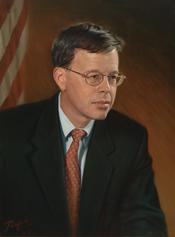 Sen. Jim Talent (R-MO)
What it changes
1 change to S. 2400 · shown in the bill's text
Adds SEC. 1068. SENSE OF CONGRESS ON AMERICA'S NATIONAL WORLD WAR I MUSEUM at the end of subtitle G of title X
Adds a sectionIn S. 2400 · Placed on Calendar Senate
"(5) Not later than the 15th day of the month following the beginning of the fiscal year (beginning with fiscal year 2005), the Secretary of the Treasury with respect to each Federal department, establishment, or agency receiving sanitary sewer services from the District of Columbia shall submit a report to the Committee on Government Reform of the House of Representatives, the Committee on Governmental Affairs of the Senate, and the Committees on Appropriations of the House of Representatives and Senate analyzing the promptness of payment with respect to the services furnished to such department, establishment, or agency.".
Inserted: SEC. 1068. SENSE OF CONGRESS ON AMERICA'S NATIONAL WORLD WAR I MUSEUM.
Inserted: (a) Findings.--Congress makes the following findings:
Inserted: (1) The Liberty Memorial Museum in Kansas City, Missouri, was built in 1926 in honor of those individuals who served in World War I in defense of liberty and the Nation.
Inserted: (2) The Liberty Memorial Association, a nonprofit organization which originally built the Liberty Memorial Museum, is responsible for the finances, operations, and collections management of the Liberty Memorial Museum.
Inserted: (3) The Liberty Memorial Museum is the only public museum in the Nation that exists for the exclusive purpose of interpreting the experiences of the United States and its allies in the World War I years (1914-1918), both on the battlefield and on the home front.
Inserted: (4) The Liberty Memorial Museum project began after the 1918 Armistice through the efforts of a large-scale, grass-roots civic and fundraising effort by the citizens and veterans of the Kansas City metropolitan area. After the conclusion of a national architectural design competition, ground was broken in 1921, construction began in 1923, and the Liberty Memorial Museum was opened to the public in 1926.
Inserted: (5) In 1994, the Liberty Memorial Museum closed for a massive restoration and expansion project. The restored museum reopened to the public on Memorial Day, 2002, during a gala rededication ceremony.
Inserted: (6) Exhibits prepared for the original museum buildings presaged the dramatic, underground expansion of core exhibition gallery space, with over 30,000 square feet of new interpretive and educational exhibits currently in development. The new exhibits, along with an expanded research library and archives, will more fully utilize the many thousands of historical objects, books, maps, posters, photographs, diaries, letters, and reminiscences of World War I participants that are preserved for posterity in the Liberty Memorial Museum's collections. The new core exhibition is scheduled to open on Veterans Day, 2006.
Inserted: (7) The City of Kansas City, the State of Missouri, and thousands of private donors and philanthropic foundations have contributed millions of dollars to build and later to restore this national treasure. The Liberty Memorial Museum continues to receive the strong support of residents from the States of Missouri and Kansas and across the Nation.
Inserted: (8) Since the restoration and rededication of 2002, the Liberty Memorial Museum has attracted thousands of visitors from across the United States and many foreign countries.
Inserted: (9) There remains a need to preserve in a museum setting evidence of the honor, courage, patriotism, and sacrifice of those Americans who offered their services and who gave their lives in defense of liberty during World War I, evidence of the roles of women and African Americans during World War I, and evidence of other relevant subjects.
Inserted: (10) The Liberty Memorial Museum seeks to educate a diverse group of audiences through its comprehensive collection of historical materials, emphasizing eyewitness accounts of the participants on the battlefield and the home front and the impact of World War I on individuals, then and now. The Liberty Memorial Museum continues to actively acquire and preserve such materials.
Show 9 more inserted paragraphsShow less
Inserted: (11) A great opportunity exists to use the invaluable resources of the Liberty Memorial Museum to teach the "Lessons of Liberty" to the Nation's schoolchildren through on-site visits, classroom curriculum development, distance learning, and other educational initiatives.
Inserted: (12) The Liberty Memorial Museum should always be the Nation's museum of the national experience in the World War I years (1914-1918), where people go to learn about this critical period and where the Nation's history of this monumental struggle will be preserved so that generations of the 21st century may understand the role played by the United States in the preservation and advancement of democracy, freedom, and liberty in the early 20th century.
Inserted: (13) This initiative to recognize and preserve the history of the Nation's sacrifices in World War I will take on added significance as the Nation approaches the centennial observance of this event.
Inserted: (14) It is fitting and proper to refer to the Liberty Memorial Museum as "America's National World War I Museum".
Inserted: (b) Sense of Congress.--Congress--
Inserted: (1) recognizes the Liberty Memorial Museum in Kansas City, Missouri, including the museum's future and expanded exhibits, collections, library, archives, and educational programs, as "America's National World War I Museum";
Inserted: (2) recognizes that the continuing collection, preservation, and interpretation of the historical objects and other historical materials held by the Liberty Memorial Museum enhance the knowledge and understanding of the Nation's people of the American and allied experience during the World War I years (1914-1918), both on the battlefield and on the home front;
Inserted: (3) commends the ongoing development and visibility of "Lessons of Liberty" educational outreach programs for teachers and students throughout the Nation; and
Inserted: (4) encourages the need for present generations to understand the magnitude of World War I, how it shaped the Nation, other countries, and later world events, and how the sacrifices made then helped preserve liberty, democracy, and other founding principles for generations to come.
Original wording
At the end of subtitle G of title X, add the following:
Read automatically from the Congressional Record. Check the original before relying on it.
As printed
At the end of subtitle G of title X, add the following:
SEC. 1068. SENSE OF CONGRESS ON AMERICA'S NATIONAL WORLD WAR I MUSEUM.
(a) Findings.--Congress makes the following findings:
(1) The Liberty Memorial Museum in Kansas City, Missouri, was built in 1926 in honor of those individuals who served in World War I in defense of liberty and the Nation.
(2) The Liberty Memorial Association, a nonprofit organization which originally built the Liberty Memorial Museum, is responsible for the finances, operations, and collections management of the Liberty Memorial Museum.
(3) The Liberty Memorial Museum is the only public museum in the Nation that exists for the exclusive purpose of interpreting the experiences of the United States and its allies in the World War I years (1914-1918), both on the battlefield and on the home front.
(4) The Liberty Memorial Museum project began after the 1918 Armistice through the efforts of a large-scale, grass-roots civic and fundraising effort by the citizens and veterans of the Kansas City metropolitan area. After the conclusion of a national architectural design competition, ground was broken in 1921, construction began in 1923, and the Liberty Memorial Museum was opened to the public in 1926.
(5) In 1994, the Liberty Memorial Museum closed for a massive restoration and expansion project. The restored museum reopened to the public on Memorial Day, 2002, during a gala rededication ceremony.
(6) Exhibits prepared for the original museum buildings presaged the dramatic, underground expansion of core exhibition gallery space, with over 30,000 square feet of new interpretive and educational exhibits currently in development. The new exhibits, along with an expanded research library and archives, will more fully utilize the many thousands of historical objects, books, maps, posters, photographs, diaries, letters, and reminiscences of World War I participants that are preserved for posterity in the Liberty Memorial Museum's collections. The new core exhibition is scheduled to open on Veterans Day, 2006.
(7) The City of Kansas City, the State of Missouri, and thousands of private donors and philanthropic foundations have contributed millions of dollars to build and later to restore this national treasure. The Liberty Memorial Museum continues to receive the strong support of residents from the States of Missouri and Kansas and across the Nation.
(8) Since the restoration and rededication of 2002, the Liberty Memorial Museum has attracted thousands of visitors from across the United States and many foreign countries.
(9) There remains a need to preserve in a museum setting evidence of the honor, courage, patriotism, and sacrifice of those Americans who offered their services and who gave their lives in defense of liberty during World War I, evidence of the roles of women and African Americans during World War I, and evidence of other relevant subjects.
(10) The Liberty Memorial Museum seeks to educate a diverse group of audiences through its comprehensive collection of historical materials, emphasizing eyewitness accounts of the participants on the battlefield and the home front and the impact of World War I on individuals, then and now. The Liberty Memorial Museum continues to actively acquire and preserve such materials.
(11) A great opportunity exists to use the invaluable resources of the Liberty Memorial Museum to teach the “Lessons of Liberty” to the Nation's schoolchildren through on-site visits, classroom curriculum development, distance learning, and other educational initiatives.
(12) The Liberty Memorial Museum should always be the Nation's museum of the national experience in the World War I years (1914-1918), where people go to learn about this critical period and where the Nation's history of this monumental struggle will be preserved so that generations of the 21st century may understand the role played by the United States in the preservation and advancement of democracy, freedom, and liberty in the early 20th century.
(13) This initiative to recognize and preserve the history of the Nation's sacrifices in World War I will take on added significance as the Nation approaches the centennial observance of this event.
(14) It is fitting and proper to refer to the Liberty Memorial Museum as “America's National World War I Museum”.
(b) Sense of Congress.--Congress--
(1) recognizes the Liberty Memorial Museum in Kansas City, Missouri, including the museum's future and expanded exhibits, collections, library, archives, and educational programs, as “America's National World War I Museum”;
(2) recognizes that the continuing collection, preservation, and interpretation of the historical objects and other historical materials held by the Liberty Memorial Museum enhance the knowledge and understanding of the Nation's people of the American and allied experience during the World War I years (1914-1918), both on the battlefield and on the home front;
(3) commends the ongoing development and visibility of “Lessons of Liberty” educational outreach programs for teachers and students throughout the Nation; and
(4) encourages the need for present generations to understand the magnitude of World War I, how it shaped the Nation, other countries, and later world events, and how the sacrifices made then helped preserve liberty, democracy, and other founding principles for generations to come.
Legislative Activity
Stay on top of the latest movement without scrolling through every action
Senate amendment proposed (on the floor): Amendment SA 3251 proposed by Senator Talent.(consideration: CR S6779-6780; text: CR S6779)
June 15, 2004
View full timeline
Senate amendment proposed (on the floor): Amendment SA 3251 proposed by Senator Talent.(consideration: CR S6779-6780; text: CR S6779)
June 15, 2004
Senate amendment agreed to: Amendment SA 3251 agreed to in Senate by Unanimous Consent.
June 15, 2004
Amendment SA 3251 proposed by Senator Talent. (consideration: CR S6779-6780; text: CR S6779) To express the sense of Congress on America's National World War I Museum.
June 15, 2004
Amendment SA 3251 agreed to in Senate by Unanimous Consent.
June 15, 2004
Senate amendment submitted
June 1, 2004