S.Amdt. 3578
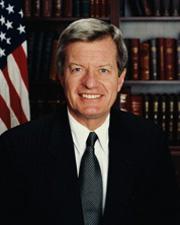 Sen. Max Baucus (D-MT)
Legislative Activity
Stay on top of the latest movement without scrolling through every action
Senate amendment proposed (on the floor): Amendment SA 3578 proposed by Senator Reid for Senator Baucus.(consideration: CR S9052-9053, S9055; text: CR S9052)
September 10, 2004
View full timeline
Senate amendment proposed (on the floor): Amendment SA 3578 proposed by Senator Reid for Senator Baucus.(consideration: CR S9052-9053, S9055; text: CR S9052)
September 10, 2004
Senate amendment agreed to: Amendment SA 3578 agreed to in Senate by Voice Vote.
September 10, 2004
Amendment SA 3578 proposed by Senator Reid for Senator Baucus. (consideration: CR S9052-9053, S9055; text: CR S9052)
September 10, 2004
Amendment SA 3578 agreed to in Senate by Voice Vote.
September 10, 2004
Senate amendment submitted
September 8, 2004
Text
Proposed
DEPARTMENT OF HOMELAND SECURITY APPROPRIATIONS ACT, 2005

The PRESIDENT pro tempore. Under the previous order, the Senate will
resume consideration of H.R. 4567, which the clerk will report.
The legislative clerk read as follows:

A bill (H.R. 4567) making appropriations for the Department
of Homeland Security for fiscal year ending September 30,
2005, and for other purposes.

Pending:

Nelson of Florida amendment No. 3607, to provide funds for
the American Red Cross.
Schumer amendment No. 3615, to appropriate $100,000,000 to
establish an identification and tracking system for HAZMAT
trucks and a background check system for commercial driver
licenses.

The PRESIDENT pro tempore. The Senator from Tennessee.
Mr. ALEXANDER. Mr. President, I ask unanimous consent to speak for up
to 6 minutes as in morning business.
Mr. REID. Mr. President, we have no objection as long as Senator
Durbin is recognized for a like amount of time.
The PRESIDENT pro tempore. Without objection, it is so ordered.
The Senator from Tennessee is recognized for up to 6 minutes and the
Senator from Illinois is recognized for up to 6 minutes.

On the Anniversary of 9/11

Mr. ALEXANDER. I thank the chairman for the time and the leadership.
I simply wish to join our leaders today in remembrance of the tragic
events of September 11. As I remember those events, I remember more how
clearly our country pulled together in response. September 11 is one of
our worst days but it brought out the best in us. It unified us as a
country and showed our charitable instincts and reminded us of what we
stood for and stand for. It showed that we had the resolve to fight
against terrorism. We put partisanship aside in our Government offices.
We began to proudly say to the rest of the world, we know what it means
to be an American.
The best way we can remember September 11 is to remember why this is
an exceptional country. We are the only country in the world that has
taken people from so many different backgrounds, which is a great
achievement by itself, but an even greater achievement is that we have
turned all of that variety and diversity into unity. That unity depends
upon a few principles in which we believe: liberty, equal opportunity,
individualism.
President Bush has eloquently spoken of the American character since
September 11. But we in the Senate have a role to play, too. That is
why, with the support of many other Senators on both sides of the
aisle, I have been working hard to harness that spirit to help us
remember for generations to come what it means to be an American. That
means teaching it to our children and to those who become new citizens
of our country.
One of the great tragedies of education in this country today is that
high school seniors perform worse in American history than in any other
subject for which they are nationally tested. That is not right. The
assistant Democratic leader, Senator Reid, and I proposed legislation
last year which passed the Senate without a dissenting vote to create
summer academies for outstanding students and teachers in U.S. history.
The House still needs to act on this bill.
The Senator from Massachusetts, Mr. Kennedy, and I have introduced
legislation that would allow our Nation's report card to test eighth
graders and high school seniors on U.S. history, on a pilot State-by-
State basis. This will help us know where it is being taught well and
where it is not so improvements can be made. Shining the spotlight on
these results also encourages school districts to work harder to teach
American history and civics as well.
The Senator from New York, Mr. Schumer, and I have introduced
legislation to preserve the oath of allegiance in its present form, so
that oath--to which all new citizens swear on naturalization--is given
the same respect as we give to the Pledge of Allegiance, to the
national anthem, and to the American flag.
While that legislation is pending in committee, with the support of
the chairman, the Senator from Mississippi, the Senate unanimously
passed yesterday an amendment to the Homeland Security appropriations
bill to prevent the oath from being changed during the next fiscal year
while the Senate works its will on the legislation proposed by the
Senator from New York and me.
I am also working on a second amendment to that legislation to
establish a new foundation that will work with the Office of
Citizenship to promote the teaching of English, history, and civics to
the soon-to-be new citizens of our country and to other new citizens.
We are a nation of immigrants. We are proud of that. We should do our
best to help those who are new to our country become thriving members
of our society so they can learn our history, learn about citizenship,
speak our common language. That will help them on the path to the
American dream.
The Senate has been hard at work over the last 2 years to help
enshrine the values and history that bind us together as Americans.
Nothing could be more important as we remember September 11, as we
mourn those we lost, but take pride in what was found, our national
unity. The best way to remember September 11 is to remember what it
means to be an American.
I yield the floor.
The PRESIDING OFFICER (Mr. Smith). The Senator from Illinois may
speak for up to 6 minutes.

[[Page S9050]]

America Has Changed

Mr. DURBIN. Mr. President, this week we mark two significant dates.
Tomorrow, September 11, the third anniversary of our attack which will
truly live in infamy as the attack on Pearl Harbor. It is a moment when
we reflect on what has happened to America since that time.
A member of the diplomatic corps once asked me: Did Osama bin Laden
win that battle? The answer, clearly, is no. But did he change America?
The answer, clearly, is yes.
We are debating in the Senate a bill for billions of dollars to be
spent in defense of America, which we might not have even considered 3
years ago. Now it is reality.
In a few moments I will leave to go to National Airport. Before I
board my flight back to Illinois, I will take off my shoes and my belt
and my watch and I will hold my arms out to be ``wanded,'' to make
certain that I am safe enough to go on the airplane. America has truly
changed.
But our values have not changed. Ted Sorensen may be one of the
greatest speech writers in the history of our Nation. On May 21 he
delivered a commencement address at the New School University of New
York where a friend and former colleague, Bob Kerry, is president.
I ask unanimous consent that Mr. Sorensen's commencement address be
printed in the Record.
There being no objection, the material was ordered to be printed in
the Record, as follows:

Commencement Address of Theodore C. Sorensen Upon Receiving an Honorary
Doctor of Laws Degree From New School University

A Time to Weep

As a Nebraska emigre, I am proud to be made an Honorary
Doctor of Laws by another Nebraska emigre, President Kerrey .
. . at an institution founded by still another, Alvin
Johnson.
Considering the unhealthy state of our laws today, they
probably could use another doctor.
My reciprocal obligation is to make a speech.
This is not a speech. Two weeks ago I set aside the speech
I prepared. This is a cry from the heart, a lamentation for
the loss of this country's goodness and therefore its
greatness.
Future historians studying the decline and fall of America
will mark this as the time the tide began to turn--toward a
mean-spirited mediocrity in place of a noble beacon.
For me the final blow was American guards laughing over the
naked, helpless bodies of abused prisoners in Iraq. ``There
is a time to laugh,'' the Bible tells us, ``and a time to
weep.'' Today I weep for the country I love, the country I
proudly served, the country to which my four grandparents
sailed over a century ago with hopes for a new land of peace
and freedom. I cannot remain silent when that country is in
the deepest trouble of my lifetime.
I am not talking only about the prison abuse scandal--that
stench will someday subside. Nor am I referring only to the
Iraq war--that too will pass--nor to any one political leader
or party. This is no time for politics as usual, in which no
one responsible admits responsibility, no one genuinely
apologizes, no one resigns and everyone else is blamed.
The damage done to this country by its own misconduct in
the last few months and years, to its very heart and soul, is
far greater and longer lasting than any damage that any
terrorist could possibly inflict upon us.
The stain on our credibility, our reputation for decency
and integrity, will not quickly wash away.
Last week, a family friend of an accused American guard in
Iraq recited the atrocities inflicted by our enemies on
Americans, and asked: ``Must we be held to a different
standard?'' My answer is YES. Not only because others expect
it. WE must hold ourselves to a different standard. Not only
because God demands it, but because it serves our security.
Our greatest strength has long been not merely our military
might but our moral authority. Our surest protection against
assault from abroad has been not all our guards, gates and
guns or even our two oceans, but our essential goodness as a
people. Our richest asset has been not our material wealth
but our values.
We were world leaders once--helping found the United
Nations, the Marshall Plan, NATO, and programs like Food for
Peace, international human rights and international
environmental standards. The world admired not only the
bravery of our Marine Corps but also the idealism of our
Peace Corps.
Our word was as good as our gold. At the start of the Cuban
Missile Crisis, former Secretary of State Dean Acheson,
President Kennedy's special envoy to brief French President
de Gaulle, offered to document our case by having the actual
pictures of Soviet nuclear missiles in Cuba brought in.
``No,'' shrugged the usually difficult de Gaulle: ``The word
of the President of the United States is good enough for
me.''
Eight months later, President Kennedy could say at American
University: ``The world knows that America will never start a
war. This generation of Americans has had enough of war and
hate . . . we want to build a world of peace where the weak
are secure and the strong are just.''
Our founding fathers believed this country could be a
beacon of light to the world, a model of democratic and
humanitarian progress. We were. We prevailed in the Cold War
because we inspired millions struggling for freedom in far
corners of the Soviet empire. I have been in countries where
children and avenues were named for Lincoln, Jefferson,
Franklin Roosevelt and John F. Kennedy. We were respected,
not reviled, because we respected man's aspirations for peace
and justice. This was the country to which foreign leaders
sent not only their goods to be sold but their sons and
daughters to be educated. In the 1930s, when Jewish and other
scholars were driven out of Europe, their preferred
destination--even for those on the far left--was not the
Communist citadel in Moscow but the New School here in New
York.
What has happened to our country? We have been in wars
before, without resorting to sexual humiliation as torture,
without blocking the Red Cross, without insulting and
deceiving our allies and the U.N., without betraying our
traditional values, without imitating our adversaries,
without blackening our name around the world.
Last year when asked on short notice to speak to a European
audience, and inquiring what topic I should address, the
Chairman said: ``Tell us about the good America, the America
when Kennedy was in the White House.'' ``It is still a good
America,'' I replied. ``The American people still believe in
peace, human rights and justice; they are still a generous,
fair-minded, open-minded people.''
Today some political figures argue that merely to report,
much less to protest, the crimes against humanity committed
by a few of our own inadequately trained forces in the fog of
war, is to aid the enemy or excuse its atrocities. But
Americans know that such self-censorship does not enhance our
security. Attempts to justify or defend our illegal acts as
nothing more than pranks or no worse than the crimes of our
enemies, only further muddies our moral image. 30 years ago,
America's war in Vietnam became a hopeless military quagmire;
today our war in Iraq has become a senseless moral swamp.
No military victory can endure unless the victor occupies
the high moral ground. Surely America, the land of the free,
could not lose the high moral ground invading Iraq, a country
ruled by terror, torture and tyranny--but we did.
Instead of isolating Saddam Hussein--politically,
economically, diplomatically, much as we succeeded in
isolating Khadafy, Marcos, Mobutu and a host of other
dictators over the years, we have isolated ourselves. We are
increasingly alone in a dangerous world in which millions who
once respected us now hate us.
Not only Muslims. Every international survey shows our
global standing at an all-time low. Even our transatlantic
alliance has not yet recovered from its worst crisis in
history. Our friends in Western Europe were willing to accept
Uncle Sam as class president, but not as class bully, once he
forgot JFK's advice that ``Civility is not a sign of
weakness.''
All this is rationalized as part of the war on terror. But
abusing prisoners in Iraq, denying detainees their legal
rights in Guantanamo, even American citizens, misleading the
world at large about Saddam's ready stockpiles of mass
destruction and involvement with al Qaeda at 9/11, did not
advance by one millimeter our efforts to end the threat of
another terrorist attack upon us. On the contrary, our
conduct invites and incites new attacks and new recruits to
attack us.
The decline in our reputation adds to the decline in our
security. We keep losing old friends and making new enemies--
not a formula for success. We have not yet rounded up Osama
bin Laden or most of the al Qaeda and Taliban leaders or the
anthrax mailer. ``The world is large,'' wrote John Boyle
O'Reilly, in one of President Kennedy's favorite poems,
``when its weary leagues two loving hearts divide, but the
world is small when your enemy is loose on the other side.''
Today our enemies are still loose on the other side of the
world, and we are still vulnerable to attack.
True, we have not lost either war we chose or lost too much
of our wealth. But we have lost something worse--our good
name for truth and justice. To paraphrase Shakespeare: ``He
who steals our nation's purse, steals trash. 'Twas ours, 'tis
his, and has been slave to thousands. But he that filches our
good name . . . makes us poor indeed.''
No American wants us to lose a war. Among our enemies are
those who, if they could, would fundamentally change our way
of life, restricting our freedom of religion by exalting one
faith over others, ignoring international law and the
opinions of mankind; and trampling on the rights of those who
are different, deprived or disliked. To the extent that our
nation voluntarily trods those same paths in the name of
security, the terrorists win and we are the losers.
We are no longer the world's leaders on matters of
international law and peace. After we stopped listening to
others, they

[[Page S9051]]

stopped listening to us. A nation without credibility and
moral authority cannot lead, because no one will follow.
Paradoxically, the charges against us in the court of world
opinion are contradictory. We are deemed by many to be
dangerously aggressive, a threat to world peace. You may
regard that as ridiculously unwarranted, no matter how often
international surveys show that attitude to be spreading. But
remember the old axiom: ``No matter how good you feel, if
four friends tell you you're drunk, you better lie down.''
Yet we are also charged not so much with intervention as
indifference--indifference toward the suffering of millions
of our fellow inhabitants of this planet who do not enjoy the
freedom, the opportunity, the health and wealth and security
that we enjoy; indifference to the countless deaths of
children and other civilians in unnecessary wars, countless
because we usually do not bother to count them; indifference
to the centuries of humiliation endured previously in silence
by the Arab and Islamic worlds.
The good news, to relieve all this gloom, is that a
democracy is inherently self-correcting. Here, the people are
sovereign. Inept political leaders can be replaced. Foolish
policies can be changed. Disastrous mistakes can be reversed.
When, in 1941, the Japanese Air Force was able to inflict
widespread death and destruction on our naval and air forces
in Hawaii because they were not on alert, those military
officials most responsible for ignoring advance intelligence
were summarily dismissed.
When, in the late 1940s, we faced a global Cold War against
another system of ideological fanatics certain that their
authoritarian values would eventually rule the world, we
prevailed in time. We prevailed because we exercised patience
as well as vigilance, self-restraint as well as self-defense,
and reached out to moderates and modernists, to democrats and
dissidents, within that closed system. We can do that again.
We can reach out to moderates and modernists in Islam, proud
of its long traditions of dialogue, learning, charity and
peace.
Some among us scoff that the war on Jihadist terror is a
war between civilization and chaos. But they forget that
there were Islamic universities and observatories long before
we had railroads.
So do not despair. In this country, the people are
sovereign. If we can but tear the blindfold of self-deception
from our eyes and loosen the gag of self-denial from our
voices, we can restore our country to greatness. In
particular, you--the Class of 2004--have the wisdom and
energy to do it. Start soon.
In the words of the ancient Hebrews:

The day is short, and the work is great, and the laborers
are sluggish, but the reward is much, and the Master is
urgent.

Mr. DURBIN. Mr. President, Mr. Sorensen said at one point in his
speech something we should reflect on as we think about September 11.
He said of America:

Our greatest strength has long been not merely our military
might but our moral authority. Our surest protection against
assault from abroad has been not all our guards, gates and
guns or even our two oceans, but our essential goodness as a
people. Our richest asset has been not our material wealth
but our values.
We were world leaders once--helping found the United
Nations, the Marshall Plan, NATO, and programs like Food for
Peace, international human rights and international
environmental standards. The world admired not only the
bravery of our Marine Corps but also the idealism of our
Peace Corps.

Mr. Sorensen's words are a reminder that if we are to win this war
against those who wish us ill, those terrorists and those who use
terrorism as a tactic, we need not only a strong national defense, we
need strong homeland security, but we also need to project the values
of America in a positive way, not just with the forming of troops in
formation but also with the forming of values in countries desperate to
have a future that emulates the freedoms of the United States.

The Sacrifice of Our Soldiers

Mr. DURBIN. Mr. President, the second noteworthy event this week was,
of course, the acknowledgement that we have lost over 1,000 soldiers in
Iraq. It has touched my State of Illinois. Some 50 people from my State
have been killed in the war in Iraq, hundreds seriously wounded.
I ask unanimous consent that an article from the Chicago Tribune
dated September 9, 2004, be printed in the Record.
There being no objection, the material was ordered to be printed in
the Record, as follows:

[From the Chicago Tribune, Sept. 9, 2004]

Downstate Town Stung by Deaths; 2 Soldiers Dead, 15 Hurt in Iraq

(By Deborah Horan and H. Gregory Meyer)

Paris, IL.--The worst attack yet on Illinois Army National
Guardsmen serving in Iraq left two soldiers dead and 15
wounded, and it left the Downstate town where their unit is
based stung by the news and fearful for the safety of
survivors.
Mortar rounds pounded the 1544th Transportation Company
southwest of Baghdad late Sunday afternoon, killing Sgt.
Shawna Morrison, 26, of Paris and Spec. Charles Lamb, 23, of
Martinsville, said Lt. Col. Alicia Tate-Nadeau, a Guard
spokeswoman. Three of the 15 wounded were seriously injured,
she said.
In Paris a radio station has put patriotic songs on heavy
rotation while locals drive cars tied with yellow ribbons
saying ``Pray for our troops.'' Morrison was the unit's first
female fatality, and the first soldier from Paris to die in
Iraq.
``This is the first one to hit our community,'' said Jim
Cooper, the father of a 20-year-old guardsman who is
stationed at the base that came under attack. ``It has really
brought this home. It opens up a lot of people's eyes. They
say, `Hey, I know so-and-so. He may be next.' ''
The deaths brought the unit's total fatalities to four as
the nation's total military deaths in Iraq since last year's
invasion edged past 1,000.
The 1544th, headquartered in a brick armory in this town of
9,000, contains about 260 soldiers from four states, Tate-
Nadeau said.
Shirley Furry had posted a message under the price board
outside her Citgo station in Paris reading ``In memory of
Shawna.'' The young woman worked there several years ago,
Furry said. Morrison's mother called Furry Sunday night.
``I said, `Oh, no,' '' Furry recalled. ``She said, `Yeah,
she's gone.' ''
Morrison attended the University of Illinois at Urbana-
Champaign and worked two jobs, one as a waitress and the
other as a bartender, to put herself through school.
``She's always been very independent,'' said her father,
Rick Morrison. ``She never asked us for a dime from day one
when she moved out.''
Morrison was called up in November, sent to Kuwait in
December and arrived in Iraq by February where she worked in
communications, her father said. And while she was nervous
before the deployment, she was most worried about rumors of
spiders the size of paper plates that could jump 6 feet.
``We spent many hours looking for spider spray,'' her
father said. ``And she never saw one.''
Sgt. Scott Johnson, a member of the 1544th who was wounded
in Iraq in May, said Morrison and Lamb had contrasting
notions of comfort on base. ``Shawna, she was really looking
to settle in. She rounded up a couple of the nicer mattresses
to make sure she slept well at night,'' he said. ``Charles,
he would rough it. He was kind of an outdoorsman. He didn't
mind getting dirty.''
Lamb, who grew up in a rural area near Martinsville, about
25 miles southwest of Paris, was a ``farm boy,'' said Mark
Harris, his agriculture education teacher at Casey-Westfield
High School, where he graduated in 1999.
A live wire as a student, Lamb was active in the FFA,
formerly known as Future Farmers of America, and trained for
forestry, livestock and dairy competitions. A trip to Kansas
City for an FFA convention was a big deal to him.
``I think one of the reasons he signed up for the service
was to help other people out, make a better life and see the
country,'' Harris said.
Before he was called up for active duty, he had worked as a
mechanic in Martinsville and had recently married, said a
former employer.
``He was planning on coming back,'' said a shop co-owner,
Shirley Goodwin. In Iraq he also worked as a mechanic.
Cooper leads a support group for families of soldiers from
the 1544th. He said that when attacks take place, he's the
one who calls families whose sons and daughters weren't hurt.
``I can tell them they're OK, but I can't give them any
guarantees,'' he said. ``The unit is still running out there.
It makes it scary.''
His son is also based at Logistical Base Seitz, the camp
outside Baghdad where Morrison and Lamb were killed, but he
was uninjured in Sunday's mortar shelling.
``Everybody's upset,'' he added. ``It is hard to walk into
a store without somebody recognizing me and saying, `How's
your son?' ''

Mr. DURBIN. Mr. President, this article speaks of one National Guard
unit, the 1544th Transportation Company from Paris, IL. This unit of
the Illinois National Guard has sustained almost half of the deaths and
more than half of the injuries that our National Guard in Illinois has
sustained, and just this last week two soldiers were killed and 15
wounded after another attack in Iraq.
It is a grim reminder that we are in a situation in Iraq with no end
in sight. With 140,000 of our best and bravest in the field offering
their lives every day for America, the fact that we would invade this
nation of Iraq without a plan to deal with its reconstruction and
pacification is the strongest condemnation of any government, and yet
that is where we are today.
This morning it was reported on the news that if there is an election
in Iraq--and I pray there will be--some

[[Page S9052]]

sections of that country will not even be able to vote because they are
under the control of terrorists and guerrillas. That is an indication
of how far we still have to travel before the day arrives when our
troops can come safely home from Iraq, realizing that in reality their
mission has been accomplished.
As we reflect on 9/11, we reflect on our values. As we reflect on the
heroes of America and think of those on 9/11, remember, too, the
thousands still serving our Nation overseas from towns such as Paris,
IL, and many just like them who offer their lives every day in defense
of the values of this Nation.
I yield the floor.
The PRESIDING OFFICER. The Senator from Mississippi is recognized.
Mr. COCHRAN. Mr. President, I assume we are now on the Homeland
Security appropriations bill for fiscal year 2005?
The PRESIDING OFFICER. The Senator is correct.
Mr. COCHRAN. Mr. President, first of all, I thank the leadership for
making available time in the schedule for the handling of this bill and
giving us a chance to consider amendments that are proposed by other
Senators to the bill as reported by the Senate Appropriations
Committee. It is important to note that yesterday's action and the
action of the full committee so far have set the tone for the
consideration of this bill.
First of all, to remind Senators, the bill contains funding at a
level of $33.1 billion. Mr. President, $32 billion is for discretionary
spending; the remainder is for mandatory programs or the allocation of
funds that are collected under other provisions of law. This represents
an almost 10-percent increase in funding for the next fiscal year as
compared with the funding that is appropriated for this fiscal year,
2004.
The fiscal year begins on October 1, as everyone knows. Substantial
increases are included in this legislation for the activities of the
Coast Guard as well as the Transportation Security Administration. The
bill fully funds the President's requested activity for Project
BioShield, which is a very important new endeavor to further enhance
the security of our country against bioterrorism. The bill also
provides funding for a new program that is designed to enhance security
for our country by using new technologies to identify and verify
visitors coming into the country using visas. This program is called
United States Visitor and Immigration Status Indicator Technology. Of
course, it has its own acronym, US VISIT, so it is easy for us to
remember.
One other feature of this year's appropriations bill is the
limitation that we are provided as a result of a provision included in
the defense appropriations conference report that limits, in effect,
the discretionary spending of all appropriations bills for fiscal year
2005. The limitation is at a level of $821.9 billion. That is enforced
through a mechanism of the Budget Act which permits points of order to
be made on amendments that would seek to increase the bill's funding
beyond the level of its allocation, which was established by the
Appropriations Committee.
We are pleased that the Senate has recognized the validity of that
limitation. Yesterday we were able to exercise that point of order
successfully to defeat amendments that would have increased spending
beyond that allocated level of funding. We are at the limit of the
allocation that is available to our subcommittee. The $32 billion in
discretionary funding is the limitation that is provided to the
Homeland Security Appropriations Subcommittee.
Today we are pleased to consider any other amendments Senators may
wish to offer. We are ready to debate and dispose of amendments. We can
agree to some, I hope, and we are happy to work with Senators
throughout the remainder of this session. We are happy the leader has
indicated that any votes that may be ordered will go over to next week.
There will not be any recorded votes on this bill today.
Mr. President, I suggest the absence of a quorum.
The PRESIDING OFFICER. The clerk will call the roll.
The legislative clerk proceeded to call the roll.
Mr. REID. Mr. President, I ask unanimous consent that the order for
the quorum call be rescinded.
The PRESIDING OFFICER. Without objection, it is so ordered.
Mr. REID. Mr. President, it is my understanding we are now on the
Homeland Security appropriations bill?
The PRESIDING OFFICER. The Senator is correct.

Amendment No. 3578

Mr. REID. Mr. President, on behalf of Senator Baucus, I send an
amendment to the desk. It is amendment No. 3578. I think it is already
at the desk.
The PRESIDING OFFICER. Without objection, the pending amendments are
set aside.
The clerk will report the amendment.
The legislative clerk read as follows:

The Senator from Nevada [Mr. Reid], for Mr. Baucus, for
himself, Ms. Cantwell, Mrs. Clinton, Mr. Conrad, Mr. Dorgan,
Mr. Levin, Mrs. Murray, Mr. Schumer, Ms. Stabenow, and Mr.
Burns, proposes an amendment numbered 3578.

Mr. REID. Mr. President, I ask unanimous consent that reading of the
amendment be dispensed with.
The PRESIDING OFFICER. Without objection, it is so ordered.
The amendment is as follows:

(Purpose: To make available to the Under Secretary for Border and
Transportation Security $200,000,000 to establish and operate air bases
in the States of Michigan, Montana, New York, North Dakota, and
Washington and to permit fees for certain customs services to be
collected until June 1, 2005)

On page 39, between lines 5 and 6, insert the following new
section:
Sec. 515. (a) The total amount appropriated by title II for
the Office of the Under Secretary for Border and
Transportation Security under the heading ``air and marine
interdiction, operations, maintenance, and procurement'' is
hereby increased by $200,000,000. Of such total amount, as so
increased, $200,000,000 shall be available for the
establishment and operation of air bases in the States of
Michigan, Montana, New York, North Dakota, and Washington.
(b) Section 13031(j)(3) of the Consolidated Omnibus Budget
Reconciliation Act of 1985 (19 U.S.C. 58c(j)(3)) is amended
by striking ``March 1, 2005'' and inserting ``June 1, 2005''.

The PRESIDING OFFICER. The Senator from Montana.
Mr. BAUCUS. Mr. President, this is quite an important amendment for
our Nation's security. I think it will help strengthen a key component
of our national security strategy. We all know our Nation's security
begins here at home, by securing our land borders, our airspace, and
also our maritime ports. As we work to get the latest explosive
screening technology in our airports, or to inspect more containers
arriving in our Nation's ports, we should not forget the critical role
of our vast northern border.
Contrary to what some people may think, out on the northern border we
are no strangers to illegal crossings. The topography in my State of
Montana makes it very difficult to protect our border. Customs and
Border Patrol are doing a great job with the resources they have, but
Immigration and Customs enforcement investigators are just a little bit
undermanned. They share valuable information they collect on illegal
entries with numerous agencies.
But when it comes to tracking and intercepting unauthorized aircraft,
our military planes fly much too high and too fast to provide proper
service along our northern border. As we beef up our security on other
borders, especially in the South and on the coasts, the northern border
has become the Nation's backdoor that we cannot afford to leave
unlocked.
While I am pleased the Department of Homeland Security has just
established the first of five planned airbases along the northern
border that Congress authorized nearly 2 years ago, I am also quite
concerned. Why? Because the pace is so slow in standing up these bases.
One of the sites the Department of Homeland Security has chosen is in
Great Falls, MT. Between Malmstrom Air Force Base, the Air Force
National Guard at Great Falls International Airport, and the community
that supports these assets, we are ready to take on this new mission.
We are ready. We are set. We are happy. We are glad. We want to do it.
The mission is to help secure the northern border, not just for our
State of Montana but for all Americans.
However, we are told we will have to wait. We will have to wait for
more than 3 years to get the planned airbase up and running in Great
Falls. With all due respect, I do not think as a nation we can wait. We
cannot afford to wait.

[[Page S9053]]

There are too many problems with the current funding schedule for the
northern border air wing. First, the schedule is stretched out over far
too long a period of several years. Once the first base in Bellingham,
WA, is really up and running, what is going to happen? It is pretty
obvious. Drug runners and other would-be terrorists and malcontents
will simply move eastward toward Montana's northern border, and still
further east over other parts of our northern border.
Under the current funding schedule, they are going to enjoy a full 3
years of exploiting the gaps in our Air Wing coverage before all five
bases along the northern border--that is, the States of Washington,
Montana, North Dakota, Michigan, and New York--have been established.
There is a second problem. What is that? It is that the budget allows
just enough money to buy each base its requisite planes: two
helicopters and a fixed-wing aircraft. But once each base opens its
doors, it won't even be able to operate 5 days a week for 8 hours a
day. The dollars just are not there for the operation. So I say, when
it comes to securing our Nation, obviously, this is not good enough. We
have to get up and running right away.

Two months ago, when a plane deviated from its course over
Washington, DC--we all remember it--the Air and Marine Operations
Command and Control at March Air Force Base in Riverside, CA, was
watching--way out in California. Local aircraft were dispatched, and
the Capitol complex was emptied. Luckily, it was just the Governor of
Kentucky. I should not say ``just.'' It was the eminent Governor of
Kentucky. But the system worked because a local plane was available and
staffed to respond. The folks in Riverside are responsible for
detecting unauthorized aircraft flying at low altitudes anywhere in the
United States, but so far they have just one plane, staffed barely 40
hours a week, in Washington State, to dispatch if they get a hit
anywhere on the 3,000-plus-mile-long northern border.
So let's be clear. Congress has already authorized the establishment
of a northern border air wing with five airbases that will be
responsible for tracking, identifying, and intercepting any
unauthorized aircraft that attempts to cross the northern border into
U.S. airspace. But if we are going to take securing the northern border
seriously, then we must take funding seriously. So my amendment makes
sure the funding is there to get all five airbases operational 7 days a
week this next year.
I thank very much the chairman of the subcommittee, Senator Cochran,
and thank Senator Byrd, and many others, for helping to work to get
this crucial amendment in order so it will be adopted and, more
importantly, to make America safer.
I yield the floor.
Mr. BYRD. Mr. President, I commend the Senator from Montana for his
amendment and Senator Frist and Senator Cochran for their cooperation
in working on this amendment. This amendment provides $170 million for
four homeland security programs, in addition to the $200 million
provided for security on the Northern border.
First, $50 million is included for the fire grant program. With this
amendment, the total in the bill for equipping and training fire
personnel is $750 million, an increase of $4 million over fiscal year
2004. Last year, the Department received over $2.6 billion of
applications from 20,366 applicants. Clearly, there is a real need for
this additional funding.
Second, the amendment provides $50 million for the Federal air
marshals program. Last year, despite the continuing terrorist threat to
our airlines and despite the fact that the number of flights grew by 6
percent last year, the number of Federal air marshals fell by 9
percent. This amendment will reverse that trend and allow the
Department to move toward the staffing goal that was established after
9/11.
Third, $50 million is provided for grants to nonprofit organizations,
to help secure their at-risk facilities. Numerous reports from the
Department of Homeland Security and the FBI indicate that al-Qaida has
turned its focus to so-called soft targets such as hospitals,
universities and houses of worship.
Finally, the amendment provides $20 million for the Emergency
Management Performance Grants program. This valuable program provides
resources to States to prepare for all types of emergencies. The
program's all-hazards planning approach ensures that States prepare,
not just for terrorist attacks, but also for hurricanes, floods,
earthquakes and other types of disasters.
Again, I thank the Senators for their cooperation and I urge adoption
of the amendment.
The PRESIDING OFFICER. The majority leader is recognized.

Amendment No. 3616 to Amendment No. 3578

Mr. FRIST. Mr. President, I send an amendment to the desk and ask for
its consideration.
The PRESIDING OFFICER. The clerk will report the amendment.
The legislative clerk read as follows:

The Senator from Tennessee [Mr. Frist], for himself, Mr.
Byrd, Mr. Cochran, Mr. Specter, Ms. Murkowski, Mr. Voinovich,
Mr. DeWine, Mr. Burns, Mrs. Clinton, Ms. Mikulski, Mrs.
Murray, and Mr. Kennedy, proposes an amendment numbered 3616
to amendment No. 3578.

Mr. FRIST. Mr. President, I ask unanimous consent that reading of the
amendment be dispensed with.
The PRESIDING OFFICER. Without objection, it is so ordered.
The amendment is as follows:
On page 2, line 5 insert:
``(b) The total amount appropriated under the heading
``IMMIGRATION AND CUSTOMS ENFORCEMENT, FEDERAL AIR MARSHALS''
is hereby increased by $50,000,000. Of such total amount, as
so increased, $50,000,000 is for the continued operations of
the Federal Air Marshals program.
``(c) The total amount appropriated under the heading
``OFFICE OF STATE AND LOCAL GOVERNMENT COORDINATION AND
PREPAREDNESS, STATE AND LOCAL PROGRAMS'' is hereby increased
by $50,000,000. Of such total amount, as so increased,
$50,000,000 is for discretionary assistance to non-profit
organizations (as defined under section 501(c)(3) of the
Internal Revenue Code of 1986) determined by the Secretary of
Homeland Security to be at high-risk of international
terrorist attacks.
``(d) The total amount appropriated under the heading
``OFFICE OF STATE AND LOCAL GOVERNMENT COORDINATION AND
PREPAREDNESS, FIREFIGHTER ASSISTANCE GRANTS'' is hereby
increased by $50,000,000. Of such total amount, as so
increased, $50,000,000 is for the program authorized by
section 33 of the Federal Fire Prevention and Control Act of
1974 (15 U.S.C. 2229).
``(e) The total amount appropriated under the heading
``OFFICE OF STATE AND LOCAL GOVERNMENT COORDINATION AND
PREPAREDNESS, EMERGENCY MANAGEMENT PERFORMANCE GRANTS'' is
hereby increased by $20,000,000. Of such total amount, as so
increased, $20,000,000 is for emergency management
performance grants.''.
On page 2, line 5 strike ``(b)'' and insert ``(f)''.

Mr. FRIST. Mr. President, this is an amendment worked out in a
bipartisan manner with the chairman and the ranking member of the
Homeland Security Appropriations Subcommittee and the ranking member of
the Finance Committee. I thank Senators Cochran, Byrd, and Baucus for
their cooperation. This is an amendment that is cosponsored by Senators
Byrd, Cochran, Specter, Murkowski, Voinovich, DeWine, Burns, Clinton,
Mikulski, and Murray. It is a very simple amendment but an important
amendment to provide a small amount of additional resources for some
critical areas in our war against terrorism here at home.
The Baucus amendment extends custom user fees that will expire next
March. He extends the fee for 3 months. This extension increases the
offsetting receipts in the Federal budget by $370 million during that
period of time. Senator Baucus uses these additional resources to
increase funds for a northern border protection program. Senator Burns
is also a cosponsor of that amendment. However, the Baucus-Burns
amendment allocates $200 million of resources for this activity,
leaving approximately $170 million in additional resources to fund
other homeland security programs.
Working with Senators on both sides of the aisle, Senator Byrd and I
have crafted a second-degree amendment that further targets this
additional $170 million in funds as follows: An additional $50 million
for firefighters--Senator Murkowski and other Senators have been
supporters of finding additional funds for our dedicated firefighters;
an additional $50 million for Federal air marshals; $50 million for
501(c) nonprofit organizations that the Secretary of Homeland Security
determines to be at risk of terrorist attacks--I, along with Senators
Specter,

[[Page S9054]]

Byrd, and Mikulski, have focused on the need to provide assistance to
these soft targets as churches, synagogues, mosques, and various
nongovernmental organizations that can fall prey to terrorists are at
risk--and an additional $20 million to emergency management performance
grants. This is a program strongly supported on both sides of the
aisle--on our side, championed by Senator Voinovich--to meet the needs
of our State and local governments.
I believe the amendment has been cleared on both sides. I appreciate
once again the cooperation of all involved in finding a way to provide
additional resources to this important bill without violating the
Budget Act or adding to the Federal deficit. Again, these amendments
have been worked out on both sides of the aisle, and I urge their
adoption.
Mr. SPECTER. Mr. President, I have sought recognition to discuss an
amendment which I have been working on since the Subcommittee on
Homeland Security marked up the bill in July which would provide much-
needed resources to address the security needs of high-risk nonprofits.
I am pleased that we have worked out a compromise where this language
will be included as part of Senator Baucus's amendment on custom user
fees. This language will appropriate $50 million for a program at the
Department of Homeland Security, DHS, to provide security enhancements
and training to nonprofit organizations determined to be at high risk
of international terrorist attacks. Funds would be distributed by DHS
based on risk assessments, in consultation with State and local
authorities.
The $50 million figure is firm, and there is no doubt that there will
be a need for more than $50 million. This is a start. This is a start
on the protection of 501(c)(3)s, and the discretion of the Secretary of
Homeland Security is limited to establishing the priority for the use
of the $50 million. The assistance is intended for basic security
enhancements to protect American citizens from car bombs and other
lethal terrorist attacks. It is intended to be used for installation of
equipment such as concrete barriers, blast-proof doors, mylar window
coatings, and hardened parking lot gates, as well as associated
training.
The Director of Central Intelligence has stated that al-Qaida has
turned its attention to ``soft targets.'' Al-Qaida's willingness to
attack soft targets of all types has been made readily apparent with
attacks in the United States, England, Canada, Spain, Germany, Iraq,
Tunisia, Kenya, Morocco, and Turkey, including an international Red
Cross building, synagogues, train stations, hotels, airports,
restaurants, night clubs, and cultural and community centers.
Many of these soft targets are nonprofit organizations which provide
vital health, social, community, educational, and other services to
millions of Americans every day. If nonprofit organizations are forced
to divert funds to cover the entire cost of security measures, those
funds will deplete resources for vital human services, including
capacity to respond to disasters.
I have been encourage to support this language by a wide cross
section of America's nonprofits. Supporters of this measure include:
American Association of Homes and Services for the Aging; American
Jewish Committee; American Jewish Congress; American Red Cross;
American Society of Association Executives; Association of Art Museum
Directors; Association of Jewish Aging Services of North America;
Independent Sector, National Assembly of Health and Human Service
Organizations; National Association of Independent Colleges and
Universities; Theater Communications Group; Union of Orthodox Jewish
Congregations; United Jewish Communities, representing 155 Jewish
Federations; United Synagogue of Conservative Judaism; United Way of
America; and YMCA of the USA.
The assistance would be delivered pursuant to pending authorizing
legislation which Senator Mikulski and I have introduced as S. 2275
which was ordered reported by the Governmental Affairs Committee. I
thank the chairman and other Senators involved in moving this important
amendment forward, and I urge my colleagues to support this effort
through the conference committee and to the President's desk.
Ms. MIKULSKI. Mr. President, today I rise to support and cosponsor
Senator Frist's second-degree amendment to provide much-needed funding
for homeland security. This amendment provides increased funding in
three vital areas, Federal air marshals, fire grants and emergency
management grants, and for the first time, it would give assistance to
nonprofit institutions that are at high risk of terrorist attack.
Insuring that the brave men and women who are our first responders
have the resources they need is one of my highest priorities. We must
do our best to protect the protectors and they protect us everyday.
These are the people who risk their lives to keep us safe. The bill
before us today actually cuts funding and the step we take today to
increase funding by $50 million for the fire grant program is a step in
the right direction. But it is a first step.
Our Nation's firefighters need more resources. They need to replace
aging fire engines and rescue vehicles, and they need self-contained
breathing masks. Additional money for the Fire Grant Program is not
just about new equipment--it is about saving lives. It is about making
sure that our firefighters and rescue workers are well prepared,
whether it is a terrorist attack or a hurricane. These brave men and
women will be the first on the scene and we need to make sure that they
have the tools they need to protect against threats to American lives.
It is my hope that as we proceed with this bill in the coming days,
we will be able to add additional funding to provide the resources that
fire departments across the Nation so desperately need. That is why I
applaud my colleagues for taking this first step--the next step is to
ensure that we include additional funding to bring this model program
up to the full funding level of $900 million. On Monday, I will offer
an amendment to take that final step and make sure that our
firefighters have all the resources that they need. I hope that my
colleagues will join me then as we have all joined Senator Frist today,
in supporting those much needed increases in fire grant funding.
This amendment also takes a great first step in helping nonprofit
organizations who are at risk for terrorist attack. As the majority
leader knows, I have worked closely with my colleague from
Pennsylvania, Senator Specter on legislation to create a program to
help nonprofits who serve communities throughout the Nation but who are
threatened daily by the risk terrorist attack. Today, I am proud to
provide funding to make our communities stronger and safer by
protecting these ``soft targets'' of terrorism all over the United
States.
We are all aware of recent terrorist attacks in the United States,
Spain, Germany, Iraq, Tunisia, Kenya, Morocco, and Turkey. These
attacks by al-Qaida on an international Red Cross building, synagogues,
train stations, hotels, airports, restaurants, night clubs, and
cultural centers, show its willingness to attack ``soft targets'' of
all types in order to conduct its campaign of terror.

I want to make sure that our communities are safe and the buildings
where citizens live, learn, and work are strong and secure to safeguard
American lives in the vent of a terrorist attack. Local communities are
on the front lines in our war against terrorism. This Congress must do
its share to make sure that they do not have to bear the full cost of
this war. We can do that by helping to provide funds for security
enhancements in buildings that Americans visit everyday.
In this amendment we simply provide an additional $50 million to
enhance the security and safety of high-risk nonprofits. This funding
will jumpstart the effort to make security improvements to these ``soft
targets'' of terrorism. These nonprofits are worried now, they are
under threat now, and then need our help now. This Congress must act
now to make these nonprofits and the communities that they serve safer
and stronger.
As a Nation, our priority in fighting the war on terror is to be
safer, stronger, and smarter so that we are able to better detect,
prevent and respond to acts of terrorism. This bill gets us one step
closer to meeting those goals by making vulnerable targets smarter in
detecting and preventing terrorist attacks and by making sure that if
terror strikes one of these facilities, security

[[Page S9055]]

and safety measures are in place to protect the lives of those inside
and around these buildings.
Nothing the Senate does is more important than providing America
security and Americans safety. I urge my colleagues to support this
amendment because it does exactly that. In the battle to protect our
Nation from terrorist attacks, we must be sure to provide assistance to
first responders and to these high-risk nonprofit organizations that
provide vital health, social, cultural, and educational services to the
American people.
The PRESIDING OFFICER. The question is on agreeing to amendment No.
3616.
The amendment (No. 3616) was agreed to.
Mr. REID. Mr. President, I move to reconsider the vote.
Mr. COCHRAN. I move to lay that motion on the table.
The motion to lay on the table was agreed to.

Amendment No. 3578, As Amended

The PRESIDING OFFICER. The question is on agreeing to amendment No.
3578, as amended.
The amendment (No. 3578) was agreed to.
Mr. COCHRAN. Mr. President, I move to reconsider the vote by which
the amendment was agreed to.
Mr. REID. I move to lay that motion on the table.
The motion to lay on the table was agreed to.
Mr. FRIST. Mr. President, earlier this morning, Chairman Cochran
offered on my behalf a bipartisan amendment that was adopted. Combined
with the second degree bipartisan amendment I offered to Senator
Baucus's amendment, we have provided almost $700 million in additional
funds in this bill to enhance programs for our domestic security.
We did this without increasing the Federal deficit, because the
increased spending was offset with the extension until September 2005
an expiring custom user fee. That extension raised nearly $700 million.
Let me be the first to acknowledge that this offset is included in
other legislation that is in various conferences such as the FSC bill
and the highway bill. But until legislation is enacted to truly extend
this provision, it remains a real offset.
Final legislation will sort out the use of this offset before it
becomes law.
The amendment I offered and cosponsored by Senator Cochran, Byrd and
Voinovich provided increased resources for critical areas of homeland
security:
An additional $120 million for Customs and Border Protection,
Salaries and Expenses. Some of these funds will be used to provide for
radiation detection devices, additional border inspectors and border
patrol agents;
an additional $80 million for Immigration and Customs Enforcement to
provide additional investigation personnel and additional detention
facilities;
an additional $81 million for rail and transit security grants;
and an additional $36 million for State and Local Governments'
emergency management performance grants.
Again I thank all of my colleagues who worked on this amendment and
appreciate the cooperation of Senator Byrd in finding a responsible
approach to increased homeland security funding while not adding to the
Federal deficit this next year.
Mr. COCHRAN. I suggest the absence of a quorum.
The PRESIDING OFFICER. The clerk will call the roll.
The assistant legislative clerk proceeded to call the roll.
Mr. STEVENS. Mr. President, I ask unanimous consent that the order
for the quorum call be rescinded.
The PRESIDING OFFICER. Without objection, it is so ordered.
Mr. STEVENS. Mr. President, although I will be speaking on
intelligence matters and other matters relating to the CR, I ask
unanimous consent that my statement not be considered a violation of
the Pastore rule and I be able to speak on general matters.
The PRESIDING OFFICER. Without objection, it is so ordered.

Problems with a Continuing Resolution

Mr. STEVENS. Mr. President, a lot of people are talking about a
continuing resolution for appropriations this year. This is not a
normal year. This is the end of Congress. This Congress goes out of
being. We will come back next year and have to deal with new bills. I
want to talk a little bit about the problem of a continuing resolution
for a series of bills.
For instance, my State had over 5 million acres of timberland burned
this year. Forest fires were just enormous. We have provided in the
Interior bill moneys for hazardous fuels reduction to try to reduce the
fires, really, on some of the wildlands of the United States. If we had
that money we could probably prevent what we call follow-on fires.
Where lightning fires strike, the next year they strike almost in the
same place. The next year they strike almost in the same place. But as
they do in years following a fire, they are hitting timber that has
been dried out, burned, dried out, and it is just like kindling. It
just causes the whole area to burn more and then more and then more.
The way to stop that is to do the hazardous fire reduction program, go
into the area that burned and take that timber out--try to plant new
trees, but at least do something to prevent a follow-on fire the
following year. If the Interior bill doesn't pass, there will not be
that money available.
We have additional money for the Indian Health Service this year. We
have had substantial problems in health areas in the Indian community.
That money wouldn't be available under a CR.
Many people don't know what a CR is. It is a continuing resolution
which continues the moneys that were appropriated in 2003 to be spent
in 2004; now that same amount of money is going to be spent in 2005.
Judgments of 2003 of what should be happening in 2004 are not valid in
2005. We need each of these bills this year more than we ever have
before.
Take, for instance, the hurricanes that just happened. We have in the
budget request what is called the beach renourishment policy. It is a
one-time funded program to try to replace some of these beaches that
have been lost in the hurricane season. There are approximately 43
projects already outlined that have to be funded this year in order to
undertake this new concept. It is sort of like the fires concept. If we
move in and repair these beaches now, a subsequent follow-on hurricane
will not aggravate the damage and leave even further destruction in the
area. Again, unless we get the Energy and Water bill, it will not be
done. There will be no dredging of the low-use waterway and harbors
that have had extensive damage. These hurricanes change the bottom of
the sea in the areas adjacent to the shore of where the hurricanes come
ashore. We need new money to deal with that. The only way to get it is
to get an Energy and Water appropriations bill passed.

If you look at the Department of Energy, we have a whole series of
items requested by the President and approved by the Appropriations
Committee on energy and water. The budget this year requests $1.16
billion more than was enacted for this fiscal year of 2004. A
continuing resolution will carry the figures for 2004 forward as long
as the continuing resolution continues until Congress passes a bill
next year.
But meanwhile, the money that is needed for security and the
safeguard problems of our national weapons labs, the President asked
for $706 million to make those laboratories more safe and more secure.
He asked for $6.9 billion in energy environmental management
activities. That is an increase over 2004. This is expected to have a
specific effect on the environmental cleanup activities in Tennessee,
Washington, Idaho, and South Carolina.
In terms of energy supply, we have money this year for energy
research, including renewable resources such as hydrogen, solar, wind,
and biomass. The President's request this year is $835 million, a 13-
percent increase over 2004.
I will come back later. I don't want to monopolize the time. I keep
reminding the Senate that we cannot operate under a CR for 2005. It is
not possible.
Take the Department of Agriculture: The 2005 bill is not passed and
the medical device user fee authority expires at the end of this fiscal
year because we did not provide the required level of funding
authority. This bill takes care of that. If the bill does not pass,
there won't be funding to maintain the participation rates for the WIC
Program.

[[Page S9056]]

The budget request is underestimated by over $300 million. That would
be required to continue the program in 2005. That would not be
available under 2004 money.
This Homeland Security bill is an example. If it does not pass, the
counterterrorism food safety money for FDA will not be available.
There are a whole series of things. I am sure the chairman, my
distinguished friend from Mississippi, has described that in more
detail.
But the real problem with our thinking about a continuing resolution
is money would not be available to other Departments to meet emergency
situations--some caused by natural events such as hurricanes and fires
and others caused by changes in the security requirements of the
departments of the Government which have security requirements. They
are conducting their business differently now after the Department of
Homeland Security examined how they handled buildings and security of
employees. Each one of them now has a mandate to change the way they do
business. We have provided the money for those new directions in the
2005 bills. That money for the security of the Federal buildings will
not be available under the 2004 program without substantial
reprogramming, which couldn't be done until well into next year.
I am trying to make the case for the Members of the Senate to think
about getting all of these bills done this year. Don't think about a
continuing resolution. A continuing resolution will not work for the
appropriations process this year.
I yield the floor.
Mr. REID. Mr. President, I ask unanimous consent that the pending
amendments be set aside for purposes of offering an amendment.
The PRESIDING OFFICER. Without objection, it is so ordered.

Amendment No. 3617

Mr. REID. Mr. President, I send an amendment to the desk.
The PRESIDING OFFICER. The clerk will report.
The assistant legislative clerk read as follows:

The Senator from Nevada [Mr. Reid], for Mr. Lautenberg,
proposes an amendment numbered 3617.

Mr. REID. Mr. President, I ask unanimous consent that reading of the
amendment be dispensed with.
The PRESIDING OFFICER. Without objection, it is so ordered.
The amendment is as follows:

(Purpose: To ensure that the Coast Guard has sufficient resources for
its traditional core missions)

On page 14, line 2, strike ``$5,153,220,000, of which
$1,090,000,000 shall be for defense-related activities;'' and
insert ``5,253,220,000 of which $1,090,000,000 shall be for
defense-related activities; and of which, $100,000,000 shall
be for non-homeland security missions defined by Sec.
888(a)(1) of Public Law 107-296.''.

Mr. REID. Mr. President, this amendment calls for $100 million for
the U.S. Coast Guard. Senator Lautenberg at a subsequent time will come
and debate this matter. It is my understanding that the leadership
wishes to have this as one of the votes that would occur on Monday
evening.

Amendment No. 3618

Mr. COCHRAN. Mr. President, on behalf of myself and Senators Frist,
Byrd, and Voinovich, I send an amendment to the desk.
The PRESIDING OFFICER. The clerk will report.
The bill clerk read as follows:

The Senator from Mississippi [Mr. Cochran], for Mr. Frist,
for himself, Mr. Cochran, Mr. Byrd, and Mr. Voinovich,
proposes an amendment numbered 3618.

Mr. COCHRAN. Mr. President, I ask unanimous consent that reading of
the amendment be dispensed with.
The PRESIDING OFFICER. Without objection, it is so ordered.
The amendment is as follows:

(Purpose: To make available to the Department of Homeland Security
additional funds)

On page 39, between lines 5 and 6, insert the following new
section:
``Sec.   . (a) The total amount appropriated under the
heading ``CUSTOMS AND BORDER PROTECTION, SALARIES AND
EXPENSES'' is hereby increased by $120,000,000. Of such total
amount, as so increased, $40,000,000 is provided for
radiation detection devices, $40,000,000 is provided for
additional border inspectors, and $40,000,000 is provided for
additional border patrol agents.
``(b) The total amount appropriated under the heading
``IMMIGRATION AND CUSTOMS ENFORCEMENT, SALARIES AND
EXPENSES'' is hereby increased by $80,000,000. Of such total
amount, as so increased, $40,000,000 is provided for
additional investigator personnel, and $40,000,000 is
provided for detention and removal bedspace and removal
operations.
``(c) The total amount appropriated under the heading
``OFFICE OF STATE AND LOCAL GOVERNMENT COORDINATION AND
PREPAREDNESS, STATE AND LOCAL PROGRAMS'' is hereby increased
by $81,000,000. The total amount provided in the
aforementioned heading for discretionary grants is increased
by $81,000,000. Of that total amount, as so increased, the
amount for rail and transit security grants is increased by
$81,000,000.
``(d) The total amount appropriated under heading ``OFFICE
OF STATE AND LOCAL GOVERNMENT COORDINATION AND PREPAREDNESS,
EMERGENCY MANAGEMENT PERFORMANCE GRANTS'' is hereby increased
by $36,000,000. Of such total amount, as so increased,
$36,000,000 is provided for emergency management performance
grants.
``(e) In Section 13031(j)(3) of the Consolidated Omnibus
Budget Reconciliation Act of 1985 as amended by this bill,
strike ``June 1, 2005'' and insert ``September 30, 2005.''

Mr. COCHRAN. Mr. President, this amendment increases funding for the
Department of Homeland Security fiscal year 2005 appropriations bill.
It is fully offset by an extension of customs user fees to September
30, 2005.
Specifically, this amendment will add funds for the following
programs:
$40 million for additional radiation detection devices,
$40 million for additional border inspectors,
$40 million for additional border patrol agents,
$40 million for additional investigators,
$40 million for detention and removals of illegal aliens,
$81 million for additional rail and transit security grants, and
$36 million for additional emergency management performance grants.
Mr. REID. Mr. President, as indicated by the cosponsor of this
amendment, it is totally supported on this side. We appreciate the
chairman of the committee moving forward on this most important
amendment to increase funding for these agencies as set forth therein.
The PRESIDING OFFICER. Is there further debate on the amendment? If
not, this question is on agreeing to the amendment.
The amendment (No. 3618) was agreed to.
Mr. COCHRAN. Mr. President, I move to reconsider the vote.
Mr. REID. I move to lay that motion on the table.
The motion to lay on the table was agreed to.
Mr. COCHRAN. Mr. President, I suggest the absence of a quorum.
The PRESIDING OFFICER. The clerk will call the roll.
The bill clerk proceeded to call the roll.
Mr. DOMENICI. Madam President, I ask unanimous consent that the order
for the quorum call be rescinded.
The PRESIDING OFFICER (Mrs. Dole). Without objection, it is so
ordered.
Mr. DOMENICI. Madam President, parliamentary inquiry: Is it
appropriate now in morning business for the Senator from New Mexico to
speak?
The PRESIDING OFFICER. We are not in morning business.
Mr. DOMENICI. I ask unanimous consent I be permitted to speak for up
to 10 minutes.
The PRESIDING OFFICER. Without objection, it is so ordered.
The Senator from New Mexico is recognized.

Demand for Oil

Mr. DOMENICI. Madam President, I want to share some highlights from
this week's news about oil and its effect on our economy. Yesterday's
Washington Post quoted Dr. Alan Greenspan's testimony before the House
Budget Committee.

The economy is doing reasonably well. If it weren't for the
oil spike, I would be very optimistic where the economy is
going.

Chairman Greenspan said the spring surge in energy prices weakened
the economy more than analysts expected. He suggested that uncertainty
about oil prices continues to cloud the economic outlook.
Financial analysts have also lowered the forecast expectations for
our American economy growth over the next year. For example, an
economist with Global Insight said:

Persistent high prices of oil remain a shadow over the
recovery.

[[Page S9057]]

On Wednesday, the President of OPEC stated that high oil prices would
undermine the economies of the United States and Europe by 2 percent.
These high prices exist primarily because of soaring demand for oil in
tightly stretched markets.
In its weekly report, the Energy Information Administration reported
that spare capacity to pump more oil is near the lowest in decades. EIA
said global oil production is running around 99 percent of estimated
capacity. Just yesterday, the EIA stated in its short-time market
outlook that it expected oil prices to average $40 until mid-2005
despite OPEC efforts to increase oil production. Low surplus capacity
is obviously with us. Similarly, the Paris-based International Energy
Agency acknowledged the same. Given the limited spare capacity, some
people are worried about whether there will be sufficient oil to meet
demand. We all know what that will do if it continues.
Yesterday in the Wall Street Journal there was an article entitled,
``Demand for Oil Could Outstrip Supply.'' In the article, the
Washington-based oil-forecasting group, PFC Energy, warned that the
energy industry may be without the capacity to produce sufficient oil
to meet the needs. In their study, the PFC maintains the world will not
be able to produce more than 100 million barrels a day, only 20 percent
more than the current global supply of 82 million barrels a day.
Oil analysts who believe we are running out of oil or that we have
peaked are still in the minority, but the numbers are getting more and
more ominous. We should heed these warnings.
PFC concluded that the limits of global oil production will mean the
demand for oil will have to be curbed and alternative sources of energy
will have to be found.
Herman Franssen, the President of PFC and a former chief economist
for the International Energy Agency, said the PFC's conclusion tells
policymakers that they have a decade to put our house in order. For
instance, it takes that long to retool the car industry to use another
fuel. We must begin working on that, and we are. Well, we do not have a
decade to put our house in order. We cannot afford to wait until the
house crashes in around us taking our economy, our energy security, and
our future well-being down with it.

We need to act now before this session of Congress ends. We must show
the American people that our economy and our energy security matter,
that they are important.
We must show the American people we are willing to take steps to
lessen our oil dependency by producing alternative sources of fuel that
sends a signal to the world we are going to have more natural gas
because we take steps, with far more renewables, that we are going to
clean up coal so we can use it. Yes, we may even provide some
incentives so we might produce, nuclear powerplants to add to this fast
pace. We need to correct the shortcomings of our electricity supply so
we do not have any blackouts anymore.
Well, guess where these things and more are found. They are not
running around in the sky. They are not here in the rhetoric. They are
in a bill. They are in an energy bill. We produced it and we lost it by
two votes. Those who said they did not like it on the Democrat side
said it was because of an additive clause regarding MTBE. It is a
Government-approved additive. There was something in the bill that said
we are going to protect those who manufacture it because they are not
to blame for what happens downstream. However, we were led to believe
that was enough to kill the bill. We took it out.
Madam President, up there at the desk, ready to be called up, ready
to become our energy policy--because the House will accept it with some
modification of MTBE that will not be the hold-harmless provision, but
yet we do not get anything from the other side that indicates they
would let us have a bill, they would let us pass a bill.
I think the American people--because we have not called the bill up
and let them kill it like they did one time, two times--are wondering.
But I do not want them to wonder anymore. We have a very good energy
bill. We have it ready to get passed. If the question is, Why haven't
you done it, it is not on this side. It is not on this chairman who
worked 18 months to get a bill, with a lot of help from all sides, and
ultimately the House. It is the Democrats who will not let us get this
bill, plain and simple.
If anybody on that side in a position of authority--the leader on
that side, Senator Bingaman on that side--would say, well, we need an
energy bill, we are part of the problem in America, we want to solve
it--if they just say that, Americans, we would have a bill in 24 hours.
I urge that we try to do that.
I am very concerned we are short of oil, but we are not sending any
signals that we are going to have a major policy shift that will permit
us to have alternatives and not become dependent on the world for
natural gas. Can you imagine that with the chief new energy source--
natural gas--we are moving in the direction, without this energy bill,
where soon we will say: What happened? We are in the same muddle on
natural gas as oil. We will become dependent on foreign countries.
Pretty soon we will say, well, we use natural gas to fuel our
powerplants because it is clean. We are using it in our homes and
businesses because it is great. But what do you think about that? We
are dependent on foreign countries again.
We are leaving offshore natural gas, which can be drilled for, we are
leaving it there because we need to change some rules or they cannot do
it. We are leaving natural gas in Alaska that can be used--not the
argument over crude oil in the wilderness area; that should be done for
America, but that is not the issue in this bill. In this bill it is
natural gas, in large quantities, delivered to Chicago for dispersion
in America. Why don't we do that? Well, we cannot do it if we cannot
pass a bill.
So I do not need the whole 10 minutes. Perhaps I made my point. I
hope so. I have been here twice this week. I guarantee you, if we do
not make some movement soon, some people on the other side are going to
get tired of seeing me down here, but I will be here.
I yield the floor.
The PRESIDING OFFICER. The Senator from New Jersey.
Mr. CORZINE. Madam President, I ask unanimous consent to lay aside
the pending amendments so I can propose an amendment to the current
Homeland Security appropriations bill.
The PRESIDING OFFICER. Without objection, it is so ordered.

Amendment No. 3619

Mr. CORZINE. Madam President, I send an amendment to the desk on
behalf of myself and Senators Lautenberg, Schumer, and Boxer, and ask
for its immediate consideration.
The PRESIDING OFFICER. The clerk will report.
The legislative clerk read as follows:

The Senator from New Jersey [Mr. Corzine], for himself, Mr.
Lautenberg, Mr. Schumer, and Mrs. Boxer, proposes an
amendment numbered 3619.

Mr. CORZINE. I ask unanimous consent that reading of the amendment be
dispensed with.
The PRESIDING OFFICER. Without objection, it is so ordered.
The amendment is as follows:

(Purpose: To appropriate an additional $100,000,000 to enhance the
security of chemical plants)

On page 19, line 17, strike ``$2,845,081,000'' and all that
follows through ``grants'' on page 20, line 11, and insert
the following: ``$2,945,081,000, which shall be allocated as
follows:
``(1) $970,000,000 for formula-based grants and
$400,000,000 for law enforcement terrorism prevention grants
pursuant to section 1014 of the USA PATRIOT Act (42 U.S.C.
3714): Provided, That the application for grants shall be
made available to States within 45 days after the date of
enactment of this Act; that States shall submit applications
within 45 days after the grant announcement; and that the
Office of State and Local Government Coordination and
Preparedness shall act within 15 days after receipt of an
application: Provided further, That each State shall obligate
not less than 80 percent of the total amount of the grant to
local governments within 60 days after the grant award; and
``(2) $1,300,000,000 for discretionary grants for use in
high-threat, high-density urban areas, as determined by the
Secretary of Homeland Security: Provided, That $150,000,000
shall be for port security grants; $15,000,000 shall be for
trucking industry security grants; $10,000,000 shall be for
intercity bus security grants; $150,000,000 shall be for rail
and transit security grants; $100,000,000 shall be for
enhancing the security of chemical plants''.

Mr. CORZINE. Madam President, this amendment addresses one of the
most serious security threats facing our Nation: the threat of a
terrorist attack on

[[Page S9058]]

a chemical facility. As in my State, the great State of North Carolina
has had some accidents with regard to chemical plants recently, and
many people believe it is one of the greatest vulnerabilities in our
infrastructure.
I have discussed this issue many times, as it is vital to my State,
which has a heavy concentration of chemical plant facilities. There are
thousands of these facilities across the Nation that can release and
expose tens of thousands of Americans to highly toxic gases--some
fatal, some leading to great illness. It should not be lost on the
American public that we will be remembering the 20th anniversary of
Bhopal this year where as many as 7,000 people have ultimately passed
from a chemical plant explosion. It was tragic at the time.
There are many other instances, and there is a great risk associated
with these plants. The reality is that many of them were built at an
earlier time in our economy where now there are surrounding densely
populated areas. That is why this has been a great concern to people
who think about homeland security right in our neighborhoods. It is the
reason we need to make sure that what could be attractive targets for
terrorists are properly addressed in the Homeland Security
appropriations process.
Unfortunately, there are currently no Federal standards for chemical
facilities. The private sector has been left to do whatever it chooses
completely on a voluntary basis. I believe there are many chemical
facilities where people have done a good job. It is in their self-
interest to protect their employees, themselves, their proprietary
interests, and they have done a good job. But that does not mean that
all facilities have. Quite frankly, since there are no standards and no
accountability requirements, we don't know. We are vulnerable, at least
according to all of the experts who review homeland security. We are
putting at risk literally millions of Americans. It is an unacceptable
risk, from my standpoint.
According to EPA, there are 123 facilities in 24 States where a
chemical release could expose more than 1 million people to highly
toxic chemicals. We have a chart showing where about 100,000 Americans
are at risk. But there are 123, 8 of which are in my State, where 1
million people could be exposed to toxic chemicals. There are about 750
facilities in 39 States where a chemical release could expose more than
100,000 people, and there are nearly 3,000 facilities spread across 49
States where a chemical release could expose more than 10,000 people to
toxic chemicals.
It is a broad problem around the Nation. It is acknowledged. I have
discussed many times this issue in the Senate Chamber, on the
Environment and Public Works Committee. It needs to be addressed. I
don't think we ought to be discussing this after there is a problem; we
ought to be talking about it and correcting the issue ahead of time.
There are no standards. The numbers are pretty staggering.
There are others who might define exposure somewhat differently. I
noticed recently the Department of Homeland Security, instead of
looking at a 360-degree circumference around a chemical plant, has
tried to talk about the prevailing wind patterns in an area and lower
the numbers. But we are still talking about literally millions of
Americans being exposed to the possibility of toxic air masses coming
out of one of these plants. It is time to act. It is not enough to just
use words and talk about voluntary standards. Frankly, there is ongoing
work in the EPW Committee to come up with a compromise proposal. I am
supportive of the idea that we want to move forward.

This security issue is real and present and needs to be dealt with.
In fact, the Department of Justice, a year and a half before September
11, issued a report on April 16, 2000, about chemical plants. That was
mentioned in the Hart-Rudman report. In almost every situation that
someone speaks to homeland security, chemical plants show up in the
discussion. But the Justice Department writes in the April 18, 2000,
report:

We have concluded the risk of terrorists attempting in the
foreseeable future to cause an industrial chemical release is
both real and credible . . . Increasingly, terrorists
engineer their attacks to cause mass casualties to the
populace and/or large-scale damage to property. Terrorists or
other criminals are likely to view the potential of a
chemical release from an industrial facility as a relatively
attractive means of achieving these goals.

It couldn't be stated more clearly. And that was before September 11.
If we thought there were risks then, we have to believe there are risks
now. That report should have awakened us.
We have comments after September 11 from people who are importantly
involved in our homeland security efforts. For example, in
congressional testimony, Governor Ridge said:

The fact is, we have a very diversified economy and our
enemies look at some of our economic assets as targets. And
clearly, the chemical facilities are one of them. We know
that there have been reports validated about security
deficiencies at dozens and dozens of [plants].

Let me tell you about some of the reports to which Governor Ridge may
have been referring. The Pittsburgh Tribune-Review conducted a major
investigation about chemical plant security across the country--
Pennsylvania, Houston, Chicago, New Jersey, elsewhere. They found that
intruders had unfettered access to some of the Nation's deadliest
stockpiles of toxins and explosives. Security was so lax that in broad
daylight a reporter could easily walk up to tanks, pipes, and control
rooms. If there is any intellectual integrity in these reports, this is
absolute proof that we have inconsistency, at best, with regard to
implementation of security requirements or security arrangements at a
lot of our chemical plants.
I am not just relying on press reports. In fact, I have visited
chemical facilities myself, seen lax security, some in my own State.
The fact is, we have to move on this. I visited one plant in New Jersey
that had gaping holes in the security fence. Along with a reporter from
CBS 60 Minutes, I walked right onto a plant. This is one that was a
member of the society that is espousing voluntary standards. While it
was not all that much fun moving into one of these plants, it was easy
to have accomplished. Had we been terrorists with just a small
explosive device, we could have easily caused a tragic and truly
catastrophic release of toxic chemicals.
It is uncertain about what the loss of life would be, but it happened
to be another plant in New Jersey that is located right under a
freeway, with no guards or anything to keep somebody from pulling up,
faking a flat tire, and tossing a hand grenade over the side wall of an
overpass into a chemical plant facility. It is actually one of the
largest exposures of the various plants in America. And, again, it was
a plant that was a member of the Chemical Society, which talks about
standards.
This is something which I think we need to recognize, that it is not
always the highest common denominator we have to work with. We have to
worry about the exposures at the lowest common denominator. It is a
real threat and problem. We need to address that.
Let me add that I have not come down to bash the chemical industry,
because I don't believe this is representative of everyone in the
industry. Many are doing everything the standards ask and call for. We
need to assure the American people we are doing that everywhere. We
would not accept that we have OK security at one nuclear powerplant but
not at another. We have standards and accountability applying to those
situations because it is a risk to the people in and around those
communities. We demand 100-percent attention to detail. These plants
can be as deadly and as negative for the communities they are in as
anywhere else.
We need to make sure everyone is acting in good faith--not only the
good actors but everyone. That is why I feel so strongly that we need
to move the kind of legislation Chairman Inhofe is working on in the
EPW Committee. We all need to get together and get away from purely
voluntary standards and into something that is actually more important
for all of us to do in order to make sure all facilities are addressed.
That is why, 3 years ago, I first introduced the Chemical Security
Act. My bill would have required chemical facilities to assess their
vulnerabilities, establish priorities in the Nation, develop plans to
improve security, and use inherently safer technologies. We have had to
move away from that to get something done. But I think we still need
those plans and we need accountability to make sure the plans

[[Page S9059]]

are in place. I would like to see us work with safer technologies that
are available. I think we can help some of the companies transition
financially if that were necessary. But I do think we need to move
forward.
So far, we have not been able to get legislation passed and the
exposure continues at least with some subset of the facilities around.
I think it is time for us to move. I thought my approach was common
sense, fairly simple, and it actually gave a lot of flexibility. It has
been frustrating not to see this legislation dealt with. When it was
first introduced, it got a 22-0 supporting vote in the EPW Committee,
until the process of lobbying and other considerations came into play
and a lot of folks backed away from it.
I am hopeful people will wake up to the reality that there is real
exposure in our communities. It is time to act. Hot air and lots of
words by people doing television shows, ``60 Minutes,'' and writing
newspaper articles is not enough. We need to have accountability and
real standards to protect the American people. I know I feel that way
about our folks in New Jersey, and I am going to feel as if I have not
done my job if one of our plants is attacked and people lose lives
because we have not done what we need to do to make sure they are safe.
This is a place that recognizes the problem--by the way, every time we
send out a Code Orange, we cite plant facilities as one of the areas
that needs to be attended to by State and local law enforcement. That
is where my amendment comes in today. I am not actually talking about
this particular bill at this point in time. It actually hasn't come
through another process.

In this particular amendment, the appropriations bill, I think there
is the opportunity to make a modest first step by appropriating money
to support State and local efforts to enhance chemical plant security.
As I said, when we raise the code levels, we are asking State and local
folks to go out and provide extra security around these plants. By the
way, you may wonder why the public is doing the work in providing the
security; but since it is happening, I think we ought to provide
resources to make that happen.
The amendment I am introducing would provide $100 million for that
purpose. Funds could be used, for example, to strengthen law
enforcement's presence around chemical plants, prepare officials for
responding to a terrorist attack in a chemical facility--a complicated
issue, not exactly like fighting fire; it is somewhat different. It
will provide assistance to plant managers and other steps State and
local officials might take to protect their communities.
This is a straightforward amendment. We need to put money and
resources into this potentially deadly concern in our homeland
security. Not unlike port and rail security, I think this is an area
where there is general recognition that there is exposure and we need
to move forward.
As I have said, there are literally millions of people who have
exposure. We have a legacy of these chemical plants being located in
densely populated areas, not everywhere. We should prioritize. We ought
to have a different standard for ammonia plants in South Dakota than
when you are in Carney, NJ, in the midst of 12 million people in the
metropolitan area of New Jersey and New York. There is a difference.
But we need to make sure we have security plans that people are held
accountable to, both industry and the local communities. So I am
hopeful we will be able to positively consider this $100 million first
step--a small step--and I will ask for a positive conclusion.
Assuming that a point of order is raised against this amendment--I
don't see anybody on the floor, but maybe the Chair will do it. It may
not happen. I will leave that for another time. I hope we can have a
positive consideration of this amendment to protect chemical plants.
Madam President, I see the Senator from Massachusetts rising. I
certainly don't want to stand in the way of his accessing the floor. I
was going to speak as in morning business on the economy. I intended it
to be for 10 to 15 minutes.
Mr. KENNEDY. I am glad to wait. We look forward to hearing the
Senator's assessment of the state of our economy today, as one of those
who has critical insight and opinions regarding the economy. I know the
Senate will benefit from his comments.
Mr. CORZINE. I appreciate that courtesy from the Senator from
Massachusetts.
Mr. CORZINE. Madam President, I ask unanimous consent for up to 15
minutes to speak as in morning business with respect to the economy.
The PRESIDING OFFICER. Without objection, it is so ordered.

The Economy

Mr. CORZINE. Madam President, over the summer, I came to the floor
and gave a series of various discussions on something I care deeply
about, at least from my background, and have some reason to have
opinions about, and that is the state of our economy.
It is absolutely vital for all of us in the Senate to try to get
economic policies that put people to work and make sure the economy is
growing in a way that everybody shares the benefits of America's
bounty. I think there is a tremendous responsibility on all of our
parts to be serious about examining policies that lead to long-term
economic growth that can put us in a position where Americans are at
work, they have access to health care, and they have access to a very
constructive quality of life as we go forward.
Quite obviously, I think we can do better. In fact, I am one who
believes the 1990s was one of the greatest periods of economic well-
being our Nation has seen throughout its history. We can go through the
litany of 22 million new jobs, incredibly solid productivity growth,
went from huge budget deficits to a balanced budget.
As one who came from the private sector, I saw incredible
entrepreneurial energy in the 1990s. It maybe got a little too
energetic at the close of the decade, but the fact was that we were
moving ahead. Real wages were moving ahead. We were reducing poverty.
There were lots of good indicators going on. We were actually beginning
to edge away a little bit at even the health insurance problem in this
country.
Things have changed in the last 3\1/2\ years, for lots of reasons. We
have suffered a very severe set of economic setbacks, in my view. One
does not have to be a rocket scientist or analyst to understand that we
have lost jobs, on balance, over the 3\1/2\ years. It may be growing at
the moment, but the composite picture is we have lost jobs. We have not
gained 22\1/2\ million; we have lost jobs. We have outsourced a lot of
our high-quality jobs. We have lost whole industries to the exporting
of jobs overseas.
A lot of our manufacturing jobs--in New Jersey, we are down to one
auto manufacturing plant that is going to close in another 18 months.
It used to be the heart and soul of our business. We had a great
textile industry, just like I am sure was the case in North Carolina.
It is gone. Many of those jobs have gone overseas. The quality of jobs
that have replaced them has often been lacking, certainly, in economic
well-being, absolute status of those jobs, and benefits that accompany
them.
While we have had a recovery of sorts with regard to our stock
market, we are still way off the top of where stock values were in the
1990s, and certainly for the last year we have been bouncing along.
There has been no direction and it is not one that I think anybody
would say is a strong economic boon for those who are interested in
equity values.
Maybe more importantly, we have mortgaged our future. We have a
budget deficit that exploded. We actually have another deficit, the
trade deficit, the current account deficit, which are really long-run
indicators of the eroding health of our economy. They may not bite us
tomorrow or a month from now, but one cannot continue to have to borrow
more money overseas to finance both personal debt and Federal
Government debt--which is what we are doing right now with the kind of
current account deficit--without having our dollar erode and the
underlying values in America lost over a long period of time. It is
coming. It is not whether, it is when.
We have a zero savings rate in this country. That is not the way to
build productive capacity as we go forward.
There is a huge difference between the 1990s and where we are now. I
think, though, when one puts all of this

[[Page S9060]]

together, maybe the most significant problem facing our country gets
down to the human level. It is the issue that is on the minds of
individual Americans, and that is the continuing and dreadful squeeze
that we see on the middle class.
The vast majority of Americans who go to work every day, who drive
this economy--two-thirds of our economy is driven by consumer
expenditures, and that is the middle class. Those folks are suffering
right now from what truly is a squeeze. Real income has declined. It is
not debatable. It is real. The last 3\1/2\ years we have seen real
income for the Americans who are in the lower 60 percent or the 60
percent from the bottom up diminish even more than the top. But every
American on average has lost real income in the last 3\1/2\ years. They
have been forced to pay higher prices that have outstripped income.

By the way, for the most vital elements of a family's budget, it is
worse, it really is. Even though the Consumer Price Index might
register one way, when one is talking about things that are absolutely
vital to a family's well-being: health care, access to higher
education, college tuition costs, energy prices to fuel the car and
heat the home and keep the air-conditioner running, or property taxes,
we may have cut taxes in Washington, but what is going on at the State
and local level--in New Jersey, they are up about 10 percent each year
over the last 3 years cumulative, and we have seen the real cost of
living for individuals, apart from these questions of CPI and PPI and
all the indexes, the things that really bite at an individual, the
middle class family's pocketbook, has gone up.
I think there is a real problem. Between 2000 and 2003, family income
fell by $1,535 or 3 percent. In fact, it has declined every year under
the current administration, and the declines have been even steeper for
those who are not lucky. I talked about the 60 percent of families,
building up from the lowest level income in the country, and there it
has declined by 4.6 percent. So it is a real deal. This is not
something that can be denied. These are factual numbers. It is
something that we seem to turn our backs on.
Contrast that with the record in the 1990s and during President
Clinton's tenure in office. The typical family income increased $7,200
compared to a $1,500 decline. I think that is a pretty decent standard
to measure whether things are working for middle class Americans and
for Americans in general.
Let us look at what happened at the cost of living: gasoline prices
up 19 percent over the last 3\1/2\ years, college tuition costs up 28
percent, family health care premiums up 45 percent. I did not put out
the figures on property taxes but, as I said, they have gone up 10
percent each year in my home State. I know it is different in other
places.
Another cost that has gone up under President Bush, an indicator of
the current state of our economy, is the cost of Medicare. Just 1 week
ago today, mysteriously the Friday before Labor Day, we had an
announcement that there has been a 17-percent increase in Medicare
premium costs. It kind of gets lost in the shuffle, although I do not
think this one is going to get lost because people are going to find
out that they are paying a heck of a lot more for their Medicare
premiums. We tried to slip through this 17-percent increase, which by
the way is reflective of a 72-percent increase in Medicare premiums in
the last 3\1/2\ years.
By the way, from 1996 to 2000, it was 7 percent. Again, we are
talking about the 1990s versus what we now see. Let us compare that
with that little bit under 3-percent increase in Social Security
benefits that has gone on over the same period of time. We are spending
everything that comes out, or close to--actually it is about 60 percent
of what we have had in increases in Social Security premiums right into
Medicare premium increases that are being charged now.
This is a problem. Given these dramatic price increases and the
decline of family income, there is no wonder that families feel
squeezed. They have to. We are moving in the wrong direction on way too
many of these indicators, and I think it is time that we take a look at
the policies that are leading to this.
Under President Bush, moving on to another perspective, we have lost
1.6 million private sector jobs. Mysteriously we have actually created
a lot of jobs in the Government sector. That reduces that job loss down
to about a million. We are growing the Government, but we are not
growing our private sector. I thought it was supposed to be the other
way around. It is unprecedented in modern times that we are actually
losing jobs.
Remember, the population is growing and productivity is going up. And
we are losing jobs? We may have had a growth spurt of sorts--it has
actually been pretty anemic by any historical standards because we need
almost 200,000 jobs a month just to stay up with population growth. But
the fact is, we have had the first administration since the 1930s--it
is not that we have a Hoover-level economy, but it is the first
President since Herbert Hoover that we have actually seen job losses in
this economy.
It is hard to believe. That is a pretty tough standard. Americans
want to work. They want to build a better world for their kids and
their grandkids. Creating jobs is how we do that, and that is not
happening. It is certainly not happening with quality jobs.
We have all heard when you lose a job and then you get a job,
afterwards there is a big deterioration in the economic well-being
associated with that job. On average it is $9,000 less. In those
industries that are contracting versus where people are hired, going
from $33,000 down to $24,000, that is not the way to drive a healthy
economy, particularly one that is so consumer-driven. I believe people
will spend a little less money if they were making $33,000 and now they
are making $24,000. You can talk about it in terms of arithmetic or you
can talk about it in terms of well-being of the family and ability to
pay, this is a problem in terms of quality of jobs, numbers of jobs,
and the ability of people to have real income.
I believe it is reflective of the poor policies to truly stimulate
job growth in this country. We are putting all our eggs in a very
narrow segment of people who are already doing well, whether it is
through tax cuts or the advantages we have in this society. This is not
a complaint about people doing well. That is great. But we need to have
the resources to invest in other things that will make a difference in
people's lives. We need to have tax breaks that get our American
companies to produce jobs here at home, not outsource them. We need to
have the resources to help corporate America and small business do
something about health care. We need to share that burden so they are
not cutting jobs because the cost of benefits is too high. We need to
do something about that now, and we need the resources to do it without
blowing up the budget deficit way beyond where it is when we have an
entitlement problem just around the corner on Social Security and other
elements.
We talked earlier about 19 percent fewer people have health care now.
The reason is, it is so costly. A lot of individuals just avoid it
because they can't stick with those costs. Companies are cutting their
health care benefits because it has turned into the biggest expense
they have, certainly the biggest growing expense. We need some policies
that actually address that and are making an effort on that. We have
not heard anything on that in the last 4 years.
There is a real plan on the table, talking about catastrophic health
insurance, making sure every child is insured, making sure we have tax
credits for small business and offering Federal employees health
benefits to small business so we have bigger pools. There are a lot of
things to do. We are not doing it, and it is undermining the basic
health and well-being of our economic society. And that is outside the
context of realizing that 5 million people are without health
insurance.
There is a lot to be done here. There has been a lot lost. All of
this is in the context of where we have gone from budget surpluses--a
couple of hundred billion on an annual basis--to what was announced
this week of a $422 billion deficit, the largest ever, and there is not
much of a prospect we are going to get that under control in the next
few years. This is from the bipartisan Congressional Budget Office. I
think we are

[[Page S9061]]

talking about $2.3 trillion over the next couple of years, with a whole
bunch of things missing. It is a difficult, severe economic
circumstance that I believe our current set of policies allowed to be.

It is time for a change. I think our colleague Senator Kerry has
great plans.
The PRESIDING OFFICER. The time of the Senator has expired.
Mr. CORZINE. I ask for 1 additional minute.
The PRESIDING OFFICER. Without objection, it is so ordered.
Mr. CORZINE. There is so much to do--on health care, job creation,
and job training. We need the resources to be able to do it. We need to
have sound policies to be able to underwrite rational Medicare policy,
health care policy. We have put ourselves into a position where we have
no money to invest in that, not in a serious way.
There is a lot of work to do. The American people understand there is
a difference between the economic success we have had because we had
the discipline and the foresight to do the things that make a
difference, to create those 22 million jobs, to create real income
growth, and what we have had in the last 3\1/2\ years, which has done
just the opposite and particularly has been heavyhanded and harsh on
middle-class America. I hope when we get to elections we will make the
economic choices that will relieve that economic squeeze and make a
difference in people's lives because it is truly important if we are
going to have a longrun, sustained economic well-being for the Nation
in the years and decades ahead.
The PRESIDING OFFICER. The Senator from New Jersey.
Mr. LAUTENBERG. Madam President, I ask unanimous consent to set aside
the pending business, and I call up amendment No. 3617, which is
currently at the desk.
The PRESIDING OFFICER. Without objection, it is so ordered. The
pending amendment is laid aside.

Amendment No. 3617

Mr. LAUTENBERG. Madam President, I rise to address an amendment that
will ensure the Coast Guard will have adequate funding to complete its
homeland security missions without sacrificing its traditional duties.
In this appropriations bill, the one that is before us, the Senate
would provide $5.15 billion in operating expenses for the Coast Guard.
That is $250 million less than the amount authorized and $20 million
less than the President's request.
This amount is supposed to cover operations for all Coast Guard
missions, both nonsecurity and security related. But the General
Accountability Office has found that in times of elevated security
levels, the Coast Guard has had to delve into the budget for
traditional missions that are currently performed by the Coast Guard.
This amendment will cover the shortfall by adding $100 million for work
on nonhomeland-security-related missions.
We have even appropriated money for the Iraqi Coastal Defense Force.
With $260 million in the emergency supplemental last year for border
enforcement in Iraq, we have gone out and purchased Chinese-built
patrol boats shipped by a German company to Iraq, where we are training
their crews to perform antismuggling operations, harbor and coastline
defense, search and rescue operations, and various other operations in
Iraq. If we can find money for the Iraqi Coastal Defense Force, surely
we can fully fund our own Coast Guard.
One month ago we enacted the Coast Guard and Marine Transportation
Act of 2004 which reauthorizes the Coast Guard for fiscal years 2005
and 2006. Due to the leadership of Chairman McCain, Ranking Member
Hollings, as well as subcommittee leaders, Chairman Snowe and Ranking
Member John Kerry, this important legislation was enacted. This law
authorizes some very important work and gives even more responsibility
to the Coast Guard, which the occupant of the chair knows, coming from
a coastal State like North Carolina. The Coast Guard is always being
given more work, more demands, performing with less resources, fewer
people, and still doing an outstanding job. But there is a point at
which they just can't do that anymore. The work they do, we forget,
includes work on oil pollution, marine safety, improved fisheries
enforcement, and work finding alternatives to double-hull vessel
designs. This authorizes adequate funding. This authorization provided
for the additional $100 million in my amendment to ensure that the
budgets for traditional missions are not raided. The President signed
this act into law 1 month and 1 day ago, so there is an established
need for this amendment.
I want to be clear. My amendment does not add back the entire $251
million that was authorized but was left out here. Rather, it
recaptures only $100 million out of that. The amendment would not
affect the homeland security budget of the Coast Guard.
Last year my staff heard from a New Jersey constituent who is in the
Coast Guard. We have Coast Guard training facilities in the State of
New Jersey.
He told my staff that due to budget cuts, his unit was forced to
share personal equipment like specialized suits and other gear intended
to be worn by one individual.
He said that this made it difficult to do his job, but he and his
colleagues were making do.
Nonetheless, I find this disturbing.
Because of inadequate budgeting, even the Coast Guard Commandant,
Admiral Collins, has been forced to do what I like to call the ``OMB
Dance.''
This is the ``Dance'' where agency heads come before Congress and
squirm while they tell us that they can ``made do'' with a clearly
inadequate budget.
They don't volunteer details about how these funding shortfalls
threaten their ability to carry out their missions effectively.
Some of the traditional missions of the Coast Guard include search-
and-rescue, marine safety, drug interdiction, aids to navigation, ice
breaking operations, living marine resources, migrant interdiction,
marine environmental protection, and other law enforcement activities.
In their report, the GAO discovered that ``resource hours'' for many
of traditional functions are still well below pre-9/11 levels. For
instance, search-and-rescue is down 22 percent. Foreign fishing
enforcement is down 16 percent, permitting further abuse of the
available supply of fish life. And interdiction of illegal drugs is
down 44 percent.
When we send Coast Guard cutters to the Middle East, it affects us at
home.
The administration will tell you, and I am sure you will hear during
debate, that based on ``performance factors,'' these areas have not
been hurt--that they are doing their job more efficiently now, with
better intelligence. Once again, you can only squeeze so far.
But how do you measure how many drug shipments were not seized?
How do you measure how many illegal aliens where not intercepted?
Or how many foreign fishing vessels violated international treaties
and fished in U.S. waters without getting caught?
Under this bill, some of these functions are now considered
``defense-related,'' but not all of them.
We must provide adequate resources for the Coast Guard to complete
all of their missions.
If we continue to treat their non-homeland budget as a security slush
fund, we will end up paying for it in other ways.
I urge my colleagues to support this amendment.
We have an understanding that there will be a vote on this amendment
on Monday afternoon.
I yield the floor.
The PRESIDING OFFICER (Mr. Smith). The Senator from Massachusetts.
Mr. KENNEDY. Mr. President, I see my friend from Florida who has
urgent business. I ask unanimous consent to be recognized after he
concludes his remarks.
The PRESIDING OFFICER. Without objection, it is so ordered.

Intelligence Reform

Mr. GRAHAM of Florida. Mr. President, I thank my colleague and good
friend, Senator Kennedy, for his courtesy in allowing me to make these
remarks at this time.
Mr. President, this is a propitious moment.
At exactly 8:46 tomorrow--Saturday--morning, we will observe the
third anniversary of the crash of American Airlines Flight 11 into the
North Tower of the World Trade Center.
That moment changed our Nation and our world forever--and in the
hours and days that followed the terrorist attacks of September 11,
2001, we in public office undertook an important obligation.

[[Page S9062]]

We vowed, in the memory of the nearly 3,000 innocent people who died
that day, to take action to prevent attacks of that magnitude from ever
happening again within our homeland.
In his speech delivered before a joint session of Congress on
September 20, 2001, President Bush put it this way:

Americans are asking, How will we fight and win this war?
We will direct every resource at our command--every means
of diplomacy, every tool of intelligence, every instrument of
law enforcement, every financial influence, and every
necessary weapon of war--to the disruption and to the defeat
of the global terror network.

Unfortunately, one day before the third anniversary of 9/11, we have
not met that commitment.
We have failed to adequately focus on what it will take to fight this
new threat, one that calls for new thinking and new governmental
infrastructure.
The No. 1 requirement for meaningful reform is strong and consistent
Presidential leadership.
We have seen leadership lacking at several crucial turning points in
recent history, both before September 11, 2001 and since.
I have believed for many months--since well before the final report
of the independent 9/11 Commission was released in July--that the
problems in our intelligence community are not a mystery, they are
known weaknesses that simply have yet to be fixed.
I commend the 9/11 Commission for its fine work, especially chairman
and former Governor of New Jersey Tom Kean and vice chairman and former
Congressman from Indiana Lee Hamilton.
And I am optimistic that their report has shaken our nation's leaders
out of their lethargy and caused them to focus on the need for reform
of our intelligence gathering and analysis.
But the record is clear. The 9/11 Commission's work built on a series
of commissions and studies that offered recommendations for reform of
the intelligence community going back nearly a decade.
But those recommendations were--tragically--all but ignored.
Just to mention the reports that were before the Congress and before
the President, I would date these efforts to 1995, when Congress
created the Commission on the Roles and Capabilities of the United
States Intelligence Community, also known as the Aspin-Brown
Commission.
Its final report was issued on March 1, 1996.
Since then, there have been the Advisory Panel to Assess Domestic
Response Capabilities for Terrorism Involving Weapons of Mass
Destruction, also known as the Gilmore Committee, which issued the
first of its five reports in December 1999, the National Commission on
Terrorism, also known as the Bremer Commission, which issued its report
in June 2000, and the National Commission on National Security in the
21st century, also known as the Hart-Rudman Commission, which issued
its final report in January of 2001.
I ask unanimous consent to have printed in the Record the membership
of each of these commissions, which demonstrates the quality of the
individuals who studied these problems and made recommendations.
There being no objection, the material was ordered to be printed in
the Record, as follows:

Members of independent commissions that have reviewed the
Intelligence Community:
Hart-Rudman Commission (2001): Gary Hart (co-chair), Warren
Bruce Rudman (co-chair), Anne Armstrong, Norm R. Augustine,
John Dancy, John R. Galvin, Leslie H. Gelb, Newt Gingrich,
Lee H. Hamilton, Lionel H. Olmer, Donald B. Rice, James R.
Schlesinger, Harry D. Train, Andrew Jackson Young, Jr.
Bremer Commission (2000): L. Paul Bremer (chairman),
Maurice Sonnenberg (vice chairman), Richard K. Betts, Wayne
A. Downing, Jane Harman, Fred C. Ikle, Juliette N. Kayyem,
John F. Lewish, Jr., Gardner Peckham, R. James Woolsey.
Gilmore Commission (1999): James S. Gilmore, George
Foresman, L. Paul Bremer, Michael Freeman, William Garrison,
Ellen M. Gordon, James Greenleaf, William Jenaway, William
Dallas Jones, Paul M. Maniscalco, John O. Marsh, Kathleen
O'Brien, M. Patricia Quinlisk, Patrick Ralston, William Reno,
Kenneth Shine, Alan D. Vickery, Hubert Williams. Non-voting
participants: John Hathaway, John Lombardi, Michael A.
Wermuth, Jennifer Brower.
Aspin-Brown Commission (1996): Appointed by Pres. Clinton:
Les Aspin, Warren B. Rudman, Lew Allen, Zoe Baird, Ann
Caracristi, Stephen Friedman, Anthony S. Harrington, Robert
J. Hermann, Paul D. Wolfowitz. Appointed by Congress: Hon.
Tony Coelho, David H. Dewhurst, Rep. Norman D. Dicks, Sen. J.
James Exon, Hon. Wyche Fowler, Rep. Porter Goss, Lt. Gen.
Robert E. Pursley, Sen. John Warner.

Mr. GRAHAM of Florida. Mr. President, finally, there is the report of
our own House-Senate Joint Inquiry into the intelligence failures that
surrounded 9/11, which I had the honor of co-chairing with
Representative Porter Goss.
The Joint Inquiry file our report with its 19 recommendations in
December 2002.
I ask unanimous consent to have printed in the Record the names of
the members of the House and Senate Intelligence Committees in the
107th Congress who served on the Joint Inquiry.
There being no objection, the material was ordered to be printed in
the Record, as follows:

House Permanent Select Committee on Intelligence, 107th Congress
Membership

Porter J. Goss, R--Florida, Chairman
Nancy Pelosi, D--California, Ranking Democrat

Republicans

Doug Bereuter, Nebraska
Michael N. Castle, Delaware
Sherwood L. Boehlert, New York
Jim Gibbons, Nevada
Ray LaHood, Illinois
Randy ``Duke'' Cunningham, California
Peter Hoekstra, Michigan
Richard Burr, North Carolina
Saxby Chambliss, Georgia
Terry Everett, Alabama

Democrats

Sanford D. Bishop, Georgia
Jane Harman, California
Gary A. Condit, California
Tim Roemer, Indiana
Silvestre Reyes, Texas
Leonard L. Boswell, Iowa
Collin C. Peterson, Minnesota
Bud Cramer, Alabama

Timothy R. Sample, Staff Director
Michael W. Sheehy, Democratic Counsel

Mr. GRAHAM of Florida. The declassified version was released to the
public on July 24, 2003.
I filed legislation, S. 1520, September 11, the Memorial Intelligence
Reform Act, to implement those recommendations 1 week later on July 31,
2003. Each of these panels, in common, concluded major changes were
needed to better protect the American people, including such steps as
much longer human intelligence capabilities. Yet we did not see the
leadership that was needed to fully implement any of those
recommendations. Rather, when it comes to reforming our intelligence
community, our Nation's leaders can be described as lethargic, at best,
negligent, at worst.
Let me be clear, my condemnation is not directed only at the current
administration but previous administrations, as well. For instance, in
my judgment, the Clinton administration was guilty of two principal
failures. One, it did not seriously consider or initiate the changes
necessary to move our intelligence agencies into the 21st century;
second, it did not take adequate steps to wipe out the al-Qaida
training camps in Afghanistan, camps which produced thousands of
extremists trained in the effective skills of terrorism.
The blame is not totally at the White House. This Congress deserves
blame for its failure to move with a greater sense of urgency. I will
discuss those failures in a future date.
Now we have the 9/11 Commission report. We are likely to see passage
of an intelligence reform package before the election. I am convinced
the American people will recognize that valuable time has been lost in
the 3 years since September 11, 2001, and should we suffer another
terrorist strike on our land before these reforms are fully
implemented, we will not be able to dodge tough questions about why we
failed to respond sooner.
It is abundantly clear that had we heeded the lessons to be learned
from September 11, we might have avoided the embarrassing failures of
intelligence on weapons of mass destruction that led us into the war in
Iraq. President Bush should have exercised his full powers as Commander
in Chief in the hours immediately after September 11 by calling
together the leadership of the agencies whose failures contributed to
that tragedy. The President should, in the bluntest of terms, have
demanded a full review and a report and steps to correct these
deficiencies to be

[[Page S9063]]

submitted to the Oval Office within no longer than 100 days.
The No. 1 lesson of September 11 is obvious: Our intelligence on the
terrorist threat was unreliable. It was subject to major gaps of
necessary information and analysis. Had we applied exactly those same
lessons learned as we prepared for the war in Iraq, the President would
have had less confidence in the intelligence he was being given on
issues such as weapons of mass destruction and the conditions that our
military men and women would face during and after the initial assault.
Ponder this: What a difference that would have made as we learn from
the Senate Intelligence Committee report on the problems of pre-Iraqi
war intelligence. If we do not now take action to remedy those
weaknesses, we will not be able to avoid accountability for our failure
to detect and deter the next attack.
As has been demonstrated over the past decade, the fundamental
opponent of intelligence reform is inertia and the natural tendency to
maintain the status quo. Before we can get people to reject the status
quo, there has to be, first, an agreement as to what are the problems
to which the status quo has contributed.

I have found that the medical model of first diagnosing a problem and
then prescribing a remedy to be a useful prescription with social
problems. Today, I want to give the diagnosis of our intelligence
community that a careful physician might offer. Next week, I will come
to the Senate to offer my prescription.
This is what I consider to be five major problems and challenges
facing American intelligence. One, the failure to adapt to a changing
adversary and a changing global threat environment. Just as it was
difficult 40 years earlier for the intelligence community to make the
transition from the practices of the OSS against Germany and Japan,
today's intelligence community has found it even more difficult to
shift from the cold war to the war on terror.
Our new enemy is distinctly different than we are. It is a non-nation
state, asymmetrical in the extreme. It is motivated by a religious
belief that denies the legitimacy of governments which intrude on the
direct relationship which should exist between all law and man. We are
almost deaf to the numerous, frequently arcane languages that our new
adversaries speak. As a people and as a nation, the United States has
limited expertise in their cultures. By the failure to make the
transition to this new world we inhabit and the new threats we face,
American intelligence is rendering itself less and less capable of
bringing the security which our citizens need and deserve.
A second failure is the repeated instances in which the intelligence
community did not provide effective, strategic intelligence. In the
summer of 2001, intelligence was reporting to American decisionmakers
that, yes, al-Qaida was something of a threat to U.S. interests, but
outside the country, not inside the homeland of the United States. So
while we spent hundreds of millions of dollars to fortify our embassies
abroad, we did virtually nothing to increase the safety of domestic
commercial aviation.
As the planning for the war was intensifying in the winter and spring
of 2003, Secretary of Defense Rumsfeld and Deputy Secretary of Defense
Wolfowitz reached two conclusions which were validated by intelligence,
much of which came from the intelligence agencies within the Department
of Defense. They claimed that after the war the U.S. troops would be
received as liberators and that the Iraqi people would shower our
troops with flowers, as the American soldiers had been welcomed in
Paris in 1944. They went on to say that the Iraqis would turn on the
faucets of that nation's oil riches and pay for the occupation and
rebuilding of their nation. Sadly, of course, neither of these
projections has come true.
The third failure is the failure to establish within the intelligence
community broad priorities and then to deploy the resources of the
intelligence community behind those priorities. In December of 1998,
former CIA Director George Tenet declared terrorism was the
intelligence community's primary target, that America was at war with
al-Qaida.
The problem is that within the CIA and the other intelligence
agencies few heard the battle cry and even fewer responded.
Rather than set up intelligence systems to validate convenient
political notions, we need a system that pursues mutually agreed-upon
priorities
Fourth, the intelligence community has not implemented the policies
necessary to recruit, train, reward or sanction, maintain the talents
or diversify its human intelligence capabilities.
The U.S. human intelligence at the end of the cold war has been
described as very deep in our knowledge of the Soviet target, almost
ignorant about everything else.
In the places where we most need human intelligence, such as in the
Middle East and Central Asia, we are woefully deficient.
The intelligence community's current recruitment and training
regimes, which rely heavily on college campus career days, has been
inadequate to overcome this handicap.
We are confronting terrorists with a band of men and women who are
enthusiastic to perform the challenging intellectual work of an analyst
or the dangerous undertaking of an operative, but often lack the
necessary skills to be effective.
In my opinion, we need to rethink our system of intelligence
recruitment, training, and performance evaluation.
The fifth failure is the failure to realize that many of the most
important decisions made by the intelligence community that were
previously described as tactical have now become strategic.
Unfortunately, the level and perspective of those tasking the
gathering of that intelligence has not changed, often with highly
adverse consequences.
One of the reasons that congressional oversight of the intelligence
community exists is because in 1960, in the days before a planned
summit between President Eisenhower and Soviet leader Nikita
Krushvchev, the Soviet Union downed an American U-2 spy plane.
The tension surrounding the plane's mission and its downing aborted
the summit, and that enraged Senator Mike Mansfield. This is what
Senator Mansfield said:

Not a single member of the Cabinet nor the President
exercised any direct control whatsoever over the ill-fated U-
2 flight at the critical moment at which it was launched.

He continued that the decision to undertake the flight

``owes its origin more to bureaucratic inertia, lack of
coordination and control and insensitivity to its potential
cost than it does to any conscious decision of politically
responsible leadership.''

In other words, a tactical blunder had set back a strategic goal.
Today, even more than in 1960, tactical intelligence gathering
operations need to show an appreciation--a greater appreciation than is
true today--for their strategic implications.
Mr. President, it has been 3 years since we suffered the horror of
September 11. The time to act is long since past.
In future days, I will discuss recommendations to address what I
think are the major challenges we face, and to urge the courage and
commitment, will and urgency, to protect the American people in the way
that we failed to do on September 11, 2001.
Thank you, Mr. President.
The PRESIDING OFFICER. The Senator from Massachusetts is recognized.

____________________