S.Amdt. 3662Senate108th Congress (2003-2005)
To enhance Federal Trade Commission enforcement against cross-border fraud and deception and other consumer protection law violations.
Sponsored by 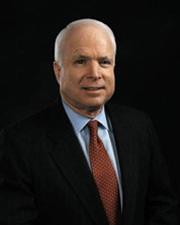 Sen. John McCain (R-AZ)
Submitted September 15, 2004
Legislative Activity
Stay on top of the latest movement without scrolling through every action
Floor
Latest Action
Senate amendment submitted
September 15, 2004
View full timeline
Floor
Senate amendment submitted
September 15, 2004
Floor
Senate amendment proposed (on the floor): Amendment SA 3662 proposed by Senator Frist for Senator McCain.(consideration: CR S9321)
September 15, 2004
Floor
Senate amendment agreed to: Amendment SA 3662 agreed to in Senate by Unanimous Consent.
September 15, 2004
Floor
Amendment SA 3662 proposed by Senator Frist for Senator McCain. (consideration: CR S9321) To enhance Federal Trade Commission enforcement against cross-border fraud and deception and other consumer protection law violations.
September 15, 2004
Floor
Amendment SA 3662 agreed to in Senate by Unanimous Consent.
September 15, 2004
Text
Submitted
TEXT OF AMENDMENTS
SA 3660. Mrs. HUTCHISON (for herself and Mrs. Feinstein) proposed an
amendment to the bill S. 2674, making appropriations for military
construction, family housing, and base realignment and closure for the
Department of Defense for the fiscal year ending September 30, 2005,
and for other purposes; as follows:
At the appropriate place, insert the following:
Sec. . (a) Assessment of Budget Authority Limitation on
Military Housing Privatization Initiative.--(1) The Secretary
of Defense shall assess the impact on the military family
housing program of having the total value of contracts and
investments undertaken under the Military Housing
Privatization Initiative reach the limitation on budget
authority for the initiative specified in section 2883(g) of
Title 10, United States Code.
(2) The assessment shall include: an estimate of the
appropriations and period of time necessary to provide the
level and quality of housing contemplated under the Military
Housing Privatization Initiative in the event that limitation
in 10 USC 2883(g) is not eliminated and the potential impact
on military families if the limitation is not eliminated.
(b) The Secretary of Defense shall, no later than December
31, 2004, provide to the congressional defense committees a
report on the assessment required by subparagraph (a).
(c) Military Housing Privatization Initiative Defined.--In
this section, the term ``military housing privatization
initiative''
[[Page S9296]]
means the programs and activities undertaken under the
alternative authority for the acquisition and improvement of
military housing under subchapter IV of chapter 169 of title
10, United States Code.
______
SA 3661. Mrs. HUTCHISON (for herself and Mrs. Feinstein) proposed an
amendment to the bill S. 2674, making appropriations for military
construction, family housing, and base realignment and closure for the
Department of Defense for the fiscal year ending September 30, 2005,
and for other purposes; as follows:
At the appropriate place, insert the following:
Sec. 131. Of the amount appropriated by this Act,
$1,500,000 shall be available to the Commission on Review of
Overseas Military Facility Structure of the United States.
______
SA 3662. Mr. FRIST (for Mr. McCain (for himself, Mr. Hollings, and
Mr. Smith)) submitted an amendment intended to be proposed by Mr. Frist
to the bill S. 1234, to reauthorize the Federal Trade Commission, and
for other purposes; as follows:
SECTION 1. SHORT TITLE; FINDINGS; PURPOSE.
(a) Short Title.--This Act may be cited as the
``International Consumer Protection Act of 2004.''.
(b) Findings.--The Congress finds the following:
(1) The Federal Trade Commission protects consumers from
fraud and deception. Cross-border fraud and deception are
growing international problems that affect American consumers
and businesses.
(2) The development of the Internet and improvements in
telecommunications technologies have brought significant
benefits to consumers. At the same time, they have also
provided unprecedented opportunities for those engaged in
fraud and deception to establish operations in one country
and victimize a large number of consumers in other countries.
(3) An increasing number of consumer complaints collected
in the Consumer Sentinel database maintained by the
Commission, and an increasing number of cases brought by the
Commission, involve foreign consumers, foreign businesses or
individuals, or assets or evidence located outside the United
States.
(4) The Commission has legal authority to remedy law
violations involving domestic and foreign wrongdoers,
pursuant to the Federal Trade Commission Act. The
Commission's ability to obtain effective relief using this
authority, however, may face practical impediments when
wrongdoers, victims, other witnesses, documents, money and
third parties involved in the transaction are widely
dispersed in many different jurisdictions. Such circumstances
make it difficult for the Commission to gather all the
information necessary to detect injurious practices, to
recover offshore assets for consumer redress, and to reach
conduct occurring outside the United States that affects
United States consumers.
(5) Improving the ability of the Commission and its foreign
counterparts to share information about cross-border fraud
and deception, to conduct joint and parallel investigations,
and to assist each other is critical to achieving more timely
and effective enforcement in cross-border cases.
(c) Purpose.--The purpose of this Act is to enhance the
ability of the Federal Trade Commission to protect consumers
from cross-border fraud and deception and other consumer
protection law violations.
SEC. 2. FOREIGN LAW ENFORCEMENT AGENCY DEFINED.
Section 4 of the Federal Trade Commission Act (15 U.S.C.
44) is amended by adding at the end the following:
`` `Foreign law enforcement agency' means--
``(A) any agency or judicial authority of a foreign
government, including a foreign state, a political
subdivision of a foreign state, or a multinational
organization constituted by and comprised of foreign states,
that is vested with law enforcement or investigative
authority in civil, criminal, or administrative matters; and
``(B) any multinational or multiagency organization to the
extent that it is acting on behalf of an entity described in
subparagraph (A).''.
SEC. 3. AVAILABILITY OF REMEDIES.
Section 5(a) of the Federal Trade Commission Act (15 U.S.C.
45(a)) is amended by adding at the end the following:
``(4)(A) For purposes of this subsection, the term `unfair
or deceptive acts or practices' includes unfair or deceptive
acts or practices involving foreign commerce that--
``(i) cause or are likely to cause reasonably foreseeable
injury within the United States; or
``(ii) involve material conduct occurring within the United
States.
``(B) All remedies available to the Commission with respect
to unfair and deceptive acts or practices shall be available
for acts and practices described in this paragraph, including
restitution to domestic or foreign victims.''.
SEC. 4. POWERS OF THE COMMISSION.
(a) Publication of Information; Reports.--Section 6(f) of
the Federal Trade Commission Act (15 U.S.C. 46(f)) is
amended--
(1) by inserting ``(1)'' after ``such information'' the
first place it appears; and
(2) by striking ``purposes.'' and inserting ``purposes, and
(2) to any officer or employee of any foreign law enforcement
agency under the same circumstances that making material
available to foreign law enforcement agencies is permitted
under section 21(b).''.
(b) Other Powers of the Commission.--Section 6 of the
Federal Trade Commission Act (15 U.S.C. 46) is further
amended by inserting after subsection (i) and before the
proviso the following:
``(j) Investigative Assistance for Foreign Law Enforcement
Agencies.--
``(1) In general.--Upon a written request from a foreign
law enforcement agency to provide assistance in accordance
with this subsection, if the requesting agency states that it
is investigating, or engaging in enforcement proceedings
against, possible violations of laws prohibiting fraudulent
or deceptive commercial practices, or other practices
substantially similar to practices prohibited by any
provision of the laws administered by the Commission, other
than Federal antitrust laws (as defined in section 12(5) of
the International Antitrust Enforcement Assistance Act of
1994 (15 U.S.C. 6211(5))), to provide the assistance
described in paragraph (2) without requiring that the
conduct identified in the request constitute a violation
of the laws of the United States.
``(2) Type of assistance.--In providing assistance to a
foreign law enforcement agency under this subsection, the
Commission may--
``(A) conduct such investigation as the Commission deems
necessary to collect information and evidence pertinent to
the request for assistance, using all investigative powers
authorized by this Act; and
``(B) when the request is from an agency acting to
investigate or pursue the enforcement of civil laws, or when
the Attorney General refers a request to the Commission from
an agency acting to investigate or pursue the enforcement of
criminal laws, seek and accept appointment by a United States
district court of Commission attorneys to provide assistance
to foreign and international tribunals and to litigants
before such tribunals on behalf of a foreign law enforcement
agency pursuant to section 1782 of title 28, United States
Code.
``(3) Criteria for determination.--In deciding whether to
provide such assistance, the Commission shall consider all
relevant factors, including--
``(A) whether the requesting agency has agreed to provide
or will provide reciprocal assistance to the Commission;
``(B) whether compliance with the request would prejudice
the public interest of the United States; and
``(C) whether the requesting agency's investigation or
enforcement proceeding concerns acts or practices that cause
or are likely to cause injury to a significant number of
persons.
``(4) International agreements.--If a foreign law
enforcement agency has set forth a legal basis for requiring
conclusion of an international agreement as a condition for
reciprocal assistance, or as a condition for provision of
materials or information to the Commission, the Commission,
with prior approval and ongoing oversight of the Secretary of
State, and with final approval of the agreement by the
Secretary of State, may negotiate and conclude an
international agreement, in the name of either the United
States or the Commission, for the purpose of obtaining such
assistance, materials, or information. The Commission may
undertake in such an international agreement to
``(A) provide assistance using the powers set forth in this
subsection;
``(B) disclose materials and information in accordance with
subsection (f) and section 21(b); and
``(C) engage in further cooperation, and protect materials
and information received from disclosure, as authorized by
this Act.
``(5) Additional authority.--The authority provided by this
subsection is in addition to, and not in lieu of, any other
authority vested in the Commission or any other officer of
the United States.
``(6) Limitation.--This subsection does not authorize the
Commission to take any action or exercise any power with
respect to a bank, a savings and loan institution described
in section 18(f)(3) (15 U.S.C. 57a(f)(3)), a Federal credit
union described in section 18(f)(4) (15 U.S.C. 57a(f)(4)), or
a common carrier subject to the Act to regulate commerce,
except in accordance with the undesignated proviso following
the last designated subsection of section 6 (15 U.S.C. 46).
``(7) Assistance to certain countries.--The Commission may
not provide investigative assistance under this subsection to
a foreign law enforcement agency from a country that the
Secretary of State has determined, in accordance with section
6(j) of the Export Administration Act of 1979 (50 U.S.C. App.
2405(j)), has repeatedly provided support for acts of
international terrorism, unless and until such determination
is rescinded pursuant to section 6(j)(4) of that Act (50
U.S.C. App. 2405(j)(4)).
``(k) Referral of Evidence for Criminal Proceedings.--
``(1) In general.--Whenever the Commission obtains evidence
that any person, partnership, or corporation, either domestic
or foreign, has engaged in conduct that may constitute a
violation of Federal criminal law, to transmit such evidence
to the Attorney General, who may institute criminal
proceedings under appropriate statutes.
[[Page S9297]]
Nothing in this paragraph affects any other authority of the
Commission to disclose information.
``(2) International information.--The Commission should
endeavor to ensure, with respect to memoranda of
understanding and international agreements it may conclude,
that material it has obtained from foreign law enforcement
agencies acting to investigate or pursue the enforcement of
foreign criminal laws may be used for the purpose of
investigation, prosecution, or prevention of violations of
United States criminal laws.
``(1) Expenditures for Cooperative Arrangements.--To expend
appropriated funds for--
``(1) operating expenses and other costs of bilateral and
multilateral cooperative law enforcement groups conducting
activities of interest to the Commission and in which the
Commission participates; and
``(2) expenses for consultations and meetings hosted by the
Commission with foreign government agency officials, members
of their delegations, appropriate representatives and staff
to exchange views concerning developments relating to the
Commission's mission, development and implementation of
cooperation agreements, and provision of technical assistance
for the development of foreign consumer protection or
competition regimes, such expenses to include necessary
administrative and logistic expenses and the expenses of
Commission staff and foreign invitees in attendance at such
consultations and meetings including--
``(A) such incidental expenses as meals taken in the course
of such attendance;
``(B) any travel and transportation to or from such
meetings; and
``(C) any other related lodging or subsistence.''.
(c) Authorization of Appropriations.--The Federal Trade
Commission is authorized to expend appropriated funds not to
exceed $100,000 per fiscal year for purposes of section 6(l)
of the Federal Trade Commission Act (15 U.S.C. 46(l)) (as
added by subsection (b) of this section), including operating
expenses and other costs of the following bilateral and
multilateral cooperative law enforcement agencies and
organizations:
(1) The International Consumer Protection and Enforcement
Network.
(2) The International Competition Network.
(3) The Mexico-U.S.-Canada Health Fraud Task Force.
(4) Project Emptor.
(5) The Toronto Strategic Partnership and other regional
partnerships with a nexus in a Canadian province.
(d) Conforming Amendment.--Section 6 of the Federal Trade
Commission Act (15 U.S.C. 46) is amended by striking
``clauses (a) and (b)'' in the proviso following subsection
(l) (as added by subsection (b) of this section) and
inserting ``subsections (a), (b), and (j)''.
SEC. 5. REPRESENTATION IN FOREIGN LITIGATION.
Section 16 of the Federal Trade Commission Act (15 U.S.C.
56) is amended by adding at the end the following:
``(c) Foreign Litigation.--
``(1) Commission attorneys.--With the concurrence of the
Attorney General, the Commission may designate Commission
attorneys to assist the Attorney General in connection with
litigation in foreign courts on particular matters in which
the Commission has an interest.
``(2) Reimbursement for foreign counsel.--The Commission is
authorized to expend appropriated funds, upon agreement with
the Attorney General, to reimburse the Attorney General for
the retention of foreign counsel for litigation in foreign
courts and for expenses related to litigation in foreign
courts in which the Commission has an interest.
``(3) Limitation on use of funds.--Nothing in this
subsection authorizes the payment of claims or judgments from
any source other than the permanent and indefinite
appropriation authorized by section 1304 of title 31, United
States Code.
``(4) Other authority.--The authority provided by this
subsection is in addition to any other authority of the
Commission or the Attorney General.''.
SEC. 6. SHARING INFORMATION WITH FOREIGN LAW ENFORCEMENT
AGENCIES.
(a) Material Obtained Pursuant to Compulsory Process.--
Section 21(b)(6) of the Federal Trade Commission Act (15
U.S.C. 57b-2(b)(6)) is amended by adding at the end the
following: ``The custodian may make such material available
to any foreign law enforcement agency upon the prior
certification of an appropriate official of any such foreign
law enforcement agency, either by a prior agreement or
memorandum of understanding with the Commission or by other
written certification, that such material will be maintained
in confidence and will be used only for official law
enforcement purposes, if--
``(A) the foreign law enforcement agency has set forth a
bona fide legal basis for its authority to maintain the
material in confidence;
``(B) the materials are to be used for purposes of
investigating, or engaging in enforcement proceedings related
to, possible violations of--
``(i) foreign laws prohibiting fraudulent or deceptive
commercial practices, or other practices substantially
similar to practices prohibited by any law administered by
the Commission;
``(ii) a law administered by the Commission, if disclosure
of the material would further a Commission investigation or
enforcement proceeding; or
``(iii) with the approval of the Attorney General, other
foreign criminal laws, if such foreign criminal laws are
offenses defined in or covered by a criminal mutual legal
assistance treaty in force between the government of the
United States and the foreign law enforcement agency's
government;
``(C) the appropriate Federal banking agency (as defined in
section 3(q) of the Federal Deposit Insurance Act (12 U.S.C.
1813(q)) or, in the case of a Federal credit union, the
National Credit Union Administration, has given its prior
approval if the materials to be provided under subparagraph
(B) are requested by the foreign law enforcement agency for
the purpose of investigating, or engaging in enforcement
proceedings based on, possible violations of law by a bank, a
savings and loan institution described in section 18(f)(3) of
the Federal Trade Commission Act (15 U.S.C. 57a(f)(3)), or a
Federal credit union described in section 18(f)(4) of the
Federal Trade Commission Act (15 U.S.C. 57a(f)(4)); and
``(D) the foreign law enforcement agency is not from a
country that the Secretary of State has determined, in
accordance with section 6(j) of the Export Administration Act
of 1979 (50 U.S.C. App. 2405(j)), has repeatedly provided
support for acts of international terrorism, unless and until
such determination is rescinded pursuant to section 6(j)(4)
of that Act (50 U.S.C. App. 2405(j)(4)).
Nothing in the preceding sentence authorizes the disclosure
of material obtained in connection with the administration of
the Federal antitrust laws or foreign antitrust laws (as
defined in paragraphs (5) and (7), respectively, of section
12 of the International Antitrust Enforcement Assistance Act
of 1994 (15 U.S.C. 6211)) to any officer or employee of a
foreign law enforcement agency.''.
(b) Information Supplied by and About Foreign Sources.--
Section 21(f) of the Federal Trade Commission Act (15 U.S.C.
57b-2(f)) is amended to read as follows:
``(f) Exemption From Public Disclosure.--
``(1) In general.--Any material which is received by the
Commission in any investigation, a purpose of which is to
determine whether any person may have violated any provision
of the laws administered by the Commission, and which is
provided pursuant to any compulsory process under this Act or
which is provided voluntarily in place of such compulsory
process shall not be required to be disclosed under section
552 of title 5, United States Code, or any other provision of
law, except as provided in paragraph (2)(B) of this section.
``(2) Material obtained from a foreign source.--
``(A) In general.--Except as provided in subparagraph (B)
of this paragraph, the Commission shall not be required to
disclose under section 552 of title 5, United States Code, or
any other provision of law--
``(i) any material obtained from a foreign law enforcement
agency or other foreign government agency, if the foreign law
enforcement agency or other foreign government agency has
requested confidential treatment, or has precluded such
disclosure under other use limitations, as a condition of
providing the material;
``(ii) any material reflecting a consumer complaint
obtained from any other foreign source, if that foreign
source supplying the material has requested confidential
treatment as a condition of providing the material; or
``(iii) any material reflecting a consumer complaint
submitted to a Commission reporting mechanism sponsored in
part by foreign law enforcement agencies or other foreign
government agencies.
``(B) Savings provision.--Nothing in this subsection
authorizes the Commission to withhold information from the
Congress or prevent the Commission from complying with an
order of a court of the United States in an action commenced
by the United States or the Commission.''.
SEC. 7. CONFIDENTIALITY; DELAYED NOTICE OF PROCESS.
(a) In General.--The Federal Trade Commission Act (15
U.S.C. 41 et seq.) is amended by inserting after section 21
the following:
``SEC. 21A. CONFIDENTIALITY AND DELAYED NOTICE OF COMPULSORY
PROCESS FOR CERTAIN THIRD PARTIES.
``(a) Application With Other Laws.--The Right to Financial
Privacy Act (12 U.S.C. 3401 et seq.) and chapter 121 of title
18, United States Code, shall apply with respect to the
Commission, except as otherwise provided in this section.
``(b) In General.--The procedures for delay of notification
or prohibition of disclosure under the Right to Financial
Privacy Act (12 U.S.C. 3401 et seq.) and chapter 121 of title
18, United States Code, including procedures for extensions
of such delays or prohibitions, shall be available to the
Commission, provided that, notwithstanding any provision
therein--
``(1) a court may issue an order delaying notification or
prohibiting disclosure (including extending such an order) in
accordance with the procedures of section 1109 of the Right
to Financial Privacy Act (12 U.S.C. 3409) (if notification
would otherwise be required under that Act), or section 2705
of title 18, United States Code, (if notification would
otherwise be required under chapter 121 of that title), if
the presiding judge or magistrate judge finds that there is
reason to believe that such notification or disclosure may
cause an adverse result as defined in subsection (g) of this
section; and
[[Page S9298]]
``(2) if notification would otherwise be required under
chapter 121 of title 18, United States Code, the Commission
may delay notification (including extending such a delay)
upon the execution of a written certification in accordance
with the procedures of section 2705 of that title if the
Commission finds that there is reason to believe that
notification may cause an adverse result as defined in
subsection (g) of this section.
``(c) Ex Parte Application by Commission.--
``(1) In General.--If neither notification nor delayed
notification by the Commission is required under the Right to
Financial Privacy Act (12 U.S.C. 3401 et seq.) or chapter 121
of title 18, United States Code, the Commission may apply ex
parte to a presiding judge or magistrate judge for an order
prohibiting the recipient of compulsory process issued by the
Commission from disclosing to any other person the existence
of the process, notwithstanding any law or regulation of the
United States, or under the constitution, or any law or
regulation, of any State, political subdivision of a State,
territory of the United States, or the District of Columbia.
The presiding judge or magistrate judge may enter such an
order granting the requested prohibition of disclosure for a
period not to exceed 60 days if there is reason to believe
that disclosure may cause an adverse result as defined in
subsection (g). The presiding judge or magistrate judge may
grant extensions of this order of up to 30 days each in
accordance with this subsection, except that in no event
shall the prohibition continue in force for more than a total
of 9 months.
``(2) Application.--This subsection shall apply only in
connection with compulsory process issued by the Commission
where the recipient of such process is not a subject of the
investigation or proceeding at the time such process is
issued.
``(3) Limitation.--No order issued under this subsection
may prohibit any recipient from disclosing to a Federal
agency that the recipient has received compulsory process
from the Commission.
``(d) No Liability for Failure To Notify.--If neither
notification nor delayed notification by the Commission is
required under the Right to Financial Privacy Act (12 U.S.C.
3401 et seq.) or chapter 121 of title 18, United States
Code, the recipient of compulsory process issued by the
Commission under this Act shall not be liable under any
law or regulation of the United States, or under the
constitution, or any law or regulation, of any State,
political subdivision of a State, territory of the United
States, or the District of Columbia, or under any contract
or other legally enforceable agreement, for failure to
provide notice to any person that such process has been
issued or that the recipient has provided information in
response to such process. The preceding sentence does not
exempt any recipient from liability for--
``(1) the underlying conduct reported;
``(2) any failure to comply with the record retention
requirements under section 1104(c) of the Right to Financial
Privacy Act (12 U.S.C. 3404), where applicable; or
``(3) any failure to comply with any obligation the
recipient may have to disclose to a Federal agency that the
recipient has received compulsory process from the Commission
or intends to provide or has provided information to the
Commission in response to such process.
``(e) Venue and Procedure.--
``(1) In general.--All judicial proceedings initiated by
the Commission under the Right to Financial Privacy Act (12
U.S.C. 3401 et seq.), chapter 121 of title 18, United States
Code, or this section may be brought in the United States
District Court for the District of Columbia or any other
appropriate United States District Court. All ex parte
applications by the Commission under this section related to
a single investigation may be brought in a single proceeding.
``(2) In camera proceedings.--Upon application by the
Commission, all judicial proceedings pursuant to this section
shall be held in camera and the records thereof sealed until
expiration of the period of delay or such other date as the
presiding judge or magistrate judge may permit.
``(f) Section Not To Apply to Antitrust Investigations or
Proceedings.--This section shall not apply to an
investigation or proceeding related to the administration of
Federal antitrust laws or foreign antitrust laws (as defined
in paragraphs (5) and (7), respectively, of section 12 of the
International Antitrust Enforcement Assistance Act of 1994
(15 U.S.C. 6211).
``(g) Adverse Result Defined.--For purposes of this section
the term `adverse result' means--
``(1) endangering the life or physical safety of an
individual;
``(2) flight from prosecution;
``(3) the destruction of, or tampering with, evidence;
``(4) the intimidation of potential witnesses; or
``(5) otherwise seriously jeopardizing an investigation or
proceeding related to fraudulent or deceptive commercial
practices or persons involved in such practices, or unduly
delaying a trial related to such practices or persons
involved in such practices, including, but not limited to,
by--
``(A) the transfer outside the territorial limits of the
United States of assets or records related to fraudulent or
deceptive commercial practices or related to persons involved
in such practices;
``(B) impeding the ability of the Commission to identify
persons involved in fraudulent or deceptive commercial
practices, or to trace the source or disposition of funds
related to such practices; or
``(C) the dissipation, fraudulent transfer, or concealment
of assets subject to recovery by the Commission.''.
(b) Conforming Amendment.--Section 16(a)(2) of the Federal
Trade Commission Act (15 U.S.C. 56(a)(2)) is amended--
(1) by striking ``or'' after the semicolon in subparagraph
(C);
(2) by inserting ``or'' after the semicolon in subparagraph
(D); and
(3) by inserting after subparagraph (D) the following:
``(E) under section 21A of this Act;''.
SEC. 8. PROTECTION FOR VOLUNTARY PROVISION OF INFORMATION.
The Federal Trade Commission Act (15 U.S.C. 41 et seq.) is
further amended by adding after section 21A (as added by
section 7 of this Act) the following:
``SEC. 21B. PROTECTION FOR VOLUNTARY PROVISION OF
INFORMATION.
``(a) In General.--
``(1) No Liability for providing certain material.--An
entity described in paragraph (2) or (3) of subsection (d) of
this section that voluntarily provides material to the
Commission that such entity reasonably believes is relevant
to--
``(A) a possible unfair or deceptive act or practice, as
defined in section 5(a) of this Act; or
``(B) assets subject to recovery by the Commission,
including assets located in foreign jurisdictions;
shall not be liable to any person under any law or regulation
of the United States, or under the constitution, or any law
or regulation, of any State, political subdivision of a
State, territory of the United States, or the District of
Columbia, for such provision of material or for any failure
to provide notice of such provision of material or of
intention to so provide material.
(2) Limitations.--Nothing in this subsection shall be
construed to exempt any such entity from liability--
(A) for the underlying conduct reported; or
(B) to any Federal agency for providing such material or
for any failure to comply with any obligation the entity may
have to notify a Federal agency prior to providing such
material to the Commission.
``(b) Certain Financial Institutions.--An entity described
in paragraph (1) of subsection (d) of this section shall, in
accordance with section 5318(g)(3) of title 31, United
States Code, be exempt from liability for making a
voluntary disclosure to the Commission of any possible
violation of law or regulation, including--
``(1) a disclosure regarding assets, including assets
located in foreign jurisdictions--
``(A) related to possibly fraudulent or deceptive
commercial practices;
``(B) related to persons involved in such practices; or
``(C) otherwise subject to recovery by the Commission; or
``(2) a disclosure regarding suspicious chargeback rates
related to possibly fraudulent or deceptive commercial
practices.
``(c) Consumer Complaints.--Any entity described in
subsection (d) that voluntarily provides consumer complaints
sent to it, or information contained therein, to the
Commission shall not be liable to any person under any law or
regulation of the United States, or under the constitution,
or any law or regulation, of any State, political subdivision
of a State, territory of the United States, or the District
of Columbia, for such provision of material or for any
failure to provide notice of such provision of material or of
intention to so provide material. This subsection does not
provide any exemption from liability for the underlying
conduct.
``(d) Application.--This section applies to the following
entities, whether foreign or domestic:
``(1) A financial institution as defined in section 5312 of
title 31, United States Code.
``(2) To the extent not included in paragraph (1), a bank
or thrift institution, a commercial bank or trust company, an
investment company, a credit card issuer, an operator of a
credit card system, and an issuer, redeemer, or cashier of
travelers' checks, money orders, or similar instruments.
``(3) A courier service, a commercial mail receiving
agency, an industry membership organization, a payment system
provider, a consumer reporting agency, a domain name
registrar or registry acting as such, and a provider of
alternative dispute resolution services.
``(4) An Internet service provider or provider of telephone
services.''.
SEC. 9. STAFF EXCHANGES.
The Federal Trade Commission Act (15 U.S.C. 41 et seq.) is
amended by adding after section 25 the following new section:
``SEC. 25A. STAFF EXCHANGES.
``(a) In General.--The Commission may--
``(1) retain or employ officers or employees of foreign
government agencies on a temporary basis as employees of the
Commission pursuant to section 2 of this Act or section 3101
or 3109 of title 5, United States Code; and
``(2) detail officers or employees of the Commission to
work on a temporary basis for appropriate foreign government
agencies.
``(b) Reciprocity and Reimbursement.--The staff
arrangements described in subsection (a) need not be
reciprocal. The Commission may accept payment or
reimbursement, in cash or in kind, from a foreign government
agency to which this section is applicable, or payment or
reimbursement made
[[Page S9299]]
on behalf of such agency, for expenses incurred by the
Commission, its members, and employees in carrying out such
arrangements.
``(c) Standards of Conduct.--A person appointed under
subsection (a)(1) shall be subject to the provisions of law
relating to ethics, conflicts of interest, corruption, and
any other criminal or civil statute or regulation governing
the standards of conduct for Federal employees that are
applicable to the type of appointment.''.
SEC. 10. INFORMATION SHARING WITH FINANCIAL REGULATORS.
Section 1112(e) of the Right to Financial Privacy Act (12
U.S.C. 3412(e)) is amended by inserting ``the Federal Trade
Commission,'' after ``the Securities and Exchange
Commission,''.
SEC. 11. AUTHORITY TO ACCEPT REIMBURSEMENTS, GIFTS, AND
VOLUNTARY AND UNCOMPENSATED SERVICES.
The Federal Trade Commission Act (15 U.S.C. 41 et seq.) is
amended--
(1) by redesignating section 26 as section 28; and
(2) by inserting after section 25A, as added by section 9
of this Act, the following:
``SEC. 26. REIMBURSEMENT OF EXPENSES.
``The Commission may accept payment or reimbursement, in
cash or in kind, from a domestic or foreign law enforcement
agency, or payment or reimbursement made on behalf of such
agency, for expenses incurred by the Commission, its members,
or employees in carrying out any activity pursuant to a
statute administered by the Commission without regard to any
other provision of law. Any such payments or reimbursements
shall be considered a reimbursement to the appropriated funds
of the Commission.
``SEC. 27. GIFTS AND VOLUNTARY AND UNCOMPENSATED SERVICES.
``(a) In General.--In furtherance of its functions the
Commission may accept, hold, administer, and use
unconditional gifts, donations, and bequests of real,
personal, and other property and, notwithstanding section
1342 of title 31, United States Code, accept voluntary and
uncompensated services.
``(b) Limitations.--
``(1) Conflicts of interest.--The Commission shall
establish written guidelines setting forth criteria to be
used in determining whether the acceptance, holding,
administration, or use of a gift, donation, or bequest
pursuant to subsection (a) would reflect unfavorably upon the
ability of the Commission or any employee to carry out its
responsibilities or official duties in a fair and objective
manner, or would compromise the integrity or the appearance
of the integrity of its programs or any official involved in
those programs.
``(2) Voluntary services.--A person who provides voluntary
and uncompensated service under subsection (a) shall be
considered a Federal employee for purposes of--
``(A) chapter 81 of title 5, United States Code, (relating
to compensation for injury); and
``(B) the provisions of law relating to ethics, conflicts
of interest, corruption, and any other criminal or civil
statute or regulation governing the standards of conduct for
Federal employees.
``(3) Tort liability of volunteers.--A person who provides
voluntary and uncompensated service under subsection (a),
while assigned to duty, shall be deemed a volunteer of a
nonprofit organization or governmental entity for purposes of
the Volunteer Protection Act of 1997 (42 U.S.C. 14501 et
seq.). Subsection (d) of section 4 of such Act (42 U.S.C.
14503(d)) shall not apply for purposes of any claim against
such volunteer.''.
SEC. 12. PRESERVATION OF EXISTING AUTHORITY.
The authority provided by this Act, and by the Federal
Trade Commission Act (15 U.S.C. 41 et seq.) and the Right to
Financial Privacy Act (12 U.S.C. 3401 et seq.), as such Acts
are amended by this Act, is in addition to, and not in lieu
of, any other authority vested in the Federal Trade
Commission or any other officer of the United States.
SEC. 13. REPORT.
Not later than 3 years after the date of enactment of this
Act, the Federal Trade Commission shall transmit to Congress
a report describing its use of and experience with the
authority granted by this Act, along with any recommendations
for additional legislation. The report shall include--
(1) the number of cross-border complaints received by the
Commission;
(2) identification of the foreign agencies to which the
Commission has provided nonpublic investigative information
under this Act;
(3) the number of times the Commission has used compulsory
process on behalf of foreign law enforcement agencies
pursuant to section 6 of the Federal Trade Commission Act (15
U.S.C. 46), as amended by section 4 of this Act;
(4) a list of international agreements and memoranda of
understanding executed by the Commission that relate to this
Act;
(5) the number of times the Commission has sought delay of
notice pursuant to section 21A of the Federal Trade
Commission Act, as added by section 7 of this Act;
(6) a description of the types of information private
entities have provided voluntarily pursuant to section 21B of
the Federal Trade Commission Act, as added by section 8 of
this Act;
(7) a description of the results of cooperation with
foreign law enforcement agencies under section 21 of the
Federal Trade Commission Act (15 U.S.C. 57-2) as amended by
section 6 of this Act;
(8) an analysis of whether the lack of an exemption from
the disclosure requirements of section 552 of title 5, United
States Code, with regard to information or material
voluntarily provided relevant to possible unfair or deceptive
acts or practices, has hindered the Commission in
investigating or engaging in enforcement proceedings against
such practices; and
(9) a description of Commission litigation brought in
foreign courts.
SEC. 14. REAUTHORIZATION.
The text of section 25 of the Federal Trade Commission Act
(15 U.S.C. 57c) is amended to read as follows:
``There are authorized to be appropriated to carry out the
functions, powers, and duties of the Commission not to exceed
$224,695,000 for fiscal year 2005, $235,457,000 for fiscal
year 2006, $249,000,000 for fiscal year 2007, and
$264,000,000 for fiscal year 2008.''.
______
SA 3663. Mr. FRIST (for Mrs. Feinstein (for herself, Mr. Domenici,
and Mr. Bingaman)) proposed an amendment to the bill H.R. 2828, to
authorize the Secretary of the Interior to implement water supply
technology and infrastructure programs aimed at increasing and
diversifying domestic water resources; as follows:
Strike all after the enacting clause and insert the
following:
SECTION 1. SHORT TITLE; TABLE OF CONTENTS.
(a) Short Title.--This Act may be cited as the ``Water
Supply, Reliability, and Environmental Improvement Act''.
(b) Table of Contents.--The table of contents of this Act
is as follows:
Sec. 1. Short title; table of contents.
TITLE I--CALIFORNIA WATER SECURITY AND ENVIRONMENTAL ENHANCEMENT
Sec. 101. Short title.
Sec. 102. Definitions.
Sec. 103. Bay Delta program.
Sec. 104. Management.
Sec. 105. Reporting requirements.
Sec. 106. Crosscut budget.
Sec. 107. Federal share of costs.
Sec. 108. Compliance with State and Federal law.
Sec. 109. Authorization of appropriation.
TITLE II--MISCELLANEOUS
Sec. 201. Salton Sea study program.
Sec. 202. Alder Creek water storage and conservation project
feasibility study and report.
Sec. 203. Folsom Reservoir temperature control device authorization.
TITLE I--CALIFORNIA WATER SECURITY AND ENVIRONMENTAL ENHANCEMENT
SEC. 101. SHORT TITLE.
This title may be cited as the ``Calfed Bay-Delta
Authorization Act''.
SEC. 102. DEFINITIONS.
In this title:
(1) Calfed bay-delta program.--The terms ``Calfed Bay-Delta
Program'' and ``Program'' mean the programs, projects,
complementary actions, and activities undertaken through
coordinated planning, implementation, and assessment
activities of the State agencies and Federal agencies as set
forth in the Record of Decision.
(2) California bay-delta authority.--The terms ``California
Bay-Delta Authority'' and ``Authority'' mean the California
Bay-Delta Authority, as set forth in the California Bay-Delta
Authority Act (Cal. Water Code Sec. 79400 et seq.).
(3) Delta.--The term ``Delta'' has the meaning given the
term in the Record of Decision.
(4) Environmental water account.--The term ``Environmental
Water Account'' means the Cooperative Management Program
established under the Record of Decision.
(5) Federal agencies.--The term ``Federal agencies''
means--
(A) the Department of the Interior, including--
(i) the Bureau of Reclamation;
(ii) the United States Fish and Wildlife Service;
(iii) the Bureau of Land Management; and
(iv) the United States Geological Survey;
(B) the Environmental Protection Agency;
(C) the Army Corps of Engineers;
(D) the Department of Commerce, including the National
Marine Fisheries Service (also known as ``NOAA Fisheries'');
(E) the Department of Agriculture, including--
(i) the Natural Resources Conservation Service; and
(ii) the Forest Service; and
(F) the Western Area Power Administration.
(6) Firm yield.--The term ``firm yield'' means a quantity
of water from a project or program that is projected to be
available on a reliable basis, given a specified level of
risk, during a critically dry period.
(7) Governor.--The term ``Governor'' means the Governor of
the State of California.
(8) Record of decision.--The term ``Record of Decision''
means the Calfed Bay-Delta Program Record of Decision, dated
August 28, 2000.
(9) Secretary.--The term ``Secretary'' means the Secretary
of the Interior.
(10) State.--The term ``State'' means the State of
California.
(11) State agencies.--The term ``State agencies'' means--
(A) the Resources Agency of California, including--
[[Page S9300]]
(i) the Department of Water Resources;
(ii) the Department of Fish and Game;
(iii) the Reclamation Board;
(iv) the Delta Protection Commission;
(v) the Department of Conservation;
(vi) the San Francisco Bay Conservation and Development
Commission;
(vii) the Department of Parks and Recreation; and
(viii) the California Bay-Delta Authority;
(B) the California Environmental Protection Agency,
including the State Water Resources Control Board;
(C) the California Department of Food and Agriculture; and
(D) the Department of Health Services.
SEC. 103. BAY DELTA PROGRAM.
(a) In General.--
(1) Record of decision as general framework.--The Record of
Decision is approved as a general framework for addressing
the Calfed Bay-Delta Program, including its components
relating to water storage, ecosystem restoration, water
supply reliability (including new firm yield), conveyance,
water use efficiency, water quality, water transfers,
watersheds, the Environmental Water Account, levee stability,
governance, and science.
(2) Requirements.--
(A) In general.--The Secretary and the heads of the Federal
agencies are authorized to carry out the activities described
in subsections (c) through (f) consistent with--
(i) the Record of Decision;
(ii) the requirement that Program activities consisting of
protecting drinking water quality, restoring ecological
health, improving water supply reliability (including
additional storage, conveyance, and new firm yield), and
protecting Delta levees will progress in a balanced manner;
and
(iii) this title.
(B) Multiple benefits.--In selecting activities and
projects, the Secretary and the heads of the Federal agencies
shall consider whether the activities and projects have
multiple benefits.
(b) Authorized Activities.--The Secretary and the heads of
the Federal agencies are authorized to carry out the
activities described in subsections (c) through (f) in
furtherance of the Calfed Bay-Delta Program as set forth in
the Record of Decision, subject to the cost-share and other
provisions of this title, if the activity has been--
(1) subject to environmental review and approval, as
required under applicable Federal and State law; and
(2) approved and certified by the relevant Federal agency,
following consultation and coordination with the Governor, to
be consistent with the Record of Decision.
(c) Authorizations for Federal Agencies Under Applicable
Law.--
(1) Secretary of the interior.--The Secretary of the
Interior is authorized to carry out the activities described
in paragraphs (1) through (10) of subsection (d), to the
extent authorized under the reclamation laws, the Central
Valley Project Improvement Act (title XXXIV of Public Law
102-575; 106 Stat. 4706), the Fish and Wildlife Coordination
Act (16 U.S.C. 661 et seq.), the Endangered Species Act of
1973 (16 U.S.C. 1531 et seq.), and other applicable law.
(2) Administrator of the environmental protection agency.--
The Administrator of the Environmental Protection Agency is
authorized to carry out the activities described in
paragraphs (3), (5), (6), (7), (8), and (9) of subsection
(d), to the extent authorized under the Federal Water
Pollution Control Act (33 U.S.C. 1251 et seq.), the Safe
Drinking Water Act (42 U.S.C. 300f et seq.), and other
applicable law.
(3) Secretary of the army.--The Secretary of the Army is
authorized to carry out the activities described in
paragraphs (1), (2), (6), (7), (8), and (9) of subsection
(d), to the extent authorized under flood control, water
resource development, and other applicable law.
(4) Secretary of commerce.--The Secretary of Commerce is
authorized to carry out the activities described in
paragraphs (2), (6), (7), and (9) of subsection (d), to the
extent authorized under the Fish and Wildlife Coordination
Act (16 U.S.C. 661 et seq.), the Endangered Species Act of
1973 (16 U.S.C. 1531 et seq.), and other applicable law.
(5) Secretary of agriculture.--The Secretary of Agriculture
is authorized to carry out the activities described in
paragraphs (3), (5), (6), (7), (8), and (9) of subsection
(d), to the extent authorized under title XII of the Food
Security Act of 1985 (16 U.S.C. 3801 et seq.), the Farm
Security and Rural Investment Act of 2002 (Public Law 107-
171; 116 Stat. 134) (including amendments made by that Act),
and other applicable law.
(d) Description of Activities Under Applicable Law.--
(1) Water storage.--
(A) In general.--Activities under this paragraph consist
of--
(i) planning and feasibility studies for projects to be
pursued with project-specific study for enlargement of--
(I) the Shasta Dam in Shasta County; and
(II) the Los Vaqueros Reservoir in Contra Costa County;
(ii) planning and feasibility studies for the following
projects requiring further consideration--
(I) the Sites Reservoir in Colusa County; and
(II) the Upper San Joaquin River storage in Fresno and
Madera Counties;
(iii) developing and implementing groundwater management
and groundwater storage projects; and
(iv) comprehensive water management planning.
(B) Storage project authorization and balanced calfed
implementation.--
(i) In general.--If on completion of the feasibility study
for a project described in clause (i) or (ii) of subparagraph
(A), the Secretary, in consultation with the Governor,
determines that the project should be constructed in whole or
in part with Federal funds, the Secretary shall submit the
feasibility study to Congress.
(ii) Finding of imbalance.--If Congress fails to authorize
construction of the project by the end of the next full
session following the submission of the feasibility study,
the Secretary, in consultation with the Governor, shall
prepare a written determination making a finding of imbalance
for the Calfed Bay-Delta Program.
(iii) Report on rebalancing.--
(I) In general.--If the Secretary makes a finding of
imbalance for the Program under clause (ii), the Secretary,
in consultation with the Governor, shall, not later than 180
days after the end of the full session described in clause
(ii), prepare and submit to Congress a report on the measures
necessary to rebalance the Program.
(II) Schedules and alternatives.--The report shall include
preparation of revised schedules and identification of
alternatives to rebalance the Program, including resubmission
of the project to Congress with or without modification,
construction of other projects, and construction of other
projects that provide equivalent water supply and other
benefits at equal or lesser cost.
(C) Water supply and yield study.--
(i) In general.--The Secretary, acting through the Bureau
of Reclamation and in coordination with the State, shall
conduct a study of available water supplies and existing and
future needs for water--
(I) within the units of the Central Valley Project;
(II) within the area served by Central Valley Project
agricultural, municipal, and industrial water service
contractors; and
(III) within the Calfed Delta solution area.
(ii) Relationship to prior study.--In conducting the study,
the Secretary shall incorporate and revise, as necessary, the
results of the study required by section 3408(j) of the
Central Valley Project Improvement Act of 1992 (Public Law
102-575; 106 Stat. 4730).
(iii) Report.--Not later than 1 year after the date of
enactment of this Act, the Secretary shall submit to the
appropriate authorizing and appropriating committees of the
Senate and the House of Representatives a report describing
the results of the study, including--
(I) new firm yield and water supply improvements, if any,
for Central Valley Project agricultural water service
contractors and municipal and industrial water service
contractors, including those identified in Bulletin 160;
(II) all water management actions or projects, including
those identified in Bulletin 160, that would--
(aa) improve firm yield or water supply; and
(bb) if taken or constructed, balance available water
supplies and existing demand with due recognition of water
right priorities and environmental needs;
(III) the financial costs of the actions and projects
described under subclause (II); and
(IV) the beneficiaries of those actions and projects and an
assessment of the willingness of the beneficiaries to pay the
capital costs and operation and maintenance costs of the
actions and projects.
(D) Management.--The Secretary shall conduct activities
related to developing groundwater storage projects to the
extent authorized under law.
(E) Comprehensive water planning.--The Secretary shall
conduct activities related to comprehensive water management
planning to the extent authorized under law.
(2) Conveyance.--
(A) South delta actions.--
(i) In general.--In the case of the South Delta, activities
under this subparagraph consist of--
(I) the South Delta Improvements Program through actions
to--
(aa) increase the State Water Project export limit to 8,500
cfs;
(bb) install permanent, operable barriers in the South
Delta, under which Federal agencies shall cooperate with the
State to accelerate installation of the permanent, operable
barriers in the South Delta, with an intent to complete that
installation not later than September 30, 2007;
(cc) evaluate, consistent with the Record of Decision, fish
screens and intake facilities at the Tracy Pumping Plant
facilities; and
(dd) increase the State Water Project export to the maximum
capability of 10,300 cfs;
(II) reduction of agricultural drainage in South Delta
channels, and other actions necessary to minimize the impact
of drainage on drinking water quality;
(III) evaluation of lower San Joaquin River floodway
improvements;
(IV) installation and operation of temporary barriers in
the South Delta until fully operable barriers are
constructed; and
(V) actions to protect navigation and local diversions not
adequately protected by temporary barriers.
(ii) Actions to increase pumping.--Actions to increase
pumping shall be accomplished in a manner consistent with the
Record of Decision requirement to avoid redirected impacts
and adverse impacts to
[[Page S9301]]
fishery protection and with any applicable Federal or State
law that protects--
(I) water diversions and use (including avoidance of
increased costs of diversion) by in-Delta water users
(including in-Delta agricultural users that have historically
relied on water diverted for use in the Delta);
(II) water quality for municipal, industrial, agricultural,
and other uses; and
(III) water supplies for areas of origin.
(B) North delta actions.--In the case of the North Delta,
activities under this subparagraph consist of--
(i) evaluation and implementation of improved operational
procedures for the Delta Cross Channel to address fishery and
water quality concerns;
(ii) evaluation of a screened through-Delta facility on the
Sacramento River; and
(iii) evaluation of lower Mokelumne River floodway
improvements.
(C) Interties.--Activities under this subparagraph consist
of--
(i) evaluation and construction of an intertie between the
State Water Project California Aqueduct and the Central
Valley Project Delta Mendota Canal, near the City of Tracy,
as an operation and maintenance activity, except that the
Secretary shall design and construct the intertie in a manner
consistent with a possible future expansion of the intertie
capacity (as described in subsection (f)(1)(B)); and
(ii) assessment of a connection of the Central Valley
Project to the Clifton Court Forebay of the State Water
Project, with a corresponding increase in the screened intake
of the Forebay.
(D) Program to meet standards.--
(i) In general.--Prior to increasing export limits from the
Delta for the purposes of conveying water to south-of-Delta
Central Valley Project contractors or increasing deliveries
through an intertie, the Secretary shall, not later than 1
year after the date of enactment of this Act, in consultation
with the Governor, develop and initiate implementation of a
program to meet all existing water quality standards and
objectives for which the Central Valley Project has
responsibility.
(ii) Measures.--In developing and implementing the program,
the Secretary shall include, to the maximum extent feasible,
the measures described in clauses (iii) through (vii).
(iii) Recirculation program.--The Secretary shall
incorporate into the program a recirculation program to
provide flow, reduce salinity concentrations in the San
Joaquin River, and reduce the reliance on the New Melones
Reservoir for meeting water quality and fishery flow
objectives through the use of excess capacity in export
pumping and conveyance facilities.
(iv) Best management practices plan.--
(I) In general.--The Secretary shall develop and implement,
in coordination with the State's programs to improve water
quality in the San Joaquin River, a best management practices
plan to reduce the water quality impacts of the discharges
from wildlife refuges that receive water from the Federal
Government and discharge salt or other constituents into the
San Joaquin River.
(II) Coordination with interested parties.--The plan shall
be developed in coordination with interested parties in the
San Joaquin Valley and the Delta.
(III) Coordination with entities that discharge water.--The
Secretary shall also coordinate activities under this clause
with other entities that discharge water into the San Joaquin
River to reduce salinity concentrations discharged into the
River, including the timing of discharges to optimize their
assimilation.
(v) Acquisition of water.--The Secretary shall incorporate
into the program the acquisition from willing sellers of
water from streams tributary to the San Joaquin River or
other sources to provide flow, dilute discharges of salt or
other constituents, and to improve water quality in the San
Joaquin River below the confluence of the Merced and San
Joaquin Rivers, and to reduce the reliance on New Melones
Reservoir for meeting water quality and fishery flow
objectives.
(vi) Purpose.--The purpose of the authority and direction
provided to the Secretary under this subparagraph is to
provide greater flexibility in meeting the existing water
quality standards and objectives for which the Central Valley
Project has responsibility so as to reduce the demand on
water from New Melones Reservoir used for that purpose and to
assist the Secretary in meeting any obligations to Central
Valley Project contractors from the New Melones Project.
(vii) Updating of new melones operating plan.--The
Secretary shall update the New Melones operating plan to take
into account, among other things, the actions described in
this title that are designed to reduce the reliance on New
Melones Reservoir for meeting water quality and fishery flow
objectives, and to ensure that actions to enhance fisheries
in the Stanislaus River are based on the best available
science.
(3) Water use efficiency.--
(A) Water conservation projects.--Activities under this
paragraph include water conservation projects that provide
water supply reliability, water quality, and ecosystem
benefits to the California Bay-Delta system.
(B) Technical assistance.--Activities under this paragraph
include technical assistance for urban and agricultural water
conservation projects.
(C) Water recycling and desalination projects.--Activities
under this paragraph include water recycling and desalination
projects, including groundwater remediation projects and
projects identified in the Bay Area Water Plan and the
Southern California Comprehensive Water Reclamation and Reuse
Study and other projects, giving priority to projects that
include regional solutions to benefit regional water supply
and reliability needs.
(D) Water measurement and transfer actions.--Activities
under this paragraph include water measurement and transfer
actions.
(E) Urban water conservation.--Activities under this
paragraph include implementation of best management practices
for urban water conservation.
(F) Reclamation and recycling projects.--
(i) Projects.--This subparagraph applies to--
(I) projects identified in the Southern California
Comprehensive Water Reclamation and Reuse Study, dated April
2001 and authorized by section 1606 of the Reclamation
Wastewater and Groundwater Study and Facilities Act (43
U.S.C. 390h-4); and
(II) projects identified in the San Francisco Bay Area
Regional Water Recycling Program described in the San
Francisco Bay Area Regional Water Recycling Program Recycled
Water Master Plan, dated December 1999 and authorized by
section 1611 of the Reclamation Wastewater and Groundwater
Study and Facilities Act (43 U.S.C. 390h-9).
(ii) Deadline.--Not later than 180 days after the date of
enactment of this Act, the Secretary shall--
(I) complete the review of the existing studies of the
projects described in clause (i); and
(II) make the feasibility determinations described in
clause (iii).
(iii) Feasibility determinations.--A project described in
clause (i) is presumed to be feasible if the Secretary
determines for the project--
(I) in consultation with the affected local sponsoring
agency and the State, that the existing planning and
environmental studies for the project (together with
supporting materials and documentation) have been prepared
consistent with Bureau of Reclamation procedures for projects
under consideration for financial assistance under the
Reclamation Wastewater and Groundwater Study and Facilities
Act (43 U.S.C. 390h et seq.); and
(II) that the planning and environmental studies for the
project (together with supporting materials and
documentation) demonstrate that the project will contribute
to the goals of improving water supply reliability in the
Calfed solution area or the Colorado River Basin within the
State and otherwise meets the requirements of section 1604 of
the Reclamation Wastewater and Groundwater Study and
Facilities Act (43 U.S.C. 390h-2).
(iv) Report.--Not later than 90 days after the date of
completion of a feasibility study or the review of a
feasibility study under this subparagraph, the Secretary
shall submit to the appropriate authorizing and appropriating
committees of the Senate and the House of Representatives a
report describing the results of the study or review.
(4) Water transfers.--Activities under this paragraph
consist of--
(A) increasing the availability of existing facilities for
water transfers;
(B) lowering transaction costs through permit streamlining;
and
(C) maintaining a water transfer information clearinghouse.
(5) Integrated regional water management plans.--Activities
under this paragraph consist of assisting local and regional
communities in the State in developing and implementing
integrated regional water management plans to carry out
projects and programs that improve water supply reliability,
water quality, ecosystem restoration, and flood protection,
or meet other local and regional needs, in a manner that is
consistent with, and makes a significant contribution to, the
Calfed Bay-Delta Program.
(6) Ecosystem restoration.--
(A) In general.--Activities under this paragraph consist
of--
(i) implementation of large-scale restoration projects in
San Francisco Bay and the Delta and its tributaries;
(ii) restoration of habitat in the Delta, San Pablo Bay,
and Suisun Bay and Marsh, including tidal wetland and
riparian habitat;
(iii) fish screen and fish passage improvement projects,
including the Sacramento River Small Diversion Fish Screen
Program;
(iv) implementation of an invasive species program,
including prevention, control, and eradication;
(v) development and integration of Federal and State
agricultural programs that benefit wildlife into the
Ecosystem Restoration Program;
(vi) financial and technical support for locally-based
collaborative programs to restore habitat while addressing
the concerns of local communities;
(vii) water quality improvement projects to manage or
reduce concentrations of salinity, selenium, mercury,
pesticides, trace metals, dissolved oxygen, turbidity,
sediment, and other pollutants;
(viii) land and water acquisitions to improve habitat and
fish spawning and survival in the Delta and its tributaries;
(ix) integrated flood management, ecosystem restoration,
and levee protection projects;
[[Page S9302]]
(x) scientific evaluations and targeted research on Program
activities; and
(xi) strategic planning and tracking of Program
performance.
(B) Reporting requirements.--The Secretary or the head of
the relevant Federal agency (as appropriate under clause
(ii)) shall provide to the appropriate authorizing committees
of the Senate and the House of Representatives and other
appropriate parties in accordance with this subparagraph--
(i) an annual ecosystem program plan report in accordance
with subparagraph (C); and
(ii) detailed project reports in accordance with
subparagraph (D).
(C) Annual ecosystem program plan.--
(i) In general.--Not later than October 1 of each year,
with respect to each ecosystem restoration action carried out
using Federal funds under this title, the Secretary, in
consultation with the Governor, shall submit to the
appropriate authorizing committees of the Senate and the
House of Representatives an annual ecosystem program plan
report.
(ii) Purposes.--The purposes of the report are--
(I) to describe the projects and programs to implement this
subsection in the following fiscal year; and
(II) to establish priorities for funding the projects and
programs for subsequent fiscal years.
(iii) Contents.--The report shall describe--
(I) the goals and objectives of the programs and projects;
(II) program accomplishments;
(III) major activities of the programs;
(IV) the Federal agencies involved in each project or
program identified in the plan and the cost-share
arrangements with cooperating agencies;
(V) the resource data and ecological monitoring data to be
collected for the restoration projects and how the data are
to be integrated, streamlined, and designed to measure the
effectiveness and overall trend of ecosystem health in the
Bay-Delta watershed;
(VI) implementation schedules and budgets;
(VII) existing monitoring programs and performance
measures;
(VIII) the status and effectiveness of measures to minimize
the impacts of the program on agricultural land; and
(IX) a description of expected benefits of the restoration
program relative to the cost.
(iv) Special rule for land acquisition using federal
funds.--For each ecosystem restoration project involving land
acquisition using Federal funds under this title, the
Secretary shall--
(I) identify the specific parcels to be acquired in the
annual ecosystem program plan report under this subparagraph;
or
(II) not later than 150 days before the project is
approved, provide to the appropriate authorizing committees
of the Senate and the House of Representatives, the United
States Senators from the State, and the United States
Representative whose district would be affected, notice of
any such proposed land acquisition using Federal funds under
this title submitted to the Federal or State agency.
(D) Detailed project reports.--
(i) In general.--In the case of each ecosystem restoration
program or project funded under this title that is not
specifically identified in an annual ecosystem program plan
under subparagraph (C), not later than 45 days prior to
approval, the Secretary, in coordination with the State,
shall submit to the appropriate authorizing committees of the
Senate and the House of Representatives recommendations on
the proposed program or project.
(ii) Contents.--The recommendations shall--
(I) describe the selection of the program or project,
including the level of public involvement and independent
science review;
(II) describe the goals, objectives, and implementation
schedule of the program or project, and the extent to which
the program or project addresses regional and programmatic
goals and priorities;
(III) describe the monitoring plans and performance
measures that will be used for evaluating the performance of
the proposed program or project;
(IV) identify any cost-sharing arrangements with
cooperating entities;
(V) identify how the proposed program or project will
comply with all applicable Federal and State laws, including
the National Environmental Policy Act of 1969 (42 U.S.C. 4321
et seq.); and
(VI) in the case of any program or project involving the
acquisition of private land using Federal funds under this
title--
(aa) describe the process and timing of notification of
interested members of the public and local governments;
(bb) describe the measures taken to minimize impacts on
agricultural land pursuant to the Record of Decision; and
(cc) include preliminary management plans for all
properties to be acquired with Federal funds, including an
overview of existing conditions (including habitat types in
the affected project area), the expected ecological benefits,
preliminary cost estimates, and implementation schedules.
(7) Watersheds.--Activities under this paragraph consist
of--
(A) building local capacity to assess and manage watersheds
affecting the Delta system;
(B) technical assistance for watershed assessments and
management plans; and
(C) developing and implementing locally-based watershed
conservation, maintenance, and restoration actions.
(8) Water quality.--Activities under this paragraph consist
of--
(A) addressing drainage problems in the San Joaquin Valley
to improve downstream water quality (including habitat
restoration projects that improve water quality) if--
(i) a plan is in place for monitoring downstream water
quality improvements; and
(ii) State and local agencies are consulted on the
activities to be funded;
except that no right, benefit, or privilege is created as a
result of this subparagraph;
(B) implementation of source control programs in the Delta
and its tributaries;
(C) developing recommendations through scientific panels
and advisory council processes to meet the Calfed Bay-Delta
Program goal of continuous improvement in Delta water quality
for all uses;
(D) investing in treatment technology demonstration
projects;
(E) controlling runoff into the California aqueduct, the
Delta-Mendota Canal, and other similar conveyances;
(F) addressing water quality problems at the North Bay
Aqueduct;
(G) supporting and participating in the development of
projects to enable San Francisco Bay Area water districts,
and water entities in San Joaquin and Sacramento Counties, to
work cooperatively to address their water quality and supply
reliability issues, including--
(i) connections between aqueducts, water transfers, water
conservation measures, institutional arrangements, and
infrastructure improvements that encourage regional
approaches; and
(ii) investigations and studies of available capacity in a
project to deliver water to the East Bay Municipal Utility
District under its contract with the Bureau of Reclamation,
dated July 20, 2001, in order to determine if such capacity
can be utilized to meet the objectives of this subparagraph;
(H) development of water quality exchanges and other
programs to make high quality water available for urban and
other users;
(I) development and implementation of a plan to meet all
Delta water quality standards for which the Federal and State
water projects have responsibility;
(J) development of recommendations through science panels
and advisory council processes to meet the Calfed Bay-Delta
Program goal of continuous improvement in water quality for
all uses; and
(K) projects that are consistent with the framework of the
water quality component of the Calfed Bay-Delta Program.
(9) Science.--Activities under this paragraph consist of--
(A) supporting establishment and maintenance of an
independent science board, technical panels, and standing
boards to provide oversight and peer review of the Program;
(B) conducting expert evaluations and scientific
assessments of all Program elements;
(C) coordinating existing monitoring and scientific
research programs;
(D) developing and implementing adaptive management
experiments to test, refine, and improve scientific
understandings;
(E) establishing performance measures, and monitoring and
evaluating the performance of all Program elements; and
(F) preparing an annual science report.
(10) Diversification of water supplies.--Activities under
this paragraph consist of actions to diversify sources of
level 2 refuge supplies and modes of delivery to refuges
while maintaining the diversity of level 4 supplies pursuant
to section 3406(d)(2) of the Central Valley Project
Improvement Act (Public Law 102-575; 106 Stat. 4723).
(e) New and Expanded Authorizations for Federal Agencies.--
(1) In general.--The heads of the Federal agencies
described in this subsection are authorized to carry out the
activities described in subsection (f) during each of fiscal
years 2005 through 2010, in coordination with the Governor.
(2) Secretary of the interior.--The Secretary of the
Interior is authorized to carry out the activities described
in paragraphs (1), (2), and (4) of subsection (f).
(3) Administrator of the environmental protection agency
and the secretaries of agriculture and commerce.--The
Administrator of the Environmental Protection Agency, the
Secretary of Agriculture, and the Secretary of Commerce are
authorized to carry out the activities described in
subsection (f)(4).
(4) Secretary of the army.--The Secretary of the Army is
authorized to carry out the activities described in
paragraphs (3) and (4) of subsection (f).
(f) Description of Activities Under New and Expanded
Authorizations.--
(1) Conveyance.--Of the amounts authorized to be
appropriated under section 109, not more than $184,000,000
may be expended for the following:
(A) San luis reservoir.--Funds may be expended for
feasibility studies, evaluation, and implementation of the
San Luis Reservoir lowpoint improvement project, except that
Federal participation in any construction of an expanded
Pacheco Reservoir shall be subject to future congressional
authorization.
(B) Intertie.--Funds may be expended for feasibility
studies and evaluation of increased capacity of the intertie
between the State Water Project California Aqueduct and
[[Page S9303]]
the Central Valley Project Delta Mendota Canal.
(C) Franks tract.--Funds may be expended for feasibility
studies and actions at Franks Tract to improve water quality
in the Delta.
(D) Clifton court forebay and the tracy pumping plant.--
Funds may be expended for feasibility studies and design of
fish screen and intake facilities at Clifton Court Forebay
and the Tracy Pumping Plant facilities.
(E) Drinking water intake facilities.--
(i) In general.--Funds may be expended for design and
construction of the relocation of drinking water intake
facilities to in-Delta water users.
(ii) Drinking water quality.--The Secretary shall
coordinate actions for relocating intake facilities on a time
schedule consistent with subsection (d)(2)(A)(i)(I)(bb) or
take other actions necessary to offset the degradation of
drinking water quality in the Delta due to the South Delta
Improvement Program.
(F) New melones reservoir.--
(i) In general.--In addition to the other authorizations
granted to the Secretary by this title, the Secretary shall
acquire water from willing sellers and undertake other
actions designed to decrease releases from the New Melones
Reservoir for meeting water quality standards and flow
objectives for which the Central Valley Project has
responsibility to assist in meeting allocations to Central
Valley Project contractors from the New Melones Project.
(ii) Purpose.--The authorization under this subparagraph is
solely meant to add flexibility for the Secretary to meet any
obligations of the Secretary to the Central Valley Project
contractors from the New Melones Project by reducing demand
for water dedicated to meeting water quality standards in the
San Joaquin River.
(iii) Funding.--Of the amounts authorized to be
appropriated under section 109, not more than $30,000,000 may
be expended to carry out clause (i).
(G) Recirculation of export water.--Funds may be used to
conduct feasibility studies, evaluate, and, if feasible,
implement the recirculation of export water to reduce
salinity and improve dissolved oxygen in the San Joaquin
River.
(2) Environmental water account.--
(A) In general.--Of the amounts authorized to be
appropriated under section 109, not more than $90,000,000 may
be expended for implementation of the Environmental Water
Account.
(B) Nonreimbursable federal expenditure.--Expenditures
under subparagraph (A) shall be considered a nonreimbursable
Federal expenditure in recognition of the payments of the
contractors of the Central Valley Project to the Restoration
Fund created by the Central Valley Project Improvement Act
(Title XXXIV of Public Law 102-575; 106 Stat. 4706).
(C) Use of restoration fund.--
(i) In general.--Of the amounts appropriated for the
Restoration Fund for each fiscal year, an amount not to
exceed $10,000,000 for any fiscal year may be used to
implement the Environmental Water Account to the extent those
actions are consistent with the fish and wildlife habitat
restoration and improvement purposes of the Central Valley
Project Improvement Act.
(ii) Accounting.--Any such use of the Restoration Fund
shall count toward the 33 percent of funds made available to
the Restoration Fund that, pursuant to section 3407(a) of the
Central Valley Project Improvement Act, are otherwise
authorized to be appropriated to the Secretary to carry out
paragraphs (4) through (6), (10) through (18), and (20)
through (22) of section 3406(b) of that Act.
(iii) Federal funding.--The $10,000,000 limitation on the
use of the Restoration Fund for the Environmental Water
Account under clause (i) does not limit the appropriate
amount of Federal funding for the Environmental Water
Account.
(3) Levee stability.--
(A) In general.--For purposes of implementing the Calfed
Bay-Delta Program within the Delta (as defined in Cal. Water
Code 12220)), the Secretary of the Army is authorized to
undertake the construction and implementation of levee
stability programs or projects for such purposes as flood
control, ecosystem restoration, water supply, water
conveyance, and water quality objectives.
(B) Report.--Not later than 180 days after the date of
enactment of this Act, the Secretary of the Army shall submit
to the appropriate authorizing and appropriating committees
of the Senate and the House of Representatives a report that
describes the levee stability reconstruction projects and
priorities that will be carried out under this title during
each of fiscal years 2005 through 2010.
(C) Small flood control projects.--Notwithstanding the
project purpose, the authority granted under section 205 of
the Flood Control Act of 1948 (33 U.S.C. 701s) shall apply to
each project authorized under this paragraph.
(D) Projects.--Of the amounts authorized to be appropriated
under section 109, not more than $90,000,000 may be expended
to--
(i) reconstruct Delta levees to a base level of protection
(also known as the ``Public Law 84-99 standard'');
(ii) enhance the stability of levees that have particular
importance in the system through the Delta Levee Special
Improvement Projects Program;
(iii) develop best management practices to control and
reverse land subsidence on Delta islands;
(iv) develop a Delta Levee Emergency Management and
Response Plan that will enhance the ability of Federal,
State, and local agencies to rapidly respond to levee
emergencies;
(v) develop a Delta Risk Management Strategy after
assessing the consequences of Delta levee failure from
floods, seepage, subsidence, and earthquakes;
(vi) reconstruct Delta levees using, to the maximum extent
practicable, dredged materials from the Sacramento River, the
San Joaquin River, and the San Francisco Bay in
reconstructing Delta levees;
(vii) coordinate Delta levee projects with flood
management, ecosystem restoration, and levee protection
projects of the lower San Joaquin River and lower Mokelumne
River floodway improvements and other projects under the
Sacramento-San Joaquin Comprehensive Study; and
(viii) evaluate and, if appropriate, rehabilitate the
Suisun Marsh levees.
(4) Program management, oversight, and coordination.--
(A) In general.--Of the amounts authorized to be
appropriated under section 109, not more than $25,000,000 may
be expended by the Secretary or the other heads of Federal
agencies, either directly or through grants, contracts, or
cooperative agreements with agencies of the State, for--
(i) Program support;
(ii) Program-wide tracking of schedules, finances, and
performance;
(iii) multiagency oversight and coordination of Program
activities to ensure Program balance and integration;
(iv) development of interagency cross-cut budgets and a
comprehensive finance plan to allocate costs in accordance
with the beneficiary pays provisions of the Record of
Decision;
(v) coordination of public outreach and involvement,
including tribal, environmental justice, and public advisory
activities in accordance with the Federal Advisory Committee
Act (5 U.S.C. App.); and
(vi) development of Annual Reports.
(B) Program-wide activities.--Of the amount referred to in
subparagraph (A), not less than 50 percent of the
appropriated amount shall be provided to the California Bay-
Delta Authority to carry out Program-wide management,
oversight, and coordination activities.
SEC. 104. MANAGEMENT.
(a) Coordination.--In carrying out the Calfed Bay-Delta
Program, the Federal agencies shall coordinate their
activities with the State agencies.
(b) Public Participation.--In carrying out the Calfed Bay-
Delta Program, the Federal agencies shall cooperate with
local and tribal governments and the public through an
advisory committee established in accordance with the Federal
Advisory Committee Act (5 U.S.C. App.) and other appropriate
means, to seek input on Program planning and design,
technical assistance, and development of peer review science
programs.
(c) Science.--In carrying out the Calfed Bay-Delta Program,
the Federal agencies shall seek to ensure, to the maximum
extent practicable, that--
(1) all major aspects of implementing the Program are
subjected to credible and objective scientific review; and
(2) major decisions are based upon the best available
scientific information.
(d) Governance.--
(1) In general.--In carrying out the Calfed Bay-Delta
Program, the Secretary and the Federal agency heads are
authorized to participate as nonvoting members of the
California Bay-Delta Authority, as established in the
California Bay-Delta Authority Act (Cal. Water Code
Sec. 79400 et seq.), to the extent consistent with Federal
law, for the full duration of the period the Authority
continues to be authorized by State law.
(2) Relationship to federal law and agencies.--Nothing in
this subsection shall preempt or otherwise affect any Federal
law or limit the statutory authority of any Federal agency.
(3) California bay-delta authority.--
(A) Advisory committee.--The California Bay-Delta Authority
shall not be considered an advisory committee within the
meaning of the Federal Advisory Committee Act (5 U.S.C.
App.).
(B) Financial interest.--The financial interests of the
California Bay-Delta Authority shall not be imputed to any
Federal official participating in the Authority.
(C) Ethics requirements.--A Federal official participating
in the California Bay-Delta Authority shall remain subject to
Federal financial disclosure and conflict of interest laws
and shall not be subject to State financial disclosure and
conflict of interest laws.
(e) Environmental Justice.--The Federal agencies,
consistent with Executive Order 12898 (59 Fed. Reg. 7629),
should continue to collaborate with State agencies to--
(1) develop a comprehensive environmental justice workplan
for the Calfed Bay-Delta Program; and
(2) fulfill the commitment to addressing environmental
justice challenges referred to in the Calfed Bay-Delta
Program Environmental Justice Workplan, dated December 13,
2000.
(f) Land Acquisition.--Federal funds appropriated by
Congress specifically for implementation of the Calfed Bay-
Delta Program may be used to acquire fee title to land
[[Page S9304]]
only where consistent with the Record of Decision.
SEC. 105. REPORTING REQUIREMENTS.
(a) Report.--
(1) In general.--Not later than February 15 of each year,
the Secretary, in cooperation with the Governor, shall submit
to the appropriate authorizing and appropriating committees
of the Senate and the House of Representatives a report
that--
(A) describes the status of implementation of all
components of the Calfed Bay-Delta Program;
(B) sets forth any written determination resulting from the
review required under subsection (b) or section 103(d)(1)(B);
and
(C) includes any revised schedule prepared under subsection
(b) or section 103(d)(1)(B)(iii)(II).
(2) Contents.--The report required under paragraph (1)
shall describe--
(A) the progress of the Calfed Bay-Delta Program in meeting
the implementation schedule for the Program in a manner
consistent with the Record of Decision;
(B) the status of implementation of all components of the
Program;
(C) expenditures in the past fiscal year for implementing
the Program;
(D) accomplishments during the past fiscal year in
achieving the objectives of additional and improved--
(i) water storage;
(ii) water quality, including--
(I) the water quality targets described in section 2.2.9 of
the Record of Decision; and
(II) any pending actions that may affect the ability of the
Calfed Bay-Delta Program to achieve those targets and
requirements;
(iii) water use efficiency;
(iv) ecosystem restoration;
(v) watershed management;
(vi) levee system integrity;
(vii) water transfers;
(viii) water conveyance;
(ix) water supply reliability (including new firm yield),
including progress in achieving the water supply targets
described in section 2.2.4 of the Record of Decision and any
pending actions that may affect the ability of the Calfed
Bay-Delta Program to achieve those targets; and
(x) the uses and assets of the environmental water account
described in section 2.2.7 of the Record of Decision;
(E) Program goals, current schedules, and relevant
financing agreements, including funding levels necessary to
achieve completion of the feasibility studies and
environmental documentation for the surface storage projects
identified in section 103 by not later than September 30,
2008;
(F) progress on--
(i) storage projects;
(ii) conveyance improvements;
(iii) levee improvements;
(iv) water quality projects; and
(v) water use efficiency programs;
(G) completion of key projects and milestones identified in
the Ecosystem Restoration Program, including progress on
project effectiveness, monitoring, and accomplishments;
(H) development and implementation of local programs for
watershed conservation and restoration;
(I) progress in improving water supply reliability and
implementing the Environmental Water Account;
(J) achievement of commitments under the Endangered Species
Act of 1973 (16 U.S.C. 1531 et seq.) and endangered species
law of the State;
(K) implementation of a comprehensive science program;
(L) progress toward acquisition of the Federal and State
permits (including permits under section 404(a) of the
Federal Water Pollution Control Act (33 U.S.C. 1344(a))) for
implementation of projects in all identified Program areas;
(M) progress in achieving benefits in all geographic
regions covered by the Program;
(N) legislative action on--
(i) water transfer;
(ii) groundwater management;
(iii) water use efficiency; and
(iv) governance;
(O) the status of complementary actions;
(P) the status of mitigation measures; and
(Q) revisions to funding commitments and Program
responsibilities.
(b) Annual Review of Progress and Balance.--
(1) In general.--Not later than November 15 of each year,
the Secretary, in cooperation with the Governor, shall review
progress in implementing the Calfed Bay-Delta Program based
on--
(A) consistency with the Record of Decision; and
(B) balance in achieving the goals and objectives of the
Calfed Bay-Delta Program.
(2) Revised schedule.--If, at the conclusion of each such
annual review or if a timely annual review is not undertaken,
the Secretary or the Governor determines in writing that
either the Program implementation schedule has not been
substantially adhered to, or that balanced progress in
achieving the goals and objectives of the Program is not
occurring, the Secretary and the Governor, in coordination
with the Bay-Delta Public Advisory Committee, shall prepare a
revised schedule to achieve balanced progress in all Calfed
Bay-Delta Program elements consistent with the intent of the
Record of Decision.
(c) Feasibility Studies.--Any feasibility studies completed
as a result of this title shall include identification of
project benefits and a cost allocation plan consistent with
the beneficiaries pay provisions of the Record of Decision.
SEC. 106. CROSSCUT BUDGET.
(a) In General.--The President's budget shall include such
requests as the President considers necessary and appropriate
for the appropriate level of funding for each of the Federal
agencies to carry out its responsibilities under the Calfed
Bay-Delta Program.
(b) Requests by Federal Agencies.--The funds shall be
requested for the Federal agency with authority and
programmatic responsibility for the obligation of the funds,
in accordance with subsections (b) through (f) of section
103.
(c) Report.--Not later than 30 days after submission of the
budget of the President to Congress, the Director of the
Office of Management and Budget, in coordination with the
Governor, shall submit to the appropriate authorizing and
appropriating committees of the Senate and the House of
Representatives a financial report certified by the Secretary
containing--
(1) an interagency budget crosscut report that--
(A) displays the budget proposed, including any interagency
or intra-agency transfer, for each of the Federal agencies to
carry out the Calfed Bay-Delta Program for the upcoming
fiscal year, separately showing funding requested under both
pre-existing authorities and under the new authorities
granted by this title; and
(B) identifies all expenditures since 1998 by the Federal
and State governments to achieve the objectives of the Calfed
Bay-Delta Program;
(2) a detailed accounting of all funds received and
obligated by all Federal agencies and State agencies
responsible for implementing the Calfed Bay-Delta Program
during the previous fiscal year;
(3) a budget for the proposed projects (including a
description of the project, authorization level, and project
status) to be carried out in the upcoming fiscal year with
the Federal portion of funds for activities under subsections
(b) through (f) of section 103; and
(4) a listing of all projects to be undertaken in the
upcoming fiscal year with the Federal portion of funds for
activities under subsections (b) through (f) of section 103.
SEC. 107. FEDERAL SHARE OF COSTS.
(a) In General.--The Federal share of the cost of
implementing the Calfed Bay-Delta Program for fiscal years
2005 through 2010 in the aggregate, as set forth in the
Record of Decision, shall not exceed 33.3 percent.
(b) Payment for Benefits.--The Secretary shall ensure that
all beneficiaries, including beneficiaries of environmental
restoration and other Calfed program elements, shall pay for
the benefit received from all projects or activities carried
out under the Calfed Bay-Delta Program.
(c) Integrated Resource Planning.--Federal expenditures for
the Calfed Bay-Delta Program shall be implemented in a manner
that encourages integrated resource planning.
SEC. 108. COMPLIANCE WITH STATE AND FEDERAL LAW.
Nothing in this title--
(1) invalidates or preempts State water law or an
interstate compact governing water;
(2) alters the rights of any State to any appropriated
share of the waters of any body of surface or ground water;
(3) preempts or modifies any State or Federal law or
interstate compact governing water quality or disposal;
(4) confers on any non-Federal entity the ability to
exercise any Federal right to the waters of any stream or to
any ground water resource; or
(5) alters or modifies any provision of existing Federal
law, except as specifically provided in this title.
SEC. 109. AUTHORIZATION OF APPROPRIATION.
There are authorized to be appropriated to the Secretary
and the heads of the Federal agencies to pay the Federal
share of the cost of carrying out the new and expanded
authorities described in subsections (e) and (f) of section
103 $389,000,000 for the period of fiscal years 2005 through
2010, to remain available until expended.
TITLE II--MISCELLANEOUS
SEC. 201. SALTON SEA STUDY PROGRAM.
Not later than December 31, 2006, the Secretary of the
Interior, in coordination with the State of California and
the Salton Sea Authority, shall complete a feasibility study
on a preferred alternative for Salton Sea restoration.
SEC. 202. ALDER CREEK WATER STORAGE AND CONSERVATION PROJECT
FEASIBILITY STUDY AND REPORT.
(a) Study.--Pursuant to Federal reclamation law (the Act of
June 17, 1902 (32 Stat. 388, chapter 1093), and Acts
supplemental to and amendatory of that Act (43 U.S.C. 371 et
seq.)), the Secretary of the Interior (referred to in this
section as the ``Secretary''), through the Bureau of
Reclamation, and in consultation and cooperation with the El
Dorado Irrigation District, is authorized to conduct a study
to determine the feasibility of constructing a project on
Alder Creek in El Dorado County, California, to store water
and provide water supplies during dry and critically dry
years for consumptive use, recreation, in-stream flows,
irrigation, and power production.
(b) Report.--
(1) Transmission.--On completion of the study authorized by
subsection (a), the Secretary shall transmit to the Committee
on
[[Page S9305]]
Resources of the House of Representatives and the Committee
on Energy and Natural Resources of the Senate a report
containing the results of the study.
(2) Contents of report.--The report shall contain
appropriate cost sharing options for the implementation of
the project based on the use and possible allocation of any
stored water.
(3) Use of available materials.--In developing the report
under this section, the Secretary shall use reports and any
other relevant information supplied by the El Dorado
Irrigation District.
(c) Cost Share.--
(1) Federal share.--The Federal share of the costs of the
feasibility study authorized by this section shall not exceed
50 percent of the total cost of the study.
(2) In-kind contribution for non-federal share.--The
Secretary may accept as part of the non-Federal cost share
the contribution such in-kind services by the El Dorado
Irrigation District as the Secretary determines will
contribute to the conduct and completion of the study.
(d) Authorization of Appropriations.--There is authorized
to be appropriated to carry out this section $3,000,000.
SEC. 203. FOLSOM RESERVOIR TEMPERATURE CONTROL DEVICE
AUTHORIZATION.
Section 1(c) of Public Law 105-295 (112 Stat. 2820) (as
amended by section 219(b) of Public Law 108-137 (117 Stat.
1853)) is amended in the second sentence by striking
``$3,500,000'' and inserting ``$6,250,000''.
____________________