S.Amdt. 3780Senate108th Congress (2003-2005)
S.Amdt. 3780
Sponsored by 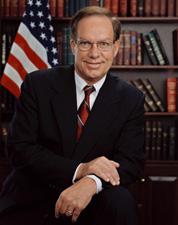 Sen. Wayne Allard (R-CO)
Sen. Wayne Allard (R-CO)Submitted September 29, 2004
Legislative Activity
Stay on top of the latest movement without scrolling through every action
Floor
Latest Action
Senate amendment submitted
September 29, 2004
Text
Submitted
TEXT OF AMENDMENTS

SA 3755. Mr. GRAHAM of Florida submitted an amendment intended to be
proposed by him to the bill S. 2845, to reform the intelligence
community and the intelligence and intelligence-related activities of
the United States Government, and for other purposes; which was ordered
to lie on the table; as follows:

On page 94, line 14, insert before the period the
following: ``, whether expressed in terms of geographic
region, in terms of function, or in other terms''.
On page 95, line 3, insert after the period the following:
``Each notice on a center shall set forth the mission of such
center, the area of intelligence responsibility of such
center, and the proposed structure of such center.''.
On page 96, line 7, insert ``of the center and the
personnel of the center'' after ``control''.
On page 96, between lines 8 and 9, insert the following:
(5) If the Director of a national intelligence center
determines at any time that the authority, direction, and
control of the Director over the center is insufficient to
accomplish the mission of the center, the Director shall
promptly notify the National Intelligence Director of that
determination.
On page 96, strike line 15 and all that follows through
page 97, line 2, and insert the following:
(1) develop and unify a strategy for the collection and
analysis of all-source intelligence;
(2) integrate intelligence collection, analysis, and
planning for operations, both inside and outside the United
States;
(3) develop interagency plans for the collection and
analysis of all-source intelligence, which plans shall--
(A) involve more than one department, agency, or element of
the executive branch (unless otherwise directed by the
President); and
(B) include the mission, objectives to be achieved, courses
of action, coordination of agencies operational activities,
recommendations for operational plans, and assignment of
departmental or agency responsibilities;
(4) ensure that the collection of all-source intelligence
and the conduct of operations are informed by the analysis of
all-source intelligence; and
On page 98, beginning on line 20, strike ``to the extent
practicable, approve the request'' and insert ``to the
maximum extent possible. If a request is denied, the head of
the department, agency, or element concerned shall provide
the National Intelligence Director with a justification of
the denial of such request. The National Intelligence
Director may submit any request so denied to the National
Security Council for resolution''.
On page 99, between lines 20 and 21, insert the following:
(g) Review and Modification of Centers.--(1) Not less often
than once each year, the National Intelligence Director shall
review the area of intelligence responsibility assigned to
each national intelligence center under this section in order
to determine whether or not such area of responsibility
continues to meet intelligence priorities established by the
National Security Council.
(2) Not less often than once each year, the National
Intelligence Director shall review the staffing and
management of each national intelligence center under this
section in order to determine whether or not such staffing or
management remains appropriate for the accomplishment of the
mission of such center.
(3) The National Intelligence Director may at any time
recommend to the President a modification of the area of
intelligence responsibility assigned to a national
intelligence center under this section. The National
Intelligence Director shall make any such recommendation
through, and with the approval of, the National Security
Council.
(h) Separate Budget Account.--The National Intelligence
Director shall, in accordance with procedures to be issued by
the Director in consultation with the congressional
intelligence committees, include in the National Intelligence
Program budget a separate account for each national
intelligence center under this section.
On page 99, line 21, strike ``(g)'' and insert ``(i)''.
______

SA 3756. Mr. GRAHAM of Florida submitted an amendment intended to be
proposed by him to the bill S. 2845, to reform the intelligence
community and the intelligence and intelligence-related activities of
the United States Government, and for other purposes; which was ordered
to lie on the table; as follows:

On page 108, between lines 8 and 9, insert the following:

SEC. 153. ADDITIONAL EDUCATION AND TRAINING REQUIREMENTS.

(a) Findings.--Congress makes the following findings:
(1) Foreign language education is essential for the
development of a highly-skilled workforce for the
intelligence community.
(2) Since September 11, 2001, the need for language
proficiency levels to meet required national security
functions has been raised, and the ability to comprehend and
articulate technical and scientific information in foreign
languages has become critical.
(b) Linguistic Requirements.--(1) The National Intelligence
Director shall--
(A) identify the linguistic requirements for the National
Intelligence Authority;
(B) identify specific requirements for the range of
linguistic skills necessary for the intelligence community,
including proficiency in scientific and technical
vocabularies of critical foreign languages; and
(C) develop a comprehensive plan for the Authority to meet
such requirements through the education, recruitment, and
training of linguists.
(2) In carrying out activities under paragraph (1), the
Director shall take into account education grant programs of
the Department of Defense and the Department of Education
that are in existence as of the date of the enactment of this
Act.
(3) Not later than one year after the date of the enactment
of this Act, and annually thereafter, the Director shall
submit to Congress a report on the requirements identified
under paragraph (1), including the success of the Authority
in meeting such requirements. Each report shall notify
Congress of any additional resources determined by the
Director to be required to meet such requirements.

[[Page S9960]]

(4) Each report under paragraph (3) shall be in
unclassified form, but may include a classified annex.
(c) Professional Intelligence Training.--The National
Intelligence Director shall require the head of each element
and component within the National Intelligence Authority who
has responsibility for professional intelligence training to
periodically review and revise the curriculum for the
professional intelligence training of the senior and
intermediate level personnel of such element or component in
order to--
(1) strengthen the focus of such curriculum on the
integration of intelligence collection and analysis
throughout the Authority; and
(2) prepare such personnel for duty with other departments,
agencies, and element of the intelligence community.
______

SA 3757. Mr. GRAHAM of Florida submitted an amendment intended to be
proposed by him to the bill S. 2845, to reform the intelligence
community and the intelligence and intelligence-related activities of
the United States Government, and for other purposes; which was ordered
to lie on the table; as follows:

At the appropriate place, insert the following:

SEC.     . TSA FIELD OFFICE INFORMATION TECHNOLOGY AND
TELECOMMUNICATIONS REPORT.

Within 90 days after the date of enactment of this Act, the
Secretary of Homeland Security shall transmit a report to the
Congress, which may be transmitted in classified and redacted
formats, setting forth--
(1) a descriptive list of each field office of the
Transportation Security Administration, including its
location, staffing, and facilities;
(2) an analysis of the information technology and
telecommunications capabilities, equipment, and support
available at each such office, including--
(A) whether the office has access to broadband
telecommunications;
(B) whether the office has the ability to access
Transportation Security Administration databases directly;
(C) the means available to the office for communicating and
sharing information and other data on a real time basis with
the Transportation Security Administration's national,
regional, and State offices as well as with other
Transportation Security Administration field offices;
(D) the means available to the office for communicating
witli other Federal, State, and local government offices with
transportation security related responsibilities; and
(E) whether and to what extent computers in the office are
linked through a local area, network or otherwise, and
whether the information technology resources available to the
office are adequate to enable it to carry out its functions
and purposes; and
(3) an assessment of current and future needs of the
Transportation Security Administration to provide adequate
information technology and telecommunications facilities,
equipment, and support to its field offices, and an estimate
of the costs of meeting those needs.
______

SA 3758. Mrs. FEINSTEIN submitted an amendment intended to be
proposed by her to the bill S. 2845, to reform the intelligence
community and the intelligence and intelligence-related activities of
the United States Government, and for other purposes; which was ordered
to lie on the table; as follows:

On page 4, strike lines 5 through 16 and insert the
following:
(2) The term ``foreign intelligence'' means information
gathered, and activities conducted, relating to the
capabilities, intentions, or activities of foreign
governments or elements thereof, foreign organizations, or
foreign persons, or international terrorist activities.
(3) The term ``counterintelligence'' means--
(A) foreign intelligence gathered, and activities
conducted, to protect against espionage, other intelligence
activities, sabotage, or assassinations conducted by or on
behalf of foreign governments or elements thereof, foreign
organizations, or foreign persons, or international terrorist
activities; and
(B) information gathered, and activities conducted, to
prevent the interference by or disruption of foreign
intelligence activities of the United States by foreign
government or elements thereof, foreign organizations, or
foreign persons, or international terrorists.
On page 6, line 12, strike ``counterintelligence or''.
On page 7, beginning on line 5, strike ``the Office of
Intelligence of the Federal Bureau of Investigation'' and
insert ``the Directorate of Intelligence of the Federal
Bureau of Investigation''.
On page 8, between lines 6 and 7, insert the following:
(8) The term ``counterespionage'' means counterintelligence
designed to detect, destroy, neutralize, exploit, or prevent
espionage activities though identification, penetration,
deception, and prosecution (in accordance with the criminal
law) of individuals, groups, or organizations conducting, or
suspected of conducting, espionage activities.
(9) The term ``intelligence operation'' means activities
conducted to facilitate the gathering of foreign intelligence
or the conduct of covert action (as that term is defined in
section 503(e) of the National Security Act of 1947 (50
U.S.C. 413b(e)).
(10) The term ``collection and analysis requirements''
means any subject, whether general or specific, upon which
there is a need for the collection of intelligence
information or the production of intelligence.
(11) The term ``collection and analysis tasking'' means the
assignment or direction of an individual or activity to
perform in a specified way to achieve an intelligence
objective or goal.
(12) The term ``certified intelligence officer'' means a
professional employee of an element of the intelligence
community engaged in intelligence activities who meets
standards and qualifications set by the National Intelligence
Director.
On page 120, beginning on line 17, strike ``, subject to
the direction and control of the President,''.
On page 123, between lines 6 and 7, insert the following:
(e) Discharge of Improvements.--(1) The Director of the
Federal Bureau of Investigation shall carry out subsections
(b) through (d) through the Executive Assistant Director of
the Federal Bureau of Investigation for Intelligence or such
other official as the Director of the Federal Bureau of
Investigation designates as the head of the Directorate of
Intelligence of the Federal Bureau of Investigation.
(2) The Director of the Federal Bureau of Investigation
shall carry out subsections (b) through (d) under the joint
direction, supervision, and control of the Attorney General
and the National Intelligence Director.
(3) The Director of the Federal Bureau of Investigation
shall report to both the Attorney General and the National
Intelligence Director regarding the activities of the Federal
Bureau of Investigation under subsections (b) through (d).
On page 123, line 7, strike ``(e)'' and insert ``(f)''.
On page 123, line 17, strike ``(f)'' and insert ``(g)''.
On page 126, between lines 20 and 21, insert the following:

SEC. 206. DIRECTORATE OF INTELLIGENCE OF THE FEDERAL BUREAU
OF INVESTIGATION.

(a) Directorate of Intelligence of Federal Bureau of
Investigation.--The element of the Federal Bureau of
Investigation known as of the date of the enactment of this
Act is hereby redesignated as the Directorate of Intelligence
of the Federal Bureau of Investigation.
(b) Head of Directorate.--The head of the Directorate of
Intelligence shall be the Executive Assistant Director of the
Federal Bureau of Investigation for Intelligence or such
other official within the Federal Bureau of Investigation as
the Director of the Federal Bureau of Investigation shall
designate.
(c) Responsibilities.--The Directorate of Intelligence
shall be responsible for the following:
(1) The discharge by the Federal Bureau of Investigation of
all national intelligence programs, projects, and activities
of the Bureau.
(2) The discharge by the Bureau of the requirements in
section 105B of the National Security Act of 1947 (50 U.S.C.
403-5b).
(3) The oversight of Bureau field intelligence operations.
(4) Human source development and management by the Bureau.
(5) Collection by the Bureau against nationally-determined
intelligence requirements.
(6) Language services.
(7) Strategic analysis.
(8) Intelligence program and budget management.
(9) The intelligence workforce.
(10) Any other responsibilities specified by the Director
of the Federal Bureau of Investigation or specified by law.
(d) Staff.--The Directorate of Intelligence shall consist
of such staff as the Director of the Federal Bureau of
Investigation considers appropriate for the activities of the
Directorate.
______

SA 3759. Mrs. FEINSTEIN submitted an amendment intended to be
proposed by her to the bill S. 2845, to reform the intelligence
community and the intelligence and intelligence-related activities of
the United States Government, and for other purposes; which was ordered
to lie on the table; as follows:

On page 44, strike lines 22 and 23 and insert the
following:
(4) The General Counsel of the Intelligence Community.
On page 45, strike lines 1 through 10 and insert the
following:
(6) The Officer for Civil Rights and Civil Liberties of the
Intelligence Community.
(7) The Privacy Officer of the Intelligence Community.
(8) The Chief Information Officer of the Intelligence
Community.
(9) The Chief Human Capital Officer of the Intelligence
Community.
(10) The Chief Financial Officer of the Intelligence
Community.
On page 51, strike lines 6 through 24 and insert the
following:

SEC. 124. GENERAL COUNSEL OF THE INTELLIGENCE COMMUNITY.

(a) General Counsel of Intelligence Community.--There is a
General Counsel of the Intelligence Community who shall be
appointed from civilian life by the President,

[[Page S9961]]

by and with the advice and consent of the Senate.
(b) Prohibition on Dual Service as General Counsel of
Another Agency.--The individual serving in the position of
General Counsel of the Intelligence Community may not, while
so serving, also serve as the General Counsel of any other
department, agency, or element of the United States
Government.
(c) Scope of Position.--The General Counsel of the
Intelligence Community is the chief legal officer of the
intelligence community.
(d) Functions.--The General Counsel of the Intelligence
Community shall perform such functions as the National
Intelligence Director may prescribe.
On page 52, strike line 21 and all that follows through
page 53, line 7, and insert the following:

SEC. 126. OFFICER FOR CIVIL RIGHTS AND CIVIL LIBERTIES OF THE
INTELLIGENCE COMMUNITY.

(a) Officer for Civil Rights and Civil Liberties of
Intelligence Community.--There is an Officer for Civil Rights
and Civil Liberties of the Intelligence Community who shall
be appointed by the President.
(b) Supervision.--The Officer for Civil Rights and Civil
Liberties of the Intelligence Community shall report directly
to the National Intelligence Director.
(c) Duties.--The Officer for Civil Rights and Civil
Liberties of the Intelligence Community shall--
On page 53, beginning on line 14, strike ``National
Intelligence Authority;'' and insert ``elements of the
intelligence community; and''.
On page 53, beginning on line 18, strike ``within the
National Intelligence Program''.
On page 53, strike lines 20 through 24.
On page 54, line 1, strike ``the Authority'' and insert
``the elements of the intelligence community''.
On page 54, line 11, strike ``the Authority'' and insert
``the elements of the intelligence community''.
On page 55, strike lines 1 through 15 and insert the
following:

SEC. 127. PRIVACY OFFICER OF THE INTELLIGENCE COMMUNITY.

(a) Privacy Officer of Intelligence Community.--There is a
Privacy Officer of the Intelligence Community who shall be
appointed by the National Intelligence Director.
(b) Duties.--(1) The Privacy Officer of the Intelligence
Community shall have primary responsibility for the privacy
policy of the intelligence community, including in the
relationships among the elements of the intelligence
community.
On page 56, strike lines 9 through 16 and insert the
following:

SEC. 128. CHIEF INFORMATION OFFICER OF THE INTELLIGENCE
COMMUNITY.

(a) Chief Information Officer of Intelligence Community.--
There is a Chief Information Officer of the Intelligence
Community who shall be appointed by the National Intelligence
Director.
(b) Duties.--The Chief Information Officer of the
Intelligence Community shall--
On page 57, strike line 1 and all that follows through page
59, line 7, and insert the following:

SEC. 129. CHIEF HUMAN CAPITAL OFFICER OF THE INTELLIGENCE
COMMUNITY.

(a) Chief Human Capital Officer of Intelligence
Community.--There is a Chief Human Capital Officer of the
Intelligence Community who shall be appointed by the National
Intelligence Director.
(b) Duties.--The Chief Human Capital Officer of the
Intelligence Community shall--
(1) have the functions and authorities provided for Chief
Human Capital Officers under sections 1401 and 1402 of title
5, United States Code, with respect to the elements of the
intelligence community; and
(2) otherwise advise and assist the National Intelligence
Director in exercising the authorities and responsibilities
of the Director with respect to the workforce of the
intelligence community.

SEC. 130. CHIEF FINANCIAL OFFICER OF THE INTELLIGENCE
COMMUNITY.

(a) Chief Financial Officer of Intelligence Community.--
There is a Chief Financial Officer of the Intelligence
Community who shall be designated by the President, in
consultation with the National Intelligence Director.
(b) Designation Requirements.--The designation of an
individual as Chief Financial Officer of the Intelligence
Community shall be subject to applicable provisions of
section 901(a) of title 31, United States Code.
(c) Authorities and Functions.--The Chief Financial Officer
of the Intelligence Community shall have such authorities,
and carry out such functions, with respect to the elements of
the intelligence community as are provided for an agency
Chief Financial Officer by section 902 of title 31, United
States Code, and other applicable provisions of law.
(d) Coordination With NIA Comptroller.--(1) The Chief
Financial Officer of the Intelligence Community shall
coordinate with the Comptroller of the National Intelligence
Authority in exercising the authorities and performing the
functions provided for the Chief Financial Officer under this
section.
(2) The National Intelligence Director shall take such
actions as are necessary to prevent duplication of effort by
the Chief Financial Officer of the Intelligence Community and
the Comptroller of the National Intelligence Authority.
(e) Integration of Financial Systems.--Subject to the
supervision, direction, and control of the National
Intelligence Director, the Chief Financial Officer of the
Intelligence Community shall take appropriate actions to
ensure the timely and effective integration of the financial
systems of the elements of the intelligence community as soon
as possible after the date of the enactment of this Act.
On page 60, strike lines 5 through 13 and insert the
following:

SEC. 141. INSPECTOR GENERAL OF THE INTELLIGENCE COMMUNITY.

(a) Office of Inspector General of Intelligence
Community.--There is within the National Intelligence
Authority an Office of the Inspector General of the
Intelligence Community.
(b) Purpose.--The purpose of the Office of the Inspector
General of the Intelligence Community is to--
On page 60, line 19, insert ``and'' at the end.
On page 60, line 22, strike ``and'' at the end.
On page 60, strike line 23 and all that follows through
page 61, line 2.
On page 62, strike lines 1 through 7 and insert the
following:
(c) Inspector General of Intelligence Community.--(1) There
is an Inspector General of the Intelligence Community, who
shall be the head of the Office of the Inspector General of
the Intelligence Community, who shall be appointed by the
President, by and with the advice and consent of the Senate.
On page 62, beginning on line 12 strike ``National
Intelligence Authority'' and insert ``intelligence
community''.
On page 63, beginning on line 2, strike ``National
Intelligence Authority'' and insert ``Intelligence
Community''.
On page 63, beginning on line 8, strike ``, the
relationships among'' and all that follows through ``the
other elements of the intelligence community'' and insert
``and the relationships among the elements of the
intelligence community''.
On page 64, line 11, strike ``National Intelligence
Authority'' and insert ``Intelligence Community''.
On page 65, line 7, strike ``National Intelligence
Authority'' and insert ``Intelligence Community''.
On page 65, beginning on line 12, strike ``the National
Intelligence Authority, and of any other element of the
intelligence community within the National Intelligence
Program,'' and insert ``any element of the intelligence
community''.
On page 66, line 2, strike ``the National Intelligence
Authority'' and insert ``an element of the intelligence
community''.
On page 67, beginning on line 9, strike ``National
Intelligence Authority'' and insert ``Intelligence
Community''.
On page 68, line 9, strike ``National Intelligence
Authority'' and insert ``Intelligence Community''.
On page 69, line 3, strike ``National Intelligence
Authority'' and insert ``Intelligence Community''.
On page 69, line 22, strike ``National Intelligence
Authority'' and insert ``Intelligence Community''.
On page 70, line 1, strike ``National Intelligence
Authority'' and insert ``Intelligence Community''.
On page 70, beginning on line 12, strike ``National
Intelligence Authority'' and insert ``elements of the
intelligence community''.
On page 71, beginning on line 16, strike ``the Authority''
and insert ``any element of the intelligence community''.
On page 72, beginning on line 3, strike ``the Authority''
and all that follows through line 8 and insert ``an element
of the intelligence community or in a relationship between
the elements of the intelligence community.''.
On page 72, beginning on line 21, strike ``Authority
official who holds or held a position in the Authority'' and
insert ``an official of an element of the intelligence
community who holds or held in such element a position''.
On page 73, strike line 24 and all that follows through
page 74, line 5, and insert the following:
(5)(A) An employee of an element of the intelligence
community, an employee of any entity other than an element of
the intelligence community who is assigned or detailed to an
element of the intelligence community, or an employee of a
contractor of an element of the intelligence community who
intends to report to Congress a complaint or information with
respect to an urgent concern may report such complaint or
information to the Inspector General.
On page 77, beginning on line 17, strike ``National
Intelligence Authority'' and insert ``Intelligence
Community''.
On page 77, strike line 19 and all that follows through
page 78, line 2, and insert the following:

SEC. 142. OMBUDSMAN OF THE INTELLIGENCE COMMUNITY.

(a) Ombudsman of Intelligence Community.--There is within
the National Intelligence Authority an Ombudsman of the
Intelligence Community who shall be appointed by the National
Intelligence Director.
(b) Duties.--The Ombudsman of the Intelligence Community
shall--
On page 78, beginning on line 6, strike ``the National
Intelligence Authority'' and all that follows through
``National Intelligence Program,'' and insert ``any element
of the intelligence community''.

[[Page S9962]]

On page 78, beginning on line 14, strike ``the Authority''
and all that follows through ``National Intelligence
Program,'' and insert ``any element of the intelligence
community''.
On page 78, beginning on line 20, strike ``the Authority''
and all that follows through ``National Intelligence
Program,'' and insert ``any element of the intelligence
community''.
On page 79, beginning on line 4, strike ``National
Intelligence Authority'' and insert ``Intelligence
Community''.
On page 79, line 7, strike ``National Intelligence
Authority'' and insert ``Intelligence Community''.
On page 79, strike lines 18 through 25 and insert the
following:
(B) The elements of the intelligence community, including
the divisions, offices, programs, officers, and employees of
such elements.
On page 80, line 8, strike ``National Intelligence
Authority'' and insert ``Intelligence Community''.
On page 80, beginning on line 14, strike ``National
Intelligence Authority'' and insert ``Intelligence
Community''.
On page 80, beginning on line 20, strike ``the National
Intelligence Authority'' and all that follows through
``National Intelligence Program,'' and insert ``any element
of the intelligence community''.
On page 81, beginning on line 9, strike ``National
Intelligence Authority'' and insert ``Intelligence
Community''.
On page 204, strike lines 1 through 3 and insert the
following:

SEC. 312. CONFORMING AMENDMENT RELATING TO CHIEF FINANCIAL
OFFICER OF THE INTELLIGENCE COMMUNITY.

______

SA 3760. Mr. SARBANES (for himself and Mr. Bingaman) submitted an
amendment intended to be proposed by him to the bill S. 2845, to reform
the intelligence community and the intelligence and intelligence-
related activities of the United States Government, and for other
purposes; which was ordered to lie on the table; as follows:

On page 158, line 5, strike ``and''.
On page 158, line 9, strike the period and insert ``;
and''.
On page 158, insert between lines 9 and 10, the following:
(C) each proposal reviewed by the Board under subsection
(d)(1) that--
(i) the Board advised against implementation; and
(ii) notwithstanding such advice, actions were taken to
implement.
______

SA 3761. Mr. SPECTER (for himself and Mrs. Feinstein) proposed an
amendment to the bill S. 2845, to reform the intelligence community and
the intelligence and intelligence-related activities of the United
States Government, and for other purposes; as follows:

On page 10, between lines 16 and 17, insert the following:
(d) Term of Office; Removal.--(1) The term of service of
the National Intelligence Director shall be ten years.
(2) An individual may not serve more than one term of
service as National Intelligence Director.
(3) Paragraphs (1) and (2) shall apply with respect to any
individual appointed as National Intelligence Director after
the date of the enactment of this Act.
(4) If the individual serving as Director of Central
Intelligence on the date of the enactment of this Act is the
first person appointed as National Intelligence Director
under this section, the date of appointment of such
individual as National Intelligence Director shall be deemed
to be the date of the commencement of the term of service of
such individual as National Intelligence Director.
On page 10, line 17, strike ``(d)'' and insert ``(e)''.
On page 11, line 3, strike ``(e)'' and insert ``(f)''.
On page 11, line 5, strike ``subsection (c)'' and insert
``subsection (e)''.
______

SA 3762. Mr. FEINGOLD submitted an amendment intended to be proposed
by him to the bill S. 2845, to reform the intelligence community and
the intelligence and intelligence-related activities of the United
States Government, and for other purposes; which was ordered to lie on
the table; as follows:

On page 97, between lines 18 and 19, insert the following:
(3) The National Intelligence Director shall establish
formal mechanisms to ensure the regular sharing of
information and analysis by national intelligence centers
having adjacent geographic regions of intelligence
responsibility or otherwise having significant connections in
areas of intelligence responsibility.
______

SA 3763. Mr. COLEMAN submitted an amendment intended to be proposed
by him to the bill S. 2845, to reform the intelligence community and
the intelligence and intelligence-related activities of the United
States Government, and for other purposes; as follows:

On page 117, strike line 1 and all that follows through
page 118, line 7.
______

SA 3764. Mr. FITZGERALD submitted an amendment intended to be
proposed by him to the bill S. 2806, making appropriations for the
Departments of Transportation and Treasury, the Executive Office of the
President, and certain independent agencies for the fiscal year ending
September 30, 2005, and for other purposes; which was ordered to lie on
the table; as follows:

At the appropriate place, insert the following:

SEC. ___. STATE-BY-STATE COMPARISON OF HIGHWAY CONSTRUCTION
COSTS.

(a) Collection of Data.--
(1) In general.--The Administrator of the Federal Highway
Administration (referred to in this section as the
``Administrator'') shall collect from States any bid price
data that is necessary to make State-by-State comparisons of
highway construction costs.
(2) Data required.--In determining which data to collect
and the procedures for collecting data, the Administrator
shall take into account the data collection deficiencies
identified in the report prepared by the Government
Accountability Office numbered GAO-04-113R.
(b) Report.--
(1) In general.--The Administrator shall submit to Congress
an annual report on the bid price data collected under
subsection (a).
(2) Inclusions.--The report shall include--
(A) State-by-State comparisons of highway construction
costs for the previous fiscal year (including the cost to
construct a 1-mile road segment of a standard design, as
determined by the Administrator); and
(B) a description of the competitive bidding procedures
used in each State.
______

SA 3765. Mr. ALLARD submitted an amendment intended to be proposed by
him to the bill S. 2845, to reform the intelligence community and the
intelligence and intelligence-related activities of the United States
Government, and for other purposes; which was ordered to lie on the
table; as follows;

At the appropriate place, insert the following:

SEC. __. HOMELAND SECURITY GEOGRAPHIC INFORMATION.

(a) Findings.--Congress finds that--
(1) geographic technologies and geographic data improve
government capabilities to detect, plan, prepare, and respond
to disasters in order to save lives and protect property;
(2) geographic data improves the ability of information
technology applications and systems to enhance public
security in a cost-effective manner; and
(3) geographic information preparedness in the United
States, and specifically in the Department of Homeland
Security, is insufficient because of--
(A) inadequate geographic data compatibility;
(B) insufficient geographic data sharing; and
(C) technology interoperability barriers.
(b) Homeland Security Geographic Information.--Section 703
of the Homeland Security Act of 2002 (6 U.S.C. 343) is
amended--
(1) by inserting ``(a) In General.--'' before ``The Chief
Information''; and
(2) by adding at the end the following:
``(b) Geographic Information Functions.--
``(1) Definition.--In this subsection, the term `geographic
information' means the information systems that involve
locational data, such as maps or other geospatial information
resources.
``(2) Office of geospatial management.--
``(A) Establishment.--The Office of Geospatial Management
is established within the Office of the Chief Information
Officer.
``(B) Geospatial information officer.--
``(i) Appointment.--The Office of Geospatial Management
shall be administered by the Geospatial Information Officer,
who shall be appointed by the Secretary and serve under the
direction of the Chief Information Officer.
``(ii) Functions.--The Geospatial Information Officer shall
assist the Chief Information Officer in carrying out all
functions under this section and in coordinating the
geographic information needs of the Department.
``(C) Coordination of geographic information.--The Chief
Information Officer shall establish and carry out a program
to provide for the efficient use of geographic information,
which shall include--
``(i) providing such geographic information as may be
necessary to implement the critical infrastructure protection
programs;
``(ii) providing leadership and coordination in meeting the
geographic information requirements of those responsible for
planning, prevention, mitigation, assessment and response to
emergencies, critical infrastructure protection, and other
functions of the Department; and
``(iii) coordinating with users of geographic information
within the Department to assure interoperability and prevent
unnecessary duplication.
``(D) Responsibilities.--In carrying out this subsection,
the responsibilities of the Chief Information Officer shall
include--
``(i) coordinating the geographic information needs and
activities of the Department;
``(ii) implementing standards, as adopted by the Director
of the Office of Management and Budget under the processes
established under section 216 of the E-Government Act of

[[Page S9963]]

2002 (44 U.S.C. 3501 note), to facilitate the
interoperability of geographic information pertaining to
homeland security among all users of such information
within--

``(I) the Department;
``(II) State and local government; and
``(III) the private sector;

``(iii) coordinating with the Federal Geographic Data
Committee and carrying out the responsibilities of the
Department pursuant to Office of Management and Budget
Circular A-16 and Executive Order 12906; and
``(iv) making recommendations to the Secretary and the
Executive Director of the Office for State and Local
Government Coordination and Preparedness on awarding grants
to--

``(I) fund the creation of geographic data; and
``(II) execute information sharing agreements regarding
geographic data with State, local, and tribal governments.

``(3) Authorization of appropriations.--There are
authorized to be appropriated such sums as may be necessary
to carry out this subsection for each fiscal year.''.
______

SA 3766. Mr. McCAIN proposed an amendment to the bill S. 2845, to
reform the intelligence community and the intelligence and
intelligence-related activities of the United States Government, and
for other purposes; as follows:

At the appropriate place, insert the following:

TITLE      --PUBLIC SAFETY SPECTRUM

SEC. --01. SHORT TITLE; TABLE OF CONTENTS.

(a) Short Title.--This title may be cited as the ``Spectrum
Availability for Emergency-Response and Law-Enforcement To
Improve Vital Emergency Services Act'' or the ``SAVE LIVES
Act''.
(b) Table of Contents.--The table of contents for this
title is as follows:

Sec. --01. Short title; table of contents.
Sec. --02. Findings.
Sec. --03. Setting a specific date for the availability of spectrum for
public safety organizations and creating a deadline for
the transition to digital television.
Sec. --04. Studies of communications capabilities and needs.
Sec. --05. Statutory authority for the Department of Homeland
Security's ``SAFECOM'' program.
Sec. --06. Grant program to provide enhanced interoperability of
communications for first responders.
Sec. --07. Digital transition public safety communications grant and
consumer assistance fund.
Sec. --08. Digital transition program.
Sec. --09. Label requirement for analog television sets.
Sec. --10. Report on consumer education program requirements.
Sec. --11. FCC to issue decision in certain proceedings.
Sec. --12. Definitions.
Sec. --13. Effective date.

SEC. --02. FINDINGS.

The Congress finds the following:
(1) In its final report, the 9-11 Commission advocated that
Congress pass legislation providing for the expedited and
increased assignment of radio spectrum for public safety
purposes. The 9-11 Commission stated that this spectrum was
necessary to improve communications between local, State and
Federal public safety organizations and public safety
organizations operating in neighboring jurisdictions that may
respond to an emergency in unison.
(2) Specifically, the 9-11 Commission report stated ``The
inability to communicate was a critical element at the World
Trade Center, Pentagon and Somerset County, Pennsylvania,
crash sites, where multiple agencies and multiple
jurisdictions responded. The occurrence of this problem at
three very different sites is strong evidence that compatible
and adequate communications among public safety organizations
at the local, State, and Federal levels remains an important
problem.''.
(3) In the Balanced Budget Act of 1997, the Congress
directed the FCC to allocate spectrum currently being used by
television broadcasters to public safety agencies to use for
emergency communications. This spectrum has specific
characteristics that make it an outstanding choice for
emergency communications because signals sent over these
frequencies are able to penetrate walls and travel great
distances, and can assist multiple jurisdictions in deploying
interoperable communications systems.
(4) This spectrum will not be fully available to public
safety agencies until the completion of the digital
television transition. The need for this spectrum is greater
than ever. The nation cannot risk further loss of life due to
public safety agencies' first responders' inability to
communicate effectively in the event of another terrorist act
or other crisis, such as a hurricane, tornado, flood, or
earthquake.
(5) In the Balanced Budget Act of 1997, Congress set a date
of December 31, 2006, for the termination of the digital
television transition. Under current law, however, the
deadline will be extended if fewer than 85 percent of the
television households in a market are able to continue
receiving local television broadcast signals.
(6) Federal Communications Commission Chairman Michael K.
Powell testified at a hearing before the Senate Commerce,
Science, and Transportation Committee on September 8, 2004,
that, absent government action, this extension may allow the
digital television transition to continue for ``decades'' or
``multiples of decades''.
(7) The Nation's public safety and welfare cannot be put
off for ``decades'' or ``multiples of decades''. The Federal
government should ensure that this spectrum is available for
use by public safety organizations by January 1, 2009.
(8) Any plan to end the digital television transition would
be incomplete if it did not ensure that consumers would be
able to continue to enjoy over-the-air broadcast television
with minimal disruption. If broadcasters air only a digital
signal, some consumers may be unable to view digital
transmissions using their analog-only television set. Local
broadcasters are truly an important part of our homeland
security and often an important communications vehicle in the
event of a national emergency. Therefore, consumers who rely
on over-the-air television, particularly those of limited
economic means, should be assisted.
(9) The New America Foundation has testified before
Congress that the cost to assist these 17.4 million
exclusively over-the-air households to continue to view
television is less than $1 billion dollars for equipment,
which equates to roughly 3 percent of the Federal revenue
likely from the auction of the analog television spectrum.
(10) Specifically, the New America Foundation has estimated
that the Federal Government's auction of this spectrum could
yield $30-to-$40 billion in revenue to the Treasury. Chairman
Powell stated at the September 8, 2004, hearing that
``estimates of the value of that spectrum run anywhere from
$30 billion to $70 billion''.
(11) Additionally, there will be societal benefits with the
return of the analog broadcast spectrum. Former FCC Chairman
Reed F. Hundt, at an April 28, 2004, hearing before the
Senate Commerce, Science, and Transportation Committee,
testified that this spectrum ``should be the fit and proper
home of wireless broadband''. Mr. Hundt continued, ``Quite
literally, [with this spectrum] the more millions of people
in rural America will be able to afford Big Broadband
Internet access, the more hundreds of millions of people in
the world will be able to afford joining the Internet
community.''.
(12) Due to the benefits that would flow to the Nation's
citizens from the Federal Government reclaiming this analog
television spectrum--including the safety of our Nation's
first responders and those protected by first responders,
additional revenues to the Federal treasury, millions of new
jobs in the telecommunications sector of the economy, and
increased wireless broadband availability to our Nation's
rural citizens--Congress finds it necessary to set January 1,
2009, as a firm date for the return of this analog television
spectrum.

SEC. 3. SETTING A SPECIFIC DATE FOR THE AVAILABILITY OF
SPECTRUM FOR PUBLIC SAFETY ORGANIZATIONS AND
CREATING A DEADLINE FOR THE TRANSITION TO
DIGITAL TELEVISION.

(a) In General.--Section 309(j)(14) of the Communications
Act of 1934 (47 U.S.C. 309(j)(14)) is amended--
(1) by striking ``2006.'' in subparagraph (A) and inserting
``2008.'';
(2) by striking subparagraph (B) and redesignating
subparagraphs (C) and (D) as subparagraphs (B) and (C);
(3) by striking ``subparagraph (A) or (B),'' in
subparagraph (B), as redesignated, and inserting
``subparagraph (A),'';
(4) by striking ``subparagraph (C)(i),'' in subparagraph
(C), as redesignated, and inserting ``subparagraph (B)(i),'';
and
(5) by adding at the end the following:
``(D) Acceleration of deadline for public safety use.--
``(i) Notwithstanding subparagraph (A), the Commission
shall take all action necessary to complete by December 31,
2007--

``(I) the return of television station licenses operating
on channels between 764 and 776 megaHertz and between 794 and
806 megaHertz; and
``(II) assignment of the electromagnetic spectrum between
764 and 776 megahertz, and between 794 and 806 megahertz, for
public safety services.

``(ii) Notwithstanding subparagraph (A), the Commission may
modify, reassign, or require the return of, the television
station licenses assigned to frequencies between 758 and 764
megahertz, 776 and 782 megahertz, and 788 and 794 megahertz
as necessary to permit operations by public safety services
on frequencies between 764 and 776 megahertz and between 794
and 806 megahertz, after the date of enactment of the SAVES
LIVES Act, but such modifications, reassignments, or returns
may not take effect until after December 31, 2007.''.
(b) Certain Commercial Use Spectrum.--The Commission shall
assign the spectrum described in section 337(a)(2) of the
Communications Act of 1934 (47 U.S.C. 337(a)(2)) allocated
for commercial use by competitive bidding pursuant to section
309(j) of that Act (47 U.S.C. 309(j)) no later than 1 year
after the Commission transmits the report required by section
4(a) to the Congress.

SEC. --04. STUDIES OF COMMUNICATIONS CAPABILITIES AND NEEDS.

(a) In General.--The Commission, in consultation with the
Secretary of Homeland Security, shall conduct a study to
assess

[[Page S9964]]

strategies that may be used to meet public safety
communications needs, including--
(1) the short-term and long-term need for additional
spectrum allocation for Federal, State, and local first
responders, including an additional allocation of spectrum in
the 700 megaHertz band;
(2) the need for a nationwide interoperable broadband
mobile communications network;
(3) the ability of public safety entities to utilize
wireless broadband applications; and
(4) the communications capabilities of first receivers such
as hospitals and health care workers, and current efforts to
promote communications coordination and training among the
first responders and the first receivers.
(b) Reallocation Study.--The Commission shall conduct a
study to assess the advisability of reallocating any amount
of spectrum in the 700 megaHertz band for unlicensed
broadband uses. In the study, the Commission shall consider
all other possible users of this spectrum, including public
safety.
(c) Report.--The Commission shall report the results of the
studies, together with any recommendations it may have, to
the Senate Committee on Commerce, Science, and Transportation
and the House of Representatives Committee on Energy and
Commerce within 1 year after the date of enactment of this
Act.

SEC. --05. STATUTORY AUTHORITY FOR THE DEPARTMENT OF HOMELAND
SECURITY'S ``SAFECOM'' PROGRAM.

Section 302 of the Homeland Security Act of 2002 (6 U.S.C.
182) is amended--
(1) by inserting ``(a) In General.--'' before ``The''; and
(2) by adding at the end the following:
``(b) SAFECOM Authorized.--
``(1) In general.--In carrying out subsection (a), the
Under Secretary shall establish a program to address the
interoperability of communications devices used by Federal,
State, tribal, and local first responders, to be known as the
Wireless Public Safety Interoperability Communications
Program, or `SAFECOM'. The Under Secretary shall coordinate
the program with the Director of the Department of Justice's
Office of Science and Technology and all other Federal
programs engaging in communications interoperability
research, development, and funding activities to ensure that
the program takes into account, and does not duplicate, those
programs or activities.
``(2) Components.--The program established under paragraph
(1) shall be designed--
``(A) to provide research on the development of a
communications system architecture that would ensure the
interoperability of communications devices among Federal,
State, tribal, and local officials that would enhance the
potential for a coordinated response to a national emergency;
``(B) to support the completion and promote the adoption of
mutually compatible voluntary consensus standards developed
by a standards development organization accredited by the
American National Standards Institute to ensure such
interoperability; and
``(C) to provide for the development of a model strategic
plan that could be used by any State or region in developing
its communications interoperability plan.
``(3) Authorization of appropriations.--There are
authorized to be appropriated to the Secretary to carry out
this subsection--
``(A) $22,105,000 for fiscal year 2005;
``(B) $22,768,000 for fiscal year 2006;
``(C) $23,451,000 for fiscal year 2007;
``(D) $24,155,000 for fiscal year 2008; and
``(E) $24,879,000 for fiscal year 2009.
``(c) National Baseline Study of Public Safety
Communications Interoperability.--By December 31, 2005, the
Under Secretary of Homeland Security for Science and
Technology shall complete a study to develop a national
baseline for communications interoperability and develop
common grant guidance for all Federal grant programs that
provide communications-related resources or assistance to
State and local agencies, any Federal programs conducting
demonstration projects, providing technical assistance,
providing outreach services, providing standards development
assistance, or conducting research and development with the
public safety community with respect to wireless
communications. The Under Secretary shall transmit a report
to the Senate Committee on Commerce, Science, and
Transportation and the House of Representatives Committee on
Energy and Commerce containing the Under Secretary's
findings, conclusions, and recommendations from the study.''.

SEC. --06. GRANT PROGRAM TO PROVIDE ENHANCED INTEROPERABILITY
OF COMMUNICATIONS FOR FIRST RESPONDERS.

(a) In General.--The Secretary of Homeland Security shall
establish a program to help State, local, tribal, and
regional first responders acquire and deploy interoperable
communications equipment, purchase such equipment, and train
personnel in the use of such equipment. The Secretary, in
cooperation with the heads of other Federal departments and
agencies who administer programs that provide communications-
related assistance programs to State, local, and tribal
public safety organizations, shall develop and implement
common standards to the greatest extent practicable.
(b) Applications.--To be eligible for assistance under the
program, a State, local, tribal, or regional first responder
agency shall submit an application, at such time, in such
form, and containing such information as the Under Secretary
of Homeland Security for Science and Technology may require,
including--
(1) a detailed explanation of how assistance received under
the program would be used to improve local communications
interoperability and ensure interoperability with other
appropriate Federal, State, local, tribal, and regional
agencies in a regional or national emergency;
(2) assurance that the equipment and system would--
(A) not be incompatible with the communications
architecture developed under section 302(b)(2)(A) of the
Homeland Security Act of 2002;
(B) would meet any voluntary consensus standards developed
under section 302(b)(2)(B) of that Act; and
(C) be consistent with the common grant guidance
established under section 302(b)(3) of the Homeland Security
Act of 2002.
(c) Grants.--The Under Secretary shall review applications
submitted under subsection (b). The Secretary, pursuant to an
application approved by the Under Secretary, may make the
assistance provided under the program available in the form
of a single grant for a period of not more than 3 years.

SEC. --07. DIGITAL TRANSITION PUBLIC SAFETY COMMUNICATIONS
GRANT AND CONSUMER ASSISTANCE FUND.

(a) In General.--There is established on the books of the
Treasury a separate fund to be known as the ``Digital
Transition Consumer Assistance Fund'', which shall be
administered by the Secretary, in consultation with the
Assistant Secretary of Commerce for Communications and
Information.
(b) Crediting of Receipts.--The Fund shall be credited with
the amount specified in section 309(j)(8)(D) of the
Communications Act of 1934 (47 U.S.C. 309(j)(8)(D)).
(c) Fund Availability.--
(1) Appropriations.--
(A) Consumer assistance program.--There are appropriated to
the Secretary from the Fund such sums, not to exceed
$1,000,000,000, as are required to carry out the program
established under section 8 of this Act.
(B) PSO grant program.--To the extent that amounts
available in the Fund exceed the amount required to carry out
that program, there are authorized to be appropriated to the
Secretary of Homeland Security, such sums as are required to
carry out the program established under section 6 of this
Act, not to exceed an amount, determined by the Director of
the Office of Management and Budget, on the basis of the
findings of the National Baseline Interoperability study
conducted by the SAFECOM Office of the Department of Homeland
Security.
(2) Reversion of unused funds.--Any auction proceeds in the
Fund that are remaining after the date on which the programs
under section 6 and 8 of this Act terminate, as determined by
the Secretary of Homeland Security and the Secretary of
Commerce respectively, shall revert to and be deposited in
the general fund of the Treasury.
(d) Deposit of Auction Proceeds.--Paragraph (8) of section
309(j) of the Communications Act of 1934 (47 U.S.C. 309(j))
is amended--
(1) by inserting ``or subparagraph (D)'' in subparagraph
(A) after ``subparagraph (B)''; and
(2) by adding at the end the following new subparagraph:
``(D) Disposition of cash proceeds from auction of channels
52 through 69.--Cash proceeds attributable to the auction of
any eligible frequencies between 698 and 806 megaHertz on the
electromagnetic spectrum conducted after the date of
enactment of the SAVE LIVES Act shall be deposited in the
Digital Transition Consumer Assistance Fund established under
section 7 of that Act.''.

SEC. --08. DIGITAL TRANSITION PROGRAM.

(a) In General.--The Secretary, in consultation with the
Commission and the Director of the Office of Management and
Budget, shall establish a program to assist households--
(1) in the purchase or other acquisition of digital-to-
analog converter devices that will enable television sets
that operate only with analog signal processing to continue
to operate when receiving a digital signal;
(2) in the payment of a one-time installation fee (not in
excess of the industry average fee for the date, locale, and
structure involved, as determined by the Secretary) for
installing the equipment required for residential reception
of services provided by a multichannel video programming
distributor (as defined in section 602(13) of the
Communications Act of 1934 (47 U.S.C. 602(13)); or
(3) in the purchase of any other device that will enable
the household to receive over-the-air digital television
broadcast signals, but in an amount not in excess of the
average per-household assistance provided under paragraphs
(1) and (2).
(b) Program Criteria.--The Secretary shall ensure that the
program established under subsection (a)--
(1) becomes publicly available no later than January 1,
2008;
(2) gives first priority to assisting lower income
households (as determined by the Director of the Bureau of
the Census for statistical reporting purposes) who rely
exclusively on over-the-air television broadcasts;
(3) gives second priority to assisting other households who
rely exclusively on over-the-air television broadcasts;

[[Page S9965]]

(4) is technologically neutral; and
(5) is conducted at the lowest feasible administrative
cost.

SEC. --09. LABEL REQUIREMENT FOR ANALOG TELEVISION SETS.

(a) In General.--Section 303 of the Communications Act of
1934 (47 U.S.C. 303) is amended by adding at the end the
following:
``(z) Require that any apparatus described in paragraph (s)
sold or offered for sale in or affecting interstate commerce
after September 30, 2005, that is incapable of receiving and
displaying a digital television broadcast signal without the
use of an external device that translates digital television
broadcast signals into analog television broadcast signals
have affixed to it and, if it is sold or offered for sale in
a container, affixed to that container, a label that states
that the apparatus will be incapable of displaying over-the-
air television broadcast signals received after December 31,
2008, without the purchase of additional equipment.''.
(b) Shipment Prohibited.--Section 330 of the Communications
Act of 1934 (47 U.S.C. 330) is amended--
(1) by redesignating subsection (d) as subsection (e); and
(2) by inserting after subsection (c) the following:
``(d) Shipment of Unlabeled Obsolescent Television Sets.--
No person shall ship in interstate commerce or manufacture in
the United States any apparatus described in section 303(s)
of this Act except in accordance with rules prescribed by the
Commission under section 303(z) of this Act.''.
(c) Point of Sale Warning.--The Commission, in consultation
with the Federal Trade Commission, shall require the display
at, or in close proximity to, any commercial retail sales
display of television sets described in section 303(z) of the
Communications Act of 1934 (47 U.S.C. 303(z)) sold or offered
for sale in or affecting interstate commerce after September
30, 2005, of a printed notice that clearly and conspicuously
states that the sets will be incapable of displaying over-
the-air television broadcast signals received after December
31, 2008, without the purchase or lease of additional
equipment.

SEC. --10. REPORT ON CONSUMER EDUCATION PROGRAM REQUIREMENTS.

Within 1 year after the date of enactment of this Act, the
Assistant Secretary of Commerce for Communications and
Information, after consultation with the Commission, shall
transmit a report to the Senate Committee on Commerce,
Science, and Transportation and the House of Representatives
Committee on Energy and Commerce containing recommendations
with respect to--
(1) an effective program to educate consumers about the
transition to digital television broadcast signals and the
impact of that transition on consumers' choices of equipment
to receive such signals;
(2) the need, if any, for Federal funding for such a
program;
(3) the date of commencement and duration of such a
program; and
(4) what department or agency should have the lead
responsibility for conducting such a program.

SEC. --11. FCC TO ISSUE DECISION IN CERTAIN PROCEEDINGS.

The Commission shall issue a final decision before--
(1) January 1, 2005, in the Matter of Carriage of Digital
Television Broadcast Signals; Amendments to Part 76 of the
Commission's Rules, CS Docket No. 98-120;
(2) January 1, 2005, in the Matter of Public Interest
Obligations of TV Broadcast Licensees, MM Docket No. 99-360;
and
(3) January 1, 2006, in the Implementation of the Satellite
Home Viewer Improvement Act of 1999; Local Broadcast Signal
Carriage Issues, CS Docket No. 00-96.

SEC. --12. DEFINITIONS.

In this title:
(1) Commission.--The term ``Commission'' means the Federal
Communications Commission.
(2) Fund.--The term ``Fund'' means the Digital Transition
Consumer Assistance Fund established by section 7.
(3) Secretary.--Except where otherwise expressly provided,
the term ``Secretary'' means the Secretary of Commerce.

SEC. --13. EFFECTIVE DATE.

This title takes effect on the date of enactment of this
Act.
______

SA 3767. Mr. LAUTENBERG proposed an amendment to the bill S. 2845, to
reform the intelligence community and the intelligence and
intelligence-related activities of the United States Government, and
for other purposes; as follows:

On page 10, line 2, insert ``(1)'' after ``Director.--''.
On page 10, line 5, insert ``, for a term of up to 5
years'' after ``Senate''.
On page 10, after line 5, insert the following:
(2) The National Intelligence Director may be reappointed
by the President for additional terms of up to 5 years each,
by and with the consent of the Senate.
______

SA 3768. Mr. BAUCUS (for himself, Mr. Roberts, Mr. Craig, and Mr.
Bingaman) submitted an amendment intended to be proposed by him to the
bill S. 2845, to reform the intelligence community and the intelligence
and intelligence-related activities of the United States Government,
and for other purposes; which was ordered to lie on the table; as
follows:

At the end, add the following new section:

SEC. 353. ANNUAL REPORT ON THE ALLOCATION OF RESOURCES WITHIN
THE OFFICE OF FOREIGN ASSETS CONTROL.

(a) Sense of Congress.--It is the sense of Congress that
the Secretary of the Treasury should allocate the resources
of the Office of Foreign Assets Control to enforce the
economic and trade sanctions of the United States in a manner
that enforcing such sanctions--
(1) against al Qaeda and groups affiliated with al Qaeda is
the highest priority of the Office;
(2) against members of the insurgency in Iraq is the second
highest priority of the Office; and
(3) against Iran is the third highest priority of the
Office.
(b) Requirement for Annual Report.--Not later than 180 days
after the date of enactment of this Act, and annually
thereafter, the Secretary of the Treasury, in consultation
with the National Intelligence Director, shall submit to
Congress a report on the allocation of resources within the
Office of Foreign Assets Control.
(c) Content of Annual Report.--An annual report required by
subsection (b) shall include--
(1) a description of--
(A) the allocation of resources within the Office of
Foreign Assets Control to enforce the economic and trade
sanctions of the United States against terrorist
organizations and targeted foreign countries during the
fiscal year prior to the fiscal year in which such report is
submitted; and
(B) the criteria on which such allocation is based;
(2) a description of any proposed modifications to such
allocation; and
(3) an explanation for any such allocation that is not
based on prioritization of threats determined using
appropriate criteria, including the likelihood that--
(A) a terrorist organization or targeted foreign country--
(i) will sponsor or plan a direct attack against the United
States or the interests of the United States; or
(ii) is participating in or maintaining a nuclear,
biological, or chemical weapons development program; or
(B) a targeted foreign country--
(i) is financing, or allowing the financing, of a terrorist
organization within such country; or
(ii) is providing safe haven to a terrorist organization
within such country.
(d) Effective Date.--Notwithstanding section 341 or any
other provision of this Act, this section shall take effect
on the date of the enactment of this Act.
______

SA 3769. Mr. SPECTER submitted an amendment intended to be proposed
by him to the bill S. 2845, to reform the intelligence community and
the intelligence and intelligence-related activities of the United
States Government, and for other purposes; which was ordered to lie on
the table; as follows:

At the appropriate place, insert the following:

CLARIFICATION OF PRIVATE RIGHT OF ACTION AGAINST TERRORIST
STATES; DAMAGES.

(a) Right of Action.--Section 1605 of title 28, United
States Code, is amended--
(1) in subsection (f), in the first sentence, by inserting
``or (h)'' after ``subsection (a)(7)''; and
(2) by adding at the end the following:
``(h) Certain Actions Against Foreign States or Officials,
Employees, or Agents of Foreign States--
``(1) Cause of action.--
``(A) Cause of action.--A foreign state designated as a
state sponsor of terrorism under section 6(j) of the Export
Administration Act of 1979 (50 U.S.C. App. 2405(j)) or
section 620A of the Foreign Assistance Act of 1961 (22 U.S.C.
2371), or an official, employee, or agent of such a foreign
state, shall be liable to a national of the United States (as
that term is defined in section 101(a)(22) of the Immigration
and Nationality Act) or the national's legal representative
for personal injury or death caused by acts of that foreign
state, or by that official, employee, or agent while acting
within the scope of his or her office, employment, or agency,
for which the courts of the United States may maintain
jurisdiction under subsection (a)(7) for money damages. The
removal of a foreign state from designation as a state
sponsor of terrorism under section 6(j) of the Export
Administration Act of 1979 (50 U.S.C. App. 2405(j)) or
section 620A of the Foreign Assistance Act of 1961 (22 U.S.C.
2371) shall not terminate this cause of action.
``(B) Discovery.--The provisions of subsection (g) apply to
actions brought under subparagraph (A).
``(C) Nationality of claimant.--No action shall be
maintained under subparagraph (A) arising from acts of a
foreign state or an official, employee, or agent of a foreign
state if neither the claimant nor the victim was a national
of the United States (as that term is defined in section
101(a)(22) of the Immigration and Nationality Act) when such
acts occurred.
``(2) Damages.--In an action brought under paragraph (1)
against a foreign state or an official, employee, or agent of
a foreign

[[Page S9966]]

state, the foreign state, official, employee, or agent, as
the case may be, may be held liable for money damages in such
action, which may include economic damages, solatium,
damages for pain and suffering, and, notwithstanding
section 1606, punitive damages. In all actions brought
under paragraph (1), a foreign state shall be vicariously
liable for the actions of its officials, employees, or
agents.
``(3) Appeals.--An appeal in the courts of the United
States in an action brought under paragraph (1) may be made--
``(A) only from a final decision under section 1291 of this
title, and then only if filed with the clerk of the district
court within 30 days after the entry of such final decision;
and
``(B) in the case of an appeal from an order denying the
immunity of a foreign state, a political subdivision thereof,
or an agency or instrumentality of a foreign state, only if
filed under section 1292 of this title.''.
(b) Conforming Amendment.--Section 589 of the Foreign
Operations, Export Financing, and Related Programs
Appropriations Act, 1997, as contained in section 101(a) of
Division A of Public Law 104-208 (110 Stat. 3009-172; 28
U.S.C. 1605 note), is repealed.

PROPERTY SUBJECT TO ATTACHMENT EXECUTION.

Section 1610 of title 28, United States Code, is amended by
adding at the end the following:
``(g) Property Interests in Certain Actions.--
``(1) In general.--A property interest of a foreign state,
or agency or instrumentality of a foreign state, against
which a judgment is entered under section 1605(a)(7),
including a property interest that is a separate juridical
entity, is subject to execution upon that judgment as
provided in this section, regardless of--
``(A) the level of economic control over the property
interest by the government of the foreign state;
``(B) whether the profits of the property interest go to
that government;
``(C) the degree to which officials of that government
manage the property interest or otherwise have a hand in its
daily affairs,
``(D) whether that government is the real beneficiary of
the conduct of the property interest; or
``(E) whether establishing the property interest as a
separate entity would entitle the foreign state to benefits
in United States courts while avoiding its obligations.
``(2) U.S. sovereign immunity inapplicable.--Any property
interest of a foreign state, or agency or instrumentality of
a foreign state, to which paragraph (1) applies shall not be
immune from execution upon a judgment entered under section
1605(a)(7) because the property interest is regulated by the
United States Government by reason of action taken against
that foreign state under the Trading With the Enemy Act or
the International Emergency Economic Powers Act.''

APPOINTMENT OF SPECIAL MASTERS.

(a) Victims of Crime Act.--Section 1404C(a)(3) of the
Victims of Crime Act of 1984 (42 U.S.C. 10603c(a)(3)) is
amended by striking ``December 21, 1988, with respect to
which an investigation or'' and inserting ``October 23, 1983,
with respect to which an investigation or civil or
criminal''.
(b) Justice for Marines.--The Attorney General of the
United States is authorized and directed to transfer such
Victims of Crime Act Funds to the Administrator of the US
District Court for District of Columbia as may be required to
carry out the Orders of United States District Judge Royce C.
Lamberth appointing Special Masters in the matter of
Peterson, et al v. The Islamic Republic of Iran, Case No
01CV02094 (RCL)''

LIS PENDENS.

(a) In every action filed in a United States Court in which
jurisdiction is alleged under 28 U.S.C. Sec. 1605(a)(7) the
filing of a ``Notice of Pending Action Pursuant to 28 U.S.C.
Sec. 1605(a)(7)'' to which shall be attached a copy of the
Complaint filed in the action, shall have the effect of
establishing a lien of lis pendens upon any real property or
tangible personal property located within that judicial
district titled in the name of any defendant or titled in the
name of any entity controlled by any such defendant, provided
that such notice contains a statement of said entities
controlled by any such defendant. A Notice of Pending Action
Pursuant to 28 U.S.C. Sec. 1605(a)(7) shall be filed by the
Clerk of the District Court in the same manner as any pending
action and shall be indexed listing as defendants all named
defendants and all entities listed as controlled by any
defendant.
(b) Liens established as provided in this section shall be
enforceable as provided by 28 U.S.C. Ch.111.

APPLICABILITY.

(a) In General.--The amendments made by this Act apply to
any claim for which a foreign state is not immune under
section 1605(a)(7) of title 28, United States Code, arising
before, on, or after the date of the enactment of this Act.
(b) Prior Causes of Action-In the case of any action that--
(1) was brought in a timely manner but was dismissed before
the enactment of this Act for failure to state a cause of
action, and
(2) would be cognizable by reason of the amendments made by
this Act, the 10-year limitation period provided under
section 1605(f) of title 28, United States Code, shall be
tolled during the period beginning on the date on which the
action was first brought and ending 60 days after the date of
the enactment of this Act.
______

SA 3770. Mr. AKAKA submitted an amendment intended to be proposed by
him to the bill S. 2845, to reform the intelligence community and the
intelligence and intelligence-related activities of the United States
Government, and for other purposes; which was ordered to lie on the
table; as follows:

At the end, insert the following new title:

TITLE IV--SAFE STORAGE OF RADIOLOGICAL MATERIALS

SECTION 401. DISPOSAL OF CERTAIN LOW-LEVEL RADIOACTIVE WASTE.

(a) Findings.--Congress makes the following findings:
(1) According to the report of the National Commission on
Terrorist Attacks Upon the United States, more than two dozen
terrorist groups, including al Qaeda, are pursuing chemical,
biological, radiological, and nuclear materials.
(2) According to the report of the National Commission on
Terrorist Attacks Upon the United States, the United States
is a prime target for weapons made with chemical, biological,
radiological, and nuclear materials.
(3) The Department of Energy estimates that about 14,000
sealed sources of greater-than-Class C low-level radioactive
waste (as defined in section 61.55 of title 10, Code of
Federal Regulations) will become unwanted and will have to be
disposed of through the Offsite Source Recovery Program by
2010.
(4) The Department of Energy--
(A) does not have the resources or storage facility to
recover and store all unwanted sources of greater-than-Class
C low-level radioactive waste; and
(B) has not identified a permanent disposal facility.
(5) A report by the Government Accountability Office
entitled ``Nuclear Proliferation: DOE Action Needed to Ensure
Continued Recovery of Unwanted Sealed Radioactive Sources''
states that ``[t]he small size and portability of the sealed
sources make them susceptible to misuse, improper disposal,
and theft. If these sealed sources fell into the hands of
terrorists, they could be used as simple and crude but
potentially dangerous radiological weapons, commonly called
dirty bombs.''
(6) The Government Accountability Office report further
states that ``[c]ertain sealed sources are considered
particularly attractive for potential use in producing dirty
bombs because, among other things, they contain more
concentrated amounts of nuclear material known as `greater-
than-Class-C material.'''
(b) Department of Energy Responsibilities.--
(1) Designation of responsibility.--The Secretary of Energy
shall designate an entity within the Department of Energy to
have the responsibility of completing activities needed to
develop a facility for safely disposing of all greater-than-
Class C low-level radioactive waste.
(2) Consultation with congress.--In developing a plan for a
permanent disposal facility for greater-than-Class C low-
level radioactive waste (including preparation of an
environmental impact statement and issuance of a record of
decision), the Secretary of Energy shall consult with
Congress.
(c) Reports.--
(1) Update of 1987 report.--
(A) In general.--Not later than 1 year after the date of
enactment of this Act, the Secretary of Energy shall submit
to Congress an update of the comprehensive report making
recommendations for ensuring the safe disposal of all
greater-than-Class C low-level radioactive waste that was
submitted by the Secretary to Congress in February 1987.
(B) Contents.--The update shall contain--
(i) an identification of the radioactive waste that is to
be disposed of (including the source of the waste and the
volume, concentration, and other relevant characteristics of
the waste);
(ii) an identification of the Federal and non-Federal
options for disposal of the waste;
(iii) a description of the actions proposed to ensure the
safe disposal of the waste;
(iv) an estimate of the costs of the proposed actions;
(v) an identification of the options for ensuring that the
beneficiaries of the activities resulting in the generation
of the radioactive waste bear all reasonable costs of
disposing of the waste;
(vi) an identification of any statutory authority required
for disposal of the waste; and
(vii) in coordination with the Environmental Protection
Agency and the Nuclear Regulatory Commission, an
identification of any regulatory guidance needed for the
disposal of the waste.
(2) Report on permanent disposal facility.--
(A) Report on cost and schedule for completion of eis and
rod.--Not later than 180 days after the date of submission of
the update under paragraph (1), the Secretary of Energy shall
submit to Congress a report containing an estimate of the
cost and schedule to complete an environmental impact
statement and record of decision for a permanent disposal
facility for greater-than-Class C radioactive waste.

[[Page S9967]]

(B) Report on alternatives.--Before the Secretary of Energy
makes a final decision on the disposal alternative to be
implemented, the Secretary of Energy shall--
(i) submit to Congress a report that describes all
alternatives under consideration; and
(ii) await action by Congress.
(3) Report on short-term plan.--
(A) In general.--Not later than December 31, 2005, the
Secretary of Energy shall submit to Congress a plan to ensure
the continued recovery and storage of greater-than-Class C
low-level radioactive waste until a permanent disposal
facility is available.
(B) Contents.--The plan shall contain estimated cost,
resource, and facility needs.
______

SA 3771. Mr. BINGAMAN (for himself and Mr. Domenici) submitted an
amendment intended to be proposed by him to the bill S. 2845, to reform
the intelligence community and the intelligence and intelligence-
related activities of the United States Government, and for other
purposes; which was ordered to lie on the table; as follows:

On page 91, between lines 12 and 13, insert the following:
(C) Employees of Federally Funded Research and Development
Centers (as that term is defined in part 35 of the Federal
Acquisition Regulation), including employees of the
Department of Energy national laboratories who are associated
with field intelligence elements of the Department of Energy,
shall be eligible to serve under contract or other mechanism
with the National Counterterrorism Center under this
paragraph.
On page 98, between lines 21 and 22, insert the following:
(C) Employees of Federally Funded Research and Development
Centers (as that term is defined in part 35 of the Federal
Acquisition Regulation), including employees of the
Department of Energy national laboratories who are associated
with field intelligence elements of the Department of Energy,
shall be eligible to serve under contract or other mechanism
with a national intelligence center under this paragraph.
______

SA 3772. Mr. BINGAMAN submitted an amendment intended to be proposed
by him to the bill S. 2845, to reform the intelligence community and
the intelligence and intelligence-related activities of the United
States Government, and for other purposes; which was ordered to lie on
the table; as follows:

On page 45, between lines 10 and 11, insert the following:
(11) The Chief Scientist of the National Intelligence
Authority.
On page 45, line 11, strike ``(11)'' and insert ``(12)''.
On page 45, line 14, strike ``(12)'' and insert ``(13)''.
On page 59, between lines 14 and 15, insert the following:

SEC. 131. CHIEF SCIENTIST OF THE NATIONAL INTELLIGENCE
AUTHORITY.

(a) Chief Scientist of National Intelligence Authority.--
There is a Chief Scientist of the National Intelligence
Authority who shall be appointed by the National Intelligence
Director.
(b) Requirement Relating to Appointment.--An individual
appointed as Chief Scientist of the National Intelligence
Authority shall have a professional background and experience
appropriate for the duties of the Chief Scientist.
(c) Duties.--The Chief Scientist of the National
Intelligence Authority shall--
(1) act as the chief representative of the National
Intelligence Director for science and technology;
(2) chair the National Intelligence Authority Science and
Technology Committee under subsection (d);
(3) assist the Director in formulating a long-term strategy
for scientific advances in the field of intelligence;
(4) assist the Director on the science and technology
elements of the budget of the National Intelligence
Authority; and
(5) perform other such duties as may be prescribed by
Director or by law.
(d) National Intelligence Authority Science and Technology
Committee.--(1) There is within the Office of the Chief
Scientist of the National Intelligence Authority a National
Intelligence Authority Science and Technology Committee.
(2) The Committee shall be composed of composed of the
principal science officers of the National Intelligence
Program.
(3) The Committee shall--
(A) coordinate advances in research and development related
to intelligence; and
(B) perform such other functions as the Chief Scientist of
the National Intelligence Authority shall prescribe.
On page 59, line 15, strike ``131.'' and insert ``132.''.
On page 202, line 16, strike ``131(b)'' and insert
``132(b)''.
______

SA 3773. Mr. BURNS proposed an amendment to amendment SA 3766
proposed by Mr. McCain to the bill S. 2845, to reform the intelligence
community and the intelligence and intelligence-related activities of
the United States Government, and for other purposes; as follows:

TITLE      --PUBLIC SAFETY SPECTRUM

SEC. --01. SHORT TITLE; TABLE OF CONTENTS.

(a) Short Title.--This title may be cited as the ``Spectrum
Availability for Emergency-Response and Law-Enforcement To
Improve Vital Emergency Services Act'' or the ``SAVE LIVES
Act''.
(b) Table of Contents.--The table of contents for this
title is as follows:

Sec. --01. Short title; table of contents.
Sec. --02. Findings.
Sec. --03. Setting a specific date for the availability of spectrum for
public safety organizations and creating a deadline for
the transition to digital television.
Sec. --04. Studies of communications capabilities and needs.
Sec. --05. Statutory authority for the Department of Homeland
Security's ``SAFECOM'' program.
Sec. --06. Grant program to provide enhanced interoperability of
communications for first responders.
Sec. --07. Digital transition public safety communications grant and
consumer assistance fund.
Sec. --08. Digital transition program.
Sec. --09. FCC authority to require label requirement for analog
television sets.
Sec. --10. Report on consumer education program requirements.
Sec. --11. FCC to issue decision in certain proceedings.
Sec. --12. Definitions.
Sec. --13. Effective date.

SEC. --02. FINDINGS.

The Congress finds the following:
(1) In its final report, the 9-11 Commission advocated that
Congress pass legislation providing for the expedited and
increased assignment of radio spectrum for public safety
purposes. The 9-11 Commission stated that this spectrum was
necessary to improve communications between local, State and
Federal public safety organizations and public safety
organizations operating in neighboring jurisdictions that may
respond to an emergency in unison.
(2) Specifically, the 9-11 Commission report stated ``The
inability to communicate was a critical element at the World
Trade Center, Pentagon and Somerset County, Pennsylvania,
crash sites, where multiple agencies and multiple
jurisdictions responded. The occurrence of this problem at
three very different sites is strong evidence that compatible
and adequate communications among public safety organizations
at the local, State, and Federal levels remains an important
problem.''.
(3) In the Balanced Budget Act of 1997, the Congress
directed the FCC to allocate spectrum currently being used by
television broadcasters to public safety agencies to use for
emergency communications. This spectrum has specific
characteristics that make it an outstanding choice for
emergency communications because signals sent over these
frequencies are able to penetrate walls and travel great
distances, and can assist multiple jurisdictions in deploying
interoperable communications systems.
(4) This spectrum will not be fully available to public
safety agencies until the completion of the digital
television transition. The need for this spectrum is greater
than ever. The nation cannot risk further loss of life due to
public safety agencies' first responders' inability to
communicate effectively in the event of another terrorist act
or other crisis, such as a hurricane, tornado, flood, or
earthquake.
(5) In the Balanced Budget Act of 1997, Congress set a date
of December 31, 2006, for the termination of the digital
television transition. Under current law, however, the
deadline will be extended if fewer than 85 percent of the
television households in a market are able to continue
receiving local television broadcast signals.
(6) Federal Communications Commission Chairman Michael K.
Powell testified at a hearing before the Senate Commerce,
Science, and Transportation Committee on September 8, 2004,
that, absent government action, this extension may allow the
digital television transition to continue for ``decades'' or
``multiples of decades''.
(7) The Nation's public safety and welfare cannot be put
off for ``decades'' or ``multiples of decades''. The Federal
government should ensure that this spectrum is available for
use by public safety organizations by January 1, 2009.
(8) Any plan to end the digital television transition would
be incomplete if it did not ensure that consumers would be
able to continue to enjoy over-the-air broadcast television
with minimal disruption. If broadcasters air only a digital
signal, some consumers may be unable to view digital
transmissions using their analog-only television set. Local
broadcasters are truly an important part of our homeland
security and often an important communications vehicle in the
event of a national emergency. Therefore, consumers who rely
on over-the-air television, particularly those of limited
economic means, should be assisted.
(9) The New America Foundation has testified before
Congress that the cost to assist these 17.4 million
exclusively over-the-air households to continue to view
television is less than $1 billion dollars for equipment,
which equates to roughly 3 percent of the Federal revenue
likely from the auction of the analog television spectrum.

[[Page S9968]]

(10) Specifically, the New America Foundation has estimated
that the Federal Government's auction of this spectrum could
yield $30-to-$40 billion in revenue to the Treasury. Chairman
Powell stated at the September 8, 2004, hearing that
``estimates of the value of that spectrum run anywhere from
$30 billion to $70 billion''.
(11) Additionally, there will be societal benefits with the
return of the analog broadcast spectrum. Former FCC Chairman
Reed F. Hundt, at an April 28, 2004, hearing before the
Senate Commerce, Science, and Transportation Committee,
testified that this spectrum ``should be the fit and proper
home of wireless broadband''. Mr. Hundt continued, ``Quite
literally, [with this spectrum] the more millions of people
in rural America will be able to afford Big Broadband
Internet access, the more hundreds of millions of people in
the world will be able to afford joining the Internet
community.''.
(12) Due to the benefits that would flow to the Nation's
citizens from the Federal Government reclaiming this analog
television spectrum--including the safety of our Nation's
first responders and those protected by first responders,
additional revenues to the Federal treasury, millions of new
jobs in the telecommunications sector of the economy, and
increased wireless broadband availability to our Nation's
rural citizens--Congress finds it necessary to set January 1,
2009, as a firm date for the return of this analog television
spectrum.

SEC. 3. SETTING A SPECIFIC DATE FOR THE AVAILABILITY OF
SPECTRUM FOR PUBLIC SAFETY ORGANIZATIONS AND
CREATING A DEADLINE FOR THE TRANSITION TO
DIGITAL TELEVISION.

(a) In General.--Section 309(j)(14) of the Communications
Act of 1934 (47 U.S.C. 309(j)(14)) is amended--
(5) by adding at the end the following:
``(E) Acceleration of deadline for public safety use.--
``(i) Notwithstanding subparagraph (A) and (B), the
Commission shall take all action necessary to complete by
December 31, 2007--

``(I) the return of television station licenses operating
on channels between 764 and 776 megaHertz and between 794 and
806 megaHertz; and
``(II) assignment of the electromagnetic spectrum between
764 and 776 megahertz, and between 794 and 806 megahertz, for
public safety services.

``(ii) Notwithstanding subparagraphs (A) and (B), the
Commission shall have the authority to modify, reassign, or
require the return of, the television station licenses
assigned to frequencies between 758 and 764 megahertz, 776
and 782 megahertz, and 788 and 794 megahertz as necessary to
permit operations by public safety services on frequencies
between 764 and 776 megahertz and between 794 and 806
megahertz, after the date of enactment of the this section,
but such modifications, reassignments, or returns may not
take effect until after December 31, 2007.''.
(b) The FCC may waive the requirements of sections (i) and
(ii) and such other rules as necessary:
(A) in the absence of a bona fide request from relevant
first responders in the affected designated market area; and;
(B) to the extent necessary to avoid consumer disruption
but only if all relevant public safety entities are able to
use such frequencies free of interference by December 31,
2007, or are otherwise able to resolve interference issues
with relevant broadcast licensee by mutual agreement.''

SEC. --04. STUDIES OF COMMUNICATIONS CAPABILITIES AND NEEDS.

(a) In General.--The Commission, in consultation with the
Secretary of Homeland Security, shall conduct a study to
assess strategies that may be used to meet public safety
communications needs, including--
(1) the short-term and long-term need for additional
spectrum allocation for Federal, State, and local first
responders, including an additional allocation of spectrum in
the 700 megaHertz band;
(2) the need for a nationwide interoperable broadband
mobile communications network;
(3) the ability of public safety entities to utilize
wireless broadband applications; and
(4) the communications capabilities of first receivers such
as hospitals and health care workers, and current efforts to
promote communications coordination and training among the
first responders and the first receivers.
(b) Reallocation Study.--The Commission shall conduct a
study to assess the advisability of reallocating any amount
of spectrum in the 700 megaHertz band for unlicensed
broadband uses. In the study, the Commission shall consider
all other possible users of this spectrum, including public
safety.
(c) Report.--The Commission shall report the results of the
studies, together with any recommendations it may have, to
the Senate Committee on Commerce, Science, and Transportation
and the House of Representatives Committee on Energy and
Commerce within 1 year after the date of enactment of this
Act.

SEC. --05. STATUTORY AUTHORITY FOR THE DEPARTMENT OF HOMELAND
SECURITY'S ``SAFECOM'' PROGRAM.

Section 302 of the Homeland Security Act of 2002 (6 U.S.C.
182) is amended--
(1) by inserting ``(a) In General.--'' before ``The''; and
(2) by adding at the end the following:
``(b) SAFECOM Authorized.--
``(1) In general.--In carrying out subsection (a), the
Under Secretary shall establish a program to address the
interoperability of communications devices used by Federal,
State, tribal, and local first responders, to be known as the
Wireless Public Safety Interoperability Communications
Program, or `SAFECOM'. The Under Secretary shall coordinate
the program with the Director of the Department of Justice's
Office of Science and Technology and all other Federal
programs engaging in communications interoperability
research, development, and funding activities to ensure that
the program takes into account, and does not duplicate, those
programs or activities.
``(2) Components.--The program established under paragraph
(1) shall be designed--
``(A) to provide research on the development of a
communications system architecture that would ensure the
interoperability of communications devices among Federal,
State, tribal, and local officials that would enhance the
potential for a coordinated response to a national emergency;
``(B) to support the completion and promote the adoption of
mutually compatible voluntary consensus standards developed
by a standards development organization accredited by the
American National Standards Institute to ensure such
interoperability; and
``(C) to provide for the development of a model strategic
plan that could be used by any State or region in developing
its communications interoperability plan.
``(3) Authorization of appropriations.--There are
authorized to be appropriated to the Secretary to carry out
this subsection--
``(A) $22,105,000 for fiscal year 2005;
``(B) $22,768,000 for fiscal year 2006;
``(C) $23,451,000 for fiscal year 2007;
``(D) $24,155,000 for fiscal year 2008; and
``(E) $24,879,000 for fiscal year 2009.
``(c) National Baseline Study of Public Safety
Communications Interoperability.--By December 31, 2005, the
Under Secretary of Homeland Security for Science and
Technology shall complete a study to develop a national
baseline for communications interoperability and develop
common grant guidance for all Federal grant programs that
provide communications-related resources or assistance to
State and local agencies, any Federal programs conducting
demonstration projects, providing technical assistance,
providing outreach services, providing standards development
assistance, or conducting research and development with the
public safety community with respect to wireless
communications. The Under Secretary shall transmit a report
to the Senate Committee on Commerce, Science, and
Transportation and the House of Representatives Committee on
Energy and Commerce containing the Under Secretary's
findings, conclusions, and recommendations from the study.''.

SEC. --06. GRANT PROGRAM TO PROVIDE ENHANCED INTEROPERABILITY
OF COMMUNICATIONS FOR FIRST RESPONDERS.

(a) In General.--The Secretary of Homeland Security shall
establish a program to help State, local, tribal, and
regional first responders acquire and deploy interoperable
communications equipment, purchase such equipment, and train
personnel in the use of such equipment. The Secretary, in
cooperation with the heads of other Federal departments and
agencies who administer programs that provide communications-
related assistance programs to State, local, and tribal
public safety organizations, shall develop and implement
common standards to the greatest extent practicable.
(b) Applications.--To be eligible for assistance under the
program, a State, local, tribal, or regional first responder
agency shall submit an application, at such time, in such
form, and containing such information as the Under Secretary
of Homeland Security for Science and Technology may require,
including--
(1) a detailed explanation of how assistance received under
the program would be used to improve local communications
interoperability and ensure interoperability with other
appropriate Federal, State, local, tribal, and regional
agencies in a regional or national emergency;
(2) assurance that the equipment and system would--
(A) not be incompatible with the communications
architecture developed under section 302(b)(2)(A) of the
Homeland Security Act of 2002;
(B) would meet any voluntary consensus standards developed
under section 302(b)(2)(B) of that Act; and
(C) be consistent with the common grant guidance
established under section 302(b)(3) of the Homeland Security
Act of 2002.
(c) Grants.--The Under Secretary shall review applications
submitted under subsection (b). The Secretary, pursuant to an
application approved by the Under Secretary, may make the
assistance provided under the program available in the form
of a single grant for a period of not more than 3 years.

SEC. --07. DIGITAL TRANSITION PUBLIC SAFETY COMMUNICATIONS
GRANT AND CONSUMER ASSISTANCE FUND.

(a) In General.--There is established on the books of the
Treasury a separate fund to be known as the ``Digital
Transition Consumer Assistance Fund'', which shall be
administered by the Secretary, in consultation with the
Assistant Secretary of Commerce for Communications and
Information.
(b) Crediting of Receipts.--The Fund shall be credited with
the amount specified

[[Page S9969]]

in section 309(j)(8)(D) of the Communications Act of 1934 (47
U.S.C. 309(j)(8)(D)).
(c) Fund Availability.--
(1) Appropriations.--
(A) Consumer assistance program.--There are appropriated to
the Secretary from the Fund such sums, not to exceed
$1,000,000,000, as are required to carry out the program
established under section 8 of this Act.
(B) PSO grant program.--To the extent that amounts
available in the Fund exceed the amount required to carry out
that program, there are authorized to be appropriated to the
Secretary of Homeland Security, such sums as are required to
carry out the program established under section 6 of this
Act, not to exceed an amount, determined by the Director of
the Office of Management and Budget, on the basis of the
findings of the National Baseline Interoperability study
conducted by the SAFECOM Office of the Department of Homeland
Security.
(2) Reversion of unused funds.--Any auction proceeds in the
Fund that are remaining after the date on which the programs
under section 6 and 8 of this Act terminate, as determined by
the Secretary of Homeland Security and the Secretary of
Commerce respectively, shall revert to and be deposited in
the general fund of the Treasury.
(d) Deposit of Auction Proceeds.--Paragraph (8) of section
309(j) of the Communications Act of 1934 (47 U.S.C. 309(j))
is amended--
(1) by inserting ``or subparagraph (D)'' in subparagraph
(A) after ``subparagraph (B)''; and
(2) by adding at the end the following new subparagraph:
``(D) Disposition of cash proceeds from auction of channels
52 through 69.--Cash proceeds attributable to the auction of
any eligible frequencies between 698 and 806 megaHertz on the
electromagnetic spectrum conducted after the date of
enactment of the SAVE LIVES Act shall be deposited in the
Digital Transition Consumer Assistance Fund established under
section 7 of that Act.''.

SEC. --08. DIGITAL TRANSITION PROGRAM.

(a) In General.--The Secretary, in consultation with the
Commission and the Director of the Office of Management and
Budget, shall establish a program to assist households--
(1) in the purchase or other acquisition of digital-to-
analog converter devices that will enable television sets
that operate only with analog signal processing to continue
to operate when receiving a digital signal;
(2) in the payment of a one-time installation fee (not in
excess of the industry average fee for the date, locale, and
structure involved, as determined by the Secretary) for
installing the equipment required for residential reception
of services provided by a multichannel video programming
distributor (as defined in section 602(13) of the
Communications Act of 1934 (47 U.S.C. 602(13)); or
(3) in the purchase of any other device that will enable
the household to receive over-the-air digital television
broadcast signals, but in an amount not in excess of the
average per-household assistance provided under paragraphs
(1) and (2).
(b) Program Criteria.--The Secretary shall ensure that the
program established under subsection (a)--
(1) becomes publicly available no later than January 1,
2008;
(2) gives first priority to assisting lower income
households (as determined by the Director of the Bureau of
the Census for statistical reporting purposes) who rely
exclusively on over-the-air television broadcasts;
(3) gives second priority to assisting other households who
rely exclusively on over-the-air television broadcasts;
(4) is technologically neutral; and
(5) is conducted at the lowest feasible administrative
cost.

SEC. --09. FCC AUTHORITY TO REQUIRE LABEL REQUIREMENT FOR
ANALOG TELEVISION SETS.

(a) In General.--Section 303 of the Communications Act of
1934 (47 U.S.C. 303) is amended by adding at the end the
following:
``(z) If the Commission acts to set a hard deadline for the
return of analog spectrum pursuant to Section 309(j)(14), it
shall have the authority to require that any apparatus
described in paragraph (s) sold or offered for sale in or
affecting interstate commerce that is incapable of receiving
and displaying a digital television broadcast signal without
the use of an external device that translates digital
television broadcast signals into analog television broadcast
signals have affixed to it and, if it is sold or offered for
sale in a container, affixed to that container, a label that
states that the apparatus will be incapable of displaying
over-the-air television broadcast signals received after a
date determined by the FCC, without the purchase of
additional equipment.''.
(c) Point of Sale Warning.--If the Commission acts to set a
hard deadline for the return of analog spectrum pursuant to
Section 309 (j)(14), then the Commission, in consultation
with the Federal Trade Commission, shall have the authority
to require the display at, or in close proximity to, any
commercial retail sales display of television sets described
in section 303(z) of the Communications Act of 1934 (47
U.S.C. 303(z)) sold or offered for sale in or affecting
interstate commerce after a date determined by the
Commission, of a printed notice that clearly and
conspicuously states that the sets will be incapable of
displaying over-the-air television broadcast signals received
after the hard deadline established by the Commission,
without the purchase or lease of additional equipment.

SEC. --10. REPORT ON CONSUMER EDUCATION PROGRAM REQUIREMENTS.

Within 1 year after the date of enactment of this Act, the
Assistant Secretary of Commerce for Communications and
Information, after consultation with the Commission, shall
transmit a report to the Senate Committee on Commerce,
Science, and Transportation and the House of Representatives
Committee on Energy and Commerce containing recommendations
with respect to--
(1) an effective program to educate consumers about the
transition to digital television broadcast signals and the
impact of that transition on consumers' choices of equipment
to receive such signals;
(2) the need, if any, for Federal funding for such a
program;
(3) the date of commencement and duration of such a
program; and
(4) what department or agency should have the lead
responsibility for conducting such a program.

SEC. --11. FCC TO ISSUE DECISION IN CERTAIN PROCEEDINGS.

The Commission shall issue a final decision before--
(1) January 1, 2005, in the Matter of Carriage of Digital
Television Broadcast Signals; Amendments to Part 76 of the
Commission's Rules, CS Docket No. 98-120;
(2) January 1, 2005, in the Matter of Public Interest
Obligations of TV Broadcast Licensees, MM Docket No. 99-360;
and
(3) January 1, 2006, in the Implementation of the Satellite
Home Viewer Improvement Act of 1999; Local Broadcast Signal
Carriage Issues, CS Docket No. 00-96.

SEC. --12. DEFINITIONS.

In this title:
(1) Commission.--The term ``Commission'' means the Federal
Communications Commission.
(2) Fund.--The term ``Fund'' means the Digital Transition
Consumer Assistance Fund established by section 7.
(3) Secretary.--Except where otherwise expressly provided,
the term ``Secretary'' means the Secretary of Commerce.

SEC. --13. EFFECTIVE DATE.

This title takes effect on the date of enactment of this
Act.

______

SA 3774. Mr. McCAIN (for himself and Mr. Lieberman) proposed an
amendment to the bill S. 2845, to reform the intelligence community and
the intelligence and intelligence-related activities of the United
States Government, and for other purposes; as follows:

At the appropriate place, insert the following:

TITLE--NATIONAL PREPAREDNESS

SEC. --01. THE INCIDENT COMMAND SYSTEM.

(a) Findings.--Consistent with the report of the National
Commission on Terrorist Attacks Upon the United States,
Congress makes the following findings:
(1) The attacks on September 11, 2001, demonstrated that
even the most robust emergency response capabilities can be
overwhelmed if an attack is large enough.
(2) Teamwork, collaboration, and cooperation at an incident
site are critical to a successful response to a terrorist
attack.
(3) Key decision makers who are represented at the incident
command level help to ensure an effective response, the
efficient use of resources, and responder safety.
(4) Regular joint training at all levels is essential to
ensuring close coordination during an actual incident.
(5) Beginning with fiscal year 2005, the Department of
Homeland Security is requiring that entities adopt the
Incident Command System and other concepts of the National
Incident Management System in order to qualify for funds
distributed by the Office of State and Local Government
Coordination and Preparedness.
(b) Sense of Congress.--It is the sense of Congress that--
(1) emergency response agencies nationwide should adopt the
Incident Command System;
(2) when multiple agencies or multiple jurisdictions are
involved, they should follow a unified command system; and
(3) the Secretary of Homeland Security should require, as a
further condition of receiving homeland security preparedness
funds from the Office of State and Local Government
Coordination and Preparedness, that grant applicants document
measures taken to fully and aggressively implement the
Incident Command System and unified command procedures.

SEC. --02. NATIONAL CAPITAL REGION MUTUAL AID.

(a) Definitions.--In this section:
(1) Authorized representative of the federal government.--
The term ``authorized representative of the Federal
Government'' means any individual or individuals designated
by the President with respect to the executive branch, the
Chief Justice with respect to the Federal judiciary, or the
President of the Senate and Speaker of the House of
Representatives with respect to Congress, or their designees,
to request assistance under a Mutual Aid Agreement for an
emergency or public service event.

[[Page S9970]]

(2) Chief operating officer.--The term ``chief operating
officer'' means the official designated by law to declare an
emergency in and for the locality of that chief operating
officer.
(3) Emergency.--The term ``emergency'' means a major
disaster or emergency declared by the President, or a state
of emergency declared by the Mayor of the District of
Columbia, the Governor of the State of Maryland or the
Commonwealth of Virginia, or the declaration of a local
emergency by the chief operating officer of a locality, or
their designees, that triggers mutual aid under the terms of
a Mutual Aid Agreement.
(4) Employee.--The term ``employee'' means the employees of
the party, including its agents or authorized volunteers, who
are committed in a Mutual Aid Agreement to prepare for or who
respond to an emergency or public service event.
(5) Locality.--The term ``locality'' means a county, city,
or town within the State of Maryland or the Commonwealth of
Virginia and within the National Capital Region.
(6) Mutual aid agreement.--The term ``Mutual Aid
Agreement'' means an agreement, authorized under subsection
(b) for the provision of police, fire, rescue and other
public safety and health or medical services to any party to
the agreement during a public service event, an emergency, or
preplanned training event.
(7) National capital region or region.--The term ``National
Capital Region'' or ``Region'' means the area defined under
section 2674(f)(2) of title 10, United States Code, and those
counties with a border abutting that area and any
municipalities therein.
(8) Party.--The term ``party'' means the State of Maryland,
the Commonwealth of Virginia, the District of Columbia, and
any of the localities duly executing a Mutual Aid Agreement
under this section.
(9) Public service event.--The term ``public service
event''
(A) means any undeclared emergency, incident or situation
in preparation for or response to which the Mayor of the
District of Columbia, an authorized representative of the
Federal Government, the Governor of the State of Maryland,
the Governor of the Commonwealth of Virginia, or the chief
operating officer of a locality in the National Capital
Region, or their designees, requests or provides assistance
under a Mutual Aid Agreement within the National Capital
Region; and
(B) includes Presidential inaugurations, public gatherings,
demonstrations and protests, and law enforcement, fire,
rescue, emergency health and medical services,
transportation, communications, public works and engineering,
mass care, and other support that require human resources,
equipment, facilities or services supplemental to or greater
than the requesting jurisdiction can provide.
(10) State.--The term ``State'' means the State of
Maryland, the Commonwealth of Virginia, and the District of
Columbia.
(11) Training.--The term ``training'' means emergency and
public service event-related exercises, testing, or other
activities using equipment and personnel to simulate
performance of any aspect of the giving or receiving of aid
by National Capital Region jurisdictions during emergencies
or public service events, such actions occurring outside
actual emergency or public service event periods.
(b) Mutual Aid Authorized.--
(1) In general.--The Mayor of the District of Columbia, any
authorized representative of the Federal Government, the
Governor of the State of Maryland, the Governor of the
Commonwealth of Virginia, or the chief operating officer of a
locality, or their designees, acting within his or her
jurisdictional purview, may, subject to State law, enter
into, request or provide assistance under Mutual Aid
Agreements with localities, the Washington Metropolitan Area
Transit Authority, the Metropolitan Washington Airports
Authority, and any other governmental agency or authority
for--
(A) law enforcement, fire, rescue, emergency health and
medical services, transportation, communications, public
works and engineering, mass care, and resource support in an
emergency or public service event;
(B) preparing for, mitigating, managing, responding to or
recovering from any emergency or public service event; and
(C) training for any of the activities described under
subparagraphs (A) and (B).
(2) Facilitating localities.--The State of Maryland and the
Commonwealth of Virginia are encouraged to facilitate the
ability of localities to enter into interstate Mutual Aid
Agreements in the National Capital Region under this section.
(3) Application and effect.--This section--
(A) does not apply to law enforcement security operations
at special events of national significance under section
3056(e) of title 18, United States Code, or other law
enforcement functions of the United States Secret Service;
(B) does not diminish any authorities, express or implied,
of Federal agencies to enter into Mutual Aid Agreements in
furtherance of their Federal missions; and
(C) does not--
(i) preclude any party from entering into supplementary
Mutual Aid Agreements with fewer than all the parties, or
with another party; or
(ii) affect any other agreement in effect before the date
of enactment of this Act among the States and localities,
including the Emergency Management Assistance Compact.
(4) Rights described.--Other than as described in this
section, the rights and responsibilities of the parties to a
Mutual Aid Agreement entered into under this section shall be
as described in the Mutual Aid Agreement.
(c) District of Columbia.--
(1) In general.--The District of Columbia may purchase
liability and indemnification insurance or become self
insured against claims arising under a Mutual Aid Agreement
authorized under this section.
(2) Authorization of appropriations.--There are authorized
to be appropriated such sums as may be necessary to carry out
paragraph (1).
(d) Liability and Actions at Law.--
(1) In general.--Any responding party or its officers or
employees rendering aid or failing to render aid to the
District of Columbia, the Federal Government, the State of
Maryland, the Commonwealth of Virginia, or a locality, under
a Mutual Aid Agreement authorized under this section, and any
party or its officers or employees engaged in training
activities with another party under such a Mutual Aid
Agreement, shall be liable on account of any act or omission
of its officers or employees while so engaged or on account
of the maintenance or use of any related equipment,
facilities, or supplies, but only to the extent permitted
under the laws and procedures of the State of the party
rendering aid.
(2) Actions.--Any action brought against a party or its
officers or employees on account of an act or omission in the
rendering of aid to the District of Columbia, the Federal
Government, the State of Maryland, the Commonwealth of
Virginia, or a locality, or failure to render such aid or on
account of the maintenance or use of any related equipment,
facilities, or supplies may be brought only under the laws
and procedures of the State of the party rendering aid and
only in the Federal or State courts located therein. Actions
against the United States under this section may be brought
only in Federal courts.
(3) Good faith exception.--
(A) Definition.--In this paragraph, the term ``good faith''
shall not include willful misconduct, gross negligence, or
recklessness.
(B) Exception.--No State or locality, or its officers or
employees, rendering aid to another party, or engaging in
training, under a Mutual Aid Agreement shall be liable under
Federal law on account of any act or omission performed in
good faith while so engaged, or on account of the maintenance
or use of any related equipment, facilities, or supplies
performed in good faith.
(4) Immunities.--This section shall not abrogate any other
immunities from liability that any party has under any other
Federal or State law.
(d) Workers Compensation.--
(1) Compensation.--Each party shall provide for the payment
of compensation and death benefits to injured members of the
emergency forces of that party and representatives of
deceased members of such forces if such members sustain
injuries or are killed while rendering aid to the District of
Columbia, the Federal Government, the State of Maryland, the
Commonwealth of Virginia, or a locality, under a Mutual Aid
Agreement, or engaged in training activities under a Mutual
Aid Agreement, in the same manner and on the same terms as if
the injury or death were sustained within their own
jurisdiction.
(2) Other state law.--No party shall be liable under the
law of any State other than its own for providing for the
payment of compensation and death benefits to injured members
of the emergency forces of that party and representatives of
deceased members of such forces if such members sustain
injuries or are killed while rendering aid to the District of
Columbia, the Federal Government, the State of Maryland, the
Commonwealth of Virginia, or a locality, under a Mutual Aid
Agreement or engaged in training activities under a Mutual
Aid Agreement.
(e) Licenses and Permits.--If any person holds a license,
certificate, or other permit issued by any responding party
evidencing the meeting of qualifications for pro fessional,
mechanical, or other skills and assistance is requested by a
receiving jurisdiction, such person will be deemed licensed,
certified, or permitted by the receiving jurisdiction to
render aid involving such skill to meet a public service
event, emergency or training for any such events.

SEC.--03. URBAN AREA COMMUNICATIONS CAPABILITIES.

(a) In General.--Title V of the Homeland Security Act of
2002 (6 U.S.C. 311 et seq.) is amended by adding at the end
the following:

``SEC. 510. HIGH RISK URBAN AREA COMMUNICATIONS CAPABILITIES.

``The Secretary, in consultation with the Federal
Communications Commission and the Secretary of Defense, and
with appropriate governors, mayors, and other State and local
government officials, shall encourage and support the
establishment of consistent and effective communications
capabilities in the event of an emergency in urban areas
determined by the Secretary to be at consistently high
levels of risk from terrorist attack. Such communications
capabilities shall ensure the ability of all levels of
government agencies, including military authorities, and
of first responders, hospitals, and other organizations
with emergency response capabilities to communicate

[[Page S9971]]

with each other in the event of an emergency.
Additionally, the Secretary, in conjunction with the
Secretary of Defense, shall develop plans to provide back-
up and additional communications support in the event of
an emergency.''.
(b) Technical and Conforming Amendment.--Section 1(b) of
that Act is amended by inserting after the item relating to
section 509 the following:

``Sec. 510. High risk urban area communications capabilities.''

SEC.--04. PRIVATE SECTOR PREPAREDNESS.

(a) Findings.--Consistent with the report of the National
Commission on Terrorist Attacks Upon the United States,
Congress makes the following findings:
(1) Private sector organizations own 85 percent of the
Nation's critical infrastructure and employ the vast majority
of the Nation's workers.
(2) Unless a terrorist attack targets a military or other
secure government facility, the first people called upon to
respond will likely be civilians.
(3) Despite the exemplary efforts of some private entities,
the private sector remains largely unprepared for a terrorist
attack, due in part to the lack of a widely accepted standard
for private sector preparedness.
(4) Preparedness in the private sector and public sector
for rescue, restart and recovery of operations should
include--
(A) a plan for evacuation;
(B) adequate communications capabilities; and
(C) a plan for continuity of operations.
(5) The American National Standards Institute recommends a
voluntary national preparedness standard for the private
sector based on the existing American National Standard on
Disaster/Emergency Management and Business Continuity
Programs (NFPA 1600), with appropriate modifications. This
standard would establish a common set of criteria and
terminology for preparedness, disaster management, emergency
management, and business continuity programs.
(6) The mandate of the Department of Homeland Security
extends to working with the private sector, as well as
government entities.
(b) Private Sector Preparedness Program.--
(1) In general.--Title V of the Homeland Security Act of
2002 (6 U.S.C. 311 et seq.), as amended by section 805, is
amended by adding at the end the following:

``SEC. 511. PRIVATE SECTOR PREPAREDNESS PROGRAM.

``The Secretary shall establish a program to promote
private sector preparedness for terrorism and other
emergencies, including promoting the adoption of a voluntary
national preparedness standard such as the private sector
preparedness standard developed by the American National
Standards Institute and based on the National Fire Protection
Association 1600 Standard on Disaster/Emergency Management
and Business Continuity Programs.''.
(2) Technical and conforming amendment.--Section 1(b) of
that Act, as amended by section 805, is amended by inserting
after the item relating to section 510 the following:

``Sec. 511. Private sector preparedness program.''.

(c) Sense of Congress.--It is the sense of Congress that
insurance and credit-rating industries should consider
compliance with the voluntary national preparedness standard,
the adoption of which is promoted by the Secretary of
Homeland Security under section 511 of the Homeland Security
Act of 2002, as added by subsection (b), in assessing
insurability and credit worthiness.

SEC. --05. CRITICAL INFRASTRUCTURE AND READINESS AS
SESSMENTS.

(a) Findings.--Congress finds the following:
(1) Under section 201 of the Homeland Security Act of 2002
(6 U.S.C 121), the Department of Homeland Security, through
the Under Secretary for Information Analysis and
Infrastructure Protection, has the responsibility--
(A) to carry out comprehensive assessments of the
vulnerabilities of the key resources and critical
infrastructure of the United States, including the
performance of risk assessments to determine the risks posed
by particular types of terrorist attacks within the United
States;
(B) to identify priorities for protective and supportive
measures; and
(C) to develop a comprehensive national plan for securing
the key resources and critical infrastructure of the United
States.
(2) Under Homeland Security Presidential Directive 7,
issued on December 17, 2003, the Secretary of Homeland
Security was given 1 year to develop a comprehensive plan to
identify, prioritize, and coordinate the protection of
critical infrastructure and key resources.
(3) Consistent with the report of the National Commission
on Terrorist Attacks Upon the United States, the Secretary of
Homeland Security should--
(A) identify those elements of the United States'
transportation, energy, communications, financial, and other
institutions that need to be protected;
(B) develop plans to protect that infrastructure; and
(C) exercise mechanisms to enhance preparedness.
(b) Reports on Risk Assessment and Readiness.--Not later
than 180 days after the date of enactment of this Act and
annually thereafter, the Secretary of Homeland Security shall
submit a report to Congress on--
(1) the Department of Homeland Security's progress in
completing vulnerability and risk assessments of the Nation's
critical infrastructure;
(2) the adequacy of the Government's plans to protect such
infrastructure; and
(3) the readiness of the Government to respond to threats
against the United States.

SEC. --06. REPORT ON NORTHERN COMMAND AND DEFENSE OF THE
UNITED STATES HOMELAND.

(a) Findings.--Consistent with the report of the National
Commission on Terrorist Attacks Upon the United States,
Congress makes the following findings:
(1) The Department of Defense has primary responsibility
for the military defense of the United States.
(2) Prior to September 11, 2001, the North American
Aerospace Defense Command (NORAD), which had responsibility
for defending United States airspace, focused on threats
coming from outside the borders of the United States.
(3) The United States Northern Command has been established
to assume responsibility for the military defense of the
United States, as well as to provide military support to
civil authorities.
(b) Sense of Congress.--It is the sense of Congress that
the Secretary of Defense should regularly assess the adequacy
of the plans and strategies of the United States Northern
Command with a view to ensuring that the United States
Northern Command is prepared to respond effectively to all
threats within the United States, should it be called upon to
do so by the President.
(c) Annual Report.--
(1) Requirement for Report.--The Secretary of Defense shall
submit to the Committee on Armed Servces of the Senate and
the Committee on Armed Services of the House of
Representatives an annual report describing the plans and
strategies of the United States Northern Command to defend
the United States against all threats within the United
States, in the case that it is called upon to do so by the
President.
(2) Submission of report.--The annual report required by
paragraph (1) shall be submitted in conjunction with the
submission of the President's budget request to Congress.

SEC. --07. EFFECTIVE DATE.

Notwithstanding section 341 or any other provision of this
Act, this title takes effect on the date of the enactment of
this Act.
______

SA 3775. Mrs. FEINSTEIN submitted an amendment intended to be
proposed by her to the bill S. 2845, to reform the intelligence
community and the intelligence and intelligence-related activities of
the United States Government, and for other purposes; which was ordered
to lie on the table; as follows:

On page 4, strike lines 5 through 16 and insert the
following:
(2) The term ``foreign intelligence'' means information
gathered, and activities conducted, relating to the
capabilities, intentions, or activities of foreign
governments or elements thereof, foreign organizations, or
foreign persons, or international terrorist activities.
(3) The term ``counterintelligence'' means--
(A) foreign intelligence gathered, and activities
conducted, to protect against espionage, other intelligence
activities, sabotage, or assassinations conducted by or on
behalf of foreign governments or elements thereof, foreign
organizations, or foreign persons, or international terrorist
activities; and
(B) information gathered, and activities conducted, to
prevent the interference by or disruption of foreign
intelligence activities of the United States by foreign
government or elements thereof, foreign organizations, or
foreign persons, or international terrorists.
On page 6, line 12, strike ``counterintelligence or''.
On page 7, beginning on line 5, strike ``the Office of
Intelligence of the Federal Bureau of Investigation'' and
insert ``the Directorate of Intelligence of the Federal
Bureau of Investigation''.
On page 8, between lines 6 and 7, insert the following:
(8) The term ``counterespionage'' means counterintelligence
designed to detect, destroy, neutralize, exploit, or prevent
espionage activities though identification, penetration,
deception, and prosecution (in accordance with the criminal
law) of individuals, groups, or organizations conducting, or
suspected of conducting, espionage activities.
(9) The term ``intelligence operation'' means activities
conducted to facilitate the gathering of foreign intelligence
or the conduct of covert action (as that term is defined in
section 503(e) of the National Security Act of 1947 (50
U.S.C. 413b(e)).
(10) The term ``collection and analysis requirements''
means any subject, whether general or specific, upon which
there is a need for the collection of intelligence
information or the production of intelligence.
(11) The term ``collection and analysis tasking'' means the
assignment or direction of an individual or activity to
perform in a specified way to achieve an intelligence
objective or goal.
(12) The term ``certified intelligence officer'' means a
professional employee of an

[[Page S9972]]

element of the intelligence community engaged in intelligence
activities who meets standards and qualifications set by the
National Intelligence Director.
On page 120, beginning on line 17, strike ``, subject to
the direction and control of the President,''.
On page 123, between lines 6 and 7, insert the following:
(e) Discharge of Improvements.--(1) The Director of the
Federal Bureau of Investigation shall carry out subsections
(b) through (d) through the Executive Assistant Director of
the Federal Bureau of Investigation for Intelligence or such
other official as the Director of the Federal Bureau of
Investigation designates as the head of the Directorate of
Intelligence of the Federal Bureau of Investigation.
(2) The Director of the Federal Bureau of Investigation
shall carry out subsections (b) through (d) under the joint
direction, supervision, and control of the Attorney General
and the National Intelligence Director.
(3) The Director of the Federal Bureau of Investigation
shall report to both the Attorney General and the National
Intelligence Director regarding the activities of the Federal
Bureau of Investigation under subsections (b) through (d).
On page 123, line 7, strike ``(e)'' and insert ``(f)''.
On page 123, line 17, strike ``(f)'' and insert ``(g)''.
On page 126, between lines 20 and 21, insert the following:

SEC. 206. DIRECTORATE OF INTELLIGENCE OF THE FEDERAL BUREAU
OF INVESTIGATION.

(a) Directorate of Intelligence of Federal Bureau of
Investigation.--The element of the Federal Bureau of
Investigation known as the Office of Intelligence as of the
date of the enactment of this Act is hereby redesignated as
the Directorate of Intelligence of the Federal Bureau of
Investigation.
(b) Head of Directorate.--The head of the Directorate of
Intelligence shall be the Executive Assistant Director of the
Federal Bureau of Investigation for Intelligence or such
other official within the Federal Bureau of Investigation as
the Director of the Federal Bureau of Investigation shall
designate.
(c) Responsibilities.--The Directorate of Intelligence
shall be responsible for the following:
(1) The discharge by the Federal Bureau of Investigation of
all national intelligence programs, projects, and activities
of the Bureau.
(2) The discharge by the Bureau of the requirements in
section 105B of the National Security Act of 1947 (50 U.S.C.
403-5b).
(3) The oversight of Bureau field intelligence operations.
(4) Human source development and management by the Bureau.
(5) Collection by the Bureau against nationally-determined
intelligence requirements.
(6) Language services.
(7) Strategic analysis.
(8) Intelligence program and budget management.
(9) The intelligence workforce.
(10) Any other responsibilities specified by the Director
of the Federal Bureau of Investigation or specified by law.
(d) Staff.--The Directorate of Intelligence shall consist
of such staff as the Director of the Federal Bureau of
Investigation considers appropriate for the activities of the
Directorate.
______

SA 3776. Mr. BURNS (for himself and Mr. Bunning) submitted an
amendment intended to be proposed by him to the bill S. 2845, to reform
the intelligence community and the intelligence and intelligence-
related activities of the United States Government, and for other
purposes; which was ordered to lie on the table; as follows:

On page 213, after line 12, insert the following:

TITLE IV--AVIATION SECURITY

SEC. 401. SHORT TITLE.

This title may be cited as the ``Aviation Homeland Security
Act of 2004''.

SEC. 402. FEDERAL FLIGHT DECK OFFICERS.

(a) Weapons Carriage.--Not later than 90 days after the
date of enactment of this Act, the Secretary of Homeland
Security shall implement a program to allow pilots
participating in the Federal flight deck officer program,
established under section 44921 of title 49, United States
Code, to transport their firearms on their persons.
(b) International Agreements to Allow Maximum Deployment of
Federal Flight Deck Officers.--The Secretary of State shall
negotiate agreements with foreign governments to allow
Federal flight deck officers to carry and possess firearms
within the jurisdictions of such foreign governments for
protection of international flights against hijackings or
other terrorist acts. Any such agreement shall provide
Federal flight deck officers the same rights and privileges
accorded Federal air marshals by such foreign governments.
The Secretary of Homeland Security may not refuse to train
any eligible pilot operating in foreign air transportation as
a Federal flight deck officer. The Secretary shall provide
means for pilots previously refused training as a Federal
flight deck officer to reapply for the program.
(c) Credentials.--Not later than 90 days after the date of
enactment of this Act, the Secretary of Homeland Security
shall issue to each Federal flight deck officer standard
Federal law enforcement credentials that are similar to the
credentials issued to other Federal law enforcement officers,
including a distinctive metal badge.
(d) Determination of Ineligibility and Appeal.--If the
Secretary of Homeland Security determines that a pilot is
ineligible to be a Federal flight deck officer, the Secretary
shall provide the pilot with the reason for the determination
of ineligibility and an opportunity to appeal the
determination.
______

SA 3777. Ms. SNOWE (for herself, Mr. Roberts, Ms. Mikulski, and Mrs.
Feinstein) submitted an amendment to be proposed by her to the bill S.
2845, to reform the intelligence community and the intelligence and
intelligence-related activities of the United States Government, and
for other purposes; which was ordered to lie on the table; as follows:

On page 60, line 20, strike ``the relationships among''.
On page 63, line 8, strike ``the relationships among''.
On page 64, line 5, strike ``and'' at the end.
On page 64, between lines 5 and 6, insert the following:
(4) to evaluate the compliance of the National Intelligence
Authority and the National Intelligence Program with any
applicable United States law or regulation, including any
applicable regulation, policy, or procedure issued under
section 206, or with any regulation, policy, or procedure of
the Director governing the sharing or dissemination of, or
access to, intelligence information or products; and
On page 64, line 6, strike ``(4)'' and insert ``(5)''.
On page 65, strike lines 11 through 16 and insert the
following:
(2)(A) The Inspector General shall have access to any
employee, or any employee of a contractor, of any element of
the intelligence community whose testimony is needed for the
performance of the duties of the Inspector General.
On page 66, beginning on line 1, strike ``or contractor of
the National Intelligence Authority'' and insert ``, or any
employee of a contractor, of any element of the intelligence
community''.
On page 66, line 4, strike ``Director'' and insert
``National Intelligence Director or other appropriate
official of the intelligence community''.
On page 69, between lines 20 and 21, insert the following:
(C) Each Inspector General of an element of the
intelligence community shall comply fully with a request for
information or assistance from the Inspector General of the
National Intelligence Authority.
(D) The Inspector General of the National Intelligence
Authority may, upon reasonable notice to the head of any
element of the intelligence community, conduct, as authorized
by this section, an investigation, inspection, or audit of
such element and may enter into any place occupied by such
element for purposes the performance of the duties of the
Inspector General.
On page 70, line 13, strike ``Authority'' and insert
``Program''.
On page 71, line 1, strike ``An assessment'' and insert
``In consultation with the Officer for Civil Rights and Civil
Liberties of the National Intelligence Authority and the
Privacy Officer of the National Intelligence Authority, an
assessment''.
On page 71, beginning on line 16, strike ``Authority'' and
insert ``Authority or the National Intelligence Program, or
in the relationships between the elements of the intelligence
community within the National Intelligence Program and the
other elements of the intelligence community,''.
On page 72, beginning on line 3, strike ``a relationship
between''.
On page 72, strike lines 19 through 25 and insert the
following:
(B) an investigation, inspection, review, or audit carried
out by the Inspector General focuses on any current or former
official of the intelligence community who--
(i) holds or held a position in an element of the
intelligence community that is subject to appointment by the
President, by and with the advice and consent of the Senate,
including an appointment held on an acting basis; or
(ii) holds or held a position in an element of the
intelligence community, including a position held on an
acting basis, that is appointed by the National Intelligence
Director;
On page 73, strike line 24 and all that follows through
page 74, line 5, and insert the following:
(5)(A) An employee of an element of the intelligence
community, an employee assigned or detailed to an element of
the intelligence community, or an employee of a contractor of
an element of the intelligence community who intends to
report to Congress a complaint or information with respect to
an urgent concern may report such a complaint or information
to the Inspector General.
On page 77, line 8, strike ``the Authority'' and insert
``an element of the intelligence community''.
On page 77, between lines 11 and 12, insert the following:
(i) Construction of Duties Regarding Elements of
Intelligence Community.--The performance by the Inspector
General of the National Intelligence Authority of any duty,

[[Page S9973]]

responsibility, or function regarding an element of the
intelligence community shall not be construed to modify or
effect the duties and responsibilities of any other Inspector
General having duties or responsibilities relating to such
element.
On page 77, line 12, strike ``(i)'' and insert ``(j)''.
______

SA 3778. Mr. ALLARD submitted an amendment intended to be proposed by
him to the bill S. 2845, to reform the intelligence community and the
intelligence and intelligence-related activities of the United States
Government, and for other purposes; which was ordered to lie on the
table; as follows:

On page 113, between lines 17 and 18, insert the following:
(b) Termination of Employees.--(1) Notwithstanding any
other provision of law, the National Intelligence Director
may, in the discretion of the Director, terminate the
employment of any officer or employee of the National
Intelligence Authority whenever the Director considers the
termination of employment of such officer or employee
necessary or advisable in the interests of the United States.
(2) Any termination of employment of an officer or employee
under paragraph (1) shall not affect the right of the officer
or employee to seek or accept employment in any other
department, agency, or element of the United States
Government if declared eligible for such employment by the
Office of Personnel Management.
On page 113, line 18, strike ``(b) Rights and Protections''
and insert ``(c) Other Rights and Protections''.
On page 113, after line 24, add the following:
(d) Exclusion from Certain Personnel Management
Requirements.--
(1) Performance appraisals.--Section 4301(1)(ii) of title
5, United States Code, is amended by inserting ``the National
Intelligence Authority,'' before ``the Central Intelligence
Agency,''.
(2) Labor-management relations.--Section 7103(a)(3) of that
title is amended--
(A) in subparagraph (G), by striking ``or'' at the end;
(B) in subparagraph (H), by striking the period at the end
and inserting a semicolon; and
(C) by adding at the end the following new subparagraphs:
``(I) the National Intelligence Authority;
``(J) the Defense Intelligence Agency;
``(K) the National Geospatial-Intelligence Agency; or
``(L) any other Executive agency or unit thereof which is
designated by the President and the principal function of
which is the conduct of foreign intelligence or
counterintelligence activities.''.
(e) Regulations.--(1) In carrying out the responsibilities
and authorities specified in sections 112 and 113 and this
section (including the amendments made by this section), the
National Intelligence Director shall prescribe regulations
regarding the management of personnel of the National
Intelligence Authority.
(2) The regulations shall include provisions relating to
the following:
(A) The applicability to the personnel of the Authority of
the authorities referred to in subsection (a).
(B) The exercise of the authority under subsection (b) to
terminate officers and employees of the Authority.
______

SA 3779. Mr. DORGAN submitted an amendment intended to be proposed by
him to the bill S. 2845, to reform the intelligence community and the
intelligence and intelligence-related activities of the United States
Government, and for other purposes; which was ordered to lie on the
table; as follows:

At the appropriate place, insert the following:

SEC. __. CONTAINER SECURITY TRIALS.

(a) In General.--As soon as practicable after the date of
enactment of this Act, the Secretary of Homeland Security in
partnership with private industry and a land grant college
with radio frequency identification (referred to in this
section as ``RFID'') expertise shall conduct at least 2
large-scale cargo security trials, involving no fewer than
10,000 intermodal containers each, utilizing technologies
such as radio frequency tracking or sensing technologies that
provide seamless visibility throughout the entirety of the
distribution chain from factory to retail.
(b) Project Focus.--At least 1 project conducted under this
section shall focus on United States-Sino trans-Pacific
commerce with active RFID tag technology and 1 shall focus on
the rural United States-Canadian border with battery assisted
semi-passive sensor RFID tag technology.
(c) Authorization of Appropriations.--There are authorized
to be appropriated such sums as are necessary to carry out
this section.
______

SA 3780. Mr. ALLARD submitted an amendment intended to be proposed by
him to the bill S. 2845, to reform the intelligence community and the
intelligence and intelligence-related activities of the United States
Government, and for other purposes; which was ordered to lie on the
table; as follows:

On page 153, between lines 1 and 2, insert the following:

SEC. 207. MANAGEMENT OF CIVILIAN PERSONNEL CONDUCTING FOREIGN
INTELLIGENCE AND COUNTERINTELLIGENCE
ACTIVITIES.

(a) In General.--In carrying out the responsibilities and
authorities specified in sections 112 and 113, the National
Intelligence Director may terminate the employment of
civilian personnel of the elements of the intelligence
community whose principle function is the conduct of foreign
intelligence or counterintelligence activities if the
Director considers such action to be in the interests of the
United States.
(b) Finality.--A decision of the National Intelligence
Director to terminate the employment of an employee under
this section is final and may not be appealed or reviewed
outside such elements of the intelligence community as the
President shall designate.
(c) Preservation of Right To Seek Other Employment.--Any
termination of employment of an employee under this section
shall not affect the right of the employee to seek or accept
employment with any other department, agency, or element of
the United States Government if the employee is declared
eligible for such employment by the Director of the Office of
Personnel Management.
(d) Delegation of Authority.--The National Intelligence
Director may delegate the authority under subsection (a).
______

SA 3781. Mr. WARNER (for himself and Mr. Stevens) proposed an
amendment to the bill S. 2845, to reform the intelligence community and
the intelligence and intelligence-related activities of the United
States Government, and for other purposes; as follows:

On page 119, beginning on line 17, strike ``upon the
request of the National Intelligence Director.'.'' and insert
``at least monthly and otherwise upon the request of the
National Intelligence Director or another principal member of
the Council.
``(e) Advice and Opinions of Members Other Than Chairman.--
(1) A member of the Joint Intelligence Community Council
(other than the Chairman) may submit to the Chairman advice
or an opinion in disagreement with, or advice or an opinion
in addition to, the advice presented by the National
Intelligence Director to the President or the National
Security Council, in the role of the Chairman as Chairman of
the Joint Intelligence Community Council. If a member submits
such advice or opinion, the Chairman shall present the advice
or opinion of such member at the same time the Chairman
presents the advice of the Chairman to the President or the
National Security Council, as the case may be.
``(2) The Chairman shall establish procedures to ensure
that the presentation of the advice of the Chairman to the
President or the National Security Council is not unduly
delayed by reason of the submission of the individual advice
or opinion of another member of the Council.
``(f) Recommendations to Congress.--Any member of the Joint
Intelligence Community Council may make such recommendations
to Congress relating to the intelligence community as such
member considers appropriate.''.
______

SA 3782. Mr. LAUTENBERG submitted an amendment intended to be
proposed by him to the bill S. 2845, to reform the intelligence
community and the intelligence and intelligence-related activities of
the United States Government, and for other purposes; which was ordered
to lie on the table; as follows:

At the appropriate place, insert the following:

SEC. __. ALLOCATION OF FEDERAL HOMELAND SECURITY ASSISTANCE.

Any Federal funds appropriated to the Department of
Homeland Security for grants or other assistance shall be
allocated based strictly on an assessment of risks and
vulnerabilities.
______

SA 3783. Mr. SESSIONS (for Mr. Inouye) proposed an amendment to the
bill S. 2436, to reauthorize the Native American Programs Act of 1974;
as follows:

At the end, add the following:

SEC. 2. RESEARCH AND EDUCATIONAL ACTIVITIES.

Section 7205(a)(3) of the Native Hawaiian Education Act (20
U.S.C. 7515(a)(3)) is amended--
(1) by redesignating subparagraphs (K) and (L) as
subparagraphs (L) and (M), respectively; and
(2) by inserting after subparagraph (J) the following:
``(K) research and educational activities relating to
Native Hawaiian law;''.
______

SA 3784. Mr. SESSIONS (for Mr. Craig) proposed an amendment to the
bill S. 2639, to reauthorize the Congressional Award Act; as follows:

After section 1, insert the following:

SEC. 2. FEDERAL FUNDS AND RESOURCES.

(a) Technical Amendments; Clarification of Acceptance of
Federal Funds and Resources.--Section 106 of the
Congressional Award Act (2 U.S.C. 806) is amended--

[[Page S9974]]

(1) in subsection (a)(1), by striking ``from sources other
than the Federal Government'';
(2) in the heading of subsection (e), by striking ``Non-
Federal Funds and Resources; Indirect Resources'' and
inserting ``Funds and Resources'';
(3) in subsection (e)--
(A) in paragraph (1), by striking ``Subject to the
provisions of paragraph (2), the'' and inserting ``The''; and
(B) by striking paragraph (2) and inserting the following:
``(2) The Board--
``(A) may benefit from in-kind and indirect resources
provided by Offices of Members of Congress;
``(B) is not prohibited from receiving benefits from
efforts or activities undertaken in collaboration with
entities which receive Federal funds or resources; and
``(C) may not accept more than one-half of all funds
accepted from Federal sources.''; and
(4) adding at the end the following:
``(j) Authorization of Appropriations.--There are
authorized to be appropriated to the Board to carry out this
Act $750,000 for each of fiscal years 2005, 2006, 2007, 2008,
and 2009.''.
______

SA 3785. Mr. KYL submitted an amendment intended to be proposed by
him to the bill S. 2845, to reform the intelligence community and the
intelligence and intelligence-related activities of the United States
Government, and for other purposes; which was ordered to lie on the
table; as follows:

At the appropriate place, insert the following:

SEC. __. HOAXES RELATING TO TERRORIST OFFENSES.

(a) Prohibition on Hoaxes.--Chapter 47 of title 18, United
States Code, is amended by inserting after section 1037 the
following:

``Sec. 1038. False information and hoaxes

``(a) Criminal Violation.--
``(1) In general.--Whoever engages in any conduct with
intent to convey false or misleading information under
circumstances where such information may reasonably be
believed, and where such information indicates that an
activity has taken, is taking, or will take place that would
constitute an offense listed under section 2332b(g)(5)(B) of
this title--
``(A) be fined under this title or imprisoned not more than
5 years, or both;
``(B) if serious bodily injury (as defined in section 1365
of this title, including any conduct that, if the conduct
occurred in the special maritime and territorial jurisdiction
of the United States, would violate section 2241 or 2242 of
this title) results, be fined under this title or imprisoned
not more than 25 years, or both; and
``(C) if death results, shall be punished by death or
imprisoned for any term of years or for life.
``(2) Armed forces.--Whoever, without lawful authority,
makes a false statement, with intent to convey false or
misleading information, about the death, injury, capture, or
disappearance of a member of the Armed Forces of the United
States during a war or armed conflict in which the United
States is engaged, shall--
``(A) be fined under this title or imprisoned not more than
5 years, or both;
``(B) if serious bodily injury (as defined in section 1365
of this title, including any conduct that, if the conduct
occurred in the special maritime and territorial jurisdiction
of the United States, would violate section 2241 or 2242 of
this title) results, be fined under this title or imprisoned
not more than 25 years, or both; and
``(C) if death results, shall be punished by death or
imprisoned for any term of years or for life.
``(b) Civil Action.--Whoever knowingly engages in any
conduct with intent to convey false or misleading information
under circumstances where such information may reasonably be
believed and where such information indicates that an
activity has taken, is taking, or will take place that would
constitute a violation of chapter 2, 10, 11B, 39, 40, 44,
111, or 113B of this title, section 236 of the Atomic Energy
Act of 1954 (42 U.S.C. 2284), or section 46502, the second
sentence of section 46504, section 46505 (b)(3) or (c),
section 46506 if homicide or attempted homicide is involved,
or section 60123(b) of title 49 is liable in a civil action
to any party incurring expenses incident to any emergency or
investigative response to that conduct, for those expenses.
``(c) Reimbursement.--
``(1) In general.--The court, in imposing a sentence on a
defendant who has been convicted of an offense under
subsection (a), shall order the defendant to reimburse any
party incurring expenses incident to any emergency or
investigative response to that conduct, for those expenses.
``(2) Liability.--A person ordered to make reimbursement
under this subsection shall be jointly and severally liable
for such expenses with each other person, if any, who is
ordered to make reimbursement under this subsection for the
same expenses.
``(3) Civil judgment.--An order of reimbursement under this
subsection shall, for the purposes of enforcement, be treated
as a civil judgment.
``(d) Activities of Law Enforcement.--This section shall
not prohibit any lawfully authorized investigative,
protective, or intelligence activity of a law enforcement
agency of the United States, a State, or political
subdivision of a State, or of an intelligence agency of the
United States.''.
(b) Clerical Amendment.--The table of sections of chapter
47 of title 18, United States Code, is amended by adding
after the item relating to section 1037 the following:

``1038. False information and hoaxes.''.

SEC. __. INCREASED PENALTIES FOR OBSTRUCTION OF JUSTICE IN
TERRORISM CASES.

(a) Enhanced Penalty.--Sections 1001(a) and 1505 of title
18, United States Code, are amended by striking ``be fined
under this title or imprisoned not more than 5 years, or
both'' and inserting ``be fined under this title, imprisoned
not more than 5 years or, if the matter relates to
international or domestic terrorism (as defined in section
2331), imprisoned not more than 10 years, or both''.
(b) Sentencing Guidelines.--Not later than 30 days after
the date of enactment of this section, the United States
Sentencing Commission shall amend the Sentencing Guidelines
to provide for an increased offense level for an offense
under sections 1001(a) and 1505 of title 18, United States
Code, if the offense involves a matter relating to
international or domestic terrorism, as defined in section
2331 of such title.
______

SA 3786. Mr. KYL submitted an amendment intended to be proposed by
him to the bill S. 2845, to reform the intelligence community and the
intelligence and intelligence-related activities of the United States
Government, and for other purposes; which was ordered to lie on the
table; as follows:

At the appropriate place, insert the following:

SEC. __. ADDING TERRORIST OFFENSES TO STATUTORY PRESUMPTION
OF NO BAIL.

Section 3142 of title 18, United States Code, is amended--
(1) in the flush language at the end of subsection (e) by
inserting before the period at the end the following: ``, or
an offense listed in section 2332b(g)(5)(B) of title 18 of
the United States Code, if the Attorney General certifies
that the offense appears by its nature or context to be
intended to intimidate or coerce a civilian population, to
influence the policy of a government by intimidation or
coercion, or to affect the conduct of a government by mass
destruction, assassination, or kidnaping, or an offense
involved in or related to domestic or international terrorism
as defined in section 2331 of title 18 of the United States
Code''; and
(2) in subsections (f)(1)(A) and (g)(1), by inserting after
``violence'' the following: ``or an offense listed in section
2332b(g)(5)(B) of title 18 of the United States Code, if the
Attorney General certifies that the offense appears by its
nature or context to be intended to intimidate or coerce a
civilian population, to influence the policy of a government
by intimidation or coercion, or to affect the conduct of a
government by mass destruction, assassination, or kidnaping,
or an offense involved in or related to domestic or
international terrorism as defined in section 2331 of title
18 of the United States Code,''.

SEC. __. MAKING TERRORISTS ELIGIBLE FOR LIFETIME POST-RELEASE
SUPERVISION.

Section 3583(j) of title 18, United States Code, is amended
by striking ``, the commission'' and all that follows through
``person,''.

SEC. __. AUTOMATIC PERMISSION FOR EX PARTE REQUESTS FOR
PROTECTION UNDER THE CLASSIFIED INFORMATION
PROCEDURES ACT.

The second sentence of section 4 of the Classified
Information Procedures Act (18 U.S.C. App. 3) is amended--
(1) by striking ``may'' and inserting ``shall''; and
(2) by striking ``a written statement to be inspected'' and
inserting ``a statement to be considered''.
______

SA 3787. Mr. KYL submitted an amendment intended to be proposed by
him to the bill S. 2845, to reform the intelligence community and the
intelligence and intelligence-related activities of the United States
Government, and for other purposes; which was ordered to lie on the
table; as follows:

At the appropriate place, insert the following:

SEC. __. UNIFORM STANDARDS FOR INFORMATION SHARING ACROSS
FEDERAL AGENCIES.

(a) Telephone Records.--Section 2709(d) of title 18, United
States Code, is amended by striking ``for foreign'' and all
that follows through ``such agency''.
(b) Consumer Information Under 15 U.S.C. 1681u.--Section
625(f) of the Fair Credit Reporting Act (15 U.S.C. 1681u(f))
is amended to read as follows:
``(f) Dissemination of Information.--The Federal Bureau of
Investigation may disseminate information obtained pursuant
to this section only as provided in guidelines approved by
the Attorney General.''.
(c) Consumer Information Under 15 U.S.C. 1681v.--Section
626 of the Fair Credit Reporting Act (15 U.S.C. 1681v) is
amended--
(1) by redesignating subsections (d) and (e) as subsections
(e) and (f), respectively; and
(2) by inserting after subsection (c) the following:
``(d) Dissemination of Information.--The Federal Bureau of
Investigation may disseminate information obtained pursuant
to

[[Page S9975]]

this section only as provided in guidelines approved by the
Attorney General.''.
(d) Financial Records.--Section 1114(a)(5)(B) of the Right
to Financial Privacy Act (12 U.S.C. 3414(a)(5)(B)) is amended
by striking ``for foreign'' and all that follows through
``such agency''.
(e) Records Concerning Certain Government Employees.--
Section 802(e) of the National Security Act of 1947 (50
U.S.C. 436(e)) is amended--
(1) by striking ``An agency'' and inserting the following:
``The Federal Bureau of Investigation may disseminate records
or information received pursuant to a request under this
section only as provided in guidelines approved by the
Attorney General. Any other agency''; and
(2) in paragraph (3), by striking ``clearly''.

SEC. __. AUTHORIZATION TO SHARE NATIONAL-SECURITY AND GRAND-
JURY INFORMATION WITH STATE AND LOCAL
GOVERNMENTS.

(a) Information Obtained in National Security
Investigations.--Section 203(d) of the USA PATRIOT ACT (50
U.S.C. 403-5d) is amended--
(1) in paragraph (1), by striking ``criminal
investigation'' each place it appears and inserting
``criminal or national security investigation''; and
(2) by amending paragraph (2) to read as follows:
``(2) Definitions.--As used in this subsection--
``(A) the term `foreign intelligence information' means--
``(i) information, whether or not concerning a United
States person, that relates to the ability of the United
States to protect against--

``(I) actual or potential attack or other grave hostile
acts of a foreign power or an agent of a foreign power;
``(II) sabotage or international terrorism by a foreign
power or an agent of a foreign power; or
``(III) clandestine intelligence activities by an
intelligence service or network of a foreign power or by an
agent of a foreign power; or

``(ii) information, whether or not concerning a United
States person, with respect to a foreign power or foreign
territory that relates to--

``(I) the national defense or the security of the United
States; or
``(II) the conduct of the foreign affairs of the United
States; and

``(B) the term `national security investigation'--
``(i) means any investigative activity to protect the
national security; and
``(ii) includes--

``(I) counterintelligence and the collection of
intelligence (as defined in section 3 of the National
Security Act of 1947 (50 U.S.C. 401a)); and
``(II) the collection of foreign intelligence
information.''.

(b) Rule Amendments.--Rule 6(e) of the Federal Rules of
Criminal Procedure is amended--
(1) in paragraph (3)--
(A) in subparagraph (A)(ii), by striking ``or state
subdivision or of an Indian tribe'' and inserting ``, state
subdivision, Indian tribe, or foreign government'';
(B) in subparagraph (D)--
(i) by inserting after the first sentence the following:
``An attorney for the government may also disclose any grand-
jury matter involving a threat of actual or potential attack
or other grave hostile acts of a foreign power or an agent of
a foreign power, domestic or international sabotage, domestic
or international terrorism, or clandestine intelligence
gathering activities by an intelligence service or network of
a foreign power or by an agent of a foreign power, within the
United States or elsewhere, to any appropriate Federal,
State, state subdivision, Indian tribal, or foreign
government official for the purpose of preventing or
responding to such a threat.''; and
(ii) in clause (i)--

(I) by striking ``federal''; and
(II) by adding at the end the following: ``Any State, state
subdivision, Indian tribal, or foreign government official
who receives information under Rule 6(e)(3)(D) may use the
information only consistent with such guidelines as the
Attorney General and Director of Central Intelligence shall
jointly issue.''; and

(C) in subparagraph (E)--
(i) by redesignating clauses (iii) and (iv) as clauses (iv)
and (v), respectively;
(ii) by inserting after clause (ii) the following:
``(iii) at the request of the government, when sought by a
foreign court or prosecutor for use in an official criminal
investigation;''; and
(iii) in clause (iv), as redesignated--

(I) by striking ``state or Indian tribal'' and inserting
``State, Indian tribal, or foreign''; and
(II) by striking ``or Indian tribal official'' and
inserting ``Indian tribal, or foreign government official'';
and

(2) in paragraph (7), by inserting ``, or of guidelines
jointly issued by the Attorney General and Director of
Central Intelligence pursuant to Rule 6,'' after ``Rule 6''.
(c) Conforming Amendment.--Section 203(c) of the USA
PATRIOT ACT (18 U.S.C. 2517 note) is amended by striking
``Rule 6(e)(3)(C)(i)(V) and (VI)'' and inserting ``Rule
6(e)(3)(D)''.
______

SA 3788. Mr. KYL submitted and amendment intended to be proposed by
him to the bill S. 2845, to reform the intelligence community and the
intelligence and intelligence-related activities of the United States
Government, and for other purposes; which was ordered to lie on the
table; as follows:

At the appropriate place, insert the following:

SEC. __. FISA WARRANTS FOR LONE-WOLF TERRORISTS.

Section 101(b)(1) of the Foreign Intelligence Surveillance
Act of 1978 (50 U.S.C. 1801(b)(1)) is amended by adding at
the end the following:
``(C) engages in international terrorism or activities in
preparation therefore; or''.
______

SA 3789. Mr. KYL submitted and amendment intended to be proposed by
him to the bill S. 2845, to reform the intelligence community and the
intelligence and intelligence-related activities of the United States
Government, and for other purposes; which was ordered to lie on the
table; as follows:

At the appropriate place, insert the following:

SEC. __. USE OF FISA INFORMATION IN IMMIGRATION PROCEEDINGS.

The following provisions of the Foreign Intelligence
Surveillance Act of 1978 are each amended by inserting
``(other than in proceedings or other civil matters under the
immigration laws (as that term is defined in section
101(a)(17) of the Immigration and Nationality Act (8 U.S.C.
1101(a)(17)))'' after ``authority of the United States'':
(1) Subsections (c), (e), and (f) of section 106 (50 U.S.C.
1806).
(2) Subsections (d), (f), and (g) of section 305 (50 U.S.C.
1825).
(3) Subsections (c), (e), and (f) of section 405 (50 U.S.C.
1845).
______

SA 3790. Mr. KYL submitted and amendment intended to be proposed by
him to the bill S. 2845, to reform the intelligence community and the
intelligence and intelligence-related activities of the United States
Government, and for other purposes; which was ordered to lie on the
table; as follows:

At the appropriate place, insert the following:

SEC. __. EXPANDED DEATH PENALTY FOR TERRORIST MURDERS.

(a) In General.--Chapter 113B of title 18, United States
Code, is amended by adding at the end the following:

``Sec. 2339D. Terrorist offenses resulting in death

``(a) Penalty.--A person who, in the course of committing a
terrorist offense, engages in conduct that results in the
death of a person, shall be punished by death, or imprisoned
for any term of years or for life.
``(b) Terrorist Offense Defined.--In this section, the term
`terrorist offense' means--
``(1) international or domestic terrorism as defined in
section 2331;
``(2) a Federal crime of terrorism as defined in section
2332b(g);
``(3) an offense under--
``(A) this chapter;
``(B) section 175, 175b, 229, or 831; or
``(C) section 236 of the Atomic Energy Act of 1954 (42
U.S.C. 2284); or
``(4) an attempt or conspiracy to commit an offense
described in paragraph (1), (2), or (3).''.
(b) Chapter Analysis.--The table of sections of chapter
113B of title 18, United States Code, is amended by inserting
at the end the following:

``2339D. Terrorist offenses resulting in death.''.

(c) Aggravating Factors.--
(1) In general.--Section 3591(a)(1) of title 18, United
States Code, is amended by striking ``or section 2381'' and
inserting ``, 2339D, or 2381''.
(2) Conforming amendment.--Section 3592(b) of title 18,
United States Code, is amended--
(A) in the section heading, by striking ``and treason'' and
inserting ``, treason, and terrorism''; and
(B) in paragraph (1)--
(i) in the section heading, by striking ``or treason'' and
inserting ``, treason, or terrorism''; and
(ii) by striking ``or treason'' and inserting ``, treason,
or terrorism''.
(d) Death Penalty in Certain Air Piracy Cases.--Section
60003(b) of the Violent Crime Control and Law Enforcement Act
of 1994, (Public Law 103-322), is amended, as of the time of
its enactment, by adding at the end the following:
``(2) Death penalty procedures for certain previous
aircraft piracy violations.--An individual convicted of
violating section 46502 of title 49, United States Code, or
its predecessor, may be sentenced to death in accordance with
the procedures established in chapter 228 of title 18, United
States Code, if for any offense committed before the
enactment of the Violent Crime Control and Law Enforcement
Act of 1994 (Public Law 103-322), but after the enactment of
the Antihijacking Act of 1974 (Public Law 93-366), it is
determined by the finder of fact, before consideration of the
factors set forth in sections 3591(a)(2) and 3592(a) and (c)
of title 18, United States Code, that one or more of the
factors set forth in former section 46503(c)(2) of title 49,
United States

[[Page S9976]]

Code, or its predecessor, has been proven by the Government
to exist, beyond a reasonable doubt, and that none of the
factors set forth in former section 46503(c)(1) of title 49,
United States Code, or its predecessor, has been proven by
the defendant to exist, by a preponderance of the
information. The meaning of the term `especially heinous,
cruel, or depraved', as used in the factor set forth in
former section 46503(c)(2)(B)(iv) of title 49, United States
Code, or its predecessor, shall be narrowed by adding the
limiting language `in that it involved torture or serious
physical abuse to the victim', and shall be construed as when
that term is used in section 3592(c)(6) of title 18, United
States Code.''.

SEC. __. DENIAL OF FEDERAL BENEFITS TO CONVICTED TERRORISTS.

(a) In General.--Chapter 113B of title 18, United States
Code, as amended by this Act, is further amended by adding at
the end the following:

``Sec. 2339E. Denial of Federal benefits to terrorists

``(a) In General.--Any individual who is convicted of a
Federal crime of terrorism (as defined in section 2332b(g))
shall, as provided by the court on motion of the Government,
be ineligible for any or all Federal benefits for any term of
years or for life.
``(b) Federal Benefit Defined.--As used in this section,
`Federal benefit' has the meaning given that term in section
421(d) of the Controlled Substances Act (21 U.S.C.
862(d)).''.
(b) Chapter Analysis.--The table of sections of chapter
113B of title 18, United States Code, is amended by inserting
at the end the following:

``2339E. Denial of Federal benefits to terrorists.''.

SEC. __. PROVIDING MATERIAL SUPPORT TO TERRORISM.

(a) In General.--Section 2339A(a) of title 18, United
States Code, is amended--
(1) by striking ``Whoever'' and inserting the following:
``(1) In general.--Any person who'';
(2) by striking ``A violation'' and inserting the
following:
``(3) Prosecution.--A violation'';
(3) by inserting after paragraph (1) the following:
``(2) Additional offense.--
``(A) In general.--Any person who provides material support
or resources or conceals or disguises the nature, location,
source, or ownership of material support or resources,
knowing or intending that they are to be used in preparation
for, or in carrying out, an act of international or domestic
terrorism, or in the preparation for, or in carrying out, the
concealment or escape from the commission of any such act, or
attempts or conspires to do so, shall be punished as provided
under paragraph (1) for an offense under that paragraph.
``(B) Jurisdiction.--There is Federal jurisdiction over an
offense under this paragraph if--
``(i) the offense occurs in or affects interstate or
foreign commerce;
``(ii) the act of terrorism is an act of international or
domestic terrorism that violates the criminal law of the
United States;
``(iii) the act of terrorism is an act of domestic
terrorism that appears to be intended to influence the
policy, or affect the conduct, of the Government of the
United States or a foreign government;
``(iv) the act of terrorism is an act of international
terrorism that appears to be intended to influence the
policy, or affect the conduct, of the Government of the
United States or a foreign government, and an offender,
acting within the United States or outside the territorial
jurisdiction of the United States, is--

``(I) a national of the United States (as defined in
section 101(a)(22) of the Immigration and Nationality Act (8
U.S.C. 1101(a)(22));
``(II) an alien lawfully admitted for permanent residence
in the United States (as defined in section 101(a)(20) of
such Act); or
``(III) a stateless person whose habitual residence is in
the United States;

``(v) the act of terrorism is an act of international
terrorism that appears to be intended to influence the
policy, or affect the conduct, of the Government of the
United States or a foreign government, and an offender,
acting within the United States, is an alien;
``(vi) the act of terrorism is an act of international
terrorism that appears to be intended to influence the
policy, or affect the conduct, of the Government of the
United States, and an offender, acting outside the
territorial jurisdiction of the United States, is an alien;
or
``(vii) an offender aids or abets any person over whom
jurisdiction exists under this paragraph in committing an
offense under this paragraph or conspires with any person
over whom jurisdiction exists under this paragraph to commit
an offense under this paragraph.''; and
(4) by inserting ``act or'' after ``underlying''.
(b) Definitions.--Section 2339A(b) of title 18, United
States Code, is amended to read as follows--
``(b) Definitions.--As used in this section--
``(1) the term `material support or resources' means any
property (tangible or intangible) or service, including
currency or monetary instruments or financial securities,
financial services, lodging, training, expert advice or
assistance, safehouses, false documentation or
identification, communications equipment, facilities,
weapons, lethal substances, explosives, personnel (1 or more
individuals who may be or include oneself), and
transportation, except medicine or religious materials;
``(2) the term `training' means instruction or teaching
designed to impart a specific skill, rather than general
knowledge; and
``(3) the term `expert advice or assistance' means advice
or assistance derived from scientific, technical, or other
specialized knowledge.''.
(c) Material Support to Foreign Terrorist Organization.--
Section 2339B(a)(1) of title 18, United States Code, is
amended--
(1) by striking ``Whoever, within the United States or
subject to the jurisdiction of the United States,'' and
inserting the following:
``(A) In general.--Any person who''; and
(2) by adding at the end the following:
``(B) Knowledge requirement.--A person cannot violate this
paragraph unless the person has knowledge that the
organization referred to in subparagraph (A)--
``(i) is a terrorist organization;
``(ii) has engaged or engages in terrorist activity (as
defined in section 212(a)(3)(B) of the Immigration and
Nationality Act (8 U.S.C. 1182(a)(3)(B)); or
``(iii) has engaged or engages in terrorism (as defined in
section 140(d)(2) of the Foreign Relations Authorization Act,
Fiscal Years 1988 and 1989 (22 U.S.C. 2656f(d)(2)).''.
(d) Jurisdiction.--Section 2339B(d) of title 18, United
States Code, is amended to read as follows:
``(d) Jurisdiction.--
``(1) In general.--There is jurisdiction over an offense
under subsection (a) if--
``(A) an offender is a national of the United States (as
defined in section 101(a)(22) of the Immigration and
Nationality Act (8 U.S.C. 1101(a)(22)) or an alien lawfully
admitted for permanent residence in the United States (as
defined in section 101(a)(20) of such Act);
``(B) an offender is a stateless person whose habitual
residence is in the United States;
``(C) an offender is brought in or found in the United
States after the conduct required for the offense occurs,
even if such conduct occurs outside the United States;
``(D) the offense occurs in whole or in part within the
United States;
``(E) the offense occurs in or affects interstate or
foreign commerce; or
``(F) an offender aids or abets any person, over whom
jurisdiction exists under this paragraph, in committing an
offense under subsection (a) or conspires with any person,
over whom jurisdiction exists under this paragraph, to commit
an offense under subsection (a).
``(2) Extraterritorial jurisdiction.--There is
extraterritorial Federal jurisdiction over an offense under
this section.''.
(e) Provision of Personnel.--Section 2339B of title 18,
United States Code, is amended--
(1) by redesignating subsection (g) as subsection (h); and
(2) by adding after subsection (f) the following:
``(g) Provision of Personnel.--No person may be prosecuted
under this section in connection with the term `personnel'
unless that person has knowingly provided, attempted to
provide, or conspired to provide a foreign terrorist
organization with 1 or more individuals (who may be or
include that person) to work under that terrorist
organization's direction or control or to organize, manage,
supervise, or otherwise direct the operation of that
organization. Any person who acts entirely independently of
the foreign terrorist organization to advance its goals or
objectives shall not be considered to be working under the
foreign terrorist organization's direction or control.''.

SEC. __. RECEIVING MILITARY TYPE TRAINING FROM A FOREIGN
TERRORIST ORGANIZATION.

(a) Prohibition as to Citizens and Residents.--
(1) In general.--Chapter 113B of title 18, United States
Code, is amended by adding after section 2339E the following:

``Sec. 2339F. Receiving military-type training from a foreign
terrorist organization

``(a) Offense.--
``(1) In general.--Whoever knowingly receives military-type
training from or on behalf of any organization designated at
the time of the training by the Secretary of State under
section 219(a)(1) of the Immigration and Nationality Act (8
U.S.C. 1189(a)(1)) as a foreign terrorist organization, shall
be fined under this title, imprisoned for ten years, or both.
``(2) Knowledge requirement.--To violate paragraph (1), a
person must have knowledge that the organization is a
designated terrorist organization (as defined in subsection
(c)(4)), that the organization has engaged or engages in
terrorist activity (as defined in section 212 of the
Immigration and Nationality Act (8 U.S.C. 1182(a)(3)(B)), or
that the organization has engaged or engages in terrorism (as
defined in section 140(d)(2) of the Foreign Relations
Authorization Act, Fiscal Years 1988 and 1989 (22 U.S.C.
2656f(d)(2)).
``(b) Jurisdiction.--
``(1) In general.--There is jurisdiction over an offense
under subsection (a) if--
``(A) an offender is a national of the United States (as
defined in 101(a)(22) of the Immigration and Nationality Act
(8 U.S.C. 1101(a)(22)), or an alien lawfully admitted for
permanent residence in the United States (as defined in
section 101(a)(20) of the Immigration and Nationality Act
(8 U.S.C. 1101(a)(20));

[[Page S9977]]

``(B) an offender is a stateless person whose habitual
residence is in the United States;
``(C) after the conduct required for the offense occurs an
offender is brought into or found in the United States, even
if the conduct required for the offense occurs outside the
United States;
``(D) the offense occurs in whole or in part within the
United States;
``(E) the offense occurs in or affects interstate or
foreign commerce; and
``(F) an offender aids or abets any person over whom
jurisdiction exists under this paragraph in committing an
offense under subsection (a), or conspires with any person
over whom jurisdiction exists under this paragraph to commit
an offense under subsection (a).
``(2) Extraterritorial jurisdiction.--There is
extraterritorial Federal jurisdiction over an offense under
this section.
``(c) Definitions.--In this section:
``(1) Military-type training.--The term `military-type
training' means training in means or methods that can cause
death or serious bodily injury, destroy or damage property,
or disrupt services to critical infrastructure, or training
on the use, storage, production, or assembly of any
explosive, firearm or other weapon, including any weapon of
mass destruction (as defined in section 2232a(c)(2)).
``(2) Serious bodily injury.--The term `serious bodily
injury' has the meaning given that term in section
1365(h)(3).
``(3) Critical infrastructure.--The term `critical
infrastructure' means systems and assets vital to national
defense, national security, economic security, public health,
or safety, including both regional and national
infrastructure. Critical infrastructure may be publicly or
privately owned. Examples of critical infrastructure include
gas and oil production, storage, or delivery systems, water
supply systems, telecommunications networks, electrical power
generation or delivery systems, financing and banking
systems, emergency services (including medical, police, fire,
and rescue services), and transportation systems and services
(including highways, mass transit, airlines, and airports).
``(4) Foreign terrorist organization.--The term `foreign
terrorist organization' means an organization designated as a
terrorist organization under section 219 (a)(1) of the
Immigration and Nationality Act (8 U.S.C. 1189(a)(1)).''.
(2) Technical and conforming amendment.--The table of
sections for chapter 113B of title 18, United States Code, is
amended by adding at the end the following:

``2339F. Receiving military-type training from a foreign terrorist
organization.''.

(b) Inadmissibility of Aliens Who Have Received Military-
Type Training From Terrorist Organizations.--Section
212(a)(3)(B)(i) of the Immigration and Nationality Act (8
U.S.C. 1182(a)(3)(B)(i)) is amended--
(1) by striking ``is inadmissable. An alien who is an
officer, official, representative, or spokesman of the
Palestine Liberation Organization is considered, for purposes
of this chapter, to be engaged in a terrorist activity.'';
and
(2) by inserting after subclause (VII) the following:

``(VIII) has received military-type training (as defined in
section 2339D(c)(1) of title 18, United States Code) from or
on behalf of any organization that, at the time the training
was received, was a terrorist organization under section
212(a)(3)(B)(vi),

is inadmissible. An alien who is an officer, official,
representative, or spokesman of the Palestine Liberation
Organization is considered, for purposes of this chapter, to
be engaged in a terrorist activity.''.
(c) Inadmissibility of Representatives and Members of
Terrorist Organizations.--Section 212(a)(3)(B)(i) of the
Immigration and Nationality Act (8 U.S.C. 1182(a)(3)(B)(i))
is amended--
(1) in subclause (IV), by striking item (aa) and inserting
the following:
``(aa) a terrorist organization as defined under section
212(a)(3)(B)(vi), or''; and
(2) by striking subclause (V) and inserting the following:

``(V) is a member of--

``(aa) a terrorist organization as defined under section
212(a)(3)(B)(vi); or
``(bb) an organization which the alien knows or should have
known is a terrorist organization,''.
(d) Deportation of Aliens Who Have Received Military-Type
Training From Terrorist Organizations.--Section 237(a)(4) of
the Immigration and Nationality Act (8 U.S.C. 1227(a)(4)) is
amended by adding at the end the following:
``(E) Recipient of military-type training.--Any alien who
has received military-type training (as defined in section
2339D(c)(1) of title 18, United States Code) from or on
behalf of any organization that, at the time the training was
received, was a terrorist organization under section
212(a)(3)(B)(vi), is deportable.''.
(e) Retroactive Application.--The amendments made by
subsections (b), (c), and (d) shall apply to the receipt of
military training occuring before, on, or after the date of
enactment of this Act.

Subtitle __--Combating Money Laundering and Terrorist Financing Act

SEC. __01. SHORT TITLE.

This subtitle may be cited as the ``Combating Money
Laundering and Terrorist Financing Act of 2004''.

SEC. __02. SPECIFIED ACTIVITIES FOR MONEY LAUNDERING.

(a) RICO Definitions.--Section 1961(1) of title 18, United
States Code, is amended--
(1) in subparagraph (A), by inserting ``burglary,
embezzlement,'' after ``robbery,'';
(2) in subparagraph (B), by--
(A) inserting ``section 1960 (relating to illegal money
transmitters),'' before ``sections 2251'';
(B) striking ``1591'' and inserting ``1592'';
(C) inserting ``and 1470'' after ``1461-1465''; and
(D) inserting ``2252A,'' after ``2252,'';
(3) in subparagraph (D), by striking ``fraud in the sale of
securities'' and inserting ``fraud in the purchase or sale of
securities''; and
(4) in subparagraph (F), by inserting ``and 274A'' after
``274''.
(b) Monetary Investments.--Section 1956(c)(7)(D) of title
18, United States Code, is amended by--
(1) inserting ``, or section 2339C (relating to financing
of terrorism)'' before ``of this title''; and
(2) striking ``or any felony violation of the Foreign
Corrupt Practices Act'' and inserting ``any felony violation
of the Foreign Corrupt Practices Act, or any violation of
section 208 of the Social Security Act (42 U.S.C. 408)
(relating to obtaining funds through misuse of a social
security number)''.
(c) Conforming Amendments.--
(1) Monetary instruments.--Section 1956(e) of title 18,
United States Code, is amended to read as follows:
``(e) Violations of this section may be investigated by
such components of the Department of Justice as the Attorney
General may direct, and by such components of the Department
of the Treasury as the Secretary of the Treasury may direct,
as appropriate, and, with respect to offenses over which the
Department of Homeland Security has jurisdiction, by such
components of the Department of Homeland Security as the
Secretary of Homeland Security may direct, with respect to
the offenses over which the Social Security Administration
has jurisdiction, as the Commissioner of Social Security may
direct, and with respect to offenses over which the United
States Postal Service has jurisdiction, as the Postmaster
General may direct. The authority under this subsection of
the Secretary of the Treasury, the Secretary of Homeland
Security, the Commissioner of Social Security, and the
Postmaster General shall be exercised in accordance with an
agreement which shall be entered into by the Secretary of the
Treasury, the Secretary of Homeland Security, the
Commissioner of Social Security, the Postmaster General, and
the Attorney General. Violations of this section involving
offenses described in subsection (c)(7)(E) may be
investigated by such components of the Department of Justice
as the Attorney General may direct, and the National
Enforcement Investigations Center of the Environmental
Protection Agency.''.
(2) Property from unlawful activity.--Section 1957(e) of
title 18, United States Code, is amended to read as follows:
``(e) Violations of this section may be investigated by
such components of the Department of Justice as the Attorney
General may direct, and by such components of the Department
of the Treasury as the Secretary of the Treasury may direct,
as appropriate, and, with respect to offenses over which the
Department of Homeland Security has jurisdiction, by such
components of the Department of Homeland Security as the
Secretary of Homeland Security may direct, and, with respect
to offenses over which the United States Postal Service has
jurisdiction, by the Postmaster General. The authority under
this subsection of the Secretary of the Treasury, the
Secretary of Homeland Security, and the Postmaster General
shall be exercised in accordance with an agreement which
shall be entered into by the Secretary of the Treasury, the
Secretary of Homeland Security, the Postmaster General, and
the Attorney General.''.

SEC. __03. ILLEGAL MONEY TRANSMITTING BUSINESSES.

(a) Technical Amendments.--Section 1960 of title 18, United
States Code, is amended--
(1) in the caption by striking ``unlicensed'' and inserting
``illegal'';
(2) in subsection (a), by striking ``unlicensed'' and
inserting ``illegal'';
(3) in subsection (b)(1), by striking ``unlicensed'' and
inserting ``illegal''; and
(4) in subsection (b)(1)(C), by striking ``to be used to be
used'' and inserting ``to be used''.
(b) Prohibition of Unlicensed Money Transmitting
Businesses.--Section 1960(b)(1)(B) of title 18, United States
Code, is amended by inserting the following before the
semicolon: ``, whether or not the defendant knew that the
operation was required to comply with such registration
requirements''.
(c) Authority To Investigate.--Section 1960 of title 18,
United States Code, is amended by adding at the end the
following:
``(c) Violations of this section may be investigated by the
Attorney General, the Secretary of the Treasury, and the
Secretary of the Department of Homeland Security.''.

SEC. __04. ASSETS OF PERSONS COMMITTING TERRORIST ACTS
AGAINST FOREIGN COUNTRIES OR INTERNATIONAL
ORGANIZATIONS.

Section 981(a)(1)(G) of title 18, United States Code, is
amended by--
(1) striking ``or'' at the end of clause (ii);

[[Page S9978]]

(2) striking the period at the end of clause (iii) and
inserting ``; or''; and
(3) inserting after clause (iii) the following:
``(iv) of any individual, entity, or organization engaged
in planning or perpetrating any act of international
terrorism (as defined in section 2331) against any
international organization (as defined in section 209 of the
State Department Basic Authorities Act of 1956 (22 U.S.C.
4309(b))) or against any foreign government. Where the
property sought for forfeiture is located beyond the
territorial boundaries of the United States, an act in
furtherance of such planning or perpetration must have
occurred within the jurisdiction of the United States.''.

SEC. __05. MONEY LAUNDERING THROUGH INFORMAL VALUE TRANSFER
SYSTEMS.

Section 1956(a) of title 18, United States Code, is amended
by adding at the end the following:
``(4) A transaction described in paragraph (1), or a
transportation, transmission, or transfer described in
paragraph (2) shall be deemed to involve the proceeds of
specified unlawful activity, if the transaction,
transportation, transmission, or transfer is part of a single
plan or arrangement whose purpose is described in either of
those paragraphs and one part of such plan or arrangement
actually involves the proceeds of specified unlawful
activity.''.

SEC. __06. FINANCING OF TERRORISM.

(a) Concealment.--Section 2339C(c)(2) of title 18, United
States Code, is amended to read as follows:
``(2) knowingly conceals or disguises the nature, location,
source, ownership, or control of any material support, or
resources, or any funds or proceeds of such funds--
``(A) knowing or intending that the support or resources
are to be provided, or knowing that the support or resources
were provided, in violation of section 2339B; or
``(B) knowing or intending that any such funds are to be
provided or collected, or knowing that the funds were
provided or collected, in violation of subsection (a),
shall be punished as prescribed in subsection (d)(2).''.
(b) Definition.--Section 2339C(e) of title 18, United
States Code, is amended--
(1) in paragraph (12), by striking ``and'' at the end;
(2) by redesignating paragraph (13) as paragraph (14); and
(3) by inserting after paragraph (12) the following:
``(13) the term `material support or resources' has the
same meaning as in section 2339B(g)(4); and''.

SEC. __07. MISCELLANEOUS AND TECHNICAL AMENDMENTS.

(a) Criminal Forfeiture.--Section 982(b)(2) of title 18,
United States Code, is amended, by striking ``The
substitution'' and inserting ``With respect to a forfeiture
under subsection (a)(1), the substitution''.
(b) Technical Amendments to Sections 1956 and 1957.--
(1) Unlawful activity.--Section 1956(c)(7)(F) of title 18,
United States Code, is amended by inserting ``, as defined in
section 24'' before the period.
(2) Property from unlawful activity.--Section 1957 of title
18, United States Code, is amended--
(A) in subsection (a), by striking ``engages or attempts to
engage in'' and inserting ``conducts or attempts to
conduct''; and
(B) in subsection (f), by inserting the following after
paragraph (3):
``(4) the term `conducts' has the same meaning as it does
for purposes of section 1956 of this title.''.
(c) Obstruction of Justice.--Section 1510(b)(3)(B) of title
18, United States Code, is amended by striking ``or'' the
first time it appears and inserting ``, a subpoena issued
pursuant to section 1782 of title 28, or''.
(d) International Terrorism.--Section 2332b(g)(5)(B) of
title 18, United States Code, is amended by inserting ``)''
after ``2339C (relating to financing of terrorism''.
______

SA 3791. Mr. KYL submitted an amendment intended to be proposed by
him to the bill S. 2845, to reform the intelligence community and the
intelligence and intelligence-related activities of the United States
Government, and for other purposes; which was ordered to lie on the
table; as follows:

At the appropriate place, insert the following:

SEC. __. WEAPONS OF MASS DESTRUCTION.

(a) Expansion of Jurisdictional Bases and Scope.--Section
2332a of title 18, United States Code, is amended--
(1) in subsection (a)--
(A) by striking paragraph (2) and inserting the following:
``(2)(A) against any person or property within the United
States; and
``(B)(i) the mail or any facility of interstate or foreign
commerce is used in furtherance of the offense;
``(ii) such property is used in interstate or foreign
commerce or in an activity that affects interstate or foreign
commerce;
``(iii) any perpetrator travels in or causes another to
travel in interstate or foreign commerce in furtherance of
the offense; or
``(iv) the offense, or the results of the offense, affect
interstate or foreign commerce, or, in the case of a threat,
attempt, or conspiracy, would have affected interstate or
foreign commerce;'';
(B) in paragraph (3), by striking the comma at the end and
inserting ``; or''; and
(C) by adding at the end the following:
``(4) against any property within the United States that is
owned, leased, or used by a foreign government,''; and
(2) in subsection (c)--
(A) in paragraph (1), by striking ``and'' at the end;
(B) in paragraph (2), by striking the period at the end and
inserting ``; and''; and
(C) by adding at the end the following:
``(3) the term `property' includes all real and personal
property.''.
(b) Restoration of the Coverage of Chemical Weapons.--
(1) In general.--Section 2332a of title 18, United States
Code, as amended by this Act, is further amended by--
(A) in the section heading, by striking ``certain'';
(B) in subsection (a), by striking ``(other than a chemical
weapon as that term is defined in section 229F)''; and
(C) in subsection (b), by striking ``(other than a chemical
weapon (as that term is defined in section 229F))''.
(2) Technical and conforming amendment.--The table of
sections for chapter 113B of title 18, United States Code, is
amended in the matter relating to section 2332a by striking
``certain''.
(c) Expansion of Categories of Restricted Persons Subject
to Prohibitions Relating to Select Agents.--Section
175b(d)(2) of title 18, United States Code, is amended--
(1) in subparagraph (G)--
(A) by inserting ``(i)'' after ``(G)'';
(B) by striking ``or'' after the semicolon; and
(C) by adding at the end the following:
``(ii) acts for or on behalf of, or operates subject to the
direction or control of, a government or official of a
country described in this subparagraph;''; and
(2) in subparagraph (H), by striking the period and
inserting ``; or''; and
(3) by adding at the end the following:
``(I) is a member of, acts for or on behalf of, or operates
subject to the direction or control of, a terrorist
organization (as that term is defined under section
212(a)(3)B)(vi) of the Immigration and Nationality Act (8
U.S.C. 1182(a)(3)(B)(vi))).''.
(d) Conforming Amendment to Regulations.--
(1) In general.--Section 175b(a)(1) of title 18, United
States Code, is amended by striking ``as a select agent in
Appendix A'' and all that follows through the period and
inserting ``as a non-overlap or overlap select biological
agent or toxin in sections 73.4 and 73.5 of title 42, Code of
Federal Regulations, pursuant to section 351A of the Public
Health Service Act, and is not excluded under sections 73.4
and 73.5 or exempted under section 73.6 of title 42, Code of
Federal Regulations.''.
(2) Effective date.--The amendment made by paragraph (1)
shall take effect on the date that sections 73.4, 73.5, and
73.6 of title 42, Code of Federal Regulations, become
effective.

SEC. __. PARTICIPATION IN NUCLEAR AND WEAPONS OF MASS
DESTRUCTION THREATS TO THE UNITED STATES.

(a) Atomic Energy Act.--Section 57(b) of the Atomic Energy
Act of 1954 (42 U.S.C. 2077(b)) is amended by striking ``in
the production of any special nuclear material'' and
inserting ``or participate in the development or production
of any special nuclear material or atomic weapon''.
(b) Nuclear Weapon and WMD Threats.--
(1) In general.--Chapter 39 of title 18, United States
Code, is amended by adding at the end the following:

``Sec. 838. Participation in nuclear and weapons of mass
destruction threats to the United States

``(a) In General.--Whoever, within the United States, or
subject to the jurisdiction of the United States, willfully
participates in or provides material support or resources (as
that term is defined under section 2339A) to a nuclear
weapons program, or other weapons of mass destruction program
of a foreign terrorist power, or attempts or conspires to do
so, shall be imprisoned for not more than 20 years.
``(b) Jurisdiction.--There is extraterritorial Federal
jurisdiction over an offense under this section.
``(c) Definitions.--As used in this section--
``(1) Foreign terrorist power.--The term `foreign terrorist
power' means a terrorist organization designated under
section 219 of the Immigration and Nationality Act (8 U.S.C.
1189), or a state sponsor of terrorism designated under
section 6(j) of the Export Administration Act of 1979 (50
U.S.C. App. 2405), or section 620A of the Foreign Assistance
Act of 1961 (22 U.S.C. 2371).
``(2) Nuclear weapon.--The term `nuclear weapon' means any
weapon that contains or uses nuclear material (as that term
is defined under section 831(f)(1)).
``(3) Nuclear weapons program.--The term `nuclear weapons
program' means a program or plan for the development,
acquisition, or production of any nuclear weapon or weapons.
``(4) Weapons of mass destruction program.--The term
`weapons of mass destruction program' means a program or plan
for the development, acquisition, or production of any weapon
or weapons of mass destruction (as that term is defined in
section 2332a(c)).''.
(2) Technical and conforming amendment.--The table of
sections for chapter 39 of title 18, United States Code, is
amended by adding at the end the following:

[[Page S9979]]

``Sec. 838. Participation in nuclear and weapons of mass
destruction threats to the United States.''.
(c) Act of Terrorism Transcending National Boundaries.--
Section 2332b(g)(5)(B)(i) of title 18, United States Code, is
amended by inserting ``832 (relating to participation in
nuclear and weapons of mass destruction threats to the United
States)'' after ``nuclear materials),''.

Subtitle __--Prevention of Terrorist Access to Special Weapons Act

SEC. __01. SHORT TITLE.

This subtitle may be cited as the ``Prevention of Terrorist
Access to Special Weapons Act of 2004''.

SEC. __02. MISSILE SYSTEMS DESIGNED TO DESTROY AIRCRAFT.

(a) In General.--Chapter 113B of title 18, United States
Code, is amended by adding after section 2332g, as added by
this Act, the following:

``Sec. 2332h. Missile systems designed to destroy aircraft

``(a) Unlawful Conduct.--
``(1) In general.--Except as provided in paragraph (3), it
shall be unlawful for any person to knowingly produce,
construct, otherwise acquire, transfer directly or
indirectly, receive, possess, import, export, or use, or
possess and threaten to use--
``(A) an explosive or incendiary rocket or missile that is
guided by any system designed to enable the rocket or missile
to--
``(i) seek or proceed toward energy radiated or reflected
from an aircraft or toward an image locating an aircraft; or
``(ii) otherwise direct or guide the rocket or missile to
an aircraft;
``(B) any device designed or intended to launch or guide a
rocket or missile described in subparagraph (A); or
``(C) any part or combination of parts designed or
redesigned for use in assembling or fabricating a rocket,
missile, or device described in subparagraph (A) or (B).
``(2) Nonweapon.--Paragraph (1)(A) does not apply to any
device that is neither designed nor redesigned for use as a
weapon.
``(3) Excluded conduct.--This subsection does not apply
with respect to--
``(A) conduct by or under the authority of the United
States or any department or agency thereof or of a State or
any department or agency thereof; or
``(B) conduct pursuant to the terms of a contract with the
United States or any department or agency thereof or with a
State or any department or agency thereof.
``(b) Jurisdiction.--Conduct prohibited by subsection (a)
is within the jurisdiction of the United States if--
``(1) the offense occurs in or affects interstate or
foreign commerce;
``(2) the offense occurs outside of the United States and
is committed by a national of the United States;
``(3) the offense is committed against a national of the
United States while the national is outside the United
States;
``(4) the offense is committed against any property that is
owned, leased, or used by the United States or by any
department or agency of the United States, whether the
property is within or outside the United States; or
``(5) an offender aids or abets any person over whom
jurisdiction exists under this subsection in committing an
offense under this section or conspires with any person over
whom jurisdiction exists under this subsection to commit an
offense under this section.
``(c) Criminal Penalties.--
``(1) In general.--Any person who violates, or attempts or
conspires to violate, subsection (a) shall be fined not more
than $2,000,000 and shall be sentenced to a term of
imprisonment not less than 30 years or to imprisonment for
life.
``(2) Life imprisonment.--Any person who, in the course of
a violation of subsection (a), uses, attempts or conspires to
use, or possesses and threatens to use, any item or items
described in subsection (a), shall be fined not more than
$2,000,000 and imprisoned for life.
``(3) Death penalty.--If the death of another results from
a person's violation of subsection (a), the person shall be
fined not more than $2,000,000 and punished by death or
imprisoned for life.
``(d) Definition.--As used in this section, the term
`aircraft' has the definition set forth in section
40102(a)(6) of title 49, United States Code.''.
(b) Chapter Analysis.--The table of sections of chapter
113B of title 18, United States Code, is amended by inserting
at the end the following:

``2332h. Missile systems designed to destroy aircraft.''.

SEC. __03. ATOMIC WEAPONS.

(a) Prohibitions.--Section 92 of the Atomic Energy Act of
1954 (42 U.S.C. 2122) is amended by--
(1) inserting at the beginning ``a.'' before ``It'';
(2) inserting ``knowingly'' after ``for any person to'';
(3) striking ``or'' before ``export'';
(4) striking ``transfer or receive in interstate or foreign
commerce,'' before ``manufacture'';
(5) inserting ``receive,'' after ``acquire,'';
(6) inserting ``, or use, or possess and threaten to use,''
before ``any atomic weapon'';
(7) inserting at the end the following:
``b. Conduct prohibited by subsection a. is within the
jurisdiction of the United States if--
``(1) the offense occurs in or affects interstate or
foreign commerce; the offense occurs outside of the United
States and is committed by a national of the United States;
``(2) the offense is committed against a national of the
United States while the national is outside the United
States;
``(3) the offense is committed against any property that is
owned, leased, or used by the United States or by any
department or agency of the United States, whether the
property is within or outside the United States; or
``(4) an offender aids or abets any person over whom
jurisdiction exists under this subsection in committing an
offense under this section or conspires with any person over
whom jurisdiction exists under this subsection to commit an
offense under this section.''.
(b) Violations.--Section 222 of the Atomic Energy Act of
1954 (42 U.S.C. 2272) is amended by--
(1) inserting at the beginning ``a.'' before ``Whoever'';
(2) striking ``, 92,''; and
(3) inserting at the end the following:
``b. Any person who violates, or attempts or conspires to
violate, section 92 shall be fined not more than $2,000,000
and sentenced to a term of imprisonment not less than 30
years or to imprisonment for life. Any person who, in the
course of a violation of section 92, uses, attempts or
conspires to use, or possesses and threatens to use, any
atomic weapon shall be fined not more than $2,000,000 and
imprisoned for life. If the death of another results from a
person's violation of section 92, the person shall be fined
not more than $2,000,000 and punished by death or imprisoned
for life.''.

SEC. __04. RADIOLOGICAL DISPERSAL DEVICES.

(a) In General.--Chapter 113B of title 18, United States
Code, is amended by adding after section 2332h, as added by
this Act, the following:

``Sec. 2332i. Radiological dispersal devices

``(a) Unlawful Conduct.--
``(1) In general.--Except as provided in paragraph (2), it
shall be unlawful for any person to knowingly produce,
construct, otherwise acquire, transfer directly or
indirectly, receive, possess, import, export, or use, or
possess and threaten to use--
``(A) any weapon that is designed or intended to release
radiation or radioactivity at a level dangerous to human
life; or
``(B) any device or other object that is capable of and
designed or intended to endanger human life through the
release of radiation or radioactivity.
``(2) Exception.--This subsection does not apply with
respect to--
``(A) conduct by or under the authority of the United
States or any department or agency thereof; or
``(B) conduct pursuant to the terms of a contract with the
United States or any department or agency thereof.
``(b) Jurisdiction.--Conduct prohibited by subsection (a)
is within the jurisdiction of the United States if--
``(1) the offense occurs in or affects interstate or
foreign commerce;
``(2) the offense occurs outside of the United States and
is committed by a national of the United States;
``(3) the offense is committed against a national of the
United States while the national is outside the United
States;
``(4) the offense is committed against any property that is
owned, leased, or used by the United States or by any
department or agency of the United States, whether the
property is within or outside the United States; or
``(5) an offender aids or abets any person over whom
jurisdiction exists under this subsection in committing an
offense under this section or conspires with any person over
whom jurisdiction exists under this subsection to commit an
offense under this section.
``(c) Criminal Penalties.--
``(1) In general.--Any person who violates, or attempts or
conspires to violate, subsection (a) shall be fined not more
than $2,000,000 and shall be sentenced to a term of
imprisonment not less than 30 years or to imprisonment for
life.
``(2) Life imprisonment.--Any person who, in the course of
a violation of subsection (a), uses, attempts or conspires to
use, or possesses and threatens to use, any item or items
described in subsection (a), shall be fined not more than
$2,000,000 and imprisoned for life.
``(3) Death penalty.--If the death of another results from
a person's violation of subsection (a), the person shall be
fined not more than $2,000,000 and punished by death or
imprisoned for life.''.
(b) Chapter Analysis.--The table of sections of chapter
113B of title 18, United States Code, is amended by inserting
at the end the following:

``2332i. Radiological dispersal devices.''.

SEC. __05. VARIOLA VIRUS.

(a) In General.--Chapter 10 of title 18, United States
Code, is amended by inserting after section 175b the
following:

``Sec. 175c. Variola virus

``(a) Unlawful Conduct.--
``(1) In general.--Except as provided in paragraph (2), it
shall be unlawful for any person to knowingly produce,
engineer, synthesize, acquire, transfer directly or
indirectly, receive, possess, import, export, or

[[Page S9980]]

use, or possess and threaten to use, variola virus.
``(2) Exception.--This subsection does not apply to conduct
by, or under the authority of, the Secretary of Health and
Human Services.
``(b) Jurisdiction.--Conduct prohibited by subsection (a)
is within the jurisdiction of the United States if--
``(1) the offense occurs in or affects interstate or
foreign commerce;
``(2) the offense occurs outside of the United States and
is committed by a national of the United States;
``(3) the offense is committed against a national of the
United States while the national is outside the United
States;
``(4) the offense is committed against any property that is
owned, leased, or used by the United States or by any
department or agency of the United States, whether the
property is within or outside the United States; or
``(5) an offender aids or abets any person over whom
jurisdiction exists under this subsection in committing an
offense under this section or conspires with any person over
whom jurisdiction exists under this subsection to commit an
offense under this section.
``(c) Criminal Penalties.--
``(1) In general.--Any person who violates, or attempts or
conspires to violate, subsection (a) shall be fined not more
than $2,000,000 and shall be sentenced to a term of
imprisonment not less than 30 years or to imprisonment for
life.
``(2) Life imprisonment.--Any person who, in the course of
a violation of subsection (a), uses, attempts or conspires to
use, or possesses and threatens to use, any item or items
described in subsection (a), shall be fined not more than
$2,000,000 and imprisoned for life.
``(3) Death penalty.--If the death of another results from
a person's violation of subsection (a), the person shall be
fined not more than $2,000,000 and punished by death or
imprisoned for life.
``(d) Definition.--As used in this section, the term
`variola virus' means a virus that can cause human smallpox
or any derivative of the variola major virus that contains
more than 85 percent of the gene sequence of the variola
major virus or the variola minor virus.''.
(b) Chapter Analysis.--The table of sections of chapter 10
of title 18, United States Code, is amended by inserting at
the end the following:

``175c. Variola virus.''.

SEC. __06. INTERCEPTION OF COMMUNICATIONS.

Section 2516(1) of title 18, United States Code, is
amended--
(1) in paragraph (a), by inserting ``2122 and'' after
``sections'';
(2) in paragraph (c), by inserting ``section 175c (relating
to variola virus),'' after ``section 175 (relating to
biological weapons),'';
(3) in paragraph (q), by inserting ``2332h, 2332i,'' after
``2332f,''; and
(4) in paragraph (q), by striking ``or 2339C'' and
inserting ``2339C, or 2339E''.

SEC. __07. AMENDMENTS TO SECTION 2332B(G)(5)(B) OF TITLE 18,
UNITED STATES CODE.

Section 2332b(g)(5)(B) of title 18, United States Code, is
amended--
(1) in clause (i)--
(A) by inserting before ``2339 (relating to harboring
terrorists)'' the following: ``2332h (relating to missile
systems designed to destroy aircraft), 2332i (relating to
radiological dispersal devices),'';
(B) by inserting ``175c (relating to variola virus),''
after ``175 or 175b (relating to biological weapons),''; and
(C) by inserting ``2339E (receiving military-type training
from a foreign terrorist organization),'' after ``2339C
(relating to financing of terrorism),''; and
(2) in clause (ii)--
(A) by striking ``section'' and inserting ``sections 92
(relating to prohibitions governing atomic weapons) or''; and
(B) by inserting ``2122 or'' before ``2284''.

SEC. __08. AMENDMENTS TO SECTION 1956(C)(7)(D) OF TITLE 18,
UNITED STATES CODE.

Section 1956(c)(7)(D), title 18, United States Code, is
amended--
(1) by inserting after ``section 152 (relating to
concealment of assets; false oaths and claims; bribery),''
the following: ``section 175c (relating to the variola
virus),'';
(2) by inserting after ``section 2332(b) (relating to
international terrorist acts transcending national
boundaries),'' the following: ``section 2332h (relating to
missile systems designed to destroy aircraft), section 2332i
(relating to radiological dispersal devices),''; and
(3) striking ``or'' after ``any felony violation of the
Foreign Agents Registration Act of 1938,'' and after ``any
felony violation of the Foreign Corrupt Practices Act'',
striking ``;'' and inserting ``, or section 92 of the Atomic
Energy Act of 1954 (42 U.S.C. 2122) (relating to prohibitions
governing atomic weapons)''.

SEC. __09. EXPORT LICENSING PROCESS.

Section 38(g)(1)(A) of the Arms Export Control Act (22
U.S.C. 2778) is amended--
(1) by striking ``or'' before ``(xi)''; and
(2) by inserting after clause (xi) the following: ``or
(xii) section 3, 4, 5, and 6 of the Prevention of Terrorist
Access to Destructive Weapons Act of 2004, relating to
missile systems designed to destroy aircraft (18 U.S.C.
2332g), prohibitions governing atomic weapons (42 U.S.C.
2122), radiological dispersal devices (18 U.S.C. 2332h), and
variola virus (18 U.S.C. 175b);''.
______

SA 3792. Mr. KYL submitted an amendment intended to be proposed by
him to the bill S. 2845, to reform the intelligence community and the
intelligence and intelligence-related activities of the United States
Government, and for other purposes; which was ordered to lie on the
table; as follows:

At the appropriate place, insert the following:

SEC. __. JUDICIALLY ENFORCEABLE SUBPOENAS IN TERRORISM
INVESTIGATIONS.

(a) In General.--Chapter 113B of title 18, United States
Code, is amended by inserting after section 2332f the
following:

``Sec. 2332g. Judicially enforceable terrorism subpoenas

``(a) Authorization of Use.--
``(1) In general.--In any investigation concerning a
Federal crime of terrorism (as defined under section
2332b(g)(5)), the Attorney General may issue in writing and
cause to be served a subpoena requiring the production of any
records or other materials that the Attorney General finds
relevant to the investigation, or requiring testimony by the
custodian of the materials to be produced concerning the
production and authenticity of those materials.
``(2) Contents.--A subpoena issued under paragraph (1)
shall describe the records or items required to be produced
and prescribe a return date within a reasonable period of
time within which the records or items can be assembled and
made available.
``(3) Attendance of witnesses and production of records.--
``(A) In general.--The attendance of witnesses and the
production of records may be required from any place in any
State, or in any territory or other place subject to the
jurisdiction of the United States at any designated place of
hearing.
``(B) Limitation.--A witness shall not be required to
appear at any hearing more than 500 miles distant from the
place where he was served with a subpoena.
``(C) Reimbursement.--Witnesses summoned under this section
shall be paid the same fees and mileage that are paid to
witnesses in the courts of the United States.
``(b) Service.--
``(1) In general.--A subpoena issued under this section may
be served by any person designated in the subpoena as the
agent of service.
``(2) Service of subpoena.--
``(A) Natural person.--Service of a subpoena upon a natural
person may be made by personal delivery of the subpoena to
that person, or by certified mail with return receipt
requested.
``(B) Business entities and associations.--Service of a
subpoena may be made upon a domestic or foreign corporation,
or upon a partnership or other unincorporated association
that is subject to suit under a common name, by delivering
the subpoena to an officer, to a managing or general agent,
or to any other agent authorized by appointment or by law to
receive service of process.
``(C) Proof of service.--The affidavit of the person
serving the subpoena entered by that person on a true copy
thereof shall be sufficient proof of service.
``(c) Enforcement.--
``(1) In general.--In the case of the contumacy by, or
refusal to obey a subpoena issued to, any person, the
Attorney General may invoke the aid of any court of the
United States within the jurisdiction of which the
investigation is carried on, or the subpoenaed person
resides, carries on business, or may be found, to compel
compliance with the subpoena.
``(2) Order.--A court of the United States described under
paragraph (1) may issue an order requiring the subpoenaed
person, in accordance with the subpoena, to produce records
or other materials, or to give testimony concerning the
production and authenticity of those materials. Any failure
to obey the order of the court may be punished by the court
as contempt thereof.
``(3) Service of process.--Any process under this
subsection may be served in any judicial district in which
the person may be found.
``(d)  Nondisclosure Requirement.--
``(1) In general.--Notwithstanding any other provision of
law, if the Attorney General certifies that otherwise there
may result a danger to the national security of the United
States, no person shall disclose to any other person that a
subpoena was received or records were provided pursuant to
this section, other than to--
``(A) those persons to whom such disclosure is necessary in
order to comply with the subpoena;
``(B) an attorney to obtain legal advice with respect to
testimony or the production of records in response to the
subpoena; or
``(C) other persons as permitted by the Attorney General.
``(2) Notice of nondisclosure requirement.--The subpoena,
or an officer, employee, or agency of the United States in
writing, shall notify the person to whom the subpoena is
directed of the nondisclosure requirements under paragraph
(1).
``(3) Further applicability of nondisclosure
requirements.--Any person who receives a disclosure under
this subsection shall be subject to the same prohibitions on
disclosure under paragraph (1).

[[Page S9981]]

``(4) Enforcement of nondisclosure requirement.--Whoever
knowingly violates paragraph (1) or (3) shall be imprisoned
for not more than 1 year, and if the violation is committed
with the intent to obstruct an investigation or judicial
proceeding, shall be imprisoned for not more than 5 years.
``(5) Termination of nondisclosure requirement.--If the
Attorney General concludes that a nondisclosure requirement
no longer is justified by a danger to the national security
of the United States, an officer, employee, or agency of the
United States shall notify the relevant person that the
prohibition of disclosure is no longer applicable.
``(e) Judicial Review.--
``(1) In general.--At any time before the return date
specified in a summons issued under this section, the person
or entity summoned may, in the United States district court
for the district in which that person or entity does business
or resides, petition for an order modifying or setting aside
the summons.
``(2) Modification of nondisclosure requirement.--Any court
described under paragraph (1) may modify or set aside a
nondisclosure requirement imposed under subsection (d) at the
request of a person to whom a subpoena has been directed,
unless there is reason to believe that the nondisclosure
requirement is justified because otherwise there may result a
danger to the national security of the United States.
``(3) Review of government submissions.--In all proceedings
under this subsection, the court shall review the submission
of the Federal Government, which may include classified
information, ex parte and in camera.
``(f) Immunity From Civil Liability.--Any person, including
officers, agents, and employees of a non-natural person, who
in good faith produce the records or items requested in a
subpoena, shall not be liable in any court of any State or
the United States to any customer or other person for such
production, or for nondisclosure of that production to the
customer or other person.
``(g) Reporting Requirement.--The Attorney General shall
submit to the Select Committee on Intelligence of the Senate
and the permanent Select Committee on Intelligence of the
House of Representatives each year a report setting forth
with respect to the 1-year period ending on the date of such
report--
``(1) the aggregate number of subpoenas issued under this
section; and
``(2) the circumstances under which each such subpoena was
issued.
``(h) Guidelines.--The Attorney General shall, by rule,
establish such guidelines as are necessary to ensure the
effective implementation of this section.''.
(b) Amendment to Table of Sections.--The table of sections
of chapter 113B of title 18, United States Code, is amended
by inserting after the item relating to section 2332f the
following:

``2332g. Judicially enforceable terrorism subpoenas.''.
______

SA 3793. Mr. KYL submitted an amendment intended to be proposed by
him to the bill S. 2845, to reform the intelligence community and the
intelligence and intelligence-related activities of the United States
Government, and for other purposes; which was ordered to lie on the
table; as follows:

At the appropriate place, insert the following:

TITLE__--TRANSIT PROTECTION

Subtitle A--Railroad Carriers and Mass Transportation Protection Act

SEC. __01. SHORT TITLE.

This subtitle may be cited as the ``Railroad Carriers and
Mass Transportation Protection Act of 2004''.

SEC. __02. ATTACKS AGAINST RAILROAD CARRIERS, PASSENGER
VESSELS, AND MASS TRANSPORTATION SYSTEMS.

(a) In General.--Chapter 97 of title 18, United States
Code, is amended by striking sections 1992 through 1993 and
inserting the following:

``Sec. 1992. Terrorist attacks and other violence against
railroad carriers, passenger vessels, and against mass
transportation systems on land, on water, or through the
air

``(a) General Prohibitions.--Whoever, in a circumstance
described in subsection (c), knowingly--
``(1) wrecks, derails, sets fire to, or disables railroad
on-track equipment, a passenger vessel, or a mass
transportation vehicle;
``(2) with intent to endanger the safety of any passenger
or employee of a railroad carrier, passenger vessel, or mass
transportation provider, or with a reckless disregard for the
safety of human life, and without previously obtaining the
permission of the railroad carrier, mass transportation
provider, or owner of the passenger vessel--
``(A) places any biological agent or toxin, destructive
substance, or destructive device in, upon, or near railroad
on-track equipment, a passenger vessel, or a mass
transportation vehicle; or
``(B) releases a hazardous material or a biological agent
or toxin on or near the property of a railroad carrier, owner
of a passenger vessel, or mass transportation provider;
``(3) sets fire to, undermines, makes unworkable, unusable,
or hazardous to work on or use, or places any biological
agent or toxin, destructive substance, or destructive device
in, upon, or near any--
``(A) tunnel, bridge, viaduct, trestle, track,
electromagnetic guideway, signal, station, depot, warehouse,
terminal, or any other way, structure, property, or
appurtenance used in the operation of, or in support of the
operation of, a railroad carrier, without previously
obtaining the permission of the railroad carrier, and with
intent to, or knowing or having reason to know such activity
would likely, derail, disable, or wreck railroad on-track
equipment;
``(B) garage, terminal, structure, track, electromagnetic
guideway, supply, or facility used in the operation of, or in
support of the operation of, a mass transportation vehicle,
without previously obtaining the permission of the mass
transportation provider, and with intent to, or knowing or
having reason to know such activity would likely, derail,
disable, or wreck a mass transportation vehicle used,
operated, or employed by a mass transportation provider; or
``(C) structure, supply, or facility used in the operation
of, or in the support of the operation of, a passenger
vessel, without previously obtaining the permission of the
owner of the passenger vessel, and with intent to, or knowing
or having reason to know that such activity would likely
disable or wreck a passenger vessel;
``(4) removes an appurtenance from, damages, or otherwise
impairs the operation of a railroad signal system or mass
transportation signal or dispatching system, including a
train control system, centralized dispatching system, or
highway-railroad grade crossing warning signal, without
authorization from the rail carrier or mass transportation
provider;
``(5) with intent to endanger the safety of any passenger
or employee of a railroad carrier, owner of a passenger
vessel, or mass transportation provider or with a reckless
disregard for the safety of human life, interferes with,
disables, or incapacitates any dispatcher, driver, captain,
locomotive engineer, railroad conductor, or other person
while the person is employed in dispatching, operating, or
maintaining railroad on-track equipment, a passenger vessel,
or a mass transportation vehicle;
``(6) engages in conduct, including the use of a dangerous
weapon, with the intent to cause death or serious bodily
injury to any person who is on the property of a railroad
carrier, owner of a passenger vessel, or mass transportation
provider that is used for railroad or mass transportation
purposes;
``(7) conveys false information, knowing the information to
be false, concerning an attempt or alleged attempt that was
made, is being made, or is to be made, to engage in a
violation of this subsection; or
``(8) attempts, threatens, or conspires to engage in any
violation of any of paragraphs (1) through (7);

shall be fined under this title or imprisoned not more than
20 years, or both.
``(b) Aggravated Offense.--Whoever commits an offense under
subsection (a) in a circumstance in which--
``(1) the railroad on-track equipment, passenger vessel, or
mass transportation vehicle was carrying a passenger or
employee at the time of the offense;
``(2) the railroad on-track equipment, passenger vessel, or
mass transportation vehicle was carrying high-level
radioactive waste or spent nuclear fuel at the time of the
offense;
``(3) the railroad on-track equipment, passenger vessel, or
mass transportation vehicle was carrying a hazardous material
at the time of the offense that--
``(A) was required to be placarded under subpart F of part
172 of title 49, Code of Federal Regulations; and
``(B) is identified as class number 3, 4, 5, 6.1, or 8 and
packing group I or packing group II, or class number 1, 2, or
7 under the hazardous materials table of section 172.101 of
title 49, Code of Federal Regulations; or
``(4) the offense results in the death of any person;

shall be fined under this title or imprisoned for any term of
years or life, or both. In the case of a violation described
in paragraph (2), the term of imprisonment shall be not less
than 30 years; and, in the case of a violation described in
paragraph (4), the offender shall be fined under this title
and imprisoned for life and be subject to the death penalty.
``(c) Crimes Against Public Safety Officer.--Whoever
commits an offense under subsection (a) that results in death
or serious bodily injury to a public safety officer while the
public safety officer was engaged in the performance of
official duties, or on account of the public safety officer's
performance of official duties, shall be imprisoned for a
term of not less than 20 years and, if death results, shall
be imprisoned for life and be subject to the death penalty.
``(d) Circumstances Required for Offense.--A circumstance
referred to in subsection (a) is any of the following:
``(1) Any of the conduct required for the offense is, or,
in the case of an attempt, threat, or conspiracy to engage in
conduct, the conduct required for the completed offense would
be, engaged in, on, against, or affecting a mass
transportation provider, owner of a passenger vessel, or
railroad carrier engaged in or affecting interstate or
foreign commerce.

[[Page S9982]]

``(2) Any person travels or communicates across a State
line in order to commit the offense, or transports materials
across a State line in aid of the commission of the offense.
``(e) Nonapplicability.--Subsection (a) does not apply to
the conduct with respect to a destructive substance or
destructive device that is also classified under chapter 51
of title 49 as a hazardous material in commerce if the
conduct--
``(1) complies with chapter 51 of title 49 and regulations,
exemptions, approvals, and orders issued under that chapter,
or
``(2) constitutes a violation, other than a criminal
violation, of chapter 51 of title 49 or a regulation or order
issued under that chapter.
``(f) Definitions.--In this section--
``(1) the term `biological agent' has the meaning given to
that term in section 178(1);
``(2) the term `dangerous weapon' means a weapon, device,
instrument, material, or substance, animate or inanimate,
that is used for, or is readily capable of, causing death or
serious bodily injury, including a pocket knife with a blade
of less than 2\1/2\ inches in length and a box cutter;
``(3) the term `destructive device' has the meaning given
to that term in section 921(a)(4);
``(4) the term `destructive substance' means an explosive
substance, flammable material, infernal machine, or other
chemical, mechanical, or radioactive device or material, or
matter of a combustible, contaminative, corrosive, or
explosive nature, except that the term `radioactive device'
does not include any radioactive device or material used
solely for medical, industrial, research, or other peaceful
purposes;
``(5) the term `hazardous material' has the meaning given
to that term in chapter 51 of title 49;
``(6) the term `high-level radioactive waste' has the
meaning given to that term in section 2(12) of the Nuclear
Waste Policy Act of 1982 (42 U.S.C. 10101(12));
``(7) the term `mass transportation' has the meaning given
to that term in section 5302(a)(7) of title 49, except that
the term includes school bus, charter, and sightseeing
transportation;
``(8) the term `on-track equipment' means a carriage or
other contrivance that runs on rails or electromagnetic
guideways;
``(9) the term `public safety officer' has the meaning
given such term in section 1204 of the Omnibus Crime Control
and Safe Streets Act of 1968 (42 U.S.C. 3796b);
``(10) the term `railroad on-track equipment' means a
train, locomotive, tender, motor unit, freight or passenger
car, or other on-track equipment used, operated, or employed
by a railroad carrier;
``(11) the term `railroad' has the meaning given to that
term in chapter 201 of title 49;
``(12) the term `railroad carrier' has the meaning given to
that term in chapter 201 of title 49;
``(13) the term `serious bodily injury' has the meaning
given to that term in section 1365;
``(14) the term `spent nuclear fuel' has the meaning given
to that term in section 2(23) of the Nuclear Waste Policy Act
of 1982 (42 U.S.C. 10101(23));
``(15) the term `State' has the meaning given to that term
in section 2266;
``(16) the term `toxin' has the meaning given to that term
in section 178(2);
``(17) the term `vehicle' means any carriage or other
contrivance used, or capable of being used, as a means of
transportation on land, on water, or through the air; and
``(18) the term `passenger vessel' has the meaning given
that term in section 2101(22) of title 46, United States
Code, and includes a small passenger vessel, as that term is
defined under section 2101(35) of that title.''.
(b) Conforming Amendments.--
(1) Table of sections.--The table of sections at the
beginning of chapter 97 of title 18, United States Code, is
amended--
(A) by striking ``RAILROADS'' in the chapter heading and
inserting ``RAILROAD CARRIERS AND MASS TRANSPORTATION SYSTEMS
ON LAND, ON WATER, OR THROUGH THE AIR'';
(B) by striking the items relating to sections 1992 and
1993; and
(C) by inserting after the item relating to section 1991
the following:

``1992. Terrorist attacks and other violence against railroad carriers
and against mass transportation systems on land, on
water, or through the air.''.

(2) Table of chapters.--The table of chapters at the
beginning of part I of title 18, United States Code, is
amended by striking the item relating to chapter 97 and
inserting the following:

``97. Railroad carriers and mass transportation systems on land, on
water, or through the air...................................1991''.

(3) Conforming amendments.--Title 18, United States Code,
is amended--
(A) in section 2332b(g)(5)(B)(i), by striking ``1992
(relating to wrecking trains), 1993 (relating to terrorist
attacks and other acts of violence against mass
transportation systems),'' and inserting ``1992 (relating to
terrorist attacks and other acts of violence against railroad
carriers and against mass transportation systems on land, on
water, or through the air),'';
(B) in section 2339A, by striking ``1993,''; and
(C) in section 2516(1)(c) by striking ``1992 (relating to
wrecking trains),'' and inserting ``1992 (relating to
terrorist attacks and other acts of violence against railroad
carriers and against mass transportation systems on land, on
water, or through the air),''.

Subtitle B--Reducing Crime and Terrorism at America's Seaports Act

SEC. __11. SHORT TITLE.

This subtitle may be cited as the ``Reducing Crime and
Terrorism at America's Seaports Act of 2004''.

SEC. __12. ENTRY BY FALSE PRETENSES TO ANY SEAPORT.

(a) In General.--Section 1036 of title 18, United States
Code, is amended--
(1) in subsection (a)--
(A) in paragraph (2), by striking ``or'' at the end;
(B) by redesignating paragraph (3) as paragraph (4); and
(C) by inserting after paragraph (2) the following:
``(3) any secure or restricted area (as that term is
defined under section 2285(c)) of any seaport; or'';
(2) in subsection (b)(1), by striking ``5'' and inserting
``10'';
(3) in subsection (c)(1), by inserting ``, captain of the
seaport,'' after ``airport authority''; and
(4) in the section heading, by inserting ``or seaport''
after ``airport''.
(b) Technical and Conforming Amendment.--The table of
sections for chapter 47 of title 18 is amended by striking
the matter relating to section 1036 and inserting the
following:

``1036. Entry by false pretenses to any real property, vessel, or
aircraft of the United States or secure area of any
airport or seaport.''.

(c) Definition of Seaport.--Chapter 1 of title 18, United
States Code, is amended by adding at the end the following:

``Sec. 26. Definition of seaport

``As used in this title, the term `seaport' means all
piers, wharves, docks, and similar structures to which a
vessel may be secured, areas of land, water, or land and
water under and in immediate proximity to such structures,
and buildings on or contiguous to such structures, and the
equipment and materials on such structures or in such
buildings.''.
(d) Technical and Conforming Amendment.--The table of
sections for chapter 1 of title 18 is amended by inserting
after the matter relating to section 25 the following:

``26. Definition of seaport.''.

SEC. __13. CRIMINAL SANCTIONS FOR FAILURE TO HEAVE TO,
OBSTRUCTION OF BOARDING, OR PROVIDING FALSE
INFORMATION.

(a) Offense.--Chapter 109 of title 18, United States Code,
is amended by adding at the end the following:

``Sec. 2237. Criminal sanctions for failure to heave to,
obstruction of boarding, or providing false information

``(a)(1) It shall be unlawful for the master, operator, or
person in charge of a vessel of the United States, or a
vessel subject to the jurisdiction of the United States, to
knowingly fail to obey an order by an authorized Federal law
enforcement officer to heave to that vessel.
``(2) It shall be unlawful for any person on board a vessel
of the United States, or a vessel subject to the jurisdiction
of the United States, to--
``(A) forcibly resist, oppose, prevent, impede, intimidate,
or interfere with a boarding or other law enforcement action
authorized by any Federal law, or to resist a lawful arrest;
or
``(B) provide information to a Federal law enforcement
officer during a boarding of a vessel regarding the vessel's
destination, origin, ownership, registration, nationality,
cargo, or crew, which that person knows is false.
``(b) This section does not limit the authority of a
customs officer under section 581 of the Tariff Act of 1930
(19 U.S.C. 1581), or any other provision of law enforced or
administered by the Secretary of the Treasury or the
Undersecretary for Border and Transportation Security of the
Department of Homeland Security, or the authority of any
Federal law enforcement officer under any law of the United
States, to order a vessel to stop or heave to.
``(c) A foreign nation may consent or waive objection to
the enforcement of United States law by the United States
under this section by radio, telephone, or similar oral or
electronic means. Consent or waiver may be proven by
certification of the Secretary of State or the designee of
the Secretary of State.
``(d) In this section--
``(1) the term `Federal law enforcement officer' has the
meaning given the term in section 115(c);
``(2) the term `heave to' means to cause a vessel to slow,
come to a stop, or adjust its course or speed to account for
the weather conditions and sea state to facilitate a law
enforcement boarding;
``(3) the term `vessel subject to the jurisdiction of the
United States' has the meaning given the term in section 2(c)
of the Maritime Drug Law Enforcement Act (46 App. U.S.C.
1903(b)); and
``(4) the term `vessel of the United States' has the
meaning given the term in section 2(c) of the Maritime Drug
Law Enforcement Act (46 App. U.S.C. 1903(b)).
``(e) Any person who intentionally violates the provisions
of this section shall be fined under this title, imprisoned
for not more than 5 years, or both.''.

[[Page S9983]]

(b) Technical and Conforming Amendment.--The table of
sections for chapter 109, title 18, United States Code, is
amended by inserting after the item for section 2236 the
following:

``2237. Criminal sanctions for failure to heave to, obstruction of
boarding, or providing false information.''.

SEC. __14. CRIMINAL SANCTIONS FOR VIOLENCE AGAINST MARITIME
NAVIGATION, PLACEMENT OF DESTRUCTIVE DEVICES,
AND MALICIOUS DUMPING.

(a) Violence Against Maritime Navigation.--Section 2280(a)
of title 18, United States Code, is amended--
(1) in paragraph (1)--
(A) in subparagraph (H), by striking ``(G)'' and inserting
``(H)'';
(B) by redesignating subparagraphs (F), (G), and (H) as
subparagraphs (G), (H), and (I), respectively; and
(C) by inserting after subparagraph (E) the following:
``(F) destroys, seriously damages, alters, moves, or
tampers with any aid to maritime navigation maintained by the
Saint Lawrence Seaway Development Corporation under the
authority of section 4 of the Act of May 13, 1954 (33 U.S.C.
984), by the Coast Guard pursuant to section 81 of title 14,
United States Code, or lawfully maintained under authority
granted by the Coast Guard pursuant to section 83 of title
14, United States Code, if such act endangers or is likely to
endanger the safe navigation of a ship;''; and
(2) in paragraph (2) by striking ``(C) or (E)'' and
inserting ``(C), (E), or (F)''.
(b) Placement of Destructive Devices.--
(1) In general.--Chapter 111 of title 18, United States
Code, is amended by adding after section 2280 the following:

``Sec. 2280A. Devices or substances in waters of the United
States likely to destroy or damage ships or to interfere
with maritime commerce

``(a) A person who knowingly places, or causes to be
placed, in navigable waters of the United States, by any
means, a device or substance which is likely to destroy or
cause damage to a vessel or its cargo, or cause interference
with the safe navigation of vessels, or interference with
maritime commerce, such as by damaging or destroying marine
terminals, facilities, and any other marine structure or
entity used in maritime commerce, with the intent of causing
such destruction or damage, or interference with the safe
navigation of vessels or with maritime commerce, shall be
fined under this title, imprisoned for any term of years or
for life, or both; and if the death of any person results
from conduct prohibited under this subsection, may be
punished by death.
``(b) Nothing in this section shall be construed to apply
to otherwise lawfully authorized and conducted activities of
the United States Government.''.
(2) Technical and conforming amendment.--The table of
sections for chapter 111 of title 18, United States Code, is
amended by adding after the item related to section 2280 the
following:

``2280A. Devices or substances in waters of the United States likely to
destroy or damage ships or to interfere with maritime
commerce.''.

(c) Malicious Dumping.--
(1) In general.--Chapter 111 of title 18, United States
Code, is amended by adding at the end the following:

``Sec. 2282. Knowing discharge or release

``(a) Endangerment of Human Life.--Any person who knowingly
discharges or releases oil, a hazardous material, a noxious
liquid substance, or any other dangerous substance into the
navigable waters of the United States or the adjoining
shoreline with the intent to endanger human life, health, or
welfare shall be fined under this title and imprisoned for
any term of years or for life.
``(b) Endangerment of Marine Environment.--Any person who
knowingly discharges or releases oil, a hazardous material, a
noxious liquid substance, or any other dangerous substance
into the navigable waters of the United States or the
adjacent shoreline with the intent to endanger the marine
environment shall be fined under this title, imprisoned not
more than 30 years, or both.
``(c) Definitions.--In this section:
``(1) Discharge.--The term `discharge' means any spilling,
leaking, pumping, pouring, emitting, emptying, or dumping.
``(2) Hazardous material.--The term `hazardous material'
has the meaning given the term in section 2101(14) of title
46, United States Code.
``(3) Marine environment.--The term `marine environment'
has the meaning given the term in section 2101(15) of title
46, United States Code.
``(4) Navigable waters.--The term `navigable waters' has
the meaning given the term in section 1362(7) of title 33,
and also includes the territorial sea of the United States as
described in Presidential Proclamation 5928 of December 27,
1988.
``(5) Noxious liquid substance.--The term `noxious liquid
substance' has the meaning given the term in the MARPOL
Protocol defined in section 2(1) of the Act to Prevent
Pollution from Ships (33 U.S.C. 1901(a)(3)).''.
(2) Technical and conforming amendment.--The table of
sections for chapter 111 of title 18, United States Code, is
amended by adding at the end the following:

``2282. Knowing discharge or release.''.

SEC. __15. TRANSPORTATION OF DANGEROUS MATERIALS AND
TERRORISTS.

(a) Transportation of Dangerous Materials and Terrorists.--
Chapter 111 of title 18, as amended by this Act, is amended
by adding at the end the following:

``Sec. 2283. Transportation of explosive, biological,
chemical, or radioactive or nuclear materials

``(a) In General.--Any person who knowingly and willfully
transports aboard any vessel within the United States, on the
high seas, or having United States nationality, an explosive
or incendiary device, biological agent, chemical weapon, or
radioactive or nuclear material, knowing that any such item
is intended to be used to commit an offense listed under
section 2332b(g)(5)(B), shall be fined under this title,
imprisoned for any term of years or for life, or both; and if
the death of any person results from conduct prohibited by
this subsection, may be punished by death.
``(b) Definitions.--In this section:
``(1) Biological agent.--The term `biological agent' means
any biological agent, toxin, or vector (as those terms are
defined in section 178).
``(2) By-product material.--The term `by-product material'
has the meaning given that term in section 11(e) of the
Atomic Energy Act of 1954 (42 U.S.C. 2014(e)).
``(3) Chemical weapon.--The term `chemical weapon' has the
meaning given that term in section 229F.
``(4) Explosive or incendiary device.--The term `explosive
or incendiary device' has the meaning given the term in
section 232(5).
``(5) Nuclear material.--The term `nuclear material' has
the meaning given that term in section 831(f)(1).
``(6) Radioactive material.--The term `radioactive
material' means--
``(A) source material and special nuclear material, but
does not include natural or depleted uranium;
``(B) nuclear by-product material;
``(C) material made radioactive by bombardment in an
accelerator; or
``(D) all refined isotopes of radium.
``(7) Source material.--The term `source material' has the
meaning given that term in section 11(z) of the Atomic Energy
Act of 1954 (42 U.S.C. 2014(z)).
``(8) Special nuclear material.--The term `special nuclear
material' has the meaning given that term in section 11(aa)
of the Atomic Energy Act of 1954 (42 U.S.C. 2014(aa)).

``Sec. 2284. Transportation of terrorists

``(a) In General.--Any person who knowingly and willfully
transports any terrorist aboard any vessel within the United
States, on the high seas, or having United States
nationality, knowing that the transported person is a
terrorist, shall be fined under this title, imprisoned for
any term of years or for life, or both.
``(b) Defined Term.--In this section, the term `terrorist'
means any person who intends to commit, or is avoiding
apprehension after having committed, an offense listed under
section 2332b(g)(5)(B).''.
(b) Technical and Conforming Amendment.--The table of
sections for chapter 111 of title 18, United States Code, as
amended by this Act, is amended by adding at the end the
following:

``2283. Transportation of explosive, biological, chemical, or
radioactive or nuclear materials.
``2284. Transportation of terrorists.''.

SEC. __16. DESTRUCTION OR INTERFERENCE WITH VESSELS OR
MARITIME FACILITIES.

(a) In General.--Part 1 of title 18, United States Code, is
amended by inserting after chapter 111 the following:

``CHAPTER 111A--DESTRUCTION OF, OR INTERFERENCE WITH, VESSELS OR
MARITIME FACILITIES

``Sec.
``2290. Jurisdiction and scope.
``2291. Destruction of vessel or maritime facility.
``2292. Imparting or conveying false information.
``2293. Bar to prosecution.

``Sec. 2290. Jurisdiction and scope

``(a) Jurisdiction.--There is jurisdiction over an offense
under this chapter if the prohibited activity takes place--
``(1) within the United States or within waters subject to
the jurisdiction of the United States; or
``(2) outside United States and--
``(A) an offender or a victim is a national of the United
States (as that term is defined under section 101(a)(22) of
the Immigration and Nationality Act (8 U.S.C. 1101(a)(22));
``(B) the activity involves a vessel in which a national of
the United States was on board; or
``(C) the activity involves a vessel of the United States
(as that term is defined under section 2(c) of the Maritime
Drug Law Enforcement Act (42 App. U.S.C. 1903(c)).
``(b) Scope.--Nothing in this chapter shall apply to
otherwise lawful activities carried out by or at the
direction of the United States Government.

``Sec. 2291. Destruction of vessel or maritime facility

``(a) Offense.--Whoever willfully--
``(1) sets fire to, damages, destroys, disables, or wrecks
any vessel;
``(2) places or causes to be placed a destructive device,
as defined in section 921(a)(4), or

[[Page S9984]]

destructive substance, as defined in section 13, in, upon, or
in proximity to, or otherwise makes or causes to be made
unworkable or unusable or hazardous to work or use, any
vessel, or any part or other materials used or intended to
be used in connection with the operation of a vessel;
``(3) sets fire to, damages, destroys, or disables or
places a destructive device or substance in, upon, or in
proximity to, any maritime facility, including but not
limited to, any aid to navigation, lock, canal, or vessel
traffic service facility or equipment, or interferes by force
or violence with the operation of such facility, if such
action is likely to endanger the safety of any vessel in
navigation;
``(4) sets fire to, damages, destroys, or disables or
places a destructive device or substance in, upon, or in
proximity to, any appliance, structure, property, machine, or
apparatus, or any facility or other material used, or
intended to be used, in connection with the operation,
maintenance, loading, unloading, or storage of any vessel or
any passenger or cargo carried or intended to be carried on
any vessel;
``(5) performs an act of violence against or incapacitates
any individual on any vessel, if such act of violence or
incapacitation is likely to endanger the safety of the vessel
or those on board;
``(6) performs an act of violence against a person that
causes or is likely to cause serious bodily injury, as
defined in section 1365, in, upon, or in proximity to, any
appliance, structure, property, machine, or apparatus, or any
facility or other material used, or intended to be used, in
connection with the operation, maintenance, loading,
unloading, or storage of any vessel or any passenger or cargo
carried or intended to be carried on any vessel;
``(7) communicates information, knowing the information to
be false and under circumstances in which such information
may reasonably be believed, thereby endangering the safety of
any vessel in navigation; or
``(8) attempts or conspires to do anything prohibited under
paragraphs (1) through (7):
shall be fined under this title or imprisoned not more than
20 years, or both.
``(b) Limitation.--Subsection (a) shall not apply to any
person that is engaging in otherwise lawful activity, such as
normal repair and salvage activities, and the lawful
transportation of hazardous materials.
``(c) Penalty.--Whoever is fined or imprisoned under
subsection (a) as a result of an act involving a vessel that,
at the time of the violation, carried high-level radioactive
waste (as that term is defined in section 2(12) of the
Nuclear Waste Policy Act of 1982 (42 U.S.C. 10101(12)) or
spent nuclear fuel (as that term is defined in section 2(23)
of the Nuclear Waste Policy Act of 1982 (42 U.S.C.
10101(23)), shall be fined under title 18, imprisoned for a
term up to life, or both.
``(d) Penalty When Death Results.--Whoever is convicted of
any crime prohibited by subsection (a), which has resulted in
the death of any person, shall be subject also to the death
penalty or to imprisonment for life.
``(e) Threats.--Whoever willfully imparts or conveys any
threat to do an act which would violate this chapter, with an
apparent determination and will to carry the threat into
execution, shall be fined under this title, imprisoned not
more than 5 years, or both, and is liable for all costs
incurred as a result of such threat.

``Sec. 2292. Imparting or conveying false information

``(a) In General.--Whoever imparts or conveys or causes to
be imparted or conveyed false information, knowing the
information to be false, concerning an attempt or alleged
attempt being made or to be made, to do any act which would
be a crime prohibited by this chapter or by chapter 111 of
this title, shall be subject to a civil penalty of not more
than $5,000, which shall be recoverable in a civil action
brought in the name of the United States.
``(b) Malicious Conduct.--Whoever willfully and
maliciously, or with reckless disregard for the safety of
human life, imparts or conveys or causes to be imparted or
conveyed false information, knowing the information to be
false, concerning an attempt or alleged attempt to do any act
which would be a crime prohibited by this chapter or by
chapter 111 of this title, shall be fined under this title,
imprisoned not more than 5 years, or both.
``(c) Jurisdiction.--
``(1) In general.--Except as provided under paragraph (2),
section 2290(a) shall not apply to any offense under this
section.
``(2) Jurisdiction.--Jurisdiction over an offense under
this section shall be determined in accordance with the
provisions applicable to the crime prohibited by this
chapter, or by chapter 2, 97, or 111 of this title, to which
the imparted or conveyed false information relates, as
applicable.

``Sec. 2293. Bar to prosecution

``(a) In General.--It is a bar to prosecution under this
chapter if--
``(1) the conduct in question occurred within the United
States in relation to a labor dispute, and such conduct is
prohibited as a felony under the law of the State in which it
was committed; or
``(2) such conduct is prohibited as a misdemeanor under the
law of the State in which it was committed.
``(b) Definitions.--In this section:
``(1) Labor dispute.--The term `labor dispute' has the same
meaning given that term in section 113(c) of the Norris-
LaGuardia Act (29 U.S.C. 113(c)).
``(2) State.--The term `State' means a State of the United
States, the District of Columbia, and any commonwealth,
territory, or possession of the United States.''.
(b) Technical and Conforming Amendment.--The table of
chapters at the beginning of title 18, United States Code, is
amended by inserting after the item for chapter 111 the
following:

``111A. Destruction of, or interference with, vessels or maritime
facilities..................................................2290''.

SEC. __17. THEFT OF INTERSTATE OR FOREIGN SHIPMENTS OR
VESSELS.

(a) Theft of Interstate or Foreign Shipments.--Section 659
of title 18, United States Code, is amended--
(1) in the first undesignated paragraph--
(A) by inserting ``trailer,'' after ``motortruck,'';
(B) by inserting ``air cargo container,'' after
``aircraft,''; and
(C) by inserting ``, or from any intermodal container,
trailer, container freight station, warehouse, or freight
consolidation facility,'' after ``air navigation facility'';
(2) in the fifth undesignated paragraph, by striking ``one
year'' and inserting ``3 years''; and
(3) by inserting after the first sentence in the eighth
undesignated paragraph the following: ``For purposes of this
section, goods and chattel shall be construed to be moving as
an interstate or foreign shipment at all points between the
point of origin and the final destination (as evidenced by
the waybill or other shipping document of the shipment),
regardless of any temporary stop while awaiting transhipment
or otherwise.''.
(b) Stolen Vessels.--
(1) In general.--Section 2311 of title 18, United States
Code, is amended by adding at the end the following:
`` `Vessel' means any watercraft or other contrivance used
or designed for transportation or navigation on, under, or
immediately above, water.''.
(2) Transportation and sale of stolen vessels.--Sections
2312 and 2313 of title 18, United States Code, are each
amended by striking ``motor vehicle or aircraft'' and
inserting ``motor vehicle, vessel, or aircraft''.
(c) Review of Sentencing Guidelines.--Pursuant to section
994 of title 28, United States Code, the United States
Sentencing Commission shall review the Federal Sentencing
Guidelines to determine whether sentencing enhancement is
appropriate for any offense under section 659 or 2311 of
title 18, United States Code, as amended by this Act.
(d) Annual Report of Law Enforcement Activities.--The
Attorney General shall annually submit to Congress a report,
which shall include an evaluation of law enforcement
activities relating to the investigation and prosecution of
offenses under section 659 of title 18, United States Code,
as amended by this Act.
(e) Reporting of Cargo Theft.--The Attorney General shall
take the steps necessary to ensure that reports of cargo
theft collected by Federal, State, and local officials are
reflected as a separate category in the Uniform Crime
Reporting System, or any successor system, by no later than
December 31, 2005.

SEC. __18. INCREASED PENALTIES FOR NONCOMPLIANCE WITH
MANIFEST REQUIREMENTS.

(a) Reporting, Entry, Clearance Requirements.--Section
436(b) of the Tariff Act of 1930 (19 U.S.C. 1436(b)) is
amended by--
(1) striking ``or aircraft pilot'' and inserting ``,
aircraft pilot, operator, owner of such vessel, vehicle or
aircraft or any other responsible party (including non-vessel
operating common carriers)'';
(2) striking ``$5,000'' and inserting ``$10,000''; and
(3) striking ``$10,000'' and inserting ``$25,000''.
(b) Criminal Penalty.--Section 436(c) of the Tariff Act of
1930 (19 U.S.C. 1436(c)) is amended by striking ``$2,000''
and inserting ``$10,000''.
(c) Falsity or Lack of Manifest.--Section 584(a)(1) of the
Tariff Act of 1930 (19 U.S.C. 1584(a)(1)) is amended by
striking ``$1,000'' in each place it occurs and inserting
``$10,000''.

SEC. __19. STOWAWAYS ON VESSELS OR AIRCRAFT.

Section 2199 of title 18, United States Code, is amended by
striking ``Shall be fined under this title or imprisoned not
more than one year, or both.'' and inserting the following:
``(1) shall be fined under this title, imprisoned not more
than 5 years, or both;
``(2) if the person commits an act proscribed by this
section, with the intent to commit serious bodily injury, and
serious bodily injury occurs (as defined under section 1365,
including any conduct that, if the conduct occurred in the
special maritime and territorial jurisdiction of the United
States, would violate section 2241 or 2242) to any person
other than a participant as a result of a violation of this
section, shall be fined under this title, imprisoned not more
than 20 years, or both; and
``(3) if an individual commits an act proscribed by this
section, with the intent to cause death, and if the death of
any person other than a participant occurs as a result of a
violation of this section, shall be fined under this title,
imprisoned for any number of years or for life, or both.''.

[[Page S9985]]

SEC. __20. BRIBERY AFFECTING PORT SECURITY.

(a) In General.--Chapter 11 of title 18, United States
Code, is amended by adding at the end the following:

``Sec. 226. Bribery affecting port security

``(a) In General.--Whoever knowingly--
``(1) directly or indirectly, corruptly gives, offers, or
promises anything of value to any public or private person,
with intent--
``(A) to commit international or domestic terrorism (as
that term is defined under section 2331);
``(B) to influence any action or any person to commit or
aid in committing, or collude in, or allow, any fraud, or
make opportunity for the commission of any fraud affecting
any secure or restricted area or seaport; or
``(C) to induce any official or person to do or omit to do
any act in violation of the fiduciary duty of such official
or person which affects any secure or restricted area or
seaport; or
``(2) directly or indirectly, corruptly demands, seeks,
receives, accepts, or agrees to receive or accept anything of
value personally or for any other person or entity in return
for--
``(A) being influenced in the performance of any official
act affecting any secure or restricted area or seaport; and
``(B) knowing that such influence will be used to commit,
or plan to commit, international or domestic terrorism;
shall be fined under this title, imprisoned not more than 15
years, or both.
``(b) Definition.--In this section, the term `secure or
restricted area' has the meaning given that term in section
2285(c).''.
(b) Technical and Conforming Amendment.--The table of
sections for chapter 11 of title 18, United States Code, is
amended by adding at the end the following:

``226. Bribery affecting port security.''.

____________________