To implement responsible subcommittee reorganization in the Committee on Appropriations.
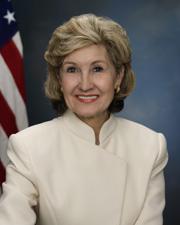 Sen. Kay Bailey Hutchison (R-TX)
Legislative Activity
Stay on top of the latest movement without scrolling through every action
Senate amendment proposed (on the floor): Amendment SA 4015 proposed by Senator Hutchison to Amendment SA 3981.(consideration: CR S10908, S10917-10918; text: CR S10908)
October 9, 2004
View full timeline
Senate amendment proposed (on the floor): Amendment SA 4015 proposed by Senator Hutchison to Amendment SA 3981.(consideration: CR S10908, S10917-10918; text: CR S10908)
October 9, 2004
Roll call votes on amendments in Senate: Amendment SA 4015 agreed to in Senate by Yea-Nay Vote. 44 - 41. Record Vote Number: 207.
October 9, 2004
Senate amendment agreed to: Amendment SA 4015 agreed to in Senate by Yea-Nay Vote. 44 - 41. Record Vote Number: 207.
October 9, 2004
Amendment SA 4015 proposed by Senator Hutchison to Amendment SA 3981. (consideration: CR S10908, S10917-10918; text: CR S10908) To implement responsible subcommittee reorganization in the Committee on Appropriations.
October 9, 2004
Amendment SA 4015 agreed to in Senate by Yea-Nay Vote. 44 - 41. Record Vote Number: 207.
October 9, 2004
Senate amendment submitted
October 7, 2004
Votes
1 roll call on this amendment
Text
Proposed
INTELLIGENCE COMMITTEE REORGANIZATION

The PRESIDENT pro tempore. Under the previous order, the Senate will
resume consideration of S. Res. 445, which the clerk will report.
The assistant legislative clerk read as follows:

A resolution (S. Res. 445) to eliminate certain
restrictions on service of a Senator on the Senate Select
Committee on Intelligence.

Pending:

McConnell/Reid/Frist/Daschle Amendment No. 3981, in the
nature of a substitute.
Bingaman (for Domenici) Amendment No. 4040 (to Amendment
No. 3981), to transfer jurisdiction over organization and
management of United States nuclear export policy to the
Committee on Energy and Natural Resources.

The PRESIDENT pro tempore. Under the previous order, the time until
11:15 a.m. shall be equally divided between the managers, with 30
minutes under the control of the Senator from Iowa, Mr. Harkin. Who
yields time?
The majority leader is recognized.

Amendment No. 4035, As Modified

Mr. FRIST. Mr. President, I ask for the consideration of the modified
version of my amendment No. 4035, which is at the desk.
The PRESIDENT pro tempore. The clerk will report.
The assistant legislative clerk read as follows:

The Senator from Tennessee [Mr. Frist] proposes an
amendment numbered 4035, as modified.

The amendment is as follows:
At the end of section 201, insert the following:
(i) Public Disclosure.--Section 8 of S. Res. 400 is
amended--
(1) in subsection (b)--
(A) in paragraph (1), by striking ``shall notify the
President of such vote'' and inserting ``shall--
``(A) first, notify the Majority Leader and Minority Leader
of the Senate of such vote; and
``(B) second, consult with the Majority Leader and Minority
Leader before notifying the President of such vote.'';
(B) in paragraph (2), by striking ``transmitted to the
President'' and inserting ``transmitted to the Majority
Leader and the Minority Leader and the President''; and
(C) by amending paragraph (3) to read as follows:
``(3) If the President, personally, in writing, notifies
the Majority Leader and Minority Leader of the Senate and the
select Committee of his objections to the disclosure of such
information as provided in paragraph (2), the Majority Leader
and Minority Leader jointly or the select Committee, by
majority vote, may refer the question of the disclosure of
such information to the Senate for consideration.
Mr. FRIST. Mr. President, this amendment has been cleared on both
sides. I urge its adoption.
The PRESIDING OFFICER. The question is on agreeing to the amendment.
The amendment (No. 4035), as modified, was agreed to.
The PRESIDENT pro tempore. Who seeks recognition?
The Senator from Nevada.
Mr. REID. Mr. President, we have a number of amendments that are
still outstanding. We disposed of the Frist amendment this morning, and
we still have Collins, Nickles, Hutchison, Bingaman, and Rockefeller
that are in order. I don't know if they are going to offer all of those
amendments, but we have 1 hour and 5 minutes until we start voting.
Everyone should understand, as I understand the order entered, a half
hour over the next 65 minutes is for Senator Harkin. So we have 35
minutes to debate these amendments. If they are not debated, we will
start voting on them.
I think it would be unfortunate if people had to act on amendments
without hearing something from someone. I hope they will either
withdraw the amendments or present them. It puts Senator McConnell and
me in an awkward position when the amendments are in order and nobody
is here to offer them. It is not fair to the Senate that there is not
someone who lets us know whether they are going to be withdrawn or be
offered, because some of the subject matter of the amendments is not
very clear, as least to this Senator.
I have been told the Rockefeller amendment is not going to be
offered.
The PRESIDENT pro tempore. The Senator from Kentucky.
Mr. McCONNELL. Mr. President, floor staff also informs me that the
Collins amendment will not be offered.
As Senator Reid indicated, we hope to hear from others who are on the
list as to what their intentions might be. If they want to offer their
amendment, now would be a good time to come and explain it.
The PRESIDENT pro tempore. Does the Senator need to withdraw that
amendment?
Mr. REID. The Collins amendment is withdrawn?
The PRESIDENT pro tempore. It is the Chair's understanding that it
will not be offered. I do not know if it is pending.
Mr. McCONNELL. It is not pending.
Mr. REID. It is not pending, so I ask that it be deleted from our
list because it is on the list of amendments that was entered into last
night. So we still have the Nickles, Hutchison, and Bingaman
amendments.
The PRESIDENT pro tempore. The Senator from Kentucky.
Mr. McCONNELL. I have been informed that Senator Nickles does intend
to offer his amendment.

Amendment No. 4027 to Amendment No. 3981, and Amendment No. 4041 to
Amendment No. 4027, en bloc

Mr. McCONNELL. Mr. President, I call up amendment No. 4027 by Senator
Nickles and also a second-degree amendment by Senator Nickles, No.
4041. As I indicated, Senator Nickles will be here to debate that
amendment later.
The PRESIDENT pro tempore. The clerk will report.
The assistant legislative clerk read as follows:

The Senator from Kentucky [Mr. McConnell], for Mr. Nickles,
for himself, and Mr. Conrad proposes an amendment numbered
4027.

The Senator from Kentucky [Mr. McConnell], for Mr. Nickles, for
himself, and Mr. Conrad proposes an amendment numbered 4041 to
amendment No. 4027.
The amendments are as follows:

amendment no. 4027

(Purpose: To vest sole jurisdiction over the Federal budget process in
the Committee on the Budget)

At the end of Section 101, insert the following:
``(e) Jurisdiction of Budget Committee.--Notwithstanding
paragraph (b)(3) of this section, the Committee on the Budget
shall have exclusive jurisdiction over measures affecting the
congressional budget process, including:
(1) the functions, duties, and powers of the Budget
Committee;
(2) the functions, duties, and powers of the Congressional
Budget Office;
(3) the process by which Congress annually establishes the
appropriate levels of budget authority, outlays, revenues,
deficits of surpluses, and public debt--including
subdivisions thereof--and including the establishment of
mandatory ceilings on spending and appropriations, a floor on
revenues, timetables for congressional action on concurrent
resolutions, on the reporting of authorization bills, and on
the enactment of appropriation bills, and enforcement
mechanisms for budgetary limits and timetables;
(4) the limiting of backdoor spending devices;
(5) the timetables for Presidential submission of
appropriations and authorization requests;
(6) the definitions of what constitutes impoundment--such
as ``rescissions'' and ``deferrals'';
(7) the process and determination by which impoundments
must be reported to and considered by Congress;
(8) the mechanisms to insure Executive compliance with the
provisions of the Impoundment Control Act, title X--such as
GAO review and lawsuits; and
(9) the provisions which affect the content or
determination of amounts included in or excluded from the
congressional budget or the calculation of such amounts,
including the definition of terms provided by the Budget
Act.''

amendment no. 4041 to amendment no. 4027

(Purpose: To vest sole jurisdiction over the Federal budget process in
the Committee on the Budget, and to give the Committee on the Budget
joint jurisdiction with the Governmental Affairs Committee over the
process of reviewing, holding hearings, and voting on persons,
nominated by the President to fill the positions of Director and Deputy
Director for Budget within the Office of Management and Budget)

Strike all after the first word, and insert the following:

[[Page S10901]]

Jurisdiction of Budget Committee.--Notwithstanding
paragraph (b)(3) of this section, and except as otherwise
provided in the Congressional Budget Act of 1974, the
Committee on the Budget shall have exclusive jurisdiction
over measures affecting the congressional budget process,
which are:
(1) the functions, duties, and powers of the Budget
Committee;
(2) the functions, duties, and powers of the Congressional
Budget Office;
(3) the process by which Congress annually establishes the
appropriate levels of budget authority, outlays, revenues,
deficits or surpluses, and public debt--including
subdivisions thereof--and including the establishment of
mandatory ceilings on spending and appropriations, a floor on
revenues, timetables for congressional action on concurrent
resolutions, on the reporting of authorization bills, and on
the enactment of appropriation bills, and enforcement
mechanisms for budgetary limits and timetables;
(4) the limiting of backdoor spending devices;
(5) the timetables for Presidential submission of
appropriations and authorization requests;
(6) the definitions of what constitutes impoundment--such
as ``rescissions'' and ``deferrals'';
(7) the process and determination by which impoundments
must be reported to and considered by Congress;
(8) the mechanisms to insure Executive compliance with the
provisions of the Impoundment Control Act, title X--such as
GAO review and lawsuits; and
(9) the provisions which affect the content or
determination of amounts included in or excluded from the
congressional budget or the calculation of such amounts,
including the definition of terms provided by the Budget Act.
(f) OMB Nominees.--The Committee on the Budget and the
Governmental Affairs Committee shall have joint jurisdiction
over the nominations of persons nominated by the President to
fill the positions of Director and Deputy Director for Budget
within the Office of Management and Budget, and if one
committee votes to order reported such a nomination, the
other must report within 30 calendar days session, or be
automatically discharged.
The PRESIDENT pro tempore. Who yields time?
Mr. McCONNELL. I suggest the absence of a quorum.
The PRESIDENT pro tempore. The clerk will call the roll.
The assistant legislative clerk proceeded to call the roll.
Mr. HARKIN. Mr. President, I ask unanimous consent that the order for
the quorum call be rescinded.
The PRESIDENT pro tempore. Without objection, it is so ordered.
Mr. McCONNELL. Mr. President, I say to the Senator from Iowa, we have
a few amendments that may be offered. I am concerned that the offerors
will have no time at all to explain their amendments prior to the votes
at 11:15. I am wondering if the Senator from Iowa would object if we
have Senators who want to offer amendments on our list, which they are
entitled to do, prior to the vote at 11:15, how we could accommodate
them and give them an opportunity to explain what the amendment was
about.
Mr. HARKIN. I do not mind. I thought I had half an hour under the
rule. I do not care when I take my half hour. I can take it now or I
will take it whenever. It does not make any difference to me.
Mr. McCONNELL. Mr. President, his half hour is unrelated to the
underlying bill.
The PRESIDENT pro tempore. That is correct, and the time of the
quorum has not been charged against the Senator from Iowa. He has 30
minutes.
Mr. HARKIN. I do not have to take it now if the Senator wants to do
something else.
The PRESIDENT pro tempore. The Senator is recognized for his 30
minutes.
Mr. HARKIN. Mr. President, I understand I have a half hour of time
yielded to me. I may have to yield it to another Senator, but I will
take some time right now.

Natural Disaster Relief

Mr. President, the resolution I have offered is very straightforward.
It simply reiterates the policy that this Senate and this Congress has
endorsed repeatedly over the decades. It basically is that agricultural
disaster assistance should be designated as emergency spending and not
taken out of other farm programs. This is the way we have done this
going back 50 years or more. In fact, I have looked and I have only
found one instance in the last 50 years where we have offset, as they
say, disaster assistance with some other money from the same program.
That was 2 years ago and that was corrected right away. We are now
about to do the same thing.
Mr. President, one of the few uncertainties about agriculture is the
uncertainty of the weather. And that is true whether it is farming or
ranching, growing orchard crops or growing any other type of
agricultural production. Even when a farmer has used his best
practices, taken prudent steps to produce a crop, severe weather events
can destroy years of work and threaten their livelihood.
Let me just quote from the USDA Web site:

Natural disaster is a constant threat to America's farmers
and ranchers. From drought to flood, freeze, tornadoes, or
other calamity, natural events can severely hurt even the
best run agricultural operation.

We have responded to these disasters through emergency legislation in
the past because we believed it was essential to respond to natural
disasters to lessen the financial hardship involved. We do have
programs in place such as crop insurance, loans, and so forth. However,
major disasters can easily overwhelm these programs, and that is why
Congress has consistently responded to natural disasters by providing
emergency assistance. This emergency assistance usually covers crop
losses, forages--that is hay and things like that--pasture losses for
livestock producers, funding for tree assistance programs, and again
there is some misconception that this disaster money makes the producer
whole, puts the producer where he would be if the disaster never
happened. That is just not true.
Let me give you an example. It is only available, first of all, if
you have over 35 percent loss of your expected production. So if you
have a loss under 35 percent, you don't get anything anyway. But let's
take an example of a Kansas farmer who, in a normal year, produces 100
bushels of grain sorghum per acre. Now he only harvests 80 bushels.
Well, if the grain sorghum is worth $2.30 a bushel, that farmer will
have an income shortfall of $46 an acre, but he will not be eligible
for any disaster assistance because he only had a 20-percent loss, so
he gets nothing. If the yield is only 50 percent, that means he has a
50-percent loss. His income shortfall is $115 an acre. Now the farmer
is eligible for disaster assistance for 15 bushels of that loss--at a
low payment rate. So, again, it is only a small fraction of what he
gets. He loses $115, and receives only about $20. So some people think
disaster assistance puts you back where you were if you were whole. No,
it does not. It basically just kind of keeps you going, and that is
about it.
Now, you will hear a lot of reference to drought relief or a drought
bill or drought emergency assistance. Well, that is a misconception. It
has been a misconception all along. While that may be the most common
problem, disaster legislation covers the whole range of weather-related
losses. The bill language covers losses ``due to damaging weather or
related conditions.''
In addition to drought, the regulations that carry out disaster
assistance include hurricanes, hail, floods, fires, freezes, tornadoes,
mud slides, pest infestation, and other calamities--in short, just
about anything Mother Nature can throw agriculture's way. It doesn't
matter what weather event causes the loss. It doesn't matter if it is
part of a hurricane that has a name or just a plain old ordinary storm
that strikes the Midwest. It doesn't matter whether the crop loss
happens in a catastrophic afternoon storm or whether it is the result
of a drought that lasts 9 or 10 or 12 months. We have always included
those in disaster assistance and treated them alike. That is what we
passed in the Senate a few weeks ago. We passed an amendment
unanimously on a voice vote to cover all types of weather-related
disaster losses across the country and treated them the same.
That is basically what my resolution says. The White House and the
House of Representatives decided to take a different approach.
President Bush sent Congress the disaster assistance proposal that
included agricultural disaster payments only for losses caused by
hurricanes and left out assistance for a whole range of other disaster
losses across the country. Furthermore, this hurricane disaster
assistance would be designated emergency spending, meaning that it
would not be

[[Page S10902]]

taken away from other programs. The President was adamant that if
Congress is going to respond to any other disasters across the country,
then the cost has to be offset from the farm bill, and that is what the
House measure did. It is interesting, the States included in the House
hurricane package are Florida, Alabama, Mississippi, Louisiana, South
Carolina, North Carolina, Georgia, Virginia, and Pennsylvania. So if
you are a farmer in those States and you have a hurricane-related loss,
your losses are covered without offsets. You get the emergency spending
measure assistance. Here is the interesting wrinkle, Mr. President, in
the President's package. If you are a farmer in one of those hurricane
States that I just mentioned, but your loss was not from the
hurricane--let's say you had a hailstorm. Let's say you had high wind
damage from a severe storm in May. Let's say you had a pest infestation
or something like that. Guess what. You get no assistance. In the
House, in what the President proposed, if you suffer loss from a
hurricane, your payments are under emergency spending. But if you are
in a hurricane State and you have another disaster caused by a
hailstorm, well, then the cost of your assistance comes out of the farm
bill.

What kind of nonsense is that?
A sugarcane farmer, God bless him, in Florida lost his crop because
of the hurricane. That farmer gets compensated out of the emergency
package. Let's say you are a corn farmer in Ohio and your crop was
knocked down by a tornado. Guess what. You are not in. Whatever
assistance you get has to come out of the farm bill. So why is it, why
is it that if you got hit by a hurricane, you are treated one way; if
you get hit by a tornado or a hailstorm or a fire or a drought, you are
treated another way. It absolutely makes no sense. So, again, we draw
these artificial lines. The President has drawn them. Why discriminate
against certain farmers? If you are a farmer and you lose your crop, as
I said, to a tornado or high winds in Ohio or Wisconsin or Iowa or
Minnesota or Missouri, well, guess what. They are going to take it out
of one pocket and put it into your other pocket. But if you are a
farmer down in Florida, they don't take it out of your pocket. The
whole country, all of us, help pay for those disasters as we have done
for the last 50 years.
Now the President wants to take the money out of the Conservation
Security Program. That program covers the entire United States of
America. Why would you want to take money out of a State such as
Pennsylvania that uses conservation money or Ohio or Wisconsin or
Minnesota or Iowa or Missouri, taking money out of those States to send
to Texas or Oklahoma or Wyoming or Colorado to help the farmers who had
a drought? That doesn't make sense. It seems if you are going to have a
disaster assistance package, the whole country ought to pay for it, all
of it. When you have an earthquake in Alaska, do we take the money out
of one State, just one State, and pay for that--or two States--or do we
just take it out of a State that maybe--we take it out of California
because they have an earthquake and we send it to Alaska? No.
The entire United States of America, all of our people contribute to
make sure that anyone who is hurt by an earthquake in Alaska or
California or a flood in Iowa gets compensated and gets help. We had a
flood in Iowa in 1993 that devastated our State. We didn't take money
out of South Dakota or we didn't take out of Missouri or another State,
out of what they get. The whole country came to our assistance.
As I said, I feel sorry for the people who have been hit by
hurricanes, and we should help them, but we ought to do it on a
national basis and not try to take it out of one pocket, one part to
help another. That is not right. It is not right to discriminate
against farmers.
One last thing I will say before I yield the floor. We don't take
away a community's Federal funds for highways or housing or hospitals
to fund civil disaster assistance. In other words, if we have a civil
disaster, why should we take the money out of the highway money? If we
are going to help Florida out, why don't we take it out of Florida's
highway money? Take it out of their housing money? Take it out of their
hospital money to pay for their civil disaster? We don't do that. So
why should we do it in agriculture, on farmers? Why should we take it
out of the farmers' pockets to pay for a disaster? Why don't we take
the money out of the highway money going to Florida to pay for the
hurricane? Take it out of their hospital money? Take it out of their
housing money? We don't do that. We don't do it because it is not the
right thing to do. We should not take it from the farm bill either.
I realize those of us who represent farmers and farm States, we get
hit often because they say farmers get this and that. I want to point
out, as I have pointed out time and time again, since we passed the
farm bill in 2002 and the President signed it in May of 2002, we have
saved the taxpayers of this country over $15 billion in less commodity
program spending. I think that is a pretty healthy contribution by our
farmers and our ranchers to help reduce the deficit of this country.
Now they want to take more money out of agriculture to pay for a
disaster. It is wrong. That is why I have offered this resolution which
basically says:

It is the sense of the Senate that the 108th Congress
should provide the necessary funds to make disaster
assistance available for all customarily eligible
agricultural producers as emergency spending and not funded
by cuts to the farmer.

It is very simple and straightforward.
Madam President, how much time do I have remaining?
The PRESIDING OFFICER (Ms. Snowe). The Senator has 16 minutes
remaining.
Mr. HARKIN. Madam President, I don't know if anyone wants any time. I
will be glad to yield to my friend from North Dakota.
The PRESIDING OFFICER. The Senator from North Dakota.
Mr. CONRAD. Madam President, I rise today to support the ranking
member on the Senate Agriculture Committee in what he is saying. I am
in my 18th year in the Senate. Only once before in that entire time
have we taken money from other farmers to provide the funds to cover a
natural disaster for others. That is just wrong. That is not the way we
have operated. We have always dealt with natural disasters through
emergency funding because none of us can know who is going to get hit
by a natural disaster. None of us can know who is going to have a
hurricane or a drought or a freeze.
In my State we have had three of the four. We didn't have hurricanes.
We don't get hurricanes in North Dakota. But we have had drought in the
southwestern part of the State. I have just taken a drought tour, and
it looks like a moonscape. Nothing is growing. It is disastrous. The
corn crop is about a foot high. There are no ears in the corn crop.
I go to the northern part of my State, and it is flooded. It is
unbelievable. We have a lake in north central North Dakota called
Devils Lake. That lake has risen 25 feet in the last 7 years. That lake
is now 2\1/2\ times the size of the District of Columbia, and it has
risen 25 vertical feet, taking up hundreds of thousands of acres.
We, as a Federal Government, have already had to buy out the entire
town of Church's Ferry. We have had other towns that are on the brink
of being swallowed up. We have spent tens of millions of dollars
protecting the town of Devils Lake. We have moved over 600 structures.
All across the northern tier of North Dakota, something very unusual
is happening. We have had extraordinarily wet conditions over a
prolonged period. The result is 2 million acres they could not even
plant this year--2 million acres. That is bigger than the size of the
State of Delaware--land that couldn't be planted.
The land that could be planted is now so wet they can't drive the
equipment in to harvest the crop. So you drive by the road and it looks
like a fabulous crop, like there is a tremendous barley crop out there.
It looks like 90- to 100-bushel barley. But you can't get into the land
to take it off because the ground is soaked.
I was just at a farmer's home and he pointed up to the top of the
rafters in his barn. He said: Senator, that is where the water is going
to be 6 months from now, according to the State water commission,
because the whole area is flooding.
In the midst of that we had a freeze in early August. Drought, flood,
freeze--I have lived in North Dakota all my life, and I have never seen
such

[[Page S10903]]

a collection of natural disasters. So while I have great sympathy for
the people of Florida and Southeastern United States who have suffered
hurricanes, and I am prepared with my vote to help them, we would
expect the same in return. They are not the only ones who have been
hurt. I have tens of thousands of farm families who are wondering now,
Is Washington going to help or is Washington going to turn its back?
We have not been on the news. The networks haven't been out there
covering this drought. They have not covered this flooding because this
is a slow-motion disaster. This is not the kind of thing that makes
good television, as the water rises in North Dakota. That doesn't make
good television. It is a slow-motion disaster, but it is a disaster
nonetheless. People's lives are being devastated.
Always before we have had emergency funding--with one exception in
the 18 years I have been here. Always before, when an area suffered
natural disasters, we have voted emergency funding to give them some
help.
Let me make clear to my colleagues--I have heard some say: If you
would have had preventive planning, you wouldn't have any losses
because you didn't have to plant the crop. That is not the way it
works. You still have your land payment, you still have all your
management expenses, and in most cases people put on fertilizer in
anticipation of being able to plant. This idea that they don't have
expenses is just wrong.
Then I have heard they will get more help than what they have lost.
That is just wrong. People have said: They have crop insurance. Crop
insurance will make them whole. No.
Crop insurance will not come anywhere close to making them whole;
nowhere close. First of all, you have to have a 35-percent loss before
you get anything. Then you only get a percentage of your loss over 35
percent. That is not going to make people anywhere close to whole--
nowhere close. Even if you take disaster assistance and crop insurance,
you are nowhere close to whole. You still have significant losses. That
is the fact of the matter.
The disaster assistance we pass in the Senate is desperately needed,
and it should not be taken away from other farmers in order to pay for
it. We shouldn't take from what they need in order to try to provide
assistance for those who have suffered natural disasters. That is not
right. It is not fair. It has not been done before, with one exception
in the 18 years I have been in the Senate. I had my staff go back and
research the whole history. We have never done things that way with one
exception.
We should not go down this path of turning our back on people who
have suffered natural disasters, whether it is a hurricane, whether it
is a flood, whether it is a drought, whether it is a freeze, or some
horrific outbreak of disease. We need to stand ready to reach out with
a helping hand.
I thank the ranking member from the State of Iowa, Senator Harkin,
for standing up, fighting back and being very clear about what is at
stake here; and to our leader, Senator Daschle. The truth is without
Senator Daschle as our leader, we wouldn't have a prayer of getting the
assistance our area desperately needs. That is a fact.
Mr. DASCHLE. Madam President, I thank the distinguished Senator from
North Dakota for his very kind words. There are a number of people who
deserve great credit, beginning, of course, with our distinguished
ranking member on the Senate Agriculture Committee. He has been the
most forceful, the most passionate, the most articulate voice for
agriculture and I am proud to call him my leader.
He and I were in the room when we wrote this a couple of years ago. I
remember so vividly. It was in the room across the hall. This
legislation wouldn't even exist were it not for what Senator Harkin did
in the room across the hall as we negotiated these issues and got the
commitment from this administration and from our Republican friends
that this conservation program would be fully funded. We got a
commitment. Almost before the ink was dry, that commitment withered
away. It disappeared.
I can understand the frustration of the distinguished Senator, the
anger and the disappointment that after being given the commitment over
and over again it was virtually the last thing we decided. Only because
he held out as aggressively as he did, we finally said yes. OK. If this
means getting the farm bill, we will agree to this and we will commit
to funding. I was there in the room. I heard it myself, and here we
are.
This isn't the first time. This is now the second time he has had to
come to the floor.
I know a lot of Senators are inconvenienced, but I must say nobody is
more inconvenienced by the doubletalk and the lack of commitment and
the willingness to keep their word than our ranchers and farmers who
are so desperate for the help Senator Conrad and Senator Harkin have so
eloquently described.
Senator Johnson and I have the same situation in South Dakota. I
talked to a rancher in the southwest near Edgemont. He broke down in
tears, telling me that he is now going to be forced to sell his herd--a
herd he has had all of his life. He said, I have never seen anything
like this. His lips curled and he choked up. I felt so sorry for him.
He said, But I am not alone. I am at the end of my career.
I worry about those young farmers and ranchers who are just getting
started. What are they going to do?
This assistance is critical. But the double standard is so outrageous
that I can understand why Member after Member representing farmer and
rancher after farmer and rancher is coming to the floor to express
their outrage and indignation.
You talk about heroes. I thank my colleague from South Dakota for
making the effort he did so gallantly. Senator Johnson offered an
amendment to say let's treat this disaster assistance the way we are
treating all other disaster assistance. I understand it is about $11
billion. Let us treat it exactly the same. He made a passionate defense
of that argument and lost on a 6-to-5 vote, as I understand it. It was
a party-line vote.
Mr. JOHNSON. Madam President, may I direct a question to my
colleague?
Mr. DASCHLE. I would be happy to yield for a question from the
Senator from South Dakota.
Mr. JOHNSON. I want to report to the body that I have just come from
the Military Construction Subcommittee conference markup. Oddly enough,
military construction--the way things work around here--is now the
vehicle for bringing up disaster relief to Florida and on the Northern
Plains. We were able to obtain nearly a $3 billion drought relief
package on that bill, thanks to Senator Daschle in large part, and
Senator Harkin, of course, with his leadership. But I don't believe it
would be on the floor at all were it not for Senator Daschle's
leadership.
That drought relief passed with a unanimous bipartisan vote in the
Senate earlier this year. Yet when it came back to the Military
Construction Subcommittee as part of this disaster aid we are adding,
it had this very convoluted offset that is stretched out for over 10
years.
I have to ask the leader, Senator Daschle, who has been through this
and has championed agriculture for so many years as an extraordinary
representative and as a leader on rural and agricultural issues, if
there is any logic the leader can discern why disaster relief for
hurricane victims is emergency funding, and disaster relief as it turns
out now for farmers and ranchers suffering from drought is cannibalized
out of the agriculture budget for the rest of the decade. What logic is
there to that? What fairness is there to that kind of approach to this
disaster relief bill that is now likely to pass? We are grateful for
disaster relief, but this uneven treatment between farmers
and hurricane victims strikes me as sadly peculiar and an unfortunate
precedent that rural people will suffer from for years to come.

I would be interested in any response, given the great experience and
leadership Senator Daschle has afforded rural America for all of these
years, whether he sees any logic to this kind of separate treatment of
farmers versus others in America today.
Mr. DASCHLE. I thank my dear friend from South Dakota for his
question and for his kind words.
I simply say there is no logical conclusion one can draw from this
except

[[Page S10904]]

that there are those in the administration and apparently here in
Congress who believe farmers and ranchers ought to be subject to a
double standard; that they aren't as poor as other victims and the
other people who have experienced disasters of other kinds.
For some reason, this administration has minimized the losses in
agriculture almost from the beginning. As the Senator so well knows,
because he was right in the middle of the fight 2 years ago, we tried
to persuade the administration to help farmers and ranchers with $6
billion disaster assistance. That was actually passed here on the
Senate floor. They sat on it. They stalled it. They did everything they
could to prevent it. Ultimately, all we got before the end of the year
was about $1 billion--$5 billion less. It is no surprise. This isn't
something new for this administration or some of our colleagues in the
Congress.
This is yet another illustration and pattern of demonstration of how
minimally they are prepared to support agriculture and our farmers and
ranchers. It is a double standard. It is a shell game. They are telling
farmers and ranchers we are going to take money out of your right-hand
pocket and put it in your left-hand pocket, and we want you to feel
good about it. There is no net additional revenue to be provided to
agriculture as a result of this disaster relief. We are simply taking
it out of their right pocket and putting it in their left pocket.
I can't imagine--and Senator Conrad and others have noted how a
rancher or a farmer could be anything but offended--that somebody would
insist farmers and ranchers pay for their own grass and drought
assistance, disaster assistance and flood assistance, when at the very
same time, simultaneously, we are providing meaningful new assistance
to the victims of hurricanes, which we all support.
The double standard, the shell game, the extraordinary intransigence
on the part of those who are opposing the Johnson amendment and
opposing our efforts to make farmers and ranchers whole is
inexplicable. There is no logic. I appreciate very much his words.

I yield the floor.
The PRESIDING OFFICER. The Senator from Iowa.
Mr. HARKIN. How much time do I have remaining?
The PRESIDING OFFICER. There is 8 minutes.
Mr. HARKIN. We all need leaders to organize us, to inspire us, to get
us moving in the right direction. Our distinguished leader, Senator
Daschle from South Dakota, was kind enough to say good things about me
with regard to the Agriculture bill, but we would never have gotten it
together had it not been for his leadership. We, on this side of the
aisle, all rely on his inspiration and his leadership, pulling us
together. Nowhere is that more evident than our fight for farmers and
ranchers and people who live in small towns and communities all over
America.
I thank my good friend and my leader from South Dakota for what he
has done for the people who live in the little towns such as my home
town, Cummings, IA, with 150 people, for the farmers and ranchers of
Iowa, South Dakota, and all over this country. Senator Daschle has been
their voice and their leader, as he has been our leader. I daresay we
wouldn't have half of the things we have for agriculture today had it
not been for Senator Daschle, in making sure we had a good farm bill 2
years ago.
As Members can tell today, his passion is still there. I thank the
good farmers and ranchers and rural people of South Dakota for having
him here and having him as our leader.
Madam President, I ask that an editorial from the Des Moines Register
of October 9 be printed at the conclusion of my remarks.
The PRESIDING OFFICER. Without objection, it is so ordered.
(See exhibit 1.)
Mr. HARKIN. I will read one sentence from the editorial:

"The reality of the situation is that there will be no
disaster money before we go home unless we provide budget
offsets,'' said the chairman of the House Agriculture
Committee, Rep. Bob Goodlatte, R-Va.

Easy for him to say; farmers in his State are covered by the
hurricane disaster assistance package. He doesn't have to worry about
whether it is emergency money.
What kind of selfishness is that around here? If you are from a State
where you get the hurricane disaster assistance, to heck with everybody
else?
The Des Moines Register editorial said:

Cutting farm programs to pay for the assistance would
amount to taking money from growers in the Midwest and giving
it to producers in drought-stricken areas of Montana, the
Dakotas and other Plains states.

I want to help those farmers. They should be helped. But as Senator
Daschle said, they should not take it out of one pocket and put it in
another.
I also ask that a letter from a number of different farm groups
opposing the using of farm bill conservation money for disaster
assistance be printed in the Record following my remarks. This is in
opposition to the President's position.
The PRESIDING OFFICER. Without objection, it is so ordered.
(See exhibit 2.)
Mr. HARKIN. I ask that a letter from a number of conservation groups
be printed in the Record at the conclusion of my remarks, asking that
money not be taken out of the conservation title.
The PRESIDING OFFICER. Without objection, it is so ordered.
(See exhibit 3.)
Mr. HARKIN. I ask unanimous consent that at the conclusion of my
remarks a letter to a number of Representatives on the House side from
a number of conservation groups also be printed at the conclusion of my
remarks.
The PRESIDING OFFICER. Without objection, it is so ordered.

(See exhibit 4.)
Mr. HARKIN. Lastly, I have heard the argument that drought is long
term; there is some kind of climate change, but for the western part of
the United States, which has had droughts for the last 4 or 5 years, we
cannot continue to give disaster money if it is going to be a drought
one year after another.
Guess what. Florida sits in hurricane alley. They have had hurricanes
going back for 100 years. Guess what. Hurricanes are going to hit
Florida next year and the year after and the year after. Should we say
we cannot give disaster money to Florida because this is a long-term
type thing? That is what I heard about drought assistance because we
have had it for 5 years. Because we have been hit by 5 years of
drought, that is long term and therefore we cannot help you?
Maybe we ought to take a look at hurricane alley. Maybe they
shouldn't get help because they will get hit by another hurricane next
year or the year after. We don't get hit by hurricanes in Iowa. They do
not bother us. But we get hit by things such as tornados and hail
damage and drought and, yes, floods.
Lastly, this bill, in helping the drought-stricken farmers--and my
friend from North Dakota knows this very well--it only covers 1 year.
We have had a drought for 4, 5, or 6 years. Farmers who suffered crop
losses in both 2003 and 2004 will get to pick 1 year, either 2003 or
2004, you pick one, that is all the disaster assistance you get. It
does not cover 7 years; it covers 1 year.
I wanted to clear this up. I hear rumors and misconceptions around
here. I wanted to make the record clear that, yes, we have had some
problems--such as tornados. Oklahoma gets hit by tornados, and Kansas
and Nebraska and Iowa. We have had a lot. We will next summer because
we are in tornado alley. Does that mean if a tornado strikes we should
not get any disaster money because we get hit by tornados every year?
No. Neither should the farmers in the Dakotas or Montana or places that
have a drought right now, nor should they be penalized because they
have been hit by some dry weather for a few years.

Exhibit 1

[From the Des Moines Register, Oct. 9, 2004]

Midwest Farmers May Lose Out With Disaster Aid

Washington, DC.--Farmers hit by a succession of crop losses
hoped an election year would bring some extra cash from the
government.
However, House Republicans are pushing for cuts in farm
programs to pay for a $3 billion package of farm-disaster
assistance, and agriculture groups may drop their support for
the aid.

[[Page S10905]]

Cutting farm programs to pay for the assistance would
amount to taking money from growers in the Midwest and giving
it to producers in drought-stricken areas of Montana, the
Dakotas and other Plains states. The prime target for the
cuts is the popular Conservation Security Program written by
Sen. Tom Harkin.
``If disaster assistance comes out of the farm bill, then
we oppose disaster assistance,'' said Mary Kay Thatcher, a
lobbyist for the American Farm Bureau Federation.
Democrats accused Republicans of hypocrisy. The White House
is pushing Congress to pass special emergency assistance for
Florida hurricane victims, including farmers there, without
demanding spending cuts. Florida is a key state in the
presidential race. ``It is not right to treat farmers in one
part of this country different than farmers in another,''
Harkin said.
The House passed legislation earlier in the week that would
pay for the drought assistance by capping the cost of the
Conservation Security Program.
``The reality of the situation is that there will be no
disaster money before we go home unless we provide budget
offsets,'' said the chairman of the House Agriculture
Committee, Rep. Bob Goodlatte, R-Va. Friday, lawmakers were
looking into trimming things other than the Conservation
Security Program because of technical problems with targeting
the conservation payments, congressional aides said. Harkin,
a Democrat, pledged to slow some must-pass bills unless
Republicans backed off making the cuts. Friday afternoon, he
blocked the Senate from considering amendments to an
intelligence-reform bill.
The Senate passed a version of the drought aid paid for by
adding to the federal budget deficit. Farmers could get
payments for losses in either 2003 or 2004.
Iowa farmers would likely receive about $200 million to
$250 million in disaster payments, primarily to cover damage
to soybean fields, according to Harkin's staff. The Iowa Farm
Bureau has estimated damage from the 2003 drought at $750
million.
The Conservation Security Program is designed to reward
farmers for practices that prevent soil erosion and other
environmental problems.
Some 2,188 farms, including 290 in Iowa, were signed up for
the program this year. Enrollment was limited to 18
watersheds, or river drainage areas. The National Corn
Growers Association never endorsed the disaster aid package,
partly out of concern that it mean reductions in other farm
spending, said Jon Doggett, a lobbyist for the group.
____

Exhibit 2

October 7, 2004.
Hon. Ted Stevens,
Chairman, Committee on Appropriations, U.S. Senate,
Washington, DC

Hon. Thad Cochran,
Chairman, Subcommittee on Appropriations, U.S. Senate,
Washington, DC

Hon. Robert Byrd,
Ranking Member, Committee on Appropriations and Subcommittee
on Homeland Security, U.S. Senate, Washington, DC

Dear Mr. Chairman and Ranking Member: The House and Senate
have approved virtually identical legislation to provide
vitally important financial assistance to assist farmers and
ranchers who have suffered devastating crop losses due to
hurricanes and drought. Importantly, the provisions approved
by the House and Senate allow producers to choose to receive
assistance for either 2003 or 2004 crop losses. And, since
the legislation is similar to previous disaster programs,
USDA should be able to deliver the assistance in a timely and
cost efficient manner.
We understand that the free-standing legislation passed by
the House on October 6 may serve as the House position in the
conference on FY05 funding for Homeland Security. We are
concerned that the House provision providing assistance for
agricultural losses includes a funding offset, which reduces
funding for a conservation program authorized in the 2002
farm bill. The Senate passed provision, which is included in
the Homeland Security bill does not include an off-set. As
you know, farm and commodity organizations have consistently
opposed opening the farm bill, which is carefully balanced
and has provided important, predictable financial stability
for farmers, ranchers and rural Americans. While the House
passed provision includes an off-set for a portion of the
agriculture assistance, the other assistance was approved
with an emergency designation and the House overwhelmingly
rejected an amendment that would have offset the entire bill.
The purpose of this letter is to respectfully urge the
conferees to retain the disaster assistance provisions as
part of the Homeland Security funding but to eliminate the
requirement that a portion of the funds for agricultural
disaster assistance be off-set by a reduction in conservation
programs or any other programs authorized by the 2002 farm
bill. We believe the delivery of much needed assistance to
farmers and ranchers suffering losses due to drought,
hurricanes and other adverse weather is critically important
to those who have suffered devastating losses, but we also
believe preservation of the provisions of the 2002 farm law
is important to all farmers and ranchers. We would also note
that expenditures under the 2002 farm bill have been
substantially less than that projected at the time of
passage. Unfortunately budget rules do not allow use of those
funds for other purposes, but we believe this should be a
favorable factor in the consideration of our request.
As always, thank you for your consideration of our views
and your leadership on matters critical to the U.S.
agricultural community.
Sincerely,
Alabama Farmers Federation
American Corn Growers Association
American Farm Bureau Federation
American Soybean Association
Ducks Unlimited
Georgia Peanut Commission
Independent Community Bankers of America
National Association of Farmer Elected Committees
National Association of State Departments of Agriculture
National Association of Wheat Growers
National Barley Growers Association
National Cotton Council
National Council of Farmer Cooperatives
National Farmers Organization
National Farmers Union
National Grain Sorghum Producers
National Milk Producers Federation
Southern Peanut Farmers Federation
National Sunflower Association
Soybean Producers of America
US Canola Association
USA Dry Pea & Lentil Council
USA Rice Federation
USA Rice Producers Association
Women Involved in Farm Economics.
____

Exhibit 3

American Fly Fishing Trade Association, American Land
Conservancy, Archery Trade Association, Bowhunting
Preservation Alliance, Congressional Sportsmen's
Foundation, Ducks Unlimited, International Hunter
Education Association, International Association of
Fish and Wildlife Agencies, Izaak Walton League of
America, Orion-The Hunters Institute, Pheasants
Forever, Sand County Foundation, Texas Wildlife
Association, Theodore Roosevelt Conservation
Partnership, The Wildlife Society, Wildlife Forever,
Wildlife Management Institute,
October 7, 2004.
Hon. Bill Frist,
Hon. Tom Daschle,
Hon. Ted Stevens,
Hon. Robert C. Byrd,
U.S. Senate,
Washington, DC.

Hon. Dennis Hastert,
Hon. Tom DeLay,
Hon. Nancy Pelosi,
Hon. Bill Young,
Hon. David Obey,
U.S. House of Representatives,
Washington, DC.
Dear Senate and House Leadership. The above listed
conservation and sportsmen's organizations, which represent a
diverse spectrum of interests with a combined membership of
millions, stand together urging you to reject any attempt to
offset the costs of the disaster package's assistance to U.S.
farmers and ranchers with cuts to the 2002 Farm Bill's
conservation assistance programs. We fully support a disaster
assistance package that is appropriately designated by
Congress as emergency spending.
Conservation funding was critical to securing passage of
the 2002 Farm Bill. These conservation programs have become
win-win solutions for landowners and wildlife, while at the
same time guard against economic impacts from droughts and
floods. Each of the programs is oversubscribed, with farmer
demand continuing to outpace available funding.
We strongly oppose the use of conservation program spending
as an offset for disaster assistance. If you have questions
about this issue, please contact Barton James (Ducks
Unlimited) at (202) 347-1530.
Thank you very much for your time and consideration of this
matter.
____

Exhibit 4

October 5, 2004.
Hon. C.W. Bill Young,
Chairman, House Committee on Appropriations, H-218 Capitol
Building, Washington, DC

Hon. Ted Stevens,
Chairman, Senate Committee on Appropriations, S-128 Capitol
Building, Washington, DC

Hon. Thad Cochran,
Chairman, Subcommittee on Homeland Security, Senate Committee
on Appropriations, Dirksen Senate Office Building Rm-135,
Washington, DC

Hon. Martin Olav Sabo,
Ranking Member, Subcommittee on Homeland Security, House
Committee on Appropriations, Rayburn HOB B-307,
Washington, DC

Hon. David Obey,
Ranking Member, House Committee on Appropriations, 1016
Longworth HOB, Washington, DC

Hon. Robert C. Byrd,

[[Page S10906]]

Ranking Member, Senate Committee on Appropriations, S-112
Capitol Building, Washington, DC

Hon. Harold Rogers,
Chairman, Subcommittee on Homeland Security, House Committee
on Appropriations, Rayburn HOB B-307, Washington, DC
Dear Appropriations Conferee: As you conference the fiscal
year 2005 Homeland Security appropriations bill and consider
the Senate-passed agricultural disaster package, we urge you
to reject any attempt to offset the costs of the disaster
package with cuts to the 2002 Farm Bill's conservation
assistance programs.
Conservation funding was critical to securing passage of
the 2002 Farm Bill. Conservation programs in the 2002 Farm
Bill provide farmers and ranchers with important financial
assistance while addressing the nation's urgent natural
resource and environmental needs. These programs guard
against heightened natural resource and economic impacts from
droughts and floods, and thus the long-term costs of weather
related disasters, by improving soil and water quality and
conservation. Each of the programs is oversubscribed, with
farmer demand continuing to outpace available funding.
We strongly oppose the use of conservation program spending
as an offset for the disaster package. In our view, it is
unfair to single out agricultural disasters for offsets and
unwise to single out conservation as the potential offset.
Thank you for considering our views.
Sincerely,
American Farmland Trust
American Rivers
Chesapeake Bay Foundation
Defenders of Wildlife
Environmental Defense
National Association of Conservation Districts
National Catholic Rural Life Conference
National Wildlife Federation
Natural Resources Defense Council
Sierra Club
Soil and Water Conservation Society
Sustainable Agriculture Coalition
Union of Concerned Scientists.

Mr. HARKIN. How much time is remaining?
The PRESIDING OFFICER. There is 1 minute 40 seconds.
Mr. HARKIN. Whatever time I have remaining I would be glad to yield.
Mr. DORGAN. Let me, in the few moments remaining, thank the Senator
from Iowa. Yesterday, someone asked him what he was doing, and he said:
I am supporting my farmers.
The fact is, farmers in his State, our State and others, have been
hit by weather-related disasters. You ought not treat farmers in
different parts of the country in different ways. If you are going to
provide disaster assistance to people in one part of the country, those
farmers who have been hit with weather-related disasters in other parts
of the country deserve to be helped as well.
This is a case of the Government saying to farmers during a tough
period, you are not alone; we are here to help you. This is not a case
of farmers begging to be helped. It is a case, for example, in our part
of the country, where torrential rains wiped out the opportunity for
farmers to even plant a crop on 1.7 million acres. Think of that. There
were 1.7 million acres that could not be planted. These are farmers
that will lose their farms if we do not offer some help.
The Senator from Iowa has been doing something very simple and
powerful in the Senate. He is standing up for family farmers.
My colleague from North Dakota, Senator Conrad, myself, and others
are insistent we provide disaster relief and do so in the right way.
What is being done in the conferences, back and forth, the ping-
ponging of inadequate proposals, proposals that are unusual, is not
fair.
I commend the Senator from Iowa for being unwilling to sit by idly,
silently, and allowing this to happen. I stand with him, as does my
colleague, Senator Conrad, and many others.
The PRESIDING OFFICER. The Senator from Nevada.
Mr. REID. On behalf of Senator Bingaman, I ask permission to withdraw
from the list the Bingaman-Domenici amendment as listed.
The PRESIDING OFFICER. Without objection, it is so ordered.
The PRESIDING OFFICER. The Senator from Kentucky.
Mr. McCONNELL. I yield 5 minutes to the distinguished Senator from
Ohio.
The PRESIDING OFFICER. The Senator from Ohio is recognized.

Amendment No. 4027

Mr. VOINOVICH. Madam President, later on today we will be discussing
an amendment submitted by Senator Nickles. The amendment's alleged
purpose is to clarify the shared jurisdiction of the congressional
budget process between Governmental Affairs and the budget situation
that grew out of the Budget Committee and the modern budget process of
1974.
Senate committees rarely share jurisdiction, and joint referral of
legislation is accomplished by unanimous consent. Today, anything that
deals with the budget either coming out of the Governmental Affairs
Committee or coming out of Budget has to be referred to the
Governmental Affairs Committee and within 30 days some action has to be
taken so there is a joint referral.
This amendment would eliminate that and say that all of the budgetary
process is within the jurisdiction only of the Budget Committee and
would also require that instead of the nominations for the Director of
the Office of Management and Budget and the deputy director being the
sole jurisdiction of the Governmental Affairs Committee, that would be
a joint jurisdiction. In other words, the Presidential appointee to
Director of Budget and Management, Deputy Director, and other people,
would have to come to the Governmental Affairs Committee and also go to
the Budget Committee for their approval.

I think one of the things we are trying to do here is to streamline
that whole process, that we have too many people who are being,
frankly, nominated, and too much advice and consent.
One of the things in an amendment to the Homeland Security Act that
we were able to get done was the provision that says we are going to
ask the administration to come back with recommendations on how they
can reduce the number of people who are sent to the Senate for advice
and consent to streamline the process.
This amendment would make this Presidential appointment process in
regard to the Director of Budget and Management and the Deputy Director
much more complicated than it is today. I would also argue--with due
respect to the expertise that is on the Budget Committee--that this
process has not been looked at since 1974.
As a member of the Governmental Affairs Committee and the oversight
of Government management in the Federal workforce, I have been
concerned that we have not looked at that process since 1974--that we
have discussed the feasibility of going to a 2-year budget. There are
many things, in my opinion, that this body should be doing, and if it
were solely within the jurisdiction of the Budget Committee, it might
not get done. The Governmental Affairs Committee looks at the big
picture.
I would also argue that too often in the Office of Budget and
Management, there is no ``M'' in OMB. I am pleased to say that this
administration has undertaken some very aggressive management
responsibilities. I, quite frankly, think they would not have
undertaken those management responsibilities had it not been for the
fact that they had to be confirmed by the Governmental Affairs
Committee of the U.S. Senate.
I know the relationships that I have built personally with the
Director of the Office of Budget and Management; Sean O'Keefe, who was
the Deputy Director, and now Director Josh Bolten, have really accrued
to the benefit of our country in terms of improving the management of
Government.
So what I am trying to say is the budget process is important not
only to the Budget Committee but the budget process is important to the
entire country and to the operation of Government because it has such a
large impact on the whole operation of Government.
I respect the chairman of the Budget Committee, but as one who has
been concerned about modernizing our procedures, I believe this would
not promote what is in the best interest of the Senate or, for that
matter, our country.
I ask unanimous consent to have printed in the Record the human
capital changes that have occurred since 1999 that have come out of the
Governmental Affairs Committee.
There being no objection, the material was ordered to be printed in
the Record, as follows:

[[Page S10907]]

U.S. Senator George V. Voinovich, Ohio--An Agenda To Reform the Federal
Workforce: Accomplishments

Senator Voinovich has made identifying and developing
solutions to the federal government's strategic human capital
challenges his highest priority for his Subcommittee on
Oversight of Government Management. He has held 15 hearings
on the subject, spoken at numerous public conferences, and
was a key participant in the Harvard University John F.
Kennedy School of Government Executive Sessions on the Future
of the Public Service in 2001-2002. He has brought together
the best minds in academia, government and the private sector
to address these issues and developed a forward-looking
legislative agenda. Taken together, the legislation he has
sponsored and cosponsored represents the most significant
governmentwide changes to the federal civil service system
since passage of the Civil Service Reform Act of 1978.
Legislation sponsored by Senator Voinovich enacted into
law:
Department of Defense Civilian Workforce Reshaping
Authority as part of the FY 2001 Defense Authorization,
became law on October 30, 2000.
Several major provisions of S. 2651, the Federal Workforce
Improvement Act of 2002, were included in the Homeland
Security Act of 2002, Public Law 107-296, November 25, 2002.
Its most important provisions: agency chief human capital
officers (at the 24 largest federal agencies); an interagency
chief human capital officers council (codifying the Human
Resources Management Council); an OPM-designed set of
systems, including metrics, for assessing agency human
capital management; inclusion of agency human capital
strategic planning in annual performance plans and program
performance reports required by GPRA; reform of the
competitive service hiring process (use of a category ranking
system instead of the Rule of Three); permanent extension,
revision, and expansion of voluntary separation incentive pay
and voluntary early retirement (``buyouts'' and ``early-
outs'');
S. 926, the Federal Employee Student Loan Assistance Act,
Public Law 108-123, November 11, 2003. The law raises to
$10,000 and $60,000, respectively, the annual and aggregate
limits of student loan repayment federal agencies may offer
employees as incentives.
S. 1683, the Federal Law Enforcement Pay and Benefits
Parity Act of 2003, Public Law 108-196, December 19, 2003.
The law required OPM to conduct a study of federal law
enforcement compensation and classification to inform reform
efforts. It was submitted to Congress on July 16, 2004.
S. 610, NASA Workforce Flexibility Act of 2004, Public Law
108-201, February 24, 2004. The law provides new personnel
flexibilities to the National Aeronautics and Space
Administration to recruit and retain a technology savvy
workforce for NASA's high-tech mission.
H.R. 2751, GAO Human Capital Reform Act of 2004, Public Law
108-271, July 7, 2004. H.R. 2751 was the House companion to
Senator Voinovich's bill S. 1522, which passed the Senate on
November 24, 2003. It provides several new personnel
flexibilities to the now U.S. Government Accountability
Office.
Legislation cosponsored by Senator Voinovich enacted into
law:
The Homeland Security Act of 2002, Public Law 107-296,
November 25, 2002, allowed the new department to design a new
personnel system for its 170,000 employees to meet its
mission needs.
The National Defense Authorization Act for Fiscal Year
2004, Public Law 108-136, November 24, 2003, includes the
National Security Personnel System (NSPS). Senator Voinovich
had a role in drafting the Senate version of NSPS, S. 1166.
NSPS will provide significant personnel flexibilities to the
Department of Defense similar to those at the Department of
Homeland Security. In addition, this Act contains a provision
that alleviates pay compression in the Senior Executive
Service. Senator Voinovich had introduced a separate bill, S.
768, to accomplish this.
Legislation sponsored by Senator Voinovich currently under
Congressional consideration:
S. 129, Federal Workforce Flexibility Act of 2003, was
passed by the Senate on April 8, 2004, and it contains
additional governmentwide human capital reforms. The House
Committee on Government Reform considered and reported S. 129
to the full House on June 24, 2004. Senator Voinovich
understands that the bill should pass the House the week of
October 4th and return to the Senate for final passage.

Mr. VOINOVICH. I would like to emphasize for my colleagues how
important it is that this jurisdiction in terms of the Director of
Budget and Management and the Deputy Director remains in the
Governmental Affairs Committee.
I would like to make one other point; that point is, the jurisdiction
of our committee has been stripped out for the last couple of days. So
I just urge my colleagues--I am going to ask for a vote. I think it is
important to the management of our country.
I appreciate the opportunity to speak and yield the floor.
The PRESIDING OFFICER (Mr. Chafee). The Senator's time has expired.
The Senator from Nevada is recognized.
Mr. REID. Mr. President, for my friend to say the jurisdiction of the
committee has been stripped out in the last few days, he should come in
contact with reality. It simply is not true. How many times people come
and say that does not make it true. The governmental affairs/homeland
security committee is going to be one of most powerful committees in
the Congress. Last year, as I understand, they had about 900 bills
referred to them. This next year, it will probably be 3,000 bills
referred to them. They have jurisdiction over wide-ranging matters. A
few little things have been taken from Governmental Affairs, but they
have been given a truckload of stuff.
I yield 5 minutes to the Senator from North Dakota.
Mr. CONRAD. Mr. President, first of all, I thank the Senator in
Nevada for his comments. He is exactly right. For anybody to suggest
Governmental Affairs has had their jurisdiction reduced here, I mean,
come on. Governmental Affairs has had their jurisdiction dramatically
increased.
Mr. NICKLES. Mr. President, the amendment I am offering today with my
ranking member, Senator Conrad, would consolidate jurisdiction for the
congressional budget process within the Senate Committee on the Budget
and establish shared jurisdiction with the new Committee on Homeland
Security and Governmental Affairs over the nomination and confirmation
of the Director of the Office of Management and Budget. The amendment
would preserve the Government Affairs Committee's jurisdiction over
management and accounting measures.
Under current Senate rules, jurisdiction over budget process matters
is shared with the Committee on Governmental Affairs, a situation that
grew out of the creation of the Budget Committee and the modern budget
process in 1974.
This shared jurisdiction is unique in the Senate, where committees
rarely share jurisdiction, and where joint referral of legislation is
only accomplished by unanimous consent.
Since 1977, the Budget and Governmental Affairs Committees have
received joint referral for legislation affecting the budget process
pursuant to a unanimous-consent agreement. Under that UC, if one
committee acts on a bill the other committee must act within 30 days or
be automatically discharged. Our amendment would supercede this consent
agreement.
We all know the Federal budget process is very complicated. The
expertise on this subject clearly resides in the Budget Committee, and
Senator Conrad and I believe that is where these issues should be
addressed.
Over the years, the Governmental Affairs Committee has done little
work on the budget process. Although the current jurisdictional
situation has not necessarily created significant problems, we believe
it is simply unnecessary to have two committees involved in these
issues.
The Governmental Affairs Committee has a very broad and expansive
jurisdiction which the resolution being considered would expand even
further to matters of homeland security.
Senator Conrad and I believe consolidating jurisdiction over budget
process issues within the Budget Committee would eliminate confusion
and guarantee that this work is performed by those with the expertise.
I encourage my colleagues to support our amendment.
Mr. CONRAD. Mr. President, I rise today to speak on behalf of the
amendment from the chairman of the Budget Committee, Senator Nickles.
Mr. President, the Senator from Ohio just got it wrong, what the
amendment of the Senator who is the chairman of the Budget Committee
does. We do not take the jurisdiction of Governmental Affairs on
management issues at all, not at all. That is not what the amendment
does.
What the amendment does do is end the duplication of the jurisdiction
of the committees on budget process issues. I would submit to my
colleagues, it does not make any sense any longer, after 30 years, for
Governmental Affairs and Budget to have joint jurisdiction on budget
process issues.

[[Page S10908]]

The reason they have that joint jurisdiction is because Governmental
Affairs wrote the Budget Act. There was no Budget Committee, so at that
time they had expertise that the Budget Committee simply did not have,
so they were included on jurisdiction on budget process issues.
Well, 30 years have passed. The expertise on these issues is on the
Budget Committee. It makes no sense in any management sense to have
joint jurisdiction on budget process issues--not on the management
issues. The management issues are retained by Governmental Affairs, as
they should be. But budget process issues, as the chairman of the
Budget Committee has suggested in his amendment, ought to be the
jurisdiction of the Budget Committee.
Second, it makes no earthly sense for the nominee to be the Budget
Director only to go before the Governmental Affairs Committee. That is
what happens now. I think my colleagues would be stunned--I must say, I
was very surprised, serving on the Budget Committee--that the Director
of the Budget does not come before the Budget Committee. What sense
does that make?
The amendment of the chairman of the Senate Budget Committee, Senator
Nickles of Oklahoma, does not expand the jurisdiction of the Senate
Budget Committee. It simply eliminates the overlap in jurisdiction
between the two committees on the narrow issue of budget process
issues.
The expertise on budget process issues, on pay-go, on discretionary
caps, on oversight of budget agreements, does not reside with the
Committee on Governmental Affairs; it resides in the Budget Committee.
We ought to clean up this overlap that has existed for 30 years that
started for a good reason--because the Committee on Governmental
Affairs wrote the Budget Act because there was no Budget Committee. But
now there is a Budget Committee. It has been in existence 30 years. It
ought to have jurisdiction over budget process issues. That just makes
common sense.
Who could possibly defend the notion that a Budget Director should
not come before the Budget Committee for confirmation? It makes no
earthly sense.
The amendment of the Senator from Oklahoma is entirely reasonable. It
is rational. It improves the operations of both committees. It does not
take jurisdiction to the Budget Committee; it simply reduces the common
jurisdiction that currently exists between Governmental Affairs and the
Budget Committee on the narrow issue of budget process.
Mr. VOINOVICH. Will the Senator yield for a question?
Mr. CONRAD. I would be happy to yield after this statement.
And it gives to the Budget Committee the right to hear from the
Office of Management and Budget, the man who is named or the woman who
is named Budget Director in the confirmation process. That just makes
common sense.
I would be happy to yield.
Mr. VOINOVICH. The question I would like to ask is, Has the procedure
that we now have in terms of the appointment--and this has been for 30
years--diminished the effectiveness of the Budget Committee, because of
the fact that they have not participated in the nomination of the
Budget Director?
Mr. CONRAD. I believe the answer simply has to be yes. It makes no
earthly sense for the person who is named to be the budget director of
the United States not to come before the Budget Committee. What sense
could that possibly make?
The PRESIDING OFFICER. The time of the Senator from North Dakota has
expired.
The Senator from Kentucky.
Mr. McCONNELL. Mr. President, I apologize to the Senator from Ohio.
We are running out of time, and the distinguished senior Senator from
Texas has an amendment she needs to be able to describe.

Amendment No. 4015 to Amendment No. 3981

The PRESIDING OFFICER. The Senator from Texas.
Mrs. HUTCHISON. Mr. President, I call up amendment No. 4015.
The PRESIDING OFFICER. The clerk will report.
The legislative clerk read as follows:

The Senator from Texas [Mrs. Hutchison] proposes an
amendment numbered 4015.

Mrs. HUTCHISON. Mr. President, I ask unanimous consent that reading
of the amendment be dispensed with.
The PRESIDING OFFICER. Without objection, it is so ordered.

(Purpose: To implement responsible subcommittee reorganization in the
Committee on Appropriations)

In section 402, strike the second sentence and insert the
following: ``The Committee on Appropriations shall reorganize
into 13 subcommittees not later than 2 weeks after the
convening of the 109th Congress.''.

Amendment No. 4042 To Amendment No. 4015

Mrs. HUTCHISON. Mr. President, I call up a second-degree amendment
No. 4042.
The PRESIDING OFFICER. The clerk will report.
The legislative clerk read as follows:

The Senator from Texas [Mrs. Hutchison] proposes an
amendment numbered 4042 to amendment No. 4015.

Mrs. HUTCHISON. Mr. President, I ask unanimous consent that reading
of the amendment be dispensed with.
The PRESIDING OFFICER. Without objection, it is so ordered.
The amendment is as follows:

(Purpose: To implement responsible subcommittee reorganization in the
Committee on Appropriations)

Strike ``not later than 2 weeks'' and insert ``as soon as
possible''

Mrs. HUTCHISON. Mr. President, I ask unanimous consent for adoption
of the second-degree amendment.
Mr. REID. I object.
Mrs. HUTCHISON. Mr. President, I ask unanimous consent that the
second-degree amendment be agreed to.
The PRESIDING OFFICER. Without objection, the amendment is agreed to.
The amendment (No. 4042) was agreed to.
Mrs. HUTCHISON. Mr. President, my amendment simply keeps what the
Senate has said it wants, and that is an intelligence subcommittee on
Appropriations, and it keeps the 13 subcommittees of Appropriations. It
says the Appropriations Committee will organize into 13 subcommittees
with the intelligence subcommittee as soon as possible after the
convening of the 109th Congress.
All my amendment does is keep the Appropriations subcommittees at the
same number, making sure there is one intelligence subcommittee, but it
does not require the merging of Defense and Military Construction.
It may be that when the Appropriations Committee looks at all of the
options for the making of 13 subcommittees, that that will happen, but
I think the Appropriations Committee should be the one that makes the
recommendations to the Senate. We do not have to rush to make this
decision for the Appropriations Committee.
According to the CRS, eliminating a subcommittee through a measure on
the Senate floor is unprecedented. In more than 200 years, the CRS
says, the Senate has never eliminated a subcommittee through floor
action without the committee bringing it to the floor. The Senate has
created subcommittees, as with the Governmental Affairs Subcommittee on
Investigations in 1952, but not eliminated subcommittees. Merging
subcommittees to create room for the new one may be the right thing to
do, but the floor is the wrong place to do it.
What is proposed today will set a precedent that could impact every
committee by pulling the ability of the committee to organize itself
and having that agreed to by the Senate. This is a precedent that
should concern every committee. It should concern the majority and the
minority. There is no reason to make this decision now.

Also, these changes must be made in conjunction with the House. The
House Appropriations subcommittees and the Senate Appropriations
subcommittees should match so that when we conference, we will have a
finite subcommittee that deals with the same issues; otherwise, there
could be many problems with the appropriations process that would
complicate an already complicated process.
The House has not made any decisions about reorganizing itself on the
Appropriations Committee. The wise thing for the Senate to do would be
to create the new intelligence subcommittee of the Appropriations
Committee, determine that there will be 13 subcommittees but require
the Appropriations Committee to do the reorganization, after which the
Senate would

[[Page S10909]]

be asked to agree. That is all my amendment does.
Mr. President, I ask for the yeas and nays on the amendment.
The PRESIDING OFFICER. Is there a sufficient second?
There appears to be.
The yeas and nays were ordered.
Mr. REID. Mr. President, I ask unanimous consent to speak for 2
minutes in opposition to the amendment offered by the Senator from
Texas.
The PRESIDING OFFICER. The Senator has 6 minutes remaining.
Mr. REID. Mr. President, I serve on the Appropriations Committee with
the distinguished Senator from Texas. She certainly is one of the
finest Senators here. But on this issue I disagree with her. In the
underlying legislation before the Senate, there has been a
consolidation of Defense appropriations and Military Construction. This
certainly makes sense. The subject matter is related to the same
players, same departments, military, same basis. It does not make sense
to make the artificial divide for Construction. I have served as
chairman of the Military Construction Subcommittee, and I enjoyed it,
but I always wondered why it was a separate subcommittee.
It does, however, make sense to pull intelligence from defense and
make it a separate subcommittee. That is what we have done. We have
talked to experts, and we think this is the best way to do it. We
should keep this plan intact. It is the right thing to do.
The legislation we now have before the Senate is a good package. I
don't think it should be splintered with trying to have the Committee
on Appropriations rearrange what we have done.
The PRESIDING OFFICER. The Senator from Kentucky.
Mr. McCONNELL. Mr. President, how much time do I have remaining?
The PRESIDING OFFICER. There is 2\1/2\ minutes remaining.
Mr. McCONNELL. I yield the remaining time that I have to the Senator
from Ohio.

Amendment No. 4027

Mr. VOINOVICH. Mr. President, I would just like to emphasize again
that the current situation is one that is working. Unless one can show
that it is not working in terms of the authority or the jurisdiction of
the Governmental Affairs Committee, I would argue, why change it.
Secondly, this amendment would then subject the appointees of the
Director of the Office of Management and Budget, the Deputy Director,
and other people to jurisdictions in two committees, which would make
the appointment process longer than it is today in an area that is
particularly important to the President. What he wants to do
immediately is to get his director of budget on board.
Secondly, I think we need to point out that the budget process is not
just the jurisdiction of the Budget Committee. Under this amendment, if
I want to put a bill in, for example, to reform the budget process to
2-year budgets, to require that the budget include a presentation on
the accrued liabilities of the United States and, for that matter, go
back and look at the Budget Act of 1974, which should be updated, that
bill would have to go to the Budget Committee. If the members of that
committee were unhappy with that, if they like the process of 1-year
budgets because of the fact that they like to take a bite out of the
apple each year, that bill would be dead.
Under the current situation, if someone has an idea of improving the
budget process that impacts not only the budget but the entire
operation of Government, they can bring it to the Governmental Affairs
Committee. We could handle that legislation, and then that legislation
would have to be referred to the Budget Committee for their
consideration. The fact is, this is too large a responsibility just to
put it within the jurisdiction of the Budget Committee. I argue that it
makes a lot of sense to leave the situation as it is unless somebody
can tell me that it is not working.
I will say one other thing: Our Government's biggest problem today is
management. Having jurisdiction of the Office of Management and Budget
in Governmental Affairs has given this Senator a lot of leverage to get
this administration to do some things that are important for the
country.
I thank the Chair.
Mr. REID. Mr. President, I would like the record to reflect that when
I spoke regarding Senator Voinovich earlier, I said there were
approximately 900 bills referred to the Governmental Operations
Committee. I misspoke. It is 300. I want the record to reflect the
proper number.
Mr. McCONNELL. Mr. President, I ask unanimous consent that the first
vote occur on the Nickles amendment, to be followed by a vote on the
Hutchison amendment.

Vote On Amendment No. 4041

Mr. REID. Mr. President, I believe we need the yeas and nays on the
Nickles amendment.
I ask for the yeas and nays.
The PRESIDING OFFICER. Is there a sufficient second? There is a
sufficient second. All time has expired.
The question is on agreeing to the Nickles second-degree amendment
No. 4041.
The clerk will call the roll.
The legislative clerk called the roll.
Mr. McCONNELL. I announce that the Senator from Colorado (Mr.
Campbell), the Senator from Georgia (Mr. Chambliss), the Senator from
Texas (Mr. Cornyn), the Senator from Idaho (Mr. Craig), the Senator
from South Carolina (Mr. Graham), the Senator from Pennsylvania (Mr.
Specter), and the Senator from New Hampshire (Mr. Sununu) are
necessarily absent.
I further announce that, if present and voting, the Senator from
Texas (Mr. Cornyn) would vote ``yea.''.
Mr. REID. I announce that the Senator from Indiana (Mr. Bayh), the
Senator from California (Mrs. Boxer), the Senator from Louisiana (Mr.
Breaux), the Senator from North Carolina (Mr. Edwards), the Senator
from South Carolina (Mr. Hollings), the Senator from Massachusetts (Mr.
Kerry), the Senator from Georgia (Mr. Miller), and the Senator from
Maryland (Mr. Sarbanes) are necessarily absent.
The PRESIDING OFFICER. Are there any other Senators in the Chamber
desiring to vote?
The result was announced--yeas 50, nays 35, as follows:

[Rollcall Vote No. 206 Leg.]

YEAS--50

Allard
Baucus
Biden
Bingaman
Bond
Bunning
Burns
Cantwell
Chafee
Clinton
Conrad
Corzine
Crapo
Daschle
Dayton
Dodd
Dole
Domenici
Dorgan
Ensign
Enzi
Feingold
Feinstein
Graham (FL)
Grassley
Gregg
Harkin
Inouye
Johnson
Kennedy
Kohl
Kyl
Landrieu
Leahy
Lincoln
Mikulski
Murray
Nelson (FL)
Nelson (NE)
Nickles
Reed
Reid
Santorum
Schumer
Sessions
Shelby
Smith
Stabenow
Thomas
Wyden

NAYS--35

Akaka
Alexander
Allen
Bennett
Brownback
Byrd
Carper
Cochran
Coleman
Collins
DeWine
Durbin
Fitzgerald
Frist
Hagel
Hatch
Hutchison
Inhofe
Jeffords
Lautenberg
Levin
Lieberman
Lott
Lugar
McCain
McConnell
Murkowski
Pryor
Roberts
Rockefeller
Snowe
Stevens
Talent
Voinovich
Warner

NOT VOTING--15

Bayh
Boxer
Breaux
Campbell
Chambliss
Cornyn
Craig
Edwards
Graham (SC)
Hollings
Kerry
Miller
Sarbanes
Specter
Sununu
The amendment (No. 4041) was agreed to.
Mr. NICKLES. Mr. President, I move to reconsider the vote and I move
to lay that motion on the table.
The motion to lay on the table was agreed to.
Mr. McCONNELL. Mr. President, Senator Hatch and Senator Leahy have a
crime bill that has been agreed to on both sides. I ask unanimous
consent that they be allowed to bring up that bill, with debate time
limited to 1 minute on each side.
Ms. LANDRIEU. May we have order in the Senate?
The PRESIDING OFFICER. Is there objection?
Mr. NICKLES. I will not object.
The PRESIDING OFFICER. The Senator from Kentucky.
Mr. McCONNELL. Also, just prior to that, I ask consent that Senator
Nickles have 1 minute to speak on the amendment just voted on.
Mr. REID. I am sorry, I couldn't hear that.
Mr. McCONNELL. One minute to speak on the amendment just voted on by
Senator Nickles, followed by 2 minutes equally divided by Senator Hatch
and Senator Leahy.

[[Page S10910]]

Mr. REID. I ask the Senator to modify his request to allow 1 minute
on each side prior to voting on the Hutchison amendment.
The PRESIDING OFFICER. Without objection, it is so ordered. The
Senator from Oklahoma.
Mr. NICKLES. Mr. President, I thank our colleagues for the vote on
the last amendment. I especially thank my colleague and friend, Senator
Conrad, for his eloquent debate on it, as well as for his support and
cosponsorship of the amendment.
I think it is a good amendment. I think it helps the budget process.
Also, I compliment my friend. It has been a pleasure to work with him
on the Budget Committee. This was a good, positive budget change. I
thank him for his leadership on this amendment.
Mr. HATCH. Mr. President, I ask unanimous consent that my reading of
this procedural matter will not be counted against my 1 minute on the
amendment.
The PRESIDING OFFICER. Without objection, it is so ordered.

____________________