To clarify the jurisdiction of the Select Committee on Intelligence.
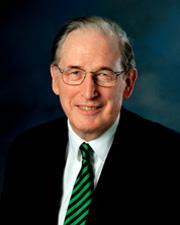 Sen. John D. Rockefeller IV (D-WV)
Legislative Activity
Stay on top of the latest movement without scrolling through every action
Senate amendment submitted
October 7, 2004
View full timeline
Senate amendment submitted
October 7, 2004
Senate amendment proposed (on the floor): Amendment SA 4030 proposed by Senator Rockefeller to Amendment SA 3981.(consideration: CR S10661-10662)
October 7, 2004
Senate amendment agreed to: Amendment SA 4030 as modified agreed to in Senate by Voice Vote.(text as modified: CR S10661-10662)
October 7, 2004
Amendment SA 4030 proposed by Senator Rockefeller to Amendment SA 3981. (consideration: CR S10661-10662) To clarify the jurisdiction of the Select Committee on Intelligence.
October 7, 2004
Amendment SA 4030 as modified agreed to in Senate by Voice Vote. (text as modified: CR S10661-10662)
October 7, 2004
Text
Modified
INTELLIGENCE COMMITTEE REORGANIZATION--Continued

Mr. REID. I suggest the absence of a quorum.
The PRESIDING OFFICER. The clerk will call the roll.
The assistant legislative clerk proceeded to call the roll.
Mr. McCAIN. Mr. President, I ask unanimous consent that the order for
the quorum call be rescinded.
The PRESIDING OFFICER. (Mr. Alexander). Without objection, it is so
ordered.
The Senator from Arizona.

Amendment No. 3999 To Amendment No. 3981

Mr. McCAIN. Mr. President, I ask unanimous consent that the pending
amendment be temporarily set aside, and I call up an amendment which is
at the desk.
The PRESIDING OFFICER. Without objection, it is so ordered.
The clerk will report.
The assistant legislative clerk read as follows:

The Senator from Arizona [Mr. McCain], for himself, and Mr.
Lott, Mr. Lieberman, Ms. Snowe, Mr. Roberts, and Mr. Bayh,
proposes an amendment numbered 3999 to amendment No. 3981.

Mr. McCAIN. Mr. President, I ask unanimous consent that reading of
the amendment be dispensed with.
The PRESIDING OFFICER. Without objection, it is so ordered.
The amendment is as follows:
There being no objection, the material was ordered to be printed in
the Record, as follows:

(Purpose: To strike section 402 and vest intelligence appropriations
jurisdiction in the Select Committee on Intelligence)

Strike section 402 and insert the following:

SEC. 402. JURISDICTION OVER INTELLIGENCE APPROPRIATIONS.

Notwithstanding subparagraph (b) of paragraph 1 of Rule XXV
of the Standing Rules of the Senate, the Select Committee on
Intelligence shall have jurisdiction over all proposed
legislation, messages, petitions, memorials, and other
matters relating to appropriation, rescission of
appropriations, and new spending authority related to funding
for intelligence matters.

Mr. McCAIN. Mr. President, I don't expect that this amendment should
require a lot of debate. It is an issue that we have all talked about a
lot. It is all a question of turf and jurisdiction. It is something
that would never be seriously considered by this body under any other
circumstances except that we are talking about the war on terrorism and
the overwhelming issue of how we are going to defend this Nation. I
will be more than happy to agree to a time agreement with the
appropriators who will lead the fight against this amendment which
would be agreeable to them.
This Chamber can be very proud of its bipartisan work that resulted
in the overwhelming passage of S. 2845, the National Intelligence
Reform Act of

[[Page S10633]]

2004. That bill addressed 38 of the 9/11 Commission's 41
recommendations to further secure our homeland. Not only the two
managers of that bill--Senator Collins and Senator Lieberman--deserve
our gratitude but the two leaders, as well, worked together to ensure
the Senate acted on this important reform legislation prior to
adjourning before the elections.
I ask unanimous consent that Senators Lieberman, Lott, Snowe,
Roberts, and Bayh be added as cosponsors.
The PRESIDING OFFICER. Without objection, it is so ordered.
Mr. McCAIN. Mr. President, one of the Commission's two options which
the Commission recommended for how best Congress can improve
congressional structure over intelligence--the underlying resolution
does not propose either of the Commission's two options creating either
a joint committee modeled after the Joint Atomic Energy Committee or
House and Senate committees with combined authorizing and appropriating
powers.
Let me tell you what this is all about. The Commission report was
clear that along with the need to reform the executive branch,
congressional reform is needed. And I quote from the report:

The other reforms we have suggested for a national
counterterrorism center and national intelligence director
will not work if congressional oversight does not change too.

I want to repeat that:

The other reforms . . . will not work if congressional
oversight does not change too.
Unity of effort in executive management can be lost if it
is fractured by divided congressional oversight.

We can't leave this week with our job incomplete. We have to address
the Commission's recommendations regarding the urgent need to reform
congressional oversight, intelligence and homeland security. To do this
in a meaningful way to carry out the important institutional reforms
recommended by the Commission, each of us in Congress must sacrifice
our own self-interest. We do not serve the American public well with
shortsighted, parochial turf battles.
The Commission acknowledges that this won't be an easy task.
The report states:

Of all our recommendations, strengthening congressional
oversight may be among the most difficult and important. So
long as oversight is governed by current congressional rules
and resolutions, we believe the American people will not get
the security they want and need. The United States needs a
strong, stable and capable congressional committee structure
to give America's national intelligence agencies oversight,
support and leadership.

The Commission also stated:

Tinkering with the existing structure is not sufficient.

It calls the congressional oversight ``dysfunctional.''
Their recommendations clearly state that we must have a committee
with both authorizing and appropriating authority.
It is not any simpler nor more complicated than that.
I have a letter from the 9/11 Commission which states:

If Senator McCain offers an amendment in support of
Commission recommendations on Congressional oversight, we
will support it.
We urge the Senate to adopt provisions for the strongest
possible reform of Congressional oversight.

I ask unanimous consent that three letters be printed in the Record.
There being no objection, the material was ordered to be printed in
the Record, as follows:

October 6, 2004.
Thomas H. Kean and Lee H. Hamilton, former Chair and Vice
Chair of the National Commission on Terrorist Attacks Upon
the United States (also known as the ``9/11 Commission) today
released the following statement:
``We continue to believe that reform of Congressional
oversight is necessary in order for the Commission's overall
recommendation to be effective.''
``If Senator McCain offers an amendment in support of
Commission recommendations on Congressional oversight, we
will support it.''
``The proposals of Senator McConnell and Reid constructive,
positive and move in the right direction. They are useful and
modest steps. They are not as far-reaching as those
recommended by the Commission.''
``We urge the Senate to adopt provisions for the strongest
possible reform of Congressional oversight.''
____

John F. Lehman,

New York, NY, October 7, 2004.
Hon. John McCain,
U.S. Senate,
Washington, DC.
Dear John: I am writing to reiterate my strong support for
real Congressional reform as recommended by the 9/11
Commission.
As our report makes clear, the important executive branch
reforms that passed the Senate yesterday will not work if
congressional oversight does not change too. Unfortunately,
the McConnell/Reid proposal does not fulfill the Commission's
vision for comprehensive reform. The intelligence committee
needs real power and prominence, which is why the Commission
strongly recommended a new committee structure combining
authorizing and appropriating authority, and a simplified and
functional homeland security committee structure.
I urge the Senate to make the Commission's recommendations
for Congressional reform as high a priority as it made our
other recommendations, which received an overwhelming
bipartisan vote of 96.2. The Congressional reforms are
equally important and necessary.
Sincerely,
John F. Lehman.
____

October 7, 2004.
Senator John McCain,
U.S. Senate,
Washington, DC.
Dear Senator McCain: I write to reaffirm my strong support
for Congressional action to implement the recommendation of
the 9/11 Commission Report to strengthen Congressional
oversight of intelligence and homeland security.
As you know the bipartisan 9/11 Commission was unanimous in
its recommendation that serious reform was necessary. In the
language of the Commission: ``Tinkering with the existing
structure is not sufficient. . . . the goal should be a
structure--codified by resolution with powers expressly
granted and carefully limited--allowing a relatively small
group of members of Congress, given time and reason to master
the subject and the agencies, to conduct oversight of the
intelligence establishment and be clearly accountable for
their work.''
This is best implemented by establishing a single committee
in each house of Congress combining authorizing and
appropriating authorities. Therefore, I endorse your
amendment to the current bill which will ensure this single
authority.
Thank you for your work to ensure that the recommendations
of the 9/11 Commission are implemented.
Sincerely,
Bob Kerrey.

Mr. McCAIN. Mr. President, Bob Kerrey writes:

I write to reaffirm my strong support for Congressional
action to implement the recommendations of the 9/11
Commission Report to strengthen Congressional oversight of
intelligence and homeland security.

Bob Kerrey, by the way, served here for two terms, as I recall, for
12 years.
He further states in his letter:

This is best implemented by establishing a single committee
in each House of Congress combining authorizing and
appropriating authorities. Therefore, I endorse your
amendment in the current bill which will ensure the single
authority.
Thank you for your work to ensure the recommendations of
the 9/11 Commission are implemented.
Sincerely, Bob Kerrey.

I would like to point out just as way of background how we got to the
proposal we have on the table.
My understanding is both leaders appointed both whips--the Senator
from Nevada and the Senator from Kentucky--as part of two 11-person
committees to come up with recommendations.
We met a couple times, the 11 Republicans, and discussed various
issues, then there was another meeting of both, and then we were told
that Senator Reid and Senator McConnell would come up with some
recommendations. That is not exactly what I had in mind when I was
asked to serve as part of an 11-Senator committee. Here came these
recommendations.
I don't want to digress but, for example, the Transportation Security
Administration is left in the Commerce Committee. I am glad to have
more discussions with the Senator from Kentucky about that.
I asked, How could the Transportation Security Administration not be
made part of the new Homeland Security Committee? The Transportation
Security Administration is the heart and soul of it. His answer was--
maybe he will have a different answer--it was part of the negotiations.
What does that mean?
I digress. The fact is, unless we give the authorizing committee the
proper appropriating capability, we will continue to have, as the 9/11
Commission said, a dysfunctional oversight of intelligence. It is a
good idea to make Intelligence Committee members permanent members and
not have them term

[[Page S10634]]

limited. I think it is a good idea to have it an A committee, although
that may cause significant problems if we do not give the Permanent
Committee on Intelligence appropriating authority.
It is sometimes nice to have a real-world example of why we need
this. I am not a member of the Intelligence Committee. I have no access
to classified information. Frankly, I have never sought any because of
the fear that some information I might have I might speak about in a
public forum.
There was a very expensive and very controversial intelligence
program, and the Intelligence Committee--this is a relatively short
time ago--the Intelligence Committee, after many hearings, extensive
scrutiny and a thorough scrubbing of this program, determined that the
program should be canceled. We are talking about a multibillion-dollar
program.
Do you know what happened? The Appropriations Committee funded it.
So if you are the bureaucrat over in Langley or at the National
Security Agency or any place else, where do you go? Where do you go
when you want your projects done? Do you go to the authorizing
committee or do you go to the appropriating committee? The power
resides in the purse. The Golden Rule prevails around here. We all know
the Golden Rule.
So if we are going to have a truly effective Intelligence Committee
oversight that can function with strength and power, we are going to
have to give them appropriations authority. I predict after the initial
attractiveness of serving on the Intelligence Committee, if they do not
have appropriating authority, we will have difficulty getting people to
serve on the authorizing committee because, again, the power is not
there.
We know why many of the authorizing committees are not nearly as
important or as powerful as they used to be. It is because the
appropriations process is what drives not only the money but also the
policy.
We are going to have an Omnibus appropriations bill sometime. Usually
what happens, coincidentally, it is within 24 hours of when we go out
of session. It always seems to work out that way. There will be
numerous policy changes. There will be numerous moneys and earmarks put
in. Last year there were 14,000 earmarks put in the appropriations
bills, up from 4,000 in 1994.

We are going to see things that will astonish some Members. For
example, I was astonished several years ago when there was a line item
in an appropriations bill that called for the leasing of Boeing
aircraft. We had never had a hearing in the Senate Armed Services
Committee. We never looked at the issue. No one even suggested it, that
I know of, and I have been on the committee for 18 years. There was a
line item that appeared in an appropriations bill that said we would
lease Boeing aircraft.
Do you know what happened since then? The GAO and the Office of
Management and Budget determined that it was a $5.7 billion additional
cost to the taxpayer. We now ended up, with this long trail that began
with a line in an appropriations bill, with one of the former employees
of the Department of Defense pleading guilty and receiving a 9-month
prison term, saying she had rigged the contract to the benefit of
Boeing aircraft.
Now, why do I bring up that example? Because I can tell Members right
now that if that had been a subject for the Armed Services Committee,
we would have had hearings on it. We would have examined the leasing
idea and rejected it as the ridiculous, expensive idea that it was.
I can go with many other examples. Cruise ships that cost the
taxpayers $200 million in loan guarantees that were half built at
Pascagoula, MS. I can tell Members of line items in appropriations
bills that say when the broadcasters reach 85 percent of high-
definition television in 85 percent of the homes in America, which the
Chairman of the Federal Communications Commission says will never
happen--I could go over a long list of items that are not only money
but also policy.
What will happen if we do not give the authorizing Intelligence
Committee the appropriations power? Exactly what has happened in the
past. Projects that cost a great deal of money that the Intelligence
Committee either approves or disapproves of are overridden in the
appropriations process. It happens time after time after time.
I usually pride myself in straight talk. I would be surprised if I
win on this amendment. One of the Commissioners called me and told me,
``I'm under intense pressure''--those are his words--``not to support
your amendment but I will go ahead and do so.''
There are Members of this Senate who are under intense pressure, as
well.
If we want to tell the American people with the justified pride that
we take in the actions we have achieved in the Senate in the last few
days, which is remarkable--at least from my standpoint, one of the
prouder moments I have experienced in the number of years I have spent
here as we have gone through an incredible process, beginning with
hearings before Senator Collins's committee back in August, which
culminated in a tremendous achievement and the most significant
governmental reform since 1947--then we have done about half to three-
quarters of the job. If we do not give the authorizing committee either
appropriating power or some kind of power, some kind of authority, then
we will see a basically dysfunctional and toothless Intelligence
Committee.

The Senator from Nevada came to me and said he was going to move to
table. I tell the Senator from Nevada, one, I want everyone to be able
to talk, so we will just reintroduce the amendment if it is tabled,
unless everyone gets to talk. But I also say to the Senator from Nevada
that I would be glad to enter into a time agreement for passage of this
legislation. I intend to get an up-or-down vote. I will reintroduce it
unless the Senator from Nevada allows an up-or-down vote on the
amendment. I think it is that important.
Mr. REID. If I could, through the Chair to my friend from Arizona, I
have no problem with an up-or-down vote. I would rather he told me he
wanted an up-or-down vote. I would say fine. I have no problem.
I also say to my friend, I want to make sure everyone who wants to
speak will have the opportunity. I have no problem at all with an up-
or-down vote on this.
Mr. McCAIN. I ask unanimous consent that Senator Bayh not be added as
a cosponsor.
The PRESIDING OFFICER. Without objection, it is so ordered.
Mr. McCAIN. I yield the floor.
The PRESIDING OFFICER. The Senator from Alaska.
Mr. STEVENS. My friend from Hawaii was on the floor first. Does he
wish to speak on this matter?
The PRESIDING OFFICER. The Senator from Hawaii.
Mr. INOUYE. Mr. President, today, the Senate is considering the
resolution which responds to the recommendations of the 9/11 Commission
to revamp the congressional oversight process for intelligence and
homeland security. I would like to take this opportunity to say a few
words about this matter.
The Commission recommended two options for Congress to consider
regarding intelligence oversight. First, they suggested that the
Congress could create a joint bicameral committee modeled after the
Joint Committee on Atomic Energy, as they said, to streamline the
congressional review over intelligence functions. They supported this
idea because they believe we need to have a very powerful Intelligence
Committee which can stand up to the administration and speak
authoritatively for the Congress. I understand there is virtually no
support within the Senate for this suggestion.
The other alternative suggested by the Commission was to give the
Intelligence Committees the authority to appropriate funds, and this is
the matter now being discussed. The Intelligence Committee--some of the
members--believes the inability to appropriate funds allows the
administration to play the Intelligence Committee off against the
Appropriations Committee. They argue this weakens congressional
oversight. My colleagues are undoubtedly aware that granting an
authorization committee such authority would be unprecedented in modern
times.
Chairman Stevens and I were surprised that neither one of us was
contacted by the members of the 9/11 Commission as they conducted their
review

[[Page S10635]]

and prepared their recommendations. We were shocked that, without even
consulting us or our House counterparts on the Appropriations
Committee, they would recommend that Congress eliminate our role in
intelligence oversight. As such, I cannot offer any personal
explanation for the Commission's recommendation.
Furthermore, their report provides scant explanation why they believe
the Appropriations Committee should be excluded from its mission to
fund all Federal agencies. In fact, there is not a single word in the
9/11 Commission's report to suggest that the appropriations
subcommittee was at fault in its oversight of the intelligence budget.
Never once were we accused of that shortfall.
I believe the Intelligence Committee's role in spending authority is
already powerful enough without any new authority. Under the National
Security Act of 1947, as amended by section 504, the intelligence
community cannot spend appropriated funds unless the funds are
specifically authorized. Now, I think this is worth repeating. The
intelligence community cannot spend appropriated funds unless the funds
are specifically authorized. As such, the Select Intelligence Committee
already has more authority than any standing committee.
Let me be clear about what that means. If the Appropriations
Committee were to fund programs that were not included in the annual
intelligence authorization bill, the appropriated funding for those
programs cannot and will not be spent by the executive branch.
This authority is virtually unheard of in other budget functions. The
authority was granted to the Intelligence Committee to ensure that the
executive branch could not use the wide latitude provided in
appropriations law to circumvent the will of the Congress.
Appropriations acts are written with broad authority to hide the
amounts for classified programs in large lump sums. This ensures that
the amounts for these programs remain undisclosed. As such, the limits
on spending for classified programs are very broad. The authorization
requirement ensures that both committees agree on how much should be
spent to provide a better check on the administration.

More important, I believe the idea of centralizing congressional
oversight is not only a bad idea, it could be dangerous to the Nation.
In all areas of Government, except intelligence, our system requires
and allows public scrutiny. The media, nongovernment organizations, and
even lobbyists all provide information and insight to Members of
Congress on everything except intelligence.
Congress needs to have a system of checks and balances internal to
the legislative branch because there are no other checks. We all
remember Iran-Contra, which was able to go unchecked even though
multiple committees had some degree of intelligence oversight. What
chance would we have of uncovering that type of abuse if only one
committee were examining intelligence matters?
We know there have been other abuses by the intelligence community. I
remember a former chairman of the Senate Intelligence Committee
expressing outrage to discover that the National Reconnaissance Office
was spending significantly more money to build a new headquarters than
the chairman was aware. I recall how Chairman Stevens uncovered a slush
fund in the same agency that had been accumulating outside of the
knowledge of the Congress.
Do any of my colleagues really believe that having only one committee
perform oversight of the intelligence community's budget will provide
more effective oversight?
In addition, a single committee overseeing intelligence for the
Senate would create a powerful czar. Little opportunity would exist for
meaningful debate on intelligence budgets because so few Members would
be aware of the details of intelligence matters. Of equal concern, a
more powerful chairman could end up being co-opted or at least overly
influenced by the intelligence community and potentially lose
objectivity. The Senate would be at his or her mercy with little
outside scrutiny. That is not an appropriate or effective form of
oversight for the Congress.
Having a few committees cleared for intelligence programs, such as
Armed Services, Appropriations, and Intelligence, and each with some
role in determining how resources are provided would ensure that fewer
bad ideas get legislated, and it would also create more effective
oversight and competitive analysis by the Congress.
I also note that maintaining the link to the Appropriations Committee
is beneficial to the intelligence community. Intelligence funding is
protected by inclusion under the Appropriations Committee. By combining
all appropriations resources, the committee has historically solved
many intelligence shortfalls.
If the Appropriations Committee is removed from intelligence matters,
it will be less likely to support intelligence requirements. First, the
committee will not be as knowledgeable of intelligence needs. Second,
it is human nature for chairmen and ranking members to care about the
programs over which they have jurisdiction. If they do not have some
oversight over intelligence programs, they will not have the link to
the intelligence providers or necessarily the desire to help.
The Intelligence Committee would be subject to 302 budget reductions
and other general reductions levied against all committees by the
Budget Committee. To believe that they would be held harmless in
across-the-board cuts or other cutbacks I think is very naive. Their
funding level is more likely to be decreased than increased.
Linking Defense and Intelligence is critical. DOD cannot operate
without good intelligence. The Defense Subcommittee has ensured that
intelligence resources support the needs of the warfighter. Today, the
Defense Subcommittee reviews the recommendations of both the Armed
Services and Intelligence Committees. The Appropriations Committee can
minimize redundancies and make sure that the needs of both Defense and
Intelligence are met. Separating Defense from Intelligence through the
creation of an all-powerful Intelligence Committee would hurt oversight
and hurt the community they hope to help.
In recent testimony before the House Intelligence Committee former
Deputy Defense Secretary, Defense Comptroller, and staffer to the
Senate Armed Services Committee, Dr. John Hamre stated that the
Intelligence and Armed Services Committees worry too much about input
and not enough about output.
His counsel was to let the Appropriations Committee worry about input
in the budget process, to determine what we should spend money on and
let the authorizing committees worry about how the agencies are
performing with these resources. He noted that the authorizing
committees spend far too much time on the budget and therefore had
insufficient time for oversight. I am pleased that the leadership has
decided to recommend creating an Intelligence subcommittee on oversight
to highlight its importance.
Since the Civil War it has been the mission of the Appropriations
Committee to balance needs among competing priorities. While the 9/11
tragedy exposed problems with intelligence oversight, it did not expose
problems with the appropriations process for intelligence.
Certainly, nothing was uncovered that would be resolved by giving the
Intelligence Committee the authority to appropriate funds.

The intelligence budget should not be considered in a vacuum. It
needs to be considered in conjunction with the Defense budget. While
some speculate we can simply separate national intelligence from
military intelligence, it is not that simple. Many programs have both
national and military, strategic or tactical, components. Military
personnel provide a large proportion of the intelligence community
workforce. The Defense Department and Intelligence Community both need
to support maintaining this relationship and benefit from doing so. It
should remain the Appropriations Committee's responsibility to ensure
that the needs of both defense and intelligence are met.
The Collins-Lieberman bill that the Senate adopted yesterday
recognizes the need for maintaining a close working relationship
between DoD and intelligence. Creating an Intelligence Committee that
could separate itself from all the other actors in the intelligence
support arena would be, quite simply, a colossal mistake.

[[Page S10636]]

Some of our colleagues think that the Congress needs to reorganize
dramatically to meet the challenges of the 21st century. There are also
those that believe that the Intelligence Committee needs to be
stronger. The resolution that has been offered by the leadership in
fact will provide some significant enhancements to the authority of the
Intelligence Committee which will hopefully improve oversight. However,
I believe the real key to better oversight is for our authorizing
committees to focus on outputs as Dr. Hamre noted and for the
Appropriations Committee to focus an allocating resources as
efficiently and effectively as possible.
I was the first chairman of the Senate Intelligence Committee. I have
great regard for the work of that committee and a great fondness for
its chairman and vice chairman. I have also served on the
Appropriations Committee for the past 30 years. I understand the
critical role that this committee plays in our Nation's security both
in defense and intelligence. I can say with no false modesty that the
work that Chairman Stevens and the committee does in overseeing the
intelligence budget with the assistance of our very experienced
professional staff is unmatched anywhere in Congress.
As powerful as the Joint Committee on Atomic Energy was, it did not
control appropriations. Maintaining Appropriations Committee control
over funding would preserve a check on unlimited spending by an
authorizing committee and would allow at least one other committee to
have some review of Intelligence matters. I for one do not think that
this is sufficient oversight, but it is clearly the minimum that the
Senate should accept.
This is a very important matter. Senator Reid and Senator McConnell
have spent the past 3 weeks deliberating on this issue. They have
consulted with many Members who have competing interests in this arena.
The resolution they propose represents a compromise that balances these
many and varied views. I cannot say I am completely happy with their
recommendation, but I can say this: Their recommendation is far
superior to the alternative that is being proposed by the Senator from
Arizona.
I urge all my colleagues to vote to support the bipartisan leadership
and defeat the McCain amendment.
The PRESIDING OFFICER. The Senator from Alaska.
Mr. STEVENS. Mr. President, I ask unanimous consent that following my
remarks, the Senator from Florida be recognized. He has kindly agreed
to let me proceed because I am due at a conference committee meeting in
5 minutes.
The PRESIDING OFFICER. Without objection, it is so ordered.
Mr. ROBERTS. Will the Senator yield?
Mr. STEVENS. I yield to the Senator from Kansas.
Mr. ROBERTS. I ask unanimous consent that I be recognized after the
distinguished Senator from Florida.
Mr. REID. Mr. President, I object. We can't do that. The Senator from
Florida has been here since 2 o'clock. I think we should keep our
regular order here.
Mr. McCAIN. Reserving the right to object, and I will not object, the
Senator from Florida, with all due respect, is not speaking on the
amendment. Usually we go back and forth for and against the amendment.
Mr. REID. He is speaking on the amendment.
The PRESIDING OFFICER. Objection is heard.
Mr. STEVENS. Mr. President, this amendment realigns responsibility
for intelligence appropriations from the Appropriations Committee to
the Intelligence Committee. This includes all funding relating to
intelligence, national, joint military programs, and tactical military
funding and classified intelligence matters as in FBI and other
Government agencies.
I think it would be a mistake to adopt this amendment. First, it
ignores the history of the appropriations process and the lessons we
have learned in both Houses of Congress. In 1865, the House created the
Appropriations Committee. The Senate followed suit in 1867. Then from
1867 to 1885, the House and Senate Appropriations Committees were
stripped of their control over appropriations as one authorization
committee after another gained the authority to report appropriations.
In 1885, both Houses realized this ad hoc approach was detrimental,
and by 1922 both the House and Senate had reinvested appropriations
authority back into one committee in each House. History has proven
that moving appropriations to authorization committees creates a
decentralized appropriations process that leads to greater spending and
less accountability. That would be even more so today under the Budget
Act.
In 1910, Congressman James Tawney, Chairman of the House
Appropriations Committee from 1905 to 1911, said:

The division of jurisdiction and responsibility in the
matter of initiating appropriations has contributed more than
any single cause to the enormous increase in the
appropriations during recent years.

Congressman Tawney's conclusions were backed up by a 1987 study that
found expenditures for rivers and harbors between 1877 and 1885 rose
sharply after the authorizing committee gained the right to
appropriate. A book published in 1989 by Charles Stewart III contains
similar findings. Even after accounting for price changes, economics,
population, and territorial growth, wars and major programmatic changes
sponsored by the authorizing committee, Mr. Stewart found the greater
decentralization of the appropriations between 1877 and 1885 led to
greater spending.

Contrast those to the findings of a 1992 study conducted by James F.
Kogan who found that deficits are rare and nonexistent when spending
jurisdiction lies within the committee.
Let me go now to the 9/11 Commission recommendations. They are not
only ill informed, but they are also unfounded. Not one line in the
Commission's report stated that the Senate and House Appropriations
Committees were not performing effective intelligence oversight--not
one line. Consolidating appropriations and authorization for
intelligence matters will undermine nearly 140 years of congressional
tradition and ignore our years of experience in such matters.
I have heard some grumblings about how those of us who oppose
provisions in this legislation are merely protecting turf. I am not
interested in turf. I am interested in function as well as effective
oversight. You cannot move the responsibilities for appropriations and
authorizations around without having a real impact on function. And you
certainly should not make recommendations that aim to do that without
even discussing those broad, sweeping changes with the Members of
Congress who are familiar with and part of the appropriations process.
My colleague from Hawaii has discussed this at length. I don't want
to be redundant, but Dr. Hamre, whom he quoted, is not alone in his
assessment that the budget issues are overemphasized when policy and
appropriations are jointly considered. Listen to this. Even the 9/11
Commission acknowledged that risk on page 421 of their report, where
they write:

We also recommend that the Intelligence Committee should
have a subcommittee specifically dedicated to oversight,
freed from the consuming responsibility of working on the
budget.

If budget issues pose such all-consuming risk to the entire oversight
process, it is the view of this Senator that they should be used within
a separate committee that would fully address them. This would
encourage collaboration and coordination, the hallmarks of our
Government system.
The legislative appropriations process works best where there is
friction between the committees and bodies of Congress. That is what
the Founding Fathers believed in, a system of checks and balances. It
is our suggestion that the organizations of our Government are founded
upon that concept, and this amendment doesn't reflect that philosophy.
The insights I offer are not an attempt to protect turf. They are
recommendations I would have given to the 9/11 Commission had they
talked to me or to my colleague from Hawaii. Given my 36 years in the
Senate, 8 of which I have spent as chairman or ranking member of the
Appropriations Committee, I think they are very important in this
debate.
Mr. President, I will speak against this amendment. I have serious
concerns about any effort that would move appropriations
responsibilities from

[[Page S10637]]

the Appropriations Committee to the new Intelligence Committee.
I have spent over 30 years working on defense and intelligence
matters. I have served as the Chairman of the Appropriations Committee
for 6 years. Those experiences give me a unique perspective on the
appropriations process, intelligence organizations, national security
and defense. Based on that experience, I am very concerned about any
effort that would combine appropriations and policy responsibilities
and place them under the jurisdiction of a single committee.
Collapsing appropriations and policy functions and housing them in
the new Intelligence Committee would be a mistake.
First, it ignores the history of the appropriations process and the
lessons we have learned in both Houses of Congress.
In 1865, the House created the Appropriations Committee. The Senate
followed suit in 1867. Then, from 1867 to 1885 the House and Senate
Appropriations Committees were stripped of their control over
appropriations as one authorization committee after another gained the
authority to report appropriations. In 1885 both Houses realized that
this ad hoc approach was detrimental, and by 1922, both the House and
Senate had vested appropriations authority back in one committee.
History has proven that moving appropriations to authorization
committees creates a decentralized appropriations process. And that
leads to greater spending and less accountability.
In 1910, Congressman James Tawney, Chairman of the House
Appropriations Committee from 1905 to 1911, said the ``division of
jurisdiction and responsibility in the matter of initiating
appropriations has contributed more than any single cause to the
enormous increase in appropriations during recent years.''
Congressman Tawney's conclusions were backed up by a 1987 study that
found that expenditures for rivers and harbors and agriculture between
1877 and 1885 ``rose sharply after authorizing committees gained the
right to appropriate.''
A book published in 1989 by Charles H. Stewart III contained similar
findings. Even after accounting for price changes; economic,
population, and territorial growth; wars; and major programmatic
changes sponsored by the authorizing committees, Mr. Stewart found that
greater decentralization of the appropriations process between 1877 and
1885 led to greater spending.
Contrast those findings with a 1992 study conducted by John F. Cogan
that found deficits are rare or nonexistent when spending jurisdiction
lies within the Appropriations Committee, and I think you will agree,
Mr. President, that we are better off with a centralized appropriations
process.
Of course, when you look at how the 9/11 Commission conducted its
investigation, it's not surprising that their recommendations ignore
this history. Not one of the 9/11 commissioners or 9/11 commission
staff members interviewed Senator Inouye or me about intelligence
oversight. Nor did they interview the Chairmen and Ranking Members of
the House Appropriations Committee.
So, I do not find it surprising that their recommendations ignore
decades of ``lessons learned'' by the House and the Senate. But, I do
find it difficult to understand how the Commission could recommend a
major realignment of Congressional organization and attempt to change
the process for conducting Congressional business without ever speaking
to any of the Members of Congress responsible for the appropriations
process.
The 9/11 Commission's recommendations are not only ill-informed, they
are also unfounded. Not one line in the Commission's report stated that
the Senate and House Appropriations Committees were not performing
effective intelligence oversight Not one line! And consolidating
appropriations and authorization for intelligence matters would
undermine nearly 140 years of Congressional tradition and would ignore
our years of experience with such matters.
I have heard some grumblings about how those of us who oppose
provisions in this legislation are merely protecting their ``turf.''
I'm not interested in ``turf.'' I am intensively interested in function
as well as effective oversight. You can't move the responsibilities for
appropriations and authorizations around without having a real impact
on function. And you certainly shouldn't make recommendations that aim
to do that without even discussing those broad and sweeping changes
with the members of Congress who are familiar with and part of the
appropriations process.
If the 9/11 Commission had asked me about these recommendations I
would have told them that Congress has tried to place policy and
appropriations functions under the jurisdiction of one committee
before, with poor results. We have found that mixing policy legislation
with appropriations legislation is inefficient and more importantly,
not supportive of the individual processes. Those past experiences led
to rules in the House and Senate that institutionalized the separation
of policy and appropriations functions.
Every year, Congress needs to fulfill its appropriations
responsibilities in a timely manner; if we don't, the government can't
keep operating. But the appropriations timetable is completely at odds
with the complex and controversial deliberations that surround most
policy legislation.
History has shown that combining policy and appropriations functions
leads us down one of two paths: either Congress rushes policy
deliberations in order to meet fiscal year deadlines and risks adopting
bad policy or we must delay the timely passage of appropriations bills
in the interest of debating policy issues and we risk disrupting
government operations.
Whichever path we follow we short-change one goal in order to fulfill
the other.
The 9/11 Commission hopes that if we combine policy and budget
oversight in one committee, policy deliberations will guide our
efforts. But my years of experience tell me it will have the opposite
effect. Budget decisions will rule the committee and policy oversight
will take a back seat.
Former Deputy Secretary of Defense John Hamre expressed concern about
the dominance of budget issues in intelligence oversight when he
testified before the Appropriations Committee a few weeks ago. He said:

Frankly, the quality of congressional oversight is not
good. It is not as strong as it needs to be. I think we are
confusing it by this issue of consolidating authorizations
and appropriations. I have said to the Armed Service
Committees--I used to work there, as you know--that they have
made a huge mistake thinking that they are powerful only by
trying to do what you do, shape the dollars.
There are reasons you have authorization committees. They
are to set the broad trends and directions for the policy
goals and to oversee the functioning of the Government.
But they spend far too much time wanting to shape the way
you appropriate little lines in the budget, and I think
that is a mistake.
You play a crucial and indispensable role. They play a
crucial and indispensable role, but they are neglecting it,
in my view, by putting too much time and attention on budget
detail. I would like to see them spend far more time looking
at the large purposes, the large policy directions, and
overseeing the true functioning of these institutions. That
is what I think was intended by having separate authorization
and appropriations processes. They can be complementary, but
during the last 20 years, frankly, they have been in conflict
with each other. And I think that needs to change, and I will
be glad to amplify on that further at another time.

But Dr. Hamre is not alone in his assessment that budget issues are
overemphasized when policy and appropriations are jointly considered.
Even the 9/11 Commission acknowledged this risk. On page 421 of their
report they write:

We also recommend that the intelligence Committee should
have a subcommittee specifically dedicated to oversight,
freed from the consuming responsibility of working on the
budget.

If budget issues pose such an all-consuming risk to the entire
oversight process, it is the view of this Senator that they should be
housed within a separate committee that can fully address them, not
delegated to subcommittee. This would encourage collaboration and
coordination--hallmarks of our system of government.
Those kinds of experiences suggest that the language included in this
amendment is the wrong way to address the budget and policy issues
facing our nation's intelligence community. Consolidating
appropriations and authorization into one committee

[[Page S10638]]

means fewer members of Congress and staff members will be looking at
these complex issues--how does that improve Congressional oversight? It
seems to me we would have less oversight, not more.
The legislative and appropriations process works best when there is
friction between committees and bodies of Congress. That is what the
Founding Fathers believed in--a system of check and balances. Our
Constitution and the organization of our government are founded on that
concept, and this amendment does not reflect that philosophy.
The insights I am offering are not attempts to protect ``turf.'' They
are the recommendations that I would have offered had the 9/11
Commission interviewed me. Given my 36 years in the Senate 8 of which
have been spent as chairman or ranking member of the Appropriations
Committee--I think they are an important part of this debate.
Mr. COCHRAN. Mr. President, I oppose the amendment offered by the
Senator from Arizona. The Senator's amendment would have the effect of
harming the Senate's oversight capabilities and making it ineffective.
The Senator from Arizona argues that if we don't combine intelligence
oversight and appropriations into a single committee we are wasting our
time with reform efforts. I disagree. The resolution authored by the
Senators from Kentucky and Nevada accomplishes all of the goals
outlined by the 9/11 Commission and it does it in a way that maintains
an established system of checks and balances we have had in the Senate
since the Appropriations Committee was established in 1867. The
appropriations and authorizing committees serve important but distinct
and separate roles, and it would be unwise to combine them.
Currently, intelligence funding is shared by five appropriations
subcommittees, and intelligence oversight is divided among three
committees. Supporters of the Senator's amendment say that if you
combine intelligence appropriations and authorization into a single
committee, you will centralize and have more powerful oversight.
This is not the case. Not since the early 19th and 20th centuries did
congressional committees originate both authorizing and appropriations
bills. Programs back then were often authorized permanently. Oversight
and appropriations functions were separated because it was determined
that having joint authorizing and appropriations committees lead to
greater spending and less accountability. We don't need to repeat that
mistake of the past.
Another reason for opposing this amendment is a matter of
practicality. The Intelligence Committee meets several times a week. I
have heard from my colleagues on the committee that it is the most
demanding committee assignment they have. Under the resolution their
workload and responsibility will significantly increase. We would be
asking the Intelligence Committee to take on even more work by adding
appropriations responsibility. It would make their workload enormous.
For those who believe the Appropriations Committee divides
responsibility for intelligence between too many subcommittees, this
resolution addresses that complaint. The resolution would combine all
intelligence appropriations into a new Intelligence Appropriations
Subcommittee. While I would prefer we leave it to the Appropriations
Committee to make the determination on whether this consolidation is
warranted, I will support the resolution before us.
We have passed already this year, and the President has signed into
law, the Defense Appropriations bill. This bill contains most of
funding this year for the intelligence agencies of our government. We
have not, however, been able to approve this year an Intelligence
Authorization bill for the next fiscal year. I do not believe the
Senator's amendment serves us well if intelligence funding would now be
held hostage to policy disputes in the Intelligence Committee that are
holding up passage of an authorization bill.
The resolution Senator McConnell and Reid have laid before the Senate
is totally consistent with the 9/11 Commission's recommendations and we
should approve it.
The PRESIDING OFFICER (Mr. Crapo). The Senator from Florida is
recognized.
Mr. GRAHAM of Florida. Mr. President, I am honored to have served 10
years on the Senate Select Committee on Intelligence, including the
opportunity to serve 18 months as its chairman. Today, I will make some
comments on the general context of congressional reform in support of
reform of the intelligence agencies, including some specific remarks
relative to the amendment that is on the floor at this time.
While some of us in Congress had recognized the problems within the
Intelligence Community over the years--and we have been working on
specific reforms--the tragedy of September 11, 2001, revealed systemic
weaknesses that require sweeping changes. In the last few weeks, I have
spoken about these issues in floor statements. We have now finished
work on an excellent piece of legislation that will establish a strong
national intelligence director and lay the groundwork for serious
reform of our national intelligence community.
It is my hope the House of Representatives will soon follow our lead,
so that we may proceed to conference and turn this legislation into
law. Now it is time to turn to one final, critical component of reform:
Us.
We in the Congress must be candid and admit that one of the targets
of reform must be the current committee structure by which Congress has
organized itself to provide oversight to the intelligence community.
Our oversight has been proven to be haphazard at best. The 9/11
Commission report states:

Of all our recommendations, strengthening congressional
oversight may be among the most difficult and the most
important. So long as oversight is governed by current
congressional rules and resolutions, we believe the American
people will not get the security that they want and need. The
United States needs a strong, stable, capable congressional
committee structure to give America's national intelligence
agencies oversight, support, and leadership.

The 9/11 Commission goes on:

The future challenges of America's intelligence agencies
are daunting. They include the need to develop leading-edge
technologies that give our policymakers and our warfighters a
decisive edge in any conflict where the interests of the
United States are vital. Not only does good intelligence win
wars, but the best intelligence enables us to prevent them
from happening altogether.
Under the terms of existing rules and resolutions, the
House and Senate Intelligence Committees lack the power,
influence, and sustained capability to meet this challenge. .
. .
The other reforms we have suggested--for a National
counterterrorism Center and a National Intelligence
Director--will not work if congressional oversight does not
change, too. Unity of effort in executive management can be
lost if it is fractured by divided congressional oversight.

To those remarks, I say amen.
I am pleased that many of our colleagues have joined the chorus and
cried amen as well. We now have many amendments before us that can
accomplish the necessary changes to our Senate committee structure. I
thank Senators Reid and McConnell, along with their staffs, for the
work they have invested in this issue.

The Reid-McConnell working group has come forward with a number of
wise recommendations. I want to endorse a few of those recommendations
in greater detail, while explaining my reasons for opposing the
amendment that is now before us. I also want to make some
recommendations that go beyond the resolution, but which I suggest
would give the new structure enhanced oversight and direction on the
intelligence community.
The first recommendation I strongly support is the abolition of term
limits for members of the Intelligence Committees. The terms of
Intelligence Committee members should be made permanent so that the
accumulated experience and expertise of the committee members can be
retained.
When a Member joins almost any other committee in the House or the
Senate, he or she typically brings some base of knowledge to the task,
such as a lawyer serving on the Judiciary Committee, or a military
veteran serving on Armed Services, or someone with a financial services
background joining the Banking Committee.
It is a rare Member who has firsthand experience with the
intelligence community. The complexity of the issues, the technologies
involved in collection

[[Page S10639]]

analysis, means that it is a very steep learning curve when someone
joins the Intelligence Committee. It is not an exaggeration to suggest
that it can take as much as half of the current 8-year term before the
Member feels confident in their knowledge of the intelligence community
and can begin to make wise, informed judgments. That tutorial exhausts
half of the time of Members currently serving.
The justification for those term limits dates back to the creation of
the Intelligence Committees in the 1970s, following Senator Frank
Church's investigation of abuses by the CIA. It was feared that members
of the Intelligence Committee would become captives of those they were
overseeing, given the general lack of public scrutiny of the workings
of the committee.
However, in order to ensure that committee members have the expertise
necessary to exercise effective oversight, we must give them adequate
time to build up the experience they need. We must hope that their
constituents will pay enough attention to their oversight of the
intelligence agencies to ensure that the committee members remain
independent. I expect this will be the case, given the increasing
awareness of the importance of intelligence to our national security.
There is another step that I believe should be taken, and that is an
increased emphasis on training of Members who will join or who
currently belong to the Intelligence Committee. This is, as our
President has said, hard work, serving on the Intelligence Committees.
The background, organizational history, financial matters affecting the
community, as well as the emerging threats the community is responsible
for understanding and assisting in our defense, are difficult. Members
of the committee should devote greater time to their personal and
collective training so they can better discharge these
responsibilities.

The second recommendation I would like to endorse is the distribution
of the Intelligence Committee's responsibilities through the use of
subcommittees, especially here a subcommittee on oversight that could
examine adverse actions within the intelligence community which often
require a detailed after-incident report.
One of my principal concerns about the Intelligence Committee during
my decade of service was the inordinate amount of time that was spent
looking through the rearview mirror at the problems that had already
come to fruition, including several significant cases of
counterespionage, which left an inadequate amount of time to look
through the front windshield at the threats that were coming at us.
I believe the establishment of a subcommittee which had the specific
responsibility for oversight, including these after-incident events,
would contribute substantially to the committee's capability to look to
the future.
Another suggestion within the committee structure, since we will now
be reorganizing the intelligence agencies around mission-based
intelligence centers, should be the basis for establishing other
subcommittees with oversight responsibilities within the Intelligence
Committee itself. As an example, in the legislation we just passed, two
intelligence centers are established by statute: one counterterrorism,
the other counterproliferation of weapons of mass destruction. Clearly,
the Intelligence Committee should have subcommittees with specific
responsibility to oversee the action of these two critical centers to
assure that the threats are being properly identified, the resources
are available to respond to those threats, that the centers are
accomplishing their objective, and as other centers are created by
action of the national intelligence director, they, too, deserve a
special focus of a subcommittee within the Intelligence Committee.
Next, I believe it is crucial that the appropriations for the
intelligence community be detached from the budget of the Department of
Defense so that intelligence funding can respond to intelligence needs
and not simply fluctuate with the defense budget.
The reality is that while the intelligence budget is inside the
defense budget, that has resulted in, over time, a percentage
relationship. And so as happened in the 1990s, when the overall size of
the defense budget contracts because the Cold War was over and there
was a feeling that we did not need to spend the resources we had when
we were face to face with the Soviet Union, the consequence was we were
also constricting the size of the intelligence budget at exactly the
time the intelligence community needed to be expanding.
We spent 40 years looking at the Soviet Union. We knew a lot about
it. We had people who understood the language and the cultures of our
adversary. But after the fall of the Berlin Wall, the world did not
suddenly declare peace. Rather, a new set of threats emerged from a
different part of the world, largely the Middle East and central Asia,
and we were grossly deficient, particularly in our human intelligence
capability, to understand and react to those new threats.
By divorcing the intelligence budget from the defense budget, we will
have a greater opportunity to look specifically at the needs of both of
those two important parts of our national security system, but to do so
independently on their own merits.

I am familiar with the proposal Senator McCain and others have put
forward to give the Intelligence Committee both authorizing and
appropriation authority. I respectfully disagree. Having two committees
that pay attention to intelligence matters can be very helpful. I will
admit that at one time, I was intrigued with the idea of permanently
merging the House and Senate Intelligence Committees in the way the old
Joint Atomic Energy Committee was merged and in a way for the last
Congress the two committees merged for purposes of the 9/11 inquiry.
I have now disabused myself of that suggestion. I believe it is
important that, particularly with intelligence where there are so few
Americans who have the background to make proper judgments and so many
of those do not have the information upon which to make precise
judgment, and where there are few eyes outside of the Congress, the
press, interest groups, citizens groups, and others who can effectively
monitor the intelligence community, it is particularly important that
we have a sufficient number of eyes within the Congress that are
focused on intelligence issues.
During the runup to the invasion of Iraq, for instance, there were
four congressional committees that had some form of oversight over the
administration's push for war. Only one of those four--and I see on the
floor now the chairman of the Senate Intelligence Committee who, with
his colleague Senator Rockefeller, was largely responsible for this--it
was only the Senate Select Committee on Intelligence which asked the
tough questions which submitted the findings which have accelerated the
pace of reform within the intelligence community.
If there are four congressional committees with some oversight over
intelligence funding--the two authorizing committees and the two
appropriating subcommittees--there is less chance that all relevant
congressional committees will be negligent in their oversight of
administration action.
I suggest two reforms which would enhance the establishment of a
separate subcommittee of appropriations for intelligence. One of those
is to increase the authority of the Intelligence Committee over the
authorization process. As Senator Inouye mentioned in his remarks,
there is currently law that says funds cannot be appropriated to the
intelligence community which have not been authorized. The problem has
been that there are sources of authorization other than the
intelligence community. So if the Intelligence Committee, which is now
invested with the particular responsibility, decides what it believes
to be the appropriate priorities, those priorities could be disrupted
by authorizations which come from other sources and which, in turn,
validate appropriations.
The second point I suggest is that the chair and vice chair of the
Intelligence Committees serve on the appropriations subcommittee. There
is precedent for this. As an example, in reverse order, the current
chairman of the Senate Appropriations Committee serves on the Armed
Services Committee. The rationale is that Armed Services represents
such a significant part of the total appropriations that it is
desirable to have the person most responsible for those appropriations
be a member of the Armed Services Committee.
I would recommend that the same type of interlocking relationship

[[Page S10640]]

should exist between the leadership of the Intelligence Committee and
the new intelligence appropriations subcommittee.
Finally, I recommend that the Intelligence Committee expand the use
of advisory panels, such as the technical task force which has served
the Senate Intelligence Committee extremely well over the last 5 years.
I would like to recognize my colleague, Senator Shelby, who was very
instrumental in the initial establishment of that technical committee.
This advisory panel has reduced the tendency toward group think, which
has afflicted the intelligence agencies themselves, as we witnessed so
clearly in the report of Senator Roberts and the Intelligence Committee
on the runup to the Iraq war.
One possibility would be to have an advisory panel for each of the
subcommittees, locking the Intelligence Committee into the pattern that
mirrors and supports mission-based intelligence centers.
There has been a term in the military referred to as incestuous
amplification, which is a condition of warfare where one only listens
to those who are already in lockstep agreement, reinforcing set
beliefs, creating a situation ripe for miscalculation.
Current events have offered powerful evidence that the intelligence
community has been engaged in incestuous amplification. It is therefore
especially important that the oversight committees of the Congress
avoid that temptation.
While I regret to say it, in many ways the Congress deserves the
comments which have been made by the 9/11 Commission, but I believe the
action we are considering today will go a long way toward assuring that
the Congress will be a full partner in reforming the intelligence
community of the United States, and the intelligence community in turn
can be a fuller partner in assuring the safety of Americans.
The PRESIDING OFFICER. The Senator from Kansas.

Amendment No. 3999

Mr. ROBERTS. Mr. President, I rise to support Senator McCain and his
amendment to the McConnell-Reid measure amending S. Res. 445.
First, I pay tribute to the former chairman of the Senate
Intelligence Committee, Mr. Graham. I thank him for his service to our
country. He is retiring, although that certainly does not describe the
Senator, but I thank him for his leadership and his suggestions as we
go through this very difficult task of reforming how we do our
oversight responsibilities in reference to our intelligence
obligations.
Back to Senator McCain and his amendment, if we approve the McCain
amendment, Senators will implement what is the most important
recommendation of the 9/11 Commission for improvement of congressional
oversight of intelligence activities--most important by the 9/11
Commission.
Now, why is John McCain getting in the middle of what would have to
be termed a sheep and cattle war, if one goes back to the history of
Arizona, and taking on the challenge of suggesting that the
Intelligence Committee, or any authorizing committee, have
appropriations power? That is tough. I mean, that really is tough.
I think everybody knows there is more than one way to skin a cat that
is sticking his head in a bootjack than simply pulling on his tail.
That is hard work. That is where nobody wants to reach their hand into,
but there again that is John McCain.
John is from Arizona. I used to reside in Arizona. There is a lot of
cactus in Arizona. One does not have to sit on each and every one of
them. Sometimes people think that Senator McCain does that. Why is he
doing this? Why is he fighting this sometimes lonely battle? Well, on
page 420 of the 9/11 report, the Commissioners wrote this:

Under the terms of existing rules and resolutions the House
and Senate intelligence committees lack the power, influence
and sustained capability to meet this challenge.

He is right. He is dead on. He is pulling that cat by the tail in the
bootjack. And in terms of being right, there are times that one can
take on tough measures and sort of let them go and slide or one can do
the right thing. The truth of it is that I can tell my colleagues, as
chairman of the Intelligence Committee and an 8-year veteran of that
committee--and it has been a privilege--we are fractionalized when we
talk to Lee Hamilton, Governor Kean, Bob Kerrey, the former Secretary
of the Navy, John Lehman, and others. They came to visit before the
Intelligence Committee with Senator Rockefeller and myself, Senator
Rockefeller being the distinguished vice chairman and my bipartisan
partner in trying to do what is right on behalf of our national
security--and we think we have done a good job, by the way, backed up
by 22 professional staffers, the most of any committee. So,
consequently, what happens to us is that when we do our work as quoted
by the 9/11 Commission--and after the visit by the 9/11 Commission to
the Committee, they agreed with us that we are fractionalized, that our
job is pretty tough, that in terms of being an authorizing committee we
probably are expected to have the most obligation, independence,
leadership, clout in regards to oversight in reference to intelligence
and national security of any committee in the Congress, but we have the
least.
Why is that? It is because we are fractionalized in terms of
sequential referral on demand. I am not going to get into that speech
again because I think we are trying to work it out. I think we have a
compromise, or I hope we have a compromise, and I thank Senator
Rockefeller for being a leader in this instance.
Whatever we do, we know that we have to then first go to the Armed
Services Committee and then, of course, we have to go to the
Appropriations Committee.
Now, that is not a bad thing because we have many fine people serving
on the Appropriations Committee. I do not mean to perjure the
Appropriations Committee. Far from it. They have many obligations. They
have their constitutional authority to do this. But what happens? The
intelligence community comes before us during the long session of 6
months, 8 months, 9 months when we do our authorization and make
priority changes and make recommended changes and make reform changes,
some of which have been very dramatic. And I think they understand
that, obviously, then we are going to have to go to the Armed Services
Committee and then, obviously, we are going to have to go to the
Subcommittee on Defense of the Appropriations Committee where they have
done, I might add, a splendid job of doing their very best in terms of
their obligations to meet our national security obligations vis-a-vis
the intelligence community.
Now, what would someone do if they were a member of the intelligence
community? They would appear before the authorizing committee, the
Senate Intelligence Committee--and I am not saying it was wink them,
blink them, and nod to a committee that has no authority, but one can
sort of make that case--and I do not perjure anybody who has come
before the committee because they are great people. They are laying
their lives on the line. They are dedicated people. That is not my
point.
What they do, however, is go to the Senate Armed Services Committee
and then they also go to two primary members of this Senate whom I
personally call friends and admire and respect, and there have been no
two people in the Congress of the United States, perhaps in the history
of the United States, who have done more for the military and done more
during those times where we were stretched thin and hollow and
addressing the tremendous problems we have today. I am talking about
the distinguished Senator from Alaska, who is chairman of the
committee, Ted Stevens and his counterpart, the Senator from Hawaii,
Dan Inouye. I do not know who has been the stagecoach driver and who
has ridden shotgun. During these particular years, they both worked
equally well.
But what happens to them is that time demands come in and the
intelligence community comes in and says: Wow, we have a problem. We
have just had an ``Oh, my God'' hearing before the Intelligence
Committee. Oh, my God, how did this happen? Khobar Towers, embassy
bombings, USS Cole, the lack of really trying to figure out what
happened when we missed the India nuclear explosion, 9/11, Somalia--do
you know what. It was all tied together.

So the Appropriations Committee is faced with this urgent need, and
they

[[Page S10641]]

respond. And the intelligence community pretty well gets what they
want. That is not all bad, especially when we are facing some kind of
emergency, but it basically cuts out the Intelligence Committee's
authorization process to some degree. It cuts out what the Armed
Services Committee does as well. It is time based.
The 9/11 Commission took a look at this and said: Congressional
oversight for intelligence and counterterrorism is now dysfunctional.
Congress should address this problem. We have considered various
alternatives. The primary suggestion: a single committee in each House
of Congress combining authorizing and appropriating authorities. The
McCain amendment will accomplish this alternative. The McCain amendment
will accomplish this by giving appropriations authority to the Senate
Intelligence Committee.
The distinguished chairman of the Appropriations Committee, a man
whom I admire, a man who has been a great friend, basically cited the
example between 1865 and 1885 that when they took away powers from the
Appropriations Committee, storm clouds arrived, lightning struck, and
it was doom and gloom time until they restored that authority.
Let me suggest another number. It is called 9/11. Let me suggest all
the hearings we have held in the Intelligence Committee--I call them
``Oh, my God'' hearings: Oh, my God, how did this happen?--indicated
the systemic failure of the global intelligence community in regard to
WMD and the situation in Iraq--not just the United States, everyone,
including the United Nations.
The chairman of the Appropriations Committee and his counterpart, the
ranking member--when he says there is no turf battle, I believe him. I
don't know of any two Members who would put turf over conscience and
turf over performance and the obligations of what they have already
done. I know the chairman has mentioned that he and the members and the
qualified staff of the Appropriations Committee have gone the world
over, and they have. I know. I have been with them on many occasions,
looking at intelligence and looking to see how the money is spent on
the ground, taking a hard look. I understand that.
But we have 22 staffers, 22 professional staffers who have background
and experience in regard to being an analyst at the DIA, being an
analyst at the CIA with at least 10 years' experience. We have the
staffers who put together the 521-page WMD report, where the chips fell
where they may. Guess what happened. The intelligence was wrong. Some
people try to put that at the foot of the President. He made very
declarative and aggressive comments. Others in this Congress received
the same intelligence and made the same statements. Now, of course, a
lot of that has changed because it is an even-numbered year, and you
know what kind of situation we are in.
But I am trying to say your Intelligence Committee stands ready to do
a professional job in regard to budget authority, should we be granted
that privilege, with 22 professional staffers. We have done that. There
have been occasions where we have been granted access. I don't mean
that in a cynical way because the Appropriations Committee usually is
in a big hurry with what they have to do, meeting obligations that are
emergencies--where we have made our suggestions. Some of them, not all
of them--as a matter of fact, not very many of them--were accepted by
the Appropriations Committee or, for that matter, the Armed Services
Committee. Some of them, a lot of them, ended up on the cutting-room
floor.

In some cases we were not granted access because of the time
equation, and wouldn't you know that many of the recommendations of the
9/11 Commission and many of the problems we have experienced that
nobody wants to see that we have had hearings on are the same kinds of
things we have tried to fix in the Intelligence Committee and maybe
could have had we not had this fractionalized process that the 9/11
Commission has talked about.
I have talked about what a hard job this is. I talked about the
courage Senator McCain has had to approach this topic. It is a tough
topic. Really, this is not hard. Members have a choice. They have a
choice to make. A vote for the McCain amendment enhances the
congressional oversight by addressing the findings of the 9/11
Commission, period. The amendment will enhance the power, influence,
and sustained capability of the Senate Intelligence Committee; that is,
to conduct oversight of this Nation's intelligence activities. It
couldn't be any more simple.
Members, you should vote for the measure if you want to enhance the
Senate Intelligence Committee's ability to conduct congressional
oversight as recommended by the 9/11 Commission and, by the way,
virtually every other commission that has studied this. So the McCain
amendment is in harmony with the 9/11 Commission's major recommendation
for improving congressional oversight and intelligence activities.
I am not saying the appropriators or the Armed Services Committee has
done anything wrong, egregious, dysfunctional, whatever. They have done
a great job under the circumstances with the setup of the Congress as
it has been. But we stand ready with 22 professional staffers to do the
job. I believe we can do the job.
I am voting for the McCain amendment. In behalf of our national
security, I urge my colleagues to do the same.
I yield the floor.
Mr. BYRD. Mr. President, Senator McCain has introduced an amendment
to address the 9/11 Commission's recommendation for the creation of a
committee on intelligence with appropriations powers.
I have a great respect for the 9/11 Commission. They are dedicated
members who have the Nation's best interests in heart and mind, and,
for the most part, they have done an excellent job. Like the Commission
members, I want our Government to take steps that will help ensure that
our Nation will never again suffer a catastrophe like 9/11. But, I fail
to comprehend how giving a legislative committee its own checkbook will
help avoid another such disaster. Legislative committees have their
plates quite full with evaluating policy. They should not take on the
heavy lifting of appropriating public monies as well.
The fact that the Commission made this recommendation left me
wondering just how it came up with such a proposal.
First, I looked at the Commission's report to see what evidence they
cited for making this recommendation. I was startled to find that the
Commission provides no specifics in its report to substantiate or
justify this revolutionary proposal. The Commission offers no examples,
no rationales, no justifications, no explanations. In short, the
Commission provides no evidence that the appropriations process is
flawed when it comes to intelligence matters. There simply is no
substantive rationale for the need for this kind of drastic
recommendation.
According to the Commission, this recommendation was garnered from
interviews with ``numerous members of Congress from both parties, as
well as congressional staff members. . . . We found that
dissatisfaction with congressional oversight remains widespread.'' But
curiously the report never mentions any specific member or any staffer
by name or position. Who are these phantom critics? Why were they
especially qualified to comment? The point is, unspecified
dissatisfaction from unidentified Members of Congress and unidentified
congressional staff offers very little basis for embracing such a
precedent-setting proposal.
While I do not know who the Commission interviewed to reach this
determination, I do know who they did not interview. They did not speak
to Senator Stevens, the chairman of the Senate Appropriations Committee
and chairman of its Defense Subcommittee. I know they did not talk to
Senator Inouye, the ranking member of the Defense Subcommittee. Both
Senators Stevens and Inouye are long experienced legislators and
appropriators in the field of intelligence. Why weren't they
interviewed? Nor did they talk to me, and I am the ranking Democrat on
the Appropriations Committee and the former chairman of the committee.
Knowing just whom the Commission did and did not interview is
important because of the makeup of the Commission. While undoubtedly
sincere, well-meaning, and honorable, only 4 of the members of the 10
individuals on the
9/11 Commission had ever served in Congress, and only 2 of them had
experience with the appropriations process.

[[Page S10642]]

This recommendation, to grant both appropriation and authorization
powers to a legislative committee, in my judgment reflects this lack of
experience. Moreover, it belies a lack of familiarity with the history
of the appropriations process.
This particular recommendation would blur the existing oversight
process which tends to ensure a more thorough examination of
intelligence matters because of a focus on policy matters which is
separate from the focus on budgetary matters. In other words, the
commission wants to increase oversight of intelligence matters by
paradoxically lessening and collapsing oversight on intelligence
operations.
The Commission's recommendation would limit the watchdog duties over
secret intelligence functions to a tiny group of Senators, thereby
fomenting an environment that would probably promote ``group think,''
and secrecy. In other words, the Commission wants to end, or, at the
least, reduce ``group think'' and incestuous oversight in intelligence
matters, but it is making a recommendation that would create an
environment that would likely promote both.
Most importantly, the historian in me marvels at the degree to which
the Commission's recommendation flies in the face of history. The
current Appropriations Committee just happens to be the carefully
considered antidote to several past failures of the same sort of
decentralized appropriation's fixes which the 9/11 Commission now
incredibly recommends. There is nothing new or innovative in this
Commission recommendation. It has been tried before, and it has failed
miserably.

In 1816 the Senate established the Committee on Finance and assigned
it appropriations responsibilities in an effort to enhance
congressional fiscal control. But as the country grew, the problems did
too.
The War with Mexico, 1846-1848, for example, caused Federal spending
to nearly triple, and this dramatic explosion placed great pressures on
Congress to revamp its appropriations process. In 1850, the Senate
adopted its first rule governing appropriations. It banned amendments
for additional appropriations not previously authorized by law.
The Civil War, 1861-1865, as one might expect, vastly expanded and
complicated Federal spending. Congress abruptly learned how the lack of
centralized control in the Senate played to the strong advantage of the
President. Congressional control of the power of the purse went out the
window as President Lincoln spent millions of dollars without even
bothering to secure formal congressional appropriations. He could be
forgiven because he was trying to hold the union together, but the
Constitution was circumvented and congressional power of the purse was,
for a time, effectively seized.
Following the Civil War on March 6, 1867, the Senate established a
Committee on Appropriations in an effort to bring unity, authority,
conformity, and order to the Federal spending process.
As soon as the Appropriations Committee was established, however,
authorizing committees began a vigorous struggle to regain their lost
appropriations authority. Several House committees first grabbed
appropriations authority. Soon, Senate committees were demanding the
same. Everybody wanted a piece of the action. What kind of Pandora's
box are we opening if we grant appropriations power to the Intelligence
Committee? Why not also the Department of Homeland Security? Once the
box is opened, the grabbing begins. In the late nineteenth century the
grabbing gathered steam even amid stern warnings.
Congressman Samuel Randall, D-Pa, the chairman of the House
Appropriations Committee at the time, warned that combining authorizing
and appropriating authorities under one committee's jurisdiction would
lead to greater Federal spending. ``Experience and observation,'' he
pointed out, ``demonstrate such distribution leads to continually
increasing appropriations, and renders it more difficult to keep
expenditures within the limits of receipts.'' In other words, blending
authority and appropriating leads to deficits.
When the Senate debated granting the Committee on the District of
Columbia the right to make appropriations in 1883, members of the
Appropriations Committee argued against the move. Pointing out that the
Appropriations Committee serves as a necessary, coordinating agent with
the legislative committees, Senator Beck of Kentucky argued, ``it is
not wise legislation to vest any committee with absolute power as to
the amount of money necessary to carry those laws into effect. . . . We
ought to have one committee as a check upon another, one guard placed
upon another, so that no body of men sitting as a committee of Congress
should have absolute power over the money of the people.''

Again, that is another important lesson for us today. The
Appropriations Committee is a needed, important partner with Congress's
legislative committees. When the 9/11 Commission argues for more
supervision of intelligence matters, it is bogus to suggest that we
start by decreasing oversight.
But, in the late 19th century, these members of the Appropriations
Committee were ignored. After the DC Committee had sought
appropriations powers, more and more authorizing committees began
seeking appropriations authority. Responding to pressure, the Senate
returned appropriations authority to most Senate committees. The
result, a repetition of all of the past problems. Without central
authority, oversight and a central controlling mechanism, Federal
finances again fell into disarray. Legislative committees were off
pursuing their own individual agendas. Budget requests were submitted
piecemeal. The practice known as ``coercive deficiencies,'' wherein
executive agencies went through their year's appropriation within a
matter of months, and then appealed to Congress for additional funds to
get them through the year, again became common. Most importantly, the
decentralized system of appropriations was simply not capable of
managing the expenditures of a Federal Government that was growing
large in size and in expense. No one was minding the fiscal store.
I would urge any Senator who thinks that giving appropriation power
to an authorizing committee will help restrain spending or increase
discipline to study Congressional history. Congressman James Tawney,
the chairman of the House Appropriations Committee from 1905 to 1911,
concluded that ``division of jurisdiction and responsibility in the
matter of initiating appropriations has contributed more than any other
single cause to the enormous increase in appropriations during recent
years.'' Everyone always wants to get an oar in the water.
A number of scholarly studies support Congressman Tawney's
observation, including the 1987 study by David Brady and Mark Morgan,
Reforming the Structure of the House Appropriations Process, and the
book by Charles Stewart, Budget Reform Politics. These works document
that without a central authority to impose overall budgetary discipline
on the legislative committees, accountability all but vanished, and the
public's money was spent with abandon.

World War I, like both the Mexican and Civil Wars, forced the
Congress to confront the financial mess that decentralized funding had
created, and to establish a supervisory control over the appropriations
process. In 1922, the Senate returned jurisdiction over all
appropriations measures to the Appropriations Committee. Thus, they
created the system that has now served us well for more than 80 years.
Now, the 9/11 Commission proposes to return to the failed system of
the past, and I adamantly oppose it. It is a formula for less
accountability over public funds and for even larger deficits.
The lessons of history must not be brushed aside.
Most of us probably know the historical truism that those who do not
remember the past are condemned to repeat it. History really does
repeat itself because human nature does not change. In our desire to
correct the reasons for our intelligence failures, let us avoid past
mistakes. In our understandable desire to improve our intelligence
system following 9/11, at least, we can try to avoid so-called
solutions which have a proven track record of disaster.
While it also endeavors to preserve its Constitutional purpose and
traditions the U.S. Senate has an obligation to adapt to new
challenges.

[[Page S10643]]

I know that Senators Reid and McConnell examined the recommendations
of the 9/11 Commission with those thoughts in mind. I know that the
Working Group they co-chaired has proposed changes that will implement
many of the reforms of the 9/11 Commission, while respecting the rights
of Senators and the institution of the Senate.
I cannot say the same about this amendment.
Authorization committees and appropriation committees have very
different mandates, one to oversee policy, the other to oversee
budgets. Different authorization and appropriations committees ensure
checks and balances and better oversight.
The amendment would result in fewer Senators looking into
intelligence matters. It would eliminate the double punch of oversight
with an authorization committee focused on policy matters and the
Appropriations Committee focused on budget matters.
The message of the 9/11 Commission was to increase, not decrease, the
role of the Congress in intelligence matters. It asked the Congress to
pursue more vigorous oversight and to ask tougher questions. This
amendment would take us in the opposite direction.
I urge the defeat of this amendment.
Mr. LEVIN. Mr. President, I do not support the McCain amendment to
grant appropriation powers, in addition to oversight powers, on
intelligence matters to the Senate Intelligence Committee.
I am a member of the Intelligence Committee and I support the effort
in this resolution to strengthen the oversight capabilities of the
Senate Intelligence Committee. However, I cannot support this
amendment. Because much of the work done by the Intelligence Committee
is necessarily done in closed session, it is all the more important to
have the checks and balances of additional committees involved in the
review and funding decisions concerning intelligence activities.
Intelligence matters, by their nature, require secrecy. However,
democracy works best with active and open debate. For this reason, it
is critical that this process, while secret, involve more than a small
number of Senators.
The PRESIDING OFFICER. The Senator from Arizona.
Mr. McCAIN. Mr. President, after conversation with the managers, I
believe we have other issues to address. I think everybody is familiar
with this issue. If it is agreeable to the managers, perhaps we could
have an agreement.
How much time does the Senator from Connecticut want?
Mr. LIEBERMAN. Five minutes.
Mr. McCAIN. Five minutes. The Senator from Pennsylvania wants 5
minutes; the Senator from Missouri, 5 minutes; and I be allowed 5
minutes.
Mr. REID. I would like to be able to speak for a few minutes.
Mr. McCAIN. Two minutes?
Mr. REID. A few minutes. I will do it as quickly as I can.
Mr. McCAIN. The Senator from Nevada, 5 minutes?
Mr. REID. I may need 10.
Mr. McCAIN. The Senator from Nevada, 10 minutes, and that followed by
a rollcall vote?
Mr. REID. The Senator from Arizona should be the last speaker?
Mr. McCAIN. Yes. Part of that unanimous consent request is that I be
the last speaker, for 5 minutes.
The PRESIDING OFFICER. Is there objection?
Without objection, it is so ordered.
Mr. REID. Mr. President, there would be no amendments in order prior
to the vote up or down as the sponsor of the amendment wants.
Mr. McCAIN. For the benefit of Members, Mr. President, would you
repeat the terms of the unanimous consent agreement?
The PRESIDING OFFICER. Under the unanimous consent agreement, the
Senator from Connecticut will have 5 minutes, the Senator from
Pennsylvania will have 5 minutes, the Senator from Missouri will have 5
minutes, the Senator from Nevada will have 10 minutes, the Senator from
Arizona will be the concluding speaker with 5 minutes, and there will
be no amendments allowed before the final vote on this amendment.
Mr. McCAIN. Followed by a rollcall vote?
The PRESIDING OFFICER. There will be a rollcall vote.
The Senator from Connecticut.
Mr. LIEBERMAN. Mr. President, I rise to support the McCain amendment.
The McCain amendment is part of the package of legislation Senator
McCain and I and others introduced on September 7 to implement all of
the recommendations of the 9/11 Commission. That is why I am pleased to
be a cosponsor of the amendment.
Governor Kean, Congressman Hamilton, members of the Commission made
clear to Congress that they had three major and most urgent
recommendations. The first was to create a national intelligence
director, the second was to create a National Counterterrorism Center,
and the third was to reform the way in which Congress oversees
intelligence.
The first two, the national intelligence director and
counterterrorism center, we accomplished yesterday in passing the bill
that came out of our Governmental Affairs Committee. Senator Collins
and I joked along the way that maybe we got the easier assignment than
Senator Reid and Senator McConnell, who had to deal with Congress's own
internal organization. I believe they have done well.
I do want to say a few things, and I will have more to say about this
in a bit.
With regard to homeland security, the legislation Senator McCain and
I introduced embracing the 9/11 Commission said that Congress should
either establish a new committee with sole jurisdiction over homeland
security or give that jurisdiction to another existing committee.
Senator Reid and Senator McConnell and the working group chose to
give that jurisdiction to the Governmental Affairs Committee on which I
am privileged to serve. At the same time, it is significant to note
that it is now going to be called the Committee on Homeland Security
but at same time large chunks of the homeland security jurisdiction--
the Coast Guard and Transportation Security Administration, now part of
the Immigration and Naturalization Service--have been taken back by the
other committees. That is the kind of action that encourages those who
are cynical about this Chamber, and I hope we can try to do better on
that.
With regard to the oversight of intelligence, the working group made
a significant reform proposal which sponsors have described. But the
McCain amendment embraces the recommendation of the 9/11 Commission,
which I still respectfully believe is the better course to follow,
which is to combine the expertise of the intelligence community and
their considerable staff in authorizing with the power to appropriate
and in that sense to make sure that this most critical aspect of the
war on terrorism, intelligence, has the most active and informed and
aggressive oversight from Congress.
The enormous achievement that the legislation we adopted yesterday
represents in reforming our intelligence and homeland security
apparatus will not fully be realized, or may go astray, unless there is
the strongest possible congressional involvement in oversight. I
believe this amendment will provide for that. That is why I rise to
support it.
I thank the Chair, and I yield the floor.
The PRESIDING OFFICER. The Senator from Pennsylvania.
Mr. SPECTER. Mr. President, I have sought recognition to speak in
opposition to the amendment offered by the Senator from Arizona for a
number of reasons.
First, the Intelligence Committee, with its current responsibilities,
has a very heavy workload. I was on the Intelligence Committee for 8
years and chaired the Intelligence Committee in the 104th Congress. It
is a very time-consuming job. I think it would be unwise to give them
the additional burden of deciding appropriations.
As a member of the Appropriations Committee--and I do not make this
argument on a turf basis--we spend a lot of time making the allocations
among the 13 subcommittees which we have. We have a budget resolution.
We have a specific amount of money and we have to make the allocations.
If we have a committee such as the Intelligence Committee not a part
of

[[Page S10644]]

the appropriations process, to evaluate intelligence appropriations in
contrast to the other appropriations functions, it simply does not give
the full picture.
We, obviously, never have as much money as the individual members
would like to have for their respective subcommittees, but when the
committee makes a decision as to allocations, it is keeping the entire
budget in mind. That would be lost if you had the Intelligence
Committee with the authority simply to carve out whatever amount of
money they chose without regard to the other appropriations processes.
In addition, the experience as detailed by the chairman of the
Appropriations Committee, the Senator from Alaska, has been that when
authorization and appropriations were combined, there were enormous
appropriations. At a time of deficits and at a time of large national
debt, we ought not create another structure which would add to the
burden of additional funding.
The separateness of an intelligence appropriations subcommittee from
the intelligence authorizing committee also lends for more
congressional Senate oversight. With all of the work we have to do,
there is insufficient time to give appropriate oversight to the
intelligence functions. A separate appropriations subcommittee would
have an opportunity to add to that oversight and would have an
opportunity to add as a check and balance to what the authorizers may
do.
We are proposing some very far-reaching changes here. I believe the
resolution is a sound one in that it strengthens the hand of the
intelligence authorizing committee by taking away term limits so the
members of that committee will develop real expertise. But we should
not abandon the traditional division of responsibility between
authorizers and appropriators.
I have great respect for what the Senator from Arizona seeks to do.
He has made very cogent critiques of the Appropriations Committee from
time to time when the Appropriations Committee seeks to take on the
authorizing role. There are not supposed to be authorizations on the
appropriations bill.
We know, as a practical matter, that happens on occasion. Really, it
happens with excessive frequency. But just as the separateness ought to
be maintained with appropriators not authorizing; so, too, the
separators ought to be made with authorizers not appropriating.
It is for these reasons that I oppose the amendment offered by the
Senator from Arizona.
The PRESIDING OFFICER. The Senator from Missouri.
Mr. BOND. Mr. President, I rise in opposition to the McCain
amendment.
I joined the Senate Select Committee on Intelligence knowing full
well that our system needed reform. Since that time, I have worked very
hard with our distinguished chairman and members on both sides to try
to bring about real reform that will enhance our Nation's ability to
fight the war on terror by assuring we have the most accurate,
actionable, and timely intelligence available.
I applaud the provisions of the Collins-Lieberman bill, and commend
my colleagues for coming together on that important piece of
legislation. It is now time, however, for Congress to get into the
really difficult battle; that is, reorganizing and reforming ourselves.
That is necessary so long as such reform makes sense. The 9/11
Commission concluded:
The House and Senate intelligence committees lack the power,
influence and sustained capability to meet the challenge of overseeing
the United States intelligence community, and executive branch reform
will not work if congressional oversight does not change too.
That doesn't mean that a commission to investigate the facts and
circumstances relating to the terrorist attacks of September 11, 2001,
should become the only basis for intelligence reform and we must adopt
every recommendation. We have spent a good bit of time in this body--I
have personally and I know my other members on the Intelligence
Committee have worked on these issues far longer than the 9/11
Commission worked on them. I know from my experience on the
Appropriations Committee how important that responsibility is, and I
daresay that those of us on the Appropriations Committee have lots of
experience on how the appropriations process works.

I feel very strongly in the case of this amendment and the
Commissions's recommendation to combine authorization and
appropriations powers that we need to reject it.
A longstanding lesson in the Congress that we have observed, I think
wisely, is that it is inefficient and undesirable to mix policy
legislation with appropriations legislation. Appropriations are
required on a timely basis to keep the Government operating with as
little disruption as possible, particularly funds for the intelligence
community which are paramount to the day-to-day operations in
continuity of our national security. It should not get stalled or held
up as a result of potential policy disagreements.
Every year on the appropriations bills which we process, we work hard
to get the appropriations out on time and try to focus on those issues
that need to be resolved in appropriating.
Combining this legislation with appropriations can result in
undesirable situations such as a rush job on policy deliberations in
order to meet fiscal year deadlines, and thus potentially shortchanging
the policy changes we need to make as a result of our oversight, or
delays in appropriations, thus disrupting Government operations as we
get involved in controversial policy debates.
The longstanding lesson and separation has been institutionalized in
rules for both the House and Senate. Over the years, various attempts
have been made in history to mix policy and appropriations functions
into a single committee. In the past, this has been judged as
undesirable.
If we want to get rid of the Appropriations Committees and spread
appropriations throughout all the authorizing committees, that is a
long and much more extended debate than we are having here. I do not
think we can or should single out intelligence and say in intelligence
alone they will have the appropriations functions along with the
authorizing functions.
Congress already has a mixed policy budget oversight model adopted in
the 1980s for intelligence, the past legislation that provides the
Intelligence Committees with powerful control over the budget. Section
504 says no funds may be obligated unless authorized, and over time the
Intelligence Committee began to authorize at the level of detail of
appropriations.
I was very happy to support our chairman's position in Collins-
Lieberman that protects our jurisdiction and enhances the power of the
Intelligence Committee. The Intelligence Committee as an authorizing
committee ought to have greater powers. The need to authorize funding
at the detailed budgetary levels would compel the Intelligence
Committee to behave like an Appropriations Committee.
I am familiar with how they work. It is better that the Intelligence
Committee not get into this field. It is undesirable if our intent is
to make our Intelligence Committee more effective. The Senate
Intelligence Committee potentially becomes dominated and consumed by
budget review and arguing over specific appropriations items.
The question we have before the Senate is, should Congress
reorganize. That would be a bad idea. We heard, as the Senator from
Pennsylvania has discussed, objections to legislating on an
appropriations bill. I object to appropriating on an authorizing bill.
I hope my colleagues support that point of view.
The PRESIDING OFFICER. The Senator from Nevada.
Mr. REID. Before my friend leaves, we have served together for many
years. We do things in that committee that are so important for the
State of Nevada. We authorize programs dealing with flood control,
which Nevada has tremendous problems with, with the growth taking
place. We do things there to help flood control in Las Vegas and the
Appropriations Committee will not give us the money we feel we need.
Superfund is a program I believe in, but we authorize things in that
committee and the Appropriations Committee lets us down almost every
time. We do it with the Corps of Engineers. We do it with the
endangered species.
I say, why shouldn't we have the Environment and Public Works
Committee do their own appropriating?

[[Page S10645]]

Then we would not have to worry about Las Vegas flooding. We would take
care of it. I would go each year as quickly as I could to get the first
bill passed and get all the money so there is none left for the rest of
the committees.
The fact is programs that are within that jurisdiction--FEMA is an
example--these are programs that are essential. I get upset at the
Appropriations Committee, even though I am a member, for not getting
money to the things I support, as someone who has been chairman of that
committee on two separate occasions.
I know the good intentions of my friend from Arizona. He and I came
to the House together. We came to the Senate together. I never like to
get involved in a legislative battle with Senator McCain because of his
passion with legislative battles and life in general. The fact is, even
though I don't like to get involved, and I rarely do, he is wrong this
time. He is wrong.

What would happen if this amendment is passed? There would be more
secrecy. There would be too much power consolidated, as the former
chairman who served on the committee 10 years, Bob Graham, has said. He
has served as chairman and wrote a book on the Intelligence Committee.
He said it would be the wrong thing to do. It would reduce the number
of people and staff looking at the critical matters.
The appropriations and authorization process has been separate for
170 years. Why? This is not by accident. It is because there has to be
some control, ultimately, of money. That is why we do not allow Senator
Reid of the Environment and Public Works Committee, Senator Reid and
others who serve on authorizing committees to have a free hand in the
money.
Now, the authorizers look at matters of policy. That is the way it
should be. The appropriators are spending the people's money the way
the law states.
The solution we have come up with is a better solution that
strengthens the Intelligence Committee and creates a new intelligence
appropriations subcommittee.
Governor Kean, the cochair of the
9/11 Commission, said:

I think [an intelligence appropriations subcommittee] would
be very much in my mind within the spirit of our
recommendations.

I know my friend from Arizona wrote a letter saying this is fine,
maybe, but what we want is better. I don't want to get in a nitpicking
``he said, they said,'' but I am reading from page 421 of the 9/11
Commission:

We also recommend that the intelligence committee should
have a subcommittee specifically dedicated to oversight,
freed from the consuming responsibility of working on the
budget.

I don't know if it was an oversight, but I wrote a book once and they
sent it to an editor, someone who worked at the University of Texas.
She was a professional editor. This is my book, a history book, and she
came back with all of the contradictions that I had made myself right
in my book. I was so stunned how good she was.
Whoever was doing the editing of this report made a mistake, because
you cannot have it both ways. You cannot have limited budget authority
and have them do the appropriation and the authorizing all at one time.
This is something that is very important. Senator McCain is wrong. It
would not be hard, for example, to find someone to serve on the
Intelligence Committee. He said we cannot find people to serve on the
Intelligence Committee and this will make it worse.
Walk through those doors and through another set of doors and you
wind up in Senator Daschle's office. The most sought-after committee by
Democrats in the Senate is the Intelligence Committee. There is a long
line of people wanting to serve on that committee. Why? Because it
deals with the most important aspects of what goes on in this country.
It deals with the intelligence aspects of our Federal Government. They
deal with what no one else deals with. Senator Roberts and Senator
Rockefeller have done a wonderful job with very few tools to do it
with. What we did yesterday and what we are doing here today is
creating an Intelligence Committee that has the tools to do work that
they have done in a very difficult way. We are giving the Intelligence
Committee superpower authority.

I suggest to my friend Senator McCain, it is going to be easy to find
people to serve on this committee. It has been easy in the past and it
will be easier now because the committee is better than ever.
He describes the lack of oversight in the current intelligence
process, but his process is to give only a handful of Senators
unprecedented power. We propose more checks and balances. That is what
we need--more, not less.
This amendment is an amendment that is offered in good faith. I know
my friend from Arizona feels he is doing the right thing, but it is the
wrong thing to do. It would be bad; it would consolidate power. This is
exactly what we do not need.
The PRESIDING OFFICER. The Senator from Arizona.
Mr. McCAIN. Mr. President, I thank my colleague from Nevada, and
especially I thank Senator Roberts who brings great expertise to this
issue, given his position as chairman of the Committee on Intelligence.
I mention again the families and the Commission fully support this
amendment. I have no doubt when we take this vote, my friends, that the
Commission unanimously, and the families of September 11 support this
amendment.
I will quote from Jim Thompson, former Governor of Illinois, a member
of the Commission, who says:

. . . I urge the Senate to make the Commission's
recommendations for Congressional reform as high a priority
as it made our other recommendations. The congressional
reforms are important and necessary.

That is why the Commission was unanimously strongly recommending a
new committee structure combining authorizing and appropriating
authority in a simplified and functional Homeland Security committee
structure.
Mr. Richard Ben-Veniste:

I urge the Senate to make the Commission's recommendations
for Congressional reform as high a priority as it made our
other recommendations.

The Commission strongly recommended new committee structure combining
authorizing and appropriating authority in a simplified and functional
Homeland Security committee structure.
There is no doubt how the Commission stands or how the families
stand. What this is all about is contained on page 419 of the 9/11
Commission report, the bestselling report:

Of all our recommendations--

``Of all our recommendations''--

strengthening congressional oversight may be among the most
difficult and important. So long as oversight is governed by
current congressional rules and resolutions, we believe the
American people will not get the security they want and need.

This is really what this amendment is all about.

. . . the American people will not get the security they want
and need.

So we are not talking about a turf battle here. We are not talking
about who is going to do what and who is going to have the power of the
purse. We are talking about the security that the American people want
and need, according to the 9/11 Commission.
Mr. President, I am a bit of a realist. I think it is going to be
very difficult to win this vote. ``Intense pressure'' has been put on
Members of the Senate as well as members of the Commission.
I thank the members of the Commission who have stood up to that
pressure, but I have no doubt that if this amendment goes down, we will
perform two-thirds of our duties, and one-third, which, as the
Commission pointed out, is the most difficult and most important, we
will have failed that. And that is congressional oversight. That is
really what this vote is all about.
Mr. President, I yield the floor and ask for the vote.
The PRESIDING OFFICER. Under the previous order, the vote will now be
held on the amendment of the Senator from Arizona. The question is on
agreeing to the amendment.
Mr. REID. I ask for the yeas and nays.
The PRESIDING OFFICER. Is there a sufficient second?
There appears to be a sufficient second.
The clerk will call the roll.
The legislative clerk called the roll.
Mr. McCONNELL. I announce that the Senator from Georgia (Mr.
Chambliss) is necessarily absent.
Mr. REID. I announce that the Senator from North Carolina (Mr.
Edwards) and the Senator from Massachusetts (Mr. Kerry) are necessarily
absent.

[[Page S10646]]

The PRESIDING OFFICER (Mr. Smith). Are there any other Senators in
the Chamber desiring to vote?
The result was announced--yeas 23, nays 74, as follows:

[Rollcall Vote No. 200 Leg.]

YEAS--23

Alexander
Bayh
Biden
Cantwell
Collins
Crapo
DeWine
Ensign
Feingold
Fitzgerald
Graham (SC)
Kyl
Lieberman
Lott
Lugar
McCain
Nickles
Roberts
Santorum
Sessions
Snowe
Sununu
Voinovich

NAYS--74

Akaka
Allard
Allen
Baucus
Bennett
Bingaman
Bond
Boxer
Breaux
Brownback
Bunning
Burns
Byrd
Campbell
Carper
Chafee
Clinton
Cochran
Coleman
Conrad
Cornyn
Corzine
Craig
Daschle
Dayton
Dodd
Dole
Domenici
Dorgan
Durbin
Enzi
Feinstein
Frist
Graham (FL)
Grassley
Gregg
Hagel
Harkin
Hatch
Hollings
Hutchison
Inhofe
Inouye
Jeffords
Johnson
Kennedy
Kohl
Landrieu
Lautenberg
Leahy
Levin
Lincoln
McConnell
Mikulski
Miller
Murkowski
Murray
Nelson (FL)
Nelson (NE)
Pryor
Reed
Reid
Rockefeller
Sarbanes
Schumer
Shelby
Smith
Specter
Stabenow
Stevens
Talent
Thomas
Warner
Wyden

NOT VOTING--3

Chambliss
Edwards
Kerry
The amendment (No. 3999) was rejected.
Mr. STEVENS. I move to reconsider the vote, and I move to lay that
motion on the table.
The motion to lay on the table was agreed to.
The PRESIDING OFFICER. The Senator from Arizona.
Mr. McCAIN. Mr. President, I think it may be important that we pause
for a minute and figure out what we have done. I would like to have a
colloquy with the Senator from Maine. We are now at a position where we
are supposed to be consolidating authority in the homeland security
committee. In fact, the distinguished Senator from Kentucky said last
night:

The most sweeping change we recommend is to consolidate
congressional jurisdiction over the Department of Homeland
Security. If you don't think this is major reform, ask the
roughly 25 Senate committee or subcommittee chairmen who
currently have jurisdiction over Homeland Security agencies
or programs.

Truth in advertising: The homeland security committee has 38 percent
of the Department's budget and 8 percent of the Department's employees.
That is the great consolidation. Why don't we just stop, why don't we
call it a night and say the heck with this farce. This is crazy. This
is stupid.
The amendment I am about to propose does, what? Something shocking.
It takes the Transportation Security Administration, which is the heart
and soul of homeland security, and moves it to, guess what. The
homeland security committee from the committee on which I have been
proud to serve for 18 years.
Guess where the Coast Guard remains. The Coast Guard remains, guess
where. In the Commerce Committee. This is a joke. This is a joke, I say
to my dear friends.
Mr. President, I ask unanimous consent to engage in a colloquy with
the Senator from Maine.
The PRESIDING OFFICER. Is there objection?
Mr. STEVENS. Reserving the right to object, can this Senator be part
of that colloquy?
Mr. McCAIN. Sure.
The PRESIDING OFFICER. Is there objection? Without objection, it is
so ordered.
The Senator from Maine.
Ms. COLLINS. Mr. President, if we are going to create jurisdiction in
one committee for homeland security, let's do it. Let's not pretend
that we are doing it. Let's not do it in name only. As a result of the
proposal put before the Senate with its exclusions and the amendment
adopted this morning, as the Senator from Arizona indicated, the
homeland security committee would have exclusive jurisdiction over less
than 38 percent of the Department's budget.
It would have exclusive jurisdiction over fewer than 8 percent of the
Department's employees. That is 13,000 employees out of 175,000
employees. There are more amendments filed that would take still more
agencies away from the committee's jurisdiction.
Mr. McCAIN. If the Senator will yield for a question, it is my
memory, if my memory serves me correctly, after 9/11, the first major
step that we took was the creation of what agency? The Transportation
Security Administration? Is that true?
Ms. COLLINS. The Senator is correct.
Mr. McCAIN. So what are we doing with the TSA, may I ask the Senator
from Maine? Are we moving it into her committee so she has jurisdiction
over it?
Ms. COLLINS. No.
Mr. McCAIN. Ah, I can hardly believe that. I mean, after all, that is
what homeland security is really all about, I thought.
Ms. COLLINS. The fact is that Congress has held 312 hearings over the
past 2 years on homeland security. The Department has conducted 2,200
briefings. There are 25 Senate committees and subcommittees with
jurisdiction over the Department of Homeland Security. This is an
intolerable situation for the Department. It is why the Department and
the President are pleading with us to consolidate all of the Department
under one authorizing committee.
Mr. McCAIN. If the Senator will yield for a further question, if
Secretary Ridge or Deputy Secretary Hutchinson had to testify before
Congress as far as the activities of the TSA, to whom would they
testify?
Ms. COLLINS. They would testify all over. They testified before 88--
--
Mr. McCAIN. But what about now?
Ms. COLLINS. Well, that is a good question. I have had hearings.
Other hearings have been held. Twenty-five Senate committees and
subcommittees have a claim over DHS. It is why Secretary Ridge called
up in desperation and said: Please give us some relief from this. This
is intolerable. We are supposed to be running the Department. Instead,
we are constantly testifying.
Mr. STEVENS. Will the Senator yield to me on that?
Mr. McCAIN. Sure.
Mr. STEVENS. I have a chart of the Department of Homeland Security
summary of appropriations, and it shows the total amount is
$38,840,000,000. The two items that are not in that jurisdiction that
would come out total $11 billion. The total amount the homeland
security committee will have is $22,945,000,000.
Now, Mr. Ridge appeared before the Commerce Committee under the
chairmanship of the Senator from Arizona only twice.
Mr. McCAIN. Secretary Ridge----
Mr. STEVENS. I am reliably informed the reason it went to the
Commerce Committee in the first place was the Senator from Arizona
wrote a memorandum for the Parliamentarian saying that is where it
should be, in the Commerce Committee, because we have jurisdiction over
all the means of transportation and all of the entities TSA deals with.
Now, the Senator's committee--I am a member of that committee--will
not have jurisdiction over railroads, trains, buses, boats, all of the
entities that TSA affects. TSA has moved into the facilities owned by
those entities. They have not built their own buildings; they have
moved into those occupied by the airlines, buses, wherever. The
conflict we have to resolve is between TSA and entities that provide
the transportation.

Now, if we are going to have a consolidation of jurisdiction, that is
why we have done this, that is why the Senator from Arizona wrote the
memorandum in the first place, because we have the jurisdiction over
the means of transportation.
Mr. McCAIN. The Senator from Alaska is probably correct that I
asserted jurisdiction over transportation at the time that TSA was
created. That was before the 9/11 Commission was formed and made their
recommendations and their decision was made. At least we told the
American people that we would give those responsibilities to that
committee.
Now, maybe Ridge only testified before us twice; Hutchinson, many
times. There were a multitude of hearings where we called upon TSA,
exercising our oversight responsibilities, to provide us with
information, briefings, and hearings.
The TSA belongs under homeland security, I say to the Senator from
Alaska, whether they go by bicycle,

[[Page S10647]]

skateboard, or bus. The fact is that this is a joke when we leave the
heart and soul of homeland security in the Commerce Committee, of which
I am proud, and I know, according to the recommendations of the 9/11
Commission, must be consolidated.
I do not know what budget the Senator is looking at, but the facts
that the Senator from Maine and I have is that it is 38 percent of the
homeland security budget and 8 percent of the Department's employees.
My response is, fine, if the Senator from Alaska feels that it
belongs in the Commerce Committee, he is entitled to that opinion. Let
us just not tell people we are consolidating. Let us tell them the
truth. Let us tell them it is business as usual in the Senate, as the
last vote just proved. It is business as usual, and let us not waste
the time of our colleagues and try to fool the American people that
somehow we are making any significant changes when as it stands 8
percent of the Department's employees fall under the committee on
homeland security and 38 percent of the budget.
Mr. STEVENS. I asked the Senator from Maine a question. I have not
received a response. I am not a part of this dialog. I will make my
statement later. I really take offense at the attitude of the Senator
from Arizona.
Mr. McCAIN. The Senator usually does.
Mr. STEVENS. Let's keep the personalties out of it.
Mr. McCAIN. The Senator from Alaska asked to join in the colloquy and
he was welcome to join the colloquy. If he chooses not to stay in the
colloquy, then please do not remain in the colloquy.
Mr. STEVENS. I do not shout as loud as the Senator from Arizona and
then interrupt people.
Mr. McCAIN. The Senator is welcome to join in the colloquy. I thought
the colloquy was an exchange of views, ideas, and thoughts. I certainly
would look forward to engaging in any colloquy with the Senator from
Alaska. I have the greatest respect for him and the power and authority
that we just saw exercised in the last vote.
The PRESIDING OFFICER. The Senator from Maine.
Ms. COLLINS. Mr. President, I want to clarify the issue. It is not
just TSA and the homeland security functions of the Coast Guard that
are not transferred to the new homeland security committee. It is the
immigration functions of the bureaus of Customs and Border Protection,
Immigration and Customs Enforcement, and the Citizenship and
Immigration Services stay now in the Judiciary Committee. Certain
functions of the bureaus of Customs and Border Protection and
Immigration and Customs Enforcement stay in Finance. So I think if we
add in all of the exclusions, then we get to the percentages that I
quoted.

I say to my colleagues, my point is this: Are we going to do this or
not? If we are not going to consolidate all of the functions of the
Department of Homeland Security under one authorizing committee, as
they are under one appropriations subcommittee, appropriately so, then
let us not pretend that we are.
Mr. McCAIN. Would the Senator yield for a question?
Ms. COLLINS. I would be happy to yield.
Mr. McCAIN. What is the view of the Senator as to the primary role of
the U.S. Coast Guard today?
Ms. COLLINS. The primary role of the Coast Guard today is port
security. It has in some ways taken away from its many other important
functions in fisheries enforcement and regulation, for example.
Mr. McCAIN. Under this proposal that we are contemplating, where does
the Coast Guard remain?
Ms. COLLINS. The Coast Guard would remain in the Commerce Committee.
The point is this: The administration has called for this
consolidation. Let us either do it or not do it, but let us not pretend
we are doing it by changing the name of a committee but only
transferring to its exclusive jurisdiction 38 percent of the budget and
8 percent of the people.
If some of the pending amendments are approved, such as one to no
longer have the Secret Service transferred, then we are just going to
end up with jurisdiction over Tom Ridge's personal staff. That is about
what is going to be left.
Mr. McCAIN. If the Senator will yield for another question, I would
like to mention as part of this colloquy a recommendation of the 9/11
Commission: Congress should create a single principal point of
oversight and review for homeland security. Congressional leaders are
best able to judge what committee should have jurisdiction over the
Department's duties, but we believe that Congress does have the
obligation to choose one in the House and one in the Senate.
Now, is it true that under an amendment that has just been adopted by
voice vote earlier, more responsibilities have been taken from the
Senator's committee?
Ms. COLLINS. The Senator is correct. The underlying resolution as
amended this morning now leaves the vast majority of the homeland
security jurisdiction in committees other than in the new homeland
security committee. I think that is a mistake. I think, if we are going
to take that route, then we have not done the consolidation that the
administration has called for.
Perhaps that is the will of this body. I understand these issues are
difficult, that committees think they have a special relationship with
these agencies. But let's not pretend we are consolidating agencies to
parallel the consolidation that we undertook when we created the
Department of Homeland Security.
Mr. McCAIN. I ask the Senator from Maine, I am sure she is aware but
I think our colleagues should know, that the legislation creating the
Transportation Security Administration, under the title ``Functions,''
reads:

The Under Secretary shall be responsible for security in
all modes of transportation including carrying out chapter
449 relating to civil aviation security, related research and
development activities, security responsibilities over other
modes of transportation, be responsible for day-to-day
Federal security screen operations, for passenger air
transportation, interstate transportation. . . .

It goes on and on. It is all security. That is the job of the
Transportation Security Administration. That is one of the reasons why
it is so named.
So rather than take the Transportation Security Administration and
put it under the committee on homeland security and governmental
affairs, we leave it in the Commerce Committee.
Ms. COLLINS. The Senator is correct. That is the effect of the
underlying resolution.

Amendment No. 4000 To Amendment No. 3981

Mr. McCAIN. Mr. President, I perhaps foolishly have an amendment at
the desk. I ask for its immediate consideration.
Mr. STEVENS. I object. What was the request?
Mr. McCAIN. No, I didn't make a request. I said I have an amendment
at the desk. I ask for its immediate consideration.
The PRESIDING OFFICER. Is there objection setting aside the pending
amendment?
Hearing none, it is so ordered.
Mr. STEVENS. I still don't understand. Is the Senator now calling up
the amendment on Commerce?
The PRESIDING OFFICER. At the present time, yes.
The clerk will report the amendment.
The assistant legislative clerk read as follows:

The Senator from Arizona [Mr. McCain] proposes an amendment
numbered 4000 to amendment No. 3981.)

Mr. McCAIN. I ask unanimous consent that the reading of the amendment
be dispensed with.
The PRESIDING OFFICER. Without objection, it is so ordered.
The amendment is as follows:

(Purpose: To ensure that the Committee has jurisdiction over the
Transportation Security Administration)

On page 2, beginning in line 13, strike ``to the
Transportation Security Administration,''.
Mr. McCAIN. I pretty well described this amendment just as we were
discussing in this colloquy. Basically, it moves the Transportation
Security Administration from the Commerce Committee to the new
committee on homeland security and governmental affairs. I pretty well
described it. I think it is clear, given the responsibilities of the
Transportation Security Administration which I read a few minutes ago.
They all have to do with transportation security. Obviously, homeland

[[Page S10648]]

security is the appropriate place for it to be.
I ask consideration of the amendment. I yield the floor.
The PRESIDING OFFICER. The Senator from Alaska.
Mr. STEVENS. Mr. President, this is an important amendment for the
Senate. I hope Members will listen because the Transportation Security
Agency is the one that manages basically the entities at the airports,
the bus stations, wherever they may be where people enter into forms of
transportation.
All of those transportation means are under the jurisdiction of
Commerce. I don't know about the rest of you, but I went to Nome one
time and I found the Transportation Security Administration had moved
into the Alaska Airlines terminal, owned by that airline, and said:
Move out of the way. We have to put in these security devices. And they
did that. They built a wall through that terminal and they proceeded to
take it over.
I have had more complaints about the Transportation Security
Administration than I have any other entity since I have been in the
Senate because of the way they impact the traveling public.
I remind the Senate, there is a provision in the bill that authorized
the Transportation Security Agency to transition to private enterprise
when the time came that private enterprise could handle it. This is not
a permanent Government entity. We sincerely believe that those involved
in the transportation mechanisms should transition to the point where
they, working with private enterprise, provide these functions. Right
now these are temporary functions. We have provided Government
employees to do it temporarily, not permanently. So this whole premise
is that it should go over to the Governmental Affairs Committee--on
which I am proud to serve and was once chairman--and they should
oversee this entity, which we in Commerce want to see transition to
become a part of the systems of transportation and not something
maintained by Government forever.
This is not something that really ought to be done this way at all. I
do not disagree with the Senator from Maine. There are a substantial
number of entities that are under the jurisdiction of various
committees that should come to the governmental affairs and homeland
security committee, as it is now to be renamed. But in terms of that
transition, those things do not impact the overall commerce of the
United States the way this one does.
The Coast Guard, by the way--the Coast Guard's primary mission is not
port security. It is to maintain the jurisdiction in the United States
in peacetime over the waters that are essential to our commerce and in
wartime to become part of the Department of Defense.
What sense does it make to split it up? By the way, a portion of the
Coast Guard is already under Homeland Security. It is already there. We
agreed to it in the bill that created the Homeland Security Department.
This takes the rest of it, the part that deals with fishing, that deals
with boat inspection, that deals with the various aspects of using the
Coast Guard around the world as it did off Iraq when it had the job of
handling interdicting shipping that violated the sanctions against Iraq
importing certain goods. That was done by the Coast Guard. This isn't
homeland security, either.
Its primary function up my way is to patrol the fisheries, to
maintain the maritime border. That has nothing to do with the security
of the United States. It has to do with the protection of the basic
resources of our oceans.

If anyone has worked with the Coast Guard, they know they are part of
the drug interdiction job. Maybe DEA ought to be transferred to
homeland security. I am not sure. But it is certainly not the kind of
thing we are talking about now.
The Coast Guard has missions beyond ports. It has waterways, coastal
security, drug interdiction, migrant interdiction, defense readiness,
maritime safety, search and rescue. Search and rescue is absolutely
essential to our State, to have the Coast Guard deal with those souls
who are at sea, in danger. They do a marvelous job. They do
environmental protection. What does environmental protection have to do
with homeland security? That is a different matter--oil spills,
contamination of the water, ice protections, and whether we can have
transit of the vessels that are capable of going through ice. We now
have a considerable number of icebreakers up our way. That is what they
deal with.
There is an enormous number of categories that have nothing to do
with homeland security and those that deal with homeland security we
already transferred to homeland security. The idea the Coast Guard is
taking now, the rest of it--the amendment would say, take the rest of
it and put it over there. I don't know if it is in this one, but that
is the proposal, as I understand it.
Admiral Collins, the Commandant of the Coast Guard, when asked about
the future asset acquisition of the Commerce Committee this last April,
stated:

To enhanced mission performance, The Coast Guard must
optimize its unique authorities and capabilities,
accomplishing partnerships while gaining capacity it needs to
complete the full range of our missions. New assets will be
used to conduct fishery patrols, search and rescue cases, as
well as protecting the Nation against terrorist attacks.

We have no problem putting the terrorist activities in. They are
already in Homeland Security. You don't need this process to go through
to split that jurisdiction up again.
The problem right now is that Commerce Committee, having jurisdiction
over all forms of transportation, would be faced with the problem of
how to deal with this Transportation Security Agency. I think the
committee under the chairmanship of the Senator from Arizona has a
great record in dealing with this. As a matter of fact, they approved
nine bills this year alone related to transportation security in this
Congress and none of them dealt with security. One did--the Aviation
Security Improvement Act was enhancement of security with regard to
airlines themselves.
I think if one examines the record of this Commerce Committee, it has
conducted its jurisdiction under the Senator from Arizona. I look
forward to continuing that as chairman in the next Congress.
I want to give my friend from Hawaii time to speak on this.
With regard to the nominations on the TSA and Coast Guard, they have
been done in record time in Commerce. As compared to the rest of the
Congress, nominations before our committee are expedited, and
necessarily so. The impact of this matter obviously is that the
confirmations of the Coast Guard will be taken over to homeland
security. Those Coast Guard people do a lot more than just port
security.
I am getting redundant.
But the difficulty with this is the transportation infrastructure
itself should not be broken up. We should aim for the goal that this
problem which is handled by TSA will be taken over by private
enterprise. It should be. We envisioned that at the time we passed the
original bill.
We have jurisdiction, as I said, over aircraft, rail, and highways.
There is no question when we look at it that putting those concepts
that affect our livelihoods right now and dragging them down is the
considerable impact of TSA on their operations--not only on this
operation as passengers, but the whole spectrum of the relationship
with TSA to the transportation entities, I think, needs to be
considered.
The McCain amendment would transfer jurisdiction over there to the
homeland security and governmental affairs agency.
We had a hearing this morning about the plight of the airline
industry. There is no industry that has been affected as much by TSA as
the airline industry. TSA is examining how to counter the threat posed
by shoulder-launched missiles. The FAA has that jurisdiction.
We have jurisdiction in Commerce over the FAA. Why should we transfer
to Governmental Affairs the jurisdiction over an entity that is dealing
with this type of equipment? They also have jurisdiction ultimately
over some of the aspects of the transportation mechanisms themselves--
design of airplanes, design of buses, design of trucks, cars; the whole
thing. I believe all of that ought to stay where it is, with Commerce.
The FAA currently governs baggage weight and rules for lost and
damaged

[[Page S10649]]

baggage. TSA only deals with baggage security. We are going to take
baggage security and put a whole entity over there when the problem is
the problem of the industry which has the responsibility legally for
the baggage no matter who handles it. I think this is absolutely wrong.
Currently, the airline industry pays $14 billion in user fees,
according to the air transportation testimony. Those fees have to be
reduced. The only way to reduce them is to get TSA's function into the
hands of private enterprise related to the entity they serve--not the
whole transportation system but the system they are working with. TSA
is designed almost as a ``one size fits all'' for everything. That
should not be. We should have a security system that is related to the
responsibility of those providing the transportation and let the users
of that transportation pay for it and not the taxpayers. This is where
in the long run we are going to go, and I believe it is the right thing
to do.

I cannot believe we should have two committees dealing with the
airline industry. Governmental Affairs has no competence in this area
in terms of the impact of entities like TSA on the airline industry. We
do. We assert it in the committee under the chairmanship of the Senator
from Arizona. It has been a good relationship. I believe it should be
continued.
I have talked a little bit about the Coast Guard. I don't think that
is covered by this amendment. The current amendment covers only
Commerce, as I understand it. Is that correct? I have not seen the
amendment yet. Parliamentary inquiry: Does this amendment currently
only apply to the Commerce Department? Is it under TSA and the Commerce
Committee jurisdiction?
Mr. McCAIN. It only applies to TSA.
Mr. STEVENS. I thank the Senator.
Does the Senator from Hawaii wish to be recognized?
Mr. McCAIN. Mr. President, I don't want to take a lot of time. I
wonder if we could get an agreement that perhaps Senator Inouye be
recognized for--how much time would he need?
Mr. INOUYE. Twenty minutes.
Mr. McCAIN. Twenty minutes; followed by Senator Lieberman for 5
minutes; Senator Lott for 5 minutes; whatever time Senator Stevens
would need; and then 5 minutes for me to wrap up, followed by a
rollcall vote.
Mr. REID. Mr. President, I don't know whether I will use any time,
but I would like to be included to speak for up to 5 minutes.
Mr. McCAIN. I ask unanimous consent for that agreement.
How much time does the Senator from Alaska need? Five minutes as
well.
Let me repeat: I ask unanimous consent that the Senator from Hawaii
be allowed 20 minutes; the Senator from Connecticut 5 minutes; the
Senator from Mississippi 5 minutes; the Senator from Alaska 5 minutes;
if needed, the Senator from Nevada 5 minutes; and the Senator from
Arizona for 5 minutes, followed by a rollcall vote.
Mr. REID. Mr. President, I ask unanimous consent that the request be
modified: that there be no amendments in order prior to final passage
on this amendment.
The PRESIDING OFFICER (Mr. Cornyn). Without objection, it is so
ordered.
Mr. McCAIN. I thank the Chair.
The PRESIDING OFFICER. The Senator from Hawaii.
Mr. INOUYE. Mr. President, I wish to join my colleague from Alaska in
opposition to this amendment to transfer jurisdiction over the TSA to
the soon-to-be renamed Governmental Affairs Committee.
As noted by Senator Stevens, this amendment would effectively strip
the Commerce Committee of its ability to oversee and coordinate the
safety and security needs of our Nation's transportation system. To
consider security in a vacuum, without understanding the impacts of
security policy on the safety and operations of the mode of
transportation, could give rise to unrealistic, contradictory, and
counterproductive policies.
The McCain amendment would sever issues and responsibilities that
have enabled the Commerce Committee to craft and enact two of the most
significant transportation security measures this body has adopted
since the 9/11, 2001 attack on our Nation.
The Aviation and Transportation Security Act created the TSA, the
Transportation Security Administration, mandated the Federal takeover
of aviation security functions, and created a fee to pay for the new
responsibilities.
The Maritime Transportation Security Act created a new regime for
maritime security within the TSA and the U.S. Coast Guard.
The Commerce Committee also successfully completed a conference with
the House earlier this year on a second port security bill, the Coast
Guard and Maritime Security Act.
These efforts were successful because of the Commerce Committee's
understanding of the transportation industry, and the integral link
between security, safety, and operations.
The committee has worked for more than a decade to improve
transportation security and has had to deal with the inertia of the
Federal Government as well as fight entrenched interests to change the
way we secure the transportation system.
As far back as 1996, attempts were made to transfer security
functions from the airlines to the Federal Government. Similarly, the
port security act was initiated prior to the terrorist attacks of 9/11.
The 9/11 attacks created sufficient public pressure to fundamentally
change the way the Federal Government secured our aviation system and
the ports.
The problems we are having in improving security are not the result
of an outdated committee system; they are the result of ``growing
pains'' of a newly created department with insufficient resources to
fulfill its responsibilities.
The 9/11 Commission made many recommendations. However, the
recommendations with respect to the transportation sector were very
general, with no specifics. An effective approach would require taking
operational needs of transportation systems, the funding streams for
these systems, the economics of the industries, and the safety
regulatory framework that is so crucial to protecting our citizens.

In setting transportation security policy, all of these aspects come
into play: safety regulations imposed by the Department of
Transportation, safety regulations and recommendations by the National
Transportation Safety Board, and the need to efficiently move
passengers and cargo.
For example, the Commerce Committee developed legislation to
strengthen cockpit doors based on its jurisdictional aviation funding
programs, the FAA's certification approval process, and aviation system
safety. We had working knowledge of aircraft structure and the carrier
maintenance schedules.
The Commerce Committee was able to develop funding streams for the
installation of another explosive detection system because of the
committee's jurisdiction over airport funding programs and the use of
the airport and airways trust fund.
Similarly, the authorization for pilots to carry guns required an
understanding of a wide variety of issues, including structural
integrity of the aircraft, training programs, and the pilot licensing
process.
For example, if you left it up to a gun merchant or gun expert, he
might say, give the pilots a .45. If you fired a .45 in one of those
aircraft, it will blow the plane apart under the pressure of the
atmosphere. So we have some sort of background and knowledge about
aircraft structure. So the pilots would be carrying a smaller caliber
pistol, something that will not put the aircraft into an explosive
position.
You cannot separate safety considerations, security considerations,
and the operational theory. Keep in mind that when we passed the
Airport Security Act, we initiated a user fee system, a system where
the beneficiaries, if you want to call them that, the airlines, pay a
fee for the metal detectors, pay a fee for the x ray machines, pay a
fee for the personnel. They have been paying $14 million per year.
If you separate this function to another organization that will have
no knowledge about the economics involved in the airlines, not
realizing that the airlines are now on the verge of bankruptcy, who
knows, we may really put them out of business. And the major mission of
our airlines is to

[[Page S10650]]

carry passengers, to carry on the mobility of the citizens of the
United States.
Transportation security decisions cannot be separated from the safety
and operational concerns. The Senate leadership, tasked with the
mission of developing a reorganization plan, recognized this vital
link. That is why the leadership amendment keeps matters relating to
the Coast Guard and the transportation security within the jurisdiction
of the Commerce Committee.
Even the Department of Homeland Security recognizes that security
decisions can have safety and operational ramifications. This link is
embodied in a recent memorandum of understanding between the Department
of Homeland Security and the Department of Transportation.
Transportation security and safety are so intertwined that separating
them, as the McCain amendment would do, could do harm rather than
benefit our transportation system.
After we created the Transportation Security Administration, long
before we had a Department of Homeland Security, the President put in
charge a tough law enforcement official who knew little about
transportation. He did not last long because he knew only one side of
the equation. He was succeeded by Admiral Loy who understood not only
the balance between safety and security but the need to support
policies and positions to maintain our safety needs while meeting our
security challenges.
Those tasked with the responsibilities of securing our transportation
system must take into account the intricacy of the operations of the
system, from safety standards to mock in place realities. The two
cannot be separated. Without such context, security decisions will be
made in a vacuum that at best might produce misguidance and extraneous
efforts and at worst could triple the transportation modes that ensure
the free flow of commerce and traffic upon which our Nation has been
built.
Competition, safety, and security are interrelated and inseparable
aspects of interstate transportation, and each element significantly
impacts a carrier's operation.
I realize this amendment does not discuss the Coast Guard, so I will
not discuss that matter at this moment.
This is not a debate about protecting turf. It is a debate about the
best way to do the job our Nation has entrusted to us. It is about our
role in transportation safety and security and our ability to craft
effective and timely solutions.
Although the report said Congress should create a single board of
review for homeland security, I feel certain the commission did not
intend that such a consolidation would result in more harm than good.
Each of us must look at what is in the best interest of our Nation.
Senators Reid and McConnell have done that. Therefore, I urge my
colleagues to vote against the McCain amendment.
Finally, it has been said the homeland security proposal submitted by
the leadership of the Senate did not change the status quo. It
recommends, as this resolution will point out, that the new homeland
security and governmental affairs committee have sole jurisdiction of
three of the four directorates in the Department of Homeland Security:
directorate of information analysis, science and technology programs
under the under secretary, and emergency preparedness and response
director.
Yes, we have tried our best to make a change but not at the expense
of a good, efficient, safe, and profitable transportation system.
Mr. REID. Mr. President, as we were listening to Senator McCain and
the unanimous consent request for time, the cloakroom had a call from
Senator Lautenberg. I ask unanimous consent that the order now before
the Senate be amended to allow Senator Lautenberg 10 minutes. I am
hopeful I will not have to use my 5 minutes, so it would not extend
things for more than 5 minutes, 10 at the most. I ask Senator
Lautenberg be allowed 10 minutes prior to Senator McCain speaking.
The PRESIDING OFFICER. Without objection, it is so ordered.
Mr. LIEBERMAN. I rise to support this amendment. When the 9/11
Commission Report came out--and the Commissioners said the top three
priorities were the creation of a national intelligence director;
second, national counterterrorism center; and, third, reform of
congressional oversight of intelligence and homeland security
functions--a lot of cynics said none of this is going to be easy; maybe
they will be able to reorganize the administrative branch of our
Government, but they will never do the job themselves on themselves.

I am afraid the Senate is in the process of proving the cynics right,
and it is a shame. We are creating a shell here. This is like a shell
game. We are calling a committee a homeland security committee, but if
you pick up the shell, there is not much homeland security under it.
I remember when the Department of Homeland Security legislation, in
the aftermath of September 11, was brought before our committee and
before the Congress. This was originally a recommendation of the Hart-
Rudman Commission which some of us picked up and advocated here in the
Congress.
During the legislative consideration of the Homeland Security
Department, almost every agency that is now a part of the Department
came to us and said: We can't go to this Department; it is too big; we
can't work together. We appealed to them that they had to put their own
interests aside, and in the aftermath of September 11, a national
crisis which proved we were not organized to protect our homeland, they
had to get together in one department and make it work for the public's
benefit. We accomplished that in the Department, and they are now. It
has not all been smooth, but I don't think there is anybody who would
say we are not safer today than we were before the creation of the
Department of Homeland Security because they are all working together.
That is why the 9/11 Commission said, if you want to do effective
oversight of homeland security, if you want to make sure the Secretary
of Homeland Security is not spending so much time jumping around from
committee to committee up here in Congress but actually protecting the
homeland, then create one homeland security committee of the Senate and
the House.
I have no particular argument to be made about which committee that
should be. In the legislation Senator McCain and I put in, we mirrored
the report of the 9/11 Commission: Either give one existing committee
all of the homeland security oversight legislatively or create a whole
new committee on homeland security. The Senate is on a path to do
neither and, therefore, not meet the challenge of the 9/11 Commission
and the challenge of our current circumstances in the war on terrorism
to create such a committee.
Here in this amendment, Senator McCain is trying to restore to the
Governmental Affairs Committee, or being renamed the homeland security
committee, the Transportation Security Administration. The total
Department of Homeland Security has 175,000 employees. TSA has more
than 51,000. Its functions are totally with regard to homeland
security. Incidentally, the Coast Guard is totally within the Homeland
Security Department. There may have been some misunderstanding about
that here. Some of its functions are clearly not directed to homeland
security. But TSA is totally homeland security. It belongs in the
Department of Homeland Security, and it belongs in the committee
designated here in the Senate to do oversight and authorization of
homeland security.
So I appeal to my colleagues, if you want to give this title to the
Governmental Affairs Committee, fine. Senator Collins and I and members
of our committee will do the best job we can. But if you are giving us
the title, give us the responsibility to do the job right. If not, give
it all to another committee or create a new committee. But right now,
remembering the famous old saying about ``if it walks like a duck and
quacks like a duck and looks like a duck, it must be a duck,'' we are
creating a committee that does not have the budgetary authorization for
most of the Department of Homeland Security, does not oversee most of
the employees of the Department of Homeland Security, and we are
calling it the committee on homeland security. It is not. And I do not
see a good reason for doing it other than business as usual here in the
Senate.

[[Page S10651]]

So I appeal to my colleagues, let's do what is right for the country
and put all of this in one committee. You can decide which one you want
it to be. It does not have to be the one I happen to be ranking
Democrat on. But let's do what is right and put it in one committee.
I thank the Chair and yield the floor.
Mr. McCAIN. Mr. President, what is the order?
The PRESIDING OFFICER. The Senator from Mississippi is the next
Senator to be recognized.
Mr. McCAIN. When is the Senator from New Jersey to speak?
The PRESIDING OFFICER. The Senator from New Jersey is to speak just
before the Senator from Arizona is to close.
Mr. McCAIN. Mr. President, may I be recognized before the Senator
from Mississippi? I think it is appropriate for the Senator from Alaska
to speak, as the main opponent of the amendment, before I speak, which
would be after the Senator from New Jersey. I ask unanimous consent
that the Senator from Alaska be allowed to speak prior to me speaking,
which would then wrap it up, since the Senator from Alaska is the
primary opponent of the amendment and I am the sponsor of the
amendment.
The PRESIDING OFFICER. Is there objection?
Mr. STEVENS. Reserving the right to object, I don't know what that
does to the other order.
Mr. McCAIN. It puts the Senator from New Jersey, Mr. Lautenberg,
prior to you rather than after you.
Mr. STEVENS. That is fine. I have no objection. Senator Lott precedes
that?
The PRESIDING OFFICER. Without objection, it is so ordered.
Mr. STEVENS. Mr. President, there is not a quorum call in effect, is
there?
The PRESIDING OFFICER. There is not.
Mr. STEVENS. I am informed Senator Lautenberg will not be returning
to the floor to speak. Next will be Senator Lott, right?
Mr. McCAIN. Yes, Senator Lott.
Mr. President, I suggest the absence of a quorum.
The PRESIDING OFFICER. The clerk will call the roll.
The assistant legislative clerk proceeded to call the roll.
Mr. LOTT. Mr. President, I ask unanimous consent that the order for
the quorum call be rescinded.
The PRESIDING OFFICER. Without objection, it is so ordered.
Mr. LOTT. Mr. President, under the time agreement, is this the time
that I will have to speak on the amendment?
The PRESIDING OFFICER. That is correct.
Mr. LOTT. Mr. President, first I want to speak on the broader
subject, and with only 5 minutes, I don't have much time. But I am
really worried that what we are doing here is not enough. I understand
that the whips, who have been designated to carry out this task by our
leaders, Senator McConnell and Senator Reid, have worked very hard to
try to accommodate everybody's interests and concerns, but there is
something bigger here than just individual interests and concerns or
turf or jurisdiction, and I feel a lot of that is still at play.
If we do not do anything more to this resolution than what is already
in it, it is worth having. I do not want to complain about that. At
least we are making the Intelligence Committee permanent.
There are a number of things that are in this resolution that are
worth having, but I am worried it is not enough. I don't like going
against my friends and colleagues on the Appropriations Committee,
Senator Stevens, Senator Cochran. I have faith in both of them. But I
don't have faith in the way the system is set up now. The way things
are spread out all over this institution, both on intelligence and
homeland security, it is a prescription not to be able to do our job.
That really does bother me. I didn't feel this way until I went on the
Intelligence Committee.
But I say to my colleagues, after a year and a half on the
Intelligence Committee, I am really scared. I am worried that our
intelligence community has not done its job and that it is not
organized properly. We are trying to do something about that with the
legislation we passed yesterday. I don't think we did enough. I still
think there are a lot of people trying to protect the status quo. The
Pentagon doesn't want to give up 80 percent of the budget. They want to
make sure that everything is done the way it has been being done. The
Pentagon wants to make sure the Secretary of Defense still controls
certain nominations. Again, too many people are worried about trying to
keep what they have now when what we ought to be worrying about is how
do we do a better job of getting better intelligence, not only for the
men and women in the military but across the board in intelligence.
And this is the thing that really bothers me: part of it is our
fault. We have not been doing our job. What is the proof? Look at 9/11.
Look at the other things that we have found that the intelligence
community did not know were about to happen or gave us information that
was not accurate. If they failed, we failed.
When these two pieces of legislation are finished, both the
intelligence reform in the administration and the congressional reform,
are we going to be better off? Are we going to have somebody we can
hold accountable? Are we going to be able to make sure the Pentagon is
doing its job, the CIA is doing its job? I don't believe so. The
intelligence authorization committee is not set up to do the job. Even
with this arrangement we are working on now, it is all going to be
controlled by appropriations and the black budget.
I want to emphasize, I trust Senator Stevens, and I know he wants the
security of this country to be looked after. But if we are not going to
have an Intelligence Committee with the authority to do the job and
without the knowledge of what is happening on appropriations, I would
recommend we all get off because we are going to be held responsible
and we are not going to be able to do the oversight that is necessary.
We are working at it. That is good. I commend everybody. On the
homeland security, I debated on this particular point. I am on the
Commerce Committee. I want all the jurisdiction we can possibly get. I
am very concerned about the Coast Guard. The Coast Guard should be more
than port security. The Coast Guard is about search and rescue. The
Coast Guard should be about drug interdiction, which it is. It has a
big agenda. I think you can make a strong case that it ought to stay in
the Commerce Committee, and under the amendment, as I understand it, it
would. That is a critical point.
But if we are going to have a separate homeland security committee,
or if we are going to put that issue under the Governmental Affairs
Committee, we ought to do it in a way where we do cut down this
duplication. I, again, am worried that we are talking about doing more
than we are really doing.

I have debated about whether we need a separate homeland security
committee. But I think if we are going to do it, to only put 38 percent
of the homeland security matters before the committee is not
accomplishing the job, just like I am worried that on intelligence
authorization, we still have not solved the problem with sequential
referral to the Armed Services Committee. We still have not solved the
problem about how do the authorizers know what the appropriators are
doing, and how do the appropriators know what the authorizers are
doing. We are not doing enough.
I urge my colleagues, as we to go conference on the other bill, more
work needs to be done. As we work toward completion on this
legislation, I hope we will strengthen the hand of those who have
negotiated on it and those who are going to be held responsible for
what is the end result.
I yield the floor.
The PRESIDING OFFICER. The Senator from Nevada.
Mr. REID. Mr. President, under the order, Senator Lautenberg has 10
minutes. He will not need that time so that can be stricken. What is
the order of the speaking now?
The PRESIDING OFFICER. The Senator from Nevada has 5 minutes,
followed by the Senator from Alaska, followed by the Senator from
Arizona, each for 5 minutes.
Mr. REID. Mr. President, I don't have a dog in this fight other than
the fact that I have worked for a month to the point where we are now.
I don't want anyone here to think the new committee on homeland
security-governmental affairs does not have a lot of

[[Page S10652]]

work to do and a lot of jurisdiction. They are totally responsible for
three directorates. The new homeland security-governmental affairs
committee will have sole jurisdiction over three of the four primary
directorates in the Department of Homeland Security: science and
technology directorate, emergency preparedness and response
directorate, information analysis and infrastructure protection, and
share parts of the directorate of border and transportation security.
For my good friend, the Senator from Maine, to stand and say, We
don't have anything to do, basically, is simply not factual.
I would also say we have transferred jurisdiction from 10 standing
committees and given jurisdiction to this committee. This is not a
numbers game as to how many employees are involved. It is the number of
functions they have been asked to take a look at. And if it is any
indication that we haven't given them anything, you should understand
that every chairman of the 10 committees has been telling us we gave
them too much. You can't have it both ways.
I would also say, even though I don't have a dog in this fight, no
one should ever suggest that Senator Inouye and Senator Stevens are not
equipped to handle what has been left with them in Commerce. Remember,
Senator Inouye is a Medal of Honor winner. Senator Stevens is a World
War II veteran. That may not make them better Senators, but it
certainly doesn't make them worse Senators.
The only reason I am standing, people can vote however they believe
they should, but they should not vote based on the fact that we have
given this new homeland security subcommittee no jurisdiction. They
have lots of work to do, including all the work they did before. It is
not as if they don't have anything to do. They have all they had to do
before plus all the other things they have been given as a result of
this legislation that we hope will pass soon.
The PRESIDING OFFICER. The Senator from Alaska.
Mr. STEVENS. Mr. President, I think the Senate should realize that
when you are talking about the Transportation Security Agency, we are
talking about 45,000 screeners in the current system. Passenger
screening takes about $1.8 billion; baggage screening, $1.3 billion.
Security and enforcement takes $703 million. The security part of TSA
is very small compared to the manpower looking at passengers and
baggage. That is their primary function now. And of this $2 billion,
$70 million comes from aviation user fees, and $95 million comes from
transfer from carryover for the fiscal year 2003.
This is a function, in terms of this part of the homeland security
agency, that is directly related to the transportation mechanisms. We
urged and have continued to urge that the aviation industry pay the
vast portion of this now because the major portion of TSA affects the
airports and airways. We believe, and I sincerely believe, that we
should find a way to have airlines collecting these user fees, have
them provide the kind of screening that is necessary for the passengers
and for their baggage.
As a matter of fact, we have placed in this bill--this is the
Homeland Security appropriations bill, of which I am a member of the
conference, and they are meeting right now--a substantial amount of
taxpayer money to continue this process of getting all of the baggage
screening and all the passenger screening done. But the bulk of the
money, two-thirds of the money each year is coming from the aviation
industry itself, which is currently terribly hampered. They are hiring
people still. In the small airports, it is very unique because they
still have the people who are handling the passengers, but they have
these people hired by TSA who are using a third or more of their
buildings. That has to stop. That has to transition to a private
enterprise.
If we do this, and we put it in Governmental Affairs, that is not
going to happen. They don't have the pressure from the entities that
are carrying these passengers. We do in Commerce, and we have tried our
best so far to meet the process and to be fair to both the Governmental
agencies that have the temporary job and the transportation agencies
that are paying the bulk of the cost of that job.
But there has to be a transition. We cannot keep it up. In fact, very
soon the airlines are going to be unable to pay those charges. They are
going to have to be paid by the taxpayers. We heard this morning they
are not even going to be able to make their contribution to the
retirement funds. This must be changed.
I will use the remainder of my time to say I agree with Senator Lott.
We had a conversation at noon today about the whole system. It hasn't
been since 1977 that we reorganized the Senate. We should do that. We
should recognize the changes in the economy, changes in our people,
changes in the whole global concept. But we have not done that. This is
attempting now--because Homeland Security agencies have come upon us--
by the way, it has been on us for a while; we didn't need the 9/11
Commission to tell us what to do. We created Homeland Security before
they were created. They took it upon themselves to tell us how to do
our own laundry. We can do this ourselves.
By January, we will have to see what the House has done. We have the
problem of dealing with 100 people, but they have 435 in the House. We
are going to have to change to meet the reorganization they are going
to bring about. They have a reorganization group going. We should have
a reorganization group. With this group, the two whips have done a
marvelous job trying to meet the demands of the 9/11 Commission, which
is piecemeal as far as the Senate is concerned.
We should have another reorganization. Whose job is that? That is the
job of Rules and the Governmental Affairs Committees to reorganize and
find a way to deal with the reorganization that is required for the
Senate to meet current and future needs. This isn't the way to do it.
The Senator keeps mentioning that two-thirds somehow or another is in
Commerce. That is not so. We have one-third of this budget. We have
one-third of the burden from the financing of Homeland Security, which
is in TSA. I have the figures.
I have table 3 from the Department of Homeland Security summary of
appropriations for fiscal 2004 and 2005. This is prepared by the CRS. I
ask unanimous consent that it be printed in the Record.
There being no objection, the material was ordered to be printed in
the Record, as follows:

TABLE 3.--DEPARTMENT OF HOMELAND SECURITY: SUMMARY OF APPROPRIATIONS
[In millions of dollars]
----------------------------------------------------------------------------------------------------------------
FY 2004     FY 2005     FY 2005     FY 2005     FY 2005
Operational component                   enacted     request      House      Senate       conf.
----------------------------------------------------------------------------------------------------------------
Title I: Departmental Management and Operations:
------------------------------------------------
Subtotal: Title I...........................         453         713         584         562
Title II: Security, Enforcement, and Investigations:
Office of the Undersecretary for Border and                8          10          10           9
Transportation Security........................
Visitor and Immigrant Status Indicator project           328         340         340         340
(US VISIT).....................................
Customs and Border Protection...................       4,899       5,122       5,154       5,158
Immigration and Customs Enforcement.............       3,407       3,307       3,363       3,760
Transportation Security Administration..........       2,508       3,152       3,225       3,412
U.S. Coast Guard................................       6,764       7,335       7,307       7,469
U.S. Secret Service.............................       1,134       1,163       1,183       1,163
------------------------------------------------
Subtotal: Title II..........................      19,048      20,430      20,583      21,311
Title III: Preparedness and Recovery:
Office of Domestic Preparedness/Office of State        4,013       3,561       4,115       4,034
and Local Government Coordination and
Preparedness...................................
Counter terrorism fund..........................          10          20          10          10
Emergency Preparedness and Response.............       9,351       5,625       5,425       5,648
------------------------------------------------

[[Page S10653]]

Subtotal: Title III (current year, net).....      13,374       9,206       9,550       9,692
Title IV: Research and Development, Training,
Assessments, and Services:
Citizenship and Immigration Services............         235         140         160         140
Information analysis and infrastructure                  834         865         855         856
protection.....................................
Federal Law Enforcement Training Center.........         192         196         221         224
Science and technology..........................         913       1,039       1,132       1,059
------------------------------------------------
Subtotal: Title IV..........................       2,173       2,240       2,368       2,279
Amount in this bill, for any year...................      35,048      32,590      33,085      33,085
Scorekeeping adjustments (rescissions; airline          (-4,786)
relief) (net)......................................
------------------------------------------------
Total, Dept. of Homeland Security.........      30,262      32,590      33,085      33,844
================================================
Discretionary (current year, this bill).............      29,242      31,504      32,000      32,000
Mandatory...........................................       1,020       1,085       1,085       1,085
Section 302(b) allocation...........................      29,242                  32,000      32,000
Difference, bill and allocation.....................           0                       0           0
----------------------------------------------------------------------------------------------------------------
Source: H.R. 4567 passed by the House June 18, 2004; S. 2537 introduced by the Senate June 17, 2004; and
unofficial House Appropriations Committee tables, April 8, 2004.

Mr. STEVENS. Mr. President, it is very clear. We are talking about
one-third, not two-thirds.
The other part of this is the other agencies spread throughout this
maze of jurisdiction we have. When we reorganized in 1997, someone used
a mixing bowl, and the committees spilled out first. It wasn't a good,
sound reorganization. We need a good, sound reorganization. This is not
the way to do it.
Mr. McCAIN. Mr. President, I want to quote from the 9/11 Commission
report so we can put this into the perspective that I think this
amendment deserves:
Of all of the recommendations, strengthening congressional oversight
may be among the most difficult and important. So long as oversight is
governed by current congressional rules and resolutions, we believe the
American people will not get the security they want and need.
The underlying resolution, as amended, leaves the vast majority of
homeland security jurisdiction in committees other than the new
homeland security committee. TSA and the Coast Guard stay in Commerce.
By the way, the Coast Guard is under the Department of Homeland
Security. The revenue functions of the Bureau of Customs and Border
Protection and Immigration and Customs Enforcement stay in Finance. The
revenue functions of the Bureau of Customs and Border Protection and
Immigration and Customs Enforcement and Citizenship and Immigration
Services stay in Judiciary. It goes on and on.
Screeners are responsible for security. The Coast Guard's primary
responsibility is our Nation's security. I wish they could return
primarily to their old line of work.
So what do we end up with? We end up with a homeland security
committee with jurisdiction over less than 38 percent of the
Department's budget and fewer than 8 percent of the Department's
employees. TSA employs 51,000 people. Those remain under the Commerce
Committee. Not only that, but it is clear that what we have done here
is essentially nothing. What we ought to do, perhaps, is just say we
failed. I am not going to rant and rave anymore about how unfortunate
it is that the Appropriations Committee is able to, as they have in the
past, fund programs that the Intelligence Committee has thoroughly
scrutinized and say should be canceled, at a cost of billions of
dollars.
I think we all know what the job of the Transportation Security
Administration is. It is security. It is fighting the war on terrorism.
Where should it be? It should, obviously, be under our new committee on
homeland security and governmental affairs. So I won't bring up an
amendment on the Coast Guard. The Coast Guard should be also under this
committee because it is under the Department of Homeland Security. It
is just logical.
So as I say to my colleagues, if this amendment fails, why don't we
just call it a day and say it is business as usual. We have had great
success on executive reorganization and I am proud of the work the
committee has done. Unfortunately, we have failed to act in any
significant manner as far as the reorganization of the Senate is
concerned, and that was recognized by the 9/11 Commission.
I yield the remainder of my time, and I ask for the yeas and nays on
the amendment.
The PRESIDING OFFICER. Is there a sufficient second?
There is a sufficient second.
Mr. McCONNELL. Before the vote, Mr. President----
Mr. McCAIN. Mr. President, what is the regular order?
The PRESIDING OFFICER. The regular order is to proceed to a vote.
Mr. McCAIN. I don't object, Mr. President. I wish the Senator from
Kentucky had asked for time during the normal unanimous consent
agreement. I don't object.
Mr. REID. He is not going to speak on the amendment.
Mr. McCONNELL. Mr. President, I was going to say to our colleagues
that it is the intention of Senator Reid and myself to continue to
process amendments into the evening, with the goal of finishing
tonight. We still have 30-some-odd amendments. There is certainly no
requirement that they all be offered. We intend to keep plowing ahead
and try to reach the finish line tonight.
Mr. REID. Mr. President, the two leaders are emphatic that they want
to move forward. We have a lot of stuff to do. Tomorrow is the
scheduled day for departure. That will be difficult. I wish people
would follow the example of the Senator from Arizona, and I say that
seriously. He never takes a lot of time. He doesn't waste a lot of
time. He sets a tone for how we should move forward. I appreciate his
cooperation on these two very important amendments. These are the two
most important amendments we will have on this bill now before the
body. I appreciate his cooperation.
The PRESIDING OFFICER. The question is on agreeing to the amendment
of the Senator from Arizona.
The yeas and nays have been ordered. The clerk will call the roll.
The assistant legislative clerk called the roll.
Mr. McCONNELL. I announce that the Senator from Georgia (Mr.
Chambliss) and the Senator from New Mexico (Mr. Domenici) are
necessarily absent.
Mr. REID. I announce that the Senator from North Carolina (Mr.
Edwards) and the Senator from Massachusetts (Mr. Kerry) are necessarily
absent.
The PRESIDING OFFICER (Mr. Graham of South Carolina). Are there any
other Senators in the Chamber desiring to vote?
The result was announced--yeas 33, nays 63, as follows:

[Rollcall Vote No. 201 Leg.]

YEAS--33

Alexander
Bayh
Biden
Bingaman
Carper
Chafee
Coleman
Collins
Cornyn
Crapo
Enzi
Feingold
Feinstein
Fitzgerald
Graham (FL)
Graham (SC)
Hagel
Inhofe
Jeffords
Kyl
Levin
Lieberman
Lincoln
Lott
Lugar
McCain
Nickles
Pryor
Santorum
Specter
Sununu
Talent
Voinovich

NAYS--63

Akaka
Allard
Allen
Baucus
Bennett
Bond
Boxer
Breaux
Brownback
Bunning
Burns
Byrd
Campbell
Cantwell
Clinton
Cochran
Conrad
Corzine
Craig
Daschle
Dayton
DeWine
Dodd
Dole

[[Page S10654]]

Dorgan
Durbin
Ensign
Frist
Grassley
Gregg
Harkin
Hatch
Hollings
Hutchison
Inouye
Johnson
Kennedy
Kohl
Landrieu
Lautenberg
Leahy
McConnell
Mikulski
Miller
Murkowski
Murray
Nelson (FL)
Nelson (NE)
Reed
Reid
Roberts
Rockefeller
Sarbanes
Schumer
Sessions
Shelby
Smith
Snowe
Stabenow
Stevens
Thomas
Warner
Wyden

NOT VOTING--4

Chambliss
Domenici
Edwards
Kerry

The amendment (No. 4000) was rejected.
Mr. McCONNELL. Mr. President, I move to reconsider the vote and I
move to lay that motion on the table.
The motion to lay on the table was agreed to.
Mr. McCONNELL. Mr. President, I know Senator Hatch has an amendment.
I do not see him on the floor at the moment.
I do see him on the floor. I am hopeful that Senator Hatch will
shortly be prepared to send his amendment to the desk.
Mr. DURBIN. Will the Senator from Kentucky yield for a question?
Mr. McCONNELL. I yield the floor.
Mr. DURBIN. I ask the Senator from Kentucky, I have a pending
amendment which has been agreed to with a modification by Senator
Roberts. I am prepared to offer it whenever appropriate so we can take
care of it.
Mr. McCONNELL. It appears as if Senator Hatch may not be quite ready,
so why don't we have Senator Durbin go ahead and offer his amendment.

Amendment No. 4036 to Amendment No. 3981

Mr. DURBIN. Mr. President, I send an amendment to the desk
The PRESIDING OFFICER. The clerk will report.
The legislative clerk read as follows:

The Senator from Illinois [Mr. Durbin] proposes an
amendment numbered 4036 to Amendment No. 3981.

Mr. DURBIN. Mr. President, I ask unanimous consent that the reading
of the amendment be dispensed with.
The PRESIDING OFFICER. Without objection, it is so ordered.
The amendment is as follows:

(Purpose: To modify the provisions relating to the staffing and budget
of the select Committee)

In section 201, at the end of subsection (g), add the
following:
``(d) Of the funds made available to the select Committee
for personnel--
``(1) not more than 55 percent shall be under the control
of the Chairman; and
``(2) not less than 45 percent shall be under the control
of the Vice Chairman.''.

Mr. DURBIN. Mr. President, I have good news for the Chamber. I
believe we have reached an agreement on this amendment which will help
us move this important resolution along.
I saw Senator Roberts on the floor a moment ago. I have had a
conversation with Senator Roberts and Senator Rockefeller. The purpose
of this amendment is to move us closer to the bipartisan model which we
want to establish for this important intelligence committee. Yesterday,
with an overwhelming vote of 96 to 2, the Members of this Chamber
adopted the intelligence reform suggested by the 9/11 Commission, and
it is a product of the fine bipartisan cooperation of Senator Susan
Collins of Maine and Senator Joe Lieberman of Connecticut.
I believe in the time I have been fortunate enough to represent
Illinois in the Senate, it was one of our finer moments because we
responded to a national crisis. We did it in a timely fashion. We did
it in an orderly way. We brought together amendments which were
substantive and numerous and voted in nonpartisan rollcalls. We came to
the floor, and after a week and a half of debate brought this bill out
with a vote of 96 to 2 to reform the executive branch. I think the
message of the process and the message of the reform bill is that we
want to take partisanship out of the intelligence operations of the
executive branch.
I believe by the joint effort of the Senator from Nevada, Mr. Reid,
and the Senator from Kentucky, Mr. McConnell, we are seeing that same
thing today about the legislative branch.
This amendment which I propose is an effort to move us closer to
parity in staffing. I believe that establishing this by rule is a good
thing for the future of the Intelligence Committee. What it says is
that regardless of the partisan split of the committee, which is now a
split of eight to seven, if I am not mistaken, we are going to divide
staff by a 55-45 proportion, 55 percent to the chairman representing
the majority of the committee, and 45 percent to the ranking member
representing the minority on the committee.
Along with Senator Roberts, who is on the majority side of this
committee, and Senator Rockefeller, the ranking member, we had a
conversation and we have agreed to a new number which I will present as
a modification to this amendment shortly. It is a number of 60 percent
for the chairman with the majority membership of the committee, 60
percent of the staffing funds in control of the chairman, and 40
percent of the funds in the control of the minority ranking member.
I think this is a fair compromise. I believe it is offered by both
sides in the spirit of moving us toward this bipartisanship on the
Intelligence Committee. I believe it will have the net effect of
improving the product of the committee.
Let me quickly add that I don't believe there are necessarily
Democratic or Republican answers to the tough issues we face on the
Intelligence Committee. But I believe both sides should be adequately
staffed so they can rise to the occasion when we face challenges for
investigations and hearings that are held with witnesses being brought
before us. By establishing 40 percent of the personnel funds to the
ranking member and 60 percent to the chairman, I think we are moving
closer to that model.
For those who have been involved, Senator McConnell and Senator Reid,
let me make it clear this would apply to the committee staff and not to
individual member staffs. The effort in the preparation of this
resolution was made so that every member of the Intelligence Committee
who has personal staff would not be affected by this amendment. The 60-
40 would apply strictly to the other committee staff over and above the
personal staff of the committee.
Mr. McCONNELL. Mr. President, will the Senator yield for a question?
Mr. DURBIN. Yes.
Mr. McCONNELL. I believe the amendment at the desk is 55-45. Is the
Senator going to modify the amendment?
Mr. DURBIN. Yes. At this point I will be happy to yield for any other
questions or comments.
The PRESIDING OFFICER. The Senator from West Virginia.
Mr. ROCKEFELLER. Mr. President, I would like to verify what the
Senator from Illinois has said.
Senator Roberts can't be here at this particular time, but he
authorized me to say he is in agreement with this. It is a sensible
approach. It is bipartisan in nature. As far as we are concerned, there
is agreement on both sides. What the managers decide is up to them.

Amendment No. 4036, As Modified

Mr. DURBIN. Mr. President, if there are no further comments or
questions, I ask unanimous consent that the amendment now pending
before the Senate be modified on its face, and in paragraph (d),
subparagraph (1), the number 55 be changed to 60; and in paragraph (d),
subparagraph (2), the number 45 be changed to 40.
The PRESIDING OFFICER. Is there objection?
Without objection, it is so ordered.
The amendment (No. 4036), as modified, is as follows:
In section 201, at the end of subsection (g), add the
following:
``(d) Of the funds made available to the select Committee
for personnel--
``(1) not more than 60 percent shall be under the control
of the Chairman; and
``(2) not less than 40 percent shall be under the control
of the Vice Chairman.''.
Mr. DURBIN. Mr. President, I urge adoption of the amendment.
Mr. McCONNELL. Mr. President, I believe we are prepared to move
forward.
The PRESIDING OFFICER. The question is on agreeing to the amendment.
The amendment (No. 4036), as modified, was agreed to.
Mr. McCONNELL. I move to reconsider the vote.
Mr. ROCKEFELLER. I move to lay that motion on the table.
The motion to lay on the table was agreed to.
Mr. McCONNELL. Mr. President, Senator Hatch is here and ready to
offer an amendment.

[[Page S10655]]

The PRESIDING OFFICER. The Senator from Utah.

Amendment No. 4037 to Amendment No. 3981

Mr. HATCH. Mr. President, I call up my amendment which is at the
desk.
The PRESIDING OFFICER. The clerk will report.
The legislative clerk read as follows:

The Senator from Utah [Mr. Hatch], for himself, Mr. Leahy,
and Mr. Specter, proposes an amendment numbered 4037 to
amendment No. 3981.

Mr. HATCH. Mr. President, I ask unanimous consent that reading of the
amendment be dispensed with.
The PRESIDING OFFICER. Without objection, it is so ordered.
The amendment is as follows:

(Purpose: To retain jurisdiction over the Secret Service in the
Committee on the Judiciary)

In section 101(b)(1), after ``Service'' insert ``, and the
Secret Service''.
Mr. HATCH. Mr. President, I rise to offer a Leahy-Specter-Hatch
amendment that would preserve the Judiciary Committee's oversight
jurisdiction over the U.S. Secret Service.
The reason for the amendment is not simply the committee's
longstanding relationship with the Secret Service, although that
relationship is strong and healthy. It is a very good reason why we
should retain the status. The Judiciary Committee has had jurisdiction
over the Secret Service's title 18 authority since June 25, 1948. I was
astonished to hear one of my colleagues say on the floor earlier today
that the Judiciary Committee was trying to move jurisdiction to the
Judiciary Committee. The committee has had jurisdiction over the Secret
Service for the last 56 years.
The more important reason is that a huge percentage of Secret Service
operations are authorized by title 18 of the criminal code. That will
obviously and appropriately remain under the Judiciary Committee's
jurisdiction. If the point of this bill is to reform congressional
oversight, then it would make no sense to reduce the Judiciary
Committee's ability to examine how title 18 of the criminal code
authority is used while continuing to rely upon the Judiciary Committee
to make sure that title 18 provides appropriate authority to the Secret
Service.
A little bit of history may be helpful. The Secret Service was
established as a law enforcement agency in 1865. While most people
associate the Secret Service with Presidential protection, its original
mandate was to investigate counterfeiting of U.S. currency. Today, the
primary investigative mission of the Secret Service is to safeguard the
payment and financial systems of the United States.
The Secret Service has exclusive jurisdiction for investigations
involving the counterfeiting of U.S. obligations and securities. That
authority to investigate counterfeiting is derived from title 18 of the
United States Code, section 3056. Some of the counterfeited U.S.
obligations and securities commonly dealt with by the Secret Service
include U.S. currency and coins, U.S. Treasury checks, Department of
Agriculture food coupons, and U.S. postage stamps.
The Secret Service combats counterfeiting by working closely with
Federal, State and local law enforcement agencies, as well as foreign
law enforcement agencies, to aggressively pursue counterfeiters. Secret
Service agents commonly work with Federal prosecutors--employees of the
Department of Justice, over which the Judiciary Committee retains
jurisdiction.
It is important for Congress to keep up with the times when
determining the scope of Title 18. Since 1984, the Secret Service's
investigative responsibilities under Title 18 have expanded to include
crimes that involve financial institution fraud, computer and
telecommunications fraud, false identification documents, access device
fraud, advance fee fraud, electronic funds transfers, and money
laundering.
People who counterfeit things are creative, and so are those who
invent new products that are susceptible to being counterfeited. It is
important that Title 18 provide the Secret Service with appropriately
updated authority, and therefore it is crucial that the Judiciary
Committee have the ability to require the Secret Service to report on
its use of authority.
Listen to some of the types of criminal investigations that the
Financial Crimes Division of the Secret Service plans and coordinates:
Financial Systems Crimes, including bank fraud; access device fraud;
telemarketing; telecommunications fraud; computer fraud; the Federal
Deposit Insurance Corporation and Farm Credit Administration
violations.
These are all traditional criminal investigations and they are all
governed by Title 18. They are at the core of Judiciary Committee
jurisdiction and expertise.
Another division of the Secret Service, Forensic Services Division,
FSD, is almost entirely focused on providing analysis for questioned
documents, fingerprints, false identification, credit cards, and other
related forensic science areas. A main purpose of this division is to
investigate crimes and provide evidence for prosecutors to use in
court. FSD also manages the Secret Service's polygraph program and
coordinates photographic, graphic, video, and audio enhancement.
Here's an example of how the Judiciary Committee's relationship with
the Secret Service works: As part of the 1994 Crime Bill, Congress
mandated the Secret Service to provide forensic/technical assistance in
matters involving missing and sexually exploited children. The Forensic
Service Division offers this assistance to Federal, State, and local
law enforcement agencies, the Morgan P. Hardiman Task Force and the
National Center for Missing and Exploited Children. It is important for
the Judiciary Committee to continue its relationship with the Secret
Service to make sure that its capabilities are utilized in important
areas of law enforcement such as these.
For these reasons, I urge my colleagues to vote for keeping the
jurisdiction where it belongs, with the people who have to deal with
these criminal laws all the time. Frankly, it is a tough process. We
should not move the Secret Service out of the Judiciary Committee
jurisdiction because that is where this very tough anticrime approach
has to occur and has to take place.
I hope my colleagues will listen to me. I have no axes to grind here.
I am not just trying to preserve jurisdiction; it doesn't make sense to
take it out of the hands of the Judiciary Committee as much as some
think it may. I don't think it can make a good case that it should be
taken out of the Judiciary Committee.
I ask unanimous consent to have printed in the Record what looks like
50 or more jurisdictional aspects of the Secret Service investigational
approaches.
There being no objection, the material was ordered to be printed in
the Record, as follows:

Title 18 USC 3056

Secret Service has jurisdiction to investigate the
following:
--213--Acceptance of loan or gratuity by financial
institution examiner
--216--Punishments for 213
--471--Counterfeiting US obligations
--472--Uttering Counterfeiting securities
--473--Dealing in Counterfeiting obligations or securities
--474--Possession of device to counterfeit obligations
--476--Theft of tools used to counterfeiting obligations
--477--Selling of tools for counterfeiting obligations
--478--Counterfeiting of foreign obligations
--479--Uttering Counterfeit foreign obligations
--480--Possessing counterfeit foreign obligations
--481--Possession of electronic images for counterfeiting
foreign obligations
--482--Forgery or Counterfeiting Bank Notes
--483--Uttering counterfeit foreign bank notes
--484--Fraudulently combining multiple United States
Instruments
--485--Counterfeiting United States coins
--486--Unauthorized passing of United States coins
--487--Making or possessing counterfeit dies for coins
--488--Making or possessing counterfeit dies for foreign
coins
--489--Making or possessing likeness of United States or
foreign coins
--492--Forfeiture of counterfeit paraphernalia
--493--Bonds and obligations of certain lending agencies
--508--Forging United States Transportation Documents
--509--Unlawful Possession of Government transportation
plates
--510--Forging Treasury Check endorsements
--657--Misapplication of funds from a Credit Institution
--709--False advertising or misuse of names of indicate
Federal agency

[[Page S10656]]

--871--Threats against the President
--879--Threats against former Presidents
--912--Impersonation of Officer of the United States
--981--Civil forfeitures
--982--Criminal forfeitures
--1001--False statements
--1006--False statements to credit entries
--1007--Forged/Counterfeit statements to influence the FDIC
--1011--False statements to Federal Land Bank
--1013--Use of forged securities or bonds to defraud
Federal Land Bank
--1014--False Statement to influence Farm Credit
Administration
--1028--Identity Theft
--1029--credit card fraud
--1030--Computer fraud
--1344--Bank Fraud
--1752--Entering the temporary offices of the President
--1907--Disclosure of private information by a farm credit
examiner
--1909--Conflicts of interest for National Bank Examiner
--1956--Money Laundering
--1957--Engaging in Monetary Transactions from specified
Unlawful Activities

Mr. HATCH. When you look at these, you cannot conclude anything but
this should stick with the Judiciary Committee. I don't have any ax to
grind. Everyone knows that. The fact is, this is the right thing to do
or I would not be standing here trying to do it. We have had a great
relationship with the Secret Service and have done a great deal of work
together over my 28 years on the Senate Judiciary Committee. I know
this is right, and we have to do this.
I yield the floor.
Mr. LEAHY. Mr. President, I totally agree with the Senior Senator
from Utah in this battle. Senator Hatch and I have worked very closely
on this issue. This is an amendment cosponsored principally by Senator
Hatch and myself and Senators Sessions, Specter, and Biden. It is not a
partisan amendment by any means. It is not ideological. It just makes
good sense.
In the resolution before the Senate we look at the new committee, the
homeland committee and governmental affairs committee, but we have four
exceptions for good reasons. Section 101, we take the Coast Guard out
of that. We take the Transportation Security Administration, we take
the Federal law enforcement training sector, and we take the revenue
functions of the Customs Service. But we have to make one other
exception, and that exception is the U.S. Secret Service.
The Secret Service operates under Title 18 of the United States Code,
that title of the United States Code of criminal law. Every one of
these yellow tabs in the criminal code is one more area under criminal
law, criminal code, where the Secret Service operates. The
distinguished Senator from Utah said it is not just the protection
service by any means, even though that is what we see in the news. They
enforce many of the criminal laws, many of the laws related to the
counterfeiting of U.S. currency and other financial instruments. They
carry out criminal investigations. Criminal law enforcement function is
the cornerstone of what the Secret Service does.
I first got involved with the Secret Service when I was a State's
attorney of Chittenden County in Vermont. That was over 38 years ago.
We had a counterfeiting case we were prosecuting under State law. For
the expertise, for help in the investigation, we called in the Secret
Service. The Secret Service was involved immediately. Even though it
was a State case, a State prosecutor, the Vermont State police, the
Burlington City Police, the expertise came at a moment's notice from
the U.S. Secret Service. They stayed throughout that case. They made
sure we had the expertise. They made sure they gave us all their
knowledge of how one of these cases would be tried. Incidentally, we
won that case.

Years later, when I was a new Member of the Senate, I was walking
down the hall and I see the Secretary of State coming down the hall,
people from the State Department, and also a couple of Secret Service
agents. There was the Secret Service agent, David Lee--I remember his
name--standing right there doing the dual things they do. His primary
role had been in counterfeiting cases. We talked briefly about the
number of counterfeiting cases he went to. I told him how much it meant
to my little State of Vermont, which could not handle counterfeiting
cases. A lot of crimes had been committed, and the Secret Service came
in.
Now, they enforce criminal law. They have full Federal arrest
authority, full authority to carry any needed firearms, full authority
to use deadly force. We should continue our oversight, and the
Judiciary Committee should continue its role. Their dual criminal law
enforcement of financial institution investigations and protective
operations is inseparable from the proper jurisdictional oversight of
the Judiciary Committee. Again, I point to the Federal criminal code
rules.
Now, the Coast Guard has been made exempt. It, like the Secret
Service, is a distinct entity. Both should be exempted, not just the
Coast Guard. The Secret Service has even more reason to be exempt. The
success of the Secret Service mission depends on the criminal laws of
the United States.
An example of that is that all the criminal fraud law enforcement
investigations which the Secret Service handles are within Title 18.
Where do they handle it? Within the Department of Justice through the
Attorney General and the U.S. Attorney--under, obviously, the
jurisdiction of the Judiciary Committee.
I will give another example. The Secret Service is authorized at the
request of any State or law enforcement agency or at the request of the
National Center for Missing and Exploited Children to provide forensic
and investigative assistance in support of investigations involving
missing or exploited children.
Let me tell you right now, if you have a missing child, we want
everybody involved. All the local authorities will tell you that,
especially if they are anywhere near a State line. They want everybody.
Again, it comes under our committee.
So I agree, as I said, with the Senator from Utah. This is not a
partisan issue. It is not a liberal issue. It is not a conservative
issue. It is just good, plain sense.
Mr. President, I would hope my colleagues would be willing to accept
the amendment on behalf of myself, Mr. Hatch, Mr. Sessions, Mr.
Specter, Mr. Biden, and others.
The PRESIDING OFFICER. The Senator from Connecticut.
Mr. LIEBERMAN. Mr. President, I rise, with a lot of respect for the
Senator from Utah and the Senator from Vermont, to oppose this
amendment. I do so because it continues the stripping away of
jurisdiction from the newly designated committee on homeland security
over more and more of what constitutes the Homeland Security
Department.
The recommendation of the 9/11 Commission to improve congressional
oversight of homeland security and to allow the leadership of the
Homeland Security Department to spend more time protecting our homeland
and less time running from committee to committee here in Congress was
to create one committee on homeland security with jurisdiction over all
aspects of the Homeland Security Department.
The Homeland Security Department includes 175,807 employees. Now,
employees are not the only measure of jurisdiction, but let's start
with that number and then say that the bill brought before us by the
working group immediately took out 45,000 from the Coast Guard, now
under the Homeland Security Department, and 51,000 from the
Transportation Security Administration. Add to that an amendment
offered by my friends from the Judiciary Committee today which took
back a good part of Citizenship and Immigration Services, Immigration
and Customs Service Enforcement, which will be shared in some part with
Homeland Security and Customs & Border Protection, and you are at a
point where jurisdiction over well over half--heading toward almost
all--of the Department of Homeland Security employees is no longer
under the committee we are establishing to oversee the Department of
Homeland Security.
I will repeat what I said earlier about the Transportation Security
Agency authority. Our committee recommended the creation of a
Department of Homeland Security after September 11. Why are we here? We
are here because we were attacked on September 11, and we looked back
and said: We were not ready. We were not organized to defend our
people. So we proposed the creation of the Homeland Security
Department.

[[Page S10657]]

Almost every agency we wanted to bring together in that Department
protested: We want to be on our own turf. We want our own ground. But
we pushed forward because there was a larger national interest. We
prevailed, and we brought all these agencies together--one department.
And it is working. We brought them together for the synergy of them
working together to protect our national security in an age of
terrorists who hate us more than they love their own lives and have
shown that over and over again.
So here comes another amendment to take the Secret Service, which is
in the Department of Homeland Security, away from the oversight and
jurisdiction of what we are calling the Homeland Security Department.
We are beginning to make the homeland security committee look like a
house without rooms in it or not as many rooms as are supposed to be
there, or like a shell, when you pick it up and there is not much under
it even though it says ``homeland security'' on the top. That is a
shell game, and this adds only to that trend.
Now, look, there are a lot of committees that could claim some
relationship to different subparts of the Department of Homeland
Security.
Mr. LEAHY. Will the Senator yield on that point?
The fact is, they are a distinct entity within homeland security. We
have carved out that distinct entity for the Secret Service because of
their law enforcement role. The distinguished Senator from Connecticut
had no problem with carving out the Coast Guard, and the Coast Guard--
--

Mr. LIEBERMAN. There is a problem.
Mr. LEAHY. But it has been done. It has been accepted.
Mr. LIEBERMAN. Not done by me.
Mr. LEAHY. It was not objected to by you, and it was accepted.
Mr. LIEBERMAN. It was indeed, and we are still working on an
amendment to try to see if we can right that wrong. I say to the
Senator from Vermont, with all respect, I understand your question. The
point is, if we were doing this right, everything in the Homeland
Security Department would be overseen by the homeland security
committee. That is what the 9/11 Commission called for.
Mr. LEAHY. If I might respond to that, if we were doing this right,
we would not have brought out something put together behind closed
doors. I am not accusing the Senator from Connecticut of doing that,
but we suddenly have this thing plopped on our desks as people are
leaving for the long-promised recess, and we are told: Here, we just
have to put this all together right now. It is not the way to do it. We
have not had hearings. We have not done anything like that. I think had
we had those hearings, had we discussed it, you would have found a vast
majority of Americans would assume the Secret Service carries out their
law enforcement functions.
Mr. LIEBERMAN. Mr. President, if I may, here is the basic point. The
Secret Service is now part of homeland security. The Homeland Security
Department should be overseen by the homeland security committee. I was
not behind those closed doors, if they existed. My understanding is the
working group leadership spoke to the ranking members on each of the
committees. I may be wrong. I did not do that. That is what I heard.
But let me explain. The Senator from Vermont and the Senator from
Utah have cited context between the Judiciary Committee and the Secret
Service. As I say, there are so many committees that can cite context
in one way or another with different components of the Homeland
Security Department. But let me tell you why the Secret Service was put
into the Homeland Security Department.
Obviously, the Secret Service is best known for its mission in
protecting the Nation's highest elected leaders as well as visiting
heads of state. It is entirely appropriate that the department
responsible for safeguarding the security of this Nation includes an
agency which is responsible for protecting its top leaders who,
tragically, in this age may be targets of terrorism.
Since 1998, when President Clinton issued Presidential Decision
Directive 62, the Secret Service has assumed responsibility for
planning, coordinating, and implementing security operations at all
national special security events. And what is the great fear at such
events? Terrorism. These national events, like the Olympics or the
political party conventions, are important to our country and,
unfortunately, enticing targets to terrorists if they are not defended.
It is the Secret Service that is responsible for planning,
coordinating, and implementing those security operations--another
obvious reason why it should be in the Homeland Security Department.
What has being there allowed the Secret Service to do? To draw on the
expertise and resources of the different agencies within the Department
of Homeland Security to support the Secret Service's protective
missions as well, of course, as to share the Service's own expertise
and experience with the other agencies in the Department to help them
do their job better.
Some of the unique responsibilities of the Secret Service are
particularly relevant to terrorism. The Secret Service has
responsibility for identity theft in various forms and methods. This is
one of the terrorists' primary tools, assuming identities not their own
to break through the defenses our country sets up. The ability to
identify and prevent the proliferation of false identifications is
critically important to the Department's mission of identifying
terrorists and stopping them before they strike us, and that is the
Secret Service's responsibility.
The Secret Service also has responsibility for the protection of
important national buildings, including the White House, the Vice
President's residence, foreign missions, and other important buildings
in the Nation's Capital which, tragically, sadly, in our age, are also
prime targets for terrorists. Those are the reasons why the Secret
Service has been placed in the Department of Homeland Security.

But again, I come back to the main point. Are we going to do what we
say we are going to do or are we going to false advertise? We say we
are going to respond to the 9/11 Commission's recommendations for a
committee on homeland security. I have said before and I will say it
again, the Governmental Affairs Committee has had some experience in
homeland security so we are a natural place to put it. But I haven't
sought it.
What I seek is the willingness to reorganize ourselves to the same
extent that we have been willing to reorganize the executive branch, by
creating the Department of Homeland Security and now a national
intelligence director. With all respect to my friends on Judiciary,
this is just another step to stopping us from achieving that mission,
from meeting the challenge that the 9/11 Commission has set before us--
and the request of the families of 9/11--to organize ourselves in a way
that we can perform the kind of oversight that will mean we are doing
everything humanly possible to prevent anything such as September 11
from happening again.
I hope we will draw the line on what is sucking out the insides of
what we are calling a committee on homeland security.
I thank the Chair and yield the floor.
The PRESIDING OFFICER. The Senator from Maine.
Ms. COLLINS. Mr. President, the issue before us is really very
straightforward. Do we want to reorganize the Senate to consolidate
jurisdiction over the Department of Homeland Security within one
committee or don't we? What we should not do is to pretend we are
consolidating jurisdiction in one committee, as recommended by the 9/11
Commission, and as strongly endorsed by the administration and
Secretary Ridge. If we are going to consolidate authority, then let's
do it. If we are going to try to address the problem of 25 different
Senate committees and subcommittees having a claim on the new
Department, requiring testimony from officials in the Department, if we
want to continue on that route, then let us not pretend we are
undergoing significant reform.
Moreover, the Secret Service has responsibilities ranging from
investigations of Presidential threats to protection at major events
that go to the heart of the Department of Homeland Security's mission.
The Secret Service is a vital part of the mission of securing the
homeland. That is why it was moved into the Department of Homeland
Security, and that is why if we are going to mirror the Department, it

[[Page S10658]]

should be under the jurisdiction of whatever committee is given
responsibility for homeland security.
There are functions of the Secret Service that clearly fit with the
core mission of the Department of Homeland Security. Indeed, at a
hearing shortly before passage of the legislation setting up the new
Department of Homeland Security, the Director of the Secret Service
testified, explaining why it was important to include the
Secret Service in the new Department. He stated:

Our core philosophy mirrors that of the new Department of
Homeland Security. Like our agency, the new department will
be prepared to respond to incidents and infiltration. Our
common goal is to anticipate and prepare through robust
threat assessments and analyses of intelligence information
that is made available to us.

He also stated:

Beyond our protective responsibilities, the Secret Service
is a major contributor to other aspects of our homeland
security.

He concluded his testimony by stating:

It is clear the Department of Homeland Security will be
built on the pillars of prevention and protection. These are
the very words found throughout our strategic plan. They
define the mission and the culture of the United States
Secret Service.

I know that the Secret Service enforces certain criminal laws, and it
has a good relationship with the Judiciary Committee. However, the fact
is, it is part of the Department of Homeland Security. If we are going
to have a committee responsible for the Department of Homeland
Security, we should do that. We should not exclude key agencies.
Otherwise, we are defeating the whole purpose of creating new
jurisdiction and trying to consolidate oversight and responsibility for
the Department of Homeland Security.
I yield the floor.
Mr. LEAHY. I wonder if the distinguished Senator from Maine would
yield for a question?
Ms. COLLINS. I have yielded the floor.
Mr. LEAHY. I ask the distinguished Senator from Maine, we have the
Secret Service in Homeland Security, but carved out is a separate
entity, partly because of their criminal jurisdiction and the fact that
their oversight is in the Judiciary Committee. I would ask if by the
same logic that because they are there, they must suddenly come under
this new committee, do we also bring the Attorney General's office
under this new committee for oversight because they prosecute the cases
brought by the Secret Service? Do we bring the U.S. attorneys? Maybe
the Attorney General and the U.S. attorney should be brought into this
new homeland security committee for confirmation, for oversight, or
budget and everything else because, after all, they have criminal
jurisdiction and the Secret Service goes to them.
Or do we have a bifurcated thing where the Secret Service criminal
jurisdiction, which does come under the Department of Justice and the
U.S. attorneys for prosecution, suddenly say: Well, we can watch what
they are doing in the Judiciary Committee, but maybe we shouldn't be
watching because maybe it should be somewhere else where there is none
of the 56 years of experience watching over it?
It seems to me what we are doing is trying to set up an
organizational chart for the sake of organizational charts. I might
say, maybe this is one of the problems with putting this thing together
behind closed doors, without the input of the people most directly
involved, without any hearings. And suddenly as the airplanes are
revving up and the smell of jet fuel is in the air, we are saying:
Quick, we have to do it, forget the 56 years, forget what has worked.
Forget the fact that it is working. Forget the fact that it works
extremely well. Forget all those criminal cases that they handle. We
have an idea to fill out some new chart and, therefore, go forward with
it. Forget the proud tradition of the Secret Service. Forget all the
experience, all the things they have done. Forget the prosecutors they
have to go to. But, by golly, we are going to have a nice new chart.
There is more I could say but I shan't. I think maybe we ought to
vote and see where we stand.
The PRESIDING OFFICER. The Senator from Maine.
Ms. COLLINS. Mr. President, the Senator from Vermont raised a
rhetorical question, or at least I think it was a rhetorical question.
He said, Should we put the Office of the Attorney General under the
jurisdiction of the Governmental Affairs Committee? Of course, the
answer to that is obviously no, because the Office of the Attorney
General is not part of the Department of Homeland Security.
The issue before us is really straightforward and simple. Do we want
to follow the recommendations of the 9/11 Commission and Secretary
Ridge and the rest of the administration and have a single authorizing
committee in the House and the Senate with responsibility for the
Department of Homeland Security, not responsibility for 38 percent of
the Department of Homeland Security, not responsibility for 8 percent
of the employees of the Department of Homeland Security? No, there
isn't a recommendation to have agencies that are not part of the
Department added to the jurisdiction.

The idea is to have a single authorizing committee in the House and
the Senate to mirror the agencies that are in the Department of
Homeland Security, to consolidate jurisdiction between the House and
Senate, which is spread over 88 committees and subcommittees; so that
the officials of the Department don't have to answer to so many
congressional overseers that they are prevented from devoting as much
attention as they need to to do their duties. That is what this debate
is about.
Mr. LEAHY. Mr. President, the Senator from Maine, in asking the
question actually gives my answer, because if the issue is simply where
are they sitting, that determines jurisdiction. The Secret Service, for
years and years, would have been under the jurisdiction of the Finance
Committee because they are in the Treasury Department. They have been
in the Treasury Department forever. But the jurisdiction has been under
the Judiciary Committee because of their unique law enforcement
aspects.
Now, the Senator from Maine says, quite properly, we should not put
the Attorney General under this committee, even though these various
groups, various entities for criminal prosecution have to go to the
U.S. attorney but because the Attorney General is under the Department
of Homeland Security.
By the same token, when the Secret Service was in Treasury, everybody
knew, because of the criminal jurisdiction and involvement, they would
be under the jurisdiction of a committee that deals all the time with
criminal law, with the courts, and with title 18. This is title 18 in
my hand, the Federal Criminal Code and Rules. Taking up the whole
middle part of this is Secret Service jurisdiction.
Do we want to make them better? Do we want proper oversight? Do we
want to say, by golly, look at this, we came out with this closed door
item and put it out here and immediately the Senate has saved the
world--no hearings, nothing? Here it is.
I am far more interested in having the Secret Service be the best it
can be. I am far more interested in making sure we are giving them the
proper criminal codes they need. I am far more interested in making
sure, when they are investigating crime, they can do their best.
I think what Senator Hatch and I are trying to save the Senate from
doing is making a very serious mistake with the Secret Service, just to
fill out an organizational chart.
I see the distinguished senior Senator from Utah in the Chamber. I
will yield in a moment.
But I point out, in talking about the number of places Secretary
Ridge may have to appear, he has only come to the Judiciary Committee
once in each of the last 2 years. It is not like he is coming often.
But the point is, the Secret Service has 56 years of experience of
making sure it works right. We are going to throw that overboard
because we got this brand-new color-coded organizational chart for the
Senate. My goodness, ladies and gentlemen, you can rest easy tonight,
there will be no more terrorism because the Senate has a new
organizational chart. Whoop-de-do.
The PRESIDING OFFICER. The Senator from Utah is recognized.
Mr. HATCH. Mr. President, I don't think there is anybody on this
floor who respects the chairlady of the appropriate committee and the
ranking

[[Page S10659]]

member more than I do. I think the world of both of them. I think they
deserve a commendation for what they have done. I just cannot pay
enough tribute to them. I know they are sincere.
I want everybody here to know that I don't have an ax to grind. I
have a reputation for trying to do what is right. I am very sincere
about this. It is not a question of trying to retain jurisdiction for
retention's sake. This is really important. I believe we should have a
committee on homeland security. I believe it should have jurisdiction
over much of the area that applies to terrorism. But I also sincerely
believe--and I think the case is overwhelming--that most of what the
Secret Service does is pursuant to the Criminal Code.
The Judiciary Committee is specifically and especially geared to
handle oversight of those problems. You don't have to completely
develop a whole new system of oversight. It has worked marvelously well
for 56 years.
At the end of the day, the Secret Service is a criminal investigative
agency. Sure, they may have some peripheral and even very important
interests in terrorism, but their interests go way beyond that. Almost
everything they do comes because of what the Criminal Code tells them
to do.
The Secret Service's criminal authority is much broader than homeland
security and counterterrorism. Let me review some of the longstanding
criminal laws. I will just review some of them. These are criminal
statutes and they are important, and the Secret Service works pursuant
to these statutes.
It has jurisdiction to investigate acceptance of loan or gratuity by
financial institution examiners; punishment for section 213, the prior
section I mentioned; section 471, counterfeiting U.S. obligations;
section 472, uttering counterfeit securities; section 473, dealing in
counterfeiting obligations of securities; section 474, possession of
device to counterfeit obligations; section 476, theft of tools used in
counterfeiting obligations; section 477, selling of tools for
counterfeiting obligations; section 478, counterfeiting of foreign
obligations; section 479, uttering counterfeit foreign obligations;
section 480, possessing counterfeit foreign obligations. This is all
pursuant to title 18 USC. Section 481, possession of electronic images
for counterfeiting foreign obligations; section 482, forgery or
counterfeiting bank notes; section 483, uttering counterfeit foreign
bank notes; section 484, fraudulently combining multiple U.S.
instruments; section 485, counterfeiting U.S. coins; section 486,
unauthorized passing of U.S. coins; section 487, making or possessing
counterfeit dyes for coins; section 488, making or possessing
counterfeit dyes for foreign coins; section 489, making or possessing a
likeness of U.S. or foreign coins.
I will not read the rest. But it goes right down the Criminal Code
where they spend almost all their time. If you ask virtually anybody in
the Secret Service, they believe the jurisdiction ought to be kept with
the Judiciary Committee.
I do not think there is any question. I know the head of the Secret
Service does. There is no question they have overlapping jurisdiction
in some areas where they can help with terrorism, but that is a modest
amount of what they do.
Most all of what they do involves technical Criminal Code laws, and
that is judiciary, and the Judiciary Committee is especially equipped
to handle those type of activities.
The Judiciary Committee has a long history of balancing civil
liberties with law enforcement obligations. The Secret Service carries
out a host of law enforcement activities.
Let's face it, the Judiciary Committee is uniquely qualified and
uniquely structured to vigorously oversee and monitor this balance. My
office received a letter from organizations from the ACLU to the
American Conservative Union expressing civil liberties concerns with
this reorganization.
Look, I understand my two colleagues and their desire to try to bring
everything together, but if you use this as an excuse to do that--in
fact, one agency or another might have something to do with terrorism,
but that is not its major obligation--my gosh, you might as well take
over the whole Government.
I think this works well. If it ``ain't'' broke, why are we trying to
fix it? I believe very sincerely that my two esteemed colleagues, as
much as I love and respect them, are wrong on this. I can live with
anything the Senate decides to do, but I think it would be tragic if
the Secret Service is moved over to this Department and this committee
that is not particularly the committee that should have jurisdiction
over it and over the work that the Secret Service does.
I do not want to keep the Senate any longer. All I can say is, I
would feel badly if this amendment is not agreed to by the Senate. It
should be agreed to by the Senate. I am prepared to vote on it.
Mr. LEAHY. Mr. President, earlier we discussed Judiciary Committee
jurisdiction.
I ask unanimous consent that this letter be printed in the Record.
There being no objection, the material was ordered to be printed in
the Record, as follows:
October 7, 2004
Hon. Bill Frist,
Capitol Building,
Washington, DC.
Hon. Tom Daschle,
Capitol Building,
Washington, DC.
Hon. Mitch McConnell,
Capitol Building,
Washington, DC.
Hon. Harry Reid,
Capitol Building,
Washington, DC.
Dear Senators: We write to raise serious concerns about a
provision of S. Res. 445, the McConnell-Reid Senate
Intelligence and Homeland Security Oversight Reform Proposal,
that would create a new Homeland Security and Governmental
Affairs Committee.
While we commend the Senate for taking strong actions to
revamp congressional oversight of the Executive Branch's
intelligence and homeland security functions, we strongly
oppose any action to remove from the Judiciary Committee its
jurisdiction over criminal law, law enforcement, domestic
intelligence activities, domestic surveillance authorities,
the Federal Bureau of Investigation, the Department of
Justice, and investigative guidelines issued by the Attorney
General. As organizations with longstanding expertise and
experience in these areas, we believe it is essential at this
critical time in our Nation's history that the Judiciary
Committee retain its jurisdiction over these issues and
ensure continuity of congressional oversight. Its members and
staff have developed years of experience in these complex
legal issues, which have serious implications not only for
safety and security but also for civil liberties and civil
rights. In particular, the Judiciary Committee's deep
substantive expertise and historical role in civil liberties
issues is increasingly important as government powers expand
to fight terrorism.
We urge you to clarify that jurisdiction over these law
enforcement and domestic intelligence issues, including
oversight of the FBI and Justice Department, remain with the
Senate Judiciary Committee.
Sincerely,
American Booksellers Foundation for Free Expression.
American Civil Liberties Union.
American Conservative Union.
American Immigration Lawyers Association.
American Library Association.
Bill of Rights Defense Committee.
Center for American Progress.
Center for Democracy and Technology.
Center for National Security Studies.
Citizens for Health.
Cyber Privacy Project.
Free Congress Foundation.
Friends Committee on National Legislation (Quaker).
Human Rights Watch.
National Association of Criminal Defense Lawyers.
National Coalition of Mental Health Professionals and
Consumers, Inc.
Peoople for the American Way.
Private Citizen, Inc.
The Rutherford Institute.
The PRESIDING OFFICER. The Senator from Connecticut.
Mr. LIEBERMAN. Mr. President, let me sum up. This amendment poses the
question, Are we really going to do what the 9/11 Commission asked us
to do, which is to create a committee to oversee the Department of
Homeland Security? That is what it is all about.
We reorganized the Federal Government executive branch to better
protect our homeland security. The Commission says we have to
reorganize our

[[Page S10660]]

oversight to be able to protect our homeland security. That is what the
proposal of the Commission is all about.
We are getting to a point, as we begin to take all these pieces out,
where it is a sham, as I have said before. What we are calling a
homeland security committee is not really. It is as if you had a cat,
and you put a little necklace around its neck with a sign that said,
``I am a horse,'' and expected people to think the cat was a horse.
We are at a point now where we are calling this committee the
homeland security committee, and it is not.
Let me go to the numbers in closing. There are 175,000 employees in
the Department. The McConnell-Reid proposal takes out the Coast Guard
and TSA. That is 97,000 of those 175,000 employees gone. Earlier today,
my friends from the Judiciary Committee took back Immigration, Customs
enforcement, Customs, and border protection, another almost 19,000
employees gone from what is supposed to be the oversight committee of
homeland security.
It was said earlier that what is left is a lot in our committee--
three of the four directorates. OK, I know the number of employees does
not say everything, but it does say a lot. Three directorates left in
the oversight responsibility of the committee we are calling the
homeland security committee, three directorates from DHS: emergency
preparedness, 4,800 employees; intelligence analysis and infrastructure
protection, 700 employees; science and technology, about 200 employees.
We have about 5,700 employees left in the three directorates that come
under the new committee on homeland security from the Homeland Security
Department. That is 5,700 out of a total of 175,000 in the Department.
Let me give this stunning statistic, Mr. President. Are you ready?
The Secret Service itself has 6,381 employees. That is about 500 more
employees than in the three directorates that are left clearly within
the jurisdiction of the committee being called the homeland security
committee.
As I have said, if you want to give the responsibility for oversight
of homeland security to another committee, do it. If you want to create
a new committee on homeland security, do it. But if you are going to
call it a committee on homeland security, then give it jurisdiction
over homeland security.
A lot of the reality of the promise has already been taken away. I
hope my colleagues will draw a line here and say that the Secret
Service, which is part of the Department of Homeland Security for very
good reasons that I enumerated earlier, should remain under the
jurisdiction for oversight of what we will call the Department of
Homeland Security.
I thank the Chair.
The PRESIDING OFFICER. The Senator from Kentucky.
Mr. McCONNELL. Mr. President, have the yeas and nays been ordered on
the Hatch amendment?
The PRESIDING OFFICER. They have not.
Mr. McCONNELL. I ask for the yeas and nays.
The PRESIDING OFFICER. Is there a sufficient second?
There appears to be a sufficient second.
The question is on agreeing to amendment No. 4037. The clerk will
call the roll.
The assistant legislative clerk called the roll.
Mr. McCONNELL. I announce that the Senator from Georgia (Mr.
Chambliss), the Senator from New Mexico (Mr. Domenici), and the Senator
from New Hampshire (Mr. Gregg) are necessarily absent.
Mr. REID. I announce that the Senator from North Carolina (Mr.
Edwards and the Senator from Massachusetts (Mr. Kerry) are necessarily
absent.
The PRESIDING OFFICER. Are there any other Senators in the Chamber
desiring to vote?
The result was announced--yeas 54, nays 41, as follows:

[Rollcall Vote No. 202 Leg.]

YEAS--54

Allard
Allen
Baucus
Bennett
Biden
Bingaman
Boxer
Brownback
Bunning
Byrd
Campbell
Cantwell
Clinton
Cochran
Conrad
Cornyn
Corzine
Craig
Crapo
DeWine
Dodd
Dorgan
Durbin
Feingold
Feinstein
Grassley
Hagel
Harkin
Hatch
Hutchison
Inouye
Jeffords
Johnson
Kennedy
Kohl
Kyl
Leahy
Lott
Mikulski
Miller
Murkowski
Reed
Roberts
Sarbanes
Schumer
Sessions
Shelby
Smith
Specter
Stabenow
Stevens
Thomas
Warner
Wyden

NAYS--41

Akaka
Alexander
Bayh
Bond
Breaux
Burns
Carper
Chafee
Coleman
Collins
Daschle
Dayton
Dole
Ensign
Enzi
Fitzgerald
Frist
Graham (FL)
Graham (SC)
Hollings
Inhofe
Landrieu
Lautenberg
Levin
Lieberman
Lincoln
Lugar
McCain
McConnell
Murray
Nelson (FL)
Nelson (NE)
Nickles
Pryor
Reid
Rockefeller
Santorum
Snowe
Sununu
Talent
Voinovich

NOT VOTING--5

Chambliss
Domenici
Edwards
Gregg
Kerry
The amendment (No. 4037) was agreed to.
Mr. LEAHY. Mr. President, I move to reconsider the vote.
Mr. BENNETT. I move to lay that motion on the table.
The motion to lay on the table was agreed to.
Mr. McCONNELL. Mr. President, I suggest the absence of a quorum.
The PRESIDING OFFICER (Mr. Talent). The clerk will call the roll.
The assistant legislative clerk proceeded to call the roll.
Mr. McCONNELL. Mr. President, I ask unanimous consent that the order
for the quorum call be rescinded.
The PRESIDING OFFICER. Without objection, it is so ordered.
Mr. McCONNELL. Mr. President, Senator Roberts has a couple of
amendments that he believes have been cleared with everyone interested
in them.
The PRESIDING OFFICER. The Senator from Nevada.
Mr. REID. Thank you, Mr. President. The two leaders have indicated
they want to press forward on this resolution tonight. We still have a
number of amendments. They are completing in the House, as we speak,
the FSC conference report, the conference dealing with the drought aid
and the hurricane assistance, and we have to deal with those in the
next few days, so we need to finish this bill tonight if at all
possible. The two leaders have instructed their two loyal assistants to
move forward on this resolution, and that is what we are going to do.
So everyone who has amendments should bring them forward. If there is a
time when no one is offering amendments, we will move to third reading
on the bill.
The PRESIDING OFFICER. The Senator from Kansas.
Mr. ROBERTS. Mr. President, I have two amendments to offer. I wish to
offer them in sequence, taking 2 minutes at most for each one. I
propose to only give a very brief description of each amendment.

Amendment No. 4019 To Amendment No. 3981

Mr. President, I ask unanimous consent that the pending amendment be
set aside, and I call up amendment No. 4019.
The PRESIDING OFFICER. Without objection, it is so ordered. The clerk
will report.
The assistant legislative clerk read as follows:

The Senator from Kansas [Mr. Roberts] proposes an amendment
numbered 4019 to amendment No. 3981.

Mr. ROBERTS. Mr. President, I ask unanimous consent that reading of
the amendment be dispensed with.
The PRESIDING OFFICER. Without objection, it is so ordered.
The amendment is as follows:

(Purpose: To clarify staff provisions)

In section 201, strike subsection (g) insert the following:
(g) Staff.--Section 15 of S. Res. 400 is amended to read as
follows:
``Sec. 15. (a) In addition to other committee staff
selected by the select Committee, the select Committee shall
hire or appoint one employee for each member of the select
Committee to serve as such Member's designated representative
on the select Committee. The select Committee shall only hire
or appoint an employee chosen by the respective Member of the
select Committee for whom the employee will serve as the
designated representative on the select Committee.
``(b) The select Committee shall be afforded a supplement
to its budget, to be determined by the Committee on Rules and
Administration, to allow for the hire of each employee who
fills the position of designated

[[Page S10661]]

representative to the select Committee. The designated
representative shall have office space and appropriate office
equipment in the select Committee spaces. Designated personal
representatives shall have the same access to Committee
staff, information, records, and databases as select
Committee staff, as determined by the Chairman and Vice
Chairman.
``(c) The designated employee shall meet all the
requirements of relevant statutes, Senate rules, and
committee security clearance requirements for employment by
the select Committee.''.

Mr. ROBERTS. Mr. President, this amendment simply clarifies language
in the McConnell-Reid amendment regarding the staffing of the
Intelligence Committee.
The amendment ensures that the professional staff of the Intelligence
Committee and the personal staff now designated by Members to serve on
the committee will be provided similar access to committee resources
and information as determined by the chairman and vice chairman.
I urge my colleagues to support this amendment. I thank Senator Kyl
for his assistance. It provides modest but important clarity to the
proposals of Senator McConnell and Senator Reid.
I yield the floor.
The PRESIDING OFFICER. The question is on agreeing to the amendment
offered by the Senator from Kansas.
The amendment (No. 4019) was agreed to.
Mr. McCONNELL. I move to reconsider the vote.
Mr. ROBERTS. I move to lay that motion on the table.
The motion to lay on the table was agreed to.

Amendment No. 4018 To Amendment No. 3981

Mr. ROBERTS. Mr. President, I ask unanimous consent that the pending
amendment be set aside, and I call up amendment No. 4018.
The PRESIDING OFFICER. Without objection, it is so ordered. The clerk
will report.
The assistant legislative clerk read as follows:

The Senator from Kansas [Mr. Roberts] proposes an amendment
numbered 4018 to amendment No. 3981.

Mr. ROBERTS. Mr. President, I thank the clerk and ask unanimous
consent that further reading of the amendment be dispensed with.
The PRESIDING OFFICER. Without objection, it is so ordered.
The amendment is as follows:

(Purpose: To clarify the nominee referral provisions)

In section 201, strike subsection (h) and insert the
following:
(h) Nominees.--S. Res. 400 is amended by adding at the end
the following:
``Sec. 17. (a) The select Committee shall have final
responsibility for reviewing, holding hearings, and reporting
the nominations of civilian persons nominated by the
President to fill all positions within the intelligence
community requiring the advice and consent of the Senate.
``(b) Other committees with jurisdiction over the nominees'
executive branch department may hold hearings and interviews
with such persons, but only the select Committee shall report
such nominations.''.

Amendment No. 4018, As Modified

Mr. ROBERTS. Mr. President, this amendment makes explicit what is
already implicit in the McConnell-Reid substitute amendment; namely,
that the Intelligence Committee will have explicit jurisdiction for the
consideration and reporting of nominees for civilian intelligence
community positions.
I urge my colleagues to support the amendment and hope the managers
will agree to incorporate the modification.
The PRESIDING OFFICER. The amendment is so modified.
The amendment, as modified, is as follows:

In section 201, strike subsection (h) and insert the
following:
(h) Nominees.--S. Res. 400 is amended by adding at the end
the following:
``Sec. 17. (a) The select Committee shall have jurisdiction
reviewing, holding hearings, and reporting the nominations of
civilian persons nominated by the President to fill all
positions within the intelligence community requiring the
advice and consent of the Senate.
``(b) Other committees with jurisdiction over the nominees'
executive branch department may hold hearings and interviews
with such persons, but only the select Committee shall report
such nominations.''.

The PRESIDING OFFICER. The question is on agreeing to the pending
amendment, as modified.
The amendment (No. 4018), as modified, was agreed to.
Mr. McCONNELL. I move to reconsider the vote.
Mr. ROBERTS. I move to lay that motion on the table.
The motion to lay on the table was agreed to.
Mr. McCONNELL. Mr. President, I also understand that we are close to
an agreement between the interested parties on the Intelligence
Committee and the Armed Services Committee on the important sequential
referral issue that has been under discussion all day long with the
principals of those two committees. We are hoping to be able to deal
with that amendment shortly.
If anyone else has an amendment they want to offer, now is the time.
The majority leader and the minority leader have indicated we are going
to press into the evening and finish this proposal. If you have an
amendment, we urge you to come over and offer it.
I suggest the absence of a quorum.
The PRESIDING OFFICER. The clerk will call the roll.
The assistant legislative clerk proceeded to call the roll.
Mr. McCONNELL. Mr. President, I ask unanimous consent that the order
for the quorum call be rescinded.
The PRESIDING OFFICER. Without objection, it is so ordered.
Mr. McCONNELL. Mr. President, I am told by Senator Rockefeller that
the sequential referral issue that has been under discussion all day
has now been worked out, and he is prepared to offer it.
The PRESIDING OFFICER. The Senator from West Virginia is recognized.

Amendment No. 4030, As Modified, To Amendment No. 3981

Mr. ROCKEFELLER. Mr. President, I ask unanimous consent that the
pending amendment be set aside, and I call up amendment No. 4030 at the
desk and send a modification to the desk and ask that it be considered.
The PRESIDING OFFICER. Without objection, it is so ordered. The
pending amendment is set aside. The clerk will report the amendment, as
modified.
The assistant legislative clerk read as follows:

The Senator from West Virginia [Mr. ROCKEFELLER] proposes
an amendment numbered 4030, as modified, to amendment No.
3981.

Mr. Rockefeller. Mr. President, I ask unanimous consent that reading
of the amendment be dispensed with.
The PRESIDING OFFICER. Without objection, it is so ordered.
The amendment, as modified, is as follows:

(Purpose: To clarify the jurisdiction of the select Committee on
Intelligence)

At the end of section 201, insert the following:
(i) Jurisdiction.--Section 3(b) of S. Res. 400 is amended
to read as follows:
``(b)(1) Any proposed legislation reported by the select
Committee except any legislation involving matters specified
in clause (1) or (4)(A) of subsection (a), containing any
matter otherwise within the jurisdiction of any standing
committee shall, at the request of the chairman of such
standing committee, be referred to such standing committee
for its consideration of such matter and be reported to the
Senate by such standing committee within 10 days after the
day on which such proposed legislation, in its entirety and
including annexes, is referred to such standing committee;
and any proposed legislation reported by any committee, other
than the select Committee, which contains any matter within
the jurisdiction of the select Committee shall, at the
request of the chairman of the select Committee, be referred
to the select Committee for its consideration of such matter
and be reported to the Senate by the select Committee within
10 days after the day on which such proposed legislation, in
its entirety and including annexes, is referred to such
committee.
``(2) In any case in which a committee fails to report any
proposed legislation referred to it within the time limit
prescribed in this subsection, such Committee shall be
automatically discharged from further consideration of such
proposed legislation on the 10th day following the day on
which such proposed legislation is referred to such committee
unless the Senate provides otherwise, or the Majority Leader
or Minority Leader request, prior to that date, an additional
five days on behalf of the Committee to which the proposed
legislation was sequentially referred. At the end of that
additional five day period, if the Committee fails to report
the proposed legislation within that five day period, the
Committee shall be automatically discharged from further
consideration of such proposed legislation unless the Senate
provides otherwise.
``(3) In computing any 10 or 5-day period under this
subsection there shall be excluded from such computation any
days on which the Senate is not the session.

[[Page S10662]]

``(4) The reporting and referral processes outlined in this
subsection shall be conducted in strict accordance with the
Standing Rules of the Senate. In accordance with such rules,
committees to which legislation is referred are not permitted
to make changes or alterations to the text of the referred
bill and its annexes, but may propose changes or alterations
to the same in the form of amendments.''.

Mr. ROCKEFELLER. Mr. President, strengthening the two congressional
Intelligence Committees was a fundamental part of the 9/11 Commission
recommendations for improving congressional oversight. This is more of
that. They made many recommendations, most of which were included in
whole or in part in our resolution.
One area where the Commission did not make a specific recommendation
but which is very important was the question of shared jurisdiction
between the Intelligence Committee and other committees, specifically
the Armed Services Committee. Under the current structure, other
committees have the automatic right to receive sequential referral of
any legislation reported by the Intelligence Committee if it touches on
their jurisdiction. And the Intelligence Committee enjoys a reciprocal
right of referral. In practice, this authority has been exercised
hardly at all--very rarely, infrequently--at least by the Intelligence
Committee, but it has become a bit of an annual routine for the Armed
Services Committee to seek sequential referral of the intelligence
authorization bill. This practice is based upon legitimate interests on
the part of the Armed Services Committee. But the system has worked to
the detriment of the Intelligence Committee and effective oversight. I
will try to explain why.
Every year the intelligence authorization bill is referred to the
Armed Services Committee for a period of not more than 30 days of
legislative session. The Armed Services Committee almost always holds
the bill for a full 30 days which can, in fact, work out to 2 calendar
months, when you really carry that math out. This allows them to review
the bill, which is important and proper, but it puts the Intelligence
Committee far behind in the annual legislative process. By which I mean
by the time the bill is reported, after a sequential referral by the
Armed Services Committee, acted on by the Senate, and negotiated with
the House, the annual appropriations bill often is already enacted into
law.
For example, this year our authorization bill has not been dealt
with. The appropriations bill has been passed in the Senate. This is an
awkward way to do business. So we too often have been unable to provide
the appropriators with the benefit of the work of the intelligence
oversight committees. Timely passage of the intelligence authorization
bill would become even more critical with the creation of a new
appropriations subcommittee on intelligence.
In order for this new system to work, the Intelligence Committee has
to be integral to the whole process. That is the whole point. We have
to make changes in the way the sequential referral authority works. So
Senator Evan Bayh offered an amendment to completely strike the
language that provides for automatic sequential referral, and that is
certainly one way to approach it. It has some downsides.
The Armed Services Committee and other committees have legitimate
interests that need to be protected. Doing away with the provision also
would remove the Intelligence Committee's ability to request the
referral of legislation reported by other committees when that
legislation relates to intelligence matters.
Finally, completely removing the referral authority would have the
inevitable result--and this is sort of the soul of this institution--of
alienating the Intelligence and Armed Services Committees. This is
something we cannot afford and must not do. The committees have to work
together constantly on a wide range of issues.

To achieve what Senator Bayh and myself and others want, all of us
seeking more effective intelligence oversight, we have worked out a
compromise, I am very happy to report. The amendment I have offered
significantly reduces the amount of time that another committee has
available to review legislation reported by the Intelligence Committee
and vice versa. That time goes from 30 days of legislative session down
to 10.
But hold on. The amendment also makes clear that the clock does not
begin until the committee receiving our bill has all the relevant
classified annexes available for review which could be thousands of
pages.
According to our compromise, an additional 5 days of sequential
referral can be added if requested by the majority or the minority
leaders. That struck people as wise and useful. So when there is a
legitimate need to have more scrutiny by the Armed Services Committee,
they would make that request, and it would, of course, be granted.
This is made easier under the new structure because the chairman and
the ranking member of the Armed Services Committee are now ex officio
members of the new Intelligence Committee. We welcome their
participation. I don't think it will do anything but strengthen our
committee more. In fact, I think we will end up with five members of
the Armed Services Committee on our Intelligence Committee, and that is
good.
So I thank Senator Bayh for bringing this issue to the attention of
the Senate. I thank Senators Levin and Warner for their willingness and
insistence on finding a middle ground. I really mean I thank them. I
thank both the majority and minority leaders who were instrumental in
reaching this agreement because we were back and forth all day long.
Finally, I thank, of course, my chairman, Senator Roberts, for his
help in crafting this compromise. I urge my colleagues to support the
amendment.
I yield the floor.
The PRESIDING OFFICER. The Senator from Nevada.
Mr. REID. The amendment has been modified?
The PRESIDING OFFICER. That is the understanding of the Chair.
Mr. REID. I have spoken to the comanager of this bill. We have no
objection. We appreciate very much the time and effort of so many
involved to get us to this point.
I urge that the amendment be accepted.
The PRESIDING OFFICER. Does any Senator seek recognition on the
amendment?
If not, the question is on agreeing to the amendment.
The amendment (No. 4030), as modified, was agreed to.
Mr. REID. Mr. President, I move to reconsider the vote and to lay
that motion on the table.
The motion to lay on the table was agreed to.
The PRESIDING OFFICER. The Senator from Nevada.
Mr. REID. Mr. President, I have tried to be silent tonight. If anyone
wants to come and offer an amendment, I will sit down.
People have made statements asking: What is this committee going to
have; you have taken everything from them. I am going to read a few of
the most important things they have to do. This committee should not be
concerned only with the number of employees. They should be concerned
with responsibilities.
The first directorate, the Directorate for Information Analysis and
Infrastructure Protection: the Under Secretary of Homeland Security for
Information Analysis and Infrastructure Protection. In general: There
shall be in the Department a Directorate for Information Analysis and
Infrastructure Protection.
Responsibilities: The Under Secretary shall assist the Secretary in
discharging this responsibility. The Assistant Secretary for
Information Analysis is under the control of this committee.
The Assistant Secretary for Information Analysis: There shall be in
the Department an Assistant Secretary for Information Analysis who
shall be appointed by the President.
The Assistant Secretary for Information Analysis and the Assistant
Secretary for Infrastructure Protection shall assist the Under
Secretary for Information Analysis and Infrastructure Protection in
discharging the responsibilities of the Under Secretary.
The Secretary shall ensure that the responsibilities of the
Department regarding information analysis and infrastructure protection
are carried out through the Under Secretary for Information Analysis
and Infrastructure Protection.
Responsibilities of the Under Secretary: To access, receive, and
analyze

[[Page S10663]]

law enforcement information, intelligence information, and other
information from agencies of the Federal Government, State and local
government agencies, including law enforcement agencies, and private
sector entities, and to integrate such information in order to--A,
identify and assess the nature and scope of terrorist threats to the
homeland; B, detect and identify threats of terrorism against the
United States; C, understand such threats in light of actual and
potential vulnerabilities to the homeland.
That sounds to me like it is more than nothing. This is the policy of
our country over which they have jurisdiction.
No. 2, to carry out comprehensive assessments of the vulnerabilities
of the key resources and critical infrastructure of the United States,
including the performance of risk assessments to determine the risks
posed by particular types of terrorist attacks within the United
States, including an assessment of the probability of success of such
attacks and the feasibility and potential efficacy of various
countermeasures to such attacks.
No. 3, to integrate relevant information, analyses, and vulnerability
assessments, whether such information, analyses, or assessments are
provided or produced by the Department or others, in order to identify
priorities for protective and support measures by the Department, other
agencies of the Federal Government, State and local government agencies
and authorities, the private sector, and other entities.
No. 4. To ensure, pursuant to section 202, the timely and
efficient access by the Department to all information
necessary to discharge the responsibilities under this
section, including obtaining such information from other
agencies of the Federal Government.
No. 5. To develop a comprehensive national plan for
securing the key resources and critical infrastructure of the
United States, including power production, generation, and
distribution systems, information technology and
telecommunications systems (including satellites), electronic
financial and property record storage and transmission
systems, emergency preparedness communications systems, and
the physical and technological assets that support such
systems.
No. 6. To recommend measures necessary to protect the key
resources and critical infrastructure of the United States in
coordination with other agencies of the Federal Government
and in cooperation with State and local government agencies
and authorities, the private sector, and other entities.
No. 7. To administer the Homeland Security Advisory System,
including--
A. exercising primary responsibility for public advisories
related to threats to homeland security; and
B. in coordination with other agencies of the Federal
Government, providing specific warning information, and
advice about appropriate protective measures and counter-
measures, to State and local government agencies and
authorities, the private sector, other entities, and the
public.
No. 8. To review, analyze, and make recommendations for
improvements in the policies and procedures governing the
sharing of law enforcement information, intelligence
information, intelligence-related information, and other
information relating to homeland security within the Federal
Government and between the Federal Government and State and
local government agencies and authorities.
No. 9. To disseminate, as appropriate, information analyzed
by the Department within the Department, to other agencies of
the Federal Government with responsibilities relating to
homeland security, and to agencies of State and local
governments and private sector entities with such
responsibilities in order to assist in the deterrence,
prevention, preemption of, or response to, terrorist attacks
against the United States.
No. 10. To consult with the Director of Central
Intelligence and other appropriate intelligence, law
enforcement, or other elements of the Federal Government to
establish collection priorities and strategies for
information, including law enforcement-related information,
relating to threats of terrorism against the United States
through such means as the representation of the Department in
discussions regarding requirements and priorities in the
collection of such information.
No. 11. To consult with State and local governments and
private sector entities to ensure appropriate exchanges of
information, including law enforcement-related information,
relating to the threats of terrorism against the United
States.
No. 12. To ensure that--
A. any material received pursuant to this Act is protected
from unauthorized disclosure and handled and used only for
the performance of official duties; and
B. any intelligence information under this Act is shared,
retained, and disseminated consistent with the authority of
the Director of Central Intelligence to protect intelligence
sources and methods under the National Security Act of 1947
(50 U.S.C. 401 et seq.) and related procedures and, as
appropriate, similar authorities of the Attorney General
concerning sensitive law enforcement information.
No. 13. To request additional information from other
agencies of the Federal Government, State and local
government agencies, and the private sector relating to
threats of terrorism in the United States, or relating to
other areas of responsibility assigned by the Secretary,
including the entry into cooperative agreements through the
Secretary to obtain such information.
No. 14. To establish and utilize, in conjunction with the
chief information officer of the Department, a secure
communications and information technology infrastructure,
including data-mining and other advanced analytical tools, in
order to access, receive, and analyze data and information in
furtherance of the responsibilities under this section, and
to disseminate information acquired and analyzed by the
Department, as appropriate.
No. 15. To ensure, in conjunction with the chief
information officer of the Department, that any information
databases and analytical tools developed or utilized by the
Department--
A. are compatible with one another and with relevant
information databases of other agencies of the Federal
Government; and
B. treat information in such databases in a manner that
complies with applicable Federal law on privacy.
No. 16. To coordinate training and other support to the
elements and personnel of the Department, other agencies of
the Federal Government, and State and local governments that
provide information to the Department, or are consumers of
information provided by the Department, in order to
facilitate the identification and sharing of information
revealed in their ordinary duties and the optimal utilization
of information received from the Department.
No. 17. To coordinate with elements of the intelligence
community and with Federal, State, and local law enforcement
agencies, and the private sector, as appropriate.
No. 18. To provide intelligence and information analysis
and support to other elements of the Department.
No. 19. To perform such other duties relating to such
responsibilities as the Secretary may provide.

Mr. President, this is a big-time focus on the administration of this
new committee. This is only part of it. For someone to come to the
floor and say they have not given us anything, I have read some of the
most important aspects of setting the policy of this country as it
relates to defeating terrorism. They may not have the right number of
employees, but their responsibilities for setting the policy of this
country are in that committee. Anyone who thinks not, let them see what
we have done. This is only the first directorate. There are others. I
have not completed reading what is in this directorate.
Here are the agencies covered: The Department of State, the CIA, the
FBI, the National Security Agency, the National Imagery and Mapping
Agency, and the Defense Intelligence Agency.
I have only read a few things of the first directorate. If they had
nothing else to do during the legislative year than deal with what I
have completed reading, it would be a massive undertaking. In addition
to that, you see, we have not taken any of the responsibilities away
from the Governmental Affairs Committee. They had huge responsibilities
before we gave them this. For people to come on this floor and whine
and cry about they don't have anything to do, it is not in keeping with
what we have done with this committee.
I will go to one other directorate. I have only read a few pages from
this directorate. I have read three pages. I have about 15 or 20 more
here. I don't feel that I want to spend my time reading that, other
than to say they have tremendous responsibilities.
Under the Office of Science and Technology, they have another big
job. This is to ``carry out programs that, through the provision of
equipment, training, and technical assistance, improve the safety and
effectiveness of law enforcement technology and improve access by
Federal, State, and local law enforcement agencies.''
That is another huge responsibility they have been given.

In carrying out its mission, the Office shall have the
following duties:
No. 1. To provide recommendations and advice to the
Attorney General.
No. 2. To establish and maintain advisory groups (which
shall be exempt from the provisions of the Federal Advisory
Committee Act (5 U.S.C. App.)) to assess the law enforcement
technology needs of Federal, State, and local law enforcement
agencies.
No. 3. To establish and maintain performance standards in
accordance with the National Technology Transfer and
Advancement Act of 1995 (Public Law 14-113) for, and

[[Page S10664]]

test and evaluate law enforcement technologies that may be
used by Federal, State, and local law enforcement agencies.
No. 4. To establish and maintain a program to certify,
validate, and mark or otherwise recognize law enforcement
technology products that conform to standards established and
maintained by the Office in accordance with the National
Technology Transfer and Advancement Act of 1995 (Public Law
104-113). The program may, at the discretion of the Office,
allow for supplier's declaration of conformity with such
standards.
No. 5. To work with other entities within the Department of
Justice, other Federal agencies, and the executive office of
the President to establish a coordinated Federal approach on
issues related to law enforcement technology.
No. 6. To carry out research, development, testing,
evaluation, and cost-benefit analyses in fields that would
improve the safety, effectiveness, and efficiency of law
enforcement technologies used by Federal, State, and local
law enforcement agencies, including, but not limited to--
A. weapons capable of preventing use by unauthorized
persons, including personalized guns;
B. protective apparel;
C. bullet-resistant and explosion-resistant glass;
D. monitoring systems and alarm systems capable of
providing precise location information;
E. wire and wireless interoperable communication
technologies;
F. tools and techniques that facilitate investigative and
forensic work, including computer forensics;
G. equipment for particular use in counterterrorism,
including devices and technologies to disable terrorist
devices;
H. guides to assist State and local law enforcement
agencies;
I. DNA identification technologies; and
J. tools and techniques that facilitate investigations of
computer crime.
No. 7. To administer a program of research, development,
testing, and demonstration to improve the interoperability of
voice and data public safety communications.
No. 8. To serve on the Technical Support Working Group of
the Department of Defense, and on other relevant interagency
panels as requested.
No. 9. To develop, and disseminate to State and local law
enforcement agencies, technical assistance and training
materials for law enforcement personnel, including
prosecutors.
No. 10. To operate the regional National Law Enforcement
and Corrections Technology Centers and, to the extent
necessary, establish additional centers through a competitive
process.
No. 11. To administer a program of acquisition, research,
development, and dissemination of advanced investigative
analysis and forensic tools to assist State and local law
enforcement agencies in combating cybercrime.
No. 12. To support research fellowships in support of its
mission.
No. 13. To serve as a clearinghouse for information on law
enforcement technologies.
No. 14. To represent the United States and State and local
law enforcement agencies, as requested, in international
activities concerning law enforcement technology.
No. 15. To enter into contracts and cooperative agreements
and provide grants, which may require in-kind or cash matches
from the recipient, as necessary to carry out its mission.
No. 16. To carry out other duties assigned by the Attorney
General to accomplish the mission of the Office.

Mr. President, that is a pretty heavy load. I would say if they think
they have more time than this, then they have a lot of time. This is
what we believe we have given them, partially. And for anyone to come
here and say that these three directorates, plus the fourth--this
doesn't give them anything to do, it may not be the number of
employees, but there is a large number of employees in the TSA.
They have so much. Committees are there to set policy. That is the
whole purpose of it, and I have laid out policy directions that they
have on which it would take forever for this body to hold hearings.
It is very unfair to Senator McConnell and me and the task force
generally to say we did not give them anything. We gave them so much
you need a semitruck and trailer to haul the responsibilities alone. I
have read only part of them.
Senator McConnell will be on the floor shortly. If there are no other
amendments, we will go to final passage. Everybody should know it is
8:30 at night, and we waited all day. We want to be patient. As I
indicated, we are going to do our very best to finish this legislation
as soon as we can.
I yield the floor and suggest the absence of a quorum.
The PRESIDING OFFICER. The clerk will call the roll.
The legislative clerk proceeded to call the roll.
Mr. McCONNELL. Mr. President, I ask unanimous consent that the order
for the quorum call be rescinded.
The PRESIDING OFFICER. Without objection, it is so ordered.

Amendment No. 3986 to Amendment No. 3981

Mr. McCONNELL. Mr. President, there is an amendment at the desk by
Senator Byrd, No. 3986. I ask that it be considered. It has been
cleared on both sides.
The PRESIDING OFFICER. Without objection, the pending amendments are
laid aside.
The clerk will report.
The assistant legislative clerk read as follows:

The Senator from Kentucky [Mr. McConnell], for Mr. Byrd,
proposes an amendment numbered 3986 to amendment No. 3981.

Mr. McCONNELL. I ask unanimous consent that the reading of the
amendment be dispensed with.
The PRESIDING OFFICER. Without objection, it is so ordered.
The amendment is as follows:

amendment no. 3986

At the appropriate place in Sec. 402(b) after the word
``matters,'' insert the following:
``, as determined by the Senate Committee on
Appropriations''
Mr. HARKIN. I didn't hear the request.
The PRESIDING OFFICER. There was a request to dispense with further
reading of the amendment.
Mr. HARKIN. What amendment?
Mr. McCONNELL. An amendment by Senator Byrd relating to the
resolution we are working.
The PRESIDING OFFICER. The question is on agreeing to the amendment.
The amendment (No. 3986) was agreed to.
Mr. McCONNELL. I move to reconsider the vote.
Mr. REID. I move to lay that motion on the table.
The motion to lay on the table was agreed to.

Amendment No. 4038 to Amendment No. 3981

Mr. McCONNELL. Mr. President, there is an unnumbered amendment at the
desk by Senator Shelby regarding the National Flood Insurance Act.
The PRESIDING OFFICER. Without objection, the pending amendment is
laid aside.
The clerk will report.
The legislative clerk read as follows:

The Senator from Kentucky [Mr. McConnell], for Mr. Shelby
and Mr. Sarbanes, proposes an amendment numbered 4038 to
Amendment No. 3981.

Mr. McCONNELL. I ask unanimous consent that the reading of the
amendment be dispensed with.
The PRESIDING OFFICER. Without objection, it is so ordered.
The amendment is as follows:

(Purpose: To retain jurisdiction over the National Flood Insurance Act
of 1968, with the Committee on Banking, Housing, and Urban Affairs)

At the appropriate place, insert the following: ``Provided,
That the jurisdiction provided under section 101(b)(1) shall
not include the National Flood Insurance Act of 1968, or
functions of the Federal Emergency Management Agency related
thereto.''.
Mr. McCONNELL. I suggest the absence of a quorum.
The PRESIDING OFFICER. The clerk will call the roll.
The legislative clerk proceeded to call the roll.
Mr. McCONNELL. Mr. President, I ask unanimous consent that the order
for the quorum call be rescinded.
The PRESIDING OFFICER. Without objection, it is so ordered.
Mr. McCONNELL. I am aware of no opposition to the Shelby amendment.
The PRESIDING OFFICER. The question is on agreeing to the amendment.
The amendment (No. 4038) was agreed to.
Mr. McCONNELL. I move to reconsider the vote.
Mr. SARBANES. I move to lay that motion on the table.
Mr. McCONNELL. I suggest the absence of a quorum.
The PRESIDING OFFICER. The clerk will call the roll.
The assistant legislative clerk proceeded to call the roll.
Mr. REID. Mr. President, I ask unanimous consent that the order for
the quorum call be rescinded.
The PRESIDING OFFICER (Mr. Ensign). Without objection, it is so
ordered.
Mr. REID. Mr. President, the distinguished Senator from Delaware has
an amendment to offer. He has indicated

[[Page S10665]]

he would be willing to enter into a time agreement which, as far as I
am concerned, is fine. He has indicated he would take--
Mr. BIDEN. Mr. President, unless someone else wishes to speak on
this, 15 minutes. I think I can do it in 10, but let's say 15 minutes
to protect myself.
Mr. REID. And whoever wishes to speak against him have 15 minutes,
and Senator Biden have 5 minutes to close if somebody speaks following
that.
Would that be appropriate?
The PRESIDING OFFICER. The Senator from Maine.
Ms. COLLINS. Could we be informed as to the topic?
Mr. REID. The topic of it is Senator Biden and Senator Lugar wish to
add the chairman and ranking member of the Foreign Relations Committee
as ex officio members of the Intelligence Committee, having no voting
rights or the ability to help establish a quorum.
Ms. COLLINS. I thank the Senator for the explanation.
Mr. REID. Mr. President, I ask unanimous consent that Senator Biden
have 15 minutes, that someone opposing his amendment have 15 minutes,
and Senator Biden have 5 minutes to close the debate prior to a vote on
the amendment, and that no amendments to the amendment be in order
prior to a vote on the amendment.
The PRESIDING OFFICER. Is there objection?
Without objection, it is so ordered.
The Senator from Delaware.

Amendment No. 4021 To Amendment No. 3981

Mr. BIDEN. Mr. President, I send an amendment to the desk and ask for
its immediate consideration.
The PRESIDING OFFICER. Without objection, the pending amendments are
laid aside. The clerk will report the amendment.
The legislative clerk read as follows:

The Senator from Delaware [Mr. BIDEN], for himself and Mr.
Lugar, proposes an amendment numbered 4021 to amendment No.
3981.

Mr. BIDEN. Mr. President, I ask unanimous consent that reading of the
amendment be dispensed with.
The PRESIDING OFFICER. Without objection, it is so ordered.
The amendment is as follows:
On page 5, after line 3, insert the following:
``(C) The Chairman and Ranking Member of the Committee on
Foreign Relations (if not already a member of the select
Committee) shall be ex officio members of the select
Committee but shall have no vote in the Committee and shall
not be counted for purposes of determining a quorum.''.
Mr. BIDEN. Mr. President, this is very straightforward. Right now,
the chairman and ranking member of the Armed Services Committee are ex
officio members of the Intelligence Committee, with no voting rights,
no requirement that they be there to make a quorum. Quite frankly, they
are there to be able to listen when they seek to do that.
Senator Lugar and I are proposing the same exact status be made
available for the chairman and ranking member of the Foreign Relations
Committee. I know the argument will be, why don't we make everybody,
every chairman, every ranking member, ex officio members? But the
Foreign Relations Committee does need access to this information.
I know it will come as a shock, but because of the necessary
requirement of focusing on certain subject matters, which hopefully we
gain some expertise on, the Foreign Relations Committee and its
chairman and ranking member, hopefully, have some insights occasionally
which other Members may not have because they do not spend the time on
that issue. Just as in the Armed Services Committee, the ranking member
and the chairman may have access to information that is not
intelligence information but is information that would shed light upon
judgments being made by the Intelligence Committee as a consequence of
information made available by the CIA and other intelligence
operations. Because, as we all know, intelligence operations can have
major impacts for good or for ill on American foreign policy.
I am necessarily, as we all are, restrained from giving contemporary
examples of that, but I have been here a long time and go back to the
period of the Cold War. I sat on the Intelligence Committee at the
time, but I was not a ranking member. I was on the Intelligence
Committee for 10 years, I think as long as anybody who served in this
body. There may be somebody who served longer than me on that
committee. But one of the things I learned is occasionally the
Intelligence Committee would come up with initiatives made available
under our special rules, which are necessary, special rules that are
applicable only to the Intelligence Committee, and access and brief
only the Intelligence Committee, and many members on the committee
would not be aware that there were totally different operations going
on on a diplomatic front or on an arms control front or on a matter
relating to national security that were not explicitly--explicitly--
intelligence matters.
Let me give you a few examples without giving, obviously, the
details, but generic examples. Intelligence collection and analysis are
essential to the verification of compliance with arms control and
nonproliferation agreements. A few years ago, we on the Foreign
Relations Committee heard that a particular intelligence system that is
important to that function--that is, collecting intelligence for
compliance on nonproliferation treaties and arms control--we heard that
function was in danger of being lost.
We took the initiative. We raised it with the Intelligence Committee
because we had heard this. We let them know what we had heard to make
sure the executive branch retained this particular system that we
believed, in the Foreign Relations Committee, was essential to a matter
relating to nonproliferation, something that most of the members on the
Intelligence Committee, understandably, serving on many committees
other than Foreign Relations or Armed Services, did not see the
particular relevance of. So when briefed by the Intelligence Committee,
it seemed all right. It didn't seem like this particular system was
critical for a foreign policy initiative that was underway and a treaty
that existed. And by the way, we only heard about it from someone in
the executive branch who had made it known to a member of the Foreign
Relations Committee.
Intelligence is also needed to give warning of new dangers and
opportunities around the world. That may require different capabilities
from those of us who serve on the Armed Services Committee or who
served in the Armed Services. The Armed Services Committee rightly
worries about intelligence support for military operations. Why is that
unrelated to major diplomatic operations? That can have as much
consequence on American security as tactical military operations.
The Foreign Relations Committee has a concern to ensure that there is
a balance, that U.S. intelligence resources are not devoted primarily
or overwhelmingly to tactical targets. My friend, the chairman of the
committee, may disagree with me, but if I translate that, we only have
so many assets that can be brought to bear. If I can make an analogy to
the FBI, there are only 11,600 FBI agents, I think maybe 11,800. By the
way, I might note, before 9/11 there were only 11,300. So we haven't
done much there.
But let's assume we say what is going on right now. There is a
decision being made that those agents should focus on counterterror.
That is a legitimate issue. But what about the Mafia? What about
organized crime units that deal in drugs that are not involved in
terror? It is a legitimate issue to debate as to where the resources
should be placed. Of that 11,800, you have about 4,000 people to be
made available. You only have so many satellites. You only have so many
agents. You only have so many resources. And, understandably, the Armed
Services Committee wants to make sure those resources are focused on
those tactical issues that are critically important.
I am not suggesting they should not. But there should be a voice
there that is fully informed on the foreign policy side and has access
that other members of the Foreign Relations Committee do not have
because, as we all know, there are certain things that are made
available to the Foreign Relations Committee, under our rules, only to
the ranking member and only to the chairman and not the whole
membership. And so absent having the fact that we have a member who may
be brighter than and more informed than the chairman or the ranking
member, they don't have the same access. They don't have the same
access to all the diplomatic initiatives that are underway.

[[Page S10666]]

So if it makes sense to have Armed Services have tactical input here,
it seems to me that this false separation of our foreign policy and our
defense policy is one of the reasons we got ourselves in trouble to
begin with. What are we doing now? We are agreeing to change the rules.
We are about to change the rules, I hope, when we get into reorganizing
this body. And we are going to say no longer is a member of the Foreign
Relations Committee not able to serve on Armed Services, and no longer
is a member of Armed Services not able to serve on the Foreign
Relations Committee. Why? We are going around making sure that there
are not stovepipes in the Intelligence Committee. We finally figured
out there should not be stovepipes in terms of information and access
and expertise as it relates to strategic doctrine, foreign policy, and
tactical military operations. It is necessary.

I know of one matter on which we were kept in the dark for some
months, then briefed earlier this year. And we have gotten no
information since. We go back, the chairman and I, and say: We want
more information.
They say: We already told the Intelligence Committee.
Then the Intelligence Committee tells us, which is literally true: We
can come and read whatever it is that is there.
We all know how this place works. If you are not there in the middle
of a hearing, if you are not there in that closed session, if you are
not able to probe what is being said and have a perspective that may be
different than the members of the committee, you are not likely to get
the information.
That is especially true because if we gained information as ex
officio members of the Intelligence Committee, we would be bound by the
same nondisclosure rules that apply to other members of the
Intelligence Committee. I found in my 10 years on the Intelligence
Committee--I think that is longer served time than anybody who
presently sits on the Intelligence Committee, or as long; I could be
wrong about that--I found, as one of my friends said early on when I
got put on that committee originally: I don't want to go on because it
is like Pac-Man. They will tell you information that you otherwise
could learn, but once they have told you, you can't disclose it because
if you do, even though it appears in the New York Times, you have
violated the law.
One of the things that is useful, I find that people are much more
open with me as a junior member of the Intelligence Committee rather
than a 31-year member of the Foreign Relations Committee. So we would
be bound by the same rules. The Foreign Relations Committee also has a
major concern for the safety and security of overseas embassies. We
have shared that concern in this regard with the Intelligence
Committee, which doesn't want to see intelligence personnel or
information put at risk by ineffective security in our embassies. We
will be able to pursue that shared interest more effectively if our
chairman and ranking member have ready access to the information on
this security and security around the world.
And lastly, because I am getting pretty close here, the idea of being
able to completely separate the functioning of our State Department and
the functioning of the intelligence community in little neat boxes does
not comport with reality. That is not how it works.
Other than the present chairman of the committee maybe not wanting
the Government expense of adding two more chairs at the table, I quite
frankly don't understand what the problem is.
I reserve the remainder of my time and yield the floor.
The PRESIDING OFFICER. Who seeks time in opposition?
The Senator from Kansas.
Mr. ROBERTS. Mr. President, Senator Biden, in his usual flare, has
offered an amendment to add the chairman and ranking member of the
Senate Foreign Relations Committee as ex officio members of the
Intelligence Committee. Under S. Res. 400, the organizing resolution
for the Senate Intelligence Committee, eight members are already
crossovers from other committees: two from the Judiciary Committee, two
from Armed Services, two from Appropriations, and two from foreign
Relations. This is on purpose, because we believe these four committees
should have crossover representation on the committee as it now stands.
That is under S. Res. 400.
With all due respect, I think the members of the Foreign Relations
Committee--Senator Hagel, Senator Rockefeller--do an excellent job in
representing the Foreign Relations Committee on the Intelligence
Committee. These crossover members do perform an invaluable service for
the Intelligence Committee.
First, they ensure that the insights and perspectives of the other
Senate committees are considered in the oversight of the intelligence
activities of the United States. And second, they do already provide
the Armed Services Committee and the Judiciary Committee and the
Appropriations Committee and, yes, the esteemed members of the Foreign
Relations Committee, with a view of the Intelligence Committee on
issues that cross jurisdictional boundaries.
Now, under the McConnell-Reid reform proposal, the Intelligence
Committee would grow by two ex-officio members already. The chairman
and ranking member of the Armed Services Committee, the majority and
minority leaders, already serve as ex-officio members of the committee.
So following reform, the Intelligence Committee will be composed of
eight crossover members. If Senator Biden's amendment is successful,
there will be six nonvoting ex-officio members.
Now, any chairman or any ranking member who has crossover
jurisdiction with any other committee, under this logic, should be an
ex-officio member of the committee. After all, we need to keep an eye
on one another. I have every trust in thee and me, but I wonder about
thee. This is like Bob Barker: Come on down, be an ex-officio member of
the Intelligence Committee. This is empowerment? This is further
dissolution in terms of the responsibilities and cohesion and
pertinence in regard to the Intelligence Committee.
Well, does the Intelligence Committee need that much oversight? Do
the guaranteed crossover memberships not really protect sufficiently
the equities of the Armed Services and Foreign Relations Committees?
As chairman of the Intelligence Committee, I said on the Senate floor
earlier today that I often have concerns with the actions of the Armed
Services Committee, Foreign Relations Committee, Appropriations
Committee, and the Judiciary Committee--not necessarily in that order.
Given this logic, as such, given the proliferation of ex-officio
memberships, perhaps the chairman and vice chairman of the Intelligence
Committee should have ex-officio membership on other committees with
jurisdiction that overlap the intelligence issues. What is good for the
goose is good for the gander. I will leave Members to decide who is the
goose and who is the gander. I focus on four primary committees: Armed
Services, Foreign Relations, Appropriations, and Judiciary. I was going
to have a second-degree amendment to say, why can't Senator Rockefeller
and I be ex-officio on these committees if they want to be ex-officio
on our committee? I am not sure exactly what they would do other than
monitor. We can certainly find something for them to do as they follow
the work of the Intelligence Committee. I could go on. We could have
ex-officio status for Senator Rockefeller and myself for the new
Homeland Security and Governmental Affairs, Banking, Finance, and
Agriculture Committees. They all have cross-jurisdictional interests
that touch on intelligence issues.
With only limited exceptions, all Senators have access to the
information and activity of the Intelligence Committee. As chairman, I
and the distinguished vice chairman, Senator Rockefeller, have invited
all Senators to come down and take a look at the classified portions of
the Iraq review or any other Intelligence Committee product or holding.
You are welcome. Just ask. Come on in.
The committee assists in the arrangement of classified briefings for
all Senators by our intelligence agencies. Ex-officio membership is an
unnecessary requirement and maintains the status of the Intelligence
Committee as a weak child of the Senate.
Let's not have any further diminution of the Intelligence Committee.
I

[[Page S10667]]

urge colleagues to oppose the Biden amendment.

I yield the floor.
Mr. BIDEN. Mr. President, you know, one of the problems of being
around here a while is that you get in this body and you take things in
a personal context. This has nothing to do with overseeing the
Intelligence Committee. This is about expanding the capability of the
Intelligence Committee.
Let me give my friend an example. I think he totally misses the
point. He views this as an assault on the committee, a weakening. We
are looking at them. I wonder if the Senator is aware that on the
Foreign Relations Committee, there are numerous occasions when the
ranking member and chairman are made aware by the Secretary of State
and/or the President himself of a diplomatic initiative that they have
no idea is about to be undertaken. I wonder if he knows that. It is not
about the collection of intelligence, it is about a diplomatic
initiative.
Let me make something up. Assume we were having great difficulty with
Canada and they are our enemy. The President and Secretary of State
call the chairman and ranking member of the Foreign Relations Committee
down to get our judgment on whether, if we made the following entree
diplomatically to a particular group in Canada--say, Quebec--we might
be able to move the ball, and, at the same time, the Intelligence
Committee is hearing information that is meat and potatoes, critically
important, that there is an initiative underway in the Intelligence
Committee to eavesdrop upon the undertakings of the very people who are
about to make this initiative. It might be a useful thing, not an
assault on the chairman or a diminution of his authority but another
access and avenue of, hopefully, an informed person with a different
perspective on something that is not banking, or it is not agriculture;
it is serious stuff.
We tend, when we think about intelligence, to think only in terms of
covert operations and the military. The fact is, that is part of our
problem. This false separation of the conduct of American foreign
policy and the policy of our strategic doctrine and our tactical
doctrine is part of our problem. So this is not about sitting down and
babysitting, or whatever the phrase used by my friend was; this is
about being collaborative and letting them maybe know a perspective
they didn't know.
Lastly, we all have access to all kinds of information. The problem
is, unless we are essentially tasked with the responsibility and
obligation, there is so much we have to do, we don't get to do it. I
know what the chairman is worried about: this guy sitting next to me. I
hired him in the Intelligence Committee 20 years ago. He sat there for
10 years. Now he works for me on the Foreign Relations Committee. There
is a worry--not about my particular colleague on my left--but we will
have staff there that will do what they do in every committee if they
attend a hearing: Mr. Chairman, this is about to happen, and it is a
small thing and it totally conflicts with what you have been told by
the Secretary of State and it may be useful.
The PRESIDING OFFICER. The Senator's opening time has expired.
Mr. BIDEN. Do I have any time beyond that?
The PRESIDING OFFICER. Five minutes to close.
Mr. BIDEN. The bottom line is, I wish we would get together in this
place and stop viewing everything as sort of an assault on somebody
else's jurisdiction. This is not about that. I got off of the
Intelligence Committee. I was on the Intelligence Committee, the Budget
Committee, the Foreign Relations Committee, and the Judiciary
Committee. I concluded that I could not do all four of those, so I got
off. I gave up the chairmanship of the Budget Committee because I
didn't think I could do that and my job on the Foreign Relations
Committee and the Judiciary Committee.

The strength of this institution lies in our willingness to recognize
the contribution that each of us can make, the perspective we bring to
the table, and, occasionally, just maybe a degree of expertise that
maybe another colleague doesn't have. I clearly do not have the
expertise of my colleague on the Intelligence Committee on intelligence
matters now. He is fully, contemporaneously, totally informed. I don't
have the competence on matters relating to the Banking Committee and
the international banking system as the chairman and ranking member do
because that is their obligation. I don't have the competence my friend
from Alaska has on the Appropriations Committee and how all these
pieces fit together, but I respectfully suggest that I might be able to
contribute.
Whoever succeeds me--the Senator from Connecticut, I think, is next
in line to be chairman or ranking member of the Foreign Relations--I
respectfully suggest he has a perspective that might be useful.
Why do we view this in terms of competition? If you hang around this
place long enough, you kind of go through a couple phases, one of which
is you end up sometimes not recognizing the potential strength that
lies here.
Senator Hagel and Senator Rockefeller are brilliant members of the
Foreign Relations Committee. Senator Rockefeller, because he is the
cochairman, has not been able to attend one-fifth of our hearings, and
he should not be at our hearings. He should be doing the work of the
Intelligence Committee because that is his primary responsibility.
Senator Hagel is the same way. They are both incredibly well-informed
people. They both serve on the committee, but they do not have the full
access Senator Lugar has to every diplomatic initiative that Senator
Lugar may be aware of or the particular concerns or the sensitivity of
a particular initiative and at a particular time.
I conclude by saying, I go back to my days on the Intelligence
Committee. I happened to be aware, only because Senator Pell made me
aware, of an initiative that was underway in a particular Eastern
European country. At the time, Mr. Casey and Ugell were running
operations there. Only because I was made aware by the chairman of the
committee of what he had been briefed on and was allowed to communicate
was I able to say in a hearing and I think--I don't know this for a
fact. I know I asked for two hearings, as a member of the Intelligence
Committee of the entire Senate. I demanded there be a secret hearing,
that we close the doors, only Senators, no staff. It does not often
happen because you only have one of two choices when you are informed
about what you think is a dangerous initiative that is underway in the
intelligence community. You go forward and you blow it and you suffer
the consequences, you have broken the law, or under the laws, you can
ask for a secret meeting of the Senate.
There was an operation that was proposed. This is years ago in the
early days of the Reagan administration, relating to the very country
in which there was a serious diplomatic initiative being made, in a
sense covertly, not by the intelligence community, but by the State
Department and the White House.
When I made the Congress aware of that, it was concluded that maybe
it was not a good operation, and I signed on that piece of paper. You
still have to sign off: I oppose this action. Whether it is because I
did that or not, I cannot say, but the action was jettisoned. It was
ill-conceived and totally at odds with the initiative the Reagan
administration had going over in another piece of it. I do not know if
that was a positive contribution or not, but I can tell you it was a
different perspective.
The PRESIDING OFFICER. The Senator's time has expired.
Mr. BIDEN. I yield the floor.
The PRESIDING OFFICER. The Senator from Kansas.
Mr. ROBERTS. Mr. President, I believe I have approximately 9 minutes
remaining.
The PRESIDING OFFICER. The Senator is correct.
Mr. ROBERTS. Mr. President, let me say to the Senator from Delaware,
whom I admire for his expertise on foreign policy, I think all of us
have an obligation to learn from, to ask, to seek guidance, to seek
expertise from other Members, and I hope it is in that spirit that we
are able to do this.
As Chairman of the Emerging Threats Capabilities Subcommittee on
Armed Services, I work very closely with Senator Lugar on the
Counterthreat Reduction Program. I do not think I can do the job
without talking to Senator Lugar. Senator

[[Page S10668]]

Nunn and Senator Lugar put that together, the Nunn-Lugar program. I
talk with Senator Lugar a lot in regard to his perspectives on foreign
policy.
I have not taken the opportunity that I probably should have to talk
with the Senator from Delaware at great length--we talk about some
things but certainly not enough. I welcome the Senator to come to the
Intelligence Committee in regard to any desire he might have to go over
or to review any of the intelligence material that pertains to foreign
policy. All of that does, as a matter of fact. It was the State
Department that pretty much got it right in the WMD review in regard to
possible WMD in Iraq, and we know that and we respect that. We made a
special effort to invite the State Department in, and we will be happy
to visit with the Senator from Delaware about that.
I yield the remaining time I have to a member of the Foreign
Relations Committee who is always telling me about the need to tie in
the relationship with regard to foreign relations and intelligence. He
is the distinguished vice chairman of the Intelligence Committee. We
work together in a bipartisan way. We have gone through pretty tough
times. We achieved a 17-to-0 vote in regard to the WMD inquiry.
We are not trying to deny information to anybody. We want to share
it. We want to learn, especially from people such as Senator Biden.
I yield my remaining time to Senator Rockefeller.
Mr. ROCKEFELLER. Mr. President, I thank the distinguished chairman,
the Senator from Kansas. I say to the Chair, I was downstairs and I had
a wonderful opportunity to spend some time talking with Senator Byrd.
We do not have that much opportunity to talk with each other--all of
us--and I enjoyed it. Then I began to listen to the conversation. I
began to think, I don't know of any committee in the Congress which is
more specifically and more logically set up with respect to
representation from other committees.
We have the Foreign Relations Committee. We have the Judiciary
Committee. We have the Appropriations Committee. We have the Armed
Services Committee. We have general members. We are actually going to
grow somewhat smaller probably as a result of this intelligence reform.
So everybody is represented.
One of the things I have also noticed is that there are a number of
Senators--unfortunately not the majority of them, but a number of
them--who will come in early in the morning, and they will get with my
staff or Senator Roberts' staff and they will say: I want to read stuff
that I can only read inside these closed facilities. It may be a
National Intelligence Estimate. It may be parts of a report. But we
operate openly within a very discreet and necessarily secreted space.
It does not occur to me that Foreign Relations is denied access.
Everybody, by definition of being a Senator, belongs to the
Intelligence Committee by way of information. It would be perfectly
honest to say sometimes taking the 3 or 4 hours, as a number of
Senators do, they come in and read and sometimes those are much more
productive than even some of the hearings that we might have where
everybody gets 5-minute questioning rounds, and Senators will take
that.
Is it true we have a special relationship with the Armed Services
Committee? Yes, it is true because a great deal of the Armed Services
budget interacts and relates to what is going on in intelligence. This
evening, we passed a very carefully crafted compromise between
sequential referral because the relationship between Armed Services and
Intelligence is necessarily complex and can have tension or less
tension, and we want to try and keep it having less tension.
We have a very small space. Our hearing room is the smallest hearing
room I have ever been in, in either the State legislature or the
Senate. It seems to me the particular committees that have jurisdiction
are represented. They are represented under S. Res. 400. It is very
formal, it is very exacting, and just as Senator Lugar--I am so
distressed to see Senator Lugar leave the committee because he was so
good at it, but that was the 8-year limit, which is now hopefully going
to disappear.
There is representation, I say very honestly to my friend from
Delaware. There is representation. The Senator is always welcome. The
Senator has as much right and access--equal and not one-quarter of 1
percent less--to what goes on in terms of the intelligence that is
available to us, Chairman Roberts or myself and other members of our
committee--now 17, soon to be 15--have.
I would just hope that that particular relationship of armed services
would be understood. The chairman is on the Armed Services Committee
and that is a conflict. It tears at him because he is chairman of one
and very senior on the other, but we work it out. We simply work it out
because we stay with it.
Again, I say that being on Intelligence is sort of like 100 percent
of your time, and I think the quickest way to achieve that is to come
in and do the reading. I am thinking of a lot of Senators, whose names
are going through my head as I speak, who do that. They come in at 7 in
the morning. My staff and the chairman's staff are there. They
accommodate them. They say: What do you want to read? And they make it
available. They sit down and read and they walk away and they have
gotten an enormous amount of information.
So I think the system works pretty well.
Mr. BIDEN. Will the Senator yield for a question?
Mr. ROCKEFELLER. I think the committees are accommodating, and I
would hope that the Senator would be understanding of that.
Mr. BIDEN. Will the Senator yield for a question? I will be very
brief.
Mr. ROCKEFELLER. Yes.
Mr. BIDEN. I used to have a friend who used to say: You have to know
how to know.
The Senator has been on the Intelligence Committee long enough to
know that unless one is there and they know what has been said, reading
the report is not particularly relevant half the time. My question is
this: What is the problem? The committee does not have enough seats?
The committee does not have enough chairs if we walk in? What is the
deal? What is the concern? That we would release the information more
than anyone else on the committee might?
I mean, I am a little confused. Like from that line in the movie:
What is the story, Richie? What is the problem? What is the downside?
Do we breathe too much of the oxygen in the room? Are we going to take
up more time? I do not quite get it.
I understand what the Senator says about how we are covering it. What
I do not understand is, no one has said to me what is the downside of
Senator Lugar being able to, when he feels like it, show up, sit there
and ask questions just like the Senator asks questions because he has a
perspective. I am a little curious about that.
I yield the floor.
Mr. ROCKEFELLER. I would be happy to do my best to respond.
The PRESIDING OFFICER. All time has expired.
Mr. BIDEN. I ask unanimous consent that the chairman have 2 minutes
to respond.
The PRESIDING OFFICER. Without objection, it is so ordered.
Mr. ROCKEFELLER. I say to the distinguished ranking member of the
Foreign Relations Committee, that, in fact, to get into the room space
is a problem. We do not have a single place to put a single person
except in the back of the room. Now, that embarrasses me to say that,
but it is a fact.
Secondly, I differ with the ranking member when he says that reading
does not count that much. Reading and knowing the material, whether it
is WMD or whether it is predictions, or whatever it is, is the greatest
part of it.
The hearings are tremendously important and they are the democratic
part of it so everybody has a chance to ask questions, but I know of
nothing which precludes the ranking member being able to do that. For
example, to staff, it is a matter of just saying, I want to know the
answers.
The Senator has the same privileges on Intelligence that this Senator
does, I would say through the Chair.
Mr. BIDEN. I do not believe that is accurate.
The PRESIDING OFFICER. All time has expired.

[[Page S10669]]

The Senator from Kentucky.
Mr. McCONNELL. Before going to the vote, I will say that I am aware
of only two, possibly three, amendments remaining. We are still hoping
to push forward. I know Senator Craig is here, and I believe he is
prepared to offer an amendment. It is still our hope that we can press
through to final passage tonight.
The PRESIDING OFFICER. The question is on agreeing to amendment No.
4021.
Mr. McCONNELL. I ask for the yeas and nays.
The PRESIDING OFFICER. Is there a sufficient second?
There appears to be a sufficient second.
The clerk will call the roll.
The legislative clerk called the roll.
Mr. McCONNELL. I announce that the Senator from Colorado (Mr.
Campbell), the Senator from Georgia (Mr. Chambliss), the Senator from
New Mexico (Mr. Domenici), the Senator from New Hampshire (Mr. Gregg),
and the Senator from Mississippi (Mr. Lott) are necessarily absent.
Mr. REID. I announce that the Senator from North Carolina (Mr.
Edwards), the Senator from Florida (Mr. Graham), the Senator from South
Carolina (Mr. Hollings), the Senator from Massachusetts (Mr. Kerry),
and the Senator from Connecticut (Mr. Lieberman) are necessarily
absent.
The PRESIDING OFFICER. Are there any other Senators in the Chamber
desiring to vote?
The result was announced--yeas 36, nays 54, as follows:

[Rollcall Vote No. 203 Leg.]

YEAS--36

Akaka
Alexander
Biden
Bingaman
Boxer
Breaux
Cantwell
Carper
Chafee
Clinton
Coleman
Conrad
Corzine
Daschle
Dodd
Dorgan
Durbin
Feingold
Feinstein
Hagel
Harkin
Inouye
Jeffords
Johnson
Kennedy
Kohl
Landrieu
Leahy
Lincoln
Lugar
Nelson (FL)
Nelson (NE)
Pryor
Reed
Sarbanes
Stabenow

NAYS--54

Allard
Allen
Baucus
Bayh
Bennett
Bond
Brownback
Bunning
Burns
Byrd
Cochran
Collins
Cornyn
Craig
Crapo
Dayton
DeWine
Dole
Ensign
Enzi
Fitzgerald
Frist
Graham (SC)
Grassley
Hatch
Hutchison
Inhofe
Kyl
Lautenberg
Levin
McCain
McConnell
Mikulski
Miller
Murkowski
Murray
Nickles
Reid
Roberts
Rockefeller
Santorum
Schumer
Sessions
Shelby
Smith
Snowe
Specter
Stevens
Sununu
Talent
Thomas
Voinovich
Warner
Wyden

NOT VOTING--10

Campbell
Chambliss
Domenici
Edwards
Graham (FL)
Gregg
Hollings
Kerry
Lieberman
Lott
The amendment (No. 4021) was rejected.
Mr. FRIST. Mr. President, there will be no more rollcall votes
tonight. We will continue to be here for a while. The plan will be to
have a cloture vote on this bill tomorrow morning. We will have to
start fairly early tomorrow morning. That vote should occur around
9:15. We will come in at 9 and do a little bit of business and have the
first rollcall vote tomorrow around 9 o'clock.
We do appreciate everyone's patience and especially appreciate the
bill's managers, Senators McConnell and Reid. This has been a very long
day. I know people are exhausted. We have a lot more work to do. We
will continue for a while. Again, no more rollcall votes tonight.
Mr. DASCHLE. Our two managers have done a wonderful job in getting us
to this point. It is very important now to know what amendments are
left. If they can be submitted tonight, we will work on a finite list
and try to get that finite list locked in tonight or first thing
tomorrow to work through what amendments remain.
Our two managers are to be congratulated for a job well done today.
We will try to finish tomorrow.
Mr. FRIST. For planning purposes, because people are asking how long
we will be around, we are really having to take this an hour at a time.
The plans remain, as the Democratic leader and I have said all week, we
will complete this bill. We are going to deal with FSC/ETI, the jobs
manufacturing bill, and we will complete Homeland Security
appropriations before we leave.
We have been fairly clear about the schedule, and everyone has worked
very hard, but it means we will stay here until we finish. So we will
be here tonight, tomorrow, Saturday, Sunday, or whenever we complete
our work. I don't know how long that will take. Everyone knows what the
bills are. We have again and again asked for people to focus on the
bills. Members have done a very good job. People are very tired.
Rather than break and spend all next week or even the week after
that, we have decided to go straight through. We know what the business
is. The objectives are as I said. And we will again--it is late
tonight--we will start early tomorrow morning, and we will complete
business before we leave.
No more rollcall votes tonight.
Mr. REID. I suggest the absence of a quorum.
The PRESIDING OFFICER. The clerk will call the roll.
The legislative clerk proceeded to call the roll.
Mr. BINGAMAN. Mr. President, I ask unanimous consent that the order
for the quorum call be rescinded.
The PRESIDING OFFICER (Mr. Ensign). Without objection, it is so
ordered.

Amendment No. 4040 to Amendment No. 3981

Mr. BINGAMAN. On behalf of Senator Domenici and myself, I send an
amendment to the desk. I understand it has been agreed to by both
sides.
The PRESIDING OFFICER. Without objection, the pending amendments are
set aside.
The clerk will report.
The legislative clerk read as follows:

The Senator from New Mexico [Mr. Bingaman], for Mr.
Domenici, for himself and Mr. Bingaman, proposes an amendment
numbered 4040 to amendment No. 3981.

Mr. BINGAMAN. Mr. President, I ask unanimous consent that further
reading be dispensed with.
The amendment is as follows:

(Purpose: To transfer jurisdiction over organization and management of
United States nuclear export policy to the Committee on Energy and
Natural Resources)

Section 101(b) is amended by--
(1) striking paragraph (10); and
(2) adding at the end the following:
``Matters relating to organization and management of United
States nuclear export policy (except programs in the
Department of Homeland Security) shall be referred to the
Committee on Energy and Natural Resources.''.
Mr. BINGAMAN. I urge my colleagues to support this amendment.
Mr. CRAIG. We support the amendment. It is an excellent, necessary
amendment.
The PRESIDING OFFICER. The question is on agreeing to the amendment.
The amendment (No. 4040) was agreed to.
Mr. BINGAMAN. I move to reconsider the vote, and I move to lay that
motion on the table.
The motion to lay on the table was agreed to.
Mr. SARBANES. I suggest the absence of a quorum.
The PRESIDING OFFICER. The clerk will call the roll.
The legislative clerk proceeded to call the roll.
Mr. REID. Mr. President, I ask unanimous consent that the order for
the quorum call be rescinded.
The PRESIDING OFFICER. Without objection, it is so ordered.

Vitiation Of Vote

Mr. REID. Mr. President, I am sure that everyone in good faith
offered the amendment, but the action that was taken by the Senate has
to be rescinded. The managers of the bill were not aware of what was
going on. Anyone interested in this had no knowledge of what was going
on. It is simply not the right thing to do.
I ask unanimous consent that the action taken by the Senate on
amendment No. 4040 be rescinded.
The PRESIDING OFFICER. Is there objection?
Mr. HARKIN. Reserving the right to object.
The PRESIDING OFFICER. Is there objection?
Mr. BINGAMAN. Mr. President, I certainly have no objection. I thought
this had been agreed to by both managers.
The PRESIDING OFFICER. The Senator from Kentucky.
Mr. McCONNELL. Mr. President, both managers of the bill were engaged
in conversation here. There was a misunderstanding about whether the
Domenici amendment had been approved. Senator Reid correctly asked that
the vote be vitiated.

[[Page S10670]]

The PRESIDING OFFICER (Mr. Bennett). Is there objection to the
request?
Without objection, it is so ordered.
The Senator from Iowa.
Mr. HARKIN. Mr. President, I understand there is no quorum call in
progress.
The PRESIDING OFFICER. The Senator is correct.

Overtime Pay

Mr. HARKIN. Mr. President, America is stuck in a jobless recovery.
This jobless recovery is not an accident. It is in large measure the
result of failed economic policies, policies that the Bush
administration stubbornly clings to. Despite the loss of millions of
private sector jobs over the last 3 and a half years, this
administration has embraced offshore outsourcing. It has been against
extending unemployment insurance for the long-term unemployed. It is
adamant against raising the minimum wage. And it has been determined to
eliminate time-and-a-half overtime pay for millions of American
workers.
It is time, I believe, for us to chart a new course. It is time for
Washington to listen to ordinary working Americans. They are telling us
loudly and clearly that their No. 1 issue is economic security. They
are telling us that they fear losing their jobs, their health care, and
their retirement.
Now they also fear losing their right to time-and-a-half compensation
for overtime. They fear, with good reason, that under the Department of
Labor's new rules, they will be obliged to work a 50- or 60-hour week
with zero additional compensation. For millions of working Americans
this is unacceptable, and it is the last straw.
Accordingly, we have repeatedly offered an amendment to stop the Bush
administration's new rules to eliminate overtime pay protections for
millions of American workers. That amendment was voted on numerous
times in the Senate and passed both by strong bipartisan majorities. It
also has the overwhelming support of the American public. Yet despite
this clear expression of the will of Congress and the public, my
overtime amendment was stripped earlier in the year from the Omnibus
appropriations bill in conference and again this week in the conference
on the FSC-ETI bill.
But my overtime amendment will be back, and it will be back by
popular demand. It amazes me, wherever I travel in the United States,
people come up to me to talk about this overtime issue. They know what
the administration is doing. They are angry. They want action to stop
these new overtime rules.
Frankly, at this point, the administration has zero credibility on
this issue. The Department of Labor claims that it simply wants to give
employers a clearer guide as to who is eligible for overtime pay. But
ordinary Americans are not buying this happy talk. They know the
administration has put into effect a radical rewrite of the Nation's
overtime rules. They know these new rules strip millions of workers
from the right to fair compensation.
The American people are right. Plain and simple, the new overtime
rules are a frontal attack on the 40-hour workweek, proposed initially
by the administration without a single public hearing.
The new rules could effectively end overtime pay in dozens of
occupations, including nurses, police officers, clerical workers, air
traffic controllers, social workers, even journalists. Indeed, the new
criteria for excluding employees from overtime are deliberately vague
and elastic, so as to stretch across vast swaths of the workforce.
Listen to Mary Schlichte, a nurse in Cedar Rapids, IA. Here is what
she said:

Many nurses just like me work long hours in a field with
very stressful working conditions and little compensation. .
. . Our patients rely on us, and our families depend on us.
We need overtime pay so we can stay in the profession we love
and still make ends meet.

Ms. Schlichte told me about her nurse colleagues in Cedar Rapids who
also rely on overtime pay. One nurse is married to a struggling farmer,
and she relies on overtime pay to cover their insurance premiums. They
already fear losing their farm, she says, and now they fear losing
their health care, too.
Dixie Harms is a longtime trainer of nurses in Des Moines. Ms. Harms
told me:

If overtime is changed for hospital nurses, we will see a
mass exodus of registered nurses from the hospital setting
because they will get fed up and refuse to ``volunteer'' so
many hours doing what they love doing.
Three years ago, after the terrible September 11 attacks, many here
in Washington spoke eloquently about the heroism of our firefighters,
police officers, first responders, and public safety workers. Ever
since, America's first responders have worked long hours to protect us
from terrorist threats. But the administration even wanted to deny
these workers time-and-a-half compensation for those longer hours. This
is wrong.
Since passage of the Fair Labor Standards Act of 1938, overtime
rights and the 40-hour workweek have been sacrosanct, respected by
Presidents of both parties. But alas, it is not sacred to this
administration. For 65 years, the 40-hour workweek has allowed workers
to spend time with their families instead of toiling past dark and on
weekends. At a time when family dinner is becoming an oxymoron, this
standard is more important than ever.
These radical revisions are antiworker and antifamily. And given the
fact that we are stuck in a jobless recovery, the timing of this attack
on overtime could not be worse. It is yet another instance of this
administration's economic malpractice. Bear in mind that time-and-a-
half pay accounts for some 25 percent of the total income of Americans
who work overtime. With average U.S. incomes declining, the proposed
changes would slash the paychecks of millions of white-collar workers.
Moreover, the new rules are all but guaranteed to hurt job creation
in the United States. Isn't this just basic logic? If employers can
more easily deny overtime pay, they will push their current employees
to work longer hours without compensation. With millions of Americans
currently out of work, why would we give employers yet another
disincentive to hire new workers?
It is bad enough to deny 6 million workers their overtime rights, but
what is striking is the mean-spiritedness of the Department of Labor.
The Department offered employers what amounts to a cheat sheet. It
offered employers helpful tips on how to avoid paying overtime to the
lowest paid workers, the same workers who are supposedly helped by the
new overtime rules.
For example, the Department suggested cutting a worker's hourly wage
so that any new overtime payments will not result in a net gain to the
employee. It also recommended raising a worker's salary slightly to
meet the threshold at which eligibility for time-and-a-half pay ends.
This is just disgraceful. But it gets worse. The administration's
scheme specifically targeted veterans, categorizing many as
professionals even if they do not hold a professional degree or receive
the same salary as degreed professionals.
Think about it: The administration opted to deny overtime pay to
first responders, police officers, and firefighters who put their lives
on the line protecting us here at home. It also aimed to take away
overtime from veterans who put their lives on the line overseas. This
may seem outrageous to most Americans, but some major employers are
very pleased.
Here is a portion of the Boeing Corporation's comments on the
Department's rules:

Many of [Boeing's] most skilled technical workers received
a significant portion of their knowledge and training outside
the university classroom, typically any branch of the
military service . . . Boeing thus supports the department's
focus on the knowledge used by the employee performing her
job rather than the source of the knowledge or skill . . .

The National Association of Manufacturers made similar comments. Let
me quote:

NAM applauds the department for including this alternative
means of establishing that an employee has the knowledge
required for the exemption to apply. This addition is
entirely consistent with the realities of the current
workplace and the purpose of the Fair Labor Standards Act.
For example, many people who come out of the military have
significant knowledge based on work experience but have not
had ``a prolonged course of specialized intellectual
instruction.''

Understandably, veterans were deeply disturbed by the
administration's

[[Page S10671]]

proposed new rules. For example, Vietnam Veterans of America wrote to
the Secretary of Labor and said:

[Veterans] who have received military training equivalent
to a specialized degree could now be classified as a
professional employee and lose their right to overtime. This
will be true even if the veterans in question do not earn the
higher pay afforded to those with an advanced degree or with
supervisory/management positions.

The organization further complained that this legitimizes the already
extensive problems of discrimination against veterans.
And this is from the national president of the Vietnam Veterans of
America, Thomas Corey:

Therefore, we would like to make you aware that the
proposed modification of the rules would give employers the
ability to prohibit veterans from receiving overtime pay
based on the training they received in the military . . . The
proposed rule changes will make these veterans and their
families unfairly economically vulnerable in comparison with
their non-veteran peers. We hope you will agree that the men
and women who have served our Nation so well in military
service should not be penalized for having served.

Mr. President, I yield the floor and suggest the absence of a quorum.
The PRESIDING OFFICER. The clerk will call the roll.
The assistant legislative clerk proceeded to call the roll.
Mr. VOINOVICH. Mr. President, I ask unanimous consent that the order
for the quorum call be rescinded.
The PRESIDING OFFICER. Without objection, it is so ordered.
Mr. VOINOVICH. Mr. President, I rise to express my sadness with the
actions of the Senate these last 2 days and express why I will oppose
the resolution to reorganize the Senate. I will vote against the
resolution because it was supposed to improve the manner in which this
Chamber overseas the intelligence and homeland security issues. As of
now, it will do no such thing. In fact, it is a step backward because
we have claimed to have taken action when in reality little has
changed.
Make no mistake, the status quo rules the day and underscores the
observation that the Senate has failed to change the way it conducts
oversight of intelligence and homeland security issues as recommended
by the 9/11 Commission.
First, the 9/11 Commission recommended we establish a single
committee, each House of Congress, combining authorizing and
appropriating authorities. However, the Senate overwhelmingly rejected
the amendment offered by the Senator from Arizona, which I supported,
that would have given the Select Committee on Intelligence
appropriating power that would substantially reform the manner in which
this body conducts oversight of intelligence. The actions of the Senate
fly in the face of the 9/11 Commission recommendations.
Without this power, I anticipate that the problems that have been
described by Senator McCain and Senator Roberts during this debate will
continue. In many instances, the executive branch agencies will pay
their authorizing committees lip service and go behind their backs to
the Appropriations Committee to get what they want. All you have to do
is talk to members of the Intelligence Committee and you will
understand why it is so important that they have the appropriations
power.
If we are going to be asking people to serve on a Select Intelligence
Committee and we don't give them the appropriations, then why serve on
the committee, because it will be more of the same that we have had
around here for the last several years?
I have seen it time and again in my first term. We do a poor job of
oversight because authorizing committees lack the power of the purse.
The defeat of the McCain amendment will only continue to make oversight
of intelligence more difficult than necessary.
Second, the Senate took up this resolution to fulfill the
recommendation of the 9/11 Commission that there should be a single
authorizing committee in each House of Congress for the Department of
Homeland Security, just as we have for the Department of Defense,
Department of State, and Department of Justice.
Again, what we did flies in the face of the recommendation. We have
seen amendment after amendment offered and accepted by this body, which
guts the authorizing jurisdiction of the committee on homeland security
and governmental affairs. Instead of having a single authorizing
committee, the Department of Homeland Security will have at least four.
Many of my colleagues took the floor and insisted the exceptions they
were carving out of the jurisdiction of the homeland security committee
had nothing to do with turf. Baloney. It had everything to do with
turf.
At a time when our national security is in jeopardy, the American
people should be upset and concerned with what we have seen on the
floor of the Senate when we should be concerned about our homeland
security. All of us in the Senate understand that we are in jeopardy
from what we are doing in our respective offices to make sure our
people are being taken care of here.
As a result of the turn of events, it is a farce to rename the
Committee on Governmental Affairs the committee on homeland security
and governmental affairs. It is no such thing. It has jurisdiction over
a small percentage of the employees of the Department and less than 40
percent of the budget.
Let me repeat that we didn't even give the proposed homeland security
committee the jurisdiction over either the majority of the budget or
the personnel of the Department.
When we return in November--maybe in January--I will seek to offer an
amendment to restore the name of the Committee on Governmental Affairs.
If we are not going to create a homeland security committee, let's not
pretend that we are. Let's not pretend. Things have not really changed
at all, in my opinion. I hope that what the Senate has done is reported
across America, so that our constituents can see what we have done and
tell us what a lousy job we did. Then maybe we can come back during the
lameduck session in November and pass a reorganizing resolution that
actually makes a difference and is guided solely by what is in the best
interest of our country and not the best interest of each individual
Senator.
A few years ago, the Committee on Governmental Affairs held a hearing
at which the Comptroller General testified on the preparedness of the
executive branch to meet the 21st century challenges facing America. I
am reminded of that hearing and I ask, Is the Senate prepared to meet
the challenges of the 21st century? Are we capable of making the
changes necessary to meet both the great dangers and wonderful
opportunities we have before us? These last few days would indicate
that we are not.
Shame on the Senate, Mr. President. I yield the floor.
Ms. MIKULSKI. Mr. President, I support the proposed reform to
strengthen our oversight of the intelligence community.
We just passed sweeping, historic legislation to reform America's
entire intelligence community. It was a very good bill that will
greatly strengthen our ability to develop good intelligence and fight
terrorism.
The National Intelligence Reform Act fulfills what I consider the
priorities for intelligence reform, including many reforms I have been
fighting for: A strong National Intelligence Director to lead and
manage the intelligence community. A National Counter Terrorism Center
so we have unity of effort to combat terrorism. Information sharing so
analysts can connect the dots. An Inspector General for the entire
intelligence community. Strong alternative analysis or red-teaming. An
ombudsman so our intelligence professionals can speak truth to power.
And protection for civil liberties and privacy.
But reform of our intelligence community is only half the job. We
must also reform our oversight of the intelligence community. As the 9/
11 Commissioners said, reforming intelligence without reforming
oversight is like one hand clapping.
The 9/11 Commission report says that, ``Of all our recommendations,
strengthening congressional oversight may be among the most difficult
and important.'' Our leaders gave this ``most difficult and important''
task to two of our most esteemed colleagues: Senator Reid and Senator
McConnell. I thank them for their leadership. And thank the entire
bipartisan working group. I thank them for their creativity,
cooperation and consideration

[[Page S10672]]

to develop the substance of the proposal now before the Senate.
I support all three key recommendations of the bipartisan working
group: to create an appropriations subcommittee for Intelligence; to
strengthen the Select Committee on Intelligence; and to create a
Homeland Security Committee. Let me talk about each of these
recommendations.
The bipartisan working group proposal, and the rule we are now
considering, will create an appropriations subcommittee for
Intelligence. I believe this is one of the most important reforms we
can make to strengthen Congressional oversight of the intelligence
budget. That's why I wrote to Senator McConnell and Senator Reid urging
them to do this.
Some of my colleagues point out that the 9/11 Commission recommended
creating a combined authorization and appropriations committee for
intelligence. But that was just one option mentioned in the 9/11
Commission Report.
The 9/11 Commission Report also included two provisions supporting an
Intelligence Appropriations subcommittee:
The 9/11 Commission, on page 410 of its report, criticized the
intelligence appropriations process, noting that ``the final budget
review is handled in the Defense Subcommittee of the Appropriations
Committees. Those committees have no subcommittees just for
intelligence, and only a few members and staff review the requests.''
The 9/11 Commission included the following recommendation on page 416
of its report: ``Congress should pass a separate appropriations act for
intelligence. . . .''
Governor Tom Kean, Chairman of the 9/11 Commission, supports creating
an Intelligence Appropriations subcommittee. In the September 7, 2004
Intelligence Committee hearing, I asked him directly what he thought of
my idea of an Intelligence Appropriations subcommittee. Chairman Kean
said, ``I think that would be very much in my mind within the spirit of
our recommendations.''
Creating an Intelligence Appropriations subcommittee is the best way
to strengthen oversight of the intelligence budget. Appropriations
subcommittees conduct rigorous oversight of the agencies they fund.
Senator Bond and I certainly do for the agencies funded by our VA/HUD
bill. An Intelligence subcommittee will make the Appropriations
Committee's oversight stronger: intelligence will have the attention of
a full subcommittee, and that subcommittee will have sufficient staff
for real oversight of intelligence funding. I hope my colleagues will
join me in strong support of the proposal to create an Intelligence
Appropriations subcommittee.
The working group also recommends strengthening the existing Select
Committee on Intelligence. I am proud to serve on the Intelligence
Committee. I take that responsibility very seriously. Senator Daschle
appointed me to the Committee in 2001, before the September 11th
attacks. I have always used my role to push for reform and
modernization so that we have the best possible intelligence for our
decisionmakers and our troops.
The bipartisan working group proposal maintains many of the good
things about the way the Intelligence Committee is organized: Including
members of the Armed Services, Appropriations, Foreign Relations and
Judiciary Committees. Ensuring the majority has only a 1-vote
advantage. Having subpoena authority. Having a core nonpartisan
professional staff.
The rule would also strengthen the committee: Elevating it to an
``A'' Committee. Creating at least one subcommittee to strengthen
oversight. Giving the committee a stronger role in reviewing civilian
intelligence nominees. Creating designated staff positions for each
member of the committee.
So I really think this resolution will help the Intelligence
Committee to be more effective.
The third reform proposed by the bipartisan working group is to
create a Homeland Security Committee. We know that our colleagues on
the Government Affairs Committee did a good job with the creation of
the Department of Homeland Security, so it's only logical that the
current Governmental Affairs Committee would take on responsibility for
homeland security. I believe it's important to make sure that other
functions within the jurisdiction of Governmental Affairs do not lose
out in this reform. I am thinking in particular of the Committee's work
on government management and the Federal workforce, to ensure that we
support our federal employees who serve the American people in so many
ways.
Having an authorizing committee for homeland security should be a
real help in the unfinished business of making the Department of
Homeland Security an effective agency, to work with our States,
counties, cities and towns, as well as other Federal agencies, to
protect the American people.
The three reforms proposed by the McConnell-Reid working group, and
codified as changes to the Senate Rules in this resolution, meet the
challenge of the 9/11 Commission and our obligation to the American
people to strengthen congressional oversight. That's why I intend to
support the Resolution, and urge my colleagues to support it as well.
Mr. BAUCUS. Mr. President, I am very pleased that the Senate agreed,
by unanimous consent, to an amendment that Senator Grassley and I
offered to S. Res. 445, the Senate intelligence reform resolution. Our
amendment will preserve the jurisdiction of the Finance Committee over
the commercial operations of what has historically been known as the
United States Customs Service.
The United States Customs Service is one of the oldest agencies in
the U.S. Government. It was created in 1789 to collect tariffs which,
at that time, were the principal source of revenue funding the Federal
Government.
Until 1816, the Senate had no standing committees. Senators
established ad-hoc committees to consider specific bills. In his 1815
message to Congress, President Madison recommended a series of
controversial economic measures, including tariff revisions and the
creation of a second national bank. The Senate responded by creating
the Select Committee on Finance and Uniform National Currency.
In his 1816 message, President Madison recommended a further series
of economic measures. This time, the Senate responded by creating the
Committee on Finance as a standing committee on December 10, 1816.
Under the leadership of Chairman George Campbell, Democrat of
Tennessee, the committee's very first task was to consider the Tariff
Act of 1816. Other original members of the Finance Committee included
Senators Chace of Vermont, Bibb of Georgia, King of New York, and Mason
of New Hampshire.
Over the ensuing 188 years, the Finance Committee's jurisdiction has
come to include not just tariff legislation, but all legislation
related to international trade. Up until 1930, trade policy had been
set primarily through Congressional establishment of tariffs, under the
jurisdiction of the Finance Committee. When, however, the Smoot-Hawley
Tariff of 1930 became associated with the Depression, Congress shifted
its approach. As the new Roosevelt administration considered proposals
to reduce tariffs, Secretary of State Cordell Hull suggested that,
instead of reducing tariffs unilaterally, Congress authorize the
President to negotiate reciprocal reductions.
When, in 1934, President Roosevelt endorsed this approach and sent it
to Congress, the bill was referred to the Finance Committee. The bill
was enacted into law as the Trade Act of 1934, establishing the basic
model for trade policy ever since. As a result, the committee acquired
jurisdiction not only over tariffs, but over a broad range of issues
implicated by U.S. trade policy.
Throughout those 188 years, the Finance Committee has retained
jurisdiction over the Customs Service. And, like that of the Committee,
the mission of Customs has expanded to cover a range of trade issues.
Today, Customs continues to serve a revenue collection function. This
year, it will collect nearly $25 billion in import duties, making it
the second largest source of government revenue after the income tax.
In today's globalized world, however, Customs has also come to serve
a vital role in facilitating trade and, through trade, the nation's
economic well-being. For example, in fiscal year 2004, Customs will
process approximately 28

[[Page S10673]]

million entry summaries, covering imports worth $1.36 trillion. That is
more than 56,000 separate merchandise entries every day.
In fiscal year 2003, Customs made 6,500 seizures of goods, worth
nearly $1 billion, that were imported in violation of the intellectual
property rights of U.S. businesses and individuals.
Customs enforces the U.S. trade remedy laws, collecting $1.5 billion
in antidumping and countervailing duties in fiscal year 2004.
In addition, Customs enforces country-of-origin labeling rules,
blocks trade in endangered species and conflict diamonds, collects
trade data widely relied upon in the government and private sector,
fights child pornography, and issues hundreds of classification and
valuation rulings every year. Thousands of American businesses and jobs
depend on Customs to process imported inputs efficiently, so they can
reduce production costs through just-in-time inventory systems.
Over time, Customs has also come to have a national security mission.
Customs agents are often the first line of defense at the border. For
example, it was a Customs agent who apprehended the so-called
``millennium bomber'' crossing the border from Canada into Washington
State in December 1999.
Until recently, Customs was housed within the Department of the
Treasury. Treasury was well-suited to oversee both the revenue
collection and commercial facilitation functions of Customs, and to
ensure that those functions were carried out in a manner calculated to
advance the economic growth and well-being of the United States.
After September 11, 2001, however, things changed. We learned that
day how important it is to ensure the strongest possible coordination
among the many Federal Agencies charged with our domestic security.
In the Homeland Security Act of 2002, Congress moved the Customs
Service from the umbrella of the Treasury Department into the new
Department of Homeland Security.
The Customs Service, as such, no longer exists as a single entity.
Rather, its many functions were divided among two parts of the Border
and Transportation Security Directorate of the Department of Homeland
Security--Customs and Border Protection and Immigration and Customs
Enforcement.
When Congress created the Department of Homeland Security, there was
widespread concern in the business community that moving Customs from
Treasury--an agency whose principal mission is the health of the U.S.
economy to a new agency principally concerned with national security
would lead to a shift in Customs' focus away from trade facilitation--
with adverse consequences for those businesses and for the economy as a
whole.
For some agencies, this problem was solved by splitting the agency
apart and moving to DHS only the people directly working on security
issues. For example, this is what happened at APHIS. That solution did
not work for Customs, because many Customs employees perform both
commercial and security functions as part of their jobs.
Instead, Congress made Customs serve two masters. The employees of
Customs were physically moved into the Department of Homeland Security.
But the commercial functions of Customs remain under the policy control
of the Treasury Department. Section 412 of the Homeland Security Act of
2002 expressly provides that ``authority related to Customs revenue
functions'' that was previously vested in the Secretary of the Treasury
``shall not be transferred'' to the Secretary of Homeland Security.
There was some flexibility built into the law. That way, over time,
the Secretary of Treasury could delegate some responsibilities to the
Secretary of Homeland Security if experience demonstrated that a
particular Customs function was more closely related to security than
to trade facilitation.
As a practical matter, the result has been shared authority over
Customs by Treasury and Homeland Security. Similarly, in the Senate,
the result has been shared oversight by the Finance Committee and the
Committee on Government Affairs. One committee focuses on homeland
security issues and the other on commercial issues.
In response to the recommendations of the 9/11 Commission, the Senate
is now engaged in a debate over how to reorganize our committee
structure to provide stronger, more coherent oversight over issues
related to homeland security.
In my view, the recommendations of the 9/11 Commission do not justify
any changes in committee oversight jurisdiction of Customs. The
Commission has recommended centralizing oversight over homeland
security issues in one committee in each House. The clear purpose of
that recommendation is to centralize oversight over homeland security
functions, not over other functions that happen to be performed by
individuals employed by the Department of Homeland Security.
The Grassley-Baucus amendment to S. Res. 445 ensures that the Finance
Committee will retain the jurisdiction over the commercial facilitation
functions of the Customs Service that the committee has held for nearly
200 years.
Everyone understands that in the post-9/11 world, the United States
must vigilantly protect our borders. But while we do so, we must ensure
that we do not overburden commerce with other Nations. We must strike a
delicate balance between protecting the Nation's borders and promoting
the nation's economic health. If we lose that balance, American
businesses will suffer. So will our ports, because shippers will find
it faster and less expensive to send their cargo through Canadian or
Mexican ports.
I believe that granting jurisdiction over the business facilitation
functions of the Customs Service to the Committee on Homeland Security
and Government Affairs would inevitably lead to commercial
considerations being discounted heavily in the name of security. That
would hurt the U.S. economy in the long run.
On the other hand, retaining jurisdiction over the revenue and
commercial functions of Customs in the Finance Committee in no way
detracts from the ability of the new Homeland Security and Government
Affairs Committee to oversee those functions of Customs that pertain to
border security. Separating oversight of these two functions will
guarantee that commercial concerns receive a full and fair airing in
any debate involving both commerce and security.
So what are the functions over which the Finance Committee would
retain jurisdiction under this amendment? Clearly, all the ``revenue
functions'' defined in section 415 of the Homeland Security Act are
included. These are generally functions that have virtually no security
aspects to them--such as collecting tariffs, regulating country of
origin labeling, or enforcing antidumping duty orders.
The amendment also preserves Finance Committee jurisdiction over
``any commercial function'' of CBP or ICE, ``including matters related
to trade facilitation and trade regulation.''
For example, the Finance Committee would retain jurisdiction over all
commercial aspects of the implementation of Customs' new computer
system, the Automated Commercial Environment or ACE. ACE was conceived
many years ago long before 9/11--as a way to create a paperless
environment that reduces paperwork and delays for goods clearing
Customs and enhances the efficiency of American businesses that depend
on those goods.
ACE has security applications. It can be used to flag entries with
suspicious documentation. And the Homeland Security and Government
Affairs Committee can certainly look into those issues. But it is not,
and never has been, primarily a security-focused project.
A second example is the issue of container security. Customs is
engaged in a program of public-private cooperation with shippers to try
to balance security concerns with incoming cargo containers and the
economic concerns of shippers. Under this amendment, the Finance
Committee would retain jurisdiction over the trade facilitation aspects
of Customs' inspection and clearance of cargo containers.
Trade is critical to the health of the America economy. Exports alone
accounted for 25 percent of U.S. economic growth between 1990 and 2000.
Exports support an estimated 12 million jobs. Imports allow businesses
and consumers more choice of goods and inputs and foster America's
competitiveness in the global economy.

[[Page S10674]]

For these reasons, Congress has a responsibility to ensure that
Customs continues to serve the needs of the business and trade
community. That can only be achieved by safeguarding a balance between
Customs' trade facilitation and homeland security functions. The
Grassley-Baucus amendment promotes that balance.

Amendment No. 3995, Withdrawn

Mr. REID. Mr. President, earlier today there was a long deliberation
and finally adoption of an amendment that had been earlier filed by
Senator Bayh. It is my understanding that another amendment superseded
that. That amendment is pending. It is No. 3995.
Mr. President, I ask unanimous consent that the amendment be
withdrawn.
The PRESIDING OFFICER. Is there objection?
Without objection, the amendment is withdrawn.
Mr. McCONNELL. Mr. President, I ask unanimous consent that, other
than conforming and technical managers amendments, the only remaining
first-degree amendments be the following, which are filed at the desk:
Collins, Nickles, Hutchison, Frist, Bingaman-Domenici, and Rockefeller.
The PRESIDING OFFICER. Without objection, it is so ordered.
Mr. McCONNELL. Mr. President, I further ask unanimous consent that it
be in order to file timely second-degree amendments up until 9:15
tomorrow morning.
The PRESIDING OFFICER. Without objection, it is so ordered.
Mr. REID. Mr. President, the unanimous consent agreement that was
adopted by the Senate a few minutes ago, we want to make sure the
Record is clear that when we talk about Collins, Nickles, Hutchison,
Frist, Bingaman, and Rockefeller, we are talking about one amendment
per member, and I want the Record to reflect that.
The PRESIDING OFFICER. The Record will so reflect.
Mr. REID. I suggest the absence of a quorum.
The PRESIDING OFFICER. The clerk will call the roll.
The assistant legislative clerk proceeded to call the roll.
Mr. McCONNELL. Mr. President, I ask unanimous consent that the order
for the quorum call be rescinded.
The PRESIDING OFFICER. Without objection, it is so ordered.

____________________