S.Amdt. 44Senate108th Congress (2003-2005)
To strike section 211 of Division B.
Sponsored by 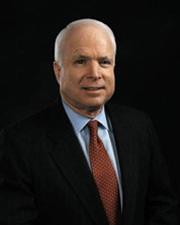 Sen. John McCain (R-AZ)
Submitted January 17, 2003
Legislative Activity
Stay on top of the latest movement without scrolling through every action
Floor
Latest Action
Senate amendment submitted
January 17, 2003
View full timeline
Floor
Senate amendment submitted
January 17, 2003
Floor
Senate amendment proposed (on the floor): Amendment SA 44 proposed by Senator McCain.(consideration: CR S1115-1122, S1123)
January 17, 2003
Floor
Roll call votes on amendments in Senate: Motion to table amendment SA 44 agreed to in Senate by Yea-Nay Vote. 62 - 33. Record Vote Number: 8.
January 17, 2003
Floor
Amendment SA 44 proposed by Senator McCain. (consideration: CR S1115-1122, S1123) To strike section 211 of Division B.
January 17, 2003
Floor
Motion to table amendment SA 44 agreed to in Senate by Yea-Nay Vote. 62 - 33. Record Vote Number: 8.
January 17, 2003
Votes
1 roll call on this amendment
Text
Submitted
TEXT OF AMENDMENTS

SA 35. Mr. KENNEDY submitted an amendment intended to be proposed by
him to the joint resolution H.J. Res. 2, making further continuing
appropriations for the fiscal year 2003, and for other purposes; which
was ordered to lie on the table; as follows:

On page 563, line 14, insert before the period the
following: ``, and $6,600,000 to be used to fund the mass
layoff statistics program under section 15 of the Wagner-
Peyser Act (29 U.S.C. 49l-2).
On page 640, line 2, increase the amount by $6,600,000.
______

SA 36. Mr. BYRD proposed an amendment to the joint resolution H.J.
Res. 2, making further continuing appropriations for the fiscal year
2003, and for other purposes; as follows:

At the appropriate place, insert the following:
Strike title VI of division N.
______

SA 37. Mr. BUNNING (for himself and Mr. Bingaman) submitted an
amendment intended to be proposed by him to the joint resolution H.J.
Res. 2, making further continuing appropriations for the fiscal year
2003, and for other purposes; which was ordered to lie on the table; as
follows:

At the appropriate place, insert the following:

SEC. ____. GAO STUDY ON SUBTITLE D OF THE ENERGY EMPLOYEES
OCCUPATIONAL ILLNESS COMPENSATION PROGRAM ACT.

(a) Study.--The General Accounting Office (in this section
referred to as the ``GAO'') shall conduct a study on the
effectiveness of the benefit program under subtitle D of the
Energy Employees Occupational Illness Compensation Program
Act of 2000 (42 U.S.C. 7385o) in assisting the Department of
Energy (in this section referred to as the ``DOE'')
contractor employees in obtaining compensation for
occupational illness.
(b) Report to Congress.--Not later than 120 days after the
date of enactment of this Act, the GAO shall submit a report
to the Senate Energy and Natural Resources Committee and the
House of Representatives Energy and Commerce Committee on the
results of the study conducted under subsection (a).
______

SA 38. Mr. BUNNING submitted an amendment intended to be proposed by
him to the joint resolution H.J. Res. 2, making further continuing
appropriations for the fiscal year 2003, and for other purposes; which
was ordered to lie on the table; as follows:

At the appropriate place, insert the following:

SEC.  . GAO STUDY OF CLEANUP AT THE PADUCAH GASEOUS DIFFUSION
PLANT IN PADUCAH, KENTUCKY.

(a) Study.--The General Accounting Office (in this section
referred to as the ``GAO'') shall conduct a study of the
cleanup progress at the Paducah Gaseous Diffusion Plant in
Paducah, Kentucky.
(b) Report to Congress.--Not late than six months after the
date of enactment of this Act, the GAO shall submit a report
to the Senate Energy and Natural Resources Committee and the
House of Representatives Energy and Commerce Committee on the
results of the study conducted under subsection (a).
______

SA 39. Mrs. MURRAY submitted an amendment intended to be proposed by
her to the joint resolution H.J. Res. 2, making further continuing
appropriations for the fiscal year 2003, and for other purposes; which
was ordered to lie on the table; as follows:

On page 570, line 19, insert before the period the
following: ``; Provided further, That $120,027,000 shall be
appropriated to carry out the community access program to
increase the capacity and effectiveness of community health
care institutions and providers who serve patients regardless
of their ability to pay''.
______

SA 40. Mr. REED (for himself, Mr. Durbin, Mr. Kennedy, Mr. Levin, Ms.
Cantwell, Mr. Corzine, Mr. Jeffords, and Mr. Bingaman) submitted an
amendment intended to be proposed by him to the joint resolution H.J.
Res. 2, making further continuing appropriations for the fiscal year
2003, and for other purposes; which was ordered to lie on the table; as
follows:

At the appropriate place in title I of division G, insert
the following:

SEC. ____. ENTITLEMENT TO ADDITIONAL WEEKS OF TEMPORARY
EXTENDED UNEMPLOYMENT COMPENSATION.

(a) Entitlement to Additional Weeks.--
(1) In general.--Paragraph (1) of section 203(b) of the
Temporary Extended Unemployment Compensation Act of 2002
(Public Law 107-147; 116 Stat. 28) is amended to read as
follows:

[[Page S1156]]

``(1) In general.--The amount established in an account
under subsection (a) shall be equal to 26 times the
individual's weekly benefit amount for the benefit year.''.
(2) Repeal of restriction on augmentation during
transitional period.--Section 208(b) of the Temporary
Extended Unemployment Compensation Act of 2002 (Public Law
107-147), as amended by Public Law 108-1, is amended--
(A) in paragraph (1)--
(i) by striking ``paragraphs (2) and (3)'' and inserting
``paragraph (2)''; and
(ii) by inserting before the period at the end the
following: ``, including such compensation by reason of
amounts deposited in such account after such date pursuant to
the application of subsection (c) of such section'';
(B) by striking paragraph (2); and
(C) by redesignating paragraph (3) as paragraph (2).
(3) Extension of transition limitation.--Section 208(b)(2)
of the Temporary Extended Unemployment Compensation Act of
2002 (Public Law 107-147), as amended by Public Law 108-1 and
as redesignated by paragraph (2), is amended by striking
``August 30, 2003'' and inserting ``December 31, 2003''.
(4) Conforming amendment for augmented benefits.--Section
203(c)(1) of the Temporary Extended Unemployment Compensation
Act of 2002 (Public Law 107-147; 116 Stat. 28) is amended by
striking ``the amount originally established in such account
(as determined under subsection (b)(1))'' and inserting ``7
times the individual's average weekly benefit amount for the
benefit year''.
(b) Effective Date and Application.--
(1) In general.--The amendments made by subsection (a)
shall apply with respect to weeks of unemployment beginning
on or after the date of enactment this Act.
(2) TEUC-X amounts deposited in account prior to date of
enactment deemed to be the additional teuc amounts provided
by this section.--In applying the amendments made by
subsection (a) under the Temporary Extended Unemployment
Compensation Act of 2002 (Public Law 107-147; 116 Stat. 26),
the Secretary of Labor shall deem any amounts deposited into
an individual's temporary extended unemployment compensation
account by reason of section 203(c) of such Act (commonly
known as ``TEUC-X amounts'') prior to the date of enactment
of this Act to be amounts deposited in such account by reason
of section 203(b) of such Act, as amended by subsection (a)
(commonly known as ``TEUC amounts'').
(3) Application to exhaustees and current beneficiaries.--
(A) Exhaustees.--In the case of any individual--
(i) to whom any temporary extended unemployment
compensation was payable for any week beginning before the
date of enactment of this Act; and
(ii) who exhausted such individual's rights to such
compensation (by reason of the payment of all amounts in such
individual's temporary extended unemployment compensation
account) before such date,
such individual's eligibility for any additional weeks of
temporary extended unemployment compensation by reason of the
amendments made by subsection (a) shall apply with respect to
weeks of unemployment beginning on or after the date of
enactment of this Act.
(B) Current beneficiaries.--In the case of any individual--
(i) to whom any temporary extended unemployment
compensation was payable for any week beginning before the
date of enactment of this Act; and
(ii) as to whom the condition described in subparagraph
(A)(ii) does not apply,

such individual shall be eligible for temporary extended
unemployment compensation (in accordance with the provisions
of the Temporary Extended Unemployment Compensation Act of
2002, as amended by subsection (a)) with respect to weeks of
unemployment beginning on or after the date of enactment of
this Act.
(4) Redetermination of eligibility for augmented amounts
for individuals for whom such a determination was made prior
to the date of enactment.--Any determination of whether the
individual's State is in an extended benefit period under
section 203(c) of the Temporary Extended Unemployment
Compensation Act of 2002 (Public Law 107-147; 116 Stat. 28)
made prior to the date of enactment of this Act shall be
disregarded and the determination under such section shall be
made as follows:
(A) Individuals who exhausted 13 teuc and 13 teux-x weeks
prior to the date of enactment.--In the case of an individual
who, prior to the date of enactment of this Act, received 26
times the individual's average weekly benefit amount through
an account established under section 203 of the Temporary
Extended Unemployment Compensation Act of 2002 (Public Law
107-147; 116 Stat. 28) (by reason of augmentation under
subsection (c) of such section), the determination shall be
made as of the date of the enactment of this Act.
(B) All other individuals.--In the case of an individual
who is not described in subparagraph (A), the determination
shall be made at the time that the individual's account
established under such section 203, as amended by subsection
(a), is exhausted.
______

SA 41. Mr. ROCKEFELLER (for himself, Mr. Chafee, and Mr. Kennedy)
submitted an amendment intended to be proposed by him to the joint
resolution H.J. Res. 2, making further continuing appropriations for
the fiscal year 2003, and for other purposes; which was ordered to lie
on the table; as follows:

At the appropriate place, insert the following:
Sec. ____. (a) Extending Availability of SCHIP Allotments
for Fiscal Years 1998 Through 2001.--
(1) Retained and redistributed allotments for fiscal years
1998 and 1999.--Paragraphs (2)(A)(i) and (2)(A)(ii) of
section 2104(g) of the Social Security Act (42 U.S.C.
1397dd(g)) are each amended by striking ``fiscal year 2002''
and inserting ``fiscal year 2004''.
(2) Extension and revision of retained and redistributed
allotments for fiscal year 2000.--
(A) Permitting and extending retention of portion of fiscal
year 2000 allotment.--Paragraph (2) of such section 2104(g)
is amended--
(i) in the heading, by striking ``and 1999'' and inserting
``through 2000''; and
(ii) by adding at the end of subparagraph (A) the
following:
``(iii) Fiscal year 2000 allotment.--Of the amounts
allotted to a State pursuant to this section for fiscal year
2000 that were not expended by the State by the end of fiscal
year 2002, 50 percent of that amount shall remain available
for expenditure by the State through the end of fiscal year
2004.''.
(B) Redistributed allotments.--Paragraph (1) of such
section 2104(g) is amended--
(i) in subparagraph (A), by inserting ``or for fiscal year
2000 by the end of fiscal year 2002,'' after ``fiscal year
2001,'';
(ii) in subparagraph (A), by striking ``1998 or 1999'' and
inserting ``1998, 1999, or 2000'';
(iii) in subparagraph (A)(i)--

(I) by striking ``or'' at the end of subclause (I),
(II) by striking the period at the end of subclause (II)
and inserting ``; or''; and
(III) by adding at the end the following new subclause:
``(III) the fiscal year 2000 allotment, the amount
specified in subparagraph (C)(i) (less the total of the
amounts under clause (ii) for such fiscal year), multiplied
by the ratio of the amount specified in subparagraph (C)(ii)
for the State to the amount specified in subparagraph
(C)(iii).'';

(iv) in subparagraph (A)(ii), by striking ``or 1999'' and
inserting ``, 1999, or 2000'';
(v) in subparagraph (B), by striking ``with respect to
fiscal year 1998 or 1999'';
(vi) in subparagraph (B)(ii)--

(I) by inserting ``with respect to fiscal year 1998, 1999,
or 2000,'' after ``subsection (e),''; and
(II) by striking ``2002'' and inserting ``2004''; and

(vii) by adding at the end the following new subparagraph:
``(C) Amounts used in computing redistributions for fiscal
year 2000.--For purposes of subparagraph (A)(i)(III)--
``(i) the amount specified in this clause is the amount
specified in paragraph (2)(B)(i)(I) for fiscal year 2000,
less the total amount remaining available pursuant to
paragraph (2)(A)(iii);
``(ii) the amount specified in this clause for a State is
the amount by which the State's expenditures under this title
in fiscal years 2000, 2001, and 2002 exceed the State's
allotment for fiscal year 2000 under subsection (b); and
``(iii) the amount specified in this clause is the sum, for
all States entitled to a redistribution under subparagraph
(A) from the allotments for fiscal year 2000, of the amounts
specified in clause (ii).''.
(C) Conforming amendments.--Such section 2104(g) is further
amended--
(i) in its heading, by striking ``and 1999'' and inserting
``, 1999, and 2000''; and
(ii) in paragraph (3)--

(I) by striking ``or fiscal year 1999'' and inserting ``,
fiscal year 1999, or fiscal year 2000''; and
(II) by striking ``or November 30, 2001'' and inserting
``November 30, 2001, or November 30, 2002'', respectively.

(3) Extension and revision of retained and redistributed
allotments for fiscal year 2001.--
(A) Permitting and extending retention of portion of fiscal
year 2001 allotment.--Paragraph (2) of such section 2104(g),
as amended in paragraph (2)(A)(ii), is further amended--
(i) in the heading, by striking ``2000'' and inserting
``2001''; and
(ii) by adding at the end of subparagraph (A) the
following:
``(iv) Fiscal year 2001 allotment.--Of the amounts allotted
to a State pursuant to this section for fiscal year 2001 that
were not expended by the State by the end of fiscal year
2003, 50 percent of that amount shall remain available for
expenditure by the State through the end of fiscal year
2005.''.
(B) Redistributed allotments.--Paragraph (1) of such
section 2104(g), as amended in paragraph (2)(B), is further
amended--
(i) in subparagraph (A), by inserting ``or for fiscal year
2001 by the end of fiscal year 2003,'' after ``fiscal year
2002,'';
(ii) in subparagraph (A), by striking ``1999, or 2000'' and
inserting ``1999, 2000, or 2001'';
(iii) in subparagraph (A)(i)--

(I) by striking ``or'' at the end of subclause (II),
(II) by striking the period at the end of subclause (III)
and inserting ``; or''; and

[[Page S1157]]

(III) by adding at the end the following new subclause:
``(IV) the fiscal year 2001 allotment, the amount specified
in subparagraph (D)(i) (less the total of the amounts under
clause (ii) for such fiscal year), multiplied by the ratio of
the amount specified in subparagraph (D)(ii) for the State to
the amount specified in subparagraph (D)(iii).'';

(iv) in subparagraph (A)(ii), by striking ``or 2000'' and
inserting ``2000, or 2001'';
(v) in subparagraph (B)--

(I) by striking ``and'' at the end of clause (ii);
(II) by redesignating clause (iii) as clause (iv); and
(III) by inserting after clause (ii) the following new
clause:

``(iii) notwithstanding subsection (e), with respect to
fiscal year 2001, shall remain available for expenditure by
the State through the end of fiscal year 2005; and''; and
(vi) by adding at the end the following new subparagraph:
``(D) Amounts used in computing redistributions for fiscal
year 2001.--For purposes of subparagraph (A)(i)(IV)--
``(i) the amount specified in this clause is the amount
specified in paragraph (2)(B)(i)(I) for fiscal year 2001,
less the total amount remaining available pursuant to
paragraph (2)(A)(iv);
``(ii) the amount specified in this clause for a State is
the amount by which the State's expenditures under this title
in fiscal years 2001, 2002, and 2003 exceed the State's
allotment for fiscal year 2001 under subsection (b); and
``(iii) the amount specified in this clause is the sum, for
all States entitled to a redistribution under subparagraph
(A) from the allotments for fiscal year 2001, of the amounts
specified in clause (ii).''.
(C) Conforming amendments.--Such section 2104(g) is further
amended--
(i) in its heading, by striking ``and 2000'' and inserting
``2000, and 2001''; and
(ii) in paragraph (3)--

(I) by striking ``or fiscal year 2000'' and inserting
``fiscal year 2000, or fiscal year 2001''; and
(II) by striking ``or November 30, 2002,'' and inserting
``November 30, 2002, or November 30, 2003,'', respectively.

(4) Effective date.--This subsection, and the amendments
made by this subsection, shall be effective as if this
subsection had been enacted on September 30, 2002, and
amounts under title XXI of the Social Security Act (42 U.S.C.
1397aa et seq.) from allotments for fiscal years 1998 through
2000 are available for expenditure on and after October 1,
2002, under the amendments made by this subsection as if this
subsection had been enacted on September 30, 2002.
(b) Authority for Qualifying States To Use Portion of SCHIP
Funds for Medicaid Expenditures.--Section 2105 of the Social
Security Act (42 U.S.C. 1397ee) is amended by adding at the
end the following:
``(g) Authority for Qualifying States To Use Certain Funds
for Medicaid Expenditures.--
``(1) State option.--
``(A) In general.--Notwithstanding any other provision of
law, with respect to allotments for fiscal years 1998, 1999,
2000, 2001, for fiscal years in which such allotments are
available under subsections (e) and (g) of section 2104, a
qualifying State (as defined in paragraph (2)) may elect to
use not more than 10 percent of such allotments (instead of
for expenditures under this title) for payments for such
fiscal year under title XIX in accordance with subparagraph
(B).
``(B) Payments to states.--
``(i) In general.--In the case of a qualifying State that
has elected the option described in subparagraph (A), subject
to the total amount of funds described with respect to the
State in subparagraph (A), the Secretary shall pay the State
an amount each quarter equal to the additional amount that
would have been paid to the State under title XIX for
expenditures of the State for the fiscal year described in
clause (ii) if the enhanced FMAP (as determined under
subsection (b)) had been substituted for the Federal medical
assistance percentage (as defined in section 1905(b)) of such
expenditures.
``(ii) Expenditures described.--For purposes of clause (i),
the expenditures described in this clause are expenditures
for such fiscal years for providing medical assistance under
title XIX to individuals who have not attained age 19 and
whose family income exceeds 150 percent of the poverty line.
``(2) Qualifying state.--In this subsection, the term
`qualifying State' means a State that--
``(A) as of March 31, 1997, has an income eligibility
standard with respect to any 1 or more categories of children
(other than infants) who are eligible for medical assistance
under section 1902(a)(10)(A) or under a waiver under section
1115 implemented on January 1, 1994, that is at least 185
percent of the poverty line; and
``(B) satisfies the requirements described in paragraph
(3).
``(3) Requirements.--The requirements described in this
paragraph are the following:
``(A) SCHIP income eligibility.--The State has a State
child health plan that (whether implemented under title XIX
or this title)--
``(i) as of January 1, 2001, has an income eligibility
standard that is at least 200 percent of the poverty line or
has an income eligibility standard that exceeds 200 percent
of the poverty line under a waiver under section 1115 that is
based on a child's lack of health insurance;
``(ii) subject to subparagraph (B), does not limit the
acceptance of applications for children; and
``(iii) provides benefits to all children in the State who
apply for and meet eligibility standards on a statewide
basis.
``(B) No waiting list imposed.--With respect to children
whose family income is at or below 200 percent of the poverty
line, the State does not impose any numerical limitation,
waiting list, or similar limitation on the eligibility of
such children for child health assistance under such State
plan.
``(C) Additional requirements.--The State has implemented
at least 4 of the following policies and procedures (relating
to coverage of children under title XIX and this title):
``(i) Uniform, simplified application form.--With respect
to children who are eligible for medical assistance under
section 1902(a)(10)(A), the State uses the same uniform,
simplified application form (including, if applicable,
permitting application other than in person) for purposes of
establishing eligibility for benefits under title XIX and
this title.
``(ii) Elimination of asset test.--The State does not apply
any asset test for eligibility under section 1902(l) or this
title with respect to children.
``(iii) Adoption of 12-month continuous enrollment.--The
State provides that eligibility shall not be regularly
redetermined more often than once every year under this title
or for children described in section 1902(a)(10)(A).
``(iv) Same verification and redetermination policies;
automatic reassessment of eligibility.--With respect to
children who are eligible for medical assistance under
section 1902(a)(10)(A), the State provides for initial
eligibility determinations and redeterminations of
eligibility using the same verification policies (including
with respect to face-to-face interviews), forms, and
frequency as the State uses for such purposes under this
title, and, as part of such redeterminations, provides for
the automatic reassessment of the eligibility of such
children for assistance under title XIX and this title.
``(v) Outstationing enrollment staff.--The State provides
for the receipt and initial processing of applications for
benefits under this title and for children under title XIX at
facilities defined as disproportionate share hospitals under
section 1923(a)(1)(A) and Federally-qualified health centers
described in section 1905(l)(2)(B) consistent with section
1902(a)(55).''.
______

SA 42. Mr. DOMENICI submitted an amendment intended to be proposed by
him to the joint resolution H.J. Res. 2, making further continuing
appropriations for the fiscal year 2003, and for other purposes; which
was ordered to lie on the table; as follows:

On Page 1027, line 17, strike ``August 1, 2002'' and insert
``December 31, 2004''.
On Page 1032, at the end of line 8, insert the following
new section:

``SEC. 210. CIVIL PENALTIES.

``(a) Repeal of Automatic Remission.--Section 234A b.(2) of
the Atomic Energy Act of 1954 (42 U.S.C. 2282a(b)(2)) is
amended by striking the last sentence.
``(b) Limitation for Not-For-Profit Institutions.--
Subsection d. of section 234A of the Atomic Energy Act of
1954 (42 U.S.C. 2282a(d)) is amended to read as follows:
`` `d.(1) Notwithstanding subsection a., in the case of any
not-for-profit contractor, subcontractor, or supplier, the
total amount of civil penalties made under subsection a. may
not exceed the total amount of fees paid within any one-year
period (as determined by the Secretary) under the contract
under which the violation occurs.
`` `(2) For purposes of this section, the term `not-for-
profit' means that no part of the net earnings of the
contractor, subcontractor, or supplier inures, or may
lawfully inure, to the benefit of any natural person or for-
profit artificial person.'.
``(c) Effective Date.--The amendments made by this section
shall not apply to any violation of the Atomic Energy Act of
1954 occurring under a contract entered into before the date
of enactment of this section.''
______

SA 43. Mr. DOMENICI submitted an amendment intended to be proposed by
him to the joint resolution H.J. Res. 2, making further continuing
appropriations for the fiscal year 2003, and for other purposes; which
was ordered to lie on the table; as follows:

At the appropriate place insert the following:

SECTION 1. SHORT TITLE.

This section may be cited as the ``T'uf Shur Bien
Preservation Trust Area Act''.

SEC. 2. FINDINGS AND PURPOSES.

(a) Findings.--Congress finds that--
(1) in 1748, the Pueblo of Sandia received a grant from a
representative of the King of Spain, which grant was
recognized and confirmed by Congress in 1858 (11 Stat. 374);
and
(2) in 1994, the Pueblo filed a civil action against the
Secretary of the Interior and the Secretary of Agriculture in
the United States District Court for the District of Columbia
(Civil No. 1:94CV02624), asserting that Federal surveys of
the grant boundaries erroneously excluded certain land within
the Cibola National Forest, including a portion of the Sandia
Mountain Wilderness.

[[Page S1158]]

(b) Purposes.--The purposes of this Act are--
(1) to establish the T'uf Shur Bien Preservation Trust Area
in the Cibola National Forest;
(2) to confirm the status of national forest land and
wilderness land in the Area while resolving issues associated
with the civil action referred to in subsection (a)(2) and
the opinions of the Solicitor of the Department of the
Interior dated December 9, 1988 (M-36963; 96 I.D. 331) and
January 19, 2001 (M-37002); and
(3) to provide the Pueblo, the parties to the civil action,
and the public with a fair and just settlement of the
Pueblo's claim.

SEC. 3. DEFINITIONS.

In this Act:
(1) Area.--
(A) In general.--The term ``Area'' means the T'uf Shur Bien
Preservation Trust Area, comprised of approximately 9890
acres of land in the Cibola National Forest, as depicted on
the map.
(B) Exclusions.--The term ``Area'' does not include--
(i) the subdivisions;
(ii) Pueblo-owned land;
(iii) the crest facilities; or
(iv) the special use permit area.
(2) Crest facilities.--The term ``crest facilities''
means--
(A) all facilities and developments located on the crest of
Sandia Mountain, including the Sandia Crest Electronic Site;
(B) electronic site access roads;
(C) the Crest House;
(D) the upper terminal, restaurant, and related facilities
of Sandia Peak Tram Company;
(E) the Crest Observation Area;
(F) parking lots;
(G) restrooms;
(H) the Crest Trail (Trail No. 130);
(I) hang glider launch sites;
(J) the Kiwanis cabin; and
(K) the land on which the facilities described in
subparagraphs (A) through (J) are located and the land
extending 100 feet along terrain to the west of each such
facility, unless a different distance is agreed to in writing
by the Secretary and the Pueblo and documented in the survey
of the Area.
(3) Existing use.--The term ``existing use'' means a use
that--
(A) is occurring in the Area as of the date of enactment of
this Act; or
(B) is authorized in the Area after November 1, 1995, but
before the date of enactment of this Act.
(4) La luz tract.--The term ``La Luz tract'' means the
tract comprised of approximately 31 acres of land owned in
fee by the Pueblo and depicted on the map.
(5) Local public body.--The term ``local public body''
means a political subdivision of the State of New Mexico (as
defined in New Mexico Code 6-5-1).
(6) Map.--The term ``map'' means the Forest Service map
entitled ``T'uf Shur Bien Preservation Trust Area'' and dated
April 2000.
(7) Modified use.--
(A) In general.--The term ``modified use'' means an
existing use that, at any time after the date of enactment of
this Act, is modified or reconfigured but not significantly
expanded.
(B) Inclusions.--The term ``modified use'' includes--
(i) a trail or trailhead being modified, such as to
accommodate handicapped access;
(ii) a parking area being reconfigured (but not expanded);
and
(iii) a special use authorization for a group recreation
use being authorized for a different use area or time period.
(8) New use.--
(A) In general.--The term ``new use'' means--
(i) a use that is not occurring in the Area as of the date
of enactment of this Act; and
(ii) an existing use that is being modified so as to be
significantly expanded or altered in scope, dimension, or
impact on the land, water, air, or wildlife resources of the
Area.
(B) Exclusions.--The term ``new use'' does not include a
use that--
(i) is categorically excluded from documentation
requirements under the National Environmental Policy Act of
1969 (42 U.S.C. 4321 et seq.); or
(ii) is carried out to comply with the Endangered Species
Act of 1973 (16 U.S.C. 1531 et seq.).
(9) Piedra lisa tract.--The term ``Piedra Lisa tract''
means the tract comprised of approximately 160 acres of land
owned by the Pueblo and depicted on the map.
(10) Pueblo.--The term ``Pueblo'' means the Pueblo of
Sandia in its governmental capacity.
(11) Secretary.--The term ``Secretary'' means the Secretary
of Agriculture, acting through the Chief of the Forest
Service.
(12) Settlement agreement.--The term ``Settlement
Agreement'' means the Agreement of Compromise and Settlement
dated April 4, 2000, among the United States, the Pueblo, and
the Sandia Peak Tram Company.
(13) Special use permit.--The term ``special use permit''
means the Special Use Permit issued December 1, 1993, by the
Secretary to Sandia Peak Tram Company and Sandia Peak Ski
Company
(14) Special use permit area.--
(A) In general.--The term ``special use permit area'' means
the land and facilities subject to the special use permit.
(B) Inclusions.--The term ``special use permit area''
includes--
(i) approximately 46 acres of land used as an aerial
tramway corridor;
(ii) approximately 945 acres of land used as a ski area;
and
(iii) the land and facilities described in Exhibit A to the
special use permit, including--

(I) the maintenance road to the lower tram tower;
(II) water storage and water distribution facilities; and
(III) 7 helispots.

(15) Subdivision.--The term ``subdivision'' means--
(A) the subdivision of--
(i) Sandia Heights Addition;
(ii) Sandia Heights North Unit I, II, or 3;
(iii) Tierra Monte;
(iv) Valley View Acres; or
(v) Evergreen Hills; and
(B) any additional plat or privately-owned property
depicted on the map.
(16) Traditional or cultural use.--The term ``traditional
or cultural use'' means--
(A) a ceremonial activity (including the placing of
ceremonial materials in the Area); and
(B) the use, hunting, trapping, or gathering of plants,
animals, wood, water, and other natural resources for a
noncommercial purpose.

SEC. 4. T'UF SHUR BIEN PRESERVATION TRUST AREA.

(a) Establishment.--The T'uf Shur Bien Preservation Trust
Area is established within the Cibola National Forest and the
Sandia Mountain Wilderness as depicted on the map--
(1) to recognize and protect in perpetuity the rights and
interests of the Pueblo in and to the Area, as specified in
section 5(a);
(2) to preserve in perpetuity the national forest and
wilderness character of the Area; and
(3) to recognize and protect in perpetuity the longstanding
use and enjoyment of the Area by the public.
(b) Administration and Applicable Law.--
(1) In general.--The Secretary shall continue to administer
the Area as part of the National Forest System subject to and
consistent with the provisions of this Act affecting
management of the Area.
(2) Traditional or cultural uses.--Traditional or cultural
uses by Pueblo members and members of other federally-
recognized Indian tribes authorized to use the Area by the
Pueblo under section 5(a)(4) shall not be restricted except
by--
(A) the Wilderness Act (16 U.S.C. 1131 et seq.) (including
regulations promulgated under that Act) as in effect on the
date of enactment of this Act; and
(B) applicable Federal wildlife protection laws, as
provided in section 6(a)(2).
(3) Later enactments.--To the extent that any law enacted
or amended after the date of enactment of this Act is
inconsistent with this Act, the law shall not apply to the
Area unless expressly made applicable by Congress.
(4) Trust.--The use of the word ``Trust'' in the name of
the Area--
(A) is in recognition of the specific rights and interests
of the Pueblo in the Area; and
(B) does not confer on the Pueblo the ownership interest
that exists in a case in which the Secretary of the Interior
accepts the title to land held in trust for the benefit of an
Indian tribe.
(c) Map.--
(1) Filing.--As soon as practicable after the date of
enactment of this Act, the Secretary shall file the map and a
legal description of the Area with the Committee on Resources
of the House of Representatives and with the Committee on
Energy and Natural Resources of the Senate.
(2) Public availability.--The map and legal description
shall be on file and available for public inspection in the
Office of the Chief of the Forest Service, Washington,
District of Columbia.
(3) Effect.--The map and legal description filed under
paragraph (1) shall have the same effect as if the map and
legal description were included in this Act, except that--
(A) technical and typographical errors shall be corrected;
(B) changes that may be necessary under subsection (b),
(d), or (e) of section 9 or subsection (b) or (c) of section
13 shall be made; and
(C) to the extent that the map and the language of this Act
conflict, the language of this Act shall control.
(d) No Conveyance of Title.--No right, title, or interest
of the United States in or to the Area or any part of the
Area shall be conveyed to or exchanged with any person,
trust, or governmental entity, including the Pueblo, without
specific authorization of Congress.
(e) Prohibited Uses.--
(1) In general.--Notwithstanding any other provision of
law--
(A) no use prohibited by the Wilderness Act (16 U.S.C. 1131
et seq.) as of the date of enactment of this Act shall be
permitted in the wilderness portion of the Area; and
(B) none of the following uses shall be permitted in any
portion of the Area:
(i) Gaming or gambling.
(ii) Mineral production.
(iii) Timber production.
(iv) Any new use to which the Pueblo objects under section
5(a)(3).
(2) Mining claims.--The Area is closed to the location of
mining claims under Section 2320 of the Revised Statutes (30
U.S.C. 23) (commonly known as the ``Mining Law of 1872'').

[[Page S1159]]

(f) No Modification of Boundaries.--Establishment of the
Area shall not--
(1) affect the boundaries of or repeal or disestablish the
Sandia Mountain Wilderness or the Cibola National Forest; or
(2) modify the existing boundary of the Pueblo grant.

SEC. 5. PUEBLO RIGHTS AND INTERESTS IN THE AREA.

(a) In General.--The Pueblo shall have the following rights
and interests in the Area:
(1) Free and unrestricted access to the Area for
traditional or cultural uses, to the extent that those uses
are not inconsistent with--
(A) the Wilderness Act (16 U.S.C. 1131 et seq.) (including
regulations promulgated under that Act) as in effect on the
date of enactment of this Act; or
(B) applicable Federal wildlife protection laws as provided
in section 6(a)(2).
(2) Perpetual preservation of the national forest and
wilderness character of the Area under this Act.
(3) Rights in the management of the Area as specified in
section 7, including--
(A) the right to consent or withhold consent to a new use;
(B) the right to consultation regarding a modified use;
(C) the right to consultation regarding the management and
preservation of the Area; and
(D) the right to dispute resolution procedures.
(4) Exclusive authority, in accordance with the customs and
laws of the Pueblo, to administer access to the Area for
traditional or cultural uses by members of the Pueblo and of
other federally-recognized Indian tribes.
(5) Such other rights and interests as are recognized in
sections 4, 5(c), 7, 8, and 9.
(b) Access.--Except as provided in subsection (a)(4),
access to and use of the Area for all other purposes shall
continue to be administered by the Secretary.
(c) Compensable Interest.--
(1) In general.--If, by an Act of Congress enacted after
the date of enactment of this Act, Congress diminishes the
national forest or wilderness designation of the Area by
authorizing a use prohibited by section 4(e) in all or any
portion of the Area, or denies the Pueblo access for any
traditional or cultural use in all or any portion of the
Area--
(A) the United States shall compensate the Pueblo as if the
Pueblo held a fee title interest in the affected portion of
the Area and as though the United States had acquired such an
interest by legislative exercise of the power of eminent
domain; and
(B) the restrictions of sections 4(e) and 6(a) shall be
disregarded in determining just compensation owed to the
Pueblo.
(2) Effect.--Any compensation made to the Pueblo under
paragraph (c) shall not affect the extinguishment of claims
under section 10.

SEC. 6. LIMITATIONS ON PUEBLO RIGHTS AND INTERESTS IN THE
AREA.

(a) Limitations.--The rights and interests of the Pueblo
recognized in this Act do not include--
(1) any right to sell, grant, lease, convey, encumber, or
exchange land or any interest in land in the Area (and any
such conveyance shall not have validity in law or equity);
(2) any exemption from applicable Federal wildlife
protection laws;
(3) any right to engage in a use prohibited by section
4(e); or
(4) any right to exclude persons or governmental entities
from the Area.
(b) Exception.--No person who exercises traditional or
cultural use rights as authorized by section 5(a)(4) may be
prosecuted for a Federal wildlife offense requiring proof of
a violation of a State law (including regulations).

SEC. 7. MANAGEMENT OF THE AREA.

(a) Process.--
(1) In general.--The Secretary shall consult with the
Pueblo not less than twice each year, unless otherwise
mutually agreed, concerning protection, preservation, and
management of the Area (including proposed new uses and
modified uses in the Area and authorizations that are
anticipated during the next 6 months and were approved in the
preceding 6 months).
(2) New uses.--
(A) Request for consent after consultation.--
(i) Denial of consent.--If the Pueblo denies consent for a
new use within 30 days after completion of the consultation
process, the Secretary shall not proceed with the new use.
(ii) Granting of consent.--If the Pueblo consents to the
new use in writing or fails to respond within 30 days after
completion of the consultation process, the Secretary may
proceed with the notice and comment process and the
environmental analysis.
(B) Final request for consent.--
(i) Request.--Before the Secretary (or a designee) signs a
record of decision or decision notice for a proposed new use,
the Secretary shall again request the consent of the Pueblo.
(ii) Denial of consent.--If the Pueblo denies consent for a
new use within 30 days after receipt by the Pueblo of the
proposed record of decision or decision notice, the new use
shall not be authorized.
(iii) Failure to respond.--If the Pueblo fails to respond
to the consent request within 30 days after receipt of the
proposed record of decision or decision notice--

(I) the Pueblo shall be deemed to have consented to the
proposed record of decision or decision notice; and
(II) the Secretary may proceed to issue the final record of
decision or decision notice.

(3) Public involvement.--
(A) In general.--With respect to a proposed new use or
modified use, the public shall be provided notice of--
(i) the purpose and need for the proposed new use or
modified use;
(ii) the role of the Pueblo in the decisionmaking process;
and
(iii) the position of the Pueblo on the proposal.
(B) Court challenge.--Any person may bring a civil action
in the United States District Court for the District of New
Mexico to challenge a determination by the Secretary
concerning whether a use constitutes a new use or a modified
use.
(b) Emergencies and Emergency Closure Orders.--
(1) Authority.--The Secretary shall retain the authority of
the Secretary to manage emergency situations, to--
(A) provide for public safety; and
(B) issue emergency closure orders in the Area subject to
applicable law.
(2) Notice.--The Secretary shall notify the Pueblo
regarding emergencies, public safety issues, and emergency
closure orders as soon as practicable.
(3) No consent.--An action of the Secretary described in
paragraph (1) shall not require the consent of the Pueblo.
(c) Disputes Involving Forest Service Management and Pueblo
Traditional Uses.--
(1) In general.--In a case in which the management of the
Area by the Secretary conflicts with a traditional or
cultural use, if the conflict does not pertain to a new use
subject to the process specified in subsection (a)(2), the
process for dispute resolution specified in this subsection
shall apply.
(2) Dispute resolution process.--
(A) In general.--In the case of a conflict described in
paragraph (1)--
(i) the party identifying the conflict shall notify the
other party in writing addressed to the Governor of the
Pueblo or the Regional Forester, as appropriate, specifying
the nature of the dispute; and
(ii) the Governor of the Pueblo or the Regional Forester
shall attempt to resolve the dispute for a period of at least
30 days after notice has been provided before bringing a
civil action in the United States District Court for the
District of New Mexico.
(B) Disputes requiring immediate resolution.--In the case
of a conflict that requires immediate resolution to avoid
imminent, substantial, and irreparable harm--
(i) the party identifying the conflict shall notify the
other party and seek to resolve the dispute within 3 days of
the date of notification; and
(ii) if the parties are unable to resolve the dispute
within 3 days--

(I) either party may bring a civil action for immediate
relief in the United States District Court for the District
of New Mexico; and
(II) the procedural requirements specified in subparagraph
(A) shall not apply.

SEC. 8. JURISDICTION OVER THE AREA.

(a) Criminal Jurisdiction.--
(1) In general.--Notwithstanding any other provision of
law, jurisdiction over crimes committed in the Area shall be
allocated as provided in this paragraph.
(2) Jurisdiction of the pueblo.--The Pueblo shall have
jurisdiction over an offense committed by a member of the
Pueblo or of another federally-recognized Indian tribe who is
present in the Area with the permission of the Pueblo under
section 5(a)(4).
(3) Jurisdiction of the united states.--The United States
shall have jurisdiction over--
(A) an offense described in section 1153 of title 18,
United States Code, committed by a member of the Pueblo or
another federally-recognized Indian tribe;
(B) an offense committed by any person in violation of the
laws (including regulations) pertaining to the protection and
management of national forests;
(C) enforcement of Federal criminal laws of general
applicability; and
(D) any other offense committed by a member of the Pueblo
against a person not a member of the Pueblo.
(4) Jurisdiction of the state of new mexico.--The State of
New Mexico shall have jurisdiction over an offense under the
law of the State committed by a person not a member of the
Pueblo.
(5) Overlapping jurisdiction.--To the extent that the
respective allocations of jurisdiction over the Area under
paragraphs (2), (3), and (4) overlap, the governments shall
have concurrent jurisdiction.
(6) Federal use of state law.--Under the jurisdiction of
the United States described in paragraph (3)(D), Federal law
shall incorporate any offense defined and punishable under
State law that is not so defined under Federal law.
(b) Civil Jurisdiction.--
(1) In general.--Except as provided in paragraphs (2) and
(3), the United States, the State of New Mexico, and local
public bodies shall have the same civil adjudicatory,
regulatory, and taxing jurisdiction over the Area as was
exercised by those entities on the day before the date of
enactment of this Act.
(2) Jurisdiction of the pueblo.--
(A) In general.--The Pueblo shall have exclusive civil
adjudicatory jurisdiction over--

[[Page S1160]]

(i) a dispute involving only members of the Pueblo;
(ii) a civil action brought by the Pueblo against a member
of the Pueblo; and
(iii) a civil action brought by the Pueblo against a member
of another federally-recognized Indian tribe for a violation
of an understanding between the Pueblo and the other tribe
regarding use of or access to the Area for traditional or
cultural uses.
(B) Regulatory jurisdiction.--The Pueblo shall have no
regulatory jurisdiction over the Area, except that the Pueblo
shall have exclusive authority to--
(i) regulate traditional or cultural uses by the members of
the Pueblo and administer access to the Area by other
federally-recognized Indian tribes for traditional or
cultural uses, to the extent such regulation is consistent
with this Act; and
(ii) regulate hunting and trapping in the Area by members
of the Pueblo, to the extent that the hunting or trapping is
related to traditional or cultural uses, except that such
hunting and trapping outside of that portion of the Area in
sections 13, 14, 23, 24, and the northeast quarter of section
25 of T12N, R4E, and section 19 of T12N, R5E, N.M.P.M.,
Sandoval County, New Mexico, shall be regulated by the Pueblo
in a manner consistent with the regulations of the State of
New Mexico concerning types of weapons and proximity of
hunting and trapping to trails and residences.
(C) Taxing jurisdiction.--The Pueblo shall have no
authority to impose taxes within the Area.
(3) State and local taxing jurisdiction.--The State of New
Mexico and local public bodies shall have no authority within
the Area to tax the uses or the property of the Pueblo,
members of the Pueblo, or members of other federally-
recognized Indian tribes authorized to use the Area under
section 5(a)(4).

SEC. 9. SUBDIVISIONS AND OTHER PROPERTY INTERESTS.

(a) Subdivisions.--
(1) In general.--The subdivisions are excluded from the
Area.
(2) Jurisdiction.--
(A) In general.--The Pueblo shall have no civil or criminal
jurisdiction for any purpose, including adjudicatory, taxing,
zoning, regulatory or any other form of jurisdiction, over
the subdivisions and property interests therein, and the laws
of the Pueblo shall not apply to the subdivisions.
(B) State jurisdiction.--The jurisdiction of the State of
New Mexico and local public bodies over the subdivisions and
property interests therein shall continue in effect, except
that on application of the Pueblo a tract comprised of
approximately 35 contiguous, nonsubdivided acres in the
northern section of Evergreen Hills owned in fee by the
Pueblo at the time of enactment of this Act, shall be
transferred to the United States and held in trust for the
Pueblo by the United States and administered by the Secretary
of the Interior.
(3) Limitations on trust land.--Trust land described in
paragraph (2)(B) shall be subject to all limitations on use
pertaining to the Area contained in this Act.
(b) Piedra Lisa.--
(1) In general.--The Piedra Lisa tract is excluded from the
Area.
(2) Declaration of trust title.--The Piedra Lisa tract--
(A) shall be transferred to the United States;
(B) is declared to be held in trust for the Pueblo by the
United States; and
(C) shall be administered by the Secretary of the Interior
subject to all limitations on use pertaining to the Area
contained in this Act.
(3) Applicability of certain restriction.--The restriction
contained in section 6(a)(4) shall not apply outside of
Forest Service System trails.
(c) Crest Facilities.--
(1) In general.--The land on which the crest facilities are
located is excluded from the Area.
(2) Jurisdiction.--The Pueblo shall have no civil or
criminal jurisdiction for any purpose, including
adjudicatory, taxing, zoning, regulatory or any other form of
jurisdiction, over the land on which the crest facilities are
located and property interests therein, and the laws of the
Pueblo, shall not apply to that land. The preexisting
jurisdictional status of that land shall continue in effect.
(d) Special Use Permit Area.--
(1) In general.--The land described in the special use
permit is excluded from the Area.
(2) Jurisdiction.--
(A) In general.--The Pueblo shall have no civil or criminal
jurisdiction for any purpose, including adjudicatory, taxing,
zoning, regulatory, or any other form of jurisdiction, over
the land described in the special use permit, and the laws of
the Pueblo shall not apply to that land.
(B) Preexisting status.--The preexisting jurisdictional
status of that land shall continue in effect.
(3) Amendment to plan.--In the event the special use
permit, during its existing term or any future terms or
extensions, requires amendment to include other land in the
Area necessary to realign the existing or any future
replacement tram line, associated structures, or facilities,
the land subject to that amendment shall thereafter be
excluded from the Area and shall have the same status under
this Act as the land currently described in the special use
permit.
(4) Land dedicated to aerial tramway and related uses.--Any
land dedicated to aerial tramway and related uses and
associated facilities that are excluded from the special use
permit through expiration, termination or the amendment
process shall thereafter be included in the Area, but only
after final agency action no longer subject to any appeals.
(e) La Luz Tract.--
(1) In general.--The La Luz tract now owned in fee by the
Pueblo is excluded from the Area and, on application by the
Pueblo, shall be transferred to the United States and held in
trust for the Pueblo by the United States and administered by
the Secretary of the Interior subject to all limitations on
use pertaining to the Area contained in this Act.
(2) Nonapplicability of certain restriction.--The
restriction contained in section 6(a)(4) shall not apply
outside of Forest Service System trails.
(f) Evergreen Hills Access.--The Secretary shall ensure
that Forest Service Road 333D, as depicted on the map, is
maintained in an adequate condition in accordance with
section 1323(a) of the Alaska National Interest Lands
Conservation Act (16 U.S.C. 3210(a)).
(g) Pueblo Fee Land.--Those properties not specifically
addressed in subsections (a) or (e) that are owned in fee by
the Pueblo within the subdivisions are excluded from the Area
and shall be subject to the jurisdictional provisions of
subsection (a).
(h) Rights-of-Way.--
(1) Road rights-of-way.--
(A) In general.--In accordance with the Pueblo having given
its consent in the Settlement Agreement, the Secretary of the
Interior shall grant to the County of Bernalillo, New Mexico,
in perpetuity, the following irrevocable rights-of-way for
roads identified on the map in order to provide for public
access to the subdivisions, the special use permit land and
facilities, the other leasehold and easement rights and
interests of the Sandia Peak Tram Company and its affiliates,
the Sandia Heights South Subdivision, and the Area--
(i) a right-of-way for Tramway Road;
(ii) a right-of-way for Juniper Hill Road North;
(iii) a right-of-way for Juniper Hill Road South;
(iv) a right-of-way for Sandia Heights Road; and
(v) a right-of-way for Juan Tabo Canyon Road (Forest Road
No. 333).
(B) Conditions.--The road rights-of-way shall be subject to
the following conditions:
(i) Such rights-of-way may not be expanded or otherwise
modified without the Pueblo's written consent, but road
maintenance to the rights-of-way shall not be subject to
Pueblo consent.
(ii) The rights-of-way shall not authorize uses for any
purpose other than roads without the Pueblo's written
consent.
(iii) Except as provided in the Settlement Agreement,
existing rights-of-way or leasehold interests and obligations
held by the Sandia Peak Tram Company and its affiliates,
shall be preserved, protected, and unaffected by this Act.
(2) Utility rights-of-way.--In accordance with the Pueblo
having given its consent in the Settlement Agreement, the
Secretary of the Interior shall grant irrevocable utility
rights-of-way in perpetuity across Pueblo land to appropriate
utility or other service providers serving Sandia Heights
Addition, Sandia Heights North Units I, II, and 3, the
special use permit land, Tierra Monte, and Valley View Acres,
including rights-of-way for natural gas, power, water,
telecommunications, and cable television services. Such
rights-of-way shall be within existing utility corridors as
depicted on the map or, for certain water lines, as described
in the existing grant of easement to the Sandia Peak Utility
Company; provided that use of water line easements outside
the utility corridors depicted on the map shall not be used
for utility purposes other than water lines and associated
facilities. Except where above-ground facilities already
exist, all new utility facilities shall be installed
underground unless the Pueblo agrees otherwise. To the extent
that enlargement of existing utility corridors is required
for any technologically-advanced telecommunication,
television, or utility services, the Pueblo shall not
unreasonably withhold agreement to a reasonable enlargement
of the easements described above.
(3) Forest service rights-of-way.--In accordance with the
Pueblo having given its consent in the Settlement Agreement,
the Secretary of the Interior shall grant to the Forest
Service the following irrevocable rights-of-way in perpetuity
for Forest Service trails crossing land of the Pueblo in
order to provide for public access to the Area and through
Pueblo land--
(A) a right-of-way for a portion of the Crest Spur Trail
(Trail No. 84), crossing a portion of the La Luz tract, as
identified on the map;
(B) a right-of-way for the extension of the Foothills Trail
(Trail No. 365A), as identified on the map; and
(C) a right-of-way for that portion of the Piedra Lisa
North-South Trail (Trail No. 135) crossing the Piedra Lisa
tract.

SEC. 10. EXTINGUISHMENT OF CLAIMS.

(a) In General.--Except for the rights and interests in and
to the Area specifically recognized in sections 4, 5, 7, 8,
and 9, all Pueblo claims to right, title and interest of any
kind, including aboriginal claims, in and to land within the
Area, any part thereof, and property interests therein, as
well as related

[[Page S1161]]

boundary, survey, trespass, and monetary damage claims, are
permanently extinguished. The United States' title to the
Area is confirmed.
(b) Subdivisions.--Any Pueblo claims to right, title and
interest of any kind, including aboriginal claims, in and to
the subdivisions and property interests therein (except for
land owned in fee by the Pueblo as of the date of enactment
of this Act), as well as related boundary, survey, trespass,
and monetary damage claims, are permanently extinguished.
(c) Special Use and Crest Facilities Areas.--Any Pueblo
right, title and interest of any kind, including aboriginal
claims, and related boundary, survey, trespass, and monetary
damage claims, are permanently extinguished in and to--
(1) the land described in the special use permit; and
(2) the land on which the crest facilities are located.
(d) Pueblo Agreement.--As provided in the Settlement
Agreement, the Pueblo has agreed to the relinquishment and
extinguishment of those claims, rights, titles and interests
extinguished pursuant to subsection (a), (b) and (c).
(e) Consideration.--The recognition of the Pueblo's rights
and interests in this Act constitutes adequate consideration
for the Pueblo's agreement to the extinguishment of the
Pueblo's claims in this section and the right-of-way grants
contained in section 9, and it is the intent of Congress that
those rights and interests may only be diminished by a future
Act of Congress specifically authorizing diminishment of such
rights, with express reference to this Act.

SEC. 11. CONSTRUCTION.

(a) Strict Construction.--This Act recognizes only
enumerated rights and interests, and no additional rights,
interests, obligations, or duties shall be created by
implication.
(b) Existing Rights.--To the extent there exist within the
Area as of the date of enactment of this Act any valid
private property rights associated with private land that are
not otherwise addressed in this Act, such rights are not
modified or otherwise affected by this Act, nor is the
exercise of any such right subject to the Pueblo's right to
withhold consent to new uses in the Area as set forth in
section 5(a)(3)(A).
(c) Not Precedent.--The provisions of this Act creating
certain rights and interests in the National Forest System
are uniquely suited to resolve the Pueblo's claim and the
geographic and societal situation involved, and shall not be
construed as precedent for any other situation involving
management of the National Forest System.
(d) Fish and Wildlife.--Except as provided in section
8(b)(2)(B), nothing in this Act shall be construed as
affecting the responsibilities of the State of New Mexico
with respect to fish and wildlife, including the regulation
of hunting, fishing, or trapping within the Area.
(e) Federal Land Policy and Management Act.--Section 316 of
the Federal Land Policy and Management Act of 1976 (43 U.S.C.
1746) is amended by adding at the end the following: ``Any
corrections authorized by this section which affect the
boundaries of, or jurisdiction over, land administered by
another Federal agency shall be made only after consultation
with, and the approval of, the head of such other agency.''

SEC. 12. JUDICIAL REVIEW.

(a) Enforcement.--A civil action to enforce the provisions
of this Act may be brought to the extent permitted under
chapter 7 of title 5, United States Code. Judicial review
shall be based on the administrative record and subject to
the applicable standard of review set forth in section 706 of
title 5, United States Code.
(b) Waiver.--A civil action may be brought against the
Pueblo for declaratory judgment or injunctive relief under
this Act, but no money damages, including costs or attorney's
fees, may be imposed on the Pueblo as a result of such
judicial action.
(c) Venue.--Venue for any civil action provided for in this
section, as well as any civil action to contest the
constitutionality of this Act, shall lie only in the United
States District Court for the District of New Mexico.

SEC. 13. PROVISIONS RELATING TO CONTRIBUTIONS AND LAND
EXCHANGE.

(a) Contributions.--
(1) In general.--The Secretary may accept contributions
from the Pueblo, or from other persons or governmental
entities--
(A) to perform and complete a survey of the Area; or
(B) to carry out any other project or activity for the
benefit of the Area in accordance with this Act.
(2) Deadline.--Not later than 1 year after the date of
enactment of this Act, the Secretary shall complete the
survey of the Area under paragraph (1)(A).
(b) Land Exchange.--
(1) In general.--Not later than 180 days after the date of
enactment of this Act, after consultation with the Pueblo,
the Secretary shall, in accordance with applicable laws,
prepare and offer a land exchange of National Forest land
outside the Area and contiguous to the northern boundary of
the Pueblo's Reservation within sections 10, 11, and 14 of
T12N, R4E, N.M.P.M., Sandoval County, New Mexico excluding
Wilderness land, for land owned by the Pueblo in the
Evergreen Hills subdivision in Sandoval County contiguous to
National Forest land, and the La Luz tract in Bernalillo
County.
(2) Acceptance of payment.--Notwithstanding section 206(b)
of the Federal Land Policy and Management Act (43 U.S.C.
1716(b)), the Secretary may either make or accept a cash
equalization payment in excess of 25 percent of the total
value of the land or interests transferred out of Federal
ownership.
(3) Funds received.--Any funds received by the Secretary as
a result of the exchange shall be deposited in the fund
established under the Act of December 4, 1967, known as the
Sisk Act (16 U.S.C. 484a), and shall be available to purchase
non-Federal land within or adjacent to the National Forests
in the State of New Mexico.
(4) Treatment of land exchanged or conveyed.--All land
exchanged or conveyed to the Pueblo is declared to be held in
trust for the Pueblo by the United States and added to the
Pueblo's Reservation subject to all existing and outstanding
rights and shall remain in its natural state and shall not be
subject to commercial development of any kind. Land exchanged
or conveyed to the Forest Service shall be subject to all
limitations on use pertaining to the Area under this Act.
(5) Failure to make offer.--If the land exchange offer is
not made by the date that is 180 days after the date of
enactment of this Act, the Secretary shall submit to the
Committee on Energy and Natural Resources of the United
States Senate and the Committee on Resources of the United
States House of Representatives, a report explaining the
reasons for the failure to make the offer including an
assessment of the need for any additional legislation that
may be necessary for the exchange. If additional legislation
is not necessary, the Secretary, consistent with this
section, should proceed with the exchange pursuant to
existing law.
(c) Land Acquisition and Other Compensation.--
(1) In general.--The Secretary may acquire land owned by
the Pueblo within the Evergreen Hills Subdivision in Sandoval
County or any other privately held land inside of the
exterior boundaries of the Area. The boundaries of the Cibola
National Forest and the Area shall be adjusted to encompass
any land acquired pursuant to this section.
(2) Piedra lisa tract.--The Secretary shall compensate the
Pueblo for the fair market value of--
(A) the right-of-way established pursuant to section
9(h)(3)(C); and
(B) the conservation easement established by the
limitations on use of the Piedra Lisa tract pursuant to
section 9(b)(2).
(d) Reimbursement of Certain Costs.--
(1) In general.--The Pueblo, the County of Bernalillo, New
Mexico, and any person that owns or has owned property inside
of the exterior boundaries of the Area as designated on the
map, and who has incurred actual and direct costs as a result
of participating in the case of Pueblo of Sandia v. Babbitt,
Civ. No. 94-2624 HHG (D.D.C.), or other proceedings directly
related to resolving the issues litigated in that case, may
apply for reimbursement in accordance with this section.
Costs directly related to such participation which shall
qualify for reimbursement shall be--
(A) dues or payments to a homeowner association for the
purpose of legal representation; and
(B) legal fees and related expenses.
(2) Treatment of reimbursement.--Any reimbursement provided
in this subsection shall be in lieu of that which might
otherwise be available pursuant to the Equal Access to
Justice Act (24 U.S.C. 2412).
(3) Payments.--The Secretary of the Treasury shall make
reimbursement payments as provided in this section out of any
money not otherwise appropriated.
(4) Applications.--Not later than 180 days after the date
of enactment of this Act, applications for reimbursement
shall be filed with the Department of the Treasury, Financial
Management Service, Washington, D.C.
(5) Maximum reimbursement.--In no event shall any 1 party
be compensated in excess of $750,000 and the total amount
reimbursed pursuant to this section shall not exceed
$3,000,000.

SEC. 14. AUTHORIZATION OF APPROPRIATIONS.

There are authorized to be appropriated such sums as are
necessary to carry out this Act, including such sums as are
necessary for the Forest Service, in accordance with section
13(c), to acquire ownership of, or other interests in or to,
land within the external boundaries of the Area.

SEC. 15. EFFECTIVE DATE.

The provisions of this Act shall take effect immediately on
enactment of this Act.
______

SA 44. Mr. McCAIN proposed an amendment to the joint resolution H.J.
Res. 2, making further continuing appropriations for the fiscal year
2003, and for other purposes; as follows:

Beginning with line 12 on page 138, strike through line 14
on page 141.
______

SA 45. Mr. KYL submitted an amendment intended to be proposed by him
to the joint resolution H.J. Res. 2, making further continuing
appropriations for the fiscal year 2003, and for other purposes; which
was ordered to lie on the table; as follows:

On page 402, line 10, after ``committees'' insert ``:
Provided further, That funds made

[[Page S1162]]

available under the preceding proviso may only be available
for wind-up costs of KEDO''.
______

SA 46. Mr. WYDEN (for himself and Mr. Smith) submitted an amendment
intended to be proposed by him to the joint resolution H.J. Res. 2,
making further continuing appropriations for the fiscal year 2003, and
for other purposes; which was ordered to lie on the table; as follows:

On page   , between lines    and   , insert the following
new section:

SEC.  . WEST COAST GROUNDFISH FISHERY CAPACITY REDUCTION.

(1) The Secretary of Commerce shall implement a fishing
capacity reduction program for the West Coast groundfish
fishery pursuant to section 212 of P.L. 107-206 and 16 U.S.C.
1861a(b)-(e) except that: the program may apply to multiple
fisheries, except that: Within 90 days after the date of
enactment of this Act, the Secretary shall publish a public
notice in the Federal Register and issue an invitation to bid
for reduction payments that specifies the contractual terms
and conditions under which bids shall be made and accepted
under this section; except that: Section 144(1)(K)(3) of
Title I, Division B of P.L. 106-554 shall apply to the
program implemented by this section.
(b) A reduction fishery is eligible for capacity reduction
under the program implemented under this section, except that
no vessel harvesting and processing whiting in the catcher-
processors sector (section 19 660.323(a)(4)(A) of title 50,
Code of Federal Regulations) may participate in any capacity
reduction referendum or industry fee established under this
section.
(c) A referendum on the industry fee system shall occur
after bids have been submitted, and such bids have been
accepted by the Secretary, as follows: members of the
reduction fishery, and persons who have been issued
Washington, Oregon, or California Dungeness Crab and Pink
Shrimp permits, shall be eligible to vote in the
referendum to approve an industry fee system; referendum
votes cast in each fishery shall be weighted in proportion
to the debt obligation of each fishery, as calculated in
subsection (f) of this section; the industry fee system
shall be approved if the referendum votes cast in favor of
the proposed system constitute a simple majority of the
participants voting; except that notwithstanding 5 U.S.C.
553 and 16 U.S.C. 1861a(e), the Secretary shall not
prepare or publish proposed or final regulations for the
implementation of the program under this section before
the referendum is conducted.
(d) Nothing in this section shall be construed to prohibit
the Pacific Fishery management Council from recommending, or
the Secretary from approving, changes to any fishery
management plan, in accordance with applicable law; or the
Secretary from promulgating regulations (including
regulations governing this program), after an industry fee
system has been approved by the reduction fishery.
(e) The Secretary shall determine, and state in the public
notice published under paragraph (a), all program
implementation aspects the Secretary deems relevant.
(f) Any bid submitted in response to the invitation to bid
issued by the Secretary under this section shall be
irrevocable; the Secretary shall use a bid acceptance
procedure that ranks each bid in accordance with this
paragraph and with additional criteria, if any, established
by the Secretary: for each bid from a qualified bidder that
meets the bidding requirements in the public notice or the
invitation to bid, the Secretary shall determine a bid score
by dividing the bid's dollar amount by the average annual
total ex-vessel dollar value of landings of Pacific
groundfish, Dungeness crab, and Pink shrimp based on the 3
highest total annual revenues earned from such stocks that
the bidder's reduction vessel landed during 1998, 1999,
2000, or 2001. For purposes of this paragraph, the term
``total annual revenue'' means the revenue earned in a
single year from such stocks. The Secretary shall accept
each qualified bid in rank order of bid score from the
lowest to the highest until acceptance of the next
qualified bid with the next lowest bid score would cause
the reduction cost to exceed the reduction loan's maximum
amount. Acceptance of a bid by the Secretary shall create
a binding reduction contract between the United States and
the person whose bid is accepted, the performance of which
shall be subject only to the conclusion of a successful
referendum, except that a person whose bid is accepted by
the Secretary under this section shall relinquish all
permits in the reduction fishery and may Dungeness crab
and Pink shrimp permits issued by Washington, Oregon, or
California; except that the Secretary shall revoke the
Pacific groundfish permit, as well as all Federal fishery
licenses, fishery permits, area, and species endorsements,
and any other fishery privileges issued to a vessel or
vessels (or to persons on the basis of their operation or
ownership of that vessel or vessels) removed under the
program.
(g) The Secretary shall establish separate reduction loan
sub-amounts and repayment fees for fish sellers in the
reduction fishery and for fish sellers in each of the fee-
share fisheries by dividing the total ex-vessel dollar value
during the bid scoring period of all reduction vessel
landings from the reduction fishery and from each of the fee-
share fisheries by the total such value of all such landings
for all such fisheries; and multiplying the reduction loan
amount by each of the quotients resulting from each of the
divisions above. Each of the resulting products shall be the
reduction loan sub-amount for the reduction fishery and for
each of the fee-share fisheries to which each of such
products pertains; except that, each fish seller in the
reduction fishery and in each of the fee-share fisheries
shall pay the fees required by the reduction loan sub-amounts
allocated to it under this paragraph; except that, the
Secretary may enter into agreements with Washington, Oregon,
and California to collect any fees established under this
paragraph.
(h) Notwithstanding 46 U.S.C. App. 1279(b)(4), the
reduction loan's term shall not be less than 30 years.
(1) It is the sense of the Congress that the States of
Washington, Oregon, and California should revoke all
relinquishment permits in each of the fee-share fisheries
immediately after reduction payment, and otherwise to
implement appropriate State fisheries management and
conservation provisions in each of the fee-share fisheries
that establishes a program that meets the requirements of 16
U.S.C. 141861a(b)(1)(B) as if it were applicable to fee-share
fisheries.
(j) The term ``fee-share fishery'' means a fishery, other
than the reduction fishery, whose members are eligible to
vote in a referendum for an industry fee system under
paragraph (c). The term ``reduction fishery'' means that
portion of a fishery holding limited entry fishing permits
endorsed for the operation of trawl gear and issued under the
Federal Pacific Coast Groundfish Fishery Management Plan.
______

SA 47. Mrs. FEINSTEIN submitted an amendment intended to be proposed
by her to the joint resolution H.J. Res. 2, making further continuing
appropriations for the fiscal year 2003, and for other purposes; which
was ordered to lie on the table; as follows:

On page 486, line 9, insert the following:
Sec.  . Congress reaffirms its original intent that the
Herger-Feinstein Quincy Library Group Forest Recovery Act of
1998 be implemented, and hereby extends the expiration of the
Quincy Library Group Act by five years.
______

SA 48. Mr. SARBANES (for himself and Ms. Mikulski) submitted an
amendment intended to be proposed by him to the joint resolution H.J.
Res. 2, making further continuing appropriations for the fiscal year
2003, and for other purposes; which was ordered to lie on the table; as
follows:

On page 787, after line 25, add the following:

SEC. 3____. SUSQUEHANNA GREENWAY, MARYLAND.

The table contained in section 1602 of the Transportation
Equity Act for the 21st Century is amended in item 1603 (112
Stat. 316) by striking ``Construct pedestrian bicycle bridge
across Susquehanna River between Havre de Grace and
Perryville'' and inserting ``Develop Lower Susquehanna
Heritage Greenway, including acquisition of property,
construction of hiker-biker trails, and construction or use
of docks, ferry boats, bridges, or vans to convey bikers and
pedestrians across the Susquehanna River between Cecil County
and Harford County''.
______

SA 49. Mr. SARBANES (for himself and Ms. Mikulski) submitted an
amendment intended to be proposed by him to the joint resolution H.J.
Res. 3, to disapprove under the Congressional Review Act the rule
submitted by the Centers for Medicare & Medicaid Services, relating to
revisions to payment policies under the Medicare physician fee schedule
for calendar year 2003 and other items, published in the Federal
Register on December 31, 2002 (vol. 67, page 79966); which was ordered
to lie on the table; as follows:

At the appropriate place in the division relating to energy
and water, insert the following:

SEC. ____. HERRING CREEK-TALL TIMBERS, MARYLAND.

(a) In General.--Using funds made available by this Act,
the Secretary of the Army, acting through the Chief of
Engineers, shall provide immediate corrective maintenance to
the project at Herring Creek-Tall Timbers, Maryland, at full
Federal expense.
(b) Inclusions.--The corrective maintenance described in
subsection (a), and any other maintenance performed after the
date of enactment of this Act with respect to the project
described in that subsection, shall include repair or
replacement, as appropriate, of the foundation and structures
adjacent and structurally integral to the project.
______

SA 50. Mr. SARBANES submitted an amendment intended to be proposed by
him to the joint resolution H.J. Res. 2, making further continuing
appropriations for the fiscal year 2003, and for other purposes; which
was ordered to lie on the table; as follows:

On page 486, between lines 8 and 9, insert the following:

[[Page S1163]]

SEC. ____. REPORT ON AVIAN MORTAILITY AT COMMUNICATIONS
TOWERS.

(a) In General.--Not later than 180 days after the date of
enactment of this Act, the Director of the United States Fish
and Wildlife Service, in cooperation with the Chairman of the
Federal Communications Commission and the Administrator of
the Federal Aviation Administration, shall submit to the
Committee on Appropriations, the Committee on Environment and
Public Works, and the Committee on Commerce, Science, and
Transportation of the Senate a report on avian mortality at
communications towers in the United States.
(b) Contents.--The report submitted under subsection (a)
shall include--
(1) an estimate of the number of birds that collide with
communication towers;
(2) a description of the causes of those collisions; and
(3) recommendations on how to prevent those collisions.
______

SA 51. Mr. FITZGERALD (for himself, Mr. DeWine, Mr. Brownback, Mr.
Kyl, Mr. Ensign, and Mr. Voinovich) submitted an amendment intended to
be proposed by him to the joint resolution H.J. Res. 2, making further
continuing appropriations for the fiscal year 2003, and for other
purposes; which was ordered to lie on the table; as follows:

At the appropriate place in title VI of division J, insert
the following:
Sec. ____. (a) Prohibition.--No funds appropriated by this
Act shall be made available to pay for an abortion, or the
administrative expenses in connection with any health plan
under the Federal employees health benefit program which
provides any benefits or coverage for abortions.
(b) Application of Provision.--The provisions of subsection
(a) shall not apply where the life of the mother would be
endangered if the fetus were carried to term, or the
pregnancy is the result of an act of rape or incest.
______

SA 52. Mr. GRASSLEY submitted an amendment intended to be proposed by
him to the joint resolution H.J. Res. 2, making further continuing
appropriations for the fiscal year 2003, and for other purposes; which
was ordered to lie on the table; as follows:

Beginning on page 1043, strike line 19 and all that follows
through page 1044, line 3, and insert the following:

TITLE IV--TANF AND MEDICARE

Sec. 401. Section 114 of Public Law 107-229, as amended by
section 3 of Public Law 107-240 and by section 2 of Public
Law 107-294, is amended--
(1) by striking ``the date specified in section 107(c) of
this joint resolution'' and inserting ``September 30, 2003'';
and
(2) by striking ``: Provided further, That
notwithstanding'' and all that follows through the period and
inserting a period.
______

SA 53. Mr. GRASSLEY submitted an amendment intended to be proposed by
him to the joint resolution H.J. Res. 2, making further continuing
appropriations for the fiscal year 2003, and for other purposes; which
was ordered to lie on the table; as follows:

At the end of title I of division M, add the following:
Sec. 111. (a) Limitation on Availability of Funds for
Research and Development on Total Information Awareness
Program.--Notwithstanding any other provision of law, funds
appropriated or otherwise made available by this Act, or by
any other Act, may be obligated or expended by the Department
of Defense, or by any contractor of the Department, for the
purpose of research, development, test, or evaluation on any
technology or component of the information collection program
known as the Total Information Awareness program, or any
program whose purpose is the collection of information on
United States citizens in the United States, regardless of
whether or not such program is to be transferred to another
department, agency, or element of the Federal Government only
if--
(1) such technology or component is to be used, and is
used, only for foreign intelligence purposes; and
(2) such technology or component is not to be used, and is
not used, for domestic intelligence or law enforcement
purposes.
(b) Provision in Contracts and Grants.--Any contract or
grant instrument applicable to the Total Information
Awareness program or other program referred to in subsection
(a) shall include appropriate controls to facilitate the
limitations in that subsection.
(c) Report.--Not later than 60 days after the date of the
enactment of this Act, the Secretary of Defense, the Attorney
General, and the Director of Central Intelligence shall
jointly submit to Congress a report on the Total Information
Awareness program. The report shall set forth the following:
(1) A detailed explanation (including an expenditure plan)
of the actual and intended use of the funds for all projects
and activities of the Total Information Awareness program.
(2) A list of the departments and agencies of the Federal
Government that have, or would have, an interest in utilizing
the Total Information Awareness program, and for what
purposes.
(3) A description of the ways information collected by the
Total Information Awareness program may be used by law
enforcement, intelligence, and other agencies of the Federal
Government.
(4) A list of the current laws and regulations governing
the information to be collected by the Total Information
Awareness program, and a description of any modifications in
such laws that are required to use such information in the
manner proposed under the program.
(5) Recommendations for additional research, technology
development, or other measures necessary to ensure the
protection of privacy and civil liberties of United States
citizens during the operation of the Total Information
Awareness program.
______

SA 54. Mr. KYL (for himself, Mr. Kennedy, Mrs. Feinstein, Mr. McCain,
and Mr. Feingold) submitted an amendment intended to be proposed by him
to the joint resolution H.J. Res. 2, making further continuing
appropriations for the fiscal year 2003, and for other purposes; which
was ordered to lie on the table; as follows:

On page 95, line 7, strike ``$3,076,509,000'' and insert
the following: ``$3,241,787,000: Provided, That of the amount
appropriated under this heading $80,200,000 shall be
available only for the Entry Exit System, to be managed by
the Justice Management Division: Provided further, That, of
the amounts made available in the preceding proviso,
$42,400,000 shall only be available for planning, program
support, environmental analysis and mitigation, real estate
acquisition, design and construction: Provided further, That
$25,500,000 shall only be available for an entry-exit system
pilot, including demonstration projects on the southern and
northern border, and $12,300,000 shall only be available for
system development: Provided further, That none of the funds
appropriated in this Act, or in Public Law 107-117, for the
Immigration and Naturalization Service's Entry Exit System
may be obligated until the INS submits a plan for expenditure
that: (1) meets the capital planning and investment control
review requirements established by the Office of Management
and Budget, including OMB Circular A-11, part 3; (2) complies
with the acquisition rules, requirements, guidelines, and
systems acquisition management practices of the Federal
Government; (3) is reviewed by the General Accounting Office;
and (4) has been approved by the Committees on
Appropriations: Provided further, That funds provided under
this heading shall only be available for obligation and
expenditure in accordance with the procedures applicable to
reprogramming notifications set forth in section 605 of
Public Law 107-77: Provided further, That none of the funds
made available by this Act shall be available for any
expenses relating to the National Security Entry-Exit
Registration System (NSEERS), and that the Attorney General
shall provide to the Committee on Appropriations all
documents and materials: (1) used in the creation of the
NSEERS program, including any predecessor programs; (2)
assessing the effectiveness of the NSEERS program as a tool
to enhance national security; (3) used to determine the scope
of the NSEERS program, including countries selected for the
program, and the gender, age, and immigration status of the
persons required to register under the program; (4) regarding
future plans to expand the NSEERS program to additional
countries, age groups, women, and persons holding other
immigration statuses not already covered; (5) explaining of
whether the Department of Justice consulted with other
federal agencies in the development of the NSEERS programs,
and if so, all documents and materials relating to those
consultations; (6) concerning policy directives or guidance
issued to officials about implementation of NSEERS, including
the role of the FBI in conducting national security
background checks of registrants; (7) explaining why certain
INS District Offices detained persons with pending status-
adjustment applications; and (8) explaining how information
gathered during interviews of registrants will be stored,
used, or transmitted to other Federal, State, or local
agencies.''.
______

SA 55. Mr. NELSON of Florida submitted an amendment intended to be
proposed by him to the joint resolution H.J. Res. 2, making further
continuing appropriations for the fiscal year 2003, and for other
purposes; which was ordered to lie on the table; as follows:

On page 1026, after line 22, add the following:
Sec. 111. Section 591(j) of the National Defense
Authorization Act for Fiscal Year 2000 (10 U.S.C. 1562 note)
is amended by striking ``April 24, 2003'' and inserting
``April 24, 2005''.
______

SA 56. Mr. HOLLINGS submitted an amendment intended to be proposed by
him to the joint resolution H.J. Res. 2, making further continuing
appropriations for the fiscal year 2003, and for other purposes; which
was ordered to lie on the table; as follows:

On page 721, line 4, before the colon, insert the
following:
``, of which $8,000,000 shall be used to develop increased
power capability for engines

[[Page S1164]]

used in HH-65 helicopters in order to meet new Coast Guard
requirements, and $3,000,000 shall be used to demonstrate and
test the upgraded control system for such engines''
______

SA 57. Mr. McCAIN submitted an amendment intended to be proposed by
him to the joint resolution H.J. Res. 2, making further continuing
appropriations for the fiscal year 2003, and for other purposes; which
was ordered to lie on the table; as follows:

At the appropriate place, insert the following:

SEC. ____. SENSE OF THE SENATE WITH RESPECT TO NORTH KOREA.

(a) Findings.--The Senate makes the following findings:
(1) Under the Agreed Framework of October 21, 1994, North
Korea committed to--
(A) freeze and eventually dismantle its graphite-moderated
reactors and related facilities;
(B) implement the North-South Joint Declaration on the
Denuclearization of the Korean Peninsula, which prohibits the
production, testing, or possession of nuclear weapons; and
(C) allow implementation of its IAEA safeguards agreement
under the Treaty on the Non-Proliferation of Nuclear Weapons
(NPT) for nuclear facilities designated under the Agreed
Framework and any other North Korean nuclear facilities.
(2) The General Accounting Office has reported that North
Korea has diverted heavy oil received from the United States-
led Korean Peninsula Energy Development Organization for
unauthorized purposes in violation of the Agreed Framework.
(3) On April 1, 2002, President George W. Bush stated that
he would not certify North Korea's compliance with all
provisions of the Agreed Framework.
(4) North Korea has violated the basic terms of the Agreed
Framework and the North-South Joint Declaration on the
Denuclearization of the Korean Peninsula by pursuing the
enrichment of uranium for the purpose of building a nuclear
weapon and by ``nuclearizing'' the Korean peninsula.
(5) North Korea has admitted to having a covert nuclear
weapons program and declared the Agreed Framework nullified.
(6) North Korea has announced its intention to restart the
5-megawatt reactor and related reprocessing facility at
Yongbyon, which were frozen under the Agreed Framework, and
has expelled the IAEA personnel monitoring the freeze.
(7) North Korea has announced its intention to withdraw
from the Treaty on the Non-Proliferation of Nuclear Weapons,
done at Washington, London, and Moscow on July 1, 1968 (21
UST 483).
(b) Sense of the Senate Regarding the Agreed Framework and
the North Korean Nuclear Weapons Program.--It is the sense of
the Senate that--
(1) the Agreed Framework is, as a result of North Korea's
own illicit and deceitful actions over several years and
recent declaration, null and void;
(2) North Korea's pursuit and development of nuclear
weapons--
(A) is of grave concern and represents a serious threat to
the security of the United States, its regional allies, and
friends;
(B) is a clear and present danger to United States forces
and personnel in the region and the United States homeland;
and
(C) seriously undermines the security and stability of
Northeast Asia; and
(3) North Korea must immediately come into compliance with
its obligations under the Treaty on the Non-Proliferation of
Nuclear Weapons and other commitments to the international
community by--
(A) renouncing its nuclear weapons and materials production
ambitions;
(B) dismantling its nuclear infrastructure and facilities;
(C) transferring all sensitive nuclear materials,
technologies, and equipment (including nuclear devices in any
stage of development) to the IAEA forthwith; and
(D) allowing immediate, full, and unfettered access by IAEA
inspectors to ensure that subparagraphs (A), (B), and (C)
have been fully and verifiably achieved; and
(4) any diplomatic solution to the North Korean crisis--
(A) should take into account that North Korea is not a
trustworthy negotiating partner;
(B) must achieve the total dismantlement of North Korea's
nuclear weapons and nuclear production capability; and
(C) must include highly intrusive verification
requirements, including on-site monitoring and free access
for the investigation of all sites of concern, that are no
less stringent than those imposed on Iraq pursuant to United
Nations Security Council Resolution 1441 (2002) and previous
corresponding resolutions.
(c) Sense of the Senate.--It is further the sense of the
Senate that the United States, in conjunction with the
Republic of Korea and other allies in the Pacific region,
should take measures, including military reinforcements,
enhanced defense exercises and other steps as appropriate, to
ensure--
(1) the highest possible level of deterrence against the
multiple threats that North Korea poses; and
(2) the highest level of readiness of United States and
allied forces should military action become necessary.
(d) Further Sense of the Senate.--It is further the sense
of the Senate that the Broadcasting Board of Governors should
ensure that Radio Free Asia will increase its broadcasting
with respect to North Korea to 24 hours each day.
(e) Definitions.--In this section:
(1) Agreed framework.--The term ``Agreed Framework'' means
the Agreed Framework Between the United States of America and
the Democratic People's Republic of Korea, signed in Geneva
on October 21, 1994, and the Confidential Minute to that
agreement.
(2) IAEA.--The term ``IAEA'' means the International Atomic
Energy Agency.
(3) North korea.--The term ``North Korea'' means the
Democratic People's Republic of Korea.
(4) NPT.--The term ``NPT'' means the Treaty on the Non-
Proliferation of Nuclear Weapons done at Washington, London,
and Moscow, July 1, 1968 (22 UST 483).
______

SA 58. Ms. COLLINS (for herself and Mr. Bond) submitted an amendment
intended to be proposed by her to the joint resolution H.J. Res. 2,
making further continuing appropriations for the fiscal year 2003, and
for other purposes; which was ordered to lie on the table; as follows:

At the appropriate place, insert the following:

SEC. ____. EXTENSION OF TEMPORARY INCREASE FOR HOME HEALTH
SERVICES FURNISHED IN A RURAL AREA.

(a) In General.--Section 508(a) of the Medicare, Medicaid,
and SCHIP Benefits Improvement and Protection Act of 2000
(114 Stat. 2763A-533), as enacted into law by section 1(a)(6)
of Public Law 106-554, is amended--
(1) by striking ``24-Month Increase Beginning April 1,
2001'' and inserting ``In General'';
(2) by striking ``April 1, 2003'' and inserting ``October
1, 2003''; and
(3) by inserting before the period at the end the
following: ``(or 5 percent in the case of such services
furnished on or after April 1, 2003, and before October 1,
2003)''.
(b) Conforming Amendment.--Section 547(c)(2) of the
Medicare, Medicaid, and SCHIP Benefits Improvement and
Protection Act of 2000 (114 Stat. 2763A-553), as enacted into
law by section 1(a)(6) of Public Law 106-554, is amended by
striking ``the period beginning on April 1, 2001, and ending
on September 30, 2002,'' and inserting ``a period under such
section''.
______

SA 59. Mr. WYDEN (for himself, Mrs. Feinstein, Mr. Reid, Mrs. Boxer,
Mr. Corzine, and Mr. Leahy) submitted an amendment intended to be
proposed by him to the joint resolution H.J. Res. 2, making further
continuing appropriations for the fiscal year 2003, and for other
purposes; which was ordered to lie on the table; as follows:

At the end of title I of division M, add the following:
Sec. 111. (a) Limitation on Use of Funds for Research and
Development on Total Information Awareness Program.--
Notwithstanding any other provision of law, commencing 60
days after the date of the enactment of this Act, no funds
appropriated or otherwise made available to the Department of
Defense, whether to an element of the Defense Advanced
Research Projects Agency or any other element, or to any
other department, agency, or element of the Federal
Government, may be obligated or expended on research and
development on the Total Information Awareness program
unless--
(1) the report described in subsection (b) is submitted to
Congress not later than 60 days after the date of the
enactment of this Act; or
(2) the President certifies to Congress in writing, that--
(A) the submittal of the report to Congress within 60 days
after the date of the enactment of this Act is not
practicable; and
(B) the cessation of research and development on the Total
Information Awareness program would endanger the national
security of the United States.
(b) Report.--The report described in this subsection is a
report, in writing, of the Secretary of Defense, the Attorney
General, and the Director of Central Intelligence, acting
jointly, that--
(1) contains--
(A) a detailed explanation of the actual and intended use
of funds for each project and activity of the Total
Information Awareness program, including an expenditure plan
for the use of such funds;
(B) the schedule for proposed research and development on
each project and activity of the Total Information Awareness
program; and
(C) target dates for the deployment of each project and
activity of the Total Information Awareness program;
(2) assesses the likely efficacy of systems such as the
Total Information Awareness program in providing practically
valuable predictive assessments of the plans, intentions, or
capabilities of terrorists or terrorist groups;
(3) assesses the likely impact of the implementation of a
system such as the Total Information Awareness program on
privacy and civil liberties; and

[[Page S1165]]

(4) sets forth a list of the laws and regulations that
govern the information to be collected by the Total
Information Awareness program, and a description of any
modifications of such laws that will be required to use the
information in the manner proposed under such program;
(5) includes recommendations, endorsed by the Attorney
General, for practices, procedures, regulations, or
legislation on the deployment, implementation, or use of the
Total Information Awareness program to eliminate or minimize
adverse effects of such program on privacy and other civil
liberties.
(c) Limitation on Deployment of Total Information Awareness
Program.--(1) Notwithstanding any other provision of law and
except as provided in paragraph (2), if and when research and
development on the Total Information Awareness program, or
any component of such program, permits the deployment or
implementation of such program or component, no department,
agency, or element of the Federal Government may deploy or
implement such program or component, or transfer such program
or component to another department, agency, or element of the
Federal Government, until the Secretary of Defense--
(A) notifies Congress of that development, including a
specific and detailed description of--
(i) each element of such program or component intended to
be deployed or implemented; and
(ii) the method and scope of the intended deployment or
implementation of such program or component (including the
data or information to be accessed or used); and
(B) has received specific authorization by law from
Congress for the deployment or implementation of such program
or component, including--
(i) a specific authorization by law for the deployment or
implementation of such program or component; and
(ii) a specific appropriation by law of funds for the
deployment or implementation of such program or component.
(2) The limitation in paragraph (1) shall not apply with
respect to the deployment or implementation of the Total
Information Awareness program, or a component of such
program, in support of the following:
(A) Lawful military operations of the United States
conducted outside the United States.
(B) Lawful foreign intelligence activities conducted wholly
overseas, or wholly against non-United States persons.
(d) Sense of Congress.--It is the sense of Congress that--
(1) the Total Information Awareness program should not be
used to develop technologies for use in conducting
intelligence activities or law enforcement activities against
United States persons without appropriate consultation with
Congress or without clear adherence to principles to protect
civil liberties and privacy; and
(2) the primary purpose of the Defense Advanced Research
Projects Agency is to support the lawful activities of the
Department of Defense and the national security programs
conducted pursuant to the laws assembled for codification
purposes in title 50, United States Code.
(e) Definitions.--In this section:
(1) Total information awareness program.--The term ``Total
Information Awareness program''--
(A) means the computer hardware and software components of
the program known as Total Information Awareness, any related
information awareness program, or any successor program under
the Defense Advanced Research Projects Agency or another
element of the Department of Defense; and
(B) includes a program referred to in subparagraph (1), or
a component of such program, that has been transferred from
the Defense Advanced Research Projects Agency or another
element of the Department of Defense to any other department,
agency, or element of the Federal Government.
(2) Non-united states person.--The term ``non-United States
person'' means any person other than a United States person.
(3) United states person.--The term ``United States
person'' has the meaning given that term in section 101(i) of
the Foreign Intelligence Surveillance Act of 1978 (50 U.S.C.
1801(i)).
______

SA 60. Mr. McCAIN submitted an amendment intended to be proposed by
him to the joint resolution H.J. Res. 2, making further continuing
appropriations for the fiscal year 2003, and for other purposes; which
was ordered to lie on the table; as follows:

On page 141, line 14, strike ``basis.'' and insert ``basic; Provided
further, That, notwithstanding any other provision of law, any person
other than the owner (or a related person with respect to the owner) of
the ships originally contracted under section 8109 of Public Law 105-
56, may document not more than 3 cruise ships constructed to completion
in a shipyard located outside of the United States under the authority
of this section if the owner meets the requirements of clause (1) of
the third proviso of this section and the vessel meets the requirements
of clauses (2), (3), (5) and (6) of that proviso.''.
______

SA 61. Ms. MIKULSKI (for herself, Mr. Sarbanes, Mr. Dorgan, Mr.
Durbin, Mr. Akaka, Mr. Bingaman, Mr. Feingold, Mr. Johnson, Mr.
Kennedy, Mr. Kohl, and Mrs. Murray) submitted an amendment intended to
be proposed by her to the joint resolution H.J. Res. 2, making further
continuing appropriations for the fiscal year 2003, and for other
purposes; which was ordered to lie on the table; as follows:

At the appropriate place, insert the following:
Sec. ____. None of the funds made available in this Act may
be used by an Executive agency to establish, apply, or
enforce any numerical goal, target, or quota for subjecting
the employees of the agency to public-private competitions or
converting such employees or the work performed by such
employees to private contractor performance under the Office
of Management and Budget Circular A-76 or any other
Administrative regulation, directive, or policy.
______

SA 62. Mr. McCONNELL (for himself and Mr. Leahy) submitted an
amendment intended to be proposed by him to the joint resolution H.J.
Res. 2, making further continuing appropriations for the fiscal year
2003, and for other purposes; which was ordered to lie on the table; as
follows:

On page 366, strike everything after ``the'' on line 3,
through ``Agency'' on line 4 and insert in lieu thereof:

headings ``Trade and Development Agency'', ``International
Military Education and Training'', ``Foreign Military
Financing Program'', ``Migration and Refugee Assistance'',
and funds appropriated under the heading ``Nonproliferation,
Anti-Terrorism, Demining and Related Programs'' to carry out
the provisions of chapters 8 and 9 of part II of the Foreign
Assistance Act of 1961.
______

SA 63. Mr. ALLARD (for himself and Mr. Campbell) submitted an
amendment intended to be proposed by him to the joint resolution H.J.
Res. 2, making further continuing appropriations for the fiscal year
2003, and for other purposes; which was ordered to lie on the table; as
follows:

At the appropriate place, insert the following:

SEC. ____. COST-SHARING REQUIREMENT FOR THE ARKANSAS VALLEY
CONDUIT IN THE STATE OF COLORADO.

(a) In General.--Section 7 of Public Law 87-590 (76 Stat.
393) is amended--
(1) by striking ``Sec. 7.'' and inserting the following:
``SEC. 7. AUTHORIZATION OF APPROPRIATIONS.'';
(2) in the first sentence, by striking ``There is hereby
authorized'' and inserting the following:
``(a) Construction.--There is authorized'';
(3) in the second sentence, by striking ``There are also''
and inserting the following:
``(b) Operations and Maintenance.--There are''; and
(4) by adding at the end the following:
``(c) Arkansas Valley Conduit.--
``(1) In general.--There are authorized to be appropriated
such sums as are necessary to pay the Federal share of the
costs of constructing the Arkansas Valley Conduit in
accordance with subsection (a) of the first section.
``(2) Non-federal share.--
``(A) In general.--The non-Federal share of the total costs
of construction (including design and engineering costs) of
the Arkansas Valley Conduit shall be not more than 25
percent.
``(B) Form.--The non-Federal share may be in the form of
in-kind contributions.''.
(b) Applicability.--The amendments made by subsection (a)
apply to any costs of constructing the Arkansas Valley
Conduit incurred during fiscal year 2002 or any subsequent
fiscal year.
______

SA 64. Ms. LANDRIEU submitted an amendment intended to be proposed by
her to the joint resolution H.J. Res. 2, making further continuing
appropriations for the fiscal year 2003, and for other purposes; which
was ordered to lie on the table; as follows:

On page 259, line 19, strike ``projects:'' and insert
``projects; and of which $55,000,000 shall be available for
the Southeast Louisiana project (of which $15,000,000 shall
be derived by transfer from amounts made available under the
heading `Defense Environmental Restoration and Waste
Management'):''.
______

SA 65. Mr. KYL submitted an amendment intended to be proposed by him
to the joint resolution H.J. Res. 2, making further continuing
appropriations for the fiscal year 2003, and for other purposes; which
was ordered to lie on the table; as follows:

Wildland Fire Management

On page 488, line 10, strike ``1,349,291,000'' and insert
``$1,351,791,000.''
On page 489, line 9, strike ``$3,624,000,'' and insert
``$6,124,000.''
On page 489, line 10, following ``restoration,'' insert
``of which $2,500,000 shall be for rehabilitation and
restoration on the Apache-Sitgreaves National Forest.''

[[Page S1166]]

Land Acquisition

On page 493, line 17, strike ``$148,263,000'', and insert
``$145,763,000.''
______

SA 66. Mr. KYL submitted an amendment intended to be proposed by him
to the joint resolution H.J. Res. 2, making further continuing
appropriations for the fiscal year 2003, and for other purposes; which
was ordered to lie on the table; as follows:

On page 80, between lines 3 and 4, insert the following:

SEC. 7____. EXEMPTION OF MILK HANDLERS FROM MINIMUM PRICE
REQUIREMENTS.

Section 8c(5) of the Agricultural Adjustment Act (7 U.S.C.
608c(5)), reenacted with amendments by the Agricultural
Marketing Agreement Act of 1937, is amended by adding at the
end the following:
``(M) Exemption of milk handlers from minimum price
requirements.--Notwithstanding any other provision of this
subsection, no handler with distribution of Class I milk
products in the Arizona-Las Vegas marketing area (Order No.
131) shall be exempt during any month from any minimum milk
price requirement established by the Secretary under this
subsection if the total distribution of Class I products
within the Arizona-Las Vegas marketing area of any handler's
own farm production exceeds the lesser of--
``(i) 3 percent of the total quantity of Class I products
distributed in the Arizona-Las Vegas marketing area (Order
No. 131); or
``(ii) 5,000,000 pounds.''.

____________________