To appropriate $1, 047,000,000 for procurement for the National Guard and Reserves.
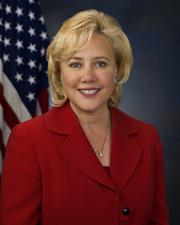 Sen. Mary L. Landrieu (D-LA)
Legislative Activity
Stay on top of the latest movement without scrolling through every action
Senate amendment submitted
April 2, 2003
View full timeline
Senate amendment submitted
April 2, 2003
Roll call votes on amendments in Senate: Motion to table amendment SA 452 agreed to in Senate by Yea-Nay Vote. 52 - 47. Record Vote Number: 116.
April 2, 2003
Senate amendment proposed (on the floor): Amendment SA 452 proposed by Senator Landrieu.(consideration: CR S4590-4591, S4687-4690; text: CR S4687)
April 2, 2003
Amendment SA 452 proposed by Senator Landrieu. (consideration: CR S4590-4591, S4687-4690; text: CR S4687) To appropriate $1, 047,000,000 for procurement for the National Guard and Reserves.
April 2, 2003
Motion to table amendment SA 452 agreed to in Senate by Yea-Nay Vote. 52 - 47. Record Vote Number: 116.
April 2, 2003
Votes
1 roll call on this amendment
Text
Proposed
SUPPLEMENTAL APPROPRIATIONS ACT TO SUPPORT DEPARTMENT OF DEFENSE
OPERATIONS IN IRAQ FOR FISCAL YEAR 2003--Continued

Amendment No. 435

Mr. STEVENS. Madam President, what is the pending business?
The PRESIDING OFFICER. The pending question is amendment No. 435, by
the Senator from Alaska.
Mr. STEVENS. I ask that that may be set aside for the Senator from
Nevada.
Mr. REID. Madam President, I debated my amendment. I have an
amendment at the desk. I would call that up, ask that it be set aside,
and then yield to Senator Hollings.
Mr. STEVENS. Set them both aside, I assume.

Amendment No. 440

Mr. REID. I ask unanimous consent that the pending amendment be set
aside and the clerk report my amendment.
The PRESIDING OFFICER. Without objection, it is so ordered. The clerk
will report.
The legislative clerk read as follows:

The Senator from Nevada (Mr. Reid), for himself, Mrs.
Clinton, Mr. Schumer, Mr. Lieberman, and Ms. Stabenow,
proposes an amendment numbered 440.

Mr. REID. I ask unanimous consent that the reading of the amendment
be dispensed with.
The PRESIDING OFFICER. Without objection, it is so ordered.
The amendment is as follows:

(Purpose: To provide critical funding to safeguard nuclear weapons and
nuclear material in the United States and around the world)

On page 18, line 8, strike all that follows through page
20, line 10 and insert the following:

CHAPTER

DEPARTMENT OF DEFENSE--CIVIL

DEPARTMENT OF THE ARMY

CORPS OF ENGINEERS--CIVIL

OPERATIONS AND MAINTENANCE, GENERAL

For an additional amount for homeland security expenses,
for ``Operations and Maintenance, General,'' $29,000,000, to
remain available until expended.

DEPARTMENT OF THE INTERIOR

Bureau of Reclamation

water and related resources

For an additional amount for homeland security expenses,
for ``Water and Related Resources,'' $25,000,000, to remain
available until expended.

DEPARTMENT OF ENERGY

Energy Programs

science

For an additional amount for ``Science'' for emergency
expenses necessary to support safeguards and security
activities, $10,000,000, to remain available until expended.

ATOMIC ENERGY DEFENSE ACTIVITIES

National Nuclear Security Administration

Weapons Activities

For an additional amount for ``Weapons Activities'' for
emergency expenses necessary to safeguard nuclear weapons and
nuclear material, $70,000,000, to remain available until
expended: Provided, That $30,000,000 of the funds provided
shall be available for secure transportation asset
activities: Provided further, That $40,000,000 of the funds
provided shall be available to meet increased safeguards and
security needs throughout the nuclear weapons complex,
including at least $15,000,000 for cyber security.

Nuclear Nonproliferation

For an additional amount for ``Nuclear Nonproliferation''
for emergency expenses necessary to safeguard fissile nuclear
material, $300,000,000, to remain available until expended:
Provided, That $135,000,000 of the funds provided shall be
available for the development and deployment of nuclear
detectors at mega seaports, in coordination with the
Department of Homeland Security Bureau of Customs and Border
Protection: Provided further, That $40,000,000 of the funds
provided shall be available for detection and deterrence of
radiological dispersal devices: Provided further, That
$20,000,000 of the funds provided shall be available for
nonproliferation assistance to nations other than the Former
Soviet Union: Provided further, That $20,000,000 of the funds
provided shall be available for nonproliferation forensics
and attribution: Provided further, That $15,000,000 of the
funds provided shall be available for nuclear
nonproliferation verification programs, including $2,500,000
for the Caucasus Seismic Network: Provided further, That
$12,000,000 of the funds provided shall be available for
nonproliferation assistance to Russian strategic rocket
forces: Provided further, That $10,000,000 of the funds
provided shall be available for the packaging and disposition
of any nuclear material found in

[[Page S4678]]

Iraq: Provided further, That $10,000,000 of the funds
provided shall be available for nuclear material detection
materials and devices: Provided further, That $10,000,000 of
the funds provided shall be available for lower yield nuclear
detection: Provided further, That $10,000,000 of the funds
provided shall be available for nuclear material
characterization: Provided further, That $5,000,000 of the
funds provided shall be available for a radionuclide
deployable analysis system: Provided further, That $5,000,000
of the funds provided shall be available for U.S. export
control nuclear security: Provided further, That $5,000,000
of the funds provided shall be available for international
export control cooperation activities: Provided further, That
$2,000,000 of the funds provided shall be available for
support of proliferation analyses in post-war Iraq: Provided
further, That $1,000,000 of the funds provided shall be
available for vulnerability assessments of spent nuclear fuel
casks.

ENVIRONMENTAL AND OTHER DEFENSE ACTIVITIES

DEFENSE ENVIRONMENTAL RESTORATION AND WASTE MANAGEMENT

For an additional amount for ``Defense Environmental
Restoration and Waste Management,'' or emergency expenses
necessary to support safeguards and security activities at
nuclear and other facilities, $15,000,000, to remain
available until expended.

DEFENSE FACILITY CLOSURE PROJECTS

For an additional amount for ``Defense Facility Closure
Projects'' for emergency expenses necessary to support
safeguard and security activities at nuclear and other
facilities, $5,000,000, to remain available until expended.

Other Defense Activities

For an additional amount for ``Other Defense Activities,''
$18,000,000, to remain available until expended, for
increased safeguards and security of Department of Energy
facilities and personnel, including intelligence and
counterintelligence activities: Provided, That this amount
shall be available for transfer to other accounts within the
Department of Energy for other expenses necessary to support
elevated security conditions 15 days after a notification to
the Congress of the proposed transfers.

The PRESIDING OFFICER. Under the previous order, the amendment is set
aside.
The Senator from South Carolina.

Amendment No. 445

Mr. HOLLINGS. Madam President, port security is much like the
weather: Everybody talks about it, but we haven't done anything about
it. The fact is, we are in a crisis, in an emergency. If anything would
respond to an emergency supplemental, port security would.
I just had a word with the distinguished chairman. The chairman
believes there are pots of money. I wanted to make sure I wasn't
duplicating everything. I have in my hand the particular reported
emergency supplemental. On page 20, what we find is the Department of
Homeland Security; you have the various items, as you can see, listed
beginning at that second paragraph, where they get $1.135 billion. I
said: Well, we have $1.135 billion we can get for port security.
Then I looked at the breakdown. The $580 million for the Coast Guard
has been spent. The Coast Guard has been waiting on this money. They
are deployed in the Gulf. The distinguished Commander in Chief only 2
days ago, in Philadelphia, emphasized what a magnificent job the Coast
Guard was doing in the gulf, around the clock, doubling up their
effort. So this is for reimbursement of that $580 million.
We have the rest of the year to deal with, and we have an
authorization bill trying to deal with it. But that is not the
appropriation. I do not think we can wait for an authorization
appropriation and then go through the rest of the spring and summer
with the Coast Guard unfunded. So that $580 million is not for the
Coast Guard for the rest of the year but that is to reimburse it.
Otherwise, the $215 million you see under the $1.135 billion is for
terrorism; the $120 million goes to the Transportation Security
Administration. That is for aviation, that is the overtime for
screeners and everything else of that kind; $65 million of that is for
overtime of the Customs and Border Patrol; $10 million is for the
Secret Service; $10 million for the vulnerability assessment; and $15
million for emergency support teams. That is just a little over a
billion some-odd million, which takes up the amount on page 20 of the
Department of Homeland Security.
There are not any pots of money that we can take from. That has been
a concern of the Senator from South Carolina. In the past, we spoke
with one voice. This is not a partisan amendment whatsoever; 100
Senators, all Republicans and all Democrats, voted for port security.
This is only $1 billion of the $2.8 billion that we authorized. We have
only had, of that authorized and appropriated, some $93 million that
has been released. They are now trying to complete this and compete for
$105 million, but then they will run out of money.
Right to the point, we have to join forces together and take care of
one of the finest entities you have ever seen.
Let me divert for a second and talk about the ports of America. There
are some 365 ports; 55 of those are major ports. We didn't want to rush
in last year and just start throwing money at the problem. They have to
get a concerted plan for each of the ports, particularly those that
have been designated major ports and are subject to serious terrorist
action.
We have put the money up. They have completed five ports. They will
only complete some six or seven additional, so it will be about nine by
the end of the fiscal year under the present circumstance.
That is totally unacceptable. We can't be running around waiting to
get through by 2009, planning for port security with al-Qaida, with the
terrorists, with the most vulnerable target you could possibly imagine.
Let's go to Philadelphia. Osama bin Laden has 10 vessels, according
to Lloyd's of London, and he controls 10 more. He easily knows
terrorists who can crew those vessels. It was his ship that went into
Mombasa, the port in Kenya, and blew up the embassy at Nairobi and the
one at Dar es Salaam in Tanzania. So he knows about ship operations. He
is intimate with it. He could easily put his crew in. He could get a
shift on a particular ship of Exxon, let's say, going up the Delaware
River to the port in Philadelphia, and just before they get there, they
can take the crew and captain, throw them overboard, kill them, or
whatever, just as they did in New York and at the Pentagon. Then they
can blow that ship up at that tank farm in Philadelphia.
We have studied this. The eastern seaboard would close down. I have
seen port security war games--there has been a lot of work done on
this. This is not just an amendment of the moment. On the contrary, we
find out from Booz Allen Hamilton in their particular study--it is too
voluminous to have printed in the Record at this point--that the
eastern seaboard could close down. And what would happen if they would
have to close down the stock market and everything else? There would be
total chaos just from one particular incident of that kind.
So we know the jeopardy that we experience here. We have to take care
of these ports. We also have to take care of the waterway systems such
as the Golden Gate Bridge and those other things.
We tried to get $2 billion for 2 years and in the supplemental and
budget we just passed, we passed unanimously, $1 billion. This is just
what we voted on a week before last, $1 billion.
I know my distinguished chairman is going to say we don't have any
money. We have money, come on. Here we are already $232 billion in the
red that we borrowed, and that stopped the first week in March. So for
the month we have just been saying it is $232 billion public debt to
the penny that the Secretary of Treasury puts out. That will go up, up,
and away. We will get a kicker here in 14 days with the April 15 tax
returns, but then just as we had in 2001, we were in the black on June
1, we passed a tax cut on June 8, and on June 28 we were $50 billion in
the red. And by September 10, 2001, it was $99 billion in the red.

Everyone says: Well, 9/11 caused the deficit. No. It is the fact that
we have been having voodoo tax cuts that caused the deficit to balloon.
The distinguished Presiding Officer of the Senate knows what voodoo is
because that is what Vice President George Herbert Walker Bush called
President Reagan's tax cuts that were supposed to grow and grow the
economy.
You only have to turn to this morning's paper and look at the cartoon
to see that with so-called growth, the only thing growing are these
deficits. And they are going up, up, and away.
So let's not start getting frugal and careful. Let's do get
responsible and vote for the money that gives our ports

[[Page S4679]]

a start at security. You have the Coast Guard. You have the Drug
Enforcement Administration. You have the Customs. You have the various
other entities of the State port administrations. You have the FBI.
We are trying to coordinate them all under the particular plan. It
has to be approved by the Transportation Security Administration before
any money is disbursed. This is not just sending back grants and that
kind of thing--unless and until we can get this money here to help out
these local folks.
When I talk about security at the port, let me talk about the actual
practice before 9/11. Operators of ports were not concerned with
security. It was about No. 10 or 20 on their list of concerns. As a
result, the FBI has found that between $12 and $24 billion in theft is
going through the ports of America every year. They just added that
into the cost of doing business.
The name of the game in port operation is swiftness, speed,
expedition; get the cargo in, get it out, don't let it stay on the
dock. It costs those ships at the dock $15,000 to $20,000 a day. So
they try to compete with each other on speed, and it is a healthy
competition.
But now they have to change their attitude--and I don't have any
lobbyists looking out for port security. I wish they would hire the
airline lobbyists. We gave out $1 billion--just gave the money--$1
billion for airlines. We gave them another $1 billion just for the cost
of security. But $1 billion was just because they did not know how to
run the airlines.
And now we are going to talk about $1 billion for all the ports of
America. I hope I can get the help of the distinguished Senator from
Texas. She has a very dangerous situation in Houston. You can come 50
miles up that river, and those gas plants on either side--propane
plants and otherwise--you could blow it. And according to these studies
by Booz Allen, it blows down the economy for a year. We are playing
around with the airlines not having enough business so we give them $1
billion. And we give them another $1 billion for the security.
This particular amendment--which should be bipartisan because this is
what we all voted for last year--is just exactly what is needed.
Go to the expenditure of that $1 billion, and it calls for $93
million to remain available until December 31 for the Coast Guard. That
is $50 million for port vulnerability. That is the boarding equipment
and everything else of that kind with respect to those assessments.
There is $7 million for the purchase of radiation detection
equipment. And there is some $36 million for the maritime safety and
security teams.
We know every plane that approaches the United States of America. We
have alerts, and they respond. But we do not know with respect to the
ships themselves.
So we need not only a transponder arrangement, but we have to have at
least, at the 12 major ports, the equipment to receive the message. We
don't have that. Even if they all had transponders like the aircraft in
America, we don't have the equipment within the Coast Guard to identify
them.
So this $57 million is for radar coverage of two-thirds of the United
States with positioning systems to pick up that broadcast. A third, of
course, goes into the internal river system, such as the Mississippi
River and everything else for which the Coast Guard is responsible.
That is exactly what is needed in the Coast Guard.
I felt bad two days ago when I was watching the President on TV, and
the nearest thing we have to port security at the Port of Philadelphia
was his Coast Guard jacket. He had all the Coasties standing behind
him, but they didn't have any money in their pockets. They were dead
broke, I can tell you that right now. If you don't believe it, just
read the headline in this morning's Washington Post: ``Traditional
Coast Guard Duties Suffer, Study Says.''

[Admiral] Collins said President Bush's $6.8 billion budget
request for the Coast Guard represents a $1.6 billion
increase over the agency's initial fiscal 2002 budget. He
said that by fiscal 2004, the Coast Guard will have increased
its workforce by 4,100 people since Sept. 11, 2001. . . .

But he said:

I assure you that nothing is more important to the United
States Coast Guard than to be ready to perform all of these
missions with distinction and with excellence.

I quote from the this particular article:

After questioning from lawmakers, [Admiral] Collins
conceded the 42,000-person Coast Guard has more challenges
than resources to meet them. He said some equipment and
personnel will have to be diverted from more traditional
roles to homeland security efforts, although partnerships
with the Navy and foreign governments could help take up the
slack.

And they are working on those.
We have had hearings with Admiral Loy, and now with Admiral Collins,
and with Commissioner Bonner of the Customs Service. We have gone
overseas to try to streamline this issue so that we can actually
inspect the cargo and facilitate it when it comes to port here in the
United States. And he has worked that out with some 17 ports; that is,
Commissioner Bonner. You have to give him credit. We have all been
working. We have not just sat around pouting and sucking our thumbs
waiting for the money. But here it says:

Do we have more business than we have resources?

The answer is:

Yes, Collins said. We are challenged like never before to
do all that America wants us to do.
The GAO cataloged a 60 percent decline in Coast Guard hours
spent on drug interdiction. . . . [They got] a 38 percent
decline in fisheries enforcement. . . .

And I could go on. Madam President, I ask unanimous consent to have
the entire article printed in the Record.
There being no objection, the material was ordered to be printed in
the Record, as follows:

[From the Washington (DC) Post, Apr. 2, 2003]

Traditional Coast Guard Duties Suffer, Study Says

(By Christopher Lee)

Coast Guard efforts to capture drug traffickers and patrol
commercial fisheries have suffered as it has turned its focus
to homeland security since the Sept. 11, 2001, terrorist
attacks, according to a study released yesterday.
The declines uncovered by the General Accounting Office,
the congressional watchdog agency, stoked concerns among some
lawmakers that the Coast Guard might neglect its old missions
as it trains its energy on securing the nation's ports,
waterways and coastal areas.
At a hearing yesterday on the Coast Guard's transition to
the Department of Homeland Security, which it joined March 1,
Rep. Frank LoBiondo (R-N.J.), chairman of a House
subcommittee on Coast Guard and maritime transportation,
called the GAO report ``thorough and eye-opening.''
``The Coast Guard's traditional missions such as search and
rescue, drug and migrant interdiction, pollution prevention,
boater safety and fisheries law enforcement must be
preserved.'' LoBiondo said.
Adm. Thomas H. Collins, head of the Coast Guard, tried to
assure lawmakers that his agency could meet all of its old
obligations while ramping up its counterterrorism efforts,
such as conducting vulnerability assessments at all of the
nation's ports and, more recently, supporting military
operations in the Middle East.
``I assure you that nothing is more important to the United
States Coast Guard than to be ready to perform all of these
missions with distinction and with excellence,'' he testified
yesterday.
Collins said President Bush's $6.8 billion budget request
for the Coast Guard represents a $1.6 billion increase over
the agency's initial fiscal 2002 budget. He said that by
fiscal 2004, the Coast Guard will have increased its
workforce by 4,100 people since Sept. 11, 2001, and mobilized
thousands of reservists. He said Bush has asked for an
additional $580 million for the agency in his 2003
supplemental funding request.
After questioning from lawmakers, Collins conceded the
42,000-person Coast Guard has more challenges than resources
to meet them. He said some equipment and personnel will have
to be diverted from more traditional roles to homeland
security efforts, although partnerships with the Navy and
foreign governments could help take up the slack.
He also conceded that the Coast Guard is behind schedule in
completing its vulnerability assessments of 55 ports.
``Do we have more business than we have resources? Yes,
``Collins said. ``We are challenged like never before to do
all that America wants us to do.''
The GAO catalogued a 60 percent decline in Coast Guard
hours spent on drug interdiction in the past three months of
2002, compared with the same period in 1998. It also found a
38 percent decline in fisheries enforcement--protecting
fishing grounds from foreign encroachment and enforcing
domestic fishing laws.
At the same time, the Coast Guard dramatically shifted
resources to protect the nation's ports and waterways,
including redeployments of search-and-rescue boats for harbor
patrols. The Coast Guard devoted 91,000 ``resource hours''--a
measurement of

[[Page S4680]]

equipment used on missions--to coastal security in the first
quarter of fiscal 2002. That was up from 2,400 hours during a
similar period in fiscal 1999. The number fell to 37,000
hours during the beginning of fiscal year 2003.
Other areas, such as search-and-rescue efforts and
maintaining navigation aids, remained at more or less the
same levels as before Sept. 11, 2001, the GAO said.
JayEtta Z. Hecker, the GAO analyst who presented the
report, told lawmakers the Coast Guard ``cannot be all things
to all people.''
``Even if you give them more money,'' she said, ``the
challenge of absorbing more money is such that you cannot
naturally solve this.''
Collins agreed with the GAO figures, but said they account
for only resource allocation, not results. He noted, for
instance that the Coast Guard seized 72.2 tons of cocaine in
fiscal 2002, its third-highest yearly total.
``We're getting outcomes and high productivity,'' he said.
``That's efficiency.''
Committee members told Collins they recognized that
Congress has heaped new responsibilities on the Coast Guard.
``We're yelling about security and we're saying, `Keep your
traditional roles' at the same time,'' said Rep. Bob Filner
(D-Calif.). ``We've put you in a very difficult position.''

Mr. HOLLINGS. So, Madam President, we are not just for ports, and are
going to come and get a lot of money, and ride in on an emergency
supplemental. We begin with this fact: this is an emergency. We have
these folks working around the clock.
And let me continue, before I yield, to make sure that we have
outlined exactly what we need the amount for.
Now, there is an additional amount for customs and border protection
of $160 million. That is broken down with $110 million for the
deployment and installation of port screening equipment. We have $110
million for the radiation detection equipment at U.S. ports. Already,
the railroads at the tunnels have that particular radiation equipment.
So when it goes into the tunnel, they know, bam, that train has to
stop, there is radiation there. We do not have that equipment at ports.
And we get the poor Coast Guard captains at the port, or these young
lieutenants in their twenties, with all of this responsibility. If
something went awry in one of the ports of America this afternoon, the
captain of the port, some 20-year-old lieutenant, would be in charge
and be the responsible one. And he has not been given the resources.
Congress has outlined his responsibility in law, but by way of
appropriation, they have not given him the help. And he is trying to
get the Customs and the DEA, the Ports Authority, the Immigration
Service, the sheriff's department, the FBI--he is trying to get them
all together.
We have done that, for example. I can show where it has been done in
our own backyard. I won't include the entire report in the Record, but
you can see the particular work involved and the deliberateness now. It
is not just to put money in. It is detailed. That is $50 million of the
$160 million for the evaluation, implementation, and coordination by
the Transportation Security Administration to secure the systems of
transportation such as the container security initiative. That
container security initiative is exactly what I was talking about. The
Commissioner of Customs is already overseas and making arrangements
with 17 different ports so far. But then you have for the cargo and
employees, the standards, the good conduct, the inspection equipment,
the computers and everything else. That fleshes out that particular
$160 million. What I just referred to was under the Customs and border
protection.
Now to the Transportation Security Administration. For an additional
amount of salaries and expenses, it is $680 million, but that is one
half of what we authorized. The $600 million will be available for port
security grants. It is just like during the Walter Mondale campaign,
when he asked, Where is the beef? Well, where is the beef in your port
security measure, Senator? I say this is the beef. This is the one
thing the ports are really interested in so they can finance the
different endeavors going on.
The weekend before last we raised the alert to orange. At that
particular time, we had everybody fighting over the same personnel.
Secretary Rumsfeld wanted them in Iraq, and my National Guard and my
Reserves are gone. My Reserves are in the C-17 field in my own
backyard. They have been going since September 12, 2001, around the
clock, 8-hour shifts. There are three teams. I have been there to the
hangar and visited with them. They have been doing a magnificent job.
But they are concerned because some of them are mechanics, security
officers, that kind of thing. So the Governor of South Carolina, on
this orange alert the week before last, had to get patrol officers to
place around the port of Charleston. I saw it myself. That is the kind
of strain and stress from the emergency we are in.
But $30 million is for the worker identification card. That was a
tough one for us. We worked with the unions on the background checks,
and they are ready to move quickly. Now the unions said, you put that
in law. You know how it is when they recommend somebody for a judge,
then sit another 3 months before the FBI gets around to them. That is
the situation here with all of these security personnel. Anybody who
enters that secure area has to have a criminal background check. That
is the money that is needed there. It is not in the emergency bill.
Otherwise, there is $50 million for the Bureau of Customs and Border
Protection to flesh out their Operation Safe Commerce which is the
Coast Guard assessment in the Register. The Coast Guard submitted into
the Federal Register exactly what it would cost to get these
assessments and things going. I ask unanimous consent to print that in
the Record.
There being no objection, the material was ordered to be printed in
the Record, as follows:

Based on this analysis, the first year cost would be
approximately $1.4 billion, with costs of approximately
Present Value (PV) $6.0 billion over the next 10 years (2003-
2012, 7 percent discount rate). The preliminary cost analysis
in Appendix C presents the costs in three sections: vessel
security, facility security, and port security. The following
is a summary of the preliminary cost analysis.
Vessel Security. The first-year cost of purchasing
equipment, hiring security officers, and preparing paperwork
is approximately $188 million. Following initial
implementation, the annual cost is approximately $144
million. Over the next 10 years, the cost would be PV $1.1
billion approximately. The paperwork burden associated with
planning would be approximately 140,000 hours in the first
year and 7,000 hours in subsequent years.
Facility Security. The first-year cost of purchasing
equipment, hiring security officers, and preparing paperwork
is an estimated $963 million. Following initial
implementation, the annual cost is approximately $535
million. Over the next 10 years, the cost would be PV $4.4
billion approximately. The paperwork burden associated with
planning would be approximately 465,000 hours in the first
year and 17,000 hours in subsequent years.
Port Security. The first-year cost of establishing Port
Security Committees and creating Port Security Plans for all
port areas is an estimated $120 million. The second-year cost
is approximately $106 million. In subsequent years, the
annual cost is approximately $46 million. Over the next 10
years, the cost would be PV $477 million approximately. The
paperwork burden associated with planning would be
approximately 1,090,000 hours in 2003, 1,278,000 hours in
2004, and 827,000 hours in subsequent years.

Mr. HOLLINGS. You can see this is not going to solve the problem, but
it shows an awareness of the Congress of what they have mandated in
law. We have required these local communities to do lots of things, and
they haven't done anything about it. And we need this money. It is an
emergency.
The Senate and the House last year said it would cost $2.8 billion.
The Senate just the week before last in the budget resolution said $1
billion at least for this year. And we are trying our best to do that
with this particular amendment, just put the money to where the mouth
is.
I yield to our distinguished chairman.
The PRESIDING OFFICER. Does the Senator wish to send his amendment to
the desk.
Mr. HOLLINGS. I thought the amendment was called up by Senator Reid.
The PRESIDING OFFICER. The clerk will report the amendment.
The legislative clerk read as follows:

The Senator from South Carolina [Mr. Hollings] proposes an
amendment numbered 445.

Mr. REID. Madam President, I ask unanimous consent that reading of
the amendment be dispensed with.
The PRESIDING OFFICER. Without objection, it is so ordered.

[[Page S4681]]

The amendment is as follows:

At the appropriate place insert the following:

DEPARTMENT OF HOMELAND SECURITY

United States Coast Guard

operating expenses

For an additional amount for ``Operating Expenses'',
$93,000,000, to remain available until December 31, 2003, of
which not less than $50,000,000 shall be for port
vulnerability assessments and the port vulnerability
assessment program, and not less than $7,000,000 shall be for
the purchase of radiation detection equipment, and not less
then $36,000,000 shall be for the establishment of Maritime
Safety and Security Teams.

acquisition, construction and Improvements

For an additional amount for ``Acquisition, Construction
and Improvements'', $57,000,000, to remain available until
December 31, 2003, to implement the Automated Identification
System and other tracking systems designed to actively track
and monitor vessels operating in United States waters.

Border and Transportation Security

customs and border protection

For an additional amount for ``Customs and Border
Protection'', $160,000,000, to remain available until
December 31, 2003, of which not less than $110,000,000 shall
be for the deployment and installation of portal screening
equipment at our Nation's seaports, and of which not less
than $50,000,000 shall be for the evaluation and
implementation, in coordination with the Transportation
Security Administration, to secure systems of transportation
such as the Container Security Initiative and the Customs-
Trade Partnership Against Terrorism.

Transportation Security Administration

For an additional amount for ``Salaries and Expenses'',
$680,000,000, to remain available until December 31, 2003, of
which not less than $600,000,000 shall be available for port
security grants for the purpose of implementing the
provisions of the Maritime Transportation Security Act, not
less than $30,000,000 shall be for continued development and
implementation of the Transportation Worker Identification
Card as well as for background checks of transportation
workers who work in secure areas or who work with sensitive
cargo or information, and not less than $50,000,000 shall be
for the evaluation and implementation, in coordination with
the Bureau of Customs and Border Protection, of secure system
of transportation such as Operations Safe Commerce.

Federal Law Enforcement Training Center

salaries and expenses

For an additional amount for ``Salaries and Expenses'',
$10,000,000, to remain available until September 30, 2004,
for the development of seaport security training programs,
and for equipment and personnel to provide training to
Federal, State and local law enforcement agencies and,
notwithstanding any provision of law, private security
personnel performing seaport security functions.

Mr. BYRD. Mr. President, the amendment before the Senate addresses
what many experts view as the largest vulnerability in the Nation's
defenses here at home. This amendment would direct critical funds to
the Nation's seaports.
During the Senate Appropriations Committee's homeland security
hearings last year, one witness, Stephen Flynn, noted that the Nation's
seaports ``are the only part of an international boundary that the
Federal Government invests no money in terms of security. . . . Most
ports, the best you get is a chain link fence with maybe some barbed
wire.''
Is that comforting?
Consider that U.S. ports receive 16,000 cargo containers per day and
6 million containers per year that U.S. ports are home to oil
refineries and chemical plants that process noxious, volatile
chemicals; that there are 68 nuclear power plants located along U.S.
waterways; that the average shipping container measures 8 feet by 40
feet and can hold 60,000 pounds; and that a ship or tanker transporting
cargo can hold more explosives and dangerous materials than could ever
be smuggled in an airplane or a truck crossing a land border.
Yet, despite the clear danger, the best port protection the American
people have is a chain link fence? It is unfathomable why we have not
insisted that this amendment be signed into law months ago.
Last November, the President signed the Maritime Transportation
Safety Act. This amendment provides $1 billion to begin addressing
these Federal requirements.
Specifically, this amendment provides $600 million in port security
grants to begin to assist our seaports in hardening their physical
security to comply with the Federal law. Additionally, the authorizing
legislation requires that all vessels operating in U.S. waters carry
equipment which will allow the Coast Guard to actively track and
monitor their movements. This amendment provides $57 million so the
Coast Guard can establish a system to track these vessels.
The amendment also addresses other critical port security needs such
as providing additional cargo screening equipment for our seaports and
funds to expedite the port security assessment program. Funds are also
included to establish three additional Coast Guard Maritime Safety and
Security Teams for domestic port security needs.
Funding is providing to improve secure systems of cargo transport
from the port of departure overseas to the port of arrival in the
United States.
The Port of Los Angeles and the Port of Long Beach, each in
California, account for 35 percent of the international trade moving
into and out of the United States. Port officials estimate that they
need $10 million to build a container inspection facility where
suspicious packages and freight can be opened and inspected. Similar
realities face ports up and down the Atlantic and Pacific seaboards.
Last December, the U.S. Coast Guard issued a report stating that the
first year cost to implement port security authorizing legislation that
the President signed in November would total $1.3 billion and that
total costs for the next decade would be $6 billion. But despite the
clear danger, and despite the overwhelming vote of approval by Congress
to authorize security improvements at our seaports, the dollars have
not been forthcoming.
International authorities have linked 20 merchant vessels to Osama
bin Laden. Some of the vessels are thought to be owned outright by bin
Laden business interests, while others are on long-term charter. The
Times of London reported in October 2001 that bin Laden used his ships
to import into Kenya the explosives used to destroy the U.S. embassies
in Kenya and Tanzania in 1998.
This amendment would make sure that more than a chain link fence is
protecting the nation's ports. Children learn to hop a fence at an
early age. How hard would it be for a terrorist?
I urge my colleagues to support this amendment.
Mrs. BOXER. Mr. President, I am pleased to co-sponsor the port
security amendment offered by Senator Hollings.
In the wake of the terrorist attacks on September 11, ports are
struggling with an entirely new set of challenges to protect ports,
citizens and the economy from the possible threat of terrorism. This is
a huge task.
I was fortunate to be named as a conferee on the port security bill
last year. The bill that became law was a good bill.
It will greatly improve security at our Nation's port in light of the
challenge following September 11. But only if we provide the money. And
so far, we have failed to do so.
I feared this would happen. Many potential funding options were
suggested during the conference. But, all of them were rejected by the
other body. So, we had no funding source. We had to rely on
appropriations. And, we are not providing enough funding for our local
ports.
Let me explain why this law is so crucial and why we must fund it
with this amendment.
The law creates national and regional maritime transportation/port
security plans to be approved by the Coast Guard, including better
coordination of Federal, State, local, and private enforcement
agencies.
The law mandates the development of regulations to determine secure
areas in ports and to limit access to these areas through background
checks that will result in a transportation security identification
card.
The bill also establishes a grant program for local ports, waterfront
facilities operators, and State and local agencies to provide security
infrastructure improvements.
But again, there's no money.
Port Security must be a priority.
The Hart-Rudman report was released last October. Their report,
``America Still Unprepared--America Still in Danger,'' discusses the
shortcomings in port security. This report

[[Page S4682]]

recommends making ``trade security a global priority.''
According to the report, 43 percent of all maritime containers that
arrived in the United States in 2001 came through the ports of Los
Angeles and Long Beach.
The ports of Los Angeles and Long Beach requested $70 million in
post-September 11 security grants. To date, they have received only
$6.175 million.
That's just one port. The American Association of Port Authorities
estimates the costs of adequate physical security at the Nation's
commercial seaports to be $2 billion. Only $92.3 million in Federal
grants have been authorized and approved.
We know that last year with the closing of the West Coast ports
because of a lockout, the cost to the economy was $1 billion per day
for the first five days. Then, the costs increased exponentially. This
shows how vital it is for our economy to keep the ports operating.
If there was an incident at any port in the country, all the ports
would be closed. This would cost billions and billions per day.
The Hart-Rudman report also says we need to be proactive. We have
identified the threat, but we haven't done enough to protect our ports.
This amendment provides $1 billion for port security, including $600
million in grants for local ports.
We cannot leave our homeland unprotected against terrorism. This is
why I encourage my colleagues to support this amendment to add more
funding for port security.
The PRESIDING OFFICER. The Senator from Alaska.
Mr. STEVENS. Madam President, I am grateful to my friend from South
Carolina for the way he has put this amendment. Unfortunately, it is
part of a large stream of amendments. If this were the only amendment
offered for Coast Guard expenses and to homeland security in addition
to this bill, as manager of the bill, I would have no difficulty in
dealing with it. But we expect a whole series of amendments during this
period.
I want to point out this bill came to us as a defense supplemental
for the purpose of meeting the needs of the conduct of three separate
war operations. We have a war on terrorism, a war in Afghanistan, and a
war going on in Iraq. Of the total that we have coming out on the
committee bill, we have $78.7 plus billion. It is really
$78,736,600,000. Even Everett Dirksen thought that was a lot of money.
But when you look at this, what was asked for, for the total for
homeland defense, $4,676,000,000, that is on top of what has already
been appropriated for the Department of Homeland Security in the
omnibus bill we just passed and what will be appropriated in the fiscal
year 2004 that is coming.
I know many people, including myself, believe there should be more
money allocated to homeland security. But what should we do? If I were
to say I would accept the Senator's amendment, but behind it there is a
total of $6.5 billion that I have been told so far dealing with
homeland security amendments, another $6.5 billion will lead this bill
to being assaulted in the House and severely questioned by the
President. We don't have the emergency procedure available. We don't
have a budget. So this can't be dubbed an emergency under the Budget
Act and just sent downtown and ignored by the President, which is
something we have done in the past. This either has to be in the bill
or it is not going to be in the bill.
I want the Senator to know, as I have said, we believe there is money
here. Requests are going to come at us for purchasing of community-
oriented policing policies, interoperable equipment problems, the
problem of firefighters and emergency medical service teams in terms of
their equipment that is currently not interoperable. We have money I
certainly think is needed in terms of the screening equipment and new
technology screening at ports. That is another $110 million.
Once you start down this line, you have to ask yourself, why aren't
these being raised in the 2004 bill. None of them are going to be spent
this year. This isn't money for the immediate emergency. This is money
that should be addressed in the 2004 bills. They are still pending out
there. We will have this same debate on the 2004 bills. These same
amendments will be offered then.
Why don't we wait until then? That is my advice to the Senate. Let's
wait. We know these are pending requests. We know many of them are very
important, and some of them I shall join in urging we try to get money.
But right now we are trying to get money for the President so he can
handle these wars. This is not port security. It is not
interoperability of equipment. It is not money for Guard and Reserve
equipment. It is not money that is going to be spent next year.
(Mr. CORNYN assumed the chair.)
Mr. STEVENS. This is money for this year--not only this year, but
within the next 8 weeks it has to be to the armed services. I say to my
friend, very respectfully, when the time comes, I am going to have to
move to table this amendment, although I hate to do it because I agree
with it in many ways. But it is not the only thing coming at us. Every
one of these, like another straw on the camel's back, will take more
time to deal with in conference with the House and with the President,
and meanwhile we don't get the money out there for the troops.
I hope the Senate will stay with us. Let's restrict this bill to the
emergencies related to the war effort, and the homeland security money
in here is related to the war effort. It is nuclear security, it is a
transfer of treasury for homeland security. One of the items is a
smallpox amendment which is already in the bill. Those moneys can and
will be spent before September 30 of this year. They must be. We don't
have an extension on them. They are all money to be spent this year.
This money the Senator seeks is money that could be spent over the
next 2, 3 years. Who knows how long it will be before we identify the
tracking systems that can track and monitor vessels in U.S. waters that
are better equipment than we have now. We have some, but it is not
good. We know that. It is not up to date. In particular, I seek to join
in trying to check the backgrounds of transportation workers. I would
very much like to be involved in finding ways to finance the screening
equipment that deals with containers coming into our ports. But this
isn't the place to do it.
I told the Senate before this morning--I have asked the Chairman of
the Joint Chiefs and the individual service chiefs when this money is
needed. They started in early May and continued through June, so this
money has to be there. It cannot be there if we get items to continue
this bill and carry us into a period beyond the recess we intend to
take for Easter. I say respectfully to my friend, it is just not
something we can handle.
The administration takes the position that the 2003 bill and 2003
supplemental and the 2004--those are all fiscal years--appropriations
bills have started the process of providing money for port security,
customs, transportation, law enforcement, domestic preparedness, and
other items.
The bill we have in place--the 2003 Appropriations Act--contains the
largest increase for Coast Guard in the history of the United States,
over $1 billion more than 2002. The Senator from South Carolina and I
were partially responsible in that. We joined together in that fight on
the omnibus bill. At 2004, the discretionary funding of the Coast Guard
will be increased by another billion and a half, another 36 percent
over 2002. That will add to the Coast Guard in excess of $2.5 billion
for the period of 2004.
Now, we are moving toward these things, but we cannot do them all in
this bill, which is designed to be a supplemental for 2003.
By the way, I am very concerned about the container security
initiative. The Senator from New York and I have worked on that. We are
continuing to try to push and push and push to identify the type of
technology that could give us the ability to increase the surveillance
on containers as they are placed on ships destined for the U.S. We want
to reach out and put them on the foreign ports. We don't have to wait
until they are in our ports before we discover things dangerous to us.
I commend the Senator from New York and the Senator from South
Carolina for working on this, but we don't need more money now. We need
some results, as far as the basic investments in technology. The
President's

[[Page S4683]]

budget has $375 million in the 2004 budget for just that--initiatives
and technology investments, radiation detection, x-ray machines for
cargo containers. That is not even available yet. We don't have the
state-of-the-art equipment to do what some of these amendments insist
we must do--and things I want to do in the long run.
This Senator still represents more than half of the coastline in the
United States. Everything we eat and consume and put on our backs comes
to us from outside of our State. We are the one State totally dependent
upon transportation, particularly marine transportation. I will work
night and day with my friend to see we can get there when we develop
the technology that we can approve. But we cannot put the money out in
front of the technology. I think we have to have more money for
assessments, portal monitors, maritime safety, and response teams--I
support those--automated identification system, long-term security
programs, transportation worker IDs. But these are not wartime-related
costs.
We are in three wars at one time. Please, let me ask the Senate to
remember that. That is what my job is--to try to get the bill passed as
quickly as possible to address wartime-related costs at the request of
the President of the United States. That is what I intend to do.
This amendment should not be included in wartime supplemental
funding. I regret that when the time comes I shall move to table my
friend's amendment. I don't know whether he wants to respond or not. I
don't know whether we want to vote at this time or not. A lot of things
are going on in the building. I will rely on the leadership. I ask my
friend if he wishes me to allow him to respond.
Mr. HOLLINGS. I want to respond.
Right to the point, the distinguished chairman says that, yes, he
generally agrees, and he talks knowingly of the importance of the ports
and the need for security. He knows because Alaska has coastlines. We
have ANWR that we have all been debating. I wish they would read the
book on John D. Rockefeller. Rockefeller made his money not on oil, but
on the delivery of oil. This is the delivery of ANWR and oil out of
Alaska at the Port of Valdez, which has no security whatever. It is a
typical port, just like in my hometown, that wasn't interested in port
security. But after 9/11 things changed, and we are just bringing them
in now and getting those plans promulgated.
Let me emphasize that this was done totally in conjunction with
Secretary Mineta and the Transportation Security Administration.
Specifically, Admiral Loy was then head of the Coast Guard when he
found those needs out. He reaffirms those needs as the Administrator of
the Transportation Security Administration.
Now, my distinguished friend talks about things ``wartime related.''
Oh, yes, Iraq is a war, Afghanistan is a war, but here at home is
terrorism not a war? What is he talking about? We are responsible for
the security and we ran around and did just that--we passed the port
security measure 100 to 0 through here, but we didn't put the money
behind it. So they haven't had but $93 million distributed out of $29.8
billion that we authorized.
I have served on the Appropriations Subcommittee on Defense for over
30 years. I know about wartime-related expenses. We would not deny in a
second the troops in uniform, but the troops out on the line at the
ports, at the airports, and different other places in America, we say,
well, that is pork, or there just wasn't money back home.
I told you about our Governor. He had to put parole officers around
the Port of Charleston last week. That is the way it continues with all
these particular ports over America.
This is not a measure to be tabled and say we have other amendments
coming. I cannot defend or talk for or against the other amendments
coming. I know this particular need. I can tell you here and now, it
has been justified by the administration and by Senators, both
Republican and Democrat.
We did not say we have all these amendments for the airlines. We just
gave them a billion dollars because they did not know how to run an
airline. Their troubles were long before 9/11. Many have gone into
bankruptcy.
Then we gave them another billion dollars for security, and then we
gave them $1.5 billion more to make sure they had $3.5 billion all
together, but we will not give money for port security.
Yes, this is going to be spent not in 8 weeks, but in 5\1/2\ months.
We have the rest of April, May, June, July, August, and September--5\1/
2\ months. It is not just that the money is not going to be spent. The
ports have been waiting for the money. They have been holding on
endeavors. This is not just the amendment of the Senator from South
Carolina, this is the amendment that should be supported by all for
ports in America, but the ports have not learned what the airlines have
learned. I am going to try to get them on the line and see if they
can't hire the airline lobbyists where they get $3.5 billion for not
knowing how to run an airline, and yet when I come forward with this
amendment, the Senator says: We have some other amendments coming and,
therefore, I do not want to approve this amendment. He says he is going
to have to table this one. In other words, we are on a course to table
all amendments.
The Senator says this bill is for wartime-related items. The war
started on 9/11, the terrorism war, and that is just as serious a war
as anything going on in Afghanistan or in Iraq. We just do not have
uniforms, and we have taken those frontline troops and have sent them
to Iraq. The policemen, the firemen, the Reserve officers, the National
Guard--we have drained them all for Iraq, and then all of a sudden act
like there is not a terrorism war.
The Senator says this is a wartime-related Defense supplemental. That
is what I am talking about: Money to be expended on defense, on home
security defense, that we are all worried about, and we act like it is
not important at all; that it is just some domestic program we can get
to later on. I wish I had a ship. I would run it up some river and blow
it up and wake this crowd up, and then the money would come. But right
now we have a system where the chairman--I can't even get anybody on
the floor, the chairman has told them to stay off the floor--but this
chairman is going to table all these amendments.
Since I have the floor, let me talk about paying for these expenses.
In January, I offered an amendment to pay for the war. I did not think
back in April we were going to be debating and appropriating some $75
billion for the war. We are not paying for the war. We are going to
borrow for the war. The distinguished chairman is saying, I am just not
going to borrow anymore, like there is some restriction against
borrowing in America.
What we have is not a stimulus, and I am going to bring it in to
focus. Everybody runs around here cutting taxes. Why? To get reelected.
That is Carl Rove's tax cut. That is all it is. It is a Carl Rove tax
cut to get reelected. He told the President: To get reelected next
year, you have to have a tax cut.
That is outrageous nonsense. We do not have any taxes to cut. We ran
a $428 billion last year. We have under the President's budget a $554
billion deficit this year. I say to the distinguished Presiding Officer
that does not include the cost of Iraq, which the President says is $75
billion, just for 6 months. God knows what it is for a year. Next year,
the deficit will be $569 billion without the cost of the war and the
occupation, by that time, I take it, of Baghdad.

What we will have is a $600 billion to $700 billion deficit in the
election next year. Tell Carl Rove that. The interest cost, instead of
$350 billion, is going to be $400 billion to $500 billion. We are in a
meltdown because there is no responsibility.
I resent the idea of my distinguished friend from Alaska acting like
``I am not going to spend the money; I am just trying to get money that
could not be spent in the next few months and is not needed'' when we
vetted this issue, Republicans and Democrats. We need this money. We
need this kind of security, but, oh, no, they will pass $3.5 billion
for the airlines, and they will pass nothing for port security. They
will pass a tax cut to get reelected next year.
We have a country that will be worse than we inherited. This will be
the first time in history that one generation is going to leave the
country worse off for the next generation. We always received a better
country.
We have to go through these gymnastics up here of playing games for

[[Page S4684]]

tax cuts, playing games for the lobbyists and the airlines, and then
when they do not have the lobbyists, they act as if this is a casual
one and I will just move to table the amendment.
We aren't going to table right now because I have the floor. We are
going to talk some more about paying for the war.
I think it is a disgrace that we would send our GIs to Iraq and say:
We hope you don't get killed, and the reason we hope you don't get
killed is because we want you to hurry back so we can give you the
bill. We aren't going to pay for it. We have to have a tax cut so we
can get reelected.
We look out for No. 1, not for the fellow on the battlefield. Oh,
yes, we have the Flag in the lapel. We recite the Pledge of Allegiance
to the American Flag. We have a moment of silence before we meet in
subcommittee and other hearings. We stand up. We are very reverent.
There are millions and millions for tribute, but not one red cent for
defense. This is homeland defense. That is what it is.
I am sure the distinguished chairman of the party of Lincoln
remembers well that Lincoln, to pay for the Civil War, put a tax on
dividends; to pay for the Civil War, he put a tax on estates.
Now this party of Lincoln wants to take the tax off dividends and off
estates and lecture about the port security that somehow the money is
not needed; that we could not spend it; that we have other measures
coming along the line and we are going to move to table all the
amendments; we have already met in caucus, so we are going to table all
the amendments and say: We got this money for the war effort; we did
not get it for the terrorism war. That is what the Senator from South
Carolina is talking about. We do not have any idea what is happening on
the floor of the Senate. It is all politics. It is all applesauce, as
Will Rogers said, and we are not paying attention to the real needs.
Here we have a real need, and we have to get the security around the
ports of America.
As I said, there are some 55 important ports that terrorists could
blow up and close down the economy for 1 year to 2 years. We all know
that, but we pass it over because we have a system: We are going to
leave this weekend, and we want to make sure we get rid of this bill
before the weekend; what he wants to do is move to table these kinds of
amendments.
Let me speak about this port security. I ask unanimous consent to
print the details of my port security amendment to the supplemental
appropriations bill in the Record.
There being no objection, the material was ordered to be printed in
the Record, as follows:

Hollings' Port Security Amendment to the Appropriations Supplemental

Sen. Hollings amendment to the ``Iraqi Freedom/Liberty
Shield'' supplemental appropriations bill would add $1
billion for seaport security needs through the Department of
Homeland Security. Sen. Hollings recommends that the money be
spent consistent with the Maritime Transportation Security
Act of 2002, as follows:

The Border and Transportation Security Directorate ($840 million)

$110 million to Customs for the installation of screening
equipment, and to be used to help develop new technologies to
help develop and prototype screening and detection equipment
at US ports.
$100 million to TSA and Customs; $50 million each, to
evaluate and implement cargo security programs.
$30 million for the Transportation Security Administration
(TSA) to develop and implement the Transportation Worker ID
Card, and to conduct criminal background checks of
transportation workers who work in secure areas or who work
with sensitive cargo or information.
$600 million for grants to states, local municipalities,
ports and waterfront facilities for port security contingency
response and to help ensure compliance with federally
approved security plans.

Coast Guard ($150 million)

$50 million for port security assessments.
$57 million to help implement the Automated Identification
System (AIS) and other tracking systems designed to actively
track and monitor vessels operating in US waters.
$36 million for Maritime Safety and Security Teams (MSST's)
to increase the number of teams and provide capital
equipment.
$7 million for radiation equipment development and
implementation at cargo portals.

Federal Law Enforcement Training Center ($10 million)

$10 million to develop a seaport security training
curriculum, in conjunction with the Maritime Administration,
for the certification of federal and state law enforcement
officers and private security personnel working at seaports.

Mr. HOLLINGS. Mr. President, I ask unanimous consent to print on page
20 and 21 of the supplemental appropriations report, under chapter 5,
Department of Homeland Security, the itemizations for the sections
listed.
There being no objection, the material was ordered to be printed in
the Record, as follows:

OTHER BILATERAL ECONOMIC ASSISTANCE

Funds Appropriated to the President

iraqi relief and reconstruction fund

(including transfers of funds)

2003 appropriation to date.............................................
2003 supplemental estimate...............................$2,443,300,000
Committee recommendation..................................2,468,300,000

The Committee provides $2,468,300,000 for the Iraq Relief
and Reconstruction Fund for humanitarian assistance in and
around Iraq and for rehabilitation and reconstruction in
Iraq. The Committee expects that the transfer authority
provided by this provision will not be used to transfer funds
to the Department of Defense. Prior to the initial transfer
of funds, the Secretary of State shall consult with the
Committee on Appropriations on plans for the use of the funds
appropriated under this heading.
The Committee provides that funds appropriated under this
heading shall be used to fully reimburse accounts
administered by the Department of State, the Department of
the Treasury, and the United States Agency for International
Development for expenses relating to the pre-positioning of
relief and reconstruction assistance for Iraq prior to the
enactment of this Act. The Committee notes that the following
accounts should be reimbursed from funds appropriated under
this heading: $157,000,000 for ``Development Assistance'';
$3,900,000 for ``Transition Initiatives''; and $100,000,000
for ``Economic Support Fund''. The Committee requests to be
notified when reimbursements have been requested and
fulfilled.
The Committee notes that funds appropriated under this
heading are subject to the regular notification procedures of
the Committee on Appropriations, except that notifications
shall be transmitted at least 5 days in advance of the
obligation of funds.

GENERAL PROVISIONS, THIS CHAPTER

Sec. 501. The Committee includes transfer authority between
certain accounts, and requests to be consulted before this
authority is exercised.
Sec. 502. The Committee provides the request for authority
to provide assistance or other financing in this chapter for
relief and reconstruction efforts in Iraq notwithstanding any
other provision of law. Funds made available pursuant to this
authority shall be subject to the regular notification
procedures of the Committees on Appropriations, except that
notification shall be transmitted at least 5 days in advance
of the obligation of funds.
Sec. 503. The Committee provides the request for the repeal
of the Iraqi Sanctions Act of 1990, and other limitations on
assistance for Iraq.
Sec. 504. The Committee provides the request for the
authority to export to Iraq any item subject to the Export
Administration Regulations or controlled under the
International Trafficking in Arms Regulations on the United
States Munitions List, if the President determines that to do
so in the national interests of the United States. The
Committee requests the President, after consulting with all
relevant departments and agencies, to report to the
appropriate congressional committees on a semiannual basis on
all Commerce and Control Munitions List items transferred to
Iraq, and the person or entity to which each item has been
transferred. The Committee requests that the first report be
submitted to Congress no later than 90 days after enactment
of this Act.
Sec. 505. The Committee provides $10,000,000 in ``Economic
Support Fund'' assistance for the establishment of a tribunal
for the prosecution of Saddam Hussein and other Iraqi war
criminals.
Sec. 506. The Committee includes the Sense of Congress
providing that, to the maximum extent practicable, contracts
and grants for relief and reconstruction in Iraq should be
awarded to United States companies and organizations, those
located in the Near East region, and those from countries who
have provided assistance to Operation Iraqi Freedom. The
Committee believes that reconstruction efforts should include
employment and other opportunities for the Iraqi people.
Sec. 508. The Committee provides the Secretary of State
with a national security interest waiver for certain
restrictions on assistance for Ukraine contained in Public
Law 108-7.
Mr. HOLLINGS. That is a total sum of $1.135 billion, not a thing of
what the Senator's amendment encompasses. We have $12 billion to $20
billion that is stolen from the ports, and we are trying our best to
change the culture there. We have had good success with respect to the
background checks. That was a big holdup on the Senate side.

[[Page S4685]]

We worked with the unions and they agreed that we should have
background security checks for the workers. So in checking that out,
they now are anxious because they said now you have it in law that we
have to have the cards, but they are not coming through with the cards
in the system. So how can we comply? That is in this Senator's
provision for port security. The distinguished Senator from Maine, Ms.
Olympia Snowe, was asking questions at the hearings and Admiral Collins
said he was hopeful by the end of fiscal year 2003 we will have 17 of
the 55 port plans done.
Here is Admiral Collins's answer:

We have an $11 million recurring base to do port-security
assessments. Part of the feature of the 2004 budget was that
$11 million was moved to the Department, Under Secretary for
Information Analysis and Infrastructure Protection. The same
approach taken with TSA, Transportation Security
Administration also has money to do assessments in other
modes of transportation. They have been centralized. The
funds--as part of the President's budget, those funds have
been centralized in the Under Secretary for Information
Analysis and Infrastructure Protection. Although we remain
the executive agent, if you will, of that Under Secretary to
perform in the maritime.

So we have not gotten the money.

It is an $11 million issue. As that new Under Secretary,
who is still filling empty chairs as we speak matures, we
will develop the working relationship, a very collaborative,
congenial relation to date on the issue, no contention. And
we will continue to pursue our assessments.

But then we are only going to have by the end of the year some 17 of
the 55 done.
This is an emergency. I implore my colleague from Alaska, the
chairman of our Appropriations Committee, get some money into this
endeavor. I do not know about these other amendments that are coming
along. He knows this better than any Senator in the Senate because I
know Alaska, and I know the Senator's record. We do not have that
money. That is why I went down and itemized. I knew that I was not
going to ask for money that the Senator knew more about than I did, so
I had to rehearse myself and break down every particular item in the
supplemental appropriation. I did not have the money, so that is why I
pointed out where in the billion it comes from.
Mr. GRAHAM of Florida. Mr. President, I rise today in support of the
Hollings amendment to this supplemental appropriations bill, which
would provide $1 billion to this Nation's seaport security programs.
Seaports are one our Nation's greatest assets, serving as the
lifeline for economy and trade, for the fishing and cruise ship
industries, and to military operations. But they remain one of our
greatest vulnerabilities.
Our ports are susceptible to misuse by a terrorist organization. When
a cargo container arrives on our shores, it is quickly loaded onto a
truck or a train, and is transported to any of our cities, leaving all
Americans vulnerable to a security lapse.
Right now, the Federal Government is not completely fulfilling its
responsibility to protect our seaports. I am very pleased that the
Maritime Transportation Security Act was signed into law last year. But
for this legislation to be effective, it must have a predictable and
sustained funding source for the agencies tasked with maintaining the
security of our maritime borders.
We will never have enough law enforcement personnel or the perfect
intelligence to detect and deter all potential threats. Technology is a
promising approach to closing this gap--it may aid in container
tracking, security, anti-tampering, and examination. These systems may
also eventually have the ability to detect the presence of chemical,
biological, and nuclear weapons at our Nation's ports.
I agree with Senator Hollings that an attack on our seaports would be
devasting. Compounded by the reality of our economic dependence on
ports and the available intelligence on threats, it is inexcusable that
we have not done more. Senator Hollings' amendment would provide
funding for industry and port security grants, State and local
entities, the Maritime Administration, the Coast Guard, the Customs
Service, and the Transportation Security Administration.
Since the tragedy of September 11, 2001, the threat and impact of
terrorism has become real to many Americans. The global war on
terrorism must be waged with equal intensity and commitment, both
overseas and--here in our own Nation including at our seaports.
My colleagues may argue that this amendment is not war related, but I
disagree. Our war effort depends on access to our 13 strategic military
seaports, which support our operations in Iraq. These ports, like the
rest of our 361 ports, are insufficiently vulnerable. If a terrorist
threat were to affect one of our ports, our military operations could
be negatively impacted.
The security of our borders is a national responsibility. Investing
in maritime security is as vital as investing in our intelligence
capabilities or investing in our Nation's airports.
I urge my colleagues to support the Hollings amendment.
The PRESIDING OFFICER. The Senator from Alaska.
Mr. STEVENS. Mr. President, I regret the problem we have with regard
to the funding for these items. I call attention to the fact that we
are trying to get a supplemental appropriations bill to deal with the
costs of the war primarily, not just one war but the war against
terrorism, the war in Iraq, and the war in Afghanistan.
I know of no other way to do it than to say we have reached a limit
as far as what we are going to do. This thought just came to my mind.
We have gone beyond the President's request to deal with the most
pressing need, and that is the aviation industry relief. We have some
benefits for that industry, almost $4 billion, that deal with trying to
give that industry the ability to rejuvenate the economy. If they come
back, the whole economy comes back, in my judgment.
In any event, the more we put in the supplemental, the more we will
have a situation where we will not get that either. The aviation
industry relief, I am told, needs to be finished almost immediately.
Some of these companies are going into chapter 11 right now. Others are
indicating that they may cease operation.
I really believe the major factors in this bill are defense, homeland
defense and aviation industry relief. I urge the Senate to think about
it and confine it to that.
I move to table the amendment of the Senator from South Carolina, and
I ask that the vote on that amendment take place following the
amendment of the Senator from Louisiana, Ms. Landrieu. I further ask
that prior to Ms. Landrieu, the Senator from Colorado and the Senator
from Arkansas share 15 minutes on the amendment they have, which it is
my understanding we are in the position now where we will adopt that
amendment. I do not know the final status of the amendment of the
Senator from Louisiana so I will not move to adopt it, obviously, since
it is not before us yet. But that will be my intention when we finish.
My friend from Nevada and I are trying to estimate when these votes
would take place. I want 5 minutes to respond to the Senator from
Louisiana after she offers her amendment. So it would be 5:15 that we
would be voting.
The PRESIDING OFFICER. Is there objection?
Mr. REID. Reserving the right to object.
The PRESIDING OFFICER. The Senator from Nevada.
Mr. REID. If the distinguished Senator will yield, I ask that the
matter proceed as the Senator from Alaska has outlined: that there
would be no second-degree amendments in order, and following the
offering of the amendment by the Senator from Louisiana and the
statements of the two Senators from Arkansas and Colorado, we would
proceed to vote on the motion to table; and then following that, the
Landrieu amendment, whatever the Senator decides to do on that.
On our side, Senator Corzine is ready to offer his amendment.
Following that, Senator Byrd is ready to offer his amendment. That is
not a UC. That is just for the information of Senators. The rest of the
unanimous consent agreement, I ask be adopted.
Mr. STEVENS. Reserving the right to object, I think we should go back
and forth.
Mr. REID. That is not part of the deal.
Mr. STEVENS. I certainly have no objection to the Senator's unanimous
consent request.
Mr. REID. Mr. President, the staff had some question about the time
on

[[Page S4686]]

Landrieu. The time was 15 minutes for the Senator from Louisiana and 5
minutes for the Senator from Alaska.
Mr. STEVENS. It is my understanding that there will be no second-
degree amendments to the Landrieu amendment or to the amendment of the
Senator from Colorado.
The PRESIDING OFFICER. That would be the Chair's understanding.
Mr. STEVENS. That does not apply to subsequent amendments.
Mr. REID. That is right.
The PRESIDING OFFICER. That is the Chair's understanding.
Is there objection?
Mr. ALLARD. No. I want to ask for a clarification. Will I introduce
my amendment following the Landrieu amendment?
Mr. STEVENS. The Senator from Colorado is first. He and the Senator
from Arkansas share 15 minutes.
The PRESIDING OFFICER. It is the Chair's understanding that the
Senator from Colorado will be first.
Without objection, it is so ordered.
The Senator from Colorado is recognized.
Mr. ALLARD. I ask that the pending amendments be set aside.
The PRESIDING OFFICER. Without objection, it is so ordered.

Amendment No. 451

Mr. ALLARD. I send an amendment to the desk and ask for its immediate
consideration.
The PRESIDING OFFICER. The clerk will report.
The assistant legislative clerk read as follows:

The Senator from Colorado [Mr. Allard], for himself, Mr.
Warner, Mr. McCain, Mr. Pryor, Mr. Graham of Florida, Mr.
Graham of South Carolina, Mrs. Dole, Mr. Chambliss, Mr.
Nelson of Florida, Mr. Corzine, Mr. Cornyn, and Mrs. Clinton,
proposes an amendment numbered 451.

Mr. ALLARD. Mr. President, I ask unanimous consent that the reading
of the amendment be dispensed with.
The PRESIDING OFFICER. Without objection, it is so ordered.
The amendment is as follows:

(Purpose: To establish a panel to determine responsibility for an
atmosphere at the United States Air Force Academy that was conducive to
the recent acts of sexual misconduct at the United States Air Force
Academy)

On page 89, between lines 4 and 5, insert the following:

TITLE V--PANEL TO REVIEW SEXUAL MISCONDUCT ALLEGATIONS AT UNITED STATES
AIR FORCE ACADEMY

SEC. 501. ESTABLISHMENT OF PANEL.

(a) Establishment.--There is established a panel to review
allegations of sexual misconduct allegations at the United
States Air Force Academy.
(b) Composition.--The panel shall be composed of seven
members, appointed by the Secretary of Defense from among
private United States citizens who have knowledge or
expertise in matters relating to sexual assault, rape, and
the United States military academies.
(c) Chairman.--The Secretary of Defense shall, in
consultation with the Chairmen of the Committees on Armed
Services of the Senate and House of Representatives, select
the Chairman of the panel from among its members under
subsection (b).
(d) Period of Appointment; Vacancies.--Members shall be
appointed for the life of the panel. Any vacancy in the panel
shall be filled in the same manner as the original
appointment.
(e) Meetings.--The panel shall meet at the call of the
Chairman.
(f) Initial Organization Requirements.--(1) All original
appointments to the panel shall be made not later than May 1,
2003.
(2) The Chairman shall convene the first meeting of the
panel not later than May 2, 2003.

SEC. 502. DUTIES OF PANEL.

(a) In General.--The panel established under section 501(a)
shall carry out a study in order to determine responsibility
and accountability for the establishment or maintenance of an
atmosphere at the United States Air Force Academy that was
conducive to sexual misconduct (including sexual assaults and
rape) at the United States Air Force Academy.
(b) Review.--In carrying out the study required by
subsection (a), the panel shall--
(1) the actions taken by United States Air Force academy
personnel and other Department of the Air Force officials in
response to allegations of sexual assaults at the United
States Air Force Academy;
(2) review directives issued by the United States Air Force
pertaining to sexual misconduct at the United States Air
Force Academy;
(3) review the effectiveness of the process, procedures,
and policies used at the United States Air Force Academy to
respond to allegations of sexual misconduct;
(4) review the relationship between--
(A) the command climate for women at the United States Air
Force Academy; and
(B) the circumstances that resulted in sexual misconduct at
the Academy; and
(5) review, evaluate, and assess such other matters and
materials as the panel considers appropriate for the study.
(c) Report.--(1) Not later than 90 days after its first
meeting under section 501(f)(2), the panel shall submit to
the President, the Secretary of the Air Force, and Congress a
report on the study required by subsection (a).
(2) The report shall include--
(A) the findings and conclusions of the panel as a result
of the study; and
(B) any recommendations for legislative or administrative
action that the panel considers appropriate in light of the
study.

SEC. 503. PERSONNEL MATTERS.

(a) Pay of Members.--(1) Members of the panel established
under section 501(a) shall serve without pay by reason of
their work on the panel.
(2) Section 1342 of title 31, United States Code, shall not
apply to the acceptance of services of a member of the panel
under this title.
(b) Travel Expenses.--The members of the panel shall be
allowed travel expenses, including per diem in lieu of
subsistence, at rates authorized for employees of agencies
under subchapter I of chapter 57 of title 5, United States
Code, while away from their homes or regular places of
business in the performance of services for the panel.

Mr. ALLARD. Mr. President, I thank the chairman for giving me an
opportunity to offer this amendment. Twice this past week, the
Secretary of the Air Force, James Roche, and the Air Force Chief of
Staff, GEN John Jumpers, testified before congressional committees on
the progress of the Air Force's investigation into the allegation of
sexual misconduct at the U.S. Air Force Academy.
Like many of my colleagues, I was stunned to hear these officials
exonerate the leadership of the Academy. The Air Force investigation
has not been completed, yet Secretary Roche and General Jumper have
already determined that these officials were not responsible. To make
this determination before the investigation is completed is
irresponsible and inappropriate, in my view.
Mr. President, 42 former and current cadets who allegedly were
sexually assaulted or raped have contacted my office. Some of these
cases are between 5 and 10 years old. Most, however, took place within
the last 5 years; 20 have occurred within the last 2 years. Let me
repeat that: 20 cadets say they were sexually assaulted or raped in the
last 2 years at the U.S. Air Force Academy.
The Air Force said the current leadership did not know about this
problem. I disagree. I believe they chose to ignore it. Since 1998, the
Academy Office for Character Development has been conducting student
surveys on sexual assaults. The surveys, which were reviewed by the
Academy's leadership, clearly indicated a pervasive problem with sexual
assaults at the Academy.
Here are some of the results from these surveys. In 1998, 22 cadets
said they had been sexually assaulted at the Academy. In 2000, 17
cadets say they had been sexually assaulted at the Academy. In 2001,
167 cadets indicated they had been sexually assaulted--167. In 2002, 80
cadets said they had been sexually assaulted at the academy. These
surveys were, at the very least, a warning that the Academy leadership
chose to ignore.
I served on the Academy's Board of Visitors for 4 years, and never
during that time did the Air Force leadership or Academy officials
bring up this issue. The first time problems of sexual misconduct at
the Academy were discussed was last week. I issued repeatedly over the
last year at Board of Visitors meetings a concern about sexual
misconduct. Last June, for example, I urged Academy officials to
investigate a highly sexual drama competition put on by cadets. I was
assured that the Academy would review sexual misconduct at the Academy.
Last September, I again brought up a number of concerns raised by
parents of cadets about sexual assaults at the Academy. Again I was
assured the Academy would look into it.
Enough is enough. It is time to take action. I appreciate the fact
that the Air Force moved so quickly on its investigation. I am also
pleased the Air Force has issued a number of directives. But clearly,
given the history involved and the lack of action in the past, an
external review is necessary.
Therefore, Senator Warner, Senator Pryor, Senator McCain, Senator

[[Page S4687]]

Graham, and I, along with several others, will offer an amendment to
the legislation currently before the Senate. This amendment will create
an independent panel that will review the Air Force's directives and
determine those who were responsible for the atmosphere that was
conducive to recent acts of sexual misconduct at the Air Force Academy.
The panel will begin its work by May 1, 2003, and submit a report to
the President, Secretary of Defense, Secretary of the Air Force, and
Congress within 90 days.
I still believe in the Air Force Academy. It is a fine institution.
It has trained and equipped thousands of Air Force officers. Yet this
current crisis has tarnished the reputation of the school and cast
doubt on its graduates. It is time for us to take action. I urge my
colleagues to support our amendment.

I yield the floor.
The PRESIDING OFFICER. The Senator from Arizona.
Mr. McCAIN. Mr. President, I see the Senator from Arkansas, the prime
cosponsor, along with the Senator from Colorado. I will briefly make a
comment to thank them for producing this amendment. I thank Senator
Warner, as well as Senator Chambliss and others on both sides of the
aisle who are responsible for this amendment. It is much needed.
We had a hearing on this issue yesterday. It was one of the most
remarkable evasions of responsibility I have ever seen. Basically, in
summary, testimony by the Secretary of the Air Force and Chief of Staff
of the Air Force said, really, no one is responsible.
We know people are responsible and people are held responsible,
including the Chief of Staff of the Air Force and the Secretary of the
Air Force. The Secretary of the Air Force has proven, to our
satisfaction, that he cannot and will not address this situation, this
crisis, at the Air Force Academy in a mature and efficient fashion.
That is what triggered this amendment by Senators Allard and Pryor. I
strongly support it. Clearly, the quicker this panel will act and send
its recommendations, the sooner we will implement changes in policy
that will prevent a recurrence.
I might add, the situation apparently has been going on for 10 years.
That is clearly an unacceptable situation at one of our finest
institutions.
I thank the Senator from Arkansas, the Senator from Colorado, and
others involved in this important amendment.
I yield the floor.
The PRESIDING OFFICER. The Senator from Arkansas.
Mr. PRYOR. Mr. President, I concur and join in the comments of my
esteemed colleague from Arizona and my colleague from Colorado on this
very important amendment the Senate is now considering. I believe the
Senate needs to send a very strong signal that we will not tolerate
sexual misconduct at our military academies. It is not only important
for the cadets and their families but also for the Nation.
Yesterday I received notice that a young woman in Arkansas has now
been accepted to the Air Force Academy. I called her on the phone. She
is excited, eager, ready to go. We talked about the situation at the
U.S. Air Force Academy. I have no doubt it will be a great experience
for her, it will be a great education, and she will excel and achieve
great things in her military career.
As I continue to recommend that young men and women go to our
military academies, I want to proceed with confidence and know they are
going into a healthy environment. These institutions are institutions
of honor. There have been dozens of allegations of sexual misconduct at
the U.S. Air Force Academy. It is time we stop and honor these victims,
that we listen to them.
One thing that became very clear the other day in the hearing we had
was that there were a lot of facts we did not know. There is a lot of
evidence we still need to uncover. We need a clear picture of the
atmosphere at our military academies. We need to ensure this Nation,
the Air Force, the cadets, and the families that when we send young men
and women to the Air Force Academy, they are going to a constructive
environment, they are going into a culture that will not tolerate
sexual impropriety.
This is not about a witch hunt. It is not about pointing fingers. It
is about admitting to a problem, identifying the problem, and making
sure it never happens again.
I thank my colleague from Colorado for all of his hard work. The
chairman of the committee also had a hand in this and is a cosponsor.
We are honored to have him. I thank the Members of this body for their
time and patience, especially Senator Stevens of Alaska, who has worked
this in on short notice, along with Senator Byrd of West Virginia, who
has been very kind with the time.
I yield the floor.
The PRESIDING OFFICER. The Senator from Colorado.
Mr. ALLARD. Mr. President, I add an additional cosponsor to the
amendment, Senator Dodd.
The PRESIDING OFFICER. Without objection, it is so ordered.
Mr. ALLARD. I join my colleague from Arkansas in thanking Senators
and thanking Senator McCain personally for his efforts on this
amendment. It has been a delight to work in a bipartisan manner with
the Senator from Arkansas. I also thank Senator Warner and his staff.
All our staffs have worked hard, as this has been a last-minute
amendment.
We are happy to yield back.
The PRESIDING OFFICER. The Senator from Arkansas.
Mr. PRYOR. The only addition I would like to make is Senator Corzine
would like to be added as a cosponsor.
The PRESIDING OFFICER. Without objection, it is so ordered.
The Senator from Louisiana.

Amendment No. 452

Ms. LANDRIEU. Mr. President, I send an amendment to the desk and ask
for its immediate consideration.
The PRESIDING OFFICER. Without objection, the pending amendment is
set aside.
The clerk will report the amendment.
The assistant legislative clerk read as follows:

The Senator from Louisiana (Ms. Landrieu) proposes an
amendment numbered 452.

Ms. LANDRIEU. I ask unanimous consent that the reading of the
amendment be dispensed with.
The PRESIDING OFFICER. Without objection, it is so ordered.
The amendment is as follows:

(Purpose: To appropriate $1,047,000,000 for procurement for the
National Guard and Reserves)

In chapter 3 of title I, under the heading ``PRO-
CUREMENT'', insert the after the matter relating to ``Pro-
curement, Defense-Wide'' the following:

NATIONAL GUARD AND RESERVE EQUIPMENT.

For an additional amount for ``National Guard and Reserve
Equipment'', $1,047,000,000.

Ms. LANDRIEU. Mr. President, I come to the floor to support the
supplemental appropriations bill that is before us because it is a bill
that supports our troops, it strengthens our Nation, and it sends a
very positive and I hope united signal that we are unified in support
of our men and women on the battlefield and our men and women who are
supporting our warriors on the battlefield.
We are acting as quickly and as deliberately as we can to debate and
delve in some detail into a bill that is fairly significant in size,
almost $75 billion. I support that effort.
I also say I support the course of this administration. I supported
the use of force. I support the course of action we are on, a tough and
aggressive action toward this rogue regime. I believe, as the political
leadership of this Nation, leading the world in this effort, we need to
continue our support, morally, spiritually, and politically as
represented by the bills we pass in Congress.
Last week, Senator Durbin and I offered an amendment in a bipartisan
partnership with Senator Warner and Senator Chambliss from Georgia. We
received 100 votes for an amendment that would steer or direct some of
the funding--a very small portion of the funding but funding very much
needed by the Guard and Reserve--to the Guard and Reserve, which are
picking up a larger share of the burden of this war, this campaign.
I am here today to offer another amendment that will support the 100-
to-0 vote of last week to actually fund a portion of that amendment.
Last week, we said we wanted to raise the combat pay for Guard and
Reserve and for Active military. I am pleased the Senator from Alaska
has

[[Page S4688]]

worked out an arrangement that is going to actually make that possible.
We have, I think, agreed on a doubling of the amount and have fit that
within the framework of this bill. I know that is going to be received
with gratitude and happiness on the part of the families who have their
loved ones right there on the battlefront.
In addition to increasing the combat pay and the separation pay for
all our Guard and Reserve units, I also think we need to do everything
we can possibly do to send our Guard and Reserve on the battlefield
with the equipment they need to win the war and to protect themselves,
to stand up the American flag and be victorious in this effort. I am
very concerned, as a member of the Appropriations Committee, as a
former member of the Armed Services Committee, that our budgets do not
reflect the commitment to our Guard and Reserve that their actions and
their contributions warrant.
Let me quote the Deputy Assistant Secretary of Defense, Mr. Charles
Cragin:

The nature and purpose of reserve service has changed since
the end of the cold war. They are no longer weekend warriors.
They represent almost 50 percent of the total force.

If we are not members of the Reserve ourselves or do not have family
members in the Reserve, I am not sure we recognize the significant
change that has occurred in the last 20 years in the makeup of our
armed services. Mr. President, 45 percent of the total force is made up
by our National Guard and National Reserve; 1.2 million men and women
who serve as reservists today are being called up to an unprecedented
extent.
He goes on to say:

We are currently calling reservists to duty involuntarily
under three separate Presidential orders: For Bosnia,
Kosovo, Southwest Asia. Thousands of reservists have
served with great distinction around the globe, including
more than 5,000 who recently deployed to Europe in support
of the air campaign over Kosovo.

Of course, this was several years ago. The bottom line is they are a
significant part of the total force; weekend warriors no more.
Let me state for the Record the Center For Strategic and Budgetary
Assessment says:

The reserve component represents 47 percent of our military
structure but consumes only 8.3 percent of the Department of
Defense budget.

There is a bias in the Department for the Active units. I am not
saying one is more important than the other, but our budget needs to
reflect the contributions that both the Active-Duty and the Guard and
the Reserve are contributing, reflective of their contribution and
their position in the total force. Our budget does not, today, do that.
My amendment attempts to add $1 billion. It is not going to bring the
percentage up to where I believe it needs to be, but it is a step in
that direction and it is something we can do right now. There is no
reason to wait. The supplemental bill I hope to vote for--I am proud to
vote for, I want to vote for--has $62 billion for Active Forces but
only $271 million for the Reserve Force. Let me repeat, $62 billion for
the Active Forces but only $271 million for the Reserve Forces. Yet
every day, every night in America, the telephone rings in households in
Louisiana, in Texas, in Mississippi, with a commanding officer saying:
``Sir or Ma'am, report for duty. You will get your orders when you
arrive. Please make arrangements.''
Do you know what those arrangements are that the Guard and National
Reserve make? They write their wills. They kiss their spouses goodbye.
They tell their children goodbye. They call all the friends they went
to school with to tell them goodbye because they may not see them
again.
Those are the arrangements that are made when that telephone rings.
Yet this budget that is supporting that effort fails to give them the
equipment and support they need.
I know that is a strong statement. But the facts support that
statement. This Senate and House have a responsibility to begin to fix
that. We can fix it. We have $65 billion. My amendment asks to add $1
billion. I am prepared to take it out of the $65 billion. We are
prepared to add it. We are prepared to find an offset. But to continue
to ask our Guard and Reserve to make arrangements--perhaps we should
make arrangements to provide them the equipment they need to fight a
war we are asking them not only to fight but to win.
If people say, Senator, let's just wait until the 2004 budget, I can
tell you it is not any better. We are going to spend $400 billion on
defense, but a meager $1.9 billion is devoted for Guard procurement.
That means we are prepared as a nation to spend less than the cost of
one submarine for all the equipment needs of nearly 50 percent of our
troops.
That does not make any sense. When we talk about force protection and
minimizing casualties, you don't have to be an expert in warfare to
understand one of the ways you can minimize casualties is to give your
Guard and Reserve the best training and the best equipment, so when
they ship out, they have a chance to ship back.
I am going to spend a few minutes. I wish I had more time because I
want to talk about the thousands of men and women who are called up,
State by State, so when people come down in a few minutes to vote on
this amendment, they will know exactly how many families they are
voting for in their districts and their States, and how many families
they are voting against.
Let's start with the States that have over 50 percent of their forces
called up: Alabama, 5,961. This is a portion of the forces. That means
the telephones rang in 5,961 houses and a voice said, ``We need
you. Close your business. Leave your employment. Make your will. Tell
your wife, your spouse goodbye. Hug your children. Tell your family
goodbye, and we will let you know when to ship off.'' These people are
gone. And then there are going to be thousands more who are called up.

In Washington State: 4,066. In my home State of Louisiana, which is
over, I think, 35 percent: 2,328.
Now, this is the number of personnel mobilized out of the Army Guard.
This isn't all of the Reserve components. And we are trying to get a
handle on those numbers. Some of those numbers are classified for
obvious reasons.
But suffice it to say, they are not showing up for a weekend of work
in Iraq. They are going for 6 months or for a year.
Some people say, ``Senator, you don't need equipment for the Guard
and Reserve because they get the equipment when they go over there.''
Let me ask you, on the television that we have seen, just think about
what the visuals have been about the war. Have we seen any tanks that
don't have people in them? Have we seen any armored vehicles just
sitting there waiting for a driver? Because that is not true. The truth
is, the soldier shows up with his rifle, with his uniform, with his
chemical detection equipment. The planes have to have the radar on them
already. They have to show up with their equipment to fight the battle.
And we are not funding the Guard and Reserve at the level we should.
I want to tell my people in Louisiana, when that phone rings, their
Senator was on this floor fighting for them to have this equipment. And
the argument is, ``Well, they can't buy it in 30 days, so we can't put
it in this bill.'' And then the next time we have a bill, they will
say, ``We can't buy it in 30 days, so let's not put it in that bill.''
And then the next time we have an appropriations bill, it is going to
be the same story.
I am saying today, as we call up 100,000 more troops, half of whom
are going to be Guard and Reserve, please, let's give them the
equipment they need to win the war. And that is what my amendment does.
I have talked to the chairman. I have asked the chairman. We could
add the money. We can take it out of the $65 billion. We can offset the
money that is going to Turkey, $1 billion. I would rather send it to
the Reserves. I don't want to cut it in half, but I am willing to
compromise. But to tell our Guard and Reserve, no, I just am not
willing to do it.
I want to list some of the items this money will buy. A great many of
these items do not take a great amount of time to order. You could pick
up the phone and dial it and ask them to deliver it. Let me just give
you a couple of examples in the few minutes that I have.

[[Page S4689]]

The collective protection fund would be used to procure collective
protection shelters for deployed forces in the event that chemical and
biological weapons are fired on them. They would have a shelter to
protect themselves.
Skin exposure reduction paste, I am sure someone produces that and
manufactures it now. It is not something we have to invent. All they
have to do is pick up the phone and order it. The skin is exposed, and
it helps them against chemical warfare agents.
Increased resources will be used to procure additional mobile
chemical agent detectors for use by forces performing the mission of
determining whether weapons of mass destruction are present. How will
they know if they don't have the equipment to detect it? And there are
some things that are classified in this list that I cannot speak to.

I think our Active Forces would agree with this amendment. I think
our Active Forces realize how important the Guard and Reserve are, what
capable soldiers they are. And some units are better trained than
others. I understand that. And some States have it better organized
than others.
I happen to represent a State that has one of the finest National
Guards in the Nation. I guess I am so proud of them, I want to do my
very best by them, and to say we are doing a disservice by having $62
billion in this bill for Active Forces and we have added up only $271
million for Reserve Forces. Yet almost 50 percent of the men and women
fighting the war are in the Guard and Reserve.
It just does not make sense. And perhaps it was an oversight. I do
not think anyone means--I ask unanimous consent for 3 more minutes.
The PRESIDING OFFICER. Without objection, it is so ordered.
Ms. LANDRIEU. I do not think anyone means harm to the Guard and
Reserve. And I know that every Member of the Senate is most certainly
patriotic and wants to do their best. But I have spoken about this in
meetings. I had to bring it to the Senate floor to give it attention.
And I must ask for a vote because, that way, then people can go on the
Record, and they can then be on the Record explaining to these 5,000
families why we could support these billions of dollars of equipment
for the Active Forces and shortchange our Reserves.
I know that is not the intention of the Chair. And I would not in any
way say he does not have an extremely difficult job of managing this
bill. And I have no intention of holding up the bill. But I thought it
was only fair to offer this amendment, to speak for 20 minutes, to ask
for the money that I think our Guard and Reserve need.
So when the phone rings in Louisiana, and the Smith family or the
James family or the Fonteneau family or the Thibodeaux family is
called, they can say our Senator did her very best to try to convince
people that maybe there was a slight imbalance in the money that was
given for the Actives versus the Reserves, and that she is not sending
my son, my husband, my wife, my grandmother, or my grandfather out
there, at a loss to his or her income, a sacrifice to the family,
without the equipment he or she needs to fight a war we asked them to
fight, which is what we are doing in Iraq.
So I offer my amendment. I ask for support. I am sorry if the
leadership cannot support this amendment, but I am going to ask for a
vote. And I will continue, every time there is an appropriations bill
on this floor--whether it is a supplemental appropriations or whether
it is part of our next year's budget--I will continue to say, if 47
percent of our force fighting the war today--not next week; today--are
Guard and Reserve, don't they deserve more than 8 percent of the money
we are sending to support the war.
I say that answer is yes. And I want the families in Louisiana to
know that I get it, I understand it, and I don't want them to put their
lives in any more danger than what is absolutely necessary.
The PRESIDING OFFICER. The Senator from Mississippi.
Mr. COCHRAN. Mr. President, the amendment of the Senator from
Louisiana would add over $1 billion, which would be earmarked for
National Guard and Reserve equipment.
The amendment proposes to increase the supplemental appropriations
fund to add funding for something that the Department of Defense does
not tell us is a high priority.
Equipment is not requested to be funded in the supplemental or in the
budget that was submitted by the President for the next fiscal year.
Most of the items the Senator is describing are for the purposes of
training. What we are trying to do today is provide funds for the
Department of Defense to wage the war on terror and to pay for what is
needed now so that we can win a victory in Iraq and protect the
security of our homeland, not for items that will reach their
destination or be usable by the Guard and Reserve Forces 2 years from
now. And that is what these funds will do. They are for future
projects.
Three of the projects are for construction--$20 million worth of
construction projects--so they are not warfighting funding program
dollars that are requested by the administration of this Congress at
this time.
The committee has made available a sum of $11.019 billion in the
Defense Emergency Response Fund that can be used for any of these items
that the military thinks are necessary in order to wage the war on
terror, so we are not denying the military the opportunity to spend
funds for purposes such as the Senator describes. But we are not
telling them they have to. We are not earmarking funds and saying you
have to spend this for this purpose at this time.
The bill that is before the Senate also contains $1 billion in
procurement accounts that can be used for Guard and Reserve Forces. So
we are not ignoring the Guard and Reserve in this bill. The Guard and
Reserve equipment, and the use of them in the operations at this time,
is fully provided for in the bill.
We hope the Senate will reject the amendment. It has not been
requested by the Department of Defense. The requests the Department are
making for waging the war are met by the funding provided in the bill.
Mr. President, I move to table the amendment and ask for the yeas and
nays.
The PRESIDING OFFICER. Is there a sufficient second?
There appears to be a sufficient second.
The yeas and nays were ordered.
Mr. STEVENS. What is the pending measure? The first vote will occur
on the amendment of the Senator from Colorado?
The PRESIDING OFFICER. The amendment of the Senator from South
Carolina. The Landrieu amendment is currently pending.
Mr. STEVENS. But under the unanimous consent request, we vote first
on the Hollings amendment; is that correct?
The PRESIDING OFFICER. The Hollings vote was scheduled after the
Landrieu amendment.
Ms. LANDRIEU. Will the Senator yield for a moment?
Mr. STEVENS. One second till I straighten this out. I don't care
which one. This Senator has no priority on it. I am agreeable to either
one first. The amendment I am trying to address after that, though, is
the amendment of the Senator from Colorado. What has happened to it in
my absence?
The PRESIDING OFFICER. That has been set aside.
Mr. STEVENS. I thank the Chair.
The PRESIDING OFFICER. The Senator from Nevada.
Mr. REID. Mr. President, the Senator from Alaska indicated he didn't
care. The Senator from Louisiana thought her vote would be second. She
would rather that her vote follow the Hollings amendment motion to
table.
Mr. STEVENS. The Senator has that right. I ask unanimous consent that
the vote on the motion to table the Hollings amendment occur first.
The PRESIDING OFFICER. Without objection, it is so ordered.
Mr. REID. I further ask unanimous consent that there be 2 minutes
equally divided between the two votes.
The PRESIDING OFFICER. Without objection, it is so ordered.
Mr. REID. One minute on each side.
Mr. STEVENS. I have no objection. I ask for the yeas and nays on the
Hollings amendment.
The PRESIDING OFFICER. On the motion to table.
Mr. STEVENS. On a motion to table. I have made that motion.

[[Page S4690]]

The PRESIDING OFFICER. Is there a sufficient second?
There appears to be a sufficient second.
The question is on the motion to table amendment No. 445.
The clerk will call the roll.
The assistant legislative clerk called the roll.
Mr. REID. I announce that the Senator from Massachusetts (Mr. Kerry),
is necessarily absent.
I further announce that, if present and voting, the Senator from
Massachusetts (Mr. Kerry), would vote ``no.''
The PRESIDING OFFICER (Ms. Collins). Are there any other Senators in
the Chamber desiring to vote?
The result was announced--yeas 52, nays 47, as follows:

[Rollcall Vote No. 115 Leg.]

YEAS--52

Alexander
Allard
Allen
Bennett
Bond
Brownback
Bunning
Burns
Campbell
Chafee
Chambliss
Cochran
Coleman
Collins
Cornyn
Craig
Crapo
DeWine
Dole
Domenici
Ensign
Enzi
Fitzgerald
Frist
Graham (SC)
Grassley
Gregg
Hagel
Hatch
Hutchison
Inhofe
Kyl
Lott
Lugar
McCain
McConnell
Miller
Murkowski
Nickles
Roberts
Santorum
Sessions
Shelby
Smith
Snowe
Specter
Stevens
Sununu
Talent
Thomas
Voinovich
Warner

NAYS--47

Akaka
Baucus
Bayh
Biden
Bingaman
Boxer
Breaux
Byrd
Cantwell
Carper
Clinton
Conrad
Corzine
Daschle
Dayton
Dodd
Dorgan
Durbin
Edwards
Feingold
Feinstein
Graham (FL)
Harkin
Hollings
Inouye
Jeffords
Johnson
Kennedy
Kohl
Landrieu
Lautenberg
Leahy
Levin
Lieberman
Lincoln
Mikulski
Murray
Nelson (FL)
Nelson (NE)
Pryor
Reed
Reid
Rockefeller
Sarbanes
Schumer
Stabenow
Wyden

NOT VOTING--1

Kerry

The motion was agreed to.
Mr. COCHRAN. I move to reconsider the vote.
Mr. STEVENS. I move to lay that motion on the table.
The motion to lay on the table was agreed to.

Amendment No. 452

Mr. STEVENS. Madam President, parliamentary inquiry: What is the
pending business now?
The PRESIDING OFFICER. The pending business is the motion----
Mr. STEVENS. Madam President, could we have order in the Chamber.
The PRESIDING OFFICER. The Senate will be in order.
The pending business is the motion to table the amendment offered by
the Senator from Louisiana, Ms. Landrieu.
The Senator from Alaska is recognized for 1 minute.
Mr. STEVENS. I yield to the author of the amendment first. The
Senator from Louisiana is entitled to 1 minute. I hope my colleagues
will let her speak.
The PRESIDING OFFICER. The Senator from Louisiana is recognized.
Ms. LANDRIEU. Madam President, will the Senate be in order?
The PRESIDING OFFICER. The Senate will be in order. We will not
proceed until the Senate is in order. Senators will cease their
conversations and move from the aisles to their seats.
Mr. STEVENS. Madam President, where is the Sergeant at Arms?
The PRESIDING OFFICER. The Senate will be in order.
The Senator from Louisiana.
Ms. LANDRIEU. I thank the Chair.
This is a very important amendment, and I ask my colleagues to
consider carefully their vote. Last week, we voted 100 to 0 in a
bipartisan fashion to support an increase in combat pay for Active and
Reserve and to increase the funding for necessary equipment for our
Guard and Reserve. This amendment adds $1 billion to this bill for a
very good reason: Because the Reserve component represents 47 percent
of our military structure and only 8.3 percent of the budget. In the
underlying bill, we have $62 billion for Active and $271 million for
the Reserves.
In every State, thousands of people are being called up. When they
get the call, they put on their uniform and go. This amendment gives
them the equipment to fight and win the war. I ask for everyone's
support.
The PRESIDING OFFICER. The Senator from Alaska.
Mr. STEVENS. Madam President, of the $62.6 billion requested by the
President for defense, no less than $10.8 billion in this bill is for
the direct support of the Guard and Reserve for this fiscal year. The
monies that the Senator from Louisiana wishes would be spent in 2004.
I yield the remainder of my time to the Senator from Arizona.
The PRESIDING OFFICER. The Senator from Arizona.
Mr. McCAIN. Madam President, we are addressing the immediate needs.
This is an emergency supplemental. The needs as identified by the
Senator from Louisiana are all nice to have, but they should go through
the orderly process, through the Senate Armed Services Committee, a
request by the President of the United States, and then a full and open
debate. This is neither the appropriate nor, I believe, fiscally
responsible thing to do at this time. I urge a ``no'' vote.
Ms. LANDRIEU. Madam President, I ask unanimous consent for an
additional 30 seconds.
The PRESIDING OFFICER. Is there objection?
Mr. STEVENS. On each side is all right with me.
The PRESIDING OFFICER. Without objection, it is so ordered.
Ms. LANDRIEU. Is the Senator from Arizona suggesting the $6 billion
that is on the list for the Reserves has not gone through the regular
order?
Mr. McCAIN. I am suggesting to the Senator from Louisiana, this is a
very large appropriation which has not been examined by members of the
committee themselves in this context and is added after carefully
thought out, carefully requested amounts of funds have gone through the
Appropriations Committee in the form of an emergency supplemental. I am
sure these are all worthy causes. There are billions and billions of
dollars of worthy causes.
Ms. LANDRIEU. With all due respect to the Senator from Arizona, I am
a member of the Appropriations Committee, and this $6 billion has gone
through, and we are asking $1 billion of the $6 billion.
The PRESIDING OFFICER. The time of the Senator from Louisiana has
expired.
The Senator from Alaska.
Mr. STEVENS. Madam President, the money that is in this bill will
help the Guard that has been called up. That is the case. We want to
help the people who are fighting the wars now. I ask for the yeas and
nays.
The PRESIDING OFFICER. The question is on agreeing to the motion. The
yeas and nays have been ordered. The clerk will call the roll.
The legislative clerk called the roll.
Mr. REID. I announce that the Senator from Massachusetts (Mr. Kerry)
is necessarily absent.
I further announce that the Senator from Massachusetts (Mr. Kerry),
would vote ``no.''
The PRESIDING OFFICER. Are there any other Senators in the Chamber
desiring to vote?
The result was announced--yeas 52, nays 47, as follows:

[Rollcall Vote No. 116 Leg.]

YEAS--52

Alexander
Allard
Allen
Bennett
Bond
Brownback
Bunning
Burns
Campbell
Chafee
Chambliss
Cochran
Coleman
Collins
Cornyn
Craig
Crapo
DeWine
Dole
Domenici
Ensign
Enzi
Fitzgerald
Frist
Graham (SC)
Grassley
Gregg
Hagel
Hatch
Hutchison
Inhofe
Kyl
Lott
Lugar
McCain
McConnell
Miller
Murkowski
Nickles
Roberts
Santorum
Sessions
Shelby
Smith
Snowe
Specter
Stevens
Sununu
Talent
Thomas
Voinovich
Warner

NAYS--47

Akaka
Baucus
Bayh
Biden
Bingaman
Boxer
Breaux
Byrd
Cantwell
Carper
Clinton
Conrad
Corzine
Daschle
Dayton
Dodd
Dorgan
Durbin
Edwards
Feingold
Feinstein
Graham (FL)
Harkin
Hollings
Inouye
Jeffords
Johnson
Kennedy
Kohl
Landrieu
Lautenberg
Leahy
Levin
Lieberman
Lincoln
Mikulski
Murray
Nelson (FL)
Nelson (NE)
Pryor
Reed
Reid
Rockefeller
Sarbanes
Schumer
Stabenow
Wyden

[[Page S4691]]

NOT VOTING--1

Kerry

The motion was agreed to.
Mr. COCHRAN. Madam President, I move to reconsider the vote.
Mr. REID. I move to lay that motion on the table.
The motion to lay on the table was agreed to.
Mr. REID. It is my understanding Senator McCain is on the floor to
offer an amendment. He has graciously consented, since we are going
back and forth on amendments----
The PRESIDING OFFICER. The Senator will suspend. The Senate will be
in order.
The Senator from Nevada.
Mr. REID. The senior Senator from Arizona has graciously consented to
allow Senator Edwards to speak for up to 5 minutes on an amendment that
will be offered at a subsequent time by Senator Corzine and himself.
Following that 5-minute statement by the Senator from North Carolina,
then Senator McCain will be authorized to offer an amendment.
The PRESIDING OFFICER. The Senator from North Carolina is recognized.
Mr. EDWARDS. Madam President, I rise today to talk about an amendment
Senator Corzine and I plan to offer later during debate. At the outset,
I thank Senator Corzine for his leadership and say he is far and away
the Senate's greatest champion on this particular issue.
The issue is simple. Will we protect our chemical plants from
terrorist attacks? The answer to that question has to be yes. All
Americans are praying for our soldiers overseas today. Their courage,
patriotism, and dedication is an inspiration to every one of us. Today
it is time for folks here in this Chamber to summon a little bit of
courage to make sure we do our part to protect America.
Folks have been talking about chemical security for months. Everyone
knows the vulnerability of these plants is a major problem, but nobody
is acting. The time for talk is past. It is time for us to put the
security of the American people ahead of special-interest lobbyists and
pass this bill now.
Our chemical plants remain dangerously at risk for terrorist attack.
According to the EPA, there are 123 chemical plants that would endanger
a million people each if they were attacked, and those are just the
chemical plants that are located near big cities. The U.S. Army Surgeon
General found the No. 2 threat to the American public, second only to a
major biological attack, is a terrorist attack on a chemical plant. And
the terrorists know it.
Government officials at the National Infrastructure Protection Center
have warned that al-Qaida operatives may plan to launch attacks on our
chemical and nuclear infrastructure, ``to cause contamination,
disruption, and terror.''
Based on their information, chemical plants remain viable targets for
terrorists. Despite these enormous and serious threats, our Nation's
chemical plants remain unprotected. The Agency for Toxic Substances and
Disease Registry issued a report just a few weeks ago that found the
security at chemical plants ranged from fair--which is the best--to
very poor.

Last fall, on the anniversary of September 11, Newsweek gave the
chemical industry an F for failing to beef up its security--an F.
Newsweek described the threat to chemical plants as 1,000 points of
vulnerability, risk that has remained largely below the radar. One
blown-up plant, truck, or train, and the press will be calling for the
scalps of those who let it happen.
We have a chance to stop it. We cannot let this happen. That is our
responsibility.
Senator Corzine has been on top of this issue from day one. He has
taken the lead on getting an effective chemical plant safety bill
through the Senate and signed into law. He introduced his bill, the
Chemical Security Act, back in October of 2001, more than a year and a
half ago. It passed unanimously out of the Environment and Public Works
Committee. Back then, everyone agreed we needed to protect our chemical
plants and keep all the American people safe.
Unfortunately, since then, some of our colleagues have changed their
minds. In fact, some of the Members who voted for the Chemical Safety
Act in committee later reversed themselves and attacked it when it was
considered in legislation to create the Department of Homeland
Security.
Senator Corzine has reintroduced the bill, but now it is stalled in
committee. Why is it a bill that was so popular to Congress has now
become so controversial? I will tell you one thing that has happened.
The industry lobbyists have gotten the word out that they are against
this bill. They do not like it. They say they don't want Government
telling them what to do. They want voluntary standards, not mandatory
standards. Now it is beginning to look as if the administration is
going to take the same line.
I have a few questions for these lobbyists. Do we have voluntary
standards for whether the air our family breathes is going to be clean?
Do we let each powerplant decide how much it is going to pollute? That
may be what some people want, but I don't think it is a good idea.
Do we let sewage plants decide how much toxic waste they are going to
send into the water our kids drink? Of course not. When it comes to
physical security, do we have voluntary standards for security at
airports, standards where each airport gets to decide whether they are
going to check bags and how? Of course we don't. When thousands of
Americans lives are on the line, we set minimum standards. We have to
do exactly the same thing here.
Let me go into what this amendment would do. First, it would require
minimum standards for improving security and reducing potential hazards
at chemical plants and other industrial facilities that store large
quantities of hazardous materials. Specifically, the bill would require
identification of high-priority chemical facilities within 1 year of
enactment. These high-priority facilities are the very dangerous ones,
the plants that have significant quantities of toxic or flammable
chemicals and the ones located near major population centers.
This amendment would not affect facilities located in remote areas,
including the vast majority of agricultural facilities.
The PRESIDING OFFICER. The 5 minutes of the Senator have expired.
Mr. EDWARDS. I ask unanimous consent for an additional 2 minutes.
The PRESIDING OFFICER. Is there objection?
Mr. McCAIN. Reserving the right to object, and I will not object, I
always enjoy hearing from candidates for higher office.
The PRESIDING OFFICER. The Senator is recognized for 2 additional
minutes.
Mr. EDWARDS. The Senator from Arizona should know, having been a
candidate for higher office himself. I appreciate his courtesy.
For the high-priority plants, the amendment would create a process
where the plants are required to figure out what their vulnerabilities
are and then address them. It is that simple.
Senator Corzine has been extremely reasonable in accommodating
legitimate concerns. For example, we heard from some farm groups that
they wanted the Department of Homeland Security taking on key tasks
under the bill, not EPA. Therefore, we have made those changes.
But let me mention one thing in this bill that has not changed and
that has become controversial for reasons I do not understand. This
bill requires what is called hazard reduction. It says to chemical
plants: If you can use a safer chemical, you have to use a safer
chemical. This should not be a controversial idea. We all try to
practice hazard reduction every single day. We put our kids in car
seats when we are driving, and we cover up electric outlets. We wear
seatbelts. That is what we are talking about. We are talking about
individual lives.
Here we are talking about thousands and thousands of lives. We have
to reduce these hazards. Terrorists want to attack targets where they
can hurt as many people as possible. If we can make chemical plants
less dangerous, the terrorists are less likely to attack them.
This works in the real world. Right near Washington, DC, the Blue
Plains sewage treatment plant has completely eliminated its use of
chlorine gas. Before, if it had been attacked, the chlorine gas could
have been released and blanketed this city in a deadly cloud.

[[Page S4692]]

Now they use a less dangerous substance that gives them the same
results. We need to make sure that every plant takes the same approach.
A GAO report, issued last month, found that neither the EPA nor other
Federal agencies have gone far enough to gather information about
plants' vulnerabilities and to reduce their level of risk. The report
recommended legislation that would:

require these chemical facilities to expeditiously assess
their vulnerability to terrorist attack and, where necessary,
require these facilities to take corrective action.

This should not be a partisan issue.
Let me quote a recent statement by former Senator Warren Rudman, a
Republican, and one of the country's acknowledged experts on homeland
security. Here's what he said about chemical security:

The federal role needs to be able to set standards and make
sure those standards are observed just as we do with clear
air and clean water and workplace standards. I think we have
to have security standards, and people are going to have to
meet those standards.

When hundreds of thousands of Americans' lives could be at risk, it
is not enough to hope that chemical plants will change their ways. It
is not enough to ask. We have to make certain they are doing what needs
to be done to make the American people safe.
I thank Senator Corzine for his leadership, and I urge my colleagues
to support this amendment.
I yield the floor.
The PRESIDING OFFICER (Mr. Alexander). The Senator from Arizona.

Amendment No. 456

(Purpose: To strike the appropriation of $50,000,000 for the Maritime
Loan Guarantee Program under title XI of the Merchant Marine Act, 1936)

Mr. McCAIN. Mr. President, I have an amendment at the desk and I ask
for its immediate consideration.
The PRESIDING OFFICER. The clerk will report.
The legislative clerk read as follows:

The Senator from Arizona [Mr. McCain] proposes an amendment
numbered 456.
On page 42, strike lines 16 through 22.
The PRESIDING OFFICER. The Senator from Mississippi.
Mr. COCHRAN. Mr. President, with the consent of the Senator from
Arizona, I ask unanimous consent that there be 30 minutes equally
divided for debate prior to a vote in relation to the McCain amendment,
with no amendments in order to the language of the amendment.
The PRESIDING OFFICER. The Senator from Nevada.
Mr. REID. Reserving the right to object, I also ask that the consent
include the fact that Senator Corzine be recognized following the
disposition of the matter about which the unanimous consent agreement
is made.
Mr. COCHRAN. I so modify my request.
The PRESIDING OFFICER. Is there objection to the request as modified?
Mr. McCAIN. Reserving the right to object, and I will not object, if
I need a few more minutes than that--I don't think I will--I hope the
Senators from Mississippi and Nevada will indulge me.
Mr. COCHRAN. Mr. President, the Senator has my assurance that will be
the case.
The PRESIDING OFFICER. Is there objection?
Without objection, it is so ordered.
The Senator from Arizona.
Mr. McCAIN. Mr. President, before I get into the amendment, we have
made a preliminary examination of the--this is the reason I said to the
Senator from Mississippi we may need a few more minutes--we have made a
preliminary examination of the bill, and the first time through it,
tragically--I say tragically because the title of this bill is ``making
supplemental appropriations to support Department of Defense operations
in Iraq, Department of Homeland Security, and Related Efforts for the
fiscal year ending September 30, 2003, and for other purposes.''
The first thing we find is $98 million under the Agriculture Research
Service, buildings and facilities, to complete a research center in
Ames, IA.
What is that all about? How in the world do you call $98 million for
an agricultural research service center in Ames, IA--remember, it is
designated for Ames, IA, not Des Moines, IA; Ames, IA,--that fits into
a bill that is called ``making supplemental appropriations to support
Department of Defense operations in Iraq, Department of Homeland
Security, and Related Efforts for the fiscal year ending September 30,
2003.'' Disgraceful.
We have $1 million for the Jobs for America's Graduates school-to-
work program for at-risk young people. I am sure that is an important
program. Someone will have to tell me how that is related to the title
of this legislation.
There is $6.8 million from O&M Air Force to build and install
fiberoptic and power improvements and upgrades at the 11th Air Force
Range in Elmendorf Air Force Base in Alaska.
There is $3 million from O&M Army to build a rifle range for the
South Carolina National Guard.
There is $12 million for research, development, test, and evaluation
Defense-wide for airfield improvements in Alaska that may be
associated--may I emphasize: may be associated--with the ground-based
midcourse missile defense program.
There is requiring a study regarding delivery of pediatric health
care in northeastern Oklahoma.
There is $225,000 for the Mental Health Association of Tarrant
County, TX.
There is $200,000 for the AIDS Research Institute at the University
of California, San Francisco, for developing a county medical program
to facilitate clinician exchange between the United States and
developing countries.

There is $1 million for the Geisinger Health System, Harrisburg, PA,
to establish centers of excellence for the treatment of autism.
Why can't we, for once--for once--bring forward a bill--especially
when we are at war, especially when we have young men and women
fighting and dying--that is free of these outrageous kinds of spending?
Can't we do that just once?
Well, now let's get to the $50 million for the title XI Maritime Loan
Program, which is the subject of the amendment.
Mr. President, chapter 10 of the bill would provide $50 million in
funding to the Maritime Administration's title XI loan guarantee
program for shipbuilders and shipyards. It is not justified as part of
an emergency supplemental to fund the ongoing war. Not only is the
program riddled with problems, but the administration has proposed no
funding for it in either its fiscal year 2004 budget or for the prior
year, and for good reason. The title XI program does not serve any
defense or homeland security purpose, and it should not receive funding
under the guise of a wartime need.
I have never been a proponent of the Title XI program. I think that
many of my colleagues must be as shocked as I to learn that $50 million
for this program has been added to this emergency supplemental
appropriations bill in the name of defense. The Appropriations'
Committee report accompanying this bill claims that this funding is
needed to help transport military equipment and supplies to deployed
military forces during the time of war. Such an allegation is simply
not true.
According the Maritime Administration, there are 51 vessels currently
being utilized in direct support of Operation Iraqi Freedom. Only one
of those 51 vessels was constructed with the use of a title XI loan
guarantee. Any claims by the proponents of this mismanaged pork barrel
program that it serves an essential military purpose are ridiculous.
The title XI program is, without question, one of the most wasteful
and mismanaged guarantee programs in the Federal Government. Since
1998, loan defaults--loan defaults--have totaled $490 million. On
Monday of this week, the Department of Transportation's Office of
Inspector General released a report that details the multiple problems
with the program's administration.
The IG's report details the increasing number of loan defaults,
coupled with the increasing number of bankruptcies of companies that
have been granted loan guarantees. The report notes that Enron--Enron--
has three loan guarantees that will soon go under and cost the
taxpayers $122 million--Enron.
The DOT Inspector General found that ``MARAD needs to improve
administration and oversight in all phases of the Title XI loan process
. . .'' The report says:

The financial interests of the United States would be
better protected through use

[[Page S4693]]

of compensatory loan provisions to reduce risk, improved loan
application review procedures, more rigorous financial
oversight of borrowers during the term of loan guarantees,
better monitoring and protection of vessels and shipyards
while under guarantee, and more effective stewardship of
assets acquired through foreclosures.

The Senate Commerce Committee will hold a hearing next month to
consider the IG's findings, along with a report being prepared by the
General Accounting Office. I am informed that the GAO's preliminary
findings fully support the Department of Transportation IG's findings
and provide even greater detail on missteps by MARAD that, again, have
led to this program having suffered losses of nearly $500 million.
I close by reminding my colleagues of just how awry this program can
go when Congress jumps in without full and complete consideration of
what is being done. In exchange for a Congressionally ordered monopoly
for service among the Hawaiian Islands, American Classic Voyages
entered into a contract to build two cruise ships in a U.S. shipyard.
It is that requirement that has led to the most outrageous example of
how provisions inserted to benefit special interest can and often do
lead to waste and burden American taxpayers.
To help push the program, MARAD, in the face of strong political
support for the project, approved a $1.1 billion title XI loan
guarantee for the construction of these two vessels. Loan guarantees
and commitments to this company represented over one quarter of the
title XI portfolio.
On October 19, 2001, American Classic Voyages filed a bankruptcy
petition under Chapter 11 of the U.S. Bankruptcy Code. The petition
listed total assets of $37.4 million and total liabilities of $452.8
million. The cruise line said in its petition that it had more than
1,000 creditors, including the American taxpayers being represented by
the Department of Transportation.
MARAD never once sounded the alarm that this project was in trouble.
It did nothing to further protect the taxpayers' interest. To the
contrary, as noted by the DOT IG in its report, just weeks before
American Classic Voyages filed for bankruptcy, MARAD granted ACV
additional exemptions and modifications to the requirements of the
program and their contract.
The failed project is the most costly loan guarantee ever granted
under the Maritime Loan Guarantee Program, resulting in the U.S.
Maritime Administration paying out over $187.3 million of the American
taxpayers' money to cover the loan default for this project. Only $2
million was recovered from the sale of some of the construction
materials and parts.
Overall, American Classic held a total of six loan guarantees that
cost the American taxpayer $329 million.
I ask my colleagues to learn from this lesson. Fifty million dollars
in MARAD guarantees on a bill like this is, first, wrong. And to
continue to fund this program until it is fundamentally reformed,
according to the Department of Transportation's inspector general's
report and an upcoming GAO report, is a criminal waste of American tax
dollars. It has no place on this bill.
The Senator from Arizona and I were talking, and I believe the best
thing to do, given these projects I just listed, is probably to have
one amendment that we will propose tomorrow, Senator Kyl and myself, to
strike all of these provisions so we give everybody a chance to vote
yes or no on all these provisions of the bill.
Then we can answer to the American taxpayer as to whether $98 million
for Agricultural Research Service building facilities; whether money
for the Mental Health Association of Tarrant County, TX; whether the
Geisinger Health System in Harrisburg, PA, to establish centers of
excellence for the treatment of autism are what is needed to win the
war on terrorism and the war in Iraq today.
I reserve the remainder of my time.
The PRESIDING OFFICER. Who yields time?
Mr. COCHRAN. Mr. President, I find, in reviewing the report of the
subcommittee with jurisdiction over appropriations for the Department
of Transportation, that $50 million is needed by the Maritime
Guaranteed Loan Program. This is a program that provides subsidies for
guaranteed loans for purchases of vessels built in U.S. shipyards and
includes the guarantee for facilities or equipment pertaining to marine
operations related to any of those vessels.
The committee report contends that the program is critical for those
who transport military equipment and supplies to deployed military
forces during time of war. There is currently only $1 million available
in this account for pending and new loan guarantees. There are future
maritime projects also which can use these funds.
There is a critical need for auxiliary maritime sealift capacity
during time of war. This program has provided loan guarantees for
companies that have ordered cargo ships which are available to serve as
a military auxiliary fleet to the Department of Defense during overseas
operations. Without the funding in the committee recommendation, ship
owners will not have access to this financing system which has proven
to help sustain our Nation's commercial, energy transportation, and
military sealift needs.
I urge the Senate to reject the McCain amendment.
I yield such time as he may consume to the distinguished Senator from
Mississippi, Mr. Lott.
The PRESIDING OFFICER. The Senator from Mississippi.
Mr. LOTT. Mr. President, let me say again that I appreciate what
Senator McCain does with this amendment and the effort he makes on a
lot of these bills, to come to the floor with projects that are pretty
hard to explain and justify. I know he is acting in good faith. I think
his amendment, sort of a wraparound amendment, is going to be a very
interesting one to hear discussed tomorrow.
Let me talk about title XI because I am sure he will not be surprised
to hear me speak on it. I have supported the title XI program over the
years. It is an important program in helping to meet our national
objectives, our energy self-sufficiency, increase domestic commerce,
strengthen shipbuilding, our industrial base, and a large commercial
fleet of militarily useful ships to meet DOD sealift requirements in
our war on terrorism, the war we are involved in right now.
The point that Senator McCain made, that of the 51 ships that are
carrying cargo now and perhaps, I guess, some equipment, both liquid
and dry cargo, 51 of them that are involved in the effort now in the
war in Iraq, only 1 of them had the title XI funds. In fact, probably
if you check, you will find that most of those ships are foreign ships,
ships built in foreign shipyards. I suspect probably there are some
Dutch and German and, who knows, maybe even some French ships on which
we are dependent. Some of them have American flags and I guess are
crewed by American crews. That is all important.
But it is a tragedy in America if we don't have a maritime industry.
When I go to the port in my hometown and look at the grain elevators
and look at the ships hauling poultry products to Russia, there is no
American flag on those ships. It is Liberian, Panamanian, Ukrainian,
Russian. It is everywhere in the world but the United States.
Is this program perfect? No. Should we try to make sure that it is
run better and we get more money for our investment? Yes. But I still
have a real trouble with a country such as the United States not having
the capability to build our own ships and be crewed with American
crews. More and more and more we are dependent on foreign ships.
There are good explanations for that. I guess the market is supposed
to take care of those problems, but it is a danger. How many countries
in the history of the world have survived very long without their own
merchant fleet? Our shipyards now are building Navy combatants
basically. That is it. No cruise ships, no cargo ships. We are getting
out of the business. Maybe that is OK. But I think there is a danger
there.
We are dependent now on these maritime vessels to move cargo and
equipment. Right now they are involved in what is going on in Iraq.
This program did not get any funds in fiscal year 2003. It is true the
administration didn't ask for additional funds. It did not receive any
funds in the omnibus bill. That is one of the reasons why it is badly
needed now. If we don't have some funds, they might have like $1
million in funds. There are no funds for the backlog in this area.

[[Page S4694]]

By the way, title XI is not so important to the big shipyards. The
big shipyards are not in this business. When they try to get into this
business, it doesn't work. The best example in the world, I guess, even
though it was a victim of timing, was the cruise ship situation.
Most of this money goes to the medium and small yards, and it is a
loan program. Maybe it is not administered closely enough, and I
acknowledge that. We need to understand what we are doing. If we don't
fund it with this $50 million, or fund it in 2004, the program is dead.
I think that is a mistake for our country.
I still believe we need our own merchant fleet. I hate to see all
those jobs lost--engineers and other workers--and go to the shipyards
around the world. I still would like to think that those ships are on
call to America as American ships.
I understand that maybe this is not the right place for it, but there
is a relationship to the war that is going on right now. It does affect
our future ability to make sure we have our ships and crews on call
that can deliver the dry products, liquid products, and the equipment
around the world.
So I urge defeat of this amendment. I reserve my right to look at the
package that Senator McCain may be offering later on this week.
I yield the floor.
The PRESIDING OFFICER. Who yields time?
Mr. McCAIN. I yield such time as I have remaining to the Senator from
Arizona, Senator Kyl.
Mr. KYL. Mr. President, how much time is left?
The PRESIDING OFFICER. There are 4 minutes 53 seconds remaining.
Mr. KYL. Mr. President, I support the Senator's amendment. One could
make an argument for this particular case, as the Senator from
Mississippi has just done. That argument should be made in a place and
a time that doesn't, however, attempt to take advantage of this funding
resolution for the war.
The President sent up a request for funding for the war specifically,
and Congress is responding to that in this legislation. By and large,
this legislation is directed specifically to that. What is perplexing
to the other Senator from Arizona and I is why we have this handful--
just a handful, six or seven--of items that have absolutely nothing to
do with the war, such as an agricultural research station at Iowa State
University, or mental health, autistic help, and others that have
nothing whatsoever to do with this war effort. There may be a good case
to be made for every one of these. And there is an appropriations
process for that case to be made. So why are they being put on this
bill at this time? It is not fair to all of those other people who can
make equally good cases for other things.
There are a lot of things that need to be done in an emergency way or
with timing as a factor. There are other provisions in the bill that
don't necessarily relate to the war, but don't cost any money, such as
a study for this, or a change in the language on something. We don't
have objection to that.
Our objection is taking advantage of this process for the expenditure
of money on items that have nothing to do with the war. One of the
reasons for it is because it only relates to a handful of projects,
primarily for people who happen to be on the Appropriations Committee.
That is not fair to the vast number of Members of this body who have
equally good requests but don't happen to be in the room when the bill
is put together.
That is why, as an ordinary proposition, these bills are presented to
us on the floor clean. For those who are not familiar with the Senate
process, that means without extraneous provisions, little pieces of
pork that specific Members add on. The reason for that is because we
can all trust the process from the Appropriations Committee to put out
a clean bill that supports the President's request to run the war.
I commend the chairman of the Appropriations Committee and the
chairman of the subcommittee. They have done a great job. That is
almost entirely what was done in this case. But for these few
provisions, which we will move to strike tomorrow because they don't
belong on the bill, if they can sustain themselves in debate and there
really is a good case for them, they will prevail through the ordinary
process. If they cannot, they should be permitted to fall.
That is the reason we will urge support for the amendment when
offered tomorrow and why I support the Senator's amendment this
evening.
The PRESIDING OFFICER. The Senator from Arizona, Mr. McCain, is
recognized.
Mr. McCAIN. Mr. President, I ask the Senator from Mississippi to
grant me 2 minutes.
Mr. COCHRAN. I have no objection to the additional time the Senator
is requesting.
Mr. McCAIN. Mr. President, I just say that, in consultation with
Senator Kyl, and thinking about this, rather than force the Senate
through a series of votes, this is an important piece of legislation.
So tomorrow I will be proposing an amendment that includes the
provisions that I described that I believe are extraneous and not
related to this bill, as is stated in the title. I will include the $50
million for the MARAD loan guarantees.
Shortly, I will ask unanimous consent to withdraw the amendment
because I will include it in the wraparound amendment that will be
considered tomorrow on behalf of myself and Senator Kyl and, I hope,
others.
Let me finally say that I do believe the appropriators exercised
great restraint. I congratulate the Senator from Alaska and the Senator
from Mississippi. I believe this contains probably less unnecessary
spending than any appropriations bill I have seen. Now I would like to
see if it is possible to send an entirely clean bill to the President
of the United States, and that would be a monumental achievement.

Amendment No. 456, Withdrawn

Mr. President, I ask unanimous consent to withdraw my amendment at
this time.
The PRESIDING OFFICER. Is there objection?
Mr. REID. What was the request, Mr. President?
The PRESIDING OFFICER. The Senator asked to withdraw his amendment.
Is there objection?
Without objection, it is so ordered.
Mr. McCAIN. Mr. President, I yield the floor.
The PRESIDING OFFICER. The Senator from New Jersey is recognized.

Amendment No. 462

(Purpose: To help the public against the threat of chemical attacks)

Mr. CORZINE. Mr. President, in a few minutes, I will send an
amendment to the desk on behalf of Senator Edwards and me. About a half
hour ago, Senator Edwards talked about an issue that has been one of
the most serious concerns of mine and a whole host of Americans--about
the state of our security and the threat to the American people, which
they face by the potential of a terrorist attack on our Nation's
chemical plants. There are literally thousands of chemical producers,
refineries, and similar facilities in the United States where chemicals
released by any of these plants could kill or injure tens of
thousands--and, frankly, even millions--of Americans through exposure
to highly toxic gases. That is why these facilities are potentially so
attractive to terrorists.
Unfortunately, there are no Federal security standards for chemical
facilities--none. So the private sector has been left to do as it sees
appropriate on a completely voluntary basis. Far too many facilities
simply have not stepped up to accept the responsibility. There are a
number of private companies that have done everything ever thought to
be necessary, but there are many that have been left out and keep
vulnerabilities in front of the American people and are basically
putting millions of Americans at risk.
I have a chart here that will show where--in red--these facilities
are that put more than a million Americans at risk. There happens to be
11 in my State of New Jersey. It is a serious issue. There is one of
those in the State of the Presiding Officer. But in a broad cross-
section of our country, there are huge numbers of these facilities
located in highly populated areas.
According to the EPA there are 123 facilities in 24 States where a
chemical release could expose more than 1 million people to highly
toxic chemicals.

[[Page S4695]]

There are 750 facilities in 39 States where chemical release can
expose more than 100,000 people to these chemicals. Those are the
States in yellow. There are 3,000 facilities spread across 49 of the 50
States where chemical release could expose more than 10,000 people.
Frankly, these are pretty staggering numbers, and I think it represents
a broad vulnerability across America.
The consequences of an attack on a chemical plant are potentially so
horrific that it is hard for me to understand or accept inaction in
this area. In fact, I would argue this body has been in sort of
psychological denial, I guess, about this problem. If September 11
taught us anything, it taught us that America can no longer avoid
thinking about the unthinkable. We have to face up to the Nation's most
serious vulnerabilities. We have to focus on them, and we have to
confront them head on.
Let me repeat one statistic. There are 123 chemical facilities around
the Nation that, if attacked, could threaten over 1 million American
lives. This is a big deal in New Jersey. To bring this home in specific
terms, there are 11 facilities in my home State, and one petrochemical
plant in the middle of downtown Newark and south Carney that exposes
nearly 8 million people in the greater New York-New Jersey region--8
million people potentially exposed to toxic fumes if there were a
terrorist attack, a criminal attack, or, by the way, even if there was
a safety violation bringing about an explosion. We have had a number of
those incidents in my State that have taken lives just because of
safety considerations, let alone if the plants were under an attack by
a terrorist or criminal activity.
These facilities pose a serious threat to public safety because they
contain the kind of toxic chemicals that, if released, could cause
those injuries I am talking about--chemicals such as chlorine, ammonia,
hydrogen fluoride, the types of chemicals that were used to manufacture
the bomb in Oklahoma City and the type of chemicals in Bhopal. There
are all kinds of these chemicals in our cities, in our States,
chemicals that serve very positive and important industrial functions
but could instantly be transformed into weapons of mass destruction at
the hands of terrorists.
This is not just my opinion. This is not an enviroview. This is not
some hyped-up point of view. It has been documented and acknowledged
time after time by experts and by the current administration.
Most recently, on March 18, the General Accounting Office issued a
new report on the matter. GAO found that chemical facilities may be
attractive targets to terrorists because of the extent of harm they
could inflict. Yet, as GAO explained, there are no Federal laws
requiring chemical plants to assess vulnerabilities and to take action
to guard against terrorist attacks.
I am going to submit a summary of the GAO report. For those who need
thoughtful and systematic information about the vulnerabilities, about
what is not being done, I suggest they read the whole report. I ask
unanimous consent to print a brief summary of the GAO report in the
Record.
There being no objection, the material was ordered to be printed in
the Record, as follows:

Homeland Security--Voluntary Initiatives Are Under Way at Chemical
Facilities But the Extent of Security Preparedness Is Unknown

what gao found

Chemical facilities may be attractive targets for
terrorists intent on causing economic harm and loss of life.
Many facilities exist in populated areas where a chemical
release could threaten thousands. EPA reports that 123
chemical facilities located throughout the nation have toxic
``worst-case'' scenarios where more than a million people in
the surrounding area could be at risk of exposure to a cloud
of toxic gas if a release occurred. To date, no one has
comprehensively assessed the security of chemical facilities.
No federal laws explicitly require that chemical facilities
assess vulnerabilities or take security actions to safeguard
their facilities from attack. However, a number of federal
laws impose safety requirements on facilities that may help
mitigate the effects of a terrorist-caused chemical release.
EPA believes that the Clean Air Act could be interpreted to
provide authority to require chemical facilities to assess
their vulnerabilities and to make security enhancements that
protect against attacks. However, EPA has not attempted to
use these Clean Air Act provisions because of concerns that
this interpretation would pose significant litigation risk
and has concluded that chemical facility security would be
more effectively addressed by passage of specific
legislation.
The federal government has not comprehensively assessed the
chemical industry's vulnerabilities to terrorist attacks.
EPA, the Department of Homeland Security, and the Department
of Justice have taken preliminary steps to assist the
industry in its preparedness efforts, but no agency monitors
or documents the extent to which chemical facilities have
implemented security measures. Consequently, federal, state,
and local entities lack comprehensive information on the
vulnerabilities facing the industry.
To its credit, the chemical industry, led by its industry
associations, has undertaken a number of voluntary
initiatives to address security at facilities. For example,
the American Chemistry Council, whose members own or operate
1,000, or about 7 percent, of the facilities subject to Clean
Air Act risk management plan provisions, requires its members
to conduct vulnerability assessments and implement security
improvements. The industry faces a number of challenges in
preparing facilities against attacks, including ensuring that
all chemical facilities address security concerns. Despite
the industry's voluntary efforts, the extent of security
preparedness at U.S. chemical facilities is unknown. Finally,
both the Secretary of Homeland Security and the Administrator
of EPA have stated that voluntary efforts alone are not
sufficient to assure the public of industry's preparedness.

Mr. CORZINE. Mr. President, in addition to this GAO assessment, they
recommended the Department of Homeland Security and EPA, working
together, develop a strategy, including a legislative proposal, to
address the threats of attacks on chemical plants. I listed the
highlights of their report which has a recommendation that there is a
need for legislation in this area. There is a need now to protect the
American people against chemical plant risks. The GAO report was
released on March 18 of this year.
To continue with the acknowledgment that this is real, only a month
earlier, the Department of Homeland Security, when it raised the
Nation's alert to code orange, sounded the alarm about the threat
facing chemical facilities. In its bulletin it sent out to State and
local officials, the Department stated:

Al-Qaida operatives also may attempt to launch conventional
attacks against U.S. nuclear/chemical-industrial
infrastructure to cause contamination, disruption, and
terror. Based on information, nuclear powerplants and
industrial chemical plants remain viable targets.

That is from the Department of Homeland Security to all State and
local officials: ``Chemical plants remain viable targets,'' and we have
not done anything. It is time to recognize that there is broad
recognition by the administration and by those who study this issue
that it is time to act. That was on February 12 of this year.
Let me go back to October 6 of last year. On that day, Homeland
Security Secretary Ridge and EPA Administrator Whitman had a letter
published in the Washington Post. They stated in that letter:

The Bush administration is committed to reducing the
vulnerability of America's chemical facilities to terrorist
attack and is working to enact bipartisan legislation that
would require such facilities to address their
vulnerabilities.

They go on to say that while there have been good steps taken by
private industry, there are over 15,000 chemical facilities nationwide
that contain large quantities of hazardous chemicals, and they must be
required to take steps that mimic industry leaders in this area.
That letter was from Secretary Ridge and EPA Administrator Whitman
last October. I ask, Has the administration proposed such bipartisan
legislation? Have they proposed any legislation? Have they issued any
regulations to address the threat facing chemical plants? Have they
even proposed any such regulations? Have they done anything--anything
at all--to meaningfully address the security threats facing chemical
plants? I think the fair answer is no to each and every one of those
questions.
Periodically, we have seen press reports that the administration may
be working on some type of proposal, and I commend that effort. I hope
they will. But so far, they have shown no willingness to work on a
bipartisan basis. I have sent letter after letter, question after
question, made phone call after phone call, trying to enter into a
negotiation, not only with the

[[Page S4696]]

administration, but the other side of the aisle, on this issue.
The bottom line is, a year and a half after the attacks of September
11, there still has not been a serious response with regard to what we
are doing here.
In fact, the Nation has known about this problem for a very long
time. The Department of Justice issued a report on this matter a year
and a half before September 11. Let me read a brief excerpt from a
summary of that report which was issued on April 18, 2000:

We have concluded the risk of terrorists attempting in the
foreseeable future to cause an industrial chemical release is
both real and credible.

Again, April 18, 2000:

Terrorists or other criminals are likely to view the
potential of chemical release from an industrial facility as
a relatively attractive means of achieving these goals.

That report was issued before September 11. Its conclusion has been
echoed by other Government agencies and in private studies with regard
to vulnerabilities in our infrastructure.
I will not relate them all, but the warnings have been repetitive,
from the Hart-Rudman Commission to the Department of Homeland Security
on February 12 when they issued their code orange alert.
While some companies may well be doing an outstanding job in securing
their facilities, many are not. Simply relying on voluntary standards
just is not working, and if we are going to protect America from the
threat of terrorist attacks on chemical facilities, we need to do more.
That is why in October 2001 I introduced the Chemical Security Act.
That is why I worked with Senators on both sides of the aisle to move
the legislation through the Environment and Public Works Committee.
Ultimately, the committee approved the legislation on a rollcall vote
of 19 to 0. Not a single Senator voted no--not a single Senator.
The amendment I am offering today, along with my good friend, the
distinguished Senator from North Carolina, Mr. Edwards, is based on the
legislation that was approved by the committee on a 19-to-0 vote.
However, we have made a few changes in good faith to make it more
acceptable to industry and to win broader support.
The legislation requires the Department of Homeland Security and EPA
to do three things: First, the Department has to identify high-priority
chemical facilities, those that potentially put a large number of
people at risk.
Second, they must require those high-priority facilities to assess
their vulnerabilities to develop and implement plans to improve
security and use safer technologies.
Third, these assessments and plans would have to be submitted for
review by the Department of Homeland Security. The changes could be
required if deficiencies are identified. That is the amendment in a
nutshell. It is a simple, commonsense approach that would establish
standards and ensure some balance at this time.
Last year, after my legislation was approved unanimously in
committee, some in industry expressed concerns. Industry opposition
ultimately killed the bill, kept it from even coming up for debate on
this floor. Opposition to the bill was largely based on two points,
both of which I am going to try to address, with changes from what came
out of committee.
First, opponents argued that the responsibility for overseeing
chemical security should rest with the Department of Homeland Security
rather than the Environmental Protection Agency. I proposed giving the
responsibility to EPA for a reason. They have the expertise on chemical
plants. They have the expertise on dealing with these highly toxic
chemicals. Under the Clean Air Act, they already have a requirement to
oversee. They have the expertise. DHS does not.
On the other hand, I recognized from the start that the EPA did not
have the expertise to evaluate security arrangements. So we originally
asked the Department of Justice back in October of 2001--we have
subsequently changed that to the Department of Homeland Security--and
now we have put the Department of Homeland Security as the lead agency
in charge of what has been requested by those in industry because they
wanted security to be the primary element. So we have responded.
Having said that, I also acknowledge that in spite of EPA's
expertise, the latter was necessary. So in an effort to broaden support
for our proposal, we continue to modify and we reflect others'
concerns.
The second concern raised by industrial lobbyists about the bill,
again unanimously approved by the EPW Committee, focused on the bill's
provision to require businesses to shift to safer technologies, to the
extent practical.
I will take a moment to explain why this provision was included and
why it is so important. It is not just enough to put barbed wire on
high fences around the place when some attacks could come over those
walls--planes and other things--which we have begun to understand can
happen post-September 11. We know no matter how high we build those
walls a committed terrorist can get to those facilities, and it becomes
important to make sure the facilities are as safe as they possibly can
be without putting companies out of business. To truly protect the
public, we need to do more. We need to take steps to build in better
inherent technology.
I have seen a great example of that in Washington, DC, as I think
Senator Edwards mentioned, at the Blue Plains Sewage Treatment Plant.
Prior to September 11, they were storing chlorine and sulfur dioxide in
car trains just across the river. Both are volatile, dangerous
chemicals. If those tanks were attacked, a poisonous cloud could have
been over Washington, DC. It would have been one of those places where
roughly a million people could have been exposed--certainly hundreds of
thousands, including the Capitol and the White House.
Business recognized this was a risk and did something about it. In
fact, we should be quite proud of business taking an initiative on a
voluntary basis to address this problem. They changed from chlorine to
sodium hypochlorite, which is a strong version of bleach but much
safer, less volatile. It is going to cost 25 to 50 cents a year for
those who drink water in the District, but I think it is a small price
to pay to bring about the kind of safety considerations that the public
and the community would expect. It sounds like a bargain to me.

To the extent practical, we need to find ways to move away from
dangerous and toxic chemicals to other chemicals or other processes
that protect and make the processes safer. I understand it is an
expensive process. So what I have done in this amendment, as opposed to
in the original bill, is I have offered economic incentives and
economic support to those companies that transform to safer
technologies. For those businesses that need help, I have put $50
million into this bill to make that process better. So we have a second
element that really has tried to accommodate some of the concerns that
people had in this regard and how onerous it might be.
We have a problem. We have some obvious steps to deal with it and we
have tried to get the private sector to move in a direction that will
enhance both the security and bring about safer technologies that will
protect people.
So that is it. I think it is an extremely important initiative that
needs to be taken in the context of the homeland security efforts that
are included in this supplemental. I hope people will take this
seriously, as Senator Edwards, Senator Jeffords and others have, as 19
Senators in EPW did when we voted on this after much review and
discussion.
I am eager to work with the administration. I am eager to work with
those on the other side of the aisle to make sure we have an initiative
to protect our chemical plants, which is really about protecting the
American people. I hope we can move to this goal. This should be one of
the No. 1 steps we have in this process.
I send the amendment to the desk on behalf of myself and Senator
Edwards and ask for its immediate consideration.
The PRESIDING OFFICER. The clerk will report.
The assistant legislative clerk read as follows:

The Senator from New Jersey [Mr. Corzine], for himself, and
Mr. Edwards, proposes an amendment numbered 462.

Mr. CORZINE. Mr. President, I ask unanimous consent that the reading
of the amendment be dispensed with.

[[Page S4697]]

The PRESIDING OFFICER. Without objection, it is so ordered.
(The text of the amendment is printed in today's Record under ``Text
of Amendments.'')
Mr. CORZINE. Again, I urge my colleagues, before we have a chance to
vote on this amendment in the coming days, to sit down and look at this
in a serious minded way, knowing that we have addressed some of the
problems and that we can move forward to have a positive embracing of
real steps to protect the American people from exposure we have to
chemical plants.
I yield the floor.
The PRESIDING OFFICER. The Senator from Alaska.
Mr. STEVENS. Mr. President, I deeply regret that as manager of the
bill I am constrained to make a point of order that the Senator's
amendment violates rule XVI and that it is legislation on an
appropriations bill. It is a totally new title, and while we do have
some clauses that might be legislation, we have not accepted any bills
as such. I make a point of order under rule XVI that it is legislation
on an appropriations bill.
The PRESIDING OFFICER. The Chair is prepared to rule. The amendment
does constitute legislation on an appropriations bill. The point of
order is sustained.
The Senator from New Jersey.
Mr. CORZINE. Mr. President, I ask unanimous consent that the
amendment be considered in order notwithstanding rule XVI.
The PRESIDING OFFICER. Is there objection?
Mr. STEVENS. I object.
The PRESIDING OFFICER. Objection is heard.
Mr. STEVENS. I suggest the absence of a quorum.
The PRESIDING OFFICER. The clerk will call the roll.
The assistant legislative clerk proceeded to call the roll.
Mr. STEVENS. Mr. President, I ask unanimous consent that the order
for the quorum call be rescinded.
The PRESIDING OFFICER. Without objection, it is so ordered.

Amendment No. 451, as Modified

Mr. STEVENS. Mr. President, I am informed there is a modification of
the Allard amendment at the desk.
The PRESIDING OFFICER. Yes, there is.
Mr. STEVENS. I ask unanimous consent that the Allard amendment be
replaced by the modification--a total substitute.
The PRESIDING OFFICER. Without objection, it is so ordered. The
amendment will be so modified.
The amendment (No. 451), as modified, is as follows:
On page 89, between lines 4 and 5, insert the following:

TITLE V--PANEL TO REVIEW SEXUAL MISCONDUCT ALLEGATIONS AT UNITED STATES
AIR FORCE ACADEMY

SEC. 501. ESTABLISHMENT OF PANEL.

(a) Establishment.--There is established a panel to review
allegations of sexual misconduct allegations at the United
States Air Force Academy.
(b) Composition.--The panel shall be composed of seven
members, appointed by the Secretary of Defense from among
private United States citizens who have knowledge or
expertise in matters relating to sexual assault, rape, and
the United States military academies.
(c) Chairman.--The Secretary of Defense shall, in
consultation with the Chairmen of the Committees on Armed
Services of the Senate and House of Representatives, select
the Chairman of the panel from among its members under
subsection (b).
(d) Period of Appointment; Vacancies.--Members shall be
appointed for the life of the panel. Any vacancy in the panel
shall be filled in the same manner as the original
appointment.
(e) Meetings.--The panel shall meet at the call of the
Chairman.
(f) Initial Organization Requirements.--(1) All original
appointments to the panel shall be made not later than May 1,
2003.
(2) The Chairman shall convene the first meeting of the
panel not later than May 2, 2003.

SEC. 502. DUTIES OF PANEL.

(a) In General.--The panel established under section 501(a)
shall carry out a study in order to determine responsibility
and accountability for the establishment or maintenance of an
atmosphere at the United States Air Force Academy that was
conducive to sexual misconduct (including sexual assaults and
rape) at the United States Air Force Academy.
(b) Review.--In carrying out the study required by
subsection (a), the panel shall--
(1) the actions taken by United States Air Force academy
personnel and other Department of the Air Force officials in
response to allegations of sexual assaults at the United
States Air Force Academy;
(2) review directives issued by the United States Air Force
pertaining to sexual misconduct at the United States Air
Force Academy;
(3) review the effectiveness of the process, procedures,
and policies used at the United States Air Force Academy to
respond to allegations of sexual misconduct;
(4) review the relationship between--
(A) the command climate for women at the United States Air
Force Academy, including factors that may have produced a
fear of retribution for reporting sexual misconduct; and
(B) the circumstances that resulted in sexual misconduct at
the Academy; and
(5) review, evaluate, and assess such other matters and
materials as the panel considers appropriate for the study.
(c) Report.--(1) Not later than 90 days after its first
meeting under section 501(f)(2), the panel shall submit a
report on the study required by subsection (a) to the
Secretary of Defense and the Committees on Armed Services of
the Senate and the House of Representatives.
(2) The report shall include--
(A) the findings and conclusions of the panel as a result
of the study; and
(B) any recommendations for legislative or administrative
action that the panel considers appropriate in light of the
study.

SEC. 503. PERSONNEL MATTERS.

(a) Pay of Members.--(1) Members of the panel established
under section 501(a) shall serve without pay by reason of
their work on the panel.
(2) Section 1342 of title 31, United States Code, shall not
apply to the acceptance of services of a member of the panel
under this title.
(b) Travel Expenses.--The members of the panel shall be
allowed travel expenses, including per diem in lieu of
subsistence, at rates authorized for employees of agencies
under subchapter I of chapter 57 of title 5, United States
Code, while away from their homes or regular places of
business in the performance of services for the panel.
Mr. STEVENS. I ask that we consider the Allard amendment as pending
before the Senate and it be agreed to.
The PRESIDING OFFICER. The question is on agreeing to the amendment.
The amendment (No. 451), as modified, was agreed to.
Mr. STEVENS. I move to reconsider the vote.
Mr. REID. I move to lay that motion on the table.
The motion to lay on the table was agreed to.
(At the request of Mr. Reid, the following statement was ordered to
be printed in the Record.)
<bullet> Mr. KERRY. Mr. President, on behalf of myself, Senator Snowe
and Senator Bennett, I am offering an amendment to the FY2003
Supplemental Appropriations bill in order to make available an
additional $1 billion in government guaranteed loans to small
businesses.
Let me make clear to my colleagues that we are not requesting
additional money for the Small Business Administration. This amendment
is technical, clarifying a provision enacted as part of the Conference
Report to H.J. Res. 2, the FY2003 Omnibus Appropriations Act. It
clarifies that Congress intends that the SBA to use a more accurate
method--known in the technical terms as an econometric model--to
estimate the cost of all small business loans authorized under Section
7(a) of the Small Business Act of FY2003.
Right now the SBA is only using the new method to estimate the cost
of ``regular'' 7(a) loans, treating differently 7(a) loans--known as
Supplemental Terrorist Activity Relief (STAR) Loans--made to small
business victims of the 9/11 terrorist attacks. This inconsistently
affects the overall program by leaving it short on lending dollars at
time when demand for loans through the SBA's flagship loan program is
up 38 percent. If the SBA will use the new, more accurate method to
calculate STAR loans, it will mitigate the shortfall by making
available an additional $1.2 billion in loans to small businesses. This
amendment clarifies the SBA's authority to do this.
I thank Senator Hollings, Gregg, Byrd and Stevens for their help on
this important issue.<bullet>
Mr. STEVENS. I am advised by the majority leader, with the consent of
the minority leader, there will be no more votes tonight. We expect a
series of votes in the morning, and we urge Senators to let us know if
there are any amendments that have been hinted at, to let us know if
they intend to raise them tomorrow.
We expect a full day tomorrow, and we hope to finish this bill
tomorrow night. I thank all Members for their courtesy and
consideration and yield to my friend from Nevada.

[[Page S4698]]

Mr. REID. I confirm that the Democratic leader has said he believes
it is very important to finish this bill tomorrow. That way, we can
conference this and have the bill on the President's desk before we
take a break for Easter. As we know, this is wartime and we need to
finish this legislation as quickly as we can. We are going to do
everything within our power on this side, and I know the Senator from
Alaska will do everything on his side, to move this along.
Mr. STEVENS. I thank the Senator from Nevada. He is very cooperative
and very much aware of the problems dealing with the floor from his own
experience, and I appreciate his help on this bill no end.
I suggest the absence of a quorum.
The PRESIDING OFFICER (Mr. Coleman). The clerk will call the roll.
The assistant legislative clerk proceeded to call the roll.
Mr. FRIST. Mr. President, I ask unanimous consent that the order for
the quorum call be rescinded.
The PRESIDING OFFICER. Without objection, it is so ordered.

____________________