To authorize the Governors of the States to elect to participate in the renewable fuel program.
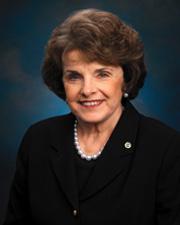 Sen. Dianne Feinstein (D-CA)
Legislative Activity
Stay on top of the latest movement without scrolling through every action
Senate amendment submitted
June 3, 2003
View full timeline
Senate amendment submitted
June 3, 2003
Senate amendment proposed (on the floor): Amendment SA 844 proposed by Senator Feinstein to Amendment SA 539.(consideration: CR S7204-7211, S7219; text: CR S7204)
June 3, 2003
Senate amendment not agreed to: Amendment SA 844 not agreed to in Senate by Yea-Nay Vote. 34 - 62. Record Vote Number: 204.
June 3, 2003
Roll call votes on amendments in Senate: Amendment SA 844 not agreed to in Senate by Yea-Nay Vote. 34 - 62. Record Vote Number: 204.
June 3, 2003
Amendment SA 844 proposed by Senator Feinstein to Amendment SA 539. (consideration: CR S7204-7211, S7219; text: CR S7204) To authorize the Governors of the States to elect to participate in the renewable fuel program.
June 3, 2003
Amendment SA 844 not agreed to in Senate by Yea-Nay Vote. 34 - 62. Record Vote Number: 204.
June 3, 2003
Votes
1 roll call on this amendment
Text
Proposed
ENERGY POLICY ACT OF 2003

The PRESIDING OFFICER. Under the previous order, the Senate will
resume consideration of S. 14, which the clerk will report.
The legislative clerk read as follows:

A bill (S. 14) to enhance the energy security of the United
States, and for other purposes.

Pending:

Frist/Daschle amendment No. 539, to eliminate methyl
tertiary butyl ether from the U.S. fuel supply, to increase
production and use of renewable fuel, and to increase the
Nation's energy independence.
Domenici/Bingaman amendment No. 840, to reauthorize Low-
Income Home Energy Assistance Program, (LIHEAP),
weatherization assistance, and State energy programs.
Domenici (for Gregg) amendment No. 841 (to amendment No.
840), to express the sense of the Senate regarding the
reauthorization of the Low-Income Home Energy Assistance Act
of 1981.

The PRESIDING OFFICER. The deputy leader.
Mr. McCONNELL. Mr. President, it is my understanding that Senator
Domenici, the chairman of the committee, will be in the Chamber
shortly. Pending his arrival, I suggest the absence of a quorum.
The PRESIDING OFFICER. The clerk will call the roll.
The assistant legislative clerk proceeded to call the roll.
Mrs. FEINSTEIN. Mr. President, I ask unanimous consent that the order
for the quorum call be rescinded.
The PRESIDING OFFICER. Without objection, it is so ordered.
Mrs. FEINSTEIN. What is the order of business?
The PRESIDING OFFICER. The Senator must ask unanimous consent to set
aside the pending amendment.
Mrs. FEINSTEIN. I ask unanimous consent to set aside the pending
amendment.
The PRESIDING OFFICER. Without objection, it is so ordered.

Amendment No. 843 to Amendment No. 539

Mrs. FEINSTEIN. Mr. President, I send an amendment to the desk.
The PRESIDING OFFICER. The clerk will report.
The legislative clerk read as follows:

The Senator from California [Mrs. Feinstein] proposes an
amendment numbered 843 to amendment No. 539.

Mrs. FEINSTEIN. Mr. President, I ask unanimous consent that the
reading of the amendment be dispensed with.
The PRESIDING OFFICER. Without objection, it is so ordered.
The amendment is as follows:

(Purpose: To allow the ethanol mandate in the renewable fuel program to
be suspended temporarily if the mandate would harm the economy or
environment)

On page 12, strike lines 19 through 24 and insert the
following:
``(i) based on a determination by the Administrator, after
public notice and opportunity for comment, that
implementation of the renewable fuel requirement--

``(I) is not needed for the State or region to comply with
this Act because the State or region can comply in ways other
than adding renewable fuel; or
``(II) would harm the economy or environment of a State, a
region, or the United States; or''.

Mr. DOMENICI. Will the Senator yield?
Mrs. FEINSTEIN. I yield.
Mr. DOMENICI. I thank the Senator for coming early this morning and
offering an amendment to help us get this bill going. We will be
arranging a sequencing of these amendments later in the day. I thank
the Senator for bringing forth the amendment at this time.
Mrs. FEINSTEIN. This is an amendment to the pending first-degree
ethanol mandate amendment to provide authority to the Administrator of
the Environmental Protection Agency to waive the ethanol mandate if a
State or region does not need to meet the requirements of the Clean Air
Act.
We all must understand this ethanol amendment is a permanent mandate.
Regardless of what advances are made in technology, whether a hybrid
engine, whether a hydrogen-driven engine, regardless of any advance,
this ethanol mandate is forever. Therefore, it offers very real
concern.
In the pending first-degree ethanol amendment, there is a waiver now
that allows the Administrator of the EPA to waive the ethanol amendment
if it would harm the economy or the environment of a State, a region,
or the United States. I believe the EPA Administrator should also be
able to waive the ethanol mandate if a State or a region does not need
ethanol to make the air cleaner and meet the requirements of the Clean
Air Act. Why require something that is not needed? Why require it if
there should be an advance in technology that makes the use of ethanol
unnecessary?
California and other States that do not need ethanol to meet the
requirements of the Clean Air Act should be allowed to make their case
to the EPA and then the Administrator can decide if the ethanol mandate
should be waived.
For California, the ethanol mandate will force more ethanol into our
fuel supply than we need to achieve clean air. The mandate forces
California to use over 8 years 2.5 billion gallons that the State does
not need.
This chart makes very clear this is a superfluous mandate. The blue
shows what California needs in terms of ethanol over the next 8 years,
to 2012. The top amount is 143 million gallons. It averages about 140
million gallons a year. California could use that amount and meet all
of the clean air standards. This bill requires California to use over
this period of time up to 600 million gallons, so it almost triples in
the outyears the amount of ethanol that is forced on California beyond
its need. This is a real problem in terms of legislation. Why would
anyone force something on a State that it does not need and then
provide, if the State does not use it, that it has to pay anyway?
If anything is poor public policy, this ethanol mandate is poor
public policy. It also actually achieves a transfer of wealth from all
States to the midwest corn States.
California does not need ethanol to produce cleaner air because the
State has developed its own unique gasoline formula. Refiners use an
approach called the predictive model which can produce clean burning
reformulated gasoline with oxygenates, with less than 2 percent
oxygenate or with no oxygenate at all.
As Red Cavaney, president of the American Petroleum Institute, said
in March before the Energy and Natural Resources Committee:

Refiners have been saying for years that they can produce
gasoline meeting clean-burning fuels and federal reformulated
gasoline requirements without the use of oxygenates. . . . In
addition, reformulated blendstocks--the base in which
oxygenates are added--typically meet RFG performance
requirements before oxygenates are added. These facts
demonstrate that oxygenates are not needed.

As a matter of fact, virtually every refiner I talked to says if you
want to clean the air, give us flexibility, allow us to blend gasoline
to do that. In other words, set the standards as the Clean Air Act does
and allow us to have the flexibility needed to meet those standards.
This mandate prevents that. It is driven by the self-interest of the
corn States and driven by the self-interest of the ethanol producers,
of which the largest beneficiary is Archer Daniels Midland. Archer
Daniels Midland will control 46 percent of the ethanol market, with
every other company controlling not more than 6 percent of the market.
In essence, what we are doing is giving a huge transfer of wealth to
one American company, an American company that has been convicted of
corrupt practices in the 1990s.
I have real problems with this bill. As I said, California can
achieve clean air without the use of oxygenates. The State has long
sought a waiver of the 2-percent oxygenate requirement. I have written
and called former EPA Administrator Browner, the current Administrator,
Christine Todd Whitman, and President Clinton and President Bush,
urging approval of a waiver for our State. Yet both the Clinton
administration and the Bush administration have denied California's
request. Despite the scientific evidence, it is unlikely that the EPA
Administrator will ever grant a waiver for California, but I believe
the necessity of the ethanol mandate for a State or region should be
something the EPA Administrator considers. I don't believe it is too
much to ask for the EPA to consider if ethanol is needed in a specific
State or region when determining if a waiver from the mandate should be
granted.
As I say, this amendment simply amends the waiver part of the Frist-
Daschle bill to permit a waiver in the event that a State can
demonstrate to the EPA Administrator that it can meet the clean air
standards without the use of ethanol.

[[Page S7201]]

I hope this amendment will have an opportunity of being agreed to. I
believe it is the right thing to do. I believe it is the good public
policy thing to do. I believe that creating a mandate preventing
flexibility in the blending of gasoline forever--which this mandate
does--is flawed and potentially dangerous public policy.
I yield the floor.
The PRESIDING OFFICER. The Democratic leader.
Mr. DASCHLE. Mr. President, I wish to comment on some of the
arguments raised by a very dear friend of mine, my colleague from
California, Senator Feinstein.
First, let me say that 65 percent of all the gasoline utilized today
in California is blended with ethanol--65 percent. They expect that it
will be 80 percent this summer. So four out of five gallons of gasoline
in California will already be blended with ethanol. I am not sure I
understand what motivation there will be to seek a waiver, when 65 to
80 percent of all the gasoline is already blended. That is No. 1.
No. 2, my colleague noted that she has applied to EPA--she and the
State of California have sought a waiver under current law. That is the
point. The renewable fuels standard will actually provide greater
flexibility, greater opportunities for States to seek waivers than what
they have right now.
The waiver she is applying for is the waiver that she seeks under the
law that was passed in 1991. She is frustrated that there has been no
positive response on the part of EPA. I can understand her frustration
with that refusal. But we are talking about the current law. What we
are suggesting, of course, is that under the new law there will be
waiver authority if a case can be made that somehow this is disruptive.
Let me emphasize something. There is a very significant misperception
here that somehow this renewable fuels standard is a mandate on States.
There is not one word in this bill that requires California or New York
or any State to mandate the utilization of ethanol. It is not in there.
What it does is impose a requirement on refiners. The refiners are the
ones that are going to have to blend ethanol. They can go to the part
of the country where it makes the most sense. There is not any
requirement that States have some percentage of their transportation
fuel utilized for purposes of meeting the renewable fuels standard.

We have, as I know the distinguished Senator knows, a credit trading
program in addition which ensures that ethanol is going to be used
where it is most economical. The refiners can make that decision--where
it is marketable, where it is not. But I would argue if 65 percent is
any indication of the marketability of ethanol, it is already being
used in the State of California and it will be used even more this
summer.
In March, the California Energy Commission stated that:

The transition to ethanol which began in January of 2003 is
progressing without any major problem.

Those are their words, not mine. There has been no ethanol shortage,
no transportation delay, no logistical problems associated with the
increased use of ethanol. Thus, efforts to carve out California from
the RFS, while unjustified, are also completely unnecessary.
We have to keep beating down these myths and these concerns generated
by those who oppose the renewable fuels standard.
I might also say the Senator from California might want to explain
why she is supportive of the renewable portfolio standard without
waivers. She is, as I am, a consistent advocate of the renewable
portfolio standard that we will address later on in the debate on
energy, which is, in concept, identical to the renewable fuels
standard. Yet she is in support of many waivers for the renewable
portfolio standard. So on the one hand, while she supports portfolio
nationalization, she would suggest a renewable fuels exemption for
waivers in California.
No one cares more for her State. No one is more articulate on these
issues. No one has studied these issues more than has she. We will
carry on this debate for months, if not years, to come. At the end of
the day, I will respect her and admire her tenacity and persistence as
much as anybody in this Chamber. I just happen to strongly disagree
with her in this case. I know that is her feeling with regard to my
position. So we will agree to disagree and move on.
I yield the floor, having had the opportunity to respond to some of
the issues raised.
Mrs. FEINSTEIN. Mr. President, I look forward to responding to the
distinguished Democratic leader, with whom I profoundly disagree. The
distinguished Democratic leader made the point--well, California is
already using ethanol in its gasoline. My goodness, it is already using
it up to 65 percent. California is forced to use it. It is forced to
use it. Yet it doesn't need to use it. That is my point. The egregious
2-percent Federal oxygenate requirement forces California to move in
this direction if it is going to phase out MTBE, which is another
oxygenate which has been shown to have very detrimental environmental
and health effects. The Governor has said he is going to phase it out
by the end of this year. Consequently, to meet the 2-percent oxygenate
requirement--which I think is flawed public policy--again, California
is forced to begin to use this ethanol.
The Democratic leader also says that I have supported a renewable
portfolio standard. In fact I have. California has a renewable
portfolio standard. It is for wind, it is for solar, it is for
alternative energies, and California has set it at 10 percent. Yes, I
support that. That is totally different than an ethanol requirement,
which is not a renewable energy source like solar or wind.
To add insult to injury, the Democratic leader says this doesn't
require States to use it. Then I ask the question: Why does his
legislation exempt Alaska and Hawaii? If it doesn't force States to use
it, why is there an exemption that exempts Alaska and Hawaii? Let me
read it to you, on page 4 of the bill:

Not later than 1 year after the date of enactment of this
paragraph the administrator shall promulgate regulations to
ensure that gasoline sold or introduced into commerce in the
United States, except in Alaska and Hawaii, on an annual
average basis, contains the applicable volume of renewable
fuel determined in accordance with subparagraph (b).

Mr. DASCHLE. Will the gentle--the Senator yield for an answer to that
question?
Mrs. FEINSTEIN. Yes, except I am not feeling too gentle at the
moment, but I am happy to.
Mr. DASCHLE. I know she does, because she does want to know the
answer to that question. It goes back to the first comment she made.
The first comment is that California is forced. California is forced to
have a certain standard, meeting the clean air requirements passed in
the law of 1991. That is a requirement that the whole country is forced
to live with.
You have to meet that clean air requirement. What California has
chosen to do--wisely, in my opinion--is to use ethanol to accommodate
the goals and requirements set up for the entire Nation with regard to
cleaning up the air that many of us voted overwhelmingly to do in the
early 1990s.
Here is the key issue. This isn't some ethanol advocacy group that
said this. This isn't a group of us here in the Senate that have said
this but the California Energy Commission, having studied very
carefully the utilization and the acquisition of ethanol to meet these
clean air requirements, said in January of this year that ``the
integration of ethanol is progressing without one major problem . . .
no shortages, no transportation delays, no logistical problems
associated with the increased use of ethanol in the State.''
That is the response to the first part of the question.
Why Alaska and Hawaii? Frankly, I didn't favor carving out Alaska and
Hawaii because I think we could say categorically, regardless of
circumstances. But Senators from Alaska and Hawaii were concerned about
the fact that they are not part of the contiguous United States; that
if you are ever going to come into an issue involving transportation,
Alaska and Hawaii may ultimately create transportation issues which do
not exist in the continental United States among the contiguous States.
As a result, giving them the benefit of the doubt in the first phase of
this integration is something I am willing to accept even though I am
not prepared to support.
But there is no question, based on current utilization and based on
the Department of Energy in California

[[Page S7202]]

that said themselves there is no integration problem.
That is the reason.
I thank very much the Senator from California yielding on that
question.
Mrs. FEINSTEIN. I thank the distinguished Democratic leader.
I would like to refute his comment on how well things are going in
California and ethanol being accommodated by reading an article in the
Los Angeles Times of May 10.

California gasoline prices rose higher and faster than pump
prices elsewhere in the nation this year because of supply
problems caused by refinery repairs and the transition to a
new clean-fuel additive, the U.S. Energy Department said
Friday.
Refiners in the state are switching to ethanol as part of
the recipe for cleaner-burning fuel, eliminating water-
polluting methyl tertiary butyl ether, or MTBE, in advance of
a Jan. 1 State ban.
This change in fuel additives, designed to meet the Federal
oxygen requirement for gas, helped push California gas prices
higher and might leave the state short of supplies during
peak summer driving months, the report by the Energy
Information Administration said.
That in turn could trigger more frequent price spikes, said
the EIA, the Energy Department's research and statistical
arm. The agency said the report was a preliminary assessment
and that it plans to release more detailed findings this
fall.
``There is a chance that California could see a recurring
problem with volatility,'' said Joanne Shore, an EIA senior
analyst who led the team that produced the report.
``Certainly, that is an issue for this summer that everyone
is going to continue to watch.''
The report, requested by Rep. Doug Ose (R-Sacramento),
provides more ammunition for California officials who have
demanded without success that the state be freed from the
Federal requirement to add oxygenates to its gasoline.

I don't understand why the Democratic leader is so determined to
force on those who do not want a special mandate, which not only he
doesn't want, but who do not need the special mandate. We can have as
clean a gas as they can refine in South Dakota, provided they refine
gas in South Dakota. We can do it as well, or better. We can do it in a
reformulated formula which will mean clean air standards. The 2 percent
oxygenate requirement was flawed and the leader is replacing it with
something equally flawed. Supposing in 5 years we have new technology
that enables the cleaner burning engine. We still have to put ethanol
in it, and we still have to put ethanol in a hydrogen engine.
I guess what I object to--and I can go into trade preferences and I
can go into subsidies. Subsidies for a mandate is incredible. It is
just such a bad bill.
Mr. DASCHLE. Will the Senator yield again?
Mrs. FEINSTEIN. No. I would like to ask the Democratic leader a
question, if I might. What objection does he have against my amendment,
which is a simple amendment which simply says if the State can provide
adequate evidence to the EPA that it can burn or refine gasoline to
meet clean air standards that it should not be required to use ethanol?
What objection does he have to that?
Mr. DASCHLE. Mr. President, I would be happy to respond. The answer
is that is exactly what we do in the bill--exactly. We provide a
waiver. Under the new application, the State of California, if they can
make the case that they shouldn't be held responsible or shouldn't be
held to the requirement of the legislation, is entitled to the waiver.
That is No. 1.
No. 2, the Senator from California still has yet to say why on the
one hand she is prepared to support a renewable portfolio standard
applicable to all States but not a renewable fuels standard. She isn't
willing to do that. So there is an inconsistency there that I find
interesting.
Let me go back.
Mrs. FEINSTEIN. Will the Senator yield on that point?
Mr. DASCHLE. Let me finish, and then I would be happy to yield.
She quoted an article. She has had as much experience as I have had
with journalism in the country, and in our lives. I don't know what
journalistic publication that may have come from. But we know this. We
know that oftentimes these columns are written with a built-in bias,
with a built-in point of view, and I doubt that she would argue that
all articles are written with an objective analysis as their
motivation. But you have to think that the Department of Energy in
California would be objective. They certainly aren't there touting
ethanol as their goal for anything other than what they think is best
for California.
I am going to quote. She quoted an article. I will quote the report
from California, page III-3, the report of March 28 of 2003, just a
couple of months ago.

Since the price of ethanol to refiners is currently at
modest levels relative to gasoline, the recent increase in
California's gasoline prices cannot--

Let me emphasize ``cannot''--

--be attributable to availability or cost of ethanol.

That is from the California Energy Department report.
That isn't the only one. That was corroborated by the Energy
Information Administration here in Washington. The report was provided
last month, in May of this year. Let me read from that report on page
VII:
``Other factors associated with the MTBE/ethanol changeover, such as
ethanol supply and price, and infrastructure to deliver, store and
blend ethanol, did not seem to be significant issues'' in the
calculation of costs.
That is Department of Energy information.
Here you have the Department of Energy from California and the
Department of Energy from the United States Federal Government both
calculating that there is no impact, pricewise, with the integration of
ethanol into gasoline--none.
I have seen all these articles, and they all have agendas and they
all are written in subjective ways to make a point. I thought there was
one again in the Post this morning.
But, nonetheless, I think it would be hard for the Senator from
California to argue against her own Department of Energy when it comes
to the calculation of the integration of the ethanol. I know that is
not her intention. I think that is what we really have to make sure is
in the Record--a recognition after careful study that there really
wasn't any impact on the price of gasoline with the integration of
ethanol.
I believe she has the floor and she yielded to me. I would be happy
to relinquish the floor so she can regain it.
Mrs. FEINSTEIN. I thank the distinguished Democratic leader.
As I understood what he said, he said there is a waiver in the
amendment. Well, indeed there is a waiver in the amendment. It is on
page 12 of the amendment. It begins on line 12. I would like to read
it:

The Administrator, in consultation with the Secretary of
Agriculture and the Secretary of Energy, may waive the
requirements of paragraph (2) in whole or in part on petition
by 1 or more States by reducing the national quantity of
renewable fuel required under paragraph (2)--
based on a determination by the Administrator, after public
notice and opportunity for comment, that implementation of
the requirement would severely harm the economy or
environment of a State, a region, or the United States; or
[secondly,] based on a determination by the Administrator,
after public notice and opportunity for comment, that there
is an inadequate domestic supply or distribution capacity to
meet the requirement.

There is no waiver if you can meet the clean air standards without a
renewable fuel such as ethanol. There is no waiver in this amendment
for that. And if you are so sure of the ground you stand on, why, for
Heaven's sake, wouldn't you allow a waiver if we can demonstrate--this
is a rhetorical question--if we can demonstrate to the EPA
Administrator that, yes, California, through its formula, can
reformulate gasoline to meet the Clean Air Act without either a 2
percent oxygenate requirement or a renewable fuel to the extent that we
have here?
Also, since you are on the floor, I just want you to see what you are
pressing upon California. As shown on this chart, this is the amount of
ethanol we would have to use, and this is the amount of ethanol your
amendment forces us to use.
Mr. DASCHLE. Will the Senator yield on that point?
Mrs. FEINSTEIN. I would appreciate finishing, if I might.
Mr. DASCHLE. Yes.
Mrs. FEINSTEIN. Yes. The Senator mentioned my support of a renewable
portfolio standard. Indeed, I do support a renewable portfolio
standard. But the renewable portfolio standard is essentially a
percentage requirement that a State would use of renewable fuels,

[[Page S7203]]

such as wind, solar, biomass, et cetera. And California has elected to
provide that 10 percent of its portfolio should be in wind, solar,
biomass, et cetera. I have supported that requirement in this amendment
as well, and California is able to do it, and has been doing it. I
think that is an extraordinarily positive thing.
I have great concerns about ethanol because I do not think all of the
science has been completed on ethanol. We know ethanol produces a
benzene plume which can break away in the ground if the fuel leaks from
an underground--the minority leader is smiling, but I wonder if this
same discussion took place when MTBE was introduced and people thought
it was going to be just fine. It has polluted about 20,000 wells in
California and has shown to have a significant hazard.
Now, I think to dismiss this as being wonderful for the environment
is not quite correct because we know it reduces some components, but we
also know it increases other components in the air that produce smog
and ozone. And California has two of the most difficult nonattainment
regions in the United States, one of them being the Los Angeles
area, the other being the Fresno area. I don't know whether this
requirement will, in fact, result in California's two difficult areas
increasing in smog, but I do think that providing flexibility to a
manufacturer to be able to produce reformulated fuels that meet the
requirements is important.

The other thing that is of concern to me, since we are on this, is
the safe harbor provision. I know my colleague from California, Senator
Barbara Boxer, is going to offer an amendment that would remove the
safe harbor. The American Petroleum Association, as they have indicated
to me, agreed to support this largely because they were protected from
any liability.
My understanding is, there is a provision in the amendment offered by
the two leaders that would shield ethanol producers and refiners from
any liability if the fuel additive harms the environment or public
health. Candidly, I find this safe harbor provision astonishing.
Ethanol is subsidized by the Government, protected from foreign
competition by high trade barriers, and now, on top of mandating its
use, we are going to exempt the fuel additive from liability in this
amendment. This is unconscionable, and I think it is egregious public
policy to mandate ethanol into our fuel supply in the first place and,
even worse, to provide it with a complete liability protection before
scientific and health experts can fully investigate the impact of
tripling ethanol in the air we breathe and the water we drink.
As I said, this is exactly the mistake we made with MTBE. Over the
past several years, we have learned that MTBE has contaminated our
water and may, in fact, be a human carcinogen.
Last fall, a California jury found that there was clear and
convincing evidence that three major oil companies acted with malice by
polluting ground water at Lake Tahoe with MTBE because the gasoline
they sold was defective in design and there was failure to warn of its
pollution hazard.
After a 5-month trial, Shell Oil and Lyondell Chemical Company were
found guilty of withholding information on the dangers of MTBE. The
firms settled with the South Lake Tahoe Water District for $69 million.
This case demonstrates why we cannot surrender the rights of citizens
to hold polluters accountable for the harm they inflict. Yet this
amendment has a safe harbor provision, and if I should be right, and if
there should be--and I hope there are not--undue environmental or
health consequences from this mandate, consumers cannot use their right
to go to court to find justice.
So I do not know how those who favor this legislation can exempt the
ethanol industry from this kind of wrongdoing. It is not as if the
industry has not had some wrongdoing in the past. So I urge everyone--I
know my colleague is going to move this amendment that would remove the
safe harbor provision, and I certainly intend to support her in doing
so.
I still--although many other things have been proposed or said by the
distinguished Democratic leader--I do not understand why he would have
opposition to my amendment, why he would say that if the State can
prove we can produce gasoline without a 2-percent requirement or
without this ethanol mandate that meets clean air standards, we cannot
get a waiver. That is all we are asking for, that opportunity to make a
showing that that is the case. Yet the Democratic leader has produced a
lot of other things but has not answered why there should not--if you
are going to have an economic waiver and an environmental waiver--why
you cannot have a waiver if a State can show that it does not need
ethanol to maintain clean air standards.
So I think it is an eminently fair amendment, and I just have a hard
time understanding why we would be so anxious to pass this kind of
public policy that mandates on States a use when most people, I think,
have derided and derogated mandates from the Federal Government.
I would like to make one more point. The last time I looked--and this
may have changed--but California is almost up to 100 percent of its
refining capacity. My understanding is, if you put ethanol in--probably
not in the early years, but in the outyears--to the extent required, we
will not have the refining capacity available to maintain this mandate
with adequate gasoline.
California is predicted to have 50 million people by 2020. They
drive. They use gasoline. And I very much worry that refining capacity,
which is about 98 percent at the present time because MTBE minimizes
gasoline and ethanol requires added gasoline per gallon, that we really
won't have the refining capacity. And that will create another problem
for California.
I am hopeful the Democratic leader would see his way clear to
allowing California and other States that wish to try to submit a case
to the EPA, to say we can refine gasoline to meet clean air standards
with flexibility and without this mandate, the opportunity to do so.
I thank the Chair and yield the floor.
The PRESIDING OFFICER. The Democratic leader.
Mr. DASCHLE. Mr. President, I will have to depart the floor in a
moment. Let me attempt to respond again to some of the concerns raised
by the distinguished Senator from California.
I remind my colleagues that California is currently using ethanol in
65 percent of the gasoline that it markets. That would go up to 80
percent this summer. It has gone up to 80 percent. Four out of five
gallons in California will be using ethanol, and the Department of
Energy in California has said there has been no disruption, no
problems. There has been absolutely nothing they can point to that
would be disadvantageous just to the consumer.
Why the Senator from California would believe so strongly about a
waiver when one certainly is not needed, given current experience, is
not an answer I can provide.
Methyl tertiary butyl ether, MTBE, is not something many of us were
supportive of when we integrated it in the first place. This was
something that coal companies and many of the petroleum refiners wanted
as an alternative to ethanol. So it was a compromise. Many of us raised
questions even then, back in 1991, whether it was going to be
advantageous for us. We predicted that there could be some issues
involving the use of MTBE, and those predictions were borne out.
As the case now has demonstrated, we are phasing out MTBE, as we
should. But ethanol has shown itself now for 20 years to be what we
said it was. It has proved to be, as advertised, the kind of clean-
burning fuel that we have sought to increase not only clean air and the
oxygen in gasoline but many other advantages.
Here is one fact I hope my colleagues will remember: In the year
2002, because this country incorporated ethanol into gasoline, the
Department of Energy estimated that we will have reduced--it could have
been EPA; don't hold me to the source but a governmental analysis done
on the effects of ethanol--greenhouse gases by 4.3 million tons. That
is the equivalent of 636,000 cars taken off the road. That is what we
have been able to do just in 1 year, 636,000 cars taken off the road,
the equivalent of which we have now acquired or achieved as a result of
the utilization of ethanol.
Again, as to the chart, I don't know where it came from, but I will
tell the Senate what the American Petroleum

[[Page S7204]]

Institute and the California Energy Commission, the Senator's own
commission, have said. California will need to use 843 million gallons
of ethanol to meet the clean air requirements next year, according to
API, but under this amendment they will only have to use 252 million
gallons. They are already using 600 million this year. California is
using 600 million. The requirement would be that they use 252. There
are the California Energy Commission comments.

Governor Gray Davis, quoted on March 15, 2002:

Let's let the Daschle bill pass. Have a nice schedule that
will affect the entire country, phase ethanol in, protect the
environment.

That is a quote from the California Governor.
California EPA Secretary Winston Hickox:

We need the Federal law changed for the flexibility that we
are not in opposition to the stairstep in terms of the
increase of the use of renewable fuels on a national basis.
Potentially, ethanol is a creator of business and jobs in
California.

These are from California officials.
One other issue, safe harbor. I was interested in comments made by
the distinguished Senator from California on safe harbor. She actually
supported safe harbor legislation on Y2K in 1999. There was no concern
then about safe harbor problems when she voted for it. My other
colleagues have voted for it as well.
Let me make sure people understand what we are talking about with
regard to safe harbor. What we did was say if there is a defect in
design or manufacture of renewable fuel by virtue of the legislation we
are mandating these companies to use, then we will exempt them from
liability as a result of the mandate. Do you know how many cases that
is? That is estimated to be two one-thousandths of 1 percent--not two
one-hundredths, not two-tenths but two one-thousandths of 1 percent of
all cases involved situations where we are providing safe harbor.
I will tell you what we are not covering. We are not covering
negligence. We are not covering the duty to warn. We are not covering
personal injury. We are not covering property damage. We are not
covering wrongful death. We are not covering compensatory damages or
punitive damages. We are not covering all of those things about which
the Senator from California has expressed concern. They are covered.
They are in there; two one-thousandths of 1 percent providing the same
safe harbor she voted for with the Y2K legislation in 1999.
I will have to move on to other matters in my schedule. I appreciate
the opportunity to discuss many of the questions with the distinguished
Senator from California. I have no greater respect for anybody in the
Chamber than I do her. I consider her a wonderful and close personal
friend. This issue has forced us to agree to disagree for years. This
year will be no different. I appreciate her efficacy and yield the
floor.
The PRESIDING OFFICER. The Senator from New Mexico.
Mr. DOMENICI. Might I say to the two Senators debating the issue,
because of management problems, it appears this amendment will be set
aside and will be voted on later in the evening but today, along with
as many votes as we can stack with it, sometime after 4 o'clock this
afternoon. I assume that is satisfactory to the Senator from California
and the minority leader.
I yield the floor.
The PRESIDING OFFICER. The Senator from California.
Mrs. FEINSTEIN. It is. While the Democratic leader is still on the
floor, I would like to address his comment about California's support,
theoretically, which I don't think is correct. I address it with a
letter from the California Environmental Protection Agency. California
is very eager to get out from under the 2-percent oxygenate
requirement. Just to sum up this last paragraph of an April 7 letter
from Mr. Winston Hickox, the agency Secretary, it says:

Some have suggested that California should go along with
the safe harbor as a small price to pay for elimination of
the 2 percent mandate.
I disagree. Such a tradeoff makes no logical sense.
Elimination of the costly and unnecessary oxygenate
requirement has nothing to do with assuring that the State of
California has a full array of enforcement and restitution
options available to address MTBE-caused pollution problems.
In short, I do not support a tradeoff that puts at risk the
health of the citizens of the State.

I ask unanimous consent that this be printed in the Record.
The PRESIDING OFFICER (Mr. Enzi). Without objection, it is so
ordered.
There being no objection, the material was ordered to be printed in
the Record, as follows:

California Environmental

Protection Agency,

Sacramento, CA, April 7, 2003.
Hon. Dianne Feinstein,
U.S. Senate, Hart Senate Office Building, Washington, DC
Dear Senator Feinstein: Governor Gray Davis has asked that
I respond to your March 24, 2003, letter regarding the fuels
provision in the new energy bill being considered by the
108th Congress.
You asked if Governor Davis agrees with my statement that
``. . . California would rather have the status quo instead
of limiting MTBE liability and getting an oxygenate waiver.''
The Governor does agree with this statement; we both feel
that limiting liability for MTBE is the wrong approach. I
appreciate the opportunity to discuss which ``fuels
provisions'' are appropriate for inclusion in any
comprehensive federal energy legislation. Specifically, I
would like to focus on the MTBE safe harbor language and the
two percent oxygenate requirement.
As a matter of policy and to preserve our legal options, I
am strongly opposed to an MTBE safe harbor. Industry made a
calculated business decision to use MTBE with full knowledge
that it was a serious threat to groundwater. The State of
California and others should not be limited in the ability to
take strong action to address pollution problems caused by
MTBE.
I remain steadfast in my support for elimination of the two
percent oxygenate requirement. Studies have consistently
demonstrated that this requirement is not necessary to
achieve air quality goals and that it unreasonably raises the
price of gasoline in California.
Some have suggested that California should go along with
the safe harbor as a small price to pay for elimination of
the two percent mandate. I disagree. Such a tradeoff makes no
logical sense. Elimination of the costly and unnecessary
oxygenate requirement has nothing to do with assuring that
the State of California has a full array of enforcement and
restitution options available to address MTBE caused
pollution problems. In short, I do not support a tradeoff
that puts at risk the health of the citizens of this State.
I also look forward to continuing to work with you on these
important issues.
Sincerely,
Winston H. Hickox,
Agency Secretary.

Amendment No. 844 to Amendment No. 539

Mrs. FEINSTEIN. Mr. President, I send another amendment to the desk.
The PRESIDING OFFICER. Without objection, the pending amendment is
set aside.
The clerk will report.
The bill clerk read as follows:

The Senator from California [Mrs. Feinstein], for herself,
Mr. Nickles, Mr. McCain, Mr. Kyl, Mr. Gregg, Mr. Wyden, Mr.
Leahy, Mr. Schumer, Mr. Sununu, and Mr. Reed, proposes an
amendment numbered 844.

Mrs. FEINSTEIN. Mr. President, I ask unanimous consent that further
reading of the amendment be dispensed with.
The PRESIDING OFFICER. Without objection, it is so ordered.
The amendment is as follows:

(Purpose: To authorize the Governors of the States to elect to
participate in the renewable fuel program)

On page 6, between lines 17 and 18, insert the following:
(C) Election by states.--The renewable fuel program shall
apply to a State only if the Governor of the State notifies
the Administrator that the State elects to participate in the
renewable fuel program.

Mr. DOMENICI. Mr. President, what is the amendment?
Mrs. FEINSTEIN. The amendment would give the right to the Governors
of States to opt into the program.
Mr. DOMENICI. I assume it would be a second-degree amendment.
Mrs. FEINSTEIN. A second degree to the Frist-Daschle amendment, yes.
Mr. DOMENICI. Is it in order without a consent agreement?
The PRESIDING OFFICER. The Senator got permission to set aside the
pending amendment by unanimous consent.
Mr. DOMENICI. She already did that?
The PRESIDING OFFICER. That is correct.
Mr. DOMENICI. I thank the Chair.
Mrs. FEINSTEIN. I thank the Senator from New Mexico.
Mr. President, this second-degree amendment to the first-degree
ethanol

[[Page S7205]]

amendment would require the Governor of each State to opt into the
ethanol mandate. Senators Nickles, McCain, Kyl, Gregg, Wyden, Leahy,
Schumer, Reed, and Sununu are cosponsors of this amendment. I thank
them for their support.
The pending first-degree ethanol amendment mandates 5 billion gallons
of ethanol into our fuel supply by 2012, yet it exempts Alaska and
Hawaii from this nationwide mandate. I strongly believe that each State
should have this choice.
In the Environment and Public Works Committee, Senator Murkowski
offered an amendment to the ethanol mandate to exempt Alaska and Hawaii
from the requirement because, first, Alaska and Hawaii are a great
distance from the Midwest, where 99 percent of the ethanol is produced
in the United States; secondly, families and businesses in Alaska and
Hawaii would have to pay exorbitant costs for ethanol to be shipped to
these States and blended into their gasoline.
I have the same concerns about increased fuel costs to families and
businesses in California if the ethanol mandate becomes law. I am sure
other Senators up and down the east and west coasts have the same
concerns I do.
Because moisture causes ethanol to separate from gasoline, the fuel
additive cannot be shipped through traditional gasoline pipelines.
Ethanol needs to be transported separately by truck, boat, or rail, and
blended into gasoline after arrival. Unfortunately, this makes the 1-
to 2- to 3-week delivery time from the Midwest to either coast
dependent upon good weather conditions as well as available ships,
trucks, and trains equipped to handle large amounts of ethanol.

According to Steve Larson, former executive director of the
California Energy Commission:

The adequacy of logistics to deliver large volumes of
ethanol to [California] on a consistent basis is uncertain.

In sum, it will be extremely costly to ship large amounts of ethanol
to California and other States.
I believe every State outside the Midwest will have to grapple with
how to bring ethanol to their States since the Midwest controls 99
percent of the production. Last year, the General Accounting Office
indicated how unequal the effects of the mandate will be across the
Nation. As the GAO reported:

Ethanol imports from other regions are vital. However, any
potential price spike could be exacerbated if it takes too
long for supplies from out-of-State (primarily the Midwest,
where virtually all of the production capacity is located).

Mr. President, on the issue of increased costs, let me quote from a
Wall Street Journal editorial that ran last year:

If consumers think the Federal gas tax is ugly, this new
ethanol tax will give them shudders. Moving ethanol to places
outside the Midwest involves big shipping fees or building
new capacity. Refiners also face costs in adding ethanol to
their products. According to independent consultant Hart
Downstream Energy Services, the mandate would cost consumers
an extra annual $8.4 billion at the pump the first 5 years.
New York and California would see gas prices rise by 7 to 10
cents a gallon.

So Hart Downstream Energy Services is estimating an annual $8.4
billion increase cost at the pump over the first 5 years. They are
saying that New York and California would see gas prices rise by 7 to
10 cents a gallon. Therefore, any shortfall in supply, either because
of manipulation or raw market forces, will be exacerbated on the west
and the east coasts, which will be reliant on ethanol coming from
another region of the United States. Are we not just asking for trouble
by mandating ethanol nationwide if it is produced almost entirely in
one region?
The fraud and manipulation that went into the California energy
market 2 years ago wasn't expected, nor did anyone ever believe it
would happen. But it did. I think there is a problem when you
concentrate too much control in either one region or in one producer.
As you know, this bill does both. The largest production center is the
Midwest, and the largest producer is Archer Daniels Midland, and they
produce 46 percent of the supply. This sets up a scenario that leads to
the concern, I believe, of both coasts about this mandate.
Since Alaska and Hawaii have an exemption in the ethanol mandate, why
not give other States the opportunity to choose whether they want to
enter the program? Why not give this choice to California, Oregon,
Washington, Maine, New Hampshire, Vermont, Massachusetts, Rhode Island,
Connecticut, New York, New Jersey, Pennsylvania, Delaware, Maryland,
Virginia, North Carolina, South Carolina, Georgia, and Florida? These
are States that are far from the Midwest but where families and
businesses will have to pay more for gasoline under the ethanol
mandate.
This ethanol mandate forces ethanol into our fuel supply nationwide,
and under the credit trading provisions of the mandate, if States do
not use the ethanol, they have to pay for it anyway. This really adds
insult to injury. If you do not use it, you have to pay for it anyway.
What kind of public policy is that?
Additionally, forcing States to use ethanol they do not need and
forcing States to pay for ethanol they do not use amounts to a transfer
of wealth from all States to the midwest corn States.
Remember, ethanol is not necessary to achieve cleaner air. For
California, the ethanol mandate will force more ethanol into our fuel
supply than we actually need to achieve clean air. Once again, I will
show you that chart because the cumulative answer to this chart is that
it forces California to use 2.5 billion gallons of ethanol it does not
need over 8 years, and that is fact.
If the ethanol amendment proves itself, if it cleans the air and does
not pollute the air with increased ozone or smog and if it is cost
effective, Governors will want to include their States. In fact, I
believe most States in the Midwest will opt into the ethanol mandate
because that is where 99 percent of the ethanol is produced.
The belief is there are 69 votes to support this ethanol mandate in
this House. If that is true, what are they worried about? We would have
34 or 35 States automatically opting in. Why not give those few States
that have real concerns and want out of the 2-percent oxygenate mandate
and also out of the ethanol mandate the opportunity to show that they
can reformulate gasoline to meet clean air standards without the amount
that is prescribed upon them by this mandate?
This year we saw retail gasoline prices across the U.S. In the United
States, retail gas prices rose from $1.44 to $1.73 per gallon over the
first 10 weeks of this year. California's gasoline prices rose even
more precipitously than across the United States, climbing from $1.58 a
gallon on January 1 to a record setting $2.15 a gallon on March 17.
I recall on a recent weekend during that period when I was in the
State, I actually paid, for the first time in my life, $50 for a
tankful of nonpremium gasoline.
Since the middle of March, gasoline prices have decreased largely due
to the decrease in the price of crude oil since the war in Iraq has
ended. But gasoline in my State still sells for around $1.80. That is
still up 30 cents from the beginning of the year.
One reason prices are so high is that the 1990 Clean Air Act required
States to use fuel additives, called oxygenates, that we no longer need
to achieve cleaner air. This ethanol mandate offered by the majority
and minority leaders will only trade one bad requirement, the 2-percent
oxygenate requirement, for another, the ethanol mandate, because now we
will be mandating 5 billion gallons of ethanol into our fuel supply.

Since there are high costs for States, such as California, to comply
with any mandated Federal requirement, and these costs are passed on,
as we all know, to drivers at the pump, the ethanol mandate amounts
effectively to a hidden gas tax, and I think consumers should know
that. In fact, when we pass this mandate, not only are we passing
subsidies for the industry, not only are we mandating its use, but we
are also providing a gas tax raise.
Instead of mandating 5 billion gallons of ethanol into our fuel
supply, we should be lifting all mandates, or at least allow the
Governor of a State to opt in to this mandate if that State wishes to.
We need to provide flexibility to refiners for them to optimize how and
what they blend instead of forcing them to blend gasoline with either
MTBE or ethanol.

[[Page S7206]]

Without eliminating these mandates, we can expect disruptions and
price spikes during the peak driving months of this summer, on top of
the high price motorists are already paying.
Bob Slaughter, the president of the National Petrochemical and
Refiners Association, wrote in a letter to all Senators last week:

Forcing ethanol's use throughout the Nation will reduce
flexibility in this Nation's gasoline manufacturing and
distribution system, raise environmental concerns in ozone
control areas--

For me, that is the Los Angeles area and the Fresno Central Valley
area--

and will result in increased costs. And this is in addition
to the fact that the product is uneconomic without the very
significant Federal subsidies--a total of roughly $10
billion--it has received for 25 years.

This is not me saying this. This is the president of the National
Petrochemical and Refiners Association pointing out that ethanol to
date has received roughly a $10 billion subsidy which this bill, of
course, continues, and increases.
Proponents of the ethanol mandate argue that gas price increases will
be minimal, but their projections do not take into consideration the
real-world infrastructure constraints and concentration in the market
that I have just pointed out on this chart--concentration in the
marketplace that could lead to price spikes. If I have ever seen a
scenario that lends itself to control of the marketplace and to
potential antitrust violations, it is this one.
Just look at the disparity. It is not spread out evenly: 46 percent
for one company; Williams, 6 percent; Cargill, 5 percent; High Plains
Corporation, 4 percent; New Energy Corporation, 4 percent; Midwest
Grain, 3 percent; and Chief Ethanol, 3 percent. If I have ever seen a
scenario for market concentration, it is this one.
The second-degree amendment I have offered will require the Governor
of a State to opt into the ethanol mandate. If the amendment offered by
the two leaders is so fine, so good, so beneficial for all of America,
then Governors should want to include their States.
The Senators from Alaska and Hawaii have worked to allow their States
to be exempted from this mandate. That is the first break in the dike.
They said they did not even want to try it. I believe, and the
cosponsors of this amendment believe, each and every State should have
this choice.

If this program, as put forward by the leaders, is so fine, the
Governors will opt in. If they believe it enables their State to have
cleaner air, the Governors will opt in. If they believe they can
produce the adequate infrastructure, the Governors will opt in. If they
believe they want to see the tariff protection, the subsidies, the
potential taxes at the pump, their Governor will opt in. But to force
it on a State, when that State does not require it, when it can meet
the clean air standards in another way, I believe is wrong-headed and
short-sighted public policy.
I urge my colleagues to support this second-degree amendment.
Before I yield the floor, I remind the Chair I have offered two
separate amendments, the EPA waiver first and the State opt-in as a
second freestanding amendment.
I yield the floor.
The PRESIDING OFFICER. The Senator from Ohio.
Mr. VOINOVICH. Mr. President, I rise today in support of Senate
amendment No. 539, the renewable fuels package to the Energy bill, and
to oppose the opt-in and waiver amendments of the Senator from
California.
First, I will talk a little bit about the renewable fuels package and
its benefit to the people of this country. The amendment contains
language which was voted out of the EPW Committee, of which I am a
member, earlier this year. The language establishes a nationwide
renewable fuels standard of 5 billion gallons by 2012, repeals the
oxygenate requirement for reformulated gasoline under the Clean Air
Act, and also phases down the use of MTBE over 4 years. The language in
this amendment has strong bipartisan support and is the result of long
negotiation between the Renewable Fuels Association, the National Corn
Growers Association, the Farm Bureau, the American Petroleum Institute,
the Northeast States for Coordinated Air Use Management, and the
American Lung Association.
I am very familiar with the amount of work that went into drafting
the compromise legislation. It was lengthy, it was open, and I was very
pleased all of these various groups could get together and work out
that big compromise, particularly the Senator from Ohio, who has
Ashland-Marathon Oil and also represents the sixth largest State in
corn production.
I emphasize that the passage of the ethanol bill will protect our
national security, help our economy, and protect our environment. The
amendment the majority and minority leaders have introduced is a
compromise that will triple the amount of domestically produced ethanol
used in America. It is an essential tool to reducing our dependence on
imported oil. I think we all know over 58 percent of the oil we use in
this country is imported. Last year, we imported an average of
4,558,000 barrels per day from OPEC countries and 442,000 barrels a day
from Iraq. Let me say that again. Last year, we imported nearly a half
million barrels of oil from Iraq, and this dependence is not getting
any better.

The Energy Information Administration estimates our dependency on
imported oil could grow to nearly 70 percent by the year 2020, and our
President has stated repeatedly that energy security is a cornerstone
for national security. I agree. It is crucial we become less dependent
on foreign sources of oil and look to domestic sources to meet our
energy needs.
Ethanol is an excellent domestic source. It is clean burning. It is a
homegrown renewable fuel that we can rely on for generations to come.
The renewable fuels standard in this language will displace 1.6 billion
barrels of oil. Ethanol is also good for our Nation's economy. Tripling
the use of renewable fuels over the next decade will reduce our
national trade deficit by more than $34 billion. By 2012, it will
increase the U.S. gross domestic product by $156 billion. It will
create 214,000 new jobs, expand household income by an additional $51.7
billion, and save taxpayers $3 billion annually in reduced Government
subsidies due to the creation of new markets for corn. All of us who
were concerned about the farm bill that passed last year are concerned
about these subsidies. The passage of this ethanol amendment will help
reduce the subsidy by $3 billion.
The benefits for the farm economy are even more pronounced. As I
mentioned, Ohio is the sixth in the Nation in terms of corn production
and is among the highest in the Nation in terms of putting ethanol into
our gas tanks. Forty percent of the gasoline in Ohio is ethanol blend.
An increase in the use of ethanol across the Nation means an economic
boost to thousands of farm families across my State. Currently, the
ethanol production provides 192,000 jobs and $4.5 billion in net farm
income nationwide. The passage of this amendment will increase the net
farm income by nearly $6 billion annually, which is significant.
Passage of this amendment will create $5.3 billion of new investment in
renewable fuels production capacity.
Phasing out MTBE on a national basis will be good for our fuel supply
because refiners are under tremendous strain from having to make
several different gasoline blends to meet various State clean air
requirements. And no new refineries--I want to underscore--no new
refineries in this country have been built in the last 25 years. The
effects of the various State responses to the threat of MTBE
contamination, including bans and phaseouts on different schedules,
will add a significant burden to existing refineries.
The MTBE phaseout provisions in this package will ensure that
refiners will have less stress on their system and that gasoline will
be more fungible nationwide. Expanding the use of ethanol will also
protect our environment by reducing auto emissions, which will mean
cleaner air and improved public health.
Use of ethanol reduces emissions of carbon monoxide and hydrocarbons
by 20 percent. Ethanol also reduces emissions of particulates, which
are a real problem in this country today, by 40 percent. Use of ethanol
RFG helped move Chicago into attainment of the Federal ozone standard,
the only RFG area to see such an improvement. It was done in the
Chicago area by using ethanol.

[[Page S7207]]

In 2002, ethanol use in the United States reduced greenhouse gas
emissions, something we have talked about a great deal on the Senate
floor, by 4.3 million tons. Listen to this: The equivalent of removing
more than 630,000 vehicles from the road. Think of that.
Over the course of the debate on this amendment, several arguments
against the renewable fuels package have been raised by our colleagues
from California and New York, ranging from concerns that a renewable
fuels standard cannot be met and will raise gasoline prices to claims
that ethanol is bad for the environment and allegations that this
package will benefit a select number of producers without helping our
farmers. These arguments remind me of the adage that you cannot let the
facts get in the way of a good argument.
The concerns raised by opponents of the renewable fuels standard
concerning the impact of RFS, the fuel supply, and gasoline prices,
while understandable, I believe are completely unfounded. The fact is,
our farmers will be able to meet the ethanol standard, and the
combination of the MTBE phaseout and oxygenate waiver in this package
will significantly improve our fuel supply system and lower costs for
consumers.
Our farmers can meet the ethanol standard. For 2003, the ethanol
industry is on pace to produce more than 2.7 billion gallons. The
amount of ethanol required under the RFS begins at 2.6 billion in 2005.
Adequate ethanol supply is simply not an issue.
Currently, 73 ethanol plants nationwide have the capacity to produce
over 2.9 billion gallons annually. Further, there are 10 ethanol plants
now under construction which when completed will bring the total
capacity to more than 3.3 billion gallons. That is today. We are
talking about 5 billion by the year 2012. There is no problem with
achieving that goal.
California has been cited as a major problem area. However, all but
two small refineries have already transitioned from MTBE into ethanol.
California will use close to 700 million gallons of ethanol in 2003
after consuming roughly 100 million gallons last year. Think of that:
From 100 million last year to 700 million this year.
The California Energy Commission has concluded the transition to
ethanol ``is progressing without any major problems.'' The U.S. Energy
Information Administration found the transition went ``remarkably
well.'' The Energy Information Administration studied the RFS without
accounting for the impact of banking and trading credits. This means
they analyzed the effective cost of ethanol being blended at every
single refinery and concluded the impact on refiner costs would be one-
half of 1 percent per gallon. However, it was noted with credit trading
ethanol will not need to be blended at every refinery. Forget about the
fact we built into this the credit trading provision. This would reduce
the impact because refiners will have the flexibility to use ethanol
where it makes the most sense economically. Look around the country and
they can trade, use it where it makes most sense economically.
In the absence of Federal legislation, consumers will likely be
subject to the costs of uncoordinated State action, individual States
adding the MTBE but cannot change the Federal RFG oxygen content
requirement. This bill does that; it gets rid of that requirement.
The coalition of these two elements will likely lead to higher costs
unless this bill is passed. For instance, California will ban MTBE in
2004 and the Federal RFG oxygenate requirement will be left in place if
this does not pass. Therefore, California's required ethanol use in
2005 would be 895 million gallons. However, if the fuels provision of
this amendment is enacted, fuel providers in California would be
required to use far less ethanol in 2005, 291 million gallons, which
could be even less with the bill's credit banking and trading
provisions.
There is a lot of flexibility for States to do what is in their best
interest. With a State MTBE ban set for January 2004, New York faces a
similar situation. Under the status quo, fuel providers would be
required to use 197 million gallons of ethanol in New York in 2005.
However, if the amendment is passed, refiners, blenders, and importers
would be required to use or purchase credits for even less--100 million
gallons of ethanol in 2005.
A study concluded by Mathpro, a prominent economic analysis firm,
found that compared with the situation where States are banning MTBE
and the Federal RFG oxygen content requirement is left in place, the
fuels provisions would decrease the average gasoline production cost by
2 cents per gallon. In addition, the fuels provisions provide
safeguards in the event that RFS would severely harm the economy or the
environment or would leave a potential supply and distribution problem,
the RFS requirement could be reduced or eliminated.

The status quo situation creates transportation and infrastructure
problems. It is individual State bans, as in California and New York,
which will require the transport of large amounts of ethanol to States
far from where it is produced. In contrast, a critical element of this
fuels package is a national RFS with, as I mentioned, a credit banking
and trading program to ensure that renewable fuels will not have to be
in every gallon of gasoline. This will allow refineries to use ethanol
where it makes the most sense.
Furthermore, ethanol is already blended from Alaska to Florida and
from California to New York. Ethanol is already transported via barge,
railcar, and ocean-going vessels from markets throughout the country.
The U.S. Department of Energy studied the feasibility of a 5 billion
gallon per year national market for ethanol and found no major
infrastructure barriers exist and needed investments on an amortized
per-gallon basis are modest and prevent no major obstacle.
Let's talk about our farmers and how it helps them. Some of my
colleagues have used the supplier ADM, Archer Daniels Midland, as an
argument that the market is dangerously concentrated. Contrary to the
charts presented by the Senator from California, with the current
industry expansion, ADM, according to the information I have, is at 32
percent of total capacity. By comparison, farmer-owned ethanol plants
have increased their percentage of total production capacity from 20
percent in 1999 to 38 percent today. I know in my own State when I met
recently with our farm community, there is talk of our farmer community
investing in two new plants that will be owned by the farmers in the
State of Ohio.
Furthermore, when ADM purchased another ethanol producer last year,
the Department of Justice investigated the impact this would have on
competition. They found that ``the acquisition did not warrant
challenge in terms of its potential effect in the ethanol market.''
Contrary to claims of entry into the marketplace problems, the
industry has grown by leaps and bounds over the past 3 years with 30
new facilities built since 2001. According to the Federal Trade
Commission merger guidelines, entry time of less than 2 years is not
considered a barrier to entry. The average entry time of the new
ethanol facility is from 15 to 20 months. If the industry continues to
add 8 to 10 facilities a year through 2012, we will have an additional
70 new facilities across this Nation to take care of any market control
that anyone might want.
Both the U.S. Department of Agriculture and the Congressional Budget
Office have recognized the benefit of the investment of the ethanol
program on the overall health of the Nation's economy. Recently, the
USDA stated that the ethanol program would decrease farm program
payments by $3 billion. In its analysis of this amendment, CBO stated
the provision would reduce direct spending by $2 billion during 2005 to
2013.
Let's talk about the impact on the economy. Tripling the use of
renewable fuels over the next decade will also reduce our national
trade deficit by more than $34 billion. A lot of our trade deficit has
to do with importing oil. It will increase the U.S. gross domestic
product by $156 billion by 2012. It will create more than 214,000 jobs.
It will expand household income by an additional $51.7 billion. As I
said, it will save taxpayers a lot of money because of reduced
Government subsidies to the agricultural community.
The benefits for the farming community are even more pronounced. An
increase in the use of ethanol across the Nation means an economic
boost to thousands of farm families across the

[[Page S7208]]

States through this country. Currently, ethanol production provides
192,000 jobs and 4.5 billion in net farm income nationwide. Passage of
this amendment will increase net farm income by $6 billion annually. As
I said before, it will create 5.3 billion in new investment and
renewable fuels production capacity.
Now, the environment. It has been brought up that ethanol is bad for
the environment, that there have been problems and red flags thrown
about the use of ethanol.
The Clean Air Act's reformulated gasoline program requires the same
smog-reducing characteristics for gasoline whether blended with MTBE or
ethanol. In other words, if you use ethanol you still must comply with
the Act.
The RFS agreement includes strong anti-backsliding provisions that
prohibit refiners from producing gasoline that increases emissions once
the oxygenate requirement is removed. A Governor can also petition EPA
for a waiver of the ethanol requirement based on supporting
documentation that the ethanol waiver will increase emissions that
contribute to air pollution in any area of the State. So if there is a
period during one year where there may be a problem, a Governor can ask
for a waiver from one provision.
The fuels agreement would benefit the environment in a number of
ways:
It reduces tailpipe emissions of carbon monoxide, VOCs, and fine
particulates.
It phases down MTBE over 4 years to address groundwater
contamination, and since ethanol biodegrades quickly, it will not have
the same problem.
It provides for one grade of summertime Federal RFG, which is more
stringent.
It increases the benefits from the Federal RFG program on air toxic
reductions.
It provides States in the ozone transport region an enhanced
opportunity to participate in the RFG program because of unique air
quality problems.
It includes provisions that require EPA to conduct a study on the
effects on public health, air quality, and water resources of increased
use of potential MTBE substitutes, including ethanol.
The use of ethanol-blended fuels also reduces so-called greenhouse
gas emissions by 12 to 19 percent compared with conventional gasoline,
according to Argonne National Laboratory. In fact, Argonne states
ethanol use last year in the U.S. reduced the so-called greenhouse gas
emissions by approximately 4.3 million tons, equivalent to removing the
annual emissions of more than 636,000 cars. Additionally, a new report
from the Pew Center on Global Climate Change concluded that:

During the next 15 years, replacement fuels offer the
greatest promise for reducing transportation sector
[greenhouse gas] emissions.

Regarding benzene, there have been no conclusive studies showing
ethanol-blended gasoline, leaked into an existing benzene plume would
result in further benzene spread--blending ethanol usually equates to
less benzene in gasoline.
According to the Northeast States for Coordinated Air Use Management:

We are satisfied to have reached an agreement that
substantially broadens the ability of the U.S. EPA and our
Nation's Governors to protect, and in some cases improve, air
quality, and public health as we undertake major changes in
the Nation's fuel supply.

Also, after an environmental impact analysis, the California
Environmental Policy Council gave ethanol a clean bill of health and
approved its use as a replacement for MTBE in California gasoline.
The fuels agreement is supported by the American Petroleum Institute;
the Renewable Fuels Association; the Northeast States for Coordinated
Air Use Management--NESCAUM; the American Lung Association; U.S.
Chamber of Commerce; US Action; the Union of Concerned Scientists; the
Environmental and Energy Studies Institute; the Governor's Ethanol
Coalition.
We have heard so much talk about letting Governors opt into this
program. I want to make it clear the Governors' Ethanol Coalition is
supporting this ethanol agreement and this amendment. General Motors
and, as Senator Daschle mentioned earlier today in his response to the
Senator from California, the Governors of California and New York also
support this amendment, plus all of the major, of course, agricultural
organizations in the United States.
Again, I want to state for my colleagues particularly, there were
many public and well-attended stakeholder meetings leading to this
historic RFS fuels agreement.
So many times there are issues that come before the Senate where we
have groups that have differences of opinion. So often, these groups
never get together and talk to each other; they talk past each other.
As one who has been so involved in this whole issue of ethanol,
beginning frankly when I was Governor of the State of Ohio, I was
always concerned that somehow we just could not get the folks from the
oil industry and the corn growers and other groups together to talk
about how we could come up with something that would make sense, that
would satisfy their respective needs, to underscore the importance of
the fact that they had a symbiotic relationship with each other; if
they got together, they could come up with something that would achieve
their respective goals.
That happened. It doesn't happen very often around here, but it did
happen. I will never forget the press conference that was held in the
LBJ Room. On that stage were representatives from a dozen or so
organizations in this country, organizations that, if someone had said
they would be on the stage together supporting this ethanol compromise,
people would have said: No way. No way.
It happened. So I am saying to my colleagues, this has been vetted.
It has been discussed. We have a good compromise. Let's not diminish it
with the amendments that are going to be submitted to this very
important amendment, this amendment that is so important for our
country.
By the way, this bill has to get done this year. If we do not get
this amendment done and deal with the oxygenate program and the MTBE,
we are going to have chaos--chaos. If the people in California and New
York think the gasoline price is high now, if this is not passed, it
will go sky high.
I am saying to everyone, please, let's support this amendment and
vote against any of the amendments to this amendment that are being
submitted by some of my colleagues.
I yield the floor.
The PRESIDING OFFICER. The Senator from New Hampshire.
Mr. SUNUNU. Mr. President, I rise in support of the amendment offered
by the Senator from California, the second-degree amendment, that I
think injects a level of fairness in the underlying amendment. I
respect the work of my colleague from Ohio and his appreciation for the
effort that went into crafting the underlying amendment that doubles
the ethanol mandate. Yet, I think that amendments can be offered to
make this Energy bill as a whole, and this ethanol provision, a lot
more sensible, make it a lot more fair to taxpayers, make it fair to
States, and even improve the environment.
I want to touch on a few of those points. Certainly we will hear from
a lot of Senators from States that benefit from the ethanol program and
will benefit from an expansion in the ethanol program. They see its
economic impact, perhaps, at the local level with their farmers or at
the corporate level with some of the very big agribusiness concerns
that benefit from this program. But I think we need to take a balanced
approach. I think we need to weigh the impact on consumers. I think the
Senator from California, Mrs. Feinstein, has done an exceptional job of
laying out the importance of reacting to the needs of those consumers,
and the importance of taking a balanced approach. She has been a great
leader on this issue, and I am pleased to be a cosponsor of her
amendment.
As she indicated, doubling the ethanol mandate will have very
significant costs. It will impose a burden on the States. There may
well be an ethanol coalition of Governors, many of whom have economies
in their home States that will benefit from the ethanol mandate. But we
cannot escape the fact that this mandate does represent a burden on
States, a burden on industry, and a burden on consumers. I think there
are very questionable benefits outside a few of those farm-driven
economies that I mentioned.
On the environment, the Senator from California has offered an
amendment that in no way exempts States

[[Page S7209]]

from their obligations under the Clean Air Act, and in no way exempts
them from having to meet the standards that any other State would meet
in cleaning up the air we breathe. What it would do, simply, is to
allow States to decide how to go about meeting those tough standards
and would give States the chance to opt out of this ethanol mandate if
they could otherwise meet those clean air standards.
This does nothing to diminish our commitment to the Clean Air Act.
This does nothing to diminish our commitment to the environment.
So one has to ask the question: Why then mandate the use of this
product, ethanol, on all 50 States? Although it has been pointed out
that it is not actually 50 States, it is 48 States, as two States are
already exempt from this requirement. I certainly believe you wouldn't
exempt States from this mandate unless you recognized that it did have
costs associated with it, and very significant costs at that.
This amendment offered by the Senator from California protects every
bit our commitment to the Clean Air Act and to the environment. But it
does reflect new costs to consumers--new costs from the logistics and
shipping that is going to be required to move ethanol around the
country. As has been pointed out, ethanol cannot move through the gas
lines which already exist in this country. It has to be trucked and
shipped and blended on the spot.
As the Senator from Ohio pointed out, we can do this. We have
infrastructure that can accomplish this task. I would offer no
disagreement there. Yes, we have trucks, ships, logistics, planners,
and computer software to get it to where it needs to be, whether it
takes a week or 2 or 3 weeks. That kind of a system is more susceptible
to interruption and, therefore, price spikes. But we have the
technology and capability to ship this mandated product around the
country in order to blend it.
But we are just fooling ourselves if we pretend it wouldn't cost the
consumer extra--and it will. We can have a debate as to whether or not
a mandate will increase consumer prices 2 cents, or 4 cents, or 5
cents, over what amount of time, and why. But those newly imposed
logistic requirements will cost money. I think we are going to address
this cost issue.
I know the Senator from New Mexico is working on an amendment that
will highlight the concern we should all have--that a mandate such as
this increases the price to all consumers in the country. But we have
to be wary of the costs. We also have to be aware of the fundamental
fairness: Why give exemptions to two States and not allow other States
to opt out of this program? I trust the States. I trust the Governors.
I trust State legislators to take good steps that are in their self-
interest to protect the environment in their States, to serve their
consumers, and to ensure that they have an energy system that serves
their States.
The Senator from Ohio said specifically that there is a lot of room
in this legislation for States to do what is in their best interests.
But then he suggested that to allow States to opt out would somehow
encourage them to take steps that would make the system too complicated
and actually raise prices back home in their States.
I don't think you can have it both ways. You can't say States will
take steps in their best interests, but then suggest that if we gave
them the opportunity to opt out of this program, they would take steps
that weren't in their best interests. I think they will do the right
thing. Certainly, when it comes to meeting the tough requirements of
the Clean Air Act, I think States will do the right thing. And where
ethanol makes sense environmentally and economically, States will move
quickly to use it to the greatest extent possible.
From the standpoint of the environment, the Feinstein amendment does
not weaken any legislation. From the standpoint of costs, the
underlying amendment certainly increases the cost to the consumer. It
is equally important from the standpoint of basic fairness that we
treat all the States equally. If we allow some to opt out, we should
allow them all to opt out if they so choose.

Given these facts, why would we force this mandate on the States? I
don't know for sure what the answer is. But I think in part we are
forcing this subsidy on the States to benefit some big, profitable
companies. We can argue whether the five or six largest ethanol firms
control 60 percent of the market or 70 percent of the market. But these
are good, strong, profitable companies. They have great employees, and
good leadership, I hope. But they ought not to be given a subsidy on
the backs of consumers all over the country. We should not be providing
a subsidy to these six or seven large firms and increasing the cost to
consumers, while at same time we could be depleting $2 billion a year
from the Highway Trust Fund when this mandate is phased in.
The Senator from Ohio pointed out that the Congressional Budget
Office has said this will reduce direct spending by $2 billion. That is
because it is going to suck $2 billion out of the Highway Trust Fund.
Unfortunately, the result is more likely than not to be moving general
fund money over into the Highway Trust Fund. That is not something I
think we should be doing.
I think we need to be honest to the voters and honest to the
consumers that when they pay taxes at the pump, it goes into the
Highway Trust Fund and gets spent on infrastructure in this country.
Ethanol is given an enormous, significant tax subsidy. I guess it
depends on what you consider enormous. Is $1 billion or $2 billion
enormous? It is certainly in my State. Some people would argue it is
only a few cents, or 2 pennies. But $2 billion is real money where I
come from. To take $2 billion a year out of the Highway Trust Fund, I
think, is a mistake.
The reason we have heard a subsidy was justified in the past was that
we needed the subsidy to get consumers to use the product. This
legislation mandates that consumers use the product. You can't have it
both ways. You can't mandate that they use it and then continue to give
it a subsidy.
I suggest one or the other has to go. Either we have to allow States
to opt out of this program and let the taxpayers in those States who
think it is a good idea subsidize it, or we ought to get rid of the tax
subsidy altogether.
The Senator from California has put together a good, thoughtful
amendment that respects rights and lets States opt out of this program.
I think this is the right approach. I support her amendment and I look
forward to working with her further on this issue.
I yield the floor.
The PRESIDING OFFICER. The Senator from Iowa.
Mr. HARKIN. Mr. President, I am pleased to join my colleagues on both
sides of the aisle in support of the renewable fuels standard amendment
to S. 14, the Energy bill on the floor.
I paid close attention to the comments made by the distinguished
Senator from New Hampshire. I don't know whether I should make the
remarks I have prepared or try to refute the things he said point by
point. Maybe I will do a little bit of both and blend them up a little.
There was one statement made by the Senator from New Hampshire that I
did want to point to at the beginning that I think is somewhat
erroneous. The Senator from New Hampshire said there is going to be
this money sucked out of the highway trust fund because of the use of
ethanol. As everyone knows, there is a Finance Committee amendment that
is going to be added to this measure or the Highway bill by both
Senator Grassley and Senator Baucus. It has broad bipartisan support.
That amendment will address this issue. It was reported out of the
Finance Committee. As I said, it has broad-based support I believe on
both sides of the aisle. This proposal would reshape the ethanol excise
tax exemption. Ethanol blended fuels will make a similar contribution
to the highway trust fund as regular gasoline.
Mr. SUNUNU. Mr. President, will the Senator yield for a question?
Mr. HARKIN. The proposal by the Finance Committee will actually add
$2 billion to the highway trust fund annually.
Yes, I would be delighted to yield for a question.
Mr. SUNUNU. Is the Senator suggesting that ethanol under this
legislation be subject to the exact same excise tax to which gasoline
would be subject?
Mr. HARKIN. I am not certain I understand the import of the question.

[[Page S7210]]

Mr. SUNUNU. Gasoline is subject to a Federal excise tax of 18.3 cents
per gallon. The Senator's description suggests that ethanol will now be
taxed at 18.3 cents a gallon as well and that revenue will go into the
highway trust fund.
Mr. HARKIN. No. What I am suggesting is that in the past, as we know,
a portion of the money was not added to the highway trust fund, it was
added to the general fund. And there was a partial exclusion from tax
on each gallon of gasohol sold. In effect we are making the highway
trust fund whole in the expected Finance Committee amendment.
Mr. SUNUNU. If the Senator will yield slightly further, that is
precisely the point I was making--that ethanol will not be subject to
excise taxes. It will require taking money from the general fund to pay
for this tax and putting it into the trust fund, so that the trust fund
won't be depleted as a result of the fact that ethanol is not subject
to the full 18.3 cent tax. If we treat the two equally, we should
subject them both to an 18.3-cent tax. If you give ethanol the subsidy,
what you are forced to do--exactly what you described--is move general
fund money into the trust fund to cover that loss of revenue.

Mr. HARKIN. I say to my friend from New Hampshire, what we are doing
is not taking money from the general fund. What we are doing is taking
the money from the ethanol part of that which went to the general fund
and putting it where it should have been in the first place; and that
is, the highway trust fund. That is all we are doing. We are not taking
money out of the general fund that comes from general income taxes and
every other kind of excise taxes that are paid in this country. We are
only talking about ethanol. It will add about $2 billion to the highway
trust fund annually.
The other point the Senator from New Hampshire made, which I wish to
respond to, is on the issue of whether or not this is a great burden on
the States.
In California, nearly all of the refiners have voluntarily switched
from MTBE to ethanol in advance of the State's MTBE phaseout deadline
of January 1 of next year. Today, approximately 65 percent of all
California gasoline is blended with ethanol. It is estimated that 80
percent of fuel in California will contain ethanol by this summer.
I am told that last month the California Energy Commission stated
that the transition to ethanol, which began in January of 2003, is
``progressing without any major problems.'' There have been no ethanol
shortages, transportation delays, or logistical problems associated
with the increased use of ethanol in California. Thus, any efforts to
carve out California, per the Feinstein amendment or amendments, from
the renewable fuels standard, are unjustified and unnecessary.
Most ethanol sold in California is under a fixed price contract at
about 63 cents per gallon, after the tax incentives are applied.
Wholesale gasoline in California--that is what ethanol is blended
with--is selling for $1.04 a gallon on average. So ethanol is cheaper
per gallon in California than is regular gasoline. So how can this be a
burden at all on California?
This renewable fuels standard, as has been said by so many before me,
will increase the use of ethanol and other renewable fuels--including
biodiesel; not just ethanol, but biodiesel--in the Nation's fuel supply
from 2.6 billion gallons in 2005 to 5 billion gallons in 2012. This
amendment is very similar to the language we overwhelmingly passed out
of this body in the last Congress as part of a comprehensive Energy
bill package. It represents the culmination of a historic fuels
agreement negotiated by the agriculture, renewable fuels, petroleum,
and environmental communities over the past several years.
Unfortunately, the agreement--the amendment we passed overwhelmingly
last year--did not become law in 2002 due to the demise of the Energy
bill in conference negotiations. This year, we must pass the renewable
fuels standard and have it signed into law by the President, who has
indicated his support for this.
The renewable fuels standard is truly an energy security measure. The
former Director of the Central Intelligence Agency, James Woolsey,
believes the renewable fuels standard is an essential component in the
advancement of America's energy security. His sentiments have been
echoed as well by ADM Thomas Moorer, former Chairman of the Joint
Chiefs of Staff, and Robert McFarlane, former National Security Adviser
under President Reagan.

The renewable fuels standard will displace about 1.6 billion barrels
of imported oil over the next decade. As a result of this, we will save
$4 billion in imported oil each year. This is a critically important
first step toward energy independence for America.
As far as our economy goes, this renewable fuels standard amendment
will add about $156 billion to our gross domestic product by 2012,
spurring about $5.3 billion in new investment and creating 214,000 new
jobs. It will boost farm income by $1.3 billion annually.
I am very proud of the example set by my own State of Iowa where we
have 12 plants producing more than one-fifth of U.S. ethanol. We have
two biodiesel plants, which place Iowa first in the Nation in producing
this soy-based fuel. Thirty percent of our corn crop goes into value-
added ethanol production, supporting over 1,500 jobs, and pumping
nearly $50 million annually into our State's economy, which is of
critical help to our rural communities.
These biofuels plants serve as local economic engines--providing
high-paying jobs, capital investment opportunities, increased local tax
revenue, and value-added markets for our farmers. A very large share of
this production in Iowa is in plants built with the investments of
farmer-owners.
I want to add a statement. I was looking at one of the charts my
friend from California, Senator Feinstein, had, which showed that
Archer Daniels Midland had 46 percent of the production capacity--I
think is what the chart showed--and all the rest of the plants around
filled in the other 54 percent.
Well, it is true that Archer Daniels Midland has been a leader in
ethanol production in this country. I commend them for it. They have
really paved the way. They broke through the barrier. They invested the
money in finding new ways and new technologies and a cost-effective
means of producing and distributing ethanol. So I believe it would be
normal for a company such as Archer Daniels Midland to have a
significant share of production capacity because they were there first.
They recognized the environmental impact it would have in cleaning up
the environment, the impact it would have on saving us from imported
oil, the impact it would have on local jobs and the economies in many
States, and what it would mean to replace a potentially carcinogenic
octane enhancer called MTBE.
So, yes, I commend Archer Daniels Midland for being a leader many
years ago in starting to produce ethanol before many others even really
thought about it. It is a very forward-looking company. They were there
from the beginning.
I would point out, however, that most of the new productive capacity
coming on line in America is from farmer-owned cooperatives, farmer-
owned plants. They are the ones building the new plants in cities and
communities that dot our countryside. I think you have to look at this
in that context.
So, yes, I commend Archer Daniels Midland for being a leader in this
many years ago, and for bringing us to the point where now we can spin
off and spur more ethanol plant construction throughout the United
States that basically is owned by smaller entities or by farmers
themselves.
As I said, these plants serve as local economic engines in so many of
our communities. The value-added benefits of ethanol mean a $2 bushel
of corn is converted into $5 of fuel and feed coproducts. That is
another thing that people forget, that once we take the alcohol out of
the corn, we have a very valuable byproduct left that can be fed to
livestock, basically to cattle. So you get kind of two bangs for the
buck out of it.
The renewable fuels standard is more than just about increasing this
use of fuels; it is more than just about cutting down on the imported
oil; it is more than just the economic engines that it provides in many
communities; it is also about providing a healthy and

[[Page S7211]]

sustainable environment for future generations.
Ethanol and biodiesel greatly benefit public health and the
environment by protecting air and water quality and reducing greenhouse
gas emissions. They are nontoxic, biodegradable, energy efficient, and
cleaner burning sources of energy than petroleum-based fuels. A new
report by the Pew Center on Global Climate Change finds that ethanol-
blended fuels offer us the greatest promise for reducing
transportation-related greenhouse gas emissions over the next 15 years.
The U.S. Department of Energy has concluded that petroleum-based
fuels account for 82 percent of carbon monoxide, which, according to
the National Research Council, accounts for 20 percent of smog
formation in cities. In contrast, the Environmental Protection Agency
has determined that ethanol-blended fuels significantly reduce these
emissions, and biodiesel nearly eliminates sulfur emissions that
contribute to acid rain and reduces potential cancer-causing compounds.
Clearly, the renewable fuels standard represents a momentous
opportunity to enhance our Nation's energy security, strengthen our
economy, create jobs, boost farm and rural income, and help clean up
our environment. The 5 billion gallons of renewable fuels that would
ultimately be required by the renewable fuels standard would replace
gasoline we currently get from foreign oil, and at the same time reduce
the price at the pump. Simply put, renewable fuels make good, common
sense for our Nation and all of its citizens.
More to the point of the amendment now before us by the Senator from
California on State exemptions--there is really no need to grant States
exemptions right now because in the underlying bill it already provides
for States to be able to apply for and be granted an EPA waiver if they
can show the RFS severely harms the economy or environment of the State
or if there is an inadequate domestic supply or distribution capacity
to meet the requirement. So, really, the amendment offered by the
Senator from California is unneeded because there is already a waiver
provision in there.
Well, our renewable fuels standard is something we passed last year
overwhelmingly with bipartisan support. I know there will be several
attempts here to weaken it. I hope we again have, as we did last year,
overwhelming bipartisan support to keep this strong renewable fuels
standard in this bill and, get this Energy bill through and to the
President so he can sign it this year.
I yield the floor and suggest the absence of a quorum.
The PRESIDING OFFICER (Mr. Sessions). The clerk will call the roll.
The assistant legislative clerk proceeded to call the roll.
Mr. DOMENICI. Mr. President, I ask unanimous consent that the order
for the quorum call be rescinded.
The PRESIDING OFFICER. Without objection, it is so ordered. The
Senator from New Mexico is recognized.
Mr. DOMENICI. Mr. President, I want to discuss with the Senate where
we are. As manager of the bill, I am interested in trying to see if we
can entice and excite Senators about bringing their amendments that
have to do with the ethanol part of this bill to the floor today, if
possible. We have two pending and, very shortly, we will have a consent
agreement regarding voting on those two. That would give us the
afternoon for further discussion on and the reception of other
amendments with reference to ethanol--if Senators desire to do that. We
are aware of two or three others, perhaps four Senators who would like
to offer amendments regarding ethanol.
I remind Senators there are many more issues in this Energy bill,
although this is a very important one. Obviously, we want it thoroughly
debated and, ultimately, hopefully, from the managers' standpoint, we
would like it to be adopted as part of the bill. Sooner or later, we
have to head on to some of the other provisions. There are seven or
eight contentious ones at least that need to be discussed. We are now
awaiting final word from the other side as to whether we can proceed. I
understand we can.

____________________