To make prescription drug coverage available beginning on July 1, 2004.
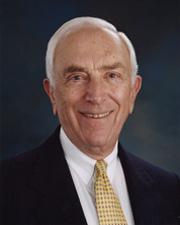 Sen. Frank R. Lautenberg (D-NJ)
Legislative Activity
Stay on top of the latest movement without scrolling through every action
Senate amendment proposed (on the floor): Amendment SA 982 proposed by Senator Lautenberg.(consideration: CR S8405-8407, S8407-8408, S8409; text: CR S8405)
June 24, 2003
View full timeline
Senate amendment proposed (on the floor): Amendment SA 982 proposed by Senator Lautenberg.(consideration: CR S8405-8407, S8407-8408, S8409; text: CR S8405)
June 24, 2003
Senate amendment not agreed to: Amendment SA 982 not agreed to in Senate by Yea-Nay Vote. 41 - 54. Record Vote Number: 239.
June 24, 2003
Roll call votes on amendments in Senate: Amendment SA 982 not agreed to in Senate by Yea-Nay Vote. 41 - 54. Record Vote Number: 239.
June 24, 2003
Amendment SA 982 proposed by Senator Lautenberg. (consideration: CR S8405-8407, S8407-8408, S8409; text: CR S8405) To make prescription drug coverage available beginning on July 1, 2004.
June 24, 2003
Amendment SA 982 not agreed to in Senate by Yea-Nay Vote. 41 - 54. Record Vote Number: 239.
June 24, 2003
Senate amendment submitted
June 23, 2003
Votes
1 roll call on this amendment
Text
Proposed
PRESCRIPTION DRUG AND MEDICARE IMPROVEMENT ACT OF 2003--Continued

Amendment No. 969

The PRESIDING OFFICER. Under the previous order, the hour of 2:15
having arrived, there will now be 10 minutes evenly divided prior to a
vote in relation to the Dodd amendment, No. 969.
Mr. DODD. Mr. President, do I need to ask unanimous consent the
present amendment be temporarily set aside?
The PRESIDING OFFICER. That is unnecessary.
Mr. DODD. Mr. President, in the 5 minutes I have, let me discuss it
very briefly with my colleagues.
This amendment would allow Medicare beneficiaries the freedom to move
between plans for the first 2 years that this benefit is in effect,
from 2006 to 2007. Under the present bill, you have to make a decision
immediately and then you are locked into that decision for a year. Then
you would have an open enrollment period for a month after that, and
then you would be locked in for another year.
What we are offering with this amendment is initially seniors be
given a 2-year window in order to decide which plan works best for
them. Then you would go to the 1 year with the 1-month open enrollment.
But, initially, given the tremendous amount of potential confusion
about which of these various alternatives would work best for people,
they ought to be given a bit more time than to have to make an almost
instantaneous decision about which of these plans is best suited for
them.
One of the hallmarks that has been used to describe this bill is it
is to give people choice--flexibility and choice. All we are suggesting
is an additional 2 years, if you will, not requiring an immediate
decision but a 2-year window in order to make that choice so people are
more well informed.
There are a number of areas in the underlying bill that do not go
nearly far enough, in my view, to serve Medicare beneficiaries. But I
believe this is a good first step, at least as presently proposed. I am
inclined to be supportive of this bill. These are some small points I
think could help make this a better bill.
If enacted, the underlying bill would require, as I mentioned,
Medicare beneficiaries to choose a prescription drug plan and to stay
with that plan for a minimum of 1 year. With the enactment of such
broad and sweeping changes in the Medicare Program, I am fearful many
Medicare beneficiaries will face great uncertainty trying to find the
best plan to meet their particular needs. Beneficiaries would be faced
with a menu of plans offering varying premiums, copayments or
coinsurance, drug formularies, and all the other variables that make up
a prescription drug benefit. It may not be immediately clear to people
over the age of 65 which of these plans is going to best suit their
needs. It is not difficult to imagine a scenario where this could
become a significant problem, possibly even affecting the health and
well-being of the beneficiary we are trying to assist with this
legislation.
A senior on a tight budget might enroll in a plan in an area that
offers slightly lower premiums and coinsurance. Perhaps that
beneficiary is on blood pressure medication and, after enrolling in the
plan, discovers the particular medication--which she has been taking
for years and has proven to be effective for a condition, with minimal
side effects--is not part of the formulary for the plan she chose
immediately.
What I am suggesting is, What are her options? As the bill is
currently written, she is stuck with that plan for at least a year. So
she can try to navigate the hurdles and obstacles that would allow her
to take an off-formulary drug, or switch to another drug that might not
be as effective or cause severe side effects. These are not optimal
choices.
One of our stated goals is to give seniors as much of a choice as
possible, and I am firmly behind that goal, as I mentioned at the
outset of these remarks.
I do not want to suggest for a second that we should reduce choice or
create simplicity, nor do I question the importance of cost-control
mechanisms such as formularies. However, with choice and
differentiation comes uncertainty. I believe we can greatly relieve
this uncertainty by allowing those initially choosing prescription drug
plans for the very first time the opportunity to move from one plan to
another to determine which of these plans offers the best plan to fit
their needs, and to give them the opportunity of doing that for a 2-
year period, and then go to the open enrollment period and a 1-year
after that.
I asked people in my own State to take a look at this proposal. In
fact, this language comes from them. Their suggestion is this language
I have on this chart. I will read from it:

The amendment which you are proposing is essential to
ensure fair and informed access to the health plans which are
planned under the terms of S. 1.

By the way, these people are very much supportive of what Senator
Grassley is doing in this bill. They say:

Our experience with Medicare beneficiaries in Connecticut
and nationally has shown that the ability of a Medicare
beneficiary to change from plan to plan, especially during
the period after initially choosing a plan, is of utmost
importance. Making choices about which health plan is best is
often confusing for a Medicare beneficiary, especially for
those who are elderly, frail or having medical problems.
Comparing plans and choosing the right plan can be a
complicated process, and Medicare beneficiaries who discover
they have not made the most informed choice, whose experience
with a plan demonstrates it is not adequate to meet their
needs, or who have changes in their life circumstances, need
to have some ability to change from one plan to another. Only
with this ability to change can they be assured the
opportunity to receive the kind of health care they want, and
the fullest health benefit they need, to meet their
individual circumstances under the Medicare program.

The PRESIDING OFFICER. The Senator's time has expired.
Mr. DODD. Mr. President, I ask unanimous consent for 30 additional
seconds.
The PRESIDING OFFICER. Without objection, it is so ordered.
Mr. DODD. All we are asking is, instead of forcing people to make
that initial decision, they be given that 2-year window to sort this
out. And then you move into the 1 year and the window opens, and so
forth. I do not think this has any significant financial implications.
It is just allowing people to make intelligent, good choices which all
of us want to provide people, particularly older Americans who could be
terribly confused by choosing formularies and coinsurance and copayment
plans. All that has to be done at the outset once this bill becomes
law.
I have used a little more time than I said I would to try to explain
the amendment, but I want it to be clear to my colleagues why I think
this is a

[[Page S8402]]

very reasonable suggestion to make an improvement to this bill.
The PRESIDING OFFICER. The Senator's time has expired.
Mr. DODD. I thank the Presiding Officer for his indulgence.
The PRESIDING OFFICER. Who yields time?
Mr. DODD. Mr. President, I ask unanimous consent that my colleague,
Senator Lieberman, be added as a cosponsor of this amendment.
The PRESIDING OFFICER. Without objection, it is so ordered.
Who yields time?
Mr. DODD. Mr. President, if they don't want to talk, I will be glad
to take a little more time to explain this amendment.
Mr. GRASSLEY. Mr. President, I will yield the man 1 minute of my
time.
Mr. DODD. Mr. President, I thank the man from Iowa for yielding the 1
minute.
The PRESIDING OFFICER. The Senator is recognized for 1 minute.
Mr. DODD. The man from Connecticut appreciates the man from Iowa
giving him 1 more minute.
Mr. President, very briefly, the existing underlying bill says you
have to make this choice about which plan you want to go into almost
immediately once this proposal becomes law. We are suggesting that at
the outset you give people a 2-year window to shop wisely. They may
make the decision right away. They may make it within a month or two.
But knowing how confusing this can be, knowing that different
formularies provide for different medications, we ought to provide
people at least some opportunity to get this right to the extent they
can. So this is merely opening up that window from an immediate choice
to a 2-year choice--anytime within that 2 years to make that right
choice.
There have been some who wondered, if you move from one plan to the
next, what are the cost implications? I will be glad to respond to
that. We do not think that is terribly complicated to figure out. If
you have reached your deductible levels, obviously, the same would have
to apply. You would not start all over in that 1-year period. So
whatever costs you have incurred, whatever expenditures you have made
or not made would move from one plan to the next, at least as far as
the cost goes.
So the additional time should not have any additional financial or
fiscal implications but merely the choice of saying to people, who are
older Americans: You get a little more time to sort this out. That is
all I am suggesting with this amendment.
I would hope the committee might support it. It is not a radical
proposal.
The PRESIDING OFFICER. The Senator's time has expired.
Mr. DODD. I thank the Senator.
The PRESIDING OFFICER. The Senator from Iowa.
Mr. GRASSLEY. Mr. President, I yield myself such time as I might
consume.
I know the Senator from Connecticut has well-intentioned motivations
behind his amendment. The reason why I oppose the amendment is not
because of any ill intent. But we have very carefully crafted this
product before us after the Federal Employees Health Benefits Plan and
the open season and the practice there. As far as I know, we do not run
into Federal employees complaining because they cannot change more
often than once a year. So I am going to ask my colleagues to vote
against this amendment.
It has some costs. I will speak about that. The open enrollment
period in S. 1, as I said, is modeled after the annual open enrollment
period of the Federal Employees Health Benefits Plan. I believe this
program has been in place for more than 40 years, so we have a lot of
experience with it. Consequently, it is a good pattern for us to craft
the legislation before us for senior citizens in retirement for their
health benefits.

Each year seniors would be able to examine the choice of plans and
select the plan that is best suited to their needs. The amendment
before us proposes to allow seniors to change plans more than once
during a continuous open enrollment period that would last for 2 years.
While this may seem a good idea on the surface, it is an invitation, I
believe, to more expensive health care for our seniors. I think it is
going to lead to chaos and plan instability.
It is very important, at least in the opening years, as we get these
new programs underway that there be some predictability in order to
encourage more plans to compete. The more plans competing, the better
benefits we ought to get for our seniors at a lower price.
It seems to me that providing a long, continuous open enrollment
period allows any and all seniors to wait until they are sick before
enrolling in a more comprehensive plan. You can understand that we need
to have a situation where people are seen buying insurance and doing it
in a way in which they manage their own risk as opposed to doing it in
the case of only an emergency. This is where you get the insurance
aspect that is so important in what we are trying to accomplish.
So if you do that, as the Senator from Connecticut suggests, it is
going to add costs to the program because it permits healthy enrollees
to stay in the cheaper basic plan until an illness drives them to a
generous plan. The generous plan then would become the plan just for
sick enrollees.
I have a statement here that the CBO says this would have a cost of
$8 billion over the years 2004 to 2008, and $23 billion for the 10-year
period 2004 to 2013.
I am going to yield back the remainder of my time.
The PRESIDING OFFICER. All time has expired.
Mr. DODD. I ask unanimous consent for an additional 30 seconds.
The PRESIDING OFFICER. Is there objection?
Without objection, it is so ordered.
Mr. DODD. Mr. President, this is one time. Unlike Federal employees,
who are 30 or 35 years of age, this plan is all new. What we are saying
is, for the very first 2 years--that is all, just the first 2 years--
give seniors the flexibility so they do not have to sign up for a plan
immediately. You get a couple years within that timeframe to make your
choice, then you go into the 1-year cycle as all the rest of us do. But
for older Americans, it is very confusing--very confusing--for them to
have to make that choice at the get-go, right at the very beginning. So
that 2-year window, to have some flexibility to make a choice that best
serves your interest, I think is a reasonable request to make for our
older Americans. That is the end of it.
Mr. GRASSLEY. Mr. President, I ask unanimous consent for an equal 30
seconds.
The PRESIDING OFFICER. Without objection, it is so ordered.
Mr. GRASSLEY. Mr. President, I have some sympathy for what the
Senator from Connecticut says because so many times I have said to my
constituents, this is voluntary. You are going to have your choice to
go into another plan or change plans. I emphasize the ability to change
plans. In addition, we have to have some stability even in the early
years. Most importantly, when we are developing a new prescription drug
benefit, the most vast improvement in Medicare in 35 years, I think it
demands more stability than when you get down the road a ways.

I move to table the amendment and ask for the yeas and nays.
The PRESIDING OFFICER. Is there a sufficient second?
There is a sufficient second.
The question is on agreeing to the motion to table amendment No. 969.
The clerk will call the roll.
The bill clerk called the roll.
Mr. REID. I announce that the Senator from Florida (Mr. Graham), the
Senator from Massachusetts (Mr. Kerry), and the Senator from
Connecticut (Mr. Leiberman) are necessarily absent.
I further announce that, if present and voting, the Senator from
Massachusetts (Mr. Kerry) would vote ``nay''.
The PRESIDING OFFICER. Are there any other Senators in the Chamber
desiring to vote?
The result was announced--yeas 55, nays 42, as follows:

[Rollcall Vote No. 234 Leg.]

YEAS--55

Alexander
Allard
Allen
Baucus
Bennett
Bond
Breaux
Brownback
Bunning
Burns
Campbell
Chafee
Chambliss
Cochran
Coleman
Collins
Cornyn
Craig
Crapo
DeWine
Dole
Domenici
Ensign
Enzi
Fitzgerald
Frist
Graham (SC)
Grassley
Gregg
Hagel
Hatch
Hutchison
Inhofe
Jeffords
Kyl
Lott

[[Page S8403]]

Lugar
McCain
McConnell
Murkowski
Nelson (NE)
Nickles
Roberts
Santorum
Sessions
Shelby
Smith
Snowe
Specter
Stevens
Sununu
Talent
Thomas
Voinovich
Warner

NAYS--42

Akaka
Bayh
Biden
Bingaman
Boxer
Byrd
Cantwell
Carper
Clinton
Conrad
Corzine
Daschle
Dayton
Dodd
Dorgan
Durbin
Edwards
Feingold
Feinstein
Harkin
Hollings
Inouye
Johnson
Kennedy
Kohl
Landrieu
Lautenberg
Leahy
Levin
Lincoln
Mikulski
Miller
Murray
Nelson (FL)
Pryor
Reed
Reid
Rockefeller
Sarbanes
Schumer
Stabenow
Wyden

NOT VOTING--3

Graham (FL)
Kerry
Lieberman
The motion was agreed to.
Mr. GRASSLEY. I move to reconsider the vote.
Mr. SANTORUM. I move to lay that motion on the table.
The motion to lay on the table was agreed to.
The PRESIDING OFFICER. Who yields time?
The Senator from Pennsylvania.
Mr. SANTORUM. Mr. President, I ask unanimous consent that the
remaining two votes in this series be limited to 10 minutes each.
The PRESIDING OFFICER. Without objection, it is so ordered.

Amendment No. 981

The PRESIDING OFFICER. Who yields time on the Pryor amendment?
The Senator from Arkansas.
Mr. PRYOR. I thank the Chair.
Mr. President, the United States may be the only country in the world
that does not protect its population from price gouging when it comes
to prescription drugs. Last week, the Senate took a very important step
in eliminating that by adopting the Dorgan-Cochran amendment by a vote
of 62 to 28 to allow the reimportation of prescription drugs from
Canada.
This amendment gives that amendment teeth. It gives HHS 2 years to
act, and if they do not act within 2 years, then it becomes illegal for
prescription drug companies to sell their products in the United States
for more than they sell them in Canada.
Some people call this price control. I respectfully disagree, but if
you call it price control, that means 62 of us last Friday stood up for
price controls. What it does in reality is introduce competition on
prices.
There is one drug called tamoxifen. Tamoxifen is a fantastic breast
cancer drug. One could buy it before it became generic for $241 for 60
pills in the United States, and for $34 for 60 pills in Canada. The
difference between $241 and $34 is very significant, and that is what
we are trying to fix.
I thank the Chair.
Mr. SANTORUM. Mr. President, I hope my colleagues can hear me. What
the Pryor amendment does has nothing to do with reimportation. What it
says is, if the Secretary does not certify that the drugs are safe
coming from Canada after 2 years, we will adopt the Canadian pricing
scheme for pharmaceutical products in this country. So the Government
of Canada will set prices for pharmaceutical drugs in this country. We
will be ceding to the Government of Canada the right to set prices for
drugs in the United States of America.
If we want to have price controls for drugs, we should have a debate
to do that, but we should not be ceding to a foreign government the
right to set drug prices in this country, and that is what this
amendment does.
Whether you are for reimportation, whether you are for price controls
for drugs, do not give up the right to set the price controls to a
foreign government who will set them for the United States. And that is
what this amendment does. I urge an overwhelming negative vote.
The PRESIDING OFFICER (Mr. Crapo). The question is on agreeing to the
amendment.
Mr. REID. The yeas and nays are not in order.
Mr. SANTORUM. I move to table the amendment and I ask for the yeas
and nays.
The PRESIDING OFFICER. Is there a sufficient second?
There is a sufficient second.
The PRESIDING OFFICER. The question is on agreeing to the motion.
The clerk will call the roll.
The assistant legislative clerk called the roll.
Mr. REID. I announce that the Senator from Florida (Mr. Graham), the
Senator from Massachusetts (Mr. Kerry), and the Senator from
Connecticut (Mr. Lieberman) are necessarily absent.
I further announce that, if present and voting, the Senator from
Massachusetts (Mr. Kerry) would vote ``nay''.
The PRESIDING OFFICER. Are there any other Senators in the Chamber
desiring to vote?
The result was announced--yeas 66, nays 31, as follows:

[Rollcall Vote No. 235 Leg.]

YEAS--66

Alexander
Allard
Allen
Baucus
Bayh
Bennett
Biden
Bingaman
Bond
Breaux
Brownback
Bunning
Burns
Campbell
Carper
Chafee
Chambliss
Cochran
Coleman
Collins
Cornyn
Corzine
Craig
Crapo
DeWine
Dodd
Dole
Domenici
Ensign
Enzi
Fitzgerald
Frist
Graham (SC)
Grassley
Gregg
Hagel
Hatch
Hollings
Hutchison
Inhofe
Jeffords
Kyl
Landrieu
Lott
Lugar
McCain
McConnell
Mikulski
Murkowski
Murray
Nelson (NE)
Nickles
Roberts
Santorum
Sessions
Shelby
Smith
Snowe
Specter
Stevens
Sununu
Talent
Thomas
Voinovich
Warner
Wyden

NAYS--31

Akaka
Boxer
Byrd
Cantwell
Clinton
Conrad
Daschle
Dayton
Dorgan
Durbin
Edwards
Feingold
Feinstein
Harkin
Inouye
Johnson
Kennedy
Kohl
Lautenberg
Leahy
Levin
Lincoln
Miller
Nelson (FL)
Pryor
Reed
Reid
Rockefeller
Sarbanes
Schumer
Stabenow

NOT VOTING--3

Graham (FL)
Kerry
Lieberman
The motion was agreed to.

Amendment No. 1001

The PRESIDING OFFICER. There are 2 minutes equally divided for
consideration of the Boxer amendment.
Mrs. BOXER. Mr. President, I would like to explain in 1 minute a very
important amendment that will really improve this bill. This amendment
is endorsed by the AARP--they feel very strongly about it--in addition
to the other major seniors organizations to preserve Social Security
and Medicare. In the bill right now, there is a benefit shutdown when
you reach $4,500 worth of purchased drugs. That means seniors will face
a $1,300 deficit before they start getting the benefit. I will just
implore my colleagues, there is not any other prescription drug plan in
this country that does this. This is a really terrible problem for our
people. Just when they need help the most, they stop getting help.

I conclude, since we have so little time, by reading what AARP says:

AARP members find the notion of a gap in coverage to be a
major barrier to enrolling in a Medicare drug benefit. They
tell us that they are unaware of similar features in any of
the insurance products they routinely purchase.

In closing, they say:

. . . we urge the Senate to eliminate this coverage gap.

Please make this bill better, friends. It is the least we can do for
seniors.
The PRESIDING OFFICER. The Senator's time has expired.
The Senator from Pennsylvania.
Mr. SANTORUM. Mr. President, I rise in opposition to make four
points.
First, we had an additional $30 billion when this bill was originally
marked up in the Finance Committee. We put all $30 billion into filling
the donut, so we have done as much as we can with the money allocated.
Second, this amendment costs $64 billion. We would bust the
agreement, which is to stay within the budget of $400 billion.
Third, according to CMS, only 2 to 12 percent--depending on your
estimates--are going to be affected by this ``coverage gap.''
Finally, there is no standard benefit. This is sort of a mystery I
don't know why we don't talk about more. This is a typical design of
what a benefit would look like. But under this bill, the companies
bidding on these pharmaceutical contracts can design the benefit any
way they want. They can have a donut. They do not have to have

[[Page S8404]]

a donut. The only thing they are required to do is have a $275
deductible for those plans of 160 percent of poverty and above and have
$3,700 in total spending before the catastrophic kicks in. The donut is
illusory, and I ask my colleagues to vote no on the amendment.
Ms. MIKULSKI. Mr. President, I rise today in strong support of the
amendment No. 1001 offered by my colleague from California, Senator
Boxer.
The Senate is debating legislation to provide seniors with
prescription drugs that is a start but there are also many shortcomings
with this bill. One of most glaring shortcomings is the gap in drug
coverage. It doesn't make sense. As drug costs rise, benefits get shut
off and seniors with high drug costs have to pay all of their drug
costs from $4,500 to $5,800. I think that is cruel.
How would this amendment address this shortcoming?
It is simple. This amendment would let seniors continue to have
continuous coverage until you hit the catastrophic cap of $5,800 so
that means no gap. And, then your copay would drop to 10 percent just
like in the bill. No figuring out when you hit the coverage gap. No
figuring out how long you are going to be in the hole. No paying
premiums and not getting benefits. You simply get drug coverage.
Why is this amendment important?
The coverage gap imposes a ``sickness tax'' on seniors. Once drug
spending reaches $4,500 and this is a senior who clearly is facing
serious health problems this senior would now have to pay $1,300 of
their own money without any help from the Government even though they
are still paying premiums to stay in the plan.
What does this mean?
Millions of our seniors will have no drug coverage for several months
out the year. Their coverage will just stop and for many; it may not
start back up again until the next year.
This is wrong. I believe honor thy mother and father is not just a
good commandment to live by, it is good public policy to govern by.
That is why I feel so strongly about Medicare. Congress created
Medicare to provide a safety net for seniors. I don't think there
should be any holes in that net. That is why I support this amendment
and urge my colleagues to also.
The PRESIDING OFFICER. The Senator's time has expired.
The yeas and nays have been previously ordered on this amendment.
Mr. SANTORUM. Mr. President, I move to table the amendment and ask
for the yeas and nays.
The PRESIDING OFFICER. Is there a sufficient second?
There is a sufficient second.
The question is on agreeing to the motion to table amendment No.
1001.
The clerk will call the roll.
The legislative clerk called the roll.
Mr. McCONNELL. I announce that the Senator from Colorado (Mr.
Campbell) is necessarily absent.
Mr. REID. I announce that the Senator from Florida (Mr. Graham), the
Senator from Massachusetts (Mr. Kerry), and the Senator from
Connecticut (Mr. Lieberman) are necessarily absent.
I further announce that, if present and voting, the Senator from
Florida (Mr. Graham) and the Senator from Massachusetts (Mr. Kerry)
would each vote ``nay''.
The PRESIDING OFFICER. Are there any other Senators in the Chamber
desiring to vote?
The result was announced--yeas 54, nays 42, as follows:

[Rollcall Vote No. 236 Leg.]

YEAS--54

Alexander
Allard
Allen
Baucus
Bennett
Bond
Breaux
Brownback
Bunning
Burns
Chafee
Chambliss
Cochran
Coleman
Collins
Cornyn
Craig
Crapo
DeWine
Dole
Domenici
Ensign
Enzi
Fitzgerald
Frist
Graham (SC)
Grassley
Gregg
Hagel
Hatch
Hutchison
Inhofe
Jeffords
Kyl
Lott
Lugar
McCain
McConnell
Miller
Murkowski
Nickles
Roberts
Santorum
Sessions
Shelby
Smith
Snowe
Specter
Stevens
Sununu
Talent
Thomas
Voinovich
Warner

NAYS--42

Akaka
Bayh
Biden
Bingaman
Boxer
Byrd
Cantwell
Carper
Clinton
Conrad
Corzine
Daschle
Dayton
Dodd
Dorgan
Durbin
Edwards
Feingold
Feinstein
Harkin
Hollings
Inouye
Johnson
Kennedy
Kohl
Landrieu
Lautenberg
Leahy
Levin
Lincoln
Mikulski
Murray
Nelson (FL)
Nelson (NE)
Pryor
Reed
Reid
Rockefeller
Sarbanes
Schumer
Stabenow
Wyden

NOT VOTING--4

Campbell
Graham (FL)
Kerry
Lieberman
The motion was agreed to.
Mr. GRASSLEY. I move to reconsider the vote, and I move to lay that
motion on the table.
The motion to lay on the table was agreed to.
Mr. BAUCUS. Mr. President, I ask unanimous consent that all pending
amendments be laid aside so that the Senator from New Jersey may offer
an amendment.
The PRESIDING OFFICER. Is there objection?
Mr. SESSIONS. Reserving the right to object, is the Senator going to
speak? I could not hear.
Mr. BAUCUS. I withdraw the request. I ask unanimous consent that
there be 30 minutes equally divided on the Lautenberg amendment and,
immediately following that debate, the Senate vote on the Lautenberg
amendment.
Mr. SESSIONS. Reserving the right to object, I just want to call up
an amendment and set it aside. Will the Senator agree we can do that?
Mr. LAUTENBERG. I did not hear the request. Was the Senator asking a
question of me?
Mr. SESSIONS. Mr. President, I was asking unanimous consent that I be
allowed to call up an amendment for 30 seconds and set it aside before
the Senator from New Jersey commences his remarks.
The PRESIDING OFFICER. The Senator from Montana has the floor.
Mr. BAUCUS. I yield the floor and withdraw my request.
The PRESIDING OFFICER. The Senator from Alabama may state his
request.

Amendment No. 1011

Mr. SESSIONS. Mr. President, I call up amendment No. 1011.
The PRESIDING OFFICER. The Chair will interpret the Senator's request
as a unanimous consent request to set aside all pending amendments. Is
there objection to setting aside all pending amendments?
Without objection, it is so ordered. The clerk will report.
The legislative clerk read as follows:

The Senator from Alabama [Mr. Sessions] proposes an
amendment numbered 1011.

Mr. SESSIONS. Mr. President, I ask unanimous consent that the reading
of the amendment be dispensed with.
The PRESIDING OFFICER. Without objection, it is so ordered.
The amendment is as follows:

(Purpose: To express the sense of the Senate that the Committee on
Finance should hold hearings regarding permitting States to provide
health benefits to legal immigrants under medicaid and SCHIP as part of
the reauthorization of the temporary assistance for needy families
program)

Strike section 605 and insert the following:

SEC. 605. SENSE OF THE SENATE REGARDING HEALTH INSURANCE
COVERAGE OF LEGAL IMMIGRANTS UNDER MEDICAID AND
SCHIP.

(a) Findings.--The Senate makes the following findings:
(1) In 1996, in the Personal Responsibility and Work
Opportunity Reconciliation Act of 1996 (Public Law 104-193;
110 Stat. 2105)(commonly referred to as the ``welfare reform
Act''), Congress deliberately limited the Federal public
benefits available to legal immigrants.
(2) The Personal Responsibility and Work Opportunity
Reconciliation Act of 1996 allows a State the option of
electing to offer permanent resident legal aliens that have
been living in the United States for at least 5 years the
same benefits that their State citizens receive under the
temporary assistance for needy families program (commonly
referred to as ``TANF'') and the medicaid program.
(3) As of the date of enactment of this Act, 22 States have
elected to give the permanent resident legal aliens who
reside in their States the same TANF and medicaid benefits as
the States provide to the citizens of their States.
(4) This Act, the Prescription Drug and Medicare
Improvement Act of 2003, is not a welfare or medicaid reform
bill, but rather is a package of improvements for the
medicare program that is designed to provide greater access
to health care for America's seniors.
(5) The section heading for 605 of this Act as reported out
of the Committee on Finance, was titled ``Assistance with
Coverage of Legal Immigrants under the medicaid program and
SCHIP,'' and, as reported, related directly to the provision
of benefits under

[[Page S8405]]

the medicaid and State children's health insurance programs,
not to benefits provided under the medicare program.
(6) The reported version of section 605 would have directly
overturned the reforms made in the 1996 welfare reform Act.
(7) The reported version of section 605 would have greatly
expanded the number of individuals who could receive benefits
under medicaid and SCHIP.
(8) No hearings have been held in the Committee on Finance
of the Senate concerning why the 5-year residency requirement
for legal aliens to obtain a Federal public benefit
established in the welfare reform Act needs to be overturned
or why the reported version of section 605 should be included
in a medicare reform package.
(9) Congress must reauthorize the temporary assistance for
needy families program later this year and should hold
hearings regarding whether the 5-year residency requirement
for legal aliens to obtain a Federal public benefit should be
overturned as part of the reauthorization of that program.
(b) Sense of the Senate.--It is the sense of the Senate
that the Committee on Finance of the Senate should hold
hearings in connection with the reauthorization of the
temporary assistance for needy families program, or in
connection with reform of the medicaid program, regarding
whether the 5-year residency requirement for legal aliens to
obtain a Federal public benefit that was established in the
1996 welfare reform Act should be overturned for purposes of
the medicaid and State children's health insurance programs.

Mr. SESSIONS. Mr. President, I ask unanimous consent that the
amendment be set aside for consideration at the appropriate time.
The PRESIDING OFFICER. Without objection, it is so ordered.
Mr. SESSIONS. I yield the floor.
The PRESIDING OFFICER. The Senator from New Jersey.
Mr. LAUTENBERG. Mr. President, I want to be certain of the order. My
amendment is at the desk. What I want to do is in the time allocated to
me--which I understand is 15 minutes per side; is that correct?
The PRESIDING OFFICER. At this point, no such order has been entered.
Mr. LAUTENBERG. I thank the Chair.

Amendment No. 982

Mr. LAUTENBERG. Mr. President, I call up my amendment which is at the
desk.
The PRESIDING OFFICER. Without objection, the pending amendments will
be set aside. The clerk will report.
The legislative clerk read as follows:

The Senator from New Jersey [Mr. Lautenberg], for himself,
Mr. Reed, Mr. Reid, Mrs. Clinton, and Mr. Corzine, proposes
an amendment numbered 982.

Mr. LAUTENBERG. Mr. President, I ask unanimous consent that the
reading of the amendment be dispensed with.
The PRESIDING OFFICER. Without objection, it is so ordered.
The amendment is as follows:

(Purpose: To make prescription drug coverage available beginning on
July 1, 2004)

At the end of title I, insert the following:

SEC. ____. IMPLEMENTATION OF TITLE.

Notwithstanding any other provision of this Act, the
amendments made by this title shall be implemented and
administered so that prescription drug coverage is first
provided under part D of title XVIII beginning on July 1,
2004.

Mr. LAUTENBERG. Mr. President, I rise to talk about my amendment
which is designed to change the effective date of this bill.
My amendment is cosponsored by Senators Reed of Rhode Island, Reid of
Nevada, Clinton, and Corzine.
My amendment is very simple: Let's give our seniors a prescription
drug benefit just as quickly as we can. They need it now. Let's not
delay any longer than practicable to get it into place.
Under the current proposal, comprehensive drug coverage does not
start until July 2006. Imagine that, 2006. It is not fair to seniors
who are expecting a benefit almost immediately. They will have seen
President Bush sign a bill with some fanfare and will have seen lots of
Members of Congress crowding the stage with him, and everyone will say:
We have put a prescription drug benefit into place. When seniors learn
that the benefit begins in 2006, they are going to feel deceived,
tricked, and angry.
My amendment changes the effective date of the coverage to July 1,
2004. There is not any reason to have our seniors wait any longer for a
prescription drug benefit.
The original Medicare plan was signed into law by President Johnson
on July 30, 1965, and 11 months later, July 1, 1966, all persons
eligible were enrolled. The entire system for Medicare was created in
just 11 months.
When we look at this chart, we see what is planned with the Bush/
Senate prescription drug benefit. We are looking at 30 months, and we
are looking at the creation of an entire Medicare system which took
just 11 months to put in place. That was done without the luxury of
today's high-speed computers. It was just President Johnson and his
administration getting the entire system in place in 11 months.
My amendment essentially follows the same timetable. If President
Johnson was able to create the entire Medicare system in just 11
months, then surely President Bush should be able to add a drug benefit
in the same amount of time.
Look at the timeline the President has set for this Medicare drug
proposal: 30 months. Why so long? Our clue is, what? Election day. That
is illustrated on this chart. Sixteen months from now, this prolonged
effective date is conveniently well past election day.
The administration's Medicare agency, CMS, says it needs 30 months.
That is very convenient timing for political purposes, but it is
terrible timing for America's seniors.
President Johnson, a true Texan, had a can-do attitude, and there is
no reason this administration cannot dedicate itself to completing this
task in 11 months. We need to give seniors meaningful drug coverage as
soon as possible, not 2006.
The reality is that 5.5 million seniors currently on Medicare will
not be alive in 2006. If there are insufficient funds in the budget for
this amendment, then it is the result of choices made by the President
and his party. They chose to provide a massive tax cut to the
wealthiest among us, and they chose it at the price of Medicare.
The issue is simple: If we give a prescription drug benefit, why
would we want to withhold it? This bill is about fooling the American
people about the mission here. It is more about elections than
correcting the problems associated with a prescription drug program. I
urge my colleagues to support this amendment.
Mr. President, we have some time remaining. How much time remains on
our side?
The PRESIDING OFFICER. There is no set amount of time. The Senator
has consumed 5 minutes.
Mr. LAUTENBERG. Mr. President, I yield the floor. I know the Senator
from Nevada is interested in speaking.
Mr. GRASSLEY. Mr. President, I yield myself such time as I may
consume in opposition to the Lautenberg amendment.
The PRESIDING OFFICER. The Senator has the floor.
Mr. GRASSLEY. Maybe I should ask, are we under time constraints?
The PRESIDING OFFICER. There are no time constraints.
Mr. GRASSLEY. What the Senator from New Jersey wants to do I wish we
could do. I personally was somewhat astounded when we asked experts at
the Congressional Budget Office, experts at the Office of Management
and Budget, experts in the Department of Health and Human Services, how
much time it would take to get this new prescription drug program
underway. We were advised to start it in the year 2006.
In an ideal world, all seniors would have access to our comprehensive
prescription drug benefit next year. But our plan, I am sorry to say,
cannot go into effect until 2006. Therefore, we need to do something to
help our seniors right now. Part of S. 1 does that. They have been
doing it because seniors, as I am sure the Senator from New Jersey is
trying to respond to, have been waiting a very long time for Congress
to act and pass a prescription drug benefit, in the end, helping them
with the tremendous costs they are paying for prescription drugs.
This obviously is not satisfying to the Senator from New Jersey who
would like to get this plan underway much sooner. Because of the
waiting period until the year 2006 to get the very comprehensive
program underway, we included in our plan a temporary prescription drug
discount card. This is a voluntary program that all seniors can partake
of next year. It is available for an annual fee costing no more than
$25. Since our low-income seniors need extra help, this fee would be
waived. It provides for a 10-percent

[[Page S8406]]

to 25-percent discount on all costs of prescription drugs. There are
some seniors for whom even a 10-percent to 25-percent discount is still
a hardship to purchase prescription drugs. So we have added to this for
really low-income seniors to receive a $600 annual help in purchasing
prescription drugs during this interim period of time, 2004 and 2005.
They will be required to pay a minimal copayment of 10 percent when the
spending of the $600 subsidy is in place. Spouses who receive the low-
income benefit are also allowed to pool share their deposits.
When the comprehensive drug program begins January 1, 2006, the
discount card program automatically ends. However, low-income seniors
will be able to use their allotment of $600 until June 2006.
Almost 10 million Medicare beneficiaries with significant
prescription drug needs will realize savings from this endorsement
program. The Center for Medicare Services projects that the Medicare
beneficiaries will save between $1.2 billion and $1.6 billion in the
program the very first year.
As I said, I feel, not for reasons I like to give to my fellow
Senators, that we cannot expect this comprehensive new prescription
drug program for seniors, which happens to be the first major
improvement in strengthening of Medicare since 1965, to go into effect.
Maybe we can push and push and push, but this first major expansion of
Medicare in 38 years ought to be carefully done and done right.
Consequently, that is why we have deferred to the judgment of the
Congressional Budget Office, Office of Management and Budget, as well
as the Secretary of HHS. We have tried to compensate for the long
period of phasing with the discount card and the $600 subsidy.

I wish I could do more. I wish I could vote for the Senator's
amendment but I cannot. I ask my colleagues to vote against it.
I yield the floor.
The PRESIDING OFFICER. The Senator from New Jersey.
Mr. LAUTENBERG. I say to our friend from Iowa, the discount card
allows somewhere between 10 and up to 25 percent. With seniors spending
an average $2,300 a year on medication, even a 20-percent discount does
not provide nearly enough relief. Frankly, it is hard to understand why
it has to take 2\1/2\ years to get the program into place. I rather
suspect it has less to do with the perfection of the program than it
has to do with some other cause. It cannot take that long. We have all
of these seniors on record. They are medical enrollees now. Why can't
we get this going?
As a matter of fact, my colleague from Minnesota, who is going to say
something, thinks it should be done in an even shorter period of time
than my amendment provides.
I ask my colleague if he would like to say something. I yield the
floor.
The PRESIDING OFFICER. The Senator from Minnesota.
Mr. DAYTON. Mr. President, I join with my Senator from New Jersey. He
persuaded me to be reasonable. This is the reasonable alternative
proposal, July 1 of 2004. I have great respect for the chairman of the
Senate Finance Committee, the Senator from Iowa. I sense his difficulty
because I don't believe the senior citizens of anywhere else in America
will be any different from the senior citizens of Minnesota who will
be, I believe, absolutely beside themselves to learn this program they
have waited years for Congress to enact will be enacted but it will not
be ready for 2\1/2\ years.
I suggest perhaps one of the reasons is that this is not a system
that can be easily put in place or administered. The chairman is trying
to accommodate, if I understand his remarks correctly, the
administration, the Office of Management and Budget, and the Secretary
of Health and Human Services. They said this program as designed cannot
be put together and administered and operational until January 1, 2006.
I suggest that is pretty strong evidence that is not a very good
system for delivery of these services. We have insurance companies that
are going to be providing policies--they are in the business of
providing insurance for people. It can't take them 2\1/2\ years to
design this program. Regarding CMS or HHS, the Department itself, we
hear from this administration how their management of Government is so
much improved over their predecessor's. Is it going to take them 2\1/2\
years to design this program when, as my colleague from New Jersey,
Senator Lautenberg, pointed out, 40 years ago they were able to take
the whole Medicare Program and put that in effect in 11 months?
Not only do I support the amendment offered by Senator Lautenberg,
but I have to say for those who are advocating this as the preferred
alternative to extending Medicare to cover prescription drugs, if they
cannot get the program up and running in a lot less than 2\1/2\ years--
either 6 months as I would propose, or a year--then this is the wrong
program because this is not a viable alternative, and it is not viable
for the senior citizens of Minnesota or anywhere else, in my judgment.
To say people are going to get a discount card--they can get discount
cards already. They don't need Congress to do anything more than that
for 2\1/2\ years.
Just taking the figure the Senator from Iowa offered, if I understand
it correctly, of savings for seniors in America, Medicare
beneficiaries, of $1.26 billion the first year, it sounds like a lot of
money--it is a lot of money--but there are 40 million Medicare
beneficiaries in the country. If you divide $1.26 billion in savings by
those 40 million, that is about $30 per Medicare beneficiary in the
first year.
We are going to go back with this to the senior citizens of
Minnesota, and those with disabilities who are being crushed by these
prices, who see them going up all the time due to the greed and
profiteering of the pharmaceutical industry. We are told here we have a
bill, because it is the only one the majority of the Senate will agree
to, that is not going to do anything--nothing at all, under our
Government, on behalf of seniors and on behalf of all American
consumers of prescription drugs, to bring these prices down. Instead,
they are going to get a discount card that is going to save them on
average $30 a year? We ought to be ashamed of ourselves, first of all.
This bill is not what it is purporting to be, which is real relief for
anybody who needs it now, not January 1, 2006.
If my colleagues do not support this, I think we are sending a very
strong message to America that this is not a viable program to begin
with, and the pharmaceutical industry has, one more time, succeeded in
putting their profits ahead of the needs of people in America.
I yield the floor.
The PRESIDING OFFICER. The Senator from Montana.
Mr. BAUCUS. I know the Senator from New Hampshire would like to go
ahead. I will speak for just a minute or 2 before he does.
I very much agree with the Senator. It seems absurd that we have to
wait until 2006 before this program goes into effect. I very much
understand the concern of the Senator.
Let me say this to all of us who are concerned. Before the conference
report comes back, I am going to do my level best by pushing the CBO
and CMS, asking a lot of tough questions of these agencies, to see if
there is some way we can get this put together earlier. It is my hope
we could bring back a conference report that has an earlier date,
significantly earlier date. My guess is the private sector could get
this done pretty quickly. It would not take a full 2 years to get it
done.
I just pledge to my colleagues, this is one Senator who is going to
do his level best to try to get an earlier date. The current date just
doesn't make sense. We need to ask some tough questions and get some
answers.
I yield the floor.
The PRESIDING OFFICER. The Senator from Iowa.
Mr. GRASSLEY. If the Senator from New Hampshire will just give me a
minute, I have a unanimous consent request on votes coming up I would
like to propound.
I ask unanimous consent that at 4:20 the Senate proceed to a vote in
relation to Dayton amendment No. 957, to be followed by a vote in
relation to the Lincoln amendment, No. 1002; to be followed by a vote
in relation to the Lautenberg amendment, No. 982, with 2 minutes
equally divided for debate for each succeeding vote after the first;
further, that no amendments be in order to the amendments prior to the
votes; and finally that the second and

[[Page S8407]]

third votes be limited to 10 minutes in length.
I ask unanimous consent that prior to the first vote, Senator Sununu
be recognized for up to 5 minutes in order to offer an amendment.
Mr. REID. Reserving the right to object, I ask the vote occur at 4:25
and I be given 5 minutes after Senator Sununu.
Mr. GRASSLEY. I modify my unanimous consent request accordingly.
The PRESIDING OFFICER. Is there objection?
Mr. DAYTON. Reserving the right to object, I ask the Senator, in
terms of the motion, that 2 minutes be evenly divided for my amendment,
the first amendment. Is there something different for that?
Mr. GRASSLEY. You would have 1 minute and I would have 1 minute.
Mr. DAYTON. I object to that. I was told by the Senator's staff I
would have 2 minutes, 4 minutes equally divided.
Mr. REID. He can take a minute of my time.
Mr. GRASSLEY. You will get 2 minutes, one from your leader. Can we go
ahead?
Mr. DAYTON. I have no objection.
The PRESIDING OFFICER. Is there objection? Without objection, it is
so ordered.
The Senator from New Hampshire.

Amendment No. 1010

(Purpose: To improve outpatient vision services under part B of the
medicare program.)

Mr. SUNUNU. Mr. President, I ask unanimous consent that all pending
amendments be set aside for purposes of offering an amendment.
The PRESIDING OFFICER. Without objection, it is so ordered.
Mr. SUNUNU. Mr. President, I have an amendment at the desk. I ask for
its immediate consideration.
The PRESIDING OFFICER. The clerk will report.
The legislative clerk read as follows:

The Senator from New Hampshire [Mr. Sununu] proposes an
amendment numbered 1010.

Mr. SUNUNU. I ask unanimous consent the reading of the amendment be
dispensed with.
The PRESIDING OFFICER. Without objection, it is so ordered.
(The amendment is printed in today's Record under ``Text of
Amendments.'')
Mr. SUNUNU. Mr. President, I rise to offer an amendment that
effectively mirrors a piece of legislation I introduced earlier this
year. This amendment will extend benefits under Medicare for vision
rehabilitative services; that is, rehabilitative services for those
seniors with a vision impairment.
As we debate this important prescription drug legislation, I think
one of the cornerstones, one of the principles that is at stake is the
objective of giving seniors more options and more choices for their
health care and, in doing so, to create an option for a more holistic
approach to their health care that perhaps focuses, to a greater
extent, on preventive measures and other services that improve
independence and improve a senior's quality of life.
This legislation is very much in keeping with that objective and that
goal. This will extend coverage for vision rehabilitative services
under Medicare, but it does this under the existing physician fee
schedule. It does it without creating a new provider network or a new
fee schedule. As a result, the cost of this legislation is estimated,
over a 5-year period, to be just $8 million. That was an independent
estimate that has been done. Of course, I will seek scoring under the
Congressional Budget Office for the purpose of this bill.
It is legislation and a set of services that is geared toward
improving the level of independence and quality of life for those
seniors who are affected by a vision impairment. For the sake of
reference, there are over 3.5 million Americans who are affected by
vision impairment in the United States. That means vision loss that
cannot be treated with eye glasses, that cannot be treated with surgery
or other techniques. These seniors need help in learning how to
navigate in their own homes, how to deal with the obstacles of daily
life, and how to learn to live and work with that vision impairment.
The cost of vision impairment to America and to our seniors can be
huge. The CDC estimates over $20 billion in costs annually due to falls
and due to injuries that have occurred as a result of vision loss. Hip
fractures alone, due to vision loss, are estimated to cost our country
over $2 billion per year.
For those reasons, I envision under this legislation cost savings in
the long term to be quite significant for the modest cost of improving
coverage for these vision rehabilitative services.
This is a piece of legislation I introduced earlier this year for
which I was pleased to receive bipartisan support. We have 14
cosponsors--seven Republicans, seven Democrats--and among them a number
of the members of the Finance Committee.
I certainly believe this takes the right approach toward
strengthening Medicare in a way that gives more focus to the kind of
preventive care and the kind of medical maintenance that improves the
independence and quality of life for our seniors.
I urge my colleagues to support the amendment.
I yield the floor.
The PRESIDING OFFICER. The Democratic whip is recognized.
Mr. REID. Mr. President, under the consent we obtained, I was to have
5 minutes to speak. I would ask that 1 minute of that time be given to
Senator Dayton, so he can have his 2 minutes. I ask the Chair to notify
me when I have used 3 minutes.
The PRESIDING OFFICER. Without objection, it is so ordered.

Amendment No. 982

Mr. REID. Mr. President, my first elective job was when Medicare came
into being. I was the chairman of the board of trustees at a place
called Southern Nevada Memorial Hospital. It is now called the
University Medical Center. At that time it was the largest medical
facility, hospital facility in Nevada.
At that time 40 percent of the seniors who came into that hospital
had no insurance, and children, other relatives, and friends had to
sign a piece of paper before they came into the hospital that they
would be responsible for the bills. Medicare changed all that.
In 1965, when Medicare was created by Congress, it took 11 months
after the bill was signed to put a new program in place. That was back
in the days of slide rules and adding machines. That was, of course,
before we had computers that had any ability to function.
Today our senior citizens need help with soaring drug prices. They
deserve the security of knowing they will be able to buy the medicines
that can keep them alive and healthy.
So today if we are telling our seniors to wait for that help and that
security until the year 2006, I do not think they are going to accept
that. It will be too late for millions of seniors, people who have
worked hard all their lives to make this the greatest and richest
country in the world--the only superpower left in the world. Certainly,
if that, in fact, is the case, we should have a prescription drug
benefit for senior citizens.

It might be too late for Alice and Frederick Williams of Reno. They
worked hard all their lives and raised four children. But Alice
contracted hepatitis C from a blood transfusion. Today she is also
battling heart disease and a thyroid condition, and Frederick is
recovering from prostate cancer. Together, they have to spend $350
every month on prescription drugs. That is $4,200 a year. They don't
have it.
Jackie Ridley, it might be too late for her. She is a retired
teacher, who spoke at a Committee on Aging hearing in Las Vegas. She
and her husband had all kinds of problems: heart disease, high blood
pressure, diabetes, and emphysema. Between them, they had 25
prescriptions. Before Jackie's husband passed away, they faced out-of-
pocket expenses of more than $1,000 every month. And sometimes, to make
it to the next month, they cut back on some of their medicine. We have
heard that before.
These Nevada seniors, and millions more like them in every single
State, need help now, not 3 years from now. They deserve security now,
not in 2006. That is why I rise to support the Lautenberg amendment. It
would make this prescription drug benefit effective sooner rather than
later.
The bill is confusing enough without asking some senior citizens to
apply for one benefit now, and then come

[[Page S8408]]

back in 2 years to apply again. Our seniors have enough to worry about
without wondering if they will be ruined financially before the benefit
takes effect.
The American people know that when Congress really wants to get
things done, we can take action quickly. Now they are looking for us to
help them, seniors who have worked hard to make this country strong and
prosperous.
I urge the support of the Lautenberg amendment.
I yield back whatever time I have.
The PRESIDING OFFICER. The Senator has used 3 minutes.
Mr. REID. I yield back.
The PRESIDING OFFICER. The Senator from Minnesota.

Amendment No. 957

Mr. DAYTON. Mr. President, I understand, under the previous order, I
have 2 minutes.
The PRESIDING OFFICER. The Senator has 2 minutes.
Mr. DAYTON. Mr. President, I call up amendment No. 957 and ask the
clerk to report it.
The PRESIDING OFFICER. The amendment is pending.
Mr. DAYTON. Thank you, Mr. President. I will proceed.
Mr. President, this amendment is a matter of simple fairness. It says
that whatever prescription drug coverage we in Congress vote for for
senior citizens and other Medicare beneficiaries in this legislation,
then the Members of Congress will get for ourselves, our coverage,
under prescription drugs for the life of this particular legislation.
I have heard many of my colleagues say we want to give seniors
coverage that is as good as we get ourselves. I heard a lot of senior
citizens in Minnesota say they want coverage as good as Members of
Congress get for themselves. Well, unfortunately, the bill that is
before us this week is not even close to that parity.
If you calculate the total benefits provided, the value of this bill
is about half of what Members of Congress get, what we pay as part of
the Federal Employees Health Benefits Plan system. But, nevertheless,
it is about twice as good as what the seniors of America and those with
disabilities and others are going to be able to obtain from what we are
likely to pass.
Furthermore, as we have been discussing earlier, this does not even
begin until January of 2006. Medicare beneficiaries will get a discount
card instead. Well, then, Members of Congress should get a discount
card--and nothing more--as well. I think after what I heard the Senator
from Iowa say, I would include a few members of the administration
since they are the culprits in this delay, but I will save that for
another time. With the premiums, deductibles, and the absence of any
coverage at all from $4,500 to $5,800, if it is good enough for the
seniors of America, then it is good enough for the Members of Congress.
I point out to my colleagues who would like to keep the benefit level
they have today----
The PRESIDING OFFICER. The Senator has used 2 minutes.
Mr. DAYTON. Mr. President, I ask unanimous consent for 30 seconds to
conclude my remarks.
The PRESIDING OFFICER. Is there objection?
Without objection, it is so ordered.
Mr. DAYTON. The amendment Senator Durbin has offered, which we will
have a chance to vote on and discuss later this week, would provide
seniors with a comparable package to what we have in Congress. So I
urge the support of that amendment, for that reason among many others.
But if we are not going to be as generous to senior citizens as we are
to ourselves today, then we are going to have to, in my view, bring
ourselves down. I would rather bring everyone else up, but what is fair
for them is fair for us.
I thank the Chair. I yield the floor.
The PRESIDING OFFICER. The Senator from Iowa.
Mr. GRASSLEY. I yield back my time and wish to vote now.
I ask for the yeas and nays.
The PRESIDING OFFICER. Is there a sufficient second?
There appears to be.
The question is on agreeing to amendment No. 957.
The clerk will call the roll.
The assistant legislative clerk called the roll.
Mr. McConnell. I announce that the Senator from Colorado (Mr.
Campbell) is necessarily absent.
Mr. Reid. I announce that the Senator from Florida (Mr. Graham), the
Senator from Massachusetts (Mr. Kerry), and the Senator from
Connecticut (Mr. Lieberman) are necessarily absent.,
I further announce that, if present and voting, the Senator from
Florida (Mr. Graham) and the Senator from Massachusetts (Mr. Kerry)
would each vote ``yea''.
The PRESIDING OFFICER. Are there any other Senators in the Chamber
desiring to vote?
The result was announced--yeas 93, nays 3, as follows:

[Rollcall Vote No. 237 Leg.]

YEAS--93

Akaka
Alexander
Allard
Allen
Baucus
Bayh
Bennett
Biden
Bond
Boxer
Brownback
Bunning
Burns
Byrd
Cantwell
Carper
Chafee
Chambliss
Clinton
Cochran
Coleman
Collins
Conrad
Cornyn
Corzine
Craig
Crapo
Daschle
Dayton
DeWine
Dodd
Dole
Domenici
Dorgan
Durbin
Edwards
Ensign
Enzi
Feingold
Feinstein
Fitzgerald
Frist
Graham (SC)
Grassley
Gregg
Hagel
Harkin
Hatch
Hutchison
Inhofe
Inouye
Jeffords
Johnson
Kennedy
Kohl
Kyl
Landrieu
Lautenberg
Leahy
Levin
Lincoln
Lott
Lugar
McCain
McConnell
Mikulski
Miller
Murkowski
Murray
Nelson (FL)
Nelson (NE)
Nickles
Pryor
Reed
Reid
Roberts
Rockefeller
Santorum
Sarbanes
Schumer
Sessions
Shelby
Smith
Snowe
Specter
Stabenow
Stevens
Sununu
Talent
Thomas
Voinovich
Warner
Wyden

NAYS--3

Bingaman
Breaux
Hollings

NOT VOTING--4

Campbell
Graham (FL)
Kerry
Lieberman
The amendment (No. 957) was agreed to.

Amendment No. 1002

The PRESIDING OFFICER. Under the previous order, there are 2 minutes
equally divided prior to the vote on the Lincoln amendment.
The PRESIDING OFFICER. Who yields time?
The Senator from Arkansas. The Senator has 1 minute.
Mrs. LINCOLN. Mr. President, I plead with my colleagues to take a
very serious look at the amendment before us. I know they are hearing
differently from downtown perhaps, but I want them to take a look at a
recent CBO study that has indicated to us there is negligible impact in
giving parity to the fallback plan.
CBO has given us a recent study that indicates there is negligible
impact on the private plans in allowing parity with the fallback plans
that may be needed in some of our rural areas to ensure that all of our
citizens across this great land get the same benefit in a prescription
drug package.
Fifteen of our States have no Medicare+Choice or private plans
currently. We know it is going to be difficult. Let's make sure a
fallback plan is there for seniors, that the continuity is there for
them. All we want to do is make sure they will have the same 2-year
contract cycle that the private plans will have.
Again, approximately 80 percent of the people in this country are in
fee-for-service plans. Let's make sure those who are in our rural
States are going to see the parity in these two plans. Just remember,
if the private plans are not there or happen to be there, there will be
no fallback plan, so you do not have any problem with that.
I thank the Chair.
The PRESIDING OFFICER. The Senator's time has expired.
Mrs. LINCOLN. I encourage my colleagues to vote for this amendment.
The PRESIDING OFFICER. Who yields time?
The Senator from Pennsylvania.
Mr. SANTORUM. Mr. President, I oppose the amendment. First off, it is
bad enough to have one fallback, which I believe will dramatically
discourage private plans from participating in a stand-alone drug
benefit. To have two is even worse.
The fact is, the Secretary has the authority under this legislation
to balance the risk. With a fallback plan,

[[Page S8409]]

there is no risk on the private sector. All the risk for a plan is on
the public sector. We give the Secretary the ability to dial back the
risk to everything but zero, and the fallback plan is zero. We believe
giving the Secretary the discretion will at least encourage the private
sector to come in, which they will under this bill, and take some risk,
which means they will have some incentive to control costs. If they
have no risk, they have no incentive and, thereby, the cost of the
program goes up.
Having one fallback plan is a very bad idea. Expanding this very bad
idea is a worse idea, and I hope we vote against the amendment.
I ask unanimous consent that the remaining two votes in this series
be limited to 10 minutes each.
The PRESIDING OFFICER. Without objection, it is so ordered.
Mr. SANTORUM. Mr. President, I move to table the amendment and ask
for the yeas and nays.
The PRESIDING OFFICER. Is there a sufficient second?
There appears to be a sufficient second.
The question is on agreeing to the motion.
The clerk will call the roll.
The legislative clerk called the roll.
Mr. McCONNELL. I announce that the Senator from Colorado (Mr.
Campbell) is necessarily absent.
Mr. REID. I announce that the Senator from Florida (Mr. Graham), the
Senator from Massachusetts (Mr. Kerry), and the Senator from
Connecticut (Mr. Lieberman) are necessarily absent.
I further announce that, if present and voting, the Senator from
Florida (Mr. Graham) and the Senator from Massachusetts (Mr. Kerry)
would each vote ``no''.
The PRESIDING OFFICER (Mrs. Dole). Are there any other Senators in
the Chamber desiring to vote?
The result was announced--yeas 51, nays 45, as follows:

[Rollcall Vote No. 238 Leg.]

YEAS--51

Alexander
Allard
Allen
Baucus
Bennett
Bond
Breaux
Brownback
Bunning
Burns
Chambliss
Cochran
Coleman
Cornyn
Craig
Crapo
DeWine
Dole
Domenici
Ensign
Enzi
Fitzgerald
Frist
Graham (SC)
Grassley
Gregg
Hagel
Hatch
Hutchison
Inhofe
Jeffords
Kyl
Lott
Lugar
McCain
McConnell
Murkowski
Nickles
Roberts
Santorum
Sessions
Shelby
Smith
Snowe
Specter
Stevens
Sununu
Talent
Thomas
Voinovich
Warner

NAYS--45

Akaka
Bayh
Biden
Bingaman
Boxer
Byrd
Cantwell
Carper
Chafee
Clinton
Collins
Conrad
Corzine
Daschle
Dayton
Dodd
Dorgan
Durbin
Edwards
Feingold
Feinstein
Harkin
Hollings
Inouye
Johnson
Kennedy
Kohl
Landrieu
Lautenberg
Leahy
Levin
Lincoln
Mikulski
Miller
Murray
Nelson (FL)
Nelson (NE)
Pryor
Reed
Reid
Rockefeller
Sarbanes
Schumer
Stabenow
Wyden

NOT VOTING--4

Campbell
Graham (FL)
Kerry
Lieberman
The motion was agreed to.
Mr. GRASSLEY. I move to reconsider the vote.
Mr. BAUCUS. I move to lay that motion on the table.
The motion to lay on the table was agreed to.

Amendment No. 982

The PRESIDING OFFICER. Under the previous order, there are now 2
minutes for debate prior to a vote in relation to the Lautenberg
amendment, No. 982.
Who yields time?
The Senator from New Jersey.
Mr. LAUTENBERG. Madam President, my amendment is very simple. It
says, if you are going to give, then don't take it away. If you are
going to give a prescription drug benefit, then, by golly, start it in
a timely manner, and start it, let's say, by July of 2004 instead of
2006.
What kind of a benefit is this when 5.5 million of our present living
seniors, I am sorry to say, will not be here at that time, 30 months
hence. In 11 months, President Lyndon Johnson initiated the idea of
Medicare and had it passed and in place--11 months. Why in the world is
it going to take 30 months?
I do not believe we ought to be looking at these discount cards,
which are available generally in the community today, as the stopover
until 30 months have gone by. It is an outrage that this date is
chosen, I think not because they want to delay the benefit for seniors
but, rather, because it coincides with an election. I do not think we
ought to stand for it.
The PRESIDING OFFICER. The Senator's time has expired.
The Senator from Iowa.
Mr. GRASSLEY. Madam President, I sympathize with those who feel a
need to get this program going sooner than we have it in this
legislation. But the fact is, CMS has told us it is physically
impossible to get this benefit up and running in the year 2004. Now,
knowing that, we have provided a prescription drug discount card,
starting on January 1, 2004, in order to get immediate relief from the
high cost of prescriptions for our seniors.
The amendment would spend close to $24 billion in fiscal year 2004--
the amendment that is before us--and that is money that is not in the
budget. We deal with the needs of our seniors in a fair way with this
bill, the discount card, and the $600 help for them for each of the
next 2 years. So I urge my colleagues to take all this into
consideration and oppose the amendment.
Madam President, I ask for the yeas and nays.
The PRESIDING OFFICER. Is there a sufficient second?
There appears to be a sufficient second.
The question is on agreeing to amendment No. 982.
The clerk will call the roll.
The assistant legislative clerk called the roll.
Mr. McCONNELL. I announce that the Senator from Kansas (Mr.
Brownback) and the Senator from Colorado (Mr. Campbell) are necessarily
absent.
I further announce that if present and voting the Senator from Kansas
(Mr. Brownback) would vote ``no''.
Mr. REID. I announce that the Senator from Florida (Mr. Graham), the
Senator from Massachusetts (Mr. Kerry) and the Senator from Connecticut
(Mr. Lieberman) are necessarily absent.
I further announce that, if present and voting, the Senator from
Massachusetts (Mr. Kerry) would vote ``yea''.
The PRESIDING OFFICER. Are there any other Senators in the Chamber
desiring to vote?
The result was announced--yeas 41, nays 54, as follows:

[Rollcall Vote No. 239 Leg.]

YEAS--41

Akaka
Bayh
Biden
Bingaman
Boxer
Byrd
Cantwell
Carper
Clinton
Conrad
Corzine
Daschle
Dayton
Dodd
Dorgan
Durbin
Edwards
Feingold
Feinstein
Harkin
Hollings
Inouye
Johnson
Kennedy
Kohl
Lautenberg
Leahy
Levin
Lincoln
Mikulski
Murray
Nelson (FL)
Pryor
Reed
Reid
Rockefeller
Sarbanes
Schumer
Stabenow
Talent
Wyden

NAYS--54

Alexander
Allard
Allen
Baucus
Bennett
Bond
Breaux
Bunning
Burns
Chafee
Chambliss
Cochran
Coleman
Collins
Cornyn
Craig
Crapo
DeWine
Dole
Domenici
Ensign
Enzi
Fitzgerald
Frist
Graham (SC)
Grassley
Gregg
Hagel
Hatch
Hutchison
Inhofe
Jeffords
Kyl
Landrieu
Lott
Lugar
McCain
McConnell
Miller
Murkowski
Nelson (NE)
Nickles
Roberts
Santorum
Sessions
Shelby
Smith
Snowe
Specter
Stevens
Sununu
Thomas
Voinovich
Warner

NOT VOTING--5

Brownback
Campbell
Graham (FL)
Kerry
Lieberman
The amendment (No. 982) was rejected.
Mr. GRASSLEY. Madam President, I move to reconsider the vote.
Mr. REID. I move to lay that motion on the table.
The motion to lay on the table was agreed to.
Mr. REID. Madam President, the two leaders have met and talked to the
managers. We will have, in approximately 30 minutes, two votes. Senator
Dodd has agreed to take 20 minutes on his two amendments. He can divide
it however he deems appropriate. Following that, the Senate will still
be in

[[Page S8410]]

session. People will offer amendments, if they desire, but it is
contemplated these two votes will be the last votes of the evening.
The PRESIDING OFFICER. The Senator from Connecticut is recognized.
Mr. DODD. Madam President, I ask unanimous consent that the pending
amendment be temporarily laid aside.
The PRESIDING OFFICER. Without objection, it is so ordered.

Amendment No. 998

Mr. DODD. Madam President, I call up amendment No. 998.
The PRESIDING OFFICER. The clerk will report.
The legislative clerk read as follows:

The Senator from Connecticut [Mr. Dodd] proposes an
amendment numbered 998.

Mr. DODD. Madam President, I ask unanimous consent that further
reading of the amendment be dispensed with.
The PRESIDING OFFICER. Without objection, it is so ordered.
The amendment is as follows:

(Purpose: To modify the amount of the direct subsidy to be provided to
qualified retiree prescription drug plans)

On page 129, strike lines 3 through 20, and insert the
following:
``(2) Amount of payment.--The amount of the payment under
paragraph (1) shall be an amount equal to the monthly
national average premium for the year (determined under
section 1860D-15), as adjusted using the risk adjusters that
apply to the standard prescription drug coverage published
under section 1860D-11.

Mr. DODD. Madam President, this first amendment is intended to
address one of the major problems with this bill, and that is the
impact the legislation could have on Medicare beneficiaries who are
currently receiving prescription drug coverage under the employer-
sponsored retiree benefit plans.
I will quickly point out to my colleagues who may be saying we voted
on this with the Rockefeller amendment that this is very different. The
Rockefeller amendment was designed to provide encouragement to
employers to supplement the existing prescription drug benefit. This
amendment is designed to provide that encouragement only to employers
who would be picking up the total cost of the prescription drug
benefit, not just acting as a supplement. So it is very different. It
is not the wraparound. This is an optional choice by the retiree or the
employer. If they are the primary provider of the drug benefit, they
would be covered by this amendment.
For employers intending to act as a supplement to the coverage, we
decided that today; unfortunately, it was voted down. With that in
mind, clearly in this bill most of us believe what we ought to be
trying to do is support, not supplant, the valuable efforts of
employers already providing prescription coverage to retirees.
As presently written, I am concerned the bill would lead many retiree
benefit plans to scale back or drop entirely the prescription drug
coverage they presently provide. However, this amendment would provide
an increased subsidy to employers, because we want to encourage them to
provide this benefit to retirees. It seems to me it is in our interest
to encourage them to stay involved. They would get a subsidy, as long
as they continue to offer prescription drug coverage to retirees only
as the primary provider, not as a supplement--not as a wrap around the
new Medicare benefit.
The scope of this problem is not small at all. In fact, I was
surprised to learn how many seniors would be impacted by the unintended
change to retiree benefit coverage. About one-third of all Medicare
beneficiaries receive prescription drug coverage through an employer-
sponsored health care plan. That is by far the largest source of
prescription drug coverage for seniors.
These plans have played a very critical role in providing security to
seniors, while Congress has been unable over the last number of years
to pass a prescription drug benefit plan under Medicare. Retiree
benefit plans should continue, in my view, to play that role even after
a drug benefit plan is enacted. In many cases, the drug coverage
provided by retiree benefit plans is significantly more generous than
the plan we are debating here.
Furthermore, many seniors have become familiar and comfortable with
the coverage offered by their former employers.
Understandably, they do not want to give it up for a plan about which
they are confused and uncertain or may not be as beneficial to them.
We should be doing, in my view, everything in our power to provide
these seniors with a choice, with the option of staying with their
employer-sponsored plan. Thus, this amendment.
Unfortunately, the option may not be available for many seniors. That
is why I put up this chart. I wish to focus the attention of those who
may be following this debate to the left side of this chart. The right
side I will talk about briefly, but the most significant numbers are on
the left side of the chart. I will get to them in a minute.
While the numbers vary slightly, depending upon which study one
consults, they come to the same conclusions, roughly the same numbers,
and they are very disheartening. Between 1993 and 2001, the percentage
of large employers, those who employ more than 500 people, offering
coverage to Medicare-eligible retirees dropped from 40 to 23 percent,
almost in half over 7 or 8 years. In the last 2 years, 13 percent of
all employers offering future retiree coverage have elected not to do
so. Those retaining coverage are experiencing annual cost increases on
the order of 14 percent. It has been tremendously expensive. As a
result, they are substantially raising the cost-sharing burdens for
individuals enrolled in these plans.
The chart on the left-hand side illustrates the crisis that employer-
sponsored plans are facing today and are going to continue to face in
the future. The numbers are based on a survey conducted by the Kaiser
Family Foundation and Hewitt Associates in December of 2002.
The graph shows that the actions large employers have taken over the
last 2 years to deal with the rapidly increasing retiree health care
cost--these numbers may not be clear to everyone, so I will recite
them--a large number of employers have increased individual costs in
some way. Forty-four percent have increased retiree contributions to
premiums, while 36 percent increased cost sharing. In addition, 14
percent have shifted all costs to the individual retiree, and 13
percent have eliminated the plans altogether. Finally, nearly half of
employers surveyed increased cost sharing for prescription drugs, as
shown by the bar depicting 49 percent.
The numbers on this chart do not bode well, is the point I am trying
to make, for those seniors who currently receive health care benefits
from their former employers. Given the enormous financial pressures
being felt by employers and the encouragement this bill already
provides--in the form of a 64 percent subsidy--to keep employers from
dropping coverage, it seems to me that if the employees decide to stay
with their existing coverage, we believe that subsidy ought to go from
64 percent to 100 percent of the national average premium. That is what
we are trying to do with this amendment.
The Congressional Budget Office has estimated that almost 40 percent
of seniors who currently have their prescription drug medicines covered
by retiree benefit plans would lose their coverage under the plan
before us. So even with the 64 percent subsidy, 37 percent of retirees
would be dropped from these plans. We are raising through this
amendment that subsidy to 100 percent which we think will do a lot to
keep these employer-based plans in place so that retirees would have
that option of sticking with those retiree plans.

I supported the Rockefeller amendment. I mentioned that earlier. This
is different. This is very different. If you are just supplementing the
benefit plan, then you would not be covered by the Dodd amendment. That
was the Rockefeller amendment, and the Senate voted it down. My
amendment says only if you are the primary provider of the prescription
drug benefit would you get the kind of subsidy we are talking about,
from 64 to 100 percent. That would mean approximately an additional
$400 a year per retiree paid to the employer. This would encourage
employers to retain the full prescription drug coverage they presently
provide rather than cutting back coverage and simply supplementing a
new Medicare benefit.
The underlying bill has a provision that would provide a subsidy to
employers for every Medicare-eligible retiree who elects to remain in
an employer-sponsored plan as an alternative

[[Page S8411]]

to the Medicare prescription drug plan. That subsidy would be
approximately, as I mentioned, 64 percent of the national average
premium for prescription drug coverage.
This amendment would very simply increase that subsidy to the full
national average premium. This would mean an additional $35 a month per
beneficiary or roughly $400 a year paid directly to employer-sponsored
plans as long as they continue to offer an alternative to Medicare
prescription drug coverage, bringing the total subsidies to almost $100
per month when we combine the 64 percent that is in the bill and what
we are adding with this amendment.
To receive this subsidy, employers would have to offer a prescription
drug plan that is competitive with the Medicare benefit because the
subsidy would only be paid for beneficiaries who remain in the
employer-sponsored plan and do not enroll in Medicare Part C or D.
We simply cannot allow retiree benefit plans to disappear. That would
be a great mistake, in my view. This amendment is designed to keep them
if we can. It is a modest amendment considering the benefits that could
accrue to the retirees, giving them the option of sticking with an
employer-based plan.
If CBO is right, under the plan before us, almost 40 percent of these
retirees will lose that prescription drug coverage under their
employer-based plans. I do not think we want to have that happen. I
urge the adoption of this amendment, and I hope my colleagues will be
supportive of it.
I see the chairman of the committee who I know wants to respond to my
amendment.
The PRESIDING OFFICER (Mr. Alexander). The Senator from Iowa.
Mr. GRASSLEY. Mr. President, I wish to propound a unanimous consent
request.
I ask unanimous consent that Senator Dodd have up to 20 minutes and
Senator Grassley up to 10 minutes for debate on amendment Nos. 970 and
998 concurrently. I further ask unanimous consent that following that
debate, the Senate proceed to a vote in relation to the amendment No.
970, to be followed by a vote in relation to amendment No. 998, with no
second-degree amendments in order to the amendments prior to the vote.
Finally, I ask unanimous consent that at 10 a.m. tomorrow the Senate
proceed to a vote in relation to the Grassley, or his designee,
amendment, regarding the benchmark, with no amendments in order to the
amendment prior to the vote; provided further, that this vote be
subject to the approval of both leaders.
The PRESIDING OFFICER. Is there objection?
Mr. REID. Reserving the right to object.
The PRESIDING OFFICER. The Senator from Nevada.
Mr. REID. Mr. President, it is my understanding the Senator from
Connecticut has graciously indicated the time he has used would be
counted toward this time.
Mr. DODD. That is correct.
Mr. REID. That being the case, the vote will occur around 6:15 p.m.,
for the information of Members.
The PRESIDING OFFICER. Approximately 6:20 p.m. Is there objection?
Without objection, it is so ordered.
Mr. DODD. Mr. President, if I can finish, I can give the chairman a
chance to respond.
I ask unanimous consent that a letter signed by 33 of the labor
unions in this country in support of my amendment be printed in the
Record.
There being no objection, the material was ordered to be printed in
the Record, as follows:
June 23, 2003.
Dear Senator: If the Medicare drug bill before the Senate,
S. 1, becomes law, 37 percent of retirees who now have
employer-sponsored health benefits will lose that coverage.
That's 4.4 million retirees that will be made worse off if S.
1, as drafted, is enacted into law. Such an act will
represent an enormous and irreversible blow to the employer-
based system that is the backbone of our nation's health care
system.
As you know, retiree health coverage is already in crisis.
Drug costs constitute 40 to 60 percent of employers' retiree
health care costs, and steep price increases are prompting
employers to eliminate drug benefits, cap their contributions
or drop retiree coverage altogether. In fact, just 34 percent
of all large firms (200 or more employees) offered retiree
benefits in 2002, down from 68 percent of all large firms in
1988.
Both public and private employers need immediate relief for
their retiree prescription drug costs, but S. 1, as now
drafted, will exacerbate an already dire situation for
retiree coverage by discriminating against retirees with
employer-sponsored coverage.
By using a trick definition of out of pocket costs--``true
out of pocket''--S. 1 will effectively deny retirees
catastrophic coverage by not counting any drug costs covered
through an employer plan. This ensures seniors with retiree
benefits will get less Medicare coverage than any other
beneficiary. As a result, employers that choose to ``wrap
around'' the Medicare benefit and provide assistance for
costs not covered by Medicare will find the gap in coverage
does not end for these retirees.
Two amendments will be offered to address this critical
flaw. The first, offered by Senator Rockefeller, would
eliminate the ``true out of pocket'' definition so that
retirees receive the same benefit as all other beneficiaries.
The second amendment, to be offered by Senator Dodd, would
increase the subsidy to employers that retain retiree
benefits.
Although some may claim that the ``true out of pocket''
trick will save money for Medicare, any provision that
encourages employers to drop their retiree benefits will only
end up costing the federal government more--and hurt millions
of seniors in the process. Seniors who have retiree benefits
have worked a lifetime and made wage concessions over the
years with the expectation that they would have retiree
benefits. To change the rules of the game at this point and
give them less than other Medicare beneficiaries is patently
unfair.
We urge you to support the amendments aimed at encouraging
both public and private employers to continue providing
retiree health benefits. Congress must enact a drug benefit
that supports, not threatens our fragile employer-based
system of health coverage.
We have many other concerns with the Senate bill, including
the enormous gap in coverage and the reliance on uncertain
and historically unstable private insurance plans. And we
have very grave concerns that the conference report you will
be asked to consider will incorporate elements of the House
bill that are entirely unacceptable to the millions of
American we represent. In particular, the House bill would
introduce full competition into Medicare beginning in 2010--a
blatant attempt to undermine the traditional Medicare program
and start it on a ``death spiral'' of caring for the sickest
beneficiaries and unsustainable costs.
We strongly believe that adding a prescription drug benefit
to Medicare is the most urgently needed reform and one that
has been promised to our nation's elderly and disabled.
However, we cannot accept legislation that does so at the
expense of retirees who now have employer-sponsored coverage
and the very future of Medicare.
Thank you for your consideration.
Sincerely,
John J. Sweeney, President, AFL-CIO; Ron Gettelfinger,
President, United Auto Workers; John J. Flynn,
President, International Union of Bricklayers and
Allied Craftworkers; Morton Bahr, President,
Communications Workers of America; Harold A
Schaitberger, President, International Association of
Fire Fighters; Douglas H. Dority, International
President, United Food and Commercial Workers.
James A. Grogan, Jr., President, Asbestos Workers,
International Association of Heart and Frost
Insulators; Frank Hurt, President, Bakery,
Confectionary, Tobacco Workers and Grain Millers
International Union; Edward C. Sullivan, President,
Building and Construction Trades; Edwin D. Hill,
President, International Brotherhood of Electrical
Workers; Patricia Friend, International President,
Association of Flight Attendants; Bobby L. Harnage Sr.,
President, American Federation of Government Employees.
David Holway, President, National Association of
Government Union Employees/International Brotherhood of
Police Officers; S. Richard Elliott, President,
International Union of Journeymen, Horseshoers, United
Services and Allied Trades; Terence M. O'Sullivan,
President, Laborers' International Union; R. Thomas
Buffenbarger, President, International Association of
Machinists and Aerospace Workers; Thomas F. Lee,
President, American Federation of Musicians of the
United States and Canada.
Gregory Junemann, President, International Federation of
Professional and Technical Engineers; Andrew L. Stern,
President, Service Employees International Union;
Gerald W. McEntee, President, American Federation of
State, County and Municipal Employees; Sandra Feldman,
President, American Federation of Teachers; Sonny Hall,
President, Transport Workers Union of America; Donald
Wightman, President, Utility Workers Union of America;
George Tedeschi, President, Graphic Communications
International Union; Joseph J. Hunt, General President,
Iron Workers, International Association of Bridge,
Structural, Ornamental and Reinforcing.
John M. Bowers, President, International Longshoremen's
Association; Cecil E.

[[Page S8412]]

Roberts, President, United Mine Workers of America;
Boyd D. Young, President, PACE International Union; Joe
L. Greene, President, American Federation of School
Administrators; Michael J. Sullivan, General President,
Sheet Metal Workers International Union; Leo W. Gerard,
President, United Steelworkers of America; James P.
Hoffa, General President, International Brotherhood of
Teamsters; Robert A. Scardelletti, President,
Transportation Communications International Union.

Mr. DODD. Mr. President, I will read a pertinent passage because this
is really the heart of this issue. I mentioned earlier, one-third of
all retirees get coverage under the private employer-based plans. If
CBO is right, almost 40 percent of retirees will lose their coverage
under this bill, and employers would start dropping them because they
do not get the subsidies, then I think we have to understand what the
implications mean for a lot of people. I do not believe my colleagues
intend this to be the case, but this is what is going to happen if we
are not careful.
The letter reads in part:

If the Medicare drug bill before the Senate, S. 1, becomes
law, 37 percent of retirees who now have employer-sponsored
health benefits will lose that coverage.

That is according to CBO.

That's 4.4 million retirees that will be made worse off if
S. 1, as drafted, is enacted into law. Such an act will
represent an enormous and irreversible blow to the employer-
based system that is the backbone of our nation's health care
system.

The letter goes on:

. . . any provision that encourages employers to drop their
retiree benefits will only end up costing the federal
government more--and hurt millions of seniors in the process.
. . .
We urge you to support the [Dodd] amendment aimed at
encouraging both public and private employers to continue
providing retiree health benefits. Congress must enact a drug
benefit that supports, not threatens, our fragile employer-
based system of health coverage.

That is what my amendment is designed to do: to provide that subsidy
if the retiree takes the option of continuing in the employer-based
plan as the primary provider for health care coverage. If that is the
case, then I think we ought to provide that encouragement and
inducement. They make a huge difference in people's lives. If CBO is
right and we do not adopt this amendment, and 4.5 million people have a
worse plan as a result of our action, we have taken a step back rather
than a step forward for that many seniors in our country. I don't know
of anyone in this Chamber who would like to be a party to that.

For those reasons, I hope my colleagues could support the man from
Connecticut on his amendment.
Mr. GRASSLEY. I am glad to speak about the man from Connecticut and
his amendment but not to support it.
First of all, we need to remember, with or without this subject
before the Senate, these plans could be dropped without any hesitation.
We can have the prescription drug plan before the Senate, and there
could be some reason some companies would drop that. But right now,
remember, our passage of this legislation is very much to fill a gap.
We are worried about people who do not have any coverage whatever.
As I have said before, we are all very concerned about the future of
retirees' benefits and making sure retirees are treated fairly. Under
the beneficial before the Senate, retirees get the same protection from
high prescription drugs and the costs as any other beneficiary. That is
a generous subsidy, far greater than they currently get, which would be
zero.
The fact is, typical retiree plans provide much more generous
coverage, and the beneficiaries spend much less out of pocket for their
prescriptions.
There has been a great deal of interest in the assumption by the
Congressional Budget Office that corporations are going to drop their
coverage of prescription drugs for about 37 percent of the retirees in
retiree health plans over the next 10 years. What we cannot forget is
employers, as I indicated, are already dropping or, maybe more, scaling
back retiree health benefits not because of our legislation but because
retiree health benefits are rising because of very high health care
costs. They have already been dropping plans or cutting them back for
at least a decade, a point made by my colleague, Senator Dodd.
We have worked hard to address this problem in the underlying
legislation. One of the most significant future liabilities faced by
retiree plans is the cost of prescription drugs. We have given
employers serious and generous subsidies. The Dodd amendment proposes
to boost subsidies for employers beyond the 64 percent we have given
them already. This change would send millions more in taxpayers dollars
to these corporations during the next decade. We had to put priorities
first.
We have $400 billion. We have looked at States and the problems of
dual eligibles. We looked at corporate retiree plans and what might
happen and what can we do to keep those that are going out of business
or dumping theirs on a government plan. We have worked with a lot of
different problems. We have had to do the best we can to squeeze within
that $400 billion. We have tried to help the States to some extent on
dual eligibles. We are trying to help corporations with incentives not
to dump their retirees on this plan. I can go down a long list we have
tried to squeeze in and prioritize.
The overriding goal was to help those who had no drug plans whatever.
That was very much a high priority. We have maybe 30 percent or a
little more on private plans. We have people on Medicare with Medigap
policies. We have people who are duly eligible subject to Medicaid. But
we have 30 percent or more with zilch. We go beyond just helping those
who do not have any plan. But that has been our priority. We tried to
do it in a way that people who have better--and maybe most corporate
retiree plans do have better incentives than what we can provide--and
they can continue to have better. But we cannot control entirely what
corporations are going to do. Particularly, you cannot do that on the
amount of money we have here.

As I indicated, this is a very expensive amendment that we cannot
squeeze into the $400 billion.
I urge my colleagues to defeat the amendment. I yield the floor.
The PRESIDING OFFICER. The Senator from Connecticut.
Mr. DODD. I will take 1 minute on this amendment and move to my
second amendment.
This is an optional choice. We are not requiring employers to retain
an employer-based plan. We are saying we know already, based on CBO's
analysis, that close to 40 percent of people under the employer-based
plans will be dropped. We know that.
Our primary responsibility in this bill is to provide a good
prescription drug benefit for people. We do not want to be in a
situation of actually causing people to have a worse plan than they
have.
My point is not to increase spending but to say, if you are going to
provide prescription drug coverage as an employer--and I want you to
continue doing this; and we are being told 37 percent of the people
will be dropped--we will increase the subsidy. To encourage employers
to continue doing it seems to me to be in our interest. That is why I
offer this amendment and why it is so strongly supported by labor
unions who believe this will be a major blow to almost 4.5 million
retirees in the country. I urge adoption of this amendment.

Amendment No. 970

The second amendment I call up is amendment No. 970, and I ask for
its immediate consideration.
The PRESIDING OFFICER. That amendment is pending.
Mr. DODD. Let me briefly explain this amendment. I commend the
committee.
This bill does an awful lot for people who are really hurting. I want
the chairman to know I strongly support his efforts. Those who are
really hurting get real help with this bill. I commend the committee
for focusing on that. I commend him for it.
What this amendment does is a little different. We have all been
talking about donut holes. People watching this debate may wonder what
we are talking about, but the donut hole is in the plan when you reach
a certain level of your costs of prescription drugs. Even though you
keep paying the premiums of $35 a month, if your costs run somewhere
around $4,500 to $5,800, during that period you are in the eye of the
hurricane, and you do not get any help during that period.

[[Page S8413]]

That is not true if you are below 160 percent of poverty. If you are
below 160 percent of poverty, we will provide help to you even while
you are in the donut hole.
My amendment effects those in the donut hole who are between 160 and
250 percent of poverty. That is an individual who makes $22,000 a year
or a couple earning $30,000 a year. These are people who are really
hurting out there as well. They are not as desperately poor as those at
160 percent of poverty, but they are not much better off. But just in
the donut hole, could we say that those people might get a 50/50 deal
in the donut hole, between 160 and 250 percent of poverty? In that one
set of circumstances where the costs are running from $4,500 to $5,800,
you get a 50/50 deal if you are making $22,500, or a couple, $30,000,
that is what the amendment does.

I know the chairman is going to say these are great ideas and there
is a cost associated, and there is. But we ought to provide some help
to people in those earnings groups--$22,000 if you are single or
$30,000 as a couple. These are probably cancer patients or patients
with serious medical costs. If you are paying somewhere around $4,500 a
year, up to $5,800 a year, you have a serious health care problem. If
you are making $22,000 or $30,000, as an individual or a married
couple, then to provide 50 percent of the cost of those prescription
drugs while you are in that donut hole I do not think is asking too
much of us.
We should add just a little bit to accommodate these not even middle-
income people. It would be an unfair description to say these are
middle-income people. There is nothing magic about 250 percent. I just
tried to reach out a bit to that constituency here that will continue
paying the $35 a month. They have to do that. They do not get anything.
If we could just reach a little further to that constituency, beyond
the 160 percent, between $4,500 and $5,800 in total spending. We try to
provide an additional bit of help for you, 50 percent of that cost. We
can't pick up all of it, that would probably be too expensive. I don't
know what the CBO numbers would be, but we will put you in the 50/50
bracket up to 250 percent of poverty just while you are in that
situation. That is what the amendment does. It is no more complicated
than that.
Again, I compliment the chairman. They have done a very good job
taking care of the very desperately poor in the country. But for people
who are not quite desperately poor--although I suggest some may tell
you that living on $22,000 a year as a single person or a couple over
the age of 65 with $30,000 worth of income, they are not out partying.
These people probably make choices between food and rent and medicines,
particularly if you are paying $4,500 a year or up to $5,800 a year for
prescription drugs. That comes off the $22,000 or your $30,000. You do
not have to do the math to know where you are living, what
circumstances you are under.
So this is designed to provide some additional relief for people in
that category, moving it up just a little bit, up to that 250 percent
from 160 percent while you are in the donut hole, only there, to get a
50/50 break. You still pay 50 percent of the cost. You don't get 100
percent relief, but 50 percent of the cost, and that is what the second
amendment is designed to do.
I apologize for racing, but I am trying to get this in in the 5
minutes. This is obviously complicated stuff. I am trying to
accommodate my colleagues who I know have other engagements this
evening to explain what the amendments do. The time does not justify
the context, as to how important this would be to a lot of people in
this country. I don't know the numbers of the people in this income
category, but I have to believe before we get done with this, to
provide some additional help for people in that category ought not to
be too much of a stretch when you consider that $22,450 for an
individual and $30,000 for a couple is going to put a lot of burden, a
lot of pressure on you if you are already paying somewhere between
$4,500 and $5,800 in prescription drug costs. This amendment would help
those people.
I hope the man from Connecticut might impress the chairman on this
one with his support. Hope springs eternal. I keep knocking on the
door, seeing if I can't get some help.
Mr. KENNEDY. I commend Senator Dodd for offering this important
amendment today. This amendment will address one of the gaping holes in
this plan--its failure to treat retirees and retiree health plans
fairly. Today, we have the opportunity--and the obligation--to correct
that unfairness.
Ten million senior citizens depend on retiree health plans to fill
the gaps in Medicare. Especially given the limitations of the drug
benefit we are debating, supplemental coverage from retiree health
plans is crucial. But retiree health plans are being abandoned or cut
back all over the country--and prescription drug costs are a key part
of the problem. For retirees who are over 65, prescription drugs make
up about half of all plan costs--and as much as 80 percent of recent
cost increases.
But the prescription drug plan before us treats those plans unfairly,
by taking the unprecedented step of making senior citizens with retiree
health plans second class citizens under Medicare. The Congressional
Budget Office has concluded that even with the new assistance provided
under this plan, one-third of all retirees--4 million senior citizens--
could lose their supplemental drug coverage. That should be
unacceptable to every Senator.
The issue is not one of providing a bail-out or a windfall to retiree
health plans. It is one of simple fairness. Currently, whenever
Medicare covers a benefit or service, Medicare is the primary payer for
that service. If a retiree health plan covers the service, it pays only
for what Medicare does not cover.
The reason for that is straightforward. Employers pay taxes to
support the Medicare Program. So do retirees. So do active workers who
accept lower wages during their working years in order to have
supplemental retirement health care in their retirement years.
But under this legislation, these workers and these employers do not
get the full benefit of their contribution to the drug benefit. Because
of the ``true out-of-pocket'' concept included in the bill, Medicare
does not pay for catastrophic expenses of these workers, even though
the cost of covering these expenses accounts for more than one-third
the cost of the current bill.
And the higher the costs the retiree faces, the more the discrepancy
between what Medicare pays for the retiree with employer-sponsored
insurance and what Medicare pays for all other senior citizens grows.
If the individual's drug costs are $6,000, Medicare pays $2,113 for the
retiree with insurance but $2,281 for all other senior citizens. If the
individual's drug costs are $8,000, Medicare still pays $2,113 for the
retiree with employer-sponsored insurance, but $4,081 for all other
senior citizens. And if the individual's drug costs are $10,000,
Medicare still pays just $2,113 for the retiree, but pays $5,881 for
all other senior citizens.
This is double taxation at its worst. These retired workers and
companies are taxed twice. They pay once to support the Mecicare
program. Then they are forced to pay again by being denied the Medicare
benefits their contributions have earned. During the debate on the tax
bill we heard a lot about the injustice of double taxation of dividends
from the other side of the aisle. Apparently, for them, double taxation
of the unearned income of millionaires and billionaires is wrong, but
double taxation of moderate income retired senior citizens is just
fine.
The fact is that it is not fine. The American people understand that
it is wrong. American companies struggling to provide for their retired
workers in this sour economy understand that is wrong. The Senate
should understand that it is wrong, too, and right this injustice.
The PRESIDING OFFICER. The Senator from Iowa.
Mr. GRASSLEY. Mr. President, how much time do I have?
The PRESIDING OFFICER. The Senator has 4 minutes.
Mr. DODD. I had 5.
Mr. GRASSLEY. First, let me explain to the distinguished Presiding
Officer why we refer to ``the man from Connecticut.'' When I was going
to yield him some time, I didn't think of the word ``Senator.'' I said
I will give 1 minute to the man from Connecticut, and I apologize.
First of all, I wish I had an exact number for this amendment. It has

[[Page S8414]]

some costs, but I do not have an official score from the Congressional
Budget Office so I cannot say that this costs X number of billions of
dollars at this point. But it does have some cost.
I am going to try to convince the Senator from Connecticut that we
have done a lot in this legislation for people who are low income.
Maybe it doesn't go as high up the economic ladder as he would like to
have us go. But my point is we have done an awful lot.
We worked very hard to minimize the gap in coverage with resources
provided in the budget resolution which would be roughly $400 billion.
The bill also provides generous coverage to lower income beneficiaries,
those who have income below about $15,000, and couples with incomes
below about $20,000. They, in fact, have no gap in coverage. That is 44
percent of Medicare beneficiaries who are completely unaffected by the
benefit limit.
In the writing of this bill, a conscious decision was made to devote
excess dollars to filling in the gap in coverage for all seniors. Under
the underlying bill, the average senior at this income level will still
save more than $1,600 annually off the drug spending after paying an
affordable monthly premium of $35 per month. This is a savings of about
53 percent off annual drug costs for the average senior who would
enroll in the drug benefit.
Let me remind everybody, this drug benefit is optional. People do not
have to join it. If anybody is saying I don't want to pay $35 per month
to get this sort of coverage, then that person does not have to pay $35
per month for coverage because this is a voluntary program. So the
people who enroll in this program would save that $1,600, even beyond
the $35-per-month premium.
While I appreciate what the Senator from Connecticut is trying to do,
it cannot possibly fit within the $400 billion that we have. We had to
draw a limit someplace. We drew the limit at 160 percent of poverty. So
I cannot support his amendment. I am sorry to say that to the Senator
from Connecticut.
The PRESIDING OFFICER. The Senator from Connecticut.
Mr. DODD. I thank the chairman. He has been very gracious. This is my
last amendment. I have tried vainly over here in the last couple of
days with some amendments--I don't know what the implications are; I
appreciate his candor, in terms of not knowing the cost of this
amendment--that would fill in the hole, to go from 160 to 250, for
people in that category. The reason I offered it is it occurred to me
if you are paying that much in prescription drugs, somewhere around
$5,000 a year for prescription drugs, and you are making $30,000 as a
couple or $22,000 as an individual, you probably have a pretty serious
illness if you are paying about $5,000 in prescription drug costs.
It occurs to me that during that hole, we might try to do a little
more. We have done that, as the chairman says, very graciously for the
desperately poor in this country.
For those reasons, I urge the adoption of the amendment. I will let
the chairman proceed. The first amendment, I guess, we will do in that
order.
Mr. GRASSLEY. I yield any time I have and I ask for the yeas and
nays.
The PRESIDING OFFICER. Is there a sufficient second?
There is a sufficient second.
The question is on agreeing to amendment No. 970.
Mr. DODD. There are two amendments. Amendment No. 998?
The PRESIDING OFFICER. We will vote on one at a time. Amendment No.
970 is first.
Mr. GRASSLEY. Mr. President, while I am at it, I would like to ask
for the yeas and nays on both the Dodd amendments.
The PRESIDING OFFICER. Is there objection to that request?
Without objection, it is so ordered. The yeas and nays are in order.
Is there a sufficient second?
There is a sufficient second.
The yeas and nays were ordered.
The PRESIDING OFFICER. The question is on agreeing to the amendment.
The yeas and nays have been ordered.
The clerk will call the roll on amendment No. 970.
The assistant legislative clerk called the roll.
Mr. McCONNELL. I announce that the Senator from Colorado (Mr.
Campbell) and the Senator from South Carolina (Mr. Graham) are
necessarily absent.
Mr. REID. I announce that the Senator from Florida (Mr. Graham), the
Senator from Massachusetts (Mr. Kerry), and the Senator from
Connecticut (Mr. Lieberman) are necessarily absent.
I further announce that, if present and voting, the Senator from
Florida (Mr. Graham) and the Senator from Massachusetts (Mr. Kerry)
would each vote ``yea.''
The PRESIDING OFFICER. Are there any other Senators in the Chamber
desiring to vote?
The result was announced--yeas 41, nays 54, as follows:

[Rollcall Vote No. 240 Leg.]

YEAS--41

Akaka
Bayh
Biden
Bingaman
Boxer
Byrd
Cantwell
Carper
Clinton
Conrad
Corzine
Daschle
Dayton
Dodd
Dorgan
Durbin
Edwards
Feingold
Feinstein
Harkin
Hollings
Inouye
Johnson
Kennedy
Kohl
Lautenberg
Leahy
Levin
Lincoln
Mikulski
Murray
Nelson (FL)
Nelson (NE)
Pryor
Reed
Reid
Rockefeller
Sarbanes
Schumer
Stabenow
Wyden

NAYS--54

Alexander
Allard
Allen
Baucus
Bennett
Bond
Breaux
Brownback
Bunning
Burns
Chafee
Chambliss
Cochran
Coleman
Collins
Cornyn
Craig
Crapo
DeWine
Dole
Domenici
Ensign
Enzi
Fitzgerald
Frist
Grassley
Gregg
Hagel
Hatch
Hutchison
Inhofe
Jeffords
Kyl
Landrieu
Lott
Lugar
McCain
McConnell
Miller
Murkowski
Nickles
Roberts
Santorum
Sessions
Shelby
Smith
Snowe
Specter
Stevens
Sununu
Talent
Thomas
Voinovich
Warner

NOT VOTING--5

Campbell
Graham (FL)
Graham (SC)
Kerry
Lieberman
The amendment (No. 970) was rejected.
Mr. GRASSLEY. I move to reconsider the vote.
Mr. NICKLES. I move to lay that motion on the table.
The motion to lay on the table was agreed to.

Vote on Amendment No. 998

The PRESIDING OFFICER. The question is on agreeing to amendment No.
998. The yeas and nays have been ordered. The clerk will call the roll.
The legislative clerk called the roll.
Mr. McDONNELL. I announce that the Senator from Colorado (Mr.
Campbell) is necessarily absent.
Mr. REID. I announce that the Senator from Florida (Mr. Graham), the
Senator from Massachusetts (Mr. Kerry) and the Senator from Connecticut
(Mr. Lieberman) are necessarily absent.
I further announce that, if present and voting, the Senator from
Massachusetts (Mr. Kerry) would vote ``yea''.
The PRESIDING OFFICER (Mr. Talent). Are there any other Senators in
the Chamber desiring to vote?
The result was announced--yeas 41, nays 55, as follows:

[Rollcall Vote No. 241 Leg.]

YEAS--41

Akaka
Bayh
Biden
Bingaman
Boxer
Byrd
Cantwell
Carper
Clinton
Conrad
Corzine
Daschle
Dayton
Dodd
Dorgan
Durbin
Edwards
Feingold
Feinstein
Harkin
Hollings
Inouye
Johnson
Kennedy
Kohl
Lautenberg
Leahy
Levin
Lincoln
Mikulski
Murray
Nelson (FL)
Nelson (NE)
Pryor
Reed
Reid
Rockefeller
Sarbanes
Schumer
Stabenow
Wyden

NAYS--55

Alexander
Allard
Allen
Baucus
Bennett
Bond
Breaux
Brownback
Bunning
Burns
Chafee
Chambliss
Cochran
Coleman
Collins
Cornyn
Craig
Crapo
DeWine
Dole
Domenici
Ensign
Enzi
Fitzgerald
Frist
Graham (SC)
Grassley

[[Page S8415]]

Gregg
Hagel
Hatch
Hutchison
Inhofe
Jeffords
Kyl
Landrieu
Lott
Lugar
McCain
McConnell
Miller
Murkowski
Nickles
Roberts
Santorum
Sessions
Shelby
Smith
Snowe
Specter
Stevens
Sununu
Talent
Thomas
Voinovich
Warner

NOT VOTING--4

Campbell
Graham (FL)
Kerry
Lieberman
The amendment (No. 998) was rejected.
Mr. REID. Mr. President, I move to reconsider the vote and I move to
lay that motion on the table.
The motion to lay on the table was agreed to.
Mr. REID. I ask unanimous consent that the Democratic leader be
recognized to speak next, and following his statement the Senator from
Georgia be recognized to speak, both as if in morning business. The
Senator from Georgia will speak for up to 7\1/2\ minutes; I don't know
how long Senator Daschle is going to speak, but I don't think it will
be long.
The PRESIDING OFFICER. Without objection, it is so ordered.
Mr. REID. While we are waiting for Senator Daschle, if we could
reverse the order and have the Senator from Georgia proceed.
The PRESIDING OFFICER. The Senator from Georgia.
(The remarks of Mr. Miller are printed in Today's Record under
``Morning Business.'')
(The remarks of Mr. Daschle are printed in Today's Record under
``Morning Business.'')
The PRESIDING OFFICER. The Senator from Nevada.
Mr. REID. I ask unanimous consent the pending amendment be set aside
and Senator Conrad be recognized to offer a series of amendments, and
following his offering amendments the Senator from New York, Senator
Clinton, be recognized to offer her amendments.
I state for the information of Senators, the manager or I will also
have some other amendments to offer on behalf of other Senators.
Following that, there should be no more business of the Senate.
The PRESIDING OFFICER. Without objection, it is so ordered.
The Senator from North Dakota.

Amendments Nos. 1019, 1020, 1021

Mr. CONRAD. Mr. President, I say to my colleague who is seeking to
also introduce amendments, I will be very brief.
I rise to offer three amendments to the Prescription Drug and
Medicare Improvement Act. I send the three to the desk.
The PRESIDING OFFICER. The clerk will report the amendments by
number.
The legislative clerk read as follows:

The Senator from North Dakota [Mr. Conrad], for himself,
Mrs. Murray, Mr. Smith, Mrs. Lincoln, and Mr. Jeffords,
proposes an amendment numbered 1019.

The Senator from North Dakota [Mr. Conrad] proposes an amendment
numbered 1020.
The Senator from North Dakota [Mr. Conrad] proposes an amendment
numbered 1021.
Mr. CONRAD. I ask unanimous consent the reading of the amendments be
dispensed with.
The PRESIDING OFFICER. Without objection, it is so ordered.
The amendments are as follows:

amendment no. 1019

(Purpose: To provide for coverage of self-injected biologicals under
part B of the medicare program until Medicare Prescription Drug plans
are available)

At the end of subtitle B of title IV, insert the following:

SEC. ____. MEDICARE COVERAGE OF SELF-INJECTED BIOLOGICALS.

(a) Coverage.--
(1) In general.--Section 1861(s)(2) (42 U.S.C. 1395x(s)(2))
is amended--
(A) in subparagraph (U), by striking ``and'' at the end;
(B) in subparagraph (V), by inserting ``and'' at the end;
and
(C) by adding at the end the following new subparagraph:
``(W)(i) a self-injected biological (which is approved by
the Food and Drug Administration) that is prescribed as a
complete replacement for a drug or biological (including the
same biological for which payment is made under this title
when it is furnished incident to a physicians' service) that
would otherwise be described in subparagraph (A) or (B) and
that is furnished during 2004 or 2005; and
``(ii) a self-injected drug that is used to treat multiple
sclerosis;''.
(2) Conforming amendment.--Subparagraphs (A) and (B) of
section 1861(s)(2) of the Social Security Act (42 U.S.C.
1395x(s)(2)) are each amended by inserting ``, except for any
drug or biological described in subparagraph (W),'' after
``which''.
(b) Effective Date.--The amendments made by subsection (a)
shall apply to drugs and biologicals furnished on or after
January 1, 2004 and before January 1, 2006.

At the end of title VI, add the following:

SEC. ____. MEDICARE SECONDARY PAYOR (MSP) PROVISIONS.

(a) Technical Amendment Concerning Secretary's Authority To
Make Conditional Payment When Certain Primary Plans Do Not
Pay Promptly.--
(1) In general.--Section 1862(b)(2) (42 U.S.C. 1395y(b)(2))
is amended--
(A) in subparagraph (A)(ii), by striking ``promptly (as
determined in accordance with regulations)''; and
(B) in subparagraph (B)--
(i) by redesignating clauses (i) through (iii) as clauses
(ii) through (iv), respectively; and
(ii) by inserting before clause (ii), as so redesignated,
the following new clause:
``(i) Authority to make conditional payment.--The Secretary
may make payment under this title with respect to an item or
service if a primary plan described in subparagraph (A)(ii)
has not made or cannot reasonably be expected to make payment
with respect to such item or service promptly (as determined
in accordance with regulations). Any such payment by the
Secretary shall be conditioned on reimbursement to the
appropriate Trust Fund in accordance with the succeeding
provisions of this subsection.''.
(2) Effective date.--The amendments made by paragraph (1)
shall be effective as if included in the enactment of title
III of the Medicare and Medicaid Budget Reconciliation
Amendments of 1984 (Public Law 98-369).
(b) Clarifying Amendments to Conditional Payment
Provisions.--Section 1862(b)(2) (42 U.S.C. 1395y(b)(2)) is
further amended--
(1) in subparagraph (A), in the matter following clause
(ii), by inserting the following sentence at the end: ``An
entity that engages in a business, trade, or profession shall
be deemed to have a self-insured plan if it carries its own
risk (whether by a failure to obtain insurance, or otherwise)
in whole or in part.'';
(2) in subparagraph (B)(ii), as redesignated by subsection
(a)(2)(B)--
(A) by striking the first sentence and inserting the
following: ``A primary plan, and an entity that receives
payment from a primary plan, shall reimburse the appropriate
Trust Fund for any payment made by the Secretary under this
title with respect to an item or service if it is
demonstrated that such primary plan has or had a
responsibility to make payment with respect to such item or
service. A primary plan's responsibility for such payment may
be demonstrated by a judgment, a payment conditioned upon the
recipient's compromise, waiver, or release (whether or not
there is a determination or admission of liability) of
payment for items or services included in a claim against the
primary plan or the primary plan's insured, or by other
means.''; and
(B) in the final sentence, by striking ``on the date such
notice or other information is received'' and inserting ``on
the date notice of, or information related to, a primary
plan's responsibility for such payment or other information
is received''; and
(3) in subparagraph (B)(iii), as redesignated by subsection
(a)(2)(B), by striking the first sentence and inserting the
following: ``In order to recover payment made under this
title for an item or service, the United States may bring an
action against any or all entities that are or were required
or responsible (directly, as an insurer or self-insurer, as a
third-party administrator, as an employer that sponsors or
contributes to a group health plan, or large group health
plan, or otherwise) to make payment with respect to the same
item or service (or any portion thereof) under a primary
plan. The United States may, in accordance with paragraph
(3)(A) collect double damages against any such entity. In
addition, the United States may recover under this clause
from any entity that has received payment from a primary plan
or from the proceeds of a primary plan's payment to any
entity.''.
(c) Clerical Amendments.--Section 1862(b) (42 U.S.C.
1395y(b)) is amended--
(1) in paragraph (1)(A), by moving the indentation of
clauses (ii) through (v) 2 ems to the left; and
(2) in paragraph (3)(A), by striking ``such'' before
``paragraphs''.

amendment no. 1020

(Purpose: To permanently and fully equalize the standardized payment
rate beginning in fiscal year 2004)

Strike section 401 and insert the following:

SEC. 401. EQUALIZING URBAN AND RURAL STANDARDIZED PAYMENT
AMOUNTS UNDER THE MEDICARE INPATIENT HOSPITAL
PROSPECTIVE PAYMENT SYSTEM.

(a) In General.--Section 1886(d)(3)(A)(iv) (42 U.S.C.
1395ww(d)(3)(A)(iv)) is amended--
(1) by striking ``(iv) For discharges'' and inserting
``(iv)(I) Subject to subclause (II), for discharges''; and
(2) by adding at the end the following new subclause:

[[Page S8416]]

``(II) For discharges occurring in a fiscal year beginning
with fiscal year 2004, the Secretary shall compute a
standardized amount for hospitals located in any area within
the United States and within each region equal to the
standardized amount computed for the previous fiscal year
under this subparagraph for hospitals located in a large
urban area (or, beginning with fiscal year 2005, for
hospitals located in any area) increased by the applicable
percentage increase under subsection (b)(3)(B)(i) for the
fiscal year involved.''.
(b) Conforming Amendments.--
(1) Computing drg-specific rates.--Section 1886(d)(3)(D)
(42 U.S.C. 1395ww(d)(3)(D)) is amended--
(A) in the heading, by striking ``in different areas'';
(B) in the matter preceding clause (i), by striking ``,
each of'';
(C) in clause (i)--
(i) in the matter preceding subclause (I), by inserting
``for fiscal years before fiscal year 2004,'' before ``for
hospitals''; and
(ii) in subclause (II), by striking ``and'' after the
semicolon at the end;
(D) in clause (ii)--
(i) in the matter preceding subclause (I), by inserting
``for fiscal years before fiscal year 2004,'' before ``for
hospitals''; and
(ii) in subclause (II), by striking the period at the end
and inserting ``; and''; and
(E) by adding at the end the following new clause:
``(iii) for a fiscal year beginning after fiscal year 2003,
for hospitals located in all areas, to the product of--
``(I) the applicable standardized amount (computed under
subparagraph (A)), reduced under subparagraph (B), and
adjusted or reduced under subparagraph (C) for the fiscal
year; and
``(II) the weighting factor (determined under paragraph
(4)(B)) for that diagnosis-related group.''.
(2) Technical conforming sunset.--Section 1886(d)(3) (42
U.S.C. 1395ww(d)(3)) is amended--
(A) in the matter preceding subparagraph (A), by inserting
``, for fiscal years before fiscal year 1997,'' before ``a
regional adjusted DRG prospective payment rate''; and
(B) in subparagraph (D), in the matter preceding clause
(i), by inserting ``, for fiscal years before fiscal year
1997,'' before ``a regional DRG prospective payment rate for
each region,''.

At the end of title VI, add the following:

SEC. ____. MEDICARE SECONDARY PAYOR (MSP) PROVISIONS.

(a) Technical Amendment Concerning Secretary's Authority To
Make Conditional Payment When Certain Primary Plans Do Not
Pay Promptly.--
(1) In general.--Section 1862(b)(2) (42 U.S.C. 1395y(b)(2))
is amended--
(A) in subparagraph (A)(ii), by striking ``promptly (as
determined in accordance with regulations)''; and
(B) in subparagraph (B)--
(i) by redesignating clauses (i) through (iii) as clauses
(ii) through (iv), respectively; and
(ii) by inserting before clause (ii), as so redesignated,
the following new clause:
``(i) Authority to make conditional payment.--The Secretary
may make payment under this title with respect to an item or
service if a primary plan described in subparagraph (A)(ii)
has not made or cannot reasonably be expected to make payment
with respect to such item or service promptly (as determined
in accordance with regulations). Any such payment by the
Secretary shall be conditioned on reimbursement to the
appropriate Trust Fund in accordance with the succeeding
provisions of this subsection.''.
(2) Effective date.--The amendments made by paragraph (1)
shall be effective as if included in the enactment of title
III of the Medicare and Medicaid Budget Reconciliation
Amendments of 1984 (Public Law 98-369).
(b) Clarifying Amendments to Conditional Payment
Provisions.--Section 1862(b)(2) (42 U.S.C. 1395y(b)(2)) is
further amended--
(1) in subparagraph (A), in the matter following clause
(ii), by inserting the following sentence at the end: ``An
entity that engages in a business, trade, or profession shall
be deemed to have a self-insured plan if it carries its own
risk (whether by a failure to obtain insurance, or otherwise)
in whole or in part.'';
(2) in subparagraph (B)(ii), as redesignated by subsection
(a)(2)(B)--
(A) by striking the first sentence and inserting the
following: ``A primary plan, and an entity that receives
payment from a primary plan, shall reimburse the appropriate
Trust Fund for any payment made by the Secretary under this
title with respect to an item or service if it is
demonstrated that such primary plan has or had a
responsibility to make payment with respect to such item or
service. A primary plan's responsibility for such payment may
be demonstrated by a judgment, a payment conditioned upon the
recipient's compromise, waiver, or release (whether or not
there is a determination or admission of liability) of
payment for items or services included in a claim against the
primary plan or the primary plan's insured, or by other
means.''; and
(B) in the final sentence, by striking ``on the date such
notice or other information is received'' and inserting ``on
the date notice of, or information related to, a primary
plan's responsibility for such payment or other information
is received''; and
(3) in subparagraph (B)(iii), as redesignated by subsection
(a)(2)(B), by striking the first sentence and inserting the
following: ``In order to recover payment made under this
title for an item or service, the United States may bring an
action against any or all entities that are or were required
or responsible (directly, as an insurer or self-insurer, as a
third-party administrator, as an employer that sponsors or
contributes to a group health plan, or large group health
plan, or otherwise) to make payment with respect to the same
item or service (or any portion thereof) under a primary
plan. The United States may, in accordance with paragraph
(3)(A) collect double damages against any such entity. In
addition, the United States may recover under this clause
from any entity that has received payment from a primary plan
or from the proceeds of a primary plan's payment to any
entity.''.
(c) Clerical Amendments.--Section 1862(b) (42 U.S.C.
1395y(b)) is amended--
(1) in paragraph (1)(A), by moving the indentation of
clauses (ii) through (v) 2 ems to the left; and
(2) in paragraph (3)(A), by striking ``such'' before
``paragraphs''.

amendment no. 1021

(Purpose: To address medicare payment inequities)

At the end of subtitle A of title IV, add the following:

SEC. ____. GEOGRAPHIC RECLASSIFICATION OF CERTAIN HOSPITALS
FOR PURPOSES OF REIMBURSEMENT UNDER THE
MEDICARE PROGRAM.

(a) In General.--Notwithstanding any other provision of
law, effective for discharges occurring during fiscal year
2004 and each subsequent fiscal year, for purposes of making
payments under section 1886(d) of the Social Security Act (42
U.S.C. 1395ww(d)), hospitals located in the Bismarck, North
Dakota Metropolitan Statistical Area are deemed to be located
in the Fargo-Moorhead North Dakota-Minnesota Metropolitan
Statistical Area.
(b) Treatment as Decision of Medicare Geographic
Classification Review Board.--
(1) In general.--Except as provided in paragraph (2), for
purposes of section 1886(d) of the Social Security Act (42
U.S.C 1395ww(d)), any reclassification under subsection (a)
shall be treated as a decision of the Medicare Geographic
Classification Review Board under paragraph (10) of that
section.
(2) Nonapplication of 3-year application provision.--
Section 1886(d)(10)(D)(v) of the Social Security Act (42
U.S.C. 1395ww(d)(10)(D)(v)), as it relates to a
reclassification being effective for 3 fiscal years, shall
not apply with respect to reclassifications made under this
section.
(c) Process for Applications To Ensure that Provisions
Apply Beginning October 1, 2003.--The Secretary shall
establish a process for the Medicare Geographic
Classification Review Board to accept, and make
determinations with respect to, applications that are filed
by applicable hospitals within 90 days of the date of
enactment of this section to reclassify based on the
provisions of this section in order to ensure that such
provisions shall apply to payments under such section 1886(d)
for discharges occurring on or after October 1, 2003.
(d) Adjustments To Ensure Budget Neutrality.--If 1 or more
applicable hospital's applications are approved pursuant to
the process under subsection (c), the Secretary shall make a
proportional adjustment in the standardized amounts
determined under paragraph (3) of such section 1886(d) for
payments for discharges occurring in fiscal year 2004 to
ensure that approval of such applications does not result in
aggregate payments under such section 1886(d) that are
greater or less than those that would otherwise be made if
this section had not been enacted.

Amendment No. 1019

Mr. CONRAD. Mr. President, the first amendment would provide
immediate prescription assistance to certain chronically ill
beneficiaries. We have a very curious circumstance. Under current law,
Medicare Part B covers injectable drugs if they are routinely
administered by a physician in the office. However, if a similar drug
is available that could be self-injected at home, it is not covered.
That makes no sense at all. This policy causes a significant burden
for seniors with certain illnesses such as multiple sclerosis,
rheumatoid arthritis, and other diseases. This amendment would address
this problem by providing immediate coverage of drugs that could be
administered at home when they are used to replace drugs that are
covered when given in a physician's office. This transitional benefit
would expire when a comprehensive Medicare drug benefit is implemented
in 2006.
I am proud to say I am working on this effort with Senator Murray of
Washington, who has introduced similar legislation in bill form;
Senator Smith, who is also on the Finance Committee, who has been a
leading advocate of this approach; Senator Lincoln; and Senator
Jeffords. It is supported by more than 40 patient organizations.

[[Page S8417]]

This is a common-sense policy which provides real and immediate help
to thousands of America's seniors. It is entirely paid for by codifying
that Medicare is the secondary payer when beneficiaries have other
private insurers that provide them with coverage.
I hope my colleagues will look with favor on this amendment.

Amendment No. 1020

The second amendment would address payment inequity that has hurt
America's rural hospitals. As many know, rural health care providers
are often forced to operate with significantly less resources than
larger urban facilities. In my State of North Dakota, rural hospitals
often receive only one-half the reimbursement their urban counterparts
get for treating the exact same illness.
For example, a rural facility in North Dakota receives approximately
$4,200 for treating pneumonia, while a hospital in New York receives
more than $8,500 to treat that same illness. The funding disparity is
simply unfair and has placed many rural providers on shaky ground.
To address this situation, MedPAC has recommended various policies,
including equalizing the standard payment amount, which has been 1.6
percent higher for urban facilities. There is no policy basis for this
difference.
Earlier this year the omnibus appropriations bill took steps to
equalize the standardized amount but only until the end of fiscal year
2003. This amendment finishes the job by making this change permanent.
Again, this amendment is fully paid for by the legislation codifying
that Medicare is the secondary payer when beneficiaries have
alternative coverage.

Amendment No. 1021

Finally, I am offering a third amendment that would address a
disparity related to whether certain hospitals are eligible to be
reclassified for the purposes of the in-patient hospital wage index.
Under current law, hospitals have to meet certain mileage or
proximity requirements in order to reclassify to the wage index value
applied to another area of the State. In rural States such as North
Dakota, this restriction has produced unfair, certainly unintended,
consequences.
In my State, there are hospitals on the western side of North Dakota
which are hundreds of miles from the eastern side of the State but
compete for the same labor pool--compete for the same doctors, the same
nurses--and have the same costs. However, because of this mileage
restriction, they are not able to get paid the same. In fact, there is
an 18-percent difference in the wage index between hospitals in
Bismarck, ND, and hospitals in Fargo, ND--an 18-percent difference. It
makes no earthly sense.
North Dakota hospitals have tried to address this situation by
appealing to CMS on various occasions, to no avail. And the reason it
has been to no avail is because the law says you have to be contiguous.
Well, there is a 200-mile difference between Bismarck and Fargo, but
they are in contiguous markets. They compete for the same doctors, the
same nurses, and they need to be treated in the same way.
This amendment would address this situation by allowing certain
hospitals in my State to reclassify to another area of the State for
purposes of the wage index. This change would be budget neutral.
I urge my colleagues to support these three important amendments.
Let me just say, if I can, to my colleagues, I am also working on a
fourth amendment, the dialysis annual update formula. I am working on
that with Senator Santorum and the chairman and ranking member. We are
hopeful of being able to work out that amendment at a later point.
Mr. President, these are the amendments I am seeking to have
considered.

amendment no. 1019

Mr. SMITH. Mr. President, I rise today with my colleague from North
Dakota in support of critical drug coverage for beneficiaries who
contend with the debilitating effects of Multiple Sclerosis. This
amendment would provide transitional coverage for the four FDA-approved
therapies in the 2-year interim until 2006, when the prescription drug
plan will take effect.
Approximately 400,000 Americans have MS. In my home State of Oregon,
it is estimated that there are 5,800 people living with MS. Currently,
Medicare covers only one of the four FDA-approved MS therapies and only
when administered by a physician.
This amendment would cover all four MS therapies, including when they
are administered by the patients themselves, providing better coverage
and better care for Americans with Multiple Sclerosis. While these
therapies do not cure MS, they can slow its course, and have provided
great benefit to MS patients.
It is critical that MS patients have access to all approved drugs
because some MS patients do not respond well to, or cannot tolerate,
the one MS therapy that is currently covered. Currently, many Medicare
beneficiaries with MS are forced to take the less effective therapy, to
pay the costs out of pocket, or forgo treatment.
Equally, this amendment is important to rural Medicare beneficiaries
with MS. By administering drugs themselves, rural beneficiaries can
avoid the costs and hassles of traveling long distances to health care
facilities to receive their MS therapy.
In the spirit of providing all Medicare beneficiaries with increased
choice, MS patients need and deserve the full range of treatment
choices currently available and self-administration helps ensure access
to needed medications. I urge my colleagues on both sides of the aisle
to join me in support of this amendment and to provide adequate and
comprehensive drug coverage for MS patients.
The PRESIDING OFFICER. The Senator from Nevada.
Mr. REID. Mr. President, with the graciousness of the Senator from
New York, I ask unanimous consent that the Senator from Washington be
recognized for up to 3 minutes to speak on one of the amendments
offered by the Senator from North Dakota.
The PRESIDING OFFICER. Is there objection?
Without objection, it is so ordered.
Mrs. MURRAY. Mr. President, I thank my colleague from New York.

Amendment No. 1019

Mr. President, I have a statement I will give for the Record, but I
also want to thank Senator Conrad for his work on the self-injected
biologics and the offering of this amendment tonight. I am delighted to
be a cosponsor on this amendment. It is something I have worked on for
over 2 years. And as Senator Conrad said, we have patients today with
MS, with rheumatoid arthritis, who are forced to go to a doctor, a
medical clinic in order to get the drugs they need.
This will save us money in the long run because people will be able
to stay home. But, most importantly, it will allow people quality of
life in the care they need. I thank Senator Conrad and Senator Smith
and the other cosponsors of this amendment.
Mr. President, I am pleased to join with Senator Conrad and Senator
Smith in offering this amendment to give those on Medicare access to a
new, exciting group of drugs known as self-injected biologics.
Senator Conrad offered a similar amendment during the Senate Finance
Committee markup and received a commitment from the chair to work with
us on this effort.
As a result of this commitment, Senator Conrad withdrew the
amendment. We have been working with CBO and Senator Baucus' staff to
address any concerns.
Currently, Medicare will only cover biologics if they are
administered in a physician's office or clinical setting. That means
patients must travel to the physician's office to receive treatment.
This is not easy for many patients who have rheumatoid arthritis or
MS--two diseases that can severely limit a person's mobility.
Fortunately, there are versions of these drugs that a patient can
take in their own home. It is a great innovation that will improve a
patient's access.
Unfortunately, Medicare won't cover biologics that are administered
in the home. That just doesn't make sense. I have been working to
correct this inequity for the past 2 Congresses.
The Murray-Conrad-Smith amendment would provide 2 years of coverage,
under Part B, for those self-injected biologics that replace treatments
currently available only in a physician's office.

[[Page S8418]]

We allow for 2-year coverage to bridge the gap to implementation of a
Medicare prescription drug benefit.
We have received a CBO score for the 2 years and believe that we can
find room in 2004 and 2005 to provide this important coverage for MS
and RA patients.
This legislation is strongly endorsed by the Arthritis Foundation and
will provide additional coverage to all four MS self-injected or self-
administered treatments.
For MS, only one treatment is covered under Medicare, provided in a
physician's office.
I am hopeful that the managers of this legislation will be able to
accept our amendment and end this discriminatory practice in Medicare.
Mr. President, I thank the Senator from New York.
The PRESIDING OFFICER. The Senator from North Dakota.
Mr. CONRAD. Mr. President, I appreciate very much the leadership
Senator Murray has provided on this issue. I really took her
legislation and, because I am a member of the Finance Committee, I had
an opportunity to offer it. But I want to make clear, this is a bill
Senator Murray introduced. I was proud to pick it up in the Finance
Committee so it could be offered at the appropriate time there.
I thank her for her leadership. I think we are close to getting this
accomplished. It will be a great tribute to the Senator from Washington
and the legislative leadership she has provided.
The PRESIDING OFFICER. The Senator from New York.
Mrs. CLINTON. Mr. President, I join with my colleague from North
Dakota in thanking the Senator from Washington for championing this
cause for so long because it is clearly long overdue. And I thank both
Senators for presenting it to us in this context. I look forward to
supporting it.
Mr. President, I ask unanimous consent that the pending amendments be
temporarily set aside so I may offer several amendments.
The PRESIDING OFFICER. That authority has already been granted.

Amendments Nos. 1000 and 999

Mrs. CLINTON. Mr. President, I rise today to speak of four amendments
I have filed. And I would like to discuss each in turn, starting with
amendment No. 1000, offered on behalf of myself, Senator Tim Johnson,
and Senator----
The PRESIDING OFFICER. If the Senator will suspend for a moment, we
are trying to find the amendments here at the desk.
The clerk will report the amendments that are at the desk.
The assistant legislative clerk read as follows:

The Senator from New York [Mrs. Clinton], for herself, Mr.
Johnson, and Mr. Bingaman, proposes an amendment numbered
1000.
The Senator from New York [Mrs. Clinton] proposes an
amendment numbered 999.

The amendments are as follows:

amendment no. 1000

(Purpose: To study the comparative effectiveness and safety of
important Medicare covered drugs to ensure that consumers can make
meaningful comparisons about the quality and efficacy)

At the end of title VI, add the following:

SEC. ____. STUDY ON EFFECTIVENESS OF CERTAIN PRESCRIPTION
DRUGS.

(a) In General.--
(1) Research by nih.--The Director of the National
Institutes of Health, in coordination with the Director of
the Agency for Healthcare Research and Quality and the
Commissioner of Food and Drugs, shall conduct research, which
may include clinical research, to develop valid scientific
evidence regarding the comparative effectiveness and, where
appropriate, comparative safety of covered prescription drugs
relative to other drugs and treatments for the same disease
or condition.
(2) Analysis by ahrq.--
(A) In general.--The Director of the Agency for Healthcare
Research and Quality, taking into consideration the research
and data from the National Institutes of Health and the Food
and Drug Administration, shall use evidence-based practice
centers to synthesize available data or conduct other
analyses of the comparative effectiveness and, where
appropriate, comparative safety of covered prescription drugs
relative to other drugs and treatments for the same disease
or condition.
(B) Safety.--In any analysis of comparative effectiveness
under this subparagraph, the Director of the Agency for
Healthcare Research and Quality shall include a discussion of
available information on relative safety.
(3) Standards.--The Director of the Agency for Healthcare
Research and Quality, in consultation with the Commissioner
of Food and Drugs, the Director of the National Institutes of
Health, and with input from stakeholders, shall develop
standards for the design and conduct of studies under this
subsection.
(b) Covered Prescription Drugs.--For purposes of this
section, the term ``covered prescription drugs'' means
prescription drugs that, as determined by the Director of the
Agency for Healthcare Research and Quality in consultation
with the Administrator of the Centers for Medicare & Medicaid
Services, account for high levels of expenditures, high
levels of use, or high levels of risk to individuals in
federally funded health programs, including Medicare and
Medicaid.
(c) Dissemination.--
(1) Annual report.--Each year the Secretary shall prepare a
report on the results of the research, studies, and analyses
conducted by the National Institutes of Health and the Agency
for Healthcare Research and Quality, and the Food and Drug
Administration under this section and submit the report to
the following:
(A) Congress.
(B) The Secretary of Defense.
(C) The Secretary of Veterans Affairs.
(D) The Administrator of the Centers for Medicare &
Medicaid Services.
(E) The Director of the Indian Health Service.
(F) The Director of the National Institutes of Health.
(G) The Director of the Office of Personnel Management.
(H) The Commissioner of Food and Drugs.
(2) Reports for practitioners.--As soon as possible, but
not later than a year after the completion of any study
pursuant to subsection (a)(2), the Director of the Agency for
Healthcare Research and Quality shall--
(A) prepare a report on the results of such study for the
purpose of informing health care practitioners; and
(B) transmit the report to the Director of the National
Institutes of Health.
(3) FDA drug information.--The Commissioner of Food and
Drugs shall--
(A) review all data and information from studies and
analyses conducted or prepared under this section; and
(B) develop appropriate summaries of such information for
inclusion in adequate directions for use under section
502(f)(1) of the Federal Food, Drug, and Cosmetic Act and in
summaries relating to side effects, contraindications, and
effectiveness under section 502(n) of that Act.
(4) NIH internet site.--The Director of the National
Institutes of Health shall publish on the Institutes'
Internet site and through other means that will facilitate
access by practitioners, each report prepared under this
subsection by the Director of the Agency for Healthcare
Research and Quality.
(d) Evidence.--In carrying out this section, the Director
of the National Institutes of Health and the Agency for
Healthcare Research and Quality shall consider only
methodologically sound studies, giving preference to studies
for which the Directors have access to sufficient underlying
data and analysis to address any significant concerns about
methodology or the reliability of data.
(e) Authorizations of Appropriations.--There are authorized
to be appropriated to carry out this section, $75,000,000 for
fiscal year 2004, and such sums as may be necessary for each
fiscal year thereafter.

amendment no. 999

(Purpose: To provide for the development of quality indicators for the
priority areas of the Institute of Medicine, for the standardization of
quality indicators for Federal agencies, and for the establishment of a
demonstration program for the reporting of health care quality data at
the community level)

On page 389, between lines 6 and 7, insert the following:

SEC. ____. PRIORITY AREA QUALITY INDICATORS.

(a) In General.--The Director of the Agency for Healthcare
Research and Quality, in consultation with the Quality
Interagency Coordination Task Force, the Institute of
Medicine, the Joint Commission on Accreditation of Healthcare
Organizations, the National Committee for Quality Assurance,
the American Health Quality Association, the National Quality
Forum, and other individuals and organizations determined
appropriate by the Secretary of Health and Human Services,
shall assemble, evaluate, and, where necessary, develop or
update quality indicators for each of the 20 priority areas
for improvement in health care quality as identified by the
Institute of Medicine in their report entitled ``Priority
Areas for National Action'' in 2003, in order to assist
medicare beneficiaries in making informed choices about
health plans. The selection of appropriate quality indicators
under this subsection shall include the evaluation criteria
formulated by clinical professionals, consumers, data
collection experts.
(b) Risk Adjustment.--In developing the quality indicators
under subsection (a), the Director of the Agency for
Healthcare Research and Quality shall ensure that adequate
risk adjustment is provided for.
(c) Best Practices.--In carrying out this section, the
Director of the Agency for Healthcare Research and Quality
shall--
(1) assess data concerning appropriate clinical treatments
based on the best scientific evidence available;
(2) determine areas in which there is insufficient evidence
to determine best practices; and

[[Page S8419]]

(3) compare existing quality indicators to best clinical
practices, validate appropriate indicators, and report on
areas where additional research is needed before indicators
can be developed.
(d) Report.--Not later than 1 year after the date of
enactment of this Act, and annually thereafter, the Director
of the Agency for Healthcare Research and Quality shall--
(1) submit to the Director of the National Institutes of
Health a report concerning areas of clinical care requiring
farther research necessary to establish effective clinical
treatments that will serve as a basis for quality indicators;
and
(2) submit to Congress a report on the state of quality
measurement for priority areas that links data to the report
submitted under paragraph (1) for the year involved.
(e) Authorization of Appropriations.--There are authorized
to be appropriated to carry out this section $12,000,000 for
fiscal year 2004, and $8,000,000 for each of fiscal years
2005 through 2009.

SEC. ____. STANDARDIZED QUALITY INDICATORS FOR FEDERAL
AGENCIES.

(a) In General.--In addition to other activities to be
carried out by the Quality Interagency Coordination Taskforce
(as established by executive order on March 13, 1998), such
Taskforce shall standardize indicators of health care quality
that are used in all Federal agencies, as appropriate.
(b) Consultation.--In carrying out subsection (a), the
Quality Interagency Coordination Taskforce shall consult with
a public-private consensus organization (such as the National
Quality Forum) to enhance the likelihood of the simultaneous
application of the standardized indicators under subsection
(a) in the private sector.
(c) Report.--Not later than 1 year after the date of
enactment of this Act, and annually thereafter, the Secretary
of Health and Human Services shall submit to Congress a
report on the progress made by the Quality Interagency
Coordination Taskforce to standardizing quality indicators
throughout the Federal Government.

SEC. ____. DEMONSTRATION PROGRAM FOR COMMUNITY HEALTH CARE
QUALITY DATA REPORTING.

(a) In General.--The Secretary of Health and Human
Services, acting through the Director of the Centers for
Disease Control and Prevention and the Director of the Agency
for Healthcare Quality and Research, shall award not to
exceed 20 grants to eligible communities for the
establishment of demonstration programs for the reporting of
health care quality information at the community level.
(b) Quality Indicators.--
(1) In general.--For purposes of reporting information
under the demonstration programs under this section,
indicators of health care quality may include the indicators
developed for the 20 priority areas as identified by the
Institute of Medicine in the report entitled ``Priority Areas
for National Action'', 2003, or other indicators determined
appropriate by the Secretary of Health and Human Services.
(2) Type of data.--All quality indicators with respect to
which reporting will be carried out under the demonstration
program shall be reported by race, ethnicity, gender, and
age.
(c) Eligibility.--The Secretary of Health and Human
Services shall award grants to communities under this section
based on competitive proposals and criteria to be determined
jointly by the Director of the Centers for Disease Control
and Prevention and the Director of the Agency for Healthcare
Research and Quality. Such criteria may include a
demonstrated ability of the community to collect data on
quality indicators and a demonstrated ability to effectively
transmit community-level health status results to relevant
stakeholders.
(d) Technical Advisory Committee.--The Secretary of Health
and Human Services shall establish a technical advisory
committee to assist grantees in data collection, data
analysis, and report dissemination.
(e) Report.--Not later than 1 year after the date of
enactment of this Act, and annually thereafter, the Director
of the Centers for Disease Control and Prevention and the
Director of the Agency for Healthcare Research and Quality
shall--
(1) submit to the Congress a report on the results of the
demonstration programs under this section; and
(2) make such reports publicly available, including by
posting the reports on the Internet.
(f) Evaluation.--The Secretary of Health and Human Services
shall, upon awarding grants under subsection (a), enter into
a contract for the evaluation of demonstration programs under
this section. Such evaluation shall compare the effectiveness
of such demonstration programs in collecting and reporting
required data, and on the effectiveness of distributing
information to key stakeholders in a timely fashion. Such
evaluations shall provide for a report on best practices.
(g) Authorization of Appropriations.--There are authorized
to be appropriated to carry out this section $25,000,000 for
fiscal year 2004, and such sums as may be necessary for each
fiscal year thereafter.
The PRESIDING OFFICER. The Senator from New York.
Mrs. CLINTON. Thank you, Mr. President.

Amendment No. 1000

Mr. President, amendment 1000, offered on behalf of myself and
Senators Tim Johnson and Jeff Bingaman, is being offered to ensure our
seniors have information they need to make informed consumer choices
about their drugs, and also to ensure practitioners have the
information needed to choose the right drug for a patient, and,
further, that the private plans this bill would create have the
information they need to make formulary and benefit design choices
based on sound science.
This amendment ensures that various Government agencies--NIH, FDA,
CMS, and the others involved in this effort--conduct research comparing
the efficacy and, if applicable, the comparative safety of the top
drugs used by Medicare and Medicaid beneficiaries who are Medicare
eligible.
Now often there are a number of competing drugs to treat the same
condition. But which is more effective? Oftentimes we just do not know.
While the FDA is responsible for determining safety and effectiveness
of prescription drugs compared to a placebo, there is no Government
entity responsible for examining whether drug A is more effective at
treating a particular condition than drug B. Meanwhile, drug companies
do not always have an incentive to do head-to-head trials of the drugs
they put out versus those of their competitors. But this information is
critical to all decisionmakers, to patients and consumers, to
practitioners, and to the private plans that are being created.
Now clinicians have told me they are frequently trying to decide
whether to switch a patient from an old drug to a new drug. They are
not deciding between the old drug and a placebo; they are deciding
between a drug they have used for a particular patient and then one
which has come to their attention because it is now on the market, and
they are trying to decide: Which is best for my patient? They wish they
had more information that would enable them, besides trial and error
and possible adverse consequences, to make that determination.
Clearly, consumers will also benefit from more sources of
information. Right now advertising is a source available to consumers,
but this amendment will help us provide an unbiased, scientific source
of information that consumers can compare side by side rather than just
a beautiful advertisement of people running through a field or twirling
their grandchildren and then being told: This is the drug for the
condition you have. They will be able to say: Well, wait a minute. Here
is the drug I have been prescribed, here is a drug I have heard about.
Let me look on the Internet to see what the differences might be.
Now we have all heard of ``me too'' drugs, and there is nothing wrong
with ``me too'' drugs. Sometimes a ``me too'' drug will work
incrementally better than a previous drug or it may be better
tolerated. Even if a ``me too'' drug does not have those
characteristics, it might be superior for a certain portion of the
population but not for others. The problem is, we do not have that kind
of comparative data.
My amendment directs NIH to do comparative efficacy trials for the
top Medicare drugs--the ones that are primarily prescribed for the
Medicare population--for the kinds of conditions the Medicare
population primarily suffers from.
No single study will settle that question once and for all, so my
amendment then directs the Agency for Health Research and Quality,
AHRQ, to do what it does best, which is to synthesize the literature
that is out there as well as the NIH data to report information on the
comparative efficacy of these medical interventions that we are
subsidizing now in this bill for our seniors.
HHS will then make this comparative information available to
clinicians, to Congress, to relevant Federal agencies. And it will,
most particularly and importantly, make that available to seniors so
they can make informed choices for themselves.
Under this amendment, we would put this information on the Internet.
FDA would look at whether this information needs to be included in drug
labels, and drug ads would also contain this information so that they
do not mislead seniors.
One indicator of the rarity of these studies is that completion of a
comparative efficacy study can make national news. For example, many of
us

[[Page S8420]]

read last December when the National Heart, Lung, and Blood Institute
published a study and discovered that it corrected the assumption that
newer drugs, such as calcium channel blockers and ACE inhibitors, which
cost 30 to 40 times more than diuretics, were not more effective than
those long-time treatments for high blood pressure. This is information
we have needed for years. We have one of the most advanced health care
systems, if not the most advanced, in the world. If the information
stream our doctors count is such a tiny trickle that the daily news can
keep track of all major developments, then this amendment must be
passed in order to give us a sound scientific basis for the decisions
that are going to be made with the $400 billion that we are allocating.
When the research is done, as we learned about in the calcium channel
blockers and ACE inhibitors versus old-fashioned diuretics, it is
important and its benefits are immediately obvious.
In January 2003, the American Journal of Ophthalmology published an
article comparing the efficacy of two glaucoma drugs. One is
latanoprost and the other bimatoprost. These were compared in an NIH-
sponsored randomized clinical trial. Despite the fact that the
Latanoprost is currently the most popular medication, the study found
that Bimatoprost was more effective.
This is critically important because if we are going to be putting
money into drugs and we are going to be holding out the promise to our
seniors that finally help is on the way, then let's make sure these tax
dollars are used to fund the drugs that are most effective.
In 1999, an NIH-sponsored study showed that a well-known, safe, cheap
generic drug, Metoprolol, was just as effective for treating patients
with heart failure as a more expensive drug which had come on to the
market just a few years earlier. Some may say these studies could
promote a one-size-fits-all approach to prescribing, but to the
contrary, these studies can actually help make prescribing more nuanced
and appropriate to each subpopulation.
For instance, in March 2003, the American Journal of Cardiology
reviewed numerous clinical trials of medications used to treat what is
called atrial fibrillation, a type of heart arrhythmia, and came up
with recommendations about what are the most effective drugs for use
for this condition based on what the underlying cause of the condition
was in each case.
As someone who is fast approaching the age of Medicare eligibility, I
want, both for my pocketbook and my health, to know that my doctor and
I have the best information available about which drug is appropriate
for me. And I certainly think that we can, through this amendment,
begin to provide that information to ensure that seniors and their
physicians have good, solid data on which to make their decisions.
This amendment is supported by a number of groups that are aware of
the significance of trying to put into this bill some scientifically
based data on which to make these decisions. The RxHealth Value
Coalition is supporting the amendment. I have a letter from them. They
consist of not only large employers--Verizon, General Motors, Ford, et
cetera--but Blue Cross, Blue Shield, Kaiser, AARP, and many others.
I ask unanimous consent to print the RxHealth Value letter of June
24, 2003, supporting this amendment, in the Record.
There being no objection, the material was ordered to be printed in
the Record, as follows:

RxHealthValue,

Washington, DC, June 24, 2003.
Hon. Hillary Rodham Clinton,
U.S. Senate,
Russell Senate Office Building,
Washington, DC.
Dear Senator Clinton: As the 108th Congress considers
reforming the Medicare program and addressing one of the
programs major shortcomings--lack of an outpatient
prescription drug benefit, we want to express support for
your amendment to the Medicare legislation being considered
by the Senate that would provide limited support for the
Centers of Medicare and Medicaid Services, the Center for
Medicare Choices, which would be created by S. 1, the
National Institutes of Health and the Agency for Healthcare
Research and Quality to collaborate on studies to compare the
relative efficacy and safety of prescription medicines
designed to treat the same condition. It is this very
information that is vital to patients, practitioners, and
purchasers. With comparative information on prescription
medicines patients, practitioners and purchasers can make
better decisions with respect to choosing the prescription
medicines to take, prescribe, cover, and pay for.
RxHealthValue is a national coalition of large employers,
consumer groups, labor unions, health plans, health care
providers and pharmacy benefit managers that, through its
members, represents almost 100 million Americans.
RxHealthValue is committed to research, education and both
public- and private-sector solutions to ensure that Americans
receive the full health and economic value from their
prescription drugs. The Coalition's definition of ``value''
includes effectiveness, cost, appropriate use and safety.
Your amendment is a very important component of any
Medicare prescription drug benefit proposal, since it is
imperative that the federal Centers for Medicare & Medicaid
Services (CMS) and the proposed Center for Medicare Choices
(CMC) have the needed information to be a prudent purchaser
of prescription drugs. We are pleased that you ask the
National Institutes of Health (NIH) to add to the very
limited research results from which evidence-based reviews
get their information, and that you recognized the importance
of dissemination so that information gets to providers and
consumers when they need it. We agree that AHRQ's Evidence-
based Practice Centers (EPCs), which have been involved in
the innovative Oregon prescription drug program, would be an
outstanding vehicle for such reviews.
This legislation is especially important as Congress works
to provide Medicare beneficiaries with high quality
outpatient drug coverage. We applaud your efforts on this
important amendment and look forward to working with you and
others to ensure that improved information on prescription
drugs is available to all.
For more information on RxHealth's position on this and
other drug value initiatives, please contact Steve Cole,
RxHealthValue Policy Committee Chair, at 202-296-1314.
Again, thank you from the member organizations of
RxHealthValue:
Blue Cross/Blue Shield.
Kaiser.
AARP.
National Consumers League.
Verizon.
Association of Community Health Plans.
General Motors.
Ford.
Daimler Chrysler.
Families USA.
National Organization of Rare Disorders.
American Academy of Family Physicians.
Academy of Managed Care Pharmacy.
UAW.
AFSCME.
Pacific Business Group on Health.
Midwest Business Group on Health.
Washington Business Group on Health.
Advance-PCS.
Caremark Rx.
AFL-CIO.

Mrs. CLINTON. Similarly, I have a letter from Consumers Union, dated
June 24, 2003, which also supports amendment No. 1000, and I ask
unanimous consent that letter, too, be printed in the Record.
There being no objection, the material was ordered to be printed in
the Record, as follows:

Consumers Union,

June 24, 2003.
Hon. Tim Johnson,
U.S. Senate,
Washington, DC.
Dear Senator Johnson: Consumers Union strongly supports
your amendment that would provide for study by the National
Institute of Health and the Agency for Healthcare Research
and Quality of the comparative effectiveness of prescription
drugs. The development of scientific evidence-based
information about the relative effectiveness of drugs has the
potential to dramatically increase consumers' (and
taxpayers') bang-for-the-buck paid for prescription drugs.
Millions of Medicare beneficiaries (in addition to the tens
of millions of uninsured and underinsured consumers
nationwide) are paying increasing out-of-pocket costs for
their prescription drugs. Despite these escalating costs, it
is often difficult for consumers and health care
professionals to ensure that consumers receive value for each
healthcare dollar spent.
The proposed amendment would create a resource for
independent information about the comparative medical
effectiveness of important medicines. We believe that this
information will substantially reduce the nation's
prescription drug expenditures, because consumers and doctors
will be able to make decisions using reliable evidence-based
information about comparative effectiveness. The amendment
would require this information to be made available through
the Internet to the public. As a result, consumers,
employers, state governments and the federal government will
have access to information that will enable them to choose
more cost-effective medicines without sacrificing medical
effectiveness or quality of care.
Sincerely,

Gail E. Shearer,

Director, Health Policy Analysis,
Washington Office.

[[Page S8421]]

Mrs. CLINTON. Finally, I have a letter from Families USA, dated June
24, 2003, that similarly supports the amendment. I will read the
following paragraph from it:

It would be unfortunate if Congress decides to spend $400
billion on pharmaceuticals over the next decade, without
providing a few dollars to ensure that what we are buying is
indeed worth buying.

I ask unanimous consent that letter be printed in the Record as well.
There being no objection, the material was ordered to be printed in
the Record, as follows:

Families USA,

June 24, 2003.
Hon. Hillary Rodham Clinton,
U.S. Senate,
Washington, DC.
Dear Senator Clinton: Congratulations on your amendment to
help Americans understand which prescription drugs are truly
effective and safe. Families USA, the national health
consumer advocacy organization, strongly endorses the effort
of you and Senator Johnson to provide reliable, unbiased
information on pharmaceuticals.
Too often today, prescription drug information is
influenced by the manufacturer, by advertisements, and by
clinical studies financed by those who will gain from
favorable reports. Americans need an objective, reliable
source of information on which prescription drugs are most
effective.
It would be unfortunate if Congress decides to spend $400
billion on pharmaceuticals over the next decade, without
providing a few dollars to ensure that what we are buying is
indeed worth buying.
Thank you again for you leadership on this important health
consumer initiative.
Sincerely,
Ronald F. Pollack,
Executive Director.

Mrs. CLINTON. Mr. President, if we are serious about making changes
that will improve the health of our seniors on Medicare, I hope that we
look to establish in this bill the proposition that good information,
solid science that can be made available to seniors, to clinicians, to
plans, be part of what we are establishing with the proposition that
this money needs to be well spent, well spent not only to safeguard the
taxpayers' dollars but well spent to ensure that our doctors and
patients get the best possible treatment.
I also am offering amendment No. 999 that is intended to ensure that
Medicare plans compete to improve rather than cut corners on quality.
This bill already includes a measure that I have supported, along with
Senator Hatch and others, to commission the Institute of Medicine to
ensure the Medicare Program pays plans for providing higher quality
care.
Unfortunately, even for the many common diagnoses and treatments that
are part of a senior's medical history, we lack the quality standards
that the Medicaid Program would use to help consumers make informed
comparisons and choices among health plans.
For some diseases, the National Commission for Quality Assurance does
collect information about health plans by providing data, for example,
on how well HMOs screen for breast cancer or provide flu shots for
older adults.
For many other diseases, however, we do not know which plans make
sure that their diabetic patients get their eyes examined for retinal
damage, what percent of asthmatics receive adequate therapy to control
their asthma, or many other issues that go to the heart of the quality
of health care that is being provided to our seniors.
The data tells us that Medicare beneficiaries are often not receiving
the care they need to maintain their health. In 2001, for example, 23
percent of Medicare beneficiaries in private health plans did not have
their cholesterol managed after a heart attack.
Now, my amendment is based on recommendations made by the Institute
of Medicine. It authorizes a collaborative effort among the relevant
Government agencies to develop quality indicators in the 20 most
important areas identified in this Institute of Medicine report
entitled ``Priority Areas for National Action.'' It authorizes the
Quality Interagency Coordination Task Force--that is a task force that
brings together all the Federal agencies that are needed to collect
health quality data--to implement these indicators so that they are all
collecting quality information in the same way. The Secretary of Health
and Human Services would then develop demonstration programs for
communities to engage in community-wide reporting, according to these
quality indicators.
This amendment also has the potential to lower the cost of the
Medicare Program. Because plans will provide quality measures that
consumers will use, health plans will want to implement those quality
improvement measures that have also been proven to lower health care
costs. One such program, as an example, is a diabetes intervention
program implemented by Group Health Cooperative, a group model health
plan in Washington State. This intervention program improved diabetic
blood sugar control and saved between $685 and $950 annually from
reduced hospital admissions, emergency department visits, and physician
consultations.
This is the kind of emphasis on quality that I think we need to put
into this bill. Otherwise, as we try to make sense of the variety of
options and choices that are available, we are not going to know what
improved quality or what decreases costs. That should be one of our
goals, and this amendment holds out the promise that the Medicare
Program, with proper implementation of quality indicators, can do
both--improve health and quality control and decrease costs.

Amendment No. 953

Mrs. CLINTON. Mr. President, I will also be talking about amendment
No. 953, which is at the desk.
The PRESIDING OFFICER. The clerk will report.
The assistant legislative clerk read as follows:

The Senator from New York [Mrs. CLINTON] proposes an
amendment numbered 953.

Mrs. CLINTON. Mr. President, I ask unanimous consent that further
reading of the amendment be dispensed with.
The PRESIDING OFFICER. Without objection, it is so ordered.
The amendment is as follows:

(Purpose: To provide training to long-term care ombudsman)

On page 608, between lines 10 and 11, insert the following:

SEC. ____. TRAINING FOR LONG-TERM CARE OMBUDSMAN.

(a) In General.--The Secretary of Health and Human
Services, acting through the Director of the Administration
on Aging and in consultation with the Director of the Agency
for Healthcare Research and Quality and the Administrator of
the Centers for Medicare & Medicaid Services, shall authorize
a program, to be developed and implemented by the National
Long-Term Care Ombudsman Resource Center, for the training of
long-term care ombudsmen in the use of quality of care
information.
(b) Training.--Under the program developed under subsection
(a), training shall be provided to long-term care ombudsman
to enable such ombudsman to educate consumers concerning--
(1) nursing home quality of care issues;
(2) available nursing home quality of care reports,
including existing quality data that the Administrator of the
Centers for Medicare & Medicaid Services has released for use
by the public in choosing long-term care facilities; and
(3) the manner in which an individual can successfully
integrate quality information into health care decision
making regarding nursing home decisions.
(c) Duties of Resource Center.--The National Long-Term Care
Ombudsman Resource Center shall--
(1) develop and maintain a curriculum for ombudsmen;
(2) develop, produce, and maintain training materials;
(3) conduct train-the-trainer programs at regional and
national levels; and
(4) act as a clearinghouse for best practices in
communicating the significance of nursing home quality
indicators to residents and their caregivers.
(d) Pilot Programs.--The Secretary of Health and Human
Services shall award grants for the establishment of 1-year
pilot demonstration programs in 10 States using long-term
care ombudsmen to educate consumers regarding home health
care quality. Such pilot demonstration programs shall test
the effectiveness of having a committed position within the
State dedicated to helping consumers use home health care
quality indicators.
(e) Report.--Not later than 18 months after the date of
enactment of this Act, and annually thereafter, the Secretary
of Health and Human Services shall submit to Congress a
report concerning the effectiveness of the program
established under this section, including the benefits of
providing for dedicated staff who are responsible for
educating consumers to use home health quality indicators in
their health care decision-making.
(f) Authorization.--In addition to any other amounts
authorized to be appropriate for long-term care ombudsman
programs, there are authorized to be appropriated to carry
out this section $4,000,000 for fiscal year 2004 (of which
$1,000,000 shall be used to carry out subsection (d)), and
$2,000,000 for each fiscal year thereafter.

Mrs. CLINTON. Mr. President, amendment No. 953 would empower Medicare
beneficiaries and their families in making decisions about nursing

[[Page S8422]]

homes and home health services. Data on nursing home quality is
publicly available through a project strongly supported by
Administrator Scully, and I am very appreciative of that because that
information is imperative.
However, I know from talking with people throughout New York that
there are still many problems in nursing homes with respect to errors
and mishaps that undermine the quality of care, the quality of life
and, in some respects, even the health of the nursing home residents.
Many people still don't know about this existing quality data and about
the existing ombudsman program within the administration on aging that
is intended to help families navigate nursing home decisions.
This amendment would establish a national long-term care ombudsman
resource center, which will help to develop and train ombudsmen. The
amendment would establish pilot programs, including grants to create
ombudsman offices in 10 States. These are the people--it should really
be ``ombudspeople,'' I guess--who are uniquely positioned to know about
the facilities they serve. They visit the facilities regularly. They
are often located at agencies in the local communities. They have
firsthand knowledge. They are very valuable resources. However, their
knowledge, if it doesn't actually get to the users, the nursing home
residents and, more importantly, their family members or advocates,
doesn't help anyone.
This pilot project would fund specific ombudsman programs to provide
comprehensive outreach, public education, and individual consultation
that integrate quality information into health care decisionmaking.
Through this pilot project, the ombudsman center would be able to
identify the resources needed to actually provide consumer education on
long-term care and home health, as well as best practices and
collaborative models that could then be replicated around the country.
I ask my colleagues also to support this amendment because, again, I
think information is critical. We talk about trying to create more of a
market for these health care resources. Markets exist on information. A
market without good information is not really a market at all. So if we
are going to move toward the private market and provide these private
health plans as competition to the existing Medicare delivery system,
then I think we have to do more than just talk about the market. We
need to empower the consumers within the marketplace. Information is
that basis for empowerment.

Amendment No. 954

Mrs. CLINTON. Mr. President, I ask the clerk to report amendment No.
954, which is at the desk.
The PRESIDING OFFICER. The clerk will report.
The assistant legislative clerk read as follows:

The Senator from New York [Mrs. Clinton] proposes an
amendment numbered 954.

Mrs. CLINTON. Mr. President, I ask unanimous consent that further
reading of the amendment be dispensed with.
The PRESIDING OFFICER. Without objection, it is so ordered.
The amendment is as follows:

(Purpose: To require the Secretary of Health and Human Services to
develop literacy standards for informational materials, particularly
drug information)

On page 46, between lines 13 and 14, insert the following:
``(i) Health Literacy Standards.--
``(1) In general.--For purposes of assisting eligible
entities in providing quality assurance measures as described
in subsection (c)(1)(B), the Secretary, acting through the
Director of the Agency for Healthcare Research and Quality,
the Administrator of Health Resources and Services
Administration, the Director of the National Library of
Medicine, and the Commissioner of Food and Drugs, shall
develop standardized materials that pharmacists may use to
assist non-English speaking or functionally illiterate
patients in the safe and appropriate use of prescription
drugs. Such materials may include the use of pictures and the
development of standardized translations in multiple
languages of prescription labels and bottle labels and other
patient safety initiative information. Such materials shall
be available electronically for direct access by pharmacists.
``(2) Authorization of appropriations.--There are
authorized to be appropriated to carry out this subsection,
such sums as may be necessary for each of fiscal years 2004
and 2005.

Mrs. CLINTON. Mr. President, this amendment is intended to improve
the safety of the prescription drug program. As our seniors are using a
growing number of medications to stay out of the hospital, to live
healthier and longer lives, we are inadvertently, but inevitably,
creating a burden on our seniors to understand and know how to use all
of these prescription drugs. There are interactions, there are other
issues, there are many problems with trying to sort out for our seniors
how drugs work, how they interact with one another. This is a very
important issue that I think, again, we need to address at the
beginning of this process, not after some additional problems have been
discovered.
In a recent study of adverse drug events published in the Journal of
the American Medical Association, 21 percent of preventable adverse
drug events were caused by patients not following drug prescription
instructions. That is just human nature. People make mistakes and, as
you get older, it is harder to read all that little writing on the
prescription bottles. That is something that just kind of comes with
the process. Of course, we have many people for whom English is not
their first language. We have others who have challenges with eyesight
and literacy. So, clearly, our seniors, like the rest of us, could make
mistakes.
Studies have found that one-third of patients often don't take the
prescription the way they are supposed to because they don't understand
it. Now, if you have a dose of a three-times-a-day antibiotic, and you
also have other prescription drugs to be taken five, six, seven times a
day, or whatever the combination is, there are all kinds of
opportunities for confusion because many seniors take complex drugs
with multiple dangerous side effects, often much more serious than
those from antibiotics. They are more likely to suffer injuries and
hospitalizations as a result. As many as 60 percent of the elderly have
these problems about understanding and following the directions. This
is a very critical statistic. Twenty-three percent of nursing home
admissions in our country result from the inability of older Americans
to manage their medication at home.
That is why I am offering this amendment to ensure that the Secretary
of HHS works to ensure the use of health literacy standards and
information that will minimize adverse drug events, to ensure that we
develop drug informational materials for non-English-speaking people
and the functionally illiterate patients that can be made available to
pharmacists who can access them electronically for easy use.
So, Mr. President, these amendments can be summed up in a very few
words: enhanced quality, lower cost.
If we enhance quality, we avoid a lot of the problems that exist in
our system today. We learn more about quality. We empower patients, as
well as clinicians, with information that can better determine quality
outcomes, and we save money. We do not have people being admitted to
the hospital because they mix up their drugs. We do not have people
trying to figure out how they can get good information about quality
standards in nursing homes. We have all kinds of issues that cost
money, as well as put the health and well-being of our seniors at risk.
I ask that my colleagues favorably consider these amendments. There
is no cost attached to these amendments, but they will do what we hope
to achieve by this significant legislation: improve quality for our
seniors and lower costs in the long run by making prescription drugs
readily available and understanding appropriately their use.
Mr. President, I thank you for your kind attention, and I yield the
floor.

Amendment No. 1000

Mr. JOHNSON. Mr. President, I join my colleagues Senators Clinton and
Bingaman today to offer an amendment to S. 1 that will provide
consumers and practitioners with real, objective information regarding
the comparative effectiveness of prescription drugs.
Too often, prescription drug information is influenced by drug
manufacturers, through advertisements, and by clinical studies financed
by those who will gain from favorable reports. Consumers are just
inundated with information--from direct-to-consumer advertising on
drugs which can paint a misleading picture, to a sea of free

[[Page S8423]]

drug samples from their physicians--with all this information it can be
extremely difficult to make a sound decision which can be just
overwhelming for average Americans.
But what does the data really say about differing prescription drug
options? Does a newer drug that costs more than an earlier version
necessarily do a better job for most patients? Is it possible that a
Medicare beneficiary may get the same, or even better outcome from the
drug that has been on the market for a longer time? We just really
don't have the answers to these--questions at least from independent,
objective sources.
We are about to create a massive new program that will effect 40
million Americans and with this comes responsibility to deliver a
program that ensures the availability of appropriate prescription drugs
for all beneficiaries. This amendment will create a reliable source for
valid, evidence-based information about the comparative medical
effectiveness of medicines used by Medicare beneficiaries. It will
provide unbiased information on how drugs that treat particular
diseases and conditions compare to one another.
By authorizing the National Institutes of Health, in coordination
with the Agency for Healthcare Research and Quality to conduct research
on comparative effectiveness of drugs, consumers, employers, State
governments and the Federal Government will finally have access to
information that will enable them to choose medicines based on clinical
research. This information will be made available to help them make
better decisions with respect to choosing the prescription medicines to
take, prescribe, cover and pay for. By using the objective, scientific
expertise available at NIH and AHRQ, this amendment assures that the
information received comes from independent and impartial sources.
This amendment is supported by RxHealthValue, a national coalition of
large employers, consumer groups, labor unions, health plans, health
providers and pharmacy benefit managers that through its members
represent almost one-hundred million Americans. It is also supported by
Families USA and Consumers Union.
This amendment preserves individuals' freedom to get any medicine
that they want, but would encourage the use of medicines that are
scientifically proven more effective for patients. It will not create
``one-size-fits-all'' medicine as Republicans will try and tell you. It
does nothing to prevent independent decisionmaking by practitioners and
their patients, just better educated decisionmaking.
Our Republican colleagues believe in the strength of the free market.
Well, a well functioning marketplace depends on the free flow of
information. Denying consumers and providers, as well as other
purchasers of prescription drugs access to comparative information
about effectiveness means that decisions in the marketplace are made
without perfect information--which should not be the case in an open
market. You are not going to buy a car without taking a look at
Consumer Reports are you? Are you only going to base your purchase on
the glitzy adds in ``Car and Driver'' magazine? I think we all know the
answer to this is ``no'', and most certainly Medicare beneficiaries
should have access to similar information for drugs they put in their
bodies as they do for the car they drive.

Amendment No. 985, As Modified

Mr. REID. Mr. President, on behalf of Senator Edwards of North
Carolina, I send a modification to the desk, and I ask unanimous
consent the amendment be so modified.
The PRESIDING OFFICER. Without objection, it is so ordered. The
amendment will be so modified.
The amendment (No. 985), as modified, is as follows:

At the end, add the following:

TITLE ____--DIRECT-TO-CONSUMER PRESCRIPTION DRUG ADVERTISING

SEC. ____01. HEAD-TO-HEAD TESTING AND DIRECT-TO-CONSUMER
ADVERTISING.

(a) New Drug Application.--Section 505 of the Federal Food,
Drug, and Cosmetic Act (21 U.S.C. 355) is amended--
(1) in subparagraph (A) of the second sentence of
subsection (b)(1), by inserting before the semicolon at the
end the following ``(including, if the Secretary so requires,
whether the drug is safe and effective for use in comparison
with other drugs available for substantially the same
indications for use prescribed, recommended, or suggested in
the labeling proposed for the drug)''; and
(2) in subsection (d)(5)--
(A) by inserting ``(A)'' after ``will''; and
(B) by inserting after ``thereof'' the following: ``or (B),
if the Secretary has required information related to
comparative safety and effectiveness, offer a benefit with
respect to safety or effectiveness (including effectiveness
with respect to a subpopulation or condition) that is greater
than the benefit offered by other drugs available for
substantially the same indications for use prescribed,
recommended, or suggested in the labeling proposed for the
drug''.
(b) Misbranding.--Section 502(n)(3) of the Federal Food,
Drug, and Cosmetic Act (21 U.S.C. 352(n)(3)) is amended by
inserting after ``effectiveness'' the following: ``(including
effectiveness in comparison to other drugs for substantially
the same condition or conditions if such comparative
information is available)''.
(c) Regulations.--
(1) In general.--Not later than 180 days after the date of
enactment of this Act, the Secretary of Health and Human
Services shall promulgate amended regulations governing
prescription drug advertisements.
(2) Contents.--In addition to any other requirements, the
regulations under paragraph (1) shall require that--
(A) any advertisement present a fair balance, comparable in
depth and detail, between--
(i) information relating to effectiveness of the drug
(including effectiveness in comparison to similar drugs for
substantially the same condition or conditions if such
comparative information is available);
(ii) information relating to side effects and
contraindications; and
(B) any advertisement present a fair balance comparable in
depth, between--
(i) aural and visual presentations relating to
effectiveness of the drug; and
(ii) aural and visual representations relating to side
effects and contraindications, provided that, nothing in this
section shall require explicit images or sounds depicting
side effects and contraindications;
(C) prohibit false or misleading advertising that would
encourage a consumer to take the prescription drug for a use
other than a use for which the prescription drug is approved
under section 505 of the Federal Food, Drug, and Cosmetic Act
(21 U.S.C. 355); and
(D) require that any prescription drug that is the subject
of a direct-to-consumer advertisement include in the package
in which the prescription drug is sold to consumers a
medication guide explaining the benefits and risks of use of
the prescription drug in terms designed to be understandable
to the general public.

SEC. ____02. CIVIL PENALTY.

Section 303 of the Federal Food, Drug, and Cosmetic Act (21
U.S.C. 333) is amended by adding at the end the following:
``(h) Direct-to-Consumer Prescription Drug Advertising.--
``(1) In general.--A person that commits a violation of
section 301 involving the misbranding of a prescription drug
(within the meaning of section 502(n)) in a direct-to-
consumer advertisement shall be assessed a civil penalty if--
``(A) the Secretary provides the person written notice of
the violation; and
``(B) the person fails to correct or cease the
advertisement so as to eliminate the violation not later than
180 days after the date of the notice.
``(2) Amount.--The amount of a civil penalty under
paragraph (1)--
``(A) shall not exceed $500,000 in the case of an
individual and $5,000,000 in the case of any other person;
and
``(B) shall not exceed $10,000,000 for all such violations
adjudicated in a single proceeding.
``(3) Procedure.--Paragraphs (3) through (5) of subsection
(g) apply with respect to a civil penalty under paragraph (1)
of this subsection to the same extent and in the same manner
as those paragraphs apply with respect to a civil penalty
under paragraph (1) or (2) of subsection (g).''.

SEC. ____03. REPORTS.

The Secretary of Health and Human Services shall annually
submit to the Committee on Health, Education, Labor, and
Pensions of the Senate and the Committee on Energy and
Commerce of the House of Representatives a report that, for
the most recent 1-year period for which data are available--
(1) provides the total number of direct-to-consumer
prescription drug advertisements made by television, radio,
the Internet, written publication, or other media;
(2) identifies, for each such advertisement--
(A) the dates on which, the times at which, and the markets
in which the advertisement was made; and
(B) the type of advertisement (reminder, help-seeking, or
product-claim); and
(3)(A) identifies the advertisements that violated or
appeared to violate section 502(n) of the Federal Food, Drug,
and Cosmetic Act (21 U.S.C. 352(n)); and
(B) describes the actions taken by the Secretary in
response to the violations.

SEC. ____04. REVIEW OF DIRECT-TO-CONSUMER DRUG
ADVERTISEMENTS.

(a) In General.--The Secretary of Health and Human Services
shall expedite, to the maximum extent practicable, reviews of
the legality of direct-to-consumer drug advertisements.
(b) Policy.--The Secretary of Health and Human Services
shall not adopt or follow

[[Page S8424]]

any policy that would have the purpose or effect of delaying
reviews of the legality of direct-to-consumer drug
advertisements except--
(1) as a result of notice-and-comment rulemaking; or
(2) as the Secretary determines to be necessary to protect
public health and safety.

Amendment No. 1036

Mr. REID. Mr. President, I ask unanimous consent that the pending
amendments be set aside, and I send an amendment to the desk on behalf
of Senator Boxer. This is an amendment to eliminate the coverage gap
for individuals with cancer.
The PRESIDING OFFICER. Without objection, the clerk will report.
The assistant legislative clerk read as follows:

The Senator from Nevada [Mr. Reid], for Mrs. Boxer,
proposes an amendment numbered 1036.

Mr. REID. Mr. President, I ask unanimous consent that the reading of
the amendment be dispensed with.
The PRESIDING OFFICER. Without objection, it is so ordered.
The amendment is as follows:

(Purpose: To eliminate the coverage gap for individuals with cancer)

On page 53, between line 8 and 9, insert the following:
``(6) No coverage gap for eligible beneficiaries with
cancer.--
``(A) In general.--In the case of an eligible beneficiary
with cancer, the following rules shall apply:
``(i) Paragraph (2) shall be applied by substituting `up to
the annual out-of-pocket limit under paragraph (4)' for `up
to the initial coverage limit under paragraph (3)'.
``(ii) The Administrator shall not apply paragraph (3),
subsection (d)(1)(C), or paragraph (1)(D), (2)(D), or
(3)(A)(iv) of section 1860D-19(a).
``(B) Procedures.--The Administrator shall establish
procedures to carry out this paragraph. Such procedures shall
provide for the adjustment of payments to eligible entities
under section 1860D-16 that are necessary because of the
rules under subparagraph (A).''

Amendment No. 1037

Mr. REID. Mr. President, I ask unanimous consent that the pending
amendments be set aside, and I send an amendment to the desk on behalf
of Mr. Corzine. This is a technical amendment regarding federally
qualified health centers.
The PRESIDING OFFICER. Without objection, the clerk will report.
The assistant legislative clerk read as follows:

The Senator from Nevada [Mr. Reid], for Mr. Corzine,
proposes an amendment numbered 1037.

Mr. REID. Mr. President, I ask unanimous consent that the reading of
the amendment be dispensed with.
The PRESIDING OFFICER. Without objection, it is so ordered.
The amendment is as follows:

(Purpose: To permit medicare beneficiaries to use Federally qualified
health centers to fill their prescriptions)

At the end of subtitle A of title I, add the following:

SEC. ____. CONFORMING CHANGES REGARDING FEDERALLY QUALIFIED
HEALTH CENTERS.

(a) Permitting FQHCs To Fill Prescriptions.--Section
1861(aa)(3) (42 U.S.C. 1395x(aa)(3)) is amended--
(1) in subparagraph (A), by striking ``and'' after the
comma at the end;
(2) in subparagraph (B), by inserting ``and'' after the
comma at the end; and
(3) by adding at the end the following new subparagraph:
``(C) drugs and biologicals for which payment may otherwise
be made under this title,''.
(b) Elimination of Per Visit Limit.--Section 1833(a)(3) (42
U.S.C. 1395l(a)(3)) is amended by inserting ``, except that
such regulations may not limit the per visit payment amount
with regard to drugs and biologicals described in section
1861(aa)(3)(C)'' after ``the Secretary may prescribe in
regulations''.

Amendment No. 1038

Mr. REID. Mr. President, I ask unanimous consent that the pending
amendments be set aside, and I send an amendment to the desk on behalf
of Senator Jeffords dealing with critical access to hospitals.
The PRESIDING OFFICER. Without objection, the clerk will report.
The assistant legislative clerk read as follows:

The Senator from Nevada [Mr. Reid], for Mr. Jeffords,
proposes an amendment numbered 1038.

Mr. REID. Mr. President, I ask unanimous consent that the reading of
the amendment be dispensed with.
The PRESIDING OFFICER. Without objection, it is so ordered.
The amendment is as follows:

(Purpose: To improve the critical access hospital program)

At the end of section 405 add the following:
(g) Exclusion of Certain Beds from Bed Count and Removal of
Barriers to Establishment of Distinct Part Units.--
(1) Exclusion of certain beds from bed count.--Section
1820(c)(2) (42 U.S.C. 1395i-4(c)(2)) is amended by adding at
the end the following:
``(E) Exclusion of certain beds from bed count.--In
determining the number of beds of a facility for purposes of
applying the bed limitations referred to in subparagraph
(B)(iii) and subsection (f), the Secretary shall not take
into account any bed of a distinct part psychiatric or
rehabilitation unit (described in the matter following clause
(v) of section 1886(d)(1)(B)) of the facility, except that
the total number of beds that are not taken into account
pursuant to this subparagraph with respect to a facility
shall not exceed 25.''.
(2) Removing barriers to establishment of distinct part
units by critical access hospitals.--Section 1886(d)(1)(B)
(42 U.S.C. 195ww(d)(1)(B)) is amended by striking ``a
distinct part of the hospital (as defined by the Secretary)''
in the matter following cause (v) and inserting ``a distinct
part (as defined by the Secretary) of the hospital or of a
critical access hospital''.
(3) Effective date.--The amendments made by this subsection
shall apply to determinations with respect to distinct part
unit status, and with respect to designations, that are made
on or after October 1, 2003.

Amendment No. 1039

Mr. REID. Mr. President, I ask unanimous consent that the pending
amendments be set aside, and I send an amendment to the desk on behalf
of Senator Inouye dealing with Native Hawaiians.
The PRESIDING OFFICER. Without objection, the clerk will report.
The assistant legislative clerk read as follows:

The Senator from Nevada [Mr. Reid], for Mr. Inouye,
proposes an amendment numbered 1039.

Mr. REID. Mr. President, I ask unanimous consent that the reading of
the amendment be dispensed with.
The PRESIDING OFFICER. Without objection, it is so ordered.
The amendment is as follows:

(Purpose: To amend title XIX of the Social Security Act to provide 100
percent reimbursement for medical assistance provided to a Native
Hawaiian through a Federally-qualified health center or a Native
Hawaiian health care system)

At the appropriate place, insert the following:

SECTION 1. SHORT TITLE.

This Act may be cited as the ``Native Hawaiian Medicaid
Coverage Act of 2003''.

SEC. 2. 100 PERCENT FMAP FOR MEDICAL ASSISTANCE PROVIDED TO A
NATIVE HAWAIIAN THROUGH A FEDERALLY-QUALIFIED
HEALTH CENTER OR A NATIVE HAWAIIAN HEALTH CARE
SYSTEM UNDER THE MEDICAID PROGRAM.

(a) Medicaid.--Section 1905(b) of the Social Security Act
(42 U.S.C. 1396d(b)) is amended, in the third sentence, by
inserting ``, and with respect to medical assistance provided
to a Native Hawaiian (as defined in section 12 of the Native
Hawaiian Health Care Improvement Act) through a Federally-
qualified health center or a Native Hawaiian health care
system (as so defined) whether directly, by referral, or
under contract or other arrangement between a Federally-
qualified health center or a Native Hawaiian health care
system and another health care provider'' before the period.
(b) Effective Date.--The amendment made by this section
applies to medical assistance provided on or after the date
of enactment of this Act.

Mr. REID. I suggest the absence of a quorum.
The PRESIDING OFFICER. The clerk will call the roll.
The assistant legislative clerk proceeded to call the roll.
Mr. SESSIONS. Mr. President, I ask unanimous consent that the order
for the quorum call be rescinded.
The PRESIDING OFFICER. Without objection, it is so ordered.
Mr. SESSIONS. Mr. President, I ask unanimous consent that the pending
amendments be set aside so that I may speak on my amendment No. 1011.
The PRESIDING OFFICER. Without objection, it is so ordered.

Amendment No. 1011

Mr. SESSIONS. Mr. President, the bill we are moving forward today is
a prescription drug bill, a Medicare reform bill. It is not a welfare
reform bill. Unfortunately, through the process, as it often happens
when legislation moves through this body, the Finance Committee,
without having hearings, faced an amendment that came up and it became
a part of the bill that is on the Senate floor today. It would provide
benefits not to American citizens but to non-citizens. It

[[Page S8425]]

would amend the law that was passed some time ago prohibiting such
actions.
So I have sent to the desk an amendment which would strike section
605 of the bill, the section that allows Medicaid and State health
insurance program coverage to be given to noncitizens, and insert a
sense of the Senate that this section should be referred back to the
Finance Committee.
In 1996, with a vote of 74 to 24, this body made a principled,
purposeful decision during reform of welfare in this country, that non-
citizens should not access Federal programs such as TANF and Medicaid
for the first 5 years they are in the United States. That is because
these costs are supposed to be incurred by the sponsors of those people
who come into the United States. That is why we make the sponsor of an
immigrant who comes into the United States lawfully sign an affidavit
that they will be responsible for that person's health care benefit. Of
those Senators who are still in service in this body, 45 voted for it.
That is quite a significant number.
Section 605 would lift the 5-year ban for pregnant women, and
children, from fiscal year 2005 through fiscal year 2007. In other
words, we would allow pregnant women and children who have sponsors in
the United States to access the welfare system of America to pay for
their health care, contrary to the fully debated and wisely established
rule in 1996 not to do that.
The President is concerned about that. The administration is opposed
to this change. They note that the administration has proposed
substantial new flexibility on the part of Medicaid and SCHIP reform,
and coverage for legal immigrants should be examined as part of this
context.
So we will be examining Medicaid, the SCHIP program, and Medicare
reform later this year. That is the time we should be discussing
changing our current policy as to what benefits are available to
noncitizens, not slipping it through as part of this important bill.
This is not a decision that we should change, not a policy that ought
to be altered, without some significant study and debate. We are
amending the welfare reform bill as part of a prescription drug bill.
This is a major policy shift. It ought not to be added in this fashion.
This bill is for America's senior citizens, not for non-citizens. If we
want to make such important changes in funding eligibility and criteria
for these programs, we ought to be ready to have a full and open debate
on welfare policy. That is the kind of debate we had in 1996. I think
some good decisions were made then that helped this country
tremendously. It helped poor families move from welfare to work and did
a lot of things for children in this country.
The Finance Committee, which added section 605, should have hearings
and go about it as part of the welfare reform bill. I feel strongly
about that.
Before 1996, the cost of welfare for immigrants had skyrocketed in
America to $8 billion a year. That was in 1996. Harvard economist
George Borjas found that immigrant households were 50 percent more
likely to use Federal welfare programs than were citizen households. So
this was the untenable position and situation in 1996, and that is what
was ended by the legislation then.
In 1996, Congress dealt specifically with the issue of welfare and
immigration. In an overwhelming manner they passed the Personal
Responsibility and Work Opportunity Reconciliation Act of 1996 which
was signed by President Clinton and became law.

The 1996 welfare and immigration reforms significantly restricted
participation of new immigrants in Federal means-tested poverty
programs and dramatically curtailed the access of permanent resident
aliens to Federal welfare programs. That was exactly our goal. The 1996
reform strengthened the welfare system and made more funds available
for citizens in need. In passing this law in 1996, this Senate
specifically stated certain national policy concerns related to welfare
and immigration that should not be changed haphazardly.
They said self-sufficiency has been a basic principle of United
States immigration law since this country's earliest immigration
status. Self-sufficiency is a key part of our whole concept of
immigration.

It continues to be the immigration policy of the United
States that:
(A) Aliens within the Nation's borders not depend on public
resources to meet their needs, but rather rely on their own
capabilities and the resources of their families, their
sponsors, and private organizations, and the availability of
public benefits not constitute an incentive for immigration
to the United States.
Despite the principle of self-sufficiency, aliens have been
applying for and receiving public benefits from Federal,
State, and local governments at increasing rates.
It is a compelling government interest to enact new rules
for eligibility and sponsorship agreements in order to assure
that aliens be self-reliant in accordance with national
immigration policy.
It is a compelling government interest to remove the
incentive for illegal immigration provided by the
availability of public benefits.

That is what we are talking about. That sums it up. That was a
thoughtful policy and change made in 1996. We ought not to have it slip
through here on this important bill today without full hearings and
discussion.
Section 605, which now in this bill, would repeal the general
prohibition of nonqualified aliens being eligible for any Federal
public benefits, as it applies to protect women and children, even
though ample exceptions for certain public benefits are already
provided, such as emergency medical assistance. That is available now.
Short-term disaster relief. Immunization, housing, and communities
development assistance, and any assistance specified by the Attorney
General.
Section 605 waives the 5-year waiting period before immigrants are
allowed to receive Federal benefits, thus creating a huge incentive for
the benefited class of citizens to rush the borders for instant care. A
person who has the possibility of coming to this country, has
considered it and decided not to, if their child has a health problem,
would not they, therefore, be incentivized to try to come across this
border, knowing they could apply for and have public benefit of the
United States?
And we would like to do that. Do we do that for the entire world? It
is just not possible. It is not good public policy. A nation has to
have policy that is rational and defensible.
A wide range of Federal programs are exempted from this requirement,
including emergency Medicaid, certain immunizations, short-term
disaster relief, school lunch programs, the WIC program, foster care,
adoptive assistance, and Head Start. Those are available now.
Section 605 will dissolve the financial accountability requirement of
the sponsor. If section 605 passes, sponsors will no longer be held
responsible to the Government for the cost of the Federal means-tested
benefits to the aliens they sponsor.
The Illegal Immigration Reform and Immigrant Responsibility Act of
1996, coupled with the 1996 welfare reform law, purposefully altered
the obligations of persons whose sponsored immigrants arrived or are
adjusting status in the United States.
In 1996, as part of the immigration reform, we required that
affidavit of support be rewritten as a legally binding contract,
enforceable against the sponsor through the time the sponsor immigrant
becomes a citizen or has contributed to Social Security for 10 years.
Affidavits of support are intended to implement the provisions of the
INA that excludes aliens who appear ``likely at any time to become a
public charge.'' No nation accepts people into their country who are
likely to be a public charge of the country. A nation accepts people
who are going to be contributors and will benefit that society.
This is consistent with the recommendation of the Commission on
Immigration Reform. In a report to Congress the commission stated
sponsors of immigrants should be held financially responsible for the
immigrants they bring into this country.
Under the INA code a sponsor is defined as a person who is a citizen,
national or lawfully admitted, of the United States, 18 years of age,
lives in the United States and demonstrates the means to financially
maintain a sponsorship. They can petition the Federal Government
through an affidavit of support for the admittance of an individual
residing outside the United States.

In other words, a sponsor has to be a person who has the means to
financially maintain a sponsorship. If they

[[Page S8426]]

cannot sign that affidavit honestly, then the person should not be
admitted into the country. The sponsor requirement allows for the
admission of any person into the United States who is unable to take
care of himself or herself without becoming a charge to the taxpayers
by assuring, via affidavit, that the sponsor will financially support
the person.
An affidavit for support may not be accepted unless the sponsor
agrees to, one, provide financial support to maintain the sponsored
alien; two, be legally bound to the Federal Government of any entity
that provides any means-tested public benefit which includes Medicaid;
and three, submit to the jurisdiction of any Federal court.
If a sponsored alien received any means-tested public benefits, the
entity which provided such benefits can request to be reimbursed by the
sponsor, and if reimbursement is not satisfied, then the sponsor will
face civil penalty.
Under this proposed legislation, the sponsors of these new immigrants
would be absolved from their liability under the program. Aliens will
no longer be supported and maintained by their sponsors and would
become a charge on the public once again, a problem we sought to and
did remedy in 1996.
As we finish here tonight, we have a lot of important matters
involved in this legislation, involving a lot of money. CBO estimates
that this provision would cost half a billion over three years. It
spends that money by changing what I think to be a good policy by
creating a bad policy, a policy that will incentivize people to come to
the United States for free health care when they may not otherwise wish
to come or may not otherwise benefit from coming here. We really have
not had the kind of debate, as a comprehensive review of welfare, that
should be made a part of that.

The Finance Committee will be considering welfare reform. It will be
considering these issues in the months to come. They have a lot on
their plate.
This amendment simply says let's not rush this through now. Let's not
move it through on this important bill that is going to move through
Congress. Let's send it back to the Finance Committee. Let's encourage
them to give thoughtful and serious concern to it. Let's have them come
forward with a program that would justify us changing this important
rule, established in 1996.
I yield the floor.
The PRESIDING OFFICER. The Senator from Iowa.

____________________