An amendment numbered 8 printed in House Report 109-15 to provide small transit systems with additional time to find alternative solutions to address the financial crisis they face when losing flexibility in the use of Section 5307, federal transit funds.
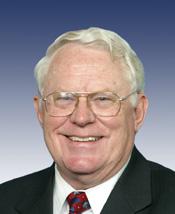 Rep. Joseph R. Pitts (R-PA)
Description
Amendment provides small transit systems with flexibility in using Federal transit formula funds.
Legislative Activity
Stay on top of the latest movement without scrolling through every action
House amendment offered
March 10, 2005
View full timeline
House amendment offered
March 10, 2005
House amendment agreed to: On agreeing to the Pitts amendment (A017) Agreed to by recorded vote: 228 - 197 (Roll no. 63).
March 10, 2005 • 2:08 PM
Roll call votes on amendments in House
March 10, 2005 • 2:08 PM
Amendment agreed to Committee of the Whole
March 10, 2005 • 2:08 PM
House amendment offered/reported by : Amendment (A017) offered by Mr. Pitts.(consideration: CR H1306-1307, H1322; text: CR H1306)
March 10, 2005 • 12:31 PM
Amendment (A017) offered by Mr. Pitts. (consideration: CR H1306-1307, H1322; text: CR H1306)
March 10, 2005 • 12:31 PM
On agreeing to the Pitts amendment (A017) Agreed to by recorded vote: 228 - 197 (Roll no. 63).
March 10, 2005 • 2:08 PM
Votes
1 roll call on this amendment
Text
Offered
TRANSPORTATION EQUITY ACT: A LEGACY FOR USERS
Mrs. CAPITO. Mr. Speaker, by direction of the Committee on Rules, I
call up House Resolution 144 and ask for its immediate consideration.
The Clerk read the resolution, as follows:
H. Res. 144
Resolved, That at any time after the adoption of this
resolution the Speaker may, pursuant to clause 2(b) of rule
XVIII, declare the House resolved into the Committee of the
Whole House on the state of the Union for further
consideration of the bill (H.R. 3) to authorize funds for
Federal-aid highways, highway safety programs, and transit
programs, and for other purposes. No further general debate
(except for the final period contemplated in House Resolution
140) shall be in order. No further amendment to the bill, as
amended, shall be in order except those printed in the report
of the Committee on Rules accompanying this resolution. Each
such amendment may be offered only in the order printed in
the report, may be offered only by a Member designated in the
report, shall be considered as read, shall be debatable for
the time specified in the report equally divided and
controlled by the proponent and an opponent, shall not be
subject to amendment, and shall not be subject to a demand
for division of the question in the House or in the Committee
of the Whole. All points of order against such amendments are
waived. At the conclusion of the final period of debate, the
Committee shall rise and report the bill, as amended, to the
House with such further amendments as may have been adopted.
The previous question shall be considered as ordered on the
bill and amendments thereto to final passage without
intervening motion except one motion to recommit with or
without instructions.
The SPEAKER pro tempore (Mr. Bass). The gentlewoman from West
Virginia (Mrs. Capito) is recognized for 1 hour.
Mrs. CAPITO. Mr. Speaker, for the purpose of debate only, I yield the
customary 30 minutes to the gentlewoman from New York (Ms. Slaughter),
pending which I yield myself such time as I
[[Page H1273]]
may consume. During consideration of this resolution, all time yielded
is for the purpose of debate only.
Mr. Speaker, on Wednesday, the Committee on Rules met and granted a
structured rule for further consideration of H.R. 3, the Transportation
Equity Act: A Legacy For Users, more commonly referred to as TEA-LU.
This rule provides for no further general debate, except for the final
period of 10 minutes contemplated in the House Resolution 140. Finally,
the rule makes in order the 12 amendments printed in the Committee on
Rules report and provides for one motion to recommit, with or without
instructions. Mr. Speaker, the rule we have before us is a fair rule,
and I believe all Members should be able to support it.
Mr. Speaker, since October 1, 2003, Federal surface transportation
programs have been forced to operate on a basis of a short-term
extension. We are approaching the end of the most recent extension,
which will expire on May 31, 2005. Our Nation's highways desperately
need the assurance and stability of a 5-year reauthorization provided
by H.R. 3.
As a former member of the House Committee on Transportation and
Infrastructure, I can appreciate the incredible bipartisan effort that
has gone into writing this legislation. I would like to applaud the
efforts of the gentleman from Alaska (Chairman Young) and the gentleman
from Minnesota (Ranking Member Oberstar) for bringing this legislation
to the floor in an expedient and bipartisan manner.
I look forward to the passage of this bill and hope that our
colleagues in the other body will take swift action.
The highway bill is a vitally important investment in our Nation's
surface transportation system and fosters job growth across the
country. In fact, it is estimated that for every $1 trillion in highway
funding, 47,500 jobs are created. The highway bill provides $284
billion in funding for vital programs that will impact citizens across
the States, improving safety and accessibility.
In my district, the highway bill represents the strongest step
forward ever to replace U.S. Route 35, a 2-lane death trap through West
Virginia's Mason and Putnam counties. U.S. Route 35 is dominated by
tractor trailers and tanker trucks traveling south from Ohio and north
from Interstate 64 in Charleston. Far too often, the high volume of
traffic swallows up local commuters, resulting in tragic motorist
fatalities.
With the passage of the highway bill, construction of a new 4-lane
appropriate to meet the demand will be built, diverting traffic around
dozens of residential neighborhoods. Mr. Speaker, this is just one
example from my home district, and there are countless others from
across the country.
Mr. Speaker, I am a strong supporter of this legislation, which
provides for countless improvements in the Nation's surface
transportation system. The numerous projects and programs authorized by
this bill will improve our highway systems and the ability of our
constituents to travel from State to State. To that end, I urge my
colleagues to support the rule and the underlying bill.
Mr. Speaker, I reserve the balance of my time.
Mr. McGOVERN. Mr. Speaker, I want to thank the gentlewoman from West
Virginia (Mrs. Capito) for yielding me this time, and I yield myself
such time as I may consume.
(Mr. McGOVERN asked and was given permission to revise and extend his
remarks.)
Mr. McGOVERN. Mr. Speaker, I am supporting this rule, despite the
fact that it does restrict the amendment process; and while an open
rule is generally preferable, this rule does allow the House to
consider and vote on some important amendments, especially the
Pascrell-Menendez-LoBiondo anti-corruption amendment.
The first rule provided for general debate on H.R. 3 and made in
order nine Republican amendments, and one that was bipartisan. This
rule makes in order 10 Republican amendments, including a manager's
amendment by the gentleman from Alaska (Chairman Young) that was
drafted in consultation with the Committee on Transportation and
Infrastructure Democrats and is supported by the gentleman from
Minnesota (Ranking Member Oberstar).
I want to again applaud the Committee on Transportation and
Infrastructure for working together in a truly bipartisan fashion in
drafting our Nation's massive highway and transit authorization
legislation.
Mr. Speaker, H.R. 3 is an all-too-rare example of bipartisanship in
this body. Negotiations were undertaken, compromises were made on both
sides, and the diverse transportation needs of all regions of the
Nation were carefully considered. The final product truly represented
the priorities of all sides involved, regardless of political
affiliation. The American people have been well-served by the process,
and that is what they deserve.
The rule also makes in order two of the five Democratic amendments
that were submitted to the Committee on Rules. The first one is by the
gentleman from California (Mr. Honda) and would allow basic grant funds
to be used for DWI courts seeking to change the behavior of alcohol or
drug-dependent offenders arrested while driving or while impaired.
I am particularly pleased that the second Democratic amendment, the
anti-graft and anti-corruption amendment by the gentlemen from New
Jersey (Mr. Pascrell), (Mr. Menendez) and (Mr. LoBiondo), is included
in this rule. Their vital amendment will allow States to enact anti-
corruption laws, curbing the practice of pay-to-play contracting,
without losing their Federal aid highway dollars. These laws are
critical to help stop the threat of real and apparent corruption
resulting from large political contributions from contractors to
influence the awarding of public contracts.
As ludicrous as it seems, the Federal Highway Administration last
year ruled that a State of New Jersey executive order limiting the size
of political contributions from government contractors to State
candidates violated Federal competitive bidding requirements. Had New
Jersey not suspended this portion of the executive order, that State
would have lost its Federal highway funding. So unless this amendment
is adopted, States will not be able to stop contractors from
contributing to the campaigns of those who may ultimately award these
contracts.
I cannot imagine why anyone in this House would want such seemingly
unethical activity to continue. Ethics and integrity are among the most
cherished of American values. We, the representatives of the people,
have a responsibility to lead by example. I fully support the Pascrell-
Menendez-LoBiondo amendment and challenge my colleagues, Republican and
Democrat alike, to join with me in taking a stand for ethics. Highway
contractors in America should not have to bribe their way to win
Federal contracts. We have the power and the responsibility to end this
today. Vote for this amendment.
Once again, Mr. Speaker, I want to make it clear that I support H.R.
3 to reauthorize our Nation's transportation programs. The Committee on
Transportation and Infrastructure has put together a fair, bipartisan
bill that will improve our Nation's highways and transit systems.
Mr. Speaker, I reserve the balance of my time.
Mrs. CAPITO. Mr. Speaker, it is my honor to yield such time as he may
consume to the gentleman from California (Mr. Lewis), the distinguished
chairman of the Committee on Appropriations.
Mr. LEWIS of California. Mr. Speaker, I very much appreciate the
gentlewoman being so generous with the time available. It is a great
privilege to work with the Committee on Rules on this very important
issue that we have been trying to finalize here in the House for a
couple of years.
{time} 1115
I rise in very strong support of H.R. 39, Transportation Equity Act:
A Legacy For Users, known as TEA-LU. I want to commend the gentleman
from Alaska (Mr. Young) and his ranking member, the gentleman from
Minnesota (Mr. Oberstar) for the effort they put into this package. It
is a bill that reflects much of the balance of the needs of the Members
of the House.
As the gentleman from Alaska (Mr. Young) will recall, I have spent a
lot of time working with Members of this
[[Page H1274]]
committee from the first day I walked into the Congress. Years ago, my
first committee assignment was to the Committee on Public Works, which
is the heart of this work itself. The chairman believes that a key to a
successful 6-year transportation bill involves the revenue of the bill
itself.
Indeed, I understand that the chairman has worked rather intently to
find mechanisms whereby we can be assured that enough money is
available to meet the many demands across the country, including such
things as indexing the gas tax, a proposal that I myself was involved
in many years ago in the State legislature.
It is a fact that the demands for transportation systems that work
are a primary national concern. The major lacking regarding that is
money availability. So I am very much appreciative of the chairman's
difficulties. I appreciate the gentleman from Alaska's (Mr. Young)
efforts to meet the enormous demands from the Members across the
country. My colleague from West Virginia (Mrs. Capito) mentioned an
item, a highway transportation item, that is very critical to her
constituency, the people of West Virginia. That can be replicated
across the country. Almost every district faces these challenges.
I do, as I speak to the challenge, express also some concern about
the guarantee within this bill that essentially would suggest where we
fall short of money under current circumstances, additional funding
will come by way, or likely come by way, of the general funds.
As all of the Members know, we are working intently this year to move
our appropriations bills ahead of schedule and indeed under budget. As
we go about that, there are a lot of pressures on our dollar
availability as relates to the general fund.
So I really rise to express concern about things like the following:
The funding floors mandated in TEA-LU would require discretionary
appropriations of about $1.7 billion from the general fund for 2006.
Because those funds remain short, obviously, such a conflict will
create difficulty in moving forward with the regular appropriations
process.
In addition to the mass transit difficulty that is obvious to anybody
who will but look, the highway category of TEA-LU guarantees $37.4
billion in highway budget resources. This is $1.6 billion over the
President's request of $35.9 billion. As you can see, we have great
difficulty moving our way through this process and making sense out of
the budget, too. It is my intention to work very closely with the
chairman and the ranking member to make sure that these challenges are
handled in a way that meets all of our needs.
In turn, I look forward to working with members of the committee and
the House to try to be responsive to challenges they face relative to
transportation as well.
Mr. McGOVERN. Mr. Speaker, I yield 5 minutes to the gentleman from
New Jersey (Mr. Pallone).
Mr. PALLONE. Mr. Speaker, I rise in support of the rule and want to
thank my colleagues on the Committee on Rules for placing in order the
Pascrell/Menendez/LoBiondo amendment which would protect New Jersey's
ability to combat the influence money plays in the contracting process
and also to reaffirm States' rights. As far as I am concerned, this is
also a States' rights issue and the ability of States to pass
legislation that would deal with the corruption issues.
I think you should know, Mr. Speaker, that the buzz word in our State
these days in New Jersey is ``pay to play.'' Pay to play simply means
awarding lucrative government contracts to those who have given large
political contributions. Unfortunately, it has become almost a way of
life that people get contracts by giving large campaign contributions
to politicians.
I do not have to tell anyone here why that becomes a problem. It does
not basically allow the best contract to go forward, the most
efficient, the lowest bid, the one that is in the best interest of the
public.
It also wastes tax dollars. There have been numerous reports in the
media in New Jersey about how tax dollars are wasted essentially when
pay to play is in effect because it means that money that could have
been perhaps used better for other educational or other government
functions is, in effect, wasted in the pay to play process.
So what has happened in New Jersey is that New Jersey has been
seeking a way to essentially eliminate pay to play.
Shortly before his resignation, our former governor Jim McGreevy,
issued an executive order banning pay to play and his successor
Governor Dick Cody has worked with the legislature to make the ban a
permanent law. Again, this would be a vital step towards cleaning up
the influence money plays in the contracting process in New Jersey. The
problem though is that the rigid contracting rules of the Federal
Government are putting a serious crimp on our State's attempts to
foster good government.
The Federal Highway Administration requires that all contracts go to
the lowest bidder, and they have said that the New Jersey pay to play
ban would violate that rule. I know that the gentleman from
Massachusetts (Mr. McGovern) on the Committee on Rules explained that
that is patently absurd. There is no reason why the Federal Government
should block a State's ability to combat political influence, in this
case, potentially withholding $1 billion in transportation funding that
is critical to our Nation's most densely populated State.
I have always had an opinion from a State's rights point of view
that, if a State wants to go further, in this case, our State trying to
go further to eliminate corruption and the potential for political
influence, there is no reason why the Federal Government should stand
in the way of that. That does not make any sense.
I should also tell my colleagues that, before you think that the New
Jersey delegation is just doing this as a parochial issue on the
highway bill, you should look to your own State. The Highway
Administration's rules could potentially block similar efforts pending
in Connecticut and could effect existing anti-corruption laws in
Kentucky, South Carolina, Ohio and West Virginia. This is not a New
Jersey specific problem. This is something that the Highway
Administration could potentially block in a number of other States.
So I think, for all these reasons, this amendment makes sense. Again,
I want to thank the Committee on Rules for putting the amendment in
order. I want to thank particularly my colleagues, the gentleman from
New Jersey (Mr. Pascrell), the gentleman from New Jersey (Mr. Menendez)
and the gentleman from New Jersey (Mr. LoBiondo) for sponsoring this
amendment. But I should say, every one of the Members of the New Jersey
delegation on a bipartisan basis does support this and is joining us in
our effort to preserve States' rights and stand up for good government.
Mrs. CAPITO. Mr. Speaker, I reserve the balance of my time.
Mr. McGOVERN. Mr. Speaker, I yield 8 minutes to the gentleman from
New Jersey (Mr. Menendez), the Chair of our Democratic Caucus.
(Mr. MENENDEZ asked and was given permission to revise and extend his
remarks.)
Mr. MENENDEZ. Mr. Speaker, I thank the gentleman for yielding me
time.
Mr. Speaker, I rise today in support of the rule and the
transportation bill that our distinguished committee leadership worked
for so long and so hard to bring to the Floor this week. I commend them
on a tremendous job in crafting a bill that works within such title
fiscal constraints, yet still manages to focus on so many of our
transportation priorities. I want to particularly thank the Committee
on Rules for making the Pascrell/Menendez/LoBiondo pay to play reform
amendment in order.
I appreciate the hard work of the distinguished ranking member, the
gentlewoman from New York (Ms. Slaughter), who has been a strong
supporter of our amendment. I want to thank the gentleman from
Massachusetts (Mr. McGovern) for his strong comments in support of the
amendment as well.
Like many here, I had hoped that there would be a lot more money in
this bill. As a member of the Committee on Transportation and
Infrastructure, I know how important transportation investment is for
the good of the Nation as a whole. As the representative of the 13th
District of New
[[Page H1275]]
Jersey, which is densely packed with almost every transportation mode
imaginable, I know firsthand how important this investment is for the
well-being of the people in our community because transportation is
more than about getting from one place to another.
The money we spend in this bill will create jobs, stimulate new
businesses, revitalize neighborhoods, reduce congestion, clean our air
and make us more secure. That is why I am disappointed that we have
been forced to adhere to an unnecessary low level of funding the
administration has forced upon us.
Those of us in the New Jersey-New York metropolitan area learned on
September 11 how important it is to have a multiplicity of
transportation modes. When the bridges and tunnels out of Manhattan
were closed, it was ferries that allowed people to evacuate the city to
New Jersey. When the airports were closed, it was rail service that
allowed people to travel across the country. September 11 showed us
that the national security value of making a strong investment in
multiple modes of transportation is necessary.
Those of us from New Jersey know particularly well how desperately we
need the money in this bill. We are the most densely populated State in
the Nation with very old highways that are desperately in need of
repair; 71 percent of our major roads are in either poor or mediocre
condition. Over 36 percent of our highway bridges are either
structurally deficient or functionally obsolete, far above the national
average. And despite being the fifth smallest State, we are the 11th
most traveled on our highways.
These miles take a toll on our environment. Every county in the State
has unhealthy levels of ozone, and over half of the counties have
dangerous levels of airborne soot. By providing enhanced funding for
public transportation and other pollution control measures, this bill
will help to clean our air.
One of the other problems we have in New Jersey is with pay to play.
That is a process by which contributions, often very large
contributions, are offered to politicians and State officials with the
hope of being able to gain a government contract. It is in my mind a
very corrupting practice and severely undermines the trust and
credibility of the government.
What my colleagues and I from New Jersey are trying to do is change
the nature of that process. Now, this is not merely an issue for New
Jersey. This is an issue for any State that hopes it can strike a blow
for clean government by limiting such a corrupting influence. And the
issue is simply about the right of any State, of any State, to take the
steps it needs to maintain the trust of its people. Nothing in what we
are trying to do would force any State to enact a pay to play reform
law. Nothing in our amendment would alter the competitive bidding
process one bit.
The amendment strictly conforms to the ideals behind the current
Federal highway contracting statute which is to ensure fairness and
integrity in the awarding of public contracts.
I for one am surprised that we even need this amendment at all. For
50 years, Section 441(c) of Title 2 in the U.S. Code has banned
political contributions from Federal contractors. The Federal
government clearly recognizes the corrupting influence of pay to play
and has taken steps to control it, steps that the Federal Highway
Administration now says that New Jersey is not allowed to take on its
own.
Clearly, the Federal Government recognizes that there are situations
where merely looking for the lowest bidder is not the best way to serve
the public interest.
The Securities and Exchange Commission has also enacted its own pay
to play protection regulation, Rule G-37, which is even stronger than
the Federal statute in Section 441. Brokers and municipal security
dealers are forbidden from making political contributions to any
official who issues municipal securities for 2 years before any
business can be transacted. The rule was challenged and upheld in
Federal court. Clearly, the SEC recognized and the courts agreed that
restricting campaign contributions by people who are looking to do
business with government is in the public interest and helps maintain
the public trust.
I have heard some arguments that the problem with this amendment is
that it would open the flood gates. Once we add a restriction about
campaign contributions to highway contracting, this argument goes, we
will not know where to stop. I strongly disagree.
First of all, New Jersey's Pay to Play Reform Act is not a highway
issue. It only became one when the Federal Highway Administration,
which is apparently not very concerned with Section 441 of the Federal
law, decided to make it one by withholding New Jersey's highway
financing.
Second, we already put a number of restrictions on highway
contracting and procurement in Federal law. We give, for example,
priority to minority-owned businesses, veteran-owned businesses, women-
owned businesses, businesses owned by Native Americans or the disabled.
We do these things because they are right to do and because they serve
a social good. Limiting campaign contributions by prospective
contractors is also a social good. It preserves the integrity of the
government. It preserves the trust of the public in the contracting
process. And it will very likely save the government money by lowering
the cost of contracts.
Mr. Speaker, this amendment is simple. It is straightforward, and it
is fair. It is also bipartisan and supported by a broad range of good
government groups, such as Common Cause, the Center of Civic
Responsibility, and Democracy 21.
I urge my colleagues, when it comes time, to pass the Pascrell/
Menendez/LoBiondo amendments and the underlying bill so we can protect
the rights of the States and allow them to combat corruption as they
see fit. This will apply only to those States that, number one, choose
to have such legislation for their States, and it will only apply to
office holders in their States of a State nature.
I do not think the Federal Government should be telling the States
that they cannot do that to preserve the trust and integrity of the
contracting process in their States.
Mr. Speaker, I thank the gentleman for his gracious amount of time.
{time} 1130
Mr. McGOVERN. Mr. Speaker, I yield 2 minutes to the gentleman from
New Jersey (Mr. Holt).
Mr. HOLT. Mr. Speaker, I thank my friend, the gentleman from
Massachusetts, for yielding me time; and I rise in strong support of
the amendment offered by the gentlemen from New Jersey (Mr. Pascrell),
(Mr. Menendez), and (Mr. LoBiondo). The gentleman from New Jersey (Mr.
Menendez) and before him my other colleagues from Massachusetts have
stated, I think clearly, what is at stake here.
New Jerseyans were surprised to learn that the Federal Highway
Administration recently withheld $260 million in highway funds because
New Jersey had taken the very important step, I think the landmark
step, to protect the integrity of contracts. Pay-to-play had become
something that clearly had to be stopped, and the effort to bring
integrity in public contracts by limiting political contributions is
something that New Jersey is not only within its rights to do, but is
something that should serve as a model for the Nation.
New Jerseyans were surprised to find that the highway administration
ruled that New Jersey could not do that or else they would take the
highway funds away.
This amendment would clarify the propriety of New Jersey's action. It
would preserve the ability of States to protect the integrity of public
contracts, and it is not just New Jersey. As the gentlewoman has heard,
it would be, I think, to the benefit of West Virginia and a number of
other States.
There are plenty of precedents, as the gentleman from New Jersey (Mr.
Menendez) has pointed out, to support the adoption of this amendment.
The SEC, the Securities and Exchange Commission, currently has what we
call a pay-to-play ban in place prohibiting contribution by bond
traders, and that has been upheld in the courts.
So this amendment makes sense. It is entirely proper. It would
benefit many States, and it would make clear that it is not the role of
the Federal Highway Administration to decide what is and what is not
ethical political procedure.
[[Page H1276]]
Furthermore, as my colleague, the gentleman from New Jersey (Mr.
Menendez), has pointed out, this would probably save money. There is
too much money allocated in contracts for reasons that are not based
entirely on cost and efficiency.
So I strongly urge the support of the Pascrell-Menendez-LoBiondo
amendment.
Mrs. CAPITO. Mr. Speaker, I continue to reserve the balance of my
time.
Mr. McGOVERN. Mr. Speaker, I yield 5 minutes to the gentleman from
New Jersey (Mr. Pascrell).
Mr. PASCRELL. Mr. Speaker, in a letter that went from Suzanne Novak
on behalf of the Brennan Center for Justice at NYU to the gentleman
from Alaska (Mr. Young), the honorary chairman of the Committee on
Transportation and Infrastructure, and the gentleman from Minnesota
(Mr. Oberstar), ranking member, she wrote in that letter in support of
the Federal Government supporting States and being very specific about
the bidding laws in contracting to respond to the collusion or the
possibilities of collusion that have existed, I can assure my
colleagues, not only in the State of New Jersey.
She wrote this: ``Several recent scandals regarding government
contracting in New Jersey prompted New Jersey to establish a criterion
of responsibility for government contracting which prohibited the State
from contracting with an entity that has contributed to a candidate for
or holder of the office of Governor, or to any State or county
political party committee, within certain time frames. The executive
``order of the Governor'' ``explicitly stated that `the growing
infusion of funds donated by business entities into the political
process at all level of government has generated widespread cynicism
among the public that special interest groups are ``buying'' favors
from elected officeholders.' ''
Mr. Speaker, the courts have recognized that contributions from
government contractors present a severe risk of engendering corruption,
the appearance of corruption and, thus, have generally upheld pay-to-
play contribution bans, and this is what this amendment is all about.
It is a bipartisan amendment to reform government, to help government
clean up its act. We have similar laws on the Federal books about
contracting and bidding. We want to remove cynicism from the public
about when the government does business that there is proper conditions
that will be implemented to make sure that it is done according to the
law.
Blount v. the SEC was a perfect example. The Securities and Exchange
Commission made it very clear that if you were going to do some bonding
work, that if you give a political contribution to the entity
beforehand, that is rather suspect. So let us remove that possibility.
There is no doubt, if we do not allow the States to do what the Federal
Government has on the books, how are we going to justify that?
This is a win-win situation. Neither party is the source of
corruption and neither party is privy to virtue; let us accept that.
Let us also accept that this is a bipartisan amendment, introduced in
good faith, so that each of the parties, if you will, look good. Not
only talk the talk but take that extra step to clean up their own acts.
How can we in this House not permit or allow each of the States to
provide for cleaner governments?
This is reality. The Federal law, the court cases have backed up this
effort. There is no reason under the sun. This is bipartisan. It will
help both parties and it will reduce the cynicism that exists in many,
many areas of the public.
So, Mr. Speaker, this great H.R. 3, the Transportation Equity Act, we
have worked on it a long time. I have saluted both the Chair, as well
as the ranking member. I have not heard one cogent argument as to why
we should not pass and allow States to reform their own act and clean
up their own acts.
One criticism I heard is that this is going to open up a Pandora's
box. The Federal Government has rules on the books already. Are we
going to tell the Federal Government, you have opened up a Pandora's
box because you are trying to implement clean-government rules? That is
absurd. Give me one legal reason why this amendment should not only be
in order, which it is, but it should not be both sides of the aisle
supportive. Give me one good legal reason.
Mr. McGOVERN. Mr. Speaker, I yield myself such time as I may consume,
and we have no further requests for time.
So let me just again say that while I wish the funding level of this
bill were higher, TEA-LU is a good bill. It is a tribute to the
gentleman from Alaska (Chairman Young) and the gentleman from Minnesota
(Ranking Member Oberstar). I urge my colleagues to support it. We also
will support the rule.
Mr. Speaker, I yield back my time.
Mrs. CAPITO. Mr. Speaker, I yield myself such time as I may consume.
I would like to thank my colleague, the gentleman from Massachusetts,
and I would like to reiterate as well that this legislation is crucial
to the continued growth of our economy. We are creating jobs and
improving the ability of current workers to commute to their places of
employment, among a myriad of other transportation issues.
I look forward to the strong bipartisan support of this legislation.
I urge a ``yes'' vote on the rule and the underlying legislation.
Mr. ANDREWS. Mr. Speaker, I would like to take this opportunity to
express my support for the rule, H. Res. 144, to the TEA-LU, H.R. 3,
bill, which makes in order the Pascrell/Menendez/LoBiondo Pay-to-Play
amendment. The consideration of this amendment is crucial to restoring
the integrity of New Jersey's government and to protecting federal
funds allocated to the State.
New Jersey government and politics are long overdue for a cleansing.
For too long, New Jersey taxpayers have paid a corruption tax--the cost
of decisions made to benefit campaign donors rather than taxpayers. At
the present time, the New Jersey legislature is attempting to restore
its integrity by barring companies, who have made political
contributions to a state government or political party official, from
receiving state contracts worth more than $17,500. This is a critical
component of the State's reform package and must be enacted and
maintained for genuine change to occur in New Jersey.
Standing in the way of New Jersey's cleansing is the US Department of
Transportation, USDOT, who has cited concerns that our State's pay-to-
play reform would illegally stifle competition for government
contracts. New Jersey has challenged the USDOT's decision in the court.
Currently, the case is pending.
To weed out the corruption that has plagued our State and resulted in
our citizens mistrust of their government, the Pascrell/Menendez/
LoBiondo amendment is essential. Consideration and subsequently the
passage of this amendment are imperative for New Jersey to attain real
ethical reform.
Again, I commend the Rules Committee for declaring the Pascrell/
Menendez/LoBiondo Pay-to-Play amendment in order today and urge its
adoption.
Mrs. CAPITO. Mr. Speaker, I yield back the balance of my time, and I
move the previous question on the resolution.
The previous question was ordered.
The resolution was agreed to.
The SPEAKER pro tempore (Mrs. Capito). Pursuant to House Resolution
144 and rule XVIII, the Chair declares the House in the Committee of
the Whole House on the State of the Union for the further consideration
of the bill, H.R. 3.
{time} 1140
In the Committee of the Whole
Accordingly, the House resolved itself into the Committee of the
Whole House on the State of the Union for the further consideration of
the bill (H.R. 3) to authorize funds for Federal-aid highways, highway
safety programs, and transit programs, and for other purposes, with Mr.
Bass (Acting Chairman) in the chair.
The Clerk read the title of the bill.
The Acting CHAIRMAN. When the Committee of the Whole rose on
Wednesday, March 9, 2005, all amendments pursuant to House Resolution
140 had been disposed of.
Pursuant to House Resolution 144, no further general debate, except
for the final period contemplated in House Resolution 140, is in order.
Pursuant to House Resolution 144, no further amendment to the bill,
as amended, shall be in order except those printed in House Report 109-
15. Each amendment may be offered only in the order printed in the
report, may be offered only by a Member designated in
[[Page H1277]]
the report, shall be considered as read, debatable for the time
specified in the report, equally divided and controlled by the
proponent and an opponent, shall not be subject to amendment, and shall
not be subject to a demand for division of the question.
It is now in order to consider amendment No. 1 printed in part B of
House Report 109-15.
Amendment No. 1 Offered by Mr. Young of Alaska
Mr. YOUNG of Alaska. Mr. Chairman, I offer an amendment.
The Acting CHAIRMAN. The Clerk will designate the amendment.
The text of the amendment is as follows:
Amendment No. 1 offered by Mr. Young of Alaska:
In item number 1176 of such table contained in section
1702, strike ``$10,000,000'' and insert ``$4,000,000''.
In item number 2455 of such table, strike ``$3,000,000''
and insert ``$2,000,000''.
In item number 852 of such table, strike ``$750,000'' and
insert ``$500,000''.
In item number 865 of such table, strike ``$9,750,000'' and
insert ``$7,500,000''.
In item number 1222 of such table, strike ``$2,000,000''
and insert ``$1,000,000''.
In item number 497 of such table, strike ``$2,000,000'' and
insert ``$1,000,000''.
In item number 2083 of such table, strike ``$6,500,000''
and insert ``$6,000,000.''
In item number 1041 of such table, strike ``$2,500,000''
and insert ``$2,000,000''.
In item number 1048 of such table, strike ``$3,900,000''
and insert ``$3,000,000''.
In item number 2737 of such table, strike ``$400,000'' and
insert ``$100,000''.
In item number 3236 of such table, strike ``$400,000'' and
insert ``$100,000''.
In item number 2250 of such table, strike ``$5,000,000''
and insert ``$4,000,000''.
In item number 2336 of such table, strike ``$21,350,000''
and insert ``$20,000,000''.
In item number 419 of such table, strike ``$21,400,000''
and insert ``$18,400,000''.
In item number 2938 of such table, strike ``$610,000'' and
insert ``$360,000''.
In item number 749 of such table, strike ``$500,000'' and
insert ``$540,000''.
In item number 1211 of such table, strike ``$700,000'' and
insert ``$1,100,000''.
In item number 2463 of such table, strike ``$500,000'' and
insert ``$1,010,000''.
In item number 2930 of such table, strike ``$300,000'' and
insert ``$350,000''.
In item number 2954 of such table, strike ``$8,000,000''
and insert ``$9,000,000''.
In item number 3196 of such table, strike ``lande'' and
insert ``lane'' and strike ``5,000,000'' and insert
``14,000,000''.
In item number 3012 of such table, strike ``$2,500,000''
and insert ``$3,000,000''.
In item number 1175 of such table, strike ``$6,000,000''
and insert ``$6,500,000''.
In item number 3259 of such table, strike ``$5,000,000''
and insert ``$6,000,000''.
In item number 1530 of such table, strike ``$2,000,000''
and insert ``$2,500,000''.
In item number 1948 of such table, strike ``$555,000'' and
insert ``$1,055,000''.
In item number 2809 of such table, strike ``$500,000'' and
insert ``$1,000,000''.
In item number 3065 of such table, strike ``$555,000'' and
insert ``$1,055,000''.
In item number 3276 of such table, strike ``$10,000,000''
and insert ``$11,000,000''.
In item number 1010 of such table, strike ``$1,000,000''
and insert ``$2,000,000''.
In item number 549 of such table, strike ``$1,000,000'' and
insert ``$1,010,000''.
In item number 1552 of such table, strike ``$2,000,000''
and insert ``$2,500,000''.
In item number 1258 of such table, strike ``$2,500,000''
insert ``$3,450,000''.
In item number 1926 of such table, strike ``$12,500,000''
insert ``$15,000,000''.
In item number 2016 of such table, strike ``$3,000,000''
insert ``$4,500,000''.
In item number 3107 of such table, strike ``$1,000,000''
and insert ``$2,000,000''.
In item number 1331 of such table, strike ``$1,000,000''
and insert ``$1,500,000''.
In item number 665 of such table, strike ``$1,000,000'' and
insert ``$1,500,000''.
In item number 1121 of such table, strike ``$5,000,000''
insert ``$6,000,000''.
In item number 3303 of such table, strike ``$5,000,000''
insert ``$6,000,000''.
In item number 347 of such table, strike ``$2,000,000'' and
insert ``$3,000,000''.
In item number 1123 of such table, strike ``$1,000,000''
and insert ``$3,000,000''.
In item number 256 of such table, strike ``12,500,000'' and
insert ``$27,000,000''.
In item number 1935 of such table, strike ``$500,000'' and
insert ``$1,000,000''.
In item number 2190 of such table, strike ``$500,000'' and
insert ``$1,500,000''.
In item number 1013 of such table, strike ``$7,000,000''
and insert ``$8,000,000''.
In item number 1471 of such table, strike ``$3,000,000''
and insert ``$4,000,000''.
In item number 619 of such table, strike ``$1,000,000'' and
insert ``$1,125,000''.
In item number 2416 of such table, strike ``$750,000'' and
insert ``$1,000,000''.
In item number 2936 of such table, strike ``$500,000'' and
insert ``$1,000,000''.
In item number 353 of such table, strike ``$500,000'' and
insert ``$1,000,000''.
In item number 661 of such table, strike ``$500,000'' and
insert ``$1,000,000''.
In item number 581 of such table, strike ``$7,000,000'' and
insert ``$7,200,000''.
In item number 2714 of such table, strike ``$2,000,000''
and insert ``$3,000,000''.
In item number 1225 of such table, strike ``Croos Creek
Boulevard Widening'' and insert ``Cross Creek Boulevard
Widening'' and strike ``$1,000,000'' and insert
``$1,800,000''.
In item number 2558 of such table, strike ``$3,000,000''
and insert ``$6,000,000''.
In item number 2423 of such table, strike ``$3,000,000''
and insert ``$6,000,000''.
In item number 538 of such table, strike ``$1,500,000'' and
insert ``$2,000,000''.
In item number 734 of such table, strike ``$1,500,000'' and
insert ``$2,000,000''.
In item number 3031 of such table, strike ``$1,000,000''
and insert ``$1,500,000''.
In item number 1002 of such table, strike ``$4,000,000''
and insert ``$4,500,000''.
In item number 2428 of such table, strike ``$1,500,000''
and insert ``$2,000,000''.
In item number 3261 of such table, strike ``$1,250,000''
and insert ``$1,750,000''.
In item number 1537 of such table, strike the project
description and insert ``Construct a four lane connection
between Rt. 13 and Rt. 45 and upgrades to Netty Green Road in
Saline Co Illinois'' and strike ``$1,000,000'' and insert
``$2,000,000''.
In item number 1779 of such table, strike the project
description and insert ``Construction of part of a 230 mile
corridor US 67 near Jerseyville and Carrolton, Illinois''.
In item number 1066 of such table, strike ``$2,000,000''
and insert ``$3,000,000''.
In item number 767 of such table, strike ``$1,500,000'' and
insert ``$2,000,000''.
In item number 1725 of such table, strike ``$750,000'' and
insert ``$2,500,000''.
In item number 1427 of such table, strike ``$2,000,000''
and insert ``$3,000,000''.
In item number 1380 of such table, strike ``$2,000,000''
and insert ``$3,000,000''.
In item number 1062 of such table, strike ``$2,600,000''
and insert ``$3,600,000''.
In item number 3195 of such table, strike ``$11,000,000''
and insert ``$12,000,000''.
In item number 329 of such table, strike ``$4,000,000'' and
insert ``$6,000,000''.
In item number 3003 of such table, strike ``$4,000,000''
and insert ``$9,000,000''.
In item number 2108 of such table, strike ``$4,000,000''
and insert ``$9,000,000''.
In item number 835 of such table, strike ``$5,000,000'' and
insert ``$5,700,000''.
In item number 3114 of such table, strike ``$5,450,000''
and insert ``$6,150,000''.
In item number 2668 of such table, strike ``$2,000,000''
and insert ``$2,600,000''.
In item number 3206 of such table, strike ``$4,000,000''
and insert ``$5,000,000''.
In item number 2233 of such table, strike ``$1,000,000''
and insert ``$2,000,000''.
In item number 177 of such table, strike ``Construction of
Valleydale Road Flyover, Widening and Improvements'' and
insert ``Construction of Valeydale Road Flyover and widening
and improvements from US 31 to I-65 (Shelby County Rd 17 ''
and strike ``$5,000,000'' and insert ``$6,000,000''.
In item number 940 of such table, strike ``$4,000,000'' and
insert ``$5,000,000''.
In item number 2887 of such table, strike ``$200,000'' and
insert ``$250,000''.
In item number 2323 of such table, strike ``$100,000'' and
insert ``$150,000''.
In item number 827 of such table, strike ``$100,000'' and
insert ``$300,000''.
In item number 2593 of such table, strike ``$100,000'' and
insert ``$200,000''.
In item number 2395 of such table, strike ``$100,000'' and
insert ``$500,000''.
In item number 2541 of such table, strike ``$100,000'' and
insert ``$500,000''.
In item number 1572 of such table, strike ``$1,000,000''
and insert ``$700,000''.
In item number 2608 of such table, strike the project
description and insert ``CR 52 from US 31 (Pelham) and
continuation of CR 52 in Jefferson County, known as Morgan
Road, to I-459, including proposed Highway 261 bypass around
old town Helena'' and strike ``$15,000,000'' and insert
``$10,000,000''.
In item number 1787 of such table, strike ``LA'' and insert
``AL'', strike the project description and insert
``Birmingham Northern Beltline'', and strike ``$800,000'' and
insert ``$10,000,000''.
In item number 2943 of such table, strike ``$4,000,000''
and insert ``$6,000,000''.
In item number 2623 of such table, strike ``$5,000,000''
and insert ``$5,500,000''.
In item number 1621 of such table, strike ``$2,500,000''
and insert ``$3,400,000''.
In item number 1098 of such table, strike ``$900,000'' and
insert ``$2,000,000''.
In item number 3272 of such table, strike ``14,000,000''
and insert ``20,000,000''.
In item number 1174 of such table, strike ``$3,000,000''
and insert ``$2,000,000''.
In item number 2534 of such table, strike ``$6,000,000''
and insert ``$5,000,000''.
In item number 2128 of such table, strike ``$14,000,000''
and insert ``$16,000,000''.
In item number 3051 of such table, strike ``$4,000,000''
and insert ``$4,500,000''.
In item number 567 of such table, strike ``$2,000,000'' and
insert ``$2,500,000''.
In item number 3017 of such table, strike ``$1,100,000''
and insert ``$2,100,000''.
In item number 2735 of such table, strike ``$6,000,000''
and insert ``$7,500,000''.
In item number 572 of such table, strike ``$1,000,000'' and
insert ``$1,500,000''.
In item number 663 of such table, strike ``$4,000,000'' and
insert ``$6,000,000''.
In item number 2942 of such table, strike ``$1,000,000''
and insert ``$1,500,000''.
In item number 132 of such table, strike ``$2,200,000'' and
insert ``$3,200,000''.
In item number 3055 of such table, strike ``$2,000,000''
and insert ``$3,000,000''.
In item number 1607 of such table, strike ``$1,000,000''
insert ``$1,200,000''.
In item number 874 of such table, strike ``$1,400,000''
insert ``$2,000,000''.
[[Page H1278]]
In item number 986 of such table, strike ``$250,000''
insert ``$300,000''.
In item number 1739 of such table, strike ``$3,600,000''
insert ``$3,900,000''.
In item number 3234 of such table, strike ``$3,600,000''
insert ``$4,200,000''.
In item number 540 of such table, strike ``$150,000''
insert ``$275,000''.
In item number 3132 of such table, strike ``$6,200,000''
and insert ``$8,200,000''.
In item number 1094 of such table, strike ``$4,100,000''
and insert ``$6,100,000''.
In item number 49 of such table, strike ``$1,000,000'' and
insert ``$2,000,000''.
In item number 1506 of such table, strike ``$8,000,000''
and insert ``$10,000,000''.
In item number 407 of such table, strike ``$12,000,000''
and insert ``$14,000,000''.
In item number 1899 of such table, strike ``$3,000,000''
and insert ``$5,000,000''.
In item number 1166 of such table, strike ``$4,000,000''
and insert ``$6,000,000''.
In item number 2022 of such table, strike ``$4,000,000''
and insert ``$6,000,000''.
In item number 1061 of such table, strike ``$2,000,000''
and insert ``$3,000,000''.
In item number 2277 of such table, strike ``$4,000,000''
and insert ``$5,000,000''.
In item number 171 of such table, strike ``$500,000'' and
insert ``$1,000,000''.
In item number 543 of such table, strike ``$500,000'' and
insert ``$1,000,000''.
In item number 1944 of such table, strike ``$500,000'' and
insert ``$1,000,000''.
In item number 2824 of such table, strike ``$500,000'' and
insert ``$1,000,000''.
In item number 104 of such table, strike ``$4,000,000'' and
insert ``$6,000,000''.
In item number 1851 of such table, strike ``$12,000,000''
and insert ``$14,000,000''.
In item number 15 of such table, strike ``$4,644,000'' and
insert ``$5,000,000''.
In item number 124 of such table, strike ``$2,500,000'' and
insert ``$2,900,000''.
In item number 2640 of such table, strike ``$4,856,000''
and insert ``$6,000,000''.
In item number 3074 of such table, strike ``$2,000,000''
and insert ``$2,100,000''.
In item number 1737 of such table, strike ``$9,000,000''
and insert ``$10,000,000''.
In item number 1581 of such table, strike ``$1,500,000''
and insert ``$2,000,000''.
In item number 1631 of such table, strike ``$1,000,000''
and insert ``$1,500,000''.
In item number 88 of such table, strike ``$2,000,000'' and
insert ``$3,000,000''.
In item number 425 of such table, strike ``$3,000,000'' and
insert ``$4,000,000''.
In item number 1223 of such table, strike ``$800,000'' and
insert ``$1,600,000''.
In item number 585 of such table, strike ``$1,000,000'' and
insert ``$2,000,000''.
In item number 1346 of such table, strike ``$500,000'' and
insert ``$750,000''.
In item number 1669 of such table, strike ``$2,000,000''
and insert ``$3,000,000''.
In item number 2224 of such table, strike ``$8,000,000''
and insert ``$11,000,000''.
In item number 702 of such table, strike ``$4,000,000'' and
insert ``$6,000,000''.
In item number 636 of such table, strike ``$1,000,000'' and
insert ``$1,500,000''.
In item number 807 of such table, strike ``$1,000,000'' and
insert ``$1,500,000''.
In item number 1172 of such table, strike ``$1,000,000''
and insert ``$1,500,000''.
In item number 2234 of such table, strike ``$1,000,000''
and insert ``$500,000''.
In item number 3164 of such table, strike ``$1,000,000''
and insert ``$1,500,000''.
In item number 3219 of such table, strike ``$1,000,000''
and insert ``$1,500,000''.
In item number 2962 of such table, strike ``Construct'' and
insert ``Design and construction''.
In item number 2469 of such table, strike ``Construction''
and insert ``Design, right of way acquisition, and
construction''.
In item number 2140 of such table, strike ``$6,000,000''
and insert ``$10,000,000''.
In item number 1106 of such table, strike ``$8,000,000''
and insert ``$10,000,000''.
In item number 652 of such table, strike ``$3,000,000'' and
insert ``$4,000,000''.
In item number 814 of such table, strike ``2,000,000'' and
insert ``$3,000,000''.
In item number 2944 of such table, strike ``$3,000,000''
and insert ``$5,000,000''.
In item number 434 of such table, strike ``$800,000'' and
insert ``$2,800,000''.
In item number 345 of such table, strike ``$4,500,000'' and
insert ``$5,500,000''.
In item number 1587 of such table, strike ``$3,800,000''
and insert ``$4,300,000''.
In item number 2753 of such table, strike ``$3,000,000''
and insert ``$3,500,000''.
In item number 330 of such table, strike ``$2,000,000'' and
insert ``$2,500,000''.
In item number 1255 of such table, strike ``$2,000,000''
and insert ``$2,500,000''.
In item number 1626 of such table, strike ``$6,000,000''
and insert ``$7,000,000''.
In item number 3218 of such table, strike ``$3,000,000''
and insert ``$5,000,000''.
In item number 1031 of such table, strike ``$5,000,000''
and insert ``$7,000,000''.
In item number 1242 of such table, strike ``$1,000,000''
and insert ``$3,000,000''.
In item number 403 of such table, strike ``$5,000,000'' and
insert ``$9,100,000''.
In item number 903 of such table, strike ``$4,000,000'' and
insert ``$13,500,000''.
In item number 1617 of such table, strike ``$1,000,000''
and insert ``$2,000,000''.
In item number 2298 of such table, strike ``$6,000,000''
and insert ``$7,000,000''.
In item number 2072 of such table, strike ``$1,500,000''
and insert ``$4,000,000''.
In item number 876 of such table, strike ``$930,000'' and
insert ``$1,045,000''.
In item number 229 of such table, strike ``$930,000'' and
insert ``$1,020,000''.
In item number 1584 of such table, strike ``$780,000'' and
insert ``$870,000''.
In item number 280 of such table, strike ``$680,000'' and
insert ``$770,000''.
In item number 1441 of such table, strike ``$2,430,000''
and insert ``$2,695,000''.
In item number 690 of such table, strike ``$430,000'' and
insert ``$510,000''.
In item number 2994 of such table, strike ``$620,000'' and
insert ``$695,000''.
In item number 2836 of such table, strike ``$1,000,000''
and insert ``$1,195,000''.
In item number 2575 of such table, strike ``$1,500,000''
and insert ``$2,500,000''.
In item number 1101 of such table, strike ``$1,500,000''
and insert ``$2,000,000''.
In item number 2845 of such table, strike ``$2,000,000''
and insert ``$2,500,000''.
In item number 2340 of such table, strike ``$1,500,000''
and insert ``$3,000,000''.
In item number 3203 of such table, strike ``$3,000,000''
and insert ``$4,000,000''.
In item number 786 of such table, strike ``Eliminate
Highway-Railway crossing over US 14 and realignment of US 14,
Des Plaines'' and insert ``Reconstruct Highway-Railway
crossing over US 14 and realignment of US 14, Des Plaines''.
In item number 2813 of such table, strike ``$9,000,000''
and insert ``$15,000,000''.
In item number 1547 of such table, strike ``$30,000,000''
and insert ``$50,000,000''.
In item number 640 of such table, strike ``$1,500,000'' and
insert ``$2,000,000''.
In item number 1771, of such table, strike ``For rail grade
separations identified by the MPO for the Little Rock/North
Little Rock metropolitan area, (which may include: Edison
Ave.; Springer Blvd; Hwy 89 Extension; McCain/Fairfax; Salem
Road'' and insert ``For rail grade separations identified by
the MPO for the Little Rock/North Little Rock metropolitan
area, (which may include: Edison Ave.; Springer Blvd; Hwy 89
Extension; McCain/Fairfax; Salem Road; J.P. Wright Loop;
South Loop; Geyer Springs Rd)''.
In item number 596 of such table, strike ``Allegheny City
Urban Runoff Mitigation-eliminate urban highway runoff and
the discharge of culverted streams into municipal combined
sewers'' and insert ``Allegheny County Urban Runoff
Mitigation-eliminate urban highway runoff and the discharge
of culverted streams into municipal combined sewers''.
In item number 1197 of such table, strike ``Construct
Shoreline Transportation Enhancement Projects, Guilford,
Branford, East Haven'' and insert ``Construct Shoreline
Greenway Trail, Guilford, Branford, East Haven''.
In item number 1741 of such table, strike ``Construct 6
mainlines from east of Mercury to east of Wallisville'' and
insert ``US 90--Construct 6 mainlines from east of Mercury to
east of Wallisville''.
In item number 2272 of such table, strike ``Build
additional staircases, landscape, and other improvements to
the municipal bridge at the Holton St. Viaduct in Milwaukee''
and insert ``Build additional staircases, landscape, and
other improvements to the marsupial bridge at the Holton St.
Viaduct in Milwaukee''.
In item number 3037 of such table, strike ``Belle Chasse
Tunnel'' and insert ``Replacement Bridge for Tunnel, Belle
Chasse''.
In item number 2751 of such table, strike ``Kerner Bridge''
and insert ``Kerner Ferry Bridge, Jefferson Parish''.
In item number 2405 of such table, strike ``Acquire lands
adjacent to US 101 as part of Southern Santa Clara County
Wildlife Corridor Protection and Scenic Enhancement Project''
and insert ``Acquire lands for mitigation adjacent to US 101
as part of Southern Santa Clara County Wildlife Corridor
Protection and Scenic Enhancement Project'' and strike
``$250,000'' and insert ``$500,000'' .
In item number 42 of such table, strike ``Access and
enhancements to access Lake Belva Deer, Sigourney'' and
insert ``Access and transportation enhancements to access
Lake Belva Deer, Sigourney'' and strike ``$1,000,000'' and
insert ``$2,000,000''.
In item number 1429 of such table, strike ``$4,150,000''
and insert ``$4,650,000''.
In item number 1245 of such table, strike ``$1,000,000''
and insert ``$2,500,000''.
In item number 2220 of such table, strike ``$2,000,000''
and insert ``$3,000,000''.
In item number 116 of such table, strike ``NY'' and insert
``WA'' and strike ``Yonkers, New York, Trolley Bus
Acquisition'' and insert ``SR 518 3rd lane construction, King
County'' and strike ``$300,000'' and insert ``$2,000,000''.
In item number 2042 of such table, strike ``Construction of
vessel impact protection system for TXDOT'' and insert
``Construct a bridge impact protection system for TxDOT''.
In item number 169 of such table, strike ``TX'' and insert
``AR'' and strike ``Corpus Christi, TX Corpus Regional
Transit Authority for maintenance facility improvements'' and
insert ``Conway Western Loop--for engineering, rights-of-way,
relocations, and continued planning and design'' and strike
``$2,000,000'' and insert ``$500,000''.
In item number 2552 of such table, strike ``$2,000,000''
and insert ``$3,700,000''.
In item number 2947 of such table, strike ``$1,200,000''
and insert ``$1,500,000''.
In item number 261 of such table, strike ``$800,000'' and
insert ``$1,600,000''.
In item number 1569 of such table, strike ``$500,000'' and
insert ``$1,000,000''.
In item number 588 of such table, strike ``Harlem Hospital
Parking Garage'' and insert ``Transportation parking facility
serving the Harlem Hospital Complex''.
[[Page H1279]]
In item number 2860 of such table, strike ``Add lights to
road from Halchita to Mexican Hat on Navajo Mountain'' and
insert ``Add lights to road from Halchita to Mexican Hat in
the Navajo Nation''.
In item number 1674 of such table, strike ``Mile 2 W from
Mile 12 N to US 83, Hidalgo County'' and insert ``Reconstruct
Mile 2 W from Mile 12 N to US 83, Hidalgo County''.
In item number 630 of such table, strike ``Mile 6 W from US
83 to SH 107, Hidalgo County'' and insert ``Reconstruct Mile
6 W from US 83 to SH 107, Hidalgo County''.
In item number 257 of such table, strike ``Construct
transportation enhancements on greenway along East River
waterfront between East River Park (ERP) and Brooklyn Bridge,
and reconstruct South entrance to ERP, in Manhattan'' and
insert ``Construct greenway along East River waterfront
between East River Park (ERP) and Brooklyn Bridge, and
reconstruct South entrance to ERP, in Manhattan''.
In item number 1862 of such table, strike ``Plan and
construct bicycle path, esplanades and ferry landing along
New York Bay in Sunset Park, Brooklyn'' and insert ``Plan and
construct greenway, bicycle path, esplanades and ferry
landing along New York Bay in Sunset Park, Brooklyn''.
In item number 523 of such table, strike ``To study, design
and construct transportation enhancements on the Brooklyn
Waterfront Greenway in Red Hook, Greenpoint, and the Navy
Yard in Brooklyn'' and insert ``To study, design and
construct the Brooklyn Waterfront Greenway in Red Hook,
Greenpoint, and the Navy Yard in Brooklyn'' and strike
``$5,000,000'' and insert ``$8,250,000''.
In item number 2565 of such table, strike ``Study and
Implement Enhancement to Avenue U from Mill Avenue to East
38th Street and Flatbush Avenue from Avenue T to Avenue V''
and insert ``Study and Implement Traffic and Pedestrian
Safety Enhancements to Gerritsen Beach, Brooklyn''.
In item number 2315 of such table, strike ``Construction of
a bicycle / pedestrian off road scenic pathway from the
Niagara Falls City Line to the southerly Lewiston Town /
Village Line along the Niagara Gorge, Town of Lewiston,
Village of Lewi'' and insert ``Construction of a bicycle /
pedestrian off road scenic pathway from the Niagara Falls
City Line to the southerly Lewiston Town / Village Line along
the Niagara Gorge, Town of Lewiston, Village of Lewiston,
Niagara County'' and strike ``$1,250,000'' and insert
``$2,750,000''.
In item number 1144 of such table, strike ``Implement ITS
system and apparatus to enhance citywide truck route system
on LIE Eastbound Service Road at 74th Street to Caldwell Ave,
Grand Ave from 69th Street to Flushing Ave, and Eliot Ave
from 6'' and insert ``Implement ITS system and apparatus to
enhance citywide truck route system on LIE Eastbound Service
Road at 74th Street to Caldwell Ave, Grand Ave from 69th
Street to Flushing Ave, and Eliot Ave from 69th Street to
Woodhaven Blvd''.
In item number 2575 of such table, strike ``$1,500,000''
and insert ``$2,500,000''.
In item number 2436 of such table, strike ``For the
Nanticoke City Redevelopment Authority to design, acquire
land, and construct a parking garage, streetscaping
enhancements, paving, lighting & safety improvements, &
roadway redesign in Nanti'' and insert ``For the Nanticoke
City Redevelopment Authority to design, acquire land, and
construct a parking garage, streetscaping enhancements,
paving, lighting and safety improvements, and roadway
redesign in Nanticoke''.
In item number 128 of such table, strike ``WIDENING, CURB
AND GUTTER IMPROVEMENTS AS PART OF HWY 33 REDEVELOPMENT
PROJECT IN KEARNEY'' and insert ``Widening, curb and gutter
improvements on Hwy 92 as part of Hwy 33 Redevleopment
Project in Kearney''.
In item number 491 of such table, strike ``$2,000,000'' and
insert ``$3,000,000''.
In item number 1510 of such table, strike ``$18,000,000''
and insert ``$19,000,000''.
In item number 1865 of such table, strike ``$3,000,000''
and insert ``$3,250,000''.
In item number 851 of such table, strike ``$4,000,000'' and
insert ``$4,200,000''.
In item number 1947 of such table, strike ``$2,450,000''
and insert ``$3,000,000''.
In item number 3104 of such table, strike ``$1,000,000''
and insert ``$1,200,000''.
In item number 2833 of such table, strike ``$600,000'' and
insert ``$1,000,000''.
In item number 2964 of such table, strike ``$250,000'' and
insert ``$450,000''.
In item number 2894 of such table, strike ``$1,000,000''
and insert ``$1,200,000''.
In item number 1136 of such table, strike ``$3,200,000''
and insert ``$2,750,000''.
In item number 1188 of such table, strike ``$5,880,000''
and insert ``$6,480,000''.
In item number 1768 of such table, strike ``$3,220,000''
and insert ``$3,350,000''.
In item number 3263 of such table, strike ``$1,680,000''
and insert ``$3,420,000''.
In item number 2807 of such table, strike ``$2,000,000''
and insert ``$2,500,000''.
In item number 1176 of such table, strike ``$10,000,000''
and insert ``$4,000,000''.
In item number 2916 of such table, strike ``$1,750,000''
and insert ``$2,000,000''.
In item number 912 of such table, strike ``$1,000,000'' and
insert ``$1,500,000''.
In item number 1625 of such table, strike ``$600,000'' and
insert ``$800,000''.
In item number 2780 of such table, strike ``$600,000'' and
insert ``$892,000''.
In item number 2457 of such table, strike ``$100,000'' and
insert ``$108,000''.
In item number 811 of such table, strike ``$11,000,000''
and insert ``$13,000,000''.
In item number 164 of such table, strike ``$7,000,000'' and
insert ``$17,000,000''.
In item number 598 of such table, strike ``$4,000,000'' and
insert ``$6,000,000''.
In item number 1493 of such table, strike ``$2,000,000''
and insert ``$3,000,000''.
In item number 1496 of such table, strike ``$200,000'' and
insert ``$2,000,000''.
In item number 3279 of such table, strike ``$10,750,000''
and insert ``$11,750,000''.
In item number 2796 of such table, strike ``Plan, Design,
and Construct improvements to Virginia Beach Blvd in Virginia
Beach and Norfolk'' and insert ``Preliminary Engineer,
Design, and Construct improvements to Virginia Beach Blvd in
Virginia Beach and Norfolk''.
In item number 717 of such table, strike ``$1,000,000'' and
insert ``$1,500,000''.
In item number 875 of such table, strike ``$1,000,000'' and
insert ``$2,000,000''.
In item number 2710 of such table, strike ``$1,000,000''
and insert ``$1,500,000''.
In item number 860 of such table, strike ``$7,000,000'' and
insert ``$9,000,000''.
In item number 1451 of such table, strike ``$8,000,000''
and insert ``$10,000,000''.
In item number 264 of such table, strike ``$2,000,000'' and
insert ``$4,000,000''.
In item number 294 of such table, strike ``$1,000,000'' and
insert ``$2,000,000''.
In item number 1233 of such table, strike ``$5,750,000''
and insert ``$3,000,000''.
In item number 234 of such table, strike ``$3,000,000'' and
insert ``$3,534,680''.
In item number 1821 of such table, strike ``$2,000,000''
and insert ``$2,535,000''.
In item number 3178 of such table, strike ``$1,000,000''
and insert ``$3,000,000''.
In item number 216 of such table, strike ``$4,000,000'' and
insert ``$5,000,000''.
In item number 2246 of such table, strike ``$3,000,000''
and insert ``$3,500,000''.
In item number 465 of such table, strike ``$1,500,000'' and
insert ``$2,000,000''.
In item number 710 of such table, insert ``right-of-way
acquisition and'' before ``construction'' and strike
``$5,000,000'' and insert ``$6,000,000''.
In item number 2065 of such table, strike ``$1,000,000''
and insert ``$2,000,000''.
In item number 3096 of such table, strike ``$1,250,000''
and insert ``$3,250,000''.
In item number 2371 of such table, strike ``$3,000,000''
and insert ``$4,000,000''.
In item number 1786 of such table, strike ``$2,930,000''
and insert ``$3,000,000''.
In item number 576 of such table, strike ``$4,000,000'' and
insert ``$9,500,000''.
In item number 3238 of such table, strike ``$3,000,000''
and insert ``$9,000,000''.
In item number 2972 of such table, strike ``$3,000,000''
and insert ``$4,000,000''.
In item number 2103 of such table, strike ``$1,000,000''
and insert ``$2,500,000''.
In item number 7 of such table, strike ``$1,400,000'' and
insert ``$2,000,000''.
In item number 155 of such table, strike ``$400,000'' and
insert ``$500,000''.
In item number 1397 of such table, strike ``$400,000'' and
insert ``$500,000''.
In item number 524 of such table, strike ``$75,000'' and
insert ``$275,000''.
In item number 2256 of such table, strike ``$5,000,000''
and insert ``$6,200,000''.
In item number 2744 of such table, strike ``$1,000,000''
and insert ``$3,000,000''.
In item number 472 of such table, strike ``$8,000,000'' and
insert ``$9,000,000''.
In item number 1713 of such table, strike ``To plan, design
and construct the Northwest Corridor--Western Blvd. Project
in Jacksonville, NC'' and insert ``To plan, design, and
construct the Northwest Corridor--Western Blvd. Project in
Jacksonville, NC'' and strike ``$1,000,000'' and insert
``$2,000,000''.
In item number 2789 of such table, strike ``$6,000,000''
and insert ``$6,800,000''.
In item number 2613 of such table, strike ``$3,000,000''
and insert ``$3,500,000''.
In item number 3181 of such table, strike ``$1,000,000''
and insert ``$1,700,000''.
In item number 305 of such table, strike ``$10,000,000''
and insert ``$14,400,000''.
In item number 2343 of such table, strike ``$10,000,000''
and insert ``$5,600,000''.
In item number 1950 of such table, strike ``$7,000,000''
and insert ``$8,000,000''.
In item number 2406 of such table, strike ``$7,000,000''
and insert ``$8,000,000''.
In item number 963 of such table, strike ``$1,750,000'' and
insert ``$2,125,000''.
In item number 1125 of such table, strike ``$750,000'' and
insert ``$1,000,000''.
In item number 2040 of such table, strike ``US Rt 30
between Williams St and IL Rt 43 for signals, turn & or
deceleration lanes at 80th Ave, Wolf Rd, LincolnWay HS and
Locust St'' and insert ``For US Rt 30 intersection signals,
turn & deceleration lanes btwn Williams St & IL Rt 43 incl.
80th Ave, Wolf Rd, LincolnWay HS & Locust St'' and strike
``$6,000,000'' and insert ``$7,000,000''.
In item number 2397 of such table, strike ``$4,000,000''
and insert ``$4,500,000''.
In item number 723 of such table, strike ``$5,500,000'' and
insert ``$7,000,000''.
In item number 1024 of such table, strike ``$6,000,000''
and insert ``$8,000,000''.
In item number 1087 of such table, strike ``$16,000,000''
and insert ``$2,000,000''.
In item number 2612 of such table, strike ``$4,000,000''
and insert ``$16,000,000''.
In item number 2872 of such table, strike ``$2,000,000''
and insert ``$3,000,000''.
In item number 1333 of such table, strike ``$3,000,000''
and insert ``$4,000,000''.
In item number 3235 of such table, strike ``$4,000,000''
and insert ``$10,000,000''.
[[Page H1280]]
In item number 71 of such table, strike ``$3,000,000'' and
insert ``$5,000,000''.
In item number 2392 of such table, strike ``$1,000,000''
and insert ``$3,000,000''.
In item number 2979 of such table, strike ``$1,000,000''
and insert ``$3,000,000''.
In item number 2662 of such table, strike ``$1,000,000''
and insert ``$2,000,000''.
In item number 500 of such table, strike ``$1,000,000'' and
insert ``$2,000,000''.
In item number 2548 of such table, strike ``Preconstruction
studies for improvement to US 22.'' and insert
``Preconstruction studies for improvement to US 22 from
Irving Street to Mickley Road.''.
In item number 1779 of such table, strike ``Construction of
part of a 230 mile corridor extending from I-280 at Rock
Island to I-270 south of Alton'' and insert ``Construction of
part of a 230 mile corridor of US 67 near Jerseyville and
Carrollton, Illinois''.
In item number 1893 of such table, strike ``Construct HSH
151'' and insert ``Construct USH 151''.
In item number 1342 of such table, strike ``Construction of
freeway between I-15 and US 395'' and insert ``Construction
of new freeway between I-15 and US 395, including new
interchange at I-15''.
In item 1470 of such table, strike ``$2,000,000'' and
insert ``$5,000,000''.
In item 1688 of such table, strike ``$4,000,000'' and
insert ``$5,000,000''.
In item 1734 of such table, strike ``$500,000'' and insert
``$1,000,000''.
In item 457 of such table, strike ``$450,000'' and insert
``$250,000''.
In item 490 of such table, strike ``$500,000'' and insert
``$2,500,000''.
In item 2196 of such table, strike ``$700,000'' and insert
``$900,000''.
In item 2664 of such table, strike ``NY'' and insert
``NJ''.
In item 2412 of such table, strike ``$3,000,000'' and
insert ``$5,000,000''.
In item 210 of such table, strike ``$3,400,000'' and insert
``$2,400,000''.
In item 3233 of such table, strike ``$1,000,000'' and
insert ``$2,000,000''.
In item 1552 of such table, strike ``$2,000,000'' and
insert ``$3,000,000''.
In item 560 of such table, strike ``$1,500,000'' and insert
``$1,000,000''.
In item 825 of such table, strike ``$18,496,000'' and
insert ``$34,984,000''.
In item 1525 of such table, strike ``$12,500,000'' and
insert ``$14,500,000''.
In item 1845 of such table, strike ``Walton County'' and
insert ``Bay County''.
In item 3288 of such table, strike ``Walton County'' and
insert ``Bay County''.
In item 2044 of such table, strike ``$1,250,000'' and
insert ``$1,500,000''.
In item 551 of such table, strike ``$1,000,000'' and insert
``$1,250,000''.
In item 622 of such table, strike ``$1,200,000'' and insert
``$1,550,000''.
In item 600 of such table, strike ``$1,700,000'' and insert
``$2,200,000''.
In item 3058 of such table, strike ``$300,000'' and insert
``$500,000''.
In item 2391 of such table, strike ``$1,400,000'' and
insert ``$1,900,000''.
In item 1479 of such table, strike ``$1,000,000'' and
insert ``$1,500,000''.
In item 1112 of such table, strike ``$2,000,000'' and
insert ``$3,000,000''.
In item number 1853 of such table, strike ``$7,000,000''
and insert ``$7,800,000''.
In item number 2803 of such table, strike ``$12,000,000''
and insert ``$15,000,000''.
In item number 1787 of such table, strike the program
description and insert ``LA, US 190 (LA 22 to Little Bayou
Castine) Widening'' and strike ``$800,000'' and insert
``$1,000,000''.
In item number 2071 of such table, strike ``$3,300,000''
and insert ``$4,300,000''.
In item number 2132 of such table, strike ``$3,300,000''
and insert ``$5,800,000''.
In item number 3057 of such table, strike ``$15,000,000''
and insert ``$16,000,000''.
In item number 1835 of such table, strike ``$3,500,000''
and insert ``$7,000,000''.
In item number 2163 of such table, strike ``$1,500,000''
and insert ``$3,000,000''.
In item number 1738 of such table, strike ``$2,000,000''
and insert ``$3,500,000''.
In item number 381 of such table, strike ``$1,500,000'' and
insert ``$2,000,000''.
In item number 75 of such table, strike ``$2,000,000'' and
insert ``$3,500,000''.
In item number 1795 of such table, strike ``$1,500,000''
and insert ``$3,000,000''.
In item number 2948 of such table, strike ``$500,000'' and
insert ``$1,500,000''.
In item number 642 of such table, strike ``Greenway'' and
insert ``bicycle and pedestrian path''.
In item 1898 of such table, strike ``Improvements to SH412P
at I-44 Interchange'' and insert ``Improvements to SH412P at
412 interchange''.
In item 1754 of such table, strike ``$4,500,000'' and
insert ``$6,000,000''.
In item 1488 of such table, strike ``$7,500,000'' and
insert ``$8,000,000''.
In item 970 of such table, strike ``$1,400,000'' and insert
``$7,000,000''.
In item 3240 of such table, strike ``Construct Railroad
Underpass on Hwy 35 in Pierre'' and insert ``Construct
Railroad Underpass on Hwy 34 in Pierre''.
In item 819 of such table, strike ``$1,400,000'' and insert
``$1,000,000''.
In item 3026 of such table, strike ``Regrade and resurface
BIA Route #5 south of Dupree on the Cheyenne River
Reservation'' and insert ``Pave and curb Cheyenne River Tribe
Route 900, `Chinatown' in Eagle Butte''.
In item 2080 of such table, strike ``$5,000,000'' and
insert ``$7,000,000''.
In item 2749 of such table, strike ``$5,000,000'' and
insert ``$7,000,000''.
In item 1081 of such table, strike ``$5,000,000'' and
insert ``$8,000,000''.
In item 278 of such table, strike ``$5,000,000'' and insert
``$7,000,000''.
In item 1085 of such table, strike ``$3,000,000'' and
insert ``$4,000,000''.
In item 3013 of such table, strike ``Install countdown
devices on pedestrian crossing signals on US Routes 12/20 and
50 in Oak Lawn'' and insert ``Improve Streets, Merrionette
Park''.
In item 1128 of such table, strike ``$4,000,000'' and
insert ``$10,000,000''.
In item 1405 of such table, strike ``$15,680,000'' and
insert ``$17,180,000''.
In item 889 of such table, strike ``$7,500,000'' and insert
``$15,000,000''.
In item 450 of such table, strike ``$2,500,000'' and insert
``$3,500,000''.
In item 2819 of such table, strike ``$3,000,000'' and
insert ``$4,000,000''.
In item 2194 of such table, strike ``$3,000,000'' and
insert ``$4,000,000''.
In item 688 of such table, strike ``$3,000,000'' and insert
``$5,000,000''.
In item 2198 of such table, strike ``$4,000,000'' and
insert ``$6,000,000''.
In item 2835 of such table, strike ``$500,000'' and insert
``$1,500,000''.
In item 266 of such table, strike ``$1,000,000'' and insert
``$3,000,000.''
In item 701 of such table, strike ``$1,000,000'' and insert
``$2,000,000''.
In item 1296 of such table, strike ``$2,000,000'' and
insert ``$3,000,000''.
In item 427 of such table, strike ``$3,000,000'' and insert
``$4,000,000''.
In item 1993 of such table, strike ``$5,500,000'' and
insert ``$10,000,000''.
In item 862 of such table, strike ``$2,000,000'' and insert
``$4,500,000''.
In item 3027 of such table, strike ``$13,000,000'' and
insert ``$15,000,000''.
In item 1560 of such table, strike ``$1,000,000'' and
insert ``$2,000,000''.
In item 259 of such table, strike ``Design, engineering,
ROW acquisition and construction for the French Rapids
Bridge, City of Brainerd'' and insert ``Corridor study, EIS,
and ROW acquisition for a future highway and bridge over the
Mississippi River, City of Brainerd''.
In item 2348 of such table, strike ``$5,000,000'' and
insert ``$8,000,000''.
In item 1458 of such table, strike ``$4,000,000'' and
insert ``$5,000,000''.
In item 105 of such table, strike ``$5,000,000'' and insert
``$6,000,000''.
In item 2028 of such table, strike ``$4,000,000'' and
insert ``$5,000,000''.
In item 1474 of such table, strike ``$3,500,000'' and
insert ``$4,000,000''.
In item 2264 of such table, strike ``$3,500,000'' and
insert ``$4,000,000''.
In item 2917 of such table, strike ``$7,000,000'' and
insert ``$9,000,000''.
In item 2189 of such table, strike ``$10,000,000'' and
insert ``$22,500,000''.
In item 3211 of such table, strike ``$2,500,000'' and
insert ``$9,500,000''.
In item 721 of such table, strike ``$1,000,000'' and insert
``$1,200,000''.
In item 2996 of such table, strike ``$1,000,000'' and
insert ``$2,000,000''.
In item 14 of such table, strike ``$2,600,000'' and insert
``$4,850,000''.
In item 2827 of such table, strike ``$800,000'' and insert
``$1,100,000''.
In item 2718 of such table, strike ``$1,100,000'' and
insert ``$1,300,000''.
In item 2910 of such table, strike ``$400,000'' and insert
``$600,000''.
In item 2671 of such table, strike ``$6,000,000'' and
insert ``$8,250,000''.
In item 586 of such table, strike ``$4,000,000'' and insert
``$6,000,000''.
In item 942 of such table, strike ``$500,000'' and insert
``$1,250,000''.
In item 2667 of such table, strike ``$6,300,000'' and
insert ``$7,000,000''.
In item 250 of such table, strike ``$5,000,000'' and insert
``$7,000,000''.
In item 1115 of such table, strike ``$1,000,000'' and
insert ``$1,300,000''.
In item 63 of such table, strike ``$4,500,000'' and insert
``$7,500,000''.
In item 2446 of such table, strike ``$5,000,000'' and
insert ``$5,500,000''.
In item 447 of such table, strike ``$9,000,000'' and insert
``$10,250,000''.
In item 2671 of such table, strike ``$6,000,000'' and
insert ``$5,750,000''.
In item 3300 of such table, strike ``$1,250,000'' and
insert ``$1,268,245''.
In item 744 of such table, strike ``$3,500,000'' and insert
``$5,350,000''.
In item 672 of such table, strike ``$3,000,000'' and insert
``$5,000,000''.
In item 713 of such table, strike ``$8,000,000'' and insert
``$10,000,000''.
In item 820 of such table, strike ``$6,000,000'' and insert
``$8,000,000''.
In item 1241 of such table, strike ``$6,000,000'' and
insert ``$8,000,000''.
In item 2601 of such table, strike ``$4,750,000'' and
insert ``$8,000,000''.
In item 1541 of such table, strike ``$500,000'' and insert
``$900,000''.
In item 555 of such table, strike ``$2,945,000'' and insert
``$3,850,000''.
In item 3163 of such table, strike ``$1,750,000'' and
insert ``$2,000,000''.
In item 144 of such table, strike ``$850,000'' and insert
``$1,000,000''.
In item 3162 of such table, strike ``$1,400,000'' and
insert ``$1,410,000''.
In item 31 of such table, strike ``$1,500,000'' and insert
``$2,000,000''.
In item 321 of such table, strike ``$2,000,000'' and insert
``$2,068,755''.
In item 2658 of such table, strike ``$1,600,000'' and
insert ``$1,636,000''.
[[Page H1281]]
In item 162 of such table, strike ``$6,500,000'' and insert
``$6,937,000''.
In item 2076 of such table, strike ``construct I-35 and
Lone Elm Road interchange and widen I-35 from 51st St. to
59th St., Olathe'' and insert ``Construct I-35 and Lone Elm
Road interchange and widen I-35 from 151st St. to 159th St.,
Olathe''.
In item number 2465 of such table, strike ``$3,000,000''
and insert ``$200,000,000''.
In item number 406 of such table, strike ``$3,000,000'' and
insert ``$125,000,000''.
In item number 1938 of such table, strike ``$2,300,000''
and insert ``$7,000,000''.
In item number 1760 of such table, insert ``or IFA vessel
debt repayment for MV Prince of Wales Ferry'' after ``ferry
terminal''.
In item number 1847 of such table, strike ``Construct
access road connection from Seward Highway to rail and
airport facilities in Seward'' and insert ``Ferry
infrastructure at Seward Marine Center''.
In item 2945 of such table, strike ``$900,000'' and insert
``$7,020,744''.
In item 2892 of such table, strike ``Reconstruct CSAH 17
between Itasca CR 341 and the Scenic State Park entrance to
improve safety and structural integrity'' and insert
``Reconstruct CSAH 7 between Itasca CR 341 and the Scenic
State Park entrance to improve safety and structural
integrity''.
In item 316 of such table, strike ``$500,000'' and insert
``$1,000,000''.
In item 768 of such table, strike ``$4,800,000'' and insert
``$5,000,000''.
In item 2415 of such table, strike ``$1,600,000'' and
insert ``$2,000,000''.
In item 797 of such table, strike ``$1,300,000'' and insert
``$1,400,000''.
In item 404 of such table, strike ``$2,468,300'' and insert
``$3,000,000''.
In item 892 of such table, strike ``$500,000'' and insert
``$750,000''.
In item 2754 of such table, strike ``$2,800,000'' and
insert ``$3,000,000''.
In item 2603 of such table, strike ``$1,000,000'' and
insert ``$2,000,000''.
In item 1555 of such table, strike ``$7,000,000'' and
insert ``$8,000,000''.
In item 2853 of such table, strike ``$2,000,000'' and
insert ``$2,500,000''.
In item 3298 of such table, strike ``$4,000,000'' and
insert ``$5,000,000''.
In item 1088 of such table, strike ``$7,500,000'' and
insert ``$9,000,000''.
In item 705 of such table, strike ``$6,500,000'' and insert
``$10,900,000''.
In item 2837 of such table, strike ``$4,500,000'' and
insert ``$5,000,000''.
In item 848 of such table, strike ``$4,500,000'' and insert
``$5,000,000''.
In item 834 of such table, strike ``$500,000'' and insert
``$1,000,000''.
In item 396 of such table, strike ``$500,000'' and insert
``$1,000,000''.
In item 1284 of such table, strike ``$1,000,000'' and
insert ``$3,600,000''.
In item 1812 of such table, strike ``$21,000,000'' and
``$21,850,000''.
In item 733 of such table, strike ``$15,000,000'' and
insert ``$20,000,000''.
In item 3220 of such table, strike ``$2,000,000'' and
insert ``$4,000,000''.
In item 430 of such table, strike ``$1,750,000'' and insert
``$2,000,000''.
In item 592 of such table, strike ``$3,000,000'' and insert
``$3,900,000''.
In item 2369 of such table, strike ``$1,000,000'' and
insert ``$2,000,000''.
In item 3174 of such table, strike ``$10,000,000'' and
insert ``$10,700,000''.
In item 1551 of such table, strike ``$5,000,000'' and
insert ``$8,500,000''.
In item 1032 of such table, strike ``$1,000,000'' and
insert ``$4,000,000''.
In item 930 of such table, strike ``$500,000'' and insert
``$2,500,000''.
In item 910 of such table, strike ``$16,500,000'' and
insert ``$20,000,000''.
In item 1946 of such table, strike ``Construct Pedestrian
Mall and Streetscape Improvements, Wilmore'' and insert
``Construct Pedestrian Mall and Streetscape Improvements on
Lexington, College, Walnut and Gilespie Sts, Wilmore''.
In item 2451 of such table, strike ``3,000,000'' and insert
``$4,400,000''.
In item 1571 of such table, strike ``$5,500,000'' and
insert ``$8,500,000''.
In item 1226 of such table, strike ``$500,000'' and insert
``$1,400,000''.
In item 2091 of such table, strike ``$1,700,000'' and
insert ``$2,500,000''.
In item 1453 of such table, strike ``$2,100,000'' and
insert ``$3,000,000''.
In item 1454 of such table, strike ``$1,800,000'' and
insert ``$1,900,000''.
In item 468 of such table, strike ``$3,200,000'' and insert
``$5,000,000''.
In item 2374 of such table, strike ``$2,000,000'' and
insert ``$3,800,000''.
In item 1289 of such table, strike ``$5,000,000'' and
insert ``$6,800,000''.
In item 1864 of such table, strike ``$550,000'' and insert
``$2,100,000''.
In item 231 of such table, strike ``$500,000'' and insert
``$1,500,000''.
In item 1718 of such table, strike ``$10,000,000'' and
insert ``$15,000,000''.
In item 1185 of such table, strike ``$2,250,000'' and
insert ``$4,000,000''.
In item 1293 of such table, strike ``$2,750,000'' and
insert ``$3,500,000''.
In item 822 of such table, strike ``$500,000'' and insert
``$1,250,000''.
In item 1444 of such table, strike ``$20,000,000'' and
insert ``$25,000,000''.
In item 486 of such table, strike ``$2,500,000'''' and
insert ``$5,500,000''.
In item 2700 of such table, strike ``$1,400,000'' and
insert ``$2,400,000''.
In item 359 of such table, strike ``$8,000,000'' and insert
``$10,000,000''.
In item 1793 of such table, strike ``$10,650,000'' and
insert ``$13,900,000''.
In item 1943 of such table, strike ``$7,000,000'' and
insert ``$8,000,000''.
In item 2017, of such table, strike ``$2,500,000'' and
insert ``$8,000,000''.
In item 254 of such table, strike ``$2,000,000'' and insert
``$2,500,000''.
In item 2685 of such table, strike ``$10,000,000'' and
insert ``$15,000,000''.
In item 2442 of such table, strike ``$10,000,000'' and
insert ``$15,000,000''.
In item 2443 of such table, strike ``$700,000'' and insert
``$800,000''.
In item 878 of such table, strike ``$2,500,000'' and insert
``$4,000,000''.
In item 3004 of such table, strike ``$2,500,000'' and
insert ``$4,000,000''.
In item 1583 of such table, strike ``Construct railroad
overpass spanning three mile section of SR501 from MP 0 and
MP 3'' and insert ``Improve NE 10th Avenue in Vancouver''.
In item 1423 of such table, strike ``$10,000,000'' and
insert ``$12,854,000''.
In item 2756 of such table, strike ``$1,000,000'' and
insert ``$2,000,000''.
In item 744 of such table, strike ``$3,500,000'' and
insert ``$4,500,000''.
In item 1212 of such table, strike ``$1,354,000'' and
insert ``$2,000,000''.
In item 2095 of such table, strike ``Improve Willapa Hills
bicycle and pedestrian trail between Rainbow Falls State Park
and Adna'' and insert ``Improve Willapa Hills bicycle and
pedestrian trail between Chehalis and Pacific County'' and
strike ``$200,000'' and insert ``$700,000''.
In such table, strike item 922.
In item 2152 of such table, strike ``$500,000'' and insert
``$600,000''.
In item 2969 of such table, strike ``$200,000'' and insert
``$250,000''.
In item 2110 of such table, strike ``$4,300,000'' and
insert ``$5,000,000''.
In item 1103 of such table, strike ``$11,350,000'' and
insert ``$12,000,000''.
In item 249 of such table, strike ``$1,000,000'' and insert
``$3,000,000''.
In item 2925 of such table, strike ``$2,000,000'' and
insert ``$4,000,000''.
In item 901 of such table, strike ``$2,000,000'' and insert
``$4,000,000''.
In item 1970 of such table, strike ``$3,300,000'' and
insert ``$4,000,000''.
In item 2359 of such table, strike ``$1,000,000'' and
insert ``$1,500,000''.
In item 853 of such table, strike ``$3,000,000'' and insert
``$3,500,000''.
In item 1871 of such table, strike ``$5,000,000'' and
insert ``$7,000,000''.
In item 429 of such table, strike ``$10,000,000'' and
insert ``$11,000,000''.
In item 3244 of such table, strike ``$5,000,000'' and
insert ``$7,000,000''.
In item 2606 of such table, strike ``$6,000,000'' and
insert ``$10,000,000''.
In item 1214 of such table, strike ``$5,200,000'' and
insert ``$6,200,000''.
In item 2794 of such table, strike ``$9,000,000'' and
insert ``$10,000,000''.
In item 2478 of such table, strike ``$4,500,000'' and
insert ``$5,700,000''.
In item 2462 of such table, strike ``$1,000,000'' and
insert ``$1,500,000''.
In item 1198 of such table, strike ``Highway Improvements
in Liberty Corridor'' and insert ``Transportation
Improvements in Liberty Corridor''.
In item 759 of such table, strike ``Install Improvements
for Pedestrian Safety in the vicinity of PS 114'' and insert
``Install Improvements for Pedestrian Safety including in the
vicinity of PS Q114''.
In item 552 of such table, strike ``Install Improvements
for Pedestrian Safety in the vicinity of PS 200'' and insert
``Install Improvements for Pedestrian Safety including in the
vicinity of PS Q200''.
In item 1382 of such table, strike ``Install Improvements
for Pedestrian Safety in the vicinity of PS 124'' and insert
``Install Improvements for Pedestrian Safety including in the
vicinity of PS K124''.
In item 203 of such table, strike ``Install Improvements
for Pedestrian Safety in the vicinity of PS 277'' and insert
``Install Improvements for Pedestrian Safety including in the
vicinity of PS K277''.
In item 2553 of such table, strike ``Install Improvements
for Pedestrian Safety in the vicinity of PS 81'' and insert
``Install Improvements for Pedestrian Safety including in the
vicinity of PS X81''.
In item 1897 of such table, strike ``Install Improvements
for Pedestrian Safety in the vicinity of IS 194'' and insert
``Install Improvements for Pedestrian Safety including in the
vicinity of IS X194''.
In item 1071 of such table, strike ``Install Improvements
for Pedestrian Safety in the vicinity of IS 72/PS 69'' and
insert ``Install Improvements for Pedestrian Safety including
in the vicinity of IS R72/PS R69''.
In item 879 of such table, strike ``Install Improvements
for Pedestrian Safety in the vicinity of PS 153'' and insert
``Install Improvements for Pedestrian Safety including in the
vicinity of PS Q153''.
In item 1507 of such table, strike ``$50,000'' and insert
``$550,000''.
In item 2181 of such table, strike ``Queens and Brooklyn
County Graffiti Elimination Program including Kings Highway
from Ocean Parkway to McDonald Avenue'' and insert ``Queens,
Bronx, and Kings, and Richmond County Graffiti Elimination
Program including Kings Highway from Ocean Parkway to
McDonald Avenue'' and strike ``$4,000,000'' and insert
``$6,250,000''.
In item 2092 of such table, strike ``$300,000'' and insert
``$1,300,000''.
[[Page H1282]]
In item 221 of such table, strike ``$1,000,000'' and insert
``$2,000,000''.
In item 2129 of such table, strike ``$2,000,000'' and
insert ``$3,000,000''.
In item 2592 of such table, strike ``$8,000,000'' and
insert ``$10,000,000''.
In item 2960 of such table, strike ``$2,500,000'' and
insert ``$5,000,000''.
In item 756 of such table, strike ``$2,000,000'' and insert
``$2,700,000''.
In item 431 of such table, strike ``$2,000,000'' and insert
``$2,300,000''.
In item 2012 of such table, strike ``$750,000'' and insert
``$1,000,000''.
In item 1147 of such table, strike ``$900,000'' and insert
``$1,000,000''.
In item 2134 of such table, strike ``$11,150,000'' and
insert ``$12,000,000''.
In item 2625 of such table, strike ``$2,850,000'' and
insert ``$4,000,000''.
In item 3154 of such table, strike ``$4,800,000'' and
insert ``$6,000,000''.
In item 1495 of such table, strike ``$2,000,000'' and
insert ``$3,000,000''.
In item 1978 of such table, strike ``$1,750,000'' and
insert ``$3,000,000''.
In item 2326 of such table, strike ``$2,850,000'' and
insert ``$5,000,000''.
In item 3087 of such table, strike ``$4,750,000'' and
insert ``$5,000,000''.
In item 2458 of such table, strike ``$5,700,000'' and
insert ``$6,000,000''.
In item 1859 of such table, strike ``$3,700,000'' and
insert ``$5,700,000''.
In item 1820 of such table, strike ``$3,700,000'' and
insert ``$4,700,000''.
In item 2531 of such table, strike ``$1,000,000'' and
insert ``$2,000,000''.
In item 563 of such table, strike ``Improvement of
intersection at Aviation Blvd. and Rosecrans Ave. to reduce
congestion'' and insert ``Improvement of intersection at
Aviation Blvd. and Rosecrans Ave. to reduce congestion, City
of Hawthorne''.
In item 2024 of such table, strike ``Realignment of La Brea
Avenue to reduce congestion'' and insert ``Realignment of La
Brea Avenue to reduce congestion, City of Inglewood''.
In item 2906 of such table, strike ``Improvement of
intersection at Inglewood Ave and Marine Ave to reduce
congestion'' and insert ``Improvement of intersection at
Inglewood Ave and Marine Ave to reduce congestion, City of
Lawndale''.
In item 1892 of such table, strike ``$3,000,000'' and
insert ``$4,000,000''.
In item 2040 of such table, strike the project description
and insert ``For US Rt. 30 intersection signals, turn and
declaration lanes between Williams St. and IL Rt 43 incl.
80th Ave., Wolf Rd, Lincoln Way HS and Locust St'', and also
strike ``$6,000,000'' and insert ``$7,000,000''.
In item 2410 of such table, strike ``$1,000,000'' and
insert ``$1,500,000''.
In item 2789 of such table, strike ``$3,000,000'' and
insert ``$3,500,000''.
In item 110 of such table, strike ``Intersection
improvements at Highland and Bishop Roads in the City of
Highland Heights, OH'' and insert ``Construct Highland Road
pedestrian path and intersection improvements at Highland and
Bishop Roads in the City of Highland Heights, OH''.
In item 2893 of such table, strike ``$5,000,000'' and
insert ``$6,500,000''.
In item 3247 of such table, strike ``$5,000,000'' and
insert ``$8,000,000''.
In item 405 of such table, strike ``$3,000,000'' and insert
``$6,500,000''.
In item 1026 of such table, strike ``$6,4000,000'' and
insert ``$7,150,000''.
In item 1034 of such table, strike ``I-76'' and insert ``I-
78''.
In item 1099 of such table, strike ``$6,400,000'' and
insert ``$7,150,000''.
In item 1149 of such table, strike ``$12,300,000'' and
insert ``$14,300,000''.
In item 1156 of such table, strike ``$5,000,000'' and
insert ``$6,000,000''.
In item 1246 of such table, strike ``$400,000'' and insert
``$500,000''.
In item 1320 of such table, strike ``$500,000'' and insert
``$650,000''.
In item 1332 of such table, strike ``I-10'' and insert ``I-
49''.
In item 1348 of such table, strike ``$2,000,000'' and
insert ``$5,000,000''.
In item 1385 of such table, strike ``$2,000,000'' and
insert ``$3,000,000''.
In item 1478 of such table, strike ``$5,600,000'' and
insert ``$15,550,000''.
In item 1508 of such table, strike ``$3,000,000'' and
insert ``$4,000,000''.
In item 1548 of such table, strike ``$2,000,000'' and
insert ``$2,700,000''.
In item 181 of such table, strike ``$7,700,000'' and insert
``$8,700,000''.
In item 1832 of such table, strike ``$3,750,000'' and
insert ``$4,250,000''.
In item 194 of such table, strike ``$375,000'' and insert
``$425,000''.
In item 2004 of such table, strike ``$2,000,000'' and
insert ``$3,000,000''.
In item 2038 of such table, strike ``$6,000,000'' and
insert ``$7,000,000''.
In item 207 of such table, strike ``$15,000,000'' and
insert ``$17,000,000''.
In item 2126 of such table, strike ``$400,000'' and insert
``$500,000''.
In item 2139 of such table, strike ``$2,350,000'' and
insert ``$3,850,000''.
In item 2211 of such table, strike ``$4,480,000'' and
insert ``$6,480,000''.
In item 2231 of such table, strike ``Teir'' and insert
``Tier''.
In item 2303 of such table, strike ``Rebuild Yakima Highway
within city limits of Sunnyside, WA'' and insert ``Cultural &
Interpretive Center (Hanford Reach National Monument)
facility, Richland, WA''.
In item 2425 of such table, strike ``$5,000,000'' and
insert ``$2,000,000''.
In item 2580 of such table, strike ``$1,400,000'' and
insert ``$1,500,000''.
In item 2627 of such table, strike ``$14,000,000'' and
insert ``$16,000,000''.
In item 2656 of such table, strike ``$9,000,000'' and
insert ``$9,750,000''.
In item 2795 of such table, strike ``Construct I-66 east of
Somerset, Kentucky in Pulaski County to I-75 at London,
Kentucky'' and insert ``Construct Northern Bypass of
Somerset, KY and I-66 from the Cumberland Parkway west of
Somerset, KY to I-75 south of London, KY'' and strike
``$7,000,000'' and insert ``$35,000,000''.
In item 2984 of such table, strike ``$3,120,000'' and
insert ``$1,800,000''.
In item 2997 of such table, strike ``$5,000,000'' and
insert ``$6,000,000''.
In item 3001 of such table, strike ``$725,000'' and insert
``$750,000''.
In item 3007 of such table, strike ``$3,000,000'' and
insert ``$4,000,000''.
In item 3034 of such table, strike ``$1,500,000'' and
insert ``$2,800,000''.
In item 3040 of such table, strike ``$8,000,000'' and
insert ``$18,000,000''.
In item 3071 of such table, strike ``$4,000,000'' and
insert ``$5,000,000''.
In item 3141 of such table, strike ``$4,200,000'' and
insert ``$3,500,000''.
In item 3166 of such table, strike ``from mile post 117.5
to milepost 118.5''.
In item 317 of such table, strike ``$1,210,000'' and insert
``$3,210,000''.
In item 3208 of such table, strike ``$5,000,000'' and
insert ``$6,000,000''.
In item 3228 of such table, strike ``$5,600,000'' and
insert ``$13,900,000''.
In item 3236 of such table, strike ``$400,000'' and insert
``$100,000''.
In item 3270 of such table, strike ``$14,000,000'' and
insert ``$35,000,000''.
In item 351 of such table, strike ``$6,000,000'' and insert
``$8,000,000''.
In item 470 of such table, strike ``NY'', ``Rehabilitation
of Bay Ridge 86th Street Subway Station, Brooklyn, NY'', and
strike ``$2,000,000'' and insert ``SC'', ``Widen 8 miles of
S-83 (Hardscrabble Road) from intersection with SC Route 555
(Farrow Road) to Road S-54 (Langford Road)'', and
``$2,000,000''.
In item 571 of such table, strike ``$475,000'' and insert
``$500,000''.
In item 621 of such table, strike ``$4,000,000'' and insert
``$5,000,000''.
In item 712 of such table, strike ``KY'', ``Construct North
Somerset Bypass in Pulaski County from Nunn Parkway to
KY80'', and strike ``$7,000,000'' and insert ``CA'', ``The
Alameda Corridor SR 47 Port Access Expressway design
funding'', and ``$5,000,000''.
In item 747 of such table, strike ``$5,000,000'' and insert
``$6,000,000''.
In item 789 of such table, strike ``$2,000,000'' and insert
``$4,000,000'' and strike ``Reroute State Hwy 11 near
Burlington, WI (Kenosha County, WI)'' and insert ``Reroute
State Hwy 11 near Burlington, WI (Walworth and Racine
Counties, WI)''.
In item 982 of such table, strike ``$14,000,000'' and
insert ``$16,000,000''.
Strike all the text of item 1438 of such table and insert
``NC'', ``Eliminate highway-railway crossings in the city of
Fayetteville, NC'', and ``$1,000,000''.
Strike all the text of item 3138 and insert ``KS'',
``Elimination of highway-railway crossings at the city of
Pittsburg Port Authority to increase safety and reduce
congestion'', and ``$5,730,000''.
Strike the contents of item number 2733 and insert ``FL'',
``Construct reliever road to SR A-1-A in the City of
Deerfield Beach beginning at A-1-A/Hillsboro Blvd. and ending
at A-1-A/N.E. 2nd Street'' and ``$1,000,000'' in the
respective columns.
Strike the contents of item number 1487 and insert ``FL'',
``Widen State Road 80, Hendry County'', and ``$1,000,000'',
in the respective columns.
Strike the contents of item 1217 and insert ``IL'',
``Transportation Enhancement and road improvements necessary
for Downtown Plaza improvements in Jacksonville, IL'', and
``$952,572'' in the respective columns.
Strike the contents of item 470 and insert ``GA'', ``The
Carrollton Greenbelt Project, City of Carrollton, Georgia'',
and ``$350,000'' in the respective columns.
In item 2155 of such table, strike ``$14,000,000'' and
insert ``$44,250,000''.
In item 1810 of such table, strike ``$1,000,000'' and
insert ``$7,120,745''.
In item 1969 of such table, strike ``$1,000,000'' and
insert ``$1,500,000''.
In item 2181 of such table, strike ``$4,000,000'' and
insert ``$6,250,000''.
In item number 3202 of such table, strike ``$5,000,000''
and insert ``$7,000,000''.
In item number 978 of such table, strike ``$1,800,000'' and
insert ``$2,500,000''.
In item number 1249 of such table, strike ``$600,000'' and
insert ``$2,000,000''.
In item number 2066 of such table, strike ``$1,500,000''
and insert ``$3,400,000''.
In item number 2799 of such table, strike ``$1,500,000''
and insert ``$2,000,000''.
In item number 2244 of such table, strike ``$2,000,000''
and insert ``$4,000,000''.
In item number 685 of such table, strike ``$1,500,000'' and
insert ``$3,000,000''.
In item number 370 of such table, strike ``; demolishing
existing elevated road over park''.
In item 2974 of such table, strike the first comma and
insert a comma after ``Chester''.
In item 2019 of such table, strike the project description
and dollar amount and insert ``Traffic mitigation on Bridge
Street and Maple Avenue, Florida, NY'' and ``$150,000'',
respectively.
[[Page H1283]]
In item 1278 of such table, strike the project description
and dollar amount and insert ``Land acquisition and
improvements on Louisa Street, Peekskill, NY'', ``$925,000'',
respectively.
In item 1870 of such table, strike the project description
and dollar amount and insert ``Improvements and upgrades on
Main Street, Beekman, NY'', and ``$200,000'', respectively.
In item 2652 of such table, strike ``Improve SR1023 from US
70 Business to US 301 in Smithfield'' and insert ``Improve SR
1923 from US 70 Business to US 301 Smithfield''.
In item 1311 of such table, strike ``Construct Farmington
Canal Greenway enhancements, New Haven and Hamden'' and
insert ``Construct Farmington Canal Greenway, City of New
Haven and Hamden''.
In item 1672 of such table, strike ``Reconstruct Waterfront
Street Corridor, New Haven'' and insert ``Reconstruct
Waterfront Street Corridor, City of New Haven''.
In item 1570 of such table, strike ``Construct bike/
pedestrian path, Shelton'' and insert ``Construct Housatonic
Riverwalk, Shelton''.
In item 2135 of such table, strike ``$3,000,000'' and
insert ``$2,000,000''.
In item 1250 of such table, strike ``$3,000,000'' and
insert ``$1,500,000''.
In item 3314 of such table, strike ``$3,000,000'' and
insert ``$37,000,000''.
In item 2158 of such table, strike ``$8,000,000'' and
insert ``$5,000,000''.
In item 864 of such table, strike ``Improvements for
intersections heavily traveled through which include
Beaverton Hillsdale Hwy Scholls Ferry and Oleson, Beaverton''
and insert ``I-5/99W connector'' .
At the end of such table, add the following:
High Priority Projects
------------------------------------------------------------------------
No. State Project Description Amount
------------------------------------------------------------------------
3316 TX................ Reconstruct Union $1,000,000
Pacific Railroad bridge
over widened Business
US 287
3317 AK................ Anchorage Traffic $10,000,000
Congestion Relief
3318 VA................ Expansion of Battlefield $2,000,000
Parkway from East
Market Street at Route
7 to Sycolin Road, S.E.
3319 OR................ Construction of the I- $2,000,000
84, US 395 Stanfield
Interchange Improvement
Project
3320 IN................ Design and reconstruct $930,000
residential streets in
the City of Muncie,
Indiana
3321 CA................ Improvement of Main $1,000,000
Street - Shenandoah
Road/SR-49
Intersection, Plymouth
3322 SD................ Design and construct new $4,000,000
Meridian Bridge across
the Missouri River
south of Yankton, South
Dakota.
3323 AK................ Earthwork and roadway $48,000,000
construction Gravina
Access Project
3324 GA................ Improvement and $1,000,000
construction of SR 40
from east of St. Marys
cutoff at mile post
5.0, Charlton County to
County Route 61, Camden
County, Georgia
3325 NJ................ Route 22 Sustainable $3,750,000
Corridor Plan
3326 OR................ Hood River, OR, Frontage $500,000
Road Crossing Project
3327 GA................ Construct and Improve $2,000,000
Westside Parkway,
Northern Section, in
Fulton County
3328 CNMI.............. Planning design and $12,000,000
construction of East
Coast Highway/Route 36,
Saipan
3329 GA................ Widen SR 133 from Spence $1,000,000
Field to SR 35 in
Colquitt County,
Georgia
3330 FL................ West Palm Beach, $1,000,000
Florida, Flagler Drive
Reconfiguration
3331 FL................ Implement Snake Road $1,000,000
(BIA Route 1281)
Widening and
Improvements
3332 NY................ Reconstruction of $3,000,000
Portland Ave. from
Rochester City line to
Titus Ave in
Irondequoit, NY
3333 FL................ Alleviate congestion at $500,000
Atlantic Corridor
Greenway Network, City
of Miami Beach, FL
3334 NM................ Development of the Paseo $2,000,000
del Volcan corridor
equally split between
Sandoval County from
Iris Road to US Highway
550 and the I-40 Paseo
del Vulcan Interchange
3335 WA................ SR 704 Cross-Base $5,000,000
Highway, Spanaway Loop
Road to SR 7
3336 CA................ Restoration of Victoria $500,000
Avenue in the City of
Riverside, CA
3337 MN................ I-494 Lane Addition $2,000,000
3338 GA................ Uptown Jogging, Bicycle, $500,000
Trolley Trail, Columbus
Georgia
3339 CA................ Study and construct $15,750,000
highway alternatives
between Orange and
Riverside Counties,
directed by RCTC,
working with local
transp. authorities,
and guided by the
current MIS
3340 OH................ Rehabilitation or $300,000
replacement of highway-
rail grade separations
along the West Central
Ohio Port Authority
route in Champaign and
Clark Counties
3341 FL................ Improvements to I-75 in $2,250,000
the City of Pembroke
Pines, Florida
3342 LA................ Construction of new $1,800,000
interchange Causeway at
Earhart-LA 3139
3343 GA................ Construction of $500,000
infrastructure for
inter-parcel access,
median upgrades,
lighting, and
beautification along
Highway 78 corridor
3344 MI................ Design, Right-of-Way and $3,000,000
Construction of the I-
196 Chicago Drive
(Baldwin Street)
Interchange
Modificaiton, Michigan
3345 VA................ I-66 and Route 29 $7,000,000
Gainesville Interchange
Project
3346 FL................ SR 688 Ulmerton Road $10,000,000
Widening (Lake Seminole
Bypass Canal to El
Centro Ranchero)
3347 OK................ Navajoe Gateway $1,000,000
Improvements Project,
U.S. 62 in Altus, OK
[[Page H1284]]
3348 NV................ Construction of Carson $1,000,000
City Freeway
3349 TN................ Upgrade lights and gates $200,000
and motion sensor
controlling circuitry
at the highway rail
grade crossing located
on Wenasoga Road/FAS
8224, Middleton, TN
3350 WV................ Construct connector road $750,000
from north end of RHL
Boulevard to State
Route 601 (Jefferson
Road)
3351 NY................ Construct Siena College $1,000,000
campus perimeter road,
Loudonville, NY
3352 AL................ Construct additional $1,700,000
lanes on SR 77 from
Southside, Alabama to
Green Valley Road
3353 TX................ Environmental mitigation $2,000,000
related to the SH 195
project and related
improvements in
Williamson County that
had adverse effects on
the Karst cave system
3354 AL................ The City of Calera, $6,800,000
Alabama--Northern
Bypass Segment (U.S.
Highway 31 to Alabama
State Highway 25)
3355 WA................ Construct a single point $1,350,000
urban interchange
(SPUI) under I-5 at
South 272nd St
3356 IN................ Reconstruct bridges at $500,000
County Roads 200E and
300E in LaPorte County,
Indiana
3357 MI................ Widen and Reconstruct $7,400,000
Walton Blvd in Auburn
Hills from Opdyke to
Squirrel Rd
3358 GA................ Commission a study and $300,000
report regarding the
construction and
designation of a new
Interstate linking
Savannah, Augusta, &
Knoxville
3359 TX................ Construct pedestrian and $3,000,000
bicycle amenities on
Seawall Blvd Galveston,
Tx
3360 CA................ Pedestrian Beach Trail $1,000,000
in San Clemente, CA
3361 TX................ US 90--Construct 6 $2,000,000
mainlanes from east of
Mercury to east of
Wallisville
3362 PA................ Construct highway safety $900,000
and capacity
improvements to improve
the access to the
KidsPeace Broadway
Campus
3363 GA................ GA 400 and McGinnis $900,000
Ferry Road Interchange,
Forsyth County, GA
3364 GA................ Construction of bypass $500,000
around town of Hiram,
from SR 92 to US 278,
Paulding County,
Georgia
3365 GA................ Construct US 411 $1,000,000
Connector from US 41 to
I-75, Bartow County,
Georgia
3366 TX................ Construct access road $1,320,000
connecting Port of
Beaumont property on
east bank of Neches
River to I-10 access
road east of the Neches
River
3367 MD................ US 220/MD 53 North-South $1,000,000
Corridor
3368 FL................ Acquire Right-of-Way for $250,000
Ludlam Trail, Miami,
Florida
3369 NY................ Construct Northern State $1,700,000
Parkway and LIE access
at Marcus Ave. and
Lakeville Rd. and
associated Park and
Ride.
3370 PA................ Construct interim US 422 $1,000,000
improvements at Valley
Forge river crossing
3371 NY................ Design and construction $2,000,000
of Renaissance Square
in Rochester, NY
3372 AL................ Alabama Hwy 36 Extension $300,000
and Widening--Phase II
3373 PA................ Northfield site roadway $500,000
extension from Rte 60
to Industrial Park near
the Pittsburgh
International Airport
3374 OH................ Plan and construct $950,000
pedestrian trail along
the Ohio and Erie Canal
Towpath Trail in
downtown Akron, OH
3375 TX................ Reconstruct I-30 Trinity $34,000,000
River Bridge--Dallas,
TX
3376 TX................ Reconstruct I-30 Trinity $1,000,000
River Bridge--Dallas,
TX
3377 GA................ Construction of $1,000,000
interchange on I-985
north of SR-13, Hall
County Georgia
3378 TX................ Construction of $1,500,000
circulation roadway at
Galveston cruise ship
terminal
3379 FL................ Temple Terrace Highway $1,000,000
Modification
3380 WY................ Burma Rd: Extension from $2,000,000
I-90 to Lakeway Rd
3381 NJ................ Construct Western Blvd. $4,000,000
extension from Northern
Blvd to S.H. Rt. 9,
Ocean County, NJ
3382 FL................ Powerline Rearvision $100,000
motor carrier backover
motor carrier safety
research
3383 NH................ Environmental mitigation $1,500,000
at Sybiak Farm in
Londonderry to offset
effects of I-93
improvements
3384 MI................ East Grand River $2,000,000
Improvements, Brighton
Township, Michigan
3385 KY................ Replace Brent Spence $2,000,000
Bridge, Kenton County,
Kentucky
3386 TX................ Construction of projects $12,000,000
that relieve congestion
in and around the Texas
Medical Center complex
3387 CA................ Hazel Avenue ITS $500,000
Improvements, Folsom
Blvd. to Placer County
[[Page H1285]]
3388 FL................ SR 688 Ulmerton Road $10,000,000
widening (west of 38th
street to west of I275)
3389 NH................ Environmental mitigation $1,900,000
at Crystal Lake in
Manchester to offset
effects of I-93
improvements
3390 VA................ Widening I-95 between $1,000,000
rte 123 and Fairfax
County Parkway
3391 PA................ Armstrong County, PA $2,400,000
Slatelick Interchange
for PA 28 at SR 3017
3392 OK................ Reconstruct the I-44-Ft. $1,000,000
Still Key Gate
Interchange
3393 GA................ Greene County, Georgia $2,000,000
conversion of I-20 and
Carey Station Road
overpass to full
interchange
3394 OH................ Upgrade overpass and $1,000,000
interchange at US 24
and SR 66 in the City
of Defiance
3395 NE................ Interstate 80 $1,000,000
Interchange at Pflug
Road, Sarpy County,
Nebraska
3396 FL................ Conduct planning and $500,000
engineering for SR70
widening in Hardee,
DeSoto and Okeechobee
Counties
3397 VA................ Cathodic Bridge $700,000
Protection for Veterans
Memorial Bridge and the
Berkely Bridge in the
Commonwealth of
Virginia
3398 IN................ Reconstruct McClung Road $750,000
from State Road 39 to
Park Street in LaPorte,
Indiana
3399 OH................ Riversouth Street $3,000,000
Network Improvements in
Columbus
3400 GA................ National Infantry Museum $3,750,000
Transportation Network,
Georgia
3401 AK................ Wideband multimedia $5,000,000
mobile emergency
communications pilot
project Wasilla, Alaska
3402 MD................ Widen road and improve $1,000,000
interchanges of I-81
from south of I-70 to
north of Halfway
Boulevard
3403 TX................ Expansion of US 385 4 $2,000,000
lane divide south of
Crane to McCarney
3404 VA................ Old Mill Road Extension $1,000,000
3405 GA................ Commission a study & $300,000
report regarding
construction &
desgnation of a new
Interstate linking
Augusta, Macon,
Columbus, Montgomery, &
Natchez
3406 CO................ Improvements on US 36 $2,000,000
corridor from I-25 to
Boulder. Improvements
include interchange and
overpass reconstruction
3407 AZ................ Design and construct $3,000,000
bridge and roadway
approaches across Tonto
Creek at Sheeps
Crossing south of
Payson, AZ
3408 NE................ Missouri River Bridges $2,500,000
between US 34, I-29 in
Iowa and US 75 in
Nebraska
3409 NY................ Reconstruct--Orangeport $850,000
Road from NYS Rte 31 to
Slayton Settlement
Road--Niagara County,
NY
3410 TN................ Construct sound-walls $830,000
between I-65 and
Harding Place in
Davidson County
3411 ID................ Reconstruct and Realign $2,000,000
SH-55 in Idaho between
Mileposts 94 and 102
3412 FL................ Pinellas Countywide $10,000,000
Intelligent
Transportation System--
phase 2
3413 OK................ Realignment of US 287 $1,000,000
around Boise City, OK
3414 FL................ Replace Heckscher Drive $2,000,000
(SR 105) Bridge across
Broward River
3415 TX................ FM 156 Road Relocation $1,000,000
at Alliance Airport,
Texas
3416 TX................ Upgrade Caesar Chavez $3,000,000
Boulevard from San
Antonio Street to
Brazos Street
3417 FL................ Coral Way, SR 972 $500,000
Highway Beautification,
Phase One, Miami,
Florida
3418 OR................ Cascade Locks Marine $500,000
Park Underpass to
address necessary
improvements
3419 NY................ Reconstruction of East $3,500,000
Genesee Street
connective corridor to
Syracuse University in
Syracuse, NY
3420 IL................ For Cook County to $450,000
reconstruct and widen
127th Street between
Smith Road and State
Street in Lemont
3421 TN................ Widen I-65 from SR-840 $970,000
to SR-96, including
interchange
modification at Goose
Creek Bypass,
Williamson County
3422 CA................ Auburn Boulevard $500,000
Improvements, City of
Citrus Heights
3423 LA................ Bossier Parish $3,000,000
Congestion Relief
3424 LA................ Fund the 8.28 miles of $2,000,000
the El Camino East-West
Corridor along LA 6
from LA 485 near
Robeline, LA to I-49
3425 FL................ Bryan Dairy Road $4,000,000
improvements from
Starkey Road to 72nd
Street
3426 GA................ Buckhead Community $1,000,000
Improvements to
rehabilitate State
Road141, including lane
straightening, addition
of median, installation
of left turn bays at
two intersections,
addition of bicycle
lanes, sidewalks, clear
zones and landscape
buffers
[[Page H1286]]
3427 VA................ Purchase specialized $800,000
tunnel fire safety
equipment, Hampton
Roads
3428 MI................ Holmes Road $2,000,000
Reconstruction--From
Prospect Road to
Michigan Avenue,
Charter Township of
Ypsilanti
3429 TN................ Construct a system of $1,000,000
greenways in Nashville--
Davidson County
3430 UT................ Improve pedestrian and $2,000,000
traffic safety in
Holladay
3431 OH................ Construction of road $1,350,000
improvements from
Richmond Road to
Cuyahoga Community
College, Warrensville
Heights
3432 OH................ Construct road with $1,000,000
access to memorial
Shoreway, Cleveland
3433 TX................ North Cameron County $100,000
East-West Railroad
Relocation Project
3434 OR................ Construct Pathway From $520,000
Multimodal Transit
Station to Swanson
Park, Albany
3435 NY................ Transportation $750,000
Initiative to provide
for a parking facility,
in the vicinity of the
Manhattan College
Community
3436 NY................ Phase II Corning $6,000,000
Preserve Transportation
Enhancement Project
3437 NY................ Study of Goods movement $1,500,000
through I-278 in New
York City and New
Jersey
3438 NY................ Study and Implement $1,000,000
Traffic Improvements to
the area surrounding
the Stillwell Avenue
train station
3439 CA................ Expand Diesel Emission $3,100,000
Reduction Program of
Gateway Cities COG
3440 TX................ Construct pedestrian $1,000,000
walkway on Houston
Texas' Main Street
Corridor
3441 CA................ Sacramento County, $4,000,000
California--Watt Avenue
Multi-modal Mobility
Improvements, Kiefer
Boulevard to Fair Oaks
Boulevard.
3442 NJ................ Passaic River--Newark $400,000
Bay Restoration and
Pollution Abatement
Project, Route 21
3443 NJ................ Downtown West Orange $300,000
streetscape and traffic
improvement program.
3444 NY................ High-Speed EZ pass at $1,000,000
the New Rochelle Toll
Plaza, New Rochelle
3445 TX................ Access to Regional Multi- $2,000,000
Modal Center--FM 1016
and SH 115
3446 AR................ For acquisition and $200,000
construction of an
alternate
transportation
(pedestrian/bicycle)
trail from East Little
Rock to Pinnacle
Mountain State Park
3447 MN................ Construct 4th Street $199,794
overpass grade
separation crossing a
BNSF Rail Road, City of
Carlton
3448 TX................ North Rail Relocation $2,000,000
Project, Harlingen
3449 MN................ Construct Pfeifer Road, $251,717
remove 10 foot raised
crossing, Twin Lakes
Township
3450 MS................ Safety improvements and $800,000
to widen Hardy Street
at the intersection of
US 49 in Hattiesburg
3451 OH................ Reconstruction of U.S. $500,000
Route 20 and Ohio Route
113 (Center Ridge
Road), Rocky River
3452 MN................ Safety improvements to $23,400,000
TH 169 between Virginia
and Winton
3453 VA................ Construct access road $1,300,000
and roadway
improvements to Chessie
development site.
3454 NC................ Acquisition of rail $2,000,000
corridors for use as
bicycle and pedestrian
trails, Durham
3455 MN................ TH 61 Reconstruction $10,067,000
from 2.7 miles to 6.2
miles north of Tofte
3456 MN................ Phase II/part II--CSAH $2,840,000
15 to East of Scenic
Highway 7 (1.2 miles)
3457 MN................ Reconstruction with some $1,000,000
rehabilitation of
roadway with storm
water sewer system
construction from
eastern boundary of the
Bois Forte Indian
Reservation and ending
at ``T'' intersection
of roadway (3.5 miles)
3458 MS................ Widen 4th Street in $3,200,000
Hattiesburg
3459 NJ................ Study of safe and $500,000
efficient commercial
multi-modal
transportation systems
serving the East Coast
Port Complex.
3460 IL................ Improve roads and $1,000,000
enhance area in the
vicinity of S. Archer
Avenue and Midway
Airport, Chicago
3461 IL................ Construct Leon Pass $800,000
overpass, Hodgkins
3462 IL................ Undertake Streetscaping $4,000,000
project on Harlem
Avenue initiating from
71st Street to I-80,
Cook County
3463 IL................ Construct bike path, $2,000,000
parking facility, and
related transportation
enhancement projects,
North Riverside
3464 IL................ Upgrade Roads, Summit $800,000
[[Page H1287]]
3465 IL................ Undertake streetscaping $800,000
on Ridgeland Avenue,
Oak Park Avenue, and
26th Street, Berwyn
3466 IL................ Construct bike/ $600,000
pedestrian path and
related facilities in
Spring Rock Park,
Western Springs
3467 SD................ Extend the Sioux Falls $1,200,000
Bike Trail to the Great
Bear Recreation Area
3468 SD................ Redesign T corner on BIA $750,000
#2 5 miles SW of Kyle
on the Pine Ridge
Reservation
3469 SD................ Extend bike trail in $250,000
Pine Ridge to the
SuAnne Big Crow Boys &
Girls Center
3470 SD................ Extend bicycle trail $8,000,000
system in Aberdeen
3471 GA................ City of Moultrie $750,000
Streetscape
Improvements, Phase III
3472 GA................ Restore and renovate for $500,000
historic preservation
and museum the 1906
AB&A Railroad Building,
Fitzgerald
3473 GA................ Improve sidewalks, $500,000
upgrade lighting, and
add landscaping,
Ocilla.
3474 GA................ Improve sidewalks, $750,000
upgrade lighting, and
add landscaping, Newton
County.
3475 GA................ Improve sidewalks, $500,000
upgrade lighting, and
add landscaping,
Monticello.
3476 GA................ City of Sylvester $500,000
Bicycle and Pedestrian
Project.
3477 GA................ Improve sidewalks, $750,000
upgrade lighting, and
add landscaping,
Tifton.
3478 GA................ Improve sidewalks and $500,000
curbs on Wheeler Avenue
and Carlos Avenues,
Ashburn.
3479 GA................ Improve sidewalks, $500,000
upgrade lighting, and
add landscaping,
Jackson.
3480 CA................ Construct traffic circle $300,000
in San Ysidro at the
intersection of Via de
San Ysidro and West San
Ysidro Boulevard, San
Diego
3481 CA................ Construct and resurface $1,000,000
unimproved roads in the
Children's Village
Ranch and improve
access from Children's
Village Ranch to Lake
Morena Drive, San Diego
County
3482 CA................ Project design and $2,700,000
environmental
assessment of widening
and improving the
interchange at ``H''
Street and I-5, Chula
Vista, Chula Vista
3483 FL................ Jacksonville $2,000,000
International Airport
Access Rd. to I-95,
Jacksonville
3484 FL................ Mathews Bridge $1,000,000
Replacement,
Jacksonville
3485 FL................ Hecksher Bridge $1,000,000
Replacement,
Jacksonville
3486 FL................ NE 3 Ave to NE 8th Ave $1,000,000
Rd Reconstruction,
Gainesville
3487 FL................ University Ave to NE 8 $2,000,000
Avenue Rd
Reconstruction,
Gainesville
3488 KY................ Central Kentucky Multi $2,300,000
Highway Preservation
Project
3489 WV................ Construct East Beckley $5,000,000
Bypass, including
$500,000 for
preliminary engineering
and design of the Shady
Spring connector (Route
3/Airport Road)
3490 WV................ Construct I-73/74 High $5,000,000
Priority Corridor,
Wayne Co.
3491 KY................ Construct Kidville Road $1,700,000
(KY 974) Interchange at
the Mountain Parkway,
Clark County
3492 NY................ Construction and $500,000
improvements to Ridge
Road, Lackawanna
3493 CA................ Construction at I-580 $2,500,000
and California SR 84
(Isabel Avenue)
Interchange
3494 NY................ Construction of and $200,000
improvements to Amherst
Street, Buffalo
3495 NY................ Construction of and $200,000
improvements to Grant
Street, Buffalo
3496 NY................ Construction of and $200,000
improvements to Hertel
Avenue, Buffalo
3497 NY................ Construction of and $200,000
improvements to Hopkins
Street, Buffalo
3498 NY................ Construction of and $500,000
improvements to Main
Street in the Town of
Aurora
3499 NY................ Construction of and $500,000
improvements to
McKinley Parkway,
Buffalo
3500 NY................ Construction of and $500,000
improvements to Route 5
in the Town of Hamburg
3501 NY................ Construction of and $500,000
improvements to South
Park Avenue and Lake
Avenue in the Village
of Blasdell
3502 NY................ Construction of and $200,000
improvements to South
Park Avenue, Buffalo
3503 NY................ Construction of Bicycle $800,000
Path and Pedestrian
Trail in City of
Buffalo
3504 NY................ Construction, redesign, $2,000,000
and improvements to
Fargo Street in Buffalo
[[Page H1288]]
3505 TN................ Improve existing two $5,500,000
lane highway to a five
lane facility on State
Route 53 from South of
I-24 to Near Parks
Creek Road, Coffee
County
3506 ME................ Improve portions of $3,500,000
Route 116 between
Lincoln and Medway to
bring road up to modern
standard
3507 ME................ Improve portions of $1,000,000
Route 26 between Bethel
and Oxford
3508 NY................ Road improvements and $500,000
signage in City of
Lackawanna
3509 NJ................ Belmont Ave Gateway $500,000
Community Enhancement
Project, Haledon
3510 TX................ Conduct feasibility $1,000,000
study for an off ramp
on I-30 on to Hall
Street for direct
access to Baylor
University Medical
Center in Dallas.
3511 NJ................ Livingston Pedestrian $900,000
Streetscape Project
along Mt. Pleasant and
Livingston Avenues
3512 MD................ MD4 at Suitland Parkway $5,000,000
3513 NJ................ Pompton Lakes Downtown $1,000,000
Streetscape
3514 PA................ Street improvements $125,000
along North Broad
Street, Hatfield
Borough
3515 PA................ Street improvements to $1,000,000
Old York Road,
Jenkintown Borough
3516 PA................ Street improvements to $800,000
Ridge Pike and Joshua
Road, Whitemarsh
Township
3517 PA................ Street improvements to $600,000
Skippack Pike (Rte 73),
Whitpain Township
3518 PA................ Street Improvements, $1,500,000
Upper Dublin Township
3519 PA................ Street Improvements, $375,000
Upper Gwynedd Township
3520 VA................ Construct access road $1,300,000
and roadway
improvements to Chessie
development site,
Clifton Forge
3521 WA................ Fruitdale and McGarigle $950,000
Arterial Improvements
Project in Sedro
Woolley, Washington
3522 MS................ Improve Ridge Road, $1,000,000
Pearl River County
3523 MS................ Port Bienville $3,000,000
Intermodal Connector,
Hancock County
3524 WA................ Realign Airport Road/ $400,000
Springhetti Ave./Marsh
Road in Snohomish
County, Washington.
3525 LA................ Widen I-10 in New $2,800,000
Orleans
3526 UT................ Widen Redwood Road from $1,000,000
Saratoga Springs to
Bangerter Highway in
Utah County
3527 VA................ Widen Rolfe Highway from $500,000
near the intersection
of Rolfe Highway and
Point Pleasant Road to
the Surry ferry landing
approach bridge
3528 VA................ Construct access road $1,300,000
and roadway
improvements to Chessie
development site,
Clifton Forge
3529 WA................ Fruitdale and McGarigle $950,000
Arterial Improvements
Project in Sedro
Woolley, Washington
3530 MS................ Improve Ridge Road, $1,000,000
Pearl River County
3531 MS................ Port Bienville $3,000,000
Intermodal Connector,
Hancock County
3532 WA................ Realign Airport Road/ $400,000
Springhetti Ave./Marsh
Road in Snohomish
County, Washington.
3533 LA................ Widen I-10 in New $2,800,000
Orleans
3534 UT................ Widen Redwood Road from $1,000,000
Saratoga Springs to
Bangerter Highway in
Utah County
3535 VA................ Widen Rolfe Highway from $500,000
near the intersection
of Rolfe Highway and
Point Pleasant Road to
the Surry ferry landing
approach bridge
3536 MA................ Cambridge Bicycle Path $1,000,000
Improvements
3537 OR................ Capitalize Oregon $3,998,000
Transportation
Infrastructure Bank
3538 MA................ Chelsea Roadway $2,000,000
Improvements
3539 NY................ Congestion reduction $2,000,000.00
measures in Richmond
County
3540 NJ................ Construct Hudson River $1,000,000
Waterfront Walkway over
Long Slip Canal--
Hoboken and Jersey City
3541 CA................ Construct Illinois $4,000,000
Street Bridge/Amador
Street Connection and
Improvements, San
Francisco
3542 NY................ Construct multi-modal $300,000.00
facility in the
vicinity of Brooklyn
Childrens Museum
3543 NJ................ Construct Parking $1,050,000
Facility at McGinley
Square in Jersey City
3544 OR................ Construction of access $814,000
road including
sidewalks, bike lanes
and railroad crossing
from Highway 99W to
industrial zoned
property, Corvallis
3545 NY................ Continuation of the $500,000.00
public awareness
program to the
subcontracting entity
which was funded under
Section 1212(b) of PL
105-178 about
infrastructure in Lower
Manhattan.
3546 OR................ Continue bridge repair $8,000,000
project authorized
under P.L. 105-178,
Coos Bay
3547 NJ................ Expand TRANSCOM Regional $1,000,000
ITS System in NJ, NY,
and CT
[[Page H1289]]
3548 OR................ Extend Willamette Valley $1,000,000
Scenic Bikeway into
Lane and Douglas
Counties.
3549 NY................ Graffiti Elimination $500,000.00
Program in Riverdale
neighborhood of Bronx
County
3550 NY................ Graffiti Elimination $500,000.00
Program on Smith Street
in Kings County
3551 OR................ Great Street Trail $900,000
Connection, Eugene
3552 NJ................ Hudson County Fire & $1,200,000
Rescue Department,
North Bergen:
Transportation Critical
Incident Mobile Data
Collection Device
3553 NJ................ Hudson County Pedestrian $1,000,000
Safety Improvements
3554 OR................ Hwy. 199 Safety $3,104,000
Improvements, Josephine
County
3555 OR................ Hwy. 99E/Geary Street $1,002,000
Safety Improvements,
Albany
3556 NY................ Implement Improvements $1,000,000.00
for Pedestrian Safety
in Riverdale
neighborhood of Bronx
County
3557 WA................ Improve Mill Plain Blvd $1,250,000
between SE 172nd and SE
192nd in Vancouver
3558 WA................ Improve signage along $150,000
scenic highways in
Clark, Skamania and
Pacific counties
3559 OR................ ITS Improvements to $1,200,000
TripCheck, Oregon
3560 NJ................ Jersey City 6th Street $2,000,000
Viaduct Pedestrian and
Bicycle Pathway Project
3561 OR................ Middle Fork Willamette $3,000,000
River Path, Springfield
3562 OR................ OR 42 Hoover Hill $1,495,000
Passing Lane, Winston
3563 OR................ Pedestrian improvements $600,000
including boardwalk
extension and sidewalk
construction, Port of
Brookings Harbor
3564 NJ................ Port Reading-- $800,000
Improvements to air
quality through
reduction of engine
idling behind Rosewood
Lane
3565 OR................ Purchase communications $10,000,000
equipment related to
traffic incident
management in Linn,
Benton, Lane, Douglas,
Coos, Curry and
Josephine Counties.
3566 MA................ Reconstruction of the I- $1,300,000
95/Rte. 20 Interchange
in Waltham
3567 NJ................ Route 440 Rehabilitation $1,250,000
and Boulevard Creation
Project in Jersey City
3568 MA................ Rutherford Avenue $1,000,000
Improvements, Boston
3569 GA................ SR 10/Peters Street/ $3,000,000
Olympic Drive
interchange, Athens
3570 NY................ Study and Improve $3,000,000.00
Traffic Flow Around a
New Stadium in Willets
Point, Queens
3571 OR................ To construct and enhance $1,000,000
bikeway between Hood
River and McCord Creek.
3572 NY................ To construct greenway $1,500,000.00
along East River
waterfront between East
River Park (ERP) and
Brooklyn Bridge, and
reconstruct South
entrance to ERP, in
Manhattan.
3573 OR................ Transportation $1,000,000
enhancements at Eugene
Depot, Eugene
3574 OR................ U.S. 101 Slide Repair, $5,800,000
Curry County
3575 OR................ U.S. Hwy. 20 and Airport $837,000
Road Intersection
Improvements, Lebanon
3576 IL................ Upgrade 31st Street and $1,500,000.00
Golfview Rd
intersection and
construct parking
facilities, Brookfield
3577 NJ................ Weehawken Baldwin Avenue $2,000,000
Improvements
3578 WA................ Widen SR 503 through $1,000,000
Woodland
3579 OR................ Widen to three lanes and $3,250,000
add urban features to
OR 42 from Lookingglass
Creek to Glenhart,
Winston
3580 NY................ Bicycle and pedestrian $1,200,000
safety improvements,
Main Street, Riverhead
3581 IL................ Construct extension of $750,000
Queeny Avenue from IL
Rt 3 to Hog Haven Road,
St. Clair County
3582 NY................ Construct improvements $1,000,000
to NY Route 5 from
Coast Guard Base to
Ohio Street, including
Fuhrmann Boulevard
3583 IL................ Extend and Construct $1,000,000
Concrete Corridor
between IL Rt 13 to IL
Rt 15, Centreville
3584 NY................ Implement a roadway $1,000,000
evacuation study for
the South Shore of Long
Island, Mastic
3585 NY................ Improve Brooksite Dr. $900,000
from NY 25/25A to Rt.
347, Smithtown
3586 NY................ Improve Clover Ln. from $270,000
Bay Ave to Bay Rd,
hamlet of Brookhaven
3587 NY................ Improve CR 80, Montauk $600,000
Highway, Village of
Patchogue
3588 NY................ Improve Dare Rd from Old $440,000
Town Rd to Rt. 25,
Selden
3589 NY................ Improve Hospital Road $690,000
Bridge between CR99 and
CR101, Patchogue
3590 NY................ Improve intersection of $120,000
Old Dock and Church
Street, Kings Park
3591 NY................ Improve Maple Avenue in $150,000
Smithtown
[[Page H1290]]
3592 NY................ Improve Old Town Rd from $420,000
Rt 347 to Slattery Rd,
Setauket
3593 NY................ Improve Old Willets Path $1,500,000
from NY 454 to Rabro
Dr., Smithtown
3594 NY................ Improve Pipe Stave $250,000
Hollow Rd. to Harbor
Beach Rd., Miller Place
3595 IL................ Reconstruction and $1,970,000
Improvement of North
Lincoln Ave, O'Fallon
3596 IL................ Reconstruction of 20th $1,500,000
Street, Granite City
3597 IL................ Road Alignment from $1,125,000
Caseyville Road to
Sullivan Drive, Swansea
3598 NY................ Road Improvements Hamlet $500,000
of Medford, Town of
Brookhaven
3599 NY................ Road improvements, $430,000
Hamlet of Gordon
Heights, Town of
Brookhaven
3600 NY................ Road improvements, $1,500,000
Village of Patchogue
3601 NY................ Roadway improvements, $400,000
hamlet of Mastic Beach
3602 IL................ Widening Fullerton Road $880,000
from Metrolink to IL Rt
159, Swansea
3603 NY................ WLIU Public Radio $1,130,000
Emergency and
Evacuation
Transportation
Information Initiative,
Southampton
3604 UT................ Reconstruct 500 West, $250,000
including pedestrian
and bicycle access, in
Moab
3605 PA................ Construct improvements $1,000,000
to Chambers Hill Road
and Lindle Road (S.R.
441) at its
intersections with
Interstate 283 and
Eisenhower Boulevard
3606 PA................ Construct Regional $750,000
Trail, Muhlenberg
Township
3607 PA................ Rail Crossing $206,300
signalization upgrade,
Bowers Road, Lyons
Station, Berks County
3608 PA................ Rail Crossing $206,300
signalization upgrade
at Hill Road, Township
of Blandon, County of
Berks
3609 PA................ Safety improvements at $1,905,700
Liberty Street
intersection with PA
Route 61 in W.
Brunswick and N.
Manheim Twp.,
Schuylkill County
3610 PA................ Replace Stossertown $500,000
Bridge (Main Street)
over West Creek in
Branch Township,
Schuylkill County
3611 PA................ Replace bridge over $250,000
Little Mahantongo Creek
at intersection of
Hepler and Valley Roads
in Upper Mahantongo
Twp., Schuylkill County
3612 PA................ Replace Union Street $500,000
Bridge over Middle
Creek in the borough of
Tremont, Schuvlkill
County
3613 PA................ Replace Burd St. Bridge $500,000
over Amtrak and Norfolk
Southern railroad
tracks in the Borough
of Royalton, Dauphin
County
3614 PA................ Hummelstown Borough, PA $2,000,000
for intersection and
pedestrian realignment
and drainage.
3615 MN................ City of Moorhead $2,000,000
Southeast Main GSI 34th
Street and I-94
interchange''
3616 MN................ Paynesville Highway 23 $2,000,000
Bypass
3617 AR................ Construction of I-530 $40,000,000
between Pine Bluff and
Wilmer
3618 NY................ Conduct study to develop $100,000
regional transit
strategy in Herkimer
and Oneida counties
3619 NY................ Improve Town $250,000
weatherization
capabilities on Tucker
Drive, Poughkeepsie, NY
3620 NY................ Bedell Road $130,000
improvements,
Poughkeepsie, NY
3621 NY................ Land acquisition and $500,000
improvements on Main
Street, Beacon, NY
3622 NY................ Construction of $100,000
sidewalks in Sugar Loaf
3623 CT................ I-84 Expressway $1,500,000
Reconstruction from
Waterbury to Southbury
3624 DC................ Road and trail $600,000
reconstruction and
drainage improvements
(APHCC)
3625 GA................ Central Hall Recreation $2,000,000
and Multi-Use Trail,
Hall County, GA
3626 OH................ Land acquisition for $700,000
construction of
pedestrian and bicycle
trails at Mentor Marsh
in Ohio
3627 OH................ Design and construct $300,000
road enhancements
Andrews Road and
Lakeshore Blvd in
Mentor on-the-Lake, OH
3628 OH................ Design and construct $2,500,000
road enhancements
Cleveland Port
Authority in Cleveland,
Ohio
3629 LA................ Red River National $3,000,000
Wildlife Refuge Visitor
Center
3630 TN................ For the advancement of $2,000,000
project development
activities for SR-33
from Knox County Line
to SR-61 at
Maynardville, TN
3631 CA................ To convert a railroad $5,000,000
bridge into a highway
bridge spanning over
the Feather River
between Yuba City and
Marysville
------------------------------------------------------------------------
[[Page H1291]]
In item 49 of the table contained in section 3038 of the
bill, strike ``Hidalgo County, TX Regional Multi-Modal
Center'' and insert ``Yonkers, NY Trolley Bus Acquisition''
and strike ``$640,000'', ``660,000'', and ``$700,000'' and
insert ``$96,000'', ``$99,000'', and ``$105,000'',
respectively.
In item 380 of such table, strike ``Expand Diesel Emission
Reduction Program of Gateway Cities COG'' and insert
``Columbiana County, OH Construct Intermodal Facility'' and
strike ``$992,000'', ``$1,023,000'', and ``$1,085,000'' and
insert ``$1,600,000'', ``$1,650,000'', and ``$1,750,000'',
respectively.
In item 162 of such table, strike ``Brownsville, TX
Brownsville Ruban System City-Wide Transit Improvement
Project'' and insert ``Brownsville, TX Brownsville Urban
System City-Wide Transit Improvement Project'' and strike
``$640,000'', ``$660,000'', and ``$700,000'' and insert
``$800,000'', ``825,000'', and ``$875,000'', respectively.
In item 179 of such table, strike ``Albany, OR Construct
Pathway From Multimodal Transit Station to Swanson Park'' and
insert ``Cleveland, OH Construct passenger intermodal center
near Dock 32'' and strike ``$166,400'', ``$171,600'', and
``$182,000'' and insert ``$275,200'', ``$283,800'', and
``$301,000'', respectively.
In item 379 of such table, strike ``Ramapo, NY
Transportation Safety Field Command Center (TSFCC)'' and
insert ``Ramapo, NY Transportation Safety Field Bus''.
In item 197 of such table, strike ``Brooklyn, NY Brooklyn
Children's Museum'' and insert ``Brooklyn, NY Construct a
multi-modal transportation facility''.
In item 343 of such table, strike ``Brooklyn, NY Kings
County Hospital Center'' and insert ``Kings County, NY
Construct a multi-modal transportation facility''.
In item 408 of such table, strike ``Brooklyn, NY SUNY
Downstate Medical Center'' and insert ``Brooklyn, NY
Construct a multi-modal transportation facility in the
vicinity of Downstate Medical Center''.
In item 163 of such table, strike ``$2,240,000'',
``$2,310,000'', and ``$2,450,000'' and insert ``$1,600,000'',
``$1,650,000'', and ``$1,750,000''.
In item number 351 of such table, amend the project
description to read as follows: ``Charlotte North Carolina--
Eastland Community Transit Center''.
In item 341 of such table, insert ``Foothill Transit''
before ``Park''.
In item 296 of such table, strike ``$960,000'',
``$990,000'', and ``$1,050,000'' and insert ``$160,000'',
``$165,000'', and ``$175,000'', respectively.
In item 7 of such table, strike ``$640,000'', ``$660,000'',
and ``$700,000'' and insert ``$1,920,000'', ``$1,980,000'',
and ``$2,100,000'', respectively.
In item 97 of such table, strike ``$640,000'',
``$660,000'', and ``$700,000'' and insert ``$800,000'',
``$825,000'', and ``$875,000'', respectively.
In item 69 of such table, strike ``$2,080,000'',
``$2,145,000'', and ``$2,275,000'' and insert ``$2,320,000'',
``$2,392,500'', and ``$2,537,500'', respectively.
In item 211 of such table, strike ``$2,880,000'',
``$2,970,000'', and ``$3,150,000'' and insert ``$1,600,000'',
``$1,650,000'', and ``$1,750,000'', respectively.
In item 133 of such table, strike ``$800,000'' for fiscal
year 2006 and insert ``$1,290,000''.
In item 378 of such table, strike ``and freight access'' .
In item 389 of such table, strike ``$800,000'',
``$825,000'', and ``$875,000'' and insert ``$960,000'',
``$990,000'', and ``$1,050,000'', respectively.
In item 61 of such table, strike ``$400,000'',
``$412,500'', and ``$437,500'' and insert ``$480,000'',
``$495,000'', and ``$525,000'', respectively.
In item 89 of such table, strike ``$256,000'',
``$264,000'', and ``$280,000'' and insert ``$296,000'',
``$305,250'', and ``$323,750'', respectively.
In item 33 of such table, strike ``$320,000'',
``$330,000'', and ``$350,000'' and insert ``$480,000'',
``$495,000'', and ``$525,000'', respectively.
In item 141 of such table, strike ``$160,000'',
``$165,000'', and ``$175,000'' and insert ``$320,000'',
``$330,000'', and ``$350,000'', respectively.
In item 26 of such table,--
(1) strike ``Construct'' and insert ``Plan, design, and
construct'' ; and
(2) strike ``$640,000'', ``$660,000'', and ``$700,000'' and
insert ``$800,000'', ``$825,000'', and ``$875,000'',
respectively.
In item 203 of such table,--
(1) insert ``Construct'' before ``East Valley Metro Bus
Facility''; and
(2) strike ``$1,600,000'', ``$1,650,000'', and
``$1,750,000'' and insert ``$2,080,000'', ``$2,145,000'', and
``$2,275,000'', respectively.
In item 241 of such table, strike ``$160,000'',
``$165,000'', and ``$175,000'' and insert ``$960,000'',
``$990,000'', and ``$1,050,000'', respectively.
In item 129 of such table, strike ``$640,000'',
``$660,000'', and ``$700,000'' and insert ``$1,280,000'',
``$1,320,000'', and ``$1,400,000'', respectively.
In item 265 of such table, strike ``$160,000'',
``$165,000'', and ``$175,000'' and insert ``$256,000'',
``$264,000'', and ``$280,000'', respectively.
In item 291 of such table, strike ``$800,000'',
``$825,000'', and ``$875,000'', and insert ``$920,000'',
``$948,750'', and ``$1,006,250'', respectively.
In item 385 of such table, insert ``Norristown, PA-'' at
the beginning of the project description.
In item 72 of such table, strike ``Hammond, Louisiana-
Passenger Intermodal facility at Southern University'' and
insert ``Hammond, Louisiana--Passenger Intermodal facility at
Southeastern University''.
In item 233 of such table, strike ``$320,000'',
``$330,000'', and ``$350,000'' and insert ``$960,000'',
``$990,000'', and ``$1,050,000'', respectively.
In item 111 of such table, strike
``$320,000,''``$330,000'', and ``$350,000'' and insert
``$640,000'', ``$660,000'', and ``$700,000'', respectively.
In item number 11 of such table, strike the project
description and dollar amounts and insert ``Development of
Gold Country Stage Transit Transfer Center, Nevada County,
CA'' and ``$297,702'', ``$307,006'', and ``$325,612'',
respectively.
In item number 56 of such table, strike the project
description and dollar amounts and insert ``Brooklyn, NY--
Rehabilition of Bay Ridge 86th Street Subway Station'' and
``$1,280,000'', ``$1,320,000'', and ``$1,400,000'',
respectively.
In item number 305 of such table, strike the project
description and dollar amounts and insert ``Roanoke,
Virginia-- Intermodal Facility'' and ``$64,000'',
``$66,000'', and ``$70,000'', respectively.
In item 168 of such table, strike ``Elizabeth, NJ Broad
Street Streetscape Improvements and Bus Shelters'' and insert
``Eugene, OR Lane Transit District, Bus Rapid Transit
Progressive Corridor Enhancements'', and strike
``$224,000'',``$231,000'', and ``$245,000'' and insert
``$960,000'', ``$990,000'', and ``$1,050,000'' .
In item 100 of such table, strike the project description
and dollar amounts and insert ``State of Wisconsin buses and
bus facilities'' and ``$5,120,000'', ``$5,280,000'', and
``$5,600,000'', respectively.
In item 12 of such table, strike ``$320,000'',
``$330,000'', ``$350,000'' and insert ``$576,000'',
``$594,000'', and ``$630,000''.
In item 273 of such table, strike ``$288,000'',
``$297,000'', and ``$315,000'' and insert ``$400,000'',
``$412,500'', and ``$437,500'', respectively.
In item 106 of such table, strike ``$112,000'',
``$115,500'', and ``$122,500'' and insert ``$224,000'',
``$231,000'', and ``$245,000'', respectively.
In item 304 of the such table, strike ``$75,000'' and
insert ``$2,500,000''.
In item 229 of the such table, strike ``$75,000'' and
insert ``$1,000,000''.
In item 284 of the such table, strike the project
description and dollar amounts and insert ``Cornwall, NY--
Purchase Bus'' and the following dollar amounts,
respectively: ``$27,840'', ``$28,710'', and ``$30,450''.
In item 163 of such table, strike ``Normal, Illinois--
Multimodal Transportation Center'' and insert ``Normal,
Illinois--Multimodal Transportation Center, including
facilities for adjacent public and nonprofit uses''.
At the end of such table, add the following:
----------------------------------------------------------------------------------------------------------------
Project FY 06 FY 07 FY 08
----------------------------------------------------------------------------------------------------------------
415. Purchase Buses and construct $480,000 $495,000 $525,000
bus facilities in Broward County,
FL.
416. Improve marine intermodal $8,000,000 $8,250,000 $8,750,000
facilities in Ketchikan.
417. Indianapolis, Indiana-- $320,000 $330,000 $350,000
Childrens Museum Intermodal Center.
418. Windham, New Hampshire-- $1,184,000 $1,221,000 $1,295,000
Construction of Park and Ride Bus
facility at Exit 3.
419. Brooklyn, NY--Rehabilition of $640,000 $660,000 $700,000
Bay Ridge 86th Street Subway
Station.
420. Purchase Buses and construct $640,000 $660,000 $700,000
bus facilities in Broward County,
FL.
421. Bayamon, Puerto Rico--Purchase $272,000 $280,500 $297,500
of Trolley Cars.
[[Page H1292]]
422. C Street Expanded bus facility $1,600,000 $1,650,000 $1,750,000
and intermodal parking garage,
Anchorage, AK.
423. Morris Thompson Cultural and $800,000 $825,000 $875,000
Visitors Center intermodal parking
facility, Fairbanks, AK.
424. Sharon, PA--Bus Facility $160,000 $165,000 $175,000
Construction.
425. CITC Non-profit Services $960,000 $990,000 $1,050,000
Center intermodal parking
facility, Anchorage, AK.
426. Abilene, TX Vehicle $128,000 $132,000 $140,000
replacement and facility
improvements for transit system.
427. Alaska Native Medical Center $1,600,000 $1,650,000 $1,750,000
intermodal parking facility.
428. Butler, PA--Multimodal Transit $320,000 $330,000 $350,000
Center Construction.
429. Normal, Illinois--Multimodal $640,000 $660,000 $700,000
Transportation Center.
430. Rochester, New York-- $640,000 $660,000 $700,000
Renaissance Square transit center.
431. Erie, PA--EMTA Vehicle $640,000 $660,000 $700,000
Acquisition.
432. Miami-Dade County, Florida-- $1,280,000 $1,320,000 $1,400,000
buses and bus facilities.
433. Centralia, Illinois--South $128,000 $132,000 $140,000
Central Mass Transit District
Improvements.
434. Roanoke, VA--Bus restoration $80,000 $82,500 $87,500
in the City of Roanoke.
435. Denver, Colorado--Regional $640,000 $660,000 $700,000
Transportation District Bus
Replacement.
436. Intermodal facility $8,000,000 $8,250,000 $8,750,000
improvements at the Port of
Anchorage.
437. American Village/Montevallo $96,000 $99,000 $105,000
construction of closed loop Access
Road, bus lanes and parking
facility.
438. Corpus Christi, TX Corpus $800,000 $825,000 $875,000
Regional Transit Authority for
maintenance facility improvements.
439. Central Florida Commuter Rail $1,600,000 $1,650,000 $1,750,000
intermodal facilities.
440. Ames, Iowa--Expansion of $640,000 $660,000 $700,000
CyRide Bus Maintenance Facility.
----------------------------------------------------------------------------------------------------------------
In section 1101 of the bill, strike subsection (a) and
insert the following:
(a) In General.--The following sums are authorized to be
appropriated from the Highway Trust Fund (other than the Mass
Transit Account):
(1) Interstate maintenance program.--For the Interstate
maintenance program under section 119 of title 23, United
States Code, $4,323,076,000 for fiscal year 2004,
$4,486,153,000 for fiscal year 2005, $4,601,932,000 for
fiscal year, 2006, $4,715,480,000 for fiscal year 2007,
$4,831,867,000 for fiscal year 2008, and $4,951,164,000 for
fiscal year 2009.
(2) National highway system.--For the National Highway
System under section 103 of that title, $5,187,691,000 for
fiscal year 2004, $5,557,383,000 for fiscal year 2005,
$5,705,318,000 for fiscal year 2006, $5,831,576,000 for
fiscal year 2007, $5,971,240,000 for fiscal year 2008, and
$6,111,396,000 for fiscal year 2009.
(3) Bridge program.--For the bridge program under section
144 of that title, $3,709,440,000 for fiscal year 2004,
$3,942,176,000 for fiscal year 2005, $4,037,231,000 for
fiscal year 2006, $4,134,661,000 for fiscal year 2007,
$4,234,528,000 for fiscal year 2008, and $4,336,891,000 for
fiscal year 2009.
(4) Highway safety improvement program.--For the highway
safety improvement program under sections 130 and 152 of that
title, $630,000,000 for fiscal year 2005, $645,000,000 for
fiscal year 2006, $660,000,000 for fiscal year 2007,
$680,000,000 for fiscal year 2008, and $695,000,000 for
fiscal year 2009. Of such funds \1/3\ per fiscal year shall
be available to carry out section 130 and \2/3\ shall be
available to carry out section 152.
(5) Surface transportation program.--For the surface
transportation program under section 133 of that title,
$6,052,306,000 for fiscal year 2004, $6,950,614,000 for
fiscal year 2005, $6,788,704,000 for fiscal year 2006,
$6,947,672,000 for fiscal year 2007, $7,110,614,000 for
fiscal year 2008, and $7,282,629,000 for fiscal year 2009.
(6) Congestion mitigation and air quality improvement
program.--For the congestion mitigation and air quality
improvement program under section 149 of that title,
$1,469,846,000 for fiscal year 2004, $1,521,592,000 for
fiscal year 2005, $1,559,257,000 for fiscal year 2006,
$1,597,863,000 for fiscal year 2007, $1,637,435,000 for
fiscal year 2008, and $1,677,996,000 for fiscal year 2009.
(7) Appalachian development highway system program.--For
the Appalachian development highway system program under
section 14501 of title 40, United States Code, $460,000,000
for fiscal year 2004 and $470,000,000 for each of fiscal
years 2005 through 2009.
(8) Recreational trails program.--For the recreational
trails program under section 206 of title 23, United States
Code, $53,000,000 for fiscal year 2004, $70,000,000 for
fiscal year 2005, $80,000,000 for fiscal year 2006,
$90,000,000 for fiscal year 2007, $100,000,000 for fiscal
year 2008, and $110,000,000 for fiscal year 2009.
(9) Federal lands highways program.--
(A) Indian reservation roads.--For Indian reservation roads
under section 204 of title 23, United States Code,
$325,000,000 for fiscal year 2004, $365,000,000 for fiscal
year 2005, $390,000,000 for fiscal year 2006, $395,000,000
for fiscal year 2007, $420,000,000 for fiscal year 2008, and
$420,000,000 for fiscal year 2009.
(B) Park roads and parkways.--For park roads and parkways
roads under section 204 of that title, $170,000,000 for
fiscal year 2004, $185,000,000 for fiscal year 2005,
$200,000,000 for fiscal year 2006, $215,000,000 for fiscal
year 2007, $225,000,000 for fiscal year 2008, and
$225,000,000 for fiscal year 2009.
(C) Public lands highway.--For public lands highway under
section 204 of that title, $250,000,000 for fiscal year 2004,
$260,000,000 for fiscal year 2005, $280,000,000 for fiscal
year 2006, $280,000,000 for fiscal year 2007, $290,000,000
for fiscal year 2008, and $300,000,000 for fiscal year 2009.
(D) Refuge roads.--For refuge roads under section 204 of
that title, $20,000,000 for each of fiscal years 2004 through
2009.
(10) National corridor infrastructure improvement
program.--For the national corridor infrastructure
improvement program under section 1301 of this title,
$600,000,000 for fiscal year 2005, $600,000,000 for fiscal
year 2006, $600,000,000 for fiscal year 2007, $600,000,000
for fiscal year 2008, and $600,000,000 for fiscal year 2009.
(11) Coordinated border infrastructure program.--For the
coordinated border infrastructure program under section 1302
of this title, $200,000,000 for fiscal year 2005,
$200,000,000 for fiscal year 2006, $200,000,000 for fiscal
year 2007, $200,000,000 for fiscal year 2008, and
$225,000,000 for fiscal year 2009.
(12) Projects of national and regional significance
program.--For the projects of national and regional
significance program under section 1304 of this title,
$1,100,000,000 for fiscal year 2005, $1,100,000,000 for
fiscal year 2006, $1,200,000,000 for fiscal year 2007,
$1,300,000,000 for fiscal year 2008, and $1,300,000,000 for
fiscal year 2009.
(13) National scenic byways program.--For the national
scenic byways program under section 162 of title 23, United
States Code, $30,000,000 for fiscal year 2004, $40,000,000
for fiscal year 2005, $45,000,000 for fiscal year 2006,
$55,000,000 for fiscal year 2007, $55,000,000 for fiscal year
2008, and $60,000,000 for fiscal year 2009.
[[Page H1293]]
(14) Deployment of 511 traveler information program.--For
the 511 traveler information program under section 1204(c)(7)
of this title, $6,000,000 for each of fiscal years 2005
through 2009.
(15) High priority projects program.--For the high priority
projects program under section 117 of title 23, United States
Code, $2,496,450,000 for fiscal year 2005, $2,244,550,000 for
fiscal year 2006, $2,143,250,000 for fiscal year 2007,
$2,192,450,000 for fiscal year 2008, and $2,050,450,000 for
fiscal year 2009.
(16) Freight intermodal connector program.--For the freight
intermodal connector program under section 1303 of this
title, $421,000,000 for fiscal year 2005, $421,000,000 for
fiscal year 2006, $421,000,000 for fiscal year 2007,
$421,000,000 for fiscal year 2008, and $426,000,000 for
fiscal year 2009.
(17) High risk rural road safety improvement program.--For
the high risk rural road safety improvement program under
section 1403 of this title, $105,000,000 for fiscal year
2005, $110,000,000 for fiscal year 2006, $120,000,000 for
fiscal year 2007, $125,000,000 for fiscal year 2008, and
$130,000,000 for fiscal year 2009.
(18) Pedestrian and cyclist equity--safe routes to school
program.--For the safe routes to school program under section
1120(a) of this title, $175,000,000 for fiscal year 2005,
$200,000,000 for fiscal year 2006, $200,000,000 for fiscal
year 2007, $200,000,000 for fiscal year 2008, and
$225,000,000 for fiscal year 2009.
In section 1103(a)(1) of the bill, strike the matter
proposed to be inserted as section 104(a)(1) of title 23,
United States Code, and insert the following:
``(1) Deduction for administrative expenses.--Whenever an
apportionment is made of the sums made available for
expenditure on the surface transportation program under
section 133 for a fiscal year, the Secretary shall deduct
$390,000,000 for fiscal year 2004, $365,000,000 for fiscal
year 2005, $395,000,000 for fiscal year 2006, $395,000,000
for fiscal year 2007, $395,000,000 for fiscal year 2008, and
$400,000,000 for fiscal year 2009.
In the matter proposed to be inserted as section 104(a)(2)
of title 23, United States Code, by section 1103(a)(1) of the
bill, strike ``authorized to be appropriated'' and insert
``deducted''.
In section 1103(a) of the bill--
(1) insert ``and'' after the semicolon at the end of
paragraph (1); and
(2) strike paragraphs (2) and (3) and insert the following:
(2) in paragraph (4) by striking ``and the Federal Motor
Carrier Safety Administration''.
In section 1103(d) of the bill--
(1) redesignate paragraphs (1) and (2) as paragraphs (2)
and (3), respectively;
(2) insert before paragraph (2) (as so redesignated) the
following:
(1) in subsection (b) by striking ``set-aside authorized by
subsection (f) '' and inserting ``set-asides authorized by
subsections (f) and (m)'';
In section 1103 of the bill--
(1) redesignate subsections (d) and (e) as subsections (e)
and (f) respectively; and
(2) insert after subsection (c) the following:
(d) Set-Asides.--Section 104 of such title is amended by
adding at the end the following:
``(m) Set-Asides.--
``(1) Highway use tax evasion program.--Whenever an
apportionment is made of the sums made available for
expenditure on the National Highway System under section 103
for a fiscal year, the Secretary shall set aside for highway
use tax evasion projects under section 143 of this title
$12,000,000 for fiscal year 2004, $30,000,000 for fiscal year
2005, $30,000,000 for fiscal year 2006, $20,000,000 for
fiscal year 2007, $10,000,000 for fiscal year 2008, and
$7,000,000 for fiscal year 2009.
``(2) Commonwealth of puerto rico highway program.--
Whenever an apportionment is made of the sums made available
for expenditure on the National Highway System under section
103 for a fiscal year, the Secretary shall set aside for the
Commonwealth of Puerto Rico highway program under section
1214(r) of the Transportation Equity Act for the 21st Century
(112 Stat. 209), $115,000,000 for fiscal year 2004,
$125,000,000 for fiscal year 2005, $130,000,000 for fiscal
year 2006, $130,000,000 for fiscal year 2007, $140,000,000
for fiscal year 2008, and $140,000,000 for fiscal year 2009.
``(3) Deployment of magnetic levitation transportation
projects.--Whenever an apportionment is made of the sums made
available for expenditure on the National Highway System
under section 103 for a fiscal year, the Secretary shall set
aside for carrying out section 1117 of the Transportation
Equity Act: A Legacy for Users, relating to deployment of
magnetic levitation transportation projects, $15,000,000 for
fiscal year 2005 and $20,000,000 for each of fiscal years
2006 through 2009.
``(4) Congestion pricing pilot program.--Whenever an
apportionment is made of the sums made available for
expenditure on the congestion mitigation and air quality
improvement program under section 149 for a fiscal year, the
Secretary shall set aside for the congestion pricing pilot
program under section 1209 of the Transportation Equity Act:
A Legacy for Users $15,000,000 for fiscal year 2004,
$15,000,000 for fiscal year 2005, $15,000,000 for fiscal year
2006, $15,000,000 for fiscal year 2007, $15,000,000 for
fiscal year 2008, and $15,000,000 for fiscal year 2009.
``(5) Highways for life program.--Whenever an apportionment
is made of the sums made available for expenditure on the
Interstate maintenance program under section 119 for a fiscal
year, the Secretary shall set aside for the Highways for LIFE
program under section 1504 of the Transportation Equity Act:
A Legacy for Users $55,000,000 for fiscal year 2005 and
$60,000,000 for each of fiscal years 2006 through 2009.
``(6) Construction of ferry boats and ferry terminal
facilities.--Whenever an apportionment is made of the sums
made available for expenditure on the National Highway System
under section 103 for a fiscal year, the Secretary shall set
aside for construction of ferry boats and ferry terminal
facilities under section 165 of this title $60,000,000 for
fiscal year 2004, $70,000,000 for fiscal year 2005,
$75,000,000 for fiscal year 2006, $75,000,000 for fiscal year
2007, $75,000,000 for fiscal year 2008, and $75,000,000 for
fiscal year 2009.
``(7) ITS deployment.--Whenever an apportionment is made of
the sums made available for expenditure on the surface
transportation program under section 133 for a fiscal year,
the Secretary shall set aside for carrying out sections 5208
and 5209 of the Transportation Equity Act for the 21st
Century (112 Stat. 458; 112 Stat. 460), $100,000,000 for each
of fiscal years 2004 and 2005.
``(8) Safety incentive grants for use of seat belts.--
Whenever an apportionment is made of the sums made available
for expenditure on the surface transportation program under
section 133 for a fiscal year, the Secretary shall set aside
for safety incentive grants for use of seat belts under
section 157 of this title $112,000,000 for each of fiscal
years 2004 and 2005.
``(9) Safety incentives to prevent operation of motor
vehicles by intoxicated persons.--Whenever an apportionment
is made of the sums made available for expenditure on the
surface transportation program under section 133 for a fiscal
year, the Secretary shall set aside for safety incentives to
prevent operation of motor vehicles by intoxicated persons
under section 163 of this title $110,000,000 for each of
fiscal years 2004 and 2005.
``(10) Transportation and community and system
preservation program.--Whenever an apportionment is made of
the sums made available for expenditure on the surface
transportation program under section 133 for a fiscal year,
the Secretary shall set aside for the transportation and
community and system preservation program under section 1221
of the Transportation Equity Act for the 21st Century (23
U.S.C. 101 note) $25,000,000 for fiscal year 2004,
$30,000,000 for fiscal year 2005, $35,000,000 for fiscal year
2006, $35,000,000 for fiscal year 2007, and $35,000,000 for
each of fiscal years 2008 and 2009.''.
In section 1103 of the bill, strike subsection (f) (as so
redesignated), relating to the Puerto Rico highway program,
and insert the following:
(f) Puerto Rico Highway Program.--Section 1214(r) of the
Transportation Equity Act for the 21st Century (112 Stat.
209; 117 Stat. 1114; 118 Stat. 1149) is amended--
(1) in paragraph (1) by striking ``authorized by section
1101(a)(15) for each of fiscal years 1998 through 2005'' and
inserting ``set aside by section 104(m)(2) of title 23,
United States Code, for each of fiscal years 2004 through
2009''; and
(2) in paragraph (2) by striking ``made available by
section 1101(a)(15) of this Act'' and inserting ``set aside
by section 104(m)(2) of title 23, United States Code,''.
Strike section 1104 of the bill and insert the following:
SEC. 1104. MINIMUM GUARANTEE.
(a) General Rule.--Section 105(a) of title 23, United
States Code, is amended--
(1) by striking ``1998 through 2003'' and inserting ``2004
through 2009'';
(2) by striking ``and recreational trails'' and inserting
``recreational trails, coordinated border infrastructure,
freight intermodal connectors, safe routes to school, highway
safety improvement, and high risk rural road safety
improvement''; and
(3) by inserting ``(other than subsection (g))'' after
``under this section''.
(b) Treatment of Funds.--Section 105(c)(1) of such title is
amended--
(1) by striking ``$2,800,000,000'' and inserting
``$2,870,000,000 in fiscal year 2004, $2,941,750,000 in
fiscal year 2005, $3,015,293,750 in fiscal year 2006,
$3,090,676,094 in fiscal year 2007, $3,167,942,996 in fiscal
year 2008, and $3,247,141,571 in fiscal year 2009''; and
(2) by striking ``and recreational trails'' each place it
appears and inserting ``recreational trails, coordinated
border infrastructure, freight intermodal connectors, safe
routes to school, highway safety improvement, and high risk
rural road safety improvement''.
(c) Authorization.--Section 105(d) of such title is amended
by striking ``1998 through 2003'' and inserting ``2004
through 2009''.
(d) Special Rule.--Section 105(e) of such title is amended
to read as follows:
``(e) Special Rule.--Notwithstanding any other provision of
this section, if, in any of fiscal years 2004 through 2009,
the highest quotient obtained by dividing--
``(1) a State's percentage share of the total
apportionments for such fiscal year for programs referred to
in subsection (a) (other than minimum guarantee), by
``(2) the percentage for such State listed in subsection
(b),
is greater than 1.3, the Secretary shall allocate to the
State with the highest quotient the minimum apportionment
specified in subsection (a). The apportionments for the
programs referred to in subsection (a) for the State with the
highest quotient, estimated tax payments to the Highway Trust
Fund attributable to highway users referred to in
[[Page H1294]]
subsection (f) for such State, and percentage referred to in
subsection (b) for such State shall be excluded from the
computations required in subsection (f).''.
(e) Guaranteed Specified Return.--Section 105(f) of such
title is amended--
(1) in the subsection heading by striking ``of 90.5'' and
inserting ``Specified''; and
(2) in paragraph (1) by striking ``1999 through 2003'' and
inserting ``2004 through 2009''.
(f) Equity Adjustment.--Section 105 of such title is
further amended by adding at the end the following:
``(g) Equity Adjustment.--
``(1) In general.--For each of fiscal years 2004 through
2009, after making the allocations under subsection (a), the
Secretary shall allocate among the States additional amounts
sufficient to ensure that no State receives an allocation
under this subsection and subsection (a) that in the
aggregate is less than the amount the State would have
received under subsection (a) had high priority projects not
been included among the list of programs referred to in
subsection (a). Any such additional allocations shall be
excluded from the computations required in subsection (f).
``(2) Rate of return.--For each of fiscal years 2004
through 2009, the Secretary shall allocate among the States
amounts sufficient to ensure that, for the aggregate of funds
distributed under subsection (a), paragraph (1) of this
subsection, and this paragraph, the rate of return, as
defined in subsection (f)(1), is not less than 90.5. The
special rule in subsection (e) shall not apply to the
calculation made under this paragraph.''.
(g) Conforming Amendments.--
(1) Section 131.--Section 131(m) of title 23, United States
Code, is amended by striking ``in accordance with the program
of projects approval process of section 105'' and inserting
``in accordance with the approval process of section 106''.
(2) Section 140.--Section 140 of such title is amended--
(A) in subsection (a) by striking ``programs for projects
as provided for in subsection (a) of section 105 of this
title'' and inserting ``project under this chapter''; and
(B) in subsection (c) by striking ``subsection 104(b)(3) of
this title'' and inserting ``section 104(b)(3)''.
(h) Scope Adjustment.--
(1) Determination of set-aside.--Before allocating funds
provided to carry out the program under section 1301 of this
Act, the Secretary shall set aside an amount sufficient to
ensure that the quotient obtained by dividing--
(A) the sum of--
(i) the amounts authorized for the programs identified in
section 105(a) of title 23, United States Code,
(ii) the amounts authorized under section 105(g) of such
title, and
(iii) the amount apportioned under this section, by
(B) the total contract authority authorized for the
Federal-aid highway program,
equals 0.926.
(2) Apportionment of funds.--The amount set aside under
paragraph (1) shall be added to the amount authorized for the
Surface Transportation Program under Section 104(b)(3)(a) of
title 23 U.S. Code and shall be included in the calculation
of minimum guarantee under section 105(a) of such title.
(3) Restoration.--The Secretary shall make available such
sums as may be necessary to restore to the funds made
available to carry out the program under section 1301 an
amount equal to the amount set aside under paragraph (1).
(4) Authorization of appropriations.--There is authorized
to be appropriated out of the Highway Trust Fund (other than
the Mass Transit Account) such sums as may be necessary to
carry out this subsection.
(5) Applicability of title 23.--Funds made available to
carry out this subsection shall be available for obligation
in the same manner as if such funds were apportioned under
chapter 1 of title 23, United States Code.
In section 1115 of the bill, after subsection (c) insert
the following (and redesignate subsection (d) as subsection
(e)):
(d) Set-Aside for Transportation Infrastructure Finance and
Innovation Act.--Section 144(g) of such title is amended by
adding at the end the following:
``(4) Transportation infrastructure finance and innovation
act.--Whenever an apportionment is made under subsection (e)
of the sums made available for carrying out the bridge
program under this section for a fiscal year, the Secretary
shall set aside $130,000,000 for fiscal year 2004 and
$140,000,000 for each of fiscal years 2005 through 2009 to
carry out chapter 6 of title 23, United States Code.''.
In section 1116 of the bill, strike subsection (a) and
redesignate subsequent subsections accordingly.
In section 1116(a) (as so redesignated), strike ``of such
Act'' and insert ``of the Transportation Equity Act for the
21st Century (23 U.S.C. 101 note; 112 Stat. 223; 118 Stat.
879; 118 Stat. 1149)''.
In section 1117 of the bill, strike subsections (d) and
(e).
In section 1121(a)(3)(A) of the bill, strike ``and (C)''
and insert ``, (C), and (D)''.
In section 1121(a)(3)(C) of the bill, strike the
subparagraph designation and heading and insert the
following:
(C) Set-aside for administrative expenses.--
In section 1121(a)(3) of the bill, after subparagraph (C),
insert the following (and redesignate the subsequent
subparagraph accordingly):
(D) Set-aside for nonmotorized pilot program.--Before
apportioning amounts made available to carry out this
subsection under this paragraph and the set-aside under
subparagraph (C) for a fiscal year, the Secretary shall set
aside for the nonmotorized pilot program under subsection (b)
of this section $25,000,000 for each of fiscal years 2005
through 2009.
In section 1121(b) of the bill, strike paragraph (4) and
redesignate the subsequent paragraphs accordingly.
In section 1303(e) of the bill, before ``, the Secretary''
insert ``after the deductions under subsection (i)''.
At the end of section 1303 of the bill, insert the
following:
(i) Deductions.--
(1) Freight intermodal distribution pilot grant program.--
Whenever an apportionment is made of the sums made available
for carrying out this section for a fiscal year, the
Secretary shall deduct $6,000,000 for each of fiscal years
2005 through 2009 for the freight intermodal distribution
pilot grant program under section 1307 of this Act.
(2) Dedicated truck lanes.--Whenever an apportionment is
made of the sums made available for carrying out this section
for a fiscal year, the Secretary shall deduct for dedicated
truck lanes under section 1305 of this title $165,000,000 for
each of fiscal years 2005 through 2008 and $170,000,000 for
fiscal year 2009.
In section 1305 of the bill--
(1) in subsection (e) insert a comma after ``In this
section'';
(2) strike subsection (d); and
(3) redesignate subsection (e) as subsection (d).
Strike section 1405 of the bill and insert the following:
SEC. 1405. SAFETY INCENTIVE GRANTS FOR USE OF SEAT BELTS.
Section 157(g) of title 23, United States Code, is
amended--
(1) in paragraph (1) by inserting ``and'' after ``2002,'';
(2) in paragraph (1) by striking ``2003,'' and all that
follows through ``2005'' and inserting ``2003'';
(3) in paragraph (2) by inserting ``or set aside for fiscal
year 2004 or 2005 under section 104(m)(8)'' after ``paragraph
(1)'';
(4) in paragraph (3)(B) by striking ``2005'' and inserting
``2003''; and
(5) in paragraph (3)(B) by inserting ``or the amounts set
aside for any of fiscal years 2004 and 2005 under section
104(m)(8)'' after ``paragraph (1)''.
In section 1601(g) of the bill, strike the matter proposed
to be inserted as section 188 of title 23, United States
Code, and insert the following:
``Sec. 188. Special rules
``(a) Availability.--Amounts made available to carry out
this chapter shall remain available until expended.
``(b) Administrative Costs.--From funds made available to
carry out this chapter, the Secretary may use, for the
administration of this subchapter, not more than $3,000,000
for each of fiscal years 2004 through 2009.
``(c) Limitations on Credit Amounts.--For each of fiscal
years 2004 through 2009, principal amounts of Federal credit
instruments made available under this chapter shall be
limited to $2,600,000,000.''.
In section 1406 of the bill, strike subsection (b) and
insert the following:
(b) Authorization of Appropriations.--Section 163(f)(1) of
such title, as redesignated by subsection (a)(1) of this
section, is amended--
(1) by inserting ``and'' after ``2002,''; and
(2) by striking ``, $110,000,000 for fiscal year 2004'' and
all that follows through ``2005''.
In section 1406 of the bill, add at the end the following:
(d) Conforming Amendment.--Section 163(f)(2) of such title,
as redesignated by subsection (a)(1) of this section, is
amended by inserting after ``by this subsection'' the
following: ``and the funds set aside to carry out this
section''.
In section 1602(c) of the bill, strike the item relating to
section 608 (relating to funding) and insert the following:
``608. Special rules.
In each of sections 1102(c)(4) and 1102(c)(5) of the bill,
insert after ``paragraph (3)'' the following: ``or 0.932 in
any case in which such ratio is less than 0.932 (except that
the higher ratio shall not apply to the program under section
14501 of title 40, United States Code)''.
In section 1114(a) of the bill, redesignate paragraphs (1),
(2), and (3) as paragraphs (2), (3), and (4), respectively,
and insert before paragraph (2) (as so redesignated) the
following:
(1) in subsection (c)(1) by striking ``2003'' and inserting
``2005'';
In section 1114 of the bill, strike subsection (e) and
insert the following:
(e) Effective Date.--The amendments made by paragraphs (2)
through (4) of subsection (a) and by subsection (b) shall
take effect on September 30, 2005.
In the matter proposed to be inserted as section 202(d)(3)
of title 23, United States Code, by section 1119(a) of the
bill, insert after subparagraph (C) the following (and
redesignate subsequent subparagraphs accordingly):
``(D) Secretary as signatory.--Notwithstanding any other
provision of law, the Secretary is authorized to enter into a
funding agreement with an Indian tribe or tribal government
to carry out a highway, road,
[[Page H1295]]
bridge, parkway, or transit project under subparagraph (A)
that is located on an Indian reservation or provides access
to the reservation or a community of the Indian tribe.
In section 1119 of the bill, redesignate subsections (c),
(d), and (e) as subsections (e), (f), and (g), respectively,
and insert after subsection (b) the following:
(c) BIA Administrative Expenses.--Section 202(d)(2) of such
title is further amended by adding at the end the following:
``(F) Administrative expenses.--Of the funds authorized to
be appropriated for Indian reservation roads, $27,000,000 for
fiscal year 2006, $28,000,000 for fiscal year 2007,
$29,000,000 for fiscal year 2008, and $30,000,000 for fiscal
year 2009 may be used by the Secretary of the Interior for
program management oversight and project-related
administrative expenses.''.
(d) Bridge Preconstruction Activities Eligibility.--Section
202(d)(4)(B) of such title is amended by adding at the end
the following: ``Of the amount reserved under this paragraph
for a fiscal year, not more than 15 percent may be used for
preconstruction activities, such as engineering and
design.''.
At the end of subtitle C of title I of the bill, insert the
folllowing (and conform the table of contents of the bill):
SEC. 1307. FREIGHT INTERMODAL DISTRIBUTION PILOT GRANT
PROGRAM.
(a) In General.--The Secretary shall establish and
implement a freight intermodal distribution pilot grant
program.
(b) Purposes.--The purposes of the program established
under subsection (a) shall be--
(1) to facilitate and support intermodal freight
transportation initiatives at the State and local levels to
relieve congestion and improve safety; and
(2) to provide capital funding to address infrastructure
and freight distribution needs at inland ports and intermodal
freight facilities.
(c) Selection Process.--
(1) Applications.--A State shall submit an application to
the Secretary containing such information as the Secretary
may require to receive funding under this section.
(2) Priority.--In selecting projects to be funded under the
pilot program, the Secretary shall give priority to projects
that will--
(A) reduce congestion into and out of international ports
located on the west coast of the United States;
(B) demonstrate ways to increase the likelihood that
freight container movements involve freight containers
carrying goods; and
(C) establish or expand intermodal facilities that
encourage the development of inland freight distribution
centers.
(d) Eligible Projects.--Funds made available under this
section shall be used by the recipient for projects described
in an application approved by the Secretary. Such projects
shall help relieve congestion, improve transportation safety,
facilitate international trade, and encourage public-private
partnership. Such projects may include developing and
constructing intermodal freight distribution and transfer
facilities at inland ports.
(e) Treatment of Projects.--Notwithstanding any other
provision of law, projects assisted under this section shall
be treated as projects on a Federal-aid system under such
chapter.
In section 1809 of the bill, strike subsection (d) and
insert the following:
(d) Construction Work in Alaska.--Section 114 of title 23,
United States Code, is amended by adding at the end of the
following:
``(c) Construction Work in Alaska.--
``(1) In general.--The Secretary shall ensure that a worker
who is employed on a remote project for the construction of a
highway or portion of a highway located on a Federal-aid
system in the State of Alaska and who is not a domiciled
resident of the locality shall receive meals and lodging.
``(2) Lodging.--The lodging under paragraph (1) shall be in
accordance with section 1910.142 of title 29, Code of Federal
Regulations (relating to temporary labor camp requirements).
``(3) Per diem.--
``(A) In general.--Contractors are encouraged to use
commercial facilities and lodges on remote projects, but, if
such facilities are not available, per diem in lieu of room
and lodging may be paid on remote Federal highway projects at
a basic rate of $75.00 per day or part thereof the worker is
employed on the project. If the contractor provides or
furnishes room and lodging or pays a per diem, the cost of
the amount shall not be considered a part of wages, but shall
be excluded therefrom.
``(B) Secretary of labor.--Such per diem rate shall be
adopted by the Secretary of Labor for all applicable remote
Federal highway projects in Alaska.
``(C) Exception.--Per diem shall not be allowed on any of
the following remote projects for the construction of a
highway or portion of a highway located on a Federal-aid
system:
``(i) West of Livengood on the Elliot Highway.
``(ii) Mile 0 on the Dalton Highway to the North Slope of
Alaska; north of Mile 20 on the Taylor Highway.
``(iii) East of Chicken on the Top of the World Highway and
south of Tetlin Junction to the Alaska Canadian border.
``(4) Definitions.--In this subsection, the following
definitions apply:
``(A) Remote.--The term `remote', as used with respect to a
project, means that the project is 65 miles or more from the
United States Post Office in either Fairbanks or Anchorage,
Alaska, or is inaccessible by road in a 2-wheel drive
vehicle.
``(B) Resident.--The term `resident', as used with respect
to a project, means a person living within 65 miles of the
midpoint of the project for at least 12 consecutive months
prior to the award of the project.''.
In section 1822(8) strike ``and'' the last place it
appears.
In section 1822 of the bill, after paragraph (3), insert
the following:
(4) in item number 566 by striking ``Prunedale Bypass'' and
inserting ``improvements to Prunedale'';
(5) in item number 744 by striking ``Preliminary'' and all
that follows through ``Fitchburg'' and inserting ``Design,
construction or reconstruction, and right of way acquisition
for roadway improvements along the Route 12 corridor in
Leominster and Fitchburg to enhance access from Route 2 to
North Leominster and downtown Fitchburg'';
Redesignate subsequent paragraphs of section 1822
accordingly.
At the end of title I of the bill, insert the following
(and conform the table of contents accordingly):
SEC. 1838. INCLUSION OF CERTAIN ROUTE SEGMENTS ON THE
INTERSTATE SYSTEM.
Section 1105(e)(5) of the Intermodal Surface Transportation
Efficiency Act of 1991 (105 Stat. 2032; 118 Stat. 293) is
amended--
(1) in subparagraph (A) by striking ``and subsection
(c)(45)'' and inserting ``subsection (c)(45), and subsection
(c)(57)''; and
(2) by adding the following at the end of subparagraph
(B)(i): ``The route referred to in subsection (c)(57) is
designated as Interstate Route I-41.''.
SEC. 1839. RESCISSION OF UNOBLIGATED BALANCES.
(a) In General.--On September 30, 2009, $12,000,000,000 of
the unobligated balances of funds apportioned before such
date to the States for the Interstate maintenance, national
highway system, bridge, congestion mitigation and air quality
improvement, surface transportation (other than the STP set-
aside programs), metropolitan planning, minimum guarantee,
Appalachian development highway system, recreational trails,
safe routes to school, freight intermodal connectors,
coordinated border infrastructure, high risk rural road, and
highway safety improvement programs, and each of the STP set-
aside programs, is rescinded.
(b) Allocation Among States.--The Secretary shall determine
each State's share of the amount to be rescinded by
subsection (a) on September 30, 2009, by multiplying
$12,000,000,000 by the ratio of the aggregate amount
apportioned to such State for fiscal years 2004 through 2009
for all the programs referred to in subsection (a) to the
aggregate amount apportioned to all States for such fiscal
years for those programs.
(c) Calculations.--To determine the allocation of the
amount to be rescinded for a State under subsection (b) among
the programs referred to in subsection (a), the Secretary
shall make the following calculations:
(1) The Secretary shall multiply such amount to be
rescinded by the ratio that the aggregate amount of
unobligated funds available to the State on September 30,
2009, for each such program bears to the aggregate amount of
unobligated funds available to the State on September 30,
2009, for all such programs.
(2) The Secretary shall multiply such amount to be
rescinded by the ratio that the aggregate of the amount
apportioned to the State for each such program for fiscal
years 2004 through 2009 bears to the aggregate amount
apportioned to the State for all such programs for fiscal
years 2004 through 2009.
(d) Allocation Among Programs.--
(1) In general.--The Secretary, in consultation with the
State, shall rescind for the State from each program referred
to in subsection (a) the amount determined for the program
under subsection (c)(1).
(2) Special rule.--
(A) Restoration of funds for covered programs.--If the
rescission calculated under subsection (c)(1) for a covered
program exceeds the amount calculated for the covered program
under subsection (c)(2), the State shall immediately restore
to the apportionment account for the covered program from the
unobligated balances of programs referred to in subsection
(a) (other than covered programs) the amount of funds
required so that the net rescission from the covered program
does not exceed the amount calculated for the covered program
under subsection (c)(2).
(B) Treatment of restored funds.--Any funds restored under
subparagraph (A) shall be deemed to be the funds that were
rescinded for the purposes of obligation.
(3) Covered program defined.--In paragraph (2), the term
``covered program'' means a program authorized under sections
130 and 152 of title 23, United States Code, paragraph (1),
(2), or (3) of section 133(d) of that title, section 144 of
that title, section 149 of that title, or section 1121(a) of
this Act.
(e) Treatment of Safety Programs.--In making calculations
under subsections (c)(1), (c)(2), and (d)(2), the Secretary
shall treat the STP set-aside program for safety programs and
the highway safety improvement program as a single program.
[[Page H1296]]
(f) STP Set-Aside Program Defined.--In this section, the
term ``STP set-aside program'' means the amount set aside
under section 133(d) of title 23, United States Code, for
each of the safety programs, transportation enhancement
activities, and division between urbanized areas of over
200,000 population and other areas.
At the end of title II of the bill, insert the following:
SEC. 2013. DRUG IMPAIRED DRIVING ENFORCEMENT.
(a) Short Title.--This section may be cited as the ``Drug
Impaired Driving Research and Prevention Act''.
(b) Definitions.--In this section, the following
definitions apply:
(1) Controlled substance.--The term ``controlled
substance'' includes substances listed in schedules I through
V of section 112(e) of the Controlled Substances Act (21
U.S.C. 812(e)).
(2) Drug recognition expert.--The term ``drug recognition
expert'' means an individual trained in a specific evaluation
procedure that enables the person to determine whether an
individual is under the influence of drugs and then to
determine the type of drug causing the observable impairment.
(c) Model Statute.--
(1) In general.--The Secretary shall develop a model
statute for States relating to drug impaired driving.
(2) Contents.--The model statute shall include--
(A) threshold levels of impairment for a controlled
substance;
(B) practicable methods for detecting the presence of
controlled substances; and
(C) penalties for drug impaired driving.
(3) Recommendations.--The model statute shall be based on
the recommendations contained in the report submitted under
subsection (f).
(4) Date.--The model statute should be provided to States
no later than 1 year after submission of the report contained
in subsection (f).
(d) Research and Development.--Section 403(b) of title 23,
United States Code, is amended by adding at the end the
following:
``(5) New technology to detect drug use.
``(6) Research and development to improve testing
technology, including toxicology lab resources and field test
mechanisms to enable States to process toxicology evidence in
a more timely manner.
``(7) Determining per se unlawful impairment levels for
controlled substances and the compound effects of alcohol and
controlled substances on impairment to facilitate enforcement
of per se drug impaired driving laws. Research under this
paragraph shall be carried out in collaboration with the
National Institute on Drug Abuse of the National Institutes
of Health.''.
(e) Duties.--The Administrator of the National Highway
Traffic Safety Administration shall--
(1) advise and coordinate with other Federal agencies on
how to address the problem of driving under the influence of
an illegal drug; and
(2) conduct research on the prevention, detection, and
prosecution of driving under the influence of an illegal
drug.
(f) Report.--
(1) In general.--Not later than 18 months after the date of
enactment of this Act, the National Institutes of Health
shall submit to the Secretary and to Congress a report on the
problem of drug-impaired driving.
(2) Contents.--The report shall include--
(A) a description of the extent of the problem of driving
under the influence of an illegal drug in each State and any
available information relating thereto, including a
description of any laws relating to the problem of driving
under the influence of an illegal drug;
(B) an assessment of the status of drug impaired driving
laws in the United States;
(C) a review of the compound effects of alcohol and
controlled substances on impairment;
(D) the role of drugs as a causal factor in traffic
crashes;
(E) an assessment of new research and technologies
developed in the area of drug detection for drug-impaired
driving enforcement, including noninvasive methods of
detection;
(F) recommendations for addressing the problem of driving
under the influence of an illegal drug, including
recommendations on levels of impairment;
(G) a State-by-State review of drug recognition expert
programs and recommendations for enhancing those programs
through the training and utilization of drug recognition
experts; and
(H) recommendations for developing a model statute relating
to drug-impaired driving.
(g) Funding.--Out of amounts appropriated to carry out
section 403 of title 23, United States Code, for fiscal years
2006 through 2009, the Secretary shall use $1,200,000 per
fiscal year to carry out this section.
SEC. 2014. TRANSPORTATION OF SCHOOLCHILDREN.
The third sentence of section 402(a) of title 23, United
States Code, is amended--
(1) by striking ``and'' before ``(6)''; and
(2) by inserting before the period at the end the
following: ``, and (7) to prevent use of any motor vehicle
designed to transport between 9 and 15 passengers (including
the driver) for the transportation of children to and from
school and events related to school''.
SEC. 2015. RURAL STATE EMERGENCY MEDICAL SERVICES
OPTIMIZATION PILOT PROGRAM.
(a) In General.--From funds made available to carry out
section 403 of title 23, United States Code, for fiscal year
2006, the Secretary shall make $1,000,000 available to
conduct a pilot program for optimizing Emergency Medical
Services (EMS) in a rural State.
(b) Collecting Data.--The pilot program shall focus on
collecting geo-coded data for highway accidents and resulting
injuries, analyzing data to develop injury patterns and
distributions, and improving placement and management of EMS
resources and personnel.
(c) Selection.--The Secretary shall enter into an agreement
with the State of Alaska to conduct the pilot program.
(d) Report.--Not later than 12 months after the completion
of the pilot program, the Secretary shall transmit to the
Committee on Transportation and Infrastructure of the House
of Representatives and the Committee on Commerce, Science,
and Transportation of the Senate a report on the results of
the pilot program and recommendations for application to
other rural States.
SEC. 2016. STATE APPORTIONMENTS.
Section 402(c) of the title 23, United States Code, is
amended by striking ``The annual apportionment to each State
shall not be less than one-half of 1 per centum'' and insert
``The annual apportionment to each State shall not be less
than three-quarters of 1 percent''.
In the matter proposed to be inserted as section 5308(d) of
title 49, United States Code, by section 3009 of the bill,
strike ``35'' and insert ``25''.
In the first sentence of the matter proposed to be
inserted as section 5309(d)(1) of title 49, United States
Code, by section 3010(d) of the bill, after ``$25,000,000,''
insert the following: ``and the total estimated net capital
cost of the project is less than $200,000,000,''.
In the matter proposed to be inserted as section
5317(c)(3)(A)(i) of title 49, United States Code, by section
3018(a) of the bill, strike ``in other than urbanized areas
of the State''.
In section 3023(g)(5), strike the subparagraph designation
and heading for subparagraph (B) and insert the following:
(B) Definitions.--
In section 3023(g)(5)(B)--
(1) strike ``the term'' the first place it appears and
insert ``the terms'';
(2) insert ``,`negotiated procurement', and `contractor' ''
before ``for purposes of''; and
(3) strike ``the term'' the second place it appears and
insert ``the terms'' .
At the end of section 3023(g)(5), insert the following:
(C) Post-award waivers.--To permit a grantee to request a
non-availability waiver from the Buy America requirements
under section 661.7c of title 49, Code of Federal
Regulations, after contract award in any case in which the
contractor has made a certification of compliance with the
requirements in good faith.
(D) Certification under negotiated procurement process.--In
any case in which a negotiated procurement process is used,
compliance with the Buy America requirements shall be
determined on the basis of the certification submitted with
the final offer.
At the end of section 3023, add the following:
(i) Government Share of Costs for Certain Projects.--
Section 5323(i) is amended--
(1) by striking ``(including clean fuel or alternative fuel
vehicle-related equipment)''; and
(1) by inserting ``or facilities'' after ``equipment'' each
place it occurs.
(j) Alternative Fueling Facilities.--Section 5323 is futher
amended by adding at the end the following:
``(p) Alternative Fueling Facilities.--A recipient of
assistance under this chapter may allow the incidental use of
Federally funded alternative fueling facilities and equipment
by nontransit public entities and private entities if--
``(1) the incidental use does not interfere with the
recipient's public transportation operations;
``(2) all costs related to the incidental use are fully
recaptured by the recipient from the nontransit public entity
or private entity;
``(3) the recipient uses revenues received from the
incidental use in excess of costs for eligible projects under
this chapter; and
``(4) private entities pay all applicable excise taxes on
fuel.''.
At the end of the matter proposed to be inserted in section
5325 of title 49, United States Code, by section 3025(a)(1)
of the bill, strike the closing quotation marks and the final
period and insert the following:
``(i) Bus Dealer Requirements.--No State law requiring
buses to be purchased through in-State dealers shall apply to
vehicles purchased with a grant under this chapter. ''.
In section 3037(a)(10), strike ``$20,000,000'' and insert
``$24,084,000''.
In section 3037(a)(22), strike ``$12,211,061'' and insert
``$12,651,061''.
After section 3037(b)(13), insert the following:
(__) Nashua--Commuter Rail.
In section 3037(b)(21), strike ``Center Line LRT'' and
insert ``Rapid Transit Project''.
Redesignate the paragraphs in section 3037(b) accordingly.
In section 3037(c), before paragraph (1) insert the
following:
[[Page H1297]]
(__) Alameda, California--Fixed Guideway Corridor Project.
Strike section 3037(c)(7) and insert the following:
(__) Atlanta--West Line I-20 Corridor Project.
In section 3037(c)(10), strike ``Regional'' and insert
``Urban''.
In section 3037(c)(11), strike ``Baltimore Light Rail
System Extensions'' and insert ``Baltimore--Red Line Transit
Project''.
After section 3037(c)(11), insert the following:
(__) Baltimore--Green Line Transit Project.
(__) Baton Rouge--Bus Rapid Transit.
After section 3037(c)(18), insert the following:
(__) Bridgeport, Connecticut--Bridgeport Intermodal
Facility.
In section 3037(c)(25), strike ``-West''.
After section 3037(c)(25), insert the following:
(__) Charlotte--West Corridor Project.
After section 3037(c)(53), insert the following:
(__) Florence-Myrtle Beach-Charleston, South Carolina--High
Speed Rail Corridor.
After section 3037(c)(61), insert the following:
(__) Harrisburg, Pennsylvania--Corridor One MOS-2 (East
Mechanicsburg to Carlisle).
(__) Henderson-Las Vegas-North Las Vegas--Regional Fixed
Guideway Project.
After section 3037(c)(101), insert the following:
(__) Minneapolis-St. Paul-Hinckley, Minnesota--Rush Line
Corridor.
Strike section 3037(c)(105).
After section 3037(c)(110), insert the following:
(__) New Bedford-Fall River, Massachusetts--Commuter Rail
Extension.
After section 3037(c)(148), insert the following:
(__) Sacramento--Downtown Streetcar Project.
After section 3037(c)(154), insert the following:
(__) Salt Lake-Provo--Commuter Rail Extension.
After section 3037(c)(158), insert the following:
(__) San Diego--San Diego Imperial County Mag-Lev Rail
Airport Corridor Project.
Strike section 3037(c)(174).
After section 3037(c)(180), insert the following:
(__) Stamford, Connecticut--Boston Post Road Intermodal
Center and Capacity Expansion Project.
Redesignate the paragraphs in section 3037(c) accordingly.
After section 3042, insert the following (and redesignate
subsequent sections and conform the table of contents
accordingly):
SEC. 3043. FORGIVENESS OF GRANT AGREEMENT.
Notwithstanding any other provision of law (including any
regulation), any outstanding balances on the following grant
agreements made to the Lane County Transit District, Oregon,
do not have to be repaid:
(1) Federal Contract Number OR-03-0087.
(1) Federal Contract Number OR-90-X094.
In section 4113(a) of the bill, before the closing
quotation marks, insert the following:
``Sec. 31162. Operators registered in Mexico and Canada
``No operator of a commercial motor vehicle (as defined in
section 31101) licensed in Mexico or Canada may operate in
the United States a commercial motor vehicle transporting
hazardous material until the operator has undergone a
background records check similar to the background records
check required of operators of commercial motor vehicles
licensed in the United States to transport hazardous
materials.
In section 4113(b) of the bill, insert before the closing
quotation marks the following:
``31162. Operators registered in Mexico and Canada.
In section 4129 of the bill, strike ``State licensed'' and
all that follows through the final period at the end and
insert: ``State licensed or certified Mental Health
counselors, State licensed or certified marriage and family
therapists, or addiction specialists certified by the
American Academy of Health Care Providers in the Addictive
Disorders to act as substance abuse professionals under
subpart O of part 40 of title 49, Code of Federal
Regulations.''.
Strike section 4130 and insert the following:
SEC. 4130. INTERSTATE VAN OPERATIONS.
The Federal motor carrier safety regulations that apply to
Interstate operations of commercial motor vehicles designed
to transport between 9 and 15 passengers (including the
driver) shall apply to all Interstate operations of such
carriers regardless of the distance traveled.
At the end of subtitle A of title IV of the bill, insert
the following:
SEC. 4137. TRUCKLOAD FUEL SURCHARGE.
(a) In General.--Chapter 137 of title 49, United States
Code, is amended by adding at the end the following:
``Sec. 13714. Fuel surcharge
``(a) Requirement for Fuel Surcharge.--Any contract or
agreement, providing for truckload transportation or service
involving a motor carrier, broker, or freight forwarder
subject to jurisdiction under chapter 135 of this title that
regularly provides such transportation or service, shall
include a requirement that the payer of transportation
charges pay a fuel surcharge that is no less than the amount
of the Increased Cost of Fuel as determined under subsection
(c).
``(b) Implementation.--The surcharge required by subsection
(a)--
``(1) shall apply during any period in which the Current
Diesel Fuel Price surpasses, by $0.05 per gallon of diesel
fuel, the Benchmark Price determined under subsection (c);
``(2) shall expire when the Current Diesel Fuel Price
equals or is less than $0.05 above the Benchmark Price set
forth in subsection (c);
``(3) shall be calculated on the date the applicable
shipment is physically tendered to the motor carrier, broker,
or freight forwarder;
``(4) shall be itemized separately on the invoices of the
motor carrier, broker, or freight forwarder;
``(5) shall be paid to the motor carrier, broker, or
freight forwarder by the payer of transportation charges;
``(6) shall not apply to any transportation contract or
agreement, in effect on the date of enactment of this
section, that provides for a fuel cost adjustment or
surcharge; and
``(7) may be expressed on a mileage basis, as a percentage
of the freight charge, or in any other manner the motor
carrier, broker, or freight forwarder elects.
``(c) Calculation of Increased Cost of Fuel.--
``(1) Increased cost of fuel.--For purposes of this
section, the Increased Cost of Fuel shall be the amount
determined by subtracting the Benchmark Price from the
Current Diesel Fuel Price and then multiplying the difference
by the number of gallons of diesel fuel used in the
transportation or service provided.
``(2) Benchmark price.--For purposes of this section, the
following apply:
``(A) Initial price.--For the period beginning on the date
of enactment of this section and ending immediately before
the effective date of the first adjusted Benchmark Price
under subparagraph (B), the Benchmark Price shall be $1.10
per gallon of diesel fuel.
``(B) Subsequent adjustments.--During each calendar year
subsequent to the calendar year of enactment of this section,
the Secretary of Transportation shall adjust the Benchmark
Price by the percentage change in the previous calendar
year's Annual Truckload Producer Price Index as determined by
the Department of Labor and shall publish that adjusted
Benchmark Price in the Federal Register. The effective date
of each adjusted Benchmark Price shall be the first day of
the month following the date of such publication.
``(3) Current diesel fuel price.--For purposes of this
section, the Current Diesel Fuel Price shall--
``(A) be the latest weekly average price for retail on-
highway diesel fuel published by the Energy Information
Administration for the Petroleum Administration for Defense
district or subdistrict where a shipment is physically
tendered to the motor carrier, broker, or freight forwarder;
and
``(B) take effect the midnight after the weekly average
price is published.
``(4) Amount of fuel used.--In calculating the number of
gallons of diesel fuel used in providing transportation or
service under paragraph (1)--
``(A) it shall be assumed that a gallon of diesel fuel is
used for each 5 miles of transportation; and
``(B) the mileage of the transportation or service provided
shall be the number of miles as determined under the `Defense
Table of Official Distances' issued by the Surface Deployment
and Distribution Command, Department of Defense or under any
applicable mileage guide established under section
13703(a)(1)(D).
``(d) Limitation on Authority.--Notwithstanding any other
provision of this part, any action to enforce this section
may only be brought by the motor carrier, broker, or freight
forwarder that provided the transportation services against
the payor of the transportation charges or by the payor of
the transportation charges against the motor carrier, broker,
of freight forwarder that provided the transportation
services. In such action, a court shall have the authority to
determine whether a fuel surcharge required under this
section has been assessed or paid. A court shall not have the
authority in such action to review any other charges imposed
by the provider of the transportation services.
Notwithstanding the publication of the Benchmark Price under
subsection (c)(2), neither the Secretary of Transportation
nor the Surface Transportation Board shall have regulatory or
enforcement authority relating to provisions of this section.
``(e) Definitions.--In this section, the following
definitions apply:
``(1) Payer of transportation charges.--The term `payer of
transportation charges' means any person who pays for the
transportation or service involved.
``(2) Person responsible for paying for fuel.--The term
`person responsible for paying for fuel' means any person who
bears the cost of fuel used for the transportation or service
involved.''.
(b) Clerical Amendment.--The analysis for such chapter is
amended by adding at the end the following:
``13714. Fuel surcharge.''.
(c) Conforming Amendment.--Section 14102 of title 49,
United States Code is amended by adding at the end the
following:
``(c) Mandatory Pass-Through to Cost Bearer.--
[[Page H1298]]
``(1) In general.--A motor carrier, broker, or freight
forwarder providing transportation or service using fuel not
paid for by it--
``(A) shall pass through to the person responsible for
paying for fuel any fuel surcharge or adjustment required
pursuant to section 13714 or provided for in a transportation
contract or agreement at the same time payment for the
transportation or service is made to the person responsible
for paying for fuel;
``(B) shall disclose in writing to the person responsible
for paying for fuel the amount of all freight rates, charges,
and fuel surcharges applicable to that transportation or
service; and
``(C) may not reduce, for the purpose of adjusting for or
avoiding the pass-through of a fuel surcharge, nonfuel
related compensatory transportation payments to the person
responsible for paying for fuel.
``(2) Limitation on authority.--Notwithstanding any other
provision of this part, the person responsible for paying for
fuel may bring an action to enforce this subsection under
section 14704 against the motor carrier, freight forwarder,
or broker providing the transportation services with vehicles
not owned by it or with fuel not paid for by it. Neither the
Secretary of Transportation nor the Surface Transportation
Board shall have regulatory or enforcement authority relating
to provisions of this subsection.''.
In the matter proposed to be inserted as section 507 of
title 23, United States Code, by section 5203 of the bill--
(1) in subsection (e)(2) strike ``and develop'' and insert
``develop'';
(2) in subsection (e)(2) insert ``; expand research and
thinking on the uses for and vegetation of transportation
corridors in the United States; expand research efforts aimed
at understanding wildlife movement near corridors, roadkill
rates, and road-barrier effects and at developing efficient
mitigation designs for road crossing by animals; catalyze
research on the effects of corridors and traffic on adjoining
land, including traffic disturbance and the spread of
invasive species; conduct further research on means of
restoring natural hydrologic and sediment flows and
distributions in the vicinity of roads; expand research on
transportation's effects on water quality, aquatic
ecosystems, and fish in various bodies of water and on
ecologically effective solutions; support, expand, and
initiate research on the ecological effects of air pollutants
from roads and vehicles at the roadside, neighborhood,
regional, and global levels; develop road-network models and
approaches for reducing habitat fragmentation, population
extinction, wildlife-corridor, and remote-area impacts;
foster collaborative landscape-wide environmental analyses by
engineers, ecologists, and planners, with an emphasis on
combining ecological solutions with other societal
objectives; and stimulate research on understanding public
preferences for improvements in natural systems of both
short- and long-term significance to society'' after
``enhancement measures'';
(3) in subsection (e)(3) strike ``and develop'' and insert
``develop'';
(4) in subsection (e)(3) insert ``; develop operational
definitions and indicators for environmental justice and
social equity as the concepts pertain to transportation;
develop and demonstrate methods that can be used to display
the incidence of transportation project and program effects,
both beneficial and adverse, and develop improved methods for
evaluating costs and benefits when they are not evenly
distributed, including environmental and social justice
impact criteria in system performance measures used in
transportation planning and investment decisions; continue
and expand studies on the comparative costs of transportation
and the effects of different development patterns,
particularly for economically disadvantaged communities; and
develop and test new methods for integrating public
involvement into transportation analysis and decisionmaking,
and examine the implications of emerging citizen coalitions
for environmental and social justice'' after ``conflict
resolution'';
(5) in subsection (e)(4) strike ``and'' the last place it
appears;
(6) in subsection (e)(4) insert ``; and analyze user
response to and future demand for environmentally beneficial
vehicles, fuels, and mobility services, such as the demand
for and use of new environmentally beneficial vehicles and
fuels'' after ``new technologies'';
(7) in subsection (e)(5) strike ``and develop'' and insert
``develop'';
(8) in subsection (e)(5) insert ``; continue and expand
research on the impacts of transportation facilities; and
assess and compare alternative transportation and land use
strategies, such as models for regional cooperation'' after
``systematic fashion'';
(9) in subsection (e)(6) strike ``and develop'' and insert
``develop''; and
(10) in subsection (e)(6) insert ``; develop a more
effective understanding of the perceptions and priorities of
the transportation system's customers (users and taxpayers);
develop a more effective understanding of the nature of
personal travel, as well as associated trends and decision
processes; develop a more effective understanding of the
nature of commercial travel and the freight industry, as well
as associated trends and decision processes, including key
trends such as e-commerce and e-freight; develop a more
effective understanding of the role of transportation
services and facilities in the economy; develop techniques
for identifying community aspirations and crafting community
and regional visions related to transportation planning;
develop tools that incorporate the complex dynamics of travel
behavior, and develop the reliable data sets needed for these
models; and develop methods and institutional structures for
integrating transportation planning, programming, design, and
operation'' after ``determine effectiveness''.
At the end of section 5204 of the bill, insert the
following:
(f) Turner-Fairbank Facility.--Of the funds made available
to carry out section 5101(a)(1), $1,000,000 shall be made
available by the Secretary for each of fiscal years 2005
through 2008 to provide for physical demonstrations of the
ongoing work at the Turner-Fairbanks facility with respect to
ultra-high performance concrete with ductility.
In section 5205(h)(3) of the bill, strike ``$3,000,000''
and insert ``$3,500,000''.
At the end of section 5215 of the bill, insert the
following:
(d) Authorization.--From the amounts made available in
section 5101(a)(1), $500,000 shall be available for each of
fiscal years 2005 through 2009 to carry out this section.
In section 5251(a) of title 49, United States Code, as
proposed to be added by section 6002 of the bill, strike
``section'' and insert ``subchapter''.
At the end of subtitle B of title V of the bill, insert the
following (and conform the table of contents of the bill
accordingly):
SEC. 5216. HAZARDOUS MATERIALS RESEARCH PROJECTS.
(a) In General.--The Administrator of the Pipeline and
Hazardous Materials Safety Administration shall enter into a
contract with the National Academy of Sciences to carry out
the 9 research projects called for in the 2005 Special Report
283 of the Transportation Research Board entitled
``Cooperative Research for Hazardous Materials
Transportation: Defining the Need, Converging on Solutions''.
In carrying out the research projects, the National Academy
of Sciences shall consult with the Administrator.
(b) Report.--Not later than 6 months after the date of
enactment of this Act, the Secretary shall transmit a report
to the Committee on Transportation and Infrastructure of the
House of Representatives and the Committee on Commerce,
Science, and Transportation of the Senate on the need to
establish a cooperative research program on hazardous
materials transportation.
(c) Funding.--Of the amounts made available by section
5101(a)(1) of this Act, $1,000,000 for each of fiscal years
2005 through 2009 shall be available to carry out this
section.
At the end of subtitle D of title V of the bill, insert the
following:
SEC. 5403. TRANSPORTATION TECHNOLOGY INNOVATION AND
DEMONSTRATION PROGRAM.
Section 5117(b)(3) of the Transportation Equity Act for the
21st Century (23 U.S.C. 502 note) is amended--
(1) in subparagraph (B)(i)--
(A) by striking ``Build an'' and inserting ``Build or
integrate an'';
(B) by striking ``$2,000,000'' and inserting
``$2,500,000'';
(C) by striking ``300,000 and that'' and inserting a comma;
and
(D) by inserting before the period at the end the
following: ``, and includes major transportation corridors
serving that metropolitan area'';
(2) in subparagraph (C)(ii) by striking ``by July 1, 2002''
and inserting ``by 6 months after the date of enactment of
the Transportation Equity Act: A Legacy for Users''; and
(3) in subparagraph (E) by striking clause (ii) and
inserting the following:
``(ii) The term `follow-on deployment areas' means the
metropolitan areas of Albany, Atlanta, Austin, Baltimore,
Birmingham, Boston, Burlington, Charlotte, Chicago,
Cleveland, Columbus, Dallas/Ft. Worth, Denver, Detroit,
Greensboro, Hartford, Houston, Indianapolis, Jacksonville,
Kansas City, Las Vegas, Los Angeles, Louisville, Miami,
Milwaukee, Minneapolis- St. Paul, Nashville, New Orleans, New
York/Northern New Jersey, Norfolk, Northern Kentucky/
Cincinnati, Oklahoma City, Orlando, Philadelphia, Phoenix,
Pittsburgh, Portland, Providence, Raleigh, Richmond,
Sacramento, Salt Lake, San Diego, San Francisco, San Jose,
St. Louis, Seattle, Tampa, Tucson, Tulsa, and Washington,
District of Columbia.''; ''.
In title VII of the bill, strike section 7005. Redesignate
subsequent sections of title VII, and conform the table of
contents, accordingly.
In section 7009(e), strike ``Pipelines'' and insert
``Pipeline''.
At the end of title VII of the bill, insert the following:
SEC. 7028. NATIONAL FIRST RESPONDER TRANSPORTATION INCIDENT
RESPONSE SYSTEM.
(a) In General.--The Secretary shall provide funding to the
Operation Respond Institute to design, build, and operate a
seamless first responder hazardous materials incident
detection, preparedness, and response system.
(b) Expansion.--This system shall include an expansion of
the Operation Respond Emergency Information System (OREIS).
(c) Authorization of Appropriations.--There are authorized
to be appropriated to the Secretary to carry out this section
$2,500,000 for each of fiscal years 2005 through 2007.
SEC. 7029. COMMON CARRIER PIPELINE SYSTEM.
(a) Study.--The Secretary shall conduct a study of the
economic, environmental, and
[[Page H1299]]
homeland security advantages and disadvantages of operating a
common carrier pipeline system in the States of Texas,
Louisiana, Mississippi, and Alabama for the transportation of
aromatic chemicals.
(b) Evaluation.--In conducting the study, the Secretary
shall evaluate the appropriateness of different Federal
incentives for the construction and operation of such a
pipeline system, including loan guarantees, other types of
financial assistance, and various types of tax incentives.
(c) Report.--Not later than December 31, 2005, the
Secretary shall transmit to Congress a report on the results
of the study, including recommendations, if any, for
legislation.
At the end of the bill, add the following (and conform the
table of contents of the bill accordingly):
TITLE IX--RAIL PROVISIONS
SEC. 9101. HIGH-SPEED RAIL CORRIDOR DEVELOPMENT.
(a) Corridor Development.--
(1) Amendments.--Section 26101 of title 49, United States
Code, is amended--
(A) in the section heading, by striking ``planning'' and
inserting ``development'';
(B) in the heading of subsection (a), by striking
``Planning'' and inserting ``Development'';
(C) by striking ``corridor planning'' each place it appears
and inserting ``corridor development'';
(D) in subsection (b)(1)--
(i) by inserting ``, or if it is an activity described in
subparagraph (M)'' after ``high-speed rail improvements'';
(ii) by striking ``and'' at the end of subparagraph (K);
(iii) by striking the period at the end of subparagraph (L)
and inserting ``; and''; and
(iv) by adding at the end the following new subparagraph:
``(M) the acquisition of locomotives, rolling stock, track,
and signal equipment.''; and
(E) in subsection (c)(2), by striking ``planning'' and
inserting ``development''.
(2) Conforming amendment.--The item relating to section
26101 in the table of sections of chapter 261 of title 49,
United States Code, is amended by striking ``planning'' and
inserting ``development''.
(b) Authorization of Appropriations.--Section 26104 of
title 49, United States Code, is amended to read as follows:
``Sec. 26104. Authorization of appropriations
``(a) Fiscal Years 2006 Through 2013.--There are authorized
to be appropriated to the Secretary--
``(1) $70,000,000 for carrying out section 26101; and
``(2) $30,000,000 for carrying out section 26102,
for each of the fiscal years 2006 through 2013.
``(b) Funds to Remain Available.--Funds made available
under this section shall remain available until expended.''.
TITLE X--TAX PROVISIONS
SEC. 10001. SHORT TITLE.
This title may be cited as the ``Highway Reauthorization
Tax Act of 2005''.
SEC. 10002. EXTENSION OF HIGHWAY-RELATED TAXES AND TRUST
FUNDS.
(a) Extension of Taxes.--
(1) In general.--The following provisions of the Internal
Revenue Code of 1986 are each amended by striking ``2005''
each place it appears and inserting ``2011'':
(A) Section 4041(a)(1)(C)(iii)(I) (relating to rate of tax
on certain buses).
(B) Section 4041(a)(2)(B) (relating to rate of tax on
special motor fuels).
(C) Section 4041(m)(1) (relating to certain alcohol fuels).
(D) Section 4051(c) (relating to termination of tax on
heavy trucks and trailers).
(E) Section 4071(d) (relating to termination of tax on
tires).
(F) Section 4081(d)(1) (relating to termination of tax on
gasoline, diesel fuel, and kerosene).
(G) Section 4481(f) (relating to period tax in effect).
(H) Section 4482(c)(4) (relating to taxable period).
(I) Section 4482(d) (relating to special rule for taxable
period in which termination date occurs).
(2) Floor stocks refunds.--Section 6412(a)(1) of such Code
(relating to floor stocks refunds) is amended--
(A) by striking ``2005'' each place it appears and
inserting ``2011'', and
(B) by striking ``2006'' each place it appears and
inserting ``2012''.
(b) Extension of Certain Exemptions.--The following
provisions of such Code are each amended by striking ``2005''
and inserting ``2011'':
(1) Section 4221(a) (relating to certain tax-free sales).
(2) Section 4483(h) (relating to termination of exemptions
for highway use tax).
(c) Extension of Deposits Into Trust Funds.--
(1) In general.--Paragraphs (1) and (2) of subsection (b),
and paragraphs (2) and (3) of subsection (c), of section 9503
of such Code (relating to the Highway Trust Fund) are each
amended--
(A) by striking ``2005'' each place it appears and
inserting ``2011'', and
(B) by striking ``2006'' each place it appears and
inserting ``2012''.
(2) Motorboat and small-engine fuel tax transfers.--
(A) In general.--Paragraphs (4)(A)(i) and (5)(A) of section
9503(c) of such Code are each amended by striking ``2005''
and inserting ``2011''.
(B) Conforming amendments to land and water conservation
fund.--Section 201(b) of the Land and Water Conservation Fund
Act of 1965 (16 U.S.C. 460l-11(b)) is amended--
(i) by striking ``2003'' and inserting ``2009'', and
(ii) by striking ``2004'' each place it appears and
inserting ``2010''.
(d) Extension and Expansion of Expenditures From Trust
Funds.--
(1) Highway trust fund.--
(A) Highway account.--Paragraph (1) of section 9503(c) of
such Code is amended--
(i) in the matter before subparagraph (A), by striking
``June 1, 2005'' and inserting ``October 1, 2009'',
(ii) by striking ``or'' at the end of subparagraph (J),
(iii) by striking the period at the end of subparagraph (K)
and inserting ``, or'',
(iv) by inserting after subparagraph (K) the following new
subparagraph:
``(L) authorized to be paid out of the Highway Trust Fund
under the Transportation Equity Act: A Legacy for Users.'',
and
(v) in the matter after subparagraph (L), as added by
clause (iv), by striking ``Surface Transportation Extension
Act of 2004, Part V'' and inserting ``Transportation Equity
Act: A Legacy for Users''.
(B) Mass transit account.--Paragraph (3) of section 9503(e)
of such Code is amended--
(i) in the matter before subparagraph (A), by striking
``June 1, 2005'' and inserting ``October 1, 2009'',
(ii) by striking ``or'' at the end of subparagraph (H),
(iii) by inserting ``or'' at the end of subparagraph (I),
(iv) by inserting after subparagraph (I) the following new
subparagraph:
``(J) Transportation Equity Act: A Legacy for Users,'', and
(v) in the matter after subparagraph (J), as added by
clause (iv), by striking ``Surface Transportation Extension
Act of 2004, Part V'' and inserting ``Transportation Equity
Act: A Legacy for Users''.
(C) Exception to limitation on transfers.--Subparagraph (B)
of section 9503(b)(6) of such Code is amended by striking
``June 1, 2005'' and inserting ``October 1, 2009''.
(2) Aquatic resources trust fund.--
(A) Sport fish restoration account.--Paragraph (2) of
section 9504(b) of such Code is amended by striking ``Surface
Transportation Extension Act of 2004, Part V'' each place it
appears and inserting ``Transportation Equity Act: A Legacy
for Users''.
(B) Boat safety account.--Subsection (c) of section 9504 of
such Code is amended--
(i) by striking ``June 1, 2005'' and inserting ``October 1,
2009'', and
(ii) by striking ``Surface Transportation Extension Act of
2004, Part V'' and inserting ``Transportation Equity Act: A
Legacy for Users'' .
(C) Exception to limitation on transfers.--Paragraph (2) of
section 9504(d) of such Code is amended by striking ``June 1,
2005'' and inserting ``October 1, 2009''.
(e) Effective Date.--The amendments made by this section
shall take effect on the date of the enactment of this Act.
SEC. 10003. TECHNICAL CORRECTIONS REGARDING HIGHWAY-RELATED
TAXES.
(a) Amendments Related to Section 301 of the American Jobs
Creation Act of 2004.--Section 6427 of such Code is amended--
(1) by striking subsection (f), and
(2) by striking subsection (o) and redesignating subsection
(p) as subsection (o).
(b) Amendments Related to Section 853 of the American Jobs
Creation Act of 2004.--
(1) Subparagraph (C) of section 4081(a)(2) of the Internal
Revenue Code of 1986 is amended by striking ``for use in
commercial aviation'' and inserting ``for use in commercial
aviation by a person registered for such use under section
4101''.
(2) So much of paragraph (2) of section 4081(d) of such
Code as precedes subparagraph (A) is amended to read as
follows:
``(2) Aviation fuels.--The rates of tax specified in
clauses (ii) and (iv) of subsection (a)(2)(A) shall be 4.3
cents per gallon--''.
(c) Effective Date.--The amendments made by this section
shall take effect as if included in the provisions of the
American Jobs Creation Act of 2004 to which they relate.
The Acting CHAIRMAN. Pursuant to House Resolution 144, the gentleman
from Alaska (Mr. Young) and a Member opposed each will control 15
minutes.
The Chair recognizes the gentleman from Alaska (Mr. Young).
Mr. YOUNG of Alaska. Mr. Chairman, I yield myself such time as I may
consume.
This is a bipartisan amendment, submitted by the gentleman from
Minnesota (Mr. Oberstar) and me, and I urge the passage of the
amendment.
Mr. OBERSTAR. Mr. Chairman, will the gentleman yield?
Mr. YOUNG of Alaska. I yield to the gentleman from Minnesota.
Mr. OBERSTAR. Mr. Chairman, I support the manager's amendment. It is
a delicate balance which we have reached, and we need to pass it now.
[[Page H1300]]
Mr. EHLERS. Chairman Young and Ranking Member Oberstar have done an
impressive job moving the transportation reauthorization so quickly in
the 109th Congress. With this summer's construction season nearly upon
us, it is critical that we enact a strong transportation bill prior to
the current extension's expiration--May 31, 2005. It's just as critical
that this legislation be fair for all States. That's why I've supported
efforts to increase the rate-of-return in the minimum guarantee to 95
percent.
Keeping the scope of programs covered by TEA 21's Minimum Guarantee
calculation at the TEA 21 level of 92.6 percent is an essential part of
achieving improved highway funding equity.
Keeping the scope in TEA-LU consistent with current law will provide
more funding to my State's core programs and help address the funding
inequities for donor States.
I am pleased that the Manager's Amendment includes a new distribution
formula that brings the scope of programs covered by the Minimum
Guarantee closer to current law under TEA 21. Michigan and other donor
States need to prevent going backwards on scope and to improve our rate
of return to 95 percent.
I thank Chairman Young for his cooperation with donor States on this
issue. I hope to work with my colleagues to improve the rate-of-return
when we get to conference with the Senate. For my State, we're
depending on a higher rate of return as well as the scope improvements
we're making today.
Ms. JACKSON-LEE of Texas. Mr. Chairman, I rise to commend Chairman
Young and Ranking Member Oberstar, as well as the Subcommittee
leadership for their hard work in crafting the underlying legislation.
However, I offer my support for the Manager's Amendment that seeks to
incorporate very important initiatives that were contained in some of
the amendments that were made in order by the Committee on Rules.
While the underlying bill before us proposes to provide $620 million
for some 175 high priority projects in the State of Texas, there remain
issues that will pose significant problems for Houston and for Texas
unless this body offers its commitment to address in the future.
Toll credits are a significant resource for transit providers because
they can use them in lieu of obtaining a Federal match--thereby greatly
expediting the development of major projects that serve the
communities. This amendment will cripple the value of the toll credit
program.
Without the revenue from toll credits, Texas will have less funding
for the reduction of congestion and the improvement of air quality. In
reducing an otherwise viable revenue stream, this amendment would
restrict local governments like Houston from choosing the best tool to
respond to local conditions and priorities. I would have voted against
the amendment that would prohibit the tolling of new interstates,
including the I-69 Corridor, which lacks an alternate source of
financing.
I ask that the Committee on Transportation and Infrastructure
continue its efforts to provide funds to complete the Interstate 69
Corridor. The termination of the Interstate Program in 1995 left no
mechanism to finish the nation's few remaining incomplete Interstates
such as I-69. Currently, there is no program to fund major projects
which benefit the nation as a whole but whose costs exceed states'
apportioned funds. Based on these needs, I ask my colleagues to include
the National Corridor Infrastructure Improvement Program and the
Projects of National and Regional Significance provisions in the bill
underlying today. Furthermore, I ask that the Committee include them at
a funding level equal to those included in H.R. 3550.
The Manager's Amendment proposes key technical and program
improvements to the underlying bill language. In particular, I support
the changes to the calculation of ``Revenue Aligned Budget Authority''
(RABA''; re-establishment of budgetary firewalls for highways and
transit programs; reauthorization of the Swift Rail Act at $100 million
per year (title IX of the bill); and extension of revenue provisions
approved by the Ways and Means Committee.
Moreover, I support the improvements to the bill proposed in the
Manager's amendment. In particular, due to the tremendous bipartisan
efforts of my colleagues, the amendment now includes language to
guarantee that TEA 21's 90.5 percent Minimum Guarantee is protected,
with a scope defined as no less than 92.6 percent of the highway
program funds in the bill. This is a significant improvement over the
bill passed by the House last year. I thank the distinguished Majority
Leader for his work in ensuring that this measure will protect these
provisions, allowing the House to move into conference in a stronger
negotiating position toward achieving a higher MG above 90.5 percent.
The Manager's Amendment makes this a better bill for Houstonians and
for Texans.
I would like to offer my support for the amendment offered by Mr.
Davis of Virginia that will ensure that tolls are applied equally to
all users of toll facilities. This amendment would eliminate language
in the underlying bill that requires lower tolls to be charged to low
income drivers. Since the administration of differential tolls may be
challenging for our existing and future toll authorities, this
amendment will make important adjustments to the underlying bill.
Secondly, I support the Burgess Amendment, which would change the
calculation for transportation development credits to ensure that Texas
and other states with toll facilities are able to take full advantage
of these credits for the benefit of our transit, highway, and highway
safety programs. This proposal is vital to the provision of a pro rata
calculation of the credits so that we are not penalized for using
Federal dollars in our transportation development projects. I support
this amendment and ask that my colleagues join me as the Gentleman
brings this proposal to the floor.
Furthermore, I support the proposal of Mr. Pitts that would provide a
temporary transition period for transit entities (including three in
Texas) that, under the most recent Census, are now subject to the over
200,000 population prohibition on the use of transit formula dollars
for operating expenses. The Pitts amendment would allow those small
transit entities in this new situation to use up to 50 percent of their
formula funds for operating expenses for FYs 2005 through 2007 and up
to 25 percent of the formula funds for operating expenses in FYs 2008
and 2009.
In addition, I join my colleague from Texas, Mr. Barton in the
initiative of his amendment to require studies and assessments of risks
to human health or the environment to use sound and objective
scientific practices.
Mr. Chairman, for the foregoing reasons, I support the Manager's
Amendment and urge my colleagues to do the same.
Mr. YOUNG of Alaska. Mr. Chairman, I yield back my time.
The Acting CHAIRMAN. The question is on the amendment offered by the
gentleman from Alaska (Mr. Young).
The amendment was agreed to.
The Acting CHAIRMAN. It is now in order to consider amendment No. 2
printed in House Report 109-15.
{time} 1145
Amendment No. 2 Offered by Mr. Tom Davis of Virginia
Mr. TOM DAVIS of Virginia. Mr. Chairman, I offer an amendment.
The Acting CHAIRMAN (Mr. Bass). The Clerk will designate the
amendment.
The text of the amendment is as follows:
Amendment No. 2 offered by Mr. Tom Davis of Virginia:
Page 138, at the end of line 16, insert ``and''.
Page 138, line 18, strike ``; and'' and insert a period.
Page 138, strike lines 19 and 20.
Page 145, strike line 24 and all that follows through line
5 on page 146.
Page 146, line 6, strike ``(c)'' and insert ``(b)''.
Page 146, line 15, strike ``(d)'' and insert ``(c)''.
Page 235, at the end of line 14, insert ``and''.
Page 235, strike lines 15 through 18.
Page 235, line 19, strike ``(7)'' and insert ``(6)''.
Page 240, at the end of line 9, insert ``and''.
Page 240, strike lines 10 through 13.
Page 240, line 14, strike ``(6)'' and insert ``(5)''.
The Acting CHAIRMAN. Pursuant to House Resolution 144, the gentleman
from Virginia (Mr. Tom Davis) and a Member opposed each will control 5
minutes.
The Chair recognizes the gentleman from Virginia (Mr. Tom Davis).
Mr. TOM DAVIS of Virginia. Mr. Chairman, I yield myself such time as
I may consume.
Mr. Chairman, let me address my friends on the other side, because
they are aware of our traffic problems in Northern Virginia where we
have tried to get infusions of money to take care of the second-largest
traffic jams in the country, and we have arrived at something called
the HOT lanes, these high-occupancy toll lanes that we are looking at
for a public-private cooperation that we would use along the Beltway
and possibly I-66.
This is a partnership. The Federal Government will fund part of it,
but there is just not enough money in the highway bill, or at least we
have not been able to get enough money out of the highway bill, if the
gentleman would help on that there would be no need for this amendment,
to build these extra lanes. We have the private sector coming in and
building the lanes, and then the users do the tolls on the lanes, and
that is how we lay asphalt. Because there is not enough
[[Page H1301]]
money at the State, local, and Federal levels to lay enough asphalt on
these lanes; and so we are using tolls in some of these areas.
The current bill contains several provisions that make it difficult
for us to collect tolls on the interstate highway without trying to
decide how much money people make, and there is almost a means testing
into who uses them. It is very, very difficult to determine how much
you are going to collect to get your bonds, what percent are low income
and what percent are high income, and so we basically knock that out of
the current language in this legislation.
I support the provisions that allow the high-occupancy tolls, but I
am concerned about the requirement for States to establish procedures
to permit low-income individuals to pay reduced tolls. These are user
fees. These are not taxes. This requirement would impose unmanageable
requirements on those States who would otherwise like to make use of
these tolling provisions, and in our case it is the only way we can lay
down new pavement.
The Commonwealth of Virginia now seeks to use toll provisions to
finance several important projects, including widening of the Capital
Beltway, adding HOT lanes to I-95, and adding dedicated truck lanes on
I-81 in the Shenandoah Valley. The Capital Beltway HOT lane proposal,
which would greatly benefit my constituents, as an example, is a
public-private partnership. In addition, the I-81 partnership is
another example. These partnerships are increasingly important as
Virginia and, I think, other States in the Union grapple with massive
infrastructure needs that are not met, even though this bill will help
toward our final results.
In this instance, the ability of tolls on a HOT lane to pay for
construction has been determined by cost-benefit analysis, which would
be skewed by some users not paying the full toll. As we look for these
public-private partnerships to take over construction of some road
projects, it is important not to set a precedent for eliminating or
reducing tolls which could affect bond financing.
In addition, the cost of a bureaucracy to administer a reduced-toll
program would add tremendously to the cost of operating a toll facility
and I believe would provide a strong disincentive for private
investment. The existence of automated tolling technologies does not
address the issue. The most fundamental question is how the Department
of Transportation would determine the income. It seems to me this would
be extraordinarily problematic and would make tolling an impractical
option.
Tolls are user fees, not taxes. There are currently no tolling
facilities in the country that provide an income-based discount.
Furthermore, no other highway-user expenses are regulated by the
Federal Government to require discounts based on income: not the gas
tax, not the price of automobiles, and not the price of auto insurance.
Why do we single out tolls?
Finally, I want to make clear that while I do not think that income-
based tolling is a viable solution, my amendment would not stop anybody
from doing it. The Governor of Virginia does not think it is practical,
but the Governor of another State might have another view, and that
flexibility would remain in this legislation if my amendment passes.
Frankly, I would be interested in seeing how a State might implement
income-based tolling. But this provision would amount to a considerable
mandate upon the States, a mandate I do not believe we should add to
their already full plate with growing transportation infrastructure
needs. This just takes some of the flexibilities we are trying to
employ outside the box now off the table.
So, Mr. Chairman, I would hope the House would adopt this amendment.
Mr. Chairman, I reserve the balance of my time.
Mr. OBERSTAR. Mr. Chairman, how much time remains for the gentleman
from Virginia?
The Acting CHAIRMAN. The gentleman from Virginia (Mr. Tom Davis) has
1 minute remaining.
Mr. OBERSTAR. Mr. Chairman, I claim the time in opposition to the
gentleman's amendment, and I yield myself 4 minutes.
We have waited patiently for the gentleman to arrive, and recognize
that he has, like all of us, many demands on his time. I am glad the
gentleman is here to offer his amendment, and we understand the
problems in this committee of Northern Virginia, which the gentleman so
ably represents.
In the fashioning of TEA-21, along with the gentleman's Senator,
Senator Warner, and former Chairman Shuster, we supported the Wilson
Bridge, which all of America contributed out of the Highway Trust Fund
over $900 million. This is the only bridge of its kind in the country
to get that kind of special consideration. We recognize, and I have
watched the growth of toll facilities in the Dulles access corridor. I
understand those problems that this growth-bedeviled area has had to
cope with.
However, there is a very serious problem here of low-income people
living in an area distant from the job. My daughter worked at Jubilee
Jobs in the Adams-Morgan area in D.C. placing people who came out of
homeless shelters, people who had just been released from prison,
people who, through, in many cases, no fault of their own, had just
fallen through the welfare safety net. There were a number of jobs
available for those people out at Dulles Airport, but they could not
afford to drive. There is no public transportation for them to take to
get out to Dulles Airport to match the person with the job. Their jobs
went unanswered and people went jobless because of the cost of
transportation.
In Chicago, Chicago experienced white flight to the suburbs. The
suburbs needed people to perform work in stores, in homes, in
facilities, hospitals, and nursing homes; but the workers were in the
city. Chicago initiated a welfare-to-work program to provide
compensation for those who would still live in their neighborhoods in
the city, but provide the jobs in the suburbs. For every thousand jobs
in the suburbs a $10 million economic benefit resulted.
Now, Chicago could set up a very simple process of matching the
welfare workers, the welfare-level workers to the jobs and provide
assistance to them. So can Virginia. So can other States. There is no
need to say, oh, there is going to be a huge bureaucracy created. It is
a very simple process. A person comes in and shows their immediate
basis and applies for the assistance, applies for whatever designation
is required, the FAST pass or the designation to get through the toll
facility. It does not cost anything additional. And if there is a
derogation of dollars to the toll facility, then the State in the
public interest can make that up.
All we are saying in the legislation pending is that low-income
people pay a higher percentage of their household income for
transportation than other income groups, and tolling facilities should
not drive people out of the job marketplace.
Mr. Chairman, I reserve the balance of my time.
Mr. TOM DAVIS of Virginia. Mr. Chairman, I yield 30 seconds to the
gentleman from Virginia (Mr. Moran), my colleague and friend from
Northern Virginia.
Mr. MORAN of Virginia. Mr. Chairman, I support this amendment.
Governor Warner of Virginia has contacted us in support of Mr. Davis's
amendment because he does not see how exempting low-income people from
having to pay is enforceable.
I fully agree with the gentleman from Minnesota (Mr. Oberstar), my
very good friend, that we do not want to put people in situations that
they cannot afford, particularly the working class that we are trying
to provide adequate transportation for, so that they can get to work in
a timely manner.
In so many of our States, however, I certainly know in Northern
Virginia, we do not have a way to move anybody unless we can figure out
some more innovative way, and these HOT lanes do seem to give us the
means to provide more transportation access. And I do not see how it is
enforceable to do what the gentleman from Minnesota wants to do.
Mr. TOM DAVIS of Virginia. Mr. Chairman, I yield myself the balance
of my time.
Let me say to my friend, if you really want to help poor people,
build additional lanes of traffic and get some of
[[Page H1302]]
the traffic off the road so they can get onto the conventional lanes.
That is what this does.
This is the only way we have found to lay new pavement in Northern
Virginia, unless we can come up with billions more dollars that we
cannot get into this bill. Poor people would still be able to use
existing roads to get there. This will divert traffic that is currently
on those roads into other lanes as well.
I agree with the gentleman in terms of the impact that this has on
low-income families, but I think the current language is not the way to
do it; and I kindly ask for favorable consideration of my amendment.
{time} 1200
Mr. OBERSTAR. Mr. Chairman, the language in the bill just directs
States to establish a program and procedures. All you have to do is
issue a pass to the individuals based on their qualification as a low-
income person and use the pass to get through the tolling facility.
That is all we are saying.
Otherwise, those toll facilities produce Lexus lanes, produce
Mercedes and Hummer lanes, who will whiz through while the poor folk
cannot afford to get through. I know from personal experience. I have
traveled around this country to areas where we have those problems,
either some communities have responded by investing in transit systems
so that low-income people, as in Sacramento, 3,200 low-income persons
were able to use their transit system to get to jobs.
You are not doing that in Northern Virginia for various reasons. I
concur with what the gentleman says, another $90 billion invested in
transportation, as this committee introduced the bill in its original
form, would take care of this problem. But we must insist on the
committee position and defeat the gentleman's amendment.
Ms. JACKSON-LEE of Texas. Mr. Chairman, I rise to strongly oppose the
Davis of Virginia amendment to TEA-LU, which would remove the
requirement that toll rates on high occupancy toll lanes be
differentiated for low income drivers. I find it unfortunate that
Members of this body would offer amendments to this legislation that
effectively say that lower income individuals are on the same financial
footing as those who are in upper income brackets.
The fact is that we as Americans have decided that those who make
less, share less of the burden to bring revenue into our local, State,
and Federal government. Indeed, we all know that we are taxed based on
our income and value of our possessions. In the same vein, tolls that
will go towards paying for public transportation projects, should have
some variability based on the income of drivers. This principle is
applied throughout our economic practices and it is a fair principle
because we recognize that unduly burdening lower income individuals
will only weaken our national economy.
The fact is that lower income Americans depend on their automobiles
the same way higher income Americans do. Lower income Americans often
need their cars to reach jobs they can't otherwise reach through public
transportation. They use their cars to transport their families and
take part in commerce that would otherwise be unavailable to them
without their own private transportation. However, if we insist on
making lower income drivers pay the same tolls as higher income drivers
then we make the cost of transportation more prohibitive for lower
income Americans. These drivers already have to deal with the soaring
costs of fuel and the high premiums they pay to maintain car insurance.
If we also burden them with high tolls then we will keep them from
achieving their potential and we can only hurt our overall society that
benefits from lower unemployment and increased commerce.
I urge the Members of this body to reject this amendment because it
only seeks to create a larger burden upon lower income Americans. We
must all be given a chance to achieve the American Dream and this dream
is made harder for too many lower class Americans when we unfairly
raise the level of their tolls.
The Acting CHAIRMAN (Mr. Bass). The question is on the amendment
offered by the gentleman from Virginia (Mr. Tom Davis).
The question was taken; and the Acting Chairman announced that the
ayes appeared to have it.
Mr. OBERSTAR. Mr. Chairman, I demand a recorded vote, and pending
that, I make the point of order that a quorum is not present.
The Acting CHAIRMAN. Pursuant to clause 6 of rule XVIII, further
proceedings on the amendment offered by the gentleman from Virginia
(Mr. Tom Davis) will be postponed.
The point of no quorum is considered withdrawn.
The Acting CHAIRMAN. It is now in order to consider Amendment No. 3
printed in Part B of House Report 109-15.
Amendment No. 3 offered by Mr. Burgess
Mr. BURGESS. Mr. Chairman, I offer an amendment.
The Acting CHAIRMAN. The Clerk will designate the amendment.
The text of the amendment is as follows:
Amendment No. 3 offered by Mr. Burgess:
At the end of subtitle H of title I of the bill, add the
following (and conform the table of contents of the bill
accordingly):
SECTION 1838. TRANSPORTATION DEVELOPMENT CREDITS.
Section 120(j)(1) of title 23, United States Code, is
amended--
(1) by striking ``A State'' and inserting the following:
``(A) In general.--A State''; and
(2) by striking the last sentence and inserting the
following:
``(B) Special rule for use of federal funds.--If the
public, quasi-public, or private agency has built, improved,
or maintained the facility using Federal funds, the credit
under this paragraph shall be reduced by a percentage equal
to the percentage of the total cost of building, improving,
or maintaining the facility that was derived from Federal
funds.
``(C) Federal funds defined.-- In this paragraph, the term
`Federal funds' does not include loans of Federal funds or
other financial assistance that must be repaid to the
Government.''.
The Acting CHAIRMAN. Pursuant to House Resolution 144, the gentleman
from Texas (Mr. Burgess) and a Member opposed each will control 5
minutes.
The Chair recognizes the gentleman from Texas (Mr. Burgess.)
Mr. BURGESS: Mr. Chairman, I yield myself such time as I may consume.
The amendment that I offer today addresses an important issue of
fairness, flexibility and opportunity according to how we finance our
Nation's transportation systems.
I believe that States should be credited for their non-Federal
investment in revenue-generating transportation facilities to address
their regional transportation needs. As of 2003, 20 States have applied
to the Federal Highway Administration for Federal credits based on
their toll revenue as authorized under Section 120(J) of Title 23 of
the United States Code.
This program allows States to accumulate these Federal credits in
recognition of their non-Federal investment in local transportation
facilities. In the past 10 years, some $14 billion in Section 120(j)
credits have been accumulated by these States. The accumulation of
these Federal credits reflects the level of commitment that States and
localities nationwide are making to find non-Federal solutions to their
growing transportation needs.
The creation of this program in the 1991 ISTEA legislation recognizes
the importance of these efforts. The use of non-Federal revenues for
needed transportation facilities is not a new concept. States and
localities for decades have turned to revenue-generating forms of
project financing to address their tremendous transportation financing
needs.
Especially today, given the tight fiscal situation that many States
and localities face, the use of transportation facilities that pay for
themselves without additional Federal funding is essential. This
amendment changes the calculation of the section 120(j) credits to
reflect the proportionate State and local investments in revenue-
generating transportation facilities.
Why is this important, and why do we need to make this change in the
bill today? In my home State of Texas, we have entered into a new era
of transportation project development, delivery and financing. With the
introduction of new State and local transportation financing tools,
Texas will be able to accelerate projects that have been needed for
years, leveraging transportation funds that are currently available to
finance additional projects today rather than tomorrow and decades in
the future.
These new tools allow my home State to include new financing
partners, like the private sector and new regional mobility authorities
in solving Texas' transportation challenges.
In order to take full advantage of these new tools, we must make the
[[Page H1303]]
most effective use of our available transportation dollars, both local,
State and Federal. To that end, we expect to use some Federal funds in
nearly every major transportation mobility project that we build.
However, the current system is untenable. For instance, a State may use
99 percent of non-Federal funds on a needed transportation project, but
under the current credit calculation that State cannot receive any
credit for that investment because of the use of 1 percent Federal
funds in the project.
This is an unfair penalty. It must be changed to properly recognize
the local and State share of investments in meeting our transportation
needs.
Currently, 20 States are using 120(j) credits to finance needed
transportation projects. Ohio uses toll credits to match GARVEE bonds
on projects and shares with local government for both highway and
transit projects.
New Jersey has used approximately $860 million of $1.9 billion in
approved toll credits for approved highway projects.
Florida is using many credits on Federal aid projects so that most of
its Federal highway programs are 100 percent Federally funded. Projects
include the new Everglades Parkway, the Pinellas County Bayway, Beeline
East Expressway and the Sunshine Skyway.
Kentucky will use toll credit as a match on the Federal highway
projects releasing about 100 million per year.
Mr. BURGESS. Mr. Chairman. I reserve the balance of my time.
Mr. OBERSTAR. Mr. Chairman, I claim the time in opposition. How much
time remains for the gentleman from Texas?
The Acting CHAIRMAN. The gentleman from Texas has 1 minute.
Mr. OBERSTAR. Mr. Chairman, I yield myself 4 minutes.
This amendment really crosses the line on tolling. I have always
believed tolls are a bad idea, but if a State wants to do that and
citizens want to subject themselves to toll facilities, that is their
business.
But on the interstate highway system, we have a very effective
financing mechanism through the Highway Trust Fund and through the
national highway system. Again, the Highway Trust Fund supports
construction of needed transportation facilities.
But to mix Federal funds with tolls is anathema to the idea of a
publicly supported transportation system through our Highway Trust Fund
and the user fee.
I could understand if the gentleman from Texas (Mr. Burgess) were
advocating and others were advocating tolls and toll-only facilities.
But to cross the line and mix Highway Trust Fund dollars with toll
funds to encourage building of toll facilities to indirect competition
with toll-free highways, just does not make any sense at all.
In fact, there is an example in the State of California where a toll
operator persuaded the State legislature to enact authority to build a
toll facility but then prohibited the public sector from building
additional capacity in the same corridor in the adjoining public
roadway.
The toll was built; it did not work. It was on the verge of
bankruptcy. At the same time, the State was ready to build additional
lanes on the public facility. The toll operator took the State to court
and prevailed against building the publicly-free facility, so the State
wound up buying the toll facility and building additional lanes.
Mr. Chairman, I reserve the balance of my time.
Mr. BURGESS. Mr. Chairman, I yield 45 seconds to the gentleman from
Texas (Mr. Marchant) and state that this amendment does nothing of the
sort as to what happened in California.
Mr. MARCHANT. Mr. Chairman, I thank the gentleman from Texas (Mr.
Burgess) for introducing this amendment and for the gentleman's hard
work over the last 2 years on transportation issues in Texas.
Under current law, even if $1 of Federal money is spent towards a
State toll project, no transportation development credits will be
accrued by the State. In other words, not only does the Federal
Government punish States for investing in toll facilities, it also
prevents them from using transportation development credits which would
have been accumulated for the use and purchase of transit capital such
as buses and transit cars.
The United States has a 50-year-old highway system put under enormous
strain by our population. Combine that with the fact that there is
simply not enough money to go around for highways and transit programs,
and there is a large gap between our country's transportation needs and
that which can be provided under current funding. I urge my colleagues
to support this amendment.
Mr. BURGESS. Mr. Chairman, I urge my colleagues to vote for this
amendment, and I yield back the balance of my time.
Mr. OBERSTAR. Mr. Chairman, I yield myself the balance of my time.
To push the idea of toll facilities in the direction of merging
Federal highway trust fund dollars with toll dollars is just anathema
to the whole concept of a publicly supported transportation network. We
should not allow this type of initiative in tolling.
If Members want to have tolls, do it the old-fashioned way and use
the toll dollars and create Lexus lanes and create Mercedes lanes, but
do not use the public dollars to merge with the toll facility dollars
and create a severe disparity and discrimination against publicly built
toll facilities.
Remember the California example; that is what will happen here. We
will have others of that nature. I urge a ``no'' vote on this
amendment.
Ms. EDDIE BERNICE JOHNSON of Texas. Mr. Chairman, the amendment
before us is about increasing financial flexibility.
Toll credits allow the expenditure of non-federal funds on one
project to serve as the match on another project.
The benefit of having toll credits is to enable various
transportation projects to exchange a toll credit for non-federal share
of a project's cost.
This measure does not render a good house keeping seal of approval on
tolls, but it does recognize that States like Texas, that are
experiencing significant increases in population and diminishing
roadway capacity, are able to better leverage their transportation
dollars.
I have heard from my State, and others that utilize tolling,
repeatedly, on how this toll credit development will better equip them
in addressing challenges now and in the long run.
Mr. OBERSTAR. Mr. Chairman, I yield back the balance of my time.
The Acting CHAIRMAN. The question is on the amendment offered by the
gentleman from Texas (Mr. Burgess).
The question was taken; and the Acting Chairman announced that the
noes appeared to have it.
Mr. BURGESS. Mr. Chairman, I demand a recorded vote.
The Acting CHAIRMAN. Pursuant to clause 6 of rule XVIII, further
proceedings on the amendment offered by the gentleman from Texas (Mr.
Burgess) will be postponed.
It is now in order to consider amendment No. 4 printed in House
Report 109-15.
Amendment No. 4 Offered by Mr. Burgess
Mr. BURGESS. Mr. Chairman, I offer an amendment.
The Acting CHAIRMAN. The Clerk will designate the amendment.
The text of the amendment is as follows:
Amendment No. 4 offered by Mr. Burgess:
Strike section 1501 of the bill, and insert the following
(and conform the table of contents of the bill accordingly):
SECTION 1501. DESIGN-BUILD CONTRACTING.
(a) In General.--Section 112(b)(3) of title 23, United
States Code, is amended to read as follows:
``(3) Design-build contracting.--
``(A) In general..--A State transportation department or
local transportation agency may use design-build contracts
for development of projects under this chapter and may award
such contracts using any procurement process permitted by
applicable State and local law.
``(B) limitation on work to be performed under design-
build contracts.--Construction of permanent improvements
shall not commence under a design-build contract awarded
under this paragraph before compliance with section 102 of
the National Environmental Policy Act of 1969 (42 U.S.C.
4332).
``(C) Scope of work.--The scope of the contractor's work
under a design-build contract awarded under this paragraph
may include assistance in the environmental review process
for the project, including preparation of environmental
impact assessments and analyses, if such work is performed
under the direction of, and subject to oversight by, the
State transportation department or local transportation
agency and the State transportation department or local
transportation agency conducts a review that assesses the
objectivity of the environmental assessment, environmental
analysis, or environmental
[[Page H1304]]
impact statement prior to its submission to the Secretary.
``(D) Project approval.--A design-build contract may be
awarded under this paragraph prior to compliance with section
102 of the National Environmental Policy Act of 1969, only--
``(i) upon request by the State transportation department
or local transportation agency;
``(ii) with the concurrence of the Secretary in issuance of
the procurement documents and any amendments thereto and in
award of the contract and any amendments thereto; and
``(iii) if project approval will be provided after
compliance with section 102 of the National Environmental
Policy Act of 1969.
``(E) Effect of concurrence.--Concurrence by the Secretary
under subparagraph (D) shall be considered a preliminary
action that does not affect the environment.
``(F) Design-build contract defined.--In this section, the
term ``design-build contract'' means an agreement that
provides for design and construction of a project by a
contractor, regardless of whether the agreement is in the
form of a design-build contract, a franchise agreement, or
any other form of contract approved by the Secretary.''.
(b) Regulations.--Not later than 90 days after the date of
enactment of this Act, the Secretary shall issue regulations
that amend the regulations issued under section 1307(c) of
the Transportation Equity Act for the 21st Century (23 U.S.C.
112 note). The regulations--
(1) shall allow a State transportation department or local
transportation agency to use any procurement process
permitted by applicable State and local law in awarding
design-build contracts, including allowing unsolicited
proposals, negotiated procurements, and multiple requests for
final proposals; except that the Secretary may require
reasonable justification to be provided for any sole source
procurement; and
(2) may include ``best practices'' guidelines;
(3) shall not preclude State transportation departments and
local transportation agencies from allowing proposers to
include alternative technical concepts in their ``base''
proposals;
(4) shall not preclude State transportation departments and
local transportation agencies from issuing a request for
proposals document, proceeding with award of a design-build
contract, or issuing a notice to proceed with preliminary
design work under such a contract prior to compliance with
section 102 of the National Environmental Policy Act of 1969
(42 U.S.C. 4332) if the design-build contractor is not
authorized to proceed with construction of permanent
improvements prior to such compliance; and
(5) shall provide guidelines regarding procedures to be
followed by the State transportation department or local
transportation agency in their direction of and oversight
over any environmental impact assessments or analyses for the
project which are to be prepared by the contractor or its
affiliates.
The Acting CHAIRMAN. Pursuant to House Resolution 144, the gentleman
from Texas (Mr. Burgess) and a Member opposed each will control 5
minutes.
The Chair recognizes the gentleman from Texas (Mr. Burgess).
Mr. BURGESS. Mr. Chairman, I yield myself such time as I may consume.
Mr. Chairman, I intend to ask unanimous consent to withdraw this
amendment, but before I do, I would like to engage the gentleman from
Alaska (Chairman Young) in a brief colloquy on this issue.
Mr. Chairman, in 1998 Congress passed TEA-21. And as enacted, TEA-21
contained congressional intent and guidance language to the United
States Department of Transportation to implement design-build
contracting rules. But, Mr. Chairman, the final rules did not mirror
Congress' intent in the slightest.
H.R. 3, as introduced and passed by the committee, included section
1501 on design-build, and I thank the chairman, the ranking member, and
the committee staff for recognizing the level of importance that
design-build holds in the reauthorization debate. However, the language
currently in the bill does not repair conflicts in the law.
My concern is that the Federal Government has been slow to respond to
initiatives at the State level that advance those goals. Current
Federal rules dampen the efficiency of design-build with a complicated
procurement process, taking the wind out of the sails of innovation.
Federal processes still favor a consecutive approach to project
development, requiring separate environmental review, design and
construction contracts. This causes unnecessary delay, added cost and
reduced efficiencies in delivering critical transportation projects.
I want to work with the committee in conference to repair the design-
build law so States can benefit from its intended efficiency.
Mr. Chairman, the gentleman from Alaska has visited my State, and I
am grateful for that. The gentleman has heard from our constituents and
our commissioners and our governor. This is necessary to take our work
to the next level. Sure we talk about changing funding formulas, but
that alone is not enough to satisfy everyone, and we all know that. All
I am asking for is a chance to show that we can be innovative in using
the limited funds that we receive.
Mr. YOUNG of Alaska. Mr. Chairman, will the gentleman yield?
Mr. BURGESS. I yield to the gentleman from Alaska.
Mr. YOUNG of Alaska. Mr. Chairman, I agree with the goals of the
gentleman from Texas, and I look forward to working with the
gentleman's entire delegation to meet these goals in conference.
Mr. BURGESS. Mr. Chairman, I ask unanimous consent to withdraw the
amendment.
The Acting CHAIRMAN. Is there objection to the request of the
gentleman from Texas?
There was no objection.
{time} 1215
The Acting CHAIRMAN (Mr. Aderholt). It is now in order to consider
amendment No. 5 printed in House Report 109-15.
Amendment No. 5 Offered by Mr. Issa
Mr. ISSA. Mr. Chairman, I offer an amendment.
The Acting CHAIRMAN. The Clerk will designate the amendment.
The text of the amendment is as follows:
Amendment No. 5 offered by Mr. Issa:
At the end of section 1208 of the bill, insert the
following:
(d) Sense of Congress.--It is the sense of Congress that
the Secretary and the States should provide additional
incentives (including the use of high occupancy vehicle lanes
on State and Interstate highways) for the purchase and use of
hybrid and other fuel efficient vehicles, which have been
proven to minimize air emissions and decrease consumption of
fossil fuels.
The Acting CHAIRMAN. Pursuant to House Resolution 144, the gentleman
from California (Mr. Issa) and a Member opposed each will control 5
minutes.
The Chair recognizes the gentleman from California (Mr. Issa).
Mr. ISSA. Mr. Chairman, I yield myself such time as I may consume. I
am hopeful and believe that there will be no opposition to this well-
crafted, narrowly crafted amendment to this legislation.
I want to thank Chairman Young and the members of the committee who
helped make this a very good amendment. This amendment, Mr. Chairman,
seeks to empower our States when they have excess capacity in their HOV
lanes to use that capacity to encourage and promote the superlow-
emissions hybrid vehicles that are just emerging on our highways today.
California and other States have passed laws in anticipation of our
doing our job to allow this. I believe that it will promote superlow
emissions, higher-efficiency vehicles for a period of only 4 years to
give this an opportunity.
I would urge all of our colleagues to bear in mind that when we
authorized HOV lanes, we did so for two purposes: one was to reduce
congestion; the other was to save fuel. Hybrid vehicles do an excellent
job of saving fuel. I urge my colleagues to vote for this amendment.
Mr. CARNAHAN. Mr. Chairman, I rise today in support of the Issa
amendment.
Quite simply, the increased use of fuel efficient vehicles is a boon
to our country.
Hybrid vehicles benefit our environment. Our cities and towns are
being choked by smog. The increased use of hybrid vehicles would reduce
this problem.
Hybrid vehicles also benefit our economy. The Ford Escape Hybrid is
assembled in my home State of Missouri. Sales for the Escape hybrid
have been so strong that this plant cannot keep up with demand. This
plant provides thousands of good paying jobs here in the United States.
I assure you that is you ask the workers in that plant if they
support increased incentives for the purchase of hybrid vehicles, their
answer would be a resounding ``yes.''
Finally, vehicles that reduce our use of gasoline mean greater energy
security for our country, and less U.S. dollars going to countries with
hostile regimes.
The increased use of hybrid vehicles is truly a win-win-win situation
and I urge my colleagues to support this amendment.
Mr. ISSA. Mr. Chairman, I yield back the balance of my time.
[[Page H1305]]
The Acting CHAIRMAN. The question is on the amendment offered by the
gentleman from California (Mr. Issa).
The amendment was agreed to.
Vacating Prior Proceedings on Amendment No. 3 Offered by Mr. Burgess
Mr. OBERSTAR. Mr. Chairman, I ask unanimous consent that the
proceedings by which the request for a recorded vote on the amendment
offered by the gentleman from Texas (Mr. Burgess) was considered be
vacated and the vote be put anew.
The Acting CHAIRMAN. Is there objection to the request of the
gentleman from Minnesota?
There was no objection.
The Acting CHAIRMAN. The question is on the amendment offered by the
gentleman from Texas (Mr. Burgess).
The amendment was agreed to.
The Acting CHAIRMAN. It is now in order to consider amendment No. 6
printed in House Report 109-15.
Amendment No. 6 Offered by Mr. Pascrell
Mr. PASCRELL. Mr. Chairman, I offer an amendment.
The Acting CHAIRMAN. The Clerk will designate the amendment.
The text of the amendment is as follows:
Amendment No. 6 offered by Mr. Pascrell:
After section 1108 of the bill, insert the following (and
redesignate subsequent sections, and conform the table of
contents, of the bill accordingly):
SEC. 1109. PAY TO PLAY REFORM.
Section 112 of title 23, United States Code, is amended by
adding at the end the following:
``(h) Construction.--Nothing in this section may be
construed to prohibit a State from enacting a law or issuing
an order that limits the amount of money an individual, who
is doing business with a State agency for a Federal-aid
highway project, may contribute to a political campaign.''.
The Acting CHAIRMAN. Pursuant to House Resolution 144, the gentleman
from New Jersey (Mr. Pascrell) and the gentleman from Wisconsin (Mr.
Petri) each will control 5 minutes.
The Chair recognizes the gentleman from New Jersey (Mr. Pascrell).
Mr. PASCRELL. Mr. Chairman, I yield myself such time as I may
consume.
The so-called ``pay-to-play'' restrictions, Mr. Chairman, enacted in
many States like Connecticut, New Jersey, Pennsylvania, Illinois, South
Carolina, Kentucky and West Virginia, for instance, there is a threat
which is real; and whether it is real or whether it is apparent, we
need to stamp out corruption. We have come to an agreement in the State
of New Jersey. We have come to bipartisan support of an attempt by both
sides of the aisle to end corruption as not only we know it because
neither party is privy to virtue, neither State is privy to corruption.
What we are trying to do here is look at what is the result of large
political contributions from contractors who try to influence the
awarding of public contracts. Mr. Chairman, there is Federal precedent
for this, and I would venture to say that we all in this Chamber should
be reading what that precedent is. This does not open up a Pandora's
box. This is simply providing States the ability to clean up their own
act, to reform their own government, and to give those people an
opportunity to bid in a more apparent, transparent process.
Mr. Chairman, the Federal Highway Administration argued that the New
Jersey order violated section 112 of title XXIII, a provision dealing
with bid-letting. This amendment intends to support what New Jersey has
attempted to do to open up the bid process, not to close it down, not
to shrink it, but rather to expand it so that there is more
transparency.
Why should the Federal Government stop those States who want to end
the process of corruption in their contract-letting? Why should this
Federal Government, which has our own rules, the SEC was a perfect
example of this just a few years ago, that if you are going to
contribute, then you need to stay out of the process of bidding. This
passed in the New Jersey Assembly 78-0. It passed in the New Jersey
Senate 34-0. It is bipartisan.
Mr. Chairman, I yield to the gentleman from New Jersey.
Mr. LoBIONDO. Mr. Chairman, I would like to thank the gentleman from
New Jersey (Mr. Pascrell) who has worked very hard on this issue and I
have joined with him. I appreciate the work that he has done.
Let me say in starting that the vast majority of contractors in my
State, in the State of New Jersey, are hardworking, ethical people who
do good work and do the right thing. The real problem we have in New
Jersey is that some public officials more interested in helping
themselves than working to improve transportation infrastructure in the
State have influenced the situation.
The good news is that Trenton is finally trying to do something about
it. The legislature has enacted reforms, as the gentleman from New
Jersey (Mr. Pascrell) has discussed on this particular issue. I wish
the State had provided the Federal Highway Authority with the cost
savings they say exist, as I understand that that may have solved the
problem and we maybe would not have had to do this today.
Unfortunately, that is in the past; and we have to deal with the
situation as it is.
I am strongly supporting this amendment and will join with the
gentleman from New Jersey (Mr. Pascrell) in voting for this amendment,
because New Jersey desperately needs every penny of Federal highway and
transit dollars and should not be penalized for trying to do the right
thing. That is what it is all about: New Jersey is trying to do the
right thing.
Mr. PASCRELL. Mr. Chairman, reclaiming my time, the Pascrell-
Menendez-LoBiondo amendment only impacts States that choose to pass a
pay-to-play reform law. This is a win-win for both sides. I cannot
emphasize that enough. How many times have we come to this Chamber when
we try to get it over on the other side? That is natural in politics.
This is a win-win for both sides, not only in New Jersey but
throughout the country. I ask for the support of this body. I think
this is good legislation, I think the amendment makes sense, and it is
backed up by Federal law.
Mr. Chairman, I yield the balance of my time to the gentleman from
New Jersey (Mr. Menendez).
Mr. MENENDEZ. Mr. Chairman, three quick points. This does not require
any State to do anything. It simply allows a State to perform a reform
in the context of contracting. We recognize this already under Federal
law in section 441 of the Federal highway bill. The SEC has done the
same type of thing in its context. No State should be prohibited from
enacting reforms as it relates to improving the integrity of public
contracting in their State. It will not apply to any Federal
officeholder, but it will allow States ultimately to pursue reforms in
the context of contracting and the integrity of its process.
We should support the amendment.
Mr. PETRI. Mr. Chairman, I yield myself such time as I may consume.
Mr. Chairman, I think what we are seeing here is certainly a very
well-meaning amendment designed to correct a problem in the State of
New Jersey; but if it is adopted, what we will find is the law of
unintended consequences coming into play.
We have a Federal framework. The goal of that framework is to have
competitive bidding and to end up getting the lowest qualified bid to
save the taxpayer money and get the work done. Many of these projects
cross State lines. Contractors work all over the United States. If we
start allowing each State to come up with different bidding procedures
and qualifications that contractors have to meet in order to
participate in the bidding, it is inevitably going to add to paperwork
and end up resulting in higher-cost construction across our country and
less for the hard-earned tax dollars that are spent on transportation
here in the United States.
We are not arguing there may not be a problem in New Jersey. We are
not arguing that it should be cleaned up. We are eager to work with the
Members from New Jersey to try to have hearings or to promote
investigations, do what we can to help clean up the situation in New
Jersey, but not at the expense of weakening the system of competitive
bidding nationwide that is designed to promote as efficient a
procurement process as possible.
Mr. Chairman, I yield back the balance of my time.
The Acting CHAIRMAN. The question is on the amendment offered by the
gentleman from New Jersey (Mr. Pascrell).
[[Page H1306]]
The amendment was agreed to.
The Acting CHAIRMAN. It is now in order to consider amendment No. 7
printed in House Report 109-15.
Amendment No. 7 Offered by Mr. Rogers of Michigan
Mr. ROGERS of Michigan. Mr. Chairman, I offer an amendment.
The Acting CHAIRMAN. The Clerk will designate the amendment.
The text of the amendment is as follows:
Amendment No. 7 offered by Mr. Rogers of Michigan:
At the end of title II of the bill insert the following
(and conform the table of contents accordingly):
SECTION 2013. SAFE INTERSECTIONS.
(a) In General.--Chapter 2 of title 18, United States Code,
is amended by adding at the end the following:
``Sec. 39. Traffic signal preemption transmitters
``(a) Offenses.--
``(1) Sale.--A person who knowingly sells a traffic signal
preemption transmitter in or affecting interstate or foreign
commerce to a person who is not acting on behalf of a public
agency or private corporation authorized by law to provide
fire protection, law enforcement, emergency medical services,
transit services, maintenance, or other services for a
Federal, State, or local government entity, shall,
notwithstanding section 3571(b) of title 18, United States
Code, be fined according to this title, imprisoned not more
than 1 year, or both.
``(2) Use.--A person who makes unauthorized use of a
traffic signal preemption transmitter in or affecting
interstate or foreign commerce shall be fined according to
this title, imprisoned not more than 6 months, or both.
``(b) Definitions.--In this section, the following
definitions apply:
``(1) Traffic signal preemption transmitter.--The term
`traffic signal preemption transmitter' means any mechanism
that can change or alter a traffic signal's phase time or
sequence.
``(2) Unauthorized use.--The term `unauthorized use' means
use of a traffic signal preemption transmitter by a person
who is not acting on behalf of a public agency or private
corporation authorized by law to provide fire protection, law
enforcement, emergency medical services, transit services,
maintenance, or other services for a Federal, State, or local
government entity. The term `unauthorized use' does not apply
to use of a traffic signal preemption transmitter for
classroom or instructional purposes.''.
(b) Table of Sections.--The table of sections for chapter 2
of title 18, United States Code, is amended by adding at the
end the following:
``39. Traffic signal preemption transmitters.''.
The Acting CHAIRMAN. Pursuant to House Resolution 144, the gentleman
from Michigan (Mr. Mike Rogers) and a Member opposed each will control
5 minutes.
The Chair recognizes the gentleman from Michigan (Mr. Rogers).
Mr. ROGERS of Michigan. Mr. Chairman, I yield myself such time as I
may consume.
Mr. Chairman, I want to thank the committee today for taking up this
very important piece of legislation. It may be innocuous in the grand
scheme of this important bill that we are about to pass, setting the
transportation needs for the rest of America, but we have a growing
problem that this amendment will address, traffic preemption devices.
They are devices that will change the signal as you are driving in your
car remotely from your vehicle. Currently used by law enforcement and
emergency vehicle services to conduct their business and get to the
place they need to in the most safe manner possible, it is now being
offered on the Internet and other places and getting in the hands of
those who would seek to do harm.
One can imagine in the hands of a bank robber trying to escape,
changing the light scheme on his way out of town. One can imagine the
frustrated congestion that someone might engage in Washington, D.C. or
any other large city, the convenience of just pushing the button and
changing the light. One can imagine a terrorist act and what harm and
devastation they could cause to emergency vehicle response to their
ability to get in and to get out of a place quickly.
{time} 1230
The dangers of this are real, the dangers are growing. This amendment
would simply apply some common sense and make it illegal for those who
are selling this on the Internet, for those who are in possession of
this, who should not be. I think it is crucial.
Mr. PETRI. Mr. Chairman, will the gentleman yield?
Mr. ROGERS of Michigan. I yield to the gentleman from Wisconsin.
Mr. PETRI. Mr. Chairman, I just want to compliment the gentleman for
being an alert legislator. Technology creates new possibilities for
mischief as well as for good. The gentleman has spotted a problem, and
we thank the gentleman for calling it to our attention. We support the
amendment, and I believe it will be adopted without opposition.
Mr. ROGERS of Michigan. Mr. Chairman, reclaiming my time, I thank the
chairman for working with us on this.
I do want to thank the Committee on Transportation and Infrastructure
and the Committee on the Judiciary for working with us, the Committee
on Rules, and Senator DeWine for working with me on this amendment and
offering the same in the Senate.
I also want to thank my staff member, Heather Keiser, who has been
passionate about traffic safety and working on intelligent technology
systems. She has been passionately involved in these types of
activities, who actually raised the flag and said this is a problem and
it needs to be fixed for the safety and security of our local Americans
and our local emergency service personnel. I thank her as well. She is
getting ready to leave this week, so this is a great way for her to go
out on such a high note, I think, making an important difference.
Mr. Chairman, I yield back the balance of my time.
The Acting CHAIRMAN (Mr. Aderholt). The question is on the amendment
offered by the gentleman from Michigan (Mr. Rogers).
The amendment was agreed to.
The Acting CHAIRMAN. It is now in order to consider Amendment No. 8
printed in House Report 109-15.
Amendment No. 8 Offered by Mr. Pitts
Mr. PITTS. Mr. Chairman, I offer an amendment.
The Acting CHAIRMAN. The Clerk will designate the amendment.
The text of the amendment is as follows:
Amendment No. 8 offered by Mr. Pitts:
In the matter proposed to be inserted as paragraph (1) of
section 5307(b) of title 49, United States Code, by section
3008(c)(1) of the bill--
(1) strike ``and'' at the end of subparagraph (C); and
(2) strike the period at the end of subparagraph (D) and
insert ``; and'' and the following:
``(E)(i) in the case of fiscal years 2005 through 2007, 50
percent of the operating cost of equipment and facilities for
use in mass transportation in an urbanized area with a
population of more than 200,000 if the transit system with
respect to which the grant is being made operates in an
urbanized area that exceeded 200,000 in population according
to the 2000 Census; or
``(ii) in the case of fiscal years 2008 and 2009, 25
percent of the operating cost referred to in clause (i).
The Acting CHAIRMAN. Pursuant to House Resolution 144, the gentleman
from Pennsylvania (Mr. Pitts) and a Member opposed each will control 5
minutes.
The Chair recognizes the gentleman from Pennsylvania (Mr. Pitts).
Mr. PITTS. Mr. Chairman, I yield myself such time as I may consume.
Mr. Chairman, under current law, when an urbanized area exceeds
200,000 in population, the transit system serving the area not only
receives less Federal transit funding, but also loses their flexibility
to use Federal transit funds to meet unique local transit needs.
The 2000 Census was the first census carried out under this law, and
we are now seeing the consequences of this law, which uses an arbitrary
and outdated threshold that was really first established and used in
the 1950s.
Today it is hurting our Nation's most thriving communities. Fifty-two
small transit systems across the Nation and the communities they serve
face a financial crisis that they are not equipped to handle. That
means more than 11 million people across the country will have their
public transit service affected.
These systems will have to cut routes and raise fares in the hope of
making ends meet. But for most, even that will not be enough. This will
hurt passengers who rely on transit, workers who need to get to their
jobs, elderly who need to get to the grocery store or pharmacy and, in
my district, particularly the Amish, who rely on transit because it is
against their religion to owns cars.
We need to give these transit systems time to find alternative
funding solutions at the State and local levels. My
[[Page H1307]]
amendment allows these small transit systems, only 52 of them, to have
flexibility in using 50 percent of their Federal transit funds through
the year 2007 and then reduces that 25 percent for 2008 and 2009.
This is the least we can do for these systems that are servicing some
of the healthiest growing communities across the country.
Two systems in my districts, Red Rose Transit and BARTA in Reading
are facing a financial crisis because of this law. We should not punish
healthy systems in growing communities.
Mr. Chairman, I appreciate the chairman's support for holding these
systems harmless over the past couple of years. However, due to the
uncertainty surrounding this year and the transportation programs
throughout the country, these small systems have not been able to find
local solutions. We need more time, and I urge Members to support the
amendment.
Mr. Chairman, I reserve the balance of my time.
Mr. OBERSTAR. Mr. Chairman, I rise in opposition to the amendment.
The Acting CHAIRMAN. The gentleman from Minnesota (Mr. Oberstar) is
recognized for 5 minutes.
Mr. OBERSTAR. Mr. Chairman, I yield myself 2 minutes.
Mr. Chairman, the gentleman from Pennsylvania has made a very strong
case for the issue which he presents with this amendment, and we in the
committee have worked with the gentleman and his staff to allow transit
systems in urbanized areas to retain flexibility in the use of Federal
transit formula funds, and I thought we had worked out throughout the
development of TEA-LU the extension that the gentleman was seeking to
extend the period of flexibility for urbanized areas to use Federal
funds for operating assistance through this year, which is half the
time before the next census.
More than 50 urbanized areas have been eligible to use their transit
grants for operating expenses, but apparently the gentleman wants to go
further than we agreed in our internal deliberations and discussions,
and I think that it goes beyond the agreement that we reached in
committee. For that reason, I cannot support it.
Mr. Chairman, I reserve the balance of my time.
Mr. PITTS. Mr. Chairman, I yield myself such time as I may consume.
Mr. Chairman, the extensions we have had are only 6 months at a time.
We have had a couple of those. We would like to extend to the end of
the authorization period.
Mr. Chairman, I yield 1 minute to the gentleman from Texas (Mr.
Neugebauer).
Mr. NEUGEBAUER. Mr. Chairman, I rise in support of this amendment,
which will help small transit systems maintain flexibility in the use
of their Federal money. I would like to thank the gentleman from
Pennsylvania for his leadership on this issue, which is particularly
important to my constituents in Lubbock, Texas.
I want to repeat, this amendment does not increase funding for
transit systems. Rather, it gives them some flexibility to manage those
transit systems in the most efficient and effective ways.
Under the current law, once an urbanized area exceeds 200,000 people
in population, it loses that flexibility. What impact that is going to
have on my constituents in Lubbock, Texas, is my transit system has had
to try to scale back the hours of operation, particularly some on
Saturday. Saturday is when a lot of families need to get to the doctor
and need to go buy groceries. But quite honestly, also for people who
live in my district who are employed, that have to get to work on
Saturdays.
So what we need to do is have these communities work with their
transit systems and look for alternative ways to fund transit in the
future. We need to give them some time and the flexibility they need to
do that.
Mr. Chairman, I urge Members to support this amendment.
Mr. PITTS. Mr. Chairman, I yield myself such time as I may consume.
Mr. Chairman, let me just say, again, this is not asking for more
money; it is flexibility, and it is a phased-down flexibility to soften
the blow on the small transit system and provide them more time to find
alternative solutions to the funding crises they face. There are some
52 systems, many represented by Members from the other side of the
aisle.
I urge support for the amendment.
Mr. Chairman, I yield back the balance of my time.
Mr. OBERSTAR. Mr. Chairman, I yield myself the balance of my time.
Mr. Chairman, certainly there is a concern among those metropolitan
areas whose population has grown significantly since the 2000 Census,
and they are seeking more flexibility for the use of funds on their
Federal transit formula grant to use those dollars for operating
assistance. But to extend the flexibility beyond the 5 years, as we
have provided in TEA-LU, would undermine the statutory formulas.
It might benefit some areas, the pending amendment might benefit some
areas, but would inflict a fairness issue upon other areas, to indicate
that statutory formula that we use to apportion funds using most recent
census data is no longer applicable for a certain area.
The amendment as offered would create confusion and would create
unfairness among users, among other transit systems across the country.
Mr. PITTS. Mr. Chairman, will the gentleman yield?
Mr. OBERSTAR. I yield to the gentleman from Pennsylvania.
Mr. PITTS. Mr. Chairman, as a point of clarification, it is my
understanding that what is in TEA-LU only extends the flexibility to
2005. What mine does is just extends it to end of the authorization.
Mr. OBERSTAR. Mr. Chairman, reclaiming my time, that is correct. I
said that at the very outset. I made it very clear we extended it
through 2005. That was our understanding. That is what I thought was
the agreement we reached and the compromise, that we would go through
2005. Then you just have a few more years until the next census, and
then the issue would be resolved for all of the country and not just a
few areas.
So I urge defeat of the amendment.
Mr. McGOVERN. Mr. Chairman, I rise today in support of the amendment
proposed by Mr. Pitts of Pennsylvania. The Pitts amendment protects
smaller transit systems' flexibility in utilizing Federal transit
funds. Unlike current law, which punishes these transit systems and
communities, the Pitts amendment extends flexibility by providing
additional time to seek State and local solutions to the funding
problems they face.
Transit systems across the country are severely restricted by the
current regulation. In my district in Massachusetts, the Southeast
Regional Transit Authority is being constrained by this regulation,
making it impossible for them to meet local needs of the city of Fall
River.
Current law punishes smaller transit systems and the communities they
serve simply because they are thriving. These smaller transit systems
rely on budget flexibility and cannot make major revisions overnight.
On October 1, 2005, these systems will lose all flexibility. The Pitts
amendment extends their flexibility by phasing out their funding
options over a 5-year period. That's a good idea. I urge my colleagues
to join me in supporting this important amendment.
Mr. OBERSTAR. Mr. Chairman, I yield back the balance of my time.
The Acting CHAIRMAN. The question is on the amendment offered by the
gentleman from Pennsylvania (Mr. Pitts).
The question was taken; and the Acting Chairman announced that the
ayes appeared to have it.
Mr. PETRI. Mr. Chairman, I demand a recorded vote.
The Acting CHAIRMAN. Pursuant to clause 6 of rule XVIII, further
proceedings on the amendment offered by the gentleman from Pennsylvania
(Mr. Pitts) will be postponed.
The Acting CHAIRMAN. It is now in order to consider Amendment No. 9
printed in House Report 109-15.
Amendment No. 9 Offered by Mr. Honda
Mr. HONDA. Mr. Chairman, I offer an amendment.
The Acting CHAIRMAN. The Clerk will designate the amendment.
The text of the amendment is as follows:
Amendment No. 9 offered by Mr. Honda:
In subparagraph (I) that is proposed to be added at the end
of section 410(b)(1) of title 23, United States Code, by
section 2003(b)(6) of the bill, insert after ``(A)(i)(ii)''
the following: ``, including a program of the court system
(such as a driving while intoxicated court) for the purpose
of changing the behavior of alcohol or drug dependent
offenders arrested for driving while impaired.''.
[[Page H1308]]
The Acting CHAIRMAN. Pursuant to H. Res. 144, the gentleman from
California (Mr. Honda) and a Member opposed each will control 5
minutes.
The Chair recognizes the gentleman from California (Mr. Honda).
=========================== NOTE ===========================
March 10, 2005--On Page H1308 the following appeared: Mr.
OBERSTAR. The Chair recognizes the gentleman from California (Mr.
Honda).
The online version should be corrected to read: The Chair
recognizes the gentleman from California (Mr. Honda).
========================= END NOTE =========================
Mr. HONDA. Mr. Chairman, I yield myself 2 minutes.
Mr. Chairman, the gentleman from Michigan (Mr. Ehlers) and I offer a
simple but important amendment that will make explicit the eligibility
of DWI Courts for basic grant funds under section 2003 of H.R. 3, TEA-
LU. Section 2003 authorizes funds for Alcohol-Impaired Driving
Countermeasures.
In the year 2003, approximately 17,400 Americans were killed in
alcohol-related accidents across this country. These deaths constitute
40 percent of all traffic-related facilities. Make no mistake; drunk
driving is a public health crisis, and DWI Courts, which are on the
front lines of the national efforts to curb drunk driving, offer a
proven method of reducing recidivism rates among DWI offenders.
Unlike traditional court systems, DWI Courts hold offenders to the
highest level of accountability, while providing long-term intensive
treatment and compliance monitoring to address the root cause of the
DWI, alcohol abuse.
DWI Courts are so successful because they draw on a diverse range of
professionals, governmental agencies and community organizations. Each
DWI Court judge heads a team of prosecutors, defense attorneys,
probation officers, law enforcement representatives and alcohol
treatment professionals. They work in concert with each other and
governmental community organizations to ensure that DWI offenders get
the punishment they deserve and the treatment and services they need to
be responsible members of our society. Evidence suggests that these DWI
Courts are working.
Unfortunately, too few DWI Courts are taking advantage of Federal
transportation dollars and section 2003 of H.R. 3 does not clearly
authorize use of grant funds for these courts. Our amendment will clear
up any confusion in this regard and encourage additional jurisdictions
to establish their own DWI Courts.
Mr. Chairman, I urge my colleagues to support this amendment.
Mr. PETRI. Mr. Chairman, will the gentleman yield?
Mr. HONDA. I yield to the gentleman from Wisconsin.
Mr. PETRI. Mr. Chairman, I would just like to commend the gentleman
for this amendment and for making the law clear about these courts.
They have been an effective program.
We support the amendment, and thank the gentleman for his
contribution.
Mr. EHLERS. Mr. Chairman, I rise in support of the Honda/Ehlers
amendment.
The purpose of this amendment is simply to clarify and make explicit
that DWI courts are eligible for funding under the Alcohol-Impaired
Driving Countermeasures section of the bill.
It has become clear that the traditional process is not working for
repeat drunk driving offenders. Punishment that is unaccompanied by
treatment and accountability is an ineffective deterrent for the repeat
DWI offender. The outcome for the offender is continued dependence on
alcohol; the outcome for communities is the continued threat of drivers
under the influence of drugs and alcohol.
DWI/Drug Courts are distinct court systems dedicated to changing the
behavior of alcohol/drug dependent offenders arrested for DWI. The goal
of DWI/Drug Courts is to protect public safety by attacking the root
cause of DWI: alcohol and other drug abuse.
DWI/Drug Courts utilize all criminal justice stateholders
(prosecutors, defense attorneys, probation, law enforcement, and
others) along with alcohol/drug treatment professionals. This group of
professionals comprises a ``DWI/Drug Courts Team,'' which is usually
accountable to the DWI/Drug Court judge who heads the team. The DWI/
Drug Court Team uses a team-oriented approach to systematically change
participant behavior. This approach includes identification and
referral of participants early in the legal process to a full continuum
of drug/alcohol treatment and other rehabilitative services. These
courts have been very successful in Michigan, where approximately one-
third of all DWI courts are located.
A five-year study conducted on the Lansing, MI DUI/Drug Court
demonstrates a 13 percent recidivism rate for graduates of the DUI/Drug
Court program versus 35 percent for a comparison group. Unfortunately,
funding and resources are often an obstacle to starting DWI courts.
Adopotion of this amendment will deliver a clear and unmistakable
message to the American people that Congress will take the necessary
steps to stop drunk driving. It will send the clear and unmistakable
message that we support the valuable work being done by DWI/Drug
Courts.
Clarifying that DWI courts are eligible for funding will encourage
more state and local courts to pursue these comprehensive, treatment-
driven programs. I encourage my colleagues to support the Honda
amendment.
Mr. HONDA. Mr. Chairman, I yield back the balance of my time.
The Acting CHAIRMAN. The question is on the amendment offered by the
gentleman from California (Mr. Honda).
The amendment was agreed to.
{time} 1245
The Acting CHAIRMAN (Mr. Aderholt). It is now in order to consider
amendment No. 10 printed in House Report 109-15.
Amendment No. 10 Offered by Mr. Barton of Texas
Mr. BARTON of Texas. Mr. Chairman, I offer an amendment.
The Acting CHAIRMAN. The Clerk will designate the amendment.
The text of the amendment is as follows:
Amendment No. 10 offered by Mr. Barton of Texas:
Before the closing quotation marks at the end of the matter
proposed to be inserted as section 507 of title 23, United
States Code, by section 5203 of the bill, insert the
following:
(h) Sound and Objective Scientific Practices.--
(1) In general.--Assessments of risks to human health or
the environment and research conducted under this section
shall use sound and objective scientific practices.
Assessments of risks to human health or the environment
conducted under this section, where such an assessment
concerns the evaluation of multiple studies, shall consider
the best available science, and shall include a description
of the weight of the scientific evidence.
(2) Federal agencies.--Federal agencies using studies
funded under this section to conduct an assessment of risks
to human health or the environment shall use sound and
objective scientific practices in assessing risks, shall
consider the best available science, and shall include a
description of the weight of the scientific evidence.
The Acting CHAIRMAN. Pursuant to House Resolution 144, the gentleman
from Texas (Mr. Barton) and a Member opposed each will control 5
minutes.
The Chair recognizes the gentleman from Texas (Mr. Barton).
(Mr. BARTON of Texas asked and was given permission to revise and
extend his remarks.)
Mr. BARTON of Texas. Mr. Chairman, I yield myself such time as I may
consume.
I offer this amendment to make sure that the so-called scientific
studies performed under the provisions of the bill are, in fact, based
on science and not on anyone's view or preconceived notions of what
science should be.
For too long, documents and studies performed on risk assessments on
health and the environment have been produced that do not really
reflect science, but rather a given policy bias mixed with elements of
science. That document is then paraded forward, as if it were a true
risk assessment.
I want to make sure that when the Federal Government asks for a risk
assessment, that the response is based on sound and objective
scientific practices. I also want to ensure that the assessor of those
risks to human health and the environment consider the best available
scientific information.
These types of requirements are not new. These are the same types of
requirements we have enacted in law for the purpose of the Safe Water
Drinking Act; and not surprisingly, those principles have worked very
well.
With this amendment, we will also follow a related recommendation
with the 1997 recommendation of the President's Commission on Risk
Assessment and Risk Management. Specifically, the amendment asks
assessors of risks to provide a description of the weight of the
evidence concerning a given risk. In other words, when a new risk to
our health or the environment is claimed in a study, those responsible
for releasing the study must describe their understanding of what best
science tells us about that risk.
The bill before us today contains a section providing for the Surface
Transportation Environment and Planning Cooperative Research program.
[[Page H1309]]
This section, among other items, addresses risk assessments of public
health and the environment. These subject matters are within the
jurisdiction of the Committee on Energy and Commerce. I want to ensure
that these provisions reflect the congressional desire for sound
science.
I want to thank the gentleman from New York (Chairman Boehlert) of
the Committee on Science for his work and assistance in the base text
of the language and also for his and his staff's assistance in working
out the language of this amendment.
Mr. Chairman, I urge my colleagues to support the amendment.
Mr. Chairman, I reserve the balance of my time.
Mr. OBERSTAR. Mr. Chairman, I claim the time in opposition to the
amendment.
Mr. Chairman, how much time remains of the gentleman from Texas?
The Acting CHAIRMAN. The gentleman from Texas has 3 minutes
remaining.
Mr. OBERSTAR. Mr. Chairman, I yield myself 2 minutes.
Mr. Chairman, on the face of it, who could object to sound science,
objective science? That is what science should be. But the thrust of
this amendment is not in the words of the amendment. They are not going
to get us to that point. The language says, in considering assessment
of risks to human health and the environment, such an assessment, where
an assessment concerns the evaluation of multiple studies, shall
include the best available science and description of the weight of the
scientific evidence. And further on, in subsection 2, a description of
the weight. That is not objectivity. That is totally subjective. To
start considering the weight of scientific evidence, that is not a
scientific term in and of itself.
So I am all for science and for good science, but this language is
going to obfuscate the evaluation of risks and open the door of
opportunity for more lawsuits over what is meant by weight, multiple
studies, available science. I think this goes directly in the opposite
direction of the purpose of the gentleman from Texas.
Mr. Chairman, I reserve the balance of my time.
Mr. BARTON of Texas. Mr. Chairman, I yield myself such time as I may
consume.
I want to make a brief comment and then recognize the gentleman from
New York (Mr. Boehlert), the chairman of the Committee on Science. When
the gentleman from Minnesota asked who could object to this, we know
the answer. The good gentleman from Minnesota, my good friend objects
to it. So that answers that question.
I would point out that the gentleman from Alaska (Chairman Young)
supports this, and the gentleman from New York (Chairman Boehlert)
supports this, and the President's Council on Risk Assessment supports
this language. It is language that is in current law for the Safe Water
Drinking Act. So there are a number of eminent groups and individuals
that do support it.
Mr. Chairman, I yield such time as he may consume to the gentleman
from New York (Mr. Boehlert).
Mr. BOEHLERT. Mr. Chairman, I rise in support of this amendment which
relates to language that originated in the Committee on Science. The
language of the amendment was negotiated between the Committee on
Science and the Committee on Energy and Commerce. I, frankly, do not
think that this amendment is especially necessary, but I feel
comfortable with the language.
The language we worked out does not allow any political interference
with science, nor does it set any new standards for science. It does
not raise any legal hurdles for scientists or agencies. It is a simple
statement of what we expect from scientific research and the use of
that research, particularly risk assessments.
What we expect is what any scientist would expect, which is that the
researchers strive for objectivity and use the best available
scientific practices, and that when the literature review is done for a
risk assessment, that that review look at the best available science
and that it describe where the weight of the scientific evidence is.
It is pretty hard to imagine a case where that would not be done,
which is why I do not think the amendment is of any urgency; but I
think the language we worked out with the gentleman from Texas
(Chairman Barton) is fair and balanced and limited; and therefore I
support it.
Mr. OBERSTAR. Mr. Chairman, can I inquire of the Chairman how much
time remains on the side of the gentleman from Texas.
The Acting CHAIRMAN. The gentleman from Texas has 1 minute remaining.
Mr. OBERSTAR. Mr. Chairman, I yield 1\1/2\ minutes to the gentleman
from Tennessee (Mr. Gordon).
(Mr. GORDON asked and was given permission to revise and extend his
remarks.)
Mr. GORDON. First of all, Mr. Chairman, let me point out that the
scope of this amendment exceeds the jurisdictional boundaries of the
underlying bill. In fact, it exceeds the jurisdictional boundaries of
the Committee on Transportation and Infrastructure.
It appears to amend all laws administered by all Federal agencies
that may use information from this program in a human health or
environmental assessment. This is a poor precedent to establish.
If we have concerns about Federal agencies using high-quality
scientific information, we should address those concerns through
oversight and legislation done in our respective committees in a manner
tailored to fit the individual agencies where the laws were
administered.
This amendment will do nothing to improve the quality of science
produced by this program or ensure the proper use by the Federal
agencies. For that reason, I would ask that this amendment be defeated.
Mr. BARTON of Texas. Mr. Chairman, I believe I have the right to
close, and I am ready to close if the gentleman from Minnesota is
ready.
Mr. OBERSTAR. Mr. Chairman, our side has the right to close. I await
the arguments on the part of the gentleman from Texas.
The Acting CHAIRMAN. The gentleman from Minnesota has the right to
close.
Mr. BARTON of Texas. I thought the author of the amendment had the
right to close.
The Acting CHAIRMAN. The manager in opposition has the right to
close.
Mr. BARTON of Texas. Mr. Chairman, I yield myself the remaining time.
My first response to my good friend, the gentleman from Tennessee
(Mr. Gordon), who is a member of both the Committee on Science and the
Committee on Energy and Commerce, is that he is right that this
amendment exceeds the jurisdiction of the Committee on Transportation
and Infrastructure. That is why it was offered by the chairman of the
Committee on Energy and Commerce, because it does not exceed the
jurisdiction of the committee that I chair and has been worked out in
conjunction with the chairman of the Committee on Transportation and
Infrastructure and the chairman of the Committee on Science. So if you
put us all in the same tent collectively, it does not exceed the
jurisdiction.
The language that we are using is language that was put forward
initially by a Presidential commission under President Clinton's
administration in the mid-1990s, and it is their language that we are
incorporating into the amendment. So this is not some subterfuge to use
Republican language or conservative language; it is language that was
originally adopted and supported by President Clinton in his
administration.
All we are trying to do with this amendment is make sure that as
various projects come forward and we need to do investigations and risk
assessments, that it be done based on sound scientific principles. I
think that is an issue that both sides can agree upon, and I would urge
a ``yes'' vote on the amendment.
In my view, the CMAQ program--like any use of tax dollars--should be
applied as cost effectively as possible to achieve appropriate Federal
policy goals.
A recent study suggests some CMAQ uses--such as building bike paths--
do little to relieve either congestion or air pollution, which are the
policy goals of CMAQ. The Transportation Research Board study estimates
that bike paths funded with CMAQ money cost the taxpayer on average
$80,000 per ton of pollution removed. If this study is correct, in my
[[Page H1310]]
view, CMAQ dollars can and should be better spent.
New technologies have recently proven very cost effective in reducing
pollution. For example, diesel retrofit and anti-idling technologies
are having positive results around the Nation. Retrofit technologies--
which are being used in the President's Clean School Bus program are
much like the catalytic converter on your car. These devices are
capable of removing 80 to 90 percent of the pollutants from the exhaust
of a diesel engine. The increased use of these technologies in other
sectors of the economy should be encouraged.
Any steps we can take to clarify that CMAQ money can be spent to
deploy a new crop of technologies including retrofits and anti-idling
devices that are highly effective at reducing emissions from diesel
engines makes good sense. Our states are scrambling to find ways to
deal with the new EPA designations without jeopardizing economic
development. Using CMAQ funds more wisely may help us out a great deal.
Mr. OBERSTAR. Mr. Chairman, I yield 30 seconds to the gentleman from
Oregon (Mr. DeFazio).
Mr. DeFAZIO. Mr. Chairman, I believe this would become the lawyers'
full employment act, and the other side of the aisle is not usually
avidly supporting the lawyers, because this is so vague, a description
of the weight of scientific evidence. How would we weigh it? Do we
weigh it physically? Do we weigh it on a molecular basis? What is the
weight?
I expect that this would lead to lengthy and contentious litigation
at great expense to the taxpayers and basically inhibit government
agencies from using the best available science. It is too vague. It
should be defeated.
Mr. OBERSTAR. Mr. Chairman, how much time do I have remaining?
The Acting CHAIRMAN. The gentleman from Minnesota has 2 minutes
remaining.
Mr. OBERSTAR. Mr. Chairman, I yield myself the remaining time.
Let me first make it clear that the language of this amendment was
not worked out with staff on our side, nor by the majority staff. I
represent on this issue the bipartisan position of the committee in
opposition.
We have seen the dangers of manipulated science. The tobacco industry
produced study after study trashing the impact of smoking and
secondhand smoke, only to be overturned in case after case and by
Federal Government health agencies. This year, we have seen the dangers
of industry-funded studies on Vioxx and Celebrex, and those two drugs
have been withdrawn. Was that done on the basis of weight of evidence?
Such a vague and subjective standard.
Mr. Chairman, the National Academy of Sciences is the authority that
we frequently turn to in the Committee on Transportation and
Infrastructure and in the transportation community. They oversee
transportation environmental research. They, the National Academy of
Sciences, truly are the gold standard. They do not play around the
edges with such vague terms as ``weight of evidence.'' They evaluate
the evidence. They make scientific judgments. They come to good
science-based conclusions. That is where we ought to go; and if the
gentleman were serious about this issue of getting very objective
scientific evidence to bear on environmental issues of health or
environment, subject it to review of the National Academy of Sciences.
That would be standard enough for us. We would let it ride at that. But
as it stands, I must oppose the amendment.
The Acting CHAIRMAN. The question is on the amendment offered by the
gentleman from Texas (Mr. Barton).
The question was taken; and the Acting Chairman announced that the
ayes appeared to have it.
Mr. OBERSTAR. Mr. Chairman, I demand a recorded vote.
The Acting CHAIRMAN. Pursuant to clause 6 of rule XVIII, further
proceedings on the amendment offered by the gentleman from Texas (Mr.
Barton) will be postponed.
It is now in order to consider amendment No. 11 printed in House
Report 109-15.
Amendment No. 11 Offered by Mr. SHADEGG
Mr. SHADEGG. Mr. Chairman, I offer an amendment.
The Acting CHAIRMAN. The Clerk will designate the amendment.
The text of the amendment is as follows:
Amendment No. 11 offered by Mr. Shadegg:
At the end of subtitle A of title I, add the following (and
conform the table of contents of the bill accordingly):
SEC. 1126. ADDITION OF PARTICULATE MATTER AREAS TO CMAQ.
Section 104(b)(2) of title 23, United States Code, is
amended--
(1) in subparagraph (B)--
(A) in the matter preceding clause (i) by striking ``ozone
or carbon monoxide'' and inserting ``ozone, carbon monoxide,
or particulate matter (in this paragraph referred to as `PM-
2.5 or PM-10')'' ;
(B) by striking clause (i) and inserting the following:
``(i) 1.0, if at the time of apportionment, the area is a
maintenance area;'';
(C) in clause (vi) by striking ``or'' after the semicolon;
(D) in clause (vii)--
(i) by striking ``area as described in section 149(b) for
ozone'' and inserting ``area for ozone (as described in
section 149(b)) or for PM-2.5 or PM-10''; and
(ii) by striking the period at the end and inserting a
semicolon; and
(E) by adding at the end the following:
``(viii) 1.0 if, at the time of apportionment, any county
that is not designated as a nonattainment or maintenance area
under the 1-hour ozone standard is designated as
nonattainment under the 8-hour ozone standard; or
``(ix) 1.2 if, at the time of apportionment, the area is
not a nonattainment or maintenance area as described in
section 149(b) for ozone or carbon monoxide, but is an area
designated as nonattainment under the PM-2.5 or PM-10
standard.'';
(2) by striking subparagraph (C) and inserting the
following:
``(C) Additional adjustment for carbon monoxide areas.--If,
in addition to being designated as a nonattainment or
maintenance area for ozone as described in section 149(b),
any county within the area was also classified under subpart
3 of part D of title I of the Clean Air Act (42 U.S.C. 7512
et seq.) as a nonattainment or maintenance area described in
section 149(b) for carbon monoxide, the weighted
nonattainment or maintenance area population of the county,
as determined under clauses (i) through (vi) or (viii) of
subparagraph (B), shall be further multiplied by a factor of
1.2.'';
(3) by redesignating subparagraphs (D) and (E) as
subparagraphs (E) and (F), respectively; and
(4) by inserting after subparagraph (C) the following:
``(D) Additional adjustment for pm-2.5 or pm-10 areas.--If,
in addition to being designated as a nonattainment or
maintenance area for ozone or carbon monoxide, or both, as
described in section 149(b), any county within the area was
also designated under the PM-2.5 or PM-10 standard as a
nonattainment or maintenance area, the weighted nonattainment
or maintenance area population of those counties shall be
further multiplied by a factor of 1.2.''.
The Acting CHAIRMAN. Pursuant to House Resolution 144, the gentleman
from Arizona (Mr. Shadegg) and a Member opposed each will control 5
minutes.
The Chair recognizes the gentleman from Arizona (Mr. Shadegg).
{time} 1300
Mr. SHADEGG. Mr. Chairman, I yield myself such time as I may consume.
Mr. Chairman, my amendment seeks to address a significant air quality
issue facing many of our communities and our constituents.
Our Nation faces a serious air quality problem with tiny particles of
dust and chemicals otherwise known as particulate matter. Particulate
matter is a health hazard because people breathe it in and the human
respiratory system cannot filter the particles out because they are so
small.
Thirty States have areas with particulate matter problems and over
100 million Americans live in communities facing this issue. Many
scientific studies have linked the breathing of particulate matter to a
series of health problems, including aggravated asthma, chronic
bronchitis, decreased lung function and also premature death.
Particulate matter is also the major cause of haze and reduced
visibility in many parts of the country. That is precisely the reason
why Congress required communities to achieve air quality standards for
these small particulate matters under the Clean Air Act.
The EPA has accordingly established two standards for particulate
matter. One is PM-10, which is a fairly fine particulate matter, and
the second is PM-2.5 which is extremely fine particulate matter. Both
are produced by vehicles driving on both paved and unpaved roads, and
neither PM-10 nor PM-2.5 can be filtered out by the human respiratory
system.
Current law allows States to use funds provided through the
Congestion Management Air Quality Improvement
[[Page H1311]]
program, known as CMAQ, to achieve compliance with particulate matter.
However, the current allocation formula for funding under that law does
not make any reference to or include particulate matter. This leads to
significant funding shortfalls with regard to dealing with particulate
matter problems.
My amendment seeks to correct this inequity by adding both the EPA
standards for particulate matter for PM-10 and PM-2.5 to this
allocation formula. The language is essential because it will greatly
aid areas with particulate matter pollution problems in meeting the air
quality standards, particularly the emissions of these pollutants from
roads.
Measures which States and counties are required by law to take to
deal with particulate matter problems include purchasing specially
designed street sweepers; curbing, paving and stabilizing the shoulders
of paved roads; paving, vegetating and chemically stabilizing access
points and unpaved roads; the timing of traffic lights; and using
unformulated gasoline.
Again, this is a serious issue facing our communities. It directly
affects my constituents and those of many of my fellow colleagues.
My amendment would make the CMAQ program more equitable in its
allocation of resources and would recognize the significant air quality
concern which is currently overlooked in the programs' funding formula.
I urge my colleagues to support the amendment.
Mr. Chairman, I reserve the balance of my time.
Mr. OBERSTAR. Mr. Chairman, I claim time in opposition to the
amendment, and I yield myself such time as I may consume.
Mr. Chairman, the gentleman from Arizona (Mr. Shadegg) raises a very
serious matter, modifying the Congestion Management and Air Quality
Improvement provisions in current law and the formula.
The manner in which the gentleman proposes to do this is a little
more complicated than I think is appropriate to resolve in amendment
form on the floor. But I, in cooperation with the chairman of the full
committee, believe we can work this out with the gentleman from Arizona
(Mr. Shadegg) as we proceed to conference.
If the gentleman is inclined to withdraw the amendment, having given
a very thoughtful discussion of it, I believe as we did last year in
the effort to reach a bill which we ultimately did not, not for this
reason but for other reasons, that we can work this matter out.
Mr. SHADEGG. Mr. Speaker, will the gentleman yield?
Mr. OBERSTAR. I yield to the gentleman from Arizona.
Mr. SHADEGG. Mr. Chairman, as we have discussed, this is an issue
which I raised last year and on which the gentleman graciously agreed
to address, both the gentleman and the full committee chairman, in the
conference.
It is a complicated issue. When we dealt with this issue last year,
one of these two pollutants had been included in the bill on the Senate
side; the other had not. So our concern was to make sure that, if we
dealt with one, we should deal with both because some States are
confronted by a problem by one of those, and some States are confronted
by a problem with the other. Quite frankly, some States have both. But
I am prepared at the right point in time to withdraw the amendment
based on my understanding from both the full committee chairman and the
ranking member that this is an issue which can be addressed. It is
indeed a more complicated issue than can be dealt with in a floor
amendment and it can be addressed in conference. And based on the
assurances I received I am more than willing to do that.
I am not anxious to do it now because I have one gentleman who would
like to speak to the issue, but once he has had a chance to do so I
will be happy to proceed as agreed.
Mr. OBERSTAR. Mr. Chairman, I assure the gentleman that we will reach
in every good faith a resolution to this matter.
Mr. Chairman, I reserve the balance of my time.
Mr. SHADEGG. Mr. Chairman, I yield 1 minute to the gentleman from
Georgia (Mr. Gingrey).
Mr. GINGREY. Mr. Chairman, I thank the gentleman from Arizona (Mr.
Shadegg) for yielding me time.
Mr. Speaker, I rise in support of the gentleman's amendment. I
believe that the Federal government and the Congress need to be part of
the solution to cities around the country that are in non-attainment
status.
This amendment is a good step in providing relief for cities such as
Columbus, Georgia, in Muskogee County, part of my 11th Congressional
District, that only recently has been designated non-attainment, and it
is non-attainment of this PM-2.5 that the gentleman from Arizona (Mr.
Shadegg) was just talking about, these tiny 2.5 or below
microparticulate matter.
We can save for another day, I guess, the debate over particulate
matter non-attainment and whether cities such as Columbus should be
designated as such. But today, I would like to say thank you to the
gentleman from Arizona (Mr. Shadegg) for offering this amendment that
will allow funding to be provided to these cities.
I understand the gentleman may withdraw the amendment. I appreciate
the ranking member being willing to work with him on trying to resolve
this. But on behalf of the people of Muskogee County and the City
Columbus and Phoenix City, Alabama, as well, I think this is a good
idea and I commend the amendment.
Mr. OBERSTAR. Mr. Chairman, I yield myself the balance of my time.
Mr. Chairman, I affirm my willingness to work with the gentleman and
the chairman to resolve this matter as we proceed to conference on
withdrawal of the amendment.
Mr. Chairman, I yield back the balance of my time.
Mr. SHADEGG. Mr. Chairman, based on the representations of both the
chairman of the committee and the ranking member, their gracious
willingness to work on this issue as it moves to conference and their
acknowledgment that it is a serious concern, I ask unanimous consent to
withdraw the amendment.
The Acting CHAIRMAN (Mr. Hefley). Is there objection to the request
of the gentleman from Arizona?
There was no objection.
The Acting CHAIRMAN. It is now in order to consider amendment number
12 printed in House Report 109-15.
Amendment No. 12 Offered by Mr. Flake
Mr. FLAKE. Mr. Chairman, I offer an amendment.
The Acting CHAIRMAN. The Clerk will designate the amendment.
The text of the amendment is as follows:
Amendment No. 12 offered by Mr. Flake:
At the end of section 1103 of the bill, add the following:
(e) Subtraction of Earmarks From Surface Transportation
Program Funding.--Section 104(b)(3) of title 23, United
States Code, is amended--
(1) in subparagraph (B) by striking ``subparagraph (A)''
and inserting ``subparagraphs (A) and (C)''; and
(2) by adding at the end the following:
``(C) Subtraction of earmarks.--
``(i) In general.--Amounts to be apportioned to a State
under subparagraph (A) for each of fiscal years 2004 through
2009 shall be reduced by the aggregate amount made available
to the State (and recipients in the State) out of the Highway
Trust Fund for that fiscal year for projects described in
sections 1702, 3037, and 3038 of the Transportation Equity
Act: A Legacy for Users.
``(ii) Effect on minimum guarantee.--In determining a
State's percentage return from the Highway Trust Fund (other
than the Mass Transit Account) for purposes of section 105
for a fiscal year, the Secretary shall treat amounts
subtracted under clause (i) for that fiscal year as amounts
apportioned to the State for the surface transportation
program for that fiscal year.
``(iii) Reapportionment.--Amounts subtracted from a State
for a fiscal year under this subparagraph shall be
reapportioned among the States under the formula in
subparagraph (A).''.
The Acting CHAIRMAN. Pursuant to House Resolution 144, the gentleman
from Arizona (Mr. Flake) and a Member opposed each will control 5
minutes.
The Chair recognizes the gentleman from Arizona (Mr. Flake).
Mr. FLAKE. Mr. Chairman, I yield myself such time as I may consume.
Mr. Chairman, in years past, I have offered this amendment as well.
My concern with the highway bill is that there are so many earmarks
totaling over $11 million in last year's bill and somewhere similar
this year that those earmarks come off the top, and it decreases the
amount of money made available to Arizona in the end.
[[Page H1312]]
My amendment would fund the earmarks under the line, meaning that the
earmarks would come out of a State's formula, not off the top, meaning
that my formula in Arizona would be diminished for earmarks in Vermont
or Alaska or another State.
My amendment, I should point out, would neither strike nor prevent
Members from securing earmarks for their district. It would, however,
put the discussion for State priorities where it belongs, at the State
levels or among State delegations. Members of my delegation from
Arizona, for example, could get together and say we are not convinced
that our State Department of Transportation is putting the right
priority on this area or this area, or, politically, they are ignoring
my district, for example. Those are decisions that could be made there;
but other States should not be penalized by our earmarks. And that is
what has happened in years past. I just want to make sure that it does
not.
I would like to ask the chairman or the ranking minority member if
they are willing, after offering this amendment, my understanding is
that the manager's amendment actually contains language to fund
earmarks below the line and do much of what my amendment intended to
do.
My concern is that the criteria for earmarks that will still be
funded above the line may be a little too loose and that, in the end,
those earmarks will end up coming out of my State's formula as well.
Mr. Chairman, I reserve the balance of my time.
Mr. OBERSTAR. Mr. Chairman, I rise in opposition to the amendment.
Mr. Chairman, I yield myself such time as I may consume.
Mr. Chairman, this amendment gets to the guts of the bill that we are
presenting to the House today. A similar amendment, maybe even the
exact language of this amendment, was overwhelmingly defeated last year
by a vote of 367 to 60. The intent of the amendment is simply to reduce
a State's apportionment under the Surface Transportation Program dollar
for dollar by the authorizations that Members of that State receive for
highways and transit high-priority projects and require the Secretary
to use a revised apportionment that includes the offset in determining
the State's rate of return.
The amendment punishes States that do well in high-priority projects
and transit new starts and redistributes those dollars elsewhere. That
is contrary to the entire intent of this legislation. Members should
have a say in the distribution of the dollars under this legislation.
Mr. Chairman, I reserve the balance of my time.
Mr. FLAKE. Mr. Chairman, I yield myself such time as I may consume.
Mr. Chairman, my understanding of the gentleman from Minnesota (Mr.
Oberstar), if he will clarify, my understanding is that the manager's
amendment did contain language to actually fund the earmarks below the
line, meaning that they actually will and much of this amendment is
actually contained in the bill already. Is that not the case? Because
if so, there is no way we can come anywhere close to reaching the 92.6
that has been, if not guaranteed, bandied about.
Mr. OBERSTAR. Mr. Chairman, will the gentleman yield?
Mr. FLAKE. I yield to the gentleman from Minnesota.
Mr. OBERSTAR. Mr. Chairman, we reached a delicate balance in
extensive negotiation between the majority and minority, between the
leadership in a formula that is spelled out in the manager's amendment
that accomplishes the goal in real terms of achieving 92.6 percent
return for all States.
Mr. FLAKE. Reclaiming my time, if the chairman would chair, my
understanding is, and if the gentleman would clarify, that the guts of
this amendment is already contained in the manager's amendment. If that
is the case, then I am willing to consider withdrawing. But what I want
to make sure is that the earmarks that are still funded, and according
to news reports this morning, earmarks will still be funded above the
line that are regional in nature or regional in national significance.
I just want to make sure there is criteria for those that will not
start pulling other earmarks above the line, therefore diminishing the
amount of return that my State gets.
Mr. YOUNG of Alaska. Mr. Chairman, will the gentleman yield?
Mr. FLAKE. I yield to the gentleman from Alaska.
Mr. YOUNG of Alaska. Mr. Chairman, I do not believe the gentleman's
State will get any less money under what we propose. It will be at
92.6, and the problem with this amendment is that it is the Flake
amendment and that is the number one problem. I will tell you very
frankly, after stressing that we worked very closely with the
leadership, with everybody trying to reach a solution with the amount
of dollars we have and still in fact take care of those Members that
believe in fact they should have a say about some monies that go into
their State and where it goes. The idea that collectively you will sit
down with your fellow Members and you will arrive at a decision and you
have got two senators over there, you can forget it because that is not
going to happen. And this is the one time Members themselves have an
opportunity to make a decision for the State in their district.
California, in which I believe has 52 Congressman now, I have some
areas that have never got a nickel of Federal monies because of
Caltrain who spends it all in the larger populated areas. That is the
unfortunate fact of life. Because the Department of Transportation is
not always right on the transportation needs for individual districts,
and this is the House of the people. And if I thought for one moment
that any of these dollars were spent for anything other than
transportation, I would be frankly against it. But every dollar being
spent is for transportation. And this is the one time every 6 years
that there is an opportunity to, in fact, advance for each of the
Members' district, and if you do not choose to do that, that is your
prerogative. But to have other Members to be deprived of that
opportunity, I think, is inappropriate.
{time} 1315
The gentleman and I have discussed this amendment for quite a while,
and I can just about assure him I have committed to the donor States
that we would be able to, in fact, reach that 92.6, and it will be in
the final version of the bill when it goes to the President's desk.
The Acting CHAIRMAN (Mr. Hefley). The gentleman's time has expired.
Mr. OBERSTAR. Mr. Chairman, how much time remains on my side?
The Acting CHAIRMAN. The gentleman from Minnesota (Mr. Oberstar) has
4 minutes remaining.
Mr. OBERSTAR. Mr. Chairman, I yield myself such time as I may
consume.
The chairman of the full committee has explained the issue very well.
The point of inviting Members to submit for designation by the
committee projects of great significance within their districts
acknowledges the reality that not all wisdom in investing
transportation dollars resides in State DOTs.
That is why the Federal Highway Administration does not make these
decisions. The dollars go from the Highway Trust Fund through the
Federal Highway Administration out to the States to make decisions and
when a road or a bridge is not built or improved, or a transit system
investment is not made, our constituents come to us, Members of
Congress, you are out there in Washington, you vote on this
legislation, you vote for the Highway Trust Fund, you set up the
policies by which those dollars are invested, and we are not getting
the investment that we need. So they come to us, and it is for us to
serve as a correction to State DOTs, and that is what we do in this
process.
Now, in including Member high-priority projects in the minimum
guarantee, we have reached the 92.6 percent return on equity to the
States, resolving the issue and the problem the gentleman from Arizona
has raised.
Mr. YOUNG of Alaska. Mr. Chairman, will the gentleman yield?
Mr. OBERSTAR. I yield to the gentleman from Alaska.
Mr. YOUNG of Alaska. Mr. Chairman, in all due respects to my good
colleague from Arizona, I would appreciate it if he would withdraw the
amendment. We know what he is trying to do, and I have told the
leadership we are going to get to where he
[[Page H1313]]
wants to go. If my colleague insists on a vote, I will reluctantly have
to vigorously oppose it.
So I would like to make a suggestion. Discretion is the better part
of valor.
Mr. FLAKE. Mr. Chairman, will the gentleman yield?
Mr. OBERSTAR. I yield to the gentleman from Arizona.
Mr. FLAKE. Mr. Chairman, I do, with the understanding that we do
reach the 92.6 and understanding that we can only do that if we include
earmarks under the line. Frankly, if my colleagues do the math, that is
the only way we can. That is why I was pleased to see that the
manager's amendment did contain that provision.
My concern is, and the gentleman from Alaska, my good friend, did
mention that every dollar goes toward transportation. It is simply not
the case. I read the bill last night, and some of it, some of it, but I
did not have to read all of it.
Mr. OBERSTAR. Mr. Chairman, reclaiming my time, I think the gentleman
has made his case. Our side has made the case, and we have the right to
close, and I assure the gentleman from Arizona that the interests of
the State of Arizona are well cared for in this legislation and of all
the States and the agreement that is embodied in the manager's
amendment was reached at the very highest levels of policy within this
body and on the majority side, and we have to reject the gentleman's
amendment, and I would, in fact, urge him to withdraw the amendment.
Mr. Chairman, I yield back the balance of my time.
The Acting CHAIRMAN (Mr. Hefley). Does the gentleman from Arizona
(Mr. Flake) withdraw the amendment?
Mr. FLAKE. I have the right to close. I do have a minute to close.
The Acting CHAIRMAN. The gentleman's time has expired.
Mr. FLAKE. Mr. Chairman, I ask unanimous consent to withdraw my
amendment.
The Acting CHAIRMAN. Is there objection to the request of the
gentleman from Arizona?
There was no objection.
Vacating Demand for Recorded Vote on Amendment No. 10 offered by Mr.
Barton of Texas
Mr. OBERSTAR. Mr. Chairman, I ask unanimous consent to vacate the
proceedings by which a recorded vote was requested on the Barton
amendment.
The Acting CHAIRMAN. Is there objection to the request of the
gentleman from Minnesota?
There was no objection.
The Acting CHAIRMAN. Without objection, the request for a recorded
vote is vacated and the amendment is adopted pursuant to the voice vote
announced by the Chair.
Mr. YOUNG of Alaska. Mr. Chairman, I move that the Committee do now
rise.
The motion was agreed to.
Accordingly, the Committee rose; and the Speaker pro tempore (Mr.
McHugh) having assumed the chair, Mr. Hefley, Acting Chairman of the
Committee of the Whole House on the State of the Union, reported that
that Committee, having had under consideration the bill (H.R. 3) to
authorize funds for Federal-aid highways, highway safety programs, and
transit programs, and for other purposes, had come to no resolution
thereon.
____________________