An amendment to add $5 million to the Operation and Maintenance, Defense-Wide account.
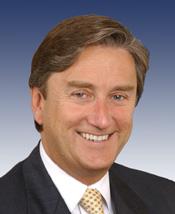 Rep. John F. Tierney (D-MA)
Description
Amendment sought to increase "Operation and Maintenance, Defense-Wide" funding by $5 million.
Legislative Activity
Stay on top of the latest movement without scrolling through every action
House amendment offered
March 15, 2005
View full timeline
House amendment offered
March 15, 2005
House amendment not agreed to: On agreeing to the Tierney amendment (A002) Failed by recorded vote: 191 - 236 (Roll no. 72).
March 15, 2005 • 5:26 PM
Amendment failed in Committee of the Whole
March 15, 2005 • 5:26 PM
Roll call votes on amendments in House
March 15, 2005 • 5:26 PM
House amendment offered/reported by : Amendment (A002) offered by Mr. Tierney.(consideration: CR H1455-1457, H1486; text: CR H1455)
March 15, 2005 • 1:28 PM
Amendment (A002) offered by Mr. Tierney. (consideration: CR H1455-1457, H1486; text: CR H1455)
March 15, 2005 • 1:28 PM
On agreeing to the Tierney amendment (A002) Failed by recorded vote: 191 - 236 (Roll no. 72).
March 15, 2005 • 5:26 PM
Votes
1 roll call on this amendment
Text
Offered
EMERGENCY SUPPLEMENTAL APPROPRIATIONS ACT FOR DEFENSE, THE GLOBAL WAR
ON TERROR, AND TSUNAMI RELIEF, 2005

The SPEAKER pro tempore (Mr. Foley). Pursuant to House Resolution 151
and rule XVIII, the Chair declares the House in the Committee of the
Whole House on the State of the Union for the consideration of the
bill, H.R. 1268.

{time}  1217

In the Committee of the Whole

Accordingly, the House resolved itself into the Committee of the
Whole House on the State of the Union for the consideration of the bill
(H.R. 1268) making emergency supplemental appropriations for the fiscal
year ending September 30, 2005, and for other purposes, with Mr.
Thornberry in the chair.
The Clerk read the title of the bill.
The CHAIRMAN. Pursuant to the rule, the bill is considered as having
been read the first time.
Under the rule, the gentleman from California (Mr. Lewis) and the
gentleman from Wisconsin (Mr. Obey) each will control 30 minutes.
The Chair recognizes the gentleman from California (Mr. Lewis).
Mr. LEWIS of California. Mr. Chairman, I yield myself such time as I
may consume.
Mr. Chairman, it is with great pride that I bring before the House
H.R. 1268, a bill making emergency supplemental appropriations for
fiscal year 2005. This is my first appropriations measure as the new
Appropriations Committee chairman. I am especially proud of the
extraordinary effort put forth by the committee's members and staff to
report a bill that will better permit our troops to prosecute the war
on terrorism and will do so with a price tag less than that requested
by the President.
Mr. Chairman, I would like to have the House pay special attention to
three of my colleagues who have come back from the private sector to
help serve this committee. Frank Cushing is my staff director, and
David LesStrang and Jeff Shockey are my deputy staff directors for the
Committee. I really appreciate their willingness to make great
sacrifice to come back.
Six of the committee's 10 subcommittees participated in the
development of this measure which provides $81.27 billion in urgent and
emergency spending. The lion's share of that amount, some $76.8
billion, is for defense-related expenditures. This funding represents
an increase for defense needs of $1.8 billion above the President's
request, which I hasten to note is entirely for enhanced support for
deployed, soon-to-be deployed, or returning troops in order to assist
in force protection and to increase the survivability of the troops in
the field.
To provide these important resources for our troops, we reduced
other, nonessential DOD requests by some $600

[[Page H1437]]

million as well as nearly $1 billion in foreign assistance-related
programs that were either not well justified or did not meet the strict
definition we applied for emergency spending. In addition, another $1
billion of extremely important and time-sensitive non-emergency foreign
assistance approved by the committee was completely offset by a
rescission of funds originally appropriated in fiscal year 2003.
With my colleagues' indulgence, I would like to take a few moments to
give the House a flavor of the urgent procurement needs that the
committee has included in the measure for our troops. Those include up-
armored Humvees and other new Humvees, medium and heavy trucks, night
vision devices, handheld stand-off mine detection systems, jammers,
improved high-frequency radios, Strykers to replace combat losses, add-
on armor kits, small-arms modifications and ammunition, body armor for
both the Army and Marine Corps, and medical supplies.
In addition to our providing these necessary resources for our
troops, the committee was compelled to fully fund the Army's modularity
program at this time because of the urgency to address the significant
challenges the Army now faces in mitigating stress on the current
active duty combat force. To meet this problem, the Army will not only
create 10 additional combat brigades; all of the current combat
brigades will be redesigned to enhance their ability to deploy more
rapidly and operate more independently on the battlefield. I might add
that our determination to procure additional equipment beyond the
President's request will allow forthcoming troop rotations to receive
much of their equipment prior to deployment, clearly an obvious benefit
to the success of our troops.
Beyond the requirements of our defense community, the bill provides
$656 million to meet the human needs resulting from last December's
horrific tsunami. In addition, the bill includes $592 million for the
construction of the U.S. embassy compound in Baghdad. While that money
for the embassy is a reduction of some $66 million, or 10 percent, from
the President's request, construction of the embassy compound has been
deemed urgent because of the imminent security threats to some 4,000
U.S. personnel in Iraq. Thus far, 45 personnel with the U.S. mission in
Iraq have been killed, including two American citizens who were killed
by a rocket attack on our diplomatic compound the day of the Iraqi
elections. Providing the funds now will greatly reduce the amount of
time our personnel remain in harm's way.
Despite the additional needs we have recommended on behalf of our
troops, the committee's bill is $614 million less than that requested
by the President. This reduction comes largely as a result of
reductions in proposed foreign assistance spending.
Mr. Chairman, I believe this measure is responsible both in how we
have responded to the needs to provide for adequate resources in making
this fight against terrorism and also in how we have carefully scrubbed
each and every program so that we can say with utmost assurance that
this is a fiscally sound piece of legislation.
Mr. Chairman, as I close my remarks, I wish to express my deep
appreciation for my ranking member from Wisconsin (Mr. Obey), as well
as to each and every member of the committee. I have already expressed
my feelings about our staff on both sides of the aisle. All of them
have worked so diligently to prepare effectively this legislation.
Mr. Chairman, as I mentioned at the outset, I am very proud of this
measure I bring to you, my first measure as chairman of the Committee
on Appropriations. I certainly urge the Members to adopt this bill.

[[Page H1438]]

[GRAPHIC] [TIFF OMITTED] TH15MR05.001

[[Page H1439]]

[GRAPHIC] [TIFF OMITTED] TH15MR05.002

[[Page H1440]]

[GRAPHIC] [TIFF OMITTED] TH15MR05.003

[[Page H1441]]

[GRAPHIC] [TIFF OMITTED] TH15MR05.004

[[Page H1442]]

[GRAPHIC] [TIFF OMITTED] TH15MR05.005

[[Page H1443]]

[GRAPHIC] [TIFF OMITTED] TH15MR05.006

[[Page H1444]]

Mr. Chairman, I reserve the balance of my time.
Mr. OBEY. Mr. Chairman, I yield 5 minutes to the distinguished
gentleman from Pennsylvania (Mr. Murtha), the ranking member of the
defense appropriations subcommittee.
Mr. MURTHA. Mr. Chairman, this is truly a bipartisan bill, the
defense part of it in particular. Chairman Young and I have worked very
closely together. He visited some places; I visited three bases. We
found shortages. We found problems. We tried to rectify those problems.
We tried to put in what the people in the field asked us and what
needed to be done.
We realized that insurance payments needed to be changed. We realized
that the death benefits needed to be changed. We also realized there is
a jurisdictional problem, but we felt like it could not wait. I have
had 12 people killed in my district, and there is no question in my
mind for the need for that to be changed.
But the thing that is the most important in my estimation is
accountability. Chairman Young and I sat in his office not long ago and
talked about the bill, and he got his copy of the Constitution out and
it talked about accountability. It talked about congressional
accountability. And I thought how unaccountable the Defense Department
seems to be at this stage. They do not seem to realize we are not here
to hurt them, we are here to help them. We believe that if you do not
have the confidence of the people, if you do not have confidence in the
way the money is being spent, you are going to lose confidence in the
overall project, the overall philosophy, the overall direction we are
trying to go.
We put language in the bill last year, and we said, you have got to
give us a report. That report is 3 or 4 months late. No reason for that
to happen. They had plenty of notice. And it should have been on our
desk before this bill was up so that if there was something that needed
to be rectified, we could rectify it. There are two reports. I do not
know if the second one is late yet or not.
Of course that takes us to the next step and that is the thing with
the intelligence which we have read in the newspaper and which I can
neither confirm nor not confirm has happened. But I worry that things
are getting out of control that we do not know about. We sit and try to
help them every way we can. Many of the things we put in this bill they
did not ask for because they did not know about it. We found out about
it, and we made sure that was part of the presentation, part of this
bill.
I have to say that when I meet with the Secretary of Defense, when we
listen to his presentation, we always say to him, chairman of the full
committee, Chairman Lewis, chairman of the defense subcommittee the
last time, Chairman Young, we always say, Look, we're here to help you.
Give us these reports. Tell us how you're spending this money. When I
saw there was a $9 billion fund that was not accounted for according to
the auditors, and, of course, this is not appropriated money, this is
money provided for the oil, but still we should know where it goes
because it can replace some of the money that we are appropriating for
these resources.
Mr. LEWIS of California. Mr. Chairman, will the gentleman yield?
Mr. MURTHA. I yield to the gentleman from California.
Mr. LEWIS of California. I appreciate my colleague yielding. I know
he will continue with his statement. I want the body to know that I
very much share his concern. The gentleman from Wisconsin (Mr. Obey)
and I have discussed this issue. He expresses his concern very clearly;
as did the gentleman from Florida (Mr. Young). It has been my privilege
to work with the gentleman for years, and I know of his commitment to
the Department and our work. Indeed the Administration does owe us the
courtesy of adequate and appropriate response time.
Mr. MURTHA. I would just conclude by saying this is our
responsibility under the Constitution, and I am hopeful that the
Defense Department gets the message. I support the bill and will do
everything I can to get it passed. Of course, any problems we have in
conference I am sure we will work them out.
Mr. LEWIS of California. Mr. Chairman, I yield 5 minutes to the
gentleman from Arizona (Mr. Kolbe).
(Mr. KOLBE asked and was given permission to revise and extend his
remarks.)
Mr. KOLBE. Mr. Chairman, I thank the gentleman for yielding me this
time. I want to congratulate the gentleman on this, his first bill to
be brought to the floor of the House of Representatives. I think it is
indicative of the good work that he and his staff are doing.
Mr. Chairman, I want to talk about the funding of programs that are
under the jurisdiction of the subcommittee that I chair, that is, the
Subcommittee on Foreign Operations, Export Financing and Related
Programs. It totals $2.7 billion. However, approximately $1 billion of
that is offset with a cut to previously appropriated funds. The
remaining $1.75 billion is provided as emergency spending and includes
$656 million for tsunami recovery. The committee's overall
recommendation for all the programs under the jurisdiction of the
Subcommittee on Foreign Operations, Export Financing and Related
Programs is $1.2 billion less than the President requested. However,
with the $1 billion offset, less than half of the President's request
will impact the Federal deficit.
Let me say once again that I do strongly support the objectives that
the President seeks to achieve with this request as it relates to
Afghanistan, the Middle East, the Ukraine and the tsunami-devastated
areas of Asia. But I did tell Chairman Lewis that I would scrutinize
this request, and the result of that scrutiny is what is before the
Members today. We have assigned the highest priority to programs that
can be implemented and executed during 2005 and that are not likely to
be funded by other donors. The resulting recommendation is a balanced
approach to supporting the President's request and provides much-needed
emergency appropriations to further the fight against terror and
provide disaster assistance.
Let me explain further the recommendation for the programs under the
foreign operations jurisdiction. We broke the President's request down
into three different categories. The first includes programs that are
true emergencies, such as replenishment of funds that were reprogrammed
previously for tsunami disaster assistance and poppy eradication in
Afghanistan, funds for the humanitarian crisis in Darfur and in Asia,
and funds to train Afghan police, funds that are necessary to improve
conditions that would enable us to bring our troops home as soon as
possible. Total emergency spending under this first category is $1.75
billion, as I already indicated.
The second category of funds includes those programs requested by the
President that we have determined to not be an emergency, but are
important to U.S. leadership abroad. Additionally, this category
includes reconstruction resources to stabilize and improve conditions
in Afghanistan and the Middle East which support our efforts to bring
our troops home, funds to support the democratic movement and
government in Ukraine, and funds for programs in the West Bank and
Gaza. We have provided $995 million in this second category of
nonemergency spending and have offset these funds with the rescission
of prior foreign assistance appropriations, specifically funds that
were appropriated for Turkey in the fiscal year 2003 supplemental bill.
I think my colleagues recognize that we are faced with unique
opportunities in the Middle East and Afghanistan. Our leadership can
have positive influence in both the West Bank and Gaza, in Ukraine, in
Indonesia and Sri Lanka and, of course, in Afghanistan. I saw a press
report recently from Indonesia, the world's most populous Muslim
country, that showed that the backing for Osama bin Laden had dropped
from 58 percent in 2003 to 23 percent today.

{time}  1230

I believe part of that is due to the efficiency and the generosity of
U.S. relief efforts after the December tsunami. As chairman of the
Foreign Operations, Export Financing and Related Programs Subcommittee,
I am repeatedly reminded of how much we as a nation do each year to
provide disaster assistance and relief. It is encouraging to know that
at least one important

[[Page H1445]]

Muslim country has started to take notice.
Finally, the last category includes programs requested by the
administration that we determined were less urgent and could be
considered in the 2006 budget process. This category totals $1.2
billion in funding and includes fiscal year 2006 operating costs of our
programs overseas and large construction projects that can either wait
for consideration or would have a possible revenue stream, making them
ideal projects for World Bank and Asian Development Bank funding. These
programs total $616 million for Afghanistan, $200 million for the new
Global War on Terror Partners Fund, the new $200 million Solidarity
Fund, and $45 million in debt relief for countries affected by the
December tsunami.
Let me say that the funds we are providing in the foreign assistance
chapter must be considered an investment in security both in the region
and on American soil. It is also a responsibility to our future. We
must not be faced 20 years in the future with the knowledge that we
looked at the opportunities of a Taliban-free Afghan government, a
democracy-oriented government in the Ukraine, a Middle East craving
freedom and representative government, only to turn away and leave them
to their own meager means with no U.S. influence.
Mr. Chairman, I urge that this legislation be adopted. I believe that
this is a good bill and a well written one.
Mr. OBEY. Mr. Chairman, I yield 5 minutes to the distinguished
gentlewoman from New York (Mrs. Lowey), the ranking member of the
Foreign Operations, Export Financing and Related Programs Subcommittee.
(Mrs. LOWEY asked and was given permission to revise and extend her
remarks.)
Mrs. LOWEY. Mr. Chairman, I am pleased to have worked with the
gentleman from Arizona (Chairman Kolbe) to develop recommendations on
the international assistance portion of the bill. As the gentleman from
Arizona (Chairman Kolbe) said, the bill does cut $1.2 billion in
nonemergency initiatives from the administration's international
assistance request as well as rescinds an additional $1 billion in
previously appropriated funds that are no longer needed, and I
certainly concur with most of the chairman's recommended cuts. However,
I do want to express my concern that we will be expected to fund some
of these items on the fiscal year 2006 bill, and as I anticipate a
302(b) allocation for the Foreign Operations bill that may cut the 2006
request, these needs will be tough to accommodate.
We are now into year three of the reconstruction programs in
Afghanistan; yet the administration continues to rely on off-budget
emergency supplementals to fund ongoing reconstruction. There are
clearly many nonemergency items in the $2 billion requested for
Afghanistan in this bill. The establishment of a stable democracy in
Afghanistan with their own security forces is the key to bringing our
troops home. The administration, I am concerned, has set back that
effort by overuse of the emergency supplemental mechanism instead of
providing appropriate assistance within the normal appropriations
process, and I do hope in working closely with the gentleman from
Arizona (Chairman Kolbe), we will be able to provide sufficient funds
that are so important for the future of Afghanistan.
I am very pleased that the committee was able to protect funds for
continued urgent needs in Afghanistan, especially for initiatives that
support women and girls. The supplemental contains approximately $63
million in support of education, health, economic, democracy programs
that target women and girls. And I am pleased with the generous amounts
in the bill for the tsunami relief and reconstruction, as well as other
items that advance our foreign policy interests.
I will be supporting the Jackson amendment to add $100 million for
unmet needs in Africa because in my judgment the ongoing complex crisis
in the Democratic Republic of the Congo, Liberia, Northern Uganda,
Ethiopia, and Somalia may be out of the media spotlight, but the human
suffering continues and additional funds are urgently needed to provide
food and medical assistance to refugees, to facilitate refugee returns,
and to provide drought-related aid. The Congress does have a
responsibility to real disasters and to ensure that the United States
is generous in our response to crises throughout the world. We have
been extraordinarily generous with our tsunami relief, and I think we
need to follow suit to meet the real needs in Africa.
I would also note that the bill contains $200 million for the West
Bank/Gaza program with appropriate safeguards for monitoring and
auditing. Fifty million of the $200 million will improve the flow of
goods and people with Israel and will thus improve the security of
Israel and the region.
Finally, I will be also supporting the Maloney amendment to transfer
$3 million from ESF accounts to UNFPA to assist tsunami victims. The
UNFPA, with its proven track record and longstanding presence in the
tsunami-affected areas, is uniquely placed to immediately respond to
the needs of women and children, populations among the most vulnerable
after disasters such as the tsunami.
In closing, I just want to say for me I want to applaud the important
efforts of the gentleman from California (Chairman Lewis); the
gentleman from Wisconsin (Mr. Obey), ranking member; the gentleman from
Pennsylvania (Mr. Murtha); and the gentleman from Arizona (Chairman
Kolbe). We wrote the bill together. I think it is a good bill, it is an
important bill, and provides very vital services to important places
around the world where there are ongoing emergencies.
Mr. LEWIS of California. Mr. Chairman, I yield 5 minutes to the
gentleman from Florida (Mr. Young).
Mr. YOUNG of Florida. Mr. Chairman, I compliment the gentleman from
California (Chairman Lewis) for having brought this first of many
important appropriation bills to the floor. He explained the Defense
part of this bill very well, as well as he should because he has served
superbly as chairman of the Defense Subcommittee for many years. Our
portion of the bill is just a little over $73 billion, and it is to
provide for the warfighters, to provide the equipment that they need
and the protection that they need as they go about carrying out their
mission.
I want to take just a few seconds and comment on the issue that the
gentleman from Pennsylvania (Mr. Murtha) raised because we have worked
together on this section of the bill from the very beginning, along
with the gentleman from California (Mr. Hunter) and the gentleman from
Missouri (Mr. Skelton) of the Committee on Armed Services, the
gentleman from California (Chairman Lewis) and the gentleman from
Wisconsin (Mr. Obey). This is truly a work of bipartisanship. But on
the subject of accountability, there is no reason that I can think of
other than the importance of the Legislative Branch of government that
Article I of the Constitution establishes the Legislative Branch of
government. We have three branches, separate but equal, but right after
the Preamble the first article is the Legislative Branch.
So I do not know whether that means we are a little more equal, but I
do know that we control the money. And as I have referred to so many
times, and I will continue when it is necessary, it says ``No money
shall be drawn from the Treasury, but in Consequence of Appropriations
made by Law.'' That means nobody can spend money, Federal money, unless
we appropriate it. But part of that section that does not get referred
to very often says in the same sentence, ``and a regular Statement and
Account of the Receipts and Expenditures of all public Money shall be
published from time to time.''
So we think that is just as important, and we, the gentleman from
Pennsylvania (Mr. Murtha), myself, the gentleman from California (Mr.
Lewis), the gentleman from Wisconsin (Mr. Obey) have just recently met
with representatives of the Defense Department. The gentleman from
Pennsylvania (Mr. Murtha) and I just recently sent a letter to the
Secretary of Defense outlining our concerns. I think we have made that
point very well.
What we do in this supplemental is to provide, as the gentleman from
California (Chairman Lewis) has mentioned, body armor, the uparmored
Humvees, ammunition, and medical care. We provide the soldiers that are
fighting in the war with what they

[[Page H1446]]

need to accomplish their mission and what they need to protect
themselves while they are accomplishing their mission. And the specific
details of the bill have been made available to Members if they want to
see all of the items that are funded in this bill.
I would like to make a brief closing statement that if we are going
to get our troops out of Iraq, and we are, and we want them out as soon
as we possibly can, and as difficult as it is to state a specific date,
but the way we are going to get our troops out, our exit strategy is to
provide training to the Iraqis so they can protect themselves from
these terrible, violent insurgent terrorists. Part of the money in this
bill goes to do just that, to train the Iraqis to protect themselves so
that they can have a self-government with some semblance of security.
So part of the money will allow the Iraqis to get the training that
they need. That is our exit strategy. Let them take over from the
American troops, and our American troops will come home. And in the
meantime, say a prayer for them, the ones that are over there still.
They are still in harm's way. They are doing a really great job. Their
attitude is beautiful. As we visit soldiers who have come back from the
war in the hospitals, in the VA hospitals, their attitudes are just
unbelievable. They believe in what they are doing. So many of them are
anxious to get well and get back to the battle if they can. But,
anyway, remember, support our troops. Find a job for them when they get
out. Take them to lunch. Buy them dinner. Thank them for the good work
that they do.
Mr. MURTHA. Mr. Chairman, I yield 5 minutes to the gentleman from
Texas (Mr. Edwards).
Mr. EDWARDS. Mr. Chairman, as someone who for the past 2 years has
represented over 40,000 soldiers at Fort Hood, Texas, who have fought
for our country in Iraq, I am deeply appreciative of the expeditious
manner in which the gentleman from California (Chairman Lewis), the
gentleman from Wisconsin (Mr. Obey), the gentleman from Florida
(Chairman Young), and the gentleman from Pennsylvania (Mr. Murtha) have
worked together to pass this important piece of legislation.
This bill sends a very clear message to our troops in harm's way that
while Americans may have differences of opinion about the Iraqi War,
the fact is that we are all unified when it comes to seeing that our
troops in harm's way have all of the support that they need and deserve
to do their mission and to come home safely to their families.
In the area of responsibility for the subcommittee on which I serve
under the Committee on Appropriations, the Military Quality of Life and
Veterans Affairs, and Related Agencies Subcommittee, I wholeheartedly
support the language and funding in this bill. Under our subcommittee
is $3.1 billion in funding, $175 million of which goes to the
Department of Defense health care system to deal with the direct
increased costs for health care for our wounded troops coming home;
$1.5 billion to pay for housing allowance for our Guard and Reserve
soldiers and their families; and $1.3 billion in military construction
needed in Iraq and Afghanistan and throughout our country to support
our war against terrorism.
I enthusiastically and wholeheartedly support this bill. I do want,
Mr. Chairman, to express one concern. The fact is that as of the end of
December of last year, there have been 48,000 American troops coming
home who have needed health care from the Veterans Administration
health care system. While we put $175 million in the DOD part of this
budget to take care of extra DOD health care costs, there is not a dime
in this supplemental appropriation bill to help the Veterans
Administration deal with the cost of dealing with 48,000 and still
counting troops who have needed VA health care.
Using the VA Secretary's own testimony before our subcommittee last
week, the average cost mathematically is $6,200 for treatment for each
veteran within the VA health care system. Multiply that number by the
48,000 troops coming back from Iraq and Afghanistan, and we are talking
about an additional $302 million of cost to the VA health care system
to help provide needed care for these deserving patriots. I do not
think that money ought to come out of the hide of VA health care
services to other veterans, and I do not think we should cut corners in
terms of quality of care for Iraqi and Afghanistan War veterans once
they have left the Department of Defense system and gone into the VA
system.
In committee we heard some say the VA is flush with money. I have
looked into that statement, and the fact is that the VA is presently
laying off hundreds of employees in the VA medical system and taking
money out of their equipment accounts to fund their personnel accounts.
During time of war and in the spirit of this bill supporting our troops
not only when they are in the combat zone but when they return home, I
think in that spirit we ought to, as this bill goes to conference
committee, look specifically at what additional needs the VA health
care system needs, provide the quality medical care that these troops
need. If the war is worth fighting, certainly it is worth paying for
and it is worth supporting those troops even after they have left the
military and continue to pay the mental and physical price for decades
for having stood up for our country.

{time}  1245

So I would like to urge the committee chairman, the gentleman from
California (Mr. Lewis), the gentleman from Wisconsin (Mr. Obey), the
gentleman from Pennsylvania (Mr. Murtha), and the gentleman from
Florida (Mr. Young) to work together with us on a bipartisan basis to
see that we can add the needed money for the VA health care system, to
see that we do not shortchange these great Americans who have risked
their lives for our country.
Mr. LEWIS of California. Mr. Chairman, I yield 3 minutes to the
gentleman from Virginia (Mr. Wolf).
(Mr. WOLF asked and was given permission to revise and extend his
remarks.)
Mr. WOLF. Mr. Chairman, the bill we bring to the floor today includes
$2 billion for funding requirements under the jurisdiction of the
Subcommittee on Science, State Justice and Commerce including State
Department and FBI needs related to program expenses in Iraq.
There are two major issues that I want to summarize, because there is
not a lot of time.
The embassy in Iraq. The embassy in Iraq, 45 people have died in
attacks on the embassy in Iraq. We want security in this building; we
want security in many other buildings around the city. This embassy
will cost less in many respects than many of the other buildings. So
there is going to be a lot to talk about. But to send our men and women
in harm's way to live in a building that is unsafe or to delay the
construction would be, quite frankly, wrong.
On the whole issue of peacekeeping, there may very well be an
amendment to strike the peacekeeping section. Members should know that
in the North-South war, 2.1 million people in Sudan, many Christians,
some Muslims and Animists, died in the North-South issue.
Darfur is the scene of genocide today as we now speak, and every
Member of this House voted to say there was genocide in Sudan, and
every Member of the Senate voted the same way. To take away the
peacekeeping money after the Bush administration has done such a good
job of bringing North-South peace, to take that away to allow the
raping and the pillaging and everything that is going on in Sudan would
be morally unacceptable.
Now, President Bush, working with Secretary Powell and Senator
Danforth, has negotiated, after 20 years, and keep in mind, Osama bin
Laden lived in Sudan from 1991 to 1996, have negotiated for 20 years,
and now to strike the peacekeeping money that will send troops in that
regard, and we do not want to send American troops there, troops that
will stop the pillaging and put insulation into the peace agreement
that has been signed, and that will put pressure, pressure, on ending
the genocide that is taking place in Darfur.
I would beg this Congress after the good work of this administration
and Members on both sides, and almost everybody signed Dear Colleague
letters urging the administration to do more on Sudan, they are now
doing it. Keep in mind there was slavery in Sudan up

[[Page H1447]]

until 2 years ago. Without peacekeepers in Sudan, the North-South
agreement will break down, 2.1 million Christians will have died in
vain, and many Muslims and many Animists, and Darfur will not come to
an end.
So I beg this institution, when this amendment comes up to strike
peacekeeping for this area, do not support it, because if you support
it and it carries, the genocide, I can guarantee you, will continue in
Darfur and the North-South peace agreement will break down and the war
will begin. And keep in mind, Hamas has training camps in Khartoum and
so does Hezbollah.
The bill we bring to the Floor today includes just over $2 billion
for funding requirements under the jurisdiction of the Subcommittee on
Science, State, Justice and Commerce, including State Department and
FBI needs related to program expenses in Iraq.
For the State Department, we have included $1.92 billion, a reduction
of $285 million from the President's request.
The bill includes the necessary funds to maintain our diplomatic
presence in Iraq and Afghanistan, and to let our personnel carry out
this duties in the safest and most secure manner possible.
If we are going to conduct diplomacy anywhere, it had better be done,
and done right, in Iraq and Afghanistan. These are front lines of our
foreign policy, and we neglect them at our peril. This bill pays the
costs necessary for operations, logistics, and security in those
dangerous, but critically important parts of the world.
This bill also includes $592 million to allow State to move out
quickly to build a secure compound in Baghdad. The current facilities
are not secure. We need to move people out of harm's way as soon as
possible.
State has secured a 100 acre site, and is ready to begin construction
immediately upon receiving the funds in this bill. Since the bombings
in Nairobi and Dar Es Salaam, State has delivered many of these secure
compounds on time and on budget. With this funding they will complete a
secure living and working compound within 24 months of enactment.
The bill also provides $580 million, $200 million below the
President's request, to pay for the U.S. share of ongoing peacekeeping
missions and a new mission for Sudan, where the U.S. has been a driving
force for a peace agreement.
We have also included requested funding for the FBI counterterrorism
efforts, and for DEA counternarcotics efforts in Afghanistan.
Finally, the bill includes requested costs of $14.5 million to jump-
start the improvement of United States tsunami warning capabilities.
The Committee has scrubbed the President's request and reduced where
we thought it made sense to do so. The result before you provides
funding for important security measures for our diplomatic personnel,
and provides for our ongoing commitments in Iraq and elsewhere.
I urge my colleagues to support the bill.
Mr. OBEY. Mr. Chairman, I yield 4 minutes to the gentlewoman from
Texas (Ms. Jackson-Lee).
(Ms. JACKSON-LEE of Texas asked and was given permission to revise
and extend her remarks.)
Ms. JACKSON-LEE of Texas. Mr. Chairman, I cannot help before I begin
to join with my colleague, the gentleman from Virginia (Mr. Wolf), to
say that we absolutely cannot strike those vital funds for
peacekeeping.
But, Mr. Chairman, I rise today, as well as to support those
peacekeeping dollars, to say that many of the efforts in this
legislation, the work that has been done by the gentleman from
Wisconsin (Mr. Obey) and the gentleman from California (Mr. Lewis), I
can appreciate in this emergency supplemental, even though as I have
spoken to my good friend and leader, the gentleman from Pennsylvania
(Mr. Murtha), on this issue, it is important that we have an announced
success strategy for leaving Iraq. Remember what I said, a success
strategy, and I have not yet heard that from the administration.
But I rise today to comment that the legislation fails to contain
important provisions that would provide what is truly needed by our
government and that would ensure that the $81.3 billion in this bill is
really spent wisely. I think we could have done better.
I am very disturbed as the ranking member of the Committee on the
Judiciary Subcommittee on Immigration, Border Security, and Claims that
we have now forced into this bill as a self-operating part of the rule
that H.R. 418 would be included in the engrossment of the underlying
bill, H.R. 1268.
I opposed the Republican leadership's position to attach the REAL ID
Act to this emergency supplemental. This is anti-immigrant legislation
that will not make us safer. Rather, it scapegoats asylum seekers and
other immigrants.
Last year, Congress passed new driver's license standards in the 9/11
intelligence reform bill with bipartisan support, and I do support
that. It was a good bill, and the intelligence reform bill was
supported in a bipartisan manner. But we do not need to undo the
careful compromise and thought processes by imposing anti-immigrant
policies onto States' driver's licenses and identification processes.
Where is the money? This is an unfunded mandate. What is a State
going to do if they are not able to implement these new procedures
because they do not have the money?
The bill is being attached here in an effort to force the Senate to
pass these ill-conceived policies. We have had no hearings on this REAL
ID legislation, and I oppose the inclusion of this bill if the
underlying legislation is passed and engrossed as set forth in H. Res.
151.
H.R. 418 includes numerous provisions limiting the rights of
refugees, imposing onerous new driver's license requirements on the
States, making it easier to deport legal immigrants, legal immigrants,
waiving all Federal laws concerning the construction of fences and
barriers where we have been told by Homeland Security experts they will
not make us safer anywhere in the United States, and denying immigrants
long-standing habeas corpus rights.
I believe those who are criminals need to be incarcerated, but there
are immigrants who are standing in line trying to achieve citizenship.
If reenacted into this legislation, it will yet again threaten to close
America's doors to religious minorities escaping religious persecution
and women fleeing sex trafficking, rape and forced abortions.
In the wake of the 9/11 tragedy, and even after the PATRIOT Act, this
legislation would further target immigrants for crimes they have not
committed and sins for which they are not responsible. At some point we
have to treat terrorism as a problem that requires an ``intelligence''
response, as opposed to an excuse to scapegoat immigrants.
An emergency supplemental that purports to aid tsunami victims, our
troops in Iraq and Afghanistan is no place for the provisions of the
REAL ID Act. I support spending the necessary dollars to keep our
troops in Iraq safe, to provide relief to victims of the tsunami in
Southeast Asia and Africa, and to provide security in Afghanistan; but
this is a poison pill.
I look forward to supporting the Jackson amendment. I will offer an
amendment to stop the devastating lack of funding on the Immigration
and Customs Enforcement section of DHS. But we need to take this REAL
ID out of it so we can have a good bill.
Mr. Chairman, I rise in support of some of the efforts funded in this
emergency supplemental, H.R. 1268, although the legislation fails to
contain important provisions that would both provide what is truly
needed by our government and that would ensure that the $81.3 billion
proposed in this bill is spent wisely. Of particular concern to me as
Ranking Member of the House Judiciary Subcommittee on Immigration,
Border Security, and Claims, is the forced inclusion of H.R. 418 in the
engrossment of the underlying bill, H.R. 1268.
I oppose the Republican leadership's decision to attach the REAL ID
Act to this Emergency Supplemental. This anti-immigrant legislation
will not make us safer--rather, it scapegoats asylum-seekers and other
immigrants.
Last year, Congress passed new driver's license standards in the 9/11
Intelligence Reform bill with bipartisan support. We do not need to
undo that careful compromise by imposing anti-immigrant policies onto
States' driver's license and identification processes.
This bill is being attached here in an effort to force the Senate to
pass these ill-conceived policies. We have had no hearings on this
bill, and I oppose the inclusion of this bill if the underlying
legislation is passed and engrossed as set forth in the Rule, H. Res.
151.
H.R. 418 includes numerous provisions limiting the rights of
refugees, imposing onerous new driver's license requirements on the
states, making it easier to deport legal immigrants, waiving all
federal laws concerning the construction of fences and barriers
anywhere within the United States, and denying immigrants long standing
habeas corpus rights.

[[Page H1448]]

If re-enacted into this legislation it will yet again threaten to
close America's doors to religious minorities escaping religious
persecution; and women fleeing sex trafficking, rape, and forced
abortions.
In the wake of the 9/11 tragedy, and even after the PATRIOT Act, this
legislation would further target immigrants for crimes they have not
committed and sins for which they are not responsible. At some point,
we have to treat terrorism as a problem that requires an
``intelligence'' response, as opposed to an excuse to scapegoat
immigrants. An emergency supplemental that purports to aid tsumani
victims, our troops in Iraq, and Afghanistan is no place for the
provisions of REAL ID. Inclusion in this fashion amounts to a forced
acceptance of its provisions much like a contract of adhesion.
Mr. Chairman, I support spending the necessary dollars to keep our
troops in Iraq safe, to provide relief to victims of the tsunamis in
southeast Asia and Africa, and to provide security for Afghanistan.
However, the legislation before us today stands to use the public's
fear of terrorism to radically change asylum law for ALL asylees, not
just those with some connection to terrorism or relating to the issues
contained in the underlying legislation. For these reasons, I oppose
this legislation in its present form. I will, however, support the
Jackson Amendment on Africa and I as well, will offer an amendment to
stop the devastating lack of funding of the Immigration and Customs
Enforcement section of DHS, a real crucial part of the Nation's
Homeland Security.
Mr. LEWIS of California. Mr. Chairman, I am happy to yield 4 minutes
to the gentleman from Michigan (Mr. Knollenberg), the chairman of the
Subcommittee on Transportation, Treasury, and HUD.
Mr. KNOLLENBERG. Mr. Chairman, I rise in strong support of the
supplemental appropriations bill, and I thank the gentleman from
California (Mr. Lewis) for yielding me time. I want to commend the
gentleman for putting together what I believe is an excellent bill and
for his leadership in reviewing each single element of the
administration's request.
The Subcommittee on Transportation, Treasury, and HUD that I chair
has mostly technical items in this supplemental that are not
controversial, so I would like to focus my comments on the overall
bill.
In the past few months, we have seen an extraordinary progress in
Iraq and in the Middle East at large. From the historic Iraqi
elections, the new Palestinian leadership, voting in Saudi Arabia, and
massive demonstrations in Lebanon against their Syrian occupiers, I
believe that these events show major positive changes that can come to
this part of the world.
We must maintain that momentum, and that is what this bill does. By
passing this legislation, we will keep our soldiers in Iraq fully
equipped as they continue their daunting task in maintaining security
and training Iraqis to take over those functions.
The funding included in this bill to secure a new United States
embassy will help get us out of the palaces that we currently occupy.
We will provide much-needed assistance to Afghanistan in its efforts to
become more secure, restrict the drug trade, and develop its economy.
This is a good bill, and it deserves our support.
I would like to comment specifically on one part of the supplemental
that I know many of us are concerned about, and that is the $200
million to aid the Palestinian Authority. The Palestinians have an
opportunity to get their house in order, and we should help them. Prime
Minister Abbas and Finance Minister Fayyad are the right people for
their jobs, but we all know that the Palestinian Authority still needs
a great deal of reform, and we need to be careful about how we provide
money to help the Palestinians.
That is why under the direction and leadership of the gentleman from
Arizona (Mr. Kolbe), we included specific conditions for how this money
can be used. We maintain the prohibition on direct assistance to the
Palestinian Authority. We require the administration to provide a
comprehensive report on the steps taken by the Palestinian Authority on
good governance, economic reforms, and dismantling the terrorist
organizations. And we require an audit of the Palestinian Authority's
financial structures.
Providing this money sends an important signal that the U.S. is
prepared to help the Palestinians. Including the appropriate conditions
sends an equally important signal that the Palestinian Authority has
expectations that must be met. The committee should be commended for
handling this issue in a balanced and effective way; and I urge
everyone, obviously, to support it.
Mr. Chairman, again I say, this is a good bill, It is a necessary
bill, and I urge again all of my colleagues to support it.
Mr. OBEY. Mr. Chairman, I yield 3 minutes to the distinguished
gentleman from Maryland (Mr. Hoyer), the minority whip.
Mr. HOYER. Mr. Chairman, I thank the gentleman from Wisconsin, and I
thank our new chairman and congratulate him on his new position.
Mr. Chairman, I intend to vote for this supplemental appropriations
bill, because I believe it is imperative to support our men and women
in harm's way in Iraq and Afghanistan and to continue our Nation's
important work there. Our Nation must finish what it has begun. We
cannot disregard the bravery of millions of Iraqi citizens who turned
out to vote in January. Failure there, in my opinion, is not and should
not be an option.
This legislation also is a recognition of the bravery and courage of
our service men and women, more than 1,500 of whom have given the
ultimate measure of sacrifice for freedom.
As Tom Friedman pointed out in the New York Times in February:
``There is no single action we could undertake anywhere in the world to
reduce the threat of terrorism that would have a bigger impact today
than a decent outcome in Iraq.'' I share that view.
Mr. Chairman, I believe it is more than mere coincidence that over
the last several months the winds of democratic reform have begun to
blow, not only in Iraq and Afghanistan but also in Lebanon, Egypt,
Saudi Arabia, and the Palestinian Authority. But we must harbor no
illusions about the prospects for democratic reform in lands that have
never known it. However, I believe that it is in our Nation's interests
to encourage and promote it.
Mr. Chairman, I also want to note that this legislation includes
funding for food and humanitarian assistance in Sudan, as well as
tsunami relief.

{time}  1300

However, despite these important funding requests, I would be remiss
if I did not point out that this bill is far from perfect. In many
respects it is troubling.
This Congress has a constitutional obligation, a duty, on behalf of
the voters who elected us to serve here to hold the administration
accountable for such expenditures. We have asked for a report. We have
not gotten that report yet.
The gentleman from Pennsylvania (Mr. Murtha) mentioned that in our
markup. The gentleman from California (Mr. Lewis) mentioned that in our
markup.
The American public wants to support this effort but wants to do so
in an effective, honest and efficient manner. It is our responsibility
to ensure that.
It is clear that the administration has included many measures in
addition that are not emergencies. We understand that practice. It has
happened before. But I believe with all due respect that we have not
met our oversight requirements.
This bill is approximately $82 billion. In talking to staff, and
maybe I stand to be corrected, but I believe that there are only two
appropriations bills, Defense and Labor and Health that are larger than
this $82 billion bill. Now there may be another one. I think VA-HUD
used to be but we do not have VA-HUD. What does that mean? That means
we are passing the third largest appropriations bill that we will pass
in the Congress.
What does that mean? We are passing the third largest appropriations
bill through this House without a single hearing, not one. There was no
hearing in subcommittee, any of the subcommittees. There was no hearing
in the full committee. We had 2\1/2\ hours of consideration in the full
committee.
Mr. Chairman, as you know, we literally hold hundreds, perhaps
thousands of hours of hearings on the individual bills. As a result,
individual Members have the opportunity to ask questions, to make sure
themselves that the money that is asked for is being spent
appropriately.
As I said, I will support this bill. I do not hold our new chairman
responsible for this. This is a supplemental. It came down relatively
late. Our men

[[Page H1449]]

and women are at risk. We need to get this money moving. I understand
that. But I suggest to my colleagues that oversight is critical, and I
would urge the gentleman from California (Mr. Lewis) and the ranking
member, the gentleman from Wisconsin (Mr. Obey), that as we proceed
with further consideration of these items that we exercise oversight
carefully in the coming months to assure ourselves that this money is
being spent as we intend it to be.
Mr. Chairman, I thank the gentleman for yielding me time.
Mr. LEWIS of California. Mr. Chairman, I yield myself such time as I
may consume.
Mr. Chairman, I would take a moment to suggest to the gentleman that
he may not be aware of it because he does not serve on those
subcommittees, but there were at least six hearings in a variety of
subcommittees and other meetings regarding this matter before we got
organized.
Mr. Chairman, I reserve the balance of my time.
Mr. OBEY. Mr. Chairman, how much time remains?
The Acting CHAIRMAN (Mr. Fossella). The gentleman from Wisconsin (Mr.
Obey) has 10 minutes remaining. The gentleman from California (Mr.
Lewis) has 8 minutes remaining.
Mr. OBEY. Mr. Chairman, I yield 3 minutes to the gentleman from
Missouri (Mr. Skelton), the ranking member of the Committee on Armed
Services.
Mr. SKELTON. Mr. Chairman, I thank the gentleman for yielding me
time.
Mr. Chairman, I will vote in favor of this bill. We cannot let our
troops down who are out there on the front line.
Let me wish our new chairman the very best in his maiden voyage
through this body on the floor.
Mr. Chairman, I want my colleagues to know that my vote is not a full
endorsement of the bill. I am troubled that we continue to resort to
supplementals to fund our efforts in Iraq and in Afghanistan. I think
we can do a better job making sure our troops on the front line have
everything they need if we put funding for these operations up front in
the fiscal year rather than halfway through it like we are doing in a
supplemental like this.
I also think we should require more rigorous accounting of the war
costs. This is important. We need better information to conduct our
constitutional duty of oversight. Most important, my reservations have
to do with the fact that we still do not have a coherent strategy for
success in Iraq.
When I go back home I get questions from my constituents about the
war in Iraq and its costs. What is the meaning of winning in Iraq? How
will we know when we have won and we can leave, especially when for
every insurgent we kill there seems to be another to take his place?
Are we trying any more to win the hearts and minds of the Iraqi people?
If so, when will the Iraqis be ready to take over their own security?
Many in the administration have said we cannot put a timetable on the
withdrawal. I agree. We cannot put a timetable on it. But while we
should avoid a schedule, we must have a ``to do'' list. We must set
goals for the Iraqi forces. We must be able to measure the progress of
those Iraqi forces in attaining those goals.
I voted for the resolution authorizing the use of force in Iraq. I
will vote for this bill. We must win in Iraq. But I see no game plan.
There is nothing in this bill that forces the administration to level
with us and to level with the American people about either the real
costs or about our strategy for success. In my opinion this is a missed
opportunity.
Mr. Chairman, I urge my colleagues to vote for this bill, but we
should all realize that this is far from a perfect way of running
Operation Iraqi Freedom.
Mr. LEWIS of California. Mr. Chairman, I reserve the balance of my
time.
Mr. OBEY. Mr. Chairman, how many speakers does the gentleman have
remaining?
Mr. LEWIS of California. At this point I see none on the floor.
Mr. OBEY. Mr. Chairman, I am the last remaining speaker on my side.
How much time do I have remaining?
The Acting CHAIRMAN. The gentleman from Wisconsin (Mr. Obey) has 7\1/
2\ minutes remaining.
Mr. OBEY. Mr. Chairman, I yield myself 6 minutes and 50 seconds.
Mr. Chairman, I would like to make four points. Information is the
lifeblood of democracy. If the public does not get sufficient
information, they cannot perform their duties in a citizen-based
democracy. If this Congress does not get adequate information, it
cannot make the right choices in providing checks and balances to any
administration.
We have gotten precious little information about the administration's
plans for war before the war. We have gotten precious little
information about their plans during the war, and we certainly are
getting precious little information from them now.
The full cost of this war is being revealed a little bit at a time on
the installment plan, and information that the Congress has asked for
has not been forthcoming. Example, section 9012 of the 2005 DOD
appropriations bill requires, it does not request, it requires the
administration as a condition of getting the previous money, it
required the administration to give the Congress its best estimate of
what our costs would be in the Iraqi war over the next 5 years. They
were supposed to have that information by January 1. Last time I
looked, we are past January 1. Still no information.
I have already referred previously to the information we have seen in
the papers about the activities, the under-the-table classified
activities that DOD appears to be engaged in without informing the
Congress about those activities. The gentleman from Maryland (Mr.
Hoyer) referred to oversight responsibilities. I think this Congress
has done a miserable job in meeting its oversight responsibilities on
this war. There are notable exceptions. But I do not believe that we
have insisted on the information that we need to have in order to meet
our responsibilities fully and well. I certainly do not think that we
have measured up to our obligation to protect taxpayers' money.
We tried in full committee to win support for the creation of a
Truman-like committee to conduct ongoing investigations of profiteering
in Iraq by contractors. We were turned down.
We asked the Committee on Rules to make a similar amendment in order.
We were turned down.
This article demonstrates why we need that committee. This appeared
in the Washington Post this morning. ``Pentagon audit questions
Halliburton costs in Iraq. Pentagon auditors found more than $100
million in questionable costs in one section of a massive no-bid
Halliburton Company contract for delivering fuel to Iraq according to a
summary of their reports released yesterday. The audit summary written
in October 2004 but withheld from public release covers one out of 10
sections from a $2.5 billion contract under which Halliburton was
tapped to deliver fuel, fight oil well fires, repair oil well
facilities in Iraq after the U.S.-led invasion in the spring of 2003.''
And then it goes on to tell the story.
This article alone demonstrates why we need that kind of a committee.
Now, Harry Truman during World War II when he was a member of the
Senate conducted over 400 hearings. He issued almost 50 reports. That
was a Democratic Congress investigating a Democratic administration and
no harm was done to the country in the process. But a lot of taxpayers'
money was protected and a lot of embarrassments were avoided. That is
what ought to happen now, but we are being stonewalled by the majority
and by the White House on this issue. I hope that changes.
I would also like to simply say with respect to my comments earlier
about the Department of Defense appearing to undertake covert
activities which in the past have been within the purview of the CIA, I
want to read the concluding paragraph from an editorial in the
Minnesota Daily which reads as follows:

Human intelligence is a risky business. When missions go
awry, the consequences can be far-reaching. Congressional
oversight assures that spymasters remain accountable for
their foul-ups. It might indeed be necessary to give the
Pentagon more control over human intelligence but that is a
decision Congress should make, not Rumsfeld.

And that is my point. I do not know whether the activities that are
being

[[Page H1450]]

discussed in the newspapers are wise or not. I have my doubts about
some of them. But it seems to me that in the end this is a judgment
that needs to be made by elected officials, not an independent agency
that feels it is too powerful to listen to anybody else in government.
Mr. Chairman, I will vote for this bill, but I want to make it quite
clear, this is the last time we are going to be supporting a bill like
this if we do not have adequate oversight and we do not have adequate
information on the part of the administration.
I think it is fair to give the administration and the majority
parties notice that this is the last time as far as I am concerned
unless we get better information. I would urge support for the bill and
simply note that it appears that many, many Members of this body who
voted to go to war in Iraq are now planning to vote not to pay for the
war which they agreed to support in the first place. I find that
position most interesting indeed.
The Acting CHAIRMAN. Does the gentleman from Wisconsin (Mr. Obey)
yield back the balance of his time?
Mr. OBEY. Mr. Chairman, does the gentleman from California (Mr.
Lewis) have more than one speaker remaining?
Mr. LEWIS of California. Mr. Chairman, I have no additional speakers.
I will make closing remarks on the general debate.
Mr. OBEY. Mr. Chairman, I yield back the balance of my time.

{time}  1315

Mr. LEWIS of California. Mr. Chairman, I yield myself such time as I
may consume.
Having no additional speakers under general debate, I would just like
to close by saying that the discussion we have had thus far on this
very important measure has been very healthy.
The fundamental thrust of this supplemental is to support the troops
in Iraq and in the Middle East. We do have funds that involve the
terrible tragedy, the tsunami. The discussion will lead to amendments
that will round out this debate. I expect it will be a very efficient,
hopefully very speedy, debate.
Mr. COX. Mr. Chairman, several provisions in this legislation are of
particular interest to the Committee on Homeland Security.
First, this spending bill will be procedurally consolidated with the
REAL ID Act, which the House approved 261-161 on February 10, 2005. We
cannot effectively fight terrorism if we cannot verify the identity of
people boarding airplanes, entering nuclear power plants, visiting the
White House, or gaining access to any of the countless places a
terrorist could use as a stage to multiply the effect of an attack.
Accurate identification of individuals before permitting them access to
critical infrastructure is a prerequisite to success.
The failure to ensure the integrity of identification documents that
can be legally used to access critical infrastructure means that the
entire process of checking IDs is deeply flawed. Likewise, the time and
effort of every law abiding citizen who waits in seemingly endless
lines, first to obtain and then to present identification, is wasted.
Document fraud is a crime against all Americans who must tolerate the
indignity of life in a post-9/11 world. Why must honest Americans prove
who we are, again and again, if terrorists and criminals are free to
make a hash of this requirement?
Five weeks ago, the House approved the REAL ID Act, just as we did in
the 108th Congress. In so doing, we responded to the challenge put
before us by Mir Aimal Kansi, who slaughtered five people at CIA
headquarters; by Ramzi Yousef, who masterminded the first World Trade
Center attack; and by several of the 9/11 hijackers who would have
found it far more difficult, if not impossible, to carry out their
terror attacks had we prevented them from using false identification.
This spending bill also contains funding to secure our borders. To
secure our nation from nuclear attack, the legislation includes $55
million to detect nuclear material at foreign ports. The Megaports
Initiative is designed to interdict illicit traffic in nuclear and
other radioactive materials. By surveilling container shipping at high
volume, high risk overseas ports, and by deploying radiation detection
devices at our own ports of entry, America's counter-terrorism strategy
can succeed in a comprehensive defense of the global supply chain.
This bill also provides $38.97 million for the Terrorist Screening
Center. This multi-agency homeland security effort is responsible for
supporting the Department of Homeland Security's effort to screen
passengers on both domestic and international flights. This new funding
will help the TSC to handle new requirements, such as the Department of
Homeland Security's Secure Flight Program.
Mrs. JO ANN DAVIS of Virginia. Mr. Chairman, I rise today out of
frustration with H.R. 1268, the Emergency Supplemental Wartime
Appropriations Act. I support passage of this legislation, as I believe
it is absolutely necessary to continue to fund the important activities
of our brave men and women fighting the global War on Terrorism.
Our men and women depend on having the necessary equipment and
systems to be successful in mission accomplishment. As a Member of the
House Armed Services Committee, I am actively involved in efforts, for
example, to better protect our troops while they are in harm's way.
With that said, the inclusion of spending projects within this bill
that certainly do not qualify as either ``emergency'' or ``wartime'' is
outrageous.
The issue at hand is not whether or not it is necessary to fund the
noble efforts of our soldiers, for that answer is self-evident. Rather,
the question is about our responsibility to spend the American people's
money wisely, and in a manner consistent with the established process.
I do not doubt that the non-wartime, and non-defense related projects
in this bill are worthwhile; however, the decision to fund these
projects should be made during the established appropriations process.
Certainly, it is inappropriate for this body to have to consider
legislation under the guise of emergency, wartime spending, when in
fact, that description is not completely honest.
Again, I support this funding legislation as it pertains to the
support of our military, and our efforts to protect American citizens,
and to promote peace and democracy in the Middle East. However, I do
not support the inclusion of unrelated projects within this bill, and
find it most unfortunate that Members of Congress are forced to vote on
such legislation.
Mr. SALAZAR. Mr. Chairman, I rise today in support of our troops
serving overseas and H.R. 1268.
I would first like to recognize Mr. Lewis, Mr. Obey and the
Appropriations Committee for their work on this bill.
This past weekend, Colorado welcomed home the 143rd Signal Company of
the Colorado Army National Guard. We honor the sacrifices these men and
women have made and welcome them home.
We must ensure the safety and well being of the brave men and women
who are still serving our country overseas.
By passing this budget supplemental, we send a message to our troops
that, ``we support you in your cause to bring freedom and democracy to
the world.''
I commend the committee for proposing to increase funding for vehicle
armor kits, new trucks and night vision equipment above and beyond the
administration's request.
This money will ensure our troops are safe in the line of fire.
I am also very pleased that H.R. 1268 proposes to increase benefits
for military personnel.
For too long, life insurance and death gratuity benefits have not
been enough to take care of families who lost a loved one.
I urge my colleagues to support these two important provisions and
not allow them to be stripped from the bill.
Although I will be voting for this supplemental, I hope in the future
we will not have to vote for supplemental appropriations.
I hope in the future we will vote on the funding of military
operations during the budgeting process.
We are dealing with known and fixed costs in this supplemental.
It is time for the Congress to send a message to the Administration
that we must include future funding for the war on terrorism in the
federal budget.
Mr. Chairman, I urge my colleagues to support our troops and pass
H.R. 1268. I yield back the balance of my time.
Ms. BERKLEY, Mr. Chairman, first, I want to take a moment and commend
the gentleman from Texas, Mr. Edwards, Ranking Member Obey, Chairman
Lewis and the Committee on Appropriations for bringing this
supplemental appropriation to the floor so quickly. This legislation is
extremely important to the lives of servicemembers in Iraq and
Afghanistan and their families.
As many of my colleagues know, Las Vegas is home to the Nellis Air
Force base and many of the men and women stationed there have been sent
overseas. Over 1,000 Nevada reservists and National Guard members have
been called to active duty. I have spoken to the parents and families
of our men and women who have fallen in the line of duty and I am
acutely aware of family conflicts which are exacerbated by the death of
a servicemember.
Therefore, I have serious concerns regarding the application of the
Servicemember's Group Life Insurance (SGLI) spousal consent
requirements in section 1113(b) of the emergency supplemental bill.
This section requires

[[Page H1451]]

a married servicemember to purchase a particular level of life
insurance and to list their spouse as the beneficiary, unless the
spouse consents otherwise. At first blush, this proposal sounds great-
until you think about it. This ``one size fits all'' approach could
result in the one-time payment of $400,000 to a spouse, at the expense
of a servicemember's wishes and the best interest of his orphaned
children.
We must remember that not all married servicemembers have the same
types of families and relationships with their spouses.
Imagine a servicemember who is married to a man with a serious drug
problem. This servicewoman may prefer to name their children as the
beneficiaries of her life insurance policy so that in the event of her
death, the insurance is spent on he children's school, clothes, and
health care. Not her husband's cocaine addiction. I do not believe that
this woman should have to receive permission from her husband to name
her children as the beneficiaries of her life insurance policy and that
the government should be forcing her to do so.
Consider a serviceman who has minor children from a prior marriage.
He may want his children to receive the monies, instead of his current
wife. A man who wants to be responsible and take care of his children
in the event of his death, should not be prevented from doing so. But
the spousal consent provision in the emergency supplemental may do just
that.
Current law allows a servicemember to designate 50% of his life
insurance policy to a spouse and the rest to a child. This flexibility
has given servicemembers the opportunity to properly take care of their
families upon their deaths, no matter what kind of family situation
they have.
The Military Officers Association of America originally supported the
provision, but now recognizes that the language is excessively
stringent. The organization now supports striking the requirement for
spousal consent. I would like to insert in the record a letter from
MOAA and a similar letter from The Military Coalition.
Mr. Chairman, the potential of this provision to require that a large
one time payment be made to the legal spouse of a deceased
servicemember could have serious ramifications for the servicemember's
children. It needs to be reconsidered in that light. I do not want to
delay passage of this important bill, since it contains many important
and urgent provisions. I trust that the conferees will be able to
address this issue in conference.
Military Officers

Association of America,

March 11, 2005.
Hon. Steve Buyer,
Chairman, Committee on Veterans Affairs, House of
Representatives, Washington, DC.
Dear Mr. Chairman: On behalf of the 370,000 members of the
Military Officers Association of America (MOAA), I am writing
to inform you that, after discussing the issue extensively
with the Committee's majority and minority staff, MOAA has
reconsidered its position on the Servicemen's Group Life
Insurance (SGLI) spousal consent requirement, as included in
the Appropriations Committee's markup of the FY2005 Defense
Supplemental Appropriations Act.
We believe there is merit to the staff's view that the
Appropriations Committee's language is excessively stringent
and could inappropriately preclude servicemembers' ability to
make reasonable insurance decisions--especially in
circumstances where it may be reasonable and appropriate for
a member to designate children as beneficiaries instead of
the current spouse.
MOAA believes Congress is doing the right thing in
expediting passage of improved death benefits coverage in the
Supplemental Appropriations Act, and we have no wish to slow
that process in any way.
Therefore, MOAA urges your support for a floor amendment
that would either substitute a provision requiring spousal
notification (instead of spousal consent) or strike the
spousal consent requirement to allow the Committee to develop
more appropriate language that could be offered in conference
or another appropriate legislative venue.
Sincerely,

Steven P. Strobridge,

Colonel, USAF (Ret),
Director, Government Relations.
____

The Military Coalition,

Alexandria, VA, March 15, 2005.
Hon. Lane Evans,
Ranking Member, Committee on Veteran's Affairs, Washington,
DC.
Dear Representative Evans: The Military Coalition (TMC), a
consortium of nationally prominent uniformed services and
veterans' organizations, representing more than 5.5 million
members plus their families and survivors, is writing to
inform you that, after discussions with the Veterans Affairs
Committee's majority and minority staff, TMC has reconsidered
its position on the Servicemen's Group Life Insurance (SGLI)
spousal consent requirement, as included in the
Appropriations Committee's markup of the FY2005 Defense
Supplemental Appropriations Act.
TMC believes there is merit to the staff's view that the
bill language is excessively stringent and could
inappropriately preclude servicemembers' ability to make
reasonable insurance decisions--especially in circumstances
where it may be reasonable and appropriate for a member to
designate children as beneficiaries instead of the current
spouse.
TMC believes Congress is doing the right thing in
expediting passage of improved death benefits coverage in the
Supplemental Appropriations Act, and we have no wish to slow
that process in any way.
Therefore, TMC urges your support for a floor amendment
that would either substitute a provision requiring spousal
notification or strike the spousal consent requirement to
allow the Committee to develop more appropriate language that
could be offered in conference or another legislative venue.
Sincerely,
Signed by the representatives of the following
organizations:
Air Force Association.
Air Force Sergeants Association.
Air Force Women Officers Associated.
American Logistics Association.
AMVETS (American Veterans).
Army Aviation Assn. of America.
Assn. of Military Surgeons of the United States.
Assn. of the US Army.
Commissioned Officers Assn. of the US Public Health
Service, Inc.
Enlisted Association of the National Guard of the US.
Fleet Reserve Assn.
Gold Star Wives of America, Inc.
Marine Corps Reserve Association.
Military Officers Assn. of America.
Military Order of the Purple Heart.
National Association for Uniformed Services.
National Military Family Assn.
National Order of Battlefield Commissions.
Naval Enlisted Reserve Assn.
Naval Reserve Assn.
Non Commissioned Officers Assn. of the United States of
America.
Reserve Officers Assn.
The Military Chaplains Assn. of the USA.
The Retired Enlisted Assn.
United Armed Forces Assn.
USCG Chief Petty Officers Assn.
US Army Warrant Officers Assn.
Veterans of Foreign Wars of the US.

Mr. HASTINGS of Florida. Mr. Chairman, I rise to oppose the Iraqi
Supplemental Appropriations Bill for Fiscal Year 2006. To call this
legislation a travesty is to put it nicely. It is nothing but $81
billion of chaos blanketed in lofty-sounding phrases like ``tsunami
relief'' and ``supporting our troops.'' Actually, this bill represents
a mockery of the democratic process.
Calling this bill an ``Emergency Supplemental'' implies that the Bush
Administration and Congress were somehow not aware of these costs. That
is ridiculous. The only unforeseen cost contained in this $81 billion
dollar boondoggle is the $656 million for tsunami relief.
Both Congress and the Administration have known for months that $75
billion in the bill for the wars in Iraq and Afghanistan would be
needed, but we didn't put it in the budget. The real story is that the
Bush Administration is attempting to hide from the American people the
real costs of a mismanaged war.
The Administration once claimed the war in Iraq would cost $1.7
billion. This Supplemental alone is almost 50 times that amount. Is the
Administration out to lunch?
Tomorrow, the House is going to consider a budget resolution that,
like the previous year, fails to include adequate funding for the war
in Iraq. I'm not a soothsayer, Mr. Speaker, but dare I warn, ``Beware
of the Ides of March.'' If tomorrow's Republican budget is passed,
we're going to be here next March writing the Bush Administration
another check to cover the costs of its campaign of nation building.
The Bush Administration is hiding behind the rhetoric of supporting
our troops to escape accountability for the war in Iraq, and the
American people should be outraged. We should be embarrassed that
Members in this body are so willing to write blank checks to a
President who has yet to justify how the $175 billion in already
appropriated money in Iraq and Afghanistan has been spent.
Mr. Chairman, I am even more appalled by the manner in which funding
for clandestine operations is being carried out in this bill. This bill
allocates a massive amount of money for covert operations, yet the
Department of Defense did not see fit to go through either of the two
House authorizing committees of jurisdiction. Congress is creating a
private bank account for Secretary Rumsfield without any oversight or
permission from the United States Congress. Is this what the American
people want--government by fiat?
Mr. Chairman, our government has a process, and this process is vital
to preserving the nature of our democracy. I shouldn't have to explain
that. All of the Bush Administration's rhetoric about global freedom
apparently does not extend to the United States Capitol Building. What
is more important for the Bush Administration is that they get their
money at all and any costs. I guess that means they will sell this bill
on the altruistic notions of patriotism and humanitarianism in a snide
attempt to drum up support.

[[Page H1452]]

Why is this bill being dubbed a tsunami relief effort when the entire
Supplemental is over 120 times the amount allocated for the tsunami?
What about the six hundred million dollars to build the world's biggest
embassy in Baghdad? What are they building this thing out of--pure
lead? That same amount of money could go towards vital security
upgrades at other embassies and consulates around the world.
Why don't we just make things easier on everyone by throwing this
bill out the window and opening up everyone's bank accounts to the
United States Executive Branch? Now that's privatization.
This isn't a question of patriotism, nor is it a question of our
commitment to helping tsunami victims recover. This is an issue with
short and long-term constitutional and budgetary ramifications.
I realize that the Bush Administration feels it would be easier to
simply govern without any input or oversight, but the first three
Articles of the Constitution suggest otherwise.
I cannot in good conscience support legislation that, for all we
know, might pour billions in the pockets of Halliburton while depriving
our troops of necessary resources. And I can't imagine why the United
States Congress, led by the Appropriations Committee, is handing a
leash to the White House and waiting to be taken out for a walk.
Mr. Chairman, I am outraged by this crass attempt to shirk
congressional responsibility, and I urge my colleagues to vote against
this legislation.
Mr. LEWIS of California. Mr. Chairman, I yield back the balance of my
time.
The Acting CHAIRMAN (Mr. Fossella). All time for general debate has
expired.
Pursuant to the rule, the bill shall be considered for amendment
under the 5-minute rule.
During consideration of the bill for amendment, the Chair may accord
priority in recognition to a Member offering an amendment that he has
preprinted in the designated place in the Congressional Record. Those
amendments will be considered read.
The Clerk will read.
The Clerk read as follows:

H.R. 1268

Be it enacted by the Senate and House of Representatives of
the United States of America in Congress assembled, That the
following sums are appropriated, out of any money in the
Treasury not otherwise appropriated, for the fiscal year
ending September 30, 2005, and for other purposes, namely:

TITLE I--DEFENSE-RELATED APPROPRIATIONS

CHAPTER 1

DEPARTMENT OF DEFENSE

DEPARTMENT OF DEFENSE--MILITARY

MILITARY PERSONNEL

Military Personnel, Army

For an additional amount for ``Military Personnel, Army'',
$11,779,642,000: Provided, That the amounts provided under
this heading are designated as an emergency requirement
pursuant to section 402 of the conference report to accompany
S. Con. Res. 95 (108th Congress).

Military Personnel, Navy

For an additional amount for ``Military Personnel, Navy'',
$534,080,000: Provided, That the amounts provided under this
heading are designated as an emergency requirement pursuant
to section 402 of the conference report to accompany S. Con.
Res. 95 (108th Congress).

Military Personnel, Marine Corps

For an additional amount for ``Military Personnel, Marine
Corps'', $1,251,726,000: Provided, That the amounts provided
under this heading are designated as an emergency requirement
pursuant to section 402 of the conference report to accompany
S. Con. Res. 95 (108th Congress).

Military Personnel, Air Force

For an additional amount for ``Military Personnel, Air
Force'', $1,473,472,000: Provided, That the amounts provided
under this heading are designated as an emergency requirement
pursuant to section 402 of the conference report to accompany
S. Con. Res. 95 (108th Congress).

Reserve Personnel, Army

For an additional amount for ``Reserve Personnel, Army'',
$40,327,000: Provided, That the amounts provided under this
heading are designated as an emergency requirement pursuant
to section 402 of the conference report to accompany S. Con.
Res. 95 (108th Congress).

Reserve Personnel, Navy

For an additional amount for ``Reserve Personnel, Navy'',
$11,111,000: Provided, That the amounts provided under this
heading are designated as an emergency requirement pursuant
to section 402 of the conference report to accompany S. Con.
Res. 95 (108th Congress).

Reserve Personnel, Marine Corps

For an additional amount for ``Reserve Personnel, Marine
Corps'', $4,115,000: Provided, That the amounts provided
under this heading are designated as an emergency requirement
pursuant to section 402 of the conference report to accompany
S. Con. Res. 95 (108th Congress).

Reserve Personnel, Air Force

For an additional amount for ``Reserve Personnel, Air
Force'', $130,000: Provided, That the amounts provided under
this heading are designated as an emergency requirement
pursuant to section 402 of the conference report to accompany
S. Con. Res. 95 (108th Congress).

National Guard Personnel, Army

For an additional amount for ``National Guard Personnel,
Army'', $430,300,000: Provided, That the amounts provided
under this heading are designated as an emergency requirement
pursuant to section 402 of the conference report to accompany
S. Con. Res. 95 (108th Congress).

National Guard Personnel, Air Force

For an additional amount for ``National Guard Personnel,
Air Force'', $91,000: Provided, That the amounts provided
under this heading are designated as an emergency requirement
pursuant to section 402 of the conference report to accompany
S. Con. Res. 95 (108th Congress).

OPERATION AND MAINTENANCE

Operation and Maintenance, Army

For an additional amount for ``Operation and Maintenance,
Army'', $17,366,004,000: Provided, That the amounts provided
under this heading are designated as an emergency requirement
pursuant to section 402 of the conference report to accompany
S. Con. Res. 95 (108th Congress).

Operation and Maintenance, Navy

For an additional amount for ``Operation and Maintenance,
Navy'', $3,030,801,000: Provided, That the amounts provided
under this heading are designated as an emergency requirement
pursuant to section 402 of the conference report to accompany
S. Con. Res. 95 (108th Congress).

Operation and Maintenance, Marine Corps

For an additional amount for ``Operation and Maintenance,
Marine Corps'', $982,464,000: Provided, That the amounts
provided under this heading are designated as an emergency
requirement pursuant to section 402 of the conference report
to accompany S. Con. Res. 95 (108th Congress).

Operation and Maintenance, Air Force

For an additional amount for ``Operation and Maintenance,
Air Force'', $5,769,450,000: Provided, That the amounts
provided under this heading are designated as an emergency
requirement pursuant to section 402 of the conference report
to accompany S. Con. Res. 95 (108th Congress).

Operation and Maintenance, Defense-Wide

For an additional amount for ``Operation and Maintenance,
Defense-Wide'', $3,061,300,000, of which--
(1) not to exceed $25,000,000 may be used for the Combatant
Commander Initiative Fund, to be used in support of Operation
Iraqi Freedom and Operation Enduring Freedom; and
(2) up to $1,220,000,000, to remain available until
expended, may be used for payments to reimburse Pakistan,
Jordan, and other key cooperating nations, for logistical,
military, and other support provided, or to be provided, to
United States military operations, notwithstanding any other
provision of law: Provided, That such payments may be made in
such amounts as the Secretary of Defense, with the
concurrence of the Secretary of State, and in consultation
with the Director of the Office of Management and Budget, may
determine, in his discretion, based on documentation
determined by the Secretary of Defense to adequately account
for the support provided, and such determination is final and
conclusive upon the accounting officers of the United States,
and 15 days following notification to the appropriate
congressional committees: Provided further, That the
Secretary of Defense shall provide quarterly reports to the
Committees on Appropriations on the use of funds provided in
this paragraph: Provided further, That the amounts provided
under this heading are designated as an emergency requirement
pursuant to section 402 of the conference report to accompany
S. Con. Res. 95 (108th Congress).

Amendment Offered by Mr. Tierney

Mr. TIERNEY. Mr. Chairman, I offer an amendment.
Mr. LEWIS of California. Mr. Chairman, I reserve a point of order on
the gentleman's amendment.
The Clerk read as follows:

Amendment offered by Mr. Tierney:
Page 7, after line 10, insert the following new title:

TITLE VII--ESTABLISHMENT OF SELECT COMMITTEE TO INVESTIGATE THE
AWARDING AND CARRYING OUT OF CONTRACTS TO CONDUCT ACTIVITIES IN
AFGHANISTAN AND IRAQ AND TO FIGHT THE WAR ON TERRORISM

Membership and functions

Sec. 701. The select committee is to be composed of 15
Members of the House, to be appointed by the Speaker (of whom
7 shall be appointed upon the recommendation of the minority
leader), one of whom shall be designated as chairman from the
majority party and one of whom shall be designated ranking
member from the minority party. Any vacancy occurring in the
membership of the select committee shall be filled in the
same

[[Page H1453]]

manner in which the original appointment was made. The select
committee shall conduct an ongoing study and investigation of
the awarding and carrying out of contracts by the Government
to conduct activities in Afghanistan and Iraq and to fight
the war on terrorism and make such recommendations to the
House as the select committee deems appropriate regarding the
following matters--
(1) bidding, contracting, and auditing standards in the
issuance of Government contracts;
(2) oversight procedures;
(3) forms of payment and safeguards against money
laundering;
(4) accountability of contractors and Government officials
involved in procurement;
(5) penalties for violations of law and abuses in the
awarding and carrying out of Government contracts;
(6) subcontracting under large, comprehensive contracts;
(7) inclusion and utilization of small businesses, through
subcontracts or otherwise; and
(8) such other matters as the select committee deems
appropriate.

Rules and procedure

Sec. 702. (a) Quorum.--One-third of the members of the
select committee shall constitute a quorum for the
transaction of business except for the reporting of the
results of its study and investigation (with its
recommendations) or the authorization of subpoenas, which
shall require a majority of the committee to be actually
present, except that the select committee may designate a
lesser number, but not less than two, as a quorum for the
purpose of holding hearings to take testimony and receive
evidence.
(b) Powers.--For the purpose of carrying out this title,
the select committee may sit and act during the present
Congress at any time and place within the United States or
elsewhere, whether the House is in session, has recessed, or
has adjourned and hold such hearings as it considers
necessary and to require, by subpoena or otherwise, the
attendance and testimony of such witnesses, the furnishing of
information by interrogatory, and the production of such
books, records, correspondence, memoranda, papers, documents,
and other things and information of any kind as it deems
necessary, including classified materials.
(c) Issuance of Subpoenas.--A subpoena may be authorized
and issued by the select committee in the conduct of any
investigation or series of investigations or activities, only
when authorized by a majority of the members voting, a
majority being present. Authorized subpoenas shall be signed
by the chairman or by any member designated by the select
committee, and may be served by any person designated by the
chairman or such member. Subpoenas shall be issued under the
seal of the House and attested by the Clerk. The select
committee may request investigations, reports, and other
assistance from any agency of the executive, legislative, and
judicial branches of the Government.
(d) Meetings.--The chairman, or in his absence a member
designated by the chairman, shall preside at all meetings and
hearings of the select committee. All meetings and hearings
of the select committee shall be conducted in open session,
unless a majority of members of the select committee voting,
there being in attendance the requisite number required for
the purpose of hearings to take testimony, vote to close a
meeting or hearing.
(e) Applicabilities of Rules of the House.--The Rules of
the House of Representatives applicable to standing
committees shall govern the select committee where not
inconsistent with this title.
(f) Written Commitee Rules.--The select committee shall
adopt additional written rules, which shall be public, to
govern its procedures, which shall not be inconsistent with
this title or the Rules of the House of Representatives.

Administrative provisions

Sec. 703. (a) Appointment of Staff.--The select committee
staff shall be appointed, and may be removed, by the chairman
and shall work under the general supervision and direction of
the chairman.
(b) Powers of Ranking Minority Member.--All staff provided
to the minority party members of the select committee shall
be appointed, and may be removed, by the ranking minority
member of the committee, and shall work under the general
supervision and direction of such member.
(c) Compensation.--The chairman shall fix the compensation
of all staff of the select committee, after consultation with
the ranking minority member regarding any minority party
staff, within the budget approved for such purposes for the
select committee.
(d) Reimbursement of Expenses.--The select committee may
reimburse the members of its staff for travel, subsistence,
and other necessary expenses incurred by them in the
performance of the their functions for the select committee.
(e) Payment of Expenses.--There shall be paid out of the
applicable accounts of the House such sums as may be
necessary for the expenses of the select committee. Such
payments shall be made on vouchers signed by the chairman of
the select committee and approved in the manner directed by
the Committee on House Administration. Amounts made available
under this subsection shall be expended in accordance with
regulations prescribed by the Committee on House
Administration.

Reports

Sec. 704. The select committee shall from time to time
report to the House the results of its study and
investigation, with its recommendations. Any report made by
the select committee when the House is not in session shall
be filed with the Clerk of the House. Any report made by the
select committee shall be referred to the committee or
committees that have jurisdiction over the subject matter of
the report.

Mr. TIERNEY (during the reading). Mr. Chairman, I ask unanimous
consent that the amendment be considered as read and printed in the
Record.
The Acting CHAIRMAN. Is there objection to the request of the
gentleman from Massachusetts?
There was no objection.
Mr. TIERNEY. Mr. Chairman, my amendment mirrors in most respects a
bipartisan bill that has been filed by the gentleman from Iowa (Mr.
Leach) and me.
It establishes a select committee of the House to investigate the
awarding and carrying out of contracts to conduct activities in
Afghanistan and Iraq and to fight terrorism.
The select committee is to be composed of 15 Members of the House,
appointed by the Speaker, with seven being made upon the recommendation
of the minority leader.
The select committee will make such recommendations to the House as
it deems appropriate regarding the bidding, contracting, and auditing
standards in the issuance of government contracts; oversight
procedures; forms of payment and safeguards against money laundering;
accountability of contractors and government officials involved in
procurement; penalties for violations of law and abuses in the awarding
and carrying out of government contracts; subcontracting under large,
comprehensive contracts; inclusion and utilization of small businesses
through subcontracts or otherwise; and such other matters as the select
committee deems appropriate.
Mr. Chairman, according to the Congressional Research Service, the
$81.9 billion that is before us today in the supplemental
appropriations bill is in addition to the approximately $200 billion
that has been spent so far since the 9/11/2001 attacks on combat
operations, on the occupation and on the support of military personnel
deployed or supporting operations in Iraq and Afghanistan.
Congress has recognized that we must meet our operational, technical,
and equipment needs of our troops; and we should acknowledge that the
funds for those purposes, particularly those for the safety of our
troops, remains paramount. But when it comes to ensuring that the funds
are properly managed and monitored, we have been largely silent. Horror
stories abound. We just heard some by the gentleman from Wisconsin (Mr.
Obey) as he was talking about yesterday's news about Halliburton, and
there is ample cause to carefully scrutinize the procurement process.
Just in January, the special Inspector General for the Iraqi
reconstruction reported that the Coalition Provisional Authority, CPA,
could not account for $8.8 billion. The report said: ``Severe
inefficiencies and poor management by the CPA have left auditors with
no guarantees the money would be properly used.''
That same report indicated that auditors were unable to verify that
the money for which they can account was spent for the intended
purposes.
The report raises the possibility of so-called ``ghost'' employees,
citing 8,206 guards identified as on the payroll at one ministry,
although only 602 could be verified. At another ministry, payroll
listed 1,471 security guards when only 642 were working.
A Center for Strategic and International Studies analysis, which was
cited in an October 6 Washington Post story, indicated that as little
as 27 cents of every dollar spent in the Iraqi reconstruction is
actually filtered down to projects that benefit Iraqis.
According to the testimony of Steve Ellis of the Taxpayers for Common
Sense, who was citing a KPMG study, the Commander's Emergency Response
Program, which is in effect a program designed to allow United States
military officers to quickly fund small reconstruction projects,
maintained little documentation of how taxpayers' dollars were spent.

[[Page H1454]]

The study found that 42 cases were worth $13 million where there were
no contracts on file and for 142 cases totaling $40 million where there
was no proof that the work was even done.
Quoting former Coalition Provisional Authority official Frank Willis,
a February 14 story in The Washington Post told us of how the United
States officials in post-war Iraq paid a contractor by stuffing $2
million worth of crisp bills into his gunny sack and routinely making
cash payments around Baghdad from a pick-up truck. Even if we accept
one Member's argument that this was because there were no normal
payment procedures, it certainly cries out for better monitoring and
better oversight.
We all may have substantive differences about the merits of the
military policy, but there should be unanimous agreement about the
congressional role in ensuring that our constituents' tax dollars are
being effectively and judiciously spent; and that is what this
amendment does, Mr. Chairman.
It is modeled after the original Truman Committee that the gentleman
from Wisconsin (Mr. Obey) mentioned a minute ago.
As Members know, in February 1941, concerned about possible waste and
favoritism, then-Senator Harry Truman introduced legislation creating a
congressional committee to investigate how Defense contracts were being
awarded and managed.
The Special Committee to Investigate the National Defense Program, as
it became known, exposed deficiencies in the bureaucratic procurement
process, advocating for more effective coordination among the involved
agencies, and raised important questions regarding production and cost
of specific war-related materials.
During its tenure from 1941 to 1948, the Truman Committee convened
432 public hearings and heard 1,800 witnesses testify. It is estimated
their work saved taxpayers over $15 billion. Mr. Chairman, by
successfully identifying and ferreting out other defective weapons and
other war supplies, they saved thousands of lives.
The Truman Committee was unanimously respected for its focus on fact-
finding and its refusal to succumb to partisanship; and, in fact, the
gentleman from Iowa (Mr. Leach) and I share that view. The Congress has
oversight responsibility that can be done without succumbing to
partisanship. It is our responsibility in this institution, and we have
to maintain this body's integrity by doing that job.
The Acting CHAIRMAN. Does the gentleman from California continue to
reserve a point of order?
Mr. LEWIS of California. Mr. Chairman, I do.
Mr. LEACH. Mr. Chairman, I move to strike the requisite number of
words.
Out of deference to the chairman, I will be very brief, but I want to
thank the gentleman from Massachusetts (Mr. Tierney) for raising this
at this time; and he has done a wonderful job in leading this effort.
I would just like to stress the dual dimension of bipartisanship of
this amendment.
One, its legislative approach was introduced in the last Congress,
and with the gentleman from Massachusetts (Mr. Tierney) I reintroduced
it in this Congress.
Secondly, as we think back to the Truman Commission, which the
gentleman from Massachusetts (Mr. Tierney) referenced, it is very
impressive that that commission was established by the party in power
at the time, and so it was the party in power that wanted to look at
itself.
Thirdly, the Truman Commission was established at a time that Senator
Truman was very concerned that a very small number of contracts were
let to a very small number of companies in a very narrow part of the
country. At the time, he was concerned about American manufacturing
being held by too few in a contract sense. Now we are looking at
services where it looks like a very small number of companies have
gotten very large contracts. It is more complicated today because, in
addition, some contracts are going to foreign firms. So this is a very
delicate area.
I personally believe that the only way you can maintain a support for
national policy, however controversial, is to have complete confidence
that things are being pursued in the most honest way possible.
I think the time has come for this type of approach. I would hope
this Congress would look at it.
Mr. KOLBE. Mr. Chairman, will the gentleman yield?
Mr. LEACH. I yield to the gentleman from Arizona.
Mr. KOLBE. Mr. Chairman, I just want to clarify one point the
gentleman from Massachusetts made about the $8.8 billion, and I just
think we Members need to understand we are talking about funds that
came not from the United States taxpayers, but those $8.8 billion are
funds from the Iraqi fund, which was Iraqi dinars that had been
collected as a result of oil sales. It was a chaotic situation at the
end of the war, as we all know, and ministries had collapsed. There was
no communication. There were no accounting systems. The bureaucrats had
not functioned for years. It was very difficult, at the very best, to
know how to handle those in the very best way.
It was really a choice of whether or not we were going to get the
projects done as quickly as possible and get the country functioning
again. So I think, to me, the choice was fairly clear.
I just want to make people understand we are not talking about U.S.
dollars when we talk about the 8.8.
Mr. LEACH. Mr. Chairman, I thank the chairman.
Mr. McDERMOTT. Mr. Chairman, we know the right questions to ask:
about Iraq, the budget, waste, fraud and abuse by contractors including
Halliburton. After seeing scenes from an Iraqi prison, we know what we
don't know. What are we going to do about all this?
We know the right questions to ask, but we also know these questions
will not be answered--unless we reach back into recent history and
reinstitute an independent, bi-partisan internal watchdog.
In the 1940s, the Truman Committee saved the government and the
American people $15 billion dollars. They asked the right questions and
were empowered to get the answers. The American people got what they
paid for and someone made sure of it. There was truth in government.
There was trust in government.
We don't have that kind of faith, confidence, or oversight anymore.
Instead of scrutiny, there is subterfuge.
Already, America has spent $200 billion for the wars in Iraq and
Afghanistan. Yet two years after the start of the war, many troops and
their transports still do not have adequate protection.
This week, the Administration will use the supplemental process to
obtain new billions for Iraq. The fact is, the supplemental process
carries less scrutiny than the normal budget process.
We know the right questions to ask, but getting the answers is a
different story.
Billions of dollars have been awarded in non-competitive contracts.
Recently, the military acknowledged that 8 billion in cold, hard cash
is missing in Iraq. It's happened before in Iraq, and unless something
changes, there is no reason to believe it won't happen again.
Halliburton has already been found to have overcharged the Pentagon
by billions of dollars for providing meals to soldiers and importing
fuel. They're still getting paid and no one really knows if we are
getting what the American people are paying for.
On a rare occasion, the Defense Secretary admits there is an issue;
quoting Secretary Rumsfeld: ``According to some estimates, we (DOD)
cannot track $2.3 trillion in transactions.'' The Pentagon's own
auditors admit that the military cannot account for as much as \1/4\ of
what it spends. Defense makes up half of all the discretionary spending
in the budget.
Standard issue Republican rhetoric decries waste, fraud and abuse.
Well, it's time to turn the rhetoric into a plan of action.
The Truman Committee eliminated corruption, profiteering and
mismanagement. It uncovered defective systems, improved efficiencies in
existing programs, and freed up billions of dollars for more crucial
procurement.

Point of Order

Mr. LEWIS of California. Mr. Chairman, I make a point of order
against the amendment because it proposes to change existing law and
constitutes legislation on an appropriations bill and, therefore,
violates clause 2 of rule XXI.
The rule states in pertinent part: an amendment to a general
appropriation bill shall not be in order if it changes existing law.
The amendment gives affirmative direction in effect.
I ask a ruling from the Chair.
The Acting CHAIRMAN. Does any Member wish to be heard on the point of
order?

[[Page H1455]]

If not, the Chair finds that this provision includes language
imparting direction to an executive official.
The provision, therefore, constitutes legislation in violation of
clause 2 of rule XXI.
The point of order is sustained, and the amendment is not in order.

Amendment Offered by Mr. Tierney

Mr. TIERNEY. Mr. Chairman, I offer an amendment.
The Clerk read as follows:

Amendment offered by Mr. Tierney:
On page 6, line 7, insert after the dollar figure
``(increased by $5,000,000).''

Mr. LEWIS of California. Mr. Chairman, I reserve a point of order on
the gentleman's amendment.
Mr. TIERNEY. Mr. Chairman, this amendment adds $5 million to the
operation and maintenance defense-wide account.
The Secretary of Defense, using existing transfer authority, may
transfer that money to the legislative branch for the purpose of
establishing a select committee, in essence along the outlines of the
amendment that I just reviewed moments ago, and I will not belabor that
point by going over all of that information, except to say that it
would be a select committee for the purposes of investigating contracts
and related materials with respect to things being spent in Iraq and
Afghanistan and the issue of terrorism.
As I mentioned earlier, this is and should be a bipartisan effort. I
think the gentleman from Iowa (Mr. Leach) should be commended for his
leadership on this and for pointing out the fact that, in fact, when
Harry Truman did it years ago, he was a Democrat and the President was
a Democrat, and he still found it the patriotic and judicious thing to
do with respect to the responsibilities of the House of
Representatives; and if we are to maintain the integrity of this
Congress and our responsibility of oversight of such huge sums of
money, it would be the appropriate thing for us to do now in a
bipartisan way.
Critics may say that there is no need to create a select committee
when Congress has standing committees to perform this role.
Regrettably, those standing committees have not done that, not
exercised their institutional responsibilities to the extent they could
in this particular Congress.

{time}  1330

The gentleman from Connecticut (Mr. Shays) and the Committee on
Government Reform has tried, but the full Committee on Government
Reform has only met four times on related hearings. Similarly, the
House Committee on Armed Services has taken up this issue once in June
of 2004 at a Readiness Subcommittee hearing, but beyond that it has not
delved into the issue.
Mr. Chairman, there is certainly a need with the billions and
billions of dollars being spent. The gentleman from California (Mr.
Waxman) has been vocal about his attention to this matter. The
gentleman from Wisconsin (Mr. Obey) spoke earlier about the $100
million found in contracts that were questioned just yesterday, and the
fact that report was kept from us at a time when our taxpayers, our
constituents and our citizens want to know about these enormous sums of
money, and want us to do our job.
There is a need. We in Congress have a responsibility. The
institution's integrity demands it, and the American taxpayer and our
troops deserve it. They deserve no less.
Mr. LEWIS of California. Mr. Chairman, I rise in opposition to the
amendment in no small part because essentially the Tierney amendment
would be changing the rules of the House. That is above the purview of
the Committee on Appropriations, at least of this chairman of the
Committee on Appropriations. Because of that, I would oppose the
amendment.
Mr. Chairman, I withdraw my point of order.
The Acting CHAIRMAN (Mr. Terry). The point of order is withdrawn.
Mr. OBEY. Mr. Chairman, I move to strike the last word.
Mr. Chairman, I rise to support the gentleman's amendment. As the
gentleman has made quite clear, this is his second choice. He would
prefer to offer an amendment which directly establishes a Truman-like
committee to investigate profiteering in Iraq. The fact is that the
majority has chosen to use the technicalities of the rules to prevent
that from happening. Given the fact that they have done that, the
gentleman's only choice is to proceed in the manner he has proceeded in
the amendment he has just offered.
It seems to me that the purpose of the amendment is clear. The
purpose is to see to it that a committee is formed which will have as
its sole responsibility the reviewing of the use and misuse of taxpayer
funds in Iraq. This bill seems to me to be a perfectly appropriate
vehicle to accomplish the end that the gentleman seeks. This bill
appropriates over $80 billion of taxpayer money. I think the taxpayers,
many of whom have substantial doubt, not just about the war but about
the conduct of some of the contractors during and after the war, I
think the taxpayers would like to know that if we are going into their
pockets for an additional $80 billion today, at least we are doing the
utmost possible to see to it that that $80 billion is spent in
accordance with the law and is spent in accordance with good judgment.
I, for the life of me, do not understand what the problem is with the
gentleman's efforts. It seems to me if this Congress is looking for
ways to achieve the maximum support for the administration's policy,
they would certainly support efforts to see to it that that policy is
being conducted in such a manner that embarrassment is not eventually
brought to the President, to this Congress and to our effort in the
country and in the region.
So while this certainly is not our preferred solution, it is far
better than doing nothing and I would urge support for the gentleman's
amendment.
Mr. CARNAHAN. Mr. Chairman, I move to strike the requisite number of
words.
Mr. Chairman, I rise today in support of the bipartisan amendment
offered by the gentleman from Massachusetts (Mr. Tierney) and the
gentleman from Iowa (Mr. Leach). I support this amendment because it
will address an issue that is of paramount importance to the people in
my district and I think across the country, supporting our troops while
being fiscally responsible.
I recently returned from Iraq and a bipartisan delegation led by the
gentleman from Oklahoma (Mr. Cole). My visit convinced me that the
reestablishment of the Truman committee is the right thing for our
troops, for the taxpayers and for our country. The original Truman
committee was a special committee formed on March 1, 1941 to
investigate the national defense program. It was chaired by Missouri's
U.S. Senator at that time, Harry Truman.
Its specific directive was to investigate the terms of defense-
related contracts, the methods of awarding them, the effect on labor
and the geographic distribution of contracts and facilities. During
World War II, the committee's principal concern was to monitor and
improve production programs and contract procedures.
Its work resulted in the discovery and exposure of waste and
mismanagement in the wartime production program. By convening public
hearings at that time and receiving testimony and studying this issue,
the Truman commission is estimated to have saved American taxpayers $15
billion.
Similarly today, we owe it to our troops to carefully watch how we
are funding the Iraq initiative. It is our responsibility to ensure
that every man and woman in uniform has the necessary equipment to do
the job with the best possible support.
We have an obligation to every troop that no appropriated money is
misspent or wasted. While the morale of our troops is high and their
optimism apparent after the recent elections in Iraq, it is imperative
that we do everything in our power to ensure that they are brought home
as quickly as possible. Ensuring that there is no waste or
mismanagement in any of our funding, I have no doubt that a modern day
Truman committee will help bring our troops home quickly, safely and in
a fiscally responsible way. I believe we can support our troops, give
them what they need, and help them return home soon. I strongly support
this amendment for the funding of the Truman committee.
Mr. SKELTON. Mr. Chairman, I move to strike the requisite number of
words.
Mr. Chairman, I rise in support of this amendment which is offered by
the gentleman from Massachusetts (Mr.

[[Page H1456]]

Tierney) and the gentleman from Iowa (Mr. Leach).
This is a strong amendment that adds a modest amount of funding for
an important function, the function of creating a select committee to
investigate the award and carrying out of contracts as it relates to
Iraq and Afghanistan.
Mr. Chairman, we are at war. Taxpayers are looking to Congress to
spend their money wisely and well. This is an idea that is rich in
history. As my colleague from Missouri pointed out, this is not the
first time this has been done. This was modeled after the committee
created by then-Senator Harry Truman back in 1941, known as the Special
Committee to Investigate the National Defense Program. This committee
was bipartisan, and I might point out it was created by a Congress
controlled by the same party with the same party in control at the
White House. That is the situation today, and that is why it would be
well to have a bipartisan committee to do just this.
We have seen reports in the news media of contract abuse, and I think
a committee such as this would help tremendously. We could benefit from
similar oversight as we had in Harry Truman's day today. Outstanding
committees like the Committee on Armed Services, on which I am
privileged to serve, have looked at some issues relating to contracting
in Iraq and Afghanistan.
We have an extraordinary set of mandates at a time of war. At the
same time, there is a significant amount of money in contracting in
both those countries. We would benefit from a select committee to
review the contracting process, and most of all, the accountability of
the contractors. I thank the gentleman from Massachusetts (Mr. Tierney)
and the gentleman from Iowa (Mr. Leach) for their foresight, and urge
serious support for this amendment.
Ms. KAPTUR. Mr. Chairman, I move to strike the requisite number of
words.
I rise in strong support of the Tierney amendment, and frankly think
it would be irresponsible not to vote for the Tierney amendment. All
the gentleman is asking for is fiscal accountability on over $200
billion that is being spent far beyond these shores. The gentleman is
asking for accountability. To not pass the Tierney amendment is to be
fiscally irresponsible and to continue to be unaccountable to the
taxpayers of this country.
Let me remind Members, the amount of money we have now spent in Iraq
is over $200 billion. We do more checking on the books of churches
around this country than we do on the expenditure of $200 billion.
According to a 2003 GAO report, ``Iraq appears to be the first case
where the United States Government has used private contractors
extensively for protecting persons and property in potentially hostile
or hostile situations.''
Indeed, it is estimated there are as many as 20,000 private military
personnel in Iraq. What are they all doing? Why are private companies
protecting some of the highest level officials we have there rather
than our U.S. military? Who is writing those contracts? What about Abu
Ghraib? What kind of contract was struck there? What kind of
accountability existed? Well, it did not, why not? We ought to be
investigating as a Nation.
Mr. Chairman, what happens with $200 billion, our people have a right
to know. Never have we had a military conflict where so many private
contractors are involved. We should be concerned about this and
concerned about who is writing these contracts. A recently
Congressional Quarterly article indicated, ``Neither the Defense
Department nor private industry says it has exact numbers of how many
people are on private payrolls under contracts paid by U.S. tax
dollars.''
We should do what is right with the money of the American people.
There does not appear to be any legal framework in place to handle and
deal with the role of nonmilitary personnel in a war zone. Indeed, the
liability of contractors who violate the law operating in Iraq,
Afghanistan, and Guantanamo Bay is ambiguous so we have more
responsibility to have strong oversight over these dollars that are
being expended.
I cannot think of a better amendment to pass than this one. Federal
procurement data suggests that money allocated to military contractors
via Federal procurement has jumped by more than $70 billion in the last
3 fiscal years. Someone here should care. We should do what we would do
within our own families and look at every single line in these
accounts. There is an awful lot of slippage.
In January, the Special Inspector General for the Iraqi
reconstruction reported that the Coalition Provisional Authority could
not account for over $8.8 billion.
Mr. Chairman, I want to commend the gentleman from Massachusetts (Mr.
Tierney) for doing what is right, what is fiscally responsible, what
provides the accountability that we have responsibility for.
I heard another reference on the radio this morning that Iraq is
going to be a generational commitment like World War II was. If we are
going to spend that kind of money, we ought to make doggone sure that
every dollar is properly accounted for.
I was pretty upset when I saw big photos of big stacks of money being
handed out on the streets over there. I asked one of the top generals
the other day if we are paying for the training of the Iraqi National
Guard and these troops that are supposed to replace our troops. He
said, no, Congresswoman, someone else is paying for that. I am still
looking and want to know who is paying for some of these units.
I say congratulations to the gentleman from Massachusetts (Mr.
Tierney), who has an uphill struggle here. But he is doing what is
right for America in order to make sure that we are responsible to the
taxpayer and accountable for every single dollar being expended. Please
support the Tierney amendment.

{time}  1345

Mr. MURTHA. Mr. Chairman, I move to strike the requisite number of
words, and I rise to oppose the amendment. I have to say what I say
about the administration, about the Defense Department many times. Just
because you say it, does not mean it is so. Just because we say we are
going to put $5 million in does not mean it is going to be a Truman
Commission. We have bill language which says they have to report to us
at a certain date, and they did not do it. So there is no doubt in my
mind this is not something that is going to happen. I do not say we are
wasting time because there is no question accountability is our
responsibility. But we are not going to get any responsibility this
way. As far as I am concerned, what we are saying, this language is not
bill language. It does not mean that they are going to do it. And so I
oppose the amendment. And I think we ought to get rid of this amendment
and get on with the rest of the business on the floor.
Mr. COOPER. Mr. Chairman, I move to strike the requisite number of
words. Mr. Chairman, I rise in strong support of the Tierney amendment.
This is a lot of money we are talking about. As the late Everett
Dirksen said, a billion here, a billion there, pretty soon you have got
some real money.
We are talking about $200 billion. And we all support our
warfighters. We support our men and women in uniform, but we should not
throw money at any problem. And all this amendment asks is that we copy
the Truman Commission where a Democratic Senator investigated a
Democratic President. This should not be a partisan issue at all. Both
parties should unite.
And I congratulate the gentleman from Iowa (Mr. Leach) for his strong
work in this worthy effort. Republicans should want a real-time
bipartisan look at what is really going on.
I had the good fortune of being in Baghdad last Christmas. Our C-130
was broken, so we spent a little extra time at the Baghdad airport. A
shipment came in that our military did not want us to see. But I had my
video camera handy, and I took pictures. What was it? Six large
pallets, off-loaded from U.S. aircraft, beautifully packaged, you could
tell, lots of small boxes on each pallet, very heavy to lift. What was
in those boxes? Answer, $1.4 billion, billion with a B as in ``boy,''
$1.4 billion of U.S. currency shipped in allegedly to replenish the
Iraqi central bank. Well, I hope and pray that was true. But when our
own Paul Bremer says he really cannot account for $9 billion of money,
when eyewitnesses

[[Page H1457]]

see 300 million in U.S. cash being flown out of the country, allegedly
to buy arms for the good guys, you have got to wonder. All we are
asking for here is accountability.
And I want to pay special tribute to my friend, the gentleman from
California (Mr. Thompson), a leading member of the Blue Dog Coalition.
What we want is accountability. We are fiscal and defense hawks, but we
need to know where the money goes. The taxpayers of this country
deserve no less. This is as far from a partisan issue as you can get.
All we want is accountability because catching fraud, waste, and abuse
is the most bipartisan of issues. So I congratulate my friend, the
gentleman from California (Mr. Thompson), also the gentleman from
Massachusetts (Mr. Tierney). This needs to be in the bill because these
supplementals, they are becoming a habit, guys. Every year we are going
to have a major supplemental. And it is high time that we find out
where the money went. Support the Tierney amendment.
The Acting CHAIRMAN (Mr. Terry). The question is on the amendment
offered by the gentleman from Massachusetts (Mr. Tierney).
The question was taken; and the Acting Chairman announced that the
noes appeared to have it.
Mr. TIERNEY. Mr. Chairman, I demand a recorded vote.
The Acting CHAIRMAN. Pursuant to clause 6 of rule XVIII, further
proceedings on the amendment offered by the gentleman from
Massachusetts (Mr. Tierney) will be postponed.

Amendment Offered by Ms. Woolsey

Ms. WOOLSEY. Mr. Chairman, I offer an amendment.
The Clerk read as follows:

Amendment offered by Ms. Woolsey:
Page 3, line 10, after the dollar amount, insert the
following: ``(increased by $31,000,000)''.
Page 3, line 16, after the dollar amount, insert the
following: ``(increased by $31,000,000)''.
Page 3, line 22, after the dollar amount, insert the
following: ``(increased by $31,000,000)''.
Page 4, line 5, after the dollar amount, insert the
following: ``(increased by $31,000,000)''.
Page 4, line 11, after the dollar amount, insert the
following: ``(increased by $31,000,000)''.
Page 4, line 18, after the dollar amount, insert the
following: ``(increased by $31,000,000)''.
Page 51, line 6, after the dollar amount, insert the
following: ``(reduced by $124,100,000)''.
Page 51, line 13, after the dollar amount, insert the
following: ``(reduced by $2,800,000)''.
Page 51, line 20, after the dollar amount, insert the
following: ``(reduced by $30,000,000)''.
Page 52, line 3, after the dollar amount, insert the
following: ``(reduced by $29,150,000)''.

Ms. WOOLSEY (during the reading). Mr. Chairman, I ask unanimous
consent that the amendment be considered as read and printed in the
Record.
The Acting CHAIRMAN. Is there objection to the request of the
gentlewoman from California?
There was no objection.
The Acting CHAIRMAN. Is there objection to returning to that portion
of the bill?
There was no objection.
Mr. LEWIS of California. Mr. Chairman, I reserve a point of order on
the gentlewoman's amendment.
The Acting CHAIRMAN. The gentleman reserves a point of order.
Ms. WOOLSEY. Mr. Chairman, I rise to offer an amendment to H.R. 1268,
the $81 billion supplemental appropriations bill before the House
today, that will continue to fund the President's misadventure in Iraq.
My amendment would cut funds that should never have made it into the
supplemental in the first place, millions of dollars to finance the
regular operations of the Department of Defense, which should be paid
for through normal defense budget negotiations, not through a
supplemental spending bill that does not even count towards the
President's incredible budget deficit.
Once again, by funding the war through another supplemental, the Bush
administration is pulling a fast one on the budget and on the American
people.
My amendment would take $186 million from DOD's operations and
management, money that is funded every year in the defense
appropriations bill, and split the $186 million evenly between the
National Guard and Reserve personnel in the Army, Navy, Air Force, and
Marine Corps to augment the meager funds that have been allocated for
each of these branches.
I offer this amendment today because I support the troops and because
I have deep admiration for their courage. Our brave soldiers are being
used as pawns by their civilian superiors whose wastefulness and
incompetence is betraying their duty to keep us safe. My amendment
demonstrates the very wastefulness that runs rampant at the Pentagon.
The fact that the Pentagon depends on an extra $200 billion for its
regular operations and maintenance at the expense of our troops in the
field is arrogant, incompetent, wasteful, and downright immoral. Let us
not forget that Secretary of Defense Donald Rumsfeld himself has stated
that there is $22 billion of waste in the Pentagon's budget every year.
The Bush administration, and in particular the leaders at the
Pentagon, have demonstrated a potent lack of support for the troops
through poor planning for the long military occupation of Iraq, by
neglecting to provide every soldier with the equipment needed to
survive military combat, and by failing to adequately support our
soldiers once they return home.
Hundreds of lives could have been saved if our troops had not been
left as sitting ducks on the battlefield for over a year without enough
body armor and plated armor for Humvees that can save their lives
during battle.
Worse, our troops are neglected when they finally get home. Veterans
health care continues to suffer under the administration's reckless
fiscal policies, and America has not kept its promise to properly
provide for the health care of our soldiers once they have returned
home from the war.
The most disturbing thing about the President's request for more Iraq
funding is the lack of accountability. Why are we writing another check
for a mission that has been so badly botched? Who is being held
responsible for the misuse of the money we have already approved?
This practice of funding a war through supplemental spending bills
underscores the lack of planning and arrogance that have characterized
this war. A total of $200 billion appropriated for Iraq after Congress
approves this latest bill, that is about $675 for every American man,
woman and child.
So where is this money going? How much of it is enriching war
profiteers? Why did the Army waive its usual procedures and make full
payment to Halliburton despite legitimate questions about overbilling
and financial mismanagement? And why can we not get a congressional
investigation into the $9 billion that mysteriously disappeared from
the books at the Coalition Provisional Authority?
If the President wants more money for this war, he can take it out of
something he cares about, instead of taking it out of the hides of the
American people. No more blank checks. If we are going to spend
billions, let us at least spend billions on the people who deserve it,
the brave troops in the field, and especially members of the National
Guard and Reserve who are receiving less for their sacrifices. It is
time we honor their commitment and that of their families by providing
them with the resources they need and deserve.
Mr. MURTHA. Mr. Chairman, I rise in opposition to the amendment.
I would hope that the gentlewoman would withdraw this amendment. This
is a very important amendment. I see what she is trying to do here. But
the regular forces are just as short. As a matter of fact, this bill
actually does not provide enough money for the regular forces. I
understand the technicalities of it, that it should not be in a
supplemental, it should be in a regular bill; but to put all the O&M
money in the National Guard would do a disservice to the regular
forces.
I just visited three bases. All three bases were short in O&M money.
They were short in almost every category. So I wish the gentlewoman
would withdraw her amendment. We will take a look in the conference to
see if the National Guard needs more O&M money, and we will see what we
can do.
Ms. WOOLSEY. Mr. Chairman, I will withdraw my amendment. I hope that
my message has been heard. I thank the Chair for letting me speak out
of order.
The Acting CHAIRMAN (Mr. Terry). Without objection, the amendment is
withdrawn.

[[Page H1458]]

There was no objection.

Amendment Offered by Mr. Moran of Virginia

Mr. MORAN of Virginia. Mr. Chairman, I offer an amendment.
The Clerk read as follows:

Amendment offered by Mr. Moran of Virginia:
Page 6, line 7, after the dollar amount, insert the
following: ``(reduced by $1,000,000) (increased by
$1,000,000)''.

Mr. MORAN of Virginia (during the reading). Mr. Chairman, I ask
unanimous consent that the amendment be considered as read and printed
in the Record.
The Acting CHAIRMAN. Is there objection to the request of the
gentleman from Virginia?
There was no objection.
Mr. MORAN of Virginia. Mr. Chairman, this amendment is based upon two
facts that I think we agree on on both sides of the aisle. One was very
articulately expressed by the chairman of the defense appropriations
committee earlier today when he asserted the fact that we are a coequal
branch of government. We are equally responsible for what military
activity we engage in. We will be held equally accountable. And the
fact that we hold the purse strings makes it incumbent upon us that we
have some expectation of how much a war is going to cost, how we can
budget for it, and particularly what measurable criteria are we seeking
to enable us to complete our mission.
The second fact is one that has been expressed time and again,
particularly by our senior military officers, that we ought not engage
in military activity, that we ought not go to war without a plan to win
the peace. That is what this amendment addresses. It would give nominal
resources to the Secretary of Defense to be able to give us the kind of
information that we need to work with the executive branch to evaluate
how we are doing in terms of succeeding in our mission in Iraq.
For example, what level of physical infrastructure reconstruction
does the administration feel is necessary for the Iraqi economy to be
viable. We have invested billions of dollars in reconstruction. How
much more might be necessary?
In terms of political stability, are we waiting for ratification of
the constitution and then a subsequent election? And if that election
goes well, will that mean that we can gradually begin completing our
mission at least in terms of the proportion of the troops that are
currently committed?

{time}  1400

And, particularly, what level of Iraqi security forces will be
necessary? We have been given wildly varying numbers, 40,000 to 160,000
to over 200,000. What does it mean for Iraqi security forces to be
adequately trained and equipped? Does it mean a 6-week training course
in human rights, which some have suggested meant that they could be
considered security forces, or does it mean the kind of intensive
training for many months that is comparable to what we give our troops
so that they can engage in battle and can show leadership in the face
of military confrontation? Those are things we need to discuss
together.
What we want are the measurable criteria. It is not an unreasonable
expectation. And when we pass a supplemental that contains $600 million
for a new embassy that maintains our substantial force in Iraq, we want
to make sure we do not give any credence to our enemies who, in
Secretary Rumsfeld's expression, seem to be able to recruit insurgents
greater in number than we could ever possibly kill. They are able to do
so by accusing us of being permanent occupiers, thereby denying Iraqis
of true sovereignty over their own country.
Mr. MURTHA. Mr. Chairman, will the gentleman yield?
Mr. MORAN of Virginia. I yield to the gentleman from Pennsylvania.
Mr. MURTHA. Mr. Chairman, I think the gentleman has good criteria for
success, and the chairman and I have talked about this, and I think he
has got a good idea here.
Mr. LEWIS of California. Mr. Chairman, will the gentleman yield?
Mr. MORAN of Virginia. I yield to the gentleman from California.
Mr. LEWIS of California. Mr. Chairman, I do not want to extend this
conversation for too much longer. I think it is an amendment that we
can accept. I think it is the amendment that takes out $1 million and
puts $1 million back in. I am very happy with that.
Mr. MORAN of Virginia. Mr. Chairman, reclaiming my time, it would
remain in the bill that the administration would have to detail and
share with us what is their strategy for success.
Mr. LEWIS of California. Of course.
The Acting CHAIRMAN (Mr. Terry). The question is on the amendment
offered by the gentleman from Virginia (Mr. Moran).
The amendment was agreed to.
Mr. STUPAK. Mr. Chairman, I move to strike the last word.
Yesterday I went before the Committee on Rules and offered four
amendments to this supplemental appropriations bill. I rarely offer
more than one amendment on an appropriation bill, and I understand
these amendments will be subject to a point of order. However, the
issues that these amendments address need to be raised.
First I want to say thanks to the gentleman from California (Mr.
Lewis), the gentleman from Wisconsin (Mr. Obey), the gentleman from
Pennsylvania (Mr. Murtha), and the gentleman from Florida (Mr. Young)
for putting together this bill and for their hard work. I am pleased
that this bill increases the military death benefits and subsidized
life insurance benefits for families of soldiers who have died while on
active duty. However, there is still more that needs to be done for our
troops and their families.
While the troops who are deployed face the horrors of war abroad, far
too many of their families face tremendous struggles to make ends meet
here at home.
As a symbol of our appreciation for their bravery and sacrifice, I
believe Congress should grant a one-time $1,500 bonus to our servicemen
and women deployed under Operation Iraqi Freedom and Operation Enduring
Freedom. This is the same amendment I offered on the last Iraq
supplemental bill.
Not since Vietnam has such a large number of our troops had such long
deployments, especially our National Guard and Reservists, who make up
approximately 40 percent of the fighting force in Iraq. Forty-nine
percent of the married Guard members and Reservists who report to duty
have lost more than $1,000 a month from their civilian jobs. According
to USA Cares, requests have been coming in from military families.
Twenty-four percent of them are asking for help to pay the utility
bills, 30 percent are asking for help for housing, and 70 percent
request money for food.
As Members of Congress, we may have differing ideas about U.S.
involvement in Iraq, but we can all agree that our servicemen and women
deserve our severe recognition for their courageous effort. In the
coming years, thousands of our young men and women will not see their
families. A record number of Reservists and Guardsmen and women will
put their private sector jobs and opportunities on hold, and thousands
of children from every part of America will pray for their parents'
safe return. Give our troops the $1,500 bonus they deserve.
The second amendment I would have offered ensures that the U.S.
citizens who were prisoners of war in the first Gulf War, 1991, receive
the court-awarded compensation that is due to them. Currently, this
administration is fighting former American prisoners of war in court,
trying to prevent them from collecting nearly $1 billion from frozen
Iraqi assets that a Federal judge awarded them as compensation for
torture at the hands of Saddam Hussein's regime. Many of these POWs
were tortured in the same prison, Abu Ghraib, where American soldiers
allegedly abused Iraqis. Those Iraqi victims, according to this
administration, deserve compensation from the United States. Why then
are our own brave men and women not being compensated for their
suffering using the Iraqi assets that the U.S. has already frozen?
These Americans must now fight its own government for compensation
legally due them.
It is imperative that we make sure our 1991 Gulf War POWs are fully
compensated. My proposal would ensure that any money expended under
this Act, our American troops who were victims of torture and hostage
taking, receive the compensation courts have already awarded them from
frozen

[[Page H1459]]

Iraqi assets. It does not take an act of Congress to do this. All it
does take is a compassionate President to release those assets.
Lastly, I also went to the Committee on Rules to offer two amendments
that deal with the domestic helicopter industry. The first allows for
$15 million in assistance to small domestic helicopter manufacturers
who produce helicopters with not less than 60 percent U.S. content so
they can compete with foreign-owned and foreign-subsidized helicopter
manufacturers. The second amendment reinstates the Buy American
provision requiring at least 50 percent American content in government
purchases of civilian aircraft. Over the past 20 years, the helicopter
industry in the United States has dwindled due to competition from the
foreign helicopter industry which receives government funding for
product development. It has become increasingly difficult for the U.S.
helicopter industry to compete against its heavily subsidized foreign
competition. The end result is a blow to the U.S. economy and our
workers.
In my district Enstrom Helicopter Corporation recently lost a bid to
Eurocopter, a company owned by a French-German conglomerate. The
Department of Homeland Security awarded a $75 million contract to
Eurocopter to build 55 helicopters for the U.S. Customs and Border
Patrol. This contract came at the expense of American companies and
American workers. This contract not only hurt the workers in my
district but also 44 other States that supply parts and services to the
helicopter industry. My amendment would provide financial support for
the U.S. helicopter industry to try to level the playing field, while
also reinstating the Buy American provisions.
I have been informed that these amendments will not be made in order;
therefore, I will not offer them. I submit for the Record an article
from the ``LA Times'' dated February 15.

[From the Los Angeles Times, Feb. 15, 2005]

White House Turns Tables on Former American POWs

(By David G. Savage)

Washington--The latest chapter in the legal history of
torture is being written by American pilots who were beaten
and abused by Iraqis during the 1991 Persian Gulf War. And it
has taken a strange twist.
The Bush administration is fighting the former prisoners of
war in court, trying to prevent them from collecting nearly
$1 billion from Iraq that a federal judge awarded them as
compensation for their torture at the hands of Saddam
Hussein's regime.
The rationale: Today's Iraqis are good guys, and they need
the money.
The case abounds with ironies. It pits the U.S. government
squarely against its own war heroes and the Geneva
Convention.
Many of the pilots were tortured in the same Iraqi prison,
Abu Ghraib, where American soldiers abused Iraqis 15 months
ago. Those Iraqi victims, Defense Secretary Donald H.
Rumsfeld has said, deserve compensation from the United
States.
But the American victims of Iraqi torturers are not
entitled to similar payments from Iraq, the U.S. government
says.
``It seems so strange to have our own country fighting us
on this,'' said retired Air Force Col. David W. Eberly, the
senior officer among the former POWs.
The case, now being appealed to the U.S. Supreme Court,
tests whether ``state sponsors of terrorism'' can be sued in
the U.S. courts for torture, murder or hostage-taking. The
court is expected to decide in the next two months whether to
hear the appeal.
Congress opened the door to such claims in 1996, when it
lifted the shield of sovereign immunity--which basically
prohibits lawsuits against foreign governments--for any
nation that supports terrorism. At that time, Iraq was one of
seven nations identified by the State Department as
sponsoring terrorist activity. The 17 Gulf War POWs looked to
have a very strong case when they first filed suit in 2002.
They had been undeniably tortured by a tyrannical regime, one
that had $1.7 billion of its assets frozen by the U.S.
government.
The picture changed, however, when the United States
invaded Iraq and toppled Hussein from power nearly two years
ago. On July 21, 2003, two weeks after the Gulf War POWs won
their court case in U.S. District Court, the Bush
administration intervened to argue that their claims should
be dismissed.
``No amount of money can truly compensate these brave men
and women for the suffering that they went through at the
hands of this very brutal regime and at the hands of Saddam
Hussein,'' White House Press Secretary Scott McClellan told
reporters when asked about the case in November 2003.
Government lawyers have insisted, literally, on ``no amount
of money'' going to the Gulf War POWs. ``These resources are
required for the urgent national security needs of rebuilding
Iraq,'' McClellan said.
The case also tests a key provision of the Geneva
Convention, the international law that governs the treatment
of prisoners of war. The United States and other signers
pledged never to ``absolve'' a state of ``any liability'' for
the torture of POWs.
Former military lawyers and a bipartisan group of lawmakers
have been among those who have urged the Supreme Court to
take up the case and to strengthen the law against torturers
and tyrannical regimes.
``Our government is on the wrong side of this issue,'' said
Jeffrey F. Addicott, a former Army lawyer and director of the
Center for Terrorism Law at St. Mary's University in San
Antonio. ``A lot of Americans would scratch their heads and
ask why is our government taking the side of Iraq against our
POWs.''
The POWs' journey through the court system began with the
events of Jan. 17, 1991--the first day of the Gulf War. In
response to Hussein's invasion of Kuwait five months earlier,
the United States, as head of a United Nations coalition,
launched an air attack on Iraq, determined to drive Iraqi
forces from the oil-rich Gulf state. On the first day of the
fighting, a jet piloted by Marine Corps Lt. Col. Clifford
Acree was downed over Iraq by a surface-to-air missile. He
suffered a neck injury ejecting from the plane and was soon
taken prisoner by the Iraqis. Blindfolded and handcuffed, he
was beaten until he lost consciousness. His nose was broken,
his skull was fractured, and he was threatened with having
his fingers cut off. He lost 30 pounds during his 47 days of
captivity.
Eberly was shot down two days later and lost 45 pounds
during his ordeal. He and several other U.S. service members
were near starvation when they were freed. Other POWs had
their eardrums ruptured and were urinated on during their
captivity at Abu Ghraib.
All the while, their families thought they were dead
because the Iraqis did not notify the U.S. government of
their capture.
In April 2002, the Washington law firm of Steptoe & Johnson
filed suit on behalf of the 17 former POWs and 37 of their
family members. The suit, Acree vs. Republic of Iraq, sought
monetary damages for the ``acts of torture committed against
them and for pain, suffering and severe mental distress of
their families.''
Usually, foreign states have a sovereign immunity that
shields them from being sued. But in the Anti-Terrorism Act
of 1996, Congress authorized U.S. courts to award ``money
damages . . . against a foreign state for personal injury or
death that was caused by an act of torture, extrajudicial
killing, aircraft sabotage [or] hostage taking.''
This provision was ``designed to hold terrorist nations
accountable for the torture of Americans and to deter rogue
nations from engaging in such actions in the future,'' Sens.
Susan Collins (R-Maine) and George Allen (R-Va.) said last
year in a letter to Atty. Gen. John Ashcroft that urged him
to support the POWs' claim.
The case came before U.S. District Judge Richard W.
Roberts. There was no trial; Hussein's regime ignored the
suit, and the U.S. State Department chose to take no part in
the case.
On July 7, 2003, the judge handed down a long opinion that
described the abuse suffered by the Gulf War POWs, and he
awarded them $653 million in compensatory damages. He also
assessed $306 million in punitive damages against Iraq.
Lawyers for the POWs asked him to put a hold on some of
Iraq's frozen assets.
No sooner had the POWs celebrated their victory than they
came up against a new roadblock: Bush administration lawyers
argued that the case should be thrown out of court on the
grounds that Bush had voided any such claims against Iraq,
which was now under U.S. occupation. The administration
lawyers based their argument on language in an emergency
bill, passed shortly after the U.S. invasion of Iraq,
approving the expenditure of $80 billion for military
operations and reconstruction efforts. One clause in the
legislation authorized the president to suspend the sanctions
against Iraq that had been imposed as punishment for the
invasion of Kuwait more than a decade earlier.
The president's lawyers said this clause also allowed Bush
to remove Iraq from the State Department's list of state
sponsors of terrorism and to set aside pending monetary
judgments against Iraq.
When the POWs' case went before the U.S. Court of Appeals
for the District of Columbia Circuit, the three-judge panel
ruled unanimously for the Bush administration and threw out
the lawsuit.
``The United States possesses weighty foreign policy
interests that are clearly threatened by the entry of
judgment for [the POWs] in this case,'' the appeals court
said.
The administration also succeeding in killing a
congressional resolution supporting the POWs' suit. ``U.S.
courts no longer have jurisdiction to hear cases such as
those filed by the Gulf War POWs,'' then-Deputy Secretary of
State Richard L. Armitage said in a letter to lawmakers.
``Moreover, the president has ordered the vesting of blocked
Iraqi assets for use by the Iraqi people and for
reconstruction.''
Already frustrated by the turn of events, the former POWs
were startled when Rumsfeld said he favored awarding
compensation to the Iraqi prisoners who were abused by the
U.S. military at Abu Ghraib.
``I am seeking a way to provide appropriate compensation to
those detainees who suffered grievous and brutal abuse and
cruelty

[[Page H1460]]

at the hands of a few members of the U.S. military. It is the
right thing to do,'' Rumsfeld told a Senate committee last
year.
By contrast, the government's lawyers have refused to even
discuss a settlement in the POWs' case, say lawyers for the
Gulf War veterans. ``They were willing to settle this for
pennies on the dollar,'' said Addicott, the former Army
lawyer.
The last hope for the POWs rests with the Supreme Court.
Their lawyers petitioned the high court last month to hear
the case. Significantly, it has been renamed Acree vs. Iraq
and the United States.
The POWs say the justices should decide the ``important and
recurring question [of] whether U.S. citizens who are victims
of state-sponsored terrorism [may] seek redress against
terrorist states in federal court.''
This week, Justice Department lawyers are expected to file
a brief urging the court to turn away the appeal.

Ms. LEE. Mr. Chairman, I move to strike the last word.
Mr. Chairman, as the daughter of a veteran, 25 years in the Army, I
want to express my profound respect and appreciation for our brave men
and women serving on the ground in Iraq. They have a very difficult
job, and all of us pray for their safe return, and many of us want them
home very quickly.
The administration's request for an additional $82 billion brings the
total war funding to nearly $300 billion. We must continue to ask just
where has this money gone? For example, the Coalition Provisional
Authority was unable to account for about $9 billion, and that is just
what we know. Where did that money go? We deserve to know. The American
people deserve to know what our tax dollars have paid for. Did that $9
billion go, for example, to protect our troops? We have no idea.
Another important question is, are we safer today than when this war
began? The answer is plainly no. If one believed the administration,
the goal of the war was to prevent weapons of mass destruction from
falling into the hands of terrorists and that Iraq posed an immediate
threat to the United States. Now it appears that this unnecessary war
may have actually increased that threat.
Instead of stopping terrorism, this administration's policies have
allowed it to expand. According to the National Intelligence Council,
this administration's war has turned Iraq into a breeding ground for
Islamic terrorists. Before the war on Iraq, there was no connection, no
connection, between Saddam Hussein and al Qaeda. Now there is.
Congress requires the administration to give a thorough accounting of
how our tax dollars have been spent pursuing these policies in Iraq and
what the administration's expectations are for future expenses. And
despite this law, the administration has flatly refused to make this
accounting to us, to the American people, or to determine what the
future costs will be. We know, however, what has been overlooked. There
is a documented failure to provide our troops with both body armor and
armored vehicles. There are documented cases of waste and fraud
perpetrated by contractors like Halliburton.
Mr. Chairman, it is the height of hypocrisy for Members of Congress
to say that they support our troops and then fail to insist on the
accountability of how these funds are being spent and whether or not
the previous resources allocated were spent to protect our troops. If
one asks me, the Bush administration just wants another blank check. No
oversight, no accountability, and they have failed to provide a
concrete plan for how our troops will stabilize the situation in Iraq
and to bring our troops home.
Mr. Chairman, this administration has much to account for. There have
been too many blank checks and not enough accountability. I will vote
against the supplemental and urge my colleagues to do the same.
Mr. LEWIS of California. Mr. Chairman, I ask unanimous consent that
the remainder of title I be considered as read, printed in the Record,
and open to amendment at any point.
The Acting CHAIRMAN. Is there objection to the request of the
gentleman from California?
There was no objection.
The text of the remainder of title I from page 7, line 11 to page 35,
line 14 is as follows:

Operation and Maintenance, Army Reserve

For an additional amount for ``Operation and Maintenance,
Army Reserve'', $8,154,000: Provided, That the amounts
provided under this heading are designated as an emergency
requirement pursuant to section 402 of the conference report
to accompany S. Con. Res. 95 (108th Congress).

Operation and Maintenance, Navy Reserve

For an additional amount for ``Operation and Maintenance,
Navy Reserve'', $75,164,000: Provided, That the amounts
provided under this heading are designated as an emergency
requirement pursuant to section 402 of the conference report
to accompany S. Con. Res. 95 (108th Congress).

Operation and Maintenance, Marine Corps Reserve

For an additional amount for ``Operation and Maintenance,
Marine Corps Reserve'', $24,920,000: Provided, That the
amounts provided under this heading are designated as an
emergency requirement pursuant to section 402 of the
conference report to accompany S. Con. Res. 95 (108th
Congress).

Operation and Maintenance, Army National Guard

For an additional amount for ``Operation and Maintenance,
Army National Guard'', $188,779,000: Provided, That the
amounts provided under this heading are designated as an
emergency requirement pursuant to section 402 of the
conference report to accompany S. Con. Res. 95 (108th
Congress).

Overseas Humanitarian, Disaster, and Civic Aid

For an additional amount for ``Overseas Humanitarian,
Disaster, and Civic Aid'', $10,000,000, to remain available
until September 30, 2006: Provided, That the amounts provided
under this heading are designated as an emergency requirement
pursuant to section 402 of the conference report to accompany
S. Con. Res. 95 (108th Congress).

Afghanistan Security Forces Fund

(including transfer of funds)

For the ``Afghanistan Security Forces Fund'',
$1,285,000,000, to remain available until September 30, 2006:
Provided, That such funds shall be available to the Secretary
of Defense, notwithstanding any other provision of law, for
the purpose of allowing the Commander, Combined Forces
Command-Afghanistan, or the Secretary's designee to provide
assistance, with the concurrence of the Secretary of State,
to the security forces of Afghanistan including the provision
of equipment, supplies, services, training, facility and
infrastructure repair, renovation, and construction, and
funding: Provided further, That the authority to provide
assistance under this section is in addition to any other
authority to provide assistance to foreign nations: Provided
further, That the Secretary of Defense may transfer the funds
provided herein to appropriations for military personnel;
operation and maintenance; Overseas Humanitarian, Disaster,
and Civic Aid; procurement; research, development, test and
evaluation; and defense working capital funds to accomplish
the purposes provided herein: Provided further, That this
transfer authority is in addition to any other transfer
authority available to the Department of Defense: Provided
further, That upon a determination that all or part of the
funds so transferred from this appropriation are not
necessary for the purposes provided herein, such amounts may
be transferred back to this appropriation: Provided further,
That contributions of funds for the purposes provided herein
from any person, foreign government, or international
organization may be credited to this Fund, and used for such
purposes: Provided further, That the Secretary of Defense
shall, not fewer than 5 days prior to making transfers from
this appropriation, notify the congressional defense
committees in writing of the details of any such transfer:
Provided further, That the Secretary shall submit a report no
later than 30 days after the end of each fiscal quarter to
the congressional defense committees summarizing the details
of the transfer of funds from this appropriation: Provided
further, That the amounts provided under this heading are
designated as an emergency requirement pursuant to section
402 of the conference report to accompany S. Con. Res. 95
(108th Congress).

Iraq Security Forces Fund

(including transfer of funds)

For the ``Iraq Security Forces Fund'', $5,700,000,000, to
remain available until September 30, 2006: Provided, That
such funds shall be available to the Secretary of Defense,
notwithstanding any other provision of law, for the purpose
of allowing the Commander, Multi-National Security Transition
Command--Iraq, or the Secretary's designee to provide
assistance, with the concurrence of the Secretary of State,
to the security forces of Iraq including the provision of
equipment, supplies, services, training, facility and
infrastructure repair, renovation, and construction, and
funding: Provided further, That the authority to provide
assistance under this section is in addition to any other
authority to provide assistance to foreign nations: Provided
further, That the Secretary of Defense may transfer the funds
provided herein to appropriations for military personnel;
operation and maintenance; Overseas Humanitarian, Disaster,
and Civic Aid; procurement; research, development, test and
evaluation; and defense working capital funds to accomplish
the purposes provided herein: Provided further, That this
transfer authority is in addition to any other transfer
authority available to the Department of Defense: Provided
further, That upon a determination that all or part of the
funds so

[[Page H1461]]

transferred from this appropriation are not necessary for the
purposes provided herein, such amounts may be transferred
back to this appropriation: Provided further, That
contributions of funds for the purposes provided herein from
any person, foreign government, or international organization
may be credited to this Fund, and used for such purposes:
Provided further, That, notwithstanding any other provision
of law, from funds made available under this heading, up to
$99,000,000 may be used to provide assistance to the
Government of Jordan to establish a regional training center
designed to provide comprehensive training programs for
regional military and security forces and military and
civilian officials, to enhance the capability of such forces
and officials to respond to existing and emerging security
threats in the region: Provided further, That assistance
authorized by the preceding proviso may include the provision
of facilities, equipment, supplies, services, training and
funding, and the Secretary of Defense may transfer funds to
any Federal agency for the purpose of providing such
assistance: Provided further, That the Secretary of Defense
shall, not fewer than 5 days prior to making transfers from
this appropriation, notify the congressional defense
committees in writing of the details of any such transfer:
Provided further, That the Secretary shall submit a report no
later than 30 days after the end of each fiscal quarter to
the congressional defense committees summarizing the details
of the transfer of funds from this appropriation: Provided
further, That the amounts provided under this heading are
designated as an emergency requirement pursuant to section
402 of the conference report to accompany S. Con. Res. 95
(108th Congress).

PROCUREMENT

Aircraft Procurement, Army

For an additional amount for ``Aircraft Procurement,
Army'', $458,677,000, to remain available until September 30,
2007: Provided, That the amounts provided under this heading
are designated as an emergency requirement pursuant to
section 402 of the conference report to accompany S. Con.
Res. 95 (108th Congress).

Missile Procurement, Army

For an additional amount for ``Missile Procurement, Army'',
$340,536,000, to remain available until September 30, 2007:
Provided, That the amounts provided under this heading are
designated as an emergency requirement pursuant to section
402 of the conference report to accompany S. Con. Res. 95
(108th Congress).

Procurement of Weapons and Tracked Combat Vehicles, Army

For an additional amount for ``Procurement of Weapons and
Tracked Combat Vehicles, Army'', $2,678,747,000, to remain
available until September 30, 2007: Provided, That the
amounts provided under this heading are designated as an
emergency requirement pursuant to section 402 of the
conference report to accompany S. Con. Res. 95 (108th
Congress).

Procurement of Ammunition, Army

For an additional amount for ``Procurement of Ammunition,
Army'', $532,800,000, to remain available until September 30,
2007: Provided, That the amounts provided under this heading
are designated as an emergency requirement pursuant to
section 402 of the conference report to accompany S. Con.
Res. 95 (108th Congress).

Other Procurement, Army

(including transfer of funds)

For an additional amount for ``Other Procurement, Army'',
$6,634,905,000, to remain available until September 30, 2007,
of which $85,000,000 shall be derived by transfer from ``Iraq
Freedom Fund'': Provided, That the amounts provided under
this heading are designated as an emergency requirement
pursuant to section 402 of the conference report to accompany
S. Con. Res. 95 (108th Congress).

Aircraft Procurement, Navy

For an additional amount for ``Aircraft Procurement,
Navy'', $200,295,000, to remain available until September 30,
2007: Provided, That the amounts provided under this heading
are designated as an emergency requirement pursuant to
section 402 of the conference report to accompany S. Con.
Res. 95 (108th Congress).

Weapons Procurement, Navy

For an additional amount for ``Weapons Procurement, Navy'',
$71,600,000, to remain available until September 30, 2007:
Provided, That the amounts provided under this heading are
designated as an emergency requirement pursuant to section
402 of the conference report to accompany S. Con. Res. 95
(108th Congress).

Procurement of Ammunition, Navy and Marine Corps

For an additional amount for ``Procurement of Ammunition,
Navy and Marine Corps'', $141,735,000, to remain available
until September 30, 2007: Provided, That the amounts provided
under this heading are designated as an emergency requirement
pursuant to section 402 of the conference report to accompany
S. Con. Res. 95 (108th Congress).

Other Procurement, Navy

For an additional amount for ``Other Procurement, Navy'',
$78,372,000, to remain available until September 30, 2007:
Provided, That the amounts provided under this heading are
designated as an emergency requirement pursuant to section
402 of the conference report to accompany S. Con. Res. 95
(108th Congress).

Procurement, Marine Corps

For an additional amount for ``Procurement, Marine Corps'',
$3,588,495,000, to remain available until September 30, 2007:
Provided, That the amounts provided under this heading are
designated as an emergency requirement pursuant to section
402 of the conference report to accompany S. Con. Res. 95
(108th Congress).

Aircraft Procurement, Air Force

For an additional amount for ``Aircraft Procurement, Air
Force'', $279,241,000, to remain available until September
30, 2007: Provided, That the amounts provided under this
heading are designated as an emergency requirement pursuant
to section 402 of the conference report to accompany S. Con.
Res. 95 (108th Congress).

Procurement of Ammunition, Air Force

For an additional amount for ``Procurement of Ammunition,
Air Force'', $6,998,000, to remain available until September
30, 2007: Provided, That the amounts provided under this
heading are designated as an emergency requirement pursuant
to section 402 of the conference report to accompany S. Con.
Res. 95 (108th Congress).

Other Procurement, Air Force

For an additional amount for ``Other Procurement, Air
Force'', $2,658,527,000, to remain available until September
30, 2007: Provided, That the amounts provided under this
heading are designated as an emergency requirement pursuant
to section 402 of the conference report to accompany S. Con.
Res. 95 (108th Congress).

Procurement, Defense-Wide

For an additional amount for ``Procurement, Defense-Wide'',
$646,327,000, to remain available until September 30, 2007:
Provided, That the amounts provided under this heading are
designated as an emergency requirement pursuant to section
402 of the conference report to accompany S. Con. Res. 95
(108th Congress).

RESEARCH, DEVELOPMENT, TEST AND EVALUATION

Research, Development, Test and Evaluation, Army

For an additional amount for ``Research, Development, Test
and Evaluation, Army'', $25,170,000, to remain available
until September 30, 2006: Provided, That the amounts provided
under this heading are designated as an emergency requirement
pursuant to section 402 of the conference report to accompany
S. Con. Res. 95 (108th Congress).

Research, Development, Test, and Evaluation, Navy

For an additional amount for ``Research, Development, Test,
and Evaluation, Navy'', $202,051,000, to remain available
until September 30, 2006: Provided, That the amounts provided
under this heading are designated as an emergency requirement
pursuant to section 402 of the conference report to accompany
S. Con. Res. 95 (108th Congress).

Research, Development, Test and Evaluation, Air Force

For an additional amount for ``Research, Development, Test
and Evaluation, Air Force'', $121,500,000, to remain
available until September 30, 2006: Provided, That the
amounts provided under this heading are designated as an
emergency requirement pursuant to section 402 of the
conference report to accompany S. Con. Res. 95 (108th
Congress).

Research, Development, Test and Evaluation, Defense-Wide

For an additional amount for ``Research, Development, Test
and Evaluation, Defense-Wide'', $159,600,000, to remain
available until September 30, 2006: Provided, That the
amounts provided under this heading are designated as an
emergency requirement pursuant to section 402 of the
conference report to accompany S. Con. Res. 95 (108th
Congress).

REVOLVING AND MANAGEMENT FUNDS

Defense Working Capital Funds

For an additional amount for ``Defense Working Capital
Funds'', $1,411,300,000: Provided, That the amounts provided
under this heading are designated as an emergency requirement
pursuant to section 402 of the conference report to accompany
S. Con. Res. 95 (108th Congress).

National Defense Sealift Fund

For an additional amount for ``National Defense Sealift
Fund'', $32,400,000, to remain available until expended:
Provided, That the amounts provided under this heading are
designated as an emergency requirement pursuant to section
402 of the conference report to accompany S. Con. Res. 95
(108th Congress).

OTHER DEPARTMENT OF DEFENSE PROGRAMS

Drug Interdiction and Counter-Drug Activities, Defense

(including transfer of funds)

For an additional amount for ``Drug Interdiction and
Counter-Drug Activities, Defense'', $257,000,000, to remain
available until December 31, 2005: Provided, That these funds
may be used for such activities related to Afghanistan and
the Central Asia area: Provided further, That the Secretary
of Defense may transfer the funds provided herein only to
appropriations for military personnel; operation and
maintenance; procurement; and

[[Page H1462]]

research, development, test and evaluation: Provided further,
That the funds transferred shall be merged with and be
available for the same purposes and for the same time period
as the appropriation to which transferred: Provided further,
That the transfer authority provided in this paragraph is in
addition to any other transfer authority available to the
Department of Defense: Provided further, That upon a
determination that all or part of the funds transferred from
this appropriation are not necessary for the purposes
provided herein, such amounts may be transferred back to this
appropriation: Provided further, That not to exceed
$70,000,000 of the funds provided herein may be used to
reimburse fully this account for obligations incurred for the
purposes provided under this heading prior to enactment of
this Act: Provided further, That the amounts provided under
this heading are designated as an emergency requirement
pursuant to section 402 of the conference report to accompany
S. Con. Res. 95 (108th Congress).

Office of the Inspector General

For an additional amount for ``Office of the Inspector
General'', $148,000: Provided, That the amounts provided
under this heading are designated as an emergency requirement
pursuant to section 402 of the conference report to accompany
S. Con. Res. 95 (108th Congress).

RELATED AGENCIES

Intelligence Community Management Account

For an additional amount for ``Intelligence Community
Management Account'', $250,300,000, of which $181,000,000 is
to remain available until September 30, 2006: Provided, That
the amounts provided under this heading are designated as an
emergency requirement pursuant to section 402 of the
conference report to accompany S. Con. Res. 95 (108th
Congress).

GENERAL PROVISIONS--THIS CHAPTER

(Transfer of Funds)

Sec. 1101. Upon his determination that such action is
necessary in the national interest, the Secretary of Defense
may transfer between appropriations up to $2,000,000,000 of
the funds made available to the Department of Defense in this
chapter: Provided, That the Secretary shall notify the
Congress promptly of each transfer made pursuant to this
authority: Provided further, That the transfer authority
provided in this section is in addition to any other transfer
authority available to the Department of Defense: Provided
further, That the authority in this section is subject to the
same terms and conditions as the authority provided in
section 8005 of the Department of Defense Appropriations Act,
2005, except for the fourth proviso: Provided further, That
the amounts made available by the transfer of funds in or
pursuant to this section are designated as an emergency
requirement pursuant to section 402 of the conference report
to accompany S. Con. Res. 95 (108th Congress).
Sec. 1102. Section 8005 of the Department of Defense
Appropriations Act, 2005 (Public Law 108-287; 118 Stat. 969),
is amended by striking ``$3,500,000,000'' and inserting
``$5,500,000,000'': Provided, That the amounts made available
by the transfer of funds in or pursuant to this section are
designated as an emergency requirement pursuant to section
402 of the conference report to accompany S. Con. Res. 95
(108th Congress).

(Transfer of Funds)

Sec. 1103. During fiscal year 2005, the Secretary of
Defense may transfer amounts in or credited to the Defense
Cooperation Account, pursuant to section 2608 of title 10,
United States Code, to such appropriations or funds of the
Department of Defense as he shall determine for use
consistent with the purposes for which such funds were
contributed and accepted: Provided, That such amounts shall
be available for the same time period as the appropriation to
which transferred: Provided further, That the Secretary shall
report to the Congress all transfers made pursuant to this
authority: Provided further, That the amounts provided under
this heading are designated as an emergency requirement
pursuant to section 402 of the conference report to accompany
S. Con. Res. 95 (108th Congress).
Sec. 1104. (a) Authority To Provide Support.--Of the amount
appropriated by this Act under the heading, ``Drug
Interdiction and Counter-Drug Activities, Defense'', not to
exceed $34,000,000 may be made available for support for
counter-drug activities of the Government of Afghanistan, and
not to exceed $4,000,000 may be made available for support
for counter-drug activities of the Government of Pakistan:
Provided, That such support shall be in addition to support
provided for the counter-drug activities of said Governments
under any other provision of the law.
(b) Types of Support.--(1) Except as specified in
subsections (b)(2) and (b)(3) of this section, the support
that may be provided under the authority in this section
shall be limited to the types of support specified in section
1033(c)(1) of the National Defense Authorization Act for
Fiscal Year 1998 (Public Law 105-85, as amended by Public Law
106-398 and Public Law 108-136) and conditions on the
provision of support as contained in section 1033 shall apply
for fiscal year 2005.
(2) The Secretary of Defense may transfer vehicles,
aircraft, and detection, interception, monitoring and testing
equipment to said Governments for counter-drug activities.
(3) For the Government of Afghanistan, the Secretary of
Defense may also provide individual and crew-served weapons,
and ammunition for counter-drug security forces.
Sec. 1105. The paragraph under the heading ``Operation and
Maintenance, Defense-Wide'' in title II of the Department of
Defense Appropriations Act, 2005 (Public Law 108-287; 118
Stat. 954), is amended in the first proviso by striking
``$32,000,000'' and inserting ``$40,000,000''.
Sec. 1106. For fiscal year 2005, the limitation under
paragraph (3) of section 2208(l) of title 10, United States
Code, on the total amount of advance billings rendered or
imposed for all working capital funds of the Department of
Defense in a fiscal year shall be applied by substituting
``$1,500,000,000'' for ``$1,000,000,000''.
Sec. 1107. Section 1201(a) of the Ronald W. Reagan National
Defense Authorization Act for Fiscal Year 2005 (Public Law
108-375; 118 Stat. 2077), as amended by section 102 of title
I of division J of the Consolidated Appropriations Act, 2005
(Public Law 108-447), is further amended by striking
``$500,000,000'' in the matter preceding paragraph (1) and
inserting ``$854,000,000''.
Sec. 1108. Section 8090(b) of the Department of Defense
Appropriations Act, 2005 (Public Law 108-287), is amended by
striking ``$185,000,000'' and inserting ``$210,000,000''.
Sec. 1109. (a) During calendar year 2005 and
notwithstanding section 5547 of title 5, United States Code,
the head of an Executive agency may waive the limitation, up
to $200,000, established in that section for total
compensation, including limitations on the aggregate of basic
pay and premium pay payable in a calendar year, to an
employee who performs work while in an overseas location that
is in the area of responsibility of the Commander of the U.S.
Central Command, in support of, or related to--
(1) a military operation, including a contingency
operation, or
(2) an operation in response to a declared emergency.
(b) To the extent that a waiver under subsection (a)
results in payment of additional premium pay of a type that
is normally creditable as basic pay for retirement or any
other purpose, such additional pay shall not be considered to
be basic pay for any purpose, nor shall it be used in
computing a lump-sum payment for accumulated and accrued
annual leave under section 5551 of title 5, United States
Code.
(c) The Director of the Office of Personnel Management may
issue regulations to ensure appropriate consistency among
heads of executive agencies in the exercise of authority
granted by this section.
Sec. 1110. Section 1096(b) of the Intelligence Reform and
Terrorism Prevention Act of 2004 (Public Law 108-458) is
amended--
(1) in the matter preceding paragraph (1), by striking ``in
the fiscal year after the effective date of this Act'' and
inserting ``during fiscal years 2005 and 2006''; and
(2) in paragraph (1), by striking ``500 new personnel
billets'' and inserting ``a total of 500 new personnel
positions''.
Sec. 1111. Section 1051a(e) of title 10, United States
Code, is amended by striking ``September 30, 2005'' and
inserting ``December 31, 2005''.
Sec. 1112. Notwithstanding subsection (c) of section 308e
of title 37, United States Code, the maximum amount of the
bonus paid to a member of the Armed Forces pursuant to a
reserve affiliation agreement entered into under such section
during fiscal year 2005 shall not exceed $10,000, and the
Secretary of Defense, and the Secretary of Homeland Security
with respect to the Coast Guard, may prescribe regulations
under subsection (f) of such section to modify the method by
which bonus payments are made under reserve affiliation
agreements entered into during such fiscal year.
Sec. 1113. (a) Increase in SGLI Maximum.--Section 1967 of
title 38, United States Code, is amended--
(1) in subsection (a)(3)(A)(i), by striking ``$250,000''
and inserting ``$400,000 or such lesser amount as the member
may elect in increments of $50,000'';
(2) in subsection (a)(3)(B), by striking ``member or
spouse'' in the last sentence and inserting ``member, be
evenly divisible by $50,000 and, in the case of a member's
spouse''; and
(3) in subsection (d), by striking ``of $250,000'' and
inserting ``in effect under subsection (a)(3)(A)(i)''.
(b) Spouse Consent and Beneficiary Notification.--Section
1967(a)(3)(B) of such title is amended--
(1) by inserting ``(i)'' after ``(B)''; and
(2) by adding at the end the following new clauses:
``(ii) A member who is married may not, without the written
concurrence of the member's spouse--

``(I) elect not to be insured under this subchapter or to
be insured under this subchapter in an amount less than the
maximum amount provided for under subparagraph (A)(i); or
``(II) designate any other person as a beneficiary under
this program.

``(iii) Whenever a member who is not married elects not to
be insured under this subchapter or to be insured under this
subchapter in an amount less than the maximum amount provided
for under subparagraph (A)(i), the Secretary concerned shall
provide a notice of such election to any person designated by
the member as a beneficiary or designated as the member's
next-

[[Page H1463]]

of-kin for the purpose of emergency notification, as
determined under regulations prescribed by the Secretary of
Defense.''.
(c) Limitation on Spouse Coverage to Amount of Member
Coverage.--Section 1967(a)(3)(C) of such title is amended by
inserting before the period at the end the following: ``as
applicable to such member under subparagraph (A)(i)''.
(d) Conforming Amendments to VGLI Provisions.--Section 1977
of such title is amended by striking ``$250,000'' each place
it appears and inserting ``$400,000''.
(e) Military Death Gratuity.--Section 1478 of title 10,
United States Code, is amended--
(1) in subsection (a), by striking ``$12,000 (as adjusted
under subsection (c))'' and inserting ``$100,000''; and
(2) by striking subsection (c).
(f) Effective Date.--The amendments made by this section
shall apply with respect to deaths occurring on or after the
date of the enactment of this Act.
Sec. 1114. (a) Special Death Gratuity for Certain Prior
Deaths in Service.--In the case of the death of a member of
the uniformed services that is a qualifying death (as
specified in subsection (b)), the Secretary concerned shall
pay a death gratuity of not more than $238,000. Of that
amount--
(1) $150,000 shall be paid in the manner specified in
subsection (c); and
(2) $88,000 shall be paid in the manner specified in
subsection (d).
(b) Qualifying Deaths.--The death of a member of the
uniformed services is a qualifying death for purpose of this
section if--
(1) the member died during the period beginning on October
7, 2001, and ending on the day before the date of the
enactment of this Act; and
(2) for the purpose of section 1114(a)(2), the death was a
direct result of an injury or illness (or combination of one
or more injuries or illness) incurred in Operation Enduring
Freedom or Operation Iraqi Freedom, as determined under
regulations prescribed by the Secretary of Defense; and
(3) for the purpose of section 1114(a)(1), the death was a
direct result of an injury or illness (or combination of one
or more injuries or illness) incurred by any active duty
military member in the performance of duty.
(c) SGLI Beneficiaries.--A payment pursuant to subsection
(a)(1) by reason of a covered death shall be paid--
(1) to a beneficiary in proportion to the share of benefits
applicable to such beneficiary in the payment of life
insurance proceeds paid on the basis of that death under the
Servicemembers Group Life Insurance program under subchapter
III of chapter 19 of title 38, United States Code; or
(2) in the case of a member who elected not to be insured
under the provisions of that subchapter, in equal shares to
the person or persons who would have received proceeds under
those provisions of law for a member who is insured under
that subchapter but does not designate named beneficiaries.
(d) Military Death Gratuity Beneficiaries.--A payment
pursuant to subsection (a)(2) by reason of a covered death
shall be paid equal shares to the beneficiaries who were paid
the death gratuity that was paid with respect to that death
under subchapter II of chapter 75 of title 10, United States
Code.
(e) Status of Payments.--A death gratuity payable under
this section by reason of a qualifying death is in addition
to any other death gratuity or other benefit payable by the
United States by reason of that death.
(f) Definition.--For the purposes of this section, the term
``Secretary concerned'' has the meaning given that term in
section 101 of title 37, United States Code.''.
Sec. 1115. Funds appropriated in this chapter, or made
available by transfer of funds in or pursuant to this
chapter, for intelligence activities are deemed to be
specifically authorized by the Congress for purposes of
section 504 of the National Security Act of 1947 (50 U.S.C.
414).
Sec. 1116. None of the funds provided in this chapter may
be used to finance programs or activities denied by Congress
in fiscal year 2004 and 2005 appropriations to the Department
of Defense or to initiate a procurement or research,
development, test and evaluation new start program without
prior written notification to the congressional defense
committees.

CHAPTER 2

DEPARTMENT OF DEFENSE

Military Construction, Army

For an additional amount for ``Military Construction,
Army'', $930,100,000, to remain available until September 30,
2006: Provided, That $669,100,000 of such additional amount
may not be obligated until after that date on which the
Secretary of Defense submits to the Committees on
Appropriations of the House of Representatives and Senate the
comprehensive master plans for overseas military
infrastructure required by House Report 108-342: Provided
further, That notwithstanding any other provision of law,
such funds may be obligated or expended to carry out planning
and design and military construction projects not otherwise
authorized by law: Provided further, That the amounts
provided under this heading are designated as an emergency
requirement pursuant to section 402 of the conference report
to accompany S. Con. Res. 95 (108th Congress).

Military Construction, Navy and Marine Corps

For an additional amount for ``Military Construction, Navy
and Marine Corps'', $92,720,000, to remain available until
September 30, 2006: Provided, That $32,380,000 of such
additional amount may not be obligated until after that date
on which the Secretary of Defense submits to the Committees
on Appropriations of the House of Representatives and Senate
the comprehensive master plans for overseas military
infrastructure required by House Report 108-342: Provided
further, That notwithstanding any other provision of law,
such funds may be obligated or expended to carry out planning
and design and military construction projects not otherwise
authorized by law: Provided further, That the amounts
provided under this heading are designated as an emergency
requirement pursuant to section 402 of the conference report
to accompany S. Con. Res. 95 (108th Congress).

Military Construction, Air Force

For an additional amount for ``Military Construction, Air
Force'', $301,386,000, to remain available until September
30, 2006: Provided, That $301,386,000 of such additional
amount may not be obligated until after that date on which
the Secretary of Defense submits to the Committees on
Appropriations of the House of Representatives and Senate the
comprehensive master plans for overseas military
infrastructure required by House Report 108-342: Provided
further, That notwithstanding any other provision of law,
such funds may be obligated or expended to carry out planning
and design and military construction projects not otherwise
authorized by law: Provided further, That the amounts
provided under this heading are designated as an emergency
requirement pursuant to section 402 of the conference report
to accompany S. Con. Res. 95 (108th Congress).

Military Personnel, Army

For an additional amount for ``Military Personnel, Army'',
$1,542,100,000: Provided, That the amounts provided under
this heading are designated as an emergency requirement
pursuant to section 402 of the conference report to accompany
S. Con. Res. 95 (108th Congress).

Operation and Maintenance, Army

For an additional amount for ``Operation and Maintenance,
Army'', $66,300,000: Provided, That the amounts provided
under this heading are designated as an emergency requirement
pursuant to section 402 of the conference report to accompany
S. Con. Res. 95 (108th Congress).

Defense Health Program

For an additional amount for ``Defense Health Program'',
$175,550,000 for operation and maintenance: Provided, That
the amounts provided under this heading are designated as an
emergency requirement pursuant to section 402 of the
conference report to accompany S. Con. Res. 95 (108th
Congress).

Ms. PELOSI. Mr. Chairman, I move to strike the last word.
Mr. Chairman, as the Members know, all of us in our country want to
have our troops to have what they need when they go into harm's way.
Sadly, that was not the case in the last 2 years. I hope that the $82
billion in this bill will redress some of those shortcomings,
shortfalls, that our troops have had to suffer because they did not
have the proper equipment. Never again should America send our troops
into harm's way without the equipment they need to keep them safe and
to bring them home as soon as they have finished their job.
I rise, Mr. Chairman, to commend the gentleman from Massachusetts
(Mr. Tierney) and the gentleman from Iowa (Mr. Leach) for putting forth
a very critical amendment to appropriate funds for a select committee
to study the awarding and carrying out of government contracts in Iraq
and Afghanistan. As I said, we want our troops to have what we need. We
must be sure that the taxpayer's dollar is spent wisely.
In their bipartisan work, the gentleman from Massachusetts (Mr.
Tierney) and the gentleman from Iowa (Mr. Leach) have made clear that
accountability in government is not a partisan issue. Their leadership
has set the right tone for this vital debate.
In 1941, Mr. Chairman, Senator Harry Truman got in his car and drove
all across the United States, making unannounced visits to defense
plants and corporate offices. The people running the plants did not
recognize then Senator Truman. They did not bother to hide the
corruption and waste that characterized their operations.

{time}  1415

This was at a time when Senator Truman was in a Democratic-majority
Senate, there was a Democratic majority in the House, there was a
Democrat in the White House, and our country was in a world war. But
when he came home to Washington, Truman called the trip ``an eye
opener,'' and he soon

[[Page H1464]]

introduced a resolution to create the Special Committee to Investigate
the National Defense Program. I repeat, at a time of a Democratic House
and Senate and White House, this Democratic Senator said we must
subject this spending to investigation. It was estimated that by
spending only $400,000 at the time, this Truman committee saved $15
billion. And it earned Senator Truman the gratitude of the entire
Nation.
Today we are considering whether to appropriate another $80 billion
to the war effort in Iraq and Afghanistan. This is in addition to the
more than $200 billion that has already been made available. Spending
of this magnitude demands strict accounting.
Today it would be impossible to walk into a defense plant
unannounced, of course; but while security measures have changed, our
American values of accountability have not. There are honest
differences about defense policy, but we should all agree in a
bipartisan way that taxpayer money should always be spent efficiently
and effectively.
Sadly, the stories of abuse on contracts in Iraq are everywhere:
Nearly $9 billion spent on Iraq reconstruction is unaccounted for
because of inefficiencies and bad management.
The Pentagon's own auditors have now concluded that Halliburton
overcharged by more than $100 million under its no-bid Iraqi oil
contract. $100 million.
A firm was paid $15 million to provide security for civilian flights
into Baghdad, even though no planes flew during the term of the
contract. This is a disgrace.
This may be just the tip of the iceberg, though. We simply do not
know. That is what we want to find out. We do know who has paid the
price for this waste and corruption: American troops and American
taxpayers.
Our first priority must always be to force protection; yet sloppy
contracting has meant that money has been wasted that could have been
spent to provide our troops the equipment they need to do their jobs
and protect themselves.
Recently, we learned that a contract for bulletproof ceramic plate
inserts was awarded to a contractor who had no practical means of
producing them. It took 167 days for troops in Iraq to start receiving
the insert, 167 days. How many injuries? How many deaths? We do not
know.
For taxpayers, every dollar that is wasted on corruption, and that is
what this is, profiteering on the war is corruption, and incompetence,
is one less dollar to pay down record deficits or to make Social
Security solvent.
Harry Truman led the way for a Democratic Congress to conduct
oversight of a Democratic administration. In doing so, he created a
bipartisan consensus that gave the public confidence in the war effort.
We can and we must do the same today.
The amendment offered by the gentleman from Massachusetts (Mr.
Tierney) and the gentleman from Iowa (Mr. Leach) would allow Congress
to monitor the contracting process better, to meet the needs of our
troops better, and to safeguard taxpayer dollars better.
I urge my colleagues to support this amendment and in doing so to
support accountability in government spending and to stop the
profiteering on the war in Iraq.
Mrs. CAPPS. Mr. Chairman, I move to strike the last word.
(Mrs. CAPPS asked and was given permission to revise and extend her
remarks.)
Mrs. CAPPS. Mr. Chairman, I wish to discuss one critically important
component of this bill, the $200 million in aid to the Palestinians.
The President has requested $350 million for the Palestinians, and he
asks that $200 million be included in today's supplemental bill.
The President believes, as do I, that it is imperative to deliver
U.S. assistance quickly to improve Palestinians' quality of life and
empower their democratically elected leadership. I am pleased this bill
funds the Palestinian assistance request. This money will be used on
critical projects, such transportation infrastructure, drinking water,
business and trade, education and democratic and legal reforms.
Mr. Chairman, on January 9, I was privileged to witness the
remarkable Palestinian presidential election firsthand. I saw democracy
taking hold in Palestine. I saw the mandate being handed to President
Abbas. The Palestinian people support their new president's goals, to
end the armed intifadah and to create a viable state living in peace
alongside Israel.
Mr. Chairman, the Arafat era is over. The new Palestinian president
and his government are making great strides. They are committed to
political reform. Their financial reform efforts, which are led by
Minister Salaam Fayyad, have produced profound accountability and
transparency.
On the critical question of security, President Abbas is also off to
a good start. He has clearly and unequivocally condemned terrorism.
With the exception of one horrific bombing in Tel Aviv, the cease-fire
has held. The Palestinian security forces have begun to fight terror
and incitement. They have arrested terrorists for the first time in
many years.
Yesterday, here on Capitol Hill, the ambassador of Israel sat next to
the Palestinian ambassador and praised the Palestinian Authority for
their security efforts. Prime Minister Sharon has welcomed the
Palestinian moves as well.
Mr. Chairman, the real question before us today is not whether to
keep the $200 million for Palestinian assistance in this bill. Clearly,
this package serves U.S. national interests and will enhance Israel's
security and the quality of life for the Palestinians. But the real
question is whether the U.S. Congress is serious about working with
President Bush, Prime Minister Sharon, and President Abbas to seize
this historic opportunity.
The excessive conditions and limitations placed on this package may
undermine progress toward peace. Of course, we must secure transparency
and accountability; but the requirements in this legislation go far
beyond what we demanded in the Arafat era.
Imagine that. President Bush and Prime Minister Sharon are helping to
strengthen and empower President Abbas, but at the same time Congress
will slap more conditions on them than they ever did on Arafat.
One especially troubling provision in the bill strikes the national
security waiver under which the President could provide some of this
aid directly to the Palestinian Authority. President Bush has decided
in the past that some U.S. aid be directed to the authority. This bill
would prevent him from doing that, tying his hands at the very moment
that he most needs flexibility to promote our interests in the Middle
East.
My colleagues should understand this bill puts more restrictions on
the President than we ever placed on President Clinton.
Mr. Chairman, there is a broad consensus in the American pro-Israel
community in support of the President's aid request for the
Palestinians. The Jewish Council For Public Affairs, the umbrella group
of 13 prominent national organizations and 122 local Jewish
communities, has recently urged Congress to fund the Palestinian
request in its entirety.
The Union For Reform Judaism, representing 1.5 million American Jews,
believes the aid should go directly to the Palestinian Authority.
Americans for Peace Now wants us to support this package and remove
the excessive conditions that the committee has placed on it.
In asking us to support a clean aid package, M.J. Rosenberg of the
Israel Policy Forum states the following: ``Israel wants a strong
Palestinian Authority that can and will liquidate the suicide bombers
and build a democracy that will live in peace with Israel.''
The Arafat years are over. Fragile as it may be, a new flame of hope
and optimism has been kindled in the Middle East. Shame on us as
Americans if we do not do whatever we can to seize this historic
opportunity.
Mr. Chairman, I urge my colleagues to support the $200 million in
Palestinian assistance, I urge us to reject any amendments to strip
this aid, and I hope in the conference with the Senate that we can give
back to the President the flexibility he needs to promote U.S. security
interests in the region.
Mr. BUYER. Mr. Chairman, I move to strike the last word.
(Mr. BUYER asked and was given permission to revise and extend his
remarks.)

[[Page H1465]]

Mr. BUYER. Mr. Chairman, I have some concerns about provisions in
section 1113 of the bill relating to Service Members Group Life
Insurance, which I will now referral to as SGLI.
Neither the Department of Veterans Affairs nor the House Committee on
Veterans' Affairs, the authorizing committee with jurisdiction over VA
insurance programs, was consulted prior to the administration's
submitting the insurance proposals in the war supplemental. I recognize
that it placed the gentleman from California (Mr. Lewis) and the
gentleman from Wisconsin (Mr. Obey) in very difficult positions,
because they always come to the floor to talk about authorizing on
appropriations bills; but that is what you are doing exactly here.
There are two primary points of concern with regard to these
sections. Number one, it would authorize retroactive insurance coverage
in cases of servicemembers who die having declined insurance coverage;
and, second, it would require a spouse to concur with the
servicemember's insurance coverage election.
The administration proposed to provide for a retroactive payment to
give the same level of benefits proposed for prospective maximum SGLI
to those who have died since the beginning of combat operations on
October 7, 2001. At the appropriations markup, the gentleman from
Wisconsin (Mr. Obey) offered an amendment, which was accepted, to limit
retroactive payment to those who died in performance of duty.
By restricting payments to deaths that the Service Secretary
concerned determines in the performance of duty, we would then expect
that deaths which occurred during the performance of an assigned
military duty would be compensated, but that deaths not associated with
assigned military duties would not qualify.
Another qualifier, though, that perhaps should have been considered
during this markup, would have been in addition to dying in performance
of military duties, the servicemember must have had maximum insurance
coverage at the time of death. The Committee on Veterans' Affairs has
established a record in this regard.
When we increased the SGLI coverage from $200,000 to $250,000 with a
delayed effective date in Public Law 106-419, then in reaction to the
terrorist attack on the USS Cole we did, in fact, make a retroactivity
in Public Law 107-14 for servicemembers who died in performance of duty
that had maximum SGLI at the time of their death. We should not be
providing the maximum amount of insurance posthumously if the
servicemember declined coverage, hence, never paid premiums, or elected
a lesser amount.
This is a policy change that could have detrimental effects. The
bottom line is that it changes the identity and substance of the SGLI
program. SGLI is neither an indemnity nor a gratuity program. It is an
insurance program.
Second, I have great concern regarding the administration's proposal
to include in H.R. 1268 that a spouse must concur with a
servicemember's insurance election. Life insurance is a contract.
Requiring a spouse who is not a party to the contract to assent to a
servicemember's decision concerning whether to enter into a contract
and the amount of that contract violates the principles of contractual
law and the nature of life insurance. Requiring the spouse to concur
with the servicemember's decision, as included in H.R. 1268, would in
fact make SGLI a volunteer program for single servicemembers, and an
involuntary program for married servicemembers.
Life insurance policies are fundamentally different from the
protection to surviving spouses rightfully provided under some other
retirement programs.
There are plenty of substantive concerns with regard to this
provision: one, giving the spouse veto power over the amount of
insurance that gives him or her greater say than the servicemember.
Number two, SGLI would in fact be a voluntary program for singles,
involuntary for married. Three, the concurrence policy would force the
servicemember to pay premiums and keep the spouse as a beneficiary,
even in situations of pending divorce, spousal abuse, drug abuse, child
abuse. I mean, let your mind go. Fourth, the spousal concurrence as
drafted in the bill would prevent a servicemember from naming children,
children from a previous marriage, parents, grandparents, guardians of
grandchildren, let your mind go, from participating in insurance.
The Supreme Court has upheld the right of the insured to name whoever
he or she wants as a beneficiary, even if it is in violation of a State
court divorce decree.
There are administrative concerns as well, the substantial
administrative costs that would be added in the day-to-day running of
this program, as well as has been added to its greater complexity. If a
servicemember there says that there is no spouse or names another
beneficiary and declines coverage, a spouse could come forward after
the servicemember's death.
Another concern is the program may be liable to pay maximum amounts
if no premiums were collected or if a separate beneficiary already had
been paid. And if there is a delay in getting a spouse to agree to
insurance coverage or the amount and the servicemember dies, then who
receives the benefits?
These are many, many issues that need to be resolved, and I look
forward to working with the gentleman from California (Chairman Lewis)
as we proceed forward to the conference to address many of these
issues.
Mr. Chairman, I include the following letter from the Military
Officers Association of America for the Record.

Military Officers Association

of America,

Alexandria, VA, March 11, 2005.
Hon. Steve Buyer,
Chairman, Committee on Veterans Affairs, House of
Representatives, Washington, DC.
Dear Mr. Chairman: On behalf of the 370,000 members of the
Military Officers Association of America (MOAA), I am writing
to inform you that, after discussing the issue extensively
with the Committee's majority and minority staff, MOAA has
reconsidered its position on the Servicemen's Group Life
Insurance (SGLI) spousal consent requirement, as included in
the Appropriations Committee's markup of the FY2005 Defense
Supplemental Appropriations Act.
We believe there is merit to the staff's view that the
Appropriations Committee's language is excessively stringent
and could inappropriately preclude servicemembers' ability to
make reasonable insurance decisions--especially in
circumstances where it may be reasonable and appropriate for
a member to designate children as beneficiaries instead of
the current spouse.
MOAA believes Congress is doing the right thing in
expediting passage of improved death benefits coverage in the
Supplemental Appropriations Act, and we have no wish to slow
that process in any way.
Therefore, MOAA urges your support for a floor amendment
that would either substitute a provision requiring spousal
notification (instead of spousal consent) or strike the
spousal consent requirement to allow the Committee to develop
more appropriate language that could be offered in conference
or another appropriate legislative venue.
Sincerely,

Steven P Strobridge,

Colonel, USAF (Ret),
Director, Government Relations.

Mr. OBEY. Mr. Chairman, I move to strike the last word.
Mr. Chairman, if the previous speaker is going to describe something
I did in committee, I wish he would get his facts straight. The fact
is, contrary to what the gentleman said, when the majority brought its
recommendations to the full committee with respect to the provision in
the bill which raised life insurance benefits from $250,000 to
$400,000, with respect to that provision, the committee had applied it
retroactively only to those persons who died in Iraq and Afghanistan.

{time}  1430

Contrary to what the gentleman said, my amendment did not restrict
what the committee was doing, it expanded what the committee was doing.
We added coverage for what was estimated to be 2,400 additional
American service people who died but were not in Iraq or Afghanistan.
We did that, for instance, on the theory that if you are a member of
the Reserve, you are called up to go to Iraq, but you are killed in a
training accident before you can get there, that you are just as dead,
your family is just as much in need as would be the case with someone
who went to Iraq and then died in an accident.
Now, the gentleman is the chairman of the Committee on Veterans'
Affairs. I respect his responsibilities. I hope he respects ours. I
would simply say that what the committee has tried to do is to take a
vehicle which is going to spend $80 billion of the taxpayers'

[[Page H1466]]

money, and use that as an opportunity to expand benefits to deserving
servicemen and women. I make no apology whatsoever for doing that.
Dick Bolling, who was my mentor when I came here and chaired the
Committee on Rules, used to talk disdainfully of people who looked at
this House through the prism of what he called ``dung hill politics'';
in other words, focusing on jurisdiction of different committees,
forgetting that we have a larger responsibility to the body as a whole
and to the country as a whole.
Now, I make no apology for the fact that the Committee on
Appropriations might have stepped on a few toes in expanding benefits
for deserving servicemen and women. I am glad they did. I hope the toes
did not hurt too much. But the fact is if the gentleman has objections
to what the administration has suggested then I would suggest the
majority party needs to get its act together rather than risking these
expanded benefits by doing what they almost did in the Committee on
Rules today, which is to make these two sections of the bill subject to
a point of order which could have lost those benefits for deserving
servicemen and women.
Mr. BUYER. Mr. Chairman, will the gentleman yield?
Mr. OBEY. I yield to the gentleman from Indiana.
Mr. BUYER. I had a very good discussion with the gentleman from
California (Mr. Lewis). I did not come here to the floor to strike
these provisions from the bill. I will work with the administration. I
will work with the Committee on Appropriations. I am going to do that
as an authorizer. I am not claiming jurisdictional grounds. I am not
going to play games with the gentleman from Wisconsin (Mr. Obey) at
all.
Mr. OBEY. With all due respect, the gentleman just misquoted.
Reclaiming my time, with all the due respect, the gentleman misquoted
and mischaracterized my amendment in committee. The gentleman described
it as an amendment limiting benefits when in fact it expanded them, and
I do not appreciate that.
Mr. BUYER. I thought what the gentleman from Wisconsin (Mr. Obey) did
by making a performance of duty was a wise thing. I think that was a
wise move of the gentleman. I do not know why the gentleman would be
upset with regard to my remarks on performance of duty because what the
gentleman from Wisconsin (Mr. Obey) did is followed what we, the
gentleman from Illinois (Mr. Evans) and I, had also recommended.
Performance of duty is a good thing.
Mr. OBEY. That is what we tried to do.
Mr. BUYER. I do not have a problem with the performance of duty. I
have come to the floor to express some concerns with regard to the
identification of an insurance product. We are turning it into an
indemnity and a gratuity with regard to an insurance product. We have
to be smart about our business with regard to how we proceed. That is
my purpose of being here. It is not to reach into the Treasury and just
say we are going to give this money out.
Mr. OBEY. Reclaiming my time, let me simply say I appreciate that. My
only point is if the gentleman is going to come to the floor and
characterize what I did please do so accurately. What the gentleman
said, he may not have meant to but what he said was my amendment
limited--I believe the word used was ``restricted.'' We did not. We
expanded it.
Mr. BUYER. But it does and I gave the example because you can have
someone who has an accidental death or a duty nonperformance in the
service.
Mr. OBEY. Reclaiming my time, with all due respect, the effect of my
amendment as scored by CBO was to add $95 million in costs.
The Acting CHAIRMAN (Mr. Shimkus). The time of the gentleman from
Wisconsin (Mr. Obey) has expired.
(By unanimous consent, Mr. Obey was allowed to proceed for 1
additional minute.)
Mr. OBEY. What we did was to provide $95 million in additional
benefits to persons who had died who were not living in Iraq and
Afghanistan. That was the effect of my amendment. The gentleman may be
talking about restrictions that the committee action took.
Mr. BUYER. No, the gentleman's amendment.
Mr. OBEY. My amendment expanded. It did not restrict, and the
gentleman needs to reread it if he does not understand that.
Mr. BUYER. I will be more than happy to get the gentleman legal
counsel so he can understand what he has written.
Mr. LEWIS of California. Mr. Chairman, I move to strike the last
word.
I do so in order to have a very brief discussion with the gentleman
who is chairman of the authorizing committee. I think many of you in
the House know that I spent a lot of years in my life making an honest
living in the life and health insurance business so I know a little bit
about this subject.
The gentleman is raising a number of questions that are very
legitimate questions. I do not think there is a conflict here. I just
wanted the gentleman to know that it is my intention to examine these
serious questions between now and the time we go to conference. I am
absolutely certain we can at least clear the air on any remaining
problems between now and then.
Mr. BUYER. Mr. Chairman, will the gentleman yield?
Mr. LEWIS of California. I yield to the gentleman from Indiana.
Mr. BUYER. I thank the gentleman. What the gentleman from Wisconsin
(Mr. Obey) did with regard to performance----
Mr. LEWIS of California. Reclaiming my time, let us not describe what
the gentleman from Wisconsin (Mr. Obey) did. We will be here for hours.
Either we do this my way or we do not.
Mr. BUYER. Mr. Chairman, will the gentleman yield?
Mr. LEWIS of California. I yield to the gentleman from Indiana.
Mr. BUYER. I believe that the performance of duty that is in the
bill, what it does, it does identify with regard to who will receive
payment and who do not receive payments. That was why I used the word
``limited'' or ``restricted'' because you could have an individual, Mr.
Chairman, of whom died in an auto accident, was murdered, or something
happened to them and they do not qualify.
Mr. LEWIS of California. Reclaiming my time, the gentleman can then,
in this complex field, understand when he used the term ``restrict''
that the gentleman from Wisconsin (Mr. Obey) might be a bit
disconcerted.
Does the gentleman see what I am saying?
Mr. BUYER. Mr. Chairman, will the gentleman yield?
Mr. LEWIS of California. I yield to the gentleman from Indiana.
Mr. BUYER. Absolutely. That is why what we have here are two
individuals of whom understand what we are talking about but probably
have a, well, anyway, let us not use semantics.
What I do wish to do as we proceed forward as we go to conference
working with the Senate is work also with the administration, work with
the Department of Defense, the VA and OMB to make sure that we bring a
proper identity with regard to service and group life insurance that
also subsidizes veterans group life insurance, and that is what I want
to work with the chairman on.
Mr. LEWIS of California. Reclaiming my time, it would be my intention
for us to have serious discussions including the gentleman from
Wisconsin (Mr. Obey) and his staff and our people so that we know that
the air is cleared.
Mr. OBEY. Mr. Chairman, will the gentleman yield?
Mr. LEWIS of California. I yield to the gentleman from Wisconsin.
Mr. OBEY. Let me simply say that I find it ironic, Mr. Chairman, and
I thank the gentleman for yielding, because the entire history of the
development of this expanded benefit demonstrates that both the
gentleman from California (Mr. Lewis) and this gentleman from Wisconsin
were aiming to expand benefits, not to contract them.
When I first drafted my first proposal we were told that the
Committee on Veterans' Affairs itself was concerned that we might have
gone too far in providing benefits to people because, for instance, the
example used to me was we do not want to pay someone who was killed in
a drunken driving accident because he had five martinis at a bar. We
want to make sure that this

[[Page H1467]]

occurred in the line of duty. So that is the way we drafted the
amendment. But the overall effect of the amendment was to add benefits
for 2,400 people who had died, who had not been killed in Iraq and
Afghanistan, and that was estimated to cost $95 million.
How an expansion of benefits can be described as a restriction is
beyond me. It certainly does not fit my definition.
Mr. LEWIS of California. Reclaiming my time, I appreciate the
gentleman from Wisconsin's (Mr. Obey) point. In the meantime, I believe
we will have some work to do in the weeks ahead and I look forward to
working with the gentleman and with the gentleman from Wisconsin (Mr.
Obey) and others to solve this problem.
The Acting CHAIRMAN. The Clerk will read.
The Clerk read as follows:

TITLE II--INTERNATIONAL PROGRAMS AND ASSISTANCE FOR RECONSTRUCTION AND
THE WAR ON TERROR

CHAPTER 1

BILATERAL ECONOMIC ASSISTANCE

FUNDS APPROPRIATED TO THE PRESIDENT

UNITED STATES AGENCY FOR INTERNATIONAL DEVELOPMENT

International Disaster and Famine Assistance

For an additional amount for ``International Disaster and
Famine Assistance'', $44,000,000, to remain available until
expended, for emergency expenses related to the humanitarian
crisis in the Darfur region of Sudan: Provided, That the
amounts provided under this heading are designated as an
emergency requirement pursuant to section 402 of the
conference report to accompany S. Con. Res. 95 (108th
Congress).

Amendments Offered by Mr. Jackson of Illinois

Mr. JACKSON of Illinois. Mr. Chairman, I offer two amendments and ask
unanimous consent they be considered en bloc.
The Clerk read as follows:

Amendments offered by Mr. Jackson of Illinois.
Page 35, line 25, after the dollar amount, insert
``(increased by $50,000,000)''.
Page 38, line 5, after the dollar amount, insert
``(increased by $50,000,000)''.

____
Mr. JACKSON of Illinois (during the reading). Mr. Chairman, I ask
unanimous consent that the amendments be considered as read and printed
in the Record.
The Acting CHAIRMAN. Is there objection to the request of the
gentleman from Illinois?
There was no objection.
The Acting CHAIRMAN. Is there objection to reaching ahead in the
bill?
There was no objection.
The gentleman from Illinois (Mr. Jackson) is recognized.
Mr. JACKSON of Illinois. Mr. Chairman, my amendment is very simple.
It adds $50 million for disaster assistance and $50 million for refugee
assistance in Sudan and other African countries.
If this amendment passes, the House product would still be $550
million below the President's request. So for colleagues that argue we
are spending too much money, this amendment is fiscally prudent. But
more importantly, adopting this amendment is quite frankly the right
thing to do.
Mr. Chairman, my amendment could be the most decent, moral and
effective $100 million spent in this bill. This $100 million in
disaster relief and refugee assistance would go very far in alleviating
the multiple disasters and refugee crisis in Africa. Most of Africa's
urgent humanitarian needs are shockingly affordable. Sadly, what we
have been missing is the political will to stand up and do something.
Mr. Chairman, the President speaks often about ending evil, about
reaching into your heart and doing the right thing. The number of
deaths, over 1,300 a day in Sudan and the Democratic Republic of the
Congo, that could be prevented would truly be ending evil and we know
this is the right thing to do.
Mr. Chairman, the only way for evil to succeed is for good people to
do nothing. I urge a ``yea'' vote on the Jackson amendment.
Mr. KOLBE. Mr. Chairman, I move to strike the last word.
As the gentleman from Illinois (Mr. Jackson) knows, I spoke in
committee against this amendment which was then part of a larger
amendment and these two were combined at that point. I made the point
that I was not at all sure that this additional money was needed in
Darfur, Sudan in light of the amount of money that is already in the
2005 bill and the amount of money that is in the supplemental for this
region.
However, I understand the gentleman from Illinois (Mr. Jackson) feels
very strongly about this. He and I traveled together to the Darfur
region. We saw the terrible, terrible suffering that the people there
are going through.
We are in complete agreement on our need to take every step that we
can to provide not only for a peaceful solution in the area, but also
to provide for humanitarian relief for the people who live in that
region, and therefore I am prepared today with concurrence of the
chairman of the committee to accept this en bloc amendment, and we will
take a very good look at this in the conference with the Senate and see
where we are at that point. We will be a little bit further down the
road and have some time to get a better handle on this at that point.
I again want to commend the gentleman for his commitment, his
dedication, his passion in offering this amendment today.
Mrs. LOWEY. Mr. Chairman, I move to strike the last word.
I want to thank the gentleman from Arizona (Mr. Kolbe) for addressing
this important amendment that my friend, the gentleman from Illinois
(Mr. Jackson), introduced. I feel strongly about the urgency of this
issue and I look forward to working with the gentleman in the committee
as we approach conference to ensure that this emergency that the
gentleman has addressed in his amendment is certainly placed in the
conference and we can provide the needed assistance.
I thank the gentleman so much for his willingness to work with us to
make sure that this happens.
Mr. JACKSON of Illinois. Mr. Chairman, I ask unanimous consent to
strike the requisite number of words.
The Acting CHAIRMAN. Without objection, the gentleman from Illinois
is recognized for 5 minutes.
There was no objection.
Mr. JACKSON of Illinois. Mr. Chairman, I would like to thank the
gentleman from Arizona (Mr. Kolbe) for his extraordinary leadership on
this issue. I would like to thank the gentleman from Virginia (Mr.
Wolf) for his extraordinary steadfast commitment to encouraging Members
of this Congress to stand up and do the right thing. This would not be
possible without the leadership of the chairman of the Committee on
Appropriations, the gentleman from California (Mr. Lewis), and the
thoughtful consideration that the ranking member, the gentleman from
Wisconsin (Mr. Obey), has given to this very critical part of the
world.
I thank the gentlemen for their support of this bipartisan amendment.

{time}  1445

The gentlewoman from New York (Mrs. Lowey), my ranking member, for
her commitment throughout this project and throughout this process has
been nothing short of stellar, and extraordinary as well. I thank the
gentlewoman, and I do apologize for interrupting the regular order.
The Acting CHAIRMAN (Mr. Shimkus). The question is on the amendments
offered by the gentleman from Illinois (Mr. Jackson).
The amendments were agreed to.
The Acting CHAIRMAN. The Clerk will read.
The Clerk read as follows:

Operating Expenses of the United States Agency for International
Development

For an additional amount for ``Operating Expenses of the
United States Agency for International Development'',
$24,400,000, to remain available until September 30, 2006.

Operating Expenses of the United States Agency for International
Development

Office of Inspector General

For an additional amount for ``Operating Expenses of the
United States Agency for International Development Office of
Inspector General'', $2,500,000, to remain available until
September 30, 2006.

OTHER BILATERAL ECONOMIC ASSISTANCE

Economic Support Fund

For an additional amount for ``Economic Support Fund'',
$684,700,000, to remain available until September 30, 2006,
of which up to $200,000,000 may be provided for programs,
activities, and efforts to support Palestinians.

Amendment Offered by Mrs. Maloney

Mrs. MALONEY. Mr. Chairman, I offer an amendment.
Mr. LEWIS of California. Mr. Chairman, I reserve a point of order on
the gentlewoman's amendment.
The Clerk read as follows:

Amendment offered by Mrs. Maloney:
In chapter 1 of title II of the bill, in the item relating
to the ``Economic Support

[[Page H1468]]

Fund'', after the first dollar amount, insert ``(reduced by
$3,000,000)''.
In chapter 1 of title IV of the bill, in the item relating
to the ``Tsunami Recovery and Reconstruction Fund'', after
the first dollar amount, insert ``(increased by
$3,000,000)''.

Mrs. MALONEY (during the reading). Mr. Chairman, I ask unanimous
consent that the amendment be considered as read and printed in the
Record.
The Acting CHAIRMAN. Is there objection to the request of the
gentlewoman from New York?
There was no objection.
Mrs. MALONEY. Mr. Chairman, my amendment moves $3 million from the
Economic Support Fund, which has over $1 billion available, to the
Tsunami Recovery and Reconstruction Fund, which now has over $600
million available. It is not subject to a point of order and is both
budget authority and outlay neutral.
The reason for this amendment is very simple. It is to help pregnant
women impacted by the tsunami. The intent of my amendment is to give $3
million to the U.N. Population Fund to assess tsunami victims in
Indonesia, Sri Lanka, and the Maldives for very specific, pressing
needs that I am very sure we can all agree are absolutely necessary at
this time.
Mr. KOLBE. Mr. Chairman, will the gentlewoman yield?
Mrs. MALONEY. I yield to the gentleman from Arizona.
Mr. KOLBE. Mr. Chairman, can the gentlewoman clarify which amendment
we are talking about here?
Mrs. MALONEY. Yes.
Mr. KOLBE. Mr. Chairman, I think I heard the reading of two
amendments. Which one are we on here at this point? Are we on the one
that is $3 million or the one that was the larger one that I heard read
first?
Mrs. MALONEY. Mr. Chairman, $3 million.
Mr. KOLBE. Is that the one we are considering? Is that the
understanding of the Chair?
The Acting CHAIRMAN. The gentleman will suspend. Without objection,
the Clerk will re-report the amendment.
There was no objection.
The Clerk read as follows:

Amendment offered by Mrs. Maloney: In Chapter I of title II
of the bill, in the item relating to the ``ECONOMIC SUPPORT
FUND'', after the first dollar amount, insert ``(reduced by
$3,000,000)''.

Mr. KOLBE. Mr. Chairman, I am now clear which amendment we are
talking about. I appreciate the gentlewoman yielding for that purpose.
The Acting CHAIRMAN. Without objection, the further reading is
waived.
There was no objection.
The Acting CHAIRMAN. The gentlewoman from New York (Mrs. Maloney) may
proceed.
Mrs. MALONEY. Mr. Chairman, more than a 150,000 women are currently
pregnant in the tsunami-affected areas, including 50,000 anticipated to
give birth during the next 3 months.
UNFPA is determined to enhance the likelihood of deliveries occurring
in safe and clean conditions by providing emergency care, basic
supplies, and helping to rebuild health care facilities. They are
uniquely qualified to provide these services. In fact, they are and
have been on the ground since that tragic day, helping save the lives
of women, children, and families.
With these funds, UNFPA can provide safe delivery kits, such as the
one I have here. It includes basic supplies such as soap, plastic
sheeting, razor blades, string and gloves, laundry detergent, dental
supplies. These are supplies that are needed to prevent and treat cases
of violence against women and youth. They also offer psychological
support and counseling and promote access of unaccompanied women to
vital services.
Each of these areas is a serious problem and will go a long way
towards helping save the lives of thousands of women and their
children.
Disasters put pregnant women at greater-than-normal risk because of
the sudden loss of medical support.
Mr. KOLBE. Mr. Chairman, will the gentlewoman yield?
Mrs. MALONEY. I yield to the gentleman from Arizona.
Mr. KOLBE. Mr. Chairman, I have looked at the amendment, and I
understand what the gentlewoman is talking about, what her intentions
or how it would be used in the Tsunami Recovery Fund. It does not, of
course, specifically provide for that, and I am prepared to accept this
amendment if the gentlewoman would be willing to move the discussion
along as quickly as possible.
Mrs. MALONEY. Mr. Chairman, I thank the gentleman for accepting the
amendment, and I would like to note that because of the tsunami most of
the midwives lost their lives. Fully 30 percent of them died in the
tsunami, and many of those who survived are still dealing with personal
trauma.
So it is incredibly important that this funding be moved to UNFPA,
the U.N. Population Fund, to help the tsunami victims and particularly
those who need maternal health care services.
Many of my colleagues, including the gentlewoman from New York (Mrs.
Lowey), who has worked so hard on helping women and children, she
traveled to the region early this year and was able to witness
firsthand the horror along with the gentleman from New York (Mr.
Crowley) and the gentlewoman from California (Ms. Linda T. Sanchez) and
others, and they were able to see the work UNFPA has been doing to help
these people.
I thank the leadership for accepting the amendment. It is an
important one. We appreciate the consideration.
My amendment moves $3 million from the Economic Support Fund, which
has $1.06 billion available to the Tsunami Recovery and Reconstruction
Fund, which now has $656 million available. It is not subject to a
point of order and is both budget authority and outlay neutral.
The reason for this amendment is very simple: it is to help pregnant
women impacted by the tsunami.
The intent of my amendment is to give $3 million to the U.N.
Population Fund UNFPA, to assist tsunami victims in Indonesia, Sri
Lanka, and the Maldives for very specific, pressing needs that I am
sure we can all agree are absolutely necessary at this time. More than
150,000 women are currently pregnant in the tsunami-affected areas,
including 50,000 anticipated to give birth during the next three
months.
UNFPA is determined to enhance the likelihood of deliveries occurring
in safe and clean conditions by providing emergency care, basic
supplies and helping to rebuild health care facilities. They are
uniquely qualified to provide these services. In fact, they are and
have been on the ground since that tragic day, helping save the lives
of women and children.
With these funds, UNFPA can provide safe delivery kits: soap, plastic
sheeting, razor blades, string and gloves; personal hygiene kits:
sanitary napkins, soap, laundry detergent, dental supplies; reestablish
maternal health services; prevent and treat cases of violence against
women and youth offer psychological support and counseling; and promote
access of unaccompanied women to vital services.
Each of these areas is a serious problem and will go a long way
toward helping save the lives of thousands of women and their children.
Disasters put pregnant women at greater than normal risk because of
the sudden loss of medical support, compounded in many cases by trauma,
malnutrition, disease or exposure to violence.
In times of high stress, pregnant women are more prone to miscarriage
or to premature labor, both of which require medical care.
The infrastructure for helping pregnant women in the tsunami region
is severely damaged. 1,650 of the Indonesian Midwife Association's
5,500 members--fully 30 percent--died in the tsunami. Many of those who
survived are still dealing with personal trauma and the loss of
equipment used to safely deliver babies.
About 15 percent of pregnancies under normal conditions require
urgent assistance from midwives or doctors to ensure the health and
survival of the babies and mothers. Many maternity hospitals, women's
health clinics, and other infrastructure for providing health services
to women, maternal health assistance, safe delivery, contraceptives,
emergency obstetric care, and preventing sexually transmitted diseases
have been destroyed by the tsunami.
Mr. Chairman, to date, the United States has provided no funding to
the U.N. Population Fund to help tsunami victims. The last time the
United States contributed resources to UNFPA was $600,000 for similar
kinds of emergency assistance in Afghanistan in 2001.
We have several colleagues who traveled to the region earlier this
year and witnessed the horror of the tragedy. They were able to see the
work UNFPA has been doing to help these women. I hope that they will be
able to relay their experiences today.
It is time to put politics aside. These people have suffered enough.
We must do everything we can to help them.

[[Page H1469]]

Mrs. LOWEY. Mr. Chairman, I move to strike the last word.
(Mrs. LOWEY asked and was given permission to revise and extend her
remarks.)
Mrs. LOWEY. Mr. Chairman, I thank the chairman for accepting this
amendment, and I rise in support of the Maloney amendment.
With experience and success in saving lives and helping to ensure the
safe delivery of tens of thousands of babies in more than 50 countries
and territories, UNFPA is uniquely qualified to assist victims of the
tsunami devastation. A small transfer of $3 million to the UNFPA would
go a long way in making an immediate and tangible impact on the lives
of women and children in Indonesia, Sri Lanka, and the Maldives.
I again thank the chairman for accepting this language, and I thank
my colleague, the gentlewoman from New York (Mrs. Maloney), for placing
the language.
The UNFPA currently has a flash appeal for $28 million, of which they
have received almost 70 percent. Our contribution would represent
approximately 11 percent, bringing them much closer to meeting five
pressing needs in the region.
First, UNFPA is providing safe delivery kits, hygiene kits, medicines
and supplies, including soap and sanitary napkins. These basic items
help stem the transmission of HIV/AIDS and ensure safe childbirth and
emergency obstetric care. In communities ravaged by natural disaster,
the lack of such important and simple supplies as these can result in
serious life threatening health crises.
Second, UNFPA works to reestablish maternal health care clinics and
services destroyed by the tsunami such as prenatal care and delivery
assistance and post-natal care. As we know, disasters put pregnant
women at much greater risk for miscarriage or premature labor.
Approximately 150,000 women in the tsunami affected region are
pregnant. Fifty thousand women alone will give birth in the next 3
months.
Third, UNFPA would work to prevent and treat cases of violence
against women. It is a sad fact that women are more likely to be
victims of sexual assault and violence in times of crisis. We have
already heard disturbing cases of widespread sexual violence in Sri
Lanka. UNFPA programs help to provide emergency response, security and
legal services to better protect women and children.
UNFPA programs would also offer psychological counseling to women and
children still suffering from the horror of the tsunami. In countless
cases, mothers are dealing with the nearly unfathomable pain of losing
their husbands and children or, conversely, children are trying to make
sense of a world without their families. Many women are now faced with
being the head of their household and their mental well-being will be
paramount as they gather the strength to rebuild their communities.
And finally, UNFPA will help unaccompanied women and other vulnerable
people access vital services such as water, food, health care and
sanitation facilities.
UNFPA is especially well placed to do this life-saving work as it
already has offices in all the tsunami-affected countries and long-
standing relationships with local governments and non-governmental
organizations. We all know that confusion and discord often stymies our
efforts to get relief and support to those who need it most. Supporting
organizations with a proven track record and programs in place is one
of the most successful and cost-effective ways to make our generous
contributions go farther.
I urge my colleagues to do everything we can to help the women and
children who have already been through so much with the destruction
brought by the tsunami. Please join me in voting to support UNFPA's
important work in saving lives.
Mr. LEWIS of California. Mr. Chairman, I withdraw my point of order
so we can accept the amendment.
Ms. JACKSON-LEE of Texas. Mr. Chairman, I move to strike the
requisite number of words.
I want to rise as well to support the gentlewoman from New York's
amendment dealing with the efforts the UNFPA is engaged in because we
got a chance to see firsthand in visiting Sri Lanka the work that has
been done.
It is true that many children were lost. It is true that 15,000, at
the time that we were there, women were expecting; and it is certainly
true that they lost a large infrastructure of health care, particularly
the women's hospital that we were able to visit. The women's maternity
hospital was completely destroyed, and so these dollars will be crucial
in helping to ensure good health care, good intervention, and safe
deliveries.
I want to commend all of the leadership that is focused on this
particularly narrow issue, though it may seem. It is vital that we
provide the support, and I would like to encourage our colleagues to
support this amendment.
Ms. LINDA T. SANCHEZ of California. Mr. Chairman, I move to strike
the requisite number of words.
I rise in support of the Maloney-Sanchez-Crowley amendment. Let me
tell my colleagues a little bit about what this amendment is about, and
I will try to be brief.
It is about providing women with hygiene kits that include soap,
aspirin, sanitary napkins. I, like some of my colleagues before me, had
a chance to travel there and see what the UNFPA is doing there, and I
urge my colleagues to vote ``yes'' on the Sanchez-Crowley amendment.
This is what the UN Population Fund distributes to women devastated
by the tsunami. By voting for this amendment, you. will affirm your
support for women and children in dire need of our help.
The Maloney Amendment will aid the tsunami recovery effort by
providing UNFPA with much-needed funding. It's a shame that the U.S.
Government has not offered their support to this organization.
I've traveled to some of the areas hardest hit by the tsunami, and I
can attest to their tremendous work. Our support for the UN Population
Fund should be a top priority, because it's one of the few
organizations that provides resources for the care of women and newborn
children. Again, we're talking about soap, toothpaste, and sanitary
napkins--basic needs.
UNFPA also distributes birthing kits, which are vital. Nearly half of
all women give birth without a skilled attendant present, or any
medical care whatsoever. These kits are sometimes all that's available
to birthing women. For women who have no access to hospitals, we must
support organizations that provide these kits. It's a matter of
protecting life.
UNFPA provides the bare essentials. These supplies are critical to
stopping the spread of diseases, like malaria.
Today, Congress can make a, statement to those hit hardest by the
tsunami. We can show our commitment to the recovery effort by
supporting UNFPA funding. Today we have a chance to put politics aside
and support the' work of an organization that is pro-mother and pro-
child care.
Helping those in need is the right thing to do. This shouldn't be a
political issue, this is a moral issue. I urge you to vote yes on the
Maloney/Sanchez/Crowley Amendment to help the victims of the tsunami.
Mr. SMITH of New Jersey. Mr. Chairman, for the last two decades, the
United Nations Population Fund (UNFPA), has shockingly defended the
coercive Chinese population control program. By refusing to give
American tax dollars to the UNFPA, the United States stands solidly
with the victims and against the oppressors. We must continue to do so
as long as UNFPA insists on supporting the Chinese program.
Today, Representative Maloney offered an amendment to H.R. 1268, the
``Emergency Supplemental Appropriations Act for Defense, the Global War
on Terror, and Tsunami Relief'', and she described the amendment as
something that would give $3 million to UNFPA. Even though she
explained it as a UNFPA Amendment, I want to clarify that the language
of the amendment could in no way be construed to support or give
funding to UNFPA. In fact, the amendment does not even mention UNFPA.
The Maloney amendment says,

In chapter 1 of title II of the bill, in the item relating
to the ``Economic Support Fund'', after the first dollar
amount, insert ``(reduced by $3,000,000)''.
In chapter 1 of title IV of the bill, in the item relating
to the ``Tsunami Recovery and Reconstruction fund'', after
the first dollar amount, insert ``(increased by
$3,000,000)''.

Since the Maloney amendment simply transferred $3 million from one
account to another, thereby providing aid funding without funding
UNFPA, I did not oppose the amendment.
Victims of the Chinese one-child-per-couple policy have told me
horrific stories. At one religious freedom meeting in China I asked
what the participants knew about forced abortion policies. All three
women in the group broke down in tears as they shared with me how they
all had been forced to have abortions--one woman talked about how she
thought God was going to protect her baby, but she was not able to
escape the abortion. Other women who have gained asylum in the United
States because of China's coercive population control program have told
me terrible stories of crippling fines, imprisonment of family members,
and destruction of homes and property--

[[Page H1470]]

all to force abortion and sterilization upon millions of women.
According to last year's State Department Human Rights Report, one
consequence of ``the country's birth limitation policies'' is that 56
percent of the world's female suicides occur in China, which is five
times the world average and approximately 500 suicides by women per
day.
Mrs. Gao Xiao Duan, a former administrator of a Chinese Planned Birth
Control Office, testified before Congress about China's policies. She
explained, ``Once I found a woman who was nine months pregnant, but did
not have a birth-allowed certificate. According to the policy, she was
forced to undergo an abortion surgery. In the operation room I saw how
the aborted child's lips were sucking, how its limbs were stretching. A
physician injected poison into its skull, and the child died, and it
was thrown into the trash can. . . . I was a monster in the daytime,
injuring others by the Chinese communist authorities' barbaric planned-
birth policy, but in the evening, I was like all other women and
mothers, enjoying my life with my children. . . . to all those injured
women, to all those children who were killed, I want to repent and say
sincerely that I'm sorry!''

While Mrs. Gao acknowledged her part in these human rights atrocities
and courageously told her story, UNFPA continues to side with the
Chinese government.
Since 1979, UNFPA has been the chief apologist and cheerleader for
China's coercive one child per couple policy. Despite numerous credible
forced abortion reports from impeccable sources, including human rights
organizations like Amnesty International, journalists, former Chinese
population control officials and, above all, from the woman victims
themselves, high officials at UNFPA always dismiss and explain it all
away. UNFPA has funded, provided crucial technical support and, most
importantly, provided cover for massive crimes of forced abortion and
involuntary sterilization.
Time and again, high officials of UNFPA have defended the
indefensible and called voluntary that which is anything but. The
former Executive Director of UNFPA Nafis Sadik said, ``China has every
reason to feel proud of and pleased with its remarkable achievements
made in its family planning policy. The country could offer its
experiences and special expert to help other countries.'' On CBS
Nightwatch she said, ``The UNFPA firmly believes, and so does the
government of the People's Republic of China, that their program is a
totally voluntary program.'' And Sven Burmester, UNFPA's man in
Beijing, gushed over China's achievements, ``In strictly quantitative
terms, it was the most successful family-planning policy ever
developed.''
Make no mistake that China covets UNFPA financial and verbal support
of their program as a ``Good-Housekeeping seal of approval'' to
whitewash their human rights violations. I traveled to China and met
with the head of their population control program, Peng Peiyun. In our
lengthy conversation, Madame Peng Peiyun told me over and over again
that there was no coercion in China, and then she cited UNFPA's
participation in the program and UNFPA's public statements where UNFPA
leaders have defended it. The United States should not help UNFPA cover
up China's crimes against women and children.
In 2001, the Department of State determined that UNFPA's activities
in China violated our human rights law, thereby making them ineligible
for U.S. funding. On July 21, 2001, Secretary of State Powell wrote,
``Regrettably, the PRC has in place a regime of severe penalties on
women who have unapproved births. This regime plainly operates to
coerce pregnant women to have abortions in order to avoid the penalties
and therefore amounts to a `program of coercive abortion.' . . .
UNFPA's support of, and involvement in, China's population-planning
activities allows the Chinese government to implement more effectively
its program of coercive abortion. Therefore, it is not permissible to
continue funding UNFPA at this time.'' The funds that would have gone
to UNFPA were instead given to aid organizations.
In 2002, China explicitly stated its Draconian population control
program in law, but UNFPA still continues to support the Chinese
program. The Bush Administration has consistently found UNFPA
ineligible to receive funding, most recently releasing a July 15, 2004
letter where Secretary Powell said, ``China continues to employ
coercion in its birth planning program, including through severe
penalties for `out of plan births'. . . . UNFPA continues its support
and involvement in China's coercive birth limitation program in
counties where China's restrictive law and penalties are enforced by
government officials.''
UNFPA remains guilty of shamelessly supporting and whitewashing
terrible crimes against humanity, and the United States must have no
part in subsidizing them. In refusing to fund UNFPA, President Bush and
this Congress have taken the side of the oppressed and have refused to
cooperate with the oppressor. UNFPA has aggressively defended a
barbaric policy that makes brothers and sisters illegal, and makes
women the pawns of the population control cadres. If UNFPA lobbied the
Chinese government to stop forced abortion as aggressively as they
lobby the United States to overturn human rights policy, there would be
less suffering in China today.
An organization like the UNFPA that continues to support China's one-
child per couple coerced abortion policy should not be rewarded with
any new funding, and the Maloney Amendment provides them no new
funding.
Ms. WOOLSEY. Mr. Chairman, I rise in support of the Maloney Amendment
because we must break the deadly political impasse that endangers the
health of women around the world. The United Nations Population Fund
(UNFPA) has the ability to provide health services and promote maternal
health globally. Yet we deny them funding, choosing to focus on narrow
ideological disagreements and not the lifesaving potential of their
work. We simply cannot afford more delay. We must seek common ground
and that is what the Maloney Amendment will do.
Disasters put pregnant women at greater than normal risk because of
the sudden loss of medical support, compounded in many cases by trauma,
malnutrition, disease or exposure to violence. We all know that the
tsunami took away valuable medical care for women across the affected
areas in southeast asia. Without UNFPA we wouldn't have been able to
calculate that 150,000 women are currently pregnant in this region.
Without UNFPA these women would not have the guarantee of safe, clean
environments to deliver their babies. They would not have access to the
medical support and medicines they need to ensure a healthy birth. Safe
and healthy childbirth should not be a political issue. While
disagreements about UNFPA will certainly remain, continuing to ensure
this program is there to rely on has never been more important.
In such a polarized political environment, we must not sacrifice this
opportunity to move forward and renew our commitment to promote the
health of women around the world. I urge my colleagues to join me in
supporting the Maloney Amendment.
Mr. ISRAEL. Mr. Chairman, I move to strike the requisite number of
words.
Mr. Chairman, I rise today in strong support of this Amendment that
aims to commit $3 million to the United Nations Population Fund
(UNFPA). The UNFPA has asked its donor countries for about $28 million
for women who were victims of the tsunami. The money in this amendment
is about 11 percent of what they are asking for.
In January, I visited areas devastated by the tsunami. I visited what
was left of a three-story maternity hospital. Three hundred women and
infants were located here when the first wave hit. The rush of water
toppled a high cement fence, knocked down utility polls like
toothpicks, and shattered all of the glass windows in the front facade.
Of the 300 women and their babies, all but one--a newborn--was saved
from the crashing waves. We met with one doctor who finished a C-
Section--in absolute darkness, after the generators were underwater, as
the rest of the building was evacuated. The hospital was practically
destroyed. The beds were pushed and piled against each other by the
flooding, and shards of glass crunched under our feet. The sheets were
strewn about like wet rags, and saturated packages of medicine were
thrown in useless piles.
Natural disasters are particularly harsh on pregnant women. The loss
of medical care and its infrastructure is compounded by malnutrition,
disease and the trauma of the disaster. These issues can cause
miscarriage or early labor, which both require medical care that is
unavailable. The result can be maternal death.
The situation that women face in the areas is dire. The Indonesian
Midwife Association has also reported that 1,650 of their 5,500
members, that is about 30 percent of their members, died in the
tsunami. Many of the surviving midwives are picking up the pieces of
their own lives and dealing with their personal loss. Reestablishing
maternal health services will be a main use of this money, which is of
great concern to the region.
There are 150,000 pregnant women in the tsunami-affected areas--
50,000 are scheduled to give birth in the next three months. They need
personal hygiene kits in refugee camps; and safe-birthing kits in
hospitals, clinics and health centers. They need soap and sterile
cotton cloth, antibiotics, emergency obstetric equipment, and drugs for
treating sexually transmitted infections. Relief efforts often overlook
these supplies, and the UNFPA is uniquely prepared to provide them.
The UNFPA has experience working with women in disaster areas: They
have participated in emergency projects in more than 50 countries and
territories. They already have offices in tsunami-affected countries,
and they understand the distinctive ways that disasters affect women
and children. Women are more

[[Page H1471]]

vulnerable to sexual assaults during times of disaster. Women who are
pregnant, nursing, or caring for small children do not have the
capacity to stand in line for long periods of time for supplies.
The funds in this amendment are intended to be used by the UNFPA to
help women in these circumstances by: Providing tools and medicines
needed for safe childbirth; preventing and treating sexual assault;
promoting access to clean water, food and healthcare; providing
sanitary supplies; and providing psycho-social counseling.
The tsunami devastated an entire region, and I am glad that this
Congress is appropriating funds to help address the many issues that
the people in region now face. It is my hope that my colleagues will
vote for this amendment, which will help some of the most vulnerable of
the region.
The Acting CHAIRMAN. The question is on the amendment offered by the
gentlewoman from New York (Mrs. Maloney).
The amendment was agreed to.
The Acting CHAIRMAN. The Clerk will read.
The Clerk read as follows:

For an additional amount for ``Economic Support Fund'',
$376,500,000, to remain available until September 30, 2006:
Provided, That these funds are hereby designated by Congress
to be emergency requirements pursuant to section 402 of the
conference report to accompany S. Con. Res. 95 (108th
Congress).

Assistance for the Independent States of the Former Soviet Union

For an additional amount for ``Assistance for the
Independent States of the Former Soviet Union'' for
assistance for Ukraine, $33,700,000, to remain available
until September 30, 2006.

DEPARTMENT OF STATE

International Narcotics Control and Law Enforcement

(Including Transfer of Funds)

For an additional amount for ``International Narcotics
Control and Law Enforcement'', $594,000,000, to remain
available until September 30, 2007, of which not more than
$400,000,000 may be made available to provide assistance to
the Afghan police: Provided, That the amounts provided under
this heading are designated as an emergency requirement
pursuant to section 402 of the conference report to accompany
S. Con. Res. 95 (108th Congress).

Migration and Refugee Assistance

For an additional amount for ``Migration and Refugee
Assistance'', $53,400,000, to remain available until
September 30, 2006: Provided, That the amounts provided under
this heading are designated as an emergency requirement
pursuant to section 402 of the conference report to accompany
S. Con. Res. 95 (108th Congress).

Nonproliferation, Anti-Terrorism, Demining and Related Programs

For an additional amount for ``Nonproliferation, Anti-
Terrorism, Demining and Related Programs'', $17,100,000, to
remain available until September 30, 2006: Provided, That the
amounts provided under this heading are designated as an
emergency requirement pursuant to section 402 of the
conference report to accompany S. Con. Res. 95 (108th
Congress).

MILITARY ASSISTANCE

FUNDS APPROPRIATED TO THE PRESIDENT

Foreign Military Financing Program

For an additional amount for the ``Foreign Military
Financing Program'', $250,000,000.

Peacekeeping Operations

For an additional amount for ``Peacekeeping Operations'',
$10,000,000, to remain available until September 30, 2006:
Provided, That the amounts provided under this heading are
designated as an emergency requirement pursuant to section
402 of the conference report to accompany S. Con. Res. 95
(108th Congress).

GENERAL PROVISIONS--THIS CHAPTER

Sec. 2101. Section 307(a) of the Foreign Assistance Act of
1961 is amended by striking ``Iraq,''.

(Rescission)

Sec. 2102. The unexpended balance appropriated by Public
Law 108-11 under the heading ``Economic Support Fund'' and
made available for Turkey is rescinded.
Sec. 2103. Section 559 of division D of Public Law 108-447
is amended by adding at the end the following:
``(e) Subsequent to the certification specified in
subsection (a), the Comptroller General of the United States
shall conduct an audit and an investigation of the treatment,
handling, and uses of all funds for the bilateral West Bank
and Gaza Program in fiscal year 2005 under the heading
`Economic Support Fund'. The audit shall address--
``(1) the extent to which such Program complies with the
requirements of subsections (b) and (c), and
``(2) an examination of all programs, projects, and
activities carried out under such Program, including both
obligations and expenditures.''.
Sec. 2104. The Secretary of State shall submit to the
Committees on Appropriations not later than 30 days after
enactment, and prior to the initial obligation of funds
appropriated under this chapter, a report on the proposed
uses of all funds on a project-by-project basis, for which
the obligation of funds is anticipated: Provided, That up to
10 percent of funds appropriated under this chapter may be
obligated before the submission of the report subject to the
normal notification procedures of the Committees on
Appropriations: Provided further, That the report shall be
updated and submitted to the Committees on Appropriations
every six months and shall include information detailing how
the estimates and assumptions contained in previous reports
have changed: Provided further, That any new projects and
increases in funding of ongoing projects shall be subject to
the prior approval of the Committees on Appropriations:
Provided further, That the Secretary of State shall submit to
the Committees on Appropriations, not later than 210 days
following enactment of this Act and annually thereafter, a
report detailing on a project-by-project basis the
expenditure of funds appropriated under this chapter until
all funds have been fully expended.
Sec. 2105. The Comptroller General of the United States
shall conduct an audit of the use of all funds for the
bilateral Afghanistan counternarcotics and alternative
livelihood programs in fiscal year 2005 under the heading
``Economic Support Fund'' and ``International Narcotics
Control and Law Enforcement'': Provided, That the audit shall
include an examination of all programs, projects and
activities carried out under such programs, including both
obligations and expenditures.
Sec. 2106. No later than 60 days after the date of
enactment of this Act, the President shall submit a report to
the Congress detailing:
(1) information regarding the Palestinian security
services, including their numbers, accountability, and chains
of command, and steps taken to purge from their ranks
individuals with ties to terrorist entities;
(2) specific steps taken by the Palestinian Authority to
dismantle the terrorist infrastructure, confiscate
unauthorized weapons, arrest and bring terrorists to justice,
destroy unauthorized arms factories, thwart and preempt
terrorist attacks, and cooperate with Israel's security
services;
(3) specific actions taken by the Palestinian Authority to
stop incitement in Palestinian Authority-controlled
electronic and print media and in schools, mosques, and other
institutions it controls, and to promote peace and
coexistence with Israel;
(4) specific steps the Palestinian Authority has taken to
ensure democracy, the rule of law, and an independent
judiciary, and transparent and accountable governance;
(5) the Palestinian Authority's cooperation with U.S.
officials in their investigations into the late Palestinian
leader Yasser Arafat's finances; and
(6) the amount of assistance pledged and actually provided
to the Palestinian Authority by other donors:

Provided, That not later than 180 days after enactment of
this Act, the President shall submit to the Congress an
update of this report: Provided further, That up to
$5,000,000 of the funds made available for assistance to the
West Bank and Gaza by this title under ``Economic Support
Fund'' shall be used for an outside, independent evaluation
by an internationally recognized accounting firm of the
transparency and accountability of Palestinian Authority
accounting procedures and an audit of expenditures by the
Palestinian Authority: Provided further, That the waiver
authority of section 550(b) of the Foreign Operations, Export
Financing, and Related Programs Appropriations Act, 2005
(Public Law 108-447) may not be exercised with respect to
funds appropriated for assistance to the Palestinians under
this chapter: Provided further, That the waiver detailed in
Presidential Determination 2005-10 issued on December 8,
2004, shall not be extended to funds appropriated under this
chapter.

CHAPTER 2

DEPARTMENT OF STATE AND RELATED AGENCY

DEPARTMENT OF STATE

Administration of Foreign Affairs

Diplomatic and Consular Programs

For an additional amount for ``Diplomatic and Consular
Programs'', $748,500,000, to remain available until September
30, 2006: Provided, That the amounts provided under this
heading are designated as an emergency requirement pursuant
to section 402 of the conference report to accompany S. Con.
Res. 95 (108th Congress).

Embassy Security, Construction, and Maintenance

For an additional amount for ``Embassy Security,
Construction, and Maintenance'', $592,000,000, to remain
available until expended: Provided, That the amounts provided
under this heading are designated as an emergency requirement
pursuant to section 402 of the conference report to accompany
S. Con. Res. 95 (108th Congress).

International Organizations

Contributions for International Peacekeeping Activities

(Including Transfer of Funds)

For an additional amount for ``Contributions for
International Peacekeeping Activities'', $580,000,000, to
remain available until September 30, 2006: Provided, That the
amounts provided under this heading are designated as an
emergency requirement pursuant to section 402 of the
conference report to accompany S. Con. Res. 95 (108th
Congress): Provided further, That up to $55,000,000 provided
under this heading may be transferred to ``Peacekeeping
Operations'', to be

[[Page H1472]]

available for costs of establishing and operating a Sudan war
crimes tribunal.

RELATED AGENCY

Broadcasting Board of Governors

International Broadcasting Operations

For an additional amount for ``International Broadcasting
Operations'' for activities related to broadcasting to the
broader Middle East, $4,800,000, to remain available until
September 30, 2006: Provided, That the amounts provided under
this heading are designated as an emergency requirement
pursuant to section 402 of the conference report to accompany
S. Con. Res. 95 (108th Congress).

CHAPTER 3

DEPARTMENT OF AGRICULTURE

Foreign Agricultural Service

Public Law 480 Title II Grants

For an additional amount for ``Public Law 480 Title II
Grants'', $150,000,000, to remain available until expended:
Provided, That the amounts provided under this heading are
designated as an emergency requirement pursuant to section
402 of the conference report to accompany S. Con. Res. 95
(108th Congress).

TITLE III--DOMESTIC APPROPRIATIONS FOR THE WAR ON TERROR

CHAPTER 1

DEPARTMENT OF ENERGY

NATIONAL NUCLEAR SECURITY ADMINISTRATION

Defense Nuclear Nonproliferation

For an additional amount for ``Defense Nuclear
Nonproliferation'', $110,000,000, to remain available until
expended: Provided, That the amounts provided under this
heading are designated as an emergency requirement pursuant
to section 402 of the conference report to accompany S. Con.
Res. 95 (108th Congress).

CHAPTER 2

DEPARTMENT OF HOMELAND SECURITY

UNITED STATES COAST GUARD

Operating Expenses

For an additional amount for ``Operating Expenses'',
$111,950,000: Provided, That the amounts provided under this
heading are designated as an emergency requirement pursuant
to section 402 of the conference report to accompany S. Con.
Res. 95 (108th Congress).

Acquisition, Construction, and Improvements

For an additional amount for ``Acquisition, Construction,
and Improvements'', $49,200,000, to remain available until
September 30, 2007: Provided, That the amounts provided under
this heading are designated as an emergency requirement
pursuant to section 402 of the conference report to accompany
S. Con. Res. 95 (108th Congress).

Amendment No. 3 Offered by Ms. Jackson-Lee of Texas

Ms. JACKSON-LEE of Texas. Mr. Chairman, I offer an amendment.
The Acting CHAIRMAN. The Clerk will designate the amendment.
The text of the amendment is as follows:

Amendment No. 3 offered by Ms. Jackson-Lee of Texas:
Page 46, after line 20, insert the following:

Immigration and Customs Enforcement

salaries and expenses

For an additional amount for ``Salaries and Expenses'',
hereby derived from the amount provided in this Act for
``United States Coast Guard--operating expenses'',
$40,000,000.

Mr. LEWIS of California. Mr. Chairman, I reserve a point of order on
the gentlewoman's amendment.

{time}  1500

Ms. JACKSON-LEE of Texas. Mr. Chairman, let me acknowledge the full
committee and the members of the appropriate subcommittee dealing with
Homeland Security and, as well, the full committee chairman's just
recent statement on this issue.
But Mr. Chairman, I would hope that if a point of order is in order,
I would hope that that point of order could be waived. And let me share
with you why. This amendment is a very narrow amendment, very limited
in its request. But it is documented and based upon testimony given by
the very principals who are entrusted with the responsibility of
Homeland Security.
Former outgoing DHS Deputy Secretary James Loy indicated that in
testimony to the House Appropriations Subcommittee on Homeland
Security, that ICE, the Immigration, Customs and Enforcement, needed an
additional 300 million in order to finish the fiscal year 2004. This is
an emergency.
Officer Callahan came before the Judiciary Committee just a few days
ago on March 10 and indicated that in 5 days we might see the closing
of the operations of ICE. That is the internal enforcement agency that
deals with protecting the homeland internally.
Now, I have stood on the floor of this House over and over again, and
I have said that immigration does not equate to terrorism. There are
hard working individuals who are undocumented in this country who
clearly have come here for economic reasons.
But we also know that coming across the southern border there are
what we call OTMs, Other Than Mexicans, and they come across the
border. They are not detained. They are given a document to retain to
come back to court for a court date, and they are released on their own
recognizance.
And do you realize that many of them, some who are coming from
countries that have terrorist activities and attitudes toward the
United States, and they are able to come up through the southern
border, cross into the United States with absolutely no punitive
measures whatsoever. Why? Because we are shortened at the border and we
are shortened in terms of immigration enforcement inside the country,
and there are no detention beds.
And so I rise today to be able to submit an amendment to ask for $40
million, that is all, to be able to carry this entity for a few more
days and to be able to respond to the need for more Immigration,
Customs and Enforcement Officers.
Immigration Enforcement Agent Randy Callahan testified on ICE's
financial difficulties, and I realize that there is still a need to be
able to fix the financial problems at ICE. But fixing the financial
problems, which I understand the agency is proceeding under the new
Secretary of Homeland Security, does not in any way give reason to deny
extra funds for an organization that is entrusted with the security of
this Nation. We can find common ground on security and immigration.
This happens to be one, to provide the resources for this agency in
order for it to avoid closing its doors.
His description of the problems ICE is having financially confirm the
concern that I have had for some time. We do not have enough officers.
We do not have enough training, and certainly we do not have enough
staff in order to do their job.
Training programs have been postponed. They have halted training for
approximately 2000 former Detention Enforcement Officers who are
reclassified and combined with the Immigration Agent position called
Immigration Enforcement Agent.
Do you realize, Mr. Chairman, that these officers are still carrying
the old IDs and old ID cards and old badges? Why? Because we do not
have enough money to give them new badges and new cards. Can we not
include them in this emergency supplemental? This is an emergency.
You have officers who are carrying incorrect identification and
officers who have not been trained who have been transferred into
Homeland Security who are now supposed to be Immigration, Customs
Enforcement Officers.
Tragically, one of our officers lost his life in the Atlanta
courthouse killings, a man who had served for a good number of years.
We owe officers who are willing to put their life on the line, no
matter what way they have lost it, to be able to provide them with the
resources necessary.
ICE has approximately 900 agents who have not yet been trained.
Without this training, ICE cannot use these officers for any type of
law enforcement function except transportation officer and possibly
some computer work. And as I said to you, they have no badges, and they
have no ID cards.
There is no money for uniforms, so un-uniformed Immigration
Enforcement Agents are not able to order replacement uniforms. In fact,
the uniforms being used nationwide right now still have Immigration
Naturalization Service patches on them despite the fact that the INS no
longer exists. Lack of funds appears to be causing detention facilities
problems in San Diego, California and other places.
Let me just simply say we have the documentation, Mr. Chairman. I
rise to ask my colleagues to support this amendment to ICE, and I also
will add that I support the Palestinian money and the Sudan money. But
I hope that we will know that we have to secure the homeland by
providing extra dollars to respond to the needs of our own staff here
in the Department of Homeland Security.
Mr. Chairman, as the ranking member of the Subcommittee on
Immigration, Border Security, and Claims, I have learned of a budget

[[Page H1473]]

crisis in the Homeland Security Department's Bureau of Immigration and
Customs Enforcement, ICE. At a hearing last week on Interior
Immigration Enforcement Resources, Immigration Enforcement Agent Randy
Callahan testified on ICE's financial difficulties. His description of
the problems ICE is having financially confirms the concern I have had
for some time now.
For instance, training programs have been postponed. This has halted
training for approximately 2,000 former Detention Enforcement Officers
who were reclassified and combined with Immigration Agent into a
position called, ``Immigration Enforcement Agent,'' IEA. ICE has
approximately 900 agents who have not been trained yet. Without this
training, ICE cannot use these officers for any type of law enforcement
function, except transportation officer and possibly some computer
work.
There is no money for uniforms, so uniformed Immigration Enforcement
Agents are not able to order replacement uniforms. In fact, the
uniforms being used nationwide right now still have Immigration and
Naturalization Service, INS, patches on them despite the fact that INS
no longer exists.
Lack of funds appears to be causing a detention facility in San
Diego, CA, to release detainees from custody. Apparently, ICE
management told its employees that the office had to reduce its adult
detentions from several hundred to around 100. Additional funding is
needed nationwide to maintain the approximately 17,000 detention beds
currently in use.
ICE's financial problems have resulted in a hiring freeze since last
March and severe spending restrictions. In September, ICE ordered its
offices to refrain from nonessential spending such as travel, temporary
duty assignments, equipment and supply purchases, and permanent change-
of-station moves.
ICE is a bureau in financial crisis. They do not have enough money to
hold people in custody, buy new uniforms and equipment for employees,
or even issue badges and credentials with the correct department on
them. Emergency funds are essential to correct this problem.
Former DHS Deputy Secretary James Loy said recently that ICE needs
$280 million to finish out the year. It is not feasible to address that
entire need with the emergency supplemental, H.R. 1268. My amendment,
therefore, just seeks $40 million, which can be offset in the Coast
Guard allotment.
For the reasons stated above, Mr. Chairman, I ask that my colleagues
accept the Jackson-Lee amendment to fund the Immigration and Customs
Enforcement needs. It is a shame that this amendment could not get a
waiver of the point of order for the crisis in our Department of
Homeland Security.

Point of Order

Mr. LEWIS of California. Mr. Chairman, reluctantly I make a point of
order against the amendment because it is in violation of section
302(f) of the Congressional Budget Act of 1974. The Committee on
Appropriations filed a suballocation on budget totals for fiscal year
2005 on July 22, 2004. The amendment would provide new budget authority
in excess of the committee allocations and is not permitted under
section 302(f) of the act. I ask for the ruling of the Chair.
Ms. JACKSON-LEE of Texas. Will the gentleman yield for just a moment?
Mr. LEWIS of California. I have asked for a ruling of the Chair.
The Acting CHAIRMAN (Mr. Shimkus). The Chair will hear each member on
his or her own time. The Chair recognizes the gentlewoman from Texas
(Ms. Jackson-Lee) to speak on the point of order.
Ms. JACKSON-LEE of Texas. Mr. Chairman, my understanding of an
emergency supplemental is to deal with emergency funding situations in
the government. I realize that the present language speaks directly to
Coast Guard, which is part of now the Department of Homeland Security.
This amendment amends that section and asks and has a viable offset and
asks simply to allow $40 million of that amount to be able to be
utilized for the underfunded ICE agents that do not have uniforms, that
do not have badges, that do not have IDs.
Frankly, I believe if we are to do our work in Iraq, whether we agree
or disagree with the war in Iraq, we do know that it is represented to
us by the administration to be a war on terror. How can we fight the
war on terror in Afghanistan and Iraq and not fight the war on terror
in this country within our boundaries?
The Immigration Customs and Enforcement helps us do that. It
separates out those who intend to do us harm from those who are here
who may be undocumented but are here simply for economic reasons.
We need to be able to thwart those who may come across the border to
do us harm and are not caught at the border. We need to be able to have
the agency well equipped to protect us by securing those individuals
and detaining them. Without those resources they cannot even continue.
Do not take my word. Take the word of Admiral Loy, who indicated that
they needed more dollars to finish out the fiscal year in question.
I would ask my colleague, and I would also ask at this moment, that
if he pursues his point of order, whether or not we will have the
opportunity, whether in conference or as we continue the appropriations
process, to focus on the lack of funding for the Immigration and
Enforcement Officers, Immigration, Customs and Enforcement Officers,
the Border Patrol, which I think you are aware of, and the detention
beds.
I would like very much to yield to the chairman, and on this issue I
think we are all in common agreement about the need to secure our
homeland.
The Acting CHAIRMAN. Does the gentleman from California wish to be
head further on the point of order?
Mr. LEWIS of California. Mr. Chairman, I would simply say it is our
intention to pursue the questions the gentlewoman is asking. It may
very well be in conference on the supplemental that it is appropriate,
but frankly in some ways we take from Peter to pay Paul. We can pursue
this is regular order, and I prefer to use the supplemental process for
those emergencies that we cannot deal with in regular order. Because of
that, I am not pursuing the recommendations at this time. We will
follow through, however, on the questions that the gentlewoman is
asking.
Mr. Chairman, I insist on my point of order.
The Acting CHAIRMAN. The Chair is prepared to rule on the point of
order.
The Chair is authoritatively guided under section 312 of the Budget
Act by an estimate of the Committee on the Budget that an amendment
providing any net increase in new discretionary budget authority would
cause a breach of pertinent allocation of such authority.
The amendment offered by the gentlewoman from Texas (Ms. Jackson-Lee)
will increase the level of new discretionary budget authority in the
bill. As such, the amendment violates section 302(f) of the Budget Act.
The point of order is sustained. The amendment is not in order.
The Clerk will read.
The Clerk read as follows:

CHAPTER 3

DEPARTMENT OF JUSTICE

Federal Bureau of Investigation

Salaries and Expenses

For an additional amount for ``Salaries and Expenses'',
$78,970,000: Provided, That the amounts provided under this
heading are designated as an emergency requirement pursuant
to section 402 of the conference report to accompany S. Con.
Res. 95 (108th Congress).

Drug Enforcement Administration

Salaries and Expenses

For an additional amount for ``Salaries and Expenses,''
$7,648,000: Provided, That the amounts provided under this
heading are designated as an emergency requirement pursuant
to section 402 of the conference report to accompany S. Con.
Res. 95 (108th Congress).

TITLE IV--INDIAN OCEAN TSUNAMI RELIEF

CHAPTER 1

FUNDS APPROPRIATED TO THE PRESIDENT

OTHER BILATERAL ASSISTANCE

Tsunami Recovery and Reconstruction Fund

(including transfers of funds)

For necessary expenses to carry out the Foreign Assistance
Act of 1961, for emergency relief, rehabilitation, and
reconstruction aid to countries affected by the tsunami and
earthquakes of December 2004, and for other purposes,
$656,000,000, to remain available until September 30, 2006:
Provided, That these funds may be transferred by the
Secretary of State to any Federal agency or account for any
activity authorized under part I (including chapter 4 of part
II) of the Foreign Assistance Act, or under the Agricultural
Trade Development and Assistance Act of 1954, to accomplish
the purposes provided herein: Provided further, That upon a
determination that all or part of the funds so transferred
from this appropriation are not necessary for the purposes
provided herein, such amounts may be transferred back to this
appropriation: Provided further, That funds appropriated
under this heading may be used to reimburse fully accounts
administered by the United States Agency for International
Development for obligations incurred for the purposes
provided under this

[[Page H1474]]

heading prior to enactment of this Act, including Public Law
480 Title II grants: Provided further, That the amounts
provided under this heading are designated as an emergency
requirement pursuant to section 402 of the conference report
to accompany S. Con. Res. 95 (108th Congress): Provided
further, That of the amounts provided herein: up to
$10,000,000 may be transferred to and consolidated with the
Development Credit Authority for the cost of direct loans and
loan guarantees as authorized by sections 256 and 635 of the
Foreign Assistance Act of 1961 in furtherance of the purposes
of this heading; up to $15,000,000 may be transferred to and
consolidated with ``Operating Expenses of the United States
Agency for International Development'', of which up to
$2,000,000 may be used for administrative expenses to carry
out credit programs administered by the United States Agency
for International Development in furtherance of the purposes
of this heading; up to $500,000 may be transferred to and
consolidated with ``Operating Expenses of the United States
Agency for International Development, Office of Inspector
General''; and up to $5,000,000 may be transferred to and
consolidated with ``Administration of Foreign Affairs
Emergencies in the Diplomatic and Consular Service'' for the
purpose of providing support services for U.S. citizen
victims and related operations.

GENERAL PROVISION

Sec. 4101. Amounts made available pursuant to section
492(b) of the Foreign Assistance Act of 1961 to address
relief and rehabilitation needs for countries affected by the
tsunami and earthquake of December 2004, prior to the
enactment of this Act, shall be in addition to the amount
that may be obligated in fiscal year 2005 under that section.
Sec. 4102. The Secretary of State shall submit to the
Committees on Appropriations not later than 30 days after
enactment, and prior to the initial obligation of funds
appropriated under this chapter, a report on the proposed
uses of all funds on a project-by-project basis, for which
the obligation of funds is anticipated: Provided, That up to
10 percent of funds appropriated under this chapter may be
obligated before the submission of the report subject to the
normal notification procedures of the Committees on
Appropriations: Provided further, That the report shall be
updated and submitted to the Committees on Appropriations
every six months and shall include information detailing how
the estimates and assumptions contained in previous reports
have changed: Provided further, That any proposed new
projects and increases in funding of ongoing projects shall
be reported to the Committees on Appropriations in accordance
with regular notification procedures: Provided further, That
the Secretary of State shall submit to the Committees on
Appropriations, not later than 210 days following enactment
of this Act, and every six months thereafter, a report
detailing on a project-by project basis, the expenditure of
funds appropriated under this chapter until all funds have
been fully expended.

CHAPTER 2

DEPARTMENT OF DEFENSE--MILITARY

OPERATION AND MAINTENANCE

Operation and Maintenance, Navy

For an additional amount for ``Operation and Maintenance,
Navy'', $124,100,000: Provided, That the amounts provided
under this heading are designated as an emergency requirement
pursuant to section 402 of the conference report to accompany
S. Con. Res. 95 (108th Congress).

Operation and Maintenance, Marine Corps

For an additional amount for ``Operation and Maintenance,
Marine Corps'', $2,800,000: Provided, That the amounts
provided under this heading are designated as an emergency
requirement pursuant to section 402 of the conference report
to accompany S. Con. Res. 95 (108th Congress).

Operation and Maintenance, Air Force

For an additional amount for ``Operation and Maintenance,
Air Force'', $30,000,000: Provided, That the amounts provided
under this heading are designated as an emergency requirement
pursuant to section 402 of the conference report to accompany
S. Con. Res. 95 (108th Congress).

Operation and Maintenance, Defense-Wide

For an additional amount for ``Operation and Maintenance,
Defense-Wide'', $29,150,000: Provided, That the amounts
provided under this heading are designated as an emergency
requirement pursuant to section 402 of the conference report
to accompany S. Con. Res. 95 (108th Congress).

Overseas Humanitarian, Disaster, and Civic Aid

For an additional amount for ``Overseas Humanitarian,
Disaster, and Civic Aid'', $36,000,000, to remain available
until September 30, 2006: Provided, That the amounts provided
under this heading are designated as an emergency requirement
pursuant to section 402 of the conference report to accompany
S. Con. Res. 95 (108th Congress).

CHAPTER 3

DEPARTMENT OF DEFENSE

Defense Health Program

For an additional amount for ``Defense Health Program'',
$3,600,000 for operation and maintenance: Provided, That the
amounts provided under this heading are designated as an
emergency requirement pursuant to section 402 of the
conference report to accompany S. Con. Res. 95 (108th
Congress).

CHAPTER 4

DEPARTMENT OF HOMELAND SECURITY

UNITED STATES COAST GUARD

Operating Expenses

For an additional amount for ``Operating Expenses'',
$350,000: Provided, That the amounts provided under this
heading are designated as an emergency requirement pursuant
to section 402 of the conference report to accompany S. Con.
Res. 95 (108th Congress).

CHAPTER 5

DEPARTMENT OF THE INTERIOR

UNITED STATES GEOLOGICAL SURVEY

Surveys, Investigations, and Research

For an additional amount for ``Surveys, Investigations, and
Research'', $8,100,000, to remain available until September
30, 2006: Provided, That the amounts provided under this
heading are designated as an emergency requirement pursuant
to section 402 of the conference report to accompany S. Con.
Res. 95 (108th Congress).

CHAPTER 6

DEPARTMENT OF COMMERCE

National Oceanic and Atmospheric Administration

Operations, Research, and Facilities

For an additional amount for ``Operations, Research, and
Facilities'', $4,830,000, to remain available until September
30, 2006, for United States tsunami warning capabilities and
operations: Provided, That the amounts provided under this
heading are designated as an emergency requirement pursuant
to section 402 of the conference report to accompany S. Con.
Res. 95 (108th Congress).

Procurement, Acquisition and Construction

For an additional amount for ``Procurement, Acquisition and
Construction'', $9,670,000, to remain available until
September 30, 2007, for United States tsunami warning
capabilities: Provided, That the amounts provided under this
heading are designated as an emergency requirement pursuant
to section 402 of the conference report to accompany S. Con.
Res. 95 (108th Congress).

TITLE V--GENERAL PROVISIONS AND TECHNICAL CORRECTIONS

Sec. 5001. No part of any appropriation contained in this
Act shall remain available for obligation beyond the current
fiscal year unless expressly so provided herein.

(Including Transfers of Funds)

Sec. 5002. Notwithstanding any other provision of law, upon
enactment of this Act, the Secretary of Defense shall make
the following transfers of funds previously made available in
the Department of Defense Appropriations Act, 2005 (Public
Law 108-287): Provided, That the amounts transferred shall be
made available for the same purpose and the same time period
as the appropriation to which transferred: Provided further,
That the authority provided in this section is in addition to
any other transfer authority available to the Department of
Defense: Provided further, That the amounts shall be
transferred between the following appropriations, in the
amounts specified:
To:
Under the heading, ``Research, Development, Test and
Evaluation, Air Force, 2005/2006'', $500,000;
From:
Under the heading, ``Other Procurement, Air Force'',
$500,000.
To:
Under the heading, ``Other Procurement, Air Force, 2005/
2007'', $8,200,000;
From:
Under the heading, ``Other Procurement, Navy, 2005/2007'',
$8,200,000.
Sec. 5003. Funds appropriated by this Act may be obligated
and expended notwithstanding section 15 of the State
Department Basic Authorities Act of 1956, section 313 of the
Foreign Relations Authorization Act, Fiscal Years 1994 and
1995 (Public Law 103-236) and section 10 of Public Law 91-672
(22 U.S.C. 2412), and section 504(a)(1) of the National
Security Act of 1947 (50 U.S.C. 414(a)(1)).
Sec. 5004. The last proviso under the heading ``Operation
and Maintenance'' in title I of division C of Public Law 108-
447 is amended by striking ``Public Law 108-357'' and
inserting ``Public Law 108-137''.
Sec. 5005. Section 101 of title I of division C of Public
Law 108-447 is amended by striking ``per project'' and all
that follows through the period at the end and inserting
``for all applicable programs and projects not to exceed
$80,000,000 in each fiscal year.''.
Sec. 5006. The matter under the heading ``Water and Related
Resources'' in title II of division C of Public Law 108-447
is amended by inserting before the period at the end the
following: ``: Provided further, That $4,023,000 of the funds
appropriated under this heading shall be deposited in the San
Gabriel Basin Restoration Fund established by section 110 of
title I of division B of the Miscellaneous Appropriations
Act, 2001 (as enacted into law by Public Law 106-554)''.
Sec. 5007. In division C, title III of the Consolidated
Appropriations Act, 2005 (Public Law 108-447), the item
relating to ``Department of Energy--Energy Programs--Nuclear
Waste Disposal'' is amended by--
(1) inserting ``to be derived from the Nuclear Waste Fund
and'' after ``$346,000,000,''; and
(2) striking ``to conduct scientific oversight
responsibilities and participate in licensing activities
pursuant to the Act'' and

[[Page H1475]]

inserting ``to participate in licensing activities and other
appropriate activities pursuant to the Act''.
Sec. 5008. Section 144(b)(2) of title I of division E of
Public Law 108-447 is amended by striking ``September 24,
2004'' and inserting ``November 12, 2004''.
Sec. 5009. In the statement of the managers of the
committee of conference accompanying H.R. 4818 (Public Law
108-447; House Report 108-792), in the matter in title III of
division F, relating to the Fund for the Improvement of
Education under the heading ``Innovation and Improvement''--
(1) the provision specifying $500,000 for the Mississippi
Museum of Art, Jackson, MS for Hardy Middle School After
School Program shall be deemed to read ``Mississippi Museum
of Art, Jackson, MS for a Mississippi Museum of Art After-
School Collaborative'';
(2) the provision specifying $2,000,000 for the Milken
Family Foundation, Santa Monica, CA, for the Teacher
Advancement Program shall be deemed to read ``Teacher
Advancement Program Foundation, Santa Monica, CA for the
Teacher Advancement Program'';
(3) the provision specifying $1,000,000 for Batelle for
Kids, Columbus, OH for a multi-state effort to evaluate and
learn the most effective ways for accelerating student
academic growth shall be deemed to read ``Battelle for Kids,
Columbus, OH for a multi-state effort to implement, evaluate
and learn the most effective ways for accelerating student
academic growth'';
(4) the provision specifying $750,000 for the Institute of
Heart Math, Boulder Creek, CO for a teacher retention and
student dropout prevention program shall be deemed to read
``Institute of Heart Math, Boulder Creek, CA for a teacher
retention and student dropout prevention program'';
(5) the provision specifying $200,000 for Fairfax County
Public Schools, Fairfax, VA for Chinese language programs in
Franklin Sherman Elementary School and Chesterbrook
Elementary School in McLean, Virginia shall be deemed to read
``Fairfax County Public Schools, Fairfax, VA for Chinese
language programs in Shrevewood Elementary School and
Wolftrap Elementary School'';
(6) the provision specifying $1,250,000 for the University
of Alaska/Fairbanks in Fairbanks, AK, working with the State
of Alaska and Catholic Community Services, for the Alaska
System for Early Education Development (SEED) shall be deemed
to read ``University of Alaska/Southeast in Juneau, AK,
working with the State of Alaska and Catholic Community
Services, for the Alaska System for Early Education
Development (SEED)'';
(7) the provision specifying $25,000 for QUILL Productions,
Inc., Aston, PA, to develop and disseminate programs to
enhance the teaching of American history shall be deemed to
read ``QUILL Entertainment Company, Aston, PA, to develop and
disseminate programs to enhance the teaching of American
history'';
(8) the provision specifying $780,000 for City of St.
Charles, MO for the St. Charles Foundry Arts Center in
support of arts education shall be deemed to read ``The
Foundry Art Centre, St. Charles, Missouri for support of arts
education in conjunction with the City of St. Charles, MO'';
(9) the provision specifying $100,000 for Community Arts
Program, Chester, PA, for arts education shall be deemed to
read ``Chester Economic Development Authority, Chester, PA
for a community arts program'';
(10) the provision specifying $100,000 for Kids with A
Promise--The Bowery Mission, Bushkill, PA shall be deemed to
read ``Kids with A Promise--The Bowery Mission, New York,
NY'';
(11) the provision specifying $50,000 for Great Projects
Film Company, Inc., Washington, DC, to produce ``Educating
America'', a documentary about the challenges facing our
public schools shall be deemed to read ``Great Projects Film
Company, Inc., New York, NY, to produce `Educating America',
a documentary about the challenges facing our public
schools'';
(12) the provision specifying $30,000 for Summer Camp
Opportunities Provide an Edge (SCOPE), New York, NY for YMCA
Camps Skycrest, Speers and Elijabar shall be deemed to read
``American Camping Association for Summer Camp Opportunities
Provide an Edge (SCOPE), New York, NY for YMCA Camps Skycrest
and Speers-Elijabar''; and
(13) the provision specifying $163,000 for Space Education
Initiatives, Green Bay, WI for the Wisconsin Space Science
Initiative shall be deemed to read ``Space Education
Initiatives, De Pere, WI for the Wisconsin Space Science
Initiative''.
Sec. 5010. In the statement of the managers of the
committee of conference accompanying H.R. 4818 (Public Law
108-447; House Report 108-792), in the matter in title III of
division F, relating to the Fund for the Improvement of
Postsecondary Education under the heading ``Higher
Education''--
(1) the provision specifying $145,000 for the Belin-Blank
Center at the University of Iowa, Iowa City, IA for the Big
10 school initiative to improve minority student access to
Advanced Placement courses shall be deemed to read
``University of Iowa, Iowa City, IA for the Iowa and Israel:
Partners in Excellence program to enhance math and science
opportunities to rural Iowa students'';
(2) the provision specifying $150,000 for Mercy College,
Dobbs Ferry, NY for the development of a registered nursing
program shall be deemed to read ``Mercy College, Dobbs Ferry,
NY, for the development of a master's degree program in
nursing education, including marketing and recruitment
activities'';
(3) the provision specifying $100,000 for University of
Alaska/Southeast to develop distance education coursework for
arctic engineering courses and programs shall be deemed to
read ``University of Alaska System Office to develop distance
education coursework for arctic engineering courses and
programs''; and
(4) the provision specifying $100,000 for Culver-Stockton
College, Canton, MO for equipment and technology shall be
deemed to read ``Moberly Area Community College, Moberly, MO
for equipment and technology''.
Sec. 5011. The matter under the heading ``Corporation for
National and Community Service--National and Community
Service Programs Operating Expenses'' in title III of
division I of Public Law 108-447 is amended by inserting
before the period at the end the following: ``: Provided
further, That the Corporation may use up to 1 percent of
program grant funds made available under this heading to
defray its costs of conducting grant application reviews,
including the use of outside peer reviewers''.
Sec. 5012. Section 114 of title I of division I of the
Consolidated Appropriations Act, 2005 (Public Law 108-447) is
amended by inserting before the period ``and section 303 of
Public Law 108-422''.
Sec. 5013. Section 117 of title I of division I of the
Consolidated Appropriations Act, 2005 (Public Law 108-447) is
amended by striking ``that are deposited into the Medical
Care Collections Fund may be transferred and merged with''
and inserting ``may be deposited into the''.
Sec. 5014. Section 1703(d)(2) of title 38, United States
Code, is amended by striking ``shall be available for the
purposes'' and inserting ``shall be available, without fiscal
limitation, for the purposes''.
Sec. 5015. Section 621 of title VI of division B of Public
Law 108-199 is amended by striking ``of passenger, cargo and
other aviation services''.
Sec. 5016. Section 619(a) of title VI of division B of
Public Law 108-447 is amended by striking ``Asheville-
Buncombe Technical Community College'' and inserting ``the
International Small Business Institute''.
Sec. 5017. (a) Section 619(a) of title VI of division B of
Public Law 108-447 is amended by striking ``for the continued
modernization of the Mason Building''.
(b) Section 621 of title VI of division B of Public Law
108-199, as amended by Public Law 108-447, is amended by
striking ``, for the continued modernization of the Mason
Building''.
Sec. 5018. The Department of Justice may transfer funds
from any Department of Justice account to ``Detention
Trustee'': Provided, That the notification requirement in
section 605(b) of title VI of division B of Public Law 108-
447 shall remain in effect for any such transfers.
Sec. 5019. The referenced statement of managers under the
heading ``Community Development Fund'' in title II of
division K of Public Law 108-7 is deemed to be amended--
(1) with respect to item number 39 by striking ``Conference
and Workforce Center in Harrison, Arkansas'' and inserting
``in Harrison, Arkansas for facilities construction of the
North Arkansas College Health Sciences Education Center'';
and
(2) with respect to item number 316 by striking ``for
renovation of a visitor center to accommodate a Space and
Flight Center'' and inserting ``to build-out the Prince
George's County Economic Development and Business Assistance
Center''.
Sec. 5020. The referenced statement of the managers under
the heading ``Community Development Fund'' in title II of
division G of Public Law 108-199 is deemed to be amended--
(1) with respect to item number 56 by striking ``Conference
and Training Center'' and inserting ``North Arkansas College
Health Sciences Education Center'';
(2) with respect to item number 102 by striking ``to the
Town of Groveland, California for purchase of a youth
center'' and inserting ``to the County of Tuolomne for the
purchase of a new youth center in the mountain community of
Groveland'';
(3) with respect to item number 218 by striking ``for
construction'' and inserting ``for design and engineering'';
(4) with respect to item number 472 by striking ``for
sidewalk, curbs and facade improvements in the Morton Avenue
neighborhood'' and inserting ``for streetscape renovation'';
and
(5) with respect to item number 493 by striking ``for land
acquisition'' and inserting ``for planning and design of its
Sports and Recreation Center and Education Complex''.
Sec. 5021. The referenced statement of the managers under
the heading ``Community Development Fund'' in title II of
division I of Public Law 108-447 is deemed to be amended as
follows--
(1) with respect to item number 706 by striking `` a public
swimming pool'' and inserting ``recreation fields'';
(2) with respect to item number 667 by striking ``to the
Town of Appomattox, Virginia for facilities construction of
an African-American cultural and heritage museum at the
Carver-Price building'' and inserting ``to the County of
Appomattox, Virginia for renovation of the Carver-Price
building'';

[[Page H1476]]

(3) with respect to item number 668 by striking ``for the
Town of South Boston, Virginia for renovations and creation
of a community arts center at the Prizery'' and inserting
``for The Prizery in South Boston, Virginia for renovations
and creation of a community arts center'';
(4) with respect to item number 669 by striking ``for the
City of Moneta, Virginia for facilities construction and
renovations of an art, education, and community outreach
center'' and inserting ``for the Moneta Arts, Education, and
Community Outreach Center in Moneta, Virginia for facilities
construction and renovations'';
(5) with respect to item number 910 by striking ``repairs
to'' and inserting ``renovation and construction of''; and
(6) with respect to item number 902 by striking ``City of
Brooklyn'' and inserting ``Fifth Ave Committee in Brooklyn''.
Sec. 5022. Section 308 of division B of Public Law 108-447
is amended by striking all after the words ``shall be
deposited'', and inserting ``as offsetting receipts to the
fund established under 28 U.S.C. 1931 and shall remain
available to the Judiciary until expended to reimburse any
appropriation for the amount paid out of such appropriation
for expenses of the Courts of Appeals, District Courts, and
Other Judicial Services and the Administrative Offices of the
United States Courts.''.
Sec. 5023. Section 198 of division H of Public Law 108-447
is amended by inserting ``under title 23 of the United States
Code'' after ``law''.
Sec. 5024. The District of Columbia Appropriations Act,
2005 (Public Law 108-335) approved October 18, 2004, is
amended as follows:
(1) Section 331 is amended as follows:
(A) in the first sentence by striking the word
``$15,000,000'' and inserting ``$42,000,000, to remain
available until expended,'' in its place, and
(B) by amending paragraph (5) to read as follows:
``(5) The amounts may be obligated or expended only if the
Mayor notifies the Committees on Appropriations of the House
of Representatives and Senate in writing 30 days in advance
of any obligation or expenditure.''.
(2) By inserting a new section before the short title at
the end to read as follows:
``Sec. 348. The amount appropriated by this Act may be
increased by an additional amount of $206,736,000 (including
$49,927,000 from local funds and $156,809,000 from other
funds) to be transferred by the Mayor of the District of
Columbia to the various headings under this Act as follows:
``(1) $174,927,000 (including $34,927,000 from local funds,
and $140,000,000 from other funds) shall be transferred under
the heading `Government Direction and Support': Provided,
That of the funds, $33,000,000 from local funds shall remain
available until expended: Provided further, That of the
funds, $140,000,000 from other funds shall remain available
until expended and shall only be available in conjunction
with revenue from a private or alternative financing proposal
approved pursuant to section 106 of DC Act 15-717, the
`Ballpark Omnibus Financing and Revenue Act of 2004' approved
by the District of Columbia, December 29, 2004, and
``(2) $15,000,000 from local funds shall be transferred
under the heading `Repayment of Loans and Interest', and
``(3) $14,000,000 from other funds shall be transferred
under the heading `Sports and Entertainment Commission', and
``(4) $2,809,000 from other funds shall be transferred
under the heading `Water and Sewer Authority'.''

{time}  1515

Amendment Offered by Mr. Garrett of New Jersey

Mr. GARRETT of New Jersey. Mr. Chairman, I offer an amendment.
The Clerk read as follows:

Amendment offered by Mr. Garrett of New Jersey:
At the end of title V (relating to general provisions),
insert the following:
Sec. __. (a) Offsetting Government-Wide Rescission.--Of the
discretionary budget authority for fiscal year 2005 provided
in appropriation Acts for fiscal year 2005 (other than this
Act), there is rescinded the total amount determined by the
Director of the Office of Management and Budget to be
required to offset the discretionary budget authority that is
provided in titles II and IV of this Act (relating to
international programs and tsunami relief) and designated as
an emergency requirement.
(b) Application.--The rescission made by subsection (a)--
(1) shall take effect upon the enactment of this Act;
(2) shall not apply to the discretionary budget authority
provided for the Departments of Defense, Homeland Security,
and Veterans Affairs; and
(3) shall be applied proportionately to the discretionary
budget authority provided for each other department, agency,
instrumentality, and entity of the Federal Government.
(c) Report.--Within 30 days after the date of the enactment
of this Act, the Director of the Office of Management and
Budget shall submit to the Committees on Appropriations of
the House of Representatives and the Senate a report
specifying the reductions made to each account, program,
project, and activity pursuant to this section.

Mr. GARRETT of New Jersey (during the reading). Mr. Chairman, I ask
unanimous consent that the amendment be considered as read and printed
in the Record.
The Acting CHAIRMAN (Mr. Shimkus). Is there objection to the request
of the gentleman from New Jersey?
There was no objection.
Mr. LEWIS of California. Mr. Chairman, I reserve a point of order on
the gentleman's amendment.
The Acting CHAIRMAN. The gentleman reserves a point of order.
Mr. GARRETT of New Jersey. Mr. Chairman, the question before us
today, I believe, is how now shall we live within the confines of the
budget that we have to deal with? Shall we live within the boundaries
that we have set for ourselves and set an example for our generation
today and the future, or should we ignore those boundaries that we have
imposed upon ourselves and spend in excess?
Right now we are in the process, as we know, of doing the budget for
next year, the 2006 budget. We are setting up the framework of what we
will be spending for next year. And so I think it is fitting and
appropriate that we look at the supplemental today and the amendment
that I have presented to see whether or not we will fit within that
budget confines, whether or not we will fit within that area or,
instead, will we exceed it and say that a budget really is nothing more
than a charade and not explain exactly what we will be spending for any
point in time.
Let me just say that I applaud the chairman, and I applaud the
members of the committee for doing what they said they would do as has
been reported in the paper. To use the chairman's own words, they have
taken the President's proposal and scrubbed it thoroughly for many
points that they thought appropriate to remove from that spending
proposal. My question, though, is, can we do a little bit better? Can
we go a little bit further? Can we do exactly what we ask families to
do back at home?
Think for a moment. What would a family do today if they faced
emergency expenditures like we are looking at in the supplemental right
now, families who maybe have to see extra car payments or medical
expenses? What would a family do? A family would probably have to do
what we should be doing right here, and that is limit our spending
elsewhere, reduce some other unnecessary spending so that we have that
money for the emergency spending.
If we look in the supplemental, there are a number of points in there
that have already been raised by others. I will just point to one of
them, the aid for tsunami victims. That started at $35 million, went up
to $150 million, then $350 million, and now we are looking at $950
million. Some would question whether we can even spend all that before
the end of this fiscal year. As a matter of fact, I spoke with people
from the World Bank and they said that they are not even sure where the
money would all be going to. They do not have an exact figure as to
what we should be spending on long-term needs, so we can question
whether or not we should be spending that money.
But given that we can argue that back and forth, let us take that as
a given that we should spend the entire $950 million for tsunami
relief. I would ask this, as we stand here before the world as a body
saying that we are going to do the charitable thing and give money to
the tsunami victims, are we really exercising any charity there when
we, in fact, say, we're not going to be paying for it, we're asking our
kids and our grandkids to pay for it in excessive spending and deficit
spending in future generations?
Again, I applaud the chairman for the good start that they have done
in this committee by scrubbing the budget and trying to find some
offsets. I would simply say, can we not do a little bit better and find
completely all offsets for all of the spending that we are doing, aside
from the military defense spending, for all the excessive spending in
the bill? It is around $4 billion. How much would it really come out to
be? If you are looking at the budget that we have right now that we are
living under, $2.5 trillion, and you are trying to find savings or
offsets of around $4 billion, that is only two-

[[Page H1477]]

tenths of 1 percent. I would ask, can we not find two-tenths of 1
percent of waste, fraud and abuse in the entire fiscal budget that we
are operating under right now? I think we can.
We ask families to do it for their budgets, we ask businesses to do
it for their budgets, I think we can find that entire amount of
approximately $4 billion of waste, fraud, and abuse in the entire
budget, offset it, and then we can truly stand before the world and say
that when we are making charitable contributions to the tsunami relief
victims, that it is truly coming from this generation and not being
passed on to future generations.
I shall end where I began. How now shall we live? We shall live
within the means, by the parameters that we have set down upon
ourselves. We shall live within the budget that we have set for
ourselves and not outside that budget.

Point of Order

Mr. LEWIS of California. Mr. Chairman, while I am very empathetic to
the gentleman's concern, for I have many a grandchild myself, I make a
point of order against the amendment because it proposes to change
existing law and constitutes legislation in an appropriation bill and
therefore violates clause 2 of rule XXI.
The rule states in pertinent part: ``An amendment to a general
appropriation bill shall not be in order if changing existing law.'' In
this case, the amendment addresses funds in other acts, and so I have
to reluctantly ask the Chair to rule.
The Acting CHAIRMAN. Does any other Member wish to be heard on the
point of order?
Mr. GARRETT of New Jersey. Mr. Chairman, I am sorry, I should have
stepped in before the gentleman stood up to say, in light of knowing
the rules of the House, that I was about to withdraw the amendment.
Mr. LEWIS of California. Mr. Chairman, in that event, I withdraw my
point of order.
The Acting CHAIRMAN. The gentleman from California withdraws the
point of order; and without objection, the gentleman from New Jersey
withdraws the amendment.
There was no objection.

Amendment Offered by Mr. Filner

Mr. FILNER. Mr. Chairman, I offer an amendment. The Clerk read as
follows:

Amendment offered by Mr. Filner:
At the end of title V (page 69, after line 17), insert the
following new section:
Sec. __. In addition to amounts otherwise appropriated in
this Act, there is hereby appropriated for fiscal year 2005,
for ``Department of Veterans Affairs--Veterans Health
Administration--Medical Services'', $3,100,000,000: Provided,
That the amounts provided under this section are designated
as an emergency requirement pursuant to section 402 of the
conference report to accompany S. Con. Res. 95 (108th
Congress).

Mr. LEWIS of California. Mr. Chairman, I reserve a point of order
against the gentleman's amendment.
The Acting CHAIRMAN. The gentleman reserves a point of order.
Mr. FILNER. Mr. Chairman, I have an amendment which I am labeling an
emergency amendment. It is an emergency amendment because the money is
needed for the veterans of this Nation, especially those who are
returning from the war in Iraq and Afghanistan who may not be able to
get the services they need for a variety of wounds, both physical and
mental.
Let me first say where I got the number of $3.1 billion. It is not
just a figure grabbed from the air. Every year the veterans service
organizations of this Nation put together a budget called the
Independent Budget for the Department of Veterans Affairs. This is the
one for 2006. What it says is that just to keep meeting the needs for
our current veterans and those who we expect to see in the coming year,
we will need an additional $3.1 billion than was allocated by the
President in his budget. We do not know what this House will adopt yet,
so this figure is drawn from the inadequacies of the President's budget
as he gave it to Congress recently.
This is a supplemental budget for those fighting in Iraq and
Afghanistan. At least that is the title. Let me make sure all the
people of the House understand the relevance of the veterans budget for
the war that we are fighting abroad. Here is what our first President,
George Washington, said and it has never been done more eloquently:
``The willingness with which our young people are likely to serve in
any war, no matter how justified, shall be directly proportional as to
how they perceive the veterans of earlier wars were treated and
appreciated by their country.''
Mr. Chairman, the morale of our troops overseas depends on how we are
going to treat their comrades when they return and how we treat their
comrades who served in earlier battles. We are not treating them to the
level that is worthy of their sacrifice. Whether you look at the amount
of nurses, whether you look at research funds, whether you look at the
resources for post-traumatic stress disorder for which virtually every
returning soldier, Marine who is in Iraq and Afghanistan may have,
wherever you look, there is a deficiency in this veterans budget.
I call that an emergency. I call that important to the struggle that
is being waged overseas. If you are voting for that struggle, you have
to vote to make sure the veterans who come back from that struggle are
well treated.
Right now we have a proposal from the President which advocates a
mere one-half of 1 percent increase in the veterans health care budget
over the previous year. That is a real cut, because of health inflation
and the advancing age and the needs of the population, to about a 14 or
15 percent cut by the administration's own figures. So we are cutting
in real terms 15 percent from the veterans health care budget.
How does the administration want to fund that cut? Doubling the
copayments for prescription drugs, adding an enrollment fee of up to
$250 for those in the so-called lower categories of veterans
preference. That is outrageous. That is unconscionable to charge the
veterans of this Nation for their own health care and to balance the
budget on the backs of these veterans.
The chairman of the Committee on Veterans' Affairs was not satisfied
with having a $250 enrollment fee. He proposed doubling it to almost
$500 for some of these veterans. These veterans are supposedly in lower
categories, either because of the nature of their illness or their
income. But, Madam Chairman, this Nation, this Congress has the funds
to help all of these veterans to get the care that they need.
Let me remind my colleagues, this is a $2.5 trillion budget that we
are operating within our Nation. We have about a $400 billion deficit,
a $7.5 trillion debt. We are spending several billion dollars a week in
Iraq. Yet someone is going to say that we do not have the $3 billion
that is necessary for our veterans? I reject that argument because this
is a Nation that is worthy of its veterans. This a Nation that could
put the money where it is needed. And this is a Nation that can do what
is required for our veterans.
We simply cannot charge these copayments. We simply cannot charge
this enrollment fee. We simply cannot continue to have a VA that is
gagged from informing veterans of their rights under law. That is what
is happening in the VA today. My amendment to provide $3 billion extra
will correct that injustice.

Point of Order

Mr. LEWIS of California. Madam Chairman, I am very empathetic to the
concerns of the gentleman from California. We expect fully to address
those concerns in regular order. Therefore, I make a point of order
against the amendment because it proposes to change existing law and
constitutes legislation in an appropriation bill and therefore violates
clause 2 of rule XXI. The rule states in pertinent part: ``An amendment
to a general appropriation bill shall not be in order if changing
existing law.'' The amendment includes an emergency designation and as
such constitutes legislation in violation of clause 2 of rule XXI.
I ask for a ruling from the Chair.

{time}  1530

The Acting CHAIRMAN (Mrs. Biggert). Does any Member wish to be heard
on the point of order?
Mr. FILNER. Madam Chairman, I know how reluctant the chairman is.
This is a supplemental budget. By definition it goes beyond whatever we
did in the previous year. That is why it is called a supplemental. And
by some technical mumbo jumbo, he has managed to say that this
supplemental is not subject to the rule that he just read. Through
technicalities, through arcane kinds of things, he is saying that the
veterans of this Nation are not

[[Page H1478]]

entitled to this care because he is using a rule which is not being
used for the $81 billion that we have on the floor but is used for this
$3 billion that we are trying to use for our Nation's veterans.
Madam Chairman, I understand these rules, and I understand these
technical points of order. They are designed to protect certain
amendments and not have others. Fine. But when one uses that rule to
shut out the veterans of this Nation, to shut out the troops that are
coming back from Iraq and Afghanistan, from the care that they deserve
and will need, we are going to shut down PTSD programs, Madam Chairman,
all across this Nation, and yet every soldier and Marine is going to
come back with potentially that disorder.
So one can use all the rules, but what we are doing here is immoral,
it is unconscionable, it is outrageous that we would be treating the
veterans in this way.
The Acting CHAIRMAN. Does any Member wish to be heard on the point of
order?
Mr. LEWIS of California. Madam Chairman, speaking further on the
point of order, I would simply, calmly say to the gentleman that I very
much agree, as the entire House agrees, that we must be responsive to
the medical needs of our veterans, especially those who are coming back
at this very moment. There is not any doubt that the new Military
Quality of Life and Veterans Affairs, and Related Agencies Subcommittee
is designed in the fashion to be very responsive to the needs of
veterans. I urge the gentleman to recognize that we have begun hearings
in connection with that already. It is our intention in regular order
to move these bills very quickly, and there is absolutely no doubt that
the needs of these veterans, beyond money that is already in the
pipeline, will be met as a result of regular order.
Mr. FILNER. Madam Chairman, I understand what the chairman is saying.
I have been around here long enough. I do not have confidence in that
regular order. I know what is going to happen then. Then we will be
accused of legislating on appropriations or some other rule will be
brought up. So I do not accept the ruling. I intend to challenge the
ruling, and I think we owe this to our veterans.
The Acting CHAIRMAN. If no other Member wishes to be heard, the Chair
is prepared to rule.
The Chair finds that this amendment includes an emergency
designation. The amendment therefore constitutes legislation in
violation of clause 2 of rule XXI.
The point of order is sustained. The amendment is not in order.
Mr. FILNER. Madam Chairman, I move to appeal the ruling of the Chair.
The Acting CHAIRMAN. The question is, Shall the decision of the Chair
stand as the judgment of the Committee of the Whole?
The question was taken; and the Acting Chairman announced that the
ayes appeared to have it.

Recorded Vote

Mr. FILNER. Madam Chairman, I demand a recorded vote.
A recorded vote was ordered.
The vote was taken by electronic device, and there were--ayes 224,
noes 200, not voting 10, as follows:

[Roll No. 71]

AYES--224

Aderholt
Akin
Alexander
Bachus
Baker
Barrett (SC)
Bartlett (MD)
Barton (TX)
Bass
Beauprez
Biggert
Bilirakis
Bishop (UT)
Blackburn
Blunt
Boehlert
Boehner
Bonilla
Bonner
Bono
Boozman
Boustany
Bradley (NH)
Brady (TX)
Brown (SC)
Brown-Waite, Ginny
Burgess
Burton (IN)
Buyer
Calvert
Camp
Cannon
Cantor
Capito
Carter
Castle
Chabot
Chocola
Coble
Cole (OK)
Conaway
Cox
Crenshaw
Cubin
Culberson
Cunningham
Davis (KY)
Davis, Jo Ann
Davis, Tom
Deal (GA)
DeLay
Dent
Diaz-Balart, L.
Diaz-Balart, M.
Doolittle
Drake
Dreier
Duncan
Ehlers
Emerson
English (PA)
Everett
Feeney
Ferguson
Fitzpatrick (PA)
Flake
Foley
Forbes
Fortenberry
Fossella
Foxx
Franks (AZ)
Frelinghuysen
Gallegly
Garrett (NJ)
Gerlach
Gibbons
Gilchrest
Gillmor
Gingrey
Gohmert
Goode
Goodlatte
Granger
Graves
Green (WI)
Gutknecht
Hall
Harris
Hart
Hastings (WA)
Hayes
Hayworth
Hefley
Hensarling
Herger
Hobson
Hoekstra
Hostettler
Hulshof
Hunter
Inglis (SC)
Issa
Jenkins
Jindal
Johnson (CT)
Johnson (IL)
Johnson, Sam
Jones (NC)
Keller
Kelly
Kennedy (MN)
King (IA)
King (NY)
Kingston
Kirk
Kline
Knollenberg
Kolbe
Kuhl (NY)
LaHood
Latham
LaTourette
Lewis (CA)
Lewis (KY)
Linder
LoBiondo
Lucas
Lungren, Daniel E.
Mack
Manzullo
Marchant
McCaul (TX)
McCotter
McCrery
McHenry
McHugh
McKeon
McMorris
Mica
Miller (FL)
Miller (MI)
Miller, Gary
Moran (KS)
Murphy
Musgrave
Myrick
Neugebauer
Ney
Northup
Norwood
Nunes
Nussle
Osborne
Otter
Paul
Pearce
Pence
Peterson (PA)
Petri
Pickering
Pitts
Platts
Poe
Pombo
Porter
Portman
Price (GA)
Pryce (OH)
Putnam
Radanovich
Ramstad
Regula
Rehberg
Reichert
Renzi
Reynolds
Rogers (AL)
Rogers (KY)
Rogers (MI)
Rohrabacher
Ros-Lehtinen
Royce
Ryan (WI)
Ryun (KS)
Saxton
Schwarz (MI)
Sensenbrenner
Sessions
Shadegg
Shaw
Shays
Sherwood
Shimkus
Shuster
Simmons
Simpson
Smith (NJ)
Smith (TX)
Sodrel
Souder
Stearns
Tancredo
Taylor (NC)
Thomas
Thornberry
Tiahrt
Tiberi
Turner
Upton
Walden (OR)
Wamp
Waxman
Weldon (FL)
Weldon (PA)
Weller
Westmoreland
Whitfield
Wicker
Wilson (NM)
Wilson (SC)
Wolf
Young (AK)
Young (FL)

NOES--200

Abercrombie
Ackerman
Allen
Andrews
Baca
Baird
Baldwin
Barrow
Bean
Becerra
Berkley
Berman
Berry
Bishop (GA)
Bishop (NY)
Blumenauer
Boren
Boswell
Boucher
Boyd
Brady (PA)
Brown (OH)
Brown, Corrine
Butterfield
Capps
Capuano
Cardin
Cardoza
Carnahan
Carson
Case
Chandler
Clay
Cleaver
Clyburn
Conyers
Cooper
Costa
Costello
Cramer
Crowley
Cuellar
Cummings
Davis (AL)
Davis (CA)
Davis (FL)
Davis (IL)
Davis (TN)
DeFazio
DeGette
Delahunt
DeLauro
Dicks
Dingell
Doggett
Doyle
Edwards
Emanuel
Engel
Eshoo
Etheridge
Evans
Farr
Fattah
Filner
Ford
Frank (MA)
Gonzalez
Gordon
Green, Al
Green, Gene
Grijalva
Gutierrez
Harman
Hastings (FL)
Herseth
Higgins
Hinchey
Hinojosa
Holden
Holt
Honda
Hooley
Hoyer
Inslee
Israel
Jackson (IL)
Jackson-Lee (TX)
Jefferson
Johnson, E. B.
Jones (OH)
Kanjorski
Kaptur
Kennedy (RI)
Kildee
Kilpatrick (MI)
Kind
Kucinich
Langevin
Lantos
Larsen (WA)
Larson (CT)
Lee
Levin
Lewis (GA)
Lipinski
Lofgren, Zoe
Lowey
Lynch
Maloney
Markey
Marshall
Matheson
Matsui
McCarthy
McCollum (MN)
McDermott
McGovern
McIntyre
McKinney
McNulty
Meehan
Meek (FL)
Meeks (NY)
Melancon
Menendez
Michaud
Miller (NC)
Miller, George
Mollohan
Moore (KS)
Moore (WI)
Moran (VA)
Murtha
Nadler
Napolitano
Neal (MA)
Oberstar
Obey
Olver
Ortiz
Owens
Pallone
Pascrell
Pastor
Payne
Pelosi
Peterson (MN)
Pomeroy
Price (NC)
Rahall
Rangel
Reyes
Ross
Rothman
Roybal-Allard
Ruppersberger
Rush
Ryan (OH)
Sabo
Salazar
Sanchez, Linda T.
Sanchez, Loretta
Sanders
Schakowsky
Schiff
Schwartz (PA)
Scott (GA)
Scott (VA)
Serrano
Sherman
Skelton
Slaughter
Smith (WA)
Snyder
Solis
Spratt
Stark
Strickland
Stupak
Tanner
Tauscher
Taylor (MS)
Thompson (CA)
Thompson (MS)
Tierney
Towns
Udall (CO)
Udall (NM)
Van Hollen
Velazquez
Visclosky
Wasserman Schultz
Watson
Watt
Weiner
Wexler
Woolsey
Wu
Wynn

NOT VOTING--10

Hyde
Istook
Leach
Millender-McDonald
Oxley
Sullivan
Sweeney
Terry
Walsh
Waters

{time}  1602

Ms. PELOSI, Ms. LORETTA SANCHEZ of California and Messrs. HONDA,
DAVIS of Florida, STRICKLAND and LYNCH changed their vote from ``aye''
to ``no.''
Mr. FRELINGHUYSEN changed his vote from ``no'' to ``aye.''
So the decision of the Chair stands as the judgment of the Committee.
The result of the vote was announced as above recorded.
Mr. PUTNAM. Madam Chairman, I move to strike the last word.
Madam Chairman, I wish to extend my gratitude on behalf of the entire
Florida delegation to the gentleman from California (Mr. Lewis) and the
gentleman from Kentucky (Mr. Mike Rogers) for entering into this
colloquy with us regarding a very crucial issue to Florida as well as
this Congress.

[[Page H1479]]

Last fall the State of Florida withstood an historic four hurricanes
causing enormous devastation and damage to property, waterways, homes
and individuals' lives. I commend the relief efforts on the ground in
the immediate aftermath of the hurricane as well as the willingness of
Congress to step forward and offer meaningful relief to hurricane
victims. But there are two issues for which the Department of Homeland
Security, Federal Emergency Management Agency should recognize under
their current statutory authority to effectively address Florida
hurricane-related damage.
Congress appropriated funds to respond to the hurricane devastation
through the Military Construction Appropriations and Emergency
Hurricane Supplemental Appropriations Act 2005, Public Law 108-324, and
the Emergency Supplemental of 2004, Public Law 108-303.
At this time, Madam Chairman, I yield to the distinguished chairman,
the gentleman from Kentucky (Mr. Rogers), to ask how was Florida
hurricane disaster aid reflected in the designation of FEMA disaster
relief funds?

=========================== NOTE ===========================

March 15, 2005--On Page H 1479 the following appeared: At this
time, Madam Chairman, I would like to yield to the distinguished
chairman, the gentleman from Kentucky (Mr. Mike Rogers), to ask
how was Florida hurricane disaster aid reflected in the
designation of FEMA disaster relief funds?

The online version should be corrected to read: At this time,
Madam Chairman, I yield to the distinguished chairman, the
gentleman from Kentucky (Mr. Rogers), to ask how was Florida
hurricane disaster aid reflected in the designation of FEMA
disaster relief funds?

========================= END NOTE =========================

Mr. ROGERS of Kentucky. Madam Chairman, will the gentleman yield?
Mr. PUTNAM. I yield to the gentleman from Kentucky.
Mr. ROGERS of Kentucky. Madam Chairman, House Report 108-773 which
accompanied the Military Construction Emergency Hurricane Supplemental
Bill stated, ``The conferees agree to provide an additional $6.5
billion for disaster relief activities associated with declared
disasters such as Hurricanes Frances, Ivan and Jeanne.''
Supplemental funds appropriated in the wake of the four hurricanes
may be used by FEMA in administering relief to stricken communities and
victims in areas such as Florida where the President declared disaster
areas that meet current statutory eligibility under the Stafford Act.
Mr. PUTNAM. Reclaiming my time, I thank the chairman.
I would ask the chairman, is it his understanding that the
administration has the authority under the Stafford Act to remove
debris from the private lands when it is in the public interest?
Mr. ROGERS of Kentucky. Madam Chairman, it is my understanding that
the Stafford Act authorizes the removal of wreckage and debris
resulting from a major disaster from both public and private lands when
the President determines that it is in the public interest.
Mr. PUTNAM. I thank the chairman for his time and attention to this
most important effort. It is my hope that this colloquy brings clarity
and direction to FEMA as it administers the critical disaster relief
funds.
The Acting CHAIRMAN (Mrs. Biggert). The Clerk will read.
The Clerk read as follows:

TITLE VI--HUMANITARIAN ASSISTANCE CODE OF CONDUCT

SECTION 6001. SHORT TITLE.

This title may be cited as the ``Humanitarian Assistance
Code of Conduct Act of 2005''.

SEC. 6002. CODE OF CONDUCT FOR THE PROTECTION OF
BENEFICIARIES OF HUMANITARIAN ASSISTANCE.

(a) Prohibition.--None of the funds made available for
foreign operations, export financing, and related programs
under the headings ``Migration and Refugee Assistance'',
``United States Emergency Refugee and Migration Assistance
Fund'', ``International Disaster and Famine Assistance'', or
``Transition Initiatives'' may be obligated to an
organization that fails to adopt a code of conduct that
provides for the protection of beneficiaries of assistance
under any such heading from sexual exploitation and abuse in
humanitarian relief operations.
(b) Six Core Principles.--The code of conduct referred to
in subsection (a) shall, to the maximum extent practicable,
be consistent with the following six core principles of the
United Nations Inter-Agency Standing Committee Task Force on
Protection From Sexual Exploitation and Abuse in Humanitarian
Crises:
(1) ``Sexual exploitation and abuse by humanitarian workers
constitute acts of gross misconduct and are therefore grounds
for termination of employment.''.
(2) ``Sexual activity with children (persons under the age
of 18) is prohibited regardless of the age of majority or age
of consent locally. Mistaken belief regarding the age of a
child is not a defense.''.
(3) ``Exchange of money, employment, goods, or services for
sex, including sexual favors or other forms of humiliating,
degrading or exploitative behavior, is prohibited. This
includes exchange of assistance that is due to
beneficiaries.''.
(4) ``Sexual relationships between humanitarian workers and
beneficiaries are strongly discouraged since they are based
on inherently unequal power dynamics. Such relationships
undermine the credibility and integrity of humanitarian aid
work.''.
(5) ``Where a humanitarian worker develops concerns or
suspicions regarding sexual abuse or exploitation by a fellow
worker, whether in the same agency or not, he or she must
report such concerns via established agency reporting
mechanisms.''.
(6) ``Humanitarian agencies are obliged to create and
maintain an environment which prevents sexual exploitation
and abuse and promotes the implementation of their code of
conduct. Managers at all levels have particular
responsibilities to support and develop systems which
maintain this environment.''.

SEC. 6003. REPORT.

Not later than 180 days after the date of the enactment of
this Act, and not later than one year after the date of the
enactment of this Act, the President shall transmit to the
Committee on Appropriations and the Committee on
International Relations of the House of Representatives and
the Committee on Appropriations and the Committee on Foreign
Relations of the Senate a detailed report on the
implementation of this title.

SEC. 6004. EFFECTIVE DATE; APPLICABILITY.

This title--
(1) takes effect 60 days after the date of the enactment of
this Act; and
(2) applies to funds obligated after the effective date
referred to in paragraph (1)--
(A) for fiscal year 2005; and
(B) any subsequent fiscal year.

Amendment Offered By Mr. Tancredo

Mr. TANCREDO. Madam Chairman, I offer an amendment.
The Clerk read as follows:

Amendment offered by Mr. Tancredo:
Page 72, after line 17, insert the following:

``TITLE VII--ADDITIONAL GENERAL PROVISIONS

``Sec. 7001. None of the funds made available under the
heading `TITLE IV--INDIAN OCEAN TSUNAMI RELIEF--CHAPTER 1--
FUNDS APPROPRIATED TO THE PRESIDENT--OTHER BILATERAL
ASSISTANCE--Tsunami Recovery and Reconstruction Fund
(including transfers of funds)' may be used to provide
emergency relief, rehabilitation or reconstruction aid.''

Mr. TANCREDO. Madam Chairman, my amendment would strike all of the
taxpayer funded relief provided in the bill to the countries affected
by the Indian Ocean tsunami.
After reviewing information from the Center on Philanthropy at
Indiana University detailing the level of private American
contributions to the tsunami relief, I am not sure we need to spend
extra taxpayer dollars for that purpose. Already some 130 private
organizations are providing tsunami relief. Several private companies
are also providing relief through their local offices in the region.
According to the report, some $800 million has already been provided
by these organizations in cash. In addition, another $101 million has
been provided in kind donations. That brings the total to $1 billion
already, close to $1 billion, and that total does not include all the
person-to-person aid that is not accounted for in the study.
Since the disaster many Americans have looked into their hearts and
reached into their wallets in an effort to help alleviate the suffering
in Thailand, Indonesia, Sri Lanka, and other affected nations.
One of these companies, as a matter of fact, a company called CH2M
Hill, was one of the first on the scene to provide critical services to
victims ever since. They partnered with other countries to provide a
clean drinking water purification system to people in Indonesia. The
quality of the water is equivalent to bottled water and is currently
being provided throughout the country, including to the U.N. compound
and more than 10 refugee camps.
The system is currently purifying water at the rate of 600 gallons
per minute, producing 864,000 gallons of purified water each day,
helping nearly a quarter of a million people each day.
I am proud of the efforts of CH2M Hill. I am proud of all of the
Americans who have given so much to alleviate the suffering. Their
efforts and indeed all of the efforts are to be commended. They help
demonstrate that the strength of America's compassion is best measured
by the efforts of individual citizens and private organizations and
companies, not by the number of government programs we create or the
amount of Federal appropriations we dole out.
Given this era of tight budgets and the need to provide for disasters
here at home like the hurricanes that ravaged Florida, wildfires that
burned through the West, tornados that hit middle America, we simply
cannot ask

[[Page H1480]]

Americans to be all things to all people.
People have already donated what they can. We should not exact
further tax dollars from them for this purpose.
Madam Chairman, I do not approach this in a light or frivolous way. I
believe that the issues are significant and serious. I believe that, in
fact, if more money is needed, we need to do it as a result of a study
and careful examination of exactly what needs are still out there.
Recent reports have indicated that in fact NGOs are saying that there
is more money than they can even deal with. Some of the NGOs have
indicated that people are running into each other essentially. Too many
people, too much money flooding the country at the present time.
If more money is needed, I suggest it be provided in a later
appropriation under a regular rule. I do not believe that any longer we
can consider it to be ``an emergency'' and I certainly do not think
that it qualifies for a categorization under this supplemental.
I have no illusions about the possibility of the passage of this
amendment. I know it will probably fail and probably fail pretty
dramatically. I recognize that entirely. But I do feel it is important
to at least bring to the attention of my colleagues and to the Nation
that I think a great deal has been done. I am proud of every single
American who has donated. It does come from their heart. That is the
way we should provide for these things. That is not the way this bill
intends to do it.
Mr. KOLBE. Mr. Chairman, I rise in opposition to the amendment.
Mr. Chairman, I strongly oppose this amendment. I think most of my
colleagues know that there were at least 225,000, maybe many more than
that, people who were killed in the countries affected by the December
2004 tsunami, most particularly Indonesia, Sri Lanka, India and other
countries as well. There were 1.1 million displaced persons, 1.1
million displaced persons. This is a disaster and it is an emergency.
The President has outlined a recovery plan. This amendment, although
it does not strike the dollars, makes funding ineligible to be spent
for these purposes. Some of these funds would go to reimburse accounts
already depleted, USAID accounts, emergency disaster relief accounts,
that have been previously spent. So it is very important that we retain
those accounts and that we retain the money for those.
The rest of the funds are for a reconstruction plan that has been I
think fairly well thought out. It is not, I do not think, extraordinary
given the size of the catastrophe that we have experienced, $340
million to rebuild infrastructure, roads, ports, bridges, water
treatment plants and a signature project which would be the
construction of a 250 kilometer stretch of road from the capital, Banda
Aceh, at the north end of Sumatra down the west coast to Meulaboh in
Indonesia.
This road is the only link that these little communities that are
utterly devastated and destroyed by the tsunami--this road is the only
link that these communities will have with the outside world.
These reconstruction projects needs to get under way immediately.
Until that happens, the only contact, the only way to get relief
supplies to these little valleys which on the back side has a very high
ridge of mountains and no access by road, the only way to get supplies
to them is by air or by sea, a very expensive project. The road needs
to be constructed. I think it is an emergency and I believe most of my
colleagues would agree with that.
The U.S. has had a history of responding in a very compassionate way
to disasters wherever they occur, here in the United States and also
abroad, and I believe that this compassion is something that marks
Americans and makes us who we are. And I would certainly hope that my
colleagues would agree that these funds are a relatively small amount
of money, given the total level of devastation of the disaster there, a
relatively small amount of money to help this area recover and to
replenish the money that was already spent in relief.
Mr. Chairman, I would urge my colleagues to defeat this amendment.
Ms. JACKSON-LEE of Texas. Mr. Chairman, I move to strike the last
word.
I heard my good friend from Colorado (Mr. Tancredo) say that this
amendment likely will not pass, but I hope maybe the debate will seek
and help to convince him of the enormity of the crisis or at least the
need in places like Sri Lanka, Indonesia and many other countries that
are impacted by the tsunami.
If I might draw the gentleman's memory to the video that showed a
single train that had been the lifeline of Sri Lanka, an opportunity
that I took in visiting Sri Lanka with a number of my colleagues, to
see the enormous devastation in terms of the infrastructure of these
countries, then the gentleman would realize that in addition to the
charitable heart that Americans have and the private contributions that
have been made, and might I acknowledge the many donations given from
the City of Houston and the Houston Tsunami Relief Effort and the
Vietnamese Relief Effort and Sri Lankans and those from Thailand and
many, many others in the City of Houston and the effort waged by
President Clinton and President Bush, and in my community, Jim
Mackinvale, and many others who worked hard to draw monies out of
Houston, and I know many other cities and States did the same.

{time}  1615

But the infrastructure dollars are so very important. So I would hope
that my colleagues would oppose this amendment because you cannot
imagine, I believe, the depth of the amendment and the need to rebuild
those countries, and those dollars will help to do so.
Mr. BLUMENAUER. Mr. Chairman, I move to strike the requisite number
of words. I am troubled by the amendment that we have before us today.
There is, I think, a wide range of opinion that is available for us to
debate the merits of a wide range of things in this bill. And I
appreciate that people are coming forward in good spirit. But I
appreciate the comment of the gentleman from Arizona. It was, I want to
say, I do not want to say it was my privilege, but I had the
opportunity to spend time after the tsunami a couple of weeks after it
hit with a bipartisan delegation led by the gentleman from Iowa (Mr.
Leach), Senator Brownback, touring the area.
I assure you that the testimony about the devastation is, if
anything, understated. The pictures that we saw on CNN did not do
justice. But I was struck by the impact of the generosity that was
shown by Americans in uniform, civilian employees, members of NGOs who
were there.
There was some bad publicity initially, surrounding what appeared to
be a lack of compassion on the part of the United States with its
initial response. But that never interfered in terms of the publicity
with the work that was done by the United States and our agencies. We
built amazing goodwill for this country while we helped these
traumatized areas heal.
I think what has been offered by the President, by the committee, is
the least that we can do. It will pay dividends many times over. I
think that it would be unfortunate even to bring this proposal to a
vote. It is sending the wrong signal about the United States'
intention.
We are certainly, on a per capita basis, not giving more than
Australia, Scandinavia, Germany. For us to indicate that there is a
sense here could only be interpreted as our being callous and
unfeeling, I think, is the wrong message to send to these people in
these traumatized countries. I think it is the wrong thing to send to
the international community.
I will say, Mr. Chairman, in the course of the visit, I had people
who were Americans in business, people from the NGO communities,
foreign parliamentarians, all talking about the damaged relationship
that the United States has, the image that we have in this region, and
how amazing they felt the progress was being made by the work that was
being done by our country.
This amendment and any support for it, I think, is sending the wrong
signal. And I strongly urge its rejection. I sincerely hope that it is
rejected, if necessary, on a voice vote, if not withdrawn. But I hope
people make no mistake about how people are watching our actions for
the signals we send around the world.

[[Page H1481]]

The Acting CHAIRMAN (Mr. Camp). Is there further debate on the
amendment?
The question is on the amendment offered by the gentleman from
Colorado (Mr. Tancredo.)
The amendment was rejected.
Mr. REYES. Mr. Chairman, I have two amendments which I will be
sending to the desk, and I move to strike the last word and talk about
the issue while they get the amendments up there. Mr. Chairman, last
night I testified before the Rules Committee in support of two
amendments I had hoped to offer to the supplemental appropriations bill
being considered by the House today.
The first of these amendments would add $772 million in funding for
border security to hire an additional 1,000 border patrol agents,
provide 8,000 beds for immigration and detention removal operations,
and install radiation portal monitors at all ports of entry.
As a Member representing a district on the United States/Mexico
border, and as the only Member of Congress with a background in
immigration and experience in actually defending our Nation's borders,
I have firsthand knowledge of the kinds of resources that we need to
keep America safe.
Since coming to Congress, I have heard a lot about how we need to
crack down on illegal immigration in this country, but have seen very
little action when it comes to providing adequate funding for the
programs that we know will work in dealing with this problem.
Most recently, with the passage of the Intelligence Reform Bill,
Congress promised to provide funding to hire thousands of new border
patrol agents and create thousands of beds for immigration detention
and removal activities.
Unfortunately, the President proposed his FY 2006 budget and it falls
woefully short of meeting these needs. And I fear that Congress will
once again fail to keep its commitment.
Meanwhile, every day foreign nationals from over 150 different
countries who are here in the United States illegally are being
apprehended and turned back on to our streets because we lack the space
to detain them. At the same time, we hear of known terrorists who are
training recruits to infiltrate our country in order to do us harm. The
time has long since come to make good on our border security promises
or to continue to risk the safety of the American people.
The second of my amendments deals with funding for veterans health
care. Specifically, it would provide an additional 1.3 billion for
veterans health care programs for fiscal year 2005.
This increase is required in order to maintain existing service
levels within the VA health care system and would bring spending in
line with the recommendations of the bipartisan leadership of the
Committee on Veterans' Affairs.
The VA is the largest health care network in the United States, and
it is increasingly overburdened by a large military retiree population,
principally of World War II and Korean veterans. That burden will only
increase with new veterans returning from Iraq and Afghanistan.
America's veterans have made great sacrifices for us. Now it is time
that we keep our promise to them to ensure that they get the health
care they need and that they deserve. The only way to do this is to
give the VA the resources they require to get the job done.
Mr. Chairman, I offer these two amendments because I truly believe
that funding these two priorities is a matter of urgent need for the
good of our Nation, and I ask for my colleagues' support.

Amendments Offered by Mr. Reyes

Mr. REYES. Mr. Chairman, I offer two amendments, and I ask unanimous
consent they be considered en bloc.
The Acting CHAIRMAN. The Clerk will report the amendments.
The Clerk read as follows:

Amendments offered by Mr. Reyes:
At the end of chapter 2 of title I (page 35, after line
14), insert the following:

DEPARTMENT OF VETERANS AFFAIRS

Veterans Health Administration

medical services

For an additional amount for ``Medical Services'',
$1,300,000,000: Provided, That the amounts provided under
this heading are designated as an emergency requirement
pursuant to section 402 of the conference report to accompany
S. Con. Res. 95 (108th Congress).
____

At the end of the bill, add the following:

TITLE VII--ADDITIONAL GENERAL PROVISIONS

Sec. 701. (a) In fiscal year 2005, the Secretary of
Homeland Security shall increase by not less than 1,000 the
number of positions for full-time, active-duty border patrol
agents within the Department of Homeland Security above the
number of such positions for which funds were allotted for
2004.
(b) There are authorized to be appropriated, and there are
appropriated, $180,000,000 to carry out subsection (a).
Sec. 702. (a) The Secretary of Homeland Security shall
increase by not less than 8,000, in fiscal year 2005, the
number of beds available for immigration detention and
removal operations of the Department of Homeland Security
above the number for which funds were allotted for fiscal
year 2004. The Secretary shall give priority for the use of
these additional beds to the detention of individuals charged
with removability under section 237(a)(4) of the Immigration
and Nationality Act (8 U.S.C. 1227(a)(4)) or inadmissibility
under section 212(a)(3) of that Act (8 U.S.C. 1182(a)(3)).
(b) There are authorized to be appropriated, and there are
appropriated, $375,000,000 to carry out subsection (a).
Sec. 703. (a) The Secretary of Homeland Security shall
ensure radiation portal monitors are installed at all ports
of entry into the United States not later than September 30,
2005.
(b) There are authorized to be appropriated, and there are
appropriated, $217,000,000 to carry out subsection (a).

Mr. REYES (during the reading). Mr. Chairman, I ask unanimous consent
that the amendments be considered as read and printed in the Record.
The Acting CHAIRMAN (Mr. Camp). Is there objection to the request of
the gentleman from Texas?
There was no objection.
The Acting CHAIRMAN. Is there objection to considering the amendments
en bloc?
There was no objection.
The Acting CHAIRMAN. Is there objection to returning in the reading
to page 35, line 14?
There was no objection.
Mr. KOLBE. Mr. Chairman, I reserve a point of order on the
gentleman's amendment, and since the gentleman from Texas has already
spoken, I do not know whether he intends to speak again before I make
the point of order or whether he is prepared to go forward at this
time.
The Acting CHAIRMAN. The point of order is reserved.
The gentleman from Texas (Mr. Reyes) is recognized for 5 minutes.
Mr. REYES. Mr. Chairman, I yield to the gentleman from California
(Mr. Filner).
Mr. FILNER. Mr. Chairman, I thank the gentleman for yielding.
I want to thank the gentleman from Texas (Mr. Reyes) for bringing us
these two amendments. Again, these are for national security emergency
issues, border patrol agents at our border.
I represent all the California-Mexico border. I know that we need
these agents. The President asked for them, and yet he did not put the
money in to pay for them.
In addition, every veterans group and the VA itself say to complete
the year, giving the services they need, they need another $1.3
billion. This is truly an emergency.
The rules that will be used once again to say that our national
defense at the border, our veterans to get their adequate health care,
somehow we violate the rules, but let us not violate common sense.
Common sense says we need these funds. We need this protection. We need
these services for our veterans.
Let us dispense with the technical objections and fund what we need
for our veterans and for our border defense.

Point Of Order

The Acting CHAIRMAN. Does the gentleman wish to be recognized on his
point of order?
Mr. KOLBE. Yes, Mr. Chairman. I make the point of order, as the
chairman of the full committee has said on several occasions. I am more
than sympathetic. He is more than sympathetic to some of these
amendments. I especially feel that way with this amendment, given the
fact that it deals with something that is very dear to me, the issue of
border security.
However, I would make a point of order against the amendment which is
not the humdrum of little technicalities. This is the rules of the
House.

[[Page H1482]]

It proposes to change existing law and constitutes legislation in an
appropriation bill and, therefore, violates clause 2 of rule XXI.
The rule states in pertinent part that an amendment to a general
appropriation bill shall not be in order if in changing existing law it
gives affirmative direction in effect.
This amendment would do that, and I ask for a ruling from the Chair.
The Acting CHAIRMAN. Does any Member wish to be heard on the point of
order?
Mr. FILNER. Mr. Speaker, let me reiterate what I said about
nitpicking and arcane rules. This whole bill is a violation of the
rules of the House except for the fact that it says in the bill it does
not violate the rules. So telling us that we should have respect for
the rules, my colleagues ought to show some respect for the good sense
of the American people, for common sense. This whole bill is a
violation of the rules without a waiver. Is that not true, Mr.
Chairman? Would this bill be a violation of the rules if there was not
a waiver involved in the rules?
As I said, the rules are being used to damage common sense and to
damage our Nation's security and damage our health care to our
veterans. I think it is a disgrace to use those rules for these
purposes.
The Acting CHAIRMAN. The Chair is prepared to rule on the point of
order.
The Chair finds that this amendment includes language imparting
direction to an executive official.
The amendment, therefore, constitutes legislation in violation of
clause 2 of rule XXI.
The point of order is sustained and the amendments en bloc are not in
order.

Amendment Offered by Mr. Upton

Mr. UPTON. Mr. Chairman, I offer an amendment.
The Clerk read as follows:

Amendment offered by Mr. Upton:
At the end of the bill (before the short title), insert the
following:

TITLE VII--ADDITIONAL GENERAL PROVISIONS

Sec. 701. None of the funds made available in this Act may
be used for embassy security, construction, and maintenance.

Mr. LEWIS of California. Mr. Chairman, I ask unanimous consent that
debate on this amendment and any amendments thereto be limited to 20
minutes, to be equally divided and controlled by the proponent and
myself, the opponent.
The Acting CHAIRMAN. Is there objection to the request of the
gentleman from California?
There was no objection.
The Acting CHAIRMAN. The gentleman from Michigan (Mr. Upton) is
recognized for 10 minutes.

{time}  1630

Mr. UPTON. Mr. Chairman, I yield myself 2\1/2\ minutes.
Mr. Chairman, I offer this amendment with the gentlewoman from North
Carolina (Mrs. Myrick) and the gentleman from Wisconsin (Mr. Kind) in a
bipartisan amendment for two main reasons: The first is cost.
What this amendment does, it says that none of the funds made
available in this act may be used for embassy security, construction
and maintenance. In essence it is about a $592 million savings
amendment. I would note in a CRS document printed a couple of weeks
ago, it states that the State Department has identified $990 million
thus far for the new embassy in Baghdad. Fiscal year 2003 and fiscal
year 2004 supplementals provided $35 million from the State's
Diplomatic and Consular Program account, another $105 million came from
the fourth quarter fiscal year 2004 Coalition Provisional Authority
appropriations, and another $184 million of the Iraqi relief and
reconstruction funds was designated for the embassy. This bill provides
yet another some $590 million for this building.
The second reason that I support the amendment and oppose this
provision in the bill is that we knew years ago that we were going to
need a new embassy, and yet last summer when plans were laid for
construction of this particular site it was not included in the omnibus
appropriation bill taken up in November. The 2006 budget request which
came up in February, no moneys were included in the President's budget
request for that as well.
I would note that the National Taxpayers Union supports this
amendment. I would also note that time and time again I supported more
support for our troops, body armor, supported the President's request,
but this embassy stuck into this bill with this process is not right.
We need regular order and that is why the gentlewoman from North
Carolina (Mrs. Myrick) and the gentleman from Wisconsin (Mr. Kind) and
I are offering this amendment on a bipartisan basis.
Mr. Chairman, I reserve the balance of my time.
Mr. LEWIS of California. Mr. Chairman, I yield 4 minutes to the
gentleman from Virginia (Mr. Wolf).
Mr. WOLF. Mr. Chairman, Members should ask themselves how would they
like if their children, their son, their daughter, or their husband or
their wife was in this embassy here. Now we have talked a lot, and this
committee has done a lot on body armor and Humvee armor. Forty-five
people have been killed in the embassy in Iraq. From Irvine,
California, Keith Taylor, rocket attack; Tracy Hushin, Long Island, New
York, suicide bomber; Leslie Davis from Magnolia, Texas, suicide
bomber; Rosharon, Texas, suicide bomber; Astoria, Oregon, suicide
bomber; Chickasaw, Alabama, suicide bomber; Myrtle Beach, South
Carolina, near Fallujah attack; Cleveland, Ohio; Copperas Cove, Texas;
North Branch, Minnesota; South Windham, Connecticut.
This embassy was not built to be an embassy. This was Saddam
Hussein's palace. It is a symbol of torture. It is not to be the symbol
of the United States Government. We need to act quickly. We need to act
quickly. If this amendment, if the Upton amendment passes, there will
be a 6-month period whereby they will not have the protection.
I will put this listing out so Members can review them. Fire in a
wooded area, electrical fire in Saddam Hussein's palace, again the
structure was not built for it. Fire in Saddam's palace, August, 2004.
I will not mention the woman's name, blood on the wall of a rocket
attack whereby this young woman was killed. And here is a picture of
two Americans killed the day before the Iraqi election.
We have had 1,500 military people die in the war in Iraq. It is help
bringing about freedom. It is making a difference in the Palestinian
area. It is making a difference in Egypt. It is making a difference in
Lebanon. It is inappropriate for us not to fund a safe workplace for
American citizens who are going to work in harm's way.
Lastly, people say this is an expensive embassy. This is an embassy,
but it is a village. There is a power plant. There are housing
facilities. The Beijing embassy cost $434 million. There is no threat
to American citizens in Beijing. There are no terrorist attacks.
In Lebanon, 1983, 241 Marines were killed in a barracks with no
setback. That same year in the American embassy in Lebanon, a number of
Americans killed. There was the American bombing of the embassies in
Tanzania and Kenya 1989. We have a moral obligation to the people that
we are sending in this region to live in a situation and work where
they will be protected.
I rise in strong opposition to this amendment. As the gentleman from
California (Mr. Cunningham) said as I was walking down to the well, how
would Members like it if your children, your son or daughter or husband
or wife had to work in this facility. I urge a no vote on the
amendment.
Mr. UPTON. Mr. Chairman, I yield 3 minutes to the gentleman from
Wisconsin (Mr. Kind).
Mr. KIND. Mr. Speaker, I thank the gentleman for bringing forth this
amendment, with myself and the gentlewoman from North Carolina (Mrs.
Myrick).
With all due respect to the previous speaker, this is not about
debating the merits of the necessity or the needs for a new embassy in
Baghdad. Having traveled to Baghdad twice, certainly there is a strong
case that can be made that we do need to be moving forth on a new
embassy, but this is how we are going to pay for that new embassy,
getting back to regular order and procedure around here, and how we are
going to afford the cost of this new embassy rather than just going
into deficit spending.
This amendment speaks to a larger issue. The last time I was in Iraq,

[[Page H1483]]

which was last fall, I noticed one thing, we are dropping a lot of
concrete in Iraq today, which is an indication that we are going to be
there for a very, very long time. And year after year coming forward
with more multibillion supplemental spending requests, all deficit
financing, is not a sustainable policy.
We need to get back to regular procedure and regular order around
here, and what better place than to start on a nonemergency creation,
the siting of a new embassy to get it to the appropriate committee for
proper oversight and hearings of deliberation, and then finding the
appropriate offsets to pay for this.
I am going to support the supplemental today, as I have past
supplementals. I believe our troops need to get all of the tools and
resources to do their job safely and effectively. They have been doing
a terrific job under very dangerous circumstances, including our State
Department personnel, who are working in the current embassy within the
Green Zone in Baghdad which is also at times a free-fire zone.
But at some point we as a Chamber and as a body need to get back to
the regular process of starting to anticipate these costs, starting to
appropriate it and budget for it so we do not leave a huge legacy of
debt for future Congresses and for our children and grandchildren to
inherit. That is what this amendment speaks to.
I want to especially commend a couple of units serving us so well
from western Wisconsin, the 128th Infantry Guard as well as the 1158th
Transportation Unit. In fact, earlier this morning I got up and ran
over to Walter Reed Hospital to visit with some of our troops,
including Specialist Andrew Carter from the 128th who almost had his
foot blown off due to an RPG that was fired at him during one of his
passing patrols.
Just last week we lost another member from western Wisconsin who was
shot down in the line of duty, Staff Sergeant Andrew Bossert. He will
be buried in Wisconsin this Thursday. I am sure Members will join me in
sending our thoughts and prayers to his family, his parents, but
especially to his wife Olya who lives in Wisconsin.
What we need to start considering at some point is whether or not the
ongoing operations in Iraq and Afghanistan should be paid for as part
of the normal budgeting process. These are no longer surprises and no
longer emergencies. We know we are there. We know what the mission is
going to entail and the costs we are facing. I think this is a good
place to start by having this embassy go through the regular process
where we can find offsets and an ability to pay for it.
Mr. LEWIS of California. Mr. Chairman, I yield myself such time as I
may consume.
Mr. Chairman, I am sure all Members are very concerned about the
proposed embassy compound in Iraq and the number of dollars that are
involved. I think it is very important that I share with Members our
discussion with the Secretary of State. She feels it is absolutely
critical that we move forward very quickly with this money, first and
foremost because we have almost 4,000 American personnel whose lives
are in jeopardy under current conditions. Indeed, if this compound goes
forward quickly, their security will be assured.
The Secretary has been given great assurance that the compound can be
completed in 24 months. There is only one small hook, and that is in
order to get a contractor to bid on such a job in this territory, the
money has to be there in the pot. So within this bill we are providing
the funds to make sure the funds are available and we can move quickly.
This embassy and the compound are designed to solidify our mission,
allowing us to be successful in Iraq as well as the Middle East. It is
very important that we go forward with this money now.
Mr. Chairman, I reserve the balance of my time.
Mr. UPTON. Mr. Chairman, I yield 3 minutes to the gentlewoman from
North Carolina (Mrs. Myrick), a coauthor of the amendment.
Mrs. MYRICK. Mr. Chairman, we are all grateful to our troops and
those serving in Iraq. We are grateful for what we are seeing happening
there, and we want to do what we can to support those efforts and make
sure that our troops have what they need.
But every time when I go home, no matter what the subject is that we
are talking about in any meeting, the thing that always comes up is the
deficit. Somebody always says, ``But what are you doing about the
deficit?''
My concern with the embassy being in the supplemental is exactly
that, it is over and above the regular process. I have no problem with
building an embassy in Iraq. We need an embassy in Iraq, but we have
also known we need an embassy in Iraq, and why did it not come through
earlier if it is that much of an emergency.
Yes, it is a huge amount of money and I understand it is not just a
building, it is a compound, but it is three times what we have spent in
Afghanistan already.
If we do not start getting some discipline in this body in what we
are doing, we are never going to get back to where we all want to be,
and that is what we did in 1997 was start to balance the budget, and we
were well on the way. Sure, we have had a lot of problems. We had the
war, the recession, other problems which have interfered with that, but
we have to have some fiscal discipline and just putting things that are
not actual emergencies in a supplemental spending bill in my opinion is
not to be done. A supplemental is for emergencies and I do not consider
an embassy to be an emergency.
My constituents at home agree with this. As I said before, whenever I
am anywhere they always say what are you doing about cutting spending,
what are you doing about the deficit?
I hope we can bring this embassy back through regular order and make
it happen because we want to be sure the people are protected, and then
pass the supplemental today. The other things in the supplemental are
needed. There is no question about that. Our chairman has done a very,
very good job with this bill, but I have a problem with funding the
embassy in a supplemental.
Mr. UPTON. Mr. Chairman, I yield myself the balance of my time.
I thank my coauthors, the gentleman from Wisconsin (Mr. Kind) and the
gentlewoman from North Carolina (Mrs. Myrick). I want to say it is not
an easy task taking on the gentleman from California (Mr. Lewis).
I too would like to say I am voting for final passage of the
supplemental. It is important that we have adequate resources for all
of our troops. I have been to Iraq twice. I have been to the current
embassy in Baghdad twice as well. I have seen the improvements. We have
spent something like $100 million already trying to make that facility
safe. It is within the Green Zone.

{time}  1645

This new embassy where they want to build is just down the river.
Frankly, I would have preferred to see it go where Camp Victory is. I
asked that question, in fact, yesterday. I was not very pleased with
the answer that I got, but maybe in a few more months we will get it
right and put it someplace that would be truly safe for all of our
folks that are there. At the end of the day, those are the questions
that all of us should be asking.
Whether it be in an authorization bill that came through this
Congress the last year or in the omnibus bill or in the President's
budget for fiscal year 2006, this bill no matter what train track it is
on will not get to the President until May. We ought to take the time
to do this right, to ask the right questions and to make sure that all
of our people, whether they work for the State Department or whether
they work for the armed services, have the right resources; but it
ought to go the regular order. That is the way this House ought to
operate.
Mr. Chairman, I yield back the balance of my time.
Mr. LEWIS of California. Mr. Chairman, I yield 2 minutes to the
gentleman from Illinois (Mr. LaHood).
(Mr. LaHOOD asked and was given permission to revise and extend his
remarks.)
Mr. LaHOOD. Mr. Chairman, I just want to say I think this is about as
dumb a thing as we can do. I think to take the money away from people
who are doing the hard work, these are our people. These are people
that are there because they care about our country and they care about
freedom and they care about bringing hope and opportunity to the people
of Iraq. And the

[[Page H1484]]

idea that we do not want to provide safe haven to them and the idea
that we want to micromanage where this place is going to be is
nonsense. We cannot do that.
We are asking people to go over there and bring hope and freedom and
opportunity. These are Americans. These are people that we sent there.
And so we are saying to them that we do not want to give them safe
haven; we do not want to give them an opportunity to have a safe place
to live and do their work, the work that we have asked them to do? We
need an embassy there. I cannot think of a dumber thing that we could
do as to take this money away and to try and micromanage the way that
we are going to establish an embassy and an opportunity for people to
live safely over there.
Those of you that have been there know what a dangerous place it is.
These are the people that are doing the hard work. I would urge every
Member to vote against this amendment and to send a message to the
Americans that are over there, the people that are doing the hard work
to bring democracy, we care about their safety, we care about the work
they are doing.
Vote against the Upton amendment and say to our friends over there,
we care about your safety, we care about what you are doing, and we
thank you for the tough, tough job you are doing in an area that is
probably as dangerous as anywhere in the world.
Vote against the Upton amendment.
Mr. LEWIS of California. Mr. Chairman, I yield myself such time as I
may consume.
I appreciate the remarks of my colleague from Illinois. I would
suggest that in voting for this amendment, Members would be voting
against the view of our Commander in Chief, the President of the United
States. The Secretary of State has spoken very strongly about the
urgency of this matter. There is little doubt that we have the
appropriate place, we have the plans in place, we can get it done
quickly. We need the money up front. That is why it is here. Because of
that, Mr. Chairman, I urge a ``no'' vote on the Upton amendment.
Mr. Chairman, I yield back the balance of my time.
The Acting CHAIRMAN (Mr. Camp). The question is on the amendment
offered by the gentleman from Michigan (Mr. Upton).
The question was taken; and the Acting Chairman announced that the
noes appeared to have it.
Mr. UPTON. Mr. Chairman, I demand a recorded vote.
The Acting CHAIRMAN. Pursuant to clause 6 of rule XVIII, further
proceedings on the amendment offered by the gentleman from Michigan
(Mr. Upton) will be postponed.

Amendment Offered by Mr. Weiner

Mr. WEINER. Mr. Chairman, I offer an amendment.
The Clerk read as follows:

Amendment offered by Mr. Weiner:
Insert at the end of the bill, before the short title, the
following:

TITLE VII--ADDITIONAL GENERAL PROVISIONS

Sec. 7001. None of the funds appropriated or otherwise made
available in this Act may be obligated or expended to finance
any assistance to Saudi Arabia.

Mr. KOLBE. Mr. Chairman, I ask unanimous consent that debate on this
amendment, and any amendments thereto, be limited to 10 minutes, to be
equally divided and controlled by the proponent and myself, the
opponent.
The Acting CHAIRMAN. Is there objection to the request of the
gentleman from Arizona?
Mr. WEINER. Mr. Chairman, reserving the right to object, just so I
understand, I can under this agreement be able to reserve time. Unlike
the 5-minute rule, I would be able to reserve portions of my 5 minutes?
Mr. KOLBE. If the gentleman will yield, of his 5 minutes, that is
correct.
Mr. WEINER. I thank the gentleman.
Mr. OWENS. If the gentleman will yield, does that mean we cannot rise
to strike the last word?
The Acting CHAIRMAN. The gentleman is correct.
Mr. WEINER. I would say to the gentleman from New York, this is just
on this amendment.
Mr. OWENS. He said all future amendments. Correct?
Mr. WEINER. Amendments thereto, meaning to this.
Mr. KOLBE. That is correct. When you make the unanimous consent
request, it is all amendments to this amendment.
The Acting CHAIRMAN. The Chair would state it would be limited to the
Weiner amendment.
Mr. WEINER. Mr. Chairman, I withdraw my reservation of objection.
The Acting CHAIRMAN. Without objection, the gentleman from New York
(Mr. Weiner) and the gentleman from Arizona (Mr. Kolbe) each will
control 5 minutes.
There was no objection.
The Acting CHAIRMAN. The Chair recognizes the gentleman from New York
(Mr. Weiner).
Mr. WEINER. Mr. Chairman, I yield myself such time as I may consume.
Mr. Chairman, this is a similar amendment that we have passed
recently, as recently as July of 2004; and it restricts any money in
this bill, not a single dollar, not a single dime going to the Kingdom
of Saudi Arabia. We have had the debate many times in this Chamber; and
on a few occasions some of my colleagues have posited, oh, no, this is
not the right time to do it, the Saudis are getting better, they are
becoming more cooperative, they are not exporting Wahabism, they are
not exporting terrorism, they are not funding terrorism, they are not
restricting human rights as much as they had, they are on the path to
reform.
I am offering the amendment again today because in the last 7, 8
months since we have offered this amendment last to restrict moneys in
the foreign aid bill, it has gotten worse and worse and worse still.
Just in recent months, the State Department issued its annual country
reports on human rights practices. Here is what it said about Saudi
Arabia: ``There were credible reports of torture and abuse of prisoners
by security forces, arbitrary arrests and incommunicado detentions. The
religious police continue to intimidate, abuse and detain citizens and
foreigners. Most trials were closed.''
That was not years ago. That was just in the last couple of months.
The State Department also issued its report on anti-Semitism on the
30th of December. Of course, it reports about how there is an explosion
of anti-Semitism in Europe and throughout the world funded by the Saudi
kingdom.
Just in February of this year, Freedom House, an organization, sent
Muslim volunteers to 15 prominent mosques in New York, from New York to
San Diego, and collected hundreds and hundreds of books paid for by the
Saudi Arabian Government that said things like, quote, any Muslim who
believes that, quote, churches are houses of God and that God is
worshipped therein is an infidel.
Another quote from these Saudi publications: Be disassociated from
the infidels. Hate them for their religion. Leave them. Never rely on
them for support. Do not admire them and always oppose them in every
way according to Islamic law.
And here is what these Saudi documents say about America: It is
forbidden for a Muslim to become a citizen of a country governed by
infidels because it is a means of acquiescing to their infidelity and
accepting their erroneous ways.
Also, these documents published by the Saudis, this is what it says
about war against America, not years ago but weeks ago: ``To be true
Muslims, we must prepare and be ready for jihad in Allah's army. It is
the duty of every citizen and the government.''
Mr. Chairman, there should not be any money in this bill, and there
is not presently any money that specifically says it can go to the
Saudis; but we have seen again and again how money gets reprogrammed
without a full vote of this Congress. If we vote today to say no aid to
the Saudis, the President could not come back and ask for any of this
money to be reprogrammed.
I think that the time has come for us to start sending an
unambiguous, clear message to the Saudis that we understand,
particularly in the post-9/11 world, that we are going to judge people
based on what they do, not on what they say, on their record, not just
on their glossy public relations campaign.
Mr. Chairman, I reserve the balance of my time.
Mr. KOLBE. Mr. Chairman, I yield myself 3 minutes.
Mr. Chairman, I really do not understand the need for this amendment
that is offered by the gentleman from

[[Page H1485]]

New York. Surely as he knows, there are not any funds in this bill for
Saudi Arabia in the foreign operations chapter. Additionally, there are
reporting requirements to ensure that the funds are spent exactly as
the committee intends. We do not intend that any of the funds should go
to Saudi Arabia. So the gentleman from New York is incorrect when he
says this is similar to the legislation that was passed last year on
the regular appropriation bill. There was some money in last year's
bill that went to Saudi Arabia. This bill does not have any money for
Saudi Arabia, so it is completely unnecessary. It is a gratuitous kind
of amendment. It is an absolute slap in the face to everybody that has
been involved. The gentleman himself has talked about the changes that
have taken place in Saudi Arabia. When there is no money in this bill,
for us to include this kind of provision is not only absolutely
unnecessary; it is completely wrong.
I would also point out, as I just mentioned, that we included the
prohibition in the 2005 regular appropriation bill. Section 575 of
Public Law 108-447 states: ``None of the funds appropriated or
otherwise made available pursuant to that act shall be obligated or
expended to finance any assistance to Saudi Arabia.'' The prohibition
that is in that legislation extends to the fiscal year 2005
supplemental bills. Supplemental legislation includes appropriations
that are added on top of the regular appropriations. So the underlying
prohibition also applies here.
There are no funds in this bill that could be used for Saudi Arabia.
This is simply repeating something that has already been added into the
regular legislation. The gentleman from New York is simply wrong when
he says that the President could come and reprogram funds for Saudi
Arabia. The underlying prohibition would prohibit that. The
administration can reprogram funds, but they cannot reprogram them to
spend them in Saudi Arabia. The gentleman is simply wrong about that.
I am sure the gentleman is aware of these facts and I am sure he is
aware, as he has pointed out, of how helpful Saudi Arabia has been very
recently in helping to defuse the situation in Lebanon, the very direct
statements that were made to President Assad about how his troops
should depart from Lebanon. If the gentleman wants to make his
statement, fine, I would encourage him to do so; but the appropriation
bills include the substance of what is in his amendment; and since
there is no money in this bill for Saudi Arabia, this amendment is not
only redundant, it is unnecessary, it is a slap in the face, it is just
simply absolutely wrong for us to do this.
I strongly urge the defeat of this amendment.
Mr. Chairman, I reserve the balance of my time.
Mr. WEINER. Mr. Chairman, I yield myself such time as I may consume.
Let me just quote what the gentleman from Wisconsin said in the last
debate: ``The government of Saudi Arabia has greatly increased its
effort to root out terrorism. It has greatly increased its cooperation
in intelligence matters and others with the United States.''
The facts that I read just now were within the last months. It is
simply not true. Do not believe the hype.
Mr. Chairman, I yield the balance of my time to the gentlewoman from
Nevada (Ms. Berkley).
Ms. BERKLEY. Mr. Chairman, I rise in strong support of the amendment
offered by my colleague from New York. It boggles my mind that the
United States provides any funding to the Saudi kingdom. With all of
its oil and all of its wealth, it is nothing short of insanity.
It is no secret, in spite of what the last speaker said, that the
Saudi regime is a leading exporter of terrorism worldwide; it is a
leading financier of terrorism worldwide. The thought that one cent of
American money is being spent in Saudi Arabia is an insult to every
American taxpayer. The Saudis continue to declare to the world that
they are a progressive-thinking nation and they are our partners in the
global war on terrorism. That is what their PR firm says, anyway.
Nothing could be further from the truth.
This is our partner in peace? Fifteen of the 19 hijackers were Saudi
nationals. That did not happen by accident. This is the same Saudi
Arabia that has the worst record for religious tolerance on the planet,
the same Saudi Arabia that exudes racism and anti-Semitic hatred.
Our partners in peace? How shameful for the United States. The Saudis
claim that they are prosecuting terrorists. Who are they kidding? Saudi
efforts to prosecute terrorists are inept at best and more accurately
nonexistent. If they are doing anything in Lebanon, it is for
themselves, not for the people of the United States of America.
I ask everyone to support the Weiner amendment.
Mr. KOLBE. Mr. Chairman, I yield 1 minute to the gentleman from
California (Mr. Cunningham).
Mr. CUNNINGHAM. Mr. Chairman, I rise to oppose my friend's amendment.
I will tell you why personally. I spent a lot of time in Saudi. They
can either go the wrong way or the right way.
We talk about not putting foreign troops in foreign countries. Do
they have problems? Yes. But when you talk about the government itself,
I know from the intelligence community, I also know how they are
helping us there; but I have been into their banks where they have
Canadian and U.S. and British auditors to make sure there is no money
laundering. The government itself, I have met with King Aziz, I have
met with the crown prince, I have met with almost every one of the
Shura council, which is their Congress. The majority of Saudis support
the United States.

{time}  1700

So to say that their government is against us is wrong. Are there
people that preach Wahabism? Yes. But they have changed their inside
curriculum. They have arrested and jailed over 1,000 Imams which preach
intolerance.
So I would oppose the gentleman's amendment. I did not know when we
were on the floor that we had an amendment when I went over there. It
really hurts people when we do things, and I think that this could hurt
our relationship instead of bettering it with Saudi Arabia. I oppose
the gentleman's amendment.
The Acting CHAIRMAN (Mr. Camp). The gentleman from New York (Mr.
Weiner) has 30 seconds remaining.
Mr. WEINER. Mr. Chairman, I yield myself the balance of my time.
I will close by saying just two things in points of clarification.
One, the gentleman, despite the best efforts of this House, is
incorrect. Despite our amendment saying no money can go to Saudi
Arabia, moneys were allocated to Saudi Arabia; so they are now entitled
to discount on purchasing for our military. So our will was not
followed.
Secondly, to the previous speaker, this notion that they are not
exporting Wahabism has been debunked by the State Department as
recently as 1\1/2\ months ago. They are exporting terrorism, exporting
Wahabism. I would say they are two-faced except they have so many
members of the Royal Family, they are several hundred Fahds, and the
time has come for us to start judging people on what they do, not what
they say.
I have 5 additional seconds to make my punchline point. This
amendment will say that we believe that Saudi Arabia should be treated
not as an ally but as an enemy in the War on Terror because that is
what they have been.
Mr. KOLBE. Mr. Chairman, I yield myself the balance of my time.
I will not even take all that time. I simply want to repeat the
arguments against this amendment. There are no funds in this bill that
go to Saudi Arabia. There is a prohibition in the fiscal year 2005
Foreign Operations bill that prohibits any funds from going to Saudi
Arabia, and that prohibition applies to this bill.
This amendment is totally unnecessary. This amendment has absolutely
no bearing. It is simply repeating what is already in the existing law
that applies to this bill. To add another prohibition here now is
simply to add insult to injury. It is gratuitous. It has absolutely no
reason to be in this bill, and I would urge my colleagues to defeat
this amendment.
Mr. Chairman, I yield back the balance of my time.
The Acting CHAIRMAN. The question is on the amendment offered by the
gentleman from New York (Mr. Weiner).

[[Page H1486]]

The question was taken; and the Acting Chairman announced that the
noes appeared to have it.
Mr. WEINER. Mr. Chairman, I demand a recorded vote.
The Acting CHAIRMAN. Pursuant to clause 6 of rule XVIII, further
proceedings on the amendment offered by the gentleman from New York
(Mr. Weiner) will be postponed.

Sequential Votes Postponed In Committee Of The Whole

The Acting CHAIRMAN. Pursuant to clause 6 of rule XVIII, proceedings
will now resume on those amendments on which further proceedings were
postponed in the following order:
The amendment offered by the gentleman from Massachusetts (Mr.
Tierney);
The amendment offered by the gentleman from Michigan (Mr. Upton); and
The amendment offered by the gentleman from New York (Mr. Weiner).
The Chair will reduce to 5 minutes the time for any electronic vote
after the first vote in this series.

Amendment Offered by Mr. Tierney

The Acting CHAIRMAN. The pending business is the demand for a
recorded vote on the amendment offered by the gentleman from
Massachusetts (Mr. Tierney) on which further proceedings were postponed
and on which the noes prevailed by voice vote.
The Clerk will designate the amendment.
The Clerk designated the amendment.

Recorded Vote

The Acting CHAIRMAN. A recorded vote has been demanded.
A recorded vote was ordered.
The vote was taken by electronic device, and there were--ayes 191,
noes 236, not voting 7, as follows:

[Roll No. 72]

AYES--191

Abercrombie
Ackerman
Allen
Andrews
Baca
Baird
Baldwin
Barrow
Bean
Becerra
Berkley
Berman
Berry
Bishop (GA)
Bishop (NY)
Blumenauer
Boren
Boswell
Boucher
Boyd
Brown (OH)
Brown, Corrine
Butterfield
Capps
Capuano
Cardin
Cardoza
Carnahan
Carson
Case
Chandler
Clay
Cleaver
Clyburn
Conyers
Cooper
Costa
Costello
Crowley
Cuellar
Cummings
Davis (AL)
Davis (CA)
Davis (FL)
Davis (IL)
Davis (TN)
DeFazio
DeGette
Delahunt
DeLauro
Dicks
Dingell
Doggett
Edwards
Emanuel
Engel
Eshoo
Etheridge
Evans
Farr
Fattah
Filner
Ford
Frank (MA)
Gonzalez
Gordon
Green, Al
Green, Gene
Grijalva
Gutierrez
Harman
Hastings (FL)
Herseth
Higgins
Hinchey
Hinojosa
Holt
Honda
Hooley
Hoyer
Inslee
Israel
Jackson (IL)
Jackson-Lee (TX)
Jefferson
Johnson, E. B.
Jones (OH)
Kanjorski
Kaptur
Kildee
Kilpatrick (MI)
Kind
Kucinich
Langevin
Lantos
Larsen (WA)
Lee
Levin
Lewis (GA)
Lipinski
Lofgren, Zoe
Lowey
Lynch
Maloney
Markey
Marshall
Matheson
Matsui
McCarthy
McCollum (MN)
McDermott
McGovern
McIntyre
McKinney
McNulty
Meehan
Meek (FL)
Meeks (NY)
Melancon
Menendez
Michaud
Millender-McDonald
Miller (NC)
Miller, George
Moore (KS)
Moore (WI)
Moran (VA)
Nadler
Napolitano
Neal (MA)
Oberstar
Obey
Olver
Ortiz
Owens
Pallone
Pastor
Payne
Pelosi
Pomeroy
Price (NC)
Rangel
Reyes
Ross
Rothman
Roybal-Allard
Ruppersberger
Rush
Ryan (OH)
Sabo
Salazar
Sanchez, Linda T.
Sanchez, Loretta
Sanders
Schakowsky
Schiff
Schwartz (PA)
Scott (GA)
Scott (VA)
Serrano
Sherman
Skelton
Slaughter
Smith (WA)
Snyder
Solis
Spratt
Stark
Strickland
Stupak
Tanner
Tauscher
Taylor (MS)
Thompson (CA)
Thompson (MS)
Tierney
Towns
Udall (CO)
Udall (NM)
Van Hollen
Velazquez
Visclosky
Wasserman Schultz
Watson
Watt
Waxman
Weiner
Wexler
Woolsey
Wu
Wynn

NOES--236

Aderholt
Akin
Alexander
Baker
Barrett (SC)
Bartlett (MD)
Barton (TX)
Bass
Beauprez
Biggert
Bilirakis
Bishop (UT)
Blackburn
Blunt
Boehlert
Boehner
Bonilla
Bonner
Bono
Boozman
Boustany
Bradley (NH)
Brady (PA)
Brady (TX)
Brown (SC)
Brown-Waite, Ginny
Burgess
Burton (IN)
Buyer
Calvert
Camp
Cannon
Cantor
Capito
Carter
Castle
Chabot
Chocola
Coble
Cole (OK)
Conaway
Cox
Cramer
Crenshaw
Cubin
Culberson
Cunningham
Davis (KY)
Davis, Jo Ann
Davis, Tom
Deal (GA)
DeLay
Dent
Diaz-Balart, L.
Diaz-Balart, M.
Doolittle
Doyle
Drake
Dreier
Duncan
Ehlers
Emerson
English (PA)
Everett
Feeney
Ferguson
Fitzpatrick (PA)
Flake
Foley
Forbes
Fortenberry
Fossella
Foxx
Franks (AZ)
Frelinghuysen
Gallegly
Garrett (NJ)
Gerlach
Gibbons
Gilchrest
Gillmor
Gingrey
Gohmert
Goode
Goodlatte
Granger
Graves
Green (WI)
Gutknecht
Hall
Harris
Hart
Hastings (WA)
Hayes
Hayworth
Hefley
Hensarling
Herger
Hobson
Hoekstra
Holden
Hostettler
Hulshof
Hunter
Hyde
Inglis (SC)
Issa
Istook
Jenkins
Jindal
Johnson (CT)
Johnson (IL)
Johnson, Sam
Jones (NC)
Keller
Kelly
Kennedy (MN)
King (IA)
King (NY)
Kingston
Kirk
Kline
Knollenberg
Kolbe
Kuhl (NY)
LaHood
Larson (CT)
Latham
LaTourette
Lewis (CA)
Lewis (KY)
Linder
LoBiondo
Lucas
Lungren, Daniel E.
Mack
Manzullo
Marchant
McCaul (TX)
McCotter
McCrery
McHenry
McHugh
McKeon
McMorris
Mica
Miller (FL)
Miller (MI)
Miller, Gary
Mollohan
Moran (KS)
Murphy
Murtha
Musgrave
Myrick
Neugebauer
Ney
Northup
Norwood
Nunes
Nussle
Osborne
Otter
Oxley
Pascrell
Paul
Pearce
Pence
Peterson (MN)
Peterson (PA)
Petri
Pickering
Pitts
Platts
Poe
Pombo
Porter
Portman
Price (GA)
Pryce (OH)
Putnam
Radanovich
Rahall
Ramstad
Regula
Rehberg
Reichert
Renzi
Reynolds
Rogers (AL)
Rogers (KY)
Rogers (MI)
Rohrabacher
Ros-Lehtinen
Royce
Ryan (WI)
Ryun (KS)
Saxton
Schwarz (MI)
Sensenbrenner
Sessions
Shadegg
Shaw
Shays
Sherwood
Shimkus
Shuster
Simmons
Simpson
Smith (NJ)
Smith (TX)
Sodrel
Souder
Stearns
Sullivan
Tancredo
Taylor (NC)
Terry
Thomas
Tiahrt
Tiberi
Turner
Upton
Walden (OR)
Wamp
Weldon (FL)
Weldon (PA)
Weller
Westmoreland
Whitfield
Wicker
Wilson (NM)
Wilson (SC)
Wolf
Young (AK)
Young (FL)

NOT VOTING--7

Bachus
Kennedy (RI)
Leach
Sweeney
Thornberry
Walsh
Waters

Announcement by the Acting Chairman

The Acting CHAIRMAN (Mr. Duncan) (during the vote). Members are
advised 2 minutes remain in this vote.

{time}  1729

Messrs. GILCHREST, COBLE, LARSON of Connecticut, TERRY, PASCRELL,
ROYCE, STEARNS and HALL changed their vote from ``aye'' to ``no.''
Ms. MOORE of Wisconsin changed her vote from ``no'' to ``aye.''
So the amendment was rejected.
The result of the vote was announced as above recorded.

Amendment Offered by Mr. Upton

The Acting CHAIRMAN. The pending business is the demand for a
recorded vote on the amendment offered by the gentleman from Michigan
(Mr. Upton) on which further proceedings were postponed and on which
the noes prevailed by voice vote.
The Clerk will designate the amendment.
The Clerk designated the amendment.

Recorded Vote

The Acting CHAIRMAN. A recorded vote has been demanded.
A recorded vote was ordered.
The Acting CHAIRMAN. This will be a 5-minute vote.
The vote was taken by electronic device, and there were--ayes 258,
noes 170, not voting 6, as follows:

[Roll No. 73]

AYES--258

Andrews
Baca
Baird
Baldwin
Bartlett (MD)
Barton (TX)
Bass
Becerra
Berry
Bilirakis
Bishop (GA)
Bishop (NY)
Blackburn
Blumenauer
Boehlert
Boehner
Bonner
Boucher
Boyd
Bradley (NH)
Brady (TX)
Brown (OH)
Brown (SC)
Brown, Corrine
Brown-Waite, Ginny
Burgess
Butterfield
Buyer
Camp
Cannon
Capps
Cardin
Cardoza
Carnahan
Carson
Castle
Chabot
Chandler
Chocola
Clay
Cleaver
Clyburn
Coble
Conaway
Conyers
Cooper
Costello
Cuellar
Cummings
Davis (FL)
Davis, Jo Ann
Deal (GA)
DeFazio
DeGette
Delahunt
DeLauro
Dent
Dingell
Doggett
Duncan
Ehlers
Emanuel
Etheridge
Evans
Feeney
Filner
Fitzpatrick (PA)
Flake
Foley
Fossella
Foxx
Frank (MA)
Franks (AZ)
Gallegly
Garrett (NJ)
Gibbons
Gingrey
Gohmert
Gonzalez
Goode
Goodlatte
Gordon
Green (WI)
Green, Al
Green, Gene
Grijalva

[[Page H1487]]

Gutierrez
Gutknecht
Hall
Harman
Hastings (FL)
Hayworth
Hefley
Hensarling
Hinojosa
Holt
Hooley
Hostettler
Hoyer
Hulshof
Inglis (SC)
Inslee
Istook
Jefferson
Jenkins
Johnson, E. B.
Johnson, Sam
Jones (NC)
Kildee
Kilpatrick (MI)
Kind
King (IA)
Kingston
Kucinich
Kuhl (NY)
Langevin
Larsen (WA)
Larson (CT)
LaTourette
Lee
Levin
Lewis (GA)
Linder
Lipinski
LoBiondo
Lofgren, Zoe
Lowey
Lynch
Mack
Maloney
Manzullo
Marchant
Markey
Marshall
Matheson
Matsui
McCaul (TX)
McCollum (MN)
McCotter
McDermott
McGovern
McIntyre
McKinney
Meehan
Meek (FL)
Meeks (NY)
Melancon
Menendez
Michaud
Millender-McDonald
Miller (FL)
Miller (MI)
Miller (NC)
Miller, Gary
Miller, George
Moore (KS)
Moore (WI)
Moran (KS)
Moran (VA)
Murphy
Musgrave
Myrick
Napolitano
Neal (MA)
Neugebauer
Ney
Norwood
Nunes
Nussle
Oberstar
Obey
Olver
Ortiz
Osborne
Otter
Owens
Pallone
Pascrell
Pastor
Paul
Payne
Pence
Peterson (MN)
Peterson (PA)
Petri
Pickering
Pitts
Platts
Poe
Pombo
Porter
Price (NC)
Putnam
Radanovich
Ramstad
Rangel
Reichert
Reyes
Reynolds
Rogers (MI)
Rohrabacher
Ros-Lehtinen
Roybal-Allard
Royce
Rush
Ryan (WI)
Ryun (KS)
Sabo
Salazar
Sanchez, Linda T.
Sanchez, Loretta
Sanders
Schakowsky
Scott (GA)
Scott (VA)
Sensenbrenner
Serrano
Sessions
Shadegg
Shimkus
Shuster
Slaughter
Smith (TX)
Sodrel
Spratt
Stark
Stearns
Strickland
Sullivan
Tancredo
Tanner
Tauscher
Taylor (MS)
Terry
Thompson (CA)
Thompson (MS)
Tiberi
Tierney
Towns
Turner
Udall (CO)
Udall (NM)
Upton
Van Hollen
Velazquez
Walden (OR)
Wasserman Schultz
Watson
Watt
Weiner
Westmoreland
Whitfield
Wicker
Wilson (NM)
Woolsey
Wu
Wynn
Young (AK)

NOES--170

Abercrombie
Ackerman
Aderholt
Akin
Alexander
Allen
Baker
Barrett (SC)
Barrow
Bean
Beauprez
Berkley
Berman
Biggert
Bishop (UT)
Blunt
Bonilla
Bono
Boozman
Boren
Boswell
Boustany
Brady (PA)
Burton (IN)
Calvert
Cantor
Capito
Capuano
Carter
Case
Cole (OK)
Costa
Cox
Cramer
Crenshaw
Crowley
Cubin
Culberson
Cunningham
Davis (AL)
Davis (CA)
Davis (IL)
Davis (KY)
Davis (TN)
Davis, Tom
DeLay
Diaz-Balart, L.
Diaz-Balart, M.
Dicks
Doolittle
Doyle
Drake
Dreier
Edwards
Emerson
Engel
English (PA)
Eshoo
Everett
Farr
Fattah
Ferguson
Forbes
Ford
Fortenberry
Frelinghuysen
Gerlach
Gilchrest
Gillmor
Granger
Graves
Harris
Hart
Hastings (WA)
Hayes
Herger
Herseth
Higgins
Hinchey
Hobson
Hoekstra
Holden
Honda
Hunter
Hyde
Israel
Issa
Jackson (IL)
Jackson-Lee (TX)
Jindal
Johnson (CT)
Johnson (IL)
Jones (OH)
Kanjorski
Kaptur
Keller
Kelly
Kennedy (MN)
Kennedy (RI)
King (NY)
Kirk
Kline
Knollenberg
Kolbe
LaHood
Lantos
Latham
Lewis (CA)
Lewis (KY)
Lucas
Lungren, Daniel E.
McCarthy
McCrery
McHenry
McHugh
McKeon
McMorris
McNulty
Mica
Mollohan
Murtha
Nadler
Northup
Oxley
Pearce
Pelosi
Pomeroy
Portman
Price (GA)
Pryce (OH)
Rahall
Regula
Rehberg
Renzi
Rogers (AL)
Rogers (KY)
Ross
Rothman
Ruppersberger
Ryan (OH)
Saxton
Schiff
Schwartz (PA)
Schwarz (MI)
Shaw
Shays
Sherman
Sherwood
Simmons
Simpson
Skelton
Smith (NJ)
Smith (WA)
Snyder
Solis
Souder
Stupak
Taylor (NC)
Thomas
Tiahrt
Visclosky
Wamp
Waxman
Weldon (FL)
Weldon (PA)
Weller
Wexler
Wilson (SC)
Wolf
Young (FL)

NOT VOTING--6

Bachus
Leach
Sweeney
Thornberry
Walsh
Waters

Announcement by the Acting Chairman

The Acting CHAIRMAN (Mr. Duncan) (during the vote). Members are
advised that 2 minutes remain in this vote.

{time}  1738

Messrs. TAYLOR of North Carolina, NADLER, ENGEL, FORD and ROSS
changed their vote from ``aye'' to ``no.''
Mr. LoBIONDO, Mr. ROHRABACHER and Ms. LORETTA SANCHEZ of California
changed their vote from ``no'' to ``aye.''
So the amendment was agreed to.
The result of the vote was announced as above recorded.

Amendment Offered by Mr. Weiner

The Acting CHAIRMAN. The pending business is the demand for a
recorded vote on the amendment offered by the gentleman from New York
(Mr. Weiner) on which further proceedings were postponed and on which
the noes prevailed by voice vote.
The Clerk will designate the amendment.
The Clerk designated the amendment.

Recorded Vote

The Acting CHAIRMAN. A recorded vote has been demanded.
A recorded vote was ordered.
The Acting CHAIRMAN. This will be a 5-minute vote.
The vote was taken by electronic device, and there were--ayes 196,
noes 231, not voting 7, as follows:

[Roll No. 74]

AYES--196

Andrews
Baca
Baird
Barrow
Bean
Becerra
Berkley
Berman
Berry
Bilirakis
Bishop (NY)
Blumenauer
Boren
Boswell
Boyd
Brady (PA)
Brown (OH)
Brown (SC)
Brown, Corrine
Brown-Waite, Ginny
Burton (IN)
Butterfield
Capps
Capuano
Cardin
Cardoza
Carnahan
Carson
Chabot
Chandler
Clay
Cleaver
Clyburn
Conyers
Cooper
Costa
Cox
Cramer
Crowley
Cummings
Davis (CA)
Davis (FL)
Davis (IL)
Davis (TN)
Davis, Jo Ann
DeFazio
Delahunt
DeLauro
Dent
Dicks
Doggett
Edwards
Engel
Eshoo
Evans
Farr
Fattah
Ferguson
Filner
Ford
Frank (MA)
Goode
Gordon
Graves
Green (WI)
Green, Al
Green, Gene
Grijalva
Gutierrez
Hall
Harman
Hastings (FL)
Hayworth
Herseth
Higgins
Hinchey
Holden
Holt
Honda
Hooley
Hostettler
Hoyer
Inslee
Israel
Jefferson
Johnson (IL)
Johnson, E. B.
Jones (NC)
Jones (OH)
Kennedy (MN)
Kennedy (RI)
Kind
Langevin
Lantos
Larsen (WA)
Larson (CT)
Lee
Levin
Lewis (GA)
Lipinski
Lofgren, Zoe
Lowey
Lynch
Maloney
Markey
Marshall
Matheson
Matsui
McCarthy
McCollum (MN)
McCotter
McDermott
McGovern
McIntyre
McNulty
Meehan
Meek (FL)
Meeks (NY)
Melancon
Menendez
Michaud
Millender-McDonald
Miller (NC)
Miller, George
Moore (KS)
Moore (WI)
Moran (KS)
Nadler
Napolitano
Neal (MA)
Oberstar
Olver
Ortiz
Otter
Owens
Pallone
Pascrell
Paul
Payne
Pelosi
Pence
Peterson (MN)
Petri
Platts
Porter
Ramstad
Rangel
Reyes
Rogers (AL)
Rogers (MI)
Rohrabacher
Ross
Rothman
Royce
Ryan (OH)
Ryun (KS)
Sabo
Salazar
Sanchez, Linda T.
Sanchez, Loretta
Sanders
Schakowsky
Schiff
Schwartz (PA)
Scott (VA)
Sensenbrenner
Serrano
Sherman
Simmons
Slaughter
Solis
Souder
Spratt
Stearns
Strickland
Stupak
Sullivan
Tancredo
Tauscher
Thompson (CA)
Tierney
Towns
Udall (CO)
Udall (NM)
Van Hollen
Velazquez
Wasserman Schultz
Watson
Watt
Waxman
Weiner
Weldon (FL)
Wexler
Woolsey
Wu
Wynn

NOES--231

Abercrombie
Ackerman
Aderholt
Akin
Alexander
Allen
Baker
Baldwin
Barrett (SC)
Bartlett (MD)
Barton (TX)
Bass
Beauprez
Biggert
Bishop (GA)
Bishop (UT)
Blackburn
Blunt
Boehlert
Boehner
Bonilla
Bonner
Bono
Boozman
Boucher
Boustany
Bradley (NH)
Brady (TX)
Burgess
Buyer
Calvert
Camp
Cannon
Cantor
Capito
Carter
Case
Castle
Chocola
Coble
Cole (OK)
Conaway
Costello
Crenshaw
Cubin
Cuellar
Culberson
Cunningham
Davis (AL)
Davis (KY)
Davis, Tom
Deal (GA)
DeGette
DeLay
Diaz-Balart, L.
Diaz-Balart, M.
Dingell
Doolittle
Doyle
Drake
Dreier
Duncan
Ehlers
Emanuel
Emerson
English (PA)
Etheridge
Everett
Feeney
Fitzpatrick (PA)
Flake
Foley
Forbes
Fortenberry
Fossella
Foxx
Franks (AZ)
Frelinghuysen
Gallegly
Garrett (NJ)
Gerlach
Gibbons
Gilchrest
Gillmor
Gingrey
Gohmert
Gonzalez
Goodlatte
Granger
Gutknecht
Harris
Hart
Hastings (WA)
Hayes
Hefley
Hensarling
Herger
Hinojosa
Hobson
Hoekstra
Hulshof
Hunter
Hyde
Inglis (SC)
Issa
Istook
Jackson (IL)
Jackson-Lee (TX)
Jenkins
Jindal
Johnson (CT)
Johnson, Sam
Kanjorski
Kaptur
Keller
Kelly
Kildee
Kilpatrick (MI)
King (IA)
King (NY)
Kingston
Kirk
Kline
Knollenberg
Kolbe
Kucinich
Kuhl (NY)
LaHood
Latham
LaTourette
Lewis (CA)
Lewis (KY)
Linder
LoBiondo
Lucas
Lungren, Daniel E.
Mack
Manzullo
Marchant
McCaul (TX)
McCrery
McHenry
McHugh
McKeon
McKinney
McMorris
Mica
Miller (FL)
Miller (MI)
Miller, Gary
Mollohan
Moran (VA)
Murphy
Murtha
Musgrave
Myrick
Neugebauer

[[Page H1488]]

Ney
Northup
Norwood
Nunes
Nussle
Obey
Osborne
Oxley
Pastor
Pearce
Peterson (PA)
Pickering
Pitts
Poe
Pombo
Pomeroy
Portman
Price (GA)
Price (NC)
Pryce (OH)
Putnam
Radanovich
Rahall
Regula
Rehberg
Reichert
Renzi
Reynolds
Rogers (KY)
Ros-Lehtinen
Roybal-Allard
Ruppersberger
Rush
Ryan (WI)
Saxton
Schwarz (MI)
Scott (GA)
Sessions
Shadegg
Shaw
Shays
Sherwood
Shimkus
Shuster
Simpson
Skelton
Smith (NJ)
Smith (TX)
Snyder
Sodrel
Stark
Tanner
Taylor (MS)
Taylor (NC)
Terry
Thomas
Thompson (MS)
Tiahrt
Tiberi
Turner
Upton
Visclosky
Walden (OR)
Wamp
Weldon (PA)
Weller
Westmoreland
Whitfield
Wicker
Wilson (NM)
Wilson (SC)
Wolf
Young (AK)
Young (FL)

NOT VOTING--7

Bachus
Leach
Smith (WA)
Sweeney
Thornberry
Walsh
Waters

Announcement by the Acting Chairman

The Acting CHAIRMAN (during the vote). Members are advised that 2
minutes remain in this vote.

{time}  1752

Ms. DeGETTE changed her vote from ``aye'' to ``no.''
Mr. BLUMENAUER and Mr. HINCHEY changed their vote from ``no'' to
``aye.''
So the amendment was rejected.
The result of the vote was announced as above recorded.
Mr. OWENS. Mr. Chairman, I move to strike the last word.
(Mr. OWENS asked and was given permission to revise and extend his
remarks.)
Mr. OWENS. Mr. Chairman, this bill is filled with many worthwhile
expenditures, and I have heard my colleagues all day make various
adjustments and amendments. However, the overwhelming amount of this
appropriation will be wasted in the continuing financing of the war in
Iraq.
The war in Iraq is an expensive blunder with costs now approaching
the level of $300 billion. In the name of security, we are throwing
dollars at a problem which will yield the least amount of security here
in the homeland.
We are left vulnerable within our own borders, while there is no
honest accounting for billions which could make our ports safer, which
could increase our first response capacities, which could train expert
translators, anti-demolition experts, communications personnel and many
others that are vital for maximum homeland security.
In general, our Federal expenditures for education, including school
construction and modernization, could be increased greatly in order to
guarantee that America has the most valuable ingredient to secure its
future, that is, an educated population. Nothing is more vital for the
existence of this Nation than an educated populace.
We neglect these vital needs while we continue to throw dollars into
a bottomless pit. This present appropriation might be justified if
there were a timetable and a clear plan for withdrawal.
Through the election process, the Iraqi people let it be known that
they reject the suicide bombers. The Iraqi people reject the fanatics
and the zealots. The Iraqi people reject the extremists. The extremists
can be isolated and paralyzed if we build on this goodwill and desire
for freedom among the Iraqi people. They demonstrated that in the
election in which they went out to participate.
To build on this foundation, we must offer the Iraqi people justice.
Justice means a plan to show them how their oil revenue ought to be
used to help their economy, and justice means a clear timetable for the
withdrawal of American troops. We must strengthen the partnership with
the Iraqi people. Let us stop the waste of dollars and stop the waste
of lives of American heroes. We cannot continue to dig blindly down
into this deep pit of more war.
I would like to close with a quotation which I hope all of my
colleagues will allow to settle on their minds for a few minutes:
``Voice or no voice, the people can always be brought to the bidding of
the leaders. That is easy. All you have to do is tell them they are
being attacked, and denounce the pacifists for lack of patriotism and
exposing their country to danger. It works the same in any country.''
That quote was from Air Marshall Herman Goering.
I urge a ``no'' vote on this entire appropriation bill which is
mostly for the continuation of the war in Iraq.
Mr. GREEN of Wisconsin. Mr. Chairman, I move to strike the last word
and enter into a brief colloquy with the gentleman from Arizona (Mr.
Kolbe).
Mr. Chairman, I believe it is important that all groups and
organizations that want to assist in the recovery are allowed to
participate. The United States Agency for International Development
issued a regulation on October 19, 2004, that ensures religious
organizations are allowed to compete on an equal footing with other
nongovernmental organizations for USAID funding, in the case of this
bill, funding to help tsunami victims.
Can the chairman clarify whether the appropriations under this bill
fall under such regulation?
Mr. KOLBE. Mr. Chairman, will the gentleman yield?
Mr. GREEN of Wisconsin. I yield to the gentleman from Arizona.
Mr. KOLBE. Mr. Chairman, I appreciate the gentleman raising this
point, and I want to make it very clear that religious organizations
may compete on an equal footing for USAID funding in this bill, as they
may for USAID funding in other bills. So the answer to the gentleman's
question is yes.
Mr. GREEN of Wisconsin. Mr. Chairman, reclaiming my time, I thank the
gentleman. I appreciate his response, and I am very pleased to know
that faith-based groups will have the same opportunity to compete for
these important dollars with other nongovernmental entities so that
together this funding can be used to alleviate the suffering of the
tsunami victims. I thank the gentleman.
Mr. GEORGE MILLER of California. Mr. Chairman, I move to strike the
last word.
(Mr. GEORGE MILLER of California asked and was given permission to
revise and extend his remarks.)
Mr. GEORGE MILLER of California. Mr. Chairman, I rise in opposition
to this bill.
One of the solemn honors that I have had as a Member of Congress is
to visit our soldiers who have been wounded in Iraq. I have visited
with them at Walter Reed Army Hospital here in Washington and at the
Veterans Hospital at Palo Alto, California.
It is rewarding and shocking to meet our troops under these
circumstances. Theirs are the stories of courage under fire. Their
wounds are almost unimaginable to those of us who are not sharing their
world of combat.
The treatment that they receive from the moment they are attended to
on the battlefield, taken to battlefield hospitals, transported to
Germany and stabilized and brought home to the United States for
specialized care and rehabilitation is a tribute to our magnificent
military and veterans medical system.
Each time that I have left these brave men and women, I have had to
confront my role as a policy-maker and whether or not I have done all I
can to serve and protect them in their mission.
I voted not to go to war in Iraq because I believed at the time of
the vote, and I believe now, that the case had not been made; that the
intelligence we had did not support what the Bush administration was
telling the American people was the threat that we faced from Iraq.
Tragically, since that time, it has become clear that there was not
only no imminent threat to the United States from Iraq, but there was
no plan for what our troops would encounter after the war was
supposedly won.
The duty this government owed to its soldiers when they were sent
into combat was not met: not in the justification, not in the
preparation and not in the planning. Our obligation to them was simply
not met.
All Americans now understand that the reasons that the Bush
administration gave to go to war in Iraq were not true. The evidence
did not exist. In spite of the advice of many in our military, in our
State Department and among our allies, the administration remained
determined to wage a war in Iraq. In short, the administration failed
to be truthful with the American people and with the Congress.
As a result, since the first day of that war, Americans have been
paying 90 percent of the costs and suffering 95 percent of the
casualties beyond those of the Iraqi people.

[[Page H1489]]

Today, we are being asked to vote for another $81 billion for the war
in Iraq.
This is the third supplemental appropriations bill for Iraq since the
war started, totaling nearly $200 billion; and without a change in
course, the nonpartisan Congressional Budget Office estimates the war
in Iraq and Afghanistan will cost an additional $458 billion over the
next 10 years.
Astoundingly, this additional request has no change in strategy
forthcoming from the President to address the absence of control and
continued violence against our troops and the Iraqi people.
The President and his advisers cling to the idea that America is just
one major battle away from victory, or that with just one more capture
of a significant insurgent leader we will break the back of the
opposition to our occupation and to the formation of a democratic
government in Iraq.
Those who continue to attack our troops and the Iraq people have been
described in many different ways as the war has dragged on. First, we
were told the resistance was under the command and control of Saddam
Hussein. Then they were described as disaffected Baathists, and later
they were just a bunch of ``bitter enders.''
We were told that a heavy battle attack of Fallujah would break the
back of the resistance. What happened instead was that we made 300,000
people homeless by flattening their city with little or no impact on
the resistance. In fact, the violence rapidly spread to other major
cities.
While it has become clearer to those with both diplomatic and
military experience that we must now develop a new strategy for
success, it is resisted by the very same top command in the White House
and the Pentagon who have made so many errors and so many
miscalculations that have continued to place so many of our military in
circumstances in which they are not able to prevail.
The opposition to change comes from the very same people that failed
to carry out the due diligence to properly plan and prepare for the war
and its aftermath.
Their failure to anticipate, plan, and train for the mission that our
soldiers were faced with was a failure of the first duty of care owed
by the Commander in Chief and the Defense Secretary to our troops, the
duty to provide for the protection of our forces. This was not done,
and the results have been thousands of wounded and killed, at the same
time that the Pentagon resists change and fails to transform its
approach to fighting terrorism in Iraq and elsewhere.
So, today, nearly 3 years after 9/11, we still have no comprehensive
policy to support the war on terror declared by the President. As a
result, both our Nation and our troops continue to face an unacceptable
level of threat and danger.
Today, as we consider this request for supplemental appropriations,
the dishonesty by the Bush administration continues.
This request itself is dishonest. It is labeled as an emergency, as
if somehow the administration did not know what money it was going to
need for the war in this year's budget or in next year's budget.
Yet we know the war has been costing between 5 and $7 billion a month
and is likely to continue to do so under the current policy.

{time}  1800

The administration will not take responsibility for the cost of the
war or how to pay for it. At the end of the day, the President and his
advisers simply do not have the courage of their convictions. If they
did, they would be honest with the American people about the real cost
of war and the lack of progress being made on the ground, about the
plan for drawing down our troops and about the real reason American
soldiers were sent to Iraq in the first place.
I cannot in good conscience vote to approve a supplemental
appropriations bill that offers no strategy for success, that has no
plan to draw down our troops in a responsible manner, and that fails to
makes a compelling case to the American people about why the haunting
sacrifices of lives, limbs and money have been necessary.
I know that some of my colleagues, in very good conscience and with
honorable intentions, believe that supporting this bill is the
equivalent of supporting our troops. I would very respectfully have to
disagree with that view today.
Rather, in my view, to vote for this supplemental is to expose our
troops to the same leadership in the White House and the Pentagon that
refuses to tell the truth, that refuses to take responsibility for its
actions, and that refuses to hold a single person accountable for the
failed decisions that have been made for this war.
And it exposes them to the same leadership that refuses to provide
the kind of change that will start to remove the central organizing
principal of the guerrilla war in Iraq--the presence of nearly 150,000
American troops viewed as occupiers by those who oppose us.
To say that we must remain in the current configuration in Iraq
because the situation will get worse is to ignore the facts on the
ground, facts that have been acknowledged by many of our field
commanders, by Members of Congress who have visited Iraq, and by
members of the news media covering the war.
This is a very difficult vote, I understand that.
But let us be clear that this is not a vote about whether I or any
other Member of Congress supports American troops. Of course we do. And
this is not a vote about the heroism shown by the thousands of Iraqis
who risked their own lives by voting in the national elections in
January. They have my admiration and support.
We support the troops by arguing against the kind of failed
preparation and planning that sent National Guard and Reserve troops
into battle without flak jackets and reinforced Hum-vees.
We support our troops by arguing in favor of a strategy for success.
We support our troops by arguing against the President's budget that
dishonors our veterans by undermining the system of care and benefits
they need and deserve.
But we do not honor our troops simply by approving yet another
allegedly emergency bill that offers no promise of success in an area
of the world where success is not just critical, it is literally a
matter of life and death.
We can provide for the needs of our troops in a bill that also
provides for success in this war. Tragically, that bill is not before
us today.

Amendment Offered by Mrs. Kelly

Mrs. KELLY. Mr. Chairman, I offer an amendment.
The Clerk read as follows:

Amendment offered by Mrs. Kelly:
Page 72, after line 17, insert the following:

TITLE VII--ADDITIONAL GENERAL PROVISIONS

Sec. 7001. None of the funds made available in this Act may
be used to provide assistance to the Government of the
Federal Republic of Nigeria.

Mrs. KELLY (during the reading). Mr. Chairman, I ask unanimous
consent that the amendment be considered as read and printed in the
Record.
The Acting CHAIRMAN (Mr. Gilchrest). Is there objection to the
request of the gentlewoman from New York?
There was no objection.
Mr. LEWIS of California. Mr. Chairman, I reserve a point of order on
the gentlewoman's amendment.
The Acting CHAIRMAN. A point of order is reserved.
Mrs. KELLY. Mr. Chairman, my amendment is offered to force the
government of Nigeria to transfer the indicted war criminal Charles
Taylor to the United Nations Special Court in Sierra Leone. Mr. Taylor
is currently residing in Calabar, Nigeria and maintaining his active
role fomenting terror and crime throughout West Africa from this base.
The United States Government has asked that Mr. Taylor be turned over
to the U.N. court, but the government of Nigeria has refused.
Charles Taylor has been the leading force for evil in West Africa
since his overthrow of the Doe government in 1990. Hundreds of
thousands of Liberians were killed during his reign of terror, or
forced to flee. Mr. Taylor enabled Liberia to become a base for
international organized crime and has subverted the governments of his
neighbors.
In 2003, Mr. Taylor was overthrown by the people of Liberia and
sought sanctuary in Nigeria, despite his indictment by the U.N. Special
Court for Sierra Leone in the light of his terrorist activities in his
own country. The government of Nigeria has promised to keep Mr. Taylor
contained, but reliable sources have confirmed political operations in
Liberia, transfer assets in Europe and receive funds from crime in West
Africa. Recently Mr. Taylor traveled to Burkina Faso to meet with
Islamist groups in that country. Most disturbing of all, Charles Taylor
organized and paid for an assassination attempt against the President
of Guinea earlier this year.

[[Page H1490]]

Peace in West Africa will not come until Charles Taylor is brought to
justice for his crime and removed as a threat from the region. The
Nigerian government must be shown that harboring a war criminal and a
terrorist is not in their best interest. I urge the House to join me in
passing this amendment and standing for justice and the rule of law in
West Africa.
Mr. Chairman, I yield to the gentleman from Virginia (Mr. Wolf).
Mr. WOLF. Mr. Chairman, I thank the gentlewoman from New York (Mrs.
Kelly). The gentlewoman is right, Charles Taylor has been responsible
for having dealings with al Qaeda and conflict diamonds. Charles Taylor
was the one responsible for cutting off arms and legs of young people
in Sierra Leone and in Liberia. I think the gentlewoman is right,
Nigeria should return Charles Taylor so he can have a fair trial. I
think the administration has a moral obligation to ask the Nigerians
and get him back to go before the court.
Mrs. KELLY. Mr. Chairman, I yield to the gentleman from California
(Mr. Lantos).
Mr. LANTOS. Mr. Chairman, I rise in strong support of the
gentlewoman's amendment. It is long overdue that action be taken on
this criminal and mass murderer, and I hope all of my colleagues will
vote for this amendment.
Mr. KOLBE. Mr. Chairman, I rise in opposition to the amendment.
The gentlewoman has raised some very important points, and I know she
has done a great deal of work in this area as it relates to Charles
Taylor and West Africa. There is no question it is a very troubled
area, and Charles Taylor has certainly contributed to the instability
in the region.
There are no funds in the legislation that deal with Nigeria, and
there are a lot of circumstances around this issue that I think are
difficult in the sense that the United States has played a role in all
of this as to where he is at the moment. We do want this person brought
to justice, and I know that is the intention of the United States.
I would hope, however, that the gentlewoman would withdraw this
amendment because I believe that would be in the best interest of
United States foreign policy. We will certainly work with the
gentlewoman and her staff to try to resolve the situation, and work
with the State Department and the gentlewoman to get a satisfactory
explanation of what is being done.
Mr. LEWIS of California. Mr. Chairman, I withdraw my point of order.
The Acting CHAIRMAN. The gentleman withdraws his point of order.
Mrs. KELLY. Mr. Chairman, I ask unanimous consent to withdraw my
amendment.
The Acting CHAIRMAN. Without objection, the amendment is withdrawn.
There was no objection.
Mr. LEWIS of California. Mr. Chairman, I move that the Committee do
now rise.
The motion was agreed to.
Accordingly, the Committee rose; and the Speaker pro tempore (Mr.
Pearce) having assumed the chair, Mr. Gilchrest, Acting Chairman of the
Committee of the Whole House on the State of the Union, reported that
that Committee, having had under consideration the bill (H.R. 1268)
making emergency supplemental appropriations for the fiscal year ending
September 30, 2005, and for other purposes, had come to no resolution
thereon.

____________________