An amendment comprised of amendments numbered 4 and 7 printed in the Congressional Record offerd en bloc.
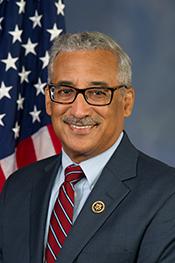 Rep. Robert C. "Bobby" Scott (D-VA)
Description
Amendments en bloc sought to delete language which provides for mandatory minimum sentences and the death penalty in certain circumstances for violent crimes against children.
Text
Offered
This amendment's own text couldn't be picked out of its Congressional Record passage, so the passage is shown in full.
CHILDREN'S SAFETY ACT OF 2005
The SPEAKER pro tempore. Pursuant to House Resolution 436 and rule
XVIII, the Chair declares the House in the Committee of the Whole House
on the State of the Union for the consideration of the bill, H.R. 3132.
{time} 1206
In the Committee of the Whole
Accordingly, the House resolved itself into the Committee of the
Whole House on the State of the Union for the consideration of the bill
(H.R. 3132) to make improvements to the national sex offender
registration program, and for other purposes, with Mr. Simpson in the
chair.
The Clerk read the title of the bill.
The CHAIRMAN. Pursuant to the rule, the bill is considered as having
been read the first time.
Under the rule, the gentleman from Wisconsin (Mr. Sensenbrenner) and
the gentleman from Virginia (Mr. Scott) each will control 30 minutes.
The Chair recognizes the gentleman from Wisconsin (Mr.
Sensenbrenner).
Mr. SENSENBRENNER. Mr. Chairman, I yield myself such time as I may
consume.
I am pleased to bring to the House floor today H.R. 3132, the
Children's Safety Act of 2005.
I introduced this legislation on June 30 in a bipartisan effort to
address the growing epidemic of violence against children and the need
for greater protection from convicted sex offenders through State
registration and notification programs.
This year our country has been shocked by a series of brutal attacks
against children at the hands of convicted sex offenders. In June, our
Nation was horrified by the kidnapping and murders of members of the
Groene family by a convicted sex offender.
Two well-publicized tragedies earlier this year in Florida, in which
9-year-old Jessica Lunsford and 13-year-old Sarah Lunde were murdered
by convicted sex offenders further underscore the need for quick
congressional action to address the danger posed by individuals who
prey on children.
In addition to the widely reported tragedies that have rightly
brought this issue to the forefront, the statistics regarding the
frequency with which such heinous crimes occur are staggering.
Statistics show that one in five girls and one in 10 boys are sexually
exploited before they reach adulthood. Yet less than 35 percent of the
incidents are reported to authorities.
According to the Department of Justice, one in five children between
the ages of 10 and 17 receive unwanted sexual solicitations online.
Additionally, statistics show that 67 percent of all victims of sexual
assault were juveniles under the age of 18, and 34 percent were under
the age of 12.
In June of this year, the Subcommittee on Crime, Terrorism and
Homeland Security held a series of three hearings on child crimes
issues, focusing on violent crimes against children, sexual
exploitation of children, and the Sex Offender Registration and
Notification program and related legislative proposals.
On July 30, the Judiciary Committee considered this bill and ordered
it favorably reported by an overwhelming vote of 22 to 4.
Mr. Chairman, there are over 550,000 sex offenders in the country;
and it is conservatively estimated that at least 100,000 of them are
lost in the system, meaning that nonregistered sex offenders are living
in our communities and working at locations where they can, and likely
will, come into contact with our children.
This is simply unacceptable, and the legislation specifically targets
this problem to enhance the safety of America's families and
communities. The Children's Safety Act will make much needed reforms to
the Sex Offender and Registration program by expanding the scope and
duration of sex offender registration and notification requirements to
a larger number of sex offenders.
The legislation also requires States to provide Internet availability
of sex offender information, requires timely registration by sex
offenders, and then enhances penalties for their failure to register
and increases the disclosure requirements regarding their whereabouts.
The bill authorizes United States marshals to apprehend sex offenders
who fail to register and increases grants to States to apprehend sex
offenders who are in violation of registration requirements contained
in the legislation.
[[Page H7888]]
Additionally, H.R. 3132 would authorize demonstration programs for
new electronic monitoring programs such as anklets and global position
system monitoring, which will require examination of
multijurisdictional monitoring procedures.
H.R. 3132 also revises the use of DNA evidence; increases penalties
for violent crimes committed against children, and sexual exploitation
of children; streamlines habeas review; State death penalties are
imposed against child killers; and protects foster children by
requiring States to perform more complete background checks before
approving a foster or adoptive parent program and placement.
This legislation is strongly supported by America's Most Wanted, John
Walsh; Ernie Allen from the National Center for Missing and Exploited
Children; Robbie Calloway from the Boys and Girls Clubs of America; and
many victims and representatives of victims organizations.
The courage of some, such as the father of Jessica Lunsford, to speak
out on this important issue in the face of unmistakable grief is truly
admirable. They have provided critical input throughout the process and
have urged Congress to enact this legislation as quickly as possible.
Mr. Chairman, the time to protect our Nation's children from sexual
predators in our communities and online on the Internet is now.
The scope of this problem requires a swift congressional response,
and I urge Members of this body to move swiftly to help protect
America's children from violent sexual offenders.
Mr. Chairman, I reserve the balance of my time.
Mr. SCOTT of Virginia. Mr. Chairman, I yield myself 7 minutes.
Mr. Chairman, we all abhor the horrific cases of child murders or sex
offenses committed by those who are referenced in the bill. But the
question before us is whether what we are doing in the bill will
actually reduce the incidence of child molestation or actually increase
it.
We should certainly seek to avoid enacting legislation that expends
scarce resources in a manner that is not cost effective or that
exacerbates the problem. It is clear that having police supervision and
police awareness of the location and identification information about
sex offenders is appropriate and helpful.
But it is not clear that putting that information indiscriminately on
the Internet, regardless of the dangerousness of the individual, with
no guidance or restriction of what people should do with the
information, it is unclear whether that is helpful or harmful.
There have been incidents of vigilantes and other activities where
offenders have actually been driven underground, so you actually do not
know where they are. That is certainly not good for children. And try
to sell your home when a sex offender moves a few blocks away. Are
children actually helped by that? That would be a necessary problem;
but there is no evidence that putting that information on the Internet
actually reduces the incidence of child molestation, so the real estate
prices all over the neighborhood go down.
Now, research shows that 90 percent of sex offenses against children
involve either family members or someone well known to the victim. So
when you put names and addresses on the Internet, 90 percent of the
offenses are not even covered. We also have the situation where those
on the Internet are ostracized and subjected to public notoriety,
embarrassment, ridicule, and harassment.
In one actual case, a teacher was reading the names of offenders to
grade school students in an apparent effort to protect them, when one
student blurted out the question to another student: ``Is that not your
father?''
This victimizes the victim twice and may well discourage offense
reporting that is already considered very low in these situations. Many
offenders identified on the Internet will not only become unemployed
and unemployable because of that notoriety, but they may also have to
leave their home to avoid embarrassment or other consequences to
themselves and their families, and having done that, may just go
underground and not bother to register again.
Where an offender clearly represents a threat to the public, perhaps
the consequences to the victims and their family members cannot be
avoided; but where the individual clearly does not present a threat to
the public, informing the general public may do more harm than good.
Law enforcement and child-serving authorities should have access to
the information. Until they have reliable information to show that the
impact of the Internet will actually reduce the incidence of child
molestation, we should be circumspect on how we use this information.
Now, we have taken a step in the right direction in the bill by
encouraging those States and localities that are not already doing so
to consider whether there are offenders who should be required to
register, but may not have to be put on the Internet.
{time} 1215
I am pleased, Mr. Chairman, that the gentleman from Wisconsin (Mr.
Sensenbrenner) has indicated his willingness as the bill moves towards
conference to continue to look for ways we might support the States and
localities who are already making such assessments while encouraging
those who are not making those assessments to do so.
There are effective things we can do, and hopefully we will have
amendments that will deal with this. Because research has shown that
intensive, therapeutic sexual offender treatment cuts sexual offense
recidivism in half. Fortunately, the evidence is that, even without the
treatment, recidivism is low amongst sexual offenders of children. This
is not what the legend is, but the facts are that a recent study by the
Department of Justice showed that the rearrest rate among child
molesters is 3.3 percent, much less than the recidivism rate of other
criminals.
Any recidivism rate is too high, so I am pleased that we are working
together to fashion a provision that will assure that all sex offenders
in the Federal system will receive appropriate, effective treatment
prior to their release; and I hope that we can continue to work
together to provide a similar system for State offenders where we could
significantly reduce child victimization by assuring access to
effective treatment for all.
Now there are provisions in this legislation that are not based on
research or sound reasoning like the death penalty, mandatory minimums,
both of which have been studied and shown not to have any effect on
crime. We also have the anomaly in this because it is Federal
legislation that because Indian reservations, their sole access to
courts is the Federal system, they will all be under the Federal system
but most others will not. So it will have a disproportionate effect
against Native Americans.
Now, day by day we are seeing more and more evidence that the death
penalty administration is fraught with mistake, racial discrimination
and it is applied in an arbitrary way. We have also seen the mandatory
minimums have been shown to waste the taxpayers' money, been racially
discriminatory, and the Judicial Conference reminds us every time we
have a mandatory minimum for consideration that mandatory minimums
violate common sense compared to traditional sentencing approaches.
This bill includes a 5-year mandatory minimum for any technical
violation involved in registration. For example, if you are already
registered and you attend the local community college but forgot to
recognize that the community college is in a different jurisdiction and
you should have registered there, too, well, that offense is subject to
a 5-year mandatory minimum. Notwithstanding the fact that the original
offense was 15 years ago, was a misdemeanor for which no time was
imposed, it is a 5-year mandatory minimum for the technical violation
of not registering correctly.
Another provision that is in the bill that will not have much effect
on reducing child molestation is eliminating the access to habeas
corpus. That will not reduce sex crimes. All of these are good,
politically appealing sound bites that will help politicians get
elected but which have no evidence that they will actually reduce the
incidence of child molestation.
This bill will cost over $500 million over the next few years. We
need to
[[Page H7889]]
make sure that when we spend that kind of money that we actually do
something constructive. Here we have a bill with mandatory minimums,
death penalties that have been shown that have nothing to do with
reducing crime, it is primarily focused on Native Americans, and I
would hope that we would support amendments to eliminate such
extraneous matters on the bill so we can concentrate the $500 million
on effective crime-reducing approaches.
Mr. Chairman, I reserve the balance of my time.
Mr. SENSENBRENNER. Mr. Chairman, I yield 5 minutes to the gentleman
from Wisconsin (Mr. Green).
Mr. GREEN of Wisconsin. Mr. Chairman, I thank the gentleman for
yielding me time. More importantly, I thank the gentleman for his great
leadership on the subject of child safety.
Mr. Chairman, when I came to this House I hoped that I would have the
chance to make a difference in the area of crimes against kids, and
thanks to the leadership of the gentleman from Wisconsin (Mr.
Sensenbrenner) I have had this opportunity. In fact, we have all had
this opportunity.
We have made great strides in recent years: the Amber Alert System;
two strikes and you are out for child molesters; the Debbie Smith Act
which we passed last session which will make sure that our DNA
databases are up to date and more usable and we will have better
training and education for those health care professionals and law
enforcement professionals who work in this field.
But, sadly, we have been reminded in recent months that despite all
the work that we have done we have a long way to go. Dru Sjodin,
Jessica Lunsford, Sara Hunde and, sadly, other names have reminded us
painfully, tragically that there is a lot of work to do.
The Children's Safety Act is, in my view, a great stride towards
doing what we can and what we must to protect our kids from those who
would prey upon them.
First off, it has tough penalties. It does have tough penalties. It
does have mandatory minimums, because I believe and so many people
believe that we have to send a clear, unmistakable signal that those
who prey upon our kids will not be tolerated.
Secondly, we increased the size of the DNA database, which means that
we give to law enforcement professionals the tools they need to track
down these monitors and to put them away, to put them behind bars.
And, third, and I believe most importantly, we expand the use of the
sex offender registry and increased notification requirements. We take
that registry system nationwide, we make it accessible online, and we
close up some of the loopholes that, sadly, have led to some of the
crimes that we have all heard about.
I would like to speak briefly about one of those loopholes that
people in my home State of Wisconsin have learned about tragically. The
situation, the case, the story of Amie Zyla which has led to the Amie
Zyla provisions in this bill.
The case of Miss Zyla, she was a young girl in the county of
Waukesha, Wisconsin, when she was assaulted brutally by a young
offender. He was found guilty. He was sentenced to a juvenile facility.
But when he turned 18 he was released; and when he was released,
because he had committed that act as a juvenile, the record was sealed.
Law enforcement was not allowed to notify the community that they were
having released back into the midst of this community a sex offender, a
dangerous sex offender. The assailant went on to hold himself out as a
youth minister; and, as you can guess, he preyed upon a number of
children, destroyed lives, damaging families and causing so much
terror.
In fact, Amie Zyla was not notified of the release of this man until
she saw him on TV, actually saw him on the news, and there was his face
and she realized for the first time that the man who had done so much
damage to her was back out on the street right where she was.
Under this bill, we say that if the crime committed by the juvenile
offender was so serious that it would have qualified for reporting
under the sex offender registry if he were an adult, then that means
that law enforcement has the ability, not the obligation but the
ability, to notify the community when that sex offender is released
back into the community.
That is about giving tools to our parents, to our families, to our
community leaders, to those organizations that are so important to us,
giving them the tools to prevent these acts from occurring again; and
nothing is more important.
Now, Mr. Chairman, a lot of numbers have already been tossed around
and will be tossed around in the coming debate. You have heard one out
of five girls has been sexually exploited before reaching adulthood. We
have heard that 67 percent of all victims of sexual assault are
juveniles. But I want to suggest to you that this is not about the
numbers and that people will toss around the numbers, but we cannot
tell if those numbers are accurate because we know that these crimes
are the most underreported crimes in society.
My guess is and most experts will tell you that the damage that is
done, the number of crimes is far in excess of any of the studies that
are out there. More importantly, numbers do not tell the true story.
Each child who is attacked and assaulted by one of these offenders
represents a life damaged, an innocence stolen, and, all too often,
sadly, tragically, a family destroyed.
Mr. Chairman, we need to pass this legislation. We need to give tools
to community leaders and to parents to make sure those acts never occur
again. There is so much we have accomplished in the last few years.
There is so much left to do. We do that with the Child Safety Act.
Mr. SCOTT of Virginia. Mr. Chairman, I yield 4 minutes to the
gentleman from Michigan (Mr. Conyers).
Mr. CONYERS. Mr. Chairman, I come reluctantly before you to re-
express my desire to protect all our children from predators, and I am
confident that I speak for all Members when we say that each new
abduction brings a concern, an outrage that we all feel.
Child molesters prey on those that are most vulnerable in our
society, and we must stop them. But how can we stop them if we are
primarily creating 36 new mandatory minimum criminal penalties that are
completely arbitrary, that have been shown to be ineffective at
reducing crime, and a consummate waste of taxpayer money? But that is
not the only reason.
Thanks to mandatory minimum sentences, almost 10 percent of all
inmates in the Federal and State prisons are serving life sentences, an
83 percent increase since 1992. In two States, New York and California,
20 percent of the people in prison are serving life sentences. And what
do we have to show for these statistics? Well, a system that currently
houses more than 2 million Americans, almost four times the number of
individuals incarcerated in 1985, at a cost of $40 billion to run and
operate.
We create additional new death penalty eligibility offenses. This
spring, 120 death row inmates were exonerated due to proof of their
innocence. So, in the end, if we are truly serious about protecting our
children from acts of sexual exploitation and violence, we have got to
turn to prevention. We have got to use preventative solutions that
really try to get to the root of the problem instead of after-the-fact
criminal penalties that do not address the issue.
Do these sick people check the statutes to find out what the newest
penalties are or whether they are mandatory or not or whether they can
carry additional incarceration terms? I doubt it.
Finally, we have people that have written, professionals, scientific
researchers treatment professionals, child advocates, who have serious
reservations about this measure, H.R. 3132.
From the Center on Child Abuse and Neglect, the Editor-in-Chief on
Child Maltreatment, the Journal of American Professional Society of the
Abuse of Children, the Director of Crimes Against Children Research
Center, the National Crime Victims Research and Treatment Center, Dr.
Friedrich of the Mayo Clinic and Mayo Medical School, from the Board of
Directors Association of the Treatment of Sexual Abusers, all these
letters have poured in urging that we put more prevention into this
measure rather than less.
Please let us turn this measure back.
[[Page H7890]]
Mr. SENSENBRENNER. Mr. Chairman, I yield 1\1/2\ minutes to the
gentleman from Florida (Mr. Keller).
Mr. KELLER. Mr. Chairman, I thank the gentleman for yielding me time.
Mr. Chairman, I am a co-sponsor of the Children's Safety Act because
we must crack down against child molesters by making sure they serve
longer sentences and by requiring sex offenders who fail to comply with
registration requirements to go back to jail where they belong.
{time} 1230
The best way to protect young children is to keep child predators
locked up in the first place because someone who has molested a child
will do it again and again and again.
Earlier this year, two young girls from my home State of Florida, 9-
year-old Jessica Lunsford and 13-year-old Sarah Lunde, were abducted,
raped and killed. In both cases, the crimes were committed by convicted
sex offenders who were out on probation. Coddling pedophiles with
rehabilitation and self-esteem courses does not work. Locking them up
works.
This law imposes a mandatory minimum punishment of 30 years for those
who commit violent sexual crimes against children, as well as a minimum
punishment of life in prison or a death sentence when that crime
results in the child's death.
This legislation also cracks down on those sex offenders who refuse
to follow registration requirements. Nearly 100,000 sex offenders
remain unregistered and are moving freely about the country. This
legislation will make it a Federal crime for those sex offenders who
fail to register and will send them back to jail for another 5 to 20
years.
It is high time that our government cracks down on child molesters by
implementing these commonsense reforms, and I urge my colleagues to
vote ``yes'' on H.R. 3132.
Mr. SCOTT of Virginia. Mr. Chairman, I yield 2\1/2\ minutes to the
gentleman from Illinois (Mr. Emanuel).
Mr. EMANUEL. Mr. Chairman, I would like to thank my colleague for the
time.
Mr. Chairman, I rise in support of H.R. 3132, the Children's Safety
Act. I want to thank the gentleman from Wisconsin (Mr. Sensenbrenner)
for advancing this legislation.
It is unfortunate, but our children are not as safe as they could be.
There are nearly 550,000 registered sex offenders here in the United
States, one for nearly every 200 children. Worse, many of these
individuals are able to slip through the cracks and become lost to law
enforcement because many of these do not register; and when they move,
States do not reregister. A 2003 investigation found in California
alone 33,000 registered sex offenders could not be accounted for.
Studies indicate that the recidivism rate for child molesters is as
high as 13 percent.
Consider the horrific case that all of us have read about recently of
9-year-old Jessica Lunsford. Jessica was abducted from her home, raped
and then buried alive by a convicted sex offender who lived 150 feet
from her home. Law enforcement officials had lost track of her murderer
and were unaware that he worked at her school.
Mr. Chairman, when I worked in the White House, we worked on passing
Megan's Law. That law was effective because it used the right
technology at that point to help ensure the safety of our children.
This legislation, with this type of technology, builds on the progress
we made under Megan's Law to protect our children.
To utilize this new technology and to make our children safer, I
introduced H.R. 3407, the Jessica Lunsford and Sarah Lunde Act, with
companion legislation in the Senate with Senator Nelson.
Similar to programs already under way in some States, the system
would utilize electronic technology, such as GPS, to track sexual
predators upon their release from prison. There is no opt in or opt
out. It would be a system to track them within 10 feet of their
location at any time.
I am pleased that the gentleman from Wisconsin (Mr. Sensenbrenner)
has included an electronic monitoring pilot program in the Children's
Safety Act. Furthermore, I am pleased that the chairman is also willing
to address some of the other issues we discussed in the manager's
amendment.
I would also like to thank the gentleman from Indiana (Mr. Burton)
for his help in securing our amendments.
Mr. Chairman, the fact is our children are not as safe as they could
be. This bill, the Children's Safety Act, is an important step toward
ensuring their safety and using the technology that is available today
in the marketplace to ensure our law enforcement community has all the
tools that are necessary to protect our children.
I support this bill and hope that my colleagues will join me and
quickly pass this legislation.
Mr. SENSENBRENNER. Mr. Chairman, I yield 3 minutes to the gentleman
from Texas (Mr. Poe).
Mr. POE. Mr. Chairman, I want to thank the gentleman from Wisconsin
(Mr. Sensenbrenner) for sponsoring this legislation. I am glad to be a
co-author/cosponsor of the legislation.
The burden victims carry does not go away when the headlines do. The
Children's Safety Act has important preventative measures, but it also
instigates appropriate response after a citizen has been victimized.
The Children's Safety Act provides tough tools to keep predators
accountable and their whereabouts known by the rest of us. There is one
thing that a predator wants more than anything else and that is to
remain anonymous, to sneak in and out of our communities and commit
their criminal ways.
The issue of protecting our children from predators is on the minds
of every mother and father as they put their children on school buses
every morning during the school year. From the countless phone calls,
letters, and e-mails pleading to protect our kids from sex predators,
we know these protections to our children in the Children's Safety Act
are a priority to our Nation and our people.
Keeping our children safe from predators should be all of our
priorities here in the United States Congress. We know that child
molesters, after they leave the penitentiary, most of them do it again.
In this country, we are able to track a cow from the time it is born
as a calf to the time it ends up on the supper table somewhere in the
United States as a steak. We do that because of public safety. Now we
are going to track child molesters when they leave the penitentiary. We
will track them indefinitely because of public safety. Children should
be at least as important as cattle.
As a co-author and cosponsor of the Children's Safety Act, as a
former judge in Houston, Texas, I urge my colleagues on both sides of
the aisle to listen to their constituents, listen to the people of this
country, vote in favor of safety for American children. The days of
child molesters running and hiding are over.
Mr. SCOTT of Virginia. Mr. Chairman, I yield 3 minutes to the
gentleman from North Dakota (Mr. Pomeroy).
Mr. POMEROY. Mr. Chairman, I thank the gentleman for yielding me
time.
Mr. Chairman, I rise in strong support of the Children's Safety Act
of 2005. I commend the gentleman from Wisconsin (Mr. Sensenbrenner) for
this legislation and appreciate very much the bipartisan way in which
he has worked with me in developing this legislation and in listening
to the concerns that I have brought from experiences in our region.
Deviant sexual predators have clearly shown us that sex offenders do
not stop at State lines, and neither should our sex offender laws. The
Children's Safety Act is a comprehensive, bipartisan child safety bill
that brings uniformity to our current sex offender registry system and
increases penalties for those who prey upon our children.
The urgent need for a national system is clearly and tragically
demonstrated by the case of Dru Sjodin. Dru Sjodin was a lovely young
woman, a senior at the University of North Dakota, where she was
holding down two jobs. She was an exceptional student, a leader in our
community. She was abducted from a shopping center parking lot in broad
daylight on a Saturday afternoon nearly 2 years ago.
This type of disappearance never happens in our part of the country,
and it traumatized the whole community. Thousands spent weeks trudging
through snow banks in the worst weather we ever saw searching for Dru.
[[Page H7891]]
Well, 5 months later, her dead body was found in a ravine just outside
of Crookston, Minnesota.
It just so happens the investigation has revealed that a recently
released Level III sex offender from Minnesota named Alfonso Rodriguez,
Jr., was charged with Dru's kidnapping and murder. He was living in
Minnesota. We did not know of his existence in North Dakota. He was
registered as a sex offender only in the State of Minnesota.
This tragic example illustrates why we have to have a comprehensive
response here, a nationwide Internet available, a registry system that
families can access. It provides the kind of information in terms of
where these high-risk offenders are living, where they are working,
going to school, what kind of vehicle they are driving. People need
this information to keep their children safe, and that is why I am
proud to be a cosponsor of this bill and pleased that the chairman has
designated in the legislation this registry in memory of Dru Sjodin,
the Dru Sjodin National Sex Offender Registry.
The bill also has tough requirements for complying with keeping the
registration information current so that the information on there is of
value to families. It also has tough sanctions for those who would harm
our children and, finally, Federal dollars to assist local police
departments in making certain that people are complying with their
registry requirements.
I believe that this legislation is a comprehensive response to a
significant public policy need, and I urge the adoption of this.
Families need this protection.
Mr. SENSENBRENNER. Mr. Chairman, I yield 3 minutes to the gentleman
from Florida (Mr. Foley).
Mr. FOLEY. Mr. Chairman, as co-chairman of the Congressional Missing
and Exploited Children's Caucus and an original author of the Sex
Offender Registration and Notification measure included in this bill, I
rise in strong support of H.R. 3132, the Children's Safety Act of 2005.
Mr. Speaker, we have all heard the names: Jessica Lunsford, Jetseta
Gage, Sarah Lunde, Megan Kanka, Jacob Wetterling, just to name a few.
All beautiful children carrying with them the hopes and dreams of every
young child in this country. All taken away from their parents and
their futures, killed by sex offenders.
This is an important piece of legislation we are faced with today. It
is probably one of the most tragic things any family will ever deal
with. While Katrina, the hurricane, and Judge Roberts are much in the
headlines, below the fold seems to be daily an occurrence of a violent
act against our children. It is time we get tough.
I have said repeatedly that in this country we track library books
better than we do sex offenders. This bill, thanks to the good efforts
of the gentleman from Wisconsin (Mr. Sensenbrenner) and others, seeks
to correct that.
This bill is not a knee-jerk reaction. We have worked over 1 year on
this legislation with the National Center For Missing and Exploited
Children, the U.S. Department of Justice, and other Federal agencies.
It is horrific that in this country we are experiencing these untold
tragedies throughout our Nation; but we can do better, and in this bill
we will do better.
I would like to thank the gentleman from Wisconsin (Mr.
Sensenbrenner) and his staff, Mike Volkov, for working tirelessly to
produce this comprehensive child protection legislation. This bill has
indeed many fathers and mothers. It is for the children, though, that
we work and we labor.
I have often said this bill is a labor of love. Yet it is a labor of
shame that we have these kinds of incidents of violence and tragedies
affecting our kids.
I would like to thank Bradley Schreiber, my legislative director, who
has worked so many hours in trying to perfect and work alongside staff
to make this legislation possible; Ernie Allen from the National Center
for Missing and Exploited Children; John Walsh from America's Most
Wanted, who has led a crusade for well over 20 years since the death of
his beautiful son Adam in Florida. John Walsh has brought a scrutiny to
child protection legislation unlike any other human being.
Finally, and most important, I want to recognize the victims'
parents. It is their hard work and determination, their tears and their
frustration, and their fears for their other children that has brought
this bill to the floor so quickly. They took away from their own
tragedies a chance to help fellow Americans protect other children; and
for that we are entirely grateful.
Mr. Chairman, these are not petty criminals. These are sex offenders,
and they must be dealt with accordingly.
Mr. SCOTT of Virginia. Mr. Chairman, I yield 2 minutes to the
gentleman from Alabama (Mr. Cramer).
Mr. CRAMER. Mr. Chairman, I thank my friend from Virginia very much
for the time.
Mr. Chairman, I rise today in strong support of H.R. 3132, the
Children's Safety Act of 2005. I am proud to have been an original
cosponsor of this legislation, and I thank the gentleman from Wisconsin
(Mr. Sensenbrenner) for incorporating a piece of legislation that the
gentleman from Florida (Mr. Foley) and I proposed last year, the Sex
Offenders Registration and Notification Act.
The gentleman from Florida (Mr. Foley) and I stood with John Walsh,
with Ernie Allen, with the Center for Missing and Exploited Children,
representatives of the Boys and Girls Club as well, and parents of
children who have been killed by sex offenders.
This Children's Safety Act of 2005 does, in fact, close the gaps. It
tightens the ability to track down where convicted sex offenders are
living and to improve the ways we notify our neighborhoods and our
school districts when convicted sex offenders choose to live in our
community.
I am pleased that the gentleman from Florida's (Mr. Foley)
legislation and my legislation was effectively included in title I of
the bill we are considering today. When watching the news for the past
2 years, it is sickening to see of how many communities, how many
neighborhoods, how many parents are terrorized because sex offenders
are back in their neighborhoods.
I know from being a district attorney that our States have done a lot
to correct the gaps, but more needs to be done. As a father, I do not
want to see a child of mine victimized in that way, and I want to put
myself in the shoes of those parents who had to experience this
dreadful victimization.
We must support this legislation today because the Children's Safety
Act will increase and tighten supervision of those sex offenders and
will enhance uniform notification standards for tracking sex offenders.
I strongly believe that this comprehensive bill finally will give law
enforcement officers the tools and resources they need to track these
criminals and to protect our children and families.
{time} 1245
Mr. Chairman, I strongly urge my colleagues to adopt the Children's
Safety Act.
Mr. SENSENBRENNER. Mr. Chairman, I yield 1 minute to the gentlewoman
from Ohio (Mrs. Schmidt).
Mrs. SCHMIDT. Mr. Chairman, I thank the gentleman from Wisconsin (Mr.
Sensenbrenner) for yielding me this time. I appreciate the gentleman's
work on this important legislation that will help protect our Nation's
children.
Mr. Chairman, I rise in strong support of H.R. 3132, the Children's
Safety Act. As we are hearing today, there is an epidemic of violence
against our Nation's children. Almost weekly we hear of another tragic
report of sex offenders preying on children. We all remember Jessica
Lunsford, age 9, who was buried alive and murdered. Jessica's mother
lives in my congressional district.
Tragically, one in five girls and 1 in 10 boys is sexually assaulted
before adulthood. One of every six sexual assault victims is under the
age of 6.
This is an issue that is very important to me. My home State of Ohio
has made significant improvements to its sex offender registration and
notification system. As a legislator in the Ohio General Assembly, I
authored legislation, now Ohio law, that requires law enforcement to
notify neighbors who live within a thousand feet of a sexual predator.
I sought this change from prior law after a sexual predator moved
across the street from a school bus stop in my district.
[[Page H7892]]
Mr. Chairman, I ask that this bipartisan legislation be unanimously
passed.
Mr. SCOTT of Virginia. Mr. Chairman, I yield myself such time as I
may consume.
During the last few minutes, we have heard a lot of praise of
mandatory minimums. I just want to remind the House that the Judicial
Conference writes us frequently and reminds us that mandatory minimums
violate common sense. That is because if the offense requires the
mandatory minimum and that makes common sense, it can be applied; but
if it makes no sense, mandatory minimums require us to impose that
sentence anyway.
Many of the provisions of the bill are crimes which we do not think
would be subject to 5- or 10-year mandatory minimums. There is a
provision in the bill that says that felonious assaults against a
juvenile, which could be two juveniles having a fist fight in the
school yard, if it gets into a big fight, that that is a 10-year
mandatory minimum if no injury occurs. Now, of course, if an injury
occurs in the fight, then you are talking about 20 years. I think
common sense should prevail and a more appropriate sentence could be
given.
This entire registration program that requires people to register has
not been shown to reduce the incidence of child molestation. For
someone who commits a crime, even as a juvenile, they will be subject
to lifetime registration. There is no suggestion and there is no
evidence that that reduces crime. It may actually increase crime.
We know that 90 percent of the offenses against children were people
that would not be covered by the legislation, and 3.3 percent of those
covered by the legislation might offend. We have other ways of dealing
with that in such a way that we can actually reduce that 3.3 as much as
50 percent. We ought to be focused on that.
Mr. Chairman, we need to focus on the things that will actually
reduce crime. This bill, many of the provisions of it, obviously, do
not; and I would hope that we would focus appropriately to actually
protect the children.
Mr. HOLT. Mr. Chairman, I rise today to oppose the so-called Child
Safety Act, H.R. 3132, because it forsakes meaningful crime reduction
in favor of ineffective solutions that will only create a false
illusion that our children are better protected from sexual abuse.
We have all read with heartbreak and anger the horrible, the terrible
stories of sexual abuse, abduction, and murder of children. It is clear
that we need to protect children from sexual predators and pedophiles
through stronger laws and better enforcement. I realize that voting
against a bill with a title as attractive as this is easily
misunderstood and mischaracterized. But I have never been one to vote
for form over substance, nor to shy away from standing up for what is
right regardless of the political slings and arrows. Unfortunately,
this bill will do more harm than good, and in the balance will do
precious little to make our children safer. I hope the Senate will do
better.
We need a real system that gives parents peace of mind and enables
them to be aware of the presence of pedophiles in their neighborhood. A
National Sex Offender Registry, that is maintained by the United States
Department of Justice is a very good idea that I support. Members of
every local community would be able to access this registry online, and
be able to keep tabs on those who may pose harm to our children. States
would notify each other when sex offenders move between States, and
reporting requirements would be uniform so that it's easier to keep the
lists current and accurate. This is a sensible thing that we should be
doing to protect our children. I would be proud to support it and I
hope it will be addressed on the floor in a more rational way.
That leads me to my overriding criticism of this bill: Its flaws are
so troubling and fundamental that it compels me to oppose passage
despite my support of one component part.
This bill creates 36 new mandatory minimum penalties. Mandatory
minimum penalties do not work. They discount mitigating factors in
crimes, prevent judges from meting out punishments that are tailored to
the criminal, and have been proven discriminatory to people of color.
They do not work. They may make legislators feel good but they have
been shown not to reduce crime rates. Even the Judicial Conference, the
group that represents Federal judges, has said that mandatory minimums
violate common sense. Let me explain how just one of the new minimums
will make us less safe, instead of more. If a previously convicted but
released sex offender commits a technical violation of the reporting
requirements--for example, they miss the registration deadline by a day
or a week--they would receive a mandatory 5-year sentence. There is no
discussion, and there can be no evaluation by a Federal judge.
The result is that sex offenders who miss the deadline or commit
other technical violations will only be driven underground. Instead of
turning themselves in, they will go under the radar and into
unsuspecting communities. This is exactly the opposite of what needs to
happen.
Also troubling is the fact that this legislation creates two
additional death penalties. Yet, research has shown that capital
punishment is not a deterrent to crime. Let me repeat, the death
penalty simply does not reduce crime.
Those who commit the most heinous and terrible crimes against our
children should have to face being locked away for the rest of their
lives, where they must contemplate their crimes until the end of their
days, without posing harm to society. But expanding the already
ineffective death penalty to crimes where the victim's death is not
even intentional is not only illogical, it is immoral. The government's
job is to prevent crime and punish criminals, often severely. But
killing citizens in order to exact retribution is inappropriate for a
government that seeks to be moral.
We do need a Child Safety Act, but it should be a real one. We need
sensible punishments and preventative measures that will actually
reduce sexual predation, not just talk tough.
I am very disappointed that this bill weakens sound registration
requirements and penalties by stacking them on fundamentally flawed
provisions. It is my hope that sensible actions to protect our children
are considered at the earliest possible date.
Mr. STARK. Mr. Chairman, I rise in opposition to H.R. 3132, the
Children's Safety Act of 2005. Once again, this Congress is attempting
to address a very serious and complicated problem with a law that
substitutes the talking points of ``tough on crime'' politicians for
the wisdom of judges, prosecutors, treatment professionals and child
advocates. As a father and someone who has fought for better foster
care, education, and health care for children, I object to this ill-
conceived legislation that is as much an attack on our independent
judiciary as it is a bill to protect kids.
Many child advocates themselves oppose this bill because kids in
grade school or junior high will be swept up alongside paroled adults
in sex offender registries. Many caught in registries would be 13 and
14 year olds. In some States, children 10 and under would be
registered.
This bill creates 36 new mandatory minimum sentences, which impose
the judgment of Congress over every case, regardless of the
circumstances. The Judicial Conference of the United States and the
U.S. Sentencing Commission have found that mandatory minimums actually
have the opposite of their intended effect. They ``destroy honesty in
sentencing by encouraging plea bargains.'' They treat dissimilar
offenders in a similar manner, even though there are vast differences
in the seriousness of their conduct and their danger to society. Judges
serve a very important role in criminal justice, and Congress should
not attempt to do their job for them.
Finally, this bill expands the death penalty, which is not a
deterrent, costs more to implement than life imprisonment, and runs the
risk of executing the innocent.
Nobody, especially the parents and victims of sexual abuse who have
contacted me on this issue, should confuse my objections to this bad
policy with indifference to the problem of child sex abuse in this
country. It is a huge problem, affecting millions of American children.
Recent news stories prove that the registry system isn't working well.
I support aspects of this bill, including a strengthened nationwide
registry for pedophiles, with strict requirements for reporting changes
of address and punishments for failing to report. I support
establishing treatment programs for sex offenders in prison, background
checks for foster parents, funding for computer systems to track sex
crimes involving the Internet, and, at last resort, procedures for
committing sexually dangerous persons to secure treatment facilities.
However, I cannot violate my constitutional duty to protect our
independent judiciary nor can I support extreme, dangerous policies, so
I will vote against this bill. I hope that, working with the Senate, we
can improve this legislation and implement the policies that everyone
agrees are needed without the unintended consequences of the bill in
its current form.
Mr. SMITH of Texas. Mr. Chairman, I support H.R. 3132. It is an
important bill that will help ensure the safety of American children
against sexual predators.
In recent months we have heard all too often about the innocent lives
of children being shattered by an adult who sexually abuses the child.
We are all familiar with the cases, some of which have been mentioned
today, such as Jessica Lunsford who was kidnapped, held captive, abused
and tortured for 3 days by a
[[Page H7893]]
convicted sex offender who ultimately killed her by burying her alive.
And there was the case of 8-year-old Shasta Groene who was kidnapped,
sexually abused, and held captive for weeks by a convicted sex offender
who murdered her family.
These stories are atrocious and that is why Congress is acting to
further protect American children with the Children's Safety Act.
The bill requires jurisdiction-wide sex offender registries
containing information like where the sex offender resides and is
employed or attends school. The bill requires a sex offender to appear
in person at least once every 6 months to verify their registration
information.
The bill also creates a new Federal crime for failure to register as
a sex offender and sets the mandatory minimum for that offense at 5
years and a maximum of 20 years.
The bill sets other mandatory minimum sentences for crimes of
violence against children like murder, kidnapping, maiming, aggravated
sexual abuse, sexual abuse or where the crime results in serious bodily
injury.
The statistics surrounding child sexual abuse are astonishing--1 in 5
girls and 1 in 10 boys are sexually exploited before they reach
adulthood. And one of every six sexually assaulted victims is under the
age of 6.
We must protect our children by every possible means. The Children's
Safety Act of 2005 will help us do so and for that reason I support
this legislation.
Mr. ROYCE. Mr. Chairman, I am a cosponsor of H.R. 3132, the
Children's Safety Act. I would have voted ``yes'' on this legislation.
However, I am in New York City on official business for the House of
Representatives. I was appointed by Speaker Hastert as a delegate from
the Committee on International Relations to serve as a representative
to the United Nations General Assembly.
H.R. 3132 will help to address loopholes in current sex offender
notification requirements, so that parents and the public can be armed
with knowledge of any sex offenders living and working in their
community. This legislation addresses a number of child crime issues,
including registration of sex offenders, violent crimes against
children, sexual crimes against children, sexual exploitation of
children, and protection of foster and adopted children. The Children's
Safety Act was drafted in response to the recent horrific attacks and
murders of Jessica Lunsford, Sarah Lunde, Jetseta Gage, and others who
have recently been killed by sex offenders. I strongly support this
bill and look forward to it becoming law.
Mr. COSTA. Mr. Chairman, I rise today to speak in support of the
Children's Safety Act. This legislation will close sexual offender
registration loopholes and punish offenders who do not follow the law.
Sadly, every year hundreds of children are victimized by a convicted
sexual offender. Convicted predators should be put in prison where they
belong and kept away from our Nation's children. The Children's Safety
Act, H.R. 3132, will do this. These tougher sentences will lock up
repeat offenders and help keep our children safe. Because we know the
recidivism rate of sexual offenders is very high, these longer
sentences are crucial to protecting our children. We must hold these
sexual offenders accountable and lock them up.
A National Sex Offender Registry, which is one of the components of
the Children's Safety Act, will better enable us to protect our
children. People have a right to know where sex offenders live and it
is important for parents to have access to a national registry in order
to make sure their children are safe.
In addition, to punishing sexual offenders and protecting our
children, we must also provide services, resources and counseling to
the people who are victims of these horrible crimes. Children need help
healing the wounds caused by the heinous actions of sexual offenders.
We must not forget their needs. Because the needs of victims are so
crucial, I along with Congressman Ted Poe and Congresswoman Katherine
Harris have formed the Victims' Rights Caucus. Through the caucus we
draw attention to victim issues, work to protect funding that provides
victims' services and introduce legislation to assist with victims. We
must not forget the victims of crimes, especially when they are
children.
Mr. GRAVES. Mr. Chairman, I rise today to speak in support of the
Children's Safety Act of 2005. This legislation, if passed, will close
the loopholes in the current system that allow sexual predators to
evade law enforcement. It will enhance the current sex offender
registration and community notification law. It will create a
comprehensive national system for sex offender registration, improve
information exchange between States when sex offenders move from State
to State, and increase penalties for failing to comply with the
registration law.
I would like to commend the Chairman for bringing this outstanding
package to the floor today. I am very grateful that the Chairman has
included several provisions from a bill that I introduced entitled the
Sexual Predator Sentencing Act of 2005. These provisions would toughen
several existing sentencing guidelines and keep sex offenders off the
street.
Provisions incorporated from my bill will increase the criminal
penalties and establish mandatory minimums for those that harm our
children whether it is over the Internet or in person.
Strong laws that hold the criminal accountable are a vital component
in the effort to protect children. Those who abduct children are often
serial offenders who have already been convicted of similar offenses.
Strong sentencing is an essential component in any effort to fight
crimes against children.
This legislation contains many vital provisions in protecting our
children from these violent predators. Our children must be protected
against repeat sexual offenders. The Children's Safety Act of 2005
should be passed to keep sexual predators behind bars and our children
safe.
Mr. GILLMOR. Mr. Chairman, I rise today in strong support of H.R.
3132, the Children's Safety Act of 2005.
Mr. Chairman, as a father and a grandfather I am often reminded of
the dangers that surround my loved ones. Specifically, the growing
threat that sexual predators pose to our Nation's children and their
families represents an area where our criminal justice system has
failed the American people. In order to effectively protect our loved
ones, we must provide the American public with unfettered access to
know who these dangerous criminals are and where they are living. If a
picture is worth a thousand words, then a comprehensive nationwide
publicly accessible database is worth at least that many lives.
I was pleased that Chairman Sensenbrenner included provisions from my
bill, H.R. 95, that would create a national, comprehensive, and
publicly accessible sex offender database into this comprehensive piece
of legislation. Additionally, I was delighted at the level of bi-
partisanship that both my bill and today's legislation have received
and I would like to personally thank Mr. Pomeroy from North Dakota for
his leadership and support. Also, I would like to extend my gratitude
to organizations like the Big Brothers and Big Sisters of America and
the Safe Now Project for their endorsements of H.R. 95's national
database provision.
H.R. 3132 directly addresses the shortcomings of our criminal justice
system and aims to make our country safer and more secure from those
that would prey on our most vulnerable and our most prized assets--our
children. With over 500,000 registered sex offenders and countless
others which remain unknown, law enforcement and corrections personnel
will have additional resources at their disposal to prevent and solve
these types of crimes. Additionally, this bill strengthens the criminal
code for sexually violent crimes and creates more stringent regulations
which convicted offenders must adhere to in order to ensure proper
monitoring. Americans have heard the heart wrenching stories of
innocent children being harmed by predators, and we must make every
effort to ensure that tragedies like these never happen again.
Mr. Chairman, today we must come together to make certain that our
children grow up in a safe and secure environment and that parents are
unafraid to let their children play in the neighborhood because they
have the information they need to protect them. Knowledge is power, and
today we have an opportunity before us to supply the American public
with the tools necessary to protect themselves, their family, and their
friends against those that would commit these heinous crimes. I urge
all of my colleagues to cast their vote in support of this legislation
and collectively answer the American public's call to provide them with
additional resources to combat these predators before another life is
lost and tragedy befalls another family.
Mr. SCOTT of Virginia. Mr. Chairman, I have no further requests for
time, and I yield back the balance of my time.
Mr. SENSENBRENNER. Mr. Chairman, I have no further requests for time,
and I yield back the balance of my time.
The CHAIRMAN. All time for general debate has expired.
Pursuant to the rule, the amendment in the nature of a substitute
printed in the bill shall be considered as an original bill for the
purpose of amendment under the 5-minute rule by title, and each title
shall be considered read.
No amendment to that amendment shall be in order except those printed
in that portion of the Congressional Record designated for that purpose
and pro forma amendments for the purpose of debate. Amendments printed
in the Record may be offered only by the Member who caused it to be
printed or his designee and shall be considered read.
The Clerk will designate section 1.
[[Page H7894]]
The text of section 1 is as follows:
H.R. 3132
Be it enacted by the Senate and House of Representatives of
the United States of America in Congress assembled,
SECTION 1. SHORT TITLE; TABLE OF CONTENTS.
(a) Short Title.--This Act may be cited as the ``Children's
Safety Act of 2005''.
(b) Table of Contents.--
Sec. 1. Short title; table of contents.
TITLE I--SEX OFFENDER REGISTRATION AND NOTIFICATION ACT
Sec. 101. Short title.
Sec. 102. Declaration of purpose.
Subtitle A--Jacob Wetterling Sex Offender Registration and Notification
Program
Sec. 111. Relevant definitions, including Amie Zyla expansion of sex
offender definition and expanded inclusion of child
predators.
Sec. 112. Registry requirements for jurisdictions.
Sec. 113. Registry requirements for sex offenders.
Sec. 114. Information required in registration.
Sec. 115. Duration of registration requirement.
Sec. 116. In person verification.
Sec. 117. Duty to notify sex offenders of registration requirements and
to register.
Sec. 118. Jessica Lunsford Address Verification Program.
Sec. 119. National Sex Offender Registry.
Sec. 120. Dru Sjodin National Sex Offender Public Website.
Sec. 121. Public access to sex offender information through the
Internet.
Sec. 122. Megan Nicole Kanka and Alexandra Nicole Zapp Community
Notification Program.
Sec. 123. Actions to be taken when sex offender fails to comply.
Sec. 124. Immunity for good faith conduct.
Sec. 125. Development and availability of registry management software.
Sec. 126. Federal duty when State programs not minimally sufficient.
Sec. 127. Period for implementation by jurisdictions.
Sec. 128. Failure to comply.
Sec. 129. Sex Offender Management Assistance (SOMA) Program.
Sec. 130. Demonstration project for use of electronic monitoring
devices.
Sec. 131. Bonus payments to States that implement electronic
monitoring.
Sec. 132. National Center for Missing and Exploited Children access to
Interstate Identification Index.
Sec. 133. Limited immunity for National Center for Missing and
Exploited Children with respect to CyberTipline.
Subtitle B--Criminal law enforcement of registration requirements
Sec. 151. Amendments to title 18, United States Code, relating to sex
offender registration.
Sec. 152. Investigation by United States Marshals of sex offender
violations of registration requirements.
Sec. 153. Sex offender apprehension grants.
Sec. 154. Use of any controlled substance to facilitate sex offense.
Sec. 155. Repeal of predecessor sex offender program.
TITLE II--DNA FINGERPRINTING
Sec. 201. Short title.
Sec. 202. Expanding use of DNA to identify and prosecute sex offenders.
Sec. 203. Stopping Violent Predators Against Children.
Sec. 204. Model code on investigating missing persons and deaths.
TITLE III--PREVENTION AND DETERRENCE OF CRIMES AGAINST CHILDREN ACT OF
2005
Sec. 301. Short title.
Sec. 302. Assured punishment for violent crimes against children.
Sec. 303. Ensuring fair and expeditious Federal collateral review of
convictions for killing a child.
TITLE IV--PROTECTION AGAINST SEXUAL EXPLOITATION OF CHILDREN ACT OF
2005
Sec. 401. Short title.
Sec. 402. Increased penalties for sexual offenses against children.
TITLE V--FOSTER CHILD PROTECTION AND CHILD SEXUAL PREDATOR DETERRENCE
Sec. 501. Short title.
Sec. 502. Requirement to complete background checks before approval of
any foster or adoptive placement and to check national
crime information databases and state child abuse
registries; suspension and subsequent elimination of opt-
out.
Sec. 503. Access to Federal crime information databases by child
welfare agencies for certain purposes.
Sec. 504. Penalties for coercion and enticement by sex offenders.
Sec. 505. Penalties for conduct relating to child prostitution.
Sec. 506. Penalties for sexual abuse.
Sec. 507. Sex offender submission to search as condition of release.
Sec. 508. Kidnapping penalties and jurisdiction.
Sec. 509. Marital communication and adverse spousal privilege.
Sec. 510. Abuse and neglect of Indian children.
Sec. 511. Civil commitment.
Sec. 512. Mandatory penalties for sex-trafficking of children.
Sec. 513. Sexual abuse of wards.
The CHAIRMAN. Are there amendments to section 1? The Clerk will
designate title I.
The text of title I is as follows:
TITLE I--SEX OFFENDER REGISTRATION AND NOTIFICATION ACT
SEC. 101. SHORT TITLE.
This title may be cited as the ``Sex Offender Registration
and Notification Act''.
SEC. 102. DECLARATION OF PURPOSE.
In response to the vicious attacks by violent sexual
predators against the victims listed below, Congress in this
Act establishes a comprehensive national system for the
registration of sex offenders:
(1) Jacob Wetterling, who was 11 years old, was abducted in
1989 in Minnesota, and remains missing.
(2) Megan Nicole Kanka, who was 7 years old, was abducted,
sexually assaulted and murdered in 1994, in New Jersey.
(3) Pam Lychner, who was 31 years old, was attacked by a
career offender in Houston, Texas.
(4) Jetseta Gage, who was 10 years old, was kidnapped,
sexually assaulted, and murdered in 2005 in Cedar Rapids,
Iowa.
(5) Dru Sjodin, who was 22 years old, was sexually
assaulted and murdered in 2003, in North Dakota.
(6) Jessica Lunsford, who was 9 years, was abducted,
sexually assaulted, buried alive, and murdered in 2005, in
Homosassa, Florida.
(7) Sarah Lunde, who was 13 years old, was strangled and
murdered in 2005, in Ruskin, Florida.
(8) Amie Zyla, who was 8 years old, was sexually assaulted
in 1996 by a juvenile offender in Waukesha, Wisconsin, and
has become an advocate for child victims and protection of
children from juvenile sex offenders.
(9) Christy Ann Fornoff, who was 13 years old, was
abducted, sexually assaulted and murdered in 1984, in Tempe,
Arizona.
(10) Alexandra Nicole Zapp, who was 30 years old, was
brutally attacked and murdered in a public restroom by a
repeat sex offender in 2002, in Bridgewater, Massachusetts.
Subtitle A--Jacob Wetterling Sex Offender Registration and Notification
Program
SEC. 111. RELEVANT DEFINITIONS, INCLUDING AMIE ZYLA EXPANSION
OF SEX OFFENDER DEFINITION AND EXPANDED
INCLUSION OF CHILD PREDATORS.
In this title the following definitions apply:
(1) Sex offender registry.--The term ``sex offender
registry'' means a registry of sex offenders, and a
notification program, maintained by a jurisdiction.
(2) Jurisdiction.--The term jurisdiction means any of the
following:
(A) A State.
(B) The District of Columbia.
(C) The Commonwealth of Puerto Rico.
(D) Guam.
(E) American Somoa.
(F) Northern Mariana Islands.
(G) The United States Virgin Islands.
(H) A federally recognized Indian tribe.
(3) Amie zyla expansion of sex offender definition.--The
term ``sex offender'' means an individual who, either before
or after the enactment of this Act, was convicted of, or
adjudicated a juvenile delinquent for, an offense (other than
an offense involving sexual conduct where the victim was at
least 13 years old and the offender was not more than 4 years
older than the victim and the sexual conduct was consensual,
or an offense consisting of consensual sexual conduct with an
adult) whether Federal, State, local, tribal, foreign (other
than an offense based on conduct that would not be a crime if
the conduct took place in the United States), military,
juvenile or other, that is--
(A) a specified offense against a minor;
(B) a serious sex offense; or
(C) a misdemeanor sex offense against a minor.
(4) Expansion of definition of offense to include all child
predators.--The term ``specified offense against a minor''
means an offense against a minor that involves any of the
following:
(A) Kidnapping (unless committed by a parent).
(B) False imprisonment (unless committed by a parent).
(C) Solicitation to engage in sexual conduct.
(D) Use in a sexual performance.
(E) Solicitation to practice prostitution.
(F) Possession, production, or distribution of child
pornography.
(G) Criminal sexual conduct towards a minor.
(H) Any conduct that by its nature is a sexual offense
against a minor.
(I) Any other offense designated by the Attorney General
for inclusion in this definition.
(J) Any attempt or conspiracy to commit an offense
described in this paragraph.
(5) Sex offense.--The term ``sex offense'' means a criminal
offense that has an element involving sexual act or sexual
contact with another, or an attempt or conspiracy to commit
such an offense.
(6) Serious sex offense.--The term ``serious sex offense''
means--
(A) a sex offense punishable under the law of a
jurisdiction by imprisonment for more than one year;
(B) any Federal offense under chapter 109A, 110, 117, or
section 1591 of title 18, United States Code;
(C) an offense in a category specified by the Secretary of
Defense under section 115(a)(8)(C) of title I of Public Law
105-119 (10 U.S.C. 951 note);
(D) any other offense designated by the Attorney General
for inclusion in this definition.
(7) Misdemeanor sex offense against a minor.-- The term
``misdemeanor sex offense against a minor'' means a sex
offense against a minor punishable by imprisonment for not
more than one year.
[[Page H7895]]
(8) Student.--The term ``student'' means an individual who
enrolls or attends an educational institution, including
(whether public or private) a secondary school, trade or
professional school, and institution of higher education.
(9) Employee.--The term ``employee'' includes an individual
who is self-employed or works for any other entity, whether
compensated or not.
(10) Resides.--The term ``resides'' means, with respect to
an individual, the location of the individual's home or other
place where the individual lives.
(11) Minor.--The term ``minor'' means an individual who has
not attained the age of 18 years.
SEC. 112. REGISTRY REQUIREMENTS FOR JURISDICTIONS.
Each jurisdiction shall maintain a jurisdiction-wide sex
offender registry conforming to the requirements of this
title. The Attorney General shall issue and interpret
guidelines to implement the requirements and purposes of this
title.
SEC. 113. REGISTRY REQUIREMENTS FOR SEX OFFENDERS.
(a) In General.--A sex offender must register, and keep the
registration current, in each jurisdiction where the offender
resides, where the offender is an employee, and where the
offender is a student.
(b) Initial Registration.--The sex offender shall initially
register--
(1) before completing a sentence of imprisonment with
respect to the offense giving rise to the registration
requirement; or
(2) not later than 5 days after being sentenced for that
offense, if the sex offender is not sentenced to a term of
imprisonment.
(c) Keeping the Registration Current.--A sex offender must
inform each jurisdiction involved, not later than 5 days
after each change of residence, employment, or student
status.
(d) Retroactive Duty to Register.--The Attorney General
shall prescribe a method for the registration of sex
offenders convicted before the enactment of this Act.
(e) State Penalty for Failure to Comply.--Each jurisdiction
shall provide a criminal penalty, that includes a maximum
term of imprisonment that is greater than one year, for the
failure of a sex offender to comply with the requirements of
this title.
SEC. 114. INFORMATION REQUIRED IN REGISTRATION.
(a) Provided by the Offender.--The sex offender must
provide the following information to the appropriate official
for inclusion in the sex offender registry:
(1) The name of the sex offender (including any alias used
by the individual).
(2) The Social Security number of the sex offender.
(3) The address and location of the residence at which the
sex offender resides or will reside.
(4) The place where the sex offender is employed or will be
employed.
(5) The place where the sex offender is a student or will
be a student.
(6) The license plate number of any vehicle owned or
operated by the sex offender.
(7) A photograph of the sex offender.
(8) A set of fingerprints and palm prints of the sex
offender, if the appropriate official determines that the
jurisdiction does not already have available an accurate set.
(9) A DNA sample of the sex offender, if the appropriate
official determines that the jurisdiction does not already
have available an appropriate DNA sample.
(10) Any other information required by the Attorney
General.
(b) Provided by the Jurisdiction.--The jurisdiction in
which the sex offender registers shall include the following
information in the registry for that sex offender:
(1) A statement of the facts of the offense giving rise to
the requirement to register under this title.
(2) The criminal history of the sex offender.
(3) Any other information required by the Attorney General.
SEC. 115. DURATION OF REGISTRATION REQUIREMENT.
A sex offender shall keep the registration current--
(1) for the life of the sex offender, if the offense is a
specified offense against a minor, a serious sex offense, or
a second misdemeanor sex offense against a minor; and
(2) for a period of 20 years, in any other case.
SEC. 116. IN PERSON VERIFICATION.
A sex offender shall appear in person and verify the
information in each registry in which that offender is
required to be registered not less frequently than once every
six months.
SEC. 117. DUTY TO NOTIFY SEX OFFENDERS OF REGISTRATION
REQUIREMENTS AND TO REGISTER.
An appropriate official shall, shortly before release from
custody of the sex offender, or, if the sex offender is not
in custody, immediately after the sentencing of the sex
offender, for the offense giving rise to the duty to
register--
(1) inform the sex offender of the duty to register and
explain that duty;
(2) require the sex offender to read and sign a form
stating that the duty to register has been explained and that
the sex offender understands the registration requirement;
and
(3) ensure that the sex offender is registered.
SEC. 118. JESSICA LUNSFORD ADDRESS VERIFICATION PROGRAM.
(a) Establishment.--There is established the Jessica
Lunsford Address Verification Program (hereinafter in this
section referred to as the ``Program'').
(b) Verification.--In the Program, an appropriate official
shall verify the residence of each registered sex offender
not less than monthly or, in the case of a sex offender
required to register because of a misdemeanor sex offense
against a minor, not less than quarterly.
(c) Use of Mailed Form Authorized.--Such verification may
be achieved by mailing a nonforwardable verification form to
the last known address of the sex offender. The date of the
mailing may be selected at random. The sex offender must
return the form, including a notarized signature, within a
set period of time. A failure to return the form as required
may be a failure to register for the purposes of this title.
SEC. 119. NATIONAL SEX OFFENDER REGISTRY.
The Attorney General shall maintain a national database at
the Federal Bureau of Investigation for each sex offender and
other person required to register in a jurisdiction's sex
offender registry. The database shall be known as the
National Sex Offender Registry.
SEC. 120. DRU SJODIN NATIONAL SEX OFFENDER PUBLIC WEBSITE.
(a) Establishment.--There is established the Dru Sjodin
National Sex Offender Public Website (hereinafter referred to
as the ``Website'').
(b) Information to Be Provided.--The Attorney General shall
maintain the Website as a site on the Internet which allows
the public to obtain relevant information for each sex
offender by a single query in a form established by the
Attorney General.
(c) Electronic Forwarding.--The Attorney General shall
ensure (through the National Sex Offender Registry or
otherwise) that updated information about a sex offender is
immediately transmitted by electronic forwarding to all
relevant jurisdictions, unless the Attroney General
determines that each jurisdiction has so modified its sex
offender registry and notification program that there is no
longer a need for the Attorney General to do.
SEC. 121. PUBLIC ACCESS TO SEX OFFENDER INFORMATION THROUGH
THE INTERNET.
Each jurisdiction shall make available on the Internet all
information about each sex offender in the registry, except
for the offender's Social Security number, the identity of
any victim, and any other information exempted from
disclosure by the Attorney General. The jurisdiction shall
provide this information in a manner that is readily
accessible to the public.
SEC. 122. MEGAN NICOLE KANKA AND ALEXANDRA NICOLE ZAPP
COMMUNITY NOTIFICATION PROGRAM.
(a) Establishment of Program.--There is established the
Megan Nicole Kanka and Alexandra Nicole Zapp Community
Program (hereinafter in this section referred to as the
``Program'').
(b) Notification.--In the Program, as soon as possible, and
in any case not later than 5 days after a sex offender
registers or updates a registration, an appropriate official
in the jurisdiction shall provide the information in the
registry (other than information exempted from disclosure by
the Attorney General) about that offender to the following:
(1) The Attorney General, who shall include that
information in the National Sex Offender Registry.
(2) Appropriate law enforcement agencies (including
probation agencies, if appropriate), and each school and
public housing agency, in each area in which the individual
resides, is employed, or is a student.
(3) Each jurisdiction from or to which a change of
residence, work, or student status occurs.
(4) Any agency responsible for conducting employment-
related background checks under section 3 of the National
Child Protection Act of 1993 (42 U.S.C. 5119a).
(5) Social service entities responsible for protecting
minors in the child welfare system.
(6) Volunteer organizations in which contact with minors or
other vulnerable individuals might occur.
SEC. 123. ACTIONS TO BE TAKEN WHEN SEX OFFENDER FAILS TO
COMPLY.
An appropriate official shall notify the Attorney General
and appropriate State and local law enforcement agencies of
any failure by a sex offender to comply with the requirements
of a registry. The appropriate official, the Attorney
General, and each such State and local law enforcment agency
shall take any appropriate action to ensure compliance.
SEC. 124. IMMUNITY FOR GOOD FAITH CONDUCT.
Law enforcement agencies, employees of law enforcement
agencies and independent contractors acting at the direction
of such agencies, and officials of jurisdictions and other
political subdivisions shall not be civilly or criminally
liable for good faith conduct under this title.
SEC. 125. DEVELOPMENT AND AVAILABILITY OF REGISTRY MANAGEMENT
SOFTWARE.
The Attorney General shall develop and support software
for use to establish, maintain, publish, and share sex
offender registries.
SEC. 126. FEDERAL DUTY WHEN STATE PROGRAMS NOT MINIMALLY
SUFFICIENT.
If the Attorney General determines that a jurisdiction does
not have a minimally sufficient sex offender registration
program, the Department of Justice shall, to the extent
practicable, carry out the duties imposed on that
jurisdiction by this title.
SEC. 127. PERIOD FOR IMPLEMENTATION BY JURISDICTIONS.
Each jurisdiction shall implement this title not later than
2 years after the date of the enactment of this Act. However,
the Attorney General may authorize a one-year extension of
the deadline.
SEC. 128. FAILURE TO COMPLY.
(a) In General.--For any fiscal year after the end of the
period for implementation, a jurisdiction that fails to
implement this title shall not receive 10 percent of the
funds that would otherwise be allocated for that fiscal year
to the jurisdiction under each of the following programs:
[[Page H7896]]
(1) Byrne.--Subpart 1 of part E of title I of the Omnibus
Crime Control and Safe Streets Act of 1968 (42 U.S.C. 3750 et
seq.), whether characterized as the Edward Byrne Memorial
State and Local Law Enforcement Assistance Programs, the
Edward Byrne Memorial Justice Assistance Grant Program, or
otherwise.
(2) LLEBG.--The Local Government Law Enforcement Block
Grants program.
(b) Reallocation.--Amounts not allocated under a program
referred to in paragraph (1) to a jurisdiction for failure to
fully implement this title shall be reallocated under that
program to jurisdictions that have not failed to implement
this title.
SEC. 129. SEX OFFENDER MANAGEMENT ASSISTANCE (SOMA) PROGRAM.
(a) In General.--The Attorney General shall establish and
implement a Sex Offender Management Assistance program (in
this title referred to as the ``SOMA program'') under which
the Attorney General may award a grant to a jurisdiction to
offset the costs of implementing this title.
(b) Application.--The chief executive of a jurisdiction
shall, on an annual basis, submit to the Attorney General an
application in such form and containing such information as
the Attorney General may require.
(c) Bonus Payments for Prompt Compliance.--A jurisdiction
that, as determined by the Attorney General, has implemented
this title not later than two years after the date of the
enactment of this Act is eligible for a bonus payment. Such
payment shall be made under the SOMA program for the first
fiscal year beginning after that determination. The amount of
the payment shall be--
(1) 10 percent of the total received by the jurisdiction
under the SOMA program for the preceding fiscal year, if
implementation is not later than one year after the date of
enactment of this Act; and
(2) 5 percent of such total, if not later than two years
after that date.
(d) Authorization of Appropriations.--In addition to any
amounts otherwise authorized to be appropriated, there are
authorized to be appropriated such sums as may be necessary
to the Attorney General, to be available only for the SOMA
program, for fiscal years 2006 through 2008.
SEC. 130. DEMONSTRATION PROJECT FOR USE OF ELECTRONIC
MONITORING DEVICES.
(a) Project Required.--The Attorney General shall carry out
a demonstration project under which the Attorney General
makes grants to jurisdictions to demonstrate the extent to
which electronic monitoring devices can be used effectively
in a sex offender management program.
(b) Use of Funds.--The jurisdiction may use grant amounts
under this section directly, or through arrangements with
public or private entities, to carry out programs under which
the whereabouts of sex offenders are monitored by electronic
monitoring devices.
(c) Participants.--Not more than 10 jurisdictions may
participate in the demonstration project at any one time.
(d) Factors.--In selecting jurisdictions to participate in
the demonstration project, the Attorney General shall
consider the following factors:
(1) The total number of sex offenders in the jurisdiction.
(2) The percentage of those sex offenders who fail to
comply with registration requirements.
(3) The threat to public safety posed by those sex
offenders who fail to comply with registration requirements.
(4) Any other factor the Attorney General considers
appropriate.
(e) Duration.--The Attorney General shall carry out the
demonstration project for fiscal years 2007, 2008, and 2009.
(f) Reports.--The Attorney General shall submit to Congress
an annual report on the demonstration project. Each such
report shall describe the activities carried out by each
participant, assess the effectiveness of those activities,
and contain any other information or recommendations that the
Attorney General considers appropriate.
(g) Authorization of Appropriations.--There are authorized
to be appropriated to carry out this section such sums as may
be necessary.
SEC. 131. BONUS PAYMENTS TO STATES THAT IMPLEMENT ELECTRONIC
MONITORING.
(a) In General.--A State that, within 3 years after the
date of the enactment of this Act, has in effect laws and
policies described in subsection (b) shall be eligible for a
bonus payment described in subsection (c), to be paid by the
Attorney General from any amounts available to the Attorney
General for such purpose.
(b) Electronic Monitoring Laws and Policies.--
(1) In general.--Laws and policies referred to in
subsection (a) are laws and policies that ensure that
electronic monitoring is required of a person if that person
is released after being convicted of a State sex offense in
which an individual who has not attained the age of 18 years
is the victim.
(2) Monitoring required.--The monitoring required under
paragraph (1) is a system that actively monitors and
identifies the person's location and timely reports or
records the person's presence near or within a crime scene or
in a prohibited area or the person's departure from specified
geographic limitations.
(3) Duration.--The electronic monitoring required by
paragraph (1) shall be required of the person--
(A) for the life of the person, if--
(i) an individual who has not attained the age of 12 years
is the victim; or
(ii) the person has a prior sex conviction (as defined in
section 3559(e) of title 18, United States Code); and
(B) for the period during which the person is on probation,
parole, or supervised release for the offense, in any other
case.
(4) State required to monitor all sex offenders residing in
state.--In addition, laws and policies referred to in
subsection (a) also includee laws and policies that ensure
that the State frequently monitors each person residing in
the State for whom electronic monitoring is required, whether
such monitoring is required under this section or under
section 3563(a)(9) of title 18, United States Code.
(c) Bonus Payments.--The bonus payment referred to in
subsection (a) is a payment equal to 10 percent of the funds
that would otherwise be allocated for that fiscal year to the
jurisdiction under each of the following programs:
(1) Byrne.--Subpart 1 of part E of title I of the Omnibus
Crime Control and Safe Streets Act of 1968 (42 U.S.C. 3750 et
seq.), whether characterized as the Edward Byrne Memorial
State and Local Law Enforcement Assistance Programs, the
Edward Byrne Memorial Justice Assistance Grant Program, or
otherwise.
(2) LLEBG.--The Local Government Law Enforcement Block
Grants program.
(d) Definition.--In this section, the term ``State sex
offense'' means any criminal offense in a range of offenses
specified by State law which is comparable to or which
exceeds the range of offenses encompassed by the following:
(1) A specified offense against a minor.
(2) A serious sex offense.
SEC. 132. NATIONAL CENTER FOR MISSING AND EXPLOITED CHILDREN
ACCESS TO INTERSTATE IDENTIFICATION INDEX.
(a) In General.--Notwithstanding any other provision of
law, the Attorney General shall ensure that the National
Center for Missing and Exploited Children has access to the
Interstate Identification Index, to be used by the Center
only within the scope of its duties and responsibilities
under Federal law. The access provided under this section
shall be authorized only to personnel of the Center that have
met all the requirements for access, including training,
certification, and background screening.
(b) Immunity.--Personnel of the Center shall not be civilly
or criminally liable for any use or misuse of information in
the Interstate Identification Index if in good faith.
SEC. 133. LIMITED IMMUNITY FOR NATIONAL CENTER FOR MISSING
AND EXPLOITED CHILDREN WITH RESPECT TO
CYBERTIPLINE.
Section 227 of the Victims of Child Abuse Act of 1990 (42
U.S.C. 13032) is amended by adding at the end the following
new subsection:
``(g) Limitation on Liability.--
``(1) In general.--Except as provided in paragraphs (2) and
(3), the National Center for Missing and Exploited Children,
including any of its directors, officers, employees, or
agents, is not liable in any civil or criminal action for
damages directly related to the performance of its
CyberTipline responsibilities and functions as defined by
this section.
``(2) Intentional, reckless, or other misconduct.--
Paragraph (1) does not apply in an action in which a party
proves that the National Center for Missing and Exploited
Children, or its officer, employee, or agent as the case may
be, engaged in intentional misconduct or acted, or failed to
act, with actual malice, with reckless disregard to a
substantial risk of causing injury without legal
justification, or for a purpose unrelated to the performance
of responsibilities or functions under this section.
``(3) Ordinary business activities.--Paragraph (1) does not
apply to an act or omission related to an ordinary business
activity, such as an activity involving general
administration or operations, the use of motor vehicles, or
personnel management.''.
Subtitle B--Criminal Law Enforcement of Registration Requirements
SEC. 151. AMENDMENTS TO TITLE 18, UNITED STATES CODE,
RELATING TO SEX OFFENDER REGISTRATION.
(a) Criminal Penalties for Nonregistration.--Part I of
title 18, United States Code, is amended by inserting after
chapter 109A the following:
``CHAPTER 109B--SEX OFFENDER AND CRIMES AGAINST CHILDREN REGISTRY
``Sec.
``2250. Failure to register.
``Sec. 2250. Failure to register
``Whoever receives a notice from an official that such
person is required to register under the Sex Offender
Registration and Notification Act and--
``(1) is a sex offender as defined for the purposes of that
Act by reason of a conviction under Federal law; or
``(2) thereafter travels in interstate or foreign commerce,
or enters or leaves Indian country;
and knowingly fails to register as required shall be fined
under this title and imprisoned not less than 5 years nor
more than 20 years.''.
(b) Clerical Amendment.--The table of chapters for part I
of title 18, United States Code, is amended by inserting
after the item relating to chapter 109A the following new
item:
``109B. Sex offender and crimes against children registry.......2250''.
(c) False Statement Offense.--Section 1001(a) of title 18,
United States Code, is amended by adding at the end the
following: ``If the matter relates to an offense under
chapter 109A, 109B, 110, or 117, then the term of
imprisonment imposed under this section shall be not less
than 5 years nor more than 20 years.''
(d) Probation.--Paragraph (8) of section 3563(a) of title
18, United States Code, is amended to read as follows:
``(8) for a person required to register under the Sex
Offender Registration and Notification Act, that the person
comply with the requirements of that Act; and''.
[[Page H7897]]
(e) Supervised Release.--Section 3583 of title 18, United
States Code, is amended--
(1) in subsection (d), in the sentence beginning with ``The
court shall order, as an explicit condition of supervised
release for a person described in section 4042(c)(4)'', by
striking ``described in section 4042(c)(4)'' and all that
follows through the end of the sentence and inserting
``required to register under the Sex Offender Registration
and Notification Act that the person comply with the
requirements of that Act.''
(2) in subsection (k)--
(A) by striking ``2244(a)(1), 2244(a)(2)'' and inserting
``2243, 2244, 2245, 2250'';
(B) by inserting ``not less than 5,'' after ``any term of
years''; and
(C) by adding at the end the following: ``If a defendant
required to register under the Sex Offender Registration and
Notification Act violates the requirements of that Act or
commits any criminal offense for which imprisonment for a
term longer than one year can be imposed, the court shall
revoke the term of supervised release and require the
defendant to serve a term of imprisonment under subsection
(e)(3) without regard to the exception contained therein.
Such term shall be not less than 5 years, and if the offense
was an offense under chapter 109A, 109B, 110, or 117, not
less than 10 years.'' .
(f) Duties of Bureau of Prisons.--Paragraph (3) of section
4042(c) of title 18, United States Code, is amended to read
as follows:
``(3) The Director of the Bureau of Prisons shall inform a
person who is released from prison and required to register
under the Sex Offender Registration and Notification Act of
the requirements of that Act as they apply to that person and
the same information shall be provided to a person sentenced
to probation by the probation officer responsible for
supervision of that person.''.
(g) Conforming Amendment of Cross Reference.--Paragraph (1)
of section 4042(c) of title 18, United States Code, is
amended by striking ``(4)'' and inserting ``(3)''.
(h) Conforming Repeal of Deadwood.--Paragraph (4) of
section 4042(c) of title 18, United States Code, is repealed.
SEC. 152. INVESTIGATION BY UNITED STATES MARSHALS OF SEX
OFFENDER VIOLATIONS OF REGISTRATION
REQUIREMENTS.
(a) In General.--The Attorney General shall use the
authority provided in section 566(e)(1)(B) of title 28,
United States Code, to assist States and other jurisdictions
in locating and apprehending sex offenders who violate sex
offender registration requirements.
(b) Authorization of Appropriations.--There are authorized
to be appropriated such sums as may be necessary for fiscal
years 2006 through 2008 to implement this section.
SEC. 153. SEX OFFENDER APPREHENSION GRANTS.
Title I of the Omnibus Crime Control and Safe Streets Act
of 1968 is amended by adding at the end the following new
part:
``PART JJ--SEX OFFENDER APPREHENSION GRANTS
``SEC. 3011. AUTHORITY TO MAKE SEX OFFENDER APPREHENSION
GRANTS.
``(a) In General.--From amounts made available to carry out
this part, the Attorney General may make grants to States,
units of local government, Indian tribal governments, other
public and private entities, and multi-jurisdictional or
regional consortia thereof for activities specified in
subsection (b).
``(b) Covered Activities.--An activity referred to in
subsection (a) is any program, project, or other activity to
assist a State in enforcing sex offender registration
requirements.
``SEC. 3012. AUTHORIZATION OF APPROPRIATIONS.
``There are authorized to be appropriated such sums as may
be necessary for fiscal years 2006 through 2008 to carry out
this part.''.
SEC. 154. USE OF ANY CONTROLLED SUBSTANCE TO FACILITATE SEX
OFFENSE.
(a) Increased Punishment.--Chapter 109A of title 18, United
States Code, is amended by adding at the end the following:
``Sec. 2249. Use of any controlled substance to facilitate
sex offense
``(a) Whoever, knowingly uses a controlled substance to
substantially impair the ability of a person to appraise or
control conduct, in order to commit a sex offense, other than
an offense where such use is an element of the offense,
shall, in addition to the punishment provided for the sex
offense, be imprisoned for any term of years not less than
10, or for life.
``(b) As used in this section, the term `sex offense' means
an offense under this chapter other than an offense under
this section.''.
(b) Amendment to Table.--The table of sections at the
beginning of chapter 109A of title 18, United States Code, is
amended by adding at the end the following new item:
``2249. Use of any controlled substance to facilitate sex offense.''.
SEC. 155. REPEAL OF PREDECESSOR SEX OFFENDER PROGRAM.
Sections 170101 (42 U.S.C. 14071) and 170102 (42 U.S.C.
14072) of the Violent Crime Control and Law Enforcement Act
of 1994, and section 8 of the Pam Lychner Sexual Offender
Tracking and Identification Act of 1996 (42 U.S.C. 14073),
are repealed.
Amendment No. 27 Offered by Mr. Sensenbrenner
Mr. SENSENBRENNER. Mr. Chairman, I offer an amendment.
The CHAIRMAN. The Clerk will designate the amendment.
The text of the amendment is as follows:
Amendment No. 27 offered by Mr. Sensenbrenner:
Page 11, line 2, after ``jurisdiction'' insert ``, other
than a Federally recognized Indian tribe''.
Page 27, line 5, insert ``, or resides in,'' after ``enters
or leaves''.
Page 6, line 22, strike ``A'' and insert ``To the extent
provided and subject to the requirements of section 126, a''.
Page 6, line 19, strike ``Somoa'' and insert ``Samoa''.
Page 6, line 20, insert ``The'' before ``Northern''.
Page 10, line 4, strike ``and interpret''.
Page 10, line 5, strike ``to implement the requirements and
purposes of'' and insert ``and regulations to interpret and
implement''.
Page 12, line 23, after ``years'' insert ``(but such 20-
year period shall not include any time the offender is in
custody or civilly committed)''.
Page 16, line 15, after ``jurisdiction'' insert ``where the
sex offender resides, works, or attends school, and each
jurisdiction''.
Strike section 124 and insert the following:
SEC. 124. IMMUNITY FOR GOOD FAITH CONDUCT.
The Federal Government, jurisdictions, political
subdivisions of jurisdictions, and their agencies, officers,
employees, and agents shall be immune from liability for good
faith conduct under this title.
Page 18, beginning in line 7, strike ``a one-year
extension'' and insert ``up to two one-year extensions''.
Page 19, line 3, after ``title'' insert ``or may be
reallocated to a jurisdiction from which they were withheld
to be used solely for the purpose of implementing this
title''.
Page 25, beginning in line 14, strike ``for damages
directly related to'' and insert ``arising from''.
Page 26, beginning in line 20, strike ``receives a notice
from an official that such person''.
Page 27, line 16, insert ``or section 1591,'' after
``117,''.
Page 29, line 3, insert ``or section 1591,'' after
``117,''.
Page 29, strike lines 14 through 17 and insert the
following:
(g) Conforming Amendments to Cross References.--Paragraphs
(1) and (2) of section 4042(c) of title 18, United States
Code, are each amended by striking ``(4)'' and inserting
``(3)''.
Page 10, line 26, after ``Act'' insert ``or its effective
date in a particular jurisdiction''.
Page 19, after line 3, insert the following:
(c) Rule of Construction.--The provisions of this title
that are cast as directions to jurisdictions or their
officials constitute only conditions required to avoid the
reduction of Federal funding under this section.
Page 11, line 20, after ``plate number'' insert ``and
description''.
Page 26, after line 7, insert the following:
SEC. 135. TREATMENT AND MANAGEMENT OF SEX OFFENDERS IN THE
BUREAU OF PRISONS.
Section 3621 of title 18, United States Code, is amended by
adding at the end the following new subsection:
``(f) Sex Offender Management.--
``(1) In general.--The Bureau of Prisons shall make
available appropriate treatment to sex offenders who are in
need of and suitable for treatment, as follows:
``(A) Sex offender management programs.--The Bureau of
Prisons shall establish non-residential sex offender
management programs to provide appropriate treatment,
monitoring, and supervision of sex offenders and to provide
aftercare during pre-release custody.
``(B) Residential sex offender treatment programs.--The
Bureau of Prisons shall establish residential sex offender
treatment programs to provide treatment to sex offenders who
volunteer for such programs and are deemed by the Bureau of
Prisons to be in need of and suitable for residential
treatment.
``(2) Regions.--At least one sex offender management
program under paragraph (1)(A), and at least one residential
sex offender treatment program under paragraph (1)(B), shall
be established in each region within the Bureau of Prisons.
``(3) Authorization of appropriations.--There are
authorized to be appropriated to the Bureau of Prisons for
each fiscal year such sums as may be necessary to carry out
this subsection.''.
At the end of title I, insert the following:
SEC. 155. ASSISTANCE FOR PROSECUTIONS OF CASES CLEARED
THROUGH USE OF DNA BACKLOG CLEARANCE FUNDS.
(a) In General.--The Attorney General may make grants to
train and employ personnel to help investigate and prosecute
cases cleared through use of funds provided for DNA backlog
elimination.
(b) Authorization.--There are authorized to be appropriated
such sums as may be necessary for each of fiscal years 2006
through 2010 to carry out this section.
SEC. 156. AUTHORIZATION OF ADDITIONAL APPROPRIATIONS.
In addition to any other amounts authorized by law, there
are authorized to be appropriated for grants to the American
Prosecutors Research Institute under section 214A of the
Victims of Child Abuse Act of 1990 (42 U.S.C. 13003)
$7,500,000 for each of fiscal years 2006 through 2010.
Page 15, line 13, strike ``Each'' and insert ``(a) In
General.--Except as provided in subsection (b), each''.
Page 15, after line 19, insert the following:
(b) Exception.--To the extent authorized by the Attorney
General, a jurisdiction need not make available on the
Internet information about a sex offender required to
register
[[Page H7898]]
for committing a misdemeanor sex offense against a minor who
has attained the age of 16 years.
Page 8, line 15, insert ``a'' before ``sexual act''.
Page 12, line 13, insert ``, including the date of the
offense, and whether or not the sex offender was prosecuted
as a juvenile at the time of the offense'' before the period.
Page 5, after line 23, insert the following:
(11) Polly Klaas, who was 12 years old, was abducted,
sexually assaulted and murdered in 1993 by a career offender
in California.
Page 24, beginning in line 7, strike ``in a range'' and all
that follows through ``by'' in line 9 and inserting ``that is
one of''.
Page 21, after line 15, insert the following (and
redesignate succeeding subsections accordingly):
(f) Innovation.--In making grants under this section, the
Attorney General shall ensure that different approaches to
monitoring are funded to allow an assessment of
effectiveness.
(g) One-Time Report and Recommendations.--Not later than
April 1, 2008, the Attorney General shall submit to Congress
a report--
(1) assessing the effectiveness and value of programs
funded by this section;
(2) comparing the cost-effectiveness of the electronic
monitoring to reduce sex offenses compared to other
alternatives; and
(3) making recommendations for continuing funding and the
appropriate levels for such funding.
Mr. SENSENBRENNER. Mr. Chairman, I rise to offer an amendment to the
bill which makes a number of technical changes and substantive
improvements to title I of the bill dealing with the sex offender
registration and notification requirements and related issues. Let me
briefly summarize some of the most important provisions.
First, the amendment includes a requirement that the Bureau of
Prisons provide adequate treatment programs for sex offenders in all
six of the regions and that they have adequate access to treatment in
both residential and nonresidential programs.
Second, the amendment authorizes grants to States for prosecution of
cases solved by DNA evidence. With the overwhelming passage of the
Justice for All Act last Congress, this body recognized that DNA is a
valuable tool for solving crimes. The amendment incorporates the
proposal by the gentleman from California (Mr. Gallegly) which will
further assist States in hiring more prosecutors and investigators for
cases solved by DNA evidence.
Third, the amendment includes proposals contained in H.R. 3687,
offered by the gentleman from Minnesota (Mr. Gutknecht), the gentleman
from Massachusetts (Mr. Delahunt), and the gentleman from Texas (Mr.
Poe), and specifically authorizes technical assistance grants to
improve the quality of criminal investigation and prosecution of child
abuse cases.
Fourth, the amendment expands on the pilot program for electronic
monitoring programs for sex offenders. As technology develops, we need
to use tracking technologies to monitor sex offenders' locations and
movements so that the public can be protected and law enforcement can
intervene before another tragic attack against a child occurs.
Mr. Chairman, I urge my colleagues to support this amendment in the
bill.
The CHAIRMAN. The question is on the amendment offered by the
gentleman from Wisconsin (Mr. Sensenbrenner).
The amendment was agreed to.
Amendment No. 28 Offered by Mr. Sensenbrenner
Mr. SENSENBRENNER. Mr. Chairman, I offer an amendment.
The CHAIRMAN. The Clerk will designate the amendment.
The text of the amendment is as follows:
Amendment No. 28 offered by Mr. Sensenbrenner:
Page 26, after line 7, insert the following:
SEC. 136. ASSISTANCE IN IDENTIFICATION AND LOCATION OF SEX
OFFENDERS RELOCATED AS A RESULT OF HURRICANE
KATRINA.
The Attorney General shall provide technical assistance to
jurisdictions to assist them in the identification and
location of sex offenders relocated as a result of Hurricane
Katrina.
Mr. SENSENBRENNER. Mr. Chairman, I rise to offer this amendment to
respond to the law enforcement problems being faced by Louisiana,
Mississippi, Alabama, Texas, and other States as a result of the
devastation from Hurricane Katrina.
It is estimated that at least 15,000 sex offenders have been
relocated from the affected area as a part of disaster relief efforts.
Criminal records and sex offender information are, in many cases, not
available to law enforcement or the community to track these offenders
as they move to new areas. But this is just the tip of the iceberg.
It has been reported by the Texas Department of Justice, for example,
that the State is experiencing significant increases in violent crime.
There are 1,350 sex offenders unaccounted for in Houston alone after
being evacuated from Louisiana. The parole department in Louisiana has
no idea where these people are and can provide no identifying
information, fingerprints or photos.
Reports also indicate that crimes against children in Texas shelters
are rising. These States are in desperate need of Federal assistance.
My amendment does just that by directing the Justice Department to
provide technical assistance to help law enforcement in these areas and
to identify sex offenders who have been relocated.
It is critical we protect our children while disaster relief is being
provided, and I urge support of the amendment.
The CHAIRMAN. The question is on the amendment offered by the
gentleman from Wisconsin (Mr. Sensenbrenner).
The amendment was agreed to.
Permission to Offer Amendments No. 4 and 7 During Consideration of
Title III
Mr. SCOTT of Virginia. Mr. Chairman, I ask unanimous consent to
consider amendments No. 4 and 7, preprinted in the Congressional
Record, when we call up title III. These amendments primarily affect
title III. However, there is a little portion that affects title I.
The CHAIRMAN. Is there objection to the request of the gentleman from
Virginia?
There was no objection.
Amendment No. 18 Offered by Mr. Cuellar
Mr. CUELLAR. Mr. Chairman, I offer an amendment.
The CHAIRMAN. The Clerk will designate the amendment.
The text of the amendment is as follows:
Amendment No. 18 offered by Mr. Cuellar:
Page 11, line 4, after the comma insert ``and a minimum
term of imprisonment that is no less than 90 days,''.
Mr. CUELLAR. Mr. Chairman, I rise in support of the Children's Safety
Act; and I offer this amendment, which I believe is acceptable to the
Chair and which I believe also is in the best interest of our
communities.
Today, Mr. Chairman, we consider a bill that sets serious penalties
for sex offenders. I want to thank the chairman, the gentleman from
Wisconsin (Mr. Sensenbrenner), for bringing this bill up; and of course
I also want to thank the ranking members, the gentleman from Michigan
(Mr. Conyers) and the gentleman from Virginia (Mr. Scott), for
considering this bill and the amendments.
Mr. Chairman, we all agree such offenses are tragic, with effects
that scar victims for a lifetime. I am proud this body is considering
tough legislation that punishes sex offenders who prey upon youth and
innocence.
The sex offender registry is a critical tool that helps protect our
communities from sexual predators. It allows local law enforcement
officers and probation and parole authorities to keep current
information about the residence, work, and student information of a sex
offender.
Mr. SENSENBRENNER. Mr. Chairman, will the gentleman yield?
Mr. CUELLAR. I yield to the gentleman from Wisconsin.
Mr. SENSENBRENNER. Mr. Chairman, I thank the gentleman for yielding.
I will be happy to accept his amendment. I think it makes a useful
addition to the bill.
Mr. SCOTT of Virginia. Mr. Chairman, I would incorporate by reference
the comments I have made on mandatory minimums, and I think it would
apply to this amendment.
The CHAIRMAN. The question is on the amendment offered by the
gentleman from Texas (Mr. Cuellar).
The amendment was agreed to.
Amendment No. 16 Offered by Mr. Gibbons
Mr. GIBBONS. Mr. Chairman, I offer an amendment.
The CHAIRMAN. The Clerk will designate the amendment.
The text of the amendment is as follows:
Amendment No. 16 offered by Mr. Gibbons:
Page 26, after line 7, insert the following new section
(and redesignate succeeding sections, and conform the table
of contents, accordingly):
[[Page H7899]]
SEC. 134. GAO STUDIES ON FEASIBILITY OF USING DRIVER'S
LICENSE REGISTRATION PROCESSES AS ADDITIONAL
REGISTRATION REQUIREMENTS FOR SEX OFFENDERS.
For the purposes of determining the feasibility of using
driver's license registration processes as additional
registration requirements for sex offenders to improve the
level of compliance with sex offender registration
requirements for change of address upon relocation and other
related updates of personal information, the Congress
requires the following studies:
(1) Not later than 180 days after the date of the enactment
of this Act, the Government Accountability Office shall
complete a study for the Committee on the Judiciary of the
House of Representatives to survey a majority of the States
to assess the relative systems capabilities to comply with a
Federal law that required all State driver's license systems
to automatically access State and national databases of
registered sex offenders in a form similar to the requirement
of the Nevada law described in paragraph (2). The Government
Accountability Office shall use the information drawn from
this survey, along with other expert sources, to determine
what the potential costs to the States would be if such a
Federal law came into effect, and what level of Federal
grants would be required to prevent an unfunded mandate. In
addition, the Government Accountability Office shall seek the
views of Federal and State law enforcement agencies,
including in particular the Federal Bureau of Investigation,
with regard to the anticipated effects of such a national
requirement, including potential for undesired side effects
in terms of actual compliance with this Act and related laws.
(2) Not later than October 2006, the Government
Accountability Office shall complete a study to evaluate the
provisions of Chapter 507 of Statutes of Nevada 2005 to
determine--
(A) if those provisions are effective in increasing the
registration compliance rates of sex offenders;
(B) the aggregate direct and indirect costs for the state
of Nevada to bring those provisions into effect; and
(C) whether those provisions should be modified to improve
compliance by registered sex offenders.
(Mr. GIBBONS asked and was given permission to revise and extend his
remarks.)
Mr. GIBBONS. Mr. Chairman, our Nation has a solemn responsibility to
protect the most innocent among us, our children. The Children's Safety
Act of 2005, introduced by our chairman, the gentleman from Wisconsin
(Mr. Sensenbrenner), will help to ensure that sex offenders are
registered properly and that they maintain their registration wherever
they reside.
I originally sought to offer an amendment to this important bill that
would have required States to ensure that sex offenders are properly
registered before they are issued a driver's license and in doing so
mandate that their license would have to be renewed every single year.
The State of Nevada passed a law earlier this year that does just that.
The purpose of such a requirement is to add another layer of
protection for the children and families of our communities. In short,
if a sex offender refuses to keep their registration current, which is
now a problem facing too many States, then he would be unable to obtain
a legal driver's license. This means that the sex offender is at risk
at any time of being caught driving without a license and arrested.
I think that this threat can serve as a useful deterrent and
encourage sex offenders to maintain their registration--in fact,
improving the registration compliance rate of these offenders.
In a State where over 30 percent of sex offenders are non-compliant
and lost in the system, we took these very same steps in Nevada to
ensure a greater compliance rate.
We simply must do everything we can to protect our children and
prevent sexual crimes against them.
I am proud that Nevada is a leader in this Nation in having modern,
efficient computer systems that will allow it to implement this
licensing procedure.
Unfortunately, several other States have not yet fully updated their
DMV and criminal registry systems.
As a result, concerns have been raised regarding the cost on other
States of such a system, and these concerns should be addressed.
In consideration of these concerns, my amendment today will require
the GAO to study the feasibility and costs of this driver's license
requirement.
This amendment also will require the GAO to study what type of
Federal grant program may be needed to assist the States with
implementing this requirement.
This study will also seek the opinions and expertise of Federal and
State law enforcement to ensure that this additional reform of our sex
offender laws assists them in protecting our children.
Finally, my amendment calls on the GAO to study the effectiveness of
Nevada's State law so that Congress and this Nation can learn from my
State how this system might work on a national level and how we can do
a better job in monitoring sex offenders.
Since I think that it is prudent for all States to follow Nevada's
lead, I will also introduce stand-alone legislation today that will
require States to begin implementing Nevada's driver's license
requirement.
However, I understand the importance of ensuring appropriate
resources are provided, and will work with Mr. Sensenbrenner to study
this issue so we can move forward in implementing these regulations to
protect our children and prevent these horrible crimes.
I look forward to gathering the necessary information and finding a
legislative solution that will not put an undue burden on our States,
but will ensure the safety of our children.
I want to thank the chairman and his staff for working with me on
this issue.
Finally, I want to close by expressing my thanks to George Togliatti,
Director of the Nevada Department of Public Safety and to Donna
Coleman, member of Demanding Justice for America's Children.
They both have worked tirelessly with my office to ensure that
Nevada's children are protected.
Mr. Chairman, I ask my colleagues to support this amendment.
Mr. SENSENBRENNER. Mr. Chairman, will the gentleman yield?
Mr. GIBBONS. I yield to the gentleman from Wisconsin.
Mr. SENSENBRENNER. Mr. Chairman, as with the previous amendment, I
believe this amendment also improves the bill, and I would urge support
of it.
Mr. SCOTT of Virginia. Mr. Chairman, I rise in opposition to the
amendment and would just point out that this requirement for a driver's
license just adds another little ``gotcha'' for which someone could be
subjected to a 5-year mandatory minimum and, therefore, would oppose
the amendment.
The CHAIRMAN. The question is on the amendment offered by the
gentleman from Nevada (Mr. Gibbons).
The amendment was agreed to.
Amendment No. 22 Offered by Mr. Conyers
Mr. CONYERS. Mr. Chairman, I offer an amendment.
The CHAIRMAN. The Clerk will designate the amendment.
The text of the amendment is as follows:
Amendment No. 22 offered by Mr. Conyers:
At the end of title I, add the following new subtitle:
Subtitle C--Children's Safety Office
SEC. 171. ESTABLISHMENT.
There is hereby established within the Department of
Justice, under the general authority of the Attorney General,
a Children's Safety Office.
SEC. 172. PURPOSE.
The purpose of the Office is to administer the sex offender
registration program under subtitle A and to coordinate with
other departments, agencies, and offices in preventing sexual
abuse of children, prosecuting child sex offenders, and
tracking child abusers post-conviction .
SEC. 173. DIRECTOR.
(a) Advice and Consent.--At the head of the Office shall be
a Director, appointed by the President, by and with the
advice and consent of the Senate. The Director shall report
directly to the Attorney General.
(b) Qualifications.--The Director shall be appointed from
among distinguished individuals who have--
(1) proven academic, management, and leadership
credentials;
(2) a superior record of achievement; and
(3) training or expertise in criminal law or the
exploitation of children, or both.
(c) Duties.--The Director shall have the following duties:
(1) To maintain liaison with the judicial branches of the
Federal and State Governments on matters relating to
children's safety from sex offenders.
(2) To provide information to the President, the Congress,
the Judiciary, State and local governments, and the general
public on matters relating to children's safety from sex
offenders.
(3) To serve, when requested by the Attorney General, as
the representative of the Department of Justice on domestic
task forces, committees, or commissions addressing policy or
issues relating to children's safety from sex offenders.
(4) To provide technical assistance, coordination, and
support to--
(A) other components of the Department of Justice, in
efforts to develop policy and to enforce Federal laws
relating to sexual assaults against children, including the
litigation of civil and criminal actions relating to
enforcing such laws; and
(B) other Federal, State, and local agencies, in efforts to
develop policy, provide technical assistance, and improve
coordination among agencies carrying out efforts to eliminate
sexual assaults against children.
[[Page H7900]]
(5) To exercise such other powers and functions as may be
vested in the Director pursuant to this or any other Act or
by delegation of the Attorney General in accordance with law.
(6) To establish such rules, regulations, guidelines, and
procedures as are necessary to carry out any function of the
Office.
(7) To oversee--
(A) the grant programs under subtitle A; and
(B) any other grant programs of the Department of Justice
to the extent they relate to sexual assaults against
children.
SEC. 174. ANNUAL REPORT.
Not later than 180 days after the end of each fiscal year
for which grants are made under subtitle A, the Attorney
General shall submit to the Committee on the Judiciary of the
House of Representatives and the Committee on the Judiciary
of the Senate a report that includes, for each State or other
jurisdiction--
(1) the number of grants made and funds distributed under
subtitle A;
(2) a summary of the purposes for which those grants were
provided and an evaluation of their progress;
(3) a statistical summary of persons served, detailing the
nature of victimization, and providing data on age, sex,
relationship of victim to offender, geographic distribution,
race, ethnicity, language, and disability, and the membership
of persons served in any underserved population; and
(4) an evaluation of the effectiveness of programs funded
under subtitle A.
SEC. 175. STAFF.
The Attorney General shall ensure that the Director has
adequate staff to support the Director in carrying out the
responsibilities of the Director.
SEC. 176. AUTHORIZATION OF APPROPRIATIONS.
There are authorized to be appropriated such sums as are
necessary to carry out this subtitle.
SEC. 177. NONMONETARY ASSISTANCE.
In addition to the assistance provided under subtitle A,
the Attorney General may request any Federal agency to use
its authorities and the resources granted to it under Federal
law (including personnel, equipment, supplies, facilities,
and managerial, technical, and advisory services) in support
of State and local assistance efforts consistent with the
purposes of this title.
Mr. CONYERS. Mr. Chairman, my amendment creates a national Office of
Children's Safety within the Department of Justice, which would be run
by a Presidential appointment and would report to the Attorney General.
The director's duties would be to track State compliance with new
registration requirements in the bill and report back to Congress on
their progress. It would coordinate the Federal Government's response
to the sexual abuse of minors and provide expertise and resources for
the unique crime of child sexual abuse to States, local, and Federal
authorities.
{time} 1300
It is important that this amendment, if accepted, be run by someone
qualified for the job. The FEMA incident illustrates this part of the
provision.
The large number of sexually exploited children in this country is
certainly an emergency. That is why I ask my colleagues to support this
amendment to ensure our Department of Justice makes combating the
exploitation of children one of its highest priorities.
Mr. SENSENBRENNER. Mr. Chairman, will the gentleman yield?
Mr. CONYERS. I yield to the gentleman from Wisconsin.
Mr. SENSENBRENNER. Mr. Chairman, I believe this amendment is a
constructive addition to the bill. It might need a little fine-tuning
regarding the structure of the office, but we can do that in
conference. I urge the House to accept the amendment.
Mr. CONYERS. Mr. Chairman, I thank the gentleman for his acceptance
of the amendment. I would be happy to work on any suggested
improvements to the amendment.
I think we have special offices in the Department of Justice
concerning Violence Against Women and Cops on the Beat programs, and I
think our children deserve no less.
The CHAIRMAN. The question is on the amendment offered by the
gentleman from Michigan (Mr. Conyers).
The amendment was agreed to.
Amendment No. 24 Offered by Mr. Conyers
Mr. CONYERS. Mr. Chairman, I offer an amendment.
The CHAIRMAN. The Clerk will designate the amendment.
The text of the amendment is as follows:
Amendment No. 24 offered by Mr. Conyers:
At the end of title I, add the following new section (and
conform the table of contents accordingly):
SEC. 1___. GRANTS TO COMBAT SEXUAL ABUSE OF CHILDREN.
(a) In General.--The Bureau of Justice Assistance shall
make grants to law enforcement agencies for purposes of this
section. The Bureau shall make such a grant--
(1) to each law enforcement agency that serves a
jurisdiction with 50,000 or more residents; and
(2) to each law enforcement agency that serves a
jurisdiction with fewer than 50,000 residents, upon a showing
of need.
(b) Use of Grant Amounts.--Grants under this section may be
used by the law enforcement agency to--
(1) hire additional law enforcement personnel, or train
existing staff to combat the sexual abuse of children through
community education and outreach, investigation of
complaints, enforcement of laws relating to sex offender
registries, and management of released sex offenders;
(2) investigate the use of the Internet to facilitate the
sexual abuse of children; and
(3) purchase computer hardware and software necessary to
investigate sexual abuse of children over the Internet,
access local, State, and Federal databases needed to
apprehend sex offenders, and facilitate the creation and
enforcement of sex offender registries.
(c) Authorization of Appropriations.--There are authorized
to be appropriated such sums as may be necessary for fiscal
years 2006 through 2008 to carry out this section.
Mr. CONYERS. Mr. Chairman, while there are many different grant
programs in the Department of Justice providing resources for
initiatives fighting violent or sexual assault, we have not found any
that are directly and specifically at local law enforcement's ability
to protect children from sexual predators.
This provision takes an important step to make sure that after
offenders are prosecuted and released, they are registered and made
publicly known. However, it does nothing to prevent the abuse from
happening in the first place, nor does it help officers investigate and
track down offenders after complaints. So this amendment would not only
help fund local sheriff and police units, implementation and
enforcement of the registration, but would provide funds to make sure
that local units have the resources necessary to pursue child abusers,
including additional staff, training of existing personnel, and
computers and software necessary to investigate predators who find
children over the Internet.
Mr. SENSENBRENNER. Mr. Chairman, will the gentleman yield?
Mr. CONYERS. I yield to the gentleman from Wisconsin.
Mr. SENSENBRENNER. Mr. Chairman, this amendment sounds good to me,
and I am happy to accept this amendment as well.
Mr. CONYERS. Mr. Chairman, I thank the gentleman from Wisconsin (Mr.
Sensenbrenner) for his consideration.
There are few needs as pressing as the importance of stopping the
sexual abuse of children, and I appreciate the fact that we are
providing special grant programs for prescription drug abuse,
telemarketing fraud; and now we can find a way to fund programs to
protect the most vulnerable in our society, our children. I urge
support of the amendment.
The CHAIRMAN. The question is on the amendment offered by the
gentleman from Michigan (Mr. Conyers).
The amendment was agreed to.
Amendment No. 19 Offered by Mr. Poe
Mr. POE. Mr. Chairman, I offer an amendment.
The CHAIRMAN. The Clerk will designate the amendment.
The text of the amendment is as follows:
Amendment No. 19 offered by Mr. Poe:
At the end of title I, add the following new section (and
amend the table of contents accordingly):
SEC. __. EXPANSION OF TRAINING AND TECHNOLOGY EFFORTS.
(a) Training.--The Attorney General, in consultation with
the Office of Juvenile Justice and Delinquency Prevention,
shall--
(1) expand training efforts with Federal, State, and local
law enforcement officers and prosecutors to effectively
respond to the threat to children and the public posed by sex
offenders who use the internet and technology to solicit or
otherwise exploit children;
(2) facilitate meetings, between corporations that sell
computer hardware and software or provide services to the
general public related to use of the Internet, to identify
problems associated with the use of technology for the
purpose of exploiting children;
(3) host national conferences to train Federal, State, and
local law enforcement officers, probation and parole
officers, and prosecutors regarding pro-active approaches to
monitoring sex offender activity on the Internet;
(4) develop and distribute, for personnel listed in
paragraph (3), information regarding multi-disciplinary
approaches to holding
[[Page H7901]]
offenders accountable to the terms of their probation,
parole, and sex offender registration laws; and
(5) partner with other agencies to improve the coordination
of joint investigations among agencies to effectively combat
on-line solicitation of children by sex offenders.
(b) Technology.--The Attorney General, in consultation with
the Office of Juvenile Justice and Delinquency Prevention,
shall--
(1) deploy, to all Internet Crimes Against Children Task
Forces and their partner agencies, technology modeled after
the Canadian Child Exploitation Tracking System; and
(2) conduct training in the use of that technology.
(c) Report.--Not later than July 1, 2006, the Attorney
General, in consultation with the Office of Juvenile Justice
and Delinquency Prevention, shall submit to Congress a report
on the activities carried out under this section. The report
shall include any recommendations that the Attorney General,
in consultation with the Office, considers appropriate.
(d) Authorization of Appropriations.--There are authorized
to be appropriated to the Attorney General, for fiscal year
2006--
(1) $1,000,000 to carry out subsection (a); and
(2) $2,000,000 to carry out subsection (b).
Mr. POE. Mr. Chairman, I rise today with my colleague, the gentleman
from California (Mr. Schiff), to offer this training technology
amendment.
The training and technology amendment addresses several key issues
for law enforcement throughout the country when dealing with Internet
crime against children. These crimes committed against children on the
Internet are facilitated by the latest technologies and advances in
computers and the Internet.
Without properly equipping law enforcement, these cases will not be
investigated and prosecuted effectively, allowing many predators to
slip through the cracks in our criminal justice system. Furthermore,
many cases involving exploitation and enticement of children on the
Internet cross jurisdictional lines and even international boundaries.
There is a great need for law enforcement prosecutors and investigators
to have the ability to share information quickly as cases unfold.
To address these needs, the training and technology amendment funds
the Department of Justice $3 million to do two things:
(1) Train law enforcement to use the most up to date technology while
investigating and collecting evidence from a suspected internet
predator--for example, recovering files from hard drives of suspected
child pornographers.
(2) Provide hardware and training to use software that Microsoft is
developing and donating to the Department of Justice. A similar project
has successfully been implemented in Canada. The software would link
Office of Juvenile Justice and Delinquency Preventions' 46 regional
Internet Crimes Against Children Units with one database. This will
allow law enforcement across the country and even internationally to
work together and share information on cases that cross jurisdictions.
In order for the Child Safety Act to be successfully implemented, law
enforcement must be equipped and trained to meet the challenges of
investigating cases involving advanced technological tools. I urge my
colleagues to support this important amendment.
Mr. SENSENBRENNER. Mr. Chairman, will the gentleman yield?
Mr. POE. I yield to the gentleman from Wisconsin.
Mr. SENSENBRENNER. Mr. Chairman, I believe the gentleman has an
instructive amendment, and I am prepared to support it.
Mr. SCOTT of Virginia. Mr. Chairman, I move to strike the last word.
I join in support of the amendment. It is money that will be
extremely well spent and actually deals with the problem. I thank the
gentleman for introducing the amendment.
The CHAIRMAN. The question is on the amendment offered by the
gentleman from Texas (Mr. Poe).
The amendment was agreed to.
Amendment No. 9 Offered by Mr. Inglis of South Carolina
Mr. INGLIS of South Carolina. Mr. Chairman, I offer an amendment.
The CHAIRMAN. The Clerk will designate the amendment.
The text of the amendment is as follows:
Amendment No. 9 offered by Mr. Inglis of South Carolina:
Page 27, line 7, strike ``not less than 5 years nor''.
Page 27, lines 17 through 18, strike ``not less than 5
years nor''.
Mr. INGLIS of South Carolina. Mr. Chairman, I rise in support of the
bill, but hopeful that we can make it even a little bit better. The
thrust of the bill is clearly a good idea. We need a national
registration for sex offenders. We need to make it with teeth, and that
is why I support the underlying bill.
There is, however, this issue of mandatory minimums in the bill. I am
a member of the Committee on the Judiciary, and I have said there that
I am more uncomfortable than ever with our use of mandatory minimums.
We have a coherent system of sentencing called the sentencing
guidelines. We have people who thought very carefully about how it
would be that rape, for example, would compare with bank robbery and
how that would compare with cashing bad checks, and so they came up
with a system.
Into that system have come some reactions from Congress to
particularly heinous crimes. The result is sort of a patchwork of
mandatory minimums that disrupt the coherent system established by the
sentencing guidelines. So here today we have a bill before us that has
a particularly dangerous mandatory minimum when it comes to the
situation of someone failing to register.
Now, I think it is pretty confusing when you move from State to
State. In fact, it is quite often the case that you send your
possessions on ahead in a moving van; and the question is when did you
move from California to Ohio, was it when the moving van got there, or
was it when you took the first flight from California to Ohio, but then
you returned to California to get the rest of your possessions and
drove back. When did you move to Ohio?
Under this bill as it is right now, if you fail to register, you have
a mandatory minimum. I think the mandatory minimum in this case is
particularly inappropriate. In fact, Mr. Chairman, it is a 5-year
mandatory minimum. So the hypothetical I just posed of somebody moving
from California to Ohio, the moving truck is there, they fly out twice
to Ohio, and finally they are moved, if they do not register in a
timely fashion, and it is a very brief time they have to register, then
what happens is they must go off to jail for 5 years. This is somebody
who has not committed another offense. If they commit another offense,
there are mandatory minimums that handle that.
This is a failing to register, which is an important thing. It is
very important that we register, but it seems to me that this is a
classic case of where we should give judges discretion within the
sentencing guidelines to deal with exactly the hypothetical I have just
described. Let the judge decide, well, the person actually did move to
Ohio on that second trip and when they moved, they failed to register.
But maybe they had an appendectomy. If they did, give them some time,
give them some grace because they were clearly attempting to comply
with the law.
On the other hand, the judge could hear this person was not
attempting to comply with the law. They were flouting the layout; and
if they were, he gives them some time.
The amendment here would simply strike the 5-year minimum and make it
so that it could be up to a maximum of 20 years. So a judge could still
send the flagrant violator, the person who has failed to register, off
to jail for a good long time because registration is crucial to the
underlying nature of this bill.
So I support the bill, and I hope that we can improve it by
eliminating what could be manifest injustice with a mandatory minimum
that is unchangeable by a judge, a judge who can see the circumstances.
Of course that requires some trust in the judges, but I am thinking we
can do that. At least in South Carolina, we have good judges, judges
who make decisions that seem to be consistent with the spirit of this
law.
If jurisdictions have judges who do not do that, perhaps there should
be some pressure brought to bear on these judges and, in fact,
impeachments if those judges consistently violate the sentencing
guidelines. But let us let the system work; let us let the Constitution
work and respect the judiciary and respect the competence of the people
that the U.S. Senate confirms. We have a confirmation hearing going on
right now where we are confirming, I hope, somebody who is clearly a
capable jurist. When he is on that Court, we
[[Page H7902]]
should defer to him because he is a coequal branch of the Federal
Government.
So my amendment is very simple. It strikes the mandatory minimum in
the case of failing to register. I hope my colleagues will support it.
Mr. SENSENBRENNER. Mr. Chairman, I rise in opposition to the
amendment.
Mr. Chairman, this amendment deletes the 5-year mandatory minimum
sentence for a sex offender who crosses State lines to fail to register
in the new State and also deletes the 5-year mandatory minimum for
making false statements in a sexual abuse investigation.
Let me say that the whole issue of the sentencing guidelines has been
a very vexatious one. Earlier this year, the Supreme Court decided two
cases that made the sentencing guidelines only advisory, rather than
mandatory. So if this amendment is adopted, judges will be given the
power to place on probation those who were convicted of not registering
in a new State or making a false statement to law enforcement relative
to a sexual abuse investigation.
I do not think that probation is advisable in these instances, and
that is why this amendment should be defeated.
The most significant enforcement issue that exists today in the sex
offender program is that over 100,000 sex offenders, or nearly one-
fifth in the Nation, are ``missing,'' meaning they have not complied
with the sex offender registration requirements. This typically occurs
when the sex offenders move from one State to another.
To ensure compliance with the registration requirements, States are
required to inform the sex offender of his or her obligations and
obtain a signed form indicating he or she understands those obligations
and will comply with them. In order to address the problem of the
missing sex offenders, that is, those who fail to comply with moving
from one State to another, sex offenders will now face Federal
prosecution with a mandatory minimum of 5 years.
The combination of incentives for the sex offender to comply and
stiff criminal penalties and additional law enforcement resources to
focus on this problem should help address the overwhelming number of
noncomplying or ``missing'' sex offenders in our community.
The 5-year mandatory minimum penalty is a critical component of this
new enforcement scheme, and this amendment punches a hole in that
enforcement scheme and allows a loophole to have the current situation
continue to fester. The mandatory minimum applies for a knowing
violation that will help ensure that sex offenders comply with all
registration requirements.
{time} 1315
Never again should our communities have to suffer from the fear of
unidentified sex offenders in their communities, their schools, and
their youth organizations.
Similarly, the 5-year mandatory minimum for false statements made
during a sexual abuse investigation is critical. The facts surrounding
the Jessica Lunsford case in Florida demonstrate that time is of the
essence and false statements can make the difference between life and
death of a missing child.
In the Lunsford case, three witnesses knew that John Couey, the
alleged rapist and murderer of 9-year-old Jessica Lunsford, was living
within 150 yards of Jessica's house but failed to tell investigators.
If they had told the truth, maybe, just maybe, Jessica Lunsford would
be alive today.
A 5-year mandatory minimum penalty would ensure truthful and full
cooperation by witnesses in such investigations. It is an important
policy goal, and these penalties send a strong deterrent message.
I strongly urge opposition to this amendment.
Mr. SCOTT of Virginia. Mr. Chairman, I move to strike the last word.
Mr. Chairman, this amendment eliminates the 5-year mandatory minimum
for failing to properly register and the 5-year mandatory minimum for
falsifying registration information, with the possibility still of 20
years.
The amendment keeps the 20-year maximum for both crimes and leaves it
to the Sentencing Commission and the courts to determine the gradations
of seriousness and the punishment for violations based on the facts and
circumstances of the violation.
It is absurd that misdemeanants and other minor offenders who get a
suspended sentence for a crime that was committed 15 years ago could
get a 5-year mandatory minimum sentence for a technical violation of a
registration requirement such as showing up at 5:30 on the last day of
registration when the office closed at 5 o'clock or failing to register
the fact that they are in a community college that has different sites.
Do they have to register everywhere they might take a class or just the
main registration place for the community college? Or if they work in
construction, if they register at the home office of the construction
company, do they also have to register at each location where they are
doing construction? If they guess wrong, 5 years mandatory minimum, no
discretion on the part of the judge.
Are our children going to be safer or less safe if an offender knows
that he is in technical violation? If he shows up to register after he
has been in technical violation, he knows he is looking at a 5-year
mandatory minimum. Is he going to show up or not?
Mr. Chairman, it is also absurd that an offender would be sentenced
to a minimum 5 years for giving a technically false statement regarding
this registration when, under the same section of the law, there is a
maximum of 8 years, no minimum sentence, for either making a false
statement in connection with international or domestic terrorism. A
false statement on terrorism, 8 years maximum, no minimum; technical
violation on registration, 5 years mandatory minimum, 20 years
possibility.
Again, this amendment retains the 20-year maximum for cases such as
those cited by the chairman, but it allows common sense in determining
which offenders would get what sentence for what violations.
We have been told by the Sentencing Commission and the Judicial
Conference time and time again that mandatory minimum sentences violate
common sense. For someone who deserves the time, the mandatory minimum
has no effect because they will get the time. For those who do not
deserve the time, that violates common sense. They will get that time
anyway.
In everyday experiences judges can see differences, great and small,
in the facts and circumstances in the cases before them. The name of
the crime is often a poor indicator of the facts and circumstances of
the crime. So it makes sense to have a rational assessment by one who
has heard and seen the evidence and facts and circumstances of the case
making the appropriate decision within the guidelines set by the
Sentencing Commission relating to the gradations in seriousness of the
crime and the other characteristics. That is why we set up the
Sentencing Reform Act that set up the Sentencing Commission, and these
mandatory minimums obviously violate that entire system.
Of course, under the Federal system, the ones who will primarily be
affected will be Native Americans because they try all their cases in
Federal courts; and it is unfair to them and unfair to common sense
where identical offenses can be committed, one by a Native American,
another a few miles away, the same crime and vastly different sentences
because the Native American is stuck in Federal court with the 5-year
mandatory minimum. These mandatory minimums violate common sense, and
so I am delighted to join the gentleman from South Carolina in this
amendment and hope our colleagues will support it.
Mr. FOLEY. Mr. Chairman, I move to strike the requisite number of
words.
Mr. Chairman, I strongly oppose this amendment.
Sex offenders are the worst in our society. They prey on our children
as if they were cattle. The idea that they will voluntarily register
needs to be thrown out the window because they simply will not.
Time and time again we have seen experiences where these people
realize that the microscope of society is upon them. So they move and
they try to relocate into other communities. Our States, our 50 States,
many are border States whereby if they are in Tallahassee, Florida, it
is very easy to go to Valdosta, Georgia, very easy to get a new job and
a new occupation.
[[Page H7903]]
That has been the problem with the laws. We cannot properly track
these offenders. We cannot follow their whereabouts. And if we do not
have a strict punishment on them, they simply will continue to move
about the country and prey on vulnerable children in other States.
For God's sake, if I come to Washington, D.C., and want to get a
Blockbuster movie, I have to get a new registration card. I have to put
down my credit card, my driver's license to rent a movie. And if I fail
to return the movie, they charge me for the movie. There are penalties
for violating simple rules of video rentals, and my colleagues would
have us believe, oh, let us not be too harsh on these people.
Jessica Lunsford was buried in a garbage bag by a known sex offender
who failed to register. Oh, let us not give him a 5-year minimum
mandatory. Let us not inconvenience him, John Couey. Let us not cause
any unnecessary paperwork for John Couey, while Jessica Lunsford is in
a plastic garbage bag.
We have to have a driver's license in the State in which we live. We
have to have a license tag in the State in which we reside. It takes us
48 hours to get our cable installed. But, God, no, let us not
inconvenience by mandatory punishment if a sex offender fails to
report.
They are instructed before they are released of the obligations of
their sentencing. They are told they must report in the new State. They
are given adequate warning. For far too long we have opened up our
jails and said hope you are better and then lost track of them. I said
it before, we track library books better than we do these criminals,
and it is time we balance the scale of justice in favor of our
children.
Mr. INGLIS of South Carolina. Mr. Chairman, will the gentleman yield?
Mr. FOLEY. I yield to the gentleman from South Carolina.
Mr. INGLIS of South Carolina. Mr. Chairman, I agree exactly with what
the gentleman just said, and that is why I am voting for the underlying
bill.
But the gentleman said earlier that this is some kind of voluntary
registration. There is nothing voluntary about this. We, in strong
action here, are requiring exactly the person he just described to
register, and we say to them they must register within the prescribed
period. There is no voluntary nature to that. That is a strong and good
law. That is what we are doing here.
The question is whether we can trust the sentencing guidelines and
the Sentencing Commission and Federal judges to come up with a system
to figure out whether that person that the gentleman is describing,
flagrantly violating it, should go off for 20 years as opposed to the
hypothetical that I posed as somebody in confusion about when exactly
they moved, let us say, from California to Florida, as to whether that
case deserves a mandatory minimum of 5 years.
Because what we are doing here, if this amendment fails, is tying the
hands of that judge in Ohio such that he must or she must send the
person off for 5 years if there was confusion about when and how they
moved to the State of Ohio. It may be somebody who did not flagrantly
violate. It was just confusion as to when they moved. And if we have
sentencing guidelines and judges that follow those guidelines, if they
do not, put pressure on them and then impeach them.
Mr. FOLEY. Mr. Chairman, reclaiming my time, I wish the perpetrator
would have thought about the penalties before they committed the crime.
The minimum mandatory may tie the hands of judges, but it will, in
fact, tie the hands of the predator. They know full well before they
are released what the requirements are, and if there is confusion, it
is the perpetrator's fault. I do not want it to be relied upon the
victim to say the victim should have known he may have been a
perpetrator but we were not registered.
The CHAIRMAN. The question is on the amendment offered by the
gentleman from South Carolina (Mr. Inglis).
The question was taken; and the Chairman announced that the noes
appeared to have it.
Mr. INGLIS of South Carolina. Mr. Chairman, I demand a recorded vote.
The CHAIRMAN. Pursuant to clause 6 of rule XVIII, further proceedings
on the amendment offered by the gentleman from South Carolina (Mr.
Inglis) will be postponed.
Amendment No. 23 Offered by Mr. Conyers
Mr. CONYERS. Mr. Chairman, I ask unanimous consent to offer amendment
No. 23 at this time.
The CHAIRMAN. Is there objection to the consideration of the
gentleman's amendment at this point? The amendment is in title III.
There was no objection.
The CHAIRMAN. The Clerk will designate the amendment.
The text of the amendment is as follows:
Amendment No. 23 offered by Mr. Conyers:
At the end of title III insert the following:
SEC. 304. STATISTICS.
(a) Coverage.--Subsection (b)(1) of the first section of
the Hate Crime Statistics Act (28 U.S.C. 534 note) is amended
by inserting ``gender,'' before ``or ethnicity''.
(b) Data.--Subsection (b)(5) of the first section of the
Hate Crime Statistics Act (28 U.S.C. 534 note) is amended by
inserting ``, including data about crimes committed by and
directed against juveniles'' after ``data acquired under this
section''.
Mr. CONYERS. Mr. Chairman, I offer this amendment to the bill to
address a blight on our society, the scourge of hate violence. Because,
currently, we lack sufficient data to assist in determining how to
address bias crime directed toward children. This amendment would
correct that oversight.
For the year 2003, for example, the most recent available data, the
FBI compiled reports from law enforcement agencies across the country
identifying 7,489 criminal incidents that were motivated by an
offender's irrational antagonism towards some personal attribute
associated with the victim.
Mr. SENSENBRENNER. Mr. Chairman, will the gentleman yield?
Mr. CONYERS. I yield to the gentleman from Wisconsin.
Mr. SENSENBRENNER. Mr. Chairman, I am prepared to accept this
amendment.
Mr. CONYERS. Mr. Chairman, reclaiming my time, I thank the chairman
for accepting the amendment.
Law enforcement agencies have identified 9,100 victims arising from
8,715 separate criminal offenses. FBI data has also revealed that a
disproportionately high percentage of both the victims and the
perpetrators of hate violence were children, young people under 18
years of age.
The FBI's annual Hate Crime Statistics Act report provides the best
snapshot of the magnitude of the hate violence problem in America.
However, there is a paucity of regularly published information about
juvenile hate crime offenses because the statute does not require data
analysis for gender or juvenile categories.
This is an important omission, as indicated by a special DOJ report
on the subject in 2001. This report, which carefully analyzed nearly
3,000 of the 24,000 hate crimes to the FBI from 1997 to 1999, revealed
that a disproportionately high percentage of both the victims and the
perpetrators of hate violence were young people under 18 years of age.
For example: 30 percent of all victims of bias-motivated aggravated
assaults and 34 percent of the victims of simple assault were under 18.
As we address legislation for the protection of children, we should
utilize the full extent of Federal resources and data collection plays
an important role. I hope that this amend will find broad support so
that we can work to eliminate hate violence directed against young
people.
The CHAIRMAN. The question is on the amendment offered by the
gentleman from Michigan (Mr. Conyers).
The amendment was agreed to.
The CHAIRMAN. Are there further amendments to title I?
The Clerk will designate title II.
The text of title II is as follows:
TITLE II--DNA FINGERPRINTING
SEC. 201. SHORT TITLE.
This title may be cited as the ``DNA Fingerprinting Act of
2005''.
SEC. 202. EXPANDING USE OF DNA TO IDENTIFY AND PROSECUTE SEX
OFFENDERS.
(a) Expansion of National DNA Index System.--Section 210304
of the DNA Identification Act of 1994 (42 U.S.C. 14132) is
amended--
(1) in subsection (a)(1)(C), by striking ``, provided'' and
all that follows through ``System''; and
(2) by striking subsections (d) and (e).
(b) DNA Sample Collection From Persons Arrested or Detained
Under Federal Authority.--
(1) In general.--Section 3 of the DNA Analysis Backlog
Elimination Act of 2000 (42 U.S.C. 14135a) is amended
(A) in subsection (a)--
(i) in paragraph (1), by striking ``The Director'' and
inserting the following:
``(A) The Attorney General may, as provided by the Attorney
General by regulation, collect DNA samples from individuals
who are arrested,
[[Page H7904]]
detained, or convicted under the authority of the United
States. The Attorney General may delegate this function
within the Department of Justice as provided in section 510
of title 28, United States Code, and may also authorize and
direct any other agency of the United States that arrests or
detains individuals or supervises individuals facing charges
to carry out any function and exercise any power of the
Attorney General under this section.
``(B) The Director''; and
(ii) in paragraphs (3) and (4), by striking ``Director of
the Bureau of Prisons'' each place it appears and inserting
``Attorney General, the Director of the Bureau of Prisons,'';
and
(B) in subsection (b), by striking ``Director of the Bureau
of Prisons'' and inserting ``Attorney General, the Director
of the Bureau of Prisons,''.
(2) Conforming amendment.--Subsections (b) and (c)(1)(A) of
section 3142 of title 18, United States Code, are each
amended by inserting ``and subject to the condition that the
person cooperate in the collection of a DNA sample from the
person if the collection of such a sample is authorized
pursuant to section 3 of the DNA Analysis Backlog Elimination
Act of 2000 (42 U.S.C. 14135a)'' after ``period of release''.
(c) Tolling of Statute of Limitations in Sexual Abuse
Cases.--Section 3297 of title 18, United States Code, is
amended by striking ``except for a felony offense under
chapter 109A,''.
SEC. 203. STOPPING VIOLENT PREDATORS AGAINST CHILDREN.
In carrying out Acts of Congress relating to DNA databases,
the Attorney General shall give appropriate consideration to
the need for the collection and testing of DNA to stop
violent predators against children.
SEC. 204. MODEL CODE ON INVESTIGATING MISSING PERSONS AND
DEATHS.
(a) Model Code Required.--Not later than 60 days after the
date of the enactment of this Act, the Attorney General shall
publish a model code setting forth procedures to be followed
by law enforcement officers when investigating a missing
person or a death. The procedures shall include the use of
DNA analysis to help locate missing persons and to help
identify human remains.
(b) Sense of Congress.--It is the sense of Congress that
each State should, not later than 1 year after the date on
which the Attorney General publishes the model code, enact
laws implementing the model code.
(c) GAO Study.--Not later than 2 years after the date on
which the Attorney General publishes the model code, the
Comptroller General shall submit to Congress a report on the
extent to which States have implemented the model code. The
report shall, for each State--
(1) describe the extent to which the State has implemented
the model code; and
(2) to the extent the State has not implemented the model
code, describe the reasons why the State has not done so.
Parliamentary Inquiry
Mr. SCOTT of Virginia. Parliamentary inquiry, Mr. Chairman.
The CHAIRMAN. The gentleman will state his inquiry.
Mr. SCOTT of Virginia. Mr. Chairman, are we in title III?
The CHAIRMAN. The Clerk just designated title II.
The Clerk will designate title III.
The text of title III is as follows:
TITLE III--PREVENTION AND DETERRENCE OF CRIMES AGAINST CHILDREN ACT OF
2005
SEC. 301. SHORT TITLE.
This title may be cited as the ``Prevention and Deterrence
of Crimes Against Children Act of 2005''.
SEC. 302. ASSURED PUNISHMENT FOR VIOLENT CRIMES AGAINST
CHILDREN.
(a) Special Sentencing Rule.--Subsection (d) of section
3559 of title 18, United States Code, is amended to read as
follows:
``(d) Mandatory Minimum Terms of Imprisonment for Violent
Crimes Against Children.--A person who is convicted of a
felony crime of violence against the person of an individual
who has not attained the age of 18 years shall, unless a
greater mandatory minimum sentence of imprisonment is
otherwise provided by law and regardless of any maximum term
of imprisonment otherwise provided for the offense--
``(1) if the crime of violence results in the death of a
person who has not attained the age of 18 years, be sentenced
to death or life in prison;
``(2) if the crime of violence is kidnapping, aggravated
sexual abuse, sexual abuse, or maiming, or results in serious
bodily injury (as defined in section 2119(2)) be imprisoned
for life or any term of years not less than 30;
``(3) if the crime of violence results in bodily injury (as
defined in section 1365) or is an offense under paragraphs
(1), (2), or (5) of section 2244(a), be imprisoned for life
or for any term of years not less than 20;
``(4) if a dangerous weapon was used during and in relation
to the crime of violence, be imprisoned for life or for any
term of years not less than 15; and
``(5) in any other case, be imprisoned for life or for any
term of years not less than 10.''.
SEC. 303. ENSURING FAIR AND EXPEDITIOUS FEDERAL COLLATERAL
REVIEW OF CONVICTIONS FOR KILLING A CHILD.
(a) Limits on Cases.--Section 2254 of title 28, United
States Code, is amended by adding at the end the following:
``(j)(1) A court, justice, or judge shall not have
jurisdiction to consider any claim relating to the judgment
or sentence in an application described under paragraph (2),
unless the applicant shows that the claim qualifies for
consideration on the grounds described in subsection (e)(2).
Any such application that is presented to a court, justice,
or judge other than a district court shall be transferred to
the appropriate district court for consideration or dismissal
in conformity with this subsection, except that a court of
appeals panel must authorize any second or successive
application in conformity with section 2244 before any
consideration by the district court.
``(2) This subsection applies to an application for a writ
of habeas corpus on behalf of a person in custody pursuant to
the judgment of a State court for a crime that involved the
killing of a individual who has not attained the age of 18
years.
``(3) For an application described in paragraph (2), the
following requirements shall apply in the district court:
``(A) Any motion by either party for an evidentiary hearing
shall be filed and served not later than 90 days after the
State files its answer or, if no timely answer is filed, the
date on which such answer is due.
``(B) Any motion for an evidentiary hearing shall be
granted or denied not later than 30 days after the date on
which the party opposing such motion files a pleading in
opposition to such motion or, if no timely pleading in
opposition is filed, the date on which such pleading in
opposition is due.
``(C) Any evidentiary hearing shall be--
``(i) convened not less than 60 days after the order
granting such hearing; and
``(ii) completed not more than 150 days after the order
granting such hearing.
``(D) A district court shall enter a final order, granting
or denying the application for a writ of habeas corpus, not
later than 15 months after the date on which the State files
its answer or, if no timely answer is filed, the date on
which such answer is due, or not later than 60 days after the
case is submitted for decision, whichever is earlier.
``(E) If the district court fails to comply with the
requirements of this paragraph, the State may petition the
court of appeals for a writ of mandamus to enforce the
requirements. The court of appeals shall grant or deny the
petition for a writ of mandamus not later than 30 days after
such petition is filed with the court.
``(4) For an application described in paragraph (2), the
following requirements shall apply in the court of appeals:
``(A) A timely filed notice of appeal from an order issuing
a writ of habeas corpus shall operate as a stay of that order
pending final disposition of the appeal.
``(B) The court of appeals shall decide the appeal from an
order granting or denying a writ of habeas corpus--
``(i) not later than 120 days after the date on which the
brief of the appellee is filed or, if no timely brief is
filed, the date on which such brief is due; or
``(ii) if a cross-appeal is filed, not later than 120 days
after the date on which the appellant files a brief in
response to the issues presented by the cross-appeal or, if
no timely brief is filed, the date on which such brief is
due.
``(C)(i) Following a decision by a panel of the court of
appeals under subparagraph (B), a petition for panel
rehearing is not allowed, but rehearing by the court of
appeals en banc may be requested. The court of appeals shall
decide whether to grant a petition for rehearing en banc not
later than 30 days after the date on which the petition is
filed, unless a response is required, in which case the court
shall decide whether to grant the petition not later than 30
days after the date on which the response is filed or, if no
timely response is filed, the date on which the response is
due.
``(ii) If rehearing en banc is granted, the court of
appeals shall make a final determination of the appeal not
later than 120 days after the date on which the order
granting rehearing en banc is entered.
``(D) If the court of appeals fails to comply with the
requirements of this paragraph, the State may petition the
Supreme Court or a justice thereof for a writ of mandamus to
enforce the requirements.
``(5)(A) The time limitations under paragraphs (3) and (4)
shall apply to an initial application described in paragraph
(2), any second or successive application described in
paragraph (2), and any redetermination of an application
described in paragraph (2) or related appeal following a
remand by the court of appeals or the Supreme Court for
further proceedings.
``(B) In proceedings following remand in the district
court, time limits running from the time the State files its
answer under paragraph (3) shall run from the date the remand
is ordered if further briefing is not required in the
district court. If there is further briefing following remand
in the district court, such time limits shall run from the
date on which a responsive brief is filed or, if no timely
responsive brief is filed, the date on which such brief is
due.
``(C) In proceedings following remand in the court of
appeals, the time limit specified in paragraph (4)(B) shall
run from the date the remand is ordered if further briefing
is not required in the court of appeals. If there is further
briefing in the court of appeals, the time limit specified in
paragraph (4)(B) shall run from the date on which a
responsive brief is filed or, if no timely responsive brief
is filed, from the date on which such brief is due.
``(6) The failure of a court to meet or comply with a time
limitation under this subsection shall not be a ground for
granting relief from a judgment of conviction or sentence,
nor shall the time limitations under this subsection be
construed to entitle a capital applicant to a stay of
execution, to which the applicant would otherwise not be
entitled, for the purpose of litigating any application or
appeal.''.
(b) Victims' Rights in Habeas Cases.--Section 3771(b) of
title 18, United States Code, is
[[Page H7905]]
amended by adding at the end the following: ``The rights
established for crime victims by this section shall also be
extended in a Federal habeas corpus proceeding arising out of
a State conviction to victims of the State offense at
issue.''.
(c) Application to Pending Cases.--
(1) In general.--The amendment made by this section apply
to cases pending on the date of the enactment of this Act as
well as to cases commenced on and after that date.
(2) Special rule for time limits.--In a case pending on the
date of the enactment of this Act, if the amendment made by
subsection (a) provides that a time limit runs from an event
or time that has occurred before that date, the time limit
shall instead run from that date.
Amendment No. 14 Offered by Mr. Baird
Mr. BAIRD. Mr. Chairman, I offer an amendment.
The CHAIRMAN. The Clerk will designate the amendment.
The text of the amendment is as follows:
Amendment No. 14 offered by Mr. Baird:
Add at the end of title III the following:
SEC. 304. STUDY OF INTERSTATE TRACKING OF PERSONS CONVICTED
OF OR UNDER INVESTIGATION FOR CHILD ABUSE.
(a) Study.--The Attorney General, in consultation with the
Secretary of Health and Human Services, shall study the
establishment of a nationwide interstate tracking system of
persons convicted of, or under investigation for, child
abuse. The study shall include an analysis, along with the
costs and benefits, of various mechanisms for establishing an
interstate tracking system, and include the extent to which
existing registries could be used.
(b) Report.--Not later than 90 days after the date of the
enactment of this Act, the Secretary shall report to the
Congress the results of the study under this section.
Mr. BAIRD. Mr. Chairman, this is a commonsense amendment designed to
address a problem that most people are unaware of but I believe
adversely affects thousands of children across this country.
Every week, child protective agencies throughout the U.S. receive
more than 50,000 reports of suspected child abuse or neglect. A total
of 2.6 million reports were filed in 2002. In approximately two-thirds
of these cases there is sufficient evidence to prompt an assessment.
Mr. SENSENBRENNER. Mr. Chairman, will the gentleman yield?
Mr. BAIRD. I yield to the gentleman from Wisconsin.
Mr. SENSENBRENNER. Mr. Chairman, I think this study is a good idea. I
believe that child abusers should be tracked the same way as sex
offenders.
If the gentleman is prepared to yield back, I will be happy to accept
his amendment.
The CHAIRMAN. The question is on the amendment offered by the
gentleman from Washington (Mr. Baird).
The amendment was agreed to.
Amendment No. 3 Offered by Mr. Porter
Mr. PORTER. Mr. Chairman, I offer an amendment.
The CHAIRMAN. The Clerk will designate the amendment.
The text of the amendment is as follows:
Amendment No. 3 offered by Mr. Porter:
At the end of title III of the bill, insert the following
(and make such conforming changes to the table of contents as
may be necessary):
SEC. 304. ACCESS TO FEDERAL CRIME INFORMATION DATABASES BY
EDUCATIONAL AGENCIES FOR CERTAIN PURPOSES.
(a) In General.--The Attorney General of the United States
shall, upon request of the chief executive officer of a
State, conduct fingerprint-based checks of the national crime
information databases (as defined in section 534(e)(3)(A) of
title 28, United States Code), pursuant to a request
submitted by a local educational agency or State educational
agency in that State, on individuals under consideration for
employment by the agency in a position in which the
individual would work with or around children. Where
possible, the check shall include a fingerprint-based check
of State criminal history databases. The Attorney General and
the States may charge any applicable fees for these checks.
(b) Protection of Information.--An individual having
information derived as a result of a check under subsection
(a) may release that information only to an appropriate
officer of a local educational agency or State educational
agency, or to another person authorized by law to receive
that information.
(c) Criminal Penalties.--An individual who knowingly
exceeds the authority in subsection (a), or knowingly
releases information in violation of subsection (b), shall be
imprisoned not more than 10 years or fined under title 18,
United States Code, or both.
(d) Definition.--In this section, the terms ``local
educational agency'' and ``State educational agency'' have
the meanings given to those terms in section 9101 of the
Elementary and Secondary Education Act of 1965 (20 U.S.C.
7801).
(Mr. PORTER asked and was given permission to revise and extend his
remarks.)
{time} 1330
Mr. PORTER. Mr. Chairman, again, I appreciate the opportunity to
speak on this great bill today, but I think we can add a few things.
We send our children off to school every day and we trust that our
teachers are the best and the safest and the best trained in the
country. Unfortunately, there are a small few, a number of teachers
across this country who are slipping between the cracks. In the State
of Nevada, we hire about 1,400 to 2,000 new teachers a year.
Unfortunately, some States are not able to share information regarding
the criminal activity of these particular teachers.
Mr. SENSENBRENNER. Mr. Chairman, will the gentleman yield?
Mr. PORTER. I yield to the gentleman from Wisconsin.
Mr. SENSENBRENNER. Mr. Chairman, I will make the same offer I have
made to others. This is a great amendment, and we are happy to accept
it.
Mr. PORTER. Mr. Chairman, I thank the gentleman from Wisconsin.
The CHAIRMAN. The question is on the amendment offered by the
gentleman from Nevada (Mr. Porter).
The amendment was agreed to.
Amendments No. 4 and 7 Offered by Mr. Scott of Virginia
Mr. SCOTT of Virginia. Mr. Chairman, I offer amendments 4 and 7,
which unanimous consent was granted to consider at this point.
The CHAIRMAN. The Clerk will designate the amendments.
The text of the amendments is as follows:
Amendment No. 4 offered by Mr. Scott of Virginia:
Page 31, line 17, strike ``not less than 10''.
Page 43, line 10, strike paragraph (1) and redesignate
succeeding paragraphs accordingly.
Page 44, beginning on line 5, strike ``not less than 10
years and''.
Page 45, line 8, strike subparagraph (A) and redesignate
succeeding subparagraphs accordingly.
Page 45, line 11, strike the semicolon and insert ``;
and''.
Page 45, line 18, strike the semicolon and insert a period.
Page 45, strike line 19 through line 6 on page 46.
Page 46, strike line 18 and all that follows through line 8
on page 47.
Page 47, line 4, strike the semicolon and insert ``; and''.
Page 47, line 5, strike ``; and'' and insert a period.
Page 47, starting on line 6, strike clause (iii) and all
that follows through line 13 on page 49.
Page 55, strike section 504 and all that follows through
line 22 on page 57, and redesignate succeeding sections
accordingly.
Page 68, line 21, strike the semicolon and insert ``;
and''.
Page 68, strike lines 22 through 23.
Page 69, strike lines 8 through 11.
Amendment No. 7 offered by Mr. Scott of Virginia:
Amendment No. 7: Strike section 302. Redesignate any
succeeding sections accordingly.
Page 44, strike line 10 and all that follows through line 2
on page 11.
Mr. SCOTT of Virginia. Mr. Chairman, these amendments eliminate
section 302 from the bill. Section 302 is extremely problematic.
First of all, it includes a death penalty that applies to
unintentional deaths. That raises severe constitutional problems that
you could be put to death for an unintentional act. We already have
penalties for the death penalty for intentional acts. This would add
unintentional acts.
Over 100 people have been totally exonerated or otherwise released
from death row due to erroneous death penalties, and one study showed
that 68 of death penalties were overturned as illegal. That does not
include the ones where mistakes were made for which the error was so-
called ``harmless.'' Other studies have shown that death penalties have
been discriminatory against minorities, either affecting the
consideration, undue consideration of the race of the defendant or the
race of the victim.
We, a few years ago, passed the Innocence Protection Act, which
provides for effective counsel and case development to be well-funded,
but we have not fully funded that Innocence Protection Act, so until it
is fully funded, we should not be passing more death penalties.
In addition, section 302 includes mandatory minimums. Let us see what
[[Page H7906]]
these mandatory minimums are for. Any felonious attack on someone under
18 years of age. That would include a schoolyard brawl which gets bad
enough when they start throwing chairs at each other or something like
that. If there is no injury in that situation, that is a 10-year
mandatory minimum. If a dangerous weapon, whatever that means, is used,
then you get 15 years, if there is no injury. Now, if there is actually
an injury, then the mandatory minimum for this brawl for teenagers
fighting teenagers would be 20 years; and if the crime of violence is a
more serious offense, then 30 years mandatory minimum.
Starting with 10 years mandatory minimum for a schoolyard brawl, Mr.
Chairman, is why these mandatory minimums make no sense. If the felony
has been committed, maybe they should be sentenced to 10 years, maybe
20 years. This says no less than 10 years, even if there is no injury.
I would hope, Mr. Chairman, as we consider mandatory minimums that we
would look at this as being excessive. Give the judge the discretion to
apply a sentence that makes sense. But to have a mandatory minimum to
apply in situations where no injury has occurred, no dangerous weapon
was involved, 10 years mandatory minimum for teenagers having a fight,
this just does not make any sense at all. If an injury actually occurs,
it is actually 20 years mandatory minimum.
I would hope we would eliminate the entire section 302 to eliminate
those mandatory minimums. There are plenty of provisions throughout
this bill and throughout the Criminal Code to deal with people who
deserve this kind of time, but to have a mandatory minimum in cases
where no injury occurred is clearly excessive to be applied in all
cases without discretion, whether it makes any sense or not.
We need to remove this section, and I hope that is what we do by
adopting the amendment.
Mr. SENSENBRENNER. Mr. Chairman, I rise in opposition to the
amendments.
Mr. Chairman, the gentleman from Virginia's opposition to both
mandatory minimum penalties and the death penalty is well-known and
respected. I believe in this case he is wrong.
First of all, we do need to have a swift and effective death penalty
in the case of violent offenders who murder children. There have been
several scientifically balanced, statistical studies that consistently
show that the death penalty is a deterrent; and I think that if it is
just a little bit of a deterrent when we are dealing with our kids,
that is enough to say that the amendment should be defeated.
Secondly, we have talked quite a bit about mandatory minimum
penalties in the context of the previous amendment that was offered by
the gentleman from South Carolina (Mr. Inglis). Let me say that if all
mandatory minimum penalties contained in this bill for sexual abuse and
exploitation of children are eliminated, it does allow judges to send
out into society on probation people who have been convicted of sex
offenses for or against children. When I think of anybody who does
something like that, we should tell society and those who might be
thinking of committing such a crime that if you do the crime, you are
sure to do some time.
I kind of listened with interest and with respect to the argument of
the gentleman from South Carolina (Mr. Inglis) on mandatory minimums in
the previously debated amendment. He says that if judges do not comply
with sentencing guidelines, then maybe what Congress should do is
impeach them.
Impeachment is a severe penalty, and if you look at the 17
impeachments that the House of Representatives has voted on in its
history, the only time where there has been an impeachment voted is
when a Federal civilian official ends up conducting himself or herself
in a manner that obstructs the functioning of government, whether it is
the branch that that official serves in or the other two equal and
separate branches.
Simply saying that if a judge makes a discretionary call to give a
child sex offender probation even when the crime is terrible is an
impeachable offense I do not think comports with the history of
impeachment, because it is within the discretion of the court.
I am saying that, in this case, the discretion of the court should be
eliminated and those who are convicted should go to jail, and that is
why the mandatory minimums ought to stay in this bill.
Mr. Chairman, I urge the defeat of this amendment en bloc.
The Acting CHAIRMAN (Mr. Sweeney). The question is on the amendments
offered by the gentleman from Virginia (Mr. Scott).
The amendments were rejected.
Amendment No. 13 Offered by Mr. Flake
Mr. FLAKE. Mr. Chairman, I offer an amendment.
The Acting CHAIRMAN. The Clerk will designate the amendment.
The text of the amendment is as follows:
Amendment No. 13 offered by Mr. Flake:
Page 42, line 6, strike the close quotation mark and the
period that follows.
Page 42, after line 6, insert the following:
``(k) Sentencing Claims.--A court, justice, or judge shall
not have jurisdiction to consider an application with respect
to an error relating to the applicant's sentence or
sentencing that has been found to be harmless or not
prejudicial in State court proceedings, or that was found by
a State court to be procedurally barred, unless a
determination that the error is not structural is contrary to
clearly established Federal law, as determined by the Supreme
Court of the United States.''.
Mr. FLAKE. Mr. Chairman, this amendment will reduce the backlog and
delay of the Federal courts' dockets by limiting harmless error
sentencing claims. These are claims in which the Federal court is asked
to review alleged errors in death penalty cases in State court that
were either procedurally defaulted, in which the defendant failed to
present the claim in State court; or, two, that already have been
reviewed by the State courts and have been determined to be harmless
and that only relate to the prisoner's sentencing, not the portion of
the trial that determines guilt or innocence.
Under this amendment, fact-intensive and time-consuming ``harmless
error sentencing claims'' will be reviewed again in Federal court only
if the State court erred in determining that the claim was subject to
harmless review.
An example of how this impacts victims of child abusers was raised at
the House Committee on the Judiciary Subcommittee on Crime hearing by
Ms. Carol Fornoff, whose 13-year-old daughter was raped and murdered in
Tempe, Arizona, in 1984. The evidence of the guilt of the man convicted
in killing her daughter was overwhelming. Yet, today, 21 years after
Christy Ann Fornoff was murdered, the gentleman is still litigating his
habeas appeals.
Mr. Chairman, this amendment will reduce the backlog and delay of the
Federal courts' dockets by limiting harmless-error sentencing claims.
These are claims in which the Federal court is asked to review
alleged errors in death penalty cases in State court that were either
(1) procedurally defaulted--in which the defendant failed to present
the claim in state court, or (2) that already have been reviewed by
State courts and have been determined to be harmless, and (3) that only
relate to the prisoner's sentencing--not to the portion of the trial
that determines guilt or innocence.
Under this amendment, fact-intensive and time-consuming ``harmless-
error sentencing claims'' will be reviewed again in Federal court only
if the State court erred in determining that the claim was subject to
harmlessness review.
An example of how this impacts victims of child abusers was raised at
a House Judiciary Crime Subcommittee hearing by Mrs. Carol Fornoff,
whose 13-year-old daughter was raped and murdered in Tempe, Arizona in
1984.
The evidence of the guilt of the man convicted of killing her
daughter is overwhelming, yet today--21 years after Christy Ann Fornoff
was murdered--the defendant still is litigating his habeas appeals in
the Federal courts.
Mrs. Fornoff's testimony raised important questions. There needs to
be some limit, some end to the process in these cases.
After 9 years under the Anti-Terrorism and Effective Death Penalty
Act of 1996 or ``AEDPA'' (Ay-Depa), it is clear that the Act did not
eliminate or even reduce the problem of delay in the Federal habeas
process.
As evidenced by testimony in the Senate Judiciary Committee, in my
home state of Arizona, 63 capital cases have been filed and remain
pending since the effective date of the AEDPA (Ay-Depa).
Of those cases, only one has advanced to the Ninth Circuit, where it
has remained pending for the past 5 years.
[[Page H7907]]
Thirteen pre-AEDPA (Ay-Depa) cases remain pending in Federal court;
five of those cases have been in Federal court longer than 15 years;
the others range in time from 9 years to 14 years. This is
unacceptable.
The current system is grossly unfair to crime victims and their
families. While defendants always should be allowed to litigate
meaningful evidence of their innocence, we also should not allow
endless appeals to become routine.
We need to protect innocent defendants, and we also need to allow
victims and their families closure on these crimes.
Let me be clear that fundamental sentencing errors, and all guilt-
phase errors, still would be subject to a second round of review in
Federal court under this amendment.
Also, this amendment does not in any way limit the State courts'
review of State criminal convictions, nor does it affect the U.S.
Supreme Court's review of either a defendant's direct appeals or State-
habeas petitions.
The amendment only limits the Federal habeas review that begins in
the lower Federal courts after all State appeals and U.S. Supreme Court
certiorari review are completed. Congress unquestionably has the
authority to limit such review.
Deference to State courts is appropriate in this context, since these
courts are closer to the trial and will have a better sense of what
facts are likely to influence local juries.
This section merely precludes a repeat of this process at the Federal
level for minor errors that are not related to guilt of the underlying
offense, and that already have had an opportunity for review in State
courts.
I urge my colleagues to adopt this amendment.
Mr. SENSENBRENNER. Mr. Chairman, will the gentleman yield?
Mr. FLAKE. I yield to the gentleman from Wisconsin.
Mr. SENSENBRENNER. Mr. Chairman, I will make the same offer on this
amendment. I am prepared to accept it if the gentleman will yield back
his time.
Mr. FLAKE. Mr. Chairman, that is too good an offer to turn down.
Mr. SCOTT of Virginia. Mr. Chairman, I move to strike the last word.
Mr. Chairman, the language in the bill is bad enough. This just makes
it worse. We should eliminate the section of the bill where the bill
already severely restricts the right of those convicted of sex offenses
from their access to appeal.
Many who have been exonerated through DNA or other evidence have been
exonerated and released due to their access to habeas corpus petitions.
Restricting access to habeas will result in more innocent people being
put to death or languishing in jail for crimes they did not commit.
We have a serious question, Mr. Chairman, as to whether guilty people
are entitled a fair trial. If you have a person who is not suggesting
that they are actually innocent, but they just did not get a fair
trial, they do not have access to habeas corpus anyway. An allegation
of innocence is a prerequisite to getting into habeas corpus petitions
anyway. This is just going to make it worse, and more innocent people
will be in jail. I would hope we would not adopt the amendment to make
it worse.
Mr. FLAKE. Mr. Chairman, will the gentleman yield?
Mr. SCOTT of Virginia. I yield to the gentleman from Arizona.
Mr. FLAKE. Mr. Chairman, I would simply point out that this applies
only to the sentencing portion of the hearing or the sentencing portion
of the trial, not the guilt or innocent phase. We are not limiting
habeas corpus at all on that phase.
Mr. SCOTT of Virginia. Mr. Chairman, if you are going to have any
review, I think it ought to be a full review: sentencing, conviction,
and otherwise. I would hope that we would not make the bill any worse
than it is, and the underlying provision is bad enough.
The Acting CHAIRMAN. The question is on the amendment offered by the
gentleman from Arizona (Mr. Flake).
The amendment was agreed to.
The Acting CHAIRMAN. Are there any further amendments to title III?
The Clerk will designate title IV.
The text of title IV is as follows:
TITLE IV--PROTECTION AGAINST SEXUAL EXPLOITATION OF CHILDREN ACT OF
2005
SEC. 401. SHORT TITLE.
This title may be cited as the ``Protection Against Sexual
Exploitation of Children Act of 2005''.
SEC. 402. INCREASED PENALTIES FOR SEXUAL OFFENSES AGAINST
CHILDREN.
(a) Sexual Abuse and Contact.--
(1) Aggravated sexual abuse of children.--Section 2241(c)
of title 18, United States Code, is amended by striking ``,
imprisoned for any term of years or life, or both.'' and
inserting ``and imprisoned for not less than 30 years or for
life.''.
(2) Abusive sexual contact with children.--Section 2244 of
chapter 109A of title 18, United States Code, is amended--
(A) in subsection (a)--
(i) in paragraph (1), by inserting ``subsection (a) or (b)
of'' before ``section 2241'';
(ii) by striking ``or'' at the end of paragraph (3);
(iii) by striking the period at the end of paragraph (4)
and inserting ``; or''; and
(iv) by inserting after paragraph (4) the following:
``(5) subsection (c) of section 2241 of this title had the
sexual contact been a sexual act, shall be fined under this
title and imprisoned for not less than 10 years and not more
than 25 years.''; and
(B) in subsection (c), by inserting ``(other than
subsection (a)(5))'' after ``violates this section''.
(3) Sexual abuse of children resulting in death.--Section
2245 of title 18, United States Code, is amended--
(A) by inserting ``, chapter 110, chapter 117, or section
1591'' after ``this chapter'';
(B) by striking ``A person'' and inserting ``(a) In
General.--A person''; and
(C) by adding at the end the following:
``(b) Offenses Involving Young Children.--A person who, in
the course of an offense under this chapter, chapter 110,
chapter 117, or section 1591 engages in conduct that results
in the death of a person who has not attained the age of 12
years, shall be punished by death or imprisoned for not less
than 30 years or for life.''.
(4) Death penalty aggravating factor.--Section 3592(c)(1)
of title 18, United States Code, is amended by inserting
``section 2245 (sexual abuse resulting in death),'' after
``(wrecking trains),''.
(b) Sexual Exploitation and Other Abuse of Children.--
(1) Sexual exploitation of children.--Section 2251(e) of
title 18, United States Code, is amended--
(A) by striking ``15 years nor more than 30 years'' and
inserting ``25 years or for life'';
(B) by inserting ``section 1591,'' after ``this chapter,''
the first place it appears;
(C) by striking ``the sexual exploitation of children'' the
first place it appears and inserting ``aggravated sexual
abuse, sexual abuse, abusive sexual contact involving a minor
or ward, or sex trafficking of children, or the production,
possession, receipt, mailing, sale, distribution, shipment,
or transportation of child pornography'';
(D) by striking ``not less than 25 years nor more than 50
years, but if such person has 2 or more prior convictions
under this chapter, chapter 71, chapter 109A, or chapter 117,
or under section 920 of title 10 (article 120 of the Uniform
Code of Military Justice), or under the laws of any State
relating to the sexual exploitation of children, such person
shall be fined under this title and imprisoned not less than
35 years nor more than life.'' and inserting ``life.''; and
(E) by striking ``any term of years or for life'' and
inserting ``not less than 30 years or for life''.
(2) Activities relating to material involving the sexual
exploitation of children.--Section 2252(b) of title 18,
United States Code, is amended--
(A) in paragraph (1)--
(i) by striking ``paragraphs (1)'' and inserting
``paragraph (1)'';
(ii) by inserting ``section 1591,'' after ``this
chapter,'';
(iii) by inserting ``, or sex trafficking of children''
after ``pornography'';
(iv) by striking ``5 years and not more than 20 years'' and
inserting ``25 years or for life''; and
(v) by striking ``not less than 15 years nor more than 40
years.'' and inserting ``life.''; and
(B) in paragraph (2)--
(i) by striking ``or imprisoned not more than 10 years''
and inserting ``and imprisoned for not less than 10 nor more
than 30 years'';
(ii) by striking ``, or both''; and
(iii) by striking ``10 years nor more than 20 years.'' and
inserting ``30 years or for life.''.
(3) Activities relating to material constituting or
containing child pornography.--Section 2252A(b) of title 18,
United States Code, is amended--
(A) in paragraph (1)--
(i) by inserting ``section 1591,'' after ``this chapter,'';
(ii) by inserting ``, or sex trafficking of children''
after ``pornography'';
(iii) by striking ``5 years and not more than 20 years''
and inserting ``25 years or for life''; and
(iv) by striking ``not less than 15 years nor more than 40
years'' and inserting ``life''; and
(B) in paragraph (2)--
(i) by striking ``or imprisoned not more than 10 years, or
both'' and inserting ``and imprisoned for not less than 10
nor more than 30 years''; and
(ii) by striking ``10 years nor more than 20 years'' and
inserting ``30 years or for life''.
(4) Using misleading domain names to direct children to
harmful material on the internet.--Section 2252B(b) of title
18, United States Code, is amended by striking ``or
imprisoned not more than 4 years, or both'' and inserting ``
and imprisoned not less than 10 nor more than 30 years''.
(5) Production of sexually explicit depictions of
children.--Section 2260(c) of title 18, United States Code,
is amended by striking paragraphs (1) and (2) and inserting
the following:
``(1) shall be fined under this title and imprisoned for
any term or years not less than 25 or for life; and
[[Page H7908]]
``(2) if the person has a prior conviction under this
chapter, section 1591, chapter 71, chapter 109A, or chapter
117, or under section 920 of title 10 (article 120 of the
Uniform Code of Military Justice), shall be fined under this
title and imprisoned for life.''.
(c) Mandatory Life Imprisonment for Certain Repeated Sex
Offenses Against Children.--Section 3559(e)(2)(A) of title
18, United States Code, is amended--
(1) by striking ``or 2423(a)'' and inserting ``2423(a)'';
and
(2) by inserting ``, 2423(b) (relating to travel with
intent to engage in illicit sexual conduct), 2423(c)
(relating to illicit sexual conduct in foreign places), or
2425 (relating to use of interstate facilities to transmit
information about a minor)'' after ``minors)''.
Amendment No. 5 Offered by Mr. Ryun of Kansas
Mr. RYUN of Kansas. Mr. Chairman, I offer an amendment.
The Acting CHAIRMAN. The Clerk will designate the amendment.
The text of the amendment is as follows:
Amendment No. 5 offered by Mr. Ryun of Kansas:
At the end of title IV add the following:
SEC. 403. SENSE OF CONGRESS WITH RESPECT TO PROSECUTIONS
UNDER SECTION 2422(B) OF TITLE 18, UNITED
STATES CODE.
(a) Findings.--Congress finds that--
(1) a jury convicted Jan P. Helder, Jr., of using a
computer to attempt to entice an individual who had not
attained the age of 18 years to engage in unlawful sexual
activity;
(2) during the trial, evidence showed that Jan Helder had
engaged in an online chat with an individual posing as a
minor, who unbeknownst to him, was an undercover law
enforcement officer;
(3) notwithstanding, Dean Whipple, District Judge for the
Western District of Missouri, acquitted Jan Helder, ruling
that because he did not, in fact, communicate with a minor,
he did not commit a crime;
(4) the 9th Circuit Court of Appeals, in United States v.
Jeffrey Meek, specifically addressed the question facing
Judge Whipple and concurred with the 5th and 11th Circuit
Courts in finding that ``an actual minor victim is not
required for an attempt conviction under 18 U.S.C. Sec.
2422(b).'';
(5) the Department of Justice has successfully used
evidence obtained through undercover law enforcement to
prosecute and convict perpetrators who attempted to solicit
children on the Internet; and
(6) the Department of Justice states, ``Online child
pornography/child sexual exploitation is the most significant
cyber crime problem confronting the FBI that involves crimes
against children''.
(b) Sense of Congress.--It is the sense of Congress that--
(1) it is a crime under section 2422(b) of title 18, United
States Code, to use a facility of interstate commerce to
attempt to entice an individual who has not attained the age
of 18 years into unlawful sexual activity, even if the
perpetrator incorrectly believes that the individual has not
attained the age of 18 years;
(2) well-established caselaw has established that section
2422(b) of title 18, United States Code, criminalizes any
attempt to entice a minor into unlawful sexual activity, even
if the perpetrator incorrectly believes that the individual
has not attained the age of 18 years;
(3) the Department of Justice should appeal Judge Whipple's
decision in United States v. Helder, Jr. and aggressively
continue to track down and prosecute sex offenders on the
Internet; and
(4) Judge Whipple's decision in United States v. Helder,
Jr. should be overturned in light of the law as it is
written, the intent of Congress, and well-established
caselaw.
Mr. RYUN of Kansas. Mr. Chairman, today I am offering an amendment to
restate Congress's commitment to protecting children on the Internet
and to condemn a recent judicial decision that, if left standing, would
impede the work of law enforcement in tracking down pedophiles on the
Internet.
Recently, Jan Helder, a resident of Mission Hills, Kansas, was
convicted by a jury for attempting to solicit a minor over the
Internet. Notwithstanding the jury's verdict, the U.S. District Judge,
Dean Whipple, acquitted Jan Helder, saying that he did not commit a
crime because he was not communicating with a minor but, in fact, was
communicating with an undercover agent posing as a minor.
Judge Whipple clearly ignored the law's intent and contradicted well-
established case law addressing the issue.
In United States v. Jeffrey Meek, the Ninth Circuit Court of Appeals
specifically addressed the question of whether a crime of attempting to
solicit a minor on the Internet applies when the actual victim is an
adult rather than a minor. In this case, the Court concurred with the
decisions of the Fifth and Eleventh Circuit Courts in finding that an
actual minor victim is not required for an attempted conviction under
this section.
Mr. SENSENBRENNER. Mr. Chairman, will the gentleman yield?
Mr. RYUN of Kansas. I yield to the gentleman from Wisconsin.
Mr. SENSENBRENNER. Mr. Chairman, this sounds like a good amendment,
and I would be happy to accept it.
The Acting CHAIRMAN. The question is on the amendment offered by the
gentleman from Kansas (Mr. Ryun).
The amendment was agreed to.
{time} 1345
The Acting CHAIRMAN (Mr. Sweeney). Are there any further amendments
to title IV?
The Clerk will designate title V.
The text of title V is as follows:
TITLE V--FOSTER CHILD PROTECTION AND CHILD SEXUAL PREDATOR DETERRENCE
SEC. 501. SHORT TITLE.
This title may be cited as the ``Foster Child Protection
and Child Sexual Predator Sentencing Act of 2005''.
SEC. 502. REQUIREMENT TO COMPLETE BACKGROUND CHECKS BEFORE
APPROVAL OF ANY FOSTER OR ADOPTIVE PLACEMENT
AND TO CHECK NATIONAL CRIME INFORMATION
DATABASES AND STATE CHILD ABUSE REGISTRIES;
SUSPENSION AND SUBSEQUENT ELIMINATION OF OPT-
OUT.
(a) Requirement to Complete Background Checks Before
Approval of Any Foster or Adoptive Placement and to Check
National Crime Information Databases and State Child Abuse
Registries; Suspension of Opt-out.--
(1) Requirement to check national crime information
databases and state child abuse registries.--Section
471(a)(20) of the Social Security Act (42 U.S.C. 671(a)(20))
is amended--
(A) in subparagraph (A)--
(i) in the matter preceding clause (i)--
(I) by inserting ``, including checks of national crime
information databases (as defined in section 534(e)(3)(A) of
title 28, United States Code),'' after ``criminal records
checks''; and
(II) by striking ``on whose behalf foster care maintenance
payments or adoption assistance payments are to be made'' and
inserting ``regardless of whether foster care maintenance
payments or adoption assistance payments are to be made on
behalf of the child''; and
(ii) in each of clauses (i) and (ii), by inserting
``involving a child on whose behalf such payments are to be
so made'' after ``in any case''; and
(B) by adding at the end the following:
``(C) provides that the State shall--
``(i) check any child abuse and neglect registry maintained
by the State for information on any prospective foster or
adoptive parent and on any other adult living in the home of
such a prospective parent, and request any other State in
which any such prospective parent or other adult has resided
in the preceding 5 years, to enable the State to check any
child abuse and neglect registry maintained by such other
State for such information, before the prospective foster or
adoptive parent may be finally approved for placement of a
child, regardless of whether foster care maintenance payments
or adoption assistance payments are to be made on behalf of
the child under the State plan under this part;
``(ii) comply with any request described in clause (i) that
is received from another State; and
``(iii) have in place safeguards to prevent the
unauthorized disclosure of information in any child abuse and
neglect registry maintained by the State, and to prevent any
such information obtained pursuant to this subparagraph from
being used for a purpose other than the conducting of
background checks in foster or adoptive placement cases;''.
(2) Suspension of opt-out.--Section 471(a)(20)(B) of such
Act (42 U.S.C. 671(a)(20)(B)) is amended--
(A) by inserting ``, on or before September 30, 2005,''
after ``plan if''; and
(B) by inserting ``, on or before such date,'' after ``or
if''.
(b) Elimination of Opt-Out.--Section 471(a)(20) of such Act
(42 U.S.C. 671(a)(20)), as amended by subsection (a) of this
section, is amended--
(1) in subparagraph (A), in the matter preceding clause
(i), by striking ``unless an election provided for in
subparagraph (B) is made with respect to the State,''; and
(2) by striking subparagraph (B) and redesignating
subparagraph (C) as subparagraph (B).
(c) Effective Date.--
(1) In general.--The amendments made by subsection (a)
shall take effect on October 1, 2005, and shall apply with
respect to payments under part E of title IV of the Social
Security Act for calendar quarters beginning on or after such
date, without regard to whether regulations to implement the
amendments are promulgated by such date.
(2) Elimination of opt-out.--The amendments made by
subsection (b) shall take effect on October 1, 2007, and
shall apply with respect to payments under part E of title IV
of the Social Security Act for calendar quarters beginning on
or after such date, without regard to whether regulations to
implement the amendments are promulgated by such date.
(3) Delay permitted if state legislation required.--If the
Secretary of Health and Human Services determines that State
legislation (other than legislation appropriating funds) is
required in order for a State plan under section 471 of the
Social Security Act to meet the additional requirements
imposed by the
[[Page H7909]]
amendments made by a subsection of this section, the plan
shall not be regarded as failing to meet any of the
additional requirements before the first day of the first
calendar quarter beginning after the first regular session of
the State legislature that begins after the otherwise
applicable effective date of the amendments. If the State has
a 2-year legislative session, each year of the session is
deemed to be a separate regular session of the State
legislature.
SEC. 503. ACCESS TO FEDERAL CRIME INFORMATION DATABASES BY
CHILD WELFARE AGENCIES FOR CERTAIN PURPOSES.
(a) In General.--The Attorney General shall, upon request
of the chief executive of a State, ensure that appropriate
officers of child welfare agencies have the authority for
``read only'' online access to the databases of the national
crime information databases (as defined in section 534 of
title 28, United States Code) to carry out criminal history
records checks, subject to subsection (b).
(b) Limitation.--An officer may use the authority under
subsection (a) only in furtherance of the purposes of the
agency and only on an individual relevant to casework of the
agency.
(c) Protection of Information.--An individual having
information derived as a result of a check under subsection
(a) may release that information only to appropriate officers
of child welfare agencies or another person authorized by law
to receive that information.
(d) Criminal Penalties.--An individual who knowingly
exceeds the authority in subsection (a), or knowingly
releases information in violation of subsection (c), shall be
imprisoned not more than 10 years or fined under title 18,
United States Code, or both.
(e) Child Welfare Agency Defined.--In this section, the
term ``child welfare agency'' means--
(1) the State or local agency responsible for administering
the plan under part B or part E of title IV of the Social
Security Act; and
(2) any other public agency, or any other private agency
under contract with the State or local agency responsible for
administering the plan under part B or part E of title IV of
the Social Security Act, that is responsible for the
placement of foster or adoptive children.
SEC. 504. PENALTIES FOR COERCION AND ENTICEMENT BY SEX
OFFENDERS.
Section 2422(a) of title 18, United States Code, is amended
by striking ``or imprisoned not more than 20 years, or both''
and inserting ``and imprisoned not less than 10 years nor
more than 30 years''.
SEC. 505. PENALTIES FOR CONDUCT RELATING TO CHILD
PROSTITUTION.
Section 2423 of title 18, United States Code, is amended--
(1) in subsection (a), by striking ``5 years and not more
than 30 years'' and inserting ``30 years or for life'';
(2) in subsection (b), by striking ``or imprisoned not more
than 30 years, or both'' and inserting ``and imprisoned for
not less than 10 years and not more than 30 years'';
(3) in subsection (c), by striking ``or imprisoned not more
than 30 years, or both'' and inserting ``and imprisoned for
not less than 10 years and not more than 30 years''; and
(4) in subsection (d), by striking ``imprisoned not more
than 30 years, or both'' and inserting ``and imprisoned for
not less than 10 nor more than 30 years''.
SEC. 506. PENALTIES FOR SEXUAL ABUSE.
(a) Aggravated Sexual Abuse.--Section 2241 of title 18,
United States Code, is amended--
(1) in subsection (a), by striking ``, imprisoned for any
term of years or life, or both'' and inserting ``and
imprisoned for any term of years not less than 30 or for
life''; and
(2) in subsection (b), by striking ``, imprisoned for any
term of years or life, or both'' and inserting ``and
imprisoned for any term of years not less than 25 or for
life''.
(b) Sexual Abuse.--Section 2242 of title 18, United States
Code, is amended by striking ``, imprisoned not more than 20
years, or both'' and inserting ``and imprisoned not less than
15 years nor more than 40 years''.
(c) Abusive Sexual Contact.--Section 2244(a) of title 18,
United States Code, is amended--
(1) in paragraph (2), by striking ``, imprisoned not more
than three years, or both'' and inserting ``and imprisoned
not less than 5 years nor more than 30 years'';
(2) in paragraph (3), by striking ``, imprisoned not more
than two years, or both'' and inserting ``and imprisoned not
less than 4 years nor more than 20 years''; and
(3) in paragraph (4), by striking ``, imprisoned not more
than six months, or both'' and inserting ``and imprisoned not
less than 2 years nor more than 10 years''.
SEC. 507. SEX OFFENDER SUBMISSION TO SEARCH AS CONDITION OF
RELEASE.
(a) Conditions of Probation.--Section 3563(a) of title 18,
United States Code, is amended----
(1) in paragraph (9), by striking the period and inserting
``; and''; and
(2) by inserting after paragraph (9) the following:
``(10) for a person who is a felon or required to register
under the Sex Offender Registration and Notification Act,
that the person submit his person, and any property, house,
residence, vehicle, papers, computer, other electronic
communication or data storage devices or media, and effects
to search at any time, with or without a warrant, by any law
enforcement or probation officer with reasonable suspicion
concerning a violation of a condition of probation or
unlawful conduct by the person, and by any probation officer
in the lawful discharge of the officer's supervision
functions.''.
(b) Supervised Release.--Section 3583(d) of title 18,
United States Code, is amended by adding at the end the
following: ``The court may order, as an explicit condition of
supervised release for a person who is a felon or required to
register under the Sex Offender Registration and Notification
Act, that the person submit his person, and any property,
house, residence, vehicle, papers, computer, other electronic
communications or data storage devices or media, and effects
to search at any time, with or without a warrant, by any law
enforcement or probation officer with reasonable suspicion
concerning a violation of a condition of supervised release
or unlawful conduct by the person, and by any probation
officer in the lawful discharge of the officer's supervision
functions.''
SEC. 508. KIDNAPPING PENALTIES AND JURISDICTION.
Section 1201 of title 18, United States Code, is amended--
(1) in subsection (a)(1), by striking ``if the person was
alive when the transportation began'' and inserting ``, or
the offender travels in interstate or foreign commerce or
uses the mail or any means, facility, or instrumentality of
interstate or foreign commerce in committing or in
furtherance of the commission of the offense''; and
(2) in subsection (b), by striking ``to interstate'' and
inserting ``in interstate''.
SEC. 509. MARITAL COMMUNICATION AND ADVERSE SPOUSAL
PRIVILEGE.
(a) In General.--Chapter 119 of title 28, United States
Code, is amended by inserting after section 1826 the
following:
``Sec. 1826A. Marital communications and adverse spousal
privilege
``The confidential marital communication privilege and the
adverse spousal privilege shall be inapplicable in any
Federal proceeding in which a spouse is charged with a crime
against--
``(1) a child of either spouse; or
``(2) a child under the custody or control of either
spouse.''.
(b) Technical and Conforming Amendment.--The table of
sections for chapter 119 of title 28, United States Code, is
amended by inserting after the item relating to section 1826
the following:
``1826A. Marital communications and adverse spousal privilege.''.
SEC. 510. ABUSE AND NEGLECT OF INDIAN CHILDREN.
Section 1153(a) of title 18, United States Code, is amended
by inserting ``felony child abuse or neglect,'' after
``years,''.
SEC. 511. CIVIL COMMITMENT.
Chapter 313 of title 18, United States Code, is amended--
(1) in the chapter analysis--
(A) in the item relating to section 4241, by inserting ``or
to undergo postrelease proceedings'' after ``trial''; and
(B) by inserting at the end the following:
``4248. Civil commitment of a sexually dangerous person.'';
(2) in section 4241--
(A) in the heading, by inserting ``or to undergo
postrelease proceedings'' after ``trial'';
(B) in the first sentence of subsection (a), by inserting
``or at any time after the commencement of probation or
supervised release and prior to the completion of the
sentence,'' after ``defendant,'';
(C) in subsection (d)--
(i) by striking ``trial to proceed'' each place it appears
and inserting ``proceedings to go forward''; and
(ii) by striking ``section 4246'' and inserting ``sections
4246 and 4248''; and
(D) in subsection (e)--
(i) by inserting ``or other proceedings'' after ``trial'';
and
(ii) by striking ``chapter 207'' and inserting ``chapters
207 and 227'';
(3) in section 4247--
(A) by striking ``, or 4246'' each place it appears and
inserting ``, 4246, or 4248'';
(B) in subsections (g) and (i), by striking ``4243 or
4246'' each place it appears and inserting ``4243, 4246, or
4248'';
(C) in subsection (a)--
(i) by amending subparagraph (1)(C) to read as follows:
``(C) drug, alcohol, and sex offender treatment programs,
and other treatment programs that will assist the individual
in overcoming a psychological or physical dependence or any
condition that makes the individual dangerous to others;
and'';
(ii) in paragraph (2), by striking ``and'' at the end;
(iii) in paragraph (3), by striking the period at the end
and inserting a semicolon; and
(iv) by inserting at the end the following:
``(4) `bodily injury' includes sexual abuse;
``(5) `sexually dangerous person' means a person who has
engaged or attempted to engage in sexually violent conduct or
child molestation and who is sexually dangerous to others;
and
``(6) `sexually dangerous to others' means that a person
suffers from a serious mental illness, abnormality, or
disorder as a result of which he would have serious
difficulty in refraining from sexually violent conduct or
child molestation if released.'';
(D) in subsection (b), by striking ``4245 or 4246'' and
inserting ``4245, 4246, or 4248''; and
(E) in subsection (c)(4)--
(i) by redesignating subparagraphs (D) and (E) as
subparagraphs (E) and (F) respectively; and
(ii) by inserting after subparagraph (C) the following:
``(D) if the examination is ordered under section 4248,
whether the person is a sexually dangerous person;''; and
(4) by inserting at the end the following:
``Sec. 4248. Civil commitment of a sexually dangerous person
``(a) Institution of Proceedings.--In relation to a person
who is in the custody of the Bureau of Prisons, or who has
been committed to
[[Page H7910]]
the custody of the Attorney General pursuant to section
4241(d), or against whom all criminal charges have been
dismissed solely for reasons relating to the mental condition
of the person, the Attorney General or any individual
authorized by the Attorney General or the Director of the
Bureau of Prisons may certify that the person is a sexually
dangerous person, and transmit the certificate to the clerk
of the court for the district in which the person is
confined. The clerk shall send a copy of the certificate to
the person, and to the attorney for the Government, and, if
the person was committed pursuant to section 4241(d), to the
clerk of the court that ordered the commitment. The court
shall order a hearing to determine whether the person is a
sexually dangerous person. A certificate filed under this
subsection shall stay the release of the person pending
completion of procedures contained in this section.
``(b) Psychiatric or Psychological Examination and
Report.--Prior to the date of the hearing, the court may
order that a psychiatric or psychological examination of the
defendant be conducted, and that a psychiatric or
psychological report be filed with the court, pursuant to the
provisions of section 4247(b) and (c).
``(c) Hearing.--The hearing shall be conducted pursuant to
the provisions of section 4247(d).
``(d) Determination and Disposition.--If, after the
hearing, the court finds by clear and convincing evidence
that the person is a sexually dangerous person, the court
shall commit the person to the custody of the Attorney
General. The Attorney General shall release the person to the
appropriate official of the State in which the person is
domiciled or was tried if such State will assume
responsibility for his custody, care, and treatment. The
Attorney General shall make all reasonable efforts to cause
such a State to assume such responsibility. If,
notwithstanding such efforts, neither such State will assume
such responsibility, the Attorney General shall place the
person for treatment in a suitable facility, until--
``(1) such a State will assume such responsibility; or
``(2) the person's condition is such that he is no longer
sexually dangerous to others, or will not be sexually
dangerous to others if released under a prescribed regimen of
medical, psychiatric, or psychological care or treatment;
whichever is earlier. The Attorney General shall make all
reasonable efforts to have a State to assume such
responsibility for the person's custody, care, and treatment.
``(e) Discharge.--When the Director of the facility in
which a person is placed pursuant to subsection (d)
determines that the person's condition is such that he is no
longer sexually dangerous to others, or will not be sexually
dangerous to others if released under a prescribed regimen of
medical, psychiatric, or psychological care or treatment, he
shall promptly file a certificate to that effect with the
clerk of the court that ordered the commitment. The clerk
shall send a copy of the certificate to the person's counsel
and to the attorney for the Government. The court shall order
the discharge of the person or, on motion of the attorney for
the Government or on its own motion, shall hold a hearing,
conducted pursuant to the provisions of section 4247(d), to
determine whether he should be released. If, after the
hearing, the court finds by a preponderance of the evidence
that the person's condition is such that--
``(1) he will not be sexually dangerous to others if
released unconditionally, the court shall order that he be
immediately discharged; or
``(2) he will not be sexually dangerous to others if
released under a prescribed regimen of medical, psychiatric,
or psychological care or treatment, the court shall--
``(A) order that he be conditionally discharged under a
prescribed regimen of medical, psychiatric, or psychological
care or treatment that has been prepared for him, that has
been certified to the court as appropriate by the Director of
the facility in which he is committed, and that has been
found by the court to be appropriate; and
``(B) order, as an explicit condition of release, that he
comply with the prescribed regimen of medical, psychiatric,
or psychological care or treatment.
The court at any time may, after a hearing employing the same
criteria, modify or eliminate the regimen of medical,
psychiatric, or psychological care or treatment.
``(f) Revocation of Conditional Discharge.--The director of
a facility responsible for administering a regimen imposed on
a person conditionally discharged under subsection (e) shall
notify the Attorney General and the court having jurisdiction
over the person of any failure of the person to comply with
the regimen. Upon such notice, or upon other probable cause
to believe that the person has failed to comply with the
prescribed regimen of medical, psychiatric, or psychological
care or treatment, the person may be arrested, and, upon
arrest, shall be taken without unnecessary delay before the
court having jurisdiction over him. The court shall, after a
hearing, determine whether the person should be remanded to a
suitable facility on the ground that he is sexually dangerous
to others in light of his failure to comply with the
prescribed regimen of medical, psychiatric, or psychological
care or treatment.
``(g) Release to State of Certain Other Persons.--If the
director of the facility in which a person is hospitalized or
placed pursuant to this chapter certifies to the Attorney
General that a person, against him all charges have been
dismissed for reasons not related to the mental condition of
the person, is a sexually dangerous person, the Attorney
General shall release the person to the appropriate official
of the State in which the person is domiciled or was tried
for the purpose of institution of State proceedings for civil
commitment. If neither such State will assume such
responsibility, the Attorney General shall release the person
upon receipt of notice from the State that it will not assume
such responsibility, but not later than 10 days after
certification by the director of the facility.''.
SEC. 512. MANDATORY PENALTIES FOR SEX-TRAFFICKING OF
CHILDREN.
Section 1591(b) of title 18, United States Code, is
amended--
(1) in paragraph (1)--
(A) by striking ``or imprisonment'' and inserting ``and
imprisonment'';
(B) by inserting ``not less than 20'' after ``any term of
years''; and
(C) by striking ``, or both''; and
(2) in paragraph (2)--
(A) by striking ``or imprisonment for not'' and inserting
``and imprisonment for not less than 10 years nor''; and
(B) by striking ``, or both''.
SEC. 513. SEXUAL ABUSE OF WARDS.
Chapter 109A of title 18, United States Code, is amended--
(1) in section 2243(b), by striking ``one year'' and
inserting ``five years'';
(2) in section 2244(b), by striking ``six months'' and
inserting ``two years''; and
(3) by inserting after ``Federal prison,'' each place it
appears, other than the second sentence of section 2241(c),
the following: ``or being in the custody of the Attorney
General or the Bureau of Prisons or confined in any
institution or facility by direction of the Attorney General
or the Bureau of Prisons,''.
Amendment No. 29 Offered by Mr. Sensenbrenner
Mr. SENSENBRENNER. Mr. Chairman, I offer an amendment.
The Acting CHAIRMAN. The Clerk will designate the amendment.
The text of the amendment is as follows:
Amendment No. 29 offered by Mr. Sensenbrenner:
Page 69, after line 17, insert the following:
SEC. 514. NO LIMITATION FOR PROSECUTION OF FELONY SEX
OFFENSES.
Chapter 213 of title 18, United States Code, is amended--
(1) by adding at the end the following:
``Sec. 3298. Child abduction and sex offenses.
``Notwithstanding any other law, an indictment may be found
or an information instituted at any time without limitation
for any offense under section 1201 involving a minor victim,
and for any felony under chapter 109A, 110, or 117, or
section 1591.''; and
(2) by adding at the end of the table of sections at the
beginning of the chapter the following new item:
``3298. Child abduction and sex offenses.''.
SEC. 515. CHILD ABUSE REPORTING.
Section 2258 of title 18, United States Code, is amended by
striking ``Class B misdemeanor'' and inserting ``Class A
misdemeanor''.
Mr. SENSENBRENNER. Mr. Chairman, this amendment that I am offering
contains two provisions. The first would amend title XVIII to eliminate
any statute of limitations on criminal prosecutions for kidnapping a
child, committing a felony sex offense, or a human trafficking
violation.
Eliminating these statutes for these crimes reflects the increased
use of the success of DNA in solving decade-old crimes. We have all
heard about individuals who have been exonerated by DNA evidence.
However, there are even more reports of unsolved cases that have been
solved and a perpetrator identified by DNA evidence years after the
crime was committed.
This provision reflects this new reality and allows Federal
prosecutors to prosecute sex offenders and child abusers who have
escaped apprehension because of the statute of limitations.
I would note that this same provision was passed by the House in the
108th Congress as a part of the Child Abduction Prevention Act by the
overwhelming vote of 410 to 4. It was modified in conference with the
Senate as a part of the Protect Act.
The second provision in this amendment raises the class on the
existing misdemeanor for failure to report child abuse, thereby raising
the maximum penalty for such an offense from 6 months' imprisonment to
a year imprisonment.
I strongly urge support of the amendment.
The Acting CHAIRMAN. The question is on the amendment offered by the
gentleman from Wisconsin (Mr. Sensenbrenner).
The amendment was agreed to.
Amendment No. 30 Offered by Mr. Sensenbrenner
Mr. SENSENBRENNER. Mr. Chairman, I offer an amendment.
The Acting CHAIRMAN. The Clerk will designate the amendment.
The text of the amendment is as follows:
Amendment No. 30 offered by Mr. Sensenbrenner:
[[Page H7911]]
Page 54, strike line 10 and all that follows through line
19 on page 55 and insert the following:
SEC. 503. ACCESS TO FEDERAL CRIME INFORMATION DATABASES BY
CHILD WELFARE AGENCIES FOR CERTAIN PURPOSES.
(a) In General.--The Attorney General shall, upon request
of the chief executive of a State, conduct fingerprint-based
checks of the national crime information databases (as
defined in section 534(e)(3)(A) of title 28, United States
Code) submitted by a local welfare agency for conducting a
background check required under section 471(a)(20) of the
Social Security Act on individuals under consideration as
foster or adoptive parents. Where possible, the check shall
include a fingerprint-based check of state criminal history
databases. The Attorney General and the States may charge any
applicable fees for the checks.
(b) Limitation.--An officer may use the authority under
subsection (a) only for the purpose of conducting the
background checks required under section 471(a)(20) of the
Social Security Act.
(c) Protection of Information.--An individual having
information derived as a result of a check under subsection
(a) may release that information only to appropriate officers
of child welfare agencies or another person authorized by law
to receive that information.
(d) Criminal Penalties.--An individual who knowingly
exceeds the authority in subsection (a), or knowingly
releases information in violation of subsection (c), shall be
imprisoned not more than 10 years or fined under title 18,
United States Code, or both.
(e) Child Welfare Agency Defined.--In this section, the
term ``child welfare agency'' means--
(1) the State or local agency responsible for administering
the plan under part B or part E of title IV of the Social
Security Act; and
(2) any other public agency, or any other private agency
under contract with the State or local agency responsible for
administering the plan under part B or part E of title IV of
the Social Security Act, that is responsible for the
licensing or approval of foster or adoptive parents.
Mr. SENSENBRENNER. Mr. Chairman, this amendment makes technical
changes to section 503 of the bill relating to access to Federal crime
information databases by child welfare agencies.
The amendment requires fingerprint-based checks when conducting
background checks for a limited purpose, to verify that a prospective
adoptive or foster parent does not have a criminal record.
Before we allow foster or adoptive parents to take children into
their homes, we must ensure that these applicants do not have prior
convictions, let alone prior sex offense convictions. I urge my
colleagues to support this amendment.
The Acting CHAIRMAN. The question is on the amendment offered by the
gentleman from Wisconsin (Mr. Sensenbrenner).
The amendment was agreed to.
Amendment No. 31 Offered by Ms. Jackson-Lee of Texas
Ms. JACKSON-LEE of Texas. Mr. Chairman, I offer an amendment.
The Acting CHAIRMAN. The Clerk will designate the amendment.
The text of the amendment is as follows:
Amendment No. 31 offered by Ms. Jackson-Lee of Texas:
At the end of the Title V, add the following new section:
SEC. __. SENSE OF CONGRESS.
It is the sense of Congress that background checks
conducted as a precondition to approval of any foster or
adoptive placement of children affected by a natural disaster
or terrorist attack should be expedited in order to ensure
that such children do not become subjected to the offenses
enumerated in this act.
Ms. JACKSON-LEE of Texas. Mr. Chairman, there is not a time that in
the backdrop of the tragedy of Katrina that I cannot rise and thank the
many volunteers and supporters around the Nation and particularly my
home town of Houston and the State of Texas.
With that in mind, as I watched the evacuees come into the Houston
Astrodome and the George R. Brown Convention Center, Mr. Chairman, one
of the striking aspects of it was the enormous number of children,
thousands of children. In fact, it is calculated that 300,000 to
400,000 children will be homeless and will be impacted by this tragedy.
This very bill impacts our children by seeking to protect them. So I
raise an amendment and a cause of concern that I would like to include
and the specific language involved, making sure that the process of
adoption and foster care can be expedited through the language of a
sense of Congress, that background checks conducted as a precondition
to approval of any foster or adoptive placement of children, affected
by a natural disaster or terrorist act should be expedited in order to
ensure that such children do not become subjected to the offenses
enumerated in the Children's Safety Act.
Mr. SENSENBRENNER. Mr. Chairman, will the gentlewoman yield?
Ms. JACKSON-LEE of Texas. I yield to the gentleman from Wisconsin.
Mr. SENSENBRENNER. Mr. Chairman, I will be happy to accept this
amendment.
Ms. JACKSON-LEE of Texas. Mr. Chairman, I thank the chairman's
generosity. I understand his generosity and if he would allow me to
conclude two or three comments about what I saw, I would be happy to
accept a voice vote.
Mr. Chairman, I just wanted to put in the Record, why, if you are
kind enough to accept this, this is so very important. As I spoke to
the evacuees, what they said to me was that in the Superdome there were
outright examples of rape and abuse of children. They may not have been
the family members; but in that instance, if the family members are
lost, an expedited foster care and an expedited adoption would be
relevant.
If in this instance of this law we can expedite those background
checks and have this language in this bill, I certainly know that it
would help the thousands of children that may be impacted.
Let me conclude by saying that I hope, as I indicated before, that we
will initiate a children's initiative to address the concerns of these
children. But if this language is placed in this bill, at least they
will have a placeholder that their cases will be expedited so that
their lives can be put back in place and so that sex offenders will not
be the ones to be adopting and/or have foster care of these vulnerable
children.
As was the case with September 11, Hurricane Katrina has left many
children without their natural parents. Many kids are now wondering who
will care for them and how their needs will be met. Not only is this
enormous pressure on a child but it greatly diminishes the joys of
childhood. My amendment would set forth a sense of Congress that
background checks conducted as a precondition to approval of any foster
or adoptive placement of children affected by a natural disaster or
terrorist attack should be expedited in order to ensure that such
children do not become subjected to the offenses enumerated in this
act. While family members often step in to take care of children who
have lost their natural parents, these family members usually only have
limited resources and as a result, the child may be passed from family
member to family member. As we all know, this can be a very unstable
environment for a child. This amendment attempts to move the background
check process along in a timely manner so these displaced children can
enter a loving and caring family and get back to a normal life.
As we all watched the devastating stories of Hurricane Katrina
unfold, it was very disturbing to me to learn that several minors were
raped while waiting to be rescued from the New Orleans Superdome. This
is a prime example of the many negative situations that can arise as a
result of a natural disaster which displaces children from their
parents, or even causes the parents lives to be lost. As a parent and
Chair of the Children's Caucus, I am very concerned with the well being
of our nation's children. As natural disasters seem to be more
prevalent in our society, we must begin to think about how we care for
those children who lose their natural parents. This amendment is not
intended to circumvent the precondition background check for approval
of any foster or adoptive placement; it is only intended to speed the
process up so we can get these displaced children with loving and
caring families.
In closing, just like most other States, Louisiana has an open and
searchable sex offender registry. The primary party responsible in most
communities for checking up on the status of sex offenders who have
served their sentences but must register is the local police. However,
the police and local law officials are swamped with the task of
rescuing survivors and ensuring that every one gets out of the city.
This makes it difficult to monitor the moves and whereabouts of
registered sex offenders. In addition, as the citizens of New Orleans
and other states wait for assistance in cities around the country, sex
offenders are among innocent children who have lost their natural
parents and are vulnerable. In these troubled times, let us not leave
our children helpless.
[[Page H7912]]
[September 4, 2005]
I have a feeling I could be accused of a kind of
insensitivity, or at worst a sort of obsessiveness by
bringing this up now, but after reading about some of the
terrible things that have been said to have happened in New
Orleans after the destruction wrought by Hurricane Katrina on
August 29, 2005, this idea occurred to me in a kind of
lightbulb moment.
Sex crimes are part of war. War produces an anarchic
mindset. So does a disaster on the scale of what we have seen
in Louisiana and Southern Mississippi. Just as invading
soldiers from various countries in the past have made sexual
assault a part of their subjugating of a native population,
so the criminals loose on the streets in New Orleans and even
inside the SuperDome have made sexual assault another part of
their overall orgy of violence. In the entry I wrote earlier
today I wrote briefly of the horrific story coming out of the
SuperDome of the rape and murder of a little girl, followed
by the beating death at the hands of 10 men of the
perpetrator.
I began thinking about how many people must be unaccounted
for in New Orleans and the surrounding region devastated by
the storm. The number must be astonishing, just as we keep
hearing the final death toll will be. Of the survivors who
have made it this long and perhaps been able to get to refuge
in other states, whatever procedures officials who run
shelters in these states have in place for registering who
stays there must certainly take into account the fact that
many people left their homes so quickly and under such duress
that they may have only the clothes on their backs--no
identification, money, etc.
Registered sex offenders, of course, are more closely
accounted for than other citizens. Louisiana has an open and
searchable sex offender registry just like many other states
across the U.S. The primary party responsible in most
communities for checking up on the status of sex offenders
who have served their sentences but must register are the
local police. As we know, it is all the New Orleans P.D. can
do at the moment to maintain their number and keep cops from
walking off or getting killed themselves. Just like everyone
else, the cops have lost family, homes, in a sense, their
lives.
We can surmise that if the death toll from Katrina in
Louisiana alone is as high as 10,000, as has been reported in
the mainstream media, a number of sex offenders will have
succumbed to the storm and its aftermath.
We can also guess that if the larger portion of the
population of New Orleans was able to leave before the storm,
or has now been taken to refugee centers in surrounding
states, a larger number of sex offenders are now not just out
of the residence registered in the Louisiana offender
database, but quite possibly off the grid completely and free
to throw off what many of them surely must view as the
shackles of having to register and have their faces placed on
the internet next to a summary of whatever crimes they were
convicted of committing.
Of that number, a percentage will be considered what many
states refer to as level III sex offender. The most likely to
use violence in the commission of their crimes, and the most
likely to re-offend.
Click on the thumbnail inserted into the first paragraph of
this blog entry to see a screen capture of a map I made at
mapsexoffenders.com, the service that matches up sex offender
databases with maps and satellite photos and marks the
registered offenders' homes with a red balloon.
The blue balloon on the large map you see when you look at
the screen cap I made represents the city center of New
Orleans. The red balloons, which you will see are numerous,
represent all the registered offenders' addresses.
As I said, some of those offenders are likely victims of
this epochal storm just like many other residents of the Big
Easy. But a larger number of them probably survived. Of those
who survived, there will be some who truly are trying to live
the `straight' life, and they will likely be dutiful in
reporting their identities and true status as a registered
sex offender. But there may even be a larger number who
realize that a remarkable opportunity has presented itself.
The Acting CHAIRMAN. The question is on the amendment offered by the
gentlewoman from Texas (Ms. Jackson-Lee).
The amendment was agreed to.
Amendment No. 20 Offered by Mr. Weldon of Florida
Mr. WELDON of Florida. Mr. Chairman, I offer an amendment.
The Acting CHAIRMAN. The Clerk will designate the amendment.
The text of the amendment is as follows:
Amendment No. 20 offered by Mr. Weldon of Florida:
At the end of the bill, add the following new section:
SEC. 5__. DEFENDANTS IN CERTAIN CRIMINAL CASES TO BE TESTED
FOR HIV.
(a) In General.--A jurisdiction shall have in effect laws
or regulations with respect to a defendant against whom an
information or indictment is presented for a crime in which
by force or threat of force the perpetrator compels the
victim to engage in sexual activity that require as follows:
(1) That the defendant be tested for HIV disease if--
(A) the nature of the alleged crime is such that the sexual
activity would have placed the victim at risk of becoming
infected with HIV; or
(B) the victim requests that the defendant be so tested.
(2) That if the conditions specified in paragraph (1) are
met, the defendant undergo the test not later than 48 hours
after the date on which the information or indictment is
presented, and that as soon thereafter as is practicable the
results of the test be made available to--
(A) the victim;
(B) the defendant (or if the defendant is a minor, to the
legal guardian of the defendant);
(C) the attorneys of the victim;
(D) the attorneys of the defendant;
(E) the prosecuting attorneys; and
(F) the judge presiding at the trial, if any.
(3) That if the defendant has been tested pursuant to
paragraph (2), the defendant, upon request of the victim,
undergo such follow-up tests for HIV as may be medically
appropriate, and that as soon as is practicable after each
such test the results of the test be made available in
accordance with paragraph (1) (except that this paragraph
applies only to the extent that the individual involved
continues to be a defendant in the judicial proceedings
involved, or is convicted in the proceedings).
(4) That, if the results of a test conducted pursuant to
paragraph (2) or (3) indicate that the defendant has HIV
disease, such fact may, as relevant, be considered in the
judicial proceedings conducted with respect to the alleged
crime.
(b) Failure to Comply.--
(1) In general.--For any fiscal year beginning 2 or more
years after the date of the enactment of this Act, a
jurisdiction that fails to implement this section shall not
receive 10 percent of the funds that would otherwise be
allocated for that fiscal year to the jurisdiction under each
of the following programs:
(A) Byrne.--Subpart 1 of part E of title I of the Omnibus
Crime Control and Safe Streets Act of 1968 (42 U.S.C. 3750 et
seq.), whether characterized as the Edward Byrne Memorial
State and Local Law Enforcement Assistance Programs, the
Edward Byrne Memorial Justice Assistance Grant Program, or
otherwise.
(B) LLEBG.--The Local Government Law Enforcement Block
Grants program.
(2) Reallocation.--Amounts not allocated under a program
referred to in paragraph (1) to a jurisdiction for failure to
fully implement this section shall be reallocated under that
program to jurisdictions that have not failed to implement
this section.
Mr. WELDON of Florida. Mr. Chairman, for my colleagues this amendment
specifically deals with the issue where you have a situation of a
sexual assault and a victim is trying to determine the HIV status of
the perpetrator.
Many States have taken action on this issue. But there are several
States that have yet to do so. Why am I offering this? Well, we had a
case in Alabama of a 41-year-old man, HIV positive, transmitting HIV to
a 4-year-old girl that he had raped. A 35-year-old man in Iowa raped a
15-year-old girl and her 69-year-old grandmother. He was infected with
HIV.
Under the laws of that State, they had no right to obtain the HIV
status of this rapist. He was HIV positive. And as many people may note
today, if you are exposed to HIV, it is possible to take a 1-month long
course of medication and dramatically reduce the likelihood of
contracting human immunodeficiency disease.
I think this is an excellent amendment. This body passed this by
large vote years ago.
Mr. SENSENBRENNER. Mr. Chairman, will the gentleman yield?
Mr. WELDON of Florida. I yield to the gentleman from Wisconsin.
Mr. SENSENBRENNER. Mr. Chairman, I am happy to accept this amendment.
I would point out that this is nearly identical to H.R. 3088, which
passed the House 380 to 19 in October of 2000.
The Acting CHAIRMAN. The question is on the amendment offered by the
gentleman from Florida (Mr. Weldon).
The amendment was agreed to.
Amendment No. 8 Offered by Ms. Wasserman Schultz
Ms. WASSERMAN SCHULTZ. Mr. Chairman, I offer an amendment.
The Acting CHAIRMAN. The Clerk will designate the amendment.
The text of the amendment is as follows:
Amendment No. 8 offered by Ms. Wasserman Schultz:
Insert after section 511 the following new section (and
redesignate succeeding sections accordingly):
SEC. 512. STATE CIVIL COMMITMENT PROGRAMS FOR SEXUALLY
DANGEROUS PERSONS.
(a) Grants Authorized.--The Attorney General shall make
grants to jurisdictions
[[Page H7913]]
for the purpose of establishing, enhancing, or operating
effective civil commitment programs for sexually dangerous
persons.
(b) Eligibility.--
(1) In general.--To be eligible to receive a grant under
this section, a jurisdiction must, before the expiration of
the compliance period--
(A) have established a civil commitment program for
sexually dangerous persons that is consistent with guidelines
issued by the Attorney General; or
(B) submit a plan for the establishment of such a program.
(2) Compliance period.--The compliance period referred to
in paragraph (1) expires on the date that is 2 years after
the date of the enactment of this Act. However, the Attorney
General may, on a case-by-case basis, extend the compliance
period that applies to a jurisdiction if the Attorney General
considers such an extension to be appropriate.
(c) Attorney General Reports.--Not later than January 31 of
each year, beginning with 2008, the Attorney General shall
submit to the Committee on the Judiciary of the Senate and
the Committee on the Judiciary of the House of
Representatives a report on the progress of jurisdictions in
implementing this section and the rate of sexually violent
offenses for each jurisdiction.
(d) Definitions.--As used in this section:
(1) The term ``civil commitment program'' means a program
that involves--
(A) secure civil confinement, including appropriate
control, care, and treatment during such confinement; and
(B) appropriate supervision, care, and treatment for
individuals released following such confinement.
(2) The term ``sexually dangerous person'' means an
individual who is dangerous to others because of a mental
illness, abnormality, or disorder that creates a risk that
the individual will engage in sexually violent conduct or
child molestation.
(3) The term ``jurisdiction'' has the meaning given such
term in section 111.
(e) Authorization of Appropriations.--There are authorized
to be appropriated to carry out this section $10,000,000 for
each of fiscal years 2006, 2007, 2008, and 2009.
Ms. WASSERMAN SCHULTZ. Mr. Chairman, today I offer an amendment to
provide guidelines and incentives for States to civilly confine violent
sexual predators.
I want to thank the gentleman from Wisconsin (Mr. Sensenbrenner) and
his staff for this support in working with my office on this provision.
I would also like to thank the gentleman from Michigan (Mr. Conyers)
for his support as well.
Most criminals deemed as sexually violent have broken State, as
opposed to Federal, laws. This amendment would incentivize States to
implement civil confinement programs. This is not a new or radical
idea. As of 2002, 16 States and the District of Columbia have
implemented some form of a civil confinement law. Under this amendment,
civil confinement would encompass those who admit their illness, as
well as those who are deemed too dangerous to return to society without
proper treatment and rehabilitation.
Texas prisoner Larry Don McQuay is an example of the kind of person
who would merit civil confinement. He is a convicted child molester who
describes himself alternatively as scum of the Earth and a monster.
He is currently serving a 20-year sentence for molesting three
children.
Mr. SENSENBRENNER. Mr. Chairman, will the gentlewoman yield?
Ms. WASSERMAN SCHULTZ. I yield to the gentleman from Wisconsin.
Mr. SENSENBRENNER. Mr. Chairman, this is also a good amendment. I
would just point out that it has been carefully drafted to ensure
compliance with the Supreme Court decisions approving of such laws in
Kansas v. Hendrick 1997, and Kansas v. Crane in 2002.
I am happy to accept the amendment.
The Acting CHAIRMAN. The question is on the amendment offered by the
gentlewoman from Florida (Ms. Wasserman Schultz).
The amendment was agreed to.
Amendment No. 10 offered by Mr. McDermott
Mr. McDERMOTT. Mr. Chairman, I offer an amendment.
The Acting CHAIRMAN. The Clerk will designate the amendment.
The text of the amendment is as follows:
Amendment No. 10 offered by Mr. McDermott:
Page 69, after line 17, insert the following:
TITLE VI--MISCELLANEOUS PROVISIONS
SEC. 601. FOSTER CHILDREN IN AREAS AFFECTED BY HURRICANE
KATRINA DEEMED ELIGIBLE FOR FOSTER CARE
MAINTENANCE PAYMENTS.
(a) In General.--As a condition of eligibility for payments
under part E of title IV of the Social Security Act, each
State with a plan approved under such part shall, during the
12-month period that begins with September 2005, make foster
care maintenance payments (as defined in section 475(4) of
such Act) in accordance with such part on behalf of each
child who is in foster care under the responsibility of the
State, and who resides or, just before August 28, 2005, had
resided in an area for which a major disaster has been
declared under the Robert T. Stafford Disaster Relief and
Emergency Assistance Act (42 U.S.C. 5121 et seq.) as a result
of Hurricane Katrina.
(b) Payments to States.--In lieu of any entitlement to
payment under section 474 of the Social Security Act with
respect to any child described in subsection (a) of this
section, each State with such a plan shall be entitled to a
payment for each quarter in which there is month in which the
State has made a foster care maintenance payment pursuant to
such subsection (a), in an amount equal to the sum of--
(1) the total of the amounts expended by the State during
the quarter pursuant to such subsection (a) for children
described in such subsection (a) who are in foster family
homes (as defined in section 472(c)(1) of such Act) or child-
care institutions (as defined in section 472(c)(2) of such
Act); and
(2) the total of the amounts expended by the State during
the quarter as found necessary by the Secretary for the
provision of child placement services for such children, for
the proper and efficient administration of the plan with
respect to such children, or for the provision of services
which seek to improve the well-being of such children.
Mr. SENSENBRENNER. Mr. Chairman, I reserve a point of order on the
amendment.
The Acting CHAIRMAN. The gentleman from Wisconsin reserves a point of
order.
Mr. McDERMOTT. Mr. Chairman, I rise in defense of children. While I
stand alone at the podium, I wish we were all standing together on
behalf of foster children created by Katrina.
The other day I introduced the Emergency Action for Vulnerable
Children Act, H.R. 3711. Today I offer 3711 as an amendment to the
Child Safety Act of 2005.
There is really not a moment to lose. We must accept responsibility
for the safety and welfare of foster children affected in this crisis.
When Katrina slammed into the Gulf Coast, thousands of foster children
were separated from foster families in shelters, and they will fall
through the social safety net unless we act.
In drafting this legislation, I worked closely with organizations
like the National Foster Parent Association and the Child Welfare
League of America. These organizations are working directly with others
on the ground in the affected region, and they said what we needed to
hear: the Federal Government must become an immediate and reliable
partner for States trying to cope with the human needs that are
outstripping their individual ability to effectively respond.
Late yesterday the Child Welfare League, which represents 900 public
and private caregivers across the country, endorsed the Emergency
Action for Vulnerable Children.
Mr. Chairman, I would like to quote from their letter: ``Many Child
Welfare League of America member agencies are working in the disaster
area to connect children with their families and to continue to provide
services to those children in care.''
They report to us directly about their struggles in attempting to
meet the needs of children and families devastated by the disaster.
H.R. 3711 begins to address these issues. It is clear that it will
take a sustained effort on the part of volunteers and local, State and
Federal governments, to help these children and families, quote, and
continuing to quote, ``this legislation provides an assurance that the
Federal Government stands as a partner with State and local governments
to meet the needs of these children.''
Mr. Chairman, there are no gotchas in this amendment. Its intent is
clear, and will focus much more needed Federal resources on foster
children affected by the hurricane.
{time} 1400
The legislation is bipartisan in spirit and humanitarian in fact. The
current child welfare program simply cannot handle a crisis of this
magnitude. Rules of eligibility vary from State to State. In many
cases, vulnerable children may not be receiving mental health treatment
or family counseling.
We must change that, and we can. Because H.R. 3711 cuts through the
red tape and makes the Federal Government, appropriately in a national
crisis, responsible for paying for urgently
[[Page H7914]]
needed care. This is no time to have a boatload of rules and
regulations. This is a time to provide a boatload of help.
With one vote, we can demonstrate our leadership in this time of
national crisis. With one vote, we can make every foster child entitled
to immediate Federal help. There is no reason to wait. There is no
justification to wait.
Katrina is a natural disaster and a national crisis. This act is a
rescue mission, plain and simple.
Mr. Chairman, given the magnitude of the crisis and the urgency of
the need, I urge my colleagues to allow my amendment to be voted on. If
there was an alternative before us, I could accept that as a price of
speaking for the minority party, but no such legislation exists.
Mr. Chairman, the question really is, if not now, when? If not us,
who will defend and save these children?
We witnessed the horror and the tragedy on TV. Thousands of foster
children lived through that. The image in their minds, the insecurity
in their hearts is real and overwhelming. We cannot leave them alone.
As the ranking Democrat on the Subcommittee on Human Resources, this
committee is responsible for protecting these children. We cannot turn
our backs and hope that somehow, some way, someone somewhere will
respond to the needs of these children.
Across this country, Americans are responding to the crisis the only
way they know how, by stepping up with a big heart and an open wallet
to help their fellow Americans in need. They are looking to us to lead
the Nation through this crisis. We did it once together. We can do it
again. Let us prove it by saving the children, today.
Child Welfare League of America,
Washington, DC, September 13, 2005.
Hon. Jim McDermott,
House of Representatives, Longworth House Office Building,
Washington, DC.
Dear Congressman McDermott: The Child Welfare League of
America (CWLA), with our 900 public and private child-serving
member agencies, endorses H.R. 3711, the Emergency Action for
Vulnerable Children Act. We applaud your leadership in
highlighting the needs of vulnerable foster children and
families affected by Hurricane Katrina.
Many CWLA member agencies are working in the disaster area
to connect children with their families and to continue to
provide services to those children in care. They report to us
directly about their struggles in attempting to meet the
needs of children and families devastated by this disaster.
H.R. 3711 begins to address these issues by providing
federal assistance to ensure that foster children receive the
supports and services they need, including mental health
treatment. H.R. 3711 allows the kind of broad and flexible
funding that will assist Louisiana, Alabama, and Mississippi,
as well as help other states that are extending their hands
in support of the relief efforts.
It is clear that it will take a sustained effort on the
part of volunteers and local, state, and federal governments
to help these children and families cope. This legislation
provides an assurance that the federal government stands as a
partner with state and local governments to meet the needs of
these children.
Thank you again for your continued leadership on behalf of
children and families. Count on CWLA to work with you in any
way possible to help the children and families affected by
this disaster.
Sincerely,
Shay Bilchik,
President/CEO.
Point of Order
The Acting CHAIRMAN (Mr. Sweeney). Does the gentleman from Wisconsin
(Mr. Sensenbrenner) insist on his point of order?
Mr. SENSENBRENNER. I do, Mr. Chairman.
The Acting CHAIRMAN. The gentleman from Wisconsin is recognized.
Mr. SENSENBRENNER. Mr. Chairman, I make a point of order against the
amendment because it is in violation of section 302(f) of the
Congressional Budget Act of 1974. This amendment would provide new
budget authority in excess of the allocation made under section 302(a)
of the Committee on the Judiciary and thus is not permitted under
section 302(f) of the Act.
I ask for a ruling of the Chair.
The Acting CHAIRMAN. Is there anyone else who wishes to be heard on
the point of order?
If not, the Chair is prepared to rule on the point of order.
The gentleman from Wisconsin raises a point of order that the
amendment offered by the gentleman from Washington violates section
302(f) of the Budget Act.
Section 302(f) of the Budget Act provides a point of order against
any amendment providing new budget authority that would cause a breach
of the relevant allocation of budget authority under section 302(a) of
the Budget Act.
The Chair is authoritatively guided under section 312 of the Budget
Act by an estimate of the Committee on the Budget that the new
mandatory budget authority provided by this amendment would cause a
breach of the allocation of the Committee on the Judiciary.
The amendment offered by the gentleman from Washington would increase
the level of new mandatory budget authority in the bill above the
allocation made under section 302(a). As such, the amendment violates
section 302(f) of the Budget Act. The point of order is sustained.
Amendment No. 2 Offered by Mr. Nadler
Mr. NADLER. Mr. Chairman, I offer an amendment.
The Acting CHAIRMAN. The Clerk will designate the amendment.
The text of the amendment is as follows:
Amendment No. 2 offered by Mr. Nadler:
Page 4, before line 1, at the end of the table of contents,
add the following:
TITLE VI--MISCELLANEOUS PROVISION
Sec. 601. Ban on firearm for person convicted of a misdemeanor sex
offense against a minor.
Page 69, after line 17, insert the following:
TITLE VI--MISCELLANEOUS PROVISION
SEC. 601. BAN ON FIREARM FOR PERSON CONVICTED OF A
MISDEMEANOR SEX OFFENSE AGAINST A MINOR.
(a) Disposition of Firearm.--Section 922(d) of title 18,
United States Code, is amended--
(1) by striking ``or'' at the end of paragraph (8);
(2) by striking the period at the end of paragraph (9) and
inserting ``; or'' ; and
(3) by inserting after paragraph (9) the following:
``(10) has been convicted in any court of a misdemeanor sex
offense against a minor.''.
(b) Possession of Firearm.--Section 922(g) of title 18,
United States Code, is amended--
(1) by striking ``or'' at the end of paragraph (8);
(2) by striking the comma at the end of paragraph (9) and
inserting ``; or'' ; and
(3) by inserting after paragraph (9) the following:
``(10) who has been convicted in any court of a misdemeanor
sex offense against a minor,''.
(c) Misdemeanor Sex Offense Against a Minor Defined.--
Section 921(a) of such title is amended by adding at the end
the following:
``(36)(A) The term `misdemeanor sex offense against a
minor' means a sex offense against a minor punishable by
imprisonment for not more than one year.
``(B) The term `sex offense' means a criminal offense that
has, as an element, a sexual act or sexual contact with
another, or an attempt or conspiracy to commit such an
offense.
``(C) The term `minor' means an individual who has not
attained 18 years of age.''.
Parliamentary Inquiry
Mr. SENSENBRENNER. Parliamentary inquiry, Mr. Chairman. I believe the
Chair has not called for further amendments to title V, and the
proposed amendment of the gentleman from New York (Mr. Nadler) is to
title VI. I do not think title V has been closed out yet.
The Acting CHAIRMAN. The amendment of the gentleman from New York
(Mr. Nadler) proposes to add a new title after title V. The gentleman
is correct that the adoption of such an amendment would close title V
to further amendment. But the Chair is unaware of any further amendment
to title V.
Mr. NADLER. Mr. Chairman, my amendment prohibits the transfer to or
possession of a firearm by any individual convicted of committing a sex
offense against the minor.
Under current law, it is illegal to transfer or sell a gun to anyone
convicted of a crime punishable by more than a year in jail. It is also
illegal for any individual convicted of such a crime to possess a gun.
For some misdemeanor offenses that, although punishable by less than a
year in jail, are of a particular serious nature, we currently prohibit
all transfers of guns or possession of guns by individuals convicted of
such crimes.
For example, we prohibit anyone convicted of a crime of domestic
violence, whether a felony or a misdemeanor, from purchasing or
possessing a gun. Shockingly, we do not prohibit the sale or possession
of guns to people convicted of misdemeanor sex crimes against
[[Page H7915]]
a minor. We should not treat child sex offenders any more leniently
with respect to possessing guns than we do domestic abusers.
If Congress is prepared in the underlying bill to require rigorous,
severe and intrusive registration for 20 years from persons convicted
of a misdemeanor sex offense against a minor, and is prepared to
require States to verify this information four times a year, then the
offense is indeed of such a serious nature that a convicted sex
offender against a child must not be allowed possession of a firearm.
A criminal convicted of indecent exposure, lewd conduct or
molestation against a minor should not have access to a gun. These are
misdemeanor offenses, but dangerous criminals convicted of committing a
sexual crime against a child, even when such offense carries a penalty
of less than a year, pose too great a danger to society if in
possession of a firearm.
I urge my colleagues to support this amendment to close this
loophole.
Mr. SENSENBRENNER. Mr. Chairman, will the gentleman yield?
Mr. NADLER. I yield to the gentleman from Wisconsin.
Mr. SENSENBRENNER. Mr. Chairman, the amendment bans possession and
transfer of firearms by a convicted misdemeanor sex offender against a
minor, and I am happy to accept the amendment.
Mr. NADLER. Mr. Chairman, I appreciate the comments of the gentleman.
The Acting CHAIRMAN. The question is on the amendment offered by the
gentleman from New York (Mr. Nadler).
The amendment was agreed to.
Amendment No. 26 Offered by Mrs. Kelly
Mrs. KELLY. Mr. Chairman, I offer an amendment.
The Acting CHAIRMAN. The Clerk will designate the amendment.
The text of the amendment is as follows:
Amendment No. 26 offered by Mrs. Kelly:
At the end of the bill add the following (and amend the
table of contents accordingly):
TITLE VI--NATIONAL REGISTER OF CASES OF CHILD ABUSE OR NEGLECT
SEC. 601. NATIONAL REGISTER OF CASES OF CHILD ABUSE OR
NEGLECT.
(a) In General.--The Attorney General, in consultation with
the Secretary of Health and Human Services, shall create a
national register of cases of child abuse or neglect. The
information in such register shall be supplied by States, or,
at the option of a State, by political subdivisions of such
State.
(b) Information.--The register described in subsection (a)
shall collect in a central electronic database information on
children reported to a State, or a political subdivision of a
State, as abused or neglected.
(c) Scope of Information.--
(1) In general.--
(A) Treatment of reports.--The information to be provided
to the Secretary of Health and Human Services under this
section shall relate to substantiated reports of child abuse
or neglect. Except as provided in subparagraph (B), each
State, or, at the option of a State, each political
subdivision of such State, shall determine whether the
information to be provided to the Secretary of Health and
Human Services under this section shall also relate to
reports of suspected instances of child abuse or neglect that
were unsubstantiated or determined to be unfounded.
(B) Exception.--If a State or political subdivision of a
State has an equivalent electronic register of cases of child
abuse or neglect that it maintains pursuant to a requirement
or authorization under any other provision of law, the
information provided to the Secretary of Health and Human
Services under this section shall be coextensive with that in
such register.
(2) Form.--Information provided to the Secretary of Health
and Human Services under this section--
(A) shall be in a standardized electronic form determined
by the Secretary of Health and Human Services; and
(B) shall contain case-specific identifying information,
except that, at the option of the entity supplying the
information, the confidentiality of identifying information
concerning an individual initiating a report or complaint
regarding a suspected or known instance of child abuse or
neglect may be maintained.
(d) Construction.--This section shall not be construed to
require a State or political subdivision of a State to
modify--
(1) an equivalent register of cases of child abuse or
neglect that it maintains pursuant to a requirement or
authorization under any other provision of law; or
(2) any other record relating to child abuse or neglect,
regardless of whether the report of abuse or neglect was
substantiated, unsubstantiated, or determined to be
unfounded.
(e) Dissemination.--The Attorney General, in consultation
with the Secretary of Health and Human Services, shall
establish standards for the dissemination of information in
the national register of cases of child abuse or neglect.
Such standards shall preserve the confidentiality of records
in order to protect the rights of the child and the child's
parents or guardians while also ensuring that Federal, State,
and local government entities have access to such information
in order to carry out their responsibilities under law to
protect children from abuse and neglect.
(f) Authorization of Appropriations.--There are authorized
to be appropriated to carry out this section such sums as may
be necessary for fiscal year 2006 and succeeding fiscal
years.
Mrs. KELLY. Mr. Chairman, H.R. 3132, the Children's Safety Act, is a
good, commonsense bill. It seeks to protect our children from sex
offenders and increase the tools for law enforcement and help defend
the innocence of our children.
My amendment would strengthen this bill by adding an additional tool
for our State and local child protection services and by eliminating
the loophole in our local laws which allow child adjudicated abusers to
find sanctuary by merely crossing a State's borders. This amendment is
similar to legislation I have introduced in the House, H.R. 764, which
has strong bipartisan support.
Child abuse and neglect is an issue that crosses jurisdictions. It
is, therefore, vital for Federal and local officials to work together
to ensure necessary laws and resources to fight child abusers are in
place at every level of the government.
Mr. Chairman, I yield to the gentleman from Arizona (Mr. Hayworth).
Mr. HAYWORTH. Mr. Chairman, as my colleague points out, under current
law what does this mean? Let me offer an example.
If there is a child abuser in California who has been proven through
the courts to have a history of child abuse, that history is on record
in the State of California. But should that abuser decide to move to my
State of Arizona, there is no documented history of his record of abuse
in California that exists in Arizona. Currently, there is no national
child abuse registry to show that this is a child abuser, no easy way,
therefore, for localities to know this is a child abuser who is unfit
to have children in their care.
This is the problem that our local governments currently encounter.
Nothing is in place nationally that provides one State a direct way to
report to other States that someone has an established history of child
abuse, making the job for our local and State child advocacy services
much more difficult.
Children are being placed in danger when child abuse offenders move
to a State where their history is unknown. This national registry would
be a commonsense and a necessary step in the fight against child abuse.
Local authorities need a more certain way to uncover an individual's
history of child abuse in another State, and this amendment will allow
the Attorney General and the Secretary of HHS to work together to
create this database that can be updated by data from the several
States and utilized by States to keep children safe.
Child abusers can run, but they cannot hide. We will not let them
hide. This amendment makes it possible to deal with this effectively. I
congratulate my co-sponsor, the gentlewoman from New York (Mrs. Kelly);
and I ask the House to move forward on this favorably.
Mr. SENSENBRENNER. Mr. Chairman, will the gentlewoman yield?
Mrs. KELLY. I yield to the gentleman from Wisconsin.
Mr. SENSENBRENNER. Mr. Chairman, I will make the gentlewoman an offer
she cannot refuse. I am happy to accept the amendment if the
gentlewoman will yield back the balance of her time.
Mrs. KELLY. That is an offer I will not refuse.
The Acting CHAIRMAN. The question is on the amendment offered by the
gentlewoman from New York (Mrs. Kelly).
The amendment was agreed to.
Amendment No. 1 Offered by Mr. Pence
Mr. PENCE. Mr. Chairman, I offer an amendment.
The Acting CHAIRMAN. The Clerk will designate the amendment.
The text of the amendment is as follows:
Amendment No. 1 offered by Mr. Pence:
Add at the end the following new title:
TITLE VI--CHILD PORNOGRAPHY PREVENTION ACT OF 2005
SEC. 601. SHORT TITLE.
This title may be cited as the ``Child Pornography
Prevention Act of 2005''.
[[Page H7916]]
SEC. 602. FINDINGS.
Congress makes the following findings:
(1) The effect of the intrastate production,
transportation, distribution, receipt, advertising, and
possession of child pornography on interstate market in child
pornography.
(A) The illegal production, transportation, distribution,
receipt, advertising and possession of child pornography, as
defined in section 2256(8) of title 18, United States Code,
as well as the transfer of custody of children for the
production of child pornography, is harmful to the
physiological, emotional, and mental health of the children
depicted in child pornography and has a substantial and
detrimental effect on society as a whole.
(B) A substantial interstate market in child pornography
exists, including not only a multimillion dollar industry,
but also a nationwide network of individuals openly
advertising their desire to exploit children and to traffic
in child pornography. Many of these individuals distribute
child pornography with the expectation of receiving other
child pornography in return.
(C) The interstate market in child pornography is carried
on to a substantial extent through the mails and other
instrumentalities of interstate and foreign commerce, such as
the Internet. The advent of the Internet has greatly
increased the ease of transporting, distributing, receiving,
and advertising child pornography in interstate commerce. The
advent of digital cameras and digital video cameras, as well
as videotape cameras, has greatly increased the ease of
producing child pornography. The advent of inexpensive
computer equipment with the capacity to store large numbers
of digital images of child pornography has greatly increased
the ease of possessing child pornography. Taken together,
these technological advances have had the unfortunate result
of greatly increasing the interstate market in child
pornography.
(D) Intrastate incidents of production, transportation,
distribution, receipt, advertising, and possession of child
pornography, as well as the transfer of custody of children
for the production of child pornography, have a substantial
and direct effect upon interstate commerce because:
(i) Some persons engaged in the production, transportation,
distribution, receipt, advertising, and possession of child
pornography conduct such activities entirely within the
boundaries of one state. These persons are unlikely to be
content with the amount of child pornography they produce,
transport, distribute, receive, advertise, or possess. These
persons are therefore likely to enter the interstate market
in child pornography in search of additional child
pornography, thereby stimulating demand in the interstate
market in child pornography.
(ii) When the persons described in subparagraph (D)(i)
enter the interstate market in search of additional child
pornography, they are likely to distribute the child
pornography they already produce, transport, distribute,
receive, advertise, or possess to persons who will distribute
additional child pornography to them, thereby stimulating
supply in the interstate market in child pornography.
(iii) Much of the child pornography that supplies the
interstate market in child pornography is produced entirely
within the boundaries of one state, is not traceable, and
enters the interstate market surreptitiously. This child
pornography supports demand in the interstate market in child
pornography and is essential to its existence.
(E) Prohibiting the intrastate production, transportation,
distribution, receipt, advertising, and possession of child
pornography, as well as the intrastate transfer of custody of
children for the production of child pornography, will cause
some persons engaged in such intrastate activities to cease
all such activities, thereby reducing both supply and demand
in the interstate market for child pornography.
(F) Federal control of the intrastate incidents of the
production, transportation, distribution, receipt,
advertising, and possession of child pornography, as well as
the intrastate transfer of children for the production of
child pornography, is essential to the effective control of
the interstate market in child pornography.
(2) The importance of protecting children from repeat
exploitation in child pornography:
(A) The vast majority of child pornography prosecutions
today involve images contained on computer hard drives,
computer disks, and related media.
(B) Child pornography is not entitled to protection under
the First Amendment and thus may be prohibited.
(C) The government has a compelling state interest in
protecting children from those who sexually exploit them, and
this interest extends to stamping out the vice of child
pornography at all levels in the distribution chain.
(D) Every instance of viewing images of child pornography
represents a renewed violation of the privacy of the victims
and a repetition of their abuse.
(E) Child pornography constitutes prima facie contraband,
and as such should not be distributed to, or copied by, child
pornography defendants or their attorneys.
(F) It is imperative to prohibit the reproduction of child
pornography in criminal cases so as to avoid repeated
violation and abuse of victims, so long as the government
makes reasonable accommodations for the inspection, viewing,
and examination of such material for the purposes of mounting
a criminal defense.
SEC. 603. STRENGTHENING SECTION 2257 TO ENSURE THAT CHILDREN
ARE NOT EXPLOITED IN THE PRODUCTION OF
PORNOGRAPHY.
Section 2257 of title 18 of the United States Code is
amended--
(1) in subsection (a)(l), by striking ``actual'';
(2) in subsection (b), by striking ``actual'';
(3) in subsection (f)(4)(A), by striking ``actual'';
(4) by amending paragraph (1) of subsection (h) to read as
follows:
``(1) the term `sexually explicit conduct' has the meaning
set forth in subparagraphs (A)(i) through (v) of paragraph
(2) of section 2256 of this title;'';
(5) in subsection (h)(4), by striking ``actual.'';
(6) in subsection (f)--
(A) at the end of paragraph (3), by striking ``and'';
(B) at the end of paragraph (4)(B), by striking the period
and inserting ``; and''; and
(C) by inserting after paragraph (4)(B) the following new
paragraph:
``(5) for any person to whom subsection (a) applies to
refuse to permit the Attorney General or his or her delegee
to conduct an inspection under subsection (c).''.
(7) in subsection (h)(3), by striking ``to produce,
manufacture, or publish any book, magazine, periodical, film,
video tape, computer generated image, digital image, or
picture, or other similar matter and includes the
duplication, reproduction, or reissuing of any such matter,
but does not include mere distribution or any other activity
which does not involve hiring, contracting for managing or
otherwise arranging for the participation of the performers
depicted'' and inserting ``actually filming, videotaping,
photographing; creating a picture, digital image, or
digitally- or computer-manipulated image of an actual human
being; or digitizing an image, of a visual depiction of
sexually explicit conduct; or, assembling, manufacturing,
publishing, duplicating, reproducing, or reissuing a book,
magazine, periodical, film, videotape, digital image, or
picture, or other matter intended for commercial
distribution, that contains a visual depiction of sexually
explicit conduct; or, inserting on a computer site or service
a digital image of, or otherwise managing the sexually
explicit content, of a computer site or service that contains
a visual depiction of, sexually explicit conduct'';
(8) in subsection (a), by inserting after ``videotape,''
the following: ``digital image, digitally- or computer-
manipulated image of an actual human being, or picture,'';
and
(9) in subsection (f)(4), by inserting after ``video'' the
following: ``digital image, digitally- or computer-
manipulated image of an actual human being, or picture,''.
SEC. 604. PREVENTION OF DISTRIBUTION OF CHILD PORNOGRAPHY
USED AS EVIDENCE IN PROSECUTIONS.
Section 3509 of title 18, United States Code, is amended by
adding at the end the following:
``(m) Prohibition on Reproduction of Child Pornography.--
``(1) In any criminal proceeding, any property or material
that constitutes child pornography (as defined by section
2256 of this title) must remain in the care, custody, and
control of either the Government or the court.
``(2)(A) Notwithstanding Rule 16 of the Federal Rules of
Criminal Procedure, a court shall deny, in any criminal
proceeding, any request by the defendant to copy, photograph,
duplicate, or otherwise reproduce any property or material
that constitutes child pornography (as defined by section
2256 of this title), so long as the Government makes the
property or material reasonably available to the defendant.
``(B) For the purposes of subparagraph (A), property or
material shall be deemed to be reasonably available to the
defendant if the Government provides ample opportunity for
inspection, viewing, and examination at a Government facility
of the property or material by the defendant, his or her
attorney, aid any individual the defendant may seek to
qualify to furnish expert testimony at trial.''.
SEC. 605. AUTHORIZING CIVIL AND CRIMINAL ASSET FORFEITURE IN
CHILD EXPLOITATION AND OBSCENITY CASES.
(a) Conforming Forfeiture Procedures for Obscenity
Offenses.--Section 1467 of title 18, United States Code, is
amended--
(1) in subsection (a)(3), by inserting a period after ``of
such offense'' and striking all that follows; and
(2) by striking subsections (b) through (n) and inserting
the following:
``(b) The provisions of section 413 of the Controlled
Substance Act (21 U.S.C. 853) with the exception of
subsection (d), shall apply to the criminal forfeiture of
property pursuant to subsection (a).
``(c) Any property subject to forfeiture pursuant to
subjection (a) may be forfeited to the United States in a
civil case in accordance with the procedures set forth in
chapter 46 of this title.''.
(b) Amendments to Child Exploitation Forfeiture
Provisions.--
(1) Criminal forfeiture.--Section 2253(a) of title 18,
United States Code, is amended--
(A) in the matter preceding paragraph (1) by--
(i) inserting ``or who is convicted of an offense under
sections 2252B or 2257 of this chapter,'' after ``2260 of
this chapter'';
(ii) inserting ``, or 2425'' after ``2423'' and striking
``or'' before ``2423''; and
[[Page H7917]]
(iii) inserting ``or an offense under chapter 109A'' after
``of chapter 117''; and
(B) in paragraph (I), by inserting ``, 2252A, 2252B or
2257'' after ``2252''.
(2) Civil forfeiture.--Section 2254(a) of title 18, United
States Code, is amended--
(A) in paragraph (1), by inserting ``, 2252A, 2252B, or
2257'' after ``2252'';
(B) in paragraph (2) --
(i) by striking ``or'' and inserting ``of'' before
``chapter 117'';
(ii) by inserting ``, or an offense under section 2252B or
2257 of this chapter,'' after ``Chapter 117,'' and
(iii) by inserting ``, or an offense under chapter 109A''
before the period; and
(C) in paragraph (3) by--
(i) inserting ``, or 2425'' after ``2423'' and striking
``or'' before ``2423''; and
(ii) inserting ``, a violation of section 2252B or 2257 of
this chapter, or a violation of chapter 109A'' before the
period.
(c) Amendments to RICO.--Section 1961(1)(B) of title 18,
United States Code, is amended by inserting ``2252A, 2252B,''
after ``2252''.
SEC. 606. PROHIBITING THE PRODUCTION OF OBSCENITY AS WELL AS
TRANSPORTATION, DISTRIBUTION, AND SALE.
(a) Section 1465.--Section 1465 of title 18 of the United
States Code is amended--
(1) by inserting ``Production and'' before
``Transportation'' in the heading of the section;
(2) by inserting ``produces with the intent to transport,
distribute, or transmit in interstate or foreign commerce, or
whoever knowingly'' after ``whoever knowingly'' and before
``transports or travels in''; and
(3) by inserting a comma after ``in or affecting such
commerce''.
(b) Section 1466.--Section 1466 of title 18 of the United
States Code is amended--
(1) in subsection (a), by inserting ``producing with intent
to distribute or sell, or'' before ``selling or transferring
obscene matter,'';
(2) in subsection (b), by inserting, ``produces'' before
``sells or transfers or offers to sell or transfer obscene
matter''; and
(3) in subsection (b) by inserting ``production,'' before
``selling or transferring or offering to sell or transfer
such material.''.
(Mr. PENCE asked and was given permission to revise and extend his
remarks.)
Mr. PENCE. Mr. Chairman, I rise today in strong support of both the
Pence amendment and the Child Safety Act of 2005. I want to commend the
gentleman from Wisconsin (Mr. Sensenbrenner) for his tireless advocacy
of families and children.
While this legislation today is very much about using the force of
Federal law to confront child predators, we know that the fuel that
fires the wicked hearts of child predators is child pornography; and my
amendment, which is drawn from the Child Pornography Prevention Act of
2005, is designed to give law enforcement the tools to stop child
pornography at the source.
It will fix a glaring loophole in the current law by requiring
pornographers to keep records of the names and ages of their subject,
proof of identification. This requirement, we believe, will deter the
use of underage children in pornography.
Additionally, pornographers will be required to allow law enforcement
to inspect their records. Failure to do so will be a criminal offense.
We also in this legislation extend Federal jurisdiction to so-called
``home pornographers'' that use downloading on the Internet and digital
and Polaroid photography to essentially create an at-home cottage
industry for child pornography.
It is time to protect our children. It is time to enact the Pence
amendment, the Child Pornography Prevention Act of 2005 and make it a
part of this truly landmark legislation, the Children's Safety Act of
2005.
Mr. SENSENBRENNER. Mr. Chairman, will the gentleman yield?
Mr. PENCE. I yield to the gentleman from Wisconsin.
Mr. SENSENBRENNER. Mr. Chairman, I would just like to add my words of
support for the amendment of the gentleman from Indiana (Mr. Pence). I
think it makes a very important addition to this bill.
Mr. PENCE. I thank the chairman for his endorsement.
Mr. SCOTT of Virginia. Mr. Chairman, I move to strike the last word.
Mr. Chairman, in the recent case of Free Speech Coalition v.
Ashcroft, the Supreme Court indicated that if the material is not
obscene it cannot be prohibited unless real children are involved. This
amendment prohibits simulated conduct, digital images that may have
been produced without real children being involved. If real children
are not involved, the material has to be technically obscene to be
prohibited.
The Supreme Court indicated in the decision that the fact that this
material may whet someone's appetite or the nature of the case caused
problems for law enforcement, those could not be the grounds for
violating the Constitution in having material that is not obscene being
prohibited.
The case, whether you like it or not, and bringing it up as a floor
amendment means we cannot try to conform the language to the Supreme
Court decision, so the only thing we can do is to vote against it if we
believe in the Constitution and if we read Free Speech Coalition v.
Ashcroft.
The Acting CHAIRMAN. The question is on the amendment offered by the
gentleman from Indiana (Mr. Pence).
The amendment was agreed to.
Amendment No. 17 Offered by Mr. Conyers
Mr. CONYERS. Mr. Chairman, I offer an amendment as the designee of
the gentlewoman from Texas (Ms. Jackson-Lee).
The Acting CHAIRMAN. The Clerk will designate the amendment.
The text of the amendment is as follows:
Amendment No. 17 offered by Mr. Conyers:
Add at the end the following new title:
TITLE VI--PERSONAL DATA OF CHILDREN
SEC. 601. MISAPPROPRIATION OF DATA.
(a) In General.--Chapter 88 of title 18, United States
Code, is amended by adding at the end the following:
``Sec. 1802. Misappropriation of personal data of children
``Whoever, in or affecting interstate or foreign commerce,
knowingly misappropriates the personally identifiable
information of a person who has not attained the age of 18
years shall be fined under this title or imprisoned not more
than 10 years, or both.''.
(b) Clerical Amendment.--The table of sections at the
beginning of chapter 88 of title 18, United States Code, is
amended by adding at the end the following new item:
``1802. Misappropriation of personal data of children.''.
Mr. CONYERS. Mr. Chairman, this question of the well-being of our
Nation's children is a result of the fact that children have
increasingly become targets for identity theft. There have been sharp
rises in incidents of fraud involving children's Social Security
numbers which have been documented. Crimes using the stolen data are
typically credit card frauds or the issuance of fraudulent driver's
licenses. However, it is not too farfetched to think that the
misappropriations of the personally identifiable information of a
person who has not attained the age of 18 could be used in a way that
could bring about many of the offenses set forth in this Act.
{time} 1415
So the objective of the amendment crafted by the gentlewoman from
Texas is to protect our children at all costs, and this amendment would
do this by making it a crime to knowingly misappropriate the personal
identification information of a minor in interstate or foreign
commerce. The offense would be punishable by fines or imprisonment not
to exceed 10 years.
Identity thieves often target children for these type of crimes
because they are much less likely to notice that someone else is using
their identity.
Mr. SENSENBRENNER. Mr. Chairman, will the gentleman yield?
Mr. CONYERS. I yield to the gentleman from Wisconsin.
Mr. SENSENBRENNER. Mr. Chairman, I am prepared to accept this
amendment, but I think it needs a little bit of work on it. I am
concerned about the drafting and application of the provision and am
concerned about what might be construed as, quote, personally
identifiable information of a person who is under age 18.
The amendment requires clarification of these issues, but I am
willing to work with my colleague on this amendment to possibly modify
or clarify the language at a conference later on. So I am prepared to
accept the amendment and hope that it passes.
Ms. JACKSON-LEE of Texas. Mr. Chairman, will the gentleman yield?
Mr. CONYERS. I yield to the gentlewoman from Texas.
Ms. JACKSON-LEE of Texas. Mr. Chairman, I am delighted to be able to
cosponsor this amendment, and I thank the distinguished gentleman from
Michigan for presenting this amendment on identity theft, and I thank
the chairman.
I think the key element of the purpose of this amendment which we
present today is to realize that children are vulnerable. Documents
have
[[Page H7918]]
been lost, and now that we know that identity theft is as prolific,
unfortunately, as Katrina was and the rain and the floods, these
children need protecting.
So I would hope we could work together. I would like to work with the
gentleman from Wisconsin (Mr. Sensenbrenner) if this amendment could be
accepted.
As chair and founder of the Children's Caucus, I am very concerned
with the well being of our Nation's children. Unfortunately, children
have increasingly become targets for identity theft. Sharp rises in
incidents of fraud involving children's Social Security numbers have
been documented. Crimes using this stolen data are typically credit
card fraud or the issuance of fraudulent driver's licenses. However, it
is not too far fetched to think that the misappropriation of the
personally identifiable information of a person who has not attained
the age of 18 years could be used in a way that could bring about many
of the offenses set forth in this act. The objective is to protect our
children at all costs. My amendment would do just that by making it a
crime to knowingly misappropriate the personal identification
information of a minor in interstate or foreign commerce. The offense
will be punishable by fines or imprisonment for not more than 10 years.
Identity thieves often target children for these types of crimes
because they are much less likely to notice that someone else is using
their identity. Even infants have had their identities stolen by
identity thieves. These crimes may be discovered only when bewildered
parents get the bill. Some children never learn that fraudulent
activity has taken place in their name until they are refused a
driver's license because one has already been issued to their Social
Security number. Worse still, some apply for student loans only to
learn that their credit has been ruined.
Sadly, the Federal Trade Commission estimates that 9 percent of
children in this situation learn that a member of their own family had
actually perpetrated this fraud. Fixing these credit reports can be
very time-consuming and particularly expensive for young adults just
entering the job market. Victims now spend an average of 600 hours
recovering from this crime, often over a period of years, at an average
cost of $1,400.
These crimes against unsuspecting and defenseless children are among
the most insidious that can be committed because they rob children of
opportunity. Instead, their entry to adulthood is a setback with
massive debt, legal bills, and an extraordinary battle just to get a
fair chance in life.
This amendment provides stiff penalties to criminals who prey on a
child's future. I would like to thank Mr. Conyers for offering my
amendment and therefore I join him as a cosponsor of this amendment.
After being detained in a meeting on Hurricane Katrina, I was grateful
that my amendment was able to be offered by Mr. Conyers, the ranking
member.
Mr. CONYERS. Mr. Chairman, I thank the gentlewoman, and I think that
covers it.
The Acting CHAIRMAN (Mr. Sweeney). The question is on amendment
offered by the gentleman from Michigan (Mr. Conyers).
The amendment was agreed to.
Amendment No. 25 Offered by Mr. Conyers
Mr. CONYERS. Mr. Chairman, I offer an amendment.
The Acting CHAIRMAN. The Clerk will designate the amendment.
The text of the amendment is as follows:
Amendment No. 25 offered by Mr. Conyers:
At the end of the bill, add the following new title:
TITLE VI--LOCAL LAW ENFORCEMENT HATE CRIMES PREVENTION
SECTION 601. SHORT TITLE.
This title may be cited as the ``Local Law Enforcement Hate
Crimes Prevention Act of 2005''.
SEC. 602. FINDINGS.
Congress makes the following findings:
(1) The incidence of violence motivated by the actual or
perceived race, color, religion, national origin, gender,
sexual orientation, gender identity, or disability of the
victim poses a serious national problem.
(2) Such violence disrupts the tranquility and safety of
communities and is deeply divisive.
(3) State and local authorities are now and will continue
to be responsible for prosecuting the overwhelming majority
of violent crimes in the United States, including violent
crimes motivated by bias. These authorities can carry out
their responsibilities more effectively with greater Federal
assistance.
(4) Existing Federal law is inadequate to address this
problem.
(5) The prominent characteristic of a violent crime
motivated by bias is that it devastates not just the actual
victim and the family and friends of the victim, but
frequently savages the community sharing the traits that
caused the victim to be selected.
(6) Such violence substantially affects interstate commerce
in many ways, including--
(A) by impeding the movement of members of targeted groups
and forcing such members to move across State lines to escape
the incidence or risk of such violence; and
(B) by preventing members of targeted groups from
purchasing goods and services, obtaining or sustaining
employment, or participating in other commercial activity.
(7) Perpetrators cross State lines to commit such violence.
(8) Channels, facilities, and instrumentalities of
interstate commerce are used to facilitate the commission of
such violence.
(9) Such violence is committed using articles that have
traveled in interstate commerce.
(10) For generations, the institutions of slavery and
involuntary servitude were defined by the race, color, and
ancestry of those held in bondage. Slavery and involuntary
servitude were enforced, both prior to and after the adoption
of the 13th amendment to the Constitution of the United
States, through widespread public and private violence
directed at persons because of their race, color, or
ancestry, or perceived race, color, or ancestry. Accordingly,
eliminating racially motivated violence is an important means
of eliminating, to the extent possible, the badges,
incidents, and relics of slavery and involuntary servitude.
(11) Both at the time when the 13th, 14th, and 15th
amendments to the Constitution of the United States were
adopted, and continuing to date, members of certain religious
and national origin groups were and are perceived to be
distinct ``races''. Thus, in order to eliminate, to the
extent possible, the badges, incidents, and relics of
slavery, it is necessary to prohibit assaults on the basis of
real or perceived religions or national origins, at least to
the extent such religions or national origins were regarded
as races at the time of the adoption of the 13th, 14th, and
15th amendments to the Constitution of the United States.
(12) Federal jurisdiction over certain violent crimes
motivated by bias enables Federal, State, and local
authorities to work together as partners in the investigation
and prosecution of such crimes.
(13) The problem of crimes motivated by bias is
sufficiently serious, widespread, and interstate in nature as
to warrant Federal assistance to States and local
jurisdictions.
SEC. 603. DEFINITION OF HATE CRIME.
In this title, the term ``hate crime'' has the same meaning
as in section 280003(a) of the Violent Crime Control and Law
Enforcement Act of 1994 (28 U.S.C. 994 note).
SEC. 604. SUPPORT FOR CRIMINAL INVESTIGATIONS AND
PROSECUTIONS BY STATE AND LOCAL LAW ENFORCEMENT
OFFICIALS.
(a) Assistance Other Than Financial Assistance.--
(1) In general.--At the request of a law enforcement
official of a State or Indian tribe, the Attorney General may
provide technical, forensic, prosecutorial, or any other form
of assistance in the criminal investigation or prosecution of
any crime that--
(A) constitutes a crime of violence (as defined in section
16 of title 18, United States Code);
(B) constitutes a felony under the laws of the State or
Indian tribe; and
(C) is motivated by prejudice based on the actual or
perceived race, color, religion, national origin, gender,
sexual orientation, gender identity, or disability of the
victim, or is a violation of the hate crime laws of the State
or Indian tribe.
(2) Priority.--In providing assistance under paragraph (1),
the Attorney General shall give priority to crimes committed
by offenders who have committed crimes in more than 1 State
and to rural jurisdictions that have difficulty covering the
extraordinary expenses relating to the investigation or
prosecution of the crime.
(b) Grants.--
(1) In general.--The Attorney General may award grants to
assist State, local, and Indian law enforcement officials
with the extraordinary expenses associated with the
investigation and prosecution of hate crimes.
(2) Office of justice programs.--In implementing the grant
program, the Office of Justice Programs shall work closely
with the funded jurisdictions to ensure that the concerns and
needs of all affected parties, including community groups and
schools, colleges, and universities, are addressed through
the local infrastructure developed under the grants.
(3) Application.--
(A) In general.--Each State that desires a grant under this
subsection shall submit an application to the Attorney
General at such time, in such manner, and accompanied by or
containing such information as the Attorney General shall
reasonably require.
(B) Date for submission.--Applications submitted pursuant
to subparagraph (A) shall be submitted during the 60-day
period beginning on a date that the Attorney General shall
prescribe.
(C) Requirements.--A State or political subdivision of a
State or tribal official applying for assistance under this
subsection shall--
(i) describe the extraordinary purposes for which the grant
is needed;
(ii) certify that the State, political subdivision, or
Indian tribe lacks the resources necessary to investigate or
prosecute the hate crime;
[[Page H7919]]
(iii) demonstrate that, in developing a plan to implement
the grant, the State, political subdivision, or tribal
official has consulted and coordinated with nonprofit,
nongovernmental victim services programs that have experience
in providing services to victims of hate crimes; and
(iv) certify that any Federal funds received under this
subsection will be used to supplement, not supplant, non-
Federal funds that would otherwise be available for
activities funded under this subsection.
(4) Deadline.--An application for a grant under this
subsection shall be approved or disapproved by the Attorney
General not later than 30 business days after the date on
which the Attorney General receives the application.
(5) Grant amount.--A grant under this subsection shall not
exceed $100,000 for any single jurisdiction within a 1 year
period.
(6) Report.--Not later than December 31, 2006, the Attorney
General shall submit to Congress a report describing the
applications submitted for grants under this subsection, the
award of such grants, and the purposes for which the grant
amounts were expended.
(7) Authorization of appropriations.--There is authorized
to be appropriated to carry out this subsection $5,000,000
for each of fiscal years 2006 and 2007.
SEC. 605. GRANT PROGRAM.
(a) Authority to Make Grants.--The Office of Justice
Programs of the Department of Justice shall award grants, in
accordance with such regulations as the Attorney General may
prescribe, to State and local programs designed to combat
hate crimes committed by juveniles, including programs to
train local law enforcement officers in identifying,
investigating, prosecuting, and preventing hate crimes.
(b) Authorization of Appropriations.--There are authorized
to be appropriated such sums as may be necessary to carry out
this section.
SEC. 606. AUTHORIZATION FOR ADDITIONAL PERSONNEL TO ASSIST
STATE AND LOCAL LAW ENFORCEMENT.
There are authorized to be appropriated to the Department
of Justice, including the Community Relations Service, for
fiscal years 2006, 2007, and 2008 such sums as are necessary
to increase the number of personnel to prevent and respond to
alleged violations of section 249 of title 18, United States
Code, as added by section 607.
SEC. 607. PROHIBITION OF CERTAIN HATE CRIME ACTS.
(a) In General.--Chapter 13 of title 18, United States
Code, is amended by adding at the end the following:
``Sec. 249. Hate crime acts
``(a) In General.--
``(1) Offenses involving actual or perceived race, color,
religion, or national origin.--Whoever, whether or not acting
under color of law, willfully causes bodily injury to any
person or, through the use of fire, a firearm, or an
explosive or incendiary device, attempts to cause bodily
injury to any person, because of the actual or perceived
race, color, religion, or national origin of any person--
``(A) shall be imprisoned not more than 10 years, fined in
accordance with this title, or both; and
``(B) shall be imprisoned for any term of years or for
life, fined in accordance with this title, or both, if--
``(i) death results from the offense; or
``(ii) the offense includes kidnaping or an attempt to
kidnap, aggravated sexual abuse or an attempt to commit
aggravated sexual abuse, or an attempt to kill.
``(2) Offenses involving actual or perceived religion,
national origin, gender, sexual orientation, gender identity,
or disability.--
``(A) In general.--Whoever, whether or not acting under
color of law, in any circumstance described in subparagraph
(B), willfully causes bodily injury to any person or, through
the use of fire, a firearm, or an explosive or incendiary
device, attempts to cause bodily injury to any person,
because of the actual or perceived religion, national origin,
gender, sexual orientation, gender identity or disability of
any person--
``(i) shall be imprisoned not more than 10 years, fined in
accordance with this title, or both; and
``(ii) shall be imprisoned for any term of years or for
life, fined in accordance with this title, or both, if--
``(I) death results from the offense; or
``(II) the offense includes kidnaping or an attempt to
kidnap, aggravated sexual abuse or an attempt to commit
aggravated sexual abuse, or an attempt to kill.
``(B) Circumstances described.--For purposes of
subparagraph (A), the circumstances described in this
subparagraph are that--
``(i) the conduct described in subparagraph (A) occurs
during the course of, or as the result of, the travel of the
defendant or the victim--
``(I) across a State line or national border; or
``(II) using a channel, facility, or instrumentality of
interstate or foreign commerce;
``(ii) the defendant uses a channel, facility, or
instrumentality of interstate or foreign commerce in
connection with the conduct described in subparagraph (A);
``(iii) in connection with the conduct described in
subparagraph (A), the defendant employs a firearm, explosive
or incendiary device, or other weapon that has traveled in
interstate or foreign commerce; or
``(iv) the conduct described in subparagraph (A)--
``(I) interferes with commercial or other economic activity
in which the victim is engaged at the time of the conduct; or
``(II) otherwise affects interstate or foreign commerce.
``(b) Certification Requirement.--No prosecution of any
offense described in this subsection may be undertaken by the
United States, except under the certification in writing of
the Attorney General, the Deputy Attorney General, the
Associate Attorney General, or any Assistant Attorney General
specially designated by the Attorney General that--
``(1) he or she has reasonable cause to believe that the
actual or perceived race, color, religion, national origin,
gender, sexual orientation, gender identity, or disability of
any person was a motivating factor underlying the alleged
conduct of the defendant; and
``(2) he or his designee or she or her designee has
consulted with State or local law enforcement officials
regarding the prosecution and determined that--
``(A) the State does not have jurisdiction or does not
intend to exercise jurisdiction;
``(B) the State has requested that the Federal Government
assume jurisdiction;
``(C) the State does not object to the Federal Government
assuming jurisdiction; or
``(D) the verdict or sentence obtained pursuant to State
charges left demonstratively unvindicated the Federal
interest in eradicating bias-motivated violence.
``(c) Definitions.--In this section--
``(1) the term `explosive or incendiary device' has the
meaning given the term in section 232 of this title;
``(2) the term `firearm' has the meaning given the term in
section 921(a) of this title; and
``(3) the term `gender identity' for the purposes of this
chapter means actual or perceived gender-related
characteristics.
``(d) Rule of Evidence.--In a prosecution for an offense
under this section, evidence of expression or associations of
the defendant may not be introduced as substantive evidence
at trial, unless the evidence specifically relates to that
offense. However, nothing in this section affects the rules
of evidence governing impeachment of a witness.''.
(b) Technical and Conforming Amendment.--The analysis for
chapter 13 of title 18, United States Code, is amended by
adding at the end the following:
``249. Hate crime acts.''.
SEC. 608. STATISTICS.
Subsection (b)(1) of the first section of the Hate Crimes
Statistics Act (28 U.S.C. 534 note) is amended by inserting
``gender and gender identity,'' after ``race,''.
SEC. 609. SEVERABILITY.
If any provision of this title, an amendment made by this
title, or the application of such provision or amendment to
any person or circumstance is held to be unconstitutional,
the remainder of this Act, the amendments made by this Act,
and the application of the provisions of such to any person
or circumstance shall not be affected thereby.
Mr. CONYERS. Mr. Chairman, this is a very important consideration;
and I offer this amendment to address a problem, the scourge of hate
violence, and hope that my colleagues will carefully consider the
merits of the proposal.
The larger measure before us, H.R. 3132, finally gives us an
opportunity to pass a hate crimes legislation that has been supported
by a majority of the House and the Senate for three Congresses.
Regularly, on motions to instruct, this House voted 232 to 192 in
support of hate crimes legislation. Clearly, after a series of
procedural votes in favor of the bill, the time has come for us to act
on the substance; and this is what brings me to the well today.
In 2003, for the most available data, the FBI compiled reports from
law enforcement agencies across the country identifying 7,489 criminal
incidents that were motivated by an offender's irrational antagonism
towards some personal attribute associated with the victim. Law
enforcement agencies have identified 9,100 victims arising from 8,715
separate criminal offenses. While every State reported at least a small
number of incidents, it is important to note that the reporting by law
enforcement is voluntary, and it is widely believed that hate crimes
are seriously underreported.
Children are not immune from this violence. The FBI data has revealed
that a disproportionately high percentage of both victims and
perpetrators of hate violence were children, young people under 18
years of age. A Department of Justice report, a special one on the
subject, in 2001 carefully analyzed nearly 3,000 of the 24,000 hate
crimes reported and revealed 30 percent of all victims of bias-
motivated aggravated assaults, and 34 percent of the victims of simple
assault were under 18.
So that is the problem. Despite the pervasiveness of the problem,
current
[[Page H7920]]
law limits Federal jurisdiction over hate crimes to incidents against
protected classes that occur only during the exercise of federally
protected activities such as voting. Further, the statutes do not
permit Federal involvement in a range of cases where crimes are
motivated by bias against the victims' perceived sexual orientation,
gender disability, or gender identity.
This loophole is particularly significant given the fact that four
States have no hate crime laws on the books and 21 others have weak
hate crime laws.
So the amendment will make it easier for the Federal authorities to
prosecute bias crimes, in the same way that the Church Arson Prevention
Act helped Federal prosecutors combat church arsonists, that is, by
loosening the unduly rigid jurisdictional requirements under Federal
law.
State and local authorities currently prosecute the overwhelming
majority of hate crimes and will continue to do so under this
legislation with the enhanced support of the Federal Government.
Through an intergovernmental assistance program created by this
legislation, the Department of Justice will provide technical,
forensic, or prosecutorial assistance to State and local law officials
in cases of bias crime.
The proposal also authorizes the Attorney General to make grants to
State and local law enforcement agencies that have incurred
extraordinary expenses associated with the investigation and
prosecution of hate crimes.
I hope in supporting H.R. 3132 we can also move forward in this
important area of hate crimes with reference to protecting children.
Behind each of the statistics cited above lies an individual or
community targeted for violence for no other reason than race,
religion, ethnicity, sexual orientation, gender, disability or gender
identity. Let us be clear that a significant number of children lie
within these statistics.
These discrete communities have learned the hard way that a failure
to address the problem of bias crime can cause a seemingly isolated
incident to fester into wide spread tension that can damage the social
fabric of the wider community. This amendment is a constructive and
measured response to a problem that continues to plague our nation.
These are crimes that shock and shame our national conscience and they
should be subject to comprehensive federal law enforcement assistance
and prosecution.
I hope that in supporting H.R. 3132 we can also move forward in this
area, hate crimes, that is equally important to protecting children.
Mr. SENSENBRENNER. Mr. Chairman, I rise in strong opposition to the
amendment.
Mr. Chairman, this is a poison pill to a very good and strongly
supported bill; and regardless of whether or not one favors or opposes
the Federal hate crimes law, I would ask the membership not to put
highly controversial legislation of this nature on a bill that has
attracted such strong and bipartisan support.
Earlier today, when we were considering the bill granting immunity
from civil liability to Good Samaritans who are going down to help the
victims of Hurricane Katrina, the Members of the minority party
complained about the fact that there had been no hearings, there had
been no committee consideration of this legislation, which is arguably
of an emergency nature.
There have been no hearings. There have been no markups to this
legislation, and we are talking about a major amendment to the Federal
Criminal Code, one that poses constitutional problems of double
jeopardy and whether Congress is exceeding its constitutional
authority, which is something that should go through the regular order.
I do not think the changes to the criminal code should be taken
lightly.
Statistics on hate crimes prosecution should be fully considered in a
very thoughtful way, including testimony that scholars have presented
that says that hate crimes legislation actually increases those types
of crimes, rather than decreases them.
We also should consider the case of United States v. Morrison, where
the Supreme Court considered whether or not section 8 of the Commerce
Clause or section 5 of the 14th amendment would allow Congress to enact
a Federal civil remedy for victims of gender-motivated violence. There
the Supreme Court said the Congress did not have the constitutional
authority to do that.
I think both on the merits and on the process and on the
practicalities of putting a controversial piece of legislation such as
this amendment on a bill that has attracted broad and bipartisan
support, this amendment should be strongly rejected. Do not kill the
bill with this amendment. Vote it down.
Ms. BALDWIN. Mr. Chairman, I move to strike the last word.
Mr. Chairman, the underlying bill that we are dealing with today is
about safety and protection, and so is the Conyers amendment, which is
why I rise in strong support of it.
It is tragic when hate crimes occur, but they do. It is irresponsible
and naive to deny that there are people out there who seek to commit
violence against others because they are gay, lesbian or transgender or
because they are female or because they have a disability. It happens
far too often, and we must not be silent about it.
The FBI collects statistics on these crimes; and for the past 10
years, violent hate crimes committed on the basis of sexual orientation
have been the third highest number of hate crimes committed. The
problem is real, and people are dying solely because of who they are.
Enactment of Federal hate crimes protections is important for both
substantive and symbolic reasons. The legal protections are essential
to our system of ordered justice; but on a symbolic basis, it is
important that Congress enunciate clearly that hate-motivated violence
based on gender-sexual orientation or disability is wrong, because,
quite frankly, too much of what we do in this Chamber conveys the
message that we really do not believe in equality for all, and that is
sort of like a wink and a nod, that a little discrimination is okay.
I want to speak briefly about why hate crimes differ from other
violent crimes. A senior Republican Member of the other body said a few
years ago: ``A crime committed not just to harm an individual, but out
of motive of sending a message of hatred to an entire community is
appropriately punished more harshly, or in a different manner, than
other crimes.''
Hate crimes are different than other violent crimes because they seek
to instill fear and terror throughout a whole community, be it burning
a cross in someone's yard, the burning of a synagogue, a rash of
physical assaults in a gay community center. This sort of domestic
terrorism demands a strong Federal response because this country was
founded on the premise that persons should be free to be whoever they
are, without fear of violence.
Both in the 107th and 108th Congresses, the House of Representatives
voted in favor of motions to instruct conferees to retain the Local Law
Enforcement Hate Crimes Prevention Act as part of the Department of
Defense authorization bill. Unfortunately, despite the support of a
solid bipartisan majority in both this body and the other body, the
provisions were dropped in conference.
The urgency to pass hate crimes legislation and protections is as
great as ever. Just last year, in separate instances, two men in
Mississippi were brutally murdered based on their sexual orientation.
{time} 1430
Scotty Joe Weaver was strangled, beaten, and stabbed before his body
was carried to a wooded area and set on fire. The following week,
Roderick George was shot in the forehead. Authorities have concluded
that anti-gay animus was a motivating factor in both cases.
All Americans, regardless of their race, gender, disability, or
sexual orientation, have a right to feel safe in their communities.
Gays and lesbians should not have to live in fear anywhere in the
United States of America.
For far too long this body has failed to act to prevent or respond to
hate crimes. We have the opportunity to do so today. I urge my
colleagues to recognize that both the underlying bill and this
amendment are about safety and protection of our citizens. I urge my
colleagues to support this amendment.
Mr. SCOTT of Virginia. Mr. Chairman, I move to strike the requisite
number of words.
Mr. Chairman, I rise in support of the amendment, and I yield to the
gentleman from Michigan (Mr. Conyers),
[[Page H7921]]
the ranking member of the Committee on the Judiciary.
Mr. CONYERS. Mr. Chairman, I thank the gentleman from Virginia for
his generosity in yielding to me.
Members of the Committee, there is an historical underlying
importance about what we are discussing here. I mention its importance.
We have never had on the Federal books, in Federal law, a prohibition
against killing someone because of their race. Dr. E.B. DuBois and the
NAACP brought this up in the 1930s. It was debated even further back
during Reconstruction. We are at a very critical, important point.
This House has approved this, but we have never dealt with it
substantively before this afternoon. So I urge the Members to seriously
consider the historical nature of what it is we are considering here.
This is the first substantive consideration of a hate crimes measure
that makes it a Federal violation of criminal law to kill a person
because of their race. It is exceedingly important from that point of
view.
As I said, it has been debated down from Reconstruction times. It was
debated during the 1930s. It has been dealt with indirectly here on the
floor. The majority of the Members have concurred with it through other
procedures. But today, for the very first time, we are now considering
this matter.
I commend this to the careful attention of all of my colleagues in
this 109th Congress. We have a tremendous opportunity of an historical
nature before us, and I hope that we will successfully move this part
of the bill forward with this amendment.
Ms. PELOSI. Mr. Chairman, I move to strike the requisite number of
words.
Mr. Chairman, I rise in strong support of the hate crimes prevention
amendment offered by the distinguished gentleman from Michigan (Mr.
Conyers), the ranking member on the Committee on the Judiciary, and I
thank him for his strong leadership on this subject.
I disagree with the distinguished chairman of the committee. This is
not a poison pill. This amendment does nothing to weaken the underlying
bill. We all agree we must take strong measures to protect our children
from sexual predators. As a mother of five and grandmother of five, I
appreciate fully the underlying bill and intend to vote for it.
This is, Mr. Chairman, another issue; and it relates to hate crimes.
This vehicle is one that gives Congress the opportunity to go on
record, and hopefully in the majority, to reject hate crimes in our
country. Hate crimes prevention is long overdue. Hate crimes have no
place in America. All Americans have a fundamental right to feel safe
in their communities. Federal hate crimes prevention legislation is the
right thing to do, and we must do it now. We have waited far too long.
A year ago, a majority of this House voted to support including hate
crimes prevention legislation in the Department of Defense
authorization bill, on the heels of a strong vote in the Senate.
Similarly, the House acted in September of 2000. Twice, the Republican
leadership defied the will of the majority of the House and stripped
these essential provisions out in conference. Today, we should not be
denied. We will have a vote that counts.
Our Nation was founded on the principle that all are created equal,
all are entitled to the protections of the laws, and all are entitled
to justice. It violates this principle to have individuals in our
country targeted for violence because of who they are, the color of
their skin, how they worship, and who they love. The perpetrators of
violence intend to send a message to certain members of our community
that they are not welcome.
Mr. Chairman, this amendment is based on H.R. 2662, the Local
Enforcement Hate Crimes Prevention Act of 2005, introduced by the
gentleman from Michigan (Mr. Conyers), and joined by 142 Members as
cosponsors, of which I am proud to be one. It will help prevent
violence visited upon individuals because of their race, sexual
orientation, sexual identity, religion, national origin, gender, or
disability.
As the gentleman from Michigan (Mr. Conyers) explained, these
protections are necessary and must be enacted into law. Who can ever
forget the brutal murders of James Byrd in Texas, Matthew Shepard in
Wyoming, Waqar Hasan in Texas, Gwen Araujo in California, and so many
others who have died because of ignorance and intolerance. This
legislation would increase the ability of local, State and Federal law
enforcement agencies to solve and prevent a wide range of violent hate
crimes.
Mr. Chairman, I call this very specifically to your attention and to
that of our colleagues, that numerous law enforcement organizations,
including the International Association of Chiefs of Police support the
need for Federal hate crimes legislation.
Mr. Chairman, as we deal with the aftermath of Hurricane Katrina, we
must remember that we are one America, a Nation that must be united not
just in common purpose but in common effort and common community. We
must work to end false distinctions among us.
In the words of my good friend, the gentleman from Georgia (Mr.
Lewis), who I consider to be the conscience of this House, we must
strive towards our ``Beloved Community.'' ``We must move our resources
to build and not to tear down, to reconcile and not to divide, to love
and not to hate.''
Let that be our call. Let us live up to the ideals of equality and
opportunity that are both our hope and our future. Let us pass this
amendment to secure justice for all. We must continue to vote for
justice, for hope, and for freedom by ensuring that hate crimes
prevention provisions are enacted into law. I urge my colleagues to
vote for this important amendment.
Mr. CONYERS. Mr. Chairman, will the gentlewoman yield?
Ms. PELOSI. I yield to the gentleman from Michigan.
Mr. CONYERS. Mr. Chairman, I just wanted to commend the minority
leader on the legislative history she has recounted for the benefit of
us who have dealt with this across the years and add that this is a
bipartisan measure. I only wish that all of our colleagues on the other
side of the aisle who support this measure would also join with their
voices and their votes with us on this very important day.
We can track back a record that goes back to reconstruction where we
have been trying to attempt to successfully pass this measure. So I
congratulate the gentlewoman on her explanation of why we are here.
Ms. PELOSI. Reclaiming my time, Mr. Chairman, I would just say to the
gentleman that we passed this legislation, as I mentioned, at least two
times on the floor with Republican votes. As the gentleman knows, we do
not have the majority on the Democratic side, so it was with Republican
votes that we passed it before.
I, too, hope those votes will be here today because we do have an
historic opportunity to pass the underlying bill but, more importantly
in terms of this historical opportunity that is presented to us, to
pass this amendment as well.
Mr. FRANK of Massachusetts. Mr. Chairman, I move to strike the
requisite number of words.
Mr. Chairman, I want to address some of the misconceptions that arise
when we deal with this legislation. I and many of the strongest
proponents of hate crimes legislation are also among the strongest
proponents of free expression in this House, and I want to be very
clear. A belief in free expression means the belief in the right of
obnoxious people to say hateful things. This is not an effort to
prevent people from engaging in racist or homophobic or sexist insults.
I regard that to be a very unpleasant but fully constitutionally
protected practice, and there have been mistaken assertions in this.
There was in fact a case in Philadelphia which lent itself to the
interpretation that unpleasant speech was being prosecuted. That case
was thrown out of court, and it was wrong. Nothing in this law in any
way, this amendment that the gentleman from Michigan, who happens to be
one of the greatest defenders of freedom of expression in the history
of Congress, nothing in this amendment impinges in any way on anybody's
right to say or write anything they want.
What it says is that if you commit an act which is otherwise a crime,
because the predicate for this is that you have to commit a physical
act which would be a crime against a person or property, but generally
against a person, that it becomes an aggravating factor
[[Page H7922]]
if it is demonstrated to be motivated, and the courts have made it
clear that you have to demonstrate this is an element of the crime in
some way, you must demonstrate that it was motivated by prejudice.
Now the argument is, well, why is one kind of crime worse than any
other? Well, in fact, of course, our laws, State and Federal, are
replete with examples where the exact same act is treated more harshly
depending on the motivation. We have laws that particularly single out
crimes against the elderly. We have laws that say if you desecrate one
kind of property it is worse than if you desecrate another.
Here is the rationale for this. If an individual is assaulted and the
individual chosen for the assault was chosen randomly, that is a very
serious problem for that individual, and the crime ought to be punished
and the individual protected. But where individuals are singled out for
assault because of their race, because of their sexual orientation,
because of their gender or identity, and transgendered people are among
those who have been most recently viciously and violently attacked, it
is not simply the victim of the violent assault who is assaulted. Other
people in that vicinity, in that area, who share those characteristics,
are also put in fear. And it is legitimate for us to say that when you
have individuals being singled out because of a certain characteristic,
this becomes a crime that transcends the assault against the
individual. It does not mean we do not protect the individual. It means
that we go beyond that.
Now there are people who say, look, if you hit anybody, it is exactly
the same thing. I doubt their sincerity, Mr. Chairman. Because, as I
understand it, under Federal law, if one of us were to be walking out
in the street with a private citizen and we were both assaulted, the
individual assaulting us has committed a greater crime than the
individual assaulting a private citizen. That is, we have one category
of hate crimes in that it is a more serious crime to assault a Member
of Congress.
Now, by the way, it is obviously not in any way constitutionally
inappropriate to denounce Members of Congress. We all know that. So
anyone who thinks that when you have enhanced a sentencing by singling
out an individual you have immunized him or her from criticism, just
look at us. I do not know anybody who is proposing that we get rid of
that.
So here is what we are dealing with. We are dealing with a law which
in no way impinges on anyone's freedom of expression and says that when
individuals are physically harmed in part because of who they are that
others who share that characteristic are also put in fear, and that is
a way to try to diminish that form of activity.
I should add, too, that we have recently seen more of an outbreak of
this sort of violence against people who are transgendered, and it is
important for us to come to people's aid.
Of course, when people say, oh, well, this whole new thing is here,
of course, the parent of hate crimes legislation is the anti-lynch laws
of the 1930s. We tried in the 1930s to pass laws which were Federal
hate crimes. The lynch laws were laws that said murder is murder, but
where people are murdered for racial reasons in parts of the country
where the individuals may not be protected, where law enforcement might
be complicit, that is a Federal law.
Now it is true that while this House continuously passed such
legislation, the Senate never did because of other things.
{time} 1445
But the fact is that the principle of Federal intervention to protect
individuals against crimes of violence that are ordinarily State
crimes, in those cases where there is a pattern of nonenforcement,
which is a predicate again for activity in this bill, goes back to
anti-lynch laws, and I think many of us regret that those laws have not
been passed.
The Acting CHAIRMAN (Mr. Sweeney). The question is on the amendment
offered by the gentleman from Michigan (Mr. Conyers).
The question was taken; and the Acting Chairman announced that the
noes appeared to have it.
Mr. CONYERS. Mr. Chairman, I demand a recorded vote.
The Acting CHAIRMAN. Pursuant to clause 6 of rule XVIII, further
proceedings on the amendment offered by the gentleman from Michigan
(Mr. Conyers) will be postponed.
Sequential Votes Postponed in Committee of the Whole
The Acting CHAIRMAN. Pursuant to clause 6 of rule XVIII, proceedings
will now resume on those amendments on which further proceedings were
postponed in the following order: amendment No. 9 offered by the
gentleman from South Carolina (Mr. Inglis) and amendment No. 25 offered
by the gentleman from Michigan (Mr. Conyers).
The Chair will reduce to 5 minutes the time for any electronic vote
after the first vote in this series.
Amendment No. 9 Offered by Mr. Inglis of South Carolina
The Acting CHAIRMAN. The pending business is the demand for a
recorded vote on the amendment offered by the gentleman from South
Carolina (Mr. Inglis) on which further proceedings were postponed and
on which the noes prevailed by voice vote.
The Clerk will redesignate the amendment.
The Clerk redesignated the amendment.
Recorded Vote
The Acting CHAIRMAN. A recorded vote has been demanded.
A recorded vote was ordered.
The vote was taken by electronic device, and there were--ayes 106,
noes 316, not voting 11, as follows:
[Roll No. 468]
AYES--106
Abercrombie
Ackerman
Baird
Baldwin
Becerra
Berman
Bishop (GA)
Boucher
Brown (OH)
Brown, Corrine
Butterfield
Capuano
Carson
Case
Clay
Cleaver
Conyers
Crowley
Cummings
Davis (IL)
Deal (GA)
DeGette
Delahunt
Dingell
Ehlers
Engel
Evans
Farr
Filner
Frank (MA)
Green, Al
Grijalva
Gutierrez
Hastings (FL)
Hinchey
Holt
Honda
Hoyer
Inglis (SC)
Jackson (IL)
Jackson-Lee (TX)
Jefferson
Johnson, E. B.
Jones (OH)
Kaptur
Kildee
Kilpatrick (MI)
Kucinich
Lantos
Larsen (WA)
LaTourette
Lee
Levin
Lewis (GA)
Lungren, Daniel E.
Maloney
Markey
Matsui
McDermott
McGovern
McKinney
Meehan
Meeks (NY)
Millender-McDonald
Miller, George
Mollohan
Moore (WI)
Moran (VA)
Nadler
Napolitano
Neal (MA)
Oberstar
Olver
Owens
Pastor
Paul
Pelosi
Price (NC)
Rahall
Rangel
Roybal-Allard
Rush
Sabo
Sanchez, Linda T.
Sanders
Schakowsky
Schwarz (MI)
Scott (VA)
Serrano
Sherman
Smith (WA)
Snyder
Solis
Stark
Stupak
Tierney
Towns
Udall (NM)
Velazquez
Wasserman Schultz
Waters
Watson
Watt
Waxman
Woolsey
Wynn
NOES--316
Aderholt
Akin
Alexander
Allen
Andrews
Baca
Bachus
Baker
Barrett (SC)
Barrow
Bartlett (MD)
Bass
Bean
Berkley
Berry
Biggert
Bilirakis
Bishop (NY)
Bishop (UT)
Blackburn
Blumenauer
Blunt
Boehlert
Boehner
Bonilla
Bonner
Bono
Boozman
Boren
Boswell
Boustany
Boyd
Bradley (NH)
Brady (PA)
Brady (TX)
Brown (SC)
Brown-Waite, Ginny
Burgess
Burton (IN)
Buyer
Calvert
Camp
Cannon
Cantor
Capito
Capps
Cardin
Cardoza
Carnahan
Carter
Castle
Chabot
Chandler
Chocola
Coble
Cole (OK)
Conaway
Cooper
Costa
Costello
Cramer
Crenshaw
Cubin
Cuellar
Culberson
Cunningham
Davis (AL)
Davis (CA)
Davis (FL)
Davis (KY)
Davis (TN)
Davis, Jo Ann
Davis, Tom
DeFazio
DeLauro
DeLay
Dent
Diaz-Balart, L.
Diaz-Balart, M.
Dicks
Doggett
Doolittle
Doyle
Drake
Dreier
Duncan
Edwards
Emanuel
Emerson
English (PA)
Eshoo
Etheridge
Everett
Fattah
Feeney
Ferguson
Fitzpatrick (PA)
Flake
Foley
Forbes
Ford
Fortenberry
Fossella
Foxx
Franks (AZ)
Frelinghuysen
Gallegly
Garrett (NJ)
Gerlach
Gibbons
Gillmor
Gingrey
Gohmert
Gonzalez
Goode
Goodlatte
Gordon
Granger
Graves
Green (WI)
Green, Gene
Gutknecht
Hall
Harris
Hart
Hastings (WA)
Hayes
Hayworth
Hefley
Hensarling
Herger
Herseth
Higgins
Hinojosa
Hobson
Holden
Hooley
Hostettler
Hulshof
Hunter
Hyde
Inslee
Israel
Issa
Istook
Jenkins
Jindal
Johnson (CT)
Johnson (IL)
Johnson, Sam
Jones (NC)
Kanjorski
Keller
Kelly
Kennedy (MN)
Kennedy (RI)
Kind
King (IA)
King (NY)
Kingston
Kirk
Kline
Knollenberg
Kolbe
Kuhl (NY)
LaHood
Langevin
Larson (CT)
Latham
Leach
[[Page H7923]]
Lewis (CA)
Lewis (KY)
Linder
Lipinski
LoBiondo
Lofgren, Zoe
Lowey
Lucas
Lynch
Mack
Manzullo
Marchant
Marshall
Matheson
McCarthy
McCaul (TX)
McCollum (MN)
McCotter
McCrery
McHenry
McHugh
McIntyre
McKeon
McMorris
McNulty
Meek (FL)
Menendez
Mica
Michaud
Miller (FL)
Miller (MI)
Miller (NC)
Miller, Gary
Moore (KS)
Moran (KS)
Murphy
Murtha
Musgrave
Myrick
Neugebauer
Ney
Northup
Norwood
Nunes
Nussle
Obey
Ortiz
Osborne
Otter
Oxley
Pallone
Pascrell
Pearce
Pence
Peterson (MN)
Peterson (PA)
Petri
Pickering
Pitts
Platts
Poe
Pombo
Pomeroy
Porter
Price (GA)
Pryce (OH)
Putnam
Radanovich
Ramstad
Regula
Rehberg
Reichert
Renzi
Reyes
Reynolds
Rogers (AL)
Rogers (KY)
Rogers (MI)
Rohrabacher
Ros-Lehtinen
Ross
Rothman
Ruppersberger
Ryan (OH)
Ryan (WI)
Ryun (KS)
Salazar
Sanchez, Loretta
Saxton
Schiff
Schmidt
Schwartz (PA)
Scott (GA)
Sensenbrenner
Sessions
Shadegg
Shaw
Shays
Sherwood
Shimkus
Shuster
Simmons
Simpson
Skelton
Slaughter
Smith (NJ)
Smith (TX)
Sodrel
Souder
Spratt
Stearns
Strickland
Sullivan
Sweeney
Tancredo
Tanner
Tauscher
Taylor (MS)
Taylor (NC)
Terry
Thomas
Thompson (CA)
Thompson (MS)
Thornberry
Tiahrt
Tiberi
Turner
Udall (CO)
Upton
Van Hollen
Visclosky
Walden (OR)
Wamp
Weldon (FL)
Weldon (PA)
Weller
Westmoreland
Wexler
Whitfield
Wicker
Wilson (NM)
Wilson (SC)
Wolf
Wu
Young (AK)
Young (FL)
NOT VOTING--11
Barton (TX)
Beauprez
Clyburn
Gilchrest
Harman
Hoekstra
Melancon
Payne
Royce
Walsh
Weiner
{time} 1510
Ms. ZOE LOFGREN of California, Mrs. CUBIN, Messrs. BOYD, GREEN of
Wisconsin, NUSSLE, WICKER, WILSON of South Carolina, DAVIS of Florida,
RENZI, KINGSTON, EMANUEL, BACA, BARTLETT of Maryland, LARSON of
Connecticut, HOBSON, COOPER, and Ms. ESHOO changed their vote from
``aye'' to ``no.''
Messrs. BROWN of Ohio, SMITH of Washington, and McDERMOTT changed
their vote from ``no'' to ``aye.''
So the amendment was rejected.
The result of the vote was announced as above recorded.
Amendment No. 25 Offered by Mr. Conyers
The Acting CHAIRMAN (Mr. Sweeney). The pending business is the demand
for a recorded vote on the amendment offered by the gentleman from
Michigan (Mr. Conyers) on which further proceedings were postponed and
on which the noes prevailed by voice vote.
The Clerk will redesignate the amendment.
The Clerk redesignated the amendment.
Recorded Vote
The Acting CHAIRMAN. A recorded vote has been demanded.
A recorded vote was ordered.
The Acting CHAIRMAN. This will be a 5-minute vote.
The vote was taken by electronic device, and there were--ayes 223,
noes 199, not voting 11, as follows:
[Roll No. 469]
AYES--223
Abercrombie
Ackerman
Allen
Andrews
Baca
Baird
Baldwin
Barrow
Bass
Bean
Becerra
Berkley
Berman
Biggert
Bishop (GA)
Bishop (NY)
Blumenauer
Boehlert
Bono
Boswell
Boucher
Boyd
Brady (PA)
Brown (OH)
Brown, Corrine
Butterfield
Capps
Capuano
Cardin
Cardoza
Carnahan
Carson
Case
Castle
Chandler
Clay
Cleaver
Conyers
Cooper
Costa
Costello
Cramer
Crowley
Cuellar
Cummings
Davis (AL)
Davis (CA)
Davis (FL)
Davis (IL)
DeFazio
DeGette
Delahunt
DeLauro
Dent
Diaz-Balart, L.
Diaz-Balart, M.
Dicks
Dingell
Doggett
Doyle
Edwards
Emanuel
Engel
Eshoo
Etheridge
Evans
Farr
Fattah
Filner
Fitzpatrick (PA)
Foley
Ford
Frank (MA)
Gerlach
Gonzalez
Gordon
Green, Al
Green, Gene
Grijalva
Gutierrez
Hastings (FL)
Herseth
Higgins
Hinchey
Hinojosa
Holden
Holt
Honda
Hooley
Hoyer
Inslee
Israel
Jackson (IL)
Jackson-Lee (TX)
Jefferson
Johnson (CT)
Johnson, E. B.
Jones (OH)
Kanjorski
Kaptur
Kelly
Kennedy (RI)
Kildee
Kilpatrick (MI)
Kind
Kirk
Kolbe
Kucinich
LaHood
Langevin
Lantos
Larsen (WA)
Larson (CT)
Leach
Lee
Levin
Lewis (GA)
Lipinski
LoBiondo
Lofgren, Zoe
Lowey
Lynch
Maloney
Markey
Marshall
Matheson
Matsui
McCarthy
McCollum (MN)
McCotter
McDermott
McGovern
McIntyre
McKinney
McNulty
Meehan
Meek (FL)
Meeks (NY)
Menendez
Michaud
Millender-McDonald
Miller (NC)
Miller, George
Mollohan
Moore (KS)
Moore (WI)
Moran (VA)
Murtha
Nadler
Napolitano
Neal (MA)
Oberstar
Obey
Olver
Ortiz
Owens
Pallone
Pascrell
Pastor
Pelosi
Peterson (MN)
Platts
Pomeroy
Price (NC)
Rahall
Rangel
Reichert
Reyes
Ros-Lehtinen
Ross
Rothman
Roybal-Allard
Ruppersberger
Rush
Ryan (OH)
Sabo
Salazar
Sanchez, Linda T.
Sanchez, Loretta
Sanders
Saxton
Schakowsky
Schiff
Schwartz (PA)
Schwarz (MI)
Scott (GA)
Scott (VA)
Serrano
Shays
Sherman
Shimkus
Simmons
Skelton
Slaughter
Smith (WA)
Snyder
Solis
Spratt
Stark
Strickland
Stupak
Tauscher
Thompson (CA)
Thompson (MS)
Tierney
Towns
Udall (CO)
Udall (NM)
Van Hollen
Velazquez
Visclosky
Walden (OR)
Wasserman Schultz
Waters
Watson
Watt
Waxman
Weldon (PA)
Weller
Wexler
Woolsey
Wu
Wynn
NOES--199
Aderholt
Akin
Alexander
Bachus
Baker
Barrett (SC)
Bartlett (MD)
Berry
Bilirakis
Bishop (UT)
Blackburn
Blunt
Boehner
Bonilla
Bonner
Boozman
Boren
Boustany
Bradley (NH)
Brady (TX)
Brown (SC)
Brown-Waite, Ginny
Burgess
Burton (IN)
Buyer
Calvert
Camp
Cannon
Cantor
Capito
Carter
Chabot
Chocola
Coble
Cole (OK)
Conaway
Crenshaw
Cubin
Culberson
Cunningham
Davis (KY)
Davis (TN)
Davis, Jo Ann
Davis, Tom
Deal (GA)
DeLay
Doolittle
Drake
Dreier
Duncan
Ehlers
Emerson
English (PA)
Everett
Feeney
Ferguson
Flake
Forbes
Fortenberry
Fossella
Foxx
Franks (AZ)
Frelinghuysen
Gallegly
Garrett (NJ)
Gibbons
Gillmor
Gingrey
Gohmert
Goode
Goodlatte
Granger
Graves
Green (WI)
Gutknecht
Hall
Harris
Hart
Hastings (WA)
Hayes
Hayworth
Hefley
Hensarling
Herger
Hobson
Hostettler
Hulshof
Hunter
Hyde
Inglis (SC)
Issa
Istook
Jenkins
Jindal
Johnson (IL)
Johnson, Sam
Jones (NC)
Keller
Kennedy (MN)
King (IA)
King (NY)
Kingston
Kline
Knollenberg
Kuhl (NY)
Latham
LaTourette
Lewis (CA)
Lewis (KY)
Linder
Lucas
Lungren, Daniel E.
Mack
Manzullo
Marchant
McCaul (TX)
McCrery
McHenry
McHugh
McKeon
McMorris
Mica
Miller (FL)
Miller (MI)
Miller, Gary
Moran (KS)
Murphy
Musgrave
Myrick
Neugebauer
Ney
Northup
Norwood
Nunes
Nussle
Osborne
Otter
Oxley
Paul
Pearce
Pence
Peterson (PA)
Petri
Pickering
Pitts
Poe
Pombo
Porter
Price (GA)
Pryce (OH)
Putnam
Radanovich
Ramstad
Regula
Rehberg
Renzi
Reynolds
Rogers (AL)
Rogers (KY)
Rogers (MI)
Rohrabacher
Ryan (WI)
Ryun (KS)
Schmidt
Sensenbrenner
Sessions
Shadegg
Shaw
Sherwood
Shuster
Simpson
Smith (NJ)
Smith (TX)
Sodrel
Souder
Stearns
Sullivan
Sweeney
Tancredo
Tanner
Taylor (MS)
Taylor (NC)
Terry
Thomas
Thornberry
Tiahrt
Tiberi
Turner
Upton
Wamp
Weldon (FL)
Westmoreland
Whitfield
Wicker
Wilson (NM)
Wilson (SC)
Wolf
Young (AK)
Young (FL)
NOT VOTING--11
Barton (TX)
Beauprez
Clyburn
Gilchrest
Harman
Hoekstra
Melancon
Payne
Royce
Walsh
Weiner
Announcement by the Acting Chairman
The Acting CHAIRMAN (Mr. Sweeney) (during the vote). Members are
advised 2 minutes remain in this vote.
{time} 1520
Mr. NUSSLE changed his vote from ``aye'' to ``no.''
So the amendment was agreed to.
The result of the vote was announced as above recorded.
The Acting CHAIRMAN. The question is on the committee amendment in
the nature of a substitute, as amended.
The committee amendment in the nature of a substitute, as amended,
was agreed to.
The Acting CHAIRMAN. Under the rule, the Committee rises.
Accordingly, the Committee rose; and the Speaker pro tempore (Mr.
Gutknecht) having assumed the chair, Mr. Sweeney, Acting Chairman of
the Committee of the Whole House on the State of the Union, reported
that that Committee, having had under consideration the bill (H.R.
3132) to make improvements to the national sex offender registration
program, and for other purposes, pursuant to House Resolution
[[Page H7924]]
436, he reported the bill back to the House with an amendment adopted
by the Committee of the Whole.
The SPEAKER pro tempore. Under the rule, the previous question is
ordered.
Is a separate vote demanded on any amendment to the committee
amendment in the nature of a substitute adopted by the Committee of the
Whole? If not, the question is on the amendment.
The amendment was agreed to.
The SPEAKER pro tempore. The question is on the engrossment and third
reading of the bill.
The bill was ordered to be engrossed and read a third time, and was
read the third time.
The SPEAKER pro tempore. The question is on the passage of the bill.
The question was taken; and the Speaker pro tempore announced that
the ayes appeared to have it.
Mr. SENSENBRENNER. Mr. Speaker, on that I demand the yeas and nays.
The yeas and nays were ordered.
The vote was taken by electronic device, and there were--yeas 371,
nays 52, not voting 10, as follows:
[Roll No. 470]
YEAS--371
Abercrombie
Ackerman
Aderholt
Alexander
Allen
Andrews
Baca
Bachus
Baird
Baker
Baldwin
Barrow
Bartlett (MD)
Bass
Bean
Becerra
Berkley
Berman
Berry
Biggert
Bilirakis
Bishop (GA)
Bishop (NY)
Bishop (UT)
Blackburn
Blumenauer
Boehlert
Boehner
Bonner
Bono
Boozman
Boren
Boswell
Boucher
Boustany
Boyd
Bradley (NH)
Brady (PA)
Brady (TX)
Brown (OH)
Brown (SC)
Brown, Corrine
Brown-Waite, Ginny
Burgess
Burton (IN)
Butterfield
Calvert
Cannon
Cantor
Capito
Capps
Capuano
Cardin
Cardoza
Carnahan
Carson
Carter
Case
Castle
Chabot
Chandler
Chocola
Clay
Cleaver
Coble
Cole (OK)
Conyers
Cooper
Costa
Costello
Cramer
Crenshaw
Crowley
Cubin
Cuellar
Culberson
Cummings
Cunningham
Davis (AL)
Davis (CA)
Davis (FL)
Davis (KY)
Davis (TN)
Davis, Jo Ann
Davis, Tom
DeFazio
DeGette
Delahunt
DeLauro
DeLay
Dent
Diaz-Balart, L.
Diaz-Balart, M.
Dicks
Dingell
Doggett
Doolittle
Doyle
Drake
Dreier
Edwards
Ehlers
Emanuel
Emerson
Engel
English (PA)
Eshoo
Etheridge
Evans
Everett
Farr
Fattah
Feeney
Ferguson
Filner
Fitzpatrick (PA)
Foley
Forbes
Ford
Fortenberry
Fossella
Foxx
Frank (MA)
Franks (AZ)
Frelinghuysen
Gallegly
Garrett (NJ)
Gerlach
Gibbons
Gillmor
Gonzalez
Goode
Goodlatte
Gordon
Granger
Graves
Green (WI)
Green, Al
Green, Gene
Grijalva
Gutierrez
Gutknecht
Hall
Harman
Harris
Hart
Hastings (FL)
Hastings (WA)
Hayes
Hayworth
Hensarling
Herger
Herseth
Higgins
Hinojosa
Hobson
Hoekstra
Holden
Hooley
Hostettler
Hoyer
Hulshof
Hyde
Inglis (SC)
Inslee
Israel
Issa
Istook
Jackson (IL)
Jackson-Lee (TX)
Jefferson
Jenkins
Jindal
Johnson (CT)
Johnson (IL)
Johnson, E. B.
Kanjorski
Kaptur
Keller
Kelly
Kennedy (MN)
Kennedy (RI)
Kildee
Kilpatrick (MI)
Kind
King (IA)
King (NY)
Kirk
Kline
Knollenberg
Kolbe
Kuhl (NY)
LaHood
Langevin
Lantos
Larsen (WA)
Larson (CT)
Latham
LaTourette
Leach
Levin
Lewis (CA)
Lewis (KY)
Linder
Lipinski
LoBiondo
Lofgren, Zoe
Lowey
Lucas
Lungren, Daniel E.
Lynch
Mack
Maloney
Manzullo
Marchant
Markey
Marshall
Matheson
Matsui
McCarthy
McCaul (TX)
McCollum (MN)
McCotter
McCrery
McGovern
McHenry
McHugh
McIntyre
McKeon
McMorris
McNulty
Meehan
Meek (FL)
Meeks (NY)
Menendez
Mica
Michaud
Millender-McDonald
Miller (MI)
Miller (NC)
Miller, Gary
Miller, George
Moore (KS)
Moore (WI)
Moran (VA)
Murphy
Murtha
Musgrave
Myrick
Nadler
Napolitano
Neal (MA)
Neugebauer
Ney
Northup
Nunes
Nussle
Obey
Olver
Ortiz
Osborne
Otter
Owens
Oxley
Pallone
Pascrell
Pastor
Pearce
Pelosi
Pence
Peterson (MN)
Peterson (PA)
Petri
Pickering
Pitts
Platts
Poe
Pombo
Pomeroy
Porter
Price (NC)
Pryce (OH)
Putnam
Radanovich
Ramstad
Rangel
Regula
Rehberg
Reichert
Renzi
Reyes
Reynolds
Rogers (AL)
Rogers (KY)
Rogers (MI)
Rohrabacher
Ros-Lehtinen
Ross
Rothman
Roybal-Allard
Ruppersberger
Rush
Ryan (OH)
Ryan (WI)
Salazar
Sanchez, Linda T.
Sanchez, Loretta
Sanders
Saxton
Schiff
Schmidt
Schwartz (PA)
Schwarz (MI)
Scott (GA)
Sensenbrenner
Serrano
Sessions
Shaw
Shays
Sherman
Sherwood
Shimkus
Shuster
Simmons
Simpson
Skelton
Slaughter
Smith (NJ)
Smith (TX)
Smith (WA)
Snyder
Sodrel
Solis
Spratt
Stearns
Strickland
Stupak
Sullivan
Sweeney
Tanner
Tauscher
Taylor (MS)
Taylor (NC)
Terry
Thomas
Thompson (CA)
Thompson (MS)
Tiahrt
Tiberi
Tierney
Towns
Turner
Udall (CO)
Udall (NM)
Upton
Van Hollen
Visclosky
Walden (OR)
Wasserman Schultz
Weldon (PA)
Weller
Wexler
Whitfield
Wicker
Wilson (NM)
Wilson (SC)
Wolf
Wu
Wynn
Young (AK)
Young (FL)
NAYS--52
Akin
Barrett (SC)
Blunt
Bonilla
Buyer
Conaway
Davis (IL)
Deal (GA)
Duncan
Flake
Gingrey
Gohmert
Hefley
Hinchey
Holt
Honda
Hunter
Johnson, Sam
Jones (NC)
Jones (OH)
Kingston
Kucinich
Lee
Lewis (GA)
McDermott
McKinney
Miller (FL)
Mollohan
Moran (KS)
Norwood
Oberstar
Paul
Price (GA)
Rahall
Ryun (KS)
Sabo
Schakowsky
Scott (VA)
Shadegg
Souder
Stark
Tancredo
Thornberry
Velazquez
Wamp
Waters
Watson
Watt
Waxman
Weldon (FL)
Westmoreland
Woolsey
NOT VOTING--10
Barton (TX)
Beauprez
Camp
Clyburn
Gilchrest
Melancon
Payne
Royce
Walsh
Weiner
{time} 1541
Messrs. FLAKE, WAMP and DUNCAN changed their vote from ``yea'' to
``nay.''
Mr. BURTON of Indiana and Mr. MANZULLO changed their vote from
``nay'' to ``yea.''
So the bill was passed.
The result of the vote was announced as above recorded.
A motion to reconsider was laid on the table.
Stated for:
Mr. GILCHREST. Mr. Speaker, I was unavoidably detained for the vote
on passage of H.R. 3132, the Children's Safety Act of 2005. If I had
been present for this vote, I would have voted ``yea.''
____________________Legislative Activity
Stay on top of the latest movement without scrolling through every action
House amendment offered
September 14, 2005
View full timeline
House amendment offered
September 14, 2005
Amendment failed in Committee of the Whole
September 14, 2005 • 1:36 PM
House amendment not agreed to: On agreeing to the Scott (VA) amendments (A012) Failed by voice vote.
September 14, 2005 • 1:36 PM
House amendment offered/reported by : Amendments (A012) offered by Mr. Scott (VA).(consideration: CR H7905-7906; text: CR H7905)
September 14, 2005 • 1:29 PM
Amendments (A012) offered by Mr. Scott (VA). (consideration: CR H7905-7906; text: CR H7905)
September 14, 2005 • 1:29 PM
On agreeing to the Scott (VA) amendments (A012) Failed by voice vote.
September 14, 2005 • 1:36 PM