H.Amdt. 546House109th Congress (2005-2007)2nd degree
H.Amdt. 546
Sponsored by 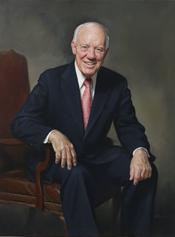 Rep. James L. Oberstar (D-MN)
Submitted September 15, 2005
Text
Offered
This amendment's own text couldn't be picked out of its Congressional Record passage, so the passage is shown in full.
COAST GUARD AND MARITIME TRANSPORTATION ACT OF 2005
The Committee resumed its sitting.
Mr. LoBIONDO. Mr. Chairman, I reserve the balance of my time.
Mr. OBERSTAR. Mr. Chairman, I yield 2 minutes to the gentleman from
Michigan (Mr. Stupak), an admirer of the Coast Guard.
Mr. STUPAK. Mr. Chairman, I thank the gentleman from New Jersey (Mr.
LoBiondo), the gentleman from Alaska (Mr. Young), the ranking member,
the gentleman from Minnesota (Mr. Oberstar), the gentleman from
California (Mr. Filner), and the gentleman from Michigan (Mr. Hoekstra)
for their work on this bill. There could not be a more opportune time
to bring this important legislation to the House floor than today with
the aspects of Hurricane Katrina.
The heroic and steadfast efforts of the Coast Guard in the wake of
Katrina, the worst natural disaster this Nation has ever faced, should
be commended by all. This recent tragedy demonstrates how important it
is to authorize and fund vital programs that are contained in the Coast
Guard bill we are discussing today. This bill will help the Coast Guard
to continue to effectively carry out their mission.
I represent a district that is almost completely surrounded by water,
so I understand the importance of a Coast Guard that has the resources
to assist our coastal communities.
There is one provision included in the bill that is particularly
important to me and my northern Michigan district. It directs the
Commandant of the Coast Guard to convey the Cutter Mackinaw to the City
and County of Cheboygan, Michigan, for purposes of a museum.
The U.S. Coast Guard Cutter Mackinaw is scheduled to be
decommissioned in 2006. The Cutter Mackinaw, whose home port has been
Cheboygan, Michigan, has served the State of Michigan and the entire
Great Lakes region for over 60 years.
The conveyance of the Cutter Mackinaw to Cheboygan is both a tribute
to the ship that protected Michigan's water and shores and cleared the
ice paths for the Nation's mariners. This ship will now serve as an
educational resource to help people better understand the history of
the vessel, the Coast Guard and the maritime history of the Great
Lakes. In this role, it is imperative that Michigan keep this historic
treasure.
I see no better way to honor the life and name of the cutter than to
retire it as a museum to its home port in the Mackinaw Straits area.
This Coast Guard treasure will be a valuable cultural and educational
benefit for generations to come.
Once again, thanks to the men and women of the United States Coast
Guard for their work in saving lives in the aftermath of Hurricane
Katrina.
Mr. OBERSTAR. Mr. Chairman, I yield 2 minutes to the gentleman from
California (Mr. Farr).
Mr. FARR. Mr. Chairman, I rise to engage in a colloquy with the
gentleman from New Jersey (Chairman LoBiondo).
Mr. Chairman, as the gentleman from New Jersey is aware, Congress in
2002
[[Page H8035]]
during the last reauthorization of Coast Guard activities enacted into
law authorization for the Coast Guard to transfer a parcel of land at
Point Pinos, California, to the City of Pacific Grove. Over the last 3
years, the city has worked with the Coast Guard to finalize the
arrangements, but the land has yet to be transferred. The delay has
frustrated city officials, prevented the reuse of the land, and
burdened the Coast Guard with maintenance and security of a facility
they no longer need.
Mr. Chairman, I would ask the chairman if he is aware of the problem
and whether anything can be done to expedite the closure to this issue
and the transfer of the property.
Mr. LoBIONDO. Mr. Chairman, will the gentleman yield?
Mr. FARR. I yield to the gentleman from New Jersey.
Mr. LoBIONDO. Mr. Chairman, I thank the gentleman for rising on this
matter. I am perplexed as to why this transfer has not yet occurred and
concerned that it has not yet occurred.
I have been told that the Department of Homeland Security needs to
delegate the land transfer authority to the Coast Guard in order to
complete and carry out this provision. I will work with the gentleman
from California (Mr. Farr) to see that the transfer of this land to the
City of Pacific Grove occurs in a timely manner.
Mr. FARR. Mr. Chairman, I appreciate the offer of assistance from the
chairman and look forward to working with him to get this done.
Ms. PELOSI. Mr. Chairman, as the House considers the Coast Guard and
Maritime Transportation Act, we have the opportunity to commend the men
and women of the Coast Guard for their extraordinary achievements in
response to Hurricane Katrina.
On Sunday, August 28, as soon as the hurricane passed over the Gulf
of Mexico, the Coast Guard launched into action. Battling winds that
were still blowing at gale force, Coast Guard aircraft immediately
began rescuing desperate survivors clinging to rooftops in flooded Gulf
Coast coastal communities.
After the Hurricane hit the Gulf Coast and as the enormity of the
disaster became apparent, every Coast Guard air station in the country
began sending help--aircraft or crews or both--to the devastated areas
to conduct search and rescue missions. The numbers speak for
themselves: across the region, the Coast Guard saved or evacuated
33,500 people; one helicopter crew rescued 150 during a single shift on
duty; another crew rescued 110.
In New Orleans alone, working day and night for seven days, Coast
Guard helicopters saved close to 6,500 lives, 4,700 of them by hoisting
people from their perilous perches up into helicopters. Coast Guard
crews dodged debris, hacked through roofs and windows, and waded in
filthy water to reach survivors.
Although Coast Guard facilities in the disaster area had been damaged
by the storm and floods, and many Coast Guard men and women had lost
their own homes, they pushed past all obstacles to carry out their
mission.
It was not just the members of the air and rescue teams that made
this extraordinary effort possible: mechanics worked tirelessly to
service aircraft and send them back into the field as quickly as
possible. Supply and logistics personnel worked around the clock to
restore hurricane-damaged facilities to use. Auxiliary volunteers
rallied to the call of duty. As the storm receded, assessments of oil
spills and critical infrastructure began.
The Coast Guard's accomplishments shine all the brighter in contrast
to FEMA's lethally slow response. There are many good men and women
working for FEMA too, but they were hampered by weak, inexperienced,
and ineffective leadership, and by the exodus over the past several
years of many seasoned disaster relief experts who could no longer
tolerate the disintegration of the agency.
With this legislation, we are building upon the strengths and
successes of the Coast Guard. Thank you to Vice Admiral Thad W. Allen
for taking over relief operations in the disaster area. Thank you to
the men and women of the Coast Guard who responded to this disaster
from all around the country, from Florida to Seattle, from Boston to my
own city of San Francisco. With all our hearts, we thank you.
Mr. WEINER. Mr. Chairman, I rise today to thank the leadership of the
Transportation and Infrastructure Committee for their hard work
shepherding through the Coast Guard and Maritime Transportation Act of
2005, and to express my strong support of the bill. It authorizes $8.7
billion for the Coast Guard for fiscal 2006, which will be used to
perform the essential duties of the U.S. Coast Guard in the areas of
homeland security, maritime safety, law enforcement, and environmental
protection.
Mr. Chairman, I want to highlight a provision that I offered and was
accepted by the Committee that directs the Coast Guard to conduct a
study of the pollution in Newtown Creek caused by underground oil
spills in Brooklyn, N.Y.
Newtown Creek is a 3.5 mile long waterway that flows from the East
River and separates the boroughs of Brooklyn and Queens. The State of
New York has ruled that the Creek does not meet water quality standards
under the Clean Water Act. It is the single most polluted waterway in
New York City, and its banks are home to the largest oil spill in the
United States. The spill is 150 percent the size of the Exxon-Valdez
spill.
In 1978, a Coast Guard patrol detected petroleum on the surface of
Newtown Creek and identified a spill that spreads from the banks of the
Creek through the Greenpoint neighborhood in Brooklyn. Evaluations at
that time identified a spill totaling 17 million gallons attributed to
refineries operated along the banks of the Creek by the predecessors to
ExxonMobil, BP/Amoco and Chevron-Texaco. To date, 8.7 millions gallons
have been cleaned but estimates indicate it will take at least 25 more
years to finish the remediation, primarily conducted by ExxonMobil
under a 1990 consent agreement with the New York State Department of
Environmental Conservation.
Even though it has been over 25 years since the oil spill was
detected, the public health and safety risks associated with the oil
spill are still unknown.
The legislative intent of the amendment that directs the Coast Guard
to study Newtown Creek (Creek) is for the Coast Guard to revisit the
findings of its July 1979 report entitled ``Investigation of
Underground Accumulation of Hydrocarbons along Newtown Creek,'' and
address the following issues:
The actual current size of the Greenpoint Oil Spill (Spill) and the
extent to which oil from each refinery site contributes to the Spill.
The extent and severity of surface water pollution and sediment
contamination from the Spill, and methods to prevent further seepage
into the Creek.
The Spill's impact on existing conditions in the Creek including but
not limited to low levels of dissolved oxygen and high levels of
bacteria.
The interaction between pollution from the Spill and pollution from
other sources in the Creek including but not limited to Combined Sewer
Overflow Pipes and the Newtown Creek Sewage Treatment Plant.
The extent to which oil and contaminated sediments in the Creek
disperse into New York Harbor.
The extent to which the Spill has affected aquatic species in the
Creek and Harbor, and methods to prevent further harm.
The extent to which the Spill has affected groundwater in the
surrounding area, and methods to prevent further harm.
The extent and severity of contaminated soil in the area affected by
the Spill, and methods to prevent further harm.
Any public health issues raised by the Spill and the current
remediation efforts, both independently and in interaction with other
pollutants in the Creek.
Any safety issues raised by the Spill and the current remediation
efforts, both independently and in interaction with other pollutants in
the Creek.
The extent to which the current remediation efforts are sufficient,
and any new technologies or approaches that could accelerate product
recovery and/or improve the scope of the remediation.
I would like to express my thanks to Chairman Young, Mr. Oberstar,
Chairman LoBiondo, and Mr. Filner for their willingness to work with me
on this very important yet often overlooked issue. The country will
benefit from renewed Federal attention on this oil spill, the largest
in the country.
Additionally, I would like to thank both the Democratic and
Republican staff of the Transportation Committee and the Subcommittee
on the Coast Guard and Maritime Transportation. In particular, Ward
McCarragher and John Cullather of Mr. Oberstar's staff and Fraser
Verrusio and John Rayfield of Mr. Young's staff were very helpful.
Mr. ENGEL. Mr. Chairman, let me start by stating my sheer admiration
for the men and women of the United States Coast Guard. Their
performance during and after Katrina was phenomenal and they deserve
our gratitude and praise.
I rise to thank the Chairs and Ranking Members of the Transportation
Committee and its Coast Guard subcommittee. A year ago, they worked
with me to add language to the Coast Guard authorization bill requiring
the Coast Guard and Department of Homeland Security to do a security
assessment of the Indian Point nuclear power plant. As that bill moved
through the process, this study was expanded to all nuclear power
plants in the United States. I am pleased to report that DHS plans on
releasing this report very soon--perhaps
[[Page H8036]]
even this week. While I am well aware that security for nuclear plants
is a sensitive matter and fully understand that this might require that
parts of this report be classified, it is my hope that the report would
contain unclassified sections to permit those around the nuclear plants
to gain a better understanding of how our government is protecting
them.
We know for a fact that Al Qaeda has the plans of U.S. nuclear power
plants. We know that these facilities are a target. We, the Congress
and the rest of the federal government, have a responsibility to ensure
the safety and security of these plants and our citizens. I am hopeful
that the analysis in this report will help us as we make policy
decisions about how best to safeguard these facilities.
There is no doubt about the awesome power of nuclear energy. It
provides 20 percent of the Nation's electricity. However, if a
terrorist group were successful in causing major damage to a plant or
its cooling ponds, then the impact would be devastating on a scale we
dare not imagine.
We know that on 9/11 one of the planes flew over Indian Point nuclear
power plant in New York and that the terrorists had plans nuclear
plants in their possession. While I will continue to call for Indian
Point to be closed, until that day, I will work to ensure it is as safe
and secure as is humanly possible. This report will be an important
step toward protecting Indian Point and all nuclear power plants
sitting on major waterways.
Again, I thank Chairman Young, Chairman LoBiondo, Ranking Member
Oberstar and Ranking Member Filner for their assistance and support.
Ms. CORRINE BROWN of Florida. Mr. Chairman, I want to thank Chairmen
Young and LoBiondo and Ranking Members Oberstar and Filner for their
hard work in bringing this bill to the floor.
The Coast Guard has been protecting our shores for more than 200
years, and has done an outstanding job. The Coast Guard was the first
Agency to react to the terrorist attacks on September 11th, and within
minutes was guarding our ports and bridges, and directing maritime
traffic out of New York. Right now they're in the Gulf region
evacuating victims and cleaning up neighborhoods. And we now have a
Coastie heading the recovery effort.
Like many Members, I had major concerns when they moved the Coast
Guard into the Department of Homeland Security because I feared that it
would prevent them from doing their core missions of Search & Rescue,
Drug Interdiction, and Enforcing Maritime and Fisheries Laws. We now
know that they can also get caught up in the red tape of the Department
of Homeland Security, and we need to keep the Department's feet to the
fire, so they don't stand in the way of the Coast Guard's traditional
mission.
Fortunately the Transportation Committee realizes how important the
Coast Guard is, and we are providing them $861 million more than the
Administration. This is just one more example of where the money being
sent to Iraq could be used right here by our own Coast Guard.
I encourage my colleagues to support full funding for the Coast
Guard. It's simply the right thing to do for America.
Mr. ROTHMAN. Mr. Chairman, I rise in strong support of H.R. 889, the
Coast Guard and Maritime Transportation Act of 2005. This legislation
could not come up for our consideration at a better time. We have all
seen the phenomenal rescues made by the United States Coast Guard
during their efforts to save the lives of thousands of victims of
Hurricane Katrina. I am sure that the more than 23,000 people who have
been rescued by the Coast Guard and all Americans join me in thanking
and commending the approximately 3,300 Coast Guard men and women who
have been working around the clock to locate, rescue, and assist their
victims of this natural disaster.
Over the past few weeks we have seen the Coast Guard at their very
best, but the Coast Guard's daily operations should not go unnoticed.
We rely on the Coast Guard to patrol and protect our nation's waters
everyday. They help to secure our nation's ports, harbors, and seaways
and ensure the safety of our waterways. The Coast Guard, however, does
not just have a domestic role. Many members of the Coast Guard have
been deployed overseas to fight in the War in Iraq.
From the Jersey Shore, to the waters in Alaska, to the Gulf Coast, to
Iraq, the men and women of the Coast Guard serve our nation with
bravery and honor. We must provide them with the resources they need to
ensure that they can continue their multifaceted mission. I once again
thank every member of the Coast Guard for their service and sacrifice
for our nation. I urge all of my colleagues to vote in favor of H.R.
889.
Mr. GENE GREEN of Texas. Mr. Chairman, I want to offer my strong
support today for H.R. 889, the Coast Guard and Maritime Transportation
Act of 2005.
Over the last several weeks the Coast Guard has been in the national
spotlight for the outstanding work it has done to aid in the recovery
and relief efforts for Hurricane Katrina victims along the Gulf coast.
While the response of many agencies has been scrutinized, the Coast
Guard has not been one of them.
The Coast Guard has been responsible for saving 33,000 lives--six
times the number of lives the Coast Guard saved in 2004--since Katrina
hit, coordinating pollution response with the Environmental Protection
Agency, the state of Louisiana and local industries, and managing the
megashelters in my hometown of Houston, Texas, where tens of thousands
of the evacuees found relief following the storm.
Coast Guard Lieutenant Joe Leonard and the units in Houston have done
an incredible job in managing these shelters that received thousands of
people a day in the days following Katrina.
But relief efforts are just a part of what the Coast Guard does.
The Coast Guard, which is a part of the Department of Homeland
Security, is the lead federal agency for maritime homeland security.
The Homeland Security Act of 2002 specifies five homeland security
missions for the Coast Guard: ports, waterways, and coastal security;
drug interdiction; migrant interdiction; defense readiness; and other
law enforcement duties.
With regard to port security, the Coast Guard is responsible for
evaluating, boarding, and inspecting commercial ships approaching U.S.
waters, countering terrorist threats in U.S. ports, and helping protect
U.S. Navy ships in U.S. ports.
The Port of Houston, which handles more foreign tonnage than any
other port in the United States, is in the district I represent, and
the Coast Guard provides the security necessary to protect the Port, as
well as the people of Houston.
Mr. Chairman, I would again like to thank the Coast Guard for its
excellent work in the Katrina relief efforts, and urge my colleagues to
support this bill.
Mr. OBERSTAR. Mr. Chairman, I yield back the balance of my time.
Mr. LoBIONDO. Mr. Chairman, I yield back the balance of my time.
The CHAIRMAN. All time for general debate has expired.
Pursuant to the rule, the amendment in the nature of a substitute
printed in the bill shall be considered as an original bill for the
purpose of amendment under the 5-minute rule by title, and each title
shall be considered read.
No amendment to that amendment shall be in order except those printed
in the portion of the Congressional Record designated for that purpose
and pro forma amendments for the purpose of debate. Amendments printed
in the Record may be offered only by the Member who caused it to be
printed or his designee and shall be considered read.
The Clerk will designate section 1.
The text of section 1 is as follows:
H.R. 889
Be it enacted by the Senate and House of Representatives of
the United States of America in Congress assembled,
SECTION 1. SHORT TITLE.
This Act may be cited as the ``Coast Guard and Maritime
Transportation Act of 2005''.
The CHAIRMAN. Are there amendments to section 1?
Amendment No. 11 Offered by Mr. LoBiondo
Mr. LoBIONDO. Mr. Chairman, as the designee of the gentleman from
Alaska (Mr. Young), I offer amendment No. 11, and I ask unanimous
consent that I be permitted to offer the amendment at this point in the
reading.
The CHAIRMAN. The Clerk will designate the amendment.
The text of the amendment is as follows:
Amendment No. 11 offered by Mr. LoBiondo:
At the end of title I add the following:
SEC. 103. AUTHORIZATION OF FUNDING RELATED TO HURRICANE
KATRINA.
There is authorized to be appropriated for fiscal year 2005
for the operation and maintenance of the Coast Guard, in
addition to the amounts authorized for that fiscal year by
section 101(1) of the Coast Guard and Maritime Transportation
Act of 2004 (118 Stat. 1030), $60,000,000 for emergency
hurricane expenses, emergency repairs, and deployment of
personnel, to support costs of evacuation, and for other
costs resulting from immediate relief efforts related to
Hurricane Katrina.
At the end of title II add the following:
SEC. 210. ICEBREAKER OPERATION AND MAINTENANCE PLAN.
The Secretary of the department in which the Coast Guard is
operating shall--
(1) by not later than 90 days after the date of the
enactment of this Act, submit to the Committee on
Transportation and Infrastructure of the House of
Representatives and the Committee on Commerce, Science,
[[Page H8037]]
and Transportation of the Senate a plan for operation and
maintenance of Coast Guard icebreakers in the waters of
Antarctica after fiscal year 2006 that does not rely on the
transfer of funds to the Coast Guard by any other Federal
agency; and
(2) subject to the availability of appropriations,
implement the plan in fiscal years after fiscal year 2006.
SEC. 211. OPERATION AS A SERVICE IN THE NAVY.
Section 3 of title 14, United States Code, is amended by
striking ``Upon the declaration of war or when'' and
inserting ``When''.
SEC. 212. COMMENDATION, RECOGNITION, AND THANKS FOR COAST
GUARD PERSONNEL.
(a) Findings.--The Congress finds the following:
(1) On August 29, 2005, Hurricane Katrina struck the the
Gulf of Mexico coastal region of Louisiana, Mississippi, and
Alabama, causing the worst natural disaster in United States
history.
(2) The response to such hurricane by members and employees
of the Coast Guard has been immediate, invaluable, and
courageous.
(3) Members and employees of the Coast Guard--
(A) have shown great leadership in helping to coordinate
relief efforts with respect to Hurricane Katrina;
(B) have used their expertise and specialized skills to
provide immediate assistance to victims and survivors of the
hurricane; and
(C) have set up remote assistance operations in the
affected areas in order to best provide service to Gulf of
Mexico coastal region.
(4) Members of the Coast Guard have volunteered their
unique resources to assess the situation and deliver aid when
and where other relief efforts could not.
(5) Members of the Coast Guard have demonstrated their
resolve and character by providing aid to Hurricane Katrina
victims and survivors.
(6) Members and employees of the Coast Guard have worked
together to bring clean water, food, and resources to victims
and survivors in need.
(b) Commendation, Recognition, and Thanks.--The Congress--
(1) commends the outstanding efforts in response to
Hurricane Katrina by members and employees of the Coast
Guard;
(2) recognizes that the actions of these individuals went
above and beyond the call of duty; and
(3) thanks them for their continued dedication and service.
SEC. 213. HOMEOWNERS ASSISTANCE FOR COAST GUARD PERSONNEL
AFFECTED BY HURRICANE KATRINA.
(a) In General.--Notwithstanding any other provision of
law, the Secretary of the department in which the Coast Guard
is operating may reimburse a person who is eligible under
subsection (b) for reimbursement under this section, for
losses of qualified property owned by such person that result
from damage caused by Hurricane Katrina.
(b) Eligible Persons.--A person is eligible for
reimbursement under this section if the person is a civilian
employee of the Federal Government or member of the uniformed
services who--
(1) was assigned to, or employed at or in connection with,
a Coast Guard facility located in the State of Louisiana,
Mississippi, or Alabama on or before August 28, 2005;
(2) incident to such assignment or employment, owned and
occupied property that is qualified property under subsection
(e); and
(3) as a result of the effects of Hurricane Katrina,
incurred damage to such qualified property such that--
(A) the qualified property is unsalable (as determined by
the Secretary); and
(B) the proceeds, if any, of insurance for such damage are
less than an amount equal to the greater of--
(i) the fair market value of the qualified property on
August 28, 2005 (as determined by the Secretary); or
(ii) the outstanding mortgage, if any, on the qualified
property on that date.
(c) Reimbursement Amount.--The amount of the reimbursement
that an eligible person may be paid under this section with
respect to a qualified property shall be determined as
follows:
(1) In the case of qualified property that is a dwelling or
condominium unit, the amount shall be--
(A) the amount equal to the greater of--
(i) 85 percent of the fair market value of the dwelling or
condominium unit on August 28, 2005 (as determined by the
Secretary), or
(ii) the outstanding mortgage, if any, on the dwelling or
condominium unit on that date; minus
(B) the proceeds, if any, of insurance referred to in
subsection (b)(3)(B).
(2) In the case of qualified property that is a
manufactured home, the amount shall be--
(A) if the owner also owns the real property underlying
such home, the amount determined under paragraph (1); or
(B) if the owner leases such underlying property--
(i) the amount determined under paragraph (1); plus
(ii) the amount of rent payable under the lease of such
property for the period beginning on August 28, 2005, and
ending on the date of the reimbursement under this section.
(d) Transfer and Disposal of Property.--
(1) In general.--An owner receiving reimbursement under
this section shall transfer to the Secretary all right,
title, and interest of the owner in the qualified property
for which the owner receives such reimbursement. The
Secretary shall hold, manage, and dispose of such qualified
property in the same manner that the Secretary of Defense
holds, manages, and disposes of real property under section
1013 of the Demonstration Cities and Metropolitan Development
Act of 1966 (42 U.S.C. 3374).
(2) Treatment of proceeds.--Any amounts received by the
United States as proceeds of management or disposal of
property by the Secretary under this subsection shall be
deposited in the general fund of the Treasury as offsetting
receipts of the department in which the Coast Guard is
operating and ascribed to Coast Guard activities.
(e) Qualified Property.--Property is qualified property for
the purposes of this section if as of August 28, 2005, the
property was a one- or two-family dwelling, manufactured
home, or condominium unit in the State of Louisiana,
Mississippi, or Alabama that is owned and occupied, as a
principal residence, by a person who is eligible under
subsection (b).
(f) Subject to Appropriations.--The authority to pay
reimbursement under this section is subject to the
availability of appropriations.
SEC. 214. REPORT ON PERSONNEL, ASSETS, AND EXPENSES.
Not later than September 15, 2005, and at least once every
month thereafter through January 2006, the Commandant of the
Coast Guard shall report to the Committee on Transportation
and Infrastructure of the House of Representatives and the
Committee on Commerce, Science, and Transportation of the
Senate regarding the personnel and assets deployed to assist
in the response to Hurricane Katrina and the costs incurred
as a result of such response that are in addition to funds
already appropriated for the Coast Guard for fiscal year
2005.
SEC. 215. LIMITATION ON MOVING ASSETS TO ST. ELIZABETHS
HOSPITAL.
The Commandant of the Coast Guard may not move any Coast
Guard personnel, property, or other assets to the West Campus
of St. Elizabeths Hospital until the Administrator of General
Services submits to the Committee on Transportation and
Infrastructure of the House of Representatives and the
Committee on Commerce, Science, and Transportation and the
Committee on Environment and Public Works of the Senate
plans--
(1) to provide road access to the site from Interstate
Route 295; and
(2) for the design of facilities for at least one Federal
agency other than the Coast Guard that would house no less
than 2,000 employees at such location.
Amend section 405 to read as follows:
SEC. 405. REPORT.
(a) In General.--The Commandant of the Coast Guard shall
review the adequacy of assets and facilities described in
subsection (b) to carry out the Coast Guard's missions,
including search and rescue, illegal drug and migrant
interdiction, aids to navigation, ports, waterways and
coastal security, marine environmental protection, and
fisheries law enforcement. Not later than 180 days after the
date of the enactment of this Act, the Commandant shall
submit a report to the Committee on Transportation and
Infrastructure of the House of Representatives and the
Committee on Commerce, Science, and Transportation of the
Senate that includes the findings of that review and any
recommendations to enhance mission capabilities in those
areas.
(b) Areas of Review.--The report under subsection (a) shall
provide information and recommendations on the following
assets:
(1) Coast Guard aircraft, including helicopters, stationed
at Air Station Detroit in the State of Michigan.
(2) Coast Guard vessels and aircraft stationed in the
Commonwealth of Puerto Rico.
(3) Coast Guard vessels and aircraft stationed in the State
of Louisiana along the Lower Mississippi River between the
Port of New Orleans and the Red River.
(4) Coast Guard vessels and aircraft stationed in Coast
Guard Sector Delaware Bay.
(5) Physical infrastructure at Boat Station Cape May in the
State of New Jersey.
In section 412 insert ``of 1990'' after ``Oil Pollution
Act''.
At the end of title IV add the following:
SEC. 413. DETERMINATION OF THE SECRETARY.
Section 70105(c) of title 46, United States Code, is
amended--
(1) in paragraph (3) by inserting before the period
``before an administrative law judge''; and
(2) by adding at the end the following:
``(5) In making a determination under paragraph (1)(D), the
Secretary shall not consider a felony conviction that
occurred more than 7 years prior to the date of the
Secretary's determination.''.
SEC. 414. REPORT ON TECHNOLOGIES.
Not later than 180 days after the date of the enactment of
this Act, the Commandant of the Coast Guard shall submit a
report to the Committee on Transportation and Infrastructure
of the House of Representatives and the Committee on
Commerce, Science, and Transportation of the Senate that
includes an assessment of--
(1) the availability and effectiveness of technologies that
evaluate and identify inbound vessels and their cargo for
potential threats before they reach United States ports,
including technologies already tested or in testing at joint
operating centers; and
[[Page H8038]]
(2) the costs associated with implementing such technology
at all United States ports.
SEC. 415. MOVEMENT OF ANCHORS.
Section 12105 of title 46, United States Code, is amended
by adding at the end the following:
``(c) Only a vessel for which a certificate of
documentation with a registry endorsement is issued may be
employed in the setting or moving of the anchors or other
mooring equipment of a mobile offshore drilling unit that is
located above or on the outer Continental Shelf of the United
States (as that term is defined in section 2(a) of the Outer
Continental Shelf Lands Act (43 U.S.C. 1331(a)).''.
SEC. 416. INTERNATIONAL TONNAGE MEASUREMENT OF VESSELS
ENGAGED IN THE ALEUTIAN TRADE.
(a) General Inspection Exemption.--Section 3302(c)(2) of
title 46, United States Code, is amended to read as follows:
``(2) Except as provided in paragraphs (3) and (4) of this
subsection, the following fish tender vessels are exempt from
section 3301(1), (6), (7), (11), and (12) of this title:
``(A) A vessel of not more than 500 gross tons as measured
under section 14502 of this title or an alternate tonnage
measured under section 14302 of this title as prescribed by
the Secretary under section 14104 of this title.
``(B) A vessel engaged in the Aleutian trade that is not
more than 2,500 gross tons as measured under section 14302 of
this title.''.
(b) Other Inspection Exemption and Watch Requirement.--
Paragraphs (3)(B) and (4) of section 3302(c) of that title
and section 8104 (o) of that title are each amended by
striking ``or an alternate tonnage measured under section
14302 of this title as prescribed by the Secretary under
section 14104 of this title'' and inserting ``or less than
500 gross tons as measured under section 14502 of this title,
or is less than 2,500 gross tons as measured under section
14302 of this title''.
SEC. 417. ASSESSMENT AND PLANNING.
There is authorized to be appropriated to the Coast Guard
$400,000 to carry out an assessment of and planning for the
impact of an Arctic Sea Route on the indigenous people of
Alaska.
SEC. 418. HOMEPORT.
Subject to the availability of appropriations, the
Commandant of the Coast Guard shall homeport the Coast Guard
cutter HEALY in Anchorage, Alaska.
SEC. 419. OPINIONS REGARDING WHETHER CERTAIN FACILITIES
CREATE OBSTRUCTIONS TO NAVIGATION.
In any case in which a person requests the Secretary of the
Army to take action to permit a wind energy facility under
the authority of section 10 of the Act of March 3, 1899 (33
U.S.C. 403), the Commandant of the Coast Guard shall provide
an opinion in writing that states whether the proposed
facility would create an obstruction to navigation.
SEC. 420. TEMPORARY AUTHORIZATION TO EXTEND THE DURATION OF
LICENSES, CERTIFICATES OF REGISTRY, AND
MERCHANT MARINERS' DOCUMENTS.
(a) Licenses and Certificates of Registry.--Notwithstanding
sections 7106 and 7107 of title 46, United States Code, the
Secretary of the department in which the Coast Guard is
operating may temporarily extend the duration of a license or
certificate of registry issued for an individual under
chapter 71 of that title for up to one year, if--
(1) the records of the individual are located at the Coast
Guard facility in New Orleans that was damaged by Hurricane
Katrina; or
(2) the individual is a resident of Alabama, Mississippi,
or Louisiana.
(b) Merchant Mariners' Documents.--Notwithstanding section
7302(g) of title 46, United States Code, the Secretary of the
department in which the Coast Guard is operating may
temporarily extend the duration of a merchant mariners'
document issued for an individual under chapter 73 of that
title for up to one year, if--
(1) the records of the individual are located at the Coast
Guard facility in New Orleans that was damaged by Hurricane
Katrina; or
(2) the individual is a resident of Alabama, Mississippi,
or Louisiana.
(c) Manner of Extension.--Any extensions granted under this
section may be granted to individual seamen or a specifically
identified group of seamen.
(d) Expiration of Authority.--The authorities provided
under this section expire on December 31, 2006.
SEC. 421. TEMPORARY AUTHORIZATION TO EXTEND THE DURATION OF
VESSEL CERTIFICATES OF INSPECTION.
(a) Authority to Extend.--Notwithstanding section 3307 and
3711(b) of title 46, United States Code, the Secretary of the
department in which the Coast Guard is operating may
temporarily extend the duration or the validity of a
certificate of inspection or a certificate of compliance
issued under chapter 33 or 37, respectively, of title 46,
United States Code, for up to 6 months for a vessel inspected
by a Coast Guard Marine Safety Office located in Alabama,
Mississippi, or Louisiana.
(b) Expiration of Authority.--The authority provided under
this section expires on December 31, 2006.
SEC. 422. TEMPORARY CENTER FOR PROCESSING OF FOR LICENSES,
CERTIFICATES OF REGISTRY, AND MERCHANT
MARINERS' DOCUMENTS.
(a) In General.--Not later than October 15, 2005, the
Commandant of the Coast Guard shall establish a temporary
facility in Baton Rouge, Louisiana, that is sufficient to
process applications for new licenses, certificate of
registries, and merchant mariners' documents under chapters
71 or 73 of title 46, United States Code. This requirement
expires on December 31, 2006.
(b) Termination of Requirement.--The Commandant is not
required to maintain such facility after December 31, 2006.
SEC. 423. DETERMINATION OF NAVIGATIONAL IMPACT.
In any case in which a person requests the Secretary of the
Army to take action under the authority of section 10 of the
Act of March 3, 1899, popularly known as the Rivers and
Harbors Appropriations Act of 1899 (chapter 425; 33 U.S.C.
403), the Commandant of the Coast Guard shall provide to the
Secretary an opinion in writing that states whether the
proposed structure or activity would create an obstruction to
navigation.
SEC. 424. PORT RICHMOND.
The Secretary of the department in which the Coast Guard
is operating acting through the Commandant of the Coast Guard
may not approve the security plan under section 70103(c) of
title 46, United States Code, for a liquefied natural gas
import facility at Port Richmond in Philadelphia,
Pennsylvania, until the Secretary conducts a vulnerability
assessment under section 70102(b) of such title.
At the end of the bill add the following:
TITLE V--LIGHTHOUSES
SEC. 501. TRANSFER.
(a) Jurisdictional Transfers.--Administrative jurisdiction
over the following National Forest System lands in the State
of Alaska upon which are located any of the Coast Guard
facilities described in subsection (b), and over improvements
situated on such lands, is hereby transferred, without
requirement for consideration, from the Secretary of
Agriculture to the Secretary of the department in which the
Coast Guard is operating.
(b) Facilities Described.--The facilities described in
subsection (a) are the following:
(1) Guard island light station.--That area described in the
Guard Island Lighthouse reserve dated January 4, 1901,
comprising approximately 8.0 acres of National Forest
uplands.
(2) Eldred rock light station.--That area described in the
December 30, 1975, listing on the National Register of
Historic Places, comprising approximately 2.4 acres.
(3) Mary island light station.--That area described as the
remaining National Forest System uplands within the Mary
Island Lighthouse Reserve dated January 4, 1901, as amended
by Public Land Order 6964, dated April 5, 1993, comprising
approximately 1.07 acres.
(4) Cape hinchinbrook light station.--That area described
in the November 1, 1957, survey prepared for the Coast Guard,
comprising approximately 57.4 acres.
(c) Maps.--
(1) Requirement to prepare.--The Commandant of the Coast
Guard, in consultation with the Secretary of Agriculture,
shall prepare and maintain maps of the lands transferred by
subsection (a), and such maps shall be on file and available
for public inspection in the Coast Guard District 17 office
in Juneau, Alaska.
(2) Corrections and modifications.--In preparing such maps,
the Commandant of the Coast Guard, with the approval of the
Secretary of Agriculture, may make corrections and minor
modifications to the lands described or depicted to
facilitate Federal land management. Such maps, as so
corrected or modified, shall have the same effect as if
enacted in this section.
(d) Effect of Transfer.--The lands transferred to the
Secretary of the department in which the Coast Guard is
operating under subsection (a)--
(1) shall be administered by the Commandant of the Coast
Guard;
(2) shall be deemed transferred from and no longer part of
the National Forest System; and
(3) shall be considered not suitable for return to the
public domain for disposition under the general public land
laws.
(e) Transfer of Land.--
(1) Requirement.--Subject to paragraph (2), the
Administrator of General Services, upon request by the
Secretary of Agriculture, shall transfer to the Secretary of
Agriculture, without consideration, any land identified in
subsection (b), together with the improvements thereon, for
administration under the laws pertaining to the National
Forest System, if--
(A) the Secretary of the Interior cannot identify and
select an eligible entity in accordance with section
308(b)(2) of the National Historic Preservation Act (16
U.S.C. 470w-7(b)(2)) within 3 years after the date the
Secretary of the department in which the Coast Guard is
operating determines that the land is excess property, as
that term is defined in section 102(3) of title 40, United
States Code; or
(B) the land reverts to the United States pursuant to
section 308(c)(3) of the National Historic Preservation Act
(16 U.S.C. 470w-7(c)(3)).
(2) Reservations for aids to navigation.--Any action taken
under this subsection by the Administrator of General
Services shall be subject to any rights that may be reserved
by the Commandant of the Coast Guard for the operation and
maintenance of Federal aids to navigation.
(f) Notification; Disposal of Lands by the Administrator.--
The Administrator of General Services shall promptly notify
the
[[Page H8039]]
Secretary of Agriculture upon the occurrence of any of the
events described in subparagraphs (A) and (B) of subsection
(e)(1). If the Secretary of Agriculture does not request a
transfer as provided for in subsection (e) within 90 days
after receiving such notification from the Administrator, the
Administrator may dispose of the property in accordance with
section 309 of the National Historic Preservation Act (16
U.S.C. 470w-8) or other applicable surplus real property
disposal authority.
(g) Priority.--In selecting an eligible entity to which to
convey, under section 308(b) of the National Historic
Preservation Act (16 U.S.C. 470w-7(b)), land referred to in
subsection (b), the Secretary of the Interior shall give
priority to any eligible entity, as defined in section 308(e)
of that Act (16 U.S.C. 470w-7(e)) that is the local
government of the community in which the land is located.
SEC. 502. MISTY FIORDS NATIONAL MONUMENT AND WILDERNESS.
(a) Requirement to Transfer.--Notwithstanding section
308(b) of the National Historic Preservation Act (16 U.S.C.
470w-7(b)), if the Secretary of the department in which the
Coast Guard is operating determines that the Tree Point Light
Station is no longer needed for the purposes of the Coast
Guard, the Secretary shall transfer to the Secretary of
Agriculture all administrative jurisdiction over the Tree
Point Light Station, without consideration.
(b) Effectuation of Transfer.--A transfer under this
subsection shall be effectuated by a letter from the
Secretary of the department in which the Coast Guard is
operating to the Secretary of Agriculture and, except as
provided in subsection (g), without any further requirements
for administrative or environmental analyses or examination.
Such transfer shall not be considered a conveyance to an
eligible entity pursuant to section 308(b) of the National
Historic Preservation Act (16 U.S.C. 470w-7(b)).
(c) Reservation for Aids to Navigation.--As part of any
transfer pursuant to this subsection, the Commandant of the
Coast Guard may reserve rights to operate and maintain
Federal aids to navigation at the site.
(d) Easements and Special Use Authorizations.--
Notwithstanding any other provision of law, including the
Wilderness Act (16 U.S.C. 1131), and section 703 of the
Alaska National Interests Lands Conservation Act (94 Stat.
2418; 16 U.S.C. 1132 note), with respect to the property
transferred under this subsection, the Secretary of
Agriculture--
(1) may identify an eligible entity to be granted an
easement or other special use authorization and, in doing so,
the Secretary of Agriculture may consult with the Secretary
of the Interior concerning the application of policies for
eligible entities developed pursuant to subsection 308(b)(1)
of the National Historic Preservation Act (16 U.S.C. 470w-
7(b)(1)); and
(2) may grant an easement or other special use
authorization to an eligible entity, for no consideration, to
approximately 31 acres as described in the map entitled
``Tree Point Light Station,'' dated September 24, 2004, on
terms and conditions that provide for--
(A) maintenance and preservation of the structures and
improvements;
(B) the protection of wilderness and National Monument
resources;
(C) public safety; and
(D) such other terms and conditions deemed appropriate by
the Secretary of Agriculture.
(e) Actions Following Termination or Revocation.--In the
event that no eligible entity is identified within 3 years
after administrative jurisdiction is transferred to the
Secretary of Agriculture pursuant to this subsection, or the
easement or other special use authorization granted pursuant
to subsection (d) is terminated or revoked, the Secretary of
Agriculture may take such actions as are authorized by
subsection 110(b) of the National Historic Preservation Act
(16 U.S.C. 470h-2(b)).
(f) Revocation of Withdrawals and Reservations.--Effective
on the date of transfer of lands as provided in this
subsection, the following public land withdrawals or
reservations for light station and lighthouse purposes on
lands in Alaska are revoked as to the lands transferred:
(1) The unnumbered Executive order dated January 4, 1901,
as it affects the Tree Point Light Station site only.
(2) Executive Order 4410 dated April 1, 1926, as it affects
the Tree Point Light Station site only.
(g) Remediation Responsibilities not Affected.--Nothing in
this section shall affect any responsibilities of the
Commandant of the Coast Guard for the remediation of
hazardous substances and petroleum contamination at the Tree
Point Light Station consistent with existing law and
regulations. The Commandant and the Secretary shall execute
an agreement to provide for the remediation of the land and
structures at the Tree Point Light Station.
SEC. 503. CAPE ST. ELIAS LIGHT STATION.
For purposes of section 416(a)(2) of Public Law 105-383,
the Cape St. Elias Light Station shall comprise approximately
10 acres in fee, along with additional access easements
issued without consideration by the Secretary of Agriculture,
as generally described in the map entitled ``Cape St. Elias
Light Station,'' dated September 14, 2004. The Secretary of
the department in which the Coast Guard is operating shall
keep such map on file and available for public inspection.
SEC. 504. INCLUSION OF LIGHTHOUSE IN ST. MARKS NATIONAL
WILDLIFE REFUGE, FLORIDA.
(a) Revocation of Executive Order Dated November 12,
1838.--Any reservation of public land described in subsection
(b) for lighthouse purposes by the Executive Order dated
November 12, 1838, as amended by Public Land Order 5655,
dated January 9, 1979, is revoked.
(b) Description of Land.--The public land referred to in
subsection (a) consists of approximately 8.0 acres within the
external boundaries of St. Marks National Wildlife Refuge in
Wakulla County, Florida, that is east of the Tallahassee
Meridian, Florida, in Township 5 South, Range 1 East, Section
1 (fractional) and containing all that remaining portion of
the unsurveyed fractional section, more particularly
described as follows: A parcel of land, including submerged
areas, beginning at a point which marks the center of the
light structure, thence due North (magnetic) a distance of
350 feet to the point of beginning a strip of land 500 feet
in width, the axial centerline of which runs from the point
of beginning due South (magnetic) a distance of 700 feet,
more or less, to the shoreline of Apalachee Bay, comprising
8.0 acres, more or less, as shown on plat dated January 2,
1902, by Office of L. H. Engineers, 7th and 8th District,
Mobile, Alabama.
(c) Transfer of Administrative Jurisdiction.--Subject to
subsection (f), administrative jurisdiction over the public
land described in subsection (b), and over all improvements,
structures, and fixtures located thereon, is transferred from
the department in which the Coast Guard is operating to the
Secretary of the Interior, without reimbursement.
(d) Responsibility for Environmental Response Actions.--The
Coast Guard shall have sole responsibility in the Federal
Government to fund and conduct any response action required
under any applicable Federal or State law or implementing
regulation to address--
(1) a release or threatened release on public land referred
to in subsection (b) of any hazardous substance, pollutant,
contaminant, petroleum, or petroleum product or derivative
that is located on such land on the date of the enactment of
this Act; or
(2) any other release or threatened release on public land
referred to in subsection (b) of any hazardous substance,
pollutant, contaminant, petroleum, or petroleum product or
derivative, that results from any Coast Guard activity
occurring after the date of the enactment of this Act.
(e) Inclusion in Refuge.--
(1) Inclusion.--The public land described in subsection (b)
shall be part of St. Marks National Wildlife Refuge.
(2) Administration.--Subject to this subsection, the
Secretary of the Interior shall administer the public land
described in subsection (b)--
(A) through the Director of the United States Fish and
Wildlife Service; and
(B) in accordance with the National Wildlife Refuge System
Administration Act of 1966 (16 U.S.C. 668dd et seq.) and such
other laws as apply to Federal real property under the sole
jurisdiction of the United States Fish and Wildlife Service.
(f) Maintenance of Navigation Functions.--The transfer
under subsection (c), and the administration of the public
land described in subsection (b), shall be subject to such
conditions and restrictions as the Secretary of the
department in which the Coast Guard is operating considers
necessary to ensure that--
(1) the Federal aids to navigation located at St. Marks
National Wildlife Refuge continue to be operated and
maintained by the Coast Guard for as long as they are needed
for navigational purposes;
(2) the Coast Guard may remove, replace, or install any
Federal aid to navigation at the St. Marks National Wildlife
Refuge as may be necessary for navigational purposes;
(3) the United States Fish and Wildlife Service will not
interfere or allow interference in any manner with any
Federal aid to navigation, nor hinder activities required for
the operation and maintenance of any Federal aid to
navigation, without express written approval by the Secretary
of the department in which the Coast Guard is operating; and
(4) the Coast Guard may, at any time, enter the St. Marks
National Wildlife Refuge, without notice, for purposes of
operating, maintaining, and inspecting any Federal aid to
navigation and ensuring compliance with this subsection, to
the extent that it is not possible to provide advance notice.
TITLE VI--RESPONSE
SEC. 601. SHORT TITLE.
This title may be cited as the ``Delaware River Protection
Act of 2005''.
SEC. 602. REQUIREMENT TO NOTIFY COAST GUARD OF RELEASE OF
OBJECTS INTO THE NAVIGABLE WATERS OF THE UNITED
STATES.
The Ports and Waterways Safety Act (33 U.S.C. 1221 et seq.)
is amended by adding at the end the following:
``SEC. 15. REQUIREMENT TO NOTIFY COAST GUARD OF RELEASE OF
OBJECTS INTO THE NAVIGABLE WATERS OF THE UNITED
STATES.
``(a) Requirement.--As soon as a person has knowledge of
any release from a vessel or facility into the navigable
waters of the United States of any object that creates an
obstruction prohibited under section 10 of the Act of March
3, 1899, popularly known as
[[Page H8040]]
the Rivers and Harbors Appropriations Act of 1899 (chapter
425; 33 U.S.C. 403), such person shall notify the Secretary
and the Secretary of the Army of such release.
``(b) Restriction on Use of Notification.--Any notification
provided by an individual in accordance with subsection (a)
shall not be used against such individual in any criminal
case, except a prosecution for perjury or for giving a false
statement.''.
SEC. 603. LIMITS ON LIABILITY.
(a) Adjustment of Liability Limits.--
(1) Tank vessels.--Section 1004(a)(1) of the Oil Pollution
Act of 1990 (33 U.S.C. 2704(a)(1)) is amended--
(A) by redesignating subparagraph (B) as subparagraph (C);
(B) by striking subparagraph (A) and inserting the
following:
``(A) with respect to a single-hull vessel, including a
single-hull vessel fitted with double sides only or a double
bottom only--
``(i) $1,550 per gross ton for an incident that occurs in
2005;
``(ii) $1,900 per gross ton for an incident that occurs in
2006; or
``(iii) $2,250 per gross ton for an incident that occurs in
2007 or in any year thereafter; or
``(B) with respect to a double-hull vessel (other than any
vessel referred to in subparagraph (A))--
``(i) $1,350 per gross ton for an incident that occurs in
2005;
``(ii) $1,500 per gross ton for an incident that occurs in
2006; and
``(iii) $1,700 per gross ton for any incident that occurs
in 2007 or in any year thereafter; or''; and
(C) in subparagraph (C), as redesignated by subparagraph
(A) of this paragraph--
(i) in clause (i) by striking ``$10,000,000'' and inserting
``$14,000,000''; and
(ii) in clause (ii) by striking ``$2,000,000'' and
inserting ``$2,500,000''.
(2) Limitation on application.--In the case of an incident
occurring before the date of the enactment of this Act,
section 1004(a)(1) of the Oil Pollution Act of 1990 (33
U.S.C. 2704(a)(1)) shall apply as in effect immediately
before the effective date of this subsection.
(b) Adjustment to Reflect Consumer Price Index.--Section
1004(d)(4) of the Oil Pollution Act of 1990 (33 U.S.C.
2704(d)(4)) is amended to read as follows:
``(4) Adjustment to reflect consumer price index.--The
President shall, by regulations issued no later than 3 years
after the date of the enactment of the Delaware River
Protection Act of 2005 and no less than every 3 years
thereafter, adjust the limits on liability specified in
subsection (a) to reflect significant increases in the
Consumer Price Index.''.
SEC. 604. REQUIREMENT TO UPDATE PHILADELPHIA AREA CONTINGENCY
PLAN.
The Philadelphia Area Committee established under section
311(j)(4) of the Federal Water Pollution Control Act (33
U.S.C. 1321(j)(4)) shall, by not later than 12 months after
the date of the enactment of this Act and not less than
annually thereafter, review and revise the Philadelphia Area
Contingency Plan to include available data and biological
information on environmentally sensitive areas of the
Delaware River and Delaware Bay that has been collected by
Federal and State surveys.
SEC. 605. SUBMERGED OIL REMOVAL.
(a) Amendments.--Title VII of the Oil Pollution Act of 1990
is amended--
(1) in section 7001(c)(4)(B) (33 U.S.C. 2761(c)(4)(B)) by
striking ``RIVERA,'' and inserting ``RIVERA and the T/V ATHOS
I;''; and
(2) by adding at the end the following:
``SEC. 7002. SUBMERGED OIL PROGRAM.
``(a) Program.--
``(1) Establishment.--The Undersecretary of Commerce for
Oceans and Atmosphere, in conjunction with the Commandant of
the Coast Guard, shall establish a program to detect,
monitor, and evaluate the environmental effects of submerged
oil. Such program shall include the following elements:
``(A) The development of methods to remove, disperse or
otherwise diminish the persistence of submerged oil.
``(B) The development of improved models and capacities for
predicting the environmental fate, transport, and effects of
submerged oil.
``(C) The development of techniques to detect and monitor
submerged oil.
``(2) Report.--The Secretary of Commerce shall, no later
than 3 years after the date of the enactment of the Delaware
River Protection Act of 2005, submit to the Committee on
Transportation and Infrastructure of the House of
Representatives and the Committee on Commerce, Science, and
Transportation and the Committee on Environment and Public
Works of the Senate a report on the activities carried out
under this subsection and activities proposed to be carried
out under this subsection.
``(3) Funding.--There is authorized to be appropriated to
the Secretary of Commerce $1,000,000 for each of fiscal years
2006 through 2010 to carry out this subsection.
``(b) Demonstration Project.--
``(1) Removal of submerged oil.--The Commandant of the
Coast Guard, in conjunction with the Undersecretary of
Commerce for Oceans and Atmosphere, shall conduct a
demonstration project for the purpose of developing and
demonstrating technologies and management practices to remove
submerged oil from the Delaware River and other navigable
waters.
``(2) Funding.--There is authorized to be appropriated to
the Commandant of the Coast Guard $2,000,000 for each of
fiscal years 2006 through 2010 to carry out this
subsection.''.
(b) Clerical Amendment.--The table of sections in section 2
of such Act is amended by inserting after the item relating
to section 7001 the following:
``Sec. 7002. Submerged oil program.''.
SEC. 606. DELAWARE RIVER AND BAY OIL SPILL ADVISORY
COMMITTEE.
(a) Establishment.--There is established the Delaware River
and Bay Oil Spill Advisory Committee (in this section
referred to as the ``Committee'').
(b) Functions.--
(1) In general.--The Committee shall, by not later than 1
year after the date the Commandant of the Coast Guard (in
this section referred to as the ``Commandant'') completes
appointment of the members of the Committee, make
recommendations to the Commandant, the Committee on
Transportation and Infrastructure of the House of
Representatives, and the Committee on Commerce, Science, and
Transportation of the Senate on methods to improve the
prevention of and response to future oil spills in the
Delaware River and Delaware Bay.
(2) Meetings.--The Committee--
(A) shall hold its first meeting not later than 60 days
after the completion of the appointment of the members of the
Committee; and
(B) shall meet thereafter at the call of the Chairman.
(c) Membership.--The Committee shall consist of 15 members
who have particular expertise, knowledge, and experience
regarding the transportation, equipment, and techniques that
are used to ship cargo and to navigate vessels in the
Delaware River and Delaware Bay, as follows:
(1) Three members who are employed by port authorities that
oversee operations on the Delaware River or have been
selected to represent these entities, of whom--
(A) one member must be an employee or representative of the
Port of Wilmington;
(B) one member must be an employee or representative of the
South Jersey Port Corporation; and
(C) one member must be an employee or representative of the
Philadelphia Regional Port Authority.
(2) Two members who represent organizations that operate
tugs or barges that utilize the port facilities on the
Delaware River and Delaware Bay.
(3) Two members who represent shipping companies that
transport cargo by vessel from ports on the Delaware River
and Delaware Bay.
(4) Two members who represent operators of oil refineries
on the Delaware River and Delaware Bay.
(5) Two members who represent environmental and
conservation interests.
(6) Two members who represent State-licensed pilots who
work on the Delaware River and Delaware Bay.
(7) One member who represents labor organizations that load
and unload cargo at ports on the Delaware River and Delaware
Bay.
(8) One member who represents the general public.
(d) Appointment of Members.--The Commandant shall appoint
the members of the Committee, after soliciting nominations by
notice published in the Federal Register.
(e) Chairman and Vice Chairman.--The Committee shall elect,
by majority vote at its first meeting, one of the members of
the Committee as the Chairman and one of the members as the
Vice Chairman. The Vice Chairman shall act as Chairman in the
absence of or incapacity of the Chairman, or in the event of
vacancy in the Office of the Chairman.
(f) Pay and Expenses.--
(1) Prohibition on pay.--Members of the Committee who are
not officers or employees of the United States shall serve
without pay. Members of the Committee who are officers or
employees of the United States shall receive no additional
pay on account of their service on the Committee.
(2) Expenses.--While away from their homes or regular
places of business, members of the Committee may be allowed
travel expenses, including per diem, in lieu of subsistence,
as authorized by section 5703 of title 5, United States Code.
(g) Termination.--The Committee shall terminate one year
after the completion of the appointment of the members of the
Committee.
SEC. 607. MARITIME FIRE AND SAFETY ACTIVITIES.
The Maritime Transportation Security Act of 2002 (Public
Law 107-295) is amended--
(1) in section 407--
(A) in the heading by striking ``LOWER COLUMBIA RIVER'';
and
(B) by striking ``$987,400'' and inserting ``$1,500,000'';
and
(2) in the table of contents in section 1(b) by striking
the item relating to section 407 and inserting the following:
``Sec. 407. Maritime fire and safety activities.''.
The CHAIRMAN. Is there objection to the request of the gentleman from
New Jersey?
There was no objection.
Mr. LoBIONDO. Mr. Chairman, I rise in strong support of this
amendment and on behalf of the ranking members, the gentleman from
Minnesota (Mr.
[[Page H8041]]
Oberstar) and the gentleman from California (Mr. Filner), and thank
them for working so closely with us on this amendment.
One of the key provisions of this amendment is it authorizes an
additional $60 million for the Coast Guard's fiscal year 2005 for funds
spent on responding to Hurricane Katrina which are not being
reimbursed. Failure to reimburse the Service for the work it has done
in New Orleans means that other Coast Guard missions will suffer.
The amendment also temporarily extends existing mariner documents and
vessel certificates for mariners and vessels whose paperwork was held
in New Orleans and establishes a temporary center for the processing of
new mariner documents. Because of the effects of the hurricane on the
Coast Guard facilities and the need for new mariners to aid in
reconstruction efforts, these temporary actions are necessary to ensure
the smoothest possible return to normal operations of the important
maritime industry in the Mississippi River and the Gulf of Mexico.
Another important provision in this amendment is the Delaware River
Protection Act, legislation that I introduced with a number of my
colleagues to guard against another oil spill like the one that we
suffered last November in the Delaware River. The bill unanimously
passed the House in June, but, unfortunately, the other body has yet to
act.
The Delaware River Protection Act would require persons to notify the
Coast Guard in the event that an object is released into U.S. waters
that could cause an obstruction to navigation. The Coast Guard and the
Army Corps of Engineers have found three very large objects in the area
of the Delaware where the Athos I ran aground last November. Had the
notification requirement been in place at the time any of these objects
had been released into the water, the Coast Guard could have marked the
location of these objects and had them removed.
This provision will improve maritime safety and will protect the
environment and the economies of our local communities by preventing
similar collisions in the future.
The Delaware River Protection Act also directs the President to
adjust liability limits for vessel owners to reflect changes in the
Consumer Price Index since 1990 and establishes a research program to
develop and test technologies to detect and remove submerged oil from
U.S. waterways. This amendment will enhance the Federal Government's
oil spill prevention and response capabilities.
I would like to thank in particular the gentleman from New Jersey
(Mr. Saxton), the gentleman from New Jersey (Mr. Andrews), the
gentleman from Delaware (Mr. Castle), the gentlewoman from Pennsylvania
(Ms. Schwartz), and a host of others, along with our chairman and the
ranking member for working to include this. I urge everyone to support
this amendment.
{time} 1500
Amendment Offered by Mr. Oberstar to Amendment No. 11 Offered by Mr.
LoBiondo
Mr. OBERSTAR. Mr. Chairman, I offer an amendment to the amendment.
The Clerk read as follows:
Amendment offered by Mr. Oberstar to amendment No. 11
offered by Mr. LoBiondo:
In the proposed section 413--
(1) strike ``is amended'' and all that follows through
``paragraph (3)'' and insert ``is amended in paragraph (3)'';
and
(2) strike ``; and'' and all that follows through the end
of the section and insert a period.
Mr. OBERSTAR (during the reading). Mr. Chairman, I ask unanimous
consent that the amendment to the amendment be considered as read and
printed in the Record.
The CHAIRMAN. Is there objection to the request of the gentleman from
Minnesota?
There was no objection.
Mr. OBERSTAR. Mr. Chairman, the purpose of my amendment is to square
what we are doing in the Coast Guard reauthorization for background
checks with what we have already done in the Transportation Security
Administration with respect to felony convictions of personnel to be
hired by the agency in the TSA legislation concerning governing
aviation.
There is no limitation on the authority of the Secretary of Homeland
Security to go back beyond 7 years into the job applicant's background
for convictions relating to espionage, sedition, treason, murder,
conspiracy to attempt crimes; and we ought to have the same provisions
in the Coast Guard security responsibilities and not prohibit the
Secretary to go back beyond 7 years to look for violations that relate
to espionage, sedition, treason, and crimes listed in our Homeland
Security Act that relate to terrorism or State laws that are
comparable.
Mr. YOUNG of Alaska. Mr. Chairman, will the gentleman yield?
Mr. OBERSTAR. I yield to the gentleman from Alaska.
Mr. YOUNG of Alaska. Mr. Chairman, I thank the gentleman for yielding
to me.
My concern is, very frankly, this has been in the manager's amendment
for 3 months, and it is not new, but my big concern, and I understand
he is trying to make it uniform with, I believe, the airline industry;
is that correct?
Mr. OBERSTAR. The airline provisions, yes; and the HAZMAT section as
well.
Mr. YOUNG of Alaska. Mr. Chairman, if the gentleman will continue to
yield, the other concern I have is the Homeland Security Act itself
that we passed out of our committee had this provision in it, 7 years;
and what I do not want is to preclude someone from being employed in a
port, that, if there has been a felony created that is not terrorist
related, sabotage related, or secession related, he be precluded from
being able to be hired.
Some people say if he is a felon, he should not be hired. I can tell
the Members that the business I am in, a lot of people in their earlier
years probably got into some sort of trouble sometime, but they are not
terrorists. These people are trying to make a good living, trying to
provide for society and trying to be helpful to this Nation and are not
a threat. I do not want someone unable to obtain employment because of
beyond 7 years, 15 years, 20 years, and have that person not be
eligible to be employed.
The gentleman has heard this argument before. I believe he was on the
Committee on Homeland Security meeting when I presented that, and it
was adopted, and it passed on this floor. In fact, it is in the bill.
It has not become law because, as the gentleman knows, we have not gone
to conference with the Senate.
So I understand what the gentleman is trying to do, but I ask two
things from him: if he would consider not offering the amendment,
withdrawing it, or not asking for a vote on it, and we will not have a
vote on it, or we will, in turn, take care of this in conference,
because he and I are going to be on the conference. I know what he is
trying to do, but I do not want someone to be punished because they are
really good citizens today.
Mr. OBERSTAR. Mr. Chairman, reclaiming my time, I agree with the
chairman about not reaching back. We confronted this issue in aviation
in the legislation implementing the recommendations of the Pan Am 103
Commission requiring 10-year criminal background checks but not going
further than that and having consideration of amnesty for those who
paid their dues to society. We faced that.
But what we are dealing with here, as we did in the Maritime Security
Act, the Port Security Grants Act, as we know it, is to allow the
Secretary to go back for espionage, for sedition, for treason, for
items that are related to security matters. The law applies to felonies
in which the Secretary decides the individual is a terrorism security
risk.
If the chairman is saying withhold on the amendment this time and we
will work to include this language with these limitations in the
conference, I will take the chairman at his word.
Mr. YOUNG of Alaska. Mr. Chairman, that is what I expect to do. And,
again, I think we can work this out. I am just so concerned that, yes,
those that have or did have a potential to sabotage and sedition, et
cetera, they should not be employed.
The CHAIRMAN. The time of the gentleman from Minnesota (Mr. Oberstar)
has expired.
(By unanimous consent, Mr. Oberstar was allowed to proceed for 2
additional minutes.)
Mr. YOUNG of Alaska. Mr. Chairman, other than that, I do not want to
have the inability to have someone hired, because they can do the job.
So we can work it out.
[[Page H8042]]
Mr. OBERSTAR. Mr. Chairman, reclaiming my time, I concur in that
concern, but I do want to have uniformity of application of law in the
security arena, and I think the chairman agrees with that.
I further do not believe, Mr. Chairman, that we would have
intervention by the Homeland Security if we struck this language from
the manager's amendment because then it would not be subject to their
jurisdiction. However, the chairman is an honorable man. He and I have
had many agreements on a handshake, and we have worked things out.
Mr. YOUNG of Alaska. The gentleman has my word on it, Mr. Chairman.
Mr. OBERSTAR. Mr. Chairman, I ask unanimous consent to withdraw the
amendment.
The CHAIRMAN. Is there objection to the request of the gentleman from
Minnesota?
There was no objection.
Mr. ANDREWS. Mr. Chairman, I rise in support of the manager's
amendment to the Coast Guard and Maritime Transportation Act of 2005.
The amendment includes some very important provision that were
previously passed by this chamber in a bill called the Delaware River
Protection Act. The Delaware River Protection Act was primarily
authored and introduced earlier in the year by my esteemed colleague,
Congressman Frank LoBiondo. I was pleased to be a cosponsor of that
legislation and I am greatly pleased that the language is included in
the manager's amendment. The language is part of a bipartisan effort to
protect the ecologically and economically significant Delaware River
waterway. In November 2004, the hull of the oil tanker, Athos, was torn
open by a submerged object and spilled an estimated 265,000 gallons of
oil into our river. The cleanup efforts have cost at least $167 million
thus far and the impact to the wetlands will be felt for years to come.
We must prevent such tragedies from occurring in the future, as it is
an economic as well as an environmental imperative; the Delaware River
must remain open to commercial traffic. The language in the Delaware
River Protection Act, which will now be part of the Coast Guard and
Maritime Transportation Act, is a strong step to secure this precious
resource.
This language increases the liability limits on single-hull tankers
under the Oil Pollution Act, thereby encouraging the adoption of more
robust double-hull tankers. In addition, it requires mandatory
reporting of objects that are lost overboard to the Coast Guard. There
are also provisions to prepare for the contingency of another spill by
updating the current response plan, establishing a committee to report
to Congress on ways to improve oil spill response and prevention, and
establishing a pilot project on the Delaware to test techniques to
recover submerged oil. I commend Congressman LoBiondo for his diligent
work on this important effort. I also thank my colleagues,
Representatives Allyson Schwartz, Jim Saxton, and Mike Castle for their
input and support.
The CHAIRMAN. The question is on the amendment offered by the
gentleman from New Jersey (Mr. LoBiondo).
The amendment was agreed to.
The CHAIRMAN. Are there further amendments to section 1?
The Clerk will designate section 2.
The text of section 2 is as follows:
SEC. 2. TABLE OF CONTENTS.
The table of contents for this Act is as follows:
Sec. 1. Short title.
Sec. 2. Table of contents.
TITLE I--AUTHORIZATION
Sec. 101. Authorization of appropriations.
Sec. 102. Authorized levels of military strength and training.
TITLE II--COAST GUARD
Sec. 201. Extension of Coast Guard vessel anchorage and movement
authority.
Sec. 202. International training and technical assistance.
Sec. 203. Officer promotion.
Sec. 204. Coast Guard band director.
Sec. 205. Authority for one-step turnkey design-build contracting.
Sec. 206. Reserve recall authority.
Sec. 207. Reserve officer distribution.
Sec. 208. Expansion of use of auxiliary equipment to support coast
guard missions.
Sec. 209. Coast Guard history fellowships.
TITLE III--SHIPPING AND NAVIGATION
Sec. 301. Treatment of ferries as passenger vessels.
Sec. 302. Great Lakes pilotage annual ratemaking.
Sec. 303. Certification of vessel nationality in drug smuggling cases.
Sec. 304. LNG Tankers.
TITLE IV--MISCELLANEOUS
Sec. 401. Technical corrections.
Sec. 402. Authorization of junior reserve officers training program
pilot program.
Sec. 403. Transfer.
Sec. 404. Long-range vessel tracking system.
Sec. 405. Report.
Sec. 406. Training of cadets at United States Merchant Marine Academy.
Sec. 407. Marine casualty investigations study.
Sec. 408. Conveyance of decommissioned Coast Guard Cutter MACKINAW.
Sec. 409. Deepwater implementation report.
Sec. 410. Helicopters.
Sec. 411. Reports from mortgagees of vessels.
Sec. 412. Newtown Creek, New York City, New York.
The CHAIRMAN. Are there amendments to section 2?
The Clerk will designate title I.
The text of title I is as follows:
TITLE I--AUTHORIZATION
SEC. 101. AUTHORIZATION OF APPROPRIATIONS.
Funds are authorized to be appropriated for fiscal year
2006 for necessary expenses of the Coast Guard as follows:
(1) For the operation and maintenance of the Coast Guard,
$5,586,400,000, of which $24,500,000 is authorized to be
derived from the Oil Spill Liability Trust Fund to carry out
the purposes of section 1012(a)(5) of the Oil Pollution Act
of 1990.
(2) For the acquisition, construction, rebuilding, and
improvement of aids to navigation, shore and offshore
facilities, vessels, and aircraft, including equipment
related thereto, $1,903,821,000, of which--
(A) $20,000,000 shall be derived from the Oil Spill
Liability Trust Fund to carry out the purposes of section
1012(a)(5) of the Oil Pollution Act of 1990), to remain
available until expended;
(B) $1,316,300,000 is authorized for acquisition and
construction of shore and offshore facilities, vessels, and
aircraft, including equipment related thereto, and other
activities that constitute the Integrated Deepwater Systems;
and
(C) $284,369,000 is authorized for sustainment of legacy
vessels and aircraft, including equipment related thereto,
and other activities that constitute the Integrated Deepwater
Systems.
(3) To the Commandant of the Coast Guard for research,
development, test, and evaluation of technologies, materials,
and human factors directly relating to improving the
performance of the Coast Guard's mission in search and
rescue, aids to navigation, marine safety, marine
environmental protection, enforcement of laws and treaties,
ice operations, oceanographic research, and defense
readiness, $24,000,000, to remain available until expended,
of which $3,500,000 shall be derived from the Oil Spill
Liability Trust Fund to carry out the purposes of section
1012(a)(5) of the Oil Pollution Act of 1990.
(4) For retired pay (including the payment of obligations
otherwise chargeable to lapsed appropriations for this
purpose), payments under the Retired Serviceman's Family
Protection and Survivor Benefit Plans, and payments for
medical care of retired personnel and their dependents under
chapter 55 of title 10, United States Code, $1,014,080,000,
to remain available until expended.
(5) For alteration or removal of bridges over navigable
waters of the United States constituting obstructions to
navigation, and for personnel and administrative costs
associated with the Bridge Alteration Program, $35,900,000.
(6) For environmental compliance and restoration at Coast
Guard facilities (other than parts and equipment associated
with operation and maintenance), $12,000,000, to remain
available until expended.
(7) For the Coast Guard Reserve program, including
personnel and training costs, equipment, and services,
$119,000,000.
SEC. 102. AUTHORIZED LEVELS OF MILITARY STRENGTH AND
TRAINING.
(a) Active Duty Strength.--The Coast Guard is authorized an
end-of-year strength for active duty personnel of 45,500 for
the years ending on September 30, 2005, and September 30,
2006.
(b) Military Training Student Loads.--The Coast Guard is
authorized average military training student loads as
follows:
(1) For recruit and special training for fiscal year 2006,
2,500 student years.
(2) For flight training for fiscal year 2006, 125 student
years.
(3) For professional training in military and civilian
institutions for fiscal year 2006, 350 student years.
(4) For officer acquisition for fiscal year 2006, 1,200
student years.
The CHAIRMAN. Are there amendments to title I?
The Clerk will designate title II.
The text of title II is as follows:
TITLE II--COAST GUARD
SEC. 201. EXTENSION OF COAST GUARD VESSEL ANCHORAGE AND
MOVEMENT AUTHORITY.
Section 91 of title 14, United States Code, is amended by
adding at the end the following new subsection:
``(d) As used in this section `navigable waters of the
United States' includes all waters of the territorial sea of
the United States as described in Presidential Proclamation
No. 5928 of December 27, 1988.''.
SEC. 202. INTERNATIONAL TRAINING AND TECHNICAL ASSISTANCE.
(a) In General.--Section 149 of title 14, United States
Code, is amended--
(1) by amending the section heading to read as follows:
``Sec. 149. Assistance to foreign governments and maritime
authorities'';
(2) by inserting before the existing undesignated text the
following new subsection designation and heading: ``(a)
Detail of Members to Assist Foreign Governments.--''; and
(3) by adding at the end the following new subsection:
[[Page H8043]]
``(b) Technical Assistance to Foreign Maritime
Authorities.--The Commandant, in coordination with the
Secretary of State, may, in conjunction with regular Coast
Guard operations, provide technical assistance, including law
enforcement and maritime safety and security training, to
foreign navies, coast guards, and other maritime
authorities.''.
(b) Clerical Amendment.--The item related to such section
in the analysis at the beginning of chapter 7 of title 14,
United States Code, is amended to read as follows:
``149. Assistance to foreign governments and maritime authorities.''.
SEC. 203. OFFICER PROMOTION.
Section 257 of title 14, United States Code, is amended by
adding at the end the following new subsection:
``(f) The Secretary may waive subsection (a) of this
section to the extent necessary to allow officers described
therein to have at least two opportunities for consideration
for promotion to the next higher grade as officers below the
promotion zone.''.
SEC. 204. COAST GUARD BAND DIRECTOR.
(a) Band Director Appointment and Grade.--Section 336 of
title 14, United States Code, is amended--
(1) in subsection (b)--
(A) by amending the first sentence to read as follows:
``The Secretary may designate as the director any individual
determined by the Secretary to possess the necessary
qualifications.''; and
(B) in the second sentence, by striking ``a member so
designated'' and inserting ``an individual so designated'';
(2) in subsection (c)--
(A) by striking ``of a member'' and inserting ``of an
individual''; and
(B) by striking ``of lieutenant (junior grade) or
lieutenant'' and inserting ``determined by the Secretary to
be most appropriate to the qualifications and experience of
the appointed individual'';
(3) in subsection (d), by striking ``A member'' and
inserting ``An individual''; and
(4) in subsection (e)--
(A) by striking ``When a member's designation is revoked,''
and inserting ``When an individual's designation is
revoked,''; and
(B) by striking ``option:'' and inserting ``option--''.
(b) Current Director.--The individual serving as Coast
Guard band director on the date of the enactment of this Act
may be immediately promoted to a commissioned grade, not to
exceed captain, determined by the Secretary to be most
appropriate to the qualifications and experience of that
individual.
SEC. 205. AUTHORITY FOR ONE-STEP TURNKEY DESIGN-BUILD
CONTRACTING.
(a) In General.--Chapter 17 of title 14, United States
Code, is amended by adding at the end the following new
section:
``Sec. 677. Turnkey selection procedures
``(a) Authority to Use.--The Secretary may use one-step
turnkey selection procedures for the purpose of entering into
contracts for construction projects.
``(b) Definitions.--In this section:
``(1) The term `one-step turn-key selection procedures'
means procedures used for the selection of a contractor on
the basis of price and other evaluation criteria to perform,
in accordance with the provisions of a firm fixed-price
contract, both the design and construction of a facility
using performance specifications supplied by the Secretary.
``(2) The term `construction' includes the construction,
procurement, development, conversion, or extension, of any
facility.
``(3) The term `facility' means a building, structure, or
other improvement to real property.''.
(b) Clerical Amendment.--The analysis at the beginning of
such chapter is amended by inserting after the item relating
to section 676 the following:
``677. Turnkey selection procedures.''.
SEC. 206. RESERVE RECALL AUTHORITY.
Section 712(a) of title 14, United States Code, is
amended--
(1) by inserting ``, or to aid in prevention of an
imminent,'' after ``during'';
(2) by striking ``or'' before ``catastrophe'';
(3) by inserting ``, act of terrorism as defined in section
2(15) of the Homeland Security Act of 2002 (6 U.S.C.
101(15)), or transportation security incident as defined in
section 70101 of title 46'' after ``catastrophe'';
(4) by striking ``thirty days in any four-month period''
and inserting ``60 days in any 4-month period''; and
(5) by striking ``sixty days in any two-year period'' and
inserting ``120 days in any 2-year period''.
SEC. 207. RESERVE OFFICER DISTRIBUTION.
Section 724 of title 14, United States Code, is amended--
(1) in subsection (a), by inserting after the first
sentence the following: ``Reserve officers on an active-duty
list shall not be counted as part of the authorized number of
officers in the Reserve.''; and
(2) in subsection (b), by striking so much as precedes
paragraph (2) and inserting the following:
``(b)(1) The Secretary shall, at least once each year, make
a computation to determine the number of Reserve officers in
an active status authorized to be serving in each grade. The
number in each grade shall be computed by applying the
applicable percentage to the total number of such officers
serving in an active status on the date the computation is
made. The number of Reserve officers in an active status
below the grade of rear admiral (lower half) shall be
distributed by pay grade so as not to exceed percentages of
commissioned officers authorized by section 42(b) of this
title. When the actual number of Reserve officers in an
active status in a particular pay grade is less than the
maximum percentage authorized, the difference may be applied
to the number in the next lower grade. A Reserve officer may
not be reduced in rank or grade solely because of a reduction
in an authorized number as provided for in this subsection,
or because an excess results directly from the operation of
law.''.
SEC. 208. EXPANSION OF USE OF AUXILIARY EQUIPMENT TO SUPPORT
COAST GUARD MISSIONS.
(a) Use of Motorized Vehicles.--Section 826 of title 14,
United States Code, is amended--
(1) by designating the existing undesignated text as
subsection (a); and
(2) by adding at the end the following new subsection:
``(b) The Coast Guard may utilize to carry out its
functions and duties as authorized by the Secretary any
motorized vehicle placed at its disposition by any member of
the Auxiliary, by any corporation, partnership, or
association, or by any State or political subdivision
thereof, to tow Federal Government property.''.
(b) Appropriations for Facilities.--Section 830(a) of title
14, United States Code, is amended by striking ``or radio
station'' and inserting ``radio station, or motorized
vehicle'' each place it appears.
SEC. 209. COAST GUARD HISTORY FELLOWSHIPS.
(a) Fellowships Authorized.--Chapter 9 of title 14, United
States Code, is amended by adding at the end the following:
``Sec. 197. Coast Guard history fellowships
``(a) Fellowships.--The Commandant of the Coast Guard shall
prescribe regulations under which the Commandant may award
fellowships in Coast Guard history to individuals who are
eligible under subsection (b).
``(b) Eligible Individuals.--An individual shall be
eligible under this subsection if the individual is a citizen
or national of the United States and--
``(1) is a graduate student in United States history;
``(2) has completed all requirements for a doctoral degree
other than preparation of a dissertation; and
``(3) agrees to prepare a dissertation in a subject area of
Coast Guard history determined by the Commandant.
``(c) Regulations.--The regulations prescribed under this
section shall include--
``(1) the criteria for award of fellowships;
``(2) the procedures for selecting recipients of
fellowships;
``(3) the basis for determining the amount of a fellowship;
and
``(4) subject to the availability of appropriations, the
total amount that may be awarded as fellowships during an
academic year.''.
(b) Clerical Amendment.--The analysis at the beginning of
such chapter is amended by adding at the end the following:
``197. Coast Guard history fellowships.''.
The CHAIRMAN. Are there amendments to title II?
The Clerk will designate title III.
The text of title III is as follows:
TITLE III--SHIPPING AND NAVIGATION
SEC. 301. TREATMENT OF FERRIES AS PASSENGER VESSELS.
(a) Ferry Defined.--Section 2101 of title 46, United States
Code, is amended by inserting after paragraph (10a) the
following:
``(10b) `ferry' means a vessel that is used on a regular
schedule--
``(A) to provide transportation only between places that
are not more than 300 miles apart, and
``(B) to transport only--
``(i) passengers, or
``(ii) vehicles, or railroad cars, that are being used, or
have been used, in transporting passengers or goods.''.
(b) Passenger Vessels That Are Ferries.--Section 2101(22)
of title 46, United States Code, is amended--
(1) by striking ``or'' after the semicolon at the end of
subparagraph (B);
(2) by striking the period at the end of subparagraph (C)
and inserting ``; or''; and
(3) by adding at the end the following:
``(D) that is a ferry carrying a passenger.''.
(c) Small Passenger Vessels That Are Ferries.--Section
2101(35) of title 46, United States Code, is amended--
(1) by striking ``or'' after the semicolon at the end of
subparagraph (C);
(2) by striking the period at the end of subparagraph (D)
and inserting ``; or''; and
(3) by adding at the end the following:
``(E) that is a ferry carrying more than 6 passengers.''.
SEC. 302. GREAT LAKES PILOTAGE ANNUAL RATEMAKING.
Section 9303 of title 46, United States Code, is amended--
(1) in subsection (f) by striking ``The'' and inserting
``Before March 1 of each year, the''; and
(2) by adding at the end the following:
``(g) The Secretary shall ensure that the number of full-
time equivalent employees assigned to carry out this section
is not less than 4.''.
SEC. 303. CERTIFICATION OF VESSEL NATIONALITY IN DRUG
SMUGGLING CASES.
Section 3(c)(2) of the Maritime Drug Law Enforcement Act
(46 U.S.C. App. 1903(c)(2)) is amended in the matter
following subparagraph (C) by striking ``denial of such claim
of registry'' and inserting ``response''.
SEC. 304. LNG TANKERS.
(a) Program.--The Secretary of Transportation shall develop
and implement a program to promote the transportation of
liquefied natural gas to the United States on United States-
flag vessels.
[[Page H8044]]
(b) Amendment to Deepwater Port Act.--Section 4 of the
Deepwater Port Act of 1974 (33 U.S.C. 1503) is amended by
adding at the end the following:
``(i) To promote the security of the United States, the
Secretary shall give top priority to the processing of a
license under this Act for liquefied natural gas facilities
that will be supplied with liquefied natural gas by United
States flag-vessels.''.
(c) Report.--Within 6 months after the date of the
enactment of this Act, the Secretary shall submit a report to
the Committee on Transportation and Infrastructure of the
House of Representatives and the Committee on Commerce,
Science, and Transportation of the Senate on the
implementation of this section.
The CHAIRMAN. Are there amendments to title III?
The Clerk will designate title IV.
The text of title IV is as follows:
TITLE IV--MISCELLANEOUS
SEC. 401. TECHNICAL CORRECTIONS.
(a) Requirements for Cooperative Agreements for Voluntary
Services.--Section 93(a)(19) of title 14, United States Code,
as amended by section 201 of the Coast Guard and Maritime
Transportation Act of 2004 (Public Law 108-293; 118 Stat.
1031), is amended by redesignating subparagraphs (1) and (2)
in order as subparagraphs (A) and (B).
(b) Correction of Amendment to Chapter Analysis.--Section
212(b) of the Coast Guard and Maritime Transportation Act of
2004 (Public Law 108-293; 118 Stat. 1037) is amended by
inserting ``of title 14'' after ``chapter 17''.
(c) Recommendations to Congress by Commandant of the Coast
Guard.--Section 93(a) of title 14, United States Code, as
amended by sections 201 and 217 of the Coast Guard and
Maritime Transportation Act of 2004 (Public Law 108-293; 118
Stat. 1031, 1038), is amended by redesignating paragraph (y)
as paragraph (24).
(d) Correction of Reference to Ports and Waterways Safety
Act.--Section 302 of the Coast Guard and Maritime
Transportation Act of 2004 (Public Law 108-293; 118 Stat.
1041) is amended by striking ``of 1972''.
(e) Technical Correction of Penalty.--Section 4311(b) of
title 46, United States Code, as amended by section 406 of
the Coast Guard and Maritime Transportation Act of 2004
(Public Law 108-293; 118 Stat. 1043), is amended by striking
``4307(a)of'' and inserting ``4307(a) of''.
(f) Determining Adequacy of Potable Water.--Section 3305(a)
of title 46, United States Code, as amended by section
416(b)(3) of the Coast Guard and Maritime Transportation Act
of 2004 (Public Law 108-293; 118 Stat. 1047), is amended by
moving paragraph (2) two ems to the left, so that the
material preceding subparagraph (A) of such paragraph aligns
with the left-hand margin of paragraph (1) of such section.
(g) Renewal of Advisory Group.--Section 418(a) of the Coast
Guard and Maritime Transportation Act of 2004 (Public Law
108-293; 118 Stat. 1049) is amended by striking ``of
September 30, 2005'' and inserting ``on September 30, 2005''.
(h) Technical Corrections Relating to References to
National Driver Register.--
(1) Amendment instruction.--Section 609(1) of the Coast
Guard and Maritime Transportation Act of 2004 (Public Law
108-293; 118 Stat. 1058) is amended in the matter preceding
subparagraph (A) by striking ``7302'' and inserting
``7302(c)''.
(2) Omitted word.--Section 7302(c) of title 46, United
States Code, as amended by section 609(1) of the Coast Guard
and Maritime Transportation Act of 2004 (Public Law 108-293;
118 Stat. 1058), is amended--
(A) by inserting ``section'' before ``30305(b)(5)''; and
(B) by inserting ``section'' before ``30304(a)(3)(A)''.
(3) Extraneous u.s.c. reference.--Section 7703(3) of title
46, United States Code, as amended by section 609(3) of the
Coast Guard and Maritime Transportation Act of 2004 (Public
Law 108-293; 118 Stat. 1058), is amended by striking ``(23
U.S.C. 401 note)''.
(i) Vessel Response Plans for Nontank Vessels.--
(1) Correction of vessel references.--Section 311 of the
Federal Water Pollution Control Act (33 U.S.C. 1321), as
amended by section 701 of the Coast Guard and Maritime
Transportation Act of 2004 (Public Law 108-293; 118 Stat.
1067), is amended by striking ``non-tank'' each place it
appears and inserting ``nontank''.
(2) Punctuation error.--Section 701(b)(9) of the Coast
Guard and Maritime Transportation Act of 2004 (Public Law
108-293; 118 Stat. 1068) is amended by inserting close
quotation marks after ``each tank vessel''.
(j) Punctuation Error.--Section 5006(c) of the Oil
Pollution Act of 1990 (33 U.S.C. 2736(c)), as amended by
section 704(1) of the Coast Guard and Maritime Transportation
Act of 2004 (Public Law 108-293; 118 Stat. 1075), is amended
by inserting a comma after ``October 1, 2012''.
(k) Correction to Subtitle Designation.--
(1) Redesignation.--Title 46, United States Code, is
amended by redesignating subtitle VI as subtitle VII.
(2) Clerical amendment.--The table of subtitles at the
beginning of title 46, United States Code, is amended by
striking the item relating to subtitle VI and inserting the
following:
``VII. MISCELLANEOUS...........................................70101''.
(l) Corrections to Chapter 701 of Title 46, United States
Code.--Chapter 701 of title 46, United States Code, is
amended as follows:
(1) Sections 70118 and 70119, as added by section 801 of
the Coast Guard and Maritime Transportation Act of 2004
(Public Law 108-293; 118 Stat. 1078), are redesignated as
sections 70117 and 70118, respectively, and moved to appear
immediately after section 70116 of title 46, United States
Code.
(2) Sections 70117 and 70118, as added by section 802 of
such Act (Public Law 108-293; 118 Stat. 1078), are
redesignated as sections 70120 and 70121, respectively, and
moved to appear immediately after section 70119 of title 46,
United States Code.
(3) In section 70120(a), as redesignated by paragraph (2)
of this section, by striking ``section 70120'' and inserting
``section 70119''.
(4) In section 70121(a), as redesignated by paragraph (2)
of this section, by striking ``section 70120'' and inserting
``section 70119''.
(5) In the analysis at the beginning of the chapter, by
striking the items relating to sections 70117 through the
second 70119 and inserting the following:
``70117. Firearms, arrests, and seizure of property.
``70118. Enforcement by State and local officers.
``70119. Civil penalty.
``70120. In rem liability for civil penalties and certain costs.
``70121. Withholding of clearance.''.
(m) Area Maritime Security Advisory Committees; Margin
Alignment.--Section 70112(b) of title 46, United States Code,
as amended by section 806 of the Coast Guard and Maritime
Transportation Act of 2004 (Public Law 108-293; 118 Stat.
1082), is amended by moving paragraph (5) two ems to the
left, so that the left-hand margin of paragraph (5) aligns
with the left-hand margin of paragraph (4) of such section.
(n) Technical Correction Regarding Tank Vessel
Environmental Equivalency Evaluation Index.--Section
4115(e)(3) of the Oil Pollution Act of 1990 (46 U.S.C. 3703a
note) is amended by striking ``hull'' the second place it
appears.
(o) Effective Date.--This section shall take effect August
9, 2004.
SEC. 402. AUTHORIZATION OF JUNIOR RESERVE OFFICERS TRAINING
PROGRAM PILOT PROGRAM.
(a) In General.--The Secretary of the department in which
the Coast Guard is operating (in this section referred to as
the ``Secretary'') may carry out a pilot program to establish
and maintain a junior reserve officers training program in
cooperation with the Camden County High School in Camden
County, North Carolina.
(b) Program Requirements.--A pilot program carried out by
the Secretary under this section shall provide to students at
Camden County High School--
(1) instruction in subject areas relating to operations of
the Coast Guard; and
(2) training in skills which are useful and appropriate for
a career in the Coast Guard.
(c) Provision of Additional Support.--To carry out a pilot
program under this section, the Secretary may provide to
Camden County High School--
(1) assistance in course development, instruction, and
other support activities;
(2) commissioned, warrant, and petty officers of the Coast
Guard to serve as administrators and instructors; and
(3) necessary and appropriate course materials, equipment,
and uniforms.
(d) Employment of Retired Coast Guard Personnel.--
(1) In general.--Subject to paragraph (2) of this
subsection, the Secretary may authorize the Camden County
High School to employ as administrators and instructors for
the pilot program retired Coast Guard and Coast Guard Reserve
commissioned, warrant, and petty officers who request that
employment and who are approved by the Secretary and Camden
County High School.
(2) Authorized pay.--
(A) In general.--Retired members employed under paragraph
(1) of this subsection are entitled to receive their retired
or retainer pay and an additional amount of not more than the
difference between--
(i) the amount the individual would be paid as pay and
allowance if they were considered to have been ordered to
active duty during that period of employment; and
(ii) the amount of retired pay the individual is entitled
to receive during that period.
(B) Payment to school.--The Secretary shall pay to Camden
County High School an amount equal to one half of the amount
described in subparagraph (A) of this paragraph, from funds
appropriated for that purpose.
(C) Not duty or duty training.--Notwithstanding any other
law, while employed under this subsection, an individual is
not considered to be on active duty or inactive duty
training.
SEC. 403. TRANSFER.
Section 602(b)(2) of the Coast Guard and Maritime
Transportation Act of 2004 (118 Stat. 1051) is amended by
striking ``to be conveyed'' and all that follows through the
period and inserting ``to be conveyed to CAS Foundation, Inc.
(a nonprofit corporation under the laws of the State of
Indiana.''.
SEC. 404. LONG-RANGE VESSEL TRACKING SYSTEM.
(a) Pilot Project.--Subject to the availability of
appropriations, the Secretary of the department in which the
Coast Guard is operating, acting through the Commandant of
the Coast Guard, shall conduct a pilot program for long range
tracking of up to 2,000 vessels using satellite systems
pursuant to section 70115 of title 46, United States Code.
(b) Authorization of Appropriations.--There is authorized
to be appropriated to the Secretary of the department in
which the Coast Guard is operating $4,000,000 for fiscal year
2006 to carry out the pilot program authorized under
subsection (a).
SEC. 405. REPORT.
(a) In General.--The Commandant of the Coast Guard shall
review the adequacy of assets
[[Page H8045]]
described in subsection (b) to carry out the Coast Guard's
missions including search and rescue, illegal drug and
migrant interdiction, and fisheries law enforcement. Not
later than 180 days after the date of the enactment of this
Act, the Commandant shall submit a report to the Committee on
Transportation and Infrastructure of the House of
Representatives and the Committee on Commerce, Science, and
Transportation of the Senate that includes the findings of
that review and any recommendations to enhance mission
capabilities in those areas.
(b) Areas of Review.--The report under subsection (a) shall
provide information and recommendations on the following
assets:
(1) Coast Guard aircraft, including helicopters, stationed
at Air Station Detroit in the State of Michigan.
(2) Coast Guard vessels and aircraft stationed in the
Commonwealth of Puerto Rico.
(3) Coast Guard vessels and aircraft stationed in the State
of Louisiana along the Lower Mississippi River between the
Port of New Orleans and the Red River.
SEC. 406. TRAINING OF CADETS AT UNITED STATES MERCHANT MARINE
ACADEMY.
Section 1303(f) of the Merchant Marine Act, 1936 (46 App.
U.S.C. 1295b(f)) is amended--
(1) in paragraph (2) by striking ``and'' after the
semicolon at the end;
(2) in paragraph (3) by striking the period at the end and
inserting ``; and''; and
(3) by adding at the end the following:
``(4) on any other vessel considered necessary or
appropriate or in the national interest.''.
SEC. 407. MARINE CASUALTY INVESTIGATIONS STUDY.
(a) Study.--Within 3 months after the date of enactment of
this Act, the Commandant of the Coast Guard shall enter into
an agreement with National Institute for Occupational Safety
and Health for a study of the Coast Guard marine casualty
investigation program to examine the extent to which marine
casualty investigations and reports--
(1) result in information and recommendations that prevent
similar casualties;
(2) minimize the effect of similar casualties, given that
it has occurred; and
(3) maximize lives saved in similar casualties, given that
the vessel has become uninhabitable.
(b) Included Elements.--To promote the safety of all those
who work on or travel by water and to protect the marine
environment, the study shall include consideration of--
(1) the adequacy of resources devoted to marine casualty
investigations considering caseload, training and experience
of marine casualty investigators, and duty assignment
practices;
(2) investigation standards and methods, including a
comparison of the formal and informal investigation
processes;
(3) use of best investigation practices considering
transportation investigation practices used by other Federal
agencies and foreign governments, including the British MAIB
program;
(4) marine casualty data base management and use of
casualty data and information as an input to marine casualty
prevention programs;
(5) the extent to which marine casualty data and
information have been used to improve the survivability and
habitability of vessels involved in marine casualties; and
(6) any changes to current statutes that would clarify
Coast Guard responsibilities for marine casualty
investigations and report.
(c) Report to Congress.--The study, along with its findings
and recommendations, shall be provided to the Committee on
Transportation and Infrastructure of the House of
Representatives and the Committee on Commerce, Science, and
Transportation of the Senate within 18 months after entering
into a contract with the Institute.
(d) Authorization of Appropriations.--There is authorized
to be appropriated $625,000 to carry out the study required
by this section.
SEC. 408. CONVEYANCE OF DECOMMISSIONED COAST GUARD CUTTER
MACKINAW.
(a) In General.--Upon the scheduled decommissioning of the
Coast Guard Cutter MACKINAW, the Commandant of the Coast
Guard shall convey all right, title, and interest of the
United States in and to that vessel to the City and County of
Cheboygan, Michigan, without consideration, if--
(1) the recipient agrees--
(A) to use the vessel for purposes of a museum;
(B) not to use the vessel for commercial transportation
purposes;
(C) to make the vessel available to the United States
Government if needed for use by the Commandant in time of war
or a national emergency; and
(D) to hold the Government harmless for any claims arising
from exposure to hazardous materials, including asbestos and
polychlorinated biphenyls (PCBs), after conveyance of the
vessel, except for claims arising from the use by the
Government under subparagraph (C);
(2) the recipient has funds available that will be
committed to operate and maintain the vessel conveyed in good
working condition, in the form of cash, liquid assets, or a
written loan commitment, and in an amount of at least
$700,000; and
(3) the recipient agrees to any other conditions the
Commandant considers appropriate.
(b) Maintenance and Delivery of Vessel.--Prior to
conveyance of the vessel under this section, the Commandant
shall, to the extent practical, and subject to other Coast
Guard mission requirements, make every effort to maintain the
integrity of the vessel and its equipment until the time of
delivery. If a conveyance is made under this section, the
Commandant shall deliver the vessel at the place where the
vessel is located, in its present condition, and without cost
to the Government. The conveyance of the vessel under this
section shall not be considered a distribution in commerce
for purposes of section 6(e) of Public Law 94-469 (15 U.S.C.
2605(e)).
(c) Other Excess Equipment.--The Commandant may convey to
the recipient any excess equipment or parts from other
decommissioned Coast Guard vessels for use to enhance the
vessel's operability and function for purposes of a museum.
SEC. 409. DEEPWATER IMPLEMENTATION REPORT.
Within 30 days after the date of the enactment of this Act,
the Secretary of the department in which the Coast Guard is
operating shall submit to the Committee on Transportation and
Infrastructure of the House of Representatives and the
Committee on Commerce, Science, and Transportation of the
Senate a report on the implementation of the Integrated
Deepwater Program that includes--
(1) a complete timeline for the acquisition of each new
Deepwater asset and the phase-out of legacy assets for the
life of such program;
(2) a projection of the remaining operational lifespan of
each legacy asset;
(3) a detailed justification for each modification in each
Integrated Deepwater Program asset that fulfills the revised
mission needs statement for the program; and
(4) a total cost of the program that aligns with the
revised mission needs statement for the program.
SEC. 410. HELICOPTERS.
(a) In General.--The Secretary of the department in which
the Coast Guard is operating may in accordance with this
section acquire or lease up to four previously used HH-65
helicopters or airframes (or any combination thereof) that
were not under the administrative control of the Coast Guard
on January 1, 2005.
(b) Determination and Certification.--The Secretary shall
not acquire or lease any previously used HH-65 helicopters or
airframes under subsection (a), until the end of the 90-day
period beginning on the date the Secretary notifies the
Committee on Transportation and Infrastructure of the House
of Representatives and the Committee on Commerce, Science,
and Transportation of the Senate that the Secretary has--
(1) determined that acquiring or leasing such previously
used helicopters or airframes, and making any modifications
to such helicopters or airframes that are needed to ensure
those helicopters and airframes meet the design,
construction, and equipment standards that apply to H-65
helicopters under the administrative control of the Coast
Guard on May 18, 2005, is more cost-effective than acquiring
or leasing an equal number of MH-68 helicopters; and
(2) certified that the helicopters and airframes will meet
all applicable Coast Guard safety requirements.
SEC. 411. REPORTS FROM MORTGAGEES OF VESSELS.
Section 12120 of title 46, United States Code, is amended
by striking ``owners, masters, and charterers'' and inserting
``owners, masters, charterers, and mortgagees''.
SEC. 412. NEWTOWN CREEK, NEW YORK CITY, NEW YORK.
(a) Study.--Of the amounts provided under section 1012 of
the Oil Pollution Act, the Coast Guard shall conduct a study
of public health and safety concerns related to the pollution
of Newtown Creek, New York City, New York, caused by seepage
of oil into Newtown Creek from 17,000,000 gallons of
underground oil spills in Greenpoint, Brooklyn, New York.
(b) Report.--Not later than 1 year after the date of
enactment of this Act, the Coast Guard shall transmit to
Congress a report containing the results of the study.
Amendment No. 13 Offered by Mr. Young of Alaska
Mr. YOUNG of Alaska. Mr. Chairman, I offer an amendment.
The CHAIRMAN. The Clerk will designate the amendment.
The text of the amendment is as follows:
Amendment No. 13 offered by Mr. Young of Alaska:
At the end of Title IV add the following:
Sec. . Section 8103(b) of title 46, United States Code,
is amended by adding the following paragraph at the end of
that subsection:
``(4) Paragraph (1) of this subsection and Section 8701 of
this title do not apply to individuals transported on
international voyages who are not part of the crew complement
required under Section 8101 or a member of the Stewards
department, and do not perform watchstanding functions.
However, such individuals must possess a transportation
security card issued under Section 70105 of this title, when
required.''
Mr. YOUNG of Alaska. Mr. Chairman, it is well established under
current law that foreign workers may work on U.S. flag vessels on
international voyages to conduct various non-watchstanding functions.
These personnel are not considered seamen. This amendment will confirm
the legality of this practice.
Also, the amendment clarifies that personnel must possess a
transportation security card, when required under the Maritime
Transportation Security Act, and I urge Members to support this
amendment.
The CHAIRMAN. The question is on the amendment offered by the
gentleman from Alaska (Mr. Young).
The amendment was agreed to.
[[Page H8046]]
Amendment No. 15 Offered by Mr. Young of Alaska
Mr. YOUNG of Alaska. Mr. Chairman, I offer an amendment.
The CHAIRMAN. The Clerk will designate the amendment.
The text of the amendment is as follows:
Amendment No. 15 offered by Mr. Young of Alaska:
Add at the end of title IV the following:
SEC. . ELIGIBILITY TO PARTICIPATE IN WESTERN ALASKA
COMMUNITY DEVELOPMENT QUOTA PROGRAM.
(a) Treatment of Secretary Approval.--
(1) In general.--Approval by the Secretary of Commerce of a
community development plan, or an amendment thereof, shall
not be considered a major Federal action for purposes of
section 102(2) of the Public Law 91-190 (42 U.S.C. 4332(2)).
(2) Definition.--(A) In this subsection, the term
``community development plan'' means a plan, prepared by a
community development quota group for the western Alaska
community development quota program under section 305(i) of
the Magnuson-Stevens Fishery Conservation and Management Act
(16 U.S.C. 1855(i)), that describes how the group intends
to--
(i) harvest its share of fishery resources allocated to the
program; and
(ii) use the harvest opportunity, and any revenue derived
from such use, to assist communities that are members of the
group with projects to advance economic development.
(B) In this subsection, no plan that allocates fishery
resources to the western Alaska community development quota
program under section 305(i) of the Magnuson-Stevens Fishery
Conservation and Management Act (16 U.S.C. 1855(i)) is a
``community development plan''.
Mr. YOUNG of Alaska. Mr. Chairman, this amendment approves
established National Marine Fisheries Service policy regarding the
process for approving community development plans in small Alaska
communities. The amendment does not in any way change the manner in
which these fishery resources are distributed to, or the total amount
of fish allocated to, eligible communities. This is a good amendment.
It is asked for and the agency itself suggested that we do offer it,
and I urge adoption of the amendment.
The CHAIRMAN. The question is on the amendment offered by the
gentleman from Alaska (Mr. Young).
The amendment was agreed to.
Amendment No. 14 Offered by Mr. Young of Alaska
Mr. YOUNG of Alaska. Mr. Chairman, I offer an amendment.
The CHAIRMAN. The Clerk will designate the amendment.
The text of the amendment is as follows:
Amendment No. 14 offered by Mr. Young of Alaska:
Add at the end of title IV the following:
SEC. . QUOTA SHARE ALLOCATION.
(a) In General.--The Voluntary Three-Pie Cooperative
Program for crab fisheries of the Bering Sea and Aleutian
Islands implemented under section 801 of title VIII of
division B of Public Law 108-199 is amended to require that--
(1) Blue Dutch, LLC, shall receive crab processing quota
shares equal to 1.5 percent of the total allowable catch for
each of the following fisheries: the Bristol Bay red king
crab fishery and the Bering Sea C. opilio crab fishery; and
(2) the Program implementing regulations shall be adjusted
so that the total of all crab processing quota shares for
each fishery referred to in paragraph (1), including the
amount specified in paragraph (1), equals 90 percent of the
total allowable catch.
(b) Applicability.--Subsection (a) shall apply, with
respect to each fishery referred to in subsection (a)(1),
whenever the total allowable catch for that fishery is more
than 2 percent higher than the total allowable catch for that
fishery during calendar year 2005.
Mr. YOUNG of Alaska. Mr. Chairman, this amendment assures that if a
new quota becomes available in certain Alaska fisheries, a portion of
it will be distributed to a vessel which currently has no qualifying
catch history. This amendment corrects an inequity without taking quota
from existing vessels. If no new quota is made available through the
normal management process, then the additional vessel does not receive
any quota.
The CHAIRMAN. The question is on the amendment offered by the
gentleman from Alaska (Mr. Young).
The amendment was agreed to.
Mr. BOYD. Mr. Chairman, I move to strike the last word.
Mr. Chairman, I just want to take a moment to thank the gentleman
from Alaska (Chairman Young) and the gentleman from Minnesota (Mr.
Oberstar), ranking member, and their staffs for working with me to
include as part of the manager's amendment the text of the substance of
House Resolution 372 which will transfer ownership of St. Marks
Lighthouse from the Coast Guard to the U.S. Fish and Wildlife Service.
This lighthouse, Mr. Chairman, was built in the 1820s and today still
serves as an acting navigational aid for vessels on the Apalachee Bay.
This old lighthouse has survived, Mr. Chairman, many wars and many
storms, and we were going to lose the building itself if this transfer
was not made.
I want to thank again the gentleman from Alaska (Chairman Young) and
the gentleman from Minnesota (Mr. Oberstar), ranking member, for their
help in accomplishing this.
Mr. OBERSTAR. Mr. Chairman, will the gentleman yield?
Mr. BOYD. I yield to the gentleman from Minnesota.
Mr. OBERSTAR. Mr. Chairman, for myself, and I know I speak for the
gentleman from Alaska (Chairman Young), we are happy to accommodate the
gentleman's concern.
I am particularly an aficionado of lighthouses. I think they have
played an extraordinary role in the navigation maritime history of
America, but lighthouses also played an extraordinary and important
role in the development of commercial navigation, air navigation in the
United States.
In the early days of aviation, the lighthouse service set up
lighthouses on land with million-candle-powered lights with an arrow
pointing to the next lighthouse where the nighttime flyer could chart
his course and fly safely to a destination. Lighthouses really made
maritime navigation safe, but they made aviation navigation safe as
well. So preserving such a piece of history is really important, and I
am really glad the gentleman has brought it to the attention of the
committee.
Mr. BOYD. Mr. Chairman, reclaiming my time, I thank the gentleman for
his comments. We are always blessed to have the benefit of someone who
has as much knowledge as the gentleman from Minnesota (Mr. Oberstar)
does.
{time} 1515
This lighthouse that has been addressed in this manager's amendment
is still serving as a navigational aid to air transportation and also
to maritime navigation.
Amendment No. 10 Offered by Mr. Souder
Mr. SOUDER. Mr. Chairman, I offer an amendment.
The CHAIRMAN. The Clerk will designate the amendment.
The text of the amendment is as follows:
Amendment No. 10 offered by Mr. Souder:
At the end of title IV add the following new section:
SEC. __. ACQUISITION OF MARITIME REFUELING SUPPORT VESSEL FOR
UNITED STATES DRUG INTERDICTION EFFORTS IN THE
EASTERN PACIFIC MARITIME TRANSIT ZONE.
There are authorized to be appropriated $25,000,000 for
fiscal year 2006 and $25,000,000 for fiscal year 2007 for the
Bureau for International Narcotics and Law Enforcement
Affairs (INL) of the Department of State to purchase or lease
a maritime refueling support vessel that is capable of
refueling public vessels (as that term is defined in section
30101(3) of title 46, United States Code), and allied
warships and vessels employed in support of United States
drug interdiction duties in the Eastern Pacific maritime
transit zone.
Mr. SOUDER. Mr. Chairman, I rise to ask my colleagues' support for
this amendment which would authorize critical resources for our drug
interdiction efforts which directly impact the U.S. Coast Guard.
I first want to commend the gentleman from New Jersey (Chairman
LoBiondo) for his leadership and efforts in providing much-needed
support to the Coast Guard.
Recently, more than ever, the Coast Guard has demonstrated its unique
multimission role as the world's premier maritime service. The recent
devastation caused by Hurricane Katrina along our gulf coast has been
well documented, and our sympathies are extended to those who have lost
so much.
However, out of the destruction and despair come many positive
stories, and one of the best stories to emerge from this disaster has
been the heroic work of our Coast Guard.
Hurricane Katrina ravaged Coast Guard stations in Gulfport and
Pascagoula, Mississippi; and looters wrecked part of its New Orleans
base. But that did not stop the Coast Guard from sending out rescue
helicopters,
[[Page H8047]]
cutters, and small boats on dangerous and exhausting missions to save
lives and clear waterways after the hurricane ravaged the gulf coast
since August 29.
To date, the Coast Guard has coordinated the search and rescue
efforts that resulted in over 33,000 lives saved and evacuated to date.
Coast Guard helicopters and boat crews from around the country
responded and have heroically risked their lives in some of the most
challenging and dangerous circumstances of recent times.
As a military, multimission maritime service, the Coast Guard
performs a unique blend of humanitarian, law enforcement, regulatory,
and military missions and responsibilities providing maritime security,
maritime safety, protection of natural resources, and national defense
services.
As chairman of the Subcommittee on Criminal Justice, Drug Policy and
Human Resources and a member of the Committee on Homeland Security, I
am very aware of the critical role performed by the Coast Guard in drug
interdiction and homeland security.
In fiscal year 2004, the Coast Guard seized a record 240,519 pounds
of cocaine worth approximately $7.3 billion. To date, in fiscal year
2005, the Coast Guard has seized over 290,000 pounds of cocaine worth
an estimated $8.8 billion.
As Hurricane Katrina has made abundantly clear, our country needs a
strong and robust Coast Guard, and Congress needs to ensure that we are
putting the right tools and equipment in the very capable hands of
Coast Guard men and women so that they may continue to deliver the
robust maritime safety and security America expects and deserves.
The Coast Guard's Deepwater recapitalization project plays an
absolutely critical role in building a more ready and capable 21st
century Coast Guard equal to the challenges we face today and
anticipate tomorrow.
It is vitally important to our national drug control strategy and our
national security, as well as protecting our Nation's citizens from
natural disasters such as Hurricane Katrina, that the Deepwater project
be accelerated and that there be more Coast Guard ships and aircraft to
respond to the many critical missions of the Coast Guard.
I offer this amendment to improve upon these drug seizure totals by
authorizing the State Department's Bureau of International Narcotics
and Law Enforcement Affairs to acquire a refueling vessel for the
benefit of U.S. and allied drug interdiction agencies, such as the U.S.
Coast Guard and the U.S. Navy, operating in the eastern Pacific region.
According to testimony provided by the Coast Guard, the Department of
Defense, the Office of National Drug Control Policy, and other
agencies, drug traffickers have increasingly pushed their routes into
that area farther and farther west.
We have three Coast Guard vehicles that operate there. One is usually
trying to come in, one is going back, and only one is out in this huge
zone running up with all of the cocaine and heroin coming in from
Colombia because we do not have a refueling vessel there.
U.S. vessels have no capability of refueling in that area and, thus,
cannot operate for any significant length of time. The drug
traffickers, by contrast, have developed their own sophisticated
refueling system and can now simply bypass our interdiction forces.
Today, we face an almost unique situation in drug interdiction history:
we now have more intelligence about drug trafficking than we have
assets to act on it, meaning we know it is coming, we know where it is,
but we cannot get it; meaning that we have to watch helplessly while
some shipments of poisonous narcotics are brought into the U.S.
The Coast Guard's motto, ``Semper Paratus,'' meaning always ready,
has been earned through the courage and actions of the members of the
Coast Guard. I am happy to say that this amendment will help ensure
that future Coast Guard members can live up to that motto.
Again, I thank the gentleman from New Jersey (Chairman LoBiondo) for
his leadership in support of the Coast Guard, and I urge my colleagues
to support this amendment.
Mr. LoBIONDO. Mr. Chairman, will the gentleman yield?
Mr. SOUDER. I yield to the gentleman from New Jersey.
Mr. LoBIONDO. Mr. Chairman, we are very happy to accept this
amendment.
The CHAIRMAN. The question is on the amendment offered by the
gentleman from Indiana (Mr. Souder).
The amendment was agreed to.
Amendment No. 6 Offered by Mr. Markey
Mr. MARKEY. Mr. Chairman, I offer an amendment.
The CHAIRMAN. The Clerk will designate the amendment.
The text of the amendment is as follows:
Amendment No. 6 offered by Mr. Markey:
In subtitle A of title IV, add at the end the following new
section:
SEC. __. SECURITY AND SAFETY REVIEW OF LIQUEFIED NATURAL GAS
FACILITIES.
(a) Security and Safety Review.--The Commandant of the
Coast Guard shall conduct a comprehensive security and safety
review of the proposed construction, expansion, or operation
of a waterfront facility for the transfer of liquefied
natural gas from ships to land or from land to ships,
including proposed shipping routes to or from the facility.
(b) Preparation of Report.--Upon completion of a review
under subsection (a), the Commandant of the Coast Guard shall
prepare a report setting forth the results of the review and
including any recommendations for measures that the
Commandant believes are necessary to ensure the public safety
and security of the proposed facility and the transportation
routes to and from the facility, or to mitigate any potential
adverse consequences.
(c) Results of Review.--The Commandant of the Coast Guard
shall provide to each Federal agency responsible for
licensing, approval, or other authorization for the relevant
construction, expansion, or operation, and to Congress, a
report prepared under subsection (c), and shall also provide
the information in such report, to the extent consistent with
the protection of public safety and security, to affected
State and local officials and the public.
(d) Reports to Congress.--
(1) Summary of actions taken.--Not later than 6 months
after a report is provided under subsection (d), the
Commandant shall transmit a report to Congress summarizing
any action taken by the facility owner or by any appropriate
Federal or State agency in response to the Commandant's
recommendations contained in such report. If no action has
been taken to implement such a recommendation, the Commandant
shall report on the reasons why no action has been taken, and
shall include views on the failure to take the recommended
actions.
(2) Implementation status report.--The Commandant shall
transmit an additional implementation status report to
Congress every 6 months until all of the recommendations
contained in the Commandant's report prepared under
subsection (c) have been implemented, or the Commandant
concludes that implementation is no longer necessary and
provides an explanation of the reasons for this
determination.
(e) Requirement for Approval of Construction or Expansion
of Urban Liquefied Natural Gas Facilities.--
(1) Requirement.--No person may construct or expand any
urban waterfront facility for the transfer of liquefied
natural gas from ships to land or from land to ships unless
the Commandant of the Coast Guard has approved such
construction or expansion. The Commandant shall not approve
any such construction or expansion if, as a result of the
review conducted pursuant to subsection (a), the Commandant
determines that the proposed facility, or the expansion of
the existing facility, would pose a substantial risk to
public safety and security in light of the potential loss of
life and damage to property that could result.
(2) Civil penalty.--Any person who violates paragraph (1)
shall be liable for a civil penalty in an amount not to
exceed $1,000,000 for each day of such violation.
(3) Savings clause.--Except as provided in paragraph (1),
approval under this subsection shall not affect any other
requirement under law to obtain a license, approval, or other
authorization for the construction, expansion, or operation
of an offshore or waterfront facility for the transfer of
liquefied natural gas from ships to land or from land to
ships.
Mr. MARKEY. Mr. Chairman, I have an amendment which deals with a huge
issue which is going to unfold in our country over the next decade, and
that is the indisputable need for our country to have a large
importation of liquefied natural gas into our country. In New England,
already 20 percent of our natural gas is in the form of liquefied
natural gas. It comes from overseas. This is a good thing, and it is
something that has to expand, not only in New England but all across
our country.
The good news is that in the year 2001, there were only two LNG
facilities licensed in the United States, one of them in Everett,
Massachusetts, in the middle of my congressional district. This is
something, however,
[[Page H8048]]
which is a legacy from a period that existed before 9/11. There are now
30 proposed additional LNG facilities in the United States, and nine of
them have already been licensed.
The question going forward now is not do we need more LNG; the
question is how will we have the importation of LNG be done consistent
with homeland security principles. And here is the issue: in Boston,
right here, coming in a couple of times a month, at least, comes this
huge tanker right through the middle of Boston. That is East Boston
High School right above it. Outside of Manhattan, this is the most
densely populated part of the United States.
Now, we cannot do anything about this facility. It is there. Maybe
over time we can phase it out, but it is going to be there. The issue
is, going forward, what will be the role of the Coast Guard, the Coast
Guard which, in this picture, is escorting this LNG tanker right into
Boston Harbor, which has to shut down every time one of these tankers
comes in? What should the role of the Coast Guard be?
What my amendment says is this: since we are going to have this large
importation of LNG in terminals all across our country in the next
generation, let us: One, require the Coast Guard to prepare a report on
any measures needed to ensure public safety and security of the
proposed facility and transportation routes to and from the facility;
and, two, require the Coast Guard to report on any action taken by the
facility owner or by appropriate Federal and State regulators in
response to any findings or recommendations made by the Coast Guard
with respect to the proposed facility, including what measures have
been put in place to mitigate potential risks; and, third, require the
Coast Guard to approve any construction or expansion of an LNG facility
before it can go forward, and direct the Coast Guard to not approve any
such construction or expansion if it determines that the proposed
facility or the expansion of the existing facility would pose a
substantial risk to public safety and security in light of the
potential loss of life and damage to property that could result.
We know that if that tank was exploded, if the tanks that are on the
land where the tanker is going to unload the LNG, that the event would
be catastrophic in the middle of the city of Boston; but the same would
be true across the whole country. The Sandia Laboratories, in studying
an incident that could occur with a tanker such as this, sees a radius
of upwards of 2,000 feet that would have levels of heat and fire that
would burn buildings, damage steel tanks and machinery; and one can
imagine what would happen to every human being inside that radius.
So, for me, to leave it to the Federal Energy Regulatory Commission
to have exclusive jurisdiction over where one of these facilities is
sited, without taking into account what the Coast Guard will have to do
as a part of the Department of Homeland Security in safeguarding that
shipment, is, in a post-9/11 period, reckless. In a post-New Orleans
period, it is reckless.
We must give the people who live in these densely populated areas the
benefit of the doubt that the Coast Guard would raise the questions
about homeland security, about what would happen if there were a
terrorist attack, and then suggest perhaps that the facility be built
offshore, and that there be a pipeline brought in, that the facility be
built in a more remote area of the State and a pipeline be built to
bring it down; but it should be the Coast Guard, the agency of
expertise.
I urge an ``aye'' vote to protect public safety in all communities
where LNGs will be imported in the generation ahead.
Mr. LoBIONDO. Mr. Chairman, I rise in opposition to the amendment.
Mr. Chairman, this amendment would significantly add to the Coast
Guard's mission responsibilities by requiring the service to regulate
the construction and expansion of liquefied natural gas facilities.
Coast Guardsmen and -women do not have the expertise and background to
inspect building plans as they would be required to do under this
amendment.
In addition, this amendment would in many ways duplicate the efforts
already undertaken by the States and the Federal Energy Regulatory
Commission to regulate these facilities. With the current situation, I
question the addition of significant shore-side responsibilities to the
Coast Guard's wide scope of missions. We have heard about what they
have been expected to do, we have heard their missions have been
expanded by some 27 items, that their personnel is not there, that
their funding is not there; and I reiterate that they do not have the
expertise and background to inspect these building plans and do the job
that is required under this amendment.
I urge all of my colleagues to oppose this amendment.
Mr. McGOVERN. Mr. Chairman, I am pleased to rise in support of this
amendment, and I would like to commend my colleague, the gentleman from
Massachusetts (Mr. Markey), the dean of our delegation, for his
leadership on this issue. Years ago the gentleman from Massachusetts
(Mr. Markey) played a critical role in the passage of the Pipeline
Safety Act, which stressed the need for the remote siting of LNG
terminals; and since then he has continued to be a national leader and
advocate for the needs and safety of our communities.
This is a commonsense amendment that we have before us today. I can
tell my colleagues firsthand that the current system does not work. In
my district there has been a proposal to construct an LNG storage tank
in the middle of Fall River. The site itself would be just 1,200 feet
from homes with over 9,000 people living within a 1-mile radius of the
tank. Immediately, community and State officials sounded off the alarm.
They pointed to environmental concerns, and there are a lot of
environmental concerns with the siting in this area, which FERC just
dismissed without ever conferring with the EPA.
They also pointed out the fact that if this facility would be
constructed, the tankers would have to go under three different bridges
in the river, and all three bridges would have to be shut down for a
period of time for safety concerns. And the problem with that is that
neighboring communities would then be denied access to hospitals that
are located in Fall River and other emergency facilities. Again, FERC
totally ignored that.
The community raised security concerns which were supported by a
report prepared by counterterrorism expert Richard Clarke talking about
the potential threat to the community in the case of a terrorist attack
or an accident. Yet the Department of Homeland Security was never
included in the review process. In fact, despite repeated requests from
members of the Massachusetts and Rhode Island delegations, officials
from Homeland Security have yet to comment on the site, let alone visit
the site.
{time} 1530
Instead, they referred our request to the Coast Guard, which is only
required to present its recommendation prior to the actual construction
of the LNG tanks. So in the end, without any coordination with the
necessary Federal agencies, FERC approved the construction of the LNG
storage tank in Fall River, Massachusetts.
Now it was only after the Navy intervened, pointing to additional
threats to national security, that FERC finally took a step back and
are now deciding whether to consider an appeal by the State of
Massachusetts.
This one case in Fall River illustrates a larger problem. Our current
system fails to ensure a thorough review of all of the issues
surrounding LNG sites; and the Markey amendment, by bringing the Coast
Guard to the table before new LNG sites are approved, I think is a
necessary step in that direction.
As our Nation's energy demands continue to grow, we must work to
ensure that adequate energy sources are available; and I would be the
last person to argue otherwise. We do need additional LNG facilities in
this country. But we must be mindful that our public health, security
and safety are not disregarded in the process.
I have never had a more maddening experience in my life than dealing
with FERC. They did not consider, let alone discuss, any of the issues
that were raised by the Commonwealth of Massachusetts, by our governor
or by local officials or by local public safety officials. They went
ahead and approved this and justified the approval without considering
any of the evidence that was brought before them, evidence,
[[Page H8049]]
quite frankly, that points to major security concerns.
I think that what the gentleman from Massachusetts (Mr. Markey) has
done here is proposed an amendment that, you know, should not be
controversial. I think all of us here should want to make sure that
these facilities are sited in the safest possible areas.
I have a prediction. That is, in the not-too-distant future, some
homeland security chief is going to weigh in on this and recommend that
LNG facilities not be sited in heavily populated areas and that,
instead, they be sited in areas that are not in the middle of a growing
urban area or offshore them because of the safety concerns.
So this amendment should be approved. I would hope that my colleagues
would join with me in supporting the Markey amendment.
Mr. OBERSTAR. Mr. Chairman, I move to strike the requisite number of
words.
Under the agreement that we have in committee, we do not support
amendments that one or the other side disagrees with; and I support the
committee position. I do want to observe, however, that this amendment
is relatively benign. Had it been drafted differently, I think it
easily could have been accepted.
The Coast Guard does have largely this authority. And while the
chairman of the subcommittee has expressed a concern about the Coast
Guard being drawn afield from its normal mission in looking into on-
land facilities, actually if the Coast Guard felt there were a problem
with their existing authority they could do what the gentleman's
amendment proposes to direct them to do, they could say, look, we think
this is a security problem or a safety problem and inspect it. And, in
fact, any contractor with an ounce of sense would invite the Coast
Guard in and say look at it before we go ahead.
I do want to observe, however, there is new technology that may make
such facilities unnecessary in the short term and long term.
During this storm of Katrina in the gulf, an LNG facility offloaded 3
billion cubic feet of natural gas 100 miles offshore because the tanker
had on board the new regassification technology that allows it to make
the conversion necessary to discharge from the ship; and with 8-foot
seas, they were able to discharge 3 billion cubic feet of natural gas.
With the rate at which natural gas prices are rising, I think we need
more of that capability.
I certainly sympathize with my colleagues in Massachusetts along Fall
River who do not want to see one of these LNG ports in their river,
close to human population, with all of the potential, but this is not
the appropriate place to make that fix.
Mr. SHIMKUS. Mr. Chairman, I move to strike the requisite number of
words.
Mr. Chairman, I will try to be brief.
The issue is we have fought this amendment before. There is a
critical demand for natural gas in this country. The Coast Guard, as
has already been stated, is already involved in this process. They
establish access control measures. They establish security measures for
cargo handling and delivery. They provide surveillance and monitoring.
They ensure security communications. They create security incident
procedures. They coordinate with local, State and Federal authorities
to respond to security incidents, personnel training and drill
requirements and identify a facility security officer who is
responsible for ensuring compliance with the facility security plan. So
the Coast Guard is already doing a lot of these intercoastal
activities.
In addition to the U.S. Coast Guard, the LNG terminal safety and
security are subjected to additional layers of Federal oversight. FERC
and the Department of Transportation are responsible for exercising
regulatory authority over LNG facilities.
This country can no longer continue down the route of saying we want
to use energy, but we do not want any energy brought into this country.
We just cannot. It kills our manufacturing base. We are no longer
competitive.
Now we are paying $10 per million BTus for natural gas use, when our
opponents, our competitors worldwide like Russia pay 95 cents. How can
we compete? We have to have energy.
If we cannot drill in our own country, if we cannot explore, if you
are going to put the whole Continental United States off limits, we
have to import liquefied natural gas. We can do it. We have done it
safely. We can do it economically.
The Coast Guard is involved. And to say that this is not an attempt
to stop LNG facilities on the United States is just a false premise. I
reject it.
Now we have had this amendment numerous times and tried to stop the
development of LNG facilities during the energy bill. We have defeated
it every time, and we are going to defeat it now.
Mr. TERRY. Mr. Chairman, I move to strike the requisite number of
words.
Mr. Chairman, I rise in opposition to the Markey amendment. As the
gentleman from Illinois (Mr. Shimkus) just mentioned, we have been
through several attempts in the energy bill to recognize the NIMBY, not
in my back yard movement, against LNG. You cannot have it both ways.
This House spoke overwhelmingly to say that we need and will support
more natural gas supply within the United States by beating or not
adopting the Markey amendments in the energy bill, which I think is the
proper place to discuss the topic of liquefied natural gas and its
safety.
And, by the way, what we adopted in that energy bill is a streamlined
process that does give FERC the ultimate authority on permitting and
siting but also in that bill mandates to FERC that they have to take
into account the safety concerns. It is stated right there in black and
white. They have to adopt or they have to take into account the safety
concerns, the procedural concerns from both the local, the county, the
State governments and all of the Federal agencies, including the Coast
Guard, that are involved in this process.
As the gentleman from Illinois (Mr. Shimkus) mentioned, the Coast
Guard is already part of the process. It has jurisdiction over part of
the safety plan that makes sure that the ships are safely brought in to
the port facility. It escorts those ships, in fact. You know, I just
have got to say that we have got to get away from this NIMBY mentality
here.
Right now, we are paying $10 per Btu for natural gas. Mexico is a
fraction of it. We look at what we use natural gas for in the United
States, it is not just heating our homes. Eighty percent of the homes
in Nebraska are heated with natural gas. I would presume that the
majority of homes along the East Coast are heated with natural gas.
Go tell your folks that you are in favor of their natural gas heating
bill going up by 30 or 40 percent this December, January and February.
Because that is what we are looking at.
But, also, it is a major element in cost in manufacturing,
manufacturing chemicals, manufacturing fertilizer; and I am telling you
our farmers in Nebraska cannot withstand the price increases that they
are going to have to incur with fertilizer. Chemical plants are pulling
out of the United States to avoid the high cost of natural gas.
We need this product in the United States. Let us keep it as this
body has already decided with the streamlined approach that already
incorporates all of the safety concerns from all of the local and State
and Federal agencies.
Let us join the gentleman from Minnesota (Mr. Oberstar), the
gentleman from Alaska (Mr. Young), the gentleman from New Jersey (Mr.
LoBiondo), and all of the others that are in opposition to this
amendment.
Mr. MARKEY. Mr. Chairman, I ask unanimous consent to strike the
requisite number of words.
The CHAIRMAN. Is there objection to the request of the gentleman from
Massachusetts?
There was no objection.
Mr. MARKEY. Mr. Chairman, first of all, let me clear up some
misinformation which has been disseminated out here on the House floor.
We have, in fact, not debated this issue ever before in the House.
What happened in the energy bill was that the Republican majority
made a determination that they were going to remove governors and
mayors from the decision-making process as to where an LNG facility can
be sited. Until August of 2005, mayors and governors had a say. Now
they do not because of the energy bill.
Now we all know that when and if a catastrophic event occurs, people
in our country have learned not to depend
[[Page H8050]]
upon the Federal Government. They know that the first call has to go to
the local fire, the local police. That is who they are going to call,
and they have good reason to after what happened in New Orleans. I do
not think any city or town is going to repeat the mistake which New
Orleans made in waiting for Department of Homeland Security to respond.
But let us just say for the sake of discussion that we are going to
remove the mayor and we are going to remove the governor from any say
on where an LNG facility can go in the most densely urban populated
parts of this State. What my amendment says is, at least allow the
Federal Government to have a role. At least allow the Department of
Homeland Security to have a role. But the Republican majority says, no,
we are only going to allow the Federal Energy Regulatory Commission,
which has no jurisdiction over homeland security, no responsibility to
look at the public safety issues, they alone will look at these issues.
Well, you know, the recriminations which have taken place in the last
2 weeks all turn on one question. Why did not people listen to the
Corps of Engineers? Why did not we give more protection to those people
in that community? But we all know that the Corps of Engineers was
ignored, that their warnings were ignored.
What the majority Republican party wants to do is to tell the Coast
Guard, we do not want to have your view on where an LNG facility should
be sited if you are going to tell us you disagree with the energy
decision.
It should be all energy. No homeland security at all. No protection
for the people who will be living in the mile or two around that
facility. Now that, ladies and gentlemen, is what this debate is all
about.
The gentleman from Illinois (Mr. Shimkus) and the gentleman from
Nebraska (Mr. Terry) and, by the way, each of them could not try harder
to get more geographically far away in Nebraska and Illinois from the
coastline, our experts today. Mark Twain used to say, an expert is
anyone who lives more than 1,000 miles away from a problem, and we have
got two experts here today telling us on the coastline what we need.
Well, what we need, ladies and gentlemen, is the Coast Guard to make
a determination as to whether or not they can protect against a
catastrophic event, and what they are saying is no Coast Guard, no
governor, no mayor, nobody but the energy companies. That is what it is
all about. It is about the energy companies.
Yes, we need a doubling, yes, we need a tripling, a quadrupling of
LNG in our country.
{time} 1545
I have the number one facility in America in my district. We need it
in New England more than anyone else. But as a homeland security issue,
it should have the Coast Guard making a determination as to whether or
not it can be protected against a terrorist attack. And if an
alternative is possible offshore or in a more remote area of that
State, then they should be given the right to participate in that
decision.
If you just leave it to the energy companies, which is what the
Republicans want to do, this is just a continuation of their energy
bill, letting the consumers get tipped upside down because the energy
companies do not want to spend a few extra bucks to add into homeland
security, the same way as the catastrophic events of New Orleans were
just over saving a few bucks.
Well, this is your chance to do something about LNG facilities in
densely populated areas, to give a say to the Coast Guard, rule out
your Governor, rule out your mayor, but at least the Coast Guard, at
least a part of the Federal Government should be part of this. If you
want a Federal solution to the energy problem, you also have to have a
Federal component to homeland security in 2005.
Al Qaeda is not taking a break. Al Qaeda is out there. Al Qaeda used
the Boston LNG terminal as the route to bring in their Al Qaeda agents.
The CHAIRMAN. The time of the gentleman from Massachusetts (Mr.
Markey) has expired.
(By unanimous consent, Mr. Markey was allowed to proceed for 1
additional minute.)
Mr. MARKEY. Richard Clarke in his book said on September 11, 2001
when he was asked to take over in charge of all homeland security
response, his first thought was shut down the port of Boston, call the
Coast Guard commandant there. That is where Abdul Meskini and the other
al Qaeda agents had come in on the LNG tanker from Algeria into Boston
Harbor. That is how they got here. Abdul Meskini is in prison right now
for the LAX millennium bombing plot.
So let us not kid ourselves. They are coming for urban areas. They
are coming for the high-impact areas. They are coming for LNG
facilities. They are coming for nuclear facilities. They want to use
airplanes. They want the biggest event possible. They want London. They
want Madrid. They want New York. They want L.A.
They want the big urban populated areas. Let us not kid ourselves.
Vote ``aye'' on the Markey amendment. Give the Coast Guard the homeland
security ability to be able to make a decision to protect the citizens
of our country.
Mr. ANDREWS. Mr. Chairman, I rise in support of the amendment offered
by my esteemed colleague, Congressman Markey. His amendment seeks to
protect the citizens of our cities and towns from the potential threat
posed by liquefied natural gas, LNG, tankers traversing our waterways.
I fully grasp the need to import additional quantities of fuel,
particularly natural gas. Our energy supplies are dwindling and have
been further hampered by the recent events in the Gulf. However, I must
question the haste of our efforts to import LNG without the proper
planning to ensure the public's safety. As it stands now, the Federal
Energy Regulatory Commission, FERC, has the preeminent authority in
siting these LNG facilities. The recently passed Energy Bill even
included a provision that usurped State's rights in the siting process.
The problem here is that FERC is an agency concerned with energy
policy, yet they have limited expertise in security and public safety.
In the past, we could rely on individual States to make security
decisions, but now that authority is in jeopardy.
The most prudent action we can take at this time to ensure the safety
and security of our citizens is to bolster the power of the Coast
Guard. While the Coast Guard is already involved in siting LNG
facilities, this amendment offered by Congressman Markey would give the
Coast Guard the specific direction they need to properly and thoroughly
examine risks posed to the public.
There is no doubt that LNG will become an increasing part of our
Nation's energy supply. Moreover, there will be some prospective sites
that are suitable for LNG facilities and others that are not. I am not
here to make a judgment on any specific sites. Rather, I want the
professionals in the Coast Guard to do the security analysis. Our
energy needs cannot take precedent over the safety of our citizens.
Once again, I support Mr. Markey's amendment and I urge my colleagues
to include it in the final bill.
The CHAIRMAN. The question is on the amendment offered by the
gentleman from Massachusetts (Mr. Markey).
The question was taken; and the Chairman announced that the noes
appeared to have it.
Mr. MARKEY. Mr. Chairman, I demand a recorded vote.
The CHAIRMAN. Pursuant to clause 6 of rule XVIII, further proceedings
on the amendment offered by the gentleman from Massachusetts (Mr.
Markey) will be postponed.
Amendment No. 4 Offered by Mr. Fossella
Mr. FOSSELLA. Mr. Chairman, I offer an amendment.
The CHAIRMAN. The Clerk will designate the amendment.
The text of the amendment is as follows:
Amendment No. 4 offered by Mr. Fossella:
At the end of title IV add the following:
SEC. . VOYAGE DATA RECORDER REQUIREMENTS.
(a) Authority to Prescribe Regulations.--Chapter 35 of
title 46, United States Code, is amended by adding at the end
the following:
Sec. 3507. Voyage data recorders
(a) The Secretary shall prescribe regulations that require
that a passenger vessel described in section 2l0l(22)(D)
carrying more than 399 passengers shall be equipped with a
voyage data recorder approved in accordance with the
regulations.
``(b) Regulations prescribed under subsection (a) shall
establish--
``(1) standards for voyage data recorders required under
the regulations;
``(2) methods for approval of models of voyage data
recorders under the regulations; and
``(3) procedures for annual performance testing of voyage
data recorders required under the regulations.
[[Page H8051]]
``(c) To implement this section and regulations prescribed
under this section there is authorized to be appropriated to
the Secretary $1,500,000 each fiscal year.''.
(b) Deadline for Regulations.--The Secretary (as that term
is used in chapter 35 of title 46, United States Code) shall
initiate the prescribing of regulations under section 3507(a)
of title 46, United States Code, as amended by this section,
by not later than 6 months after the date of the enactment of
this Act.
(c) Clerical Amendment.--The table of sections at the
beginning of chapter 35 of title 46, United States Code, is
amended by adding at the end the following:
``3507. Voyage data recorders.''.
Mr. FOSSELLA. Mr. Chairman, I thank the chairmen of the subcommittee
and the full committee for their efforts here.
First at the outset, let me commend the great men and women of the
United States Coast Guard for what they do. In Staten Island and
Brooklyn, we are privileged that they are watching the Port of New York
and the hundreds, if not thousands, of personnel who dedicate their
lives to helping us and saving many and protecting us. And after a very
aggressive summer boating season, many of them have been redeployed to
the gulf region and serving once again with honor and distinction and
rescuing many and really serving full support to the United States
Coast Guard.
The amendment I have offered today deals with what happened several
years ago in Staten Island. On October 15, 2003, the Staten Island
Ferry boat, the Andrew J. Barberi, was on a regularly scheduled trip
from Manhattan to Staten Island, as it does 365 days a year; but on
that day, it collided with the maintenance pier at the Staten Island
Ferry Terminal. The tragic accident resulted in the death of 11 people,
11 innocent people with over 70 injured, many severely.
Despite the exceptional report issued by the National Transportation
Safety Board, which conducted a very thorough investigation, we still
do not know the full story of what happened on that tragic day. The
N.T.S.B. concluded a probable cause of the incident was ``the assistant
captain's unexplained incapacitation.''
The unwillingness of those with knowledge of what happened in the
wheelhouse to talk unfortunately ensures that the full story of that
tragedy will never be known.
In light of these circumstances, the amendment I have offered today
requires that voyage data recorders, or VDRs, not too unlike the
famous, or infamous, black boxes that exist in every airplane cockpit,
be installed in ferries carrying more than 399 passengers.
For a point of fact, that is probably more than 50 ferry boats
nationwide. The devices are similar to the black boxes. In addition to
recording all communication and navigation data in a ship's wheelhouse,
the devices can also be used to track vessels en route and determine
whether or not a ship is veering off course, which would have arguably
prevented this tragic accident as well.
In addition to helping determine whether or not ships may be on a
dangerous course, the devices also provide critical information in the
event of future accidents that will give investigators a more complete
understanding of events and in helping investigators understand root
causes, such as greatly assist them in offering recommendations for
safety improvements.
The amendment sets forth very practically to allow these VDRs in
passenger ferries of 399 or more passengers. The Staten Island Ferry in
and of itself carries tens of thousands people every day.
I think it is a commonsense measure. Furthermore, I want to commend
the chairmen of both the full and the subcommittee for agreeing to
continue to dialogue, to figure out ways we can prevent such accidents
from occurring.
One of the other issues that clearly happened here was the pilot in
control basically provided fraudulent physicals. And we need to find a
way that we can effectively protect the public from those pilots, and I
would argue physicians that provided false medicals to allow people who
really do not belong in a wheelhouse to be responsible for the lives of
tens of thousands of people on a daily basis.
I urge support of this commonsense amendment.
Mr. LoBIONDO. Mr. Chairman, I am prepared to accept the amendment.
Mr. OBERSTAR. Mr. Chairman, I move to strike the last word.
Mr. Chairman, I appreciate that the majority is going to accept the
amendment. We have previously agreed on the outcome.
Voyage data recorders are as important as they are in aviation. The
flight data recorder, the voice data recorder in the cockpit helps us
to understand outcomes of accidents or causes of accidents in
investigating the tragedies in aviation.
The Coast Guard is working with the IMO to amend the Safety of Life
At Sea Convention to require voyage data recorders for ships in the
international service. But doing so for newly built ships, those that
are under construction is one thing. The cost can be absorbed in the
construction of the vessels. But older vessels that do not have
automated engine rooms, do not have automated sensors are going to
result in a huge cost, as much as $300,000 I have heard from vessel
owners to retro-fit vessels.
So in accepting the gentleman's amendment, we must also have language
when we get through conference, in the conference report, about somehow
alleviating the cost on older vessels just as we do in aviation. There
are ways of phasing in newer technology in aviation, the flight data
recorder that records up to 150 parameters of operations of an
aircraft, for example. We give airlines time and manufacturers time to
incorporated the new technology into newer general aircraft.
I just raise this as a caution because I know the chairman has great
concern for the financial effects on maritime navigation of actions we
take in committee.
The CHAIRMAN. The question is on the amendment offered by the
gentleman from New York (Mr. Fossella).
The amendment was agreed to.
Amendment No. 2 Offered by Ms. Loretta Sanchez of California
Ms. LORETTA SANCHEZ of California. Mr. Chairman, I offer an
amendment.
The CHAIRMAN. The Clerk will designate the amendment.
The text of the amendment is as follows:
Amendment No. 2 offered by Ms. Loretta Sanchez of
California:
Page 25, line 15, strike ``REPORT'' and insert ``REPORTS''.
Page 25, line 16, strike ``In General.--'' and insert
``Adequacy of Assets.--''.
Page 26, after line 14, insert the following:
(c) Adequacy of Active Duty Strength.--The Commandant of
the Coast Guard shall review the adequacy of the strength of
active duty personnel authorized under section 102(a) to
carry out the Coast Guard's non-homeland security missions
and homeland security missions, as those terms are defined in
section 888 of the Homeland Security Act of 2002 (6 U.S.C.
468). Not later than 180 days after the date of the enactment
of this Act, the Commandant shall submit a report to the
Committee on Transportation and Infrastructure and the
Committee on Homeland Security of the House of
Representatives and the Committee on Commerce, Science, and
Transportation of the Senate that includes the findings of
that review and any recommendations to enhance mission
capabilities of the Coast Guard.
Modification to Amendment No. 2 Offered by Ms. Loretta Sanchez of
California
Ms. LORETTA SANCHEZ of California. Mr. Chairman, I ask unanimous
consent to modify this amendment with the modification placed at the
desk.
The CHAIRMAN. The Clerk will report the modification.
The Clerk read as follows:
Modification to Amendment No. 2 offered by Ms. Loretta
Sanchez of California:
In lieu of the matter proposed to be inserted at page 26,
line 14, insert the following:
(c) Adequacy of Active Duty Strength.--The Commandant of
the Coast Guard shall review the adequacy of the strength of
active duty personnel authorized under section 102(a) to
carry out the Coast Guard's missions, including search and
rescue, illegal drug and migrant interdiction, aids to
navigation, ports, waterways and coastal security, marine
environmental protection, and fisheries law enforcement. Not
later than 180 days after the date of the enactment of this
Act, the Commandant shall submit a report to the Committee on
Transportation and Infrastructure and the Committee on
Homeland Security of the House of Representatives and the
Committee on Commerce, Science, and Transportation of the
Senate that includes the findings of that review.
Ms. LORETTA SANCHEZ of California (during the reading). Mr. Chairman,
I ask unanimous consent that the
[[Page H8052]]
modification be considered as read and printed in the Record.
The CHAIRMAN. Is there objection to the request of the gentlewoman
from California?
There was no objection.
The CHAIRMAN. Is there objection to the modification?
There was no objection.
Ms. LORETTA SANCHEZ of California. Mr. Chairman, my amendment would
have the commandant of the Coast Guard review and report on whether the
currently authorized level of active duty personnel is adequate for
carrying out all the Coast Guard's missions, including its newly
expanded homeland security missions.
In the wake of Hurricane Katrina, we have seen how much our country
relies on our Coast Guard. Currently, there are 2,400 Coast Guard
members on the ground working on rescue and recovery efforts in the
gulf coast, and to date they have saved over 33,000 lives.
The Coast Guard's contribution to disaster response is extremely
valuable, and it is only one part of what the Coast Guard's broad
mission is, which includes port, waterways and coastal security,
recreational boater safety, search and rescue, illegal drug and migrant
interdiction, aids to navigation, and the protection of our natural
resources.
In the last couple of years, the Coast Guard security mission has
grown exponentially as they work to secure our Nation's ports, our
ships, and the cargo. But despite these growing responsibilities, the
Coast Guard's authorized active duty personnel level is the same as it
was in the early 1990s.
In the ``Department of Homeland Security's Inspector General Fiscal
Year 2003 Report'' on the mission performance of the Coast Guard, the
demand for experienced and trained Coast Guard personnel was cited as
one of the major barriers to improving and sustaining mission
performance. So we must ensure that the Coast Guard has the personnel
resources to achieve their broad and their very complex security
missions while maintaining high performance on all of their other
missions.
I would like to thank the chairman and ranking member and their staff
for working with me on this issue, and I ask for my colleagues' support
of this amendment.
Mr. OBERSTAR. Mr. Chairman, will the gentlewoman yield?
Ms. LORETTA SANCHEZ of California. I yield to the gentleman from
Minnesota.
Mr. OBERSTAR. Mr. Chairman, I appreciate the intent and purpose of
the gentlewoman's amendment and her deep conviction in offering it, her
concern that the Coast Guard undertake these evaluations and which the
Coast Guard does as a matter of routine. But I think this will put a
spotlight on this function of the Coast Guard and give a new urgency,
especially in the aftermath of Hurricane Katrina, in these new homeland
security responsibilities to which the gentlewoman has referred, to do
a more thorough and current evaluation of the Coast Guard active duty
personnel strengths and impacts on their homeland security missions, as
well as the traditional historic function of the Coast Guard.
I appreciate the gentlewoman's amendment.
Ms. LORETTA SANCHEZ of California. Mr. Chairman, I appreciate the
support of my good friend from Minnesota.
Mr. LoBIONDO. Mr. Chairman, as modified, we are prepared to accept
the amendment.
The CHAIRMAN. The question is on the amendment, as modified, offered
by the gentlewoman from California (Ms. Loretta Sanchez).
The amendment, as modified, was agreed to.
Amendment No. 7 Offered by Mr. Inslee
Mr. INSLEE. Mr. Chairman, I offer an amendment.
The CHAIRMAN. The Clerk will designate the amendment.
The text of the amendment is as follows:
Amendment No. 7 offered by Mr. Inslee:
At the end of title IV add the following:
SEC. __. REIMBURSEMENT OF ADDITIONAL COSTS OF ELEVATED THREAT
LEVELS.
(a) Requirement.--The Secretary of Homeland Security shall
reimburse port authorities, facility operators, and State and
local agencies, that are required under Federal law to
provide security services or funds to implement Area Maritime
Transportation Security Plans and facility security plans
under chapter 701 of title 46, United States Code, for 50
percent of eligible costs incurred by such persons in
implementing protective measures and countermeasures in
response to any public advisory or alert regarding a threat
to homeland security that is issued under the United States
Coast Guard Maritime Security (MARSEC) system or any
successor to such system, and that is above the baseline
threat level under that system.
(b) Eligible Costs.--For purposes of subsection (a),
eligible costs consist of any of the following:
(1) Salary, benefits, overtime compensation, retirement
contributions, and other costs of additional Coast Guard-
mandated security personnel.
(2) The cost of acquisition, operation, and maintenance of
security equipment or facilities to be used for security
monitoring and recording, security gates and fencing, marine
barriers for designated security zones, security-related
lighting systems, remote surveillance, concealed video
systems, security vessels, and other security-related
infrastructure or equipment that contributes to the overall
security of passengers, cargo, or crewmembers.
(3) The cost of screening equipment, including equipment
that detects weapons of mass destruction and conventional
explosives, and of testing and evaluating such equipment, to
certify secure systems of transportation.
(c) Subject to Appropriations.--The requirement to provide
reimbursement under this section is subject to the
availability of appropriations.
Mr. INSLEE. Mr. Chairman, I appreciate the Chair's assistance on
this.
We are offering this amendment in an attempt to address an inequity
in the committee's clear desire, it is the committee's clear desire to
have operation and maintenance costs available as outlined in the
Maritime Transportation Security Act for coverage under this grant
program.
{time} 1600
After talking with the Congressional Research Service and with the
Department of Homeland Security, it is clear that, at a practical
level, on the ground at our ports, these costs, including overtime
compensation for State patrol officers, are not being covered, despite
the committee's best efforts.
The Department of Homeland Security, however, responds to legislation
passed by the Committee on Appropriations and takes a narrow view that
operations and maintenance costs are not eligible to be covered.
I believe that the chairman is of a like mind and believes that
operations and maintenance costs during times of increased alert,
expenses like extra operators for screening equipment, overtime for
security officers, and additional K-9 bomb units, should be eligible
for reimbursement by the Federal Government. I am asking for the
chairman's help in addressing these issues.
These Federal security mandates place an undue burden on our ports,
which are part of the lifeblood of our economy. We need to help them.
Mr. LoBIONDO. Mr. Chairman, will the gentleman yield?
Mr. INSLEE. I yield to the gentleman from New Jersey.
Mr. LoBIONDO. Mr. Chairman, is the gentleman withdrawing his
amendment and asking for a colloquy?
Mr. INSLEE. Yes.
Mr. Chairman, I ask unanimous consent to withdraw my amendment.
Mr. OBERSTAR. Mr. Chairman, before the gentleman makes that request,
will the gentleman yield?
Mr. INSLEE. I yield to the gentleman from Minnesota.
Mr. OBERSTAR. Mr. Chairman, the gentleman is proposing a very
thoughtful amendment and making a very reasonable request, that the
Secretary reimburse local port authorities, facility operators, State
and local agencies when the security threat goes above green, if it
goes to yellow, orange or red, and there are additional costs
shouldered by local governments, that the Federal Government should
pick up 50 percent of that cost. Is that the thrust of the amendment?
Mr. INSLEE. Mr. Chairman, that is the thrust of the amendment.
Mr. OBERSTAR. If the gentleman will further yield, that is generally
what our concern is, that they should not shoulder all these additional
costs. I think there should be some way that we can reach accommodation
when we go to conference with the other body on accommodating the
gentleman's concern.
Mr. YOUNG of Alaska. Mr. Chairman, will the gentleman yield?
Mr. INSLEE. I yield to the gentleman from Alaska.
[[Page H8053]]
Mr. YOUNG of Alaska. Mr. Chairman, as hard as it is for me, I am
going to support the gentleman's amendment, but my concern when I look
at it is we have got to make sure that this does not come out of the
Coast Guard's budget. It either comes out of Homeland Security or some
other arena, and that is what we can work out in this bill when we put
it in. Because I do not want the Coast Guard's budget to take money and
go into it when they raise that alert state.
So I think the gentleman has got a good idea, and I am more than
willing to work with him and see if we can solve it. I agree with the
gentleman. Because when they put us on a higher alert, even though it
might not even be in the arena of a port, it is a national higher
alert, and it is a huge cost, and they have to carry that burden.
As long as we get the money from some other source than the Coast
Guard, I am highly in support of it.
Mr. INSLEE. Mr. Chairman, we appreciate the gentleman from Alaska's
(Mr. Young) comment.
I would yield to the gentleman from New Jersey (Mr. LoBiondo) if he
wanted to make a further comment, but the gentleman from Alaska (Mr.
Young) seems to have covered the map.
Mr. LoBIONDO. Mr. Chairman, if the gentleman will further yield,
still with the understanding that the gentleman from Washington (Mr.
Inslee) is going to withdraw the amendment, I commend the gentleman
from Washington for his strong concern about the increased costs to
local ports involved in complying with the Maritime Transportation
Safety Act.
These same concerns were on the minds of the members of the Committee
on Transportation and Infrastructure when we first passed the Act in
2002. We had extensive discussions about it, and at that time we
authorized a port security grant in the Act.
Unfortunately, as the gentleman has pointed out, it seems that the
Department is not following the intent of the law, and that is a
problem, and that is a mistake we would like to correct.
We pledge, myself and the gentleman from Alaska (Mr. Young), to work
with the gentleman and the gentleman from Minnesota (Mr. Oberstar) and
the gentleman from California (Mr. Filner) to continue as we move along
with this bill to ensure that the port security grant program follows
the criteria that we set out in the Maritime Transportation Safety Act.
We will be very pleased to work with the gentleman on that.
The CHAIRMAN. Is there objection to the gentleman from Washington's
unanimous consent request to withdraw the amendment?
There was no objection.
Amendment No. 9 Offered by Mr. Markey
Mr. MARKEY. Mr. Chairman, I offer an amendment.
The CHAIRMAN. The Clerk will designate the amendment.
The text of the amendment is as follows:
Amendment No. 9 offered by Mr. Markey:
Add at the end the following new title:
TITLE __.--REQUIREMENTS FOR MARITIME TRANSPORTATION SECURITY PLANS AND
ASSESSMENTS
SEC. _01. REQUIREMENTS FOR AREA MARITIME TRANSPORTATION
PLANS.
Section 70103(b)(2) of title 46,United States Code, is
amended by redesignating subparagraphs (C) through (F) as
subparagraphs (E) through (H), respectively, and by inserting
after subparagraph (B) the following:
``(C) include a list of each facility located in the area
covered by the plan that could reduce the health,
environmental, or economic consequences associated with a
transportation security incident through the substitution of
chemicals or processes currently used in the facility with
alternative chemicals or processes that would not
significantly impair the ability of the facility to conduct
its business;
``(D) for areas that include or are near a large
population, or that are of special economic, environmental,
or national security importance and that might be damaged by
a transportation security incident, include a list of special
efforts, measures, or procedures required of any new facility
proposed to be located within or near the area that will
deter a transportation security incident involving the
facility;''.
SEC. _02. REQUIREMENTS FOR UNITED STATES FACILITY AND VESSEL
VULNERABILITY ASSESSMENTS.
Section 70102(b) of title 46,United States Code, is
amended--
(1) in paragraph (1)(C) by inserting after ``contingency
response,'' the following: ``chemicals or processes used by a
facility that could be replaced with alternative chemicals or
processes that could reduce the health, environmental or
economic consequences associated with a transportation
security incident in a manner that would not significantly
impair the ability of the facility to conduct its
business,''; and
(2) in paragraph (4) by striking ``includes'' and inserting
``adequately addresses''.
Mr. MARKEY. Mr. Chairman, I will notify the majority that I intend on
withdrawing my amendment, but I just wanted to make this commonsense
suggestion at this time that perhaps we could continue to discuss and
work on in the months ahead.
My amendment deals with the reality that, especially in coastal
areas, that there are huge containers of very dangerous chemicals and
other toxic chemicals that are stored in those coastal areas right
onshore and that, in many instances, those particular toxic materials
have a now more modern, substitutable chemical which could be used in
order to achieve the same purposes for the industries within our
country.
What my amendment says is that when the Coast Guard writes an area
maritime transportation security plan, it will now be required to list
facilities located within the area that could substitute safer
chemicals or processes in order to reduce the consequences of a toxic
release caused by a future natural disaster or terrorist attack, but
the Coast Guard will also have to recommend special efforts or
procedures for proposed new facilities that might be built near densely
populated areas or other sensitive areas that might have important
economic or national security significance so that the consequences of
a toxic release caused by a future natural disaster or terrorist attack
might be reduced.
When the Department of Homeland Security does its vulnerability
assessment for these facilities, as required under the law, it will
also have to assess whether the facility could substitute safer
chemicals or processes in order to reduce the consequences of a toxic
release caused by a future natural disaster or terrorist attack, and it
will also have to recommend special efforts or procedures that could
reduce these consequences for proposed new facilities in its national
maritime transportation security plan.
Finally, if the Department of Homeland Security agrees to accept the
facility's own vulnerability assessment or assessment by a third party,
which it can do under the law, it will now need to ensure that the
assessment adequately addresses all the elements of the assessments DHS
does on its own.
Hurricane Katrina taught us a lesson. They will probably have to
level a couple of hundred thousand homes in New Orleans, largely
because of the toxic materials that have now infiltrated into those
homes. Here we have an opportunity moving forward to make sure that we
are reducing the most toxic chemicals, even as we substitute other
chemicals that can be used in the very same processes to keep our
American economy humming.
Mr. Chairman, the events of the past few weeks have served as a wake-
up call in so many areas of our lives. We've learned just how
vulnerable some of our cities are to Mother Nature, how vulnerable our
oil and gas infrastructure is, and, frankly, how vulnerable we all are
as we contemplate the implications of our failed response to Hurricane
Katrina to future terrorist attacks that will come with no National
Weather Service warnings and could be even more devastating.
While the debate over how we can ensure that we move more quickly and
efficiently to respond to the next Katrina or 9/11 will wait until
another day, there are aspects of the bill in front of us today that
can be changed to increase the chances that the potential consequences
of such a catastrophe are minimized.
We have learned, for example, that the hurricane has rendered several
gulf coast refineries inoperable, and in some cases this may be the
status quo for months. We have also learned that the extent to which
the hurricane caused breaches in these and other facilities storing
toxic chemicals is not yet clear--the very preliminary EPA tests show
highly elevated levels of lead and other toxic materials in some areas
of New Orleans, and EPA is really only just beginning its environmental
sampling process. We may be looking at an environmental catastrophe
that requires an enormous amount of money to remediate, in addition to
all the other reconstruction and relief costs.
And, though the hurricane was certainly a catastrophe in and of
itself, the reality is that a terrorist attack on just one facility
containing toxic chemicals could have led to even more
[[Page H8054]]
fatalities. According to a recent Congressional Research Service report
I requested, there are about 50 facilities in Louisiana at which a
worst-case release could put 100,000-999,999 people at risk, as well as
2 facilities that could impact more than 1 million people. In Florida,
there are more than 20 facilities at which a worst-case release could
put 100,000-999,999 people at risk and 7 facilities that could impact
more than 1 million people, and in Mississippi, there are 2 facilities
at which a worst-case release could put 100,000-999,999 people at risk.
Nationwide, more than 100 facilities pose a risk to more than 1 million
people--an attack on or major natural disaster near any of these
facilities could result in widespread deaths, injuries and
environmental contamination.
While some of the chemicals stored in these facilities are necessary
to the products or processes being undertaken there, others are not.
For example, a 2003 report entitled ``Eliminating Hometown Hazards'' by
Environmental Defense lists several wastewater treatment facilities in
Louisiana that use chlorine in amounts that could place hundreds of
thousands of people at risk, even though safer and economically
competitive alternatives exist and are currently in use elsewhere.
Press reports indicate that many wastewater treatment facilities in the
areas impacted by Hurricane Katrina have been disabled, but it is
unclear as to the status of the stores of toxic chlorine that must have
been onsite. Another 2003 report entitled ``Needless Risk: Oil
Refineries and Hazard Reduction'' by the U.S. PIRG Education Fund
describes a cost-effective alternative to hydrofluoric acid, which is
used by many refineries, including Chalmette Refining in New Orleans
which reportedly has 600,000 pounds of hydrofluoric acid stored on
site. According to the Energy Information Administration and press
reports, the Chalmette facility spilled tens of thousands of barrels of
oil into the surrounding neighborhoods and could be closed for months,
but it is unclear as to the status of the stores of hydrofluoric acid
that must have been onsite.
The Maritime Transportation Security Act addressed some of the
security concerns associated with chemical facilities located at or
near ports and waterways. As the damage assessment and remediation
associated with Hurricane Katrina proceeds, I believe that we need to
focus not just on cleaning up the damage, but also on trying to reduce
the consequences of similar damage occurring in the future, be it due
to hurricanes, earthquakes or terrorist attacks. Other legislation may
address the need to strengthen the levee system surrounding New Orleans
so that future hurricanes can't breach them as easily--my amendment
seeks to reduce the potential environmental consequences associated
with a future breach of the facilities that house toxic materials.
Specifically, my amendment makes the following common-sense changes
to the Maritime Transportation Security Act:
When the Coast Guard writes its Area Maritime Transportation Security
Plans, it will now be required to list facilities located within the
area that could substitute safer chemicals or processes in order to
reduce the consequences of a toxic release caused by a future natural
disaster or terrorist attack.
The Coast Guard will also have to recommend special efforts or
procedures for proposed new facilities that might be built near densely
populated areas or in other sensitive areas that might have important
economic or national security significance, so that the consequences of
a toxic release caused by a future natural disaster or terrorist attack
might be reduced.
When the Department of Homeland Security does its vulnerability
assessments for these facilities as required under the law, it will
also have to assess whether the facility could substitute safer
chemicals or processes in order to reduce the consequences of a toxic
release caused by a future natural disaster or terrorist attack, and
will also have to recommend special efforts or procedures that could
reduce these consequences for proposed new facilities in its National
Maritime Transportation Security Plan.
Finally, if the Department of Homeland Security agrees to accept a
facility's own vulnerability assessment or assessment by a third party,
which it can do under the law, it will now need to ensure that the
assessment adequately addresses all the elements of the assessments DHS
does on its own.
Hurricane Katrina taught us that we can't ignore the experts'
warnings forever--sooner or later, being shortsighted will catch up to
us, and as we've seen, the price we may pay may be both costly and to
some extent avoidable. My amendment incorporates some of the experts'
warnings on chemical facility security into existing requirements for
these facilities. Let's not be short-sighted again. I urge my
colleagues to support my amendment.
Mr. YOUNG of Alaska. Mr. Chairman, I rise in opposition to the
amendment.
First, let me suggest that the statement they are going to bulldoze
down thousands and thousands of homes because of Katrina that were not
blown down is not true. The EPA gave us a briefing. The gentleman
should have sat in on it. If he did not know, they found little
toxicity in the water. There was nothing there that was being harmful.
There could be mildew, but it is not from the toxicity in the water. I
do not like to use the statement. Overexaggeration is not good for
debate.
Secondly, may I suggest it is the Coast Guard being required to do
another mission, taking from the Coast Guard's real mission and
requiring them to do something that should be done with EPA or Homeland
Security but not the Coast Guard?
I can tell the gentleman, he serves on the Committee on Homeland
Security, I serve on that committee, and I can tell everybody on that
committee and this committee, you are not going to whittle away at the
Coast Guard having to do things that did not have to do with the
mission to begin with. That is not going to happen on my watch.
The idea that the Coast Guard will be required to find an alternative
fuel or alternative toxic chemical in place of another, that is the
EPA's job, not the Coast Guard.
I do not know why the gentleman does not offer it to the energy bill
or to the homeland security bill or some other bill. But why muddy the
waters of the Coast Guard and require them again to have another
mission? They have enough missions on their plate right now.
I do believe this is a mischievous amendment. I believe that most of
it could actually be done in the communities in which they live. I
believe that the port cities can make those decisions themselves. Why
should the Coast Guard have to do this, taking money away from the
mission they should be doing, that search and rescue, saving our
seamen, attending to our fishing pirates, doing the things they are
charged to do?
I am not going to add another responsibility to this Coast Guard. I
had hoped the gentleman would withdraw his amendment. He has made his
other statements. He can put this on another piece of legislation. He
can argue, but this is a bill we have put together bipartisanwise. It
is a bill agreed to by the gentleman from Minnesota (Mr. Oberstar) and
myself and the gentleman from California (Mr. Filner) and the gentleman
from New Jersey (Mr. LoBiondo), and it is a bill that should be left
intact.
Mr. MARKEY. Mr. Chairman, I ask unanimous consent to strike the last
word.
The Acting CHAIRMAN (Mr. Gingrey). Is there objection to the request
of the gentleman from Massachusetts?
There was no objection.
Mr. MARKEY. Mr. Chairman, I want to begin just by stating that we
were briefed by the EPA yesterday and that the EPA has indicated that
they have only just begun sampling and that they have, in fact, found
highly elevated levels of lead, e.coli and other toxic substances. We
are only at the beginning of this entire story.
If I may say to the gentleman from Alaska, I know what the gentleman
is saying about making amendments on this issue to other bills. He has
to understand the frustration of being in the minority in this
institution.
Mr. YOUNG of Alaska. Mr. Chairman, if the gentleman will yield, try
22 years of being in the minority. That is longer than the gentleman
has been in the minority.
Mr. MARKEY. Mr. Chairman, I know that the gentleman has now been able
successfully, I would say, to have all of his amnesia treatments be
completely accepted by his system because I do not think he can really
appreciate how many times I have gone before the Committee on Rules and
asked for an amendment on this subject, on the energy bill, on the
homeland security bill. So it is out of frustration, and I will admit
that, it is out of frustration that I attempt to make it on the Coast
Guard bill.
The gentleman has some good points, but this is a point that should
be raised, and it should be raised especially in the aftermath of New
Orleans and the toxicity that is now rampant throughout that community.
There is just the need for us to have this discussion, and it is a
Coast Guard mission in
[[Page H8055]]
general, safety and security, although I accept the gentleman's point
that the EPA would be the point on that, but it is difficult for the
minority to have amendments successfully accepted on any issue that
deals with the EPA out here on the House floor.
That is the reason I raise the point, and that is the reason I
announced I was going to ask unanimous consent to withdraw it as well,
so the point would be made that it is an important subject. It should
be made in other bills. This was an aperture that I was taking
advantage of to really just begin the process of political education,
although I know that political activation and political implementation
are much further down the line and dependent upon the goodwill of the
Committee on Rules and the Republican leadership that we have an
amendment like that.
Mr. YOUNG of Alaska. Mr. Chairman, if the gentleman will further
yield, I do hope the gentleman will withdraw the amendment for numerous
reasons.
I have to acknowledge one thing. He has been allowed to offer this
amendment because I asked for an open rule. I did ask for an open rule
because I knew the gentleman and some other people wanted an
opportunity to use the platform to bring up this type of subject, and I
respect that. I just suggest respectfully that this is not the bill to
do this on, and I really request the gentleman to think about
withdrawing the amendment.
Mr. MARKEY. Mr. Chairman, if I may reclaim my time, I appreciate the
fact that it is an open rule; and, from a rules perspective, even a
blind squirrel finds an acorn once in a while. So I am out here, and
all of a sudden I run into an open rule; and, believe it or not, for
me, it is just you have got to make hay when the sun shines, my father
used to say. So this is just my opportunity to be able to make the
case, knowing at the end of the day that there were other bills that
were more appropriate and agencies that had more expertise to be able
to do the subject, and at the end of the day knowing that the Coast
Guard will be the agency that deals with the consequences of something
not being done.
Mr. Chairman, I ask unanimous consent that the amendment be
withdrawn.
The Acting CHAIRMAN. Without objection, the amendment is withdrawn.
There was no objection.
{time} 1615
Amendment No. 6 Offered by Mr. Markey
The Acting CHAIRMAN (Mr. Gingrey). The pending business is the demand
for a recorded vote on the amendment offered by the gentleman from
Massachusetts (Mr. Markey) on which further proceedings were postponed
and on which the noes prevailed by voice vote.
The Clerk will redesignate the amendment.
The Clerk redesignated the amendment.
Recorded Vote
The Acting CHAIRMAN. A recorded vote has been demanded.
A recorded vote was ordered.
The vote was taken by electronic device, and there were--ayes 163,
noes 254, not voting 16, as follows:
[Roll No. 473]
AYES--163
Abercrombie
Ackerman
Allen
Andrews
Baca
Baird
Baldwin
Barrow
Becerra
Berkley
Berman
Bishop (NY)
Blumenauer
Bonner
Boucher
Boyd
Brady (PA)
Brown (OH)
Brown, Corrine
Butterfield
Capps
Capuano
Cardin
Cardoza
Carnahan
Carson
Case
Chandler
Clay
Cleaver
Conyers
Cramer
Crowley
Cummings
Davis (AL)
Davis (CA)
Davis (FL)
Davis (IL)
Davis (TN)
DeFazio
DeGette
Delahunt
DeLauro
Dicks
Dingell
Doggett
Edwards
Emanuel
Engel
Eshoo
Etheridge
Evans
Farr
Fattah
Filner
Ford
Fossella
Frank (MA)
Gonzalez
Gordon
Grijalva
Gutierrez
Harman
Hastings (FL)
Hinchey
Holt
Honda
Hooley
Hoyer
Inslee
Israel
Jackson (IL)
Jackson-Lee (TX)
Jefferson
Johnson (CT)
Jones (NC)
Jones (OH)
Kaptur
Kennedy (RI)
Kildee
Kilpatrick (MI)
Kucinich
Langevin
Lantos
Larson (CT)
Lee
Levin
Lewis (GA)
Lofgren, Zoe
Lowey
Lynch
Maloney
Markey
Marshall
Matsui
McCarthy
McCollum (MN)
McDermott
McGovern
McKinney
McNulty
Meehan
Meek (FL)
Meeks (NY)
Menendez
Millender-McDonald
Miller (NC)
Miller, George
Moore (KS)
Moore (WI)
Moran (VA)
Napolitano
Neal (MA)
Obey
Ortiz
Owens
Pallone
Pastor
Payne
Pelosi
Price (NC)
Rangel
Reyes
Roybal-Allard
Royce
Ryan (OH)
Sabo
Sanchez, Linda T.
Sanchez, Loretta
Sanders
Schakowsky
Schiff
Schwartz (PA)
Scott (GA)
Scott (VA)
Serrano
Shays
Sherman
Simmons
Skelton
Slaughter
Snyder
Solis
Stark
Strickland
Stupak
Taylor (MS)
Thompson (CA)
Tierney
Towns
Udall (CO)
Udall (NM)
Van Hollen
Velazquez
Visclosky
Waters
Watson
Watt
Waxman
Weiner
Wexler
Woolsey
Wu
NOES--254
Aderholt
Akin
Alexander
Bachus
Baker
Barrett (SC)
Bartlett (MD)
Bass
Bean
Berry
Biggert
Bilirakis
Bishop (GA)
Blackburn
Blunt
Boehlert
Boehner
Bonilla
Bono
Boozman
Boren
Boswell
Boustany
Bradley (NH)
Brady (TX)
Brown (SC)
Brown-Waite, Ginny
Burgess
Burton (IN)
Buyer
Camp
Cannon
Cantor
Capito
Carter
Castle
Chabot
Chocola
Clyburn
Coble
Cole (OK)
Conaway
Costa
Costello
Crenshaw
Cubin
Cuellar
Culberson
Davis (KY)
Davis, Jo Ann
Davis, Tom
Deal (GA)
DeLay
Dent
Diaz-Balart, L.
Diaz-Balart, M.
Doolittle
Doyle
Drake
Dreier
Duncan
Ehlers
Emerson
English (PA)
Everett
Feeney
Ferguson
Fitzpatrick (PA)
Flake
Foley
Forbes
Fortenberry
Foxx
Franks (AZ)
Frelinghuysen
Gallegly
Garrett (NJ)
Gerlach
Gibbons
Gilchrest
Gillmor
Gingrey
Gohmert
Goode
Goodlatte
Granger
Graves
Green (WI)
Green, Al
Green, Gene
Gutknecht
Hall
Harris
Hart
Hastings (WA)
Hayes
Hayworth
Hefley
Hensarling
Herger
Herseth
Higgins
Hinojosa
Hobson
Hoekstra
Holden
Hostettler
Hulshof
Hunter
Hyde
Inglis (SC)
Issa
Jenkins
Jindal
Johnson (IL)
Johnson, E. B.
Johnson, Sam
Kanjorski
Keller
Kelly
Kennedy (MN)
Kind
King (IA)
King (NY)
Kingston
Kirk
Kline
Knollenberg
Kolbe
Kuhl (NY)
LaHood
Larsen (WA)
Latham
LaTourette
Leach
Lewis (CA)
Lewis (KY)
Linder
Lipinski
LoBiondo
Lucas
Lungren, Daniel E.
Mack
Manzullo
Marchant
Matheson
McCaul (TX)
McCotter
McCrery
McHenry
McHugh
McIntyre
McKeon
McMorris
Mica
Michaud
Miller (FL)
Miller (MI)
Mollohan
Moran (KS)
Murphy
Murtha
Musgrave
Myrick
Neugebauer
Ney
Northup
Norwood
Nunes
Nussle
Oberstar
Osborne
Otter
Oxley
Pascrell
Paul
Pearce
Pence
Peterson (MN)
Peterson (PA)
Petri
Pitts
Platts
Poe
Pombo
Pomeroy
Porter
Price (GA)
Pryce (OH)
Putnam
Radanovich
Rahall
Ramstad
Regula
Rehberg
Reichert
Renzi
Reynolds
Rogers (AL)
Rogers (KY)
Rohrabacher
Ros-Lehtinen
Ross
Ruppersberger
Rush
Ryan (WI)
Ryun (KS)
Salazar
Saxton
Schmidt
Schwarz (MI)
Sensenbrenner
Sessions
Shadegg
Shaw
Sherwood
Shimkus
Shuster
Simpson
Smith (NJ)
Smith (TX)
Smith (WA)
Sodrel
Souder
Spratt
Stearns
Sullivan
Sweeney
Tancredo
Tauscher
Terry
Thomas
Thompson (MS)
Thornberry
Tiahrt
Tiberi
Turner
Upton
Walden (OR)
Walsh
Wamp
Wasserman Schultz
Weldon (FL)
Weldon (PA)
Weller
Westmoreland
Whitfield
Wicker
Wilson (NM)
Wilson (SC)
Wolf
Wynn
Young (AK)
Young (FL)
NOT VOTING--16
Barton (TX)
Beauprez
Bishop (UT)
Calvert
Cooper
Cunningham
Istook
Melancon
Miller, Gary
Nadler
Olver
Pickering
Rogers (MI)
Rothman
Tanner
Taylor (NC)
{time} 1639
Messrs. EVERETT, GERLACH, DeLAY, McHENRY, GILCHREST, SWEENEY,
OSBORNE, AL GREEN of Texas, Ms. EDDIE BERNICE JOHNSON of Texas and Ms.
WASSERMAN SCHULTZ changed their vote from ``aye'' to ``no.''
Messrs. FATTAH, BRADY of Pennsylvania, JONES of North Carolina, and
RANGEL changed their vote from ``no'' to ``aye.''
So the amendment was rejected.
The result of the vote was announced as above recorded.
The Acting CHAIRMAN (Mr. Gingrey). The question is on the committee
amendment in the nature of a substitute, as amended.
The committee amendment in the nature of a substitute, as amended,
was agreed to.
The Acting CHAIRMAN. Under the rule, the Committee rises.
Accordingly, the Committee rose; and the Speaker pro tempore (Mr.
Putnam) having assumed the chair, Mr.
[[Page H8056]]
Gingrey, Acting Chairman of the Committee of the Whole House on the
State of the Union, reported that that Committee, having had under
consideration the bill (H.R. 889) to authorize appropriations for the
Coast Guard for fiscal year 2006, to make technical corrections to
various laws administered by the Coast Guard, and for other purposes,
pursuant to House Resolution 440, he reported the bill back to the
House with an amendment adopted by the Committee of the Whole.
The SPEAKER pro tempore. Under the rule, the previous question is
ordered.
Is a separate vote demanded on any amendment to the committee
amendment in the nature of a substitute adopted by the Committee of the
Whole? If not, the question is on the amendment.
The amendment was agreed to.
The SPEAKER pro tempore. The question is on the engrossment and third
reading of the bill.
The bill was ordered to be engrossed and read a third time, and was
read the third time.
Request to Limit Voting Time
Mr. YOUNG of Alaska. Mr. Speaker, I ask unanimous consent to limit
voting time to 5 minutes, if ordered, on final passage.
The SPEAKER pro tempore. The Chair cannot entertain that request
without prior notification to the Members.
The question is on the passage of the bill.
The question was taken; and the Speaker pro tempore announced that
the ayes appeared to have it.
Mr. OBERSTAR. Mr. Speaker, on that I demand the yeas and nays.
The yeas and nays were ordered.
The SPEAKER pro tempore. Pursuant to clause 8 of rule XX, this 15-
minute vote on passage of H.R. 889 will be followed by a 5-minute vote,
if ordered, on adoption of H. Res. 437.
The vote was taken by electronic device, and there were--yeas 415,
nays 0, not voting 18, as follows:
[Roll No. 474]
YEAS--415
Abercrombie
Ackerman
Aderholt
Akin
Alexander
Allen
Andrews
Baca
Bachus
Baird
Baker
Baldwin
Barrett (SC)
Barrow
Bartlett (MD)
Bass
Bean
Becerra
Berkley
Berry
Biggert
Bilirakis
Bishop (GA)
Bishop (NY)
Blackburn
Blumenauer
Blunt
Boehlert
Boehner
Bonilla
Bonner
Bono
Boozman
Boren
Boswell
Boucher
Boustany
Boyd
Bradley (NH)
Brady (PA)
Brady (TX)
Brown (OH)
Brown (SC)
Brown, Corrine
Brown-Waite, Ginny
Burgess
Burton (IN)
Butterfield
Buyer
Camp
Cannon
Cantor
Capito
Capps
Capuano
Cardin
Cardoza
Carnahan
Carson
Carter
Case
Castle
Chabot
Chandler
Chocola
Clay
Cleaver
Clyburn
Coble
Cole (OK)
Conaway
Conyers
Costa
Costello
Cramer
Crenshaw
Crowley
Cubin
Cuellar
Culberson
Cummings
Davis (AL)
Davis (CA)
Davis (FL)
Davis (IL)
Davis (KY)
Davis (TN)
Davis, Jo Ann
Davis, Tom
Deal (GA)
DeFazio
DeGette
Delahunt
DeLauro
DeLay
Dent
Diaz-Balart, L.
Diaz-Balart, M.
Dicks
Dingell
Doggett
Doolittle
Doyle
Drake
Dreier
Duncan
Edwards
Ehlers
Emanuel
Emerson
Engel
English (PA)
Eshoo
Etheridge
Evans
Everett
Farr
Fattah
Feeney
Ferguson
Filner
Fitzpatrick (PA)
Flake
Foley
Forbes
Fortenberry
Fossella
Foxx
Frank (MA)
Franks (AZ)
Frelinghuysen
Gallegly
Garrett (NJ)
Gerlach
Gibbons
Gilchrest
Gillmor
Gingrey
Gohmert
Gonzalez
Goode
Goodlatte
Gordon
Granger
Graves
Green (WI)
Green, Al
Green, Gene
Grijalva
Gutierrez
Gutknecht
Hall
Harman
Harris
Hart
Hastings (FL)
Hastings (WA)
Hayes
Hayworth
Hefley
Hensarling
Herger
Herseth
Higgins
Hinchey
Hinojosa
Hobson
Hoekstra
Holden
Holt
Honda
Hooley
Hostettler
Hoyer
Hulshof
Hunter
Hyde
Inglis (SC)
Inslee
Israel
Issa
Jackson (IL)
Jackson-Lee (TX)
Jefferson
Jenkins
Jindal
Johnson (CT)
Johnson (IL)
Johnson, E. B.
Johnson, Sam
Jones (NC)
Jones (OH)
Kanjorski
Kaptur
Keller
Kelly
Kennedy (MN)
Kennedy (RI)
Kildee
Kilpatrick (MI)
Kind
King (IA)
King (NY)
Kingston
Kirk
Kline
Knollenberg
Kolbe
Kucinich
Kuhl (NY)
LaHood
Langevin
Lantos
Larsen (WA)
Larson (CT)
Latham
LaTourette
Leach
Lee
Levin
Lewis (CA)
Lewis (GA)
Lewis (KY)
Linder
Lipinski
LoBiondo
Lofgren, Zoe
Lowey
Lucas
Lungren, Daniel E.
Lynch
Mack
Maloney
Manzullo
Marchant
Markey
Marshall
Matheson
Matsui
McCarthy
McCaul (TX)
McCollum (MN)
McCotter
McCrery
McDermott
McGovern
McHenry
McHugh
McIntyre
McKeon
McKinney
McMorris
McNulty
Meehan
Meek (FL)
Meeks (NY)
Menendez
Mica
Michaud
Millender-McDonald
Miller (FL)
Miller (MI)
Miller (NC)
Miller, George
Mollohan
Moore (KS)
Moore (WI)
Moran (KS)
Moran (VA)
Murphy
Murtha
Musgrave
Myrick
Napolitano
Neal (MA)
Neugebauer
Ney
Northup
Norwood
Nunes
Nussle
Oberstar
Obey
Ortiz
Osborne
Otter
Owens
Oxley
Pallone
Pascrell
Pastor
Paul
Payne
Pearce
Pelosi
Pence
Peterson (MN)
Peterson (PA)
Petri
Pitts
Platts
Poe
Pombo
Pomeroy
Porter
Price (GA)
Price (NC)
Pryce (OH)
Putnam
Radanovich
Rahall
Ramstad
Rangel
Regula
Rehberg
Reichert
Renzi
Reyes
Reynolds
Rogers (AL)
Rogers (KY)
Rohrabacher
Ros-Lehtinen
Ross
Roybal-Allard
Royce
Ruppersberger
Rush
Ryan (OH)
Ryan (WI)
Ryun (KS)
Sabo
Salazar
Sanchez, Linda T.
Sanchez, Loretta
Sanders
Saxton
Schakowsky
Schiff
Schmidt
Schwartz (PA)
Schwarz (MI)
Scott (GA)
Scott (VA)
Sensenbrenner
Serrano
Sessions
Shadegg
Shaw
Shays
Sherman
Sherwood
Shimkus
Shuster
Simmons
Simpson
Skelton
Slaughter
Smith (NJ)
Smith (TX)
Smith (WA)
Snyder
Sodrel
Solis
Souder
Spratt
Stark
Stearns
Strickland
Stupak
Sullivan
Sweeney
Tancredo
Tauscher
Taylor (MS)
Terry
Thomas
Thompson (CA)
Thompson (MS)
Thornberry
Tiahrt
Tiberi
Tierney
Towns
Turner
Udall (CO)
Udall (NM)
Upton
Van Hollen
Velazquez
Visclosky
Walden (OR)
Walsh
Wamp
Wasserman Schultz
Waters
Watson
Watt
Waxman
Weiner
Weldon (FL)
Weldon (PA)
Weller
Westmoreland
Wexler
Whitfield
Wicker
Wilson (NM)
Wilson (SC)
Wolf
Woolsey
Wu
Wynn
Young (AK)
Young (FL)
NOT VOTING--18
Barton (TX)
Beauprez
Berman
Bishop (UT)
Calvert
Cooper
Cunningham
Ford
Istook
Melancon
Miller, Gary
Nadler
Olver
Pickering
Rogers (MI)
Rothman
Tanner
Taylor (NC)
{time} 1658
So the bill was passed.
The result of the vote was announced as above recorded.
A motion to reconsider was laid on the table.
____________________Legislative Activity
Stay on top of the latest movement without scrolling through every action
Floor
Latest Action
House amendment offered
September 15, 2005
View full timeline
Floor
House amendment offered
September 15, 2005
Not Used
House amendment offered/reported by : Amendment (A002) offered by Mr. Oberstar to the LoBiondo amendment (A001).(consideration: CR H8041; text: CR H8041)
September 15, 2005 • 2:58 PM
Floor
Amendment (A002) offered by Mr. Oberstar to the LoBiondo amendment (A001). (consideration: CR H8041; text: CR H8041)
September 15, 2005 • 2:58 PM
Floor
By unanimous consent, the Oberstar amendment was withdrawn.
September 15, 2005 • 3:05 PM