An amendment to add a new title prohibiting use of funds in the bill for contravention of laws enacted or promulgated to implement the UN Convention Against Torture and Other Cruel, Inhuman or Degrading Treatment or Punishment.
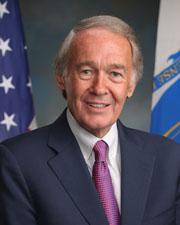 Rep. Edward J. Markey (D-MA)
Description
Amendment prohibits funds in the bill from being used in contravention of certain laws enacted or regulations promulgated to implement the UN Contravention Against Torture and Other Cruel, Inhuman or Degrading Treatment or Punishment.
Legislative Activity
Stay on top of the latest movement without scrolling through every action
Amendment agreed to Committee of the Whole
March 16, 2005 • 11:19 AM
View full timeline
Amendment agreed to Committee of the Whole
March 16, 2005 • 11:19 AM
Roll call votes on amendments in House
March 16, 2005 • 11:19 AM
House amendment agreed to: On agreeing to the Markey amendment (A017) Agreed to by recorded vote: 420 - 2, 3 Present (Roll no. 75).
March 16, 2005 • 11:19 AM
On agreeing to the Markey amendment (A017) Agreed to by recorded vote: 420 - 2, 3 Present (Roll no. 75).
March 16, 2005 • 11:19 AM
House amendment offered
March 15, 2005
House amendment offered/reported by : Amendment (A017) offered by Mr. Markey.(consideration: CR H1496-1497; text: CR H1496)
March 15, 2005 • 6:32 PM
Amendment (A017) offered by Mr. Markey. (consideration: CR H1496-1497; text: CR H1496)
March 15, 2005 • 6:32 PM
Votes
1 roll call on this amendment
Text
Offered
EMERGENCY SUPPLEMENTAL APPROPRIATIONS ACT FOR DEFENSE, THE GLOBAL WAR
ON TERROR, AND TSUNAMI RELIEF, 2005

The SPEAKER pro tempore (Mr. Pearce). Pursuant to House Resolution
151 and rule XVIII, the Chair declares the House in the Committee of
the Whole House on the State of the Union for the further consideration
of the bill, H.R. 1268.

{time}  1810

In the Committee of the Whole

Accordingly, the House resolved itself into the Committee of the
Whole House on the State of the Union for the further consideration of
the bill (H.R. 1268) making emergency supplemental appropriations for
the fiscal year ending September 30, 2005, and for other purposes, with
Mr. Gilchrest (Acting Chairman) in the chair.
The Clerk read the title of the bill.
The Acting CHAIRMAN. When the Committee of the Whole House rose
earlier today, the bill had been read through page 72, line 17.
Pursuant to the order of House today, no further amendment to the
bill may be offered except:
Pro forma amendments offered at any point by the chairman and ranking
minority member of the Committee on Appropriations or their designees
for the purpose of debate;
Amendment 4, which shall be debatable for 20 minutes;
An amendment by Mr. Markey regarding combat pay;
An amendment by Mr. Markey regarding torture;
An amendment by Mr. Weiner regarding funds to the Palestinian
Authority, which shall be debatable for 20 minutes;
An amendment by Mr. Obey regarding intelligence;
An amendment by Mr. Filner regarding veterans hiring preference for
reconstruction of Iraq; and
An amendment by Ms. Velazquez regarding small business.
Each amendment may be offered only by the Member designated in the
order of the House or a designee, or the Member who caused it to be
printed in the Record or a designee, shall be considered only in the
order designated in the order of the House, except in the case of pro
forma amendments; shall be considered as read, shall not be subject to
an amendment, except that the chairman and ranking minority member of
the Committee on Appropriations may offer one pro forma amendment for
purpose of debate; and shall not be subject to a demand for division of
the question.
Except as otherwise specified, each amendment shall be debatable for
10 minutes, equally divided and controlled by the proponent and an
opponent.
It is now in order to consider amendment No. 4 by the gentleman from
California (Mr. Lantos).

[[Page H1491]]

Amendment No. 4 Offered by Mr. Lantos

Mr. LANTOS. Mr. Chairman, I offer an amendment.
The Acting CHAIRMAN. The Clerk will designate the amendment.
The text of the amendment is as follows:

Amendment No. 4 offered by Mr. Lantos:
Add at the end (before the short title) the following new
title:

TITLE VII--HOPE AT HOME ACT

SEC. 701. SHORT TITLE.

This title may be cited as the ``Help Our Patriotic
Employers at Helping Our Military Employees Act'' or the
``HOPE at HOME Act''.

SEC. 702. NONREDUCTION IN PAY WHILE FEDERAL EMPLOYEE IS
SERVING ON ACTIVE DUTY IN A RESERVE COMPONENT
OF THE UNIFORMED SERVICES.

(a) In General.--Subchapter IV of chapter 55 of title 5,
United States Code, is amended by adding at the end the
following new section:

``Sec. 5538. Nonreduction in pay while serving on active duty
in a reserve component

``(a) An employee who is also a member of a reserve
component and is absent from a position of employment with
the Federal Government under a call or order to serve on
active duty for a period of more than 30 days shall be
entitled to receive, for each pay period described in
subsection (b), an amount equal to the difference (if any)
between--
``(1) the amount of civilian basic pay that would otherwise
have been payable to the employee for such pay period if the
employee's civilian employment with the Government had not
been interrupted by the service on active duty; and
``(2) the amount of military compensation that is payable
to the employee for the service on active duty and is
allocable to such pay period.
``(b)(1) Amounts under this section shall be payable with
respect to each pay period (which would otherwise apply if
the employee's civilian employment had not been interrupted)
that occurs--
``(A) while the employee serves on active duty for a period
of more than 30 days;
``(B) while the employee is hospitalized for, or
convalescing from, an illness or injury incurred in, or
aggravated during, the performance of such active duty; or
``(C) during the 14-day period beginning at the end of such
active duty or the end of the period referred to in
subparagraph (B).
``(2) Paragraph (1) shall not apply with respect to a pay
period for which the employee receives civilian basic pay
(including by taking any annual, military, or other paid
leave) to which the employee is entitled by virtue of the
employee's civilian employment with the Government.
``(c) Any amount payable under this section to an employee
shall be paid--
``(1) by the employing agency of the employee;
``(2) from the appropriations or fund that would be used to
pay the employee if the employee were in a pay status; and
``(3) to the extent practicable, at the same time and in
the same manner as would civilian basic pay if the employee's
civilian employment had not been interrupted.
``(d) In consultation with Secretary of Defense, the Office
of Personnel Management shall prescribe such regulations as
may be necessary to carry out this section.
``(e) In consultation with the Office of Personnel
Management, the head of each employing agency shall prescribe
procedures to ensure that the rights under this section apply
to the employees of such agency. In consultation with the
Office of Personnel Management, the Administrator of the
Federal Aviation Administration shall prescribe procedures to
ensure that the rights under this section apply to the
employees of that agency.
``(f) In this section:
``(1) The terms `active duty for a period of more than 30
days', `member', and `reserve component' have the meanings
given such terms in section 101 of title 37.
``(2) The term `civilian basic pay', with respect to an
employee, includes any amount payable under section 5304 of
this title or under such other law providing for the
compensation of the employee by the employing agency for work
performed.
``(3) The term `employing agency', as used with respect to
an employee entitled to any payments under this section,
means the agency with respect to which the employee has
reemployment rights under chapter 43 of title 38. The term
`agency' has the meaning given such term in subparagraph (C)
of section 2302(a)(2) of this title, except that the term
includes Government corporations and agencies excluded by
clause (i) or (ii) of such subparagraph.
``(4) The term `military compensation' has the meaning
given the term `pay' in section 101(21) of title 37, except
that the term includes allowances under chapter 7 of such
title.''.
(b) Clerical Amendment.--The table of sections at the
beginning of chapter 55 of title 5, is amended by inserting
after the item relating to section 5537 the following new
item:

``5538. Nonreduction in pay while serving on active duty in a reserve
component.''.

(c) Application of Amendment.--Section 5538 of title 5,
United States Code, as added by subsection (a), shall apply
with respect to pay periods (as described in subsection (b)
of such section) beginning on or after the date of the
enactment of this Act.

SEC. 703. ACTIVE-DUTY RESERVE COMPONENT EMPLOYEE CREDIT ADDED
TO GENERAL BUSINESS CREDIT.

(a) Addition of Credit.--Subpart D of part IV of subchapter
A of chapter 1 of the Internal Revenue Code of 1986 (relating
to business-related credits) is amended by adding at the end
the following new section:

``SEC. 45J. ACTIVE-DUTY RESERVE COMPONENT EMPLOYEE CREDIT.

``(a) General Rule.--For purposes of section 38, the Ready
Reserve-National Guard employee credit determined under this
section for any taxable year with respect to each Ready
Reserve-National Guard employee of an employer is an amount
equal to the lesser of--
``(1) 50 percent of the actual compensation amount paid
with respect to such Ready Reserve-National Guard employee
for such taxable year while the employee is absent from
employment for a reason described in subsection (b); or
``(2) $30,000.
``(b) Covered Pay Periods.--Subsection (a) shall apply with
respect to a Ready Reserve-National Guard employee--
``(1) while the employee serves on active duty for a period
of more than 30 days;
``(2) while the employee is hospitalized for, or
convalescing from, an illness or injury incurred in, or
aggravated during, the performance of such active duty; or
``(3) during the 14-day period beginning at the end of such
active duty or the end of the period referred to in
subparagraph (B).
``(c) Limitation.--No credit shall be allowed under
subsection (a) with respect to a Ready Reserve-National Guard
employee on any day on which the employee was not scheduled
to work (for a reason other than such service on active duty)
and ordinarily would not have worked.
``(d) Portion of Credit Refundable.--
``(1) In general.--In the case of an employer described in
paragraph (2), the aggregate credits allowed to a taxpayer
under subpart C shall be increased by the lesser of--
``(A) the credit which would be allowed under this section
without regard to this subsection and the limitation under
section 38(c), or
``(B) the amount by which the aggregate amount of credits
allowed by this subpart (determined without regard to this
subsection) would increase if the limitation imposed by
section 38(c) for any taxable year were increased by the
amount of employer payroll taxes imposed on the taxpayer
during the calendar year in which the taxable year begins.

The amount of the credit allowed under this subsection shall
not be treated as a credit allowed under this subpart and
shall reduce the amount of the credit otherwise allowable
under subsection (a) without regard to section 38(c).
``(2) Employer described.--An employer is described in this
paragraph if the employer is--
``(A) an organization exempt from tax under this chapter,
``(B) any State or political subdivision thereof, the
District of Columbia, any possession of the United States, or
any agency or instrumentality of any of the foregoing, or
``(C) any Indian tribal government (within the meaning of
section 7871) or any agency or instrumentality thereof.
``(3) Employer payroll taxes.--For purposes of this
subsection--
``(A) In general.--The term `employer payroll taxes' means
the taxes imposed by--
``(i) section 3111(b), and
``(ii) sections 3211(a) and 3221(a) (determined at a rate
equal to the rate under section 3111(b)).
``(B) Special rule.--A rule similar to the rule of section
24(d)(2)(C) shall apply for purposes of subparagraph (A).
``(e) Definitions.--In this section--
``(1) The terms `active duty for a period of more than 30
days', `member', and `reserve component' have the meanings
given such terms in section 101 of title 37, United States
Code.
``(2) The term `compensation' means any remuneration for
employment, whether in cash or in kind, which is paid or
incurred by a taxpayer and which is deductible from the
taxpayer's gross income under section 162(a)(1).
``(3) The term `Ready Reserve-National Guard employee' with
respect to an employer, means an employee of the employer who
is also a member of a reserve component during a taxable
year.''.
(b) Credit to Be Part of General Business Credit.--
Subsection (b) of section 38 of such Code (relating to
general business credit) is amended by striking ``plus'' at
the end of paragraph (18), by striking the period at the end
of paragraph (19) and inserting ``, plus'', and by adding at
the end the following new paragraph:
``(20) the active-duty reserve component employee credit
determined under section 45J(a).''.
(c) Conforming Amendment.--
(1) Paragraph (2) of section 1324(b) of title 31, United
States Code, is amended by inserting ``or 45J'' after
``section 35''.
(2) The table of sections for subpart D of part IV of
subchapter A of chapter 1 of the Internal Revenue Code of
1986 is amended by inserting after the item relating to
section 45I the following new item:

[[Page H1492]]

``Sec. 45J. Active-duty reserve component employee credit.''.

(d) Effective Date.--The amendments made by this section
shall apply to taxable years beginning after December 31,
2004.

SEC. 704. DIFFERENTIAL WAGE PAYMENTS.

(a) Income Tax Withholding.--Section 3401 of the Internal
Revenue Code of 1986 (relating to definitions) is amended by
adding at the end the following new subsection:
``(i) Differential Wage Payments to Active Duty Members of
the Uniformed Services.--
``(1) In general.--For purposes of subsection (a), any
differential wage payment shall be treated as a payment of
wages by the employer to the employee.
``(2) Differential wage payment.--For purposes of paragraph
(1), the term `differential wage payment' means any payment
which--
``(A) is made by an employer to an individual with respect
to any period during which the individual is performing
service in the uniformed services while on active duty for a
period of more than 30 days, and
``(B) represents all or a portion of the wages the
individual would have received from the employer if the
individual were performing service for the employer.''.
(b) Treatment of Differential Wage Payments for Retirement
Plan Purposes.--
(1) Pension plans.--
(A) In general.--Section 414(u) of such Code (relating to
special rules relating to veterans' reemployment rights under
USERRA) is amended by adding at the end the following new
paragraph:
``(11) Treatment of differential wage payments.--
``(A) In general.--Except as provided in this paragraph,
for purposes of applying this title to a retirement plan to
which this subsection applies--
``(i) an individual receiving a differential wage payment
shall be treated as an employee of the employer making the
payment,
``(ii) the differential wage payment shall be treated as
compensation, and
``(iii) the plan shall not be treated as failing to meet
the requirements of any provision described in paragraph
(1)(C) by reason of any contribution which is based on the
differential wage payment.
``(B) Special rule for distributions.--
``(i) In general.--Notwithstanding subparagraph (A)(i), for
purposes of section 401(k)(2)(B)(i)(I), 403(b)(7)(A)(ii),
403(b)(11)(A), or 457(d)(1)(A)(ii), an individual shall be
treated as having been severed from employment during any
period the individual is performing service in the uniformed
services described in section 3401(i)(2)(A).
``(ii) Limitation.--If an individual elects to receive a
distribution by reason of clause (i), the plan shall provide
that the individual may not make an elective deferral or
employee contribution during the 6-month period beginning on
the date of the distribution.
``(C) Nondiscrimination requirement.--Subparagraph (A)(iii)
shall apply only if all employees of an employer performing
service in the uniformed services described in section
3401(i)(2)(A) are entitled to receive differential wage
payments on reasonably equivalent terms and, if eligible to
participate in a retirement plan maintained by the employer,
to make contributions based on the payments . For purposes of
applying this subparagraph, the provisions of paragraphs (3),
(4), and (5), of section 410(b) shall apply.
``(D) Differential wage payment.--For purposes of this
paragraph, the term `differential wage payment' has the
meaning given such term by section 3401(i)(2).''.
(B) Conforming amendment.--The heading for section 414(u)
of such Code is amended by inserting ``and to Differential
Wage Payments to Members on Active Duty'' after ``USERRA''.
(2) Differential wage payments treated as compensation for
individual retirement plans.--Section 219(f)(1) of such Code
(defining compensation) is amended by adding at the end the
following new sentence: ``The term `compensation' includes
any differential wage payment (as defined in section
3401(i)(2))''.
(c) Effective Dates.--
(1) Subsection (a).--The amendments made by subsection (a)
shall apply to remuneration paid after December 31, 2004.
(2) Subsection (b).--The amendments made by subsection (b)
shall apply to plan years beginning after December 31, 2004.
(d) Provisions Relating to Plan Amendments.--
(1) In general.--If this subsection applies to any plan or
annuity contract amendment--
(A) such plan or contract shall be treated as being
operated in accordance with the terms of the plan or contract
during the period described in paragraph (2)(B)(i), and
(B) except as provided by the Secretary of the Treasury,
such plan shall not fail to meet the requirements of the
Internal Revenue Code of 1986 or the Employee Retirement
Income Security Act of 1974 by reason of such amendment.
(2) Amendments to which section applies.--
(A) In general.--This subsection shall apply to any
amendment to any plan or annuity contract which is made--
(i) pursuant to any amendment made by this section, and
(ii) on or before the last day of the first plan year
beginning on or after January 1, 2007.
(B) Conditions.--This subsection shall not apply to any
plan or annuity contract amendment unless--
(i) during the period beginning on the date the amendment
described in subparagraph (A)(i) takes effect and ending on
the date described in subparagraph (A)(ii) (or, if earlier,
the date the plan or contract amendment is adopted), the plan
or contract is operated as if such plan or contract amendment
were in effect; and
(ii) such plan or contract amendment applies retroactively
for such period.

SEC. 705. CREDIT FOR INCOME DIFFERENTIAL FOR EMPLOYMENT OF
ACTIVATED MILITARY RESERVIST AND REPLACEMENT
PERSONNEL.

(a) In General.--Subpart B of part IV of subchapter A of
chapter 1 of the Internal Revenue Code of 1986 (relating to
foreign tax credit, etc.) is amended by adding at the end the
following new section:

``SEC. 30B. EMPLOYER WAGE CREDIT FOR ACTIVATED MILITARY
RESERVISTS.

``(a) General Rule.--There shall be allowed as a credit
against the tax imposed by this chapter for the taxable year
an amount equal to the sum of--
``(1) in the case of a small business employer, the
employment credit with respect to all qualified employees and
qualified replacement employees of the taxpayer, plus
``(2) the self-employment credit of a qualified self-
employed taxpayer.
``(b) Employment Credit.--For purposes of this section--
``(1) Qualified employees.--
``(A) In general.--The employment credit with respect to a
qualified employee of the taxpayer for any taxable year is
equal to 50 percent of the lesser of--
``(i) the excess, if any, of--

``(I) the qualified employee's average daily qualified
compensation for the taxable year, over
``(II) the average daily military pay and allowances
received by the qualified employee during the taxable year,
while participating in qualified reserve component duty to
the exclusion of the qualified employee's normal employment
duties for the number of days the qualified employee
participates in qualified reserve component duty during the
taxable year, including time spent in a travel status, or

``(ii) $30,000.

The employment credit, with respect to all qualified
employees, is equal to the sum of the employment credits for
each qualified employee under this subsection.
``(B) Average daily qualified compensation and average
daily military pay and allowances.--As used with respect to a
qualified employee--
``(i) the term `average daily qualified compensation' means
the qualified compensation of the qualified employee for the
taxable year divided by the difference between--

``(I) 365, and
``(II) the number of days the qualified employee
participates in qualified reserve component duty during the
taxable year, including time spent in a travel status, and

``(ii) the term `average daily military pay and allowances'
means--

``(I) the amount paid to the qualified employee during the
taxable year as military pay and allowances on account of the
qualified employee's participation in qualified reserve
component duty, divided by
``(II) the total number of days the qualified employee
participates in qualified reserve component duty, including
time spent in travel status.

``(C) Qualified compensation.--When used with respect to
the compensation paid or that would have been paid to a
qualified employee for any period during which the qualified
employee participates in qualified reserve component duty,
the term `qualified compensation' means--
``(i) compensation which is normally contingent on the
qualified employee's presence for work and which would be
deductible from the taxpayer's gross income under section
162(a)(1) if the qualified employee were present and
receiving such compensation,
``(ii) compensation which is not characterized by the
taxpayer as vacation or holiday pay, or as sick leave or pay,
or as any other form of pay for a nonspecific leave of
absence, and with respect to which the number of days the
qualified employee participates in qualified reserve
component duty does not result in any reduction in the amount
of vacation time, sick leave, or other nonspecific leave
previously credited to or earned by the qualified employee,
and
``(iii) group health plan costs (if any) with respect to
the qualified employee.
``(D) Qualified employee.--The term `qualified employee'
means a person who--
``(i) has been an employee of the taxpayer for the 31-day
period immediately preceding the period during which the
employee participates in qualified reserve component duty,
and
``(ii) is a member of the Ready Reserve of a reserve
component of an Armed Force of the United States as defined
in sections 10142 and 10101 of title 10, United States Code.
``(2) Qualified replacement employees.--
``(A) In general.--The employment credit with respect to a
qualified replacement employee of the taxpayer for any
taxable year is equal to 50 percent of the lesser of--
``(i) the individual's qualified compensation attributable
to service rendered as a qualified replacement employee, or

[[Page H1493]]

``(ii) $12,000.

The employment credit, with respect to all qualified
replacement employees, is equal to the sum of the employment
credits for each qualified replacement employee under this
subsection.
``(B) Qualified compensation.--When used with respect to
the compensation paid to a qualified replacement employee,
the term `qualified compensation' means--
``(i) compensation which is normally contingent on the
qualified replacement employee's presence for work and which
is deductible from the taxpayer's gross income under section
162(a)(1),
``(ii) compensation which is not characterized by the
taxpayer as vacation or holiday pay, or as sick leave or pay,
or as any other form of pay for a nonspecific leave of
absence, and
``(iii) group health plan costs (if any) with respect to
the qualified replacement employee.
``(C) Qualified replacement employee.--The term `qualified
replacement employee' means an individual who is hired to
replace a qualified employee or a qualified self-employed
taxpayer, but only with respect to the period during which
such employee or taxpayer participates in qualified reserve
component duty, including time spent in travel status.
``(D) Failure to make differential wage payments.--The
employment credit with respect to a qualified replacement
employee of the taxpayer for any taxable year shall be zero
if the taxpayer does not make all differential wage payments
(as defined by section 3401(i)(2)) for the taxable year to
the qualified employee or the qualified self-employed
taxpayer (as the case may be) who is replaced by the
qualified replacement employee.
``(c) Self-Employment Credit.--For purposes of this
section--
``(1) In general.--The self-employment credit of a
qualified self-employed taxpayer for any taxable year is
equal to 50 percent of the lesser of--
``(A) the excess, if any, of--
``(i) the self-employed taxpayer's average daily self-
employment income for the taxable year over
``(ii) the average daily military pay and allowances
received by the taxpayer during the taxable year, while
participating in qualified reserve component duty to the
exclusion of the taxpayer's normal self-employment duties for
the number of days the taxpayer participates in qualified
reserve component duty during the taxable year, including
time spent in a travel status, or
``(B) $30,000.
``(2) Average daily self-employment income and average
daily military pay and allowances.--As used with respect to a
self-employed taxpayer--
``(A) the term `average daily self-employment income' means
the self-employment income (as defined in section 1402(b)) of
the taxpayer for the taxable year plus the amount paid for
insurance which constitutes medical care for the taxpayer for
such year (within the meaning of section 162(l)) divided by
the difference between--
``(i) 365, and
``(ii) the number of days the taxpayer participates in
qualified reserve component duty during the taxable year,
including time spent in a travel status, and
``(B) the term `average daily military pay and allowances'
means--
``(i) the amount paid to the taxpayer during the taxable
year as military pay and allowances on account of the
taxpayer's participation in qualified reserve component duty,
divided by
``(ii) the total number of days the taxpayer participates
in qualified reserve component duty, including time spent in
travel status.
``(3) Qualified self-employed taxpayer.--The term
`qualified self-employed taxpayer' means a taxpayer who--
``(A) has net earnings from self-employment (as defined in
section 1402(a)) for the taxable year, and
``(B) is a member of the Ready Reserve of a reserve
component of an Armed Force of the United States.
``(d) Credit in Addition to Deduction.--The employment
credit or the self-employment credit provided in this section
is in addition to any deduction otherwise allowable with
respect to compensation actually paid to a qualified
employee, qualified replacement employee, or qualified self-
employed taxpayer during any period the qualified employee or
qualified self-employed taxpayer participates in qualified
reserve component duty to the exclusion of normal employment
duties.
``(e) Coordination With Other Credits.--The amount of
credit otherwise allowable under sections 51(a) and 1396(a)
with respect to any employee shall be reduced by the credit
allowed by this section with respect to such employee.
``(f) Limitations.--
``(1) Application with other credits.--The credit allowed
under subsection (a) for any taxable year shall not exceed
the excess (if any) of--
``(A) the regular tax for the taxable year reduced by the
sum of the credits allowable under subpart A and sections 27,
29, and 30, over
``(B) the tentative minimum tax for the taxable year.
``(2) Disallowance for failure to comply with employment or
reemployment rights of members of the reserve components of
the armed forces of the united states.--No credit shall be
allowed under subsection (a) to a taxpayer for--
``(A) any taxable year, beginning after the date of the
enactment of this section, in which the taxpayer is under a
final order, judgment, or other process issued or required by
a district court of the United States under section 4323 of
title 38 of the United States Code with respect to a
violation of chapter 43 of such title, and
``(B) the 2 succeeding taxable years.
``(3) Disallowance with respect to persons ordered to
active duty for training.--No credit shall be allowed under
subsection (a) to a taxpayer with respect to any period by
taking into account any person who is called or ordered to
active duty for any of the following types of duty:
``(A) Active duty for training under any provision of title
10, United States Code.
``(B) Training at encampments, maneuvers, outdoor target
practice, or other exercises under chapter 5 of title 32,
United States Code.
``(C) Full-time National Guard duty, as defined in section
101(d)(5) of title 10, United States Code.
``(g) General Definitions and Special Rules.--For purposes
of this section--
``(1) Small business employer.--
``(A) In general.--The term `small business employer'
means, with respect to any taxable year, any employer who
employed an average of 50 or fewer employees on business days
during such taxable year.
``(B) Controlled groups.--For purposes of subparagraph (A),
all persons treated as a single employer under subsection
(b), (c), (m), or (o) of section 414 shall be treated as a
single employer.
``(2) Military pay and allowances.--The term `military pay'
means pay as that term is defined in section 101(21) of title
37, United States Code, and the term `allowances' means the
allowances payable to a member of the Armed Forces of the
United States under chapter 7 of that title.
``(3) Qualified reserve component duty.--The term
`qualified reserve component duty' includes only active duty
performed, as designated in the reservist's military orders,
in support of a contingency operation as defined in section
101(a)(13) of title 10, United States Code.
``(4) Special rule for certain manufacturers.--
``(A) In general.--In the case of any qualified
manufacturer, paragraph (1)(A) of this subsection shall be
applied by substituting `100' for `50'.
``(B) Qualified manufacturer.--For purposes of this
paragraph, the term `qualified manufacturer' means any person
if--
``(i) the primary business of such person is classified in
sector 31, 32, or 33 of the North American Industrial
Classification System, and
``(ii) all of such person's facilities which are used for
production in such business are located in the United States.
``(5) Carryback and carryforward allowed.--
``(A) In general.--If the credit allowable under subsection
(a) for a taxable year exceeds the amount of the limitation
under subsection (f)(1) for such taxable year (in this
paragraph referred to as the `unused credit year'), such
excess shall be a credit carryback to each of the 3 taxable
years preceding the unused credit year and a credit
carryforward to each of the 20 taxable years following the
unused credit year.
``(B) Rules.--Rules similar to the rules of section 39
shall apply with respect to the credit carryback and credit
carryforward under subparagraph (A).
``(6) Certain rules to apply.--Rules similar to the rules
of subsections (c), (d), and (e) of section 52 shall
apply.''.
(b) Conforming Amendment.--Section 55(c)(2) of the Internal
Revenue Code of 1986 is amended by inserting ``30B(f)(1),''
after ``30(b)(3),''.
(c) Clerical Amendment.--The table of sections for subpart
B of part IV of subchapter A of chapter 1 of the Internal
Revenue Code of 1986 is amended by adding at the end of 30A
the following new item:

``Sec. 30B. Employer wage credit for activated military reservists.''.

(d) Effective Date.--The amendments made by this section
shall apply to taxable years beginning after December 31,
2004.

SEC. 706. EMPLOYER CONTRIBUTIONS TO IRAS OF CERTAIN MEMBERS
OF THE UNIFORMED SERVICES.

(a) In General.--Section 3121 of the Internal Revenue Code
of 1986 is amended by adding at the end the following:
``(z) Employer Contributions to IRAs of Certain Members of
the Uniformed Services.--Nothing in any paragraph of
subsection (a) (other than paragraphs (1) and (5)) shall
exclude from the term `wages' any employer payment on behalf
of an individual to an individual retirement plan if such
payment is made by the employer to such plan with respect to
any period during which the individual is performing service
in the uniformed services while on active duty for a period
of more than 30 days.''.
(b) Railroad Retirement.--Subsection (e) of Section 3231 of
such Code is amended by adding at the end the following new
paragraph:
``(1) Employer contributions to iras of certain members of
the uniformed services.--Nothing in any paragraph of this
subsection (other than paragraph (2)) shall exclude from the
term `compensation' any amount described in section
3121(z).''.

[[Page H1494]]

(c) Federal Unemployment Tax.--Section 3306 of such Code is
amended by adding at the end the following:
``(u) Employer Contributions to IRAs of Certain Members of
the Uniformed Services.--Nothing in any paragraph of
subsection (b) (other than paragraphs (1) and (5)) shall
exclude from the term `wages' any employer payment on behalf
of an individual to an individual retirement plan if such
payment is made by the employer to such plan with respect to
any period during which the individual is performing service
in the uniformed services while on active duty for a period
of more than 30 days.''.
(d) Withholding.--Section 3401(a) of such Code is amended
by adding at the end the following new subsection:
``(u) Employer Contributions to IRAs of Certain Members of
the Uniformed Services.--Nothing in any paragraph of
subsection (a) (other than paragraph (12)) shall exclude from
the term `wages' any amount described in section 3121(z).''.
(e) Effective Date.--The amendments made by this section
shall apply to amounts paid after December 31, 2004.

SEC. 707. EMERGENCY DESIGNATION.

Amounts provided pursuant to the amendments made by this
title are designated as an emergency requirement pursuant to
section 402 of the conference report to accompany S. Con.
Res. 95 (108th Congress).

Mr. LEWIS of California. Mr. Chairman, I reserve a point of order on
the gentleman's amendment.
The Acting CHAIRMAN. A point of order on the amendment is reserved.
Pursuant to the order of the House today, the gentleman from
California (Mr. Lantos) and a Member opposed each will control 10
minutes.
The Chair recognizes the gentleman from California (Mr. Lantos).
Mr. LANTOS. Mr. Chairman, I yield myself such time as I may consume.
Mr. Chairman, when our country is at war, and every single Member of
this body is in agreement that we are at war, the first rule should be
to aim for equality of sacrifice. Now we know we cannot achieve that
because the people who are making the sacrifice are our men and women
in the field, and particularly the ones who are wounded or lose their
lives. But there is no earthly reason why we should impose on our
fighting men and women in Iraq the additional burden of financial
hardship for their families.

{time}  1815

Some 72,000 members of our National Guard and our Reserves are
suffering huge reductions in their income as a result of having been
activated for military duty. My amendment would rectify this outrageous
inequity. The 72,000 families which find themselves with a member of
the family in the war zone are losing an average of $36,000 a year, the
difference between their civilian pay and their military pay.
My amendment, by providing tax benefits to their employers, would
rectify this singularly inequitable and unjust state of affairs. It
would ensure financial security to the families of our fighting men and
women. This issue was brought to my attention by individuals in my
congressional district, firemen, policemen, teachers and others who
have to undergo this financial sacrifice on top of exposing themselves
to physical danger 24 hours a day. It is unconscionable that we make
these brave citizens choose between their duty to our country and the
welfare of their families.
I urge all of my colleagues to support this modest amendment which at
least in a financial sense relieves some of the hardship on our
military families. It also would deal with the problem of recruitment
and retention in the National Guard and Reserves. Under present
circumstances, we are losing large numbers of individuals who if they
did not have this extra financial burden would enlist or re-enlist. I
urge all of my colleagues to support this amendment.
Mr. Chairman, I am happy to yield 1 minute to the gentleman from
Virginia (Mr. Wolf).
Mr. WOLF. Mr. Chairman, I am a cosponsor of the bill. I understand
this amendment is going to be withdrawn. It is subject to a point of
order. It is very good. Some of our Guardsmen and Reservists have been
called up twice. We are having a problem in this region whereby they
are really going through a difficult, difficult time. I think the
gentleman's amendment is a very good amendment. At the appropriate
time, I hope it passes and becomes law.
Mr. LANTOS. Mr. Chairman, I yield 2 minutes to my friend from
Massachusetts (Mr. McGovern).
Mr. McGOVERN. Mr. Chairman, I thank my good friend and colleague from
California for yielding me this time and for his incredible leadership
on this important issue.
Mr. Chairman, a couple of weeks ago, six Navy Reserve Seabees
prepared to depart from Worcester, Massachusetts, and 10 Marine Corps
Reservists based in Worcester received their activation notice. They
are now waiting to learn when and where they will be deployed. These
are all too familiar events to every Member of this Chamber.
The citizen soldiers of the Guard and Reserves are fully integrated,
vital components of our military force. They are essential to the
success of any military operation, and they have fought and they have
died wearing the uniform of this country. We are asking these brave men
and women and their families, their employers and their communities to
make tremendous sacrifices for us and our country. Many of them are now
deployed for 12 or 18 months rather than the traditional 6 months.
This amendment recognizes this reality. We know that for every
Guardsman and Reservist serving abroad, there is a family at home also
making sacrifices for their country. Many of these families face a loss
of income when their military pay is significantly less than their
civilian pay. This pay gap forces Guard and Reservist families to pinch
pennies to make ends meet. It is unacceptable that families of
activated Guard and Reservists have to worry about how to put food on
the table or pay the mortgage. It is unacceptable to force those
families to run up their credit cards, take on extra jobs, work
overtime, use their savings, borrow money, go on welfare or rely on
food banks. Our soldiers have enough to worry about when they are
deployed overseas. They should not have to worry about their family
finances.
This amendment will help these families. It will reward those
employers who are already doing the right thing by keeping their
activated employees on payroll, and it will provide an incentive to
other employers to join them in this patriotic service. It will also
require the Federal Government to match the patriotism of the private
sector by closing the pay gap for activated Federal employees. I am
very proud to say that the State governments of Massachusetts and New
Hampshire already make up the pay gap for State employees who have been
activated by the Guard and Reserves. The Federal Government should
follow their lead.
By passing this amendment, Congress can provide hope to families and
communities here at home. I also hope it will provide some peace of
mind to our brave men and women now serving in harm's way.
Mr. LANTOS. Mr. Chairman, I yield 2 minutes to my good friend, the
gentleman from Connecticut (Mr. Shays).
Mr. SHAYS. Mr. Chairman, I thank the gentleman from California (Mr.
Lantos) for yielding me this time. I am a strong cosponsor of this
amendment. I join with the gentleman from Virginia and the gentleman
from Massachusetts. He is right on target. Employers who are paying the
difference in salary and helping Reservists and National Guardsmen be
able to do their duty and not suffer financial consequences should have
some compensation, or partial compensation. This bill does that. The
Federal Government should make up the difference when you have Federal
employees who are being called up and those who are self-employed
should be able to hire someone to take their place to keep the business
going. There are a number of people who are self-employed who cannot
keep the business going.
We have so many other problems with those in the National Guard and
Reserve. They are not paid quickly what they should be when they are in
Iraq. There are a lot of problems. We have had problems with equipment.
My gosh, we need to deal with this.
If there is a point of order on this bill, the gentleman from
California has served an important role in notifying this Congress that
his bill is in this Chamber, and is before a committee. We need to have
a hearing on it. I believe it is going to pass, and I think it is going
to pass on a bipartisan basis sometime because it is sorely needed. I
thank the gentleman for introducing this.

[[Page H1495]]

Mr. LANTOS. I thank my friend from Connecticut.
Mr. Chairman, I reserve the balance of my time.
Mr. LEWIS of California. Mr. Chairman, I rise very hesitantly to
oppose the gentleman's amendment.
The Acting CHAIRMAN (Mr. Gilchrest). The gentleman from California
(Mr. Lewis) is recognized for 10 minutes.
Mr. LEWIS of California. Mr. Chairman, I yield myself such time as I
may consume.
The gentleman has an amendment that is very worthy of consideration.
We all know we have a difficulty with the Guard and Reserve and how
they maintain their level of income that they have had or what they had
before they were called up. There are incredible problems here. But the
gentleman's amendment involves the authorizing arena, and we are doing
everything we can in this new appropriations committee to work with our
authorizing committees to try to avoid doing their work.
The gentleman, for example, is one of the truly outstanding members
of the Committee on International Relations. He plays a phenomenal role
in this arena. In the past, I have been very disconcerted with Foreign
Ops getting into that area, that is the authorizing piece. We are
trying to avoid that sort of work by the appropriations committee. In
this case we are talking about major authorizing circumstances that
affect the Committee on Ways and Means, affect the housing committee
potentially, certainly the Committee on Armed Services. So I am very
hesitant about that movement in the arena that is an authorizing
responsibility.
Because of that, I am opposing the amendment.
Mr. Chairman, I reserve the balance of my time.
Mr. LANTOS. Mr. Chairman, I yield myself such time as I may consume.
I appreciate my good friend's comments. He is a great leader of the
Congress and a great leader in California.
This issue will not go away. I understand that there are technical
objections at this moment to my amendment. But the justice and fairness
of this amendment speaks for itself. It is an outrage to have men and
women called up for active duty and have their families lose their
homes and not be able to put food on the table because of the
differential between their previous civilian pay and their current
military pay. There is no Member in this body who can approve of such a
circumstance.
It is my intention to revisit and have this body revisit my
legislation; but at the present time, I respectfully request unanimous
consent to withdraw my amendment.
The Acting CHAIRMAN. Without objection, the amendment is withdrawn.
There was no objection.
The Acting CHAIRMAN. It is now in order to consider the second
amendment listed in the order of the House of today.

Amendment Offered by Mr. Markey

Mr. MARKEY. Mr. Chairman, I offer an amendment.
The Acting CHAIRMAN. The Clerk will designate the amendment.
The text of the amendment is as follows:

Amendment offered by Mr. Markey:
At the end of the bill (before the short title), insert the
following new title:

TITLE VII--ADDITIONAL GENERAL PROVISIONS

Sec. 701. (a) None of the funds made available in this Act
may be used to implement any regulation reducing the total
amount of monthly military pay for a member of the Armed
Forces who is wounded or otherwise injured while assigned to
duty in an area for which special pay is available under
section 310 of title 37, United States Code, below the amount
in effect for the member when the member was wounded or
otherwise injured.
(b) The limitation in subsection (a) shall cease to apply
with respect to a member described in that subsection as of
the end of the first month during which any of the following
occurs:
(1) The member is found to be physically able to perform
the duties of the member's office, grade, rank, or rating.
(2) The member is discharged or separated from the Armed
Forces.
(3) The member dies.

Mr. LEWIS of California. Mr. Chairman, I reserve a point of order on
the gentleman's amendment.
The Acting CHAIRMAN. A point of order is reserved.
Pursuant to the order of the House of today, the gentleman from
Massachusetts (Mr. Markey) and a Member opposed each will control 5
minutes.
The Chair recognizes the gentleman from Massachusetts (Mr. Markey).
Mr. MARKEY. Mr. Chairman, I yield myself such time as I may consume.
As preposterous as it sounds, today members of the armed services who
are wounded in battle have their pay cut the moment they are evacuated
from a combat zone after they have been wounded and they are fighting
for their lives in a hospital bed. A pay cut is not, in my opinion, my
idea of support; and it most assuredly is not what the wounded soldier
thinks of as support.
The amendment I am proposing is intended to remedy this situation. It
places a restriction on the supplemental appropriations funds to end
this unjust practice. Essentially, this amendment will no longer allow
the special hazardous duty pay to be cut for our wounded troops when
they are evacuated from a combat zone. Instead, the special pay rates
that they were receiving prior to their injury will be continued while
the member recovers in a hospital. These pay rates will continue until
the soldier either is reassigned to duty, discharged from service, or
succumbs to his or her wounds.
The cut in pay comes at the exact moment when severely wounded
members are evacuated for medical treatment and leave the combat zone.
I know this because my constituent, James Crosby, was wounded last year
in Iraq.
On March 18, 2004, James was wounded by enemy fire while riding on
the back of a U.S. military vehicle in Iraq. A rocket fired at the
vehicle killed the driver and injured two Marines, including James. A
piece of shrapnel pierced James's side and penetrated his intestines
and spine, paralyzing him from the waist down. James's pay was
immediately cut when he was transported out of the combat zone in Iraq.
He was discharged from the hospital in August and from active duty in
September. Unfortunately, James's story is the story of many more
soldiers serving in Iraq and Afghanistan, struck down by hostile fire
or mortars or improvised explosive devices.
Soldiers who would never leave a wounded comrade unattended on the
battlefield suddenly find themselves in a hospital bed fighting for
their lives. They have been separated from their unit, they are
distressed about their condition, about what it means for the future,
about suddenly being ripped from their unit by a mortar shell, about
being helicoptered away from a very special group that had promised to
protect each other come hell or high water. Now they are in the hands
of people who made no such pledge, and the first thing the soldier
learns is that his pay is being cut. I cannot imagine a more
unambiguous way of telling that soldier that he or she is not as
valuable today as yesterday.
Some have said to me, these are special pays for special purposes. We
cannot be extending them indefinitely. There are two answers to this:
one, my amendment would not extend them indefinitely, only to the point
where the soldier has recovered and been reassigned or discharged; and,
two, the Congress has already recognized the principle that combat pay
should be extended to the wounded soldier in the hospital. It did so in
the case of the combat pay tax exclusion which exempts combat pay from
taxation until the soldier is discharged from the hospital.
I would hope that this body would accept my ``do no harm'' amendment.

{time}  1830

Mr. Chairman, I reserve the balance of my time.
Mr. LEWIS of California. Mr. Chairman, I rise to claim the time in
opposition to the amendment.
The Acting CHAIRMAN (Mr. Gilchrest). The gentleman from California
(Mr. Lewis) is recognized for 5 minutes.
Mr. MURTHA. Mr. Chairman, will the gentleman yield?
Mr. LEWIS of California. I yield to the gentleman from Pennsylvania.
Mr. MURTHA. Mr. Chairman, the gentleman from Florida (Chairman Young)
and I discussed this amendment. We last year talked about it, but we
have gotten serious this year about it because he brought to our
attention a real problem, not on this individual but of these folks
coming out of Iraq

[[Page H1496]]

who are losing this money at a critical time in their lives. We are
going to look at it and try to figure out what we can do. With the
chairman's cooperation, hopefully we will be able to figure something
out to take care of these people, the ones who are severely wounded
because financially they are really hurting when they come out of
there. He and I have both seen them at the hospitals. We know how hurt
they are, but when they lose their financial resources, it hurts the
families. So if the gentleman will withdraw his amendment, we will do
everything we can to work this thing out.
Mr. LEWIS of California. Mr. Chairman, reclaiming my time, let me
respond by saying that the gentleman from Florida (Mr. Young) had to
leave this evening. Because of that he is not here to interact
regarding this amendment. I understand that what the gentleman from
Pennsylvania has described is exactly my chairman's feeling. And,
frankly, I appreciate the gentleman's willingness to cooperate.
Mr. MARKEY. Mr. Chairman, will the gentleman yield?
Mr. LEWIS of California. I yield to the gentleman from Massachusetts.
Mr. MARKEY. Mr. Chairman, I thank both gentlemen for their
statements. It is my intention to try to work in a way in which we can
find a way to guarantee that once someone has been shot and taken out
of the combat zone that their benefits are not cut. The irony is of
course if they are shot but not seriously wounded and they stay in
Iraq, they do not lose any of these benefits. It is only the most
serious who lose the benefits. I would like to be able to work with
them.
Mr. Chairman, I ask unanimous consent to withdraw the amendment.
The Acting CHAIRMAN. Is there objection to the request of the
gentleman from Massachusetts?
There was no objection.
The Acting CHAIRMAN. It is now in order to consider the third
amendment from the gentleman from Massachusetts (Mr. Markey).

Amendment Offered by Mr. Markey

Mr. MARKEY. Mr. Chairman, I offer an amendment.
The Acting CHAIRMAN. The Clerk will designate the amendment.
The text of the amendment is as follows:

Amendment offered by Mr. Markey:
Page 72, after line 17, insert the following:

TITLE VII--ADDITIONAL GENERAL PROVISIONS

Sec. 7001. None of the funds made available in this Act may
be used in contravention of the following laws enacted or
regulations promulgated to implement the United Nations
Convention Against Torture and Other Cruel, Inhuman or
Degrading Treatment or Punishment (done at New York on
December 10, 1984):
(1) Section 2340A of title 18, United States Code.
(2) Section 2242 of the Foreign Affairs Reform and
Restructuring Act of1998 (division G of Public Law 105-277;
112 Stat. 2681-822; 8 U.S.C. 1231 note) and any regulations
prescribed thereto, including regulations under part 208 of
title 8, Code of Federal Regulations, and part 95 of title
22, Code of Federal Regulations.

The Acting CHAIRMAN. Pursuant to the order of the House today, the
gentleman from Massachusetts (Mr. Markey) and a Member opposed each
will control 5 minutes.
The Chair recognizes the gentleman from Massachusetts (Mr. Markey).
Mr. MARKEY. Mr. Chairman, I yield myself 1 minute.
The amendment I am offering today simply reaffirms the United States'
commitment to the Convention against Torture. The United States signed
this treaty under President Reagan, and the Senate ratified it in 1994.
Despite our commitments under this treaty and the recent statements
made by the administration emphasizing that the United States is
emphatically and unambiguously against the use of torture, reports keep
growing of the United States sending detainees to countries where they
are likely to face torture, including countries notorious for human
rights violations, including Syria, Uzbekistan, and Egypt and other
countries. My amendment will just restate existing law so that this
body is put on record taking the position which Ronald Reagan did in
his negotiation of the Convention against Torture.
Mr. Chairman, I reserve the balance of my time.
Mr. LEWIS of California. Mr. Chairman, I ask unanimous consent to
claim the time.
The Acting CHAIRMAN. Is there objection to the request of the
gentleman from California?
There was no objection.
The Acting CHAIRMAN. The gentleman from California (Mr. Lewis) is
recognized for 5 minutes.
Mr. LEWIS of California. Mr. Chairman, I yield myself such time as I
may consume.
I took this position on this amendment because I do not want to rise
in opposition to the amendment. As the gentleman suggested, it is a
restatement of existing law. I think it is appropriate for us to
consider it in that connection, and, further, I would like to say to
the gentleman that the Chair is inclined to accept the amendment.
Mr. Chairman, I reserve the balance of my time.
Mr. MARKEY. Mr. Chairman, I yield 2 minutes to the gentleman from
Oregon (Mr. Blumenauer), the cosponsor of this amendment.
Mr. BLUMENAUER. Mr. Chairman, I thank the gentleman for yielding me
this time.
I appreciate his leadership on this issue, and I appreciate the
chairman of the committee being willing to accept the restatement of
existing law.
But I think it is important for this Chamber to acknowledge that
there is a scandal brewing. The news accounts make clear what our
committee system has not yet focused in on. There are, in fact,
numerous cases that are being brought forth of torture and the
horrendous practice of our sending people to other countries after we
have kidnapped them knowing that these suspects are going to be
tortured.
There are reasons that we are against torture. There are moral
reasons. There are legal reasons. There is the fact that it is not a
good way to get intelligence information and that it taints any legal
proceedings that we may have against suspected terrorists. There is a
selfish reason, that it puts Americans at risk. We do not want to show
the world that it is acceptable treatment of civilians or people in the
military that they be tortured.
We have been trying to get Congress to do its job in oversight in
this area, to investigate, so that we do not have to rely on
journalists and nongovernment organizations but that Congress steps
forward, that we understand and are held accountable. Until Congress
takes its responsibilities seriously to investigate what is going on
and, if there are abuses, to hold people accountable, I join my
colleague in supporting this amendment because it is the best we can
do.
But I want to make clear that it is not good enough and that every
Member of this assembly ought to be clamoring for the appropriate
committees to exercise appropriate oversight to make sure that we are
not complicit in the abuse and terror and torture of other people.
Mr. MARKEY. Mr. Chairman, I yield myself the balance of my time.
Throughout United States history, we have been the world's moral and
political leader. One of the things that really strengthened our hand
at Nuremberg was that in turn the Germans could not make a case that we
had engaged in the kind of human rights violations that the Nazis had
engaged in. It made the trials at Nuremberg a moral statement about the
United States and our view of the way in which war should be conducted.
This debate that we are having is intended on ensuring that we
restate that commitment. We cannot have Uzbekistan, we cannot have
Syria dictating what the standards are for our country. We cannot take
prisoners within our control, put them on planes, and have them flown
to other countries where whatever standards exist in that country
dictate whether or not and what kind of torture will be engaged in.
The statement which we are making today on the floor will be to once
again reassert this Congress' complete commitment to the Convention
against Torture. I think it is important at this time that we once
again make this point because the rest of the world looks to us as the
moral leader and it is important for us in act as well as in word to
uphold that standard.
Mr. Chairman, I yield back the balance of my time.
Mr. WOLF. Mr. Chairman, I yield back the balance of my time.

[[Page H1497]]

The Acting CHAIRMAN. The question is on the amendment offered by the
gentleman from Massachusetts (Mr. Markey).
The question was taken; and the Acting Chairman announced that the
ayes appeared to have it.
Mr. MARKEY. Mr. Chairman, I demand a recorded vote, and pending that,
I make the point of order that a quorum is not present.
The Acting CHAIRMAN. Pursuant to clause 6 of rule XVIII, further
proceedings on the amendment offered by the gentleman from
Massachusetts (Mr. Markey) will be postponed.
The point of no quorum is considered withdrawn.
Mr. OBEY. Mr. Chairman, I move to strike the last word.
Mr. Chairman, I am simply filibustering here for the moment until we
get the next person here to offer an amendment, and I hope that he
arrives quickly. But let me simply say what we are trying to do is to
proceed as far as we can in finishing this bill tonight, and we hope
that we have the cooperation of every Member so we can do that.
There may be at least one amendment that has to go over until
tomorrow along with final passage, but we would hope to minimize that
so that we take up as little time as possible tomorrow with this bill.
For anyone who is interested, that is what we are trying to do tonight.
Mr. Chairman, I yield to the gentleman from Pennsylvania (Mr. Murtha)
who wants to brag a bit on his section of the bill.
Mr. MURTHA. Mr. Chairman, I just want to talk about how good the
Defense portion of this bill is, and I was disappointed we lost the
embassy vote, and hopefully we will be able to repair that. But let me
say that the members of the Defense Subcommittee went out to bases all
over the country. We have all kinds of shortages. We added $1.8 billion
to this bill to take care of things like spare parts, small arms,
mortars, things that one would expect that they would have. We not only
have shortages overseas and equipment that is worn out overseas, we
have Reserve and National Guard units that are actually going to the
major bases like Fort Bragg and having to rehabilitate that equipment.
One of the reasons we put in $7 billion for rehabilitation of
equipment was because of what we found out in the field. We think it is
absolutely essential to get the Army back in shape so that when these
units are called up they have the right equipment when they train, and
when they go overseas they have the right equipment.
So I would hope everybody would vote for this bill.
Mr. OBEY. Mr. Chairman, reclaiming my time, while the gentleman is
getting ready to proceed, let me make one other point with respect to
the Lantos amendment. We have done our best to expand benefits to
servicemen and women who have been killed in the line of duty. I think
there is still one gaping hole. For someone who is seriously injured in
Iraq or Afghanistan whose ability to obtain gainful employment may be
permanently impaired because of what happened to them in combat. I
think that we really need to think through how little this country does
for people in those situations. It just seems to me that especially
given the fact that we do not have a draft today and given the fact
that so many people go into the service in order to be able to save
some money so they can go to college, I think the sacrifice that people
are called upon to make falls very unevenly in this society, and we
have to do much more to see to it that those persons who do pay a major
price because they could not afford to go to college without first
going into service, for instance, I think that we need to do much more
to provide enhanced benefits for them and for their families and for
their children.
The Acting CHAIRMAN. It is now in order to consider the fourth
amendment listed in the order of the House of today.

Amendment Offered by Mr. Weiner

Mr. WEINER. Mr. Chairman, I offer an amendment.
The Acting CHAIRMAN. The Clerk will designate the amendment.
The text of the amendment is as follows:

Amendment offered by Mr. Weiner:
At the end of the bill (before the short title), insert the
following:

TITLE VII--ADDITIONAL GENERAL PROVISIONS

Sec. 7001. None of the funds made available in this Act may
be used for assistance to the Palestinian Authority or for
programs, projects, and activities in the West Bank or Gaza.

The Acting CHAIRMAN. Pursuant to the order of the House today, the
gentleman from New York and a Member opposed each will control 10
minutes.
The Chair recognizes the gentleman from New York (Mr. Weiner).
Mr. WEINER. Mr. Chairman, I yield myself such time as I may consume.
I thank the chairman of the subcommittee and the ranking member of
the full committee for stalling a bit while I prepared.
This amendment is very simple. It simply says that we should not
allocate at this moment in time any aid to the Palestinians.

{time}  1845

We have a history in this Congress of lurching forward at the first
sign of any optimistic sign, and I freely concede that this is such a
moment in the Middle East. We, the taxpayers, are the first to put
money on the barrel head: $612 million up to now, including $20 million
in direct aid to Prime Minister Mahmoud Abbas. If the name sounds
familiar, it is because the $20 million was not offered and proposed
during this administration of Mahmoud Abbas. It was the last time. That
money went in direct aid, and it is now gone.
We have a tendency all too often to want to wish things to go well in
the negotiations between the Palestinians and the Israelis, and the way
we express that wish as taxpayers is by essentially giving money and
more money and more money.
There is no doubt in my mind that we in the United States have an
important role to play here in the peace that hopefully will ensue. But
what we should be doing is offering money based on performance, money
based on transparency, money based on democratization, money based on
furtherance of U.S. interests.
We are offering this money now, and it is tied to nothing. There does
not have to be compliance with the road map. There does not have to be
compliance with past agreements. There does not have to be any type of
democratic reform, and there does not have to be any type of
transparency.
You know, I am not the first to say this. The IMF acknowledged in
2004 that $900 million, $900 million in funds that went to the
Palestinian Authority were not unaccounted for.
Now, the funds we provide do not go to the Palestinian Authority
except for the $20 million I referenced earlier. They go to NGOs in the
region. But I will argue to you that just the same way we would not
fund an NGO in Iran or North Korea until we started to see some
dramatic change in behavior, we should not do it here either.
What we should do is we should pass my amendment. The committee
should return to the administration and say look, we want to be
participants in this peace process as well. Here is what we will do.
Rather than $200 million now at the front end, we will say $25 million.
At the end of the year, if you have complied with the road map towards
peace that the President has laid out, we will put in another 50 or
another $75 million. If after a year and a half there seems to have
been 100 percent effort to cut down on violence, not the nonstop
falling of Kassam rockets that is going on now, then maybe we do
another $50 million or another $75 million, essentially using the money
as a reward for the type of activity that the United States and our
taxpayers want.
Now, no one could argue that today, despite the changes in the Middle
East, ones that, frankly, have me optimistic, no one could argue that
Mahmoud Abbas has shown 100 percent effort to end violence. No one
could argue that the Palestinians now have transparent government. No
one could argue first and foremost that they can show us where the $900
million that the IMF said had been absconded, where it has gone.
I am not saying do not provide aid. I am saying that this is the
least beneficial way to do it. You give them $200 million. If tomorrow
we learn that the Palestinian administration has not lived up to its
commitments, then we will have lost the money.

[[Page H1498]]

Now, let me conclude before I reserve my time with this thought. You
know, this is not the first time we have been in this pattern. We can
learn a little something. At the Wye River Accord we put in money. Wye
River went away. The Israelis walked away from it because the
Palestinians violated it. Our money was still going.
The Oslo Accords the same way. U.S. dollars were going long after the
Oslo Accords had run aground. The Tenet plan, the Mitchell plan, the
road map to peace. You know, we forget that $20 million in direct aid
went to the Palestinians and the same exact arguments that my good
friend, the gentleman from Arizona, is going to make here today were
made then. These are optimistic times. There is a new administration.
We need to foster, we need to encourage it. I do not dispute that. The
only question is do we put the money on the barrel head first, or do we
wait till later.
And one final point. You know, the Israeli position I do not really
know on this issue. And frankly I do not care. Lobbying organizations
on behalf of the peace process, that is not what this is about. This is
about taxpayer dollars and how they are most wisely spent.
Mr. Chairman, I reserve the balance of my time.
Mr. KOLBE. Mr. Chairman, I rise to claim the time in opposition
The Acting CHAIRMAN (Mr. Gilchrest). The gentleman from Arizona (Mr.
Kolbe) is recognized for 10 minutes.
Mr. KOLBE. Mr. Chairman, I yield myself 4 minutes. Mr. Chairman, I do
rise in very strong opposition to this amendment. I cannot think of an
amendment that could send a worse message to the Middle East. For the
first time in years, we have prospects, real prospects for peace in the
Middle East with the change in the leadership of the Palestinian
Authority. We are still a long ways away from having a lasting peace or
a just peace. But we have the best prospects we have had in years, some
would say even in decades.
We have a responsibility to do everything we can to help Mr. Abbas,
Prime Minister Abbas secure stability in his territories. I cannot
think that anybody in this body would want to look back a few months or
a few years from now knowing that we had adopted an amendment like this
which would absolutely cut off at the knees the opportunity to bring
peace to the Middle East. But make no mistake about it, that is exactly
what the amendment offered by the gentleman from New York would do.
But I am glad in a way that this amendment is offered because it
gives me an opportunity to describe some of the points in our bill that
I think make it such an excellent approach to the issue of assistance
to the Palestinians. I know there is a lot of concern, as our
subcommittee has had, about how this money has been spent over the
years, that none of our assistance be used for subversive purposes to
support terrorist activities.
To protect against such a thing as that happening, USAID is already
required to certify that its contractors are not affiliated with any
terrorist organization and our assistance is not being used in any way
that might support terrorism. The committee recommendation strengthens
those protections by requiring the GAO, the General Accounting Office,
to audit our assistance program, our assistance program. And that audit
is going to help us make sure that these protections work properly.
But we have gone even further than that. We have set aside $5 million
to be paid for an audit of the Palestinian Authority's financial system
by an independent, internationally recognized accounting firm so we can
begin to get to the bottom of how some of these monies are being spent,
have been spent in the past.
And I know that the finance minister of the Palestinian Authority is
very anxious to have this independent audit because he believes it will
reveal where some of the money has been misallocated in the past by Mr.
Arafat and some of his people.
Finance Minister Fayad has already been working with the World Bank
to develop a list of organizations that might be used to do this
accounting. The committee's recommendation directly addresses the
concerns of those who do not want money to go directly to the
Palestinian Authority. It prohibits any of the money, as the gentleman
did say, prohibits any of the money from going directly to the
Palestinian Authority. But it also addresses, I think, the concerns
that we have about taking away the flexibility of the administration to
provide funding to Prime Minister Abbas's government as the
administration did for the Arafat regime. To do that would send
precisely the wrong message at this point.
The compromise that we have in the language preserves the
administration's ability to provide a waiver for the $75 million that
is in the fiscal year 2005 legislation, but removes the Presidential
waiver authority to do so with this $200 million provided in this
legislation.
I say to my colleagues, this would harm the people of the Palestinian
territories, but it goes even further than that. It harms the chances
for the people of Israel to have a lasting peace. I am not sure if the
gentleman from New York is aware that this would cut out $50 million
that goes to strengthen the border crossing points for Israel, because
it prohibits funding for any programs or activities in the West Bank or
Gaza. It would cut out the money we are providing here to strengthen
the border crossings between Israel and the Gaza and the West Bank.
It is exactly the wrong signal that we would be sending. It would
erode the hope that we have for a stable peace in that region. I
certainly urge my colleagues to vote against this amendment and to
defeat it soundly.
Mr. Chairman, I yield 2 minutes to the gentlewoman from New York
(Mrs. Lowey).
Mrs. LOWEY. Mr. Chairman, I thank the chairman for yielding me time,
and I rise in strong opposition to the amendment.
I understand many of the points that my colleague and friend from New
York was making, but I think it is clear from the comments of the
gentleman from Arizona (Chairman Kolbe) on how we crafted the bill that
I think we address almost every point the gentleman is making.
I feel very strongly that we have to take this opportunity to work
with the Palestinians and work with the Israelis to try and move
towards a peaceful settlement. We have heard Rabin say, ``You don't
make peace with your friends; you make it with your enemies.'' I can
remember Barak, and he would say to us very clearly, ``Trust, but
verify.''
I think there is clear language in this bill that verifies what we
are doing in order to provide the assistance to the West Bank and Gaza
program.
I have felt that the prospects for peace in this region and for the
ultimate security of Israel depend on bringing economic stability to
the West Bank and Gaza. Just to repeat, these additional funds will be
used for infrastructure development, democracy and government, health
care and education; and as my chairman mentioned, $50 million of the
$200 million is for improving the flow of goods and people into Israel
with appropriate safeguards. The funds will be spent with Israel's
direct input to facilitate both access and security between the West
Bank and Gaza.
The safeguards were mentioned by the gentleman from Arizona (Chairman
Kolbe). Language has been included calling for a GAO audit of the $200
million. The committee has specified how the funds should be spent,
required a financial plan that we will approve prior to funds moving
forward; and in addition, an amendment was adopted in committee which
calls for a separate report on progress on dismantling terrorism, an
audit of the Palestinian Authority, and a prohibition, a clear
prohibition, on direct funding of the Palestinian Authority with this
$200 million.
So, again, I would express my strong opposition. I do think it
signals exactly the wrong message if we want to cut off these funds. I
hope that my colleagues in the Congress will support the gentleman from
Arizona (Chairman Kolbe) in opposing this amendment, and I hope we can
move forward and make sure that all the dollars are audited
appropriately and that we can take this step to work with both the
Palestinians and the Israelis in moving the peace process forward.
Mr. WEINER. Mr. Chairman, I yield myself such time as I may consume.

[[Page H1499]]

Let me first of all say to the gentleman, the chairman of the
subcommittee, there are no two stronger supporters of Israel in this
Congress; but I have to tell you, I can practically write your remarks,
because I heard them after Wye River, I heard them after Oslo, I heard
them after the Tenet Plan, I heard them after the Mitchell Plan, and I
heard them after the road map. And I will summarize them this way:
there is never a good time to change our policies on funding the
Palestinians.
It is always an optimistic time when we begin these negotiations. I
do not deny it. And I am not saying do not engage in them. I am saying
let us use the U.S. tax dollars in a smarter way. Let us say, why give
them $200 million and then say, okay, go off and do the best you can.
Why not say give them 10 percent now, 50 percent later on. We
incentivize other activities in Congress. Why not do that one?
By the way, I know all about the USAID restrictions. I know about
them, because you wrote them last time, and they were very, very tough.
They said you cannot get a single dime, a single shekel, unless you
agree that you will not support terrorism. You know what? They would
not sign. A lot of these NGOs would not sign that document until the
gentlewoman from New York went back and said, well, you better believe
you are going to have to sign it, and then the negotiations began.
As to the notion that this one adds, well, now we are not just going
to have restrictions, but we are going to have an audit, I have to tell
you it is kind of like saying let us invest in Enron because there is a
strong audit going on.
Maybe the smarter thing to do would be to say this: let us have the
audit. Let us see if the new finance chairman is up to snuff. Let us
see if Mahmoud Abbas really can delivery, and then give them more and
more incentives to continue to comply with their agreements.
Why is that so counter to what we do around here? We demand that type
of accountability everywhere else. It is not as if they have a good
record. Every single time we have invested, we have looked back and
said, well, that is another $100 million; oh, that is another $50
million.
Well, we were so optimistic. I am optimistic too, but it is deja vu
all over again.

{time}  1900

I am not saying do not be engaged. I am not saying do not have peace.
I am not saying do not negotiate. I am not saying do not make
concessions. I am not saying stay on the sideline and do not do
anything. I am saying if we are going to spend United States tax
dollars, let us not keep engaging in the same activity over and over
again expecting to get a different result.
Mrs. LOWEY. Mr. Chairman, will the gentleman yield?
Mr. WEINER. I yield to the gentlewoman from New York.
Mrs. LOWEY. Mr. Chairman, I would just like to stress again, we know
that this is tough. We know this is not easy or there would have been
peace a long time ago.
And if Sharon is willing to work with Abu Mazen and if he is willing
to work with the Palestinian Authority, we feel we have to take risks
for peace but not risks for just throwing the dollars. If you look at
this bill carefully, and I know the gentleman has, there are very clear
auditing guidelines. There is a clear requirement for a plan.
It is not as if we are going to say, here, here is the $200 million
because we respect the fact that there have been many failures in the
past. But in my judgment, if the Israelis want peace, if Sharon is
willing to work with the Palestinians and take these risks, then we
should be willing to do it with appropriate accountability and
auditing.
Mr. WEINER. Reclaiming my time, first let me say, Sharon has his
constituents, Abu Mazen has his and I have mine. My constituents,
frankly, it is their tax dollars we are investing here. This is not
Israeli policy we are talking about. They have to pursue it the best
they can and hopefully it works out this time. I am not talking about
the Palestinian allocation.
I am talking about the fact that I have heard this song before. I
have heard we have tough restrictions. As the gentlewoman knows, we
thought we wrote the perfect ones in the bill last time, requiring them
to sign. We will certify not a single dollar goes to a terrorist
organization. We had to fight kicking and screaming to get these
organizations to sign these documents. It is our money. And all I am
saying is let us stage it. Let us phase it in. Let us make it based on
incentives. It did not work any other way.
By the way, I point out every negotiation that the Palestinians and
Israelis have engaged in, that is the way they did it. In Oslo they did
not say, here is everything. In Oslo they say, you do A, we will do B.
You do C, we will do D. What do we do? We walk up to the plate. We are
so eager for peace, and we all are, we are so eager to show that we are
committed to it, we put the dollars out there without my
incentivization on it.
I think that nothing is more symbolic. With all the talk about the
audit and the USAID restrictions, nothing is more symbolic. The
headlines will read tomorrow, Congress allocates $200 million to
Palestinian projects.
I think what it says is, Congress allocates $25 million and says $175
million are there if things go well.
Mr. Chairman, I reserve the balance of my time.
Mr. KOLBE. Mr. Chairman, I yield 1\1/2\ minutes to the gentlewoman
from California (Mrs. Capps).
Mrs. CAPPS. Mr. Chairman, I rise in strong opposition to this
amendment.
This amendment will only hurt the Palestinian people. It will harm
Israel security and undermine our own national interests.
The Arafat era is over. In contrast to the partners in the previous
agreements, Palestinians have a new president, Mahmoud Abbas, who was
chosen in a free and fair election. His government has instituted
excellent financial reforms. His security efforts are paying off and
have gained the praise of Prime Minister Sharon.
We must strengthen and empower the new Palestinian government.
President Bush has requested this aid package to help fund a number of
critical humanitarian and infrastructure projects. Israel's safety and
security will only be assured if the new Palestinian leadership gains
credibility with its own people, and that is why the Israelis support
this aid package.
That is why many pro-Israeli-American groups support it as well. In
fact, a number of national Jewish organizations would like Congress
even to put fewer restrictions on the aid bill than the bill contains.
I urge a ``no'' vote on the Weiner amendment.
Mr. KOLBE. Mr. Chairman, I reserve the balance of my time. The
committee has the right to close.
Mr. WEINER. Mr. Chairman, I yield myself such time as I may consume.
We have had this conversation about process here, but let us not
ignore the realities on the ground. As much as Abu Mazen has said many
of the right things, let us remember what happened in those elections
in Gaza, 77 of 118 seats were won by Hamas, 77 of 118 seats were won by
Hamas.
Now why is that significant? Democracy, sometimes you get what you
want, sometimes you do not. But let us remember what Hamas has said.
They have publicly announced they will not abide by any ceasefire
negotiated by Abu Mazen. Now, Abu Mazen is the one that we have
referred to here. Mahmoud Abbas is who we have referred to here as the
new partner for peace.
The gentlewoman who just spoke has said the Arafat era is over. The
Abu Mazen period has just begun. Let us not make our investment a
foolish one.
Mr. KOLBE. Mr. Chairman, I yield myself the balance of my time.
Mr. Chairman, let me use the closing moments to correct a couple of
things that were said. There was a statement made by the gentleman from
New York (Mr. Weiner) and I do appreciate his statements about the
support that the gentlewoman from New York (Mrs. Lowey), my ranking
member, and I have given over the years to Israel because we certainly
strongly support the Israeli state in not only its creation but its
protection and its security.
The gentleman made the statement that we would not think of funding
NGOs in some countries, the gentleman said something like Iran, and I
would

[[Page H1500]]

add we do have NGOs that we work with in countries like Iran and
Zimbabwe and other countries like that. We work with NGOs because there
we can be sure the money is not flowing into the government. That is
exactly what we are doing here with funds for the Palestinian people.
This money goes to projects. It does not go to the Palestinian
Authority.
The gentleman made the statement, he said we should provide these
funds incrementally. We should spend the money in increments. But the
fact of the matter is the gentleman's amendments would not allow you to
do that. The gentleman's amendment says none of the funds may be spent
in the West Bank or in the Gaza area. So even if they did comply with
all of the requirements, none of the money still could be spent. So
there is no way that you could possibly reword this.
Yes, the gentleman is right that we have had high hopes after other
discussions after the Oslo agreement and after the Wye Accords. We had
high hopes at that time and they have been dashed. But the money that
we allocated at that time, none of that was ever given to the
Palestinian Authority. It was given in terms of projects of what we
wanted to do to try to provide the carrot. It may not have worked but
it was not money that was lost either.
So the gentleman is simply saying that we have less confidence in
this new Palestinian Authority leadership than we did in the leadership
of Arafat. That certainly makes no sense whatsoever. For us to deny any
of these funds to be used to help bring about a peaceful settlement now
would be absolutely the wrong thing for us to do.
I would urge my colleagues to reject this amendment. We have good
reporting requirements in the legislation. We have restrictions on how
funding can be used. It cannot go to the Palestinian Authority. It goes
for projects. It goes through NGOs. But we want to send the right
signal, the right signal to Israel, and the right signal to
Palestinians, that we believe together they can work to achieve a
peaceful settlement. Then the U.S. we will be there as a partner in
achieving this peaceful settlement.
I urge my colleagues to reject this amendment so that peace may have
a chance of coming to the Middle East.
Mr. Chairman, I yield back the balance of my time.
The Acting CHAIRMAN (Mr. Gilchrest). The question is on the amendment
offered by the gentleman from New York (Mr. Weiner).
The amendment was rejected.
Mr. LEWIS of California. Mr. Chairman, I move to strike the last
word.
Mr. Chairman, we have made considerable progress on this bill today.
There has been great cooperation on both sides of the aisle. I must say
the membership has been very positive in their discussion and very
helpful to one another.
As the chairman may know, there are dinners that are going on tonight
that affect both sides of the aisle and there are still a number of
Members who would like to participate in same. Because of those
circumstances and because we can finish our work very easily tomorrow
morning, there are minor amendments to be expeditiously handled.
Mr. Chairman, I move the Committee do now rise.
The motion was agreed to.
Accordingly, the Committee rose; and the Speaker pro tempore (Mr.
Knollenberg) having assumed the chair, Mr. Gilchrest, Acting Chairman
of the Committee of the Whole House on the State of the Union, reported
that that Committee, having had under consideration the bill (H.R.
1268) making emergency supplemental appropriations for the fiscal year
ending September 30, 2005, and for other purposes, had come to no
resolution thereon.

____________________