An amendment in the nature of a substitute numbered 4 printed in House Report 109-19 to balance the budget by 2012; reverse mandatory cuts likely to fall on Medicaid, veterans, student loans, and other services; provide increased funding for important domestic priorities, such as education, veterans, community and regional development, and the environment; and impose a pay-as-you-go (PAYGO) rule, which protects the Social Security Trust Fund surplus by requiring that any mandatory spending increases or tax cuts be fully offset.
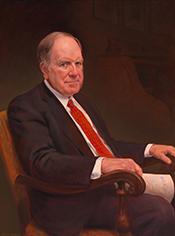 Rep. John M. Spratt, Jr. (D-SC)
Description
Amendment in the nature of a substitute printed in House Report 109-19 and numbered 4 was offered as the Democratic substitute.
Legislative Activity
Stay on top of the latest movement without scrolling through every action
House amendment offered
March 17, 2005
View full timeline
House amendment offered
March 17, 2005
House amendment not agreed to: On agreeing to the Spratt amendment (A004) Failed by recorded vote: 165 - 264, 1 Present (Roll no. 87).
March 17, 2005 • 3:12 PM
Roll call votes on amendments in House
March 17, 2005 • 3:12 PM
Amendment failed in Committee of the Whole
March 17, 2005 • 3:12 PM
House amendment offered/reported by : Amendment (A004) in the nature of a substitute offered by Mr. Spratt.(consideration: CR H1654-1665; text: CR H1654-1659)
March 17, 2005 • 1:48 PM
Amendment (A004) in the nature of a substitute offered by Mr. Spratt. (consideration: CR H1654-1665; text: CR H1654-1659)
March 17, 2005 • 1:48 PM
On agreeing to the Spratt amendment (A004) Failed by recorded vote: 165 - 264, 1 Present (Roll no. 87).
March 17, 2005 • 3:12 PM
Votes
1 roll call on this amendment
Text
Offered
CONCURRENT RESOLUTION ON THE BUDGET FOR FISCAL YEAR 2006

The SPEAKER pro tempore. Pursuant to House Resolution 154 and rule
XVIII, the Chair declares the House in the Committee of the Whole House
on the State of the Union for the further consideration of the
concurrent resolution, H. Con. Res. 95.

{time}  1159

In the Committee of the Whole

Accordingly, the House resolved itself into the Committee of the
Whole House on the State of the Union for the further consideration of
the concurrent resolution (H. Con. Res. 95) establishing the
congressional budget for the United States Government for fiscal year
2006, revising appropriate budgetary levels for fiscal year 2005, and
setting forth appropriate budgetary levels for fiscal years 2007
through 2010, with Mr. Gillmor (Acting Chairman) in the chair.
The Clerk read the title of the concurrent resolution.
The Acting CHAIRMAN. When the Committee of the Whole rose earlier
today, amendment No. 2 printed in House Report 109-19, offered by the
gentleman from Texas (Mr. Hensarling), had been disposed of.
Pursuant to the order of the House of today, there shall be a final
period of general debate at the conclusion of consideration of the
concurrent resolution for amendment, which shall not exceed 10 minutes
equally divided and controlled by the chairman and ranking minority
member of the Committee on the Budget.
It is now in order to consider amendment No. 3 printed in House
Report 109-19.

Amendment No. 3 in the Nature of a Substitute Offered by Mr. Watt

Mr. WATT. Mr. Chairman, I offer an amendment in the nature of a
substitute.
The Acting CHAIRMAN. The Clerk will designate the amendment in the
nature of a substitute.
The text of the amendment in the nature of a substitute is as
follows:

Amendment No. 3 in the nature of a substitute offered by
Mr. Watt:
Strike all after the resolving clause and insert the
following:

SECTION 1. CONCURRENT RESOLUTION ON THE BUDGET FOR FISCAL
YEAR 2006.

The Congress declares that the concurrent resolution on the
budget for fiscal year 2006 is hereby established and that
the appropriate budgetary levels for fiscal years 2007
through 2010 are set forth.

TITLE I--RECOMMENDED LEVELS AND AMOUNTS

SEC. 101. RECOMMENDED LEVELS AND AMOUNTS.

The following budgetary levels are appropriate for each of
fiscal years 2006 through 2010:
(1) Federal revenues.--For purposes of the enforcement of
this resolution:
(A) The recommended levels of Federal revenues are as
follows:
Fiscal year 2006: $1,643,962,000,000.
Fiscal year 2007: $1,757,771,000,000.
Fiscal year 2008: $1,878,285,000,000.
Fiscal year 2009: $2,002,315,000,000.
Fiscal year 2010: $2,115,768,000,000.
(B) The amounts by which the aggregate levels of Federal
revenues should be increased are as follows:
Fiscal year 2006: $36,300,000,000.
Fiscal year 2007: $38,500,000,000.
Fiscal year 2008: $42,100,000,000.
Fiscal year 2009: $46,100,000,000.
Fiscal year 2010: $49,400,000,000.
(2) New budget authority.--For purposes of the enforcement
of this resolution, the appropriate levels of total new
budget authority are as follows:
Fiscal year 2006: $2,167,892,000,000.
Fiscal year 2007: $2,234,617,000,000.
Fiscal year 2008: $2,347,844,000,000.
Fiscal year 2009: $2,462,004,000,000.
Fiscal year 2010: $2,567,326,000,000.
(3) Budget outlays.--For purposes of the enforcement of
this resolution, the appropriate levels of total budget
outlays are as follows:
Fiscal year 2006: $2,173,159,000,000.
Fiscal year 2007: $2,227,030,000,000.
Fiscal year 2008: $2,333,346,000,000.
Fiscal year 2009: $2,439,718,000,000.
Fiscal year 2010: $2,545,019,000,000.
(4) Deficits (on-budget).--For purposes of the enforcement
of this resolution, the amounts of the deficits (on-budget)
are as follows:
Fiscal year 2006: $-529,197,000,000.
Fiscal year 2007: $-469,259,000,000.
Fiscal year 2008: $-455,061,000,000.
Fiscal year 2009: $-437,403,000,000.
Fiscal year 2010: $-429,251,000,000.
(5) Debt subject to limit.--Pursuant to section 301(a)(5)
of the Congressional Budget Act of 1974, the appropriate
levels of the public debt are as follows:
Fiscal year 2006: $8,602,000,000,000.
Fiscal year 2007: $9,188,000,000,000.
Fiscal year 2008: $9,767,000,000,000.
Fiscal year 2009: $10,333,000,000,000.
Fiscal year 2010: $10,896,000,000,000.
(6) Debt held by the public.--The appropriate levels of
debt held by the public are as follows:
Fiscal year 2006: $5,039,000,000,000.
Fiscal year 2007: $5,313,000,000,000.
Fiscal year 2008: $5,555,000,000,000.
Fiscal year 2009: $5,760,000,000,000.
Fiscal year 2010: $5,941,000,000,000.

SEC. 102. MAJOR FUNCTIONAL CATEGORIES.

The Congress determines and declares that the appropriate
levels of new budget authority and outlays for fiscal years
2006 through 2010 for each major functional category are:
(1) National Defense (050):
Fiscal year 2006:
(A) New budget authority, $434,862,000,000.
(B) Outlays, $471,148,000,000.
Fiscal year 2007:
(A) New budget authority, $444,650,000,000.
(B) Outlays, $437,735,000,000.
Fiscal year 2008:
(A) New budget authority, $455,521,000,000.
(B) Outlays, $450,234,000,000..
Fiscal year 2009:
(A) New budget authority, $466,677,000,000.
(B) Outlays, $460,789,000,000.
Fiscal year 2010:
(A) New budget authority, $478,016,000,000.
(B) Outlays, $471,926,000,000.
(2) International Affairs (150):
Fiscal year 2006:
(A) New budget authority, $32,718,000,000.
(B) Outlays, $35,571,000,000.
Fiscal year 2007:
(A) New budget authority, $34,580,000,000.
(B) Outlays, $33,231,000,000.
Fiscal year 2008:
(A) New budget authority, $35,281,000,000.
(B) Outlays, $32,424,000,000.
Fiscal year 2009:
(A) New budget authority, $35,984,000,000.
(B) Outlays, $32,560,000,000.
Fiscal year 2010:
(A) New budget authority, $36,706,000,000.
(B) Outlays, $32,686,000,000.
(3) General Science, Space, and Technology (250):
Fiscal year 2006:
(A) New budget authority, $25,235,000,000.
(B) Outlays, $24,149,000,000.
Fiscal year 2007:
(A) New budget authority, $25,670,000,000.
(B) Outlays, $25,040,000,000.
Fiscal year 2008:
(A) New budget authority, $26,203,000,000.
(B) Outlays, $25,512,000,000.
Fiscal year 2009:
(A) New budget authority, $26,727,000,000.
(B) Outlays, $26,019,000,000.
Fiscal year 2010:
(A) New budget authority, $27,256,000,000.
(B) Outlays, $26,532,000,000.
(4) Energy (270):
Fiscal year 2006:
(A) New budget authority, $3,147,000,000.
(B) Outlays, $2,027,000,000.
Fiscal year 2007:
(A) New budget authority, $2,971,000,000.
(B) Outlays, $1,479,000,000.
Fiscal year 2008:
(A) New budget authority, $3,031,000,000.
(B) Outlays, $1,113,000,000.
Fiscal year 2009:
(A) New budget authority, $2,811,000,000.
(B) Outlays, $1,352,000,000.
Fiscal year 2010:
(A) New budget authority, $2,747,000,000.
(B) Outlays, $1,451,000,000.
(5) Natural Resources and Environment (300):
Fiscal year 2006:
(A) New budget authority, $30,563,000,000.
(B) Outlays, $32,306,000,000.
Fiscal year 2007:
(A) New budget authority, $31,660,000,000.
(B) Outlays, $32,394,000,000.
Fiscal year 2008:
(A) New budget authority, $32,494,000,000.
(B) Outlays, $33,420,000,000.
Fiscal year 2009:
(A) New budget authority, $34,118,000,000.
(B) Outlays, $34,556,000,000.
Fiscal year 2010:
(A) New budget authority, $34,896,000,000.
(B) Outlays, $35,317,000,000.
(6) Agriculture (350):
Fiscal year 2006:
(A) New budget authority, $29,780,000,000.
(B) Outlays, $28,733,000,000.
Fiscal year 2007:
(A) New budget authority, $27,324,000,000.
(B) Outlays, $26,190,000,000.
Fiscal year 2008:
(A) New budget authority, $25,576,000,000.
(B) Outlays, $24,545,000,000.
Fiscal year 2009:
(A) New budget authority, $26,073,000,000.
(B) Outlays, $25,195,000,000.
Fiscal year 2010:
(A) New budget authority, $26,012,000,000.
(B) Outlays, $25,220,000,000.
(7) Commerce and Housing Credit (370):
Fiscal year 2006:
(A) New budget authority, $11,772,000,000.
(B) Outlays, $5,629,000,000.

[[Page H1642]]

Fiscal year 2007:
(A) New budget authority, $12,124,000,000.
(B) Outlays, $6,245,000,000.
Fiscal year 2008:
(A) New budget authority, $12,151,000,000.
(B) Outlays, $5,938,000,000.
Fiscal year 2009:
(A) New budget authority, $12,235,000,000.
(B) Outlays, $5,143,000,000.
Fiscal year 2010:
(A) New budget authority, $12,326,000,000.
(B) Outlays, $4,810,000,000.
(8) Transportation (400):
Fiscal year 2006:
(A) New budget authority, $70,157,000,000.
(B) Outlays, $70,455,000,000.
Fiscal year 2007:
(A) New budget authority, $70,638,000,000.
(B) Outlays, $72,176,000,000.
Fiscal year 2008:
(A) New budget authority, $70,911,000,000.
(B) Outlays, $73,730,000,000.
Fiscal year 2009:
(A) New budget authority, $71,556,000,000.
(B) Outlays, $74,668,000,000.
Fiscal year 2010:
(A) New budget authority, $72,180,000,000.
(B) Outlays, $75,619,000,000.
(9) Community and Regional Development (450):
Fiscal year 2006:
(A) New budget authority, $15,679,000,000.
(B) Outlays, $18,727,000,000.
Fiscal year 2007:
(A) New budget authority, $15,537,000,000.
(B) Outlays, $16,668,000,000.
Fiscal year 2008:
(A) New budget authority, $15,754,000,000.
(B) Outlays, $15,257,000,000.
Fiscal year 2009:
(A) New budget authority, $16,056,000,000.
(B) Outlays, $14,295,000,000.
Fiscal year 2010:
(A) New budget authority, $16,357,000,000.
(B) Outlays, $14,061,000,000.
(10) Education, Training, Employment, and Social Services
(500):
Fiscal year 2006:
(A) New budget authority, $115,878,000,000.
(B) Outlays, $100,398,000,000.
Fiscal year 2007:
(A) New budget authority, $117,983,000,000.
(B) Outlays, $112,710,000,000.
Fiscal year 2008:
(A) New budget authority, $120,075,000,000.
(B) Outlays, $116,968,000,000.
Fiscal year 2009:
(A) New budget authority, $122,075,000,000.
(B) Outlays, $119,556,000,000.
Fiscal year 2010:
(A) New budget authority, $124,711,000,000.
(B) Outlays, $121,907,000,000.
(11) Health (550):
Fiscal year 2006:
(A) New budget authority, $263,151,000,000.
(B) Outlays, $262,872,000,000.
Fiscal year 2007:
(A) New budget authority, $277,813,000,000.
(B) Outlays, $276,036,000,000.
Fiscal year 2008:
(A) New budget authority, $298,412,000,000.
(B) Outlays, $296,301,000,000.
Fiscal year 2009:
(A) New budget authority, $321,498,000,000.
(B) Outlays, $317,159,000,000.
Fiscal year 2010:
(A) New budget authority, $342,449,000,000.
(B) Outlays, $340,349,000,000.
(12) Medicare (570):
Fiscal year 2006:
(A) New budget authority, $331,181,000,000.
(B) Outlays, $330,944,000,000.
Fiscal year 2007:
(A) New budget authority, $372,132,000,000.
(B) Outlays, $372,353,000,000.
Fiscal year 2008:
(A) New budget authority, $395,766,000,000.
(B) Outlays, $395,759,000,000.
Fiscal year 2009:
(A) New budget authority, $420,916,000,000.
(B) Outlays, $420,450,000,000.
Fiscal year 2010:
(A) New budget authority, $449,089,000,000.
(B) Outlays, $449,346,000,000.
(13) Income Security (600):
Fiscal year 2006:
(A) New budget authority, $349,218,000,000.
(B) Outlays, $355,125,000,000.
Fiscal year 2007:
(A) New budget authority, $356,381,000,000.
(B) Outlays, $361,033,000,000.
Fiscal year 2008:
(A) New budget authority, $370,455,000,000.
(B) Outlays, $373,930,000,000.
Fiscal year 2009:
(A) New budget authority, $381,030,000,000.
(B) Outlays, $383,313,000,000.
Fiscal year 2010:
(A) New budget authority, $392,106,000,000.
(B) Outlays, $393,720,000,000.
(14) Social Security (650):
Fiscal year 2006:
(A) New budget authority, $15,891,000,000.
(B) Outlays, $15,891,000,000.
Fiscal year 2007:
(A) New budget authority, $17,704,000,000.
(B) Outlays, $17,704,000,000.
Fiscal year 2008:
(A) New budget authority, $19,768,000,000.
(B) Outlays, $19,768,000,000.
Fiscal year 2009:
(A) New budget authority, $21,743,000,000.
(B) Outlays, $21,743,000,000.
Fiscal year 2010:
(A) New budget authority, $24,029,000,000.
(B) Outlays, $24,029,000,000.
(15) Veterans Benefits and Services (700):
Fiscal year 2006:
(A) New budget authority, $73,351,000,000.
(B) Outlays, $71,594,000,000.
Fiscal year 2007:
(A) New budget authority, $72,849,000,000.
(B) Outlays, $71,561,000,000.
Fiscal year 2008:
(A) New budget authority, $77,093,000,000.
(B) Outlays, $76,029,000,000.
Fiscal year 2009:
(A) New budget authority, $78,864,000,000.
(B) Outlays, $77,734,000,000.
Fiscal year 2010:
(A) New budget authority, $80,676,000,000.
(B) Outlays, $79,461,000,000.
(16) Administration of Justice (750):
Fiscal year 2006:
(A) New budget authority, $41,840,000,000.
(B) Outlays, $43,013,000,000.
Fiscal year 2007:
(A) New budget authority, $41,551,000,000.
(B) Outlays, $42,249,000,000.
Fiscal year 2008:
(A) New budget authority, $42,635,000,000.
(B) Outlays, $42,926,000,000.
Fiscal year 2009:
(A) New budget authority, $43,741,000,000.
(B) Outlays, $43,575,000,000.
Fiscal year 2010:
(A) New budget authority, $44,880,000,000.
(B) Outlays, $44,599,000,000.
(17) General Government (800):
Fiscal year 2006:
(A) New budget authority, $18,017,000,000.
(B) Outlays, $18,308,000,000.
Fiscal year 2007:
(A) New budget authority, $18,442,000,000.
(B) Outlays, $18,080,000,000.
Fiscal year 2008:
(A) New budget authority, $18,549,000,000.
(B) Outlays, $18,290,000,000.
Fiscal year 2009:
(A) New budget authority, $19,135,000,000.
(B) Outlays, $18,673,000,000.
Fiscal year 2010:
(A) New budget authority, $19,755,000,000.
(B) Outlays, $19,275,000,000.
(18) Net Interest (900):
Fiscal year 2006:
(A) New budget authority, $308,584,000,000.
(B) Outlays, $308,584,000,000.
Fiscal year 2007:
(A) New budget authority, $355,775,000,000.
(B) Outlays, $355,775,000,000.
Fiscal year 2008:
(A) New budget authority, $391,505,000,000.
(B) Outlays, $391,505,000,000.
Fiscal year 2009:
(A) New budget authority, $419,077,000,000.
(B) Outlays, $419,077,000,000.
Fiscal year 2010:
(A) New budget authority, $444,335,000,000.
(B) Outlays, $444,335,000,000.
(19) Allowances (920):
Fiscal year 2006:
(A) New budget authority, $52,050,000,000.
(B) Outlays, $33,050,000,000.
Fiscal year 2007:
(A) New budget authority, $2,098,000,000.
(B) Outlays, $12,761,000,000.
Fiscal year 2008:
(A) New budget authority, $2,146,000,000.
(B) Outlays, $5,990,000,000.
Fiscal year 2009:
(A) New budget authority, $2,206,000,000.
(B) Outlays, $4,113,000,000.
Fiscal year 2010:
(A) New budget authority, $2,246,000,000.
(B) Outlays, $3,199,000,000.
(20) Undistributed Offsetting Receipts (950):
Fiscal year 2006:
(A) New budget authority, -$55,362,000,000.
(B) Outlays, -$55,362,000,000.
Fiscal year 2007:
(A) New budget authority, -$63,263,000,000.
(B) Outlays, -$64,388,000,000.
Fiscal year 2008:
(A) New budget authority, -$65,480,000,000.
(B) Outlays, -$66,292,000,000.
Fiscal year 2009:
(A) New budget authority, -$60,876,000,000.
(B) Outlays, -$60,251,000,000.
Fiscal year 2010:
(A) New budget authority, -$63,447,000,000.
(B) Outlays, -$62,822,000,000.

The Acting CHAIRMAN. Pursuant to House Resolution 154, the gentleman
from North Carolina (Mr. Watt) and the gentleman from Florida (Mr.
Mario Diaz-Balart) each will control 20 minutes.
The Chair recognizes the gentleman from North Carolina (Mr. Watt).

{time}  1200

Mr. WATT. Mr. Chairman, I yield myself such time as I may consume.
I am honored to stand here as the Chair of the Congressional Black
Caucus for the 109th Congress and to offer as this substitute amendment
the Congressional Black Caucus' budget for this year.
We believe that a budget is a statement of priorities and in that
respect Members should know where the money is coming from that is
being budgeted and how the money is being spent.
Mr. Chairman, I yield 6\1/2\ minutes to the gentleman from Virginia
(Mr. Scott), who has led the task force for the Congressional Black
Caucus to put together the budget.
Mr. SCOTT of Virginia. Mr. Chairman, I thank the gentleman for
yielding me this time.
The Congressional Black Caucus is offering an alternative budget
proposal that differs from both the President's budget and the House
majority's budget by putting America and Americans

[[Page H1643]]

first. Its focus is to reduce disparities that exist in America's
communities by investing in the priorities and challenges that
Americans face today. It also provides significant support for our
troops in Iraq. At the same time, the CBC budget alternative
accomplishes these goals in a manner that is much more fiscally
responsible than the Republican budget, so much so, as this chart
shows, the budget deficit each year is much less, a total of a $167
billion deficit reduction over 5 years, so much so that it saves just
in interest cost alone $27.5 billion over 5 years.
The Congressional Black Caucus alternative builds for America's
future and addresses the domestic challenges our country faces. The
bulk of the CBC budget has been applied to a comprehensive approach to
education and training. With the intention of closing achievement and
opportunity gaps in education, the CBC budget dramatically increases
funding for education and training programs by $23.9 billion over the
proposed Republican budget next year alone.
The CBC budget supports public education by fully funding No Child
Left Behind, provides critical funding for Head Start, TRIO, IDEA, and
elementary and secondary school counseling. To address the education
needs of our military families, the CBC budget allocates more funding
for Impact Aid. Millions of at-risk students are hoping to succeed in
high school and enroll in college, and to make that dream a reality the
CBC alternative allocates funding for the GEAR-UP program, raises the
maximum amount for Pell Grants, increases funding for historically
black colleges and universities and Hispanic-serving institutions. In
addition, the CBC budget funds for the Perkins student loan program, as
well as job training, adult education, and vocational education
programs that are critical in today's global economy.
In order to close the existing economic disparities in the United
States and to help entrepreneurs realize the American dream, the CBC
alternative funds job creation programs under the Small Business
Administration. It supports community development programs, including
community development block grants, child nutrition programs, and
health programs such as Community Health Centers.
The budget also addresses disparities in housing, and believes that
everyone in the United States is entitled to a safe and comfortable
home. It supports HOPE VI, section 8 housing programs, housing for the
disabled and elderly, and low income energy assistance. The budget also
provides funding for Amtrak and public transportation.
The CBC recognizes that advancements in technology and science are
necessary to maintain America's competitiveness in today's global
economy. The budget supports funding for research and development,
particularly in aeronautics and NASA, and increases funding for the
National Science Foundation, the National Institute of Standards and
Technology, and the Department of Energy, as well as measures for space
shuttle safety.
The Congressional Black Caucus budget alternative also recognizes the
importance of adding to the safety of our communities by funding
initiatives such as juvenile crime prevention programs and prisoner
reentry programs.
The funding for these important domestic needs comes from rolling
back tax cuts for an individual's adjusted gross income that is over
$200,000, and eliminating several abusive tax loopholes, including
corporate incentives to move jobs overseas. Moreover, the Congressional
Black Caucus budget does not adopt the new tax cuts included in the
Republican budget. The CBC revenues are used for the domestic and
deficit reduction portions of the alternative budget.
The CBC budget is also committed to making America more secure. The
funding for urgent homeland security needs, veterans programs and
benefits, and additional support for defense and our troops in Iraq
comes from a $7.8 billion reduction in ballistic missile defense,
leaving $1 billion in the program for continued research.
It is a priority of the CBC to provide American soldiers with the
equipment necessary to return home from Iraq in a safe, quick and
successful manner. To that end, a portion of these funds have been
reallocated to protect our troops in Iraq by providing them with body
armor, vehicle armor, and other personal support equipment, as well as
for the construction and maintenance of our Navy vessels, which will
preserve jobs.
The CBC understands that providing homeland security requires
appropriate funding to meet the many pressing needs in homeland
security; and, therefore, we have substantial funding for port security
grants and rail security grants as well as funding for first
responders, Federal air marshals and border patrol agents.
The remainder of these funds are used to restore cuts in veterans'
programs and benefits. The CBC understands that today's soldiers are
tomorrow's veterans who deserve our respect and sacrifices, not just in
word but in deed and in budget. Thus, the alternative budget makes
critical increases in veterans' programs and benefits, a substantial
portion of which is health care.
It also supports funding for long-term care initiatives, medical and
prosthetic research, and mental health care, among others. We believe
that the sum of these initiatives will make us more secure as a Nation.
The CBC is committed to reducing disparities in all of America's
communities. At the same time, our budget recognizes that we cannot
place the burden on our children and grandchildren. A top priority of
the CBC is to address the exploding deficit problem, and that is why
our budget reduces the deficit by $167 billion and saves $27 billion in
interest payments compared to the House majority's budget.
Members of the CBC have worked tirelessly to create a budget that is
fiscally responsible, supports our troops and recognizes the need of
American individuals and American communities around the country. We
believe this is a sound budget that will reduce disparities in
America's communities and promote and protect the best that America and
Americans have to offer.
Mr. MARIO DIAZ-BALART of Florida. Mr. Chairman, I yield myself such
time as I may consume.
Mr. Chairman, I commend the gentleman from North Carolina (Mr. Watt)
and his colleagues for bringing forth an alternative budget. We know
how difficult it is to put together a budget of this magnitude. As the
gentleman said, this is a substitute budget, a true alternative budget
to what was passed out of the committee. It highlights the differences
between the Democrats' strategy and the Republican budgeting strategy.
The Democrats seem to love spending increases and tax increases, and
that is exactly what this alternative budget does.
It increases spending compared to the committee budget that is on the
floor. It increases spending by $32.5 billion in budget authority and
also $18.9 billion increased spending in the year 2006. That is just in
1 year. It also increases spending by $173 billion in budget authority
over 5 years and $149 billion in outlays in the next 5 years. It also
massively increases taxes by $35.1 billion in fiscal year 2006 alone
and $169 billion over the next 5 years as opposed to the budget that
was passed by the Committee on the Budget.
Again, these tax increases are above and beyond, on top of enormous
spending increases. But that is not the only problem that we have with
this budget alternative. It also decreases defense spending. Again,
while the Nation is at war, this alternative budget cuts defense
spending by $10.7 billion in budget authority and $7 billion in outlays
just in fiscal year 2006. Again, during fiscal years 2006 through 2010,
this alternative budget would reduce defense spending by $149.5 billion
in budget authority and $129 billion in outlays. So we have very clear
differences that have been illustrated by these two budgets.
Once again, I commend the gentleman for doing the hard work and
putting an alternative budget together that is being discussed right
now. Again these two budgets obviously highlight the difference. This
budget that they are proposing increases taxes and cuts spending on
defense in a time of war.
Mr. Chairman, I yield such time as he may consume to the gentleman
from North Carolina (Mr. McHenry), a member of the Committee on the
Budget who has done an incredible job and shown incredible leadership
on this issue.

[[Page H1644]]

Mr. McHENRY. Mr. Chairman, I thank the gentleman for yielding me this
time.
First, I commend the gentleman from North Carolina (Mr. Watt) for
offering a budget alternative. I know that the gentleman and his staff,
along with the other members of the Congressional Black Caucus, worked
very hard to put this budget together. Working on the Committee on the
Budget this year, I realize how difficult it is to get agreement on the
type of budget we need. Even to get a small group of people to agree on
a budget is very difficult, so I commend the chairman of the
Congressional Black Caucus for putting this together and I certainly
respect what the gentleman has done.
But on so many issues we have disagreement on the content of the
budget. First, I do not think we need to raise taxes at a time when our
economy is trying to get its footing back. And at a time of war, we
need to fully fund defense and homeland security. We have so many needs
in this country that we have to fund and so many priorities that we
must fund. I think our budget that we produced out of the Committee on
the Budget is well balanced. I think it is appropriate for the time we
are living, the time of war, the time of very strong homeland security
needs, and we need to properly fund those items, which I believe our
House budget that we produced out of the Committee on the Budget does.
So I am very proud of the work that the gentleman from Iowa (Mr.
Nussle) has done to get a balanced approach for our budgeting.
I would like to talk more about the qualities of our House budget
that we have on the floor today. I think that is why we need to pass
that budget unamended. First, our House budget fully funds the defense
budget request of our President. There is a 4.8 percent increase, which
totals $419 billion in defense spending, and a net increase of 2.3
percent in nonmilitary appropriated accounts for homeland security,
including $32.5 billion for the Department of Homeland Security.
But furthermore, I think it is important that we talk about what it
does for veterans. With veterans I have a chart here today discussing,
showing our increase in veterans programs and the spending we have
increased in veterans programs. There is a rapid increase in veterans
spending especially during this time of war. We are funding veterans
programs appropriately in this Congress. We are funding more veterans
health care programs. We are doing more for those serving to defend our
country. The current House budget we have will increase veterans
program spending to $67 billion. I think that is a move in the right
direction.
Furthermore, spending per veteran has increased to $2,700 per
veteran. I think it is appropriate to notice the rapid rise in veterans
spending. So we are funding priorities. This budget, although
restraining nondefense, non-homeland security discretionary spending,
and taking on mandatory government programs and finding savings,
although slight, we are finding savings in those programs that will
enable us to keep continuing to cut taxes and enable us to avoid
raising taxes at the same time.
Mr. Chairman, as I said, I thank the gentleman from North Carolina
(Mr. Watt) for offering this budget alternative. I respect what the
gentleman is trying to do, but we have different ways of achieving the
same result of funding the priorities and helping the American people.

{time}  1215

Mr. WATT. Mr. Chairman, I yield myself 3 minutes.
Mr. Chairman, I thank the gentlemen for their kind words. If you
listened to them, it would make it sound like we have the same budget,
but I want to assure you and our colleagues that that is not the case.
And I want to assure you that by the end of this debate, you are going
to know what the differences are.
We set out at the beginning of this Congress to set an agenda for the
Congressional Black Caucus. Our agenda is about closing disparities
that exist between African American citizens and other citizens in this
country and have persisted over time. They involve closing the
achievement and opportunity gaps in education, closing the gaps in
health care for every American, closing the gaps in employment and
economic security in wealth and business opportunity in our country,
closing the gaps that continue to exist in our justice system, closing
the gaps that continue to exist in retirement security for our
citizens, and closing the inequities that have persisted throughout our
history in foreign policy.
Is it true that we have a different set of priorities? You bet we do.
To close these disparities, we have set a different course, and we
decided that it was more important to devote resources to closing these
gaps and closing these disparities than it was to give a tax cut to
people who make above $200,000 a year. We decided that these priorities
were more important than continuing to fund a ballistic missile defense
program that has already failed every single test that it has
undergone. We believe that the education of our children is more
important than tax cuts for people over $200,000.
I am not here to make any excuses about that. I want every Member of
this Congress to understand that that is a choice that we have made and
that is a choice that we are calling on this Congress to make. The
people in my district who make over $200,000 a year have told me that
they would rather educate our children and fully fund No Child Left
Behind than they would have a tax cut. So this is a question of what
your priorities are, no ifs, ands, buts about it. That is what you will
be voting on today.
Mr. Chairman, I reserve the balance of my time.
Mr. MARIO DIAZ-BALART of Florida. Mr. Chairman, I yield myself 15
seconds.
There are differences in the two budgets. The budget that we passed
out of committee funds our essential services without raising taxes,
without cutting defense, without hurting our economy. Unfortunately,
this proposed alternative raises taxes and thoroughly cuts defense
suspending in a time of war.
Mr. Chairman, I reserve the balance of my time.
Mr. WATT. Mr. Chairman, I yield 1 minute to the gentlewoman from
Florida (Ms. Corrine Brown).
Ms. CORRINE BROWN of Florida. Mr. Chairman, I thank the gentleman
from North Carolina (Mr. Watt) and the gentleman from Virginia (Mr.
Scott). Their budget and our budget really is the compassionate budget
that is fiscally responsible.
I have comments from the American Legion, from the national
legislative director of AMVETS, from the national legislative director
of the Disabled American Veterans, from the Veterans of Foreign Wars. I
just want to paraphrase what they said:
We think cutting veterans benefits, talking about the majority
budget, is, and I paraphrase, unacceptable, especially at a time when
American soldiers, sons and daughters, are being wounded and killed
every day in Iraq.
In addition, it appears that this pattern of shortchanging veterans
medical care continues in the 109th Congress. American veterans and
their families deserve better.
Let me just give a few examples of how we strengthen one national
defense. I will put all of it in the Record; but clearly in this House,
in closing, only the big dogs eat in this House.
I rise strongly to support the Congressional Black Caucus Budget. We
are truly the conscience of this Congress.
This budget represents true compassion with fiscal responsibility. It
includes increases in programs that the American people believe in and
that the Republicans just give lip service to. Our budget includes
increased funding for: education programs, school construction, job
creation programs, child nutrition programs, community health centers,
and Amtrak, which 800,000 American's use to get to work, and whose
budget got Zeroed out by this foolish Administration.
And unlike the Republican's, it doesn't balance the budget on the
backs of the veterans, the homeless, seniors, and the poor.
In the Republican's House, the Big Dogs Eat first, and everyone else
has to get in line.
Do the right thing for the American people. Support the Congressional
Black Caucus Budget.
I would like to thank Mr. Watt and Mr. Scott for their hard work on
putting the CBC alternative budget together.
If we do not take care of our veterans now, we will not have the
boots on the ground in the future to respond to any attack against us
or our allies.

[[Page H1645]]

This budget straightens our priorities to include both defending our
country and the freedom it cherishes and giving our veterans the chance
they need to succeed once they leave the service.

All of the funds reduced from Ballistic Missile Defense are
reallocated within various functions to provide for
additional support for the troops in Iraq and other defense
items necessary to maintain our military strength and jobs
($1.1 billion), homeland security needs ($2.05 billion), and
veterans programs and benefits ($4.65 billion). All
calculations are for changes above/below proposed Fiscal Year
2006 levels included in the Republican budget.

------------------------------------------------------------------------

------------------------------------------------------------------------
National Defense:
Body armor, personal support equipment, and     $75 million.
other protective gear for troops, and vehicle
armor.
Ammunition for Marine Corps...................  $10 million.
Small Arms for Army...........................  $10 million.
Building/Maintenance of Navy ships............  $1 billion.
To study instances of waste, fraud and abuse    $5 million.
within DoD business processes and implement
specific GAO recommendations for reform.
Veterans: +$4.65 billion
Veterans Health Care..........................  $1 billion.
Survivor Benefit Plan.........................  $100 million.
Disabled Veterans Tax [``concurrent receipt'']  $2.5 billion.
Fund long-term care initiatives for veterans..  $400 million.
Remove proposed $250 enrollment fee on          $300 million.
Priority 7&8 veterans.
Remove proposed increases in co-payments for    $150 million.
Priority 7&8 veterans.
Prosthetic needs for veterans.................  $100 million.
VA Medical and Prosthetic Research............  $50 million.
Mental Health Care for Veterans...............  $50 million.
Allowances (all for purposes of Homeland
Security): +$2.05 billion
Rail Security.................................  $100 million.
Port Security, including air cargo screening,   $500 million.
preventing nuclear/radiological weapons in
cargo containers, research and development,
and grants.
Centers for Disease Control...................  $250 million.
First Responders..............................  $900 million.
Interoperable communications systems for first  $85 million.
responders.
Federal air marshals..........................  $65 million.
Internal Customs Enforcement/Border Patrol      $150 million.
Agents.
Total Defense Funds Used, All of Which    $7.8 billion.
Are Reallocated to Defense, Homeland
Security Needs, and Veterans Programs
and Benefits.
------------------------------------------------------------------------

____
The American Legion,

Washington, DC, March 17, 2005.
Hon. Jim Nussle,
Chairman, Committee on Budget, House of Representatives,
Cannon House Office Building, Washington, DC.
Dear Mr. Chairman: The American Legion is deeply troubled
with and cannot support your Committee's proposed budget
resolution, H. Con. Res. 95, with regard to funding for the
Department of Veterans Affairs (VA), especially the
reconciliation instructions targeted at earned Veterans'
benefits. Reducing mandatory appropriations for veterans'
disability compensation, pensions, and educational benefits
at a time of war is inconsistent with the thanks of a
grateful Nation.
The American Legion believes VA's own admission that the
cost of doing business increases annually about 13-14 percent
because of Federal pay increases and inflation in the health
care arena. The President's budget request is ``scrubbed'' by
the Office of Management and Budget, so VA's true fiscal
requirements to meet the health care needs of America's
veterans are somewhat skewed. During the 108th Congress,
former VA Secretary Principi reported to your colleagues that
The FY 2005 proposed budget was $1.2 billion short of what he
had actually requested. It appears this pattern of
shortchanging VA medical care continues in the 109th
Congress. America's veterans and their families deserve
better.
The American Legion recognizes and appreciates the Bradley
Amendment adopted by the Committee, but believes it falls
well short of the total funding needed in VA medical care.
Unfortunately, the Committee rejected the Edwards Amendment
that would have provided VA with adequate resources to
maintain current services.
The American Legion would encourage adoption of one of the
amendments to be offered by Representatives Spratt or Obey
with regard to increasing VA funding. Clearly, both of these
amendments are in the best interest of veterans and their
families. Without adoption of one of these two amendments,
The American Legion cannot support this budget resolution.
The American Legion appreciates your leadership and the
hard work of your colleagues on behalf of America's veterans
and their families.
Sincerely,
Thomas P. Cadmus,
National Commander.
____

The Independent Budget,

March 17, 2005.
Hon. Jim Nussle,
Chairman, House Budget Committee, Cannon House Office
Building, Washington, DC.
Dear Representative Nussle: As you know, the President's
fiscal year 2006 budget would provide an appropriation for
veterans' medical care that is less than one-half of one
percent above the FY 2005 appropriation. Because this amount
would not begin to cover employee wage increases and other
inflationary costs, it amounts to a substantial cut in
funding and thus would unavoidably result in a reduction of
critical medical care services for our Nation's sick and
disabled veterans. Although we appreciate the adoption of the
Bradley amendment which added $229 million to the President's
recommendation for veterans' medical care, this is still
grossly inadequate.
In addition, we understand that H. Con. Res. 95 includes
instructions to cut spending on mandatory veterans' programs,
such as disability compensation, by $798 million. We think
cutting veterans' benefit programs is unconscionable,
especially at a time when America's son and daughters are
being wounded and killed every day in Iraq.
The four major veterans organizations of The Independent
Budget, AMVETS, Disabled American Veterans, Paralyzed
Veterans of America, and Veterans of Foreign Wars of the
United States, therefore strongly urge support for amendments
offered by Representatives Spratt and Obey to increase
funding for veterans' programs. Passage of these amendments
is crucial if the VA is to maintain an adequate level of
health care and other services.
Sincerely,
Rick Jones,
National Legislative Director, AMVETS.
Richard B. Fuller,
National Legislative Director, Paralyzed Veterans of
America.
Joseph A. Violante,
National Legislative Director, Disabled American Veterans.
Dennis Cullinan,
National Legislative Director, Veterans of Foreign Wars of
the United States.

Mr. MARIO DIAZ-BALART of Florida. Mr. Chairman, I yield 1 minute to
the gentleman from North Carolina (Mr. McHenry).
Mr. McHENRY. Mr. Chairman, I do want to respond to only the big dogs
eat in this House. I am a small dog, and I think I am doing just fine.
Ms. CORRINE BROWN of Florida. Mr. Chairman, will the gentleman yield?
Mr. McHENRY. I yield to the gentlewoman from Florida.
Ms. CORRINE BROWN of Florida. It is not you; it is your policy. When
I say ``big dog,'' I am talking about those huge tax cuts to the rich
while we cut veterans programs, programs for health care, programs for
the people that need it the most.
Mr. McHENRY. Mr. Chairman, reclaiming my time, this is an interesting
chart on the rapid increase in veterans spending per veteran. I think
this is very important. We are spending $2,773 per veteran. We are
fully funding our veterans' needs. That is a priority of this Congress.
As a small fellow, I must admit, I do think it is important that we
keep our taxes low so that we

[[Page H1646]]

can create economic growth and development which will help us fully
fund our programs going forward. A strong economy is what is going to
move our Nation forward, not tax increases.
Mr. WATT. Mr. Chairman, I yield 2 minutes to the gentlewoman from
Texas (Ms. Eddie Bernice Johnson).
Ms. EDDIE BERNICE JOHNSON of Texas. Mr. Chairman, I want to thank the
chairman of the Congressional Black Caucus, the gentleman from North
Carolina (Mr. Watt), for his steadfast support of the development of
this CBC budget alternative and also the gentleman from Virginia (Mr.
Scott) for his leadership. I appreciate and applaud their steady stream
of ideas and positions on issues we all care about.
This Republican budget proposal clearly ignores the needs of my State
and all working Americans. The $2.57 trillion budget for fiscal year
2006 that President Bush laid before Congress is more out of touch than
all the rest that he has submitted. It fails to include huge costs that
taxpayers will have to bear, and its priorities do not match the needs
of millions of people. It is, in short, a budget in need of a thorough
congressional overhaul.
The level of funding proposed in the President's budget for research
and development, especially basic research, is far from adequate. I
believe that Federal investments in science and technology make sense.
Americans have funded groundbreaking research into disease prevention
and amazing new medical breakthroughs, cutting-edge business
technology, energy efficiency and educational tools that help our
children learn in new ways. But in this budget, funding for the
National Science Foundation would struggle to keep up with inflation
and programs at most other major agencies are cut.
There is a direct connection between investments in research and
development today and economic prosperity and world leadership
tomorrow. That is why the CBC budget plan would continue to invest in
the National Science Foundation, in NASA, research at schools and
universities and new energy technologies to give business consumers
more affordable, cleaner energy. Just this week, EPA issued a statement
that really rolls us back in protecting our air. We have no clean air
in Texas. I do not know about anyplace else.
As lawmakers, we do have the responsibility to ensure that all
Americans, including minorities, are able to move ahead to achieve the
American Dream. Life, liberty, and the pursuit of happiness meant all
people.
Mr. Chairman, it is up to the Congress to inject a dose of realism
into this budget debate. Only then will the country get a budget that
makes sense.
Mr. Chairman, I want to thank the Chairman of the Congressional Black
Caucus, Mr. Watt, for his steadfast support of the development of this
CBC budget alternate. I also want to thank Mr. Scott for his
leadership. I appreciate and applaud their steady stream of ideas and
positions on issues we all care about. I also would like to thank all
of the members of the CBC and their staff for their help in completing
this very worthwhile project.
The Republican budget proposal clearly ignores the needs of Texas and
of all working Americans. The $2.57 trillion budget for fiscal 2006
that President Bush laid before Congress is more out of touch than
most. It fails to include huge costs that taxpayers will have to bear,
and its priorities don't match the needs of millions of people. It is,
in short, a budget in need of a thorough congressional overhaul.
Mr. Chairman, the level of funding proposed in the President's budget
for research and development, especially basic research, is far from
adequate. I believe that federal investments in science and technology
make sense. Americans have funded groundbreaking research into disease
prevention and amazing new medical breakthroughs, cutting-edge business
technology, energy efficiency, and educational tools that help our
children learn in new ways. But in this budget package, funding for the
National Science Foundation (NSF) would struggle to keep up with
inflation, and programmes at most other major agencies are cut.
Bush's science and technology budget would drop from an estimated
$61.7 billion in fiscal year 2005 to $60.8 billion in 2006. The science
and technology includes programs such as space exploration, renewable
energy, and agricultural research, as well as technology-related
research and development at the National Institute of Standards and
Technology (NIST).
There is a direct connection between investments in research and
development today, and economic prosperity and world leadership
tomorrow. That's why CBC budget plan would continue to invest in the
National Science Foundation, NASA, research at schools and
universities; and new energy technologies to give business and
consumers more affordable, cleaner energy.
As lawmakers, we have the responsibility to ensure that all
Americans, including minorities, are able to move ahead to achieve the
American dream: life, liberty and the pursuit of happiness.
Mr. Chairman, it is up to Congress to inject a dose of realism into
the budget debate. Only then will the country get a budget that makes
sense.
Mr. MARIO DIAZ-BALART of Florida. Mr. Chairman, I yield 30 seconds to
the gentleman from North Carolina (Mr. McHenry).
Mr. McHENRY. I am full of charts today, my friends.
I do want to address our funding for health and for research. Under a
Republican-controlled Congress, we have doubled funding for NIH, the
National Institutes of Health. I think it is important to note what we
are doing in health research as an American government, and the
American people need to know that we are fully funding these programs
to look at innovative ways to solve pressing medical issues in our
country. We have doubled the funding for NIH over the last 6 years.
Mr. WATT. Mr. Chairman, I yield 1 minute to the gentleman from New
York (Mr. Meeks).
Mr. MEEKS of New York. Mr. Chairman, more needs to be done to address
the ongoing global challenges of health, poverty, disease, and
disasters so that we can end the inequities in foreign policy.
Therefore, the CBC budget increases funding for these core development
accounts with the overall goals of reducing poverty disparities and
improving quality of life.
There is $3.7 billion in the CBC budget for global AIDS, which is
$500 million more than the President's budget. That is an increase of
$900 million from last year and will support prevention, care and
treatment for thousands more people.
Foreign aid to Africa and the Caribbean is increased by $250 million
in the Congressional Black Caucus budget to allow developing countries
to participate in the global economy. These funds support strategic
priorities in the Caribbean region, improve good governance and reduce
corruption, increase economic growth and free trade and reduce
narcotics trafficking.
Public health and preventable illness initiatives is increased by
$250 million in the CBC budget. More than one-third of the children in
Africa are malnourished. In the last 10 years, approximately 2 million
children have been killed in armed conflicts.

africa

Overall disparity--Nearly 1.3 billion people around the world live in
poverty and do not have safe drinking water; more than one-third of the
world's children are malnourished; within the last ten years,
approximately two million children have been killed in armed conflicts,
many after being forced to be child soldiers; many poor countries spend
30%-40% of their annual budgets on repaying their foreign-held debt
(often more than they spend on health and education combined); and
horrific conditions can lead individuals to become more disaffected and
susceptible to recruitment by terrorist organizations.

eradicating hunger, poverty, and diseases must be a priority

HIV/AIDS Solution--AIDS is a global humanitarian disaster that
demands robust leadership from the United States. According to the need
based numbers advanced by UNAIDS, The Stop TB Partnership, and Roll
back Malaria, we believe the US should provide $6.7 billion next year.
And at least $1.5 billion in funding this year for the Global Fund to
operate efficiently and effectively.
Mr. MARIO DIAZ-BALART of Florida. Mr. Chairman, I yield myself 30
seconds.
Again, what we have not heard from the sponsors of this amendment is
part of what is in their amendment. Again, their amendment has massive
increases in spending. It also has massive tax increases on the
American people. And it also has massive reductions in defense spending
in a time of war. Those are huge differences. I just want to make sure
that everybody understands what the differences are.
Mr. Chairman, I reserve the balance of my time.
Mr. WATT. Mr. Chairman, I yield 1 minute to the gentleman from
Illinois (Mr. Davis).

[[Page H1647]]

Mr. DAVIS of Illinois. Mr. Chairman, the CBC budget is sane,
rational, logical, serious. It recognizes the tremendous need that
exists in our country to assist those 2 million people who are
currently in jails and prisons and the 650,000 who return home every
year. Therefore, it increases juvenile justice programs by $300
million, $100 million for the weed and seed drug elimination program,
and $300 million for prisoner reentry programs, and it does not raise
taxes. It rolls back the tax breaks that were given in 2001 and 2003 to
those individuals with adjusted gross incomes of more than $200,000.
People in my community say, provide the services, don't give to the
rich.
Mr. MARIO DIAZ-BALART of Florida. Mr. Chairman, I yield myself 1\1/2\
minutes.
The gentleman from North Carolina (Mr. McHenry) mentioned the fact
that our budget does not increase taxes and the alternative budget that
we are discussing today does increase taxes.
Does the gentleman know how many jobs are created because of this
Republican Congress cutting taxes in the last year?
Mr. Chairman, I yield to the gentleman from North Carolina.
Mr. McHENRY. Mr. Chairman, I think I may have a chart on that.
Payroll jobs have rebounded because of tax cuts. With a weakness of
the economy going into the Bush administration from the Clinton years
and with the advent of 9/11, we had a weakening of the economy.

{time}  1230

But once the tax cuts took hold, we have rebounded. We have got over
3 million jobs because of this.
Beyond that, there has been reference to the fact that tax cuts have
created the deficit. That is not true. Actually, that is borne out with
statistical proof here. The largest cause of deficits between 2001 and
2004 was the economy. And the best way to address the economy and get
the economy to rebound is by cutting taxes, spurring growth, reducing
regulations, empowering small businesses and businesses all across the
country to create more jobs, to increase earnings.
So what we see here, the largest cause, 49 percent of the cause of
the deficit, was the economy. And because of that, we have been able to
rebound. Because of the tax cuts and because of the rebound in the
economy, we are reducing the deficit. We are taking on this, and we are
going to further cut taxes in order to keep spurring the economy.
Mr. WATT. Mr. Chairman, I yield 2 minutes to the gentlewoman from
California (Ms. Waters).
(Ms. WATERS asked and was given permission to revise and extend her
remarks.)
Ms. WATERS. Mr. Chairman, I rise in strong support of the
Congressional Black Caucus's budget that is being presented here today.
This budget is more responsible certainly than the President's budget,
certainly than the Republican budget, and it has taken into
consideration the real needs of the people of this country. I want to
talk a little bit about CDBG; that is, the Community Development Block
grant.
By formula, every city, town, State in America receives funds from
this Community Development Block Grant program. This money is block
granted to these entities in order to assist these cities with
everything from infrastructure development, assistance with housing so
that people can get into homes, being assisted with down payments, with
rental assistance; with 501(c)(3)s, nonprofit organizations, that are
providing services for at-risk youth, for seniors, for the kinds of
programs that these cities and towns could never fund without this
block grant.
In many ways this money that is going to the cities is the last of
the moneys to deal with poverty, to deal with the lack of resources
because of the inability of these cities and towns to be able to raise
the kind of revenue that could help them with the very basic needs of
their cities.
This President decided to cut this particular block grant by 35
percent. I think that amounts to about $1.9 billion. The good thing
about what this President has done is he has brought together from both
sides of the aisle Representatives who know the value of this program
and who are going to work together and support the kind of funding that
has been put back into this budget by the CBC budget. The CBC funds
CDBG to the 2005 level, and that is the way it should be.
I would urge support for the Congressional Black Caucus's very
thoughtful and well developed budget.
Mr. Chairman, I rise in strong support of the CBC substitute budget.
The CBC budget rejects the failed budget policies of the Bush
Administration and would return us to a policy of investing in
education, job training, housing, veterans and community development
programs that millions of people depend on. It would reduce the deficit
and restore fiscal responsibility to a budget process that has run
amuck.
Mr. Chairman, because the CBC believes that education is the greatest
legacy that we can provide to our children, the CBC's budget fully
funds No Child Left Behind. We also provide an additional $2.5 billion
for school construction and an additional $450 million for Pell Grants
which will help thousands more students attend college. We also
increase funding for Head Start by $2 billion over the Republican
budget so that we can ensure that more low-income children are properly
prepared to enter the first grade.
The CBC budget substitute recognizes the vital role that the
Community Development Block Grant (CDBG) program plays in improving our
communities. The Republican budget proposes to cut CDBG by at least
$800 million and the cuts could end up as high as the $1.9 billion cut
proposed by the President. These cuts to the CDBG program will leave a
huge hole in the budgets of our local governments, a hole they cannot
and will not be able to fill with their own resources.
The CBC budget substitute rejects these cuts, and instead provides an
increase of $1.2 billion more than the Republican budget for CDBG.
We also reject the $286 million in cuts proposed for the Hope VI
program and instead provide $500 million for Hope VI so that it may
continue its important role in rehabilitating our nation's public
housing. The CBC budget also provides an additional $880 million for
Section 8 Housing Programs, preserving and expanding this vital safety
net program for millions of people.
Mr. Chairman, the CBC substitute is a strong and compassionate budget
that meets the needs of the American people. I urge my colleagues to
support it and to reject the Republican budget.
Mr. MARIO DIAZ-BALART of Florida. Mr. Chairman, I yield myself 30
seconds.
The House budget resolution addresses CDBGs. As a matter of fact, it
adds $1.1 billion aimed specifically at that. The difference between
our budget, though, and this proposed amendment is our budget does not
raise taxes, does not reduce defense spending in a time of war.
Mr. Chairman, I reserve the balance of my time.
Mr. WATT. Mr. Chairman, how much time remains?
The Acting CHAIRMAN (Mr. Gillmor). The gentleman from North Carolina
(Mr. Watt) has 3 minutes remaining, and the gentleman from Florida (Mr.
Mario Diaz-Balart) has 8\1/2\ minutes remaining.
Mr. MARIO DIAZ-BALART of Florida. Mr. Chairman, I yield 5 minutes to
the gentleman from North Carolina (Mr. Watt) and ask unanimous consent
that he be allowed to control that time.
The Acting CHAIRMAN. Is there objection to the request of the
gentleman from Florida?
There was no objection.
Mr. WATT. Mr. Chairman, I thank the gentleman for yielding me the
time.
Mr. Chairman, I yield 1 minute to the gentlewoman from the Virgin
Islands (Mrs. Christensen).
Mrs. CHRISTENSEN. Mr. Chairman, I rise in strong support of the
Congressional Black Caucus's alternative budget.
Among the critical investments it makes are those in health. Mr.
Chairman, without these albeit moderate increases, we would do nothing
to reduce the almost 100,000 premature preventable deaths that will
occur in the African American community this year and every year
because of our failure to act.
It is important to note that while the increases in the CBC budget
apply specifically to programs that improve minority health, many
studies have demonstrated that our lack of access, our poor health, and
the failure of this country to focus on prevention in our

[[Page H1648]]

communities contribute greatly to escalating health care costs and
adversely impacts the quality of health care for everyone.
So the CBC budget through improving the health of African Americans
and other people of color improves health and the quality of life for
all Americans. And with the additional $167 billion reduction in our
national deficit it provides, this is a budget that everyone can and
should vote for.
I proudly applaud the gentleman from North Carolina (Mr. Watt) and
the gentleman from Virginia (Mr. Scott) and this committee for this
outstanding budget.
Mr. WATT. Mr. Chairman, I yield 1 minute to the gentlewoman from
Michigan (Ms. Kilpatrick).
Ms. KILPATRICK of Michigan. Mr. Chairman, I thank both our chairman
as well as the gentleman from Virginia (Mr. Scott) for their leadership
on this most important effort.
I rise to support the CBC budget, the only budget in this Congress at
this time that invests in America's families.
There are three things wrong with America and why we are not doing
well. The permanent tax cuts cost $1.2 trillion. On the war in Iraq we
have spent $300 billion, and the deficit is blooming.
Our CBC budget reduces the deficit. Our CBC budget invests in
defense, homeland security, and the veterans at the same numbers that
were given to this House by the President.
We must support the CBC budget. Americans have to be outraged that we
are not investing in their families and their children and their health
care. I hope that we will do right. The CBC budget must be adopted.

Support the Congressional Black Caucus Fiscal Year 2006 Budget
Substitute

The Congressional Black Caucus (CBC) fiscal year 2006
budget substitute focuses on the CBC's Agenda (Closing
Disparities in America's Communities) and restoring fiscal
responsibility to the federal budget process. The disparities
that continue to exist in our society in education, health
care, economic opportunity, justice, retirement security and
foreign policy are addressed in the CBC budget. In addition,
our budget focuses on strengthening our efforts at the
Department of Homeland Security, meeting some of the critical
needs of our troops and improving services to our veterans.
And, while making these important investments in our
country's future, our budget places a high priority on
reducing the record federal budget deficit.
The CBC budget uses the Republican budget as the base
budget and makes the following adjustments:

domestic

It includes a reduction in the tax cuts from 2001 and 2003
for an individual's adjusted gross income that exceeds
$200,000; furthermore, it does not adopt the new Republican
tax cuts.
Most of the revenue raised in the CBC budget is used to
address disparities in America's communities; a substantial
portion is reserved to reduce the deficit.

military

Ballistic Missile Defense spending is reduced by $7.8
billion, leaving $1 billion for research and development.
All of these funds are spent on other defense items to
support our troops, homeland security needs, and veterans
programs and benefits.
The total for defense, homeland security and veterans is
equal to the Republican budget.

bottom line

The CBC budget addresses critical domestic challenges, and
supports our troops.
The CBC budget reduces the deficit by $167 billion compared
to the House majority's budget over the next five years; this
fiscal responsibility is rewarded by a reduction of $27
billion in interest payments compared to the House majority's
budget.
The CBC budget focuses on closing disparities that exist in
our society and investing in America's future. We hope you
will join us in supporting these efforts by supporting the
CBC budget substitute.
____

Summary of Fiscal Year 2006 CBC Alternative Budget

Total general revenue: $32.4 billion.
Amount applied to deficit reduction: $3.9 billion.

Function 150--International Affairs

The United States is facing unprecedented challenges to our
national security and broader national interests. Although
there is an overall increase in the President's request for
international assistance for FY 06, more needs to be done to
address the ongoing global challenges of health, poverty,
disease, and disasters. Therefore, the CBC budget increases
funding for these core development accounts with the overall
goals of reducing poverty disparities and improving quality
of life. +$1 billion.

Function 250--General Science, Space, and Technology

The CBC supports the research and development efforts of
NASA, the National Science Foundation (NSF), the National
Institute of Standards and Technologies (NIST), and the
Department of Energy. In addition to research and
development, the CBC supports additional safety measures for
the Space Shuttle program. +$500 million.

Function 300--Natural Resources and Environment

The CBC is concerned about adequate funding for the
preservation of Historically Black Colleges and Universities.
The alternative budget supports additional efforts to protect
the historical heritage and important cultural role of HBCUs
in the United States. +$50 million.

Function 350--Agriculture

The CBC alternative budget supports farms owned by African-
Americans and other minorities. The CBC realizes that these
farmers continue to depend on the Department of Agriculture's
loan and grant programs and has allocated funding to modify
cuts in agriculture programs that affect minorities. The
Caucus's priorities also include increasing funding for
expanding food and nutrition education programs and for the
USDA Office of Civil Rights. +$300 million.

Function 370--Commerce and Housing Credit

The CBC alternative budget works towards eliminating the
housing and small business disparities created by the
President's FY06 budget. The alternative budget allocates
funding to the Small Business Administration and the
Manufacturing Extension Partnership (MEP), and provides
additional funding for adult training and dislocated workers
programs. By supporting these programs, the CBC is working to
close the existing economic disparities in the U.S. and to
help entrepreneurs realize the American dream. +$1 billion.

Function 400--Transportation

The CBC believes that it is important to provide support
for Amtrak. The Caucus is also determined to ease the
transportation disparities in the United States by funding
public transportation. +$150 million.

Function 450--Community and Regional Development

The CBC understands that federal support for community and
regional development helps promote growth in economically
distressed urban and rural communities. To remedy these
economic disparities, the CBC would like to ensure that the
Community Development Block Grant (CDBG) program will
continue to improve housing conditions in low to moderate
income neighborhoods. +$1.5 billion.

Function 500--Education and Training

The CBC alternative budget represents a comprehensive
approach to education and training by closing the achievement
and opportunity gaps in education. While the Administration
proposes eliminating 48 programs ($4.3 billion cost), the CBC
budget dramatically increases funding for education and
training programs by $23.9 billion over the Republican
budget. It provides funds for school construction, fully
funds No Child Left Behind, and provides critical funding for
Head Start, GEAR-UP, TRIO and IDEA. For those in college, the
CBC budget raises the maximum amount of Pell Grants. In
addition, the CBC budget funds the Perkins Loan Programs as
well as job training, adult education, and vocational
education programs that are critical in today's global
economy. +$23.9 billion.

Function 550--Health

The CBC alternative budget makes eliminating health care
disparities a top priority by funding health care programs
such as Community Health Centers. +$1 billion.

Function 600--Income Security

Programs that serve children and families in times of need
are essential to fixing the disparities that exist in the
U.S. The CBC alternative budget supports additional funding
for programs such as Hope VI, Section 8 Housing, housing for
the disabled and the elderly, Low Income Home Energy
Assistance and Child Nutrition. +$2 billion.

Function 750--Administration of Justice

The CBC is concerned about the proposed cuts that affect
local law enforcement personnel and programs. The alternative
budget will help fix these budget disparities and fund the
programs that keep our streets and neighborhoods safe.
Moreover, the CBC understands the importance of providing
adequate funding to Juvenile Justice programs that promote
prevention and intervention. These programs support effective
local efforts that reduce crime and delinquency, save money,
and save lives. +$1 billion.
Total Defense funds used, all of which are reallocated to
Defense ($1.1 B), Homeland Security needs ($2.05 B), and
veterans programs and benefits ($4.65 B): $7.8 billion.

Function 050--National Defense

It is a priority of the CBC to provide American soldiers
with the equipment necessary to return home from Iraq in a
safe, quick, and successful manner. Therefore, the CBC budget
alternative reallocates $1.1 billion within defense. These
funds are used to protect our troops with body armor,
personal gear, small arms and ammunition, as well as vehicle
armor; for the construction and maintenance of Navy vessels
in order to maintain the U.S. Naval fleet and jobs associated
with it; and for other defense purposes to maintain our
military strength. -$6.7 billion.

[[Page H1649]]

Function 700--Veterans

The CBC understands that today's soldiers are tomorrow's
veterans who deserve our respect for the sacrifices they
made. Thus, the CBC alternative budget aims to make critical
increases in veterans programs, especially funding for
veterans health care, as well as long-term care initiatives,
VA medical and prosthetic research, and mental health care.
+4.65 billion.

Function 920--Allowances (all for purposes of Homeland Security)

The CBC understands that providing homeland security
requires appropriate funding to meet the many pressing
homeland security needs that face our nation. The alternative
budget therefore devotes additional resources for guarding
against terrorist attacks through our rails and ports,
including cargo screening that prevents nuclear or
radiological weapons from entering the U.S. It also supports
essential funding for the Centers for Disease Control to help
us prepare for a possible biological attack. Moreover,
America depends on its first responders, federal air
marshals, and boarder patrol agents; the CBC alternative
budget ensures that they--and our collective homeland
security effort--receive the resources that are urgently
needed to protect the citizens of the United States. +$2.05
billion.
Mr. WATT. Mr. Chairman, I yield 1 minute to the gentlewoman from
California (Ms. Lee).
Ms. LEE. Mr. Chairman, I would like to thank again the gentleman from
Virginia (Mr. Scott) and the gentleman from North Carolina, chairman of
our Congressional Black Caucus, for their stellar leadership in
spearheading this responsible budget. It should not be an alternative.
This is the budget we should be voting on.
The Republican budget is fiscally reckless and morally irresponsible.
The CBC budget, if we think about it, really is a faith-based budget.
The CBC budget is not only fiscally responsible, but it is also morally
responsible.
The Republican budget fails to live up to any standard of morality
that speaks to the least of these. On the other hand, the Congressional
Black Caucus budget acknowledges that in order to have a strong
America, we must have all Americans who are not vulnerable. Our people
cannot be desperate if, in fact, we want a strong America.
The Republican budget cuts housing, housing for the disabled by 50
percent. Where is the morality in that? That is turning our backs on
the disabled. The CBC budget not only restores these cuts but adds $120
million for housing the disabled.
The Republican budget is an immoral budget, if one asks me. Vote for
the CBC budget because it is a faith-based budget that takes care of
the least of these.
Mr. WATT. Mr. Chairman, I yield 1 minute to the gentleman from
Michigan (Mr. Conyers), the Dean of the CBC.
Mr. CONYERS. Mr. Chairman, the Congressional Black Caucus has
carefully considered its responsibility here, and they have asked me to
point out a couple of things.
In the Justice Department we need to put more money into three
programs that were cut: First, the programs that investigate gang-
related crimes; secondly, the problems of juvenile delinquency; and,
third, prison reentry. These are incredibly important.
And I just want to add that this budget that we are trying to replace
ours with is one of the most mean-spirited documents that I have
witnessed. Over 150 domestic program cuts. The $81 billion for Iraq was
not even included in this budget, as if it was a supplemental
consideration.
So I ask the Members to join with us and let us have a great number
of people supporting the CBC budget this year.
Mr. WATT. Mr. Chairman, I yield 1 minute to the gentlewoman from
Georgia (Ms. McKinney), and I would like to wish her a happy birthday
today. She thought I did not know that.
Ms. McKINNEY. Mr. Chairman, I thank the gentleman and I will not tell
my colleagues which birthday it is.
Mr. Chairman, I rise in support of the CBC budget and against the
priorities of the Republican budget.
The Republican budget does nothing to decrease the racial disparities
that exist in our country. In fact, it exacerbates them. Seventy-six
years to close the college graduation gap, 581 years to close the
wealth gap, 1,664 years to close the homeownership gap.
But when Republicans talk about growth, it is clear that too many
American communities are just not included. It is also clear that the
Republicans do not see our constituents because if they did, they would
not legislate public policy that hurts them.
Even Alan Greenspan has decried the unsustainable income imbalances
in our country. The Republicans continue to ignore him, us, and our
constituents. It is a sad day when veterans, children, seniors, small
business owners, rural Americans, and poor Americans have to take a
back seat to the scions of industry and Wall Street.
I support the CBC budget and reject the priorities of the Republican
budget.
I thank the gentleman for yielding me this time.
Mr. MARIO DIAZ-BALART of Florida. Mr. Chairman, I yield 1 minute to
the gentleman from North Carolina (Mr. McHenry).
Mr. McHENRY. Mr. Chairman, again I want to commend the gentleman from
North Carolina (Mr. Watt) for offering this alternative budget. I do
commend him for his hard work and efforts on behalf of his
constituents, which are my neighbors in North Carolina. I am very proud
to have him as a neighbor. I am very proud of his leadership and the
stature he brings back home to North Carolina.
With that, we do have a disagreement on policy. His version of the
budget increase taxes at a time when we are just now recovering from
those tough days of the late 1990s and early 2000s when our economy was
soft.
I think it is important that we keep cutting taxes for years to come
so that we can keep this economic growth going. And the best way to
lift people up, the best way to give people an opportunity, to give
them ownership, is by allowing them to keep more of their own money. In
the last few years we have seen numerous people falling off the tax
rolls because of tax cuts. We have seen strong job growth, new
businesses being formed, greater homeownership in America. Across the
board every group in America is increasing in homeownership. And I
think it is important that we continue those policies to keep growth
going while restraining government spending, cutting deficits, and
funding national defense and homeland security.
Mr. MARIO DIAZ-BALART of Florida. Mr. Chairman, I reserve the balance
of my time.
Mr. WATT. Mr. Chairman, I yield 1 minute to the gentlewoman from
Texas (Ms. Jackson-Lee).
Ms. JACKSON-LEE of Texas. Mr. Chairman, happy birthday to my
colleague.
Let me resoundingly support the Congressional Black Caucus' budget,
and let me ask my colleagues what better budget to have than the one
that saves $27.5 billion more in interest than the Republican budget? I
cannot imagine that my good friend on the floor of the House would not
welcome the opportunity of putting that interest into the needs of the
American people.
We need affordable housing. We can go to any city, any rural
community, and not see people standing in line to access affordable
housing. Section 8 vouchers, which allows affordable housing for
families of four and five and six hard-working Americans, there are
25,000 people on the list in Houston, Texas alone. Millions of people
are still on the list because they do not have affordable housing.

{time}  1245

Finally I congratulate the gentleman from Virginia (Mr. Scott) and
the gentleman from North Carolina (Mr. Watt) on this budget because it
also invests in homeland security. With all of the talk of the
Republican budget, they do not fund immigration and customs officers.
They do not fund border patrol officers to secure our borders and
provide for internal security. The CBC budget does. The CBC budget puts
$150 million in for Border and Customs needs. This is a strong budget
for the American people. Vote for the Congressional Black Caucus
budget. Save $27.5 billion in interest. I think you will like that in
your pocket and in your savings account!
Mr. Chairman, I rise today to offer another choice to those Americans
who are disheartened by the current budget proposal being offered by
this Republican Congress. Today, we offer them the choice of accepting
the Congressional Black Caucus's, CBC, alternative budget. Truly, it is
the budget of hope and compromise; it is the budget that closes the
disparities in America's communities. The CBC alternative budget
provides both social

[[Page H1650]]

and economic equality for Americans, instead of allowing the richest
Americans to pay fewer taxes at the expense of vital programs needed by
lower and middle class Americans. Surely, this administration and the
Republican leadership in Congress will pay lip service to the needs of
these Americans, but this budget does more. It demonstrates in writing
that under our current budgetary situation it is possible to maintain
necessary social programs while practicing true fiscal responsibility.
The CBC alternative budget is particularly strong in its support of
educational programs, the greatest key we possess to close disparities
in our society. This administration and the majority in this Congress
promised to leave no child behind, but clearly they have reneged on
their promise. The Republican budget eliminates 48 education programs
that receive $4.3 billion this year. These eliminations include wiping
out $1.3 billion for all vocational education programs, $522 million
for all education technology programs, and $29 million for all civic
education programs. The Republican budget eliminates other large
programs including the Even Start family literacy program, $225
million, and state grants for safe and drug-free schools and
communities, $437 million. In fact, the President's budget cuts 2006
funding for the Department of Education by $1.3 billion below the
amount needed to maintain purchasing power at the current level, and by
$530 million below the 2005 enacted level of $56.6 billion. This is the
first time since 1989 that an administration has submitted a budget
that cuts the Department's funding.
The CBC alternative budget in stark contrast provides a much needed
boost of $23.9 billion to education and training, including $2.5
billion for school construction. The CBC alternative fully funds the
fiscal year 2006 authorization level for No Child Left Behind, NCLB and
provides for an expansion of the Head Start program. In addition, the
CBC alternative doubles federal funding for Historically Black Colleges
and Universities and Hispanic Serving Institutions; again closing the
disparities often witnessed in higher education. In that regard the CBC
alternative increases the Pell grant allotment for college students.
Because as we all know, a mind, any mind, is a terrible thing to waste.
Clearly, the CBC alternative emphasizes this ideal more than the
Republican budget resolution.
Few things are more important to Americans than their home and their
communities. While the President and this Republican Congress take
steps to make it harder for average Americans to reach homeownership,
the CBC alternative invests heavily in this vital sector. It funds home
ownership initiatives that help families build real wealth. In the city
of Houston alone we have 25,000 people waiting on a list to obtain
affordable housing. These homes will provide them the stability and
equity to build their lives and eventually achieve their own
prosperity, we shame ourselves when we deny them the opportunity to do
so. The CBC alternative also restores $1.122 billion for vital
Community Block Grants which were gutted in the Republican budget
resolution. Without the ability to build up our communities how can we
change people's realities? Without community development we allow these
disparities to continue unabated.

The CBC alternative budget does not remove any money from the overall
Defense and Homeland Security budget. Instead, it takes $7.7 billion
out of the Ballistic Missile Defense Program, which has so far proven
to be a failure and redirects the money to additional support for the
troops in Iraq, homeland security needs, and veterans programs and
benefits. Among the items of support for the troops in Iraq is $75
million of body armor, personal support equipment, and other protective
gear for troops, and vehicle armor; all of which we know the troops are
in urgent need of. The CBC alternative provides an additional $2.05
billion for Homeland Security including funds for improving rail and
port security, which have always been high risk targets for attack.
This alternative budget provides $4.65 billion for veterans funding, so
that when our brave men and women return home from fighting the war on
terror they will know that their nation is ready and willing to take
care of them.
The CBC alternative also funds the important sector of immigration.
As the ranking member of the Subcommittee on Immigration, Border
Security, and Claims I worked with the CBC to get funding for $150
million for Immigration and Customs Enforcement, ICE, agents and border
patrol agents, truly we are undermanned in this vital sector. In
addition, as a member of the House Science Committee I worked with the
CBC to fund an additional $500 million for general science, space, and
development and support the research and development efforts of NASA,
the National Science Foundation, NSF, the National Institute of
Standards and Technologies, NIST, and the Department of Energy. In
addition to research and development, the CBC alternative also supports
additional safety measures for the Space Shuttle program, which should
be at the forefront of NASA's efforts after the Columbia Space Shuttle
tragedy. Space and Science represent yet another way to eliminate
disparities through knowledge and discovery.
This CBC alternative budget is proof positive that we can properly
fund social programs while still paying down more of the national debt
than the Republican budget. Again, I say that this budget represents
hope instead of the despair we feel when looking at the Republican
budget resolution. It is a hope for ending the disparities that
continue to divide us and keep us to this day from achieving our full
potential as a nation.
Mr. MARIO DIAZ-BALART of Florida. Mr. Chairman, if I may inquire of
the gentleman from North Carolina how many speakers he has left.
Mr. WATT. Mr. Chairman, I was hoping that the gentleman would give us
a little bit more time.
Mr. MARIO DIAZ-BALART of Florida. Mr. Chairman, if I may inquire of
the gentleman how many speakers he has.
Mr. WATT. I have two speakers left.
Mr. MARIO DIAZ-BALART of Florida. And how much time does he have
left, Mr. Chairman?
The Acting CHAIRMAN (Mr. Gillmor). The gentleman from North Carolina
has 2 minutes.
Mr. MARIO DIAZ-BALART of Florida. I believe I have 2\1/2\ minutes,
Mr. Chairman. Is that correct?
The Acting CHAIRMAN. The gentleman from Florida has 2\1/2\ minutes
remaining.
Mr. MARIO DIAZ-BALART of Florida. Mr. Chairman, I will, in a spirit
of incredible generosity to the opposition, yield another half minute
to the gentleman.
The Acting CHAIRMAN. The gentleman from North Carolina now has 2\1/2\
minutes. The gentleman from Florida now has 2 minutes.
Mr. WATT. Mr. Chairman, I yield 2 minutes to the gentleman from
Virginia (Mr. Scott) who prepared this budget, has his imprint on it
and knows more about it than anybody.
Mr. SCOTT of Virginia. Mr. Chairman, I thank the gentleman from North
Carolina for yielding me this time. I want to make a couple of comments
as we wrap up. One is the massive tax increase. What we did was started
with the base budget, the Republican budget. On income we changed the
revenue by rolling back the tax cuts to the level they were at in 2001
for income over 200,000. If someone makes more than $200,000, they get
all the income tax cuts up to the 200,000, but no tax cuts after
200,000. Again, we spend $167 billion less deficit than the Republican
budget, creating $27 billion less in interest payments.
Now, we have heard all of this about massive cuts in defense. Let us
be very clear. All of the numbers on defense are exactly the same
numbers as the Republican budget, with one exception. We fund missile
defense at $1 billion rather than $8.8 billion.
If you look at defense, homeland security, and veterans, that total
is the same because we use that money to fund defense, homeland
security and veterans.
Now, on defense, I hope the gentleman from Florida is working with
the Virginia delegation in maintaining a 12-aircraft carrier fleet.
This budget, the Congressional Black Caucus budget, has a billion
dollars more in shipbuilding than the underlying budget. We have $75
million more in shipbuilding than the underlying budget. We have $75
million more in body armor. We have in homeland security, $500 million
for port security; $100 million for rail security, veterans benefits.
Those charts did not show what the present level of services would
cost. It also did not show the fact that the Republican budget has co-
pays and deductibles that our budget does not have. We say we have $4
billion more for veterans, over $1 billion more for shipbuilding, over
$2 billion more for homeland security. So if you look at that as a
group, we are more secure with the Congressional Black Caucus budget
than the Republican budget.
I would hope that we would adopt the budget. It saves money and makes
us more secure.
I include for the Record the fiscal year 2006 CBC alternative budget
breakdown:

Fiscal Year 2006 CBC Alternative Budget Breakdown

Working off the Chairman's Mark, As Amended, all
calculations are for changes above/below proposed Fiscal Year
2006 levels.

[[Page H1651]]

On behalf of the Congressional Black Caucus, this Amendment
in the Nature of a Substitute seeks to offer to Congress and
the American people an alternative budget that is fiscally
responsible and aimed at reducing disparities in our
communities. The CBC alternative budget raises revenue by
reducing the tax cuts from 2001 and 2003 for an individual's
adjusted gross income that exceeds $200,000 and not adopting
the new Republican tax cuts, eliminating corporate tax
incentives for off-shoring jobs, closing tax loopholes,
abusive shelters, and methods of tax avoidance, and
eliminating the repeal of the limitation on itemized
deductions (Pease) and the phase-out of personal exemptions
(PEP) scheduled to take place between 2006 and 2010. These
funds total an estimated $36.3 billion in FY 2006. The CBC
budget uses nearly $4 billion of these additional revenues
for deficit reduction. The remaining funds are used to
restore cuts and fund increases in specific budget function
areas. These include full funding for No Child Left Behind
and providing funds for school construction and increases for
other education and job training programs. The CBC
alternative budget allocates additional funding for job
creation programs under SBA, community and regional
development programs including community development block
grants, and law enforcement initiatives such as juvenile
justice and prisoner reentry programs. It provides funding
for child nutrition programs, community health centers, NASA
research and development, Amtrak, Hope VI and Section 8
housing programs, and housing for the disabled and the
elderly.
In addition, the CBC alternative budget reduces funding for
the Ballistic Missile Defense program by $7.8 billion. The
CBC alternative budget reallocates all of this money for
additional support for the troops in Iraq and other defense
items necessary to maintain our military strength and jobs,
homeland security needs, and veterans programs and benefits.

I. Revenue Raisers and Defense Reallocation [in billions]

----------------------------------------------------------------------------------------------------------------
FY06     FY07     FY08     FY09     FY10
----------------------------------------------------------------------------------------------------------------
General ($36.3 billion):
Reduce Tax Cut Over $200k......................................     22.9     24.5     25.5     27.6     28.9
Elim Offshoring Incentives.....................................     10.0     10.0     10.0     10.0     10.0
Closing Tax Loopholes..........................................      2.0      2.0      2.0      2.0      2.0
Elim Repeal Pease & PEP........................................      1.4      2.0      4.6      6.5      8.5
Defense ($7.8 billion):
Reduce Ballistic Missile Def...................................      7.8
--------------------------------------------
Total......................................................     44.1
----------------------------------------------------------------------------------------------------------------

General Revenue Raisers
A reduction in the tax cuts from 2001 and 2003 for an
individual's adjusted gross income that exceeds $200,000;
furthermore, the CBC budget alternative does not adopt the
new Republican tax cuts.
Eliminating corporate tax incentives for off-shoring jobs.
The closing tax loopholes category includes closing abusive
(tax) shelters and methods of tax avoidance.
Eliminating the repeal of the limitation on itemized
deductions (Pease) and the phase-out of personal exemptions
(PEP) scheduled to take place between 2006 and 2010.
The CBC budget applies nearly $4 billion out of the general
revenue to deficit reduction in Fiscal Year 2006.
Defense Reallocation
The cost of the Ballistic Missile Defense program is $8.8
billion in Fiscal Year 2006. This budget leaves $1 billion in
that program for research and development.
All of the funds reduced from that program are then
reallocated to additional support for the troops in Iraq and
other defense items necessary to maintain our military
strength and jobs, homeland security needs (under the general
allowances function), and veterans programs and benefits.

II. Programs (General): $36.3 billion

All functions except Function 050 (National Defense),
Function 700 (Veterans), and Function 920 (Allowances). All
calculations are for changes above/below proposed Fiscal Year
2006 levels included in the Republican budget.

Function 150--International Affairs.........................+$1 billion
Foreign Aid to Africa and the Caribbean................$250 million
Global AIDS Initiative/State Department................$500 million
Public Health and Preventable Illness Initiatives......$250 million
================

Function 250--General Science, Space, and Technology......+$500 million
________________

NASA Aeronautics Research and Development..............$200 million
NASA Space Shuttle safety..............................$100 million
Restore R & D funding for the NSF, DOE and NIST........$170 million
NOAA Funding............................................$30 million
________________

Function 270--Energy..........................................no change
________________

Function 300--Natural Resources and Environment............+$50 million
________________

Historically Black Colleges and Universities Historic Preservation
Program...............................................$50 million
Function 350--Agriculture.................................+$300 million
________________

1890 Land-grant Historically Black Colleges and Universi$75 million
Expanded Food and Nutrition Education Program..........$100 million
USDA Office of Civil Rights.............................$25 million
Restore/modify draconian cuts in agriculture programs that affect
minorities...........................................$100 million
================

Function 370--Commerce and Housing Credit...................+$1 billion
________________

SBA Loan Programs--7(a), Microloan, PRIME, New Market V$145 million
Adult training and dislocated workers program..........$185 million
Manufacturing Extension Partnership.....................$70 million
Home Ownership Initiatives.............................$600 million
================

Function 400--Transportation..............................+$150 million
________________

Amtrak.................................................$100 million
Public Transportation...................................$50 million
================

Function 450--Community and Regional Development..........+$1.5 billion
________________

Community Development Block Grants...................$1.122 billion
Brownfields Economic Development........................$24 million
Empowerment Zones.......................................$22 million
Community Development Financial Institutions............$48 million
Economic Development Assistance........................$284 million
================

Function 500--Education and Training.....................+$23.9 billion
________________

School Construction....................................$2.5 billion
Full Funding for No Child Left Behind, including:.......$12 billion
Title I
Safe and Drug Free Schools
21st Century Learning Centers
Teacher Quality Programs
Education Technology
Fund for the Improvement of Education
English Language Acquisition
Migrant Education
Elementary and Secondary School Counseling..............$50 million
================

Vocational Education...................................$1.5 billion
Job Training...........................................$750 million
Adult Education........................................$400 million
Pell Grants............................................$450 million
Head Start...............................................$2 billion
Individuals with Disabilities Education Act (IDEA).......$2 billion
Historically Black Colleges and Universities (HBCUs)...$500 million
Hispanic Serving Institutions..........................$400 million
TRIO...................................................$500 million
Gaining Early Awareness and Readiness for Undergraduate Programs
(GEAR-UP)............................................$350 million
Perkins Loans..........................................$100 million
Impact Aid.............................................$300 million
SEOG...................................................$100 million
================

Function 550--Health........................................+$1 billion
________________

Minority Health and Eliminating Health Disparities.....$490 million
Community Health Centers...............................$500 million
Office of Minority Health...............................$10 million
================

Function 570--Medicare........................................no change
________________

Function 600--Income Security...............................+$2 billion
________________

Section 8 Housing Program..............................$880 million
HOPE VI................................................$500 million
Low-Income Home Energy Assistance Program..............$200 million
Child Nutrition Programs...............................$200 million
Housing for the Disabled...............................$120 million

[[Page H1652]]

Housing for the Elderly................................$100 million
================

Function 650--Social Security.................................no change
________________

Function 750--Administration of Justice.....................+$1 billion
________________

Juvenile Justice.......................................$600 million
Department of Justice Prisoner Reentry Program.........$300 million
Weed and Seed and Drug Elimination Programs............$100 million
================

Function 800--General Government..............................no change
================

Total General.......................................$32.4 billion
================

Amount to be applied to deficit reduction............$3.9 billion
================

III. Programs (Defense, Homeland Security and Veterans): $7.8 billion

All of the funds reduced from Ballistic Missile Defense are
reallocated within various functions to provide for
additional support for the troops in Iraq and other defense
items necessary to maintain our military strength and jobs
($1.1 billion), homeland security needs ($2.05 billion), and
veterans programs and benefits ($4.65 billion). All
calculations are for changes above/below proposed Fiscal Year
2006 levels included in the Republican budget.

Function 050--National Defense............................-$6.7 billion
________________

Body armor, personal support equipment, and other protective gear
for troops, and vehicle armor.........................$75 million
Ammunition for Marine Corps.............................$10 million
Small Arms for Army.....................................$10 million
Building/Maintenance of Navy ships.......................$1 billion
To study instances of waste, fraud and abuse within DoD business
processes and implement specific GAO recommendations fo$5 million
================

Function 700--Veterans...................................+$4.65 billion
________________

Veterans Health Care.....................................$1 billion
Survivor Benefit Plan..................................$100 million
Disabled Veterans Tax {''concurrent receipt''].........$2.5 billion
Fund long-term care initiatives for veterans...........$400 million
Remove proposed $250 enrollment fee on Priority 7&8 vet$300 million
Remove proposed increases in co-payments for Priority 7$150 million
Prosthetic needs for veterans..........................$100 million
VA Medical and Prosthetic Research......................$50 million
Mental Health Care for Veterans.........................$50 million
================

Function 920--Allowances (all for purposes of Homeland Se+$2.05 billion
________________

Rail Security..........................................$100 million
Port Security, including air cargo screening, preventing nuclear/
radiological weapons in cargo containers, research and
development, and grants..............................$500 million
Centers for Disease Control............................$250 million
First Responders.......................................$900 million
Interoperable communications systems for first responder$85 million
Federal air marshals....................................$65 million
Internal Customs Enforcement/Border Patrol Agents......$150 million
================

Total defense funds used, all of which are reallocated to
defense, Homeland Security needs, and veterans programs and
benefits...........................................$7.8 billion

Mr. MARIO DIAZ-BALART of Florida. Mr. Chairman, I yield myself such
time as I may consume.
Mr. Chairman, I want to clarify one thing, and then I will just
close. I heard a few minutes ago that our budget, the House resolution
does not fund the war against global terrorism. In fact, it does. There
is $80 billion for 2004, plus an additional $50 million for 2005.
Again, I want to thank the chairman for bringing up a budget. The
problem with that budget again is that it kills job creation with huge
tax increases. But if you believe in huge taxes, you should vote for
their amendment and not vote against it. It has, again, huge additional
spending of the hardearned money of the American taxpayers. It has huge
reductions in defense spending in a time of war. And because of all
those reasons, Mr. Chairman, by the way, it also assumes that there is
no waste in the Federal budget whatsoever because it does not go after
one penny, not one little penny of waste in the Federal budget.
And for those reasons, Mr. Chairman, I would respectfully request
that we vote down this amendment.
Mr. Chairman, I yield back the remaining part of my time.
Mr. WATT. Mr. Chairman, does the gentleman have time left that he
might be able to yield to me instead of yielding back?
The Acting CHAIRMAN. The gentleman from Florida has yielded back his
time and the gentleman from North Carolina has 30 seconds remaining.
Mr. WATT. Mr. Chairman, I yield myself my remaining time, and I thank
the gentleman for his time. I want to thank all of the members of the
Congressional Black Caucus, and I especially want to thank their staffs
who have really gone to a lot of trouble to help us put this budget
together. This is the budget, Members, that gives you the choice. And a
budget is about making choices. That is really what a budget is.
In our own households, we have to make choices. The choices we have
made favor closing disparities that exist in our society that have been
here for years and years. The choice we make is to fund No Child Left
Behind fully, and not to fund a ballistic missile system that has been
a failure, even though we allow research to continue on that front.
So I would ask our friends to face up to these choices and resolve
them in a way that helps us close these disparities that have existed
throughout the history in this country.
Mr. BISHOP of Georgia. Mr. Chairman, I rise in support of the CBC
Budget, a common-sense framework that embraces our values, that focuses
on fiscal discipline and that invests in our nation's future.
To be frank, the budget that President Bush presented us with is a
betrayal of the trust that is placed in us as legislators. It violates
the commitments that we have made to our children, to our veterans, and
to our farmers and it does so while amassing mountains of debt, that we
have no means of repaying.
I stand in support of the CBC Budget because it is a fiscally
responsible alternative that targets the disparities that plague our
communities and puts our priorities where they belong. It lowers the
astronomical budget deficit, by eliminating corporate tax loopholes and
abusive tax shelters at the same time that it lowers tax cuts for
individuals making more than $200,000 a year.
This adjustment would restore an estimated $36.3 billion in FY 2006,
including nearly $4 billion for deficit reduction. We will fully fund
No Child Left Behind; build and repair schools; increase investment in
job training and job creation programs. We will not slash community and
regional development programs, rather we will continue to invest in
housing for those who need assistance. We provide funding for child
nutrition programs, community health centers, NASA research and
development, Amtrak, Hope VI and Section 8 housing programs, and
housing for the disabled and the elderly. And we keep our commitments
to our nation's farmers who are depending on us to keep the promises
that we made in the 2002 Farm Bill.
Additionally, the CBC Budget allocates funding for Veterans and
Defense above the president's requested level, to support our troops in
Iraq and Afghanistan, bolster our homeland security needs, and fully
fund our veterans programs and benefits.
Mr. Chairman, I believe in fiscal responsibility. I believe that in
times of national and fiscal crisis, sacrifices need to be made. But, I
also believe that they need to be made by all Americans. It is unfair
to scale back government programs that benefit hard working families in
order to fund tax cuts that most benefit the wealthiest of Americans.
We all need to make sacrifices, but we must also keep our priorities
straight.
I believe that the CBC Budget does just that.
Mr. OWENS. Mr. Chairman, this Congressional Black Caucus alternative
budget continues the CBC tradition of advocating for increased federal
aid to education as the first priority of the world's only superpower.
For the last ten years the Members ofthe CBC have boldly trumpeted the
fact that there is an Education State-of-Emergency in the African
American community and in the mainstream of America.

[[Page H1653]]

The American people enhanced by universal quality education
constitute the greatest Weapon of Mass Construction our nation can
have. To maintain this Weapon of Mass Construction, to maximize
Homeland Security, education must be our front line of defense. To
confront violent fanatics and zealots in the military arena our
soldiers must be the best trained and most educated fighting force in
the world. To maintain, expand and guide the most complex economic
system in the history of our civilization in ways that guarantee
continued prosperity we must accept nothing less than overwhelming
supremacy in education.
Our budget must reflect this overwhelming quest for supremacy.
Members of the CBC have proudly supported an increase of 23.9 billion
dollars in the education budget. More specifically we have supported
the following restorations and increases:

Function 500--Education and Training.....................+$23.9 billion
School Construction........................................$2.5 billion
Full Funding for No Child Left Behind, including: Title I, Safe and
Drug Free Schools, 21st Century Learning Centers, Teacher Quality
Programs, Education Technology, Fund for the Improvement of
Education, English Language Acquisition, and Migrant Educa$12 billion
Elementary and Secondary School Counseling..................$50 million
Vocational Education.......................................$1.5 billion
Job Training...............................................$750 million
Adult Education............................................$400 million
Pell Grants................................................$450 million
Head Start...................................................$2 billion
Individuals with Disabilities Education Act (IDEA)...........$2 billion
Historically Black Colleges
and Universities (HBCUs).................................$500 million
Hispanic Serving Institutions..............................$400 million
TRIO.......................................................$500 million
Gaining Early Awareness
and Readiness for Undergraduate Programs (GEAR-UP).......$350 million
Perkins Loans..............................................$100 million
Impact Aid.................................................$300 million
SEOG.......................................................$100 million

The Acting CHAIRMAN. All time for debate has expired.
The question is on the amendment in the nature of a substitute
offered by the gentleman from North Carolina (Mr. Watt).
The question was taken; and the Acting Chairman announced that the
ayes appeared to have it.

Recorded Vote

Mr. MARIO DIAZ-BALART of Florida. Mr. Chairman, I demand a recorded
vote.
A recorded vote was ordered.
The vote was taken by electronic device, and there were--ayes 134,
noes 292, answered ``present'' 3, not voting 5, as follows:

[Roll No. 85]

AYES--134

Abercrombie
Ackerman
Andrews
Baca
Baldwin
Becerra
Berman
Bishop (GA)
Bishop (NY)
Blumenauer
Brady (PA)
Brown (OH)
Brown, Corrine
Butterfield
Cardin
Carson
Clay
Cleaver
Clyburn
Conyers
Crowley
Cuellar
Cummings
Davis (AL)
Davis (FL)
Davis (IL)
DeFazio
DeLauro
Dingell
Doyle
Emanuel
Engel
Eshoo
Etheridge
Evans
Farr
Fattah
Filner
Frank (MA)
Gonzalez
Green, Al
Green, Gene
Grijalva
Gutierrez
Hastings (FL)
Higgins
Hinchey
Hinojosa
Holt
Honda
Hoyer
Jackson (IL)
Jackson-Lee (TX)
Jefferson
Johnson, E. B.
Jones (OH)
Kaptur
Kennedy (RI)
Kilpatrick (MI)
Kucinich
Lantos
Larson (CT)
LaTourette
Lee
Levin
Lewis (GA)
Lofgren, Zoe
Lowey
Lynch
Maloney
Markey
Matsui
McCollum (MN)
McDermott
McGovern
McKinney
McNulty
Meehan
Meek (FL)
Meeks (NY)
Menendez
Millender-McDonald
Miller (NC)
Miller, George
Moore (WI)
Moran (VA)
Nadler
Napolitano
Neal (MA)
Oberstar
Obey
Olver
Owens
Pallone
Pascrell
Pastor
Payne
Pelosi
Price (NC)
Rahall
Rangel
Rothman
Roybal-Allard
Ruppersberger
Rush
Ryan (OH)
Sabo
Sanchez, Linda T.
Sanders
Schakowsky
Scott (GA)
Scott (VA)
Serrano
Sherman
Skelton
Slaughter
Solis
Stark
Thompson (MS)
Tierney
Towns
Udall (NM)
Van Hollen
Velazquez
Wasserman Schultz
Waters
Watson
Watt
Waxman
Weiner
Wexler
Woolsey
Wu
Wynn

NOES--292

Aderholt
Akin
Alexander
Allen
Bachus
Baird
Baker
Barrett (SC)
Barrow
Bartlett (MD)
Barton (TX)
Bass
Bean
Beauprez
Berkley
Berry
Biggert
Bilirakis
Bishop (UT)
Blackburn
Blunt
Boehlert
Boehner
Bonilla
Bonner
Bono
Boozman
Boren
Boswell
Boucher
Boustany
Boyd
Bradley (NH)
Brady (TX)
Brown (SC)
Brown-Waite, Ginny
Burgess
Burton (IN)
Buyer
Calvert
Camp
Cannon
Cantor
Capito
Capps
Cardoza
Carnahan
Carter
Case
Castle
Chabot
Chandler
Chocola
Cole (OK)
Conaway
Cooper
Costa
Costello
Cox
Cramer
Crenshaw
Culberson
Cunningham
Davis (CA)
Davis (KY)
Davis (TN)
Davis, Tom
Deal (GA)
DeGette
DeLay
Dent
Diaz-Balart, L.
Diaz-Balart, M.
Dicks
Doggett
Doolittle
Drake
Dreier
Duncan
Edwards
Ehlers
Emerson
English (PA)
Everett
Feeney
Ferguson
Fitzpatrick (PA)
Flake
Foley
Forbes
Fortenberry
Fossella
Foxx
Franks (AZ)
Frelinghuysen
Gallegly
Garrett (NJ)
Gerlach
Gibbons
Gilchrest
Gillmor
Gingrey
Goode
Goodlatte
Gordon
Granger
Graves
Green (WI)
Gutknecht
Hall
Harman
Harris
Hart
Hastings (WA)
Hayes
Hayworth
Hefley
Hensarling
Herger
Herseth
Hobson
Hoekstra
Holden
Hooley
Hostettler
Hulshof
Hunter
Hyde
Inglis (SC)
Inslee
Israel
Issa
Istook
Jenkins
Jindal
Johnson (CT)
Johnson (IL)
Johnson, Sam
Jones (NC)
Kanjorski
Keller
Kelly
Kennedy (MN)
Kildee
Kind
King (IA)
King (NY)
Kingston
Kirk
Kline
Knollenberg
Kolbe
Kuhl (NY)
LaHood
Langevin
Larsen (WA)
Latham
Leach
Lewis (CA)
Lewis (KY)
Linder
Lipinski
LoBiondo
Lucas
Lungren, Daniel E.
Mack
Manzullo
Marchant
Marshall
Matheson
McCarthy
McCaul (TX)
McCotter
McCrery
McHenry
McHugh
McIntyre
McKeon
McMorris
Melancon
Mica
Michaud
Miller (FL)
Miller (MI)
Miller, Gary
Mollohan
Moore (KS)
Moran (KS)
Murphy
Murtha
Musgrave
Myrick
Neugebauer
Ney
Northup
Norwood
Nunes
Nussle
Ortiz
Osborne
Otter
Oxley
Paul
Pearce
Pence
Peterson (MN)
Peterson (PA)
Petri
Pickering
Pitts
Platts
Poe
Pombo
Pomeroy
Porter
Portman
Price (GA)
Pryce (OH)
Putnam
Radanovich
Ramstad
Regula
Rehberg
Reichert
Renzi
Reyes
Reynolds
Rogers (AL)
Rogers (KY)
Rogers (MI)
Rohrabacher
Ros-Lehtinen
Ross
Royce
Ryan (WI)
Ryun (KS)
Salazar
Sanchez, Loretta
Saxton
Schiff
Schwartz (PA)
Schwarz (MI)
Sensenbrenner
Sessions
Shadegg
Shaw
Shays
Sherwood
Shimkus
Shuster
Simmons
Simpson
Smith (NJ)
Smith (TX)
Smith (WA)
Snyder
Sodrel
Souder
Spratt
Stearns
Strickland
Stupak
Sullivan
Sweeney
Tancredo
Tanner
Tauscher
Taylor (MS)
Taylor (NC)
Terry
Thomas
Thompson (CA)
Thornberry
Tiahrt
Tiberi
Turner
Udall (CO)
Upton
Visclosky
Walden (OR)
Walsh
Wamp
Weldon (FL)
Weldon (PA)
Weller
Westmoreland
Whitfield
Wicker
Wilson (NM)
Wilson (SC)
Wolf
Young (AK)

ANSWERED ``PRESENT''--3

Capuano
Davis, Jo Ann
Ford

NOT VOTING--5

Coble
Cubin
Delahunt
Gohmert
Young (FL)

Announcement by the Acting Chairman

The Acting CHAIRMAN (Mrs. Biggert) (during the vote). Members are
advised that there are 2 minutes remaining in the vote.

{time}  1328

Mrs. MUSGRAVE, Mr. GRAVES, Ms. HARRIS, and Mr. LANGEVIN changed their
vote from ``aye'' to ``no.''
Mr. CARDIN, Mr. UDALL of New Mexico, Ms. KAPTUR, and MESSRS. DINGELL,
LEVIN and DAVIS of Florida changed their vote from ``no'' to ``aye.''
So the amendment in the nature of a substitute was rejected.
The result of the vote was announced as above recorded.
Mr. BLUMENAUER. Madam Chairman, I move that the Committee do now
rise.
The Acting CHAIRMAN (Mrs. Biggert). The question is on the motion to
rise offered by the gentleman from Oregon (Mr. Blumenauer).
The question was taken; and the Acting Chairman announced that the
noes appeared to have it.

Recorded Vote

Mr. BLUMENAUER. Madam Chairman, I demand a recorded vote.
A recorded vote was ordered.
The vote was taken by electronic device, and there were--ayes 101,
noes 313, answered ``present'' 1, not voting 19, as follows:

[[Page H1654]]

[Roll No. 86]

AYES--101

Abercrombie
Ackerman
Allen
Andrews
Baird
Baldwin
Becerra
Berkley
Berry
Bishop (NY)
Blumenauer
Boyd
Brown (OH)
Brown, Corrine
Butterfield
Capuano
Carnahan
Carson
Clay
Cleaver
Conyers
Costello
Crowley
Davis (AL)
Davis (FL)
Davis (IL)
DeFazio
DeLauro
Emanuel
Eshoo
Evans
Farr
Fattah
Filner
Frank (MA)
Gonzalez
Gordon
Green, Al
Grijalva
Gutierrez
Hastings (FL)
Higgins
Hinchey
Holt
Hooley
Inslee
Israel
Jackson (IL)
Johnson, E. B.
Jones (OH)
Kaptur
Kennedy (RI)
Kind
Kucinich
Larson (CT)
Lee
Lewis (GA)
Maloney
Markey
Matsui
McGovern
McKinney
Meehan
Meeks (NY)
Millender-McDonald
Miller, George
Moore (WI)
Moran (VA)
Nadler
Napolitano
Neal (MA)
Oberstar
Owens
Pastor
Payne
Pelosi
Rangel
Rothman
Roybal-Allard
Rush
Ryan (OH)
Sabo
Sanchez, Linda T.
Sanders
Schakowsky
Serrano
Sherman
Slaughter
Smith (WA)
Solis
Strickland
Taylor (MS)
Thompson (MS)
Tierney
Towns
Udall (CO)
Van Hollen
Velazquez
Wasserman Schultz
Waters
Watson

NOES--313

Aderholt
Akin
Alexander
Baca
Bachus
Baker
Barrett (SC)
Barrow
Bartlett (MD)
Barton (TX)
Bass
Bean
Beauprez
Berman
Biggert
Bilirakis
Bishop (GA)
Bishop (UT)
Blackburn
Blunt
Boehlert
Bonilla
Bonner
Bono
Boozman
Boren
Boswell
Boucher
Boustany
Bradley (NH)
Brady (PA)
Brady (TX)
Brown (SC)
Brown-Waite, Ginny
Burgess
Burton (IN)
Buyer
Calvert
Camp
Cannon
Cantor
Capito
Capps
Cardin
Carter
Case
Castle
Chabot
Chandler
Chocola
Clyburn
Cole (OK)
Conaway
Cooper
Costa
Cox
Cramer
Crenshaw
Cubin
Cuellar
Culberson
Cunningham
Davis (CA)
Davis (KY)
Davis (TN)
Davis, Jo Ann
Davis, Tom
Deal (GA)
DeGette
DeLay
Dent
Diaz-Balart, L.
Diaz-Balart, M.
Dicks
Dingell
Doggett
Doyle
Drake
Dreier
Duncan
Edwards
Ehlers
Emerson
Engel
English (PA)
Etheridge
Everett
Feeney
Ferguson
Fitzpatrick (PA)
Flake
Foley
Forbes
Ford
Fortenberry
Fossella
Foxx
Franks (AZ)
Frelinghuysen
Gallegly
Garrett (NJ)
Gerlach
Gibbons
Gilchrest
Gillmor
Gingrey
Gohmert
Goode
Goodlatte
Granger
Graves
Green (WI)
Green, Gene
Gutknecht
Hall
Harman
Harris
Hart
Hastings (WA)
Hayes
Hayworth
Hefley
Hensarling
Herger
Herseth
Hobson
Hoekstra
Holden
Honda
Hostettler
Hoyer
Hulshof
Hunter
Hyde
Inglis (SC)
Issa
Istook
Jefferson
Jenkins
Jindal
Johnson (CT)
Johnson (IL)
Johnson, Sam
Jones (NC)
Kanjorski
Keller
Kelly
Kennedy (MN)
Kildee
Kilpatrick (MI)
King (IA)
King (NY)
Kingston
Kirk
Kline
Knollenberg
Kolbe
Kuhl (NY)
LaHood
Langevin
Lantos
Latham
LaTourette
Leach
Levin
Lewis (CA)
Lewis (KY)
Linder
Lipinski
LoBiondo
Lofgren, Zoe
Lowey
Lucas
Lungren, Daniel E.
Lynch
Mack
Manzullo
Marchant
Marshall
Matheson
McCarthy
McCaul (TX)
McCollum (MN)
McCrery
McHenry
McHugh
McIntyre
McKeon
McMorris
McNulty
Meek (FL)
Melancon
Menendez
Mica
Michaud
Miller (FL)
Miller (MI)
Miller (NC)
Miller, Gary
Mollohan
Moore (KS)
Moran (KS)
Murphy
Murtha
Musgrave
Myrick
Neugebauer
Northup
Norwood
Nunes
Nussle
Ortiz
Osborne
Otter
Oxley
Pallone
Pascrell
Paul
Pearce
Pence
Peterson (MN)
Peterson (PA)
Petri
Pickering
Pitts
Platts
Poe
Pombo
Pomeroy
Porter
Portman
Price (GA)
Price (NC)
Pryce (OH)
Putnam
Radanovich
Rahall
Ramstad
Regula
Rehberg
Reichert
Renzi
Reyes
Reynolds
Rogers (AL)
Rogers (KY)
Rogers (MI)
Rohrabacher
Ros-Lehtinen
Ross
Royce
Ruppersberger
Ryan (WI)
Ryun (KS)
Salazar
Sanchez, Loretta
Saxton
Schiff
Schwartz (PA)
Schwarz (MI)
Scott (GA)
Scott (VA)
Sensenbrenner
Sessions
Shadegg
Shaw
Shays
Sherwood
Shimkus
Shuster
Simmons
Simpson
Skelton
Smith (NJ)
Smith (TX)
Snyder
Sodrel
Souder
Spratt
Stearns
Stupak
Sweeney
Tancredo
Tanner
Tauscher
Taylor (NC)
Terry
Thomas
Thompson (CA)
Thornberry
Tiahrt
Tiberi
Turner
Udall (NM)
Upton
Visclosky
Walden (OR)
Walsh
Wamp
Weiner
Weldon (FL)
Weldon (PA)
Weller
Westmoreland
Wexler
Whitfield
Wicker
Wilson (NM)
Wilson (SC)
Wolf
Wu
Wynn
Young (AK)

ANSWERED ``PRESENT''--1

Obey

NOT VOTING--19

Boehner
Cardoza
Coble
Cummings
Delahunt
Doolittle
Hinojosa
Jackson-Lee (TX)
Larsen (WA)
McCotter
McDermott
Ney
Olver
Stark
Sullivan
Watt
Waxman
Woolsey
Young (FL)

Announcement by the Acting Chairman

The Acting CHAIRMAN (Mr. Bishop of Utah) (during the vote). Members
are advised that 2 minutes remain in this vote.

{time}  1351

Messrs. MARCHANT, POMEROY, BOREN, HONDA and RUPPERSBERGER changed
their vote from ``aye'' to ``no.''
Mr. TAYLOR of Mississippi changed his vote from ``no'' to ``aye.''
So the motion to rise was rejected.
The result of the vote was announced as above recorded.
Stated against:

Mr. NEY. Mr. Chairman, I was unable to be present for rollcall vote
No. 86, on the motion that the Committee rise. Had I been present, I
would have voted ``no'' on rollcall vote No. 86.

The Acting CHAIRMAN. It is now in order to consider amendment No. 4
printed in House Report 109-19.

Amendment No. 4 in the Nature of a Substitute Offered by Mr. Spratt

Mr. SPRATT. Mr. Chairman, I offer an amendment in the nature of a
substitute.
The Acting CHAIRMAN. The Clerk will designate the amendment in the
nature of a substitute.
The text of the amendment in the nature of a substitute is as
follows:

Amendment No. 4 in the nature of a substitute offered by
Mr. Spratt:
Strike all after the resolving clause and insert the
following:

SECTION 1. CONCURRENT RESOLUTION ON THE BUDGET FOR FISCAL
YEAR 2006.

The Congress declares that the concurrent resolution on the
budget for fiscal year 2006 is hereby established and that
the appropriate budgetary levels for fiscal years 2005 and
2007 through 2015 are set forth.

TITLE I--RECOMMENDED LEVELS AND AMOUNTS

SEC. 101. RECOMMENDED LEVELS AND AMOUNTS.

The following budgetary levels are appropriate for each of
fiscal years 2005 through 2015:
(1) Federal revenues.--For purposes of the enforcement of
this resolution:
(A) The recommended levels of Federal revenues are as
follows:
Fiscal year 2005: $1,487,366,000,000.
Fiscal year 2006: $1,616,662,000,000.
Fiscal year 2007: $1,740,221,000,000.
Fiscal year 2008: $1,873,635,000,000.
Fiscal year 2009: $1,998,215,000,000.
Fiscal year 2010: $2,112,618,000,000.
Fiscal year 2011: $2,287,981,000,000.
Fiscal year 2012: $2,494,117,000,000.
Fiscal year 2013: $2,629,382,000,000.
Fiscal year 2014: $2,775,362,000,000.
Fiscal year 2015: $2,927,959,000,000.
(B) The amounts by which the aggregate levels of Federal
revenues should be increased are as follows:
Fiscal year 2005: $3,342,000,000.
Fiscal year 2006: $9,000,000,000.
Fiscal year 2007: $20,950,000,000.
Fiscal year 2008: $37,450,000,000.
Fiscal year 2009: $42,000,000,000.
Fiscal year 2010: $46,250,000,000.
Fiscal year 2011: $0.
Fiscal year 2012: $0.
Fiscal year 2013: $0.
Fiscal year 2014: $0.
Fiscal year 2015: $0.
(2) New budget authority.--For purposes of the enforcement
of this resolution, the appropriate levels of total new
budget authority are as follows:
Fiscal year 2005: $2,073,647,000,000.
Fiscal year 2006: $2,164,495,000,000.
Fiscal year 2007: $2,243,088,000,000.
Fiscal year 2008: $2,363,415,000,000.
Fiscal year 2009: $2,486,979,000,000.
Fiscal year 2010: $2,593,294,000,000.
Fiscal year 2011: $2,717,544,000,000.
Fiscal year 2012: $2,792,862,000,000.
Fiscal year 2013: $2,923,694,000,000.
Fiscal year 2014: $3,051,690,000,000.
Fiscal year 2015: $3,187,568,000,000.
(3) Budget outlays.--For purposes of the enforcement of
this resolution, the appropriate levels of total budget
outlays are as follows:
Fiscal year 2005: $2,055,946,000,000.
Fiscal year 2006: $2,170,816,000,000.
Fiscal year 2007: $2,239,707,000,000.
Fiscal year 2008: $2,340,321,000,000.
Fiscal year 2009: $2,450,535,000,000.
Fiscal year 2010: $2,563,060,000,000.
Fiscal year 2011: $2,693,332,000,000.
Fiscal year 2012: $2,758,914,000,000.
Fiscal year 2013: $2,893,409,000,000.
Fiscal year 2014: $3,019,091,000,000.
Fiscal year 2015: $3,154,637,000,000.
(4) Deficits (on-budget).--For purposes of the enforcement
of this resolution, the amounts of the deficits (on-budget)
are as follows:
Fiscal year 2005: $568,580,000,000.
Fiscal year 2006: $554,154,000,000.

[[Page H1655]]

Fiscal year 2007: $499,486,000,000.
Fiscal year 2008: $466,686,000,000.
Fiscal year 2009: $452,320,000,000.
Fiscal year 2010: $450,442,000,000.
Fiscal year 2011: $405,351,000,000.
Fiscal year 2012: $264,797,000,000.
Fiscal year 2013: $264,027,000,000.
Fiscal year 2014: $243,729,000,000.
Fiscal year 2015: $226,678,000,000.
(5) Debt subject to limit.--Pursuant to section 301(a)(5)
of the Congressional Budget Act of 1974, the appropriate
levels of the public debt are as follows:
Fiscal year 2005: $7,958,233,000,000.
Fiscal year 2006: $8,624,174,000,000.
Fiscal year 2007: $9,240,066,000,000.
Fiscal year 2008: $9,830,945,000,000.
Fiscal year 2009: $10,411,560,000,000.
Fiscal year 2010: $10,995,340,000,000.
Fiscal year 2011: $11,531,493,000,000.
Fiscal year 2012: $11,942,708,000,000.
Fiscal year 2013: $12,347,979,000,000.
Fiscal year 2014: $12,734,145,000,000.
Fiscal year 2015: $13,102,135,000,000.
(6) Debt held by the public.--The appropriate levels of
debt held by the public are as follows:
Fiscal year 2005: $4,685,413,000,000.
Fiscal year 2006: $5,061,151,000,000.
Fiscal year 2007: $5,364,948,000,000.
Fiscal year 2008: $5,618,176,000,000.
Fiscal year 2009: $5,838,595,000,000.
Fiscal year 2010: $6,040,401,000,000.
Fiscal year 2011: $6,180,515,000,000.
Fiscal year 2012: $6,167,267,000,000.
Fiscal year 2013: $6,142,850,000,000.
Fiscal year 2014: $6,089,270,000,000.
Fiscal year 2015: $6,012,424,000,000.

SEC. 102. MAJOR FUNCTIONAL CATEGORIES.

The Congress determines and declares that the appropriate
levels of new budget authority and outlays for fiscal years
2005 through 2015 for each major functional category are:
(1) National Defense (050):
Fiscal year 2005:
(A) New budget authority, $500,621,000,000.
(B) Outlays, $497,196,000,000.
Fiscal year 2006:
(A) New budget authority, $441,562,000,000.
(B) Outlays, $475,603,000,000.
Fiscal year 2007:
(A) New budget authority, $465,260,000,000.
(B) Outlays, $460,673,000,000.
Fiscal year 2008:
(A) New budget authority, $483,730,000,000.
(B) Outlays, $471,003,000,000.
Fiscal year 2009:
(A) New budget authority, $503,763,000,000.
(B) Outlays, $489,220,000,000.
Fiscal year 2010:
(A) New budget authority, $513,904,000,000.
(B) Outlays, $505,908,000,000.
Fiscal year 2011:
(A) New budget authority, $527,137,000,000.
(B) Outlays, $524,649,000,000.
Fiscal year 2012:
(A) New budget authority, $540,658,000,000.
(B) Outlays, $529,197,000,000.
Fiscal year 2013:
(A) New budget authority, $554,406,000,000.
(B) Outlays, $546,731,000,000.
Fiscal year 2014:
(A) New budget authority, $568,726,000,000.
(B) Outlays, $560,789,000,000.
Fiscal year 2015:
(A) New budget authority, $583,342,000,000.
(B) Outlays, $575,262,000,000.
(2) International Affairs (150):
Fiscal year 2005:
(A) New budget authority, $32,085,000,000.
(B) Outlays, $32,166,000,000.
Fiscal year 2006:
(A) New budget authority, $31,718,000,000.
(B) Outlays, $35,097,000,000.
Fiscal year 2007:
(A) New budget authority, $34,835,000,000.
(B) Outlays, $33,359,000,000.
Fiscal year 2008:
(A) New budget authority, $35,197,000,000.
(B) Outlays, $32,397,000,000.
Fiscal year 2009:
(A) New budget authority, $35,237,000,000.
(B) Outlays, $32,115,000,000.
Fiscal year 2010:
(A) New budget authority, $34,928,000,000.
(B) Outlays, $31,643,000,000.
Fiscal year 2011:
(A) New budget authority, $35,089,000,000.
(B) Outlays, $31,375,000,000.
Fiscal year 2012:
(A) New budget authority, $35,251,000,000.
(B) Outlays, $31,332,000,000.
Fiscal year 2013:
(A) New budget authority, $35,951,000,000.
(B) Outlays, $31,770,000,000.
Fiscal year 2014:
(A) New budget authority, $36,713,000,000.
(B) Outlays, $32,388,000,000.
Fiscal year 2015:
(A) New budget authority, $37,377,000,000.
(B) Outlays, $33,165,000,000.
(3) General Science, Space, and Technology (250):
Fiscal year 2005:
(A) New budget authority, $24,413,000,000.
(B) Outlays, $23,594,000,000.
Fiscal year 2006:
(A) New budget authority, $24,757,000,000.
(B) Outlays, $24,164,000,000.
Fiscal year 2007:
(A) New budget authority, $25,181,000,000.
(B) Outlays, $24,612,000,000.
Fiscal year 2008:
(A) New budget authority, $25,704,000,000.
(B) Outlays, $25,038,000,000.
Fiscal year 2009:
(A) New budget authority, $26,219,000,000.
(B) Outlays, $25,525,000,000.
Fiscal year 2010:
(A) New budget authority, $26,738,000,000.
(B) Outlays, $26,026,000,000.
Fiscal year 2011:
(A) New budget authority, $27,005,000,000.
(B) Outlays, $26,415,000,000.
Fiscal year 2012:
(A) New budget authority, $27,274,000,000.
(B) Outlays, $26,711,000,000.
Fiscal year 2013:
(A) New budget authority, $27,547,000,000.
(B) Outlays, $26,984,000,000.
Fiscal year 2014:
(A) New budget authority, $27,822,000,000.
(B) Outlays, $27,257,000,000.
Fiscal year 2015:
(A) New budget authority, $28,099,000,000.
(B) Outlays, $27,529,000,000.
(4) Energy (270):
Fiscal year 2005:
(A) New budget authority, $2,564,000,000.
(B) Outlays, $794,000,000.
Fiscal year 2006:
(A) New budget authority, $3,308,000,000.
(B) Outlays, $2,128,000,000.
Fiscal year 2007:
(A) New budget authority, $3,175,000,000.
(B) Outlays, $1,643,000,000.
Fiscal year 2008:
(A) New budget authority, $3,327,000,000.
(B) Outlays, $1,366,000,000.
Fiscal year 2009:
(A) New budget authority, $3,225,000,000.
(B) Outlays, $1,717,000,000.
Fiscal year 2010:
(A) New budget authority, $3,278,000,000.
(B) Outlays, $1,927,000,000.
Fiscal year 2011:
(A) New budget authority, $2,910,000,000.
(B) Outlays, $1,597,000,000.
Fiscal year 2012:
(A) New budget authority, $2,942,000,000.
(B) Outlays, $1,839,000,000.
Fiscal year 2013:
(A) New budget authority, $2,975,000,000.
(B) Outlays, $1,764,000,000.
Fiscal year 2014:
(A) New budget authority, $3,006,000,000.
(B) Outlays, $2,014,000,000.
Fiscal year 2015:
(A) New budget authority, $3,041,000,000.
(B) Outlays, $2,255,000,000.
(5) Natural Resources and Environment (300):
Fiscal year 2005:
(A) New budget authority, $32,527,000,000.
(B) Outlays, $31,168,000,000.
Fiscal year 2006:
(A) New budget authority, $33,382,000,000.
(B) Outlays, $33,484,000,000.
Fiscal year 2007:
(A) New budget authority, $34,548,000,000.
(B) Outlays, $34,740,000,000.
Fiscal year 2008:
(A) New budget authority, $35,437,000,000.
(B) Outlays, $36,072,000,000.
Fiscal year 2009:
(A) New budget authority, $37,111,000,000.
(B) Outlays, $37,390,000,000.
Fiscal year 2010:
(A) New budget authority, $37,946,000,000.
(B) Outlays, $38,269,000,000.
Fiscal year 2011:
(A) New budget authority, $38,731,000,000.
(B) Outlays, $38,790,000,000.
Fiscal year 2012:
(A) New budget authority, $39,704,000,000.
(B) Outlays, $39,523,000,000.
Fiscal year 2013:
(A) New budget authority, $40,572,000,000.
(B) Outlays, $40,235,000,000.
Fiscal year 2014:
(A) New budget authority, $41,606,000,000.
(B) Outlays, $41,039,000,000.
Fiscal year 2015:
(A) New budget authority, $42,620,000,000.
(B) Outlays, $41,935,000,000.
(6) Agriculture (350):
Fiscal year 2005:
(A) New budget authority, $30,151,000,000.
(B) Outlays, $28,550,000,000.
Fiscal year 2006:
(A) New budget authority, $30,371,000,000.
(B) Outlays, $29,078,000,000.
Fiscal year 2007:
(A) New budget authority, $28,115,000,000.
(B) Outlays, $26,958,000,000.
Fiscal year 2008:
(A) New budget authority, $25,829,000,000.
(B) Outlays, $24,771,000,000.
Fiscal year 2009:
(A) New budget authority, $26,357,000,000.
(B) Outlays, $25,450,000,000.
Fiscal year 2010:
(A) New budget authority, $26,383,000,000.
(B) Outlays, $25,560,000,000.
Fiscal year 2011:
(A) New budget authority, $26,209,000,000.
(B) Outlays, $25,449,000,000.
Fiscal year 2012:
(A) New budget authority, $25,953,000,000.
(B) Outlays, $25,237,000,000.
Fiscal year 2013:
(A) New budget authority, $26,015,000,000.
(B) Outlays, $25,262,000,000.
Fiscal year 2014:
(A) New budget authority, $26,134,000,000.
(B) Outlays, $25,390,000,000.
Fiscal year 2015:
(A) New budget authority, $25,077,000,000.
(B) Outlays, $24,354,000,000.
(7) Commerce and Housing Credit (370):
Fiscal year 2005:
(A) New budget authority, $16,804,000,000.
(B) Outlays, $11,302,000,000.
Fiscal year 2006:
(A) New budget authority, $11,452,000,000.
(B) Outlays, $5,860,000,000.
Fiscal year 2007:
(A) New budget authority, $11,796,000,000.
(B) Outlays, $6,226,000,000.
Fiscal year 2008:
(A) New budget authority, $11,817,000,000.
(B) Outlays, $5,913,000,000.
Fiscal year 2009:

[[Page H1656]]

(A) New budget authority, $11,894,000,000.
(B) Outlays, $5,116,000,000.
Fiscal year 2010:
(A) New budget authority, $14,565,000,000.
(B) Outlays, $6,394,000,000.
Fiscal year 2011:
(A) New budget authority, $11,914,000,000.
(B) Outlays, $4,973,000,000.
Fiscal year 2012:
(A) New budget authority, $12,129,000,000.
(B) Outlays, $4,848,000,000.
Fiscal year 2013:
(A) New budget authority, $12,178,000,000.
(B) Outlays, $4,728,000,000.
Fiscal year 2014:
(A) New budget authority, $12,230,000,000.
(B) Outlays, $4,629,000,000.
Fiscal year 2015:
(A) New budget authority, $12,330,000,000.
(B) Outlays, $4,130,000,000.
(8) Transportation (400):
Fiscal year 2005:
(A) New budget authority, $72,506,000,000.
(B) Outlays, $67,703,000,000.
Fiscal year 2006:
(A) New budget authority, $74,479,000,000.
(B) Outlays, $71,735,000,000.
Fiscal year 2007:
(A) New budget authority, $76,841,000,000.
(B) Outlays, $75,331,000,000.
Fiscal year 2008:
(A) New budget authority, $78,975,000,000.
(B) Outlays, $77,196,000,000.
Fiscal year 2009:
(A) New budget authority, $81,576,000,000.
(B) Outlays, $76,726,000,000.
Fiscal year 2010:
(A) New budget authority, $82,261,000,000.
(B) Outlays, $77,820,000,000.
Fiscal year 2011:
(A) New budget authority, $83,014,000,000.
(B) Outlays, $79,230,000,000.
Fiscal year 2012:
(A) New budget authority, $83,792,000,000.
(B) Outlays, $80,694,000,000.
Fiscal year 2013:
(A) New budget authority, $84,609,000,000.
(B) Outlays, $82,316,000,000.
Fiscal year 2014:
(A) New budget authority, $85,439,000,000.
(B) Outlays, $83,873,000,000.
Fiscal year 2015:
(A) New budget authority, $86,293,000,000.
(B) Outlays, $85,917,000,000.
(9) Community and Regional Development (450):
Fiscal year 2005:
(A) New budget authority, $23,007,000,000.
(B) Outlays, $20,756,000,000.
Fiscal year 2006:
(A) New budget authority, $16,190,000,000.
(B) Outlays, $18,624,000,000.
Fiscal year 2007:
(A) New budget authority, $15,884,000,000.
(B) Outlays, $17,414,000,000.
Fiscal year 2008:
(A) New budget authority, $15,837,000,000.
(B) Outlays, $15,727,000,000.
Fiscal year 2009:
(A) New budget authority, $16,141,000,000.
(B) Outlays, $14,509,000,000.
Fiscal year 2010:
(A) New budget authority, $16,454,000,000.
(B) Outlays, $14,211,000,000.
Fiscal year 2011:
(A) New budget authority, $16,780,000,000.
(B) Outlays, $14,879,000,000.
Fiscal year 2012:
(A) New budget authority, $17,108,000,000.
(B) Outlays, $15,323,000,000.
Fiscal year 2013:
(A) New budget authority, $17,435,000,000.
(B) Outlays, $16,108,000,000.
Fiscal year 2014:
(A) New budget authority, $17,777,000,000.
(B) Outlays, $16,763,000,000.
Fiscal year 2015:
(A) New budget authority, $18,125,000,000.
(B) Outlays, $17,099,000,000.
(10) Education, Training, Employment, and Social Services
(500):
Fiscal year 2005:
(A) New budget authority, $94,001,000,000.
(B) Outlays, $92,798,000,000.
Fiscal year 2006:
(A) New budget authority, $100,808,000,000.
(B) Outlays, $92,332,000,000.
Fiscal year 2007:
(A) New budget authority, $97,151,000,000.
(B) Outlays, $95,504,000,000.
Fiscal year 2008:
(A) New budget authority, $97,765,000,000.
(B) Outlays, $96,341,000,000.
Fiscal year 2009:
(A) New budget authority, $99,976,000,000.
(B) Outlays, $97,670,000,000.
Fiscal year 2010:
(A) New budget authority, $102,177,000,000.
(B) Outlays, $99,766,000,000.
Fiscal year 2011:
(A) New budget authority, $104,062,000,000.
(B) Outlays, $102,156,000,000.
Fiscal year 2012:
(A) New budget authority, $105,630,000,000.
(B) Outlays, $103,733,000,000.
Fiscal year 2013:
(A) New budget authority, $107,195,000,000.
(B) Outlays, $105,362,000,000.
Fiscal year 2014:
(A) New budget authority, $109,127,000,000.
(B) Outlays, $107,224,000,000.
Fiscal year 2015:
(A) New budget authority, $111,073,000,000.
(B) Outlays, $109,057,000,000.
(11) Health (550):
Fiscal year 2005:
(A) New budget authority, $257,497,000,000.
(B) Outlays, $252,798,000,000.
Fiscal year 2006:
(A) New budget authority, $264,672,000,000.
(B) Outlays, $263,620,000,000.
Fiscal year 2007:
(A) New budget authority, $279,286,000,000.
(B) Outlays, $277,318,000,000.
Fiscal year 2008:
(A) New budget authority, $299,465,000,000.
(B) Outlays, $297,259,000,000.
Fiscal year 2009:
(A) New budget authority, $322,543,000,000.
(B) Outlays, $318,142,000,000.
Fiscal year 2010:
(A) New budget authority, $343,513,000,000.
(B) Outlays, $341,356,000,000.
Fiscal year 2011:
(A) New budget authority, $368,302,000,000.
(B) Outlays, $365,939,000,000.
Fiscal year 2012:
(A) New budget authority, $393,878,000,000.
(B) Outlays, $391,254,000,000.
Fiscal year 2013:
(A) New budget authority, $421,907,000,000.
(B) Outlays, $418,984,000,000.
Fiscal year 2014:
(A) New budget authority, $452,506,000,000.
(B) Outlays, $449,129,000,000.
Fiscal year 2015:
(A) New budget authority, $485,809,000,000.
(B) Outlays, $482,145,000,000.
(12) Medicare (570):
Fiscal year 2005:
(A) New budget authority, $292,587,000,000.
(B) Outlays, $293,587,000,000.
Fiscal year 2006:
(A) New budget authority, $331,329,000,000.
(B) Outlays, $331,092,000,000.
Fiscal year 2007:
(A) New budget authority, $371,899,000,000.
(B) Outlays, $372,191,000,000.
Fiscal year 2008:
(A) New budget authority, $395,312,000,000.
(B) Outlays, $395,364,000,000.
Fiscal year 2009:
(A) New budget authority, $420,234,000,000.
(B) Outlays, $419,828,000,000.
Fiscal year 2010:
(A) New budget authority, $448,111,000,000.
(B) Outlays, $448,442,000,000.
Fiscal year 2011:
(A) New budget authority, $487,195,000,000.
(B) Outlays, $487,199,000,000.
Fiscal year 2012:
(A) New budget authority, $511,930,000,000.
(B) Outlays, $511,430,000,000.
Fiscal year 2013:
(A) New budget authority, $560,039,000,000.
(B) Outlays, $560,317,000,000.
Fiscal year 2014:
(A) New budget authority, $605,854,000,000.
(B) Outlays, $605,836,000,000.
Fiscal year 2015:
(A) New budget authority, $656,197,000,000.
(B) Outlays, $655,599,000,000.
(13) Income Security (600):
Fiscal year 2005:
(A) New budget authority, $339,184,000,000.
(B) Outlays, $347,817,000,000.
Fiscal year 2006:
(A) New budget authority, $349,208,000,000.
(B) Outlays, $355,280,000,000.
Fiscal year 2007:
(A) New budget authority, $356,831,000,000.
(B) Outlays, $361,653,000,000.
Fiscal year 2008:
(A) New budget authority, $371,394,000,000.
(B) Outlays, $375,040,000,000.
Fiscal year 2009:
(A) New budget authority, $382,459,000,000.
(B) Outlays, $384,918,000,000.
Fiscal year 2010:
(A) New budget authority, $393,827,000,000.
(B) Outlays, $395,586,000,000.
Fiscal year 2011:
(A) New budget authority, $408,830,000,000.
(B) Outlays, $410,380,000,000.
Fiscal year 2012:
(A) New budget authority, $396,680,000,000.
(B) Outlays, $398,288,000,000.
Fiscal year 2013:
(A) New budget authority, $412,123,000,000.
(B) Outlays, $412,753,000,000.
Fiscal year 2014:
(A) New budget authority, $423,634,000,000.
(B) Outlays, $422,232,000,000.
Fiscal year 2015:
(A) New budget authority, $434,824,000,000.
(B) Outlays, $433,325,000,000.
(14) Social Security (650):
Fiscal year 2005:
(A) New budget authority, $15,849,000,000.
(B) Outlays, $15,849,000,000.
Fiscal year 2006:
(A) New budget authority, $15,891,000,000.
(B) Outlays, $15,891,000,000.
Fiscal year 2007:
(A) New budget authority, $17,704,000,000.
(B) Outlays, $17,704,000,000.
Fiscal year 2008:
(A) New budget authority, $19,768,000,000.
(B) Outlays, $19,768,000,000.
Fiscal year 2009:
(A) New budget authority, $21,743,000,000.
(B) Outlays, $21,743,000,000.
Fiscal year 2010:
(A) New budget authority, $24,029,000,000.
(B) Outlays, $24,029,000,000.
Fiscal year 2011:
(A) New budget authority, $27,837,000,000.
(B) Outlays, $27,837,000,000.
Fiscal year 2012:
(A) New budget authority, $30,885,000,000.
(B) Outlays, $30,885,000,000.
Fiscal year 2013:
(A) New budget authority, $33,594,000,000.
(B) Outlays, $33,594,000,000.
Fiscal year 2014:
(A) New budget authority, $36,442,000,000.
(B) Outlays, $36,442,000,000.
Fiscal year 2015:
(A) New budget authority, $39,528,000,000.
(B) Outlays, $39,528,000,000.
(15) Veterans Benefits and Services (700):
Fiscal year 2005:
(A) New budget authority, $69,448,000,000.
(B) Outlays, $68,873,000,000.

[[Page H1657]]

Fiscal year 2006:
(A) New budget authority, $70,467,000,000.
(B) Outlays, $69,468,000,000.
Fiscal year 2007:
(A) New budget authority, $68,989,000,000.
(B) Outlays, $68,394,000,000.
Fiscal year 2008:
(A) New budget authority, $72,368,000,000.
(B) Outlays, $72,077,000,000.
Fiscal year 2009:
(A) New budget authority, $74,049,000,000.
(B) Outlays, $73,591,000,000.
Fiscal year 2010:
(A) New budget authority, $75,768,000,000.
(B) Outlays, $75,213,000,000.
Fiscal year 2011:
(A) New budget authority, $80,114,000,000.
(B) Outlays, $79,717,000,000.
Fiscal year 2012:
(A) New budget authority, $77,261,000,000.
(B) Outlays, $76,588,000,000.
Fiscal year 2013:
(A) New budget authority, $82,351,000,000.
(B) Outlays, $81,772,000,000.
Fiscal year 2014:
(A) New budget authority, $84,597,000,000.
(B) Outlays, $84,014,000,000.
Fiscal year 2015:
(A) New budget authority, $86,855,000,000.
(B) Outlays, $86,257,000,000.
(16) Administration of Justice (750):
Fiscal year 2005:
(A) New budget authority, $39,817,000,000.
(B) Outlays, $39,501,000,000.
Fiscal year 2006:
(A) New budget authority, $41,980,000,000.
(B) Outlays, $42,148,000,000.
Fiscal year 2007:
(A) New budget authority, $41,697,000,000.
(B) Outlays, $42,381,000,000.
Fiscal year 2008:
(A) New budget authority, $42,786,000,000.
(B) Outlays, $43,066,000,000.
Fiscal year 2009:
(A) New budget authority, $43,896,000,000.
(B) Outlays, $43,723,000,000.
Fiscal year 2010:
(A) New budget authority, $45,041,000,000.
(B) Outlays, $44,753,000,000.
Fiscal year 2011:
(A) New budget authority, $46,241,000,000.
(B) Outlays, $45,828,000,000.
Fiscal year 2012:
(A) New budget authority, $47,455,000,000.
(B) Outlays, $47,032,000,000.
Fiscal year 2013:
(A) New budget authority, $48,714,000,000.
(B) Outlays, $48,282,000,000.
Fiscal year 2014:
(A) New budget authority, $50,014,000,000.
(B) Outlays, $49,575,000,000.
Fiscal year 2015:
(A) New budget authority, $54,212,000,000.
(B) Outlays, $53,760,000,000.
(17) General Government (800):
Fiscal year 2005:
(A) New budget authority, $16,748,000,000.
(B) Outlays, $17,656,000,000.
Fiscal year 2006:
(A) New budget authority, $18,017,000,000.
(B) Outlays, $18,308,000,000.
Fiscal year 2007:
(A) New budget authority, $18,164,000,000.
(B) Outlays, $17,999,000,000.
Fiscal year 2008:
(A) New budget authority, $18,024,000,000.
(B) Outlays, $18,054,000,000.
Fiscal year 2009:
(A) New budget authority, $18,325,000,000.
(B) Outlays, $18,296,000,000.
Fiscal year 2010:
(A) New budget authority, $18,545,000,000.
(B) Outlays, $18,705,000,000.
Fiscal year 2011:
(A) New budget authority, $18,929,000,000.
(B) Outlays, $19,172,000,000.
Fiscal year 2012:
(A) New budget authority, $19,412,000,000.
(B) Outlays, $19,890,000,000.
Fiscal year 2013:
(A) New budget authority, $19,944,000,000.
(B) Outlays, $20,311,000,000.
Fiscal year 2014:
(A) New budget authority, $20,457,000,000.
(B) Outlays, $20,890,000,000.
Fiscal year 2015:
(A) New budget authority, $20,995,000,000.
(B) Outlays, $21,548,000,000.
(18) Net Interest (900):
Fiscal year 2005:
(A) New budget authority, $267,942,000,000.
(B) Outlays, $267,942,000,000.
Fiscal year 2006:
(A) New budget authority, $310,255,000,000.
(B) Outlays, $310,255,000,000.
Fiscal year 2007:
(A) New budget authority, $358,985,000,000.
(B) Outlays, $358,985,000,000.
Fiscal year 2008:
(A) New budget authority, $395,851,000,000.
(B) Outlays, $395,851,000,000.
Fiscal year 2009:
(A) New budget authority, $424,099,000,000.
(B) Outlays, $424,099,000,000.
Fiscal year 2010:
(A) New budget authority, $450,267,000,000.
(B) Outlays, $450,267,000,000.
Fiscal year 2011:
(A) New budget authority, $474,290,000,000.
(B) Outlays, $474,290,000,000.
Fiscal year 2012:
(A) New budget authority, $494,088,000,000.
(B) Outlays, $494,088,000,000.
Fiscal year 2013:
(A) New budget authority, $508,705,000,000.
(B) Outlays, $508,705,000,000.
Fiscal year 2014:
(A) New budget authority, $524,530,000,000.
(B) Outlays, $524,530,000,000.
Fiscal year 2015:
(A) New budget authority, $538,755,000,000.
(B) Outlays, $538,755,000,000.
(19) Allowances (920):
Fiscal year 2005:
(A) New budget authority, $0.
(B) Outlays, $0.
Fiscal year 2006:
(A) New budget authority, $50,000,000,000.
(B) Outlays, $32,000,000,000.
Fiscal year 2007:
(A) New budget authority, $0.
(B) Outlays, $11,000,000,000.
Fiscal year 2008:
(A) New budget authority, $0.
(B) Outlays, $4,000,000,000.
Fiscal year 2009:
(A) New budget authority, $0.
(B) Outlays, $2,000,000,000.
Fiscal year 2010:
(A) New budget authority, $0.
(B) Outlays, $1,000,000,000.
Fiscal year 2011:
(A) New budget authority, $0.
(B) Outlays, $0.
Fiscal year 2012:
(A) New budget authority, $0.
(B) Outlays, $0.
Fiscal year 2013:
(A) New budget authority, $0.
(B) Outlays, $0.
Fiscal year 2014:
(A) New budget authority, $0.
(B) Outlays, $0.
Fiscal year 2015:
(A) New budget authority, $0.
(B) Outlays, $0.
(20) Undistributed Offsetting Receipts (950):
Fiscal year 2005:
(A) New budget authority, -$54,104,000,000.
(B) Outlays, -$54,104,000,000.
Fiscal year 2006:
(A) New budget authority, -$55,351,000,000.
(B) Outlays, -$55,351,000,000.
Fiscal year 2007:
(A) New budget authority, -$63,253,000,000.
(B) Outlays, -$64,378,000,000.
Fiscal year 2008:
(A) New budget authority, -$65,171,000,000.
(B) Outlays, -$65,983,000,000.
Fiscal year 2009:
(A) New budget authority, -$61,868,000,000.
(B) Outlays, -$61,243,000,000.
Fiscal year 2010:
(A) New budget authority, -$64,440,000,000.
(B) Outlays, -$63,815,000,000.
Fiscal year 2011:
(A) New budget authority, -$67,045,000,000.
(B) Outlays, -$66,545,000,000.
Fiscal year 2012:
(A) New budget authority, -$69,168,000,000.
(B) Outlays, -$68,980,000,000.
Fiscal year 2013:
(A) New budget authority, -$72,566,000,000.
(B) Outlays, -$72,566,000,000.
Fiscal year 2014:
(A) New budget authority, -$74,924,000,000.
(B) Outlays, -$74,924,000,000.
Fiscal year 2015:
(A) New budget authority, -$76,984,000,000.
(B) Outlays, -$76,984,000,000.

TITLE II--RESERVE FUNDS AND CONTINGENCY PROCEDURE

Subtitle A--Reserve Funds

SEC. 201. DEFICIT-NEUTRAL RESERVE FUND FOR HEALTH INSURANCE
COVERAGE FOR THE UNINSURED.

In the House, if legislation is reported, or if an
amendment thereto is offered or a conference report thereon
is submitted, that provides affordable, comprehensive health
insurance to the uninsured and builds upon and strengthens
public and private coverage, including preventing the erosion
of existing coverage under Medicaid, the chairman of the
Committee on the Budget may make the appropriate adjustments
in allocations and aggregates to the extent such measure is
deficit neutral (whether by changes in revenues or direct
spending) in fiscal year 2006 and for the period of fiscal
years 2006 through 2015.

SEC. 202. RESERVE FUND FOR NEGOTIATION OF LOWER MEDICARE DRUG
PRICES.

(a) In General.--In the House, if the Committee on Ways and
Means or the Committee on Energy and Commerce reports a bill
or joint resolution, or if an amendment thereto is offered or
a conference report thereon is submitted, that provides for a
reduction in new budget authority and outlays under part D of
title XVIII of the Social Security Act through authority
described in subsection (b), insofar as such measure does not
provide for new budget authority in the form of a reduction
in beneficiary cost-sharing (which may include the partial or
complete elimination of the so-called donut hole) under such
part, the chairman of the Committee on the Budget shall
revise the appropriate budgetary aggregates and allocations
of new budget authority and outlays to reflect any resulting
new savings from such measure.
(b) Authority Defined.--For purposes of subsection (a), the
authority described in this subsection is authority for the
Secretary of Health and Human Services to negotiate
prescription drug prices under part D of title XVIII of the
Social Security Act, which may include either or both of the
following:
(1) Authority to negotiate prescription drug prices similar
to the authority used by the Secretary of Veterans Affairs,
the Secretary of Defense, and the heads of other Federal
agencies and departments in the purchase of prescription
drugs.
(2) Other methods that lower the price of covered part D
drugs under such part D.

Subtitle B--Contingency Procedure

SEC. 211. CONTINGENCY PROCEDURE FOR SURFACE TRANSPORTATION.

(a) In General.--If the Committee on Transportation and
Infrastructure of the

[[Page H1658]]

House reports legislation, or if an amendment thereto is
offered or a conference report thereon is submitted, that
provides new budget authority for the budget accounts or
portions thereof in the highway and transit categories as
defined in sections 250(c)(4)(B) and (C) of the Balanced
Budget and Emergency Deficit Control Act of 1985 in excess of
the following amounts:
(1) for fiscal year 2005: $42,806,000,000,
(2) for fiscal year 2006: $45,899,100,000,
(3) for fiscal year 2007: $47,828,700,000,
(4) for fiscal year 2008: $49,715,400,000, or
(5) for fiscal year 2009: $51,743,500,000,

the chairman of the Committee on the Budget may adjust the
appropriate budget aggregates and increase the allocation of
new budget authority to such committee for fiscal year 2005
and for the period of fiscal years 2005 through 2009 to the
extent such excess is offset by a reduction in mandatory
outlays from the Highway Trust Fund or an increase in
receipts appropriated to such fund for the applicable fiscal
year caused by such legislation or any previously enacted
legislation.
(b) Adjustment for Outlays.--For fiscal year 2006, in the
House, if a bill or joint resolution is reported, or if an
amendment thereto is offered or a conference report thereon
is submitted, that changes obligation limitations such that
the total limitations are in excess of $42,792,000,000 for
fiscal year 2006 for programs, projects, and activities
within the highway and transit categories as defined in
sections 250(c)(4)(B) and (C) of the Balanced Budget and
Emergency Deficit Control Act of 1985, and if legislation has
been enacted that satisfies the conditions set forth in
subsection (a) for such fiscal year, the chairman of the
Committee on the Budget may increase the allocation of
outlays and appropriate aggregates for such fiscal year for
the committee reporting such measure by the amount of outlays
that corresponds to such excess obligation limitations, but
not to exceed the amount of such excess that was offset
pursuant to subsection (a).

TITLE III--BUDGET ENFORCEMENT

SEC. 301. PAY-AS-YOU-GO POINT OF ORDER IN THE HOUSE.

(a) Point of Order.--It shall not be in order in the House
of Representatives to consider any direct spending or revenue
legislation that would increase the on-budget deficit or
cause an on-budget deficit for any of the following periods:
(1) The budget year.
(2) The period of the budget year and the next 4 fiscal
years.
(3) The period of the 5 fiscal years following the period
specified in paragraph (2).
(b) On-Budget Deficit.--
(1) Definition.--For purposes of this section, the term
``on-budget deficit'' means a budget deficit that occurs in
any year in which total outlays exceed total revenues,
counting Federal revenues and outlays, except those of the
old age, survivors and disability insurance trust funds
established under title II of the Social Security Act, as
provided in subtitle C, section 13301 of the Budget
Enforcement Act of 1990.
(c) Determination of Budget Levels.--For purposes of this
section, the levels of new budget authority, outlays, and
revenues for a fiscal year shall be determined on the basis
of estimates made by the Committee on the Budget of the House
of Representatives.
(d) Expiration.--This section shall expire on December 31,
2015.

TITLE IV--SENSE OF THE HOUSE

SEC. 401. SENSE OF THE HOUSE ON DEFENSE PRIORITIES.

It is the sense of the House that--
(1) increasing Service members Group Life Insurance (SGLI)
coverage to $400,000 and providing free coverage to those in
combat, and increasing the death gratuity to $100,000, are
high priorities which should not have been omitted from the
President's budget request;
(2) continuing targeted pay increases for enlisted
personnel and increasing reenlistment bonuses are also high
priorities which should not have been omitted from the
President's budget request because they are critical to the
retention of experienced personnel;
(3) increasing funds for family service centers to support
families of deploying service members is a high priority, and
the President's budget should have requested sufficient
funding for this purpose;
(4) increasing funds for community-based health care
organizations is a high priority to enable injured service
men and women to receive the care they need close to home,
and the President's budget should have included sufficient
funding for this purpose;
(5) funding cooperative threat reduction and nuclear
nonproliferation programs at a level adequate to the task and
the risks to our nation is also a high priority and was
recommended five years ago by the Baker-Cutler Commission,
and the President's budget should have requested sufficient
funding in this area;
(6) funding the Missile Defense Agency at a substantial but
lower level will ensure a more measured acquisition strategy,
yet still support a robust ballistic missile defense program;
(7) funding satellite research, development, and
procurement at a level above the amount enacted for 2005 but
below the amount requested for 2006, which represents an
increase of more than 50 percent, will provide adequate
funding for new satellite technologies, while ensuring a more
prudent acquisition strategy;
(8) improving financial management at the Department of
Defense should identify billions of dollars of obligations
and disbursements which the Government Accountability Office
has found that the Department of Defense cannot account for,
and should result in substantial annual savings;
(9) all savings that accrue from the actions recommended in
paragraphs (6) through (8) should be used to fund higher
priorities within the national security function of the
budget, function 050, and especially those high priorities
identified in paragraphs (1) through (5), as well as a strong
ship force and defense-related homeland security activities.

SEC. 402. SENSE OF THE HOUSE ON EXTENSION OF THE PAY-AS-YOU-
GO RULE OF 1997.

It is the sense of the House that in order to reduce the
deficit, Congress should extend PAYGO in its original form in
the Budget Enforcement Act of 1990, making the rule apply
both to tax decreases and to mandatory spending increases.

SEC. 403. SENSE OF THE HOUSE REGARDING FUNDING FOR THE
MANUFACTURING EXTENSION PARTNERSHIP.

It is the sense of the House that--
(1) this resolution provides a total of $110 million for
the Manufacturing Extension Partnership for 2006, $63 million
more than the President's request, and supports adequate
funding throughout the period covered by this resolution; and
(2) this funding protects the viability of the
Manufacturing Extension Partnership and provides the
necessary resources for the Manufacturing Extension
Partnership to continue helping small manufacturers reach
their optimal performance and create jobs.

SEC. 404. SENSE OF THE HOUSE ON EDUCATION.

It is the sense of the House that--
(1) the resolution rejects the President's cuts to
elementary and secondary education, as well as the
President's proposals to increase student costs for college
loans and to cut or eliminate programs that help students
obtain a post-secondary education;
(2) the resolution provides a $100 annual increase in the
maximum Pell Grant award in each of the next ten years, and
assumes increased efficiency in the student loan programs;
and
(3) the mandatory levels in this resolution provide the
$4.3 billion needed to eliminate the current shortfall in the
Pell Grant program, restoring the program to a sound
financial basis.

SEC. 405. SENSE OF THE HOUSE ON HOMELAND SECURITY.

It is the sense of the House that--
(1) this resolution provides additional homeland security
funding above the President's requested level for 2006 and
every subsequent year;
(2) this resolution provides $9,800,000,000 above the
President's requested level for 2006, and greater amounts in
subsequent years, in the four budget functions (Function 400,
Transportation; Function 450, Community and Regional
Development; Function 550, Health; and Function 750,
Administration of Justice) which fund most nondefense
homeland security activities; and
(3) the homeland security funding provided in this
resolution will help to strengthen the security of our
Nation's transportation system and other critical
infrastructure, including our seaports, and help secure our
borders, increase the preparedness of our public health
system, train and equip our first responders, and otherwise
strengthen the Nation's homeland security.

SEC. 406. SENSE OF THE HOUSE REGARDING PAY PARITY.

It is the sense of the House that--
(1) compensation for civilian and military employees of the
United States, without whom we cannot successfully serve and
protect our citizens and taxpayers, must be sufficient to
support our critical efforts to recruit, retain, and reward
quality people effectively and responsibly; and
(2) to achieve this objective, the rate of increase in the
compensation of civilian employees should be equal to that
proposed for the military in the President's fiscal year 2006
budget.

SEC. 407. POLICY.

It is the policy of this budget resolution to balance long-
term deficit reduction with middle-income tax relief. To this
end, this resolution assumes tax relief, subject to the PAYGO
requirements as imposed in section 301, which includes the
following:
(1) extension of the child tax credit;
(2) extension of marriage penalty relief;
(3) extension of the 10 percent individual bracket;
(4) modification of the alternative minimum tax to minimize
its impact on middle-income taxpayers;
(5) elimination of estate taxes on all but the very largest
estates by reforming and substantially increasing the unified
credit;
(6) extension of the research and experimentation tax
credit;
(7) extension of the deduction for State and local sales
taxes.

To meet the revenue requirements of this resolution and to
comply with the PAYGO requirements imposed in section 301,
this budget resolution assumes revenue measures such as:
strengthening tax compliance; imposing measures to close
corporate tax avoidance devices; and continuing the current
limitations on personal exemptions and itemized deductions
(so-called ``PEP'' and

[[Page H1659]]

``Pease'')--the repeal of which disproportionately benefits
taxpayers with annual incomes exceeding $1 million.

SEC. 408. SENSE OF THE HOUSE REGARDING THE NATIONAL RAILROAD
PASSENGER CORPORATION.

It is the sense of the House that the budget should reject
the cuts to Amtrak in the President's budget and should
provide sufficient resources to allow Amtrak to carry forward
its mission.

SEC. 409. SENSE OF THE HOUSE ON TAX SIMPLIFICATION AND TAX
FAIRNESS.

It is the sense of the House that--
(1) the current tax system has been made increasingly
complex and unfair to the detriment of the vast majority of
working Americans;
(2) constant change and manipulation of the tax code have
adverse effects on taxpayers understanding and trust in the
Nation's tax laws;
(3) these increases in complexity and lack of clarity have
made compliance more challenging for the average taxpayer and
small business owner; and
(4) this budget resolution contemplates a comprehensive
review of recent changes in the tax code, leading to future
action to reduce the tax burden and compliance burden for
middle-income workers and their families in the context of
tax reform that makes the Federal tax code simpler and fairer
to all taxpayers, and ensures that this generation of
Americans does not force future generations to pay our bills.

The Acting CHAIRMAN. Pursuant to House Resolution 154, the gentleman
from South Carolina (Mr. Spratt) and the gentleman from Iowa (Mr.
Nussle) each will control 20 minutes.
The Chair recognizes the gentleman from South Carolina (Mr. Spratt).
Mr. SPRATT. Mr. Chairman, I yield 4 minutes to the distinguished
gentleman from New York (Mr. Rangel), the ranking member of the
Committee on Ways and Means.
(Mr. RANGEL asked and was given permission to revise and extend his
remarks.)
Mr. RANGEL. Mr. Chairman, I want to personally thank the gentleman
from South Carolina (Mr. Spratt) so much for the work that he has done
in having the record make it clear that we in the House of
Representatives did have an alternative to what was presented to us.
There is a lot of talk about moral values that we hear about
politically; but I do not care what your religious background is, there
are always these stories about the sick and the poor in need; and on
the other side, the option is for the rich and the greedy and the
insensitive.
You do not have to be a Republican or a Democrat when you look at the
document that was placed before us by the majority and then to take a
look at the compassion and the common sense that is involved in the
alternative that the gentleman from South Carolina and his team have
brought to us. But I am not here to talk about compassion. I am too old
to believe that it is going to change.
I am here to talk about national security, national security at a
time that we are going through these economic deficits. It would just
seem to me that it would make a lot of sense if we invested in our
young people that are going to school, to make them more productive and
make them tax-paying. It seems to me it would make a lot of sense to
invest in someone's health so that they would not have to go to
community centers, which are being cut back, that they would not have
to go into the hospitals.
It seems to me that we would have a sense of national security by
thanking our veterans who fight the war, keep the spirits up and not
tax them for getting sick or having ailments. It seems to me that in
the final analysis, what we have done is borrow money and ask that we
make these tremendous tax cuts permanent and whatever our kids get and
our grandchildren get will be the debt that this body can possibly
place on them.
I just hope that somewhere along the line someone would say that if
you really care about this country, that you will care about all of its
people, you will be concerned about its working people and be concerned
in making Social Security something that will be guaranteed for them
because we promised them that it would be.
But I do not think that anyone takes this budget seriously, not if
you leave out of it the alternative minimum tax, which no one would
want to be able to tell their constituents that this $600 billion tax
increase that we are going to place on them, that we did not mean to do
it; and no matter how many cities the President goes to, no one would
believe that he was sincere about reforming the Social Security system
when he knows, Republicans know, Democrats know, that it is going to
take money to do this and that is not in the budget. And there are so
many other things that are left out. Even the money that is paid into
Social Security, that is not counted as a part of our debt.
But one day, just one day, historians or maybe our kids and grandkids
are going to ask each and every one of us, when this country was going
into this deficit hellhole and when the poor were becoming poorer and
the sick, we were cutting their benefits, what were you doing and how
were you voting, and I am glad that we will have an opportunity just
not to be able to vote against what the majority has given us, but that
we have an alternative that the gentleman from South Carolina and the
minorities on the Budget Committee and so many others have worked
together to say that we are proud to be Americans, we are proud to be
Members of Congress, and we are proud that we voted the right way.
Mr. NUSSLE. Mr. Chairman, I yield 4 minutes to the very distinguished
gentleman from Florida (Mr. Putnam), a member of the committee.
Mr. PUTNAM. Mr. Chairman, I thank the gentleman for yielding me this
time. I rise in strong opposition to the Spratt amendment. I respect
the ranking member and the work that he has put into the Budget
Committee, but I have to clarify a number of points that have been made
by the prior speaker.
This budget goes a long way toward laying out priorities for this
Nation. We have through this process been afforded the opportunity to
see a variety of different sets of priorities. Members have had the
opportunity to vote on four different blueprints for this Nation,
across the ideological and political spectrum. I think that is a
healthy thing. I do not think that happens enough in this House where
we have good solid debate like this. The differences amongst those
priorities, though, are stark.
Our budget lays out a blueprint that invests in defense and invests
in homeland security, two things that we find to be most urgent at a
time when our Nation has come under attack recently and where we are
engaged in conflict against terrorism around the world. We create in
this budget blueprint an opportunity for policies to move forward that
create jobs, that allow for continued economic expansion, that allow us
to build upon the fact that homeownership is at its highest rate ever,
that Americans are enjoying a lower tax burden that allows them to make
decisions about their children's higher education, about their small
business, about their opportunity to carve out their piece of the
American Dream.
It does not raise taxes on those same small business men and women
who are taxed at the individual rate because they are an S corporation,
because they are a small business, because they are the neighborhood
barber or diner or farmer. We lay out a policy that also calls for
fiscal restraint, and we balance the approach to fiscal restraint on
both the discretionary side of the ledger and the mandatory side of the
ledger.
For those who are uninformed about Washingtonese, the mandatory side
of the ledger now consumes over half of the Federal budget and soon
will consume over two-thirds. It is on automatic pilot. You cannot get
your arms around the deficit without tackling mandatory spending. Our
side knows that. The other side knows that.
You cannot be serious about budget reform without simultaneously
addressing discretionary spending and mandatory spending. We do that.
We shave the rate of growth by one-tenth of 1 percent. Yet the New
Testament is invoked on a regular basis from the other side's talking
points to claim that there will be blood in the streets, that there
will be mass pandemonium and starvation because one-tenth of 1 percent
of mandatory spending's rate of growth has been shaven off.
On the discretionary side, we bring eight-tenths of a percent cut to
programs that have experienced double-digit increases over the last
decade. You cannot look at the spending history of this House and this
Congress' budget in veterans, in students with disabilities, in HUD, in
education, in

[[Page H1660]]

homeland security and defense and find anyone who has experienced real
pain or real cuts in the last decade. There have been substantial
increases. Our budget lays out that priority, investing in defense,
creating economic opportunity and beginning that long process of making
tough decisions, the decisions we are paid to make to get our arms
around the deficit so that future generations are not burdened and that
the current generation, current workers, current employers, current
small businesses are not seeing their tax burden go up.
Vote for the underlying House budget and defeat the Spratt amendment.
Mr. SPRATT. Mr. Chairman, I yield myself 7 minutes.
Mr. Chairman, 5 years ago, the budget was in surplus. Hard to
believe, but it was in surplus by $236 billion. We are here today
grappling with a deficit of $427 billion, the deficit expected this
year, basically because of policy choices that were made since 2001,
made since President Bush came to office.

{time}  1400

The Bush administration bet the budget on a blue sky estimate and
went for huge tax cuts that left no margin for error. I stood here in
the well of this House in 2001 and warned that those projections of
$5.6 trillion surplus could disappear in a blink of an economist's eye.
When the surpluses of $5.6 trillion failed to materialize, the budget
sank into deficit: $375 billion in 2003, $412 billion in 2004, and an
expected $427 billion this year and on and on and on.
I know there have been random events that no one foresaw, terrorism,
and recession, but that is part of budgeting, reserving for such
contingencies. The Bush Republican budgets of the last 4 years not only
failed to provide for such contingencies, by budgeting right to the
margin, but when deficits replaced surpluses, nevertheless they kept
coming with tax cuts, tax cuts after tax cuts. This budget has $106
billion in additional tax cuts included in it, knowing full well that
all of those tax cuts will go straight to the bottom line and will add
dollar for dollar to the deficit. That is one reason that the CBO says,
in yesterday's production of the President's budget, that the
President's budget makes this deficit worse, not better, by $1.6
trillion. In other words, if we left it on autopilot, at current
services, it would be $1.6 trillion more in implementing the
President's budget.
So let us be clear. We are here because of policy choices that
Republicans have made, the White House and the Congress, over the last
4 years, and you were forewarned and took the risk. Given the thrust of
this budget that is before us, we will be back grappling again for
years to come with deficits as far as the eye can see.
Sitting here for the last 2 days I have heard their budget praised
warmly by Members on the other side, and there are features of it,
frankly, that I would praise too. For example, it includes $50 billion,
as a rough cost, for our forces in Iraq and Afghanistan for another
year, which is more than one can say for the President's budget, which
does not include a dime. But this budget excludes the likely cost,
according to CBO, in 2007, 2008, 2009, 2010, which CBO estimates to be
$384 billion. This budget stops abruptly in 2010, running out 5 years
of numbers instead of 10 years of numbers. That is a convenient place
to stop because it avoids recognizing the cost of Social Security
privatization, which the administration acknowledges will be $754
billion between 2009 and 2015, but which it omits from the budget
altogether. And while it calls for renewal of the 2001 and 2003 tax
cuts, with the revenue impact of $1.6 trillion, not a dime of that
revenue loss is included because it falls after 2010, but it clearly
affects the outyears. Add back these omitted items, and it is clear
there is no way, no way, that we are going to cut the deficit in half
in 4 years, 5 years, 6 years. Indeed if we pass Social Security
privatization, as the President proposes, it will add $4.9 trillion, as
this chart shows, to the deficits of the United States over the next 20
years. In that case we will not see the budget balanced again in our
lifetime. That is an undeniable fact, but it is a fact that this budget
avoids acknowledging.
Sitting here for the last 2 days, I have also heard the claim that
this budget takes on entitlements. In fact, the gentleman who was in
the well just before me emphasized this as one of the sterling features
of this amendment. But let us be clear. It does not take on Social
Security. I do not think it should, but it does not. It does not take
on Medicare. It does not do anything to the farm program.
The chairman here has made it clear that these are not to be the
objects of reconciliation savings. Reconciliation will mainly fall on
Medicaid and on other programs like Medicaid, Medicaid being the health
care program of last resort for the least among us. The President has
proposed cutting Medicaid over 10 years by $60 billion, but when the
Congressional Budget Office scored his savings and said we cannot find
$20 billion of savings here, maybe 13, maybe 14, but not $20 billion in
these proposals, nevertheless, the committee has said to the Committee
on Energy and Commerce to cut $20 billion anyway. Three Governors were
here to speak with the gentleman from Iowa (Mr. Nussle) and me and to
plead with us, ``Please do not subject us to an arbitrary budget
savings number. This program needs to be reformed. It needs to be
restructured, but do not let reform be driven by an arbitrary number.''
That is exactly what this budget resolution does. It lets reform be
driven by an arbitrary savings number. It cannot tell us what, where,
or how those savings will be achieved. When what is off limits in the
$68 billion of reconciliation is made clear, we can see where the cuts
are likely to fall. Medicaid for sure, big-time cuts, but also the
earned income tax credit, the child care and development block grant,
food stamps, TANF, veterans benefits. In other words, the safety net.
These cuts will shred the safety net. They are not intended for the
major entitlement programs but for the smaller ones that are for the
least of these who need the help, the most vulnerable among us.
It will be argued, I know, that this is necessary to balance the
budget, but, in truth, none of the $68 billion in reconciliation
savings goes to balance the budget. That is because it is more than
offset by the $106 billion in additional tax cuts. When we net these
out, there is no spending reduction to put on the bottom line. There is
no net reduction to the bottom line. The bottom line actually gets
worse. Instead of using these mandatory spending cuts in Medicaid to
reduce the deficit, as they would have us assume, these cuts actually
are used to offset tax cuts. For whom we do not know, but,
nevertheless, we do know they do not go to the bottom line and they do
not mitigate the deficit.
So there are major problems in this budget, particularly when it
comes to the key objective, and that is reduction of the deficit. And I
will return to that in a minute.
Mr. Chairman, I yield 4 minutes to the gentleman from Maryland (Mr.
Hoyer), the distinguished whip on the House Democratic side.
Mr. HOYER. Mr. Chairman, I thank the gentleman for yielding me this
time.
Mr. Chairman, this Republican budget conclusively demonstrates one
thing: that when it comes to audacity, our friends on the other side of
the aisle have an unlimited supply.
Yesterday Republican leaders, including the gentleman from Texas (Mr.
DeLay), majority leader; and the gentleman from California (Mr.
Dreier), chairman of the Committee on Rules, claimed on this floor that
the policies adopted by the Republican Party last year reduced last
year's budget deficit by $109 billion. What an extraordinary Lewis
Carroll ``Alice in Wonderland'' representation.
You incurred over $350 billion of deficit, as you well know. The only
thing you reduced was the inflated figure the White House came with at
the beginning of the year. A figure that, by the way, was supposed to
be zero, as I recall, the 2001 budget.
On the Republican Party's watch, the Federal Government recorded the
worst budget deficit in American history, $412 billion in fiscal year
2004. Four hundred and twelve billion dollars of deficit spending, and
that is counting using every nickel of Social Security, which you said
you were not going to do, which the President said you were not going
to do. And you had a ``lockbox.'' It is a sieve box.

[[Page H1661]]

Our Republican friends, it appears, are the only people who believe
that a $412 billion deficit is something to brag about. For years they
have preened as fiscal conservatives, but in less than 48 months they
have turned the projected 10-year budget surplus, a $5.6 trillion
surplus that they were handed, that President Bush from this rostrum
said we had as a result of the 8 years of the Clinton administration,
$5.6 trillion, into a deficit today in 48 months. I will put up 8.
Forty-eight months, $4 trillion dollars. That is a $9.6 trillion
turnaround or $2 trillion plus a year.
We ought to be ashamed of that. We ought to be ashamed to tell our
children that that is what we have done to them. We ought to be ashamed
to tell our grandchildren, of which I have three, that that is what we
have done to them and their generation. We have added more than $2.2
trillion to the national debt in 48 months. The entire debt of the
United States of America from 1789 to 1981, when I came to Congress,
was $985 billion, cumulative debt. From 1789 to 1981, $985 billion.
Last year we raised the debt $984 billion in one year. That is the
height of fiscal irresponsibility, and I suggest it is also a fiscally
immoral act and is the abuse of our children and grandchildren and
generations yet to come, who in their time will face a challenge
perhaps like Iraq, perhaps like AIDS, perhaps a tsunami or other
natural disaster, and they will look around for resources to respond to
their crisis in their time and say, oh, my goodness, the resources were
spent by this Congress and by the previous Congress. What a shame.
The Democratic budget that the gentleman from South Carolina (Mr.
Spratt) offers has balance by 2012. It has the PAYGO system, which Mr.
Greenspan is for, but you are not for because you do not want to pay.
You talk about cutting taxes or raising taxes, but what you are really
saying is you do not want to pay for what you are buying. And you buy
because all the spending that we have incurred is in your budgets. All
of the spending is in budgets. We cannot control the budgets. So all of
the spending, but there is very little of the pain. That is fiscally
irresponsible.
I would like to see who is going to vote for the bankruptcy bill when
it comes on the floor that want responsible borrowers.
I will vote for the Spratt alternative because it is a responsible
alternative, and I will enthusiastically and proudly and morally vote
against the Republican alternative.
Mr. NUSSLE. Mr. Chairman, I yield 5 minutes to the gentleman from
Missouri (Mr. Blunt), our distinguished majority whip.
Mr. BLUNT. Mr. Chairman, I want to thank the gentleman from Iowa (Mr.
Nussle) for his hard work on this budget and for yielding me this time
to talk about his budget and this alternative.
Certainly his committee and he under his leadership have worked hard
to bring us a fiscally responsible budget. The base bill we are
debating today is the most fiscally conservative budget resolution we
have considered since we joined the Congress.
The cuts we are hearing about in Medicaid are really a reduction of
the growth. The cut in Medicaid, as I read the base budget, is a cut in
the growth rate of 7.5 percent to a growth rate of 7.3 percent. Where I
live, and I suspect where most of us live, 7.3 percent growth would not
be seen as a cut.
The committee's budget permits us to extend recently enacted tax
relief so that American families will not see a tax increase. What we
have found is that if we trust the American people and American
families, our economy grows again and it is growing. Passage of the
committee's budget will provide for a real reduction of nearly 1
percent in nonsecurity discretionary spending. After holding the line
on that category of spending at almost no growth in the last budget
year, we hope to do even better this year and actually have a reduction
of 1 percent below last year's spending.
Furthermore, the budget calls for a reduction in the rate of growth
of mandatory spending. In addition to reducing spending, this bill will
ultimately save taxpayers almost $69 billion over the next 5 years.
Only rarely has the Congress even been willing to discuss looking at
mandatory spending. Almost all of our debate about spending is about
the increasingly declining percentage of the budget that is
discretionary. We are increasingly losing our control over the budget
because we have not been willing to tackle mandatory spending.

{time}  1415

The chairman's budget, the committee's budget, says that mandatory
spending can be, must be, and will be dealt with. It sets the targets
for the authorizing committees to do their work and find the places to
make this process more efficient and cut the growth in spending in
those mandatory categories that the chairman's budget, the committee's
budget, sets out. That does put us on a path to cutting the deficit in
half within 5 years.
The chairman's budget, the committee's budget, Mr. Chairman, is a
good budget. I am proud of the work the Budget Committee and the
chairman have done. I urge we move this budget forward today, we do the
tough things in discretionary spending and mandatory spending it asks
us to do, that we defeat the substitute and get on with our work.
Mr. NUSSLE. Mr. Chairman, could I inquire how much time is remaining
on both sides.
The Acting CHAIRMAN (Mr. Fossella). The gentleman from South Carolina
(Mr. Spratt) has 5 minutes remaining, and the gentleman from Iowa (Mr.
Nussle) has 13 minutes remaining.
Mr. NUSSLE. Mr. Chairman, I yield 5 minutes to the distinguished
gentleman from Texas (Mr. Hensarling), a member of the committee.
Mr. HENSARLING. I thank the gentleman for yielding me this time.
Mr. Chairman, we have now come down to two budgets: one offered by
the gentleman from Iowa (Chairman Nussle) and the majority and the most
fiscally responsible budget we have seen in quite some time here; and
another budget that wants to tax more and spend more, and that is their
answer to the Nation's fiscal woes.
Clearly, we agree that this Nation has a deficit and a deficit that
is too large. But those on the other side of the aisle seem to act like
spending has nothing to do with the equation in the deficit. We have
been spending money here at over twice the rate of inflation, 50
percent faster. The Federal budget has been growing 50 percent faster
than the family budget. We are on an unsustainable growth path on the
growth of Federal Government. We must do something to control the
growth of Federal Government.
Now, previous speakers, I believe, have used the term ``auto pilot,''
that this budget puts the Nation on auto pilot. Well, let me tell you
about the auto pilot that their budget puts this Nation on. That is an
auto pilot that, if we do not do anything about spending, according to
the General Accounting Office we are heading to a future where we will
have to double Federal taxes or cut Federal spending by 50 percent.
Well, they do not want to cut any Federal spending. So what that
means is we are on auto pilot to double Federal taxes on the American
family.
Now, frankly, on our side, we have done our part. Tax revenues are
up. We listened to the other side, and they talk about all the massive
tax cuts. Well, I am sitting here, Mr. Chairman, and I have the latest
reports out of the Congressional Budget Office. And guess what? We have
cut marginal tax rates on the American family on small businesses. And
guess what? Tax revenues have increased. Tax revenues are up. People go
out and they save more and they invest more and they start small
businesses.
I was in Jacksonville, Texas, a small town in my district, not too
long ago and visited with a small business there that does aluminum die
casting. Prior to the Bush tax relief package, they were getting ready
because of competitive pressures to have to lay off two people. But
because of tax relief, they were able to modernize their plant and
equipment, and instead of laying off two people, they hired three new
people. Now, that is five people that could have been on welfare, five
people that could have been on unemployment. But instead, five people
who represent part of that over two million new jobs that have been
created in America, five people that are paying in taxes, as opposed to
taking out. And that is why we see that tax revenues have increased.

[[Page H1662]]

And so, frankly, tax relief has been part of the deficit solution.
And even if it were not, we are talking about a $2.6 trillion budget.
And if you look at the line item, tax relief is $17 billion. Now, if
you do the math, that means that tax relief is less than 1 percent of
this Federal budget. So even if it was not bringing in new revenues to
the government, how could tax relief amount to all of this problem?
The challenge has been on the spending side. Just look over the last
15 years: international affairs up 93 percent, agriculture up 165
percent, transportation 78 percent, education 95 percent. And the list
goes on and on and on.
Now, often we get good things for our tax expenditures. We can have
student loans; we can have Kevlar vests for our soldiers. But,
unfortunately, quite often we do not get good things for our tax
expenditures. Sometimes we get wheelchairs from Medicare that cost five
times as much as those of the VA. Sometimes we get multimillion dollar
studies of how college students decorate their dorms.
We are talking about reducing the growth rate of government. And I
cannot believe, and no American family would ever believe, that you
cannot find seven-tenths of 1 percent, less than 1 percent, of waste or
fraud or abuse or duplication. American families would laugh at that.
And if we do not do this, Mr. Chairman, we are looking at this
future, this auto pilot future that I believe is fiscally immoral, that
will double taxes on our children and grandchildren. We need a budget,
not for the next election; we need a budget for the next generation.
And that is why I so strongly support the committee budget, the
gentleman from Iowa (Chairman Nussle's) budget, because it is that
fiscally responsible budget for the next generation.
Mr. SPRATT. Mr. Chairman, I yield myself such time as I may consume.
Mr. Chairman, before yielding to the gentleman from Texas, I would
simply like to say that I have here a copy of the CBO's report on the
budget, January 2005, which shows that in the year 2000 we had revenues
of $1,004 trillion under the individual income tax. Last year, in the
year 2004, revenues were $809 billion. That is not an increase. That is
a $200 billion decrease.
One of the big differences between us and them is that we provide
more for veterans health care and for veterans benefits. And now on
that point, I recognize and yield 1 minute to the gentleman from Texas,
Mr. Edwards.
Mr. HOYER. Mr. Chairman, will the gentleman yield for a question?
Mr. SPRATT. I yield to the gentleman from Maryland.
Mr. HOYER. Mr. Chairman, I just went back to my office after I spoke,
and I heard the gentleman speaking just now. And he talked about waste,
fraud and abuse. And my question to the gentleman is, you have been
through the budget hearings. Why do you suppose it is that the Bush
administration over the last 50 months has not rooted out that waste,
fraud, and abuse?
Mr. SPRATT. Mr. Chairman, the opportunity is certainly theirs, having
run the government for 4 years and having direct hands-on opportunities
to reduce waste, fraud, and abuse.
Mr. HOYER. Mr. Chairman, if the gentleman will yield further, that
occurred to me as well. I thank the gentleman for his response.
Mr. SPRATT. Mr. Chairman, I yield 1 minute to the gentleman from
Texas (Mr. Edwards).
Mr. EDWARDS. Mr. Chairman, the American people and America's veterans
deserve to know the fact. The fact is that the Republican budget being
pushed during a time of war would cut veterans benefits compared to
today's services by $14 billion over 5 years. This bill is inadequate,
and it is unconscionable in its treatment of veterans. But do not
believe me; that is what America's veterans leaders have said about it.
They have called it ``grossly inadequate'' and ``unconscionable.''
This came from the Disabled American Veterans and the Veterans of
Foreign Wars, two nonpartisan organizations. Maybe Republican leaders
do not like it when veterans leaders point out the truth, but it is the
truth.
I am deeply disappointed that during a time of war we would have
Members of this House pay lip service to the service of our veterans;
but yet when it comes to what really counts, supporting medical care,
they are going to cut it by $14 billion. That is 2 million veterans who
will not receive health care under this budget.
Vote for the Spratt amendment.
Mr. Chairman, I include the following correspondence for the Record:

The Independent Budget,

March 17, 2005.
Hon. Jim Nussle,
Chairman, House Budget Committee, Cannon House Office
Building, Washington, DC.
Dear Representative Nussle: As you know, the President's
fiscal year 2006 budget would provide an appropriation for
veterans' medical care that is less than one-half of one
percent above the FY 2005 appropriation. Because this amount
would not begin to cover employee wage increases and other
inflationary costs, it amounts to a substantial cut in
funding and thus would unavoidably result in a reduction of
critical medical care services for our Nation's sick and
disabled veterans. Although we appreciate the adoption of the
Bradley amendment which added $229 million to the President's
recommendation for veterans' medical care, this is still
grossly inadequate.
In addition, we understand that H. Con. Res. 95 includes
instructions to cut spending on mandatory veterans' programs,
such as disability compensation, by $798 million. We think
cutting veterans' benefit programs is unconscionable,
especially at a time when America's sons and daughters are
being wounded and killed every day in Iraq.
The four major veterans organizations of The Independent
Budget, AMVETS, Disabled American Veterans, Paralyzed
Veterans of America, and Veterans of Foreign Wars of the
United States, therefore strongly urge support for amendments
offered by Representatives Spratt and Obey to increase
funding for veterans' programs. Passage of these amendments
is crucial if the VA is to maintain an adequate level of
health care and other services.
Sincerely,
Rick Jones,
National Legislative Director, AMVETS.
Richard B. Fuller,
National Legislative Director, Paralyzed Veterans of
America.
Joseph A. Violante,
National Legislative Director, Disabled American Veterans.
Dennis Cullinan,
National Legislative Director, Veterans of Foreign Wars of
the United States.
____

The American Legion,

Washington, DC, March 17, 2005.
Hon. Jim Nussle,
Chairman, Committee on Budget, House of Representatives,
Cannon House Office Building Washington, DC.
Dear Mr. Chairman: The American Legion is deeply troubled
with and cannot support your Committee's proposed budget
resolution, H. Con. Res. 95, with regard to funding for the
Department of Veterans Affairs (VA), especially the
reconciliation instructions targeted at earned veterans'
benefits. Reducing mandatory appropriations for veterans'
disability compensation, pensions, and educational benefits
at a time of war is inconsistent with the thanks of a
grateful Nation.
The American Legion believes VA's own admission that the
cost of doing business increases annually about 13-14 percent
because of Federal pay increases and inflation in the health
care arena. The President's budget request is ``scrubbed'' by
the Office of Management and Budget, so VA's true fiscal
requirements to meet the health care needs of America's
veterans are somewhat skewed. During the 108th Congress,
former VA Secretary Principi reported to your colleagues that
The FY 2005 proposed budget was $1.2 billion short of what he
had actually requested. It appears this pattern of
shortchanging VA medical care continues in the 109th
Congress. America's veterans and their families deserve
better.
The American Legion recognizes and appreciates the Bradley
Amendment adopted by the Committee, but believes it falls
well short of the total funding needed in VA medical care.
Unfortunately, the Committee rejected the Edwards Amendment
that would have provided VA with adequate resources to
maintain current services.
The American Legion would encourage adoption of one of the
amendments to be offered by Representatives Spratt or Obey
with regard to increasing VA funding. Clearly, both of these
amendments are in the best interest of veterans and their
families. Without adoption of one of these two amendments,
The American Legion cannot support this budget resolution.
The American Legion appreciates your leadership and the
hard work of your colleagues on behalf of America's veterans
and their families.
Sincerely,
Thomas P. Cadmus,
National Commander.

Mr. NUSSLE. Mr. Chairman, I yield 4 minutes to the gentleman from New
Hampshire (Mr. Bradley), a member of the committee.

[[Page H1663]]

Mr. BRADLEY of New Hampshire. Mr. Chairman, I thank the gentleman for
yielding me time.
Mr. Chairman, this budget values the service of our veterans. It not
only values their service, but it meets the needs of our country, a
strong defense, a growing economy, while we also reduce our deficit. I
would like to talk about where veterans spending has gone over the last
10 years for just a moment.
As you can see from this chart, this is the overall spending on
veterans programs over that period of time, from 1995 to 2005. We talk
about veterans health care, perhaps we could bring that chart up, that
has increased from about $16.2 billion to $29.9 billion. That is
substantial progress in honoring the commitment of our Nation's
veterans.
We have done a number of other things for veterans over the last
several years, and perhaps if I could have the last chart. We have
allowed Guard and Reservists to qualify for medical benefits; we have
increased the GI education benefit over those years; we have opened up
the VA system for all veterans to participate in and have funded it
enough so that at least Priorities 1 through 7 are able to participate
in that; and we have gone from 2.5 million veterans served under the VA
to 4.8 million.
We have increased survivor benefits. We finally dealt with the whole
issue of concurrent receipts, so that a disabled veteran is able to
collect either his or her disability benefit, as well as their
retirement benefit. We have reduced the wait times to get into the VA
hospitals, and the VA has maintained its excellent care.
Let me talk about this budget, because under the leadership of the
gentleman from Iowa (Chairman Nussle), we started at the President's
mark, which was about $30.8 billion for veterans health care, and the
chairman's mark increased that to $31.5 billion. Working with the
chairman, I introduced an amendment that raised that by $229 million.
So as a result of the hard work of the veterans and the Committee on
the Budget, we have increased from the President's baseline by $877
million, which in these difficult fiscal times is a 2.8 percent
increase.
Further under the leadership of the chairman, we have reduced the
reconciliation number to a number I believe is very manageable. If you
recall, the President assumed copayments on drugs and an enrollment
fee. But the chairman's mark, because it is so much lower, going from
$424 million to $155 million, I believe working together in the
Committee on Veterans' Affairs with the Committee on the Budget that we
can in fact look for waste, fraud, and abuse and eliminate those types
of things, without having to have an enrollment fee, without having to
have drug copayments. Let me repeat that. The chairman's budget does
not assume either enrollment fees or those drug copayment fees.
I look forward to working to make sure that we honor our commitment
to our Nation's veterans. This is an excellent budget. It maintains a
strong defense; it allows our economy to grow; and it meets critical
needs for those who have defended our liberties, our Nation's veterans.
Mr. SPRATT. Mr. Chairman, I yield 30 seconds to the gentleman from
Texas (Mr. Edwards).
Mr. EDWARDS. Mr. Chairman, if I were voting for a budget that cut
veterans benefits by $14 billion over the next 5 years, I guess I would
want to talk about the past rather than the future as well.
The difference is very clear, and it is very simple. Republicans
voting for this bill say that it is okay to cut veterans health care
benefits by $14 billion over the next 5 years. Democrats and national
veterans organizations say it is wrong. In fact, the DAV, the VFW say
it is a grossly inadequate budget, it is an unconscionable budget,
especially at a time when America's sons and daughters are being killed
and wounded every day in Iraq.
Mr. SPRATT. Mr. Chairman, I yield myself the balance of my time.
Mr. Chairman, before voting on this budget resolution, everyone
should ask, what does it do to education, what does it do to the
development of our communities, what does it do for veterans health
care, and what does it do to the bottom line?
In seeking an answer to those questions, I would recommend that you
look no further than a publication which came to your offices yesterday
from the CBO, fresh off the press. Read table 1.1, page 2, and look in
the far upper right-hand corner, and you will see the amount of debt we
will incur over the next 10 years if this budget, which is essentially
the President's budget, is adopted and implemented: $5.135 trillion in
additional debt.

{time}  1430

But that is without funding the war in Iraq after 2005. It is without
fixing the alternative minimum tax estimated to cut revenues by $640
billion. And it is without reflecting one cent for Social Security
privatization which the administration acknowledges to be a cost of
$754 billion between 2009 and 2015.
Adjust for these additional costs and this budget will add $7
trillion to the national debt over the next 10 years. It will double
the debt.
If that is the legacy you want to leave your children and your
grandchildren, then vote for this bill. But if you want to put the
budget back on a path to balance as it was in the year 2000, if you
want to avoid the accumulation of that mountain of debt, then vote for
the Spratt or Democratic alternative.
Our budget resolution gets to balance by the year 2012. It
accumulates $1.7 trillion less in debt over the next 10 years than the
Republican budget base bill.
Ours also protects priorities, our children's education, our
veterans, health care, our communities' development, and it supports
defense, fully funds it at the same level as theirs, and it applies a
rule proven to work called the pay-as-you-go rule.
This rule rigorously applied will do more for deficit reduction,
exponentially more than the Republican resolution for all its huffing
and puffing can ever purport to do. The right vote here is for the
Spratt amendment or substitute, the Democratic substitute, and against
the base bill, the Republican budget resolution.
Mr. Chairman, I yield back the balance of my time.
Mr. NUSSLE. Mr. Chairman, I yield myself the balance of my time.
Mr. Chairman, we are coming to the end of the debate on the final
amendment in the way of a substitute. I want to congratulate the
gentleman from South Carolina (Mr. Spratt) and the Democrats for coming
forward with a substitute. It is never an easy thing to write a budget,
as we all know. But I appreciate the fact that so many of our
colleagues came forward with a budget.
The prime argument that is being made here today is, first of all,
that the Republicans seem to have caused the deficit, number one, and,
number two, that the only way to get out of the deficit is to listen to
the Democrats and increase taxes and increase spending.
So let me just take those because that is basically what the argument
is. First of all, with regard to the deficit. Now, maybe my memory is
just fading but I am trying to remember back to before the world
changed on September 10 of 2001, and we were running a surplus. We had
more money in the Treasury, in the Federal Treasury than we were paying
out, but we also discovered something that next morning.
On September 11 of 2001 we discovered that we were running some
deficits that we did not know about because the balance sheet did not
give us much perspective on it. We were running a deficit in homeland
security. We were not protecting the country. We were running a deficit
in national defense. We were not able to project our strength around
the world and protect freedom. We had a deep recession that we needed
to climb out of that got a gut punch that morning and it lasted for
quite a while longer.
So we made some very deliberate decisions that next day and days
after. In a bipartisan way we said, it is time to reduce taxes,
stimulate the economy. It is time to protect the country, do whatever
it takes. It is time to fund our national defense. It is time to
protect our borders. It is time to do all of these things and let us
not ask the question today how we are going to pay for it. Let us do
it. And we did it. And you voted for every one of those bills, every
single one.
Do not shake your head. I will show you the votes. You voted for
every single one of those bills to protect the

[[Page H1664]]

country. You protected the country with every single one of your votes.
So instead of coming down here today and blaming the Republicans for
partisan purposes, why do you not remember the history you know, that
it is Osama bin Laden that had as much to do with this deficit as
anybody in this country. And instead of trying to get political points,
you ought to just relax and try and figure out a way to get out of it.
So this is how we decided to get out of it. We said, let us control
spending. Let us stimulate the economy. And look at what has happened
as a result of that. Not only did the tax cuts not get us into that
deficit, but because of the work that we have done, we are climbing out
of it, because we are protecting the country, because we are
stimulating the economy and are creating jobs. Because of all of that
we have the opportunity in this budget to reduce the deficit and build
on the progress we had from last year.
Last year we cut the deficit 20 percent, 20 percent in one year with
a growing economy and controlling spending. And so we are starting on a
glidepath, reducing that deficit every year. The deficit was not caused
overnight. It is going to take some time to get it down and we have a
plan to accomplish that.
Now, I also want to put this deficit in some perspective. You have
got to compare the deficit to something. You cannot just say $500
billion is a lot of money or $200 billion is a lot of money. Of course
it is a lot of money. But compared to what is it a lot of money?
Compared to our economy is the measure that every single economist says
you have got to compare it to.
And as you look at the deficit as it is compared to our economy, you
can see here that this year we are at 3.6 percent of our economy. If we
stick to this belt tightening that is responsible over time, we will be
able to get down to 1 percent of the economy.
And why is that important? Well, first of all let me show you
deficits in the past. This is not even the biggest deficit we have ever
run. This is not the biggest deficit. Look back in 1946 after World War
II, we were running a deficit that was 7 percent of our economy. Let us
look to the year I first came to Congress. It was 3.9 percent of the
economy back in 1990 when the gentleman from Texas (Mr. Edwards) and I
came to Congress. Let us look back to the early eighties when we
complained. It was 5 percent.
We are talking about an economy that is chugging along and growing.
We are talking about a deficit plan that gets us below the rate of
growth that we need to get to in order to have a responsible budget,
and we need to pass this plan and get on with business. We do not need
tax increases and we do not need more spending.
Vote down the Spratt substitute.
Mr. KIND. Mr. Chairman, we are here today in this Chamber to consider
a fantasy budget. It is ludicrous for the House leadership to move
forward with this budget debate by ignoring the issues of the day
merely to lock in huge tax cuts and offer damaging spending cuts to
health care, education, veterans' services and much more. We need a
better plan. The Democratic alternative that I support would reinstate
the pay-as-you-go rule and balance the budget by 2012, just as the Baby
Boomers begin their massive retirement, while maintaining significant
support for our national defense, veterans programs, education, and
health care, which will help grow our economy and create jobs.
I do commend the President for recognizing the importance of the Milk
Income Loss Compensation (MLLC) Program as a safety net for America's
dairy farmers and including an extension of the program in the
Administration's proposed budget. The Republican budget, however,
recklessly zeros out this important program, placing struggling family
farmers across this nation in peril.
We know that the budget has not included the long-term cost of Iraq,
which already cost the country $275 billion, the estimated $5 trillion
in the next 20 years for privatizing Social Security, and the full
costs of the tax cuts. in fact, it does not even include a full ten-
year budget report. The report lacks detail and leaves many programs
vulnerable to steep cuts. I would expect a complete and full report in
a document as important as the United States Budget. As the campaign in
Iraq continues, our thoughts and prayers go out to the young men and
women in uniform as well as to their families. May they complete their
mission quickly and decisively so they can return home soon and safe.

Our veterans are returning home as we speak. These are the fine men
and women who fought to help bring democracy to Iraq. The budget plan
calls for cuts in veterans' health care benefits and reduces medical
personal by more than 3,000, along with cutting $9 million from other
areas in the already overstretched VA. While the budget cuts to
veterans' programs, Medicaid grants, and other important programs
represent a very small amount of the overall budget, they will make a
large difference to the families who depend on them.
The projected budget deficit of $427 billion for FY06 is revolting.
Perhaps the worst aspect of this budget is that it is not paid for.
This is the classic recipe for exploding budget deficits as far as the
eye can see; it's the height of fiscal irresponsibility occurring at
exactly the wrong moment during our Nation's history when 80 million
Americans, the so-called baby boomers, are rapidly approaching
retirement. This is a demographic time bomb ready to explode. That is
why the Republican budget proposal, in effect, constitutes taxation
without representation because it will be our children and our
grandchildren who will be asked to pay for this fiscal mess. I couldn't
think of doing anything more unfair to them. The children are our
future, and we owe it to them to give them a stable foundation.
As the father of two little boys, I did not come to this Congress to
leave a legacy of debt for them or future generations to climb out of.
Our Democratic alternative, however, anticipates this demographic time
bomb by achieving balance, while offering an economic stimulus plan now
that is fair, quick, and responsible. It supports our troops, but it
also supports our nation's veterans, our seniors, and our children's
education programs.
So I urge my colleagues to support the Democratic substitute. I would
call on the leadership in the House to pull their budget resolution so
that we can have an honest debate with honest figures, factoring in a
realistic cost of the Iraq operation.
The Acting CHAIRMAN (Mr. Fossella). All time for debate has expired.
The question is on the amendment in the nature of a substitute
offered by the gentleman from South Carolina (Mr. Spratt).
The question was taken; and the Acting Chairman announced that the
noes appeared to have it.

Recorded Vote

Mr. SPRATT. Mr. Chairman, I demand a recorded vote.
A recorded vote was ordered.
The vote was taken by electronic device, and there were--ayes 165,
noes 264, answered ``present'' 1, not voting 4, as follows:

[Roll No. 87]

AYES--165

Abercrombie
Ackerman
Allen
Andrews
Baca
Baird
Baldwin
Becerra
Berkley
Berman
Bishop (GA)
Bishop (NY)
Blumenauer
Boucher
Brady (PA)
Brown (OH)
Brown, Corrine
Butterfield
Capps
Cardin
Carnahan
Carson
Clay
Cleaver
Clyburn
Conyers
Costello
Crowley
Cuellar
Cummings
Davis (AL)
Davis (CA)
Davis (FL)
Davis (IL)
DeFazio
DeGette
DeLauro
Dicks
Dingell
Doggett
Doyle
Edwards
Emanuel
Engel
Eshoo
Etheridge
Evans
Farr
Fattah
Filner
Frank (MA)
Gonzalez
Green, Al
Green, Gene
Grijalva
Gutierrez
Harman
Hastings (FL)
Higgins
Hinchey
Hinojosa
Holden
Holt
Honda
Hooley
Hoyer
Inslee
Israel
Jackson (IL)
Jackson-Lee (TX)
Jefferson
Johnson, E. B.
Jones (OH)
Kaptur
Kennedy (RI)
Kildee
Kilpatrick (MI)
Kind
Langevin
Lantos
Larsen (WA)
Larson (CT)
Levin
Lewis (GA)
Lofgren, Zoe
Lowey
Lynch
Maloney
Markey
Matsui
McCarthy
McCollum (MN)
McDermott
McGovern
McKinney
McNulty
Meehan
Meek (FL)
Meeks (NY)
Menendez
Millender-McDonald
Miller (NC)
Miller, George
Mollohan
Moore (WI)
Moran (VA)
Nadler
Napolitano
Neal (MA)
Oberstar
Obey
Olver
Ortiz
Owens
Pallone
Pascrell
Pastor
Payne
Pelosi
Pomeroy
Price (NC)
Rahall
Rangel
Reyes
Rothman
Roybal-Allard
Ruppersberger
Rush
Ryan (OH)
Sabo
Sanchez, Linda T.
Sanders
Schakowsky
Schiff
Schwartz (PA)
Scott (GA)
Scott (VA)
Serrano
Sherman
Skelton
Slaughter
Smith (WA)
Snyder
Solis
Spratt
Strickland
Stupak
Tauscher
Thompson (MS)
Tierney
Towns
Udall (CO)
Udall (NM)
Van Hollen
Velazquez
Visclosky
Wasserman Schultz
Waters
Watson
Watt
Waxman
Weiner
Wexler
Wu
Wynn

NOES--264

Aderholt
Akin
Alexander
Bachus
Baker
Barrett (SC)
Barrow
Bartlett (MD)
Barton (TX)

[[Page H1665]]

Bass
Bean
Beauprez
Berry
Biggert
Bilirakis
Bishop (UT)
Blackburn
Blunt
Boehlert
Boehner
Bonilla
Bonner
Bono
Boozman
Boren
Boswell
Boustany
Boyd
Bradley (NH)
Brady (TX)
Brown (SC)
Brown-Waite, Ginny
Burgess
Burton (IN)
Buyer
Calvert
Camp
Cannon
Cantor
Capito
Cardoza
Carter
Case
Castle
Chabot
Chandler
Chocola
Cole (OK)
Conaway
Cooper
Costa
Cox
Cramer
Crenshaw
Cubin
Culberson
Cunningham
Davis (KY)
Davis (TN)
Davis, Jo Ann
Davis, Tom
Deal (GA)
DeLay
Dent
Diaz-Balart, L.
Diaz-Balart, M.
Doolittle
Drake
Dreier
Duncan
Ehlers
Emerson
English (PA)
Everett
Feeney
Ferguson
Fitzpatrick (PA)
Flake
Foley
Forbes
Ford
Fortenberry
Fossella
Foxx
Franks (AZ)
Frelinghuysen
Gallegly
Garrett (NJ)
Gerlach
Gibbons
Gilchrest
Gillmor
Gingrey
Gohmert
Goode
Goodlatte
Gordon
Granger
Graves
Green (WI)
Gutknecht
Hall
Harris
Hart
Hastings (WA)
Hayes
Hayworth
Hefley
Hensarling
Herger
Herseth
Hobson
Hoekstra
Hostettler
Hulshof
Hunter
Hyde
Inglis (SC)
Issa
Istook
Jenkins
Jindal
Johnson (CT)
Johnson (IL)
Johnson, Sam
Jones (NC)
Kanjorski
Keller
Kelly
Kennedy (MN)
King (IA)
King (NY)
Kingston
Kirk
Kline
Knollenberg
Kolbe
Kucinich
Kuhl (NY)
LaHood
Latham
LaTourette
Leach
Lee
Lewis (CA)
Lewis (KY)
Linder
Lipinski
LoBiondo
Lucas
Lungren, Daniel E.
Mack
Manzullo
Marchant
Marshall
Matheson
McCaul (TX)
McCotter
McCrery
McHenry
McHugh
McIntyre
McKeon
McMorris
Melancon
Mica
Michaud
Miller (FL)
Miller (MI)
Miller, Gary
Moore (KS)
Moran (KS)
Murphy
Murtha
Musgrave
Myrick
Neugebauer
Ney
Northup
Norwood
Nunes
Nussle
Osborne
Otter
Oxley
Paul
Pearce
Pence
Peterson (MN)
Peterson (PA)
Petri
Pickering
Pitts
Platts
Poe
Pombo
Porter
Portman
Price (GA)
Pryce (OH)
Putnam
Radanovich
Ramstad
Regula
Rehberg
Reichert
Renzi
Reynolds
Rogers (AL)
Rogers (KY)
Rogers (MI)
Rohrabacher
Ros-Lehtinen
Ross
Royce
Ryan (WI)
Salazar
Sanchez, Loretta
Saxton
Schwarz (MI)
Sensenbrenner
Sessions
Shadegg
Shaw
Shays
Sherwood
Shimkus
Shuster
Simmons
Simpson
Smith (NJ)
Smith (TX)
Sodrel
Souder
Stark
Stearns
Sullivan
Sweeney
Tancredo
Tanner
Taylor (MS)
Taylor (NC)
Terry
Thomas
Thompson (CA)
Thornberry
Tiahrt
Tiberi
Turner
Upton
Walden (OR)
Walsh
Wamp
Weldon (FL)
Weldon (PA)
Weller
Westmoreland
Whitfield
Wicker
Wilson (NM)
Wilson (SC)
Wolf
Woolsey
Young (AK)

ANSWERED ``PRESENT''--1

Capuano

NOT VOTING--4

Coble
Delahunt
Ryun (KS)
Young (FL)

{time}  1515

Messrs. GRAVES, CHOCOLA and COX changed their vote from ``aye'' to
``no.''
So the amendment in the nature of a substitute was rejected.
The result of the vote was announced as above recorded.
The Acting CHAIRMAN (Mr. Fossella). Pursuant to the order of the
House of today, it is now in order to consider a period of final debate
on the concurrent resolution.
The gentleman from Iowa (Mr. Nussle) and the gentleman from South
Carolina (Mr. Spratt) each will control 5 minutes.
The Chair recognizes the gentleman from South Carolina (Mr. Spratt).
Mr. SPRATT. Mr. Chairman, I yield myself 4 minutes.
Mr. Chairman, during much of this debate, as I noted earlier, my
Republican colleagues have taken the attitude that today's deficits
were unforeseeable, unavoidable, beyond their control. But we warned
here in 2001 and in every year thereafter when this resolution came
before this House that the other side of the aisle was betting the
budget on a blue sky forecast and leaving no margin for error. It is
their policy choices made in the face of our objections that have
brought us to the point we find ourselves today.
In deficit this year by $427 billion, last year by $412 billion, the
year before by $375 billion, each year has broken a record for a bigger
and bigger deficit.

{time}  1515

You control the House, you control the Senate, you control the White
House; but you have not been able to control the budget, and you cannot
escape responsibility for its dismal condition.
As we stand here at the threshold of passing another budget
resolution, I want to forewarn you, you will not take the deficit away,
this resolution will not. You will not move the deficit down. It will
only move it up and out, year after year after year to come.
But do not take my word for it. I am partisan. I am the Democratic
ranking member on this committee. Read what our neutral, nonpartisan
budget shop, the Congressional Budget Office, has to say in a report
that we request every year as a matter of law, analysis of the
President's budgetary proposals for fiscal year 2006. Every Member has
one of these in his or her office. You only have to read to the second
page and look in the upper right-hand corner, and you will see there
that the Congressional Budget Office says if the President's budget is
passed and implemented over the next 10 years, it will accumulate
$5.135 trillion in additional debt of the United States. Table 1.1, it
is laid out there.
But as you all know and understand the way CBO does these estimates,
they do not include all the costs. Since the President does not have
costs in his budget for Afghanistan and Iraq after 2005, this
resolution, this estimate does not assume it, even though CBO estimates
that the additional costs will be $384 billion. It does not include a
dime for fixing the alternative minimum tax, even though we are warned
that by 2010 there will be 30 million taxpayers paying it rather than
the regular tax schedule. And CBO says the cost of fixing it over 10
years is $640 billion.
It includes nothing for the President's signature initiative, the one
he is pushing hardest and first and that is to partially privatize
Social Security. The President has indicated himself that the cost of
doing that, the additional deficits we will add if we do that between
2009 and 2015 will be $754 billion.
When you add all of these additional costs into the mix, then the
debt incurred through 2016 will be $7 trillion. We will double the debt
of the United States. If indeed we do what the President is proposing
and allow workers to peel 4 percentage points off FICA and put those
payments into a private account, we will incur $4.9 trillion in debt
over the next 20 years. We will not see the budget balanced again in
our lifetime.
CBO is our forecaster, our neutral, nonpartisan budget shop. They are
warning us this budget will not bring the deficit down. This budget
will not do away with the deficit. It will make the deficit worse.
Indeed, they tell us in this report, same page, page 2, that the
President's budget, basically your budget, the President's budget,
makes the situation $2 trillion worse than if we just left things on
automatic pilot for current services.
I would simply close by saying, vote against this resolution. Let us
go back to the drawing board. We can do better.
Mr. Chairman, I reserve the balance of my time.
Mr. NUSSLE. Mr. Chairman, I yield myself such time as I may consume.
If I might take just a brief moment in introducing my first speaker,
I would like to just say on behalf of our side in particular but I
think on behalf of the entire Congress, we always respect Members who
go on to bigger and better things and today the President made a wise
announcement in nominating the gentleman from Ohio (Mr. Portman) to
become our U.S. Trade Representative.
The applause meter made it look pretty good for confirmation there, I
say to my very good friend, and he is my friend. He has been the vice
chairman of the Committee on the Budget, and he has been a great wing
man and personal friend to so many.
Mr. Chairman, I am very pleased to yield 2 minutes to the gentleman
from Ohio (Mr. Portman), vice chairman of the Committee on the Budget.
Mr. PORTMAN. Mr. Chairman, I thank the gentleman for yielding me this
time. I promise I will not talk about trade. But I will talk about this
budget. I want to start by saying this budget is not all the details.
It is a blueprint. The authorizing committees, the appropriating
committees, will fill out those details. But it is a blueprint

[[Page H1666]]

that says something about who we are. And the three pillars in this
budget, I think, reflect the principles and the priorities of this
House.
First, we believe that our country ought to be protected and strength
is emphasized. That is our national security and our homeland security.
Second is to be sure we have a strong economy. The tax relief has
worked: 4.4 percent growth last year; 3 million jobs added to our
economy in the last 21 months alone. The economy is strong and growing.
We need to be sure that continues and that is why tax increases are not
part of this budget.
And, third, to be sure that we do as the gentleman from South
Carolina (Mr. Spratt) says appropriately, keep our spending under
control, we take responsible steps to restrain spending both in
domestic discretionary and in the entitlement area.
Those are the three pillars. By doing so, we reduce the deficit in
half within 4 years. I commend the chairman for coming up with this
budget.
The process by which we got here also says something about who we
are. I want to commend the ranking member from South Carolina (Mr.
Spratt) for his civility. I want to commend the members of the
Committee on the Budget for the great debate that we had over the last
month or so, I want to commend the Members on the floor who have had a
great debate here, and I want to commend, finally, the chairman of the
Committee on the Budget. The gentleman from Iowa has conducted himself
in the Committee on the Budget and here on the floor through an open,
honest process where people have had the opportunity to say their
peace. He has done a great job in listening carefully to the concerns
of so many of us in this conference and in the entire Congress to be
sure we come up with a document that does indeed reflect the
priorities, I believe, of our House, the strength of our country, the
growth of our economy, and getting spending under control.
I strongly urge my colleagues to support this budget which is,
although just a blueprint, the appropriate statement of who we are and
does indeed get us to the point where we are reducing our deficit,
which is so important, but also funding the key priorities in our
country. I urge a ``yes'' vote on the resolution.
Mr. SPRATT. Mr. Chairman, I yield the balance of my time to the
gentlewoman from California (Ms. Pelosi), the minority leader of the
House.
Ms. PELOSI. Mr. Chairman, I thank the distinguished gentleman from
South Carolina for yielding me this time, and I thank him for his great
leadership in putting together a budget that is a statement of our
values, that is balanced in terms of our priorities and balanced
fiscally. He has always conducted the process of creating a budget in a
way that has informed Members, has done so with great dignity and great
fairness and great respect for all points of view. I wish we would all
join in acknowledging the great leadership of the gentleman from South
Carolina, our ranking member on the Committee on the Budget.
Mr. Chairman, in 1994, the first item in the Republicans' Contract
with America was the Fiscal Responsibility Act. Republicans pledged
``to restore fiscal responsibility to an out-of-control Congress,
requiring them to live under the same budget constraints as families
and businesses.'' More than 10 years later, an out-of-touch Republican
majority has taken fiscal responsibility to a new low. It is clear that
in the 10 years the Republicans have become addicted to deficits.
The budget deficit for this year is a record $427 billion. The
February budget deficit, my colleagues, of $114 billion for the month
of February, a deficit of $114 billion, is the highest monthly deficit
ever and the first time it ever went over $100 billion in one month. In
2001, President Clinton left President Bush with a projected $5.6
trillion in surplus. In just 4 years, President Bush has turned that
record surplus into a record deficit of nearly $4 trillion, a $10
trillion swing in the wrong direction.
Make no mistake, these deficits are the direct result of Republican
policies, huge tax cuts for the wealthy, a refusal to pay as you go,
poor planning for a war of choice in Iraq. The list goes on and on and
on. America is awash in red ink because of Republican budget
irresponsibility.
Tragically, this Republican budget is yet another missed opportunity
to return to fiscal discipline. Not only is this budget fiscally
irresponsible; the Republican budget is dishonest. It does not cut the
deficit in half as Republicans claim. In fact, it makes the deficit
worse. Republicans leave out the realistic cost of the war, the cost of
expiring tax provisions, the true cost of fixing the alternative
minimum tax and the cost of any changes to Social Security. The budget
is dishonest in another way: it fails to show any deficit figures at
all after 2010.
In our New Partnership for America's Future, Democrats have made a
commitment to honor the value of accountability, including eliminating
deficit spending and holding those in power accountable for their
actions with a high ethical standard. Democrats support honest,
accountable budgets that pay as you go. The Democratic alternative
offered by the gentleman from South Carolina achieves balance by 2012.
The Republican budget never reaches balance. It heaps tons of debt onto
our children and grandchildren, and it will eventually lower our
standard of living. We cannot let that happen to our country. And on
top of all of that, the Republican budget undermines the solvency of
Social Security.
While Republicans ignore the real crisis of ballooning budget
deficits, the President falsely claims there is a crisis in Social
Security. But just because the President says it does not make it so.
He is simply wrong. According to the nonpartisan Congressional Budget
Office, Social Security's trust fund will grow every year until a high
of $8.3 trillion in 2032 and continues to be solvent until 2052.
I want to call your attention to this chart, my colleagues. The left
bar represents the deficit in the general fund between now and 2035, a
staggering $15 trillion. The Bush administration has taken us onto a
trajectory of reckless budgeting that will take us to $15 trillion in
deficit in 2035. From 2006 to 2035, $15 trillion in deficit.
This bar here, the second bar, Social Security, 2006 to 2080, twice
as long, more than twice as long, the Social Security deficit is $2
trillion. It is clear that there would be plenty of money to deal with
the Social Security trust fund if the President were not using the
Social Security trust fund as a slush fund to give tax cuts to the
wealthiest people in America. Instead of doing that, we have a moral
and legal obligation to pay back to the trust fund the money the
President has taken out. We cannot let the President do this.
By running enormous deficits, the Republicans want to force the
government to break its promises to the elderly. How on Earth are they
going to pay the Social Security trust fund back if they have gone
broke on the other side by running up these deficits in the general
fund? Democrats will keep America's promises to our seniors. Democrats
have done it before, and we will do it again. When Bill Clinton was
President, we had 3 years of surpluses.

{time}  1530

And with the surpluses, imagine, think of it. Zero deficits. $427
billion in deficit for this year, over $100 billion in deficit for the
month of February alone, this year. And when President Clinton was
President, the 3 years at the end of his term, we had zero deficits.
And with the surpluses that were produced he was able to pay nearly
$400 billion off of our indebtedness, strengthening the solvency of
Social Security.
Likewise the Democratic alternative that was offered today included
pay-as-you-go rules that would block new tax or spending legislation
that is not paid for.
Not only is the Republican budget fiscally reckless and dishonest, it
is morally irresponsible. The leaders of five Protestant denominations,
the Episcopal Church USA, the Evangelical Lutheran Church in America,
the Presbyterian Church USA, the United Church of Christ and the United
Methodist Church recently called President Bush's budget unjust. They
reminded us of the words of the prophet, Micah, who said, ``What does
the Lord require of you but to do justice, to love mercy and to walk
humbly with your God?'' Does this budget do justice for Americans? You
be the judge. Is it doing justice to our children to give tax cuts to

[[Page H1667]]

people making more than $500,000 a year, while underfunding Head Start,
No Child Left Behind, student loans and grants and other education
initiatives by $2.5 billion? Is that doing justice to our children? Is
it doing justice to our communities to give tax cuts to the wealthy
while funding for community police and local fire fighters who are
vital to our homeland security by cutting them by $280 million? Is that
justice? Is it doing justice to those who serve in uniform to give
those tax cuts while underfunding health care benefits for veterans by
$14 billion short of what is needed over the next 5 years? Is that
justice for our veterans? And is it doing justice to give tax cuts to
the wealthy while launching a shameful attack on the poor? This budget
cuts $20 billion from Medicaid, a cut that Governors, on a bipartisan
basis, oppose, and which the other body today has just rejected.
Let us hear it for the other body. It undermines the Community
Development Block Grant Initiative with all considered restructuring
and a massive 35 percent cut. It makes huge cuts to the earned income
tax which takes 2 million children, lifts 2 million children out of
poverty. But this budget, the Republican budget, makes cuts there. No.
The Republican budget does not do justice, it does great damage to our
country. Instead of being a statement of our values, the Republican
budget is an assault on our values. And it is a blueprint for financial
disaster.
I urge my colleagues to return to fiscal discipline, to honor our
values and to oppose this disgraceful Republican budget. Thank you, my
colleagues. Vote ``no'' on this budget.
The Acting CHAIRMAN (Mr. Fossella). The gentleman from Iowa (Mr.
Nussle) is recognized for 3 minutes.
Mr. NUSSLE. Mr. Chairman, for those of you who have read the prophet
Micah, I know that he was not speaking to the Congressional Budget
Office. He was speaking to the human heart, and that is the biggest
difference between the policies that we have before us today. We
believe that the individual should be free and should be allowed to
determine their destiny. We do not believe that government should make
decisions that people can make better for themselves. We do not believe
that money equals compassion. We do not believe that money often equals
success. Money is not getting us results. And all that is offered on
the other side is more money, more spending, higher taxes, more
government, more bureaucracy, more regulation, more laws, more
politicians making decisions that individuals and families and
communities should be making for themselves in the freest nation on the
face of the Earth. And that is why our budget calls for strengthening
our country, growing our economy, giving power to individuals, and
recognizing that if we do not control the size of government,
government will take our freedom, and it will not succeed the way we
want to be able to allow people to succeed.
My friends, government is growing out of control. What we are asking
for in this budget is something that we should do every day in
Washington, and that is look at the results of the programs that we
have put in place. Government, we believe, should be there to help
people who cannot help themselves. And oftentimes, we have invented
more government to try and take the place of families, take the place
of neighbors, take the place of communities in order to solve problems.
And too often we are not getting the results for all the extra money
that we are spending. And too often, in this well of the House, we
debate between percentages and dollar increases as if, if I spend $6
and you spend $7 you must care $1 more. And that is not the way our
debate should evolve. Our debate should be based on results. We need a
results revolution in government. We need to look at the results we are
getting from the programs we have put in place. If they are not
working, we should reform them, and that is what this budget calls for.
It says we are going to slow the rate of growth. It gives instructions
to the committees to go through the budget of the Federal Government
and look for ways to ensure that programs deliver the results that we
require in order to help people who are truly in need and, at the same
time, make sure we are defending the country, growing the economy and
controlling spending.
Just like last year, the House will lead. We led last year. We led
when we got to a balanced budget in the late 1990s, and we will lead
again today by passing what I believe is the strongest budget, the best
blueprint, to get out of deficits, to make sure that we get results
from the programs and the dollars that we are spending and make sure we
get back on a path to freedom in this country.
I urge adoption of this budget.
Mr. DINGELL. Mr. Chairman, I will oppose this ill-advised budget
proposal and I urge my colleagues to join me. Every year, we set our
priorities through our budget. The priorities in this budget are all
wrong. Our priorities should focus on helping those who need help
before we begin to help those who don't. However, although we may not
all agree with these concerns, one priority which we can all agree on
is that we must reduce the deficit. Incredibly, the proposal before us
does absolutely nothing to accomplish this goal. Despite all the
assurances I have heard from my colleagues and the Administration, this
legislation actually increases the deficit!
With record deficit levels, how is it possible that the majority has
completely ignored fiscal responsibility? By passing tax givebacks,
over half of which go to households earning over $1 million--that's 0.2
percent of the population. Although many of us find this appalling,
unfortunately, it has become predictable behavior of the majority
party.
How can we justify this fiscal recklessness to our children and
grandchildren? How can we justify it to hard-working Americans who live
paycheck to paycheck, unable to save money for emergencies or even just
to see the doctor? Can we honestly look them in the eye and tell them
that we are more concerned with millionaires and billionaires than with
struggling middle-class Americans, brave soldiers, the sick, the poor
and the hungry? I, for one, dread the thought. Yet, that is the message
this budget sends. And, although my colleagues try to cloud its
destruction with their transparent gimmicks, the message shines through
crystal clear.
The resolution before us provides for total tax giveaways of $106
billion over five years. Every child in America knows that you must
save first before you splurge. They know that they must patiently fill
their piggy banks with coins until they have enough to buy that toy
they have been eyeing for weeks.
My colleagues do not seem to understand this common notion of
balancing income and spending. They continue to splurge on our national
credit card, racking up astronomical bills which our children and
grandchildren will be obliged to pay. Soon they will ask for their
fourth credit increase in four years, to enable the continuation of
this reckless abuse of hard-earned taxpayer dollars.
The pay-as-you-go rule, or PAYGO, would solve the issue of unlimited
spending by requiring new spending to be offset in other areas of the
budget. Again, common sense would dictate that tax giveaways, totaling
$106 billion over five years, would count as new spending. The money is
being removed from the country's revenue without replacement. The PAYGO
rule would essentially require us to stop and think about how we are
going to pay for things before we hastily enact them and end up in this
ill-fated fiscal jam. Not surprisingly, however, many of my collegues
have insisted on exempting the billions of dollars in tax givebacks
from the PAYGO rule. They do so without an explanation of how they plan
to restore the lost revenue. There is no good reason, particularly when
we are running record deficits, to reject the very successful practice
we used in the 1990's to produce record surpluses.
Unlike the federal government, states are not permitted to spend
without restraint. States cannot run up their credit card bills or
repeatedly increase their credit limits. Yet, this budget increases the
financial burden on the states. The federal government has an agreement
with the states--we will help pay for programs which we mandate--
programs vital to America, including education, healthcare and job
training. And we have been successful in our partnership with the
states, ensuring that millions of Americans are able to go to school,
to the doctor and to work.
However, in their spending schemes, my Republican colleagues neglect
our obligation to the states. More and more, states are picking up the
tab for unpaid federal bills.
At a time when states are struggling under the burden of Medicare
cost shifts and a growing number of uninsured, I find it particularly
disturbing that the Republicans have chosen to cut funding for
Medicaid--a critical safety net for our most vulnerable citizens.
The Republicans are specifically proposing to cut an unprecedented
$60 billion from the program, which is the equivalent of completely
eliminating the Children's Health Insurance Program over 10 years.

[[Page H1668]]

These cuts would roll back health care coverage and protections for
millions of Americans including the elderly in nursing homes,
individuals with disabilities, infants and working families. Also,
hospitals, physicians and other safety net providers will face payment
reductions threatening their viability--and these reductions will mean
more lost jobs in our communities.
The assault on the environment also continues, including a massive,
unjustified cut to the Superfund program. The Inspector General has
identified, and senior EPA officials have acknowledged, that in FY2003
there was a funding shortfall of $174.9 million, and it has been widely
reported that the funding shortfall for FY2004 reached approximately
$250 million. This leaves dozens of highly contaminated Superfund sites
where cleanups are being delayed due to inadequate funding. Public
health is endangered and local economic redevelopment hurt, yet this
budget irresponsibly seeks to reduce cleanup funding.
These are just two examples of critical programs this budget neglects
and two examples of why I will oppose this legislation and I urge my
colleagues to vote no on the Republican budget.
Mr. MOORE of Kansas. Mr. Chairman, I rise today in opposition to the
FY06 budget resolution, and reluctant opposition to the Democratic
alternative.
Unfortunately, I do not believe that the choices before us today
adequately confront the serious deficiencies in our budget process. The
congressional budget process is broken, and badly in need of real
reforms that will reinstate fiscal responsibility into Congress. The
Blue Dog Coalition, of which I am a member, has introduced a twelve-
step plan that takes the necessary first steps toward reforming our
budget process.
While I support many of the provisions in the Democratic budget,
including a partial restoration of ``pay-as-you-go'' [PAYGO] rules and
level funding for domestic priorities such as education, veterans'
health care, and local law enforcement, I am disappointed that this
alternative did not include any of the Blue Dog budget process reforms.
The Blue Dog twelve-step plan would stop Congress's recent borrow-
and-spend practices by reinstating PAYGO rules for the entire budget,
including spending and revenue measures. Budget enforcement rules that
apply to only certain parts of the budget will not have a significant
impact on our rising deficits, as Federal Reserve Chairman Alan
Greenspan mentioned in his recent testimony before the House Budget
Committee.
Additionally, the Blue Dog budget process reform plan would: create a
``rainy day'' fund for emergency spending, which forty-five states
currently have; require a roll call vote on any bill calling for more
than $50 million in new spending; repeal the House rule that allows the
House to avoid a direct, up-or-down vote on debt limit increases; and
require cost estimates by the Congressional Budget Office [CBO] for
every bill that Congress votes on.
These reasonable, common-sense reforms are necessary for a
functioning budget process and long overdue. The fiscal situation in
our country is now out of control, and only tough budget discipline
will get us back on track.
On February 17, 2004, the national debt of the United States exceeded
$7 trillion for the first time in our country's history. One year
later, our national debt is $7.7 trillion. In the past year, our
country has added $700 billion to our national debt.
The out-of-control rise in our national debt over the last year is
just another sign of the astonishing fiscal turnaround that our country
has experienced over the last four years, and another sign of the
terrible fiscal position that we now find ourselves in.
In 2001, we had ten-year projected surpluses of $5.6 trillion [2002-
2011]. Now, over that same time period, we have likely ten-year
deficits of $3.9 trillion. That's a $9.5 trillion reversal in our ten-
year fiscal outlook.
Whether intentional or otherwise, our country's current fiscal
policies are depriving the Federal Government of future revenue at a
time when we ought to be preparing for an unprecedented demographic
shift that will strain Social Security and Medicare. Our current fiscal
irresponsibility will eventually land squarely on the shoulders of our
children and grandchildren, who will be forced to pay back the debt we
are accumulating today with interest.
This ``debt tax'' that we are imposing on our children and
grandchildren cannot be repealed, and can only be reduced if we take
responsible steps now to improve our situation.
Both parties need to work together in a bipartisan fashion to bring
our budget back into balance so we can avoid the higher long-term
interest rates and weakened dollar that are a consequence of rising
deficits and a high national debt.
This fiscal year alone, interest on the national debt is expected to
rise to $178 billion, and the administration projects that that figure
will increase to $211 billion during the next fiscal year.
To put that figure in perspective, projected interest on our national
debt next year will be $75 billion more than projected spending on
education, public health, health research, and veterans' benefits
combined [$138 billion].
In addition to assuming an ever-larger share of our annual budgets,
the interest on our debt, and the debt itself, is increasing our
reliance on foreign borrowers, which will weaken our position in the
world and increase the risk that another nation will be able to assert
greater leverage over America.
Finally, our deficits and debt threaten the Social Security and
Medicare programs that have lifted so many of our seniors out of
poverty and helped sustain the strongest middle class in history.
Unfortunately, the administration's FY06 budget, which was released
last month, would spend $2.6 trillion of the projected Social Security
surplus over the next ten years.
With a projected 75 year unfunded liability of $3.7 trillion, both
parties in Congress need to work together to address Social Security's
solvency problem.
It is time for Congress to stop playing games with our national debt,
with Social Security, and with our kids and grandkids' futures and take
a commonsense, bipartisan approach to solve our budget problems.
Mr. HASTINGS of Florida. Mr. Chairman, I rise today to oppose the
Republican majority's ill-sighted budget resolution.
This budget goes beyond bad all the way to dangerous. It's dangerous
for our country, and it's dangerous for Florida. This budget cuts the
COPS program by 96 percent, a program which has put over 7,000 police
officers on Florida streets. Their budget cuts more than $40 million
from homeland security formula grants in the state of Florida alone.
The President is clearly unaware there is more to defending our
homeland than invading foreign countries.
But the addled decision-making in the Republican budget doesn't stop
there. The Majority is proposing to decimate countless invaluable
social welfare programs from Medicaid to Head Start and Even Start. It
cuts almost $200 million in funding for Florida housing, employment
counseling, transitional assistance, and small business loans. This
budget also includes significant cuts to veterans' health care. What a
great message to send to our troops: Thanks for serving your country,
but now you're on your own.
The Republican budget also fails our nation's youth. The budget cuts
TRIO funding by over $700,000 in my district, and over $10 million just
in the state of Florida. These costs will result in a loss of over
11,000 students to the TRIO program in the state of Florida. Without
these programs, these students will not make it to college. This is not
a prediction, it's a fact.
I meet with representatives from various organizations in my district
every day. Yesterday, I met with 31 people from different types of
organizations. Every one of them told me their programs are being cut,
and they don't know how they are going to survive because it is going
to affect their programs ranging from children to the elderly to people
without housing.
I've met with local officials telling me the same thing. These budget
cuts are forcing them to seek alternative means of revenue. In other
words, taxes. I don't know if citizens will be taxed here in Washington
or in Ft. Pierce or Riviera Beach, but somewhere along the line we are
going to have to learn to share the responsibility for giving our
communities the support they need.
Where will all this money supposedly trimmed from the national budget
go? Well, clearly not to balance the budget or solve the federal
deficit crisis. The Republican budget will result in a spending deficit
of $376 billion in 2006 alone. Unbelievably, this figure does not
include the costs of several ill-conceived Republican initiatives such
as the costs of privatizing social security or the President's war in
Iraq.
We have all heard President Bush tout his grand scheme to privatize
social security, yet not only has he put forth no coherent plan to do
so, but he has failed to include the financial requirements of such a
plan. Vice President Cheney has suggested ``transition costs'' of up to
$2 trillion or more. How can this cost not be included in any budget
proposal?
But there are alternatives. Both the Congressional Black Caucus and
Representative Spratt have suggested sane alternatives to the
Republican madness. Both of these budgets represent an approach to
meeting the needs of regular Americans while maintaining the fiscal
responsibility this nation needs.
Mr. Chairman, I was going to stand here and tell you that the
Republicans are balancing the budget on the backs of the poor, but they
are not balancing this budget on anyone's backs because this budget
doesn't reach that far! The people that are hurt by this budget are not
only the poor but the average American. As Members of Congress, we have

[[Page H1669]]

a solemn responsibility to protect the welfare of all our nation's
citizens, and the Republican budget fails to meet that responsibility.
I urge my colleagues to oppose this damaging and devastating attack
on the social welfare of this country masquerading as a budget.
Mr. LANGEVIN. Mr. Chairman, today I rise in support of the Spratt
Substitute and in opposition to H. Con. Res. 95, the House Republican
budget. A budget is a blueprint of values and priorities--a road map
for where we want to move the country. It is no surprise that the
Republican budget for fiscal year 2006 is more of the same: continued
tax cuts for the wealthy paid for by slashing programs that Rhode
Islanders depend on. However, the Spratt Substitute contains thoughtful
policies to balance the budget by 2012 without individual tax rate
increases or harmful cuts to security, health care, education,
veterans' benefits, and other programs that improve the quality of life
for Rhode Island's working families.
While the Republicans claim that budget cuts are needed to return to
fiscal discipline, they forget their own policies caused today's
financial problems. Without the tax cuts for the wealthiest 1 percent
of Americans enacted since 2001, our nation's fiscal health would be
much rosier, and the neediest and most vulnerable Americans would not
be forced to sacrifice. Their fiscal year 2006 budget proposal
continues to move in the wrong direction, and next year's deficit will
likely be the largest in history, with at least $400 billion added to
the national credit card.
How does this blueprint make us safer? While the Department of
Homeland Security receives an overall increase in funding, the budget
largely follows the President's request, which cuts needed resources
for the first responders who risk their lives every day to protect us.
The Spratt Substitute contains $1.1 billion more than the Republican
budget for vital law enforcement programs such as COPS, FIRE grants,
and Byrne Grants. These programs provide Rhode Island's police and fire
departments with the equipment and training to keep us safe.
How does this blueprint make us healthier? The Republican budget
requires $20 billion in cuts to Medicaid. This reduction will
jeopardize a critical health care safety net for seniors, children and
people with disabilities and shift more of the burden to states.
Medicaid cuts would result in $80 million less for Rhode Island. The
loss of federal funding places an enormous burden on states like Rhode
Island, by pressuring them to cut eligibility for Medicaid. My state
has successfully leveraged federal Medicaid dollars and currently
offers coverage to many vulnerable, low-income pregnant women, parents
of young children, and other groups not included in the federal
mandate. Without Medicaid, these people would likely join the
increasing ranks of the uninsured. Lacking proper preventative care,
these patients will be forced to go to emergency rooms, leading to long
waits and higher costs for everyone. These cuts will also threaten
programs such as Rite Share, an employer buy-in program, funded in part
by Medicaid. The Republican Medicaid cuts are restored in the Spratt
Substitute.
How does this blueprint prepare children for the future? Again, the
Republican budget matches the President's proposal to eliminate 48
education programs that provide assistance with vocational education,
education technology, civic education, and school counselors. In
contrast, the Spratt Substitute provides $4.5 billion in additional
funding for No Child Left Behind and other valuable programs such as
student loans and school lunches, giving students the resources to
succeed.
How does this blueprint honor those who serve our country in uniform?
Perhaps most egregiously during this time of war, the Republicans want
to cut veterans' health care by $14 billion over five years, impose new
fees, and increase copayments for veterans' health care, adding an
undue burden to those who have served their country so bravely. The
Spratt Substitute provides $17 billion over five years to provide
veterans the services they have earned through their patriotism and
sacrifice.
The Republican blueprint does not make us safer or healthier, prepare
children for the future, or honor veterans. By continuing failed tax
policies while cutting effective programs that Rhode Islanders depend
on, their proposal is a misguided and unjust starting point. As
Democrats show, it is possible to create a realistic blueprint that is
fiscally responsible and builds on the needs of the American people. I
urge my colleagues to support the Spratt Substitute and reject H. Con.
Res. 95.
Mr. BLUMENAUER. Mr. Chairman, the Republican budget resolution is a
body blow to Oregon and the country. I have heard from constituents,
school teachers, local government officials, medical professionals,
housing advocates and many others throughout the communities in my
district, all with detailed stories about how this budget will have
devastating impacts.
The budget cuts both ways. First, by exploding the federal deficit,
adding $376 billion to the national debt and spending every penny of
the $185 billion Social Security trust fund surplus coming in during
the year. Then, by eliminating and reducing key domestic priorities,
such as cutting $4.3 billion of education programs, slashing $1.5
billion for affordable housing and development programs, and
underfunding veterans' programs by nearly $800 million.
How do we face both increased deficits and program cuts? By
continuing to focus on tax cuts for those who need them the least. This
is unnecessary and, frankly, dangerous as we continue to create an
abyss between the haves and have-nots in society, and are putting our
financial markets on edge by borrowing trillions from foreign
investors. This is not a budget representative of the priorities and
values of Oregonians.
Mr. STARK. Mr. Chairman, I rise in strong opposition to the
Republican budget. It's dishonest. It's immoral. It's wrong for
America's future.
Republicans dishonestly proclaim their budget is fiscally
responsible. The only way their numbers work out is if you use slick
accounting gimmicks or fuzzy math.
Let me give you some examples of their clever sleight of hand:
The Republicans' top priority to privatize Social Security through
private accounts will cost billions of dollars. You'd think that'd be
accounted for in this budget? No.
The billions of dollars that will be needed for the Iraq war. In the
budget? No.
The cost to our children of extending the massive Bush tax cuts to
the wealthy that will balloon our massive deficit? You guessed it. Not
in the budget.
Even as they leave out all this massive spending, Republicans still
claim fiscal responsibility. Don't be fooled. They're lying to the
American public. The true costs of this budget are far higher than
Republicans claim and our children and grandchildren will pay the tab
for this deceit for decades to come.
This budget isn't just dishonest--it's immoral. It imposes deep cuts
to vital programs that Americans depend upon.
As our weak economy is forcing more people to rely on Medicaid's
health safety net, Republicans are cutting the program by $20 billion.
Income support programs that keep low-income families afloat
economically are being axed. Some 48 education programs, vital
environmental protections, community development grants and veteran's
health care programs are being gutted.
If you're an average American family this will affect you and your
economic security. But, while you're tightening your belt watching
funding for child's education and your family's health care diminish,
billions of dollars are going to big business and special interests.
While every other priority is sacrificed in the GOP budget, billions of
dollars more are being funneled into the bloated defense contracts or
frittered away in corporate tax giveaways.
Mr. Speaker, the federal budget is supposed to be a statement of our
nation's priorities. This budget is a punch line to a sick joke being
played on the American people.
I urge my colleagues to oppose this dishonest, immoral and
irresponsible budget.
Mr. SALAZAR. Mr. Speaker, I rise today to express my concern about
the current state of our Nation's budget woes.
I've been running the family ranch for several years and I know what
it means to work within a budget. You may have to count your pennies,
but you spend your money where it matters the most to you and your
community.
This Administration proposes to cut funding for agricultural programs
in addition to denying promised benefits to veterans and military
widows. These are the wrong priorities for our country. We cannot pass
the burden of the debt onto the backs of our farmers and veterans.
Agriculture is the backbone of this great nation. I have always said
that there are only two things that can bring this country down--our
dependence on other countries to produce our food and our dependence on
foreign oil. Agriculture must become a real part of our renewable
energy supply. Research and education are the only way we can grow and
develop these new technologies. This is the worst time to cut
agriculture research programs.
Desperate times call for desperate measures, but turning our backs on
our country's service personnel and veterans isn't desperate, it's
crazy. We need to put our resources toward meeting the promises we have
made to our veterans, servicemen, and their families--in rural
Colorado, that means making sure that veterans don't have to drive five
hours to get the health care they were promised.
I will never support breaking the promise to the brave men and women
who served our country in the name of freedom and democracy.

blue dog 12 point plan

I am a proud member of the Congressional Blue Dog Coalition, a group
of Democrats that

[[Page H1670]]

fights for fiscal responsibility. Fiscal responsibility means spending
your money where it matters most. We can do that without increasing
taxes.
First off--our Nation's taxpayers deserve an honest budget that gives
an account of all future spending. If this Administration wants to
privatize Social Security, then the budget should have included the
trillions of dollars it would take to change the system.
Secondly--we need to reduce the deficit. As a farmer, I know this
firsthand--you can't spend money you don't have. Congress is already
facing a $589 billion dollar deficit--increasing the amount of our
national debt to $1 trillion dollars. The Blue Dog Coalition created a
12 Point Reform Plan to cure the Nation's addiction to deficit
spending. For starters, the Blue Dog Plan would require that any new
spending would have to be paid for. This common-sense rule, ``pay-as-
you-go'' is mandatory in Colorado. In the 1990's, ``pay-as-you-go''
brought the budget into surplus and is supported by Federal Reserve
Chairman Alan Greenspan. Our plan also includes a provision for a
``rainy day fund'' in case there is a need for emergency spending.
Neither the Administration's budget, nor the Democratic alternative,
incorporate a single component of the Blue Dog 12 Point Plan. As
Members of Congress, we must discuss a budget that has included input
from both parties. It is for that reason, I voted ``No'' on both budget
proposals. I will not vote for an increase in taxes. And I will not
vote to cut the programs that matter to our communities.
The Federal Government and this Congress need to take a lesson from
small business owners and get back to creating a budget where all the
numbers add up.
Mr. HONDA. Mr. Chairman, the federal budget should be a statement of
our country's values. It should reflect the priorities of the American
people: good jobs, safe communities, quality education, and access to
health care. The Republican budget, H. Con. Res. 95, is not aligned
with these priorities; and I, therefore, rise in opposition to its
passage.
Like President Bush's budget proposal, the Republican budget calls
for sweeping cuts in mandatory and non-defense discretionary spending
that could harm the effectiveness of vital Federal programs.
Perhaps in an effort to obfuscate the truth, House Republicans fail
to provide the specificity the President does in his budget, so we are
left to wonder which programs may get slashed or eliminated.
But we do know this: the Republican budget resolution instructs
various House committees to make almost $69 billion in cuts to
mandatory spending programs. The Energy and Commerce Committee, for
example, would be forced to find $20 billion in savings over five
years. All indications are that Medicaid, which provides health
coverage for more than 52 million low-income Americans, will take the
brunt of the cuts.
The proposed budget will also cut veterans' health care by $14
billion, education programs by $2.5 billion and clean water programs by
$700 million. It will slash economic development programs by $1.5
billion, possibly leading to the elimination of the extraordinarily
successful Community Development Block Grant (CDBG) program. The CDBG
provides Federal funding for locally-identified projects, like
affordable housing, economic redevelopment, roads and public libraries.
The Republican budget, in fact, neither adequately funds our national
priorities, nor does it offer a strategy for achieving fiscal
discipline. The resolution calls for a $376 billion deficit in FY 2006,
but the deficit is worse than it appears. In calculating the deficit,
House Republicans use surpluses in the Social Security trust funds to
offset spending on other programs. If the Social Security surpluses are
not counted, the projected deficit for FY 2006 would be $564.5 billion.
Democrats, on the other hand, will be offering an alternative
proposal today that reflects the priorities of the American people. The
Democratic budget provides $4.5 billion more for education and training
programs, $1.6 billion more for veterans programs, $2 billion more for
community and regional development and $1.1 billion more for law
enforcement and justice programs. It does all this while instituting a
plan to balance the budget by 2012 and protecting Medicaid and Social
Security.
Mr. Chairman, it is clear that the Republicans have chosen to neglect
the needs of the many in order to maintain and extend tax cuts for the
elite few; it is clear where their priorities lie. I urge my colleagues
to align their priorities with those of the American people, and vote
against the Republican budget resolution and for the Democratic
alternative.
Ms. DeLAURO. Mr. Chairman, I rise in strong opposition to this
budget. The budget should encourage fiscal, personal and social
responsibility at the same time it moves us further down the road to
making. opportunity real for people. In that sense, it should reflect
the values and priorities of Americans. But by deepening income
inequality and raising the barriers for those working to do better,
this budget does neither. If anything, it reflects priorities that are
out of step with ordinary Americans.
By calling for $1.8 trillion in tax cuts, primarily to the wealthiest
Americans, the president's budget compromises both our ability to face
our most pressing challenges and strengthen the social safety net that
might rescue those living in poverty. Experts estimate that over the
next 75 years, the cost of the tax cuts for the top 1 percent of
households alone is nearly equivalent to the shortfall in Social
Security--this at a time when another 1.3 million Americans fell into
poverty last year.
And with this budget's cuts to Medicaid, job training, veterans
health care, and child care will only exacerbate those startling
figures. The decision to eviscerate Medicaid by as much as $20 billion
will leave many low-income families with nowhere to turn for medical
care, and many seniors with no way to afford long-term care. Its growth
in recent years is simply a reflection of its success in providing care
for the thousands of Americans who would otherwise have joined the
ranks of the uninsured during the economic downturn.
And states are already struggling to keep up. This year, the governor
in my state of Connecticut proposed increased co-payments and premiums
for families receiving SCHIP. If the president succeeds in cutting
Medicaid, there will be no way for states to make up the shortfall. We
cannot let Medicaid fall victim to its own success.
Mr. Chairman, the cost of this Administration's poor decisions should
not be borne by those least able to afford it. Budgets are moral
documents. They should promote, first and foremost, the common good of
the Nation. And turning our backs on that now as this budget does is
not only bad policy--it is immoral.
Mr. UDALL of Colorado. Mr. Chairman, I cannot vote for this budget
resolution. It does reflect the priorities of the Republican
leadership, but I do not think those are the right priorities for our
country.
Over the last five years the federal budget has gone from projected
surpluses to undeniable deficits. The result has been to reverse a
decade of progress that saw the budget go from the $290 billion deficit
when President Clinton took office to a surplus of $236 billion in
2000, which was where things stood when the current President Bush came
to office.
Unfortunately, the combination of recession, the need to increase
spending for defense and homeland security, and excessive and
unbalanced tax cuts have taken us to the largest deficits in our
Nation's history--a $375 billion deficit two years ago, a deficit of
$412 billion last year, and for this year, according to the Bush
Administration itself, a deficit of $427 billion. That is three record-
setting years in a row.
And, regrettably, the budget resolution before us reflects the
proposals of the Bush Administration--and we know, or should know, what
that means.
According to the nonpartisan Congressional Budget Office, following
the path suggested by the Bush Administration and this budget
resolution will add $5.135 trillion to our national debt over the next
10 years. I do not think this is the right way to go.
That is why I voted for the more responsible and better balanced
alternative offered by the distinguished gentleman from South Carolina,
Mr. Spratt.
That alternative budget combined a balanced budget, real budget
discipline, and protection for Social Security while still providing
the same resources for Defense and Homeland Security as the Republican
budget.
The alternative also would have provided more resources for important
priorities and would have laid the basis for more responsible tax
policy. It was better fiscally and better in terms of the education of
our children, the health care of our veterans, the development of our
communities, and the quality of our environment.
It would have brought spending in the domestic discretionary accounts
back to baseline, that is, to current services, enough to prevent them
from being eroded away by inflation, but not any significant increase.
Unfortunately, that alternative was not adopted, and the only
remaining choice is to vote for or against the Republican leadership's
proposal. Because I am convinced that it is not right for our
communities or our country, I must vote against it.
Mr. SCOTT of Georgia. Mr. Chairman, the Republican's 2006 budget
resolution makes the wrong choices for our Nation. It reflects skewed
priorities and runs counter to our deepest held beliefs. The budget
embraces disastrous economic policies while at the same time failing to
put forward a vision of what the United States should be. What America
needs instead is responsible policies that reflect our values, help
bring our Nation together, and invests in the future by expanding
opportunity. Many programs important to Georgia are cut, including $800
million from the Centers for Disease Control, funding for

[[Page H1671]]

firefighters by 30 percent and $26.7 million in Homeland Security
Funding for Georgia. These programs provide front-line protections to
Georgia communities. Further, this budget hurts my state's military
installations and veterans by cutting $60 million from last year's
spending for military construction projects and cutting healthcare for
2 million Georgian veterans.
Communities are harmed by cutting Community Development Block Grants
(CDBG) by $211.9 million over the next four years. Representatives from
the cities of Riverdale and Powder Springs told me this week that their
plans for building community centers depend on funding of CDBG. The
budget will also eliminate the HOPE VI program, which is revitalizing
public housing in Georgia. The Section 8 housing vouchers cut would
remove 8,700 families from the program in Georgia.
This budget proposes to cut vital domestic investments and services
for the middle class and poor, while continuing to accumulate huge
budget deficits. Education is cut by $366.8 million affecting 91,050
Georgia children by under funding the No Child Left Behind Act. TRIO
programs by almost $13 million for Georgia, affecting 13,000 students
and vocational and adult education in Georgia would be reduced by
$173.7 million from 2006-2010. Healthcare would be affected by an
estimated $7.9 million cut to Southern Regional Hospital. These
Medicaid cuts hurt Clayton County where 24.2 percent of the population
in 2003 utilized Medicaid. About 10 percent of Clayton County is below
the Federal Poverty Level.
Despite these cuts, every Georgia family's share of the national debt
has been increased by $38,281.
The federal budget should be an honest blueprint for the spending
priorities of the government. However, this budget is not honest. It is
passing our obligations, responsibilities and challenges to our
children and grandchildren, while cutting programs that benefit the
poorest among us.
We need not accept a federal budget that singles out hard-working
middle-class families, those who have served our Nation, and our
society's most vulnerable citizens. Americans deserve an honest budget
that reflects their priorities and that honors their hard work. I urge
my colleagues to reject these unnecessary cuts and work to improve the
capacity of programs to address critical community needs.
Mr. BACA. Mr. Chairman, I rise in strong opposition of H. Con. Res.
95, the Budget Resolution for Fiscal Year 2006.
This budget contains painful spending cuts to critical programs,
continued large deficits, and a spiraling debt.
It is fiscally reckless, morally irresponsible and is a clear failure
of leadership.
This budget is a sham. It fails to include funding for many of the
President's key programs--such as Social Security privatization, the
war in Iraq, and the cost of the Alternative Minimum Tax. It does not
cut the deficit in half, as the Administration claims. When all omitted
costs are included, it will raise the deficit by $2 trillion over five
years.
This growing debt will be passed on to our children and
grandchildren, leaving them to shoulder the burden of our fiscal
irresponsibility.
This budget cuts critical programs that working families depend on,
like Medicaid, education, community development and veterans' health
care.
We have soldiers fighting for us in Iraq, and this budget doesn't
even provide enough funding to pay for their health care when they
return.
The budget will also endanger the health of millions of Americans, by
proposing a $1.1 billion cut to food stamps, the Nation's number one
investment in nutrition and defense against hunger.
If this budget passes, we will be forcing working families to make
hard choices between buying groceries and paying their bills.
The budget also spends every single penny of the $1.1 trillion Social
Security trust fund. We need to return to pay as you go budget rules,
so that we can provide a solid source of funding for Social Security.
What is most disturbing, is that the resolution before us today is
even more dangerous than the version the President sent to Congress.
The budget fails to offer the specifics of the President's budget. It
proposes large cuts in funding, but without targeting specific
programs, it leaves a myriad of programs vulnerable to cuts.
I urge my colleagues to vote ``no.'' We need a plan that is fiscally
responsible and will fund the programs working families depend on.
Ms. ESHOO. Mr. Chairman, the proposed reductions in Medicaid under
this Budget Resolution plan are unacceptable. For 40 years Medicaid has
always been a crucial support system for low-income individuals.
Medicaid has made health care available to millions of Americans who
have no other access to health care.
The Budget Resolution will require $14-$20 billion in cuts from the
program over the next five years and it will almost certainly lead to
changes to state funding rules, administrative payment cuts, and
prescription drug payment changes. This comes at a time when poverty is
up, wages are down, and the number of uninsured Americans is at a
record in our nation's history.
The Medicaid program serves nearly 50 million Americans. As people
lost jobs and income during the recent economic downturn, Medicaid
enrollment increased by nearly one-third. The decreasing number of
those who receive health care benefits through employment adds
additional burdens to the Medicaid system. States and local governments
rely on federal assistance to help provide a safety-net to these
individuals. Any cuts to the Medicaid program will shift the burden
entirely onto state and local governments that are already straining to
meet increasing demands on the program and severe budget pressures of
their own. In many states, Medicaid costs exceed education costs.
In California, our Medicaid program, Medi-Cal, matches every dollar
of federal funding with a dollar in state funding. This shared
commitment is critical since the state receives $20 billion in federal
funding. Reducing federal Medicaid funding to states at a time of
rising health care costs, increased numbers of uninsured, and states'
increasing difficulties in paying their share of Medicaid costs, is
bound to force states to reduce coverage and increase the numbers of
uninsured. Uninsured patients without access to care will instead seek
treatment in emergency rooms, further burdening an already overtaxed
system.
The Medicaid program is not only critical for low-income individuals,
but it's also fundamental to the operation of California's safety-net
hospitals. The President's budget calls for eliminating the use of
intergovernmental transfers for hospital funding. This means there will
be at least $11.9 billion in direct cuts to safety-net providers
nationwide. Many states rely on IGTs to fund their Medicaid budgets.
The low-income and uninsured rely on these hospitals to receive access
to needed health care services. Without the continuation of federal
Medicaid funds targeted to safety net hospitals, millions of
Californians will not have access to necessary health care services.
This budget resolution advances this march to folly for so many
Americans and that's why 242 national groups and 785 state groups,
including the National Governors Association and the National
Association of Counties oppose changes in Medicaid.
We have an obligation to care for the less fortunate, and the
Congress should not be cutting critical health care and other services
from those in need. Rather, we should maintain our partnership with the
states to ensure that Medicaid benefits remain available for the most
vulnerable in our society.
I urge all my colleagues in the House to oppose the Budget
Resolution.
Ms. SCHAKOWSKY. Mr. Chairman, I rise today in opposition to the
Republican budget of mass destruction and in support of the Democratic
and Congressional Black Caucus alternative budgets which recognize the
true needs and values of our Nation.
We do not need to call in weapons inspectors to find the threat to
the majority of Americans in this budget, nor do we need a warning
system. We know exactly what, when, and where the damage will be
because the Republican budget, once again, puts the tax cuts of the few
above the needs of the many.
Under the Republican budget, the vast majority of Americans are asked
to sacrifice, with one exception: the wealthy who can most afford to
give something up. Their tax cuts--the same tax cuts that brought us
unprecedented deficits--are protected and even extended under this
proposal. They will cost our country an additional $106 billion, of
which 75 percent will go to people making over $200,000 a year.
In order to pay for those tax cuts, the Republicans are literally
proposing to take away food and health care from low-income families,
kill 48 education programs by eliminating the $4.3 billion that funds
them, slash veterans' health care--including cutting $9 million from
medical and prosthetic research, and undermine community development in
struggling neighborhoods by cutting $1.5 billion in grant programs.
Despite Republican claims, these cuts will do nothing to help our
country's bottom line, but they will be devastating for the children,
working families, veterans and seniors who will be asked to go without.
This is not only irresponsible, but immoral.
In the that state of Illinois, we could see the Earned Income Tax
Credit--the most effective anti-poverty program--cut by $164.2 million,
Temporary Assistance for Needy Families and child care grants lose
$84.3 million, and Supplemental Security Income--which helps poor
seniors and people with disabilities--slashed by $174 million.
Thousands of vulnerable peoples' lives will be destroyed if the
Republican budget passes.
The House Republican budget is even worse than the President's
proposal. For instance, they propose even greater cuts to

[[Page H1672]]

Medicaid than under his plan. The $20 billion in Medicaid cuts included
in this budget resolution are unwise, unjustifiable and almost
certainly lethal. As health care costs continue to rise, the number of
uninsured Americans exceeds 45 million, and employers continue to cut
back on coverage, Medicaid has provided a guarantee of support for
pregnant women and children, persons with disabilities, persons living
with AIDS or mental illnesses, and senior citizens needing medical care
or long term care services. Without those services, millions of
Americans will no longer be able to get the physical health, mental
health, and long term care services they need to remain healthy and
productive.
In my state of Illinois, Medicaid covers 40 percent of all births, 30
percent of all children, and 65 percent of all nursing home residents.
In Illinois, under the leadership of our governor, we are working to
expand Medicaid to cover more children and more families in face of a
growing crisis in health care. This is not just the right thing to do,
it is the cost-effective course to take. Medicaid costs less than
private health insurance and its per capita costs are growing more
slowly than private insurance premiums. But, if the Republican budget
cuts re enacted, it may no longer be there for the millions of
Americans who have no other source of care--other than bankrupting
their families or mortgaging their futures to pay for their parents'
long term care needs or their children's medical services.
Budgets are not just about numbers, they are about values and
priorities. Based on the Republicans' proposal, maintaining and making
permanent tax cuts for millionaires has been and continues to be a
higher priority than meeting the needs of the majority of Americans.
And, they are shifting the responsibility of their fiscal mess onto the
backs of our children who will see decreased services and will be asked
to deal with deficits for years to come.
The Democratic and CBC budgets recognize that this is the wrong thing
to do and a great threat to our nation's future well-being and
prosperity. It is time to reverse course so that we do not continue to
mortgage our country's future and our children's prosperity in order to
pay for tax cuts for the rich that we cannot afford and that they do
not need. I urge my colleagues to vote against the Republican WMD and
for the Democratic and CBC budgets.
Mr. NEUGEBAUER. Mr. Chairman, I rise today in support of the House of
Representatives' budget plan and thank Chairman Nussle and his
committee for their dedicated work on this legislation.
I think many of us agree that a federal budget of more than $2.5
trillion dollars provides enough resources for the government. As I
tell my constituents, we don't have an income problem herein
Washington; we have a spending problem. Even as our economy has grown
and revenues have increased in the past year, we continue to spend more
than we take in. Our House budget takes important steps to address this
spending problem while ensuing that our nation's most pressing needs
are being met.
We are at war, so defense and security funding remain a priority.
Much of the increased spending in the past few years has gone toward
national defense and security, including $258 billion in extra funding
since September 11, 2001. Our House budget matches President Bush's
commitment to our national defense needs with a 4.8 percent increase.
Beyond national security, this budget provides sufficient funds to
meet our priorities, but it also take important steps to begin
addressing Congress' spending problem.
First, our budget does not raise taxes in order to pay for more
spending, as some are proposing in their alternatives. Second, our
budget actually reduces non-defense and non-homeland security
discretionary spending by .8 percent. Third, this budget will set us on
course to reduce the growth in mandatory spending, which is growing far
faster than our economy and comprises nearly two-thirds of all federal
spending.
By maintaining the tax relief and not allowing for tax increases, our
House budget ensures that the economy will continue to grow and create
jobs. Sustained economic growth resulting from sustained lower taxes
also narrows the budget deficit.
While non-defense discretionary spending is only about 20 percent of
federal spending, it is the area in which Congress exercises the most
direct annual control. We know there are programs that are wasteful,
duplicative or unnecessary. By reducing spending in this area by .8
percent, we force ourselves to do better at finding the waste and
consolidating or eliminating the programs we don't need in order to
make the best use of the resources available.
For the first time in eight years, Congress is finally dealing with
the unchecked growth of mandatory spending in this budget. Let's be
clear--despite what we are hearing from some on the other side, this
budget does not ``cut'' any programs that help those in need. More will
still be spent this year than was spent last year, and by my West Texas
definition, that is not a cut. What this budget does is set on the
track to slow the rate of growth on the mandatory side, which is
currently unsustainable. In the last ten years, federal Medicaid
spending has nearly doubled, growing at an average of 8 percent each
year. Even with the savings called for in this budget, Medicaid will
still grow by 7.3 percent over the next 10 years, as opposed to
increasing by 7.6 percent.

With regard to the mandatory spending reduction set for agriculture.
I am concerned that the target in this bill is more than agriculture's
total share of mandatory spending. As we conference with the Senate, I
ask that the Budget Committee work toward a number that is more in line
with agriculture's 4.7 percent share of mandatory spending.
What we are doing here with respect to agriculture is allowing the
Agriculture Committee to look at all mandatory spending at USDA and
have full discretion on how we reach our savings total. We can do this
without ``reopening'' the Farm Bill. All USDA mandatory spending,
including nutrition programs, must be considered.
During the first three years of the 2002 Farm Bill, farm programs
have cost $14 billion less than the Congressional Budget Office
predicted when the legislation passed. The 2002 Farm Bill has proven to
be a very effective safety net for our producers, providing support in
times of lower prices, and reducing support when it is not needed. And
even though spending will increase somewhat this year due to lower
prices, total spending over the life of this Farm Bill is still
projected to be less than was predicted.
Changing the rules of the game now, and then again in two years, is
not sound policy. Budget decisions we make in agriculture today will
not only affect the 2007 Farm Bill, but they will also affect our
negotiating position in the World Trade Organization. If we take all of
our chips off the table now, we will not have anything left to
negotiate with as our trade representatives continue efforts to open
new markets and reduce other barriers to U.S. products.
During meetings with constituents throughout my district, farmers
understood the importance of balancing the budget, and they are willing
to do their part to reduce the deficit. However, they do not support
agriculture bearing a disproportionate share of the burden. Neither do
I, and I am committed to working in conference to ensure our final
budget outline for the year treats agriculture fairly.
Our constituents are looking to us to make responsible decisions
about the use of their hard-earned tax dollars. They are counting on us
to set the right priorities and follow through on past commitments. I
believe our House budget sets us on the right path toward reducing
spending, keeping our economy growing and protecting our nation.
Mr. EDWARDS. Mr. Chairman, a federal budget is a statement of values.
It says more about our values that any speeches, any rhetoric, any
time.
Sadly, this partisan budget reflects the failed values of fiscal
irresponsibility. And misplaced priorities. It locks in massive
deficits for as far as the eye can see, adding hundreds of billions of
dollars to a huge national debt that will slow our Nation's economic
growth, put Social Security benefits at risk and bury your children in
a sea of red ink for the rest of their lives.
Large deficits and underinvestment in education, research and health
care are not prescriptions for a healthy economic future--they are
prescriptions for economic stagnation and decline.
In my opinion, this budget is immoral. It asks the most from those
who have the least and asks the least from those who have the most.
That fails the values test of every major religious faith in our
society.
This budget makes it harder for millions of students to attend
college by increasing the gap between college costs vs student
financial aid.
This budget says to veterans, including Iraqi war veterans that
pensions for disabilities, compensation checks and G.I. education
benefits will be cut by $795 million over five years, thus making a
mockery of the American principle of shared sacrifice during time of
war. 14 billion over 5 years. I would imagine that budget item won't be
discussed by supporters of this bill in their Veterans Day speeches
this November.
This budget says to thousands of seniors who need nursing home care
under the Medicaid program that you'll just have to go without that
care. In my book, that's not a very respectful way of honoring thy
father and mother.
To the working woman I met yesterday who works hard to help troubled
youth in my hometown in Texas, this budget says your housing program
will be cut, making it more difficult for her to find decent housing on
a limited income.
Yet, to the fortunate person who makes one million dollars this year
on dividend income,

[[Page H1673]]

this budget says you can keep every dime of the $220,000 tax break you
have received recently.
Asking seniors, students, veterans and hard-working families to
sacrifice so those in the top one-tenth of one percent of income in
America can keep all of their recent tax cuts does not pass the
fairness test.
If this is a faith-based initiative, I would like to know on which
faith it is based.
By refusing once again to require tax cuts to be paid for, my House
Republican colleagues are endorsing the largest deficits in American
history for the third year in a row. They have preached to us for five
years the all gain, no pain budget built on the free lunch philosophy.
Unfortunately, the bill collector is now calling and the deficits
caused by that failed philosophy have been financed by the Japanese and
Communist Chinese who own tens of billions of our national debt and
with it, the ability to wreck our American economy.
If House Republican leaders want to preach fiscal responsibility to
individuals by toughening our bankruptcy law, then they had better
start practicing what they preach. It is ironic that those who are
condemning the personal debt of citizens have been the architects of
three consecutive years of the largest federal deficits in American
history.
Burdening America's middle class with greater debt and under
investing in education and health care for working families is neither
fair nor fiscally responsible.
Vote no on this budget. We can do much better, and the American
people and our children deserve much better.
Mr. COOPER. Mr. Chairman, I would like the Record to reflect my views
on the horrendous and deliberate deficits our Nation faces--these
articles appeared today in Roll Call and last week in the New York
Times.

[From the New York Times, Mar. 11, 2005]

Rescission Time in Congress

(By Jim Cooper)

President Bush regularly calls on Congress to restrain
spending. But he has yet to put his pen where his mouth is by
using his veto--a blunt instrument, to be sure, but one that
very few American presidents have failed to wield, especially
during times of high deficits. Mr. Bush says he prefers a
sharper veto power; the ability to cut spending programs
within larger bills. He called for line-item veto power in
his first press conference after his re-election and in his
2006 budget.
But such a statute is not only out of reach--it would
probably require a constitutional amendment--it is also
unnecessary. Why? Because Mr. Bush can already cut individual
programs out of larger legislation with a scalpel that's
almost as sharp as the line-item veto. An obscure law passed
during the Nixon administration gives the president
extraordinary power to stop any discretionary spending. All
he has to do is persuade Republicans on Capitol Hill to go
along.
It's called rescission. Under the Congressional Budget and
Impoundment Control Act of 1974, the president can select any
appropriated Federal program for reduction or elimination by
sending a message to Congress, which then has 45 days to
approve his decision with a simple majority in each house. If
Congress agrees, the president can reshape Federal government
to his liking. If Congress disagrees, or fails to act, the
cut disappears.
This law gives Mr. Bush more power than he has sought for
his battles on trade promotion or new Federal judges. With
it, he can pick his targets, put fast-track pressure on
Congress to respond, and win by gaining a simple majority
approval--in other words, rescission is filibuster-proof.
So why haven't presidents been vigorously using the
Impoundment Act to manage the budget in the last 31 years?
The reason is that different parties usually controlled the
White House and Congress, making large cuts impossible. For
example, President Clinton won 111 of the 163 rescissions he
requested from a divided Congress, but was able to save only
several billion dollars.
Although Republicans now control both the House and Senate,
Mr. Bush has not asked for any rescissions, large or small.
Why has Mr. Bush kept this knife in a dusty drawer,
especially given the staggering deficit, his public stance on
the need to curb spending and his close ties with the
Republican Congressional leadership? Surely he knows how
often Mr. Clinton resorted to it.
Perhaps his unwillingness stems from the knowledge that,
with rescission, Americans know who wielded the knife and
what programs were cut or kept. But to govern is to choose.
If Republicans really want to cut spending and reduce the
deficit, they have more weapons than any political party has
had in decades.
Jim Cooper, Democrat of Tennessee, is a member of the House
Budget Committee.
____

[From the Rollcall, Mar. 17, 2005]

The Missing-in-Action President

Today Congress will vote on a 5-year budget for the Nation.
Usually contentious, this year's debate is relatively quiet
as the richest nation in the world begs foreigners to finance
our lifestyle.
Most Americans can name the President's top four policy
priorities--tax cuts, war in Iraq, Social Security reform,
and Medicare drug legislation. What Americans don't know is
that these were either omitted from, or low-balled in, the
President's own budget and his $82 billion supplemental
request. It's as if Bush budgeted for someone else's
presidency.
The President's budget pays for only six months of the war
in Iraq and completely overlooks the transition costs of
Social Security reform. The Administration always lied about
the cost of the Medicare drug bill. Extending the tax cuts
will produce a sea of red ink just beyond the Bush budget's
five-year window.
The House Republican budget is based largely on the
President's, adding a tiny bit of compassion and $50 billion
for the war. Its deficits are still so large that, by the
last year of the Bush administration, we will be paying more
money to our Nation's creditors than to our own citizens in
non-defense domestic discretionary spending. According to the
GAO, by 2040 our current policies will result in creditors
getting all of our defense, Social Security, Medicare,
veterans' benefits, or any other program to help Americans.
Republican control of the executive and legislative
branches means that they have the power to budget honestly
for our Nation and reduce our deficits. President Clinton was
able to achieve budget surpluses despite a divided
government.
Take the veto. Bush is the first president since James
Garfield in 1881 not to veto a single bill. Garfield only had
six months in office; Bush has had over 4 years.
Bush did threaten to veto any effort to repeal the 2003
Medicare drug law that added $8.1 trillion in unfunded
liabilities to our Nation. This one entitlement program will
twice as hard for future generations to afford as the alleged
``crisis'' in Social Security. Bush brandished his veto pen
to force Congress to spend money we do not have.
Take the rescission power. Few people realize that Bush
could slash any program in Federal government with the
approval of a simple majority in the Senate and the House. He
has ``fast-track'' authority and no worries about
filibusters. In other words, Republicans already have the
``nuclear option'' top cut spending. they've never used it.
They don't even want you to know they have it.
President Clinton was able to pass 111 of his 163
rescission requests, saving taxpayers billions of dollars.
President Bush has requested no rescissions.
Bush himself repeatedly calls for line-item veto power in
order to tame spending. But why wait years for a
constitutional amendment when he has never used the power he
already has? Every second counts. Delay costs us over a
billion dollars a day in additional borrowing.
Bush may be a strong leader in the war on terrorism, but on
budget deficits he is missing-in-action. Conservative think
tanks like the Heritage Foundation and Cato Institute have
criticized Bush for his big increases in spending, which far
exceed those of the Clinton era. Meanwhile tax revenues as a
percent of GNP are the lowest since Eisenhower days.
Democrats are accustomed to Republicans routinely violating
their term-limits pledges, and forgetting their Contract-
with-America idealism (including the Balanced Budget
Amendment), but Republicans are doing serious damage to the
Nation with their irresponsibility on budget issues. As Head
of State and Party, the President is being particularly
irresponsible.
Is government spending the problem, as Republicans claim?
If so, they have all the tools to stop it--more tools than
any political party in modern times. Why won't Bush use his
budget, his veto, his rescission, or simple restraint? Could
it be that Republicans have fallen in love with ``big
government''? They are just refusing to pay her expenses.
Jim Cooper, a Democrat from Tennessee, serves on the House
Budget Committee and as Co-Chair of the Blue Dog Coalition, a
group of Democratic fiscal and defense hawks.

The Acting CHAIRMAN. There being no further amendments to the
concurrent resolution, under the rule, the Committee rises.
Accordingly, the Committee rose; and the Speaker pro tempore (Mr.
LaHood) having assumed the chair, Mr. Fossella, Acting Chairman of the
Committee of the Whole House on the State of the Union, reported that
that Committee, having had under consideration the concurrent
resolution (H. Con. Res. 95) establishing the congressional budget for
the United States Government for fiscal year 2006, revising appropriate
budgetary levels for fiscal year 2005, and setting forth appropriate
budgetary levels for fiscal years 2007 through 2010, pursuant to House
Resolution 154, he reported the concurrent resolution back to the
House.
The SPEAKER pro tempore. Under the rule, the previous question is
ordered.
The question is on the concurrent resolution.
Pursuant to clause 10 of rule XX, the yeas and nays are ordered.
The vote was taken by electronic device, and there were--yeas 218,
nays 214, not voting 3, as follows:

[[Page H1674]]

[Roll No. 88]

YEAS--218

Aderholt
Akin
Alexander
Bachus
Baker
Barrett (SC)
Bartlett (MD)
Barton (TX)
Bass
Beauprez
Biggert
Bilirakis
Bishop (UT)
Blackburn
Blunt
Boehlert
Boehner
Bonilla
Bonner
Bono
Boozman
Boustany
Bradley (NH)
Brady (TX)
Brown (SC)
Brown-Waite, Ginny
Burgess
Burton (IN)
Buyer
Calvert
Camp
Cannon
Cantor
Capito
Carter
Castle
Chabot
Chocola
Cole (OK)
Conaway
Cox
Crenshaw
Cubin
Culberson
Cunningham
Davis (KY)
Davis, Jo Ann
Davis, Tom
Deal (GA)
DeLay
Dent
Diaz-Balart, L.
Diaz-Balart, M.
Doolittle
Drake
Dreier
Duncan
Ehlers
English (PA)
Everett
Feeney
Ferguson
Fitzpatrick (PA)
Flake
Foley
Forbes
Fortenberry
Fossella
Foxx
Franks (AZ)
Frelinghuysen
Gallegly
Garrett (NJ)
Gibbons
Gilchrest
Gillmor
Gingrey
Gohmert
Goodlatte
Granger
Graves
Hall
Harris
Hart
Hastert
Hastings (WA)
Hayes
Hayworth
Hefley
Hensarling
Herger
Hobson
Hoekstra
Hulshof
Hunter
Hyde
Inglis (SC)
Issa
Istook
Jenkins
Jindal
Johnson (CT)
Johnson, Sam
Keller
Kelly
Kennedy (MN)
King (IA)
King (NY)
Kingston
Kirk
Kline
Knollenberg
Kolbe
Kuhl (NY)
LaHood
Latham
LaTourette
Leach
Lewis (CA)
Lewis (KY)
Linder
LoBiondo
Lucas
Lungren, Daniel E.
Mack
Manzullo
Marchant
McCaul (TX)
McCotter
McCrery
McHenry
McHugh
McKeon
McMorris
Mica
Miller (FL)
Miller (MI)
Miller, Gary
Moran (KS)
Murphy
Musgrave
Myrick
Neugebauer
Ney
Northup
Norwood
Nunes
Nussle
Osborne
Otter
Oxley
Pearce
Pence
Peterson (PA)
Petri
Pickering
Pitts
Platts
Poe
Pombo
Porter
Portman
Price (GA)
Pryce (OH)
Putnam
Radanovich
Ramstad
Regula
Rehberg
Reichert
Renzi
Reynolds
Rogers (AL)
Rogers (KY)
Rogers (MI)
Rohrabacher
Ros-Lehtinen
Royce
Ryan (WI)
Ryun (KS)
Saxton
Schwarz (MI)
Sensenbrenner
Sessions
Shadegg
Shaw
Sherwood
Shimkus
Shuster
Simpson
Smith (TX)
Sodrel
Souder
Stearns
Sullivan
Sweeney
Tancredo
Taylor (NC)
Terry
Thomas
Thornberry
Tiahrt
Tiberi
Turner
Upton
Walden (OR)
Walsh
Wamp
Weldon (FL)
Weldon (PA)
Weller
Westmoreland
Whitfield
Wicker
Wilson (NM)
Wilson (SC)
Wolf
Young (AK)

NAYS--214

Abercrombie
Ackerman
Allen
Andrews
Baca
Baird
Baldwin
Barrow
Bean
Becerra
Berkley
Berman
Berry
Bishop (GA)
Bishop (NY)
Blumenauer
Boren
Boswell
Boucher
Boyd
Brady (PA)
Brown (OH)
Brown, Corrine
Butterfield
Capps
Capuano
Cardin
Cardoza
Carnahan
Carson
Case
Chandler
Clay
Cleaver
Clyburn
Conyers
Cooper
Costa
Costello
Cramer
Crowley
Cuellar
Cummings
Davis (AL)
Davis (CA)
Davis (FL)
Davis (IL)
Davis (TN)
DeFazio
DeGette
DeLauro
Dicks
Dingell
Doggett
Doyle
Edwards
Emanuel
Emerson
Engel
Eshoo
Etheridge
Evans
Farr
Fattah
Filner
Ford
Frank (MA)
Gerlach
Gonzalez
Goode
Gordon
Green (WI)
Green, Al
Green, Gene
Grijalva
Gutierrez
Gutknecht
Harman
Hastings (FL)
Herseth
Higgins
Hinchey
Hinojosa
Holden
Holt
Honda
Hooley
Hostettler
Hoyer
Inslee
Israel
Jackson (IL)
Jackson-Lee (TX)
Jefferson
Johnson (IL)
Johnson, E. B.
Jones (NC)
Jones (OH)
Kanjorski
Kaptur
Kennedy (RI)
Kildee
Kilpatrick (MI)
Kind
Kucinich
Langevin
Lantos
Larsen (WA)
Larson (CT)
Lee
Levin
Lewis (GA)
Lipinski
Lofgren, Zoe
Lowey
Lynch
Maloney
Markey
Marshall
Matheson
Matsui
McCarthy
McCollum (MN)
McDermott
McGovern
McIntyre
McKinney
McNulty
Meehan
Meek (FL)
Meeks (NY)
Melancon
Menendez
Michaud
Millender-McDonald
Miller (NC)
Miller, George
Mollohan
Moore (KS)
Moore (WI)
Moran (VA)
Murtha
Nadler
Napolitano
Neal (MA)
Oberstar
Obey
Olver
Ortiz
Owens
Pallone
Pascrell
Pastor
Paul
Payne
Pelosi
Peterson (MN)
Pomeroy
Price (NC)
Rahall
Rangel
Reyes
Ross
Rothman
Roybal-Allard
Ruppersberger
Rush
Ryan (OH)
Sabo
Salazar
Sanchez, Linda T.
Sanchez, Loretta
Sanders
Schakowsky
Schiff
Schwartz (PA)
Scott (GA)
Scott (VA)
Serrano
Shays
Sherman
Simmons
Skelton
Slaughter
Smith (NJ)
Smith (WA)
Snyder
Solis
Spratt
Stark
Strickland
Stupak
Tanner
Tauscher
Taylor (MS)
Thompson (CA)
Thompson (MS)
Tierney
Towns
Udall (CO)
Udall (NM)
Van Hollen
Velazquez
Visclosky
Wasserman Schultz
Waters
Watson
Watt
Waxman
Weiner
Wexler
Woolsey
Wu
Wynn

NOT VOTING--3

Coble
Delahunt
Young (FL)

{time}  1603

Mr. FRANK of Massachusetts and Mr. DOGGETT changed their vote from
``yea'' to ``nay''.
Ms. PRYCE of Ohio changed her vote from ``nay'' to ``yea''.
So the concurrent resolution was agreed to.
The result of the vote was announced as above recorded.

____________________