An amendment numbered 3 printed in Part B of House Report 109-441 to modifies section 301 to place a moratorium on privately-funded official travel unless the Committee on Standards of Official Conduct issues a certification that the gift of travel complies with all House rules and standards of conduct.
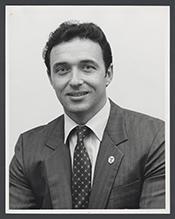 Rep. Daniel E. Lungren (R-CA)
Description
Amendment requires a private source to obtain a certification in writing from the Committee on Standards of Official Conduct that a proposed gift of travel complies with all House rules and standards of conduct; and provides that that Committee shall have until June 15, 2006 to develop a permanent plan governing future private travel.
Text
Offered
This amendment's own text couldn't be picked out of its Congressional Record passage, so the passage is shown in full.
LOBBYING ACCOUNTABILITY AND TRANSPARENCY ACT OF 2006
The SPEAKER pro tempore. Pursuant to House Resolution 783 and rule
XVIII, the Chair declares the House in the Committee of the Whole House
on the State of the Union for the further consideration of the bill,
H.R. 4975.
{time} 1507
In the Committee of the Whole
Accordingly, the House resolved itself into the Committee of the
Whole House on the State of the Union for the further consideration of
the bill (H.R. 4975) to provide greater transparency with respect to
lobbying activities, and for other purposes, with Mr. Chocola (Acting
Chairman) in the chair.
The Clerk read the title of the bill.
The Acting CHAIRMAN. When the Committee of the Whole rose earlier
today, all time for general debate had expired.
In lieu of the amendments recommended by the Committees on the
Judiciary, Rules, and Government Reform now printed in the bill, the
amendment in the nature of a substitute consisting of the text of the
Rules Committee print, dated April 21, 2006, modified by the amendment
printed in part A of House Report 109-441, is adopted.
The text of the amendment in the nature of a substitute, as amended,
is as follows:
H.R. 4975
SECTION 1. SHORT TITLE; TABLE OF CONTENTS.
(a) Short Title.--This Act may be cited as the ``Lobbying
Accountability and Transparency Act of 2006''.
(b) Table of Contents.--The table of contents for this Act
is as follows:
Sec. 1. Short title; table of contents.
TITLE I--ENHANCING LOBBYING DISCLOSURE
Sec. 101. Quarterly filing of lobbying disclosure reports.
Sec. 102. Electronic filing of lobbying registrations and disclosure
reports.
Sec. 103. Public database of lobbying disclosure information.
Sec. 104. Disclosure by registered lobbyists of past executive branch
and congressional employment.
Sec. 105. Disclosure of lobbyist contributions and gifts.
Sec. 106. Increased penalty for failure to comply with lobbying
disclosure requirements.
Sec. 107. GAO study of employment contracts of lobbyists.
TITLE II--SLOWING THE REVOLVING DOOR
Sec. 201. Notification of post-employment restrictions.
Sec. 202. Disclosure by Members of the House of Representatives of
employment negotiations.
Sec. 203. Wrongfully influencing, on a partisan basis, an entity's
employment decisions or practices.
TITLE III--SUSPENSION OF PRIVATELY-FUNDED TRAVEL; CURBING LOBBYIST
GIFTS
Sec. 301. Suspension of privately-funded travel.
Sec. 302. Recommendations on gifts and travel.
Sec. 303. Prohibiting registered lobbyists on corporate flights.
Sec. 304. Valuation of tickets to sporting and entertainment events.
TITLE IV--OVERSIGHT OF LOBBYING AND ENFORCEMENT
Sec. 401. Audits of lobbying reports by House Inspector General.
Sec. 402. House Inspector General review and annual reports.
TITLE V--INSTITUTIONAL REFORMS
Sec. 501. Earmarking reform.
Sec. 502. Mandatory ethics training for House employees.
Sec. 503. Biennial publication of ethics manual.
TITLE VI--FORFEITURE OF RETIREMENT BENEFITS
Sec. 601. Loss of pensions accrued during service as a Member of
Congress for abusing the public trust.
TITLE I--ENHANCING LOBBYING DISCLOSURE
SEC. 101. QUARTERLY FILING OF LOBBYING DISCLOSURE REPORTS.
(a) Quarterly Filing Required.--Section 5 of the Lobbying
Disclosure Act of 1995 (in this title referred to as the
``Act'') (2 U.S.C. 1604) is amended--
(1) in subsection (a)--
(A) in the heading, by striking ``Semiannual'' and
inserting ``Quarterly'';
(B) by striking ``45'' and inserting ``20'';
(C) by striking ``the semiannual period'' and all that
follows through ``July of each year'' and insert ``the
quarterly period beginning on the first day of January,
April, July, and October of each year''; and
(D) by striking ``such semiannual period'' and insert
``such quarterly period''; and
(2) in subsection (b)--
(A) in the matter preceding paragraph (1), by striking
``semiannual report'' and inserting ``quarterly report'';
(B) in paragraph (2), by striking ``semiannual filing
period'' and inserting ``quarterly period'';
(C) in paragraph (3), by striking ``semiannual period'' and
inserting ``quarterly period''; and
(D) in paragraph (4), by striking ``semiannual filing
period'' and inserting ``quarterly period''.
(b) Conforming Amendments.--
(1) Definition.--Section 3(10) of the Act (2 U.S.C.
1602(10)) is amended by striking ``six month period'' and
inserting ``3-month period''.
(2) Registration.--Section 4 of the Act (2 U.S.C. 1603) is
amended--
(A) in subsection (a)(3)(A), by striking ``semiannual
period'' and inserting ``quarterly period''; and
(B) in subsection (b)(3)(A), by striking ``semiannual
period'' and inserting ``quarterly period''.
(3) Enforcement.--Section 6(6) of the Act (2 U.S.C.
1605(6)) is amended by striking
[[Page H2033]]
``semiannual period'' and inserting ``quarterly period''.
(4) Estimates.--Section 15 of the Act (2 U.S.C. 1610) is
amended--
(A) in subsection (a)(1), by striking ``semiannual period''
and inserting ``quarterly period''; and
(B) in subsection (b)(1), by striking ``semiannual period''
and inserting ``quarterly period''.
(5) Dollar amounts.--
(A) Registration.--Section 4 of the Act (2 U.S.C. 1603) is
amended--
(i) in subsection (a)(3)(A)(i), by striking ``$5,000'' and
inserting ``$2,500'';
(ii) in subsection (a)(3)(A)(ii), by striking ``$20,000''
and inserting ``$10,000'';
(iii) in subsection (b)(3)(A), by striking ``$10,000'' and
inserting ``$5,000''; and
(iv) in subsection (b)(4), by striking ``$10,000'' and
inserting ``$5,000''.
(B) Reports.--Section 5(c) of the Act (2 U.S.C. 1604(c)) is
amended--
(i) in paragraph (1), by striking ``$10,000'' and
``$20,000'' and inserting ``$5,000'' and ``$1,000'',
respectively; and
(ii) in paragraph (2), by striking ``$10,000'' both places
such term appears and inserting ``$5,000''.
SEC. 102. ELECTRONIC FILING OF LOBBYING REGISTRATIONS AND
DISCLOSURE REPORTS.
(a) Registrations.--Section 4 of the Act (2 U.S.C. 1603) is
amended--
(1) by redesignating subsection (d) as subsection (e); and
(2) by inserting after subsection (c) the following:
``(d) Electronic Filing Required.--A registration required
to be filed under this section on or after the date of
enactment of the Lobbying Accountability and Transparency Act
of 2006 shall be filed in electronic form, in addition to any
other form that may be required by the Secretary of the
Senate or the Clerk of the House of Representatives. The due
date for a registration filed in electronic form shall be no
later than the due date for a registration filed in any other
form.''.
(b) Reports.--Section 5 of the Act (2 U.S.C. 1604) is
amended by adding at the end the following:
``(d) Electronic Filing Required.--
``(1) In general.--A report required to be filed under this
section shall be filed in electronic form, in addition to any
other form that may be required by the Secretary of the
Senate or the Clerk of the House of Representatives. The due
date for a report filed in electronic form shall be no later
than the due date for a report filed in any other form,
except as provided in paragraph (2).
``(2) Extension of time to file in electronic form.--The
Secretary of the Senate or the Clerk of the House of
Representatives may establish a later due date for the filing
of a report in electronic form by a registrant, if and only
if--
``(A) on or before the original due date, the registrant--
``(i) timely files the report in every form required, other
than electronic form; and
``(ii) makes a request for such a later due date to the
Secretary or the Clerk, as the case may be; and
``(B) the request is supported by good cause shown.''.
SEC. 103. PUBLIC DATABASE OF LOBBYING DISCLOSURE INFORMATION.
(a) Database Required.--Section 6 of the Act (2 U.S.C.
1605) is amended--
(1) in paragraph (7), by striking ``and'' at the end;
(2) in paragraph (8), by striking the period and inserting
``; and''; and
(3) by adding at the end the following:
``(9) maintain, and make available to the public over the
Internet, without a fee or other access charge, in a
searchable, sortable, and downloadable manner, an electronic
database that--
``(A) includes the information contained in registrations
and reports filed under this Act;
``(B) directly links the information it contains to the
information disclosed in reports filed with the Federal
Election Commission under section 304 of the Federal Election
Campaign Act of 1971 (2 U.S.C. 434); and
``(C) is searchable and sortable, at a minimum, by each of
the categories of information described in sections 4(b) and
5(b).''.
(b) Availability of Reports.--Section 6(4) of the Act is
amended by inserting before the semicolon the following:
``and, in the case of a registration filed in electronic form
pursuant to section 4(d) or a report filed in electronic form
pursuant to section 5(d), shall make such registration or
report (as the case may be) available for public inspection
over the Internet not more than 48 hours after the
registration or report (as the case may be) is approved as
received by the Secretary of the Senate or the Clerk of the
House of Representatives (as the case may be)''.
(c) Authorization of Appropriations.--There are authorized
to be appropriated such sums as may be necessary to carry out
paragraph (9) of section 6 of the Act, as added by subsection
(a) of this section.
SEC. 104. DISCLOSURE BY REGISTERED LOBBYISTS OF PAST
EXECUTIVE BRANCH AND CONGRESSIONAL EMPLOYMENT.
Section 4(b)(6) of the Act (2 U.S.C. 1603(b)(6)) is amended
by striking ``2 years'' and inserting ``7 years''.
SEC. 105. DISCLOSURE OF LOBBYIST CONTRIBUTIONS AND GIFTS.
(a) In General.--Section 5(b) of the Act (2 U.S.C. 1604(b))
is amended--
(1) in paragraph (3), by striking ``and'' after the
semicolon;
(2) in paragraph (4), by striking the period and inserting
a semicolon; and
(3) by adding at the end the following:
``(5) for each registrant (and for any political committee,
as defined in 301(4) of the Federal Election Campaign Act of
1971 (2 U.S.C. 431(4)), affiliated with the registrant), and
for each employee listed as a lobbyist by the registrant
under paragraph (2)(C), the name of each Federal candidate or
officeholder, and of each leadership PAC, political party
committee, or other political committee to whom a
contribution was made which is required to be reported to the
Federal Election Commission by the recipient, and the date
and amount of such contribution;
``(6) the date, recipient, and amount of any gift that
under the Rules of the House of Representatives counts
towards the cumulative annual limit described in such rules
and is given to a covered legislative branch official by the
registrant or an employee listed as a lobbyist by the
registrant under paragraph (2)(C); and
``(7) the date, recipient, and amount of funds contributed
by the registrant or an employee listed as a lobbyist by the
registrant under paragraph (2)(C)--
``(A) to, or on behalf of, an entity that is named for a
covered legislative branch official, or to a person or entity
in recognition of such official; or
``(B) to an entity established, financed, maintained, or
controlled by a covered legislative branch official;
except that this paragraph shall not apply to any payment or
reimbursement made from funds required to be reported under
section 304 of the Federal Election Campaign Act of 1971 (2
U.S.C. 434).''.
(b) Factors to be Considered to Determine Relationship
Between Officials and Other Entities.--Section 5 of the Act
(2 U.S.C. 1604), as amended by section 102(b) of this Act, is
amended by adding at the end the following new subsection:
``(e) Factors to Determine Relationship Between Officials
and Other Entities.--
``(1) In general.--In determining under subsection
(b)(7)(B) whether a covered legislative branch official
directly or indirectly established, finances, maintains, or
controls an entity, the factors described in paragraph (2)
shall be examined in the context of the overall relationship
between that covered official and the entity to determine
whether the presence of any such factor or factors is
evidence that the covered official directly or indirectly
established, finances, maintains, or controls the entity.
``(2) Factors.--The factors referred to in paragraph (1)
include, but are not limited to, the following:
``(A) Whether the covered official, directly or through its
agent, owns a controlling interest in the voting stock or
securities of the entity.
``(B) Whether the covered official, directly or through its
agent, has the authority or ability to direct or participate
in the governance of the entity through provisions of
constitutions, bylaws, contracts, or other rules, or through
formal or informal practices or procedures.
``(C) Whether the covered official, directly or through its
agent, has the authority or ability to hire, appoint, demote,
or otherwise control the officers or other decisionmaking
employees or members of the entity.
``(D) Whether the covered official has a common or
overlapping membership with the entity that indicates a
formal or ongoing relationship between the covered official
and the entity.
``(E) Whether the covered official has common or
overlapping officers or employees with the entity that
indicates a formal or ongoing relationship between the
covered official and the entity.
``(F) Whether the covered official has any members,
officers, or employees who were members, officers, or
employees of the entity that indicates a formal or ongoing
relationship between the covered official and the entity, or
that indicates the creation of a successor entity.
``(G) Whether the covered official, directly or through its
agent, provides funds or goods in a significant amount or on
an ongoing basis to the entity, such as through direct or
indirect payments for administrative, fundraising, or other
costs.
``(H) Whether the covered official, directly or through its
agent, causes or arranges for funds in a significant amount
or on an ongoing basis to be provided to the entity.
``(I) Whether the covered official, directly or through its
agent, had an active or significant role in the formation of
the entity.
``(J) Whether the covered official and the entity have
similar patterns of receipts or disbursements that indicate a
formal or ongoing relationship between the covered official
and the entity.''.
(c) Conforming Amendment.--Section 3 of the Act (2 U.S.C.
1602) is amended by adding at the end the following new
paragraphs:
``(17) Gift.--The term `gift' means a gratuity, favor,
discount, entertainment, hospitality, loan, forbearance, or
other item having monetary value. The term includes gifts of
services, training, and meals, whether provided in kind, by
purchase of a ticket, payment in advance, or reimbursement
after the expense has been incurred.
``(18) Leadership PAC.--The term `leadership PAC' means,
with respect to an individual holding Federal office, an
unauthorized political committee (as defined in the
[[Page H2034]]
Federal Election Campaign Act of 1971) which is associated
with such individual.''.
SEC. 106. INCREASED PENALTY FOR FAILURE TO COMPLY WITH
LOBBYING DISCLOSURE REQUIREMENTS.
Section 7 of the Act (2 U.S.C. 1606) is amended--
(1) by striking ``Whoever'' and inserting ``(a) Civil
Penalty.--Whoever'';
(2) by striking ``$50,000'' and inserting ``$100,000''; and
(3) by adding at the end the following:
``(b) Criminal Penalty.--
``(1) In general.--Whoever knowingly and willfully fails to
comply with any provision of this Act shall be imprisoned not
more than 3 years, or fined under title 18, United States
Code, or both.
``(2) Corruptly.--Whoever knowingly, willfully, and
corruptly fails to comply with any provision of this Act
shall be imprisoned not more than 5 years, or fined under
title 18, United States Code, or both.''.
TITLE II--SLOWING THE REVOLVING DOOR
SEC. 201. NOTIFICATION OF POST-EMPLOYMENT RESTRICTIONS.
Section 207(e) of title 18, United States Code, is amended
by adding at the end the following new paragraph:
``(8) Notification of post-employment restrictions.--After
a Member of the House of Representatives or an elected
officer of the House of Representatives leaves office, or
after the termination of employment with the House of
Representatives of an employee of the House of
Representatives covered under paragraph (2), (3), or (4), the
Clerk of the House of Representatives, after consultation
with the Committee on Standards of Official Conduct, shall
inform the Member, officer, or employee of the beginning and
ending date of the prohibitions that apply to the Member,
officer, or employee under this subsection, and also inform
each office of the House of Representatives with respect to
which such prohibitions apply of those dates.''.
SEC. 202. DISCLOSURE BY MEMBERS OF THE HOUSE OF
REPRESENTATIVES OF EMPLOYMENT NEGOTIATIONS.
The Code of Official Conduct set forth in rule XXIII of the
Rules of the House of Representatives is amended by
redesignating clause 14 as clause 15 and by inserting after
clause 13 the following new clause:
``14. (a) A Member, Delegate, or Resident Commissioner
shall file with the Committee on Standards of Official
Conduct a statement that he or she is negotiating
compensation for prospective employment or has any
arrangement concerning prospective employment if a conflict
of interest or the appearance of a conflict of interest may
exist. Such statement shall be made within 5 days (other than
Saturdays, Sundays, or public holidays) after commencing the
negotiation for compensation or entering into the
arrangement.
``(b) A Member, Delegate, or Resident Commissioner should
refrain from voting on any legislative measure pending before
the House or any committee thereof if the negotiation
described in subparagraph (a) may create a conflict of
interest.''.
SEC. 203. WRONGFULLY INFLUENCING, ON A PARTISAN BASIS, AN
ENTITY'S EMPLOYMENT DECISIONS OR PRACTICES.
The Code of Official Conduct set forth in rule XXIII of the
Rules of the House of Representatives (as amended by section
202) is further amended by redesignating clause 15 as clause
16 and by inserting after clause 14 the following new clause:
``15. A Member, Delegate, Resident Commissioner, officer,
or employee of the House may not, with the intent to
influence on the basis of political party affiliation an
employment decision or employment practice of any private or
public entity (except for the Congress)--
``(a) take or withhold, or offer or threaten to take or
withhold, an official act; or
``(b) influence, or offer or threaten to influence, the
official act of another.''.
TITLE III--SUSPENSION OF PRIVATELY-FUNDED TRAVEL; CURBING LOBBYIST
GIFTS
SEC. 301. SUSPENSION OF PRIVATELY-FUNDED TRAVEL.
Notwithstanding clause 5 of rule XXV of the Rules of the
House of Representatives, no Member, Delegate, Resident
Commissioner, officer, or employee of the House may accept a
gift of travel (including any transportation, lodging, and
meals during such travel) from any private source.
SEC. 302. RECOMMENDATIONS FROM THE COMMITTEE ON STANDARDS OF
OFFICIAL CONDUCT ON GIFTS AND TRAVEL.
Not later than December 15, 2006, the Committee on
Standards of Official Conduct shall report its
recommendations on changes to rule XXV of the Rules of the
House of Representatives to the Committee on Rules. In
developing such recommendations, the Committee on Standards
of Official Conduct shall consider the following:
(1) The ability of the current provisions of rule XXV to
protect the House, its Members, officers, and employees, from
the appearance of impropriety.
(2) With respect to the allowance for privately-funded
travel contained in clause 5(b) of rule XXV--
(A) the degree to which privately-funded travel meets the
representational needs of the House, its Members, officers,
and employees;
(B) whether certain entities should or should not be
permitted to fund the travel of the Members, officers, and
employees of the House, what sources of funding may be
permissible, and what other individuals may participate in
that travel; and
(C) the adequacy of the current system of approval and
disclosure of such travel.
(3) With respect to the exceptions to the limitation on the
acceptance of gifts contained in clause 5(a)--
(A) the degree to which those exceptions meet the
representational and personal needs of the House, its
Members, officers, and employees;
(B) the clarity of the limitation and its exceptions; and
(C) the suitability of the current dollar limitations
contained in clause 5(a)(1)(B) of such rule, including
whether such limitations should be lowered.
SEC. 303. PROHIBITING REGISTERED LOBBYISTS ON CORPORATE
FLIGHTS.
The Lobbying Disclosure Act of 1995 is amended by inserting
after section 5 the following new section:
``SEC. 5A. PROHIBITING REGISTERED LOBBYISTS ON CORPORATE
FLIGHTS.
``If a Representative in, or Delegate or Resident
Commissioner to, the Congress, or an officer or employee of
the House of Representatives, is a passenger or crew member
on a flight of an aircraft that is not licensed by the
Federal Aviation Administration to operate for compensation
or hire and that is owned or operated by a person who is the
client of a lobbyist or a lobbying firm, then such lobbyist
may not be a passenger or crew member on that flight.''.
SEC. 304. VALUATION OF TICKETS TO SPORTING AND ENTERTAINMENT
EVENTS.
Clause 5(a)(2)(A) of rule XXV of the Rules of the House of
Representatives is amended by--
(1) inserting ``(i)'' after ``(A)''; and
(2) adding at the end the following:
``(ii) A gift of a ticket to a sporting or entertainment
event shall be valued at the face value of the ticket,
provided that in the case of a ticket without a face value,
the ticket shall be valued at the highest cost of a ticket
with a face value for the event.''.
TITLE IV--OVERSIGHT OF LOBBYING AND ENFORCEMENT
SEC. 401. AUDITS OF LOBBYING REPORTS BY HOUSE INSPECTOR
GENERAL.
(a) Access to Lobbying Reports.--The Office of Inspector
General of the House of Representatives shall have access to
all lobbyists' disclosure information received by the Clerk
of the House of Representatives under the Lobbying Disclosure
Act of 1995 and shall conduct random audits of lobbyists'
disclosure information as necessary to ensure compliance with
that Act.
(b) Referral Authority.--The Office of the Inspector
General of the House of Representatives may refer potential
violations by lobbyists of the Lobbying Disclosure Act of
1995 to the Department of Justice for disciplinary action.
SEC. 402. HOUSE INSPECTOR GENERAL REVIEW AND ANNUAL REPORTS.
(a) Ongoing Review Required.--The Inspector General of the
House of Representatives shall review on an ongoing basis the
activities carried out by the Clerk of the House of
Representatives under section 6 of the Lobbying Disclosure
Act of 1995 (2 U.S.C. 1605). The review shall emphasize--
(1) the effectiveness of those activities in securing the
compliance by lobbyists with the requirements of that Act;
and
(2) whether the Clerk has the resources and authorities
needed for effective oversight and enforcement of that Act.
(b) Annual Reports.--Not later than December 31 of each
year, the Inspector General of the House of Representatives
shall submit to the House of Representatives a report on the
review required by subsection (a). The report shall include
the Inspector General's assessment of the matters required to
be emphasized by that subsection and any recommendations of
the Inspector General to--
(1) improve the compliance by lobbyists with the
requirements of the Lobbying Disclosure Act of 1995; and
(2) provide the Clerk of the House of Representatives with
the resources and authorities needed for effective oversight
and enforcement of that Act.
TITLE V--INSTITUTIONAL REFORMS
SEC. 501. EARMARKING REFORM.
(a) In the House of Representatives, it shall not be in
order to consider--
(1) a general appropriation bill reported by the Committee
on Appropriations unless the report includes a list of
earmarks in the bill or in the report (and the names of
Members who submitted requests to the Committee on
Appropriations for earmarks included in such list); or
(2) a conference report to accompany a general
appropriation bill unless the joint explanatory statement
prepared by the managers on the part of the House and the
managers on the part of the Senate includes a list of
earmarks in the conference report or joint statement (and the
names of Members who submitted requests to the Committee on
Appropriations for earmarks included in such list) that
were--
(A) not committed to the conference committee by either
House;
(B) not in the report specified in paragraph (1); and
(C) not in a report of a committee of the Senate on a
companion measure.
(b) In the House of Representatives, it shall not be in
order to consider a rule or
[[Page H2035]]
order that waives the application of subsection (a)(2).
(c)(1) A point of order raised under subsection (a)(1) may
be based only on the failure of a report of the Committee on
Appropriations to include the list required by subsection
(a)(1).
(2) As disposition of a point of order under subsection
(a), the Chair shall put the question of consideration with
respect to the proposition that is the subject of the point
of order.
(3) As disposition of a point of order under subsection (b)
with respect to a rule or order relating to a conference
report, the Chair shall put the question of consideration as
follows: ``Shall the House now consider the resolution
notwithstanding the assertion of [the maker of the point of
order] that the object of the resolution introduces a new
earmark or new earmarks?''.
(4) The question of consideration under this subsection
shall be debatable for 15 minutes by the Member initiating
the point of order and for 15 minutes by an opponent, but
shall otherwise be decided without intervening motion except
one that the House adjourn.
(d)(1) For the purpose of this resolution, the term
``earmark'' means a provision in a bill or conference report,
or language in an accompanying committee report or joint
statement of managers, providing or recommending a specific
amount of discretionary budget authority to a non-Federal
entity, if such entity is specifically identified in the
report or bill; or if the discretionary budget authority is
allocated outside of the normal formula-driven or competitive
bidding process and is targeted or directed to an
identifiable person, specific State, or congressional
district.
(2) For the purpose of subsection (a), government-sponsored
enterprises, Federal facilities, and Federal lands shall be
considered Federal entities.
(3) For the purpose of subsection (a), to the extent that
the non-Federal entity is a State or territory, an Indian
tribe, a foreign government or an intergovernmental
international organization, the provision or language shall
not be considered an earmark unless the provision or language
also specifies the specific purpose for which the designated
budget authority is to be expended.
SEC. 502. MANDATORY ETHICS TRAINING FOR HOUSE EMPLOYEES.
(a) Mandatory Ethics Training for House Employees.--
(1) Chief administrative officer.--Clause 4 of rule II of
the Rules of the House of Representatives is amended by
inserting the following new paragraph at the end:
``(d) The Chief Administrative Officer may not pay any
compensation to any employee of the House with respect to any
pay period during which the employee, as determined by the
Committee on Standards of Official Conduct, is not in
compliance with the applicable requirements of regulations
promulgated pursuant to clause 3(r) of Rule XI. ''.
(2) Mandatory ethics training program.--Clause 3 of rule XI
of the Rules of the House of Representatives is amended by
adding at the end the following:
``(r) The committee shall establish a program of regular
ethics training for employees of the House and promulgate
regulations providing for the following:
``(1)(A) Except as otherwise provided, all employees of the
House are required to complete ethics training offered by the
committee at least once during each congress. Any employee
who is hired after the date of adoption of such rules is
required to complete such training within 30 days of being
hired.
``(B) Any employee of the House who works in a Member's
district office shall not be required to complete such ethics
training until 30 days after the district office has received
a notice from the Committee on Standards of Official Conduct
that the required ethics training program is available on the
Internet.
``(2) After any employee of the House completes such ethics
training, that employee shall file a written certification
with the committee that he is familiar with the contents of
any pertinent publications that are so designated by the
committee and has completed the required ethics training.
``(3) As used in this paragraph, the term `employee of the
House' refers to any individual whose compensation is
disbursed by the Chief Administrative Officer, including any
staff assigned to a Member's personal office, any staff of a
committee or leadership office, or any employee of the Office
of the Clerk, of the Office of the Chief Administrative
Officer, or of the Sergeant-at-Arms, but does not include a
Member, Delegate, or Resident Commissioner.''.
(b) Ethics Training for Members, Delegates and the Resident
Commissioner.--Clause 3 of rule XI of the Rules of the House
of Representatives is amended by inserting the following new
paragraph at the end:
``(s) The committee shall establish a program of regular
ethics training for Members, Delegates, and the Resident
Commissioner similar to the program established in paragraph
(r), and encourage participation in such program.''.
SEC. 503. BIENNIAL PUBLICATION OF ETHICS MANUAL.
Within 120 days after the date of enactment of this Act and
during each Congress thereafter, the Committee on Standards
of Official Conduct shall publish an up-to-date ethics manual
for Members, officers, and employees of the House of
Representatives and make such manual available to all such
individuals. The committee has a duty to keep all Members,
Delegates, the Resident Commissioner, officers, and employees
of the House of Representatives apprised of current rulings
or advisory opinions when potentially constituting changes to
or interpretations of existing policies.
TITLE VI--FORFEITURE OF RETIREMENT BENEFITS
SEC. 601. LOSS OF PENSIONS ACCRUED DURING SERVICE AS A MEMBER
OF CONGRESS FOR ABUSING THE PUBLIC TRUST.
(a) Civil Service Retirement System.--Section 8332 of title
5, United States Code, is amended by adding at the end the
following:
``(o)(1) Notwithstanding any other provision of this
subchapter, the service of an individual finally convicted of
an offense described in paragraph (2) shall not be taken into
account for purposes of this subchapter, except that this
sentence applies only to service rendered as a Member
(irrespective of when rendered). Any such individual (or
other person determined under section 8342(c), if applicable)
shall be entitled to be paid so much of such individual's
lump-sum credit as is attributable to service to which the
preceding sentence applies.
``(2)(A) An offense described in this paragraph is any
offense described in subparagraph (B) for which the following
apply:
``(i) Every act or omission of the individual (referred to
in paragraph (1)) that is needed to satisfy the elements of
the offense occurs while the individual is a Member.
``(ii) Every act or omission of the individual that is
needed to satisfy the elements of the offense directly
relates to the performance of the individual's official
duties as a Member.
``(iii) The offense is committed after the date of
enactment of this subsection.
``(B) An offense described in this subparagraph is only the
following, and only to the extent that the offense is a
felony under title 18:
``(i) An offense under section 201 of title 18 (bribery of
public officials and witnesses).
``(ii) An offense under section 219 of title 18 (officers
and employees acting as agents of foreign principals).
``(iii) An offense under section 371 of title 18
(conspiracy to commit offense or to defraud United States) to
the extent of any conspiracy to commit an act which
constitutes an offense under clause (i) or (ii).
``(3) An individual convicted of an offense described in
paragraph (2) shall not, after the date of the final
conviction, be eligible to participate in the retirement
system under this subchapter or chapter 84 while serving as a
Member.
``(4) The Office of Personnel Management shall prescribe
any regulations necessary to carry out this subsection. Such
regulations shall include--
``(A) provisions under which interest on any lump-sum
payment under the second sentence of paragraph (1) shall be
limited in a manner similar to that specified in the last
sentence of section 8316(b); and
``(B) provisions under which the Office may provide for--
``(i) the payment, to the spouse or children of any
individual referred to in the first sentence of paragraph
(1), of any amounts which (but for this clause) would
otherwise have been nonpayable by reason of such first
sentence, but only to the extent that the application of this
clause is considered necessary given the totality of the
circumstances; and
``(ii) an appropriate adjustment in the amount of any lump-
sum payment under the second sentence of paragraph (1) to
reflect the application of clause (i).
``(5) For purposes of this subsection--
``(A) the term `Member' has the meaning given such term by
section 2106, notwithstanding section 8331(2); and
``(B) the term `child' has the meaning given such term by
section 8341.''.
(b) Federal Employees' Retirement System.--Section 8411 of
title 5, United States Code, is amended by adding at the end
the following:
``(l)(1) Notwithstanding any other provision of this
chapter, the service of an individual finally convicted of an
offense described in paragraph (2) shall not be taken into
account for purposes of this chapter, except that this
sentence applies only to service rendered as a Member
(irrespective of when rendered). Any such individual (or
other person determined under section 8424(d), if applicable)
shall be entitled to be paid so much of such individual's
lump-sum credit as is attributable to service to which the
preceding sentence applies.
``(2) An offense described in this paragraph is any offense
described in section 8332(o)(2)(B) for which the following
apply:
``(A) Every act or omission of the individual (referred to
in paragraph (1)) that is needed to satisfy the elements of
the offense occurs while the individual is a Member.
``(B) Every act or omission of the individual that is
needed to satisfy the elements of the offense directly
relates to the performance of the individual's official
duties as a Member.
``(C) The offense is committed after the date of enactment
of this subsection.
``(3) An individual finally convicted of an offense
described in paragraph (2) shall not, after the date of the
conviction, be eligible to participate in the retirement
system under this chapter while serving as a Member.
``(4) The Office of Personnel Management shall prescribe
any regulations necessary to
[[Page H2036]]
carry out this subsection. Such regulations shall include--
``(A) provisions under which interest on any lump-sum
payment under the second sentence of paragraph (1) shall be
limited in a manner similar to that specified in the last
sentence of section 8316(b); and
``(B) provisions under which the Office may provide for--
``(i) the payment, to the spouse or children of any
individual referred to in the first sentence of paragraph
(1), of any amounts which (but for this clause) would
otherwise have been nonpayable by reason of such first
sentence, but only to the extent that the application of this
clause is considered necessary given the totality of the
circumstances; and
``(ii) an appropriate adjustment in the amount of any lump-
sum payment under the second sentence of paragraph (1) to
reflect the application of clause (i).
``(5) For purposes of this subsection--
``(A) the term `Member' has the meaning given such term by
section 2106, notwithstanding section 8401(20); and
``(B) the term `child' has the meaning given such term by
section 8341.''.
The Acting CHAIRMAN. The bill, as amended, shall be considered as an
original bill for the purpose of further amendment under the 5-minute
rule and shall be considered read.
No further amendment to the bill, as amended, is in order except
those printed in part B of House Report 109-441. Each further amendment
may be offered only in the order printed in the report, by a Member
designated in the report, shall be considered read, shall be debatable
for the time specified in the report, equally divided and controlled by
the proponent and an opponent, shall not be subject to amendment, and
shall not be subject to a demand for division of the question.
Amendment No. 1 Offered by Mr. Gohmert
Mr. GOHMERT. Mr. Chairman, I offer an amendment.
The Acting CHAIRMAN. The Clerk will designate the amendment.
The text of the amendment is as follows:
Part B amendment No. 1 printed in House Report 109-441
offered by Mr. Gohmert:
Strike section 106 and insert the following:
SEC. 106. INCREASED PENALTY FOR FAILURE TO COMPLY WITH
LOBBYING DISCLOSURE REQUIREMENTS.
Section 7 of the Act (2 U.S.C. 1606) is amended--
(1) by striking ``Whoever'' and inserting
``(a) In General.--Whoever'';
(2) by inserting ``, corruptly, and with the intent to
evade the law'' after ``knowingly'';
(3) by striking ``knowing'';
(4) by striking ``of not more than'' and all that follows
through the end and inserting ``as provided in subsection
(b).''; and
(5) by adding at the end the following:
``(b) Penalty.--The civil fine under subsection (a) shall
be the following, depending on the extent and gravity of the
violation:
``(1) For the first offense, not more than $100,000.
``(2) For the second offense, not more than $250,000.
``(3) For the third offense, not more than $500,000.
``(4) For the fourth or any subsequent offense, not more
than $1,000,000.''.
The Acting CHAIRMAN. Pursuant to House Resolution 783, the gentleman
from Texas (Mr. Gohmert) and the gentlewoman from California (Ms. Zoe
Lofgren) each will control 5 minutes.
The Chair recognizes the gentleman from Texas.
Mr. GOHMERT. Mr. Chairman, I yield myself such time as I may consume.
I have this amendment to this bill. This is a bill that requires
administrative reporting requirements. There are a myriad of things
this bill requires, and we have chosen, apparently, to try to
criminalize administrative conduct.
Innocent mistakes will allow people to be taken off in handcuffs and
have to prove later down the road what effectively will be an
affirmative defense that they did not willfully and knowingly make
these kind of omissions. That is just a dangerous business to get into,
to keep criminalizing things.
The way you fight things like this is, when you say it is the dollars
or the problems, then you hit people with dollars, and so that is what
this amendment does. It says, we are not going to talk about handcuffs;
we are going to talk about immense fines.
The first violation would be up to $100,000; second up to $250,000;
third up to $500,000; and the fourth up to $1 million. That gives all
the incentive anybody needs to make sure they file properly. Those are
extremely high fines, the highest I have ever heard of, but I put them
there to give people a degree of comfort that there would be sufficient
penalty for failing to comply with the requirements.
Now, what has come into play here is pure politics. On one side,
people want to feel like, gee, we want to show that we are being tough,
even though innocent people down the road will be hurt, and when that
happens, ``I told you so'' will not be adequate to me because my heart
will go out to people that are hurt unnecessarily.
I understand the Democrats are going to stand up and oppose this. And
when their Members are taken out in handcuffs because of this bill, if
it passes with criminal sanctions, when their people are carried out in
handcuffs, they will look to them and say, You know what, we probably
should not have criminalized that because that gave a prosecutor what
they wanted.
I am just asking for a bipartisan way to handle this. The way to
handle administrative errors is to punish with fines and not with
dragging people out from their homes in handcuffs to try to make a
political statement.
If people will be honest, they know that happens on both sides. And I
would rather not see that happen as an old judge and chief justice. It
can happen, and I would rather not see it happen to either side.
Mr. Chairman, I reserve my time.
Ms. ZOE LOFGREN of California. Mr. Chairman, I yield myself such time
as I may consume.
This amendment would further weaken an already appallingly weak bill
by striking the criminal penalties for corrupt lobbyists that knowingly
violate disclosure requirements. The amendment would strike out
provisions in the bill that were agreed to by the Judiciary Committee
that would hold lobbyists criminally responsible for violating the
Lobbying Disclosure Act of 1995 by failing to disclose their contacts
with Members of Congress with criminal intent and replace them with
finds.
The provision in the base text establishes criminal penalties for
whoever knowingly and willfully or knowingly, willfully and corruptly
fails to comply with any provision of the bill. I do not see why we
should object to this. These new criminal penalties are to lobbyists
who knowingly and willfully or knowingly, willfully and corruptly lie
on their disclosure forms. Is the lobbyist who corruptly lies in his
disclosure form not deserving of the criminal sanction? This amendment
would strike those tough criminal penalties and instead replace them
with monetary fines.
We know from reading in the newspaper that Mr. Jack Abramoff made $66
million defrauding Indian tribal clients alone. Does anyone think that
a $100,000 fine would deter Mr. Abramoff from making his $66 million
corruptly? It is a drop in the bucket. In fact, this amendment is
worsened by the fact that it adds a requirement to the intent element
of the civil penalty of the Lobbyist Act, corruptly and with intent to
evade the law, which is an almost impossible standard for the
prosecutor to meet.
{time} 1515
The proponent of this amendment has argued that the language included
in the current criminal provision is vague and undefined; we went
through that in the committee. But I don't believe this argument is
accurate. The term ``corruptly'' appears in title 18 at least 15 times,
even appearing in the Federal Bribery Statute. Moreover, according to
Black's Law Dictionary, the term ``corruptly'' means ``to act knowingly
and dishonestly with the specific intent to subvert or undermine the
integrity of something.'' I do not think the definition can get any
clearer than that.
This bill is already so weak and limited that it is virtually
powerless to prevent future abuses. This amendment would remove one of
the few tough deterrents in the bill. I would note that the provision
for criminal penalties applies to lobbyists, not to Members of
Congress, unless those lobbyists are former Members or acting in
violation of the current rules on lobbying illegally.
So we do think that this amendment, although I am sure the gentleman
is offering it with all good faith, is misguided, and we do oppose and
urge our colleagues to oppose.
Mr. Chairman, I reserve the balance of my time.
Mr. GOHMERT. Mr. Chairman, my colleague across the aisle points to a
[[Page H2037]]
$100,000 fine as not being adequate to deter Mr. Abramoff, and I would
remind my colleague, he is going to prison. Mr. Cunningham has gone to
prison. People who violate the law will go to prison.
Mr. Chairman, there are already bribery statutes. There are already
corruption statutes. This reminds me a lot of the 1990s, when anytime
someone did a violent act with a gun, the Clinton administration ran in
and said, we need more gun control laws, never mind the fact that they
already violated many gun control laws as it is. What is needed is just
enforcement of the current laws.
Now, the lobbying reform bill will create some requirements of filing
that will enable people to do their job, but apparently there is not a
real knowledge of how the system works. Let me tell you how this will
play out. Someday, heaven forbid but it will happen, there will be a
politically motivated prosecutor, and he will go to a lobbyist, and he
will say, You know, we have scoured through every report you have ever
filed, and we finally found one entry you failed to make. Your
accountant did not put this in, and you signed it, and by golly, you
are going to go to prison for maybe 3 years. Now, we do notice you made
a contribution to this Congressman over there. You know, and I am sure
you can go to trial, and maybe, on your part of the case, you may be
able to convince them it was not corrupt or willfully, knowingly. But
you know what? If you just happened to remember that this Congress
Member, Democrat or Republican, whoever they happen to be after, had
asked for something in return or said they would do something in return
for contribution, then we might just go away because that would show
what good faith you are acting in, and maybe you really did not know
and maybe this was not willful. That will happen someday because there
are some prosecutors who are politically motivated.
Now, I do not think it will happen under this administration, but it
will happen someday. And when it does, if this amendment goes down, you
can be reminded that there was a Congressman who stood up to try to do
the right thing, because we have plenty of corruption laws; it is a
matter of reporting requirements that will be enhanced here. We do not
need to criminalize administrative functions.
Mr. Chairman, with that, I would ask for Members to do the bipartisan
thing and vote for this amendment.
Ms. ZOE LOFGREN of California. Mr. Chairman, I would just note that
the bill puts in new disclosure requirements and also tough enforcement
of those requirements, which the gentleman's amendment would
essentially remove.
I was a little surprised to hear the argument that the penalty
invites suborning perjury on the part of prosecutors. I have never
heard that argument advanced in the situation of any other criminal
penalty, bribery or drug cases or any other kind of criminal penalty.
And I must say that I have yet in my many, many years as an attorney
run into a case where a prosecutor suborned perjury in the way
described by the gentleman. Maybe he has run into a different situation
in his State. But I think to suggest that prosecutors are going to
engage in misconduct is misleading, and also it is revealing that that
concern is only expressed when it is to protect corrupt lobbyists.
Let us remember that the standard that is being outlined in this bill
is corruption. Knowingly, willfully and corruptly is the standard, and
that has to be proven with evidence beyond a reasonable doubt. I think
that is the due process protection that we generally rely on in our
great country.
I would just note in concluding that recently a Roll Call editorial
described this bill as, ``This bill all but shouts to voters that the
GOP is not serious about reform and that it values its ties to K Street
more than the public's trust.''
I would say that the gentleman's amendment is an elevation of that
concern for K Street that this House should reject rather soundly.
Mr. Chairman, I yield back the balance of my time.
The Acting CHAIRMAN. All time for debate has expired.
The question is on the amendment offered by the gentleman from Texas
(Mr. Gohmert).
The question was taken; and the Acting Chairman announced that the
ayes appeared to have it.
Ms. ZOE LOFGREN of California. Mr. Chairman, I demand a recorded
vote.
The Acting CHAIRMAN. Pursuant to clause 6 of rule XVIII, further
proceedings on the amendment offered by the gentleman from Texas will
be postponed.
Amendment No. 2 Offered by Mr. Castle
Mr. CASTLE. Mr. Chairman, I offer an amendment.
The Acting CHAIRMAN. The Clerk will designate the amendment.
The text of the amendment is as follows:
Part B amendment No. 2 printed in House Report 109-441
offered by Mr. Castle:
Insert the following after section 106 and redesignate the
succeeding section accordingly:
SEC. 107. PENALTIES FOR OFFERING GIFTS.
Section 7 of the Act (2 U.S.C. 1606), as amended by section
106, is amended by adding at the end the following:
``(c) Penalties for Offering Gifts.--
``(1) In general.--Any person who is--
``(A) a lobbyist registered under this Act,
``(B) a lobbyist who is an employee of an organization
registered under this Act, or
``(C) the client of any such lobbyist or organization,
and who offers to a covered legislative branch official of
the House of Representatives any gift, knowing that such gift
violates the rules of the House of Representatives, shall,
upon proof thereof by a preponderance of the evidence, be
subject to a civil fine of not more than $50,000.
``(2) Definition.--In this subsection, the term `covered
legislative branch official of the House of Representatives'
means--
``(A) a Representative in, or Delegate or Resident
Commissioner to, the Congress; and
``(B) an employee of, or any other individual functioning
in the capacity of an employee of--
``(i) an individual described in subparagraph (A);
``(ii) a committee of the House of Representatives;
``(iii) the leadership staff of the House of
Representatives;
``(iv) a joint committee of Congress; or
``(v) a working group or caucus organized to provide
legislative services to individuals described in subparagraph
(A).''.
The Acting CHAIRMAN. Pursuant to House Resolution 783, the gentleman
from Delaware (Mr. Castle) and a Member opposed each will control 5
minutes.
The Chair recognizes the gentleman from Delaware.
Mr. CASTLE. Mr. Chairman, I yield myself such time as I may consume.
I appreciate the opportunity to offer this amendment today with my
colleague from Pennsylvania (Mr. Gerlach). The amendment is simple, so
I will be relatively brief.
Let me take a moment to thank the chairman of the Rules Committee for
his tremendous work in preparing this ethics legislation. I know the
process he has been through; I have been to a lot of the meetings.
There is a lot of disagreement even within his own party, including me
on some issues, and I realize the difficulty of putting this together.
I would just like to thank him for his great work on this particular
piece of legislation.
Mr. DREIER. Mr. Chairman, will the gentleman yield?
Mr. CASTLE. I yield to the gentleman from California.
Mr. DREIER. Mr. Chairman, I will simply say, I support the
gentleman's amendment.
Mr. CASTLE. Mr. Chairman, maybe I should stop right there.
One way I think we can strengthen the laws governing gift giving from
lobbyists to legislators and their staffs is to hold all individuals
liable for knowingly breaking the law. Currently, Members and staff are
responsible for making sure that they do not accept gifts or meals that
violate the current gift limit of $50. Our amendment would also hold
liable those individuals who knowingly offer gifts in violation of the
law. It is simply common sense that anyone who intends to break the law
should be held responsible. With this commonsense amendment, we bring
intentional gift-giving violations under the civil penalties already
established in the Lobbying Disclosure Act which are currently set at
up to $50,000.
If there is a silver lining in the clouds surrounding the recent
ethics problems in Congress, it is the opportunity to enact meaningful
reform. Personally, I think the bill could go much farther by
establishing greater disclosure and reporting requirements.
[[Page H2038]]
I firmly believe that full transparency has the potential to minimize
abuses of the system. Unfortunately, an individual who wants to violate
the law will usually find a way no matter what we do here today.
Regardless, we have a responsibility to pass the strongest bill
possible here today, and I think this amendment moves us in that
direction. Personally, I believe in transparency. I believe in the
education of everybody including lobbyists, staff members and Members
of Congress. In terms of ethics laws, I believe in enforcement of the
ethics laws as it involves all of us. And that is simply what this
amendment does, is move in that direction.
Mr. Chairman, I reserve the balance of my time.
Ms. ZOE LOFGREN of California. Mr. Chairman, I rise to claim the time
in opposition, although I am not opposed.
Mr. Chairman, I would note that laws already exist to prevent this
activity and that to some extent this amendment is redundant and that
the enforcement of current laws would solve the problem. And when it
comes to lobbyists who are making the kind of money that Mr. Abramoff
made, the $50,000 fine may well not be a deterrent.
Nevertheless, I think an additional deterrent to some lobbyists for
violating the gift rules is useful. I would note that the primary
responsibility falls upon Members of Congress for not accepting
extravagant gifts. This amendment really looks to the gift giver
instead of the guilty gift receiver.
Nevertheless, I think it is a useful component of a bill, and I do
support it, and I believe that many on this side of the aisle do
support it.
Mr. Chairman, I reserve the balance of my time.
Mr. CASTLE. Mr. Chairman, I agree with the gentlewoman from
California. She is absolutely right. The greatest responsibility, in my
judgment, is on us, Members of Congress, or on staff people or
whatever. And it probably is slightly redundant, too. That is probably
also correct.
But the point I am trying to make here is that if everybody is
educated and everybody is aware of this and everybody can be
responsible for it, maybe we can prevent some of the problems from
happening. Maybe we can't, but I just hope that we can.
Mr. Chairman, I yield to the distinguished sponsor of the bill, the
chairman of the Rules Committee, Mr. Dreier.
Mr. DREIER. Mr. Chairman, I thank my friend for yielding, and I would
like to, as I said a moment ago, support the amendment and say that I
think this amendment is evidence of a strong bipartisan commitment to
our dealing with the issue of reform.
Accountability is what this measure is all about, and Mike Castle is
someone who has demonstrated a very strong commitment to increased
accountability, transparency and disclosure. And when we look at the
issue of gifts, heretofore the responsibility has simply fallen on the
shoulders of Members of Congress. We believe that when those who are
out there are trying to shower gifts onto Members, that they in fact
should have some responsibility.
That is exactly what the Castle-Gerlach amendment is getting at. I
think it is a very good and very helpful addition to the legislation,
and I would also like to join in congratulating Mr. Gerlach, who also
is a very strongly committed reformer for this institution.
Mr. CASTLE. Mr. Chairman, finally, I would just say Mr. Gerlach and I
presented almost identical amendments, and that is how it became the
Castle-Gerlach, Gerlach-Castle amendment, because they were very
similar.
Mr. Chairman, I yield back the balance of my time.
Ms. ZOE LOFGREN of California. Mr. Chairman, I would just, in
closing, note that this is not a bipartisan amendment, unless either
Mr. Castle or Mr. Gerlach has made a party decision that we don't yet
know about. However, we don't oppose the amendment.
Mr. Chairman, I yield back the balance of my time.
The Acting CHAIRMAN. All time for debate has expired.
The question is on the amendment offered by the gentleman from
Delaware (Mr. Castle).
The amendment was agreed to.
Amendment No. 3 Offered by Mr. Daniel E. Lungren of California
Mr. DANIEL E. LUNGREN of California. Mr. Chairman, I offer an
amendment.
The Acting CHAIRMAN. The Clerk will designate the amendment.
The text of the amendment is as follows:
Part B amendment No. 3 printed in House Report 109-441
offered by Mr. Daniel E. Lungren of California:
Section 301 is amended to read as follows:
SEC. 301. PRE-CERTIFICATION OF PRIVATELY FUNDED TRAVEL.
(a) Acceptance of Privately Funded Travel.--Notwithstanding
clause 5 of rule XXV of the Rules of the House of
Representatives, no Member, Delegate, Resident Commissioner,
officer, or employee of the House may accept a gift of travel
related to his official duties (including any transportation,
lodging, and meals during such travel) from any private
source unless the private source first obtains a
certification in writing from the Committee on Standards of
Official Conduct that the gift of travel complies with all
House rules and standards of conduct.
(b) Review and Recommendations.--(1) The Committee on
Standards of Official Conduct may not issue any such
certification until it reports its recommendations on changes
to rule XXV to the Committee on Rules unless two-thirds of
the Members of the Committee, present and voting in the
affirmative, vote to issue such certification. The Committee
on Standards of Official Conduct shall report its
recommendations to the Committee on Rules not later than June
15, 2006.
(2) In developing such recommendations, the Committee on
Standards of Official Conduct shall--
(A) survey public reports of registered lobbyist and
registered foreign agent-related private travel, as well as
public reports of late or inaccurate disclosure of private
travel, and
(B) consider--
(i) The ability of the current provisions of rule XXV
regarding travel to protect the House, its Members, officers,
and employees, from the appearance of impropriety.
(ii) With respect to the allowance for privately-funded
travel contained in clause 5(b) of rule XXV--
(I) the degree to which the privately-funded travel meets
the representational needs of the House, its Members,
officers, and employees;
(II) whether certain entities should or should not be
permitted to fund the travel of the Members, officers, and
employees of the House, what sources of funding may be
permissible, and what other individuals may participate in
that travel; and
(III) the adequacy of the current system of approval and
disclosure of such travel. Section 302 is amended to read as
follows:
SEC. 302. RECOMMENDATIONS FROM THE COMMITTEE ON STANDARDS OF
OFFICIAL CONDUCT ON GIFTS.
The Committee on Standards of Official Conduct shall report
its recommendations on changes to rule XXV of the Rules of
the House of Representatives regarding the exceptions to the
limitation on the acceptance of gifts contained in clause
5(a) of that rule to the Committee on Rules. In developing
its recommendations, the Committee on Standards of Official
Conduct shall consider the following:
The Acting CHAIRMAN. Pursuant to House Resolution 783, the gentleman
from California (Mr. Daniel E. Lungren) and a Member opposed each will
control 5 minutes.
The Chair recognizes the gentleman from California.
Mr. DANIEL E. LUNGREN of California. Mr. Chairman, I yield myself
such time as I may consume.
This is one of those bipartisan moments in our consideration of a
lobbying reform bill. Congressman George Miller, Congressman Howard
Berman, Tom Cole, Doc Hastings have joined me as cosponsors of this
amendment, and Congressman Jeff Flake worked with us in crafting this
proposal.
Mr. Chairman, if it is in order, I would ask unanimous consent that
his name be added as a cosponsor to the amendment.
The Acting CHAIRMAN. The Chair would advise the proponent of the
amendment that other Members whom he identified as supporters of the
amendment are reflected in the Record, but there are no ``cosponsors''
of an amendment.
Mr. DANIEL E. LUNGREN of California. Mr. Chairman, it is essential to
those of us who have been elected to serve in this body to have
confidence that the interests of the constituents are being served. The
democratic process as well as the integrity of the people's House
require no less.
As the Supreme Court recognized in Buckley v. Valeo, it is both
corruption and even the appearance of corruption which threaten the
public trust and warrant congressional regulatory action. The
safeguards contained in this
[[Page H2039]]
amendment will protect the integrity of the process by allowing private
travel which has nothing to do with corruption and which in fact
contributes to our ability to effectively represent those who have
elected us.
This bipartisan compromise provides that the Ethics Committee shall
have until June 15 of this year to develop a permanent plan governing
future private travel. In the interim, private travel would be allowed
if, after its review, two-thirds of the Ethics Committee approves the
trip. That requires bipartisan approval.
{time} 1530
Our amendment will protect legitimate travel which relates to our
ability as Members of this body, and I ask for support of this
amendment.
Mr. DREIER. Mr. Chairman, will the gentleman yield?
Mr. DANIEL E. LUNGREN of California. I yield to the gentleman from
California.
Mr. DREIER. Mr. Chairman, I would like to compliment the gentleman
for his leadership on this issue.
Again, this is an indication of our ability to work in a bipartisan
way to deal with a question that constantly came to me from Democrats
on the other side of the aisle who talked about the notion of imposing
a travel ban, and some Members on our side. I believe Mr. Lungren and
all of those Members, Mr. Berman from California and Mr. Cole on the
Rules Committee, have worked very diligently, and I look forward to
accepting this amendment.
Mr. DANIEL E. LUNGREN of California. Mr. Chairman, I reserve the
balance of my time.
Ms. ZOE LOFGREN of California. Mr. Chairman, I claim the time in
opposition, although I do not oppose the amendment; and I yield 3
minutes to the gentleman from California (Mr. George Miller), our
colleague, and one of the authors of the amendment.
Mr. GEORGE MILLER of California. Mr. Chairman, I thank the
gentlewoman for yielding; and I want to thank the cosponsors of this
legislation and those who have worked on this from both sides of the
aisle.
For the first time this amendment will give the Ethics Committee an
opportunity to revise the rules and the standards of conduct for travel
which Members of Congress engage in. This amendment embraces all travel
that Members of Congress are confronted with, whether it is from the
501(c)(3) community or from the private community.
I happen to think that the Ethics Committee is going to have to make
different determinations for different kinds of travel. But the fact of
the matter is, because of this amendment, they will have that
responsibility to bring greater transparency to that process. And
hopefully Members will have to get pre-approval of that travel, and
hopefully the Ethics Committee will have to approve that. They will
make determinations about what is a legitimate itinerary, the
attendance at the various conferences, the participants and the sources
of funding.
The problem with travel in the past has not been the travel; it has
been those who sought out deliberately to game the system. I believe
that if the Ethics Committee meets its responsibility, people will not
be able to game the system, to hide the sources of financing or hide
the purposes of the trip; and Members will be able to deal with it
forthrightly and take advantage of travel where it is helpful to their
jobs as Members of Congress, to their constituents, and to the country.
Also, this will allow for the kind of disclosure and prior disclosure
of the trips hopefully so constituents, the press and others can check
out what the Ethics Committee has done and they can comment on it. The
Members will defend it or not defend it if they want to take these
trips and if they truly believe they are valuable.
This give us until June 15 for the Ethics Committee to come up with
that process. If there is travel to take place prior to that, it
requires a two-thirds vote, a strong bipartisan vote of the Ethics
Committee to approve any travel prior to that day.
I think this is a big step to the reform of congressional travel in
the House. I urge my colleagues to support this amendment.
Ms. ZOE LOFGREN of California. Mr. Chairman, I reserve the balance of
my time.
Mr. DANIEL E. LUNGREN of California. Mr. Chairman, I yield 1 minute
to the gentleman from Oklahoma (Mr. Cole), one of the cosponsors of
this amendment.
Mr. COLE of Oklahoma. Mr. Chairman, I want to take a moment and thank
my friends on the other side of the aisle, particularly Mr. Miller and
Mr. Berman, for working with us; and, of course, my friends on this
side of the aisle, Mr. Lungren, whose leadership has been so critical
on this, Mr. Flake, and, of course, Mr. Hastings, chairman of the
Ethics Committee.
This really is a moment where we have come together and thought about
what is best for the institution instead of trying to score political
points against one another. I think we have taken a dramatic step.
I agree very much with my friend, Mr. Miller. This offers the
opportunity for real scrutiny and a real look at the entire travel
issue; and I look forward to working with Mr. Berman and Chairman
Hastings on the Ethics Committee, to come back with a scheme that both
sides can have confidence in and the American people can have
confidence in.
In conclusion, I thank the chairman, Mr. Dreier, and certainly the
Speaker. This would not have happened without their help and without
their active cooperation so we could resolve what was a knotty issue.
They, too, deserve a great deal of credit for working in a bipartisan
manner and allowing this to come about.
Mr. DANIEL E. LUNGREN of California. Mr. Chairman, I yield myself
such time as I may consume.
Mr. Chairman, I was in this body for 10 years and then out for 16. I
have had a chance to look at the importance of travel as it adds to the
information base that Members have. While we have had problems in
certain areas of travel, we ought not to just throw them all out. This
is a real effort to try and get transparency and to work on a
bipartisan basis to make sure this works.
Mr. DREIER. Mr. Chairman, will the gentleman yield?
Mr. DANIEL E. LUNGREN of California. I yield to the gentleman from
California.
Mr. DREIER. Mr. Chairman, I would like to say that I think it is very
important for us to hear from our very good friend from California, Mr.
Berman; and I hope he may be able to offer some comments on this as one
of the lead authors on this important amendment.
Mr. DANIEL E. LUNGREN of California. Mr. Chairman, I ask Members to
support this worthy amendment, and I yield back the balance of my time.
Ms. ZOE LOFGREN of California. Mr. Chairman, I yield back the balance
of my time.
The Acting CHAIRMAN. All time for debate has expired.
The question is on the amendment offered by the gentleman from
California (Mr. Daniel E. Lungren).
The amendment was agreed to.
Amendment No. 4 Offered by Mr. Sodrel
Mr. SODREL. Mr. Chairman, I offer an amendment.
The Acting CHAIRMAN. The Clerk will designate the amendment.
The text of the amendment is as follows:
Part B amendment No. 4 printed in House Report 109-441
offered by Mr. Sodrel:
Amend section 502(b) to read as follows:
(b) Ethics Training for Members, Delegates, and the
Resident Commissioner.--Clause 3 of rule XI of the Rules of
the House of Representatives is amended by inserting at the
end:
``(s)(1) The committee shall establish a program of regular
ethics training for Members, Delegates, and the Resident
Commissioner similar to the program established in paragraph
(r).
``(2) The committee shall publish a list of Members who
have and have not completed such ethics training within the
first one hundred calendar days after being sworn-in during
each Congress. The committee shall update this list with the
names of Members who complete the training after the deadline
with the date on which the training was completed.
``(3) Publication of the list of Members who have and have
not completed the ethics training shall be made available on
the official website of the committee and published in the
Congressional Record.''.
The Acting CHAIRMAN. Pursuant to House Resolution 783, the gentleman
from Indiana (Mr. Sodrel) and a Member opposed each will control 5
minutes.
[[Page H2040]]
The Chair recognizes the gentleman from Indiana.
Mr. SODREL. Mr. Chairman, I yield myself such time as I may consume.
Mr. Chairman, I rise today to offer this amendment with my
colleagues, the gentleman from Massachusetts (Mr. McGovern) and the
gentleman from Kentucky (Mr. Davis), to ensure that Members of Congress
know the ethics rules and provide American voters with the information
to hold their elected representatives accountable.
As with most jobs, there is a need to understand the rules that apply
to your employment so you do not violate them. Before I was elected to
this office, I was a business owner. When we hired an employee, we
required individuals to receive training on the rules of the company as
well as local and State laws. We required this training because we
wanted to make sure our company employees did not break the laws. We
kept a record that the employee had completed the training and was
familiar with the rules and laws they were expected to comply with.
Our amendment does the same thing. It creates a voluntary program for
Members of Congress to participate in an ethics training program within
100 days of being sworn into office. This program affords Members the
ability to learn and understand the rules they are required to follow
while serving in office.
This amendment also provides information to the electorate to help
them assess their own representative by publicly disclosing who has and
who has not completed this ethics training.
I believe this amendment is simple. We must know the rules for us to
follow the rules, and we must demonstrate to our constituents that we
will adhere to the laws while serving in Congress. I urge my colleagues
to support the Sodrel-McGovern-Davis amendment, and urge its adoption.
Mr. Chairman, I reserve the balance of my time.
Ms. ZOE LOFGREN of California. Mr. Chairman, I claim the time in
opposition, although I do not oppose the amendment.
The Acting CHAIRMAN. Without objection, the gentlewoman is
recognized.
There was no objection.
Ms. ZOE LOFGREN of California. Mr. Chairman, section 502 of the
underlying bill establishes mandatory ethics training for staff and
voluntary training for Members. This amendment would not change the
voluntary nature of Members' ethics training, but it would require the
Ethics Committee to post the names of Members who have not taken the
training.
I guess the purpose of this amendment is a worthy one. Members and
staff should certainly know the ethics rules and should go back and
refresh their memory of the ethics rules every couple of years. We all
support that proposition, and in my opinion most Members are
conscientious and know the ethics rule and do their best to follow
them. But if posting Members' name on a Web site will make them more
likely to go and get the training, then that is a good result.
But let us be honest here. A couple of new ethics seminars are not
going to solve this problem. A Wall Street Journal-NBC poll released
today found that almost 80 percent of the American people disapprove of
the job Congress is doing. The public has watched this Congress bend
and break the rules over the past few years, and I think they have had
it. It is going to take more than ethics seminars to convince these
people that we are interested in cleaning up Congress.
Even if this amendment is adopted, and I believe it will be, this
bill is not going to change anybody's mind that the majority, who are
running this House, are serious about cleaning up the mess that is
here.
With that, I would note that although many of us go in person for
classes, those of us who come from places like Silicon Valley really do
our reading over the Internet. For those Members who have not visited
the Ethics Committee site, there is a wealth of information online and
available and very easy to access from home at any hour of the day or
night, and that is a very good alternative for Members whose schedules
are very pressed.
Mr. Chairman, I reserve the balance of my time.
Mr. SODREL. Mr. Chairman, I yield 2 minutes to the gentleman from
California (Mr. Dreier).
Mr. DREIER. Mr. Chairman, I thank my friend for yielding, and I rise
in strong support of this amendment.
Once again, we are demonstrating a very strong bipartisan commitment
to dealing with the issue of institutional reform.
Mr. Sodrel has come forward with a very creative and thoughtful idea
to enhance our goal of accountability; and he is doing it in a
bipartisan way by getting our Rules Committee colleague, the gentleman
from Massachusetts (Mr. McGovern), to join as a cosponsor, as well as
the gentleman from Kentucky (Mr. Davis). I think that is a brilliant
move on his part, and I think it will strengthen this piece of
legislation as we aspire to the goals of once again creating a higher
level of respect by the American people and is necessary for this great
institution. I congratulate the gentleman from Indiana (Mr. Sodrel).
Ms. ZOE LOFGREN of California. Mr. Chairman, I yield back the balance
of my time.
Mr. SODREL. Mr. Chairman, I yield myself the balance of my time.
Mr. Chairman, let me close quickly by saying that we were elected to
this body to serve our constituents to the best of our ability. The
voters believe we had the character to represent them, and we take that
trust seriously. I think this amendment demonstrates our commitment. I
urge the adoption of this amendment.
Mr. Chairman, I yield back the balance of my time.
The Acting CHAIRMAN. All time for debate has expired.
The question is on the amendment offered by the gentleman from
Indiana (Mr. Sodrel).
The amendment was agreed to.
The Acting CHAIRMAN. It is now in order to consider amendment No. 5
printed in part B of House Report 109-441.
Amendment No. 5 is not offered.
Amendment No. 6 Offered by Mr. Gingrey
Mr. GINGREY. Mr. Chairman, I offer an amendment.
The Acting CHAIRMAN. The Clerk will designate the amendment.
The text of the amendment is as follows:
Part B amendment No. 6 printed in House Report 109-441
offered by Mr. Gingrey:
Add at the end the following:
TITLE VII--LEADERSHIP PACS
SEC. 701. RESTRICTIONS ON DISPOSITION OF FUNDS BY LEADERSHIP
PACS.
(a) Restrictions.--Section 313 of the Federal Election
Campaign Act of 1971 (2 U.S.C. 439a) is amended--
(1) by redesignating subsection (b) as subsection (c); and
(2) by inserting after subsection (a) the following new
subsection:
``(b) Use of Funds by Leadership PACs.--
``(1) Uses permitted.--The funds of a leadership PAC may be
used by the leadership PAC--
``(A) for otherwise authorized expenditures in connection
with campaigns for election for Federal office;
``(B) for charitable contributions described in section
170(c) of the Internal Revenue Code of 1986; or
``(C) for transfers to a national, State, or local
committee of a political party (subject to the applicable
limitations of this Act).
``(2) Leadership pac defined.--In this subsection, the term
`leadership PAC' means a political committee which is
directly or indirectly established, maintained, or controlled
by a candidate for election for Federal office or an
individual holding Federal office but is not an authorized
committee of the candidate or individual, except that such
term does not include any political committee of a political
party.''.
(b) Conforming Amendment Regarding Conversion of Funds to
Personal Use.--Section 313(c) of such Act (2 U.S.C. 439a(c)),
as redesignated by subsection (a), is amended by inserting
after ``subsection (a)'' the following: ``or funds of a
leadership PAC described in subsection (b)''.
(c) Effective Date.--The amendments made by this section
shall apply with respect to elections occurring after
December 2006.
The Acting CHAIRMAN. Pursuant to House Resolution 783, the gentleman
from Georgia (Mr. Gingrey) and a Member opposed each will control 5
minutes.
The Chair recognizes the gentleman from Georgia.
Mr. GINGREY. Mr. Chairman, I yield myself such time as I may consume.
First of all, let me thank Chairman Dreier for this commonsense piece
of legislation in regard to the Lobbying Accountability and
Transparency Act. We worked diligently with three separate hearings in
the Rules Committee, 12 to 14 hours of testimony; and I think
[[Page H2041]]
we have struck the exact right balance in regard to this legislation. I
am proudly supporting this bill.
I do have an amendment, and it is a very commonsense amendment. This
was brought out during the course of these hearings, but basically what
the amendment does is apply the same rules to leadership PACs as exist
now in regard to campaign committee funds.
I think you all know, my colleagues, certainly Mr. Chairman knows
that Members, when they leave this body, certainly as they are
continuing to serve, cannot use any campaign funds for personal use.
When they leave this body, if they happen to have a balance, which in
some cases they do and have done in the past, then that cannot in any
way, shape or form be converted to personal use.
But when this law was passed back in the early 1980s and sort of
finalized in 1989, shortly after which a lot of Members left so they
could be grandfathered and be able to keep those balances, there were
not many leadership PACs. But we know today there are a lot of leaders
in this place, and a lot of folks do have leadership PACs. In some
instances we are talking about balances, cash on hand of six and maybe
even seven figures.
{time} 1545
So basically what this amendment does, and it is really quite simple,
the same rules that apply to campaign committees would apply to
leadership PACs. And I would commit that amendment to my colleagues and
to the chairman and ask for its support.
Mr. DREIER. Mr. Chairman, will the gentleman yield?
Mr. GINGREY. I yield to the gentleman from California.
Mr. DREIER. Mr. Chairman, I simply rise in support of the committee
process itself.
I was not aware of the fact that Members who have leadership PACs
would be in a position to convert those funds to personal use when they
choose to leave this institution. And it was because of the three
hearings that we held in the Rules Committee that it came to the
surprise, I think, of virtually everyone that the law that was put into
place two and a half decades ago preventing Members of Congress, or at
least one and a half decades ago, preventing Members of Congress from
converting their campaign funds to personal use once they leave this
institution does not apply to the so-called leadership PACs.
And I simply want to congratulate my friend, Mr. Gingrey, who came
forward with this very, very thoughtful idea that emerged from the
hearing process itself, and has now offered this amendment, which I
think should enjoy very strong bipartisan support. It once again will
underscore in this legislation the accountability and the transparency
that is very important for the American people to see in this place.
And so I am in strong support of the Gingrey amendment, Mr. Chairman.
Mr. GINGREY. Mr. Chairman, reclaiming my time, again, I want to thank
my chairman for his support on this amendment. And the amendment, I
want to commit it to my colleagues on both sides of the aisle because
it is in the spirit of this legislation, which is a bipartisan bill
that we worked diligently on, and I again congratulate Chairman Dreier
and my colleagues on the Rules Committee that brought forth this
legislation. And I ask for support of the amendment.
I have no other speakers, Mr. Chairman. And I reserve the balance of
my time.
Ms. ZOE LOFGREN of California. Mr. Chairman, I rise to claim the time
in opposition, at least until the ranking member of the House
Administration Committee arrives.
The Acting CHAIRMAN. The gentlewoman from California is recognized
for 5 minutes.
Ms. ZOE LOFGREN of California. Mr. Chairman, I yield myself such time
as I may consume.
I will support this amendment. I don't, frankly, know that this has
ever been an issue that I have heard of or seen in the press that
someone has converted a leadership PAC to personal use. It shouldn't
happen and, therefore, I don't have a problem supporting the amendment.
To the extent that it is difficult for the FEC to make a judgment
call on what is personal use and what is not, this doesn't compound it
because they already have to make that judgment when it comes to re-
election PACs.
I would just note that, like the rest of the bill before us, this is
okay, but it really doesn't accomplish the real problem solving that
the country is crying out for. I don't think that any of our Members on
this side of the aisle oppose, but even approving this will not clean
up the ethics swamp that the country is so very concerned about.
Mr. Chairman, I reserve the balance of my time.
Mr. GINGREY. Mr. Chairman, I thank the gentlewoman from California
(Ms. Zoe Lofgren) for supporting the amendment.
Mr. Chairman, I yield 1 minute to the distinguished chairman of the
House Administration Committee, the gentleman from Michigan (Mr.
Ehlers).
Mr. EHLERS. Mr. Chairman, I, for years, have always said we must
ensure proper behavior of the Members of this body or the members of
any State legislature I have been in. And I particularly want to thank
the gentleman for this amendment because I was not aware that this
prohibition did not apply to leadership PACs. Current law does prohibit
conversion of campaign funds to personal use, but, unfortunately, we
have never had occasion to say that it should also apply to leadership
PACs because I am not aware of any instance where that has occurred.
Nevertheless, I totally agree with the gentleman from Georgia that we
should close this loophole, and that we should not permit any Member
under any circumstances to convert leadership PAC funds to personal
use. And I, therefore, very strongly support his amendment and thank
him for bringing this to our attention.
Mr. GINGREY. Mr. Chairman, I thank the gentleman from Michigan for
supporting the amendment. And again, I have no additional speakers at
this time. I reserve the balance of my time.
The Acting CHAIRMAN. The gentleman's time has expired.
Ms. ZOE LOFGREN of California. Mr. Chairman, I yield myself such time
as I may consume.
As I mentioned earlier, we are supporting this amendment, even though
it solves a problem that apparently has not yet come into play.
But what this amendment and this bill fail to do is to fundamentally
reform a culture of corruption. It does not end the practice of
lobbyists giving gifts to Members of Congress and their staffs. It does
not end the practice of Members using corporate jets, does not require
disclosure of lobbyists bundling contributions to Members of Congress.
It does not end the practice of leaving votes open to twist arms and
lobby Members on the floor of the House. It does not do anything to
close the revolving door from government service to personal gain. It
does nothing to clean up our campaign finance system, to take special-
interest money out of politics.
The bottom line is that, although we are supporting this amendment,
it really doesn't actually reform the system that has the American
people so concerned and rightly so.
Mr. Chairman, I yield the balance of my time to the ranking member of
the House Administration Committee, my colleague from California, the
Honorable Juanita Millender-McDonald.
Ms. MILLENDER-McDONALD. Mr. Chairman, I am not opposing this
amendment because of what the amendment does, but because of what the
amendment doesn't do. And what the gentleman's amendment doesn't do is
apply the same rule to other types of political entities. That is, it
doesn't prohibit the conversion of political funds to personal use
after such a political entity has concluded its electoral business. It
closes a small loophole, but what we should be talking about in closing
all loopholes in this lobbying bill. And so the amendment doesn't go
far enough.
Mr. Chairman, the Republican leadership's restrictive procedures for
consideration of this bill has shut out all amendments affecting not
only this lobbying bill, but the 527 bill as well. So the gentleman's
amendment fixes a loophole, which the Republican leadership thinks
needs to be plugged--and that is why they allowed the House to consider
this amendment today--but
[[Page H2042]]
why haven't we applied this same principle to other political entities?
No one should be allowed to siphon off political contributions, and
convert those contributions to personal use, irrespective of the type
of political organization or entity.
So, Mr. Chairman, I oppose the gentleman's amendment, not for what it
does, but for what it doesn't do in the same manner I oppose the
underlying bill, because it doesn't go far enough.
Ms. ZOE LOFGREN of California. Mr. Chairman, I yield back the balance
of my time.
The Acting CHAIRMAN. The question is on the amendment offered by the
gentleman from Georgia (Mr. Gingrey).
The amendment was agreed to.
The Acting CHAIRMAN. The Chair is advised that amendment No. 7 will
not be offered.
Amendment No. 8 Offered by Mr. Castle
Mr. CASTLE. Mr. Chairman, I offer an amendment.
The Acting CHAIRMAN. The Clerk will designate the amendment.
The text of the amendment is as follows:
Part B amendment No. 8 printed in House Report 109-441
offered by Mr. Castle:
Add at the end of the bill the following:
TITLE VII--ETHICS TRAINING FOR LOBBYISTS
SEC. 701. ETHICS TRAINING FOR LOBBYISTS.
(a) Training Course.--During each Congress, the Committee
on Standards of Official Conduct of the House of
Representatives shall provide an 8-hour ethics training
course to persons registered as lobbyists under the Lobbying
Disclosure Act of 1995.
(b) Contents of Course.--Training under subsection (a)
shall cover information on the code of conduct and disclosure
requirements applicable to Members, officers, and employees
of the House of Representatives, including rules relating to
acceptance of gifts (including travel and meals), and
financial disclosure requirements under the Ethics in
Government Act of 1978.
(c) Penalties for Failure To Complete Training.--Any person
who is registered or required to register as a lobbyist under
the Lobbying Disclosure Act of 1995 and who fails to complete
the training course under subsection (a) at least once during
each Congress shall be subject to the penalties under section
7 of that Act to the same extent as a failure to comply with
any provision of that Act.
The Acting CHAIRMAN. Pursuant to House Resolution 783, the gentleman
from Delaware (Mr. Castle) and a Member opposed each will control 5
minutes.
The Chair recognizes the gentleman from Delaware.
Mr. CASTLE. Mr. Chairman, I yield myself such time as I may consume.
I appreciate the opportunity to offer this amendment today. The way
to prevent further abuses of power may not be readily apparent, but by
adopting this commonsense amendment to require ethics training for
lobbyists, we will be one step closer to achieving greater
accountability and transparency.
My amendment would require that all registered lobbyists complete a
mandatory 8 hours of ethics training each Congress. Ethics training
would entail instruction by the Committee on Standards on the code of
conduct and disclosure requirements applicable to Members, officers and
employees of the House, including the rules relating to acceptance of
gifts, travel and meals and financial disclosure requirements. Any
registered lobbyist failing to complete ethics training each Congress
would be subject to penalties.
If we have learned anything over these few years, we have learned
that many people in many different capacities, from lobbyists to
Members and even staff, abuse the laws and rules that govern this body.
We are seeing high-level abuses of power, the exchange of favors and
the neglect of basic ethical standards.
There is absolutely no reason that we shouldn't educate registered
lobbyists on the rules and laws that we have written and adopted to
govern the House of Representatives.
When a lobbyist registers, they are saddled with pamphlet after
pamphlet of rules and regulations. What they can and cannot do is more
often learned through word of mouth. Ethics training to clearly outline
the rules would be welcome. With the adoption of this amendment, there
will be no uncertainty about what the rules are and how to follow them.
Requiring ethics training for registered lobbyists helps us begin to
repair a system that has failed to regain the confidence of the
American people.
Mr. Chairman, I would just like to say, finally, before I yield to
the chairman of the Rules Committee, that this just goes along with my
whole thinking that if we can educate everybody as to precisely what
these rules are, then maybe we can prevent some of the abuses. Some of
them we are never going to prevent, but maybe we can prevent some of
the abuses. And that is the reason for this amendment.
I yield to the chairman of the Rules Committee.
Mr. DREIER. Mr. Chairman, once again, we have seen our friend from
Delaware charge towards a greater offer of enhancing this piece of
legislation. One of the things that we have been saying time and time
again is that brighter, clearer lines are imperative as we look at this
legislation. And it seems to me that as we look at where it is that we
are going, everyone who is impacted by this legislation should have an
opportunity to understand it. That is exactly what the Castle amendment
does. And I appreciate the fact that he has spent so much time and
effort going through the legislation, working to improve it. So I
strongly support the amendment and urge my colleagues to join in
support of the Castle amendment.
Mr. CASTLE. Mr. Chairman, I reserve the balance of my time.
Ms. ZOE LOFGREN of California. Mr. Chairman, I rise to claim the time
in opposition.
The Acting CHAIRMAN. The gentlewoman from California is recognized
for 5 minutes.
Ms. ZOE LOFGREN of California. Mr. Chairman, I do not object to this
amendment, but like the underlying bill, I think it fails to seriously
address the scandals that have made so many Americans distrustful of
this Congress.
Requiring mandatory ethics training for registered lobbyists is
probably a good idea. But I didn't think that classes for lobbyists
were the major issue facing the country.
Mr. Chairman, I yield 4 minutes to the gentlewoman from Texas, Ms.
Sheila Jackson-Lee.
Ms. JACKSON-LEE of Texas. Mr. Chairman, I thank the distinguished
gentlewoman from California, and I thank her for service on the Ethics
Committee.
I, too, believe that this is an amendment that certainly moves us
forward, but it is not the panacea.
And I rise because I now understand that this is clearly a partisan
bill because this is not a bill to really do anything. It is a bill to
bash and to look like you are doing something.
I did not offer the Jackson-Lee amendment because I realized that,
rather than doing real lobbying reform, the other side wants to bash
innocent spouses and children. That is what they want to do. They
wanted to make light of an amendment that I was offering to ensure the
clarity of the fact that if you had no inside knowledge or benefit to
the fact that your spouse or anyone else was involved in culpable
behavior, that you, as an innocent spouse, and an innocent child,
should not be, of course, the, if you will, the victim of that criminal
behavior.
On the other hand, in the Judiciary Committee, when we had the right
kind of amendment, Mr. Van Hollen offered an amendment that would
require additional quarterly disclosures by lobbyists, including
disclosures of the names of Federal candidates and office holders,
their leadership PACs or political committees for whom fundraising
events are hosted by lobbyists, and information regarding payment for
events honoring Members.
Guess what? That was eliminated from the final bill, even though it
was passed successfully in the Judiciary Committee.
So this is not a serious attempt for lobbying reform. It is an
attempt to eliminate amendments of Democrats. Bring one on the floor so
that you can bash it, rather than looking seriously at the language
that the Jackson-Lee amendment had, which was to clarify to make sure
that we get those who are the true culprits.
If the spouse and the child is involved in the bad behavior, then
eliminate all their benefits. If they are not, then you should protect
them so that they are not the victims of this bad behavior.
But I see, Mr. Chairman, you are not interested in serious lobbying
reform. All you are interested in doing is bashing other Members,
bashing spouses,
[[Page H2043]]
bashing children and representing that this is a bipartisan bill. It is
not a bipartisan bill. You have eliminated all the amendments, and it
is not a bipartisan bill.
I hope that we will be able to get on track and find our way in the
real manner of collaborative work so that when Members try to go to the
other side and speak intelligently about an amendment, they won't get
the back hand of someone who thinks that they can just ``diss'' you
just because you are on the minority.
We need to be working on this issue in a bipartisan manner. And I
welcome some of the very progressive amendments. And I when I say
progressive, don't think I am labeling you, but the very smart
amendments that add more requirements.
And I think the idea of training certainly moves us forward. But as
the gentlewoman from California said, we have left out an enormous
amount of real reasonable response to this question.
{time} 1600
So I hope that in the final analysis that we will go back to the
drawing board and be able to assess, if you will, the importance of
real collaboration.
I will just simply say that this idea of using innocent spouses and
children, opposing a proposed amendment, which I did not offer because
I understood that this was going to be a scapegoat that would cause
people not to see the true issue, which is to clarify those who had
nothing to do with the bad behavior.
And to the American public and my colleagues, I think we can
understand the concept in America of due process and innocent until
proven guilty. Let us get to the bottom line of making sure that our
house is in order, but when it comes to those innocent individuals, let
us make sure that we have clear language to protect innocent children
and spouses who are determined to be without fault.
The Office of Personnel Management is a regulatory agency, not a
lawmaking body, as the Congress is; and I thought it was important for
my amendment to have been offered and accepted to clarify the
protection of families. But the majority was opposing it because they
wanted sound bites not real enforceable legislation. It was not offered
because I did not want political play to get in the place of serious
legislation.
With that, Mr. Castle, let me say you have something that is a good
idea, but we could clearly do more; and I ask my colleagues to vote
against this false representation of lobbying reform, H.R. 4975.
Mr. Chairman, I appreciate the opportunity to explain my amendment.
The need for the amendment I offer is not obvious at first glance but
the harm it corrects would be apparent to all Members as soon as they
have a chance to think about it.
I share the discomfort that comes with writing laws that govern
ourselves, rather than laws that govern the Nation. However, we are
legislators just as much as we are politicians. We must rise to the
occasion, excel beyond expectations, and sensibly construct guidelines
that will secure our honesty and accountability .
What will Americans read in the newspaper tomorrow, or see on the
news this evening? We do not want to appear like a classroom of
children turning out their pockets when we accuse each other of
stealing candy. We want to stand together as a legislature and raise
our own standard of conduct and value of ethics proudly, in a
bipartisan manner, as colleagues.
Until this week, this lobbying reform bill was succeeding.
Differences of opinion were discussed openly, language and subject
matter was debated publicly, and compromises were made with the larger
goal of improving and correcting the involvement of interest groups in
legislative work.
However, without an open rule, it is difficult to continue asserting
that this is a bipartisan effort, and it is impossible to say that this
is a transparent process. If we are struggling to make lobbying more
accountable and transparent, how can we create these laws in an
unaccountable and nontransparent manner? The hypocrisy is as obvious as
it is embarrassing.
I am pleased that the Rules Committee was open to consideration of
each amendment, and I thank Chairman Dreier and every Rules committee
member for the opportunity to offer my amendment preserving the rights
of spouses and children to benefit from pensions without bearing the
burden of disproving guilt by association.
However, I am disturbed by the abruptness and the brevity with which
privately funded travel was discarded in the committee print of the
bill. Although the Lungren/Miller amendment that will be in order today
is better, I believe that stifling any Member's opportunity to grow and
learn is myopic, and I believe that many of these trips are crucially
educational.
We, as Members of Congress, have a duty to act as witnesses for human
rights considerations, for foreign policy interests, and for domestic
troubles. Travel can be vital continuing education.
We must put ethical guidelines in place, but not without thinking
them through thoroughly. We all understand and agree that major changes
must take place in lobbying reform. We must concentrate on what is most
responsible, most practical, and most cogent.
Overall, I am disappointed in this bill, and disappointed that there
are those among us who would sabotage the legislative process--such as
subcommittee and committee hearings and markups and floor debates--in
order to achieve their own ends. We need lobbying reform because we
need to return the policy discussion to the American people, and take
it out of the hands and pockets of over-privileged insiders and favor-
traders.
We have a long history of lobbying reform, dating back to the
passionate debates of the Federalist Papers. Interest groups, or
``factions,'' to use the contemporary term, provided both an
immeasurable value to democracy, and yet interest groups also bring the
threat of undue influence. According to Madison:
Liberty is to faction, what air is to fire, an ailment
without which it instantly expires. But it could not be a
less folly to abolish liberty, which is essential to
political life, because it nourishes faction, than it would
be to wish the annihilation of air, which is essential to
animal life, because it imparts to fire its destructive
agency. (Federalist Paper #10)
I am inclined to agree. I urge my colleagues to allow the debate
today to assist in building lobbying reform that will withstand
criticism many years from now, and that we may look upon as noble,
fair, and correct.
Announcement by the Acting Chairman
The Acting CHAIRMAN (Mr. Petri). Members should direct their remarks
to the Chair and not to others in the second person.
Mr. CASTLE. Mr. Chairman, I yield myself such time as I may consume.
Let me just say at the outset that what we have just heard
essentially is about an amendment that was not presented, not this
particular amendment, and perhaps about the bill; and I appreciate the
support of the amendment by both sides here.
Mr. Chairman, I yield such time as he may consume to the
distinguished chairman of the Rules Committee, Mr. Dreier.
Mr. DREIER. Mr. Chairman, I really was somewhat saddened. I am always
pleased to yield to Members when they ask me for time, regardless of
what side of the aisle they are on, because I am interested in rigorous
debate.
As the chairman of the Rules Committee, I was very proud to make in
order the Jackson-Lee amendment that would have allowed for a full
debate and a discussion on the issue of spouses being the beneficiary
of pensions. We in this legislation have provided flexibility to the
Office of Personnel Management to ensure that they could, in fact, when
a spouse, a victim, as my friend has described them, has potentially
been in a position where they could lose their pension.
We are now in the midst of the Castle amendment, which is enjoying
bipartisan support, as is virtually every other amendment that we have
considered on the floor this afternoon. And yet I am talking about an
amendment, the Jackson-Lee amendment, that I made in order in the Rules
Committee and she chose not to offer that amendment; instead, stood up
and said that I am not committed to reform. And I am happy that the
Chair, in fact, admonished the Member to address the comments to the
Chair.
We would not be here today, Mr. Chairman, were it not for the strong
commitment of Speaker Hastert and the Republican leadership to the
issue of institutional reform; and we want to make sure that no one is
victimized by abhorrent behavior that takes place by lobbyists or by
individual Members. But we also believe strongly in the issue of
accountability, and that is exactly what we are getting at by providing
the flexibility to the Office of Personnel Management.
I think that, on the issue of accountability, once again, as I said,
Mr. Castle has done a great job of ensuring that there is a clear
understanding of
[[Page H2044]]
exactly what the new definition will consist of when we pass this
legislation.
I thank my friend for yielding, and I thank my friend from Houston
for her thoughtful comments, and I still am, again, sorry that she
would not yield to me. I would be happy, if Mr. Castle has the time, to
yield to her at this time if she would like to respond to any of the
comments that I have made.
The Acting CHAIRMAN. The gentleman from Delaware's time has expired.
Ms. ZOE LOFGREN of California. Mr. Chairman, I yield for the purpose
of making a unanimous consent request to the gentleman from Texas (Mr.
Gene Green).
(Mr. GENE GREEN of Texas asked and was given permission to revise and
extend his remarks.)
Mr. GENE GREEN of Texas. Mr. Chairman, I rise in opposition to H.R.
4975, the fake lobby regulation and transparency act.
This is an attempt to fool the American people into thinking that
this body is doing something substantive to reform the way lobbyists
and Congress do business.
This bill does no such thing.
This legislation does nothing to address the larger issues of ethics
reform. It does not address corporate jet travel, tougher gift rules,
or financial perks provided by lobbyists.
The temporary suspension of privately funded trips offered here today
is not good enough. We should commit to ban private corporate travel. I
understand there is some sentiment that we should wait for the Ethics
Committee to issue rules on this issue. However, if we want a ban on
corporate travel, then we should pass such a ban now.
Also, we've heard a lot of talk about strengthening gift rules, but
there is no disclosure. We need to tighten gift rules to ensure that
people abide by them.
The gift rule should address the sometimes extravagant receptions
honoring Members of this body paid for by lobbyists and corporations.
This bill does not require the disclosure of such events.
We could have started to address these issues had the Rules Committee
allowed amendments on the Floor today that would have addressed these
issues.
I offered an amendment to bring transparency to State governments
using tax dollars to hire lobbyists here in Washington.
The State of Texas hired lobbyists for over $1 million and we have no
idea what they have done to earn that money.
They have never called, e-mailed, or come by my office or any other
Democratic Member's office from Texas in the years they have been under
contract.
We have written Governor Perry twice asking what these lobbyists are
doing and he has ignored our requests.
The bottom line is this bill does nothing to bring true lobbying
reform to Congress and we owe the American people better than this.
The people of this country can not be fooled. They will not tolerate
anything but real lobbying reform that contains true transparency of
all lobbying transactions and an ethics system that works.
This Republican majority arbitrarily changed the House Ethics rules
last year and removed the republican chair and Members who were trying
to do their job.
Then, they terminated Ethics Committee staff members for partisan
reasons. They do not want real lobby reform.
I urge my colleagues to vote against H.R. 4975 and support the motion
to recommit.
Ms. ZOE LOFGREN of California. Mr. Chairman, I yield the balance of
my time to the gentlewoman from Texas (Ms. Jackson-Lee).
Ms. JACKSON-LEE of Texas. Mr. Chairman, I thank the gentlewoman for
yielding me this time.
But let me say to the distinguished gentleman, I did not have time to
yield; and I thank you for your graciousness. But I think if we had had
the gracious discussion that you offered now on the floor of the House
previously where we could have discussed the idea of a full debate on
this matter, there might have been a different response by myself the
proponent of the amendment to protect innocent spouses and children
shown to be without fault in any manner of corruption. I think we are
all committed, as you have said, to the idea of getting the ones who
are guilty, but the innocent we should protect.
The Acting CHAIRMAN. All time for debate has expired.
The question is on the amendment offered by the gentleman from
Delaware (Mr. Castle).
The amendment was agreed to.
Amendment No. 9 Offered by Mr. Flake
Mr. FLAKE. Mr. Chairman, I offer an amendment.
The Acting CHAIRMAN. The Clerk will designate the amendment.
The text of the amendment is as follows:
Part B amendment No. 9 printed in House Report 109-441
offered by Mr. Flake:
Add at the end of the bill the following:
TITLE VII--MISCELLANEOUS PROVISIONS
SEC. 701. BRIBERY.
Section 201(a)(3) of title 18, United States Code, is
amended by inserting ``including an earmark as defined in
section 501(d) of the Lobbying Accountability and
Transparency Act of 2006,'' after ``controversy,''.
The Acting CHAIRMAN. Pursuant to House Resolution 783, the gentleman
from Arizona (Mr. Flake) and a Member opposed each will control 5
minutes.
The Chair recognizes the gentleman from Arizona.
Mr. FLAKE. Mr. Chairman, I yield myself such time as I may consume.
This amendment would simply clarify the application of criminal
bribery and illegal gratuities statutes with regard to earmarks.
Specifically, this amendment would bolster the bribery statute in the
criminal code by adding earmarks, as defined by this bill, to the
statute. This is the first time we have ever defined earmark in this
bill, and so I think it is appropriate to ensure that we add it to the
bribery statute.
This will mean that the law would prohibit a person from, directly or
indirectly, corruptly giving, offering, or promising anything of value
to any public official with the intent to influence any official act
relating to an earmark.
The amendment would also prohibit a public official from corruptly
demanding, seeking, receiving, accepting, or agreeing to receive
anything of value in return for influence in the performance of an
official act related to an earmark.
Recent bribery scandals have brought to light something that fiscal
conservatives on both sides of the aisle have been talking about for
years, that the number and dollar value of earmarks are out of control.
Lobbyists, Members, earmarks, and campaign contributions have,
unfortunately, been inextricably linked in the Duke Cunningham scandal.
It was reported that Mr. Cunningham actually had a bribe menu on his
congressional letterhead, that he actually offered earmarks in exchange
for money. How many more stories are we likely to see unless Members
realize that this is a serious matter?
It is my hope this amendment will bring more attention to this
ongoing problem by adding earmarks to the bribery statute. I believe
that this will bolster the already meaningful earmark reform in the
underlying bill.
Again, I thank the Speaker, the majority leader, the chairman, and
Chairman Sensenbrenner, also, in the Judiciary Committee for help with
this amendment.
Mr. DREIER. Mr. Chairman, will the gentleman yield?
Mr. FLAKE. I yield to the gentleman from California.
Mr. DREIER. Mr. Chairman, I thank my friend for yielding.
I believe that as we look at the issue of earmark reform, Mr.
Chairman, it is very important for us to realize that our attempts to
rein in the size and scope of the Federal Government is a high
priority. My friend has worked on that, and I believe that this
amendment itself goes right at that goal of especially the question of
people seeing some sort of self-enrichment through the appropriations
process here. I thank my friend for his contribution, and I am proud to
strongly support the amendment.
Ms. ZOE LOFGREN of California. Mr. Chairman, I claim the time in
opposition, although I will not oppose the amendment.
Members should recognize that the amendment is redundant at best and
really does not do anything to strengthen the lobby laws.
This amendment creates a redundancy in the U.S. Code by adding
language that is already covered. Section 201(a)(3) already and
currently prohibits receiving a personal benefit in exchange for ``any
decision or action on any question, matter, cause, suit, proceeding, or
controversy.'' This amendment would add to that language ``including an
earmark as defined in section 501(d) of the Lobbying Accountability and
Transparency Act,'' but
[[Page H2045]]
earmarks are already covered under the current code because it is
already a decision or action, and thus the language in the amendment is
unnecessary. But, as I told my colleague on the Judiciary Committee, I
do not oppose redundancies in the committee or on the floor.
I would note, however, that if those across the aisle wanted real
reform in the way of earmarks, they would support a measure that would
prohibit Members from offering or withholding an earmark to influence
how another Member votes. And if those across the aisle wanted real
reform, they would require real disclosure of earmarks.
I would note further that, in proof of the redundancy comment I made
at the start of my comments, our former colleague from the 50th
Congressional District in California is living proof that the statute
works. He is in prison today for bribery. And I have often thought,
although he was convicted of bribery, he actually took money to sell
out the military; and, as far as I am concerned, that is treason as
well. Our military has the right to expect the very best that we can
buy for them by way of intelligence, equipment. They deserve the very
best. What they do not deserve is a Member of Congress selling them out
for money, and that is what happened in that case.
I would note that there were discussions of having some kind of
earmark reform in this bill, and it is a measure of how discombobulated
the majority is. I believe that the appropriators were unable to come
to agreement with the authorizers, and what we have ended up with
actually is a bill where you can sneak those earmarks in in the dead of
night. You can sneak them in; and although it is a bribe that we are
talking about, the real reform, the transparency that would prevent
that, is missing from this bill.
Mr. Chairman, I reserve the balance of my time.
Mr. FLAKE. Mr. Chairman, I yield 1 minute to the gentleman from
California (Mr. Dreier).
Mr. DREIER. Mr. Chairman, I thank my friend for yielding.
Mr. Chairman, I think it is very important for us to note that last
week, as we were prepared to consider the vote on this rule, a strong
commitment was made by the Speaker of the House, the majority leader,
and others on the leadership team; and I, as the author of this
legislation, have been very pleased to make a commitment that, as we
look at the issue of earmark reform, it should be broad. And we want to
do everything that we can to ensure that the kind of abuse a number of
people have talked about in the past does not take place.
It is important to note that we have seen a 37 percent reduction in
the number of earmarks under the very able leadership of Chairman Jerry
Lewis on this issue, and he is committed to further earmark reform. But
we also are committed to dealing with this issue in a similar way to
the way it has been addressed in the Senate, and that is to ensure that
it is broad based and crosses from appropriators to authorizers as
well. So I think that the conclusion that my very good friend from
California has drawn is an inaccurate one.
Mr. FLAKE. Mr. Chairman, I yield myself such time as I may consume.
I would just point out, Mr. Chairman, there is nothing wrong with
redundancy, but this is more than that. This is the first time that we
have actually defined earmark in this underlying bill, and it is
appropriate when we have defined earmark to then apply a criminal
statute to it, and that is what this is an attempt to do.
The point was made about Duke Cunningham. As I mentioned, he
reportedly had a bribe menu on his congressional letterhead. My guess
is that if there was a statute like this and earmarks defined like this
that it would have given him second thoughts before he went down this
road. I hope that is the case. That is the purpose of this amendment,
and I am pleased there seems to be broad acceptance of it.
Mr. Chairman, I yield back the balance of my time.
Ms. ZOE LOFGREN of California. Mr. Chairman, I yield myself such time
as I may consume.
I would just note that we are today dealing with this rather small
effort to do lobbying reform and missing, I guess, sort of ``the check
is in the mail'' on earmark reform. I do not believe for a minute, and
as a matter of fact, former Congressman Cunningham himself admitted
that what he did was wrong, that he knew it was wrong. He sold his
country. He sold his vote.
{time} 1615
The fact is that he was convicted of bribery, and he is in prison
today. We need to have greater transparency on these earmarks. That is
really a very serious issue that is completely missing.
I don't oppose the Flake amendment. It doesn't really do anything,
but I don't oppose it. We would really accomplish something if we were
to publish the earmarks, if we were to make sure that earmarks could
not be included in the dark of night; if we were to make sure that this
mess was cleaned up, then we would actually be yielding something for
the American people. I don't believe that we are.
Mr. FLAKE. Mr. Chairman, will the gentlewoman yield?
Ms. ZOE LOFGREN of California. I yield to the gentleman from Arizona.
Mr. FLAKE. Mr. Chairman, I would just point out that had any of us
known Mr. Cunningham had been bribed for the earmarks he got, it is
still unlikely we would have been able to go and challenge those
earmarks. The underlying bill will at least make that possible, where
his name would have been next to it and we would have had an
opportunity during the House consideration of the bill and even perhaps
in the conference process.
I thank the gentlewoman for yielding.
Ms. ZOE LOFGREN of California. Mr. Chairman, reclaiming my time, I
would just like to note it is the entire system that is a problem here.
It is a culture that leads to corruption that we are trying to correct
here. I don't think the gentleman's amendment succeeds in that,
although I am sure he is sincere in offering it, and the underlying
bill does not succeed in cleaning up that swamp.
Again, I do not object to the amendment, but I wish this whole bill
were a lot more than it is.
Mr. Chairman, I yield back my time.
The Acting CHAIRMAN. All time for debate has expired.
The question is on the amendment offered by the gentleman from
Arizona (Mr. Flake).
The amendment was agreed to.
Amendment No. 1 Offered by Mr. Gohmert
The Acting CHAIRMAN. The pending business is the demand for a
recorded vote on the amendment offered by the gentleman from Texas (Mr.
Gohmert) on which further proceedings were postponed and on which the
ayes prevailed by voice vote.
The Clerk will redesignate the amendment.
The Clerk redesignated the amendment.
Recorded Vote
The Acting CHAIRMAN. A recorded vote has been demanded.
A recorded vote was ordered.
The vote was taken by electronic device, and there were--ayes 108,
noes 320, not voting 4, as follows:
[Roll No. 117]
AYES--108
Aderholt
Akin
Bachus
Baker
Barrett (SC)
Bartlett (MD)
Barton (TX)
Beauprez
Bishop (UT)
Blackburn
Blunt
Boehner
Bonilla
Bonner
Boozman
Brady (TX)
Burgess
Burton (IN)
Cannon
Carter
Coble
Cole (OK)
Conaway
Cooper
Cubin
Deal (GA)
Delahunt
DeLay
Doolittle
Duncan
English (PA)
Everett
Feeney
Flake
Foxx
Franks (AZ)
Garrett (NJ)
Gingrey
Gohmert
Granger
Gutknecht
Hall
Hayes
Hefley
Hensarling
Herger
Hostettler
Hulshof
Hunter
Istook
Jenkins
Johnson, Sam
Jones (NC)
King (IA)
Kingston
Kline
Kolbe
Latham
Linder
Lucas
Lungren, Daniel E.
Mack
Manzullo
Marchant
McCrery
McHenry
McKeon
McMorris
Miller (FL)
Miller, Gary
Murtha
Myrick
Neugebauer
Norwood
Nunes
Otter
Oxley
Paul
Pearce
Pitts
Radanovich
Renzi
Reynolds
Rogers (AL)
Rogers (MI)
Rohrabacher
Ryun (KS)
Sabo
Schwarz (MI)
Sessions
Sherwood
Shuster
Simpson
Smith (TX)
Stearns
Sullivan
Tancredo
Terry
Thornberry
Tiahrt
Tiberi
Wamp
Weldon (FL)
Westmoreland
Wicker
Wilson (SC)
Young (AK)
Young (FL)
[[Page H2046]]
NOES--320
Abercrombie
Ackerman
Alexander
Allen
Andrews
Baca
Baird
Baldwin
Barrow
Bass
Bean
Becerra
Berkley
Berman
Berry
Biggert
Bilirakis
Bishop (GA)
Bishop (NY)
Blumenauer
Boehlert
Bono
Boren
Boswell
Boucher
Boustany
Boyd
Bradley (NH)
Brady (PA)
Brown (OH)
Brown (SC)
Brown, Corrine
Brown-Waite, Ginny
Butterfield
Calvert
Camp (MI)
Campbell (CA)
Cantor
Capito
Capps
Capuano
Cardin
Cardoza
Carnahan
Carson
Case
Castle
Chabot
Chandler
Chocola
Clay
Cleaver
Clyburn
Conyers
Costa
Costello
Cramer
Crenshaw
Crowley
Cuellar
Culberson
Cummings
Davis (AL)
Davis (CA)
Davis (FL)
Davis (IL)
Davis (KY)
Davis (TN)
Davis, Jo Ann
Davis, Tom
DeFazio
DeGette
DeLauro
Dent
Diaz-Balart, L.
Diaz-Balart, M.
Dicks
Dingell
Doggett
Doyle
Drake
Dreier
Edwards
Ehlers
Emanuel
Emerson
Engel
Eshoo
Etheridge
Farr
Fattah
Ferguson
Filner
Fitzpatrick (PA)
Foley
Forbes
Ford
Fortenberry
Fossella
Frank (MA)
Frelinghuysen
Gallegly
Gerlach
Gibbons
Gilchrest
Gillmor
Gonzalez
Goode
Goodlatte
Gordon
Graves
Green (WI)
Green, Al
Green, Gene
Grijalva
Gutierrez
Harman
Harris
Hart
Hastings (FL)
Hastings (WA)
Hayworth
Herseth
Higgins
Hinchey
Hinojosa
Hobson
Hoekstra
Holden
Holt
Honda
Hooley
Hoyer
Hyde
Inglis (SC)
Inslee
Israel
Issa
Jackson (IL)
Jackson-Lee (TX)
Jefferson
Jindal
Johnson (CT)
Johnson (IL)
Johnson, E. B.
Jones (OH)
Kanjorski
Kaptur
Keller
Kelly
Kennedy (MN)
Kennedy (RI)
Kildee
Kilpatrick (MI)
Kind
King (NY)
Kirk
Knollenberg
Kucinich
Kuhl (NY)
LaHood
Langevin
Lantos
Larsen (WA)
Larson (CT)
LaTourette
Leach
Lee
Levin
Lewis (CA)
Lewis (GA)
Lewis (KY)
Lipinski
LoBiondo
Lofgren, Zoe
Lowey
Lynch
Maloney
Markey
Marshall
Matheson
Matsui
McCarthy
McCaul (TX)
McCollum (MN)
McCotter
McDermott
McGovern
McHugh
McIntyre
McKinney
McNulty
Meehan
Meek (FL)
Meeks (NY)
Melancon
Mica
Michaud
Millender-McDonald
Miller (MI)
Miller (NC)
Miller, George
Mollohan
Moore (KS)
Moore (WI)
Moran (KS)
Moran (VA)
Murphy
Musgrave
Nadler
Napolitano
Neal (MA)
Ney
Northup
Nussle
Oberstar
Obey
Olver
Ortiz
Owens
Pallone
Pascrell
Pastor
Payne
Pelosi
Pence
Peterson (MN)
Peterson (PA)
Petri
Pickering
Platts
Poe
Pombo
Pomeroy
Porter
Price (GA)
Price (NC)
Pryce (OH)
Putnam
Rahall
Ramstad
Rangel
Regula
Rehberg
Reichert
Reyes
Rogers (KY)
Ros-Lehtinen
Ross
Rothman
Roybal-Allard
Royce
Ruppersberger
Rush
Ryan (OH)
Ryan (WI)
Salazar
Sanchez, Linda T.
Sanchez, Loretta
Sanders
Saxton
Schakowsky
Schiff
Schmidt
Schwartz (PA)
Scott (VA)
Sensenbrenner
Serrano
Shadegg
Shaw
Shays
Sherman
Shimkus
Simmons
Skelton
Slaughter
Smith (NJ)
Smith (WA)
Snyder
Sodrel
Solis
Souder
Spratt
Stark
Strickland
Stupak
Sweeney
Tanner
Tauscher
Taylor (MS)
Taylor (NC)
Thomas
Thompson (CA)
Thompson (MS)
Tierney
Towns
Turner
Udall (CO)
Udall (NM)
Upton
Van Hollen
Velazquez
Visclosky
Walden (OR)
Walsh
Wasserman Schultz
Waters
Watson
Watt
Waxman
Weiner
Weldon (PA)
Weller
Wexler
Whitfield
Wilson (NM)
Wolf
Woolsey
Wu
Wynn
NOT VOTING--4
Buyer
Evans
Osborne
Scott (GA)
{time} 1646
Mrs. NORTHUP, Ms. GINNY BROWN-WAITE of Florida, Ms. HARRIS, Mrs. JO
ANN DAVIS of Virginia, Messrs. LoBIONDO, POMBO, LEWIS of Kentucky,
FOLEY, MOLLOHAN, CAMPBELL of California, GIBBONS, HYDE, GRAVES, SODREL,
CULBERSON, KELLER, PICKERING, CALVERT, Mrs. MUSGRAVE, Messrs. FORBES,
GOODLATTE, BILIRAKIS and CANTOR changed their vote from ``aye'' to
``no.''
Miss McMORRIS, Mr. OTTER and Mr. ISTOOK changed their vote from
``no'' to ``aye.''
So the amendment was rejected.
The result of the vote was announced as above recorded.
PERSONAL EXPLANATION
Ms. HARRIS. Mr. Chairman, I am writing in regards to the Gohmert
Amendment to the Lobbying Accountability and Transparency Act. During
the vote on the amendment, roll No. 117, I inadvertently voted ``no,''
but intended to vote ``aye.''
The Acting CHAIRMAN (Mr. Petri). There being no other amendments, the
question is on the amendment in the nature of a substitute, as amended.
The amendment in the nature of a substitute, as amended, was agreed
to.
The Acting CHAIRMAN. Under the rule, the Committee rises.
Accordingly, the Committee rose; and the Speaker pro tempore (Mr.
Gillmor) having assumed the chair, Mr. Petri, Acting Chairman of the
Committee of the Whole House on the State of the Union, reported that
that Committee, having had under consideration the bill (H.R. 4975) to
provide greater transparency with respect to lobbying activities, and
for other purposes, pursuant to House Resolution 783, he reported the
bill, as amended pursuant to that rule, back to the House with further
sundry amendments adopted by the Committee of the Whole.
The SPEAKER pro tempore. Under the rule, the previous question is
ordered.
Is a separate vote demanded on any further amendment? If not, the
Chair will put them en gros.
The amendments were agreed to.
The SPEAKER pro tempore. The question is on the engrossment and third
reading of the bill.
The bill was ordered to be engrossed and read a third time, and was
read the third time.
Motion to Recommit Offered by Ms. Slaughter
Ms. SLAUGHTER. Mr. Speaker, I offer a motion to recommit.
The SPEAKER pro tempore. Is the gentlewoman opposed to the bill?
Ms. SLAUGHTER. Mr. Speaker, I am in its present form.
The SPEAKER pro tempore. The Clerk will report the motion to
recommit.
The Clerk read as follows:
Ms. Slaughter of New York moves to recommit the bill H.R.
4975 to the Committee on Rules with instructions to report
the same back to the House forthwith with the following
amendment:
SECTION 1. SHORT TITLE AND TABLE OF CONTENTS.
(a) Short Title.--This Act may be cited as the ``Honest
Leadership and Open Government Act of 2006''.
(b) Table of Contents.--The table of contents for this Act
is as follows:
Sec. 1. Short title and table of contents.
TITLE I--CLOSING THE REVOLVING DOOR
Sec. 101. Extension of lobbying ban for former Members and employees of
Congress and executive branch officials.
Sec. 102. Elimination of floor privileges and access to Members
exercise facilities for former Member lobbyists.
Sec. 103. Disclosure by Members of Congress and senior congressional
staff of employment negotiations.
Sec. 104. Ethics review of employment negotiations by executive branch
officials.
Sec. 105. Wrongfully influencing a private entity's employment
decisions or practices.
TITLE II--FULL PUBLIC DISCLOSURE OF LOBBYING
Sec. 201. Quarterly filing of lobbying disclosure reports.
Sec. 202. Electronic filing of lobbying disclosure reports.
Sec. 203. Additional lobbying disclosure requirements.
Sec. 204. Disclosure of paid efforts to stimulate grassroots lobbying.
Sec. 205. Disclosure of lobbying activities by certain coalitions and
associations.
Sec. 206. Disclosure by registered lobbyists of past executive and
congressional employment.
Sec. 207. Public database of lobbying disclosure information.
Sec. 208. Conforming amendment.
TITLE III--RESTRICTING CONGRESSIONAL TRAVEL AND GIFTS
Sec. 301. Ban on gifts from lobbyists.
Sec. 302. Prohibition on privately funded travel.
Sec. 303. Prohibiting lobbyist organization and participation in
congressional travel.
Sec. 304. Prohibition on obligation of funds for travel by legislative
and executive branch officials.
Sec. 305. Per diem expenses for congressional travel.
TITLE IV--ENFORCEMENT OF LOBBYING RESTRICTIONS
Sec. 401. Office of public integrity.
Sec. 402. Increased civil and criminal penalties for failure to comply
with lobbying disclosure requirements.
[[Page H2047]]
Sec. 403. Penalty for false certification in connection with
congressional travel.
Sec. 404. Mandatory annual ethics training for House employees.
TITLE V--OPEN GOVERNMENT
Sec. 501. Fiscal responsibility.
Sec. 502. Curbing abuses of power.
Sec. 503. Ending 2-day work weeks.
Sec. 504. Knowing what the House is voting on.
Sec. 505. Full and open debate in conference.
TITLE VI--ANTI-CRONYISM AND PUBLIC SAFETY
Sec. 601. Minimum requirements for political appointees holding public
safety positions.
Sec. 602. Effective date.
TITLE VII--ZERO TOLERANCE FOR CONTRACT CHEATERS
Sec. 701. Public availability of Federal contract awards.
Sec. 702. Prohibition on award of monopoly contracts.
Sec. 703. Competition in multiple award contracts.
Sec. 704. Suspension and debarment of unethical contractors.
Sec. 705. Criminal sanctions for cheating taxpayers and wartime fraud.
Sec. 706. Prohibition on contractor conflicts of interest.
Sec. 707. Disclosure of Government contractor overcharges.
Sec. 708. Penalties for improper sole-source contracting procedures.
Sec. 709. Stopping the revolving door.
TITLE VIII--PRESIDENTIAL LIBRARIES
Sec. 801. Presidential libraries.
TITLE IX--FORFEITURE OF RETIREMENT BENEFITS
Sec. 901. Loss of pensions accrued during service as a Member of
Congress for abusing the public trust.
TITLE I--CLOSING THE REVOLVING DOOR
SEC. 101. EXTENSION OF LOBBYING BAN FOR FORMER MEMBERS AND
EMPLOYEES OF CONGRESS AND EXECUTIVE BRANCH
OFFICIALS.
Section 207 of title 18, United States Code, is amended--
(1) in subsection (c)--
(A) in the subsection heading, by striking ``One-year'' and
inserting ``Two-year'';
(B) in paragraph (1), by striking ``1 year'' and inserting
``2 years'' in both places it appears; and
(C) in paragraph (2)(B), by striking ``1-year period'' and
inserting ``2-year period;''
(2) in subsection (d)--
(A) in paragraph (1), by striking ``1 year'' and inserting
``2 years''; and
(B) in paragraph (2)(A), by striking ``1 year'' and
inserting ``2 years''; and
(3) in subsection (e)--
(A) in paragraph (1)(A), by striking ``1 year'' and
inserting ``2 years'';
(B) in paragraph (2)(A), by striking ``1 year'' and
inserting ``2 years'';
(C) in paragraph (3), by striking ``1 year'' and inserting
``2 years'';
(D) in paragraph (4), by striking ``1 year'' and inserting
``2 years'';
(E) in paragraph (5)(A), by striking ``1 year'' and
inserting ``2 years''; and
(F) in paragraph (6), by striking ``1-year period'' and
inserting ``2-year period''.
SEC. 102. ELIMINATION OF FLOOR PRIVILEGES AND ACCESS TO
MEMBERS EXERCISE FACILITIES FOR FORMER MEMBER
LOBBYISTS.
(a) Floor Privileges.--(1) Clause 4 of rule IV of the Rules
of the House of Representatives is amended to read as
follows:
``4. (a) A former Member, Delegate, or Resident
Commissioner; a former Parliamentarian of the House; or a
former elected officer of the House or former minority
employee nominated as an elected officer of the House; or a
head of a department shall not be entitled to the privilege
of admission to the Hall of the House and rooms leading
thereto if he or she--
``(1) is a registered lobbyist or agent of a foreign
principal as those terms are defined in clause 5 of rule XXV;
``(2) has any direct personal or pecuniary interest in any
legislative measure pending before the House or reported by a
committee; or
``(3) is in the employ of or represents any party or
organization for the purpose of influencing, directly or
indirectly, the passage, defeat, or amendment of any
legislative proposal.
``(b) The Speaker may promulgate regulations that exempt
ceremonial or educational functions from the restrictions of
this clause.''.
(2) Clause 2(a)(12) of rule IV of the Rules of the House of
Representatives is amended by inserting ``(subject to clause
4)'' before the period.
(b) Exercise Facilities.--(1) The House of Representatives
may not provide access to any exercise facility which is made
available exclusively to Members and former Members of the
House of Representatives to any former Member who is a
lobbyist registered under the Lobbying Disclosure Act of 1995
or any successor statute. For purposes of this section, the
term ``Member of the House of Representatives'' includes a
Delegate or Resident Commissioner to the Congress.
(2) The Committee on House Administration shall promulgate
regulations to carry out this section.
SEC. 103. DISCLOSURE BY MEMBERS OF CONGRESS AND SENIOR
CONGRESSIONAL STAFF OF EMPLOYMENT NEGOTIATIONS.
Rule XXIII of the Rules of the House of Representatives is
amended by redesignating clause 14 as clause 15 and by adding
at the end the following new clause:
``14. (a) A Member, Delegate, Resident Commissioner,
officer, or employee of the House covered by the post
employment restriction provisions of title 18, United States
Code, shall notify the Committee on Standards of Official
Conduct that he or she is negotiating or has any arrangement
concerning prospective private employment if a conflict of
interest or the appearance of a conflict of interest may
exist.
``(b) The disclosure and notification under subparagraph
(a) shall be made within 3 business days after the
commencement of such negotiation or arrangement.
``(c) A Member or employee to whom this rule applies shall
recuse himself or herself from any matter in which there is a
conflict of interest for that Member or employee under this
rule and notify the Committee on Standards of Official
Conduct of such recusal.
``(d)(1) The Committee on Standards of Official Conduct
shall develop guidelines concerning conduct which is covered
by this paragraph.
``(2) The Committee on Standards of Official Conduct shall
maintain a current public record of all notifications
received under subparagraph (a) and of all recusals under
subparagraph (c).''.
SEC. 104. ETHICS REVIEW OF EMPLOYMENT NEGOTIATIONS BY
EXECUTIVE BRANCH OFFICIALS.
Section 208 of title 18, United States Code, is amended--
(1) in subsection (b)(1)--
(A) by inserting after ``the Government official
responsible for appointment to his or her position'' the
following: ``and the Office of Government Ethics''; and
(B) by striking ``a written determination made by such
official'' and inserting ``a written determination made by
the Office of Government Ethics, after consultation with such
official,''; and
(2) in subsection (b)(3), by striking ``the official
responsible for the employee's appointment, after review of''
and inserting ``the Office of Government Ethics, after
consultation with the official responsible for the employee's
appointment and after review of''; and
(3) in subsection (d)(1)--
(A) by striking ``Upon request'' and all that follows
through ``Ethics in Government Act of 1978.'' and inserting
``In each case in which the Office of Government Ethics makes
a determination granting an exemption under subsection (b)(1)
or (b)(3) to a person, the Office shall, not later than 3
business days after making such determination, make available
to the public pursuant to the procedures set forth in section
105 of the Ethics in Government Act of 1978, and publish in
the Federal Register, such determination and the materials
submitted by such person in requesting such exemption.''; and
(B) by striking ``the agency may withhold'' and inserting
``the Office of Government Ethics may withhold''.
SEC. 105. WRONGFULLY INFLUENCING A PRIVATE ENTITY'S
EMPLOYMENT DECISIONS OR PRACTICES.
(a) In General.--Chapter 11 of title 18, United States
Code, is amended by adding at the end the following:
``Sec. 226. Wrongfully influencing a private entity's
employment decisions by a Member of Congress
``Whoever, being a Senator or Representative in, or a
Delegate or Resident Commissioner to, the Congress or an
employee of either House of Congress, with the intent to
influence on the basis of partisan political affiliation an
employment decision or employment practice of any private
entity--
``(1) takes or withholds, or offers or threatens to take or
withhold, an official act; or
``(2) influences, or offers or threatens to influence, the
official act of another;
shall be fined under this title or imprisoned for not more
than 15 years, or both, and may be disqualified from holding
any office of honor, trust, or profit under the United
States.''.
(b) No Inference.--Nothing in section 226 of title 18,
United States Code, as added by this section, shall be
construed to create any inference with respect to whether the
activity described in section 226 of title 18, United States
Code, was already a criminal or civil offense prior to the
enactment of this Act, including sections 201(b), 201(c), and
216 of title 18, United States Code.
(c) Chapter Analysis.--The chapter analysis for chapter 11
of title 18, United States Code, is amended by adding at the
end the following:
``226. Wrongfully influencing a private entity's employment decisions
by a Member of Congress.''.
(d) House Rules.--Rule XXIII of the Rules of the House (as
amended by section 103) is further amended by redesignating
clause 15 as clause 16, and by inserting after clause 14 the
following new clause:
``15. No Member, Delegate, or Resident Commissioner shall,
with the intent to influence on the basis of partisan
political affiliation an employment decision or employment
practice of any private entity--
``(1) take or withhold, or offer or threaten to take or
withhold, an official act; or
``(2) influence, or offer or threaten to influence, the
official act of another.''.
[[Page H2048]]
TITLE II--FULL PUBLIC DISCLOSURE OF LOBBYING
SEC. 201. QUARTERLY FILING OF LOBBYING DISCLOSURE REPORTS.
(a) Quarterly Filing Required.--Section 5 of the Lobbying
Disclosure Act of 1995 (2 U.S.C. 1604) is amended--
(1) in subsection (a)--
(A) by striking ``Semiannual'' and inserting ``Quarterly'';
(B) by striking ``the semiannual period'' and all that
follows through ``July of each year'' and insert ``the
quarterly period beginning on the first days of January,
April, July, and October of each year''; and
(C) by striking ``such semiannual period'' and insert
``such quarterly period''; and
(2) in subsection (b)--
(A) in the matter preceding paragraph (1), by striking
``semiannual report'' and inserting ``quarterly report'';
(B) in paragraph (2), by striking ``semiannual filing
period'' and inserting ``quarterly period'';
(C) in paragraph (3), by striking ``semiannual period'' and
inserting ``quarterly period''; and
(D) in paragraph (4), by striking ``semiannual filing
period'' and inserting ``quarterly period''.
(b) Conforming Amendments.--
(1) Definition.--Section 3(10) of the Lobbying Disclosure
Act of 1995 (2 U.S.C. 1602) is amended by striking ``six
month period'' and inserting ``three-month period''.
(2) Registration.--Section 4 of the Lobbying Disclosure Act
of 1995 (2 U.S.C. 1603) is amended--
(A) in subsection (a)(3)(A), by striking ``semiannual
period'' and inserting ``quarterly period''; and
(B) in subsection (b)(3)(A), by striking ``semiannual
period'' and inserting ``quarterly period''.
(3) Enforcement.--Section 6 of the Lobbying Disclosure Act
of 1995 (2 U.S.C. 1605) is amended in paragraph (6) by
striking ``semiannual period'' and inserting ``quarterly
period''.
(4) Estimates.--Section 15 of the Lobbying Disclosure Act
of 1995 (2 U.S.C. 1610) is amended--
(A) in subsection (a)(1), by striking ``semiannual period''
and inserting ``quarterly period''; and
(B) in subsection (b)(1), by striking ``semiannual period''
and inserting ``quarterly period''.
(5) Dollar amounts.--
(A) Section 4 of the Lobbying Disclosure Act of 1995 (2
U.S.C. 1603) is amended--
(i) in subsection (a)(3)(A)(i), by striking ``$5,000'' and
inserting ``$2,500'';
(ii) in subsection (a)(3)(A)(ii), by striking ``$20,000''
and inserting ``$10,000'';
(iii) in subsection (b)(3)(A), by striking ``$10,000'' and
inserting ``$5,000''; and
(iv) in subsection (b)(4), by striking ``$10,000'' and
inserting ``$5,000''.
(B) Section 5 of the Lobbying Disclosure Act of 1995 (2
U.S.C. 1604) is amended--
(i) in subsection (c)(1), by striking ``$10,000'' and
``$20,000'' and inserting ``$5,000'' and ``$10,000'',
respectively; and
(ii) in subsection (c)(2), by striking ``$10,000'' both
places such term appears and inserting ``$5,000''.
SEC. 202. ELECTRONIC FILING OF LOBBYING DISCLOSURE REPORTS.
Section 5 of the Lobbying Disclosure Act of 1995 (2 U.S.C.
1604) is amended by adding at the end the following:
``(d) Electronic Filing Required.--A report required to be
filed under this section shall be filed in electronic form,
in addition to any other form that may be required by the
Secretary of the Senate or the Clerk of the House of
Representatives. The Secretary of the Senate and the Clerk of
the House of Representatives shall provide for public access
to such reports on the Internet.''.
SEC. 203. ADDITIONAL LOBBYING DISCLOSURE REQUIREMENTS.
(a) Disclosure of Contributions and Payments.--Section 5(b)
of the Lobbying Disclosure Act of 1995 (2 U.S.C. 1604(b)) is
amended--
(1) in paragraph (5), as added by section 204(c), by
striking the period and inserting a semicolon; and
(2) by adding at the end the following:
``(6) for each registrant (and for any political committee,
as defined in section 301(4) of the Federal Election Campaign
Act of 1971 (2 U.S.C. 431(4)), affiliated with such
registrant) and for each employee listed as a lobbyist by a
registrant under paragraph 2(C)--
``(A) the name of each Federal candidate or officeholder,
leadership PAC, or political party committee, to whom a
contribution was made, and the amount of such contribution;
and
``(B) the name of each Federal candidate or officeholder,
or a leadership PAC of such candidate or officeholder, or
political party committee for whom a fundraising event was
hosted, cohosted, or otherwise sponsored, the date and
location of the event, and the total amount raised by the
event;
``(7) a certification that the lobbying firm or registrant
has not provided, requested, or directed a gift, including
travel, to a Member or employee of Congress in violation of
clause 5 of rule XXV of the Rules of the House of
Representatives;
``(8) the date, recipient, and amount of funds contributed
or disbursed by, or arranged by, a registrant or employee
listed as a lobbyist--
``(A) to pay the costs of an event to honor or recognize a
covered legislative branch official or covered executive
branch official;
``(B) to, or on behalf of, an entity that is named for a
covered legislative branch official or covered executive
branch official, or to a person or entity in recognition of
such official;
``(C) to an entity established, financed, maintained, or
controlled by a covered legislative branch official or
covered executive branch official, or an entity designated by
such official; or
``(D) to pay the costs of a meeting, retreat, conference or
other similar event held by, or for the benefit of, 1 or more
covered legislative branch officials or covered executive
branch officials;
except that this paragraph shall not apply to any payment or
reimbursement made from funds required to be reported under
section 304 of the Federal Election Campaign Act of 1971 (2
U.S.C. 434); and
``(9) the name of each Member of Congress contacted by
lobbyists employed by the registrant on behalf of the
client.''.
(b) Leadership PAC.--Section 3 of the Lobbying Disclosure
Act of 1995 (2 U.S.C. 1602) is amended by adding at the end
the following:
``(17) Leadership pac.--The term `leadership PAC' means an
unauthorized multicandidate political committee that is
established, financed, maintained, and controlled by an
individual who is a Federal officeholder or a candidate for
Federal office.''.
(c) Full and Detailed Accounting.--Section 5(c)(1) of the
Lobbying Disclosure Act of 1995 (2 U.S.C. 1604(c)(1)) is
amended by striking ``shall be rounded to the nearest
$20,000'' and inserting ``shall be rounded to the nearest
$1,000''.
(d) Notification of Members.--Section 6 of the Lobbying
Disclosure Act of 1995 (2 U.S.C. 1605) is amended in
paragraph (2) by striking ``review, and, where necessary''
and inserting ``review and--
``(A) if a report states (under section 5(b)(9) or
otherwise) that a Member of Congress was contacted,
immediately notify that Member of that report; and
``(B) where necessary,''.
SEC. 204. DISCLOSURE OF PAID EFFORTS TO STIMULATE GRASSROOTS
LOBBYING.
(a) Disclosure of Paid Efforts to Stimulate Grassroots
Lobbying.--Section 3 of the Lobbying Disclosure Act of 1995
(2 U.S.C. 1602) is amended--
(1) in paragraph (7), by adding at the end the following:
``Lobbying activities include paid efforts to stimulate
grassroots lobbying, but do not include grassroots
lobbying.''; and
(2) by adding at the end the following:
``(18) Grassroots lobbying.--The term `grassroots lobbying'
means the voluntary efforts of members of the general public
to communicate their own views on an issue to Federal
officials or to encourage other members of the general public
to do the same.
``(19) Paid efforts to stimulate grassroots lobbying.--The
term `paid efforts to stimulate grassroots lobbying'--
``(A) means any paid attempt to influence the general
public, or segments thereof, to engage in grassroots lobbying
or lobbying contacts; and
``(B) does not include any attempt described in
subparagraph (A) by a person or entity directed to its
members, employees, officers or shareholders, unless such
attempt is financed with funds directly or indirectly
received from or arranged by a lobbyist or other registrant
under this Act retained by another person or entity.
``(20) Grassroots lobbying firm.--The term `grassroots
lobbying firm' means a person or entity that--
``(A) is retained by 1 or more clients to engage in paid
efforts to stimulate grassroots lobbying on behalf of such
clients; and
``(B) receives income of, or spends or agrees to spend, an
aggregate of $50,000 or more for such efforts in any
quarterly period.''.
(b) Registration.--Section 4(a) of the Act (2 U.S.C.
1603(a)) is amended--
(1) in paragraph (1), by striking ``45'' and inserting
``20'';
(2) in the flush matter at the end of paragraph (3)(A)--
(A) by striking ``as estimated'' and inserting ``as
included''; and
(B) by adding at the end the following: ``For purposes of
clauses (i) and (ii) the term `lobbying activities' shall not
include paid efforts to stimulate grassroots lobbying.'';
(3) by redesignating paragraph (3) as paragraph (4); and
(4) by inserting after paragraph (2) the following:
``(3) Grassroots lobbying firms.--Not later than 20 days
after a grassroots lobbying firm first is retained by a
client to engage in paid efforts to stimulate grassroots
lobbying, such grassroots lobbying firm shall register with
the Secretary of the Senate and the Clerk of the House of
Representatives.''.
(c) Separate Itemization of Paid Efforts to Stimulate
Grassroots Lobbying.--Section 5(b) of the Act (2 U.S.C.
1604(b)) is amended--
(1) in paragraph (3), by--
(A) inserting after ``total amount of all income'' the
following: ``(including a separate good faith estimate of the
total amount relating specifically to paid efforts to
stimulate grassroots lobbying and, within that amount, a good
faith estimate of the total amount specifically relating to
paid advertising)''; and
(B) striking ``and'' after the semicolon;
(2) in paragraph (4), by--
(A) inserting after ``total expenses'' the following:
``(including a good faith estimate of the total amount
relating specifically to
[[Page H2049]]
paid efforts to stimulate grassroots lobbying and, within
that total amount, a good faith estimate of the total amount
specifically relating to paid advertising)''; and
(B) striking the period and inserting a semicolon;
(3) by adding at the end the following:
``(5) in the case of a grassroots lobbying firm, for each
client--
``(A) a good faith estimate of the total disbursements made
for grassroots lobbying activities, and a subtotal for
disbursements made for grassroots lobbying through paid
advertising;
``(B) identification of each person or entity other than an
employee who received a disbursement of funds for grassroots
lobbying activities of $10,000 or more during the period and
the total amount each person or entity received; and
``(C) if such disbursements are made through a person or
entity who serves as an intermediary or conduit,
identification of each such intermediary or conduit,
identification of the person or entity who receives the
funds, and the total amount each such person or entity
received.''; and
(4) by adding at the end the following:
``Subparagraphs (B) and (C) of paragraph (2) shall not apply
with respect to reports relating to paid efforts to stimulate
grassroots lobbying activities.''.
(d) Large Grassroots Expenditure.--Section 5(a) of the Act
(2 U.S.C. 1604(a)) is amended--
(1) by striking ``No later'' and inserting:
``(1) In general.--Except as provided in paragraph (2), not
later''; and
(2) by adding at the end the following:
``(2) Large grassroots expenditure.--A registrant that is a
grassroots lobbying firm and that receives income of, or
spends or agrees to spend, an aggregate amount of $250,000 or
more on paid efforts to stimulate grassroots lobbying for a
client, or for a group of clients for a joint effort, shall
file--
``(A) a report under this section not later than 20 days
after receiving, spending, or agreeing to spend that amount;
and
``(B) an additional report not later than 20 days after
each time such registrant receives income of, or spends or
agrees to spend, an aggregate amount of $250,000 or more on
paid efforts to stimulate grassroots lobbying for a client,
or for a group of clients for a joint effort.''.
SEC. 205. DISCLOSURE OF LOBBYING ACTIVITIES BY CERTAIN
COALITIONS AND ASSOCIATIONS.
(a) In General.--Paragraph (2) of section 3 of the Lobbying
Disclosure Act of 1995 (2 U.S.C. 1602) is amended to read as
follows:
``(2) Client.--
``(A) In general.--The term `client' means any person or
entity that employs or retains another person for financial
or other compensation to conduct lobbying activities on
behalf of that person or entity. A person or entity whose
employees act as lobbyists on its own behalf is both a client
and an employer of such employees.
``(B) Treatment of coalitions and associations.--
``(i) In general.--Except as provided in clauses (ii) and
(iii), in the case of a coalition or association that employs
or retains other persons to conduct lobbying activities, each
of the individual members of the coalition or association
(and not the coalition or association) is the client. For
purposes of section 4(a)(3), the preceding sentence shall not
apply, and the coalition or association shall be treated as
the client.
``(ii) Exception for certain tax-exempt associations.--In
case of an association--
``(I) which is described in paragraph (3) of section 501(c)
of the Internal Revenue Code of 1986 and exempt from tax
under section 501(a) of such Code, or
``(II) which is described in any other paragraph of section
501(c) of the Internal Revenue Code of 1986 and exempt from
tax under section 501(a) of such Code and which has
substantial exempt activities other than lobbying with
respect to the specific issue for which it engaged the person
filing the registration statement under section 4,
the association (and not its members) shall be treated as the
client.
``(iii) Exception for certain members.--
``(I) In general.--Information on a member of a coalition
or association need not be included in any registration under
section 4 if the amount reasonably expected to be contributed
by such member toward the activities of the coalition or
association of influencing legislation is less than $500 per
any quarterly period.
``(II) Exception.--Subclause (I) shall not apply with
respect to any member who unexpectedly makes aggregate
contributions of more than $500 in any quarterly period, and
the date the aggregate of such contributions first exceeds
$500 in such period shall be treated as the date of first
employment or retention to make a lobbying contact for
purposes of section 4.
``(III) No donor or membership list disclosure.--No
disclosure is required under this Act if it is publicly
available knowledge that the organization that would be
identified is affiliated with the client or has been publicly
disclosed to have provided funding to the client, unless the
organization in whole or in major part plans, supervises or
controls such lobbying activities. Nothing in this paragraph
shall be construed to require the disclosure of any
information about individuals who are members of, or donors
to, an entity treated as a client by this Act or an
organization identified under this paragraph.''.
``(iv) Look-thru rules.--In the case of a coalition or
association which is treated as a client under the first
sentence of clause (i)--
``(I) such coalition or association shall be treated as
employing or retaining other persons to conduct lobbying
activities for purposes of determining whether any individual
member thereof is treated as a client under clause (i), and
``(II) information on such coalition or association need
not be included in any registration under section 4 of the
coalition or association with respect to which it is treated
as a client under clause (i).''.
(b) Effective Date.--
(1) In general.--The amendments made by this section shall
apply to--
(A) coalitions and associations listed on registration
statements filed under section 4 of the Lobbying Disclosure
Act of 1995 (2 U.S.C. 1603) after the date of the enactment
of this Act, and
(B) coalitions and associations for whom any lobbying
contact is made after the date of the enactment of this Act.
(2) Special rule.--In the case of any coalition or
association to which the amendments made by this Act apply by
reason of paragraph (1)(B), the person required by such
section 4 to file a registration statement with respect to
such coalition or association shall file a new registration
statement within 30 days after the date of the enactment of
this Act.
SEC. 206. DISCLOSURE BY REGISTERED LOBBYISTS OF PAST
EXECUTIVE AND CONGRESSIONAL EMPLOYMENT.
Section 4(b)(6) of the Lobbying Disclosure Act of 1995 (2
U.S.C. 1603(b)(6)) is amended by striking ``or a covered
legislative branch official'' and all that follows through
``as a lobbyist on behalf of the client,'' and inserting ``or
a covered legislative branch official,''.
SEC. 207. PUBLIC DATABASE OF LOBBYING DISCLOSURE INFORMATION.
(a) Database Required.--Section 6 of the Lobbying
Disclosure Act of 1995 (2 U.S.C. 1605) is further amended--
(1) in paragraph (7) by striking ``and'' at the end;
(2) in paragraph (8) by striking the period at the end and
inserting ``; and''; and
(3) by adding at the end the following new paragraph:
``(9) maintain, and make available to the public over the
Internet, without a fee or other access charge, in a
searchable, sortable, and downloadable manner, an electronic
database that--
``(A) includes the information contained in registrations
and reports filed under this Act;
``(B) directly links the information it contains to the
information disclosed in reports filed with the Federal
Election Commission under section 304 of the Federal Election
Campaign Act of 1971 (2 U.S.C. 434); and
``(C) is searchable and sortable to the maximum extent
practicable, including searchable and sortable by each of the
categories of information described in section 4(b) or
5(b).''.
(b) Availability of Reports.--Section 6 of such Act is
further amended in paragraph (4) by inserting before the
semicolon at the end the following: ``and, in the case of a
report filed in electronic form pursuant to section 5(d),
shall make such report available for public inspection over
the Internet not more than 48 hours after the report is so
filed''.
(c) Authorization of Appropriations.--There are authorized
to be appropriated such sums as may be necessary to carry out
paragraph (9) of section 6 of such Act, as added by
subsection (a).
SEC. 208. CONFORMING AMENDMENT.
The requirements of this Act shall not apply to the
activities of any political committee described in section
301(4) of the Federal Election Campaign Act of 1971.
TITLE III--RESTRICTING CONGRESSIONAL TRAVEL AND GIFTS
SEC. 301. BAN ON GIFTS FROM LOBBYISTS.
(a) In General.--Clause 5(a)(1)(A) of rule XXV of the Rules
of the House of Representatives is amended by inserting
``(i)'' after ``(A)'' and adding at the end the following:
``(ii) A Member, Delegate, Resident Commissioner, officer,
or employee of the House may not knowingly accept a gift from
a registered lobbyist or agent of a foreign principal or from
a nongovernmental organization that retains or employs
registered lobbyists or agents of a foreign principal except
as provided in subparagraphs (2)(B) or (3) of this
paragraph.''.
(b) Rules Committee Review.--The Committee on Rules shall
review the present exceptions to the House gift rule and make
recommendations to the House not later than 3 months after
the date of enactment of this Act on eliminating all but
those which are absolutely necessary to effectuate the
purpose of the rule.
SEC. 302. PROHIBITION ON PRIVATELY FUNDED TRAVEL.
Clause 5(b)(1)(A) of rule XXV of the Rules of the House of
Representatives is amended by inserting ``or from a
nongovernmental organization that retains or employs
registered lobbyists or agents of a foreign principal'' after
``foreign principal''.
SEC. 303. PROHIBITING LOBBYIST ORGANIZATION AND PARTICIPATION
IN CONGRESSIONAL TRAVEL.
(a) In General.--Clause 5 of rule XXV of the Rules of the
House of Representatives is amended by redesignating
paragraphs (e) and
[[Page H2050]]
(f) as paragraphs (g) and (h), respectively, and by inserting
after paragraph (d) the following:
``(e) A Member, Delegate, Resident Commissioner, officer,
or employee of the House may not accept transportation or
lodging on any trip that is planned, organized, requested,
arranged, or financed in whole or in part by a lobbyist or
agent of a foreign principal, or in which a lobbyist
participates.
``(f) Before a Member, Delegate, Resident Commissioner,
officer, or employee of the House may accept transportation
or lodging otherwise permissible under this paragraph from
any person, such individual shall obtain 30 days before such
trip a written certification from such person (and provide a
copy of such certification to the Committee on Standards of
Official Conduct) that--
``(1) the trip was not planned, organized, requested,
arranged, or financed in whole, or in part by a registered
lobbyist or agent of a foreign principal and was not
organized at the request of a registered lobbyist or agent of
a foreign principal;
``(2) registered lobbyists will not participate in or
attend the trip; and
``(3) the person did not accept, from any source, funds
specifically earmarked for the purpose of financing the
travel expenses.
The Committee on Standards of Official Conduct shall make
public information received under this paragraph as soon as
possible after it is received.''.
(b) Conforming Amendments.--Clause 5(b)(3) of rule XXV of
the Rules of the House of Representatives is amended--
(1) by striking ``of expenses reimbursed or to be
reimbursed'';
(2) in subdivision (E), by striking ``and'' after the
semicolon;
(3) in subdivision (F), by striking the period and
inserting ``; and''; and
(4) by adding at the end the following:
``(G) a description of meetings and events attended during
such travel, except when disclosure of such information is
deemed by the Member or supervisor under whose direct
supervision the employee works to jeopardize the safety of an
individual or otherwise interfere with the official duties of
the Member, Delegate, Resident Commissioner, officer, or
employee.''.
(c) Public Availability.--Subparagraph (5) of rule XXV of
the Rules of the House of Representatives is amended to read
as follows:
``(e) The Clerk of the House shall make available to the
public all advance authorizations, certifications, and
disclosures filed pursuant to subparagraphs (1) and
subparagraph (3)(H) as soon as possible after they are
received.''.
SEC. 304. PROHIBITION ON OBLIGATION OF FUNDS FOR TRAVEL BY
LEGISLATIVE AND EXECUTIVE BRANCH OFFICIALS.
No Federal agency may obligate any funds made available in
an appropriation Act for a flight on a non-governmental
airplane that is not licensed by the Federal Aviation
Administration to operate for compensation or hire, taken as
part of official duties of a United States Senator, a Member,
Delegate, or Resident Commissioner of the House of
Representatives, an officer or employee of the Senate or
House of Representatives, or an officer or employee of the
executive branch.
SEC. 305. PER DIEM EXPENSES FOR CONGRESSIONAL TRAVEL.
Rule XXV of the Rules of the House of Representatives (as
amended by section 304(b) is further amended by adding at the
end the following:
``(h) Not later than 90 days after the date of adoption of
this paragraph and at annual intervals thereafter, the
Committee on House Administration shall develop and revise,
as necessary, guidelines on what constitutes `reasonable
expenses' or `reasonable expenditures' for purposes of this
rule. In developing and revising the guidelines, the
committee shall take into account the maximum per diem rates
for official Government travel published annually by the
General Services Administration, the Department of State, and
the Department of Defense.''.
TITLE IV--ENFORCEMENT OF LOBBYING RESTRICTIONS
SEC. 401. OFFICE OF PUBLIC INTEGRITY.
(a) Establishment.--There is established within the Office
of Inspector General of the House of Representatives an
office to be known as the ``Office of Public Integrity''
(referred to in this section as the ``Office''), which shall
be headed by a Director of Public Integrity (hereinafter
referred to as the ``Director'').
(b) Office.--The Office shall have access to all lobbyists'
disclosure information received by the Clerk under the
Lobbying Disclosure Act of 1995 and conduct such audits and
investigations as are necessary to ensure compliance with the
Act.
(c) Referral Authority.--The Office shall have authority to
refer violations of the Lobbying Disclosure Act of 1995 to
the Committee on Standards of Official Conduct and the
Department of Justice for disciplinary action, as
appropriate.
(d) Director.--
(1) In general.--The Director shall be appointed by the
Inspector General of the House. Any appointment made under
this subsection shall be made without regard to political
affiliation and solely on the basis of fitness to perform the
duties of the position. Any person appointed as Director
shall be learned in the law, a member of the bar of a State
or the District of Columbia, and shall not engage in any
other business, vocation, or employment during the term of
such appointment.
(2) Staff.--The Director shall hire such additional staff
as are required to carry out this section, including
investigators and accountants.
(e) Audits and Investigations.--
(1) In general.--The Office shall audit lobbying
registrations and reports filed pursuant to the Lobbying
Disclosure Act of 1995 to determine the extent of compliance
or non-compliance with the requirements of such Act by
lobbyists and their clients.
(2) Evidence of non-compliance.--If in the course an audit
conducted pursuant to the requirements of paragraph (1), the
Office obtains information indicating that a person or entity
may be in non-compliance with the requirements of the
Lobbying Disclosure Act of 1995, the Office shall refer the
matter to the United States Attorney for the District of
Columbia.
(f) Conforming Amendment.--Section 8 of the Lobbying
Disclosure Act of 1995 (2 U.S.C. 1607) is amended by striking
subsection (c).
(g) Authorization of Appropriations.--There are authorized
to be appropriated in a separate account such sums as are
necessary to carry out this section.
SEC. 402. INCREASED CIVIL AND CRIMINAL PENALTIES FOR FAILURE
TO COMPLY WITH LOBBYING DISCLOSURE
REQUIREMENTS.
Section 7 of the Lobbying Disclosure Act of 1995 (2 U.S.C.
1606) is amended--
(1) by inserting `` (a) Civil Penalty.--'' before
``Whoever'';
(2) by striking ``$50,000'' and inserting ``$100,000''; and
(3) by adding at the end the following:
``(b) Criminal Penalty.--
``(1) In general.--Whoever knowingly and wilfully fails to
comply with any provision of this section shall be imprisoned
for not more than 5 years, or fined under title 18, United
States Code, or both.
``(2) Corruptly.--Whoever knowingly, wilfully, and
corruptly fails to comply with any provision of this section
shall be imprisoned for not more than 10 years, or fined
under title 18, United States Code, or both.''.
SEC. 403. PENALTY FOR FALSE CERTIFICATION IN CONNECTION WITH
CONGRESSIONAL TRAVEL.
(a) Civil Fine.--
(1) In general.--Whoever makes a false certification in
connection with the travel of a Member, officer, or employee
of either House of Congress (within the meaning given those
terms in section 207 of title 18, United States Code), under
clause 5 of rule XXV of the Rules of the House of
Representatives, shall, upon proof of such offense by a
preponderance of the evidence, be subject to a civil fine
depending on the extent and gravity of the violation.
(2) Maximum fine.--The maximum fine per offense under this
section depends on the number of separate trips in connection
with which the person committed an offense under this
subsection, as follows:
(A) First trip.--For each offense committed in connection
with the first such trip, the amount of the fine shall be not
more than $100,000 per offense.
(B) Second trip.--For each offense committed in connection
with the second such trip, the amount of the fine shall be
not more than $300,000 per offense.
(C) Any other trips.--For each offense committed in
connection with any such trip after the second, the amount of
the fine shall be not more than $500,000 per offense.
(3) Enforcement.--The Attorney General may bring an action
in United States district court to enforce this subsection.
(b) Criminal Penalty.--
(1) In general.--Whoever knowingly and wilfully fails to
comply with any provision of this section shall be imprisoned
for not more than 5 years, or fined under title 18, United
States Code, or both.
(2) Corruptly.--Whoever knowingly, wilfully, and corruptly
fails to comply with any provision of this section shall be
imprisoned for not more than 10 years, or fined under title
18, United States Code, or both.
SEC. 404. MANDATORY ANNUAL ETHICS TRAINING FOR HOUSE
EMPLOYEES.
(a) Ethics Training.--
(1) In general.--The Committee on Standards of Official
Conduct shall provide annual ethics training to each employee
of the House which shall include knowledge of the Official
Code of Conduct and related House rules.
(2) New employees.--A new employee of the House shall
receive training under this section not later than 60 days
after beginning service to the House.
(b) Certification.--Not later than January 31 of each year,
each employee of the House shall file a certification with
the Committee on Standards of Official Conduct that the
employee attended ethics training in the last year as
established by this section.
TITLE V--OPEN GOVERNMENT
SEC. 501. FISCAL RESPONSIBILITY.
(a) Reconciliation.--Clause 10 of rule XVIII of the Rules
of the House of Representatives is amended by adding at the
end the following new paragraph:
``(d) It shall not be in order to consider any
reconciliation legislation which has the net effect of
reducing the surplus or increasing the deficit compared to
the most recent Congressional Budget Office estimate for any
fiscal year.''.
(b) Application of Points of Order Under Congressional
Budget Act to All Bills
[[Page H2051]]
and Joint Resolutions Considered Under Special Orders of
Business.--Rule XXI of the Rules of the House of
Representatives is amended by adding at the end the following
new clause:
``7. For purposes of applying section 315 of the
Congressional Budget and Impoundment Control Act of 1974, the
term `as reported' under such section shall be considered to
include any bill or joint resolution considered in the House
pursuant to a special order of business.''.
SEC. 502. CURBING ABUSES OF POWER.
(a) Limit on Time Permitted for Recorded Electronic
Votes.--Clause 2(a) of rule XX of the Rules of the House of
Representatives is amended by inserting after the second
sentence the following sentence: ``The maximum time for a
record vote by electronic device shall be 20 minutes, except
that the time may be extended with the consent of both the
majority and minority floor managers of the legislation
involved or both the majority leader and the minority
leader.''.
(b) Congressional Integrity.--Rule XXIII of the Rules of
the House of Representatives (the Code of Official Conduct)
is amended--
(1) by redesignating clause 14 as clause 16; and
(2) by inserting after clause 13 the following new clauses:
``14. A Member, Delegate, or Resident Commissioner shall
not condition the inclusion of language to provide funding
for a district-oriented earmark, a particular project which
will be carried out in a Member's congressional district, in
any bill or joint resolution (or an accompanying report
thereof) or in any conference report on a bill or joint
resolution (including an accompanying joint statement of
managers thereto) on any vote cast by the Member, Delegate,
or Resident Commissioner in whose Congressional district the
project will be carried out.
``15. (a) A Member, Delegate, or Resident Commissioner who
advocates to include a district-oriented earmark in any bill
or joint resolution (or an accompanying report) or in any
conference report on a bill or joint resolution (including an
accompanying joint statement of managers thereto) shall
disclose in writing to the chairman and ranking member of the
relevant committee (and in the case of the Committee on
Appropriations to the chairman and ranking member of the full
committee and of the relevant subcommittee)--
``(1) the name of the Member, Delegate, or Resident
Commissioner;
``(2) the name and address of the intended recipient of
such earmark;
``(3) the purpose of such earmark; and
``(4) whether the Member, Delegate, or Resident
Commissioner has a financial interest in such earmark.
``(b) Each committee shall make available to the general
public the information transmitted to the committee under
paragraph (a) for any earmark included in any measure
reported by the committee or conference report filed by the
chairman of the committee or any subcommittee thereof.
``(c) The Joint Committee on Taxation shall review any
revenue measure or any reconciliation bill or joint
resolution which includes revenue provisions before it is
reported by a committee and before it is filed by a committee
of conference of the two Houses, and shall identify whether
such bill or joint resolution contains any limited tax
benefits. The Joint Committee on Taxation shall prepare a
statement identifying any such limited tax benefits, stating
who the beneficiaries are of such benefits, and any
substantially similar introduced measures and the sponsors of
such measures. Any such statement shall be made available to
the general public by the Joint Committee on Taxation.''.
(c) Restrictions on Reporting Certain Rules.--Clause 6(c)
of rule XIII of the Rules of the House of Representatives is
amended--
(1) by striking ``or'' at the end of subparagraph (1);
(2) by striking the period at the end of subparagraph (2)
and inserting a semicolon; and
(3) by adding at the end the following new subparagraphs:
``(3) a rule or order for consideration of a bill or joint
resolution reported by a committee that makes in order as
original text for purposes of amendment, text which differs
from such bill or joint resolution as recommended by such
committee to be amended unless the rule or order also makes
in order as preferential a motion to amend that is neither
divisible nor amendable but, if adopted will be considered
original text for purposes of amendment, if requested by the
chairman or ranking minority member of the reporting
committee, and such rule or order shall waive all necessary
points of order against that amendment only if it restores
all or part of the text of the bill or joint resolution as
recommended by such committee or strikes some or all of the
original text inserted by the Committee on Rules that was not
contained in the recommended version;
``(4) a rule or order that waives any points of order
against consideration of a bill or joint resolution, against
provisions in the measure, or against consideration of
amendments recommended by the reporting committee unless the
rule or order makes in order and waives the same points of
order against one germane amendment if requested by the
minority leader or a designee;
``(5) a rule or order that waives clause 10(d) of rule
XVIII, unless the majority leader and minority leader each
agree to the waiver and a question of consideration of the
rule is adopted by a vote of two-thirds of the Members
voting, a quorum being present; or
``(6) a rule or order that waives clause 12(a) of rule
XXII.''.
SEC. 503. ENDING 2-DAY WORK WEEKS.
Rule XV of the Rules of the House of Representatives is
amended by adding at the end the following new clause:
``8. It shall not be in order to consider a resolution
providing for adjournment sine die unless, during at least 20
weeks of the session, a quorum call or recorded vote was
taken on at least 4 of the weekdays (excluding legal public
holidays).''.
SEC. 504. KNOWING WHAT THE HOUSE IS VOTING ON.
(a) Bills and Joint Resolutions.--
(1) In general.--Rule XIII of the Rules of the House of
Representatives is amended by adding at the end the following
new clause:
``8. Except for motions to suspend the rules and consider
legislation, it shall not be in order to consider in the
House a bill or joint resolution until 24 hours after or, in
the case of a bill or joint resolution containing a district-
oriented earmark or limited tax benefit, until 3 days after
copies of such bill or joint resolution (and, if the bill or
joint resolution is reported, copies of the accompanying
report) are available (excluding Saturdays, Sundays, or legal
holidays except when the House is in session on such a
day).''.
(2) Prohibiting waiver.--Clause 6(c) of rule XIII of the
Rules of the House of Representatives, as amended by section
3(a), is further amended--
(A) by striking ``or'' at the end of subparagraph (5);
(B) by striking the period at the end of subparagraph (6)
and inserting ``; or''; and
(C) by adding at the end the following new subparagraph:
``(7) a rule or order that waives clause 8 of rule XIII or
clause 8(a)(1)(B) of rule XXII, unless a question of
consideration of the rule is adopted by a vote of two-thirds
of the Members voting, a quorum being present.''.
(b) Conference Reports.--Clause 8(a)(1)(B) of rule XXII of
the Rules of the House of Representatives is amended by
striking ``2 hours'' and inserting ``24 hours or, in the case
of a conference report containing a district-oriented earmark
or limited tax benefit, until 3 days after''.
SEC. 505. FULL AND OPEN DEBATE IN CONFERENCE.
(a) Numbered Amendments.--Clause 1 of rule XXII of the
Rules of the House of Representatives is amended by adding at
the end the following new sentence: ``A motion to request or
agree to a conference on a general appropriation bill is in
order only if the House expresses its disagreements with the
House in the form of numbered amendments.''.
(b) Promoting Openness in Deliberations of Managers.--
Clause 12(a) of rule XXII of the Rules of the House of
Representatives is amended by adding at the end the following
new subparagraph:
``(3) All provisions on which the two Houses disagree shall
be open to discussion at any meeting of a conference
committee. The text which reflects the conferees' action on
all of the differences between the two Houses, including all
matter to be included in the conference report and any
amendments in disagreement, shall be available to any of the
managers at least one such meeting, and shall be approved by
a recorded vote of a majority of the House managers. Such
text and, with respect to such vote, the total number of
votes cast for and against, and the names of members voting
for and against, shall be included in the joint explanatory
statement of managers accompanying the conference report of
such conference committee.''.
(c) Point of Order Against Consideration of Conference
Report Not Reflecting Resolution of Differences as
Approved.--
(1) In general.--Rule XXII of the Rules of the House of
Representatives is amended by adding at the end the following
new clause:
``13. It shall not be in order to consider a conference
report the text of which differs in any material way from the
text which reflects the conferees' action on all of the
differences between the two Houses, as approved by a recorded
vote of a majority of the House managers as required under
clause 12(a).''.
(2) Prohibiting waiver.--Clause 6(c)(6) of rule XIII of the
Rules of the House of Representatives, as added by section
3(c)(3), is further amended by striking ``clause 12(a)'' and
inserting ``clause 12(a) or clause 13''.
TITLE VI--ANTI-CRONYISM AND PUBLIC SAFETY
SEC. 601. MINIMUM REQUIREMENTS FOR POLITICAL APPOINTEES
HOLDING PUBLIC SAFETY POSITIONS.
(a) In General.--A public safety position may not be held
by any political appointee who does not meet the requirements
of subsection (b).
(b) Minimum Requirements.--An individual shall not, with
respect to any position, be considered to meet the
requirements of this subsection unless such individual--
(1) has academic, management, and leadership credentials in
one or more areas relevant to such position;
(2) has a superior record of achievement in one or more
areas relevant to such position;
(3) has training and expertise in one or more areas
relevant to such position; and
[[Page H2052]]
(4) has not, within the 2-year period ending on the date of
such individual's nomination for or appointment to such
position, been a lobbyist for any entity or other client that
is subject to the authority of the agency within which, if
appointed, such individual would serve.
(c) Political Appointee.--For purposes of this section, the
term ``political appointee'' means any individual who--
(1) is employed in a position listed in sections 5312
through 5316 of title 5, United States Code (relating to the
Executive Schedule);
(2) is a limited term appointee, limited emergency
appointee, or noncareer appointee in the Senior Executive
Service; or
(3) is employed in the executive branch of the Government
in a position which has been excepted from the competitive
service by reason of its policy-determining, policy-making,
or policy-advocating character.
(d) Public Safety Position.--For purposes of this section,
the term ``public safety position'' means--
(1) the Under Secretary for Emergency Preparedness and
Response, Department of Homeland Security;
(2) the Director of the Federal Emergency Management
Agency, Department of Homeland Security;
(3) each regional director of the Federal Emergency
Management Agency, Department of Homeland Security;
(4) the Recovery Division Director of the Federal Emergency
Management Agency, Department of Homeland Security;
(5) the Assistant Secretary for Immigration and Customs
Enforcement, Department of Homeland Security;
(6) the Assistant Secretary for Public Health Emergency
Preparedness, Department of Health and Human Services;
(7) the Assistant Administrator for Solid Waste and
Emergency Response, Environmental Protection Agency; and
(8) any position (not otherwise identified under any of the
preceding provisions of this subsection) a primary function
of which involves responding to a direct threat to life or
property or a hazard to health, as identified by the head of
each employing agency in consultation with the Office of
Personnel Management.
Beginning not later than 30 days after the date of the
enactment of this Act, the head of each agency shall maintain
on such agency's public website a current list of all public
safety positions within such agency.
(e) Coordination With Other Requirements.--The requirements
set forth in subsection (b) shall be in addition to, and not
in lieu of, any requirements that might otherwise apply with
respect to any particular position.
(f) Definitions.--For purposes of this section--
(1) the term ``agency'' means an Executive agency (as
defined by section 105 of title 5, United States Code);
(2) the terms ``limited term appointee'', ``limited
emergency appointee'', and ``noncareer appointee'' have the
respective meanings given them by section 3132 of such title
5;
(3) the term ``Senior Executive Service'' has the meaning
given such term by section 2101a of such title 5;
(4) the term ``competitive service'' has the meaning given
such term by section 2102 of such title 5; and
(5) the terms ``lobbyist'' and ``client'' have the
respective meanings given them by section 3 of the Lobbying
Disclosure Act of 1995 (2 U.S.C. 1602).
SEC. 602. EFFECTIVE DATE.
This title shall apply with respect to any appointment made
after the end of the 30-day period beginning on the date of
the enactment of this Act.
TITLE VII--ZERO TOLERANCE FOR CONTRACT CHEATERS
SEC. 701. PUBLIC AVAILABILITY OF FEDERAL CONTRACT AWARDS.
(a) Amendment.--The Office of Federal Procurement Policy
Act (41 U.S.C. 403 et seq.) is amended by inserting after
section 19 the following new section:
``SEC. 19A. PUBLIC AVAILABILITY OF CONTRACT AWARD
INFORMATION.
``Not later than 14 days after the award of a contract by
an executive agency, the head of the executive agency shall
make publicly available, including by posting on the Internet
in a searchable database, the following information with
respect to the contract:
``(1) The name and address of the contractor.
``(2) The date of award of the contract.
``(3) The number of offers received in response to the
solicitation.
``(4) The total amount of the contract.
``(5) The contract type.
``(6) The items, quantities, and any stated unit price of
items or services to be procured under the contract.
``(7) With respect to a procurement carried out using
procedures other than competitive procedures--
``(A) the authority for using such procedures under section
303(c) of title III of the Federal Property and
Administrative Services Act of 1949 (41 U.S.C. 253(c)) or
section 2304(c) of title 10, United States Code; and
``(B) the number of sources from which bids or proposals
were solicited.
``(8) The general reasons for selecting the contractor.''.
(b) Clerical Amendment.--The table of contents contained in
section 1(b) of such Act is amended by inserting after the
item relating to section 19 the following new item:
``Sec. 19A. Public availability of contract award information.''.
(c) Effective Date.--The amendments made by this Act shall
apply to contracts entered into more than 90 days after the
date of the enactment of this Act.
SEC. 702. PROHIBITION ON AWARD OF MONOPOLY CONTRACTS.
(a) Paragraph (3) of section 303H(d) of title III of the
Federal Property and Administrative Services Act of 1949 (41
U.S.C. 253h(d)) is amended to read as follows:
``(3)(A) The regulations implementing this subsection shall
prohibit the award of monopoly contracts.
``(B) In this subsection, the term `monopoly contract'
means a task or delivery order contract in an amount
estimated to exceed $10,000,000 (including all options)
awarded to a single contractor.
``(C) Notwithstanding subparagraph (A), a monopoly contract
may be awarded if the head of the agency determines in
writing that--
``(i) for one of the reasons set forth in section 303(c), a
single task or delivery order contract is in the best
interest of the Federal Government; or
``(ii) the task orders expected under the contract are so
integrally related that only a single contractor can
reasonably perform the work.''.
(b) Section 303H(d)(1) of such Act is amended by striking
``The head'' and inserting ``Subject to paragraph (3), the
head''.
(c) Subsection (e) of section 303I of such Act (41 United
States Code 253i) is amended to read as follows:
``(e) Multiple Awards.--Section 303H(d) applies to a task
or delivery order contract for the procurement of advisory
and assistance services under this section.''.
SEC. 703. COMPETITION IN MULTIPLE AWARD CONTRACTS.
Title III of the Federal Property and Administrative
Services Act of 1949 (41 U.S.C. 251 et seq.) is amended by
inserting after section 303M the following new section:
``SEC. 303N. COMPETITION IN MULTIPLE AWARD CONTRACTS.
``(a) Regulations Required.--Not later than 180 days after
the date of the enactment of this section, the Federal
Acquisition Regulation shall be revised to require
competition in the purchase of goods and services by each
executive agency pursuant to multiple award contracts.
``(b) Content of Regulations.--(1) The regulations required
by subsection (a) shall provide, at a minimum, that each
individual purchase of goods or services in excess of
$100,000 that is made under a multiple award contract shall
be made on a competitive basis unless a contracting officer
of the executive agency--
``(A) waives the requirement on the basis of a
determination that--
``(i) one of the circumstances described in paragraphs (1)
through (4) of section 303J(b) applies to such individual
purchase; or
``(ii) a statute expressly authorizes or requires that the
purchase be made from a specified source; and
``(B) justifies the determination in writing.
``(2) For purposes of this subsection, an individual
purchase of goods or services is made on a competitive basis
only if it is made pursuant to procedures that--
``(A) require fair notice of the intent to make that
purchase (including a description of the work to be performed
and the basis on which the selection will be made) to be
provided to all contractors offering such goods or services
under the multiple award contract; and
``(B) afford all contractors responding to the notice a
fair opportunity to make an offer and have that offer fairly
considered by the official making the purchase.
``(3) Notwithstanding paragraph (2), notice may be provided
to fewer than all contractors offering such goods or services
under a multiple award contract described in subsection
(c)(2)(A) if notice is provided to as many contractors as
practicable.
``(4) A purchase may not be made pursuant to a notice that
is provided to fewer than all contractors under paragraph (3)
unless--
``(A) offers were received from at least three qualified
contractors; or
``(B) a contracting officer of the executive agency
determines in writing that no additional qualified
contractors were able to be identified despite reasonable
efforts to do so.
``(5) For purposes of paragraph (2), fair notice means
notice of intent to make a purchase under a multiple award
contract posted, at least 14 days before the purchase is
made, on the website maintained by the General Services
Administration known as FedBizOpps.gov (or any successor
site).
``(c) Definitions.--In this section:
``(1) The term `individual purchase' means a task order,
delivery order, or other purchase.
``(2) The term `multiple award contract' means--
``(A) a contract that is entered into by the Administrator
of General Services under the multiple award schedule program
referred to in section 309(b)(3);
``(B) a multiple award task order contract that is entered
into under the authority of sections 2304a through 2304d of
title 10, United States Code, or sections 303H through 303K;
and
``(C) any other indefinite delivery, indefinite quantity
contract that is entered into by the head of an executive
agency with two or more sources pursuant to the same
solicitation.
[[Page H2053]]
``(d) Applicability.--The revisions to the Federal
Acquisition Regulation pursuant to subsection (a) shall take
effect not later than 180 days after the date of the
enactment of this section and shall apply to all individual
purchases of goods or services that are made under multiple
award contracts on or after the effective date, without
regard to whether the multiple award contracts were entered
into before, on, or after such effective date.''.
SEC. 704. SUSPENSION AND DEBARMENT OF UNETHICAL CONTRACTORS.
(a) Civilian Agency Contractors.--Title III of the Federal
Property and Administrative Services Act of 1949 (41 U.S.C.
251 et seq.) is amended by inserting after section 303N, as
added by section 703, the following new section:
``SEC. 303O. SUSPENSION AND DEBARMENT OF UNETHICAL
CONTRACTORS.
``(a) In General.--No prospective contractor may be awarded
a contract with an agency unless the contracting officer for
the contract determines that such prospective contractor has
a satisfactory record of integrity and business ethics.
``(b) Definition.--No prospective contractor shall be
considered to have a satisfactory record of integrity and
business ethics if it--
``(1) has exhibited a pattern of overcharging the
Government under Federal contracts;
``(2) has exhibited a pattern of failing to comply with the
law, including tax, labor and employment, environmental,
antitrust, and consumer protection laws; or
``(3) has an outstanding debt with a Federal agency in a
delinquent status.''
(b) Conforming Amendment.--The table of sections at the
beginning of such Act is amended by inserting after the item
relating to section 303N, as added by section 703, the
following new item:
``Sec. 303O. Suspension and debarment of unethical contractors.''.
SEC. 705. CRIMINAL SANCTIONS FOR CHEATING TAXPAYERS AND
WARTIME FRAUD.
(a) Prohibition.--
(1) In general.--Chapter 47 of title 18, United States
Code, is amended by adding at the end the following:
``Sec. 1039. Criminal sanctions for cheating taxpayers and
wartime fraud
``(a) Prohibition.--
``(1) In general.--Whoever, in any matter involving a
Federal contract for the provision of goods or services,
knowingly and willfully--
``(A) executes or attempts to execute a scheme or artifice
to defraud the United States;
``(B) falsifies, conceals, or covers up by any trick,
scheme, or device a material fact;
``(C) makes any materially false, fictitious, or fraudulent
statements or representations, or makes or uses any
materially false writing or document knowing the same to
contain any materially false, fictitious, or fraudulent
statement or entry; or
``(D) materially overvalues any good or service with the
specific intent to excessively profit from war, military
action, or relief or reconstruction activities;
shall be fined under paragraph (2), imprisoned not more than
10 years, or both.
``(2) Fine.--A person convicted of an offense under
paragraph (1) may be fined the greater of--
``(A) $1,000,000; or
``(B) if such person derives profits or other proceeds from
the offense, not more than twice the gross profits or other
proceeds.
``(b) Extraterritorial Jurisdiction.--There is
extraterritorial Federal jurisdiction over an offense under
this section.
``(c) Venue.--A prosecution for an offense under this
section may be brought--
``(1) as authorized by chapter 211 of this title;
``(2) in any district where any act in furtherance of the
offense took place; or
``(3) in any district where any party to the contract or
provider of goods or services is located.''.
(2) Table of sections.--The table of sections for chapter
47 of title 18, United States Code, is amended by adding at
the end the following:
``1039. Criminal Sanctions for Cheating Taxpayers and Wartime Fraud.''.
(d) Civil Forfeiture.--Section 981(a)(1)(C) of title 18,
United States Code, is amended by inserting ``1039,'' after
``1032,''.
(e) Criminal Forfeiture.--Section 982(a)(2)(B) of title 18,
United States Code, is amended by striking ``or 1030'' and
inserting ``1030, or 1039''.
(f) Money Laundering.--Section 1956(c)(7)(D) of title 18,
United States Code, is amended by inserting the following:
``, section 1039 (relating to Criminal Sanctions for Cheating
Taxpayers and Wartime Fraud,'' after ``liquidating agent of
financial institution),''.
SEC. 706. PROHIBITION ON CONTRACTOR CONFLICTS OF INTEREST.
(a) Prohibition.--An agency may not enter into a contract
for the performance of a function relating to contract
oversight with any contractor with a conflict of interest.
(b) Definitions.--In this section:
(1) The term ``function relating to contract oversight''
includes the following specific functions:
(A) Evaluation of a contractor's performance.
(B) Evaluation of contract proposals.
(C) Development of statements of work.
(D) Services in support of acquisition planning.
(E) Contract management.
(2) The term ``conflict of interest'' includes cases in
which the contractor performing the function relating to
contract oversight, or any related entity--
(A) is performing all or some of the work to be overseen;
(B) has a separate ongoing business relationship, such as a
joint venture or contract, with any of the contractors to be
overseen;
(C) would be placed in a position to affect the value or
performance of work it or any related entity is doing under
any other Government contract;
(D) has a reverse role with the contractor to be overseen
under one or more separate Government contracts; and
(E) has some other relationship with the contractor to be
overseen that could reasonably appear to bias the
contractor's judgment.
(3) The term ``related entity'', with respect to a
contractor, means any subsidiary, parent, affiliate, joint
venture, or other entity related to the contractor.
(c) Contracts Relating to Inherently Governmental
Functions.--An agency may not enter into a contract for the
performance of inherently governmental functions for contract
oversight (as described in subpart 7.5 of part 7 of the
Federal Acquisition Regulation).
(d) Effective Date and Applicability.--This section shall
take effect on the date of enactment of this Act and shall
apply to--
(1) contracts entered into on or after such date;
(2) any task or delivery order issued on or after such date
under a contract entered into before, on, or after such date;
and
(3) any decision on or after such date to exercise an
option or otherwise extend a contract for the performance of
a function relating to contract oversight regardless of
whether such contract was entered into before, on, or after
the date of enactment of this Act.
SEC. 707. DISCLOSURE OF GOVERNMENT CONTRACTOR OVERCHARGES.
(a) Quarterly Report to Congress.--
(1) The head of each Federal agency or department shall
submit to the chairman and ranking member of each committee
described in paragraph (2) on a quarterly basis a report that
includes the following:
(A) A list of audits or other reports issued during the
applicable quarter that describe contractor costs in excess
of $1,000,000 that have been identified as unjustified,
unsupported, questioned, or unreasonable under any contract,
task or delivery order, or subcontract.
(B) The specific amounts of costs identified as
unjustified, unsupported, questioned, or unreasonable and the
percentage of their total value of the contract, task or
delivery order, or subcontract.
(C) A list of audits or other reports issued during the
applicable quarter that identify significant or substantial
deficiencies in any business system of any contractor under
any contract, task or delivery order, or subcontract.
(2) The report described in paragraph (1) shall be
submitted to the Committee on Government Reform of the House
of Representatives, the Committee on Homeland Security and
Governmental Affairs of the Senate, and other committees of
jurisdiction.
(b) Submission of Individual Audits.--The head of each
Federal agency or department shall provide, within 14 days
after a request in writing by the chairman or ranking member
of any of the committees described in subsection (a)(2), a
full and unredacted copy of any audit or other report
described in subsection (a)(1).
SEC. 708. PENALTIES FOR IMPROPER SOLE-SOURCE CONTRACTING
PROCEDURES.
Section 303 of the Federal Property and Administrative
Services Act (41 U.S.C. 253) is amended--
(1) by redesignating subsections (g), (h), and (i) as
subsections (h), (i), and (j), respectively; and
(2) by inserting after subsection (f) the following new
subsection:
``(g) Any official who knowingly and intentionally violates
Federal procurement law in the preparation or certification
of a justification for a sole-source contract, in the award
of a sole-source contract, or in directing or participating
in the award of a sole-source contract, shall be subject to
administrative sanctions up to and including termination of
employment.''.
SEC. 709. STOPPING THE REVOLVING DOOR.
(a) Elimination of Loopholes That Allow Former Federal
Officials to Accept Compensation From Contractors or Related
Entities.--
(1) Paragraph (1) of section 27(d) of the Office of Federal
Procurement Policy Act (41 U.S.C. 423(d)(1)) is amended--
(A) by striking ``or consultant'' and inserting
``consultant, lawyer, or lobbyist'';
(B) by striking ``one year'' and inserting ``two years'';
and
(C) in subparagraph (C), by striking ``personally made for
the Federal agency--'' and inserting ``participated
personally and substantially in--''.
(2) Paragraph (2) of section 27(d) of such Act (41 U.S.C.
423(d)(2)) is amended to read as follows:
``(2) For purposes of paragraph (1), the term `contractor'
includes any division, affiliate, subsidiary, parent, joint
venture, or other related entity of the contractor.''.
[[Page H2054]]
(b) Prohibition on Award of Government Contracts to Former
Employers.--Section 27 of such Act (41 U.S.C. 423) is amended
by adding at the end the following new subsection:
``(i) Prohibition on Involvement by Certain Former
Contractor Employees in Procurements.--A former employee of a
contractor who becomes an employee of the Federal government
shall not be personally and substantially involved with any
Federal agency procurement involving the employee's former
employer, including any division, affiliate, subsidiary,
parent, joint venture, or other related entity of the former
employer, for a period of two years beginning on the date on
which the employee leaves the employment of the
contractor.''.
(c) Requirement for Federal Procurement Officers to
Disclose Job Offers Made to Relatives.--Section 27(c)(1) of
such Act (41 U.S.C. 423(c)(1)) is amended by inserting after
``that official'' the following: ``or for a relative of that
official (as defined in section 3110 of title 5, United
States Code),''.
(d) Additional Criminal Penalties.--Paragraph (1) of
section 27(e) of such Act (41 U.S.C. (e)(1)) is amended to
read as follows:
``(1) Criminal penalties.--Whoever engages in conduct
constituting a violation of--
``(A) subsection (a) or (b) for the purpose of either--
``(i) exchanging the information covered by such subsection
for anything of value, or
``(ii) obtaining or giving anyone a competitive advantage
in the award of a Federal agency procurement contract; or
``(B) subsection (c) or (d);
shall be imprisoned for not more than 5 years or fined as
provided under title 18, United States Code, or both.''.
(e) Regulations.--Section 27 of such Act (41 U.S.C. 423) is
further amended by adding at the end of the following new
subsection:
``(j) Regulations.--The Director of the Office of
Government Ethics, in consultation with the Administrator,
shall--
``(1) promulgate regulations to carry out and ensure the
enforcement of this section; and
``(2) monitor and investigate individual and agency
compliance with this section.''.
TITLE VIII--PRESIDENTIAL LIBRARIES
SEC. 801. PRESIDENTIAL LIBRARIES.
(a) In General.--Section 2112 of title 44, United States
Code, is amended by adding at the end the following new
subsection:
``(h)(1) Any organization that is established for the
purpose of raising funds for creating, maintaining,
expanding, or conducting activities at a Presidential
archival depository or any facilities relating to a
Presidential archival depository, shall submit to the
Administration, the Committee on Government Reform of the
House of Representatives, and the Committee on Governmental
Affairs of the Senate on a quarterly basis, by not later than
the applicable date specified in paragraph (2), information
with respect to every contributor who, during the designated
period--
``(A) with respect to a Presidential archival depository of
a President who currently holds the Office of President or
for which the Archivist has not accepted, taken title to, or
entered into an agreement to use any land or facility, gave
the organization a contribution or contributions (whether
monetary or in-kind) totaling $100 or more for the quarterly
period; or
``(B) with respect to a Presidential archival depository of
a President who no longer holds the Office of President and
for which the Archivist has accepted, taken title to, or
entered into an agreement to use any land or facility, gave
the organization a contribution or contributions (whether
monetary or in-kind) totaling $100 or more for the quarterly
period.
``(2) For purposes of paragraph (1), the applicable date--
``(A) with respect to information required under paragraph
(1)(A), shall be April 15, July 15, October 15, and January
15 of each year and of the following year as applicable to
the fourth quarterly filing; and
``(B) with respect to information required under paragraph
(1)(B), shall be April 15, July 15, October 15, and January
15 of each year and of the following year as applicable to
the fourth quarterly filing.
``(3) As used in this subsection, the term `information'
means the following:
``(A) The amount or value of each contribution made by a
contributor referred to in paragraph (1) in the quarter
covered by the submission.
``(B) The source of each such contribution, and the address
of the entity or individual that is the source of the
contribution.
``(C) If the source of such a contribution is an
individual, the occupation of the individual.
``(D) The date of each such contribution.
``(4) The Archivist shall make available to the public
through the Internet (or a successor technology readily
available to the public) as soon as is practicable after each
quarterly filing any information that is submitted in
accordance with paragraph (1).
``(5)(A) It shall be unlawful for any person who makes a
contribution described in paragraph (1) to knowingly and
willfully submit false material information or omit material
information with respect to the contribution to an
organization described in such paragraph.
``(B) The penalties described in section 1001 of title 18,
United States Code, shall apply with respect to a violation
of subparagraph (A) in the same manner as a violation
described in such section.
``(6)(A) It shall be unlawful for any organization
described in paragraph (1) to knowingly and willfully submit
false material information or omit material information under
such paragraph.
``(B) The penalties described in section 1001 of title 18,
United States Code, shall apply with respect to a violation
of subparagraph (A) in the same manner as a violation
described in such section.
``(7)(A) It shall be unlawful for a person to knowingly and
willfully--
``(i) make a contribution described in paragraph (1) in the
name of another person;
``(ii) permit his or her name to be used to effect a
contribution described in paragraph (1); or
``(iii) accept a contribution described in paragraph (1)
that is made by one person in the name of another person.
``(B) The penalties set forth in section 309(d) of the
Federal Election Campaign Act of 1971 (2 U.S.C. 437g(d))
shall apply to a violation of subparagraph (A) in the same
manner as if such violation were a violation of section
316(b)(3) of such Act.
``(8) The Archivist shall promulgate regulations for the
purpose of carrying out this subsection.''.
(b) Applicability.--Section 2112(h) of title 44, United
States Code (as added by subsection (a))--
(1) shall apply to an organization established for the
purpose of raising funds for creating, maintaining,
expanding, or conducting activities at a Presidential
archival depository or any facilities relating to a
Presidential archival depository before, on or after the date
of the enactment of this Act; and
(2) shall only apply with respect to contributions (whether
monetary or in-kind) made after the date of the enactment of
this Act.
TITLE IX--FORFEITURE OF RETIREMENT BENEFITS
SEC. 901. LOSS OF PENSIONS ACCRUED DURING SERVICE AS A MEMBER
OF CONGRESS FOR ABUSING THE PUBLIC TRUST.
(a) Civil Service Retirement System.--Section 8332 of title
5, United States Code, is amended by adding at the end the
following:
``(o)(1) Notwithstanding any other provision of this
subchapter, the service of an individual finally convicted of
an offense described in paragraph (2) shall not be taken into
account for purposes of this subchapter, except that this
sentence applies only to service rendered as a Member
(irrespective of when rendered). Any such individual (or
other person determined under section 8342(c), if applicable)
shall be entitled to be paid so much of such individual's
lump-sum credit as is attributable to service to which the
preceding sentence applies.
``(2)(A) An offense described in this paragraph is any
offense described in subparagraph (B) for which the following
apply:
``(i) Every act or omission of the individual (referred to
in paragraph (1)) that is needed to satisfy the elements of
the offense occurs while the individual is a Member.
``(ii) Every act or omission of the individual that is
needed to satisfy the elements of the offense directly
relates to the performance of the individual's official
duties as a Member.
``(iii) The offense is committed after the date of
enactment of this subsection.
``(B) An offense described in this subparagraph is only the
following, and only to the extent that the offense is a
felony under title 18:
``(i) An offense under section 201 of title 18 (bribery of
public officials and witnesses).
``(ii) An offense under section 219 of title 18 (officers
and employees acting as agents of foreign principals).
``(iii) An offense under section 371 of title 18
(conspiracy to commit offense or to defraud United States) to
the extent of any conspiracy to commit an act which
constitutes an offense under clause (i) or (ii).
``(3) An individual convicted of an offense described in
paragraph (2) shall not, after the date of the final
conviction, be eligible to participate in the retirement
system under this subchapter or chapter 84 while serving as a
Member.
``(4) The Office of Personnel Management shall prescribe
any regulations necessary to carry out this subsection. Such
regulations shall include--
``(A) provisions under which interest on any lump-sum
payment under the second sentence of paragraph (1) shall be
limited in a manner similar to that specified in the last
sentence of section 8316(b); and
``(B) provisions under which the Office may provide for--
``(i) the payment, to the spouse or children of any
individual referred to in the first sentence of paragraph
(1), of any amounts which (but for this clause) would
otherwise have been nonpayable by reason of such first
sentence, but only to the extent that the application of this
clause is considered necessary given the totality of the
circumstances; and
``(ii) an appropriate adjustment in the amount of any lump-
sum payment under the second sentence of paragraph (1) to
reflect the application of clause (i).
``(5) For purposes of this subsection--
``(A) the term `Member' has the meaning given such term by
section 2106, notwithstanding section 8331(2); and
``(B) the term `child' has the meaning given such term by
section 8341.''.
[[Page H2055]]
(b) Federal Employees' Retirement System.--Section 8411 of
title 5, United States Code, is amended by adding at the end
the following:
``(l)(1) Notwithstanding any other provision of this
chapter, the service of an individual finally convicted of an
offense described in paragraph (2) shall not be taken into
account for purposes of this chapter, except that this
sentence applies only to service rendered as a Member
(irrespective of when rendered). Any such individual (or
other person determined under section 8424(d), if applicable)
shall be entitled to be paid so much of such individual's
lump-sum credit as is attributable to service to which the
preceding sentence applies.
``(2) An offense described in this paragraph is any offense
described in section 8332(o)(2)(B) for which the following
apply:
``(A) Every act or omission of the individual (referred to
in paragraph (1)) that is needed to satisfy the elements of
the offense occurs while the individual is a Member.
``(B) Every act or omission of the individual that is
needed to satisfy the elements of the offense directly
relates to the performance of the individual's official
duties as a Member.
``(C) The offense is committed after the date of enactment
of this subsection.
``(3) An individual finally convicted of an offense
described in paragraph (2) shall not, after the date of the
conviction, be eligible to participate in the retirement
system under this chapter while serving as a Member.
``(4) The Office of Personnel Management shall prescribe
any regulations necessary to carry out this subsection. Such
regulations shall include--
``(A) provisions under which interest on any lump-sum
payment under the second sentence of paragraph (1) shall be
limited in a manner similar to that specified in the last
sentence of section 8316(b); and
``(B) provisions under which the Office may provide for--
``(i) the payment, to the spouse or children of any
individual referred to in the first sentence of paragraph
(1), of any amounts which (but for this clause) would
otherwise have been nonpayable by reason of such first
sentence, but only to the extent that the application of this
clause is considered necessary given the totality of the
circumstances; and
``(ii) an appropriate adjustment in the amount of any lump-
sum payment under the second sentence of paragraph (1) to
reflect the application of clause (i).
``(5) For purposes of this subsection--
``(A) the term `Member' has the meaning given such term by
section 2106, notwithstanding section 8401(20); and
``(B) the term `child' has the meaning given such term by
section 8341.''.
Ms. SLAUGHTER (during the reading). Mr. Speaker, I ask unanimous
consent that the motion be considered as read and printed in the
Record.
The SPEAKER pro tempore. Is there objection to the request of the
gentlewoman from New York?
There was no objection.
The SPEAKER pro tempore. Pursuant to the rule, the gentlewoman from
New York is recognized for 5 minutes in support of her motion.
Ms. SLAUGHTER. Mr. Speaker, let me make it clear at the outset that
if our motion to recommit passes, it will simply substitute for a sham
bill a real reform bill.
Mr. Speaker, an interesting new poll conducted by The Wall Street
Journal and NBC News came out last week. One of its findings is that 78
percent of Americans disapprove of the job Congress is doing. That
means that four out of every five people walking the streets today in
America are not happy about what goes on here in this Capitol Building.
There are a lot of reasons Americans are not happy with Congress, Mr.
Speaker, and let me list a few of them.
They are not happy that this Congress allowed their energy industry
buddies to write a national energy policy that is earning the oil
companies record profits and costing the rest of us more than $3 a
gallon at the gas station.
They are not happy that special interests have been allowed into the
back rooms to write legislation that benefits them but not the American
people.
They are not happy that these days Members can get away with doing
almost anything unless it is so bad it gets the attention of the
Justice Department.
The Republican leadership can read the polls, too. They figured out
they are in trouble, so they put together this so-called reform bill to
show Americans that at long last they are ready to clean up their act.
But the problem is this is not a serious bill. For the past 2 weeks,
commentators and newspapers have been calling this bill for what it is,
and here is what they say about it: It is a ``watered down sham,'' The
Washington Post; an ``anemic excuse for reform,'' USA Today; ``an
Orwellian shell of righteous platitudes'' from the New York Times.
Mr. Speaker, the motion to recommit I have at the desk is a real
reform proposal. It is a proposal that makes a serious effort at
cleaning up this place, and there is good evidence that it is a real
reform proposal, and the Republicans are afraid of it. They do not want
it debated in the House. They do not want a vote on it, and that is why
they blocked it from being considered on the floor.
My proposal will prohibit Members and staff in the House, Senate and
executive branch from use of corporate jets. It shuts down the infamous
K Street Project. It bans gifts and meals from lobbyists. It ends the
practice of adding special interest provisions to conference reports in
the dead of night and after the conference has finished. It takes
pension benefits away from Members of Congress convicted of crimes; and
it requires the public disclosure of all earmarks, not just those of
the Appropriations Committee but authorizers and tax bills, and much,
much more.
My colleagues are faced with a clear and a simple choice today:
support the discredited Republican bill before us and prove to your
constituents that you are not serious about reform but you rather
prefer the status quo of corruption and cronyism and that you are
satisfied with a bill that simply gets you by the election; or support
a reform proposal that will really begin to clean this place up.
But I would warn my colleagues on both sides of the aisle that you
cannot have it both ways. The integrity of this Congress is at stake
here, and the time has come for all Members to choose their side in
this debate. Either stand up and be part of the solution by supporting
the proposal I have placed before the House, or remain a part of the
problem and vote with the Republican leadership.
We know that the Democrat proposal is a tough one, Mr. Speaker, but
that is what we have to do to drain this swamp. They want their
Congress back out there in America, and so do I. They are sick and
tired of a Congress that lavishes gifts on the special interests and
then sends them the bill. Vote ``yes'' on the motion to recommit.
Mr. Speaker, I yield back the balance of my time.
The SPEAKER pro tempore. The gentleman from California (Mr. Dreier)
is recognized for 5 minutes in opposition to the motion to recommit.
Mr. DREIER. Mr. Speaker, I would like to begin by saying that reform
is very, very difficult work to do; and I yield to the gentleman from
Missouri (Mr. Hulshof), my very good friend, a lead reformer.
(Mr. HULSHOF asked and was given permission to revise and extend his
remarks.)
Mr. HULSHOF. Mr. Speaker, I appreciate the trust and confidence the
chairman has put in me and allowed me a few moments here today, and I
rise in opposition to the motion to recommit.
Mr. Speaker, I would like to speak to the larger point, because my
soul is in torment. I think that we have turned the clock back to 1996
and 1997, when the entire ethics process was so politicized, where one
side would file a complaint against a Member on the opposing side and
then that side would file a complaint against a Member on the
initiating side.
I resent the fact when you have privileged resolutions and Special
Order speeches that Members of this body would single out the misdeeds
or even criminal actions of a few and seek to indict or tarnish an
entire party. I resent that.
I stood at that very spot a couple of years ago and was charged as an
Ethics Committee member to prosecute one of our colleagues who had
committed crimes of corruption, and the Chamber was full like it is,
and this body had a very weighty decision, and that was shall we expel
our colleague from Ohio. We did with one dissenting vote, and it never
crossed my mind that I would take that incident in any sort of short-
term political gain and to try to label everyone in Mr. Traficant's
party as a culture of corruption.
I am troubled by the fact of what we read in the newspaper. It pains
me because I know these individuals that
[[Page H2056]]
these headlines are written about, and yet I believe that the short-
term effort political gain is tarnishing the long-term goodwill of this
institution.
Is the desire for political gain so powerful that Members are willing
to indict an entire party? Is that recognition of short-term political
gain, do you recognize how irreparably we are harming this institution?
The American people deserve a functioning ethics process; the
American people deserve what our conscience demands; and, God willing,
we will disappoint neither.
Mr. DREIER. Mr. Chairman, let me just say that this product we have
here today, due to the leadership of Speaker Dennis Hastert, has been a
4-month-long process. We just heard very moving remarks from our friend
from Missouri. It is absolutely imperative that we recognize that the
motion to recommit is nothing but a sham that would slow the process of
reform. It is imperative that we defeat this motion to recommit and
pass this measure so that we can move on to the Senate to bring about
real, meaningful reform.
Mr. Speaker, I yield back the balance of my time.
The SPEAKER pro tempore. Without objection, the previous question is
ordered on the motion to recommit.
There was no objection.
The SPEAKER pro tempore. The question is on the motion to recommit.
The question was taken; and the Speaker pro tempore announced that
the noes appeared to have it.
Ms. SLAUGHTER. Mr. Speaker, on that I demand the yeas and nays.
The yeas and nays were ordered.
The SPEAKER pro tempore. Pursuant to clause 8 and clause 9 of rule
XX, this 15-minute vote on the motion to recommit will be followed by
5-minute votes on passage of H.R. 4975, if ordered, and on suspending
the rules and agreeing to H. Res. 781.
The vote was taken by electronic device, and there were--yeas 213,
nays 216, not voting 4, as follows:
[Roll No. 118]
YEAS--213
Abercrombie
Ackerman
Allen
Andrews
Baca
Baird
Baldwin
Barrow
Bass
Bean
Becerra
Berkley
Berman
Berry
Bishop (GA)
Bishop (NY)
Blumenauer
Boren
Boswell
Boyd
Bradley (NH)
Brady (PA)
Brown (OH)
Brown, Corrine
Butterfield
Capps
Cardin
Cardoza
Carnahan
Carson
Case
Castle
Chabot
Chandler
Clay
Cleaver
Clyburn
Conyers
Cooper
Costa
Costello
Cramer
Crowley
Cuellar
Cummings
Davis (AL)
Davis (CA)
Davis (FL)
Davis (IL)
Davis (TN)
DeFazio
DeGette
Delahunt
DeLauro
Dicks
Dingell
Doggett
Doyle
Edwards
Emanuel
Engel
Eshoo
Etheridge
Farr
Fattah
Filner
Fitzpatrick (PA)
Ford
Frank (MA)
Gerlach
Gonzalez
Gordon
Green (WI)
Green, Al
Green, Gene
Grijalva
Gutierrez
Harman
Hastings (FL)
Herseth
Higgins
Hinchey
Hinojosa
Holden
Holt
Honda
Hooley
Hoyer
Inslee
Israel
Jackson (IL)
Jackson-Lee (TX)
Jefferson
Johnson (CT)
Johnson, E. B.
Jones (NC)
Jones (OH)
Kanjorski
Kaptur
Kennedy (RI)
Kildee
Kilpatrick (MI)
Kind
Kucinich
Langevin
Lantos
Larsen (WA)
Larson (CT)
Leach
Lee
Levin
Lewis (GA)
Lipinski
LoBiondo
Lofgren, Zoe
Lowey
Lynch
Maloney
Markey
Marshall
Matheson
Matsui
McCarthy
McCollum (MN)
McDermott
McGovern
McIntyre
McKinney
McNulty
Meehan
Meek (FL)
Meeks (NY)
Melancon
Michaud
Millender-McDonald
Miller (NC)
Miller, George
Mollohan
Moore (KS)
Moore (WI)
Moran (VA)
Nadler
Napolitano
Neal (MA)
Oberstar
Obey
Olver
Ortiz
Owens
Pallone
Pascrell
Pastor
Payne
Pelosi
Peterson (MN)
Platts
Pomeroy
Price (NC)
Rahall
Ramstad
Rangel
Reyes
Ross
Rothman
Roybal-Allard
Ruppersberger
Rush
Ryan (OH)
Salazar
Sanchez, Linda T.
Sanchez, Loretta
Sanders
Schakowsky
Schiff
Schwartz (PA)
Scott (GA)
Scott (VA)
Serrano
Shays
Sherman
Simmons
Skelton
Slaughter
Smith (WA)
Snyder
Solis
Spratt
Stark
Strickland
Stupak
Tanner
Tauscher
Taylor (MS)
Thompson (CA)
Thompson (MS)
Tierney
Towns
Udall (CO)
Udall (NM)
Van Hollen
Velazquez
Visclosky
Wasserman Schultz
Waters
Watson
Watt
Waxman
Weiner
Wexler
Wilson (NM)
Woolsey
Wu
Wynn
NAYS--216
Aderholt
Akin
Alexander
Bachus
Baker
Barrett (SC)
Bartlett (MD)
Barton (TX)
Beauprez
Biggert
Bilirakis
Bishop (UT)
Blackburn
Blunt
Boehlert
Boehner
Bonilla
Bonner
Bono
Boozman
Boucher
Boustany
Brady (TX)
Brown (SC)
Burgess
Burton (IN)
Calvert
Camp (MI)
Campbell (CA)
Cannon
Cantor
Capito
Capuano
Carter
Chocola
Coble
Cole (OK)
Conaway
Crenshaw
Cubin
Culberson
Davis (KY)
Davis, Jo Ann
Davis, Tom
Deal (GA)
DeLay
Dent
Diaz-Balart, L.
Diaz-Balart, M.
Doolittle
Drake
Dreier
Duncan
Ehlers
Emerson
English (PA)
Everett
Feeney
Ferguson
Flake
Foley
Forbes
Fortenberry
Fossella
Foxx
Franks (AZ)
Frelinghuysen
Gallegly
Garrett (NJ)
Gibbons
Gilchrest
Gillmor
Gingrey
Gohmert
Goode
Goodlatte
Granger
Graves
Gutknecht
Hall
Harris
Hart
Hastert
Hastings (WA)
Hayes
Hayworth
Hefley
Hensarling
Herger
Hobson
Hoekstra
Hostettler
Hulshof
Hunter
Hyde
Inglis (SC)
Issa
Istook
Jenkins
Jindal
Johnson (IL)
Johnson, Sam
Keller
Kelly
Kennedy (MN)
King (IA)
King (NY)
Kingston
Kirk
Kline
Knollenberg
Kolbe
Kuhl (NY)
LaHood
Latham
LaTourette
Lewis (CA)
Lewis (KY)
Linder
Lucas
Lungren, Daniel E.
Mack
Manzullo
Marchant
McCaul (TX)
McCotter
McCrery
McHenry
McHugh
McKeon
McMorris
Mica
Miller (FL)
Miller (MI)
Miller, Gary
Moran (KS)
Murphy
Murtha
Musgrave
Myrick
Neugebauer
Ney
Northup
Norwood
Nunes
Nussle
Otter
Oxley
Paul
Pearce
Pence
Peterson (PA)
Petri
Pickering
Pitts
Poe
Pombo
Porter
Price (GA)
Pryce (OH)
Putnam
Radanovich
Regula
Rehberg
Reichert
Renzi
Reynolds
Rogers (AL)
Rogers (KY)
Rogers (MI)
Rohrabacher
Ros-Lehtinen
Royce
Ryan (WI)
Ryun (KS)
Sabo
Saxton
Schmidt
Schwarz (MI)
Sensenbrenner
Sessions
Shadegg
Shaw
Sherwood
Shimkus
Shuster
Simpson
Smith (NJ)
Smith (TX)
Sodrel
Souder
Stearns
Sullivan
Sweeney
Tancredo
Taylor (NC)
Terry
Thomas
Thornberry
Tiahrt
Tiberi
Turner
Upton
Walden (OR)
Walsh
Wamp
Weldon (FL)
Weldon (PA)
Weller
Westmoreland
Whitfield
Wicker
Wilson (SC)
Wolf
Young (AK)
Young (FL)
NOT VOTING--4
Brown-Waite, Ginny
Buyer
Evans
Osborne
{time} 1719
Mr. DICKS and Ms. KAPTUR changed their vote from ``nay'' to ``yea.''
So the motion to recommit was rejected.
The result of the vote was announced as above recorded.
The SPEAKER pro tempore. The question is on the passage of the bill.
The question was taken; and the Speaker pro tempore announced that
the ayes appeared to have it.
Recorded Vote
Ms. SLAUGHTER. Mr. Speaker, I demand a recorded vote.
A recorded vote was ordered.
The SPEAKER pro tempore. This will be a 5-minute vote.
The vote was taken by electronic device, and there were--ayes 217,
noes 213, not voting 3, as follows:
[Roll No. 119]
AYES--217
Aderholt
Akin
Alexander
Bachus
Baker
Barrett (SC)
Barrow
Bartlett (MD)
Barton (TX)
Beauprez
Biggert
Bilirakis
Bishop (UT)
Blackburn
Blunt
Boehlert
Boehner
Bonner
Bono
Boozman
Boren
Boswell
Boustany
Brady (TX)
Brown (SC)
Brown-Waite, Ginny
Burgess
Calvert
Camp (MI)
Campbell (CA)
Cannon
Cantor
Capito
Carter
Castle
Chabot
Chocola
Coble
Cole (OK)
Conaway
Crenshaw
Cubin
Cuellar
Culberson
Davis (KY)
Davis, Jo Ann
Davis, Tom
Deal (GA)
DeLay
Dent
Diaz-Balart, L.
Diaz-Balart, M.
Doolittle
Drake
Dreier
Duncan
Ehlers
Emerson
English (PA)
Everett
Feeney
Ferguson
Fitzpatrick (PA)
Flake
Foley
Forbes
Fortenberry
Fossella
Foxx
Franks (AZ)
Frelinghuysen
Gallegly
Garrett (NJ)
Gerlach
Gibbons
Gilchrest
Gillmor
Gingrey
Gohmert
Goode
Goodlatte
Granger
Graves
Gutknecht
Hall
Harris
Hart
Hastert
Hastings (WA)
Hayes
Hayworth
Hensarling
Herger
Hobson
Hoekstra
Hostettler
Hunter
Hyde
Inglis (SC)
Issa
Istook
Jenkins
Jindal
Johnson (IL)
Johnson, Sam
Keller
Kelly
Kennedy (MN)
King (NY)
Kingston
Kirk
Kline
Knollenberg
Kolbe
Kuhl (NY)
LaHood
Latham
LaTourette
Lewis (CA)
Lewis (KY)
Linder
LoBiondo
Lucas
Lungren, Daniel E.
[[Page H2057]]
Manzullo
Marchant
Marshall
Matheson
McCaul (TX)
McCotter
McCrery
McHenry
McHugh
McKeon
McMorris
Melancon
Mica
Miller (FL)
Miller (MI)
Miller, Gary
Moran (KS)
Murphy
Musgrave
Myrick
Neugebauer
Ney
Northup
Norwood
Nunes
Nussle
Otter
Oxley
Pearce
Pence
Peterson (PA)
Petri
Pickering
Pitts
Poe
Pombo
Porter
Price (GA)
Pryce (OH)
Putnam
Radanovich
Regula
Rehberg
Reichert
Renzi
Reynolds
Rogers (AL)
Rogers (KY)
Rogers (MI)
Rohrabacher
Ros-Lehtinen
Royce
Ryan (WI)
Ryun (KS)
Saxton
Schmidt
Schwarz (MI)
Sessions
Shadegg
Shaw
Sherwood
Shimkus
Shuster
Simpson
Smith (NJ)
Smith (TX)
Sodrel
Souder
Stearns
Sullivan
Sweeney
Tancredo
Taylor (MS)
Taylor (NC)
Terry
Thomas
Thornberry
Tiahrt
Tiberi
Turner
Upton
Walden (OR)
Walsh
Wamp
Weldon (FL)
Weldon (PA)
Weller
Westmoreland
Whitfield
Wicker
Wilson (SC)
Young (AK)
Young (FL)
NOES--213
Abercrombie
Ackerman
Allen
Andrews
Baca
Baird
Baldwin
Bass
Bean
Becerra
Berkley
Berman
Berry
Bishop (GA)
Bishop (NY)
Blumenauer
Bonilla
Boucher
Boyd
Bradley (NH)
Brady (PA)
Brown (OH)
Brown, Corrine
Burton (IN)
Butterfield
Capps
Capuano
Cardin
Cardoza
Carnahan
Carson
Case
Chandler
Clay
Cleaver
Clyburn
Conyers
Cooper
Costa
Costello
Cramer
Crowley
Cummings
Davis (AL)
Davis (CA)
Davis (FL)
Davis (IL)
Davis (TN)
DeFazio
DeGette
Delahunt
DeLauro
Dicks
Dingell
Doggett
Doyle
Edwards
Emanuel
Engel
Eshoo
Etheridge
Farr
Fattah
Filner
Ford
Frank (MA)
Gonzalez
Gordon
Green (WI)
Green, Al
Green, Gene
Grijalva
Gutierrez
Harman
Hastings (FL)
Hefley
Herseth
Higgins
Hinchey
Hinojosa
Holden
Holt
Honda
Hooley
Hoyer
Hulshof
Inslee
Israel
Jackson (IL)
Jackson-Lee (TX)
Jefferson
Johnson (CT)
Johnson, E. B.
Jones (NC)
Jones (OH)
Kanjorski
Kaptur
Kennedy (RI)
Kildee
Kilpatrick (MI)
Kind
King (IA)
Kucinich
Langevin
Lantos
Larsen (WA)
Larson (CT)
Leach
Lee
Levin
Lewis (GA)
Lipinski
Lofgren, Zoe
Lowey
Lynch
Mack
Maloney
Markey
Matsui
McCarthy
McCollum (MN)
McDermott
McGovern
McIntyre
McKinney
McNulty
Meehan
Meek (FL)
Meeks (NY)
Michaud
Millender-McDonald
Miller (NC)
Miller, George
Mollohan
Moore (KS)
Moore (WI)
Moran (VA)
Murtha
Nadler
Napolitano
Neal (MA)
Oberstar
Obey
Olver
Ortiz
Owens
Pallone
Pascrell
Pastor
Paul
Payne
Pelosi
Peterson (MN)
Platts
Pomeroy
Price (NC)
Rahall
Ramstad
Rangel
Reyes
Ross
Rothman
Roybal-Allard
Ruppersberger
Rush
Ryan (OH)
Sabo
Salazar
Sanchez, Linda T.
Sanchez, Loretta
Sanders
Schakowsky
Schiff
Schwartz (PA)
Scott (GA)
Scott (VA)
Sensenbrenner
Serrano
Shays
Sherman
Simmons
Skelton
Slaughter
Smith (WA)
Snyder
Solis
Spratt
Stark
Strickland
Stupak
Tanner
Tauscher
Thompson (CA)
Thompson (MS)
Tierney
Towns
Udall (CO)
Udall (NM)
Van Hollen
Velazquez
Visclosky
Wasserman Schultz
Waters
Watson
Watt
Waxman
Weiner
Wexler
Wilson (NM)
Wolf
Woolsey
Wu
Wynn
NOT VOTING--3
Buyer
Evans
Osborne
{time} 1731
So the bill was passed.
The result of the vote was announced as above recorded.
A motion to reconsider was laid on the table.
The SPEAKER pro tempore. Pursuant to section 2 of House Resolution
783, the text of H.R. 513, as passed by the House, will be appended to
the engrossment of H.R. 4975.
(For the text of H.R. 513, see proceedings of the House of April 5,
2006, at page H1516.)
____________________Legislative Activity
Stay on top of the latest movement without scrolling through every action
House amendment offered
May 3, 2006
View full timeline
House amendment offered
May 3, 2006
House amendment agreed to: On agreeing to the Lungren, Daniel E. amendment (A003) Agreed to by voice vote.
May 3, 2006 • 3:35 PM
Amendment agreed to Committee of the Whole
May 3, 2006 • 3:35 PM
House amendment offered/reported by : Amendment (A003) offered by Mr. Lungren, Daniel E..(consideration: CR H2038-2039; text: CR H2038)
May 3, 2006 • 3:28 PM
Amendment (A003) offered by Mr. Lungren, Daniel E.. (consideration: CR H2038-2039; text: CR H2038)
May 3, 2006 • 3:28 PM
On agreeing to the Lungren, Daniel E. amendment (A003) Agreed to by voice vote.
May 3, 2006 • 3:35 PM