To fund urgent priorities for our Nation's firefighters, law enforcement personnel, emergency medical personnel, and all Americans by reducing the tax breaks for individuals with annual incomes in excess of $1 million.
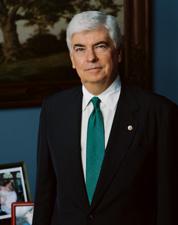 Sen. Christopher J. Dodd (D-CT)
Legislative Activity
Stay on top of the latest movement without scrolling through every action
Senate amendment proposed (on the floor): Amendment SA 1202 proposed by Senator Dodd.(consideration: CR S8163-8165, S8166-8169, S8191-8199, S8201; text: CR S8163; text as modified: CR S8191)
July 13, 2005
View full timeline
Senate amendment proposed (on the floor): Amendment SA 1202 proposed by Senator Dodd.(consideration: CR S8163-8165, S8166-8169, S8191-8199, S8201; text: CR S8163; text as modified: CR S8191)
July 13, 2005
Roll call votes on amendments in Senate: Motion to waive the Budget Act with respect to amendment SA 1202 rejected in Senate by Yea-Nay Vote. 36 - 60. Record Vote Number: 177.
July 13, 2005
Amendment SA 1202 proposed by Senator Dodd. (consideration: CR S8163-8165, S8166-8169, S8191-8199, S8201; text: CR S8163; text as modified: CR S8191) To fund urgent priorities for our Nation's firefighters, law enforcement personnel, emergency medical personnel, and all Americans by reducing the tax breaks for individuals with annual incomes in excess of $1 million.
July 13, 2005
Point of order under the Budget Act raised in Senate with respect to amendment SA 1202.
July 13, 2005
Motion to waive the Budget Act with respect to amendment SA 1202 made in Senate.
July 13, 2005
Motion to waive the Budget Act with respect to amendment SA 1202 rejected in Senate by Yea-Nay Vote. 36 - 60. Record Vote Number: 177.
July 13, 2005
Amendment SA 1202 ruled out of order by the chair.
July 13, 2005
Senate amendment submitted
July 11, 2005
Votes
1 roll call on this amendment
Text
Proposed
.

DEPARTMENT OF HOMELAND SECURITY APPROPRIATIONS ACT, 2006--Continued

The PRESIDING OFFICER. The Senator from Arizona.
Mr. KYL. Mr. President, I will speak to the underlying bill for a
moment. I find it interesting in debating this Homeland Security
appropriations bill, there have been many colleagues come to the floor
expressing the intention to amend the bill to add more resources here
or there or someplace else. I think it is instructive that the chairman
of this subcommittee has this year determined it is beyond the time
that we need to begin fully funding some of the particular accounts
that enable us to better control our border and that my colleagues are
now coming, I suggest in the case of some later than I would like, but
at least to the realization that we have not begun to put the resources
to controlling our border and some of our other homeland areas of need
that we should have.
This is a good development in the sense that we are finally beginning
to realize we have not done what we should do. But I am troubled a
little bit that there still is not adequate funding available to do
everything we need to do on the border that I am concerned about, and
that is our southwest border.
Compliments to the subcommittee and to the Appropriations Committee
for substantially increasing the funding for more Border Patrol agents,
for more detention space for people whom we have to detain who should
not be in the United States and who cannot be returned to their country
of origin immediately, for the technology which is funded here, and for
all the other things we are trying to do to secure our border.
Congratulations to Chairman Gregg and to the other members of the
committee for doing this. For my colleagues who would like to add more,
I appreciate their efforts as well because we all know that whatever we
are able to do this year, it is still not going to be enough to
actually gain control of our border.
One of the problems that has arisen is the problem of what the border
control calls ``other than Mexican'' illegal immigrants. As we all
know, most of the people coming across our southwestern border are from
the country of Mexico, but a lot of them are simply transiting through
Mexico. This population is of increasing concern to us. In fact, we
were recently informed that already this fiscal year over 119,000
third-country nationals, that is third country other than Mexico, have
been apprehended crossing our borders. We know there is a rough rule of
thumb that three or four are not apprehended for every one that is
apprehended, so you get a situation here where it is pretty clear that
we have a huge influx of people coming into the United States from
countries other than Mexico.
What does this mean? We know most of the people coming in from Mexico
are coming for work. Perhaps some have criminal backgrounds or other
nefarious purposes, but at least we don't suspect most of them are
coming here for purposes of harming us. In the case of these ``other
than Mexican'' nationals, the same thing cannot be said because between
20 or 30 of these countries are countries of special interest to the
United States; in other words, countries from which terrorists have
come. The question is both on the southern and on the northern border,
which is equally a problem here, how many of the folks coming into this
country from countries other than Mexico mean us harm?

[[Page S8180]]

We all know, for example, that in the days of testimony from former
DHS Deputy Secretary Loy, advising the Senate Intelligence Committee,
that:

[r]ecent information from ongoing investigations,
detentions and emerging threat streams strongly suggest that
al-Qaida has considered using the southwest border to
infiltrate the United States. . . . Several al-Qaida leaders
believe operatives can pay their way into the country through
Mexico, and also believe illegal entry is more advantageous
than legal entries for operational security reasons.

Secretary of State Rice commented later that:

We have from time to time had reports about al-Qaida trying
to use our southern border. . . . [it] is no secret that al-
Qaida will try to get into this country . . . by any means
they possibly can. . . . [t]hat's how they managed to do it
before and they will do everything they can to cross the
borders.

There is at least one specific case of a terrorist having been
apprehended coming into the United States.
There is more we can discuss here, much of it involving intelligence,
but on both the northern and southern border there is a threat that
people could come into this country and we would not be able to stop
them. We wouldn't even know they are here. And clearly because of that
means of entry as opposed to coming, say, from an airplane from London
or another city, you could at least be carrying contraband here that
could be detrimental to us in the form of a chemical or biological
agent. It is even conceivable you could bring nuclear material in as
well.
So the security of our borders is critical to homeland security, yet
up to this year we have not had the kind of appropriations necessary to
begin making a dent in the problem. I am, again, exceedingly grateful
to the chairman this year for seeing to it we are able to get that
funding to begin this effort.

One of the concerns about these ``other than Mexican'' detainees I
mentioned is that, unlike the case in Mexico where we can simply send
people back to the border to be returned, to be repatriated to their
country, it is not that easy in the case of people from other
countries. Obviously Mexico will not take them because they are not
Mexicans, even though they transited through Mexico. So you have to
begin a long, drawn-out process of contacting the country of origin and
trying to get the paperwork in order to see if you can get the country
to take the individual back, to begin that repatriation process. Some
countries will not even take their people back. Other countries take a
long time. What do we do in the meantime?
Obviously we need to detain those people. So we detain them--right?
Wrong. There is not adequate detention space. So we give them a piece
of paper and say, Come back in 90 days or 30 days, whatever the time
period is, and report in so we can remove you from the United States.
Guess how many of them voluntarily return for removal to their
country of origin? The percentages differ, but you get my drift. A very
high percentage choose to simply meld into American society and become
part of our illegal population here.
That cannot continue. We have called repeatedly on the Department of
Homeland Security to come up with a plan to ensure that we can detain
these individuals until their time for removal. It has yet to come to
us.
One very worthwhile program is called ``expedited removal.'' The
chief of the Border Patrol, David Aguilar, testified before my
Terrorism Subcommittee recently that it is their intention and hope to
begin to expand this expedited removal program to all of the Border
Patrol sectors on the southern and southwestern border. There are 20-
some sectors, but only two have expedited removal today, the Laredo, TX
and Tucson, AZ sectors. Here is why that is important. In most cases
the average time to remove one of these detainees from another country
is at least 3 months. It is about 90-some days. In the case of
expedited removal we can actually accomplish this within less than 30
days, so at least you lessen the time for detention. You cut that in
third, by one-third, and therefore if you have to put somebody in a
detention space that is federally owned, you don't have to kick
somebody else out in order to detain this person. If you have to rent
the space from somebody else, it is going to cost you about one-third
as much. It costs about $90 a day to house one of these detainees, and
you can do that in State and local detention facilities.
The bottom line is we don't have enough of that detention space, so
even today people are not being detained. They are being released on
their own recognizance, told to come back when the paperwork has been
developed with their country of origin so they can be returned.
That is wrong. We have to get the money to detain these folks and
make sure we have a policy to do so at the same time we are trying to
expand the expedited removal. There is money in this bill for that
detention.
Again, I thank Senator Gregg for his alertness to this problem and
willingness to put money in against the problem. But I fear the
Department of Homeland Security has still not got a plan in place to
both pursue the expedited removal for all sectors and, in the meantime,
detain those who need to be detained.
If we should have a situation arise, as arose in England recently, in
Great Britain, where people have come into the country--in this case
they appear to be indigenous to the country itself--but where they have
decided to engage in some act of terrorism, and it has been our own
fault that we have allowed them to meld into our society illegally,
then obviously we have no one to blame but ourselves.
I am calling this to the attention of my colleagues in the hope we
can continue to both provide the funding the administration needs and
to encourage the administration to get onto the solution of this
particular problem as well.
The problem here is multipronged. I think all of us have understood
that with the event in Great Britain a week ago, it illustrates to us
the kind of harm that can be caused by a conventional kind of attack of
terrorists. It doesn't take a major 9/11 kind of attack to create this
kind of chaos. Yet it calls into question what we could do to provide
total security within our homeland, because a train station, a bus
station, other places of public congregation--be they shopping areas,
sports events or the like--all suggest it is a virtual impossibility
before the fact to provide 100-percent security. It simply cannot be
done. That is why you have to try to prevent the problem from arising
in the first place.
I will close by noting that part of our effort, in this appropriation
bill, in order to control the border itself, is to provide a thousand
new Border Patrol agents at the border, also 300 new Immigration and
Customs investigators, the new enforcement agents. This bill provides
460 of those. Incidentally, all of these are in addition to numbers
provided in the supplemental appropriations bill. So we have added to
the number that we already acted on at the end of last year.
We fund over 40,000 positions dedicated to protecting our borders and
enforcing immigration laws. To break it down, over 12,000 Border Patrol
agents, 18,000 Customs and border protection officers, nearly 6,000
criminal investigators, nearly 1,300 deportation officers, 2,700
immigration enforcement agents and detention officers. We also have
money for more training of Border Patrol and immigration enforcement
personnel.
We have money to support the deployment of the US VISIT Program,
which will help us better track the people who both come into our
country and leave the country. We have over a half billion dollars for
air and marine operations, as I mentioned before, money for over 2,000
new detention beds for these apprehended illegal aliens, and with the
supplemental, that adds about 4,000 new detention spaces for this
purpose.
We more than double the number of ports that have our container
security initiative, 41 that take part in that, and nearly $1 billion
for biological countermeasures. These things, by and large, are in
place to try to prevent the capability of the terrorists from pulling
off an attack in the first place. They are not responding to an attack
after it has occurred. We have to have responses, but our primary goal
here should be to take the fight to the enemy, to try to provide the
protection going in, because there is no way, once they are in the
United States, to protect every bit of this wide-open and liberty-
loving society. So it is better to

[[Page S8181]]

try to stop them before they get here, and it is better to try to
degrade their ability to attack us by taking the fight to them.
That is why later on we are going to get into things such as
reauthorizing the PATRIOT Act, on which we just heard testimony, as a
critical component in our war on terror and protecting our homeland and
other ways in which we can take the fight to the enemy. For now, this
appropriations bill provides us a significant capability to stop the
terrorists at our border as well as providing some internal protection
in those areas that have the highest priority and for which we can get
the biggest bang for the buck in terms of protection.
Again, I compliment the members of the Appropriations Committee,
particularly the chairman of the Subcommittee on Homeland Security, for
their attentiveness to this issue, their willingness to make a
significant effort to help fight this battle.
I urge my colleagues to support this legislation when we get to that
point.
The PRESIDING OFFICER. The Senator from Illinois.
Mr. DURBIN. Mr. President, I ask unanimous consent that after I be
recognized to speak for 10, no more than 15 minutes, Senator Clinton of
New York be recognized to speak at that time.
The PRESIDING OFFICER. Without objection, it is so ordered.
Mr. DURBIN. I thank the Chair.
Mr. President, I just returned from a week back in my State of
Illinois traveling from Chicago through downstate southern Illinois
meeting with many people at Fourth of July parades, the usual standard
procedure in scheduling for many Members of the Senate and Congress.
Many people came to say hello, but there were a couple who stand out in
my memory of that week. One was a man in southern Illinois who pulled
me aside and in very quiet tones said, ``Bring our troops home.'' And
another, a man standing at O'Hare Airport, as I walked by, recognized
me and said, ``Support our troops.''
I think in those two brief sentences we really have a lot of the
public sentiment of America. Support our troops. That is clear. These
are our sons and daughters. If you have been there, as I was this last
March, and seen them, in Iraq, in Baghdad, risk their lives, see those
fresh-faced young people who are standing there so proudly on behalf of
our country, you can't help but support these men and women. You must.
And we have. We should continue to do so.
But there is a growing sentiment as well that they should come home.
Some say bring them home right now. I am not one of those people. I do
not believe we can just end our commitment today and leave Iraq. I am
afraid what would be left behind would be chaos, a training ground for
terrorism that would threaten not only the Middle East but the entire
world. But yet I do believe all of us feel, even the President, that we
should be looking to the day when our troops do come home and how we
will reach that day because every single day we wait in anticipation of
those troops coming home we are losing soldiers.
This morning's Washington Post, as it does every day, published the
number of American soldiers killed in Iraq to this moment: 1,755--
1,755--and more than 13,000 grievously wounded. Many of them I have met
and seen. Some of the Illinois families, I have been to their funerals,
met their families, dropped notes to and spoken to them. It breaks your
heart to think that they have lost someone they love so much.
How do we reach this point where we can bring these troops home and
feel that we have achieved what we set out to do? Well, we came up with
a way to try to measure this and set us on a course for it to happen.
When Congress passed the supplemental appropriations bill, we
authorized $35 billion directly associated with U.S. operations in Iraq
and $5.7 billion on top of that to train and equip Iraqi security
forces. That is the way we bring American soldiers home, by training
and equipping Iraqis to take their place.
That same bill required the Secretary of Defense to provide a
detailed report on how the training was progressing and what U.S. troop
levels would likely be by the end of the year. The report that was
mandated by that supplemental appropriations bill was due in 60 days
after it was enacted. The due date was July 11. Today is July 13, and
we still have not received the report required by law. Some media
reports the Pentagon is still working on it. Others say the report is
on Secretary Rumsfeld's desk. When we call the Pentagon, the answers
are conflicting.
Congress has approved over $200 billion for the war in Iraq. Although
I have had serious misgivings about the initial invasion of Iraq as to
whether we had a plan for success, not just for deposing Saddam Hussein
but for building a peace, while I was concerned that we did not have
allies to stand with our troops soldier by soldier--only the British
came forward with any substantial numbers--and while I was concerned
about the American burden of this war not only in human life but in
treasure, I have decided, and I think most of my colleagues agree, we
will not shortchange our troops in the field.
The last time we had a supplemental appropriations bill, $82 billion
for our troops passed unanimously in the Senate. Many of us who had
voted against the war voted for that money. If it were my son or
daughter, I would want them to receive every single penny they needed
to perform their mission, to perform as they have, and come home
safely.
Despite having voted for this money, I stand here today with my
colleagues in the Senate uncertain as to our progress because this
report from the Pentagon which we had asked for, one which attempts to
measure how we are progressing, how the Iraqis are progressing, has
still not been delivered, and it is a concern to me because I think
this report really goes to the heart of what we are trying to achieve.
We are trying to finally learn where we stand in Iraq, how soon our
troops are likely to come home. There have been a lot of claims--
150,000 Iraqi soldiers ready to come into battle--and yet when it comes
to the real battles it is American soldiers--American soldiers--risking
their lives. That is why we have asked for the Pentagon to tell us what
progress is being made.

The conference report to the supplemental stated that a new
assessment is necessary because the Pentagon's existing performance
indicators and measures of stability and security in Iraq are not
adequate. We have heard about these claims, how many Iraqi soldiers and
policemen are ready. Police have been recruited by the tens of
thousands, according to reports from the Pentagon, but many are just
missing in action.
The report that we require under law asks for a detailed assessment
of Iraqi military, political and economic progress. Iraqi battalions
must be able to operate on their own against the insurgency, and Iraqi
forces must be able to secure their own borders.
The draft of the new constitution in Iraq is due next month. The
Iraqis have made some progress toward creating a new political system
of government, and they had an absolutely historical election with
turnout evidencing a thirst for new leadership in their country, but
Iraqi unemployment may be as high as 50 percent, and some of the most
fundamental things of civilized life are not there, whether it is
electricity, sewage treatment, water, security in your home.
The report we asked for demands an assessment on how far we
progressed toward our goals. The fact that this report has not been
filed is a source of real concern. Progress in Iraq is critical to
bringing America's soldiers home with a victory. This report asks our
Pentagon what U.S. force levels will be needed by the end of next year.
We say that if there is any part of it that needs to be classified, do
so. Don't disclose anything that could jeopardize the security and
safety of our troops.
An amendment has been offered by Senator Reid of Nevada and Senator
Kennedy and myself, an amendment to the Homeland Security bill before
us, asking that this report be provided to Congress on a timely basis.
It is long overdue. This is an administration which has measured many
things in terms of performance and quality. So many different agencies
of our Government were held to the standard of what are you producing
for the money that is being provided. What we are asking is the same
type of accountability and the same type of metric when it comes to our
progress in Iraq.
I would agree with many who say setting a timetable for withdrawal
may be

[[Page S8182]]

counterproductive, but it is not unreasonable to hold the Iraqis to a
timetable, a timetable to develop their government and their security
force and their defense so that American soldiers can come home. I
think that is reasonable. It was passed overwhelmingly on a bipartisan
basis by Members of Congress.
The fact that there has been such a delay in providing this
information is troubling, but I am hoping that even as I speak here
today, the Secretary of Defense is preparing this report and sending it
so we can learn as quickly as possible how soon our soldiers can come
home to their families and those of us who love them.
Mr. President, I yield the floor.
The PRESIDING OFFICER. The Senator from New York is recognized.
Mrs. CLINTON. I thank the Chair.
Mr. President, I ask unanimous consent that the pending amendment be
set aside.
The PRESIDING OFFICER. Without objection, it is so ordered.

Amendment No. 1105

Mrs. CLINTON. Mr. President, I would like to call up amendment No.
1105.
The PRESIDING OFFICER. The clerk will report.
The assistant legislative clerk read as follows:

The Senator from New York [Mrs. Clinton] proposes an
amendment numbered 1105.

The amendment is as follows:

(Purpose: To require an accounting of certain costs incurred by, and
payments made to, New York City, the State of New York, and certain
related entities, as a result of the terrorist attacks of September 11,
2001)

At the appropriate place, insert the following:
Sec. ___.(a) Not later than 15 days after the date of
enactment of this Act, the Secretary of Homeland Security,
acting through the Director of the Federal Emergency
Management Agency (including the Emergency Preparedness and
Response Directorate and all other staff under the direction
of the Secretary) (referred to in this section as the
``Secretary''), shall provide to the Subcommittee on Homeland
Security of the Committee on Appropriations of the Senate--
(1) a detailed list that describes, as of the date of
enactment of this Act--
(A) all associated costs (as determined by the Secretary)
incurred by New York City, the State of New York, and any
other entity or organization established by New York City or
the State of New York, as a result of the terrorist attacks
of September 11, 2001, that were paid using funds made
available by Congress; and
(B) all requests for funds submitted to the Department of
Homeland Security and the Federal Emergency Management Agency
by New York City and the State of New York (including the
dates of submission, and dates of payment, if any, of those
requests) that have been paid or rejected, or that remain
unpaid; and
(2) a certified accounting and detailed description of--
(A) the amounts of funds made available after the terrorist
attacks of September 11, 2001, that remain unexpended as of
the date of enactment of this Act;
(B) the accounts containing those unexpended funds; and
(C) a detailed description of any plans of the Secretary
for expenditure or obligation of those unexpended funds.
(b) Not later than 15 days after the date of receipt of a
request from the Subcommittee on Homeland Security of the
Committee on Appropriations of the Senate for any information
in addition to information described in subsection (a), the
Secretary, and such staff located in a regional office of the
Department of Homeland Security or the Federal Emergency
Management Agency as the Secretary determines to be
appropriate, shall provide the information to the
Subcommittee.

Mrs. CLINTON. Mr. President, I send a modification to the desk.
The PRESIDING OFFICER. Is there objection to the modification?
Mrs. CLINTON. Mr. President, I understand Chairman Gregg and Senator
Byrd have agreed to accept this amendment as modified. I ask unanimous
consent that this amendment be agreed to as modified.
The PRESIDING OFFICER. Without objection, it is so ordered.
The amendment (No. 1105), as modified, was agreed to, as follows:

At the appropriate place, insert the following:
Sec. ___. (a) Not later than 15 days after the date of
enactment of this Act, the Secretary of Homeland Security,
acting through the Director of the Federal Emergency
Management Agency (including the Emergency Preparedness and
Response Directorate and all other staff under the direction
of the Secretary) (referred to in this section as the
``Secretary''), shall provide to the Subcommittee on Homeland
Security of the Committee on Appropriations of the Senate--
(1) a detailed list that describes, as of the date of
enactment of this Act, all associated costs (as determined by
the Secretary) incurred by New York City, the State of New
York, and any other entity or organization established by New
York City or the State of New York, as a result of the
terrorist attacks of September 11, 2001, that were paid using
funds made available by Congress; and
(2) a detailed description of--
(A) the amounts of funds made available after the terrorist
attacks of September 11, 2001, that remain unexpended as of
the date of enactment of this Act;
(B) the accounts containing those unexpended funds; and
(C) a detailed description of any plans for expenditure or
obligation of those unexpended funds.
(b) Not later than 15 days after the date of receipt of a
request from the Subcommittee on Homeland Security of the
Committee on Appropriations of the Senate for any information
directly related to information described in subsection (a),
the Secretary, and such staff located in a regional office of
the Department of Homeland Security or the Federal Emergency
Management Agency as the Secretary determines to be
appropriate, shall provide the information to the
Subcommittee.

Amendment No. 1106

Mrs. CLINTON. Mr. President, I call up amendment No. 1106 and ask for
its immediate consideration.
The PRESIDING OFFICER. The clerk will report.
The assistant legislative clerk read as follows:

The Senator from New York [Mrs. Clinton] proposes an
amendment numbered 1106.

Mrs. CLINTON. Mr. President, I ask unanimous consent that reading of
the amendment be dispensed with.
The PRESIDING OFFICER. Without objection, it is so ordered.
The amendment is as follows:

(Purpose: To require the Secretary of Homeland Security to report to
Congress regarding the vulnerability of certain facilities and measures
to provide greater security, and for other purposes)

On page 100, between lines 11 and 12, insert the following:
Sec. 519. (a) Not later than 90 days after the date of
enactment of this Act, the Secretary of Homeland Security, in
consultation with the Secretary of Transportation, shall
assess and report in writing to the Committee on
Appropriations, the Committee on Homeland Security and
Government Affairs, and the Committee on Commerce, Science,
and Transportation of the Senate on the following:
(1) The vulnerability posed to high risk areas and
facilities from general aviation aircraft that could be
stolen or used as a weapon or armed with a weapon.
(2) The security vulnerabilities existing at general
aviation airports that would permit general aviation aircraft
to be stolen.
(3) Low-cost, high-performance technology that could be
used to easily track general aviation aircraft that could
otherwise fly undetected.
(4) The feasibility of implementing security measures that
would disable general aviation aircraft while on the ground
and parked to prevent theft.
(5) The feasibility of performing requisite background
checks on individuals working at general aviation airports
that have access to aircraft or flight line activities.
(6) An assessment of the threat posed to high population
areas, nuclear facilities, key infrastructure, military
bases, and transportation infrastructure that stolen or
hijacked general aviation aircraft pose especially if armed
with weapons or explosives.
(7) An assessment of existing security precautions in place
at general aviation airports to prevent breaches of the
flight line and perimeter.
(8) An assessment of whether unmanned air traffic control
towers provide a security or alert weakness to the security
of general aviation aircraft.
(9) An assessment of the additional measures that should be
adopted to ensure the security of general aviation aircraft.
(b) The report required by subsection (a) shall include
cost estimates associated with implementing each of the
measures recommended in the report.

Mrs. CLINTON. Mr. President, I ask that Senators Lautenberg, Corzine,
and Schumer be added as cosponsors of this amendment.
The PRESIDING OFFICER. Without objection, it is so ordered.
Mrs. CLINTON. Mr. President, this is a commonsense amendment
regarding the potential threat that all of our cities and States face
from the theft or misuse of general aviation aircraft by criminals or
terrorists.
This amendment would require the Secretary of Homeland Security, in
coordination with the Secretary of Transportation, to assess the
dangers posed to high-risk, large population, and critical
infrastructure areas should general aviation aircraft be stolen and
used as a weapon by a criminal or terrorist.

[[Page S8183]]

This study would require the two Secretaries to assess the
vulnerability of general aviation airports and aircraft and study what
low-cost, high-technology devices could be available to better track
general aviation aircraft.
Last month, a 20-year-old young man, while intoxicated and
accompanied by two other individuals, breached a perimeter fence of an
airport in Danbury, CT. He and his companions stole a small Cessna 172
aircraft, departed from the airport without detection, flew across the
eastern border of New York, and eventually, thankfully, landed without
incident at the Westchester County Airport in New York very near to my
home.
What is alarming about this is that this happened, and it happened
without detection. So far as we know, no one knew the aircraft had been
stolen or that the joyride was taking place. This incident occurred
very close to New York City, very close to Indian Point, the nuclear
facility in the county. Thankfully, this particular incident ended
without any damage, destruction, or death, and the individuals were
eventually detained by law enforcement.
Following the incident, which, as you might imagine, happening so
close to New York City involving stolen aircraft raised a great deal of
concern among my constituents, I wrote to Secretary Chertoff and
Secretary Mineta asking for an investigation into this incident, and I
hope to hear back from them both soon. But this incident should be a
forewarning of the types of threats we still face from aircraft. We
have been very focused on the big commercial aircraft that many of us
use on a regular basis, but we cannot forget that most aircraft are in
private hands in local airports, many of them privately owned or
privately leased, and that they still pose a potential danger to key
infrastructure, to populated areas, and we need to be more aware of
what that threat could be.
The 9/11 Commission, which looked at this, concluded:

Major vulnerabilities still exist in cargo and general
aviation security. These, together with inadequate screening
and access controls, continue to present aviation security
challenges.

In addition, the 9/11 Commission told us that we needed to be
imaginative, we needed to think outside the box. Unfortunately, we
needed to think like those who wish us harm about what the new and
emerging threats could be.
The Transportation Security Administration, known as TSA, issued
security guidelines for general aviation airports in May of 2004, and
they outlined some guidelines that general aviation airports should
follow in order to secure the aircraft and the airfield. There are more
than 19,000 landing facilities nationwide, including heliports, lakes,
and dirt landing strips from which aircraft could be launched and more
than 200,000 general aviation aircraft in our country.

Of course, it is impossible to avoid every threat that is posed to
the public or that we can imagine, but we should be vigilant to make
sure we have a partnership so that local communities, private
individuals, and private businesses can all take necessary steps to be
vigilant and protective.
My amendment requires the Secretary of Homeland Security, in
coordination with the Secretary of Transportation, to conduct a threat
assessment posed by security breaches at general aviation airports and
to look at the potential impact such threats could pose to a number of
potential targets if an aircraft were used as weapon or were loaded
with explosives by terrorists.
The Department of Homeland Security would assess low-cost
technologies to track general aviation aircraft, the feasibility of
implementing additional security measures and background checks, an
analysis of airports with unmanned air traffic control towers and what
costs may be associated with implementing necessary additional security
measures.
We have been very blessed that we have not suffered another terrorist
attack. That is due to the hard work and vigilance of countless
Americans who have responded not just heroically but in a very
steadfast, daily way to prevent, detect, deter, and defend against
potential threats.
In this building, we have experienced evacuations which, thankfully,
were caused by either false alarms or as a result of errors by pilots.
Recently, another general aviation aircraft breached the airspace over
Camp David while the President of the United States was present.
It is important to evaluate the threats that could be posed. In its
2004 report, the TSA stated that as many vulnerabilities within other
areas of aviation have been reduced, general aviation may be perceived
as a more attractive target and consequently more vulnerable to misuses
by terrorists.
I have flown in just about every little kind of plane you can
imagine--medium-sized plane, big plane, crop dusters. I have had doors
blow off, windows blow off, I have had emergency landings in pastures
and cow fields and roads. I have been in so many airports at all hours
of the day and night when no one was around except those getting into
the airport or those just landing. I have a good idea how available
these airfields are.
I appreciate the work the Aviation Security Advisory Committee
Working Group did in advising the TSA. However, given the heightened
vulnerability that we all are aware of, given some of the recent
events--including the evacuations of our own Capitol involving general
aviation aircraft--we need to roll up our sleeves and take another hard
look at this. I hope we can do it hand in hand with the general
aviation fixed-base operators, pilots, owners, airport managers, and
others who have been working hard to increase security measures at so
many of these small airports.
I believe in general aviation. I take advantage of it practically
every week. It is a significant and important contributor to our
national economy. I want to be sure we do everything possible to make
sure it is not in any way affected by any potential criminal or
terrorist activity.
This amendment does not mandate any new costs for general aviation.
It simply requires the study be conducted on vulnerabilities and a
report made to Congress within 120 days. Most people who own these
airports, most people who own these general aviation aircraft, want to
be safe. They want to do what is necessary to protect their investment.
But we need to have a good analysis of what the threats might be so we
can be smart about how we address them. We certainly do not want to
wait until an incident happens.
I appreciate Chairman Gregg and Senator Byrd who have agreed to
accept this amendment.
I ask unanimous consent amendment 1106 be agreed to.
Mr. GREGG. I ask unanimous consent the amendment be agreed to.
The PRESIDING OFFICER. The question is on agreeing to the amendment.
The amendment (No. 1106) was agreed to.
The PRESIDING OFFICER. The Senator from Nevada.

Amendment No. 1104

Mr. ENSIGN. Mr. President, I ask that the pending amendment be set
aside to call up amendment 1104.
The PRESIDING OFFICER. The clerk will report.
The assistant legislative clerk read as follows:

The Senator from Nevada [Mr. Ensign] proposes an amendment
numbered 1104.

Mr. ENSIGN. Mr. President, I ask unanimous consent the reading of the
amendment be dispensed with.
The PRESIDING OFFICER. Without objection, it is so ordered.
The amendment is as follows:

(Purpose: To require the Transportation Security Administration to
implement the use of multi compartment bins to screen passenger
belongings at security checkpoints)

On page 69, line 12, after ``presence:'', insert the
following: ``Provided further, That of the amount made
available under this heading, an amount shall be available
for the Transportation Security Administration to develop a
plan to research, test, and implement multi compartment bins
to screen passenger belongings at security checkpoints:''

Amendment No. 1104, as Modified

Mr. ENSIGN. I send a modification to that amendment to the desk.
The PRESIDING OFFICER. The Senator has that right.
The amendment will be so modified.
The amendment (No. 1104), as modified, is as follows:

On page 69, line 12, after ``presence:'', insert the
following: ``Provided further, That of

[[Page S8184]]

the amount made available under this heading, an amount shall
be available for the Transportation Security Administration
to develop a plan to research, test, and potentially
implement multi compartment bins to screen passenger
belongings at security checkpoints:''

Mr. ENSIGN. I understand both sides have agreed to the amendment, as
modified, and I ask unanimous consent this amendment be agreed to.
The PRESIDING OFFICER. The question is on agreeing to the amendment,
as modified.
The amendment (No. 1104), as modified, was agreed to.

Amendment No. 1124, as Modified

Mr. ENSIGN. I call up amendment numbered 1124 for its immediate
consideration.
The PRESIDING OFFICER. The amendment is pending.
Does the Senator wish to call for regular order with respect to that
amendment?
Mr. ENSIGN. Yes. I send a modification to the desk to that amendment.
The PRESIDING OFFICER. Without objection, it is so ordered.
The amendment is so modified.
The amendment (No. 1124), as modified, is as follows:

On page 77, line 20, insert ``of which $367,552,000 may be
transferred to Customs and Border Protection for hiring an
additional 1,000 border agents and for other necessary
support activities for such agency; and'' after ``local
grants,''.

Mr. ENSIGN. Mr. President; last year when the Senate was considering
the national intelligence reform bill, we adopted several
recommendations of the 9/11 Commission.
One of those recommendations was to hire an additional 2,000 new
custom and border protection agents each year for the next 5 years.
This body agreed with the recommendation. We agreed that our national
security depended on such an investment, and we enacted that
recommendation into law.
We are now considering the Homeland Security appropriations bill. The
bill that was reported out of committee includes funding for 1,000 new
agents in the coming fiscal year. I understand there are problems with
training 2,000 agents.
My amendment as modified would provide the Secretary of Homeland
Security with the discretion to shift $367 million to hire 2,000 new
agents next year. This amendment is fully offset. I rise today to urge
the Senate to adopt my amendment so that we can keep the commitment
that we made to the American people last year. I thank John McCain for
cosponsoring our amendment.
The threat of illegal border crossing by people who wish to kill us
is very real.
The 9/11 Commission found that many of the 19 hijackers that attacked
on 9/11 could have been placed on watch lists. But without adequate
staff and coordinated efforts, the terrorists were allowed to enter the
United States. Once here they learned how to fly airplanes at American
flight schools. They conducted surveillance to assess our weaknesses.
And they attacked.
In order to prevent another terrorist attack on American soil, we
must improve every aspect of our Nation's security. Our security is
truly only as strong as our weakest link.
For too long, the lack of funding for border agents has been a weak
link. By funding additional agents, we protect both our southern and
our, often neglected, northern border. This will make it harder for
terrorists to enter the United States and attack us.
There have been several news reports recently that I want to bring to
my colleagues' attention.
A few months ago, intelligence officials confirmed that the terrorist
Zarqawi plans to infiltrate America through our borders. He plans to
attack targets such as movie theaters, restaurants, and schools. My
amendment commits the resources to make sure that this does not happen.
Just last month, in Detroit, a Lebanese national named Mahmoud
Youssef Kourani, who was in the United States illegally, pled guilty in
Federal court to conspiring to raise money for a recognized terrorist
group. He was in the United States raising money to fund terrorists.
That is outrageous. But what is equally outrageous is how he came into
the United States in the first place.
Kourani took advantage of our porous border. Kourani paid a Mexican
consular official in Beirut $3,000 for a visa to enter Mexico. Once in
Mexico, he snuck across the U.S.-Mexican border in 2001 and settled in
Michigan.
According to Federal prosecutors, Kourani and another member of his
family are heavily involved with the same group that killed 214 marines
in Beirut in 1983 and which is also responsible for bombing two U.S.
embassies.
While in the United States, Kourani also helped harbor other illegal
immigrants. Thankfully, he was prosecuted before he could inflict any
direct harm on any American.
Given how easy it is for people like Kourani to enter the United
States, I believe that my amendment is imperative to our national
security.
My amendment does not require any additional spending. It gives the
Secretary discretion which, if used, is completely offset. This
amendment is paid for.
Homeland security spending must be based on priorities. The fact that
terrorists would use our borders to gain access to the United States to
attack is a real threat. So we must provide funds for customs and
border protection.
Three and a half years ago it only took 19 people to change the
course of this country. We must do everything that we can to prevent
another terrorist attack on American soil.
The world has changed dramatically since 9/11 when the terrorists
used our open and trusting society against us. We cannot allow a repeat
of that tragedy.
This amendment will help those who guard our frontiers by providing
the necessary, and I stress necessary, tools to ensure the safety of
our citizens.
In conclusion, I commend the chairman of the subcommittee, Chairman
Gregg, for the job he has done prioritizing what we are doing in the
area of Homeland Security. His is a very difficult job. We have limited
resources. It is a question of where are we going to manage our risk
with the limited resources we have in this global war on terrorism.
Chairman Gregg has a huge, huge task ahead not only this year but in
the years to come.
This year's bill is going a long way to reprioritizing what we need
to do to defend ourselves against the terrorists. Although the bill
goes in the right direction, our amendment takes the bill that much
further toward protecting our national security.
I yield the floor.
The PRESIDING OFFICER. The Senator from New Hampshire.
Mr. GREGG. I appreciate the commitment of Senator Ensign and Senator
McCain on the issue of border security. They have been aggressive in
their commitment and have done a lot of constructive work. I will leave
it to the Senate to decide how to handle this amendment.
I make these points for the purpose of fair disclosure. First off,
the amendment takes about $360 million out of the first responder
program and moves it over to the Border Patrol for the purpose of
hiring 1,000 new border agents. That means first responder money would
go from $1.9 billion to $1.4 billion.
In addition, the money that will be moved would be money that would
go out under threat. In other words, there are two pools of first
responder money. There is the money that is distributed on the basis of
threat, and there is the money that is distributed on the basis of
formula.
Now, the language of the amendment says ``may.'' I respect the
decision of the authors of this amendment to use the term ``may''
because that will leave it up to the Homeland Security agency to make
the decision as to where the money should go, whether it should stay in
the area of first responders or whether it should be moved over to the
Border Patrol. That is probably good policy in many ways.
The second thing I think that needs to be noted, however, is the
reason we arrived at the number 1,000 that we funded--myself and
Senator Byrd--in this bill for new Border Patrol is because when you
combine that number with the supplemental, where there were 500 new
Border Patrol agents added, you are up to 1,500 Border Patrol agents,
and we know, through efforts of our staff and requests of the
Department, that because of the facilities' restrictions--we moved most
of the training from South Carolina over to

[[Page S8185]]

New Mexico--we can only train probably about 1,300 agents a year right
now.
Now, this bill has money in it to get those facilities up to a
position where they can do a much more robust effort in the area of
training. In fact, my hope is next year we can train upwards of 2,500
when we expand these facilities. But right now they have, basically,
limits on the number of people they can train. So it is not clear these
additional Border Patrol agents would be able to be trained should we
want to bring them on line. We do want to bring them on line; it is
just a question when we can bring them on line. So that is a concern I
think Members should know about.
In addition, the physical effort of hiring Border Patrol agents has
become a problem for the Border Patrol. One of the reasons they were
not able to hire up to the 2,000, which was originally requested a few
years ago, was because they could not find qualified people to meet the
enlistment rolls. We are not sure whether they are going to be able to
find 1,500 new Border Patrol people. We hope they will. It will put a
lot of pressure on them to try to find 2,500 new people, which is what
this number will be if this amendment is adopted.
But, again, this is an issue of policy. I think the body has the
right to make a decision on this issue. I do not intend to make any
points of order against it. I will leave it to the majority of the body
to decide where they want to have this money spent and how they want to
set the policy on this issue when the amendment comes up for a vote.
I yield the floor.
The PRESIDING OFFICER. The Senator from West Virginia.
Mr. BYRD. Mr. President, I thank the Chair.

Amendment No. 1218

Mr. President, the amendment that the minority leader offered on my
behalf would provide an additional $1.33 billion above the underlying
bill for security funding needed for our transit systems, intracity
buses, intercity rail, and freight rail.
Our thoughts and prayers are with the victims of the London bombings.
For all of us, the pictures were all too graphic reminders of how
quickly disaster can strike and how deadly terrorist strikes can be.
The horrific attacks in London a few days ago were eerily similar to
the attacks in Madrid, Spain, in March 2004: targeted, coordinated, and
timed bombings.
Sadly, crowded subway systems and trains have become inviting targets
for terrorists. We have witnessed the hysteria and the chaos that these
events can trigger. Could it happen here? Of course. Are our systems
more secure? I wonder.
Last week, when asked if additional funding was needed to secure mass
transit, Homeland Security Secretary Chertoff responded by saying:

I wouldn't make a policy decision driven by a single event.

Well, with all due respect to the Secretary, the alarm bells have
been ringing for years.
On July 8, the Washington Post printed a chart that provides a
chronology of bombings with al-Qaida links. This chart shows that,
starting in 1993 at the World Trade Center in New York City, there have
been 16 bombings worldwide linked to al-Qaida.
Mr. President, I ask unanimous consent that this chart be printed in
the Record.
There being no objection, the material was ordered to be printed in
the Record, as follows:

BOMBINGS WITH AL QAEDA LINKS
----------------------------------------------------------------------------------------------------------------
Date                      City             Country          Facility         Attack type      Dead
----------------------------------------------------------------------------------------------------------------
2/26/93.......................  New York City....  U.S.............  World Trade       Car bomb (some          6
Center.           participants
later became
associated with
al Qaeda).
6/25/96.......................  Dhahran..........  Saudi Arabia....  Khobar Towers     Truck bomb (some       19
housing.          evidence of al
Qaeda).
8/7/98........................  Nairobi..........  Kenya...........  U.S. Embassy....  Truck bomb......      247
8/7/98........................  Dar es Salaam....  Tanzania........  U.S. Embassy....  Truck bomb......       10
10/12/00......................  Aden.............  Yemen...........  Destroyer USS     Bomb on small          17
Cole.             boat.
9/11/01.......................  New York,          U.S.............  World Trade       Planes flown        2,973
Washington,                          Center,           into buildings,
Pennsylvania.                        Pentagon,         field.
Pennsylvania.
12/22/01......................  Paris-Miami......  Airliner........  Attempted plane   Richard Reid            0
bombing.          caught with
shoe bomb.
4/11/02.......................  Djerba Island....  Tunisia.........  Synagogue.......  Truck bomb......       21
6/14/02.......................  Karachi..........  Pakistan........  U.S. consulate..  Suicide car bomb       14
10/6/02.......................  Mina al-Dabah....  Yemen...........  French            Bomb on boat....        1
supertanker
Limburg.
10/12/02......................  Bali.............  Indonesia.......  Two nightclubs..  Suicide bombings      202
11/28/02......................  Mombasa..........  Kenya...........  Israeli-owned     Suicide car bomb       16
Paradise Hotel.
5/12/03.......................  Riyadh...........  Saudi Arabia....  Three compounds   Car bombs.......       23
for Westerners.
5/16/03.......................  Casablanca.......  Morocco.........  Five locations..  Suicide bombings       45
8/5/03........................  Jakarta..........  Indonesia.......  JW Marriott       Car bomb........       12
Hotel.
3/11/04.......................  Madrid...........  Spain...........  Four trains.....  Bombs in sachels      191
----------------------------------------------------------------------------------------------------------------
Source: Washington Post database.

Mr. BYRD. The alarms do not stop there, Mr. President. According to
the RAND Corporation, between 1998 and 2003, there were 181 terrorist
attacks on rail targets worldwide. The Congressional Research Service
has reported that passenger rail systems in the United States carry
about five times--five times--as many passengers each day as do the
airlines. Yet the administration has continuously opposed funding to
increase security on our trains, subways, and buses.
Public transportation is used nearly 32 million times a day--think of
that: 32 million times a day--which is 16 times more than travel on
domestic airlines. According to the Government Accountability Office,
nearly 6,000 agencies provide transit services by bus, subway, ferry,
and light rail to about 14 million Americans each weekday. Amtrak
carried an all-time record ridership of 25 million passengers in fiscal
year 2004. Are these lives not worth protecting? How about it?
What about the dangerous and hazardous materials that are transported
by rail? We simply are not doing enough. Without proper security
measures in place, these transports are vulnerable to attack or
sabotage. Many of these shipments travel to or through major urban
areas, such as Washington, DC, and, frankly, only minutes down the road
from where we stand today.
The Homeland Security Council released a report in July 2004
indicating that a chlorine tanker explosion in an urban area could kill
up to 17,500 people. According to a New York Times editorial on June
20, 2005:

One of the deadliest terrorist scenarios the Department of
Homeland Security has come up with is an attack on a 90-ton
rail tanker filled with chlorine. As many as 100,000 people
could be killed or injured in less than 30 minutes.

Yet only 2 out of every 100 transportation security dollars in this
bill will be spent on rail and transit. What does this mean? This means
that 98 percent of transportation security funding is going--for
what?--going for aviation security.
Since 9/11, I have offered amendments on seven different occasions--
seven different occasions--to add money for transit and rail security.
However, every time the administration opposed my efforts. So I regret
the Secretary's comments last week that policy should not be driven by
a single event.
I was astonished to learn that the $150 million that Congress
approved for mass transit and rail security last October is still
sitting--where?--sitting in the Treasury.
Finally, on Tuesday, the Department notified Congress how they intend
to allocate the funds. But an announcement does not make Americans
safer. It takes time for transit and rail systems to actually put these
security improvements in place, so there is no excuse for these
bureaucratic delays in Washington.
Within very limited allocations, Congress has taken the lead by
providing $265 million between fiscal years 2003

[[Page S8186]]

and 2005 for transit security. Unfortunately, the administration has
let the money sit in Washington far too long. It was all of 8 months
before all of the 2003 funding was awarded, and 6 months before the
2004 funding went out the door. And here we are again, 9 months after
the fiscal year 2005 transit funding was enacted, and what happens?
Well, it is deja vu all over again. It is still sitting--where?--in
Washington, right here in Washington. The administration must overcome
the hurdles that have caused those delays.
Clearly, the administration is not taking this threat seriously. It
certainly would not appear to be. So we must press the administration
to do more. The horrific events we witnessed just a few days ago ought
to serve as a call to action by this Government to protect our citizens
from future attack. For far too long, the administration has put its
head in the sand where rail and mass transit security are concerned.
We should be taking steps right now to improve deterrence in our
transit and rail systems by investing in surveillance cameras,
investing in locks, in gates, in canine teams, in sensors, and other
tools.
Last October, the Senate passed two bipartisan rail security
authorization bills, S. 2273 and S. 2884, that authorized additional
funding for securing mass transit and rail systems, but the bills did
not make it to the White House.
The bill that is before the Senate reduces funding from $150 million
in fiscal year 2005 to $100 million. The amendment would increase the
$100 million to $1.43 billion. That is the amendment that I offer. Let
me say it again. The amendment would increase the $100 million to $1.43
billion. The $1.43 billion includes $1.166 billion for transit security
and $265 million for rail security. So we are taking care of both
transit security and rail security. That seems to meet both needs, at
least part way.
Our security efforts cannot be delayed, Mr. President, and must not
be underfunded. The lives of the American people depend on strengthened
security. And whose life is it? It may be your own. It may be your
relative's. It may be your friend's. The time for hand wringing is
over. It is time to act.
So I urge all Senators to support the amendment.
I ask unanimous consent, Mr. President, that the following Senators
have their names added as cosponsors to the amendment: Mr. Inouye, Mr.
Sarbanes, Mr. Reed of Rhode Island, Mrs. Clinton, Mr. Schumer, Mr.
Kennedy, Ms. Mikulski, Mr. Rockefeller, Mr. Lieberman, Mr. Lautenberg,
Mr. Dayton, and Mr. Corzine.
The PRESIDING OFFICER. Without objection, it is so ordered.

Amendment No. 1120

Mr. BYRD. Mr. President, on behalf of Senator Feingold, I call up
amendment No. 1120. The amendment requires the Department of Homeland
Security to report to the Congress on the use of data-mining
procedures.
The PRESIDING OFFICER. Without objection, the pending amendment is
set aside.
The clerk will report.
The assistant legislative clerk read as follows:

The Senator from West Virginia [Mr. Byrd], for Mr.
Feingold, for himself, Mr. Sununu, Mr. Leahy, and Mr.
Corzine, proposes an amendment numbered 1120.

Mr. BYRD. Mr. President, I ask unanimous consent that reading of the
amendment be dispensed with.
The PRESIDING OFFICER. Without objection, it is so ordered.
The amendment is as follows:

(Purpose: To require reports to Congress on Department of Homeland
Security use of data-mining)

At the appropriate place, insert the following:
Sec. __. (a) Definitions.--In this section:
(1) Data-mining.--The term ``data-mining'' means a query or
search or other analysis of 1 or more electronic databases,
whereas--
(A) at least 1 of the databases was obtained from or
remains under the control of a non-Federal entity, or the
information was acquired initially by another department or
agency of the Federal Government for purposes other than
intelligence or law enforcement;
(B) a department or agency of the Federal Government or a
non-Federal entity acting on behalf of the Federal Government
is conducting the query or search or other analysis to find a
predictive pattern indicating terrorist or criminal activity;
and
(C) the search does not use a specific individual's
personal identifiers to acquire information concerning that
individual.
(2) Database.--The term ``database'' does not include
telephone directories, news reporting, information publicly
available via the Internet or available by any other means to
any member of the public without payment of a fee, or
databases of judicial and administrative opinions.
(b) Reports on Data-Mining Activities by the Department of
Homeland Security.--
(1) Requirement for report.--The head of each department or
agency in the Department of Homeland Security that is engaged
in any activity to use or develop data-mining technology
shall each submit a report to Congress on all such activities
of the agency under the jurisdiction of that official. The
report shall be made available to the public.
(2) Content of report.--A report submitted under paragraph
(1) shall include, for each activity to use or develop data-
mining technology that is required to be covered by the
report, the following information:
(A) A thorough description of the data-mining technology
and the data that is being or will be used.
(B) A thorough description of the goals and plans for the
use or development of such technology and, where appropriate,
the target dates for the deployment of the data-mining
technology.
(C) An assessment of the efficacy or likely efficacy of the
data-mining technology in providing accurate information
consistent with and valuable to the stated goals and plans
for the use or development of the technology.
(D) An assessment of the impact or likely impact of the
implementation of the data-mining technology on the privacy
and civil liberties of individuals.
(E) A list and analysis of the laws and regulations that
govern the information being or to be collected, reviewed,
gathered, analyzed, or used with the data-mining technology.
(F) A thorough discussion of the policies, procedures, and
guidelines that are in place or that are to be developed and
applied in the use of such technology for data-mining in
order to--
(i) protect the privacy and due process rights of
individuals; and
(ii) ensure that only accurate information is collected,
reviewed, gathered, analyzed, or used.
(G) Any necessary classified information in an annex that
shall be available to the Committee on Homeland Security and
Governmental Affairs, the Committee on the Judiciary, and the
Committee on Appropriations of the Senate and the Committee
on Homeland Security, the Committee on the Judiciary, and the
Committee on Appropriations of the House of Representatives.
(3) Time for report.--Each report required under paragraph
(1) shall be submitted not later than 90 days after the end
of fiscal year 2006.

Mr. BYRD. The amendment is cosponsored by Senator Corzine. I urge
adoption of the amendment.
The PRESIDING OFFICER. Is there further debate on the amendment?
If not, without objection, the amendment is agreed to.
The amendment (No. 1120) was agreed to.
Mr. BYRD. Mr. President, I move that the vote by which the amendment
was agreed to be reconsidered.
Mr. GREGG. I move to lay that motion on the table.
The motion to lay on the table was agreed to.

Amendment No. 1155, as Modified

Mr. BYRD. Mr. President, on behalf of Senator Boxer, I call up
amendment No. 1155, with a modification which I send to the desk.
The PRESIDING OFFICER. Without objection, the pending amendment is
set aside.
The clerk will report the amendment.
The assistant legislative clerk read as follows:

The Senator from West Virginia [Mr. Byrd], for Mrs. Boxer,
proposes an amendment numbered 1155, as modified:

(Purpose: To provide oversight of homeland security spending)

SEC.  . SPENDING OVERSIGHT.

``None of the funds made available in this Act shall be
used for items identified in the Inspector General's Report
of March 2005 `Irregularities in the Development of the
Transportation Security Operations Center' as wasteful.''

Mr. BYRD. Mr. President, does the modification need unanimous
consent?
The PRESIDING OFFICER. Is there objection to the modification?
Without action, the amendment is so modified.
Mr. BYRD. The amendment, as modified, prevents funds from being used
for wasteful expenditures. I urge adoption of the amendment, as
modified.
The PRESIDING OFFICER. Is there further debate on the amendment?
If not, without objection, the amendment is agreed to.
The amendment (No. 1155), as modified, was agreed to.
Mr. BYRD. Mr. President, I move that the vote be reconsidered by
which the amendment was agreed to.

[[Page S8187]]

Mr. GREGG. I move to lay that motion on the table.
The motion to lay on the table was agreed to.

Amendment No. 1201

Mr. BYRD. Mr. President, I call up my amendment numbered 1201.
The PRESIDING OFFICER. The clerk will report.
The assistant legislative clerk read as follows:

The Senator from West Virginia [Mr. Byrd] proposes an
amendment numbered 1201.

Mr. BYRD. Mr. President, I ask unanimous consent that reading of the
amendment be dispensed with.
The PRESIDING OFFICER. Without objection, it is so ordered.
The amendment is as follows:

(Purpose: To require State and local governments to expend or return
grant funds)

On page 81, strike line 20 and insert the following:

award: Provided further, That any recipient of Federal funds
granted through the State Homeland Security Grant Program,
the Law Enforcement Terrorism Prevention Program, and the
Urban Area Security Initiative Program, or any predecessor or
successor to these programs, as appropriated in fiscal year
2004 and fiscal year 2005, shall expend funds pursuant to the
relevant, approved State plan by September 30, 2007: Provided
further, That any recipient of Federal funds granted through
any program described in the preceding proviso, as
appropriated in fiscal year 2006, shall expend funds pursuant
to the relevant, approved State plan by September 30, 2008:
Provided further, That any funds not expended by September
30, 2007 or September 30, 2008, respectively, as required by
the preceding 2 provisos shall be returned to the Department
of Homeland Security to be reallocated to State and local
entities based on risk and in conformance with the
assessments now being conducted by the States under Homeland
Security Presidential Directive 8.

Mr. BYRD. Mr. President, this amendment would require that States and
localities spend their first responder funds pursuant to approved State
plans within 2 years of the end of the fiscal year that they received
the funds. I urge adoption of the amendment.
The PRESIDING OFFICER. Is there further debate on the amendment?
If not, without objection, the amendment is agreed to.
The amendment (No. 1201) was agreed to.
The PRESIDING OFFICER. The Senator from New Hampshire.
Mr. GREGG. Mr. President, we are in the process of trying to reach an
understanding on votes. It is not clear what that understanding will
be, but we do intend to have votes this evening, maybe as many as five.
In addition, I understand the Senator from Nevada wishes to be
recognized on an amendment. I yield the floor.
The PRESIDING OFFICER. The Senator from Nevada.

Amendment No. 1219 To Amendment No. 1124

Mr. ENSIGN. Mr. President, what is the pending amendment?
The PRESIDING OFFICER. The pending amendment is the Senator's
amendment No. 1124.
Mr. ENSIGN. Mr. President, I send a second-degree amendment to the
desk.
The PRESIDING OFFICER. The clerk will report.
The assistant legislative clerk read as follows:

The Senator from Nevada [Mr. Ensign], for himself and Mr.
McCain, proposes an amendment numbered 1219 to amendment No.
1124:

(Purpose: To transfer appropriated funds from the Office of State and
Local Government Coordination and Preparedness to the U.S. Customs and
Border Protection for the purpose of hiring 1,000 additional border
agents and related expenditures)

Strike all after the first word and insert the following:
On page 77, line 20, insert ``of which $367,551,000 may be
transferred to Customs and Border Protection for hiring an
additional 1,000 border agents and for other necessary
support activities for such agency; and'' after ``local
grants,''.

Mr. ENSIGN. Mr. President, I ask for the yeas and nays.
The PRESIDING OFFICER. Is there a sufficient second?
There is a sufficient second.
The yeas and nays were ordered.
Mr. GREGG. I suggest the absence of a quorum.
The PRESIDING OFFICER. The clerk will call the roll.
The assistant legislative clerk proceeded to call the roll.
Mr. CRAIG. Mr. President, I ask unanimous consent that the order for
the quorum call be rescinded.
The PRESIDING OFFICER. Without objection, it is so ordered.
Mr. CRAIG. Mr. President, I rise in support of the fiscal year 2006
Homeland Security appropriations bill. The first fundamental
responsibility for our Federal Government is to protect the American
people through a strong national defense and effective homeland
security. Border security and immigration reform are essential elements
of providing for a secure homeland. With that, I am here this afternoon
to commend the chairman of the Appropriations Homeland Security
Subcommittee, Senator Gregg, and the ranking member, Senator Byrd, for
their aggressive and decisive steps forward that are being demonstrated
in this legislation.
This bill continues to improve that which made our Nation and our
people much safer than we were before and immediately after 9/11. I am
proud to serve with the chairman and the ranking member and our
colleagues on this subcommittee. We need to do more to improve our
border security and immigration enforcement, however. It is important
for Americans to understand that this Congress is making significant
progress in this area.
Earlier this year, as a result of a Byrd-Craig amendment to the
fiscal year 2005 emergency supplemental appropriations bill, we began
the process of adding 500 new Border Patrol agents, 1,950 additional
detention beds, and approximately 118 additional investigators, agents,
and officers to the whole effort at Border Patrol. In fiscal year 2006,
the bill that is before us continues to implement and build upon the
progress that we have made in the Byrd-Craig amendment.
This bill, as reported by the committee, provides for 1,000 more
Border Patrol agents. It increases the total number of beds at
immigration detention centers by 2,240 to a total of 22,727.
It also adds 300 new immigration investigation positions and 200 new
immigration enforcement agents and detention officers.
This bill, as reported, in combination with the supplemental bill we
passed earlier, makes record increases to commit record resources to
border security and immigration enforcement.
In total levels of key personnel alone, the Appropriations Committee
has provided for 12,400-plus Border Patrol agents; 18,200-plus Customs
and border protection officers; 6,000-plus criminal investigators for
Customs and immigration work; 1,200-plus deportation officers; and
2,700-plus immigration enforcement agents and detention officers.
In other words, in these positions alone, this bill provides for
literally an army of more than 40,000 agents and officers fighting on
the front lines for border security and immigration enforcement.
The committee has made an earnest attempt to add resources and
personnel as fast as the Department of Homeland Security can absorb
them and use them effectively. The bill, as reported, makes available
more than $7.1 billion for Customs and border protection, and more than
$4.5 billion in immigration and Customs enforcement.
While those dollars and personnel numbers reflect something of our
commitment to improve border security and immigration enforcement, it
is important to emphasize the work being done and the progress being
made for the American people.
More than 1 million individuals a year are being apprehended
attempting to enter the country illegally, and formal removals have
increased sixfold over the last decade. Worker identification checks
have intensified. Development continues on US VISIT--the United States
Visitor and Immigration Status Indicator Technology Program. Personnel
are being trained. Technology is being modernized.
This bill calls on the administration, and provides resources to
help, to close the gaps at our borders, to improve interagency
coordination inside the Department of Homeland Security and with
outside agencies, and to meet the challenges remaining from the
historic, and massive, reorganization that created the Department.
As I have said, we do need to do more. The Federal Government has no
laurels to rest on when it comes to border security or immigration. The
problem of illegal immigration has grown

[[Page S8188]]

to crisis proportion, with an estimated 10 million undocumented persons
now living here in this country.
During much of the 1990s, and at different times in preceding
decades, the Federal Government simply paid lipservice to enforcing the
law while mostly looking the other way. This was with the quiet
complicity of much of the public, in large part, because whole sectors
of the economy have become increasingly dependent on the labor of these
people. This is an intolerable situation.
Our Nation's immigration system and laws are broken. Whether we are
talking about more money, more law, or both, a policy that focuses
exclusively on more enforcement is not enough, and it will not work. It
is a part of the total picture.
The United States has 7,458 miles of land borders and 88,600 miles of
tidal shoreline. We can secure those frontiers well, but not perfectly.
As we have stepped up border enforcement, we have locked persons in
this country at least as effectively as we have locked them out of the
country. Even as we have increased border enforcement, net illegal
immigration is estimated at 400,000 to 500,000 a year. Fellow Senators,
that is a figure worth repeating. Net illegal immigration in our
country still, today, at this moment, in this year, will be between
400,000 to 500,000. To search door to door, as some would advocate, to
find 10 million persons and flush them out of their homes, schools,
churches, workplaces, and other areas is simply something the American
people, in the end, would never tolerate. The question of civil
liberties would grow and that effort would fall apart. We fought a
revolution once in this great country of ours against search of our
homes and, once again, I think the American people would react to that
as not only unconstitutional, but dramatically intrusive.
So what do we do? This bill is a major step in the right direction.
First and foremost, we secure our borders. As I have said, that is step
one. Step two, to me, is we change the law and we change the character
of the law to deal with the problem that clearly is at hand; provide
incentives for those inside our borders to come forward and identify
themselves; laws that ensure there is a supply of legal guest workers
to take jobs Americans don't want or won't take. For example, when
American agriculture briefly had a widely used legal guest worker
program in the 1950s, illegal immigration plummeted by more than 90
percent. That program was called the Bracero Program. It worked well,
but it had lots of criticism for the way the foreign nationals were
treated inside this country. As a result, it fell apart. We were then
given what we have today--a very cumbersome law that no longer works.

Last year, that law identified about 42,000 to 45,000 legal workers
for American agriculture. Yet, we know there were well over a million
working in this country for American agriculture that were probably
illegal. That, too, is an intolerable situation. It is why several
years ago I began to look at ways to solve this problem--at least for
agriculture--because American agriculture is nervous, and they ought to
be; they know that even though those workers who come to them have what
appear to be legal documents, the reality is that they are, by 70
percent of their workforce, working illegal foreign nationals. If it is
not corrected, it is an intolerable situation for American agriculture
to be in.
That story can be played out in a variety of other industries. But as
I began to focus on this a good number of years ago, I recognized there
was a significant problem that had to be dealt with. It is not a
popular thing to do, but immigration and immigration reform is never
popular. Those of us who are the children of immigrants sometimes hold
the attitude, close the border and let no one in. Yet, today, in the
American workforce we know that at a growing high record of employment
we still have well over 10 million foreign nationals, undocumented,
working in our economy in jobs that Americans oftentimes choose not to
work in.
That is why I created the bill AgJOBS, now supported by well over 60
Senators. We got a vote this year of 53 to 45 on a procedural motion to
allow that Agricultural Job Opportunity and Benefit Security Act to
come to the floor and ultimately work through the process and become
law. Other colleagues of mine are working on types of reform.
So what we are doing today with the Homeland Security Appropriations
bill is making a quantum leap in the right direction. No immigration
policy, no matter how forward-looking, how flexible, and how reasonable
it might be to identify those who are in the country, to allow the ebb
and flow necessary to meet both the economic needs and humanitarian
needs that we are all for--you cannot do it without controlling your
borders, without controlling the flow that comes across them. That is
what this bill makes a major step in doing.
I am pleased to be a member of the subcommittee and to join with
Chairman Gregg and the ranking member, Senator Byrd, whom I have worked
with on this issue before. I believe this bill deserves the support of
the Senate. If you are for immigration reform, if you believe in
controlling our borders, if you recognize this is an issue that has
gone well out of control, then you would want to vote for this
legislation. Is it a tremendous investment? You bet it is. But it is an
investment long coming, because it is the investment we have denied and
ignored as necessary to make for well over two decades. As a result of
that, we have the consequences of the situation we deal with today.
Now is the time to correct it. Now is the time to reshape immigration
policy in our country, and to do so recognizing that it is a two-front
issue--both to have the right law in place, and to secure our borders
so that those who come across are identified and move across legally
and appropriately, consistent with the laws of our land.
I yield the floor.
The PRESIDING OFFICER. The Senator from West Virginia is recognized.
Mr. BYRD. Mr. President, I ask unanimous consent that Senators Boxer
and Kerry have their names added to the Byrd transit amendment No.
1218.
The PRESIDING OFFICER. Without objection, it is so ordered.
Mr. BYRD. I yield the floor.
Mr. CRAIG. Mr. President, I suggest the absence of a quorum.
The PRESIDING OFFICER. The clerk will call the roll.
The legislative clerk proceeded to call the roll.
Mr. DURBIN. Mr. President, I ask unanimous consent that the order for
the quorum call be rescinded.
The PRESIDING OFFICER. Without objection, it is so ordered.

Amendment No. 1166

Mr. DURBIN. Mr. President, I call up amendment No. 1166.
The PRESIDING OFFICER. Without objection, the pending amendment is
set aside. The clerk will report the amendment.
The legislative clerk read as follows:

The Senator from Illinois [Mr. Durbin] proposes an
amendment numbered 1166.

Mr. DURBIN. Mr. President, I ask unanimous consent that the reading
of the amendment be dispensed with.
The PRESIDING OFFICER. Without objection, it is so ordered.
The amendment is as follows:

(Purpose: To designate a port of entry)

On page 70, line 20, strike ``purposes.'' and insert the
following: ``purposes: Provided further, That MidAmerica St.
Louis Airport in Mascoutah, Illinois, shall be designated as
a port of entry.''.

Mr. DURBIN. Mr. President, this is a very brief and simple amendment.
It designates MidAmerica St. Louis Airport in Mascoutah, IL, as a port
of entry.
MidAmerica Airport is the civilian side of Scott Air Force Base, one
of the region's largest employers. MidAmerica and Scott Air Force Base
have a successful joint-use plan.
MidAmerica is classified as a foreign trade zone and is a finalist to
be classified as an interior transshipment point for international air
cargo. The MidAmerica Airport does not currently have international
traffic, although a passenger terminal was built to host pre-9/11
Customs activities. International air cargo transport is nonexistent in
the region, and it would give MidAmerica a means to enhance the
region's economy. This would be beneficial to homeland security and
would enhance economic development in the metro East St. Louis region.
Mr. President, I ask that this amendment be set aside.
Mr. GREGG. Mr. President, I have no problem agreeing to this
amendment if

[[Page S8189]]

the Senator wants to ask unanimous consent for its approval.
Mr. DURBIN. Mr. President, I ask unanimous consent that amendment No.
1166 be considered and agreed to.
The PRESIDING OFFICER. Is there further debate on the amendment?
Without objection, the amendment is agreed to.
The amendment (No. 1166) was agreed to.
Mr. GREGG. I move to reconsider the vote.
Mr. DURBIN. I move to lay that motion on the table.
The motion to lay on the table was agreed to.
Mr. DURBIN. I suggest the absence of a quorum.
The PRESIDING OFFICER. The clerk will call the roll.
The legislative clerk proceeded to call the roll.
Mr. SHELBY. Mr. President, I ask unanimous consent that the order for
the quorum call be rescinded.
The PRESIDING OFFICER. Without objection, it is so ordered.

Amendment No. 1205

Mr. SHELBY. Mr. President, I ask unanimous consent to set aside the
pending amendment, and I call up amendment No. 1205.
The PRESIDING OFFICER. Without objection, the clerk will report.
The legislative clerk read as follows:

The Senator from Alabama [Mr. Shelby], for himself, Mr.
Sarbanes, Mr. Reed, Mrs. Dole, Mr. Dodd, Mr. Schumer, Ms.
Stabenow, Mr. Corzine, Mr. Byrd, Mrs. Clinton, Mr. Lieberman,
Ms. Mikulski, Mr. Lautenberg, Mr. Kennedy, and Mr. Kerry,
proposes an amendment numbered 1205.

The amendment is as follows:

(Purpose: To appropriate funds for transit security grants for fiscal
year 2006 equal to the amount authorized in the Public Transportation
Terrorism Prevention Act of 2004)

On page 77, line 18, strike ``$2,694,300,000'' and insert
``$3,760,300,000''.
On page 78, strike line 25 and all that follows through
``(E)'' on page 79, line 5, and insert the following:
``security grants; and
``(D)''.
On page 79, between 22 and 23, insert the following:
(7) $1,166,000,000 for transit security grants, of which--
(A) $790,000,000 shall be for grants for public
transportation agencies for allowable capital security
improvements;
(B) $333,000,000 shall be for grants for public
transportation agencies for allowable operational security
improvements; and
(C) $43,000,000 shall be for grants to public or private
entities to conduct research into, and demonstration of,
technologies and methods to reduce and deter terrorist
threats or mitigate damages resulting from terrorist attacks
against public transportation systems:

Amendment No. 1205, as Modified

Mr. SHELBY. Mr. President, I further ask to modify the amendment with
a modification that I sent to the desk.
The PRESIDING OFFICER. Without objection, the amendment is so
modified.
The amendment (No. 1205), as modified, is as follows:

On page 77, line 15, strike all through page 79, line 6 and
insert the following:
``For grants, contracts, cooperative agreements, and other
activities, including grants to State and local governments
for terrorism prevention activities, notwithstanding any
other provision of law, $3,860,300,000, which shall be
allocated as follows:
(1) $1,518,000,000 for State and local grants, of which
$425,000,000 shall be allocated such that each State and
territory shall receive the same dollar amount for the State
minimum as was distributed in fiscal year 2005 for formula-
based grants: Provided, That the balance shall be allocated
by the Secretary. of Homeland Security to States, urban
areas, or regions based on risks; threats; vulnerabilities;
and unmet essential capabilities pursuant to Homeland
Security Presidential Directive 8 (HSPD-8).
(2) $400,000,000 for law enforcement terrorism prevention
grants, of which $155,000,000 shall be allocated such that
each State and territory shall receive the same dollar amount
for the State minimum as was distributed in fiscal year 2005
for law enforcement terrorism prevention grants: Provided,
That the balance shall be allocated by the Secretary to
States based on risks; threats; vulnerabilities; and unmet
essential capabilities pursuant to HSPD-8.
(3) $1,531,000,000 for discretionary transportation and
infrastructure grants, as determined by the Secretary, of
which--
(A) $200,000,000 shall be for port security grants pursuant
to the purposes of 46 United States Code 70107(a) through
(h), which shall be awarded based on threat notwithstanding
subsection (a), for eligible costs as defined in subsections
(b)(2)-(4);
(B) $5,000,000 shall be for trucking industry security
grants;
(C) $10,000,000 shall be for intercity bus security grants;
(D) $100,000,000 shall be for intercity passenger rail
transportation (as defined in section 24102 of title 49,
United States Code) and freight rail security grants;
(E) 1,166,000,000 shall be for transit security grants, of
which--
(i) $790,000,000 shall be for grants for public
transportation agencies for allowable capital security
improvements;
(ii) $333,000,000 shall be for grants for public
transportation agencies for allowable operational security
improvements; and
(iii) $43,000,000 shall be for grants to public or private
entities to conduct research into, and demonstration of,
technologies and methods to reduce and deter terrorist
threats or mitigate damages resulting from terrorist attacks
against public transportation systems; and
(F) $50,000,000 shall be for buffer zone protection plan
grants.''.

Mr. SHELBY. Mr. President, the funding level in this amendment is
based on many things, and I will tell you about it. In fiscal year
2006, we were planning to have the Public Transportation Terrorism
Prevention Act that would have provided a total of $1.166 billion for
public transportation security grants based on risk. It provides for
grants for capital infrastructure improvements, for public
transportation systems, as well as operational costs for drills and
training and research funding. Everything--cameras, dogs, and you might
go further with it.
We have taken necessary and prudent steps toward protecting our air
travel from terrorism--we hope. We made strides toward hardening our
aviation systems and making them less vulnerable to attack. Now I
believe is the time to do the same for public transportation.
In 2004, the last year that data was available, over 9.6 billion
passenger trips were taken on buses, trains, and other forms of public
transportation. The American Public Transportation Association
estimates that over 14 million Americans ride on public transportation
each weekday. The U.S. Department of Transportation estimates that
another 25 million use public transportation less frequently but on a
regular basis.
Securing public transportation presents many challenges. We know
that. The public transportation system includes over 100,000 miles of
rail, almost 1,000 train and subway stations, and 60,000 buses. Meeting
this challenge will require devoted resources and steadfast commitment
to the task.
Today this amendment I am offering on behalf of myself, Senator
Sarbanes, and others is an amendment to the Department of Homeland
Security appropriations bill. As the Banking Committee has jurisdiction
over transit security issues, a lot of the colleagues on the Banking
Committee on both sides of the aisle are joining me in this amendment.
The London attacks well illustrate the threats we face in this
country, and we know all too well that England is not alone. Terrorists
have targeted public transportation systems the world over, and we know
they would delight in a successful attack here.
To this date, most terrorist attacks around the world have occurred
on public transportation. Examples are, as you know, Mr. President,
Spain, Israel, Japan, and other countries, and this should cause us to
consider how we will aim to prevent such terrible attacks on our soil.
Over a year ago, Senator Sarbanes and I reported out of the Banking
Committee the Public Transportation Terrorism Prevention Act. It had
numerous cosponsors and passed the Senate with a unanimous vote. The
bill was crafted in a thoughtful and considered manner after a series
of hearings held in the committee.
In those sessions, we spoke to terrorism experts and industry
officials to ascertain the best way to protect public transportation
systems in the country. The product was a bill that had the support of
industry and terrorism experts alike. This amendment we are offering
today comes out of that bill.
I believe we must provide resources toward mitigating these security
threats, and we must do so as soon as possible. We cannot wait.
I also appreciate the challenge that Chairman Gregg of the committee
faces. I serve on the Appropriations Committee with him, and I, too, am
chairman of a subcommittee on appropriations. As he attempts to address
the multitude of security challenges in

[[Page S8190]]

this appropriations bill, the allocation of funding is daunting.
Attempting to find the balance between ports, rail, public
transportation, and other targets is a difficult task.
We could have infinite resources to spend and still not be totally
protected. We must realize this. We must concede that in the debate.
But I think we have to do more to protect our public transportation
system. It is in that spirit, I am offering this amendment tonight.
The PRESIDING OFFICER. The Senator from New Hampshire.

Amendment No. 1220 to Amendment No. 1205, as Modified

Mr. GREGG. Mr. President, I send a second-degree amendment to the
desk and ask it be reported.
The PRESIDING OFFICER. The clerk will report.
The legislative clerk read as follows:

The Senator from New Hampshire [Mr. Gregg] proposes an
amendment numbered 1220 to amendment No. 1205, as modified.

Mr. GREGG. Mr. President, I ask unanimous consent that the reading of
the amendment be dispensed with.
The PRESIDING OFFICER. Without objection, it is so ordered.
The amendment is as follows:

Strike all after the first word and insert the following:
grants, contracts, cooperative agreements, and other
activities, including grants to State and local governments
for terrorism prevention activities, notwithstanding any
other provision of law, $2,694,299,000, which shall be
allocated as follows:
(1) $1,417,999,000 for State and local grants, of which
$425,000,000 shall be allocated such that each State and
territory shall receive the same dollar amount for the State
minimum as was distributed in fiscal year 2005 for formula-
based grants: Provided, That the balance shall be allocated
by the Secretary of Homeland Security to States, urban areas,
or regions based on risks; threats; vulnerabilities; and
unmet essential capabilities pursuant to Homeland Security
Presidential Directive 8 (HSPD-8).
(2) $400,000,000 for law enforcement terrorism prevention
grants, of which $155,000,000 shall be allocated such that
each State and territory shall receive the same dollar amount
for the State minimum as was distributed in fiscal year 2005
for law enforcement terrorism prevention grants: Provided,
That the balance shall be allocated by the Secretary to
States based on risks; threats; vulnerabilities; and unmet
essential capabilities pursuant to HSPD-8.
(3) $465,000,000 for discretionary transportation and
infrastructure grants, as determined by the Secretary, which
shall be based on risks, threats, and vulnerabilities, of
which--
(A) $195,000,000 shall be for port security grants pursuant
to the purposes of 46 United States Code 70107(a) through
(h), which shall be awarded based on threat notwithstanding
subsection (a), for eligible costs as defined in subsections
(b)(2)-(4);
(B) $5,000,000 shall be for trucking industry security
grants;
(C) $15,000,000 shall be for intercity bus security grants;
(D) $200,000,000 shall be for intercity passenger rail
transportation (as defined in section 24102 of title 49,
United States Code), freight rail, and transit security
grants; and
(E) $50,000,000 shall be for buffer zone protection plan
grants.

Mr. GREGG. Mr. President, I yield the floor.
The PRESIDING OFFICER. The Senator from Maryland.

Amendment No. 1205, As Modified

Mr. SARBANES. Mr. President, I rise in support of the amendment
offered by the distinguished chairman of the Senate Banking, Housing,
and Urban Affairs Committee. The need to improve security throughout
our Nation's public transportation system has been apparent for quite
some time. In fact, last year in the committee, I worked closely with
Chairman Shelby and with Senator Reed of Rhode Island who have been
leaders on this issue both within the committee and throughout the
Senate, on the Public Transportation Terrorism Prevention Act of 2004.
That legislation came out of the committee unanimously and was
approved in the Senate last October 1 by unanimous consent. So every
Member of this body, in effect, validated that legislation. That bill
authorized $3.5 billion over 3 years in security for our Nation's mass
transportation systems. Of that amount, $1.16 billion was scheduled for
fiscal year 2006.
This funding level was authorized to begin to address the critical
security needs that exist throughout the thousands of public
transportation systems in our country. The amendment offered by the
chairman of the committee, which I have joined in cosponsoring, along
with my able colleague from Rhode Island, Senator Reed, and others,
seeks to provide the appropriations level to sustain the authorized
level, which this body has heretofore approved.
In the wake of the tragic attack in London last Thursday, which has
claimed over 50 lives and left hundreds more injured, we clearly need
to more fully fund transit security, and going to the previously
Senate-authorized level seems to make imminent good sense. The Senate
anticipated this problem in the authorization, and the committee
brought out well-considered legislation which this body passed
unanimously. We have not provided the wherewithal to support the
authorization, and this amendment seeks to do exactly that.
The threat to transit is not new. We have had terrorist attacks
against transit systems in Moscow, South Korea, and London. In fact, in
2002, the GAO found that one-third of all terrorist attacks worldwide
were against transit systems. Despite this significant threat, security
funding has been grossly inadequate.
Our Nation's transit systems have been unable to implement necessary
security improvements, including those that have been identified by the
Department of Homeland Security. In an editorial last Friday, the
Baltimore Sun stated that, ``Since September 11, 2001, the Federal
Government has spent $18 billion on aviation security. Transit systems,
which carry 16 times more passengers daily, have received about $250
million. That is a ridiculous imbalance.''
They go on to state:

Transit officials estimate it would take $6 billion to make
buses and rail systems safe. And Congress has in the past
considered authorizing $3.5 billion over three years for the
same purpose.

That is a direct reference to the Public Transportation Terrorism
Prevention Act of 2004, which, as has been noted, passed the Senate
unanimously.
These moneys will be used for such necessities as: security cameras,
radios, front-line employee training, and extra security personnel.
They are not extravagant requests.
Let me give one example of a critical need right here with respect to
Washington's Metro. Their greatest security need is a backup control
operations center. This need was identified by the Federal Transit
Administration in its initial security assessment and then identified
again by the Department of Homeland Security in its subsequent security
assessment. This critical need remains unaddressed because it has been
unfunded. This amendment provides the funding to match what was set out
in the authorization.
We know that transit systems are potential targets for terrorist
attacks. We know the vital role these systems play in our Nation's
economic and security infrastructure. We can wait no longer to address
these critical security needs of the transit systems throughout the
Nation. This amendment begins the important process of providing these
critically needed funds.
Again, I thank the able chairman of the committee for his excellent
leadership on the transit security issue and Senator Reed for his
strong and continued commitment on this issue and his perseverance over
a sustained period of time. I thank all of our colleagues who have
joined as cosponsors of this amendment. I urge my colleagues to support
the amendment.
I ask unanimous consent that the editorial from the Baltimore Sun of
July 8 referenced in my statement be printed in full at the end of my
statement.
There being no objection, the material was ordered to be printed in
the Record, as follows:

Security Derailed

Yesterday's attack on London's transit system was
frighteningly familiar. Just 16 months ago, terrorists in
Madrid killed nearly 200 people and wounded more than 1,500
by setting off bombs in commuter trains. Both demonstrated
the potential vulnerability of buses and rail systems. Yet,
until yesterday, many in Washington seemed unconcerned that
something similar could happen in the United States.
Last month, the Senate Appropriations Committee voted to
reduce the Department of Homeland Security's budget for
transit and rail security from $150 million (the amount spent
annually now) to $100 million in the upcoming fiscal year.
Certainly, no one knew terrorists would target London, but
the 2004 bombings in Spain should have been fresh in
senators' minds. What does it take for Congress to grasp this
issue?

[[Page S8191]]

Since Sept. 11, 2001, the federal government has spent $18
billion on aviation security. Transit systems--which carry 16
times more passengers daily--have received about $250
million. That's a ridiculous imbalance. Transit officials
estimate it would take $6 billion to make buses and rail
systems safe. And Congress has in the past considered
authorizing $3.5 billion over three years for the same
purpose.
How would those in charge of the nation's public transit
systems spend the extra money? Chiefly for necessities like
security cameras, radios, training and extra security
personnel. Those aren't extravagant requests. Local
governments have spent $2 billion to keep buses and trains
safe over the past four years, according to the American
Public Transit Association.
The Bush administration originally asked for significantly
more than $150 million to create a Targeted Infrastructure
Protection Program that would not only increase transit
security but also assist vulnerable shipping ports and energy
facilities, too. And though transit and rail systems might
have been shortchanged by that arrangement, it is not
unreasonable to let DHS officials set their own investment
priorities--if an adequate budget is made available to them.
Transit advocates are hopeful that the $50 million cut can
be restored. The attacks in London suggest much more is
needed. Advocates want $2 billion for transit and rail
security in the fiscal 2006 budget (not counting the amount
needed to protect Amtrak). Suddenly, that doesn't seem quite
so unreasonable an expenditure.
Still, the failure to address transit security in the wake
of last year's bombings in Madrid underscores Capitol Hill's
inability to set appropriate spending priorities in matters
of domestic security. As the 9/11 commission pointed out,
Congress has treated portions of the DHS budget like so much
bacon, apportioning more per capita to Wyoming than to New
York. Between the costly war in Iraq and record budget
deficits, the nation can ill afford to be so foolish with its
security resources.

Mr. SARBANES. I yield the floor.
The PRESIDING OFFICER. The Senator from Rhode Island.
Mr. REED. Mr. President, I rise to commend Chairman Shelby for his
leadership on this issue and Senator Sarbanes for his leadership. I am
proud to be a cosponsor of this amendment along with Chairman Shelby
and Senator Sarbanes. They have said it very well. We understand that
transit systems are threatened by terrorists. That understanding was
developed after 9/11, but certainly it was sharpened last week with the
attack in London that left 52 dead and over 700 injured.
We recognize that we have to protect these vulnerable transit
systems, and the purpose of this amendment is to provide the resources
to do that. There are 6,000 transit systems in the United States, so
this money, although it seems significant, will barely keep up with the
demands for security improvements to transit systems across the United
States.
Each day, 14 million riders use transit to get to work, to get to
appointments, to get to hospitals, to do what they must do. Let me
disabuse the notion that this is just the province of the very biggest
metropolises like New York City. In Dallas, for example, on a yearly
basis, 55 million trips a year on transit; Houston, 96 million trips a
year; Atlanta, 137 million trips per year; Portland, 95 million;
Charlotte, NC, 16 million trips per year; Philadelphia, PA, 297 million
trips per year; and Minneapolis, 56.9 million trips per year.
Millions of Americans each day get on a subway or a bus and use the
transit system. They are today not as well protected as they should be.
The point of this amendment is to begin to get the resources together
to start those sensible investments in capital equipment, in
operational techniques and training and in consequence management that
are so important for transit security.
As Senator Sarbanes pointed out, the GAO has found that one-third of
the terrorist attacks in the last several years have been directed
against transit systems. We know it is a target.
After 9/11, as I was acting as chairman of the Subcommittee on
Housing and Transportation, I held a hearing--in fact several
hearings--about the need for improvement of transit security. Today,
that evidence is even more compelling based upon what has happened in
London, Moscow, and Spain. All of these things should compel us to
support this amendment enthusiastically.
One final point: Not only is transit important, not only is it a
target for terrorists, but in terror attacks transit is an important
aspect in consequence management. People were evacuated from the
Pentagon because of the subway systems and the Metro systems in
Washington. Transit trains moved underneath the World Trade Center. In
fact, cool action by some of the transit police and transit dispatchers
was able to minimize casualties. That will not happen if they do not
have the communication equipment, the training, and the ability to
respond and react to a possible terrorist attack.
So not only is transit a likely target, but it is an essential means
of managing the consequences of an attack in any urban area anywhere in
the United States.
So I again urge my colleagues to join Senator Shelby, Senator
Sarbanes, and our other colleagues who support this amendment. It is
important. It is more than timely; it is, frankly, after last week,
overdue.
I yield the floor.
The PRESIDING OFFICER. The Senator from New Hampshire.
Mr. GREGG. Mr. President, it appears we will be able to begin voting
here around 6:30, just for Members' edification. The first vote will be
on the point of order relative to the amendment of Senator Dodd,
followed hopefully with a second amendment dealing with one of the
amendments of Senator Akaka.
I suggest the absence of a quorum.
The PRESIDING OFFICER. The clerk will call the roll.
The legislative clerk proceeded to call the roll.
Mr. DODD. Mr. President, I ask unanimous consent the order for the
quorum call be rescinded.
The PRESIDING OFFICER (Mr. Burns). Without objection, it is so
ordered.

Amendment No. 1202, As Modified

Mr. DODD. Mr. President, I have cleared this with the distinguished
manager of the bill. I send a modification of the Dodd amendment,
amendment No. 1202, to the desk.
The PRESIDING OFFICER. Is there objection to the modification?
Hearing none, it is so ordered.
The amendment is as follows:

On page 77, line 18, strike $2,694,000,000 and insert
$13,863,377,000.
On page 77, line 20, strike $1,518,000,000 and insert
$7,810,788,066.
On page 77, line 21, strike $425,000,000 and insert
$2,058,178,673.
On page 78, line 13, strike $365,000,000 and insert
$1,878,088,040.
On page 78, line 16, strike $200,000,000 and insert
$1,029,089,337.
On page 78, line 22, strike $5,000,000 and insert
$25,727,233.
On page 78, line 24, strike $10,000,000 and insert
$51,454,467.
On page 79, line 1, strike $100,000,000 and insert
$514,544,668.
On page 79, line 5, strike $50,000,000 and insert
$257,272,334.
On page 79, line 7, strike $50,000,000 and insert
$257,272,334.
On page 79, line 9, strike $40,000,000 and insert
$205,817,867.
On page 79, line 21, strike $321,300,000 and insert
$1,653,232,019.
On page 81, line 24, strike $615,000,000 and insert
$3,164,802,000.
On page 81, line 24, strike $550,000,000 and insert
$2,830,311,000.
On page 81, line 26, strike $65,000,000 and insert
$334,491,000.
On page 82, line 12, strike $180,000,000 and insert
$926,284,000.
On page 83, line 12, strike $203,499,000 and insert
$1,047,210,000.
On Page 89, line 3, strike $194,000,000 and insert
$998,327,800.

Mr. DODD. Let me begin once again by expressing my appreciation to
the chairman and the manager of this bill, Senator Gregg, and my
colleague from West Virginia, Senator Byrd. They have done a good job
with this bill. This bill deals with several complicated issues. The
events during the past few days in London have highlighted the
importance of these issues concerning our homeland security. I want to
express my appreciation to Senator Gregg and Senator Byrd for operating
within the constraints of the budget caps.
I realize by offering an amendment so large--50 percent of the entire
amount in this bill--I am offering an extraordinary amendment. I tried
to make it clear today that these are extraordinary times with
extraordinary events. Since 1983, when the bombing of the Marine
barracks took place in Beirut where we lost 242 Marines, 221 major
terrorist attacks have occurred around the world. Fifty-eight of those
attacks, almost 25 percent, were carried out in transit systems, with
the use of trucks or cars or in seaports.

[[Page S8192]]

We know today in our own country that we are glaringly lax in
providing the security we need within our transit systems, harbors, and
ports.
The amendment I am offering is not one that I have crafted on my own.
It was crafted largely from the recommendations Senator Warren Rudman,
our former colleague, had suggested in a report sponsored by the
Council on Foreign Relations that included many distinguished Americans
who have worked in areas of national security as well as public health,
intelligence, and bioterrorism. They suggested strongly in their report
that we spend some $20 billion a year in order to fully invest in what
we need to make our country more secure.
Let me quote, if I can, once again, because I think his comments are
worth repeating, the language of Senator Rudman in that report. Senator
Rudman said at that time:

The terrible events of September 11 have shown the American
people how vulnerable they are because attacks on that scale
had never been carried out on U.S. soil. The United States
and the American people were caught underprotected and
unaware of the magnitude of the threat facing them.

He goes on to say:

In the wake of September 11, ignorance of the nature of the
threat or of what the United States must do to prepare for
future attacks can no longer explain America's continuing
failure to allocate sufficient resources in preparing local
emergency responders. It would be a terrible tragedy indeed
if it took another catastrophic attack to drive that point
home.

Let me also, if I can, read once again the language of Les Gelb, in
preparing the foreword of that report. Les Gelb wrote, on the occasion
of this report being filed:

As I sit to write this foreword, it is likely that a
terrorist group somewhere in the world is developing plans to
attack the United States and/or American interests abroad
using chemical, biological, radiological, nuclear or
catastrophic conventional means. At the same time, diplomats,
legislators, military and intelligence officers, police,
fire, and emergency medical personnel and others in the
United States and across the globe are working feverishly to
prevent and prepare for such attacks. These two groups of
people are ultimately in a race with one another. This is a
race we cannot afford to lose.

I think those words ought to be taken to heart. Since that report was
filed, of course, we have seen the attacks in Madrid on their transit
system and the people there who lost their lives in March of 2004 and
we have seen the attacks in London, the suicide bombings that we now
know occurred there--the first time suicide bombers appeared in the
West. What kind of attack will it take for us to realize we can no
longer wait to do what needs to be done to prepare our transit systems,
our ports, our harbors--what more needs to be done to make America more
secure?
Is my amendment a large amendment? It is. Is it extraordinary in its
size? It is. But I strongly suggest to my colleagues the events we are
facing as a people are no less extraordinary and demand, I think,
extraordinary action.
While there will be a move here, obviously, to raise the point of
order on the budget against this amendment because of its size--and I
have asked to waive that point of order--at some point we are going to
be faced again with these tragedies. I only hope we have the resources
at hand to minimize them. How many events will it take? What
catastrophic occurrence is going to have to occur before we realize we
need to make these investments?
I know all the bureaucratic arguments that are being made here, but I
don't think they apply. I think when we are faced, as we have been
historically, with major events, major problems, this body, this
Congress, the American people have responded accordingly. I think the
American people expect nothing less of us at this hour. So I urge my
colleagues to support this motion to waive and to support this
amendment so we can do what needs to be done to make our country more
secure.
Again, I appreciate immensely the efforts of the Senator from New
Hampshire. I understand his points. They are points that are well
taken. But I also believe the point I am making here is one deserving
of attention.
Mr. President, I list here, for those who may be interested, the 221
significant terrorist incidents since 1983. I have categorized each of
them that occurred and the numbers of lives lost. I ask unanimous
consent to have that printed in the Record.
There being no objection, the material was ordered to be printed in
the Record, as follows:

Significant Terrorist Incidents, 1961-2003: A Brief Chronology

Bombing of U.S. Embassy in Beirut, April 18, 1983: Sixty-
three people, including the CIA's Middle East director, were
killed and 120 were injured in a 400-pound suicide truck-bomb
attack on the U.S. Embassy in Beirut, Lebanon. The Islamic
Jihad claimed responsibility.
Naval Officer Assassinated in El Salvador, May 25, 1983: A
U.S. Navy officer was assassinated by the Farabundo Marti
National Liberation Front.
North Korean Hit Squad, October 9, 1983: North Korean
agents blew up a delegation from South Korea in Rangoon,
Burma, killing 21 persons and injuring 48.
Bombing of Marine Barracks, Beirut, October 23, 1983:
Simultaneous suicide truck-bomb attacks were made on American
and French compounds in Beirut, Lebanon. A 12,000-pound bomb
destroyed the U.S. compound, killing 242 Americans, while 58
French troops were killed when a 400-pound device destroyed a
French base. Islamic Jihad claimed responsibility.
Naval Officer Assassinated in Greece, November 15, 1983: A
U.S. Navy officer was shot by the November 17 terrorist group
in Athens, Greece, while his car was stopped at a traffic
light.

1984

Kidnapping of Embassy Official, March 16, 1984: The Islamic
Jihad kidnapped and later murdered Political Officer William
Buckley in Beirut, Lebanon. Other U.S. citizens not connected
to the U.S. government were seized over a succeeding two-year
period.
Restaurant Bombing in Spain, April 12, 1984: Eighteen U.S.
servicemen were killed and 83 people were injured in a bomb
attack on a restaurant near a U.S. Air Force Base in
Torrejon, Spain.
Temple Seizure, June 5, 1984: Sikh terrorists seized the
Golden Temple in Amritsar, India. One hundred people died
when Indian security forces retook the Sikh holy shrine.
Assassination of Indian Prime Minister, October 31, 1984:
Premier Indira Gandhi was shot to death by members of her
security force.

1985

Kidnapping of U.S. Officials in Mexico, February 7, 1985:
Under the orders of narcotrafficker Rafael Caro Quintero,
Drug Enforcement Administration agent Enrique Camarena
Salazar and his pilot were kidnapped, tortured and executed.
TWA Hijacking, June 14, 1985: A Trans-World Airlines flight
was hijacked en route to Rome from Athens by two Lebanese
Hizballah terrorists and forced to fly to Beirut. The eight
crew members and 145 passengers were held for seventeen days,
during which one American hostage, a U.S. Navy sailor, was
murdered. After being flown twice to Algiers, the aircraft
was returned to Beirut after Israel released 435 Lebanese and
Palestinian prisoners.
Attack on a Restaurant in El Salvador, June 19, 1985:
Members of the FMLN (Farabundo Marti National Liberation
Front) fired on a restaurant in the Zona Rosa district of San
Salvador, killing four Marine Security Guards assigned to the
U.S. Embassy and nine Salvadoran civilians.
Air India Bombing, June 23, 1985: A bomb destroyed an Air
India Boeing 747 over the Atlantic, killing all 329 people
aboard. Both Sikh and Kashmiri terrorists were blamed for the
attack. Two cargo handlers were killed at Tokyo airport,
Japan, when another Sikh bomb exploded in an Air Canada
aircraft en route to India.
Soviet Diplomats Kidnapped, September 30, 1985: In Beirut,
Lebanon, Sunni terrorists kidnapped four Soviet diplomats.
One was killed but three were later released.
Achille Lauro Hijacking, October 7, 1985: Four Palestinian
Liberation Front terrorists seized the Italian cruise liner
in the eastern Mediterranean Sea, taking more than 700
hostages. One U.S. passenger was murdered before the Egyptian
government offered the terrorists safe haven in return for
the hostages' freedom.
Egyptian Airliner Hijacking, November 23, 1985: An EgyptAir
airplane bound from Athens to Malta and carrying several U.S.
citizens was hijacked by the Abu Nidal Group.
Airport Attacks in Rome and Vienna, December 27, 1985: Four
gunmen belonging to the Abu Nidal Organization attacked the
El Al and Trans World Airlines ticket counters at Rome's
Leonardo da Vinci Airport with grenades and automatic rifles.
Thirteen persons were killed and 75 were wounded before
Italian police and Israeli security guards killed three of
the gunmen and captured the fourth. Three more Abu Nidal
gunmen attacked the El Al ticket counter at Vienna's
Schwechat Airport, killing three persons and wounding 30.
Austrian police killed one of the gunmen and captured the
others.

1986

Aircraft Bombing in Greece, March 30, 1986: A Palestinian
splinter group detonated a bomb as TWA Flight 840 approached
Athens airport, killing four U.S. citizens.
Berlin Discotheque Bombing, April 5, 1986: Two U.S.
soldiers were killed and 79 American servicemen were injured
in a Libyan bomb attack on a nightclub in West Berlin,

[[Page S8193]]

West Germany. In retaliation U.S. military jets bombed
targets in and around Tripoli and Benghazi.
Kimpo Airport Bombing, September 14, 1986: North Korean
agents detonated an explosive device at Seoul's Kimpo
airport, killing 5 persons and injuring 29 others.

1987

Bus Attack, April 24, 1987: Sixteen U.S. servicemen riding
in a Greek Air Force bus near Athens were injured in an
apparent bombing attack, carried out by the revolutionary
organization known as November 17.
Downing of Airliner, November 29, 1987: North Korean agents
planted a bomb aboard Korean Air Lines Flight 858, which
subsequently crashed into the Indian Ocean.
Servicemen's Bar Attack, December 26, 1987: Catalan
separatists bombed a Barcelona bar frequented by U.S.
servicemen, resulting in the death of one U.S. citizen.

1988

Kidnapping of William Higgins, February 17, 1988: U.S.
Marine Corps Lieutenant Colonel W. Higgins was kidnapped and
murdered by the Iranian-backed Hizballah group while serving
with the United Nations Truce Supervisory Organization
(UNTSO) in southern Lebanon.
Naples USO Attack, April 14, 1988: The Organization of
Jihad Brigades exploded a car-bomb outside a USO Club in
Naples, Italy, killing one U.S. sailor.
Attack on U.S. Diplomat in Greece, June 28, 1988: The
Defense Attache of the U.S. Embassy in Greece was killed when
a car-bomb was detonated outside his home in Athens.
Pan Am 103 Bombing, December 21, 1988: Pan American
Airlines Flight 103 was blown up over Lockerbie, Scotland, by
a bomb believed to have been placed on the aircraft by Libyan
terrorists in Frankfurt, West Germany. All 259 people on
board were killed.

1989

Assassination of U.S. Army Officer, April 21, 1989: The New
People's Army (NPA) assassinated Colonel James Rowe in
Manila. The NPA also assassinated two U.S. government defense
contractors in September.
Bombing of UTA Flight 772, September 19, 1989: A bomb
explosion destroyed UTA Flight 772 over the Sahara Desert in
southern Niger during a flight from Brazzaville to Paris. All
170 persons aboard were killed. Six Libyans were later found
guilty in absentia and sentenced to life imprisonment.
Assassination of German Bank Chairman, November 30, 1989:
The Red Army Faction assassinated Deutsche Bank Chairman
Alfred Herrhausen in Frankfurt.

1990

U.S. Embassy Bombed in Peru, January 15, 1990: The Tupac
Amaru Revolutionary Movement bombed the U.S. Embassy in Lima,
Peru.
U.S. Soldiers Assassinated in the Philippines, May 13,
1990: The New People's Army (NPA) killed two U.S. Air Force
personnel near Clark Air Force Base in the Philippines.

1991

Attempted Iraqi Attacks on U.S. Posts, January 18-19, 1991:
Iraqi agents planted bombs at the U.S. Ambassador to
Indonesia's home residence and at the USIS library in Manila.
Sniper Attack on the U.S. Embassy in Bonn, February 13,
1991: Three Red Army Faction members fired automatic rifles
from across the Rhine River at the U.S. Embassy Chancery. No
one was hurt.
Assassination of former Indian Prime Minister, May 21,
1991: A female member of the LTTE (Liberation Tigers of Tamil
Eelam) killed herself, Prime Minister Rajiv Gandhi, and 16
others by detonating an explosive vest after presenting a
garland of flowers to the former Prime Minister during an
election rally in the Indian state of Tamil Nadu.

1992

Kidnapping of U.S. Businessmen in the Philippines, January
17-21, 1992: A senior official of the corporation Philippine
Geothermal was kidnapped in Manila by the Red Scorpion Group,
and two U.S. businessmen were seized independently by the
National Liberation Army and by Revolutionary Armed Forces of
Colombia (FARC).
Bombing of the Israeli Embassy in Argentina, March 17,
1992: Hizballah claimed responsibility for a blast that
leveled the Israeli Embassy in Buenos Aires, Argentina,
causing the deaths of 29 and wounding 242.

1993

Kidnappings of U.S. Citizens in Colombia, January 31, 1993:
Revolutionary Armed Forces of Colombia (FARC) terrorists
kidnapped three U.S. missionaries.
World Trade Center Bombing, February 26, 1993: The World
Trade Center in New York City was badly damaged when a car
bomb planted by Islamic terrorists exploded in an underground
garage. The bomb left 6 people dead and 1,000 injured. The
men carrying out the attack were followers of Umar Abd al-
Rahman, an Egyptian cleric who preached in the New York City
area.
Attempted Assassination of President Bush by Iraqi Agents,
April 14, 1993: The Iraqi intelligence service attempted to
assassinate former U.S. President George Bush during a visit
to Kuwait. In retaliation, the U.S. launched a cruise missile
attack 2 months later on the Iraqi capital Baghdad.

1994

Hebron Massacre, February 25, 1994: Jewish right-wing
extremist and U.S. citizen Baruch Goldstein machine-gunned
Moslem worshippers at a mosque in West Bank town of Hebron,
killing 29 and wounding about 150.
FARC Hostage-taking, September 23, 1994: FARC rebels
kidnapped U.S. citizen Thomas Hargrove in Colombia.
Air France Hijacking, December 24, 1994: Members of the
Armed Islamic Group seized an Air France Flight to Algeria.
The four terrorists were killed during a rescue effort.

1995

Attack on U.S. Diplomats in Pakistan, March 8, 1995: Two
unidentified gunmen killed two U.S. diplomats and wounded a
third in Karachi, Pakistan.
Tokyo Subway Station Attack, March 20, 1995: Twelve persons
were killed and 5,700 were injured in a Sarin nerve gas
attack on a crowded subway station in the center of Tokyo,
Japan. A similar attack occurred nearly simultaneously in the
Yokohama subway system. The Aum Shinri-kyo cult was blamed
for the attacks.
Bombing of the Federal Building in Oklahoma City, April 19,
1995: Right-wing extremists Timothy McVeigh and Terry Nichols
destroyed the Federal Building in Oklahoma City with a
massive truck bomb that killed 166 and injured hundreds more
in what was up to then the largest terrorist attack on
American soil.
Kashmiri Hostage-taking, July 4, 1995: In India six
foreigners, including two U.S. citizens, were taken hostage
by Al-Faran, a Kashmiri separatist group. One non-U.S.
hostage was later found beheaded.
Jerusalem Bus Attack, August 21, 1995: HAMAS claimed
responsibility for the detonation of a bomb that killed 6 and
injured over 100 persons, including several U.S. citizens.
Attack on U.S. Embassy in Moscow, September 13, 1995: A
rocket-propelled grenade was fired through the window of the
U.S. Embassy in Moscow, ostensibly in retaliation for U.S.
strikes on Serb positions in Bosnia.
Saudi Military Installation Attack, November 13, 1995: The
Islamic Movement of Change planted a bomb in a Riyadh
military compound that killed one U.S. citizen, several
foreign national employees of the U.S. government, and over
40 others.
Egyptian Embassy Attack, November 19, 1995: A suicide
bomber drove a vehicle into the Egyptian Embassy compound in
Islamabad, Pakistan, killing at least 16 and injuring 60
persons. Three militant Islamic groups claimed
responsibility.

1996

Papuan Hostage Abduction, January 8, 1996: In Indonesia,
200 Free Papua Movement (OPM) guerrillas abducted 26
individuals in the Lorenta nature preserve, Irian Jaya
Province. Indonesian Special Forces members rescued the
remaining nine hostages on May 15.
Kidnapping in Colombia, January 19, 1996: Revolutionary
Armed Forces of Colombia (FARC) guerrillas kidnapped a U.S.
citizen and demanded a $1 million ransom. The hostage was
released on May 22.
Tamil Tigers Attack, January 31, 1996: Members of the
Liberation Tigers of Tamil Eelam (LTTE) rammed an explosives-
laden truck into the Central Bank in the heart of downtown
Colombo, Sri Lanka, killing 90 civilians and injuring more
than 1,400 others, including 2 U.S. citizens.
IRA Bombing, February 9, 1996: An Irish Republican Army
(IRA) bomb detonated in London, killing 2 persons and
wounding more than 100 others, including 2 U.S. citizens.
Athens Embassy Attack, February 15, 1996: Unidentified
assailants fired a rocket at the U.S. Embassy compound in
Athens, causing minor damage to three diplomatic vehicles and
some surrounding buildings. Circumstances of the attack
suggested it was an operation carried out by the 17 November
group.
ELN Kidnapping, February 16, 1996: Six alleged National
Liberation Army (ELN) guerrillas kidnapped a U.S. citizen in
Colombia. After 9 months, the hostage was released.
HAMAS Bus Attack, February 26, 1996: In Jerusalem, a
suicide bomber blew up a bus, killing 26 persons, including
three U.S. citizens, and injuring some 80 persons, including
three other U.S. citizens.
Dizengoff Center Bombing, March 4, 1996: HAMAS and the
Palestine Islamic Jihad (PIJ) both claimed responsibility for
a bombing outside of Tel Aviv's largest shopping mall that
killed 20 persons and injured 75 others, including 2 U.S.
citizens.
West Bank Attack, May 13, 1996: Arab gunmen opened fire on
a bus and a group of Yeshiva students near the Bet El
settlement, killing a dual U.S./Israeli citizen and wounding
three Israelis. No one claimed responsibility for the attack,
but HAMAS was suspected.
AID Worker Abduction, May 31, 1996: A gang of former Contra
guerrillas kidnapped a U.S. employee of the Agency for
International Development (AID) who was assisting with
election preparations in rural northern Nicaragua. She was
released unharmed the next day after members of the
international commission overseeing the preparations
intervened.
Zekharya Attack, June 9, 1996: Unidentified gunmen opened
fire on a car near Zekharya, killing a dual U.S./Israeli
citizen and an Israeli. The Popular Front for the Liberation
of Palestine (PFLP) was suspected.
Manchester Truck Bombing, June 15, 1996: An IRA truck bomb
detonated at a Manchester shopping center, wounding 206
persons, including two German tourists, and caused extensive
property damage.

[[Page S8194]]

Khobar Towers Bombing, June 25, 1996: A fuel truck carrying
a bomb exploded outside the U.S. military's Khobar Towers
housing facility in Dhahran, killing 19 U.S. military
personnel and wounding 515 persons, including 240 U.S.
personnel. Several groups claimed responsibility for the
attack.
ETA Bombing, July 20, 1996: A bomb exploded at Tarragona
International Airport in Reus, Spain, wounding 35 persons,
including British and Irish tourists. The Basque Fatherland
and Liberty (ETA) organization was suspected.
Bombing of Archbishop of Oran, August 1, 1996: A bomb
exploded at the home of the French Archbishop of Oran,
killing him and his chauffeur. The attack occurred after the
Archbishop's meeting with the French Foreign Minister. The
Algerian Armed Islamic Group (GIA) is suspected.
Sudanese Rebel Kidnapping, August 17, 1996: Sudan People's
Liberation Army (SPLA) rebels kidnapped six missionaries in
Mapourdit, including a U.S. citizen, an Italian, three
Australians, and a Sudanese. The SPLA released the hostages
11 days later.
PUK Kidnapping, September 13, 1996: In Iraq, Patriotic
Union of Kurdistan (PUK) militants kidnapped four French
workers for Pharmaciens Sans Frontieres, a Canadian United
Nations High Commissioner for Refugees (UNHCR) official, and
two Iraqis.
Assassination of South Korean Consul, October 1, 1996: In
Vladivostok, Russia, assailants attacked and killed a South
Korean consul near his home. No one claimed responsibility,
but South Korean authorities believed that the attack was
carried out by professionals and that the assailants were
North Koreans. North Korean officials denied the country's
involvement in the attack.
Red Cross Worker Kidnappings, November 1, 1996: In Sudan a
breakaway group from the Sudanese People's Liberation Army
(SPLA) kidnapped three International Committee of the Red
Cross (ICRC) workers, including a U.S. citizen, an
Australian, and a Kenyan. On 9 December the rebels released
the hostages in exchange for ICRC supplies and a health
survey for their camp.
Paris Subway Explosion, December 3, 1996: A bomb exploded
aboard a Paris subway train as it arrived at the Port Royal
station, killing two French nationals, a Moroccan, and a
Canadian, and injuring 86 persons. Among those injured were
one U.S. citizen and a Canadian. No one claimed
responsibility for the attack, but Algerian extremists are
suspected.
Abduction of U.S. Citizen by FARC, December 11, 1996: Five
armed men claiming to be members of the Revolutionary Armed
Forces of Colombia (FARC) kidnapped and later killed a U.S.
geologist at a methane gas exploration site in La Guajira
Department.
Tupac Amaru Seizure of Diplomats, December 17, 1996:
Twenty-three members of the Tupac Amaru Revolutionary
Movement (MRTA) took several hundred people hostage at a
party given at the Japanese Ambassador's residence in Lima,
Peru. Among the hostages were several U.S. officials, foreign
ambassadors and other diplomats, Peruvian Government
officials, and Japanese businessmen. The group demanded the
release of all MRTA members in prison and safe passage for
them and the hostage takers. The terrorists released most of
the hostages in December but held 81 Peruvians and Japanese
citizens for several months.

1997

Egyptian Letter Bombs, January 2-13, 1997: A series of
letter bombs with Alexandria, Egypt, postmarks were
discovered at Al-Hayat newspaper bureaus in Washington, New
York City, London, and Riyadh, Saudi Arabia. Three similar
devices, also postmarked in Egypt, were found at a prison
facility in Leavenworth, Kansas. Bomb disposal experts
defused all the devices, but one detonated at the Al-Hayat
office in London, injuring two security guards and causing
minor damage.
Tajik Hostage Abductions, February 4-17, 1997: Near
Komsomolabad, Tajikistan, a paramilitary group led by Bakhrom
Sodirov abducted four United Nations (UN) military observers.
The victims included two Swiss, one Austrian, one Ukrainian,
and their Tajik interpreter. The kidnappers demanded safe
passage for their supporters from Afghanistan to Tajikistan.
In four separate incidents occurring between Dushanbe and
Garm, Bakhrom Sodirov and his group kidnapped two
International Committee for the Red Cross members, four
Russian journalists and their Tajik driver, four UNHCR
members, and the Tajik Security Minister, Saidamir Zukhurov.
Venezuelan Abduction, February 14, 1997: Six armed
Colombian guerrillas kidnapped a U.S. oil engineer and his
Venezuelan pilot in Apure, Venezuela. The kidnappers released
the Venezuelan pilot on 22 February. According to
authorities, the FARC is responsible for the kidnapping.
Empire State Building Sniper Attack, February 23, 1997: A
Palestinian gunman opened fire on tourists at an observation
deck atop the Empire State Building in New York City, killing
a Danish national and wounding visitors from the United
States, Argentina, Switzerland, and France before turning the
gun on himself. A handwritten note carried by the gunman
claimed this was a punishment attack against the ``enemies of
Palestine.''
ELN Kidnapping, February 24, 1997: National Liberation Army
(ELN) guerrillas kidnapped a U.S. citizen employed by a Las
Vegas gold corporation who was scouting a gold mining
operation in Colombia. The ELN demanded a ransom of $2.5
million.
FARC Kidnapping, March 7, 1997: FARC guerrillas kidnapped a
U.S. mining employee and his Colombian colleague who were
searching for gold in Colombia. On November 16, the rebels
released the two hostages after receiving a $50,000 ransom.
Hotel Nacional Bombing, July 12, 1997: A bomb exploded at
the Hotel Nacional in Havana, injuring three persons and
causing minor damage. A previously unknown group calling
itself the Military Liberation Union claimed responsibility.
Israeli Shopping Mall Bombing, September 4, 1997: Three
suicide bombers of HAMAS detonated bombs in the Ben Yehuda
shopping mall in Jerusalem, killing eight persons, including
the bombers, and wounding nearly 200 others. A dual U.S./
Israeli citizen was among the dead, and 7 U.S. citizens were
wounded.
OAS Abductions, October 23, 1997: In Colombia ELN rebels
kidnapped two foreign members of the Organization of American
States (OAS) and a Colombian human rights official at a
roadblock. The ELN claimed that the kidnapping was intended
``to show the international community that the elections in
Colombia are a farce.''
Yemeni Kidnappings, October 30, 1997: Al-Sha'if tribesmen
kidnapped a U.S. businessman near Sanaa. The tribesmen sought
the release of two fellow tribesmen who were arrested on
smuggling charges and several public works projects they
claim the government promised them. They released the hostage
on November 27.
Murder of U.S. Businessmen in Pakistan, November 12, 1997:
Two unidentified gunmen shot to death four U.S. auditors from
Union Texas Petroleum Corporation and their Pakistani driver
after they drove away from the Sheraton Hotel in Karachi. The
Islami Inqilabi Council, or Islamic Revolutionary Council,
claimed responsibility in a call to the U.S. Consulate in
Karachi. In a letter to Pakistani newspapers, the Aimal
Khufia Action Committee also claimed responsibility.
Tourist Killings in Egypt, November 17, 1997: Al-Gama'at
al-Islamiyya (IG) gunmen shot and killed 58 tourists and four
Egyptians and wounded 26 others at the Hatshepsut Temple in
the Valley of the Kings near Luxor. Thirty-four Swiss, eight
Japanese, five Germans, four Britons, one French, one
Colombian, a dual Bulgarian/British citizen, and four
unidentified persons were among the dead. Twelve Swiss, two
Japanese, two Germans, one French, and nine Egyptians were
among the wounded.

1998

UN Observer Abductions, February 19, 1998: Armed supporters
of late Georgian president Zviad Gamsakhurdia abducted four
UN military observers from Sweden, Uruguay, and the Czech
Republic.
FARC Abduction, March 21-23, 1998: FARC rebels kidnapped a
U.S. citizen in Sabaneta, Colombia. FARC members also killed
three persons, wounded 14, and kidnapped at least 27 others
at a roadblock near Bogota. Four U.S. citizens and one
Italian were among those kidnapped, as well as the acting
president of the National Electoral Council (CNE) and his
wife.
Somali Hostage-takings, April 15, 1998: Somali militiamen
abducted nine Red Cross and Red Crescent workers at
an airstrip north of Mogadishu. The hostages included a
U.S. citizen, a German, a Belgian, a French, a Norwegian,
two Swiss, and one Somali. The gunmen were members of a
sub-clan loyal to Ali Mahdi Mohammed, who controlled the
northern section of the capital.
IRA Bombing, Banbridge, August 1, 1998: A 500-pound car
bomb planted by the Real IRA exploded outside a shoe store in
Banbridge, North Ireland, injuring 35 persons and damaging at
least 200 homes.
U.S. Embassy Bombings in East Africa, August 7, 1998: A
bomb exploded at the rear entrance of the U.S. Embassy in
Nairobi, Kenya, killing 12 U.S. citizens, 32 Foreign Service
Nationals (FSNs), and 247 Kenyan citizens. Approximately
5,000 Kenyans, 6 U.S. citizens, and 13 FSNs were injured. The
U.S. Embassy building sustained extensive structural damage.
Almost simultaneously, a bomb detonated outside the U.S.
Embassy in Dar es Salaam, Tanzania, killing 7 FSNs and 3
Tanzanian citizens, and injuring 1 U.S. citizen and 76
Tanzanians. The explosion caused major structural damage to
the U.S. Embassy facility. The U.S. Government held Usama Bin
Laden responsible.
IRA Bombing, Omagh, August 15, 1998: A 500-pound car bomb
planted by the Real IRA exploded outside a local courthouse
in the central shopping district of Omagh, Northern Ireland,
killing 29 persons and injuring over 330.
Colombian Pipeline Bombing, October 18, 1998: A National
Liberation Army (ELN) planted bomb exploded on the Ocensa
pipeline in Antioquia Department, killing approximately 71
persons and injuring at least 100 others. The pipeline is
jointly owned by the Colombia State Oil Company Ecopetrol and
a consortium including U.S., French, British, and Canadian
companies.
Armed Kidnapping in Colombia, November 15, 1998: Armed
assailants followed a U.S. businessman and his family home in
Cundinamarca Department and kidnapped his 11-year-old son
after stealing money, jewelry, one automobile, and two cell
phones. The kidnappers demanded $1 million in ransom. On
January 21, 1999, the kidnappers released the boy.

[[Page S8195]]

1999

Angolan Aircraft Downing, January 2, 1999: A UN plane
carrying one U.S. citizen, four Angolans, two Philippine
nationals and one Namibian was shot down, according to a UN
official. No deaths or injuries were reported. Angolan
authorities blamed the attack on National Union for the Total
Independence of Angola (UNITA) rebels. UNITA officials denied
shooting down the plane.
Ugandan Rebel Attack, February 14, 1999: A pipe bomb
exploded inside a bar, killing five persons and injuring 35
others. One Ethiopian and four Ugandan nationals died in the
blast, and one U.S. citizen working for USAID, two Swiss
nationals, one Pakistani, one Ethiopian, and 27 Ugandans were
injured. Ugandan authorities blamed the attack on the Allied
Democratic Forces (ADF).
Greek Embassy Seizure, February 16, 1999: Kurdish
protesters stormed and occupied the Greek Embassy in Vienna,
taking the Greek Ambassador and six other persons hostage.
Several hours later the protesters released the hostages and
left the Embassy. The attack followed the Turkish
Government's announcement of the successful capture of the
Kurdistan Workers' Party (PKK) leader Abdullah Ocalan. Kurds
also occupied Kenyan, Israeli, and other Greek diplomatic
facilities in France, Holland, Switzerland, Britain, and
Germany over the following days.
FARC Kidnappings, February 25, 1999: FARC kidnapped three
U.S. citizens working for the Hawaii-based Pacific Cultural
Conservancy International. On March 4, the bodies of the
three victims were found in Venezuela.
Hutu Abductions, March 1, 1999: 150 armed Hutu rebels
attacked three tourist camps in Uganda, killed four Ugandans,
and abducted three U.S. citizens, six Britons, three New
Zealanders, two Danish citizens, one Australian, and one
Canadian national. Two of the U.S. citizens and six of the
other hostages were subsequently killed by their abductors.
ELN Hostage-taking, March 23, 1999: Armed guerrillas
kidnapped a U.S. citizen in Boyaca, Colombia. The National
Liberation Army (ELN) claimed responsibility and demanded
$400,000 ransom. On 20 July, ELN rebels released the hostage
unharmed following a ransom payment of $48,000.
ELN Hostage-taking, May 30, 1999: In Cali, Colombia, armed
ELN militants attacked a church in the neighborhood of Ciudad
Jardin, kidnapping 160 persons, including six U.S. citizens
and one French national. The rebels released approximately 80
persons, including three U.S. citizens, later that day.
Shell Platform Bombing, June 27, 1999: In Port Harcourt,
Nigeria, armed youths stormed a Shell oil platform,
kidnapping one U.S. citizen, one Nigerian national, and one
Australian citizen, and causing undetermined damage. A group
calling itself ``Enough is Enough in the Niger River''
claimed responsibility. Further seizures of oil facilities
followed.
AFRC Kidnappings, August 4, 1999: An Armed Forces
Revolutionary Council (AFRC) faction kidnapped 33 UN
representatives near Occra Hills, Sierra Leone. The hostages
included one U.S. citizen, five British soldiers, one
Canadian citizen, one representative from Ghana, one military
officer from Russia, one officer from Kyrgystan, one officer
from Zambia, one officer from Malaysia, a local bishop, two
UN officials, two local journalists, and 16 Sierra Leonean
nationals.
Burmese Embassy Seizure, October 1, 1999: Burmese
dissidents seized the Burmese Embassy in Bangkok, Thailand,
taking 89 persons hostage, including one U.S. citizen.
PLA Kidnapping, December 23, 1999: Colombian People's
Liberation Army (PLA) forces kidnapped a U.S. citizen in an
unsuccessful ransoming effort.
Indian Airlines Airbus Hijacking, December 24, 1999: Five
militants hijacked a flight bound from Katmandu to New Delhi
carrying 189 people. The plane and its passengers were
released unharmed on December 31.

2000

Car bombing in Spain, January 27, 2000: Police officials
reported unidentified individuals set fire to a Citroen car
dealership in Iturreta, causing extensive damage to the
building and destroying 12 vehicles. The attack bore the
hallmark of the Basque Fatherland and Liberty (ETA).
RUF Attacks on U.N. Mission Personnel, May 1, 2000: On 1
May in Makeni, Sierra Leone, Revolutionary United Front (RUF)
militants kidnapped at least 20 members of the United Nations
Assistance Mission in Sierra Leone (UNAMSIL) and surrounded
and opened fire on a UNAMSIL facility, according to press
reports. The militants killed five UN soldiers in the attack.
RUF militants kidnapped 300 UNAMSIL peacekeepers throughout
the country, according to press reports. On 15 May in Foya,
Liberia, the kidnappers released 139 hostages. On 28 May, on
the Liberia and Sierra Leone border, armed militants released
unharmed the last of the UN peacekeepers. In Freetown,
according to press reports, armed militants ambushed two
military vehicles carrying four journalists. A Spaniard and
one U.S. citizen were killed in a May 25 car bombing in
Freetown for which the RUF was probably responsible.
Suspected RUF rebels also kidnapped 21 Indian UN peacekeepers
in Freetown on June 6. Additional attacks by RUF on foreign
personnel followed.
Diplomatic Assassination in Greece, June 8, 2000: In
Athens, Greece, two unidentified gunmen killed British
Defense Attache Stephen Saunders in an ambush. The
Revolutionary Organization 17 November claimed
responsibility.
ELN Kidnapping, June 27, 2000: In Bogota, Colombia, ELN
militants kidnapped a 5-year-old U.S. citizen and his
Colombian mother, demanding an undisclosed ransom.
Kidnappings in Kyrgyzstan, August 12, 2000: In the Kara-Su
Valley, the Islamic Movement of Uzbekistan took four U.S.
citizens hostage. The Americans escaped on August 12.
Church Bombing in Tajikistan, October 1, 2000: Unidentified
militants detonated two bombs in a Christian church in
Dushanbe, killing seven persons and injuring 70 others. The
church was founded by a Korean-born U.S. citizen, and most of
those killed and wounded were Korean. No one claimed
responsibility.
Helicopter Hijacking, October 12, 2000: In Sucumbios
Province, Ecuador, a group of armed kidnappers led by former
members of defunct Colombian terrorist organization the
Popular Liberation Army (EPL), took hostage 10 employees of
Spanish energy consortium REPSOL. Those kidnapped included
five U.S. citizens, one Argentine, one Chilean, one New
Zealander, and two French pilots who escaped four days later.
On January 30, 2001, the kidnappers murdered American hostage
Ronald Sander. The remaining hostages were released on
February 23 following the payment of $13 million in ransom by
the oil companies.
Attack on U.S.S. Cole, October 12, 2000: In Aden, Yemen, a
small dingy carrying explosives rammed the destroyer U.S.S.
Cole, killing 17 sailors and injuring 39 others. Supporters
of Usama Bin Laden were suspected.
Manila Bombing, December 30, 2000: A bomb exploded in a
plaza across the street from the U.S. Embassy in Manila,
injuring nine persons. The Moro Islamic Liberation Front was
likely responsible.

2001

Srinagar Airport Attack and Assassination Attempt, January
17, 2001: In India, six members of the Lashkar-e-Tayyba
militant group were killed when they attempted to seize a
local airport. Members of Hizbul Mujaheddin fired two rifle
grenades at Farooq Abdullah, Chief Minister for Jammu and
Kashmir. Two persons were wounded in the unsuccessful
assassination attempt.
BBC Studios Bombing, March 4, 2001: A car bomb exploded at
midnight outside of the British Broadcasting Corporation's
main production studios in London. One person was injured.
British authorities suspected the Real IRA had planted the
bomb.
Suicide Bombing in Israel, March 4, 2001: A suicide bomb
attack in Netanya killed 3 persons and wounded 65. HAMAS
later claimed responsibility.
ETA Bombing, March 9, 2001: Two policemen were killed by
the explosion of a car bomb in Hernani, Spain.
Airliner Hijacking in Istanbul, March 15, 2001: Three
Chechens hijacked a Russian airliner during a flight from
Istanbul to Moscow and forced it to fly to Medina, Saudi
Arabia. The plane carried 162 passengers and a crew of 12.
After a 22-hour siege during which more than 40 passengers
were released, Saudi security forces stormed the plane,
killing a hijacker, a passenger, and a flight attendant.
Bus Stop Bombing, April 22, 2001: A member of HAMAS
detonated a bomb he was carrying near a bus stop in Kfar
Siva, Israel, killing one person and injuring 60.
Philippines Hostage Incident, May 27, 2001: Muslim Abu
Sayyaf guerrillas seized 13 tourists and 3 staff members at a
resort on Palawan Island and took their captives to Basilan
Island. The captives included three U.S. citizens: Guellermo
Sobero and missionaries Martin and Gracia Burnham. Philippine
troops fought a series of battles with the guerrillas between
June 1 and June 3 during which 9 hostages escaped and two
were found dead. The guerrillas took additional hostages when
they seized the hospital in the town of Lamitan. On June 12,
Abu Sayyaf spokesman Abu Sabaya claimed that Sobero had been
killed and beheaded; his body was found in October. The
Burnhams remained in captivity until June 2002.
Tel-Aviv Nightclub Bombing, June 1, 2001: HAMAS claimed
responsibility for the suicide bombing of a popular Israeli
nightclub that caused over 140 casualties.
HAMAS Restaurant Bombing, August 9, 2001: A HAMAS-planted
bomb detonated in a Jerusalem pizza restaurant, killing 15
people and wounding more than 90. The Israeli response
included occupation of Orient House, the Palestine Liberation
Organization's political headquarters in East Jerusalem.
Suicide Bombing in Israel, September 9, 2001: The first
suicide bombing carried out by an Israeli Arab killed 3
persons in Nahariya. HAMAS claimed responsibility.
Death of ``the Lion of the Panjshir'', September 9, 2001:
Two suicide bombers fatally wounded Ahmed Shah Massoud, a
leader of Afghanistan's Northern Alliance, which had opposed
both the Soviet occupation and the post-Soviet Taliban
government. The bombers posed as journalists and were
apparently linked to al-Qaida. The Northern Alliance did not
confirm Massoud's death until September 15.
Terrorist Attacks on U.S. Homeland, September 11, 2001: Two
hijacked airliners crashed into the twin towers of the World
Trade Center. Soon thereafter, the Pentagon was struck by a
third hijacked plane. A fourth hijacked plane, suspected to
be bound for a high-profile target in Washington,

[[Page S8196]]

crashed into a field in southern Pennsylvania. The attacks
killed 3,025 U.S. citizens and other nationals. President
Bush and Cabinet officials indicated that Usama Bin Laden was
the prime suspect and that they considered the United States
in a state of war with international terrorism. In the
aftermath of the attacks, the United States formed the Global
Coalition Against Terrorism.
Attack on the Jammu and Kashmir Legislature, October 1,
2001: After a suicide car bomber forced the gate of the state
legislature in Srinagar, two gunmen entered the building and
held off police for seven hours before being killed. Forty
persons died in the incident. Jaish-e-Muhammad claimed
responsibility.
Anthrax Attacks, October-November 2001: On October 7 the
U.S. Centers for Disease Control and Prevention (CDC)
reported that investigators had detected evidence that the
deadly anthrax bacterium was present in the building where a
Florida man who died of anthrax on October 5 had worked.
Discovery of a second anthrax case triggered a major
investigation by the Federal Bureau of Investigation (FBI).
The two anthrax cases were the first to appear in the United
States in 25 years. Anthrax subsequently appeared in mail
received by television networks in New York and by the
offices in Washington of Senate Majority Leader Tom Daschle
and other members of Congress. Attorney General John Ashcroft
said in a briefing on October 16, ``When people send anthrax
through the mail to hurt people and invoke terror, it's a
terrorist act.''
Assassination of an Israeli Cabinet Minister, October 17,
2001: A Palestinian gunman assassinated Israeli Minister of
Tourism Rehavam Zeevi in the Jerusalem hotel where he was
staying. The Popular Front for the Liberation of Palestine
(PFLP) claimed to have avenged the death of PFLP Mustafa
Zubari.
Attack on a Church in Pakistan, October 28, 2001: Six
masked gunmen shot up a church in Bahawalpur, Pakistan,
killing 15 Pakistani Christians. No group claimed
responsibility, although various militant Muslim groups were
suspected.
Suicide Bombings in Jerusalem, December 1, 2001: Two
suicide bombers attacked a Jerusalem shopping mall, killing
10 persons and wounding 170.
Suicide Bombing in Haifa, December 2, 2001: A suicide bomb
attack aboard a bus in Haifa, Israel, killed 15 persons and
wounded 40. HAMAS claimed responsibility for both this attack
and those on December 1 to avenge the death of a HAMAS member
at the hands of Israeli forces a week earlier.
Attack on the Indian Parliament, December 13, 2001: Five
gunmen attacked the Indian Parliament in New Delhi shortly
after it had adjourned. Before security forces killed them,
the attackers killed 6 security personnel and a gardener.
Indian officials blamed Lashkar-e-Tayyiba and demanded that
Pakistan crack down on it and on other Muslim separatist
groups in Kashmir.

2002

Ambush on the West Bank, January 15, 2002: Palestinian
militants fired on a vehicle in Beit Sahur, killing one
passenger and wounding the other. The dead passenger claimed
U.S. and Israeli citizenship. The al-Aqsa Martyrs' Battalion
claimed responsibility.
Shooting Incident in Israel, January 17, 2002: A
Palestinian gunman killed 6 persons and wounded 25 in Hadera,
Israel, before being killed by Israeli police. The al-Aqsa
Martyrs' Brigades claimed responsibility as revenge for
Israel's killing of a leading member of the group.
Drive-By Shooting at a U.S. Consulate, January 22, 2002:
Armed militants on motorcycles fired on the U.S. Consulate in
Calcutta, India, killing 5 Indian security personnel and
wounding 13 others. The Harakat ul-Jihad-I-Islami and the
Asif Raza Commandoes claimed responsibility. Indian police
later killed two suspects, one of whom confessed to belonging
to Lashkar-e-Tayyiba as he died.
Bomb Explosion in Kashmir, January 22, 2002: A bomb
exploded in a crowded retail district in Jammu, Kashmir,
killing one person and injuring nine. No group claimed
responsibility.
Kidnapping of Daniel Pearl, January 23, 2002: Armed
militants kidnapped Wall Street Journal reporter Daniel Pearl
in Karachi, Pakistan. Pakistani authorities received a
videotape on February 20 depicting Pearl's murder. His grave
was found near Karachi on May 16. Pakistani authorities
arrested four suspects. Ringleader Ahmad Omar Saeed Sheikh
claimed to have organized Pearl's kidnapping to protest
Pakistan's subservience to the United States, and had
belonged to Jaish-e-Muhammad, an Islamic separatist group in
Kashmir. All four suspects were convicted on July 15. Saeed
Sheikh was sentenced to death, the others to life
imprisonment.
Suicide Bombing in Jerusalem, January 27, 2002: A suicide
bomb attack in Jerusalem killed one other person and wounded
100. The incident was the first suicide bombing made by a
Palestinian woman.
Suicide Bombing in the West Bank, February 16, 2002: A
suicide bombing in an outdoor food court in Karmei Shomron
killed 4 persons and wounded 27. Two of the dead and two of
the wounded were U.S. citizens. The Popular Front for the
Liberation of Palestine (PFLP) claimed responsibility.
Suicide Bombing in the West Bank, March 7, 2002: A suicide
bombing in a supermarket in the settlement of Ariel wounded
10 persons, one of whom was a U.S. citizen. The PFLP claimed
responsibility.
Suicide Bombing in Jerusalem, March 9, 2002: A suicide
bombing in a Jerusalem restaurant killed 11 persons and
wounded 52, one of whom was a U.S. citizen. The al-Aqsa
Martyrs' Brigades claimed responsibility.
Drive-By Shooting in Colombia, March 14, 2002: Gunmen on
motorcycles shot and killed two U.S. citizens who had come to
Cali, Colombia, to negotiate the release of their father,
who was a captive of the FARC. No group claimed
responsibility.
Grenade Attack on a Church in Pakistan, March 17, 2002:
Militants threw grenades into the Protestant International
Church in Islamabad, Pakistan, during a service attended by
diplomatic and local personnel. Five persons, two of them
U.S. citizens, were killed and 46 were wounded. The dead
Americans were State Department employee Barbara Green and
her daughter Kristen Wormsley. Thirteen U.S. citizens were
among the wounded. The Lashkar-e-Tayyiba group was suspected.
Car Bomb Explosion in Peru, March 20, 2002: A car bomb
exploded at a shopping center near the U.S. Embassy in Lima,
Peru. Nine persons were killed and 32 wounded. The dead
included two police officers and a teenager. Peruvian
authorities suspected either the Shining Path rebels or the
Tupac Amaru Revolutionary Movement. The attack occurred 3
days before President George W. Bush visited Peru.
Suicide Bombing in Jerusalem, March 21, 2002: A suicide
bombing in Jerusalem killed 3 persons and wounded 86 more,
including 2 U.S. citizens. The Palestinian Islamic Jihad
claimed responsibility.
Suicide Bombing in Israel, March 27, 2002: A suicide
bombing in a noted restaurant in Netanya, Israel, killed 22
persons and wounded 140. One of the dead was a U.S. citizen.
The Islamic Resistance Movement (HAMAS) claimed
responsibility.
Temple Bombing in Kashmir, March 30, 2002: A bomb explosion
at a Hindu temple in Jammu, Kashmir, killed 10 persons. The
Islamic Front claimed responsibility.
Suicide Bombing in the West Bank, March 31, 2002: A suicide
bombing near an ambulance station in Efrat wounded four
persons, including a U.S. citizen. The al-Aqsa Martyrs'
Brigades claimed responsibility.
Armed attack on Kashmir, April 10, 2002: Armed militants
attacked a residence in Gando, Kashmir, killing five persons
and wounding four. No group claimed responsibility.
Synagogue Bombing in Tunisia, April 11, 2002: A suicide
bomber detonated a truck loaded with propane gas outside a
historic synagogue in Djerba, Tunisia. The 16 dead included
11 Germans, one French citizen, and three Tunisians. Twenty-
six German tourists were injured. The Islamic Army for the
Liberation of the Holy Sites claimed responsibility.
Suicide Bombing in Jerusalem, April 12, 2002: A female
suicide bomber killed 6 persons in Jerusalem and wounded 90
others. The al-Aqsa Martyrs' Brigades claimed responsibility.
Car Bombing in Pakistan, May 8, 2002: A car bomb exploded
near a Pakistani navy shuttle bus in Karachi, killing 12
persons and wounding 19. Eleven of the dead and 11 of the
wounded were French nationals. Al-Qaida was suspected of the
attack.
Parade Bombing in Russia, May 9, 2002: A remotely-
controlled bomb exploded near a May Day parade in Kaspiisk,
Dagestan, killing 42 persons and wounding 150. Fourteen of
the dead and 50 of the wounded were soldiers. Islamists
linked to al-Qaida were suspected.
Attack on a Bus in India, May 14, 2002: Militants fired on
a passenger bus in Kaluchak, Jammu, killing 7 persons. They
then entered a military housing complex and killed 3 soldiers
and 7 military dependents before they were killed. The al-
Mansooran and Jamiat ul-Mujahedin claimed responsibility.
Bomb Attacks in Kashmir, May 17, 2002: A bomb explosion
near a civil secretariat area in Srinagar, Kashmir, wounded 6
persons. In Jammu, a bomb exploded at a fire services
headquarters, killing two and wounding 16. No group claimed
responsibility for either attack.
Hostage Rescue Attempt in the Philippines, June 7, 2002:
Philippine Army troops attacked Abu Sayyaf terrorists on
Mindanao Island in an attempt to rescue U.S. citizen Martin
Burnham and his wife Gracia, who had been kidnapped more than
a year ago. Burnham was killed but his wife, though wounded,
was freed. A Filipino hostage was killed, as were four of the
guerrillas. Seven soldiers were wounded.
Car Bombing in Pakistan, June 14, 2002: A car bomb exploded
near the U.S. Consulate and the Marriott Hotel in Karachi,
Pakistan. Eleven persons were killed and 51 were sounded,
including one U.S. and one Japanese citizen. Al Qaida and al-
Qanin were suspected.
Suicide Bombing in Jerusalem, June 19, 2002: A suicide
bombing at a bus stop in Jerusalem killed 6 persons and
wounded 43, including 2 U.S. citizens. The al-Aqsa Martyrs'
Brigades claimed responsibility.
Suicide Bombing in Tel Aviv, July 17, 2002: Two suicide
bombers attacked the old bus station in Tel Aviv, Israel,
killing 5 persons and wounding 38. The dead included one
Romanian and two Chinese; another Romanian was wounded. The
Islamic Jihad claimed responsibility.

[[Page S8197]]

Bombing at the Hebrew University, July 31, 2002: A bomb
hidden in a bag in the Frank Sinatra International Student
Center of Jerusalem's Hebrew University killed 9 persons and
wounded 87. The dead included 5 U.S. citizens and 4 Israelis.
The wounded included 4 U.S. citizens, 2 Japanese, and 3 South
Koreans. The Islamic Resistance Movement (HAMAS) claimed
responsibility.
Suicide Bombing in Israel, August 4, 2002: A suicide bomb
attack on a bus in Safed, Israel, killed 9 persons and
wounded 50. Two of the dead were Philippine citizens; many of
the wounded were soldiers returning from leave. HAMAS claimed
responsibility.
Attack on a School in Pakistan, August 5, 2002: Gunmen
attacked a Christian school attended by children of
missionaries from around the world. Six persons (two security
guards, a cook, a carpenter, a receptionist, and a private
citizen) were killed and a Philippine citizen was wounded. A
group called al-Intigami al-Pakistani claimed responsibility.
Attack on Pilgrims in Kashmir, August 6, 2002: Armed
militants attacked a group of Hindu pilgrims with guns and
grenades in Pahalgam, Kashmir. Nine persons were killed and
32 were wounded. The Lashkar-e-Tayyiba claimed
responsibility.
Assassination in Kashmir, September 11, 2002: Gunmen killed
Kashmir's Law Minister Mushtaq Ahmed Lone and six security
guards in Tikipora. Lashkar-e-Tayyiga, Jamiat ul-Mujahedin,
and Hizb ul-Mujahedin all claimed responsibility. Other
militants attacked the residence of the Minister of Tourism
with grenades, injuring four persons. No group claimed
responsibility.
Ambush on the West Bank, September 18, 2002: Gunmen
ambushed a vehicle on a road near Yahad, killing an Israeli
and wounding a Romanian worker. The al-Aqsa Martyrs' Brigades
claimed responsibility.
Suicide Bomb Attack in Israel, September 19, 2002: A
suicide bomb attack on a bus in Tel Aviv killed 6 persons and
wounded 52. One of the dead was a British subject. HAMAS
claimed responsibility.
Attack on a French Tanker, October 6, 2002: An explosive-
laden boat rammed the French oil tanker Limburg, which was
anchored about 5 miles off al-Dhabbah, Yemen. One person was
killed and 4 were wounded. Al-Qaida was suspected.
Car Bomb Explosion in Bali, October 12, 2002: A car bomb
exploded outside the Sari Club Discotheque in Denpasar, Bali,
Indonesia, killing 202 persons and wounding 300 more. Most of
the casualties, including 88 of the dead, were Australian
tourists. Seven Americans were among the dead. Al-Qaida
claimed responsibility. Two suspects were later arrested and
convicted. Iman Samudra, who had trained in Afghanistan with
al-Qaeda and was suspected of belonging to Jemaah Islamiya,
was sentenced to death on September 10, 2003.
Chechen Rebels Seize a Moscow Theater, October 23-26, 2002:
Fifty Chechen rebels led by Movsar Barayev seized the Palace
of Culture Theater in Moscow, Russia, to demand an end to the
war in Chechnya. They seized more than 800 hostages from 13
countries and threatened to blow up the theater. During a
three-day siege, they killed a Russian policeman and five
Russian hostages. On October 26, Russian Special Forces
pumped an anesthetic gas through the ventilation system and
then stormed the theater. All of the rebels were killed, but
94 hostages (including one American) also died, many from the
effects of the gas. A group led by Chechen warlord Shamil
Basayev claimed responsibility.
Assassination of an AID Official, October 28, 2002: Gunmen
in Amman assassinated Laurence Foley, Executive Officer of
the U.S. Agency for International Development Mission in
Jordan. The Honest People of Jordan claimed responsibility.
Suicide Bombing in Jerusalem, November 21, 2002: A suicide
bomb attack on a bus on Mexico Street in Jerusalem killed 11
persons and wounded 50 more. One of the dead was a Romanian.
HAMAS claimed responsibility.
Attack on Temples in Kashmir, November 24, 2002: Armed
militants attacked the Reghunath and Shiv temples in Jammu,
Kashmir, killing 13 persons and wounding 50. The Lashkare-e-
Tayyiba claimed responsibility.
Attacks on Israeli Tourists in Kenya, November 28, 2002: A
three-person suicide car bomb attack on the Paradise Hotel in
Mombasa, Kenya, killed 15 persons and wounded 40. Three of
the dead and 18 of the wounded were Israeli tourists; the
others were Kenyans. Near Mombasa's airport, two SA-7
shoulder-fired missiles were fired at an Arkia Airlines
Boeing 757 that was carrying 261 passengers back to Israel.
Both missiles missed. Al-Qaida, the Government of Universal
Palestine in Exile, and the Army of Palestine claimed
responsibility for both attacks. Al-Ittihad al-Islami was
also suspected of involvement.
Attack on a Bus in the Philippines, December 26, 2002:
Armed militants ambushed a bus carrying Filipino workers
employed by the Canadian Toronto Ventures Inc. Pacific mining
company in Zamboanga del Norte. Thirteen persons were killed
and 10 wounded. Philippine authorities suspected the Moro
Islamic Liberation Front (MILF), which had been extorting
money from Toronto Ventures. The Catholic charity Caritas-
Philippines said that Toronto Ventures had harassed tribesmen
who opposed mining on their ancestral lands.
Bombing of a Government Building in Chechnya, December 27,
2002: A suicide bomb attack involving two explosives-laden
trucks destroyed the offices of the pro-Russian Chechen
government in Grozny. The attack killed over 80 people and
wounded 210. According to a Chechen website run by the Kavkaz
Center, Chechen warlord Shamil Basayev claimed
responsibility.

2003

Suicide Bombings in Tel Aviv, January 5, 2003: Two suicide
bomb attacks killed 22 and wounded at least 100 persons in
Tel Aviv, Israel. Six of the victims were foreign workers.
The Al-Aqsa Martyrs' Brigades claimed responsibility.
Night Club Bombing in Colombia, February 7, 2003: A car
bomb exploded outside a night club in Bogota, Colombia,
killing 32 persons and wounding 160. No group claimed
responsibility, but Colombian officials suspected the
Colombian Revolutionary Armed Forces (FARC) of committing the
worst terrorist attack in the country in a decade.
Assassination of a Kurdish Leader, February 8, 2003:
Members of Ansar al-Islam assassinated Kurdish legislator
Shawkat Haji Mushir and captured two other Kurdish officials
in Qamash Tapa in northern Iraq.
Suicide Bombing in Haifa, March 5, 2003: A suicide bombing
aboard a bus in Haifa, Israel, killed 15 persons and wounded
at least 40. One of the dead claimed U.S. as well as Israeli
citizenship. The bomber's affiliation was not immediately
known.
Suicide Bombing in Netanya, March 30, 2003: A suicide
bombing in a cafe in Netanya, Israel, wounded 38 persons.
Only the bomber was killed. Islamic Jihad claimed
responsibility and called the attack a ``gift'' to the people
of Iraq.
Unsuccessful Hostage Rescue Attempt in Colombia, May 5,
2003: The FARC killed 10 hostages when Colombian special
forces tried to rescue them from a jungle hideout near Urrao,
in Colombia's Antioquia State. The dead included Governor
Guillermo Gavira and former Defense Minister Gilberto
Echeverri Mejia, who had been kidnapped in April 2002.
Truck Bomb Attacks in Saudi Arabia, May 12, 2003: Suicide
bombers attacked three residential compounds for foreign
workers in Riyadh, Saudi Arabia. The 34 dead included 9
attackers, 7 other Saudis, 9 U.S. citizens, and one citizen
each from the United Kingdom, Ireland, and the Philippines.
Another American died on June 1. It was the first major
attack on U.S. targets in Saudi Arabia since the end of the
war in Iraq. Saudi authorities arrested 11 al-Qaida suspects
on May 28.
Truck Bombing in Chechnya, May 12, 2003: A truck bomb
explosion demolished a government compound in Znamenskoye,
Chechnya, killing 54 persons. Russian authorities blamed
followers of a Saudi-born Islamist named Abu Walid. President
Vladimir Putin said that he suspected that there was an al-
Qaida connection.
Attempted Assassination in Chechnya, May 12, 2003: Two
female suicide bombers attacked Chechen Administrator Mufti
Akhmed Kadyrov during a religious festival in Iliskhan Yurt.
Kadyrov escaped injury, but 14 other persons were killed and
43 were wounded. Chechen rebel leader Shamil Basayev claimed
responsibility.
Suicide Bomb Attacks in Morocco, May 16, 2003: A team of 12
suicide bombers attacked five targets in Casablanca, Morocco,
killing 43 persons and wounding 100. The targets were a
Spanish restaurant, a Jewish community, a Jewish cemetery, a
hotel, and the Belgian Consulate. The Moroccan Government
blamed the Islamist al-Assirat al-Moustaquim (The Righteous
Path), but foreign commentators suspected an al-Qaida
connection.
Suicide Bomb Attack in Jerusalem, May 18, 2003: A suicide
bomb attack on a bus in Jerusalem's French Hill district
killed 7 persons and wounded 20. The bomber was disguised as
a religious Jew. HAMAS claimed responsibility
Suicide Bombing in Afula, May 19, 2003: A suicide bomb
attack by a female Palestinian student killed 3 persons and
wounded 52 at a shopping mall in Afula, Israel. Both Islamic
Jihad and the al-Aqsa Martyrs' Brigades claimed
responsibility.
Suicide Bombing in Jerusalem, June 11, 2003: A suicide
bombing aboard a bus in Jerusalem killed 16 persons and
wounded at least 70, one of whom died later. HAMAS claimed
responsibility, calling it revenge for an Israeli helicopter
attack on HAMAS leader Abdelaziz al-Rantisi in Gaza City the
day before.
Truck Bombing in Northern Ossetia, August 1, 2003: A
suicide truck bomb attack destroyed a Russian military
hospital in Mozdok, North Ossetia and killed 50 persons.
Russian authorities attributed the attack to followers of
Chechen rebel leader Shamil Basayev.
Hotel Bombing in Indonesia, August 5, 2003: A car bomb
exploded outside the Marriott Hotel in Jakarta, Indonesia,
killing 10 persons and wounding 150. One of the dead was a
Dutch citizen. The wounded included an American, a Canadian,
an Australian, and two Chinese. Indonesian authorities
suspected the Jemaah Islamiah, which had carried out the
October 12, 2002 bombing in Bali.
Bombing of the Jordanian Embassy in Baghdad, August 7,
2003: A car bomb exploded outside the Jordanian Embassy in
Baghdad, Iraq, killing 19 persons and wounding 65. Most of
the victims were apparently Iraqis, including 5 police
officers. No group claimed responsibility.
Suicide Bombings in Israel and the West Bank, August 12,
2003: The first suicide bombings since the June 29 Israeli-
Palestinian truce took place. The first, in a supermarket at
Rosh Haayin, Israel, killed one

[[Page S8198]]

person and wounded 14. The second, at a bus stop near the
Ariel settlement in the West Bank, killed one person and
wounded 3. The al-Aqsa Martyrs' Brigades claimed
responsibility for the first; HAMAS claimed responsibility
for the second.
Bombing of the UN Headquarters in Baghdad, August 19, 2003:
A truck loaded with surplus Iraqi ordnance exploded outside
the United Nations Headquarters in Baghdad's Canal Hotel. A
hospital across the street was also heavily damaged. The 23
dead included UN Special Representative Sergio Viera de
Mello. More than 100 persons were wounded. It was not clear
whether the bomber was a Baath Party loyalist or a foreign
Islamic militant. An al-Qaeda branch called the Brigades of
the Martyr Abu Hafz al-Masri later claimed responsibility.
Suicide Bombing in Jerusalem, August 19, 2003: A suicide
bombing aboard a bus in Jerusalem killed 20 persons and
injured at least 100, one of whom died later. Five of the
dead were American citizens. HAMAS and Islamic Jihad claimed
responsibility, although HAMAS leader al-Rantisi said that
his organization remained committed to the truce while
reserving the right to respond to Israeli military actions.
Car Bomb Kills Shi'ite Leader in Najaf, August 29, 2003: A
car bomb explosion outside the Shrine of the Imam Ali in
Najaf, Iraq killed at least 81 persons and wounded at least
140. The dead included the Ayatollah Mohammed Bakir al-Hakim,
one of four leading Shi'ite clerics in Iraq. Al-Hakim had
been the leader of the Supreme Council for the Islamic
Revolution in Iraq (SCIRI) since its establishment in 1982,
and SCIRI had recently agreed to work with the U.S.-sponsored
Iraqi Governing Council. It was not known whether the
perpetrators were Baath Party loyalists, rival Shi'ites, or
foreign Islamists.
Suicide Bombings in Israel, September 9, 2003: Two suicide
bombings took place in Israel. The first, at a bus stop near
the Tsrifin army base southeast of Tel Aviv, killed 7
soldiers and wounded 14 soldiers and a civilian. The second,
at a cafe in Jerusalem's German Colony neighborhood, killed 6
persons and wounded 40. HAMAS did not claim responsibility
until the next day, although a spokesman called the first
attack ``a response to Israeli aggression.''
Assassination of an Iraqi Governing Council Member,
September 20, 2003: Gunmen shot and seriously wounded Akila
Hashimi, one of three female members of the Iraqi Governing
Council, near her home in Baghdad. She died September 25.
A Second Attack on the UN Headquarters in Baghdad,
September 22, 2003: A suicide car bomb attack on the UN
Headquarters in Baghdad killed a security guard and wounded
19 other persons.
Suicide Bombing in Israel, October 4, 2003: A Palestinian
woman made a suicide bomb attack on a restaurant in Haifa,
killing 19 persons and wounding at least 55. Islamic Jihad
claimed responsibility for the attack. The next day, Israel
bombed a terrorist training camp in Syria.
Attacks in Iraq, October 9, 2003: Gunmen assassinated a
Spanish military attache in Baghdad. A suicide car bomb
attack on an Iraqi police station killed 8 persons and
wounded 40.
Car Bombings in Baghdad, October 12, 2003: Two suicide car
bombs exploded outside the Baghdad Hotel, which housed U.S.
officials. Six persons were killed and 32 wounded. Iraqi and
U.S. security personnel apparently kept the cars from
actually reaching the hotel.
Bomb Attack on U.S. Diplomats in the Gaza Strip, October
15, 2003: A remote-controlled bomb exploded under a car in a
U.S. diplomatic convoy passing through the northern Gaza
Strip. Three security guards, all employees of DynCorp, were
killed. A fourth was wounded. The diplomats were on their way
to interview Palestinian candidates for Fulbright
scholarships to study in the United States. Palestinian
President Arafat and Prime Minister Qurei condemned the
attack, while the major Palestinian militant groups denied
responsibility. The next day, Palestinian security forces
arrested several suspects, some of whom belonged to the
Popular Resistance Committees.
Rocket Attack on the al-Rashid Hotel in Baghdad, October
26, 2003: Iraqis using an improvised rocket launcher
bombarded the al-Rashid Hotel in Baghdad, killing one U.S.
Army officer and wounding 17 persons. The wounded included 4
U.S. military personnel and seven American civilians. Deputy
Secretary of Defense Paul D. Wolfowitz, who was staying at
the hotel, was not injured. After visiting the wounded, he
said, ``They're not going to scare us away; we're not giving
up on this job.''
Assassination of a Deputy Mayor in Baghdad, October 26,
2003: Two gunmen believed to be Baath Party loyalists
assassinated Faris Abdul Razaq al-Assam, one of three deputy
mayors of Baghdad. U.S. officials did not announce al-Assam's
death until October 28.
Wave of Car Bombings in Baghdad, October 27, 2003: A series
of suicide car bombings in Baghdad killed at least 35 persons
and wounded at least 230. Four attacks were directed at Iraqi
police stations, the fifth and most destructive was directed
at the International Committee of the Red Cross headquarters,
where at least 12 persons were killed. A sixth attack failed
when a car bomb failed to explode and the bomber was wounded
and captured by Iraqi police. U.S. and Iraqi officials
suspected that foreign terrorists were involved; the
unsuccessful bomber said he was a Syrian national and carried
a Syrian passport. After a meeting with Administrator L. Paul
Bremer, President Bush said, ``The more successful we are on
the ground, the more these killers will react.''
Suicide Bombing in Riyadh, November 8, 2003: In Riyadh, a
suicide car bombing took place in the Muhaya residential
compound, which was occupied mainly by nationals of other
Arab countries. Seventeen persons were killed and 122 were
wounded. The latter included 4 Americans. The next day,
Deputy Secretary of State Armitage said al-Qaeda was probably
responsible.
Truck Bombing in Nasiriyah, November 12, 2003: A suicide
truck bomb destroyed the headquarters of the Italian military
police in Nasiriyah, Iraq, killing 18 Italians and 11 Iraqis
and wounding at least 100 persons.
Synagogue Bombings in Istanbul, November 15, 2003: Two
suicide truck bombs exploded outside the Neve Shalom and Beth
Israel synagogues in Istanbul, killing 25 persons and
wounding at least 300 more. The initial claim of
responsibility came from a Turkish militant group, the Great
Eastern Islamic Raiders' Front, but Turkish authorities
suspected an al-Qaeda connection. The next day, the London-
based newspaper al-Quds al-Arabi received an e-mail in which
an al-Qaeda branch called the Brigades of the Martyr Abu Hafz
al-Masri claimed responsibility for the Istanbul synagogue
bombings.
Grenade Attacks in Bogota, November 15, 2003: Grenade
attacks on two bars frequented by Americans in Bogota killed
one person and wounded 72, including 4 Americans. Colombian
authorities suspected FARC (the Revolutionary Armed Forces of
Colombia). The U.S. Embassy suspected that the attacks had
targeted Americans and warned against visiting commercial
centers and places of entertainment.
More Suicide Truck Bombings in Istanbul, November 20, 2003:
Two more suicide truck bombings devastated the British HSBC
Bank and the British Consulate General in Istanbul, killing
27 persons and wounding at least 450. The dead included
Consul General Roger Short. U.S., British, and Turkish
officials suspected that al-Qaeda had struck again. The U.S.
Consulate in Istanbul was closed, and the Embassy in Ankara
advised American citizens in Istanbul to stay home.
Car Bombing in Kirkuk, November 20, 2003: A suicide car
bombing in Kirkuk killed 5 persons. The target appeared to be
the headquarters of the Patriotic Union of Kurdistan. PUK
officials suspected the Ansar al-Islam group, which was said
to have sheltered fugitive Taliban and al-Qaeda members after
the U.S. campaign in Afghanistan.
Attacks on Other Coalition Personnel in Iraq, November 29-
30, 2003: Iraqi insurgents stepped up attacks on nationals of
other members of the Coalition. On November 29, an ambush in
Mahmudiyah killed 7 out of a party of 8 Spanish intelligence
officers. Iraqi insurgents also killed two Japanese diplomats
near Tikrit. On November 30, another ambush near Tikrit
killed two South Korean electrical workers and wounded two
more. A Colombian employee of Kellogg Brown & Root was killed
and two were wounded in an ambush near Balad.
Train Bombing in Southern Russia, December 5, 2003: A
suicide bomb attack killed 42 persons and wounded 150 aboard
a Russian commuter train in the south Russian town of
Yessentuki. Russian officials suspected Chechen rebels;
President Putin said the attack was meant to disrupt
legislative elections. Chechen rebel leader Aslan Maskhadov
denied any involvement.
Suicide Bombing in Moscow, December 9, 2003: A female
suicide bomber killed 5 other persons and wounded 14 outside
Moscow's National Hotel. She was said to be looking for the
State Duma.
Suicide Car Bombings in Iraq, December 15, 2003: Two days
after the capture of Saddam Hussein, there were two suicide
car bomb attacks on Iraqi police stations. One at Husainiyah
killed 8 persons and wounded 20. The other, at Ameriyah,
wounded 7 Iraqi police. Guards repelled a second vehicle.
Office Bombing in Baghdad, December 19, 2003: A bomb
destroyed the Baghdad office of the Supreme Council of the
Islamic Revolution in Iraq, killing a woman and wounding at
least 7 other persons.
Suicide Car Bombing in Irbil, December 24, 2003: A suicide
car bomb attack on the Kurdish Interior Ministry in Irbil,
Iraq, killed 5 persons and wounded 101.
Attempted Assassination in Rawalpindi, December 25, 2003:
Two suicide truck bombers killed 14 persons as President
Musharraf's motorcade passed through Rawalpindi, Pakistan. An
earlier attempt on December 14 caused no casualties.
Pakistani officials suspected Afghan and Kashmiri militants.
On January 6, 2004, Pakistani authorities announced the
arrest of 6 suspects who were said to be members of Jaish-e-
Muhammad.
Suicide Bombing in Israel, December 25, 2003: A Palestinian
suicide bomber killed 4 persons at a bus stop near Petah
Tikva, Israel. The Popular Front for the Liberation of
Palestine claimed responsibility for the attack in
retaliation for Israeli military operations in Nablus that
had begun two days earlier.
Restaurant Bombing in Baghdad, December 31, 2003: A car
bomb explosion outside Baghdad's Nabil Restaurant killed 8
persons and wounded 35. The wounded included 3 Los Angeles
Times reporters and 3 local employees.

Mr. DODD. I know the Senate would like to vote quickly and I am
prepared

[[Page S8199]]

to do so. I thank the Senator for his patience and indulgence.
The PRESIDING OFFICER. The Senator from New Hampshire.
Mr. GREGG. I appreciate the concern of the Senator from Connecticut
and I know he is working hard in this area, but the response to this
amendment is not bureaucratic. The response to this amendment focuses
on the fact that this bill, and our efforts as a Nation, must be threat
based as we address terrorism.
I was interested today in a quote from Mayor Bloomberg in one of the
New York papers. He essentially said if a professional terrorist, whose
purpose it was to kill Americans indiscriminately, wishes to attack the
transit systems of New York, it is virtually impossible to stop that
individual at the site of the attack.
Where do you stop that individual? You stop him by obtaining the
intelligence necessary to interdict him before he can attack us. The
energy we in this Nation are putting in the area of fighting terrorism
is to do exactly that.
One of the primary reasons we are fighting in Iraq, one of the
primary reasons we are fighting in Afghanistan, is in order to develop
intelligence which will give us the capacity to stop these individuals.
These individuals come from that part of the world. One of the reasons
we have Guantanamo Bay is to develop intelligence capability. A
significant amount of our intelligence capability coming out of that
facility is as a result of taking their prisoners, who are bad actors,
people who are fundamentally focused on hurting Americans, and getting
information from them in a proper way.
One of the reasons we have the PATRIOT Act is to develop the
intelligence we need to interdict an attack.
One of the reasons we do profiling is in order to get the
intelligence we need to catch these people before they attack us. This
bill addresses intelligence. We have significantly improved or are
trying to improve with this bill what is our highest risk relative to
the capacity of a terrorist to attack us, which is the porousness of
our borders.
And so these funds which are being proposed here, $16 billion, which
literally represents 50 percent of the entire budget of the Homeland
Security agency being put into first responder programs when we already
have $7 billion in the pipeline that hasn't been spent yet because the
assessments and plans for spending the money haven't been properly
prepared, would really be a true misallocation of resources, a true
misallocation of resources in our effort to defend ourselves. They
simply could not be handled, these types of dollars. The dollars
already in the pipeline we have not been able to handle. This bill puts
$4 billion into these accounts, and we know that $4 billion will not be
out the door as quickly as it should. To put $16 billion on top of that
is a political statement but is not going to have a dramatic impact
because the system to handle the dollars is not there and lot of money
will be wasted. Taxpayers will find that instead of getting more
security, what they are getting is dollars that could have been used
more efficiently somewhere else, that will have been drained off, and
those dollars should be going into intelligence gathering and
protecting our borders and to fighting these wars which we are
participating in and making sure our military has adequate support in
places such as Afghanistan and Iraq.
Independent of that, the amendment dramatically exceeds the budget
and is therefore subject to a point of order, which I have made, and
the motion to waive has been made by the Senator from Connecticut, and
we will have a vote on it.
So at this time, Mr. President, I ask unanimous consent that at 6:30
this evening the Senate proceed to a series of votes in relation to the
following amendments and the motions where pending; further, that no
second-degree amendments be in order to any amendments prior to the
vote, and that there be 2 minutes equally divided for debate prior to
each vote: The first amendment will be the Dodd amendment, a motion to
waive the budget point of order, and the second amendment would be
Akaka amendment No. 1112, and on that amendment there will also be a
point of order and I presume the vote will be on the motion to waive
the point of order since that amendment also significantly exceeds the
budget allocation of this committee.
The PRESIDING OFFICER (Mr. Coleman). Is there an objection? Without
objection, it is so ordered
Mr. GREGG. Mr. President, I make a point of order that a quorum is
not present.
The PRESIDING OFFICER. The clerk will call the roll.
The legislative clerk proceeded to call the roll.
Mr. GREGG. Mr. President, I ask unanimous consent the order for the
quorum call be rescinded.
The PRESIDING OFFICER. Without objection, it is so ordered.

Amendment No. 1112, as Modified

Mr. GREGG. Mr. President, I ask that the pending amendment be set
aside and the amendment No. 1112 of Senator Akaka be in order.
The PRESIDING OFFICER. Without objection, it is so ordered.
Mr. GREGG. Mr. President, I raise a point of order under section
302(f) of the Congressional Budget Act that the amendment by Senator
Akaka provides spending in excess of the subcommittee allocation under
section 302(b).
I am sorry, I reserve that motion and I guess Senator Akaka is going
to send a modification to the desk.
The PRESIDING OFFICER. The Senator from Hawaii.
Mr. AKAKA. Mr. President, I reply to the chairman it does not affect
the content of the amendment. I ask unanimous consent to modify my
amendment.
The PRESIDING OFFICER. Does the Senator from Hawaii wish to send a
modification to the desk?
Without objection, the modification is accepted.
The amendment (No. 1112), as modified, is as follows:

On page 77, line 18, strike ``$2,694,300,000'' and insert
``$3,181,300,000''.
On page 77, line 20, strike ``$1,518,000,000'' and insert
``$1,985,000,000''.
On page 79, line 21, strike ``$321,300,000'' and insert
``$341,300,000''.

Mr. GREGG. Mr. President, at this point I raise a point of order
under section 302(f) of the Congressional Budget Act that the amendment
provides spending in excess of the subcommittee's 302(b) allocation.
Mr. AKAKA. Mr. President, in accordance with section 904 of the
Congressional Budget Act of 1974, I move to waive the applicable
sections of that act for purposes of the pending amendment and ask for
the yeas and nays.
The PRESIDING OFFICER. Is there a sufficient second?
There appears to be a sufficient second. The yeas and nays are
ordered.
Mr. GREGG. It is my understanding that we will now have a vote on
Senator Dodd's amendment, on the motion to waive the Budget Act,
followed by a vote on Senator Akaka's motion to waive the Budget Act. I
should inform Members that we actually are going to have three other
votes following those two votes as soon as we line them up. The first
vote will begin at 6:30.
I think Senator Akaka wanted time.
The PRESIDING OFFICER. The Senator from Hawaii.
Mr. AKAKA. I thank the Chair.
Mr. President, I ask unanimous consent that Senator Sarbanes be added
as a cosponsor to my amendment.
The PRESIDING OFFICER. Without objection, it is so ordered.
Mr. AKAKA. Mr. President, I rise today to speak briefly on my first
responder amendment to the Homeland Security appropriations bill.
The distinguished chairman of the Homeland Security Subcommittee has
cited $7 billion in unspent first responder grants as justification for
reducing first responder funding in fiscal year 2006. I wish to take a
moment to respond to the statement. First, much of the $7 billion
figure has been legally obligated for specific purposes or in some
cases even already spent. As the DHS inspector general observed in a
March 2004 report on the distribution of first responder grants, the
amount of funds drawn down by States provide an incomplete picture of
the progress States and local jurisdictions are making. A more accurate
way to monitor progress would be to identify the amount of funds
obligated and spent by the State and local jurisdictions.
Following this approach and looking at data received from DHS,
virtually all the money that has been awarded to

[[Page S8200]]

States in prior years under the three main homeland security first
responder grant programs has been obligated.
Second, the $7 billion includes fiscal year 2005 grant funds which
were only made available to States by DHS very recently and could not
reasonably be expected to have already been spent in the middle of the
same fiscal year.
We should not punish first responders for bureaucratic procedures and
redtape. Our country cannot afford to take resources away from its
first responders at a time when we rely on them more than ever.
Mr. President, I urge support of our amendment. I have asked for the
yeas and nays. I yield back my time.
Mr. LIEBERMAN. Mr. President, I rise today to support this amendment
to the fiscal year 2006 Department of Homeland Security appropriations
bill to provide additional funding for our first responders and
preventers--the men and women who go to work every day to keep our
communities safe, and who rush into the face of disaster when it
happens.
Last Thursday, the world saw again with the despicable attacks in
London that terrorists are still capable of killing innocent civilians.
It is yet another wake up call to all of us, and a sign that we cannot
let down our guard. We must stay vigilant.
In fact, our intelligence and security experts have been telling us
in no uncertain terms that the threat of terrorist attacks right here
at home is one we will have to live with for some time to come. CIA
Director Porter Goss has said, ``It may only be a matter of time''
before terrorists strike again within our borders with weapons of mass
destruction. And FBI Director Robert Mueller has said our Nation is,
``awash in desirable'' targets for terrorists.
Given these pronouncements, it is wrong to leave our police,
firefighters, and emergency medical workers undertrained and ill-
equipped to protect American citizens. We would never consider denying
the training and equipment needs of our men and women fighting in Iraq
and we should not deny the training and equipment needs of those we
rely on to protect us in the war on terror at home.
Yet that is exactly what this spending bill does. It sends the wrong
message not only to first responders and the state and local officials
struggling to cover the costs of preparing for new threats. It also
sends a dangerous message of complacency to the public.
The amendment that Senator Akaka and I are offering today would boost
our first responder spending by $587 million--to restore three key
grants programs to last year's funding levels. Those grant programs are
the State Homeland Security Grant Program, the Urban Areas Security
Initiative, and the Fire Assistance Grant Program--all of which supply
first responders with the training and equipment they need to do their
jobs effectively and safely.
Opponents of this amendment will argue that Congress has already
appropriated billions of dollars for first responders and preventers
since September 11, and that some $7 billion remains unspent in the
pipeline. This is a common misperception.
First, the $7 billion figure includes fiscal year 2005 grant funds--
funds that were only made available to states by DHS very recently and
that could not reasonably be expected to have already been spent in the
middle of the same fiscal year. Second, the $7 billion refers to money
that has not actually been ``drawn down'' from the U.S. Treasury. Much
of this money, however, has been legally obligated for specific
purposes or in some cases even already spent. As DHS's inspector
general observed in a March 2004 report on the distribution of first
responder grants, ``The amounts of funds drawn down by states provide
an incomplete picture of the progress states and local jurisdictions
are making. A more accurate way to monitor progress would be to
identify the amount of funds obligated and spent (outlays) by the
states and local jurisdictions.''
Following this approach and looking at data we have received from the
Department of Homeland Security, it appears that virtually all the
money that has been awarded to States in prior years under the three
main homeland security first responder grant programs--the State
Homeland Security Grant Program, the Urban Area Security Initiative,
UASI, and the Law Enforcement Terrorism Prevention Program, has been
obligated.
At any rate, the billions we have appropriated over the years still
pales by comparison to what most experts--Republican and Democrat--say
is needed to adequately prepare our first responders and preventers. In
June 2003, a nonpartisan task force chaired by former Republican
Senator Warren Rudman reported that--over the next 5 years--we will
under fund the needs of critical emergency responders by nearly $100
billion. And that figure was arrived at based on maintaining 2003
funding levels.
The task force found that, on average, fire departments had enough
radios to equip only half the firefighters on a shift, and breathing
apparatuses for only one-third. Just 10 percent had the personnel and
equipment needed to respond to a building collapse; and police
departments did not have the protective gear needed to secure the site
of a WMD attack. These dismal numbers may have improved somewhat since
2003, but no one has suggested that our level of preparedness is near
where it should be.
On the key issue of first responder communications interoperability--
the top priority of State and local homeland security advisors--the
task force recommended spending almost $7 billion over 5 years. And DHS
estimates the cost of modernizing first responder communications
infrastructure at $40 billion. No wonder most States have not yet
achieved interoperability.
In March, New York's Center for Catastrophe Preparedness and Response
reported that emergency medical workers generally lack not only proper
equipment but also proper training. And at a Homeland Security and
Governmental Affairs Committee hearing in April, we heard disturbing
testimony that first responders are often not prepared to respond
adequately to accidents at chemical facilities, leaving the American
public dangerously exposed, even more so if there is deliberate release
caused by terrorists.
I cannot say it often enough: our first responders are on the
frontlines of the war on terror here at home, and we must equip and
train them to do their jobs safely and effectively. Words of praise are
useless. They need dollars--dollars to help train and equip State and
local police, firefighters, and emergency medical technicians to help
detect or disrupt terrorist activity before an attack occurs or to save
as many lives as possible and contain the damage if an attack occurs.
This amendment is a modest proposal--$587 million--and it seeks
primarily to halt to downward trend in funding for our Nation's first
responders, and important, and I hope achievable goal. Last year, we
spent more on Mars exploration. I have consistently advocated that we
spend much more to make sure that first responders have the training
and equipment they need to keep the American people safe. For example,
earlier this year, I proposed to the Budget and Appropriations
Committees that we spend $4.2 billion more for first responders and
preventers, consistent with the advice of experts who have told us that
we need to invest billions more to secure our Nation.
Yet this appropriations bill reflects, once again, an ill-advised
administration strategy to reduce funding for first responders for the
second year in a row. This is no time to retreat. I urge my colleagues
to support this modest but urgent effort to meet our homeland security
needs.
The PRESIDING OFFICER. The Senator from New Hampshire.
Mr. GREGG. Mr. President, I appreciate the work of the Senator from
Hawaii. He is always a very positive and effective spokesperson in the
Senate for a variety of different issues. He brings this amendment
forward. The simple fact is that you can't disregard the fact that
there is $7 billion in the pipeline for first responders--$3 billion
from the year 2004, $4 billion from 2005--that hasn't been spent. This
bill puts another $4 billion into these accounts, so we are not
shorting these accounts. One of the reasons the Senate has offered this
bill is it takes money from first responders that is not going to be
spent in a timely manner, moves it over to Border Patrol where we do
need the money, moves it over to weapons of mass destruction where we
do

[[Page S8201]]

need the money, and that is the priority we set as a committee, in a
bipartisan way, because this has been, as I mentioned a number of
times, a threat-based bill. This is the first time this bill has been
brought forth recently, or ever, really, based on threat, and we
determined the threat was weapons of mass destruction and border
porousness. The fact there were $7 billion in the pipeline, retaining
$4 billion in this account we felt was an adequate amount to fund those
accounts for first responders, knowing that down the road we are going
to put more money into first responders as it can be absorbed. But to
put more in now would mean just holding it, and that money can be much
more efficiently used as we propose to use it by adding more Border
Patrol agents and detention beds, and more aggressive attempts to fight
the use of a weapon of mass destruction against us. So that is why we
are opposed to this approach.
Clearly, it breaks the allocation which we have received. Therefore,
it would add $587 million to the deficit, which would also be
inappropriate, and that is why the point of order lies against it and
that is why we oppose it at this point.
I understand we are now on a minute equally divided on the Dodd
amendment.
The PRESIDING OFFICER. The understanding is 2 minutes equally
divided.
Mr. DODD. The chairman is very gracious. He has probably worn out his
patience on this amendment.
This amendment is an extraordinary amendment. I fully understand
that. I believe the events, particularly over the last week, have
highlighted the extraordinary times we are in and the challenges we
face.
The bulk of the $16 billion is not to first responders but to
harbors, port and chemical plants where there is great vulnerability
today.
Recently, I was in Seville, Spain, attending a conference. I rode the
train from Seville to Madrid and arrived in the same station where the
attacks occurred in March of 2004. My luggage, when I got on the train
in Seville to go to Madrid, was quickly checked through a scanning
system. We have nothing like that.
I am not suggesting had something like that existed in London the
problem could have been avoided. I know terrorists might have used
another means to attack as they did that day, but it minimizes the
possibility.
The vulnerabilities we have in our country today in the areas I have
described demand attention. With all due respect, this bill is a
reduction in funding for these areas, not an increase. We ought to be
doing more. This amendment is a large amount, but to do less would be a
tragedy. I hope the waiver will be adopted.
Mr. GREGG. This is $16 billion, $16 billion into an account where
there presently is sitting $7 billion in the bank.
We as a nation obviously have a lot of vulnerabilities because we are
an open society. I wish we could cover them all. But the simple fact is
there is not enough money to cover them all. We need to prioritize.
This bill does that. This amendment basically flies in the face of good
utilization of the dollars because we simply could not spend these
types of dollars if they were appropriated effectively. They may get
spent but not effectively, in our opinion.
It is much more appropriate to look at addressing weapons of mass
destruction, border patrol, airline security, and to make sure we have
in place the proper systems in order to protect the homeland through
these assessment programs which are going forward before we put a large
amount of money--$16 billion, which would be half the budget of the
Homeland Security agency--into new spending initiatives or additional
spending initiatives, the $4 billion in the bill and the $7 billion in
the pipeline.
The point of order has been made. This is a motion to waive it. This
amendment would add $16 billion to the deficit. We do not think it
would accomplish what its purpose is.
The PRESIDING OFFICER. Under the previous order, the question is now
agreeing to the motion to waive the Budget Act with respect to Dodd
amendment No. 1202, as modified. The yeas and nays have been ordered.
The clerk will call the roll.
The assistant legislative clerk called the roll.
Mr. McCONNELL. The following Senators were necessarily absent: the
Senator from Mississippi (Mr. Lott), and the Senator from South Dakota
(Mr. Thune).
Mr. DURBIN. I announce that the Senator from Louisiana (Ms.
Landrieu), and the Senator from Maryland (Ms. Mikulski) are necessarily
absent.
The PRESIDING OFFICER (Mr. DeMint). Are there any other Senators in
the Chamber desiring to vote?
The result was announced--yeas 36, nays 60, as follows:

[Rollcall Vote No. 177 Leg.]

YEAS--36

Akaka
Bayh
Biden
Boxer
Byrd
Cantwell
Clinton
Corzine
Dayton
Dodd
Durbin
Feingold
Feinstein
Harkin
Inouye
Jeffords
Johnson
Kennedy
Kerry
Kohl
Lautenberg
Leahy
Levin
Lieberman
Lincoln
Murray
Obama
Pryor
Reed
Reid
Rockefeller
Salazar
Sarbanes
Schumer
Stabenow
Wyden

NAYS--60

Alexander
Allard
Allen
Baucus
Bennett
Bingaman
Bond
Brownback
Bunning
Burns
Burr
Carper
Chafee
Chambliss
Coburn
Cochran
Coleman
Collins
Conrad
Cornyn
Craig
Crapo
DeMint
DeWine
Dole
Domenici
Dorgan
Ensign
Enzi
Frist
Graham
Grassley
Gregg
Hagel
Hatch
Hutchison
Inhofe
Isakson
Kyl
Lugar
Martinez
McCain
McConnell
Murkowski
Nelson (FL)
Nelson (NE)
Roberts
Santorum
Sessions
Shelby
Smith
Snowe
Specter
Stevens
Sununu
Talent
Thomas
Vitter
Voinovich
Warner

NOT VOTING--4

Landrieu
Lott
Mikulski
Thune
The PRESIDING OFFICER. On this vote, the yeas are 36, the nays are
60. Three-fifths of the Senators duly chosen and sworn not having voted
in the affirmative, the motion is rejected. The point of order is
sustained and the amendment falls.
The PRESIDING OFFICER. The majority leader is recognized.
Mr. FRIST. Mr. President, let me take a moment and update everybody
on the schedule. We are going to have one additional vote scheduled
this evening. We will be starting that momentarily. We have 14
additional amendments pending at this time. We should be able to lock
in a voting sequence for tomorrow morning, and thus we will have one
more vote tonight, and then we will have a series of stacked votes
beginning tomorrow morning at 10 a.m. As we have said again and again,
we will be completing the bill this week, and we can complete the bill
late tomorrow night but, if necessary, we would go into Friday. But we
will finish the bill this week.
Senators should be prepared to stay late tomorrow night. We will have
one more vote starting shortly, and we will start stacked votes at 10
in the morning. We will work straight through tomorrow, hopefully
finish tomorrow night. We will be in on Friday as well, but I think we
can finish this bill tomorrow night.

Amendment No. 1112, As Modified

The PRESIDING OFFICER. There are now 2 minutes of debate equally
divided on the Akaka amendment. The Senator from Hawaii is recognized.
Mr. AKAKA. Mr. President, we have been very concerned about first
responders and funding they really need. My amendment simply seeks to
maintain the fiscal year 2005 funding for first responders. Our country
cannot afford to take the resources away from them. I urge support of
the amendment.
The PRESIDING OFFICER. The Senator from Mississippi.
Mr. COCHRAN. Mr. President, this amendment adds $587 million in new
spending to first responder grants, above the levels provided already
in the bill. There is no offset. The bill already provides $3.4 billion
for first responder grants. In addition, there is nearly $7 billion
previously appropriated that State and locals have available to spend
at this time for first responders. The funding pipeline is full of
money. This amendment will cause the subcommittee to exceed its 302(b)
allocation. The Budget Act point of order should be sustained.

[[Page S8202]]

Have the yeas and nays been ordered?
The PRESIDING OFFICER. Under the previous order, the question is on
agreeing to the motion to waive the Budget Act with respect to the
Akaka amendment No. 1112, as modified.
The yeas and nays have been ordered. The clerk will call the roll.
The legislative clerk called the roll.
Mr. McCONNELL. The following Senator was necessarily absent: the
Senator from Mississippi (Mr. Lott).
Mr. DURBIN. I announce that the Senator from Louisiana (Ms.
Landrieu), and the Senator from Maryland (Ms. Mikulski) are necessarily
absent.
The PRESIDING OFFICER. Are there any other Senators in the Chamber
desiring to vote?
The result was announced--yeas 42, nays 55, as follows:

[Rollcall Vote No. 178 Leg.]

YEAS--42

Akaka
Baucus
Bayh
Biden
Bingaman
Boxer
Byrd
Cantwell
Carper
Clinton
Corzine
Dayton
Dodd
Dorgan
Durbin
Feingold
Feinstein
Harkin
Inouye
Jeffords
Johnson
Kennedy
Kerry
Kohl
Lautenberg
Leahy
Levin
Lieberman
Lincoln
Murray
Nelson (FL)
Nelson (NE)
Obama
Pryor
Reed
Reid
Rockefeller
Salazar
Sarbanes
Schumer
Stabenow
Wyden

NAYS--55

Alexander
Allard
Allen
Bennett
Bond
Brownback
Bunning
Burns
Burr
Chafee
Chambliss
Coburn
Cochran
Coleman
Collins
Conrad
Cornyn
Craig
Crapo
DeMint
DeWine
Dole
Domenici
Ensign
Enzi
Frist
Graham
Grassley
Gregg
Hagel
Hatch
Hutchison
Inhofe
Isakson
Kyl
Lugar
Martinez
McCain
McConnell
Murkowski
Roberts
Santorum
Sessions
Shelby
Smith
Snowe
Specter
Stevens
Sununu
Talent
Thomas
Thune
Vitter
Voinovich
Warner

NOT VOTING--3

Landrieu
Lott
Mikulski
The PRESIDING OFFICER. On this vote, the yeas are 42, the nays are
55. Three-fifths of the Senators duly chosen and sworn not having voted
in the affirmative, the motion is rejected. The point of order is
sustained, and the amendment falls.
The Senator from New Hampshire.

Amendment No. 1172

Mr. GREGG. Mr. President, at this time I call up amendment No. 1172
on behalf of Senator Thomas and ask it be reported.
The PRESIDING OFFICER. The clerk will report.
The legislative clerk read as follows:

The Senator from New Hampshire [Mr. Gregg], for Mr. Thomas,
proposes an amendment numbered 1172.

Mr. GREGG. Mr. President, I ask unanimous consent that the reading of
the amendment be dispensed with.
The PRESIDING OFFICER. Without objection, it is so ordered.
The amendment is as follows:

(Purpose: To authorize and direct the Secretary of Homeland Security to
designate Natrona County International Airport, Wyoming, as an airport
at which certain private aircraft arriving in the United States from a
foreign area may land for processing by the United States Customs and
Border Protection, and for other purposes)

At the appropriate place, insert the following:
Sec. __. (a) Not later than 60 days after the date of the
enactment of this Act, the Secretary of Homeland Security
shall designate the Natrona International Airport in Casper,
Wyoming, as an airport at which private aircraft described in
subsection (b) may land for processing by the United States
Customs and Border Protection in accordance with section
122.24(b) of title 19, Code of Federal Regulations, and such
airport shall not be treated as a user fee airport for
purposes of section 122.15 of title 19, Code of Federal
Regulations.
(b) Private Aircraft.--Private aircraft described in this
subsection are private aircraft that--
(1) arrive in the United States from a foreign area and
have a final destination in the United States of Natrona
International Airport in Casper, Wyoming; and
(2) would otherwise be required to land for processing by
the United States Customs and Border Protection at an airport
listed in section 122.24(b) of title 19, Code of Federal
Regulations, in accordance with such section.
(c) Definition.--In this section, the term ``private
aircraft'' has the meaning given such term in section
122.23(a)(1) of title 19, Code of Federal Regulations.

Mr. GREGG. Mr. President, I ask unanimous consent that the amendment
be agreed to.
The PRESIDING OFFICER. Without objection, it is so ordered.
The amendment (No. 1172) was agreed to.

Amendment No. 1173, as Modified

Mr. GREGG. Mr. President, I call up amendment No. 1173 on behalf of
Senator Hutchison, and I send a modification to the desk.
The PRESIDING OFFICER. The clerk will report.
The legislative clerk read as follows:

The Senator from New Hampshire [Mr. Gregg], for Mrs.
Hutchison, proposes an amendment numbered 1173, as modified.

Mr. GREGG. Mr. President, I ask unanimous consent that the reading of
the amendment be dispensed with.
The PRESIDING OFFICER. Without objection, it is so ordered.
The amendment is as follows:

(Purpose: To express the sense of the Senate regarding coordination
with the American Red Cross)

On page 100, between lines 11 and 12, insert the following:
Sec. 519. It is the sense of the Senate that the Federal
Emergency Management Agency or any other organization within
the Department of Homeland Security should continue to
coordinate with the American Red Cross in developing a mass
care plan for the United States in response to a catastrophic
event.

Mr. GREGG. Mr. President, I ask unanimous consent that the amendment,
as modified be agreed to.
The PRESIDING OFFICER. Without objection, it is so ordered.
The amendment (No. 1173), as modified, was agreed to.

Amendment No. 1171, as Modified

Mr. GREGG. Mr. President, I ask for the regular order on Senator
McCain's amendment No. 1171, as modified.
The PRESIDING OFFICER. The amendment is now pending.

Amendment No. 1221 to Amendment No. 1171, as Modified

Mr. GREGG. Mr. President, I send a second-degree amendment on behalf
of Senator Hatch to Senator McCain's amendment No. 1171.
The PRESIDING OFFICER. The clerk will report.
The legislative clerk read as follows:

The Senator from New Hampshire [Mr. Gregg], for Mr. Hatch,
proposes an amendment numbered 1221 to amendment No. 1171, as
modified.

Mr. GREGG. Mr. President, I ask unanimous consent that the reading of
the amendment be dispensed with.
The PRESIDING OFFICER. Without objection, it is so ordered.
The amendment is as follows:

(Purpose: To clarify the source of funds allocated under amendment No.
1171 to H.R. 2360)

(A) On line 3, page 2, strike ``.'' and insert ``;''.
(B) Add at the end, ``provided that the balance shall be
allocated from the funds available to the Secretary of
Homeland Security for States, urban areas, or regions based
on risks; threats; vulnerabilities pursuant to Homeland
Security Presidential Directive 8 (HSPD-8).''

Mr. GREGG. Mr. President, I ask unanimous consent that the second-
degree amendment offered by Senator Hatch be agreed to.
The PRESIDING OFFICER. Without objection, it is so ordered.
The amendment (No. 1221) was agreed to.
Mr. GREGG. Mr. President, I ask unanimous consent that at 10 a.m.
tomorrow, the Senate proceed to a series of votes in relation to the
following amendments or motions where pending; further, that no second-
degree amendments be in order to any of the amendments prior to the
votes, and that there be 2 minutes equally divided for debate prior to
each vote; finally, that the first vote in the series be 15 minutes,
with the remaining votes in the series limited to 10 minutes each. The
first amendment will be Senators Ensign and McCain second-degree
amendment No. 1219; the second amendment will be Senator Schumer's
amendment No. 1189; third will be Senator Schumer's amendment No. 1190;
fourth will be Senator McCain's amendment No. 1171, as modified, as
amended by the Hatch amendment; and fifth will be Senator Stabenow's
amendment No. 1217.
The PRESIDING OFFICER. Without objection, it is so ordered.
Mr. GREGG. Mr. President, I suggest the absence of a quorum.
The PRESIDING OFFICER. The clerk will call the roll.
The assistant legislative clerk proceeded to call the roll.

[[Page S8203]]

Mr. REID. Mr. President, I ask unanimous consent that the order for
the quorum call be rescinded.
The PRESIDING OFFICER. Without objection, it is so ordered.

Amendment No. 1161

Mr. REID. Mr. President, I call up amendment No. 1161, which is at
the desk. I wish to have it reported.
The PRESIDING OFFICER. The clerk will report.
The assistant legislative clerk read as follows:

The Senator from Nevada [Mr. Reid], for himself, Mr. Biden,
and Mr. Kennedy, proposes an amendment numbered 1161.

Mr. REID. Mr. President, I ask unanimous consent that the reading of
the amendment be dispensed with.
The PRESIDING OFFICER. Without objection, it is so ordered.
The amendment is as follows:

(Purpose: To express the sense of the Senate on the submittal to
Congress of a report on performance indicators on Iraq)

At the appropriate place, insert the following:
Sec. __. (a) Findings.--The Senate makes the following
findings:
(1) The Joint Explanatory Statement to accompany the
Emergency Supplemental Appropriations Act for Defense, the
Global War on Terror, and Tsunami Relief, 2005 (Public Law
1090913) requires the Department of Defense to set forth in a
report to Congress a comprehensive set of performance
indicators and measures for progress toward military and
political stability in Iraq.
(2) The report requires performance standards and goals for
security, economic, and security force training objectives in
Iraq together with a notional timetable for achieving these
goals.
(3) In specific, the report required, at a minimum, the
following:
(A) With respect to stability and security in Iraq, the
following:
(i) Key measures of political stability, including the
important political milestones that must be achieved over the
next several years.
(ii) The primary indicators of a stable security
environment in Iraq, such as number of engagements per day,
numbers of trained Iraqi forces, and trends relating to
numbers and types of ethnic and religious-based hostile
encounters.
(iii) An assessment of the estimated strength of the
insurgency in Iraq and the extent to which it is composed of
non-Iraqi fighters.
(iv) A description of all militias operating in Iraq,
including the number, size, equipment strength, military
effectiveness, sources of support, legal status, and efforts
to disarm or reintegrate each militia.
(v) Key indicators of economic activity that should be
considered the most important for determining the prospects
of stability in Iraq, including--

(I) unemployment levels;
(II) electricity, water, and oil production rates; and
(III) hunger and poverty levels.

(vi) The criteria the Administration will use to determine
when it is safe to begin withdrawing United States forces
from Iraq.
(B) With respect to the training and performance of
security forces in Iraq, the following:
(i) The training provided Iraqi military and other Ministry
of Defense forces and the equipment used by such forces.
(ii) Key criteria for assessing the capabilities and
readiness of the Iraqi military and other Ministry of Defense
forces, goals for achieving certain capability and readiness
levels (as well as for recruiting, training, and equipping
these forces), and the milestones and notional timetable for
achieving these goals.
(iii) The operational readiness status of the Iraqi
military forces, including the type, number, size, and
organizational structure of Iraqi battalions that are--

(I) capable of conducting counterinsurgency operations
independently;
(II) capable of conducting counterinsurgency operations
with the support of United States or coalition forces; or
(III) not ready to conduct counterinsurgency operations.

(iv) The rates of absenteeism in the Iraqi military forces
and the extent to which insurgents have infiltrated such
forces.
(v) The training provided Iraqi police and other Ministry
of Interior forces and the equipment used by such forces.
(vi) Key criteria for assessing the capabilities and
readiness of the Iraqi police and other Ministry of Interior
forces, goals for achieving certain capability and readiness
levels (as well as for recruiting, training, and equipping),
and the milestones and notional timetable for achieving these
goals, including--

(I) the number of police recruits that have received
classroom training and the duration of such instruction;
(II) the number of veteran police officers who have
received classroom instruction and the duration of such
instruction;
(III) the number of police candidates screened by the Iraqi
Police Screening Service, the number of candidates derived
from other entry procedures, and the success rates of those
groups of candidates;
(IV) the number of Iraqi police forces who have received
field training by international police trainers and the
duration of such instruction; and
(V) attrition rates and measures of absenteeism and
infiltration by insurgents.

(vii) The estimated total number of Iraqi battalions needed
for the Iraqi security forces to perform duties now being
undertaken by coalition forces, including defending the
borders of Iraq and providing adequate levels of law and
order throughout Iraq.
(viii) The effectiveness of the Iraqi military and police
officer cadres and the chain of command.
(ix) The number of United States and coalition advisors
needed to support the Iraqi security forces and associated
ministries.
(x) An assessment, in a classified annex if necessary, of
United States military requirements, including planned force
rotations, through the end of calendar year 2006.
(3) The deadline for submittal of the report to Congress
was 60 days after the date of the enactment of the Emergency
Supplemental Appropriations Act for Defense, the Global War
on Terror, and Tsunami Relief, 2005, that is July 11, 2005,
and every 90 days thereafter through the end of fiscal year
2006.
(4) The report has not yet been received by Congress.
(5) The availability of accurate data on key performance
indicators is critical to understanding whether the United
States strategy in Iraq is succeeding, and the substantial
resources provided by Congress, which total more than
$200,000,000,000 and an approximate monthly expenditure of
$5,000,000,000, with substantial resource expenditures still
to come, are being utilized effectively.
(b) Sense of Senate.--It is the sense of the Senate that--
(1) the information requested in the report described by
subsection (a) is critical--
(A) to fulfilling the oversight obligations of Congress;
(B) to ensuring the success of United States strategy in
Iraq;
(C) to maximizing the effectiveness of the substantial
resources provided by Congress and the American people for
United States efforts in Iraq;
(D) to identifying when the Iraqi security forces will be
able to assume responsibility for security in Iraq; and
(E) to obtaining an estimate of the level of United States
troops that will be necessary in Iraq during 2005 and 2006,
and in any years thereafter;
(2) the report should be provided by the Department of
Defense, as required by the Emergency Supplemental
Appropriations Act for Defense, the Global War on Terror, and
Tsunami Relief, 2005 as soon as possible; and
(3) the Secretary of Defense should communicate to Congress
and the American people why the report was not submitted to
Congress by the original deadline for its submittal.

Mr. REID. Mr. President, in the 2005 Iraq Emergency Supplemental
Appropriations bill, the House and Senate conferees agreed to an
extensive set of Defense Department reporting and benchmarking
requirements on Iraq that addressed the security, economic,
reconstruction, and governance areas.
This report was due on July 11, and has yet to be provided to
Congress.
This amendment conveys the Sense of the Senate that this information
is critical to formulating a strategy for success and that the report
should be delivered to Congress as soon as possible.
Over the last few weeks, the American people have been assured by the
administration that they have a strategy for success in Iraq.
Unfortunately, too often the rhetorical excesses of senior
administration officials have left an impression with the American
people of a credibility gap.
Overly optimistic statements such as that by the Vice President that
the insurgency is in its ``last throes'' have not matched what real
experts, including the administration's own intelligence analysts and
senior military officers, have said about the challenges ahead.
With all this obfuscation, the American people are right to be
concerned and right to demand that the administration report more cold,
hard facts about Iraq on a regular basis.
As the administration asks Congress for billions more in funding for
the Iraq war in coming months, on top of the more than $218 billion we
have provided so far, the American people are entitled to information
measuring whether those resources are having an impact and moving the
ball forward in Iraq.
Let me remind my colleagues that this is important not just for our
debate about Iraq but for our debate about other priorities such as
homeland security. We spend more on Iraq in a month than we spend on
first responders in an entire year. Since 9/11, we have spent $500
million on mass transit security--an amount that we

[[Page S8204]]

spend every 3 days in our operations in Iraq. This puts a premium on
ensuring the taxpayers' money is being well spent.
We won't know whether our strategy in Iraq is making true progress
until real report cards start coming in.
The amendment is a reminder that the first of these report cards from
the administration was due this past Monday, and that the
representatives of the people in Congress are waiting.
I suggest the absence of a quorum.
The PRESIDING OFFICER. The clerk will call the roll.
The legislative clerk proceeded to call the roll.
Mr. REID. Mr. President, I ask unanimous consent that the order for
the quorum call be rescinded.
The PRESIDING OFFICER. Without objection, it is so ordered.
Mr. REID. Mr. President, what is the amendment now pending in the
Senate?
The PRESIDING OFFICER. Amendment No. 1161 offered by the Democratic
leader.
Mr. REID. I ask that the Senate act on the amendment at this time.
The PRESIDING OFFICER. Is there further debate on the amendment? If
not, the question is on agreeing to amendment No. 1161.
The amendment (No. 1161) was agreed to.
Mr. REID. I move to reconsider the vote.
Mr. GREGG. I move to lay that motion on the table.
The motion to lay on the table was agreed to.

Amendment No. 1075

Mr. GREGG. Mr. President, I ask for the regular order with respect to
amendment No. 1075. It is Senator Voinovich's amendment.
The PRESIDING OFFICER. The amendment is pending.
Mr. GREGG. I ask unanimous consent that the amendment be agreed to.
The PRESIDING OFFICER. Without objection, it is so ordered.
The amendment (No. 1075) was agreed to.

Amendment No. 1151

Mr. GREGG. Mr. President, I ask for the regular order with respect to
McCain amendment No. 1151.
The PRESIDING OFFICER. The amendment is now pending.
Mr. GREGG. Mr. President, I ask unanimous consent that the amendment
be agreed to.
The PRESIDING OFFICER. Without objection, it is so ordered.
The amendment (No. 1151) was agreed to.
Mr. GREGG. Mr. President, I suggest the absence of a quorum.
The PRESIDING OFFICER. The clerk will call the roll.
The assistant legislative clerk proceeded to call the roll.
Mr. GREGG. Mr. President, I ask unanimous consent that the order for
the quorum call be rescinded.
The PRESIDING OFFICER. Without objection, it is so ordered.

____________________