To express the sense of the Senate regarding the use of funds for orphans, and displaced and abandoned children.
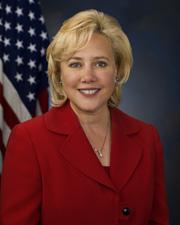 Sen. Mary L. Landrieu (D-LA)
Legislative Activity
Stay on top of the latest movement without scrolling through every action
Senate amendment agreed to: Amendment SA 1245 as modified agreed to in Senate by Yea-Nay Vote. 98 - 0. Record Vote Number: 195.
July 20, 2005
View full timeline
Senate amendment agreed to: Amendment SA 1245 as modified agreed to in Senate by Yea-Nay Vote. 98 - 0. Record Vote Number: 195.
July 20, 2005
Roll call votes on amendments in Senate: Amendment SA 1245 as modified agreed to in Senate by Yea-Nay Vote. 98 - 0. Record Vote Number: 195.
July 20, 2005
Considered by Senate. (consideration: CR S8510, S8513-8516, S8517-8518, S8529)
July 20, 2005
Amendment SA 1245 as modified agreed to in Senate by Yea-Nay Vote. 98 - 0. Record Vote Number: 195. (text as modified: CR S8517-8518)
July 20, 2005
Considered by Senate. (consideration: CR S8447)
July 19, 2005
Senate amendment submitted
July 18, 2005
Senate amendment proposed (on the floor): Amendment SA 1245 proposed by Senator Landrieu.
July 18, 2005
Amendment SA 1245 proposed by Senator Landrieu. (consideration: CR S8401-8402; text: CR S8400) To express the sense of the Senate regarding the use of funds for orphans, and displaced and abandoned children.
July 18, 2005
Votes
1 roll call on this amendment
Text
Modified
DEPARTMENT OF STATE, FOREIGN OPERATIONS, AND RELATED PROGRAMS
APPROPRIATIONS ACT, 2006

The PRESIDING OFFICER. Under the previous order, the Senate will
resume consideration of H.R. 3057, which the clerk will report.
The journal clerk read as follows:

A bill (H.R. 3057) making appropriations for foreign
operations, export financing, and related programs for fiscal
year ending September 30, 2006, and for other purposes.

Pending:

Landrieu amendment No. 1245, to express the sense of
Congress regarding the use of funds for orphans, and
displaced and abandoned children.
Chambliss amendment No. 1271, to prevent funds from being
made available to provide assistance to a country which has
refused to extradite certain individuals to the United
States.

Mr. McCONNELL. Mr. President, let me point out to all Members of the
Senate that in spite of our best efforts to finish the State-Foreign
Operations bill last night, right at the end, the amendments began to
multiply. That is the bad news. But the good news is I can report that
on the Republican side, shortly, we will be down to two amendments, one
of which may--I repeat, may--require a rollcall vote. And I hope my
friend and colleague Senator Leahy is trying to narrow down amendments
likewise on the Democratic side.
In the meantime, Mr. President, I ask unanimous consent that Senator
Lugar be added as cosponsor to amendment 1299, which the Senate adopted
last night.
The PRESIDING OFFICER. Without objection, it is so ordered.

Amendment No. 1293

Mr. McCONNELL. I call up amendment No. 1293 and ask for its immediate
consideration. It has been cleared on both sides.
The PRESIDING OFFICER. The clerk will report.
The assistant legislative clerk read as follows:

The Senator from Kentucky [Mr. McConnell], for Mr. Lugar,
proposes an amendment numbered 1293.

The amendment is as follows:

(Purpose: To promote reform of the multilateral development banks)

On page 326, between lines 9 and 10, insert the following:

TITLE VII--MULTILATERAL DEVELOPMENT BANK REFORM

SEC. 7001. DEFINITIONS.

In this title:
(1) Appropriate congressional committees.--The term
``appropriate congressional committees'' means the Committee
on Foreign Relations of the Senate and the Committee on
Financial Services of the House of Representatives.
(2) Multilateral development bank.--The term ``multilateral
development bank'' has the meaning given that term in section
1622 of the International Financial Institutions Act (22
U.S.C. 262p-5).

SEC. 7002. ANTICORRUPTION PROPOSALS AND REPORT.

(a) Proposals.--Not later than September 1, 2006, the
Secretary of the Treasury shall develop proposals, including
establishing one or more trusts and a set-aside of loans or
grants, to establish a mechanism to assist poor countries in
investigations, prosecutions, prevention of fraud and
corruption, and other actions regarding fraud and corruption
related to a project or program funded by a multilateral
development bank.
(b) Report.--Not later than September 1, 2006, the
Secretary shall submit to the appropriate congressional
committees a report on the proposals required by subsection
(a).

SEC. 7003. PROMOTION OF POLICY GOALS AT MULTILATERAL
DEVELOPMENT BANKS.

Title XV of the International Financial Institutions Act
(22 U.S.C. 262o et seq.) is amended by adding at the end the
following:

``SEC. 1505. PROMOTION OF POLICY GOALS.

``The Secretary of the Treasury shall instruct the United
States Executive Director at each multilateral development
bank to use the voice and vote of the United States to inform
each such bank and the executive directors of each such bank
of the goals of the United States and to ensure that each
such bank accomplishes the goals set out in section 1504 of
this Act and the following:
``(1) Requires the bank's employees, officers, and
consultants to make an annual disclosure of financial
interests and income of any such person and any other
potential source of conflicts of interest.
``(2) Links project and program design and results to staff
performance appraisals, salaries, and bonuses.
``(3) Implements whistleblower and witness protection
matching that afforded by the Sarbanes-Oxley Act of 2002 (15
U.S.C. 7201 et seq.), the Inspector General Act of 1978 (5
U.S.C. App.), and the best practices promoted or required by
all international conventions against corruption for internal
and lawful public disclosures by the bank's employees and
others affected by such bank's operations of misconduct that
undermines the bank's mission, and for retaliation in
connection with such disclosures.
``(4) Implements disclosure programs for firms and
individuals participating in projects financed by such bank
that are consistent with such programs of the Department of
Defense and the Environmental Protection Agency.
``(5) Ensures that all loan, credit, guarantee, and grant
documents and other agreements with borrowers include
provisions for the financial resources and conditionality
necessary to ensure that a person or country that obtains
financial support from a bank complies with applicable bank
policies and national and international laws in carrying out
the terms and conditions of such documents and agreements,
including bank policies and national and international laws
pertaining to the comprehensive assessment and transparency
of the activities related to access to information, public
health, safety, and environmental protection.
``(6) Implements clear procedures setting forth the
circumstances under which a person will be barred from
receiving a loan, contract, grant, or credit from such bank,
shall make such procedures available to the public, and makes
the identity of such person available to the public.
``(7) Coordinates policies across international
institutions on issues including debarment, cross-debarment,
procurement, and consultant guidelines, and fiduciary
standards so that a person that is debarred by one such bank
is subject to a rebuttable presumption of ineligibility to
conduct business with any other such bank during the
specified ineligibility period.
``(8) Requires each borrower, grantee, or contractor, and
subsidiaries thereof, to sign a contract to comply with a
code of conduct that embodies the relevant standards of
section 104 of the Foreign Corrupt Practices Act of 1977 (15
U.S.C. 78dd-2) and the international conventions against
bribery and corruption.
``(9) Maintains independent offices of Inspector and
Auditor General which report directly to such bank's board of
directors and an audit committee with its own additional
experts who are independent of management, or access to such
experts, to assist it in ensuring quality control.
``(10) Implements an internationally recognized internal
controls framework supported by adequate staffing,
supervision, and technical systems, and subject to external
auditor attestations of internal controls, meeting
operational objectives, and complying with bank policies.
``(11) Ensures independent forensic audits where fraud or
other corruption in such bank or its operations, projects, or
programs is suspected.
``(12) Evaluates publicly, in cooperation with other
development bodies, the interim and final results of project
and non-project lending and grants on the basis of Millennium
Development Goals, the goals of the Organisation for Economic
Co-operation and Development related to development, and
other established international development goals.
``(13) Requires that each candidate for adjustment or
budget support loans demonstrate transparent budgetary and
procurement processes including legislative and public
scrutiny prior to loan or contract agreement.
``(14) Requires that before approving any natural resource
extraction proposal the affected countries disclose
accurately and

[[Page S8511]]

audit independently all payments and revenues in connection
with such extraction or derived from such extraction.
``(15) Requires each project where compensation is to be
provided to persons adversely impacted by the project include
impartial and responsive mechanism to receive and resolve
complaints.''.

Mr. McCONNELL. This amendment has been cleared on both sides of the
aisle.
The PRESIDING OFFICER. If there is no debate, without objection, the
amendment is agreed to.
The amendment (No. 1293) was agreed to.
Mr. McCONNELL. I move to reconsider and table that motion.
The motion to lay on the table was agreed to.
Mr. McCONNELL. Mr. President, I suggest the absence of a quorum.
The PRESIDING OFFICER. The clerk will call the roll.
The journal clerk called the roll.
Mr. FRIST. Mr. President, I ask unanimous consent that the order for
the quorum call be rescinded.
The PRESIDING OFFICER (Mr. Graham). Without objection, it is so
ordered.
Mr. FRIST. Mr. President, today, we will be voting on final passage
on the Foreign Operations appropriations bill. I want to take this
opportunity to thank my colleagues for their tremendous work and, in
particular, Senator McConnell for his stewardship of this bill.
Diplomacy and foreign policy are the essential pillars of our
national security. They reflect the values, principles, views, and
interests of the people we represent, the American people. They are
central to advancing the U.S. role and our place, our stature, in the
world.
America's national security depends on our ability to integrate and
coordinate all of the elements of our national power. It includes
diplomacy, intelligence, economic strength, and military might.
The Foreign Operations bill advances those efforts and demonstrates
our generosity and our priorities. The legislation provides $9.7
billion to ensure that the Department of State and other related
agencies and our personnel serving overseas have the tools, the
equipment they need to advance America's security.
In the past year, freedom movements have swept the globe--in Ukraine,
in Georgia, the elections in Afghanistan and Iraq, Lebanon, and the
Palestinian territories--and have inspired literally millions around
the world. Saudi Arabia, Kuwait, and Egypt have also taken demonstrable
steps toward democracy. Having visited most of those countries, and
having had the opportunity to speak directly to senior officials in
each, I have seen real changes, impressive changes.
The spread of democracy unifies our values, unifies our national
interests. As Americans, we believe every person has the right to live
in a free society where they can choose their own leaders, have a hand
in their own destiny, and secure a bright future for their children.
And democracy, along with all the hope and progress it brings, creates
peace and stability between the United States and our friends and
allies.
The Foreign Operations bill provides $120 million for the Middle East
Partnership Initiative to help spread democracy among the Arab people.
By promoting economic, educational, and political reform in the Middle
East, we marginalize our terrorist enemies. They lose their state-
sponsored safe havens, they lose potential recruits, and they lose the
ability to exploit political grievances for terrorist gain.
Democracy provides an engine for the people, not the terrorists, to
win, to take responsible and peaceful action to better their lives,
their countries, and hold their leaders accountable. The United States
must continue to provide support to the activists and reformers in the
Middle East. These heroes make great sacrifices for the cause of
freedom, and they are critical allies in our fight against terrorism.
We must also continue to support our work providing aid and
humanitarian relief. America leads the world in providing international
aid. But too often international aid money never reaches the very
people it is intended to help. It is stolen or wasted by corrupt or
inefficient governments. That is why this bill strengthens
accountability requirements. The Millennium Challenge Corporation
requires recipient governments to take clear steps, verifiable steps,
to govern justly in an open, transparent democratic way, to invest in
people by improving education and health care, to promote economic
freedom so their economies can grow and provide jobs. Against this
backdrop, aid money can do the most good.
Today, many throughout the developing world--particularly in Africa,
where I was 2 weeks ago--suffer from devastating diseases. We know
them: HIV/AIDS, tuberculosis, malaria. These deadly diseases have the
potential to decimate entire populations and to prevent those nations
from ever becoming modern, prosperous countries.
The legislation before us allocates $2.9 billion for the President's
initiative against HIV/AIDS, tuberculosis, and malaria. Two billion of
that total is directed to the Global HIV/AIDS Initiative, $400 million
covers our contribution to the Global Fund to fight AIDS, tuberculosis,
and malaria. In total, the bill allocates $203 million above the budget
request for this coming fiscal year. These funds are targeted to help
where it is needed most. They zero in on the 15 countries in Africa,
Asia, and the Caribbean.
I again thank my colleagues and the President of the United States
and the American people for their generosity and for their leadership
in this great humanitarian effort.
A number of other health-related programs are also incorporated into
the foreign operations bill--$1.6 billion has been allocated for the
Child Survival and Health Programs Fund. This includes $375 million for
child survival and maternal health, which is an increase of $49 million
above last year's level. In addition, this funding includes $30 million
for vulnerable children and an additional $285 million for infectious
diseases.
Today, around the world, there are more than 600,000 pregnancy-
related deaths and more than 4 million deaths among newborn babies per
year. Most of these tragedies are preventable. The Foreign Operations
bill provides $375 million to prevent these deaths.
Many of these problems we see around the world stem from the lack of
available clean drinking water and proper sanitation in many regions of
the world. Water-related illnesses pose fatal threats to vulnerable
populations, especially children.
Every 15 seconds a child dies from a disease contracted from unclean
water. According to the World Health Organization, approximately 1.1
billion around the world lack access to clean, safe water sources; 2.6
billion people lack access to basic sanitation.
As a result, approximately 1.8 million people die very year from
diarrheal disease. Ninety percent of those deaths occur in children
under the age of 5.
And if we do nothing, with an increasing world population and further
constraints on our world's water resources, the problem is only
expected to get worse.
I commend the assistant majority leader, Senator McConnell, the
chairman of the Foreign Operations Appropriations Subcommittee, for
providing $200 million to the U.S. Agency for International Development
for safe water programs in his bill. Fifty million dollars of that
amount is targeted to programs in Africa where the need is great.
Private, nonprofit sector programs are also working hard, including
the Millennium Water Alliance, Water for People, Water Leaders
Foundation, and Living Water International. These groups are dedicated
to delivering comprehensive, safe water technologies throughout the
globe.
Some are building major infrastructures. Some are digging wells and
providing hand pumps to villages. Others are developing lightweight,
low-cost, low-energy water purification systems that could be available
to distribute to communities, schools, and orphanages for combating
water-related diseases in Africa.
I commend all of these organizations for their dedication and
compassion. Together we are working to make this an International
Decade for Action known. In 10 years, we intend to cut in half the
number of people around the globe who lack access to safe, clean water.
Another demonstration of America's compassion is our work with the
effects of civil strife, especially war and

[[Page S8512]]

violence. This appropriations bill will provide $74 million for the
Conflict Response Fund to assist in stabilizing and reconstructing
countries impacted by conflict or civil strife.
In addition, $900 million is allocated for Migration and Refugee
Assistance and $40 million for the Emergency Refugee and Migration
Assistance Fund.
Unlike many donor countries, the United States strives to ensure that
foreign assistance is effective, that it is distributed to those who
need it the most, and that it gets measurable results.
In addition to foreign aid, the foreign operations bill also
addresses the most dangerous threats we face today--the spread of
weapons of mass destruction and the global war on terrorism. This bill
provides $440 million for nonproliferation, anti-terrorism, and other
related programs.
We are working closely with our friends and allies to secure
stockpiles of WMD-related materials and technology, and make sure that
they have the capability to protect these sensitive materials.
The bill also provides funding and assistance for our coalition
partners in the global war terrorism. The legislation includes $4.6
billion for foreign military financing.
This funding, along with other national resources committed by our
coalition partners, is essential for improving the capabilities of our
coalition allies so that they can continue to make their vital
contributions to this global effort.
The $86 million allotted for the international military education and
training programs will ensure that our allies maintain the ability to
work closely with American forces on the battlefield and take
independent initiative to the fight against terrorism.
The United Nations also has an important role to play in the advance
of democracy and the fight against terror. The world organization
provides a medium for nations to discuss and resolve differences
peacefully through dialogue and diplomacy.
It also monitors particular international agreements to ensure that
nations are fulfilling their obligations and commitments. The U.N. is
also critical to organizing and providing humanitarian and other
assistance to the world's most desperate regions.
In order to carry out these functions effectively, however, the U.N.
must undergo serious reform.
The United Nations needs to take action against its officials who are
guilty of waste, fraud, and abuse. And it must also take steps to make
the organization as a whole ore accountable, transparent, and
efficient.
The United Nations has many positive contributions yet to make. But,
in order to fulfill its mission, it must do more to clean house.
America's foreign policy reflects the values, beliefs and culture of
the American people and the history of our great Nation. By advancing
our values abroad, the United States not only makes the world a better
place, it makes it a safer place, too.
As a free people, we are duty bound to share the blessings of liberty
with citizens around the globe.
Our generation, no less than the one before, is compelled to confront
the challenges of our times--and to fulfill America's destiny, in the
words of the Great Emancipator, as mankind's last, best hope.

sudan

Last night, the Senate passed a resolution to support the fragile
peace process between the government in Khartoum and the southern
Sudanese. I applaud my colleagues for their compassion and concern for
this troubled region of the world.
The resolution calls upon the U.S. Government to closely monitor the
peace process now underway. It also focuses our attention to the
continuing crisis in Darfur, and calls for continued pressure on
Khartoum to end its genocidal campaign and bring justice to the
criminals who have ravaged the people and the land of Darfur.
Eleven days ago, the leaders of Sudan took an historic step.
John Garang, leader of the Sudanese Liberation Army, returned to the
capitol of Khartoum for the first time in 21 years to be sworn in as
Sudan's vice president. Dr. Garang told the cheering crowd over a
million strong, ``My presence here today in Khartoum is a true signal
that the war is over.''
Together, he and President Bashir signed a new interim constitution
officially forming the National Unity Government of Sudan. Under this
agreement, Sudan will enter a 6-year interim period. At the 4-year
mark, nationwide elections will be held at the provincial level, as
well as for the national legislature. The interim period will culminate
with a vote by the people of southern Sudan deciding their political
future.
After two decades of brutal civil war that has killed 2 million
people and displaced over 4 million more, north and south are finally
on the verge of genuine peace.
It is a fragile moment, but one for celebration.
Last month, I had the opportunity to meet with Dr. Garang in my
office here in Washington. During our meeting, he emphasized to me that
for the peace to hold, both parties must fulfill their obligations
under the peace agreement signed last January.
He also stressed that pressure from the United States is critical.
The civil war and its aftermath have created a staggering humanitarian
crisis. And he is not confident the government in Khartoum will fulfill
all of its obligations under the Comprehensive Peace Agreement. Dr.
Garang firmly believes that U.S. and international sanctions are
necessary to keep the process moving forward.
During our meeting, he also told me that we can help him sell the
peace to the Sudanese people. Our assistance in education, health care,
and roads, for example, can help show a traumatized Nation the benefits
of peace over continued violence.
The road forward will not be easy. Millions have lost their lives in
20 years of struggle. But the days, weeks and months ahead hold great
promise not only for the north and south, but for the entire country.
Nowhere is that hope more needed than in the western region of Darfur
For 2 years, the Sudanese Government has waged a brutal genocide
against the Darfur people. Despite United Nations Security Council
resolutions, and pressure from the international community and
neighboring countries, the Government of Khartoum continues to kill and
maim.
Up to 180,000 innocent victims have died as a result of the
government-sponsored violence. Two million more have been displaced.
Entire villages have been burned to the ground.
Last November, the Khartoum Government agreed to halt the attacks.
But within hours of the agreement, Sudanese police raided a camp in
southern Darfur, destroying homes and driving out civilians.
I have visited the region and have heard the stories first hand.
Last August, I visited a refugee camp called Touloum in Chad.
Thousands of refugees are housed in dust-covered tents. Many more live
in make-shift shelters of gathered wood and plastic sheeting.
I met with refugees and community leaders. Their testimonials were
searing.
I heard the story of a mentally disabled 15-year-old boy being thrown
into a burning house, and of an old, paralyzed man burned alive in his
hut.
I heard stories of women raped in front of their own children, and
male villagers being summarily executed.
I asked one refugee in Touloum what it would take for him to go home.
He said, ``I'll go if you come with me and stay with me.''
Last week, the Government of Sudan and the rebels in Darfur signed a
Declaration of Principles for the Resolution of the Sudanese Conflict
in Darfur. This agreement provides a framework for negotiations.
In order for it to work, however, all parties must stop the violence
now. The conflict will only be resolved through peaceful negotiations
and dialogue.
The United Nations has taken limited steps to punish those
responsible for the atrocities. In March, the U.N. Security Council
voted to freeze the assets of individuals deemed guilty of committing
war crimes or breaking cease-fire agreements. It also voted to ban
these individuals from traveling.
In addition, the Security Council voted to forbid the Sudanese
Government from carrying out offensive military flights over Darfur,
and from sending military equipment into the

[[Page S8513]]

region without first notifying the Council.
The introduction of troops into Darfur from the African Union is a
positive development. There are currently 2,400 African Union troops in
Darfur. By August, that number should go up to 7,700 and by next spring
12,300. NATO has also agreed to provide logistical support to the
African Union peacekeepers in Darfur.
These are hopeful and helpful measures. But more must be done. The
violence will continue to escalate and the death toll will rise unless,
and until, the international community takes stronger action against
Khartoum.
The world's leaders need to impose more comprehensive sanctions on
the Sudanese Government, including on its oil industry. Tough and
intense pressure must be brought to bear.
The progress between the south of Sudan and Khartoum is promising and
should guide the way forward in Darfur.
But time is running out. We cannot ``wait and see.'' The Darfur
people need our help. They are crying out for support. We must act,
now, before it is too late and their voices fade to silence.

cuba

Today, we have an opportunity to assist the Cuban people in their
struggle for liberty. The Foreign Operations bill under consideration
provides funding for an airplane to transmit Radio Marti, around the
clock, providing constant support to those on the island fighting for
freedom.
I urge my colleagues to support this effort. Radio Marti has been
critical in promoting the cause of Cuban liberty.
Since its inception 20 years ago, Radio Marti has brought news to and
from the isolated country in defiance of Castro's censors.
On May 20, 1985, at 5:30 in the morning, Radio Marti launched its
first broadcast to the Cuban people. Fourteen and a half hours of
uncensored news reached Cuba from a studio here in Washington, DC, via
transmitters in Marathon Key.
Named after the Cuban intellectual and patriot, Jose Marti, the
station broke through Castro's propaganda machine and offered the Cuban
people news, entertainment and discussion with Cuban journalists,
thinkers, writers and entertainers.
In just a few short years, Radio Marti became the most listened to
station in Cuba.
Many Cuban reporters now send their stories to the U.S.-based station
to bypass the government and beam directly into Cuban homes. Over the
years, dissidents and human rights advocates have come to rely on these
transmissions for strength and hope.
As President Reagan told an audience back in 1983 while Congress was
debating the Radio Broadcasting to Cuba Act, ``there is no more
important foreign policy initiative in this administration, and none
that frightens our adversaries more, than our attempts through our
international radios to build constituencies for peace in nations
dominated by totalitarian, militaristic regimes.''
In 1990, TV Marti was launched, bringing in a new wave of free media.
Within 23 minutes of its first broadcast, Castro jammed the airwaves,
but his success was only temporary.
Like its radio companion, TV Marti offers political news and debate.
It also airs soap operas and sports.
Whether as news or entertainment, these broadcasts help to spark the
imaginations and aspirations of the Cuban people. They pierce the
regime's imposed isolation and bring the Cuban people into the world
community, and the world community to the Cuban people.
To this day, the Communist party controls all formal means of mass
communication on the island. It has constructed a complicated apparatus
of censors and technology to air its propaganda and smother divergent
views. All print and electronic media are considered state property
under the control of the party. Foreign magazines and newspapers are
outlawed as subversive material.
That is why Radio and TV Marti are so critical. And that is why I
urge my colleagues to amplify our efforts now.
Jose Marti once said that, ``Others looked at radio and saw a gadget;
his genius lay in his capacity to look at the same thing, but to see
far more.''
I urge my colleagues to share the vision held by our former president
Ronald Reagan when he first proposed Radio Marti. The Wall had not yet
fallen, and millions of people still lived under the boot of the brutal
Communist empire.
But he knew that Radio Free Europe was reaching and inspiring
millions of men and women trapped behind the Iron Curtain, in bleak
Communist towns and in dark Communist prisons. And like Radio Free
Europe, he knew that Radio Marti would reach and lift up those living
in the Communist island just 90 miles from our southern shores.
So, today, I urge my colleagues to continue our support for the
aspirations of the Cuban people.
With just one plane and one radio station, we can broadcast the call
of freedom to millions.
I suggest the absence of a quorum.
The PRESIDING OFFICER. The clerk will call the roll.
The assistant legislative clerk proceeded to call the roll.
Ms. LANDRIEU. Mr. President, I ask unanimous consent that the order
for the quorum call be rescinded.
The PRESIDING OFFICER. Without objection, it is so ordered.

Amendment No. 1245

Ms. LANDRIEU. Mr. President, I call up amendment No. 1245. I
understand there will be a request to set the vote at 2 o'clock on the
amendment.
The PRESIDING OFFICER. The amendment is pending.
Ms. LANDRIEU. Mr. President, amendment 1245 is offered on behalf of
myself, Senator Craig, and others to focus some time and discussion on
the issue of family, of stability, of permanency for children around
the world. I couldn't agree more with the Senator from Tennessee when
he says this underlying bill, the bill that funds all of our foreign
operations, assistance to many countries throughout the world,
countries that are developing, countries that are well established,
that share our values, that one of the most critical components of this
underlying bill is to advance American values around the world.
We know not every action we take is perfect. We know not every
thought we have is exactly right. But Americans believe we work hard at
establishing good values. We know we are not perfect, but we try to get
better and better each decade and each century. I could not agree more
with the Senator from Tennessee when he says this bill in particular is
a bill that helps us to advance our values around the world.
One of the values all Americans believe in is the value of family,
the importance of family, the importance of the principle that children
should in fact be raised in families. Children don't raise themselves.
Governments don't raise children; parents raise children. And sometimes
one responsible parent raises a child. That is the way it has been.
That is the way we like to see it. It is the way we want to promote it
here at home and abroad.
Senator Craig and I offer this amendment with others to express the
sense of Congress regarding the use of the funds in this bill, which
are substantial in section 3, for orphans and displaced and abandoned
children. This amendment simply says our money in this bill should be
laid down by USAID. We are not earmarking any money. We are not adding
any money. We are not spending any additional money, just the money
that is in this bill, that Members have said we want to send out to
countries, should recognize the principles of The Hague Convention on
Protection of Children and Co-Operation in Respect of Intercountry
Adoption, should recognize the principle that children should stay with
the families to which they are born. Our aid, whether it is for
economic development or for education or health, should recognize the
dignity and respect of each individual family unit. Try to keep
children who are born to a family connected to that family.
Sometimes we know that doesn't happen or, unfortunately, it can't
happen. War, disease, famine, violence separate children from their
natural parents. When that happens, it is the principles of the United
States, the values of the United States that we proudly share with the
world to say that child who is orphaned should not be left alone to
raise themselves. That child should be placed with a loving, caring,
responsible relative as quickly as possible, someone in the extended
family.

[[Page S8514]]

It could be the grandmother, grandfather, responsible aunt or uncle,
perhaps an older sibling, not 12 years old, not 13 years old, but a 20-
year-old or a 30-year-old, to raise that child and then that family
unit continues.
When there is no a responsible adult in that family, then our
principles say we should then look for some other family, perhaps a
neighbor, another family in the community, a friend of the family to
take that child or those children in and raise them and try to instill
good values and security and happiness for that child's harmonious
development.
If there is no family to be found within the neighborhood, the
village, the community, then we should, as a human family, find some
family in the world to take in that child. It is the miracle of
adoption that is occurring all over this country and all over the
world.
My husband and I have adopted children. We are very proud of our
wonderful children. Many Members of Congress have added to their
families or created their families through adoption. It is becoming
something that Americans understand and believe to be important. There
should not be any orphaned children, any waiting children. They are
just unfound families, and we need to do a better job of connecting
children who need homes with loving parents who will give them that
support.
I come to this issue not just from a personal perspective but even
before we went through this miracle of adoption ourselves, I understood
this to be the truth. Children can't raise themselves. I was raised in
a home, the eldest of nine children, with two loving parents. Many of
us had wonderful experiences as we were growing up. We understand the
value of keeping children protected and nurtured in the family setting.
We come to this floor all the time trying to stop child trafficking,
stop child abuse, mental illness, promote special education. The best
way to stop some of that is to connect children with responsible adults
who will raise them. It saves the taxpayers a lot of money, saves a lot
of pain, saves a lot of anguish. That is what Americans, whether they
are Republican, Independent, or Democrat, believe in. That is one thing
I am confident of and need no poll to tell me.
I am a little surprised that when we laid down this amendment, we
thought it would be accepted without any discussion, but there
evidently is some hesitation. There is some sense that USAID doesn't
agree with that. I am interested. If some Senator would like to explain
USAID's position that they don't think families are important, I think
the Congress would love to hear that. It would be quite a surprise to
those of us who are appropriators who fund USAID and actually believe
in so much of what they are doing, that they have a problem with an
amendment that simply says children belong in families. That is all
this amendment says.
Last year Americans adopted 120,000 children. Twenty thousand
children came from many countries around the world to find a happy home
here in America. One hundred thousand children were adopted, half of
them out of our own foster care system which we recognize has some
strengths but some weaknesses. We are working on that. We admit our
long-term foster care has kept children in limbo for far too long. It
has been a barrier, sometimes, to appropriate reunification. It most
certainly has been a barrier to adoption.
Senators such as Senators Rockefeller, DeWine, Clinton, and others
have spent many years working to reform that system. We are making a
lot of headway. We are proud of it. But we had over 50,000 children
adopted out of foster care.
Two children visited my office yesterday. They were 12 and 10,
precious little boys from Louisiana. They said: Senator, we want you to
meet our new mom. We were just adopted.
I asked the mom: Could I please speak to the children privately for a
few moments?
She said: Fine.
So I had the little children in my office. I said: You don't have to
tell me any of the details. I know it has been difficult. I just want
to know, are you OK, are you happy?
They said: Senator, we are very happy with our new mom. She was our
foster mom for a number of years. She is doing her best. Our parents
just haven't been around.
I didn't want to go into too much detail with the children. But their
little eyes were so hopeful. I walked out and I said: Congratulations.
These two children now have a loving adult mother who is going to raise
them and give them a future that they didn't have in the first years of
their life.
I thank the Senators for all of their work and what they have done in
that regard. We are making a lot of progress in our Nation. So this
amendment basically recognizes that and says that we believe we should
do everything we can to keep children in the family to which they are
born. But when that separation happens, through all the things that I
said about what can cause it, we need then to establish a permanent
plan for children that tries to place them in another family as quickly
as possible. Domestic adoption first. But if there are no families
willing to adopt in that community or country, then intercountry
adoption into the human family becomes very important before
orphanages, institutions, et cetera.
So that is what this amendment does. It lifts our values that the
Senator from Tennessee spoke about, lifts language from laws we have
already passed in overwhelming numbers on this Senate floor, and it
says in this amendment that all of the money in section 3 should
recognize these principles.
There are over 54 countries in the world that have basically signed
and ratified and are in the process of implementing these principles
that are in the Landrieu-Craig amendment. This amendment says that
sometimes temporary refugee camps are necessary, where children are
temporarily separated because of war. But when the permanency plans
begin to be made, let's make sure we put domestic adoption and
intercountry adoption before long-term institutional care or, for that
matter, letting children out on the streets to raise themselves. It is
very clear.
So I say, again, that I hope we can get a strong, bipartisan vote on
this amendment. I am sorry that there has been any difficulty. It was
not meant to be that way. But I felt this issue had to be clarified in
the bill because I was hearing too much at hearings, seeing too many
things in letters that were passed on some of these issues that it gave
me pause to think, I wonder if the USAID position is truly reflecting
the position of the Congress, of the current Bush administration, of
the State Department, which is the stated policy in support of the idea
that children belong in families.
So I am hoping that with the cosponsors we have on this amendment we
will get a strong vote affirming that intercountry adoption may offer
advantages of a permanent family to a child or children for whom a
family cannot be found in the child's home country. Let me state again:

Affirms that intercountry adoption may offer advantages of
a permanent family to a child for whom a family cannot be
found in the child's state of origin.

That seems to be controversial language. I cannot see it.
No. 4:

Affirms that long-term foster care or institutionalization
are not permanent options and should, therefore, only be used
when no other permanent option is available.

That is clear. We want to try to find a child a home, a real family.
And there are 40 million orphans in the world, so this is not an easy
task. But it is doable if we all work at it. If we cannot find children
a home, if we have worked hard to look for a home for somebody that
would take them in their own country, and we look internationally and
try to find a family that would take them in, and we cannot find that,
then, of course, we can have long-term institutions and foster care as
the last and final option.
Please, let's give children a chance. In New Orleans right now--I had
pictures sent to me--14 little orphans from Russia, between the ages of
5 and 12, through a program that many of us support, came over to the
United States and spent 6 weeks in New Orleans. You know what the great
news is? Yesterday, 12 of those 14 children are going to find permanent
homes here. These children are older, but they are not damaged goods.
Just because they are not little 3-month-old infants or 6-

[[Page S8515]]

month-old infants, they have a bright future. God gave them a lot of
talent. They are stuck in an orphanage, where they have very little
hope and opportunity. At the age of 15, they will be turned out on the
street to fend for themselves.
If you want to talk about child prostitution or trafficking or what
happens to children when they leave an orphanage at age 15, with no
parents, no means of support, and no education--this amendment cuts
down on child trafficking. This amendment cuts down on child
exploitation. This amendment cuts down on child prostitution. If you
can connect a child to an adult that will protect a child, that is the
parents' primary job, protecting our children, and most parents do that
very well.
For me to stand on the Senate floor and have to argue this to the
agency that is sending out money around the world because they think
this is not what other cultures are about--I am not an expert. I am a
sociology major, but I never read where a family is not the primary
building block of the community. If anybody knows of any other culture
that doesn't recognize the family, let me know because in all of my
reading, I have never read that anywhere. In every culture, family is
important. We might describe it a little differently, and we may have
different views about what a family looks like, which is not the
subject of this amendment, but I don't know any culture anywhere in the
world that doesn't think family is important.
So when USAID stands there and tells me something such as, it is not
really in other cultures that this is important, I say, hogwash.
Families are important. We define them differently. We respect the
different views of how families come together. But in every culture
adults raise children, and that is all this amendment says. It says, as
a last resort, when you cannot find a family for a child--when you have
tried and cannot find a family--then go ahead and build your
orphanages, your institutions, and I hope that they will build them in
a way and staff them in a way that these children know that, despite
the fact they don't have a mother, father or someone to love them, they
can be raised with a skill so that they can find their way. It is
difficult when you are on your own. Children have done it before, and
they will do it again. But for heaven's sake, can we try to find them a
family?
Senator Craig and I offered this amendment. We cochair the commission
on adoption. We have 180 Members of Congress who feel very strongly
about this issue. I don't think we should be debating it, but for some
reason we are. Our Members are Republicans and Democrats. None of our
Members can understand why we are having this discussion, but here we
are.

So this amendment simply, again, reaffirms its commitment to the
founding principles of the Hague convention on the protection of
children, recognizing that each country should take, as a matter of
priority, every appropriate measure to enable a child to remain in the
care of the child's family of origin. But when that is not possible,
they should strive to place the child in a permanent and loving home
through adoption. It affirms that intercountry adoption may offer the
advantage of a permanent family to a child for whom a family cannot be
found in the child's country. It affirms that long-term foster care or
institutionalization are not permanent options and should, therefore,
only be used when no other permanent option is available. It recognizes
that programs that protect and support families can reduce the
abandonment and exploitation of children.
I congratulate President Bush and his administration for agreeing to
a breakthrough amendment with the country of Vietnam recently to open
up again international adoption. There were some corruption issues.
There was some lack of transparency in the process. There was some
concern that this was not operating as smoothly as it should. So it was
temporarily suspended. But because of the good work of the President
and the President's administration, that was basically recreated. I
have a copy of the agreement.
When an agency such as USAID tells me; ``We like what you are saying,
but it is not our policy,'' I am confused because the President of the
United States signed an agreement with Vietnam that has the same
language of The Hague, in the first paragraph of this document:
Agreement between the United States and the Socialist Republic of
Vietnam. Clause 1, clause 2, and clause 3 are exactly this amendment.
Forty-one Members of the Senate and the Congress signed a letter to the
President of Romania outlining this exact principle. So the 41 Members
who signed this letter, and myself, are very confused as to why this
amendment is a problem. Again, I offered it to clarify.
This will be a great clarification to USAID that, unequivocally, the
Members of this body and the House of Representatives, when this is
passed, say that we value families; we think children should be in
families; we want to do everything we can to connect children to
families; we think they should stay in the families to which they are
were born but, if not, find one close to home and, if not, someplace in
the human family for them. End of story.
If that all fails, go ahead and build your orphanages and
institutions. I don't know of anybody who grew up in an orphanage that
liked it--not one person. I don't know anybody alive that ever told me
that they had a happy time growing up in an orphanage. That is not a
value that Americans believe in. I have had lots of people tell me they
were so happy to grow up in a loving family. I have had people cry to
me and say: I spent time in an orphanage my whole life. Nobody ever
came for me, Senator. I have had people tell me that. I have never had
anybody say to me how happy they were to grow up in a refugee camp or
an orphanage.
I am not spending a penny in this bill to promote the idea that
children could be happy being raised in an orphanage when one caregiver
comes in for 300 children. I have been in a lot of these orphanages.
Some of our other members have been also. I have traveled all over the
world to some of these orphanage. I cannot describe the horrors of what
I have seen. I cannot sit here on the floor of the Senate and let this
go through being a little unclear. This is very clear to me, and it
should be very clear to the Members of this body.
I know we are going to vote at 2 o'clock. I appreciate my colleagues
giving me this time to express myself. I obviously feel strongly about
it. Many Senators and House Members feel strongly about this. We are
doing this here in the United States. This is our policy. So we need to
promote, as Senator Frist said, our values--not force them, but promote
them. Nothing is being forced here. We are promoting and saying, these
are our values. We believe family is important. We are giving plenty of
room in this amendment. We understand that there might be some
contingency plans that have to be made, but let's try to connect
children to families. I think it is the least we can do. I wanted to
clarify that this is a value of the people of the United States of
America.
I yield the floor and reserve the remainder of my time.
I suggest the absence of a quorum
The PRESIDING OFFICER. The clerk will call the roll.
The legislative clerk proceeded to call the roll.
Ms. LANDRIEU. Mr. President, I ask unanimous consent that the order
for the quorum call be rescinded.
The PRESIDING OFFICER. Without objection, it is so ordered.
Ms. LANDRIEU. Mr. President, I would like to take this opportunity to
add just a few more items for the record on the subject about which I
was just speaking, which is the Landrieu-Craig amendment on
international adoption, domestic adoption, and family preservation.
One of the items that got my attention which prompted the offering of
this amendment was a National Public Radio commentary, which I want to
submit for the Record, after the tsunami disaster. I had the
opportunity to visit the region affected with the Senator from
Tennessee. I spent 3 days on the ground reviewing the damage in Sri
Lanka and all over the devastated area.
This is what prompted this amendment, when we were focused on the
issue of these children having been displaced. Of course, we remember
the devastation that occurred. Children were tragically separated from
their families. There was great interest in the children who might have
been orphaned in that disaster and whether they could find a home
elsewhere.

[[Page S8516]]

There was a great coalition of people in the United States and around
the world who felt strongly about that. We began working on it and
encouraging that children who had been orphaned, whose parents had been
swept out to sea, the children who survived, of trying to place them
with relatives, along the lines of what I have been speaking.
Then there was this NPR commentary, and I would like to read a
paragraph of it into the Record:

Jaco spends his days--

This is a UNICEF worker funded in part by USAID--

walking through refugee camps, trying to find orphans. He's
not from Aceh; he's a social worker from nearby Medan who
came here as part of--

The Government's efforts at a child welfare program that is working
with UNICEF to care for children who have lost their parents.
This worker is walking through this refugee camp, and he finds an
orphan, according to NPR, and he finds the orphan's aunt. He says to
the aunt: We would like to take this child to one of the Islamic
boarding schools.
The aunt says: No, I would like to help raise this child.
The worker then is in a discussion trying to convince the aunt to let
the orphan be raised in a boarding school.
This is what started this whole amendment. I know one cannot believe
everything one reads in the newspapers, and one cannot believe
everything one hears on the radio, but when we investigated this and
looked into it, we found that this, in fact, was a pattern that was
occurring; that our money was being used to fund workers who, instead
of being so happy that they found an aunt for this child and saying,
``We have a program that can help; we know it is difficult; you are
probably raising three or four other children; we are appreciative that
you are taking in this orphan,'' our money was being used to promote
something completely contrary to our views and policies, which is: Oh,
don't worry, let the government take this child and raise it in a
boarding school.
Whether it was a Christian boarding school, Islamic boarding school,
Muslim boarding school, the Christian, Muslim, or Islamic boarding
schools are not the same as being raised in a Christian, Muslim,
Islamic family. That is the point.
What happens is, if we don't make this clear, it will end up that
money is going to support orphanages and discouraging the reunification
of orphans with their families.
I ask unanimous consent to print in the Record this commentary by
National Public Radio which has prompted this whole initiative, if
anyone has questions about it.
There being no objection, the material was ordered to be printed in
the Record, as follows:

Analysis: Indonesian Government Bans Adoptions of Tsunami Orphans

Steve Inskeep, host: Indonesian authorities are trying to
provide security to some of the most vulnerable victims of
last month's tsunami. In the province of Aceh, an estimated
35,000 children were orphaned or separated from their
parents. The government has temporarily outlawed adoption in
that province. Its plan is to send the orphans to Islamic
boarding schools instead, but the schools are not ready and
it's hard just to identify the kids who need help. NPR's Adam
Davidson reports from Banda Aceh.
Adam Davidson, reporting: Jaco(ph) spends his days walking
through refugee camps, trying to find orphans. He's not from
Aceh; he's a social worker from nearby Medan who came here as
part of Pusaka Indonesia, a child welfare group that is
working with UNICEF to care for children who have lost their
parents.
Jaco (Social Worker): (Foreign language spoken)
Davidson: Today he's in Berwang Hitan(ph), an Indonesian
army base that has been transformed into a refugee camp. It's
right under the flight path of US Navy helicopters. He
lifts the flap of a thick canvas tent, walks in and asks
the dozen or so people sitting on mats if there are any
orphans here. At the first tent, they say no. There was
one, but some cousins came by the other day and took her
away.
Davidson: At the second tent, he finds Suryani(ph), a five-
year-old girl, standing in a pretty green dress. She's been
watched over by a cousin, Harati(ph), who is also caring for
her own infant son.
Harati (Tsunami Survivor): (Through Translator) I found her
when we were running from the tsunami.
Davidson: Harati says she watched Suryani's parents drown
when the tsunami struck their village, Lampung. She grabbed
the little girl and now considers her her own daughter. Jaco
writes down Suryani's information--name, age, parents' name,
home village--and then tells Harati that it will be very
difficult for her to care for Suryani, since they no longer
have a house or any possessions.
Jaco: (Foreign language spoken)
Davidson: He says she should send Suryani to one of the new
Islamic boarding schools that will open soon. The girl will
be well cared for, and the family can visit on weekends.
Harati thanks Jaco and smiles. When Jaco leaves, she says
that she's not sending Suryani anywhere. She'll take care of
the girl on her own. Jaco is sympathetic, but thinks Harati
is wrong.
Jaco: (Through Translator) If we think psychologically it's
normal if their family would like to take the orphans then,
but if we think logically, right now they don't need only
being with the family but they need food, they need
education, they need therapy from the psychologists to make
their life normal again.
Davidson: Jaco and his small team have identified 56
orphans so far, 20 in this camp alone. There are dozens of
children here, most of them with their parents. Pusaka
Indonesia, the child advocacy group, has set up a special
children's area in the corner of the camp. There's a host of
teachers and social workers who watch over the kids. Vivi
Sofianti is a child psychologist. She leads them in games and
songs.
Davidson: She says they stop being depressed when they
sing.
Ms. Vivi Sofianti (Child Psychologist): (Through
Translator) What I've learned from them right now, they
really need entertainment to forget their--what will happen
to them.
Lucman(ph) (Tsunami Survivor): (Foreign language spoken)
Davidson: Lucman, 45, walks up to a table under a canopy
next to the children's area. He's looking for his 15-year-old
son, Maludin(ph), and his nine-year-old daughter,
Safrida(ph). He hasn't seen them since the tsunami destroyed
their neighborhood, Pulanga Han(ph), in downtown Banda Aceh.
Lucman spent the last two weeks searching for them in dozens
of refugee camps. A Pusaka Indonesia worker takes down the
children's information. All the data is entered into a
database in two computers next to the desk. There's a list of
hundreds of parents and dozens of children. The goal is to
link the children Jaco and his team find with the parents who
are searching for their own. Deni Purba runs the operation.
Mr. Deni Purba (Aid Worker): I believe half of them will
find their relatives. That's why we are here.
Davidson: There are similar programs all over Aceh
province. But in the end, Purba believes, thousands of
children will be left with no relatives at all. He says it
will be up to the Indonesian government to decide what to do
with those who are alone. But, Purba says, the best solution
is the one the government is planning, to send all the
orphans to boarding schools.
Davidson: Adoption wouldn't work.
Mr. Purba: No, we don't support adoption, because is not
Acehenese culture.
Davidson: There are rumors of child sex traffickers
prowling for orphans. There are stories of foreigners buying
Acehenese children. Purba says the children have suffered
enough trauma and should be kept here, where people speak
their language and know their culture, and where the orphans
can help each other adjust to a new kind of life.

Amendment No. 1242

Ms. LANDRIEU. Mr. President, yesterday, there were several amendments
voted on and, unfortunately, I was not here yesterday. I was attending
a funeral of one of our State officials who unexpectedly passed away.
Had I been here, I would have voted with my colleagues in rejecting the
Coburn-Boxer amendment to the fiscal year 2006 State and Foreign
Operations appropriations bill, which is the bill about which I am
speaking.
Mr. President, while the vote on this amendment was taking place, as
I said, I was returning from the funeral of my dear friend and
Louisiana Secretary of State, the Honorable Fox McKeithen. Had I been
here, I would have voted with my colleagues in rejecting the Coburn-
Boxer amendment to the fiscal year 2006 State and Foreign Operations
appropriations bill.
In preparation for this vote, I cosigned a letter, along with my
colleagues Senators Feinstein, Santorum, and Specter requesting that
Senators vote against the amendment. I have concluded this amendment
would derail something that would benefit both China and the United
States at a critical time in our two nations' history.
In this, the most important bilateral relationship of the 21st
century, it is crucial that both countries continue to work in
cooperation with one another.
The Shaw Group-Westinghouse consortium is the only American team
bidding on a contract to construct four advanced-designed nuclear
powerplants in China.
This deal has the full support of the U.S. Department of Energy which
has authorized that the Shaw Group and Westinghouse Consortium work in
the

[[Page S8517]]

People's Republic of China, PRC. The National Nuclear Security
Administration, NNSA, has thoroughly reviewed the proposal and
determined that concerns over national security are negligible.
Nuclear safety and technology transfer are key national security
issues that nobody takes lightly. After much deliberation and
consideration of these sensitive issues, it is clear that this deal is
good for both the United States and China.
The AP1000 advanced design nuclear reactor is one of the safest
nuclear reactors in the world and is on the cutting edge of nuclear
technological innovation. This innovation will yield significant
economic and environmental benefits.
This proposal would support a significant number of high value U.S.
export oriented jobs in the manufacturing and engineering services
areas.
At a time when Americans are concerned about their jobs, we should
demonstrate through initiatives such as this that we have their
economic best interests at heart.
The Shaw-Westinghouse Consortium benefits small businesses by virtue
of the many U.S. subcontractors that will be used during the
implementation phase of this contract.
The Consortium's bid would create or sustain more than 5,000 high-
tech U.S. jobs, and provide ongoing jobs for many years to come, not
just for the China project, but for sales in the United States and
other global markets
This proposal seeks to address not only jobs, but the tremendous
trade imbalance between the United States and China.
The U.S. Export-Import Bank exists to provide financing of last
resort to assist exporters in order to create jobs and export growth
for the U.S. economy.
This deal would be consistent with the 1985 Agreement for Cooperation
Between the Government of the United States of America and the
Government of the People's Republic of China Concerning Peaceful Uses
of Nuclear Energy.
To limit the purchasing of U.S. civilian nuclear energy technology to
the Chinese would be disastrous to our bilateral relations at a time
when we must engage the Chinese and to cloak this proposal in anti-
Chinese rhetoric is doing a disservice to the American people.
These exports to China will most assuredly yield significant benefits
to companies and workers in the United States and assist in the
promotion of the safe, reliable, and efficient growth of nuclear power
in China, something which will be essential to both countries.
The chief competitor is AREVA, a French company. AREVA will have the
full support of the French equivalent of the Export-Import Bank,
COFACE.
If this amendment is passed it will not punish China, but reward the
French and other European economies and exporters who will clearly
prevail should the Shaw/Westinghouse consortium be denied competitive
financing.
This is precisely the sort of investment our country should make to
ensure that we continue to create and sustain high-tech industrial jobs
in the United States and the continued growth of the nuclear power
industry, which will assist as we seek more self-reliance in the energy
sector of the economy.
In no way will the taxpayers be fleeced by this project. The loans
associated with the Chinese nuclear power project are made to Chinese
customers and are guaranteed by the Government of China.
The taxpayers are not subsidizing these loans and are not at risk
according to major credit agencies who evaluate sovereign risk. In
addition, the Export-Import Bank of the United States charges an
exposure fee commensurate to the credit risk being taken. For over a
half century the Ex-Im Bank has supported equipment and services for
nuclear power projects in China.
If we do not proceed with caution, the threats of anti-Chinese
sentiment will tarnish a productive bilateral dialog for every issue
that emerges with China.
The Shaw Group-Westinghouse Consortium has a sterling reputation and
a distinct advantage with its cutting edge technology. If this deal
would have been thwarted in the Senate, it is the United States that
would have been punished, not the Chinese.
I suggest the absence of a quorum.
The PRESIDING OFFICER (Ms. Murkowski). The clerk will call the roll.
The legislative clerk proceeded to call the roll.
Mr. McCONNELL. Madam President, I ask unanimous consent that the
order for the quorum call be rescinded.
The PRESIDING OFFICER. Without objection, it is so ordered.
Mr. McCONNELL. Madam President, while Senator Landrieu is still on
the Senate floor, Senator Leahy and I were just discussing the
following unanimous-consent request which will get her vote at 2:30
p.m. Let me say before propounding this unanimous-consent request,
Senator Leahy and I are working on trying to get all the remaining
amendments and final passage dealt with at the same time around 2:30
p.m. We are not there yet. But I will start by asking unanimous consent
that the Senate proceed to a vote in relation to the Landrieu amendment
No. 1245 regarding orphans at 2:30 p.m. today, with no second-degree
amendments in order to the amendment prior to the vote.
The PRESIDING OFFICER. Without objection, it is so ordered.
The Senator from Vermont.
Mr. LEAHY. Madam President, I am just wondering if perhaps the
Senator from Kentucky, who has dual responsibilities as chairman of
this subcommittee and as the Republican whip--maybe we should talk in
our respective cloakrooms--we have a number of people we know who want
to offer amendments--that we get perhaps a unanimous consent agreement,
and the time we can work out, sequencing each of those amendments. I
don't know about time at the moment. I am trying to think of some way--
we have been on this bill since Friday. A lot of us have other matters
to attend to, including meetings with the President's nominee to the
Supreme Court. Senator McConnell and I have sat here through hours of
quorum calls. I think it is time to fish or cut bait. I say this to our
cloakrooms, this may soon turn into a unanimous consent agreement and
will require each of these amendments to come up and either be voted on
or withdrawn.
I don't know how else we get it done. We have been several hours in
quorum calls so far, and some of us have other things to do. I have no
problem with somebody getting a vote. Vote for it or against it, but
let's get it done.
The PRESIDING OFFICER. The Senator from Kentucky.
Mr. McCONNELL. Madam President, I am checking right now on the
possibility of adding to the 2:30 p.m. vote the one amendment left on
this side that might require a vote. I will know shortly. We should be
able to add that to the queue at 2:30 p.m. That will give us two votes
at 2:30. Senator Leahy indicated he is working on trying to get
additional votes so we can wrap this bill up later this afternoon.
The PRESIDING OFFICER. The Senator from Louisiana.

Amendment No. 1245, as Modified

Ms. LANDRIEU. Madam President, I have a modification to my amendment.
It is at the desk. It is a technical modification.
The PRESIDING OFFICER. Without objection, the amendment is so
modified.
The amendment (No. 1245), as modified, is as follows:

On page 326, between lines 10 and 11, insert the following:

ORPHANS, DISPLACED AND ABANDONED CHILDREN

Sec. 6113. (a) The Senate--
(1) reaffirms its commitment to the founding principle of
the Hague Convention on Protection of Children and Co-
Operation in Respect of Intercountry Adoption, that a child,
for the full and harmonious development of the child's
personality, should grow up in a family environment, in an
atmosphere of happiness, love, and understanding;
(2) recognizes that each State should take, as a matter of
priority, every appropriate measure to enable a child to
remain in the care of the child's family of origin, but when
not possible should strive to place the child in a permanent
and loving home through adoption;
(3) affirms that intercountry adoption may offer the
advantage of a permanent family to a child for whom a family
cannot be found in the child's State of origin;
(4) affirms that long-term foster care or
institutionalization are not permanent options and should
therefore only be used when no other permanent options are
available; and

[[Page S8518]]

(5) recognizes that programs that protect and support
families can reduce the abandonment and exploitation of
children.
(b) The funds appropriated under title III of this Act
shall be made available in a manner consistent with the
principles described in subsection (a).

Mr. McCONNELL. I suggest the absence of a quorum.
The PRESIDING OFFICER. The clerk will call the roll.
The legislative clerk proceeded to call the roll.
Mr. McCAIN. Madam President, I ask unanimous consent that the order
for the quorum call be rescinded.
The PRESIDING OFFICER. Without objection, it is so ordered.

Nomination of John Roberts

Mr. McCAIN. Madam President, as we all know, last night the President
of the United States announced the nomination of Judge John Roberts to
the U.S. Supreme Court. The President noted in his remarks that one of
the most consequential decisions a President makes is his nomination of
a Justice to our Nation's highest Court. By nominating Judge Roberts, I
believe the President has met the challenge. I commend him for choosing
a thoroughly accomplished jurist and attorney to rise to this country's
highest Court.
I point out that the selection process the White House and the
President went through was thorough and, indeed, viewed as
satisfactory--in fact, praised significantly by Members on both sides
of the aisle. The President and his staff consulted with more than 70
Members of the Senate. The President reviewed the credentials of many
well-qualified candidates, and the President also met with a number of
potential nominees.
I believe the consultation part of the advise and consent process we
go through was more than met by the President and his staff. The
process has resulted in a nominee who truly stands on his achievement.
Presidents can and sometimes have nominated Justices for political
reasons alone. However, this President has done something truly
praiseworthy in nominating Judge Roberts. He focused on the merits and
picked a distinguished attorney with a keen legal mind and an
impressive record of accomplishment.
I think all of us are aware of Judge Roberts' academic background. We
are aware of his clerking for Justice William Rehnquist, his service in
the Department of Justice and, very importantly, being a member of the
small group of lawyers who have practiced before the Supreme Court. In
fact, Judge Roberts has appeared before and argued cases before the
U.S. Supreme Court some 39 times. The process has been followed and has
resulted in an outstanding nominee.
There are questions about whether Judge Roberts will answer questions
concerning specific issues. I think that issue was put to rest in the
Breyer and Ginsburg nominations where, appropriately, they did not
answer questions that would relate to cases that would be argued before
the U.S. Supreme Court.
There may be some question about whether Judge Roberts is
conservative. I think the President of the United States made it very
clear in the last campaign, and I personally heard him state on
numerous occasions, that he would appoint as a Supreme Court Justice,
in the event of a vacancy, a person who strictly interpreted the
Constitution of the United States. So just as in the previous
administration President Clinton appointed judges such as Justices
Breyer and Ginsburg who would be viewed by some as liberal, so I think
it is entirely appropriate that Justice Roberts be viewed as
``conservative,'' if conservative means someone who strictly interprets
the Constitution of the United States in making these incredibly
important decisions that are made by the U.S. Supreme Court.
As is well known, I am a card-carrying member of the Gang of 14. One
of the criteria of the Gang of 14 is that we would not filibuster a
nominee to a court or the Supreme Court unless it was under
``extraordinary circumstances.'' I do not speak for the other Members.
Each of those Members speaks for himself or herself. I do believe--at
least in my opinion, I am convinced--that even though various Members
of the Senate on the other side of the aisle may oppose and vote
against Justice Roberts' nomination, and perhaps for well-founded
reasons, that by no means, by any stretch of the imagination, would
Justice Roberts, because of his credentials, because of his service,
because of his extraordinary qualifications, meet the extraordinary
circumstances criteria.
Again, I only speak for myself, but having been in on those
negotiations about extraordinary circumstances for hundreds of hours, I
believe Judge Roberts deserves an up-or-down vote, and I hope the other
members of that group would also agree with me.
So I think this is a good day for America. We start a process which
we should complete by the first week in October so that Justice Roberts
can sit in the fall session of the U.S. Supreme Court. I think many of
us watching him on television last night as he stated his profound
appreciation for the role of the U.S. Supreme Court in our
constitutional democracy, as well as his deep regard for the Court as
an institution--this is without a doubt a man who is not only fit to
face the magnitude of the task before him but who has the temperament
and the judgment to understand the seriousness of his possible service
as a member of our Nation's highest Court.
I yield the floor.
The PRESIDING OFFICER. The Senator from Kentucky.
Mr. McCONNELL. Madam President, I ask unanimous consent that the
Senate proceed to a vote in relation to the Chambliss amendment No.
1271 following the vote in relation to the Landrieu amendment with no
second-degree amendments in order to the amendment prior to the vote.
The PRESIDING OFFICER. Is there objection?
Without objection, it is so ordered.
Mr. McCONNELL. What that means is that at the moment, there are two
stacked votes at 2:30, the Landrieu amendment and the Chambliss
amendment.
I see that the Senator from Texas is in the Chamber and would like to
address the Senate, I believe as in morning business, on another issue.
I yield the floor.
The PRESIDING OFFICER. The Senator from Texas.
Mr. CORNYN. Madam President, I ask unanimous consent to proceed as in
morning business.
The PRESIDING OFFICER. Without objection, it is so ordered.
Mr. CORNYN. Madam President, I add my voice of support to the
President's decision to nominate Judge John G. Roberts to the U.S.
Supreme Court. The process of selecting the next Associate Justice
should reflect the best of the American judiciary and not the worst of
American politics. From the President, the American people deserve a
Supreme Court nominee who reveres the law. From the Senate, the
American people deserve a confirmation process that is civil,
dignified, respectful, and one that does its dead level best to keep
politics out of the process.
Yesterday, President Bush did his part by announcing the nomination
of Judge Roberts, and now it is up to us in the Senate to do our part
to ensure that the process for confirming this nomination does honor to
the Supreme Court, to the Senate, and to the Nation.
The Supreme Court of the United States is one of our Nation's most
cherished institutions. It is also our Nation's most powerful symbol of
our commitment to constitutional democracy and the rule of law. We need
men and women who serve on that Court who meet the highest standards of
integrity, intellect, and character. Most important, we need men and
women who are committed to the principle that the duty of unelected
judges in a democracy is to apply the law as written by the people's
representatives and not to make the law up as they go along.
By every indication, Judge Roberts fits this description of what I
would consider to be an ideal nominee. Judge Roberts was educated at
Harvard College and Harvard Law School. Before he became a judge on the
District of Columbia Court of Appeals in 2003, he was widely regarded
as one of the most outstanding advocates practicing before the U.S.
Supreme Court. He has argued dozens of cases before the Court, both as
a lawyer in private practice in Washington and as a public servant.

[[Page S8519]]

Over the years, he has held a wide variety of positions with the
Department of Justice, including Principal Deputy Solicitor General,
the Federal Government's second highest ranking lawyer before the U.S.
Supreme Court. With these credentials, it is not surprising that we
confirmed this nominee to the Court of Appeals by unanimous consent
just 2 years ago.
Although Judge Roberts has been on the bench only since 2003, his
distinguished legal career leaves no doubt that he is extraordinarily
well qualified for the Supreme Court. It bears remembering that Chief
Justice Rehnquist had never served as a judge before he was nominated
to the Court. Similarly, Justice Sandra Day O'Connor, who Justice
Roberts will be succeeding if confirmed, had served only briefly as a
State court judge before she was elevated to the Supreme Court. As
Senator Leahy, the ranking member of the Senate Judiciary Committee,
said at her confirmation hearing, although:

. . . her tenure on the appellate bench has not been long in
years . . . we should realize that only 60 of the 101
Justices sitting now or in the past have had any prior
judicial experience. Only 41 of these have had more than 5
years of service when confirmed, and among those who had no
prior experience when confirmed to the United States Supreme
Court were included John Marshall and Joseph Story.

As you know, Justices Marshall and Story were two of the most
distinguished Justices who ever served on the Supreme Court and,
indeed, in our Nation's history. Although the number cited by Senator
Leahy has changed some over the years since Justice O'Connor was
confirmed, his point still stands. One does not need to be a career
jurist to serve this Nation with distinction as a Justice of the U.S.
Supreme Court.
I believe the President has made a commendable decision, nominating
Judge Roberts. As I stated earlier, the American people deserve from
the President a Supreme Court nominee who reveres the law. From all
reports, that is exactly what the American people received yesterday.
From the Senate, the American people deserve a confirmation process
that is civil, dignified, and respectful, and one that keeps politics
out of the judiciary as much as is humanly possible.
One of the challenges we face when considering a nominee, and
particularly one such as Judge Roberts who has had such a long and
distinguished career serving clients, is to understand that his work on
behalf of his clients does not necessarily reflect his personal views
that may appear on a variety of legal documents likely to come before
the Senate. As all of us who have practiced law know, the duty of the
lawyer is to make sure to make the very best possible argument on
behalf of his or her client, regardless of whether the lawyer would
agree with those arguments in the first instance. Litigants in our
adversarial system of justice are supposed to be judged by a jury of
their peers, not by their lawyers.
I think it very important that we keep this in mind. Just as we would
not judge Judge Roberts nor should we judge Judge Roberts by the
positions he has taken on behalf of clients he has represented, we
would not judge a prospective nominee should he or she have practiced,
let's say, in the area of criminal law, and have defended people who
have been accused of crimes. We would not impute those crimes or that
position to the lawyer who is representing them, providing them the
legal defense to which they are entitled under our constitutional
system. My argument is we should simply apply that same standard to
Judge Roberts and any other nominee as well.
I think it is also important that we remain aware there are those
outside of this Chamber who will try to taint this process. Already we
have seen those who seem to have had a ``fill in the blank'' press
releases, waiting only for the name of the prospective nominee before
they send them out into cyberspace and across America and indeed around
the world. We know there are those outside these Chambers who will try
to vilify any nominee in order to exploit this process for political
gain, including raising money. I can only hope we will not, in this
body, the 100 Senators who work here and represent our constituents, be
tempted by the outside interest groups to engage in the same sort of
irresponsible rhetoric that is used by too many of them.
Let us behave as Senators. Let us do our human best to uphold the
dignity of this great body. And let us try to uphold the dignity of the
U.S. Supreme Court and conduct ourselves in a manner worthy of the
American people. History affords some benchmarks to the Senate for
determining whether the Senate has undertaken a confirmation process
worthy of the Court and of the American people. There is a right way
and, unfortunately, a wrong way to debate the merits of a Supreme Court
nominee.
In 1993, as I have observed previously on this floor, President
Clinton nominated Ruth Bader Ginsburg, a distinguished jurist but one
with an extensive record of activism in a variety of liberal causes
outside of the judiciary. The Senate looked past all of that and voted
to confirm Justice Ginsburg by an overwhelming bipartisan vote. The
Senate did so because we understood our proper role in the confirmation
process should embody three principles: First, that we should focus our
attention on judicial qualifications, not personal political
preferences; second, we should engage in respectful and honest inquiry,
not partisan personal attacks; and third, we should apply the same fair
process, confirmation or rejection by majority vote, that has existed
for more than 214 years of our Nation's history.
Yes, this is an important moment for our country. The nomination of
any person to the U.S. Supreme Court is a celebration of our
Constitution and our Nation's commitment to the rule of law. The
President has nominated an impressive individual to serve on our
Nation's highest Court and I look forward, as just one Member of this
body, to a dignified, civil, and respectful confirmation process in the
Senate.
I yield the floor.
The PRESIDING OFFICER. The Senator from Illinois.
Mr. DURBIN. I ask to be recognized to speak as in morning business.
The PRESIDING OFFICER. Without objection, it is so ordered.
Mr. DURBIN. Madam President, I am glad I am following the comments of
my colleague Senator Cornyn because we are both privileged to serve on
the Senate Judiciary Committee, which will be the first line of inquiry
in relation to Judge John Roberts, who has been nominated by President
Bush to serve on the U.S. Supreme Court.
I have been in public life for over 20 years and cast over 10,000
votes on so many different topics. If you had asked me what is the most
important vote you have ever cast, it is easy; the most important vote
you are ever called on to cast is whether America goes to war, because
you know as a result of that vote, if the answer is affirmative, that
Americans will lose their lives. You will ask families to give up their
sons and daughters, husbands and wives, brothers and sisters, in the
name of defending America. So there is nothing more important than that
vote. It is one of the few times--and I faced it three or four times in
my congressional career--when you really do lose sleep. You toss in bed
at night thinking, What is the right thing to do?
I would say that after a vote on war, the second most challenging
vote is the one we will face in a few weeks right here in the Senate,
the selection of an individual to serve on the Supreme Court. Why is it
so important? I think it is important because we know, America knows,
the Supreme Court is a very special institution in our democratic form
of Government. It may be--in fact I would argue that it is--the single
most important institution when it comes to protecting our rights and
liberties. Across that street--we can see it through the glass door
here--is the Supreme Court, with nine individuals who will make
decisions on a regular basis that will change the face of America,
change the lives of American people. Think about the power you give to
that person who serves in the Supreme Court: a lifetime appointment to
stand in judgment not only of individuals and their causes, but to
stand in judgment of laws that have been written by past generations
and to stand in judgment of new laws that come before them with
constitutional questions and policy questions. It is a momentous
responsibility.
Rarely does the Senate have an opportunity to consider a vacancy on
the Supreme Court. I have served now for 9

[[Page S8520]]

years in the Senate and never cast a vote on a Supreme Court nominee.
This is the longest period of time since 1823 when we have not had a
vacancy on the Supreme Court. Now we do. With the retirement of Justice
Sandra Day O'Connor we have an opportunity to fill this vacancy with a
person of quality, someone who will serve our Nation.
President Bush has nominated Judge John Roberts of the District Court
of Appeals. I am familiar with him to a limited extent because he came
before our Senate Judiciary Committee several years ago. I think I
would concede, and most would concede, the obvious: He is a very well
qualified person. This man was summa cum laude at Harvard, editor of
the Harvard Law Review, and has had some of the most important
responsibilities as Principal Deputy Solicitor General speaking on
behalf of the Government of the United States of America. He has worked
at one of the most prestigious law firms in our country. There is no
question about this man's legal skill--none at all.
Nor has there been any serious question of any kind raised about his
integrity, his honesty. I have not heard a single word suggesting he
does not have the temperament to be a Federal judge. After all, it is a
lifetime appointment and those of us who practiced law before Federal
judges know that sometimes lifetime appointments can go to their heads
and they become somewhat imperial. That has never been suggested when
it comes to Judge Roberts.
So you say: Senator, if his legal skills are accepted, if he is an
honest man, if his temperament is good, why not approve him and get on
with it? Because this is the Supreme Court. And because the American
people expect us to go through the regular process of asking important
questions. What are those questions? I think they come down to these:
We need to know whether a nominee such as Judge Roberts is in the
mainstream of American values; whether he is coming to this position on
the Supreme Court with a balanced view, an open mind, the kind of
judicial outlook on the challenges he faces which will do the Court
proud and do the Nation proud.
What kinds of issues will we talk about? When we come to the
Judiciary Committee I am sure there will be questions of civil rights.
In my lifetime, America has changed dramatically in the field of civil
rights. I can recall as a youngster seeing evidence of segregation,
even growing up in East St. Louis, IL--segregated schools, segregated
swimming pools--in my lifetime. But that changed in the 1960s and we
decided as a Nation that it diminished us to discriminate against
people because of their race.
We have decided since that the same rules should apply in many ways
to questions of gender equity, whether women should have the same
opportunity as men. So this whole body of law, this whole movement in
the United States on civil rights is a movement we have come to accept
as part of America. There are some who still resist it, but most
Americans believe we are a stronger and better nation when we celebrate
our diversity. The Supreme Court is the place where key decisions on
civil rights will be decided. The rights of minorities, the rights of
women, the rights of those with minority religious beliefs, the rights
of the disabled--that Court will make those decisions.
Isn't it important to know whether Judge Roberts stands in the
mainstream of values when it comes to our civil rights? I think it is
essential. It is one of the most important questions.
What about the rights of women? They have been debated quite a bit on
the floor of the Senate and the House, certainly before the Supreme
Court. People point to the case of Roe v. Wade. That is the litmus test
case for so many people. But I think it goes much deeper. It isn't just
the question of abortion--which is controversial, and many people in
good faith feel strongly for and against a woman's right to make that
decision. But at the heart of that debate is something even more
fundamental, the right of privacy. What is it that I should expect as
an American citizen, that I should guard as my individual right of
privacy? What right of privacy does my family have? Where can I draw
the line and say the Government cannot cross this line?
There have been cases before the Supreme Court that decided that,
made those decisions and decided where that line would be drawn. Let me
tell you of one, because when I tell youngsters--I just had a group of
college students I spoke to here on the Hill. When I tell them the
story, I can see they are absolutely amazed, but this is something that
happened in recent memory for some. Just a few weeks ago was the 40th
anniversary of a Supreme Court decision called Griswold v. Connecticut.
It was a landmark decision. The nine Justices found in our
Constitution--which I keep in my desk and Senator Byrd carries with him
at every waking moment--a concept that is not written in the
Constitution. Search this Constitution with Robert C. Byrd at your side
and you will never find the word privacy, but the Supreme Court found
the concept of privacy in this Constitution when they considered the
case of Griswold v. Connecticut.

What was that case all about? A little history is worth repeating. At
the turn of the last century, the 19th century, there was a man named
Anthony Comstock. Mr. Comstock came from the State of New York. He had
passionate convictions when it came to morality. He believed it was
wrong to have any form of pornography, any form of abortion, and any
form of birth control. After passing a State law in New York, he was
elected to Congress, which enacted the Comstock law that said basically
we prohibit the dissemination of information even about birth control,
and then Congress did something more. They gave Anthony Comstock of New
York extraordinary powers that no American has today. They made him an
agent of the U.S. Post Office and gave him the power to investigate and
arrest people who violated the law that was passed in his name.
He spent his adult life traveling across the United States trying to
find those who were giving people counseling on birth control or
abortions, and so forth, and prosecuting them under the law in his
name. Before he died, he said he had filled up 61 different passenger
train cars with all the people he had arrested in the name of his law,
and it was in that Anthony Comstock tradition that States such as
Connecticut enacted laws which said no married person can legally go to
a pharmacy and have a prescription filled for birth control pills. In
1965, no doctor in Connecticut could legally prescribe birth control
pills, and no pharmacist could legally fill the prescription for a
married person. This was the law in Connecticut in 1965. When I tell
that to young people today, they say: you have to be kidding. No. That
was the law in Connecticut and other States.
When the law was challenged, the Supreme Court across the street
said: that is wrong. That is such an intimate, personal, private
decision, the Government should stay away from it. And in this
Constitution, without the express words, they found the concept of
privacy, and that concept of privacy 8 years later was part of the
rationale for Roe v. Wade, that that decision on terminating a
pregnancy was a personal, private family decision and that except under
extraordinary circumstances the Government should not get involved.
So when Judge Roberts comes before us, some have argued that it is
out of line for us to ask him: what is your position when it comes to
the Government and the right of privacy? I think it is fundamental. I
want to know what is in his heart and what is in his mind.
Does he believe in this concept we have seen enshrined in Supreme
Court decisions, or does he believe the Government should infringe on
privacy rights?
You say, well, Senator, you are pointing to cases that are 40 years
old, 30 years old. How is that relevant today? Consider the matter of
Terri Schiavo, the tragedy involving this poor young woman who for 15
years was in this--I do not know if vegetative state is the proper
word, or comatose state, kept alive by a feeding tube, case after case
in court as to whether her husband, who said he expressed her will that
she didn't want to live under these circumstances, had the right to end
this feeding tube, case after case, court after court, squabbles and
arguments within the family--good faith, genuine arguments. And then
finally

[[Page S8521]]

the day came when all these legal appeals had been exhausted. There was
a movement in Congress to step in, to have the Federal courts and the
Federal Government step into that hospital room, the room where that
tragic story of Terri Schiavo was taking place. The argument was made
in this Chamber and on the floor of the House that the privacy of that
family, this intimate personal decision, should take a back seat to the
right of the Federal court to insert itself into that room.
Think about it. Hundreds and thousands of American families every
single day make that hard decision. They do it hoping they have done
the right thing for the poor person who is suffering and for the family
that survives. And some argued at that moment, when that doctor and
that family has to sit down and make that heart-breaking decision, it
is time for the Federal court to step in. The right of privacy, a right
still unresolved and that will be resolved many times over by the
person we put on the Supreme Court.
Workers' rights, the right to work in a safe workplace, the right to
be paid a fair wage, the right to make certain that if you have paid a
lifetime into a retirement system and someone tries to take it away,
you have a moment in court to stand up for what you have worked for.
Those decisions course through the Federal courts all the way to the
Supreme Court, and this nominee and others who are the deciding votes
make those decisions.
I could go on with all of the agenda the new Supreme Court Justice
might face, but I hope in these few moments that I have spoken, you
understand the gravity of this decision.
Judge Roberts is 50 years old. If he is a healthy person with a good
lifespan, he may sit on that Court for a quarter of a century. He may
be there 25 or 30 years. We have one chance, only one, to ask questions
of him, to ask what is in his heart, what are his values, does he
reflect the mainstream of America.

Sandra Day O'Connor, when she came to the Court, was befriended and
sponsored by one of the greats who served in the Senate, Barry
Goldwater of Arizona. I can remember as a college student, Barry
Goldwater's race for President of the United States in 1964. He was
running as a genuine conservative and he lost. LBJ beat him handily.
But he came back to the Senate, retired, and always maintained his
dignity and interest in public service. When you look back at his
career, he was more a libertarian than conservative, but he surely
inspired a lot of people. He wanted Sandra Day O'Connor to serve on the
Supreme Court. He liked the fact she was so talented. She graduated No.
3 in her class at Stanford Law School, had a tough time finding a job
because she was a woman, and was elected to the State senate. Senator
Barry Goldwater thought running for public office was a good thing. I
do, too. I think running for public office humbles the exalted and it
is a good thing when people have that experience. And she became the
first woman to serve on the Supreme Court. Most people said she would
follow in the Barry Goldwater conservative tradition, and she did, but
it was mainstream conservatism. It was the kind of conservatism that
many in the Republican Party and even some in the Democratic Party are
very comfortable with.
Later in her career of 24 years of service you saw the libertarian
streak coming out in her opinions. She started standing up for a
woman's right to choose. She did not want to eliminate Roe v. Wade. She
stood up when it came to affirmative action at the University of
Michigan. She stood up when it came to the rights of prisoners and
detainees even in this war on terrorism--sort of unpredictable, but
clearly demonstrating that she had an open mind even as a mainstream
conservative.
Now, I am resigned to the fact that when President Bush nominates
someone to the Supreme Court, it won't be my choice. I am resigned to
the fact that person will be a conservative. But what I am looking for
and many Democrats are looking for is someone who is a mainstream
conservative. I want them to hold the basic conservative values but not
come to the Court with some movement on their mind, some political
agenda on their mind. I want them to look at things honestly, with an
open mind.
I sincerely hope Judge Roberts ends up being one of those people as
we consider his nomination. We need to find out basic things about him,
questions that were not answered when he stood for confirmation to the
U.S. Court of Appeals for the District of Columbia Circuit. He has the
intelligence for the job. We will ask him whether he has the
independence for the job. He has the credentials for the job. But we
need to ask questions about his commitment to the basic freedoms and
liberties in America. The Senate must determine through this
confirmation process whether Judge Roberts is entitled to a lifetime
position on the highest Court of the land. I know he avoided some
answers in an earlier hearing. I hope he will be open and candid and
honest at his next hearing. I do not insist that he agree with me on
every issue, but I insist that he be open and honest in his answers so
we can understand where he is coming from. The Senate and the American
people have a right to know where he stands.
Madam President, I yield the floor.
The PRESIDING OFFICER. The Senator from Texas.
Mr. WARNER. Madam President, will the distinguished Senator yield? I
ask unanimous consent that I can follow the Senator from Texas and seek
recognition.
The PRESIDING OFFICER. Without objection, it is so ordered.
Mr. WARNER. I thank the Presiding Officer.
Mrs. HUTCHISON. Madam President, I think President Bush has hit a
home run. Because I was with the Baylor Lady Bears this morning
congratulating them on winning the national NCAA women's basketball
championship, I would say he hit a three-pointer from midcourt. I think
John Roberts is exactly what our country expects in quality and
demeanor for a person to be elevated to the highest court in our land.
The Supreme Court is such an important part of our Constitution,
unique, really, in the world, that we have a judicial branch with such
stature as the coequal branch of government along with the President
and the Congress. For someone to be able to sit on the Supreme Court,
you look for a John Roberts, someone who has integrity, temperament for
the Court, and you have to have judicial temperament because you are an
arbiter who is going to affect people's lives.
Academic achievement. We want our Supreme Court Justices to have the
finest legal mind possible, and John Roberts fits that description--
Harvard, summa cum laude graduate; Harvard Law School, graduated with
honors, and respect of his peers. When you have someone such as Walter
Dellinger, who served as Solicitor General under President Bill
Clinton, who told the Judiciary Committee at one point, ``In my view,
there is no better appellate advocate than John Roberts,'' I think that
shows the range of support and respect from his peers John Roberts has.
He has experience in a variety of legal fields including, of course,
serving on the Circuit Court of Appeals, second only to the Supreme
Court. But he is also young enough that he will be able to make a
lasting impression on the Supreme Court. At the age of 50, we know he
has many years to serve.
Some people have asked me, well, didn't you want a woman? Well, yes,
of course, I did. Of course, I think diversity is important on the
Supreme Court. I would like to see another woman. I would like to see a
Hispanic American on the Supreme Court. But I believe first and
foremost what we want is the very best person, and for this time the
President has chosen John Roberts. I think we should give him our full
support.
Yes, the Senate is going to do its due diligence. Yes, we are going
to meet our responsibilities. We are going to ask questions. We are
going to examine his background. Of course, we are going to look at his
record as an attorney, as a judge. But we also are going to do it with
integrity and with a respect for the process. I think Justice
Ginsburg's confirmation process is an example. In fact, President
Clinton's two nominees for the Court took an average of 58 days from
nomination to confirmation. I think 2 months is an acceptable amount of
time to be able to delve into someone's background and career, to be
able to ask the questions you would expect from the Senate, and I
thought

[[Page S8522]]

that in President Clinton's nominations we gave him deference. As
Senator Durbin said, just before me, President Bush is not going to
appoint someone Dick Durbin would appoint. Well, certainly President
Clinton isn't going to appoint someone that I would also nominate. But
that wasn't the question. The people of America elected President
Clinton, just as they elected President Bush. So we now need to look at
their nominee, knowing that perhaps the philosophy may not be the same
on the other side of the aisle as it is going to be for President
Bush's nominee. But I want the same deference given to John Roberts I
gave to Ruth Bader Ginsburg. I looked at her record of integrity, I
listened to the people who were for her and against her, and I
determined that for President Clinton this was a nominee who should be
supported. She would not meet my litmus test of issues, but she is an
academically qualified person of integrity with judicial temperament.

I hope Judge Roberts receives the same level of support and respect
that has been given to Justice Ginsburg by this Senate.
President Bush and the White House staff have demonstrated an
unprecedented level of consultation with Senators. I don't think any
President and his staff have consulted with as many Senators as
President Bush has on this, his first nominee. I was very pleased to be
called and to be able to give names.
I admit that John Roberts was one of the names I mentioned in my
consultation call as the example of the very great legal mind and
opportunity he would bring to the Court. He is the kind of person we
expect to be appointed to the U.S. Supreme Court.
Everything I have heard so far, both from Democrats and Republicans--
Republicans being supportive, Democrats being wait and see, let's look
at the record, but not negative--is a good thing. John Roberts is going
to meet every test. He showed when he was at his Senate confirmation
hearing for his circuit court of appeals appointment that he is really
good. He had tough questions. You could see the intelligence coming
through.
I know he is a family man. He was with his wife and two precious
children at the hearing he had a couple of years ago and then again
last night. He is a family man who will be a role model for children,
for our country, and a patriot, a person who wants to be a public
servant, someone who believes in our country and the role of the
Supreme Court in our country.
This is a man who is going to be confirmed very easily. I hope that
is the case. I hope the Senate will show how the Senate ought to
operate with due diligence and, yes, asking questions in a respectful
way for this very esteemed judge who is being proposed for the Supreme
Court by our President.
I am proud of our President. He has done a terrific job of looking at
all of the options and saying he wants one of his legacies to be the
selection of a great Supreme Court Justice who will serve for a long
time. He has made the right choice.
I support this nomination. I support the right of the Senate to do
our responsibility under the Constitution for advice and consent. That
is going to happen from the early indications I have seen, in the talk
shows, in the questioning by the media, and also in the Senate. I look
forward to the next 2 months and seeing this institution do what we
ought to be doing in the right way.
I am very proud today to support the nomination of John Roberts to
the Supreme Court of the United States.
I yield the floor and suggest the absence of a quorum.
The PRESIDING OFFICER (Mr. Chafee). The clerk will call the roll.
The assistant legislative clerk proceeded to call the roll.
Mr. SCHUMER. Mr. President, I ask unanimous consent that the order
for the quorum call be rescinded.
The PRESIDING OFFICER. Without objection, it is so ordered.
Mr. SCHUMER. Mr. President, I ask unanimous consent that the pending
amendment be set aside.
The PRESIDING OFFICER. Without objection, it is so ordered.

Amendment No. 1304

Mr. SCHUMER. Mr. President, I send to the desk an amendment that has
not yet been filed.
The PRESIDING OFFICER. The clerk will report.
The assistant legislative clerk read as follows:

The Senator from New York [Mr. Schumer] proposes an
amendment numbered 1304.

Mr. SCHUMER. Mr. President, I ask unanimous consent that reading of
the amendment be dispensed with.
The PRESIDING OFFICER. Without objection, it is so ordered.
The amendment is as follows:

(Purpose: To require a report to Congress on mergers of certain United
States and foreign companies)

On page 326, between lines 10 and 11, insert the following:

REPORT ON RECIPROCITY

Sec. 6113. (a) Notwithstanding any other provision of law,
no agency or department of the United States may approve a
merger between a United States company and a foreign-owned
company or an acquisition of a United State company by a
foreign-owned company prior to 30 days after the date on
which the Secretary of State submits to Congress the report
required by subsection (c).
(b) In this section:
(1) The term ``appropriate congressional committees'' means
the Committee on Appropriations, the Committee on Armed
Services, the Committee on Banking, Housing, and Urban
Affairs, and the Select Committee on Intelligence of the
Senate and the Committee on Appropriations, the Committee on
Armed Services, the Committee on Financial Services, and the
Permanent Select Committee on Intelligence of the House of
Representatives.
(2) The term ``foreign-owned company'' means an entity that
is owned or controlled by the government of a foreign
country.
(3) The term ``entity'' means a partnership, association,
trust, joint venture, corporation, or other organization.
(4) The term ``owned or controlled'' means--
(A) in the case of a corporation, the holding of at least
50 percent (by vote or value) of the capital structure of the
corporation; and
(B) in the case of any other kind of legal entity, the
holding of interests representing at least 50 percent of the
capital structure of the entity.
(5) The term ``United States company'' means an entity that
has its primary place of business in the United States and
that is publicly traded on a United States based stock
exchange.
(c) The report referred to in subsection (a) is a report
submitted to the appropriate congressional committees by the
Secretary of State, in consultation with the Secretary of
Commerce, on a proposed merger between a United States
company and a foreign-owned company or an acquisition of a
United State company by a foreign-owned company. Such report
shall include an assessment of whether the law and
regulations of the government that owns or controls the
foreign-owned company would generally permit a United States
company in the same industry as the foreign-owned company to
purchase, acquire, merge, or otherwise establish a joint
relationship with an entity whose primary place of business
is located in such foreign country.

Mr. SCHUMER. Mr. President, we have had some discussion floating
around this Foreign Operations appropriations bill about the proposed
CNOOC-Unocal merger. As I understand it, amendments that directly
affect that merger have been withdrawn. That is not a problem, as far
as I am concerned, if the sponsors of those amendments on both sides of
the aisle wish to delay offering the amendments, to do it on a
different appropriations bill.
My amendment is different. Let me explain.
My basic problem with the CNOOC-Unocal merger is not the same as that
of many of my colleagues.
I am not sure it meets the strategic test, and I am willing to leave
that to the body that judges that strategic test. I have a different
problem. It is a problem that the Senator from South Carolina and I
have talked about in terms of currency and other issues; that is, China
doesn't play fair. What China thinks is good for China, they don't
think is good for American companies. That is true here in terms of
mergers. CNOOC wishes to buy Unocal, an important company in the United
States dealing with a very important commodity--oil--whether it meets
the strategic test or not. But if you look at the ability of American
companies to buy Chinese companies in industries that China considers
strategic, you will find barriers along the way. At least that is what
I have found.
What is good for the goose is good for the gander. We ought to have
some degree of reciprocity. If the Chinese--in this case, the Chinese
Government, since they own 70 percent of CNOOC--wish to buy an American
company, why should they be allowed to block

[[Page S8523]]

American companies that wish to buy similarly situated Chinese
companies, the American automobile industry, the American construction
industry, the American financial services industry? I will be issuing a
report shortly which shows that in these strategic industries, American
firms have barriers placed in their way. All of them meet approval. Yet
in instance after instance, the American company cannot buy a majority
share. The barriers are different for different industries, but they
exist. In fact, foreign investment in China is divided into four
categories--encouraged, permitted, restricted, and prohibited. Even in
the nonprohibited categories, all foreign investment must be approved
by the Ministry of Foreign Trade and Economic Cooperation called MFTEC.
The United States has a policy of being open to foreign direct
investment in nearly every case, and strict levels of Government
approval are only reserved for the most sensitive transactions
involving national security. Of the 1,525 cases that have been filed
with the Committee on Foreign Investment in the United States since
1988, only 25 have warranted investigation; 12 have been reported to
the President, and only one has been denied. In the converse situation,
where American firms seek to buy Chinese companies, the devil is often
in the details. The Chinese Government creates de facto barriers that
almost always require Western companies to give up some degree of
control over its enterprise that would be highly irregular in any truly
free market.
What is more, it is nearly impossible to gain an accurate picture of
which investments, mergers, and joint ventures are rejected by the
Chinese Government because companies' investors don't publicly want to
admit it. The Chinese will say to General Motors or General Electric or
scores of smaller companies: We will let you do it, but only under
these circumstances. And the company, not wanting to offend the
Chinese, doesn't fight the circumstances. All too often these large
companies have an interest to their shareholders--they are supposed
to--but not to the United States. If it serves their interest to send
the technology to China, even though it will create many jobs in China
and hurt jobs here in the United States, so be it. It is good for
General Motors. So it is hard to figure this out. As I said, we have
begun to do it, and we will be issuing a report shortly about it.
There are additional complications when a U.S. company wants to merge
or acquire a Chinese state-owned enterprise such as a CNOOC, which is a
state-owned enterprise, because any merger with an SOE requires
additional approval of many state agencies, and so in instance after
instance, which we will highlight in our report, the Chinese do not
play the same way with our companies that they want us to play with
their companies.
What our amendment does is very simple. It does not prohibit a merger
from taking place. It simply requires a report be submitted to the
Secretary of State, in consultation with the Secretary of Commerce, to
assess whether that country will allow a similar transaction to occur
in the opposite direction. The aim is not building barriers but simple
reciprocity--fair, part of free trade, and better for everybody.
I hope my colleagues will accept this amendment. It doesn't go to the
heart of this merger--that is a different issue which we will delay and
do on a different bill--but, rather, goes to the point that the Chinese
should treat our companies the way they want us to treat theirs.
I yield the floor and suggest the absence of a quorum.
The PRESIDING OFFICER. The clerk will call the roll.
The assistant legislative clerk proceeded to call the roll.
Mr. WARNER. Mr. President, I ask unanimous consent that the order for
the quorum call be rescinded.
The PRESIDING OFFICER. Without objection, it is so ordered.

Nomination of John Roberts

Mr. WARNER. Mr. President, I rise to speak on behalf of the
prospective member of the Supreme Court. The nomination of Judge John
Roberts has been transmitted to the Senate by President Bush. I express
my very strong support, based on the facts as we now know them, for
this outstanding individual.
I wish to commend the President of the United States on his
selection, and particularly commend him with regard to the procedures
he followed pursuant to the constitutional clause of advice and
consent. He consulted a number of the Members of the Senate in the
context of this nomination of Judge Roberts and, indeed, the process
that will soon be undertaken by the Senate.
Also, I wish to speak to the Gang of 14, a bipartisan group of 14
individuals, 7 Republicans and 7 Democrats, of which I have been
privileged to have been a member of from the very beginning, and I wish
to speak to the work the group performed on behalf of the leadership
and the Members of this body.
In the course of drawing up the memorandum of understanding between
members of the Gang of 14, I was privileged to work with my good friend
of so many years and, indeed, a former leader of the Senate, Robert
Byrd of West Virginia. We devised the portion of our memorandum of
understanding as it relates to advice and consent. Speaking for myself,
I believe the President lived up to, in every respect, what our
expectations and desires were in putting in that clause. I thank my
friend from West Virginia, as I have often done on the floor of the
Senate, for his advice, and sometimes consent, to my own views.
Mr. President, that group of 14 did provide the foundation for our
leaders--Republican and Democrat--to bring forth the nominations of six
Federal circuit judges, each of whom received the advice and consent of
the Senate, and now serve as federal judges. I think that is an
important point that should be brought up in the context of this
nomination.
Also, the question is sometimes asked about another clause of our
memorandum of understanding, extraordinary circumstances. I feel as
follows:
By way of background, I was privileged to introduce the then-lawyer
John Roberts to the Senate Judiciary Committee on two occasions. The
Judiciary Committee had two hearings and asked him to appear in both
instances.
I ask unanimous consent to have printed in the Record the remarks I
made at those hearings, which detail extensively his biography and the
like.
There being no objection, the material was ordered to be printed in
the Record, as follows:

Statement and Submitted Remarks of Senator John Warner Before the
Senate Judiciary Committee on Jan. 29, 2003

Mr. WARNER. Chairman Hatch, Senator Leahy, and members of
the committee, I will ask to submit my statement for the
record----
The Chairman. Without objection, all statements will be put
in the record.
Senator Warner [continuing]. For 3 reasons: First, as a
courtesy to the committee and to our guests who have been
very patient; secondly, this nominee, John Roberts, is indeed
one of the most outstanding that I have ever had the
privilege of presenting on behalf of a President in my 25
years in the U.S. Senate. His record needs no enhancement by
this humble Senator, I assure you.
So I ask that the committee receive this nomination. He is
accompanied by his wife Jane, his children Josephine and
John, who have been unusually quiet, and we thank you very
much and patient, his parents and his sisters.
If I may indulge a personal observation, Mr. Roberts is
designated to serve on the Circuit Court of Appeals for the
District of Columbia.
Exactly one-half century ago, 50 years, I was a clerk on
that court, and so I take a particular interest in presenting
this nominee.
Also, the nominee is a member of the firm of Hogan &
Hartson, one of the leading firms in the Nation's capital.
Fifty years ago, I was a member of that firm. And I just
reminisced with the nominee. I was the 34th lawyer in that
firm, which was one of the largest in the Nation's capital.
Today, there are 1,000 members of that law firm, to show you
the change in the practice of law in the half-century that I
have been a witness to this.
Mr. Chairman, you covered in your opening remarks every
single fact that I had hopefully desired to inform the
committee. So, again, for that reason you have, most
courteously, Mr. Chairman, stated all of the pertinent facts
about this extraordinary man, having graduated from Harvard,
summa cum laude, in 1976. Three years later, he graduated
from Harvard Law School, magna cum laude, where he served as
managing editor of the Harvard Law Review. Those of us who
have pursued the practice of law know that few of us could
have ever attained that status. Even if I went back and
started all over again, I could not do it. He served as law
clerk to Judge Friendly on the U.S. Court of

[[Page S8524]]

Appeals for the Second Circuit and worked as a law clerk to
the current Chief Justice of the Supreme Court, Judge
Rehnquist--Justice Rehnquist.
So I commend the President, I commend this nominee. I am
hopeful that the committee will judiciously and fairly
consider this nomination and that the Senate will give its
advice and consent for this distinguished American to serve
as a part of our Judicial Branch.
____

Statement to the Judiciary Committee on the Nomination of John Roberts
To Serve as a Judge for the United States Court of Appeals for the
District of Columbia Circuit, January 29, 2003

Chairman Hatch, Senator Leahy, and my other distinguished
colleagues on the Senate's Judiciary Committee, I am pleased
to be here today to introduce Mr. John Roberts, an imminently
qualified nominee for a federal judgeship.
While Mr. Roberts now lives in Maryland, he is a former
resident of the Commonwealth of Virginia and a member of
Hogan & Hartson, a firm that I had the pleasure of being
affiliated with some years ago.
Joining Mr. Roberts today are many members of his family:
his wife Jane, his children Josephine and John, his parents,
and his sisters.
Mr. Roberts has been nominated for a judgeship on the
United States Court of Appeals for the District of Columbia
Circuit. This is a court that I am most familiar with.
Following my graduation from the University of Virginia Law
School in 1953, I was privileged to serve as a law clerk to
Judge E. Barrett Prettyman, on the United States Court of
Appeals for the D.C. Circuit. Judge Prettyman later became
Chief Judge of this important court.
As a result of the profound respect so many people,
including myself, had for Judge Prettyman, I had the honor
several years ago of sponsoring, and with the help of others,
passing legislation to name the federal courthouse in DC
after Judge Prettyman.
Now, almost 48 years after having served as a law clerk for
Judge Prettyman on this federal appeals court, I am pleased
to be here today to support the nomination of John Roberts to
the same court on which Judge Prettyman once served.
John Roberts has had a distinguished legal career. And, in
my view, his record indicates that he will serve as an
excellent jurist.
Mr. Roberts' resume is an impressive one. He graduated from
Harvard College, Summa Cum Laude, in 1976. Three years later,
he graduated from Harvard Law School, Magna Cum Laude, where
he served as managing editor of the Harvard Law Review.
He has served as a law clerk to Judge Friendly on the
United States Court of Appeals for the Second Circuit and
worked as a law clerk to the current chief justice of the
Supreme Court of the United States--Judge Rehnquist.
Mr. Roberts has also practiced law for over twenty years in
the public and private sectors. He has served as Associate
Counsel to President Reagan, worked as the Principal Deputy
Solicitor General of the United States, and worked as a civil
litigator at Hogan & Hartson, where he currently serves as
head of the firm's Appellate Practice Group.
Mr. Roberts has presented oral argument before the U.S.
Supreme Court in 39 cases covering an expansive list of legal
issues.
Without a doubt, Mr. Roberts' legal credentials make him
well qualified for the position to which he has been
nominated. I am thankful for his willingness to resume his
public service, and I am confident that he would serve as an
excellent jurist.
I urge my colleagues on the Committee to support his
nomination.
____

Statement and Submitted Remarks of Senator John Warner Before the
Senate Judiciary Commitee on April 30, 2003, During the Presentation of
William Emil Moschella, Nominee to Be Assistant Attorney General,
Office of Legislative Affairs, U.S. Department of Justice, and John G.
Roberts, Jr., Nominee to Be Circuit Judge for the District of Columbia

Senator Warner. Thank you, Mr. Chairman.
Now, Mr. Chairman, I should like to say a few words on
behalf of Mr. Roberts. This is my second appearance on behalf
of this distinguished individual, and I must say in my 25
years in the Senate, I do not believe I have ever done this
before. But at the invitation of the Chair, I will appear
over and over again, be it necessary, on behalf of this
individual because I personally and, if I may say,
professionally feel very strongly about this nominee.
He has been nominated for a position on the United States
Circuit Court of Appeals for the District of Columbia. If I
may say, following my graduation from the University of
Virginia Law School in 1953, I return this weekend for my
50th reunion, where I am privileged to address my class. But
following that, I was privileged to be a law clerk to Judge
E. Barrett Prettyman on the United States Circuit Court of
Appeals, the very circuit to which this nominee has been
appointed by the President of the United States.
I have a strong knowledge of this circuit, having started
my career there 48 years ago, and I feel that this candidate
will measure up in every respect to the distinguished members
of the circuit that have served in the past and who are
serving today. And I urge in the strongest of terms that he
be given fair consideration by this Committee and that he
will be voted out favorably.
Mr. Chairman and Senator Leahy, we start with he graduated
from Harvard College summa cum laude in 1976. Three years
later, he graduated from Harvard Law School magna cum laude,
where he served as managing editor of the Harvard Law Review.
He served as law clerk to Judge Friendly on the United States
Court of Appeals for the Second Circuit and worked as law
clerk to the current Chief Justice of the Supreme Court of
the United States, the Honorable Judge Rehnquist.
Also, he has practiced law for over 20 years. He served as
associate counsel to President Ronald Reagan, worked as the
Principal Deputy Solicitor General of the United States, and
has worked as a civil litigator in the firm of Hogan and
Hartson, which, I must say, I also served in following my
clerkship with Judge Prettyman.
So I do urge upon this Committee, Mr. Chairman, and all
members, that the fair consideration that is the duty of the
United States Senate under the Constitution under the advise
and consent provisions be exercised on behalf of this
distinguished nominee.
I thank you for the attention of the Committee, and I wish
you well.
____

Statement to the Judiciary Committee on the Nomination of John Roberts
To Serve as a Judge for the United States Court of Appeals for the
District of Columbia Circuit, April 30, 2003

Chairman Hatch, Senator Leahy, and my other distinguished
colleagues on the Senate's Judiciary Committee, I am pleased
to be here for a second time to introduce Mr. John Roberts,
an imminently qualified nominee for a federal judgeship. It
is my hope that after a second hearing on this important
nominee, this committee will recognize that this nominee is
eminently qualified for this judgeship.
While Mr. Roberts now lives in Maryland, he is a former
resident of the Commonwealth of Virginia and a member of
Hogan & Hartson, a firm that I had the pleasure of being
affiliated with some years ago.
Mr. Roberts has been nominated for a judgeship on the
United States Court of Appeals for the District of Columbia
Circuit. This is a court that I am most familiar with.
Following my graduation from the University of Virginia Law
School in 1953, I was privileged to serve as a law clerk to
Judge E. Barrett Prettyman, on the United States Court of
Appeals for the D.C. Circuit. Judge Prettyman later became
Chief Judge of this important court.
As a result of the profound respect so many people,
including myself, had for Judge Prettyman, I had the honor
several years ago of sponsoring, and with the help of others,
passing legislation to name the federal courthouse in DC
after Judge Prettyman.
Now, almost 48 years after having served as a law clerk for
Judge Prettyman on this federal appeals court, I am pleased
to be here today to support the nomination of John Roberts to
the same court on which Judge Prettyman once served.
John Roberts has had a distinguished legal career. And, in
my view, his record indicates that he will serve as an
excellent jurist.
Mr. Roberts' resume is an impressive one. He graduated from
Harvard College, Summa Cum Laude, in 1976. Three years later,
he graduated from Harvard Law School, Magna Cum Laude, where
he served as managing editor of the Harvard Law Review.
He has served as a law clerk to Judge Friendly on the
United States Court of Appeals for the Second Circuit and
worked as a law clerk to the current chief justice of the
Supreme Court of the United States--Judge Rehnquist.
Mr. Roberts has also practiced law for over twenty years in
the public and private sectors. He has served as Associate
Counsel to President Reagan, worked as the Principal Deputy
Solicitor General of the United States, and worked as a civil
litigator at Hogan & Hartson, where he currently serves as
head of the firm's Appellate Practice Group.
Mr. Roberts has presented oral argument before the U.S.
Supreme Court in 39 cases covering an expansive list of legal
issues.
Without a doubt, Mr. Roberts' legal credentials make him
well qualified for the position to which he has been
nominated. I am thankful for his willingness to resume his
public service, and I am confident that he would serve as an
excellent jurist.
I urge my colleagues on the Committee to support his
nomination.

Mr. WARNER. So I was privileged to have that opportunity. In the
context of performing that task before the Judiciary Committee, I made
an independent assessment for myself of his credentials to be a Federal
judge. Indeed, I talked to a number of friends who knew him very well.
I point out that I was privileged to serve as a law clerk on the
Federal Circuit Court of Appeals for the District of Columbia, where he
is currently serving. In addition, I had the great opportunity to be
associated with the law firm of Hogan & Hartson, eventually becoming a
partner. Justice Roberts, of

[[Page S8525]]

course, in his distinguished career, likewise was a member of the firm
of Hogan & Hartson before going into various responsible positions in
the executive branch, which are enumerated in my detailed biographical
sketch of him.
I bring that up because I have a very strong feeling about the firm
of Hogan & Hartson. I had the opportunity while there to be closely
affiliated with senior partner Nelson T. Hartson. I was a junior lawyer
and he was then general counsel to Riggs National Bank and other
financial institutions here in the Nation's Capital. I had the
privilege of carrying his briefcase, as a young lawyer often did, and
preparing his memorandum and briefs and the like during my own work for
those clients. He was a magnificent man of the old school and of the
law firms of this Nation.
Hogan & Hartson stands out second to none as a law firm in this
Nation. I remember so well that Nelson T. Hartson had ethical standards
second to none. His leadership permeated down through that firm,
certainly in those early days when I was privileged to be there. The
firm is much larger now, but it still has a profound reverence for its
founder, its leader and former senior partner Hartson, and the
principles for which he stood, primarily in the area of ethics.
As to my independent examination, I certainly believe John Roberts
brings to this Senate a clear record of extraordinary public service
and achievements. But the question is sometimes asked about the issue
of extraordinary circumstances in reference to the memorandum of
understanding among the Gang of 14. I can only express my own opinion,
but I do so very carefully.
I am respectful of the process by which the chairman and ranking
member of the Senate's Judiciary committee will examine this nominee.
They both are dear and valued friends whom I have known over the course
of the 27 years I have served in the Senate. They have an important
function to perform in the Judiciary Committee. In no way do I want to
get out ahead of their examination of the record. Therefore, based on
what I know today regarding John Roberts and my own independent
investigation at the time I was privileged to introduce him, I can only
opine as this process evolves that there will not be, in my judgment, a
body of fact that would give rise in any way to invoking the
extraordinary circumstances provision of the Gang of 14's memorandum of
understanding.
Again, I carefully couch that, reserving my respect, as we all do,
for the work to be done by the Judiciary Committee. But in the end, I
repeat, I do not think there will be any body of fact that will give
rise to invoking the extraordinary circumstances clause.
I had the pleasure this morning to call quite a few friends all
across the Commonwealth of Virginia, on both sides of the spectrum, to
listen to their views about this nominee. I regard those conversations
as private, certainly in terms of the names of the individuals. But I
was given the liberty to say two individuals, whom I have known for my
entire 27 years plus--I will add 1 year, 28 years, 1 year campaigning
for the Senate when I knew them both--two of the most extraordinary and
nationally and internationally known religious leaders shared with me
their strong approval and appreciation to the President for the
nomination of this distinguished gentleman.
Likewise, I talked with a number of friends on the other side of the
spectrum, two of whom are acknowledged liberals whom I have known for
decades and whose opinions I value from time to time. These individuals
with whom I spoke this morning have known Judge Roberts, and they
likewise recognize the extraordinary credentials of this fine
individual, and I think in their own ways expressed strong support.
I mention that because I think it is important for all of us to reach
out and seek the views of those who feel, as I do, that this nomination
is one of the most important contemporary chapters of American history.
Also, this morning, in response to several press inquiries about the
Senate, I have stated that I unequivocally believe that this
institution will proceed with its responsibilities under the
Constitution, under the advice and consent clause, in a manner that
reflects credit on the Senate itself and in a manner that reflects
fairness and dignity towards the nominee. I believe that the Senate
will proceed in the finest traditions of its over 200 years of
experience in terms of its duties of advice and consent, and I think
our Nation, and indeed, much of the world, will concur when the process
is finally complete.
I conclude by moving into that terrain that is always a bit
dangerous--listening to good friends who have known John Roberts for
many years talk about him. I met with him briefly this morning. We
joked together about this. He said: Now, I am a little apprehensive,
John, about some of the persons with whom you talked. But in any event,
just the warmest accolades were extended by old friends who mentioned
the fact that John Roberts had been very active in what we call pro
bono cases.
When I was an assistant U.S. attorney in the District for years, I
saw the abuses of the system where those apprehended under the law for
alleged criminal violations did not receive the quality of legal
representation to which they were entitled. I participated with a
number of my friends in establishing at Georgetown University the
Prettyman Institute, which trains young lawyers in how to deal with pro
bono cases. I remember Judge Oliver Gasch, now the late Judge Gasch,
who was very active in working with me, as we worked with the
Georgetown University Law School and established that institute. It has
been very successful.
I mention that because John Roberts has had quite a record, as has
Hogan & Hartson, in pro bono representation of those whose economic
circumstances are so much less fortunate than ours, but nevertheless
are entitled to first-class representation, and this fine lawyer and
jurist has given that in years past.
In addition, in the firm of Hogan & Hartson, John Roberts was also
often sought out by the young lawyers to counsel with them on how best
to do his expertise, that is appellate court work. That is always
magnificent in a firm when there is an individual to whom the young
lawyers can go, perhaps those outside of the firm too, and get advice.
Also, there is a small lunchroom in the firm now and there is a table
there. It is interesting, the table is dedicated to William Fulbright,
a distinguished Member of the Senate who later worked with Hogan &
Hartson. Around that table some great conversations occurred. Often,
when John Roberts was at the table with his other partners and fellow
lawyers in the firm, they recognized that he could be engaged in almost
any subject and have a serious contribution. For example, he loves
sports. Like so many of us, given the opportunity, when he gets up in
the morning, he kind of looks at the sports page before he goes to all
of the news on the other pages. Certainly I do, and I think a lot of
Americans do that. He can give you statistics about the Redskins and
the baseball teams and others. It is extraordinary.
When I look at the entirety of this individual and look at the
American public--I am not talking just about the interest groups who
will take a role in this one way or another, as they should and are
entitled to, but I am talking about those citizens who watch our
government perform its duties--I believe the American public will judge
this individual as the facts come out. For those who will follow it, it
will be quite an education with regard to not only the institution of
the Senate and its constitutional responsibilities of advice and
consent, but the law of the land and the very large number of issues
that face this Nation today, issues that may well come before the
Supreme Court someday.
So there is an educational process for all of us to be had. But I
think in the final analysis, the American public will say to itself:
This man has the right stuff and will do the right thing for America
and for us as individuals.
Mr. President, I have already placed in the Record my introduction of
then-lawyer Roberts, now Judge Roberts, at two previous hearings. I
have an extraordinary letter written by, I think, about 150 lawyers,
many of whom I know because so many of them I have had associations
with through the

[[Page S8526]]

years. It is addressed to the leadership of the Judiciary Committee. It
says:

The undersigned are all members of the Bar of the District
of Columbia and we are writing in support of the nomination
of John G. Roberts, Jr., to serve as a federal court of
appeals judge. . . .

It is extraordinary. It is Democrats on one side, Republicans on the
right, and a mixture in the center. I cannot recall in my years here
ever seeing a document of such import as this in the context of a
judicial nomination.
I ask unanimous consent that this letter be printed in the Record.
There being no objection, the material was ordered to be printed in
the Record, as follows:
December 18, 2002.
Re Judicial nomination of John G. Roberts, Jr., to the United
States Court of Appeals for the District of Columbia
Circuit

Hon. Tom Daschle,
Hon. Orrin Hatch,
Hon. Patrick Leahy,
Hon. Trent Lott,
U.S. Senate,
Washington, DC.
Dear Senators Daschle, Hatch, Leahy, and Lott: The
undersigned are all members of the Bar of the District of
Columbia and are writing in support of the nomination of John
G. Roberts, Jr., to serve as a federal court of appeals judge
on the United States Court of Appeals for the District of
Columbia Circuit. Although, as individuals, we reflect a wide
spectrum of political party affiliation and ideology, we are
united in our belief that John Roberts will be an outstanding
federal court of appeals judge and should be confirmed by the
United States Senate. He is one of the very best and most
highly respected appellate lawyers in the nation, with a
deserved reputation as a brilliant writer and oral advocate.
He is also a wonderful professional colleague both because of
his enormous skills and because of his unquestioned integrity
and fair-mindedness. In short, John Roberts represents the
best of the bar and, we have no doubt, would be a superb
federal court of appeals judge.
Thank you.
Sincerely,
Donald B. Ayer, Jones, Day, Reavis & Pogue, Louis R.
Cohen, Wilmer, Cutler & Pickering, Lloyd N. Cutler,
Wilmer, Cutler & Pickering, C. Boyden Gray, Wilmer,
Cutler & Pickering, Maureen Mahoney, Latham & Watkins,
Carter Phillips, Sidley, Austin. Brown & Wood, E.
Barrett Prettyman, Jr., Hogan & Hartson, George J,
Terwilliger III, White and Case, E. Edward Bruce,
Covington & Burling, William Coleman, O'Melveny &
Myers, Kenneth Geller, Mayer, Brown, Rowe & Maw, Mark
Levy, Howrey, Simon, Arnold & White, John E. Nolan,
Steptoe & Johnson, John H. Pickering, Wilmer, Cutler &
Pickering, Allen R. Snyder, Hogan & Hartson, Seth
Waxman, Wilmer, Cutler & Pickering,
Jeanne S. Archibald, Hogan & Hartson; Jeannette L.
Austin, Mayer, Brown, Rowe & Mawt; James C. Bailey,
Steptoe & Johnson; Stewart Baker, Steptoe & Johnson;
James T. Banks, Hogan & Hartson; Amy Coney Barrett,
Notre Dame Law School; Michael J. Barta, Baker, Botts;
Kenneth C. Bass III, Sterne, Kessler, Goldstein & Fox;
Richard K. A. Becker, Hogan & Hartson; Joseph C. Bell,
Hogan & Hartson; Brigida Benitez, Wilmer, Cutler &
Pickering; Douglas L. Beresford, Hogan & Hartson;
Edward Berlin, Swidler, Bertin, Shereff, Friedman;
Elizabeth Beske (Member, Bar of the State of
California); Patricia A. Brannan, Hogan & Hartson; Don
O. Burley, Finnegan, Henderson, Farabow, Garrett &
Dunner; Raymond S. Calamaro, Hogan & Hartson; George U.
Carneal, Hogan & Hartson; Michael Carvin, Jones, Day,
Reavis & Pogue; Richard W. Cass, Wilmer, Cutler &
Pickering.
Gregory A. Castanias, Jones, Day, Reavis & Pogue; Ty
Cobb, Hogan & Hartson; Charles G. Cole, Steptoe &
Johnson; Robert Corn-Revere, Hogan & Hartson; Charles
Davidow, Wilmer, Cutler & Pickering; Grant Dixon,
Kirkland & Ellis; Edward C. DuMont, Wilmer, Cutler &
Pickering; Donald R. Dunner, Finnegan, Henderson,
Farabow, Garrett & Dunner; Thomas J. Eastment, Baker
Botts; Claude S. Eley, Hogan & Hartson; E. Tazewell
Ellett, Hogan & Hartson; Roy T. Englert, Jr., Robbins,
Rullell, Englert, Orseck & Untereiner; Mark L. Evans,
Kellogg, Huber, Hansen, Todd & Evans; Frank Fahrenkopf,
Hogan & Hartson; Michele C. Farquhar, Hogan & Hartson;
H. Bartow Farr, Farr & Taranto; Jonathan J. Frankel,
Wilmer, Cutler & Pickering; Jonathan S. Franklin, Hogan
& Hartson; David Frederick, Kellogg, Huber, Hansen,
Todd & Evans; Richard W. Garnett, Notre Dame Law
School.
H.P. Goldfield. Vice Chairman, Stonebridge International;
Tom Goldstein, Goldstein & Howe; Griffith L. Green,
Sidley, Austin, Brown & Wood; Jonathan Hacker,
O'Melveny & Myers; Martin J. Hahn, Hogan & Hartson;
Joseph M. Hassett, Hogan & Hartson; Kenneth Hautman,
Hogan & Hartson; David J. Hensler, Hogan & Hartson;
Patrick F. Hofer. Hogan & Hartson; William Michael
House, Hogan & Hartson; Janet Holt, Hogan & Hartson;
Robert Hoyt, Wilmer, Cutler & Pickering; A. Stephen
Hut, Jr., Wilmer, Cutler & Pickering; Lester S. Hyman,
Swidler & Berlin; Sten A. Jensen, Hogan & Hartson;
Erika Z. Jones, Mayer, Brown, Rowe & Maw; Jay T.
Jorgensen, Sidley, Austin, Brown & Wood; John C.
Keeney, Jr., Hogan & Hartson; Michael K. Kellogg,
Kellogg, Huber, Hansen, Todd & Evans; Nevin J. Kelly,
Hogan & Hartson; J. Hovey Kemp, Hogan & Hartson; David
A. Kikel, Hogan & Hartson; R. Scott Kilgore, Wilmer,
Cutler & Pickering; Michael L. Kidney. Hogan & Hartson;
Duncan S. Klinedinst, Hogan & Hartson; Robert Klonoff,
Jones, Day Reavis & Pogue; Jody Manier Kris, Wilmer,
Cutler & Pickering; Chris Landau, Kirkland & Ellis;
Philip C. Larson, Hogan & Hartson; Richard J. Lazarus,
Georgetown University Law Center; Thomas B. Leary,
Commissioner, Federal Trade Commission; Darryl S. Lew,
White & Case; Lewis E. Leibowitz, Hogan & Hartson;
Kevin J. Lipson, Hogan & Hartson; Robert A. Long,
Covington & Burling; C. Kevin Marshall, Sidley, Austin,
Brown & Wood; Stephanie A. Martz, Mayer, Brown, Rowe &
Maw; Warren Maruyama, Hogan & Hartson; George W. Mayo,
Jr., Hogan & Hartson; Mark E. Maze, Hogan & Hartson;
Mark S. McConnell, Hogan & Hartson; Janet L. McDavid,
Hogan & Hartson.
Thomas L. McGovern III, Hogan & Hartson; A. Douglas
Melamed, Wilmer, Cutler & Pickering; Martin Michaelson,
Hogan & Hartson; Evan Miller, Hogan & Hartson; George
W. Miller, Hogan & Hartson; William L Monts III. Hogan
& Hartson; Stanley J. Brown, Hogan & Hartson; Jeff
Munk, Hogan & Hartson; Glen D. Nager, Jones Day Reavis
& Pogue; William L. Neff, Hogan & Hartson; J. Patrick
Nevins, Hogan & Hartson; David Newmann, Hogan &
Hartson; Karol Lyn Newman, Hogan & Hartson; Keith A.
Noreika, Covington & Burling; William D. Nussbaum,
Hogan & Hartson; Bob Glen Odle, Hogan & Hartson;
Jeffrey Pariser, Hogan & Hartson; Bruce Parmly, Hogan &
Hartson; George T. Patton. Jr., Bose, McKinney & Evans;
Robert B. Pender, Hogan & Hartson.
John Edward Porter, Hogan & Hartson (former Member of
Congress); Philip D. Porter, Hogan & Hartson; Patrick
M. Raher, Hogan & Hartson; Laurence Robbins, Robbins,
Russell, Englert, Orseck & Untereiner; Peter A.
Rohrbach, Hogan & Hartson; James J. Rosenhauer, Hogan &
Hartson; Richard T. Rossier, McLeod, Watkinson &
Miller; Charles Rothfeld, Mayer, Brown, Rowe & Maw;
David J. Saylor, Hogan & Hartson; Patrick J. Schiltz,
Associate Dean and St. Thomas More Chair in Law
University of St. Thomas School of Law; Jay Alan
Sekulow, Chief Counsel, American Center for Law &
Justice; Kannon K. Shanmugam, Kirkland & Ellis; Jeffrey
K. Shapiro. Hogan & Hartson; Richard S. Silverman,
Hogan & Hartson; Samuel M. Sipe, Jr., Steptoe &
Johnson; Luke Sobota, Wilmer, Cutler & Pickering; Peler
Spivak, Hogan & Hartson; Jolanta Sterbenz, Hogan &
Hartson; Kara F. Stoll, Finnegan, Henderson, Farabow,
Garren & Dunner; Silvija A. Strikis, Kellogg, Huber,
Hansen, Todd & Evans; Clifford D. Stromberg, Hogan &
Hartson.
Mary Anne Sullivan, Hogan & Hartson; Richard G. Taranto,
Farr & Taranto; John Thorne, Deputy General Council,
Verizon Communications Inc., & Lecturer, Columbia Law
School; Helen Trilling, Hogan & Hartson; Rebecca K.
Troth, Washington College of Law, American University;
Eric Von Salzen, Hogan & Hartson; Christine Varney,
Hogan & Hartson; Ann Morgan Vickery, Hogan & Hartson;
Donald B. Verrilli. Jr., Jenner & Block; J. Warren
Gorrell, Jr., Chairman, Hogan & Hartson; John B.
Watkins, Wilmer, Cutler & Pickering; Robert N. Weiner,
Arnold & Porter; Robert A. Welp, Hogan & Hartson;
Douglas P. Wheeler, Duke University School of Law;
Christopher J. Wright; Harris, Wiltshire & Grannis;
Clayton Yeutter, Hogan & Hartson (former Secretary of
Agriculture); and Paul J. Zidlicky, Sidley Austin Brown
& Wood.

Mr. WARNER. I yield the floor.
The PRESIDING OFFICER. The Senator from Connecticut.
Mr. DODD. Mr. President, I ask unanimous consent that the pending
amendment be laid aside.
The PRESIDING OFFICER. Without objection, it is so ordered.

Amendment No. 1305

Mr. DODD. Mr. President, I send an amendment to the desk on behalf of
myself, Senator Nelson of Florida, and Senator Reed of Rhode Island.
The PRESIDING OFFICER. The clerk will report the amendment.
The assistant legislative clerk read as follows:

[[Page S8527]]

The Senator from Connecticut [Mr. Dodd], for himself, Mr.
Nelson of Florida, and Mr. Reed, proposes an amendment
numbered 1305.

Mr. DODD. Mr. President, I ask unanimous consent that the reading of
the amendment be dispensed with.
The PRESIDING OFFICER. Without objection, it is so ordered.
The amendment is as follows:

(Purpose: To Require the Secretary of State to Report to Congress on a
Plan for Holding Elections in Haiti in 2005 and 2006)

On page 259, at the end of the page add the following new
paragraph:
``(c) Funds made available for assistance for Haiti shall
be made available to support elections in Haiti after the
Secretary of State submits a written report to the Committees
on Appropriations, the House International Relations
Committee and the Senate Foreign Relations Committee setting
forth a detailed plan, in consultation with the Haitian
Transitional Government and the United Nations Stabilization
Mission (MINUSTAH), which includes an integrated public
security strategy to strengthen the rule of law, ensure that
acceptable security conditions exist to permit an electoral
process with broad based participation by all the political
parties, and provide a timetable for the demobilization,
disarmament and reintegration of armed groups: Provided, That
following the receipt of such report, up to $3,000,000 of the
funds made available under subsection (a)(3) should be made
available for the demobilization, disarmament, and
reintegration of armed groups in Haiti.

Mr. DODD. Mr. President, let me inform my colleagues that this
amendment is acceptable to the managers of the underlying bill, Senator
McConnell and Senator Leahy. I thank them for their work on behalf of
this particular effort.
At the conclusion of my remarks, I will not ask that the amendment be
adopted at this juncture. Senator McConnell and Senator Leahy prefer
that occur at a later time. I wish to take the opportunity to address
the amendment and the rationale for it.
I again thank my colleagues, the chairman and ranking member, for
accepting the amendment to the Foreign Operations bill.
The amendment I am offering on behalf of myself, Senator Nelson of
Florida, and Senator Reed, relates to the situation in the Republic of
Haiti. The island nation shares the island of Hispaniola with the
Dominican Republic in the Caribbean. The situation there cries out, as
any other place in the world, to this body. I have spoken about my
concerns with respect to the ongoing crisis in Haiti many times on this
floor, as have some of my colleagues.
I commend particularly Senator DeWine of Ohio who has not only spoken
about this issue on numerous occasions but, as a result of the efforts
he and his family have made, has a very direct involvement in trying to
improve the lives of the people in Haiti and has visited the country
many times. Those concerns, unfortunately, no matter how often
expressed by myself, Senator DeWine, and others, have fallen on deaf
ears, unfortunately, in the Bush administration. Apparently, no one in
the current administration has made Haiti a priority, and it shows.
I support providing assistance to Haiti, but I do not believe in
throwing good money after bad in that situation. Frankly, moneys in
this appropriations bill in support of the current election schedule in
Haiti are moneys that, in my view, will be totally wasted unless and
until the Bush administration gets serious about addressing the
foundations of that insecurity--the absence of the rule of law and the
presence of armed groups who today terrorize Haiti's cities and towns.
That is why I offer this amendment today to insist that prior to one
penny of this money being spent on the election process in Haiti that
we in Congress be informed about the administration's game plan for
Haiti, if it has one; and if one does not exist, that they develop such
a plan so that the U.S. taxpayers' dollars are not wasted on elections
that would be deemed illegitimate at best.
I don't think that elections are the be-all and end-all for solving
Haiti's problems. Frankly, I am increasingly of the view that more
international involvement is needed in Haiti over an extended period of
time before any Haitian government has a chance of successfully
governing a country which at this juncture is virtually ungovernable.
Increased international involvement is unthinkable without U.S.
leadership.

The political, economic, and social chaos that exists in Haiti today
has created one of the most serious humanitarian crises confronting the
international community. More than a year after the ouster of former
President Aristide, most Haitians today have abysmal living conditions
and they are getting worse by the day.
According to U.S. officials in Haiti, most Haitians, most of the 8
million people on the one-third of that island of Hispaniola, live on a
dollar or less a day. More than 40 percent of the children are
malnourished, and childbirth is the second leading cause of death among
women.
Haiti's AIDS infection rate is the highest outside of sub-Saharan
Africa, and an estimated 4,000 to 6,000 Haitian children are born with
the virus each year. The average Haitian has a life expectancy of 51
years. That is 20 years short of the Latin American/Caribbean average
of 71 years.
Haiti's economy is also in a total shambles. Gross domestic product
has been negative in that country for two decades running. Profits from
traditional exports of coffee, rice, rum, and other agricultural
products of the formal economy are less than half of what they were 20
years ago. Now, remittances from Haitians living abroad are one of the
main sources of income. In fact, these remittances account for almost
one-third of Haiti's gross domestic product.
What has been the Bush administration's response to the Haitian
crisis? Frankly, the administration has been AWOL on Haiti. While they
were quick to seize the opportunity to facilitate the removal of the
democratically elected President from office, since then there has been
a decided disinterest on the part of the administration with respect to
the fate of the Haitian people.
Last July, the United States pledged approximately $230 million in
aid for fiscal year 2004-2005. This past April, the Senate passed the
DeWine-Bingaman amendment, of which I was a cosponsor, providing $20
million for election assistance, employment, and public works. But all
of the assistance in the world is not going to solve Haiti's problems
until we begin to address the levels of insecurity that exist in that
country.
Haiti borders on being a completely failed state if it is not one
already. Yet, this administration continues to suggest that elections
should go forward later this year so the Haitian people can replace the
interim government. Last month, Assistant Secretary of State Roger
Noriega and special envoys from France, Canada, and Brazil visited
Port-au-Prince and said that Haiti's political transition was on
target. They said the date for the Presidential and legislative
elections, November 13, should remain fixed. I wonder how anyone could
visit Haiti and come to that conclusion.
Last December, Senator DeWine and I were told we could not visit
Port-au-Prince because the security situation was far too dangerous. In
late May of this year, the State Department issued the following travel
warning on Haiti:

Due to the volatile security situation, the Department has
ordered the departure of nonemergency personnel and all
family members of U.S. Embassy personnel. The Department of
State warns U.S. citizens to defer travel to Haiti and urges
American citizens to depart the country if they can do so
safely.

I ask unanimous consent that the entire travel warning issued by the
Department of State be printed in the Record.
There being no objection, the material was ordered to be printed in
the Record, as follows:

Travel Warning

(Department of State, Bureau of Consular Affairs, Washington, DC)

May 26, 2005.--This Travel Warning is being issued to warn
American citizens of the continued dangers of travel to
Haiti. Due to the volatile security situation, the Department
has ordered the departure of non-emergency personnel and all
family members of U.S. Embassy personnel. The Department of
State warns U.S. citizens to defer travel to Haiti and urges
American citizens to depart the country if they can do so
safely. This Travel Warning supersedes the Travel Warning
issued March 11, 2005.
Americans are reminded of the potential for spontaneous
demonstrations and violent confrontations between armed
groups. Visitors and residents must remain vigilant due to
the absence of an effective force in much of Haiti; the
potential for looting; the presence of intermittent
roadblocks set by

[[Page S8528]]

armed gangs or by the police; and the possibility of random
violent crime, including kidnapping, carjacking, and assault.
Due to concerns for the safety of its personnel, the
Department has ordered the departure from Haiti of all U.S.
Embassy non-emergency employees and all family members of
American embassy personnel. American citizens who remain in
Haiti despite this warning are urged to consider departing.
Travel can be hazardous within Port-au-Prince. Some areas
are off-limits to embassy staff, including downtown Port-au-
Prince after dark. The embassy has imposed a curfew from 9:00
p.m. to 5:00 a.m., which could change periodically. Staff
members must remain in their homes or in U.S. government
facilities during the hours covered by the curfew. The
embassy has limited travel by its staff outside of Port-au-
Prince and the ability to provide emergency services to U.S.
citizens outside of Port-au-Prince remains extremely limited.
U.S. businesses continue to operate in Haiti, but take
special precautions to protect their facilities and
personnel. The U.N. stabilization force (MINUSTAH) is fully
deployed and is assisting the government of Haiti in
providing security. They have challenged violent gangs and
have moved into some gang enclaves.
U.S. citizens who travel to or remain in Haiti despite this
Travel Warning must remain vigilant with regard to their
personal security and are strongly advised to
register either online at <a href='https://
travelregistration.state.gov/ibrs/'>https://
travelregistration.state.gov/ibrs/</a> or contact the Consular
Section of the U.S. Embassy in Port-au-Prince and enroll in
the warden system (emergency alert network) to obtain updated
information on travel and security in Haiti. The Consular
Section of the U.S. Embassy can be reached at (509) 223-7011,
the fax number is (509) 223-9665 and the e-mail address is

[email protected]
. Travelers should also consult the
Department of State's latest Consular Information Sheet for
Haiti and Worldwide Caution Public Announcement at <a href='http://
travel.state.gov.'>http://
travel.state.gov.</a> American citizens may also obtain up-to-
date information on security conditions by calling 1-888-407-
4747 toll free in the United States or Canada or 1-202-501-
4444 from overseas. In Haiti citizens can call 509/222-0200,
ext. 2000.

Mr. DODD. Mr. President, that travel warning remains in effect today.
Yet, the administration would have us believe that things are on track
for holding elections as currently scheduled. Unless there is dramatic
action, the likelihood of fair elections in Haiti with widespread voter
participation in the near future is remote, at best, and I would argue
virtually impossible.
Currently, fewer than 100,000 of the 4 million potential voters have
been registered and fewer than a quarter of the necessary registration
centers are even open at all. As important, the role of all parties in
the elections needs to be protected.
All parties must have a fair and equal chance if these elections are
to be legitimate. Ultimately, what should matter most to the United
States is that institutionally these elections are legitimate and fair.
Whoever wins must make reforms, purge corrupt officials, and work to
improve security.
In my view, United States engagement on the security situation is
just the first step in what will be a very long, uphill battle if we
are going to get the situation right in Haiti. Holding elections for
the sake of holding elections on some rigid schedule makes no sense at
all. Elections, particularly elections with little or no credibility,
are not going to solve Haiti's problems. It is simply going to compound
them.
Haiti is in a humanitarian crisis. For that reason alone, the United
States should be far more engaged than we are. Frankly, after sending
troops to Haiti 4 times in the past 90 years, it is also in our
economic interest to address the problem resolutely. We should start by
reviving Senator DeWine's HERO Act, as it is called, which would help
reinvigorate the Haitian economy by granting preferential trade
agreements to certain Haitian textile products.
A year ago, the Senate passed the HERO bill, offered by Senator
DeWine, unanimously in this body. There was not a single vote in
opposition to Senator DeWine's proposal. The other body, the House of
Representatives, unfortunately would not even consider the legislation.
If the HERO Act were passed, as it should be, it could help to
strengthen Haiti's economy and jump-start real employment in that
little island nation. Especially now that the Senate has passed and the
House will soon act on the Dominican Republic-Central American Free
Trade Agreement, this is doubly important. After all, it simply does
not make any sense to help the Dominican Republic on two-thirds of the
island and leave Haiti a completely failed state on the other one-third
of that island.
As it stands now, the options for honest employment are slim to none
in the Haitian city centers, particularly the slums of the capital,
Port-au-Prince. The major employers in that country are warring gangs,
many of them involved in trafficking cocaine.
Indeed, Haiti today is the major transit point for cocaine coming in
from South American countries such as Colombia. From the year 2000 to
2004, approximately 8 percent of all the cocaine coming to the United
States passed through Haiti. Entire neighborhoods of that country are
under the control of these criminal gangs which are responsible for
killings, robberies and, increasingly, kidnappings. Authorities in the
interim government estimate that each day there are 6 to 12 kidnappings
in Port-au-Prince alone.
In total, more than 700 people, including 7 peacekeepers for the
United Nations, have been killed in Haiti in the last 8 months. The
U.N. forces have tried to respond to the security threats, but frankly
the U.N. force is not in a position to quell the violence in Haiti's
major cities or to secure many of Haiti's major roads, both of which
are now under the control of these criminal gangs.
For one, they are trying to protect a population roughly equal to
that of New York City, roughly 8 million people. New York City has
40,000 well-trained and equipped police officers. Haiti has a tiny
fraction of that number of U.N. peacekeepers. I would hope the recent
U.N. Security Council authorization for an additional 1,000 troops and
police will help the U.N. force wrest control from these criminals, but
I doubt it.
Secondly, and perhaps even more important than sheer numbers, the
United Nations mandate does not give the U.N. forces real authority
over the Haitian national police, a force that is in severe disarray.
The national police are good people in many cases, but there are many
bad ones indeed who need to be removed. If the U.N. force wants the
trust of civilians, they need to make sure the Haitian national police
do not ignore human rights or violations in the face of high
insecurity, which only fuels the cycle of violence.
Simply put, the credibility of the U.N. force is directly tied to its
ability to bring some calm and to prevent abuses. To that end,
civilians should be able to contact U.N. forces directly about the
abuses by the national police. That does not happen.
I am also troubled by the interim government, led by President
Boniface Alexandre and Prime Minister Gerard Latortue. They have
delayed justice for thousands of prisoners. Roughly 20 of the more than
7,000 prisoners at the federal penitentiary have been convicted of
crimes. Many of them have spent years awaiting trial.
I am particularly concerned about the treatment of former Prime
Minister Yvon Neptune who has been held without formal charges for over
a year and is near death after a series of off-and-on hunger strikes
which he began in February. Now in the sixth month of his protest, I am
told his rib cage is sticking out of his skin and he is maybe near
death.
On May 25, Prime Minister Neptune was carried to his first hearing on
a stretcher where he testified for several hours. He denied the
accusations that he masterminded the killings of 25 Haitians in the
town of St. Marc and has refused to leave Haiti, despite that offer,
until his name is cleared.
The basic point is when it comes to legal issues, it is imperative
that the interim government set the tone that the rule of law matters.
If they do not set the example at the top, lawlessness will not improve
at the bottom. The amendment I am offering is meant to serve as a small
wake-up call to the administration and to the Congress that we are
watching what is happening. It is meant to send the message that Haiti
is only going to have a future if we are prepared to extend a helping
hand. What we need now is resolve and a serious commitment from the
highest levels of our Government to bring peace, security, and
stability to the people of this small island nation.
We have lost interest before. The result is clear. We cannot afford
to do it again. The United States should help the Haitian people create
an honest government committed to justice, committed to combating
poverty, committed to democracy, and to a better

[[Page S8529]]

Haiti. I hope the Bush administration will make that commitment. I hope
forcing them to take a serious look at conditions on the ground and
responding accordingly will produce results.

Again, one does not need to have a Ph.D. in political science to know
what the net effect will be if we do not get more serious about Haiti.
Haitians will do what they have done, as other peoples have done in
other nations who have been confronted by similar fact situations.
Haiti is only a few miles off our coast, roughly about 110, 120 miles.
Haitians will do what they have done historically. They will leave in
droves and they will seek safe refuge wherever they can achieve it.
Obviously we do not want that situation to occur again.
So the modest proposal to try and inject some sanity into our policy
we hope will stem that tide. I think even more serious measures need to
be taken by the international community such as a protectorate of some
kind to create some stability there over the coming 10 or 15 years to
give any hope to the Haitian people to regain control of their own
society.
Words that I can't even conjure up cannot describe the situation in
this country. It is getting worse by the hour. Every day we delay,
every time we refuse to do what needs to be done, we contribute in our
own way to neglect, to a deteriorating situation in that country.
I again want to thank my colleagues Senator McConnell, Senator Leahy,
Senator Nelson of Florida, and Senator Reed, for their support of this
amendment. Again, it is not going to solve all the problems, but it may
serve to get some attention.
I understand the focus on Iraq and the focus on Afghanistan. We
cannot neglect the Caribbean. We cannot neglect Haiti. This amendment
is designed to try and reawaken some attention to this problem.
I yield the floor.
The PRESIDING OFFICER (Mr. Sununu). The Senator from Rhode Island.
Mr. REED. Mr. President, I commend Senator Dodd for his leadership on
this issue, not just today but for many days, along with Senator DeWine
and others, and to say how precisely, accurately, and eloquently he has
characterized the terrible situation in Haiti. It is one that requires
a plan, requires purpose, and requires commitment by the United States.
I hope we can carry this amendment.
I yield the floor.
The PRESIDING OFFICER. The Senator from Delaware.

Amendment No. 1301

Mr. BIDEN. Mr. President, I ask unanimous consent that the pending
amendment be set aside and I call up amendment No. 1301.
The PRESIDING OFFICER. Without objection, it is so ordered.
The clerk will report.
The legislative clerk read as follows:

The Senator from Delaware [Mr. Biden], for himself and Mr.
Lugar, proposes an amendment numbered 1301.

The amendment is as follows:

(Purpose: To provide support to the Comprehensive Nuclear Test Ban
Treaty Preparatory Commission and to provide an offset)

On page 169, line 4, strike ``$3,036,375,000'' and insert
``$3,031,375,000''.
On page 190, line 5, strike ``$440,100,000'' and insert
``$445,100,000''.
On page 190, line 19, insert ``that should be not less than
$19,350,000'' after ``Commission''.

Mr. BIDEN. Mr. President, I know we are about to vote at 2:30 on two
amendments. I wanted this to be the pending business. I will lay this
aside until after the successive votes we are about to have. I thank
the Chair.
The PRESIDING OFFICER. The Senator from Connecticut.
Mr. DODD. Mr. President, I ask unanimous consent that Senator Leahy
of Vermont and Senator Biden be added as cosponsors to my amendment.
The PRESIDING OFFICER. Without objection, it is so ordered.
The Senator from Louisiana.

Amendment No. 1245, as Modified

Ms. LANDRIEU. Mr. President, under the previous order, we are now
about ready to have the vote on the Landrieu amendment. I ask unanimous
consent for 2 minutes to close.
The PRESIDING OFFICER. Without objection, 2 minutes will be allocated
to each side prior to the vote in relation to the Landrieu amendment.
Ms. LANDRIEU. Mr. President, I offered this amendment on behalf of
myself, Senator Clinton, Senator DeWine, Senator Inhofe, and Senator
Craig. It is an amendment we feel very strongly about and are proud to
offer to the Senate this afternoon to clarify a very important
principle as we give out billions of dollars in aid to other countries.
That principal is very simple and straightforward: Families matter;
families should be respected; children belong in families.
As we give out billions of dollars that would hopefully reflect our
values, as the Senator from Tennessee, the majority leader said, that
would reflect and advance our values, this amendment becomes very clear
and very important, and I hope it will receive an overwhelming vote.
To clear up some misperceptions that are out there about this issue,
again the Landrieu amendment is not a sense-of-the-Senate amendment. It
is a directive. It is a directive to USAID to say that as you are
giving out this money, keep in mind that children belong in families.
Try to allocate money in a way that keeps them with the families to
which they were born, their families of origin. But if they become
orphaned, let's work as hard as possible to reconnect those children to
other families, preferably to relatives through domestic adoption,
long-term permanency, long-term care; not long-term foster care, but
through the permanency of a real new family. If that family is not
available in that country, then to look within the human family to
place those children, keeping sibling groups together as much as
possible.
That is our policy in the United States. It is what our law is. It is
a value that Americans hold dear. That is what this amendment does, and
I offer it in a bipartisan spirit of cooperation.
Mr. President, I ask for the yeas and nays.
The PRESIDING OFFICER. Is there a sufficient second? There is a
sufficient second.
The yeas and nays were ordered.
The PRESIDING OFFICER. Is there further debate? If not, the question
is on agreeing to the amendment.
The clerk will call the roll.
The legislative clerk called the roll.
Mr. DURBIN. I announce that the Senator from West Virginia (Mr.
Byrd), and the Senator from West Virginia (Mr. Rockefeller), are
necessarily absent.
The result was announced--yeas 98, nays 0, as follows:

[Rollcall Vote No. 195 Leg.]

YEAS--98

Akaka
Alexander
Allard
Allen
Baucus
Bayh
Bennett
Biden
Bingaman
Bond
Boxer
Brownback
Bunning
Burns
Burr
Cantwell
Carper
Chafee
Chambliss
Clinton
Coburn
Cochran
Coleman
Collins
Conrad
Cornyn
Corzine
Craig
Crapo
Dayton
DeMint
DeWine
Dodd
Dole
Domenici
Dorgan
Durbin
Ensign
Enzi
Feingold
Feinstein
Frist
Graham
Grassley
Gregg
Hagel
Harkin
Hatch
Hutchison
Inhofe
Inouye
Isakson
Jeffords
Johnson
Kennedy
Kerry
Kohl
Kyl
Landrieu
Lautenberg
Leahy
Levin
Lieberman
Lincoln
Lott
Lugar
Martinez
McCain
McConnell
Mikulski
Murkowski
Murray
Nelson (FL)
Nelson (NE)
Obama
Pryor
Reed
Reid
Roberts
Salazar
Santorum
Sarbanes
Schumer
Sessions
Shelby
Smith
Snowe
Specter
Stabenow
Stevens
Sununu
Talent
Thomas
Thune
Vitter
Voinovich
Warner
Wyden

NOT VOTING--2

Byrd
Rockefeller

The PRESIDING OFFICER. The majority whip.

Amendment No. 1271

Mr. McCONNELL. I ask unanimous consent there be 2 minutes equally
divided on the Chambliss amendment. Obviously, Senator Chambliss will
speak in support of his amendment.
Mr. CHAMBLISS. Mr. President, my amendment is very straightforward.
It simply says that none of the funds made available under this act may
be used to provide assistance to any country whose government has
notified the Department of State of its refusal to extradict to the
United States an individual who is charged with a crime in the United
States of America, where the penalty is life in prison without parole
or less.
A young man from Georgia was killed on the streets of Washington,

[[Page S8530]]

DC, in 2002. He was a young Marine Corps officer. He was a member of
the White House guard. A Nicaraguan, after he was charged with the
offense, went back to Nicaragua. The Nicaraguan Government now refuses
to extradict this individual to the United States to be charged with
this crime he committed while he was here.
What we are doing today is taking tax funds from the mother and the
father of this young man who was killed and sending them to Nicaragua.
That is wrong.
This amendment will not allow that to happen. It is a great
amendment. I urge agreement of the amendment.
Mr. LEAHY. Mr. President, I certainly want to extradict or bring back
to America people who have committed crimes here. But I understand and
I agree with the Bush administration, which is strongly opposed to this
amendment. The administration letter says, in part, for example,
Israel, in some cases, has refused to extradict its nationals. Jordan,
with whom we have a treaty, has a court ruling that the treaty is not
in force. The amendment does not take into account that the Government
does not have treaties in Africa, Asia, the Middle East, the former
Soviet Union, and elsewhere.
Under this amendment, for example, a few years ago when a young man
committed a heinous murder in Maryland--he had dual citizenship with
Israel and fled to Israel--Israel would not send him back; in that
case, we would have had to cut off all aid to Israel.
That may be what Senators want to do. I point that out. That is why
the administration so strongly opposes the amendment.
I ask for the yeas and nays.
The PRESIDING OFFICER. Is there a sufficient second? There is a
sufficient second.
The yeas and nays were ordered.
The PRESIDING OFFICER. The question is on agreeing to the amendment.
The clerk will call the roll.
The assistant legislative clerk called the roll.
Mr. DURBIN. I announce that the Senator from West Virginia (Mr.
Byrd), and the Senator from West Virginia (Mr. Rockefeller), are
necessarily absent.
The PRESIDING OFFICER. Are there any other Senators in the Chamber
desiring to vote?
The result was announced--yeas 86, nays 12, as follows:

[Rollcall Vote No. 196 Leg.]

YEAS--86

Alexander
Allard
Allen
Baucus
Bayh
Bennett
Biden
Bingaman
Bond
Boxer
Brownback
Bunning
Burns
Burr
Cantwell
Carper
Chafee
Chambliss
Clinton
Coburn
Cochran
Coleman
Collins
Conrad
Cornyn
Corzine
Craig
Crapo
DeMint
DeWine
Dodd
Dole
Domenici
Dorgan
Durbin
Ensign
Enzi
Feinstein
Frist
Graham
Grassley
Gregg
Harkin
Hatch
Hutchison
Inhofe
Inouye
Isakson
Johnson
Kerry
Kohl
Kyl
Landrieu
Lautenberg
Levin
Lieberman
Lincoln
Lott
Martinez
McCain
McConnell
Murkowski
Murray
Nelson (FL)
Nelson (NE)
Obama
Pryor
Reid
Roberts
Salazar
Santorum
Schumer
Sessions
Shelby
Smith
Snowe
Specter
Stabenow
Stevens
Sununu
Talent
Thomas
Thune
Vitter
Warner
Wyden

NAYS--12

Akaka
Dayton
Feingold
Hagel
Jeffords
Kennedy
Leahy
Lugar
Mikulski
Reed
Sarbanes
Voinovich

NOT VOTING--2

Byrd
Rockefeller

Change of Vote

Mr. KOHL. Mr. President, I ask unanimous consent that on record vote
No. 196 regarding the Chambliss amendment, that I be recorded as having
voted ``aye'' instead of my previous vote against the amendment. I
understand this change will not affect the outcome of the vote.
The PRESIDING OFFICER. Without objection, it is so ordered.
(The foregoing tally has been changed to reflect the above order.)
The amendment (No. 1271) was agreed to.
The PRESIDING OFFICER. The majority leader.

Unanimous-Consent Agreement--S. 1042

Mr. FRIST. Mr. President, I ask unanimous consent that upon
disposition of H.R. 3057, the Foreign Operations appropriations bill,
the Senate turn to the immediate consideration of S. 1042, the Defense
authorization bill.
The PRESIDING OFFICER. Is there objection?
Without objection, it is so ordered.
The Senator from New York.

Amendment No. 1304

Mr. SCHUMER. Mr. President, I ask unanimous consent that the pending
amendment be laid aside and that my amendment be called up.
The PRESIDING OFFICER. Is there objection?
Without objection, it is so ordered.
Mr. SCHUMER. Mr. President, I know we have agreement to accept this
amendment, so I will not speak for very long. I know people want to
vote on final passage.
Two quick points: This amendment does not block or change in any way
the CNOOC-Unocal merger. It simply says, after any merger where a
corporation that is owned by a foreign government seeks to buy an
American company, that our Government, particularly MFTEC in the
Treasury Department, issue a report that shows whether that country is
treating our companies reciprocally and fairly. In other words, would
an American company that wished to buy a Chinese company in a similar
position be allowed to do so? I would argue that the Chinese do not. If
you believe in free trade, it has to be a two-way street.
This amendment at least gives us a report and some knowledge of that
condition. That is all I am asking.
With that, I yield the floor to the Senator from Kentucky.
The PRESIDING OFFICER. The Senator from Kentucky.
Mr. REED addressed the Chair.
The PRESIDING OFFICER. The Senator from Rhode Island.

Liability Protections To The Gun Industry

Mr. REED. Mr. President, I note the majority leader indicated we will
move to the Defense authorization bill. I think that is an appropriate
legislative initiative to take up. We are in war. We have troops who
are being threatened every day. We have the need to move to this bill.
We concluded the committee deliberations weeks ago, and we are ready to
move to the bill.
But I am concerned because there has been a suggestion that in the
middle of that process, we might take up a bill to grant liability
protections to the gun industry. Stopping the Defense authorization
bill to take up a special interest bill would be inappropriate. Moving
from the national interest to a very special interest is the wrong
thing to do.
If we do proceed to a bill to give liability protection to the gun
industry, it would require full and intensive debate within the
confines of the rules of the Senate. I would hope that we could offer
amendments, which we didn't last time, because there are important
issues that touch upon the issue of guns in this society that should be
debated also. I would hope, once we get on to the Defense authorization
bill, we would be able to pursue that until we conclude it. We owe it
to the troops in the field who are defending us today. We owe them much
more than the special interest lobbies in this country.

Amendment No. 1304

The PRESIDING OFFICER. The majority whip.
Mr. McCONNELL. Mr. President, the Schumer amendment has been cleared
on both sides. I recommend we move forward with it.
The PRESIDING OFFICER. Is there further debate on the amendment? If
not, without objection, the amendment is agreed to.
The amendment (No. 1304) was agreed to.
Mr. McCONNELL. Mr. President, I move to reconsider the vote.
Mr. LEAHY. I move to lay that motion on the table.
The motion to lay on the table was agreed to.

Amendment No. 1255, as Modified

Mr. McCONNELL. Mr. President, I call up amendment No. 1255 and send a
modification to the desk. This too has been agreed to on both sides.
The PRESIDING OFFICER. The clerk will report.
The legislative clerk read as follows:

The Senator from Kentucky [Mr. McConnell], for Mr.
Feingold, proposes an amendment numbered 1255, as modified.

[[Page S8531]]

The amendment, as modified, is as follows:

On page 326, between lines 10 and 11, insert the following:

OVERSIGHT OF IRAQ RECONSTRUCTION

Sec. __. (a) Subsection (o) of section 3001 of the
Emergency Supplemental Appropriations Act for Defense and for
the Reconstruction of Iraq and Afghanistan, 2004 (Public Law
108-106; 117 Stat. 1234; 5 U.S.C. App. 3 section 8G note), as
amended by section 1203(j) of the Ronald W. Reagan National
Defense Authorization Act for Fiscal Year 2005 (Public Law
108-375; 118 Stat. 2081), is amended by striking
``obligated'' and inserting ``expended''.
(b) Of the amount appropriated in chapter 2 of title II of
the Emergency Supplemental Appropriations Act for Defense and
for the Reconstruction of Iraq and Afghanistan, 2004 (Public
Law 108-106; 117 Stat. 1224) under the heading ``OTHER
BILATERAL ECONOMIC ASSISTANCE'' and under the subheading
``iraq relief and reconstruction fund'', $30,000,000 of
unobligated funds should be made available during fiscal year
2006 only to carry out section 3001 of the Emergency
Supplemental Appropriations Act for Defense and for the
Reconstruction of Iraq and Afghanistan, 2004 (Public Law 108-
106; 117 Stat. 1234), as amended by section 1203 of the
Ronald W. Reagan National Defense Authorization Act for
Fiscal Year 2005 (Public Law 108-375; 118 Stat. 2081);
Provided, That such amount is designated as an emergency
requirement pursuant to section 402 of H. Con. Res. 95 (109th
Congress).

Ms. COLLINS. Mr. President, I am happy to join with my colleague,
Senator Feingold, in offering an amendment extending the mandate of the
Special Inspector General for Iraq Reconstruction, SIGIR. The Special
Inspector General serves as a watchdog over the billions of U.S.
taxpayer dollars allocated for Iraq reconstruction. It has been
effective in its role, uncovering and exposing a wide range of problems
with the use of taxpayer funds in Iraq. For example, in reports
released on May 4, the SIGIR documented instances of files that could
not be located by contract managers, contract funds that no one could
account for, and failures by U.S. officials to live up to commitments
made to Iraqi authorities regarding the management of funds slated to
rebuild Iraq. The SIGIR also found indications of potential criminal
activity in the case of the South-Central Iraq audit, where managers
could not account for what happened to $96.6 million of $119.9 million
that was disbursed in South-Central Iraq.
The SIGIR's tenure is currently 10 months after 80 percent of Iraqi
relief and reconstruction funds are obligated, rather than expended. As
a result, his term could expire well before all of the work that has
been contracted has been performed and payments have been made. Current
estimates are that Iraq reconstruction fund obligations could meet the
80 percent threshold very soon. The Feingold-Collins amendment would
extend the SIGIR's tenure by changing the termination date to 10 months
after 80 percent of the funds are expended.
As chairman of the Senate Homeland Security Committee and
Governmental Affairs Committee, which oversees government contracting,
I meet with and receive briefings regularly from the Inspector General
on the office's ongoing work and findings. He conducts needed, on-the-
ground oversight of contracts in Iraq. His audit and investigative work
provides much needed transparency of these operations and demonstrates
to the new Iraqi government the importance of openness and oversight to
a democratic society.
Despite its effectiveness, the SIGIR office is set to begin closing
down before the majority of reconstruction funds for Iraq have even
been expended. We need to extend the mandate of this office to help
make sure that American tax dollars are being used effectively and
efficiently, and to help our reconstruction effort succeed.
Without the SIGIR's experienced oversight, I fear that we may
encounter an increase in fraud, waste, and abuse in the management and
administration of Iraq reconstruction contracts.
Mr. McCONNELL. Mr. President, this amendment has been agreed to on
both sides.
The PRESIDING OFFICER. Is there further debate on the amendment? If
not, without objection, the amendment, as modified, is agreed to.
The amendment (No. 1255), as modified, was agreed to.
Mr. McCONNELL. I move to reconsider the vote.
Mr. LEAHY. I move to lay that motion on the table.
The motion to lay on the table was agreed to.

Amendment No. 1305

Mr. McCONNELL. Mr. President, I call up amendment No. 1305. It has
been agreed to on both sides.
The PRESIDING OFFICER. The amendment is pending.
Is there further debate? If not, without objection, the amendment is
agreed to.
The amendment (No. 1305) was agreed to.
Mr. McCONNELL. Mr. President, I move to reconsider the vote.
Mr. LEAHY. I move to lay that motion on the table.
The motion to lay on the table was agreed to.

Amendment No. 1301

Mr. McCONNELL. Mr. President, I call up amendment No. 1301. It has
been cleared on both sides as well.
The PRESIDING OFFICER. The amendment is pending.
Is there further debate? If not, without objection, the amendment is
agreed to.
The amendment (No. 1301) was agreed to.
Mr. McCONNELL. I move to reconsider the vote.
Mr. LEAHY. I move to lay that motion on the table.
The motion to lay on the table was agreed to.

Amendment No. 1252, as Modified

Mr. McCONNELL. Mr. President, I call up amendment No. 1252 and send a
modification to the desk. It has been agreed to on both sides.
The PRESIDING OFFICER. The clerk will report.
The legislative clerk read as follows:

The Senator from Kentucky [Mr. McConnell], for Mr. Biden,
proposes an amendment numbered 1252, as modified.

The amendment, as modified, is as follows:

On page 326, between lines 10 and 11, insert the following:

REPORT ON ASSISTANCE TO VICTIMS OF CRIMES IN FOREIGN COUNTRIES

Sec. 6113. (a) Not later than 90 days after the date of
enactment of this Act, the Secretary of State shall submit to
the appropriate congressional committees a report on the
services provided to United States citizens who are victims
of violent crime while outside the United States. The report
shall include--
(1) the total number of United States citizens who reported
to a United States embassy or consulate that such citizen was
a victim of violent crime during fiscal year 2005;
(2) a summary of the funding available during fiscal year
2006 through the Department of State to assist United States
citizens who are victims of violent crime while outside the
United States;
(3) the expenditures made during fiscal year 2005 by the
United States to assist such United States citizens;
(4) a proposal for providing services to such United States
citizens who have no other source of funds to obtain such
services, including any necessary organizational changes
needed to provide such services; and
(5) proposals for funding and administering emergency
assistance to such United States citizens who have no other
source of funds.
(b) In this section:
(1) The term ``appropriate congressional committees'' means
the Committee on Appropriations and the Committee on Foreign
Relations of the Senate and the Committees on Appropriations
and the Committee on International Relations of the House of
Representatives.
(2) The term ``violent crime'' means murder, non-negligent
manslaughter, forcible rape, robbery, or aggravated assault.

Mr. BIDEN. Mr. President, an important part of U.S. nuclear
nonproliferation policy is the continuing effort to deter other
countries from testing a nuclear weapon. It is often said that a
country could build a relatively simple nuclear weapon, like the bomb
exploded at Hiroshima, and use it with confidence even though it has
not tested the device. That does not hold true, however, for more
complex designs; and military commanders are loath to rely upon any
weapon that has not been tested.
One major way to deter countries from conducting nuclear weapons
tests is to ensure that such a test would be detected. That's because
most countries, as signers of the Comprehensive Nuclear Test-Ban
Treaty, the CTBT, are bound to refrain from acts that would undermine
the object and purpose of that treaty, even though it has yet to enter
into force. In addition, nearly all nuclear weapons states, including
some that are not parties to the CTBT, have proclaimed unilateral
moratoria on nuclear weapons tests.

[[Page S8532]]

Thus, there are both legal and political barriers to openly testing
nuclear weapons.
How can we make it more likely that a covert nuclear weapons test
would be detected and identified? One way is through U.S. and allied
data collection, including the fine seismic network put together by the
Air Force Technical Applications Center, or AFTAC. I support and
applaud the work of AFTAC, which is truly a center of excellence. But
AFTAC cannot and does not do everything; not every country will
cooperate with the United States in the nuclear detection mission; and
when we use AFTAC, we pay the full bill.
AFTAC's work is supplemented importantly by the International
Monitoring System, or IMS, that is being set up by the Preparatory
Commission for the CTBT Organization, the CTBTO PrepCom. The worldwide
seismic network of the IMS will include sites in Russia, China, Iran
and elsewhere that cannot be duplicated through U.S. or bilateral
arrangements. It will also combine long-distance, low-frequency, or
teleseismic, coverage with high-frequency, regional seismic data that
many experts believe will do a better job of detecting a ``decoupled''
explosion that uses an existing cavity to resist detection.
The IMS will marshal four different types of data--not only seismic,
but also hydroacoustic, infrasound, and airborne radionuclide
emissions--collected at 321 sites, mostly seismic arrays. The use of
multiple methodologies will make it more difficult for a country to
evade detection, as it gets very difficult to design a test that avoids
detection by all four means. And the rest of the world is paying more
than three quarters of the cost of this robust monitoring system.
Finally, while national technical means may include very sensitive
intelligence information, the IMS will provide data that can be used
openly for diplomatic or enforcement purposes. That will greatly ease
the pressure on U.S. intelligence to expose sensitive sources or
methods in order to further U.S. foreign policy objectives.
The administration rightly supports the IMS and has funded the U.S.
share of IMS expenses for several years. Secretary of State Rice
confirmed the administration's support for this program earlier this
year, in response to a question for the record that I asked after she
testified on the foreign affairs budget.
In addition, the Under Secretary of State for Arms Control and
International Security, Mr. Joseph, has assured the Foreign Relations
Committee that funding the IMS is fully consistent with the
administration's position on the CTBT, which it has said that the
United States will not join, even though it is a signatory to the
treaty. While I wish that the administration were of a different mind
on the CTBT itself, I think they are absolutely correct in their view
that the IMS serves our national security interests even if this
country never ratifies the CTBT.
Unfortunately, the Office of Management and Budget imposed a severe
cut on this budget item, reducing the State Department's request from
$22,000,000 to $14,350,000. The Secretary of State assured the Foreign
Relations Committee that the State Department is committed to finding
the extra funds, even if they have to be obtained in the fiscal year
2007 budget. That's no way to run a railroad, however, and it could be
difficult to get over $30 million next year to make up for the
shortfall. It would be far better to find some of that extra money now
and not put the United States so far in arrears.
I propose, therefore, that an extra $5 million be made available for
the U.S. contribution to the CTBTO PrepCom. I am joined in this
amendment by the chairman of the Foreign Relations Committee, my good
friend Senator Lugar of Indiana, which I very much appreciate. The
additional funds will make it much more likely that the United States
will find the money to pay its full assessment for IMS and will help
keep the world from becoming a much more dangerous place.
Staff to Senators McConnell and Leahy have kindly worked with us on
this amendment and identified the budget for economic support funds as
an area in which a $5 million cut could be absorbed with less harm to
our national security than we would risk by failing to fund the IMS in
a timely manner. I understand that the managers of this bill are
prepared to accept our amendment and can cover the difference in first-
year outlays that will result. I am most grateful for their
cooperation.
I ask unanimous consent to print in the Record the following question
and answer.
There being no objection, the material was ordered to be printed in
the Record, as follows:

Questions for the Record Submitted to Secretary of State Condoleezza
Rice by Senator Joseph Biden (No. 12), Committee on Foreign Relations,
February 16, 2005.

Question: Why is the Administration proposing a cut in the
U.S. contribution to the International Monitoring System
being established by the Comprehensive Test Ban Treaty
Organization Preparatory Commission?
Answer: The $7.65 million cut in funding for the
International Monitoring System (IMS) does not signal a
change in U.S. policy toward the Comprehensive Nuclear Test
Ban Treaty (CTBT). The U.S. continues to support and
participate in those activities of the Preparatory Commission
for the CTBT Organization (CTBTO PrepCom) in Vienna that
pertain to the IMS, and the U.S. has no plans to press the
PrepCom to lower its budget to a level commensurate with the
$14.35 million that the Administration has allocated for it
in FY06.
Unfortunately, budgets are very tight and cuts had to be
made, even among programs supported by the Administration. A
number of other cuts were made in the Department's program
requests, including in the areas of non-proliferation and
counter-terrorism. The level of funding for a program in any
given year's budget does not necessarily have a bearing on
the funding level for that program in the succeeding years.
It is important to note that the U.S. continues to observe
a nuclear testing moratorium and encourages other states not
to test. While the U.S. does not support the CTBT and will
not become a party to it, the U.S. has gone to great expense
to develop a Stockpile Stewardship Program to help ensure the
safety and reliability of our nuclear weapons stockpile
without testing.

The PRESIDING OFFICER. Is there further debate? If not, without
objection, the amendment is agreed to.
The amendment (No. 1252), as modified, was agreed to.
Mr. McCONNELL. Mr. President, I move to reconsider the vote.
Mr. LEAHY. I move to lay that motion on the table.
The motion to lay on the table was agreed to.

Amendments Nos. 1306 through 1308, En Bloc

Mr. McCONNELL. Mr. President, I send to the desk a managers' package
on behalf of Senator Byrd, regarding the United States-China Economic
and Security Review Commission; on behalf of Senators Leahy, Chafee,
Mikulski, and Corzine regarding women's health; and Senator Frist
regarding the use of funds for nonproliferation purposes.
The PRESIDING OFFICER. The clerk will report.
The legislative clerk read as follows:

The Senator from Kentucky [Mr. McConnell] proposes
amendments numbered 1306 through 1308 en bloc.

The PRESIDING OFFICER. Is there further debate on the amendments? If
not, without objection, the amendments are agreed to.
The amendments were agreed to, as follows:

amendment no. 1306

(Purpose: To modify the responsibilities and authorities applicable to
the United States-China Economic and Security Review Commission)

On page 326, between lines 10 and 11, insert the following:

RESPONSIBILITIES AND AUTHORITIES OF UNITED STATES-CHINA ECONOMIC AND
SECURITY REVIEW COMMISSION

Sec.   . (a) Modification of Responsibilities.--
Notwithstanding any provision of section 1238 of the Floyd D.
Spence National Defense Authorization Act for Fiscal Year
2001 (22 U.S.C. 7002), or any other provision of law, the
United States-China Economic and Security Review Commission
established by subsection (b) of that section should
investigate and report exclusively on each of the following
areas:
(1) Proliferation practices.--The role of the People's
Republic of China in the proliferation of weapons of mass
destruction and other weapons (including dual use
technologies), including actions the United States might take
to encourage the People's Republic of China to cease such
practices.
(2) Economic transfers.--The qualitative and quantitative
nature of the transfer of United States production activities
to the People's Republic of China, including the relocation
of high technology, manufacturing, and research and
development facilities, the impact of such transfers on
United States national security, the adequacy of United

[[Page S8533]]

States export control laws, and the effect of such transfers
on United States economic security and employment.
(3) Energy.--The effect of the large and growing economy of
the People's Republic of China on world energy supplies and
the role the United States can play (including through joint
research and development efforts and technological
assistance) in influencing the energy policy of the People's
Republic of China.
(4) Access to united states capital markets.--The extent of
access to and use of United States capital markets by the
People's Republic of China, including whether or not existing
disclosure and transparency rules are adequate to identify
People's Republic of China companies engaged in harmful
activities.
(5) Regional economic and security impacts.--The triangular
economic and security relationship among the United States,
Taipei, and the People's Republic of China (including the
military modernization and force deployments of the People's
Republic of China aimed at Taipei), the national budget of
the People's Republic of China, and the fiscal strength of
the People's Republic of China in relation to internal
instability in the People's Republic of China and the
likelihood of the externalization of problems arising from
such internal instability.
(6) United states-china bilateral programs.--Science and
technology programs, the degree of non-compliance by the
People's Republic of China with agreements between the United
States and the People's Republic of China on prison labor
imports and intellectual property rights, and United States
enforcement policies with respect to such agreements.
(7) World trade organization compliance.--The compliance of
the People's Republic of China with its accession agreement
to the World Trade Organization (WTO).
(b) Applicability of Federal Advisory Committee Act.--
Subsection (g) of section 1238 of the Floyd D. Spence
National Defense Authorization Act for Fiscal Year 2001 is
amended to read as follows:
``(g) Applicability of FACA.--The provisions of the Federal
Advisory Committee Act (5 U.S.C. App.) shall apply to the
activities of the Commission.''.

amendment no. 1307

(Purpose: To require that funds made available for the United Nations
Population Fund be used for certain purposes)

On page 274, between lines 7 and 8, insert the following
new subsection:
(e) Use of Funds.--None of the funds made available for the
UNFPA in this section may be used for any purpose except--
(1) to provide and distribute equipment, medicine, and
supplies, including safe delivery kits and hygiene kits, to
ensure safe childbirth and emergency obstetric care;
(2) to prevent and treat cases of obstetric fistula;
(3) to make available supplies of contraceptives for the
prevention of pregnancy and sexually transmitted infections,
including HIV/AIDS;
(4) to reestablish maternal health services in areas where
medical infrastructure and such services have been destroyed
by natural disasters;
(5) to eliminate the practice of female genital mutilation;
or
(6) to promote the access of unaccompanied women and other
vulnerable people to vital services, including access to
water, sanitation facilities, food, and health care.

amendment no. 1308

(Purpose: To provide that funds appropriated for nonproliferation,
anti-terrorism, demining and related programs and made available for
the Comprehensive Test Ban Treaty International Monitoring System may
be made available for the Under Secretary of State for Arms Control and
International Security for use in certain nonproliferation efforts and
counterproliferation efforts)

On page 326, between lines 10 and 11, insert the following:

NONPROLIFERATION AND COUNTERPROLIFERATION EFFORTS

Sec. 6113. Funds appropriated under title III under the
heading ``nonproliferation, anti-terrorism, demining and
related programs'' may be made available to the Under
Secretary of State for Arms Control and International
Security for use in certain nonproliferation efforts and
counterproliferation efforts such as increased voluntary dues
to the International Atomic Energy Agency, activities under
the Proliferation Security Initiative, and the Cooperative
Threat Reduction program, and in support of the National
Counter Proliferation Center and its activities.

Mr. McCONNELL. I move to reconsider the vote.
Mr. LEAHY. I move to lay that motion on the table.
The motion to lay on the table was agreed to.

Romania

Mr. GREGG. Mr. President, my colleague from New Hampshire,
Congressman Jeb Bradley, successfully offered an amendment in the House
of Representatives to this year's Foreign Operations appropriations
bill as part of an effort to encourage the Romanian Government to act
on an extremely important issue. I had originally intended to offer the
same amendment here in the Senate, however, the Senator from Kentucky,
the chairman of the subcommittee, has graciously offered to work with
me on the issue.
While the amendment would have specifically limited assistance to
Romania provided under the Assistance for Eastern Europe and the Baltic
States, SEED, account, the real problem we are trying to address is the
plight of over 100 American families and almost 200 Romanian orphans
these families have agreed to adopt. Despite the fact that the
adoptions have been approved by Romania, these young orphans and their
new American families have been waiting in limbo--for years in some
instances.
After approving these adoptions, Romania changed its adoption laws in
order to comply with the European Union's legal standards as a
condition of admittance into the European Union. However, since
changing their law, Romanian officials have yet to clarify the status
of these adoptions or act in any manner to fulfill the commitments that
were made to these caring and compassionate Americans--or to fulfill
the hopes of their own orphans.
This past March, Romanian President Basescu indicated to Members of
Congress, representatives from the State Department, and several of the
affected families that as soon as the European Union voted to admit
Romania, his government would then move expeditiously to resolve the
previously approved adoption cases. While the European Union voted to
admit Romania in April, Mr. Basescu's pledge has yet to be honored by
his government.
Romania became a good ally of the United States almost immediately
after the breakup of the Soviet Union and indeed played a pivotal role
leading to the breakup. It is out of respect for the generally good
relations between our countries--and with the hope that Romania will
reciprocate in equal good faith--that I have decided not to offer the
amendment in the Senate as I originally planned to do. Instead, I will
work during the conference on the bill to come up with a solution to
this issue which is in the best interests not only of our two
countries, but those of the families and orphans who have unnecessarily
been kept apart too long as well.
I hope that the Romanian Government will seize this opportunity
afforded to them and take appropriate and expeditious action--
posthaste--to allow these children to join their new families here in
America.
Mr. McCONNELL. I appreciate the comments made by the senior Senator
from New Hampshire and I strongly encourage the Romanian Government--
and the State Department--to address this important issue
expeditiously. The committee recommends $20 million for assistance for
Romania under the SEED account, which is equivalent to the budget
request. It is my hope and expectation that this matter be successfully
resolved prior to the conferencing of this bill.

Afghan Medical Relief Foundation

Mr. LAUTENBERG. Mr. President, I would like to bring to your
attention the important work of the Afghan Medical Relief Foundation,
AMRF, which was formed in 2004 to promote the prevention, awareness,
training, and treatment of life-threatening diseases. They are focused
in particular on diabetes, delivering insulin and providing treatment
for 15,000 to 20,000 diabetic children, young people, and adults in
Afghanistan. This organization opened four new centers in Kabul in
April and May 2005. Nearly 2,000 new diabetic patients a month are
visiting the centers.
Mrs. DOLE. Mr. President, I thank my colleague Senator Lautenberg for
bringing this project to the attention of the chairman and ranking
member of the Foreign Operations Appropriations Subcommittee.
Approximately 900,000 Afghans suffer from diabetes and the subsequent
complications that forever change an individual's life. Through the
good work of the AMRF, the Ministry of Public Health has improved the
quality of life for thousands of Afghanis by making diabetes education,
prevention, and treatment a national priority.
Mr. BURR. Mr. President, I also thank my colleagues for bringing the

[[Page S8534]]

important work of the Afghan Medical Relief Foundation to the attention
of the chairman. The AMRF has successfully trained 16 health care
professionals to diagnose and treat diabetes, developed a uniform
patient management model, and increased knowledge of diabetes among the
diabetic and general population.
Mr. NELSON of Nebraska. Mr. President, I thank my colleagues for
bringing this project to the attention of the chairman and ranking
member as well. AMRF has worked closely with the Afghan Minister of
Health and has made sure that diabetes is included in the basic
national health care package in Afghanistan. As the people of
Afghanistan continue the hard work of building a strong democracy, it
is important they have access to essential resources, such as medicines
and care, which are vital in creating a peaceful and secure society.
Mr. LEAHY. Mr. President, I thank the Senator from the State of New
Jersey, the Senators from the State of North Carolina, and the Senator
from Nebraska. This program sounds important. Unfortunately, the
subcommittee does not earmark funds for specific organizations.
Mr. LAUTENBERG. Mr. President, It is unfortunate that the
subcommittee is not able to support the work of the Afghan Medical
Relief Foundation, but it is understandable why the subcommittee cannot
do so.
Mr. LEAHY. Mr. President, I thank my colleagues from New Jersey,
North Carolina, and Nebraska, and I thank them for bringing this
project to my attention. This sounds like a worthwhile project for
USAID to consider.

Rwanda HIV/AIDS Program

Mr. STEVENS. Mr. President, as my colleague, Senator Coleman knows,
halting the spread of HIV/AIDS in Africa is an issue of paramount
importance. The international community is at a crucial crossroads in
the effort to treat and more importantly, stop the spread of this
disease.
Mr. COLEMAN. Mr. President, yes, the distinguished Senator from
Alaska is correct in his statement that this is an issue at a crisis
point in Africa, and one that the United States has rightly committed
ourselves to fighting. I have a particular interest in an innovative
proposal by the University of Minnesota to partner with the government
of Rwanda to institute a comprehensive training and support program
that would provide HIV care to every HIV-infected Rwandan eligible for
treatment within 18 months of implementation.
Mr. STEVENS. Senator Coleman recently brought the University of
Minnesota's program to my attention. It is of particular interest to me
because it provides for training and development of nurses and HIV care
practitioners, as part of a program that will be self sustaining within
5 years of implementation.
Mr. COLEMAN. Yes, as my colleague mentions, this program seeks to
address the health care infrastructure by training nurse practitioners
through the University of Minnesota's excellent distance learning
program for nurse practitioners. This program will dramatically
increase the capacity of Rwandan medical and nursing schools, creating
new physicians and nurses with a high standard of training for a
permanent, skilled, and sustainable force of health care professionals
in Rwanda.
Mr. STEVENS. The success of this program could eventually be a
template to spread out into the rest of Africa. I hope to work with my
distinguished colleague and the State Department on implementation of
this important program.
Mr. COLEMAN. Yes, I will work with my colleague to gain funding for
this important program.

Safe Drinking Water

Mr. FRIST. Mr. President, safe drinking water is one of the biggest
health challenges facing the developing world. According to the World
Health Organization, approximately 1.1 billion people around the world
lack access to clean water sources and 2.6 billion lack access to basic
sanitation. As a result, approximately 1.8 million people die every
year from diarrheal disease, and sadly, 90 percent of those deaths
occur in children under the age of 5.
With an increasing world population and further constraints on our
world's water resources, the problem is expected to worsen
significantly before it begins to improve.
I commend the assistant majority leader, Senator McConnell, the
chairman of the foreign operations appropriations subcommittee, for
providing $200 million to the U.S. Agency for International Development
for safe water programs in his bill. Further, the chairman has
allocated not less than $50 million of that amount for programs in
Africa, where the need is significant.
In addition to Government aid, there is a growing effort in the
private, nonprofit sector to address this problem as well.
Organizations such as Millennium Water Alliance, Water Missions
International, Living Water International, Water for People, The Nature
Conservancy, Winrock International, The Aspen Institute, and many
others are working to address global water issues. Also, the
WaterLeaders Foundation is an organization dedicated to delivering
comprehensive, safe water technologies throughout the globe, one
village at a time. They are developing lightweight, low-cost, low-
energy water purification systems that will soon be available to
distribute to communities, schools, and orphanages to help turn back
the tide on water-related diseases in Africa.
I would like to ask Senator McConnell, the chairman of this
subcommittee, if anything in this bill precludes any portion of USAID
funds from matching private donations to assist these types of
organizations from helping to provide safe drinking water for these
types of activities?
Mr. McCONNELL. I appreciate the comments from my colleague, and
commend him for his leadership on the issue of safe water. I am proud
of the commitment we have made in this bill to safe water programs,
particularly with regard to Africa, and I agree that nothing in this
bill would preclude USAID funds from matching the good work of these
dedicated private, nonprofit organizations. In fact, it is my
understanding that USAID has provided $1.1 billion these last 2 years
to leverage over $3.7 billion in private funds for a variety of
projects including safe water.
(At the request of Mr. Reid, the following statement was ordered to
be printed in the Record.)
<bullet> Mr. ROCKEFELLER. Mr. President, earlier today I had to miss a
rollcall vote on the Landrieu-Craig amendment because of a family
commitment. I would have voted for the sense-of-the-Senate amendment to
urge USAID to follow the principles of the Hague Convention on the
Protection of Children and Cooperation in Respect of Intercountry
Adoption.
Senators Landrieu and Craig have been extraordinary leaders on the
issue of adoption, and their work on the Congressional Adoption Caucus
has been very important in our country and throughout the world in
promoting the fundamental concept that every child deserves a safe,
permanent home. This is a basic goal that we should strive for at every
opportunity.<bullet>
Mr. SUNUNU. Mr. President, I offered an amendment to H.R. 3057
yesterday, which was accepted as part of a managers' package to
increase economic support fund monies for Lebanon from $35 million to
$40 million, and to increase the support of the American educational
institutions in Lebanon out of those monies from $4 million to $6
million. I very much appreciate the assistance of Senator McConnell and
Senator Leahy in that regard.
The Cedar Revolution, in which the people of Lebanon have expressed
their frustration with outside interference in their internal affairs
and with a sectarian brand of politics that has produced corruption,
undemocratic practices, and a faltering economy, has inspired hope for
major political transformation not only in Lebanon, but in other
countries of the Middle East as well. It is important to express our
support for the people of Lebanon, both symbolically and in concrete
terms that will assist them in reviving their economy and in carrying
forward a process of reform that still requires much effort and
determination.
Fortunately, the Agency for International development has for some
years run a small but effective assistance program in the country,
relying largely on American nongovernmental organizations and education
institutions which operate in Lebanon. USAID therefore has the
experience and the partners to efficiently put additional assistance to
good use. The

[[Page S8535]]

priorities should continue to be fostering fundamental democratic
principles and economic recovery.
My amendment recognizes, as has the Appropriations Committee in its
bill, the special role of the American educational institutions in
achieving these goals. The American schools in Lebanon, through
scholarships that these funds make possible, prepare the next
generation of leaders by graduating young men and women who have a
solid understanding of the forces of globalization, are committed to
democratic values, and have the skills to reform their societies and
bridge the differences between those societies and the West. Young
leaders such as these will assure the future not just of Lebanon, but
of the region as a whole. Lebanon benefits when such men and women from
throughout the Middle East are educated at the renowned American
schools in the country, as does the United States. It is therefore my
intention that scholarship funds made available for these schools can
be provided for students from any country within the region.
Mr. STEVENS. Mr. President, 30 years ago, Egypt and the United States
developed what has become a strong partnership, dedicated to a stable
and peaceful Middle East.
Egypt is a strong ally to the United States and is actively
supporting the peace process in Israel and Palestine, Iraq, and the
Sudan.
It has also made many democratic reforms in recent years. Women now
hold a number of important political positions such as cabinet
ministers, members of parliament, ambassadors, and judges.
The amended Egyptian constitution allows for multi-candidate
presidential elections, and provides for equal access to publically
owned media.
And a number of privately owned and managed television networks have
been established.
It is important that we continue to support the positive changes
taking place in Egypt, and encourage further democratic and human
rights reforms.
I am concerned that conditions and limitations placed on the
government of Egypt's ability to receive and spend funds will send a
negative message to the people of Egypt.
The administration has expressed concerns about these legislative
restrictions, which it believes could harm the relationship between our
respective governments.
Mr. McCONNELL. Mr. President, a significant amount of time and effort
goes into preparing this bill every year. I want to take a moment to
recognize some of the dedicated staff involved in putting it together.
First, I thank my good friend from Vermont, with whom I have enjoyed
working on this issue over the last decade, who is ably served by Tim
Rieser and Kate Eltrich. Over the past few months, they have worked
alongside my staff helping to draft a bill and report. They have my
special thanks for a job well done.
Recognition also goes to LaShawnda Smith, Tom Hawkins, Harry Christy,
and Paul Grove of my staff. I thank LaShawnda for keeping the
subcommittee running. She does a terrific job.
Since coming to State-Foreign Operations 9 months ago, Tom has proven
an invaluable member of our team. His oversight of the security and
counternarcotics programs is outstanding. Thank you, Tom.
Instead of protecting the President, Harry, a detailee from the
Secret Service, has assumed his temporary duties as an appropriator in
a professional manner. His work on State Department accounts has been
invaluable, particularly given the most recent expansion of the
subcommittee's jurisdiction.
Finally, I certainly want to thank Paul Grove, staff director, for
his many years of great service with me on this assignment and other
assignments in the past. There are many other people without whose help
we would literally have no bill to report at all. I thank Bob Putnam,
Jack Conway and, of course, Keith Kennedy. They should know that our
staff greatly appreciates their patience, guidance and, when required,
good humor.
For words, the editorial and printing shop is top-notch. Richard
Larson is a consummate professional, nothing less than a committee
treasure. He has my thanks, as do Wayne Hosier, Doris Jackson, and
Heather Crowell.
The PRESIDING OFFICER. The Senator from Vermont.
Mr. LEAHY. Mr. President, I would concur completely with the Senator
from Kentucky on the people he has praised. He has left out one,
himself. I praise the work he has done. We worked very closely together
on this. I know that Tim Rieser on my side worked so closely with Paul
Grove, and I appreciate the bipartisan nature of that. I thank Kate
Eltrich; the newest member on our side, Jennifer Park; of course, Paul
Grove, Tom Hawkins, Harry Christy, and LaShawnda Smith on the
chairman's side. It has been very good. I think we could probably go on
to final passage.
Mr. McCONNELL. Let me reiterate what a pleasure it is to work with
Senator Leahy. I have enjoyed our relationship over the years.
There is a request for a vote on final passage. I believe we are
ready for that. I assume the yeas and nays need to be required.
Mr. LEAHY. I ask for the yeas and nays.
The PRESIDING OFFICER. Is there a sufficient second?
There appears to be a sufficient second.
The yeas and nays were ordered.
The PRESIDING OFFICER. The question is on engrossment of the
amendments and third reading of the bill.
The amendments were ordered to be engrossed and the bill to be read a
third time.
The bill was read the third time.
The PRESIDING OFFICER. The question is on passage of the bill, as
amended. The yeas and nays have been ordered. The clerk will call the
roll.
The legislative clerk called the roll.
Mr. DURBIN. I announce that the Senator from West Virginia (Mr.
Rockefeller) is necessarily absent.
The PRESIDING OFFICER. Are there any other Senators in the Chamber
desiring to vote?
The result was announced--yeas 98, nays 1, as follows:

[Rollcall Vote No. 197 Leg.]

YEAS--98

Akaka
Alexander
Allard
Allen
Baucus
Bayh
Bennett
Biden
Bingaman
Bond
Boxer
Brownback
Bunning
Burns
Burr
Byrd
Cantwell
Carper
Chafee
Chambliss
Clinton
Coburn
Cochran
Coleman
Collins
Conrad
Cornyn
Corzine
Craig
Crapo
Dayton
DeMint
DeWine
Dodd
Dole
Domenici
Dorgan
Durbin
Ensign
Enzi
Feingold
Feinstein
Frist
Graham
Grassley
Gregg
Hagel
Harkin
Hatch
Hutchison
Inouye
Isakson
Jeffords
Johnson
Kennedy
Kerry
Kohl
Kyl
Landrieu
Lautenberg
Leahy
Levin
Lieberman
Lincoln
Lott
Lugar
Martinez
McCain
McConnell
Mikulski
Murkowski
Murray
Nelson (FL)
Nelson (NE)
Obama
Pryor
Reed
Reid
Roberts
Salazar
Santorum
Sarbanes
Schumer
Sessions
Shelby
Smith
Snowe
Specter
Stabenow
Stevens
Sununu
Talent
Thomas
Thune
Vitter
Voinovich
Warner
Wyden

NAYS--1

Inhofe

NOT VOTING--1

Rockefeller

The bill (H.R. 3057), as amended, was passed.
(The bill will be printed in a future edition of the Record.)
The title amendment was agreed to.
Mr. WARNER. Mr. President, I move to reconsider the vote.
Mr. LEVIN. I move to lay that motion on the table.
The motion to lay on the table was agreed to.
The PRESIDING OFFICER (Mr. Coburn). The Senator from Virginia is
recognized.

Amendment No. 1263, as Modified

Mr. WARNER. Mr. President, on behalf of the leadership, I ask
unanimous consent that notwithstanding passage of H.R. 3057, Salazar
amendment No. 1263, as modified, which is at the desk, be agreed to and
that the motion to reconsider be laid upon the table.
The PRESIDING OFFICER. Without objection, it is so ordered.
The amendment (No. 1263), as modified, was agreed to, as follows:

On page 326, between lines 10 and 11, insert the
following:

INTERNATIONAL POLICE TRAINING

Sec. _. (a) Requirements for Instructors.--Prior to
carrying out any program of

[[Page S8536]]

training for police or security forces through the Bureau
that begins after the date that is 180 days after the date of
the enactment of this Act, the Secretary of State shall
ensure that--
(1) such training is provided by instructors who have
proven records of experience in training law enforcement or
security personnel;
(2) the Bureau has established procedures to ensure that
the individuals who receive such training--
(A) do not have a criminal background;
(B) are not connected to any criminal or terrorist
organization;
(C) are not connected to drug traffickers; and
(D) meet the minimum age and experience standards set out
in appropriate international agreements; and
(3) the Bureau has established procedures that--
(A) clearly establish the standards an individual who
will receive such training must meet;
(B) clearly establish the training courses that will
permit the individual to meet such standards; and
(C) provide for certification of an individual who meets
such standards after receiving such training.
(b) Advisory Board.--The Secretary of State shall seek
the advice of 10 experts to advise the Bureau on issues
related to cost efficiency and professional efficacy of
police and security training programs, including experts who
are experienced United States law enforcement personnel.
(c) Bureau Defined.--In this section, the term ``Bureau''
means the Bureau of International Narcotics and Law
Enforcement Affairs of the Department of State.
(d) Report.--Not later than September 30, 2006, the
Secretary of State shall submit to Congress a report
describing the implementation of this section during fiscal
year 2006. Such report shall also include the attrition rates
of the instructors of such training and an assessment of job
performance of such instructors.

The PRESIDING OFFICER. Under the previous order, the Senate insists
on its amendment and requests a conference with the House.
The Presiding Officer appointed Mr. McConnell, Mr. Specter, Mr.
Gregg, Mr. Shelby, Mr. Bennett, Mr. Bond, Mr. DeWine, Mr. Brownback,
Mr. Cochran, Mr. Leahy, Mr. Inouye, Mr. Harkin, Ms. Mikulski, Mr.
Durbin, Mr. Johnson, Ms. Landrieu, and Mr. Byrd conferees on the part
of the Senate.

____________________