To establish a national commission on policies and practices on the treatment of detainees since September 11, 2001.
What it does: Adds TITLE XV--NATIONAL COMMISSION ON POLICIES AND PRACTICES ON TREATMENT OF DETAINEES SINCE SEPTEMBER 11, 2001 at the end of division A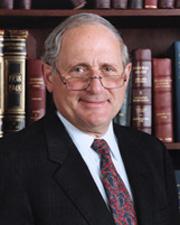 Sen. Carl Levin (D-MI)
What it changes
1 change to S. 1042 · shown in the bill's text
Adds TITLE XV--NATIONAL COMMISSION ON POLICIES AND PRACTICES ON TREATMENT OF DETAINEES SINCE SEPTEMBER 11, 2001 at the end of division A
Adds a titleIn S. 1042 · Placed on Calendar Senate
(d) Effect on Authorization Amounts.--A transfer made from one account to another under the authority of this section shall be deemed to increase the amount authorized for the account to which the amount is transferred by an amount equal to the amount transferred.
Inserted: TITLE XV--NATIONAL COMMISSION ON POLICIES AND PRACTICES ON TREATMENT OF DETAINEES SINCE SEPTEMBER 11, 2001
Inserted: SEC. 1501. FINDINGS.
Inserted: Congress makes the following findings:
Inserted: (1) The vast majority of the members of the Armed Forces have served honorably and upheld the highest standards of professionalism and morality.
Inserted: (2) While there have been numerous reviews, inspections, and investigations by the Department of Defense and others regarding aspects of the treatment of individuals detained in the course of Operation Enduring Freedom, Operation Iraqi Freedom, or United States activities to counter international terrorism since September 11, 2001, none has provided a comprehensive, objective, and independent investigation of United States policies and practices relating to the treatment of such detainees.
Inserted: (3) The reports of the various reviews, inspections, and investigations conducted by the Department of Defense and others have left numerous omissions and reached conflicting conclusions regarding institutional and personal responsibility for United States policies and practices on the treatment of the detainees described in paragraph (2) that may have caused or contributed to the mistreatment of such detainees.
Inserted: (4) Omissions in the reports produced to date also include omissions relating to--
Inserted: (A) the authorities of the intelligence community for activities to counter international terrorism since September 11, 2001, including the rendition of detainees to foreign countries, and whether such authorities differed from the authorities of the military for the detention and interrogation of detainees;
Inserted: (B) the role of intelligence personnel in the detention and interrogation of detainees;
Inserted: (C) the role of special operations forces in the detention and interrogation of detainees; and
Inserted: (D) the role of contract employees in the detention and interrogation of detainees.
Inserted: SEC. 1502. ESTABLISHMENT OF COMMISSION.
Show 99 more inserted paragraphsShow less
Inserted: There is established the National Commission on United States Policies and Practices Relating to the Treatment of Detainees Since September 11, 2001 (in this title referred to as the "Commission").
Inserted: SEC. 1503. COMPOSITION OF THE COMMISSION.
Inserted: (a) Members.--The Commission shall be composed of 10 members, of whom--
Inserted: (1) 1 member shall be appointed by the President, who shall serve as chairman of the Commission;
Inserted: (2) 1 member shall be appointed by the senior member of the leadership of the Senate of the Democratic Party, in consultation with the senior member of the leadership of the House of Representatives of the Democratic Party, who shall serve as vice chairman of the Commission;
Inserted: (3) 2 members shall be appointed by the senior member of the Senate leadership of the Republican Party;
Inserted: (4) 2 members shall be appointed by the senior member of the Senate leadership of the Democratic Party;
Inserted: (5) 2 members shall be appointed by the senior member of the leadership of the House of Representatives of the Republican Party; and
Inserted: (6) 2 members shall be appointed by the senior member of the leadership of the House of Representatives of the Democratic Party.
Inserted: (b) Qualifications; Initial Meeting.--
Inserted: (1) Political party affiliation.--Not more than 5 members of the Commission shall be from the same political party.
Inserted: (2) Nongovernmental appointees.--An individual appointed to the Commission may not be an officer or employee of the Federal Government or any State or local government.
Inserted: (3) Other qualifications.--It is the sense of Congress that individuals appointed to the Commission should be prominent United States citizens, with national recognition and significant depth of experience in such professions as governmental service, the Armed Forces, intelligence gathering or analysis, law, public administration, law enforcement, and foreign affairs.
Inserted: (4) Deadline for appointment.--All members of the Commission shall be appointed not later than 30 days after the date of the enactment of this Act.
Inserted: (c) Meetings; Quorum; Vacancies.--
Inserted: (1) Initial meeting.--The Commission shall meet and begin the operations as soon as practicable after all members have been appointed under subsection (b).
Inserted: (2) Meetings.--After its initial meeting under paragraph (1), the Commission shall meet upon the call of the chairman or a majority of its members.
Inserted: (3) Quorum.--Six members of the Commission shall constitute a quorum.
Inserted: (4) Vacancies.--Any vacancy in the Commission shall not affect its powers, but shall be filled in the same manner in which the original appointment was made.
Inserted: SEC. 1504. PURPOSES.
Inserted: (a) In General.--The purposes of the Commission are to--
Inserted: (1) examine and report upon the policies and practices of the United States relating to the treatment of individuals detained in Operation Enduring Freedom (OEF), Operation Iraqi Freedom (OIF), or United States activities to counter international terrorism since September 11, 2001 (in this title referred to as "detainees") , including the rendition of detainees to foreign countries;
Inserted: (2) examine, evaluate, and report on the causes of and factors that may have contributed to the alleged mistreatment of detainees, including, but not limited to--
Inserted: (A) laws and policies of the United States relating to the detention or interrogation of detainees, including the rendition of detainees to foreign countries;
Inserted: (B) activities of special operations forces of the Armed Forces;
Inserted: (C) activities of contract employees of any department, agency, or other entity of the United States Government, including for the rendition of detainees to foreign countries; and
Inserted: (D) activities of employees of the Central Intelligence Agency, the Defense Intelligence Agency, or any other element of the intelligence community;
Inserted: (3) assess the responsibility of leaders, whether military or civilian, within and outside the Department of Defense for policies and actions, or failures to act, that may have contributed, directly or indirectly, to the mistreatment of detainees;
Inserted: (4) ascertain, evaluate, and report on the effectiveness and propriety of interrogation techniques, policies, and practices for producing useful and reliable intelligence;
Inserted: (5) ascertain, evaluate, and report on all planning for long-term detention, or procedures for prosecution by civilian courts or military tribunals or commission, of detainees in the custody of any department, agency, or other entity of the United States Government or who have been rendered to any foreign government or entity; and
Inserted: (6) investigate and submit a report to the President and Congress on the Commission's findings, conclusions, and recommendations, including any modifications to existing treaties, laws, policies, or regulations, as appropriate.
Inserted: (b) Utilization of Other Materials.--The Commission may build upon reports conducted by the Department of Defense or other entities by reviewing the source materials, findings, conclusions, and recommendations of those other reviews in order to--
Inserted: (1) avoid unnecessary duplication; and
Inserted: (2) identify any omissions in or conflicts between such reports which in the Commission's view merit further investigation.
Inserted: SEC. 1505. FUNCTIONS OF COMMISSION.
Inserted: The functions of the Commission are to--
Inserted: (1) conduct an investigation that ascertains relevant facts and circumstances relating to--
Inserted: (A) laws, policies, and practices of the United States relating to the treatment of detainees since September 11, 2001, including any relevant treaties, statutes, Executive orders, regulations, plans, policies, practices, or procedures;
Inserted: (B) activities of any department, agency, or other entity of the United States Government relating to Operation Enduring Freedom, Operation Iraqi Freedom, and efforts to counter international terrorism since September 11, 2001;
Inserted: (C) the role of private contract employees in the treatment of detainees;
Inserted: (D) the role of legal and medical personnel in the treatment of detainees, including the role of medical personnel in advising on plans for, and the conduct of, interrogations;
Inserted: (E) dealings of any department, agency, or other entity of the United States Government with the International Committee of the Red Cross;
Inserted: (F) the role of congressional oversight; and
Inserted: (G) other areas of the public and private sectors determined relevant by the Commission for its inquiry;
Inserted: (2) identify and review how policies regarding the detention, interrogation, and rendition of detainees were formulated and implemented, and evaluate such policies in light of lessons learned from activities in Iraq, Afghanistan, Guantanamo Bay, Cuba, and elsewhere; and
Inserted: (3) submit to the President and Congress such reports as are required by this title containing such findings, conclusions, and recommendations as the Commission shall determine, including proposing any appropriate modifications in legislation, organization, coordination, planning, management, procedures, rules, and regulations.
Inserted: SEC. 1506. POWERS OF COMMISSION.
Inserted: (a) In General.--
Inserted: (1) Hearings and evidence.--The Commission or, on the authority of the Commission, any subcommittee or member thereof, may, for the purpose of carrying out this title--
Inserted: (A) hold such hearings and sit and act at such times and places, take such testimony, receive such evidence, and administer such oaths; and
Inserted: (B) subject to paragraph (2)(A), require, by subpoena or otherwise, the attendance and testimony of such witnesses and the production of such books, records, correspondence, memoranda, papers, and documents, as the Commission or such designated subcommittee or designated member may determine advisable.
Inserted: (2) Subpoenas.--
Inserted: (A) Issuance.--
Inserted: (i) In general.--A subpoena may be issued under this subsection only--
Inserted: (I) by the agreement of the chairman and the vice chairman; or
Inserted: (II) by the affirmative vote of 6 members of the Commission.
Inserted: (ii) Signature.--Subject to clause (i), subpoenas issued under this subsection may be issued under the signature of the chairman or any member designated by a majority of the Commission, and may be served by any person designated by the chairman or by a member designated by a majority of the Commission.
Inserted: (B) Enforcement.--
Inserted: (i) In general.--In the case of contumacy or failure to obey a subpoena issued under subparagraph (A), the United States district court for the judicial district in which the subpoenaed person resides, is served, or may be found, or where the subpoena is returnable, may issue an order requiring such person to appear at any designated place to testify or to produce documentary or other evidence. Any failure to obey the order of the court may be punished by the court as a contempt of that court.
Inserted: (ii) Additional enforcement.--In the case of any failure of any witness to comply with any subpoena or to testify when summoned under authority of this section, the Commission may, by majority vote, certify a statement of fact constituting such failure to the appropriate United States attorney, who may bring the matter before the grand jury for its action, under the same statutory authority and procedures as if the United States attorney had received a certification under sections 102 through 104 of the Revised Statutes of the United States (2 U.S.C. 192 through 194).
Inserted: (b) Contracting.--The Commission may, to such extent and in such amounts as are provided in appropriation Acts, enter into contracts to enable the Commission to discharge its duties under this title.
Inserted: (c) Information and Materials From Federal Agencies.--
Inserted: (1) In general.--
Inserted: (A) Cooperation of agencies.--The Commission shall receive the full and timely cooperation of any department, agency, element, bureau, board, commission, independent establishment, or other instrumentality of the United States Government, and of any officer or employee thereof, whose assistance is necessary for the fulfillment of the duties of the Commission under this title.
Inserted: (B) Furnishing of materials.--The Commission is authorized to secure directly from any department, agency, element, bureau, board, commission, independent establishment, or other instrumentality of the United States Government information, materials (including classified materials), suggestions, estimates, and statistics for the purposes of this title. Each such department, agency, element, bureau, board, commission, independent establishment, or other instrumentality shall, to the maximum extent authorized by law, furnish all such information, materials, suggestions, estimates, and statistics directly to the Commission, promptly upon a request made by the chairman, the chairman of any subcommittee created by a majority of the Commission, or any member designated by a majority of the Commission, but in no case later than 14 days after such a request.
Inserted: (2) Receipt, handling, storage, and dissemination.--Information and materials shall be received, handled, stored, and disseminated by members of the Commission and its staff consistent with all applicable statutes, regulations, and Executive orders. The Commission shall maintain all classified information and materials provided to the Commission under this title in a secure location in the offices of the Commission or as designated by the Commission.
Inserted: (3) Access to information and materials.--No department, agency, element, bureau, board, commission, independent establishment, or other instrumentality of the United States may withhold information or materials, including classified materials, from the Commission on the grounds that providing the information or materials would constitute the unauthorized disclosure of classified information, pre-decisional materials, or information relating to intelligence sources or methods.
Inserted: (d) Assistance From Particular Federal Agencies.--
Inserted: (1) General services administration.--The Administrator of General Services shall provide to the Commission on a reimbursable basis administrative support and other services for the performance of the Commission's functions.
Inserted: (2) Other departments and agencies.--In addition to the assistance prescribed in paragraph (1), departments, agencies, and other elements of the United States Government may provide to the Commission such services, funds, facilities, staff, and other support services as they may determine advisable and as may be authorized by law.
Inserted: (e) Postal Services.--The Commission may use the United States mails in the same manner and under the same conditions as departments and agencies of the United States Government.
Inserted: SEC. 1507. COMPENSATION AND TRAVEL EXPENSES.
Inserted: (a) Compensation.--Each member of the Commission shall be compensated at not to exceed the daily equivalent of the annual rate of basic pay in effect for a position at level IV of the Executive Schedule under section 5315 of title 5, United States Code, for each day during which that member is engaged in the actual performance of the duties of the Commission.
Inserted: (b) Travel Expenses.--While away from their homes or regular places of business in the performance of services for the Commission, members of the Commission shall be allowed travel expenses, including per diem in lieu of subsistence, in the same manner as persons employed intermittently in the Government service are allowed expenses under section 5703(b) of title 5, United States Code.
Inserted: SEC. 1508. STAFF OF COMMISSION.
Inserted: (a) In General.--
Inserted: (1) Appointment and compensation.--The chairman, in consultation with the vice chairman and in accordance with rules agreed upon by the Commission, may appoint and fix the compensation of a staff director and such other personnel as may be necessary to enable the Commission to carry out its functions, without regard to the provisions of title 5, United States Code, governing appointments in the competitive service, and without regard to the provisions of chapter 51 and subchapter III of chapter 53 of such title relating to classification and General Schedule pay rates, except that no rate of pay fixed under this subsection may exceed the equivalent of that payable for a position at level V of the Executive Schedule under section 5316 of title 5, United States Code.
Inserted: (2) Personnel as federal employees.--
Inserted: (A) Treatment.--The staff director and any personnel of the Commission who are employees of the Commission shall be treated as employees of the Federal Government under section 2105 of title 5, United States Code, for purposes of chapters 63, 81, 83, 84, 85, 87, 89, and 90 of that title.
Inserted: (B) Exception.--Subparagraph (A) shall not apply to members of the Commission.
Inserted: (b) Detailees.--Any Federal Government employee may be detailed to the Commission without reimbursement from the Commission, and such detailee shall retain the rights, status, and privileges of his or her regular employment without interruption.
Inserted: (c) Consultant Services.--The Commission is authorized to procure the services of experts and consultants in accordance with section 3109 of title 5, United States Code, but at rates not to exceed the daily rate paid a person occupying a position at level IV of the Executive Schedule under section 5315 of title 5, United States Code.
Inserted: SEC. 1509. SECURITY CLEARANCES FOR COMMISSION MEMBERS AND STAFF.
Inserted: The departments, agencies, and elements of the United States Government shall cooperate with the Commission in expeditiously providing to the Commission members and staff appropriate security clearances to the extent possible pursuant to existing procedures and requirements. No person shall be provided with access to classified information under this title without the appropriate security clearances.
Inserted: SEC. 1510. NONAPPLICABILITY OF FEDERAL ADVISORY COMMITTEE ACT.
Inserted: (a) In General.--The Federal Advisory Committee Act (5 U.S.C. App.) shall not apply to the Commission.
Inserted: (b) Public Meetings and Release of Public Versions of Reports.--The Commission shall--
Inserted: (1) hold public hearings and meetings to the extent appropriate; and
Inserted: (2) release public versions of the reports required under section 1511.
Inserted: (c) Public Hearings.--Any public hearings of the Commission shall be conducted in a manner consistent with the protection of information provided to or developed for or by the Commission as required by any applicable statute, regulation, or Executive order.
Inserted: SEC. 1511. REPORTS OF COMMISSION; TERMINATION.
Inserted: (a) Interim Reports.--The Commission may submit to the President and Congress interim reports containing such findings, conclusions and recommendations as have been agreed to by a majority of Commission members.
Inserted: (b) Final Report.--Not later than 12 months after the date of the enactment of this Act, the Commission shall submit to the President and Congress a final report containing such findings, conclusions, and recommendations as have been agreed to by a majority of Commission members.
Inserted: (c) Termination.--
Inserted: (1) In general.--The Commission, and all the authorities of this title, shall terminate 60 days after the date on which the final report is submitted under subsection (b).
Inserted: (2) Administrative activities before termination.--The Commission may use the 60-day period referred to in paragraph (1) for the purpose of concluding its activities, including providing testimony to committees of Congress concerning its reports, disseminating the final report.
Inserted: SEC. 1512. FUNDING.
Inserted: (a) Authorization of Appropriations.--There are authorized to be appropriated to the Commission to carry out this section $2,500,000.
Inserted: (b) Duration of Availability.--Amounts made available to the Commission under subsection (a) shall remain available until the termination of the Commission.
Original wording
At the end of division A, add the following:
Read automatically from the Congressional Record. Check the original before relying on it.
As printed
SA 1494. Mr. LEVIN (for himself, Mr. Kennedy, Mr. Rockefeller, and Mr. Reed) submitted an amendment intended to be proposed by him to the bill S. 1042, to authorize appropriations for fiscal year 2006 for military activities of the Department of Defense, for military construction, and for defense activities of the Department of Energy, to prescribe personnel strengths for such fiscal year for the Armed Forces, and for other purposes; as follows:
At the end of division A, add the following:
TITLE XV--NATIONAL COMMISSION ON POLICIES AND PRACTICES ON TREATMENT OF DETAINEES SINCE SEPTEMBER 11, 2001
SEC. 1501. FINDINGS.
Congress makes the following findings:
(1) The vast majority of the members of the Armed Forces have served honorably and upheld the highest standards of professionalism and morality.
(2) While there have been numerous reviews, inspections, and investigations by the Department of Defense and others regarding aspects of the treatment of individuals detained in the course of Operation Enduring Freedom, Operation Iraqi Freedom, or United States activities to counter international terrorism since September 11, 2001, none has provided a comprehensive, objective, and independent investigation of United States policies and practices relating to the treatment of such detainees.
(3) The reports of the various reviews, inspections, and investigations conducted by the Department of Defense and others have left numerous omissions and reached conflicting conclusions regarding institutional and personal responsibility for United States policies and practices on the treatment of the detainees described in paragraph (2) that may have caused or contributed to the mistreatment of such detainees.
(4) Omissions in the reports produced to date also include omissions relating to--
(A) the authorities of the intelligence community for activities to counter international terrorism since September 11, 2001, including the rendition of detainees to foreign countries, and whether such authorities differed from the authorities of the military for the detention and interrogation of detainees;
(B) the role of intelligence personnel in the detention and interrogation of detainees;
(C) the role of special operations forces in the detention and interrogation of detainees; and
(D) the role of contract employees in the detention and interrogation of detainees.
SEC. 1502. ESTABLISHMENT OF COMMISSION.
There is established the National Commission on United States Policies and Practices Relating to the Treatment of Detainees Since September 11, 2001 (in this title referred to as the “Commission”).
SEC. 1503. COMPOSITION OF THE COMMISSION.
(a) Members.--The Commission shall be composed of 10 members, of whom--
(1) 1 member shall be appointed by the President, who shall serve as chairman of the Commission;
(2) 1 member shall be appointed by the senior member of the leadership of the Senate of the Democratic Party, in consultation with the senior member of the leadership of the House of Representatives of the Democratic Party, who shall serve as vice chairman of the Commission;
(3) 2 members shall be appointed by the senior member of the Senate leadership of the Republican Party;
(4) 2 members shall be appointed by the senior member of the Senate leadership of the Democratic Party;
(5) 2 members shall be appointed by the senior member of the leadership of the House of Representatives of the Republican Party; and
(6) 2 members shall be appointed by the senior member of the leadership of the House of Representatives of the Democratic Party.
(b) Qualifications; Initial Meeting.--
(1) Political party affiliation.--Not more than 5 members of the Commission shall be from the same political party.
(2) Nongovernmental appointees.--An individual appointed to the Commission may not be an officer or employee of the Federal Government or any State or local government.
(3) Other qualifications.--It is the sense of Congress that individuals appointed to the Commission should be prominent United States citizens, with national recognition and significant depth of experience in such professions as governmental service, the Armed Forces, intelligence gathering or analysis, law, public administration, law enforcement, and foreign affairs.
(4) Deadline for appointment.--All members of the Commission shall be appointed not later than 30 days after the date of the enactment of this Act.
(c) Meetings; Quorum; Vacancies.--
(1) Initial meeting.--The Commission shall meet and begin the operations as soon as practicable after all members have been appointed under subsection (b).
(2) Meetings.--After its initial meeting under paragraph (1), the Commission shall meet upon the call of the chairman or a majority of its members.
(3) Quorum.--Six members of the Commission shall constitute a quorum.
(4) Vacancies.--Any vacancy in the Commission shall not affect its powers, but shall be filled in the same manner in which the original appointment was made.
SEC. 1504. PURPOSES.
(a) In General.--The purposes of the Commission are to--
(1) examine and report upon the policies and practices of the United States relating to the treatment of individuals detained in Operation Enduring Freedom (OEF), Operation Iraqi Freedom (OIF), or United States activities to counter international terrorism since September 11, 2001 (in this title referred to as “detainees”) , including the rendition of detainees to foreign countries;
(2) examine, evaluate, and report on the causes of and factors that may have contributed to the alleged mistreatment of detainees, including, but not limited to--
(A) laws and policies of the United States relating to the detention or interrogation of detainees, including the rendition of detainees to foreign countries;
(B) activities of special operations forces of the Armed Forces;
(C) activities of contract employees of any department, agency, or other entity of the United States Government, including for the rendition of detainees to foreign countries; and
(D) activities of employees of the Central Intelligence Agency, the Defense Intelligence Agency, or any other element of the intelligence community;
(3) assess the responsibility of leaders, whether military or civilian, within and outside the Department of Defense for policies and actions, or failures to act, that may have contributed, directly or indirectly, to the mistreatment of detainees;
(4) ascertain, evaluate, and report on the effectiveness and propriety of interrogation techniques, policies, and practices for producing useful and reliable intelligence;
(5) ascertain, evaluate, and report on all planning for long-term detention, or procedures for prosecution by civilian courts or military tribunals or commission, of detainees in the custody of any department, agency, or other entity of the United States Government or who have been rendered to any foreign government or entity; and
(6) investigate and submit a report to the President and Congress on the Commission's findings, conclusions, and recommendations, including any modifications to existing treaties, laws, policies, or regulations, as appropriate.
(b) Utilization of Other Materials.--The Commission may build upon reports conducted by the Department of Defense or other entities by reviewing the source materials, findings, conclusions, and recommendations of those other reviews in order to--
(1) avoid unnecessary duplication; and
(2) identify any omissions in or conflicts between such reports which in the Commission's view merit further investigation.
SEC. 1505. FUNCTIONS OF COMMISSION.
The functions of the Commission are to--
(1) conduct an investigation that ascertains relevant facts and circumstances relating to--
(A) laws, policies, and practices of the United States relating to the treatment of detainees since September 11, 2001, including any relevant treaties, statutes, Executive orders, regulations, plans, policies, practices, or procedures;
(B) activities of any department, agency, or other entity of the United States Government relating to Operation Enduring Freedom, Operation Iraqi Freedom, and efforts to counter international terrorism since September 11, 2001;
(C) the role of private contract employees in the treatment of detainees;
(D) the role of legal and medical personnel in the treatment of detainees, including the role of medical personnel in advising on plans for, and the conduct of, interrogations;
(E) dealings of any department, agency, or other entity of the United States Government with the International Committee of the Red Cross;
(F) the role of congressional oversight; and
(G) other areas of the public and private sectors determined relevant by the Commission for its inquiry;
(2) identify and review how policies regarding the detention, interrogation, and rendition of detainees were formulated and implemented, and evaluate such policies in light of lessons learned from activities in Iraq, Afghanistan, Guantanamo Bay, Cuba, and elsewhere; and
(3) submit to the President and Congress such reports as are required by this title containing such findings, conclusions, and recommendations as the Commission shall determine, including proposing any appropriate modifications in legislation, organization, coordination, planning, management, procedures, rules, and regulations.
SEC. 1506. POWERS OF COMMISSION.
(a) In General.--
(1) Hearings and evidence.--The Commission or, on the authority of the Commission, any subcommittee or member thereof, may, for the purpose of carrying out this title--
(A) hold such hearings and sit and act at such times and places, take such testimony, receive such evidence, and administer such oaths; and
(B) subject to paragraph (2)(A), require, by subpoena or otherwise, the attendance and testimony of such witnesses and the production of such books, records, correspondence, memoranda, papers, and documents, as the Commission or such designated subcommittee or designated member may determine advisable.
(2) Subpoenas.--
(A) Issuance.--
(i) In general.--A subpoena may be issued under this subsection only--
(I) by the agreement of the chairman and the vice chairman; or
(II) by the affirmative vote of 6 members of the Commission.
(ii) Signature.--Subject to clause (i), subpoenas issued under this subsection may be issued under the signature of the chairman or any member designated by a majority of the Commission, and may be served by any person designated by the chairman or by a member designated by a majority of the Commission.
(B) Enforcement.--
(i) In general.--In the case of contumacy or failure to obey a subpoena issued under subparagraph (A), the United States district court for the judicial district in which the subpoenaed person resides, is served, or may be found, or where the subpoena is returnable, may issue an order requiring such person to appear at any designated place to testify or to produce documentary or other evidence. Any failure to obey the order of the court may be punished by the court as a contempt of that court.
(ii) Additional enforcement.--In the case of any failure of any witness to comply with any subpoena or to testify when summoned under authority of this section, the Commission may, by majority vote, certify a statement of fact constituting such failure to the appropriate United States attorney, who may bring the matter before the grand jury for its action, under the same statutory authority and procedures as if the United States attorney had received a certification under sections 102 through 104 of the Revised Statutes of the United States (2 U.S.C. 192 through 194).
(b) Contracting.--The Commission may, to such extent and in such amounts as are provided in appropriation Acts, enter into contracts to enable the Commission to discharge its duties under this title.
(c) Information and Materials From Federal Agencies.--
(1) In general.--
(A) Cooperation of agencies.--The Commission shall receive the full and timely cooperation of any department, agency, element, bureau, board, commission, independent establishment, or other instrumentality of the United States Government, and of any officer or employee thereof, whose assistance is necessary for the fulfillment of the duties of the Commission under this title.
(B) Furnishing of materials.--The Commission is authorized to secure directly from any department, agency, element, bureau, board, commission, independent establishment, or other instrumentality of the United States Government information, materials (including classified materials), suggestions, estimates, and statistics for the purposes of this title. Each such department, agency, element, bureau, board, commission, independent establishment, or other instrumentality shall, to the maximum extent authorized by law, furnish all such information, materials, suggestions, estimates, and statistics directly to the Commission, promptly upon a request made by the chairman, the chairman of any subcommittee created by a majority of the Commission, or any member designated by a majority of the Commission, but in no case later than 14 days after such a request.
(2) Receipt, handling, storage, and dissemination.--Information and materials shall be received, handled, stored, and disseminated by members of the Commission and its staff consistent with all applicable statutes, regulations, and Executive orders. The Commission shall maintain all classified information and materials provided to the Commission under this title in a secure location in the offices of the Commission or as designated by the Commission.
(3) Access to information and materials.--No department, agency, element, bureau, board, commission, independent establishment, or other instrumentality of the United States may withhold information or materials, including classified materials, from the Commission on the grounds that providing the information or materials would constitute the unauthorized disclosure of classified information, pre-decisional materials, or information relating to intelligence sources or methods.
(d) Assistance From Particular Federal Agencies.--
(1) General services administration.--The Administrator of General Services shall provide to the Commission on a reimbursable basis administrative support and other services for the performance of the Commission's functions.
(2) Other departments and agencies.--In addition to the assistance prescribed in paragraph (1), departments, agencies, and other elements of the United States Government may provide to the Commission such services, funds, facilities, staff, and other support services as they may determine advisable and as may be authorized by law.
(e) Postal Services.--The Commission may use the United States mails in the same manner and under the same conditions as departments and agencies of the United States Government.
SEC. 1507. COMPENSATION AND TRAVEL EXPENSES.
(a) Compensation.--Each member of the Commission shall be compensated at not to exceed the daily equivalent of the annual rate of basic pay in effect for a position at level IV of the Executive Schedule under section 5315 of title 5, United States Code, for each day during which that member is engaged in the actual performance of the duties of the Commission.
(b) Travel Expenses.--While away from their homes or regular places of business in the performance of services for the Commission, members of the Commission shall be allowed travel expenses, including per diem in lieu of subsistence, in the same manner as persons employed intermittently in the Government service are allowed expenses under section 5703(b) of title 5, United States Code.
SEC. 1508. STAFF OF COMMISSION.
(a) In General.--
(1) Appointment and compensation.--The chairman, in consultation with the vice chairman and in accordance with rules agreed upon by the Commission, may appoint and fix the compensation of a staff director and such other personnel as may be necessary to enable the Commission to carry out its functions, without regard to the provisions of title 5, United States Code, governing appointments in the competitive service, and without regard to the provisions of chapter 51 and subchapter III of chapter 53 of such title relating to classification and General Schedule pay rates, except that no rate of pay fixed under this subsection may exceed the equivalent of that payable for a position at level V of the Executive Schedule under section 5316 of title 5, United States Code.
(2) Personnel as federal employees.--
(A) Treatment.--The staff director and any personnel of the Commission who are employees of the Commission shall be treated as employees of the Federal Government under section 2105 of title 5, United States Code, for purposes of chapters 63, 81, 83, 84, 85, 87, 89, and 90 of that title.
(B) Exception.--Subparagraph (A) shall not apply to members of the Commission.
(b) Detailees.--Any Federal Government employee may be detailed to the Commission without reimbursement from the Commission, and such detailee shall retain the rights, status, and privileges of his or her regular employment without interruption.
(c) Consultant Services.--The Commission is authorized to procure the services of experts and consultants in accordance with section 3109 of title 5, United States Code, but at rates not to exceed the daily rate paid a person occupying a position at level IV of the Executive Schedule under section 5315 of title 5, United States Code.
SEC. 1509. SECURITY CLEARANCES FOR COMMISSION MEMBERS AND STAFF.
The departments, agencies, and elements of the United States Government shall cooperate with the Commission in expeditiously providing to the Commission members and staff appropriate security clearances to the extent possible pursuant to existing procedures and requirements. No person shall be provided with access to classified information under this title without the appropriate security clearances.
SEC. 1510. NONAPPLICABILITY OF FEDERAL ADVISORY COMMITTEE ACT.
(a) In General.--The Federal Advisory Committee Act (5 U.S.C. App.) shall not apply to the Commission.
(b) Public Meetings and Release of Public Versions of Reports.--The Commission shall--
(1) hold public hearings and meetings to the extent appropriate; and
(2) release public versions of the reports required under section 1511.
(c) Public Hearings.--Any public hearings of the Commission shall be conducted in a manner consistent with the protection of information provided to or developed for or by the Commission as required by any applicable statute, regulation, or Executive order.
SEC. 1511. REPORTS OF COMMISSION; TERMINATION.
(a) Interim Reports.--The Commission may submit to the President and Congress interim reports containing such findings, conclusions and recommendations as have been agreed to by a majority of Commission members.
(b) Final Report.--Not later than 12 months after the date of the enactment of this Act, the Commission shall submit to the President and Congress a final report containing such findings, conclusions, and recommendations as have been agreed to by a majority of Commission members.
(c) Termination.--
(1) In general.--The Commission, and all the authorities of this title, shall terminate 60 days after the date on which the final report is submitted under subsection (b).
(2) Administrative activities before termination.--The Commission may use the 60-day period referred to in paragraph (1) for the purpose of concluding its activities, including providing testimony to committees of Congress concerning its reports, disseminating the final report.
SEC. 1512. FUNDING.
(a) Authorization of Appropriations.--There are authorized to be appropriated to the Commission to carry out this section $2,500,000.
(b) Duration of Availability.--Amounts made available to the Commission under subsection (a) shall remain available until the termination of the Commission.
Legislative Activity
Stay on top of the latest movement without scrolling through every action
Measure laid before Senate by unanimous consent. (consideration: CR S12378)
November 4, 2005
View full timeline
Measure laid before Senate by unanimous consent. (consideration: CR S12378)
November 4, 2005
Proposed amendment SA 1494 withdrawn in Senate.
November 4, 2005
Considered by Senate. (consideration: CR S8898)
July 26, 2005
Senate amendment submitted
July 25, 2005
Senate amendment proposed (on the floor): Amendment SA 1494 proposed by Senator Levin.
July 25, 2005
Amendment SA 1494 proposed by Senator Levin. (consideration: CR S8803) To establish a national commission on policies and practices on the treatment of detainees since September 11, 2001.
July 25, 2005