S.Amdt. 1554
What it does: Adds SEC. 1306. COMPREHENSIVE STRATEGY FOR SECURITY AND ACCOUNTABILITY OF WEAPONS-USABLE NUCLEAR MATERIAL IN THE FORMER SOVIET UNION at the end of title XIII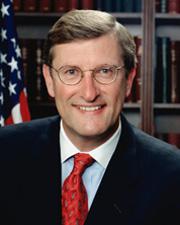 Sen. Kent Conrad (D-ND)
What it changes
1 change to S. 1042 · shown in the bill's text
Adds SEC. 1306. COMPREHENSIVE STRATEGY FOR SECURITY AND ACCOUNTABILITY OF WEAPONS-USABLE NUCLEAR MATERIAL IN THE FORMER SOVIET UNION at the end of title XIII
Adds a sectionIn S. 1042 · Placed on Calendar Senate
Section 1308 of the Floyd D. Spence National Defense Authorization Act for Fiscal Year 2001 (as enacted into law by Public Law 106-398; 114 Stat. 1654A-341) is amended by striking subsection (e).
Inserted: SEC. 1306. COMPREHENSIVE STRATEGY FOR SECURITY AND ACCOUNTABILITY OF WEAPONS-USABLE NUCLEAR MATERIAL IN THE FORMER SOVIET UNION.
Inserted: (a) Findings.--Congress makes the following findings:
Inserted: (1) On September 30, 2004, President George W. Bush stated that "the biggest threat facing this country is weapons of mass destruction in the hands of a terrorist network.".
Inserted: (2) In a joint statement with President of Russia Vladimir Putin on February 24, 2005, President George W. Bush further noted that "[w]e bear a special responsibility for the security of nuclear weapons and fissile material, in order to ensure that there is no possibility such weapons or materials would fall into terrorist hands.".
Inserted: (3) When the Soviet Union disintegrated, it left behind an estimated 30,000 nuclear warheads, as well as sufficient plutonium and highly enriched uranium to produce more than 40,000 additional weapons. Most of this material is not secure and is therefore vulnerable to theft by potential terrorists.
Inserted: (4) In 1991, Congress adopted the Soviet Nuclear Threat Reduction Act of 1991 (title II of Public Law 102-228; 22 U.S.C. 2551 note; commonly referred to as "Nunn-Lugar") to assist the Soviet Union and "successor entities" with efforts to promptly and safely destroy its nuclear weapons arsenal and secure its stockpiles of weapons-usable nuclear materials.
Inserted: (5) It is the stated goal of the Department of Energy to complete comprehensive security and accountability upgrades through programs under the Soviet Nuclear Threat Reduction Act of 1991 for all of the former weapons-usable nuclear material in the Soviet Union by 2008. However, after 13 years of work, less than 50 percent of such nuclear materials and warheads have received basic cooperative security upgrades, and only 26 percent have received comprehensive upgrades.
Inserted: (6) Acquiring fissile materials is the most difficult step for terrorists seeking to build a nuclear weapon, and also the easiest step for the United States and friendly nations to stop, making control over fissile material the first and best line of defense for preventing terrorist groups from using nuclear weapons.
Inserted: (7) It has now been nearly 10 years since Congress first received testimony about the risk of theft of nuclear material in the former Soviet Union.
Inserted: (8) Statements by Osama bin Laden and other terrorist leaders have made it clear that terrorists will stop at nothing to obtain nuclear weapons material and capability.
Inserted: (9) In February 2005 Porter Goss, Director of the Central Intelligence Agency, testified that sufficient Russian nuclear material was unaccounted for to enable terrorists to build a nuclear weapon.
Inserted: (10) The September 11, 2001, terrorist attacks on the United States highlighted the importance of preventing terrorists from obtaining nuclear weapons or materials, yet the pace of progress toward that goal has decreased when compared with the years immediately preceding those attacks.
Show 20 more inserted paragraphsShow less
Inserted: (11) The National Commission on Terrorist Attacks on the United States (September 11th Commission) concluded that a "maximum effort" was required to keep nuclear weapons and fissile material out of terrorist hands.
Inserted: (12) Securing only a portion of the loose nuclear material is insufficient because terrorists seeking nuclear weapons materials will likely seek out the worst defended site.
Inserted: (13) A new report published by the Project on Managing the Atom of Harvard University, in conjunction with the Nuclear Threat Initiative, entitled "Securing the Bomb 2005", concluded that "a dramatic acceleration will be needed to meet [the Department of Energy's] stated goal of finishing upgrades less than 4 years from now.".
Inserted: (14) In January 2001, a bipartisan task force chaired by Howard Baker, former Majority Leader of the Senate and Lloyd Butler, former White House counsel, concluded that "the most urgent, unmet national security threat to the United States today is the danger that weapons of mass destruction or weapons-usable material in Russia could be stolen and sold to terrorists or hostile nation states and used against American troops abroad or citizens at home," and recommended investing $30,000,000,000 over 10 years on Department of Energy programs to secure nuclear material. The pace of spending since then on all nonproliferation and threat reduction programs in the former Soviet Union has been only about $1,000,000,000 per year.
Inserted: (15) Many reports, including the report referred to in paragraph (14), have called for a single, strategic plan to secure nuclear material in the former Soviet Union, but none has yet been produced.
Inserted: (16) The urgency for this work is demonstrated by the fact that customs officials in Russia reported 200 potential attempts to smuggle nuclear or radiological materials out of Russia in 2004.
Inserted: (17) While an increasing number of nuclear sites in Russia have been secured, the remaining unsecured sites include several very sensitive locations that hold vast stocks of nuclear weapons and materials.
Inserted: (18) Concentrated attention to these sensitive sites is required, including an effort to increase the seriousness with which the Government of Russia and the public in Russia view the problem, in order to help overcome remaining issues of access, liability, and allocation of Russian resources which have long slowed progress on the objectives of the Soviet Nuclear Threat Reduction Act of 1991.
Inserted: (19) The horrific terrorist attack on schoolchildren in Beslan may help to increase attention in Russia to problems of terrorism, including nuclear terrorism, making United States support for these efforts all the more crucial at this time.
Inserted: (20) Eliminating onerous certification requirements for cooperative threat reduction programs with Russia, or providing permanent authority to waive those requirements on an annual basis, could significantly accelerate the pace of efforts to secure loose nuclear material and warheads.
Inserted: (21) Recent developments with the G-8 Global Partnership and the Global Threat Reduction Initiative, as well as funding increases included in the fiscal year 2006 budget request, offer the potential for accelerated progress on this crucial objective.
Inserted: (22) Russia has become a valuable partner in the war on terrorism and a full partner in efforts to secure nuclear weapons and weapons-usable nuclear material and to destroy strategic delivery systems, chemical weapons, and excess nuclear warheads.
Inserted: (b) Statement of United States Policy.--
Inserted: (1) Statement of united states policy.--It shall be the policy of the United States that the Department of Defense and the Department of Energy shall seek to work with the Government of Russia and governments of other states of the former Soviet Union to complete comprehensive security and accountability upgrades for all of the weapons-usable nuclear material in the former Soviet Union by not later than September 30, 2008, in accordance with the stated goal of the Department of Energy.
Inserted: (2) Sense of congress.--It is the sense of Congress that the President should request, and Congress should appropriate, the funds necessary to ensure that the policy set forth in paragraph (1) is carried out.
Inserted: (c) Strategy Required.--
Inserted: (1) In general.--Not later than the February 6, 2006, the Secretary of Defense, the Secretary of State, and the Secretary of Energy shall, in cooperation with the Director of the Office of Management and Budget, jointly submit to Congress a report setting forth a strategy for completing comprehensive security and accountability upgrades for all of the weapons-usable nuclear material in the former Soviet Union by not later than September 30, 2008.
Inserted: (2) Elements.--The report shall include, in addition to the strategy--
Inserted: (A) an assessment of the funding required to implement the strategy; and
Inserted: (B) a description of any legislative or administrative actions required to facilitate implementation of the strategy.
Original wording
At the end of title XIII, add the following:
Read automatically from the Congressional Record. Check the original before relying on it.
As printed
SA 1554. Mr. CONRAD submitted an amendment intended to be proposed by him to the bill S. 1042, to authorize appropriations for fiscal year 2006 for military activities of the Department of Defense, for military construction, and for defense activities of the Department of Energy, to prescribe personnel strengths for such fiscal year for the Armed Forces, and for other purposes; which was ordered to lie on the table; as follows:
At the end of title XIII, add the following:
SEC. 1306. COMPREHENSIVE STRATEGY FOR SECURITY AND ACCOUNTABILITY OF WEAPONS-USABLE NUCLEAR MATERIAL IN THE FORMER SOVIET UNION.
(a) Findings.--Congress makes the following findings:
(1) On September 30, 2004, President George W. Bush stated that “the biggest threat facing this country is weapons of mass destruction in the hands of a terrorist network.”.
(2) In a joint statement with President of Russia Vladimir Putin on February 24, 2005, President George W. Bush further noted that “[w]e bear a special responsibility for the security of nuclear weapons and fissile material, in order to ensure that there is no possibility such weapons or materials would fall into terrorist hands.”.
(3) When the Soviet Union disintegrated, it left behind an estimated 30,000 nuclear warheads, as well as sufficient plutonium and highly enriched uranium to produce more than 40,000 additional weapons. Most of this material is not secure and is therefore vulnerable to theft by potential terrorists.
(4) In 1991, Congress adopted the Soviet Nuclear Threat Reduction Act of 1991 (title II of Public Law 102-228; 22 U.S.C. 2551 note; commonly referred to as “Nunn-Lugar”) to assist the Soviet Union and “successor entities” with efforts to promptly and safely destroy its nuclear weapons arsenal and secure its stockpiles of weapons-usable nuclear materials.
(5) It is the stated goal of the Department of Energy to complete comprehensive security and accountability upgrades through programs under the Soviet Nuclear Threat Reduction Act of 1991 for all of the former weapons-usable nuclear material in the Soviet Union by 2008. However, after 13 years of work, less than 50 percent of such nuclear materials and warheads have received basic cooperative security upgrades, and only 26 percent have received comprehensive upgrades.
(6) Acquiring fissile materials is the most difficult step for terrorists seeking to build a nuclear weapon, and also the easiest step for the United States and friendly nations to stop, making control over fissile material the first and best line of defense for preventing terrorist groups from using nuclear weapons.
(7) It has now been nearly 10 years since Congress first received testimony about the risk of theft of nuclear material in the former Soviet Union.
(8) Statements by Osama bin Laden and other terrorist leaders have made it clear that terrorists will stop at nothing to obtain nuclear weapons material and capability.
(9) In February 2005 Porter Goss, Director of the Central Intelligence Agency, testified that sufficient Russian nuclear material was unaccounted for to enable terrorists to build a nuclear weapon.
(10) The September 11, 2001, terrorist attacks on the United States highlighted the importance of preventing terrorists from obtaining nuclear weapons or materials, yet the pace of progress toward that goal has decreased when compared with the years immediately preceding those attacks.
(11) The National Commission on Terrorist Attacks on the United States (September 11th Commission) concluded that a “maximum effort” was required to keep nuclear weapons and fissile material out of terrorist hands.
(12) Securing only a portion of the loose nuclear material is insufficient because terrorists seeking nuclear weapons materials will likely seek out the worst defended site.
(13) A new report published by the Project on Managing the Atom of Harvard University, in conjunction with the Nuclear Threat Initiative, entitled “Securing the Bomb 2005”, concluded that “a dramatic acceleration will be needed to meet [the Department of Energy's] stated goal of finishing upgrades less than 4 years from now.”.
(14) In January 2001, a bipartisan task force chaired by Howard Baker, former Majority Leader of the Senate and Lloyd Butler, former White House counsel, concluded that “the most urgent, unmet national security threat to the United States today is the danger that weapons of mass destruction or weapons-usable material in Russia could be stolen and sold to terrorists or hostile nation states and used against American troops abroad or citizens at home,” and recommended investing $30,000,000,000 over 10 years on Department of Energy programs to secure nuclear material. The pace of spending since then on all nonproliferation and threat reduction programs in the former Soviet Union has been only about $1,000,000,000 per year.
(15) Many reports, including the report referred to in paragraph (14), have called for a single, strategic plan to secure nuclear material in the former Soviet Union, but none has yet been produced.
(16) The urgency for this work is demonstrated by the fact that customs officials in Russia reported 200 potential attempts to smuggle nuclear or radiological materials out of Russia in 2004.
(17) While an increasing number of nuclear sites in Russia have been secured, the remaining unsecured sites include several very sensitive locations that hold vast stocks of nuclear weapons and materials.
(18) Concentrated attention to these sensitive sites is required, including an effort to increase the seriousness with which the Government of Russia and the public in Russia view the problem, in order to help overcome remaining issues of access, liability, and allocation of Russian resources which have long slowed progress on the objectives of the Soviet Nuclear Threat Reduction Act of 1991.
(19) The horrific terrorist attack on schoolchildren in Beslan may help to increase attention in Russia to problems of terrorism, including nuclear terrorism, making United States support for these efforts all the more crucial at this time.
(20) Eliminating onerous certification requirements for cooperative threat reduction programs with Russia, or providing permanent authority to waive those requirements on an annual basis, could significantly accelerate the pace of efforts to secure loose nuclear material and warheads.
(21) Recent developments with the G-8 Global Partnership and the Global Threat Reduction Initiative, as well as funding increases included in the fiscal year 2006 budget request, offer the potential for accelerated progress on this crucial objective.
(22) Russia has become a valuable partner in the war on terrorism and a full partner in efforts to secure nuclear weapons and weapons-usable nuclear material and to destroy strategic delivery systems, chemical weapons, and excess nuclear warheads.
(b) Statement of United States Policy.--
(1) Statement of united states policy.--It shall be the policy of the United States that the Department of Defense and the Department of Energy shall seek to work with the Government of Russia and governments of other states of the former Soviet Union to complete comprehensive security and accountability upgrades for all of the weapons-usable nuclear material in the former Soviet Union by not later than September 30, 2008, in accordance with the stated goal of the Department of Energy.
(2) Sense of congress.--It is the sense of Congress that the President should request, and Congress should appropriate, the funds necessary to ensure that the policy set forth in paragraph (1) is carried out.
(c) Strategy Required.--
(1) In general.--Not later than the February 6, 2006, the Secretary of Defense, the Secretary of State, and the Secretary of Energy shall, in cooperation with the Director of the Office of Management and Budget, jointly submit to Congress a report setting forth a strategy for completing comprehensive security and accountability upgrades for all of the weapons-usable nuclear material in the former Soviet Union by not later than September 30, 2008.
(2) Elements.--The report shall include, in addition to the strategy--
(A) an assessment of the funding required to implement the strategy; and
(B) a description of any legislative or administrative actions required to facilitate implementation of the strategy.
Legislative Activity
Stay on top of the latest movement without scrolling through every action
Senate amendment submitted
July 25, 2005