S.Amdt. 1699
What it does: Adds Sec. 5__. (a) Congress finds that-- on page 190, between lines 14 and 15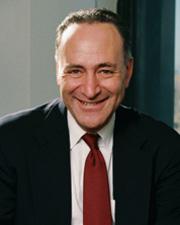 Sen. Charles E. Schumer (D-NY)
What it changes
1 change to H.R. 2862
Adds Sec. 5__. (a) Congress finds that-- on page 190, between lines 14 and 15
Adds a sectionPrinted pageInserted: Sec. 5__. (a) Congress finds that--
Inserted: (1) Hurricane Katrina made landfall on August 29, 2005, causing a catastrophic degree of human suffering and damage to infrastructure in the Gulf Coast;
Inserted: (2) the Gulf of Mexico is responsible for more than 25 percent of United States oil production, and in the immediate aftermath of Hurricane Katrina this production capacity was rendered 90 percent inactive;
Inserted: (3) due to the impacts of Hurricane Katrina, the Louisiana Offshore Oil Port, the largest oil importing port in the United States, was forced to close until September 1, 2005, limiting import capacity and tightening oil supplies;
Inserted: (4) Hurricane Katrina forced the closure of 9 major refineries, temporarily eliminated more than 12 percent of national refining capacity, and has resulted in the loss of 1,300,000,000,000 barrels of refining capacity;
Inserted: (5) in the wake of Hurricane Katrina's devastating impact on the Gulf Coast, the price of crude oil on the New York Mercantile Exchange reached a record high of $70.85 per barrel, and the national average retail gasoline price reached a record level of almost $3.06 per gallon;
Inserted: (6) although the price of crude oil has fallen to levels experienced prior to Hurricane Katrina, the national average retail cost of gasoline has declined much more slowly and remains at near-record levels;
Inserted: (7) following Hurricane Katrina, retail gasoline prices at some locations increased by as much as $0.50 per gallon overnight, and, at many stations, several price increases occurred during the same day;
Inserted: (8) the rapid, irregular increase in retail gasoline prices and the failure of retail gasoline prices to significantly decline in correspondence with the price of crude oil have raised concerns regarding the possible existence of anticompetitive practices and price gouging in the oil industry;
Inserted: (9) over the course of the past decade, the Federal Trade Commission has approved a series of mergers, acquisitions, and consolidating actions that have dramatically changed the face, and significantly increased the concentration, of the oil industry;
Inserted: (10) in 1998 British Petroleum and Amoco were allowed to consolidate, in 1999 Exxon was able to acquire Mobil Oil, in 2000 BP-Amoco was allowed to acquire Atlantic Richfield, Chevron and Texaco were allowed to combine in 2001, and in 2005 ChevronTexaco was permitted to acquire Unocal and Valero was allowed to create the largest refining company in the United States when Valero was granted permission to buy Premcor;
Inserted: (11) following these mergers, the 5 largest oil companies in the United States control almost as much crude oil production as the Middle Eastern members of the Organization of the Petroleum Exporting Countries, over \1/2\ of domestic refiner capacity, and over 60 percent of the retail gasoline market; and
Show 2 more inserted paragraphsShow less
Inserted: (12) during the second quarter of 2005, the earnings of Exxon Mobil increased by 35 percent over 2004 earnings, and BP, Royal Dutch Shell, and ConocoPhillips enjoyed increases of 29 percent, 34 percent, and 51 percent, respectively, as a result of sustained and severe increases in oil prices.
Inserted: (b) In order to ensure that the level of concentration in the oil industry is not allowing market participants to engage in anticompetitive practices or price gouging, the Attorney General of the United States shall conduct a review of the consolidations of British Petroleum and Amoco, Exxon and Mobil Oil, BP-Amoco and Atlantic Richfield, Chevron and Texaco, ChevronTexaco and Unocal, Valero and Premcor, and any other mergers the Attorney General determines to be appropriate to ensure that the conditions created by the mergers are not facilitating anticompetitive practices, retail gasoline price gouging, or any other conditions that are unduly detrimental to consumers, as determined by the Attorney General.
Original wording
On page 190, between lines 14 and 15, insert the following:
Read automatically from the Congressional Record. Check the original before relying on it.
As printed
SA 1699. Mr. SCHUMER submitted an amendment intended to be proposed by him to the bill H.R. 2862, making appropriations for Science, the Departments of State, Justice, and Commerce, and related agencies for the fiscal year ending September 30, 2006, and for other purposes; which was ordered to lie on the table; as follows:
On page 190, between lines 14 and 15, insert the following:
Sec. 5__. (a) Congress finds that--
(1) Hurricane Katrina made landfall on August 29, 2005, causing a catastrophic degree of human suffering and damage to infrastructure in the Gulf Coast;
(2) the Gulf of Mexico is responsible for more than 25 percent of United States oil production, and in the immediate aftermath of Hurricane Katrina this production capacity was rendered 90 percent inactive;
(3) due to the impacts of Hurricane Katrina, the Louisiana Offshore Oil Port, the largest oil importing port in the United States, was forced to close until September 1, 2005, limiting import capacity and tightening oil supplies;
(4) Hurricane Katrina forced the closure of 9 major refineries, temporarily eliminated more than 12 percent of national refining capacity, and has resulted in the loss of 1,300,000,000,000 barrels of refining capacity;
(5) in the wake of Hurricane Katrina's devastating impact on the Gulf Coast, the price of crude oil on the New York Mercantile Exchange reached a record high of $70.85 per barrel, and the national average retail gasoline price reached a record level of almost $3.06 per gallon;
(6) although the price of crude oil has fallen to levels experienced prior to Hurricane Katrina, the national average retail cost of gasoline has declined much more slowly and remains at near-record levels;
(7) following Hurricane Katrina, retail gasoline prices at some locations increased by as much as $0.50 per gallon overnight, and, at many stations, several price increases occurred during the same day;
(8) the rapid, irregular increase in retail gasoline prices and the failure of retail gasoline prices to significantly decline in correspondence with the price of crude oil have raised concerns regarding the possible existence of anticompetitive practices and price gouging in the oil industry;
(9) over the course of the past decade, the Federal Trade Commission has approved a series of mergers, acquisitions, and consolidating actions that have dramatically changed the face, and significantly increased the concentration, of the oil industry;
(10) in 1998 British Petroleum and Amoco were allowed to consolidate, in 1999 Exxon was able to acquire Mobil Oil, in 2000 BP-Amoco was allowed to acquire Atlantic Richfield, Chevron and Texaco were allowed to combine in 2001, and in 2005 ChevronTexaco was permitted to acquire Unocal and Valero was allowed to create the largest refining company in the United States when Valero was granted permission to buy Premcor;
(11) following these mergers, the 5 largest oil companies in the United States control almost as much crude oil production as the Middle Eastern members of the Organization of the Petroleum Exporting Countries, over \1/2\ of domestic refiner capacity, and over 60 percent of the retail gasoline market; and
(12) during the second quarter of 2005, the earnings of Exxon Mobil increased by 35 percent over 2004 earnings, and BP, Royal Dutch Shell, and ConocoPhillips enjoyed increases of 29 percent, 34 percent, and 51 percent, respectively, as a result of sustained and severe increases in oil prices.
(b) In order to ensure that the level of concentration in the oil industry is not allowing market participants to engage in anticompetitive practices or price gouging, the Attorney General of the United States shall conduct a review of the consolidations of British Petroleum and Amoco, Exxon and Mobil Oil, BP-Amoco and Atlantic Richfield, Chevron and Texaco, ChevronTexaco and Unocal, Valero and Premcor, and any other mergers the Attorney General determines to be appropriate to ensure that the conditions created by the mergers are not facilitating anticompetitive practices, retail gasoline price gouging, or any other conditions that are unduly detrimental to consumers, as determined by the Attorney General.
Legislative Activity
Stay on top of the latest movement without scrolling through every action
Senate amendment submitted
September 13, 2005