To compute the actuarial value of monthly benefits in the form of a life annuity commencing at age 60 for certain airline pilots.
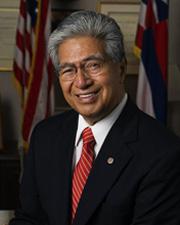 Sen. Daniel K. Akaka (D-HI)
Legislative Activity
Stay on top of the latest movement without scrolling through every action
Senate amendment submitted
November 16, 2005
View full timeline
Senate amendment submitted
November 16, 2005
Senate amendment agreed to: Amendment SA 2583 agreed to in Senate by Yea-Nay Vote. 58 - 41. Record Vote Number: 327.
November 16, 2005
Roll call votes on amendments in Senate: Amendment SA 2583 agreed to in Senate by Yea-Nay Vote. 58 - 41. Record Vote Number: 327.
November 16, 2005
Senate amendment proposed (on the floor): Amendment SA 2583 proposed by Senator Akaka.
November 16, 2005
Amendment SA 2583 proposed by Senator Akaka. (consideration: CR S12892-12897, S12905-12906; text: CR S12892) To compute the actuarial value of monthly benefits in the form of a life annuity commencing at age 60 for certain airline pilots.
November 16, 2005
Amendment SA 2583 agreed to in Senate by Yea-Nay Vote. 58 - 41. Record Vote Number: 327.
November 16, 2005
Votes
1 roll call on this amendment
Text
Proposed
PENSION SECURITY AND TRANSPARENCY ACT OF 2005

The PRESIDING OFFICER. Under the previous order, the Senate will
proceed to the consideration of S. 1783 which the clerk will report.
The assistant legislative clerk read as follows:

A bill (S. 1783) to amend the Employee Retirement Income
Security Act of 1974 and the Internal Revenue Code of 1986 to
reform the pension funding rules, and for other purposes.

The PRESIDING OFFICER. Under the previous order, the managers'
amendment at the desk is agreed to. The bill will be considered
original text for further amendment.
The amendment (No. 2581) was agreed to.
(The amendment is printed in today's Record under ``Text of
Amendments.'')
Mr. ENZI. Mr. President, this is a very exciting day. We are here to
the debate on the pensions bill. Every day hard-working Americans go to
their jobs, they are confident we here in Washington are looking out
for them and doing everything we can to assure that they will be able
to retire some day and live the life they have always dreamed about.
For our Nation's older workers and those who have already retired,
there are few things more important to them than the health of their
pension plan and the protection it provides. It involves younger
workers, too.
I am glad we are at this point. This may be one of the biggest bills
that has ever been covered with as little debate as we will have today.
Part of the reason for that is how detailed it is and how many moving
parts there are. I congratulate all of the people who have worked on
this bill and worked cooperatively, both sides of the aisle. We have
even had some conversations with the other end of the building in order
to be able to get it to this point at this time.
I particularly have to commend Senator Kennedy and his staff and my
staff. August is normally a time when we are at recess and traveling
our States, as I was and Senator Kennedy was. It is normally a time our
staff can catch up on things. It was not. It was a time they were
heavily involved in negotiations to come up with the best possible
package for protecting the retirement of the people of this country,
and they worked virtually around the clock during the entire month of
August. Senator Kennedy and I were on the phone several times working
out some of the big issues and trying to keep the focus on the
direction it needed to go.
I also have to specifically congratulate Senator Isakson. He has been
our coordinator with airlines on this whole thing, and had the airlines
not had a crisis, I am not sure we would be here today debating
pensions. It was enough of a focal point, enough of an impetus that it
got us on the track of solving all of the pension issues, in all of the
aspects, and I think we have a very complete reform package here.
Of course, I would be remiss if I did not mention Senator Lott and
Senator Coleman, who also were strong advocates on getting a solution
for airlines so we would stop seeing the airlines go into bankruptcy
over their pension problem. We have a team of them here today to add
one more amendment that will make sure we will have airlines and to
make sure that airline employees will have a solvent retirement
package.
I also have to thank Senator DeWine and Senator Mikulski, the
chairman and ranking member of the Subcommittee on Pensions on Health,
Education, Labor and Pensions. They held a number of hearings that set
up the data so we would actually have information on which to base this
pension reform. They have done a tremendous job, not just with the
committee but also representing particularly people in manufacturing
across this country who also have some very special problems at this
point in time.
I would also mention Senators Stabenow and Senator Levin, who have a
majority of those manufacturing workers. In fact, they probably
represent more manufacturing workers than there are people in the whole
State of Wyoming. But the team of people worked together and put
together a bill for the Health, Education, Labor and Pensions
Committee. Senator Grassley and I, and the members of the Budget
Committee, had an amendment in the budget bill that required that the
HELP Committee and the Finance Committee merge a bill. I have to
congratulate Senator Grassley and Senator Baucus for their tremendous
work with the Finance Committee to put together a separate bill that
covered all the jurisdictional areas of the Finance Committee, and then
their effort with us to merge a bill, which is the bill that is here
today.
I have to tell you there were a lot of people betting that, first,
neither committee would be able to report a bill out of committee and,
secondly, that we would never be able to merge the two bills. It has a
lot to do with Senator Baucus and Senator Grassley and their staffs
being extremely involved and working again in this detailed, ``many
moving parts'' bill. That is the reason we are here today and have a
rather comprehensive bill, and it is one that people have been
scrutinizing and working on through all of the months of this year.

I think it is a tribute to all of the people who have worked on it
that we have limited debate on S. 1783. Only two amendments are being
offered, and then we will have a final vote. That is a lot of agreement
for this body of 100 people who usually have a lot of disagreement.
I have some other comments, but I will make them later and allow
people to get on with describing the actual workings of this bill to
the point where we can do a final vote.
I yield to my neighbor from Montana.
The PRESIDING OFFICER. The Senator from Montana.
Mr. BAUCUS. Mr. President, first, I thank my colleague, Senator Enzi
from Wyoming, the chairman of the HELP Committee. As he has indicated,
his committee, along with Senator Kennedy, the ranking member of that
committee, Senator Grassley, chairman of the Finance Committee, and
myself, the four of us worked together to be where we are today.
Clearly we are where we are today because a lot of employees, a lot of
retirees are very worried about their pension benefits. The essential
way to help address that situation is to make sure these plans are more
fully funded so as the promise is made, the promise is kept and,
second, to make sure the backstop of the PBGC is also there when
companies facing incredible pressures worldwide feel they have to no
longer live up to their pension obligations and those obligations are
passed on to the PBGC.
It is worldwide competitive pressures that big American companies and
smaller American companies are facing as well as the Enron collapse
which has forced us to take a good, hard look at this to try to find
some good solutions. I thank Senator Enzi, Senator Grassley, and
Senator Kennedy for their very good work.
It is important to say a little bit about this bill so Americans know
what we are doing today. Millions of workers clearly have worked very
hard over their lifetime. American workers, when they work, feel they
are playing by the rules. They want to play by the rules and they want
to do what is right. This bill, frankly, is about making sure that the
retirement benefits

[[Page S12885]]

are there when people need them, more likely to be there than a lot of
people think.
As we start the debate, let's remember why we are here. We are here
to protect workers' pension benefits, plainly and simply. That is why
we are here. This need was highlighted recently by cover stories in
Time magazine and the New York Times Sunday magazine. Their titles were
``The Broken Promise''--that was Time magazine--and ``The End of
Pensions'' in the New York Times magazine. I highly recommend all
Members of this body read these articles. I read them both. They are
very thorough and very perceptive in stating the problems and some of
the solutions to the problems Americans face in having retirement
benefits.
The Pension Benefit Guaranty Corporation, PBGC, was established to
protect workers' pensions, but there are limits on PBGC's guarantees.
Many participants have been promised benefits in excess of those
guaranteed by the PBGC. When a company fails and the pension plan
terminates with unfunded benefit promises, these workers and retirees
pay severely for pension underfunding with part of their own hard-
earned retirement benefits.
For example, the PBGC--and that is the outfit that takes over failed
plans--has estimated that almost 7,000 United Airlines workers will
lose 50 percent or more of the benefits they had earned under their
pension plans. Another 28,000 United Airlines workers will lose between
a quarter and half of their benefits. Clearly, as a result, promises to
those employees are not being kept. We are here to try to help make
sure those promises are better kept, and this bill will help move in
that direction.
The most basic building block of pension funding is the interest rate
used to determine the present value of benefits to be paid for the plan
in the future. This bill provides a permanent replacement for the 30-
year Treasury rate which has been used basically for this purpose--that
is, determining the interest rate--under current law.
Under this legislation, we will change that. It is true Congress did
pass a temporary substitute last year. This bill is to enact a
permanent interest rate calculation. This bill would extend the current
temporary interest rate--a corporate bond rate--for an additional year,
and then begin phasing in a permanent solution known as a modified
yield curve of interest rates. Using a yield curve to determine the
value of future benefit payments is more accurate than using a single
interest rate because the yield curve recognizes that you get a
different interest rate on a 5-year loan than, say, on a 15-year loan,
and that is relevant because clearly more people work longer than
others, so their retirement is a different period of time.
This bill simplifies that yield curve by breaking it into three
segments--retaining the improved accuracy of a yield-curve measurement,
while making it easier to apply the rates.
There are other key changes to the funding rules.
Unfunded benefit liabilities would have to be paid off over a 7-year
period. Ideally, every plan would be 100 percent funded every year, but
with fluctuating asset values and interest rates, that is not
practical.
Large companies could base cost calculations on their own mortality
experience. Workers in some industries do not live as long as the
general population. That affects the cost of providing lifetime
pensions and should be reflected in an accurate measurement of funding
obligations.
The increased utilization of early retirement subsidies that occurs
when troubled companies start downsizing is reflected in a special at-
risk liability calculation. This will ensure that companies begin
funding for subsidized benefits before it is too late.
The at-risk calculation is not a penalty imposed on companies when
they are down and out. It is a reflection of increased costs. Someone
has to pay those costs. The question is who. Should other companies pay
through increases in PBGC premiums? Should workers pay through lost
retirement benefits? Or should we, as I believe, require the company
that made the promise fund the promise?
Failure to recognize the real cost of benefits is one reason for the
system's funding problems. Another is that current law actually would
have penalized many employers if they had contributed more to their
pension plans.
Employer after employer has told us that we need to allow companies
to contribute and deduct more in good times to build a cushion for bad
times. This bill does that. It allows companies to deduct contributions
that would fund the plan up to 180 percent of the cost of benefits
already earned and allows employers to maintain a prefunding account
with these extra contributions, which is sort of a rainy day fund, to
help them meet contribution requirements when cash is a little tighter.
Our goal is retirement security, assuring workers that benefits they
had been promised will be paid. There are two sides to keeping that
promise--funding what is promised by the company and also not promising
more than a company can afford to pay.
This bill limits increases in a plan's benefit formula if the plan is
less than 80 percent funded. If a plan is less than 60 percent funded,
then no more benefits can be earned until funding improves. Employers
would have to fund up collective bargaining plans to keep these
limitations from kicking in.
To make sure poorly funded plans do not become even more unfunded,
this bill limits the portion of a benefit that can be paid in a lump
sum if a plan is less than 60 percent funded. Lump sum payment of
pension benefits can drain plan assets and hurt other workers. No
benefits would be forfeited. The difference would be paid as an
annuity. Retirement benefits are the largest asset of many workers, and
they deserve timely, complete information on the state of their
investment. Under this bill, most workers and retirees will receive
detailed funding information within 90 days after the end of the year.
That is new.
There was a time when pension plans paid monthly benefits at normal
retirement age, usually based on years of service and some average
compensation. The benefits were heavily weighted to workers who spent
their entire career with one company. But in today's competitive world,
that is not likely to be the future. Today many companies have moved to
cash balance plans or other hybrid arrangements that are structured
more similar to 401(k) plans, defined contribution plans. Benefits are
earned more evenly over a worker's career and are more portable--easier
to move from one job to another--than the traditional pension benefit.
There has been uncertainty surrounding these plans, and litigation is
ongoing. If defined benefit plans are to be a viable, attractive option
in the future--and there is a real question whether they can be, and we
are trying to make sure we can be--we must bring some certainty to the
rules governing these arrangements. That is cash balance and hybrids.

This bill lays down the rules for moving forward with these plans. It
recognizes the legitimacy of the basic design. It also provides
protections for older workers when a traditional plan that rewards a
lifetime of hard work is converted to one of these hybrid arrangements
that is designed for a more mobile workforce. I think we have done a
good job of protecting participants without putting too onerous a
burden on employers.
Let me emphasize that this is a prospective provision; it is not
retroactive. We do not step into the legal quagmire that exists with
regard to the past. I want to make it clear that this bill offers
neither side an inference as to interpretation of existing rules.
Some of the provisions in this bill that provide participant
protections were in a bill we introduced in the 107th Congress, a bill
designed to help prevent another Enron.
We all remember Enron. Thousands of workers lost their jobs. Because
their 401(k) accounts were heavily invested in company stock, these
workers lost most of their retirement savings as well. In February
2002, ``60 Minutes'' did a segment called ``Who Killed Montana Power,''
about my own State's experience with employers behaving badly and havoc
wreaked on employees and their savings. The story reported one worker
had lost $350,000 in his 401(k) plan because of the crash of employer
stock. He certainly was not alone.

[[Page S12886]]

This is not to say company stock is a bad investment. Sometimes it is
a wonderful investment. So this bill does not prohibit investment in
employer stock. It simply puts the choice where it should be--in the
hands of participants who are building up their retirement savings.
To help make that decision, we give workers tools to make good
decisions and understand the consequences of their actions. We require
more frequent benefit statements, and we provide a safe harbor to make
it easier for employers to make independent investment advice available
to plan participants if they want independent investment advice.
This bill has a number of other provisions that will make it easier
for a worker to move retirement plans from employer to employer or from
an employer plan to an IRA. There are also provisions that make it
easier to administer retirement programs.
All of us are fortunate to have the benefits of the Federal
retirement system. We have good pensions. We have good retiree health
benefits, and I might add the PBGC does nothing to health benefits.
This legislation does nothing to health benefits. It is only pension
benefits. Health benefits is something that has to be addressed clearly
and solidly at a not-too-distant date.
Imagine, however, if the Government all of a sudden said: Sorry, we
can't afford that retirement, all you folks in Federal Government; we
are going to cut it back; you will have to learn to live on less. That
would be a problem, and it is a problem for many Americans.
That is what many of America's older workers and retirees are facing.
Our steel workers, our airline workers, and many others have had the
rug pulled out from under them. It is no one's fault, certainly not
theirs. America's companies are competing in a cutthroat world. It is
important to remember that. They have problems too.
What we are trying to do today is ask everyone to be more responsible
and strike the right balance. We need a system where companies put
enough money aside to pay for what they promise. And we need a system
where workers who carry out their part of the bargain do not have to
worry that a pension was more dream than substance.
This is a tough challenge. The bill is not perfect. It is a
compromise. But I believe it is a good bill and should become law. The
retirement security of millions of workers deserves our attention. I
urge my colleagues to support keeping promises, to support protecting
workers' retirement benefits. I urge my colleagues to support the bill.
Mr. President, I yield the floor.
The PRESIDING OFFICER. Who yields time? The Senator from Georgia.

Amendment No. 2582

(Purpose: To modify pension funding rules related to airlines, and for
other purposes)

Mr. ISAKSON. Mr. President, I call up my amendment at the desk and
ask for its immediate consideration.
The PRESIDING OFFICER. The clerk will report.
The legislative clerk read as follows:

The Senator from Georgia [Mr. Isakson] proposes an
amendment numbered 2582.

Mr. ISAKSON. Mr. President, I ask unanimous consent that the reading
of the amendment be dispensed with.
The PRESIDING OFFICER. Without objection, it is so ordered.
(The amendment is printed in today's Record under ``Amendments
Submitted.'')
Mr. ISAKSON. Mr. President, I ask unanimous consent that the
following Senators be added to the amendment as cosponsors: Senators
Lott, Coleman, Rockefeller, DeWine, Alexander, Bennett, Burns, Hatch,
and Chambliss.
The PRESIDING OFFICER. Without objection, it is so ordered.
Mr. ISAKSON. Mr. President, it is a privilege for me to introduce a
Member of the Senate who has been instrumental in bringing this
amendment to the floor, Senator Coleman from Minnesota. I yield him 4
minutes.
The PRESIDING OFFICER. The Senator is recognized for 4 minutes.
Mr. COLEMAN. Mr. President, it is a pleasure to work with the Senator
from Georgia. I wish to talk about a piece of this amendment. Before I
do, I thank Chairman Enzi and Ranking Member Kennedy for the work they
have done on this bill. I represent Minnesota, Big 10 football, big
ground game, not fancy passes. The Senator from Wyoming is not a
rabbit, not fast on his feet, but, boy, is he solid, steady, and
consistent. This is a great bill.
There is a piece particularly important to the folks in my State and
actually throughout the country. This is not just about my State.
Pension reform provisions relating to the airline industry take the
burdens off the taxpayers. That is what this is about.
Let me be clear, when airlines cannot meet their pension obligations,
the Pension Benefit Guaranty Corporation, PBGC, is saddled with the
responsibility. Who is the PBGC? It is the American taxpayer. That is
who is saddled with the responsibility.
In my State alone, Northwest Airlines is struggling to meet its
obligations and make good on their promises of pensions to its
employees. Minnesota has almost 22,000 people who depend on Northwest
Airlines pensions. As the Senator from Montana said a minute ago, this
is about promises made and about promises being kept.
The Federal law defining underfunded defined pension benefit plans is
seriously broken and must be fixed. A number of airlines have already
terminated their defined benefit plans in bankruptcy and transferred
them to PBGC. Other carriers may well suffer the same fate.
I am not going to go into detail as to why it happened--stock market
declines, low interest rates, September 11, record oil prices--but as a
result, the deficit reduction contribution rules kick in. They require
that Northwest and other carriers make massive additional contributions
to its defined benefit plans that they cannot afford.
It is difficult to overstate how profoundly these DRC rules have
impacted the funding of pensions. It would be akin to telling
homeowners with 30-year mortgages that if the value of their homes drop
below 80 percent of the purchase price, for whatever reason, their loan
will be accelerated such that the balance will become due in 3 to 5
years. This is a problem. Common sense is not in play. This amendment
provides common sense to pension laws.
This amendment provides some protection to the taxpayers. This
amendment provides protection to the employees. They should get what
they have worked for. Promises made, promises kept.
Northwest has worked with the labor unions. They developed a proposal
contained in this compromise bill allowing them to proceed in a way to
stop adding to the underfunding of airline plans by requiring airlines
and their affected unions to freeze their plans, ceasing future benefit
accruals, and protect the PBGC by freezing the PBGC guarantee. It would
fix the broken DRC rules by extending the term of the pension
``mortgage'' from its current 3-to-5-year amortization period to a
longer amortization period.
Under this proposal, retirees and plan participants would receive the
benefits they earned to the date of the freeze. Retirees would be
protected. In addition, the PBGC will be in better shape financially
since its liability will be capped, and each airline payment that an
airline makes to the plan will reduce that liability.
The bottom line is this: Northwest and other airlines are not seeking
a subsidy, they are not seeking a bailout from the Government. Just the
opposite. They are asking for a responsible alternative to current law
that lets them pay their pension liabilities versus shifting those
obligations on to a Government agency.
It is the right thing to do. It is a fiscally responsible thing to
do. It is the right thing to do for the employers and taxpayers. I urge
my colleagues to support this amendment.
Mr. President, I yield the floor.
The PRESIDING OFFICER. The Senator from Georgia.
Mr. ISAKSON. I yield myself 5 minutes.
Mr. President, I first thank Senator Coleman for his remarks and
associate myself with those remarks. I particularly thank Chairman Enzi
of the HELP Committee, as well as Senator Kennedy. They have made sure
that

[[Page S12887]]

this stayed alive during the course of this session.
I thank Senator Grassley and Senator Baucus for the efforts they made
on pensions and particularly thank Senator Coleman and Senator Lott for
their untiring efforts to bring this to reality today.
I wish to go back to one thing Mr. Coleman said briefly by
acknowledging what brings us to this point in terms of airlines. In the
past 5 years, there have been five things that have happened, none of
which would be in control of the aviation industry: the decline of the
stock market early in this decade, the tragic events of 9/11 which
grounded American aviation, the unprecedented historically and
continuously low interest rates, the hurricanes that hit the United
States and shut down refineries and petroleum and closed major airline
markets for transportation, and not the least of which is petroleum
going to $70 a barrel and aviation fuel tripling in its cost.
If we take all of those and combine them with the constraints of the
current formula on pensions, one can understand why the aviation
industry has had the difficulties it has had and how employees of
legacy airlines will lose their pension benefits unless we adopt
reasonable and appropriate amendments such as the amendment we propose
today.
Very simply, this amendment does a couple of things. One is for the
aviation industry. It allows the amortization of the obligation over a
20-year period of time, an amount that is manageable, an amount that is
doable, an amount that for all intents and purposes will ensure
employees will get the pensions they have earned. Failure to adopt this
amendment will almost guarantee that those employees of airlines such
as Delta, Northwest, and others will not ultimately get the pension
benefits they have earned. The major consequence of that will be the
taxpayers of the United States of America, through their surrogate, the
PBGC, the Pension Benefit Guaranty Corporation, will have the
additional liability those pensions will thrust upon the PBGC.
In this amendment, we have met the challenges the aviation industry
has before it. We have looked responsibly at the right formula and the
way in which to calculate that formula to ensure the benefits are paid.
We have addressed the concerns of the industry and its individual
airlines, all of which have similar unique but some different problems.
In particular, what we do is give hope for the employees to get their
benefits. We cap the liability of the PBGC, and we ensure that one of
the most important elements of the U.S. economy, the aviation industry,
is not forced by laws that are out of sync to unfund, defund, or
jettison their pension plans for the employees who have made those
airlines fly throughout their careers and throughout their history.
We have some time remaining on our allocation for the amendment, to
which Senator Lott was to speak but was called away. I reserve the
remainder of our time on the amendment for Senator Lott upon his
return.
The PRESIDING OFFICER. Without objection, it is so ordered.
Who yields time?
The Senator from Maryland.
Ms. MIKULSKI. I ask unanimous consent to speak up to 10 minutes under
the time controlled on the Democratic side.
The PRESIDING OFFICER. Is there objection? Without objection, it is
so ordered.
Ms. MIKULSKI. I note that the distinguished chairman of the Finance
Committee has come to the Chamber, and I know he is eager to speak on
the bill and has many demanding responsibilities.
I compliment both Senators Enzi and Kennedy, as well as Senators
Grassley and Baucus, on the outstanding job they have done in
developing this legislation and putting two bills together. Pension
reform is one of the most important issues facing the American people,
and Congress must rise to the challenge of passing legislation. Reform
is needed to protect workers' pensions, to protect good-guy businesses,
and also to protect the American taxpayer, who often ends up being the
safety net for so many pensions.
The bill before us today is generally a very good bill. Yes, I do see
some yellow flashing lights about two provisions of the bill regarding
the use of credit rating and something called smoothing. That is why
Senator DeWine and I had originally wanted to offer an amendment to
avoid the unintended consequences that might push companies to drop
their pension plans and leave workers in desperation.
In recent days, we have made a lot of progress. Senator DeWine and I
have had very constructive conversations with Senators Grassley and
Baucus. Senators Enzi and Kennedy have been particularly helpful in
brokering a resolution to some of the issues. The process seemed far
less ominous when their wise heads and hands got involved in it. Their
help was invaluable in ironing out some of the wrinkles. I believe we
have a commitment to work together in conference to address our
concerns because I truly believe that the Senate bill is in many ways a
superior bill to those in the House. This is why I am eager to see this
bill move ahead.
Throughout my career, everyone knows I have been fighting for the
little guy. This is no different. Pensions are part of the American
dream. People believe that if one works hard, they can get ahead, but
also if they work hard, they are going to have a pension. A pension has
to serve as one of three legs of an increasingly wobbly stool
supporting older Americans in retirement. That is why we are so
concerned about the fragility of so many pension plans in our own
country.

We have worked from the beginning on a bipartisan basis. Senator
DeWine and I are the chair and ranking member of the Subcommittee on
Retirement Security and Aging in the Health, Education, Labor, and
Pensions Committee, of which Senator Enzi is the chair and Senator
Kennedy is ranking. We held a series of hearings, and they were
outstanding. I wish the American people could have seen them. They were
content rich, and they were also characterized by civility,
particularly among members. The hearings demonstrated the need for
comprehensive reform that addressed not just single-employer plans, but
multi-employer plans and cash balance plans as well.
What I like about the bill is that we have a smart bill, we have a
good bill, and we have a bipartisan bill. When we looked at it, part of
our bipartisan framework was to let us do no harm either to the people
who need pensions or to the people who provide the jobs and the
business. We need to make sure workers do not lose their pensions. We
had to look out for good-guy businesses that are doing everything they
can to fund their pensions. We also had to protect the taxpayer and
ensure that the Pension Benefit Guaranty Corporation was solvent. It
must not be used as a dumping ground for those companies that want to
walk away from their pensions even though there was no need to. I
believe we accomplished so much in those principles: do no harm,
protect the worker, protect good-guy businesses, and look out for our
taxpayers.
When the HELP bill was merged into the finance bill, many
improvements were made, but there were several provisions that, as I
said, had yellow flashing lights. One is the issue of credit rating and
the other is the issue of smoothing.
There are those within the HELP Committee--and my colleague, Senator
DeWine, and I count ourselves as two of them--who are concerned that a
company's credit rating is being used as an indicator of its pension
plan's health. Companies with bad credit ratings could be forced to put
in extra payments, even if they had been responsible in making regular
payments to their generally well-funded plans.
Credit rating is a blunt instrument. Data from Moody's, one of the
Nation's leading credit rating companies, should help explain this.
Moody's looked at companies that were sub-investment grade and followed
them for a full 20 years. After these 20 years, a majority of the
companies had not defaulted on their bonds. This tells us that the
companies had not gone bankrupt.
Some people are worried that weak companies will go into bankruptcy
and dump their pension plans. The facts say otherwise: a majority of
companies in junk-bond status won't go bankrupt. Forcing struggling
companies to make new draconian payments could end up pushing many
companies to terminate their plans or enter bankruptcy. We have to take
that into consideration.

[[Page S12888]]

This means in fact this language would bring about exactly what it is
designed to protect against.
Auto manufacturers and tech companies, many of whom are just now
regaining their financial stability, could be among those hit hardest
by these provisions. We should encourage these viable businesses to
continue making contributions to their plans, not push them into
bankruptcy.
Such an unintended consequence could well cost many Americans their
jobs and their pensions. Senator DeWine and I wanted to make a targeted
change to the bill to help prevent this, substituting the actual
measure of a plan's health in place of credit ratings.
The other issue that concerned me is limitations on smoothing.
Smoothing is the process of averaging estimates of assets and
liabilities and is used because pensions are by nature long-term
investments. Smoothing improves predictability and makes it easier for
companies to plan their budgets around their pension contributions.
Under current law, companies can average estimates of assets and
liabilities over 4 or 5 years to smooth fluctuations in the stock
market and in interest rates. Senator DeWine and I wanted to tighten
this to 3 years, which is more restrictive than current law but more
effective than the merged bill's one year. Numerous experts have said
that one year is just not enough.
I also want to highlight a key transparency provision in the merged
bill that requires companies to issue a snapshot, unsmoothed picture of
their assets and liabilities each year to participants and the PBGC.
This new disclosure addresses the criticism that smoothing can hide
problems in plan funding for several years. Now, many problems should
be apparent just 90 days after the end of the plan year.
Last Wednesday, the House Ways and Means committee passed Chairman
Thomas' bill. Like the HELP bill and like Chairman Boehner's bill, the
Ways and Means Committee didn't include credit rating and allowed 3
years of smoothing.
I continue to feel strongly about the need to make changes to the
legislation before us today. I also believe it is imperative to
continue moving through the legislative process so we can pass this
much needed reform. The Ways and Means Committee has acted, and we now
know that the House of Representatives is sure to have a good position
on these issues. There are too many other good provisions in this bill
that we must pass.
I am not going to go into all the details of the bill. I note that
the chairman of the Finance Committee wishes to speak. We want to move
this legislation. I want to pass this bill so we can get to conference.
We want to say to the House: They sometimes think the Senate is the
body that talks more than it gets done. We challenge the House to pass
this bill before they leave the way the Senate is going to do it and to
do it the way we did it--working on a bipartisan basis.

I cannot say enough about the appreciation I have for Senator DeWine
of Ohio, who was the chairman of the subcommittee. We worked together,
and we really looked out for those jobs that have a defined benefit
plan, particularly in the older manufacturing corporations. It was a
delight to work with him, and I look forward to that on many other
issues.
Senator Enzi, with his accounting background, provided a steady hand
and again has worked to create a culture and climate of civility that
is becoming a hallmark of our committee. I have also appreciated
working with Senators Grassley and Baucus to achieve the melding of two
very good bills. We thank them and we thank their staffs for their
collegiality and consultation.
I look forward to voting for this bill. I look forward to being a
conferee, and I look forward to bringing a bill back to the Senate not
only that the Senate can be proud of but that people who need pensions
can rely upon and that business does not fear. Government must be part
of the solution rather than the problem.
I yield the floor.
The PRESIDING OFFICER. Who yields time?
The Senator from Wyoming.
Mr. ENZI. Mr. President, I thank the Senator from Maryland, Ms.
Mikulski, for her tremendous work. She showed such tremendous concern
for the workers and the companies, both of which are multiple in her
State, and she did a great job of brokering for both to make sure the
businesses would continue and the employees would get their pensions.
The Senator showed the depth of understanding that she already had
and that she got from the hearings which were conducted. We appreciate
the bipartisan way she has worked on this to get us to this point.
I yield to the Senator from Iowa.
The PRESIDING OFFICER. The Senator from Iowa.
Mr. GRASSLEY. Mr. President, before I give my reasons to my
colleagues for why they should support this legislation and why it came
out of my committee, there are several thank-yous I would like to give,
first to Senator Baucus because this is truly a bipartisan bill that
came out of committee. In fact, I think it came out totally unanimous.
Over a period of many months working with Senator Baucus, we were able
to put something together to get that kind of bipartisan support.
Then later on, the HELP Committee reported a bill. There was
extremely great cooperation between Senator Enzi and Senator Kennedy
with Senator Baucus and me. I do not say this tongue-in-cheek, I say it
as a matter of fact: I think if one can get Senator Enzi and Senator
Grassley together on one side of the aisle and Senator Baucus and
Senator Kennedy together on the other side of the aisle, there ought to
be something that ought to pass this body.
I also lend compliments and support for helping move this bill along
to Senator Mikulski and Senator DeWine because they had a very
controversial amendment--they may not have thought it was
controversial--and we were able to work out some understandings beyond
the action on this floor to accomplish that. So we would not be here
today doing this bill without Senator Mikulski and Senator DeWine's
cooperation. I thank the Senator from Maryland for that, and Senator
DeWine as well.
I am very pleased that the Senate now is turning their attention to
what we call the Pension Security and Transparency Act, 2005. It is a
bipartisan bill, and I support it. I think every Member of the Senate
ought to be proud to support this bill and, of course, only a rollcall
will show that.
This is a bill that is about one thing--improving the retirement
security of all Americans. It will improve Americans' retirement years
in many different ways. Much of the public focus on this legislation
has been on the comprehensive pension funding reforms that are in the
legislation. Those reforms are very important, but before I talk about
those, I wish to spend a couple of minutes talking about other
important provisions in the bill.
No. 1, the bill represents a completion of the post-Enron retirement
plan reform that I have worked out with my good friend Senator Baucus,
Democrat ranking member. We all remember that when Enron spiraled into
bankruptcy and the value of that company's stock evaporated, Enron
employees had 401(k) plans locked in Enron stock. They had no chance of
diversifying their 401(k) portfolios, and they were blocked from
selling Enron stock at the time top executives were cashing that stock
out with big gains for them. This bill would say that Enron practice is
unacceptable for any company in the future. Employees should not be
forced to stuff their 401(k) plans with company stock. Diversification
is the most fundamental principle of sound investment strategy. The
bipartisan legislation before us today then guarantees that employees
have the right to diversify their 401(k) accounts.

This bipartisan bill also seeks to increase savings by adopting new
rules to promote automatic enrollment in 401(k) plans. Very often, I am
afraid, the hardest dollar to save is that first dollar. Once people
begin to save, it can become a habit that lasts a lifetime. Automatic
enrollment means that saving that first dollar will be easier, less
redtape, and it means that millions of Americans then will be saving
many times more than what they save today. Obviously, every month we
get statistics on savings that say Americans are almost, throughout the
entire globe, the ones who save the least.

[[Page S12889]]

The bipartisan bill before us today also simplifies retirement plan
rules, making it easier and less burdensome for employers to give
retirement plans to their employees. These types of changes will be
particularly helpful to small businesses, which are often discouraged
from sponsoring a retirement plan because of the costs, administrative
costs particularly, and the redtape burdens. The bipartisan bill before
us today would allow small businesses to combine a defined benefit plan
with a 401(k) plan, and they would do this into one simple plan called
DB(k). This type of combined plan will give employees the best of both
worlds at the same time.
Speaking of combining the best of both worlds, the bipartisan bill we
are considering today provides long-needed clarifications that cash
balance and other types of hybrid pension plans are not inherently age
discriminatory. Hybrid pensions combine positive features of both the
traditional pension plan and the defined contribution plans. These
plans have long provided meaningful retirement benefits to employees.
Today we will help to lift the cloud of legal uncertainty over these
plans. At the same time, we also ensure that the rights of participants
are protected and that the plans truly do meet the needs of today's
mobile workforce by requiring faster vesting of employees' benefits in
those particular plans.
Finally, then, I will refer to the pension funding changes in this
bill, those things that really have gotten the most attention and maybe
are somewhat controversial. This bill honors a promise that we made way
back in 1974, before I came to Congress, when the law governing plans,
called ERISA, was enacted. That promise was made that the pensions of
rank-and-file employees should not depend on the financial solvency of
their particular employer. ERISA, the law, says that it is OK for a
nonqualified pension of senior management to be exposed to the
company's risk of bankruptcy. But then when it comes to the rank-and-
file employee, people who probably had as much to do with making the
company as the manager, people who worked hard all their lives in hopes
of a good retirement, and a pension being a part of that good
retirement--those people's golden years should not be ruined because of
their employer falling on hard times.
ERISA is meant to protect against that, and we are making some
changes to make sure that ERISA does what it was originally intended to
do in 1974, without using the taxpayer as a possible backstop. ERISA, I
hope people believe, has worked pretty well for the last 30 years. But
we found that in recent years there are times that the promise of ERISA
is not honored. So, today, we are here to fulfill the promise and to
let the American people know that if you have been promised a pension,
we are going to make sure that you receive it.
The pension funding reform in this bill also stands for another
bedrock American principle that if you make a promise, you are
responsible for your own promise. We all know that most companies fund
their pension plans in a very responsible manner. Unfortunately, there
are a few--and it only takes a few bad apples to ruin the whole barrel
of apples--but a few bad apples who have abused loopholes. Those are
loopholes that are in the current rules to avoid funding pensions in a
way that shows that they are responsible for their own promises.
Those few who have taken advantage of these loopholes have often, in
the end, dumped their pension plans on the Pension Benefit Guarantee
Corporation, the Government agency that was set up to provide the
insurance; let's say in a sense like the Federal Deposit Insurance
Corporation does, for savers in bank accounts. These companies have
essentially said we cannot pay our bills. Someone else is going to have
to pay them for us. That is the PBGC.
Unfortunately, the people they want to pay are other employers who
have done the right thing and have guaranteed their employees the
pensions they promised. They are able to deliver on those promises.
Those employers who are honest and upright get stuck with the bill, in
the form of higher premiums to the Pension Benefit Guarantee
Corporation.
I think we would all agree that is not fair, and it is no way to run
a pension system. Even more unfair is the concept of a taxpayer bailout
of the PBGC. One thing that I am for in this legislation is the attempt
to make sure this does not happen, that the taxpayers are not laid bare
for this obligation that the corporation ought to pay, but that goes
back to the irresponsible actions of a few bad apples who do not fund
their pensions adequately. I do not want another savings and loan
situation like we had in the late 1980s coming out of bad policy in the
PBGC.
As we have watched the financial condition of this Government
corporation deteriorate rapidly in recent years, the prospects of such
a bailout become increasingly real--in other words, a taxpayer bailout,
a savings-and-loan-type bailout that we do not want to let happen. In
other words, we ought to show that we have learned a lesson, and
hopefully this bill is a good step showing we have learned a lesson.
The bipartisan bill we have before us today will reverse the decline
over time by improving pension funding and bringing additional premium
revenues into the corporation, the Pension Benefit Guarantee
Corporation. This bipartisan bill represents a huge leap forward for
retirement security.
Let me say I am cognizant of the fact that we in Congress are saying
that it is a huge leap forward. I think it ought to be known to all of
my colleagues that the President and his staff, who were interested in
this legislation, would say it is not good enough in this direction and
maybe there are opportunities, hopefully along the way, for
improvement.
I think, once again, in closing, I need to give thanks, as I have
already given. I start with Senator Baucus for his dedication in this
legislation. He has been a great partner to work with me to advance
this bill to where it is now. I also thank Chairman Enzi and Senator
Kennedy. I think we have had a partnership working together as two
committees on legislation because we share jurisdiction. I have to
commend their dedication to important reforms that they put in their
bill. They have been tireless in their efforts to get us to this point.
I look forward to working closely with them and all my colleagues in
the Senate as we continue to work towards the goal of getting this
bipartisan legislation to the President for his signature.

I yield the floor.
Mr. ISAKSON. Mr. President, I would like to turn the wheel back on
our time allotted to the Isakson amendment and yield that time to the
Senator from Mississippi and, in so doing, repeat my acknowledgment of
my thanks to Senators Grassley, Baucus, Enzi, and Kennedy for their
cooperation in allowing this amendment of the aviation portion of the
pension bill to come before the Senate today, and the distinguished
Senator from Mississippi for his untiring effort to bring us to this
point today.
The PRESIDING OFFICER. The Senator from Mississippi.
Mr. LOTT. I thank the distinguished Senator from Georgia yielding me
that time. Might I inquire, what is the time remaining?
The PRESIDING OFFICER. The Senator has 7 minutes.
Mr. LOTT. Mr. President, first of all, I point out this is a classic
example of how we can work together to get an agreement to move needed,
necessary, balanced legislation. There have been a lot of glitches
along the way, but there has been persistence by the Finance Committee
and by the HELP Committee to report out the legislation, to have
hearings, to listen to the arguments from the administration, from the
private sector, from those who are experts in this field of the PBGC. I
am very proud of the work that was done by the chairman of the Finance
Committee, working hand in hand with the ranking member, Senator
Baucus, to get the legislation passed and to allow an amendment in
which I was very interested dealing with the airline pension situation.
They could have said ``don't do it'' or ``we will do it later,'' but
they allowed the process to work its way through.
Then, also, I have to give tremendous credit to the chairman of the
HELP Committee, Senator Enzi. He did not give up on it. He was dogged
and he was working on trying to get this unanimous consent agreement on
how we consider this legislation, and our leadership on both sides of
the aisle were

[[Page S12890]]

able to come together. There were a lot of people who had amendments
they wanted. They had objections, there were holds here, holds there,
yet here we are. So I hope we can look at this and see if we cannot do
this again in the future.
There is no question we need reform in this area. There is real
exposure across the board. American workers all over this country, and
management, and the leadership in the administration or in the PBGC are
very worried about where we are headed with these pensions. Are we
going to keep our commitment to the workers and to the people involved
in these pensions? We have an exposure, according to an article this
morning in the newspaper, this PBGC organization, of approximately $26
billion.
Where are we heading in this regard? Part of the problem with regard
to pensions is the requirements that the law places on them are
inverted. If you get into difficulty, if you are losing altitude, your
payments to the agency, PBGC, go up, making it more likely you are
going to continue to plunge into the ground. Conversely, if you are
doing well, you pay less. How did we ever allow the law to get into
that shape? Reform clearly is needed. If we do not do it, and do it in
the right way, more companies are going to go into bankruptcy and are
going to wind up dumping their pensions. The people who earned these
pensions or had agreements for their pensions are going to get less
than they thought they would get or in some cases even less than they
should be getting.
We can debate whether or not these pensions have been too inflated,
but we have to transition. I personally think we have to get away from
these defined benefit plans. We have to go to the defined contribution
plans. But I think this legislation is a good compromise. We need it
and we certainly should get it done before we complete this session of
Congress.
I also congratulate Senator Coleman from Minnesota for working on the
aviation provisions, and especially Senator Isakson, the great Senator
from Georgia, for his efforts to stay behind this legislation and to
offer the amendment that is going to be voted on before we complete the
legislation.
The language in the bill says airlines that freeze their defined
benefit plans can amortize any funding shortfalls over a 14-year
period. That was a compromise agreement. The chairman had some concerns
about what that number would be. The language we have from Senator
Isakson is slightly broader than that, broader than the base bill.
It allows airlines that freeze their plans and airlines that prefund
their plans 20 years over which to amortize their funding shortfalls. I
think that is the right number. I would like to have seen it more than
14. I support this amendment. I must say that I know it is critical to
some of our airlines that we have this language. I have worked on the
language in the pension reform package on airlines. I have worked on
supporting this amendment, and I have worked on checking the votes. I
want the Record to show, in case there is a voice vote, that I believe
there are probably over 80 votes in the Senate that would be for this
amendment.
I want to make it clear for the future and for the Record and for the
conference that this amendment is going to be handled in the way it is
going to be handled because of the overwhelming support it has. We
could have a lot more resistance to it by the leadership, but they
continue to be reasonable in their handling of this legislation.
I support the Isakson amendment. I certainly believe it will be
accepted by an overwhelming indication of support in the Senate, and
that is the way it should be.
I believe, as a result of this legislation, that companies--
particularly airline employees--the PBGC, and ultimately, most
importantly, the U.S. taxpayer will be better off.
This bill is not perfect. It will probably be better as we go along
through the conference, but it will never be perfect. But it is a major
step forward and one we should be proud of. It is not the kind of thing
you will read about in the local newspaper or, congratulations, you did
a good job, unless you are the hub of an airline. It is not something
you are going to read a lot about in most places in Wyoming. But this
is the right thing to do, and the exposure is cataclysmic if we don't
deal with it.
I am delighted to support the legislation and the Isakson amendment.
I yield any remaining time at this point. I thank the Senator for
yielding.
Mr. ROCKEFELLER. Mr. President, I am very pleased to offer an
amendment with my colleagues: Senator Isakson and Senator Lott. Our
amendment provides important pension relief to the airline industry,
which has struggled financially as a result of the September 11
terrorist attacks and dramatically higher fuel costs. In the last few
years, we have seen United Airlines and US Airways terminate their
pension plans and turn over their liabilities to the Pension Benefit
Guaranty Corporation. Our amendment is designed to avoid this unhappy
outcome for airlines that are still struggling with large pension
debts.
Throughout the work on this legislation, my goal has been to protect
the employees and retirees who have worked hard to earn retirement
benefits. Whenever underfunded pension plans are dumped on the PBGC,
everyone loses. Employees and retirees lose benefits that they deserve.
Companies struggle with sour employee relations. And the PBGC and
ultimately, perhaps someday the taxpayers--gets stuck with a bill for
the portion of the pensions that is guaranteed but not funded.
I am very appreciative of the cooperation that we have had from the
bipartisan leadership of both the Finance Committee and the HELP
Committee. The legislation we are considering today would allow
struggling airlines to pay off old pension debts over a 14-year period
using reasonable interest rate assumptions. Unfortunately, given the
rising fuel costs and the need to attract bankruptcy financing, the
relief provided in this bill is insufficient to help Delta Airlines.
That is why the Isakson-Rockefeller-Lott amendment, which extends the
repayment period to 20 years is so important. The amendment would also
allow airlines, such as American and Continental, to benefit from
relief without terminating their pension plans, as long as any new
obligations were fully funded.
I am very pleased that this amendment has the support of Delta,
Northwest, Continental, and American airlines. This amendment does not
pick winners or losers within the airline industry. Rather, it focuses
on maintaining defined benefit pension promises, and any airline that
offers defined benefit plans would be able to benefit from this relief.
I understand the skepticism of Senators who are concerned that in
spite of any relief Congress provides, airlines may still terminate
their pension plans. I cannot say that this is an unreasonable fear.
However, the amendment we are offering would make it more difficult
for airlines to dump their plans. Without sufficient funding relief,
airlines may convince a bankruptcy court that the plans must be turned
over to PBGC in order for the airline to emerge from bankruptcy.
However, if the law requires reasonable-sized payments, stretched out
over 20 years, an airline's argument that it cannot make such payments
loses credibility.
As a West Virginian, I have seen the tragic consequences of
underfunded plans. I am not interested in letting employers off the
hook for pension promises they made to workers.
The point of this amendment is to make sure that employers fulfill
their obligations. In light of the current financial situation of
several airlines, it is unrealistic to expect them to maintain their
pension plans under normal funding rules. The reality of the situation
calls for reasonable funding relief in order to make sure that the
companies continue to make substantial payments to their plans.
Providing a 20-year period for airlines to repay their pension debts is
the best way to protect workers' benefits and reduce unfunded
liabilities covered by the PBGC.
For the sake of the airline employees who have earned a secure
retirement and for the sake of the millions of workers who depend on a
strong PBGC, I ask my colleagues to support the Isakson-Rockefeller-
Lott amendment.
Mr. CHAMBLISS. Mr. President, I rise today in support of Senate
amendment No. 2582 offered by my good friend Senator Isakson to S.
1783, the

[[Page S12891]]

Pension Security and Transparency Act of 2005.
The retirement security of millions of Americans participating in
single employer defined benefit pension plans depends on employers
keeping their pension promises. Unfortunately, in recent years those
promises have not been kept. Defaults of pension plans in the airline,
steel and auto-parts industries have raised concerns about the health
of existing plans and the possibility of a taxpayer bailout of the
Pension Benefit Guaranty Corporation, PBGC.
The current system does not ensure that pension plans are adequately
funded. When under-funded plans terminate, as several have done
recently, they place an increasing strain on the pension insurance
system. As of September 30, 2005 the PBGC showed a deficit of $22.8
billion for pension plans sponsored by a single employer. While the
PBGC will be able to pay benefits for years to come, the solvency of
the pension insurance system is in jeopardy. It is estimated that the
PBGC will run out of cash within the next 20 years.
The airline industry in particular has been faced with its own
specific set of economic challenges. The attacks on September 11, 2001
coupled with a stock market decline and record oil prices have placed a
significant burden on the airline industry, forcing them to make tough
choices. The unfortunate reality of our current economic climate is
that some businesses, particularly the airlines, are taking devastating
financial losses as a result of unforeseen circumstances.
As many of my colleagues know, Delta Airlines is headquartered in my
home State of Georgia. Delta has a longstanding history of service to
airline passengers throughout the world and has been a great corporate
citizen for the State of Georgia. Delta's some 31,000 employees, like
many other hardworking Americans, have devoted years to working for
companies like Delta. We need to ensure that they receive the pension
benefits they were promised and deserve.
The Joint Committee on Taxation estimates that this amendment would
raise $14 million over the period 2006-2010 and $30 million in Federal
revenues over the period 2006-2015. Changing the amortization period
for airline pension plans such as Delta's, from 14 years to 20 years
would take the burden off the PBGC while ensuring that the thousands of
workers employed by the airline industry would receive the benefits
that they have earned.
This common sense amendment, of which I am a cosponsor, will not
relieve the airlines of pension liability, nor will it prohibit
airlines from meeting pension obligations sooner than 20 years. It
discourages airlines from relying on the PBGC and the taxpayers'
dollars by allowing them time to fulfill their pension obligations.
This amendment complements the purpose of the overall pension reform
bill by taking the necessary steps to ensure that American workers
receive every penny they have earned, while holding companies
accountable and simultaneously reducing the burden on the PBGC.
American workers deserve the security of knowing that their pensions
will be there when they retire. I also want to help ensure the job
security of the employees of great companies like Delta, while allowing
passengers and our economy to benefit from the continued use of our
airlines. As we continue this debate, I am committed to passing
meaningful pension reform.
The PRESIDING OFFICER (Ms. Murkowski). The Senator from Montana.
Mr. BAUCUS. Madam President, I understand the majority manager favors
the Isakson amendment. I control time on this bill, as well as the
Senator from Georgia. I support the amendment. Given all of that and
the support on both sides, I am prepared to yield back the remainder of
time we have on this amendment so we can then prepare to vote on the
amendment.
The PRESIDING OFFICER. All time is yielded.
Is there further debate on the amendment? If not, the question is on
agreeing to the amendment.
The amendment (No. 2582) was agreed to.
Mr. BAUCUS. Madam President, I move to reconsider the vote.
Mr. ENZI. I move to lay that motion on the table.
The motion to lay on the table was agreed to.
Mr. ENZI. Madam President, I yield to the Senator from Ohio.
The PRESIDING OFFICER. The Senator from Ohio.
Mr. DeWINE. Madam President, first, let me congratulate my colleague
from Georgia for this amendment, as well as my colleague from
Mississippi.
I also commend the chairman of the Finance and the HELP Committees
and ranking members Senators Grassley, Baucus, Enzi, and Kennedy for
their hard work on the legislation that is before us today, for their
hard work in forging the compromise pension reform bill.
While I appreciate all of the hard work that went into this
legislation that is before us today, I would like to discuss some grave
concerns that I have about this bill. Historically, a defined benefit
pension has been the cornerstone of a worker's retirement, along with
personal savings and Social Security. However, with the movement away
from defined benefit plans and personal savings, many Americans are
relying mainly on Social Security for their post-retirement income.
That is a very disturbing trend. This is an alarming trend. The
defined benefit pension system is an important part of a worker's
retirement, but unfortunately, an increasingly rare one. The number of
defined benefit plans has decreased from over 114,000 in 1985 to just
over 28,800 in 2004. Since 2001, almost a quarter of Fortune 500
companies have frozen or considered freezing their defined benefit
plans.
As chairman of the Subcommittee on Retirement Security and Aging,
along with my good friend and colleague from Maryland, Senator
Mikulski, I chaired a hearing to examine the issue of PBGC funding and
the effect that reforms to shore up the PBGC may have on the defined
benefit system, which is the financial backbone of many workers'
retirement. At that hearing, we heard testimony acknowledging the need
to strengthen pension funding rules, but we were warned that going too
far would force employers to leave the defined benefit system through
freezes and terminations of plans, and in the worst case, could force a
company into bankruptcy.
There is no question that something must be done to maintain the
solvency of the PBGC. The agency has estimated that its deficit is
$22.8 billion and CBO projects a much larger deficit than that over the
next 10 years. A taxpayer bailout of the PBGC is a terrible option.
But, I also do not believe it is a good option to drive companies out
of the defined benefit system. It is important that we balance rules to
improve funding of plans without going too far and forcing plan
sponsors to abandon their plans or declare bankruptcy.
I believe that the bill that we passed out of the HELP Committee in
September by an 18 to 2 vote struck such a balance. The Defined Benefit
Security Act amended the funding rules so that companies would fully
fund their plans, while at the same time increase the premiums that
companies pay to the PBGC to better fund the pension insurance system.
Unfortunately, I believe the bill that we have before the Senate
today is a step backwards from the HELP Committee bill. While I commend
Chairmen Enzi and Grassley and ranking members Kennedy and Baucus for
their efforts to reach a compromise on two very different bills, I am
seriously concerned about the impact several of the provisions of the
compromise bill will have on plan sponsors and participants. I am
concerned about the impact it will have on job creation in the future
and on job creation.
First, I am concerned about the 3-year transition to the new funding
rules, including the new 100 percent funding standard. For many
companies, this will require a significant increase in pension funding
in a short amount of time. I also have concerns about decreasing the
amortization period from 10 years to 7 years. My biggest concerns,
however, are credit rating and smoothing. Senator Mikulski and I
proposed an amendment that would replace S. 1783's provisions on credit
rating and smoothing with the provisions of the HELP bill.
Using credit ratings to determine plan funding would result in a loss
of jobs. It is a simple calculation. Using a company's credit rating
will put additional pressures on a company

[[Page S12892]]

experiencing a downturn in their business cycle. They will have to put
more money into their plans at the very time they cannot afford to do
so. These are funds that could be used to modernize facilities or roll
out new product lines--activities which could help a company actually
pull out of a downturn.
The at-risk rules can increase a company's required pension
contribution by hundreds of millions of dollars, and in some cases, by
billions of dollars. Struggling companies experiencing a business
downturn cannot absorb that type of additional burden. There is little
doubt that if this legislation becomes law, far more struggling
companies will be forced out of business as a result of their pension
obligations. Their employees will lose some of their pension and their
job. This is not in anyone's interest. This hurts the employees, the
plan, the company, and the PBGC. We best protect the PBGC and retirees
by helping struggling companies recover, so that they can contribute
more when they are healthy.
I would also note that the proposed DeWine-Mikulski amendment would
have increased the smoothing period for asset valuation and interest
rates to three years from the twelve months included in S. 1783.
One of the clearest messages that we have received from the business
community is that they need to be able to predict their funding
obligations so that they can make necessary business plans. If they
cannot predict those obligations with reasonable certainty, they will
not maintain defined benefit plans.
This is not idle speculation. As I stated before, companies have been
leaving the defined benefit plan system in droves and the reason given
is the unpredictability of the funding obligations. So, what should we
expect if this bill, in its current form, becomes law, dramatically
limiting the smoothing rules and thus limiting predictability? We can
expect an even faster exodus from the defined benefit plan system. That
would be very sad news for the retirement security of millions of
Americans.
In conclusion, while the changes that the DeWine-Mikulski amendment
sought to make were not incorporated in the bill before us today, both
Senator Mikulski and I will be conferees and have the opportunity to
help shape the final bill in a way that can be beneficial for
participants, plan sponsors and the PBGC. And, I look forward to
working with my colleagues on the conference to work on these issues.
Quite frankly, what is at stake is the future of businesses--real
companies. What is at stake are future jobs in our home States, whether
it be Maryland, whether it be Ohio or the other States in the Union.
What is at stake is job creation in the future. What is at stake is job
retention now.
The issues that Senator Mikulski and I have brought before the
American people and before the Senate will have to be addressed in
conference because the issues are simply about jobs.
I thank the Chair. I yield the floor.
Mr. BAUCUS. Madam President, I see that the ranking member of the
HELP Committee is now on the floor and also the Senator from Hawaii,
Mr. Akaka. I wonder if the Senator might allow the ranking member to
speak, and then we could be at a point to bring up the amendment of the
Senator from Hawaii.
Under the unanimous consent agreement, I believe we have about 30-
some minutes remaining. I yield as much time as the Senator from
Massachusetts desires. When the Senator finishes, I urge the Presiding
Officer to recognize the Senator from Hawaii for an amendment which he
has to offer.
Mr. KENNEDY. If the Senator will withhold, my friend is ready to go
and make his presentation. After that presentation, if I could then
have a chance perhaps to talk about the importance of this legislation,
the history and development of it, that would be agreeable with me.
Mr. BAUCUS. Whatever works out for the two Senators.
Mr. KENNEDY. That is fine.
I thank the Senator from Montana for his typical courteousness, and I
welcome the opportunity to hear the Senator from Hawaii.
The PRESIDING OFFICER. The Senator from Hawaii.
Mr. AKAKA. Madam President, I thank the Senator from Montana and the
Senator from Massachusetts for providing this time for me.

Amendment No. 2583

Mr. AKAKA. Madam President, I call up my amendment and ask for its
immediate consideration.
The PRESIDING OFFICER. The clerk will report.
The assistant legislative clerk read as follows:

The Senator from Hawaii, [Mr. Akaka], for himself and Mr.
Specter, proposes an amendment numbered 2583.

Mr. AKAKA. I ask unanimous consent the reading of the amendment be
dispensed with.
The PRESIDING OFFICER. Without objection, it is so ordered.
The amendment is as follows:

(Purpose: To compute the actuarial value of monthly benefits in the
form of a life annuity commencing at age 60 for certain airline pilots)

At the end of title IV, add the following:

SEC. 4__. AGE REQUIREMENT FOR EMPLOYERS.

(a) Single-Employer Plan Benefits Guaranteed.--Section
4022(b) of the Employee Retirement Income Security Act of
1974 (29 U.S.C. 1322(b)) is amended in the flush matter
following paragraph (3), by adding at the end the following:
``If, at the time of termination of a plan under this title,
regulations prescribed by the Federal Aviation Administration
require an individual to separate from service as a
commercial airline pilot after attaining any age before age
65, paragraph (3) shall be applied to an individual who is a
participant in the plan by reason of such service by
substituting such age for age 65.''.
(b) Multiemployer Plan Benefits Guaranteed.--Section
4022B(a) of the Employee Retirement Income Security Act of
1974 (29 U.S.C. 1322b(a)) is amended by adding at the end the
following: ``If, at the time of termination of a plan under
this title, regulations prescribed by the Federal Aviation
Administration require an individual to separate from service
as a commercial airline pilot after attaining any age before
age 65, this subsection shall be applied to an individual who
is a participant in the plan by reason of such service by
substituting such age for age 65.''.
(c) Effective Date.--The amendments made by this section
shall apply to benefits payable on or after the date of
enactment of this Act.

Mr. AKAKA. Madam President, I rise today to offer my amendment to the
pension bill to correct an injustice. I want to thank my cosponsors,
Senators Specter, Feinstein, Salazar, and Inouye, for working with me
on this amendment. I also want to thank the cosponsors of my stand-
alone bill S. 685, which include Senators Isakson, Kennedy, Harkin,
Obama, Durbin, Salazar, and Feinstein.
The Federal Aviation Administration, FAA, requires commercial airline
pilots to retire when they reach the age of 60. Pilots are therefore
denied the maximum pension benefit administered by the Pension Benefit
Guaranty Corporation, PBGC, because they are required to retire before
the age of 65. This significant reduction in benefits puts pilots in a
difficult position. With drastically reduced pensions and a prohibition
on reentering the piloting profession because of age, many pilots are
subjected to undue hardship. For plans terminated in 2005, the maximum
benefit for someone that retires at 65 is $45,614 a year. For those who
retire at 60, the maximum is $29,649.
While I believe that Congress needs to address the issue of
underfunded pension plans, I believe that it is also important for us
to address this inequity. We must adopt this amendment to assist pilots
whose companies have been or will be unable to continue their defined
benefit pension plans. My amendment will slightly alter title IV of the
Employee Retirement Income Security Act of 1974 to require the PBGC to
take into account the fact that pilots are required to retire at the
age of 60 when calculating their benefits.
If pilots want to work beyond the age 60, they must request a waiver
from the FAA. It is my understanding that the FAA does not grant many
of these waivers, and I have even heard from some pilots that the FAA
has never granted these waivers. Therefore, most of the pilots, if not
all, do not receive the maximum pension guarantee because they are
forced to retire at age 60. Pilots already lose substantial amounts of
their promised pensions when the PBGC takes over their pension plans,
but this needless penalty makes the pension cuts even harder to adjust
to after a termination.
This amendment would benefit US Airways and United Airlines pilots in

[[Page S12893]]

addition to other legacy carriers whose pensions were absorbed by the
PBGC. In my home State of Hawaii, I have 91 United and US Airways
pilots in the Air Line Pilots Association data base. I also have 305
active or retired Aloha Airlines pilots in Hawaii. Aloha Airlines
recently filed to terminate its pension plan. Other States, such as
North Carolina and Virginia have 1,064 and 1,014 United and US Airways
pilots respectively. As I look at the financial difficulties
confronting Delta Airlines and Northwest Airlines, I am troubled by the
prospect of even more pilots losing their plans and being subjected to
this unfair penalty.
I ask unanimous consent a letter of support from the Air Line Pilots
Association be printed in the Record.
There being no objection, the material was ordered to be printed in
the Record, as follows:

Air Line Pilots Association, International

Washington, DC, September 28, 2005.
Hon. Daniel K. Akaka,
U.S. Senate,
Washington, DC.
Dear Senator Akaka: On behalf of the 64,000 members of the
Air Line Pilots Association, I am writing to express our
strong support for your legislation, S. 685, The Pilots
Equitable Treatment Act, which would put airline pilots on an
equal footing with non-pilots with respect to guaranteed
benefits payable from the PBGC if a defined benefit pension
plan is terminated. I also understand that you plan to offer
the language of S. 685 as a floor amendment to pension
overhaul legislation that is expected to be considered by the
Senate in the next few days. We heartily support and endorse
that action as well.
As you know, your legislation would change the PBGC rules
so that airline pilots, who by FAA regulation must stop
flying at age 60, are protected from having their pension
benefits actuarially reduced by the PBGC if their defined
benefit retirement plan is terminated. S. 685 is bold and
innovative legislation that calls for pilots to receive
benefit guarantees at age 60 that are calculated as though
they already had reached age 65.
Your legislation will provide some measure of pension
protection for those thousands of airline pilots who have
already lost and/or will likely lose retirement benefits they
had worked for and counted on for years. These employees who
have given so much to their companies already deserve no
less.
We greatly appreciate your leadership on this important
matter, and pledge to work with you and your staff to assist
in any way to secure inclusion of the language of S. 685 in
pension reform legislation.
Sincerely,
Duane E. Woerth,
President.

Mr. AKAKA. I urge my colleagues to support the amendment so pilots
are not unfairly penalized for having to retire early by FAA.
I call for the yeas and nays on my amendment.
The PRESIDING OFFICER. Is there a sufficient second? There is a
sufficient second.
The yeas and nays were ordered.
Mr. KENNEDY. As I understand it, it has been the request of our
leaders we give notification to our colleagues when we are likely to
have a vote. It is agreeable with the Senator from Hawaii that we have
this vote just prior to the time we have the final passage. I certainly
yield to my friend and colleague.
Mr. ENZI. I understand this has been cleared on both sides. I ask
unanimous consent when all time is used or yielded back on the
amendments and the underlying bill, the measure be temporarily set
aside; provided further that at 2:30 today the Senate proceed to a vote
in relation to the Akaka amendment, to be followed by a vote on passage
of the bill, as amended, to be followed by a vote on the adoption of
the conference report to accompany the Commerce-Justice-State
appropriations bill.
The PRESIDING OFFICER. Without objection, it is so ordered.
The Senator from Massachusetts.
Mr. KENNEDY. Madam President, I yield such time as I might use.
At the outset, I thank our Senate leadership, Senator Frist and
Senator Reid, for arranging the Senate schedule so we would have an
opportunity to consider this extremely important legislation. I thank
my colleague and friend, my chairman, Senator Enzi, for his commitment
to getting good legislation passed at a very important time in the
entire history of the evolution of the pension system in our country.
This is a very important piece of legislation. His diligence, attention
to detail, and persuasiveness has permitted the Senate to move this
legislation forward in a timely way. I am very grateful to him for all
of his good leadership.
I thank our friends on the Committee on Finance, Senator Baucus and
Senator Grassley. We have worked together at other times on the pension
legislation. We did work closely together over a year ago and received
the overwhelming support of the Senate in a bipartisan way. We worked
very closely with the members of the Committee on Finance. As a result
of both committees working, we have a stronger legislation. This is a
bipartisan effort in a very important area of public policy. I am
grateful to all who brought the Senate to where we are at this time.
Mr. KENNEDY. Madam President, the retirement security of millions of
hard-working Americans is at risk. Millions of our fellow citizens have
worked hard all of their lives, played by the rules. They have been
dedicated and loyal workers only to find their promised pensions
disappear when they retire. They worked faithfully, assuming their
retirements would be their golden years. But then suddenly it all
disappears. The pension plan is in financial trouble and their
retirement dreams are being wiped away. This is exactly what has
happened to millions of loyal American workers.
In the past 5 years, 700 pension plans have gone into crisis, and
millions of workers have lost $8 billion in pension benefits that they
had been promised. It is a crisis. We see it with our airline workers.
We see it with our workers in manufacturing industries. We see it with
our construction workers and sales clerks at the store and so many of
our neighbors. It is a crisis, and this bill responds to it by saving
their pensions.

Large numbers of Americans are increasingly concerned about their
retirement security and rightfully so. Each leg of the three-legged
stool of retirement--private pensions, private savings, and Social
Security--is in jeopardy.
Many Americans find they are unable to save anything toward their
retirement. In fact, the personal savings rate has now fallen below
zero. Americans are spending more than they earn. It is no wonder when
wages are stagnant and costs are soaring for basic necessities such as
energy, housing, health care, and education.
The Bush administration continues to propose to privatize Social
Security, which would put the reliability of future benefits in that
landmark and highly successful program in jeopardy.
Many workers have no private pension at all. Only half of American
private sector workers have a pension through their job. And 2.7
million fewer private sector workers have a pension today than in 2000.
Listen to that: 2.7 million fewer private sector workers have a pension
today than in 2000. Most workers who do have a pension today have only
a 401(k) account as their pension, but many have nothing saved in these
accounts. Even those who are saving do not have enough to live on in
retirement. More than half of the workers approaching retirement have
less than $43,000 in their 401(k), and workers who rely on these
accounts face the constant risk of investments that perform poorly.
These problems make pensions with defined benefits more critical than
ever because they are secure. They provide a known monthly benefit for
life. They are ensured by the Federal Government. But they are becoming
much rarer today, as businesses shift away from them.
In the early 1980s, almost 40 percent of American workers were
covered by secure pensions. Today, that number is only 20 percent. Yet,
while workers' pensions are being cut, executives' pensions are
increasingly generous.
A recent study found that 25 percent of the CEOs of 500 large
companies had been promised retirement benefits of more than $1 million
a year. Why should Ken Lay of Enron or Bernie Ebbers of WorldCom walk
away with millions of dollars in guaranteed pensions after driving
their employees' pensions into the ground?
On this chart, we see this rather dramatic decline in terms of what
is happening to workers, particularly in defined benefit programs. We
find that the CEOs are being well taken care of. Here is Ken Lay. Enron
required the employees to invest in the company

[[Page S12894]]

stock and then lied to the workers, lied about the state of the
company's finances. As stock prices plunged on the news of the
corporate mismanagement, employees were blocked from selling their
stock. This is an area we have dealt with, I think, quite effectively
in our reforms. And 11,000 employees lost $1 billion in retirement
savings during that period of time. We have the example of the WorldCom
CEO. Bernie Ebbers was given a $1.5 million-a-year pension. He was
later convicted of accounting fraud. Thirty percent of the employees'
401(k) money was invested in the company stock. When WorldCom stock
plunged in value, 93,000 workers and retirees with WorldCom 401(k)
accounts lost hundreds of millions of dollars in their retirement
savings.
These are issues that are enormously important. I think when we were
getting started, in terms of the debate on pension reform, most
Americans were wondering what the Congress was going to do about these
issues. They were less aware of the fact that the defined benefit
programs have been gradually in decline, the kind of pension program
that provides the best kind of security to American workers. And they
were not familiar with other factors: the drop in the savings accounts,
the fact that so many of the 401(k)s have been buffeted around by the
stock market and have not been enough to provide for a secure income.
But they are increasingly aware now. I think as the debate took place
earlier this spring about the solvency of Social Security, people have
focused on the solvency of Social Security and have also thought about
their retirement. When they think about their retirement, obviously,
they are concerned about their pensions.
But we have also seen that workers have lost dramatically over the
period of these past several years. In the last 5 years, workers have
lost $8 billion. That is $8 billion workers have lost in the last 5
years. For those pensions, workers give up an increase in their pay,
they give up maybe a reduction in the amount of hours they have to
work, they give up other kinds of benefits. That is in order to put
something aside in terms of pensions they are allegedly going to be
guaranteed at the time they finish working for their company. And
still, we have seen that amount of money--$8 billion--that has been
relied on by American workers effectively wiped out and disappeared.
That is why the legislation we have is so important.
When a major pension plan fails, it places a strain on the entire
system. The Pension Benefit Guaranty Corporation, which ensures these
pension plans, has moved from a surplus in 2001 to a deficit of $23
billion today. Our pension insurance system protects the retirement
earnings of over 43 million Americans, and we must do what it takes to
see that it is there for the years to come.
These are serious problems that require immediate action by Congress.
The pending bill adopts a broad approach, with stronger rules for
funding, expanded disclosure, so workers are going to know the
stability and the financial security they have with their pension. It
includes other new protections for American workers: It strengthens the
existing pension plans by requiring companies to fund their pensions
that workers have earned. It takes steps to prevent future pension
failures and recognizes that workers who are increasingly in charge of
investing their own retirement savings need additional help--two very
important points.

There is going to be the help and assistance, through the PBGC, to
help companies, as they are looking at sort of more financial
difficulty, to make sure these pensions are going to be safe and
secure. A front-end warning system built into this legislation with
flexibility for negotiations--that is very important. And information
that is going to be made available to workers about their own
retirement--that is enormously important.
The reforms in this bill allow troubled pension plans the leeway they
need to get back on their feet. The current rules would require
companies to pay large amounts into their troubled pension plans right
away. That is unrealistic and could force many companies to drop their
pension plans altogether. That would hurt workers. Our reforms allow
companies to save their troubled plans by increasing payments gradually
over a longer period of time. We provide a realistic payment schedule
but strengthen the current rules for single-employer pension plans over
time by requiring companies to fund 100 percent of their pension
promises to workers. These workers have earned their pensions over a
lifetime of hard work, foregoing raises and other benefits. Yet current
law allows many companies to lag behind in paying for them. Our
legislation solves this problem by requiring companies to pay more into
their pensions in a fair and predictable way.
Our legislation also recognizes the power of public disclosure and
the urgent need for more effective oversight of pension plans. Under
current law, workers receive little financial information about their
pensions, and what they do receive is often years out of date. They
have earned these pensions, and they deserve to know whether these
funds are there to pay them. That is very important and one of the most
important changes to the current system: giving the notification to
workers.
Our bill ensures that workers and retirees receive up-to-date
information each year. The bill also provides incentives to keep
pensions financially healthy by tying executive compensation to pension
health. Executives should not be able to feather their own retirement
nests while workers lose their nest eggs. Our legislation prohibits
corporate executives from putting company funds into their own
retirement trusts when the pensions of rank-and-file workers are
underfunded. That is very important. It should be obvious. Justice
demands it. But we will make sure that it is implemented.
Recent headlines show that many companies are using bankruptcy courts
to abandon their pension plans. Hundreds of thousands of workers and
retirees at companies such as United Airlines, US Airways, Bethlehem
Steel, and LTV Steel are now without the pensions they worked so hard
to earn.
The bill also contains specific provisions to save airline pensions
by offering companies a specialized payment program. And I know that
has been reviewed earlier in the debate.
In addition, our legislation addresses the needs of nearly 10 million
workers and retirees who receive pensions through multiemployer plans.
These are the workers who clean our office buildings and hotel rooms,
sell us our groceries, build our homes and schools and highways and
deliver goods across the country. Many of them are in industries where
they have to move from job to job and would not be able to earn a
pension at all without these multiemployer plans, since their
employers, particularly small businesses, could not afford to offer a
pension plan of their own.
The majority of these plans are in strong financial shape. But the
recent economic downturn and weak stock market have put some of these
plans in financial difficulties similar to those facing single-employer
plans. We owe it to these employees to protect their pensions now,
instead of acting only when they are about to fail.
Hybrid pension plans, including cash balance plans, have a growing
role in our retirement system. They have a number of advantages. They
provide secured, guaranteed pensions. They are attractive to younger
workers and those such as parents caring for children. But older
workers can lose out when their companies switch to these plans because
they lose a large portion of the benefits they were promised. Our
legislation requires companies that are going to switch to these plans
to protect the benefits that workers have already earned. That is
enormously important.
I want to highlight another very important area and that is the
legislation also includes very important provisions from the Women's
Pension Protection Act that I introduced with Senator Snowe. Retirement
security is essential for all Americans, but too often we fail to meet
the needs of women on this basic issue. Women live longer than men, but
they continue to earn far less in wages over their lifetimes. They are
also much less likely to earn a pension. These factors translate into
seriously inadequate retirement income for vast numbers of women.
The realities of this injustice are grim. According to the most
recent data, only 28 percent of women age 65

[[Page S12895]]

and over are receiving private pension income, and for those who do,
the average is only $3,800 per year, compared to $8,100 for men.
Minority women are in even more desperate straits. Only 20 percent of
African-American women and 9 percent of Hispanic women receive a
pension. These disparities are a major reason why nearly one in five
elderly single women lives in poverty.
Our legislation gives them much greater retirement security. Widows
will receive more generous survivor benefits. Divorced women will have
a greater ability to receive a share of their former husband's pension
after divorce. These are long-overdue improvements in the private
pension system so retirement savings programs will be more responsive
to the realities of women's lives and careers.
American workers and their families rightly expect Congress to
protect their hard-earned pensions. This legislation is an important
start to meeting this challenge. Madam President, I note the Senator
from Pennsylvania is in the Chamber. I want to quickly review this
legislation, again.
On this chart is effectively a description--I know the writing is
small for those who are watching--but this is really the backbone of
this legislation. It requires companies to fund their promises. It
helps prevent future pension failures. I have outlined, very briefly,
in my comments how that is done--by greater flexibility and
negotiation. It gives workers timely and accurate information on
pension plan finances. That does not exist today. Well, it exists but
not in an efficient or effective manner. Many times it takes months or
even years to get that timely information. This legislation will
provide it in a timely and accurate way, which is enormously important
for workers.
It protects the workers and businesses in multiemployer pensions. We
have the single pensions, as we mentioned, and now also in the
multiemployer pensions they face different issues. But we have
strengthened and provided and followed a number of recommendations that
were made from the business community and the worker community to
strengthen those programs.
It protects older workers in cash balance plan conversions. I have
outlined the advantages of cash balance plans to younger workers, but
to older workers it can work disadvantageously. This legislation
provides a very important way of protecting those who have been reliant
on existing programs rather than a cash balance plan. That is
enormously important. Otherwise there could be some significant
injustice.
It gives workers access to independent investment advice to avoid the
kind of Ken Lay situation where they had the requirement of investing
in the corporation and were refused, when the company was going south,
the ability to sell employer stock, and the workers took a bath. That
was true in my State with Polaroid, a similar kind of situation and a
tragic situation that involved abuse of the pension system at a time
when a number of the executive branch did exceedingly well. We are
giving access to independent investment advice, and workers can make
their judgments. These are what we call the Bingaman proposals. They
have been worked out in a bipartisan way and have solid support in the
Senate.
It adopts the post-Enron worker pension protections. It stops
corporate executives from lining their pockets when workers' pensions
suffer. This is to deal with the issue I mentioned briefly before,
where the corporate executives can make out while the workers are
losing.
It provides greater retirement security for widows and former
spouses. This is enormously important because of the injustice with
regard to women and the pension system, which is extraordinary. Senator
Snowe and I have been working for a number of years to try to address
that. I am grateful to our chairman, Mr. Enzi, for reviewing these
matters in great detail and including these provisions. This is
enormously important.
This is an important piece of legislation. It doesn't solve all of
the problems, but it will certainly do a great deal in terms of
ensuring workers in the future of the security of their pensions. We
are very hopeful, with the strong bipartisan support we have been able
to develop in the Senate, that we can carry these very important
protections for workers, for companies, for women, for the single
employer pensions, for multiemployer pensions, through and have them
enacted into law.
I reserve the remainder of my time.
The PRESIDING OFFICER. Who yields time?
Mr. ENZI. Madam President, I thank the Senator from Massachusetts for
his comments and the outstanding way he summarized the principles we
have been working on. It is a very good job, considering that this is a
730-page bill. He got into significant details. It has been the details
that have been holding it up for literally years. You notice that
nobody is speaking in opposition to this bill, so that means the
bipartisan effort has paid off.
I yield 10 minutes to the Senator from Pennsylvania.
The PRESIDING OFFICER. The Senator from Pennsylvania.
Mr. SANTORUM. Madam President, I thank the chairman of the HELP
Committee, as well as the ranking member, for the excellent work they
have done on this legislation and for the tremendous cooperation they
have shown me, as well as Senator Baucus, and my chairman Senator
Grassley, on the issue of multiemployer pensions, which has been my
area of focus on this legislation. It is a very important issue--and I
will lay out here--it is critically important that we make sure these
plans survive. Because unlike the single-employer plans, the backstop,
the insurance for a plan that gets dumped into the PBGC is actually
less than one-third of what a single-employer plan would be. It is even
more important for us to have healthy multiemployer plans from the
standpoint of the beneficiary than it is to have healthy single-
employer plans.
Again, I thank the chairmen and ranking members of both committees.
They have made the case--I have listened to some of the debate--that
the need for reform in both these areas is clear. I come from the State
of Pennsylvania, which unfortunately has seen its share of plans being
dissolved and thrown into the Pension Benefit Guaranty Corporation. We
have a lot of steel companies. We have an airline that has done that.
We have, unfortunately, tens of thousands of retirees who are now
receiving their benefits through the PBGC and who were promised more
generous benefits under their contracts with the steel companies and
the airline, who are now living, in many cases, very much hand to
mouth. We need to do a better job for future workers and retirees. We
need to address this problem in a climate where increasingly we are
seeing concern about not only the dumping of these plans onto the PBGC,
and the transfer of defined benefit plans to defined contribution
plans, we are increasingly seeing that trend in a lot of industries. I
believe there is a place for defined benefit plans and that we need to
have a structure in place to make sure they are adequately funded and
safe for pensioners to rely upon as they enter into their retirement
years.
Again, I don't want to repeat all that has been said about the state
of play of how bad the system is as far as the deficits and the
problems with the single-employer plans. I want to focus on the
multiemployer plans because that is an area on which I have been active
in trying to make sure it was included in this bill and that many of
the reforms I put in place in the legislation I introduced with Senator
Stabenow a few weeks ago were included in the mark. Again, I thank the
chairmen of both committees and the ranking members for working with us
to see that happen.
The importance of making sure multiemployer plans are safe is because
the maximum guarantee for a multiemployer participant with 30 years of
service is less than $13,000 a year. That means if you worked for the
IBEW and you were a tradesman, an electrician, and you built some of
the greatest buildings in Philadelphia, for example, if the IBEW
pension plan goes belly up, the maximum benefit you would receive would
be less than $13,000 a year. That is a horrific end for many people
from the standpoint of what they would otherwise have been promised
under their plan. Contrast that with a retiree covered by a single
employer plan with the same record. They are

[[Page S12896]]

looking at about $45,000 and in some cases up over $100,000. So the
fallback, if these plans should fail, is substantially lower in the
multiemployer world. That is why it is vitally important that we have
remedies and things to improve the overall picture. There are plans
that are in bad shape. We have plans that are funded as low as 50
percent. One plan is $20 billion underfunded. We have problems out
there. The consequences if a single-employer plan failing pale in
comparison to the devastation to pensioners if multiemployer plans
fail.
I have worked hard with a coalition to try to put together a piece of
legislation that I mentioned before, S. 1825. Senator Stabenow has
worked hard on this issue. Many of the reforms we put in place are
included in this mark. We worked together with a coalition of
management and labor and met over a period of months to come up with a
bipartisan and cooperative agreement between those who are on opposite
sides of the bargaining table. We have had everybody here--from the
building trades, the Teamsters, the food and commercial workers union,
the IAM, to the grocery manufacturers, a whole host of grocery chains,
as well as freight companies, UPS, contractors, et cetera--and have
worked together over a period of months to come up with a bill that, as
Chairman Enzi mentioned, has strong bipartisan support because we were
able to negotiate. We haven't gotten everything, candidly, we wanted in
this legislation.
I ask unanimous consent to print in the Record the list of folks
supporting this multiemployer bill.
There being no objection, the material was ordered to be printed in
the Record, as follows:

Senator Santorum worked with the Multiemployer Pension Plan
Coalition to develop S. 1825, the Multi-Employer Plan Funding
and Deduction Reform Act of 2005. The coalition members are:
Albertsons; American Federation of Musicians; American
Federation of Television and Radio Artists; American Trucking
Associations; Associated General Contractors of America;
Bechtel Construction Company; The Building and Construction
Trades Department, AFL-CIO; Carhaul; Food Marketing
Institute; Finishing Contractors Association; International
Association of Machinists; International Brotherhood of
Teamsters; International Council of Employers of Bricklayers
& Allied Craftworkers; Kroger; Mechanical Contractors
Association of America; Motion Picture Association of
America; Motor Freight Carriers; National Electrical
Contractors Association; National Coordinating Committee for
Multiemployer Plans; Recording Industry Association of
America; Safeway; Sheet Metal & Air Conditioning Contrators'
National Association; Supervalu; NEA/The Association of Union
Constructors; United Food & Commercial Workers Union; UPS;
U.S. Chamber of Commerce; and Yellow Roadway Corporation.

Mr. SANTORUM. I have worked with my constituents. I have had I don't
know how many meetings with members of labor unions across Pennsylvania
to talk about this issue and get their input as to how we can deal with
the problem of multiemployer plans to make sure we improve their
solvency and increase the reliability of those plans for our
pensioners. It was an unprecedented effort. I thank Jen Vesey from my
staff for the work she has done. I thank in particular the folks from
the Pennsylvania building trades and Teamsters who have been terrific
in trying to work through some of these very tough issues to get a
consensus bill that I am hopeful we can not only pass here in the
Senate, obviously in the next hour or two, but also to get something
passed permanently by the end of the year.
One of the key concepts folks were concerned about was the concept of
an early warning system for multiemployer plans. Under current law, too
often we don't know about economic conditions of these plans until they
are facing extreme financial pressure. As we have said, sometimes the
remedies are too late to solve the problem, and we end up with the
situation of people not having sufficient retirement. In this bill, we
do address this problem. However, I have heard from labor and
management representatives of the multiemployer plans. They have
expressed concerns about the approach to this taken in S. 1783.
It is important that we keep in mind in a multiemployer world, these
pension plans typically operate in tandem with health plans. There is a
concern the dollars that otherwise could go to maintain important
health benefits may be unnecessarily diverted to pensions because of
overly stringent performance benchmarks. I have heard about those
benchmarks. I have heard about those concerns. We will continue to work
on this. It is important that we continue to work toward a solution
that imposes discipline, which is what this legislation does, without
imposing undue burdens on the plans, particularly how they might affect
health benefits.
I am pleased my colleagues have accepted most of the changes we
proposed and certainly remain committed to working on these important
issues to strengthen multiemployer pensions to protect these folks.
This is an important piece of legislation. This is a great victory
for working men and women across the country that the Senate is about
to act on. As we head into the holidays, where you want to feel good
about your financial security, if we are able to get this accomplished
by the end of this year, we will provide a whole host of people across
America a better feeling about not just their holiday plans but the
security of future holidays after they have finished their working
years.
The PRESIDING OFFICER. The time of the Senator has expired.
The Senator from Wyoming.
Mr. ENZI. Madam President, I thank the Senator from Pennsylvania for
his diligent effort, particularly in the multiemployer area. He checked
with us and gave suggestions several times a month during the process
when we were putting together the HELP bill. That was extremely
helpful, particularly since he was also on the Finance Committee which
had some jurisdiction in this area. His coordination between the two
committees was invaluable. His tenaciousness and base of knowledge on
that issue were particularly helpful. I thank him for his efforts.
The PRESIDING OFFICER. The Senator from Massachusetts.
Mr. KENNEDY. Madam President, I want to mention in particular my
colleague and friend on this side of the aisle, Senator Barbara
Mikulski, who is ranking member on the Retirement and Aging
Subcommittee on the HELP Committee and has attended all of the hearings
in the subcommittee and in our full committee and has been a tireless
advocate on this issue. I have learned a great deal from her. I am
enormously grateful to her for all of her efforts. She has been a great
ally.
I also thank my friend Tom Harkin. This is one in a range of issues
in which he has been involved and about which he cares deeply.
He is enormously knowledgeable about it, and he was very committed in
terms of the defined benefit programs and how we can strengthen those,
concerned about the relationship between the cash balance and the
defined benefit programs, whether there is going to be fairness to
workers, and he made a great contribution to the development of our
legislation.
Jeff Bingaman had reforms and worked those out in a bipartisan way.
As we are coming into the final moments, I want to make a few
comments.
This legislation is strongly bipartisan. We don't have final
legislation over in the House of Representatives. I hope our colleagues
and friends in the House of Representatives would at least take some
inspiration from what we have been able to achieve over here working in
a bipartisan way under Republican Chairs to come up with a product
which is going to move through the Senate at 2:30 or 3 o'clock this
afternoon, which will make a major difference in terms of protecting
workers and also be sensitive to some of the economic challenges. We
have not had a finished product over in the House, and I am concerned
it has been rather fractured over there in terms of the nature of the
debate and discussion.
I hope the leadership over there will take a page from the Enzi and
Grassley book about how to work their committees in ways to develop
bipartisanship on the committees and also between those committees as
it is enormously important.
Finally, Mr. President, why this is important: We see that our Social
Security bedrock of retirement now is being reviewed; some believe
under attack. We have private pensions. Only 50 percent of our workers
have pension

[[Page S12897]]

coverage at work. Only 21 percent have a secure defined benefit. So it
is a three-legged stool: Social Security, pensions, and then private
savings, and the private savings count, as shown on this chart in terms
of the current savings, negative six-tenths of 1 percent of income--a
decline in savings. They have virtually dried up. The reason for that
is because, as shown by this chart, of the increased costs of gasoline,
health insurance, housing, and college.
People just cannot afford to save. They have to provide for their
families in these areas. And when it comes to the very end of the day
it is the squeeze on that pension retirement. Living in the richest
country of the world, in our democracy, being able to retire with a
sense of dignity is certainly a value all of us hold dear. We are in
real danger of losing that very important value. This legislation is a
very important downpayment to make sure that value is going to be there
for millions of our fellow Americans.
I am enormously grateful to the staff: Rohit Kumar with Senator
Frist; Bob Greenawalt, Senator Reid; Jon O'Neill, Senator Grassley;
Judy Miller, Senator Baucus; Stu Sirkin, Finance Committee; Katherine
McGuire, Ilyse Schuman, Greg Dean, Diann Howland, and David Thompson,
Senator Enzi; Karla Carpenter, Senator DeWine; Ellen-Marie Whelan and
Ben Olinsky, Senator Mikulski; and Michael Myers, Holly Fechner, Portia
Wu, and Terri Holloway from my staff. As always they have done a
terrific job.
I also want to thank particularly Jim Fransen and Stacy Kern from the
Senate Legislative Counsel's office, who worked day and night to draft
this bill. And thanks also to Carolyn Smith, Patricia McDermott, Nikole
Flax, and Allison Wielobob of the Joint Committee on Taxation.
I yield the floor, Mr. President. I see my colleagues here, and I
understand we are going into morning business. If not, I am glad to
yield time to them.

Order of Procedure

Mrs. CLINTON. Mr. President, I ask unanimous consent to speak for
such time as I may consume remaining for the Democratic side on the
pension bill, and then for an additional 20 minutes as if in morning
business.
The PRESIDING OFFICER (Mr. Thune). Is there objection?
Mr. ENZI. Reserving the right to object, we still have some time
remaining on the bill, and there is a vote at 2:30. I guess I did not
understand exactly the time being requested. It sounded like 35
minutes.
Mrs. CLINTON. I think we will be finished by 1:30.
Mr. ENZI. Then I would ask the remainder of the time until 2:30 go to
this side of the aisle.
Mr. STEVENS. I object. Mr. President, reserving the right to object,
I seek time before the vote to raise a point of personal privilege
concerning a comment made about me in the Chamber today. I desire 5
minutes but before the vote.
Mr. ENZI. I was reserving in that time time for the Senator from
Alaska to speak.
Mr. STEVENS. If that is agreed to, I won't object to the time until
that time being allocated to the Senator from New York.
The PRESIDING OFFICER. Is there objection? The Chair hears none, and
it so ordered.
Mrs. CLINTON. I thank the Chair. And I thank the managers of the
pension bill.

Hurricane Katrina Commission

Mr. President, I come to the floor today to discuss a topic that many
on the other side of the aisle, as well as in the administration, hope
will just go away as we near the end of this session--the creation of
an independent bipartisan commission to examine the State, local, and
Federal response to Hurricane Katrina. We all know that nearly 3 months
ago Katrina struck Louisiana, Mississippi, and Alabama, wreaking havoc
on cities along the coast and most especially in New Orleans and the
surrounding parishes. Thousands of residents had to flee, and thousands
more saw that the levees were breached and cataclysmic flooding wiped
out the city's infrastructure causing extensive damage far beyond the
boundaries of New Orleans. Along the gulf coast the hurricane force
winds destroyed so many of the communities that had been there for
years.

Americans were horrified by the images on television of this
catastrophe unfolding before our very eyes. It was followed by an
equally catastrophic failure of Government in its uncoordinated, failed
response.
I remember my own visit to Houston in the days immediately following
the hurricane where I met with people who had fled Louisiana and
Mississippi for shelter in Texas. They were desperately searching for
lost relatives and to try to regain some semblance of order in their
lives.
Mr. President, our response at all levels of Government was nothing
short of shameful, and the victims of Hurricane Katrina, as well as all
Americans, deserve to know why that response was such a colossal
failure. Who was in charge? Was it the President, the Director of
Homeland Security, the FEMA Administrator?
Why were Government assets not more readily available or
prepositioned better? Why was there no plan to deal with an event that
had been predicted for years? What went wrong at the Federal, State,
and local levels? Why were declarations delayed?
But even more important than the answers to these questions is what
do we need to do to fix it so this never happens again in our country?
Who is in charge now? What more must be done to fix the problems that
plague our national system of disaster, response, and recovery?
On September 11 we lost nearly 3,000 people, and the families of
those left behind demanded to know what went wrong. Thanks to their
dedication, we finally convinced the President and Congress to
establish the 9/11 Commission. It was the right thing to do because
over 218 years ago the signers of the Constitution pledged themselves
on behalf of all Americans to provide for the common defense. So when
we hear things such as the fact there was only one FEMA employee in the
entire city of New Orleans from August 27 through 30, we see e-mails
from the FEMA Director that he was distracted with his wardrobe when
people were drowning in their own homes, waiting for rescue from the
roofs of those homes, and the national response plan that is supposed
to guide our national response was basically totally ignored, we have
to ask ourselves how could we be so unprepared especially after
September 11?
Because I believe the victims of Hurricane Katrina and, indeed, all
Americans deserve answers to these questions and a way forward that
merits the confidence and trust of the American people, I introduced
legislation cosponsored by my friend and colleague from Colorado to
establish a Katrina commission, modeled after the 9/11 Commission,
intended to be nonpartisan, independent, designed to study the Federal,
State, and local response to Hurricane Katrina.
We have 17 cosponsors of this legislation, and I am, frankly,
outraged we cannot get an up-or-down vote on it. The cameras may have
left the area of destruction but the devastation and the devastated
lives remain. We owe it to the thousands of people who are still
displaced, who lost loved ones, who are still finding bodies in homes
that people are returning to, to understand what went wrong, what needs
to be fixed, and where the responsibility really resides. Over 80
percent of the American people believe a Katrina commission is the
right and necessary thing to do. Yet the Republican leadership of the
Congress is afraid to allow an up-or-down vote. Why? Because they know
what I know--that a lot of Republicans will vote for this. They were
equally dismayed. They saw the same television pictures. They worry
about what might happen next with an earthquake, a forest fire, massive
tornadoes like just whipped through the central-southern part of our
country. But even more significantly, the reason this is important is
because of the potential of a terrorist attack that could happen again.
And I have to say it appeared that our Federal response based on
Katrina is nowhere near ready. We cannot accept the status quo. We must
fix FEMA and the Department of Homeland Security.
My friend from Colorado is a cosponsor of that legislation, and I ask
him does he believe a Katrina commission is still needed?
The PRESIDING OFFICER. The Senator from Colorado.
Mr. SALAZAR. I thank my colleague from New York for her leadership on
this very important issue for our Nation. I deeply share her belief
that a

[[Page S12898]]

Katrina commission is, in fact, needed and that we ought not to wait.
The headline on the New Orleans Times Picayune editorial page this
Sunday was ``Forgotten Already.'' ``Forgotten Already.'' It is about
how Washington has already forgotten that Katrina is still an ongoing
crisis. It is a shame that Washington has such a short attention span.
In the days following the storm, Congress moved quickly to pass a $70
billion hurricane relief effort. We held hearings and we grilled the
officials from FEMA. However, because the storm waters have receded,
many politicians in Washington feel they can roll their sleeves back
down and declare the job is done, the mission is accomplished.
That is not the case. Tell the 1,154 children who are missing or who
are looking for their parents that our job in Katrina is done. Tell the
129,000 Louisiana residents, 129,000 Louisiana residents who still do
not have electricity, that the Federal Government task is done. Tell
the 196,000 Katrina evacuees who are currently unemployed, who do not
have jobs, that our mission is accomplished.
Our job is far from done. We need to do much more to ensure that the
individuals and communities along the gulf coast recover, and we have
to do a lot more to plug the homeland security vulnerabilities that
Hurricane Katrina exposed.
What Senator Clinton's legislation would do is establish a Hurricane
Katrina commission, similar to the 9/11 Commission. The commission
would investigate what went wrong in the Government's response to
Katrina and what steps we need to take to make things better.
I remember a number of years ago meeting with President Bush and
then-Homeland Security Adviser Ridge at the White House shortly after
9/11 with attorneys general from States around the country. At that
time, the President was opposed to the creation of a department of
homeland security. Later, the President relented, taking the position
that in the post-9/11 world, a department of homeland security was
necessary for us as a nation to make homeland security a greater
priority to protect America.
A few years later, I came to Washington as a U.S. Senator to help on
that agenda. I want to make protecting our Nation and our homeland a
greater priority. Yet 4 years after 9/11, Katrina slapped the Nation
with reality. We are not prepared to protect our homeland, even when we
have days of warning that American citizens are in the path of the
gravest danger. That reality is a shame on the efforts of the last 4
years, but it would be an even greater shame for our Nation not to
learn from our failure in the preparation and response to Katrina. We
need to learn from those lessons.
My colleague's proposed bipartisan commission would help us make sure
we prevent failures in homeland security in the future. Therefore, I am
proud to stand here with Senator Clinton and 16 other cosponsors in
demanding accountability from the Federal Government. I am proud to
stand with them for a stronger America.
The PRESIDING OFFICER. The Senator from New York.
Mrs. CLINTON. Mr. President, I thank my friend for his support. He
knows a lot about what he is speaking of today. He was an attorney
general. He had law enforcement responsibilities. He knew how essential
it was to coordinate services throughout the State of Colorado. I am
very grateful for his support and his eloquence on behalf of this
bipartisan commission and his vigilance in working toward the
establishment of a Katrina commission.
I have said before that I agree that our established congressional
committees should conduct their own oversight roles, but an independent
commission is absolutely necessary to get this right.
The Katrina commission would be made up of individuals with the
expertise and credentials to do the work; namely, people who have
experience with emergency preparedness, mitigation, and cataclysmic
planning. The commission would build upon previous investigations and
issues we know exist. For example, on 9/11, one of the problems our
emergency response system faced was the lack of interoperable
communications; namely, the police radios couldn't talk to the fire
department radios, couldn't talk with people coming from other parts of
New York or even outside New York to be helpful at the site of Ground
Zero where the Towers collapsed. Yet 4 years later, we find people
responding to Katrina faced the same problems. We have not yet solved
the problem of interoperable communications.
How long are we going to let this go on? When the 9/11 Commission
issued its report, the majority leader applauded the Commission for its
tremendous act of public service and patriotism and looked forward to a
time when we could work together to ensure America grew stronger and
better prepared. Let's ask ourselves, Are we stronger today and better
prepared?
Although I applaud my colleagues on both sides of the aisle who are
conducting the committee hearings into what happened, I do not believe
this disaster has the attention or the right mix of people
investigating it that will give us both answers and a roadmap for the
future.
Some of the statistics are frightening. FEMA ordered over 125,000
trailers or mobile homes to provide housing for an estimated 600,000
people. Media reports indicate that as of the beginning of November,
hundreds of thousands of people are still in hotel rooms, relatives'
rooms, shelters, and even in tents. Now we hear FEMA is going to move
these people out of their hotels as of December 1. Where are they going
to be moving them? What is going to happen to them? I think these are
questions that add to the urgency of such an investigation. There are
thousands of churches and other faith-based institutions, as well as
nonprofits, that have yet to hear from FEMA as to whether they will get
any help in continuing the assistance they are providing.
I cannot help but agree with the Senator from Colorado, who pointed
out that we went through this after 9/11. He spoke about his meeting
with the President. He spoke about the resistance to a department of
homeland security, to any kind of investigation.
This Katrina commission will eventually be put into operation. It
will have to be because people are not getting the answers they need. I
hope we will come to a realization that this Katrina commission, an
independent commission, is the way to proceed.

Unanimous Consent Request--S. 1748

Mrs. CLINTON. Mr. President, I ask unanimous consent that the Senate
proceed to the consideration of Calendar No. 220, S. 1748, a bill to
establish the Katrina commission investigation, that the bill be read a
third time and passed, and that the motion to reconsider be laid upon
the table.
The PRESIDING OFFICER. Is there objection?
Mr. STEVENS. Mr. President, I object.
The PRESIDING OFFICER. Objection is heard.
Mrs. CLINTON. Mr. President, there we have it. We are once again
hearing objections. The status quo wins the day. FEMA will not change.
The Department of Homeland Security will not change. We will never get
to the bottom of what happened and what we need to do to fix the
obvious flaws unless we have this independent commission.
I ask my friend from Colorado if he agrees that the only way we will
get the answers we need is through an independent commission.
The PRESIDING OFFICER. The Senator from Colorado.
Mr. SALAZAR. Mr. President, I agree with my friend and colleague from
New York. The Republican leadership should allow this Senate to have a
vote on whether we establish an independent Katrina commission. This
ought not be a partisan issue. This is not about Republicans and
Democrats and Independents. This is not about assigning blame. It is
about learning from our mistakes and building a stronger Nation.
I hope that President Bush, Senator Frist, and Speaker Hastert will
join us and move forward in developing this independent Katrina
commission so we can make our homeland even more secure, because what
Katrina taught us, without a doubt, is that we as a nation are not
prepared. Every day we go without this commission is a day lost. It
puts us a day further from finding answers for the victims of Hurricane

[[Page S12899]]

Katrina, a day further from identifying the gaps in homeland security,
a day further from a safer America.
I want to say that I, too, have been involved as an attorney general
looking at difficult issues that have occurred in my State. I walked
through the carnage of Columbine High School, the bloodiest school
shooting in America. And so many years later, the answers we sought
about why that happened and how it could have been prevented, how we
could have improved on interoperable communications, those lessons have
not yet been placed on the table.
I daresay that without the efforts of the 9/11 Commission, the
lessons learned from that most horrific attack on America on 9/11 would
not have been learned. In the same way, as we move forward to determine
whether we have a Department of Homeland Security that is up to the job
of protecting Americans, protecting the homeland, protecting our
citizens, it is a major mistake on the part of the United States of
America not to undertake this independent review which has been
presented in a bill by my colleague from New York.
I thank Senator Clinton again for her advocacy for this legislation.
I vow to work with her and to try again and again with my colleagues on
both sides of the aisle. I do not believe we can adjourn this Congress
without finishing the job on a Katrina commission.
Mr. STEVENS. Mr. President, will the Senator yield?
Mrs. CLINTON. May I finish, Mr. President?
Mr. STEVENS. I misunderstood the time sequence, and the
Parliamentarian tells me the Senator has until 2:30 p.m.?
Mrs. CLINTON. No, 1:30 p.m.
Mr. STEVENS. I remove my previous objection. The Senator should
continue to have her time until 1:30.
The PRESIDING OFFICER. The Senator from New York.
Mrs. CLINTON. Mr. President, I thank my colleague from Alaska. I will
wrap this up.
I wish to serve notice to my colleagues in the Senate that my good
friend from Colorado and I will be back again and again and again, as
we were with the 9/11 Commission. He was not in the Senate at that
time. He was serving his people in Colorado from a position of trust
and responsibility as attorney general, but he watched from afar,
understood the tragedy that befell us, and, like so many of us who are
given the public trust of public office, wanted answers. He came to
this body to help find those answers.
When Katrina struck and it became so apparent that we were not yet
prepared, the Senator from Colorado was among the very first to say we
need those answers and we need them yesterday because no place is
prepared, no place is ready if the Federal Government is not in a
position to provide the assistance and the assets and the support that
is needed in the face of a large manmade or natural disaster.
We will be back again and again, as we were with the 9/11 Commission,
until this commission is established. It is the right thing to do. The
country deserves to have it and, most of all, the people along the gulf
coast deserve the answers and deserve to know what did occur to them,
what could have been prevented, and then the rest of us should act on
that information to make sure our Nation is prepared in the future.
Mr. President, I yield the floor.
The PRESIDING OFFICER. The Senator from Alaska.
Mr. STEVENS. Mr. President, how much time remains for the minority at
this time?
The PRESIDING OFFICER. Four minutes.
Mr. STEVENS. Mr. President, if no one seeks that time, I ask that I
be permitted to start the majority time at this time.
The PRESIDING OFFICER. Is there objection?
Mr. BAUCUS. No objection.
The PRESIDING OFFICER. Without objection, it is so ordered.
The Senator from Alaska.

POINT OF PERSONAL PRIVILEGE

Mr. STEVENS. Mr. President, I have sought the floor now to speak on
what I consider to be a matter of personal privilege. It has been
brought to my attention that the Senator from Illinois unfairly
maligned my character in direct violation of rule XIX of the Standing
Rules of the Senate.
Rule XIX states:

No Senator in debate shall, directly or indirectly, by any
form of words impute to another Senator or to other Senators
any conduct or motive unworthy or unbecoming a Senator.

The Senator from Illinois apparently takes exception to the fact that
witnesses who appeared voluntarily before the joint hearing of the
Senate Commerce and Energy Committees last week were not sworn in. I
would like to set the record straight about the events of that day.
The request by Senator Cantwell to swear in the witnesses was
delivered to my office at 8:10 a.m. on the morning of the hearing. It
was leaked to the press before it was ever delivered to me. As a matter
of fact, the Seattle press that morning had reported that I had already
rejected the request before I had even received it or read it.
While I have accomplished many things in my 37 years in the Senate,
the ability to see into the future or read into the minds of other
Members is not one of them. Had the Senator from Illinois read the
transcript of that hearing, he would have a better understanding of why
I took the actions I did as the chairman opening that hearing.
I made this opening statement:

I remind the witnesses as well as the Members of these
committees, Federal law makes it a crime to provide false
testimony. Specifically section 1001 of title 18 provides in
pertinent part: ``Whoever in any matter within the
jurisdiction of the legislative branch of the Government of
the United States knowingly or willfully makes any material
false, fictitious, or fraudulent statement or representation
shall be fined under this title or be imprisoned not more
than 5 years, or both.''

I continued my statement at that time:

Having reviewed the rules of the Senate and the rules of
the Commerce and Energy Committees and the relevant
provisions of title II of United States Code, there is
nothing in the standing rules of our committee rules or in
the Senate which requires witnesses to be sworn. The statute
has the position that everyone appearing before the Congress
is in fact under oath. These witnesses accepted an invitation
to appear before our committees voluntarily. They are aware
that making false statements and testimony is a violation of
Federal law whether or not an oath has been administered. I
shall not administer an oath today.

Earlier, Senator Durbin of Illinois came to the Chamber and said--and
I quote from the Record that has been provided to me:

You probably heard about the hearing before the Senate
Commerce Committee. Senator Maria Cantwell of Washington
insisted these oil company executives be sworn in, testify
under oath, just as the third base company executives were a
few years ago. But Senator Stevens, the chairman of the
committee, refused to allow them to be sworn in. Why? So they
couldn't be held accountable if they didn't tell the truth.

Mr. President, I believe Senator Durbin's comments are a direct
violation of rule XIX. I did not swear in witnesses who appeared before
our committee because they are required to tell the truth under law.
Those are the rules of the Senate, the rules of our committees. To
suggest I did not administer an oath to these witnesses to help them
lie to Members of Congress is false, inexcusable, and in violation of
rule XIX, the longstanding practice of Senatorial courtesy, and I
expect an apology from the Senator from Illinois.
What is the status of the time now in terms of control of time?
The PRESIDING OFFICER. The time until 2:30 is controlled by the
majority.
Mr. STEVENS. Mr. President, under the conditions that if the Senator
from Montana would yield to our colleagues on this side if they come to
make a statement on the bill, I yield to the Senator from Montana.
The PRESIDING OFFICER. Without objection, it is so ordered.
The Senator from Montana is recognized.

Commerce-Justice-Science Conference Report

Mr. BAUCUS. Mr. President, first, I thank my friend from Alaska for
his courtesy in working out this accommodation.
I rise to speak on the Commerce-Justice-Science appropriations bill
conference report that might be coming before us later on this day for
a vote.
I must say I am outraged. This bill makes further cuts to critical
programs that help local law enforcement

[[Page S12900]]

fight methamphetamine nationwide. These cuts--and they are dramatic--
have a particularly damaging impact on my State of Montana. Why?
Because we are a rural State. We have very limited resources.
When I ask Montana law enforcement officers what is the No. 1 law
enforcement problem they are facing, an open-ended question, they all
come back with the same answer: methamphetamine. That is the biggest
problem Montana law enforcement officers have.
The Byrne grant program and similar programs support most of the
proactive drug enforcement in the 56 counties of my State, and I dare
say that is true for a majority of States in this Nation.
Why is Byrne grant money so important? Again, it is because we are
spread so thin across a vast area in Montana, a small population with
an international border. An adequately funded Byrne program,
particularly when combined with a high-intensity drug trafficking area,
or HIDTA program, is essential. These programs are critical to help us
maintain our seven multijurisdictional regional drug task forces, which
have been a huge boon to successful efforts in Montana to fight
methamphetamine.
Let me give an example. In eastern Montana, we have what is called
the Eastern Montana Drug Task Force that is based in Miles City, MT. We
also have the Tri-Agency Drug Task Force in Havre that is near the
Canadian border. We have a third drug task force in our State, and that
is the Big Money Drug Task Force based outside of Wolf Point. They all
rely entirely on Byrne funding. These task forces also happen to cover
some of the most open, most rural areas in my State where meth
enforcement is particularly challenging.
This Commerce report that is soon to be before us guts the Federal
Government's commitment to State and local law enforcement. It funds
the Byrne grant program at just $416 million for this next fiscal year.
That $416 million may sound like a lot of money, but it represents a
nearly 35-percent cut over current year funding. We are cutting this
law enforcement program by 35 percent.
Is that bad? That is terrible. But it is even worse because that 35-
percent cut is on top of a 26-percent cut in funding in reallocation of
local law enforcement resources that occurred in 2005. First we had a
26-percent cut last year. Now this is a 35-percent cut on top of the
26-percent cut.
This bill cuts the Community Oriented Policing Services, otherwise
known as COPS. That is cut by one-third and provides no funding for
communities to hire additional police officers.
According to the president of the Montana Association of Chiefs of
Police, COPS funding is necessary to maintain an adequate number of
police in the field to protect our communities. One law enforcement
officer back home told me that without COPS funding, the number of
crimes, especially violent crimes, begins to rise again. Currently,
there is no other alternative to the COPS Program. He tells me that the
COPS Program is one of those programs that works, one of those programs
that is directly responsible for protecting our communities and for
getting officers out on the street to protect us all. COPS works. We
all know the COPS Program has worked, particularly for us in rural
States.
So I ask, where are our priorities? The Senate did its job. We sent
over a bill to the House that contained nearly $900 million for the
Byrne program, yet somehow we will end up later today with a conference
report that funds this program at close to a paltry $348 million. We
had $900 million. The conference report comes back at $348 million.
Where were our Senate conferees? Why did they not stand up for the
Senate version? Why did they not stand up for the Senate?
The Montana Narcotics Officers Association has told me that if the
House version of the CJS bill is passed, this would gut Montana's meth
enforcement abilities, especially in rural areas. They told me this
would result in an elimination or a dramatic reduction in services
provided by Montana's regional drug task forces.
The 26-percent cut in Byrne funding in this last fiscal year resulted
in nearly a 50-percent cut in Byrne funding for the entire State of
Montana, and that is because of a block grant allocation which has that
result.

I frankly cannot believe we are being asked to support a conference
report that has cut law enforcement, especially in the areas to fight
methamphetamine enforcement, as much as we are asked to.
I am also very disappointed that this conference did something else
which I think is a very bad idea. What did they do? They did not accept
the Senate-passed combat meth bill. What was that? That bill would put
certain methamphetamine ingredients behind pharmacy counters
nationwide. We all know that the precursors of methamphetamine over the
counter in drugstores are a big inducement for meth manufacturers to
take these ingredients and go to local labs out in rural areas and make
methamphetamine. It only makes sense that these methamphetamine
precursors not be sold over the counter but only sold by prescription
or at least behind the counter so there is much more control over the
purchase of those ingredients. We passed that in the Senate. What did
the conference do? No, they did not adopt it.
Let us look at what this conference report says with respect to rural
States that are trying to fight methamphetamine. I might say it is not
just rural States; it is most States trying to fight methamphetamine.
First, it did not take up and agree to the combat meth bill. The
precursor provisions are not in here anymore. Willy-nilly, they are out
of there. It also dramatically cut the Byrne grant money, which is so
important.
I made a good part of my job in the Senate devoted to fighting
methamphetamine. I have gone to a lot of these drug task force
meetings. I go to many assemblies in Montana with high school and
middle school students. I put on these programs that show how bad
methamphetamine is. I have law enforcement officers there during these
sessions with middle school and high school students. I have counselors
there. We go over what has to be done to fight methamphetamine.
Again, a reminder, methamphetamine is the No. 1 law enforcement
problem in the State of Montana, and I am sure that is true in a lot of
other States as well.
I ask for a show of hands at these assemblies. These are schoolwide
assemblies. I ask: How many of you here know of somebody who is on meth
or recently on meth? Fifty to 70 percent of the students' hands go up.
It is such an outrage. We talk about pandemics with the Asian flu. I
might say we certainly have an epidemic with methamphetamine. In a
certain sense it may be a pandemic. It is a huge problem.
If we are going to fight it--and I hear in my State of Montana, and I
am sure the Presiding Officer hears the same thing in his home State of
South Dakota--we need to have dollars out in the field to fight
methamphetamine. There are all kinds of ways to attack this problem,
but certainly dollars out in the field on the law enforcement side are
absolutely critical. It is essential, and they are not in this bill.
We need a lot more prevention efforts. That is clear. We need more
counseling efforts. That is clear. We need drug counseling and other
ways to get people off of methamphetamine. We also need the law
enforcement there to catch the bad guys who are doing it.
In a certain sense, this conference report is a huge victory for the
druggies. It is a huge victory for those who are peddling
methamphetamine in America because they know if there is much less law
enforcement, if the dollars are not there to stop them, they have an
open field. They are not dumb. The big drug manufacturers and peddlers
are not stupid. They know where they can go. They know where there is
law enforcement and where there is not.
When I talk to local drug task forces in my State, it is so clear to
me how desperately they need these dollars. They beg me for these
dollars. That is why I have offered amendments in this body to provide
funding to fight methamphetamine.
We passed legislation in the Senate. We have been doing our job. But
for the Senate conferees to come back with a conference report which
allows all of these antimethamphetamine efforts to

[[Page S12901]]

be gutted and to be diluted and cut back and ask us to vote for that
conference report I think is an outrage. For that reason, I strongly
oppose this conference report. It is a bad idea. It is going to allow
more methamphetamine in our country, one of the biggest problems this
country has.
This is a victory for the drug dealers. It is a big victory for drug
dealers. They know where they can deal drugs. They know where there is
law enforcement and where there is not. When we start to cut back
money--not status quo but cut back law enforcement dollars--that is
going to be a huge problem. I very much hope this Congress finds a way
to redress this imbalance, to deal with this problem so we can
adequately fight methamphetamine.
I have all kinds of PSAs running in Montana, public service ads,
against methamphetamine. I have been working in schools to get rid of
methamphetamine. There are other people in Montana who are paying a lot
of dollars out of their own pockets, with very effective
antimethamphetamine ads. Part of the solution is to make sure we have
adequate law enforcement. I strongly urge my colleagues to not agree to
this conference report until this problem is solved.
I ask unanimous consent that a letter from the National Sheriffs'
Association be printed in the Record.
There being no objection, the material was ordered to be printed in
the Record, as follows:

National Sheriffs' Association,

Alexandria, VA, November 10, 2005.
Hon. Thad Cochran,
Chairman, Committee on Appropriations, U.S. Senate,
Washington, DC.
Dear Mr. Chairman: On behalf of the National Sheriffs'
Association (NSA) and our 23,000 members, I am writing to
express our extreme disappointment and concern over the lack
of funding for the Edward Byrne Memorial Justice Assistance
Grants Program (JAG) in H.R 2862, the Science, State,
Justice, Commerce and Related Agencies Appropriations Bill.
The JAG program, which was formed by consolidating the
Edward Byrne Memorial Grant program and the Local Law
Enforcement Block Grant program, is one of the primary
Federal assistance programs for State, tribal and local law
enforcement agencies. State and local law enforcement
agencies, including the 3,087 sheriffs' offices across the
country, rely heavily on JAG funds for critical operational
activities. JAG funds support many of our counter-drug
activities, particularly drug task forces. Without these
funds, our sheriffs will not be able to sustain the task
forces or even fight the war on drugs!
Local law enforcement agencies from all across the country
are already out-manned and out-gunned by the drug cartels and
street gangs in our communities. Over the last several years
we have been forced to deal with the loss of personnel,
because of budget cuts to the COPS program. Now the COPS
Universal Hiring Program has been zeroed out by Congress,
thus abandoning an effective program, and the JAG Funds are
being cut as well. These cuts will put an end to any progress
that has been made and destroy any hope we might have of
winning the war on drugs or ridding our communities of
methamphetamine!
For more than a decade, the resources provided under the
JAG program have allowed law enforcement agencies to expand
their capabilities and make great strides in reducing the
incidence of crime in communities across the nation. It is
our belief that the lack of Federal support for local law
enforcement will surely result in increased crime and drug
abuse!
The conference agreement would provide just $416 million
for the Byrne Memorial Justice Assistance Grants, of which
only $321 million is available for local law enforcement
assistance. This represents a cut of more than $217 million
or 34 percent, from FY 2005 levels. We find this level of
funding to be unacceptable and believe that Congress is
failing to adequately recognize the mission of law
enforcement!
Cuts of this magnitude seriously inhibit law enforcement's
abilities and endanger the safety and well being of our
communities! In order to keep communities safe from crime and
free of drugs, law enforcement agencies must be given the
resources they need! The FY06 SSJC appropriations bill does
not provide for those resources.
At a time where law enforcement and securing the homeland
should be of the highest priority, Congress has chosen to
completely dismiss them as a priority! With the rise of
terrorism, and the fact that methamphetamine use and abuse
has risen to epidemic proportions, Congress should embrace
law enforcement, support the JAG program and COPS Hiring
Program, and increase their funding, not cut their funding!
Sincerely,

Thomas N. Faust,

Executive Director and
Retired Sheriff, Arlington County, VA.

Mr. ISAKSON. Mr. President, I ask unanimous consent that Senators
Carper, Salazar, and Nelson be added as cosponsors to the Isakson
amendment on the pension bill.
The PRESIDING OFFICER. Without objection, it is so ordered.
Mr. ISAKSON. I yield the floor.
Mr. ENZI. Mr. President, I yield 10 minutes to the Senator from
Texas.
The PRESIDING OFFICER. The Senator from Texas is recognized for 10
minutes.
Mrs. HUTCHISON. Mr. President, I thank the distinguished chairman. I
appreciate very much the chairman bringing this pension reform bill to
the floor. As a Senator from a State that has several major airlines,
three headquartered in my home State of Texas, I know this is very
important for them. It has been worked on for a long time. I appreciate
the efforts of the distinguished chairman in this regard.

Judge Alito

I also want to take this opportunity to answer some of the things
that have been said in the Chamber today, particularly about Judge
Alito, who is the President's nominee for the Supreme Court of the
United States.
It has been implied in the Chamber today that maybe he doesn't
deserve an up-or-down vote. After all, Harriet Miers didn't get one.
I am the perfect person to say I think Harriet Miers should have
gotten one. I do believe Harriet Miers was qualified for the Supreme
Court. If she had been allowed to open her mouth and say what she
believed and talk about her experience, she would have been confirmed,
and she would have been a superb Justice.
However, Harriet Miers didn't get an up-or-down vote because she
withdrew her nomination. She withdrew it voluntarily. It was her
decision. I was sorry she did. I didn't want her to make that decision.
But to imply that all of a sudden now we have a new standard, that
Judge Alito doesn't deserve an up-or-down vote, is absolutely wrong and
it must be refuted. Judge Alito does deserve an up-or-down vote just as
every nominee for the Supreme Court of the United States who has gone
through the committee and come out deserves an up-or-down vote. The
idea that seems to be creeping in here is that, maybe for the first
time in the history of the United States, there might be a filibuster,
a partisan filibuster of a judge, a nominee to be Justice for the
Supreme Court of the United States. That would be a terrible thing for
the United States of America, for the President, and for the Senate of
the United States. It would be wrong for everyone concerned. It would
set a precedent that I believe would cause partisanship in this body to
escalate to a degree that we do not want to see happen.
Partisanship has already escalated in the Senate. I am sorry that it
has. But I think there are many instances where we work in a bipartisan
way in the Senate, and we accomplish a great deal when we do. So I
think the idea of throwing a bombshell into the Senate and breaking all
tradition and all precedent and filibustering on a partisan basis a
nominee for the Supreme Court who is reported out of committee is
wrong, and I hope the hints of that happening are wrong. I hope they
are put to bed. I hope we will give this judge his due.
This man is qualified for the Supreme Court of the United States by
any standard. He has an academic record that is excellent. He has years
of experience as a circuit court judge. He is very well regarded as a
circuit court judge. His opinions are reasoned. He has even gone
against what are his stated personal beliefs in order to adhere to
precedent and give great respect to the law of the land. He is
everything we are looking for in a Supreme Court nominee.
When he has his hearings and he has the chance to answer the
questions of the Judiciary Committee and he is then voted out of that
committee, even a suggestion that he doesn't deserve an up-or-down vote
is outrageous. I hope we can stamp out those little feelers, say this
was a misunderstanding, that Judge Alito most certainly is a nominee
deserving of an up-or-down vote in the Senate if he is, in fact, voted
out of the committee.

Amendments To The Iraq Resolution

I also want to take this opportunity to discuss an amendment that was
agreed to yesterday by the Senate regarding the Iraq resolution. There
has

[[Page S12902]]

been a statement on the floor today saying that this was a rebuff of
the President's policies. The rebuff was to the amendment that was put
forward that would set a timetable for a withdrawal, that would call on
the President to say on a date certain we are going to withdraw troops
from Iraq.

I have been one in the past who has said we should have a game plan.
We should have an exit strategy. I have said that when we were in
Bosnia. I said it as we are in Iraq. I said it about Afghanistan. It is
a legitimate role for the U.S. Congress to say: Mr. President, give us
an update on where we are and give us what we can expect to see. That
is exactly what happened. It was not unusual.
When we are in a conflict overseas with our troops on the ground, it
is not unusual that the Congress would ask for a report on the status
of the conflict. Most certainly it is fair to ask for a report. The
President welcomed that because he knows the role of Congress, just as
we do. Those who would characterize that as a rebuff are wrong. The
President knows how tough this situation is. All of us do. Every one of
us grieves when we lose one American life. But I will say I could not
be more proud than I am of our Armed Forces, our men and women who are
fighting for our freedom today as we speak in this Chamber, because
those with boots on the ground know that if we set a time prematurely
when we would exit, we would embolden the enemy they are facing today.
We would say to the enemy: Have at it. No matter what happens, we are
out of here on a date certain.
Don't you think that puts the lives of those troops who are on the
ground right now in jeopardy? The idea that we would do something like
that is appalling. The Senate didn't do it. The Senate voted down an
amendment. The Senate rebuffed that amendment because it was wrong.
Instead, we did what is the role of the Senate to do, and that is we
asked the President for a status report. We asked the President for the
game plan for the future. Of course, the President is going to do that.
He has been doing that. We have had briefs on the situation in Iraq and
briefs on what the next step is ever since we went in to Iraq.
Of course it is the right of Congress and the role of Congress to ask
for this. The President understands that and actually said he was very
pleased that the Congress did that and that he would, of course, do
that type of report as he has been doing on a regular basis in various
ways, through the Secretary of Defense, through the Joint Chiefs, the
Chairman, and the Ambassador to Iraq from the United States. We have
had reports from all of these people on the status. We have seen the
votes that have been taken in Iraq. We have seen the progress.
I think it is important that we set the record straight. On this
floor this morning, I think there have been some statements that needed
to be refuted, and that is what I have attempted to do.
I thank the chairman of the committee for allowing me this time and
thank him for bringing this pension bill to the floor. It is a very
important bill. It will mean a lot to the employees in my State and the
employees throughout our country in airlines that are struggling right
now. This is an industry we need to protect.
The PRESIDING OFFICER. The Senator from Wyoming.
Mr. ENZI. I yield myself such time as I might consume. I thank the
Senator from Texas for coming to the Chamber and making the comments on
pensions, and I appreciate all the work she has done, particularly in
the airline area. I don't think there is a single airline that doesn't
fly into Texas. I appreciate all the concern she has shown over all the
various issues. There are certainly a lot of them in this 730-page
bill.
I also thank her for the comments on the other topics because, while
the time today was supposed to be for debating the pension bill, I
guess the disadvantage of having one that is as bipartisan as this and
as much concern to all the employees and businesses of this country is
that we didn't have that much opposition today. So people came in with
other topics.
I want to address one of those that came up that disturbs me a little
bit, and that is the comments about a Katrina Commission.
The Katrina disaster and the others that followed it were bigger than
anything we had ever had in this country. I have to tell you that I
think there is enough blame to go around on it. If people want to point
fingers, it goes the whole circle. The biggest problem with it was we
had never seen that many displaced people in one single disaster. There
were a million people displaced in that disaster, and 200,000 was the
previous record--not that those are the kinds of records we like to
keep.
A couple of weeks before Katrina, there was a tornado in Wright, WY,
38 miles south of my hometown. I happened to be there at the time. I
spent a lot of time in Wright seeing how the recovery went and seeing
what FEMA did. I didn't have much of an idea what FEMA is supposed to
do. It was kind of astounding to me. They are the group who comes in
after the disaster. They are not the prevention group. They are the
after-disaster folks. They come in and register all of the victims of
the disaster. Then they help those victims get coordination to find
every source of help they possibly can.
This disaster was a lot different than any of the ones before. A lot
of times, when there is a disaster in one town and people are displaced
from that town, they can move to their friends and relatives in the
next town. But in this one, not only did their town get wiped out but
the towns of their friends and neighbors and relations got wiped out as
well; and so did the next town and the next town. They wound up moving
to completely different States.
You can't see those boundaries of States when you drive down the
road. There is usually a sign that says ``Welcome to Wyoming'' or
Louisiana, whatever State it is. There isn't any physical line that is
drawn, but in everybody's mind there is a tremendous mental barrier of
crossing a State line and being in unfamiliar territory.
That happened in this instance, and States are saying those are
residents of another State that we are supposed to take care of; people
from another State are saying, I am not real comfortable being here,
but I am here. What can you do to help me? It was even hard to locate
people.
The size of the disaster was tremendous. I think I am in a position
to complain about anybody complaining about how it all went because I
am from the committee that proposed legislation and actually moved it
through the Senate floor. I think the only legislation that has dealt
with the Katrina disaster is student displacement, which we had in the
deficit reduction bill. We have a health package we are working on, and
we hope to be able to move it as well.
There are unprecedented problems with this. We have the opportunity
for some unprecedented solutions. They are not the best solutions, but
they are the best we can come up with on short notice.
Rather than trying to figure out whose fault it was, I think the
whole country has a big problem with this ``whose fault it is.'' We
have gotten to the point where, if we fall down, we wonder who caused
that and who should pay. We want some kind of retribution for it. What
we are doing with that is eliminating some personal responsibility.
Everybody has to watch out for themselves and their neighbor and help
get ready particularly for events they can see coming. I think people
are going to be a lot more responsible on that in the future because of
some of the things that happened. But to try to place blame doesn't do
much except build divides. We are trying to bring people together.
That is what the pension bill is working to do--bring people together
so they can have a secure future, so they can know what is going to
happen with their savings and their pensions and how it all comes
together. This bill does do that.
It is extremely complicated, with many moving parts. It is hard to
have unanimous agreement on anything, but this is pretty close to that.
It is because it solves a huge problem. Here again we could talk about
what the blame is for the problem.
I actually want to talk a little bit about how we got to the point
where there was a problem with pensions. I am not going to go into some
of the

[[Page S12903]]

things mentioned before about how the negotiations went and drove up
the amount of benefits people were receiving. Instead, I want to talk a
little bit more about the core problem we have; that is, after
September 11, 2001, the economy went in a little different direction
than we had anticipated--in fact, drastically different than
anticipated.
Two things happened at the same time: Both the interest rates and the
stock market went down. Usually, when interest rates go down, the stock
market goes up and people take their money out of the low-interest
mechanisms and put it into the stock market which grows faster because
there is more money coming in there, which is driving up the price of
the stock. But after 2001, both the interest rates and stocks went
down. There was no possibility of taking the money from the pension and
hedging it anywhere, of moving it so they would have more income. So
the income dropped drastically and investments dropped drastically.
That put the companies in a position where those who had fully funded
plans no longer had fully funded plans. It wasn't because they stopped
putting money in or taking money out. It was because it didn't grow at
the rate that had been anticipated before. That created a lot of
problems. That is not to say there weren't some problems, but primarily
the problem came from the stock market and the interest rates dropping
at the same time. The good news is that interest rates, as far as
pension plans--and some senior citizens' savings and other people's
savings--the good news is the interest rate has been going up. That has
not been a help to the stock market, but that has been a help to those
people who have money in savings accounts. It has been a help to
pensions because the annual statement that just came out by the PBGC
for their fiscal year 2005 financial results show they actually had a
net gain of almost $.5 billion for last year. That isn't because the
PBGC was better. That is because firms were able to generate more
revenue for their pension funds. There are a lot of things at work in
this.
Another thing that was mentioned this morning that I want to clear up
a little was a relationship people draw--the relationship between the
Pension Benefit Guaranty Corporation and the savings-and-loan debacle.
We have two different ways of paying out here. They are dramatically
different. For one thing, when people have money that is ensured by the
FDIC and a bank fails, people take their money now. It is an immediate
crisis--to the total value of their ensured deposits. With the Pension
Benefit Guaranty Corporation, they are guaranteeing that people will
get a portion with a cap of what they have coming in pension at the
time they would have received it. It is long term. It isn't an
immediate disbursal of whatever money they have in that account. It is
a disbursal over time at the rate at which they would have received the
pension, which would be the rest of their lifetime, as opposed to an
immediate withdrawal like savings and loans.

We have another problem that is coming up here shortly. That is when
the stock market and the interest rates both went down, they created a
crisis. It was not a crisis of bad management as much as this
difficulty with the stock market. Recognizing that crisis, we passed
some legislation. But it was temporary legislation to allow for some
recovery of the economy and the market and that sort of thing, to get
things back in balance. That temporary piece of legislation runs out
December 31 of this year. We need to have in place something that will
continue to encourage the companies to put more into their pension
funds, to add to the solvency of their pension funds, to bring them up
to the level they are supposed to be, without putting them out of
business. We need something that will fill in for these temporary rules
that are running out, something that does the job, I hope, better.
We have had some time to review the whole situation and come up with
this bipartisan solution.
One of the difficulties during this discussion was over an item
called ``credit rating.'' There is a provision in the bill that calls
for companies to have to put in considerably more money once they get a
bad credit rating. I am counting on that being something we work on in
conference committee. We all operated on a principle, and the principle
we operated on was we want to know when a company is having difficulty,
and we want to know it early. We want to have them make sure their
pension for their employees is protected at the time the business
starts to go bad.
That was the principle from the White House, that was the principle
of the HELP Committee, that was the principle of the Finance Committee,
and we tried to arrange a way to do that.
One of the things on the surface that looked like a good idea was
credit rating. When they get a bad credit rating, it forces them to
bring more solvency into their fund. The idea is once they get a bad
credit rating, they cannot put more money in the fund. They are in a
very bad situation when they are listed as a junk bond situation
already. In fact, one of the difficulties with the credit rating is it
is not done by people in the company or people in the Government. It is
done by some other experts who look at what they have access to and
make decisions about the company. Sometimes they probably get it
extremely right, and sometimes they can get it wrong. But that doesn't
matter. What matters is if a company gets rated at a junk bond status,
they can virtually never get out of that. Why can't they get out of it?
One reason is the person who analyzed the thing and who may have
replaced a new employee is a little bit reluctant to sign his name to
say this company is OK. It is the ``protect yourself'' kind of
attitude. So you don't let them out of the junk bond status, which
forces them to make the payments perhaps longer than they ought to have
to at that rate, and in fact keeps them in junk bond status. It is a
kind of cart-and-the-horse sort of situation--they keep getting one in
front of the other and impeding the progress toward what we don't want.
What I am hoping we can do in the conference committee is to find
another way that is not the credit rating way but a way that the
company will realize and start to correct on this point where they were
starting to go downhill, and then also be able to know when they have
recovered so we don't force them into bankruptcy. We are asking people
for solutions, and we have had a number of them suggested.
Again, I thank Senator DeWine for his efforts in this area. Senator
DeWine and some of the folks--particularly some manufacturing companies
that are involved in this kind of a situation, where some of them even
have 100-percent funded plans, but they are in junk bond status.
Consequently, even though their funds have a lot of funds, they get
different requirements that will escalate the problem and not provide a
solution.
That is one of the things particularly I am expecting we will take a
look at when we get in conference committee. I think there is a way for
all of us to come up with a solution that will work and meet that basic
principle of locating companies when they begin to have trouble and
make sure that as much solvency is put into the pension plans as
possible.
I also will mention that in the deficit reduction bill we passed last
week, there was a section that dealt with pensions. I want to reassure
everybody that there is the clause in the deficit reduction bill that
says if we pass the full pension bill--that means the House and the
Senate actually conferring and coming to an agreement and getting a
full pension bill signed--that what is in there will modify the
pension.
Under deficit reduction, our hands were kind of tied on the options
we have to meet the requirements of reconciliation. Under those
requirements, all we could do was raise rates to the company. We had to
do that considerably higher than we would have had to, had we some of
the tools which we have under the full pension bill.
Now, there may still have to be some numbers tweaked on that to meet
the requirement that we set for ourselves. We set in the budget a
requirement we need to have a $6.6 billion deficit reduction on the
Pension Benefit Guaranty Corporation. We needed to reduce potential
outlays by the corporation so that it would be solvent or moved toward
solvency.
I mentioned this tale that there is on pensions so there was not a
need to

[[Page S12904]]

come up with $22 billion this year. It can be done over a period of
years. In that deficit reduction bill, there is a paragraph that says
if we pass a full bill, the full bill takes precedence over the deficit
reduction package, so it will not be nearly as much of an increase for
the company using that as if we went with the deficit reduction.
I thank everyone for the cooperation we had on the deficit reduction
part and in coming up with that.
I want to add my words to Senators Kennedy and Mikulski as they
challenge the House to get their bill done. Getting our bill done by
itself does not complete the process. It requires that the Senate and
the House pass a bill that is the same which means they have to hurry
and pass one; we have to conference it and, hopefully, have this done
when we come back shortly in December. If not, very quickly after the
first of the year. As I mentioned, December 31st is the expiration of
the previous formulas.
I need to thank and commend a few people. This has been a lot more
complicated and a lot more difficult than the discussion today might
seem to indicate. The reason we have had as little discussion and as
little opposition today is because people put in a lot of hours to
understand what was going on and focusing on principles so we could
arrive at a solution for pensions. I commend the work of the staff on
this bill. Particularly, I commend my HELP Committee staff. Katherine
McGuire is the director of the committee and did an outstanding job of
juggling multiple interests and bills. Somebody suggested that we were
not a committee, we were a bill factory. If you look at the work that
has come out of the committee under Katherine's direction and the
cooperation of both sides--near unanimous consent on almost every
bill--we have had a very productive year. This bill is one of those
indications.
When the President listed his top 10 priorities, my committee had 21
of them. That is largely because in the HELP area he listed one
priority, and that turned out to be 16 bills in my committee. We are
progressing through those, as well. We are hoping to be able to come up
with lower cost health care but with better quality and access. That is
a major challenge of this country. We have had double-digit inflation
on health care for years. I have a lot of faith in the committee and in
staff in what we have been able to do so far.
I also commend Diann Howland and David Thompson. These are my two
experts in this area of pensions. I mention that one of them had a lot
of experience on the Committee on Finance staff and one of them had a
lot of experience on the HELP Committee staff. It was fortuitous we
brought these people together with this expertise and have them on the
same side working to both come up with the ideas and merge the bill.
They probably have, combined, about 20 years' worth of experience on
this bill alone.
I congratulate Gregg Dean, who brings the banking knowledge to the
debate, and Amy Angelier, who brings the budget expertise to it. Ilyse
Schuman does an outstanding job with the legal work we have to do on
the bill. I also commend Portia Wu, Holly Fechner, and Terry Holloway
of Senator Kennedy's staff; John O'Neill of Senator Grassley's
Committee on Finance staff; Judy Miller and Stuart Sirkin from Senator
Baucus's staff. We all owe our thanks to Jim Fransen and Stacy Kern of
the Legislative Counsel's Office, who drafted numerous versions of this
bill and all of its predecessors. A very special thank you is owed to
the staff of the Joint Committee on Taxation for their advice and
guidance. The staff of the Joint Tax includes Carolyn Smith, Patricia
McDermott, Nikole Flax, and Allison Wielobob. Last, but not least, I
thank Karla Carpenter of Senator DeWine's subcommittee for her
diligence and Ellen-Marie Whelan and Ben Olinsky of Senator Mikulski's
staff for all of their hard work. That subcommittee did an absolutely
marvelous job.
The way we have our subcommittees set up is pretty much along the
lines of the title of our bill. We have some spectacular subcommittee
chairmen and ranking members who are out there working on projects.
That is the only reason we are able to produce as many bills with as
much bipartisanship as we have done.
I also thank Glee Smith, Mike Quiello, and Ed Egee of Senator
Isakson's staff for their fine work on this airline amendment.
We are about at the point where we will vote on the amendment. I
express my opposition to the amendment because I don't think it is fair
to the other people who would be getting pensions. I appreciate Senator
Akaka's tremendous effort to try and find a solution for pilots. But as
we find the solution, we have to be sure we are finding the solution
for everyone. I ask Members to vote against that amendment and for the
pension bill as a whole.
I have some remaining time, and I am happy to yield some to the
Senator from Massachusetts, who has been absolutely wonderful to work
with on this issue. He has tremendous institutional memory on this and
has worked on parts of this problem for years. There were numerous
times I went to him and asked: What would you do in this situation? And
he told me. I think we found that the shortest distance between two
points is a straight answer. We have been able to come up with some
answers together and I appreciate that cooperation.
I yield to the Senator from Massachusetts.
The PRESIDING OFFICER. The Senator from Massachusetts.
Mr. KENNEDY. I know we will be voting soon. This is a reflection of a
legislative process working and working well. We have been fortunate in
our committee with Senator Enzi, at the beginning of this whole
process, examining the pension issues which have not been dealt with
seriously since 1994, at the time of the GATT agreements. So much has
changed since then.
We had an openness and a process that has worked through the
Committee on Finance in a similar kind of way, Republicans and
Democrats working alike. And now, in a short period of time, we are
going to pass legislation this evening that is going to give millions
and millions of Americans and hundreds of thousands of companies a real
sense of hope about their retirement future.
I certainly hope the House of Representatives recognizes the strong
bipartisan support we have had for this proposal and follow a similar
path.
Finally, we know that workers have enormous insecurity today. They
are concerned about the increased costs of gasoline, their health care
costs, their job security, the education security of their children,
and the security of their retirement. This legislation is focused on
retirement security. We all believe in a strong Social Security Program
and we all believe in savings. But we all know those savings are down
and Social Security is going to need focus and attention over the next
years.
This legislation is the backbone to providing help and assistance and
assurances to workers about the safety of their retirement programs. It
provides innovative and creative ways to deal with the challenges women
have presented in terms of the workplace, a much greater sense of
equity, much greater protection and information for workers so they can
make the appropriate decisions, help and assistance so the good
companies can meet their responsibilities to their workers.
We are very much in debt to all of those on our committees--the
Senator has mentioned them--and Senators Mikulski, Harkin, and Bingaman
on the HELP Committee, and our Republican colleagues. I again thank our
chairman of this committee. It is a very important piece of legislation
that will make a big difference. I thank him and I thank the chairman
of the Committee on Finance, Senator Grassley, and my friend, Senator
Baucus, as well. We have been able to work together.
It is difficult enough around here to get people in your own party to
agree on something, I find, and then to get both parties to agree and
then two committees to agree on something is remarkable.
All Members understood the importance to American families in this
country. They are being challenged about their retirement security. It
brought out the best in the membership. I strongly support this
legislation. I thank my chairman for all he has done.
To review quickly, this requires the companies to fund all of their
pensions. It gives the workers timely and accurate information on the
pension plan.

[[Page S12905]]

It protects older workers in cash balance plan conversions. That is
enormously important. It gives independent investment advice so workers
can have information to make solid judgments. It guards against the
exploitations we have seen in too many instances, where the CEO's have
looked after themselves and failed to look after workers. And it does
provide the retirement security for widows and former spouses, which is
enormously important. Senator Snowe, myself, and others have been
working on that issue for years.
This is a balanced, well-formulated program that is addressed to meet
the needs. I urge my colleagues to support it.
The PRESIDING OFFICER. The Senator from Wyoming.
Mr. ENZI. I yield myself a couple of minutes. I thank Senator Kennedy
for his outstanding charts and summary of what we are about to do. I
thank Senator Baucus for the outstanding work he has done in dealing
with this issue this morning and on the Committee on Finance. I thank
Senator Grassley. It has been great teamwork to get to this point. I am
looking forward to the vote we have in about 2 minutes.
I yield a minute to Senator Baucus and then a minute to Senator Akaka
so he can summarize his amendment.
Mr. BAUCUS. Mr. President, I reinforce a theme that has been in the
Senate, working together in bipartisanship. I have thought I am one of
the luckiest Senators here because the chairman is Senator Grassley, a
great Senator to work with. We work very closely together. That is not
rhetoric. That is true. That is accurate.
The same is also true with Senator Enzi, the chairman of the HELP
Committee, and Senator Kennedy. They work very closely together. Not
only do they work well together, here are two committees working well
together.
A lot of Americans think there is a lot of partisanship in
Washington. There is. There is too much. But there are also pockets of
cooperation. We are witnessing today one of those pockets, one of those
times when we are working together. I take my hat off to the chairman
of the HELP Committee, the chairman of the Committee on Finance,
Senator Kennedy, and the staffs. This is an effort to solve a problem
in a nonpartisan way.
I thank the chairman.
The PRESIDING OFFICER. The Senator from Hawaii.

Amendment No. 2583

Mr. AKAKA. Mr. President, my amendment corrects a wrong. Pilots have
their promised pensions significantly reduced when the PBGC takes it
over. The FAA mandates that the commercial pilots retire at 60. We must
take the steps necessary to ensure that the PBGC will have resources to
be able to help pilots whose retirement security has been threatened
due to the pension takeover and prevented from continuing their
careers. This penalty combined with the FAA mandate produce an overly
harsh result that hurts pilots and their families when they lose their
pension plans.
My legislation only affects pilots. Pilot plans have been some of the
largest pension plan terminations in history. Again, the FAA mandates
that they retire at 60 and the PBGC's early retirement penalty occurs
because they cannot continue to fly past age 60 commercially. My
amendment will bring about much needed relief for United Airlines, US
Airways, Aloha Airlines, TWA, Eastern Airlines, and Braniff pilots. It
is important to note that pilots are the only private sector employees
required to retire at the age of 60. I urge my colleagues to support my
amendment.
I thank my cosponsors, Senators Specter, Feinstein, Salazar, and
Inouye, for working with me on this amendment.
The PRESIDING OFFICER. The Senator from Wyoming.
Mr. ENZI. Mr. President, I allot myself some time in opposition to
the amendment. I appreciate Senator Akaka proposing the amendment, but
I have to rise in opposition to it for a number of reasons. The biggest
reason is the amendment changes how the Pension Benefit Guaranty
Corporation calculates benefits for any one class of workers, which
would be airline pilots. It is unfortunate that so many airlines have
gone into chapter 11 bankruptcy and so many pilots have seen reductions
in their pensions. Flight attendants and ground workers also deserve
our attention, not just pilots. This carveout for pilots, who are some
of the most highly paid professionals in our country, is unfair to
other workers who also retire early but happen to have devoted their
work lives to other positions in the industry.
Pilots are not the only workers who have expectations of subsidized
early retirements. Many machinists, steelworkers, and autoworkers have
early retirement benefits which are reduced under the ERISA guarantees.
A retiree from any one of these industries has the same complaint as a
pilot when his or her company goes bankrupt and dumps its pension plan
on the Pension Benefit Guaranty Corporation. The steelworker or the
auto parts maker has less notice that a problem could arise if the
company went broke. Pilots know, when they start their careers, that
they will not work past age 60 and pilots can plan accordingly.
The shortfall confronting pilots of bankrupt companies is not the
result of a change in law. The limit on the PBGC guarantee has been on
the books for years. Commercial airline pilots who are universally
unionized have negotiated over these benefits with their airlines. The
fact they retire at age 60 is factored into the structure of their
plans. Pilots know they will likely stop flying before reaching normal
retirement age of 65. That is why they negotiate rich retirement
benefits on top of their high salaries.
It is too harsh to suggest that they in any way assumed the risk that
their plans would fail, but it is well known that pilots are some of
the most cautious and savvy investors. Risk is something they always
anticipate.
On the merits, therefore, the Akaka amendment is unfair to other
similarly situated workers and overlooks the fact that they have been
before the parties for many years.
But, more important, this amendment at this time is kind of the
ultimate non sequitur. This amendment on this legislation just does not
follow. It does not fit. The Akaka amendment actually increases the
deficit of the Pension Benefit Guaranty Corporation on a bill designed
to save the agency from insolvency.
The PBGC estimates that if this provision were applied just to the
United Airlines pilots plan, the unfunded guaranteed benefits in the
plan would increase by more than $400 million. Additionally, if United
pilots would cost $400 million, the cost to the PBGC for all pilots
plans would probably exceed $1 billion. Ultimately, the cost is not
borne by the PBGC, nor is it borne by the U.S. taxpayers. I hope my
colleagues are well aware by now that the full faith and credit of the
United States does not stand behind the PBGC. The additional $1 billion
in new debt that the Akaka amendment would impose on the PBGC would be
borne by all the other companies that sponsor and fund defined benefit
pension plans. In this bill, we are already increasing the burden on
those companies by about $4 billion through new premiums. Adding
another $1 billion in debt is unfair and irresponsible, so I urge my
colleagues to oppose the Akaka amendment.
The PRESIDING OFFICER. The Senator's time has expired.
The Senator from Wyoming.
Mr. ENZI. Mr. President, I ask unanimous consent for 30 seconds.
The PRESIDING OFFICER. Is there objection?
Without objection, it is so ordered.
The Senator from Wyoming is recognized.
Mr. ENZI. Mr. President, I made a grave error. I mentioned the
tremendous juggling job that Katherine McGuire, my committee director,
has done, but I failed to mention Michael Myers, who is the staff
director for Senator Kennedy, who has been part of the juggling act on
all of these bills as well, and has done a fantastic job. I apologize
for that grave oversight and do want to thank him for his efforts.
I yield the floor and yield back any time.
The PRESIDING OFFICER. Under the previous order, the hour of 2:30
having arrived, the vote occurs on the Akaka amendment, on which the
yeas and nays have been ordered.
The question is on agreeing to the amendment.
The clerk will call the roll.
The assistant legislative clerk called the roll.

[[Page S12906]]

Mr. DURBIN. I announce that the Senator from New Jersey (Mr. Corzine)
is necessarily absent.
The PRESIDING OFFICER (Mr. Martinez). Are there any other Senators in
the Chamber desiring to vote?
The result was announced--yeas 58, nays 41, as follows:

[Rollcall Vote No. 327 Leg.]

YEAS--58

Akaka
Bayh
Bennett
Biden
Bingaman
Bond
Boxer
Burr
Byrd
Cantwell
Carper
Chafee
Chambliss
Clinton
Coleman
Conrad
Dayton
DeWine
Dodd
Dole
Dorgan
Durbin
Feingold
Feinstein
Harkin
Hatch
Hutchison
Inouye
Isakson
Jeffords
Johnson
Kennedy
Kerry
Kohl
Landrieu
Lautenberg
Leahy
Levin
Lieberman
Lincoln
Lugar
Mikulski
Murray
Nelson (FL)
Nelson (NE)
Obama
Pryor
Reed
Reid
Salazar
Santorum
Sarbanes
Schumer
Specter
Stabenow
Talent
Warner
Wyden

NAYS--41

Alexander
Allard
Allen
Baucus
Brownback
Bunning
Burns
Coburn
Cochran
Collins
Cornyn
Craig
Crapo
DeMint
Domenici
Ensign
Enzi
Frist
Graham
Grassley
Gregg
Hagel
Inhofe
Kyl
Lott
Martinez
McCain
McConnell
Murkowski
Roberts
Rockefeller
Sessions
Shelby
Smith
Snowe
Stevens
Sununu
Thomas
Thune
Vitter
Voinovich

NOT VOTING--1

Corzine

The amendment (No. 2583) was agreed to.
Mr. AKAKA. Mr. President, I move to reconsider the vote.
Mr. BINGAMAN. I move to lay that motion on the table.
The motion to lay on the table was agreed to.
Mr. BURR. Mr. Chairman, the proposed Treasury regulation ``safe
harbor'' in the Pension Security and Transparency Act of 2005 states:

The accrued benefit determined under this subparagraph
shall be determined under regulations prescribed by the
Secretary which are consistent with the purposes of this
paragraph and which may require a plan to provide a credit of
additional amounts or increases in additional account
balances in amounts substantially equivalent to the benefits
that would be required to be provided to meet the
requirements of subparagraphs (B) or (C).

Mr. Chairman, am I correct in my understanding that the intention of
this provision authorizing Treasury regulations is that the Secretary
be given the widest latitude possible to approve cash balance
conversions falling within the spirit of the conversion requirements?
Mr. GRASSLEY. The gentleman from North Carolina is correct in his
understanding of the provision, that Congress intends for Treasury to
have wide latitude and flexibility in determining which plans could
qualify for safe harbor protection.
Mr. BURR. Mr. Chairman, do you agree that the provision is intended
to allow Treasury to consider for purposes of the regulatory safe
harbor cash balance plan conversions that are announced 5 or more years
in advance, allow employees to continue to accrue benefits under the
old formula until the conversion date and thereafter provide full
protection for previously accrued benefits as well as the opportunity
to ``grow into'' early retirement subsidies under the old formula; and
that provide full cash balance plan accruals after conversion without
wear away?
Mr. GRASSLEY. The cash balance plan conversion described by the
distinguished gentleman would indeed be within the scope of the
authority intended for the regulatory safe harbor.
Mr. BURR. I thank the distinguished chairman for this important
clarification and for his hard work in developing this important
legislation.
Mr. HARKIN. Mr. President, I appreciate that this is a tough, complex
bill. I know that the HELP and Finance Committees have worked hard to
make this a bipartisan measure and worked to include important
provisions to help multiemployer pensions alongside single employer
pensions, and I appreciate those efforts. There are some very useful
provisions, here, that will help employers to fund pension plans
predictably and fully--and to do so when times are good, so we can
avoid crash landings when times are bad.
I rise to address the provisions in the bill on an issue very close
to my heart: protecting workers in conversions to cash balance plans. I
am pleased that we were able to reach a general consensus in this
legislation on the cash balance issue. Of course, this compromise is
not 100 percent of what I wanted, nor is it 100 percent of what my
colleagues on the other side of this issue may have desired. But it is
a solid bipartisan compromise. I am coming to the floor, today, to
state why I strongly support the provisions in the bill before us, and
to explain why I will do everything in my power to oppose any effort to
weaken this legislation by giving retroactive approval to cash balance
plans that have already been adopted, no matter how badly workers were
treated in the conversion.
This is not a hypothetical conversation. Unfortunately, over the last
decade, literally millions of employees have seen their traditional
defined benefit plans converted into cash balance plans. And, in the
process, many have seen their benefits significantly eroded. This
erosion of benefits falls primarily on the backs of older workers, who
can have their benefits reduced by many thousands of dollars.
The HELP-Finance compromise measure would fix this problem by
requiring that, in the future, all cash balance plans must have a
strong basic structure that provides some predictable level of wage
replacement for workers, and by prohibiting companies from ``wearing-
away'' or eroding the value of the benefits of their older workers,
including early retirement benefits. Furthermore, the HELP-Finance
compromise recognizes the problem workers face when they find the
pension plan they had long counted on has suddenly been turned on its
head, and gives people a grace period to continue to accrue benefits in
the old plan while they make decisions for the future.
I should back up here, and describe this very complicated issue. In
the early 1990s, a groundswell of companies started changing from
traditional defined-benefit pension plans to ``cash balance'' pension
plans. A cash balance pension is a hybrid between a defined benefit and
defined contribution plan. Like a defined benefit plan, it is insured
by the Pension Benefit Guarantee Corporation, and an employer
automatically contributes some percent of an employee's pay to a
hypothetical guaranteed account for the worker. This account then earns
interest. Most defined benefit plans, however, calculate your benefit
at retirement as some percent of your final average pay multiplied by
the number of years you worked for the company.
Cash balance plans are different: in a cash balance plan an employer
contributes a certain percentage of your paycheck to an account and
then credits that account with interest. In that regard, a cash balance
plan looks a lot more like your typical 401(k) plan, since you have a
hypothetical account that you can watch grow over time.
As I noted earlier, during the 1990s, many companies began moving
away from traditional defined benefit plans, and toward cash balance
plans, for a variety of reasons. Many companies said cash balance plans
would be easier for benefits managers to calculate, and easier for
workers to understand. We were told the plans would better serve our
Nation's new, more mobile workforce.
Unfortunately, many workers found there was often a different
motivation for the conversions: to cut benefits. Older, retiring
workers covered by these conversions learned, too late, that their
retirement benefit was far less than they had expected.
The pension conversions eroded the benefits employees thought they
had already earned. One way to erode benefits was to base benefits on a
career average instead of highest years of pay average. It throws pay
from when an employee was younger and earning less money into the
average used for the pension. The motivation here is obvious. This will
reduce the benefits that workers can expect to get toward the end of
their lives. Then, it will ``wear away'' the benefits that workers
already earned.
What is wear-away? Right now, under pension law, an employer cannot
take away money an employee has already earned. If I leave a company
tomorrow, I'll get the full value of everything it

[[Page S12907]]

promised me up to that point. But in a cash balance conversion, as some
employers have done the shift from a defined benefit plan to a cash
balance plan, they have set up the new account balance at a lower level
than the worker had previously accrued or earned in the old defined
benefit account. Wear away happens when no new pension funds are added
to what was already accrued till the value of the old pension is worn
away to reach the level it would have been under the new cash balance
plan. The effect? An older worker effectively earns nothing towards
their pension for years, while younger workers do.
The length of time it takes for an employee to make up what has been
lost is a long time because the wear-away is so significant. Here is a
helpful chart from the GAO. This chart shows in the first column, a
hypothetical 45-year-old's early retirement subsidy. It is frozen,
because the plan is converted. Now, look where she started out under
the cash balance formula. It takes her all these years to finally catch
up to what she had in the first place. All I am saying is that she
should start out in the new plan at the same place she left off in the
old plan. Her 30-year-old coworker is getting money added to his
account. Why shouldn't she?
The other problem in converting from a traditional plan to a cash
balance plan is a complete reversal of the plan formula--so people lose
a big chunk of their expected benefits. This is how benefits are
accrued under a cash balance plan versus a regular plan. Can you
honestly look at these rates of accrual and say that no one thought
that there might be a problem for older workers who get caught in the
middle, here, and get the downside of both plans? They get the front
end of a back-loaded plan, and the back end of a front-loaded plan.
Maybe these CFOs are just really bad at math--went to Wharton Business
School, but still can't add. I don't know.
Employers are claiming that these are great plans for workers. Sure,
they are better than plan termination. But, they turn traditional
pensions on their head, taking benefits from older workers and
redirecting them to younger folks. Then they say these plans are so
terrific for younger workers, but in reality 40 percent of people in
these plans never see any benefit at all because they didn't even work
at a company long enough to vest.
This is, was, and always will be age discrimination. And it is
something that Congress has never before acted to approve. After these
injustices were exposed in 1999, I introduced legislation to ban wear-
away. While it did not pass, it raised the profile of this problem.
That September, the Treasury Department stopped issuing letters of
determination stating that these plans meet some basic IRS standards
out of concern over how workers were losing out in conversions.
In 2000, the Senate unanimously passed my sense of the Senate
resolution saying that it is unfair for older workers to see the
benefits they have worked for eroded or worn-away in cash balance
conversions. That sense of the Senate state that: ``For a number of
years after a conversion, the cash balance or other hybrid benefit
formula may result in a period of ``wear away'' during which older and
longer-service participants earn no additional benefits.''
It said: ``Federal law should continue to prohibit pension plan
participants from being discriminated against on the basis of age in
the provision of pension benefits.''
The Senate agreed, in 2000, that: ``It is the sense of the Senate
that the levels in this resolution assume that pension plan
participants whose plans are changed to cause older or longer-service
workers to earn less retirement income, including conversions to ``cash
balance plans,'' should receive additional protection than what is
currently provided, and Congress should act this year to address this
important issue. In particular, at a minimum: (1) all pension plan
participants should receive adequate, accurate, and timely notice of
any change to a plan that will cause participants to earn less
retirement income in the future; and (2) pension plans that are changed
to a cash balance or other hybrid formula should not be permitted to
``wear away'' participants'' benefits in such a manner that older and
longer-service participants earn no additional pension benefits for a
period of time after the change.
In 2003, the House and Senate both passed an amendment to the
Treasury-Transportation Appropriations measure to block Treasury from
promulgating a proposed rule that would have blessed these plans,
because they left room for age discrimination. That provision was
changed in conference to instead direct Treasury to propose legislation
that would help workers caught up in these conversions, and Treasury
did so. Treasury sent up a bill that said you can convert to a cash
balance plan, but only if you don't wear away currently accrued
benefits, and only if you allow people to accrue benefits in the old
plan for 5 years after the conversion. Now this legislation did not go
quite as far as my bill, but it did firmly state that wear away is
unacceptable. It also acknowledged that these conversions result in a
serious loss of expected benefits, and some transition period is
necessary to help older workers.
Prior to Treasury Secretary John Snow's confirmation vote, Senator
Durbin and I asked him to come to the Senate and talk with us about his
intentions on cash balance. He said that fairness and equity would
guide the rule of law, and that he would work to protect the workers.
After all, when he was CEO of CSX railroad, he put in a cash balance
plan. But he gave everyone who worked there a choice between the old
and new plans.
His proposed legislation was much fairer to workers than the
regulation that had been proposed during the gap between Secretary
O'Neill's tenure and Mr. Snow's nomination.
The HELP-Finance bill continues to uphold the principle that has long
been supported here in Congress: Cash balance conversions should only
be allowed if they are done right, without allowing companies to gouge
older workers.
The bipartisan compromise in this bill guarantees this by prohibiting
wear-away in future conversions. It requires employers to give older
workers a grace period during which they can continue to accrue
benefits in the old plan. It says that, because cash balance plans
weren't in fact as portable as advertised, we need to make them vest
faster so that they actually do provide the benefits to younger workers
that have been advertised.
This compromise is very similar to the legislation proposed by the
Treasury Department that I outlined above. It is the exact same
language as the Frist-Grassley-Baucus-Lott amendment in the Finance
Committee's pension markup. It is an excellent example of finding
common ground, which is exactly what we should do on this issue. This
is not a partisan issue. Retirement security matters to everyone.
Keeping promises to workers is critical to our workplace climate.
Likewise, it is important for workers to be loyal to their employers.
Preserving this tradition is critical to maintaining a skilled,
productive workforce.
Turning to another issue, I am pleased that the managers of this bill
have decided not to accept any proposals that would amend the fiduciary
standards in ERISA to allow pensions to invest in riskier investments,
and engender conflicts of interest for pension fund managers. These
proposals will expose the retirement income of millions of pension plan
participants and beneficiaries to the risk of loss from self-dealing,
conflicts of interest and other abuses that have been prevented by
ERISA for the last 30 years. Under current regulations, if 25 percent
or more of a hedge fund's assets come from employee benefit plans,
including private-sector, public-sector and foreign benefit plans, the
investment manager must comply with ERISA. The hedge fund industry
would like to weaken that standard greatly by no longer counting public
and foreign plan assets and increasing the threshold to at least 50
percent--and as much as 75 percent in some cases.
Part of the reason Congress enacted ERISA in the first place were
numerous findings by Congress of pension fund mismanagement. We put
fiduciary standards in place to prevent exactly these kinds of
conflicts of interests and dangerous financial dealings. I can't
understand why at a time when we clearly need to tighten those
standards how anyone could work to loosen them.
For too long, pension funds have been seen as a cash cow for CFOs to
play

[[Page S12908]]

with to help bolster the bottom line. Questionable enough when times
are good, these methods can be disastrous when investment schemes don't
pan out.
I would like to call my colleagues' attention to an excellent article
in Congressional Quarterly from September 3, 2005. This article really
lays out the basis for much of the so called ``perfect storm'' we are
facing today with pension funding. For the past few years, there have
been numerous reports about money evaporating from pension plans.
According to those reports, pension funds were being depleted through
no fault of those who managed them, but simply because liabilities were
increasing exponentially because of the sinking 30-year Treasury rate
and the drop in the stock market.
What these stories left out, however, is the fact that decisions made
by pension managers contributed significantly to the problem. Beginning
in the early 1990s, stocks began to make up a much bigger share of plan
assets than they ever had in the past. Stocks went from making up 44
percent of pension plan investments in 1980 to 62 percent in 2004.
Why the shift? According to Bradley Belt at PBGC, interest rates in
the 90s were generating 25 percent to 30 percent returns to plans--in
other words, investing in stocks were generating so much revenue that
on paper, these plans no longer looked like a cost to the company, but
instead appeared to be generating profits.
But as we all know, what goes up must often come down. This gamble
with the pension security of millions of Americans resulted in massive
losses when stocks fell. The PBGC is now in crisis in large measure
because of these investment decisions--which is why we are here on the
floor trying to figure out how to shore it up.
Why do I bring this all up? Some of my colleagues are talking about
making it even easier to invest in even riskier investment vehicles.
The irony of pushing a proposal backed by the hedge funds onto a bill
to rescue a drowning PBGC and revive a struggling defined benefit
pension system is beyond comprehension.
This is absolutely not the time to weaken requirements on pension
asset investments. It's no secret that we are in the position we are in
because of lax standards in the past. Loosening them in the future will
be absolutely disastrous.
Mr. ALLARD. Mr. President, today, I come to the floor of the Senate
to briefly state my thoughts about a component of the bill under
consideration, the Pension Security and Transparency Act of 2005. I
commend both the Senate Finance and HELP Committees for their hard
work, and tireless efforts to work towards a bill that we all can
support.
A variety of Colorado companies, including Arch Coal, IBM, Gates
Rubber, and Qwest Communications, have been carefully following the
debate on pension reform. These companies are significant employers in
Colorado, and they contribute to the State's economy in countless
measures. Many companies, including these, have been affected by the
recent court decision Cooper v. IBM, and in turn I have been paying
particular attention to the development and treatment of so-called
hybrid pension plans. Hybrid pension plans, a combination of a defined
benefit and defined contribution, were ruled illegal by one judge,
saying that they were discriminatory based on age, since younger
workers had more time to accrue more value in their pension than older
workers. Since the court decision, IBM and many other companies with
similar hybrid plans have been trying to interpret the court's ruling,
and the future direction of their pension plans. These companies are
trying to do the right thing for their workers. Currently, they are
caught in a situation that does not give them any clear guidance or
direction on how to help their employees.
As this bill is currently written, it does not provide the necessary
validation for the 1,700 existing hybrid pension plans and their 9
million participants and opens the door for more litigation for more
companies. If new conversion mandates are put into place, many of these
employers may be forced to leave the defined pension system altogether,
possibly reducing retirement security for workers. As everyone knows,
the defined benefit system is a voluntary system. When companies first
started offering defined benefit plans for workers it was an excellent
benefit for workers and for their companies. However, now many
companies are forced to give up offering defined benefit and the hybrid
pension plans because of the legal uncertainty.
While I commend Chairman Grassley and Chairman Enzi for working with
their committees and reaching a compromise, I cannot help but point out
that this issue is not completely addressed in S. 1783. My hope is that
once this bill reaches the conference committee, hybrid pension plans
will be a point of focus. I would be happy to work with my colleagues
on this issue. It is important to Colorado, and important to many other
companies nationwide.
Mr. REED. Mr. President, the Senate is undertaking a long awaited
debate on the need to strengthen the private pension system. It is
imperative that current and future retirees are assured that they will
receive the pension benefits they have been promised so they are able
to enjoy a secure retirement.
I am deeply concerned about the growing economic insecurity of
today's workers. Despite recent economic growth, a healthy jobs
recovery has yet to take hold, wages are failing to keep pace with
inflation, income inequality is growing, employer-provided health
insurance coverage is falling, and private pensions are in jeopardy.
Indeed, strong productivity growth has translated into higher profits
for businesses, but not more take home pay for average workers. The
stagnation of earnings in the face of soaring prices for gasoline, home
heating, food, and health care is squeezing the take home pay of
workers.
Any wage gains we have seen seem to be concentrated at the top of the
earnings distribution, while the largest losses are at the bottom. Over
the past 4 years, average household income has fallen for all income
groups except a small slice at the very top of the distribution. Those
developments stand in sharp contrast to what happened in the 1990s,
when wage and income gains were strong for all income and earnings
groups.
At the same time that earnings are stagnating, the average worker's
retirement prospects are more uncertain than ever. Twenty years ago,
most workers with a pension plan could expect to receive a defined
benefit based on years of service and salary. Today, defined
contribution plans--which shift most of the investment risk and
responsibility onto workers--have become the dominant form of pension
coverage. As a result of this increased risk and responsibility,
average workers may end up with inadequate retirement savings.
Despite the shift away from traditional pensions, defined benefit
plans remain a critical source of retirement support, with 44 million
workers and retirees relying on such plans as a source of stable
retirement income. However, as we have seen by the recent pension
terminations in the airline industry, the real risk of defined benefit
plan defaults further exacerbates workers' uncertainty and concern
about their retirement prospects.
The Pension Benefit Guarantee Corporation estimates that total
underfunding in PBGC-insured pension plans is about $450 billion, more
than $100 billion of which is in plans sponsored by financially weak
companies and at reasonable risk of default.
And what of the status of PBGC itself, which serves as a backstop to
the defined benefit pension system? At the end of 2005, the PBGC
reported a cumulative deficit of $22.8 billion in its single-employer
program. That figure is a slight improvement from a year earlier, when
the shortfall was $23.3 billion which is the largest deficit in the
program's 30-year history, and a sharp deterioration from only a few
years ago when the single-employer program was in surplus. The deficit
is expected to get worse in 2006, as PBGC will account for additional
liabilities that it has taken over for the new fiscal year resulting
from a number of major airlines and manufacturing companies who have
defaulted on their pension obligations.
While the PBGC has sufficient assets to pay benefit obligations for a
number of years, without changes in funding, the agency will eventually
run out of

[[Page S12909]]

money. The Congressional Budget Office estimates that PBGC's cumulative
deficit will increase to $87 billion over the next 10 years, and
suggests that there is a significant likelihood that all of PBGC's
assets will be exhausted within the next 20 years.
The increased number of pension defaults means lost benefits for
participants whose earned benefits exceed the statutory maximum benefit
guarantee; premium increases for healthy plan sponsors remaining in the
system; and ultimately the risk of a taxpayer bailout of the PBGC.
Clearly, the private pension funding system needs reform and the bill
before us today, S. 1783, the Pension Security and Transparency Act of
2005, is movement in the right direction. I know that Chairman Enzi,
Ranking Member Kennedy, Chairman Grassley, Ranking Member Baucus, and
their staffs worked long hours to get to this point.
The bill tightens the funding rules to ensure that defined benefit
plans are adequately funded. Limiting the use of credit balances to
prevent companies with unfunded plans from avoiding plan contributions
and requiring an accurate accounting of each plan's true financial
condition are important steps.
But we must also avoid imposing unnecessarily burdensome funding
requirements on plan sponsors that are playing by the rules. An asset
valuation approach that doesn't allow for short-term fluctuations in
the stock market will only exacerbate the inherent volatility in
pension plan funding and increase funding burdens during economic
downturns when companies can least afford them.
The bill also requires truth-in-funding disclosures for companies
with underfunded pension plans so participants and other stakeholders
can learn the true financial condition of their pension plans, as well
as the potential loss of benefits if the plan terminates. This is an
especially important safeguard for workers whose pension benefits
exceed the PBGC's maximum benefit guarantee limit.
In order for the PBGC to remain a viable insurance program that
continues to protect workers and retirees, its current funding gap must
be closed. Recognizing this, the bill increases PBGC premiums to $30,
while ensuring that companies whose plans pose the greatest insurance
risk actually pay the additional premium for that risk.
S. 1783 would also prohibit companies from funding nonqualified plans
under certain circumstances, including bankruptcy, significant
underfunding of regular pension plans, or the termination of an
underfunded regular pension plan. This is a positive development in
addressing inequities of what has become a two-tiered pension system.
Too often, the executives of those companies that default on their
pension obligations escape with padded executive retirement packages
while the average worker is left holding the bag. Companies that
underfund or default on their regular pension obligations should be
prohibited from funding and paying out benefits from special executive
pension plans.
Finally, as new types of defined benefit plans evolve, we must ensure
that older workers are protected and don't lose the benefits they have
been promised.
The Pension Security and Transparency Act makes positive strides
toward ensuring that workers will receive the full pension benefits
they have earned. While the bill reflects difficult compromises, it is
important that we act now to preserve the financial health of defined
benefit pensions. I urge my colleagues to not stop here. We must
continue work to improve our pensions system to ensure that Americans
who work their entire lives have the financial security they deserve
and worked so hard for when they retire.
Mr. GREGG. Mr. President, we must get serious as a Congress and a
nation about across-the-board retirement reform. It is time every
American worker has a sense of ownership over his or her retirement
income and the promises that have been made.
To do so requires valid information about the security of his or her
future retirement income, and current and relevant information to be
able to make smart choices when options are available.
Beneficiaries must be timely notified when their retirement income is
in jeopardy; workers must be assured that the law doesn't allow and
even encourage hollow promises. Employers and union leaders should be
prohibited from offering rank-and-file members benefit increases that
cannot be paid for, particularly when a company is below investment
grade.
The law must place a tangible price on all plan underfunding to limit
the moral hazard of shifting risk to beneficiaries, the PBGC, and other
companies paying premiums. Accounting schemes that paper-over massive
funding shortfalls must be outlawed, and interest rate policies should
be straightforward to administer and consistent with each plan's
liability payout schedule.
Continuing the underlying 30-year-old pension law is not an option.
It is a law without transparency where union bosses and irresponsible
management are allowed to go into back rooms and make promises they
know cannot be kept.
If we continue the status quo, we will move ever closer to the
precipice of the slippery slope to a taxpayer bailout of the pension
insurance system.
Those who make and then break their promises have now pushed us to
the edge of a raid on the U.S. Treasury.
The Budget Committee held a hearing back in June where we heard
testimony from the Congressional Budget Office, CBO, and the
administration that confirmed the Nation is already in the midst of a
retirement crisis. I am not speaking of the crisis in Social Security
but of private pension plans and the program that insures benefits when
sponsors default on their promises.
Since then, the CBO has prepared two additional reports analyzing the
current state of health of defined benefit pension plans and the
Pension Benefit Guaranty Corporation the Government insurance agency
that insures them. Employer groups, think tanks, and the financial
press have also widely reported on the poor health of America's single
employer defined benefit pension system. The consensus is indisputable
that we have a crisis on our hands on our watch if you will.
The PBGC already has a serious deficit and a cash crisis looming with
a clock that will toll 20 or 30 years sooner than what we expect in the
Social Security system. While many criticized the PBGC over the last
year as being overly pessimistic in projecting a $23 billion deficit,
we learned just yesterday with their year end reporting that not only
was the PBGC surprisingly accurate--posting a deficit of $22.8 billion,
if recent events that occurred right after the end of the fiscal year
had been included, the deficit in the single-employer program would
have been posted at $25.7 billion--a 10 percent increase.
Furthermore, because accounting standards require the PBGC to
disclose additional information on the change in its net position, we
learned that PBGC's exposure to losses from plans sponsored by weak
employers has risen to $108 billion from $96 billion just a year ago--
that is an increase of 13 percent in a year when sponsors would have
had us believe things are not as bad as they seem.
Just last year, there were 120 defaults requiring the PBGC to assume
responsibility for pension benefits of an additional 232,000 workers
and retirees. In just 3 short years, the PBGC has taken on more
workers' retirement responsibilities than the previous 27 years
combined.
We are obviously in a crisis and something must be done.
Unfortunately, the bill before us today is only a very modest and
incomplete step toward addressing the issue.
With regard to the PBGC's health, modification to premium levels fall
$1.7 billion short over 5 years from what was reported just last month
by the HELP Committee in meeting its budget reconciliation instruction,
comparatively lowering the level of resources available to the PBGC to
take on the responsibilities of plan defaults.
With regard to the health of pension plans themselves, the
administration has analyzed the funding rules in the bill and reports
that its provisions do not improve the underlying funding requirements
for plan sponsors over current law.
With regard to innovative retirement programs offered by employers, I
continue to have serious reservations about the measure before us today
and

[[Page S12910]]

its failure to provide comprehensive clarification of the law
applicable to cash balance and hybrid pension plans.
The Congress should be able to enact legislation stating
unequivocally that providing interest on employees' pensions is an
important benefit protection and is not and never has been age
discriminatory, and that Federal law does not and never has required
any type of pension plan to pay out lump sum benefits that are much
larger for younger employees than for identically situated older
employees.
At best, the bill half heartedly recognizes these principles only as
to the future and then only subject to numerous qualifications and
benefit mandates--apparently trying to dance around the concerns of
some who would try to repeal laws of mathematics, specifically the
effect of compound interest.
The failure to acknowledge the legitimate status of plans already in
place leaves companies that provided generous pension benefits to their
employees, many of them with favorable determination letters from the
IRS, facing hundred of billions of dollars in potential liabilities and
continues a legal landscape for frivolous lawsuits and attempts by the
plaintiff bar to extract unreasonable settlement agreements.
The numerous qualifications and benefit mandates in the bill applying
to hybrid plans are more likely to discourage employers from continuing
innovative pension plans. Indeed, the only parties that clearly benefit
from these provisions as currently drafted are trial lawyers who will
gladly file frivolous lawsuits and extract settlement agreements with
no basis in underlying Federal law.
On the plus, side, the bill does improve transparency and more-timely
notification to participants regarding their retirement plan's health--
a significant step in moving toward making more information public and
allowing the marketplace to more reliably take into account funding
decisions of plan sponsors.
Fortunately PBGC payments are generally not made on a lump sum basis
unlike withdrawals on a savings & loan. Nevertheless, the pension
insurance fund will first run short on cash in just under 5 years. It
will take roughly another 15 years to liquidate its remaining assets to
pay claims but then all its resources are gone.
If Congress allows shortcomings in current law to remain, more
defined benefit pension plan terminations will happen, and millions of
workers will receive only a fraction of the retirement they were
promised.
Consider that in 1986 there were over 170,000 defined benefit pension
plans. That number has dropped to roughly 56,000. Just since 1999,
7,500 defined benefit plans were terminated--a drop of 19 percent in
just 3 years. Continuing a broken system and the uncertainty about
promising opportunities to preserve creative defined benefit approaches
to retirement plans such as cash balance plans will only increase this
trend.
Specifically, absent stronger funding rules, clarifying the
legitimacy of innovative plans, improved transparency and increased
premiums, employers will have little incentive to restore faltering
pension plans to financial stability, and the PBGC deficit will
continue to grow, posing an ever greater risk that taxpayers will be
asked to step in and bail out the private defined benefit system long
before social security goes in the red.
To be very clear, we are very close to the slippery slope of no
return from a default crisis of a magnitude that cannot be handled
alone by premium increases on employers to shore up the PBGC.
I am disappointed that the measure we have before us today does not
solve the defined benefit pension crisis and at best only postpones a
political fight about the advisability of a taxpayer bailout of pension
promises made by American companies to American workers. But we must
move the legislative process forward.
If Congress doesn't act, the PBGC will need to charge even higher
premiums for companies that remain in the system, significant economic
losses affecting beneficiaries and investors will result, and pressure
for a taxpayer bailout will be seen as a commonplace solution to the
crisis, resulting in the likely demise of defined benefit pension plans
altogether.
While I commend the chairman and ranking member for a significant
amount of hard work and progress on these challenging issues, there are
still important areas that I believe require a great deal of work. I
strongly encourage the chairman to ensure that the shortcomings in this
bill that I have identified today be corrected as it moves through the
remainder of the legislative process.
An incomplete fix to these issues will have a devastating effect on
companies, current workers, and retirees. I understand that this bill
is a work in progress and my concerns will continue to be addressed as
this legislation proceeds through the legislative process. For the
retirement security of millions of American workers and taxpayers, I
hope so.
Mr. KERRY. Mr. President, today we are debating the Pension Security
and Transparency Act of 2005 which is the culmination of the efforts of
the Finance Committee and Health, Education, Labor, and Pensions
Committee to improve the funding of both single and multiemployer
defined benefit plans. I commend Senators Grassley, Baucus, Enzi, and
Kennedy for their efforts in reaching bipartisan compromise
legislation. We all agree that defined benefit plans are underfunded
and that this issue needs to be addressed.
At the end of fiscal year 2005, the Pension Benefit Guarantee
Corporation had $22.8 billion in underfunding in its single employer
program. The PBGC's liabilities for fiscal year 2006 are expected to be
much higher. If other liabilities that the PBGC assumed after the end
of the fiscal year were counted, the 2005 deficit would have been $25.7
billion.
We cannot allow the underfunding of pensions to continue. This
legislation takes the right approach by striking the appropriate
balance. We want to protect employees, but we do not want to make
defined benefit plans so restrictive that employers will not offer
them.
The focus of the Pension Security and Transparency Act is to improve
the funding of pension plans and to provide more disclosure, but this
legislation does address other important pension issues. The Senate
Finance Committee has reported out pension legislation in past
Congresses that was not addressed by the full Senate. The first
reiteration of Senate Finance pension legislation focused on defined
contribution issues that arose in light of the collapse of Enron. Along
with Senator Snowe, I introduced legislation which strengthened defined
contribution plans by requiring diversification and disclosure. Many of
the provisions from this bill were incorporated into the Finance bill.
Even though the collapse of Enron is behind us, the lessons learned
remain. It is important for defined contribution plans to be required
to allow workers to diversify their contributions out of employer
stock. The rank and file employees of Enron do not want anyone else to
have the same experience that they had. These provisions are overdue.
Other lessons can be learned from the Enron debacle. Back in 2001, we
were all repulsed by the stories of corporate greed and how executives
crafted elaborate schemes to falsify the true financial status of the
companies. Enron reminded us about the problems with excessive
executive compensation.
Unfortunately, excessive executive compensation remains an issue
today. Due to the work of the Finance Committee on executive
compensation an end has been put to some abusive practices, but some
still remain. One in particular that I find troubling is the funding of
nonqualified deferred executive compensation prior to the funding of
the corporation's pension plan.
In recent years, a number of large companies set aside millions of
dollars to fund the pensions of top executives, but they do not bother
to fund their pension plans. Companies that chose to do this were not
violating laws by doing so, but this legislation will change this.
Under this legislation, for the first time the funding of nonqualified
deferred executive compensation will be linked to the funding of
pension plans.

Executives of financially weak companies will no longer be able to
take care of themselves. We repeatedly hear about executives that
negotiate deferred compensation to ensure that

[[Page S12911]]

they have a lucrative nest egg, even if the company is struggling or
about to go bankrupt. We cannot stand for this any longer.
This legislation includes a provision which I worked to have included
in the Finance Committee bill. Financially weak companies will no
longer be able to fund executive compensation unless their pension plan
is 80 percent funded. Initially, the Finance Committee restricted the
funding of deferred executive compensation for companies with plans
that are funded at 60 percent or less. I thought 60 percent was too low
because a plan is already in trouble at this point. In addition, no
benefit increases will be allowed if a plan is funded at 80 percent or
less. There is no valid reason why deferred executive compensation
should be funded if a pension plan is funded at a level at which
benefit increases are restricted.
Employers have a responsibility to fund pension plans. They should
not make promises to their employees and fail to keep them, while they
are taking care of their own retirement.
The bill before us today does the right thing by restricting the
funding of deferred executive compensation for financially weak
companies that have pension plans funded at 80 percent or less and for
all companies that have pension plans funded at 60 percent or less.
In June, the PGBC released data on the underfunding of pension plans
with more than $50 million in unfunded pension liabilities. This data
shows that these plans have an average underfunded ratio of 69 percent.
Back in 2000, the average funding ratio was 82.8 percent.
While pension funding has been on the decline, deferred executive
compensation is increasing. We need to send a message to corporate
executives that they need to fund the pension plans of their workers
before they reward themselves with extremely generous benefits for
life. I see this not as punitive, but as meeting our responsibility to
demand better performance from the executives who can do the most to
put pension funding on track. Ultimately, this proposal will protect
the taxpayer.
The Pension Security and Transparency Act of 2005 includes provisions
which make slight modifications to the funding rules for interstate bus
companies. I worked to have these provisions included in the Finance
Committee bill. These provisions address a unique situation in which
the average age of the participant of the plan is much older than
participants in other plans. Congress has addressed this issue before
on a temporary basis and the provision in the chairman's modifications
would make this relief permanent. It will help retirees in my home
state of Massachusetts, and it is an equitable outcome.
Not only does this legislation address single employer plans, it
strengthens multiemployer plans. The Pension Security and Transparency
Act of 2005 includes important provisions which strengthen the funding
rules for multiemployer pension plans. Multiemployer pension plans play
a vital role in our pension system. Multiemployer pension plans are
collectively bargained arrangements between a labor union and a group
of employers in a particular trade or industry. These plans provide a
way for workers in industries where job changes are frequent to save
for retirement. Pension coverage continues when an employee changes
jobs if the new employer is with a participating employer.

The Pension Security and Transparency Act would require troubled
plans to improve their finance condition and severely underfunded
pension plans would be required to adopt a ten-year rehabilitation
plan. This legislation requires the Secretary of the Treasury, and the
Executive Director of the Pension Benefit Guaranty Corporation to issue
a study on the state of multiemployer funding in five years.
I proposed an amendment which was added to the bill. This provision
requires the study to look at the effects that the new funding rules
have on small employers and other issues that they face, including the
impact of withdrawal liability. Employers that wish to discontinue
their cosponsorship of a multi employer plan are required to pay a
withdrawl liability, which represents the sponsors' pro rata share of
the plan's underfunded liabilities.
Recently, I heard from a small business owner in Massachusetts who
contributes to a multiemployer plan and he explained how his withdrawal
liability has increased rapidly over the last five years. Some of this
is due to corrections in the stock market, but part of it is due to a
decrease in companies paying into plans. This small business described
withdrawal liability as a ``vicious death spiral''--as more companies
go out of business or otherwise withdraw from the pension fund,
withdrawal for the remaining employers rise.
This provision would require the impact of withdrawal liability on
the financial status of small employers to be studied. In addition, the
study would look at the role of the multi employer pension plan system
in helping small employers to offer pension benefits.
The multiemployer pension system serves an important role in our
pension system and we do not want to make these plans a burden for
small businesses. If withdrawal liability continues its vicious spiral,
it will be difficult for multi employer plans to attract new employers
and existing employers could be faced with a situation in which their
withdrawal liability exceeds their assets.
In addition, the Pension Security and Transparency Act would
incorporate provisions from the Save More for Retirement Act of 2005
which I have cosponsored. These provisions will encourage workers to
participate in retirement plans by providing innovative incentives for
employers to modify their existing plans to add provisions that will
increase savings. Employers will be able to automatically enroll their
employees in 401(k)s upon being hired unless the employee notifies the
employer that he or she does not want to participate. Studies have
shown that this simple change will dramatically increase participation
rates. This is a simple improvement that should increase our
drastically low national savings rate.
We might not all agree with every single provision in this bill, but
overall it reflects a balanced approach to a problem that needs to be
addressed. Plans need to be adequately funded. The rules cannot be
draconian and lead to the termination of pension plans by employers.
Pensions are a central part of our retirement system and we need to
ensure continued participation by employers. Retirement is based on
three components: personal savings, employer provided pensions, and
Social Security. All three components are necessary for a sound
retirement system that is able to provide for most of America's retired
workers.
Our current pension laws are inadequate. Employers have not properly
funded their pension plans, workers have been promised more than their
pension plans can possibly 3 deliver, and the PBGC can not be expected
to cover the difference. At the same time, the financial burden of
employer-provided pensions is real, and it threatens some of our major
companies and the jobs they provide today.
This issue is not going away. The PBGC estimates that its shortfall
could approach $100 billion dollars based on the underfunding of plans
which have been classified as reasonably possible of termination.
We should avoid a subsidy or bailout with general revenues. The PBGC
operates with no taxpayer assistance today and it was designed to be
financially independent of the Federal Government. We should maintain
that.
Passing the Pension Security and Transparency Act of 2005 is a step
in the right direction to preserving our defined benefit pension
system.
Mr. ROBERTS. Mr. President, I commend my colleagues on both sides of
the aisle for crafting this comprehensive pension reform measure to
strengthen the defined benefit pension system and ensure the solvency
of the Pension Benefit Guaranty Corporation.
One provision that I am pleased we were able to find bipartisan
agreement on and include in S. 1783 is language that recognizes the
special nature of multiple-employer defined benefit plans. These
multiple-employer plans are sponsored by rural electric, rural
telephone, and agriculture-related cooperatives. Nationwide, more than
1,700 cooperatives participate in a multiple-employer plan, providing
benefits for over 109,000 workers and retirees. In

[[Page S12912]]

Kansas, more than 160 cooperatives will benefit from the multiple-
employer provisions in this bill.
These cooperatives are not-for-profit, and provide at-cost services
to their consumer owners. Multiple-employer defined benefit plans allow
cooperatives to pool experience and expenses by maintaining a single
plan as opposed to single-employer defined benefit plans that cover
just one company's employees.
For companies that sponsor a single-employer plan, if that company
goes out of business, the pension plan terminates, and if underfunded,
creates risk to the PBGC. Multiple-employer cooperative plans are
different because the pension plan continues to operate even if some
cooperatives go out of business. Most importantly, no liabilities shift
to the PBGC. These cooperative plans are ongoing plans that can outlive
many of their participating employers, and are treated as such under
this bill.
The Health, Education, Labor and Pensions Committee, of which I am a
member, and the Finance Committee, both recognized the special nature
of multiple-employer plans, and their lack of risk to the PBGC, in
their respective pension bills. During consideration of the HELP
Committee's pension bill, the Defined Benefit Security Act, an
amendment I offered to clarify the treatment of multiple-employer
cooperatives was approved by unanimous consent. The Finance Committee
adopted a different approach to recognize the unique nature of
multiple-employer plans.
As the committees worked to bring a bill to the Senate floor, I,
along with several of my colleagues, shared our concerns about the need
to include multiple-employer cooperative language in a final bill in a
letter to the chairmen and ranking members of the HELP and Finance
Committees.
While different from the provisions of both the HELP and Finance
Committee bills, the multiple-employer provisions in S. 1783 achieve
their goal. S. 1783 provides a 10-year delayed effective date for these
rural cooperative plans, continues to exempt these plans from the
bill's at-risk rules, and provides special funding and premium rules
during this 10-year period. With regard to funding, these plans will
use the four year weighted average of the third segment rate of the
corporate bond yield curve created in this bill. For purposes of the
premium rules, these plans will use a spot version of the third segment
rate.
Mr. President, I urge the inclusion of the multiple-employer rural
cooperative provisions contained in S. 1783 when a final pension reform
bill is sent to the President for his signature. These provisions have
bipartisan support, recognize the special nature of rural cooperatives,
and provide an important benefit for over 109,000 employees and
retirees across the country.
I ask unanimous consent to print the letter to which I referred in
the Record.
There being no objection, the material was ordered to be printed in
the Record, as follows:

U.S. Senate,

Washington, DC, September 23, 2005.
Hon. Michael B. Enzi, Chairman,
Hon. Edward M. Kennedy, Ranking Member,
Committee on Health, Education, Labor, and Pensions, Russell
Senate Office Building, Washington, DC.
Hon. Charles Grassley, Chairman,
Hon. Max Baucus, Ranking Member,
Committee on Finance, Dirksen Senate Office Building,
Washington, DC.
Dear Chairman Enzi, Chairman Grassley, Senator Kennedy and
Senator Baucus: We write to urge you to continue recognizing
the special nature of rural cooperative ``multiple-employer''
defined benefit plans sponsored by the National Rural
Electric Cooperative Association, the National
Telecommunications Cooperative Association and the United
Benefits Group (agriculture-related cooperatives), as you
work toward an agreement on comprehensive pension reform. By
design, these rural cooperative plans are different because
they would continue to operate even if some cooperatives go
out of business. Most importantly, no liabilities shift to
the Pension Benefit Guarantee Corporation (PBGC).
Both the Health, Education, Labor and Pensions Committee
and the Finance Committee have recognized the special nature
of ``multiple-employer'' defined benefit plans of these rural
cooperatives. We believe that any bill sent to the floor for
consideration should include both Committees' provisions.
These rural cooperatives are not-for-profit, and provide
at-cost services to their consumer-owners. Their defined-
benefit plans permit them to pool experience and expenses by
maintaining a single plan for hundreds of employers, as
opposed to single-employer plans that cover only one
company's employees. We have concerns that unless these
specific cooperative provisions are included, these entities
may be forced to either reduce benefits to their employees or
pass along substantially increased costs to their member-
owners.
For companies that sponsor a single-employer plan, if that
company goes out of business, the pension plan terminates,
and if underfunded, creates risk to the PBGC. Again, these
rural cooperative plans are different because the pension
plan continues to operate even if some were to go out of
business, and no liabilities shift to the PBGC. In fact, none
of the liabilities of these rural cooperative ``multiple-
employer'' plans have ever been shifted to the PBGC.
These rural cooperative plans are ongoing plans that can
outlive many of their participating employers, and they
should be treated as such under any bill that goes to the
floor. Again, we urge you to include both Committees'
provisions in any bill sent to the floor to recognize the
special nature of rural cooperative plans, their ongoing
nature, and their lack of risk to the PBGC.
Thank you for your consideration of this request.
Sincerely,
Pat Roberts, Lamar Alexander, Johnny Isakson, Gordon
Smith, Craig Thomas, Tom Harkin, Jeff Bingaman, Ron
Wyden, Tim Johnson, John Thune.
Mr. LEVIN. Mr. President, the issues addressed in this pension bill
are complex. We are treading into a swamp of technical terms and
complicated plans. But the core issues are simple matters of fairness.
Will retirees receive the benefits they were promised? And will the
companies who are trying to do right by their workers be encouraged
rather than unfairly penalized?
About half of all private sector workers participate in one of two
general types of employer-sponsored retirement plans: a defined-
contribution plan or a defined-benefit plan.
Defined-contribution plans, such as a 401(k) plan, are much like
individual savings accounts into which employers and employees
contribute. These funds are then usually invested into stocks and bonds
with the hope that the investment will grow as the worker approaches
retirement. When the worker does retire, the balance of the account is
available for him or her to withdraw.
Defined-benefit pensions, by contrast, guarantee an employee a
certain amount of retirement benefits, typically based on years of
service and salary level. To pay these promised benefits, the employer
sets aside money in a combined pension fund, which is then invested.
The employer decides how that fund is invested and retains control over
the funds until dispersed to the retirees.
It is this second category, defined-benefit pensions, that are facing
a crisis today. Due to swings in the stock market, complex funding
rules, changes in the business climate, or unforeseen developments,
companies' defined-benefit pension plans are underfunded. Some
companies have declared bankruptcy to get out of their pension
obligations, and there is reason to worry that this disturbing trend
will continue.
When a company sloughs off its pension obligations in bankruptcy, the
Federal pension insurance agency, the Pension Benefit Guaranty
Corporation PBGC, steps in to ensure retirees receive benefits, up to a
maximum of about $46,000 per year for employees who retire at age 65.
The PBGC is self-funded through insurance premiums and fees paid by
companies with defined-benefit plans. With the PBGC taking on more
companies' pension obligations, however, there is less money coming
into the PBGC and more money going out. The PBGC announced just
yesterday that it is running a deficit of $22.8 billion.
Ultimately, if the long-term health of the PBGC continues to decline,
many people are concerned that only a taxpayer-financed bailout would
allow retirees to receive the benefits they were promised.
We need to strengthen the defined-benefit system so that that does
not happen. We must encourage the recovery, rather than the
termination, of underfunded and vulnerable pension plans. If we can
shore up these plans without doing undue harm to the companies, the
concerns about PBGC's fiscal problems will be addressed.
To do so, companies should be required to adequately back up the
promises they have made to their workers. And changes in Federal
pension policy should help them. For example, we need to reduce
uncertainties for employers making a good faith effort to

[[Page S12913]]

meet their obligations. We also need to ensure that we do not give
incentives to employers who offer hybrid pension plans to either
jettison their retirement plans entirely or offer only defined-
contribution plans.
In this way, I believe it is possible to improve retirement security
while also reducing the long-term exposure of the PBGC.
However, I have serious concerns that the bill before us today will
do some significant harm in the effort to do positive things.
One provision of particular concern would require the pension plans
of companies with plans that are less than 93 percent funded who also
have declining credit ratings to be considered ``at-risk.'' Once
considered ``at- risk,'' companies must use different actuarial
assumptions that require them to sock away significantly more money
into their pension trusts. That provision alone could require companies
to put unnecessarily high amounts of additional dollars into their
pension plans. These are dollars that could otherwise be used to boost
research and development or doing other activities that could create
jobs.
Another provision of concern deals with an actuarial method known as
``smoothing.'' Under current law, how much money companies have to put
into their plans is determined by using a 4-year weighted average of
the values of pension assets and/or liabilities. It is generally
recognized that 4-year smoothing has led plans to become underfunded by
masking the diminished current fair market value of a plan's assets.
The original bill from the Health, Education, Labor, and Pensions
Committee would have shortened smoothing to 3 years. The House Ways and
Means Committee and House Education and Workforce Committee bills also
allow 3 years. The HELP/Finance Committee compromise, however, takes a
12-month average. Three years is a fair approach that would tighten
current law but still allow some necessary cushion against volatility
for employers; twelve months would significantly increase the
volatility and unpredictability for employers. This shorter time frame
would unwisely add significant volatility for companies when they are
determining how much money they need to set aside for the pension
plans.
For months, Senators Mikulski and DeWine have been urging an
amendment that would have addressed these two problems. The amendment
they wanted to offer, which I co-sponsored, would have adopted the HELP
Committee's 3-year position on smoothing. Their amendment also would
have replaced the use of credit ratings in determining whether a
company has to abide by ``at-risk'' funding requirements and would
instead measure ``at-risk'' by how well-funded the pension plan is.
I am disappointed that we were not able to vote on the DeWine-
Mikulski amendment. I am hopeful, however, that these problems with the
Senate bill will be adequately addressed in conference. I hope the
conferees will come back with what the House committees adopted on
those issues.
I am also concerned about the overall effect that the bill will have
on the defined-benefit plan system. Some of the actuarial changes that
may be appropriate on their own may become problematic when packaged
together. The changes required by this bill would require companies to
fund their long-term pension obligations somewhat too quickly, and
would make the amounts of their required contributions fluctuate
unpredictably. The short-term financial impact might push companies
with underfunded plans to terminate the plans, rather than working to
bring their funding levels up. A survey of chief investment officers
for large pension plans found that 60 percent thought significant and
rapid changes, such as those in the House or Senate bills, would lead
to benefit reductions or plan termination.
I also hope that in the final conference report the Senate's position
on credit balances prevails over the unwise House provision. The House
bill would penalize companies that prefunded their plans, by making
additional, non-required contributions, to subtract these prefunded
amounts from the calculations of their plans' assets. This change would
trigger unfair financial penalties for the companies and would deter
future prefunding, which we should encourage, not discourage.
On a positive note, I am pleased that this bill will give airlines
extra time to fund their plans. In the wake of Northwest and Delta
airlines declaring bankruptcy, Congress must help companies do the
right thing and keep their plans when they emerge from bankruptcy,
rather than turning their obligations over to the PBGC.
Also, I am pleased that Senator Stabenow's work to address problems
with the multiemployer pension plan system is reflected in this bill.
These multiemployer plans provide millions of employees of small firms
with the opportunity to be covered by a defined benefit plan.
Finally, I am pleased that this bill protects older workers in cash
balance plan conversions, and that it gives guidance regarding some of
the uncertainties surrounding hybrid plans. Legal questions surrounding
hybrids like cash balance and pension equity plans should not stand in
the way of companies offering the best pension plans that they can.
Pension reform is a critical issue for Michigan. Michigan's
manufacturing workers have always planned for the future by forgoing
some short-term wages in order to provide for themselves and their
families when they are no longer working. Likewise, those in other
industries, including employees of Northwest Airlines, also rely on
defined-benefit pension plans.
The retirement security of Michigan workers and workers across the
country would be significantly weakened if we drive guaranteed benefit
pension plans out of business, and that is what I am concerned that
this bill could do. I will vote no on this bill, because on balance it
does not ensure that companies striving to do the right thing are not
unfairly penalized and because workers in those companies must also
receive the retirement benefits they were promised. I truly hope the
final bill reported by the conference committee will repair the defects
I have identified.
Mr. ENZI. Mr. President, the calculation of lump sum distributions
has been hotly debated. Some have been worried that the bill would
shortchange participants in their lump-sum distributions. That is not
the case. In fact, this bill has been very careful to avoid the
problems that occurred after the enactment of the pension reforms on
the GATT in 1994.
Under S. 1783, it is intended that plans may use different
assumptions--that is, interest rates and or mortality tables--to
determine lump sum distribution amounts so long as the plan provides
that a participant's lump sum distribution amount is no less than the
present value determined in accordance with the requirements of the
bill.
Mr. BURR. Mr. President, I rise today to speak on the pension reform
legislation we have been working on for months. Many have said that the
policy goal of any major reform to the current pension system is to
ensure that the defined benefit system remains a viable option for
companies and that employers keep the retirement promises they have
made to their employees. In these discussions, one often hears about
the proposed new rules and mandates concerning funding rules or asset
and liability valuations. Given that the pension statute has not
received a major overhaul since the 1970s, new rules are certainly
necessary to ensure that past and present employees and the American
taxpayer are protected from financial loss.
Nevertheless, what is often left unsaid in our discussions is the
fact that the defined benefit system is a voluntary, not a mandatory,
system. While rules and mandates exist for companies that choose to
participate in the defined benefit system, no such rules or mandates
exist requiring companies to participate. Thus, if strengthening the
defined benefit system is the basic premise behind this proposed
legislation, it is critical that we ask ourselves if the proposed rules
and mandates might have the unintended consequence of driving companies
out of the voluntary defined benefit system once and for all.
Alternatives to the voluntary defined benefit system do exist. For
many companies and employees, they are good alternatives, such as the
defined contribution system and its 401(k)s. However, the personal
savings rate of

[[Page S12914]]

Americans remains one of the lowest among the industrialized nations,
and the average balances in 401(k) accounts are quite modest. There is
no question that without defined benefit plans, fewer Americans would
be able to retire comfortably. Further, the disappearance of defined
benefit plans, including hybrid defined benefit plans, could very well
result in increased pressure on Federal entitlement and income
maintenance programs, not to mention an increase in old-age poverty.
Given these troubling facts, the value of defined benefit plans to
many American families is clear. Sadly, we have seen a decline in
defined benefit plan sponsorship, and these are perilous times for the
defined benefit system. Employers are leaving the system for many
reasons. Among these are uncertainty about how future pension
liabilities will be measured, new pension funding rules that are
complicated and unpredictable, the worry over new and more onerous
pension funding and premium requirements, upcoming changes to the
pension accounting rules, and, of course, legal questions regarding
hybrid pension plans.
I appreciate the efforts of my Senate colleagues to craft meaningful
defined benefit pension reform legislation. The proposed legislation,
however, will have the unintended consequence of driving away company
after company from the defined benefit system and further exacerbate
the looming deficit of the Pension Benefit Guarantee Corporation, PBGC,
thereby passing an unnecessary financial risk on to the American
taxpayer. Rather than strengthening the defined benefit system, this
proposed legislation contains elements that could negatively affect the
retirement security of the current 44 million participants in defined
benefit plans. Further, workers coming behind them are at risk if the
legislation is not done in a way that encourages plan sponsors to stay
in the voluntary defined benefit plan system. I wish to highlight a few
of the provisions contained in the proposed legislation I believe will
lead employers to opt out of the voluntary defined benefit system.
To plan business investment and operations, employers must be able to
anticipate required pension contributions several years into the
future. Required contributions cannot be too volatile; otherwise, they
will be too difficult to accommodate in cash flow operations of the
business. To determine the amount of money an employer must contribute
to its pension plan, assets in the plan are compared to the liabilities
of the plan. Under the bill, plans would determine the amount of their
funding liability using an interest rate averaged over only a 12-month
period and asset values also averaged over just a 12-month period. This
will make it very difficult for businesses to plan and will force them
to set aside assets in the event they are needed for liabilities due to
spikes in interest rates. The alternative is to force companies to
shift assets out of the equity markets and into fixed income markets
which could hike costs and discourage plan sponsorship. This is bad
policy.
The proposed legislation also sets a new target liability--100
percent of liabilities promised under the plan. This is a significant
increase from the current law target--90 percent. If companies must
meet this new target too quickly, sharp upticks in contributions may be
required for many companies that are currently considered well-funded.
Because the new interest rates will adjust liabilities for some
companies, companies that are currently at their maximum funding level
could be facing very large contributions. Since obligations are due
over a very long period in many instances, these contributions will be
unnecessary. Pensions could be frozen, other benefits could be frozen,
costs of goods and services could increase, and jobs could be lost as a
result. The 3-year phase-in of the new target is insufficient to avoid
harmful consequences to American workers and the economy.
Another very troubling provision of the proposed legislation relates
to credit ratings. A company's credit rating, determined by private
ratings agencies and not the Federal Government, should not determine a
pension plan's liability. The credit rating of a company does not
determine the funded status of a plan. A company can have a below
investment grade credit rating and pose absolutely no risk to the PBGC.
It serves no policy goal to impose new liabilities on a company because
it is financially weak. That will simply make it more difficult for a
company to recover, leading to potentially lower credit ratings, and
could result in death-spirals and plan terminations that the
legislation seeks to avoid. Furthermore, the credit rating provision
would introduce a whole new concept--credit rating of private companies
by the Government. If an at-risk liability is to be imposed, it should
be based solely on the funded status of the plan.
A final concern I wish to raise relates to one of the most urgent
crises in retirement security--clarifying the outstanding issues
regarding hybrid pension plans. Hybrid defined benefit pension plans
such as cash balance and pension equity plans were developed to meet
the needs of our highly mobile workforce by combining the features of
both traditional defined benefit plans and defined contribution plans,
such as 401(k) and other individual account plans. Traditional defined
benefit plans are most effective for employees with long careers with
only one employer. Yet, according to the Bureau of Labor Statistics,
very few employees are spending a full career with just one company.
Today's workers need a pension benefit that is portable and that will
produce meaningful benefits, even if they don't stay with one employer
for their entire career. In light of these facts, nearly 30 percent of
the Nation's largest companies with defined benefit plans have moved to
a cash balance or other hybrid plan design. As of 2003, the PBGC
reported that there are estimated to be between 1,200 and 1,500 of
these plans providing benefits to around 8 million Americans and their
families.
Employees know that cash balance and other hybrid plans contain many
of the positive features of traditional defined benefit plans such as
the safety of an employer-funded, PBGC-insured benefit where the
company bears the risk of the investment, while at the same time
providing defined contribution plan features such as individual account
balances, portability, and a more even benefit accrual pattern. Many
people who criticize hybrid plans do not realize that they are defined
benefit plans, and as such, they provide a tremendous benefit to
Americans, helping them achieve better retirement security.

Hybrid plans also provide greater benefits than traditional pensions
for the majority of employees. This is because hybrid plans accrue
benefits ratably, rather than toward the end of a long career, which is
typical in a traditional pension plan design. For the minority of
workers for whom a conversion from a traditional defined benefit plan
to a hybrid plan design may result in future benefits that could be
less generous than under the old plan, employers have employed a
variety of transition assistance techniques to boost their benefit
formulas. And of course, benefits earned by employees for service they
have already put in are fully protected under the law.
Despite the value that hybrid plans provide to workers, current legal
risks threaten their continued existence. One court case has placed all
hybrid pension plans, both cash balance and pension equity plans, into
doubt. Three other courts have found to the contrary, that hybrid
pension plans do not violate the age act and are permissible under law.
Yet it is this one single decision on which opponents of the hybrid
pension plan hang their arguments. To preserve the retirement security
of millions of Americans, it is essential that Congress comprehensively
clarify for existing and future plans that the design of hybrid plans
is not age discriminatory.
In Cooper v. IBM--274 F. Supp. 2d 1010, S.D. Ill. 2003--a District
Court judge held, in the face of legal authority to the contrary, that
cash balance and pension equity plans are age discriminatory. This
decision was based on the fact that younger workers have more time to
earn compound interest on their pension benefit than older workers.
Compound interest is a feature of all defined contribution plans and of
all savings plans. The logic behind declaring compound interest age
discriminatory in defined benefit plans is seriously faulty and would
nullify many longstanding defined benefit pension plan designs,
including contributory defined benefit plans common in

[[Page S12915]]

the Federal, State, and local government sectors.
As a result of the Cooper decision, every hybrid pension plan sponsor
today finds itself in potential financial and legal jeopardy. It is a
pity that we have come to this state. I say this because policymakers
should be working to create an environment that promotes hybrid plans--
not subjects them to greater risk. I had hoped that Congress would have
responded to the Cooper case by providing legislative certainty and
clarity for hybrid pension plans, both retrospectively and
prospectively, to prevent widespread abandonment of these programs by
employers.
I do not want my colleagues to think that I have not heard the
critics of hybrid plans. I have. However, I believe that the majority
of the criticisms of the plans are unfair. Let me review some of these
criticisms and rebut them.
Some critics of hybrid plans have claimed that the plans are
discriminatory on the basis of age. It is true that there has been one
single court case that found that compound interest is age
discriminatory in the hybrid plan context. As I said, three other
courts have found to the contrary, yet critics give credence to this
odd case. Hybrid plans provide the same or greater wage and interest
credits for older participants than for young participants. Because
older workers under these plans are treated the same as or better than
similarly situated younger workers, the plans cannot possibly be in
violation of the Age Discrimination in Employment Act, ADEA.
Others have criticized the ``wear away'' or benefit plateau that
occurs in some hybrid plans. This has generated numerous questions and
concerns through the congressional review of the hybrid plan issue. It
is important to understand that parallel rules in ERISA and the
Internal Revenue Code protect all benefits that an employee has already
earned for service, to date. Thus, despite assertions to the contrary,
existing benefits are not reduced in a hybrid conversion. ``Wear away''
is the term used for the benefit plateau effect that some employees can
experience in conjunction with a cash balance conversion.
Still others criticize hybrid plan conversions because they
frequently eliminate an early retirement subsidy, although they do so
only prospectively. Some have complained about allowing employers to
eliminate any benefits in their retirement plans. My own feeling is
that employers must be able to maintain their flexibility to eliminate
early retirement subsidies, but only on a prospective basis, as is the
case under current law.
Early retirement subsidies are a better alternative to layoffs in
many workplaces and they can help a company to manage its workforce. On
the other hand, if an employer's right to eliminate early retirement
subsidies on a prospective basis is not protected, no employer would
ever adopt such an early retirement program in the first place. It
makes no sense for employers to encourage highly productive workers to
take retirement in their fifties by paying a premium for them to leave
the workforce. While current law protects any subsidy that employees
have already earned for their service to date, it allows employers to
remove those incentives from their plans going forward.
The conclusion that all hybrid plan designs are inherently age
discriminatory also raises the question why the Internal Revenue
Service, IRS, issued determination letters for many years specifically
permitting the hybrid designs and why it issued proposed regulations
providing that the cash balance plan design is not inherently age
discriminatory. The Cooper decision completely ignored this regulatory
history. Of even more interest is that the Cooper decision disregarded
the legislative history of the pension age discrimination laws adopted
in 1986. That conference report made it clear that intent of Congress
was limited to prohibiting the practice of ceasing pension accruals
once participants reached normal retirement age, i.e. the so-called
post-65 pension accrual.
The Cooper decision emboldened cash balance critics to demand an
appropriations rider that prohibited the Treasury Department from
finalizing its age regulations addressing hybrid plan designs and
conversions. At that time, Congress directed the Treasury Department to
publish a legislative proposal regarding conversions from traditional
to cash balance plans. In the legislative history, the conference
report did state that ``[t]he purpose of this prohibition is not to
call into question the validity of hybrid plan designs (cash balance
and pension equity). The purpose of the prohibition is to preserve the
status quo with respect to conversions through the entirety of fiscal
year 2004 while the applicable committees of jurisdiction review the
Treasury Department's legislative proposals.''
While the Cooper case is a rogue decision, there is significant
authority to the contrary concluding that hybrid plans are age-
appropriate. Unfortunately, the Cooper case has led to what are called
copycat lawsuits both in the Southern District of Illinois and
elsewhere in the Nation. The Cooper case has also had a chilling effect
on the plan sponsor community. Concerns over potential damages from
these cases are causing CEOs and CFOs to have very sober discussions
regarding the future of their plans. There seems to be a slow, but
steady, domino effect of freezing hybrid pension plans as a result of
concerns over potential liability from fallout of the Cooper case. This
is occurring despite a general belief that the Cooper case could be
overturned on appeal. I fear that if Congress fails to bless the hybrid
pension plan design in short order, these voluntary plans could all
become frozen.
If we can conclude that the design of these plans is consistent with
the ADEA, but the conversions to hybrid plans raise questions, why
can't we legislate in this area to simply bless the hybrid plan design?
Clarifying only the legality of prospective plans does not address any
of these problems; it does nothing to eliminate the potential for
devastating suits directed at the prior operation of hybrid plans.
Retroactive legislation is needed because the consequences of inaction
or prospective-only legislation could be disastrous. If retroactive
legislation is not adopted and the Cooper case is decided adversely on
appeal, the liabilities of hybrid plans would triple if companies are
forced to pay the enormous windfalls created under Cooper. This would
impose such enormous costs on employers that large numbers of them
would have no choice but to eliminate future benefits in their defined
benefit plans. Many companies will not be able to absorb those
additional liabilities, causing business declines and bankruptcies, as
well as widespread damage to the economy.
Many have ignored the taxpayer interest in the outcome of
retroactivity legislation. As we contemplate the precarious state of
the PBGC, it is important to consider the potential impact of failing
to provide retroactive relief on that troubled agency's solvency.
Conservative estimates of the national liability attributable to the
Cooper theory of age discrimination are well in excess of $100 billion.
Many employers would undoubtedly be forced into distress plan
terminations by this liability, shifting the liability to the PBGC.
Other employers would simply terminate their plans, resulting in a
precipitous contraction of the PBGC's premium base. The PBGC reports
that for 2004, 24.6 percent of the participants in covered single
employer plans are in hybrid plans; this means that such plans generate
almost a quarter of the single-employer flat-rate premiums. Both
developments would make a taxpayer bailout of PBGC far more likely.
I must also raise an additional issue regarding the hybrid pension
plan provisions of the bill before us. As you know, it is the cash
balance pension design that has been at the center of the congressional
discussion about the need to provide legislative clarity for hybrid
plans. Yet, another leading variety of hybrid plan, called the pension
equity plan, is in equal need of congressional attention. In a pension
equity plan, employers provide credits for each year of employee
service and these credits are multiplied by an employee's final pay to
produce a lump sum figure. Typically, the benefit credits given to
employees increase with age and/or years of service, making this design
an attractive one for older and long-service workers. Dozens of large
employers around the country offer pension equity plans, including a

[[Page S12916]]

number of very large employers in my state.
Pension equity plan sponsors and participants face the same risks and
are in need of the same legislative clarification as cash balance
plans--that their basic design is not, in fact, illegal and does, in
fact, satisfy our age discrimination rules. To achieve this objective,
the legislative provision clarifying the age discrimination rules for
hybrid plans must specifically reference pension equity plans in the
statutory language. The legislation before us does not do this. Rather,
it leaves the issue of whether pension equity plans receive the same
beneficial clarification as cash balance plans up to the Treasury
Department in later administrative guidance. This will simply prolong
the legal uncertainty that is driving many employers to consider ending
their pension equity plans altogether. I believe this must be
remedied--that we must give pension equity plans the same explicit
statutory treatment as cash balance plans. I hope that, along with
applying the clarification of the hybrid designs to existing plans
under current law, we can explicitly address pension equity plans as we
move toward conference on this pension bill.
I likewise hope that we can make several other refinements to the
bill's hybrid provisions so that these provisions more appropriately
address some of the unique issues surrounding pension equity plans. For
example, the bill currently has a requirement that hybrid plans pay
certain minimum interest rates. Yet, unlike in cash balance plans, the
benefits in pension equity plans grow with pay increases, as
traditional defined benefit plans do, rather than with interest, so
this requirement really does not make sense in the pension equity
context. In addition, conversions to pension equity plans are typically
handled differently than conversions to cash balance plans, and this
needs to be acknowledged in the legislation. Finally, just as there are
unique differences between cash-balance and pension equity hybrid plans
that we must acknowledge, we must also recognize and support unique
differences among cash-balance and pension equity plans respectively.
No two plans are identical, nor should they be. Congress should not be
so overly prescriptive in the rules for hybrid pension plans that it
prohibits sponsors from adding unique features that may better serve
their employees in retirement. I hope that during the conference on
this bill, for example, we can recognize that there are cash balance
plans that have returns based on equity indices. Such plans may provide
returns that do not fall within the interest rate corridor established
in this bill because their returns may be greater or lesser than
required under this bill for the plan to be considered a qualified cash
balance plan. While I do believe it is good policy for these plans to
have a principal protection feature, to ensure workers are guaranteed
upon retirement to receive the investment credits they have earned, I
also believe that we should not discourage plans which provide
participants the opportunity to receive higher returns that are
attainable through the equity markets.
I would like to finish my statement by thanking the chairmen and
ranking members for their work on the prospective hybrid language.
While the bill does not address existing plans, serious discussions
have begun to do so. It is imperative that these discussions continue
so that we can clarify the validity of the hybrid pension designs, both
cash-balance and pension equity, under current law.
Hybrid defined benefit plans play an invaluable role in delivering
retirement security to millions of Americans and their families. To
prevent total abandonment of hybrid plans by employers and the
resulting harm to employees, I hope Congress will quickly provide
legislative certainty and clarity for existing cash balance and other
hybrid pension plans such as pension equity plans. Waiting for the
Cooper case to be resolved on appeal is not the answer; as time goes
by, more companies are reacting to the current uncertainty and
potential liability by freezing or terminating their plans. At the same
time, more and more companies are being dragged into copycat
litigation. The losers in this terrible failure to act are my
constituents in North Carolina and workers across America who will lose
the opportunity to be covered by an employer-provided pension plan.
Failure to resolve the status of hybrid defined benefit plans
comprehensively is a betrayal of employers who are trying to do the
right thing by their employees and the millions of workers who are
counting on a pension for their retirement.
Mr. LIEBERMAN. Mr. President, I rise to express my support for S.
1783, the Pension Security and Transparency Act. This bill will make
much needed reforms to our pension security system. It takes important
steps to address the deteriorating financial condition of the Pension
Benefit Guarantee Corporation, PBGC, to ultimately protect the defined
benefit plans of millions of American workers. My purpose in coming to
the floor today is to make note of a number of provisions in this bill
that I believe are particularly important to our system of retirement
security, and I am pleased that this bill incorporates these
provisions.
First, the bill includes measures to encourage companies to implement
so-called auto-enroll 401(k) plans. In plain English, this will
accomplish a relatively simple, but tremendously effective change to
ensure that more Americans are saving for their retirement. Currently,
under most retirement plans, employees must take affirmative steps to
join a company's 401(k) plan. Under an automatic enrollment system, new
employees would automatically be included in an employer's 401(k) plan,
and would have to take affirmative steps to withdraw from the plan. In
essence, the choice of whether to participate in a retirement plan is
still entirely with the worker, however, the default would be
participation in the plan: workers could ``opt out'', rather than
having to ``opt in'' to be covered.
Many studies have indicated that automatic enrollment is remarkably
effective in raising participation rates among eligible workers,
particularly for lower income workers. One study, for example, found
that automatic enrollment increased participation from 13 percent to 80
percent for workers making under $20,000 a year. The fact is that
without automatic enrollment, many workers don't take advantage of the
savings opportunities available through 401(k)s. Sometimes it is
because of inertia, or because of the more immediate demands of work
and family, or because the options appear intimidating and confusing.
The automatic 401(k) is a relatively simple concept that has the power
to enhance retirement savings for millions of American workers. Earlier
this year, I joined Senator Bingaman in introducing S. 875, the Save
More for Retirement Act, to encourage such auto-enrollment plans. Our
bill also included provisions to encourage plans to add a feature
whereby employees' contributions would automatically increase each year
until certain thresholds were met. We sought to address the concern
that many who do participate in company plans don't take full advantage
of the savings opportunities and therefore may be ill-prepared for
retirement. I am pleased that the bill before us includes both the
automatic enrollment and automatic increase provisions.
I am also pleased that the bill includes a number of provisions often
referred to as the ``post-Enron'' measures. We on the Governmental
Affairs Committee heard devastating testimony of how thousands of Enron
workers saw their retirements savings plummet over the course of weeks.
The bill today seeks to address these concerns by ensuring that workers
do not have all their eggs in one basket. It encourages diversification
of pension investments from employer stock. It also calls for workers
and retirees to get regular statements showing the market value of
pension investments. In addition, it encourages employers to provide
workers with access to unbiased investment advice as to how to invest
their pension retirement accounts.
There are many much needed reforms in this bill to ensure that
defined benefit plans are adequately funded and that the PBGC remains
solvent. It is not perfect, but it represents an effective compromise
on a complex matter. I anticipate that additional modifications will be
made in conference. I rise here today, however, to make note of these
particular provisions that I believe will encourage and protect
retirement savings for millions of Americans.

[[Page S12917]]

Mr. BOND. Mr. President, thank you for giving me the opportunity to
speak on the floor today. First, I thank Chairmen Grassley and Enzi and
Ranking Members Baucus and Kennedy in crafting this important
legislation. The pension issues we take up today are notoriously
complex and could have a significant financial impact on both American
families and American businesses. The leaders of the committees have
done an impressive job in bringing us to this point, and I congratulate
them on their efforts.
One of the issues we address in this legislation is the validity of
the so-called hybrid plans. Hybrid plans whether cash balance or
pension equity--are a modern form of defined benefit plan that combines
the best features of defined contribution plans, such as 401(k)s, with
the best features of traditional defined benefit programs. Hybrid plans
keep defined benefit plans relevant for workers in our contemporary,
mobile economy. Indeed, these hybrid plans have been popular with both
employers and employees, and today an estimated 8.5 million workers are
earning secure retirement benefits through these plans.
For the past several years, these hybrid plans have been called into
question. These turn of events came about when one of our Federal
district court judges determined in the infamous Cooper v. IBM decision
that the hybrid plan designs are illegal because they pay compound
interest. Somehow, this judge believes that it is age discriminatory
for employers to pay interest on their employees' pensions. I, for one,
have found his position hard to fathom. The judge reached this
conclusion despite the fact that the Internal Revenue Service had
approved interest-paying hybrid plans for 15 years and despite the fact
that every other court addressing the issue found that these plans
satisfy the age discrimination rules.
In classic fashion in our litigation-happy society, this lone and
misguided court decision has spawned a string of copy-cat class action
suits. In these suits, plaintiffs assert hundreds of millions--even
billions--of dollars in ``damages'' (over and above the benefits they
have earned under the plan--to ``correct'' compound interest.
So, the issue we need to address in the legislation before us is to
make clear that this lone judge got it wrong and that the IRS and all
those other judges got it right. Compound interest in a defined benefit
pension is not illegal, and the hybrid plan designs satisfy our age
discrimination rules.
The legislation before us makes this important clarification but
unfortunately only with respect to the future. While addressing the
hybrid issue prospectively is constructive and must be done, failing to
clarify the legal regime for the more than 1,500 or so existing hybrid
plans and their 8.5 million or so participants will have a number of
seriously adverse consequences.
First, employers will continue to face the threat of truly business-
busting litigation, which will drain resources from productive use and
hamper their competitiveness. Ironically, despite the good efforts of
our Senate committee leaders to insert ``no inference'' language in
this bill, judges may read the legislation's prospective-only approach
as suggesting the illegality of current plans, thereby worsening the
litigation risk faced by employers.
Second, in light of the unresolved threat to current hybrid plans,
employers are increasingly likely to abandon their pension plans,
denying additional retirement benefits to millions of American families
and leaving new hires at these companies with no pensions whatsoever.
Third, as the healthy companies that sponsor hybrid plans leave the
pension system, they will aggravate the financial troubles of the
Pension Benefit Guaranty Corporation, PBGC. Indeed, hybrid plan
sponsors today pay 25 percent of the per participant premiums received
by the PBGC. So, unfortunately, while this legislation is designed to
shore up the PBGC, we have left unaddressed one of the central threats
to that agency's solvency.
In addition, while clarifying the age discrimination rules for hybrid
plans prospectively and retroactively, it is my hope that the future
conferees of this legislation will considering making a specific
reference to pension equity plans--a type of hybrid plan other than
cash balance plans--in the statutory language. The reason for this need
is that the Cooper v. IBM decision deemed not only cash balance plans
to be illegal, but pension equity plans as well.
The legislation before us does not address pension equity plans,
specifically. Rather, it leaves the issue of whether pension equity
plans receive the same beneficial clarification as cash balance plans
up to the Treasury Department in later administrative guidance. This
will simply prolong the legal uncertainty that is driving many
employers to consider ending their pension equity plans altogether.
This leading variety of hybrid plan--the pension equity plan--is in
equal need of the same congressional attention as cash balance plans. I
urge the future conferees to address this accordingly and to be mindful
that the conversion process in pension equity plans is typically
different than that of cash balance plans.
Mr. President, it is my sincere hope that as this important bill
moves through the legislative process we can address the hybrid design
issue in a comprehensive way. We must do so in order to remedy the
significant harms to workers and employers that will result if we only
address the issue prospectively. In addition, we must give equal
consideration to both cash balance and pension equity plans as two
legal regimes of hybrid plans. I look forward to working with Chairmen
Grassley and Enzi, Ranking Members Baucus and Kennedy, and the future
conferees on this bill to ensure a solution that will enhance rather
than endanger the retirement security of American families.
Mrs. CLINTON. Mr. President, I would like to begin by expressing my
gratitude to Senate Health, Education, Labor and Pensions Committee
Chairman Enzi and the HELP Committee's ranking member, Senator Kennedy,
for working together, and with our colleagues on the Senate Finance
Committee, to address the wide spectrum of pension issues in the
bipartisan bill that is before the Senate today. Their tremendous hard
work and conscientious approach to this legislation--and that of their
staffs--is commendable. They have had to balance many factors.
Enhancing the retirement security of Americans is one of my
priorities in the Senate. Retirement security is, simply put, one of
the most important challenges facing our Nation. Single-employer and
multiemployer pension plans play an essential role in providing
retirement security for so many New Yorkers and millions of Americans
around the Nation.
For a variety of reasons, we have recently seen defined benefit plan
terminations that have jeopardized the retirement security of many
Americans and placed additional burdens on the defined benefit system.
I have heard from New Yorkers who are gravely concerned that they will
not see the benefits they worked so hard to earn.
A recent report by the Government Accountability Office, GAO,
highlights some of the deeply troubling trends facing the defined
benefit pension system. GAO notes that ``the nation's private defined
benefit, DB, pension system, a key contributor to the financial
security of millions of American workers and their families, is in
long-term decline.'' The GAO report describes a sharp drop in the
number of single-employer DB plans in recent years, down to less than
35,000 in 2002 from more than 95,000 25 years ago. According to the
GAO, the same period of time has seen ``the number of active
participants in such plans dropping from 27.3 percent of all national
private wage and salary workers in 1980, to about 15 percent in 2002.''
In addition, the GAO report notes that ``structural problems in
industries like airlines, steel, and auto parts have led to large
bankrupt firms terminating their DB plans, with thousands of workers
losing some of their benefits and saddling the Pension Benefit Guaranty
Corporation, PBGC, with billions of dollars in unfunded benefit
guarantees.'' Moreover, the PBGC reported in 2004 that the ``rapid
decline'' in the net financial position of its single-employer program
from 2000 to 2004 ``resulted from several very large losses (primarily
from steel and airline industry plans), lower interest rates that
raised the value of PBGC's liabilities and declining stock prices.''

[[Page S12918]]

A look at the finances of the PBGC provides a snapshot of the
aftermath of these trends. According to the PBGC, in 2004 it insured
more than 34 million single-employer plan participants and more than
9.8 million multiemployer plan participants. The PBGC reported that its
single-employer program swung from a surplus of $9.7 billion in 2000 to
a $23.3 billion deficit in 2004, and that its multiemployer program
showed a deficit of $236 million in 2004. Yesterday, the PBGC reported
its financial results for fiscal year 2005. According to the PBGC, the
single-employer program deficit as of September 30, 2005, was $22.8
billion, and the multiemployer program deficit had grown to $335
million. While at this time it appears the PBGC will be able to pay
benefits for some time to come, it is incumbent upon us, as elected
representatives, to take meaningful steps to address these challenges
to the survival of the defined benefit system and the dangers these
challenges pose for workers, retirees, and their families who are
depending upon the viability of that system.
A central goal of that effort should be ensuring that employers
offering single-employer pension plans keep pension promises and have
incentives to remain in the defined benefit system to provide good
pensions to their employees. Additional goals include protecting older,
longer term employees from unfair changes in their pension plan,
enhancing financial transparency, and shoring up the PBGC. It is also
important to work to maintain and strengthen the multiemployer pension
system.
The Pension Security and Transparency Act of 2005 takes important
steps towards these goals, including: transitioning to a full funding
target; offering incentives for companies to contribute more in good
times to help plans get through economically challenging times; tools
for the government to use in an effort to help preserve pension plans
facing financial challenges; rules intended to help airlines preserve
their pension plans; reforms intended to improve multiemployer plan
funding; prospective-only rules for cash balance pension plan
conversions, with protections for older and longer serving workers; and
enhanced disclosure of pension plan finances.
In addition, the defined contribution autoenrollment provisions
included in the bill are an important first step in ensuring that
employees start saving today. It has widespread support among employers
and employees, and is a commonsense provision that I will work to
ensure is included in the final conference agreement.
As is usually the case with new legislation of this scope, I believe
there is room for improvement and refinement, particularly with respect
to ``at risk'' plan funding. I hope that in conference the legislation
may be brought in line with the approach to ``at risk'' funding taken
in the legislation approved by the Senate HELP Committee in September.
We should support efforts of companies that are acting responsibly to
preserve their defined benefit pension plans and fund them adequately,
in the face of financial distress or cyclical downturns, and we should
strive to avoid actions that may, however unintentionally, have the
opposite effect of that intended.
Working men and women are counting on the security provided by the
benefits they earn through their pensions. Some of the most important
decisions of their lives depend on these benefits being there for them
when they need them. I am glad that the Senate is acting today on
comprehensive pension reform legislation and addressing a wide variety
of challenges facing the defined benefit pension system. I will
continue to work with my colleagues to enact legislation designed to
maintain and strengthen the defined benefit pension system for
generations to come.
Mr. KYL. Mr. President, today the Senate is considering long-delayed
legislation to reform our defined benefit pension system. While reforms
are certainly needed, I must say that I am disappointed with how
watered down this legislation has become since we passed it out of the
Finance Committee earlier this year.
Obviously, the current system is in dire straits, with the Pension
Benefit Guarantee Corporation, the Federal corporation that insures
traditional pension plans, running a $22.8 billion deficit for fiscal
year 2005. Moreover, the PBGC said that if events that occurred just
after the fiscal year's end had occurred a few weeks earlier, the
deficit would have been $25.7 billion. If the Government is going to
continue to operate a pension-plan insurance program, we must make sure
that employers fulfill their pension promises appropriately so that
taxpayers are not asked to bail out the PBGC.
This legislation makes a first step toward requiring more realistic
funding of pension promises, and it tries to assess more accurately
which companies are in such financial difficulty that they are likely
to declare bankruptcy and shed their pension plans as part of their
reorganization, leaving it to the PBGC to cover their remaining
obligations. While I believe the provisions approved by the Finance
Committee were stronger and more responsible, I understand that
compromises had to be made as the Finance bill was combined with the
bill reported out by the Health, Education, Labor, and Pensions
Committee. I hope these provisions will be retained and reinvigorated
when this legislation is reconciled with the House pension-reform bill.
My primary concern about this legislation has to do with the special
provisions for legacy airlines. The bill reported out of the Finance
Committee allows certain airlines to freeze their existing defined
benefit pension plans so that no new participants can be added and
benefits will not increase in any way. Then it allows these companies
an additional 14 years to pay off what they owe on these frozen plans.
I agree that it makes sense to allow the airlines to freeze their
pension plans so that their liabilities do not get any worse. Further,
if giving the airlines extra time to pay their obligations will keep
them from shifting the debts to the PBGC, then I believe we are acting
responsibly to protect the American taxpayers. I must say, however,
that this special treatment is unfair to those airlines that have been
responsible about funding their pension liabilities or that have
different, and more affordable, retirement savings plans for their
employees.
Nor is that all we are apparently going to do to provide special
relief for the legacy airlines. On the floor, an amendment will be
offered, and will likely pass, that will lengthen the amortization
period for the so-called ``hard-freeze'' provision to 20 years and to
provide separate funding relief to certain other legacy airlines that
will not be taking advantage of the ``hard freeze.'' This separate
funding relief will allow these particular airlines an extended period
to pay their pension obligations, but will not require the airlines to
freeze completely their pension plans. Rather, this so-called ``soft-
freeze'' would not allow new participants, but would allow benefit
accruals if the company funds those accruals. This is terrible policy;
if the airlines have the resources to fund benefit accruals, they
should fund their existing obligations on a timely basis instead of
taking on new obligations. Congress should not grant any company the
ability to amortize its obligations over a longer period of time
without requiring it to freeze its pension plan completely. Further,
increasing the 14-year ``hard freeze'' to 20 years is overly generous
and provides a one-size-fits-all plan for two legacy airlines that have
very different financial situations. I am pleased that Chairman
Grassley will oppose this amendment.
Finally, with respect to the Akaka amendment, I opposed this measure
because it would exacerbate the already terrible fiscal problems facing
the PBGC. Unfortunately, Federal regulations dictate that individuals
age 60 and older may not serve as airline pilots. I am one of 20
Members of this Chamber who have cosponsored Senator Inhofe's bill to
remove this blanket prohibition, a stricture which I have concluded
cannot be justified as a safety measure. I am heartened that the Senate
Commerce Committee will have the opportunity at their next markup to
rectify the inequitable treatment of older pilots the right way--by
removing the arbitrary mandatory retirement age. Unfortunately, the
Akaka amendment would proceed the wrong way--by swelling the PBGC's
deficits by raising the ceiling on allowable benefits.

[[Page S12919]]

Overall, this legislation moves forward the process of reforming our
badly broken defined benefit pension-plan funding system, and for that
reason I will support it even though I am very opposed to its special
funding relief for certain legacy airlines. I hope, as the conference
committee meets to work out a final version, that the conferees will
work for the best possible funding requirements for all companies that
participate in the system; that they will keep some kind of a benchmark
to identify struggling companies; and that they will keep the legacy
airline relief as responsible as possible. We must remember that the
American taxpayer will be asked to bail out the PBGC if the system,
which is supposed to be self-funding, cannot sustain itself. And a
taxpayer bailout is an outcome that I know none of us wants to happen.
Mr. HATCH. Mr. President, I rise today in support of the pension
reform bill we are now considering. This bill is the product of a great
deal of work by members of both the Committee on Finance and the
Committee on Health, Education, Labor, and Pensions. As a member of
both of these committees, I congratulate the chairmen and ranking
Democratic members for their leadership and hard work. It is not often
that Senate committees share jurisdiction of an issue the way that the
Finance and HELP Committees share the jurisdiction of pensions.
Bringing the bill to this point required an unusual procedure where the
separate bills approved by the two committees, which were quite
different in many respects, were combined into one bill for floor
consideration.
The resulting bill, which is before us today, is complex,
controversial, and imperfect. It is also very much needed. Traditional
pension plans, also known as defined benefit pension plans, are facing
a crisis today. The number of defined benefit pensions is in decline.
In 1980, around 40 percent of private sector jobs offered pensions to
their employees. Today, only 20 percent do.
Since 1985, the number of defined benefit plans backed by the PBGC
has declined from 114,500 to fewer than 32,000. Clearly, our economy,
and the retirement options for our workforce, are undergoing rapid
evolution. This is due to a number of complex factors, but prominent
among them is the high expense of starting and maintaining these plans,
and the uncertainty and volatility of funding them. The rules governing
defined benefit pension plans are among the most complex of all U.S.
laws.
Another factor in the debate about pensions is that the American
workforce is changing in a fundamental way. No longer is the idea of
going to work for one employer and remaining with that company for
one's entire career considered the norm. Increasingly, workers are
mobile and find themselves changing companies and even careers several
times over the course of their work lives. For these workers, the
traditional pension plan is not necessarily the ideal. For many such
workers, and for most companies in younger industries, hybrid pension
plans are more beneficial.
Unfortunately, these hybrid pension plans are under a legal and a
legislative cloud today. So what could be a pretty good answer in
today's world to the problems of cost, complexity, and inflexibility of
a defined benefit plan has been practically halted by legal challenges
and by political controversy over how to best clarify the status of
hybrid plans.
One of the biggest concerns, however, is that the Pension Benefit
Guarantee Corporation (PBGC) is under increasing financial strain as
more and more companies with defined benefit plans have defaulted on
their pension obligations and left this agency to carry the load. Just
yesterday, the PBGC released in its annual report that it had only
$56.5 billion in assets to cover $79.2 billion in liabilities. In
addition, the report showed the PBGC's exposure to losses from pension
plans sponsored by financially weak employers rose to $108 billion from
$96 billion the year before.
When I earlier said this pension bill is complex, controversial, and
imperfect, it is because, to be effective, the bill must walk the very
narrow path between two important public policy objectives. On the one
hand, we need to ensure that when an employer establishes a pension
plan, and makes inherent promises to its workers, it provides the funds
necessary to secure those commitments. Failure to do so does great harm
to the millions of employees and their families who depend on those
pensions for a secure retirement. It also does harm to our economy, and
it puts the PBGC, and possibly the American taxpayer, at great risk.
On the other hand, we must not forget that employers have no legal
obligation to offer such pension plans to their employees. These
benefits are voluntary, and they must stay so. The Congress has an
obligation to ensure that the pension laws provide rational and
sensible rules that encourage employers to offer these benefits to
their employees. This means they should be understandable, predictable,
and easy to administer. If we place unreasonable or overly aggressive
requirements on employers, many or most will simply terminate their
pension plans, leaving employees without the benefits they might have
had.
I believe we must be careful to ensure that pension plans that are
currently fully funded and are sponsored by strong employers are not
weakened inadvertently by the reforms in this legislation. However,
this is not as easy to accomplish at it may sound.
I believe the bill before us goes a long way toward accomplishing the
goals of strengthening the pension system, shoring up the PBGC, and not
discouraging employers from staying in the system. However, it has
certain provisions that, in my view, may not lead us in the direction
we need to go. I hope that as the bill goes to conference that it can
be further improved.
More specifically, I remain concerned about the provision in the bill
that would require certain plan sponsors with credit ratings that have
fallen below investment grade to fund their plans faster than they
would otherwise have to do. While this provision has improved from its
first version in the Finance Committee, I believe it is still too
onerous.
I am also very concerned about the impact of this bill on the
struggling airline industry. We simply must provide relief to the
airlines in funding their pension obligations or many will have to turn
their obligations over to the PBGC. Therefore, I am supporting the
amendment of the Senator from Georgia, Mr. Isakson, and I hope our
colleagues will also support it.
There is much to be said in favor of this combined bill. I am very
pleased to see that many of the defined contribution provisions that
the Finance Committee has long worked on getting enacted have made
their way into this bill. I am also glad that certain protections were
added for the multiple employer pensions plans that are very important
to many of the electrical and telephone cooperatives that are common in
many rural States, including my home State of Utah.
I am also pleased to see that the managers' substitute amendment also
includes a provision on which I have been working for several years now
with the chairman and ranking Democrat of the Finance Committee. This
provision, which is important to many associations around the Nation,
including the Utah Auto Dealers Association, ensures that they will not
unfairly have to give up their health plans, upon which many employers
and their families now rely.
And I am happy that we have finally included language that makes it
much easier for firms to enroll automatically new employees into a
firm's 401(k) plans. One thing we know about human behavior is that
inertia is a powerful force--change of any sort can be difficult for
even the best of us. The beauty of automatic enrollment is that it uses
this inertia to our advantage. The firms that have used automatic
enrollment thus far have reported vastly higher savings rates, and
employees have been quite pleased with the result.
While nearly everyone on both sides of the aisle supports making
automatic enrollment easier for firms, we differ on just how much
easier we should make it. There have been a number of proposals that
would have made it much easier for firms that offer automatic
enrollment of new employees to meet the convoluted pension distribution
requirements that deter many smaller firms from even offering 401(k)
plans. Unfortunately, the version currently embodied in this bill does
not, in

[[Page S12920]]

my view, adequately address this problem. Still, half a loaf is better
than none, and I welcome anything that clears the way for firms to
offer automatic enrollment.
I would like to take another couple of minutes to address more fully
the issue of hybrid pension plans, which combine elements of defined
benefit and defined contribution plans. I think that corporate America
is recognizing the importance of these plans. At the same time, there
is a cloud of legal uncertainty hanging over them. My hope is that we
address this uncertainty in the conference.
Although the defined benefit pension system has helped generations of
Americans achieve retirement security, we have witnessed a decline in
these plans during the last several years, as I mentioned. While the
modern workforce remains interested in the security of employer funding
and Federal insurance guarantees, it also demands portability and a
greater level of control regarding retirement benefits. Given these
diverse criteria it is easy to see why so-called hybrid pension plans
have become so popular. These cash-balance and pension equity plans, in
which over 9 million Americans currently participate, incorporate the
attractive features of a defined contribution plan while offering much
of the security associated with traditional defined benefit plans.
Hybrid pension plans are nothing new. In 1991 the Treasury issued
regulations that described a safe harbor testing method for cash
balance pension plans under nondiscrimination rules. Five years later,
the IRS issued Notice 96-8 describing the structure and operation of
cash balance pension plans as well as citing the previous safe harbor
rule. This notice and prior regulation stood as the official authority
from Treasury and IRS on how a cash balance pension plan should be
designed and operated. Many plan sponsors even received favorable
determination letters from the IRS that their converted cash balance
pension plans met all requirements to be qualified to preferred tax
treatment under the Internal Revenue Code, including all relevant
nondiscrimination requirements. More recently, in 2002 the Treasury
issued proposed regulations that clearly established hybrid pension
plans and plan conversions as nondiscriminatory against older workers.
Most employers who made these plan conversions did so as part of a
good-faith effort to protect the retirement security of their
employees.
Although many courts have ruled that these plans do not discriminate
based on age, they continue to come under attack. The bill we are
currently considering does a good job of establishing the principles
for evaluating whether post-effective date conversions of a traditional
defined benefit pension plan to a hybrid pension plan are permissible.
However, the bill does not clarify that employers who previously
adopted hybrid pension plans in good faith, based on generally accepted
legal principles and in reliance on guidance issued by the Internal
Revenue Service, should not be disadvantaged compared to employers who
adopt hybrid pension plans in the future.
If Congress does not clarify the legality of pre-effective date
hybrid pension plans and plan conversions, it is likely that these
plans will be abandoned in favor of programs that shift investment risk
for retirement savings back to participants, such as 401(k) plans. The
uncertain climate for hybrid pension plans has already had a profound
adverse effect on defined benefit plan formation and continuation. I
hope that in conference we can consider some moderate and fair
retroactive provisions in order to give some legal clarity to these
plans.
This bill should not be considered the final word on this issue. It
represents good progress, and I am encouraged that those who had placed
holds on its consideration have agreed to release them. By approving
this legislation, we can move into conference where I believe we can
improve the bill even further.
Again, I thank those who have worked so hard on this legislation, and
I urge my colleagues to join me in supporting it today.
Mr. SMITH. Mr. President, I would like to commend Chairman Grassley
and Senator Baucus on their leadership in passing the Pension Security
and Transparency Act of 2005. It accomplishes a great deal in
reinforcing the security and financial viability of the defined benefit
pension system. Americans have worked very hard to earn their pension
benefits, and this bill does a lot to ensure that their retirements
will be secure.
A number of important reforms will also improve the defined
contribution system. In particular, I am proud that a number of these
defined contribution reforms were taken from the retirement package
that Senator Conrad and I introduced earlier this year.
S. 1783 included a key piece of our legislation promoting automatic
enrollment in 401(k) plans. Automatic enrollment has been shown to
increase participation rates in these retirement plans significantly--
especially among low and moderate income individuals.
S. 1783 also clarifies the fiduciary rules with respect to defined
contribution plans and annuities. Today, very few employers offer
annuity distribution options in their defined contribution plans partly
due to confusion surrounding the appropriate fiduciary standard. I
believe we need to provide retirees with the option to turn a portion
of a lump sum into a guaranteed stream of income so that we can ensure
they do not outlive their savings as they enter the increasingly long
retirement phase of their lives.
On this front, I believe that there is much more we can do to
encourage individuals to provide themselves with a guaranteed stream of
income for life by providing tax incentives for annuitization.
In particular, we need to provide incentives for retirees without
employer provided retirement plans to save. Because many workers
benefited from employer provided retirement plans, they may have little
saved for retirement. Aside from Social Security, almost one-half of
all Americans have only their personal savings to fall back on in
retirement. Therefore, I believe we must offer additional encouragement
for these retirees to choose retirement income that is guaranteed to
last as long as they live, and will not decrease based on their
investment results.
I look forward to working with my colleagues to ensure that all
Americans have a secure retirement.
Mr. ROCKEFELLER. Mr. President, I am very pleased that the Senate is
finally taking action on much needed pension reforms. As the Senate
does its work today, there are more than 44 million Americans working
hard to earn traditional pension benefits. Steelworkers, coal miners,
flight attendants, autoworkers, carpenters, grocery store employees--
workers of every description are putting in long hours, in part,
because they have been promised that when they retire, they will
continue to receive some income from their employers.
Traditional, defined benefit pension plans have been an important
part of workers' compensation for generations. Guaranteed retirement
income protects workers from the risks of the stock market. And with a
steady monthly check, retirees know they cannot outlive their income.
We owe it to all of those workers to be sure that the pension benefits
they are earning today will be there for them in the future.
Unfortunately, our pension system has failed too many people already.
And in West Virginia, sadly, we understand all too well what happens
when pension benefits are not paid as promised. Last year, more than
11,000 West Virginians received a pension check from the Pension
Benefit Guaranty Corporation, because their employer had terminated
their pension plan.
There are another 313,000 West Virginians still participating in
traditional pension plans. We have an obligation to fix the pension
system so that those workers and retirees will receive what they have
been promised. Companies must be encouraged to continue to promise
these valuable benefits, but we cannot accept empty promises. Companies
must adequately fund the retirement benefits workers earn.
I believe that, on balance, the bill before the Senate today
strengthens the retirement system. This legislation requires companies
to better fund pension benefits. It provides workers more information
about the status of their retirement plan, and it improves the
financial position of the PBGC, which

[[Page S12921]]

will continue to play an important role as Federal safety net for
failed pension plans.

The bill also makes some important improvements to the defined
contribution pension system. As Enron collapsed, many employees lost
all of their retirement savings because they had heavily invested in
their company's stock. I am pleased that Congress is finally acting to
better protect employees by giving them more information about their
investment options and more rights to diversify those investments.
I am also pleased that the legislation includes a provision to enable
the UMWA's Construction Workers Pension Plan to excess assets to cover
health care costs for retirees, just as many single-employer private
pension plans already do. The Construction Workers Pension Plan
currently has more than twice the assets needed to cover pension
benefits, while retirees have been forced to pay large premiums for
health coverage. With this change, the resources set aside to benefit
retired construction workers can be used to best advantage--including
helping to cover health care costs.
Yet while I believe there are many positive provisions in this bill,
it is not a perfect bill. The bill calls for very difficult
compromises. Companies are concerned that the funding rules will be
difficult to live by. Workers are concerned that benefits may be
limited if employers do not adequately fund the pension plans. I
appreciate these concerns. And I am interested in improving this bill.
I had hoped to have the opportunity to support an amendment by
Senators DeWine and Mikulski to ease some of the funding requirements
imposed on struggling employers. Without fundamentally upsetting the
balance struck in this bill, the amendment would have made pension
plans easier to maintain. Because a company's credit rating is an
imperfect indicator of whether the pension plan is sound, I do not
believe that we should impose strict new funding requirements on
companies with lower credit ratings. I believe that the managers of
this legislation have already crafted so many important improvements to
the funding rules that the payments associated with low credit ratings
are not necessary to guarantee appropriate pension contributions.
Rather, the credit ratings rules may limit employers' willingness to
offer such benefits.
The reforms contained in this legislation will dramatically improve
the health of the Nation's pension system. Improved pension funding
rules are necessary to protect the many workers who have been promised
pension benefits, and to shore up the Federal pension insurer. As the
final legislation is worked out with the House, I will be working with
my colleagues to improve this bill even further.
The PRESIDING OFFICER. The question is on the engrossment and third
reading of the bill.
The bill was ordered to be engrossed for a third reading and was read
the third time.
The PRESIDING OFFICER. The question is on passage of the bill.
Mr. ENZI. Mr. President, I ask unanimous consent that the next two
votes be limited to 10 minutes each.
The PRESIDING OFFICER. Is there objection? The Chair hears none, and
it is so ordered.
The question is on passage of the bill.
Mr. ENZI. Mr. President, I ask for the yeas and nays.
The PRESIDING OFFICER. Is there a sufficient second?
There appears to be a sufficient second.
The clerk will call the roll.
The legislative clerk called the roll.
Mr. DURBIN. I announce that the Senator from New Jersey (Mr. Corzine)
is necessarily absent.
The result was announced--yeas 97, nays 2, as follows:

[Rollcall Vote No. 328 Leg.]

YEAS--97

Akaka
Alexander
Allard
Allen
Baucus
Bayh
Bennett
Biden
Bingaman
Bond
Boxer
Brownback
Bunning
Burns
Burr
Byrd
Cantwell
Carper
Chafee
Chambliss
Clinton
Coburn
Cochran
Coleman
Collins
Conrad
Cornyn
Craig
Crapo
Dayton
DeMint
DeWine
Dodd
Dole
Domenici
Dorgan
Durbin
Ensign
Enzi
Feingold
Feinstein
Frist
Graham
Grassley
Gregg
Hagel
Harkin
Hatch
Hutchison
Inhofe
Inouye
Isakson
Jeffords
Johnson
Kennedy
Kerry
Kohl
Kyl
Landrieu
Lautenberg
Leahy
Lieberman
Lincoln
Lott
Lugar
Martinez
McCain
McConnell
Mikulski
Murkowski
Murray
Nelson (FL)
Nelson (NE)
Obama
Pryor
Reed
Reid
Roberts
Rockefeller
Salazar
Santorum
Sarbanes
Schumer
Sessions
Shelby
Smith
Snowe
Specter
Stevens
Sununu
Talent
Thomas
Thune
Vitter
Voinovich
Warner
Wyden

NAYS--2

Levin
Stabenow

NOT VOTING--1

Corzine

(The bill will be printed in a future edition of the Record.)

____________________