To eliminate child poverty.
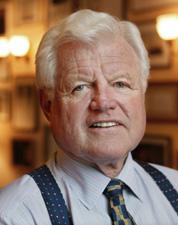 Sen. Edward M. Kennedy (D-MA)
Legislative Activity
Stay on top of the latest movement without scrolling through every action
Roll call votes on amendments in Senate: Motion to waive the Budget Act with respect to amendment SA 2588 rejected in Senate by Yea-Nay Vote. 36 - 62. Record Vote Number: 338.
November 17, 2005
View full timeline
Roll call votes on amendments in Senate: Motion to waive the Budget Act with respect to amendment SA 2588 rejected in Senate by Yea-Nay Vote. 36 - 62. Record Vote Number: 338.
November 17, 2005
Senate amendment proposed (on the floor): Amendment SA 2588 proposed by Senator Kennedy.
November 17, 2005
Amendment SA 2588 proposed by Senator Kennedy. (consideration: CR S13092-13095, S13124-13125) To eliminate child poverty.
November 17, 2005
Point of order raised in Senate with respect to amendment SA 2588.
November 17, 2005
Motion to waive the Budget Act with respect to amendment SA 2588 rejected in Senate by Yea-Nay Vote. 36 - 62. Record Vote Number: 338.
November 17, 2005
Amendment SA 2588 ruled out of order by the chair.
November 17, 2005
Senate amendment submitted
November 16, 2005
Votes
1 roll call on this amendment
Text
Submitted
SA 2588. Mr. KENNEDY (for himself, Ms. Landrieu, Mr. Durbin, and Mr.
Johnson) submitted an amendment intended to be proposed by him to the
bill S. 2020, to provide for reconciliation pursuant to section 202(b)
of the concurrent resolution on the budget for fiscal year 2006; which
was ordered to lie on the table; as follows:

At the appropriate place, insert the following:

TITLE __--ELIMINATING CHILD POVERTY

SEC. __1. SHORT TITLE.

This title may be cited as the ``End Child Poverty Act''.

SEC. __2. FINDINGS.

Congress makes the following findings:
(1) More than 13,000,000 children in the United States who
are younger than 18 live below the poverty line.
(2) Most parents of poor children are playing by the rules
by working to support their families. Despite their efforts,
many of these parents still cannot help their children get
ahead. Seven out of 10 poor children live in a working family
and 1 poor child in 3 lives with a full-time year-around
worker.
(3) Poor children are at least twice as likely as non-poor
children to suffer stunted growth or lead poisoning, or to be
kept back in school. Poor children score significantly lower
on reading, mathematics, and vocabulary tests when compared
with otherwise similar non-poor children. In more than half
of poor households with children in the United States, the
members of the households experience serious deprivations
during the year, including lack of adequate food, utility
shutoffs, crowded or substandard housing, or lack of needed
medical care.
(4) Over 8,000,000 children under age 18 in the United
States lack health insurance. With a 2004 uninsured rate of
18.9 percent, poor children are more likely to be uninsured
than children generally.
(5)(A) The members of 1 in 6 households with children in
the United States are hungry or on the verge of hunger,
largely due to inadequate household income.
(B) Hungry children--
(i) tend to lack nutrients vital to healthy brain
development;
(ii) tend to have difficulty focusing their attention and
concentrating in school; and
(iii) often have greater emotional and behavioral problems,
have weaker immune systems, and are more susceptible to
infections, including anemia, than other children.
(6) Child poverty has risen significantly, by 1,440,000
since 2000.
(7) The poverty rate for children in the United States is
substantially higher than that in most other wealthy
industrialized nations.
(8) Children in the United States are more likely to live
in poverty than any other age group in the United States.
(9) African-American and Latino children are much more
likely to live in poverty than White children. One third of
African-American children are low-income, as are nearly a
third of Latino children.
(10) Great Britain made a public commitment to cut child
poverty in half in 10 years, and end child poverty by 2020,
and it has already successfully lifted 2,000,000 children out
of poverty.
(11) Poverty is a moral issue and Congress has a moral
obligation to address it.

SEC. ___3. PURPOSES.

The purposes of this title are--
(1) to set a national goal of cutting child poverty in half
within a decade, and eliminating child poverty entirely as
soon as possible; and
(2) to establish a Child Poverty Elimination Trust Fund as
an initial measure to fund Federal programs to achieve that
goal.

SEC. ___4. DEVELOPMENT OF PLAN BY CHILD POVERTY ELIMINATION
BOARD.

(a) In General.--There is established a board to be known
as the Child Poverty Elimination Board (referred to in this
title as the ``Board'').
(b) Composition.--
(1) Appointments.--The Board shall be composed of 12 voting
members, to be appointed not later than 60 days after the
date of enactment of this Act, as follows:
(A) Senators.--One Senator shall be appointed by the
majority leader of the Senate, and one Senator shall be
appointed by the minority leader of the Senate.
(B) Members of the house of representatives.--One Member of
the House of Representatives shall be appointed by the
Speaker of the House of Representatives, and one Member of
the House of Representatives shall be appointed by the
minority leader of the House of Representatives.
(C) Additional members.--
(i) Appointment.--Two members each shall be appointed by--

(I) the Speaker of the House of Representatives;
(II) the majority leader of the Senate;
(III) the minority leader of the House of Representatives;
and
(IV) the minority leader of the Senate.

(ii) Expertise.--Members appointed under this subparagraph
shall be appointed on the basis of demonstrated expertise in
child poverty issues.
(2) Period of appointment; vacancies.--Members shall be
appointed for the life of the Board. Any vacancy on the Board
shall be filled in the manner in which the original
appointment was made. The vacancy shall not affect the power
of the remaining members to execute the duties of the Board.
(3) Chairperson and vice chairman.--The Board shall elect a
chairperson and a vice chairperson from among the members of
the Board.
(4) Meetings.--The Board shall first meet not later than 30
days after the date on which all members are appointed, and
the Board shall meet thereafter at the call of the
chairperson or vice chairperson or a majority of the members.
(c) Plan and Report.--
(1) Plan.--The Board shall meet regularly to develop a plan
for cutting child poverty in half within a decade, and
eliminating child poverty entirely as soon as possible. The
plan shall include recommendations for allocations of funds
from the Child Poverty Elimination Trust Fund established in
section 9511 of the Internal Revenue Code of 1986, to carry
out the plan.
(2) Report.--Not later than 1 year after the date of
enactment of this Act, the Board shall prepare and submit a
report containing the plan to the Committee on Education and
the Workforce of the House of Representatives, the Committee
on Health, Education, Labor, and Pensions of the Senate, and
the President.
(d) Powers.--
(1) Hearings and sessions.--The Board may hold such
hearings, sit and act at such times and places, take such
testimony, and receive such evidence as the Board considers
appropriate. The Board may administer oaths or affirmations
to witnesses appearing before it.
(2) Access to information.--The Board may secure directly
from any Federal agency information necessary to enable the
Board to carry out this title, if the information may be
disclosed under section 552 of title 5, United States Code.
Subject to the previous sentence, on the request of the
chairperson or vice chairperson of the Board, the head of
such agency shall furnish such information to the Board.
(3) Use of facilities and services.--Upon the request of
the Board, the head of any Federal agency may make available
to the Board any of the facilities and services of such
agency.
(4) Personnel from other agencies.--On the request of the
Board, the head of any Federal agency may detail any of the
personnel of such agency to serve as an Executive Director of
the Board or assist the Board in carrying out the duties of
the Board. Any detail shall not interrupt or otherwise affect
the civil service status or privileges of the Federal
employee.
(5) Voluntary service.--Notwithstanding section 1342 of
title 31, United States Code, the chairperson of the Board
may accept for the Board voluntary services provided by a
member of the Board.
(e) Compensation.--
(1) Pay.--Members of the Board shall serve without
compensation.
(2) Travel expenses.--Members of the Board shall be allowed
reasonable travel expenses, including a per diem allowance,
in accordance with section 5703 of title 5, United States
Code, when performing duties of the Board.

SEC. ___5. ISSUANCE AND IMPLEMENTATION OF PLAN.

(a) Issuance.--Not later than 90 days after receiving the
report containing the plan developed by the Board under
section ___4(c), the President shall review the report, and
shall issue a plan for cutting child poverty in half within a
decade, and eliminating child poverty entirely as soon as
possible. The plan shall include specifications and
allocations of funds to be made from the Child Poverty
Elimination Trust Fund, to carry out the plan.
(b) Relationship to Board Plan.--The plan issued under
subsection (a) shall be the same as the plan developed by the
Board under section ___4(c) except insofar as the President
may determine, for good cause shown and stated together with
the plan issued under subsection (a), that a modification of
the Board's plan would be more effective for eliminating
child poverty.
(c) Implementation.--Not later than 90 days after issuing a
plan under subsection (a), the President shall ensure the
implementation of the plan issued under subsection (a), and
shall work with Congress to ensure funding for the
implementation of the plan.

[[Page S13037]]

SEC. ___6. IMPOSITION OF INDIVIDUAL INCOME TAX SURCHARGE TO
FUND CHILD POVERTY ELIMINATION FUND.

(a) In General.--Section 1 of the Internal Revenue Code of
1986 (relating to imposition of tax on individuals) is
amended by adding at the end the following new subsection:
``(j) Additional Income Tax.--
``(1) In general.--If the adjusted gross income of an
individual exceeds the threshold amount, the tax imposed by
this section (determined without regard to this subsection)
shall be increased by an amount equal to 1 percent of so much
of the adjusted gross income as exceeds the threshold amount.
``(2) Threshold amounts.--For purposes of this subsection,
the term `threshold amount' means--
``(A) $1,000,000 in the case of a joint return, and
``(B) $500,000 in the case of any other return.
``(3) Tax not to apply to estates and trusts.--This
subsection shall not apply to an estate or trust.''.
(b) Coordination With Minimum Tax.--Section 55(c) of the
Internal Revenue Code of 1986 (defining regular tax) is
amended by redesignating paragraph (3) as paragraph (4) and
by inserting after paragraph (2) the following new paragraph:
``(3) Coordination with minimum tax.--Solely for purposes
of this section, section 1(j) shall not apply in computing
the regular tax.''.
(c) Establishment of Child Poverty Elimination Fund.--
(1) In general.--Subchapter A of chapter 98 of the Internal
Revenue Code of 1986 (relating to trust fund code) is amended
by adding at the end the following:

``SEC. 9511. CHILD POVERTY ELIMINATION TRUST FUND.

``(a) Creation of Trust Fund.--There is established in the
Treasury of the United States a trust fund to be known as the
`Child Poverty Elimination Trust Fund' (referred to in this
section as the `Trust Fund'), consisting of such amounts as
may be appropriated or credited to the Trust Fund as provided
in this section or section 9602(b).
``(b) Transfers to Trust Fund.--There is hereby
appropriated to the Trust Fund an amount equivalent to the
increase in revenues received in the Treasury as the result
of the surtax imposed under section 1(j).
``(c) Distribution of Amounts in Trust Fund.--Amounts in
the Trust Fund shall be available, as provided by
appropriation Acts, to make expenditures in connection with
Federal programs designed to carry out the plan issued by the
President under section ___5 of the End Child Poverty Act, to
eliminate child poverty.''.
(2) Conforming amendment.--The table of sections for
subchapter A of chapter 98 of such Code is amended by adding
at the end the following:

``Sec. 9511. Child Poverty Elimination Trust Fund.''.

(d) Effective Date.--The amendments made by this section
shall apply to taxable years beginning after December 31,
2005.
(e) Section 15 Not To Apply.--The amendment made by
subsection (a) shall not be treated as a change in a rate of
tax for purposes of section 15 of the Internal Revenue Code
of 1986.
______