S.Amdt. 3119
What it does: Adds SECTION 1. SENSE OF THE SENATE ON THE UNITED NATIONS HUMAN RIGHTS COUNCIL wherever appropriate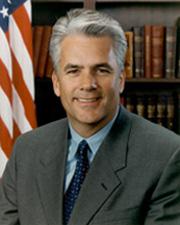 Sen. John Ensign (R-NV)
What it changes
1 change to S.Con.Res. 83
Adds SECTION 1. SENSE OF THE SENATE ON THE UNITED NATIONS HUMAN RIGHTS COUNCIL wherever appropriate
Adds a sectionInserted: SECTION 1. SENSE OF THE SENATE ON THE UNITED NATIONS HUMAN RIGHTS COUNCIL.
Inserted: (a) Findings.--The Senate finds that--
Inserted: (1) the United Nations Secretary General stated in March 2005, "the Commission on Human Rights suffers from declining credibility and professionalism, and is in major need of reform" and that a fundamental problem is that, "States have sought membership . . . not to strengthen human rights but to protect themselves against criticism or to criticize others";
Inserted: (2) the United States and other countries called for the abolition of the United Nations Commission on Human Rights and its replacement with a new Human Rights Council;
Inserted: (3) current Members of the United Nations Commission on Human Rights, the primary human rights body of the United Nations, include some of the worst violators of human rights in the world, such as China, Cuba, Saudi Arabia, Sudan, Venezuela, and Zimbabwe;
Inserted: (4) there are no criteria regarding the human rights record of a country for membership on the new United Nations Human Rights Council and even those countries that are found complicit in massive and sustained human rights abuses would be able to serve;
Inserted: (5) even countries under sanctions by the United Nations Security Council for human rights violations or terrorism are not categorically excluded from membership on the United Nations Human Rights Council;
Inserted: (6) the Government of the United States, which had been a member of the United Nations Commission on Human Rights every term since 1947, with 1 exception, has played a leadership role in efforts to promote human rights throughout the history of the United Nations Commission on Human Rights;
Inserted: (7) the Government of the United States would be ineligible for membership on the Human Rights Council every 6 years;
Inserted: (8) the Government of the United States formally opposed the creation of the United Nations Human Rights Council in a General Assembly session on March 15, 2006; and
Inserted: (9) the Government of the United States would be required to cover 22 percent of the costs of the Human Rights Council.
Inserted: (b) Sense of the Senate.--It is the sense of the Senate that--
Show 2 more inserted paragraphsShow less
Inserted: (1) the Government of the United States should decline to participate on the United Nations Human Rights Council until the Secretary of State certifies to the Congress that the United Nations has passed a resolution affirming that countries found complicit in sustained human rights abuses are ineligible for membership in the United Nations Human Rights Council; and
Inserted: (2) the Government of the United States should not provide any funds for the United Nations Human Rights Council until the Secretary of State certifies to the Congress that the United Nations has passed a resolution affirming that countries found complicit in sustained human rights abuses are ineligible for membership in the United Nations Human Rights Council.
The amendment doesn't say where this goes; the clerk decides.
Original wording
At the appropriate place, insert the following:
Read automatically from the Congressional Record. Check the original before relying on it.
As printed
SA 3119. Mr. ENSIGN submitted an amendment intended to be proposed by him to the concurrent resolution S. Con. Res. 83, setting forth the congressional budget for the United States Government for fiscal year 2007 and including the appropriate budgetary levels for fiscal years 2006 and 2008 through 2011; which was ordered to lie on the table; as follows:
At the appropriate place, insert the following:
SECTION 1. SENSE OF THE SENATE ON THE UNITED NATIONS HUMAN RIGHTS COUNCIL.
(a) Findings.--The Senate finds that--
(1) the United Nations Secretary General stated in March 2005, “the Commission on Human Rights suffers from declining credibility and professionalism, and is in major need of reform” and that a fundamental problem is that, “States have sought membership . . . not to strengthen human rights but to protect themselves against criticism or to criticize others”;
(2) the United States and other countries called for the abolition of the United Nations Commission on Human Rights and its replacement with a new Human Rights Council;
(3) current Members of the United Nations Commission on Human Rights, the primary human rights body of the United Nations, include some of the worst violators of human rights in the world, such as China, Cuba, Saudi Arabia, Sudan, Venezuela, and Zimbabwe;
(4) there are no criteria regarding the human rights record of a country for membership on the new United Nations Human Rights Council and even those countries that are found complicit in massive and sustained human rights abuses would be able to serve;
(5) even countries under sanctions by the United Nations Security Council for human rights violations or terrorism are not categorically excluded from membership on the United Nations Human Rights Council;
(6) the Government of the United States, which had been a member of the United Nations Commission on Human Rights every term since 1947, with 1 exception, has played a leadership role in efforts to promote human rights throughout the history of the United Nations Commission on Human Rights;
(7) the Government of the United States would be ineligible for membership on the Human Rights Council every 6 years;
(8) the Government of the United States formally opposed the creation of the United Nations Human Rights Council in a General Assembly session on March 15, 2006; and
(9) the Government of the United States would be required to cover 22 percent of the costs of the Human Rights Council.
(b) Sense of the Senate.--It is the sense of the Senate that--
(1) the Government of the United States should decline to participate on the United Nations Human Rights Council until the Secretary of State certifies to the Congress that the United Nations has passed a resolution affirming that countries found complicit in sustained human rights abuses are ineligible for membership in the United Nations Human Rights Council; and
(2) the Government of the United States should not provide any funds for the United Nations Human Rights Council until the Secretary of State certifies to the Congress that the United Nations has passed a resolution affirming that countries found complicit in sustained human rights abuses are ineligible for membership in the United Nations Human Rights Council.
Legislative Activity
Stay on top of the latest movement without scrolling through every action
Senate amendment submitted
March 15, 2006