S.Amdt. 3225Senate109th Congress (2005-2007)2nd degree
S.Amdt. 3225
Sponsored by 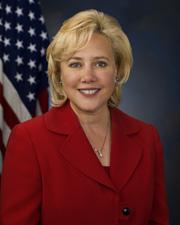 Sen. Mary L. Landrieu (D-LA)
Sen. Mary L. Landrieu (D-LA)Submitted April 3, 2006
Legislative Activity
Stay on top of the latest movement without scrolling through every action
Floor
Latest Action
Senate amendment submitted
April 3, 2006
Text
Submitted
SA 3225. Ms. LANDRIEU submitted an amendment intended to be proposed
to amendment SA 3192 submitted by Mr. Specter (for himself, Mr. Leahy,
and Mr. Hagel) to the bill S. 2454, to amend the Immigration and
Nationality Act to provide for comprehensive reform and for other
purposes; which was ordered to lie on the table; as follows:

At the end of the amendment, add the following:

TITLE __--INTERCOUNTRY ADOPTION REFORM

SEC. __01. SHORT TITLE.

This title may be cited as the ``Intercountry Adoption
Reform Act of 2006'' or the ``ICARE Act''.

SEC. __02. FINDINGS; PURPOSES.

(a) Findings.--Congress finds the following:
(1) That a child, for the full and harmonious development
of his or her personality, should grow up in a family
environment, in an atmosphere of happiness, love, and
understanding.
(2) That intercountry adoption may offer the advantage of a
permanent family to a child for whom a suitable family cannot
be found in his or her country of origin.
(3) There has been a significant growth in intercountry
adoptions. In 1990, Americans adopted 7,093 children from
abroad. In 2004, they adopted 23,460 children from abroad.
(4) Americans increasingly seek to create or enlarge their
families through intercountry adoptions.
(5) There are many children worldwide that are without
permanent homes.
(6) In the interest of children without a permanent family
and the United States citizens who are waiting to bring them
into their families, reforms are needed in the intercountry
adoption process used by United States citizens.
(7) Before adoption, each child should have the benefit of
measures taken to ensure that intercountry adoption is in his
or her best interest and that prevents the abduction,
selling, or trafficking of children.
(8) In addition, Congress recognizes that foreign-born
adopted children do not make the decision whether to
immigrate to the United States. They are being chosen by
Americans to become part of their immediate families.
(9) As such these children should not be classified as
immigrants in the traditional sense. Once fully and finally
adopted, they should be treated as children of United States
citizens.
(10) Since a child who is fully and finally adopted is
entitled to the same rights, duties, and responsibilities as
a biological child, the law should reflect such equality.
(11) Therefore, foreign-born adopted children of United
States citizens should be accorded the same procedural
treatment as biological children born abroad to a United
States citizen.
(12) If a United States citizen can confer citizenship to a
biological child born abroad, then the same citizen is
entitled to confer such citizenship to their legally and
fully adopted foreign-born child immediately upon final
adoption.
(13) If a United States citizen cannot confer citizenship
to a biological child born abroad, then such citizen cannot
confer citizenship to their legally and fully adopted
foreign-born child, except through the naturalization
process.
(b) Purposes.--The purposes of this title are--
(1) to ensure the any adoption of a foreign-born child by
parents in the United States is carried out in the manner
that is in the best interest of the child;

[[Page S2742]]

(2) to ensure that foreign-born children adopted by United
States citizens will be treated identically to a biological
child born abroad to the same citizen parent; and
(3) to improve the intercountry adoption process to make it
more citizen friendly and focused on the protection of the
child.

SEC. __03. DEFINITIONS.

In this title:
(1) Adoptable child.--The term ``adoptable child'' has the
same meaning given such term in section 101(c)(3) of the
Immigration and Nationality Act (8 U.S.C. 1101(c)(3)), as
added by section __24(a) of this Act.
(2) Ambassador at large.--The term ``Ambassador at Large''
means the Ambassador at Large for Intercountry Adoptions
appointed to head the Office pursuant to section __11(b).
(3) Competent authority.--The term ``competent authority''
means the entity or entities authorized by the law of the
child's country of residence to engage in permanent placement
of children who are no longer in the legal or physical
custody of their biological parents.
(4) Convention.--The term ``Convention'' means the
Convention on Protection of Children and Co-operation in
Respect of Intercountry Adoption, done at The Hague on May
29, 1993.
(5) Full and final adoption.--The term ``full and final
adoption'' means an adoption--
(A) that is completed according to the laws of the child's
country of residence or the State law of the parent's
residence;
(B) under which a person is granted full and legal custody
of the adopted child;
(C) that has the force and effect of severing the child's
legal ties to the child's biological parents;
(D) under which the adoptive parents meet the requirements
of section __25; and
(E) under which the child has been adjudicated to be an
adoptable child in accordance with section __26.
(6) Office.--The term ``Office'' means the Office of
Intercountry Adoptions established under section __11(a).
(7) Readily approvable.--A petition or certification is
``readily approvable'' if the documentary support provided
along with such petition or certification demonstrates that
the petitioner satisfies the eligibility requirements and no
additional information or investigation is necessary.

Subtitle A--ADMINISTRATION OF INTERCOUNTRY ADOPTIONS

SEC. __11. OFFICE OF INTERCOUNTRY ADOPTIONS.

(a) Establishment.--Not later than 180 days after the date
of enactment of this Act, there shall be established within
the Department of State, an Office of Intercountry Adoptions
which shall be headed by the Ambassador at Large for
Intercountry Adoptions.
(b) Ambassador at Large.--
(1) Appointment.--The Ambassador at Large shall be
appointed by the President, by and with the advice and
consent of the Senate, from among individuals who have
background, experience, and training in intercountry
adoptions.
(2) Conflicts of interest.--The individual appointed to be
the Ambassador at Large shall be free from any conflict of
interest that could impede such individual's ability to serve
as the Ambassador.
(3) Authority.--The Ambassador at Large shall report
directly to the Secretary of State, in consultation with the
Assistant Secretary for Consular Affairs.
(4) Regulations.--The Ambassador at Large may not issue
rules or regulations unless such rules or regulations have
been approved by the Secretary of State.
(5) Duties of the ambassador at large.--The Ambassador at
Large shall have the following responsibilities:
(A) In general.--The primary responsibilities of the
Ambassador at Large shall be--
(i) to ensure that any adoption of a foreign-born child by
parents in the United States is carried out in the manner
that is in the best interest of the child; and
(ii) to assist the Secretary of State in fulfilling the
responsibilities designated to the central authority under
title I of the Intercountry Adoption Act of 2000 (42 U.S.C.
14911 et seq.).
(B) Advisory role.--The Ambassador at Large shall be a
principal advisor to the President and the Secretary of State
regarding matters affecting intercountry adoption and the
general welfare of children abroad and shall make
recommendations regarding--
(i) the policies of the United States with respect to the
establishment of a system of cooperation among the parties to
the Convention;
(ii) the policies to prevent abandonment, to strengthen
families, and to advance the placement of children in
permanent families; and
(iii) policies that promote the protection and well-being
of children.
(C) Diplomatic representation.--Subject to the direction of
the President and the Secretary of State, the Ambassador at
Large may represent the United States in matters and cases
relevant to international adoption in--
(i) fulfillment of the responsibilities designated to the
central authority under title I of the Intercountry Adoption
Act of 2000 (42 U.S.C. 14911 et seq.);
(ii) contacts with foreign governments, intergovernmental
organizations, and specialized agencies of the United Nations
and other international organizations of which the United
States is a member; and
(iii) multilateral conferences and meetings relevant to
international adoption.
(D) International policy development.--The Ambassador at
Large shall advise and support the Secretary of State and
other relevant Bureaus of the Department of State in the
development of sound policy regarding child protection and
intercountry adoption.
(E) Reporting responsibilities.--The Ambassador at Large
shall have the following reporting responsibilities:
(i) In general.--The Ambassador at Large shall assist the
Secretary of State and other relevant Bureaus in preparing
those portions of the Human Rights Reports that relate to the
abduction, sale, and trafficking of children.
(ii) Annual report on intercountry adoption.--Not later
than September 1 of each year, the Secretary of State shall
prepare and submit to Congress an annual report on
intercountry adoption. Each annual report shall include--

(I) a description of the status of child protection and
adoption in each foreign country, including--

(aa) trends toward improvement in the welfare and
protection of children and families;
(bb) trends in family reunification, domestic adoption, and
intercountry adoption;
(cc) movement toward ratification and implementation of the
Convention; and
(dd) census information on the number of children in
orphanages, foster homes, and other types of nonpermanent
residential care as reported by the foreign country;

(II) the number of intercountry adoptions by United States
citizens, including the country from which each child
emigrated, the State in which each child resides, and the
country in which the adoption was finalized;
(III) the number of intercountry adoptions involving
emigration from the United States, including the country
where each child now resides and the State from which each
child emigrated;
(IV) the number of placements for adoption in the United
States that were disrupted, including the country from which
the child emigrated, the age of the child, the date of the
placement for adoption, the reasons for the disruption, the
resolution of the disruption, the agencies that handled the
placement for adoption, and the plans for the child, and in
addition, any information regarding disruption or dissolution
of adoptions of children from other countries received
pursuant to section 422(b)(14) of the Social Security Act (42
U.S.C. 622(b)(14));
(V) the average time required for completion of an
adoption, set forth by the country from which the child
emigrated;
(VI) the current list of agencies accredited and persons
approved under the Intercountry Adoption Act of 2000 (42
U.S.C. 14901 et seq.) to provide adoption services;
(VII) the names of the agencies and persons temporarily or
permanently debarred under the Intercountry Adoption Act of
2000 (42 U.S.C. 14901 et seq.), and the reasons for the
debarment;
(VIII) the range of adoption fees involving adoptions by
United States citizens and the median of such fees set forth
by the country of origin;
(IX) the range of fees charged for accreditation of
agencies and the approval of persons in the United States
engaged in providing adoption services under the Convention;
and
(X) recommendations of ways the United States might act to
improve the welfare and protection of children and families
in each foreign country.

(c) Functions of Office.--The Office shall have the
following 7 functions:
(1) Approval of a family to adopt.--To approve or
disapprove the eligibility of a United States citizen to
adopt a child born in a foreign country.
(2) Child adjudication.--To investigate and adjudicate the
status of a child born in a foreign country to determine
whether that child is an adoptable child.
(3) Family services.--To provide assistance to United
States citizens engaged in the intercountry adoption process
in resolving problems with respect to that process and to
track intercountry adoption cases so as to ensure that all
such adoptions are processed in a timely manner.
(4) International policy development.--To advise and
support the Ambassador at Large and other relevant Bureaus of
the Department of State in the development of sound policy
regarding child protection and intercountry adoption.
(5) Central authority.--To assist the Secretary of State in
carrying out duties of the central authority as defined in
section 3 of the Intercountry Adoption Act of 2000 (42 U.S.C.
14902).
(6) Enforcement.--To investigate, either directly or in
cooperation with other appropriate international, Federal,
State, or local entities, improprieties relating to
intercountry adoption, including issues of child protection,
birth family protection, and consumer fraud.
(7) Administration.--To perform administrative functions
related to the functions performed under paragraphs (1)
through (6), including legal functions and congressional
liaison and public affairs functions.
(d) Organization.--
(1) In general.--All functions of the Office shall be
performed by officers employed in a

[[Page S2743]]

central office located in Washington, D.C. Within that
office, there shall be 7 divisions corresponding to the 7
functions of the Office. The director of each such division
shall report directly to the Ambassador at Large.
(2) Approval to adopt.--The division responsible for
approving parents to adopt shall be divided into regions of
the United States as follows:
(A) Northwest.
(B) Northeast.
(C) Southwest.
(D) Southeast.
(E) Midwest.
(F) West.
(3) Child adjudication.--To the extent practicable, the
division responsible for the adjudication of foreign-born
children as adoptable shall be divided by world regions which
correspond to the world regions used by other divisions
within the Department of State.
(4) Use of international field officers.--Nothing in this
section shall be construed to prohibit the use of
international field officers posted abroad, as necessary, to
fulfill the requirements of this Act.
(5) Coordination.--The Ambassador at Large shall coordinate
with appropriate employees of other agencies and departments
of the United States, whenever appropriate, in carrying out
the duties of the Ambassador.
(e) Qualifications and Training.--In addition to meeting
the employment requirements of the Department of State,
officers employed in any of the 7 divisions of the Office
shall undergo extensive and specialized training in the laws
and processes of intercountry adoption as well as
understanding the cultural, medical, emotional, and social
issues surrounding intercountry adoption and adoptive
families. The Ambassador at Large shall, whenever possible,
recruit and hire individuals with background and experience
in intercountry adoptions, taking care to ensure that such
individuals do not have any conflicts of interest that might
inhibit their ability to serve.
(f) Use of Electronic Databases and Filing.--To the extent
possible, the Office shall make use of centralized,
electronic databases and electronic form filing.

SEC. __12. RECOGNITION OF CONVENTION ADOPTIONS IN THE UNITED
STATES.

Section 505(a)(1) of the Intercountry Adoption Act of 2000
(42 U.S.C. 14901 note) is amended by inserting ``301, 302,''
after ``205,''.

SEC. __13. TECHNICAL AND CONFORMING AMENDMENT.

Section 104 of the Intercountry Adoption Act of 2000 (42
U.S.C. 14914) is repealed.

SEC. __14. TRANSFER OF FUNCTIONS.

(a) In General.--Subject to subsection (c), all functions
under the immigration laws of the United States with respect
to the adoption of foreign-born children by United States
citizens and their admission to the United States that have
been vested by statute in, or exercised by, the Secretary of
Homeland Security immediately prior to the effective date of
this Act, are transferred to the Secretary of State on the
effective date of this Act and shall be carried out by the
Ambassador at Large, under the supervision of the Secretary
of State, in accordance with applicable laws and this Act.
(b) Exercise of Authorities.--Except as otherwise provided
by law, the Ambassador at Large may, for purposes of
performing any function transferred to the Ambassador at
Large under subsection (a), exercise all authorities under
any other provision of law that were available with respect
to the performance of that function to the official
responsible for the performance of the function immediately
before the effective date of the transfer of the function
pursuant to this subtitle.
(c) Limitation on Transfer of Pending Adoptions.--If an
individual has filed a petition with the Immigration and
Naturalization Service or the Department of Homeland Security
with respect to the adoption of a foreign-born child prior to
the date of enactment of this Act, the Secretary of Homeland
Security shall have the authority to make the final
determination on such petition and such petition shall not be
transferred to the Office.

SEC. __15. TRANSFER OF RESOURCES.

Subject to section 1531 of title 31, United States Code,
upon the effective date of this Act, there are transferred to
the Ambassador at Large for appropriate allocation in
accordance with this Act, the assets, liabilities, contracts,
property, records, and unexpended balance of appropriations,
authorizations, allocations, and other funds employed, held,
used, arising from, available to, or to be made available to
the Department of Homeland Security in connection with the
functions transferred pursuant to this subtitle.

SEC. __16. INCIDENTAL TRANSFERS.

The Ambassador at Large may make such additional incidental
dispositions of personnel, assets, liabilities, grants,
contracts, property, records, and unexpended balances of
appropriations, authorizations, allocations, and other funds
held, used, arising from, available to, or to be made
available in connection with such functions, as may be
necessary to carry out this subtitle. The Ambassador at Large
shall provide for such further measures and dispositions as
may be necessary to effectuate the purposes of this subtitle.

SEC. __17. SAVINGS PROVISIONS.

(a) Legal Documents.--All orders, determinations, rules,
regulations, permits, grants, loans, contracts, agreements,
including collective bargaining agreements, certificates,
licenses, and privileges--
(1) that have been issued, made, granted, or allowed to
become effective by the President, the Ambassador at Large,
the former Commissioner of the Immigration and Naturalization
Service, or the Secretary of Homeland Security, or their
delegates, or any other Government official, or by a court of
competent jurisdiction, in the performance of any function
that is transferred pursuant to this subtitle; and
(2) that are in effect on the effective date of such
transfer (or become effective after such date pursuant to
their terms as in effect on such effective date);

shall continue in effect according to their terms until
modified, terminated, superseded, set aside, or revoked in
accordance with law by the President, any other authorized
official, a court of competent jurisdiction, or operation of
law, except that any collective bargaining agreement shall
remain in effect until the date of termination specified in
the agreement.
(b) Proceedings.--
(1) Pending.--The transfer of functions under section __14
shall not affect any proceeding or any application for any
benefit, service, license, permit, certificate, or financial
assistance pending on the effective date of this subtitle
before an office whose functions are transferred pursuant to
this subtitle, but such proceedings and applications shall be
continued.
(2) Orders.--Orders shall be issued in such proceedings,
appeals shall be taken therefrom, and payments shall be made
pursuant to such orders, as if this Act had not been enacted,
and orders issued in any such proceeding shall continue in
effect until modified, terminated, superseded, or revoked by
a duly authorized official, by a court of competent
jurisdiction, or by operation of law.
(3) Discontinuance or modification.--Nothing in this
section shall be considered to prohibit the discontinuance or
modification of any such proceeding under the same terms and
conditions and to the same extent that such proceeding could
have been discontinued or modified if this section had not
been enacted.
(c) Suits.--This subtitle shall not affect suits commenced
before the effective date of this subtitle, and in all such
suits, proceeding shall be had, appeals taken, and judgments
rendered in the same manner and with the same effect as if
this Act had not been enacted.
(d) Nonabatement of Actions.--No suit, action, or other
proceeding commenced by or against the Department of State,
the Immigration and Naturalization Service, or the Department
of Homeland Security, or by or against any individual in the
official capacity of such individual as an officer or
employee in connection with a function transferred pursuant
to this section, shall abate by reason of the enactment of
this Act.
(e) Continuance of Suit With Substitution of Parties.--If
any Government officer in the official capacity of such
officer is party to a suit with respect to a function of the
officer, and pursuant to this subtitle such function is
transferred to any other officer or office, then such suit
shall be continued with the other officer or the head of such
other office, as applicable, substituted or added as a party.
(f) Administrative Procedure and Judicial Review.--Except
as otherwise provided by this subtitle, any statutory
requirements relating to notice, hearings, action upon the
record, or administrative or judicial review that apply to
any function transferred pursuant to any provision of this
subtitle shall apply to the exercise of such function by the
head of the office, and other officers of the office, to
which such function is transferred pursuant to such
provision.

Subtitle B--REFORM OF UNITED STATES LAWS GOVERNING INTERCOUNTRY
ADOPTIONS

SEC. __21. AUTOMATIC ACQUISITION OF CITIZENSHIP FOR ADOPTED
CHILDREN BORN OUTSIDE THE UNITED STATES.

(a) Automatic Citizenship Provisions.--
(1) Amendment of the ina.--Section 320 of the Immigration
and Nationality Act (8 U.S.C. 1431) is amended to read as
follows:

``SEC. 320. CONDITIONS FOR AUTOMATIC CITIZENSHIP FOR CHILDREN
BORN OUTSIDE THE UNITED STATES.

``(a) In General.--A child born outside of the United
States automatically becomes a citizen of the United States--
``(1) if the child is not an adopted child--
``(A) at least 1 parent of the child is a citizen of the
United States, whether by birth or naturalization, who has
been physically present (as determined under subsection (b))
in the United States or its outlying possessions for a period
or periods totaling not less than 5 years, at least 2 of
which were after attaining the age of 14 years; and
``(B) the child is under the age of 18 years; or
``(2) if the child is an adopted child, on the date of the
full and final adoption of the child--
``(A) at least 1 parent of the child is a citizen of the
United States, whether by birth or naturalization, who has
been physically present (as determined under subsection (b))
in the United States or its outlying possessions for a period
or periods totaling not less than 5 years, at least 2 of
which were after attaining the age of 14 years;
``(B) the child is an adoptable child;

[[Page S2744]]

``(C) the child is the beneficiary of a full and final
adoption decree entered by a foreign government or a court in
the United States; and
``(D) the child is under the age of 16 years.
``(b) Physical Presence.--For the purposes of subsection
(a)(2)(A), the requirement for physical presence in the
United States or its outlying possessions may be satisfied by
the following:
``(1) Any periods of honorable service in the Armed Forces
of the United States.
``(2) Any periods of employment with the United States
Government or with an international organization as that term
is defined in section 1 of the International Organizations
Immunities Act (22 U.S.C. 288) by such citizen parent.
``(3) Any periods during which such citizen parent is
physically present outside the United States or its outlying
possessions as the dependent unmarried son or daughter and a
member of the household of a person--
``(A) honorably serving with the Armed Forces of the United
States; or
``(B) employed by the United States Government or an
international organization as defined in section 1 of the
International Organizations Immunities Act (22 U.S.C. 288).
``(c) Full and Final Adoption.--In this section, the term
`full and final adoption' means an adoption--
``(1) that is completed under the laws of the child's
country of residence or the State law of the parent's
residence;
``(2) under which a person is granted full and legal
custody of the adopted child;
``(3) that has the force and effect of severing the child's
legal ties to the child's biological parents;
``(4) under which the adoptive parents meet the
requirements of section __25 of the Intercountry Adoption
Reform Act of 2006; and
``(5) under which the child has been adjudicated to be an
adoptable child in accordance with section __26 of the
Intercountry Adoption Reform Act of 2006.''.
(b) Conforming Amendment.--The table of contents in the
first section of the Immigration and Nationality Act (66
Stat. 163) is amended by striking the item relating to
section 320 and inserting the following:

``Sec. 320.Conditions for automatic citizenship for children born
outside the United States''.

(c) Effective Date.--This section shall take effect as if
enacted on June 27, 1952.

SEC. __22. REVISED PROCEDURES.

Notwithstanding any other provision of law, the following
requirements shall apply with respect to the adoption of
foreign born children by United States citizens:
(1) Upon completion of a full and final adoption, the
Secretary shall issue a United States passport and a Consular
Report of Birth for a child who satisfies the requirements of
section 320(a)(2) of the Immigration and Nationality Act (8
U.S.C. 1431(a)(2)), as amended by section __21 of this Act,
upon application by a United States citizen parent.
(2) An adopted child described in paragraph (1) shall not
require the issuance of a visa for travel and admission to
the United States but shall be admitted to the United States
upon presentation of a valid, unexpired United States
passport.
(3) No affidavit of support under section 213A of the
Immigration and Nationality Act (8 U.S.C. 1183a) shall be
required in the case of any adoptable child.
(4) The Secretary of State, acting through the Ambassador
at Large, shall require that agencies provide prospective
adoptive parents an opportunity to conduct an independent
medical exam and a copy of any medical records of the child
known to exist (to the greatest extent practicable, these
documents shall include an English translation) on a date
that is not later than the earlier of the date that is 2
weeks before the adoption, or the date on which prospective
adoptive parents travel to such a foreign country to complete
all procedures in such country relating to adoption.
(5) The Secretary of State, acting through the Ambassador
at Large, shall take necessary measures to ensure that all
prospective adoptive parents adopting internationally are
provided with training that includes counseling and guidance
for the purpose of promoting a successful intercountry
adoption before such parents travel to adopt the child or the
child is placed with such parents for adoption.
(6) The Secretary of State, acting through the Ambassador
at Large, shall take necessary measures to ensure that--
(A) prospective adoptive parents are given full disclosure
of all direct and indirect costs of intercountry adoption
before the parents are matched with a child for adoption;
(B) fees charged in relation to the intercountry adoption
be on a fee-for-service basis not on a contingent fee basis;
and
(C) that the transmission of fees between the adoption
agency, the country of origin, and the prospective adoptive
parents is carried out in a transparent and efficient manner.
(7) The Secretary of State, acting through the Ambassador
at Large, shall take all measures necessary to ensure that
all documents provided to a country of origin on behalf of a
prospective adoptive parent are truthful and accurate.

SEC. __23. NONIMMIGRANT VISAS FOR CHILDREN TRAVELING TO THE
UNITED STATES TO BE ADOPTED BY A UNITED STATES
CITIZEN.

(a) Nonimmigrant Classification.--
(1) In general.--Section 101(a)(15) of the Immigration and
Nationality Act (8 U.S.C. 1101(a)(15)) is amended by adding
at the end the following:
``(W) an adoptable child who is coming into the United
States for adoption by a United States citizen and a spouse
jointly or by an unmarried United States citizen at least 25
years of age, who has been approved to adopt by the Office of
International Adoption of the Department of State.''.
(2) Technical and conforming amendments.--Such section
101(a)(15) is further amended--
(A) by striking ``or'' at the end of subparagraph (U); and
(B) by striking the period at the end of subparagraph (V)
and inserting ``; or''.
(b) Termination of Period of Authorized Admission.--Section
214 of the Immigration and Nationality Act (8 U.S.C. 1184) is
amended by adding at the end the following:
``(s) In the case of a nonimmigrant described in section
101(a)(15)(W), the period of authorized admission shall
terminate on the earlier of--
``(1) the date on which the adoption of the nonimmigrant is
completed by the courts of the State where the parents
reside; or
``(2) the date that is 4 years after the date of admission
of the nonimmigrant into the United States, unless a
petitioner is able to show cause as to why the adoption could
not be completed prior to such date and the Secretary of
State extends such period for the period necessary to
complete the adoption.''.
(c) Temporary Treatment as Legal Permanent Resident.--
Notwithstanding any other law, all benefits and protections
that apply to a legal permanent resident shall apply to a
nonimmigrant described in section 101(a)(15)(W) of the
Immigration and Nationality Act, as added by subsection (a),
pending a full and final adoption.
(d) Exception From Immunization Requirement for Certain
Adopted Children.--Section 212(a)(1)(C) of the Immigration
and Nationality Act (8 U.S.C. 1182(a)(1)(C)) is amended--
(1) in the heading by striking ``10 years'' and inserting
``18 years''; and
(2) in clause (i), by striking ``10 years'' and inserting
``18 years''.
(e) Regulations.--Not later than 90 days after the date of
enactment of this Act, the Secretary of State shall prescribe
such regulations as may be necessary to carry out this
section.

SEC. __24. DEFINITION OF ADOPTABLE CHILD.

(a) In General.--Section 101(c) of the Immigration and
Nationality Act (8 U.S.C. 1101(c)) is amended by adding at
the end the following:
``(3) The term `adoptable child' means an unmarried person
under the age of 18--
``(A)(i) whose biological parents (or parent, in the case
of a child who has one sole or surviving parent) or other
persons or institutions that retain legal custody of the
child--
``(I) have freely given their written irrevocable consent
to the termination of their legal relationship with the
child, and to the child's emigration and adoption and that
such consent has not been induced by payment or compensation
of any kind and has not been given prior to the birth of the
child;
``(II) are unable to provide proper care for the child, as
determined by the competent authority of the child's
residence; or
``(III) have voluntarily relinquished the child to the
competent authorities pursuant to the law of the child's
residence; or
``(ii) who, as determined by the competent authority of the
child's residence--
``(I) has been abandoned or deserted by their biological
parent, parents, or legal guardians; or
``(II) has been orphaned due to the death or disappearance
of their biological parent, parents, or legal guardians;
``(B) with respect to whom the Secretary of State is
satisfied that the proper care will be furnished the child if
admitted to the United States;
``(C) with respect to whom the Secretary of State is
satisfied that the purpose of the adoption is to form a bona
fide parent-child relationship and that the parent-child
relationship of the child and the biological parents has been
terminated (and in carrying out both obligations under this
subparagraph the Secretary of State, in consultation with the
Secretary of Homeland Security, may consider whether there is
a petition pending to confer immigrant status on one or both
of the biological parents);
``(D) with respect to whom the Secretary of State, is
satisfied that there has been no inducement, financial or
otherwise, offered to obtain the consent nor was it given
before the birth of the child;
``(E) with respect to whom the Secretary of State, in
consultation with the Secretary of Homeland Security, is
satisfied that the person is not a security risk; and
``(F) whose eligibility for adoption and emigration to the
United States has been certified by the competent authority
of the country of the child's place of birth or residence.''.
(b) Conforming Amendment.--Section 204(d) of the
Immigration and Nationality Act (8 U.S.C. 1154(d)) is amended
by inserting ``and an adoptable child as defined in section
101(c)(3)'' before ``unless a valid home-study''.

SEC. __25. APPROVAL TO ADOPT.

(a) In General.--Prior to the issuance of a visa under
section 101(a)(15)(W) of the Immigration and Nationality Act,
as added by section __23(a) of this Act, or the issuance of

[[Page S2745]]

a full and final adoption decree, the United States citizen
adoptive parent shall have approved by the Office a petition
to adopt. Such petition shall be subject to the same terms
and conditions as are applicable to petitions for
classification under section 204.3 of title 8 of the Code of
Federal Regulations, as in effect on the day before the date
of enactment of this Act.
(b) Expiration of Approval.--Approval to adopt under this
Act is valid for 24 months from the date of approval. Nothing
in this section may prevent the Secretary of Homeland
Security from periodically updating the fingerprints of an
individual who has filed a petition for adoption.
(c) Expedited Reapproval Process of Families Previously
Approved To Adopt.--The Secretary of State shall prescribe
such regulations as may be necessary to provide for an
expedited and streamlined process for families who have been
previously approved to adopt and whose approval has expired,
so long as not more than 4 years have lapsed since the
original application.
(d) Denial of Petition.--
(1) Notice of intent.--If the officer adjudicating the
petition to adopt finds that it is not readily approvable,
the officer shall notify the petitioner, in writing, of the
officer's intent to deny the petition. Such notice shall
include the specific reasons why the petition is not readily
approvable.
(2) Petitioner's right to respond.--Upon receiving a notice
of intent to deny, the petitioner has 30 days to respond to
such notice.
(3) Decision.--Within 30 days of receipt of the
petitioner's response the Office must reach a final decision
regarding the eligibility of the petitioner to adopt. Notice
of a formal decision must be delivered in writing.
(4) Right to an appeal.--Unfavorable decisions may be
appealed to the Department of State and, after the exhaustion
of the appropriate appeals process of the Department, to a
United States district court.
(5) Regulations regarding appeals.--Not later than 6 months
after the date of enactment of this Act, the Secretary of
State shall promulgate formal regulations regarding the
process for appealing the denial of a petition.

SEC. __26. ADJUDICATION OF CHILD STATUS.

(a) In General.--Prior to the issuance of a full and final
adoption decree or a visa under section 101(a)(15)(W) of the
Immigration and Nationality Act, as added by section __23(a)
of this Act--
(1) the Ambassador at Large shall obtain from the competent
authority of the country of the child's residence a
certification, together with documentary support, that the
child sought to be adopted meets the definition of an
adoptable child; and
(2) not later than 15 days after the date of the receipt of
the certification referred to in paragraph (1), the Secretary
of State shall make a final determination on whether the
certification and the documentary support are sufficient to
meet the requirements of this section or whether additional
investigation or information is required.
(b) Process for Determination.--
(1) In general.--The Ambassador at Large shall work with
the competent authorities of the child's country of residence
to establish a uniform, transparent, and efficient process
for the exchange and approval of the certification and
documentary support required under subsection (a).
(2) Notice of intent.--If the Secretary of State determines
that a certification submitted by the competent authority of
the child's country of origin is not readily approvable, the
Ambassador at Large shall--
(A) notify the competent authority and the prospective
adoptive parents, in writing, of the specific reasons why the
certification is not sufficient; and
(B) provide the competent authority and the prospective
adoptive parents the opportunity to address the stated
insufficiencies.
(3) Petitioners right to respond.--Upon receiving a notice
of intent to find that a certification is not readily
approvable, the prospective adoptive parents shall have 30
days to respond to such notice.
(4) Decision.--Not later than 30 days after the date of
receipt of a response submitted under paragraph (3), the
Secretary of State shall reach a final decision regarding the
child's eligibility as an adoptable child. Notice of such
decision must be in writing.
(5) Right to an appeal.--Unfavorable decisions on a
certification may be appealed through the appropriate process
of the Department of State and, after the exhaustion of such
process, to a United States district court.

SEC. __27. FUNDS.

The Secretary of State shall provide the Ambassador at
Large with such funds as may be necessary for--
(1) the hiring of staff for the Office;
(2) investigations conducted by such staff; and
(3) travel and other expenses necessary to carry out this
title.

Subtitle C--ENFORCEMENT

SEC. __31. CIVIL PENALTIES AND ENFORCEMENT.

(a) Civil Penalties.--A person shall be subject, in
addition to any other penalty that may be prescribed by law,
to a civil money penalty of not more than $50,000 for a first
violation, and not more than $100,000 for each succeeding
violation if such person--
(1) violates a provision of this title or an amendment made
by this title;
(2) makes a false or fraudulent statement, or
misrepresentation, with respect to a material fact, or
offers, gives, solicits, or accepts inducement by way of
compensation, intended to influence or affect in the United
States or a foreign country--
(A) a decision for an approval under title II;
(B) the relinquishment of parental rights or the giving of
parental consent relating to the adoption of a child; or
(C) a decision or action of any entity performing a central
authority function; or
(3) engages another person as an agent, whether in the
United States or in a foreign country, who in the course of
that agency takes any of the actions described in paragraph
(1) or (2).
(b) Civil Enforcement.--
(1) Authority of attorney general.--The Attorney General
may bring a civil action to enforce subsection (a) against
any person in any United States district court.
(2) Factors to be considered in imposing penalties.--In
imposing penalties the court shall consider the gravity of
the violation, the degree of culpability of the defendant,
and any history of prior violations by the defendant.

SEC. __32. CRIMINAL PENALTIES.

Whoever knowingly and willfully commits a violation
described in paragraph (1) or (2) of section __31(a) shall be
subject to a fine of not more than $250,000, imprisonment for
not more than 5 years, or both.
______