S.Amdt. 3772
What it does: Inserts new text on page 253, between lines 19 and 20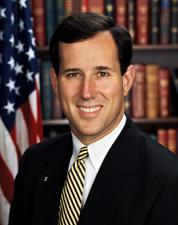 Sen. Rick Santorum (R-PA)
What it changes
1 change to H.R. 4939
Inserts new text on page 253, between lines 19 and 20
InsertsPrinted pageInserted: DEMOCRACY PROGRAMS AND ACTIVITIES IN IRAN
Inserted: Sec. 7032. (a) Congress makes the following findings:
Inserted: (1) The people of the United States have long demonstrated an interest in the well-being of the people of Iran, dating back to the 1830s.
Inserted: (2) Famous Americans such as Howard Baskerville, Dr. Samuel Martin, Jane E. Doolittle, and Louis G. Dreyfus, Jr., made significant contributions to Iranian society by furthering the educational opportunities of the people of Iran and improving the opportunities of the less fortunate citizens of Iran.
Inserted: (3) Iran and the United States were allies following World War II, and through the late 1970s Iran was as an important regional ally of the United States and a key bulwark against Soviet influence.
Inserted: (4) In November 1979, following the arrival of Mohammed Reza Shah Pahlavi in the United States, a mob of students and extremists seized the United States Embassy in Tehran, Iran, holding United States diplomatic personnel hostage until January 1981.
Inserted: (5) Following the seizure of the United States Embassy, Ayatollah Ruhollah Khomeini, leader of the repressive revolutionary movement in Iran, expressed support for the actions of the students in taking American citizens hostage.
Inserted: (6) Despite the presidential election of May 1997, an election in which an estimated 91 percent of the electorate participated, control of the internal and external affairs of the Islamic Republic of Iran is still exercised by the courts in Iran and the Revolutionary Guards, Supreme Leader, and Council of Guardians of the Government of Iran.
Inserted: (7) The election results of the May 1997 election and the high level of voter participation in that election demonstrate that the people of Iran favor economic and political reforms and greater interaction with the United States and the Western world in general.
Inserted: (8) Efforts by the United States to improve relations with Iran have been rebuffed by the Government of Iran.
Inserted: (9) The Clinton Administration eased sanctions against Iran and promoted people-to-people exchanges, but the Leader of the Islamic Revolution Ayatollah Ali Khamenei, the Militant Clerics' Society, the Islamic Coalition Organization, and Supporters of the Party of God have all opposed efforts to open Iranian society to Western influences and have opposed efforts to change the dynamic of relations between the United States and Iran.
Inserted: (10) For the past two decades, the Department of State has found Iran to be the leading sponsor of international terrorism in the world.
Show 42 more inserted paragraphsShow less
Inserted: (11) In 1983, the Iran-sponsored Hezbollah terrorist organization conducted suicide terrorist operations against United States military and civilian personnel in Beirut, Lebanon, resulting in the deaths of hundreds of Americans.
Inserted: (12) The United States intelligence community and law enforcement personnel have linked Iran to attacks against American military personnel at Khobar Towers in Saudi Arabia in 1996 and to al Qaeda attacks against civilians in Saudi Arabia in 2004.
Inserted: (13) According to the Department of State's Patterns of Global Terrorism 2001 report, "Iran's Islamic Revolutionary Guard Corps and Ministry of Intelligence and Security continued to be involved in the planning and support of terrorist acts and supported a variety of groups that use terrorism to pursue their goals," and "Iran continued to provide Lebanese Hizballah and the Palestinian rejectionist groups--notably HAMAS, the Palestinian Islamic Jihad, and the [Popular Front for the Liberation of Palestine-General Command]--with varying amounts of funding, safehaven, training and weapons".
Inserted: (14) Iran currently operates more than 10 radio and television stations broadcasting in Iraq that incite violent actions against United States and coalition personnel in Iraq.
Inserted: (15) The current leaders of Iran, Ayatollah Ali Khamenei and Hashemi Rafsanjani, have repeatedly called upon Muslims to kill Americans in Iraq and install a theocratic regime in Iraq.
Inserted: (16) The Government of Iran has admitted pursuing a clandestine nuclear program, which the United States intelligence community believes may include a nuclear weapons program.
Inserted: (17) The Government of Iran has failed to meet repeated pledges to arrest and extradite foreign terrorists in Iran.
Inserted: (18) The United States Government believes that the Government of Iran supports terrorists and extremist religious leaders in Iraq with the clear intention of subverting coalition efforts to bring peace and democracy to Iraq.
Inserted: (19) The Ministry of Defense of Iran confirmed in July 2003 that it had successfully conducted the final test of the Shahab-3 missile, giving Iran an operational intermediate-range ballistic missile capable of striking both Israel and United States troops throughout the Middle East and Afghanistan.
Inserted: (b) Congress declares that it should be the policy of the United States--
Inserted: (1) to support efforts by the people of Iran to exercise self-determination over the form of government of their country; and
Inserted: (2) to actively support a national referendum in Iran with oversight by international observers and monitors to certify the integrity and fairness of the referendum.
Inserted: (c)(1) The President is authorized, notwithstanding any other provision of law, to provide financial and political assistance (including the award of grants) to foreign and domestic individuals, organizations, and entities that support democracy and the promotion of democracy in Iran. Such assistance includes funding for--
Inserted: (A) the Broadcasting Board of Governors for efforts to cultivate and support independent broadcasters that broadcast into Iran;
Inserted: (B) cultural and student exchanges;
Inserted: (C) the promotion of human rights and civil society activities in Iran; and
Inserted: (D) assistance to student organizations, labor unions, and trade associations in Iran.
Inserted: (2) It is the sense of Congress that financial and political assistance under this section be provided to an individual, organization, or entity that--
Inserted: (A) opposes the use of terrorism;
Inserted: (B) advocates the adherence by Iran to nonproliferation regimes for nuclear, chemical, and biological weapons and materiel;
Inserted: (C) is dedicated to democratic values and supports the adoption of a democratic form of government in Iran;
Inserted: (D) is dedicated to respect for human rights, including the fundamental equality of women;
Inserted: (E) works to establish equality of opportunity for people; and
Inserted: (F) supports freedom of the press, freedom of speech, freedom of association, and freedom of religion.
Inserted: (3) The President may provide assistance under this subsection using amounts made available pursuant to the authorization of appropriations under paragraph (7).
Inserted: (4) Not later than 15 days before each obligation of assistance under this subsection, and in accordance with the procedures under section 634A of the Foreign Assistance Act of 1961 (22 U.S.C. 2394-l), the President shall notify the Committee on Foreign Relations and the Committee on Appropriations of the Senate and the Committee on International Relations and the Committee on Appropriations of the House of Representatives.
Inserted: (5) It is the sense of Congress that in order to ensure maximum coordination among Federal agencies, if the President provides the assistance under this section, the President should appoint an individual who shall--
Inserted: (A) serve as special assistant to the President on matters relating to Iran; and
Inserted: (B) coordinate among the appropriate directors of the National Security Council on issues regarding such matters.
Inserted: (6) It is the sense of Congress that--
Inserted: (A) support for a transition to democracy in Iran should be expressed by United States representatives and officials in all appropriate international fora;
Inserted: (B) representatives of the Government of Iran should be denied access to all United States Government buildings;
Inserted: (C) efforts to bring a halt to the nuclear weapons program of Iran, including steps to end the supply of nuclear components or fuel to Iran, should be intensified, with particular attention focused on the cooperation regarding such program--
Inserted: (i) between the Government of Iran and the Government of the Russian Federation; and
Inserted: (ii) between the Government of Iran and individuals from China, Malaysia, and Pakistan, including the network of Dr. Abdul Qadeer (A. Q.) Khan; and
Inserted: (D) officials and representatives of the United States should--
Inserted: (i) strongly and unequivocally support indigenous efforts in Iran calling for free, transparent, and democratic elections; and
Inserted: (ii) draw international attention to violations by the Government of Iran of human rights, freedom of religion, freedom of assembly, and freedom of the press.
Inserted: (7) There is authorized to be appropriated to the Department of State $100,000,000 to carry out activities under this subsection.
Inserted: (d) Not later than 15 days before designating a democratic opposition organization as eligible to receive assistance under subsection (b), the President shall notify the Committee on Foreign Relations and the Committee on Appropriations of the Senate and the Committee on International Relations and the Committee on Appropriations of the House of Representatives of the proposed designation. The notification may be in classified form.
Inserted: (e)(1) Of the amount appropriated by chapter 2 of title I under the heading "DEPARTMENT OF STATE AND RELATED AGENCY", excluding funds appropriated for Educational and Cultural Exchange Programs and Public Diplomacy Programs, $42,750,000 shall be available for the Broadcasting Board of Governors for democracy programs and activities in Iran.
Inserted: (2) Of the amount appropriated by chapter 4 of title I, $47,250,000 shall be made available for the Democracy Fund for democracy programs and activities in Iran.
Original wording
On page 253, between lines 19 and 20, insert the following:
Read automatically from the Congressional Record. Check the original before relying on it.
As printed
SA 3772. Mr. SANTORUM submitted an amendment intended to be proposed by him to the bill H.R. 4939, making emergency supplemental appropriations for the fiscal year ending September 30, 2006, and for other purposes; which was ordered to lie on the table; as follows:
On page 253, between lines 19 and 20, insert the following:
DEMOCRACY PROGRAMS AND ACTIVITIES IN IRAN
Sec. 7032. (a) Congress makes the following findings:
(1) The people of the United States have long demonstrated an interest in the well-being of the people of Iran, dating back to the 1830s.
(2) Famous Americans such as Howard Baskerville, Dr. Samuel Martin, Jane E. Doolittle, and Louis G. Dreyfus, Jr., made significant contributions to Iranian society by furthering the educational opportunities of the people of Iran and improving the opportunities of the less fortunate citizens of Iran.
(3) Iran and the United States were allies following World War II, and through the late 1970s Iran was as an important regional ally of the United States and a key bulwark against Soviet influence.
(4) In November 1979, following the arrival of Mohammed Reza Shah Pahlavi in the United States, a mob of students and extremists seized the United States Embassy in Tehran, Iran, holding United States diplomatic personnel hostage until January 1981.
(5) Following the seizure of the United States Embassy, Ayatollah Ruhollah Khomeini, leader of the repressive revolutionary movement in Iran, expressed support for the actions of the students in taking American citizens hostage.
(6) Despite the presidential election of May 1997, an election in which an estimated 91 percent of the electorate participated, control of the internal and external affairs of the Islamic Republic of Iran is still exercised by the courts in Iran and the Revolutionary Guards, Supreme Leader, and Council of Guardians of the Government of Iran.
(7) The election results of the May 1997 election and the high level of voter participation in that election demonstrate that the people of Iran favor economic and political reforms and greater interaction with the United States and the Western world in general.
(8) Efforts by the United States to improve relations with Iran have been rebuffed by the Government of Iran.
(9) The Clinton Administration eased sanctions against Iran and promoted people-to-people exchanges, but the Leader of the Islamic Revolution Ayatollah Ali Khamenei, the Militant Clerics' Society, the Islamic Coalition Organization, and Supporters of the Party of God have all opposed efforts to open Iranian society to Western influences and have opposed efforts to change the dynamic of relations between the United States and Iran.
(10) For the past two decades, the Department of State has found Iran to be the leading sponsor of international terrorism in the world.
(11) In 1983, the Iran-sponsored Hezbollah terrorist organization conducted suicide terrorist operations against United States military and civilian personnel in Beirut, Lebanon, resulting in the deaths of hundreds of Americans.
(12) The United States intelligence community and law enforcement personnel have linked Iran to attacks against American military personnel at Khobar Towers in Saudi Arabia in 1996 and to al Qaeda attacks against civilians in Saudi Arabia in 2004.
(13) According to the Department of State's Patterns of Global Terrorism 2001 report, “Iran's Islamic Revolutionary Guard Corps and Ministry of Intelligence and Security continued to be involved in the planning and support of terrorist acts and supported a variety of groups that use terrorism to pursue their goals,” and “Iran continued to provide Lebanese Hizballah and the Palestinian rejectionist groups--notably HAMAS, the Palestinian Islamic Jihad, and the [Popular Front for the Liberation of Palestine-General Command]--with varying amounts of funding, safehaven, training and weapons”.
(14) Iran currently operates more than 10 radio and television stations broadcasting in Iraq that incite violent actions against United States and coalition personnel in Iraq.
(15) The current leaders of Iran, Ayatollah Ali Khamenei and Hashemi Rafsanjani, have repeatedly called upon Muslims to kill Americans in Iraq and install a theocratic regime in Iraq.
(16) The Government of Iran has admitted pursuing a clandestine nuclear program, which the United States intelligence community believes may include a nuclear weapons program.
(17) The Government of Iran has failed to meet repeated pledges to arrest and extradite foreign terrorists in Iran.
(18) The United States Government believes that the Government of Iran supports terrorists and extremist religious leaders in Iraq with the clear intention of subverting coalition efforts to bring peace and democracy to Iraq.
(19) The Ministry of Defense of Iran confirmed in July 2003 that it had successfully conducted the final test of the Shahab-3 missile, giving Iran an operational intermediate-range ballistic missile capable of striking both Israel and United States troops throughout the Middle East and Afghanistan.
(b) Congress declares that it should be the policy of the United States--
(1) to support efforts by the people of Iran to exercise self-determination over the form of government of their country; and
(2) to actively support a national referendum in Iran with oversight by international observers and monitors to certify the integrity and fairness of the referendum.
(c)(1) The President is authorized, notwithstanding any other provision of law, to provide financial and political assistance (including the award of grants) to foreign and domestic individuals, organizations, and entities that support democracy and the promotion of democracy in Iran. Such assistance includes funding for--
(A) the Broadcasting Board of Governors for efforts to cultivate and support independent broadcasters that broadcast into Iran;
(B) cultural and student exchanges;
(C) the promotion of human rights and civil society activities in Iran; and
(D) assistance to student organizations, labor unions, and trade associations in Iran.
(2) It is the sense of Congress that financial and political assistance under this section be provided to an individual, organization, or entity that--
(A) opposes the use of terrorism;
(B) advocates the adherence by Iran to nonproliferation regimes for nuclear, chemical, and biological weapons and materiel;
(C) is dedicated to democratic values and supports the adoption of a democratic form of government in Iran;
(D) is dedicated to respect for human rights, including the fundamental equality of women;
(E) works to establish equality of opportunity for people; and
(F) supports freedom of the press, freedom of speech, freedom of association, and freedom of religion.
(3) The President may provide assistance under this subsection using amounts made available pursuant to the authorization of appropriations under paragraph (7).
(4) Not later than 15 days before each obligation of assistance under this subsection, and in accordance with the procedures under section 634A of the Foreign Assistance Act of 1961 (22 U.S.C. 2394-l), the President shall notify the Committee on Foreign Relations and the Committee on Appropriations of the Senate and the Committee on International Relations and the Committee on Appropriations of the House of Representatives.
(5) It is the sense of Congress that in order to ensure maximum coordination among Federal agencies, if the President provides the assistance under this section, the President should appoint an individual who shall--
(A) serve as special assistant to the President on matters relating to Iran; and
(B) coordinate among the appropriate directors of the National Security Council on issues regarding such matters.
(6) It is the sense of Congress that--
(A) support for a transition to democracy in Iran should be expressed by United States representatives and officials in all appropriate international fora;
(B) representatives of the Government of Iran should be denied access to all United States Government buildings;
(C) efforts to bring a halt to the nuclear weapons program of Iran, including steps to end the supply of nuclear components or fuel to Iran, should be intensified, with particular attention focused on the cooperation regarding such program--
(i) between the Government of Iran and the Government of the Russian Federation; and
(ii) between the Government of Iran and individuals from China, Malaysia, and Pakistan, including the network of Dr. Abdul Qadeer (A. Q.) Khan; and
(D) officials and representatives of the United States should--
(i) strongly and unequivocally support indigenous efforts in Iran calling for free, transparent, and democratic elections; and
(ii) draw international attention to violations by the Government of Iran of human rights, freedom of religion, freedom of assembly, and freedom of the press.
(7) There is authorized to be appropriated to the Department of State $100,000,000 to carry out activities under this subsection.
(d) Not later than 15 days before designating a democratic opposition organization as eligible to receive assistance under subsection (b), the President shall notify the Committee on Foreign Relations and the Committee on Appropriations of the Senate and the Committee on International Relations and the Committee on Appropriations of the House of Representatives of the proposed designation. The notification may be in classified form.
(e)(1) Of the amount appropriated by chapter 2 of title I under the heading “DEPARTMENT OF STATE AND RELATED AGENCY”, excluding funds appropriated for Educational and Cultural Exchange Programs and Public Diplomacy Programs, $42,750,000 shall be available for the Broadcasting Board of Governors for democracy programs and activities in Iran.
(2) Of the amount appropriated by chapter 4 of title I, $47,250,000 shall be made available for the Democracy Fund for democracy programs and activities in Iran.
Legislative Activity
Stay on top of the latest movement without scrolling through every action
Senate amendment submitted
May 1, 2006