To prohibit implementation of title IV and title VI until the President determines that implementation of such titles will strengthen the national security of the United States.
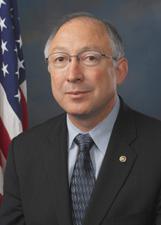 Sen. Ken Salazar (D-CO)
Legislative Activity
Stay on top of the latest movement without scrolling through every action
Senate amendment submitted
May 16, 2006
View full timeline
Senate amendment submitted
May 16, 2006
Senate amendment agreed to: Amendment SA 3994 agreed to in Senate by Yea-Nay Vote. 79 - 16. Record Vote Number: 122.
May 16, 2006
Roll call votes on amendments in Senate: Amendment SA 3994 agreed to in Senate by Yea-Nay Vote. 79 - 16. Record Vote Number: 122.
May 16, 2006
Senate amendment proposed (on the floor): Amendment SA 3994 proposed by Senator Salazar.
May 16, 2006
Amendment SA 3994 proposed by Senator Salazar. (consideration: CR S4577-4585; text: CR S4577) To prohibit implementation of title IV and title VI until the President determines that implementation of such titles will strengthen the national security of the United States.
May 16, 2006
Amendment SA 3994 agreed to in Senate by Yea-Nay Vote. 79 - 16. Record Vote Number: 122.
May 16, 2006
Votes
1 roll call on this amendment
Text
Proposed
COMPREHENSIVE IMMIGRATION REFORM ACT OF 2006

The PRESIDING OFFICER. Under the previous order, the Senate will
resume consideration of S. 2611, which the clerk will report.
The assistant legislative clerk read as follows:

A bill (S. 2611) to provide for comprehensive immigration
reform and for other purposes.

Pending:

Cornyn (for Isakson) amendment No. 3961, to prohibit the
granting of legal status, or adjustment of current status, to
any individual who enters or entered the United States in
violation of Federal law under the border security measures
authorized unless title I and section 233 are fully completed
and fully operational.

The PRESIDING OFFICER. The Senator from Pennsylvania.
Mr. SPECTER. Mr. President, may I remind my colleagues, as announced
yesterday, that the majority leader has authorized strict enforcement
of the 15-minute voting rule and 5-minute extra and on stacked votes 10
and 5. We have a great many amendments and a lot of work to do to
finish this bill before Memorial Day. We are about to proceed to the
amendment offered by the Senator from Georgia, Mr. Isakson. Senator
Craig has asked specially for 5 minutes to talk about the President's
speech. We are not going to be able to accommodate discussions beyond
the Isakson amendment, except for Senator Craig. After the 5 minutes,
Senator Isakson will be recognized to make the opening argument on his
amendment. We do not have a great deal of time under the order to
proceed with the two votes at noon. So let us use the time as
expeditiously as we can.
The PRESIDING OFFICER. The Senator from Idaho.
Mr. CRAIG. Mr. President, we resumed yesterday what I think most of
us believe is a historic debate in consideration of comprehensive
immigration reform. This body debated immigration reform and brought
forth a resolution in 1986. We did it once again in 1996. And here it
is, 2006, and we are back, frustrated in some ways, angered in others,
that there may be as many as 12 million illegal immigrants in our
country, illegal foreign nationals who came in a relatively
uncontrolled or unenforced fashion.
Last night I heard, and America heard, our President deliver what I
believe was one of the most comprehensive approaches toward dealing
with this issue. First and foremost, he recognized what the Congress
did not recognize in 1986, nor did we recognize it in 1996. No matter
how comprehensive our reform is, it will not work, unless this Nation
controls and secures its borders and, therefore, devises programs that
allow a reasonable number of foreign nationals to come into our economy
on an annual basis to help us grow and help us continue to be the great
immigrant Nation we are. Then the President, beyond his approach toward
securing the border, talked about a variety of other approaches.
Let me talk only about border security. A good number of us began to
work with the White House several months ago, and our message was quite
simple. We didn't believe the Congress could fashion comprehensive
immigration reform, that the politics of the day were too contentious,
unless we had convinced the American people, first and foremost, that
primarily our southern border would become more secure, that the flood
of humanity coming across it on an hourly basis was stopped, and that
the comprehensive bill that would then be fashioned would recognize the
needs of our economy and bring workers to our economy in a reasonable
fashion. The President gets it. His speech last night said it. While
the work the Judiciary Committee and the Senate have done do beef up
border control, you don't get there overnight. You don't invest
billions of dollars and stand up a virtual wall, and a real wall in
some places, in a 24-hour period. The President, understanding that, is
now engaging the four border States along our southwestern border, with
the complement of the National Guard, not to enforce but to facilitate
the Border Patrol, which is legally trained and deputized to do what is
necessary in the area of border enforcement.
Securing our southwestern border is critical. One AP reporter asked
me last night: Isn't this political?
I said: It is not political at all. The President simply gets it. If
this Senate doesn't get it, shame on us. We can't write a bill in any
fashion, Democratic

[[Page S4576]]

or Republican, that works unless our borders are secure, and the law
plays against the border in allowing an orderly approach through that
border on a daily and an annual basis.
Yes, our economy needs immigrant workers. We will need several
hundreds of thousands a year, if we expect our economy to continue to
grow as it has, to prosper. But we want them to come to work. And those
who might want to stay ought to get in line and apply for citizenship
and do as all other Americans have done in the past who were born in a
foreign country, who came here and became an American. They
assimilated. They learned our culture; they learned our history; they
learned to speak English; and we accepted them with open arms. It is
the vitality of our country. We have always accepted an orderly amount
of the world's humanity to become Americans. But we did it in a
controlled and responsible way. That is what our President said last
night. We ought to applaud him for an immediate approach to a problem
while we work out the long-term approach. That debate is here today.
That debate is here for the balance of the week, to build a
comprehensive reform package that plays up against a secure border that
our President proposed to us last night and that we should rush to help
him implement for the sake of this country.
I thank the chairman of the Judiciary Committee and yield the floor.
The PRESIDING OFFICER. Who yields time?
Mr. SPECTER. Mr. President, we now have 1 hour equally divided. On
this side, the time is under the control of Senator Isakson, who has
signified that there will be 5 minutes for Senator Cornyn, 5 minutes
for Senator Alexander, 5 minutes for Senator Chambliss, and we will try
to find time for Senator Thune as well. We will alternate back and
forth. Time is under the control of Senator Isakson.
The PRESIDING OFFICER. The Senator from Georgia.
Mr. KENNEDY. Parliamentary inquiry, Mr. President: How was that time
allocated? Was that morning business?
The PRESIDING OFFICER. The time of the Senator from Idaho was
allocated to the Senator from Pennsylvania.
Mr. KENNEDY. I see. How much time on each side?
The PRESIDING OFFICER. The Senator from Massachusetts has 34 minutes.
The Senator from Georgia has 27\1/2\ minutes.
Mr. KENNEDY. I thank the Chair.
The PRESIDING OFFICER. The Senator from Georgia.
Mr. ISAKSON. Mr. President, parliamentary inquiry: It was my
understanding that the time of the distinguished Senator from Idaho was
not a part of the debate but was to precede our debate, and we were
supposed to equally divide the remaining time. Am I incorrect?
The PRESIDING OFFICER. The time was allocated to the Senator from
Pennsylvania as the bill was laid down, equally divided.
Mr. ISAKSON. So we have how many minutes?
The PRESIDING OFFICER. There is 27\1/2\ minutes.
Mr. SALAZAR. Parliamentary inquiry, Mr. President.
The PRESIDING OFFICER. The Senator from Colorado will state it.
Mr. SALAZAR. My understanding was that under the unanimous consent
agreement that had been entered into by the floor managers, the next
hour would be divided equally between the Senator from Georgia in
relation to his amendment, as well as the amendment that I would be
offering following the Senator from Georgia.
The PRESIDING OFFICER. The time following the vote between now and 12
o'clock has already been equally divided.
Mr. KENNEDY. So we have 34 minutes.
Mr. SALAZAR. I thank the Chair.
The PRESIDING OFFICER. The Senator from Georgia is recognized.
Mr. ISAKSON. Mr. President, I appreciate the statement of the Senator
from Colorado. I thank the Senator from South Carolina, the Presiding
Officer. I thank Senator Specter, chairman of the Judiciary Committee,
for the untiring efforts he made on the bill and the courtesies he has
shown to me. I thank leader Harry Reid for accommodating us and
allowing us to come to the floor and have a debate. I particularly
thank Lindsey Graham and John McCain for seeing to it that all of us
who had amendments to offer had a chance to negotiate the time to do
that. I especially thank my staff, in particular, Mike Quiello, for the
work he has done on this issue over a long period of time.
Mr. President, to set the stage for my remarks on my amendment, let
me, first of all, tell you a little bit about myself. I am a product of
the legal immigration system of the United States. My grandfather came
here in 1903 and went through Ellis Island. There is nobody who has
greater respect for the hope and opportunity and the laws of our
country than do I. I was in the construction industry, and I know the
great contribution the workers made to construction and to tourism and
to hospitality services and to agriculture.
I, also, know the issue before us is now the most important issue
domestically before the United States. When I ran for the Senate in
2003 and 2004, the most commonly asked question after Iraq was: What
are you going to do about illegal immigration? In the first speech on
any issue I made as a Senator, I made the statement that I thought
illegal immigration was the No. 1 domestic issue in this country.
I rise to tell you my mind has not been changed. I think neither have
the minds been changed of the American people because you have seen the
intensity of the interest of all Americans in border security and
immigration.
My amendment is very simple. It says that before any provision of
this Immigration Act could grant legal status to someone who is here
illegally is in effect, the Secretary of Homeland Security must certify
to the President and the Congress that every provision for border
security and enforcement contained in title I and section 233 of title
II is in place, funded, and is operational.
There is a simple reason for that. In 1986, this Congress, under
President Ronald Reagan, passed a border security and amnesty bill for
the 3 million illegal aliens who were in this country. We enforced the
border and granted amnesty. And 20 years later, there are 11 million to
13 million illegal aliens who have come because of the promise of this
country and its opportunity but also because we have given a wink and a
nod to the security of our borders.
I want to emphasize that I am not just talking about something I am
thinking about or that I read. I have been to our border. I took a
codel with Senator Coleman in February. We went to Fort Huachuca in
Arizona and saw the unmanned aerial vehicle working and identifying
those coming across the border and sealing a 150-mile stretch. In San
Diego, at the border with Juarez, we saw where the barriers at
Smugglers' Gulch have effectively stopped the people coming through
that gully and immigrating illegally into this country. We went up and
down the border and saw the bits and pieces of security that worked. We
also saw the over 1,500 miles of the border that are not secure--the
1,500 miles that have allowed people to come here either through
smuggling or through their own volition or by paying bribes to get
here, to get into our workforce, to overcrowd our schools, to stretch
the services in our emergency rooms and put great pressure on our civil
justice system.
It is time that we seal the border and secure it so that the promise
of legal immigration works and illegally entering this country is not
the preferred way to cross on our southern border.
I commend the President for his remarks last night. The President
last night said, in order, the five important things we must do. The
first thing the President said is to secure the border. With this
amendment, with our commitment and with the President's commitment,
securing the border will take place. Then we can grant a program to
those who are here illegally, with the sincere knowledge that we know
no more are coming. If we grant programs and status to those who are
here illegally and look the other way, the next time we bring this up
in 10 or 15 years, it will not be 12 million, it will be 24 million
and, worst of all, we will have lost control.
Last night, the President said we are a nation of laws. And we are a
nation of laws. I submit to you that when laws

[[Page S4577]]

are enforced, and they are enforced soundly, laws are obeyed and they
are respected. We have not enforced our border and, therefore, its
security is not respected.
So I call on all of our colleagues, Democrats and Republicans alike,
everybody who is interested in a comprehensive reform of our
immigration policy and our immigration system, to think what comes
first. And what comes first is securing the border. After that, the
American people would be willing to work with us on programs to grant
status. But in the absence of securing the border and making that
commitment, we are not going to have the cooperation of the American
people. We are not going to have comprehensive reform, and a growing
problem in this country will grow even greater.
My last point is there may be some who say you cannot secure the
border or it is going to take too long. Listen, this country put a man
on the Moon in 9 years, and we responded to the terrorist attacks
within 3 weeks. This country can do anything it sets its mind to do. We
know how to do it. In incremental places, we do it now. It is time we
put in the additional 6,000 border security agents, put the UAVs in the
air, put the ground sensors on the ground, put the prosecuting
officials along the border in those jurisdictions to see to it that the
law is enforced and prosecuted, and it is time that we build the
barriers in those areas that are easy smuggling corridors. We must make
a commitment to ourselves and the American people.
The Senator from Colorado is going to offer an amendment side by
side. I read the amendment. It gives the President the authority to
authorize sections 4 and 6, which are the status sections, whenever it
is in the best interest of the national security of the United States.
That is well and good, but that has nothing to do with security on the
border. If we don't adopt the Isakson amendment to secure the border,
then we will have given a wink and a nod one more time to those who
would come here illegally. We will have said to our local governments,
school systems, emergency rooms, and law enforcement officers that we
don't care.
Mr. President, I think we do care. I urge support for the Isakson
amendment to the immigration bill. I reserve the remainder of my time.
The PRESIDING OFFICER (Mr. Sununu). Who yields time?
Mr. KENNEDY. I yield 10 minutes to the Senator from Colorado.
The PRESIDING OFFICER. The Senator from Colorado is recognized.

Amendment No. 3994

Mr. SALAZAR. Mr. President, I call up amendment No. 3994 and ask for
its immediate consideration.
The PRESIDING OFFICER. The clerk will report.
The assistant legislative clerk read as follows:

The Senator from Colorado (Mr. Salazar) proposes an
amendment numbered 3994.

(Purpose: To prohibit implementation of title IV and title VI until the
President determines that implementation of such titles will strengthen
the national security of the United States)

At the appropriate place, insert the following:

SEC. __. NATIONAL SECURITY DETERMINATION.

Notwithstanding any other provision of this Act, the
President shall ensure that no provision of title IV or title
VI of this Act, or any amendment made by either such title,
is carried out until after the date on which the President
makes a determination that the implementation of such title
IV and title VI, and the amendments made by either such
title, will strengthen the national security of the United
States.

Mr. SALAZAR. Mr. President, as we come back to the floor of the
Senate today to take up this issue of national security and the
national urgency on workable immigration law, I want to first say that
I applaud my colleagues both on the Democratic and the Republican sides
who have been working so hard to move forward with a comprehensive
immigration reform package.
I also want to say thank you to the President of the United States of
America for his statement last night to the Nation, in which he
appealed to the best interests of America to come together and develop
a comprehensive immigration reform package. I believe it is worthwhile
to quote again from what the President said last night.

Tonight I want to speak directly to Members of the House
and the Senate. An immigration reform bill needs to be
comprehensive because all elements of this problem must be
addressed together, or none of them will be solved at all.
The House has passed an immigration bill. The Senate should
act by the end of this month so that we can work out the
differences between the two bills and Congress can pass a
comprehensive bill for me to sign into law.

Again, he said we need to work on this problem together, on all of
its elements, or none of the elements will be solved.
Mr. President, amendment No. 3994 is an amendment that takes a very
different approach from the Senator from Georgia, my good friend,
Senator Isakson. As chairman Specter noted on the floor yesterday, the
proponents of the Isakson amendment take the view that we ought to have
all our border-strengthening and security measures in place before we
address any aspect of this problem. I don't think that that is an
effective approach.
In the past, for the last 20 years, when we have tried to approach
immigration issues by only looking at one issue at a time, we have
failed. We have continually thrown money at a problem to increase
border security through funding. Yet our borders continue to be porous
and broken, and the lawlessness that comes with that is something we
see across America. I don't believe we should let this crisis fester. I
don't believe we should continue to tolerate those being in the shadows
of society, the 11 million undocumented workers in this country today.
I don't believe we in the Senate should stand in the way of a
comprehensive immigration reform that has extensive bipartisan support
in this body.
It is very clear to all of us today that the current situation is
inadequate and there is a lot of work that needs to be done. I want to
move ahead on all fronts and take the comprehensive approach that has
been discussed on this floor, and a comprehensive approach which the
President himself has endorsed.
National security is at the heart of a workable immigration law, and
we should not allow an immigration law to go into effect if it will not
address the national security interests of the United States. That is
at the heart of my amendment. My amendment is a very simple amendment.
As the clerk read that amendment, it was very clear and
straightforward, and it simply requires the President of the United
States to make a determination that the national security of the United
States will be strengthened by the following programs: Title IV, which
includes the new guest worker program, and title VI, which includes the
provisions relating to the 11 million undocumented workers who are
living in the shadows of America today; and it also includes the
bipartisan changes to immigration that have been forged in this body by
leaders such as Senator Craig and Senator Feinstein on agriculture jobs
and the DREAM Act, which is another bipartisan measure. Under our
amendment, those provisions of the bill cannot be implemented unless
and until the President of the United States finds that it is in the
national interest and for national security that those provisions of
the legislation be implemented.
Senator Isakson's amendment, on the other hand, is designed to weaken
this comprehensive approach. The approach of my friend from Georgia
would focus only on border enforcement. When we look at the history of
the last 20 years, approaches that have focused on border enforcement
only have been approaches that have not succeeded in dealing with the
issue of immigration.
I agree with President Bush that we need to address this issue in a
comprehensive manner, and I urge my colleagues to support amendment No.
3994.
At the end of the day, it seems to me that those of us in this body
who recognize the importance of this issue need to understand that the
stool has to have three legs for us to develop comprehensive
immigration reform.
First, we need to secure our borders. In the legislation we have
proposed, there are multiple provisions that deal with the
strengthening of our borders, including the doubling of the number of
Border Patrol officers, bringing in new technology that would allow us
to make sure we know who is coming and going across our borders, and a
number

[[Page S4578]]

of other provisions that are intended to ensure that our borders become
secure.
The second leg of that stool is making sure that we are enforcing our
immigration laws within our country. We have not done an adequate job
of enforcing our immigration laws in this country. The President
acknowledged that reality as well. Our legislation will make sure that
we are enforcing our immigration laws within the interior of our
country.
The third leg on that stool is to make sure we are addressing the
human and economic reality of the 11 million people who currently live
in an undocumented status in America today.
Sometimes when we get into these debates on the Senate floor, it is a
discussion about policy, but it is also important for us never to
forget why we are here, and never to forget that there are, in fact,
millions of human beings who are very much affected by the current
system of lawlessness on our borders.
Sadly, last year, over 300 people died trying to cross the border. In
my own community, over the last several Sundays, I heard a Catholic
priest talk about how it is that people were dying of thirst and hunger
in the deserts of Arizona and places such as Texas. I heard my
colleague, my friend from Arizona, Senator John McCain, speak
eloquently and passionately about this issue.
Since 1998, more than 2,000 men, women, and children have lost their
lives crossing the border between Mexico and the United States. That is
not what we are about in America. Anywhere else in America if we had
2,000 people dying, the people of America would be standing up and
saying we must do something to correct this problem and to correct it
in a way that is going to work. That is why a comprehensive solution is
needed in this situation. That is why my amendment No. 3994 was
proposed. It will help us move down the road to developing that
comprehensive immigration reform package.
I thank the Chair, and I yield the remainder of my time to the
Senator from Massachusetts.
Mr. KENNEDY. Mr. President, I wonder if the Senator will yield for a
question. Is it the Senator's understanding that if we accept the
Isakson amendment, we will continue to have this culture of illegality
in the United States? If we accept the Isakson amendment, we will still
have the hiring by employers of illegal aliens, we will be driving
wages down, we will still have a whole culture of illegality, we will
have people in the shadows, we will have people whose names we don't
know because we are unable to bring people out into the sunlight and
understand who is actually here in terms of our national security? Does
the Senator from Colorado not believe that this is really--the Senator
from Colorado, as I understand it, has been a strong supporter of
border security, provisions that are in the underlying bill. He has
been a strong supporter to make sure that this is a key element in our
total immigration strategy: a strong border and that we deal with the
dangers of our border, but to understand that if we are going to be
able to deal with the dangers of our border, we are going to also have
to deal with enforcement in this country of employers. We are also
going to have to deal with the adjustment of the status of those who
are here. Is that the position of the Senator from Colorado?
Mr. President, I want to understand clearly, he is not taking a
second step to anyone, is he, in having a strong border enforcement; am
I right?
The PRESIDING OFFICER. The Senator from Colorado has the floor.
Mr. SALAZAR. Mr. President, my friend from Massachusetts is correct.
We stand firmly for the proposition that we need to absolutely secure
our borders. Indeed, if we fail to address the reality of 11 million
people living in the shadows of the United States today, we will have
failed to achieve the national security objective.
If one thinks about what happened in the days after 9/11, our
Government ought to know who is living in our society. We cannot know
that when we have 11 million people living in the shadows. Those people
need to be brought out of the shadows, they need to be brought out into
the sunlight, they need to be registered, they need to pay a fine, they
need to learn English, and they need to do the rest of the things we
talk about in this legislation.

The very fundamental principle of an immigration law to provide us
with national security in America will be altered if we are not able to
move forward with the implementation of those provisions of the law.
The proposal which my good friend from Georgia has proposed, the
Isakson amendment, would essentially gut the sense of our comprehensive
immigration reform bill because we would not be able to deal with that
reality and we would not be able to deal with the guest worker program
that the President of the United States is proposing.
Mr. KENNEDY. Mr. President, if the Senator will yield further,
therefore, the Senator from Colorado, with his amendment, believes that
he offers a path that is going to protect our national security in the
most effective way because we will gain information, we will gain
knowledge, we will understand the people who are here and will know
their names, will know their addresses, will know where they live, and
they will be part of our society.
Secondly, I understand that he believes that without his amendment,
we are still going to have this culture of illegality where we have
employers hiring undocumented workers. The Isakson amendment doesn't do
anything about that, as I understand. If we adopt the Isakson
amendment, we will still have the exploitations of undocumented
workers, and we will also have the conditions where we are driving
wages down, which drives wages down for Americans. Does the Senator not
believe that will continue to be the result unless we do a
comprehensive approach?
Mr. SALAZAR. Mr. President, I agree with my friend from
Massachusetts. In fact, that would happen. We would have 11 million
workers who probably would continue to work as they have been working
now, for some of them decades in this country, and that the system of
illegality in terms of employers hiring undocumented workers is simply
a system that is going to continue into the future unabated. That is
why it is so essential that we move forward with this issue in a
comprehensive approach.
Last night the President was absolutely correct in his statement that
we cannot deal with this issue of immigration reform in a piecemeal
manner. We have to deal with it in a comprehensive manner that
addresses the issue of 11 million undocumented workers who are in this
country today.
The PRESIDING OFFICER. The time of the Senator from Colorado has
expired. Who yields time?
Mr. KENNEDY. I yield 4 more minutes, Mr. President.
The PRESIDING OFFICER. The Senator from Colorado is recognized for an
additional 4 minutes.
Mr. KENNEDY. Mr. President, as I understand the Senator from
Colorado, his position, quite frankly, is much more consistent with
what the President talked about last night, am I correct, where the
President talked about a comprehensive approach to deal with the
challenges of illegality. And his position is that we ought to look at
it in a comprehensive way, and the best way to deal with illegality on
the border is to also deal with illegality in employment and deal with
legality and illegality in adjusting the status in terms of earning the
right to remain here; am I correct?
Mr. SALAZAR. Mr. President, my friend from Massachusetts is, in fact,
correct. We need to deal with the entire set of immigration issues
today, including the illegal hiring of people in this country. The
provisions we have set forward in this bill will allow us to, in fact,
bring those people who are here illegally and who are undocumented out
of the shadows so we can address the national security interests.
My amendment requires the President of the United States to basically
say that before the guest worker program is implemented, the President
has to determine that it is in the interest of national security for us
to implement those provisions; that before we move forward with the
program that addresses the reality of 11 million undocumented workers,
the President of the United States shall acknowledge and make a
statement that, in fact, it is in the national security interests of

[[Page S4579]]

the United States of America. That is why this amendment is a much
better, preferred approach than the amendment which is being offered by
my friend from Georgia.
Mr. KENNEDY. Mr. President, finally, I have my differences with the
President, but I agree with the Senator from Colorado. We support that
judgment and that decision and his ability to make that judgment and
decision. That is what the Senator from Colorado supports, and I do,
too.
I retain the remainder of my time.
The PRESIDING OFFICER. Who yields time?
The Senator from Georgia.
Mr. ISAKSON. Mr. President, how much time remains on both sides?
The PRESIDING OFFICER. The Senator from Georgia controls 20 minutes,
and the Senator from Massachusetts controls 17 minutes.
Mr. ISAKSON. Mr. President, I think the distinguished Senators, Mr.
Salazar and Mr. Kennedy, who are both Senators and lawyers and
understand smoke and mirrors. I think they understand the enforcement
of the law. The Isakson amendment calls for us to enforce the laws that
have been brought about because of the lack of enforcement, which is
why this bill is on the floor of the Senate now.
Mr. President, I ask unanimous consent that Senators Chambliss,
Cornyn, Alexander, Domenici, and Santorum be added as original sponsors
of the Isakson amendment.
The PRESIDING OFFICER. Without objection, it is so ordered.
Mr. ISAKSON. Mr. President, I am pleased to recognize for 10 minutes
the Senator from Texas, Mr. Cornyn.
The PRESIDING OFFICER. The Senator from Texas.
Mr. CORNYN. Mr. President, there is no doubt that trying to fix our
broken immigration system is a complex issue. Frankly, part of what we
have been trying to do is to find solutions that thread the needle and
shrink the gap between the approach of the House of Representatives,
which is primarily an enforcement-only bill, and comprehensive
immigration reform that I believe is supported by most of us in the
Senate, including myself.
I differ with the sponsors of the bill in the Senate, and I intend to
offer amendments that will, I believe, improve it, while retaining its
comprehensive nature. I believe it is simply surreal to suggest that
what the amendment of the Senator from Georgia does somehow retreats to
the House position and is an enforcement-only approach.
Indeed, I think the Senator from Georgia has struck upon an ingenious
way to thread the needle by saying, yes, we believe that border
security is important; yes, we believe that we ought to produce the
computer systems, hire and train the people, create the databases which
will actually make this reform work, rather than put the cart before
the horse and say, with the stroke of a pen, that 12 million people who
are living out of legal status are suddenly legal; and, yes, we are
going to have 325,000 new people each year come into the country,
regardless of whether our economy is in a boom or a bust and possibly
compete with Americans for those jobs.
What the Senator from Georgia has done is say let's put the horse in
front of the cart, not the cart in front of the horse. Let's do first
things first. Let's make sure this will actually work.
Last night the President talked about sending 6,000 National Guard
troops to help the Border Patrol secure the border, recognizing that it
takes time to train Border Patrol agents. We now train them at the rate
of 1,500 a year, and we can't all of a sudden secure the border because
we can't all of a sudden train enough Border Patrol agents. We can't
all of a sudden, with the wave of a magic wand, build the
infrastructure that is necessary. We can't, with the wave of a magic
wand, issue the request for proposals to actually let the contracts
that will allow the construction of the computer systems and the
databases that will actually make this work. We can't, with the wave of
a magic wand, say we are going to create a secure identification card
which will allow employers to verify the eligibility of prospective
employees. It is going to take a little bit of time.
But that is not the same thing as saying, as the Senator from
Colorado has said, that somehow we are going with an enforcement-only
approach.
I support a comprehensive immigration reform plan that is built on a
foundation of border security, that says we need to have worksite
verification, that we need to have a secure identification card so that
employers can determine whether in fact a person is eligible to work. I
believe we ought to have sanctions against employers who cheat. I
believe we ought to have a temporary worker program, not like the
proposed guest worker program in this underlying bill, and that will be
the subject for future amendments.
The message we need to send the American people is that we are
actually serious about making this proposed comprehensive immigration
reform system work. If we adopt the amendment of the Senator from
Colorado, it will send a message that we are not serious about making
sure we have the infrastructure and the people and the systems and the
cards in place that will actually make this comprehensive reform work.
The American people have already been burned once very badly when it
comes to comprehensive immigration reform. In 1986, when President
Ronald Reagan signed an amnesty, the tradeoff was supposed to be
worksite verification and employer sanctions for employers who cheat.
But the Federal Government never did what it was supposed to do by
providing the means for employers to actually make that determination
in a way that had some integrity. Now I believe the American people are
looking at us skeptically, wondering whether we are going to try to
pull the rug out from under them again.
The American people can be amazingly tolerant, they can be amazingly
forgiving, but they won't be mocked, and they will not believe us
unless we build some confidence into the system by saying we are going
to take care of helping to secure the border, we are going to provide
the means to enforce this system, before we are going to implement a
12-million person amnesty which will put a tremendous load on the men
and women who are supposed to administer this system. Can you imagine
how long it will take to make this happen? All this does is say let's
do first things first, rather than put the cart before the horse.
The PRESIDING OFFICER. The time of the Senator has expired.
Who yields time? The Senator from Massachusetts.
Mr. KENNEDY. Mr. President, my friend and colleague from Michigan has
a special request. We know it is not completely consistent with the
subject matter at hand, but we are willing to yield time, Senator
Salazar and I, out of our time, so we are not going to delay the
proceedings of the Senate. This is an important matter.
I yield 4 minutes, if that is sufficient time.
The PRESIDING OFFICER. The Senator from Michigan.

Medicare Prescription Part-D Benefit

Ms. STABENOW. Mr. President, I thank my colleagues who are managing
this very important bill and Senators Kennedy and Salazar as well. We
are engaged in an important debate right now, but there is another
important debate going on around every kitchen table and in every
senior citizen center right now, which is what is going to happen today
after they can no longer sign up for the Medicare prescription Part D
benefit.
We know that for about 3 million low-income seniors, they are going
to be allowed to continue to sign up until the end of the year without
penalty. But for the 3 million to 5 million seniors who are not in that
category, they are not allowed to continue to sign up, and there will
be a penalty between now and November when they can sign up again.
I ask unanimous consent that the Senate proceed to the immediate
consideration of a bill which I will send to the desk now which extends
the enrollment deadline for Medicare Part D, waives the late enrollment
penalty, provides the option for a one-time change of plan during 2006,
and provides increased funding for State health insurance counseling
and assistance programs.
The PRESIDING OFFICER. Is there objection?
Mr. SPECTER. Mr. President, I am hearing this for the first time. I
must

[[Page S4580]]

object until I take a look at it and consult with some people on this
matter.
The PRESIDING OFFICER. Objection is heard.
Mr. SPECTER. For current purposes, I do object.
Ms. STABENOW. Mr. President, if I might just continue, there are
three important pieces in this bill. They are certainly not new to us.
I appreciate we are in the middle of another important discussion, but
we have had an ongoing discussion with seniors all across America who
are concerned about this issue. If not this entire bill, I ask
unanimous consent to pass a bill that would at least extend the
enrollment until the end of the year.
The PRESIDING OFFICER. Is there objection?
Mr. SPECTER. Mr. President, I am constrained to object again until I
have had a chance to examine the specifics as to what the Senator from
Michigan is offering.
The PRESIDING OFFICER. Objection is heard.
Mr. SPECTER. May I add that I have joined with other Senators in
seeking to have an extension of the date. So I am in agreement with
what I believe to be the thrust of what the Senator from Michigan seeks
to accomplish. But speaking for myself, I would have to know more and
examine the documents before I could refrain from objecting. And on
behalf of others on this side, as the manager of the bill, it is
incumbent upon me to give them an opportunity to examine what the
Senator from Michigan wants to do. So I am constrained to object.
The PRESIDING OFFICER. Objection is heard. The Senator from Michigan
has 1 minute remaining.
Ms. STABENOW. Mr. President, I then ask, because of the seriousness
and sense of urgency, that we have unanimous consent at least to pass
the bill containing only the part that waives the late enrollment
penalty that starts today.
The PRESIDING OFFICER. Is there objection?
Mr. SPECTER. Mr. President, I again object for the reasons I said. I
will be glad to have the effort of the Senator from Michigan renewed
later today when I have had a chance to examine it and others have had
a chance to examine it. But on this state of the record, hearing it for
the first time and being surprised by it, we need time to study it and
time for others to consider it.

The PRESIDING OFFICER. Objection is heard. The Senator has 10 seconds
remaining.
Ms. STABENOW. Mr. President, I appreciate the position of the Senator
from Pennsylvania, but I ask unanimous consent to pass the bill
containing a provision which provides at least a one-time change of
plan during 2006.
Mr. SPECTER. Objection, without restating all my reasons.
The PRESIDING OFFICER. Objection is heard. The time of the Senator
has expired. Who yields time?
The Senator from Georgia.
Mr. ISAKSON. I yield 5 minutes to the distinguished Senator from
Tennessee, Mr. Alexander.
The PRESIDING OFFICER. The Senator is recognized.
Mr. ALEXANDER. Will the Chair please advise me when 60 seconds
remains.
Mr. President, I thank the Senator from Georgia and congratulate him
on his amendment.
The President talked last night about what we need to do to secure
our borders. He took an important step forward. He committed to
doubling the number of Border Patrol agents during his time as
President. As that is ramped up, he said he would ask the National
Guard to help us fill the gap. Guard members would help by operating
surveillance systems, analyzing intelligence, installing fences and
vehicle barriers, building patrol roads, and providing training. As a
former commander in chief of the Tennessee National Guard when I was
Governor, the proposal sounded to me eminently sensible.
The President also talked about using high-technology verification
cards, ways that employers could do a better job of making certain the
people they hire are legally here. He talked about Federal-State
cooperation being improved with State and local law enforcement.
All of this will take some time, but we need to do whatever we can in
the Senate to ensure that the President's commitment to secure the
border succeeds. That is why I joined with Senator Gregg and others
last week to add $1.9 billion to the Border Patrol during our debate on
the emergency supplemental bill. That money will help replace outdated
vehicles that are breaking down and purchase new boats and other
equipment. That is why I am cosponsoring the amendment of Senator
Isakson today. Senator Isakson's amendment says clearly: Border
security must come first.
Under this amendment, we can still pass, I believe--and I will ask
the Senator this question when my time has expired--we can still pass a
comprehensive immigration bill, but we can't adjust the legal status of
those illegally here until the border is secure. We have no business
passing a comprehensive immigration bill without making sure first that
the border will be secure. Upholding the rule of law on our border is
as important as defending our freedom in Iraq. A nation that loses
control of its own borders is a nation that will not likely exist for
long.
Last year, more than half a million new citizens became Americans.
They had waited 5 years, learned English, pledged allegiance to our
country, had foresworn allegiance to the country from which they came,
and learned about our Constitution and laws. They know the principles
that unite us as Americans--not our race, not our ancestry, but
principles. Among those principles are equal opportunity and laissez-
faire. We thrive on immigration in this country. But among those
principles, too, is our unity. And first among those principles--at
least none is more important--is the principle of the rule of law.
Those half-million new citizens know that they are free to drive here
across the country but not to run stop lights; that they are free to
make contracts in this economy but not to break them; that they are
free to own a gun under the second amendment but not to shoot someone.
We thrive on legal immigration, but we cannot tolerate illegal
immigration.
I would like to ask through the Chair, if I may, a question of the
Senator from Georgia.
The PRESIDING OFFICER. Without objection, the Senator has 30 seconds
remaining.
Mr. ALEXANDER. Through the Chair, my question to the Senator from
Georgia is this: I favor a comprehensive immigration bill. I would like
to see border security. I would like to see legal status for students
who study here, for skilled people who help win Nobel Prizes here and
improve our economy. I would like to see a comprehensive immigration
bill that includes help for people legally here to learn English and
learn our history and unite us as Americans. But, Senator Isakson, am I
correct that if we pass your amendment, it is still true, is it not,
that we can pass a comprehensive immigration bill that includes all of
these provisions I just described? The only difference is, as I
understand it, that we may not adjust the legal status of those
illegally here until the border is secure? Am I correct about that or
am I wrong about that?
Mr. ISAKSON. The Senator is absolutely correct, and the premise is
you don't want to create an attraction for more to come until the
border is secure and we know we put an end to it.
Mr. LEAHY. Mr. President, The Isakson amendment is designed to tear
apart the interwoven fabric of a bill that many of us have worked so
hard in a bipartisan manner to pass in the Senate.
The Isakson amendment asserts that there can be no guest worker
program and no legalization path for undocumented immigrants currently
in the United States until security at the borders is guaranteed.
Sounds good, until you realize that comprehensive immigration reform
consists of several interrelated steps, each depending on the rest in
order to maximize the prospects of the overall plan to get the job
done. This amendment is a prescription for failure, by ripping a
comprehensive plan apart. That is why this amendment has been described
as a ``poison pill'' that would undermine the bipartisan bill before
the Senate.
The Senate recently passed the Defense supplemental appropriations
bill, a bill that included nearly $2 billion for border security. It
seems that what

[[Page S4581]]

Senator Isakson wants the Senate to do is to wait until all of those
funds are expended, and then assess our security. Many of us have been
fighting for years to improve border security by targeting more
resources for technology on the borders and by adding additional Border
Patrol agents. The Bush administration repeatedly failed to fulfill
Congress's directives in recent years, but I was pleased to hear the
President say last night that he now supports increasing the number of
Border Patrol agents by 6,000. He made a statement last night that was
stronger and displayed a stronger commitment than we have heard from
him previously, and I hope he plans to follow through on his words.
The President also spoke about the need to simultaneously implement
guest worker programs and a path to earned citizenship for the
undocumented. This is similar to the comprehensive approach that those
of us who supported the Judiciary Committee bill, and then the Hagel-
Martinez compromise, still believe is necessary to reform our broken
system and to secure our borders. Do Senator Isakson and the supporters
of his amendment believe that the President is taking the Nation in the
wrong direction? I find it troubling that with such strong bipartisan
support for S. 26l1 in the Senate, and the leadership of the White
House on the core principles of the bill, these Senators refuse to join
in constructive efforts to enact comprehensive reform. From the
beginning, many voices outside of the Senate have been intent on
bringing down this bill.
Senator Salazar has offered an alternative that supports the
principles of S. 2611 and that reflects the goals laid out by the
President in his statement last night. I urge all Members of the Senate
to vote against the Isakson ameendment and for the Salazar alternative.
We must work toward comprehensive solutions that secure our borders and
strengthen the Nation, not piecemeal gambits that undermine the efforts
of bipartisan progress toward a Senate bill.
The PRESIDING OFFICER. The time of the Senator has expired. So 8\1/2\
minutes remain under the control of the Senator from Georgia, 12\1/2\
minutes under the control of the Senator from Massachusetts.
Who yields time? The Senator from Massachusetts.
Mr. KENNEDY. I yield 4 minutes to myself, 4 minutes to the Senator
from Illinois, and 4 minutes to the Senator from Colorado.
I ask the Chair, when I have 30 seconds left, to be informed.
Mr. President, the amendment of the Senator from Georgia does nothing
with regard to the National Guard. I have listened to the debate and
discussion about the National Guard. Frankly, the way the President
described it last night, the Guard would be very limited. They have
mainly a supportive kind of proposal. I have real concerns because in
my State the Guard is very busy today with the flooding we have in part
of Massachusetts. But we are open, at least I am open, on this issue.
This amendment has nothing to do with that.
The fact is that those of us who oppose the amendment of the Senator
and support Senator Salazar's amendment believe in strong border
security. But we also read history. We know the record on the border.
Twenty years ago, we had 40,000 people who were coming in here
illegally; 10 years ago, it was 400,000. Do you know what we did? We
spent $20 billion over the last 10 years, we have increased border
guards by 300 percent, and guess what: We have doubled the numbers to
800,000 today--to 800,000.
What is the answer to that? The answer to that is we need tough
border security, but we need tough law enforcement here in the United
States, and we have to deal with the legality or adjustment of status
for those who are here, prepared to pay a penalty, work hard, play by
the rules, participate in the armed services of our country, and then
join the end of the line for those people waiting to come into the
United States--at the end of the line, and 11 years from now be able to
achieve citizenship.
The fact remains, if you only do one of the proposals--and this the
President of the United States understands and spoke to very clearly. I
have my differences with the President, but he is absolutely right. He
understands history. He is a border State Governor, and he knows you
can't do this by itself, only at the border. The fact is, in the bill
that we support, we increased by 12,000 the border patrol. We create a
virtual fence.
If the Senator from Georgia has additional national security matters
that they think can be added, we are glad to consider them. But we are
dealing with the recognition that you have to have a comprehensive
approach if you are going to gain control of the borders. History
teaches us that. We have had hours and days of hearings about that. All
you have to do is look at what has happened to the border in the last
years.
The PRESIDING OFFICER. The Senator has 30 seconds remaining.
Mr. KENNEDY. Mr. President, as has been pointed out, it is a three-
legged stool: tough border security, tough legal enforcement here in
the United States, and a recognition of our humanity and decency and
our immigration background. If people are prepared to pay a penalty,
play by the rules, work hard, and stay free from any trouble with law
enforcement, at the end of the line they can earn American citizenship.
That is the way to go, and the Isakson amendment short circuits that
process.
The PRESIDING OFFICER. Who yields time? The Senator from Georgia.
Mr. ISAKSON. Mr. President, the Senator from Massachusetts has made
the most eloquent statement in favor of this amendment I have ever
heard. He put on the record exactly what we raised in title I, section
133, to secure the border. I appreciate his comments.
I am happy to yield 4 minutes to the Senator from Georgia, Mr.
Chambliss.
The PRESIDING OFFICER. The Senator from Georgia is recognized.
Mr. CHAMBLISS. Mr. President, I rise in strong support of the Isakson
amendment and am proud to be a cosponsor. The American people have
heard Senators from both sides of the aisle and across the political
spectrum come down to the floor of the Senate to talk about the 1986
Immigration Reform and Control Act and how it did not solve the problem
of illegal immigration. This was the first attempt by Congress to
address the issue of illegal immigration in a comprehensive way. The
Immigration Reform and Control Act was the product of a number of
compromises, the main one being legalizing the illegal population in
exchange for stronger enforcement of our immigration laws both at the
border and inside the country.

However, we all know now that the 1986 legislation, which closely
mirrors S. 2611, did not work and, in fact, invited further illegal
immigration, resulting in the critical situation we face regarding
illegal immigration today.
As the Senate considers S. 2611 we are operating under the assumption
that there are around 11 million illegal immigrants who will take
advantage of an amnesty. But the fact is that we simply do not know how
many illegal immigrants are in the U.S. some venture to guess that
there are 20 million or more.
However, once again we find that many in the Senate are willing to
make the same compromise that was made in 1986: legalize an unlimited
amount of illegal aliens in exchange for increasing border security,
interior enforcement, and worksite enforcement.
I personally do not agree with this approach. I do not believe that
we should provide illegal immigrants with a new path to citizenship
through this bill or any bill. I do not think it is the right way to
address the presence of a large number of illegal immigrants.
While I do not believe in providing a new path to citizenship for
illegal immigrants, the Judiciary Committee disagreed. As a result, the
Senate is now considering a bill that will provide a pathway to
citizenship for illegal immigrants. If we are willing to travel down
the same path that proved not to work before, shouldn't we ask
ourselves what didn't work with the 1986 amnesty that will work today?
What has changed?
I think one of the main problems with the 1986 amnesty bill was that
it ended up being one sided--the government adjusted the status of
millions of illegal immigrants but the promise of greater border
security, interior enforcement, and worksite enforcement never
materialized.

[[Page S4582]]

That is why Senator Isakson's amendment is so critical. It says that
we cannot implement any program to grant legal status to an illegal
immigrant provided in this bill until the Secretary of Homeland
Security certifies in writing to the President and to Congress that the
border security measures in this bill are complete and operational.
This is a very simple amendment.
I do not see how any Senator who is serious about border security and
enforcing our immigration laws can disagree with Senator Isakson's
amendment. It is that we ensure, before we take the same path we did in
1986, a path I disagree with, that we remedy one of the fatal flaws of
the 1986 Immigration Reform and Control Act.
Disagreeing with this amendment sends the message to the American
people that we are more eager to give illegal immigrants a path to
citizenship than we are to secure our borders from further illegal
immigration and the smuggling of illegal drugs and weapons. I know that
is not the message my constituents in Georgia want to hear.
Regardless of where Georgians stand on dealing with the current
illegal population, the constant refrain I hear from folks back home
is: secure the border. If we do not secure the border and have serious
interior and worksite enforcement, then we have accomplished nothing.
The American people demand no more and deserve no less.
I am proud to cosponsor this critical amendment, which will show the
American people that providing an amnesty to millions of illegal
immigrants is not more important than securing our borders. I urge my
colleagues to support the Isakson amendment.
The PRESIDING OFFICER. Who yields time?
Mr. KENNEDY. Mr. President, how much time remains?
The PRESIDING OFFICER. The Senator from Massachusetts controls 9
minutes, the Senator from Georgia controls 4 minutes 20 seconds.
Mr. KENNEDY. Mr. President, I yield 4 minutes to the Senator from
Illinois.
The PRESIDING OFFICER. The Senator from Illinois is recognized for 4
minutes.
Mr. DURBIN. Mr. President, I listened carefully to the President's
speech last night. He gets it. As you listen to the debate on the floor
from both sides the aisle, more and more Republican and Democratic
Senators get it. They understand it now. It isn't just a matter of
getting tough. It isn't just a matter of enforcement. It is a matter of
enforcement and a process that results in comprehensive immigration
reform.
If it were just a matter of making it tough to cross our borders, you
would assume we would have moved toward solving the problem. But it
hasn't happened. In the last decade, we have doubled the number of
Border Patrol agents. They have spent eight times as many hours
patrolling the border in that 10-year period of time, and during that
same period the number of undocumented immigrants coming into the
United States has doubled--despite this dramatic increase in resources.
Enforcement at the border is not stopping the flow.
The comprehensive bill says you need to do three things. You need
border enforcement. I support what the President said last night. I
think sending the National Guard, if we can get all the details, on an
interim basis is a good thing to move toward enforcement. But you also
need to have enforcement in the workplace so there is no magnet for
these people to move into the United States. And you need to deal
honestly with the 11 million or 12 million who are here and bring them
out of the shadows so that we know who they are and where they are,
whether they are working and whether they pose any threat to this
country. It is a comprehensive approach.
Senator Isakson is stuck on the first issue--just enforce the borders
and do nothing else until you have enforced the borders. But we have
learned that is, in and of itself, not successful. You need to have a
comprehensive approach--enforcement at borders, enforcement in the
workplace, and a process that brings these people out of the shadows.
Senator Salazar has offered a reasonable alternative. He says leave
it to the President of the United States to certify that it is in the
best interest of our national security to move forward with this
process. That puts a mind on the job that we need. It isn't just a
simple certification of enforcement; it looks at the whole picture.
Until you look at the whole picture on immigration, we will continue to
have politicians debate it back and forth, with their 30-second ads
flying in both directions, and nothing is going to happen.
This is a unique opportunity in our history to move forward with
comprehensive immigration reform, something that will finally work.
Twenty years ago, when we granted amnesty, we thought it was the end
of the issue. We were wrong. We have seen a dramatic increase in
illegal immigration into the United States. Now, 20 years later, let us
not repeat the mistake with a simpleminded, linear approach that says
if we just get tough on the border, everything will be fine. You have
to do the whole package. The President argued for that last night.
Part of that enforcement in the workplace is a tamper-proof ID card
using biometrics so we know who that employee is, where they live, what
their background may be, and finally a process--a long, tough process--
where those who are here undocumented can earn their way into legal
status. It may take them 10 years, it may take them 12 years, but in
that period of time, they have to learn English, they have to work,
they have to pay their taxes, they have to pay any fines they owe this
Government for coming into this country, and they have to show they
have a demonstrated knowledge of our history and the way our Government
works. They have to report every year so we know that they are keeping
up with their requirements. And if they stick with it for 10 or 12
years, they will reach legal status. It is not amnesty, but it is a
sensible part of comprehensive immigration reform.
I urge my colleagues to support Senator Salazar and oppose Senator
Isakson's amendment.
The PRESIDING OFFICER. Who yields time?
Mr. KENNEDY. Mr. President, I yield the remaining time to the Senator
from Colorado.
The PRESIDING OFFICER. The Senator from Colorado is recognized for 4
minutes 20 seconds.
Mr. SALAZAR. Mr. President, let me reiterate that the approach which
was outlined by the President, which the bipartisan coalition of
Senators has been working on, is a comprehensive approach. History has
shown that when we take only one aspect of immigration reform, we fail.
We failed in 1986. We failed at different efforts over the last 20
years. This time, we have to get it right.
The President of the United States is right when he ultimately stated
last night that we need comprehensive immigration reform. The proposed
amendment by my colleague from the State of Georgia, and my good
friend, essentially would take what are the 54 provisions of title I in
this piece of legislation we are currently considering, going from
section 101 all the way to section 154. It essentially would say that
we are only going to be about a border enforcement bill without dealing
with the other aspects of the legislation which is proposed. He would
leave on the side what we do to bring the 11 million people who are
here out of the shadows and get them registered in a system where we
can monitor them, make sure if they are criminals they are deported,
make sure if they are law-abiding citizens we put them in a kind of
guest worker program that will work, and his provision essentially
would gut this bill.
The proposal of my good friend from Georgia is no different in most
respects from what came out of the House of Representatives. It is a
border-enforcement-only bill. It has been said time and time again that
if we are going to address the issue of immigration reform, we need to
do it in a comprehensive manner. We need to move with border
enforcement, and our legislation does that. The President's statement
last night that in the meantime we will go ahead and have the National
Guard assist us in making sure we are securing our borders needs to be
followed.

Second, we need to make sure we are enforcing our immigration laws
within the interior of our country. Our legislation proposes to do
that.
Third, we need to deal with the reality of the bill and the elephant
in the

[[Page S4583]]

room--the 11 million people who are living here in the United States
today. We need to bring them out of the shadows. My friend from Georgia
would propose to leave them in the shadows for an indefinite period of
time, whether it be 5 years, 20 years, or 30 years, whatever it might
be. That will not work. We need to move forward with comprehensive
immigration reform today.
I urge my colleagues to oppose the Isakson amendment and to support
the amendment which I have offered.
I yield my time back to the Senator from Massachusetts.
The PRESIDING OFFICER. Who yields time?
Mr. ISAKSON. Mr. President, I yield 1 minute 30 seconds to the
Senator from South Dakota, Mr. Thune.
Mr. THUNE. Mr. President, I ask unanimous consent that my name be
added as an original cosponsor of the Isakson amendment.
The PRESIDING OFFICER. Without objection, it is so ordered.
Mr. THUNE. Mr. President, I would like to speak in support of that
amendment this morning.
This approach is a very sound concept. In fact, as we get to the
debate about immigration, clearly the first and most important issue to
deal with is the issue of border security, and the people across this
country are asking us to deal with it. Frankly, until we deal with that
issue, we can't move on to the next issue of dealing with the 12
million people who are here already. Until we give the American people
the confidence that we are serious about enforcing the border, that
becomes an irrelevant conversation. This is a very simple concept.
I have supported the Isakson amendment since he first introduced it.
We discussed this issue several weeks ago when he had his amendment
filed and pending. I am glad we will have an opportunity to vote on it.
I believe it is a very sound approach. It simply says that until we do
these things, we can't do these things. The first and foremost
paramount responsibility here is border security.
We need to enforce our borders. The Isakson amendment makes that
abundantly clear.
Again, before we can deal with the other issues in this debate, I
believe the American people expect us to have a secure border and one
that is enforced and one that we are serious about in getting our
illegal immigration stopped.
I yield the remainder of my time.
The PRESIDING OFFICER. Who yields time?
Mr. KENNEDY. Mr. President, I will take the last minute 20 seconds.
We ought to learn from history. What we learn from history, from the
studies on the border and listening to those hearings, is that just
trying to build up the border and add the fence down there is not going
to solve the problem. If you read from history, as has been pointed out
by Republicans and Democrats, if you just grant amnesty, it doesn't
solve the problem.
We have crafted a balanced program which will have strong national
security, strong border protection, and also have strong enforcement in
terms of employers and recognize that those individuals who are here
working hard, playing by the rules, and paying the fines, we will have
the ability to adjust their status.
You have to have the three legs of the stool. History teaches us
that. The Isakson amendment will take two of those important legs away.
It doesn't make sense if we are interested in national security, and it
doesn't make sense if we want to have real immigration reform. The
President understands it. I hope the Senate will.
The President understands it. I hope the Senate will.
Mr. REID. Is all time expired?
The PRESIDING OFFICER (Mr. Burr). The Senate majority still has 2\1/
2\ minutes.
Mr. ISAKSON. Facts are stubborn figures. Senator Kennedy said we
should learn from history. He served in 1986, when we passed a bill
that promised border security that did not deliver and granted amnesty
that did not deliver, and we ended up quadrupling the number of illegal
aliens in the United States.
Facts are also stubborn because every word he said about the Isakson
amendment is inaccurate. He did not discuss a single word of the 614
pages, except to say before you grant legal status to people here
illegally, we must have border security so we do not repeat the tragedy
of 1986.
In Deep South Georgia, we have an old saying: If you want to get the
mud out of the spring, you have to get the hog out of the water. The
hog in the water in this debate is those who have been trying to
obfuscate everything we are trying to say.
Simply, we want the same thing. We want comprehensive reform. That
begins with what the President said last night: Border security first.
The President said last night that we can do it by 2008. Ask Congress
for the money. This is an authorization. I want a commitment.
If we do not commit to the people of the United States of America--
our school systems that are overcrowded, our health care and emergency
rooms that are challenged, our civil justice system is challenged--and
see to it that we get a border that is secure so we can manage our
legal immigration in the future, history will be the teacher that we
had in 1986.
Facts are stubborn things. The fact is, the Isakson amendment on this
comprehensive reform says what the President said last night, that
securing the border first is job one. I submit anything that anyone
says that is the opposite means they want to repeat the tragedy of
1986.
I ask my colleagues to sincerely search their heart and soul for
their constituents and vote in favor of this amendment. Let's have
comprehensive reform that begins with a secure border.
The PRESIDING OFFICER. All time is expired.
Mr. REID. I will use my leader time.
The PRESIDING OFFICER. Without objection, it is so ordered.

10,000th vote for Senator Levin

Mr. REID. Mr. President, on the next vote cast, we are going to vote
on the Isakson amendment, and then we will vote on the Salazar
amendment. On the Salazar vote, the distinguished senior Senator from
the State of Michigan, Carl Levin, will cast his 10,000th vote.
It is very difficult in a short period of time, or a long period of
time, to convey to the American people and to this Senate the
personality of Carl Levin. I have had the good fortune of serving in
Congress now for more than two decades. Prior to that, I had the good
fortune of representing the State of Nevada in other positions in
government. Carl Levin is a unique individual. I have never served with
anyone whom I had greater respect for his ability to understand an
issue.
There are so many instances. I can look at the last time we did the
Defense authorization bill. We worked very hard to get 45 Democratic
Senators to have an amendment that we could agree on that we would put
forward our position on the intractable war in Iraq, led by Carl Levin.
In numerous meetings we held in my office, we came up with an
amendment. He would come back each time with his handwritten notes that
this needed to be changed or that needed to be changed.
To show his integrity and how people feel about him on both sides of
the aisle, when we finished our difficult work, he called me within an
hour and said: Would you mind if I discussed this with Senator Warner?
I said: Of course, not. Within a few minutes, Senator Warner was a
cosponsor of that Democratic amendment. It was not a Democratic
amendment, as we thought it was, it was an amendment for the Senate,
and it passed overwhelmingly in the Senate.
With the Schiavo case that came before the Senate, a very difficult
matter that came before the Senate, we were out of session. Carl Levin
was in town. He worked on this, as many will recall, during the recess.
We went back and looked at it some more. Carl Levin was changing parts
of this. Changes were agreed upon by the Senate, and when this matter
went to the Eleventh Circuit, the reason they decided the way they did
is because of what Levin did to this matter before the Senate.
These are only two examples I came up with as I walked into the
Senate. The instances are too numerous to mention, but it is not
difficult to mention what a difference he has made in the Senate and in
our country.
Here is a man who has an exemplary family. His wife Barbara is one of
the

[[Page S4584]]

loveliest, kindest, finest people, with one of the best smiles I have
ever seen on a person I have ever known. He has three daughters.
To try to convey the kind of man he is, I was thinking about running
for the Senate. I was a Member of the House of Representatives. I came
to visit Carl Levin. One of the first things I said to him after I said
hello, I said: I served in Congress with your brother, Sandy. Carl
Levin said to me, in the most positive, affectionate way about his
brother, he said: Yes, he is my brother, but he is also my best friend.
That is Carl Levin, a man who was born in Detroit, MI, who has an
outstanding educational background. He was a law professor. He
practiced law. He now joins a distinguished group of Senators. Carl
Levin will shortly cast his 10,000th vote. Senators Sarbanes, Lugar,
and Hatch are in that category. Over 12,000 votes for Senators Leahy,
Biden, and Domenici. Over 14,000 votes for Senators Stevens, Inouye,
and Kennedy; and Senator Byrd has over 17,000 votes. One, two, three,
four, five, six, seven, eight, nine, he is in the top ten. And that is
the same reason that Time magazine announced that Carl Levin was one of
the best Senators in the United States. I agree with Time magazine.
Congratulations, Carl.

The PRESIDING OFFICER. The Senator from Michigan.
Mr. LEVIN. I ask unanimous consent for 2 minutes.
The PRESIDING OFFICER. Without objection, it is so ordered.
Mr. LEVIN. Mr. President, first, let me thank the Democratic leader
for everything he said and for everything he stands for and who he is.
This is a moment I have not looked forward to in terms of responding
to what I knew was forthcoming. Basically, I don't feel 10,000 votes
old. The Senate has changed a lot in the last 27 years. Some things
have not changed. The trust and the affection and respect we feel for
each other is still the basis of our operations. That has not changed.
This Senate is still, surely, the singular place in the world, where
men and women can give their own lives and do so with respect for the
rights of the minority to debate, to deliberate, and, yes, to delay, if
that is important to making an issue clear.
The resilient strength of this Senate makes it almost impossible for
someone to serve without sensing the majesty of this place and the
special responsibility we all have as caretakers of the Senate.
In addition to my leader, I thank all the leaders of this Senate for
making it what it is and keeping it what it is so be. I thank all my
colleagues for all of the courtesies they have shown me over the years.
Let me thank my family for the constancy with which they have
supported me and thank my staff for all the help they have provided to
me. We all know we cannot function without family and staff giving us
the total support.
I thank our leader for mentioning my wife Barbara and our three
children. I would only add four grandchildren to that. Other than that,
he did cover the waterfront so well for us, and I am grateful for that.
Finally, let me thank the people of Michigan who have honored me for
all these years with their trust and what is the responsibility that we
all bear to our State and to our people.
I look forward to working with each of you, my colleagues, in the
future as we have in the past. And a special thanks, again, to you
Senator Reid for the feeling and passion with which you do your work
and in speaking those words.
The PRESIDING OFFICER. The question is on the Isakson amendment No.
3961.
Mr. KENNEDY. I ask for the yeas and nays.
The PRESIDING OFFICER. Is there a sufficient second?
There is a sufficient second.
The yeas and nays were ordered.
Mr. KENNEDY. And I ask for the yeas and nays on the following
amendment, on the Salazar amendment.
The PRESIDING OFFICER. Is there a sufficient second?
There is a sufficient second.
The yeas and nays were ordered.
Mr. SALAZAR. I ask unanimous consent Senator Martinez be added as a
cosponsor to amendment No. 3994, which is my amendment.
The PRESIDING OFFICER. Without objection, it is so ordered.
The question is on agreeing to the amendment numbered 3961. The yeas
and nays have been ordered.
The clerk will call the roll.
The legislative clerk called the roll.
Mr. McCONNELL. The following Senators were necessarily absent: the
Senator from Mississippi (Mr. Cochran), the Senator from New Hampshire
(Mr. Gregg), the Senator from Mississippi (Mr. Lott), and the Senator
from Arizona (Mr. McCain).
Mr. DURBIN. I announce that the Senator from West Virginia (Mr.
Rockefeller) is necessarily absent.
The PRESIDING OFFICER. Are there any other Senators in the Chamber
desiring to vote?
The result was announced--yeas 40, nays 55, as follows:

[Rollcall Vote No. 121 Leg.]

YEAS--40

Alexander
Allard
Allen
Bond
Bunning
Burns
Burr
Byrd
Chambliss
Coburn
Conrad
Cornyn
Crapo
DeMint
Dole
Domenici
Dorgan
Ensign
Enzi
Frist
Grassley
Hatch
Hutchison
Inhofe
Isakson
Kyl
Landrieu
McConnell
Nelson (NE)
Roberts
Santorum
Sessions
Smith
Stabenow
Sununu
Talent
Thomas
Thune
Vitter
Wyden

NAYS--55

Akaka
Baucus
Bayh
Bennett
Biden
Bingaman
Boxer
Brownback
Cantwell
Carper
Chafee
Clinton
Coleman
Collins
Craig
Dayton
DeWine
Dodd
Durbin
Feingold
Feinstein
Graham
Hagel
Harkin
Inouye
Jeffords
Johnson
Kennedy
Kerry
Kohl
Lautenberg
Leahy
Levin
Lieberman
Lincoln
Lugar
Martinez
Menendez
Mikulski
Murkowski
Murray
Nelson (FL)
Obama
Pryor
Reed
Reid
Salazar
Sarbanes
Schumer
Shelby
Snowe
Specter
Stevens
Voinovich
Warner

NOT VOTING--5

Cochran
Gregg
Lott
McCain
Rockefeller
The amendment (No. 3961) was rejected.
Mr. CONRAD. I move to reconsider the vote and to lay that motion on
the table.
The motion to lay on the table was agreed to.
Mr. BYRD. Mr. President, I voted to support the Isakson amendment
which would have delayed the implementation of the amnesty provisions
of this bill until the Secretary of Homeland Security had certified
that the bill's security measures are fully operational.
I oppose amnesty for illegal aliens--absolutely and unequivocally.
Therefore, I support those measures, such as the Isakson amendment,
that would prevent the amnesty provisions of this bill from taking
effect.
The PRESIDING OFFICER. The Senator from Michigan.

Congratulating Senator Levin

Ms. STABENOW. Mr. President, before we proceed to the next vote, I
want to acknowledge that this is a historic vote for us in Michigan
because our senior Senator Carl Levin will be casting his 10,000th
vote. We are so proud of him in Michigan. He stands for all that we
believe in and serves with dignity and is respected by everyone here. I
want to mention he is the 25th Senator in the history of our Senate to
cast 10,000 votes.
I went back to research his very first vote. I thought this was an
example of a historic moment. He cast his first vote on February 22,
1979. It was in favor of a Byrd motion to table a Stevens amendment to
S. Res. 61 which was a postcloture rules change resolution. It was very
profound, and he has been profound ever since.
Congratulations to Senator Levin.
The PRESIDING OFFICER. The majority leader is recognized.
Mr. FRIST. Mr. President, I join the minority leader in
congratulating our colleague, Senator Levin, on his 10,000th vote. His
28-year tenure has been marked by vote after vote. It represents his
integrity, his character, his leadership. He cast his vote in some of
the most significant consequential debates of this country.
Senator Levin has been that tireless advocate for our military, our
military

[[Page S4585]]

families. His work with Chairman Warner on our annual defense
authorization bill provides that critical support for our troops in the
form of both equipment and readiness. In 2004, the National Guard
Association of the United States presented him with the Harry S. Truman
Award for distinguished service in support of national defense. The
awards go on and on and on. This is only one of the many awards he has
received for his unflagging support of our military. I commend and
thank Senator Levin for his tremendous contributions to this country
and for his long and distinguished service to the people of Michigan.
(Applause, Senators rising.)

Vote on Amendment No. 3994

The PRESIDING OFFICER. The question is on agreeing to the Salazar
amendment No. 3994.
The yeas and nays have been ordered. The clerk will call the roll.
The bill clerk called the roll.
Mr. McCONNELL. The following Senators were necessarily absent: the
Senator from Mississippi (Mr. Cochran), the Senator from New Hampshire
(Mr. Gregg), the Senator from Mississippi (Mr. Lott), and the Senator
from Arizona (Mr. McCain).
Mr. DURBIN. I announce that the Senator from West Virginia (Mr.
Rockefeller) is necessarily absent.
The PRESIDING OFFICER. Are there any other Senators in the Chamber
desiring to vote?
The result was announced--yeas 79, nays 16, as follows:

[Rollcall Vote No. 122 Leg.]

YEAS--79

Akaka
Alexander
Baucus
Bayh
Bennett
Biden
Bingaman
Boxer
Brownback
Cantwell
Carper
Chafee
Chambliss
Clinton
Coburn
Coleman
Collins
Conrad
Craig
Crapo
Dayton
DeMint
DeWine
Dodd
Dole
Domenici
Durbin
Ensign
Feingold
Feinstein
Frist
Graham
Grassley
Hagel
Harkin
Hatch
Hutchison
Inhofe
Inouye
Isakson
Jeffords
Johnson
Kennedy
Kerry
Kohl
Kyl
Landrieu
Lautenberg
Leahy
Levin
Lieberman
Lincoln
Lugar
Martinez
Menendez
Mikulski
Murkowski
Murray
Nelson (FL)
Obama
Pryor
Reed
Reid
Roberts
Salazar
Santorum
Sarbanes
Schumer
Smith
Snowe
Specter
Stabenow
Stevens
Sununu
Thune
Vitter
Voinovich
Warner
Wyden

NAYS--16

Allard
Allen
Bond
Bunning
Burns
Burr
Byrd
Cornyn
Dorgan
Enzi
McConnell
Nelson (NE)
Sessions
Shelby
Talent
Thomas

NOT VOTING--5

Cochran
Gregg
Lott
McCain
Rockefeller
The amendment (No. 3994) was agreed to.
Mr. KENNEDY. I move to reconsider the vote, and I move to lay that
motion on the table.
The motion to lay on the table was agreed to.
Mr. KENNEDY. Mr. President, I believe when we return at 2:1 p.m., we
will go to Senator Dorgan's amendment, followed, hopefully, shortly
thereafter by the Bingaman amendment, depending on the outcome, for the
notification of the Members.
I thank all of our colleagues for their cooperation for a good
morning's debate and discussion.
I yield the floor.

____________________