To amend title II of the Immigration and Nationality Act to reform the diversity visa program and create a program that awards visas to aliens with an advanced degree in science mathematics, technology, or engineering.
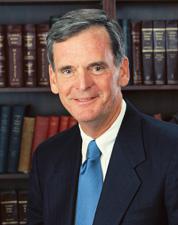 Sen. Judd Gregg (R-NH)
Legislative Activity
Stay on top of the latest movement without scrolling through every action
Senate amendment agreed to: Amendment SA 4114 agreed to in Senate by Yea-Nay Vote. 56 - 42. Record Vote Number: 147.
May 24, 2006
View full timeline
Senate amendment agreed to: Amendment SA 4114 agreed to in Senate by Yea-Nay Vote. 56 - 42. Record Vote Number: 147.
May 24, 2006
Roll call votes on amendments in Senate: Amendment SA 4114 agreed to in Senate by Yea-Nay Vote. 56 - 42. Record Vote Number: 147.
May 24, 2006
Senate amendment proposed (on the floor): Amendment SA 4114 proposed by Senator Gregg.
May 24, 2006
Amendment SA 4114 proposed by Senator Gregg. (consideration: CR S5066-5072, S5092; text: CR S5067) To amend title II of the Immigration and Nationality Act to reform the diversity visa program and create a program that awards visas to aliens with an advanced degree in science mathematics, technology, or engineering.
May 24, 2006
Amendment SA 4114 agreed to in Senate by Yea-Nay Vote. 56 - 42. Record Vote Number: 147.
May 24, 2006
Senate amendment submitted
May 23, 2006
Votes
1 roll call on this amendment
Text
Proposed
COMPREHENSIVE IMMIGRATION REFORM ACT OF 2006--CONTINUED

Amendment No. 4085

Mr. KENNEDY. Madam President, I make a point of order that the
amendment of the Senator from Kentucky is not germane under rule XXII.
The PRESIDING OFFICER. The point of order is sustained.
Mr. KENNEDY. I thank the Chair.
Madam President, in accordance with the agreement that was entered
into yesterday, the Senator from West Virginia is prepared to address
the Senate on mine safety and then to debate his amendment. I look
forward to that discussion.
The PRESIDING OFFICER. The Senator from West Virginia is recognized.
Mr. BYRD. Madam President, what is so lovely as a day in June? I
repeat my question. What is so lovely as a day in June? Of course, the
Presiding Officer, who graces the Chair this afternoon, she is--I have
said enough. People have caught on already. I am talking about somebody
who is as lovely as a day in June. But beauty is in the eye of the
beholder, they say.

Mine Safety

Madam President, this morning the Senate unanimously passed critical
mine safety legislation in response to the coal mine tragedies that
robbed the State of West Virginia of 18 of its sons this year. A
process that began with the introduction of the West Virginia
delegation's mine safety bill has taken a significant step forward
today. We have learned from the tragedy at Sago, and we have learned
from the subsequent mining fatalities in West Virginia, Kentucky, Utah,
Alabama, and Maryland.
If the House acts quickly on legislation and the Federal mine
regulators are quick in implementing the bill, the miners of our
Nation, the miners of our country, will soon have the oxygen--yes, the
oxygen--communications, and rescue teams necessary to save lives and to
prevent future tragedies. We saw in Kentucky over the weekend that
these mine accidents can happen at any time, so the Senate's quick and
unanimous passage of the Senate committee-reported bill this morning is
greeted by all who mine coal with welcome relief.

On behalf of the many grateful coal miners and their families in West
Virginia, I thank the chairman and ranking member of the Senate
Committee on Health, Education, Labor and Pensions, Senators Mike Enzi
and Ted Kennedy. I thank them, yes, I do, on behalf of these people.
I was raised in the home of a coal miner. I married, 69 years ago,
the daughter of a coal miner. I know about the lives--the joys and the
sadnesses that come to the lives--of the men and women who work in the
mines. They are a special breed. They are going to a mine, where an
explosion has just occurred, to risk their own lives for other men and
women who may be trapped in that mine. A special breed.
So I thank Senators Enzi and Kennedy for their great work. They have
performed a mission. I also thank Senators Isakson and Murray, the
chairman and ranking members of the full committee and the Subcommittee
on Employment and Workplace Safety, who committed themselves to the
task of producing a mine safety bill. They were unyielding in that
effort.
Along with Senator Isakson, Chairman Enzi and Senator Kennedy visited
the Sago and Alma mines in West Virginia. Yes, they did. I thank them
again. Along with Senator Isakson, Chairman Enzi and Senator Kennedy
visited the Sago and Alma mines in West Virginia. They talked with the
families of those who had perished. What a sad day. They took a
personal interest in the safety of the coal miners of my State.
When it came time to draft a committee bill, the chairman and ranking
member graciously solicited the ideas of Senator Rockefeller and
myself. Senator Rockefeller has been away for a while recovering from
back surgery. He has been away for several weeks now. Senator
Rockefeller is a true friend of the coal miners of West Virginia and
the miners throughout the Nation. Senator Rockefeller has been
recovering from back surgery for several weeks now, but he contributed
much--yes, much--to the discussions that produced this bill.
Even in recovery, Jay Rockefeller, my esteemed colleague, is a strong
presence. He has been and is a strong presence in the Senate, and
throughout his career he has been a very forceful advocate for the
safety of coal miners, the miners of West Virginia.
With Senate passage today, our hopes are high that the House of
Representatives will act quickly on legislation that can be enacted
into law. The sooner Congress passes legislation, the safer our coal
miners will be at work, and the greater the likelihood the future
disasters can be prevented. Our Nation's coal miners and their families
deserve no less.

[[Page S5063]]

Amendment No. 4127

Madam President, I will be offering the Byrd-Gregg amendment to fund
border security and interior enforcement efforts. For those Senators
who want to secure the borders, here me now, those Senators who want to
secure the borders, this is the amendment that will help to provide a
source of funding to make it happen.
Of the 12 million illegal aliens in the country, it is estimated that
one in four were lawfully admitted to the United States, but they
overstayed their visas to remain here illegally. Of the 19 terrorists
who carried out the September 11 attacks, 4 were illegal aliens who had
overstayed their visas. Let me say that again for emphasis: Of the 19
terrorists who carried out the September 11 attacks, 4 were illegal
aliens who had overstayed their visas. They came as students, tourists,
or business travelers.
It is estimated that 400,000 illegal aliens who have been ordered
deported by an immigration judge have disappeared--get that--
disappeared into the interior of the country. Let me say that again: It
is estimated that 400,000--yes, you heard me, 400,000--illegal aliens
have been ordered deported by an immigration judge but have
disappeared, have faded into, have blended into the interior of the
country.
Our border and interior enforcement personnel have asked for
additional resources and personnel to apprehend and deport these
aliens, but those law enforcement agencies have consistently been made
to do with less than what they need to do their job. It is a dismal
record.
To make matters worse, the pending bill grants amnesty to up to 12
million illegal aliens by rewarding them with temporary worker status.
The expectation and promise is that many of these illegal aliens who
have already successfully circumvented our immigration laws will
eventually adjust their status to legal permanent resident or leave the
country when their temporary worker status expires.
Given the failure to prevent other immigrant workers from overstaying
their temporary visas in the past, it is difficult to take such
assurances seriously. The pending bill authorizes appropriations of $25
billion--that is a lot of money--over the next 5 years for border and
interior security efforts. Yet there is little hope that such funds
will ever be made available.
The President has consistently underfunded--yes, Senators heard me
correctly--the President has consistently underfunded border and
interior enforcement in his annual budgets, and he has consistently
opposed efforts to replace those funds in the appropriations process.
The funding for our border and interior enforcement agencies has been
so severely neglected that the President has been forced to deploy the
National Guard to our southern border with Mexico. This is a real
national security threat that will grow alarmingly worse if this
amnesty proposal is carried into effect. Our border security requires
real resources not more unfunded mandates.
Today, I offer an amendment, along with Senator Gregg, my esteemed
colleague--when I say ``esteemed'' I say that with great fervor, my
esteemed colleague--the chairman of the Committee on Homeland Security
Appropriations, to help provide a source of funding to secure our
border.
The Byrd-Gregg amendment, or the Gregg-Byrd amendment, would require
the illegal aliens who would benefit from this amnesty bill to help pay
its costs. What is wrong with that? It would require the illegal aliens
who would benefit from this amnesty bill to help pay its costs. That
sounds pretty good to me. It would require illegal aliens to pay a $500
fee before gaining any benefit from the amnesty provisions of this
bill. That is not too high a fee. This fee would be in addition to the
other fees and penalties included in this bill.
The Gregg-Byrd amendment would dedicate those moneys to the
appropriations accounts where border and interior security efforts are
funded. Our amendment makes available almost $3 billion.
That is no small sum of money: $3 billion. That is $3 for every
minute since Jesus Christ was born; $3 for every 60 seconds since our
Lord and Saviour Jesus Christ was born. That is a lot of money.
Our amendment would make available almost $3 billion in the next 2
fiscal years to apprehend and detain those aliens who are inadmissible
and deportable under the Immigration Act. It would make funds available
to help our Border Patrol acquire border sensor and surveillance
technology. It would provide funds for air and marine interdiction,
operations, maintenance, and procurement; for construction projects in
support of U.S. Customs and Border Protection, to train Federal law
enforcement personnel, and for maritime security activities.
These are essential border security equipment needs that have been
neglected for too long--too long--and continue to be neglected. So I
think it is only fair and appropriate that the illegal aliens who have
created the need for these funds help to finance them. Yes, this is a
necessary amendment if Senators hope to secure the border.
The Byrd-Gregg amendment would help to provide some certainty that
the law enforcement mandates of this bill would be carried into effect.
It is not enough to authorize border security. We need to fund it. We
need to fund border security. The Senate must ensure that the aliens
who are supposed to leave are made to leave, and that the agencies
charged with that responsibility have the resources that those agencies
need to do their job.
I urge the adoption of the Byrd-Gregg amendment.
Madam President, I call up amendment No. 4127.
The PRESIDING OFFICER. The clerk will report the amendment.
The assistant legislative clerk read as follows:

The Senator from West Virginia [Mr. Byrd], for himself and
Mr. Gregg, proposes an amendment numbered 4127.

Mr. BYRD. Madam President, I ask unanimous consent that reading of
the amendment be dispensed with.
The PRESIDING OFFICER. Without objection, it is so ordered.
The amendment is as follows:

(Purpose: To fund improvements in border and interior security by
assessing a $500 supplemental fee under title VI)

On page 537, between lines 2 and 3, insert the following:

SEC. 645. SUPPLEMENTAL IMMIGRATION FEE.

(a) Authorization of Fee.--
(1) In general.--Subject to paragraph (2), any alien who
receives any immigration benefit under this title, or the
amendments made by this title, shall, before receiving such
benefit, pay a fee to the Secretary in an amount equal to
$500, in addition to other applicable fees and penalties
imposed under this title, or the amendments made by this
title.
(2) Fees contingent on appropriations.--No fee may be
collected under this section except to the extent that the
expenditure of the fee to pay the costs of activities and
services for which the fee is imposed, as described in
subsection (b), is provided for in advance in an
appropriations Act.
(b) Deposit and Expenditure of Fees.--
(1) Deposit.--Amounts collected under subsection (a) shall
be deposited as an offsetting collection in, and credited to,
the accounts providing appropriations-
(A) to carry out the apprehension and detention of any
alien who is inadmissible by reason of any offense described
in section 212(a);
(B) to carry out the apprehension and detention of any
alien who is deportable for any offense under section 237(a);
(C) to acquire border sensor and surveillance technology;
(D) for air and marine interdiction, operations,
maintenance, and procurement;
(E) for construction projects in support of the United
States Customs and Border Protection;
(F) to train Federal law enforcement personnel; and
(G) for maritime security activities.
(2) Availability of fees.--Amounts deposited under
paragraph (1) shall remain available until expended for the
activities and services described in paragraph (1).

Mr. BYRD. Madam President, I ask unanimous consent that Senator
Thomas be added as a cosponsor.
The PRESIDING OFFICER. Without objection, it is so ordered.
Mr. SPECTER. Madam President, I wonder if I might inquire of the
distinguished Senator from West Virginia if he would be willing to
enter into a time agreement on the amendment.
Mr. BYRD. Madam President, I would. May I defer to my distinguished
colleague, Mr. Gregg, that he might speak at this time on the
amendment.
Mr. SPECTER. Of course. But if we could enter into a time agreement,
I would suggest 1 hour equally divided. We are trying to work through--
no one knows better than Senator Byrd, who was the distinguished
majority leader

[[Page S5064]]

for many, many years, and the President pro tempore, what is involved
in trying to work through time agreements. I do not know that we will
need all that time, but it would be my suggestion, if it is acceptable
to you, I say to Senator Byrd and Senator Gregg, that we have a 1-hour
time agreement equally divided.
Mr. GREGG. It is fine with me.
Mr. BYRD. I would be agreeable to a time agreement. And I believe my
colleague, Senator Gregg, would be willing--he has nodded in the
affirmative.
Mr. SPECTER. Then I propose a unanimous consent request, Madam
President, on the Byrd-Gregg amendment, that there be a 1-hour time
agreement, with no second degrees in order, and that the 1 hour be
equally divided.
The PRESIDING OFFICER. Is there objection?
Without objection, it is so ordered.
Mr. BYRD. Madam President, did I hear the Senator include the
provision that there be no second-degree amendments?
Mr. SPECTER. I did.
Mr. BYRD. I thank the Senator. That is fine.
The PRESIDING OFFICER. The Senator from New Hampshire.
Mr. GREGG. Madam President, may I inquire of the floor manager, on a
separate matter. I am going to speak, obviously, to this amendment
which Senator Byrd has offered, which I am happy to cosponsor. If I
could get the manager's attention, I ask unanimous consent that after
we complete this amendment we go to my amendment, that I offer with
Senator Cantwell, as the next piece of business.
The PRESIDING OFFICER. Is there objection?
Without objection, it is so ordered.
Mr. GREGG. Thank you.
Madam President, I join with Senator Byrd in sponsoring his
amendment, which is a right and proper amendment in the context of the
cost of containing our borders and the fact that most of that cost is
incurred as a result of illegal activity occurring on the borders and
especially people coming across the borders illegally.
The amendment essentially adds $500, which, as I understand it, the
way it is constructed, will not be actually called upon unless the
Appropriations Committee determines that it needs the money in order to
improve border security. It is likely it will be called upon because we
do need those funds to improve border security.
The total amount this would raise, as the Senator from West Virginia
has pointed out, is about $3 billion--$2.8 billion. That is a lot of
money, as he pointed out--$3 for every minute, I think he said, since
the birth of Jesus. It is, however, only a small portion of what is
going to be necessary in order to properly secure the borders.
We know, for example, that it will cost us about $2 billion to move
forward with fully implemented sensor and surveillance technology on
the border. We know it will cost approximately $2 billion, in addition
to the $2 billion I just mentioned, to do a fully integrated
communications system on the border. And we are talking just the
southern border. We know that in order to upgrade the air fleet, which
is extremely aged--the P-3s being almost 40 years over their useful
life and the helicopters being 20 years over their useful life--it will
cost $2.4 billion.
So there is a great need for funds to adequately secure the border. I
think we have all agreed in this Senate--and I think it is the
consensus of the American people--that the first effort in the area of
controlling illegal immigration should be the securing of our borders,
and especially our southern border, which has been the point of most
concern relative to illegal immigrants coming across the border.
So this amendment says, if you are going to obtain citizenship in
what has been described as earned citizenship, an element of that
earning of citizenship--since you are already here illegally, according
to the 12 million people who would be qualified for this and be subject
to this additional fee--an element of earning that citizenship is to
pay a fee, much as you would pay a fine for violating the law, which is
what happened here. In addition, of course, they go to the back of the
line, and they have to show so many years of having worked here in the
United States in a constructive way, and they cannot have violated
American laws.
But part of the element of earning that citizenship is to pay a fine.
What we are suggesting is that in addition to the base fine--which is
presently now, I believe, at $2,750, after all the amendments on the
floor--we would add an additional $500. So the fine would essentially
be--or the fee, however you want to describe it; depending on which
side of the debate you are on, we use different terminology, but it is
the same thing--the person seeking to change their status from illegal
to legal would have to pay this fee. It would be $3,250 total, $500 of
which would go to helping us secure the border so we would not have
this problem in the future of so many illegals coming across the
border.

It is not an exceptional amount of money. Some people are going to
argue that it is too much money to ask people to pay. That is really
not a lot of money to pay to get in line to become an American citizen.
It is a fairly reasonable request, in light of the fact that they are
already here, they have a job, they are earning money, they are taking
advantage of our society, and now they want to participate in the
society as legalized citizens. Having come in illegally, it is
reasonable to ask them to pay this additional fee. So this $500 which
is being proposed by Senator Byrd is both reasonable in the context of
what people should be asked to pay and very important in the context of
doing an adequate job of protecting our border.
Senator Byrd has been one of the most aggressive and effective
advocates for a long time for beefing up border security. He has
offered amendment after amendment to try to accomplish this. I have
greatly respected and, obviously, have enjoyed working with him on the
Subcommittee on Homeland Security relative to trying to improve the
borders and relative to all things that committee addresses. But this
has been a special focus of his, and he understands this issue.
This amendment reflects that understanding, that for all the good
intentions and all the good words, if they are not backed up by
resources--a point I have made on this floor innumerable times, and
which is made by this amendment--you simply cannot accomplish your
goal. The goal, obviously, is to secure the southern border so that, to
the extent you can do it, you limit people coming in here illegally
through the use of an intelligent border security system. That means
electronics. That means boots on the ground. That means adequate
aircraft. That means adequate unmanned aircraft. And that means
adequate Coast Guard.
But it all takes dollars. As the Senator from West Virginia has
pointed out, the dollars simply have not been in the pipeline. The
dollars are not in the pipeline. As I have mentioned before on this
floor, the budget which was sent up by the President, by the
administration, requested additional commitment to the border, but they
used a plug number in the sense that they expected to pay for that with
$1.2 billion in increased fees for people flying on airplanes. That is
not going to happen. Those fees are not going to happen. And it is
reasonable they should not happen.
People flying on airplanes are not crossing our border illegally.
People flying on airplanes are not using land transportation into this
country. The land transportation security system should not be paid for
by the air traffic security system. The air traffic security system
should pay for itself, and to a great extent it does through the taxes
put on people who are flying. The TSA is paid for, in large part, by
that. But we should not increase further the taxes on people flying and
then take that money and use it on the borders to support land
transportation security.
I have suggested that maybe we should put a toll down on the border.
It costs me 75 cents to go from Nashua, NH, to Manchester, NH, which is
about 18 miles. With the cost of 50 cents to come across the border, we
could raise this money. That was objected to. There are some treaty
issues there, and also some cultural issues.
But there is another approach, and it is a good approach. It is to
say to the people who abused our border, who took advantage of the fact
we did not have adequate security on our border and came into our
country illegally: Listen, when you want to put yourself

[[Page S5065]]

in the status of a legal citizen--go to the back of the line, earn your
citizenship--part of that is to pay the cost of making the border
secure.
So the Senator from West Virginia has come up with an excellent
proposal. I strongly support it, and I certainly hope the Senate will
support it as we go forward.
Madam President, I yield the floor.
The PRESIDING OFFICER. The Senator from Pennsylvania.
Mr. SPECTER. Madam President, I thank my distinguished colleagues,
Senator Byrd and Senator Gregg, for offering this amendment.
The concern which I have is whether it will be counterproductive, in
putting such an increased burden on the undocumented immigrants, that
they will not come forward.
The fines and fees have been very carefully calibrated during the
course of committee deliberation. On those who have been here for more
than 5 years, we had assessed the fine or fee at $2,000, with $1,600
going to Border Patrol. With respect to those who were here 2 to 5
years, we have put on a fee of $1,000 less than those who were here
more than 5 years because they have to return. And out of that $1,000,
we have allocated $800 to border security. There are other fines, $500
for spouse and children on deferred mandatory departure and $400 on
agriculture jobs adjustment status. It was the calculation of the
committee, after considering the matter carefully, that that was the
appropriate fine.
It would always be a good idea to find some other source of revenue
to help defray expenditures from the general Treasury, but what we are
trying to do here is to calibrate a system where we will achieve the
objective of imposing fines as much as we think the traffic will bear
and still bring the undocumented immigrants out of the so-called
shadows and not create a fugitive class. I intend to stick with the
committee recommendation which is the committee bill.
Therefore, as much as I respect and admire Senator Byrd, I am
constrained, as chairman of the committee, to oppose the amendment. It
is a judgment call as to what will be accomplished, a judgment call as
to whether $2,000 is right or $2,500 is right or $3,000 is right. We
don't want to get involved in an auction sale, obviously, but that is
the position I take as manager of the bill.
Next in line is the Gregg amendment. We ought to be prepared to move
to that amendment at the conclusion of debate on the Byrd-Gregg
amendment. I don't know how much longer the distinguished Senator from
West Virginia will want to speak or whether the Senator from
Massachusetts will speak. A unanimous consent request is being typed up
now. We have 14 amendments to go. We are working through time
agreements. We would like to have Senators on the next amendment lined
up. That would be Senator Gregg. Beyond Senator Gregg, the next
amendment will be Senator Landrieu's amendment. So we give notice to
Senator Landrieu that she should be on deck.
I yield the floor.
The PRESIDING OFFICER. The Senator from Massachusetts.
Mr. KENNEDY. Madam President, I regret that I was necessarily absent
for a good part of the Senator's presentation. I am familiar with the
issue. I applaud his concern about whether there are going to be
adequate resources to deal with issues of enforcement, detention, and
legal enforcement. These are all worthwhile undertakings. The real
issue is, in the compromise legislation we are going to raise $18
billion. The Cornyn amendment adds between $5 and $6 billion. As I
understand it, the Byrd amendment is $3 billion on top of that. And we
have raised fees on immigrants quite significantly so that there will
be a considerable additional burden.
About 35 percent of those who will be adjusting their status are
overstays, and so they had nothing really to do with border security,
although border security is enormously important. We can't reallocate
the resources, the fines or fees, on people that had come across the
border. It seems to me that these fees are enormously costly. Under the
Cornyn amendment, it is going to be an additional payment for every
child. We reach a point where we are talking about people of extremely
modest means, reaching a ceiling. I think we crossed it even with the
Cornyn amendment.
I reluctantly oppose the amendment. But I want to give assurance to
the Senator from West Virginia that we will monitor this very closely.
He is on our side the leader on the Appropriations Committee. We have
talked over his general concerns on a wide range of issues relating to
immigrants. We remember the border security issue of a couple years
ago, and he was very involved in wanting to make sure of the integrity
of the system. He was very involved in the debate on those questions.
This subject matter is not a new matter for him. It is a matter of
enormous importance. I hope we will be able to handle it under the
existing provisions and we would not need the additional resources that
are included in his amendment.
We want to give him assurance that we will keep in close contact with
him to let him know what the current situation is, and we will always
have an opportunity in the future to revisit it. I join with the
Senator from Pennsylvania and hope that it will not be accepted.
The PRESIDING OFFICER. The Senator from Pennsylvania.
Mr. SPECTER. Madam President, I have a unanimous consent request. It
has been coordinated with the Democrats, and it is appropriate to
propound it at this time.
I ask unanimous consent that following the debate in relation to the
Byrd amendment, it be temporarily set aside and the Senate proceed to
the following amendments: Senator Gregg, 60 minutes equally divided;
Senator Landrieu No. 4025, 20 minutes equally divided; Senator
Hutchison No. 4046, 30 minutes equally divided; Senator Sessions,
Budget Act point of order and a subsequent motion to waive, 1 hour for
Senator Sessions, 30 minutes for Senator Kennedy, 30 minutes for
myself; I further ask consent that following the use or yielding back
of the above mentioned times, the Senate proceed first to a vote on the
pending motion to waive the Sessions budget point of order, to be
followed by votes in relation to the above listed amendments in the
order offered; provided further that there be no second degrees in
order prior to the votes, there be 2 minutes equally divided for debate
between the votes, and finally, all votes after the first vote in this
sequence be limited to 10 minutes in length, with the times for voting
rigidly enforced.
The PRESIDING OFFICER. Without objection, it is so ordered.
The Senator from West Virginia.
Mr. BYRD. Madam President, the bill authorizes $25 billion over 5
years in appropriations. This amendment by Senator Gregg and myself
funds $3 billion of that amount. This is a modest sum, a modest
amendment, a modest fee increase that Senator Gregg and I are asking
for. The pending bill would provide amnesty for the illegal aliens who
would benefit from the bill. It would provide a path leading to U.S.
citizenship. It would provide access to taxpayer-funded benefits such
as Social Security, Medicare and Medicaid, unemployment compensation,
food stamps. Illegal aliens who would benefit from the bill are getting
a lot, significantly more than what they are being asked to pay into
the system. I don't believe that it is too much to ask that they help
to fix the border security system that they sought to undermine.
This amendment is specific. It targets those areas identified by the
Homeland Security Appropriations Subcommittee that are most in need of
funds. I also note that the Congressional Budget Office estimates that
this bill would authorize $25 billion in appropriations over the next 5
years. Six billion of that is authorized for fiscal year 2007, and
Senator Gregg and I, as the chairman and ranking member of the Homeland
Security Appropriations Subcommittee, are going to be asked to fund
many of these border security authorizations. We need a source of
revenue with which to do it. So the purpose of this amendment is to
provide a source of funding for our border security needs and to do it
as quickly as possible.
This amendment would make almost $1 billion available for border and
interior security needs for the fiscal year 2007, which the
Appropriations Committee can provide this summer when it writes the
bill. This amendment

[[Page S5066]]

would make another $2 billion available in the fiscal year 2008.
We can't afford to delay this critical funding any longer. I hope
Senators will support this amendment.
(Mr. DeMint assumed the chair.)
I yield the floor and suggest the absence of a quorum.
The PRESIDING OFFICER. The clerk will call the roll.
The assistant legislative clerk proceeded to call the roll.
Mr. SCHUMER. Mr. President, I ask unanimous consent that the order
for the quorum call be rescinded.
The PRESIDING OFFICER. Without objection, it is so ordered.
Mr. SCHUMER. I ask unanimous consent to be recognized for 5 minutes.
The PRESIDING OFFICER. The Senator from New York is recognized for 5
minutes.

Amendment 4114

Mr. SCHUMER. Mr. President, I see my good friend from New Hampshire
coming to the floor to offer his amendment. I must rise in opposition
to the soon to be pending amendment, which would essentially do away
with the original purpose of the diversity visa program.
As a Member of the House, I helped create this program, which my
colleague, Senator Kennedy, created in the Senate in 1990. It had a
very simple purpose, and that was this. Our immigration laws were based
on family reunification and certain other qualifications, so there were
whole ranges of countries from which people could not get visas. They
tended to be European and African, even though the vast majority of
Americans are descendents of Europeans and Africans. But because for
several generations no people had come from those countries--the people
were either third cousins or unrelated to people here--the family
unification, a very noble purpose, took predominance and the
overwhelming majority of immigrants came from the Caribbean, Latin
America, and Asia. This diversity program was a small program, and it
was intended to allow some from other countries to come. In fact, my
city of New York has dramatically benefited from this program, and
diverse countries such as Ireland, Poland, and Nigeria have had large
numbers of immigrants to be able to come, set roots, and help the
diversity of New York and of America.
So this is an excellent program. Nobody has said it has done a bad
job. It is small. There are only about 50,000 visas a year. It is
really based on the idea of new seed. I believe every immigrant is
special because they, or all of us who descend from them, come from a
special group of people who had the guts and the gumption to get off
their butts and basically come to America. They said: I don't want to
lead this disease-ridden, impoverished life. I am willing to come here
and take a risk. That is one of the reasons America is a special
place--the idea of bringing new seed to this country, people who are
willing to risk everything, is great.
I have one example. I met a man named Napoleon Barragan, who probably
would not qualify under this program. He founded 1-800-Mattress. It
employs about a thousand people in Queens. I went to his office and saw
this picture in which there were grass huts with kids playing in the
front. He said: That is the village in which I was born in Ecuador. He
said: Of all those kids, only one had the gumption, the guts to leave
that impoverished, disease-ridden life and come to America. He said: Do
you know who that was? I said no, but I had an idea. He said: Me. He
went on to found a company that employs a thousand people.
My friend from New Hampshire and colleague from Washington say let's
have more visas for highly educated people. I am all for that. But this
bill puts a whole lot of visas in for that, and that is why groups as
diverse not only as the NAACP and U.S. Conference of Catholic Bishops
but the U.S. Chamber of Commerce, the National Association of
Manufacturers, and I am even told that Microsoft opposes this amendment
because they are very happy with the much needed increase in people who
have certain skills and certain education. I think America should admit
many more of those people but not at the expense of this small,
successful program that guarantees that other countries, such as the
Irelands, the Polands, and the Nigerias that are unable to have
immigrants come in for family reasons, can get people to come into this
country. So why can't we have both?
If you believe that immigrants are good for America, as I do, and you
believe both highly educated people and new seed people are good for
America, why do we have to rob Peter to pay Paul? As I said, Microsoft,
which has led the charge for more highly educated people, such as
engineers and scientists, to be allowed into this country, is not
asking that this program be changed. These companies recognize, as
Senator Kennedy did in the Senate and as I did in the House a long time
ago, that this country is better served by bringing immigrants from all
over the world at all levels. We certainly need more scientists and
engineers, but we also need new immigrants like Napoleon Barragan--
ambitious people without money and a family connection--to come here
and start new businesses.
The great thing about America is when you work hard, you benefit
yourself, your family and, in that way, you benefit America. My own
ancestors were immigrants. They didn't come here with advanced degrees.
My father was an exterminator. I am a U.S. Senator. That says something
great about America. But one of the things great about America is,
again, we allow people from all over the world to come here.

So I plead with my colleagues, keep the diversity visa program. It is
small, 50,000 a year. From all the groups that want more educated
immigrants to come to America, we do not hear any need to take away
from this program to add more. They are very happy with what Senator
Specter has done in the bill, as am I, which is increase the numbers of
H-1Bs and other visas for these folks. We can have both. We do not have
to rob Peter to pay Paul.
As I ride my bike around New York City on the weekends, I see what
immigrants do for America. This program has dramatically helped.
Neighborhoods such as Woodlawn and Greenpoint have been revitalized by
new Irish and Polish immigrants. Neighborhoods such as East Flatbush
and Harlem have been revitalized by West African immigrants. We don't
have to stop this program.
I urge my colleagues to vote no on a well-intentioned but misguided
amendment and preserve the diversity program as well as other parts of
the bill that allow more educated immigrants to come to this country.
I yield the floor.
The PRESIDING OFFICER. The Senator from New Hampshire is recognized.
Mr. GREGG. Mr. President, I am not sure of the status of my
amendment. I understand there was a unanimous consent agreement that it
would be limited to an hour in time; is that correct?
The PRESIDING OFFICER. The Senator is correct.
Mr. GREGG. Am I to presume that the statement of the Senator from New
York comes off of the opposition's time?
The PRESIDING OFFICER. After the amendment is offered, there is 1
hour equally divided.
Mr. GREGG. Would the Senator's statement be taken out of that time?
The PRESIDING OFFICER. By unanimous consent.
Mr. GREGG. First, Mr. President, I ask unanimous consent that from
the previous order of the Hutchison amendment be 4101 rather than 4046
and that the time under that amendment be 40 minutes equally divided.
The PRESIDING OFFICER. Without objection, it is so ordered.
Mr. GREGG. I ask unanimous consent to yield back all time on the
Byrd-Gregg amendment.
The PRESIDING OFFICER. Without objection, it is so ordered.

Amendment No. 4114

Mr. GREGG. Mr. President, I call up my amendment No. 4114.
The PRESIDING OFFICER. The clerk will report.
The bill clerk read as follows:

The Senator from New Hampshire [Mr. Gregg] proposes an
amendment numbered 4114.

Mr. GREGG. I ask unanimous consent that further reading of the
amendment be dispensed with.
The PRESIDING OFFICER. Without objection, it is so ordered.
The amendment is as follows:

[[Page S5067]]

(Purpose: To amend title II of the Immigration and Nationality Act to
reform the diversity visa program and create a program that awards
visas to aliens with an advanced degree in science mathematics,
technology, or engineering)

On page 345, between lines 5 and 6, insert the following:
(e) Worldwide Level of Immigrants With Advanced Degrees.--
Section 201 (8 U.S.C. 1151) is amended--
(1) in subsection (a)(3), by inserting ``and immigrants
with advanced degrees'' after ``diversity immigrants''; and
(2) by amending subsection (e) to read as follows:
``(e) Worldwide Level of Diversity Immigrants and
Immigrants With Advanced Degrees.--
``(1) Diversity immigrants.--The worldwide level of
diversity immigrants described in section 203(c)(1) is equal
to 18,333 for each fiscal year.
``(2) Immigrants with advanced degrees.--The worldwide
level of immigrants with advanced degrees described in
section 203(c)(2) is equal to 36,667 for each fiscal year.''.
(f) Immigrants With Advanced Degrees.--Section 203 (8
U.S.C. 1153(c)) is amended--
(1) in subsection (c)--
(A) in paragraph (1), by striking ``paragraph (2), aliens
subject to the worldwide level specified in section 201(e)''
and inserting ``paragraphs (2) and (3), aliens subject to the
worldwide level specified in section 201(e)(1)'';
(B) by redesignating paragraphs (2) and (3) as paragraphs
(3) and (4), respectively;
(C) by inserting after paragraph (1) the following:
``(2) Aliens who hold an advanced degree in science,
mathematics, technology, or engineering.--
``(A) In general.--Qualified immigrants who hold a master's
or doctorate degree in the life sciences, the physical
sciences, mathematics, technology, or engineering from an
accredited university in the United States, or an equivalent
foreign degree, shall be allotted visas each fiscal year in a
number not to exceed the worldwide level specified in section
201(e)(2).
``(B) Economic considerations.--Beginning on the date which
is 1 year after the date of the enactment of this paragraph,
the Secretary of State, in consultation with the Secretary of
Commerce and the Secretary of Labor, and after notice and
public hearing, shall determine which of the degrees
described in subparagraph (A) will provide immigrants with
the knowledge and skills that are most needed to meet
anticipated workforce needs and protect the economic security
of the United States.'';
(D) in paragraph (3), as redesignated, by striking ``this
subsection'' each place it appears and inserting ``paragraph
(1)''; and
(E) by amending paragraph (4), as redesignated, to read as
follows:
``(4) Maintenance of information.--
``(A) Diversity immigrants.--The Secretary of State shall
maintain information on the age, occupation, education level,
and other relevant characteristics of immigrants issued visas
under paragraph (1).
``(B) Immigrants with advanced degrees.--The Secretary of
State shall maintain information on the age, degree
(including field of study), occupation, work experience, and
other relevant characteristics of immigrants issued visas
under paragraph (2).''; and
(2) in subsection (e)--
(A) in paragraph (2), by striking ``(c)'' and inserting
``(c)(1)'';
(B) by redesignating paragraph (3) as paragraph (4); and
(C) by inserting after paragraph (2) the following:
``(3) Immigrant visas made available under subsection
(c)(2) shall be issued as follows:
``(A) If the Secretary of State has not made a
determination under subsection (c)(2)(B), immigrant visas
shall be issued in a strictly random order established by the
Secretary for the fiscal year involved.
``(B) If the Secretary of State has made a determination
under subsection (c)(2)(B) and the number of eligible
qualified immigrants who have a degree selected under such
subsection and apply for an immigrant visa described in
subsection (c)(2) is greater than the worldwide level
specified in section 201(e)(2), the Secretary shall issue
immigrant visas only to such immigrants and in a strictly
random order established by the Secretary for the fiscal year
involved.
``(C) If the Secretary of State has made a determination
under subsection (c)(2)(B) and the number of eligible
qualified immigrants who have degrees selected under such
subsection and apply for an immigrant visa described in
subsection (c)(2) is not greater than the worldwide level
specified in section 201(e)(2), the Secretary shall--
``(i) issue immigrant visas to eligible qualified
immigrants with degrees selected in subsection (c)(2)(B); and
``(ii) issue any immigrant visas remaining thereafter to
other eligible qualified immigrants with degrees described in
subsection (c)(2)(A) in a strictly random order established
by the Secretary for the fiscal year involved.''.
(g) Effective Date.--The amendments made by subsections (e)
and (f) shall take effect on October 1, 2006.

Mr. GREGG. Mr. President, I ask unanimous consent that the time just
allocated to the Senator from New York be applied against the time in
opposition to this amendment.
The PRESIDING OFFICER. Is there objection?
Without objection, it is so ordered.
Mr. GREGG. Mr. President, this amendment is offered by myself and
Senator Cantwell. The purpose of this amendment is really pretty
simple. We as a nation are in the process of addressing how we handle
the illegal immigrant situation and immigration generally. We are about
to basically give a large number of people--10 million, maybe 12
million--who arrived here illegally the opportunity to get in line and
earn their citizenship.
Those people, for the most part, don't have any unique skills that
made them special to American society. They came here, they were
willing to work--which is, of course, great--and they are hard workers,
in most instances. We didn't seek them out because we felt they were
going to create jobs in the United States. But we do have this program
called the lottery program where we essentially say to anybody in
certain countries which are alleged to be underserved and have few
people, immigrating into this country: You can get into the lottery and
you can get in line, get a green card, and become an American citizen.
There are 50,000 winners handed out every year. It just seems to us
that if we are going to have such a program in the context of overall
immigration reform, we ought to be saying that people who participate
in this lottery are people who we as a nation actively need in order to
make our Nation stronger socially and economically, rather than simply
saying to everyone in the Ukraine: You can participate in the lottery.
We might get a cab driver or an unemployed cab driver as a winner of
the lottery.
We would say to the people in the Ukraine: If you have an advanced
degree which America feels would be constructive to our society in
making us a stronger society, then you can participate in the lottery.
What we have done is taken two-thirds of the lottery options, 33,000,
and said for those alleged underserved countries, people with advanced
degrees will be able to compete for those options. Then we left one-
third for anybody to compete for the lottery status. This only seems to
make sense.
If we listen to the debate on this floor, we hear a lot about
outsourcing of jobs, the fact America is losing jobs overseas. What we
are proposing essentially is to bring people into our country who
create jobs because they have certain skills and abilities, certain
talents which we as a nation know we need.
Take, for example, the issue of engineers. We are confronting a world
where countries such as Japan and especially China are graduating
literally four, five, six times the number of engineers we are
graduating. We are just not producing enough people in the science
disciplines to keep up with our needs as a nation to be competitive
economically.
So it makes sense that we should go around the world and say to
people who have these types of talents: If you want to come to the
United States, we have certain programs we can use to help you come
here. One, of course, is the H-1B program which, under this bill, has
been significantly expanded and is an appropriate program. But in order
to participate in the H-1B program, you must be a family member of
somebody in the United States who will sponsor you or you have an
employer who has said they want to bring that person to the United
States to work for them.
What we are suggesting is there are countries where a lot of these
American employers are not going to go because the return on their
efforts isn't that high and there are a lot of places where people who
have these degrees don't have family members in the United States, so
they are totally shut out of their ability to participate in coming to
America, even though they may have skills and talents which we in
America feel strongly will help us.
Rather than have a lottery system which says to the unemployed cab
driver in Kiev, You should have a chance to come to America, we are
going to have a lottery system that says to the physicist in Kiev, You
have a shot at coming to America.

[[Page S5068]]

This seems to make sense because it isn't as if we as a nation
haven't already attracted to us a large number of unskilled people. We
already have that situation, and this bill is trying to address that
situation. We literally have millions of unskilled people who are going
to be put in line for American citizenship under this bill. It would be
appropriate, therefore, it seems, to take this small number of people
who can't qualify to come here, even though they may have the skills we
need, because they don't have a family member and they don't have an
employer sponsor and say to those folks: Yes, we are going to give you
the opportunity to come here, too, through participating in this
lottery system. That is what this proposal does.
The idea that some of these nations that have been described as
diverse--that is one of those nomenclature, feel-good, politically
correct terms put on something when it doesn't make a lot of sense. In
this instance, it has no applicability at all. The fact is, these
countries which qualify under what is called the diversity lottery
actually have a large number of people here illegally. Most of those
people are unskilled. They have just shown up, they came here
illegally, and they are going to be able to get in line now under this
bill. So it makes sense that we should say to those nations--for
example, we know that Poland has approximately 50,000 people here
illegally. Most of them don't have unique skills. We should say: If you
are in Poland and you want to come to the United States and you want to
use the lottery system to come here, you have to have a skill we need
as a nation in order to participate in that lottery.
It is estimated that there are almost 200,000 people from Africa who
are in this country illegally and who are probably totally unskilled.
What we are suggesting is bring a skill with you if you want to come to
this country through the lottery system.
We are not suggesting these countries won't get their fair share of
people who are the types that were described by the Senator from New
York who come here with a desire to produce and be successful. Those
folks may already be here illegally, and they will be able to get in
line or they can compete for a third of the lottery system that is not
going to be targeted toward talents that America needs.
What we are suggesting is that we should have a win-win situation. If
we are going to set up a lottery, not only should the person who wins
the lottery be a winner and win the right to come to the United States,
but the people of America should be winners by attracting into the
country people whom we have a pretty good idea are going to be able to
contribute to the betterment of our Nation because they will bring
their talents.
That is critical in this world today. As I mentioned before, we are
confronting a world where our capacity to compete is tied directly to
our brain power. We can't compete with the Chinese on labor because
they have a billion more people than we have. But where we can compete
with them is by producing ideas that are better, by taking ideas that
are good and making them better, by adding value through talent and
ability. So we should be attracting to America people who can help us
do that. We should be going across the world and saying: Give us your
best and your brightest; come here and participate in the American
dream and raise the waters so that all the boats float higher.

This lottery system, to the extent it makes sense, should be built
around that concept. It should not be built around the concept if you
happen to have a high-school education or you happen to have held a job
in 2 out of the last 5 years, you have some right to participate in a
lottery to get into the United States. That makes no sense to us as a
nation.
This is not a unique approach, by the way. In fact, most nations
don't do what we do. We basically have an open approach to immigration.
Most people require some qualifying talent in order to immigrate to
those nations, especially western nations.
So with this small group, 50,000, as was pointed out--it is very
small in the context of this entire bill when we are dealing with as
many as 12 million people--in this small group, at least we should do
it the right way because, who knows, one of those folks who comes to
this country with an advanced degree in science or an advanced degree
in medicine may be the person who produces the vaccine that saves us if
we confront a terrorist attack or produces the next thought process or
software process that creates the next engine of dramatic expansion in
the telecommunications world or is the next Bill Gates of the world.
Attracting people who have talent and ability should be one of our
purposes. In the context of a lottery system, it should clearly be our
purpose. Lottery, by definition, means you should win, and not only
should the people who win the lottery win, but the people who are
basically underwriting the lottery should win, and the way Americans
will win under the lottery system is to attract people who have a
likelihood of contributing significantly to the betterment of our
Nation.
That is why we propose this amendment. It is proposed by myself and
Senator Cantwell. Granted there have been some big issues discussed in
this Chamber--this is not a big issue, but it is an issue of
significance. I appreciate Senator Cantwell being a cosponsor of this
amendment. She comes from a State where commitment to high tech and
intellectual property is something that has really built up that State
and has been a great driver not only of the prosperity of Washington
State, but of the whole Nation. So she understands the importance of
this type of approach. I thank her for joining me in this approach of
taking two-thirds of these available lottery slots and saying they
should be made available to people from underserved countries, but
people in those countries who have obtained degrees in the areas that
we as a nation determine are important to continuing to promote our
prosperity as a culture and as an economy.
I reserve the remainder of my time.
I yield to the Senator from Tennessee.
The PRESIDING OFFICER. The Senator from Tennessee.
Mr. ALEXANDER. Mr. President, how much time is available, 10 minutes,
5 minutes?
The PRESIDING OFFICER. There is 19 minutes remaining for the
proponents of the bill.
Mr. GREGG. I yield 5 minutes to the Senator from Tennessee.
Mr. ALEXANDER. Mr. President, I thank the Senator from New Hampshire.
I simply want to say that if I were a teacher and giving out grades for
commonsense amendments to the immigration legislation, I would give the
Gregg-Cantwell amendment an A-plus. I think everyone listening and
thinking about this issue would feel the same way.
Here we are in the United States of America at a very competitive
time where we earn 25 percent of all the money in the world for just 5
percent of the people, and we know how we do that. We do it primarily
through brain power. Eighty percent of our new jobs since World War II
have come from our advantage in science and technology. Of course, we
grow a lot of our own brain power, but increasingly we have been
insourcing.
Mr. President, of the 100 American Nobel Prize winners in physics, 60
of them are immigrants or children of immigrants. Go down to the Oak
Ridge National Laboratory in Tennessee, which is the largest science
laboratory in America. The top three positions are held by people with
green cards, foreign nationals. There is a man at Oak Ridge who is one
of those three who is in charge of the United States effort to
recapture the supercomputing lead in the world, which we lost to Japan.
He is a citizen of India. He has a green card.
So Senator Gregg and Senator Cantwell, I think, are exactly right.
They are saying that in this large immigration bill where we are
talking about bringing millions of more people into the United States
under certain conditions, two-thirds of the lottery tickets for 50,000
people ought to go to the highly educated persons from these
underserved countries who then can come to our country and help us
create a standard of living. It is in our interest to do this.
I am glad the Indian citizen is in Oak Ridge, TN, in charge of our
supercomputing effort to lead the world. I am glad Warner von Braun
came to the United States to help us win the space

[[Page S5069]]

race with the Soviets. I am glad that of the 100 Nobel Prize winners in
physics, 60 of them are immigrants, are sons and daughters of
immigrants. I want more of them to come to this country because I know
what is going on in India, and I know what is going on in China.
Senator Bingaman and I, and many other Senators, Senator Gregg
included and Senator Kennedy has been a leader in this area as well,
asked the National Academy of Sciences to tell us a year ago exactly
what we need to do to keep our advantage in science and technology.
They gave us a list of 20 recommendations.
Among the most prominent of those recommendations was, make it easier
for the most talented men and women in the world to research and study
in the United States of America and to stay here, not to run them off.
We don't want them to go home; we want them to stay here. It is in our
interest for them to stay here.
There are already two provisions in the underlying bill which help
with that, both taken from the Augustine report, as we call it,
``Rising Above the Gathering Storm,'' by the National Academy of
Sciences. But the Gregg-Cantwell provision is exactly in that spirit. I
do not think it is too much to say that the National Academy of
Sciences, the National Academy of Engineering, and the Institute of
Medicine, who are worried about America's competitive position in the
world, would think that the idea of making it easier for 35,000 or
37,000 of the best and brightest scientists in science, math,
engineering, and computing to come, stay, live, work, and do research
in the United States, create more jobs and raise our standard of
living, I think they would give a big cheer. I bet they would give an
A-plus. I am not authorized to give out A-pluses for anyone except
myself. But I would think that all over America, those who know about
the Gregg-Cantwell amendment, who know about our competitive position
in the world, would say: Absolutely right. If we are going to have
50,000 more people coming in here, let's let them be the best and the
brightest who can help create new jobs in America.

We heard plenty of speeches in this Chamber about outsourcing jobs.
This is an amendment which insources brain power. Over the last half
century, 80 percent of our new jobs have come from our advantage in
science and technology. This would help us keep that. I would hope this
would be a bipartisan amendment, strongly supported on both sides of
the aisle, and would be adopted by the conference report and would
become law. So I salute the Senator from New Hampshire and the Senator
from Washington for their vision, and I am glad to cosponsor the
amendment.
Mr. GREGG. Mr. President, I thank the Senator from Tennessee, who has
been a leader on the issue of education and how we remain competitive
in the world, for supporting this amendment and for coming down here
and expressing his kind and very effective words with which I obviously
totally agree.
The cosponsor of the amendment, Senator Cantwell, can't get down here
right now. I know Senator Kennedy wishes to speak in opposition to the
amendment. I understand we are not going to vote on this amendment or
the other amendments until later this afternoon. I would suggest that
we be allowed to reserve our time--if it is acceptable to Senator
Kennedy--we will reserve our time for Senator Cantwell, even though it
may not be taken with the time that is running right now, if that is
agreeable.
Mr. KENNEDY. Mr. President, we would be glad to accommodate the
Senator from Washington. As we know, we have a general order that we
are going to vote on a number of these amendments at a certain time,
but we will give the assurance--I will--that we will let her have her
time prior to the vote. We can work that out.
Mr. GREGG. Mr. President, it might be as much as 15 minutes that she
may wish to take.
Mr. KENNEDY. Whatever time remains on that side, as I understand,
would be hers and we will accommodate her.
The PRESIDING OFFICER. Is there objection? Without objection, it is
so ordered.
Mr. KENNEDY. Mr. President, I yield myself 10 minutes.
Mr. President, the diversity program is a small but vital part of our
immigration system, and I urge my colleagues to preserve the program by
voting against the Gregg amendment. This amendment would all but
destroy the diversity visa program, which has served our country well
and continues to do so. Yet it would have no meaningful effect on
skill-based immigration, which is already favored by our immigration
laws and is already being addressed elsewhere in the bill. That is why
civil rights groups and ethnic groups are united with business groups
in opposition to this amendment.
I understand the thinking behind the Gregg amendment, and there are a
few people in the Chamber who have been more consistent supporters of
high-skilled immigration than have I. I continue to support high-
skilled migration, and the original McCain-Kennedy bill doubled the
numerical limits on high-skilled, employment-based migration. I also
supported additional changes in the Judiciary Committee to increase H-
1B visa limits and to make it easier for H-1B immigrants to adjust to
permanent status.
But the diversity visa program serves a wholly different purpose. The
purpose of the diversity visa is not just to advance narrow economic
interests but, rather, to preserve our very heritage as a nation of
immigrants, a true melting pot. Unlike other visa categories, the
diversity visa is not about whom you know or to whom you are related.
It is a totally unique program because anyone with a high school
diploma or 2 years of meaningful work experience can apply.
Without the diversity visa program, our family- and employment-based
immigration system would ensure that virtually all immigrants to the
United States would come from just a small handful of countries. The
diversity program ensures that America continues to be a beacon to the
entire world and not just to a dozen or so countries with high numbers
of immigrants already living here.
This chart here behind me shows, right here on the left, that of the
groups coming in now, 36.8 percent are Asian, 46 percent are Latin
American; that is 85 percent coming from the Caribbean countries or
from Asia. We have 10 percent from Europe, 3 percent from Canada,
Oceania, and 3 percent from Africa. That is currently the mix that is
coming here.

When we passed the 1965 act, we tried to provide 10,000 to 15,000 to
each country so that we would have a flexible and diverse system. When
we found out that for a variety of reasons we were getting this kind of
a focus, what we did was develop a very modest diversity program so
that other countries which were not participating, either with the very
special skills or family relatives, would have an opportunity to come
here. They had to demonstrate that they had a competency so that they
were able to have skills which would make them active participants in
our society. But it is limited to 42,000 as compared to 847,000, and
look how it is distributed. It is an entirely different group. You have
some from Africa, still have some from Latin America and Asia, but
still a good many from Europe--essentially and effectively a different
scene. That is what we are attempting to do.
Now, we have been reminded by others of the fact that, well, we need
to get to the special skills. But I would mention to our friends who
are concerned about that, this is 50,000. Now look at what we are doing
in terms of the special skills. We have close to 750,000 to 800,000--
800,000 in this legislation, but the diversity is only 42,000. No one
could suggest that we haven't been sensitive to understand the
importance of people with high skills and what they can do in terms of
our economy, but they are effectively wiping out this diversity
program.
Now, as you can see, the diversity visa is especially important when
it comes to African immigration. Fewer than 4 percent of our family-
and employment-based immigrants come from Africa, but almost 40 percent
of the diversity visas are used for Africans. And even though only 1 in
20 green cards is a diversity visa, 1 in 3 green cards issued to an
African is authorized through the program. One sure effect of the Gregg
amendment is that it would substantially reduce African migration to
this country. There is just no other

[[Page S5070]]

visa out there that would replace these flows. That is one reason the
groups are opposed to the Gregg amendment, including the NAACP, the
Coalition on Human Rights, the U.S. Conference of Catholic Bishops, the
Leadership Conference on Civil Rights, the Irish Lobby for Immigration
Reform, the Illinois Coalition for Migrant and Refugee Rights, and a
number of other groups.
What does the Gregg amendment hope to accomplish in exchange for
giving up this program? While the diversity visa program has unchecked
symbolic importance and is an important mechanism to protect balance
and equality in migration flows, it is tiny in comparison to the
existing high-skill program because the rules already favor the skilled
immigrants. Three different classes of employment-based visas are
reserved for the skilled immigrants and five different temporary worker
programs: the H-1B, the L visas, the P visas, the O visas, the TN
visas. These visas are already set aside for skilled workers. These are
offices of various international companies that come in here; a variety
of different kinds of visas. Some on the H-1B are virtually effectively
almost automatic to be able to go to a university site, to be able to
teach. They are not counted within the H-1B. So all but one of the
programs already admit more immigrants than the Gregg amendment would
generate through this change.
Business groups oppose the Gregg amendment. I have letters from the
Chamber of Commerce, the American Council on International Personnel,
the National Association of Manufacturers, the Business Roundtable--all
major business associations which support high-skilled immigration and
all opposing the Gregg amendment.
So here is what the Gregg amendment would do. It would change the
diversity program from a tiny slice of the pie to a minuscule slice.
These are the two, the diversity visas being at the top. It is now a
small group, which is gray in this setting, and you can look over here
and it is still gray, but it is a fraction of what it is in terms of
the diversity flows. The flows are already one-twentieth, just one-
twentieth of high-skilled flows, and under the Gregg amendment, they
would be cut to less than 2 percent. These charts actually understate
what is going on by a wide margin because the underlying bill already
roughly triples numerical limits on high-skilled immigrants. Is the
benefit to high-skilled employers of an extra 37,000 visas really worth
the price of eviscerating this successful program? Are we willing to
give up so much to gain so little?
Another reason to oppose the Gregg amendment is that for millions of
people around the world, the diversity visa has come to symbolize the
American dream. Eight million people applied for this. Eight million
people look to the United States and say: Maybe I will have a chance. I
have to complete my high school or the equivalent of 2 years of
college, so I have to meet those kinds of standards. I have to meet all
the other national security standards. You have to demonstrate that you
are not going to be a burden, an economic burden. But 8 million people
in countries all over the world--all over the world--who look to the
United States as being the country of hope and liberty have a crack at
getting into the United States. Not much of one--42,000--but they have
to come from the areas where we don't have large flows of immigrants
coming in. That was the purpose, for the United States to be a diverse
society, to be the true melting pot at the time.
This is just a very small kind of a program. We are going to
sacrifice that aspect for 8 million people all over the world who think
they may be the ones who have a shot at getting into the United States,
and we will say: Oh, no, it is just going to be the highly skilled,
when we have 800,000 of those already coming in here, three times as
many as we have now. How many is enough? How many is enough? So the
diversity visa program symbolizes what makes America great because with
a little luck and hard work, anyone can succeed here. We are the only
country that can say that.
The PRESIDING OFFICER. The Senator has used 10 minutes.
Mr. KENNEDY. I have how much time? Half an hour?
The PRESIDING OFFICER. The Senator has 12 minutes remaining.
Mr. KENNEDY. I will yield myself another 3 minutes.
An advanced degree is an income test in most of the world. The
diversity program symbolizes what makes America great because, with a
little luck and hard work, anyone can succeed here. We are the only
country that can say that. By shifting most of the diversity visas to
the world's privileged elite, the Gregg amendment will dash the hopes
of those who dream of a better life. It would also shift the visas away
from Africa and the developing world and toward wealthier European and
Asian states. This would overturn the whole point of the program.
Accepting the Gregg amendment would send a terrible message about what
America is all about; not a land of opportunity but, rather, an
exclusive club.
I believe our diversity is one of the greatest resources of our
strength and one of the truly unique things about this country. In an
earlier time our laws discriminated against those coming from major
areas of the world. We eliminated the national origin quota system
which discriminated against many of those who came from the
Mediterranean basin. We eliminated the Asian Pacific triangle. In 1964
we had 127 individuals who came from Asia or from India or from
Pakistan and those areas--127. We eliminated what we called the Asian
Pacific triangle, which was the remnant of what this country faced in
terms of the ``Yellow Peril'' part of our history in the early 1900s.
What we have been trying to do is at least say to the world, if you
have immediate family, we put a high priority on families. But also, if
you have some special skills, fine. It means further employment.
But as we were looking at the further employment, I thought we were
also trying to educate and train Americans to be able to fill those
jobs. That is what I thought we were trying to do: Have this as a
program so, right now, we have not got the Americans who can fill the
very highly technical kind of jobs that are demanded because we have
not given the training or the education. In the earlier H-1B we said we
were going to have a training fee, we were going to put that fee in to
train Americans to be able to take those jobs.
Oh, no, the other side says. Let's just drain the Third World of
their smart people to come here. After we have gotten 800,000 special
skills, let's drain them as well. It seems to me at some time we ought
to say, How about those jobs for Americans? But it seems the mood and
atmosphere is, Let's have as many of those bright people who come in
here, and it doesn't make much difference. There is not much talk out
here in the Senate about training and educational opportunities,
investing in Americans. How quick it is, when it is just get more visas
out there in the high tech area. Let's go ahead and do that.
This is wrong for a lot of reasons. I hope it will not be accepted. I
believe diversity is one of our greatest sources of strength, one of
the truly unique things about this country. In earlier times, as I
mentioned, we discriminated against major areas in the world. In 1965
we reformed our immigration laws to get rid of those discriminatory
quotas. In 1990 we acted again to ensure greater equality of
immigration by creating the diversity visa program. The Gregg amendment
would be a major step backward, and I urge my colleagues to reject it.
Mr. President, how much time do I have? I believe the Senator from
Illinois is on his way.
The PRESIDING OFFICER. The Senator from Massachusetts has 8 minutes
remaining.
Mr. KENNEDY. I intend to yield a major part of that to the Senator
from Illinois and then maybe retain a couple of minutes for response to
the Senator from Washington when she addresses the Senate.
The PRESIDING OFFICER. The Senator from New Hampshire is recognized.
Mr. GREGG. As a point of inquiry, if I can get the attention of the
Senator to Massachusetts, just for the point of clarification, how much
time is remaining on our side?
The PRESIDING OFFICER. The Senator has 14 minutes.
Mr. GREGG. And 8 minutes is remaining on the side in opposition, is
that correct?

[[Page S5071]]

The PRESIDING OFFICER. That is correct.
Mr. GREGG. I ask unanimous consent that that time be set aside and we
move on to whatever is the next matter, but that time be reserved for
debate on this matter at whatever time the parties wish to pursue it
later in the day.
The PRESIDING OFFICER. Without objection, it is so ordered.
Mr. McCAIN. Mr. President, I suggest the absence of a quorum.
The PRESIDING OFFICER. The clerk will call the roll.
The bill clerk proceeded to call the roll.
Mr. KENNEDY. Mr. President, I ask unanimous consent the order for the
quorum call be rescinded.
The PRESIDING OFFICER. Without objection, it is so ordered.
Mr. KENNEDY. Mr. President, do I have 7 or 8 minutes?
The PRESIDING OFFICER. The Senator has 8 minutes remaining.
Mr. KENNEDY. I yield 6 minutes to the Senator from Illinois.
Mr. DURBIN. Mr. President, I rise in opposition to the Gregg
amendment. This amendment would literally destroy the diversity visa
program and threaten the jobs of American citizens. It would make worse
the brain drain which is occurring now, where some of the most talented
people from the poorest countries in the world are migrating to the
United States.
This morning's New York Times had an important story, a story about
how the United States, through this legislation and other efforts,
plans to lure nurses from some of the poorest countries on Earth. I
visited some of those countries. Senator Brownback of Kansas and I were
there just last December, in Democratic Republic of Congo. In the Congo
there are only 7 doctors per 100,000. In the Eastern Congo, there is
only one doctor per 160,000, and, I was told a surgeon is literally one
in a million.
Think of the circumstances from which those doctors and nurses are
being drawn to the United States. We can use the talent, that is for
sure. But we have to understand that there is a zero sum here. We take
the talent from somewhere that needs it desperately.
The diversity visa program which is currently in place is open to
people of many talents. They may not have a Ph.D, and they may not have
a medical degree. It may just be a very ambitious entrepreneur with a
small shop somewhere in the world who is willing to wait in line for a
chance to come to the United States and maybe open another shop here, a
shop that may grow into a larger business, employ people and make a
livelihood for him and his family. That is what the diversity visa
program is all about, to provide immigration from people all around the
world, those who otherwise might not come to the United States, and to
continue to make America the most diverse country in the world. That is
a fact which I think is one of our strengths and not one of our
weaknesses.
Diversity visas open the door for thousands of people from around the
world to come to America. We make 55,000 diversity visas available each
year, and the draw of America is such that over 5 million people
applied for those 55,000 visas in 2005.
The diversity visa program is the only opportunity to immigrate to
the United States for many people from lesser developed countries,
especially African countries. For example, of 55,000 diversity visas
issued in fiscal year 2005, 10,000 went to African immigrants.
A recent article in the New Yorker magazine called the diversity visa
program ``a splendid overseas marketing campaign for the American
Dream.''
Let me give an example of one American citizen who came to this
country under the diversity visa program, which would be destroyed by
the Gregg amendment. His name is Army Specialist Sola Ogundele from
Nigeria. He came to the United States and he joined the Army. He
recently took his oath of citizenship in Iraq where he was serving the
United States and risking his life for this country. Here is what he
said.

I'm the happiest man on Earth today to be a U.S. citizen. I
know the sky is the limit for me in the United States. I have
absolute freedom to pursue my dreams.

People like Specialist Ogundele make the United States stronger, and
make us proud. That is what the diversity visa program contributes to
our country.
I am the son of an immigrant. I know when my grandparents brought my
mother to this country at a very early age, they were looking for that
American dream. I don't think they would have imagined the possibility
that their grandson would be the 47th Senator in the history of the
State of Illinois. That is what it is all about.
The Gregg amendment fundamentally alters the diversity visa program,
setting aside two-thirds of these visas for immigrants who hold
advanced degrees in science, mathematics, technology, and engineering,
saying you can only be considered if you have an advanced degree. These
set-asides would favor immigrants from wealthier countries and reduce
the diversity of future immigration to our country. By bringing in more
high-skilled immigrants, the Gregg amendment would also increase
competition for jobs here, jobs like computer programmers and
engineers.
The H-1B visa program already allows those with specialized education
to come the United States. Why don't we keep the diversity visa program
intact? Why don't we protect this program for the value that it brings
to America?
The H-1B visa program already grants 65,000 visas to high-skilled
immigrants every year. This bill would increase that number to 115,000,
and allow that cap to increase by up to 20 percent per year. I am a
little concerned, I might add, that the H-1B visa is entirely too
generous. The Gregg amendment would add insult to injury, creating even
more competition for Americans wanting to keep their jobs.
The Gregg amendment would essentially convert the diversity visa
program into just another H-1B program, bringing many more highly
trained competitive people to America. You can argue that is good for
us. But, as I mentioned earlier, it is at the expense of someone else.
I am concerned the Gregg amendment would really make this brain drain I
have talked about even worse.
This bill already includes provisions that will increase the brain
drain. The New York Times story I mentioned reports on a provision in
this bill that will lift the annual cap on the number of nurses who can
immigrate to our country every year. The article, which is headlined,
``U.S. Plan to Lure Nurses May Hurt Poor Nations,'' talks about the
impact of importing nurses into the United States. They now have a
situation in the Philippines where there are so many nurses needed in
the United States that medical doctors in the Philippines are signing
up to come to the United States as nurses, where they will be paid more
than they are paid in the Philippines as doctors.
I need not tell you what that means for the people in the
Philippines--fewer and fewer medical professionals that they
desperately need. This bill already includes provisions that will
increase the brain drain.
I want to tell you candidly, I have stood up for hospitals in
Chicago, in poor areas, that needed nurses. I have even stood up and
explained on the floor of the Senate why Filipino nurses should be
given the chance to immigrate here. But I have second thoughts about
that today, after what I read in the New York Times about what is
happening in the Philippines and around the world. We have to think
twice.
I have an amendment, the brain drain amendment, No.4090, which I hope
will be considered by the chairman for inclusion in the manager's
package. This amendment would take two modest steps to address the dire
shortage of healthcare personnel in the least developed nations of the
world.
In exchange for financial support for their education or training,
some foreign doctors, nurses, and pharmacists have signed voluntary
bonds or made promises to their governments to remain in their home
countries or to return from their studies abroad and work in the
healthcare profession.
My amendment would ask a simple question to healthcare professionals
who are applying to work in this country: have you signed a commitment
to work in your home country in exchange for support for your education
or training? If they have made such a

[[Page S5072]]

commitment, they would be inadmissible until they have fulfilled this
commitment.
Second, my amendment would allow doctors and nurses who are legal
permanent residents of this country to work temporarily in developing
countries without prejudicing their own immigration status.
Many immigrants who have come to this country would like to
participate in the fight against global AIDS and other health crises.
Under my amendment, they could lend their skills to the cause without
sacrificing their own American dreams.
These small but important steps will not stop the brain drain, but
they will signal American leadership in the effort to help stem the
migration of talent from the poorest countries in the world to the
richest.
The Gregg amendment, on the other hand, would increase the brain
drain, reduce the diversity of immigration to the United States, and
increase competition for jobs that Americans want. I will oppose the
Gregg amendment and I encourage my colleagues to do the same.
I urge my colleagues to oppose the Gregg amendment and stick with the
diversity visa program.
Mr. SPECTER. Mr. President, we are about to go to the amendment of
the distinguished Senator from Louisiana, Ms. Landrieu, with 20 minutes
equally divided. This is an amendment which relates to adoption
procedures. It has been reviewed by both Senator Kennedy and myself. We
are prepared to accept it. But I understand there are some who oppose
the amendment. If anybody wishes to speak in opposition, they ought to
come to the floor now because we gave notice a couple of hours ago that
this amendment was going to come up under the unanimous consent
agreement after we concluded with the Byrd amendment. Anybody who wants
to oppose the amendment should come to the floor at this time.
I yield the floor.
The PRESIDING OFFICER (Mr. Sununu). Under the previous order, the
Senator from Louisiana, Ms. Landrieu, is recognized to control 10
minutes, with 10 minutes in opposition.
Ms. LANDRIEU. Mr. President, I ask unanimous consent to lay aside the
pending amendment.
The PRESIDING OFFICER. Without objection, it is so ordered.

Amendment No. 4025

Ms. LANDRIEU. Mr. President, I send an amendment to the desk.
The PRESIDING OFFICER. The clerk will report.
The assistant legislative clerk read as follows:

The Senator from Louisiana [Ms. Landrieu], for herself, Mr.
DeMint, and Mr. Craig, proposes an amendment numbered 4025.

Ms. LANDRIEU. Mr. President, I ask unanimous consent that reading of
the amendment be dispensed with.
The PRESIDING OFFICER. Without objection, it is so ordered.
(The amendment is printed in the Record of Tuesday, May 23, 2006,
under ``Text of Amendments.'')
Ms. LANDRIEU. Mr. President, I thank the manager of this bill for
accepting this amendment and for basically agreeing to it. I am very
hopeful that no one will show up and object to this amendment because
it has broad bipartisan support. I offer it on behalf of myself,
Senator DeMint, Senator Craig, Senator Brownback, and others who have
worked for years to bring this amendment to a position of getting it
approved on the Senate floor.
This amendment was actually started by one of our colleagues and a
great mutual friend of many of us, Senator Don Nickles, the former
Senator from Oklahoma, who spent a great deal of his career, besides
being an expert in finance and budget matters, as a tremendous advocate
for adopted children, for families with adopted children, and to make
the process more accountable, more transparent, to remove the barriers
to adoption, to remove any corruption associated with adoption, and,
most of all, was such a ferocious and effective advocate for children
who need homes.
We have millions of children around the world who need an opportunity
for a family. When Senator Jesse Helms was here many years ago, Senator
Helms and Senator Joe Biden led the joint bipartisan effort to pass a
new treaty that was a model for the world, that was profound in its
essence, that basically said children should be raised in families, not
alone, not in a cardboard box, not in a ditch, not under a highway
somewhere, not left alone but should be raised and nurtured by a
family.
I do not know what took us so long to come to that. Governments do a
lot of things well, but raising children isn't one of them. Children
should be raised in a family.
They set about creating a treaty, which has now been agreed to by
many countries in the world, to set up a process of international
adoption which goes something like this: Every child should try to stay
with the parents who bring them into the world, but if they are
separated from those parents by death, disease, war, famine, violence,
or perhaps in some cases, as we know, the terrible thing of parental
abuse, and children have to be removed to keep them safe and keep them
alive, then we need to find another home for those children as quickly
as possible--in their extended family, the treaty says.
After that, if there is no extended family opportunity somewhere in
the community, and if there is no family that can be found in the
community, then some family in the country. But if no family can be
found in that country suitable to raise a child with siblings, which is
what the treaty says, to try to keep siblings together, then the
children have a right to try to find a family somewhere in the world
because, frankly, we are one human family.
I am so aggravated, as you can tell a little bit, that it has taken
us so long to pass something that is quite so simple. I am very
interested, if a Senator wants to come and debate this issue. We only
have 10 minutes to debate it. I wish we had more time. I am going to be
very interested if someone wants to debate this. I don't think a
Senator is going to come and oppose it. We have been trying to pass it.
There are some objections by the State Department. When Senator Helms
passed the original treaty, they didn't think this was a big enough
issue for them. Of course, they have very serious issues to deal with--
the war in Iraq and other things. But some of us think American
citizens adopting children from all over the world deserve a little
support from their own Government to get this done.

Parents go through a lot, some of them, to build their families
through adoption, and some parents want to expand their families
through adoption, and at great expense to themselves. It is a very
fundamental value for Americans to want to do this, and 20,000
Americans do this every year. Some Members of Congress have adopted
children from overseas.
The bottom line is, this bill, which is the Intercountry Adoption
Reform Act, helped to establish a center in the State Department. It
streamlines the bureaucracy. It eliminates a lot of red tape, and
hopefully it will eliminate the cost. But it also makes sure that there
is a central agency that works with the States and with our adoption
agencies around the country. It just makes the process work better.
As I have said--and I am going to conclude with this--our children
are adopted, and I am proud of that. Our children are adopted from this
country. But I know hundreds and thousands of people who have children
adopted from other countries.
We are proud of this process that has been implemented. We need to
pass this bill to make sure that when children come into this country
they come in as citizens--just as American citizens give birth to a
child overseas, they become automatic citizens. They don't need the
extra step of a visa.
In addition to setting up a certification process for agencies that
will be very helpful and effective as we again try to eliminate
barriers to adoption and give parents a central agency which is
required under this treaty, which all the countries now in the world
are moving to, and while it respects our States' roles and respects the
role of adoption agencies, it provides a central place where this
important work can take place and have a focus.
That is basically what it does.
I think Senator DeMint wanted to speak on behalf of this amendment. I
will be happy to answer any questions, and I will stay here on the
floor until our time has expired.
I sincerely submit this to my colleagues. Hopefully, it can be
accepted,

[[Page S5073]]

as the Senator from Massachusetts and the Senator from Pennsylvania
indicated. It might be accepted without a rollcall vote.
Mr. KENNEDY. Mr. President, I was wondering, I support the Senator's
amendment. I think it is a good amendment, as does the Senator from
Pennsylvania.
We would like to, if it is agreeable, temporarily set the amendment
aside. I think under our agreement it would be set aside in any event
because we have a sequence of votes coming up. It would be our
intention, unless someone comes down here, to go ahead and voice-vote
it through. But the manager thinks we ought to give at least another 15
or 20 minutes for an opportunity--and we can use the time now for the
Senator from Texas. If someone does come down, we will try to get the
Senator a few more minutes since she has been very accommodating to try
to respond to another Senator. If they do not, our intention would be
to voice-vote it.
Ms. LANDRIEU. I thank the Senator from Massachusetts.
Mr. SPECTER. Mr. President, as I already stated, I think it is a good
amendment. As I also stated, there may be some who object to it who are
not here to raise their objection. I suggest that we just keep it
listed on the vote order. When it comes up, unless somebody reserves
the remainder of the time, and when it comes up on the vote order,
unless somebody objects or wants to be heard, we will simply accept it
at that time. And if somebody calls for a vote, we will go to a vote.
Ms. LANDRIEU. Mr. President, I have no objection to that. Could the
Senator give me some timeframe? Would it be on for another hour or 2 or
will this go on for several days?
Mr. SPECTER. Our schedule is as soon as we conclude this we turn to
the Senator from Texas, Mrs. Hutchison, for 30 minutes equally divided.
She will finish at about 2:45. Then we would go to Senator Sessions'
point of order under a time agreement of 2 hours, which would be 4:45.
But my sense is that there will be some time yielded. It won't go all
the way to 4:45. That is the approximate timeframe.
Ms. LANDRIEU. I understand we could do this, which sounds fine to me:
We would be voting sometime today either by voice or rollcall.
Mr. SPECTER. We will vote in this sequence when the votes start at
4:45, or earlier.
Mr. DeMINT. Mr. President, this immigration debate has proved
divisive on many levels, but I believe there can be a shining beacon of
agreement. In all of this back and forth, one group has been voiceless:
the infants and young children longing for a loving home who don't care
about or understand borders.
In 2004, I introduced the Intercountry Adoption Reform Act, known
simply as ICARE, in the House of Representatives. I am pleased to rise
today to join my colleague, the Senior Senator from Louisiana, who is
introducing ICARE in this Congress as an amendment to the Immigration
Reform Act.
Adoption represents the very best of the generous American spirit. In
2004 alone, Americans opened their homes through adoption to over
23,000 orphaned children from overseas. We must ask, how many more
children would be with a loving family today if the maze of government
regulation was not so complex?
The ICARE amendment takes two important steps to break down the
roadblocks these children face on their journey to find a permanent
family. First, and most importantly, it affirms that foreign adopted
children of American citizens should be treated in many respects like
we treat children born abroad to an American citizen. Under existing
law, these children are treated as immigrants, having to apply for, and
be granted, immigrant visas to enter the U.S.--a process that we all
know to be cumbersome, time-consuming, and expensive. Had they been
born abroad to American citizens, they could simply travel back to the
U.S. with a passport and enter as citizens. This amendment eliminates
this discrepancy and injects common sense into the way our law views
these children.
Second, this amendment streamlines the existing foreign adoption
functions of the Federal Government. Rather than having to navigate
through three Federal agencies the Departments of State, Health and
Human Services and Homeland Security--adoptive parents would instead
have to deal with only one: a consolidated office of intercountry
adoptions located within the State Department. I believe this is an
essential step to cut through the layers of redtape that currently bind
adoptive parents trying to give the gift of a family to a child from
overseas.
Mr. President, our laws simply must do a better job of accommodating
the unique circumstances surrounding intercountry adoption, and I
believe that is exactly what this ICARE amendment will do. That is why,
today, I ask my colleagues to join the Senior Senator from Louisiana
and myself in affirming our commitment to protect these children and
provide them with a loving home.
Mr. CRAIG. Mr. President, if the chairman will yield, I thank the
chairman and the ranking member for handling this amendment in this
fashion. It is an important amendment. We have moved it before. We are
doing so very well in the area of adoption, both domestically and
internationally, at this moment. This is a great facilitator. We thank
the chairman for its consideration in this fashion.
Mr. SPECTER. Mr. President, I suggest that we conclude the
consideration of the Landrieu amendment and now move to the Hutchison
amendment.

Amendment No. 4101

The PRESIDING OFFICER. Without objection, it will be in order to go
to the Hutchison amendment for 30 minutes equally divided.
The Senator from Texas is recognized.
Mrs. HUTCHISON. Mr. President, I wish to take 10 minutes and then be
notified when I have taken 10 minutes so I can reserve the remainder of
my time.
Mr. President, there is something missing from the debate that we
have had so far. I do think that this debate has been productive. I
think it has been civil. I think our differing views have been aired.
And I think there has been a fair consideration of the bill on the
floor of the Senate. But no one is talking about the underlying cause
of the problem of illegal immigration in our country. What can we do
about the root cause of the problem?
Most of the people who are coming here--not counting the criminals--
the people who come here to do criminal acts, such as drug dealers and
human traffickers, people who come into our country surreptitiously to
become a part of a movement that would harm our citizens, those people
are in a different category. They are criminals. They intend to be
criminals. And one of the reasons we are trying to secure our borders
is to keep people like that out of our country. But the vast majority
of people who are coming across our borders are not people who wish to
do us harm. They are people who come here to work, to do better for
their families. They want a better life. They are people who want jobs.
Their countries do not provide the number of jobs to absorb them into
the system. So they go to a neighboring country--our country--to seek
those jobs.
Is this good for our country? I would say when people have to risk
their lives to come here, it is not good for our country. Is it good
for Mexico? It is certainly not good for another country to have a mass
out-migration, especially because the people who want so much to work
and to do better for themselves are the enterprising people of this
society. If they had training, education, and opportunity, they would
be able to add even more to the economy of Mexico. As it is, their U.S.
earnings are the second largest economic producer in Mexico, second
only to tourism.

We need to start talking about how we can address the issue of jobs
in our country, address the issue of illegal immigration as we protect
our borders and as we protect the economy of our country, but also to
try to do what is right for the people involved in this issue.
I rise today, joined by my colleague, Senator Bond, to offer an
amendment that is called the Secure Authorized Foreign Employee Visa
Guest Worker Program. I am going to call it the SAFE visa. It is for
people who want to work in our country but do not wish to be citizens
of the United States. It is modeled after the Canadian guest worker
program with Mexico that has been in place for over 30 years.

[[Page S5074]]

Our amendment creates an additional guest worker program available to
workers from NAFTA and CAFTA nations. It is a pilot program. It does
not displace the guest worker program in the Hagel-Martinez bill. It is
another option. It would be one that could be expedited to meet the
demand of more workers in certain fields. It would also be something
the employers would know is safe for them to hire based on this visa.
The amendment seeks to create a new visa category for those
individuals who want to enter and work in our country legally but do
not seek a path to residency or citizenship in the United States
because they want to remain citizens of their country of origin. They
would be able to take the money that is earned here and use it to
improve their living conditions and the living conditions in their
country of origin.
Any legislation addressing immigration must firmly address the safety
and security needs of the United States. In a world where terrorists
continue to seek to harm Americans, we must protect our citizens. We
have every right to know who is in our country, who has crossed our
borders, the nature, purpose, and length of the visit. We are negligent
if we do not know those things.
Everyone in the Senate and everyone with whom I talk with wants to
secure our borders. I have visited with many of the Hispanic leaders in
my home State. I have visited with my Hispanic-American supporters and
friends. They all want to secure our borders. They are Americans. They
are loyal Americans. They want to secure our borders. I have supported
amendments throughout this debate to help secure our borders and to pay
for these measures.
When I came to the Senate 12 years ago, I started the process of
doubling the Border Patrol because we had never sufficiently manned the
border. We are still in the process of doing that. We are not nearly
where we need to be. We must have a sovereign nation and control our
borders.
My proposed amendment will not strike any of the provisions of the
underlying bill. It will not eliminate the H-2C visa program that has
been put into the bill. Instead, it would be adopted so that workers
and employers have a choice. The SAFE visa would be tamper proof so
that an employer could look at this card, test it, and know it is
valid. It would have either a fingerprint or an eye matrix that could
not be duplicated, that immediately would let the employer know he or
she is able to hire this person because that person is legal.
The tamper-proof card enables us to have something employers could
count on which is not the case today. Today, an employer is at peril
because the employer will look at a Social Security card. It may look
perfectly valid, but we all know there are many fraudulent cards out
there in the market. The employer cannot be the policeman. There are
employers who are doing the wrong thing who should be charged with
doing the wrong thing, but there are many employers who try to do the
right thing, but we do not have a tamper-proof visa that allows them to
do that.
Here are the guidelines in my amendment. All SAFE visa applicants
would be required to apply while in their home countries. This would be
a program generated in the home country. A guest worker would be
subject to appropriate background checks and required to present proof
of secured employment before receiving the SAFE visa. The employer
would be responsible for withholding all standard payroll deductions so
that all employees are on an equal footing. You would not put the
foreign employee under the American employee, thereby giving an
advantage to the foreign employee.
Medicare withholdings for SAFE cardholders would go into a fund to
pay for emergency health care provided to foreign workers. The SAFE
visa holder would not be eligible for Medicare, and therefore the money
that goes from the Medicare deduction would go into a fund to pay for
uncompensated health care that would be provided to foreign workers in
our country.
This has been an issue for hospitals all across our country that are
serving the illegal aliens in our country. They are not compensated. It
is a burden on these hospitals which we can relieve with this program.
The program would be structured for a maximum of 10 months per year
of work. The person would then go home for 2 months and would be able
to come back and renew his or her job on an annual basis. It would be
like a driver's license but annually renewable.
A SAFE visa holder could remain in the program as long as they
continue to meet the qualifications. The visa would be terminated if
the worker is unemployed for 60 or more consecutive days. The SAFE visa
worker would not be eligible for Social Security Programs such as
welfare or unemployment compensation. They would be able to take what
is deducted from their paychecks for Social Security home with them
when they retire from the SAFE visa program.
I yield 5 minutes to the distinguished cosponsor of the amendment,
Senator Bond.
The PRESIDING OFFICER. The Chair informs the Senator that the
amendment has not yet been called up. The Senator may wish to do so.
Mrs. HUTCHISON. Mr. President, I ask unanimous consent the pending
amendments be set aside, and I call up amendment No. 4101.
The PRESIDING OFFICER. Without objection, it is so ordered.
The clerk will report.
The assistant legislative clerk read as follows:

The Senator from Texas [Mrs. Hutchison], for herself and
Mr. Bond, proposes an amendment numbered 4101.

Mrs. HUTCHISON. I ask unanimous consent the reading of the amendment
be dispensed with.
The PRESIDING OFFICER. Without objection, it is so ordered.
The amendment is as follows:

(Purpose: To enhance border security by creating a pilot SAFE Visa
Program to grant visas to authorized nationals of a NAFTA or CAFTA-DR
country who receive employment offers in job areas in the United States
that have been certified by the Secretary of Labor as having a shortage
of workers)

On page 313, after line 22, add the following:

Subtitle C--Secure Authorized Foreign Employee Visa Program

SEC. 441. ADMISSION OF TEMPORARY GUEST WORKERS.

(a) In General.--Chapter 2 of title II (8 U.S.C. 1181 et
seq.), as amended by this title and title VI, is further
amended by inserting after section 218 the following:

``SEC. 218I. SECURE AUTHORIZED FOREIGN EMPLOYEE (SAFE) VISA
PROGRAM.

``(a) Authorization.--Not later than 1 year after the date
of the enactment of this Act, the Secretary of State shall,
subject to the numeric limits under subsection (i), award a
SAFE visa to each alien who is a national of a NAFTA or
CAFTA-DR country and who meets the requirements under
subsection (b), to perform services in the United States in
accordance with this section.
``(b) Requirements for Admission.--An alien is eligible for
a SAFE visa if the alien--
``(1) has a residence in a NAFTA or CAFTA-DR country, which
the alien has no intention of abandoning;
``(2) applies for an initial SAFE visa while in the alien's
country of nationality;
``(3) establishes that the alien has received a job offer
from an employer who has complied with the requirements under
subsection (c);
``(4) undergoes a medical examination (including a
determination of immunization status), at the alien's
expense, that conforms to generally accepted standards of
medical practice;
``(5) passes all appropriate background checks, as
determined by the Secretary of Homeland Security;
``(6) submits a completed application, on a form designed
by the Secretary of Homeland Security; and
``(7) pays a visa issuance fee, in an amount determined by
the Secretary of State to be equal to not less than the cost
of processing and adjudicating such application.
``(c) Employer Responsibilities.--An employer seeking to
hire a national of a NAFTA or CAFTA-DR country under this
section shall--
``(1) submit a request to the Secretary of Labor for a
certification under subsection (d) that there is a shortage
of workers in the occupational classification and geographic
area for which the foreign worker is sought;
``(2) submit to each foreign worker a written employment
offer that sets forth the rate of pay at a rate that is not
less than the greater of--
``(A) the prevailing wage for such occupational
classification in such geographic area; or
``(B) the applicable minimum wage in the State in which the
worker will be employed;
``(3) provide the foreign worker one-time transportation
from the country of origin to the place of employment and
from the place of employment to the country of origin, the
cost of which may be deducted from the worker's pay under an
employment agreement; and

[[Page S5075]]

``(4) withhold and remit appropriate payroll deductions to
the Internal Revenue Service.
``(d) Labor Certification.--Upon receiving a request from
an employer under subsection (c)(1), the Secretary of Labor
shall--
``(1) determine if there are sufficient United States
workers who are able, willing, qualified, and available to
fill the position in which the alien is, or will be employed,
based on the national unemployment rate and the number of
workers needed in the occupational classification and
geographic area for which the foreign worker is sought; and
``(2) if the Secretary determines under paragraph (1) that
there are insufficient United States workers, provide the
employer with labor shortage certification for the
occupational classification for which the worker is sought.
``(e) Period of Authorized Admission.--
``(1) Duration.--A SAFE visa worker may remain in the
United States for not longer than 10 months during the 12-
month period for which the visa is issued.
``(2) Renewal.--A SAFE visa may be renewed for additional
10-month work periods under the requirements described in
this section.
``(3) Visits outside united states.--Under regulations
established by the Secretary of Homeland Security, a SAFE
visa worker--
``(A) may travel outside of the United States; and
``(B) may be readmitted without having to obtain a new visa
if the period of authorized admission has not expired.
``(4) Loss of employment.--The period of authorized
admission under this section shall terminate if the SAFE visa
worker is unemployed for 60 or more consecutive days. Any
SAFE visa worker whose period of authorized admission
terminates under this paragraph shall be required to leave
the United States.
``(5) Return to country of origin.--A SAFE visa worker may
not apply for lawful permanent residence or any other visa
category until the worker has relinquished the SAFE visa and
returned to the worker's country of origin.
``(6) Failure to comply.--If a SAFE visa worker fails to
comply with the terms of the SAFE visa, the worker will be
permanently ineligible for the SAFE visa program.
``(f) Evidence of Nonimmigrant Status.--Each SAFE visa
worker shall be issued a SAFE visa card, which--
``(1) shall be machine-readable, tamper-resistant, and
allow for biometric authentication;
``(2) shall be designed in consultation with the Forensic
Document Laboratory of the Bureau of Immigration and Customs
Enforcement; and
``(3) shall, during the alien's authorized period of
admission under subsection (e), serve as a valid entry
document for the purpose of entering the United States.
``(g) Social Services.--
``(1) In general.--SAFE visa workers are not eligible for
Federal, State, or local government-sponsored social
services.
``(2) Social security.--Upon request, a SAFE visa worker
shall receive the total employee portion of the Social
Security contributions withheld from the worker's pay. Any
worker who receives such contributions shall be permanently
ineligible to renew a SAFE visa under subsection (e)(2).
``(3) Medicare.--Amounts withheld from the SAFE visa
workers' pay for Medicare contributions shall be used to pay
for uncompensated emergency health care provided to
noncitizens.
``(h) Permanent Residence; Citizenship.--Nothing in this
section shall be construed to provide a SAFE visa worker with
eligibility to apply for legal permanent residence or a path
towards United States citizenship.
``(i) Numerical Limits.--
``(1) Annual limits.--Except as provided under paragraphs
(2) and (3), the number of SAFE visas authorized under this
section shall not exceed 200,000 per fiscal year.
``(2) Waiver.--The President may waive the limit under
paragraph (1) for a specific fiscal year by certifying that
additional foreign workers are needed in that fiscal year.
``(3) Incremental adjustments.--If the President certifies
that additional foreign workers are needed in a specific
year, the Secretary of State may increase the number of SAFE
visas available in that fiscal year by the number of
additional workers certified under paragraph (2).
``(4) Congressional oversight.--The President shall
transmit to Congress all certifications authorized in this
section.
``(5) Allocation of safe visas during a fiscal year.--Not
more than 50 percent of the total number of SAFE visas
available in each fiscal year may be allocated to aliens who
will enter the United States pursuant to such visa during the
first 6 months of such fiscal year.
``(j) Savings Provision.--Nothing in this section shall be
construed to affect any other visa program authorized by
Federal law.
``(k) Reporting Requirement.--Not later than 3 years after
the implementation of the SAFE visa program, the President
shall submit a detailed report to Congress on the status of
the program, including the number of visas issued and the
feasibility of expanding the program.
``(l) Definitions.--In this section:
``(1) NAFTA or cafta-dr country.--The term `NAFTA or CAFTA-
DR country' means any country (except for the United States)
that has signed the North American Free Trade Agreement or
the Central America-Dominican Republic-United States Free
Trade Agreement.
``(2) SAFE visa.--The term `SAFE visa' means a visa
authorized under this section.''.
(b) Clerical Amendment.--The table of contents (8 U.S.C.
1101) is amended by inserting after the item relating to
section 218H, as added by section 615, the following:

``Sec. 218I. Secure Authorized Foreign Employee Visa Program.''.

Mrs. HUTCHISON. I yield 5 minutes to the cosponsor of the amendment,
Senator Bond.
The PRESIDING OFFICER. The Senator is recognized for 5 minutes.
Mr. BOND. Mr. President, I am proud to be a supporter of the
Hutchison amendment. This is a model for the way things should work for
seasonal workers. I hope this construct is one that could be agreed to,
perhaps, in conference with broader application. Many of the criticisms
of the current system with which I agreed are addressed by this
amendment.
Workers come to America to fill jobs unwanted by Americans, but they
are staying and they are not going home. Workers who declared an intent
to leave, instead, are requesting permanent residency and a path to
citizenship.
This is not the way things used to be when workers came to the United
States, worked a spell, and then returned to their foreign homes and
families.
The Hutchison amendment returns to those days. Workers have to apply
for the program from outside. They come in for 10 months to work and
then must return home for 2 months. They cannot bring their family for
the temporary work, and they may not apply for renewal within the
United States or for permanent residency.
I am also delighted Senator Hutchison has taken the suggestion to
ensure that enough visas remain midyear for cooler States, such as
Missouri, where our seasonal agricultural work does not begin until the
late spring or after. Many Missourians claim to me that past programs
allowed all visas to be issued in waiver States at the beginning of the
season, and that left out the northern States.
I heard these concerns, and Senator Hutchison accommodated them, for
which I am grateful. I hope this amendment is agreed to as a model in
conference for the seasonal work program.
I also use this opportunity to talk about a modest little amendment I
have, No. 4071. Senator Gregg is a cosponsor of this amendment.
I ask unanimous consent additional cosponsors be added, including
Senator Hutchison, Senators Alexander, Allen, Burns, Coburn, Sununu,
and Warner.
The PRESIDING OFFICER. Without objection, it is so ordered.

Amendment No. 4071

Mr. BOND. Mr. President, I have an amendment, No. 4071, for the
benefit of America's workers, America's universities, and America's
economy.
While we rightfully have spent a lot of time in the debate so far
discussing low-skilled, undocumented workers, I want to spend some time
discussing our vital need for legal, high-skilled, high-tech workers.
America's workers face a battle for their jobs. They are the finest
workers in the world. American workers grow, harvest, and mine some of
the world's highest quality and most plentiful raw materials.
American manufacturing workers made the U.S. a global giant, turning
back fascism, and lifting millions into the middle-class.
American workers are not just out in the fields or on the assembly
line. They are in the storefront serving customers. They are in the
backrooms placing orders and balancing books. They are on the streets
delivering wares. They are on the floors stocking products.
And who do all these workers count upon? What does every company need
to compete and succeed in today's modern economy? They all need high
technology, innovation, and invention.
It has become increasingly clear that if American workers are not
supporting high tech products in demand today, they are losing their
jobs.
If Americans are not using cutting edge technology to extract raw
materials efficiently, or produce record harvests, they are losing
their jobs. If American workers are not part of innovative companies
making the next new gadget or gizmo, they are losing their jobs.

[[Page S5076]]

Where will tomorrow's innovations and inventions come from? Where
does the brainpower needed to make a cell phone smaller, a plasma TV
bigger, or digital camera clearer come from? Where does the know-how to
make disease-resistant crops, infection-killing drugs, and cars and
power plants emitting only water come from?
These are the products that will cause new orders--the products that
will stock shelves and bring in customers--the products that most
importantly will provide new, plentiful, good-paying jobs.
They will come from our best and brightest, our engineers, our
scientists. They will come from our mathematicians. They will come from
our technology experts, full of new ideas and know-how.
They are among us even now--at our universities across the Nation.
They are in physics class. They are in computer science class. They are
doing their papers, their thesis, their dissertations.
They are graduating with their masters degrees and their PhDs. They
are completing their post-doctoral work. And they are vital to every
worker in the Nation.
They call these people STEM students--for science, technology,
engineering, and math. They form the lynchpin of our high-tech economy.
Without them, there is no innovation, no invention.
Who are these STEM students? Increasingly, many STEM students
graduating from U.S. universities are from other countries. We can all
picture them. Engineering students from India, science majors from
China. Foreign students are earning 30 percent today's U.S. doctorates
in engineering, 50 percent in math, and computer sciences.
We are lucky to have them because the number of U.S. citizens
enrolling in science and engineering is way down. From 1993 to 2000 it
dropped 14 percent in total, 32 percent in math, and 25 percent in
engineering.
U.S. undergraduate programs in science and engineering report the
lowest retention rates among all disciplines. Less than half of all
U.S. undergrads who attempt engineering or science majors complete a
degree in one of these subjects.
American companies are calling, regardless of the student's home
country. The companies of every manufacturing worker, every accountant,
every stockperson, every salesman, are vying for our STEM graduates.
Employers hiring international students from Missouri universities
last year included: Cisco Systems, Intel, Honeywell, Proctor & Gamble,
Black & Veetch, Emerson, Cummins, and Deere among others.
And what are we doing with many of our international students? We
have put so much money into them, with tuition grants, loans and
fellowships. We have poured so much time into their instruction,
tutoring, and study. What are we doing with this vital resource?
We are kicking many of them out of the country. We are giving them
insufficient time for U.S. companies to place them. We are requiring
them to leave for 2 years before coming back. We are hurting their
employment chances by putting their long-term residency in doubt. All
of these are ways that our antiquated visa system is out of touch with
the needs of our 21st century economy.
This at the very time American workers need them the most--at the
very time American workers are struggling to meet the 21st century
economy, we are undercut by outdated student visa rules.
At the same time, China and India are exploding with new engineers
and scientists. Last year, according to Fortune Magazine, China
graduated over 600,000 new engineers, India 350,000, and the U.S. only
70,000.
China is pouring government funds into research and development. They
recently decided to double such funding to 2\1/2\ percent of their GDP.
India just boosted R&D by 10 percent.
The result as the Wall Street Journal recently portrayed: ``Low
Costs, Plentiful Talent Make China a Global Magnet for R&D.''
Foreign-invested R&D centers in China more than tripled from 4 years
ago. U.S. companies such as Procter & Gamble, Motorola, IBM, and others
are opening research centers in China.
Motorola now has 16 R&D offices in five Chinese cities, with
accumulated investment of about $500 million. Emerson, based in my home
State in St. Louis, MO, a global leader in electronics engineering and
technology, recently established four R&D centers in Asia--three in
China and one in India.
What are we doing to counter this tidal wave? Many would say we need
to invest in U.S. research and students--produce more U.S. scientists
and engineers.
I would agree Wholeheartedly. I have long supported doubling the
budget of the National Science Foundation. I am a cosponsor of the
Protecting America's Competitive Edge Act. It calls for more investment
in U.S. science and research funding and education.
But it also recognizes that encouraging more U.S. kids to go into
science and math is not enough. It won't produce enough scientists and
engineers. Our U.S. employers will not get the brainpower they need by
this alone.
The National Academy of Sciences that produced the recommendations on
which the PACE legislation is based said as much.
They document America's high-tech needs in their report ``Rising
Above the Gathering Storm: Energizing and Employing America for a
Brighter Economic Future.''
A section of that report addresses the need of U.S. universities to
get international STEM students--the need of U.S. employers to get
international STEM students--the need for us to change our visa rules
to allow us to keep our STEM graduates here at home, to the benefit of
U.S. workers and the U.S. economy.
A recent Wall Street Journal article highlighted this need. It begins
with: ``Last year, Stanford University awarded 88 PhDs in electrical
engineering, 49 of which went to foreign-born students. U.S. business
would like to hang on to these kind of prized graduates and not lose
them to the world.''
And so I am thrilled that the Judiciary Committee, under Senator
Specter's fine leadership along with Senator Kennedy, included
provisions trying to answer this call. Similar provisions were included
in Leader Frist's bill and in the Protecting America's Competitive Act,
of which I am a proud cosponsor along with 61 of my colleagues.
We seek to provide an answer to U.S. workers losing out on good-
paying jobs in manufacturing, raw material supply, distribution,
advertising, sales, and administration when their employers can't get
the high-tech innovators and inventors they need to compete with
foreign companies in the 21st century economy.
We seek to answer taxpayers who are sending billions of dollars to
U.S. universities to fund research and student education, only to see
the product of that hard work and money, U.S. university graduates from
other countries, forced to leave the country to the benefit of foreign
competitors.
We seek to update U.S. immigration laws to meet the needs of 21st
century educators and workers. S. 2611's underlying provisions update
visa requirements so that U.S. universities can get the students they
need and U.S. companies can get the U.S. STEM graduates they need.
It provides U.S. advanced STEM degrees graduates up to 1 year after
graduation to be placed with a U.S. company in their field of study.
This will stop these valuable U.S. graduates from being forced out of
the country before they have time to be placed with a U.S. company
needing their expertise. It will also make the U.S. competitive with
other countries with the same reform now attracting talented high-tech
workers to America's detriment.
It also makes U.S. advanced STEM degree graduates placed with a U.S.
company eligible for permanent residency and gives them the time they
need to process their application. This will allow U.S. companies to
keep U.S. graduates to the benefit of U.S. jobs and the economy. Again,
it will also make the U.S. competitive with other countries with the
same reform now attracting talented high-tech workers to our detriment.
With my amendment I want to ensure that we do not leave a portion of
these valuable STEM students behind. It ensures that in addition to the
advanced STEM degree students on F-

[[Page S5077]]

visas, we also include those same types of students on J-visas.
Most advanced STEM degree students come to the U.S. on an F-visa.
This is the primary student visa. But many may not know, including
those who advocate and practice in the immigration arena, that many
advanced STEM degree students also come to the U.S. on J-visas.
What's the difference with these students? Nothing really when you
look at who they are. They are STEM students pursuing advanced studies
in biology, biomedical engineering, and similar disciplines. They are
PhDs and they come to pursue and complete their postdoctoral studies at
leading universities across the nation.
In Missouri, J-visa holders make up 10 percent our University of
Missouri advanced STEM degree students. At Washington University in St.
Louis they form 25 percent of the advanced STEM degree student body. I
think every Senator in this body will have advanced STEM degree
students on J-visas at universities in their states and thus will
benefit from this amendment.
There is no substantive reason to include advanced STEM degree
students on F-visas and not on J-visas. Indeed, I think it may have
been just an oversight.
My amendment applies strictly to advanced degree STEM students on J-
visas. Other persons on J-visas in the U.S. for other reasons will not
qualify for this program.
So, I urge my colleagues to support this amendment. I am thankful for
the support of Senator Gregg, along with Senators Allen, Alexander,
Coburn and Sununu cosponsoring this amendment. It is a modest set of
provisions, but its impact will be great.
Our workers need this amendment, our universities need this
amendment, the Nation's competitiveness in the 21st century needs this
amendment.
This amendment I am not calling up now because I understand it will
be included--I hope it will be--in the managers' package.
I will tell my colleagues what it does and also alert many Members
who are interested in it because it will keep our best and brightest
students from abroad, the science, technology, engineering, and math
students who come here for postgraduate degrees, in the United States.
Right now, there is a provision in the bill for the F-visa students
to stay here, but it omits the J-visa students. American students who
come from overseas and study in our institutions, which we proudly
support, ought to be making their contributions to the well-being of
the economy, to the knowledge and the skill base. I believe these
students, if they want to stay here, ought to be given the opportunity
to stay here.
Right now, under the J-visa system, you come in and you can be
working postdoctorate in a science area which is exploding and creating
the jobs of the future, and then the J-visa system says you have to go
home for 2 years. By the way, they go home for 2 years, and guess what.
They have started a business there, they have hired people in their
country, and instead of having their skills, knowledge, and expertise
that was gained in the United States put to work here, they are putting
it to work in other countries. It does not say they have to stay here,
but right now, the current system says you have to go home. We put a
lot of money into training these great students. They are a wonderful
resource.
I have visited many colleges in my State, and I have talked to the
master degree student, doctorate degree, and postdoctorate
international students working there. They want to stay here. And,
reasonably, the universities want them to stay here because they form a
tremendous support base for the universities.
These are people who not only can earn a good living for themselves,
but their scientific know-how, their technical, managerial,
engineering, and mathematical skills can provide opportunities to put
all of these workers with their skills into the hiring of workers in
the United States.
Regrettably, too many American students are choosing not to go into
science, engineering, and mathematics.
If there is time before 2:45, after Senator Hutchison completes her
statement, I ask to utilize that time.
Mr. KENNEDY. If the Senator will yield, we welcome having his
participation. I wanted to be able to respond briefly. I don't know if
Senator Hutchison will talk until 2:45.
Mrs. HUTCHISON. Mr. President, I say to the Senator from
Massachusetts, I have 5 minutes remaining on my time which I wish to
reserve for any rebuttal, and then I will be finished.
Mr. KENNEDY. And did Senator Bond want something?
Mr. BOND. Mr. President, I definitely don't want to preempt the
manager from his comments, but if there is additional time, I would
like another 5 minutes after the Senator from Massachusetts and the
Senator from Texas have made their comments.
Mr. KENNEDY. Fine.
The PRESIDING OFFICER. Who yields time?
Mr. KENNEDY. Mr. President, I say to the Senator, I will be glad to
give you 5 minutes of my time, if you want it.
Mr. BOND. Fine. That is most gracious.
Mr. KENNEDY. If we could do that after my final comments.
Mr. BOND. Sure.
The PRESIDING OFFICER. The Senator from Massachusetts.

Amendment No. 4101

Mr. KENNEDY. Mr. President, I thank the Senator from Texas for her
vision in the importance and the role that temporary workers can play
in our society, but I have to reluctantly oppose her amendment.
We are on this issue of temporary workers. The body is being sort of
whipsawed. We started out with 400,000; and we have had good debates
and discussions, and we have reduced the number of temporary workers to
200,000. And we are going to have further amendments before the end of
the evening or on the morrow that will probably be to eliminate all of
the temporary worker programs. There is a number of our colleagues who
feel that way.
I had supported the number with Senator McCain of 400,000 temporary
workers, and then we reduced that number to 325,000. And now it has
been reduced to 200,000. As I mentioned, we have amendments on the list
now that are going to try to, effectively, eliminate the temporary
worker program. The Senator from Texas wants to increase it from
200,000. It seems to me we had it right in the earlier time when
Senator McCain and I had introduced the legislation. It still was at
the 325,000. I am going to advocate that we continue the program at the
200,000, later on in the afternoon or evening, when we are going to
have attempts to eliminate it.
But this program is a very different program than the one that is in
the underlying legislation. I want to talk about that very briefly.
First of all, there is a dramatic difference in the recruitment
process between what we have in our legislation in the underlying bill
and what is in the Hutchison amendment. We have a very extensive
recruitment-and-posting program where we post, in a vigorous effort, to
try to recruit American workers and indicate also what they are going
to get paid. That is very extensive. It is spelled out in some detail
in our legislation. I think it is far more extensive than a general
designation of a category where there are some jobs available.
Secondly, we have much stronger worker protections in terms of the
wages and in terms of protecting workers' rights, such as if there is
going to be a walkout or a strike, which does not exist in Senator
Hutchison's amendment. We have a complaint process and procedure, so if
there are violations of the rights or wages or working conditions of
these temporary workers, they will have the ability to file a complaint
with the Secretary of Labor, which does not exist in the Hutchison
amendment.
There is the ability for a temporary worker, if he or she does not
get along with their particular employer, to be portable. He or she can
go to a different job and different employer so we can free these
workers from what has happened historically, and that is exploitation.
That is an enormously important protection for workers. That does not
exist in the Hutchison amendment.
In our particular temporary worker program, it can last for 6 years,
which is very desirable both from the workers' point of view and the
employers'

[[Page S5078]]

point of view in terms of the training they give to the workers
themselves.
But most importantly--most importantly--after the 4-year period, the
worker, under our proposal, can actually petition for permanent
citizenship--a green card, effectively. Then they have to start the
process toward naturalization. It will take them 5 more years, but they
can get on the path. They have to work hard over the period of some 4
years. If there is a green card available, they can move toward a green
card. If not, they will have to wait, and eventually they will get to
the process of citizenship--but not under the Hutchison amendment.
After a total of 21 months, they return back home.
So there is a very dramatic difference in the concept of the
temporary worker program included in the underlying bill than that of
the Hutchison amendment. And that underlies the fact we are going to
respect these workers. In our underlying bill we are going to profit
and learn from the historic past, where there has been the exploitation
of workers, where workers have not been able to have portability, where
workers have not had a complaint procedure, where workers have not had
whistleblower protections, where we have seen workers exploited.
It gives them the opportunity, if they work hard, play by the rules,
to be able to be law-abiding citizens. That gives them an opportunity,
then, to get on a path, with 5 more years, to be part of the American
dream. Nine or 10 years it is going to take. They are going to have to
demonstrate that hard work, play by the rules, stay out of trouble, and
have a good work ethic to be a part of the whole American system.
That does not exist. I think that is important because it really is a
reflection of the fact that we value this work. It may not be Americans
who are prepared to take these jobs, but, nonetheless, we value these
individuals. We value these individuals. We have the high-skilled
individuals, but we also value those individuals who are going to come
here, work hard, play by the rules, and are going to be able to be
eventually transitioned into citizenship.
So, first of all, we have the overall scope, the fact of the total
numbers we have; secondly, we have the protections. In the existing and
underlying bill, I believe a careful reading of the legislation will
show there are vastly more protections for the temporary workers than
in the Hutchison amendment. I am concerned both about the numbers and
the failure of the protections for those particular workers.
Finally, it is limited to just certain countries. Our temporary
worker program can include other nations, Asian countries, countries
other than those on the particular list the Senator from Texas has
outlined.
So it does seem to me we really do not need an additional temporary
worker program. I hope we will not accept her amendment.
Mr. President, I withhold the remainder of my time.
The PRESIDING OFFICER. Who yields time?
Mr. KENNEDY. Mr. President, I do not know how much time I have
available.
The PRESIDING OFFICER. The Senator from Massachusetts controls 12\1/
2\ minutes. The Senator from Texas controls 5 minutes.
Mr. KENNEDY. Mr. President, I would be happy to yield 5 minutes of
that time to the Senator from Missouri after the Senator from Texas
speaks.
Mrs. HUTCHISON. No. Mr. President, I would like to reserve the
remainder of my time until the Senator is finished with the rebuttal so
I can close on my amendment.
Mr. KENNEDY. Fine. I was just trying to accommodate the Senator. I
was going to yield the floor, and I thought both Senators wanted time.
I say to the Senator, you have been very accommodating in working out
the time agreements earlier, so I was glad to yield some of my time to
the Senator, who is supporting your position.
Mrs. HUTCHISON. Mr. President, I appreciate that very much. I will
yield to the Senator from Missouri to use the 5 minutes from the
Senator from Massachusetts, and then I will wait if the Senator wishes
to continue any kind of rebuttal, and then I will reserve my time until
he is finished so I can close on my amendment.
The PRESIDING OFFICER. The Senator from Missouri is recognized for 5
minutes.
Mr. BOND. Mr. President, I thank my colleagues, who are very
generous.
I should have stated at the beginning that I very much support the
provision that Senator Specter and Senator Kennedy put in the
underlying bill. There were similar provisions in Leader Frist's bill,
in the Protecting America's Competitive Act, of which I am a proud
cosponsor.

Amendment No. 4071

Mr. President, this underlying bill provides that U.S. advanced STEM
degree graduates--that is science, technology, engineering, and math--
get up to 1 year after graduation to be placed with a U.S. company in
their field of study. It will make sure they can find a place to work,
and then get permanent residency to process their applications. It will
allow U.S. companies to keep U.S. graduates to the benefit of U.S.
jobs. And it will make our country much more competitive with other
countries with the same reform now attracting high-tech workers to our
detriment because they go overseas.
The amendment I have offered ensures that we do not leave a portion
of these students behind. The underlying bill says it applies to
students on F-visas. We include those same types of students on J-
visas.
There are a significant portion of J-visa students studying in my
State, pursuing advanced studies in biology, biomedical engineering,
and, particularly in my State, genetic engineering and plant
biotechnology. They are Ph.Ds. They come to pursue and complete their
post-doctorate studies at leading universities in Missouri and across
the Nation.
In Missouri, J-visa holders make up 10 percent of our University of
Missouri advanced STEM degree students. At Washington University in St.
Louis, they make up 25 percent. I think every Senator will have J-visa
STEM students at universities in their States. There is no substantive
reason not to include them in the underlying bill. I assume it was
merely an oversight.
When you bring in these workers, as I was saying earlier, American
manufacturing workers are getting good jobs because they have the
science and the math, the technology that is enabling them to produce
21st century products and to do the kind of work that 21st century
science enables them to do.
It is becoming increasingly clear that if American workers are not
supporting high-tech products in demand today, they are losing their
jobs. As a recent book by Tom Friedman, ``The World Is Flat,''
explains, those high-tech jobs can go anywhere in the world and be
linked up by computer. So Americans need to be using cutting-edge
technology. Whether it is some of our basic activities--extracting raw
materials efficiently or producing record harvests--we need to use the
technology that is being developed. And with today's and tomorrow's
innovations and inventions, they are going to have to come from
students who are studying at our universities.
Right now, foreign students are earning 30 percent of today's U.S.
doctorates in engineering, 50 percent in math and computer sciences. We
are lucky to have them in the U.S. because the number of U.S. citizens
enrolling in science and engineering is way down. It dropped 14 percent
in total from 1993 to 2000; 32 percent in math, 25 percent in
engineering.

Amendment No. 4101

Mr. President, I reiterate my support for the amendment offered by my
colleague from Texas. I am very proud to support her SAFE Visa Program
amendment because I do think the system she has laid out is one that is
appropriate in a much broader field. I would like to see this measure
in the bill because I think when the conferees start looking at how we
deal with guest workers, they are going to want a commonsense solution.
That solution is to say, you can come for 10 months. We want to make
it possible for you to come here and work, knowing you can come back
and forth freely, knowing you are not locked in here, so you can go
home and see your family and so you can take money home; and when you
finish work here, you will have that portion of Social Security taken
out of your paycheck as your own savings account.
This will be a tremendous boom for them, and enable them to go back
to

[[Page S5079]]

their villages or cities, or wherever they came from, and be able to
provide for themselves and their families, and also, we hope,
invigorate the economies of those communities from which they came.
So I am very proud to support the Senator from Texas, and I urge my
colleagues to join with her in supporting the amendment.
I thank the Chair and yield the floor.
The PRESIDING OFFICER. Who yields time?
Mr. KENNEDY. Mr. President, I have 7 minutes. I was not going to make
a further comment on this amendment. The Senator from Alabama indicated
he had a few questions on this amendment, so I am glad to yield my time
to the Senator. Then the Senator will make her concluding remarks. And
then I understand we are going to go ahead with the point of order of
the Senator from Alabama.
Mr. SESSIONS. That would be correct.
I thank the Senator from Massachusetts for his courtesy.
The PRESIDING OFFICER. Who yields time?
Mrs. HUTCHISON. Mr. President, let me just clarify that the remaining
amount of Senator Kennedy's time would go to Senator Sessions for
questions, and then I would have 5 minutes after that to close; is that
correct?
The PRESIDING OFFICER. Is there objection?
Mr. SPECTER. Mr. President, how much time would remain, then?
The PRESIDING OFFICER. The Senator from Massachusetts retains 6\1/2\.
The Senator from Texas has 5 minutes.
Is there objection to the Senator from Alabama being allowed to
control the 6\1/2\ minutes of the Senator from Massachusetts?
Without objection, it is so ordered.
The Senator from Texas is recognized for 5 minutes.
Mrs. HUTCHISON. Mr. President, I defer to the Senator from Alabama,
and then I will use the remainder of my time.
The PRESIDING OFFICER. The Senator from Alabama is recognized.
Mr. SESSIONS. Mr. President, I am very interested in and supportive
of the concept embodied in the Hutchison amendment. A few weeks ago
Senator Specter and I met with President Uribe in Colombia and with
officials of the Dominican Republic. President Uribe and the Dominican
Republic said they didn't understand this controversy. They have a good
guest worker program. Both of them apparently had a guest worker
program with Spain and Canada. Under those programs, the workers would
sign up. I am not sure whether it was with the Colombian Government or
the Canadian Government. They would be given a visa to work for so many
months with the clear understanding that they would be able to come
home to their families when they finished work and be able to sign up
for the next year unless something significant changed. They were both
very happy about that. To my knowledge, we have really nothing like
that in our legislation in the main part of the bill. I ask Senator
Hutchison, is this something similar to what you are proposing? If so,
you definitely have support from those two countries.
Mrs. HUTCHISON. Mr. President, that is what is missing from this
bill. Many countries have temporary worker programs with other
countries that have worked very well. Many other countries even come
across the ocean for temporary work. In many places you have temporary
workers who go back and forth across international boundaries every day
to work. In some countries it is considered that those workers are an
underclass. I disagree with that. Having the ability to go back and
forth, a circularity, is healthy. We want commerce with Mexico and
Central and South America. We want to have the ability for people to
work 3 months and go home for 2 weeks and then come back and work 3
months, whatever the employer and employee can work out, as long as it
is basically 10 months here and 2 months at home. You can have exactly
what Senator Bond just said. You can have the money going into the
country of origin which Mexico wants. They want the ability for their
people to work in the United States. But I don't think Mexico wants
their good people to leave and become citizens of our country. Some
will want to. That is available to them. But not every one of them
wants to. And why should we force that, or why should we encourage it?
If they want to go into the citizenship route, that is available.
In fact, one of the arguments that was made by the Senator from
Massachusetts is, are we going to create a permanent underclass of
citizens? As long as you have the citizenship route, there is no
underclass because the people who abide by the laws and decide to learn
English and to do the things required for citizenship can get into the
citizenship track. There are many people who might not want to do that,
who would like to work but take their money home, maybe have their nest
egg with them when they retire to start a business at home or to pass
on to their children.
We should have more options. That is what this amendment does. We
should have a guest worker program in this bill that creates another
option that is not now in the underlying bill.
Mr. SESSIONS. Any of these guest workers that at some point decide
they wish to become a citizen or become a permanent resident wouldn't
be prohibited from applying under that provision of the bill that we
would pass that would allow them to get in that track, correct?
Mrs. HUTCHISON. Absolutely. If they decided to go into the SAFE visa
program, they would make the decision they are not going on the
citizenship track, but if they change their mind, they can withdraw
from the SAFE visa program, take the Social Security that has been
deducted from their salaries home with them, go back to their home
country and get in line for the citizenship track.
Mr. SESSIONS. One of the problems is that people come into the
country and they feel bound. If they come illegally, as they come today
oftentimes, they don't feel free to go back and forth. Then there is
pressure on them to try to bring their family. Whereas if they had a
card such as you propose and they could come and go and leave their
family at home and just work for so many months like so many Americans
do, they work in different cities and towns all over America and come
back home to their families, wouldn't that be a positive offering for
people who wanted to come work and not a demeaning thing?
Mrs. HUTCHISON. It is so important that we have the different
options. It is important that we give the opportunity to people not to
disrupt their families, to be able to go back and forth, if that is the
option they would choose. Maybe they want to contribute in their home
country, and they want to remain citizens. As long as you have the
citizenship route for people who want the rigorous test of citizenship
that goes with our country, then you should have two options on the
table and people can choose. This is a country of entrepreneurs who
want to have options, and we need programs that work.
The PRESIDING OFFICER. The time of the Senator from Alabama has
expired.
Mr. SESSIONS. I thank the Chair.
Mrs. HUTCHISON. Mr. President, I thank the Senator from Alabama. I
thank the Senator from Massachusetts for letting us have the colloquy.
It is so important that we recognize that we are in a system that does
not work right now. We have 11 million people living under the radar
screen. That is not good for them, and it is not good for our country.
Since we had 9/11 and the wake-up call, we now know that we must secure
our borders first. We must also not ignore the invaluable contributions
made by immigrants. We are a country of immigrants, of course. Many of
us in this body had parents or grandparents who were immigrants, who
were the first to come to this country. They have known hardship. They
have assimilated. That is a good thing.
Why not have another option for people who would not want to go the
citizenship route but who could work. Some of these temporary worker
permits in the underlying bill are limited to 3 years or 6 years. The
SAFE visa is not limited at all. As long as the person still qualifies
and there is a willing employer, the employer can train someone and
know that they will come every year and be able to keep that training.
It is a 10-month program, but any employer can figure out that they

[[Page S5080]]

would hire one group of workers in January and another in March, so
they would have a full year employment if they don't have a seasonal
business and the jobs they need to fill are not filled by Americans,
which is also part of the amendment. But you could have people in this
program for 10 years. They could then take their nest egg back home
with them. They would be trained workers for the employer. So it is a
win for everyone.

If we are going to have a system that works, with secure borders,
with a guest worker program that allows people to work and not seek
citizenship, not be able to go into the social programs of our country,
but people who will be well paid, well treated, and be able to build
their nest egg with their Social Security deductions, we should offer
that kind of opportunity side by side with the opportunity for
citizenship which is a longer track. That is a system that can work for
the long term.
We cannot make the mistake of 1986, when we passed an amnesty bill
and said: This is the last one. In 1986 we didn't provide a guest
worker program going forward that worked. As a result, we have millions
of people under the radar screen not having the protections of the
American system. That is not good. It is not good for them, and it is
not good for us.
It furthermore sends a signal that if you come here illegally, you
will be able to eventually become legal through amnesty. That is not an
ordered system. An ordered system would be one in which we secure our
borders, we have temporary worker programs that work, some with the
citizenship track, some without, and then you deal with the people who
are here illegally one time. You do it in a rational and responsible
way, but you know you have a system in place that is going to work for
the future.
I don't expect to carry this amendment. I do expect that the airing
of this view should have an impact on the conference committee that
will meet to create a bill that I hope all of us will be proud to
support. It will not be the bill that is going to leave the Senate
floor this week. This is not the bill that will provide a long term
solution. It is not the bill that is going to assure that we have
economic viability in our country as well as safety and security and
protection for American workers. We can get a good bill, but that bill
will have to come out of conference. I hope that the Senate speaks with
a strong voice that this should be part of the solution, that we should
have an option for people who could get into the system within a year,
who would have a tamper-proof visa, that they would be safe and the
employer hiring them would be safe to trust, and that they would be
able to make a living wage and go home and keep the citizenship of
their country of origin, if they choose to do that.
This is an option we should have. I hope we have a strong vote in the
Senate so that this will become part of the solution to this issue that
we must reach to get control of our borders and create a strong
economy.
Mr. President, I ask unanimous consent that a letter of support for
my amendment from the American Farm Bureau be printed in the Record.
There being no objection, the material was ordered to be printed in
the Record, as follows:

American Farm Bureau Federation,

Washington, DC, May 22, 2006.
Hon. Kay Bailey Hutchison,
U.S. Senate, Russell Senate Office Building, Washington, DC.
Dear Senator Hutchison: Thank you for requesting the views
of the American Farm Bureau Federation on the Secure
Authorized Foreign Employee (SAFE) visa amendment to the
Hagel-Martinez immigration bill, S. 2611.
The SAFE visa would appear to provide agriculture with an
alternative temporary worker program in addition to the
existing H-2a program, to recruit workers from abroad when
workers cannot be found locally. The amendment would not in
any way affect other agriclultural provisions in the bill.
Under the SAFE program, growers would be required to pay
not more than the prevailing wage. Employers would be
responsible for transportation but could deduct those costs
from pay under an employment agreement.
In addition to the H-2a program, we believe that the SAFE
visa could help ensure that agriculture has access to a legal
foreign workforce during labor shortages and therefore, we
would support the amendment.
Sincerely,
Bob Stallman,
President.

The PRESIDING OFFICER. All time for debate on the Hutchison amendment
has expired.
Under the previous order, it is now in order for the Senator from
Colorado to offer a point of order.
Does the Senator wish to be recognized for that purpose?
Mr. ALLARD. Mr. President, I do. Following making my point of order,
I would ask unanimous consent that the manager be recognized and then
there be an opportunity for Senator Sessions to make a few remarks. I
want to make a few remarks. I ask unanimous consent for that.
The PRESIDING OFFICER. Without objection, it is so ordered.
Under the previous order, 2 hours has been allocated for debate. One
hour will be controlled by the Senator from Colorado making the point
of order, 30 minutes to the Senator from Pennsylvania, Mr. Specter, and
30 minutes under the control of the Senator from Massachusetts, Mr.
Kennedy.
The Senator from Colorado is recognized.
Mr. ALLARD. Mr. President, I raise a point of order that the pending
bill violates section 407(B) of H. Con. Res. 95, the concurrent
resolution on the budget for fiscal year 2006.
Mr. SPECTER. Mr. President, I move to waive all applicable points of
order under the Budget Act and the budget resolutions.
The PRESIDING OFFICER. The motion to waive the act is heard. Under
the previous order, the time allocated for debate will be on the motion
to waive.
Who yields time? The Senator from Colorado.
Mr. ALLARD. I yield to my colleague from Alabama.
The PRESIDING OFFICER. The Senator from Alabama.
Mr. SESSIONS. Mr. President, I thank my colleague from Colorado. He
is a senior member of the Budget Committee. He is capable and does, in
fact, help us monitor spending in this body. I am pleased that he
shares my view, and I hope our colleagues will listen to the
discussions we have that indicate that this bill, indeed, is a
tremendous budget buster. There is very little doubt about that in any
fashion whatsoever. The Congressional Budget Office has concluded that
it busts the budget in the first 10 years. And they conclude, without
much analysis at all, frankly, because the numbers are so much worse in
the second 10 years, that it clearly will break the budget in the next
10 years. They generally do their studies on a 10-year basis.
This is a matter that is tremendously important. It is one of the
reasons the legislation before us today is considered such an important
matter. It has importance beyond immigration. It has great importance
toward the financial stability of this Nation in the future, our
ability to make ends meet and not spend more than we take in. You have
heard it said, and I have talked to some fine economists and they have
it in their minds--well, let's say not a lot of them because most of
the economists we have heard testify here have the view that I share.
But a lot of people seem to think if we just bring in more people, that
will then raise revenues and that will then help us balance the Social
Security default we are in. That is one of the myths that are out
there. It is a very powerful myth, and it is an appealing myth.

First of all, these kinds of pieces of legislation tend to get worse
rather than better. I just point out that the Congressional Budget
Office study they gave us a few days ago--we have a response to it
today to update it. It adds 4 million more people to their estimate in
the amnesty section of the bill than they estimated a few days ago.
That is a 33-percent increase, a third more than they estimated. These
numbers are hard to estimate. We know that in 1986, they predicted that
a little over 2 million would be eligible for that amnesty, and 3
million showed up, a 33-percent increase. These are the kinds of
numbers we are dealing with.
Further, I note, very troublingly, that until we got the initial
report from CBO on May 16, nobody had presented a cost estimate on this
piece of legislation, and nobody really has today. In fact, the CBO
score just goes out 10 years. They don't attempt to deal with the
second 10 years, which is

[[Page S5081]]

where the extraordinary growth in costs to our Government will occur.
So I challenge my colleagues. We will hear some talk, but I would
like to really see how any increase in revenue the Government might
have would have an ability to overcome the huge costs in the future. I
think it will be, in 20 years, clear that this amnesty bill--if it goes
in like it is today--will add more in costs and will absolutely not
help us pay for Social Security, and it will absolutely leave us in a
weaker fiscal condition than we are today.
Mr. President, how much time have I used? And I ask to be notified at
12 minutes.
The PRESIDING OFFICER. The Senator has used 5 minutes.
Mr. SESSIONS. Mr. President, according to the budget point of order
the Senator from Colorado has raised, he will be focusing on, I
believe, the second 10 years. The Congressional Budget Office has told
us that the first 10 years are net losers. They say that direct
spending in this bill authorizes $54 billion. There will be $66 billion
in revenue, and discretionary spending will be $64 billion, for a net
cost in the first 10 years of $52 billion. That is really significant.
The numbers are far worse in the outyears.
Those of us who have watched this Congress operate over the years and
have been in it a few years realize that we make some of our biggest
mistakes when we jump into programs that sound good at the time and we
have not calculated the long-term costs to our country, and we wake up
wondering how it ever happened. Sometimes we need to go back to look at
precisely how it occurred.
Robert Rector has done some serious number-crunching for the second
10 years. He was a chief architect of America's welfare reform bill. He
is a senior analyst at the Heritage Foundation, a very well respected
group in town. These are some of the things he says about that. He
believes--let me tell you--that the numbers could be $50 billion to $60
billion per year in the second decade. This is one of his quotes:

In the long run, this bill, if enacted, would prove the
largest expansion of Government welfare in 35 years.

The largest expansion of Government welfare in 35 years. He estimates
that the bill's provisions that put illegal aliens on a direct path to
citizenship will result in $16 billion per year of net additional costs
to the Federal Government for benefits given to the amnestied
individuals alone. This is just the group that is in the first amnesty.
This will be in the amnesty of those who are already here. That will
cost $16 billion per year.
He also points out that the fiscal impact of the cost to the Treasury
caused by the Senate bill will extend far beyond the benefits given to
the individual aliens, those who are here seeking amnesty. Once those
aliens receive legal permanent status--that is the green card, and that
is what they will receive under the bill before us--they have an
automatic guaranteed right to bring their spouses and minor children
into the United States even if this had not been one of their strong
desires to begin with. Now they have an automatic right to do this. So
that will greatly expand the total number of people ultimately granted
citizenship under this bill's provisions. It is not just the people who
are here.
Undoubtedly, the welfare estimate of $16 billion per year will
increase. That is a low estimate. Once an illegal alien becomes a
citizen, they have an additional unrestricted right to bring their
parents in. Many of these parents will be elderly and need medical
care. The Heritage Foundation report points out that parents under the
Medicare system could cost as much as $18,000 per person. They estimate
that even if 10 percent of the people who are provided citizenship--we
are talking about getting into the second 10 years because it will take
about that long to go through the process of getting a green card under
the restrictions of the bill and under their request for citizenship.
You can bring your children and your wife with a green card. If you
have a green card, you can bring them. If you become a citizen, you can
bring your parents and your brothers and sisters, and they can bring
their children. But he estimates that would be $30 billion a year in
the outyears.
You say that cannot be. Well, all I know is Members of this body
debated for years welfare reform. The people who opposed welfare reform
and opposed it steadfastly--and President Clinton vetoed it several
times--said it was going to increase poverty. The others argued: No, it
will help lift people out of poverty. What has happened? Welfare rolls
have dropped by more than 50 percent, and the number of children being
raised in poverty is lower than it was at that time. Who said that
would happen? Robert Rector at the Heritage Foundation. He was proven
correct in that debate. I submit that he is one of the more brilliant
students of public life today, of welfare and all of the related
issues. He said it will be $50 billion to $60 billion a year in the
next decade. That is a lot of money. That is really a lot of money.
Over 10 years, that amounts to a half trillion dollars.
So we have to think about this. I suggest to my colleagues that we
have not thought this through. We don't even have an official CBO score
on the second 10 years. We are asking the country, the American
taxpayer, who lifts the burdens and pays our fat salary and takes care
of us and everything else in this Federal Government, to just take a
walk with us in the hope that something good might happen. I don't
think so.

I urge my colleagues, if you are concerned about this and other
aspects of the bill, to cast a vote against waiving the Budget Act. Our
chairman has said: Well, we don't deny the Budget Act is being
violated, we don't deny spending increases more than it is supposed to
under the Budget Act, but with 60 votes, we want to waive it, and we
will move right on and pass something and send it to conference.
We have made some progress on the bill. We have had some good debate
in the Senate. It is still not fixed, in my opinion, in a number of
ways. What really needs to be done is the bill pulled down and
seriously talked about.
The PRESIDING OFFICER. The Senator has used 12 minutes.
Mr. SESSIONS. I ask unanimous consent to have 2 more minutes.
Mr. ALLARD. Mr. President, I extend 2 more minutes to the Senator
from Alabama.
The PRESIDING OFFICER. The Senator is recognized for 2 more minutes.
Mr. SESSIONS. Mr. President, that is what we are talking about. This
is not a technical matter. I don't believe any study is going to show
that these numbers are fundamentally incorrect. I don't believe any
numbers will show that the approval of this bill will not be a net cost
to the Treasury of the United States. One of the reasons that is sadly
so is because so many of the people who are here illegally do not have
a high school education. That means they have less opportunity to
succeed than if they had come here with higher abilities and skills and
were in areas in our country where we really needed them. That could
make them be more successful.
I thank the Chair, and I yield the floor and yield back whatever time
is remaining.
The PRESIDING OFFICER. Who yields time?
Mr. ALLARD. Mr. President, I suggest the absence of a quorum.
The PRESIDING OFFICER. The clerk will call the roll.
The bill clerk proceeded to call the roll.
Mr. ALLARD. Mr. President, I ask unanimous consent that the order for
the quorum call be rescinded.
The PRESIDING OFFICER. Without objection, it is so ordered.
Mr. ALLARD. Mr. President, I yield myself 7 minutes.
The PRESIDING OFFICER. The Senator from Colorado is recognized for 7
minutes.
Mr. ALLARD. Mr. President, I wish to express in a public way my
gratitude for Senator Sessions, the Senator from Alabama, for his
efforts on behalf of many of us who have concerns about the immigration
bill. I think we should recognize his yeoman work and the amount of
time he spent studying all of the ramifications of this bill.
All of us have begun to study this bill more and more over the past
week, and we began to realize the long-term implications the
immigration reform bill we have on the floor will have on America.
I have grave concerns with the effects of this bill on the future of
this

[[Page S5082]]

country, not the least of which is its potential fiscal impact.
Section 407 reads:

It shall not be in order to consider any bill, joint
resolution, amendment, motion, or conference report that
would cause a net increase in direct spending in excess of $5
billion in any of the four 10-year periods beginning in 2016
through 2055.

The Congressional Budget Office issued a May 16, 2006, cost estimate
explicitly stating:

Enacting S. 2611 would cause an increase in direct spending
greater than $5 billion in each of the 10-year periods
between 2016 and 2055.

The fiscal impact of this bill can be summed up in simply two words:
budget buster. This is a budget buster.
The Congressional Budget Office estimates that this legislation would
increase direct spending by $54 billion over the next 10 years. While
it is estimated to increase only $13 billion over the first 5 years,
during the course of the second 5 years, it is expected to skyrocket up
another $41 billion as the amnesty provisions begin to kick in.
Conveniently for the authors of the bill, CBO's cost estimate stops
there. See, under the bill, illegal immigrants have a 6-year waiting
period from enactment to establishing legal permanent resident status.
Then after another 5 years, they can become citizens. Thus, in the 11th
year, conveniently just out of reach of CBO's analysis, millions of
people who entered this country illegally will be granted citizenship.
Where the CBO leaves off, the Heritage Foundation picks up. They
estimate that the additional cost to the Federal Government of
providing benefits to the individuals granted amnesty under this bill
is around $16 billion annually.
On top of that, when an individual is granted citizenship, he is
entitled to bring his spouse, minor children, and parents into the
country. Once in the country, these individuals would become eligible
to receive social services and government-funded medical care. Then
after 5 years, they could become citizens, whereupon they could be
eligible for supplemental security income and Medicaid at an average
cost of $18,000 per person per year.
Think about that. That is about the time when many of us are talking
about a financial crisis around 2016 for Social Security and Medicare.
Then on top of that, we are incurring this huge liability in this bill,
if we happen to pass it in its current form.
The Heritage Foundation study provides this example: If only 10
percent of the parents of those receiving amnesty under this bill
became citizens and enrolled in the aforementioned Government programs,
the extra costs to Government would be over $30 billion per year.
Obviously, we cannot predict how many spouses, children, and parents
of those granted amnesty will come into the country, but one thing is
for certain. The pool is enormous and the potential long-term effects
staggering.
All this takes place against the existing backdrop of runaway Federal
spending. Entitlement spending alone is on pace to exceed total
Government revenues before the end of this century.
With the looming retirement of the baby boomers, we are grappling
with how to pay for existing entitlement programs. The last thing we
need to do is grow Federal spending by potentially hundreds of billions
of dollars to provide benefits to millions of people who enter our
country illegally. This stands in contravention to the rule of law and
is unfair to the American taxpayer.
As a member of the Senate Budget Committee, I believe it is my duty
to bring to the attention of my colleagues, as well as the American
people, the staggering impact this legislation will have on the fiscal
health of this country. This issue has not been thoroughly considered
in the Senate. I bring it to my colleagues' attention today in hopes
that we will have the debate we need.
It would be irresponsible of me not to mention a violation of
personal duty to the American taxpayer, to stand idly by while my
colleagues enact a bill that drives a dagger into the heart of this
country's fiscal health.
Mr. President, I yield the floor.
The PRESIDING OFFICER. Who yields time?
The Chair recognizes the Senator from Alabama.
Mr. SESSIONS. Mr. President, I thank the Senator from Colorado for
the concern he has expressed in a heartfelt way. I believe all of us
have the potential of reaching an agreement on comprehensive
legislation that we could actually support. I would think the Senator
would agree with me that good enforcement and a good workplace
enforcement system would be critical.
According to an article in yesterday's paper, Mr. T.J. Bonner, who
heads the Border Patrol union and has always been correct
fundamentally, I believe, on these issues, is very dubious that even
the House plan is sufficiently effective on enforcement in the
workplace.
The next thing we would want to do is to figure out some way to treat
the people who are here illegally in a fair way. Most of them would
want to stay here. Most of them have been here for over 5 years. We
need to develop a system to allow people to stay here in a legal way,
to come out from the shadows. I think that is a worthwhile goal, and I
support that goal. But they do not need to be given every single
benefit that we provide to people who come to our country legally,
people who have waited in line to have their shot to come to our
country. We should not give them every single benefit that a person
gets who comes here legally. So we have to worry about that.
What happens when we give them a complete amnesty package is they are
put on a guaranteed path to citizenship and then they automatically
become eligible for these programs, with huge costs. They didn't ask
for that when they came to our country. That was not why they came
here. They came just to work and make some extra money and, for
whatever reason, they stayed.
We have to think this through. We cannot be operating on simple
feelings alone, but we should analyze it in a fair and objective way
and even consider what they want. A lot of them don't want to stay and
become permanent residents.
Then, finally, we ought to develop a system of immigration that
provides more incentives. Why shouldn't a young high school
valedictorian in, say, Peru, Brazil, Colombia, or the Dominican
Republic, who already has learned to speak English, has had some
college, have an advantage of coming into our country over someone who
is elderly and would have a guaranteed right under the bill to come in
under the parents provision, as Senator Allard suggested? That is what
gets us in trouble. We have to think about this. It has real financial
consequences.
I reiterate what the Heritage Foundation found. They found that
without any change in the current law, 9.5 million individuals would
enter the country as legal permanent residents over 10 years. CBO
acknowledges that 11 million illegal immigrants currently are residing
in the United States and over 10 years will be given legal permanent
residence as a result of the bill, and an additional 7.8 million new
legal immigrants will come into the country under this bill.
Not only do we provide legal status for that large group of people
here illegally, we start a new system that allows very substantial
increases in legal immigration. According to the Congressional Budget
Office numbers, over 28 million individuals, therefore, will obtain
legal permanent residence over the next 10 years if S. 2611 passes,
which is three times the current level that would occur under current
law.
People say this is just a bill to take care of people and to confront
some issues we have to confront, work on the border, and deal with the
future flow of immigration. It increases it, according to him, three
times in the next 10 years. That is almost 30 million people. That is
about 10 percent of the existing population of the United States of
America.
Mr. Rector of the Heritage Foundation estimates that the real number
would be higher. That is just an estimate. And I note, it does not
account for people who come here illegally. If we give amnesty for the
second time, we are going to have a lot of people believing if they can
just get here illegally, somehow they also will be allowed to stay in
the country eventually. So we are going to have a substantial number of
illegal people. Remember, they are entitled, once they

[[Page S5083]]

get on this automatic path to citizenship, to bring in their parents,
presumably elderly parents, and presumably they will seek, as they have
a right to, health care in America which could be $30 billion per year,
and they have the option, although it does have to come in under the
caps, of also bringing brothers and sisters into the country.
I thank the Chair and reserve the remainder of our time.
The PRESIDING OFFICER. Who yields time? The Senator from Colorado.
Mr. ALLARD. Mr. President, I yield myself 5 minutes.
Again, I thank the Senator from Alabama. When we think about it, the
Congressional Budget Office figures are way off. I do think the
Heritage Foundation has probably come about as close as any figures I
have seen.
Here is what concerns me and concerns those of us who believe we
ought to have a balanced budget, those of us who believe we owe
something to future generations of Americans: We have to be conscious
of the cost of this type of legislation. It will have a huge impact. In
fact, I am trying to think back in my career in the Congress to whether
I have seen as expensive legislation. I don't believe I have. We are
looking at astronomical figures.
If we look at the Heritage Foundation figures, $30 billion each
year--and I think those are conservative and that builds into the base,
so you have $30 billion the next year on top of that, as I understand
it. It is astounding. We need to back up a little bit and think on what
we are doing to the cost of many of those programs. We need to think
more carefully about the solutions we are proposing and have in this
bill.
I am real concerned about the costs. I am real concerned about
escalating deficits, although I have to say I am pleased with the
response to the President's efforts to stimulate the economy. By
growing the economy, we bring down the deficits. They have been going
down. They went down last year. They are going down this year. When we
pass legislation like this, that is all for naught. That undoes
everything the President has been doing to try to hold down deficit
spending and what we have been doing in this Congress to hold down
deficit spending. For those of us who believe that we need to balance
our budget, we are going in the wrong direction. It is awfully easy to
stand here on the floor and say, Look, I support a balanced budget, I
support eliminating deficit spending. But then bills like this come up
on the floor, and I think we forget about what we have been saying
about how important it is to the future of this country to reduce and
eliminate deficit spending and to bring our budget into balance.

This is an important piece of legislation if for no other reason than
the fiscal impact that carries with it. That is why I made my point of
order, because I think that we need to step back and think about the
results of this piece of legislation.
Mr. President, I yield 5 minutes to the Senator from Alabama.
The PRESIDING OFFICER. The Senator from Alabama is recognized for 5
minutes.
Mr. SESSIONS. Mr. President, just to drive home these numbers,
according to the Congressional Budget Office report under the
refundable tax credit--and these are primarily the earned income tax
credit provisions--the Joint Tax Committee estimates that the bill
would increase outlays for refundable tax credits by $29.4 billion, the
largest direct spending effect in the bill over the first 10 years.
That is a really huge number. For the earned income tax credit, I have
an amendment that will try to reduce that number. But ultimately it is
going to be a cost because as a person becomes a citizen, they will be
entitled to it. I personally am of the belief that this amount of money
is not necessary to be provided to people who transfer from illegal to
legal status prior to citizenship, and I will offer an amendment. They
weren't getting it before and they don't need to get it now. So I
wanted to mention that point.
I would recall what Robert Rector said in a press conference
yesterday. He referred to S. 2611 as a ``fiscal catastrophe.'' This is
a man who, I submit, knows more about welfare and health care benefits
in America than probably anybody; he is certainly one of the top few in
this country.
Mr. President, I see the distinguished Senator from Nebraska. I will
yield the floor.
The PRESIDING OFFICER. The Senator from Colorado.
Mr. ALLARD. How much time do we have remaining on our side?
The PRESIDING OFFICER. Twenty-six minutes and 40 seconds.
Mr. ALLARD. Mr. President, would 10 minutes be satisfactory to the
Senator from Nebraska?
Mr. NELSON of Nebraska. I don't believe I will need 10 minutes--
certainly less than 10 minutes--but any time yielded is appreciated.
Mr. ALLARD. Mr. President, I yield 10 minutes to the Senator from
Nebraska, my good friend, Ben Nelson.
The PRESIDING OFFICER. The Senator from Nebraska is recognized for up
to 10 minutes.
Mr. NELSON of Nebraska. Mr. President, I thank my friends from
Alabama and Colorado for this opportunity to rise in support of Senator
Sessions and our colleagues who are raising a budget point of order on
this bill. I have said throughout the entire debate and since I
introduced legislation last fall that we have to secure our borders
first.
The budget implications of this all-encompassing, do-everything bill
are just overwhelming, but what concerns me the most is that we are not
doing enough to secure our borders first. We shouldn't spend one dime
on any sort of amnesty provisions until we secure our border first. We
shouldn't attempt to guess how many billions of dollars we are going to
spend on how many millions of people might be coming into our country
until we secure our borders. It is a very simple equation. We will
never get a real grasp on solving the problem of illegal immigration in
this country until our borders are secure. Border security first.
The deficit is real, and the problem of illegal immigration is also
real, and we should make a serious investment in securing our borders.
But to adopt an all-encompassing, do-everything bill with a multi-
billion-dollar price tag that won't match up with what the House has
passed, and that doesn't do nearly enough to secure our borders, is
irresponsible, and I can't support it.
That is why I am here today to support Senator Sessions and the
budget point of order he intends to raise against this bill.
If we don't get a bill out of Congress this year--and when I say out
of Congress, I am talking about out of committee as well--the costs
associated with this illegal immigration issue that we have right now
will only continue to go up. That is why investing in border security
first is, in fact, the right investment.
Now, not only does this do-everything bill cost a considerable amount
of money--although we can't be sure exactly how much, but we do have
some idea from the CBO estimates that for the first 10-year window, it
could be as much as a net of $52 billion, and direct spending from 2017
to 2026 could be at least at $108 billion. So while we don't know
everything about the costs, we do have estimates that would suggest
that the cost will be significant and even end up costing us more.

So we do have to address the border security first. Until we do, the
implications and the costs will continue to grow at an alarming rate.
Mr. President, there is an old saying that I imagine every parent has
told their child: When you are in a hole, the first thing you have to
do is stop digging. We have to stop digging. We must secure our border
first, and we must shut down illegal immigration, and only then--only
then--can we move forward in a financially responsible way that secures
our border and, at the same time, gives us an opportunity to put an end
to illegal immigration and deal in a comprehensive manner with the
illegal immigration that we already have. We must, in fact, stop the
problem from getting bigger in terms of the number of illegal
immigrants before we can deal with the problem of what we do with
illegal immigrants already here.
It is not mean-spirited to want to protect our borders, to want to
close the back door on illegal immigration and look at opening the
front door to legal immigration. There is nothing irresponsible about
wanting to secure the borders with appropriate barriers,

[[Page S5084]]

fences, and walls to make sure that we are secure against not simply
illegal immigration for people who want to come to work, but also
against the drug dealers, the smugglers, as well as the gang members
from Central America who continue to come over the border at an
alarming rate. We have a security issue. I stand today to support the
budget point of order.
I thank my colleagues, and I yield the floor.
The PRESIDING OFFICER. The Senator from Colorado.
Mr. ALLARD. I yield 10 minutes to my colleague, the Senator from
Oklahoma, Mr. Coburn.
Mr. COBURN. Mr. President, I spend a lot of time on the floor on
budget issues and on spending issues, and I am first of all
appreciative that this point of order was brought up. One of the
greatest problems we have is not thinking in the long run. We think in
the short run. We think in election cycles. We don't think in
generation cycles.
Here are some facts that we do know: We are on an unsustainable
course as a country. We have approximately $70 trillion in unfunded
liabilities. That is greater than our private net worth today. And we
are going to transfer those liabilities to our children and our
grandchildren.
What is important about this point of order is a reflection of one of
the things we are going to be talking about in June in this body, and
that is budget process reform. Because the instructions to the CBO are
so arcane that they didn't really even look at the real numbers
associated with this bill. They didn't talk about the discretionary
costs associated with this bill. This bill actually costs $40 billion
over the first 10 years. After that, at a minimum, this bill will cost
in the next 10 years one-half of $1 trillion. That is $500 billion.
Let me put that in perspective for a minute, what a billion is,
because we throw that number around here all the time. A billion
seconds ago it was 1959. Three hours and 20 minutes ago, we spent $1
billion, over 3 hours and 20 minutes, this Government. The debt that we
are transferring now is close to $27,000 per person; that is $8.3
trillion. That is 8,300 billions. So the fact is that the scoring by
the rule says CBO has to say it costs in excess of $5 billion. The fact
is, CBO didn't even look at this. The one thing that they did look at
is that in one year, in 2016, the 10th year, the direct spending, the
direct cost is at a minimum of $11 billion. That is not counting EITC.
That is not counting figuring in the 12 million people who are here
already in any of the numbers or any of the costs associated with this.
So when we use CBO scoring to say it is a net plus in the first 9
years, you have to ask, what does CBO say about where we would be on
surpluses? What does CBO say about the cost of Medicare when it was
started and the cost of Medicare 10 years ago when they projected it to
be about 70 percent of what it is today, and the projected cost in the
outyears of Medicare? They never get it right. One of the reasons they
never get it right is because we are not honest with them in the
legislation that we put through.
So if we are going to pass this bill out of the Senate, as I suspect
we will, the American people need to know not only the four things that
are in this bill that are inappropriate for a constitutional republic
that is going to need to defend itself in the future--and I am not
talking about anti-Hispanic or anti-immigrant; I am talking about the
rule of law and how that will impact us as a future country--we have to
be considerate about what this will do from a financial impact to the
very perilous state that we will find ourselves in 10 years from now
anyway.
In 2016, we are going to be close to having 81 percent of the
budget--81 percent of the budget--consumed by Medicare, Medicaid,
Social Security, and interest on the debt. That means 19 percent is
going to have to do everything else. So what you are talking about with
this bill in the outyears is at a minimum of $50 billion in new
expenditures per year starting in 2016. And probably the CBO scoring,
because it does not reflect the direct costs of discretionary spending
in this bill today for the 12 million who are here, this will be a net
cost of several billion dollars over the next few years, up to $40
billion to $50 billion in year 10, and $50 billion plus after that.
That violates the budget rules of this body.
We may not get the votes to win this point of order, but the American
people should know, even if they agree with everything that is in this
bill, that they are transferring again a lower standard of living, less
opportunity, and less future to the Americans who are here today by
passing this bill.
Mr. President, I yield back the remainder of my time.
Mr. ALLARD. I would let the other side use some time if they feel
they want to. If not, I will recognize the Senator from Louisiana and
yield him 7 minutes.
The PRESIDING OFFICER. The Senator from Louisiana is recognized for 7
minutes.
Mr. VITTER. Mr. President, I stand in strong support of this budget
point of order under section 407, which is being raised against the
Comprehensive Immigration Reform Act. I encourage all of my colleagues
on both sides of the aisle to look very hard at this fiscal impact and
this budget issue, because it has gotten very little attention in this
entire debate but will have a dramatic impact on our country, our
Government, and our budget for decades to come.
Section 407 of the Budget Act specifically is about impacts on the
budget of various legislation for the long term, and the point of order
says:

It shall not be in order to consider any bill, joint
resolution, amendment, motion or conference report that would
cause a net increase in direct spending in excess of $5
billion in any 10-year period between 2016 and 2055.
That is $5 billion per decade. There is no argument. There is
absolutely no argument of which I am aware that this bill is not above
that mark. Everyone seems to agree--CBO, other experts--everyone seems
to agree that this bill is above that mark, causing huge increases in
spending--direct spending, Government liability, building into the
budget forever and ever, particularly after 2016.
The proponents of the bill were very smart. They specifically limited
certain benefits that would be available to new citizens under the bill
in the first decade because there are other budget points of order,
more immediate budget points of order, more focused on that first
decade after the passage of any bill. But even in that first decade,
the expected net increase in expenses is very significant--about,
perhaps, $52 billion in a 10-year window. But beyond that first decade,
of course, it increases exponentially. It is much more, as previous
speakers have said.
I am disappointed, frankly, in the Congressional Budget Office. First
of all, as I said, they make perfectly clear that this budget point of
order is blown out of the water. The long-term impact is clearly more
than $5 billion per decade. But that is all they said. I would have
hoped, I would have expected the CBO would do a more precise analysis
to give us more exact numbers, better numbers. They have not been able
to do that. All they have been able to say is:

CBO estimates that enacting S. 2611 would cause an increase
in direct spending greater than $5 billion in each of the 10-
year periods between 2016 and 2055.

We are not only blowing that budget point for one decade or two
decades, but we are doing it for every decade because that is going to
be the permanent, everlasting impact, with no end in site on Federal
Government expenditures and on the budget.
Other folks outside of Government have tried to perform a more exact
analysis. One of them, of course, is Robert Rector of the Heritage
Foundation, who released a study on the welfare costs of S. 2611. In
fact, his number, his study, goes way beyond this $5 billion per
decade. He says, to sum up, that this would be the biggest increase in
Federal Government spending, welfare spending, in at least 35 years.
I find it particularly ironic that many of the leading proponents of
this bill also are some of the very vocal proponents of things such as
earmark reform, getting spending under control, looking at the budget--
the dangers of increasing automatic spending and entitlement programs
without end. I agree with them about all of those concerns. I am not
saying they are wrong about those things. They are exactly right. That
is why I supported so many of those measures, including earmark

[[Page S5085]]

reform. But this increase in spending under this bill will make those
issues look penny ante, in dollar terms. This is of a magnitude far
surpassing that in terms of their very real and very legitimate budget
concerns.
We are just coming out of an experience I hope we never see again,
dealing with horrific hurricanes, Katrina and Rita, with that
unprecedented Federal spending in response to those storms, about $100
billion. What concerns me even more is that this legislation threatens
to build into our budget, particularly after the first 10 years, a
Hurricane Katrina-like event in terms of Federal spending every other
year forever, with no end in sight, just repeating that every other
year, as if a Katrina came across our shores and caused that need and
that amount of spending every other year forever. Of course those
expenditures would only increase over time.
Let me say, this is a very real, legitimate concern about this bill.
I hope all of us focus on it more in the closing hours of this debate.
It has gotten far too little discussion up until now, and I encourage
everyone to focus on the very real and frightening budget and fiscal
impacts of this bill.
I yield back my time.
The PRESIDING OFFICER. Who yields time?
The Senator from Massachusettes.
Mr. KENNEDY. Mr. President, I think I have 30 minutes; is that
correct?
The PRESIDING OFFICER (Mr. Sununu). The Senator has 30 minutes.
Mr. KENNEDY. I am going to speak briefly and then yield 10 minutes to
the Senator from South Carolina.
Mr. President, it is important to deal with this document which is
from the Congressional Budget Office. This is an authoritative
document. We understand that the Congressional Budget Office--the CBO--
document is the document we ought to listen to and we ought to regard.
What do they say? On May 16, 2006:

CBO and the Joint Committee on Taxation estimate that
enacting this legislation would increase direct spending by
$13 billion over the 2007-2011 period and by $54 billion over
the 2007-2016 period. Pursuant to section 407 of H. Con. Res
95 (the Concurrent Resolution on the Budget, Fiscal Year
2006), CBO estimates that enacting S. 2611 would cause an
increase in direct spending greater than $5 billion in each
of the 10-year periods between 2016 and 2055. JTC and CBO
[The Joint Committee on Taxation and CBO] estimate that the
bill would increase total federal revenues by $66 billion
over the 2007-2016 period.

It would increase revenues by $66 billion. Actually, what CBO has
determined is the passage of S. 2611 will actually reduce the deficit
by $12 billion over 10 years. Do we understand that? This is CBO. They
estimate we are going to reduce the Federal deficit by $12 billion over
10 years. The newly legal immigrants will pay $66 billion into taxes
and cost $54 billion. Net gain to the Treasury: $12 billion.

What else do they point out? They point out that after 2016, there is
going to be, again, an expenditure of over $5 billion. So there goes
the budget. That is what those who are complaining and raising a budget
point of order are saying--which is true. But what they don't include
is what is going to be paid in by the immigrants. Do we hear that? When
we look at what is being expended versus what was taken in, we are
reducing the deficit by $12 billion. But the CBO did not review after
2016 what will be coming. All they say is there will be more than $5
billion going out. They are giving not even half the story.
We ought to look at the statistics and figures in the studies that
have been done. The most authoritative study was done by the National
Research Council. It is not a Democratic or Republican organization.
They are the ones that have been doing the studies. When the National
Research Council's report sought to estimate a bottom-line figure for
the fiscal impact of immigration, here is what they found:

When we simultaneously average across both age and
education to get a single summary measure of net fiscal
impact based on the characteristic of recent arrivals, under
our baseline assumptions, we find an average value of plus
$80,000.

Mr. President, $80,000 per immigrant is what the NRC says. That is a
good deal of money. In a country that absorbs about a million
immigrants a year, that means that each year of that pays $80 billion
more in taxes over the course of a lifetime, more than it consumes in
services.
So when we talk about waiving the point of order, we do it from a
very sound fiscal point of view. These are based upon the CBO, the
National Research Council. It is wise that we waive the point of order.
It is absolutely irrefutable that over the next 10 years, we are going
to reduce the deficit by the $12 billion.
Mr. COBURN. Will the Senator yield for a question?
Mr. KENNEDY. Yes.
Mr. COBURN. Is the Senator aware whether the CBO included in their
scoring the disaggregated cost of the 11 million people who are here
already in terms of the discretionary costs associated with them?
Mr. KENNEDY. The CBO has an estimate in there, what is necessary for
border security.
Mr. COBURN. I am talking about the discretionary costs associated
with the implementation. There are 11 million people here today. In
fact, if the Senator will yield for just a moment, they do not consider
that. That is just one of the flaws in the CBO's report.
I thank the Senator for allowing me to ask a question.
Mr. KENNEDY. For pieces of legislation that are going through the
body, they have the request for the CBO requirements. The Congressional
Budget Office conforms to those particular requests. That is the
process which we are involved and engaged in, not some ancillary kinds
of expenditures but to use the tried and tested evaluation the Budget
Act requires. CBO has conformed with the Budget Act request. What I
have just related relates to what is necessary for the CBO to provide
in response to the Budget Committee. When you do that, you find out the
surplus.
I yield 10 minutes to the Senator from South Carolina.
The PRESIDING OFFICER. The Senator from South Carolina.
Mr. GRAHAM. I thank Senator Kennedy for yielding. I will try to add a
little bit different perspective.
Senator Kennedy is right. If you look at the chart with the numbers,
the revenues taken in at a point in time from the immigrant legislation
exceed the outlays, and that is what CBO says. My good friend Senator
Coburn and others dispute that. I think CBO is something you use when
you agree with them and something you run away from when they disagree
with you. Their methodology is probably flawed when I agree with them
and it is probably flawed when I disagree with them.
What I am trying to bring to the table about the economic impact of
this debate is that there are more people involved than just the
Federal Government. It does seem as if, from a Federal Government
perspective, it is probably good business to get people to pay taxes
and get them legalized versus having them undocumented. That is one of
the economic conditions we are dealing with, is how do you sign up
people, who are here to work, in a regularized fashion so we will know
who they are and they will contribute to social programs, not just take
away, and they will not have to live in fear, and they can help through
their tax contributions.
It is true some of them withdraw services from programs set up for
people who are on economic hard times, but generally speaking, I would
argue the 11 million people we are talking about assimilating and the
future flow people we are talking about coming here work very hard. We
all have impressions of this group. My impression of the undocumented
workforce we are talking about is it is not a group of people sitting
around wanting something for nothing. They are doing five and six jobs
a day, working very hard, and economically there has to be room in
America for somebody like that. If there is no room in America for
somebody who is willing to do the hardest job in America from sunup
until sundown, then America has changed.
We have 4.7 percent unemployment nationally. I am a Republican. I am
going to take credit for it, along with my President, and share it with
my Democratic colleagues. Whatever we are doing or failing to do, one
thing I can tell you for sure: the economy is as good as it is ever
going to get in your lifetime--4.7 percent unemployment. The GDP growth
is over 4 percent. There is wage growth over 4 percent and an 11,000
stock market.

[[Page S5086]]

One thing for sure is that the 11 million undocumented workers have
assimilated into our economy and are not a drain because it is humming.
That is just a fact. We can't issue a press release on Monday taking
credit for the good economy and talk about a workforce that has been
here for years and say it is going to kill the economy because it has
not yet, nor will it ever.
Our biggest problem in America from an employer point of view is how
do you sign people up, knowing who is legal and who isn't. Let's fix
it. Because you really don't know. What do employers tell me more than
anything else? I need workers, particularly in the construction
business, tourism business, agricultural business. I advertise within
the native population, and I can't get enough workers. Our bill
requires proof that an American has not been put out of a job, a native
American citizen hasn't been put out of a job because of someone coming
out of this pool of undocumented workers.
The truth is, colleagues, we need these workers.
A few years ago, Japan crossed a demographic line of having more
older people than younger people. We are getting there. It is going to
be impossible, because of the demographic changes in our country, to
fill all of the jobs we need to keep this economy humming without
assimilating more people. How do you do that?
That is what this bill is about. The economics of assimilating hard-
working people, who believe in hard work, who want to play by the
rules, raise families, and join the military, is a net positive. You
will never convince economists that the people we are talking about are
a drain on our society. They have jobs that do not pay a lot right now,
but they have a heart and a mindset that makes America a wonderful
place to live. Just watch them go and watch them grow. Some of the
children of this illegal immigrant, undocumented workforce are now in
college, in military academies, and fighting our wars in Afghanistan
and Iraq, just like every other group that came to America. You start
on the bottom, and people around you don't really appreciate you at
first, but you eventually work your way up. That is going to happen
here.
The budget impact of assimilating this undocumented workforce into
our economy needs to be looked at in terms of dynamic scoring. That is
what Senator Kennedy is calling for--dynamic scoring--because that is
what he is basically saying.
You need to look at all the things they do and not just at the
services they take. You need to look at the economic needs of our
economy for workers. We are short of workers. Let us not drive away
people who are willing to work. Let us punish people who broke our laws
but punish them proportionate to the crime.
There are several avenues in the bill as to how you can come to
America and work, but there is one thing in common for every approach
to solving the illegal immigration problem. Here is what is in common:
You have to work to stay. We are not letting people come here and just
sit on the corner and suck us dry. In the underlying legislation, if
you are out of work for over 45 days, you are ineligible for the
program. You have to learn English, as part of this bill. You just
can't come here and not assimilate. You have to take a civics class.
You have to hold a job. You cannot break the law, and you have to
assimilate into our society. An economic benefit will be gained if we
allow that to happen. A social benefit will be gained if we allow that
to happen. The cost of doing nothing is catastrophic.
And how do you score it? How do you score the cost of having a border
that is a joke? How do you score the cost of having a legal system
nobody knows how to apply? How could you score the cost of having
millions of people living around you who are scared to death?
What I hope my colleagues will look at when it comes to the budget is
not only what the Congressional Budget Office says but the reality of
where we are as a nation. We need good, honest, hard-working people,
decent people who will get up early and stay late to keep this economy
humming. And they are here among us. Make them pay a just and fair debt
for getting here by cutting ahead of the line, but do not ruin our
economy in the process.
I hope that when we look at the economic condition that this bill
will create in America for our budget and our society, we will look at
it in a dynamic way, in a realistic way, and come to grips with the
idea that in 2006, America has assimilated these 11 million people who
are working very hard. What do we do with them now? They are here. How
do we control those who want to come after them?
I am all for employing people on our conditions--not theirs--of
regularizing, legalizing, making people pay a debt, pay fines, pay back
taxes and future taxes, pay your way the best you can. But I am very
confident that the net benefit to our country and our society by
assimilating a needed workforce in a humane fashion is a budget winner
and a winner for our society as a whole.
I gladly will vote against this budget point of order because while
you look at the dynamics of the economic condition of our country and
the value the immigrant workforce has now and in the future, it is a
plus for our country. And doing nothing is the consequence of this bill
falling or failing. What will be the cost for the next generation of
politicians to do something we can't do among ourselves now? It will be
more, it will be harder.
Let us do it now. Let us get it right the best we can and realize
that America needs honest, hard-working, decent people now more than
ever. They are among us, and let us figure out a win-win.
The PRESIDING OFFICER. Who yields time?
Mr. ALLARD. Mr. President, I yield 7 minutes to the Senator from
South Carolina.
The PRESIDING OFFICER. The Senator from South Carolina.
Mr. DeMINT. Mr. President, I rise to speak in support of the point of
order and my colleagues' efforts to point out that this immigration
bill is ill conceived and, I am afraid, misrepresented and oversold.
I would like to say up front that I appreciate all of my colleagues'
attempts to solve a big problem for our country. Illegal immigration is
a huge problem which we must address. But, unfortunately, as this bill
has moved along, I am afraid it has gotten worse instead of better. I
am afraid that we are failing to look out 10, 15, 20 years to see the
financial tsunami, the category 5 fiscal crisis we have as nation, and
we are adding costs without thinking about it.
I am afraid the supporters of this legislation would have us believe
that it is a rather harmless effort to incorporate illegal immigrants
into our culture and that this bill will not have a detrimental impact
on our society and, more importantly, on the Federal Government's
finances. The truth is this bill would add billions of dollars of debt.
And tomorrow, our children and grandchildren will have to pay for our
irresponsibility today.
Let me point out a few examples.
This legislation would allow an unprecedented wave of immigrants, and
we cannot possibly assimilate that many immigrants in that period of
time. The Heritage Foundation estimates that the number of legal
immigrants entering this country under this legislation would be 66
million over the next 20 years. And this doesn't include the continued
stream of illegal immigrants who are projected despite what we say we
are doing to the border. This bill also does not prohibit tax credits
for illegal work done during illegal periods that these immigrants were
here. We are going to force them to do their tax returns, and some will
pay taxes. But most, we suspect, will actually qualify for an earned
income tax credit worth perhaps thousands of dollars. One projection is
that illegal immigrants--the average in the United States since 1986--
could qualify for up to $88,000 in earned income tax credits. We must
not force our fellow citizens and taxpayers to pay their bill.
In addition to this bad policy, it would also allow immigrants to get
Social Security benefits for the work they performed while in this
country illegally. The Senate rejected efforts to prevent Social
Security benefits from being awarded to immigrants for the time they
worked illegally in this country. We need to realize that they will be
working with stolen Social Security numbers, which often causes chaos
in the lives of Americans who have had their identities stolen. We

[[Page S5087]]

cannot reward this behavior with Social Security checks.
The bill would also provide some immigrant workers with greater job
protection than American workers. The bill supposedly would protect
U.S. workers by ensuring that new immigrants would not take away jobs.
However, the bill's definition of ``U.S. worker'' includes temporary
foreign guest workers, so the protection is meaningless. Foreign guest
farm workers, admitted under this bill, cannot be ``terminated from
employment by any employer . . . except for just case.'' In contrast
American agriculture workers can be fired for any reason. Hence, there
is really no protection for Americans, who could be terminated for
almost any reason, while providing more protection for those who are
here under temporary work visas.
In addition, this legislation straps States and local governments
with additional unfunded burdens that could cost $16 billion over the
next ten years, while providing no relief. This is perhaps the biggest
hidden cost in all of this legislation.
The tremendous expenses from these illegal workers, who are here,
whether it be health care or education or the many things they have to
provide can not be easily paid for.
I can tell that I am running out of time, but I think it is important
to note.
The Congressional Budget Office's projections are that this bill will
cost our country $54 billion in mandatory spending over 10 years and
$63.8 billion in discretionary spending over the next 10 years.
However, the bill will only raise $66 billion in revenue. Put simply
this bill will give us $51 billion more debt in 10 years and, I am
afraid, even more debt over a 20-year period. We cannot increase our
debt so significantly.
I rise in support of this budget point of order, and I thank my
colleague for raising it.
The PRESIDING OFFICER. Who yields time?
Mr. KENNEDY. Mr. President, I yield 5 minutes.
Mr. MARTINEZ. Mr. President, the Senator from Pennsylvania has
yielded 5 minutes from his time. I thank the Senator from
Massachusetts.
Mr. KENNEDY. I yield in behalf of the Senator.
Mr. MARTINEZ. Mr. President, I speak in opposition to the budget
point of order. I have heard a lot of arguments in opposition to this
bill, and I guess when all else fails and we are moving toward passing
comprehensive immigration reform, there is an opportunity to raise yet
one other objection, which is a budget point of order. The fact is, if
we did only a border security bill, if we just went about the fact of
securing our border, which we must do, there is a cost associated with
that. That doesn't come free. Securing the border costs money. Sending
the National Guard to the border, increasing the number of Border
Patrol, building vehicle obstructions and other barriers, electronic
surveillance--none of that comes free. All of that has a cost.

In fact, it is estimated it would cost about $25 billion. If we only
did border security and did not concern ourselves with more
comprehensive reform, that $25 billion would now be offset and it would
be an outlay of a net $25 billion. Our bill raises over $12 billion in
revenue. It collects $66 billion where the costs are estimated to be
only $55 billion, according to the Congressional Budget Office, the arm
of the Congress that is supposed to do this evaluation for us.
We also have been talking about the outyears, the period of time
beyond the moment, calls that may come about as a result of people
``taking'' from the system. First of all, we could not do it without
the people here today, many of them working illegally, in an illegal
system that, unfortunately, has perpetuated itself for too many years.
In the State of Florida we have a labor shortage today. The famous
theme parks that we hope many Americans choose to enjoy year after year
cannot keep enough people on their payroll. They have a need for more
people than they have available to do the work of the theme park.
The same is true in our agricultural industry. I was meeting with
friends from the Florida Farm Bureau today. They were saying, whatever
you do, please, help us to keep a stream of labor so we can get our
work done. Talk to Florida home builders. The housing industry in
Florida would grind to a halt. The construction industry depends on
what is now an illegal workforce. All of these people are not working
for the minimum wage, as the Heritage study would assume. Many move
right on up the ladder.
The best thing I can do is use my own life as an example. Yes, my
parents did come after I came to America. I came at the age of 15. They
came later. If I do dare say, over the time I have been fortunate to
live the American dream, I have made my contributions to the Treasury
in taxes. So did my father, who came here at a much later time in life,
who went to work and made a living, paid his taxes. Far more than
whatever benefits may have been received were paid into the Treasury by
the taxes, by the Social Security withholdings and all the other ways
in which taxes are paid--whether they be property taxes for the homes
we have bought, whether it be other contributions, not to mention the
charitable contributions.
Yes, believe it or not, immigrants do go to work on Sunday. We talk
an awful lot about the few bad apples that always are in any group that
has come here, and their purposes are not good. What about the folks
that go to church on Sundays and put something in the basket, help a
fellow neighbor, bring someone else along and help them to get a job or
give them a job?
Illegal immigrants in this country also create jobs. They open
businesses. They do not just take; they give. That is the story of
America. I am not saying anything that is unique or different. All I am
saying is, a reflection, a mirroring of the America I have known in my
life, the same America for immigrants that came at the turn of the
century from other places also understood and knew to be the America
they knew; it is the America that allows people to rise in accordance
with their hard work, the story of immigrants in America that work, the
story of hard work, people who come here to make a better life--not to
take, but to give--to be part of this great experiment we call America
and to not change America by what they do, but to be changed by
America.
Beyond the issues of money, some worry that our culture will be
changed. I have heard that, too. The nature of our country will be
changed. How? Perhaps when Italian Americans came to our country, they
introduced us to the menu of pizza. Are we any different or worse today
because there have been cultural differences that have enriched America
while, at the same time, we harness to that ideal of being an American,
of looking at our flag and being proud of it, of knowing what it is and
what it means to be an American?
So, let me just say, what we are doing today is to look at a bill
that has been carefully crafted, that has been put together, that has
had a substantial majority of support. I was very pleased 73 of our
colleagues chose to vote to invoke cloture, to move forward, to end
debate and to proceed so we can bring the bill to final closure. This
is one last attempt to try to derail this good legislation, the
legislation that our President eloquently spoke about, the need for it,
that he persuasively said is part of what he believes to be
comprehensive reform.
Beyond that, we have an opportunity today to begin to fix a broken
down immigration system. We need to overcome this hurdle. I encourage
my colleagues to vote against the budget point of order. It gives us an
opportunity to move forward with this bill so that we may then engage
in a conference with the House of Representatives and end up providing
a secure border for our country, which this bill does, and a pathway
for those who are here to be part of the American dream, to join in
this great experiment we call America, to allow them to do what I have
done in my own life, which is to become a part of the American dream
and the American experience.
Today, I hope we will defeat this budget point of order so we can
move on to put this good bill in order and get to final passage.
Mr. SPECTER. How much time remains?
The PRESIDING OFFICER (Mr. Coburn). The Senator has 23 minutes
remaining.
Mr. SPECTER. I yield 5 minutes to the Senator from Arizona.

[[Page S5088]]

The PRESIDING OFFICER. The Senator from Arizona is recognized for 5
minutes.
Mr. McCAIN. I thank my friend from Pennsylvania for his leadership,
along with that of my friend from Massachusetts, on this issue. They
have done a great job in the last few days. Hopefully we are winding
down.
I pay special attention and appreciation to my colleague from the
State of Florida who is the embodiment of the American dream, as is my
colleague on other side of the aisle, Senator Salazar, from Colorado.
They have provided the experience, the knowledge, the background and
the motivation to continue our efforts to see this bill passed.
Let's be clear. It is not a practice of mine to waive budget points
of order. I believe the circumstances surrounding the validity of the
point of order and the actual intent of its sponsors warrants my
support to the waiver.
First, I take issue with the Senators over the misinterpretation and
editing of the CBO score of this bill. If one were actually to read the
text of that report, one would see that the CBO study also finds that
the impact of the compromise bill would actually be moderately positive
for the Federal Government during the next decade. Legalization would
actually produce an increase in Federal revenues between 2007 and 2016
of $66 billion, mostly through increased collection of Social Security
and income taxes but also from fees and fines.
Remember, we have at least a $2,000 fine being paid. That has been
raised a couple of times already through amendments. Spending would go
up by an accumulative $54 billion, but the surplus would be $12
billion. In reality, this program has the possibility of producing a
net gain for the Federal budget.
However, putting the argument about the numbers aside, we have to get
down to the fundamental question of whether or not we really want a
bill. We have voted several times over the past week and a half to
affirm the intent of this Senate to pass a comprehensive immigration
reform bill. It is clear to me that the Senators from Colorado and
Alabama are not nearly as interested in saving money in our budget as
they are to sink the bill because we know that if this budget point of
order were passed, it would take the bill down--as the Senator from
Alabama articulated in his press release, relating to this point of
order, ``to derail'' the bill.
So your vote on this amendment should be clear. Do Members want an
immigration bill or not? I understand there are Members in this Senate
who will answer that question with a resounding no. However, I believe
that is not the true intent of the majority of this Senate.
This Nation is calling for our borders to be secured and an overhaul
of our immigration system, and that it be done in a humane and
comprehensive fashion. Vote after vote after vote has indicated that.
The President's speech to the Nation last week, which I thought was
inspired, was greeted by 74 percent of the American people overnight
favorably, including his absolute determination to see the Congress of
the United States send him a bill which has a comprehensive approach to
this issue which we as a Congress and a Federal Government have ignored
for 40 or 50 years.
We will not be deterred from this effort. We will not be deterred
from this effort. I tell my colleagues that the cloture vote indicated
the support for this bill. More importantly, the American people want
us to act. And the American people, driven fundamentally by Judeo-
Christian principles, want this issue handled in a humane fashion,
taking into consideration the highest priority, which is our national
security. No one believes that simply by enforcing the border we will
be able to solve this issue.
I thank my colleagues again for their efforts. I hope this may be the
last poison pill we have to fight off, but it may not be. Again, I
appreciate the overwhelming support of my colleagues on this issue as
well as the cloture vote which I think sends a clear message.
I yield back the remaining time to the Senator from Pennsylvania.
The PRESIDING OFFICER. Who yields time?
Mr. SPECTER. Mr. President, the effort by those raising the budget
point of order is pure and simple: Another effort to defeat this bill.
There have been a series of amendments, call them killer amendments,
call them poison pill amendments, which are directed to defeating a
comprehensive bill by those who are interested only in border security.
The fact is that the comprehensive bill which we have proposed is a
moneymaker. The direct spending costs over a 10-year-period are $54
billion; the legislation produces $66 billion. So there is a net
surplus of $12 billion.
The budget resolution is a very complex resolution relating to $5
billion in expenditures in any 10-year-period between 2016 and 2056. I
am advised by the Parliamentarian that in the calculation on this
budget point of order--and the Parliamentarian is listening so I am
subject to corrections--that it is the expenditures which are
calculated but it is not the revenues to offset those expenditures in
making this arcane, esoteric, complex, convoluted procedure under the
Budget Act.
Over half of the fees collected from the guest worker program goes to
border security. The reality is, an orderly flow of guest workers into
the United States is--``vital'' is not sufficiently strong--is
indispensable for the American economy.
We had hearings in the Judiciary Committee on the impact of this bill
on wages and economic benefit to the country. The views were unanimous
that this legislation will stimulate the economy.
We have an economy where a great many industries rely upon
immigrants, including the agriculture field, which has been attested to
repeatedly during the course of this debate regarding the need for
agriculture workers. Also, the hotel industry and the construction
industry rely upon immigrants.
If we were to take away the 11 million undocumented immigrants, there
would be a tremendous shortage of necessary labor. As a Senator from a
State with 12 million people, a whole procession of constituents have
talked to me about what would happen if the immigrant workers were
suddenly eliminated in the United States, in my State, Pennsylvania.
In this legislation we have an orderly way to handle the 11 million
undocumented immigrants who are in this country. Putting them on the
path to citizenship is a key ingredient. Specifying that they have to
work for substantial periods of time. They have to be employed,
contributing to the economy, contributing to the tax base. That is in
addition to passing a criminal check and paying their back taxes and
the very, very substantial fees which are collected.
So there is no doubt, no doubt at all, in the aggregate, the
immigrants play a vital part in making our economy expand and thrive.
If you take it in the macro sense, where would this country be in the
year 2006 without immigrants?
For one thing--and perhaps a minor matter--Arlen Specter would not be
here because both of my parents were immigrants, and perhaps most of
the Senators would not be here, maybe even Senator Sessions. His
ancestry goes back to 1850. I know because I made a trip to the Amazon
with him, and we traced the path taken by an uncle. He is quoted in
today's newspaper as still being angry that Abraham Lincoln killed one
of his ancestors. But immigrants produced Senator Sessions. Immigrants
produced everybody in this room, and virtually everybody in the
country.
Now, where would we be if the immigrants had not come to make this a
thriving capitalistic country? Where would we be? The same thing
applies to the future. If you are going to cut off the immigrants, the
11 million who are here now and a calibrated guest worker program, it
would be devastating to the economy, taking into consideration all of
the ramifications.
So just because there is a scintilla--that may be an overstatement:
``a scintilla''--that the budget point of order can hang on, on section
407 of the Budget Act--I do not know of any substance smaller than a
scintilla or I would cite it; perhaps a molecule is smaller than a
scintilla. Scintilla is a legal term, which does not amount to very
much when you talk about $5 billion over a 10-year period from 2016 to
2056.

[[Page S5089]]

We have some very serious business at hand; and that is passage over
an immigration bill to protect America's borders and to see to it that
America's economy is strong. It would be tragic if this bill were to
fail on an arcane technicality. And I am concerned that this vote may
be close.
I urge my colleagues to look at the broad picture here and, most
fundamentally, not to use this artifice, this tactic to defeat an
important bill.
How much time remains, Mr. President?
The PRESIDING OFFICER. The Senator from Pennsylvania has 11 minutes
10 seconds.
Mr. SPECTER. Mr. President, I yield the floor and reserve the
remainder of my time.
Mr. LEAHY. Mr. President, I hope that Republicans will not succeed in
derailing comprehensive immigration reform through procedural
gamesmanship. I hope the bipartisan coalition is strong enough to
withstand this ploy. With respect to funding, I find it ironic that the
Senator who added a billion dollars to the bill is now complaining that
it is too expensive and that so many in the Republican majority who
have failed to enact a budget and have violated the requirements of the
law by their failure are considering using budget rules to defeat this
measure.
We are long past the time when individual Americans dutifully file
their taxes and the Congress is required to enact a Federal budget.
That date, April 15, has both those legal requirements. But unlike
filing tax returns and paying our income taxes, there is no provision
in the law that allows the Republican-controlled Congress to call a
timeout or obtain an extension. Although Republicans remain in charge
of the White House, the Senate, and the House, they have utterly failed
to enact a Federal budget. With respect to the budget, they have
succeeded in turning the largest budget surplus in our history into the
largest deficit. They have run unprecedented annual budget deficits for
year after year of $300 billion to more than $400 billion. They have
turned a $5 trillion surplus into a $9 trillion deficit. For
Republicans to attempt to take advantage of technical budget rules in
these circumstances is simply astonishing. I trust that the only affect
will be to remind the American people of their gross budgetary
mismanagement.
This bill is expensive to be sure. The enforcement provisions it
contains and those that have been added will come at significant costs.
When the Senate was considering the amendment proposed by the Senator
from Alabama for $1 billion in fencing, I raised the question of how he
intended to pay for these measures. I still await an answer. The
billions this bill will cost now have not been accounted for and are
not budgeted. Paying for the National Guard is requiring the diversion
of funds that had been intended for capital accounts and technological
improvements. We heard last week from the chairman of the Homeland
Security Appropriations Committee about his frustrations and the
difficulties of funding these measures.
I trust that the bipartisan coalition working for improved border
security as part of comprehensive immigration reform will hold together
to overcome procedural, technical, and budgetary objections. I have
already suggested ways to pay for these costly enforcement and security
measures. I did so last week in connection with the $1 billion fencing
amendment of the Senator from Alabama.
After noting the irony of the President signing into law an extension
of tax breaks for the wealthiest Americans, I suggested that we end the
millionaires' tax breaks and direct those revenues to border security.
If we want to return to pay-as-you-go budgeting, that is an obvious way
to do it.
The PRESIDING OFFICER. The Senator from Colorado.
Mr. ALLARD. Mr. President, I yield myself 2 minutes.
First of all, I would like to point out that this is not that
difficult to understand. There are two points of order we can make on
spending. We can make a short-term point of order, which is within 10
years, or we can make a long-term point of order, which is in the next
40 years, which is long-term spending.
This point of order is made on the latter, the 40 years. All the
arguments that have been made on the floor have been on the first 10
years. So what you can do in this kind of piece of legislation is, you
can lump everything to make it look good, and then after the 10 years
you put all your spending. That is why we have the long-term provision
where you can make a point of order for those of us who are concerned
about long-term spending--programs such as Social Security and
Medicare, and programs like what we are talking about in this bill that
have a profound long-term effect on spending. That is what the point of
order addresses.
The Budget Committee is not out here fighting this bill. They are
presenting figures to us. And this is what they say: Pursuant to
section 407 of House Concurrent Resolution 95, the CBO estimates that
enacting this bill would cause an increase in direct spending greater
than $5 billion in each of the 10-year periods between 2016 and 2055.
That is the last 40 years we are talking about.
All the arguments on this floor have been on the first 10 years. This
point of order is about the next 40 years and long-term spending and
what it is doing to the long-term fiscal health of this country and the
huge deficits that are going to lead to huge debts in the 40 years
after the first 10 years. That is what this point of order is all
about.
One other point I would like to make is that we are concerned about
spending. The figures that are put in here by CBO--they are concerned
about spending--these are real figures that will make a difference in
American lives, in the next generation of American lives.
We need to face up to our responsibility. When pieces of legislation
such as this are on the floor, we need to think seriously about the
fiscal impact long term. That is why I made the point of order.
Mr. President, I reserve the remainder of my time.
The PRESIDING OFFICER. Who yields time?
Mr. HAGEL addressed the Chair.
The PRESIDING OFFICER. Who yields time to the Senator from Nebraska?
Does the Senator from Pennsylvania yield time?
Mr. SPECTER. Mr. President, I yield 4 minutes to the Senator from
Nebraska.
The PRESIDING OFFICER. The Senator from Nebraska is recognized for 4
minutes.
Mr. HAGEL. Mr. President, I thank you and appreciate the time from
the distinguished chairman of our Judiciary Committee.
I rise in opposition to this budget point of order. I have listened
attentively to the points made. Certainly, we are not a model of fiscal
discipline in this body, in this Congress, as we have run up the debt
in this country year after year. But let's be clear about some of the
facts.
First, as you have heard from others who have spoken on behalf of
this responsible comprehensive immigration reform bill, CBO has scored
various dynamics of this. No matter what we do--and more importantly,
unfortunately, we have not done much, but no matter what we do, it is
going to cost some money. It is going to cost money to reinforce our
borders and to do the things that all Members of Congress have felt
strongly about--enhancing the security of our border--and what the
President has talked about.
But let's go a little deeper into these numbers. The CBO numbers have
estimated that this bill will increase total revenues by about $66
billion over a 10-year period. But even deeper than that, what happens
when people go to work? What happens when people invest in communities?
What happens when there is a multiplier effect in communities?
What happens is that there are more tax revenues. There is more
employment. There are more opportunities. There is better education, a
higher standard of living, more consumer spending. That is what
happens. And that is what we are talking about in this immigration
reform bill as much as any one thing.
Now, I do not know how many of my colleagues have actually looked at
this bill. This is a pretty good-sized bill--I don't know--550 pages. I
think the American people, if they took any time to really read this--
it would be boring, but if they would just peruse it, do you know what
they would find? They

[[Page S5090]]

would find answers we have been debating on the floor of the Senate.
They would find national security answers. They would find economic
answers. They would find job and employment answers. They would find
social fabric answers in this bill.
This is not a bill about one or two things. Yes, the first part is
significantly focused on border security. And again, there is little
debate about that. But the economic factor here, the consequences are
significant, just as all have said today. But the fact is, to be
dragged down into the underbrush with subsections of slivers of what we
are trying to accomplish here is irresponsible.
Yes, this is an immigration reform bill. But it is also a job
generation bill. It is an economic development bill. It is a social
fabric bill. It says something about our country.
I think we have done pretty well over the last 4 weeks--in total what
we have devoted to debating on this bill--in that we have been able to
deflect and knock off amendment after amendment that has not taken a
wider-lens view of what we are trying to accomplish.
If we do not address all of the pieces that are in play, the cost
will be far more than my dear friends on the other side are talking
about. The cost to this society, the cost to our economy will be far
beyond what they are talking about. This is not a cheap deal--just
border security alone. But I have had colleagues, from Senator Martinez
to Senator Specter to Senator McCain, on the floor this afternoon
explaining what the real facts are.
So I hope our colleagues would recognize this is another attempt to
defeat this bill. If this budget point of order is sustained, it will
defeat immigration reform, it will defeat the President of the United
States, and it will defeat our country.
I yield the rest of my time to the chairman of the Judiciary
Committee. I thank the Chair.
The PRESIDING OFFICER. Who yields time?
The Senator from Massachusetts is recognized.
Mr. KENNEDY. Mr. President, I will take a couple minutes, and then I
am prepared to yield back the time.
This budget point of order does not mean that S. 2611 would result in
a significant net cost to the Federal Government over time. In fact,
the revenues that will be produced when the undocumented immigrants
become legal residents and start paying income taxes will far exceed
the cost of any services they receive.
CBO has determined that passage of S. 2611 will actually reduce the
deficit by $12.1 billion over 10 years, and the newly legal immigrants
will pay $66 billion in Federal taxes. The cost during the same period
will be $54 billion. Thus, there will be a net gain to the Federal
Treasury of $12 billion.
There is a reason to believe this same pattern--revenues coming in
from immigrants in taxes exceeding the cost of services--will continue
in subsequent years. The problem with the budget point of order is that
it only looks at new spending in the outyears and does not consider the
new tax revenue offsetting the cost of that spending. It does not look
at the full picture.
Raising this budget point of order at the end of the Senate's long
deliberations on this important legislation is an unfortunate diversion
from the real question before us. This legislation will not cost the
Federal Government money. It will actually raise revenue and reduce the
deficit. But, more importantly, this legislation will address the
serious problem of illegal immigration, both by increasing border
security and by creating a path to earned citizenship for millions of
undocumented workers. It will enhance our security, strengthen our
economy, and reaffirm America's fundamental values of justice and
inclusion.
Mr. President, I am prepared to yield back time. I do not know what
the desire of those on the other side would be.
The PRESIDING OFFICER. Who yields time?
Mr. ALLARD. Mr. President, I yield 2 minutes to Senator Sessions.
Then after his comments, I think we will be ready to wrap it up.
The PRESIDING OFFICER. The Senator from Alabama is recognized for 2
minutes.
Mr. SESSIONS. Mr. President, I do not want to impose, but if I might
have 3 additional minutes.
The PRESIDING OFFICER. Is there objection?
Without objection, it is so ordered.
The Senator is recognized for 5 minutes.
Mr. SESSIONS. Mr. President, first of all, I want to say, nobody is
talking about ending immigration if this bill does not survive this
amendment. The 1 million people who are allowed to enter our country
every year will continue to be able to come in under current law. So it
is not so to say a vote to pull this unwise and flawed bill, and send
it back for further review, is an effort to end immigration, for
Heaven's sakes.
We are going to pass, sooner or later, I believe, a bill that will
increase immigration, and I will be pleased to support that. However,
this one is about three times what the current rate is, and I think
that is higher than we ought to approve. So we need to talk about that.
I talked to the Congressional Budget Office people today. They only
did a 10-year score. Do you know why the first 10 years look better
than the second 10 years? Because under the bill, you basically do not
get citizenship until the 11th year, and you become entitled to all the
benefits our country can give you in the 11th year, including that you
have a right to bring in your aging parents. If 1 out of 10 bring in
their parents--1 out of 10--according to Mr. Robert Rector at the
Heritage Foundation, that will be $30 billion a year. He also estimates
that the basic welfare medical cost for the people who will be given
amnesty will be $16 billion. So it is $46 billion. He actually said, in
his opinion, it would probably be between $50 billion and $60 billion.
That is what he said.
And we do not have a CBO score, people, for the second 10 years. We
do not have one. So we have here moving through this body one of the
most significant pieces of legislation in decades, and we have no idea
what the score is. That is how we get in trouble with spending. The
entitlements for the benefits under the bill will not really kick in,
in big numbers, until the second 10 years.
But I asked CBO about it. Their 10th year was $10 billion. You
figure, if that just continued without an increase for the next 10
years, the second 10 years, under the CBO score, would be over $100
billion. Then, I asked a CBO guy, referring to the Heritage Foundation
numbers: Well, do you think it would be worse in the second 10 years?
This is the direct quote of what the CBO person told me: Very much so.

Shouldn't we know that? Shouldn't the sponsors of a bill that
purports to be comprehensive, that is going to fix immigration problems
in America, be able to tell us what the cost of the bill would be in 20
years? The budget point of order goes out 40 years. Through 2056, CBO
says this will be a negative. This will be spending above $5 billion,
and the budget point of order lies for any of those.
All I am saying to my friends is: We need to stop. We need not to run
forward and go off on a bill that costs an extraordinary amount of
money without giving it a great deal of thought. We haven't even
considered it. Until I received this report on May 16 about what the
cost was, nobody even had given any figures on the cost, none. Isn't
that how we get in trouble, good friends? Isn't that how spending gets
out of control?
I urge my colleagues to understand that this bill has a direct and
discretionary spending increase in it of $110 billion over 10 years,
that tax revenues come in at $66 billion, which is not countable as a
matter of law, but we will count it as a matter of practicality,
leaving a total net loss to the Government in the first 10-year window
of $52 billion. That is where the budget point of order lies. We ought
to sustain it.
We have made progress in making this legislation better since it has
been on the floor, but the flaws are so significant and the issues
important to immigration have been so little addressed in many key
areas that we ought not to go forward. We should pull the bill and get
a better one.
The PRESIDING OFFICER. The Senator from Colorado has 1 minute.
Mr. ALLARD. Mr. President, is the other side ready to yield back
their time?

[[Page S5091]]

Mr. SPECTER. No.
Mr. ALLARD. Then I reserve the remainder of my time.
The PRESIDING OFFICER. Who yields time?
Mr. KENNEDY. I yield back my time.
The PRESIDING OFFICER. The Senator from Pennsylvania has 6 minutes.
Mr. SPECTER. Mr. President, it is a little surprising to find this
budget point of order being raised so late in the proceedings. We have
been on this bill now for almost 2 weeks. We expect to finish up either
late tonight or tomorrow for the 2-week period which was allocated. So
had there been a judgment that this bill should fall on a budget point
of order, it would have been expected to have been raised much earlier
to save the Senate some time.
We have the same parties raising this objection who have raised
earlier objections in what is an effort to defeat the bill. They have a
right to offer amendments which may be poison pills or may be killer
amendments or to raise a budget point of order, but when we are dealing
with the vagaries of the Budget Act, we are talking about a $5 billion
expenditure, 10-year periods beginning in the year 2016, through 2055.
We are dealing in concepts that are not very tangible. And when
compared to the importance of this immigration bill, those arcane
tactics and procedures are not nearly as weighty as getting some action
on this important bill.
I made the argument--Senator Kennedy followed through on it--that the
problem is that this calculation deals with expenditures and not with
offsetting revenues. And the expenditures in the first 10 years, CBO
says, are $54 billion, and the revenues are $66 billion, for a net gain
of $12 billion. That is to say nothing about the importance of these 11
million undocumented immigrants for the economy of the United States.
That is to say nothing about the use of guest workers calibrated very
carefully for the future.
I urge my colleagues not to accept this artifice and tactic to defeat
a bill which is enormously important.
I yield back my time.
The PRESIDING OFFICER. The Senator from Colorado has 1 minute.
Mr. ALLARD. Mr. President, I want to quickly summarize by saying this
is about long-term spending. The Congressional Budget Office, a week
ago, brought out a cost estimate that explicitly states: Enacting S.
2611 would cause an increase in direct spending greater than $5 billion
in each of the 10-year periods between 2016 and 2055. This is a big
spending bill in the outlying years. That is what the point of order is
all about. It is not difficult. It is straightforward. These are
figures that we were presented with from the Congressional Budget
Office a little over a week ago. I urge my colleagues to join me in
voting no to grant a waiver.
I yield back my time.
The PRESIDING OFFICER. All time has been yielded back.
Mr. SPECTER. Mr. President, parliamentary inquiry: We will now
proceed to a vote on the motion to waive the budget point of order?
The PRESIDING OFFICER. The Senator is correct.
Mr. SPECTER. I ask for the yeas and nays.
The PRESIDING OFFICER. Is there a sufficient second?
There appears to be a sufficient second.
The question is on the motion to waive section 407 of the budget
resolution. The yeas and nays have been ordered. The clerk will call
the roll.
The assistant journal clerk called the roll.
Mr. McCONNELL. The following Senator was necessarily absent: the
Senator from Wyoming (Mr. Enzi).
Mr. DURBIN. I announce that the Senator from West Virginia (Mr.
Rockefeller) is necessarily absent.
The result was announced--yeas 67, nays 31, as follows:

[Rollcall Vote No. 145 Leg.]

YEAS--67

Akaka
Alexander
Baucus
Bayh
Bennett
Biden
Bingaman
Bond
Boxer
Brownback
Cantwell
Carper
Chafee
Clinton
Cochran
Coleman
Collins
Conrad
Craig
Dayton
DeWine
Dodd
Domenici
Durbin
Feingold
Feinstein
Frist
Graham
Hagel
Harkin
Hutchison
Inouye
Jeffords
Johnson
Kennedy
Kerry
Kohl
Landrieu
Lautenberg
Leahy
Levin
Lieberman
Lincoln
Lugar
Martinez
McCain
McConnell
Menendez
Mikulski
Murkowski
Murray
Nelson (FL)
Obama
Pryor
Reed
Reid
Salazar
Sarbanes
Schumer
Smith
Snowe
Specter
Stabenow
Stevens
Voinovich
Warner
Wyden

NAYS--31

Allard
Allen
Bunning
Burns
Burr
Byrd
Chambliss
Coburn
Cornyn
Crapo
DeMint
Dole
Dorgan
Ensign
Grassley
Gregg
Hatch
Inhofe
Isakson
Kyl
Lott
Nelson (NE)
Roberts
Santorum
Sessions
Shelby
Sununu
Talent
Thomas
Thune
Vitter

NOT VOTING--2

Enzi
Rockefeller
The PRESIDING OFFICER. On this vote, the yeas are 67, the nays are
31. Three-fifths of the Senators duly chosen and sworn having voted in
the affirmative, the motion is agreed to.

Amendment No. 4127

The PRESIDING OFFICER. Under a previous agreement, the next order of
business is the Byrd amendment on which there is 2 minutes equally
divided.
The Senator from West Virginia.
Mr. BYRD. Mr. President, the Byrd-Gregg amendment would provide $3
billion for border security and interior enforcement by assessing a
$500 fee on the illegal aliens who would benefit under title VI.
The bill authorizes appropriations for $25 billion over the next 5
years with no means to pay for it. The Byrd-Gregg amendment is a modest
fee increase that would help to provide essential border security
funds.
So for Senators who want to secure the border, this is the amendment
that will provide a source of funding to make it happen.
I yield the floor.
The PRESIDING OFFICER. Who yields time in opposition? The Senator
from Massachusetts.
Mr. KENNEDY. Mr. President, just so the membership knows, under the
existing bill, we are collecting $18 billion in fees. With the Cornyn
amendment, there is $5 billion to $6 billion in addition. That is
$2,750 for every worker who is going to make their adjustment and try
to become a citizen. These are the poorest of the poor. If they have a
child, it is going to cost them $100 for every extra child. This
amendment is adding another $500.
It seems to me that we have addressed the underlying issue in terms
of cost, and this is going to be a major burden for people who work
hard and are making the minimum wage. It is a big burden on them. We
have adjusted for it. With the Cornyn amendment, I think we have met
the responsibilities. If we need to have more, we can come back for
more. But I think this is adding an additional burden, and we are doing
it for low-income workers who will be covered by this legislation. I
hope it will not be accepted.
The PRESIDING OFFICER. The question is on agreeing to the Byrd
amendment No. 4127.
Mr. KENNEDY. I ask for the yeas and nays.
The PRESIDING OFFICER. Is there a sufficient second?
There appears to be a sufficient second.
The clerk will call the roll.
The assistant legislative clerk called the roll.
Mr. McCONNELL. The following Senator was necessarily absent: the
Senator from Wyoming (Mr. Enzi).
Mr. DURBIN. I announce that the Senator from West Virginia (Mr.
Rockefeller) was necessarily absent.
The PRESIDING OFFICER. Are there any other Senators in the Chamber
desiring to vote?
The result was announced--yeas 73, nays 25, as follows:

[Rollcall Vote No. 146 Leg.]

YEAS--73

Alexander
Allard
Allen
Baucus
Bayh
Bennett
Biden
Bond
Boxer
Brownback
Bunning
Burns
Burr
Byrd
Cantwell
Carper
Chambliss
Clinton
Coburn
Cochran
Coleman
Collins
Conrad
Cornyn
Craig
Crapo
DeMint
Dodd
Dole
Domenici
Dorgan
Ensign
Feinstein
Frist
Grassley
Gregg

[[Page S5092]]

Hagel
Hatch
Hutchison
Inhofe
Isakson
Kohl
Kyl
Landrieu
Lautenberg
Lieberman
Lincoln
Lott
Martinez
McConnell
Menendez
Mikulski
Murkowski
Murray
Nelson (FL)
Obama
Pryor
Roberts
Santorum
Schumer
Sessions
Shelby
Smith
Snowe
Stabenow
Sununu
Talent
Thomas
Thune
Vitter
Voinovich
Warner
Wyden

NAYS--25

Akaka
Bingaman
Chafee
Dayton
DeWine
Durbin
Feingold
Graham
Harkin
Inouye
Jeffords
Johnson
Kennedy
Kerry
Leahy
Levin
Lugar
McCain
Nelson (NE)
Reed
Reid
Salazar
Sarbanes
Specter
Stevens

NOT VOTING--2

Enzi
Rockefeller

The amendment (No. 4127) was agreed to.
Mr. GREGG. I move to reconsider the vote.
Mr. CRAIG. I move to lay that motion on the table.

The motion to lay on the table was agreed to.

Amendment No. 4114

The PRESIDING OFFICER. The Senator from Pennsylvania.
Mr. SPECTER. Mr. President, I believe we are now ready to vote.
The PRESIDING OFFICER. The next amendment is the Gregg amendment.
There are 2 minutes equally divided.
Mr. GREGG. Mr. President, can we have order?
Mr. President, I ask unanimous consent that the following Senators be
added as cosponsors: Senators Frist, Sessions, Alexander, and Bond.
I yield my minute to the Senator from Washington.
The PRESIDING OFFICER. The Senate is not in order.
Mr. GREGG. I will yield my minute to the Senator from Washington.
The PRESIDING OFFICER. Will the Senator please restate his additional
cosponsors?
Mr. GREGG. I filed them with the clerk--Senators Frist, Sessions,
Alexander, and Bond.
I yield my minute to the Senator from Washington.
The PRESIDING OFFICER. The Senator from Washington.
Ms. CANTWELL. Mr. President, this amendment addresses the diversity
lottery program. This is not the asylum program. This amendment is not
the H-1B program. This is not the broad immigration program. This is
the only program that was added to immigration legislation to try to
get diversity from a number of countries that weren't sending
immigrants to the United States. This amendment simply says, for those
immigrants coming from those countries, let's try to get 70 percent of
them to be of the education degrees--technology, math, science--that we
need in the United States. That is a benefit to us because those are
occupations and expertise which we need. It is also a benefit to those
countries as these individuals gain expertise that can later be used in
their countries.
I urge my colleagues to support this ``best and brightest'' amendment
but still leave diversity for these countries and diversity for those
who are nonskilled as well.
The PRESIDING OFFICER. Who rises in opposition? The Senator from
Massachusetts.
Mr. KENNEDY. Mr. President, in the time that the Senator from
Washington has been in the Senate, I have never differed with her
except on this one occasion I do.
We have 860,000 individuals who come here. They primarily come here
from Asia or from South America. We have a diversity program to permit
in 42,000 of the 8 million from around the world who apply for this
program who otherwise would never have the opportunity to come here. We
have increased the high-tech people by three times in this
legislation--three times. All we are saying is America: diverse
America, melting pot America. If these individuals come here, they have
to have a high school diploma, they have to meet the security
requirements, and they can't be a burden on the State. That is just one
feature of a very important immigration bill, but it has been an aspect
and commitment of our Nation--diversity--since the history of this
country.
Let me point out the opposition: the Chamber of Commerce, National
Association of Manufacturers, Business Roundtable, et cetera.
The PRESIDING OFFICER. The question is on agreeing to amendment No.
4114.
Mr. GREGG. Mr. President, I ask for the yeas and nays.
The PRESIDING OFFICER. Is there a sufficient second? There is a
sufficient second.
The clerk will call the roll.
The bill clerk called the roll.
Mr. McCONNELL. The following Senator was necessarily absent: the
Senator from Wyoming (Mr. Enzi).
Mr. DURBIN. I announce that the Senator from West Virginia (Mr.
Rockefeller) is necessarily absent.
The PRESIDING OFFICER. Are there any other Senators in the Chamber
desiring to vote?
The result was announced--yeas 56, nays 42, as follows:

[Rollcall Vote No. 147 Leg.]

YEAS--56

Alexander
Allard
Allen
Baucus
Bennett
Bond
Bunning
Burns
Burr
Byrd
Cantwell
Chambliss
Coburn
Cochran
Coleman
Collins
Conrad
Cornyn
Craig
Crapo
DeMint
Dole
Domenici
Dorgan
Ensign
Frist
Grassley
Gregg
Hagel
Hatch
Hutchison
Inhofe
Isakson
Johnson
Kyl
Landrieu
Lott
Lugar
Martinez
McConnell
Murkowski
Nelson (FL)
Reed (RI)
Roberts
Santorum
Sessions
Shelby
Smith
Specter
Stevens
Sununu
Talent
Thomas
Thune
Vitter
Warner

NAYS--42

Akaka
Bayh
Biden
Bingaman
Boxer
Brownback
Carper
Chafee
Clinton
Dayton
DeWine
Dodd
Durbin
Feingold
Feinstein
Graham
Harkin
Inouye
Jeffords
Kennedy
Kerry
Kohl
Lautenberg
Leahy
Levin
Lieberman
Lincoln
McCain
Menendez
Mikulski
Murray
Nelson (NE)
Obama
Pryor
Reid (NV)
Salazar
Sarbanes
Schumer
Snowe
Stabenow
Voinovich
Wyden

NOT VOTING--2

Enzi
Rockefeller

The amendment (No. 4114) was agreed to.

Change of Vote

Mr. BAUCUS. Mr. President, on rollcall No. 141, I voted nay. It was
my intention to vote yea. Therefore, I ask unanimous consent that I be
permitted to change my vote since it will not affect the outcome.
The PRESIDING OFFICER. Without objection, it is so ordered.

Amendment No. 4025

Mr. SPECTER. Mr. President, I believe we are now prepared to go to
the Landrieu amendment. It is an amendment which Senator Kennedy and I
had earlier stated we found agreeable. There have been some reports
that there might be objections. If there are no objections, we can take
Senator Landrieu's amendment on a voice vote. I urge adoption of the
Landrieu amendment.
Mr. KENNEDY. I ask unanimous consent that the time be vitiated.
The PRESIDING OFFICER. Without objection, it is so ordered.
The question is on agreeing to the amendment.
The amendment (No. 4025) was agreed to.
Mr. KENNEDY. Mr. President, I move to reconsider the vote.
Mr. LEAHY. I move to lay that motion on the table.
The motion to lay on the table was agreed to.

Amendment No. 4101

Mr. SPECTER. Mr. President, I believe we are now prepared to vote on
the final amendment in this sequence.
The PRESIDING OFFICER. There will now be 2 minutes equally divided on
the Hutchison amendment.
Who yields time?
Mrs. HUTCHISON. Mr. President, this amendment is a pilot program
which is based on the Canadian guest worker program with Mexico. It has
worked successfully for over 30 years. It would provide a safe, tamper-
proof visa for people coming into this country to take jobs that
Americans are not filling. The guest worker would retain citizenship in
his or her own country. It doesn't replace anything in the bill. It is
in addition to what is in the bill.
The American Farm Bureau supports this.

[[Page S5093]]

I hope that we will get a good, solid vote. This is something that
could be part of an overall balanced solution to the problem we are
facing. It is another option for people who want to work but do not
seek citizenship in our country.
I hope my colleagues will support this amendment. It could be part of
the final solution to a good bill that we would all like to support.
Mr. KENNEDY. Mr. President, this creates an entirely new guest worker
program without the kind of protections for the workers that are
included in the underlying legislation. It is 10 months and then 10
months with no path to be able to go forward. We have a good temporary
program that has been built in. It has been modified from 400,000 down
to 200,000. But why now invite an entirely new guest worker program
without the worker protections? This is going to be another Bracero
issue question, and we don't need to repeat that period. I hope it will
not be accepted.
The PRESIDING OFFICER. The question is on agreeing to the amendment.
Mr. VITTER. Mr. President, I ask for the yeas and nays.
The PRESIDING OFFICER. Is there a sufficient second? There is a
sufficient second. The clerk will call the roll.
The assistant legislative clerk called the roll.
Mr. McCONNELL. The following Senator was necessarily absent: the
Senator from Wyoming (Mr. Enzi).
Mr. DURBIN. I announce that the Senator from West Virginia (Mr.
Rockefeller) is necessarily absent.
The PRESIDING OFFICER. Are there any other Senators in the Chamber
desiring to vote?
The result was announced--yeas 31, nays 67, as follows:

[Rollcall Vote No. 148 Leg.]

YEAS--31

Alexander
Allard
Allen
Bennett
Bond
Burns
Coburn
Cochran
Coleman
Cornyn
Crapo
DeMint
Dole
Ensign
Frist
Grassley
Gregg
Hatch
Hutchison
Inhofe
Johnson
Kyl
Lott
McConnell
Roberts
Santorum
Sessions
Sununu
Thomas
Thune
Vitter

NAYS--67

Akaka
Baucus
Bayh
Biden
Bingaman
Boxer
Brownback
Bunning
Burr
Byrd
Cantwell
Carper
Chafee
Chambliss
Clinton
Collins
Conrad
Craig
Dayton
DeWine
Dodd
Domenici
Dorgan
Durbin
Feingold
Feinstein
Graham
Hagel
Harkin
Inouye
Isakson
Jeffords
Kennedy
Kerry
Kohl
Landrieu
Lautenberg
Leahy
Levin
Lieberman
Lincoln
Lugar
Martinez
McCain
Menendez
Mikulski
Murkowski
Murray
Nelson (FL)
Nelson (NE)
Obama
Pryor
Reed
Reid
Salazar
Sarbanes
Schumer
Shelby
Smith
Snowe
Specter
Stabenow
Stevens
Talent
Voinovich
Warner
Wyden

NOT VOTING--2

Enzi
Rockefeller

The amendment (No. 4101) was rejected.
The PRESIDING OFFICER. The Senator from Georgia.
Mr. ISAKSON. Mr. President, I ask unanimous consent to address the
Senate for 3 minutes.
The PRESIDING OFFICER. Is there objection to the unanimous consent
request?
Mrs. BOXER. Mr. President, reserving the right to object, and I will
not object, but I just want to find out what the regular order is
because I am prepared to offer an amendment. I want to make sure that
is still the plan on both sides, that that will happen after the
Senator from Georgia speaks.
The PRESIDING OFFICER. There is no agreement to that effect at this
time.
Mrs. BOXER. OK. Then I must object at the moment.
The PRESIDING OFFICER. Objection is heard.
The Senator from Virginia.
Mr. WARNER. Mr. President, has the motion to reconsider and the
motion to table been stated?
The PRESIDING OFFICER. It has not.
Mr. WARNER. Mr. President, I move to reconsider the vote, and I move
to lay that motion on the table.
The motion to lay on the table was agreed to.
The PRESIDING OFFICER. The Senator from Georgia.
Mr. ISAKSON. Mr. President, I suggest the absence of a quorum.
The PRESIDING OFFICER. The clerk will call the roll.
The assistant legislative clerk proceeded to call the roll.
Mr. ISAKSON. Mr. President, I ask unanimous consent that the order
for the quorum call be rescinded.
The PRESIDING OFFICER. Without objection, it is so ordered.
Mr. ISAKSON. Mr. President, I ask unanimous consent to address the
Senate for 3 minutes.
The PRESIDING OFFICER. Without objection, it is so ordered.
Mr. ISAKSON. Mr. President, I thank you and I thank the Members for
allowing me this courtesy.

Mine Safety Legislation

Mr. President, I just received a phone call about 30 minutes ago from
the House of Representatives to notify me they are prepared, tomorrow,
to agree to the mine safety bill which this Senate just passed today.
That is record speed for the House of Representatives. It is record
speed for the Senate. But it proves that Congress can respond to a
great tragedy.
Certainly, with the Sago mine disaster of January 2, followed by
other disasters, and now the recent Kentucky disaster, it was very
important that we look at all the mine safety issues, all the
occupational safety issues, and look at coal mining.
I want to pay tribute today to the staff that worked so diligently,
the staffs of Senator Kennedy and Senator Enzi, the staff of Senator
Murray, my staff, and the staffs of the two distinguished Senators from
West Virginia, Mr. Rockefeller and Mr. Byrd: Ilyse Schuman, Brian
Hayes, Kyle Hicks, Holly Fechner, Portia Wu, Sharon Block, Ed Egee,
Bill Kamela, David McMaster, Ellen Doneski, and John Richards.
These individuals worked tirelessly to bring a bill to this floor
which we adopted unanimously. I am pleased to tell you the House
intends to do the same tomorrow.
I particularly commend Senators Rockefeller and Byrd, in whose State
the Sago mine tragedy took place, who have worked tirelessly on behalf
of the citizens in their State, and the Senators from Kentucky in their
response to this tragedy that took place just last week.
But in symbol of all those brave miners, I want to pay tribute to
George Junior Hamner. I went to West Virginia to see the Sago mine
families 3 days after they had been found dead in that mine. I met
Junior's wife and I met his 22-year-old daughter. His daughter gave me
this picture, taken on Christmas Eve, just 8 days before he died in the
Sago mine. And she said: Sir, if you will take this back to Washington
and make sure, whatever you do, you pass legislation that hopefully
will keep people from ever facing the tragedy my father faced in that
mine.
So as a tribute to Junior Hamner, to his daughter, to his wife, and
to all the families of those who died in the Sago mine tragedy, I pay
tribute to the Senators from West Virginia, the Senator from
Washington, Mrs. Murray, to Senator Enzi, the tireless chairman of this
committee, who has worked tirelessly to see this happen, and to all the
Members of this great body for passing legislation to respond to a
tragedy--with hope, with reasoned responsibility, and with the promise
for better technology and better safety in the future of all coal
miners.
Mr. President, I yield the floor.
The PRESIDING OFFICER. Who yields time?
The Senator from Pennsylvania.
Mr. SPECTER. Mr. President, I ask unanimous consent that the
following amendments be in order; further, that these be the only
remaining amendments in order other than the managers' amendment:
Senator Boxer, amendment No. 4144, with 24 minutes equally divided;
Senator Burns, amendment No. 4124, with 10 minutes equally divided;
Senator Chambliss, amendment No. 4084, with 40 minutes equally divided;
Senator Cornyn, amendment No. 4097, with 40 minutes equally divided;
and that at the conclusion of the debate on these four amendments, we
proceed to four stacked votes, with the first vote on the Boxer

[[Page S5094]]

amendment being 15 minutes, with 5 minutes overtime, according to our
practice, and the following amendments being 10 minutes, with 5 minutes
overtime; and that tomorrow morning we proceed with the Dorgan
amendment No. 4095, with 30 minutes equally divided; Senator Bingaman,
amendment No. 4131, with 40 minutes equally divided; Senator Sessions,
amendment No. 4108, as modified, with 1 hour equally divided; Senator
Feingold, amendment No. 4083, with 1 hour equally divided; provided
further that there be no second-degree amendments in order to the above
amendments; provided further that the first four amendments on the list
be debated with the four votes occurring in a stacked sequence at the
conclusion of debate on the four amendments, with 2 minutes equally
divided between each of the amendments, and that following agreement on
the managers' package, the bill be read a third time and the Senate
proceed to passage, without intervening action or debate.
The PRESIDING OFFICER. Is there objection?
Mr. SALAZAR. Reserving the right to object.
The PRESIDING OFFICER. The Senator from Colorado is recognized.
Mr. SALAZAR. Mr. President, I say to my friend from Pennsylvania, we
cannot yet come to agreement on the modification on amendment No. 4108
by Senator Sessions.
Mr. SPECTER. Mr. President, I suggest the absence of a quorum.
The PRESIDING OFFICER. The clerk will call the roll.
The assistant legislative clerk proceeded to call the roll.
Mr. SPECTER. Mr. President, I ask unanimous consent that the order
for the quorum call be rescinded.
The PRESIDING OFFICER. Without objection, it is so ordered.
Mr. SPECTER. Mr. President, we are awaiting clearance on the
modifications as to Senator Sessions' amendment No. 4108, so I will
restate the unanimous consent request in a more limited form.
I ask unanimous consent that we may proceed to four amendments to
debate them this evening: Senator Boxer, amendment No. 4144, with 24
minutes equally divided; Senator Burns, amendment No. 4124, with 10
minutes equally divided; Senator Chambliss, amendment No. 4084, with 40
minutes equally divided; Senator Dorgan, amendment No. 4095, with 30
minutes equally divided; that the first vote on the Boxer amendment be
15 minutes, in accordance with our usual practice, and the following
votes be 10 minutes; provided further that there be no second-degree
amendments in order to the above amendments.
The PRESIDING OFFICER. Is there objection?
Without objection, it is so ordered.
Mr. SPECTER. Mr. President, then, we now proceed to Senator Boxer's
amendment No. 4144.
The PRESIDING OFFICER. That is the amendment, as modified; is that
correct?
Mr. SPECTER. Senator Boxer's amendment No. 4144, as modified.
The PRESIDING OFFICER. Without objection, it is so ordered.
The Senator from California is recognized.

Amendment No. 4144, As Modified

Mrs. BOXER. Mr. President, I thank my colleagues on both sides. We
made a technical modification. It doesn't change anything, but makes it
clearer.
I ask unanimous consent that Senators Dorgan and Stabenow be added as
cosponsors to amendment No. 4144.
The PRESIDING OFFICER. Without objection, it is so ordered.
The clerk will report the amendment.
The assistant legislative clerk read as follows:

The Senator from California [Mrs. Boxer], for herself, Mr.
Dorgan, and Ms. Stabenow, proposes an amendment numbered
4144, as modified.

Mrs. BOXER. I ask unanimous consent that reading of the amendment be
dispensed with.
The PRESIDING OFFICER. Without objection, it is so ordered.
The amendment is as follows:

On page 265, between lines 7 and 8, insert the following:
``(b) Required Procedure.--
``(1) Efforts to recruit united states workers.--During the
period beginning not later than 90 days prior to the date on
which a petition is filed under subsection (a)(1), and ending
on the date that is 14 days prior to the date on which the
petition is filed, the employer involved shall take the
following steps to recruit United States workers for the
position for which the H-2C nonimmigrant is sought under the
petition:
``(A) Submit a copy of the job offer, including a
description of the wages and other terms and conditions of
employment and the minimum education, training, experience
and other requirements of the job, to the State Employment
Service Agency that serves the area of employment in the
State in which the employer is located.
``(B) Authorize the State Employment Service Agency to post
the job opportunity on the Internet through the website for
America's Job Bank, with local job banks, and with
unemployment agencies and other labor referral and
recruitment sources pertinent to the job involved.
``(C) Authorize the State Employment Service Agency to
notify labor organizations in the State in which the job is
located, and if applicable, the office of the local union
which represents the employees in the same or substantially
equivalent job classification of the job opportunity.
``(D) Post the availability of the job opportunity for
which the employer is seeking a worker in conspicuous
locations at the place of employment for all employees to
see.
``(2) Efforts to employ united states workers.--An employer
that seeks to employ an H-2C nonimmigrant shall--
``(A) first offer the job to any eligible United States
worker who applies, is qualified for the job, and is
available at the time of need;
``(B) be required to maintain for at least 1 year after the
H-2C nonimmigrant employment relation is terminated,
documentation of recruitment efforts and responses conducted
and received prior to the filing of the employer's petition,
including resumes, applications, and if applicable, tests of
United States workers who applied and were not hired for the
job the employer seeks to fill with a nonimmigrant worker;
and
``(C) certify that there are not sufficient United States
workers who are able, willing, qualified, and available at
the time of the filing of the application.''.

Mrs. BOXER. Would the Chair be so kind as to let me know when I have
3 minutes remaining.
The PRESIDING OFFICER. The Chair will notify.
Mrs. BOXER. Mr. President, my amendment would require that employers
take real steps to attract and hire U.S. workers prior to petitioning
the Department of Homeland Security for authorization to hire an H-2C
nonimmigrant. In other words, what we are trying to say here is, if
there is a job available for an American worker, for a U.S. worker,
let's make sure that they get that job before we give it away to an
immigrant worker.
Over the next 5 years, a million foreign workers could enter the
country under that guest worker program that is in the bill. This is a
million new workers who will be competing with U.S. workers for jobs.
Advocates of the guest worker program claim that it is needed because
Americans are not willing to do the jobs that will be filled by these
foreign guest workers. But it seems to me, whether you believe that or
not, we need to ensure that every step is taken to hire a U.S. worker
first, because these jobs we are talking about are not agricultural
jobs. Those are addressed in a different section, the AgJOBS bill. We
are not talking about high-tech jobs because we take care of that in
another portion of the bill. So let's take a look at the jobs we are
talking about. I have them here on this chart.
These are the jobs that will be taken by guest workers unless we can
say that, in fact, there is an American worker for their job. I ask
rhetorically, will we have U.S. workers for construction jobs? Will we
have U.S. workers for food preparation jobs? Will we have U.S. workers
for manufacturing jobs? Will we have U.S. workers for transportation
jobs? Clearly, if you look at the jobs that are being held today, 86
percent of construction jobs are held by U.S. workers; food
preparation, 88 percent; manufacturing, 91 percent; transportation, 93
percent. So obviously, there are workers in this country, U.S. workers
who can take those jobs, rather than importing a guest worker to take
them. These are good jobs. They pay well. Right now, again, the
overwhelming number of them are held by U.S. citizens and legal
workers.
Why is it that U.S. workers want these jobs? It is because they pay
well. The average worker in the construction sector gets $18.21 an hour
or $37,890 a year. Construction work is a good job. It is a job for
which there are many U.S. workers. If we are going to open these jobs
to foreign workers through the guest worker program, we

[[Page S5095]]

better make sure that employers cannot find a U.S. worker who is
willing to do the job. U.S. workers deserve to get the first crack at
these jobs. All we are saying to the employers is, do anything you can
first to make sure you can fill this job with an American worker.
The underlying bill is vague on what employers have to do. That is
the reason why we are working with the working people here. We have
come up with a very good way to ensure that there are concrete steps
that have to be taken by employers before they fill a job with a
foreign worker. Again, the underlying bill says the employer has to
say: I made a good faith effort. But it does not lay out specific steps
that they have to take. So the bill doesn't do enough to ensure that
U.S. workers will find out that there are openings, and it doesn't do
enough to make sure that they have an opportunity to apply for a job
before it is given away to a foreign guest worker.
This amendment throws light on the process. It makes sure the job
listings get to the U.S. workers in time to make a difference. I say to
colleagues on both sides of the aisle, if you stand with U.S. workers,
then vote ``yes'' on this amendment.
What is it that we ask employers to do? It is quite simple. We ask
them to submit a copy of the job offer to their local State employment
services agency before they file a petition for an H-2C worker. Then
the State employment agency is authorized to post the job on the
Internet, job banks, and with unemployment agencies. In addition, the
agency, if they wanted, could share the job listing with local unions
representing workers that are relevant to the job listing.
What else does the employer have to do? I already said they had to
notify the State employment agency. They have one more thing they have
to do. They have to post in a conspicuous place in the workplace a
notice that says there is a job opening. That is all they have to do,
put up a notice that there is a job opening. Put it in a conspicuous
place, tell the State employment agency there is a job opening, and
allow them to recruit. We do not add any more time in the process. It
all is done in the same timeframe.
This amendment is a win/win for everyone. It is a win for the
employers because they are going to give a good chance to a U.S.
worker. It is a win for America's workers. The burdens that we place on
employers are practically nonexistent: To notify the State employment
department and to post a notice of the job opening.
There is no delay. The bill already requires employers to make a good
faith effort, and they have to do that 90 days before they file a
petition. All of this will be done in that timeframe.
Our amendment helps U.S. workers find out about job openings before
employers file a petition for a foreign worker. Unemployment agencies
and unions get a chance to find out about the jobs. They can present
those to qualified workers. In fact, both the AFL-CIO and the Teamsters
strongly support this amendment.
We think as a result of this amendment, the news of a job is spread
broadly. And hopefully a U.S. worker will fill the position. If not,
the employer is free to file his petition and recruit a foreign guest
worker. I believe if we do not impose adequate recruitment procedures,
it is the U.S. worker who will ultimately pay the price and, frankly,
revolt against this bill. Jobs that should have been filled
domestically will be given to foreign workers, and that is wrong.
Unemployment will increase, and there will be downward pressure on
wages and working conditions. This amendment would help ensure that
companies will be able to get the workers they need and that U.S.
workers will have a chance to fill those positions.
I retain the remainder of my time.
The PRESIDING OFFICER (Mr. Burr). Who yields time?
The Senator from Pennsylvania.
Mr. SPECTER. Mr. President, the objectives outlined by the Senator
from California I agree with; that is, to have a period of time to find
an American worker so that we don't have a guest worker fill a job when
there is an American worker available. We ought to do that--to protect
American jobs before we bring in guest workers. The bill currently has
a 90-day period during which employers find out if there are willing
American workers before a job is offered to a guest worker. I believe
that is a preferable course. You spend 90 days looking for an American
to fill the job, but if you find, at the expiration of the 90 days,
there is no American who wants the job, then you give the job to a
guest worker, as opposed to giving the job to a guest worker and then
looking for somebody for 90 days after that. That keeps the guest
worker on tenterhooks, not knowing whether he or she has the job or
not. That may lead the prospective guest worker to go elsewhere and
conceivably could lead the prospective guest worker to try to enter the
United States illegally since he or she doesn't know whether or not
they have the job.
Mrs. BOXER. Will the Senator yield for a moment?
Mr. SPECTER. OK, on your time.
Mrs. BOXER. Absolutely.
The PRESIDING OFFICER. The Senator from California is recognized.
Mrs. BOXER. Mr. President, this is not what we do. Before a guest
worker is hired, we ask the employer to do two things during the 90-day
period, the same period. We ask him, like the bill says, to make a good
faith effort. And part of that we define as posting the job in the
workplace and calling the local State employment department. And then
if they can't find an American worker, then they can hire a guest
worker. We don't say it is after the guest worker is hired. I felt
compelled to tell my friend. Please, if you could reread the amendment,
because what we say is during that 90-day period that you have, we are
only adding a requirement of simply posting that position and notifying
the department of employment.
The PRESIDING OFFICER. The Senator from Pennsylvania.
Mr. SPECTER. Mr. President, the current legislation, the bill,
provides that the employer must try to find an American worker, must
make that effort for 90 days before the employer offers a job to a
guest worker. Isn't that correct, if I may direct that question to
Senator Boxer?
Mrs. BOXER. I read the section of the bill several times. What you
have in the bill is very good. It says the employer must make a good
faith effort before hiring a guest worker, and he or she has to take 90
days. All we do is say, in that 90-day period, the employer must post a
job notice in the plant and notify the department of employment. That
is all we are doing. We don't change anything in the bill. We just say
during the 90-day period, post the job and let the State Department of
Employment know. I don't understand why we have a problem with this.
Mr. SPECTER. Mr. President, the amendment which I have before me,
offered by the Senator from California, does more than that.
How much time remains on this amendment?
The PRESIDING OFFICER. The Senator from Pennsylvania has 8 minutes
and 25 seconds.
Mr. SPECTER. Mr. President, if the Senator from California has
accurately described her amendment, we may not be too far apart. What I
would suggest is that we set aside the Boxer amendment so we can talk
about it--maybe we can come to terms--and proceed at this time to the
Burns amendment. I believe Senator Chambliss is on the premises. This
amendment will not take long. We will be prepared to go to the
Chambliss amendment shortly.
The PRESIDING OFFICER. The Senator from Montana.
Mr. BURNS. Mr. President, I assume the manager of the bill is
inviting us to proceed with our amendment.
Mr. SPECTER. Correct.
Mr. BURNS. And the Boxer amendment has been laid aside.
Mr. SPECTER. Correct.

Amendment No. 4124

Mr. Burns. I ask unanimous consent to call up amendment No. 4124.
The PRESIDING OFFICER. Without objection, the pending amendment will
be set aside. The clerk will report.
The bill clerk read as follows:

The Senator from Montana [Mr. Burns], for himself, Mr.
Stevens, and Mr. Inhofe, proposes an amendment numbered 4124.

Mr. BURNS. I ask unanimous consent that reading of the amendment be
dispensed with.
The PRESIDING OFFICER. Without objection, it is so ordered.
The amendment is as follows:

At the appropriate place, insert the following:

[[Page S5096]]

SEC. __. EXCLUSION OF ILLEGAL ALIENS FROM CONGRESSIONAL
APPORTIONMENT TABULATIONS.

In addition to any report under this act the director of
the bureau of the census shall submit to Congress a report on
the impact of illegal immigration on the apportionment of
Representatives of Congress among the several States and any
methods and procedures that the Director determines to be
feasible and appropriate, to ensure that individuals who are
found by an authorized Federal agency to be unlawfully
present in the United States are not counted in tabulating
population for purposes of apportionment of Representatives
in Congress among the several States.
Mr. BURNS. Mr. President, I ask unanimous consent that Senator
Stevens and Senator Inhofe be added as cosponsors to this amendment.
The PRESIDING OFFICER. Without objection, it is so ordered.
Mr. BURNS. Mr. President, this is a pretty straightforward amendment.
Throughout this debate on immigration, we have heard how illegal
immigration affects practically every aspect of our life. What many may
not realize is that illegal immigration also affects the very
foundation of this country--our system of representation, especially in
the House of Representatives.
Currently, the policy of this Government is to count illegal aliens
in the U.S. census and to use those numbers for reapportioning seats in
the House of Representatives. Studies and census data also show that
most illegal immigrants reside in just a few areas of the country. And
just by being there, illegal aliens have a great deal of influence on
how the seats of the House of Representatives are distributed among the
States.
I ask the manager of the bill how he wants to proceed on this
amendment?
Mr. SPECTER. Mr. President, if my understanding is correct, the
thrust of the amendment by the Senator from Montana is to request a
study on this issue.
Mr. BURNS. That is correct. This directs the Census Bureau to take a
study and get the true impact of how counting illegal aliens affects
the reapportionment in the House of Representatives.
Mr. SPECTER. I believe the amendment is a good one. We are prepared
to accept it and move to a voice vote.
Mr. SALAZAR. Mr. President, reserving the right to object, I ask a
question of the Senator from Montana. Some on our side have been
concerned that the amendment would give new mandates or authorities to
the Census Director beyond the study which you have described. Is this
amendment intended to give any additional authority to the Census
Bureau other than conducting a study as you described?
Mr. BURNS. It is not.
Mr. SALAZAR. Again, to reiterate my understanding of the proposed
amendment, it is that you would request and require the Census Bureau
to conduct a study on the impact of undocumented workers in this
country on reapportionment?
Mr. BURNS. That is correct.
Mr. SALAZAR. Mr. President, I have no objection.
The PRESIDING OFFICER. The question is on agreeing to the amendment
of the Senator from Montana.
The amendment (No. 4124) was agreed to.
Mr. BURNS. I thank the managers of this legislation. I felt all along
that we should look at this just like we looked at employers. So I
thank the managers of the bill, and I yield the floor.
Mr. SPECTER. Mr. President, I think we are prepared to move to the
amendment by the Senator from Georgia.
The PRESIDING OFFICER. The Senator is correct.

Amendment No. 4084

(Purpose: To modify the eligibility requirements for blue card status
and to increase the fines to be paid by aliens granted such status or
legal permanent resident status)

Mr. CHAMBLISS. Mr. President, I call up amendment No. 4084.
The PRESIDING OFFICER. The clerk will report.
The bill clerk read as follows:

The Senator from Georgia [Mr. Chambliss] proposes an
amendment numbered 4084.

Mr. CHAMBLISS. Mr. President, I ask unanimous consent that further
reading of the amendment be dispensed with.
The PRESIDING OFFICER. Without objection, it is so ordered.
(The amendment is printed in the Record of Friday, May 19, 2006,
under ``Text of Amendments.'')
The PRESIDING OFFICER. Under the previous order, the Senator from
Georgia is recognized for 20 minutes, and a Senator in opposition will
be recognized for 20 minutes.
Mr. CHAMBLISS. Mr. President, this is a very simple amendment. I
refer to it as an American values amendment because I think it reflects
the values that all Americans hold. It is no secret that I think the
approach in this bill to reform immigration as it pertains to
agriculture is wrong. I don't agree with amnesty, and I don't think it
is in the best interest of American agriculture.
Even so, when I read the fine print of this bill, I am shocked to see
who can qualify for the agricultural amnesty provisions in the bill.
They are different and a separate amnesty for what exists for the 12
million or 20 million or however many millions of nonagricultural
workers who are expected to adjust status under the base bill.
We have heard the proponents of the bill on the floor of the Senate
discuss how it is not an amnesty bill. They point to the strict
requirements that current illegal workers must meet in order to adjust
their status. Illegal immigrants under the base bill, in order to
adjust their status, must learn English, pay back taxes, pay a stiff
penalty, and go to the back of the line in order to apply for
citizenship. The people who are telling the American people this are
obviously not referring to the AgJOBS portion of this bill.
If they read the AgJOBS portion of this bill, they will see that, in
fact, there are substantial differences relative to the requirements
for adjusting status. For agricultural workers to adjust status, they
don't have to learn English, they have to pay a total of $500, they
have to have worked a minimum of 150 hours over the past 2-year period
leading up to December 31, 2005, and they don't have to wait at the
back of the line.
This amendment I have filed does three very simple things. First, it
inserts a requirement for agricultural workers to learn English if they
are going to adjust their status. This is an important standard that we
should insist be met by all illegal workers who are going to be put on
a new path to citizenship. Why should agricultural workers be exempt
from learning English when every other illegal worker under the base
bill must demonstrate not only knowledge of English, but also a
knowledge of U.S. history and Government?

The answer is that they should not be. We know it is important for
the folks to learn English. We also know it is far more likely that if
the requirement to learn English exists, then a far greater number of
agricultural workers will learn it than not. In addition, this body
voted just last week to make English the official language of our
country. The least we can do is require folks who are obtaining an
enormous benefit and privilege--the right to be U.S. citizens despite
having broken our laws--to learn English. They have to do that under
the base bill. They ought to be required to do that under the AgJOBS
portion of this bill.
Second, this amendment would bring about the amount of fines that
must be paid by illegal agricultural workers into conformance with what
other illegal workers must pay in order to stay in the United States
while on a path to citizenship. The nonagricultural worker must pay a
penalty of $2,000 to remain in the United States and work despite their
current illegal presence; whereas, agricultural workers must only pay
$100. Well, $100 is not what I call a stiff penalty; $100 is one trip
to the grocery store; $100 is two tanks of gasoline; $100 is a new pair
of fancy tennis shoes; $100 is 33 gallons of milk; $100 is not the blue
light special price of U.S. citizenship.
Third, this amendment strengthens the prior work requirements for
illegal agricultural workers to obtain blue card status, which puts
them on a new path to citizenship. Strengthening this requirement is
important for two main reasons. First, because we know that agriculture
is a traditional gateway for illegal immigration. Many illegal
immigrants come to the United States to work in agriculture for a
period of time and then move on to other areas of the country and to
other industries. We also know that the number of agricultural workers
who can adjust status under this bill is capped at 1.5 million.
If the threshold requirements, cost, future work and language
requirements

[[Page S5097]]

for adjustment of status are so much lower for agricultural workers
than for the rest of the illegal population, there will be a
significant incentive for those folks who spent a minimal amount of
time in agriculture and have since moved on to try to adjust their
status through the agricultural amnesty provision. After all, we all
tend to choose the cheapest and easiest means of obtaining the things
we want. The folks who are here illegally will not do otherwise. I
believe this incentive will result in a situation in which many folks
who are currently working in agriculture will be beat to the punch in
obtaining a blue card by those no longer in agriculture, or who work
only part time agricultural jobs.
At the end of the day, it is very likely that this amnesty won't
benefit those it is intended to help. So while I wholeheartedly
disagree with granting amnesty, if we are going to do it for
agricultural workers, let's make sure it is reserved for those working
permanently in agriculture.
The second reason it is important to strengthen the past work
requirements is because they are generally reflective of future work
requirements. If someone cannot be employed for more than 150 days per
year, then they should not become a permanent U.S. citizen, but they
should be under a temporary worker program.
Again, the three things that this amendment does are: First, require
that agricultural workers learn English, just like everyone else, in
order to be able to adjust status. Second, increase the penalty fees
necessary for agricultural workers to adjust status into conformity
with the fees paid by every other illegal worker under the base bill.
Third, strengthen the work requirements an illegal agricultural alien
must meet in order to adjust status.
Because the first two goals are relatively clear, I will explain
further the third one, the strengthened work requirements. If you look
on page 397 of the bill, you will see some important definitions for
the AgJOBS title. One that I am seeking to change with this amendment
is the definition of a workday.
The term ``workday'' means any day in which the individual is
employed for 1 or more hours in agriculture in the AgJOBS title. A 1-
hour workday will allow illegal aliens to meet their workday
requirements. There are many hard-working Americans across this country
who work long hours each day, some in multiple jobs, to provide for
their families. It doesn't seem fair to those hard-working Americans to
allow illegal immigrants to obtain the prized possession of U.S.
citizenship for a 1-hour workday. That is not an American value, and
most people spend 1 hour getting ready for work. You can wash and dry a
load of clothes in 1 hour. You can watch two episodes of the Andy
Griffith show in 1 hour. One hour is not a full workday, and I don't
know of a single farm in this country that requires folks to work for 1
hour per day--yet under this bill, that is possible.
Therefore, a key provision of this amendment changes the definition
of a workday from 1 hour to 8 hours. This reflects what a workday is to
most Americans. Not only that, it is in line with what many
agricultural workers are already doing. According to the latest
National Agricultural Workers Survey, published by the U.S. Department
of Labor in March 2005, the average number of hours worked per week by
agricultural workers was 42 hours.
A Congressional Research Service report, entitled ``Farm Labor
Shortages and Immigration Policy'' reveals that ``recent data reveal no
discernible year-to-year variation in the average number of weekly
hours that hired farmworkers are employed in crop or livestock
production.''
According to the National Agricultural Statistics Service Farm Labor
Survey, ``the average work week of hired farmworkers has ranged around
40 hours since the mid 1990s.''
Now, on page 398 of the bill, it tells you who can get a blue card,
which is the amnesty mechanism for agricultural workers in this bill--
because once you get a blue card, you are all but assured to get a
green card. It says:

Notwithstanding any other provision of law, the Secretary
shall confer blue card status upon an alien who qualifies
under this subsection if the Secretary determines that the
alien has performed agricultural employment in the United
States for at least 863 hours, or 150 work days, whichever is
less, during the 24-month period ending December 31, 2005.

If a workday is defined as one or more hours in agriculture and an
illegal agricultural worker must have worked 150 days in agriculture
over a 2-year period, then illegal aliens who work 150 hours in
agriculture automatically become eligible for a blue card and then
virtually are assured of a green card after that.
Doesn't that seem like a low threshold requirement for getting
permanent resident status in the United States, is the question I ask
my colleagues?
For many around the world, U.S. citizenship is the pot at the end of
the rainbow that they spend their lives chasing, and in this bill, we
are going to give that away to those who worked 150 hours over a 2-year
period in agriculture. I don't think that is right, and I don't think
it is reflective of the values that most Americans hold.
Another key provision of this amendment, therefore, changes the past
work requirement necessary for an illegal agricultural worker to obtain
a blue card from 863 hours, or 150 days, over a 2-year period,
whichever is less, to 150 work days per year over a 2-year period.
Some might say this is an impossible requirement to meet, but
according to the National Agriculture Workers Survey published in March
2005, only 8 percent of agricultural workers had worked on U.S. farms
for less than 2 years. Even if that were not the case, let's think
about what the bill proposes to do.
The bill proposes to confer permanent resident status on folks who do
not work more than 150 days per year. According to my calculations,
that is about 7 months per year. That leaves these agricultural workers
unemployed for 5 months out of the year, and it seems to make more
sense to me to make folks who work less than 150 days per year
temporary workers rather than legal permanent residents.
How are they going to support themselves working less than 8 hours
per day and for less than 150 days per year? We already know that
employers of blue card workers do not have to pay more than minimum
wage, and we also know that they don't qualify for public assistance
for the first 5 years they are here. So what are they to do? This is a
crisis waiting to happen. We have a temporary agricultural worker
program that can and should be used by these employers who have jobs
that last less than 150 days per year.
While this amendment only changes three main things to try to provide
parity between the agricultural adjustment program and other adjustment
programs within the bill, there are a number of other differences that
make the agriculture amnesty program much more attractive to illegal
immigrants. Let me run through some of the major discrepancies between
what is required of illegal agricultural workers compared to what is
required of the general population of illegal workers in order to
adjust status under the base bill.
For those here illegally for 5 years or more who receive green cards,
they must have worked at least 3 years during the 5-year period ending
April 5, 2006, and must work for 6 years after the date of enactment of
this bill. In contrast, agricultural workers only must have worked 150
hours over a 2-year period and going forward only have to work 575
hours per year.
In addition to learning English, nonagricultural illegal aliens must
demonstrate a knowledge of history and Government in the United States
in order to adjust to that status. In contrast, agricultural workers
under the bill do not have to learn English, nor do they need to have a
knowledge of the history and Government of the United States. For
nonagricultural workers, there is a requirement that illegal aliens
register with the Selective Service if within the age period required,
but agricultural workers do not have to do this.
Nonagricultural illegal aliens cannot adjust status until the earlier
of either, one, the consideration of all green card applications filed
before the date of enactment of this bill or, two, 8 years after the
date of enactment of this bill.
In the AgJOBS portion of this bill, illegal aliens can get a green
card in as short as 3 years without having to go to the back of the
line.

[[Page S5098]]

Nonagricultural illegal aliens and their spouses and children must
submit fingerprints to relevant Federal agencies to be checked against
existing databases relating to information for criminal, national
security, or other law enforcement actions that would render the alien
ineligible for adjustment of status. This is not the case for
agricultural workers.
Illegal agricultural workers must submit proof of their prior work to
qualify for a blue card, and the Department of Homeland Security is
affirmatively barred from sharing that information with anyone unless a
law enforcement entity asks for it in writing to use in connection with
a criminal investigation or prosecution or an official coroner asks for
it in order to identify a deceased person.
And lastly, before a nonagricultural illegal alien is granted
employment authorization or permission to travel, the alien must
undergo a name check against exiting databases for information relating
to criminal, national security, or other law enforcement actions. Not
so for agricultural workers. In the AgJOBS portion of the bill, an
alien is given employment authorization in the same manner as if that
alien is a green cardholder and can travel freely without such a
background check around our country.
For those nonagricultural workers here illegally between 2 and 5
years, they must have been employed in the U.S. before January 7, 2004,
and not unemployed for longer than 60 days. In contrast, an
agricultural worker only has to have been employed for 150 hours.

To qualify, the alien must complete an application that requires
answering questions concerning his physical and mental health, criminal
history, gang membership, renunciation of gang affiliation, immigration
history, involvement with groups or individuals who engage in
terrorism, genocide, persecution, or to seek to overthrow the
Government of the United States, voter registration history, claims to
U.S. citizenship, and tax history. No such requirement is levied on
agricultural workers under the AgJOBS title.
Illegal aliens who fall under the category of deferred mandatory
departure status must be personally interviewed by the Department of
Homeland Security. There is no similar requirement for agricultural
workers under the AgJOBS title. The alien cannot obtain the deferred
mandatory status until he submits biometric data to the Department of
Homeland Security and all appropriate background checks are completed
to the satisfaction of the Department of Homeland Security.
Mr. President, I could go on and on, but there is a clear
differential in how illegal agricultural workers are treated in the
AgJOBS title and how illegal workers are treated under the base bill.
We should treat them all the same if we are going to give to them the
pathway to one of the greatest treasures in the history of this world,
and that is American citizenship.
I reserve the remainder of my time.
The PRESIDING OFFICER. Who seeks time in opposition?
Mr. SPECTER. How much time would Senator Craig like?
Mr. CRAIG. Mr. President, first, how much time remains for the
proponents of the bill?
The PRESIDING OFFICER. There is 1 minute and 20 seconds remaining.
Mr. CRAIG. I ask that I be yielded up to 10 minutes of the 20
minutes, and I be notified when my 10 minutes is expired.
Mr. SPECTER. I yield 10 minutes to the Senator from Idaho.
The PRESIDING OFFICER. The Senator from Idaho.
Mr. CRAIG. Mr. President, I once again stand in opposition to a
Chambliss amendment, and I do so not with any great pride--frankly,
with disappointment--because I went to the Senator to see if we could
work out a few differences. But it was obvious that the Senator was
intent on doing one thing, and that was to destroy the transitional
tool that creates stability in the American agricultural workforce that
is within this bill. That tool is right here. That tool is called the
blue card.
We attempt to recognize those in this country who are illegal, who
are working in American agriculture, who have been here for 3 years and
say: Come forward, and we will allow you then to work in a temporary
status with a blue card--no, I am sorry, you do have to take a
background check, and if you are a felon, you are out, and if you have
three misdemeanors, you are out, and, oh, by the way, now that we just
passed Byrd-Gregg, you have to now pay a fine to enter to get the blue
card, not of $100, but $600. It is important we do the math on this
bill and we get it right.
Once you have qualified for the 150 hours to get a permanent work
status, then you pay another fine, not $400, but $900. That is what the
new math is as a result of the votes of just a few moments ago.
So I am not so sure we are making it easy on anyone who toils in the
hot sun of America's agricultural fields, who create the stability in
the American agricultural workforce today. I don't think we are making
it easy on anybody. But let's talk about the key to it, and I think the
Senator from Georgia said it was the key, and that is the number of
hours in the field.
When this negotiated package was put together, we used the Fair Labor
Standards Act definition which said 1 hour of work in agriculture
creates the day. But we also knew the facts and the reality. Nobody
hires any one worker for 1 hour and then they walk off the field. You
just don't do that.
The Senator just admitted that the average time in the field was 40
hours a week. Those are the facts, those are the realities of the
American agricultural workforce. He requires in his amendment 8 hours a
day, but here is what he didn't tell you. If you worked 7\1/2\ hours a
day, it doesn't count. It is not an aggregate, it is an 8-hour work
day.
What about the tomato harvesters in California? They average 6.3
hours per work day, but it doesn't count. It is not an aggregate. It is
8 hours under the Chambliss amendment.
What about Lake County in California? They work 5 to 7 hours per day
for orange pickers, not 8. Those are national statistical facts.
What about the Oregon strawberry pickers? They work 7.3 hours per
day, not 8. So they could labor in the field 4, 5, 6, 7\1/2\ hours a
day, and as I read the Chambliss amendment, it doesn't count. They have
to work 8 hours a day to begin to develop the standard established in
this bill, and that is fundamentally wrong.
What about the peach harvesters in the State of Georgia? Those are H-
2A qualified farmers. They, by their own admission--and I have their
paperwork--do not work their pickers 7 hours a day.
I think we are being phenomenally fair, but it is important that we
don't make this an easy test. These people did enter our country
illegally, but they have been here, they have been working hard, they
are the backbone of American agriculture, and we are saying: If you
come forward and you are honest and you haven't broken the law and you
pay a fine going in, you can begin to work, and over a period of 2 to 3
years, 150 hours, you can get permanent work status. Then you can work,
you can go home, but you can work in other jobs, too, during the off
season of agriculture, if you want. That is the reward of what we are
offering. It is fundamentally important that we get this right.
I would like to agree with the Senator from Georgia on his English
language requirement. The English language requirement that is in the
bill that we just adopted, that was offered as an amendment and a
qualifier for the bill, is not as tough as the provision the Senator
from Georgia puts in his amendment.
I must say that when I read these facts that are in the amendment, I
have to make the determination that this amendment is not to modify the
bill; this amendment is to destroy the transitional tool that creates
the stability in American agriculture. We know that nearly 70 percent
of American agriculture is premised on an illegal employment base.
American agriculture knows it, and they want to fix it. They want to
get it right.

The Senator from Georgia and I know that H-2A doesn't work. It
identifies 40,000-plus; we have over a million in the workforce. We are
not going to take them all, and we shouldn't, because we are saying
those who have been here for 3 years and can prove it and meet all of
these tests and continue to work in the fields are going to

[[Page S5099]]

earn the right to stay and work, and that is the stabilizing factor in
American agriculture.
Already, instability is showing up in the workforce of agriculture.
Why? Because the borders are tightening, as they should be, and it is
critically important that we assure and create the transitional tool.
So the Senator comes with key plans, key ideas, key amendments. I
agreed with his fines, but now we have fines already built in the bill
that are equal to his because of the Byrd-Gregg amendment. So that
shouldn't be a factor of determination anymore.
I dramatically believe the workday is misrepresented. Let me tell you
why. I have an interesting work form here from the Tifton Peach Farmers
of Springfield, SC. They by their own admission don't work 8 hours a
day; they work 7. No qualification for the hard-working person in the
field picking the peaches. That is just fundamentally unfair. Are they
illegal? Yes. Did they break the law? Yes. We know that. Yes. Are we
forgiving? Well, we fined them. We make them continue to work to
qualify, and anybody who has been out there in that farm field knows it
is awfully hard work and it is hot and it is dirty. I grew up bucking
bails of hay in a farm field. I know a bit of what it is like. And if
we are going to require 150 days of work to get through this status
into a permanent work status and have the ability to come and go as a
legal worker, then we ought to have a well-defined program. Transition
is what is important. Cut it off now and create instability.
In the Imperial Valley of California and in Yuma, AZ, we harvest
nearly 10,000 crates of green vegetables a day. This past year, we did
2,800 a day. Why? No workers. At some point, if we don't get this
right, we will tip American agriculture on its head, and then who pays
the price? Who pays the price? The consumer ultimately pays the price,
and the green vegetable industry goes south of the border where the
workers are available.
That is why, when we sat down to look at American agriculture 5 years
ago, we knew we had to have a transitional tool. We knew we had to
assure the stability of the existing workforce while we secured the
border and while we made sure we got the hard-working illegal ones who
hadn't broken laws right, and those who had broken laws, they leave the
country. If you came in yesterday or if you came in last June or if you
came in the year before, you don't qualify for this. You had to have
been here several years already--3 years. You have to prove that. You
have to go through a background check. All of that is part of what we
do.
Is it different from the other H-plus programs? Yes, it is, a little
bit, because agriculture is different. It is the threshold work that
the Senator from Georgia talks about. It is where the foreign immigrant
enters the country to work. They gain their experience there,
oftentimes before they move on or if they were to qualify for other
programs that are within this bill.
My effort is to secure and to stabilize. It is not to throw out the
blue card. It is my opinion that the Chambliss amendment guts the
agricultural provision by destroying the transitional tool we call the
blue card, and I believe that is fundamentally important to creating
stability to America's agricultural workforce.
The PRESIDING OFFICER. The Senator's time has expired.
The Senator from Pennsylvania is recognized.
Mr. SPECTER. Mr. President, we are very near the end of the debate on
the Chambliss amendment. The Senator from Colorado is going to speak,
and then we will be prepared to move to the amendment by Senator
Dorgan. I believe he is on his way, and I urge him to arrive at the
earliest moment. It is 7:35 now, and we have a series of stacked votes.
We are trying to work out the amendment by Senator Boxer. But we are
going to conclude this debate fairly soon, and I will repeat, we want
to get started with Senator Dorgan's opening arguments.
I yield the floor.
The PRESIDING OFFICER. The Senator from Colorado is recognized.
Mr. SALAZAR. Mr. President, I join my colleague from Idaho in
opposition to the Chambliss amendment, with all due respect to my
colleague and friend from Alabama.
Over the last several weeks, I have heard many times from the
agricultural community in Colorado. The agricultural community in
Colorado is strongly in support of the AgJOBS Program. It is only in
the last 2 or 3 weeks that I met with the dairy farmers of Colorado. We
have 156 dairy farms in my State. They told me that AgJOBS and its
passage was so important to them that without having AgJOBS, our dairy
industry in Colorado would basically go down the tubes. From their
point of view, in their way of articulating the need for this
workforce, what they said is the very revitalization of great parts of
rural Colorado was very dependent on the passage of AgJOBS. That is why
I have been a cosponsor of AgJOBS with my friend from Idaho, because it
is the kind of legislation we need to create stability within the
agricultural workforce of America. It is not only the dairy farmers, it
is also the meat growers, it is the nursery association, and it is all
of those agricultural jobs which are so dependent on making sure they
have the kind of workforce to keep agriculture as a viable industry
within our communities.
The Chambliss amendment is one that also makes it very expensive for
people to enter into the program. According to the amendment, it would
raise the fine for obtaining a blue card from $100 to $1,000. I think
about the fact that these farmworkers are not paid $20 an hour, $100 an
hour, $300 an hour. They don't make the kind of money other people in
America make. A farmworker is lucky if he can make $10,000 to $12,000 a
year. And with that kind of a wage, we are asking farmworkers to pay
$1,000 in order to enter into this program if this amendment gets
adopted.
The amendment as well doubles the amount of previous agricultural
workdays a farmworker has to be employed. In the reality of agriculture
and how it works, it is a seasonal kind of labor need where you have
potato farmers who require people to come and work sometimes for 2 or 3
weeks at a time. That expectation would essentially exclude a vast
swath of farmworkers who otherwise would be coming in through the
funnel of the AgJOBS Program.
At the end of the day, what the proposed amendment does is it takes
away the opportunity we have to create stability within the AgJOBS
Program. I would ask my colleagues to join us in making sure we have
stability for American agriculture and hiring labor. I ask my
colleagues to join us as well in standing up for those farmworkers who
are out there toiling in the fields. I don't think there is a State
that any of us cannot drive through and where we haven't walked or
driven through those fields and seen the people who are out there
toiling in the hot Sun, in the hot summer, July and August Sun, as many
of us in this room may have done in the past.

The reality is we need to create a program that will, in fact, work
with the agricultural workers of America, as well as for the
agricultural industry of America. That is why I am asking my colleagues
to join us in opposition to amendment 4084.
Mr. President, may I ask how much time is left on this amendment?
The PRESIDING OFFICER. The opposition has 5 minutes 25 seconds.
Mr. SPECTER. Mr. President, unless the Senator from Idaho wants more
time, we are prepared to yield back.
Mr. CHAMBLISS. Mr. President, I have 1 minute 20 seconds; is that
correct?
The PRESIDING OFFICER. The Senator from Georgia is correct.
Mr. CRAIG. Mr. President, if the Senator now plans to close, I don't
believe we have anything else to say on this issue, and I yield back
the remainder for his closing statement.
The PRESIDING OFFICER. The Senator from Georgia is recognized for 1
minute 20 seconds.
Mr. CHAMBLISS. Mr. President, I heard the response to the
presentation made relative to my amendment. It is interesting to note
that a couple of things were not responded to.
First of all, as I said earlier, this amendment is pretty basic. It
requires everybody involved in agriculture who gets on a pathway to
citizenship to learn English. Apparently there is no disagreement with
that, and this bill does not, in the present way it is written, require
that. Apparently there is no disagreement to that.

[[Page S5100]]

The Fair Labor Standards Act does say that 1 hour constitutes a
workday. But the Fair Labor Standards Act applies to labor laws in the
United States. It has nothing to do with the most cherished prize in
the world, and that is the citizenship of the United States of America.
Senator Craig is my friend, and I appreciate his hard work for the
last 5 years or whatever it has been. I had my first vote on modifying
H-2A in the House of Representatives 11 years ago. That is how long I
have been working on this issue. When he says H-2A does not work, he is
wrong. H-2A does work. But what this base bill does is it encourages
farmers--and I emphasize this--it encourages farmers to hire illegal
workers, and they are going to do that unless we give them the
incentive to hire legal workers. The H-2A program will work if we
continue to modify it and make it better, streamline it, and allow our
farmers to have a quality pool of workers under H-2A.
Mr. President, I ask that my colleagues support the amendment. Let's
make this base bill better.
The PRESIDING OFFICER. The Senator's time has expired. All time has
expired.
Under the previous order, the Senator from North Dakota, Mr. Dorgan,
is recognized.

Amendment No. 4095

Mr. DORGAN. Mr. President, I call up my amendment No. 4095 and ask
for its immediate consideration.
The PRESIDING OFFICER. The clerk will report.
The assistant legislative clerk read as follows:

The Senator from North Dakota [Mr. Dorgan] proposes an
amendment numbered 4095.

Mr. DORGAN. Mr. President, I ask unanimous consent that further
reading of the amendment be dispensed with.
The PRESIDING OFFICER. Without objection, it is so ordered.
The amendment is as follows:

(Purpose: To sunset the H-2C visa program after the date that is 5
years after the date of enactment of this Act)

On page 250, strike lines 5 through 10, and insert the
following:
``(a) Authority.--
``(1) In general.--Subject to paragraph (2), the Secretary
of Homeland Security may grant a temporary visa to an H-2C
nonimmigrant who demonstrates an intent to perform labor or
services in the United States (other than the labor or
services described in clause (i)(b) or (ii)(a) of section
101(a)(15)(H) or subparagraph (L), (O), (P), or (R) of
section 101(a)(15)).
``(2) Sunset.--Notwithstanding any other provision of law,
after the date that is 5 years after the date of the
enactment of the Comprehensive Immigration Reform Act of
2006, no alien may be issued a new visa as an H-2C
nonimmigrant for an initial period of authorized admission
under subsection (f)(1). The Secretary of Homeland Security
may continue to issue an extension of a temporary visa issued
to an H-2C nonimmigrant pursuant to such subsection after
such date.

The PRESIDING OFFICER. Under the previous order, the Senator from
North Dakota is recognized for 15 minutes and a Senator in opposition
will be recognized for 15 minutes.
Mr. DORGAN. Mr. President, this is a very simple amendment. The
legislation that has come to the floor of the Senate dealing with
immigration is legislation that not only describes how we might deal
with 11 million to 12 million people who are here illegally in this
country, it also says in addition that we need to bring more people
into the country who now live outside of our country.
I have on other occasions come to the floor of the Senate and said
that I don't think it makes a great deal of sense to have what is
called a guest worker program which brings additional millions of
people into the country who now live outside of America. Why don't I
think that is a good thing to do? Because I think the American workers
are under a great deal of stress. They see in this country that there
are substantial numbers of jobs being outsourced to China, outsourced
to Indonesia, Bangladesh, and other countries. And as jobs are being
outsourced in search of cheaper labor and American workers are having
trouble hanging on to their jobs or finding jobs or continuing to keep
their jobs, even as that is the case, we now see a desire to import
jobs--cheap labor--through the back door. That is what this guest
worker program is.
This guest worker program, by the way, is a program which purchases
the support of the U.S. Chamber of Commerce. Export good American jobs
overseas; import cheap labor through the back door. That is what this
is all about.
I offered an amendment to strip the guest worker program out. I lost.
I understand that. I didn't prevail. Many Senators here voted in a way
that says we need more people to come into this country who normally
would be illegal, but we will simply describe them as legal under a
guest worker program. Well, when we had the vote on my amendment to
strip the guest worker program, the Washington Post the next day
observed that many of my colleagues many of my colleagues on the other
side of the aisle came to the floor intending to vote for my amendment
but then switched their vote out of deference to the President who just
the evening before had expressed support for a guest worker program.
I understand the Senate has made a decision about this, but I suggest
with this amendment that at least with the guest worker program, the
guest worker proposal, that we have a sunset after 5 years. The sunset
provision which I offer with this amendment would give Congress a
chance to examine the impact of the so-called guest workers--or low-
wage replacement workers, as I would call them--what impact they will
have on U.S. jobs and wages. It ought not be in debate.
I quoted a Harvard professor who did a study that shows the impact of
these illegal immigrants, or in this case legal, low wage immigrants
who now live outside of our country whom this bill will allow to come
into our country.
We now know the impact it will have on American workers. It drives
down American wages. It makes it more difficult for American workers.
We know that is the case.
Title IV of the bill, which is the guest worker title, calls on the
Census Bureau to prepare a study of the impact of guest workers on U.S.
jobs and wages. I suggest that not just gather dust. I suggest a study
be done and Congress take a good look at the impact and, at the 5-year
mark, there will have been 1 million guest workers coming into our
country. I suggest the underlying bill be changed at this 5-year point
to sunset the guest worker provision so Congress can take a look at it
and see what this has done to American workers.
I heard all of this discussion in this Chamber now for 2 weeks about
immigration: immigration, immigrants, illegal immigrants, legal
immigrants--all about immigration. Where is the discussion about the
American worker?
Alan Blinder, former Vice Chairman of the Federal Reserve Board, a
mainstream economist, says this. He says here is what the American
worker faces. He says there are between 42 million and 56 million
American jobs that are subject to outsourcing by America's
corporations; 42 million to 56 million American jobs potentially could
be sent to China or Indonesia or elsewhere in search of cheaper wages.
He says, in his article in Foreign Affairs, not all of those jobs will
be outsourced. He understands that. But all of the workers in jobs in
that category that are subject to outsourcing are going to be competing
against people who live elsewhere, who will accept much, much lower
wages, and therefore it puts downward pressure on wages. That is a
fact.
Let me describe some of the things that we have decided to sunset so
we can take a new look at it. After 5 years, if we sunset the guest
worker program to evaluate what impact it has had on American workers,
we would be sunsetting it as we have done with provisions in the farm
bill, the energy bill, the PATRIOT Act, the bankruptcy reform bill, the
intelligence reform bill, the Trade Promotion Authority Act. Sunset it
and take a look in 4 years, 5 years, 6 years; take a new look.
I propose with this amendment we sunset the so-called guest worker
provision. Let me say again I understand those who have put this
legislation together say this legislation has to hang together. If you
come to the floor of the Senate and you pull a loose thread, it is like
a cheap suit: If you pull a loose thread, the arm falls off and the
whole thing collapses. That is always the work of the people who bring
something to the floor: It can't be changed.

[[Page S5101]]

If it is changed, it destroys the compromise. Shame on those who want
to change it.
I am pulling a loose thread here and the arm is not going to fall
out. I am saying maybe just once we would have somebody on the floor of
the Senate talking about the plight of the American worker. Who are
they competing against? What is happening to their wages? I will tell
you what is happening. On average, wages decreased $1,700 a year
because of back-door immigration, cheap labor through the back door
while they export good jobs through the front door. Send the jobs to
China and bring in cheap labor through the back door--that is what the
construct is. That is what is happening and there is no discussion
about what is happening to the American worker.
I understand we have an immigration problem. My feeling is you ought
to address it, the first step, with securing America's borders. When
you have done that, the second step then is to thoughtfully understand
what you need to do with all of those who are here illegally. But there
ought not be a third step. If 11 or 12 million people who have come
here illegally, if this Congress decides they are legal, why is it we
need 400,000 or 200,000 of the people who live outside of our country,
who are not here, to come as guest workers, above the H-2A, H-2B, and
all the other legal mechanisms by which people can come to this
country?
My understanding is the numbers last year show this: 1.1 million
people tried to come into this country and were stopped, prevented,
most on the southern border; 1.1 million people were stopped at the
southern border and turned back. Close to three-quarters of a million,
in most cases through the southern border, got to this country
illegally and became a part of the 11 or 12 million people here
illegally. And 175,000 people came to the southern border and came into
this country legally because there are many ways in which to do that.
That is the process by which we deal with the immigration issue. We
have a lot of people who want to come in. We stop some, don't stop
many, and now the proposition is we should tighten up the border, we
should allow guest workers, and we should provide legal status for 11
or 12 million who are here.
I believe we ought to tighten the border, but we ought to do it in a
way that makes sense, in a way that really is something that will work.
I was here in 1986. All of the discussion we hear now we heard in 1986.
None of it worked. I also believe we ought to deal sensibly with the 11
or 12 million people who are already here.
I don't support those who say round them up and throw them out. It is
not something we should do or can do. We can't do that, frankly. But I
don't understand for a minute why we decide that it is not enough; we
should also suggest there are others who do not yet live in this
country, don't come to this country, who have not been here, who live
elsewhere, who should be invited in as guest workers.
It seems to me the underlying proposition of this bill is to make
guest workers out of 11 or 12 million people. We need more? At a time
when the American worker is under such siege by competition from
companies that decide they want to access 33-cent-an-hour labor in
China and take American jobs and shift them to China and then, by the
way, the jobs they don't ship overseas they want to replace with
low wage workers coming through the back door?

Just once I would like to hear some discussion about the plight of
the American worker.
I understand immigration is an important issue. I don't denigrate
those who come to the floor who have spent a great deal of time
responding to it. My colleague from Arizona is on the floor. He likely
will speak against my amendment. I am great friends with him. I have
great respect for him. We just have a disagreement on this, as I do
with my friend from Pennsylvania.
All I ask is this. We have a very serious problem with jobs in this
country, jobs for American workers, people at the bottom of the
economic ladder who are struggling, trying to figure out, How do I make
enough money to provide for my family? How do I make a salary that is
worthy? How do I provide for my family's health care when they are
stripping health care benefits? How do I have a pension when they are
stripping pension benefits away? How do I keep my job when they are
sending my job to China and Indonesia and Bangladesh? How do I do that?
At the same time this Senate is talking about issues other than the
plight of the American worker. I just wish we could have a mix and a
balance of discussions about both.
Yes, immigration is important. Yes, we ought to be sensitive in how
we deal with it and thoughtful in how we deal with it. But we also
ought to understand our first obligation, our first opportunity here in
this Chamber is to speak up and stand up for the plight and the
interests of the American workers who are having a pretty tough time.
This amendment is very simple. I suggest that we sunset this
guestworker program after 5 years. A million guest workers will have
been allowed in after 5 years. All of us know it will be far more than
a million, but a million under the 200,000 a year will have been
allowed in after 5 years. Let's stop, let's take stock, let's evaluate
and understand what the consequences are of this for the American
workers. Let's do that.
If we do it for the farm bill, the energy bill, the PATRIOT Act, the
bankruptcy bill, the intelligence bill, the trade promotion bill, why
would we not do it here? Stop and take stock on behalf of American
workers and evaluate what has all of this meant? What has been the
consequence for American families at the bottom of the economic ladder,
struggling to make a living?
I hope my colleagues will support sunsetting this legislation, the
guest worker provision of this legislation, at the end of 5 years so
the Senate can take a new look and evaluate what the consequences have
been.
I yield the floor.
The PRESIDING OFFICER. The Senator from Pennsylvania.
Mr. SPECTER. Mr. President, the Senator from North Dakota is not the
only champion of the American worker. When he asks why there isn't some
concern for the American worker, there is plenty of concern for the
American worker. This Senator, and I know many other Senators in this
body, have been very much concerned about imports, about currency
manipulation, about manufacturing job losses. We have spoken out and we
have acted on those matters. So when the Senator from North Dakota
wants to sunset the guest worker provisions, that is fine; but when he
asks, ``Who is concerned about the American worker,'' we are all
concerned about the American worker. But we have a great many problems
we have to accommodate and work on at the same time.
This effort to sunset the guest worker program is just a rehash of
his effort to eliminate the guest worker program. We went into great
detail on that--extensive debate. And the evidence was laid out from
the Judiciary Committee hearings that there is a minimal impact upon
the American worker by the immigrants. It is not true that all of the
jobs taken by immigrants would not be handled by American workers, but
the impact in terms of lost American jobs is minimal.
On the issue of the impact on salaries, again the economists
testified in the Judiciary Committee hearings that that impact was
minimal. We went into all of that in debate on the earlier amendment,
when the Senator sought to eliminate the guest worker program.
This bill is very carefully calibrated to have a guest worker program
that responds to the needs of the U.S. economy, while exhibiting ample
concern for the U.S. workers. I don't believe we need to debate this at
any great length because we have already debated the subject on the
amendment by the Senator from North Dakota, trying to eliminate the
entire guest worker program.
Let me yield at this time to the Senator from Arizona for 5 minutes,
if that is sufficient.
The PRESIDING OFFICER. The Senator from Arizona.
Mr. McCAIN. Mr. President, first I would like to say I appreciate
very much my friend from North Dakota, with whom I have had the great
privilege and pleasure of working with on many issues. He is an
articulate and impassioned advocate of the American worker, and his
view of what is best for

[[Page S5102]]

the American worker I not only agree with, I respect.
But let's have no doubt about what this amendment is really all
about. This amendment, if we would sunset the temporary worker program,
which is going to take a long period of time to get set up and
functioning, obviously would be a killer for the legislation. If we
tell people that after 5 years what is designed to be an ongoing and
continuing program is going to be sunsetted, and the other parts of the
legislation obviously are not, we all know what the effect is.
I want to just make an additional comment about 1986. My colleagues
keep coming back and coming back to the failure of 1986. I am the first
to admit that 1986 was a failure. But why did it fail? That was because
there was no enforcement on employers that hired people illegally. An
integral and vital part of this legislation--which we now have the
technology in order to construct--is for these tamperproof documents,
biometric documents, and no employer can hire anyone else unless they
have that. That way it is easy when you go to find out whether the
employer is employing someone legally or illegally.
When the word gets out south of the border or north of the border
that you can't come here and work unless you have that one required
document, then those illegals are going to stop coming illegally.
I think it is important to recognize that the difference between 1986
and this bill is, No. 1, there is an enforceable guest worker program
on both employers as well as employees, and there is a hard path to
citizenship. Many of my friends on the other side of the aisle who are
advocates for these people say this is way too harsh. I understand that
it is harsh and it is difficult, and there will be many who fall by the
wayside for a variety of reasons.
I worry that we have raised this payment so high now that we may be
disqualifying people and their families under that system. We have
raised it from $2,000 I think, now, to over $3,500.
It is long and it is hard and it is a tough road. It is because they
broke our laws, even if it is for the best of motives. An integral part
of it is a guest worker program which has to last as long as we are
willing to accept the premise of the temporary worker program. If we
are not, then let's take it out of the bill. But to say after 5 years
that it is going to sunset obviously is a totally unrealistic approach.
I know my time is about to expire, but, again, I appreciate the
passionate and articulate comments and statement which I think present
a cogent point of view on the part of my friend from North Dakota. I
just happen to fundamentally believe that a temporary worker program is
a vital part of this comprehensive approach to immigration reform.
Being without it--after 2 years, 5 years, or 10 years--would obviously
destroy the whole concept behind this carefully crafted compromise.
I believe my time has expired. I yield the floor.
Mr. SALAZAR. Mr. President, I inquire about the amount of time
remaining on both sides.
The PRESIDING OFFICER. The opposition has 8 minutes 30 seconds, the
Senator from North Dakota has 2 minutes 7 seconds.
Mr. SALAZAR. Thank you, Mr. President.
I have a great deal of respect for my colleague from North Dakota. I
understand his heartfelt concerns as he comes to the floor to argue on
behalf of American workers. But I have to reluctantly oppose his
amendment which would sunset the temporary worker program.
While his amendment is well-intentioned, the amendment would
undermine the carefully crafted compromise that has been struck in the
underlying bill. We know that one of the fundamental causes of
undocumented immigration is that too few visas exist to meet employers'
demands for short-term immigrant labor.
The basic logic of this bill is to fix our broken immigration system.
Earned legalization for those already here is an important part of the
solution. But on its own, legalization will not solve the problem of
future flow. What we need here is a solution that is comprehensive and
long-lasting.
When you put the kind of sunset which is being proposed by my friend
from North Dakota on this, it will only have a temporary solution in
place.
I yield the remainder of our time to my friend from Massachusetts.
Mr. KENNEDY. Mr. President, how much time remains?
The PRESIDING OFFICER. The Senator has 7 minutes remaining.
Mr. KENNEDY. Mr. President, we have had probably 3 years of hearings
in the development of this legislation. As a result of the hearings, we
found that pressure exist on the border. We also found out in the
course of these hearings that there is a great deal that can be done to
make the border secure. But if you think you are going to close the
border completely and eliminate the magnet of United States employment,
that is failing to understand the immigration issue in terms of the
border and what is happening here in the United States and what is
happening in Mexico and in Central America.
One of the most important aspects of this legislation is trying to
get the cooperation of Mexico and the countries in Central America. One
of the most important initiatives will subsequently be to try to help
Mexico develop so that people want to stay in Mexico and develop and
see their own country develop. But as long as we are going to have the
economic magnet here, there is going to be the draw. We can extend the
fence 500 miles, 700 miles, 1,000 miles, 1,500 miles, but the idea that
we are going to close this border and put tens of thousands of border
guards down there and not have the pressure to come in here doesn't
recognize what the problem is. This legislation attempts to understand
the problem.
What we try to do is say, Look, we have the magnet of the United
States, we have the vacancy in terms of American jobs, we have the
pressure of these people--young people, old people, women, whomever it
is--in Mexico, Central America, and Asia who want to come here.
What we are saying is, come through in the orderly process and
procedure. Get your card and you will be able to come to the United
States with that card when there is a job not being filled by an
American worker. And you are going to have worker protection. So you
are not going to decrease wages on American workers, and you will be
treated fairly and with dignity.
If we think we are going to terminate that and that is going to stop
our problem, that fails to understand what the realistic situation is
on the border and the pressure that is there in these countries.
I hope that the amendment, with all respect to my friend from North
Dakota, is rejected.
As has been pointed out, this compromise is a compromise of legality
and a recognition of the pressures that exist on that border.
We believe, if we establish an orderly process and procedure for
people to come here with the tamperproof card, and if we have effective
implementation and enforcement against employers, that is the best way
to assure that we are going to have fairness, both in treatment for
these workers and also for American workers.
I stand with those who feel that this is not the right amendment.
This isn't the right time. This whole construct of the immigration
legislation isn't a 2-year, isn't a 3-year, isn't a 4-year, isn't a 5-
year--we are trying to establish something that will serve this country
and also serve the countries of Mexico and Central America in the
future. That is the construct.
To try to say we are going to terminate an aspect of this after a few
years really is a deathblow to the construct of this legislation. I
hope that it will not be accepted.
I reserve the remainder of our time.
The PRESIDING OFFICER. Who seeks recognition?
Mr. DORGAN. Mr. President, how much time remains?
The PRESIDING OFFICER. The Senator from North Dakota has 2 minutes 57
seconds. The opposition has 2 minutes 58 seconds.
Mr. DORGAN. Mr. President, obviously the opposition has more time. If
they are prepared to yield, I will just make some observations for a
couple of minutes.
Let me say that I always find it difficult to disagree with my
friend. And I sort of have the code here in the Senate over the years.
If they say you are

[[Page S5103]]

respected, that means they think they are going to beat you by 5 votes.
If they say you are articulate, they think they are going to beat you
by 10 votes. If they say you are passionate, they think they are going
to clobber you by 20 votes.
I understand the language here a little bit.
Let me say this: What if this were a proposal for guest Senators.
There wouldn't be one vote for it, would there? But there are no guest
Senators. No one here is going to have their job threatened by all of
this. This is about guest workers.
My colleague says we can't shut down the border, that there is going
to be illegal immigration. Let us be real about this. So the
proposition of being real is, let us label those who are going to be
illegal ``legal.'' That is the way to deal with this. If we can't shut
down the border, they are going to come across anyway, so let us call
them ``legal.'' They won't have to call them ``illegal.'' I don't
understand that at all.
There are 11 million to 12 million people who are here illegally who
this bill is going to say we will give a legal approach to, or an
approach to establish legality, and that is not enough. That is not
enough. We want to bring more through the book door? I don't think so.
I am not the only one who cares about American workers. I tell you,
very few are talking about the impact on American workers. That ought
not be some theory. We understand the impact on American workers, those
who are struggling to make ends meet, to get a decent salary, to have
health care, to have retirement programs and care for their kids. They
are wondering about their jobs. The good jobs are being shipped out the
front door and the other jobs are being replaced through the back door.
I ask the question: What is happening to the American worker? Take a
good look. I ask all my colleagues to take a good look at what is
happening to the American worker today in this country.
Alan Binder, a former Vice Chair of the Fed, a mainstream economist,
said there are 42 million to 56 million American jobs subject to
outsourcing. Not all will go, but all of them are eligible to go and
will be competing against people who work elsewhere for 33 cents an
hour.
That is a fact. That is not being discussed in this discussion about
immigration.
What is the impact on the American worker? And what excuse do we have
for adding an additional 11 million to 12 million people and making
them legal by this to say we need more, those who live outside this
country called guest workers, to come in?
One excuse we are told is we can't keep them out anyway, so let us
call them ``legal.'' I don't think that is the way to deal with this. I
don't support that.
This is baby step in the right direction, not a big step. At least
with this guest worker program, let's sunset it after 5 years, take a
look at what it means to the American worker, what it means to this
country, what it means to wages and jobs for the American worker. Let's
do that after 5 years. This is a baby step. Let's vote for this baby
step in the right direction.
I yield the floor.
The PRESIDING OFFICER. All time has expired on the amendment.
Mr. GRAHAM. Mr. President, how much time remains, 2 minutes 58
seconds?
Mr. DORGAN. Mr. President, if I might inquire, I thought you were
intending to yield back the time. That was the proposition under which
I decided to speak. I said that if the other side was prepared to yield
back the time, then I will use my time.
Mr. SPECTER. I don't believe anybody said we are ready to yield back
time.
Mr. DORGAN. Mr. President, normally the Member who offered the
amendment would close. That was my assumption, to close the debate on
my amendment.
Mr. SPECTER. Would the Senator from North Dakota like 2 more minutes
to close?
Mr. DORGAN. If the Senator wishes to speak, proceed. My understanding
was we were going to yield back the time.
Mr. SPECTER. Would you like 2 more minutes?
Mr. DORGAN. Of course.
Mr. SPECTER. I ask unanimous consent for 2 more minutes. That will be
the fastest way to proceed.
The PRESIDING OFFICER. Without objection, it is so ordered.
The Senator from South Carolina is recognized for 2 minutes 42
seconds.
Mr. GRAHAM. Mr. President, what I have to say is not worth arguing
about, but I appreciate the opportunity to say it.
My good friend from North Dakota and I have worked together on
protecting the American workforce from unfair pressure. The American
workforce is under assault from unfair trade practices. The truth is
that America needs all the decent, hard-working people she can lay her
hands on.

In my State, the tourism industry, the construction industry, and the
agricultural industry are very dependent on the new blood of migrant
workers. And we have a system where people come in and can't be
documented. There is no control. To sunset the temporary worker program
would create havoc for our economy. From South Carolina throughout this
land, these 11 million have assimilated into our workforce. They are
doing a darned good job. They are important to our economy.
Unemployment is 4.7 percent. It will never get any lower. Wage growth
is over 4 percent. Gross domestic product growth is at 4.5 percent, and
the stock market is at 11,000.
The truth is, we have already assimilated these workers, and they are
adding value to our country and our economy. The demographics in this
country are relevant and won't change. Japan is faced with this. They
have a culture that is closed to outside influences, and there are more
older people in Japan than younger people. We are about to get there.
We need new people now like we did in the 19th and 20th centuries--
good, honest, hard-working people--to keep our economy humming.
If you sunset this provision of the bill, you are bringing sunset to
a problem that is overdue to be solved. Let's not let the sun go down
on the problem of immigration any longer.
I know what the Senator is trying to do. I respect it, but this would
kill this bill.
We should have done this many sunsets ago. We have been derelict in
our duty to control immigration, and we are about there. We need those
workers.
I yield.
Mr. DORGAN. Mr. President, let me point out that to the 11 million to
12 million people who have come to this country illegally, this sunset
issue has nothing to do with those folks. They are here.
I have not come to the floor suggesting that we interrupt the bill
with respect to their plans for these folks. I have said in addition to
the 11 million to 12 million, the suggestion that we need to bring in
more who now live outside the country makes no sense to me. Even as
jobs are moving out the front door of this country--nearly 4 million of
them have gone in the last 5 years--you can hardly make a strong case
that we ought to bring jobs in the back door, and particularly low-wage
jobs.
I know that there are not many of us here who spend our days trying
to figure out how you get a job at the bottom of the economic ladder,
or how do you make ends meet on a minimum wage that hasn't been raised
for nearly 9 years, or how you provide for your family at the bottom of
the economic ladder and have health care being stripped away and no
retirement program. Not many of us experience that. But that is what a
lot of American workers are experiencing every single day.
This provision deals only with the issue of the extra guest workers
who do not now live here but who this bill says we should bring here
because we need them to be here to do those jobs. The fact is these
jobs ought to go to people in this country who are struggling at the
bottom of the economic ladder. We ought to be fair to those American
workers.
I am not anti-immigrant. That is not my point. We have a lot of them
in this country, and they enrich and nourish this country. But first
and foremost our responsibility is to stand up for the American workers
who are struggling.

[[Page S5104]]

If Members do not believe they are struggling, look at the data. Look
at what is happening in their lives. Look at the jobs that are gone. Go
to Shenzhen, China, and look at the American jobs that now exist there.
They are paid 33 cents an hour, 7 days a week, 12 to 14 hours a day. If
American workers were asked to compete with that, they can't.

My point is very simple. Let's stand up for the American worker.
Let's sunset this guest worker provision. Let's do the right thing.
The PRESIDING OFFICER. The time of the Senator is expired.
Mr. SPECTER. I suggest the absence of a quorum.
The PRESIDING OFFICER. The clerk will call the roll.
The assistant legislative clerk proceeded to call the roll.
Mr. SPECTER. Mr. President, I ask unanimous consent that the order
for the quorum call be rescinded.
The PRESIDING OFFICER. Without objection, it is so ordered.

Amendment No. 4144, as Further Modified

Mr. SPECTER. Mr. President, I would like to return to No. 4144,
Senator Boxer's amendment. We had a brief debate, and it appeared we
might be able to work it out. I believe we have. The Senator will need
to modify her amendment.
I ask unanimous consent she be permitted to modify her amendment.
The PRESIDING OFFICER. Without objection, the pending amendment is
set aside.
Is there an objection to the unanimous consent request?
Without objection, it is so ordered.
The amendment will be so further modified.
The amendment (No. 4144), as further modified, is as follows:

On page 265, between lines 7 and 8, insert the following:
``(b) Required Procedure.--Except where the Secretary of
Labor has determined that there is a shortage of United
States workers in the occupation and area of intended
employment for which the H-2C nonimmigrant is sought--
``(1) Efforts to recruit united states workers.--During the
period beginning not later than 90 days prior to the date on
which a petition is filed under subsection (a)(1), and ending
on the date that is 14 days prior to the date on which the
petition is filed, the employer involved shall take the
following steps to recruit United States workers for the
position for which the H-2C nonimmigrant is sought under the
petition:
``(A) Submit a copy of the job opportunity, including a
description of the wages and other terms and conditions of
employment and the minimum education, training, experience
and other requirements of the job, to the State Employment
Service Agency that serves the area of employment in the
State in which the employer is located.
``(B) Authorize the State Employment Service Agency to post
the job opportunity on the Internet through the website for
America's Job Bank, with local job banks, and with
unemployment agencies and other labor referral and
recruitment sources pertinent to the job involved.
``(C) Authorize the State Employment Service Agency to
notify labor organizations in the State in which the job is
located, and if applicable, the office of the local union
which represents the employees in the same or substantially
equivalent job classification of the job opportunity.
``(D) Post the availability of the job opportunity for
which the employer is seeking a worker in conspicuous
locations at the place of employment for all employees to
see.
``(2) Efforts to employ united states workers.--An employer
that seeks to employ an H-2C nonimmigrant shall--
``(A) first offer the job to any eligible United States
worker who applies, is qualified for the job and is available
at the time of need, nothwithstanding any other valid
employment criteria.

Mrs. BOXER. I say to my friend from Pennsylvania, thank you very
much. Your staff was extremely helpful.
Now we have with this bill more protections for American workers. We
have stated in this amendment very clearly that an employer is going to
make every effort to offer a job to an American worker before he or she
hires a guest worker by simply doing two things: posting the available
job, posting that information on the premises; and, second, notifying
the department of employment in the State in which the business is
located so they can advertise the slot.
I thank, again, Senator Specter, Senator Kennedy, and both their
staffs for all their hard work.
I ask this amendment be agreed to by voice vote.
Mr. SPECTER. That is acceptable.
The PRESIDING OFFICER. The question is on agreeing to the amendment
of the Senator from California.
The amendment (No. 4144), as further modified, was agreed to.
Mr. SPECTER. I suggest the absence of a quorum.
The PRESIDING OFFICER. The clerk will call the roll.
The assistant legislative clerk proceeded to call the roll.
Mr. SPECTER. I ask unanimous consent that the order for the quorum
call be rescinded.
The PRESIDING OFFICER. Without objection, it is so ordered.
Mr. SPECTER. Mr. President, we are very close to having a unanimous
consent agreement setting forth the proceedings to conclude the bill,
but there is still a need to review some more documents. My suggestion
is we proceed with a vote on the Chambliss amendment. In between the
votes we hope to have the final unanimous consent agreement formed so
the Senators will be aware of what we are doing before the second vote
starts.

Amendment No. 4084

The PRESIDING OFFICER. Under the previous order, the question is on
agreeing to the Chambliss amendment No. 4084.
Mr. CHAMBLISS. I ask for the yeas and nays.
The PRESIDING OFFICER. Is there a sufficient second?
Mr. GREGG. I move to table, and I ask for the yeas and nays.
The PRESIDING OFFICER. Is there a sufficient second? There is a
sufficient second. The question is on agreeing to the motion.
The clerk will call the roll.
The assistant bill clerk called the roll.
Mr. McCONNELL. The following Senators were necessarily absent: the
Senator from Wyoming (Mr. Enzi) and the Senator from Mississippi (Mr.
Lott).
Mr. DURBIN. I announce that the Senator from West Virginia (Mr.
Rockefeller) is necessarily absent.
The PRESIDING OFFICER. Are there any other Senators in the Chamber
desiring to vote?
The result was announced--yeas 62, nays 35, as follows:

[Rollcall Vote No. 149 Leg.]

YEAS--62

Akaka
Baucus
Bayh
Biden
Bingaman
Boxer
Brownback
Burns
Cantwell
Carper
Chafee
Clinton
Coleman
Conrad
Craig
Crapo
Dayton
DeWine
Dodd
Domenici
Durbin
Feingold
Feinstein
Hagel
Harkin
Hutchison
Inouye
Jeffords
Johnson
Kennedy
Kerry
Kohl
Landrieu
Lautenberg
Leahy
Levin
Lieberman
Lincoln
Lugar
Martinez
McCain
Menendez
Mikulski
Murkowski
Murray
Nelson (FL)
Obama
Pryor
Reed
Reid
Salazar
Sarbanes
Schumer
Shelby
Smith
Snowe
Specter
Stabenow
Stevens
Voinovich
Warner
Wyden

NAYS--35

Alexander
Allard
Allen
Bennett
Bond
Bunning
Burr
Byrd
Chambliss
Coburn
Cochran
Collins
Cornyn
DeMint
Dole
Dorgan
Ensign
Frist
Graham
Grassley
Gregg
Hatch
Inhofe
Isakson
Kyl
McConnell
Nelson (NE)
Roberts
Santorum
Sessions
Sununu
Talent
Thomas
Thune
Vitter

NOT VOTING--3

Enzi
Lott
Rockefeller
The amendment (No. 4084) was agreed to.
Mr. DORGAN. I move to reconsider the vote and to lay that motion on
the table.
The motion to lay on the table was agreed to.
The PRESIDING OFFICER. The majority leader.
Mr. FRIST. Mr. President, I ask unanimous consent that following the
sequence of votes, the Senate begin a period of morning business;
provided further that when the Senate resumes the bill on Thursday, we
proceed to the following first degree amendments in the order listed
below; further, that these be the only remaining amendments in order
other than the managers' amendment: Cornyn No. 4097, 60 minutes equally
divided; Bingaman No. 4131, 40 minutes equally divided; Sessions No.
4108, 1 hour equally divided; Feingold No. 4083, 1 hour equally
divided; Ensign No. 4136, 30 minutes equally divided; provided further
that there be no second-degree amendments in order to the above
amendments.

[[Page S5105]]

Finally, I ask unanimous consent that all time while in morning
business and during the adjournment of the Senate count against the
time limit under rule XXII.
The PRESIDING OFFICER. Is there objection to the unanimous consent
request?
Mr. REID. My question is, What time does the leader want to come in
in the morning? I understand it is 9:15.
Mr. FRIST. We will be coming in at 9:15 in the morning.
The PRESIDING OFFICER. Without objection, it is so ordered.
Mr. FRIST. Mr. President, that means we are, most importantly, on a
final glidepath. Those are the amendments which will be considered with
those times, and then we will be able to vote on final passage on the
bill.

Senator Warner's 10,000th Vote

Mr. President, I would like to pay special tribute to the senior
Senator from Virginia, Mr. John Warner. Tonight he just cast his
10,000th vote.
(Applause, Members rising.)
Mr. FRIST. This year, Senator Warner became the second longest
serving U.S. Senator from Virginia in the 218-year history of the
Senate. Since arriving in the Senate 27 years ago, he has forged a long
and distinguished record, especially on issues concerning the Armed
Forces. He has addressed some of the most fundamental security issues
facing this Nation, including the revitalization of the Armed Forces
under President Reagan, the restructuring of the military following our
success in the Cold War, and the countering of emerging threats from
foreign nations and terrorist groups.
It is my pleasure to call Senator Warner a colleague and a friend. He
is a Senator's Senator, representing the best in this august
institution. We all congratulate him on his lifetime commitment to
serving this country with honor and distinction.
(Applause, Members rising.)
The PRESIDING OFFICER. The minority leader.
Mr. REID. Mr. President, when I first came to the Senate, I had the
honor of serving on the Environment and Public Works Committee with
John Warner. During part of my tenure there, he was chairman of that
committee. No one is more of a gentleman than John Warner.
John Warner has a background that is really something all Americans
should understand. John Warner was born in Virginia, attended
Washington and Lee College, Virginia Law School. At age 17, he joined
the Navy. That was during World War II. But that wasn't enough for him
for military service. He again joined the military during the Korean
conflict, joining the Marine Corps. He thereafter became Secretary of
the Navy and served with distinction as Secretary of the Navy.
I think it is only appropriate that John Warner cast his 10,000th
vote just a week or two after his partner and friend, Carl Levin. There
is no better example of teamwork than we have had on the Armed Services
Committee with John Warner and Carl Levin. It is good that these two
brothers were both honored for having cast their 10,000th vote within a
matter of weeks of each other. It has been a pleasure to work with both
of them.
(Applause, Members rising.)
The PRESIDING OFFICER. The Senator from Michigan.
Mr. LEVIN. Since I got there first, I insist upon being recognized
first. I will be very brief. I will only say that there is no greater
example of civility and decency and honor and integrity in the U.S.
Senate than John Warner. It is a privilege and true honor to have
served with him. He is the most accommodating of Senators. I will sum
it up with one thing: as long as there are John Warners in the Senate,
the Senate is in good hands.
(Applause, Members rising.)
The PRESIDING OFFICER. The junior Senator from Virginia.
Mr. ALLEN. Mr. President, as the senior Senator from Virginia always
refers to me as the ``junior Senator from Virginia,'' what an honor it
is to serve with Senator John Warner. He has served our country since
World War II, through Korea, in a variety of ways. He is a genuine
American hero who has just made history tonight, his 10,000th vote
cast.
There have only been 25 other Senators in the 218 years of the U.S.
Senate who have cast that many votes. I know I speak for the people of
Virginia, as his partner, and for all of our colleagues on both sides
of the aisle, we look forward to casting many more votes with this
genuine American hero who has devoted his life to freedom, to justice,
and showing us the proper manners, cordiality, and also the way to get
things done for the American people.
We all salute you, Senator John Warner.
(Applause, Members rising.)
The PRESIDING OFFICER. The Senator from Virginia.
Mr. WARNER. Mr. President, the hour is late. I humbly thank the dear
Lord for the strength and wisdom He has given me, for the support and
the friendship of--I calculated--the 241 Senators I have served with
during this time, and for a family that has stood by me for these many
years.
To the people of Virginia, I express thanks. And to whoever up there
provides luck, I am the luckiest man you have ever met.
I yield the floor.

Amendment No. 4095

Mr. SESSIONS. Mr. President, I ask for the yeas and nays.
The PRESIDING OFFICER. Is there a sufficient second?
There appears to be a sufficient second.
The question is on agreeing to the Dorgan amendment No. 4095. The
clerk will call the roll.
The assistant legislative clerk called the roll.
Mr. McCONNELL. The following Senators were necessarily absent: the
Senator from Wyoming (Mr. Enzi) and the Senator from Mississippi (Mr.
Lott).
Mr. DURBIN. I announce that the Senator from West Virginia (Mr.
Rockefeller) is necessarily absent.
The PRESIDING OFFICER. Are there any other Senators in the Chamber
desiring to vote?
The result was announced--yeas 48, nays 49, as follows:

[Rollcall Vote No. 150 Leg.]

YEAS--48

Allard
Allen
Bayh
Biden
Bingaman
Bond
Boxer
Burr
Byrd
Chambliss
Clinton
Coburn
Cochran
Conrad
Cornyn
Dodd
Dole
Dorgan
Durbin
Ensign
Feinstein
Grassley
Gregg
Harkin
Hatch
Hutchison
Inhofe
Isakson
Johnson
Kohl
Kyl
Landrieu
Levin
Nelson (FL)
Nelson (NE)
Obama
Reed
Roberts
Santorum
Sarbanes
Schumer
Sessions
Shelby
Stabenow
Sununu
Talent
Thune
Vitter

NAYS--49

Akaka
Alexander
Baucus
Bennett
Brownback
Bunning
Burns
Cantwell
Carper
Chafee
Coleman
Collins
Craig
Crapo
Dayton
DeMint
DeWine
Domenici
Feingold
Frist
Graham
Hagel
Inouye
Jeffords
Kennedy
Kerry
Lautenberg
Leahy
Lieberman
Lincoln
Lugar
Martinez
McCain
McConnell
Menendez
Mikulski
Murkowski
Murray
Pryor
Reid
Salazar
Smith
Snowe
Specter
Stevens
Thomas
Voinovich
Warner
Wyden

NOT VOTING--3

Enzi
Lott
Rockefeller
The amendment (No. 4095) was rejected.
Mr. FRIST. I move to reconsider the vote.
Mr. KENNEDY. I move to lay that motion on the table.
The motion to lay on the table was agreed to.
Mr. AKAKA. Mr. President, I rise today to speak about my amendment to
S. 2611, the Comprehensive Immigration Reform Act of 2006. This
amendment will clarify the process for countries to enter the visa
waiver program, which enables foreign nationals of member countries to
travel to the United States for tourism or business for 90 days or less
without obtaining a visa. In doing so, the program facilitates
international travel and commerce. In addition, the visa waiver program
eases the workload of consular officers who are already struggling to
process a significant backlog of visa applications.
Since 1986, when it first began as a pilot program, the visa waiver
program has been a success. Over 27 countries have become certified to
participate in the program in the past 20 years, and our Nation has
realized substantial diplomatic and economic rewards. Relationships
with our allies have been

[[Page S5106]]

strengthened by the gesture of good will and the increase in tourism
due to the visa waiver program has greatly benefitted the Nation's
tourist economy.
Admission into the visa waiver program has never been an easy task.
At this time, to qualify for the program, a country must do all of the
following: it must offer reciprocal privileges to U.S. citizens; it
must have had a nonimmigrant visa refusal rate of less than 3 percent
for the previous year; it must certify that it has established a
program to issue its citizens machine-readable passports that are
tamper-resistant and incorporate a biometric identifier into their
passports. In addition to these requirements, the Secretary of Homeland
Security, in consultation with the Secretary of State, must also
determine that the country's inclusion into the program will not
compromise the law enforcement objectives or security of the United
States.
As current law dictates, once all of these requirements have been
met, the Attorney General may then designate the country a member of
the visa waiver program. This means that even if a country has expended
the time and effort to go through this rigorous process and has met our
Government's stringent standards, its application could still be denied
or, at best, indefinitely delayed by the Attorney General.
This amendment addresses two issues. First, it will revise the
current law to reflect changes in the administration of the visa waiver
program since 9/11 and codify those into law. While the Department of
Justice continues to play a role in the designation of visa waiver
program countries, the final certification of a visa waiver country is
now made by the Secretary of the Department of Homeland Security, DHS,
rather than the Attorney General. My amendment will ensure that the
Secretary of DHS is specified as the final authority on this matter.
Second, this amendment will designate a nation a member of the visa
waiver program as soon as all of the requirements have been met. In
doing so, this amendment provides potential member countries with the
assurance that their applications will not be held up by bureaucratic
redtape or inefficiencies. It also advances our attempts to build
positive relationships based on good faith with applicant countries.
The visa waiver program is one means by which we can recognize our
affinity with nations who share our principles and goals for a future
of peace, justice, and freedom. Consequently, quicker inclusion into
the visa waiver program once the requirements have been met is vital to
fostering and maintaining close cultural and economic ties with
friendly nations.
In addition to helping build strong diplomatic relations between
nations, the visa waiver program has become key to the ongoing success
of our tourism industry and business community. By eliminating the visa
requirement, the program has facilitated international travel to our
Nation for both business and for pleasure. In 2004, 15.9 million
visitors entered the United States under the visa waiver program,
constituting 58 percent of all overseas visitors.
The program encourages foreign visitors to plan their vacations in
the United States, which can result in increased economic growth and
tourism dollars for the United States. Over the years, the visa waiver
program has played a vital role that has become critical to our
Nation's tourist industry. According to the Office of Travel and
Tourism Industries, all but 1 of the top 10 ten tourism-generating
countries to the United States are visa waiver program nations. For
states such as California, Florida, and my own home State of Hawaii
which depend heavily on the tourist industry, the visa waiver program
is integral to the strength of our economy. Clarifying the mechanism
for countries to enter the program would strengthen the program and, in
doing so, strengthen the economy on both a local and national level.
Given the considerable benefits that the visa waiver program affords
the United States, it is imperative that nations who are interested in
engaging in the lengthy and complicated process to become a visa waiver
program feel confident that, if they strive to meet our strict security
standards, they will be allowed to participate in the program. I urge
my colleagues in the Senate to support this amendment which will update
current legislation to more accurately reflect the post-9/11
administration of the program and perhaps, more important, confirm our
commitment to those nations which would like to participate in the
program that as soon as they have fulfilled our requirements, we will
fulfill our promise.
Mr. LEAHY. Mr. President, the Gregg amendment No. 4054 would
undermine this tradition by significantly reducing the number of visas
that are available under the Diversity Visa Program. Diversity visas
were created in 1990 to ensure that America would always welcome
immigrants from all parts of the globe, in the tradition of our
forefathers. Diversity visas are available through a lottery system to
applicants from nations that are underrepresented in other immigration
programs. In order to apply, an individual must be from a country that
has sent less than 50,000 immigrants to the U.S. in the preceding 5
years.
This special visa program allows immigrants from nations in Africa
and from a number of developing nations to have a chance to apply to
emigrate to the U.S. In 2004, diversity immigrants were just 5 percent
all admissions of legal permanent residents, but diversity visas were
33 percent of all legal permanent resident admissions from Africa. For
this reason, the Congressional Black Caucus and the NAACP oppose the
Gregg amendment. In addition to African nations like Ethiopia and
Nigeria, immigrants from Ireland, Albania, Poland, and Ukraine have
benefited from the program.
Diversity visa immigrants are not given a free pass to cross our
borders and make a new life in American. Successful applicants must
have at least a high school diploma and at least 2 years of work
experience so that when they arrive in the U.S. they can contribute to
the nation's economic health. They are not exempt from the tough
security checks that all immigrants undergo. Applicants must complete
consular processing overseas and pass Department of Homeland Security
inspection. Fraud is prevented through fingerprinting and the use of
digital photographs. Applications are screened and run through Homeland
Security databases to ensure that an individual cannot game the system
by filing multiple applications.
The Gregg amendment would take two-thirds of the 55,000 diversity
visas that are available each year and redirect them to applicants with
advanced degrees in science, math, and engineering. I support bringing
more high-skilled immigrants to the U.S., but there are already a large
number of such visa slots in the bill before us today. The bill raises
the cap on H-1B visas from 65,000 per year to 115,000 per year. In
addition, it adds an escalation clause so that in future years, if that
new cap of 115,000 is met, the cap will be raised by 120 percent the
following year. I think that this is a significant increase in high
skilled worker visas. We can always revisit the issue in future years
if the new levels do not provide an adequate number of visas for
immigrants who bring science and technological skills to our Nation. We
need not and should not undercut the Diversity Visa Program. The
diversity visa program honors the hopes and aspirations of hard working
and industrious individuals who want a chance to achieve the American
dream.
Mr. OBAMA. Mr. President, I rise to discuss a small amendment that
deals with a problem each one of us has heard about in our States--the
extremely long backlog at the Bureau of Citizenship and Immigration
Services.
One of the privileges of being a Senator is being able to help
constituents. In my State offices, I get thousands of requests from
Illinoisans trying to get their VA benefits or clear up a problem with
their Social Security check or deal with any number of government
bureaucracies. It is great when we can get involved and help folks cut
through the redtape. We are helping make government work, one case at a
time.
If your office is like mine, a large number of the cases involve
immigration. And if your office is like mine, the most common complaint
involves FBI name checks. I have only been in office 16 months, but in
that time I have received 2,211 requests for assistance on immigration;
426 of these

[[Page S5107]]

cases, almost 1 in 5 deal with the FBI name check.
One step that legal immigrants have to take to stay in the country
lawfully is going through a security check by the FBI. This is a
standard procedure, and it is critically important to screen the folks
to which we are granting citizenship and permanent residence.
Unfortunately, the system is overwhelmed.
The FBI's National Name Check Program is asked to review 62,000 names
a week--62,000 a week. In 2005, the FBI was asked to check 3.3 million
names, a 20-percent jump from 2001. A great majority of these people
are cleared automatically by computer, but for many, FBI agents have to
comb through paper records spread across more than 265 sites across the
country.
According to a November 2005 GAG report, the FBI background check is
one of the top factors beyond the Bureau of Citizenship and Immigration
Services' control that contributes to long wait times and an extended
backlog. The report found that 11 percent of applications studied took
longer than 3 months, and a significant portion of those took much
longer. The Department of Homeland Security has taken many steps to try
to speed up this process, but unfortunately there are just too many
requests being sent to the FBI, and not enough analysts to deal with
them.
Many of my constituents have reported waiting as long as 2 years to
get cleared by the FBI. These are innocent people who have jumped
through every legal hoop we have put in front of them. But because of a
bureaucratic mess, they are put in legal limbo.
My amendment isn't overly ambitious. It just gives the FBI a small
amount of resources to start tackling this problem. It authorizes
$3.125 million a year for the next 5 years to allow FBI to hire
additional staff and take other steps to improve the speed and accuracy
of the background checks. It also requires the FBI to report back to
Congress on the size of the backlog and the steps it is taking to
reduce it.
This is a problem we can do something about. And at a time when we
are trying to stem the flow of immigrants entering the country
illegally, this is a problem we must address. We should not punish the
folks who have been responsible and applied to enter the country
legally. We should make the system as efficient as possible. I urge my
colleagues to support this amendment.

____________________