To authorize, with an offset, assistance for prodemocracy programs and activities inside and outside Iran, to make clear that the United States supports the ability of the people of Iran to exercise self-determination over their form of government, and to make enhancements to the Iran-Libya Sanctions Act of 1996.
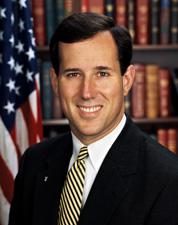 Sen. Rick Santorum (R-PA)
Legislative Activity
Stay on top of the latest movement without scrolling through every action
Roll call votes on amendments in Senate: Amendment SA 4234 not agreed to in Senate by Yea-Nay Vote. 45 - 54. Record Vote Number: 172.
June 15, 2006
View full timeline
Roll call votes on amendments in Senate: Amendment SA 4234 not agreed to in Senate by Yea-Nay Vote. 45 - 54. Record Vote Number: 172.
June 15, 2006
Senate amendment not agreed to: Amendment SA 4234 not agreed to in Senate by Yea-Nay Vote. 45 - 54. Record Vote Number: 172.
June 15, 2006
Considered by Senate. (consideration: CR S5909, S5917-5921)
June 15, 2006
Amendment SA 4234 not agreed to in Senate by Yea-Nay Vote. 45 - 54. Record Vote Number: 172.
June 15, 2006
Senate amendment submitted
June 14, 2006
Senate amendment proposed (on the floor): Amendment SA 4234 proposed by Senator Santorum.(consideration: CR S5847-5850)
June 14, 2006
Amendment SA 4234 proposed by Senator Santorum. (consideration: CR S5847-5850) To authorize, with an offset, assistance for prodemocracy programs and activities inside and outside Iran, to make clear that the United States supports the ability of the people of Iran to exercise self-determination over their form of government, and to make enhancements to the Iran-Libya Sanctions Act of 1996.
June 14, 2006
Votes
1 roll call on this amendment
Text
Submitted
SA 4234. Mr. SANTORUM (for himself and Mr. Cornyn) proposed an
amendment to the bill S. 2766, to authorize appropriations for fiscal
year 2007 for military activities of the Department of Defense, for
military construction, and for defense activites of the Department of
Energy, to presceibe personnel strengths for such fiscal year for the
Armed Forces, and for other purposes; as follows:

On page 476, between lines 5 and 6, insert the following:

Subtitle C--Iran Freedom and Support

PART I--CODIFICATION OF SANCTIONS AGAINST IRAN

SEC. 1231. SHORT TITLE.

This subtitle may be cited as the ``Iran Freedom and
Support Act of 2006''.

SEC. 1232. CODIFICATION OF SANCTIONS.

(a) Codification of Sanctions.--United States sanctions,
controls, and regulations with respect to Iran imposed
pursuant to Executive Order No. 12957, sections 1(b) through
(1)(g) and sections (2) through (6) of Executive Order No.
12959, and sections 2 and 3 of Executive Order No. 13059
(relating to exports and certain other transactions with
Iran) as in effect on January 1, 2006, shall remain in effect
until the President certifies to the Committee on
International Relations of the House of Representatives and
the Committee on Foreign Relations of the Senate that the
Government of Iran has verifiably dismantled its weapons of
mass destruction programs.
(b) No Effect on Other Sanctions Relating to Support for
Acts of International Terrorism.--Subsection (a) shall have
no effect on United States sanctions, controls, and
regulations relating to a determination under section
6(j)(1)(A) of the Export Administration Act of 1979 (50
U.S.C. App. 2405(j)(1)(A)), section 620A(a) of the Foreign
Assistance Act of 1961 (22 U.S.C. 2371(a)), or section 40(d)
of the Arms Export Control Act (22 U.S.C. 2780(d)) relating
to support for acts of international terrorism by the
Government of Iran, as in effect on January 1, 2006.

SEC. 1233. LIABILITY OF PARENT COMPANIES FOR VIOLATIONS OF
SANCTIONS BY FOREIGN ENTITIES.

(a) In General.--In any case in which an entity engages in
an act outside the United

[[Page S5887]]

States on or after January 1, 2007, which, if committed in
the United States or by a United States person, would violate
Executive Order No. 12959 of May 6, 1995, Executive Order No.
13059 of August 19, 1997, or any other prohibition on
transactions with respect to Iran that is imposed under the
International Emergency Economic Powers Act (50 U.S.C. 1701
et seq.) and if that entity was created or availed of for the
purpose of engaging in such an act, the parent company of
that entity shall be subject to the penalties for such
violation to the same extent as if the parent company had
engaged in that act.
(b) Definitions.--In this section--
(1) an entity is a ``parent company'' of another entity if
it owns, directly or indirectly, more than 50 percent of the
equity interest in that other entity and is a United States
person; and
(2) the term ``entity'' means a partnership, association,
trust, joint venture, corporation, or other organization.

PART II--AMENDMENTS TO THE IRAN AND LIBYA SANCTIONS ACT OF 1996 AND
OTHER PROVISIONS RELATED TO INVESTMENT IN IRAN

SEC. 1241. MULTILATERAL REGIME.

(a) Reports to Congress.--Section 4(b) of the Iran and
Libya Sanctions Act of 1996 (50 U.S.C. 1701 note) is amended
to read as follows:
``(b) Reports to Congress.--Not later than six months after
the date of the enactment of the Iran Freedom Support Act of
2006 and every six months thereafter, the President shall
submit to the appropriate congressional committees a report
regarding specific diplomatic efforts undertaken pursuant to
subsection (a), the results of those efforts, and a
description of proposed diplomatic efforts pursuant to such
subsection. Each report shall include--
``(1) a list of the countries that have agreed to undertake
measures to further the objectives of section 3 with respect
to Iran;
``(2) a description of those measures, including--
``(A) government actions with respect to public or private
entities (or their subsidiaries) located in their
territories, that are engaged in Iran;
``(B) any decisions by the governments of these countries
to rescind or continue the provision of credits, guarantees,
or other governmental assistance to these entities; and
``(C) actions taken in international fora to further the
objectives of section 3;
``(3) a list of the countries that have not agreed to
undertake measures to further the objectives of section 3
with respect to Iran, and the reasons therefor; and
``(4) a description of any memorandums of understanding,
political understandings, or international agreements to
which the United States has acceded which affect
implementation of this section or section 5(a).''.
(b) Waiver.--Section 4(c) of such Act (50 U.S.C. 1701 note)
is amended to read as follows:
``(c) Waiver.--
``(1) In general.--The President may, on a case by case
basis, waive for a period of not more than six months the
application of section 5(a) with respect to a national of a
country if the President certifies to the appropriate
congressional committees at least 30 days before such waiver
is to take effect that--
``(A) such waiver is vital to the national security
interests of the United States; and
``(B) the country of the national has undertaken
substantial measures to prevent the acquisition and
development of weapons of mass destruction by the Government
of Iran.
``(2) Subsequent renewal of waiver.--If the President
determines that, in accordance with paragraph (1), such a
waiver is appropriate, the President may, at the conclusion
of the period of a waiver under such paragraph, renew such
waiver for subsequent periods of not more than six months
each.''.
(c) Investigations.--Section 4 of such Act (50 U.S.C. 1701
note) is amended by adding at the end the following new
subsection:
``(f) Investigations.--
``(1) In general.--The President shall initiate an
investigation into the possible imposition of sanctions
against a person upon receipt by the United States of
credible information indicating that such person is engaged
in activity related to investment in Iran as described in
section 5(a).
``(2) Determination and notification.--
``(A) In general.--Not later than 180 days after an
investigation is initiated in accordance with paragraph (1),
the President shall determine, pursuant to section 5(a),
whether or not to impose sanctions against a person engaged
in activity related to investment in Iran as described in
such section as a result of such activity and shall notify
the appropriate congressional committees of the basis for
such determination.
``(B) Extension.--If the President is unable to make a
determination under subparagraph (A), the President shall
notify the appropriate congressional committees and shall
extend such investigation for a subsequent period, not to
exceed 180 days, after which the President shall make the
determination required under such subparagraph and shall
notify the appropriate congressional committees of the basis
for such determination in accordance with such subparagraph.
``(3) Determinations regarding pending investigations.--Not
later than 90 days after the date of the enactment of the
Iran Freedom and Support Act of 2006, the President shall,
with respect to any investigation that was pending as of
January 1, 2006, concerning a person engaged in activity
related to investment in Iran as described in section 5(a),
determine whether or not to impose sanctions against such
person as a result of such activity and shall notify the
appropriate congressional committees of the basis for such
determination.
``(4) Publication.--Not later than 10 days after the
President notifies the appropriate congressional committees
under paragraphs (2) and (3), the President shall ensure
publication in the Federal Register of the identification of
the persons against which the President has made a
determination that the imposition of sanctions is
appropriate, together with an explanation for such
determination.''.

SEC. 1242. IMPOSITION OF SANCTIONS.

(a) Sanctions With Respect to Development of Petroleum
Resources.--Section 5(a) of the Iran and Libya Sanctions Act
of 1996 (50 U.S.C. 1701 note) is amended--
(1) in the heading, by striking ``to Iran'' and inserting
``to the Development of Petroleum Resources of Iran'';
(2) by striking ``(6)'' and inserting ``(5)''; and
(3) by striking ``with actual knowledge,''.
(b) Sanctions With Respect to Development of Weapons of
Mass Destruction or Other Military Capabilities.--Section
5(b) of such Act (50 U.S.C. 1701 note) is amended to read as
follows:
``(b) Mandatory Sanctions With Respect to Development of
Weapons of Mass Destruction or Other Military Capabilities.--
Notwithstanding any other provision of law, the President
shall impose two or more of the sanctions described in
paragraphs (1) through (5) of section 6 if the President
determines that a person has, on or after the date of the
enactment of this Act, exported, transferred, or otherwise
provided to Iran any goods, services, technology, or other
items knowing that the provision of such goods, services,
technology, or other items would contribute to the ability of
Iran to--
``(1) acquire or develop chemical, biological, or nuclear
weapons or related technologies; or
``(2) acquire or develop destabilizing numbers and types of
advanced conventional weapons.''.
(c) Persons Against Which the Sanctions Are to Be
Imposed.--Section 5(c)(2) of such Act (50 U.S.C. 1701 note)
is amended--
(1) in subparagraph (B)--
(A) by striking ``, with actual knowledge,''; and
(B) by striking ``or'' at the end;
(2) in subparagraph (C)--
(A) by striking ``, with actual knowledge,''; and
(B) by striking the period at the end and inserting ``;
or''; and
(3) by adding after subparagraph (C) the following new
subparagraph:
``(D) is a private or government lender, insurer,
underwriter, or guarantor of the person referred to in
paragraph (1) if that private or government lender, insurer,
underwriter, or guarantor engaged in the activities referred
to in paragraph (1).''.
(d) Effective Date.--The amendments made by this section
shall apply with respect to actions taken on or after January
1, 2007.

SEC. 1243. TERMINATION OF SANCTIONS.

Section 8(a) of the Iran and Libya Sanctions Act of 1996
(50 U.S.C. 1701 note) is amended--
(1) in paragraph (1)(C), by striking ``and'' at the end;
(2) in paragraph (2), by striking the period at the end and
inserting ``; and''; and
(3) by adding at the end the following new paragraph:
``(3) poses no significant threat to United States national
security, interests, or allies.''.

SEC. 1244. SUNSET.

Section 13 of the Iran and Libya Sanctions Act of 1996 (50
U.S.C. 1701 note) is amended--
(1) in the section heading, by striking ``; SUNSET'';
(2) in subsection (a), by striking ``(a) Effective Date.--
'' ; and
(3) by striking subsection (b).

SEC. 1245. CLARIFICATION AND EXPANSION OF DEFINITIONS.

(a) Person.--Section 14(14)(B) of the Iran and Libya
Sanctions Act of 1996 (50 U.S.C. 1701 note) is amended--
(1) by inserting after ``trust,'' the following:
``financial institution, insurer, underwriter, guarantor, any
other business organization, including any foreign
subsidiaries of the foregoing,''; and
(2) by inserting before the semicolon the following: ``,
such as an export credit agency''.
(b) Petroleum Resources.--Section 14(15) of the Iran and
Libya Sanctions Act of 1996 (50 U.S.C. 1701 note) is amended
by inserting after ``petroleum'' the second place it appears
the following: ``, petroleum by-products,''.

SEC. 1246. UNITED STATES PENSION PLANS.

(a) Findings.--Congress finds the following:
(1) The United States and the international community face
no greater threat to their security than the prospect of
rogue regimes who support international terrorism obtaining
weapons of mass destruction, and particularly nuclear
weapons.
(2) Iran is the leading state sponsor of international
terrorism and is close to

[[Page S5888]]

achieving nuclear weapons capability but has paid no price
for nearly twenty years of deception over its nuclear
program. Foreign entities that have invested in Iran's energy
sector, despite Iran's support of international terrorism and
its nuclear program, have afforded Iran a free pass while
many United States entities have unknowingly invested in
those same foreign entities.
(3) United States investors have a great deal at stake in
preventing Iran from acquiring nuclear weapons.
(4) United States investors can have considerable influence
over the commercial decisions of the foreign entities in
which they have invested.
(b) Sense of Congress Relating to Divestiture From Iran.--
It is the sense of Congress that managers of United States
Government pension plans or thrift savings plans, managers of
pension plans maintained in the private sector by plan
sponsors in the United States, and managers of mutual funds
sold or distributed in the United States should, to the
extent consistent with the legal and fiduciary duties
otherwise imposed on them, immediately initiate efforts to
divest all investments of such plans or funds in any entity
included on the list.
(c) Sense of Congress Relating to Prohibition on Future
Investment.--It is the sense of Congress that there should
be, to the extent consistent with the legal and fiduciary
duties otherwise imposed on them, no future investment in any
entity included on the list by managers of United States
Government pension plans or thrift savings plans, managers of
pension plans maintained in the private sector by plan
sponsors in the United States, and managers of mutual funds
sold or distributed in the United States.

SEC. 1247. TECHNICAL AND CONFORMING AMENDMENTS.

(a) Findings.--Section 2 of the Iran and Libya Sanctions
Act of 1996 (50 U.S.C. 1701 note) is amended by striking
paragraph (4).
(b) Declaration of Policy.--Section 3 of the Iran and Libya
Sanctions Act of 1996 (50 U.S.C. 1701 note) is amended--
(1) in subsection (a), by striking ``(a) Policy With
Respect to Iran.--''; and
(2) by striking subsection (b).
(c) Termination of Sanctions.--Section 8 of the Iran and
Libya Sanctions Act of 1996 (50 U.S.C. 1701 note) is
amended--
(1) in subsection (a), by striking ``(a) Iran.--''; and
(2) by striking subsection (b).
(d) Duration of Sanctions; Presidential Waiver.--Section
9(c)(2)(C) of the Iran and Libya Sanctions Act of 1996 (50
U.S.C. 1701 note) is amended to read as follows:
``(C) an estimate of the significance of the provision of
the items described in section 5(a) or section 5(b) to Iran's
ability to, respectively, develop its petroleum resources or
its weapons of mass destruction or other military
capabilities; and''.
(e) Reports Required.--Section 10(b)(1) of the Iran and
Libya Sanctions Act of 1996 (50 U.S.C. 1701 note) is amended
by striking ``and Libya'' each place it appears.
(f) Definitions.--Section 14 of the Iran and Libya
Sanctions Act of 1996 (50 U.S.C. 1701 note) is amended--
(1) in paragraph (9)--
(A) in the matter preceding subparagraph (A)--
(i) by striking ``, or with the Government of Libya or a
nongovernmental entity in Libya,''; and
(ii) by striking ``nongovenmental'' and inserting
``nongovernmental''; and
(B) in subparagraph (A), by striking ``or Libya (as the
case may be)'';
(2) by striking paragraph (12); and
(3) by redesignating paragraphs (13), (14), (15), (16), and
(17) as paragraphs (12), (13), (14), (15), and (16),
respectively.
(g) Short Title.--
(1) In general.--Section 1 of the Iran and Libya Sanctions
Act of 1996 (50 U.S.C. 1701 note) is amended by striking
``and Libya''.
(2) References.--Any reference in any other provision of
law, regulation, document, or other record of the United
States to the ``Iran and Libya Sanctions Act of 1996'' shall
be deemed to be a reference to the ``Iran Sanctions Act of
1996''.

PART III--DIPLOMATIC EFFORTS TO CURTAIL IRANIAN NUCLEAR PROLIFERATION
AND SPONSORSHIP OF INTERNATIONAL TERRORISM

SEC. 1251. DIPLOMATIC EFFORTS.

(a) Sense of Congress Relating to United Nations Security
Council and the International Atomic Energy Agency.--It is
the sense of Congress that the President should instruct the
United States Permanent Representative to the United Nations
to work to secure support at the United Nations Security
Council for a resolution that would impose sanctions on Iran
as a result of its repeated breaches of its nuclear
nonproliferation obligations, to remain in effect until Iran
has verifiably dismantled its weapons of mass destruction
programs.
(b) Prohibition on Assistance to Countries That Invest in
the Energy Sector of Iran.--
(1) Withholding of assistance.--If, on or after January 1,
2007, a foreign person (as defined in section 14 of the Iran
Sanctions Act of 1996 (50 U.S.C. 1701 note), as renamed
pursuant to section 1247(g)(1)) or an agency or
instrumentality of a foreign government has more than
$20,000,000 invested in Iran's energy sector, the President
shall, until the date on which such person or agency or
instrumentality of such government terminates such
investment, withhold assistance under the Foreign Assistance
Act of 1961 (22 U.S.C. 2151 et seq.) to the government of the
country to which such person owes allegiance or to which
control is exercised over such agency or instrumentality.
(2) Waiver.--Assistance prohibited by this section may be
furnished to the government of a foreign country described in
subsection (a) if the President determines that furnishing
such assistance is important to the national security
interests of the United States, furthers the goals described
in this subtitle, and, not later that 15 days before
obligating such assistance, notifies the Committee on
International Relations and the Committee on Appropriations
of the House of Representatives and the Committee on Foreign
Relations and the Committee on Appropriations of the Senate
of such determination and submits to such committees a report
that includes--
(A) a statement of the determination;
(B) a detailed explanation of the assistance to be
provided;
(C) the estimated dollar amount of the assistance; and
(D) an explanation of how the assistance furthers United
States national security interests.

SEC. 1252. STRENGTHENING THE NUCLEAR NONPROLIFERATION TREATY.

(a) Findings.--Congress finds the following:
(1) Article IV of the Treaty on the Non-Proliferation of
Nuclear Weapons, done at Washington, London, and Moscow July
1, 1968, and entered into force March 5, 1970 (21 UST 483)
(commonly referred to as the ``Nuclear Nonproliferation
Treaty'' or ``NPT'') states that countries that are parties
to the Treaty have the ``inalienable right . . . to develop
research, production and use of nuclear energy for peaceful
purposes without discrimination and in conformity with
articles I and II of this Treaty''.
(2) Iran has manipulated Article IV of the Nuclear
Nonproliferation Treaty to acquire technologies needed to
manufacture nuclear weapons under the guise of developing
peaceful nuclear technology.
(3) Legal authorities, diplomatic historians, and officials
closely involved in the negotiation and ratification of the
Nuclear Nonproliferation Treaty state that the Treaty neither
recognizes nor protects such a per se right to all nuclear
technology, such as enrichment and reprocessing, but rather
affirms that the right to the use of peaceful nuclear energy
is qualified.
(b) Declaration of Congress Regarding United States Policy
to Strengthen the Nuclear Nonproliferation Treaty.--Congress
declares that it should be the policy of the United States to
support diplomatic efforts to end the manipulation of Article
IV of the Nuclear Nonproliferation Treaty, as undertaken by
Iran, without undermining the Treaty itself.

PART IV--IRANIAN NUCLEAR TRADE PROHIBITION PROVISIONS

SEC. 1261. FINDINGS.

Congress makes the following findings:
(1) Iran has pursued a nuclear program with assistance from
foreign entities and foreign governments.
(2) It is important that Iran not seek to develop nuclear
weapons under the cover of a civilian nuclear power program.
(3) The Government of Iran has asserted that its nuclear
program is for peaceful purposes, however, that Government
has supported terrorist organizations and uses harsh rhetoric
towards allies of the United States in the Middle East, and
the United States has expressed great concern with Iran's
nuclear ambitions and has worked with United States allies to
end Iran's nuclear program.
(4) In October 2003, the Government of Iran promised it
would suspend uranium enrichment activities, but broke that
promise less than a year later.
(5) In November 2004, the Government of Iran, in concert
with talks with representatives of the Governments of
Britain, France, and Germany (the ``EU-3'') agreed to suspend
all uranium enrichment and reprocessing activities related to
Iran's nuclear program under the terms of the agreement made
between the Islamic Republic of Iran and France, Germany and
the United Kingdom, with the support of the High
Representative of the European Union (the ``Paris
Agreement'').
(6) The EU-3 agreed to support the United States in taking
Iran's nuclear program to the United Nations Security Council
if Iran resumed its nuclear activities.
(7) In concert with the Paris Agreement, the President
announced that the United States will drop its opposition to
Iran's application to join the World Trade Organization and
permit, on a case-by-case basis, the licensing of spare parts
for Iranian commercial aircraft.
(8) Iran's uranium enrichment program is likely to be
dispersed throughout the country, protected in hardened
infrastructure, and highly mobile.
(9) The Parliament of Iran passed a nonbinding resolution
insisting that the Government of Iran resume developing
nuclear fuel.
(10) That resolution stated that Iran should develop enough
nuclear fuel to generate 20,000 megawatts of electricity.
(11) In February 2005, the Atomic Energy Agency of Russia
announced that Russia would ship nuclear fuel to Iran's
Bushehr nuclear reactor.
(12) Russia pledged to provide fuel to this facility for 10
years and, under the commitment, Iran has pledged to return
spent fuel to Russia for storage.

[[Page S5889]]

(13) Russia remains the only major nuclear fuel market
closed to outside competition and 100 percent of Russia's
nuclear fuel industry is owned by the Government of Russia.
(14) Iran is the fourth-largest oil producer in the world.
(15) Iran has a wealth of natural gas and crude oil
reserves and it is estimated that Iran plans to invest
$104,000,000,000 by 2015 in natural gas production and that
Iran plans to increase crude oil production to 7,000,000
barrels a day by 2020.

SEC. 1262. SENSE OF CONGRESS ON TRADE RELATIONS WITH STATE
SPONSORS OF TERRORISM.

It is the sense of Congress that the countries of the world
should choose between trading with state sponsors of
terrorism or maintaining good trade relations with the United
States.

SEC. 1263. PROHIBITION OF ENTRY OF NUCLEAR FUEL ASSEMBLIES.

The Iran and Libya Sanctions Act of 1996 (50 U.S.C. 1701
note) is amended by inserting after section 10 the following
new section:

``SEC. 10A. PROHIBITION OF ENTRY TO NUCLEAR FUEL ASSEMBLIES
TO THE UNITED STATES.

``(a) In General.--Subject to subsection (b), the President
shall prohibit the United States, or any entity of the United
States, from purchasing nuclear fuel assemblies from any
person or government entity, or any entity affiliated with
such person or entity, that sells nuclear fuel assemblies to
Iran.
``(b) Waiver.--The President may waive the prohibition in
subsection (a) if the President--
``(1) determines that the waiver is in the national
security interest of the United States; and
``(2) at least 7 days before the waiver takes effect,
notifies the required congressional committees of the
President's intention to exercise the waiver.
``(c) Definitions.--In this section:
``(1) Nuclear fuel assemblies.--The term `nuclear fuel
assemblies' does not include low-enriched uranium (LEU). For
the purpose of the preceding sentence the term `low-enriched
uranium' means a product produced using blended down weapons-
grade and highly-enriched uranium (HEU) that is provided by
the Russian entity Techsnabexport (also known as TENEX) in
cooperation with the U.S. Enrichment Corporation, a
subsidiary of USEC, Inc.
``(2) Required congressional committees.--The term
`required congressional committees' means the Committee on
Armed Services, the Committee on Finance, and the Committee
on Foreign Relations of the Senate and the Committee on Armed
Services, the Committee on International Relations, and the
Committee on Ways and Means of the House of
Representatives.''.

PART V--DEMOCRACY IN IRAN

SEC. 1271. FINDINGS.

Congress makes the following findings:
(1) The people of the United States have long demonstrated
an interest in the well-being of the people of Iran, dating
back to the 1830s.
(2) Famous Americans such as Howard Baskerville, Dr. Samuel
Martin, Jane E. Doolittle, and Louis G. Dreyfus, Jr., made
significant contributions to Iranian society by furthering
the educational opportunities of the people of Iran and
improving the opportunities of the less fortunate citizens of
Iran.
(3) Iran and the United States were allies following World
War II, and through the late 1970s Iran was as an important
regional ally of the United States and a key bulwark against
Soviet influence.
(4) In November 1979, following the arrival of Mohammed
Reza Shah Pahlavi in the United States, a mob of students and
extremists seized the United States Embassy in Tehran, Iran,
holding United States diplomatic personnel hostage until
January 1981.
(5) Following the seizure of the United States Embassy,
Ayatollah Ruhollah Khomeini, leader of the repressive
revolutionary movement in Iran, expressed support for the
actions of the students in taking American citizens hostage.
(6) Despite the May 1997 presidential election in Iran, an
election in which an estimated 91 percent of the electorate
participated, control of the internal and external affairs of
the Islamic Republic of Iran is still exercised by the courts
in Iran and the Revolutionary Guards, Supreme Leader, and
Council of Guardians of the Government of Iran.
(7) The election results of the May 1997 election and the
high level of voter participation in that election
demonstrate that the people of Iran favor economic and
political reforms and greater interaction with the United
States and the Western world in general.
(8) Efforts by the United States to improve relations with
Iran have been rebuffed by the Government of Iran.
(9) President William J. Clinton eased sanctions against
Iran and promoted people-to-people exchanges, but the Leader
of the Islamic Revolution Ayatollah Ali Khamenei, the
Militant Clerics' Society, the Islamic Coalition
Organization, and Supporters of the Party of God have all
opposed efforts to open Iranian society to Western influences
and have opposed efforts to change the dynamic of relations
between the United States and Iran.
(10) For the past two decades, the Department of State has
found Iran to be the leading sponsor of international
terrorism in the world.
(11) In 1983, the Iran-sponsored Hezbollah terrorist
organization conducted suicide terrorist operations against
United States military and civilian personnel in Beirut,
Lebanon, resulting in the deaths of hundreds of Americans.
(12) The United States intelligence community and law
enforcement personnel have linked Iran to attacks against
American military personnel at Khobar Towers in Saudi Arabia
in 1996 and to al Qaeda attacks against civilians in Saudi
Arabia in 2004.
(13) According to the Department of State's Patterns of
Global Terrorism 2001 report, ``Iran's Islamic Revolutionary
Guard Corps and Ministry of Intelligence and Security
continued to be involved in the planning and support of
terrorist acts and supported a variety of groups that use
terrorism to pursue their goals,'' and ``Iran continued to
provide Lebanese Hizballah and the Palestinian rejectionist
groups--notably HAMAS, the Palestinian Islamic Jihad, and the
[Popular Front for the Liberation of Palestine-General
Command]--with varying amounts of funding, safehaven,
training and weapons''.
(14) The Government of Iran currently operates more than 10
radio and television stations broadcasting in Iraq that
incite violent actions against United States and coalition
personnel in Iraq.
(15) The current leaders of Iran, Ayatollah Ali Khamenei
and Hashemi Rafsanjani, have repeatedly called upon Muslims
to kill Americans in Iraq and install a theocratic regime in
Iraq.
(16) The Government of Iran has admitted pursuing a
clandestine nuclear program, which the United States
intelligence community believes may include a nuclear weapons
program.
(17) The Government of Iran has failed to meet repeated
pledges to arrest and extradite foreign terrorists in Iran.
(18) The United States Government believes that the
Government of Iran supports terrorists and extremist
religious leaders in Iraq with the clear intention of
subverting coalition efforts to bring peace and democracy to
Iraq.
(19) The Ministry of Defense of Iran confirmed in July 2003
that it had successfully conducted the final test of the
Shahab-3 missile, giving Iran an operational intermediate-
range ballistic missile capable of striking both Israel and
United States troops throughout the Middle East and
Afghanistan.

SEC. 1272. DECLARATION OF CONGRESS REGARDING UNITED STATES
POLICY TOWARD IRAN.

Congress declares that it should be the policy of the
United States--
(1) to support efforts by the people of Iran to exercise
self-determination over the form of government of their
country; and
(2) to actively support a national referendum in Iran with
oversight by international observers and monitors to certify
the integrity and fairness of the referendum.

SEC. 1273. ASSISTANCE TO SUPPORT DEMOCRACY IN IRAN.

(a) Authorization.--The President is authorized,
notwithstanding any other provision of law, to provide
financial and political assistance (including the award of
grants) to foreign and domestic individuals, organizations,
and entities that support democracy and the promotion of
democracy in Iran. Such assistance may include the award of
grants to eligible independent pro-democracy radio and
television broadcasting organizations that broadcast into
Iran.
(b) Sense of Congress on Eligibility for Assistance.--It is
the sense of Congress that financial and political assistance
under this section be provided to an individual,
organization, or entity that--
(1) opposes the use of terrorism;
(2) advocates the adherence by Iran to nonproliferation
regimes for nuclear, chemical, and biological weapons and
materiel;
(3) is dedicated to democratic values and supports the
adoption of a democratic form of government in Iran;
(4) is dedicated to respect for human rights, including the
fundamental equality of women;
(5) works to establish equality of opportunity for people;
and
(6) supports freedom of the press, freedom of speech,
freedom of association, and freedom of religion.
(c) Funding.--The President may provide assistance under
this section using amounts made available pursuant to the
authorization of appropriations under subsection (g).
(d) Notification.--Not later than 15 days before each
obligation of assistance under this section, and in
accordance with the procedures under section 634A of the
Foreign Assistance Act of 1961 (22 U.S.C. 2394-1), the
President shall notify the Committee on Foreign Relations and
the Committee on Appropriations of the Senate and the
Committee on International Relations and the Committee on
Appropriations of the House of Representatives.
(e) Sense of Congress Regarding Coordination of Policy and
Appointment.--It is the sense of Congress that in order to
ensure maximum coordination among Federal agencies, if the
President provides the assistance under this section, the
President should appoint an individual who shall--
(1) serve as special assistant to the President on matters
relating to Iran; and
(2) coordinate among the appropriate directors of the
National Security Council on issues regarding such matters.

[[Page S5890]]

(f) Sense of Congress Regarding Diplomatic Assistance.--It
is the sense of Congress that--
(1) support for a transition to democracy in Iran should be
expressed by United States representatives and officials in
all appropriate international fora;
(2) representatives of the Government of Iran should be
denied access to all United States Government buildings;
(3) efforts to bring a halt to the nuclear weapons program
of Iran, including steps to end the supply of nuclear
components or fuel to Iran, should be intensified, with
particular attention focused on the cooperation regarding
such program--
(A) between the Government of Iran and the Government of
the Russian Federation; and
(B) between the Government of Iran and individuals from
China, Malaysia, and Pakistan, including the network of Dr.
Abdul Qadeer (A. Q.) Khan; and
(4) officials and representatives of the United States
should--
(A) strongly and unequivocally support indigenous efforts
in Iran calling for free, transparent, and democratic
elections; and
(B) draw international attention to violations by the
Government of Iran of human rights, freedom of religion,
freedom of assembly, and freedom of the press.
(g) Authorization of Appropriations.--
(1) In general.--There is authorized to be appropriated to
the Department of State $100,000,000 to carry out activities
under this section.
(2) Offset.--The amount authorized to be appropriated by
section 1405(1) for the Army for operation and maintenance
for additional costs due to Operation Iraqi Freedom and
Operation Enduring Freedom is hereby decreased by
$100,000,000.

SEC. 1274. REPORTING REQUIREMENT REGARDING DESIGNATION OF
DEMOCRATIC OPPOSITION ORGANIZATIONS.

Not later than 15 days before designating a democratic
opposition organization as eligible to receive assistance
under section 1272, the President shall notify the Committee
on Foreign Relations and the Committee on Appropriations of
the Senate and the Committee on International Relations and
the Committee on Appropriations of the House of
Representatives of the proposed designation. The notification
may be in classified form.
______