To prohibit the United States Customs and Border Protection from preventing an individual not in the business of importing a prescription drug from importing an FDA-approved prescription drug.
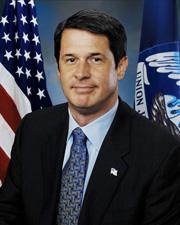 Sen. David Vitter (R-LA)
Legislative Activity
Stay on top of the latest movement without scrolling through every action
Roll call votes on amendments in Senate: Amendment SA 4548 as modified agreed to in Senate by Yea-Nay Vote. 68 - 32. Record Vote Number: 191.
July 11, 2006
View full timeline
Roll call votes on amendments in Senate: Amendment SA 4548 as modified agreed to in Senate by Yea-Nay Vote. 68 - 32. Record Vote Number: 191.
July 11, 2006
Senate amendment agreed to: Amendment SA 4548 as modified agreed to in Senate by Yea-Nay Vote. 68 - 32. Record Vote Number: 191.
July 11, 2006
Senate amendment proposed (on the floor): Amendment SA 4548 proposed by Senator Vitter.
July 11, 2006
Amendment SA 4548 proposed by Senator Vitter. (consideration: CR S7295-7305; text: CR S7295) To prohibit the United States Customs and Border Protection from preventing an individual not in the business of importing a prescription drug from importing an FDA-approved prescription drug.
July 11, 2006
Amendment SA 4548 as modified agreed to in Senate by Yea-Nay Vote. 68 - 32. Record Vote Number: 191. (text as modified: CR S7301)
July 11, 2006
Senate amendment submitted
July 10, 2006
Votes
1 roll call on this amendment
Text
Modified
DEPARTMENT OF HOMELAND SECURITY APPROPRIATIONS ACT, 2007

The PRESIDING OFFICER. Under the previous order, the Senate will
resume consideration of H.R. 5441, which the clerk will report.
The assistant legislative clerk read as follows:

A bill (H.R. 5441) making appropriations for the Department
of Homeland Security for the fiscal year ending September 30,
2007, and for other purposes.

The PRESIDING OFFICER. The Senator from New Hampshire is recognized.
Mr. GREGG. Mr. President, we are now back on the Homeland Security
bill, which is an important piece of legislation as it addresses the
issues of how we protect our Nation and how we deal with border
security and threats involving potential weapons of mass destruction.
It also addresses the issue of the management of the Department of
Homeland Security, especially in areas where there have been issues,
primarily--well, almost every function of

[[Page S7294]]

the Department has had some issues, but the ones that have been
highlighted, of course, are those dealing with the Katrina catastrophe
and FEMA's response to that. It is an important piece of legislation
for a variety of issues, but I want to carry on a little bit with the
discussion--and then I want to yield to the Senator from Louisiana, who
has an amendment, but I want to continue the discussion on the issue
which has been raised relative to the report that was put out today,
the midsession review.
It is important for people to understand we are functioning in a
Government that has fairly significant fiscal issues. We came out of
the 1990s with the largest bubble in the history of this Nation, the
Internet bubble--in the history of the world, honestly. And that bubble
burst. That was a bubble in the tradition of the tulip bubble and the
South Seas bubble, where basically people were printing money without
any support behind it--called stocks. Stocks were being issued that had
no value behind them. The stock value ran up, through exuberance, as
Chairman Greenspan called it, irrational exuberance. When that burst,
it basically took out of the economy huge amounts of liquidity. That
was followed, of course, by the attack of 9/11, which was not only a
catastrophic event from the loss of life and impact on our culture but
also was a catastrophic event economically.
The President had the good sense to come forward with proposals which
basically tried to address the economic side of the problems which we
were confronting. We were headed into a very severe recession as a
result of those two events. He proposed tax cuts which have been, I
think vilified would be a kind word, from the other side of the aisle.
He proposed those tax cuts basically on the theory that if you reduce
the tax burden on the American worker to something that is fair, it
will generate income because you basically create more incentive for
people to be productive. It is human nature. Somebody is going to be
able to take action which generates income. If they pay a very high tax
on that action, they are going to have very little incentive to take
that action. If they pay a reasonable and fair tax on that action, then
they will take that action. The capital gains cuts is a classic example
of that, where by cutting the capital gains rate we have seen massive
amounts of economic activity that would not have occurred before when
people would have sat on those assets, stocks, and real estate, or
corporate assets. But because there was a lower and more reasonable
capital gains rate, people have turned those assets over, which has had
two effects.

First, it generated a taxable event which generated huge amounts of
revenue to our Nation. In fact, the capital gains events have exceeded
the expected baseline for those receipts by a factor of almost $100
billion over the last 2 to 3 years. Not only did they create those
receipts, but it also took the assets which had been locked up in maybe
productive assets but not as productive as they should have been and
turned those dollars and those resources and capital investment into
things which would be even more productively used because when people
sell the assets, they take what they gain and reinvest it in a way
which is going to produce even more income.
The practical effect of that is the dollars are working more
effectively, the economy becomes more lean and more productive, and the
result is even more revenue.
So the practical event is we have seen a huge increase as a result of
the tax cuts which the President put in place with the support of this
Congress--the Republican Congress, obviously, and not from the other
side of the aisle--we have seen a huge increase in the rate of revenue
growth in this country. During the last 2 years, revenue jumped 14
percent last year, and it is up almost another 13 percent in the first
part of this year.
The effect of that has been that we have seen receipts coming into
the Federal Treasury which have reduced the deficit dramatically from
what was expected, down from $423 billion to below $300 billion. We are
still continuing on that path. It is an extraordinarily positive path.
Most of those receipts, ironically, come from corporate America and
the higher income quadrant of taxpayers in the American economic
system. Those are the folks who are paying more in taxes today--from
whom we are getting more tax receipts. We are back to basically the
historical level of tax burden in this country--around 18 percent gross
domestic product being raised through revenue. The problem we have
today is not that we are undertaxed. In fact, we are generating a lot
of revenue through overspending. What we need is control of spending.
This President has tried to do that on the nondefense discretionary
side, but we still need to address the entitlement side of the picture
and we need to address, obviously, how we manage catastrophes such as
Katrina.
That brings me to the second point I wanted to make, and that is the
Democratic response to this has traditionally been to get rid of these
tax cuts. It is pretty hard to take that position any longer because
tax reductions are generating so much revenue. Now their position is
they are going to bring up Social Security, and they are going to talk
just about Social Security. What a tired prescription that is. What a
reflection of bankrupt ideas that is. They are once again trying to
scare senior citizens over the issue of Social Security. That has been
going on for 40 years.
When I was first elected to office, I talked to Tip O'Neill, who was
Speaker of the House at that time, about what the Republicans who were
serving in the House in the early 1980s were going to hear during the
next campaign. He said we are going to hear about three things: Social
Security and Social Security and Social Security.
That appears to be the new tactic which has been gone back to--bring
out the bloody shirt of Social Security and wave it at the Republican
Party while ignoring, for example, the fact that we have a very serious
problem in the outyears with Social Security and other retirement
benefits. The Social Security system has an unfunded liability of
approximately $12 trillion over its actuarial life. That is because
there are many senior citizens who are going to be taking down Social
Security as the baby boom generation retires.
What is the reaction on the other side of the aisle? Before any
discussion can be pursued on the issue of Social Security, they
immediately bring out the bloody shirt: Republicans are going to
destroy Social Security; they are going to privatize Social Security;
they are going to try to eliminate--``savage'' was the term used by the
Democratic leader--savage Social Security. Where are their proposals to
address Social Security? Where are their proposals to address any
entitlement reform other than to suggest that we raise taxes through
their ``paygo'' proposal, which is actually ``taxgo.'' They have no
proposal. You can't tax your way out of this problem.
In fact, we have the right tax policy in place because we are
generating huge revenue. What you need to do is aggressively address
the spending side of the ledger. Therefore, I put forward a proposal
which is supported by a large number--30 cosponsors--of my colleagues
on this side of the aisle which sets out eight different initiatives
called ``SOS''--stop overspending--the purpose of which is to get our
long-term fiscal house in order. Even though the deficit is coming down
probably below even what would be a balanced budget for all intents and
purposes if we weren't confronted with a war which we have to fight and
the Katrina situation which we are confronted with--in fact, if you
took the cost of the war out, which we have to spend because we are
confronted with a war on terror, which is for our survival, if we took
the cost of Katrina out, we would essentially have a balanced budget
next year. That is the fact.
But we also have to face the fact that in the outyears when the baby
boom generation retires, that is not going to be the case. There will
be a huge amount of pressure on us because the cost of sustaining the
retirement benefits is going to overwhelm the younger generation's
ability to pay for it. We have to put forward an aggressive program to
resolve that issue, to make the cost of Government affordable for our
children while still delivering quality services to those who retire.
We can do it if we think about it and start soon to address it. That
is what SOS does. There are eight different proposals to try to
accomplish that.

[[Page S7295]]

I hope that we will take it up and at least aggressively debate it
because it is an idea that basically uses the process to push policy,
and the policy is what we need. We need to get on that case.
At this time, I yield the floor. I understand the Senator from
Louisiana has an amendment to offer. We look forward to proceeding with
the amendment process relative to the homeland security matter.
The ACTING PRESIDENT pro tempore. The Senator from Louisiana.

Amendment No. 4548

Mr. VITTER. Mr. President, I send an amendment to the desk.
The ACTING PRESIDENT pro tempore. The clerk will report.
The assistant legislative clerk read as follows:

The Senator from Louisiana [Mr. Vitter], for himself, Mr.
Nelson of Florida, and Mr. Coburn, proposes an amendment
numbered 4548.

Mr. VITTER. Mr. President, I ask unanimous consent that reading of
the amendment be dispensed with.
The ACTING PRESIDENT pro tempore. Without objection, it is so
ordered.
The amendment is as follows

(Purpose: To prohibit the United States Customs and Border Protection
from preventing an individual not in the business of importing a
prescription drug from importing an FDA-approved prescription drug)

On page 127, between line 2 and 3, insert the following:
Sec. 540. None of the funds made available in this Act for
United States Customs and Border Protection may be used to
prevent an individual not in the business of importing a
prescription drug (within the meaning of section 801(g) of
the Federal Food, Drug, and Cosmetic Act) from importing a
prescription drug that complies with sections 501, 502, and
505 of such Act.

Mr. VITTER. Mr. President, the goal of this amendment is very
straightforward. It is about breaking down the artificial barrier that
prevents many Americans, including many seniors, from obtaining safe,
FDA-approved, and affordable prescription drugs.
It is no secret that Americans pay more for their medicine than any
other citizen in the world, of any other industrialized country. Yet
our country is the biggest marketplace for these drugs in the world.
Our seniors are buying their medicine in Canada as a result of that and
in some other countries simply because it is cheaper. There is no other
reason. Yet we see an increasing ratcheting up by Customs and
protection agents in an effort to seize these personal legal medicines
from Americans who are crossing from Canada back to the United States.
That is why I bring my amendment to the floor--to stop this idiocy
and lunacy. My amendment is simple. Stop that escalating practice by
the Customs and Border Protection of seizing personally used, FDA-
approved medicines from American citizens reentering the country. My
amendment would do this by simply prohibiting funds from being used for
this Customs and Border Protection activity.
Let me reiterate some very important things about this amendment.
First of all, it would do nothing more and nothing less than allow
our own citizens who are reentering our own country to be able to
possess FDA-approved prescription medicines for their own personal use
with a legitimate doctor's prescription.
That brings up a second very important point. When we talk about
prescription drug imports, there are really two types that we often
talk about and deal with: commercial imports by wholesalers, huge
quantities brought in for the purpose of resale in this country, and
personal imports by consumers.
My amendment is simply about personal imports by consumers. We are
not talking about huge quantities. We are not talking about resale
within the United States.
Third, my amendment is limited to FDA-approved drugs. There is this
erroneous notion that sometimes comes up in this reimportation debate
that somehow we are bypassing the entire FDA approval process, that
somehow we are throwing out the window that entire process by which the
FDA approves certain drugs after rigorous testing and analysis. None of
that is true, particularly with regard to my amendment, because, again,
my amendment only applies to FDA-approved drugs.
Fourth and finally, my amendment only applies to citizens who have a
valid doctor's prescription to obtain these drugs. What could be
simpler and make more sense than simply allowing American citizens who
possess these legal drugs that they obtain with a doctor's
prescription, FDA-approved for their own personal use, not huge
quantities, to allow them to possess these legal drugs as they reenter
their own country, the United States of America?
This amendment would not legalize reimportation full-scale. It would
not legalize wholesale reimportation. It would not get into so many of
the more controversial aspects of the issue. It would simply say we are
not going to allow Customs and Border Patrol to ratchet up this
activity by taking away seniors' drugs as they come into our country.
I think it is very significant and noteworthy that this sort of
reimportation measure has enormous support certainly in this country
but also in the Congress.
I want to point out some specific legislative history that
demonstrates this support.
Congress has shown support for this in numerous ways, including very
recently. First of all, my amendment was passed in the House. A nearly
identical version of the amendment was offered by Representative
Emerson of Missouri. That amendment was attached to this very same
appropriations bill in subcommittee, and it survived the entire process
going through the committee process and the floor.
That amendment is identical to the amendment which I am presenting on
the Senate floor today. It passed through the entire House process with
very strong support.
There are other instances that show very strong bipartisan support
for this sort of measure. Recently, the House passed an Agriculture
appropriations bill. There was also a significant reimportation
provision put on that bill and included on the bill in the committee
process, at the committee stage of consideration of the bill. That
underlying bill, including that very important reimportation amendment,
was passed overwhelmingly in the full Chamber by the full House by a
vote of 378 to 46. I thank my House colleagues, Representative Emerson
and Representative Gutknecht and many others for their leadership in
this regard.
Finally, an entire freestanding bill has been passed through the
House before on this issue, the Pharmaceutical Market Access Act. That
was in 2003, and by a vote of 243 to 186 after, I might add, the most
intense lobbying in the House that I ever experienced because I was a
Member of the House at that time--lobbying by the pharmaceutical
companies against this bill. That freestanding bill passed the House by
a very significant vote, 243 to 186.
I note that bill was far broader than the personal reimportation
amendment which we have on the floor today. Again, it demonstrates the
significant bipartisan support all of these reimportation measures
have, certainly in the country at large, including in the Congress.

Finally, I note another victory we had not too long ago with regard
to trade language. There was the very worrisome practice up until
recently that the administration's U.S. Trade Representative would
negotiate into many bilateral trade deals language which effectively
barred reimportation from the other country--the trading partner. This
was very unfortunate because it was closing the door to reimportation
before it even had been opened by the Congress through trade
negotiation.
Because of this very unfortunate practice, many of us in Congress,
the House and the Senate, went to the administration and expressed our
concern. Even more importantly, we brought language in the form of an
amendment and attached it to an appropriations bill. That language
said: Stop doing this; you cannot do it; it is ridiculous to negotiate
free-trade agreement barriers to reimportation. We passed that language
into law. I worked with my Senate colleague from Michigan on that
issue. Many like-minded House colleagues worked on it in the House. We
passed that into law. Most recently, the administration has
acknowledged they will end this practice once and for all of
negotiating this

[[Page S7296]]

antireimportation language in trade agreements.
There is enormous support for this type of measure in the country.
There is also significant bipartisan support for this in the Congress,
as has been demonstrated many previous times.
In this discussion, we should focus on the individuals--particularly
the seniors--who are compelled to cross the border in many instances to
get affordable prescription drugs. We should not focus on the wishes,
the pleas, and the intense lobbying by the drug companies. Seniors face
enormous hurdles as they face their declining years with the escalating
costs of prescription drugs. We should not add this additional hurdle
to the list, with Customs and Border Patrol agents forcibly seizing
legal, FDA-approved medicines procured with a doctor's prescription as
seniors come back across the border.
Finally, in closing, as we think about this amendment, we should also
consider what the true priorities of the Customs and Border Patrol
should be. We are at war. It is a different type of war than we have
ever faced before--a war on terror. That war has been brought to our
own shores by very evil-focused people who came into this country
illegally. We face new escalating threats, including potential threats
from weapons of mass destruction. Our borders are a very important
battleground in that war on terror. Yet in this new post-September 11
context, we will devote significant resources, significant focus on
stripping seniors of prescription drugs they have gotten with a
doctor's prescription, FDA-approved drugs, for their own personal use,
with no wholesalers and no resale. That is a ridiculous policy for the
Customs and Border Patrol to continue.
In the post-September 11 world, we should demand that Customs and
Border Patrol focus on the true priorities we face in the war on
terror. Stripping these small amounts of prescription drugs from the
hands of seniors, which are attained with a prescription, which are FDA
approved, which are for personal use, which are not for resale, not for
wholesale, not obtained by wholesalers, should not be a priority of the
Customs and Border Patrol.
In closing, let me again thank my colleague from Florida, Senator
Nelson, who will speak in a few minutes. Also, I thank the Senator from
Oklahoma, Mr. Coburn, for cosponsoring this amendment with me, and all
of my colleagues who have worked on this issue, including many House
Members.
Each year, millions of Americans who cannot otherwise afford their
prescription drugs go into Canada with a doctor's prescription, buy
FDA-approved drugs, and take them back into our country. We should not
sick the police, the Customs and Border Protection agents on them,
particularly in a post-September 11 world when that agency in
particular has far more important priorities.
I urge all of our colleagues in the Senate to support this simple,
straightforward amendment. It is the right thing to do on this issue.
It is the right thing to do with regard to setting the right priorities
of Customs and Border Patrol.
Mr. GREGG. Will the Senator yield?
Mr. VITTER. I am happy to yield.
Mr. GREGG. To understand the amendment, would this amendment cover
purchases over the Internet or purchases by mail order?
Mr. VITTER. It would cover any purchases which are subject to seizure
by Customs and Border Patrol. I don't offhand know if those purchases
are ordinarily subject to that seizure. I believe most of what we are
talking about is personal seizure at border checkpoints when
individuals are crossing back into the country, but the amendment would
cover any potential seizure by Customs and Border Patrol.
Mr. GREGG. If the Senator will yield further, I think he may have
answered the question. As I understand it, it does cover Internet
purchases and purchases by mail order. Customs has jurisdiction over
those should they come across the border.
Mr. VITTER. If they are subject to that seizure, yes, as I stated,
the amendment would cover that.
Mr. GREGG. Mr. President, if the Senator will further yield, it would
also apply to purchases that could come from any country--we are not
just talking about Canada? For example, purchases from England, they
could come from India, they could come from Cuba, they could come from
Libya, they could come from even states that have been identified as
terrorist states?
Mr. VITTER. In its present form, the amendment would cover any
country. We have a change in the amendment we are submitting to the
desk to exclude a certain list of countries, including most of the
countries the Senator mentioned.
Mr. GREGG. I ask further, would it exclude India?
Mr. VITTER. No, it would not.
Mr. GREGG. Would it exclude Pakistan?
Mr. VITTER. No, it would not.
Mr. GREGG. Would it exclude Brazil?
Mr. VITTER. No, it would not.
Mr. GREGG. If I could ask further, the FDA position, as I understand
it, is that drugs which are unapproved for sale which come across the
border violate the FDA approval. The Senator, in his statement,
referred many times to ``FDA-approved drugs.'' As I understand the
process today, the FDA views any drug purchased outside the United
States, distributed outside the United States, as being unapproved for
sale and therefore not meeting FDA standards. Is that not a correct
analysis of the FDA view of how it views drugs that come into this
country?
Mr. VITTER. I think it is an exactly correct analysis of the FDA view
based on the fact that the FDA, at least in this administration, is
completely against reimportation, so they have defined FDA approval to
specifically exclude reimportation.
Mr. GREGG. That is correct. But if the Senator would yield further,
the Senator is making a point in his statement that these would be FDA-
approved drugs the people are purchasing when, in fact, they are not
FDA-approved drugs because no drug that is imported into the United
States, distributed outside the United States, can receive FDA approval
under their rules because the FDA decided they cannot certify the
efficacy and safety of those drugs. Isn't that the FDA position today?
Mr. VITTER. The FDA position is exactly as the Senator says. They are
against reimportation, so they have defined FDA approval on technical
grounds to exclude by definition anything that comes in from other
countries. The point of my remarks is that these are exactly the same
as FDA-approved drugs.
Mr. GREGG. If I could inquire further, that is the essence of the
difference. The FDA does not deem them to be exactly the same because
the FDA cannot certify their efficacy and safety. That is why the FDA
has said that because they are not manufactured here, because they do
not have control over the manufacturing process, because they do not
know how they have been adulterated or may or may not have been
adulterated or how they have been synthesized, they are not going to
approve drugs coming into this country. So there is a significant
difference between what someone buys overseas and what someone buys in
America.
Mr. VITTER. If I could respond, in claiming my time, I disagree with
that wholeheartedly.
Yes, the FDA has refused to take any action to do that. Can they?
Absolutely, they can. Is it possible to do that, particularly in the
modern age of packaging technology? Absolutely.
Most of the drugs we are talking about, in fact, are manufactured
either in this country or in the same manufacturing points as the drugs
that are bought in this country. So I disagree with the premise the
Senator has laid out. But that is certainly the FDA's position, not to
attempt to do any of that and to be completely, 1,000 percent opposed
to reimportation.
Mr. NELSON of Florida. If the Senator will yield.
Mr. GREGG. If I could ask the Senator a few more questions, then I am
happy to yield the floor.

Assuming your hypothetical is correct, that the FDA could reach
beyond our borders and could effectively review these drugs, which the
FDA claims it cannot do, which is why they said they will not approve
this, your amendment says that Customs and Border Patrol shall not be
able to stop these drugs from coming across the border.
Customs and Border Patrol does not have any control over the efficacy
or

[[Page S7297]]

safety of these drugs. This amendment should really be directed at the
FDA because to put Customs and Border Patrol in this position means
they have to release drugs which the FDA today is saying it does not
approve. Yet there is no process for having the FDA come in and be
required to approve them under the Senator's amendment.
Mr. NELSON of Florida. Will the Senator yield so this Senator can get
in on this conversation?
Mr. VITTER. I am happy to yield to the Senator from Florida, and I am
happy to respond to the other points at some future time.
Mr. NELSON of Florida. If I may, this is a matter which can easily be
worked out. The questions the Senator from New Hampshire are raising
are very legitimate questions. It is a matter that can easily be worked
out if the administration is given some direction.
For example, approximately a year and a half, 2 years ago, the Acting
Director of the Food and Drug Administration, Mr. Crawford, made it
clear to this Senator that the FDA was not going to object to private
prescriptions for Americans coming from Canada for a limited supply--
such as 90 days for personal use--which is the biggest part of the
objection the Senator from Louisiana and this Senator from Florida
have, that senior citizens are being prohibited from getting the great
discounts they can get either by ordering them from the Internet, by
mail, or personally going over to Canada.
If there were an intention to work out this problem, it could be done
between all of these agencies that the Senator from New Hampshire is
raising.
Mr. GREGG. Mr. President, if I might renew my question, the Senator
from Florida may not have been in the Senate when I asked, Does this
apply to Internet purchases, and the answer is yes; does it apply to
mail order purchases, and the answer is yes; does it apply to countries
such as India, Brazil, Pakistan, and the answer is yes. I understand
the Senator from Louisiana will modify the amendment to take off a list
of countries that it would not apply to, terrorist nations such as
Sudan and I guess Cuba.
I renew my question because I am not sure the Senator from Florida
was dispositive on it, which is, Shouldn't this amendment be directed
at the FDA because to direct it at Customs and Border Patrol means that
Customs and Border Patrol will be stopped from basically taking the
drug which comes into this country, which FDA has now declared it
cannot certify the efficacy and safety of, taking that drug, sending it
over to FDA, and having the FDA evaluate it? Customs and Border Patrol
has no expertise in evaluating efficacy and safety of drugs. For all we
know, the drug that is being ordered over the Internet under the
Senator's amendment could be anything. It could be claimed to be
Lipitor, but it could be rat poisoning. In fact, recent anecdotal
studies have shown something like 80 percent of the drugs coming in
through the Internet do not meet the standards they claim they do meet.

So why would you amend this bill to put Customs and Border Protection
in the untenable position of having to basically release drugs to come
into this country, which the FDA says it cannot claim are safe, when
you have not put in the higher regime requirements of having the FDA
come in and determine whether those drugs are safe?
Mr. VITTER. Mr. President, I would respond to the chairman by saying
that amendment after amendment after amendment has been directed at the
FDA to do the right thing and create a sensible regime with regard to
this issue, and the FDA is flatout opposed to this and has made no
effort in that regard, even though there is clearly the technical
capability to do that through packaging technology and the like. So
this is an effort to make the entire administration--all aspects that
need to be involved--do the right thing.
But to say we have not asked the FDA to do this is ludicrous. We have
been trying to drag them--kicking and screaming--to do the right thing
for several years now. In fact, while they hide behind these safety
arguments, I am afraid they are allowing safety issues to go by
unaddressed.
In fact, this practice is common. Whether this amendment goes on this
bill, whether this activity of Customs and Border Protection continues,
one thing is certain: Seniors will import, for personal use,
prescription drugs from Canada and elsewhere. That will go on, to a
very significant extent.
Even if this amendment does not pass, Customs and Border Protection
will never round up all of those drugs. This is a common and a growing
practice because of the price issue.
So the question is: When is the FDA going to wake up and truly
address these concerns that the chairman brings up with some sensible
regime? This amendment is designed to force them in that direction.
But to suggest we have not asked them to do this, that we are going
to the wrong agency, is a little silly because we have been asking them
to do this for several years now. And we renew that request now.
Mr. GREGG. If the Senator will yield for one last question, and then,
obviously, the Senator from Florida wants to be heard on the subject.
But it is not silly because basically the fact pattern that is going to
be created--were this amendment adopted and if it became law, without
any directive to the FDA they have to step forward and actually
evaluate these drugs to see if they meet safety and efficacy
standards--the practical effect of this amendment would be that Customs
and Border Protection could not stop any drugs coming into this country
from other countries. That would include countries such as Pakistan and
India and other countries which have some serious issues as to the
efficacy and safety of those drugs.
In fact, if I were a creative terrorist, I would say to myself: Hey,
listen, all I have to do is produce a can here that says ``Lipitor'' on
it, make it look like the original Lipitor bottle--which is not too
hard to do--fill it with anthrax and have a bunch of people from the
United States order it who might be affiliated with me and import it
that way into this country--or anything else they want to use in a
biological way.
Here we are telling Customs and Border Protection that their job is
to ratchet down on the capacity of terrorists to use entry ports into
this country. And what you are saying in this amendment is: You,
Customs and Border Protection, are not going to be allowed to evaluate
anything that comes into this country which has a seal which makes it
look like it is an FDA-type of drug. And the FDA will not have reviewed
it. So nobody will have reviewed it.
So I think what you are creating--in your attempt to push FDA into
doing something you feel they are not doing that they should do, you
have targeted the wrong agency, and you are actually creating a massive
hole in our capacity to secure or borders and protect ourselves.
Mr. VITTER. Mr. President, reclaiming my time, let me respond to the
chairman's remarks with two comments. First of all, the FDA--right now,
today, this hour, as we speak--has all the authority it needs to take
any of the actions the chairman has described. It does not need any
additional directive or authority. It has that authority. So the
suggestion that somehow we need to act toward the FDA to give it that
authority before it can move is absolutely not the case. In fact, we
have been trying to get the FDA to act in this regard for several years
because there are legitimate safety issues that should be met.
Secondly, I compliment the chairman for trying to figure out a
scenario in which this is a true top priority of Customs and Border
Protection in a post 9/11 world. I just do not think it adds up,
though. I do not think, with all the border security and terrorist
threats we face as a nation, allowing the Customs and Border Protection
agents to continue--to even escalate--their practice of taking away
small amounts of prescription drugs from seniors crossing back from
Canada, et cetera, is the right thing to do, is a right priority for
Customs and Border Protection.
With that, Mr. President, I yield back my time and look forward to
the comments from my amendment cosponsor, the Senator from Florida.
The PRESIDING OFFICER (Mr. Burr). The Senator from Florida.
Mr. NELSON of Florida. Mr. President, here is an example. If we want
to

[[Page S7298]]

solve this problem, the different agencies of the Government can come
together and solve this problem. We already have it on the record, in
correspondence and telephone conversation between this Senator from
Florida and the FDA, that they have no objection to an up-to-90-day
supply coming from Canada, ordered by American citizens, either by the
Internet, by mail, or by personally going to Canada.
And what about the safety the Senator from New Hampshire has raised?
Safety: It is coming from the same drug manufacturers we presently have
in America; the very same drug, very same packaging, very same
pharmaceutical laboratories. The big difference is our citizens--and
particularly this applies to our senior citizens--can get these
prescription drugs at a much lower price.
Now, I would encourage the Senator from Louisiana, in order to avoid
the attacks on the amendment, as have been raised by the Senator from
New Hampshire, to pare down the amendment so that those attacks cannot
apply.
The safety issue of prescription drugs coming from Canada cannot be
assailed because those drugs come from the very same manufacturers, in
the very same places, as those prescription drugs that are, in fact,
provided to our American citizens.
Mr. VITTER. Will the Senator yield on that?
Mr. NELSON of Florida. Of course.
Mr. VITTER. I appreciate the suggestion. In fact, we have been
talking to the chairman's staff about additional language, which we
would ask be added to the amendment by unanimous consent, to create a
list of countries to which this cannot apply and would specifically ask
the chairman's staff for the appropriate list of countries for us to
consider, a list from their point of view.
So we will be happy to work on that and wrap this up before we end
this floor debate.
Mr. NELSON of Florida. I thank the Senator.
Upon further examination, with the Senator's staff, I think they will
find that in most cases we are talking about citizens from Louisiana,
as well as citizens from Florida and any other State, who are ordering
these prescription drugs at hugely discounted prices from Canada. So
that is the major source. That clearly is the interest of this Senator,
as we are looking out for our citizens.
Now, what, in fact, is happening--and this Senator sees it in great
abundance because it is no secret the State of Florida has a
considerably larger percentage of senior citizens than most States. We
like to call it the land called paradise. It is where a lot of people
come to retire. Naturally, in their retirement years, they are looking
at trying to make ends meet and their budget work.
They thought they were going to get a considerable break on their
prescription drugs under the Medicare prescription drug plan. And now a
lot of senior citizens are suddenly finding out the drugs are costing
them more than they thought they were. And those who are hitting the
so-called doughnut hole--that part, once they and the Government have
expended $2,250 on drugs in any one calendar year--there is no
reimbursement from Medicare all the way up to $5,100.
So our senior citizens are additionally having this concern that they
cannot afford the drugs. Therefore, if they want to turn to another
source, where they can get prescription drugs considerably discounted,
then why should the Government policy not be to allow them to do that?
That is the essence of the intent of this amendment.
The Senator from Louisiana has heard from his constituents, as has
this Senator. Over the last several months, our offices in Florida have
received numerous calls from people who say the cheaper prescription
drugs they bought from Canada have simply vanished in shipment.
For example, Mrs. Jacqueline Flick--she is from Coral Gables--relies
on Lipitor to help lower her risk of heart disease. She is living on a
moderate income. She cannot afford to pay the full price that she would
pay at a Walgreens or a CVS. She can get it from Canada and has been.
She and her husband have been getting Lipitor for years by ordering it
over the Internet from Canada, and she gets it at less than half the
price.
Naturally, she was outraged last month when she got a letter from
Customs and Border Protection notifying her that they had confiscated
her Lipitor. By the way, that letter stated reasons that had nothing to
do with her particular case.
I will give you another example. Alex Zeligson is from my home county
of Brevard. He is from Palm Bay. He is a patient with emphysema. He
requires oxygen. He requires 13 different medications every day,
including medication for his heart. A bunch of his prescription drugs
from Canada were seized in February.
Naturally, with this going on--and that is just two of many examples.
And it has not just happened in the last few months. This has been
going on in the State of Florida for the last year and a half.
Naturally, these folks are upset.
Over the years, the Government has permitted personal supplies of
prescription drugs to be imported from Canada. But without adequately
informing the Congress, Customs and Border Protection, last November,
implemented a new and stricter policy on personal prescription drug
importation.
Last November, this new policy, without informing the Congress, was
quietly implemented, until hundreds of complaints from constituents
across the country, press reports, and actions by various congressional
offices uncovered this shift in policy.
I can tell you that 900 prescription drugs were intercepted in the
city of Miami alone. The reason behind this shift remains unknown, but
according to documents filed in a court case in Minnesota, there has
been illegal and collusive activity to block the imports of cheaper
prescription drugs from Canada. Our office has discovered that this new
policy resulted in tens of thousands of prescription drug shipments
being detained by Customs officials. Customs has admitted to 25,000
prescription drug shipments intercepted; 900 of those were in Miami
alone.
Silently implementing a stricter policy without adequately informing
the public puts the health of those who have relied on the prompt
delivery of prescription drugs at risk. In response to these stepped-up
seizures, this Senator from Florida requested the Department of
Homeland Security Inspector General to investigate the change in
policy. The Inspector General rejected my request. I have asked the
Senate Homeland Security and Governmental Affairs Committee to
investigate.
Meanwhile, Americans who rely on low-cost prescription drugs from
Canada in order to avoid having to make a choice between prescriptions
and food are kept waiting. That is why I have joined the Senator from
Louisiana in this amendment. I hope he can perfect the amendment so
that it meets the objections the Senator from New Hampshire raised. The
intent is simply to prohibit Customs from utilizing funds to stop the
importation of FDA-approved prescription drugs by American citizens. A
similar provision has already passed the House in the Homeland Security
appropriations bill. This amendment, as perfected, is going to ensure
that Americans, especially the frail elderly or those with debilitating
conditions, are going to be able to at least have a chance of affording
the medications they need. It is also going to send a clear message to
Customs to explain their dramatic change in policy last November. I
hope we will get consensus on this, stop fighting this bureaucratic
game, and get some relief for our citizens.
I yield the floor.
The PRESIDING OFFICER. The Senator from North Dakota.
Mr. DORGAN. Mr. President, I come to support the amendment,
recognizing that it is not perfect, but recognizing that it has been
offered only because another piece of legislation, which is more
comprehensive, dealing only with FDA-approved drugs, bipartisan, a
broader group of Senators supporting it, has been blocked consistently.
Senator Vitter offers this because it is the only way to get this
subject to the floor of the Senate.
It is pretty unbelievable to hear the spirited defense of the
pharmaceutical industry. After we passed a prescription drug benefit in
the Medicare bill in the first quarter of this year, the pharmaceutical
industry increased the cost of brand-name drugs triple the rate of
inflation.

[[Page S7299]]

I have been before committees on this subject. Senator Snowe and I
appeared before our committee. There was a spirited defense of the
pharmaceutical industry there. This is an industry that has some of the
highest profits in the world. They produce miracle, lifesaving drugs,
yes, but they also produce something else. They produce a pricing
pattern that says the American people should pay the highest price in
the world for prescription drugs. It is unfair.
The issue is, can American citizens import FDA-approved prescription
drugs, some of them made in this country and then sent to Canada or
sent to some other country, can U.S. citizens have access to those
drugs, drugs that are safe? The only difference between those drugs and
the drugs sold here under the same name is those drugs are priced at a
much less expensive price.
I ask unanimous consent to show two pill bottles. This is the issue.
This is Lipitor.
The PRESIDING OFFICER. Without objection, it is so ordered.
Mr. DORGAN. The same pill, put in the same bottle, made by the same
company. One is marketed in the United States; one is sent to Canada.
What is the difference? The difference is, the U.S. consumer is told to
pay 65 percent more for the same medicine. The same pill made by the
same company, FDA approved, sent two places, to U.S. consumers and to
Canadian consumers, and the U.S. consumers are told, you pay 65 percent
more. Why? Because the drug industry says so.
Myself, Senator Vitter, and others propose that you ought to be able
to access those lower priced, FDA-approved drugs from Canada. The
pharmaceutical industry doesn't like that. I understand. I understand
why they want to maximize profits. The fact is, they say: If you do
that and in any way diminish our profits, we will reduce the amount of
research we do on new drugs. Isn't it interesting that they spend more
on marketing and promotion than they do on research? Maybe they could
cut back a little bit on that advertising on television that says: Ask
your doctor whether the purple pill is right for you. I don't have the
foggiest idea what the purple pill does, but every time I am shaving in
the morning I see the commercial: Ask your doctor whether the purple
pill is right for you. Maybe we could cut back the bid on that
advertising.
We have had commitments to bring this issue to the floor of the
Senate. It was midnight when I believed the majority leader gave me a
commitment to bring our comprehensive bill to the Senate. We put a
provision in the Senate Record. The majority leader says he didn't make
a commitment. That is not what the words say. I went to a small school,
a class of nine in a small town. All of us should be able to read words
and understand what they mean. I believed the majority leader. In
exchange for my releasing a hold on a nominee, the majority leader made
a commitment to bring prescription drug reimportation to the floor of
the Senate. He says he didn't.

The fact is, the administration and the majority in the Congress have
blocked this. When I say we have a bipartisan bill, I come today to
support a piece of legislation offered by Senator Vitter. That is
bipartisan. But there are people who have determined they will block
legislation that deals with the reimportation of prescription drugs.
That is why this is offered to an appropriations bill which is a
funding limitation. It is perfectly appropriate to offer this to an
appropriations bill.
My colleague asked Senator Vitter a wide range of questions. My
colleague has been opposed to reimportation of prescription drugs. He
gives as spirited a defense of the pharmaceutical industry as anybody I
have heard. I believe we ought to give a spirited defense on behalf of
the consumers. Why should American consumers pay double, triple, nine
times as much for prescription drugs?
I had a guy sitting on a hay bale at a farmstead meeting we had. He
was in his 80s. He said: My wife has been fighting breast cancer for 3
years. We have been driving back and forth to Canada to buy Tamoxifen.
That is a medicine he could purchase in Canada for 80 percent less than
it costs in the United States. He lived in North Dakota, so they could
drive to Canada and bring it back because Immigration has traditionally
allowed a limited amount for personal use to come back across the
border. But now the FDA, and under Dr. McClellan some years ago and
under Dr. Crawford and others, has made it their mission to describe
that somehow there is a terrorist threat or there is a contamination of
prescription drugs. These are FDA-approved drugs, many of them made in
this country and then shipped outside. And the American people are
told: You can't have access to them because they are cheaper than the
drugs you have to purchase in the drugstore in the United States. That
makes no sense.
I am wondering when there will be a critical mass in the Senate to
stand up and give a spirited defense of the American consumer. When
will that happen? Not soon, I am afraid. That is unfortunate. Perhaps
we can ask once again whether we will get a commitment to bring a bill
to the floor of the Senate that is bipartisan, that has broad
sponsorship. The legislation that I and many others have introduced is
legislation that will allow, under a broader range of circumstances,
the reimportation of prescription drugs and do so without any safety
issues. Perhaps the amendment offered today will stimulate and require
that agreement.
No one wants to, in any way, diminish the safety of our prescription
drugs. There is nothing in the reimportation of FDA-approved drugs that
would, in any way, cause someone to legitimately claim there is a
safety issue. That is a specious issue. There is no safety involved
here. This is about pricing. It is about whether the American people
will continue to be stuck by being charged the highest prices in the
world for prescription drugs. Miracle drugs offer no miracles to those
who cannot afford them. All of us have heard the stories. I have heard
plenty of people going to the grocery store who decide that first they
have to go to the pharmaceutical counter to figure out what their
prescription drugs are going to cost before they can decide how much
they can buy in groceries. We have all heard those stories.
This country has a lot of senior citizens. We are a country of people
living longer. That is wonderful. In one sense, we have increased the
lifespan by 30 years. Life expectancy has increased by 30 years this
century. That means we have more older people. Senior citizens are
roughly 12 percent of the population and consume one-third of all the
prescription drugs, and they are the least likely to be able to afford
them. We have them walking into pharmacies now paying the highest
prices in the world. It is not the fault of the local pharmacist. This
is the pricing practice of the pharmaceutical industry.
They get all upset when people would tarnish their industry. I am not
doing that. Good for them. They produce lifesaving drugs, a fair amount
of it with research paid for by the American taxpayer at the National
Institutes of Health. We have every right to be tarnishing the pricing
policy of an industry that says they are going to charge the highest
prices in the world to the American consumer.
My colleague from Louisiana talks about reimportation with his
amendment. Let me talk about what they do in Europe. In Europe they
have something called parallel trading. We have actually Europeans
testify on that. If you are in France and want to buy a prescription
drug from Spain, that is not a problem. They have parallel trading. If
you are in Germany and want to buy a prescription drug from Italy, that
is not a problem. They have run that for a couple of decades, and there
are not any safety issues involved. This spirited defense of the
pharmaceutical industry, by raising this specious, nonsense issue of
safety, is almost unbelievable. It is a Trojan horse for those who want
to keep prices high for the American consumer.
Let's have a real debate on the floor, not with a funding limitation.
I will support this because it is probably the only way to pry the lid
off this issue. But let's have a real debate with the larger bill that
we thought had been promised to be debated. Let's decide to stop
blocking the ability of the American people to access FDA-approved
drugs at lower prices. Let's have the market system work. If the market
system works for the big interests, what about the little interests?
What about the little guy?
Bob Wills of the Texas Playboys back in the 1930s had a line that
applies to

[[Page S7300]]

much of what goes on around here: The little bee sucks the blossom and
the big bee gets the honey. The little guy plucks the cotton and the
big guy gets the money. Isn't that always the way it goes? And doesn't
that apply to this issue of charging the highest prices in the world
for prescription drugs to the American people?
It is wrong. Everybody in here ought to understand it is wrong. We
ought to begin to pry the lid off this issue and fix it. My colleague
from Louisiana has offered an amendment. It would not be my first
choice, but I will support it. He has offered it, I assume, because it
is the only way to get into this issue--this issue being reimportation
of prescription drugs--by using a funding limitation to get there. He
can do that without requiring 60 votes on this bill.

That is the purpose, I assume, of my colleagues from Louisiana and
Florida offering this amendment. I think they, too, would probably
prefer that we would get an agreement from the majority leader to
schedule a time for debate on a larger bill, but that has not been the
case. As a result, we will consider this issue and debate this issue
now for some while.
I will at some point during the deliberations on this appropriations
bill ask by unanimous consent that we bring up S. 334 before the August
recess and debate that bill. In the meantime, I will be here to offer
support to those who are trying to pry the lid off this issue by
offering a funding limitation bill, and between coming over to the
floor of the Senate, I will watch the proceedings of the Senate on a
television set and be entertained by the spirited defense of the
pharmaceutical industry by some of my colleagues offering excuses for
supporting the highest prices in the world for prescription drugs being
charged to the American people, a position that is highly
unsupportable, in my judgment.
Mr. President, I yield the floor.
The PRESIDING OFFICER. The Senator from New Hampshire.
Mr. GREGG. Mr. President, the Senator from North Dakota raised a few
issues, some of which are actually subject to rule XIX. I did not make
the point, but I probably should have.
The fact that under this regime one would be able to set up a process
where people could ship drugs into this country which would not be
reviewed by the FDA and would not be stopped by Customs and Border
Patrol is not an issue of defending the drug industry. It is an issue
of making sure that the person who gets that drug is actually getting
what they paid for, is getting something that is safe, and that this
process has not blown a gaping hole in our capacity to develop adequate
security for people who might want to ship into this country biological
agents which could kill thousands of Americans.
This amendment, as it was originally offered--and I just asked
reasonable questions. I didn't make allegations of purpose, as was the
representation of the Senator from North Dakota. This amendment, as it
was originally offered, would have allowed drugs to come into this
country through the Internet which would not have been reviewed by the
FDA. We wouldn't know where they were manufactured, whether the label
that claimed it was one drug was accurate to what was in them. It would
have simply said that Customs and Border Patrol could not stop those
drugs from coming into this country.
It is pretty obvious that under this amendment as it was originally
drafted, there were serious health risks for the people who were
receiving those drugs. FDA wasn't going to review them, and Customs and
Border Patrol was not going to be able to stop them. Think about that.
A drug produced in some kitchen in Indonesia could be put in a bottle
that was made to look like an American product, purchased over the
Internet on an alleged Canadian site, and shipped into the United
States, and the person who got those drugs would take them. There was a
lot of anecdotal evidence when we had this bill before our committee
that said most of the drugs that were coming in over the Internet were
not as represented and some of them were actually poison.
In addition, of course, there is the very serious concern of national
security. Maybe the Senator from North Dakota doesn't believe it is a
concern. Maybe he only thinks big drug companies are the people who are
being protected when the FDA determines whether a bottle of Lipitor is
really Lipitor coming from Pakistan or Afghanistan. I don't. I happen
to think the people who are being protected when that bottle comes into
this country are the people who are getting it and the public at large
if it has an agent in it which would basically kill people.
There is no question at all but that if I were a creative terrorist--
I wouldn't even have to be all that creative--I could fill hundreds,
thousands of alleged prescriptions with anthrax, ship them to my
cohorts in the United States, and then let my cohorts do with that
anthrax as they wished, or other agents which would be even more
violent and more communicable.
There is a reason why we have the safest drug delivery system in the
world, why people, when they go into the local drugstore, have absolute
confidence that what they are buying is what is on that label. It is
because we have the FDA policing the industry and making sure that as
it is manufactured, labeled, and delivered, it is what it says it is.
This amendment, as it was originally offered, did not accomplish that.
For the Senator from North Dakota to come down here and allege people
who might oppose it do so because they simply wish to carry the water
of big drug companies is a discredit to those of us who are trying to
address the issue of safety for the American people, not only on
specific drugs that are delivered to them but as this bill is supposed
to do on our homeland security.

So let's move on to the specifics. I understand the Senator from
Louisiana has a modification to the amendment that is going to
basically limit it to Canada, and it is going to make sure it is
structured in a way that conforms with the Cosmetic Act. I congratulate
him for that modification. I appreciate him being responsive on that
point. It will dramatically improve this amendment.
There is still the issue out there that has to be addressed of, if
Customs and Border Patrol is charged with not looking at this stuff
which is going to come in from Canada, who is going to look at it?
I have a bill which actually accomplishes this, by the way. It says
FDA will have the authority to go into these foreign countries--and if
you limit it to Canada, it will be very manageable--and will have the
money and resources--it is more a resource issue, the Senator from
Louisiana is correct. It is not really an authority issue. What they
need is money to review the distribution process.
Under my bill, what would happen is a Web site would have to have
FDA-certifiable approval. In other words, if you went to a site from
which you can allegedly buy Canadian drugs, FDA would have reviewed
that Web site, reviewed the people who are selling through that Web
site, reviewed the product coming through that Web site, and the Web
site would receive something like a Good Housekeeping seal on it which
couldn't be forged and which would basically be monitored, so that when
you were buying off a Web site from Canada or directly from Canada by
mail order or going into a Canadian pharmacy, you would know that the
product was what it said it was and FDA had actually reviewed it.
That is a very doable event. It takes a regime. It takes money. All
that is actually going to have to be grafted on top of this amendment
to make the amendment work. It is too complex to do at this level.
However, if the Senator from Louisiana is going to modify his
amendment, my representation would be that when we get to conference we
will not take the amendment or, alternatively--which would be my
druthers--put this modification on top of it which is the language I
developed relative to giving FDA the regime authority and the financial
authority to monitor Canadian-delivered drugs.
I understand the Senator may move in that direction. If he does move
in that direction, I congratulate him and thank him for making such a
constructive change in his amendment. I appreciate it. We will proceed
from there.
The PRESIDING OFFICER. The Senator from Louisiana.

[[Page S7301]]

Amendment No. 4548, as Modified

Mr. VITTER. Mr. President, at this point I would like to revise my
amendment with the language which is at the desk.
The PRESIDING OFFICER. The Senator has the right to modify his
amendment.
The amendment (No. 4548), as modified, is as follows:

On page 127, between line 2 and 3, insert the following:
Sec. 540. None of the funds made available in this Act for
United States Customs and Border Protection may be used to
prevent an individual not in the business of importing a
prescription drug (within the meaning of section 801(g) of
the Federal Food, Drug, and Cosmetic Act) from importing a
prescription drug from Canada that complies with the Food,
Drug, and Cosmetic Act.

Mr. VITTER. Mr. President, as modified, as the subcommittee chairman
indicated, this will limit the effect of the amendment to transactions
involving Canada only.
Having done that, let me close with a few remarks. First, I
appreciate the offer and the commitment of the Senator from New
Hampshire to work on this issue because, in fact, if he truly has these
safety concerns he was outlining--I tend to think the nature of some of
these scenarios he outlined were overly dramatic and not very well
grounded in reality, but if he thinks these scenarios are accurate,
then we need to act. The FDA needs to act today because even if my
amendment is defeated--and I am very hopeful it will not be; I am very
hopeful it will get a resounding vote on the Senate floor--even if it
is defeated, these transactions are going on every day in the
thousands.
The Senator knows that Customs and Border Patrol will never stop all
of these personal-use medicines from coming into the country. So this
is going on every day, thousands upon thousands of cases a day.
Therefore, if there are safety issues involved--and there are some--the
FDA needs to act now and we need to act now to put a regime in place.
Unfortunately, many of us, including myself, including the Senator
from North Dakota and others, have tried over and over and have been
blocked procedurally from moving that type of legislation to the Senate
floor. That, as the Senator from North Dakota indicated, is what
provoked this amendment. But I welcome the offer and the commitment of
the Senator from New Hampshire to work in conference to put a full-
blown regime together with regard to reimportation, and I welcome us
bringing, either through this vehicle or through a stand-alone measure,
this important debate to the Senate floor.
There are some safety issues, but those issues exist even if my
amendment is defeated. Those issues exist because those transactions
are going on every day, and they are growing in number because of the
huge price disparity between the cost of drugs in the United States and
the cost of those same FDA-approved equivalent drugs in places such as
Canada.
Defeat of this amendment will not take care of those issues. The only
thing that will take care of those issues is action, long overdue
action by the FDA--and they have the authority now--or action by us in
the Congress to put together an entire reimportation regime. I look
forward to doing that. It is long overdue. It is important because of
the very safety issues the Senator from New Hampshire outlines. It is
also important because of the tremendous price pressure our
constituents are under because we, unfortunately, labor under the
highest prescription drug prices in the world, even though we offer the
manufacturers the largest marketplace for those very same drugs in the
world.
I yield back my time and look forward to the adoption of this
amendment.
Mr. GREGG. Will the Senator yield for a question?
Mr. VITTER. Absolutely.
Mr. GREGG. We are checking with the Democratic side, but if the
Senator is agreeable, the Senator from North Dakota is going to speak
for half an hour, and at the conclusion of his speech, I suggest we go
to a vote, if the Senator from Louisiana wishes to have a recorded
vote, or we can accept the amendment.
Mr. VITTER. I do wish to have a recorded vote.
Mr. KENNEDY. Mr. President, I support the Vitter amendment to stop
the Customs and Border Protection agency from using its funds to block
the personal importation of prescription drugs from Canada that comply
with requirements of the Federal Food, Drug, and Cosmetic Act. We all
know that drugs distributed in Canada are as safe and effective as
drugs distributed in the United States.
Each of us has constituents who obtain prescription drugs from
Canada. The reason is obvious. They are tired of being gouged by
exorbitant U.S. prices for their medicines, when the identical drugs
are available in Canada at half the price and are just as safe. Drugs
from Canada are certainly a better choice for hard-pressed patients
than cutting their U.S. pills in half or taking them every other day to
make them more affordable or not taking needed drugs at all.
Innovative senior citizens first alerted the Nation several years ago
to the opportunity available in Canada by organizing bus trips across
the border from many of our Northern States.
In Massachusetts, the city of Springfield began using Canadian
pharmacies to provide drugs for its city employees and retirees.
Springfield's example led the way for other city and State governments
across the country to do the same. The Internet revolution vastly
expanded the opportunity by enabling patients across America to go to
Canada on the internet and save thousands of dollars a year on their
prescriptions.
The administration should not be using the Customs agency to block
patients from getting safe drugs from Canada. Yet recently it has been
using the Customs agency to avoid a current requirement that the Food
and Drug Administration give special notice to a patient if it detains
the patient's imported drug at the border. This amendment should stop
that abuse, but this amendment is not the real answer on importation.
It is time for Congress to allow safe imports from Canada--and from
other developed countries, too.
S. 334, the Dorgan-Snowe drug importation bill, will do this, and the
Senate needs to act on this bill. Patients will be able to import drugs
from exporters in Canada who are registered with FDA and regularly
inspected by FDA. Wholesalers and pharmacies will be able to import
drugs from other developed countries if they register with FDA and
agree to regular inspections by FDA. The imported drugs will fully meet
FDA standards for approval and will have FDA-approved labeling.
S. 334 also prevents drug companies from blocking imports, as several
major drug companies have been doing to shut down the rising tide from
Canada.
The high price Americans pay today for prescription drugs is
unacceptable and unfair. The bipartisan Dorgan-Snowe importation bill
is a practical solution to bring drug prices down for patients at no
risk to the safety of our drug supply. That is the measure we should
have voted on today, but our Republican leadership keeps denying us a
debate and a vote on that needed bill.
Mr. GRASSLEY. Mr. President, I wanted to take a moment to note my
vote for the amendment offered to H.R. 5441 by Senator Vitter. Senator
Vitter's amendment would prohibit the U.S. Customs and Border
Protection from using funds to prevent individuals from importing a
prescription drug from Canada that complies with the Federal Food,
Drug, and Cosmetic Act, FDCA.
The strong support demonstrated today for Senator Vitter's amendment
reemphasizes the importance of the issue of allowing Americans to
import prescription drugs.
I have long advocated allowing American consumers access to safe
drugs from other countries. In 2000, 2002 and 2003 I supported
amendments permitting reimportation of prescription drugs from Canada.
In 2004, Senator Kennedy and I offered bipartisan legislation to
authorize reimportation. And, last year, I introduced a reimportation
bill with Senators Snowe, Kennedy, Dorgan and others. Our bill, S. 334,
the Pharmaceutical Market Access and Drug Safety Act, permits the
importation of prescription drugs and includes very important
safeguards to help ensure that those drugs are safe and obtained from
legitimate pharmacies. I look forward to continuing to pursue Senate
passage of our comprehensive,

[[Page S7302]]

bipartisan bill. Allowing importation will increase competition and
keep the domestic pharmaceutical industry more responsive to consumers.
Senate approval of the Vitter amendment represents another
development in an ongoing effort to help reduce the cost of life-saving
drugs for American consumers. We need to do more to foster competition
by allowing imported medicine and to make sure that those prescription
drugs are safe. S.334 should be the next step on this issue.
Mr. BUNNING. I would like to explain my opposition to amendment No.
4548 to the fiscal year 2007 Homeland Security appropriations bill.
This amendment would prohibit the U.S. Customs and Border Protection
from preventing an individual not in the business of importing
prescription drugs from importing an FDA-approved prescription drug. I
oppose allowing uninspected pharmaceuticals to be imported into the
country.
I understand some prescription drugs are expensive, and many
Americans struggle to afford their medications. That is why Congress
passed a bill in 2003 to create a prescription drug benefit in
Medicare. The drug program has greatly reduced the amount seniors spend
on prescription drugs. This Medicare prescription drug bill also
includes several provisions aimed at reducing the cost of
pharmaceuticals, specifically by getting generic drugs to the market
faster. These are important changes aimed at reducing costs for
everyone.
I have concerns about the safety of bringing prescription drugs into
the United States from other countries without meeting the safety
criteria currently in law. Under the current system, Americans can feel
secure when they purchase pharmaceuticals in this country. They know
the pills they are taking are safe and effective and that they have
been approved by the Food and Drug Administration, which uses some of
the highest approval standards in the world. Congress should not put
the safety of our pharmaceutical supply in the hands of a foreign
government which may not recognize counterfeit or expired medicines or
may not have the same safety standards that we do. The last thing we
want to do is to undermine the integrity of our drug supply.
In fact, in December of 2005, a Food and Drug Administration
operation found that nearly half of the imported drugs FDA intercepted
from four selected countries were shipped to fill orders that consumers
believed they were placing with ``Canadian'' pharmacies. Of the drugs
being promoted as ``Canadian,'' based on accompanying documentation, 85
percent actually came from 27 countries around the globe. A number of
these products also were found to be counterfeit.
I believe this amendment will put our Nation's drug supply at risk
and it is not even necessary. As this year goes on, more and more
seniors are getting excellent and affordable coverage under the new
prescription drug plan that we passed in 2003, which means allowing
potentially unsafe drugs into our country is an unnecessary risk that
we do not need to take.
Mr. GREGG. Mr. President, I ask unanimous consent that the Senator
from North Dakota be recognized for half an hour, that no amendments be
offered during his term of speaking and that at the conclusion of his
speaking, 2 minutes be equally divided on the amendment of the Senator
from Louisiana, that we proceed to a rollcall vote, that the yeas and
nays be deemed as ordered, and no second-degree amendments.
The PRESIDING OFFICER. Without objection, it is so ordered.

Midsession Budget Review

Mr. CONRAD. Mr. President, I want to thank the managers of the bill
for this time allocation. I appreciate it very much. I thank the
chairman and the ranking member.
Today is the day of the so-called midsession review in which the
administration takes a middle-of-the-year look at our budget
circumstances. The President has already held a press conference in the
White House, the Budget Director is speaking to the National Press
Club, and they are heralding the improvement in the deficit outlook as
proof that their fiscal plan is working. That is an interesting spin.
That is an interesting way of looking at these facts.
Let me give you what I consider to be the other side of the story, or
perhaps it is better described as the rest of the story. The President
is saying there has been a $100 billion improvement in the deficit
outlook. Well, not really because that is based on his earlier
projection that many of us said, at the time, overestimated what the
deficit would be, for the very purpose of later this year, when the
deficit wasn't that big, to claim great success. That is exactly how
things have played out. But if you compare the new deficit projection
with what the actual deficit was last year, instead of getting into the
projection game, the actual deficit last year was $318 billion. Now
they are saying the deficit this year will be $296 billion.
Is this cause for some great celebration? Is this some dramatic
improvement in the deficit? I wish it was, but I think people can reach
their own conclusion. I think it is a pretty modest improvement over
last year's deficit.
At the same time, the thing that is getting no attention is the real
threat to our long-term economic security, and that is the debt of the
country. And the debt increase last year was $551 billion. With these
new numbers this morning, the debt this year will increase by $593
billion. So the amount of the debt increase is actually growing. The
debt is getting bigger, and it is getting bigger than it was last year.
That is even with these new numbers. This is almost a $600 billion
increase in the debt.
The White House is saying: Well, there has been this dramatic
improvement in revenue, and that proves that if you cut taxes, you get
more revenue. No, that is not what it proves. I wish it would prove
that because then we really would have the tooth fairy working for us.
That would be great. Wouldn't it be wonderful? You cut taxes, you get
more money. But here is what has happened. Here is the historical
record.
In 2000, revenue, as a percentage of gross domestic product, was
about 21 percent. It is true that this year we are getting an increase
over last year's revenue, but it is still way below what it was back in
2000. If you look at it on an inflation-adjusted basis, you look at the
revenues that we have received, you adjust it for inflation, what you
see is now, in 2006, we are getting back to the revenue we had in 2000.
So in 2000, we had over $2 trillion in revenue. We had massive tax cuts
in 2001 and revenue went down. In 2003, revenue went down some more. We
had another big tax cut. Revenue stayed down for 2004 and 2005. Now,
only in 2006, are they projecting that revenue will go beyond what it
was in 2000.
This is not proof of the theory of the tooth fairy that if you cut
taxes, you get more revenue. In fact, if you look at individual income
taxes, where most of the tax cuts have been, you see--and this is not
adjusted for inflation; this is in nominal terms--we had $1 trillion of
individual income tax revenue in 2000. You can see every year after
that: 2001, 2002, 2003, 2004, 2005, every one of those years we had
less revenue than we had all the way back in 2000. It was not until
this year that they are now projecting that we will have somewhat of an
increase over the level of revenue in 2000.
If one wants to talk about projections, if you go back to their
projections in January of 2001, they said this year we would have $2.7
trillion of revenue. Instead, we are going to have $2.4 trillion in
revenue. So we are far below what they projected back in 2001.
This is from the New York Times of July 9:

Revenues are still below historical norms. One reason the
run-up in taxes looks good is because the past five years
looked so bad. Revenues are up, but they have lagged well
behind economic growth. Compared with the size of the
economy, tax revenues are still below historical norms and
far below what the administration predicted as recently as
2003.

``Far below.'' This is not this magic supply-side epiphany that some
are now claiming today. In fact, if one looks at the debt, the increase
in the debt, here is what one sees. When President Bush took office at
the end of his first full year--because obviously he is not responsible
for the first year; he is inheriting a budget--at the end of his first
full year, the debt was $5.8 trillion. At the end of this year, they
are now saying it will be $8.5 trillion. And in 2011, they are now
saying the debt will reach $11.5 trillion. This is an explosion of
debt, and they are claiming great success. Excuse me. This is a

[[Page S7303]]

great success? What would a failure be? They will have doubled the
national debt.
When we look at foreign holdings of U.S. debt, here is what we see.
It took 42 Presidents--all these Presidents pictured here--224 years to
run up $1 trillion of external debt--U.S. debt held abroad. This
President has more than doubled that amount in just 5 years. This is a
success? I don't think so.
Looked at another way, it is stunning. Here are the world's biggest
borrowers. If you look at all of the money that is being borrowed in
the world, you see the United States in the No. 1 position. We are
borrowing 65 percent of all of the money that is available to borrow.
Let me repeat that. The United States is borrowing 65 percent of all of
the money that is available to borrow. Look at this. We have the United
Kingdom borrowing about 4 percent of what is available; Spain, 7
percent; Australia, 3 percent; France, about 3 percent; Italy, 2
percent; Turkey, 2 percent. And the United States is borrowing 65
percent of all of the money being borrowed in the world. This is not a
sustainable course. This is not something that can be continued.

So while the White House is out bragging about their achievements,
let's just remember their budget record: Four years in a row of record
deficits, debt projected to soar to more than $11 trillion by 2011.
They have more than doubled foreign-held debt in 5 years. There is very
little real revenue growth since 2000. Revenues in 2006 are still far
below original projection. And every penny of Social Security surplus
is projected to be spent on tax cuts and other things over the next 10
years. Again, $2.5 trillion of Social Security money is going to be
spent on other things. On the other hand, they say there is a big
shortage of Social Security? Well, they are helping to create it.
A new budget process proposal has been made by our friends on the
other side that would circumvent Social Security protections and fast-
track a Social Security privatization plan. They have repealed and
increased the spending caps for next year that they put in place last
year. They have come out with a big, new plan, more spending caps, more
budget points of order, but they just repealed the spending caps they
put in place last year. Now we are told they will not have a budget
this year at all. The country simply will not have a budget.
The Comptroller General of the United States has warned that the
budget outlook is getting worse, not better. This is what he said: Our
problem is our large, long-term deficit, and the sooner we deal with
that, the better.
Walker, the Comptroller General, warned of a false sense of security:
``We're in much worse shape fiscally today than we were just a few
years ago.'' He said this on July 11.
Mr. President, the Comptroller General is telling the truth. Our
budget situation is not getting better; our budget situation is getting
much worse.
Here is what is happening to the debt. You didn't hear the President
mention anything about the debt. They don't want to talk about the debt
because the debt is exploding. The debt is going up, up, and away. And
this is before the baby boomers retire. If the budget were to pass that
has gone through both Houses of Congress--which we are now told is not
going to pass, we are not going to have a budget--if it were to pass,
they would add $3 trillion to the debt over the next 5 years. It is
simply stunning.
The former CBO Director who, by the way, was an economic adviser to
the President before he was CBO Director, said this: ``The long-term
outlook is such a deep well of sorrow that I can't get much happiness
out of this year,'' said Douglas Holtz-Eakin, a former Director of the
Congressional Budget Office and a former White House economist under
President Bush. He is telling the truth.
This notion that there has been some dramatic decrease in the deficit
just misses the fact. The fact is the deficit last year--the actual
deficit--was $318 billion. Now they are forecasting it is going to be
$296 billion this year. That is not some great improvement. That is an
improvement, but it is very modest.
At the same time the deficit is getting a little better, the debt is
getting a whole lot worse. Last year, the debt increased by $551
billion. This year, the debt is going to increase by $593 billion.
All this happy talk today from the administration about how great
things are reminds me a little of somebody holding a press conference
to brag about the new lifeboats on the Titanic. Yes, it is a nice thing
that the deficit numbers are a little better, but it misses the larger
reality. The larger reality is this ship of State is in deep trouble.
We are in an ocean of red ink, and nothing substantial is being done
about it under this administration. Instead, the debt is growing and
growing dramatically.
Even with these new numbers, that is what is happening to the debt of
our country. It is skyrocketing, and it is skyrocketing at the worst
possible time--before the baby boomers retire. Remember, the baby
boomers are going to start retiring--the leading edge--those eligible
for Social Security, in 2008, and we are going to leave them a legacy
of debt unprecedented in our Nation's history.
The President does a disservice to the country, as do members of his
administration, when they talk about the fiscal circumstance
dramatically improving. It is not. It is not. The deficit has improved
modestly over the deficit of last year, but the debt is actually
growing more rapidly than the debt grew last year. And there is
absolutely no relief anywhere in sight. The President and this
administration owes it to the American people to come forward with a
plan to address this crisis of debt.
Mr. President, I yield back the remainder of my time, and I yield the
floor.
Mr. GREGG. Mr. President, it is my understanding that we are going to
proceed to vote on the Vitter amendment at 12:15; is that correct?
The PRESIDING OFFICER. The Senator is correct.
Mr. GREGG. Mr. President, let me quickly respond to some of the
points made by the Senator from North Dakota, whom I greatly admire and
enjoy working with on the Budget Committee because I think the context
of those comments have to be put in proper form. There is no question
but that the revenues of this country dropped significantly at the
beginning of this administration. There is obviously a significant
argument as to why those revenues dropped. The point that I made
earlier, and which I think is very valid, is that coming out of the
1990s we had experienced an explosion of growth, much of which was
unsupported. It was called a bubble, the Internet bubble. What is a
bubble? That is when people are speculating irrationally--as at the
time Chairman Greenspan said, irrational exuberance--irrationally in a
way that is basically creating stock, in this instance, which has no
substance behind it but is still being sold at a higher and higher
price.

That bubble burst. When a bubble bursts, the history of economics is
that there is a severe contraction in the economy that is experiencing
the bubble. That is what happened to us. We saw a severe recession
begin.
We followed the Internet bubble bursting with the attacks of 9/11.
That was a huge catastrophe for us as a nation, a vicious attack
killing thousands of Americans, but it was also an attack on our
economy.
These two events together would have led to a massive slowdown in our
economy had not the President had the foresight to reduce the tax rates
to a more fair level so that entrepreneurs, people who are willing to
take risks, were willing to go out and do exactly that. The tax cuts
were put in place, and the tax cuts benefitted everybody who paid
taxes. It is hard to do a tax cut to benefit people who do not pay
taxes, which seems to be the position of the people on the other side
of the aisle. Essentially, the tax cuts benefitted all who pay taxes,
but, importantly, it was to create an atmosphere where the
entrepreneurs in our Nation, the people who are willing to take risks
and as a result create jobs, did exactly that. They were rewarded for
being risk takers and job creators. As a result a recession which
should have been severe in its slope ended up being shallow.
We are now seeing ourselves coming out of that recession. Now, for 39
months, we have had a very strong recovery, a recovery which is played

[[Page S7304]]

down by the other side of the aisle but cannot be played down by the
facts--5.4 million jobs created, 39 months of economic growth, some of
the strongest growth periods we have had in the post-World War II
period, and that has been driven in large part by tax rates which have
generated more revenues to the Federal Government.
The theory on the other side of the aisle, and their whole modus
operandi for economic activity, is you should raise taxes in order to
raise revenue for the Federal Government to meet spending. You can
always expand spending because you can always raise taxes. That is
basically the philosophy of the other side of the aisle, coined as
``tax and spend,'' or ``spend and tax.'' But the fact is--and it has
been proven by three Presidents of both parties--that if you reduce
rates to a level which gives people an incentive to go out and be
productive, you actually generate more revenue for the Federal
Government than if you overtax them.
Why is that? It is human nature. If you say to a person: 70 percent
of the next dollar you earn, or 50 percent of the next dollar you earn
is going to go to the Federal Government or to the State government or
the local government or a combination, a person doesn't have a whole
lot of incentive to go out there and take a risk with their money or to
work harder to produce that extra dollar. But if you say to a person:
We are going to tax you at a fair rate so when you go out and take
risks with your money you are going to get a fair return and the
Government is going to get a fair return in taxes, then a person is
willing to go out and take that risk and do those things that create
those jobs.
That is exactly what has happened under the tax laws that President
Bush has put in place with the support of the Republican Congress. We
have taken those elements of the tax law which are most related to
creating economic activity--capital formation, risk-taking activity and
thus resulting in job creation--and put those rates at reasonable
levels, capital gains being the best example of that. The other side of
the aisle wants to raise all these taxes again. What they are unwilling
to acknowledge is that by having a fair rate of those taxes, at those
tax levels, we have actually generated a huge increase in revenues. If
you combine the last 2 years, we have the most significant increase in
revenues that we have seen anytime in the post-World War II period for
a 2-year period in rate of growth of revenues. It is because there has
been an incentive for people to go out and be productive, create jobs,
and as a result generate more income for the Federal Treasury.
There is another effect, for example, of the lower capital gains rate
which I mentioned earlier today. Not only does it create economic
activity. In other words, if you are sitting on some stocks or sitting
on a piece of real estate or you have a small family business, you are
afraid to sell it because you don't want to pay the Government 30
percent, which was the rate, or 20 percent, which was the rate. Now the
rate is 15 percent, and you say: I guess I can sell that asset.

All right, you go out and sell that asset. The Federal Government
would have never gotten any revenue from that asset because you were
going to sit on it as long as the rates were too high, so by selling
the asset the Federal Government got income it didn't expect, by having
a fair rate.
But more important, or equally important, you have that cash. You are
going to go out and reinvest it in something that is going to produce
more money and, as a natural flow of human nature, it is going to be
more productive. You are going to get more productivity out of those
dollars. What does that do? It creates more jobs. It creates more
economic activity which creates more jobs.
And it works. It has been proven to work by President Kennedy, by
President Reagan, and now by President Bush. It worked so well that
over the last 2 years, the CBO estimated that the revenues from capital
gains would be half of what they actually were because they used the
static model. They didn't factor in human reaction. So we generated
almost $100 billion more revenue just from capital gains than we
expected to get as a result of the CBO estimates. That is because human
nature inherently, certainly in America at least, is entrepreneurial.
It is risk taker and job creator oriented, and people who are risk
takers are rewarded for that, and as a result jobs are created.
So we have had this explosion of jobs in America. We have created
more jobs in this country in the last 2 years than Europe and Japan
combined--I believe is the statistic. Equally important, we have
generated huge amounts of new revenues for the Federal Government. That
is reflected in the midterm report which came out today and which is so
dismissed by the other side of the aisle.
You just can't dismiss the fact that we reduced the deficit by $126
billion, approximately, in 6 months, over what it was supposed to be,
what we expected it to be. Why did it come down $126 billion? Because
people were paying more in taxes because there was more job activity
out there.
Interestingly enough, most of that new revenue came from the highest
income taxpayers in America today. In fact, they are paying more in
taxes today than they have ever paid, that group of individuals.
But the attitude of the other side of the aisle is, let's just raise
taxes again. It doesn't work. It actually reduces revenues if you get
taxes too high. What we have to do is control spending. That is why
this side of the aisle has been talking about a comprehensive package
to accomplish that.
I see the Senator from Pennsylvania is here. I know he wished to
speak. We have about 6 minutes. I yield the floor.
The PRESIDING OFFICER. The Senator from Pennsylvania.

Amendment No. 4548, As Modified

Mr. SANTORUM. Mr. President, I rise to speak on the amendment that I
understand we are going to be voting on in about 6 minutes. I am not
particularly pleased we are voting on this amendment in 6 minutes, that
I only have 6 minutes to talk about this amendment on the importation
of prescription drugs. I think what we are potentially about to do is
something that is very dangerous, something that is a risk to consumers
and patients in this country.
We have seen exposes written by newspapers. We have seen reports from
the Surgeon General. We have seen reports by numerous government
agencies, of the risk associated with drugs coming into this country
from potentially dangerous foreign sources, prescription drugs, that
are being used by people in this country. There is a profound risk of
them being impure, contaminated, and having potency problems. Now we
are back here on a quick amendment, and a quick time agreement, and we
are going to have a vote on something that I think is life threatening
to potentially thousands of individuals in this country.
This is an amendment that says, to my knowledge--I have it in front
of me, but I understand it has been modified, and I have not yet seen
the modification--that none of the funds in this bill will be made
available for the Customs and Border Protection agents to prevent
individuals from importing prescription drugs.
I understand it has been modified to say just from Canada. But, of
course, how do we know they are from Canada? If a border agent sees a
box that says ``from Canada'' or ``FDA approved'' or whatever, does
that mean they can't look at it or can't examine it?
This is a very crude attempt to try to get around an issue that we
have been debating for a long time, and that is, whether it is safe to
allow people to get drugs, from other countries, that do not have the
FDA safety and efficacy approvals.
We have huge concern in this Chamber, huge concerns around the United
States with drug safety. There is a pill called Vioxx that has a small
chance of causing certain side-effects in some individuals. Yet we want
to allow importation of potentially dangerous drugs from other
countries.
Let's look at the reports of analysis of some so called ``Canadian
generics'' seized at the boarder. Experts in drug safety tell us that
these drugs often have problems with potency, don't dissolve correctly,
or have dangerous impurities. These are potentially dangerous drugs,
and the United States Senate wants to say: Go ahead and bring those
drugs in, but by the way, we have to take Vioxx off the market if there
is even a 1-percent chance of hurting somebody.
Drug importation done this way has a nearly 100-percent chance of
hurting

[[Page S7305]]

somebody, and we are going to come to the floor of the United States
Senate and say that is a good idea because it might save a few dollars.
We addressed this issue for our most vulnerable population. We
addressed it for seniors. We passed a Medicare prescription drug bill
that is working. It is working very well. It is lowering costs of
prescription drugs to our seniors. Providing affordable drugs of
quality, FDA approved, we know they are safe, we know they are
effective, they are made here in the United States.
We have folks who are going to vote for this amendment who complain
night and day about exporting jobs around the world. What do you think
this is? When these drugs are made in the United States they are made
safe and effective. They are made by American workers. And we know they
work for people who need these drugs. We are going to export these jobs
to Bangladesh or Ghana or Belize--pick a country--which happens to mark
the drug ``from Canada''?
If you write ``Canada'' on there, assume a border guard, just to be
safe, will say don't open it because we may be breaking the law
according to this amendment.
This is a dangerous piece of legislation for potentially thousands if
not more persons who are looking for a cheap prescription and could get
a prescription for ineffective treatment, which could lead to more
problems, or potentially lethal treatment if there are dangerous side
effects from impure drugs.
We should not be voting on this amendment, in my opinion. But the
vote has been locked in--without my consent, I might add. What we are
to do here--let's not muddy the water--this is not about cheap drugs.
We have dealt with that issue for seniors. We have dealt with that
issue by putting up huge amounts of money to make sure that our seniors
get good-quality, American-made drugs, made by Americans who have good-
quality jobs making them. This is about hurting those Americans making
these drugs as well as hurting people who are going to be consuming
these drugs.
I am not happy, even though I understand we will look at this in
conference and it can be striped out in conference. This is bad public
policy. This is dangerous to the health of American citizens, and it
hurts our economy. It says to a border guard or the Customs Service
that is already overburdened, that already has too much of a job to
do--how are they going to know whether it is made in Canada or not? How
are they going to know whether it came from Canada or not? This is a
potentially monstrous problem. This is an enforcement problem. This is
going to create huge problems on a number of levels.
I hope Members vote against this. I am going to vote against it. This
is not the right way to do this, No. 1, to withhold money from the
Border Patrol so they don't do their job. If you want to debate the
issue of whether we should adopt Canadian-style drug pricing, fine;
let's do that. We did that last session of Congress, and 38 Senators
voted to allow Canada to set prices for drugs in America. That is how
bad things are, in my opinion, in this Chamber when it comes to this
issue.
This country's pharmaceutical industry is the envy of the world. We
are the envy of the world for our biotech and pharmaceutical treatments
and cures. We discover over 50 percent of the new drugs in the world.
We have research jobs. We employ the best and brightest scientists in
the world here in the United States. What do we want to do? We want to
destroy that. We want to completely go around safety and effectiveness,
completely go around the FDA and bring in counterfeit, bogus drugs to
let our seniors or let other people use those drugs because it is a
political advantage to doing it, to saying we are for cheap drugs. You
are for harming people if you vote for this amendment.
I yield the floor.
Mr. GREGG. Mr. President, I understand that the unanimous consent
request did not include the yeas and nays. I ask for the yeas and nays.
The PRESIDING OFFICER. Is there a sufficient second?
There is a sufficient second.
The yeas and nays were ordered.
The PRESIDING OFFICER. Under the previous order, there is 2 minutes
equally divided on the Vitter amendment, as modified.
Who yields time? The Senator from Louisiana.
Mr. VITTER. Mr. President, I rise in support of this amendment. I
thank Senators Nelson and Coburn and others for their support.
This is very simple and straightforward. It will simply say in the
post-9/11 world to Customs and border security that they should not be
spending precious time and precious resources confiscating prescription
drugs from seniors as they come back into this country from Canada.
That is the only thing the amendment does. It is only about Canada. It
is only about the personal use of prescription drugs. It doesn't
involve wholesale, and it doesn't involve large quantities which can be
resold in this country. It is only about FDA-approved drugs or their
equivalent or what would be FDA-approved drugs if FDA did not define
their approval process to specifically exclude drugs from other
countries.
I ask for strong support of this very commonsense amendment.
The PRESIDING OFFICER. Who seeks time in opposition to the amendment?
Mr. SANTORUM. Mr. President, the Senator from Louisiana said it only
concerns Canadian drugs. Let's take a look at what FDA said when they
looked at so-called Canadian generic drugs ordered from a website
claiming to sell drugs from Canada.
Where was the website registered? China. Where was the post office
address? Dallas, TX. Where was the return address? Miami, FL. Where was
the credit card billed? St. Kitts. And where was the phone number
listed? Belize. Canadian pharmacies, legal under this new amendment
coming in from Canada. Canadian? Really? Where was this stuff made? We
don't know. Probably China. Maybe not. Is it FDA approved? Is it
licensed? Safe and effective? No, no, no.
This is dangerous stuff.
For U.S. Senators to stand up and say, We have concerns about Vioxx
if there is even a 1-percent potential problem for somebody who uses
it, but we are going to let drugs come in from God knows where, that
are potentially ineffective and deadly, is a travesty.
The PRESIDING OFFICER. The question is on agreeing to the amendment,
as modified. The yeas and nays have been ordered. The clerk will call
the roll.
The assistant legislative clerk called the roll.
The result was announced--yeas 68, nays 32, as follows:

[Rollcall Vote No. 191 Leg.]

YEAS--68

Akaka
Allard
Baucus
Bayh
Biden
Bingaman
Boxer
Brownback
Burns
Byrd
Cantwell
Carper
Chafee
Clinton
Coburn
Collins
Conrad
Craig
Dayton
DeMint
Dodd
Dorgan
Durbin
Feingold
Feinstein
Grassley
Harkin
Inhofe
Inouye
Jeffords
Johnson
Kennedy
Kerry
Kohl
Landrieu
Lautenberg
Leahy
Levin
Lieberman
Lincoln
Lott
Lugar
Martinez
McCain
Menendez
Mikulski
Murkowski
Murray
Nelson (FL)
Nelson (NE)
Obama
Pryor
Reed
Reid
Rockefeller
Salazar
Sarbanes
Schumer
Sessions
Shelby
Smith
Snowe
Specter
Stabenow
Talent
Thune
Vitter
Wyden

NAYS--32

Alexander
Allen
Bennett
Bond
Bunning
Burr
Chambliss
Cochran
Coleman
Cornyn
Crapo
DeWine
Dole
Domenici
Ensign
Enzi
Frist
Graham
Gregg
Hagel
Hatch
Hutchison
Isakson
Kyl
McConnell
Roberts
Santorum
Stevens
Sununu
Thomas
Voinovich
Warner
The amendment (No. 4548), as modified, was agreed to.

Mr. THUNE. I move to reconsider the vote, and I move to lay that
motion on the table.
The motion to lay on the table was agreed to.

____________________