S.Amdt. 4583Senate109th Congress (2005-2007)
S.Amdt. 4583
Sponsored by 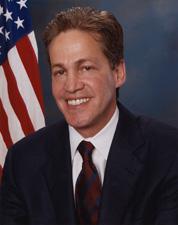 Sen. Norm Coleman (R-MN)
Sen. Norm Coleman (R-MN)Submitted July 12, 2006
Legislative Activity
Stay on top of the latest movement without scrolling through every action
Floor
Latest Action
Senate amendment submitted
July 12, 2006
Text
Submitted
SA 4583. Mr. COLEMAN (for himself and Ms. Collins, Ms. Stabenow, Ms.

[[Page S7428]]

Snowe, and Mr. Jeffords) submitted an amendment intended to be proposed
by him to the bill H.R. 5441, making appropriations for the Department
of Homeland Security for the fiscal year ending September 30, 2007, and
for other purposes; which was ordered to lie on the table; as follows:

Beginning on page 124, strike line 1 and all that follows
through page 126, line 20, and insert the following:
Sec. 538. Section 7209(b) of the Intelligence Reform and
Terrorism Prevention Act of 2004 (Public Law 108-458; 8
U.S.C. 1185 note) is amended to read as follows:
``(b) Passports, Other Travel Documents, and Demonstration
Programs.--
``(1) Development of plan and implementation.--
``(A) In general.--The Secretary of Homeland Security, in
consultation with the Secretary of State, shall develop and
implement a plan as expeditiously as possible to require a
passport or other document, or combination of documents,
including a passport card, deemed by the Secretary of
Homeland Security to be sufficient to denote identity and
citizenship, for all travel into the United States by United
States citizens and by categories of individuals for whom
documentation requirements have previously been waived under
section 212(d)(4)(B) of the Immigration and Nationality Act
(8 U.S.C. 1182(d)(4)(B)). This plan shall be implemented not
later than 3 months after the Secretary of State and the
Secretary of Homeland Security make the certifications
required in subparagraph (B), or June 1, 2009, whichever is
earlier. The plan shall seek to expedite the travel of
frequent travelers, including those who reside in border
communities, and in doing so, shall make readily available a
registered traveler program (as described in section
7208(k)).
``(B) Certification.--The Secretary of Homeland Security
and the Secretary of State shall jointly certify to the
Committee on Appropriations of the Senate and the Committee
on Appropriations of the House of Representatives that the
following criteria have been met--
``(i) the National Institutes of Standards and Technology
has certified that the card architecture meets the
International Organization for Standardization ISO 14443
security standards, or justifies a deviation from such
standard;
``(ii) the technology to be used by the United States for
the passport card, and any subsequent change to that
technology, has been shared with the governments of Canada
and Mexico;
``(iii) an agreement has been reached with the United
States Postal Service on the fee to be charged to an
individual for processing of the passport card, and a
detailed justification has been submitted to the Committee on
Appropriations of the Senate and the Committee on
Appropriations of the House of Representatives;
``(iv) an alternative procedure has been developed for
groups of children traveling across an international border
under adult supervision with parental consent;
``(v) the necessary technological infrastructure to process
the passport cards has been installed, and all employees at
ports of entry have been properly trained in the use of the
new technology;
``(vi) the passport card has been made available for the
purpose of international travel by United States citizens
through land and sea ports of entry between the United States
and Canada, Mexico, the Caribbean, and Bermuda;
``(vii) a single implementation date for sea and land
borders has been established; and
``(viii) a pilot program has been conducted to demonstrate
the effectiveness of the passport card.
``(C) Requirement to produce documentation.--The plan
developed under subparagraph (A) shall require all United
States citizens, and categories of individuals for whom
documentation requirements have previously been waived under
section 212(d)(4)(B) of the Immigration and Nationality Act
(8 U.S.C. 1182(d)(4)(B)), to carry and produce the
documentation described in subparagraph (A) when traveling
from foreign countries into the United States.
``(D) Passport card fees.--
``(i) Limitation on fees.--The application fee for a
passport card under this paragraph shall be as low as
possible and, except as provided in clause (ii), such fee may
not exceed $24.
``(ii) Exception.--

``(I) In general.--The application fee for a passport card
under this paragraph may be not exceed $34 if the Secretary
of State, the Secretary of Homeland Security, and the
Postmaster General jointly certify to Congress that the cost
to produce and issue a passport card significantly exceeds
$24 and provide to Congress a detailed analysis of such cost.
``(II) Audit.--If the fee for a passport card exceeds $24
pursuant to subclause (I), the Comptroller General of the
United States shall conduct an audit to determine whether
passport cards are issued at the lowest possible cost.

``(iii) Reduction of fee.--The fee for a passport card
shall be reduced for an individual who submits an application
for a passport card together with an application for a United
States passport.
``(iv) Waiver of fee for children.--The fee for a passport
card shall be waived for a child under 18 years of age.
``(2) Individuals lacking appropriate documentation.--
``(A) In general.--In addition to the program described in
paragraph (1), the Secretary of Homeland Security shall
establish a program that satisfies the requirements of this
section--
``(i) to permit a citizen of the United States who has not
been issued a United States passport or other appropriate
travel document to cross the international border and return
to the United States within a 72-hour period, on a limited
basis, and at no additional fee; or
``(ii) to establish a process to ascertain the identity of,
and make admissibility determinations for, a citizen
described in subclause (i) upon the arrival of such citizen
at an international border of the United States.
``(B) Grace period.--During a time period determined by the
Secretary of Homeland Security, officers of Department of
Homeland Security may permit individuals who are citizens of
the United States or Canada and who are unaware of the
requirements of this section or who otherwise lacking
appropriate documentation, to enter the United States upon a
demonstration of citizenship satisfactory to the officer and
shall educate such individuals about documentary
requirements.
``(3) State enrollment demonstration programs.--
``(A) In general.--Notwithstanding any other provision of
law, the Secretary of State and the Secretary of Homeland
Security shall enter into a memorandum of understanding with
1 or more appropriate States to carry out at least 1
demonstration program as follows:
``(i) A State may include an individual's United States
citizenship status on a driver's license which meets the
requirements of section 202 of the REAL ID Act of 2005
(division B of Public Law 109-13; 49 U.S.C. 30301 note).
``(ii) The Secretary of State shall develop a mechanism to
communicate with a participating State to verify the United
States citizenship status of an applicant who voluntarily
seeks to have the applicant's United States citizenship
status included on a driver's license.
``(iii) All information collected about the individual
shall be managed exclusively in the same manner as
information collected through the passport application
process and no other distribution or use of such information
shall be permitted.
``(iv) A State may not require an individual to include the
individual's citizenship status on a driver's license.
``(v) Notwithstanding any other provision of law, a
driver's license which meets the requirements of this
subparagraph shall be deemed to be sufficient documentation
to permit the bearer to enter the United States from Canada
or Mexico through not less than at least 1 designated
international border crossing in each State participating in
the demonstration program.
``(B) Authority to expand.--The Secretary of State and the
Secretary of Homeland Security may expand the use of
demonstration programs under this paragraph so that such
program is carried out in additional States, through
additional ports of entry, for additional foreign countries,
and in a manner that permits the use of additional types of
identification documents to prove identity under the program.
``(C) Study.--Not later than 6 months after the date that
the demonstration program under this paragraph is
implemented, the Comptroller General of the United States
shall conduct a study of--
``(i) the cost of the production and issuance of documents
that meet the requirements of the program compared with other
travel documents;
``(ii) the impact of the program on the flow of cross-
border traffic and the economic impact of the program; and
``(iii) the security of travel documents that meet the
requirements of the program compared with other travel
documents.
``(D) Rule of construction.--Nothing in this paragraph
shall have the effect of creating a national identity card.
``(4) Reciprocity with canada.--Notwithstanding any other
provision of law, if the Secretary of State and the Secretary
of Homeland Security certify that certain identity documents
issued by Canada (or any of its provinces) meet security and
citizenship standards comparable to the requirements
described in paragraph (1), the Secretary may determine that
such documents are sufficient to permit entry into the United
States. The Secretary of Homeland Security shall work, to the
maximum extent possible, to ensure that identification
documents issued by Canada that permit entry into the United
States under this subparagraph contain the same technology as
identification documents issued by the United States (or any
State).
``(5) Additional pilot programs.--To the maximum extent
possible, the Secretary of Homeland Security shall seek to
conduct pilot programs related to passport cards issued
pursuant to this subsection and the demonstration programs
described in this subsection at ports of entry located on the
international border between the United States and Canada or
the international border between the United States and
Mexico.
``(6) Expansion of nexus and sentri technology.--The
Secretary of Homeland Security, in consultation with the
appropriate officials of the Government of Canada, shall

[[Page S7429]]

equip at least 6 additional ports of entry located along the
northern international border of the United States with NEXUS
technology and 6 additional ports of entry located along the
southern international border of the United States with
SENTRI technology.
``(7) Boat landing programs.--The Secretary of Homeland
Security shall conduct and expand trusted traveler programs
and pilot programs to facilitate expedited processing of
United States citizens returning from pleasure craft trips in
Canada, Mexico, the Caribbean, or Bermuda. The Secretary
shall conduct one such program in Florida that is modeled on
the Department of Homeland Security's Canadian Border Boat
Landing (I-68) Program.
``(8) Public information.--The Secretary of State, in
consultation with the Secretary of Homeland Security, shall
develop and implement an outreach plan to inform United
States citizens of the initiatives and programs carried out
under this subsection and of the other provisions of this
Act, to facilitate the acquisition of appropriate
documentation to travel to Canada, Mexico, the countries
located in the Caribbean, and Bermuda, and to educate United
States citizens who are unaware of the requirements for such
travel. Such outreach plan should include--
``(A) written notifications posted at or near public
facilities, including border crossings, schools, libraries,
Amtrak stations, and United States Post Offices located
within 50 miles of the international border between the
United States and Canada or the international border between
the United States and Mexico and other ports of entry;
``(B) provisions to seek consent to post such notifications
on commercial property, such as offices of State departments
of motor vehicles, gas stations, supermarkets, convenience
stores, hotels, and travel agencies;
``(C) the collection and analysis of data to measure the
success of the public promotion plan; and
``(D) additional activities that the Secretary of State
determines are appropriate.''.
______