To include information on civil war in Iraq in the quarterly reports on progress toward military and political stability in Iraq.
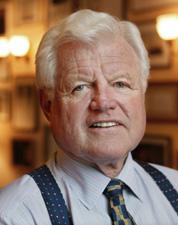 Sen. Edward M. Kennedy (D-MA)
Legislative Activity
Stay on top of the latest movement without scrolling through every action
Roll call votes on amendments in Senate: Motion to table amendment SA 4885 agreed to in Senate by Yea-Nay Vote. 54 - 44. Record Vote Number: 233.
September 6, 2006
View full timeline
Roll call votes on amendments in Senate: Motion to table amendment SA 4885 agreed to in Senate by Yea-Nay Vote. 54 - 44. Record Vote Number: 233.
September 6, 2006
Considered by Senate. (consideration: CR S8992, S9030-9034)
September 6, 2006
Motion to table amendment SA 4885 agreed to in Senate by Yea-Nay Vote. 54 - 44. Record Vote Number: 233.
September 6, 2006
Senate amendment submitted
September 5, 2006
Senate amendment proposed (on the floor): Amendment SA 4885 proposed by Senator Kennedy.
September 5, 2006
Amendment SA 4885 proposed by Senator Kennedy. (consideration: CR S8922-8926; text: CR S8923) To include information on civil war in Iraq in the quarterly reports on progress toward military and political stability in Iraq.
September 5, 2006
Votes
1 roll call on this amendment
Text
Proposed
DEPARTMENT OF DEFENSE APPROPRIATIONS ACT, 2007--Continued

Mr. STEVENS. What is the pending business?
The PRESIDING OFFICER. The Defense appropriations bill is pending.
Mr. STEVENS. May I ask what the Senator from Virginia intended to do?
Mr. ALLEN. Mr. President, I wanted to call up amendment No. 4883. I
was waiting for our chairman to be here, and ask I be recognized to
offer this amendment. It will take approximately 5 or 6 minutes to
offer the amendment.
Mr. STEVENS. I might say to my friend from Virginia, when we left
this bill, the understanding was Senator Kennedy's amendment would come
first. We will be happy to have the Senator offer his amendment with
the understanding it will come up after the amendment of Senator
Kennedy, if that will be agreeable to Senator Kennedy?
Mr. KENNEDY. That is fine.
Mr. STEVENS. Is Senator Kennedy's amendment the pending amendment?
The PRESIDING OFFICER. There is no amendment pending.
Mr. KENNEDY. I have it ready to send to the desk.
Mr. STEVENS. I yield the floor to have the Senator propose his
amendment and then Senator Allen propose his amendment and we will come
back to his amendment.
The PRESIDING OFFICER. The Senator from Massachusetts is recognized.

Amendment No. 4885

Mr. KENNEDY. Mr. President, I send an amendment to the desk on behalf
of myself and our Democratic leader, Senator Reid.
The PRESIDING OFFICER. The clerk will report the amendment.

[[Page S8923]]

The legislative clerk read as follows:

The Senator from Massachusetts [Mr. Kennedy], for himself
and Mr. Reid, proposes an amendment numbered 4885.

Mr. KENNEDY. I ask unanimous consent the reading of the amendment be
dispensed with.
The PRESIDING OFFICER. Without objection, it is so ordered.
The amendment is as follows:

(Purpose: To include information on civil war in Iraq in the quarterly
reports on progress toward military and political stability in Iraq)

On page 235, between lines 2 and 3, insert the following:
(E) A determination by the Secretary of Defense, in
consultation with the Secretary of State, as to whether there
is a civil war in Iraq.
(F) A description of the criteria underlying the
determination in subparagraph (E) of the Secretary of
Defense, in consultation with the Secretary of State, as to
whether there is a civil war in Iraq, including--
(i) an assessment of levels of sectarian violence and an
estimate of civilian casualties as a result of sectarian
violence;
(ii) the numbers of civilians displaced;
(iii) the degree to which government security forces
(including the army, police, and special forces) exercise
effective control over major urban areas;
(iv) the extent to which militias are providing security;
(v) the extent to which militias have organized or
conducted hostile actions against the United States Armed
Forces and Iraqi security forces;
(vi) the extent to which the Government of Iraq has
developed and is implementing a credible plan to disarm,
demobilize, and reintegrate militias into government security
forces; and
(vii) the extent to which the Government of Iraq has
obtained a credible commitment from the political parties to
disarm and disband the militias.
(G) If the Secretary of Defense, in consultation with the
Secretary of State, determines pursuant to subparagraph (E)
that there is not a civil war in Iraq, the following
information (in unclassified format):
(i) A description of the efforts by the United States
Government to help avoid civil war in Iraq.
(ii) The strategy of the United States Government to
protect the United States Armed Forces in the event of civil
war in Iraq.
(iii) The strategy of the United States Government to
ensure that the United States Armed Forces will not take
sides in the event of civil war in Iraq.
(iv) The progress being made by the Government of Iraq in
disarming or demobilizing militias or reintegrating militias
into government security forces.
(H) If the Secretary of Defense, in consultation with the
Secretary of State, determines pursuant to subparagraph (E)
that there is a civil war in Iraq, the following information
(in unclassified format):
(i) A statement of the mission and duration of United
States Armed Forces in Iraq.
(ii) The strategy of the United States Government to
protect the United States Armed Forces while they remain in
Iraq.
(iii) The strategy of the United States Government to
ensure that the United States Armed Forces will not take
sides in the civil war.

Mr. KENNEDY. Mr. President, as suggested by the Senator from Alaska,
I am glad to yield without losing my rights. I yield to the Senator
from Virginia so he may offer his amendment. As I understand it, there
is an agreement to dispose of it.
Is it the understanding of the Senator from Virginia that they are
going to accept the amendment of the Senator from Virginia?
Mr. ALLEN. I say to the Senator from Massachusetts, I hope that
Senator Stevens and the committee will accept my amendment. I would not
want to speak for them. But I surely so urge them. I think our body
would support it. It is a very good amendment to help out in the
funding for our soldiers, the men and women who come back with head
injuries.
Mr. KENNEDY. Mr. President, I have no objection, obviously, to--
Mr. STEVENS. If the Senator will yield without losing his right to
the floor?
Mr. KENNEDY. Yes.
Mr. STEVENS. It is our intention to suggest to the Senator from
Hawaii, when he arrives, that we accept this amendment of the Senator
from Virginia, but we don't accept amendments without bipartisan
approval so I would appreciate it if the Senator will discuss his
amendment after Senator Kennedy has discussed his and we will await an
opportunity to discuss it with the Senator from Hawaii.
Mr. KENNEDY. Mr. President, I have not had a chance to see the
amendment of the Senator from Virginia that deals with head injuries.
There is also an amendment, I believe, from the Senator from Illinois,
Mr. Durbin, on this subject as well. It is a matter of enormous
importance and consequence. Hopefully, our committees will take action
to deal with it at an appropriate time.
Mr. President, next week marks the fifth anniversary of the vicious
attack on America by al-Qaida terrorists.
Despite the passage of time, Americans still vividly recall with
enormous pain and sorrow that dark and somber day. We recall the nearly
3,000 Americans who were killed by al-Qaida terrorists. We recall the
brave firefighters and first responders who sacrificed their lives so
that others could live. We recall the twin towers crumbling before our
eyes, and the Pentagon ablaze beneath a plume of smoke. And we recall
the pledge by the administration and all Americans that this type of
attack will never, ever occur again.
As we approach this anniversary, there is little doubt that the
President will, once again, resort to the politics of fear in an effort
to convince the American people that the Iraq war is central to the
Global War on Terror.
Nothing is further from the truth. Scare tactics may have worked in
the elections of 2002 and 2004, but this time, the American people know
better.
The American people know that the war in Iraq was a distraction from
the real Global War on Terror and that Iraq had nothing to do with al-
Qaida.
The American people know that America should have kept its eye on the
ball and captured Osama bin Laden--rather than rushing headlong into a
war that we did not need to fight.
The American people know that the administration should have
implemented fully the recommendations of the 9/11 Commission to protect
our ports and support our first responders--rather than spending more
than $200 million each day on a failed policy in Iraq.
The American people know that the war in Iraq has made Americans more
hated in the world, created more terrorists, and made it harder to win
the real Global War on Terror.
The American people know that while we have been bogged down in Iraq,
North Korea's nuclear stockpile has quadrupled and Iran has continued
its pursuit of nuclear weapons.
The American people know that we never should have gone to war in
Iraq when we did, and for the false reasons we were given.
Most importantly, the American people know that the President's
stubborn insistence that we ``stay the course'' does not make victory
any more likely and that we need to change our policy in Iraq.
At almost every stage of the Bush administration's conduct of the war
in Iraq, we have seen major miscalculations and serious mistakes that
place our troops at greater risk and jeopardize America's standing in
the world.
Military leaders and retired generals know it. Middle East experts
know it. Our allies know it. Both Democrats and Republicans in Congress
know it. And most important, the American people know it.
They saw it when the Bush team disbanded the Iraqi Army after the
fall of Saddam but allowed thousands to walk away with their weapons.
They saw it when the Bush administration waited a full year to begin
training the new Iraqi security forces.
They saw it when the White House failed to see the insurgency
spreading like a cancer through Iraq.
They saw it when the Bush team failed to see the danger of roadside
bombs and improvised explosive devices yet sent our troops on patrol
day after day, month after month, year after year.
They saw it when the White House failed to provide proper armor for
our troops, until Congress finally demanded it.
Unfortunately, the administration's repeated failure to see each new
threat in Iraq has put our troops and our security in greater peril.
Today, once again, the administration refuses to recognize another
seismic shift in Iraq--the dangerous prospect that we are drawn into a
deadly and divisive civil war.
While the President and Dick Cheney and Donald Rumsfeld are on the
campaign trail claiming progress in Iraq, military leaders and experts
are urging the White House to heed the disturbing warning signs in
Iraq.

[[Page S8924]]

The President and his cabinet may not believe the fears of civil war
are justified, but some of our military leaders do. General Rick
Sanchez, former commander of the multi-national forces in Iraq, said as
long ago as January 7, ``The country's on the verge of a civil war.''
General Peter Pace, Chairman of the Joint Chiefs of Staff, said on
March 13 that, ``Everything is in place if they want to have a civil
war.''
Our Ambassador to Iraq, Zalmay Khalilzad, is concerned about the
threat as well. On March 7, he said, ``The potential is there'' for
sectarian violence to become civil war. ``We have opened the Pandora's
box and the question is, what is the way forward?''
General Abizaid acknowledged the clear danger when he told the Senate
Armed Services Committee on August 3, ``I believe that the sectarian
violence is probably as bad as I've seen it, in Baghdad in particular,
and that if not stopped, it is possible that Iraq could move towards
civil war.''
General Pace, at the same hearing, agreed about the threat of civil
war. He said, ``I believe that we do have the possibility of devolving
to a civil war, but that does not have to be a fact.''
Others think that a civil war may have already begun. Former Iraqi
Prime Minister Allawi said in March that Iraq is probably in ``an early
stage of civil war.''
The British Ambassador to Iraq wrote in August, ``The prospect of a
low intensity civil war and a de facto division of Iraq is probably
more likely at this stage than a successful and substantial transition
to a stable democracy.
Our colleague from Nebraska, Senator Chuck Hagel, concurred, saying,
in August that ``We, in fact, are in probably a low grade, maybe a very
defined, civil war.''
General William Nash, who commanded our troops in Bosnia after that
country's civil war ended, stated on March 5, ``We're in a civil war
now; it's just that not everybody's joined in.'' He said, ``The failure
to understand that the civil war is already taking place, just not
necessarily at the maximum level, means that our counter measures are
inadequate and therefore dangerous to our long-term interest.''
These leaders see what's really happening in Iraq--not just the White
House spin.
They know that the polarization of communities along sectarian lines
is increasing. In fact, 80 percent of the Iraqi people voted along
sectarian lines in the recent elections.
Civilian casualties as a result of sectarian violence have
skyrocketed. According to the United Nations, 5,800 civilians were
killed during May and June of this year and another 5,800 were wounded.
An estimated 100 people a day were killed in Baghdad in July. Militia
attacks continue unabated. The Shiite militia forces are growing in
strength. The widespread infiltration of government security forces by
those whose principal loyalty is to their sectarian militias, not the
government, is well documented. Interior ministry detention centers
have been used to torture inmates just because they are Sunnis. Too
often we hear that men wearing Interior ministry uniforms have abducted
Sunni men and boys, who later turn up dead.
The numbers of civilians displaced or fleeing the violence is
increasing as Shiites are forced from Sunni areas and Sunnis from
Shiite areas. According to the United Nations, approximately 150,000
Iraqis had been displaced as of June.
Despite these trends and the warnings of the experts, President Bush
stubbornly continues to deny that civil war is even a real possibility
in Iraq.
Last December, he said, ``I know some fear the possibility that Iraq
could break apart and fall into a civil war. I don't believe these
fears are justified.''
The President reiterated the same view on February 28 when he said,
``I don't buy your premise that there's going to be a civil war.''
Again in March, President Bush dismissed the notion, saying, ``They
know that they lack the military strength to challenge Iraqi and
coalition forces directly--so their only hope is to try and provoke a
civil war . . . By their response over the past two weeks, Iraqis have
shown the world they want a future of freedom and peace--and they will
oppose a violent minority that seeks to take that future away from them
by tearing their country apart.''
In August, President Bush still denied that there was a civil war. He
said, ``You know, I hear people say, well, civil war this, civil war
that The Iraqi people decided against civil war when they went to the
ballot box.'' Again, on August 21, he said, ``You know, I hear a lot of
talk about civil war. I'm concerned about that, of course. And I've
talked to a lot of people about it. And what I've found from my talks
are that the Iraqis want a unified country and that the Iraqi
leadership is determined to thwart the efforts of the extremists and
the radicals and al Qaida and that the security forces remain united
behind the government.''
For a third time, on August 31, the President denied the possibility
of civil war. He said, ``This cruelty and carnage has led some to
question whether Iraq has descended into civil war. Our commanders and
our diplomats on the ground in Iraq believe that's not the case. They
report that only a small number of Iraqis are engaged in sectarian
violence, while the overwhelming majority want peace and a normal life
in a unified country.''
I just wish the President would take a little time to read this
report that was put out by the Department of Defense, on Stability and
Security in Iraq.
I come back to that in a few moments.
Vice President Cheney, too, has long denied the possibility of civil
war. On March 19, he stated, ``What we've seen is a serious effort by
them to foment civil war, but I don't think they've been successful.''
Secretary Rumsfeld dismisses it as well. In March he said, ``I do not
believe they are in a civil war.''
That same month, Secretary Rumsfeld said, ``The terrorists are
determined to stoke sectarian tension and are attempting to spark a
civil war. But despite the many acts of violence and provocation, the
vast majority of Iraqis have shown that they want their country to
remain whole and free of ethnic conflict.''
In April, he said, ``I don't think a full-fledged civil war will take
hold of the country.''
In May, in an eerie echo of the past, when asked what political and
military contingences would be in place if a civil war occurred,
Secretary Rumsfeld responded, ``I don't think the scenario that you
have described is going to happen, but life's filled with things you
don't think are going to happen.''
That's vintage Rumsfeld. ``Stuff happens,'' he said, in response to
the chaos that erupted in Baghdad after the first days of the invasion,
as though no one could have anticipated such a possibility and it made
no sense to waste time planning for such possibilities. That attitude
has plagued our forces and our country throughout this misguided war,
and it must stop.
This, July, as the situation took another turn for the worse, he
said, ``There certainly has been an upsurge in sectarian violence;
there's no question but that they're trying to incite a civil war. And
they have been for a long time, and they have failed so far.''
Secretary Rice also refuses to see the possibility of civil war in
Iraq. In February, she said, ``I don't think there is a brewing civil
war in Iraq.'' Despite the escalating casualties and increasing
sectarian violence, on August 4 she said, ``I don't think Iraq is going
to slide into civil war.'' Two days later she repeated the claim and
said, ``But the important point here is that Iraqis haven't made a
choice for civil war. Iraqis have made a choice for a unified
government that can deliver for all Iraqis. And when I say Iraqis, I
mean not just their leadership, which clearly has not made a choice for
civil war, but their population.''
On the same day she again denied the possibility of civil war,
stating, ``It would be really erroneous to say that the Iraqis are
somehow making a choice for civil war, or I think even sliding into
civil war.''
That's what the Bush team is claiming. They are so focused on the
spin war on the campaign trail that they fail to see the real war in
Iraq. They are so focused on using the war to win elections here at
home that they fail to see the real needs of our troops in Iraq.
But this time, the American people aren't buying it. They've heard it
all

[[Page S8925]]

before and are demanding honest assessments and realistic strategies.
They know that the President and Dick Cheney and Donald Rumsfeld can
say it's not a civil war, but that doesn't make it so. They know that
our brave men and women in uniform are doing everything they can to
bring peace and stability in Iraq. They continue to fight insurgents
and terrorists, but are at grave risk of being trapped in the middle of
an unwinnable civil war.
That is why I am offering this amendment today with the Democratic
leader. It requires the administration through the Secretary of Defense
and the Secretary of State to provide an honest and candid assessment
of the extent to which Iraq is now in a state of civil war. And even
more important, the amendment requires them to say what we are going to
do about it. How are we going to advance America's interests in Iraq in
a time of civil war? How are we going to protect our troops from
getting drawn ever deeper into an endless sectarian conflict?
An article in Newsweek magazine on August 14 indicates that although
the Bush administration insists that Iraq is a long way from civil war,
some inside the White House and the Pentagon have begun some
contingency planning.
The administration should level with the American people about the
real conditions and their planning.
And that's the purpose of our amendment today.
The amendment requires the Secretary of Defense, in consultation with
the Secretary of State, to determine every 3 months whether a civil war
is taking place and to inform Congress of the plan for our troops in
the event of such a war.
For each determination, the Secretary of Defense and the Secretary of
State will provide their assessment of the levels of sectarian violence
such as the level of polarization of communities along sectarian lines
and an estimate of civilian casualties as a result of the violence; the
number of civilians displaced by the violence; the degree to which
Iraqi government forces exercise effective control over major urban
areas; the extent to which militias have been mobilized, are providing
security, and attacking other Iraqis; and the extent to which the
Government of Iraq has obtained a credible commitment from the
political parties to disarm and disband the militias and are
implementing a credible plan to disarm, demobilize and reintegrate
militias into government security forces.
If the administration determines that Iraq is not in a civil war, the
amendment requires a description of the efforts by our government to
avoid civil war in Iraq, a plan to protect our troops in the event of a
civil war, and a strategy to ensure that our troops don't take sides.
If the determination is that Iraq is in a civil war, the amendment
requires the Secretary of Defense to explain the mission of our troops
and its duration, his plan to protect our troops, and a strategy to
ensure that they don't take sides in a civil war.
The amendment is needed to ensure proper planning in the event of
civil war.
The trends in Iraq are discouraging and certainly point toward civil
war.
Indeed, the September 1 report prepared by the Department of Defense
on Stability and Security in Iraq reaffirms what the American people
already understand: the conditions of civil war exist, violence in Iraq
is spiraling out of control and staying the course is not a viable
option.
The Department of Defense report says that concern about civil war
within the Iraqi civilian population and among some defense analysts
has increased in recent months. Conditions that could lead to civil war
exist in Iraq;
Rising sectarian strife defines the emerging nature of violence in
mid-2006;
Sustained ethnic and sectarian violence is the greatest threat to
security and stability in Iraq;
Sectarian tensions increased over the last three months, demonstrated
by the increasing number of executions, kidnappings, attacks on
civilians, and internally displaced persons;
Civilian casualties increased by approximately 1000 per month since
the previous quarter. Assassinations in particular reached new highs in
the month of July. The Baghdad Coroner's Office reported 1600 bodies
arrived in June and more than 1800 bodies in July, 90 percent of which
were assessed to be the result of executions;
Sectarian violence is gradually spreading north into Diyala Province
and Kirkuk as Sunni, Shiite, and Kurdish groups compete for provincial
influencey;
Both Shia and Sunni death squads are active in Iraq, and are
responsible for the most significant increases in sectarian violence;
Militias and small, illegally armed groups operate openly and often
with popular support. The threat posed by Shiite illegal armed groups,
filling perceived and actual security vacuums, is growing;
The security situation is currently at its most complex state since
the initiation of Operation Iraqi Freedom. Overall attack levels are
higher than the last three months. The average number of weekly attacks
increased 15 percent and Iraqi casualties increased by 51 percent
compared.
These facts are at odds with the administration's statements about
civil war. Sectarian divisions are increasing. Mlilitia violence and
death squad activity are increasing. The number of Iraqis fleeing the
violence is increasing. Yet, the President continues to deny the
possibility of civil war. The Vice President, Secretary of Defense and
Secretary of State continue to deny it. As long as the administration
continues to deny the plain truth, America will be behind the curve and
unable to adjust to the current realities on the ground and protect our
troops.
Instead of attacking those who want to change our course, President
Bush ought to deal with the hard cold facts. This Defense Department
report underscores the fundamental truth that our brave troops are
being let down by an administration more interested in political spin
than in finding a way to succeed.
The administration needs to look at all the facts and honestly
address the question of civil war for the sake of our military and the
American people.
This legislation creates a continuing obligation to ensure that
analysis on civil war is done regularly. Unfortunately, this is
necessary, because the Congress has forced the administration to step
up to the plate on Iraq time and again.
The facts in the report say one thing about civil war, but the
conclusion about civil war says another. We need an honest assessment
from the Secretaries of Defense and State about the conditions on the
ground, and that is what the Kennedy-Reid amendment would require. We
also need some hard thinking within the administration and a clear plan
to protect our troops in a civil war.
At every step of the way, this administration has missed the threat
to our troops, and Democrats in Congress have had to force the issue.
The Democrats in Congress have had to force the issue:
We had to require accounting of progress being made to train Iraqi
troops so our soldiers can begin to come home.
We provided over $1 billion in additional funding for vehicle armor
to upgrade the armor on Humvees.
We are demanding an updated National Intelligence Estimate on Iraq
because the administration has failed to provide one in more than 2
years.
We provided more than $175 million for democracy programs in Iraq
when the Bush administration's budget did not provide it.
We need an honest accounting of the situation so we can adjust
accordingly and protect our troops. And we need a plan to protect our
troops. The President's stubborn insistence on staying the course
impedes success.
Our soldiers and the American people deserve more from the
administration. Together, the Secretary of Defense and Secretary of
State need to set the White House's political agenda aside and directly
and thoughtfully address this ominous threat.
The administration acts as if the mere discussion of civil war is
defeatist. They have it exactly backwards. This amendment is an effort
to make sure that the administration confronts and deals with the facts
on the ground in Iraq and recognizes the emerging threat before it
consumes our troops.

[[Page S8926]]

This is the only way to achieve any measure of success. For too long,
the Bush administration has pursued policies that have failed utterly
to carry the day in Iraq and have made America less safe.
Unfortunately, this administration has decided that domestic politics
require that it stay this failed course through November, and so they
have refused to confront the facts in Iraq. Instead, they have chosen
political spin, false claims of progress, and baseless attacks on those
who focus on the reality of the situation.
We must do better. This administration owes it to the American
people. Even more importantly, dealing with reality is essential and
necessary to protect the lives of our brave soldiers.
Iraq's future and the lives of our troops are close to the precipice
of a new disaster. The time bomb of civil war is ticking, and our most
urgent priority is to defuse it.
Our Government should work to reverse the downward spiral. And Iraqi
leaders must make essential compromises to strengthen their government,
prevent civil war, undermine the insurgency, and deal with the
festering problem of militias.
For the sake of our men and women in uniform and the stability of
Iraq, all Americans are anxious for success, but we need to be
realistic enough and smart enough and humble enough to understand that
even our best efforts may not prevent a civil war from overtaking
events in Iraq.
We need to begin planning now for this possibility. That's what this
amendment requires.
Such planning is not an admission of defeat. It is essential and
necessary for protecting the lives of our service men and women in
Iraq, who are performing so admirably today under such enormously
difficult circumstances.
Mr. President, I will not include this whole report in the Record--it
is 63 pages--but I will reference it.
Mr. STEVENS. I made arrangements to put a copy of the report on every
Senator's desk by tomorrow morning.
Mr. KENNEDY. I appreciate that. During the course of the week,
individuals may quote from it, as I did earlier today and may again. I
will not ask that it be printed in the Record, but it should be
available for anyone concerned about the debate on Iraq. It is an
enormously important document and is a ``must read'' for every Member
of Congress--certainly for the American people--to have a real
understanding of what we are facing in that country.
I yield the floor.
Mr. STEVENS. Mr. President, the Senator from Virginia will offer his
amendment, so I will not take much time now. I will respond to the
Senator from Massachusetts.
I have just returned from being present when the President of the
United States made a tremendous statement about the situation in Iraq
and the world in terms of the war on terror. My view of the situation
is much different from the Senator from Massachusetts. I read this
report that is before the Senate now as being an up-to-date analysis of
the situation that exists now.
I sometimes wonder what would have happened in Korea if, after some
of the major losses in Korea, the Senate had decided we ought to ask
the Truman administration to make more reports, produce more reports,
require analysis of what was going on, and have hearings.
We are about in the same situation. This report does conclude--that
is why I think everyone should read it--the concerns over civil war
that are expressed. It says that notwithstanding this concern, there is
generally no agreed-upon definition of civil war among academics or
defense analysts. Moreover, the conflict in Iraq does not meet the
stringent international legal standards for civil war.
That is a situation of the statement that exists now. To require
another set of reports when we get these every quarter is unwarranted.
This was released September 1. We will get another one the first of
January. We do not have to have an amendment to do this.
However, as we discussed, it may be possible to take this amendment
to conference and work it out so we get some ideas. If they want
additional information in the next report, we can arrange that;
however, it does not have to be a conflict. It does not have to have as
much political rhetoric, I say to my friend from Massachusetts. I am a
little bit tired of political rhetoric concerning this conflict, which
is a global conflict against terror. It is more than the war against
Iraq, against Saddam Hussein. There is no question about that. I urge
the Senator to read the President's speech today, the quotes he has
given to us from the President of Iran, from the people involved with
Hezbollah, from the people involved in the various dissident factions
throughout the world that are demanding we surrender to them, that we
kneel down before them and accept defeat. This Senator is not ready for
that kind of rhetoric to come to this Senate. I hope it does not.
Mr. KENNEDY. Will the Senator yield for a question?
Mr. STEVENS. I am happy to do that, yes.
Mr. KENNEDY. In my remarks, I said we ought to have kept our eye on
the ball, which was al-Qaida and the terrorists, and not gone into
Iraq.
As the President of the United States knows, there were no weapons of
mass destruction in Iraq. As the 9/11 Commission reported, there was no
connection between Iraq and al-Qaida's attack on this country.
So we have a rush to war. Instead of focusing on the problems of al-
Qaida, North Korea and Iran, we are now mired in a war in Iraq.
The Senator is making my point. We should have focused on the dangers
of Iraq. That is a completely different situation than in Korea when
the Chinese Communists crossed the river. There was a real issue in
terms of our national security. The case has was not made that Iraq
posed a threat to our national interest or security. That case was not
made in the Senate. And the arguments that were made were inaccurate.
Mr. STEVENS. I still have the floor.
Mr. KENNEDY. All right.
Mr. STEVENS. I will be glad to debate the Senator any time.
Again, I urge the Senator to read the President's statement before he
criticizes it. The President has made a very significant statement
today of where we are. He will make another statement tomorrow.
I have looked at the report. Every Senator should look at it. We
should decide whether there is a deficiency. If there is, we will be
glad to take the amendment to conference and try to work out some
language that will not be political rhetoric. I sense it is political
rhetoric, I say to my friend from Massachusetts. I hope it does not get
that far. It is still a war against terror.
Our job ought to be to get this bill passed so we can get the money
to these people for sure by October 1. The longer this bill is delayed,
the more trouble our people in uniform are going to have. I have been
arguing that now for a month. There is no question this bill has to be
signed by September 30.
I am not going to prolong this by debating politics in the Senate. I
will say we will do our best to take as many amendments as we can to
conference and try to work out something that will meet with the
agreement of the Congress as a whole so we can get this bill signed.
I yield the floor. We have an agreement that the Senator will be able
to propose his amendment.
The PRESIDING OFFICER (Mr. Coleman). The Senator from Virginia.

Amendment No. 4883, as Modified

Mr. ALLEN. Mr. President, I call up my amendment, No. 4883, and I
send a modification to the desk and I ask the reading of the amendment
be dispensed with.
The PRESIDING OFFICER. Without objection, it is so ordered.
The clerk will report the amendment by number.
The legislative clerk read as follows:

The Senator from Virginia [Mr. Allen] proposes an amendment
numbered 4883, as modified.

The amendment is as follows:

(Purpose: To make available from Defense Health Program up to
$12,000,000 for the Defense and Veterans Brain Injury Center)

At the end of title VIII, add the following:
Sec. ___. Of the amount appropriated or otherwise made
available by title VI under the heading ``Defense Health
Program'', $19,000,000 shall be available for the Defense and
Veterans Brain Injury Center.

[[Page S8927]]

Mr. ALLEN. Mr. President, I am proposing an amendment to provide an
additional $12 million that shall be available to the Defense and
Veterans Brain Injury Center and centers all across our country.
We are in the midst of a war against terrorist organizations. They
are vile. They are hate filled. They are al-Qaida, they are Hezbollah,
Islamic Jihad, Hamas, and a variety of different organizations. The
battlefronts are all over the world. We have troops deployed in Iraq.
We have troops in Afghanistan. Our friends and allies are having to
fight Hezbollah, a puppet surrogate of Iran. These terrorists have hit
all over the world. They have hit, obviously, in Iraq and Afghanistan.
They have hit in Israel. They have hit in Jordan. They have hit in
India, the Philippines, Indonesia, Spain, and London. They are still
trying to hit us. Fortunately, the British intercepted airplanes that
would be used in another terrorist attack.
They use a lot of different devices in this war. They use bombs and a
variety of IEDs. They use rocket-propelled grenades. They use land
mines. I was talking to a woman from Afghanistan a couple weeks ago. I
asked for her perspective of Afghanistan. She said that things are
better, but the terrorists are hitting schools.
I asked: Why are they hitting schools?
And she said: Because we are educating women in Afghanistan, and from
the al-Qaida/Taliban point of view, women are not to be educated.
Our service men and women are serving very courageously in Iraq and
Afghanistan and other places in the world. They deserve to have the
best possibile equipment when they go into battle or into dangerous
combat zones. We need to make sure our troops are outfitted with the
best body armor, the most technologically advanced armaments, weapons,
and communication devices that are possible so that they are safe and
that we can defeat these terrorist enemies.
The same principles apply when our brave men and women return home
from the theaters of war. We need to make sure our servicemembers
receive the best possible medical care for any injuries that may have
arisen while they were in these combat zones. We need to make sure our
soldiers receive the proper mental health treatment to deal with any
issues of post-traumatic stress disorder or appropriate counseling to
help adjust back into civilian life.
For those soldiers returning home with an injury, we need to make
sure our medical treatment facilities have sufficient funding and also
the professional services and the most up-to-date technology so our
servicemembers receive the quality care they deserve.
One of the more prevalent injuries in Iraq right now for our soldiers
is traumatic brain injuries. According to the National Institute of
Neurological Disorders and Stroke, a traumatic brain injury occurs when
a sudden trauma causes damage to the brain. Traumatic brain injury can
result when the head suddenly and violently hits an object or when an
object pierces the skull and enters brain tissue.
According to the Office of the Surgeon General of the Army, 64
percent of soldiers recently wounded in Operation Iraqi Freedom
sustained blast injuries, which are the leading cause of traumatic
brain injuries for Active-Duty military personnel in war zones. These
blast injuries are the result, as I said earlier, of RPGs, rocket-
propelled grenades, or IEDs, otherwise known as or short for improvised
explosive devices, and also landmines.
Soldiers, I say to the Presiding Officer and my colleagues, suffering
injuries from these devices require specialized care from providers
with experience in treating traumatic brain injuries. One of the key
components of this care is the Defense and Veterans Brain Injury
Center, which is located at Walter Reed Army Medical Center--the site
that receives more casualties from theaters of operations than any
other military treatment facility.
The Defense and Veterans Brain Injury Center provides state-of-the-
art medical care, innovative clinical research initiatives, and
educational programs on traumatic brain injury to assist Active-Duty
servicemembers and veterans. The Brain Injury Center is actually a
multisite medical care facility with operations in California, Texas,
Florida, Minnesota, North Carolina, and in my home Commonwealth of
Virginia. In Virginia, the Hunter Holmes McGuire VA Medical Center
serves as a national referral center for traumatic brain injury cases
and other diseases. They partner with Virginia Commonwealth University
in Richmond to provide the best quality service for treatment and
recovery, as well as research. And I suspect the facilities in other
States, probably provide similar services. I just know very much about
the McGuire facility in Richmond and also the Walter Reed site and have
seen the expert staff as they review the daily incoming casualty
reports and identify the patients who have sustained injuries caused by
blasts or falls or other incidents. They have evaluated and treated
hundreds of patients.
These centers really do provide outstanding specialized care, such as
rehabilitation--for speech and physical rehabilitation--and education.
These patients need to be helped to return to the highest possible
level of function.
These centers are performing a very admirable job and doing the best
they can; however, we need to make sure, whether it is McGuire in
Richmond, whether it is Walter Reed, or one of these facilities in
Minnesota or Florida or Texas or California or North Carolina--this
work I have seen at these centers, at least at McGuire in Richmond and
Walter Reed, are providing great services. I can tell you firsthand, by
the way, how the soldiers are reacting to it and also the response from
family members who are seeing slow but steady progress for many of
their loved ones. They greatly appreciate it.
That is why I am offering this amendment, to make available from the
Defense Health Programs an additional $12 million, which would increase
it from $7 million to $19 million--an additional $12 million in funding
that shall be available to the Defense and Veterans Brain Injury
Centers for this work, including blast mitigation.
It is my view this is the least we should do. This is exactly what we
should be trying to do to help our men and women who are bravely
sacrificing so much to protect our freedom at home while trying to
advance freedom for other people around the world.
George Washington cautioned that ``the willingness of future
generations to fight for their country, no matter how just the cause,
will be proportional to how they perceive previous veterans are
treated.'' This amendment is a long step forward--a long step forward--
in that direction, and I strongly urge my colleagues in the Senate to
support my amendment, as modified.
I understand other colleagues apparently share my concerns about the
adequacy of such needed funding for brain injury services. I hope the
Senator from Illinois, who I know shares my views on this issue, and
other Senators on both sides of the aisle--that we could work together
in a bipartisan manner to get this job done, to make sure we effectuate
this bipartisan solution for this very pressing need to make sure those
who have brain injuries--head trauma and injuries from blasts--whether
in Afghanistan, whether in Iraq, or anywhere else in combat zones--to
make sure they have the right treatment.
We have the professionals in this country, but we need to make sure
they have adequate funding for this clear and present need.
Mr. President, I yield the floor.
The PRESIDING OFFICER. The Senator from Alaska.
Mr. STEVENS. Mr. President, I would ask the Senator to allow me to
become a cosponsor. I hope the Senator from Illinois will, also. We had
a little disagreement before about funding in this area, but I have no
disagreement with the necessity for funds, particularly after a report
we received just this August on the nature and extent of these matters.
I think this money is needed. So I would be willing--and I think the
Senator from Hawaii will have no objection to this--I would be pleased
to----
Mr. KENNEDY. Will the Senator yield for a question?
Will the Senator from Virginia just yield for a question?
Mr. ALLEN. I would be pleased to yield.
Mr. STEVENS. Mr. President, I have the floor, for just a second, if I
may. I

[[Page S8928]]

would urge Senator Durbin, if he will, to join us. Again, it is a
matter of expediting our bill. I know he has an amendment, too. But I
believe the numbers are the same and the intent is the same, and we
should all cosponsor it, as far as I am concerned.
I yield the floor.
Mr. KENNEDY. I was just asking the Senator how this is different from
the Durbin amendment. I note the Senator was in the Chamber earlier.
How is this amendment different? I was a cosponsor of his amendment.
Mr. ALLEN. I would have to look at the details. That is why I
mentioned the Senator from Illinois, and I and others, I think, share
the same concern. The main point, the main concern--which is making
sure the professional services were there, the adequacy of the devices,
the adequacy of the health care professionals--I think was actually
fairly identical. I have not looked at the measure of the Senator from
Illinois. It appears that we are going down the same stream, in the
same direction.
Mr. STEVENS. If the Senator will yield for a question?
Mr. ALLEN. Yes.
Mr. STEVENS. I believe the main difference was the amendment of the
Senator from Virginia said ``may'' and the amendment of the Senator
from Illinois said ``shall'' in terms of the $19 million. And you have
used the word ``shall'' from the amendment of the Senator from
Illinois, have you not?
Mr. ALLEN. Yes, as modified. Thank you. However, the point is it is
$19 million, and it shall be appropriated for this function.
Mr. KENNEDY. So you have accepted what was in the Durbin amendment;
that is, that shall be spent?
Mr. ALLEN. The point is, my amendment was going to be $19 million
regardless. And my view was, we needed added funding, and this will
make it absolutely clear.
Mr. KENNEDY. I thank the Senator because I was a cosponsor. I did not
pay close attention to the presentation, but I was a cosponsor of
Senator Durbin's amendment, as I understand, as printed. And listening
to the Senator from Virginia, it appears it is virtually identical to
what the Senator from Illinois had proposed. I am glad we will have an
opportunity to take action on it.
Mr. ALLEN. I would say, Mr. President, to the Senator from
Massachusetts, this is an opportunity for all of us to come together in
a bipartisan fashion. I know one of the occasions when I was at Walter
Reed Hospital the Senator from Massachusetts was there at the same
time. And we see the outstanding work the professionals provide for
those men and women who have been injured.
This is one issue where I believe all Americans, regardless of party,
regardless of region, need to come together to make sure funding is
there.
I thank the Senator from Massachusetts.
The PRESIDING OFFICER. The Senator from Alaska.
Mr. STEVENS. Mr. President, was my request to be added as a cosponsor
to the amendment granted?
The PRESIDING OFFICER. Without objection, it is so ordered.
Mr. STEVENS. Mr. President, I suggest the absence of a quorum.
The PRESIDING OFFICER. The clerk will call the roll.
The legislative clerk proceeded to call the roll.
Mr. DURBIN. Mr. President, I ask unanimous consent that the order for
the quorum call be rescinded.
The PRESIDING OFFICER. Without objection, it is so ordered.
Mr. DURBIN. Mr. President, Senator Allen filed an amendment numbered
4883, which was on the same subject matter as my amendment numbered
4884 that was filed. I have been told by staff that he has modified his
amendment so it is now identical to mine; is that correct?
Mr. ALLEN. I believe so. Mr. President, my amendment was filed before
the Senator's and his was filed after. I have not read the Senator's
amendment, but as modified, the best I have heard from talking to
Senator Stevens and listening to the Senator from Massachusetts, they
seem to be very close, if not identical.
Mr. DURBIN. I think the changes in language the Senator made to his
amendment have made them virtually identical, so it appears we are
setting out to do the same thing.
So that there is clarity in the record, I want to make sure I
understand this. My amendment said $19 million will be available to
this program for defense and a veterans brain injuries center. Is that
the Senator's modified amendment?
Mr. ALLEN. Rather than ``will,'' it would be ``shall'' in my
amendment.
Mr. DURBIN. Yes. So they are identical at this point.
Mr. ALLEN. The Senator wasn't here. I mentioned that I would love for
us to work together on a bipartisan basis to effectuate our shared
goal.
Mr. DURBIN. That is exactly what we should do.
I ask unanimous consent that the cosponsors of my amendment--and
there are some eight cosponsors and myself. Let us do this as a
bipartisan amendment since we are doing exactly the same thing. Is that
acceptable to the Senator?
Mr. ALLEN. Agreed.
Mr. DURBIN. Mr. President, I would like to make a statement in
support of the amendment at this point. I think we all understand that
the war we are fighting in Iraq has resulted in injuries that are much
different than in previous wars. Many times our soldiers would go to
war and face other soldiers and enemies with rifles aimed at them
trying to kill them. Now most of our soldiers and marines are coming
home with injuries related to trauma from these homemade bombs, these
IEDs which are being exploded. As a consequence, the signature wound of
the wars in Iraq and Afghanistan for American soldiers has become
traumatic brain injury.
Many of my colleagues who have visited injured servicemen at military
Veterans Administration facilities across the Nation understand this is
a new challenge for us. We say to the men and women in uniform: If you
will risk your life and stand up for America, we will stand by you. If
you are injured, we will make sure we do everything humanly possible to
get you back on your feet and back at home and into your normal life.
So now we know that traumatic brain injury is a new challenge for us,
in greater numbers than we have ever seen in previous conflicts. The
leading organization within the DOD to deal with this is the Defense
and Veterans Brain Injury Center. They started it in 1992, and the
clinical treatment and research conducted by that center has really
tried to define optimal care for survivors of traumatic brain injury.
This center is located at Walter Reed, one of our greatest hospitals
in America. It has other sites in Texas, California, Virginia, Florida,
North Carolina, and Minnesota. The center's current budget is $14
million. That fiscal year ends in just a few weeks. The leaders at the
center requested $19 million for the coming year. They say there are
more patients. That is obvious from the soldiers coming home. They say
the cost of long-term care has gone up. The current staffing
requirements and need for research to improve treatment and prevention
all require more funds, so that $14 million this year would not be
enough for next year. The appropriations bill we seek to amend,
unfortunately, cut the funds for the center. In fact, it cut them in
half to $7 million. That is totally inadequate, even for this year, and
would not meet the need for next year.
The center estimates that 1 out of every 10 servicemembers in Iraq
and 2 in 10 troops in the front lines return from combat tours with
concussions. It is the nature of combat in Iraq, where insurgents use
roadside bombs instead of bullets. That produces more brain injuries.
As of today, more than 1,700 wounded servicemen have come back from
Iraq with brain injuries. Half of them are severe enough to permanently
impair thinking, memory, mood, behavior, and their ability to work. In
Vietnam and previous 20th century wars, brain injuries were just 12
percent of injuries. In Iraq and Afghanistan, it is almost double--22
percent.
According to a recent study by researchers at Harvard and Columbia,
it is estimated that the cost of medical treatment for these
individuals with brain injuries from the Iraq war will be at least $14
billion over the next 20 years. So when we speak of the real cost of
war at this point, we are talking about not only the current injuries

[[Page S8929]]

that are being treated as the soldiers return home but their long-term
care and rehabilitation, which is part of our responsibility as well.
This brain injury center is completely different from other brain
injury programs and initiatives. It focuses on the well-being of those
who put themselves in harm's way for our country. It is not just
research, it is treatment based. It links injured soldiers to clinical
studies where cutting-edge treatments are explored. It does this with
all members of the military, Active-Duty personnel and reservists as
well. No other brain center combines treatment and clinical studies for
the immediate benefit of our servicemembers.
This brain center also focuses on the unique needs of the military
and veteran beneficiaries, including return-to-duty considerations,
continuation of care with military and veterans hospitals, and TRICARE.
I offered amendment No. 4884 along with Senators Menendez, Mikulski,
Kennedy, Bingaman, Kerry, Lautenberg, and Obama. They have all joined
me in offering this amendment. I sent out a ``dear colleague'' last
week, and I am happy to have their support. Now we are going to combine
our amendment with Senator Allen's efforts so that it is a bipartisan
effort to pass this amendment.
This amendment will allow the brain center to meet its current
administrative and staffing requirements and maintain talented
professionals who are essential for the soldiers to get back on their
feet. My colleagues can clearly see that the brain injury center is
directly related to the needs of our warfighters and will go a long way
toward treating the signature wound of our conflicts in Afghanistan and
Iraq. It is not just another research program.
Before the August recess, there was a lengthy debate about my
attempts to put more money into research for traumatic brain injury,
which was voted down on the floor. This is treatment as well as
research and therapy. It is time for us to take decisive action.
I am proud that the Veterans of Foreign Wars, Disabled American
Veterans, the Iraq and Afghanistan Veterans of America, the National
Military Families Association, the American Legion, and the Blinded
Veterans Association all support my amendment for more funding for the
brain injury center. I hope my colleagues will also support our injured
troops fighting this war by supporting this amendment.
Thank you, Mr. President.
I suggest the absence of a quorum.
The PRESIDING OFFICER. The clerk will call the roll.
The assistant legislative clerk proceeded to call the roll.
Mr. DURBIN. Mr. President, I ask unanimous consent that the order for
the quorum call be rescinded.
The PRESIDING OFFICER. Without objection, it is so ordered.
Mr. DURBIN. Mr. President, I am going to ask unanimous consent, but I
will make it clear that if there is any modification at a later point
that Senator Allen suggests, I will be glad to work with him. I believe
this is our understanding based on the colloquy we had.
I ask unanimous consent that amendment No. 4883, Senator Allen's
amendment, be shown as the Allen-Durbin amendment and that my
cosponsors be added as cosponsors to this amendment. My amendment No.
4884 and Senator Allen's are identical.
The PRESIDING OFFICER. Is there objection?
Without objection, it is so ordered.
Mr. DURBIN. If Senator Allen wants to change that in any way, I will
be happy to do it.
I suggest the absence of a quorum.
The PRESIDING OFFICER. The clerk will call the roll.
The assistant legislative clerk proceeded to call the roll.
Mrs. BOXER. Mr. President, I ask unanimous consent that the order for
the quorum call be rescinded.
The PRESIDING OFFICER. Without objection, it is so ordered.
Mr. STEVENS. Mr. President, will the Senator yield to me? I wish to
make an inquiry of the Chair.
Mrs. BOXER. I am happy to yield to my friend.
Mr. STEVENS. Mr. President, what is the order? Is the order that we
go to the judge nomination at 4:30?
The PRESIDING OFFICER. That is correct.
Mr. STEVENS. Mr. President, I ask the Senator--I don't know how long
she intends to speak; I don't even need to ask--when she is finished,
will she put in a quorum call if it is before 4:30, please?
Mrs. BOXER. I will be happy to do so.
Mr. STEVENS. I thank the Chair.
Mrs. BOXER. Mr. President, I rise today, as we debate the Defense
Appropriations bill, to talk about the leadership of the Secretary of
Defense and to relay to my colleagues on both sides of the aisle what I
heard, as I was out and about in California, about his comments and the
need, in my opinion, to change direction at the Department of Defense.
During this break, I was home in California working. There is a lot
of anxiety in the land. Today, a new poll came out and showed a huge
percentage of the American people--a huge percentage--angry, actually
angry about what is happening in this country today. If you probe and
find out, there are many issues. They are angry about the economy,
which they are part of, where they see corporate profits way up but
wages stagnant or falling--wages that cannot even keep up with
inflation. They are angry at deficits. They are angry at debt. They are
angry at good jobs going overseas. They are angry at the oil companies.
They are angry at this Congress for doing nothing about that, not even
supporting antigouging legislation. But the one thing they are angry
and upset about more than any other is the war in Iraq.
So I think it is time that the Senate go on record and state very
clearly that we are not satisfied with the way things are going. We are
angry as well. We are upset as well. So over the recess, when Secretary
Rumsfeld made his latest speech, which turned into an attack on the
American people who oppose this war--61 percent of the people; he
called them appeasers--I just said enough is enough, and I announced
that I was preparing a resolution asking the President for new
leadership at the Pentagon.
I know today Secretary Rumsfeld is having elective surgery on his
shoulder. I want him to know this is not about his personality, it is
about his policies. I wish him well today. But I do think it is time
for new leadership at the Department of Defense.
Last week, Secretary Rumsfeld compared critics of the Bush
administration's failed policies in Iraq to those who wanted to appease
fascism and Nazism in the run up to World War II. On this rampage, he
said that those people who oppose this administration's war in Iraq
failed to learn the lessons of history.
I have served in the Congress since 1983. I was sworn into the House
that year, and in 1992 was sworn into the Senate. So it has been a long
time. I have served with four Presidents, Republicans and Democrats. I
have yet to see a situation where a President of the United States, in
the middle of a horrific situation where we are losing our beautiful
young men and women every day, where they are coming home with post-
traumatic stress disorder, with severe brain injuries--and I am very
pleased that Senators Durbin and Allen have gotten together so we have
a bipartisan amendment to help our soldiers as they come home dealing
with these brain injuries--but I have never seen a President of any
party offer no hope, no exit, no way out.
The best this President can say is: As long as I am President, we are
going to be in Iraq. Is that a policy? Is that a plan? Is that a
strategy? Is that hope? It isn't.
We hear the Secretary of Defense essentially give no hope either. His
answer is to lash out at those of us who want to give some hope, who
want to find a way out of this. But he went too far. He went too far
because he attacked the American people. That is what he did. I believe
that Secretary Rumsfeld, who thinks that those of us who believe this
war is not going well and that we need an exit strategy are wrong, is
failing to learn the lessons of history as he melds together the war on
terror and the war in Iraq.
He says we don't understand history. I say to him: I voted to go to
war against the terrorists. Every single Senator, Democrat and
Republican,

[[Page S8930]]

voted to go after the people who attacked us, voted to go after the
terrorists.
Let me remind the Secretary that according to a publication of this
administration's own Department of State, there was not at that time
one al-Qaida cell in Iraq, when there were many here in America. So
don't blend this. It isn't going to work anymore. The people are too
smart for this. It was al-Qaida who struck the United States on
September 11, 2001--not Iraq--a country that didn't have a single al-
Qaida cell. It had a brutal dictator worthy of the worst possible fate
but not one al-Qaida cell, by this administration's own reports that I
have made public time and time again. The American people get it.
Today, 61 percent of the American people, nearly two-thirds of all
Americans, oppose the war in Iraq. The American people are right. They
understand the difference. They understand that the President and the
Secretary of Defense, saying over and over: Iraq, war on terror, same
thing, doesn't make it true.

When President Bush was asked directly a few weeks ago on August 21,
he said: Iraq had nothing to do with the terrorist attack of September
11, 2001. But then I am assuming everyone gets together and says: Well,
the only way we can try to win over the American people and get them on
the side of this war is to tell them over and over again that the Iraq
war is about getting the terrorists. While Osama bin Laden is on the
loose, while the Taliban are gaining strength in Afghanistan, while we
took our eye off that prize, while we lost the support of the world, we
went into Iraq. Secretary Rumsfeld is wrong when he says we don't
understand this.
Osama bin Laden remains at large. America is bogged down in a war
that becomes increasingly costly in dollars. My last memory is that it
is costing $8 billion a month. Eight billion dollars a month, while we
can't get $1 billion to take care of 1 million kids who have no place
to go after school. That is just one comparison. While we are told we
can't afford interoperable communications for our police, $8 billion a
month is being spent in Iraq. And the treasure of our young people,
each and every day--today I heard right now, another four--today,
another four.
Now, here is the situation: We have to hold people accountable. When
I face the electorate, I am held accountable. Everything I ever did
that people didn't like, believe me, I hear about it. There are 30-
second commercials about it and people get to look at it and they hold
me accountable. Secretary Rumsfeld should be held accountable. Time and
time again he has been wrong about Iraq, and time and time again he has
responded to his own mistakes by playing politics and attacking the
American people and their patriotism if they oppose his ill-advised
decisions and now calling them appeasers. Appeasers, the new ``word du
jour.''
It was Secretary Rumsfeld who failed to heed the warnings of military
planners and experts that the overthrow of the Iraqi regime would be a
prolonged and costly undertaking. In fact, he failed to heed even his
own advice. I would like to share Secretary Rumsfeld's own words with
you to illustrate this point. This is what Secretary Rumsfeld said his
guidelines would be:

U.S. leadership must be brutally honest with itself, the
Congress, the public, and coalition partners. We must not
make the effort sound even marginally easier or less costly
than it could become. Preserving U.S. credibility requires
that we promise less, or no more, than we are sure we can
deliver. It is a great deal easier to get into something than
it is to get out of it.

Now, this is the text of a memorandum: ``Guidelines to be considered
when committing forces,'' written by Defense Secretary Donald Rumsfeld
in March 2001. So this is 2 years before Iraq. ``It is a great deal
easier,'' he said, ``to get into something than it is to get out of
it.''
But he didn't follow his own guidelines. He never even had a plan to
get out of it.
So I remember very clearly his other quote. He said:

This war could last six days, six weeks. I doubt six
months.

That was February of 2003.
And then he said in February of 2003:

There is no question but that American forces would be
welcomed by the majority of the civilian population of Iraq.

Now, if he said this and no more--I would say you have to hold
someone responsible who has done all of this: set out guidelines and
then turns around and doesn't pay attention to his own guidelines;
predicts the war would, at tops, last 6 months, he doubted it; and that
we would be welcomed by the majority of the civilian population of
Iraq. He ought to tell that to a mother I just met with whose military
son was training the Iraqi military when one of the Iraqi military
killed him in cold blood. Tell that--tell that to the military moms
that I meet with.
It was Secretary Rumsfeld who said on March 30, 2003:

We know where they are, the weapons of mass destruction.
They are in the area around Tikrit and Baghdad and east,
west, south and north somewhat.

I remember sitting across from him, just a few feet, looking right
into his eyes after we had started looking for the weapons of mass
destruction, and he still held to all that: Oh, I know. You turn left
at the fountain. It was that kind of a response. We know exactly where
they are. Well, they had relied on people who were phonies. Their
intelligence was wrong. But his judgment was to listen to those folks
who were known to be exaggerators.
It was Secretary Rumsfeld who said on April 11, 2003, in the wake of
widespread looting after the fall of Saddam Hussein when they were
looting the museums, there was no law, there was no order. We had no
plan. Our military did everything that was asked of them and they did
it perfectly. There was no plan. And this is what he said in light of
this widespread looting:

Stuff happens, and it's untidy and freedom's untidy, and
free people are free to make mistakes and commit crimes and
do bad things.
What a message. We now know--and we knew then as we watched it--that
this looting set the stage for the climate of fear and lawlessness that
persists to this day in Iraq. No plan. Oh, we were going to be there 6
months tops. Our troops were going to be loved. Oh, yeah, and if they
just did a little looting, this is nothing.
It was Secretary Rumsfeld who sent brave young American men and women
into combat without sufficient body armor, telling the young soldier
who had the guts to ask him a question about this, he said:

As you know, you go to war with the Army you have, not the
Army you might want or wish to have at a later time.

What kind of comment is that? Why would he not say:

Young man, you had the guts to ask that question, and I am
going to make sure that we do everything we have to do to
make you as safe as you can be.

He needs to go.
It was Secretary Rumsfeld who sat back, without doing anything, in
the face of widespread violence, the rise of sectarian militias, and
the rapid growth of the insurgency. We went and asked questions of him
time and time again. It was the same thing, always: Everything is going
great. There are a couple of bad apples, a couple of bad apples.
It was Secretary Rumsfeld who presided over the Pentagon during the
Abu Ghraib Prison abuse scandal which diminished U.S. standing in the
world and caused irreparable harm to the image of the U.S. military. I
remember looking at a document that the Secretary had approved of,
where he said, these are the things that he thinks we should be able to
do to the prisoners, and it was pretty shocking. But what has happened
to this country is we have never been held in lower esteem, ever, than
we are today.
This face, Secretary Rumsfeld's face, and this history, Secretary
Rumsfeld's history, is dogging this country. I hope the President would
see this, and we know he is extremely loyal, but it is time to be loyal
to the troops now. It is time to be loyal to the families now. It is
time to be loyal to the American people now who are very angry about
what they see. It is time for him to go and get a fresh face in there.
There are a number of people--and I wouldn't even consider putting any
names out because it is not appropriate for me to do that. But there
are many men and women in this country who could take on this task and
bring a freshness to the job, a new perspective, someone who isn't tied
down to past misstatements, past mistakes, and now this attack that he
unleashed, this tirade on the American people.

[[Page S8931]]

It is time for new leadership, new direction, and new vision. We can
do better. We have to do better. And I have to say in this conversation
that there have been many on the other side of the aisle, both sitting
in the Senate and also running for the Senate, who have also shared a
critique of this particular Secretary of Defense. There is one in
particular on the other side of the aisle who expressed no confidence
in Secretary Rumsfeld. A number of retired generals who served our
country with honor and distinction have called for Secretary Rumsfeld's
resignation over his mishandling of the Iraq war, including GEN Anthony
Zinni, GEN Wesley Clark, LTG Gregory Newbold, who actually was part of
the team that laid out the invasion plan for Iraq and who appeared
before the Foreign Relations Committee and clearly offered a better way
a year, a year-and-a-half ago, a better way out of this war. MG John
Batiste, MG Charles Swannack, Jr., MG John Riggs, and MG Paul Eaton. We
remember what happened. As soon as these generals had the courage to go
out and say something, they were slapped down hard by this
administration, essentially saying they had no right to express
themselves. Well, quite the contrary. Quite the contrary.
I heard my leader, Harry Reid, say something very interesting one
day. He quoted Teddy Roosevelt, the Republican President, who said
something like this. I am paraphrasing, but I am using very similar
words. He said: In a time of war, if you don't agree with the commander
in chief and you say nothing, you are guilty of treason. That is a
Republican President. How much have they changed? Now if you try to say
anything, they slap you down. These generals deserve our thanks for
having the courage to come forward, having the courage to say we need
new leadership at the Pentagon.
MG Paul Eaton, who was responsible for training Iraqi security forces
from 2003 to 2004--and, by the way, that is a hard job. I saw it being
done when I was in Iraq last. MG Paul Eaton wrote in the New York Times
on March 19, 2006, that Secretary Rumsfeld, ``has shown himself
incompetent strategically, operationally, and tactically, and is far
more than anyone else responsible for what has happened to our
important mission in Iraq. Mr. Rumsfeld must step down.''
This is not easy for former generals, to say these things. What is
important is that we hear them. Not that we say you have no right to
speak. This is America. They have the obligation to speak, and each of
us has the obligation to speak. No one in this country should be afraid
of saying what is on his or her mind. If we get to that point, we are
in deep trouble.
Talk about the lessons of history--we have our men and women in
uniform fighting to give the Iraqis a chance at freedom. They are doing
every single thing they can do. They have accomplished every single
mission. We can go back to the missions they have completed. Those
missions changed constantly.
First it was find the weapons of mass instruction. Well, they found
they were not there. Then we said get rid of Saddam Hussein, and they
captured him and he will meet his fate. Then they said there is some
trouble here, let's show we are tough, so they killed his sons, and
then the administration chose to put those pictures on television,
thinking that would send a message: Don't mess with us.
Then they said we have to have an election. Our troops were
magnificent. They set the stage for the election. Then they said we
have to train their troops, and they trained their troops. Then they
said they need another election, and they did it again. They did an
extraordinary job.
But they cannot want freedom and democracy more than the Iraqis want
it. Name one country that could be a country but has to rely on a
foreign power to run the country and to provide the security. You can't
find a country that is surviving in that situation. You cannot.
We just saw, in Lebanon, Hezbollah, a terrorist group, acting like a
state within a state. That is unacceptable. The world is coming to
Lebanon's rescue. Hopefully it will work and they will stop attacking
Israeli soldiers and sending their rockets into Israel and they will
leave the Lebanese alone and the Lebanese will protect their security.
We cannot do the job of security for the people of Iraq if they are not
interested in doing it.
Let me say, when I was over there, there is an attitude there that we
will just stay forever, that they never have to do this. There is an
attitude over there like that. I don't mind being Uncle Sam, but I sure
don't want to be Uncle Sucker. This isn't right. This isn't fair. This
isn't just, to send our people back and back and back, to second tours
of duty, third tours of duty, to do a job the Iraqis must do for
themselves.
This sectarian violence is the problem. The Bush administration
itself, while they try to make this a war on terror, says and teaches
us that it is a small percent of the violence that is coming from the
terrorists. The vast majority is sectarian violence. That is why the
American people are seeing through this. What they are learning is that
in fact this operation in Iraq is shorting the war on terror.
I spoke before about Afghanistan. We went in there with the vote of
every single Senator, to get the terrorists. We had the world in our
hands. Then we made a detour, turned around, and now Afghanistan is
having trouble. That should have been the model we used. That would
have sent the message. We would have gotten bin Laden. We would have
ended the Taliban. Now they are all creeping back in, as is the drug
trading. This adventure in Iraq has weakened the war on terror. When
Secretary Rumsfeld refuses to see that clearly and tells us it is all
one, he is confusing the public purposely because he sees, politically,
the people are catching on.
How many more troops do we have to lose? Madam President, 2,652
troops have lost their lives in Iraq and nearly 20,000 have been
wounded. The cost of this war will soon reach $318.5 billion. We don't
have enough money to insure our children for health care. We don't have
enough money to protect our ports. We don't have enough money for
interoperable communications. We don't have enough money to protect our
nuclear powerplants and our railroads. And while we are taking away lip
gel from women on planes, they are still not checking the cargo that
goes inside the planes. We can't afford it--oh, no. But we can afford
this and tax cuts to millionaires--again and again and again.
I guess we can afford these deficits and we can afford the debt that
is reaching such a major proportion that it is not only our children
but our grandchildren, and maybe theirs, who will have to pay off this
debt. And we were on our way to a debt-free America when this
administration took over.
We have shortchanged the war in Afghanistan, which is the central
front of the war on terror. According to the New York Times, suicide
bombings have doubled. The roadside bombs attacks, modeled after those
carried out in Iraq, are up 30 percent. The United Nations announced
Saturday that this year's opium crop in Afghanistan has reached the
highest levels ever recorded, yielding extraordinary profits that we
know fall back into the hands of the very people we are trying to
defeat.
Tragically, attacks against schools are on the rise, and attacks
against women. In January, armed men in the Zabul province of
Afghanistan beheaded a high school headmaster in front of his children.
By March, half of the schools in the province had closed and attacks
reached an average of one a day.
We are losing ground. Iraq, Iraq, Iraq--24/7--Iraq, Iraq, Iraq. There
are no time lines, no deadlines, no hope, no vision, no plan. The
only thing we know from this President is, as long as I am in power, he
says, we will be in Iraq.

We are weaker in Afghanistan because of Iraq. We are weaker on
homeland security. I call this administration soft on homeland defense
because they will not do what needs to be done. There are things we
could do right now, today, that absolutely make eminent sense. They are
not politics. They are not politics. The 9/11 Commission came out with
a number of recommendations, dozens of them. We know they said that it
is important that we either screen the cargo for explosives--the cargo
that goes on passenger planes--or we have blast-resistant cargo
containers installed so if

[[Page S8932]]

there is a blast, it will remain inside the container and not bring the
airplane down.
Do you think this administration will do this? Let me tell you no,
and let me tell you how I know--because I sit on the Commerce
Committee. We have jurisdiction over the FAA. Years ago, I had an
amendment pass the committee that said: Let's test these blast-
resistant containers. Usually they would be made out of Kevlar. If you
have ever seen Kevlar, had an experience with Kevlar, you know this is
a fantastic product we can use. Oh, no, they are still studying it. And
they are still not inspecting cargo.
So when we are told the alerts are up, of course we have every reason
to be worried because we are not doing what we should be doing because
we are spending $8 billion a month on Iraq, we are spending $318
billion, we are stretching our military thin, we are soft on homeland
defense, and we have neglected Afghanistan.
The face of this policy, in addition to the President, is Secretary
Rumsfeld. Now as he looks around the world, he has to see it. Everybody
does see it. You can dream about a better world, but all you have to do
is open any newspaper--I don't care whether it is a liberal or
conservative one or independent or moderate--and you know what is
happening on the ground all over the world. You see it. From Darfur to
Afghanistan to Iraq to Iran to North Korea to London--where, thank God
they foiled the plot of the terrorists there.
Instead of saying maybe it is time we just look at our priorities and
do a little bit more--we all know in America that the war on terror is
going to be with us. We all know we have to be prepared. We all know
they do not give up. We all know they will try again. We all know al-
Qaida is still out there, with bin Laden--but even if it didn't have
bin Laden, it would still be out there. Yet what does Secretary
Rumsfeld do? He starts a fight by calling the American people, who do
not agree with him--the majority, vast majority--appeasers when they
understand very clearly that the war in Iraq is a diversion from the
war on terrorism and that we are failing on the war on terrorism
because we have not invested in it and haven't focused on it. The
American people want us to do that. It is time for a new direction.
I brought to the attention of the Senate the threat from shoulder-
fired missiles. Two dozen terrorist organizations have them. They sit
on the shoulder, they weigh 35 pounds, and they can catch an airplane.
Oh, they are slow-walking that. They just don't have the money. They
tested it, but they are slow-walking it.
It is time for accountability. I do not think staying the course with
a failing policy in Iraq has anything to do with appeasing the Nazis
before World War II. Get with the current moment, Mr. Secretary and Mr.
President. Let's get a fresh face over at the Department of Defense.
Let's move forward with hope. Let's move forward with a plan. Let's win
back the confidence of the American people together, all of us. And
let's win back the confidence of the world.
I believe it starts with accountability. That is why I plan to
support an amendment that will be offered to this bill calling for new
leadership at the Department of Defense.
Mr. President, I yield the floor. I suggest the absence of a quorum.
The PRESIDING OFFICER. The clerk will call the roll.
The assistant legislative clerk proceeded to call the roll.
Mr. SPECTER. Madam President, I ask unanimous consent that the order
for the quorum call be rescinded.
The PRESIDING OFFICER (Ms. Murkowski). Without objection, it is so
ordered.
Mr. SPECTER. Madam President, before the time arrives for
consideration of the judicial nominee, I ask unanimous consent to
proceed as in morning business.
The PRESIDING OFFICER. Without objection, it is so ordered.

____________________