S.Amdt. 5084Senate109th Congress (2005-2007)2nd degree
S.Amdt. 5084
Sponsored by 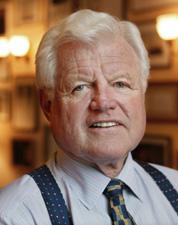 Sen. Edward M. Kennedy (D-MA)
Sen. Edward M. Kennedy (D-MA)Submitted September 27, 2006
Legislative Activity
Stay on top of the latest movement without scrolling through every action
Floor
Latest Action
Senate amendment submitted
September 27, 2006
Text
Submitted
TEXT OF AMENDMENTS

SA 5075. Mr. LEVIN submitted an amendment intended to be proposed to
amendment SA 5036 proposed by Mr. Frist to the bill H.R. 6061, to
establish operational control over the international land and maritime
borders of the United States; which was ordered to lie on the table; as
follows:

In lieu of the matter proposed to be inserted, insert the
following:

SECTION 1. SHORT TITLE.

This Act may be cited as the ``Military Commissions Act of
2006''.

SEC. 2. FINDINGS.

Congress makes the following findings:
(1) The Constitution of the United States grants to
Congress the power ``To define and punish . . . Offenses
against the Law of Nations'', as well as the power ``To
declare War . . . To raise and support Armies . . . [and] To
provide and maintain a Navy''.
(2) The military commission is the traditional tribunal for
the trial of persons engaged in hostilities for violations of
the law of war.
(3) Congress has, in the past, both authorized the use of
military commission by statute and recognized the existence
and authority of military commissions.
(4) Military commissions have been convened both by the
President and by military commanders in the field to try
offenses against the law of war.
(5) It is in the national interest for Congress to exercise
its authority under the Constitution to enact legislation
authorizing and regulating the use of military commissions to
try and punish violations of the law of war.
(6) Military commissions established and operating under
chapter 47A of title 10, United States Code (as enacted by
this Act), are regularly constituted courts affording, in the
words of Common Article 3 of the Geneva Conventions, ``all
the judicial guarantees which are recognized as indispensable
by civilized peoples''.

SEC. 3. AUTHORIZATION FOR MILITARY COMMISSIONS.

(a) In General.--The President is authorized to establish
military commissions for the trial of alien unlawful enemy
combatants engaged in hostilities against the United States
for violations of the law of war and other offenses
specifically made triable by military commission as provided
in chapter 47 of title 10, United States Code, and chapter
47A of title 10, United States Code (as enacted by this Act).
(b) Construction.--The authority in subsection (a) may not
be construed to alter or limit the authority of the President
under the Constitution and laws of the United States to
establish military commissions for areas declared to be under
martial law or in occupied territories should circumstances
so require.
(c) Scope of Punishment Authority.--A military commission
established pursuant to subsection (a) shall have authority
to impose upon any person found guilty under a proceeding
under chapter 47A of title 10, United States Code (as so
enacted), a sentence that is appropriate for the offense or
offenses for which there is a finding of guilt, including a
sentence of death if authorized under such chapter,
imprisonment for life or a term of years, payment of a fine
or restitution, or such other lawful punishment or condition
of punishment as the military commission shall direct.
(d) Execution of Punishment.--The Secretary of Defense is
authorized to carry out a sentence of punishment imposed by a
military commission established pursuant to subsection (a) in
accordance with such procedures as the Secretary may
prescribe.
(e) Annual Report on Trials by Military Commissions.--
(1) Annual report required.--Not later than December 31
each year, the Secretary of Defense shall submit to the
Committees on Armed Services of the Senate and the House of
Representatives a report on any trials conducted by military
commissions established pursuant to subsection (a) during
such year.
(2) Form.--Each report under this subsection shall be
submitted in unclassified form, but may include a classified
annex.

SEC. 4. MILITARY COMMISSIONS.

(a) Military Commissions.--
(1) In general.--Subtitle A of title 10, United States
Code, is amended by inserting after chapter 47 the following
new chapter:

``CHAPTER 47A--MILITARY COMMISSIONS

``SUBCHAPTER......................................................Sec.
``I. General Provisions..........................................948a.
``II. Composition of Military Commissions........................948h.
``III. Pre-Trial Procedure.......................................948q.
``IV. Trial Procedure............................................949a.
``V. Sentences...................................................949s.
``VI. Post-Trial Procedure and Review of Military Commissions....950a.
``VII. Punitive Matters..........................................950aa.

``SUBCHAPTER I--GENERAL PROVISIONS

``Sec.
``948a. Definitions.
``948b. Military commissions generally.
``948c. Persons subject to military commissions.
``948d. Jurisdiction of military commissions.

``Sec. 948a. Definitions

``In this chapter:
``(1) Alien.--The term `alien' means an individual who is
not a citizen of the United States.
``(2) Classified information.--The term `classified
information' means the following:
``(A) Any information or material that has been determined
by the United States Government pursuant to statute,
Executive order, or regulation to require protection against
unauthorized disclosure for reasons of national security.
``(B) Any restricted data, as that term is defined in
section 11 y. of the Atomic Energy Act of 1954 (42 U.S.C.
2014(y)).
``(3) Lawful enemy combatant.--The term `lawful enemy
combatant' means an individual who is--
``(A) a member of the regular forces of a State party
engaged in hostilities against the United States;
``(B) a member of a militia, volunteer corps, or organized
resistance movement belonging to a State party engaged in
such hostilities, which are under responsible command, wear a
fixed distinctive sign recognizable at a distance, carry
their arms openly, and abide by the law of war; or
``(C) a member of a regular armed force who professes
allegiance to a government engaged in such hostilities, but
not recognized by the United States.
``(4) Unlawful enemy combatant.--The term `unlawful enemy
combatant' means an individual engaged in hostilities against
the United States who is not a lawful enemy combatant.

``Sec. 948b. Military commissions generally

``(a) Purpose.--This chapter establishes procedures
governing the use of military

[[Page S10310]]

commissions to try alien unlawful enemy combatants engaged in
hostilities against the United States for violations of the
law of war and other offenses triable by military commission.
``(b) Construction of Provisions.--The procedures for
military commissions set forth in this chapter are based upon
the procedures for trial by general courts-martial under
chapter 47 of this title (the Uniform Code of Military
Justice). Chapter 47 of this title does not, by its terms,
apply to trial by military commission except as specifically
provided therein or in this chapter, and many of the
provisions of chapter 47 of this title are by their terms
inapplicable to military commissions. The judicial
construction and application of chapter 47 of this title,
while instructive, is therefore not of its own force binding
on military commissions established under this chapter.
``(c) Inapplicability of Certain Provisions.--(1) The
following provisions of this title shall not apply to trial
by military commission under this chapter:
``(A) Section 810 (article 10 of the Uniform Code of
Military Justice), relating to speedy trial, including any
rule of courts-martial relating to speedy trial.
``(B) Sections 831(a), (b), and (d) (articles 31(a), (b),
and (d) of the Uniform Code of Military Justice), relating to
compulsory self-incrimination.
``(C) Section 832 (article 32 of the Uniform Code of
Military Justice), relating to pretrial investigation.
``(2) Other provisions of chapter 47 of this title shall
apply to trial by military commission under this chapter only
to the extent provided by the terms of such provisions or by
this chapter.
``(d) Treatment of Rulings and Precedents.--The findings,
holdings, interpretations, and other precedents of military
commissions under this chapter may not be introduced or
considered in any hearing, trial, or other proceeding of a
court-martial convened under chapter 47 of this title. The
findings, holdings, interpretations, and other precedents of
military commissions under this chapter may not form the
basis of any holding, decision, or other determination of a
court-martial convened under that chapter.

``Sec. 948c. Persons subject to military commissions

``Any alien unlawful enemy combatant engaged in hostilities
or having supported hostilities against the United States is
subject to trial by military commission as set forth in this
chapter.

``Sec. 948d. Jurisdiction of military commissions

``A military commission under this chapter shall have
jurisdiction to try persons subject to this chapter for any
offense made punishable by this chapter, sections 904 and 906
of this title (articles 104 and 106 of the Uniform Code of
Military Justice), or the law of war, and may, under such
limitations as the President may prescribe, adjudge any
punishment not forbidden by this chapter, including the
penalty of death when authorized under this chapter, chapter
47 of this title, or the law of war.

``SUBCHAPTER II--COMPOSITION OF MILITARY COMMISSIONS

``Sec.
``948h. Who may convene military commissions.
``948i. Who may serve on military commissions.
``948j. Military judge of a military commission.
``948k. Detail of trial counsel and defense counsel.
``948l. Detail or employment of reporters and interpreters.
``948m. Number of members; excuse of members; absent and additional
members.

``Sec. 948h. Who may convene military commissions

``Military commissions under this chapter may be convened
by the Secretary of Defense or by any officer or official of
the United States designated by the Secretary for that
purpose.

``Sec. 948i. Who may serve on military commissions

``(a) In General.--Any commissioned officer of the armed
forces on active duty is eligible to serve on a military
commission under this chapter, including commissioned
officers of the reserve components of the armed forces on
active duty, commissioned officers of the National Guard on
active duty in Federal service, or retired commissioned
officers recalled to active duty.
``(b) Detail of Members.--When convening a military
commission under this chapter, the convening authority shall
detail as members thereof such members of the armed forces
eligible under subsection (a) who, as in the opinion of the
convening authority, are best qualified for the duty by
reason of age, education, training, experience, length of
service, and judicial temperament. No member of an armed
force is eligible to serve as a member of a military
commission when such member is the accuser or a witness for
the prosecution or has acted as an investigator or counsel in
the same case.
``(c) Excuse of Members.--Before a military commission
under this chapter is assembled for the trial of a case, the
convening authority may excuse a member from participating in
the case.

``Sec. 948j. Military judge of a military commission

``(a) Detail of Military Judge.--A military judge shall be
detailed to each military commission under this chapter. The
Secretary of Defense shall prescribe regulations providing
for the manner in which military judges are so detailed to
military commissions. The military judge shall preside over
each military commission to which he has been detailed.
``(b) Eligibility.--A military judge shall be a
commissioned officer of the armed forces who is a member of
the bar of a Federal court, or a member of the bar of the
highest court of a State, and who is certified to be
qualified for duty under section 826 of this title (article
26 of the Uniform Code of Military Justice) as a military
judge in general courts-martial by the Judge Advocate General
of the armed force of which such military judge is a member.
``(c) Ineligibility of Certain Individuals.--No person is
eligible to act as military judge in a case of a military
commission under this chapter if he is the accuser or a
witness or has acted as investigator or a counsel in the same
case.
``(d) Consultation With Members; Ineligibility to Vote.--A
military judge detailed to a military commission under this
chapter may not consult with the members except in the
presence of the accused (except as otherwise provided in
section 949d of this title), trial counsel, and defense
counsel, nor may he vote with the members.
``(e) Other Duties.--A commissioned officer who is
certified to be qualified for duty as a military judge of a
military commission under this chapter may perform such other
duties as are assigned to him by or with the approval of the
Judge Advocate General of the armed force of which such
officer is a member or the designee of such Judge Advocate
General.
``(f) Prohibition on Evaluation of Fitness by Convening
Authority.--The convening authority of a military commission
under this chapter shall not prepare or review any report
concerning the effectiveness, fitness, or efficiency of a
military judge detailed to the military commission which
relates to his performance of duty as a military judge on the
military commission.

``Sec. 948k. Detail of trial counsel and defense counsel

``(a) Detail of Counsel Generally.--(1) Trial counsel and
military defense counsel shall be detailed for each military
commission under this chapter.
``(2) Assistant trial counsel and assistant and associate
defense counsel may be detailed for a military commission
under this chapter.
``(3) Military defense counsel for a military commission
under this chapter shall be detailed as soon as practicable.
``(4) The Secretary of Defense shall prescribe regulations
providing for the manner in which trial counsel and military
defense counsel are detailed for military commissions under
this chapter and for the persons who are authorized to detail
such counsel for such military commissions.
``(b) Trial Counsel.--Subject to subsection (e), trial
counsel detailed for a military commission under this chapter
must be--
``(1) a judge advocate (as that term is defined in section
801 of this title (article 1 of the Uniform Code of Military
Justice)) who is--
``(A) a graduate of an accredited law school or is a member
of the bar of a Federal court or of the highest court of a
State; and
``(B) certified as competent to perform duties as trial
counsel before general courts-martial by the Judge Advocate
General of the armed force of which he is a member; or
``(2) a civilian who is--
``(A) a member of the bar of a Federal court or of the
highest court of a State; and
``(B) otherwise qualified to practice before the military
commission pursuant to regulations prescribed by the
Secretary of Defense.
``(c) Military Defense Counsel.--Subject to subsection (e),
military defense counsel detailed for a military commission
under this chapter must be a judge advocate (as so defined)
who is--
``(1) a graduate of an accredited law school or is a member
of the bar of a Federal court or of the highest court of a
State; and
``(2) certified as competent to perform duties as defense
counsel before general courts-martial by the Judge Advocate
General of the armed force of which he is a member.
``(d) Chief Prosecutor; Chief Defense Counsel.--(1) The
Chief Prosecutor in a military commission under this chapter
shall meet the requirements set forth in subsection (b)(1).
``(2) The Chief Defense Counsel in a military commission
under this chapter shall meet the requirements set forth in
subsection (c)(1).
``(e) Ineligibility of Certain Individuals.--No person who
has acted as an investigator, military judge, or member of a
military commission under this chapter in any case may act
later as trial counsel or military defense counsel in the
same case. No person who has acted for the prosecution before
a military commission under this chapter may act later in the
same case for the defense, nor may any person who has acted
for the defense before a military commission under this
chapter act later in the same case for the prosecution.

``Sec. 948l. Detail or employment of reporters and
interpreters

``(a) Court Reporters.--Under such regulations as the
Secretary of Defense may prescribe, the convening authority
of a military

[[Page S10311]]

commission under this chapter shall detail to or employ for
the military commission qualified court reporters, who shall
prepare a verbatim record of the proceedings of and testimony
taken before the military commission.
``(b) Interpreters.--Under such regulations as the
Secretary of Defense may prescribe, the convening authority
of a military commission under this chapter may detail to or
employ for the military commission interpreters who shall
interpret for the military commission, and, as necessary, for
trial counsel and defense counsel for the military
commission, and for the accused.
``(c) Transcript; Record.--The transcript of a military
commission under this chapter shall be under the control of
the convening authority of the military commission, who shall
also be responsible for preparing the record of the
proceedings of the military commission.

``Sec. 948m. Number of members; excuse of members; absent and
additional members

``(a) Number of Members.--(1) A military commission under
this chapter shall, except as provided in paragraph (2), have
at least five members.
``(2) In a case in which the accused before a military
commission under this chapter may be sentenced to a penalty
of death, the military commission shall have the number of
members prescribed by section 949m(c) of this title.
``(b) Excuse of Members.--No member of a military
commission under this chapter may be absent or excused after
the military commission has been assembled for the trial of a
case unless excused--
``(1) as a result of challenge;
``(2) by the military judge for physical disability or
other good cause; or
``(3) by order of the convening authority for good cause.
``(c) Absent and Additional Members.--Whenever a military
commission under this chapter is reduced below the number of
members required by subsection (a), the trial may not proceed
unless the convening authority details new members sufficient
to provide not less than such number. The trial may proceed
with the new members present after the recorded evidence
previously introduced before the members has been read to the
military commission in the presence of the military judge,
the accused (except as provided in section 949d of this
title), and counsel for both sides.

``SUBCHAPTER III--PRE-TRIAL PROCEDURE

``Sec.
``948q. Charges and specifications.
``948r. Compulsory self-incrimination prohibited; statements obtained
by torture or cruel, inhuman, or degrading treatment.
``948s. Service of charges.

``Sec. 948q. Charges and specifications

``(a) Charges and Specifications.--Charges and
specifications against an accused in a military commission
under this chapter shall be signed by a person subject to
chapter 47 of this title under oath before a commissioned
officer of the armed forces authorized to administer oaths
and shall state--
``(1) that the signer has personal knowledge of, or reason
to believe, the matters set forth therein; and
``(2) that they are true in fact to the best of his
knowledge and belief.
``(b) Notice to Accused.--Upon the swearing of the charges
and specifications in accordance with subsection (a), the
accused shall be informed of the charges and specifications
against him as soon as practicable.

``Sec. 948r. Compulsory self-incrimination prohibited;
statements obtained by torture or cruel, inhuman, or
degrading treatment

``(a) In General.--No person shall be required to testify
against himself at a proceeding of a military commission
under this chapter.
``(b) Statements Obtained by Torture or Cruel, Inhuman, or
Degrading Treatment.--A statement obtained by use of torture
or by cruel, inhuman, or degrading treatment prohibited by
section 1003 of the Detainee Treatment Act of 2005 (42 U.S.C.
2000dd), whether or not under color of law, shall not be
admissible in a military commission under this chapter,
except against a person accused of torture or such treatment
as evidence the statement was made.
``(c) Statements Obtained by Alleged Coercion Not Amounting
to Torture or Cruel, Inhuman, or Degrading Treatment.--An
otherwise admissible statement obtained through the use of
alleged coercion not amounting to torture or cruel, inhuman,
or degrading treatment prohibited by section 1003 of the
Detainee Treatment Act of 2005 may be admitted in evidence in
a military commission under this chapter only if the military
judge finds that--
``(1) the totality of the circumstances under which the
statement was made render it reliable and possessing
sufficient probative value; and
``(2) the interests of justice would best be served by
admission of the statement into evidence.

``Sec. 948s. Service of charges

``The trial counsel assigned to a case before a military
commission under this chapter shall cause to be served upon
the accused and military defense counsel a copy of the
charges upon which trial is to be had in English and, if
appropriate, in another language that the accused
understands, sufficiently in advance of trial to prepare a
defense.

``SUBCHAPTER IV--TRIAL PROCEDURE

``Sec.
``949a. Rules.
``949b. Unlawfully influencing action of military commission.
``949c. Duties of trial counsel and defense counsel.
``949d. Sessions.
``949e. Continuances.
``949f. Challenges.
``949g. Oaths.
``949h. Former jeopardy.
``949i. Pleas of the accused.
``949j. Opportunity to obtain witnesses and other evidence.
``949k. Defense of lack of mental responsibility.
``949l. Voting and rulings.
``949m. Number of votes required.
``949n. Military commission to announce action.
``949o. Record of trial.

``Sec. 949a. Rules

``(a) Procedures and Rules of Evidence.--Pretrial, trial,
and post-trial procedures, including elements and modes of
proof, for cases triable by military commission under this
chapter may be prescribed by the Secretary of Defense. Such
procedures may not be contrary to or inconsistent with this
chapter. Except as otherwise provided in this chapter or
chapter 47 of this title, the procedures and rules of
evidence applicable in trials by general courts-martial of
the United States shall apply in trials by military
commission under this chapter.
``(b) Exceptions.--(1) The Secretary of Defense, in
consultation with the Attorney General, may make such
exceptions in the applicability in trials by military
commission under this chapter from the procedures and rules
of evidence otherwise applicable in general courts-martial as
may be required by the unique circumstances of the conduct of
military and intelligence operations during hostilities or by
other practical need.
``(2) Notwithstanding any exceptions authorized by
paragraph (1), the procedures and rules of evidence in trials
by military commission under this chapter shall include, at a
minimum, the following rights:
``(A) To examine and respond to all evidence considered by
the military commission on the issue of guilt or innocence
and for sentencing.
``(B) To be present at all sessions of the military
commission (other than those for deliberations or voting),
except when excluded under section 949d of this title.
``(C) To the assistance of counsel.
``(D) To self-representation, if the accused knowingly and
competently waives the assistance of counsel, subject to the
provisions of paragraph (4).
``(E) To the suppression of evidence that is not reliable
or probative.
``(F) To the suppression of evidence the probative value of
which is substantially outweighed by--
``(i) the danger of unfair prejudice, confusion of the
issues, or misleading the members; or
``(ii) considerations of undue delay, waste of time, or
needless presentation of cumulative evidence.
``(3) In making exceptions in the applicability in trials
by military commission under this chapter from the procedures
and rules otherwise applicable in general courts-martial, the
Secretary of Defense may provide the following:
``(A) Evidence seized outside the United States shall not
be excluded from trial by military commission on the grounds
that the evidence was not seized pursuant to a search warrant
or authorization.
``(B) A statement of the accused that is otherwise
admissible shall not be excluded from trial by military
commission on grounds of alleged coercion or compulsory self-
incrimination so long as the evidence complies with the
provisions of section 948r of this title.
``(C) Evidence shall be admitted as authentic so long as--
``(i) the military judge of the military commission
determines that there is sufficient evidence that the
evidence is what it is claimed to be; and
``(ii) the military judge instructs the members that they
may consider any issue as to authentication or identification
of evidence in determining the weight, if any, to be given to
the evidence.
``(D) Hearsay evidence not otherwise admissible under the
rules of evidence applicable in trial by general courts-
martial may be admitted in a trial by military commission
only if--
``(i) the proponent of the evidence makes known to the
adverse party, sufficiently in advance of trial or hearing to
provide the adverse party with a fair opportunity to meet the
evidence, the proponent's intention to offer the evidence,
and the particulars of the evidence (including information on
the circumstances under which the evidence was obtained); and
``(ii) the military judge finds that the totality of the
circumstances render the evidence more probative on the point
for which it is offered than other evidence which the
proponent can procure through reasonable efforts, taking into
consideration the unique circumstances of the conduct of
military and intelligence operations during hostilities.
``(4)(A) The accused in a military commission under this
chapter who exercises the

[[Page S10312]]

right to self-representation under paragraph (2)(D) shall
conform his deportment and the conduct of the defense to the
rules of evidence, procedure, and decorum applicable to
trials by military commission.
``(B) Failure of the accused to conform to the rules
described in subparagraph (A) may result in a partial or
total revocation by the military judge of the right of self-
representation under paragraph (2)(D). In such case, the
detailed defense counsel of the accused or an appropriately
authorized civilian counsel shall perform the functions
necessary for the defense.
``(c) Delegation of Authority To Prescribe Regulations.--
The Secretary of Defense may delegate the authority of the
Secretary to prescribe regulations under this chapter.

``Sec. 949b. Unlawfully influencing action of military
commission

``(a) In General.--(1) No authority convening a military
commission under this chapter may censure, reprimand, or
admonish the military commission, or any member, military
judge, or counsel thereof, with respect to the findings or
sentence adjudged by the military commission, or with respect
to any other exercises of its or their functions in the
conduct of the proceedings.
``(2) No person may attempt to coerce or, by any
unauthorized means, influence--
``(A) the action of a military commission under this
chapter, or any member thereof, in reaching the findings or
sentence in any case;
``(B) the action of any convening, approving, or reviewing
authority with respect to their judicial acts; or
``(C) the exercise of professional judgment by trial
counsel or defense counsel.
``(3) The provisions of this subsection shall not apply
with respect to--
``(A) general instructional or informational courses in
military justice if such courses are designed solely for the
purpose of instructing members of a command in the
substantive and procedural aspects of military commissions;
or
``(B) statements and instructions given in open proceedings
by a military judge or counsel.
``(b) Prohibition on Consideration of Actions on Commission
in Evaluation of Fitness.--In the preparation of an
effectiveness, fitness, or efficiency report or any other
report or document used in whole or in part for the purpose
of determining whether a commissioned officer of the armed
forces is qualified to be advanced in grade, or in
determining the assignment or transfer of any such officer or
whether any such officer should be retained on active duty,
no person may--
``(1) consider or evaluate the performance of duty of any
member of a military commission under this chapter; or
``(2) give a less favorable rating or evaluation to any
commissioned officer because of the zeal with which such
officer, in acting as counsel, represented any accused before
a military commission under this chapter.

``Sec. 949c. Duties of trial counsel and defense counsel

``(a) Trial Counsel.--The trial counsel of a military
commission under this chapter shall prosecute in the name of
the United States.
``(b) Defense Counsel.--(1) The accused shall be
represented in his defense before a military commission under
this chapter as provided in this subsection.
``(2) The accused shall be represented by military counsel
detailed under section 948k of this title.
``(3) The accused may be represented by civilian counsel if
retained by the accused, provided that such civilian
counsel--
``(A) is a United States citizen;
``(B) is admitted to the practice of law in a State,
district, or possession of the United States, or before a
Federal court;
``(C) has not been the subject of any sanction of
disciplinary action by any court, bar, or other competent
governmental authority for relevant misconduct;
``(D) has been determined to be eligible for access to
information classified at the level Secret or higher; and
``(E) has signed a written agreement to comply with all
applicable regulations or instructions for counsel, including
any rules of court for conduct during the proceedings.
``(4) If the accused is represented by civilian counsel,
military counsel detailed shall act as associate counsel.
``(5) The accused is not entitled to be represented by more
than one military counsel. However, the person authorized
under regulations prescribed under section 948k of this title
to detail counsel, in such person's sole discretion, may
detail additional military counsel to represent the accused.
``(6) Defense counsel may cross-examine each witness for
the prosecution who testifies before a military commission
under this chapter.

``Sec. 949d. Sessions

``(a) Sessions Without Presence of Members.--(1) At any
time after the service of charges which have been referred
for trial by military commission under this chapter, the
military judge may call the military commission into session
without the presence of the members for the purpose of--
``(A) hearing and determining motions raising defenses or
objections which are capable of determination without trial
of the issues raised by a plea of not guilty;
``(B) hearing and ruling upon any matter which may be ruled
upon by the military judge under this chapter, whether or not
the matter is appropriate for later consideration or decision
by the members;
``(C) if permitted by regulations prescribed by the
Secretary of Defense, receiving the pleas of the accused; and
``(D) performing any other procedural function which may be
performed by the military judge under this chapter or under
rules prescribed pursuant to section 949a of this title and
which does not require the presence of the members.
``(2) Except as provided in subsections (b), (c), and (d),
any proceedings under paragraph (1) shall be conducted in the
presence of the accused, defense counsel, and trial counsel,
and shall be made part of the record.
``(b) Deliberation or Vote of Members.--When the members of
a military commission under this chapter deliberate or vote,
only the members may be present.
``(c) Closure of Proceedings.--(1) The military judge may
close to the public all or part of the proceedings of a
military commission under this chapter.
``(2) The military judge may close to the public all or a
portion of the proceedings under paragraph (1) only upon
making a specific finding that such closure is necessary to--
``(A) protect information the disclosure of which could
reasonably be expected to cause damage to the national
security, including intelligence or law enforcement sources,
methods, or activities; or
``(B) ensure the physical safety of individuals.
``(3) A finding under paragraph (2) may be based upon a
presentation, including a presentation ex parte or in camera,
by either trial counsel or defense counsel.
``(4)(A) Subject to the provisions of this paragraph,
classified information shall be handled in accordance with
rules applicable in trials by general courts-martial of the
United States.
``(B) Classified information shall be protected and is
privileged from disclosure if disclosure would be detrimental
to the national security. This subparagraph applies to all
stages of proceedings of military commissions under this
chapter.
``(C) After the original classification authority or head
of the agency concerned has certified in writing that
evidence and the sources thereof have been declassified to
the maximum extent possible, consistent with the requirements
of national security, the military judge may, to the extent
practicable in accordance with the rules applicable in trials
by court-martial, authorize--
``(i) the deletion of specified items of classified
information from documents made available to the accused;
``(ii) the substitution of a portion or summary of the
information for such classified documents; or
``(iii) the substitution of a statement admitting relevant
facts that the classified information would tend to prove.
``(D) A claim of privilege under this paragraph, and any
materials in support thereof, shall, upon the request of the
Government, be considered by the military judge in camera and
shall not be disclosed to the accused.
``(d) Exclusion of Accused From Certain Proceedings.--The
military judge may exclude the accused from any portion of a
proceeding upon a determination that, after being warned by
the military judge, the accused persists in conduct that
justifies exclusion from the courtroom--
``(1) to ensure the physical safety of individuals; or
``(2) to prevent disruption of the proceedings by the
accused.

``Sec. 949e. Continuances

``The military judge in a military commission under this
chapter may, for reasonable cause, grant a continuance to any
party for such time, and as often, as may appear to be just.

``Sec. 949f. Challenges

``(a) Challenges Authorized.--The military judge and
members of a military commission under this chapter may be
challenged by the accused or trial counsel for cause stated
to the military commission. The military judge shall
determine the relevance and validity of challenges for cause,
and may not receive a challenge to more than one person at a
time. Challenges by trial counsel shall ordinarily be
presented and decided before those by the accused are
offered.
``(b) Peremptory Challenges.--The accused and trial counsel
are each entitled to one peremptory challenge, but the
military judge may not be challenged except for cause.
``(c) Challenges Against Additional Members.--Whenever
additional members are detailed to a military commission
under this chapter, and after any challenges for cause
against such additional members are presented and decided,
the accused and trial counsel are each entitled to one
peremptory challenge against members not previously subject
to peremptory challenge.

``Sec. 949g. Oaths

``(a) In General.--(1) Before performing their respective
duties in a military commission under this chapter, military
judges, members, trial counsel, defense counsel, reporters,
and interpreters shall take an oath to perform their duties
faithfully.
``(2) The form of the oath required by paragraph (1), the
time and place of the taking thereof, the manner of recording
thereof, and whether the oath shall be taken for all cases

[[Page S10313]]

in which duties are to be performed or for a particular case,
shall be as provided in regulations prescribed by the
Secretary of Defense. The regulations may provide that--
``(A) an oath to perform faithfully duties as a military
judge, trial counsel, or defense counsel may be taken at any
time by any judge advocate or other person certified to be
qualified or competent for the duty; and
``(B) if such an oath is taken, such oath need not again be
taken at the time the judge advocate or other person is
detailed to that duty.
``(b) Witnesses.--Each witness before a military commission
under this chapter shall be examined on oath.
``(c) Oath Defined.--In this section, the term `oath'
includes an affirmation.

``Sec. 949h. Former jeopardy

``(a) In General.--No person may, without his consent, be
tried by a military commission under this chapter a second
time for the same offense.
``(b) Scope of Trial.--No proceeding in which the accused
has been found guilty by military commission under this
chapter upon any charge or specification is a trial in the
sense of this section until the finding of guilty has become
final after review of the case has been fully completed.

``Sec. 949i. Pleas of the accused

``(a) Plea of Not Guilty.--If an accused in a military
commission under this chapter after a plea of guilty sets up
matter inconsistent with the plea, or if it appears that the
accused has entered the plea of guilty through lack of
understanding of its meaning and effect, or if the accused
fails or refuses to plead, a plea of not guilty shall be
entered in the record, and the military commission shall
proceed as though the accused had pleaded not guilty.
``(b) Finding of Guilt After Guilty Plea.--With respect to
any charge or specification to which a plea of guilty has
been made by the accused in a military commission under this
chapter and accepted by the military judge, a finding of
guilty of the charge or specification may be entered
immediately without a vote. The finding shall constitute the
finding of the military commission unless the plea of guilty
is withdrawn prior to announcement of the sentence, in which
event the proceedings shall continue as though the accused
had pleaded not guilty.

``Sec. 949j. Opportunity to obtain witnesses and other
evidence

``(a) In General.--(1) Defense counsel in a military
commission under this chapter shall have a reasonable
opportunity to obtain witnesses and other evidence as
provided in regulations prescribed by the Secretary of
Defense.
``(2) Process issued in military commissions under this
chapter to compel witnesses to appear and testify and to
compel the production of other evidence--
``(A) shall be similar to that which courts of the United
States having criminal jurisdiction may lawfully issue; and
``(B) shall run to any place where the United States shall
have jurisdiction thereof.
``(b) Disclosure of Exculpatory Evidence.--As soon as
practicable, trial counsel in a military commission under
this chapter shall disclose to the defense the existence of
any known evidence that reasonably tends to exculpate or
reduce the degree of guilt of the accused.
``(c) Treatment of Certain Items.--In accordance with the
rules applicable in trials by general courts-martial in the
United States, and to the extent provided in such rules, the
military judge in a military commission under this chapter
may authorize trial counsel, in making documents available to
the accused pursuant to subsections (a) and (b)--
``(1) to delete specified items of classified information
from such documents;
``(2) to substitute an unclassified summary of the
classified information in such documents; or
``(3) to substitute an unclassified statement admitting
relevant facts that classified information in such documents
would tend to prove.

``Sec. 949k. Defense of lack of mental responsibility

``(a) Affirmative Defense.--It is an affirmative defense in
a trial by military commission under this chapter that, at
the time of the commission of the acts constituting the
offense, the accused, as a result of a severe mental disease
or defect, was unable to appreciate the nature and quality or
the wrongfulness of the acts. Mental disease or defect does
not otherwise constitute a defense.
``(b) Burden of Proof.--The accused in a military
commission under this chapter has the burden of proving the
defense of lack of mental responsibility by clear and
convincing evidence.
``(c) Findings Following Assertion of Defense.--Whenever
lack of mental responsibility of the accused with respect to
an offense is properly at issue in a military commission
under this chapter, the military judge shall instruct the
members as to the defense of lack of mental responsibility
under this section and shall charge the members to find the
accused--
``(1) guilty;
``(2) not guilty; or
``(3) subject to subsection (d), not guilty by reason of
lack of mental responsibility.
``(d) Majority Vote Required for Finding.--The accused
shall be found not guilty by reason of lack of mental
responsibility under subsection (c)(3) only if a majority of
the members present at the time the vote is taken determines
that the defense of lack of mental responsibility has been
established.

``Sec. 949l. Voting and rulings

``(a) Vote by Secret Written Ballot.--Voting by members of
a military commission under this chapter on the findings and
on the sentence shall be by secret written ballot.
``(b) Rulings.--(1) The military judge in a military
commission under this chapter shall rule upon all questions
of law, including the admissibility of evidence and all
interlocutory questions arising during the proceedings.
``(2) Any ruling made by the military judge upon a question
of law or an interlocutory question (other than the factual
issue of mental responsibility of the accused) is conclusive
and constitutes the ruling of the military commission.
However, a military judge may change his ruling at any time
during the trial.
``(c) Instructions Prior to Vote.--Before a vote is taken
of the findings of a military commission under this chapter,
the military judge shall, in the presence of the accused and
counsel, instruct the members as to the elements of the
offense and charge the members--
``(1) that the accused must be presumed to be innocent
until his guilt is established by legal and competent
evidence beyond a reasonable doubt;
``(2) that in the case being considered, if there is a
reasonable doubt as to the guilt of the accused, the doubt
must be resolved in favor of the accused and he must be
acquitted;
``(3) that, if there is reasonable doubt as to the degree
of guilt, the finding must be in a lower degree as to which
there is no reasonable doubt; and
``(4) that the burden of proof to establish the guilt of
the accused beyond a reasonable doubt is upon the United
States.

``Sec. 949m. Number of votes required

``(a) Conviction.--No person may be convicted by a military
commission under this chapter of any offense, except as
provided in section 949i(b) of this title or by concurrence
of two-thirds of the members present at the time the vote is
taken.
``(b) Sentences.--(1) Except as provided in paragraphs (2)
and (3), sentences shall be determined by a military
commission by the concurrence of two-thirds of the members
present at the time the vote is taken.
``(2) No person may be sentenced to death by a military
commission, except insofar as--
``(A) the penalty of death has been expressly authorized
under this chapter, chapter 47 of this title, or the law of
war for an offense of which the accused has been found
guilty;
``(B) trial counsel expressly sought the penalty of death
by filing an appropriate notice in advance of trial;
``(C) the accused was convicted of the offense by the
concurrence of all the members present at the time the vote
is taken; and
``(D) all members present at the time the vote was taken
concurred in the sentence of death.
``(3) No person may be sentenced to life imprisonment, or
to confinement for more than 10 years, by a military
commission under this chapter except by the concurrence of
three-fourths of the members present at the time the vote is
taken.
``(c) Number of Members Required for Penalty of Death.--(1)
Except as provided in paragraph (2), in a case in which the
penalty of death is sought, the number of members of the
military commission under this chapter shall be not less than
12 members.
``(2) In any case described in paragraph (1) in which 12
members are not reasonably available for a military
commission because of physical conditions or military
exigencies, the convening authority shall specify a lesser
number of members for the military commission (but not fewer
than 5 members), and the military commission may be
assembled, and the trial held, with not less than the number
of members so specified. In any such case, the convening
authority shall make a detailed written statement, to be
appended to the record, stating why a greater number of
members were not reasonably available.

``Sec. 949n. Military commission to announce action

``A military commission under this chapter shall announce
its findings and sentence to the parties as soon as
determined.

``Sec. 949o. Record of trial

``(a) Record; Authentication.--Each military commission
under this chapter shall keep a separate, verbatim, record of
the proceedings in each case brought before it, and the
record shall be authenticated by the signature of the
military judge. If the record cannot be authenticated by the
military judge by reason of his death, disability, or
absence, it shall be authenticated by the signature of the
trial counsel or by a member if the trial counsel is unable
to authenticate it by reason of his death, disability, or
absence. Where appropriate, and as provided in regulations
prescribed by the Secretary of Defense, the record of a
military commission under this chapter may contain a
classified annex.
``(b) Complete Record Required.--A complete record of the
proceedings and testimony shall be prepared in every military
commission under this chapter.

[[Page S10314]]

``(c) Provision of Copy to Accused.--A copy of the record
of the proceedings of the military commission under this
chapter shall be given the accused as soon as it is
authenticated. If the record contains classified information,
or a classified annex, the accused shall receive a redacted
version of the record consistent with the requirements of
section 949d(c)(4) of this title. Defense counsel shall have
access to the unredacted record, as provided in regulations
prescribed by the Secretary of Defense.

``SUBCHAPTER V--SENTENCES

``Sec.
``949s. Cruel or unusual punishments prohibited.
``949t. Maximum limits.
``949u. Execution of confinement.

``Sec. 949s. Cruel or unusual punishments prohibited

``Punishment by flogging, or by branding, marking, or
tattooing on the body, or any other cruel or unusual
punishment, may not be adjudged by a military commission
under this chapter or inflicted under this chapter upon any
person subject to this chapter. The use of irons, single or
double, except for the purpose of safe custody, is prohibited
under this chapter.

``Sec. 949t. Maximum limits

``The punishment which a military commission under this
chapter may direct for an offense may not exceed such limits
as the President or Secretary of Defense may prescribe for
that offense.

``Sec. 949u. Execution of confinement

``(a) In General.--Under such regulations as the Secretary
of Defense may prescribe, a sentence of confinement adjudged
by a military commission under this chapter may be carried
into execution by confinement--
``(1) in any place of confinement under the control of any
of the armed forces; or
``(2) in any penal or correctional institution under the
control of the United States or its allies, or which the
United States may be allowed to use.
``(b) Treatment During Confinement by Other Than the Armed
Forces.--Persons confined under subsection (a)(2) in a penal
or correctional institution not under the control of an armed
force are subject to the same discipline and treatment as
persons confined or committed by the courts of the United
States or of the State, District of Columbia, or place in
which the institution is situated.

``SUBCHAPTER VI--POST-TRIAL PROCEDURE AND REVIEW OF MILITARY
COMMISSIONS

``Sec.
``950a. Error of law; lesser included offense.
``950b. Review by the convening authority.
``950c. Waiver or withdrawal of appeal.
``950d. Appeal by the United States.
``950e. Rehearings.
``950f. Review by United States Court of Appeals for the Armed Forces
and Supreme Court.
``950g. Appellate counsel
``950h. Execution of sentence; suspension of sentence.
``950i. Finality of proceedings, findings, and sentences.

``Sec. 950a. Error of law; lesser included offense

``(a) Error of Law.--A finding or sentence of a military
commission under this chapter may not be held incorrect on
the ground of an error of law unless the error materially
prejudices the substantial rights of the accused.
``(b) Lesser Included Offense.--Any reviewing authority
with the power to approve or affirm a finding of guilty by a
military commission under this chapter may approve or affirm,
instead, so much of the finding as includes a lesser included
offense.

``Sec. 950b. Review by the convening authority

``(a) Notice to Convening Authority of Findings and
Sentence.--The findings and sentence of a military commission
under this chapter shall be reported in writing promptly to
the convening authority after the announcement of the
sentence.
``(b) Submittal of Matters by Accused to Convening
Authority.--(1) The accused may submit to the convening
authority matters for consideration by the convening
authority with respect to the findings and the sentence of
the military commission under this chapter.
``(2)(A) Except as provided in subparagraph (B), a
submittal under paragraph (1) shall be made in writing within
20 days after accused has been give an authenticated record
of trial under section 949o(c) of this title.
``(B) If the accused shows that additional time is required
for the accused to make a submittal under paragraph (1), the
convening authority may, for good cause, extend the
applicable period under subparagraph (A) for not more than an
additional 20 days.
``(3) The accused may waive his right to make a submittal
to the convening authority under paragraph (1). Such a waiver
shall be made in writing, and may not be revoked. For the
purposes of subsection (c)(2), the time within which the
accused may make a submittal under this subsection shall be
deemed to have expired upon the submittal of a waiver under
this paragraph to the convening authority.
``(c) Action by Convening Authority.--(1) The authority
under this subsection to modify the findings and sentence of
a military commission under this chapter is a matter of the
sole discretion and prerogative of the convening authority.
``(2) The convening authority is not required to take
action on the findings of a military commission under this
chapter. If the convening authority takes action on the
findings, the convening authority may, in his sole
discretion, only--
``(A) dismiss any charge or specification by setting aside
a finding of guilty thereto; or
``(B) change a finding of guilty to a charge to a finding
of guilty to an offense that is a lesser included offense of
the offense stated in the charge.
``(3)(A) The convening authority shall take action on the
sentence of a military commission under this chapter.
``(B) Subject to regulations prescribed by the Secretary of
Defense, action under this paragraph may be taken only after
consideration of any matters submitted by the accused under
subsection (b) or after the time for submitting such matters
expires, whichever is earlier.
``(C) In taking action under this paragraph, the convening
authority may, in his sole discretion, approve, disapprove,
commute, or suspend the sentence in whole or in part. The
convening authority may not increase a sentence beyond that
which is found by the military commission.
``(4) The convening authority shall serve on the accused or
on defense counsel notice of any action taken by the
convening authority under this subsection.
``(d) Order of Revision or Rehearing.--(1) Subject to
paragraphs (2) and (3), the convening authority of a military
commission under this chapter may, in his sole discretion,
order a proceeding in revision or a rehearing.
``(2)(A) Except as provided in subparagraph (B), a
proceeding in revision may be ordered by the convening
authority if--
``(i) there is an apparent error or omission in the record;
or
``(ii) the record shows improper or inconsistent action by
the military commission with respect to the findings or
sentence that can be rectified without material prejudice to
the substantial rights of the accused.
``(B) In no case may a proceeding in revision--
``(i) reconsider a finding of not guilty of a specification
or a ruling which amounts to a finding of not guilty;
``(ii) reconsider a finding of not guilty of any charge,
unless there has been a finding of guilty under a
specification laid under that charge, which sufficiently
alleges a violation; or
``(iii) increase the severity of the sentence unless the
sentence prescribed for the offense is mandatory.
``(3) A rehearing may be ordered by the convening authority
if the convening authority disapproves the findings and
sentence and states the reasons for disapproval of the
findings. If the convening authority disapproves the finding
and sentence and does not order a rehearing, the convening
authority shall dismiss the charges. A rehearing as to the
findings may not be ordered by the convening authority when
there is a lack of sufficient evidence in the record to
support the findings. A rehearing as to the sentence may be
ordered by the convening authority if the convening authority
disapproves the sentence.

``Sec. 950c. Waiver or withdrawal of appeal

``(a) Waiver of Right of Review.--(1) An accused may file
with the convening authority a statement expressly waiving
the right of the accused to appellate review by the United
States Court of Appeals for the Armed Forces under section
950f(a) of this title of the final decision of the military
commission under this chapter.
``(2) A waiver under paragraph (1) shall be signed by both
the accused and a defense counsel.
``(3) A waiver under paragraph (1) must be filed, if at
all, within 10 days after notice of the action is served on
the accused or on defense counsel under section 950b(c)(4) of
this title. The convening authority, for good cause, may
extend the period for such filing by not more than 30 days.
``(b) Withdrawal of Appeal.--Except in a case in which the
sentence as approved under section 950b of this title extends
to death, the accused may withdraw an appeal at any time.
``(c) Effect of Waiver or Withdrawal.--A waiver of the
right to appellate review or the withdrawal of an appeal
under this section bars review under section 950f of this
title.

``Sec. 950d. Appeal by the United States

``(a) Interlocutory Appeal.--(1) Except as provided in
paragraph (2), in a trial by military commission under this
chapter, the United States may take an interlocutory appeal
to the United States Court of Appeals for the Armed Forces
under section 950f of this title of any order or ruling of
the military judge that--
``(A) terminates proceedings of the military commission
with respect to a charge or specification;
``(B) excludes evidence that is substantial proof of a fact
material in the proceeding; or
``(C) relates to a matter under subsection (c) or (d) of
section 949d of this title.
``(2) The United States may not appeal under paragraph (1)
an order or ruling that is, or amounts to, a finding of not
guilty by the military commission with respect to a charge or
specification.
``(b) Notice of Appeal.--The United States shall take an
appeal of an order or ruling under subsection (a) by filing a
notice of appeal with the military judge within five days
after the date of the order or ruling.

[[Page S10315]]

``(c) Appeal.--An appeal under this section shall be
forwarded, by means specified in regulations prescribed the
Secretary of Defense, directly to the United States Court of
Appeals for the Armed Forces. In ruling on an appeal under
this section, the Court may act only with respect to matters
of law.

``Sec. 950e. Rehearings

``(a) Composition of Military Commission for Rehearing.--
Each rehearing under this chapter shall take place before a
military commission under this chapter composed of members
who were not members of the military commission which first
heard the case.
``(b) Scope of Rehearing.--(1) Upon a rehearing--
``(A) the accused may not be tried for any offense of which
he was found not guilty by the first military commission; and
``(B) no sentence in excess of or more than the original
sentence may be imposed unless--
``(i) the sentence is based upon a finding of guilty of an
offense not considered upon the merits in the original
proceedings; or
``(ii) the sentence prescribed for the offense is
mandatory.
``(2) Upon a rehearing, if the sentence approved after the
first military commission was in accordance with a pretrial
agreement and the accused at the rehearing changes his plea
with respect to the charges or specifications upon which the
pretrial agreement was based, or otherwise does not comply
with pretrial agreement, the sentence as to those charges or
specifications may include any punishment not in excess of
that lawfully adjudged at the first military commission.

``Sec. 950f. Review by United States Court of Appeals for the
Armed Forces and Supreme Court

``(a) Review by United States Court of Appeals for the
Armed Forces.--(1) Subject to the provisions of this
subsection, the United States Court of Appeals for the Armed
Forces shall have exclusive jurisdiction to determine the
final validity of any judgment rendered by a military
commission under this chapter.
``(2) The United States Court of Appeals for the Armed
Forces may not determine the final validity of a judgment of
a military commission under this subsection until all other
appeals from the judgment under this chapter have been waived
or exhausted.
``(3)(A) An accused may seek a determination by the United
States Court of Appeals for the Armed Forces of the final
validity of the judgment of the military commission under
this subsection only upon petition to the Court for such
determination.
``(B) A petition on a judgment under subparagraph (A) shall
be filed by the accused in the Court not later than 20 days
after the date on which written notice of the final decision
of the military commission is served on the accused or
defense counsel.
``(C) The accused may not file a petition under
subparagraph (A) if the accused has waived the right to
appellate review under section 950c(a) of this title.
``(4) The determination by the United States Court of
Appeals for the Armed Forces of the final validity of a
judgment of a military commission under this subsection shall
be governed by the provisions of section 1005(e)(3) of the
Detainee Treatment Act of 2005 (42 U.S.C. 801 note).
``(b) Review by Supreme Court.--The Supreme Court of the
United States may review by writ of certiorari pursuant to
section 1257 of title 28 the final judgment of the United
States Court of Appeals for the Armed Forces in a
determination under subsection (a).

``Sec. 950g. Appellate counsel

``(a) Appointment.--The Secretary of Defense shall, by
regulation, establish procedures for the appointment of
appellate counsel for the United States and for the accused
in military commissions under this chapter. Appellate counsel
shall meet the qualifications of counsel for appearing before
military commissions under this chapter.
``(b) Representation of United States.--Appellate counsel
may represent the United States in any appeal or review
proceeding under this chapter. Appellate Government counsel
may represent the United States before the Supreme Court in
case arising under this chapter when requested to do so by
the Attorney General.
``(c) Representation of Accused.--The accused shall be
represented before the United States Court of Appeals for the
Armed Forces or the Supreme Court by military appellate
counsel, or by civilian counsel if retained by him.

``Sec. 950h. Execution of sentence; suspension of sentence

``(a) Execution of Sentence of Death Only Upon Approval by
the President.--If the sentence of a military commission
under this chapter extends to death, that part of the
sentence providing for death may not be executed until
approved by the President. In such a case, the President may
commute, remit, or suspend the sentence, or any part thereof,
as he sees fit.
``(b) Execution of Sentence of Death Only Upon Final
Judgment of Legality of Proceedings.--(1) If the sentence of
a military commission under this chapter extends to death,
the sentence may not be executed until there is a final
judgement as to the legality of the proceedings (and with
respect to death, approval under subsection (a)).
``(2) A judgement as to legality of proceedings is final
for purposes of paragraph (1) when--
``(A) the time for the accused to file a petition for
review by the United States Court of Appeals for the Armed
Forces has expired and the accused has not filed a timely
petition for such review and the case is not otherwise under
review by the Court; or
``(B) review is completed in accordance with the judgment
of the United States Court of Appeals for the Armed Forces
and (A) a petition for a writ of certiorari is not timely
filed, (B) such a petition is denied by the Supreme Court, or
(C) review is otherwise completed in accordance with the
judgment of the Supreme Court.
``(c) Suspension of Sentence.--The Secretary of the
Defense, or the convening authority acting on the case (if
other than the Secretary), may suspend the execution of any
sentence or part thereof in the case, except a sentence of
death.

``Sec. 950i. Finality of proceedings, findings, and sentences

``(a) Finality.--The appellate review of records of trial
provided by this chapter, and the proceedings, findings, and
sentences of military commissions as approved, reviewed, or
affirmed as required by this chapter, are final and
conclusive. Orders publishing the proceedings of military
commissions under this chapter are binding upon all
departments, courts, agencies, and officers of the United
States, except as otherwise provided by the President.
``(b) Provisions of Chapter Sole Basis for Review of
Military Commission Procedures and Actions.--Except as
otherwise provided in this chapter and notwithstanding any
other provision of law (including section 2241 of title 28 or
any other habeas corpus provision), no court, justice, or
judge shall have jurisdiction to hear or consider any claim
or cause of action whatsoever, including any action pending
on or filed after the date of enactment of this chapter,
relating to the prosecution, trial, or judgment of a military
commission under this chapter, including challenges to the
lawfulness of procedures of military commissions under this
chapter.

``SUBCHAPTER VII--PUNITIVE MATTERS

``Sec.
``950aa. Definitions; construction of certain offenses; common
circumstances.
``950bb. Principals.
``950cc. Accessory after the fact.
``950dd. Conviction of lesser offenses.
``950ee. Attempts.
``950ff. Conspiracy.
``950gg. Solicitation.
``950hh. Murder of protected persons.
``950ii. Attacking civilians.
``950jj. Attacking civilian objects.
``950kk. Attacking protected property.
``950ll. Pillaging.
``950mm. Denying quarter.
``950nn. Taking hostages.
``950oo. Employing poison or similar weapons.
``950pp. Using protected persons as a shield.
``950qq. Using protected property as a shield.
``950rr. Torture.
``950ss. Cruel, unusual, or inhumane treatment or punishment.
``950tt. Intentionally causing serious bodily injury.
``950uu. Mutilating or maiming.
``950vv. Murder in violation of the law of war.
``950ww. Destruction of property in violation of the law of war.
``950xx. Using treachery or perfidy.
``950yy. Improperly using a flag of truce.
``950zz. Improperly using a distinctive emblem.
``950aaa. Intentionally mistreating a dead body.
``950bbb. Rape.
``950ccc. Hijacking or hazarding a vessel or aircraft.
``950ddd. Terrorism.
``950eee. Providing material support for terrorism.
``950fff. Wrongfully aiding the enemy.
``950ggg. Spying.
``950hhh. Contempt.
``950iii. Perjury and obstruction of justice.

``Sec. 950aa. Definitions; construction of certain offenses;
common circumstances

``(a) Definitions.--In this subchapter:
``(1) The term `military objective' means combatants and
those objects during an armed conflict which, by their
nature, location, purpose, or use, effectively contribute to
the war-fighting or war-sustaining capability of an opposing
force and whose total or partial destruction, capture, or
neutralization would constitute a definite military advantage
to the attacker under the circumstances at the time of an
attack.
``(2) The term `protected person' means any person entitled
to protection under one or more of the Geneva Conventions,
including civilians not taking an active part in hostilities,
military personnel placed out of combat by sickness, wounds,
or detention, and military medical or religious personnel.
``(3) The term `protected property' means any property
specifically protected by the law of war, including buildings
dedicated to religion, education, art, science, or charitable
purposes, historic monuments, hospitals, and places where the
sick and wounded are collected, but only if and to the extent
such property is not being used for military purposes or is
not otherwise a military objective. The term includes objects
properly identified by one of the distinctive emblems of the
Geneva Conventions, but does not include civilian property
that is a military objective.
``(b) Construction of Certain Offenses.--The intent
required for offenses under sections 950hh, 950ii, 950jj,
950kk, and 950ss of

[[Page S10316]]

this title precludes their applicability with regard to
collateral damage or to death, damage, or injury incident to
a lawful attack.
``(c) Common Circumstances.--An offense specified in this
subchapter is triable by military commission under this
chapter only if the offense is committed in the context of
and associated with armed conflict.

``Sec. 950bb. Principals

``Any person punishable under this chapter who--
``(1) commits an offense punishable by this chapter, or
aids, abets, counsels, commands, or procures its commission;
or
``(2) causes an act to be done which if directly performed
by him would be punishable by this chapter,

is a principal.

``Sec. 950cc. Accessory after the fact

``Any person subject to this chapter who, knowing that an
offense punishable by this chapter has been committed,
receives, comforts, or assists the offender in order to
hinder or prevent his apprehension, trial, or punishment
shall be punished as a military commission under this chapter
may direct.

``Sec. 950dd. Conviction of lesser offenses

``An accused may be found guilty of an offense necessarily
included in the offense charged or of an attempt to commit
either the offense charged or an attempt to commit either the
offense charged or an offense necessarily included therein.

``Sec. 950ee. Attempts

``(a) In General.--Any person subject to this chapter who
attempts to commit any offense punishable by this chapter
shall be punished as a military commission under this chapter
may direct.
``(b) Scope of Offense.--An act, done with specific intent
to commit an offense under this chapter, amounting to more
than mere preparation and tending, even though failing, to
effect its commission, is an attempt to commit that offense.
``(c) Effect of Consummation.--Any person subject to this
chapter may be convicted of an attempt to commit an offense
although it appears on the trial that the offense was
consummated.

``Sec. 950ff. Conspiracy

``Any person subject to this chapter who conspires to
commit one or more substantive offenses triable by military
commission under this subchapter, and who knowingly does any
overt act to effect the object of the conspiracy, shall be
punished, if death results to one or more of the victims, by
death or such other punishment as a military commission under
this chapter may direct, and, if death does not result to any
of the victims, by such punishment, other than death, as a
military commission under this chapter may direct.

``Sec. 950gg. Solicitation

``Any person subject to this chapter who solicits or
advises another or others to commit one or more substantive
offenses triable by military commission under this chapter
shall, if the offense solicited or advised is attempted or
committed, be punished with the punishment provided for the
commission of the offense, but, if the offense solicited or
advised is not committed or attempted, he shall be punished
as a military commission under this chapter may direct.

``Sec. 950hh. Murder of protected persons

``Any person subject to this chapter who intentionally
kills one or more protected persons shall be punished by
death or such other punishment as a military commission under
this chapter may direct.

``Sec. 950ii. Attacking civilians

``Any person subject to this chapter who intentionally
engages in an attack upon a civilian population as such, or
individual civilians not taking active part in hostilities,
shall be punished, if death results to one or more of the
victims, by death or such other punishment as a military
commission under this chapter may direct, and, if death does
not result to any of the victims, by such punishment, other
than death, as a military commission under this chapter may
direct.

``Sec. 950jj. Attacking civilian objects

``Any person subject to this chapter who intentionally
engages in an attack upon a civilian object that is not a
military objective shall be punished as a military commission
under this chapter may direct.

``Sec. 950kk. Attacking protected property

``Any person subject to this chapter who intentionally
engages in an attack upon protected property shall be
punished as a military commission under this chapter may
direct.

``Sec. 950ll. Pillaging

``Any person subject to this chapter who intentionally and
in the absence of military necessity appropriates or seizes
property for private or personal use, without the consent of
a person with authority to permit such appropriation or
seizure, shall be punished as a military commission under
this chapter may direct.

``Sec. 950mm. Denying quarter

``Any person subject to this chapter who, with effective
command or control over subordinate groups, declares, orders,
or otherwise indicates to those groups that there shall be no
survivors or surrender accepted, with the intent to threaten
an adversary or to conduct hostilities such that there would
be no survivors or surrender accepted, shall be punished as a
military commission under this chapter may direct.

``Sec. 950nn. Taking hostages

``Any person subject to this chapter who, having knowingly
seized or detained one or more persons, threatens to kill,
injure, or continue to detain such person or persons with the
intent of compelling any nation, person other than the
hostage, or group of persons to act or refrain from acting as
an explicit or implicit condition for the safety or release
of such person or persons, shall be punished, if death
results to one or more of the victims, by death or such other
punishment as a military commission under this chapter may
direct, and, if death does not result to any of the victims,
by such punishment, other than death, as a military
commission under this chapter may direct.

``Sec. 950oo. Employing poison or similar weapons

``Any person subject to this chapter who intentionally, as
a method of warfare, employs a substance or weapon that
releases a substance that causes death or serious and lasting
damage to health in the ordinary course of events, through
its asphyxiating, bacteriological, or toxic properties, shall
be punished, if death results to one or more of the victims,
by death or such other punishment as a military commission
under this chapter may direct, and, if death does not result
to any of the victims, by such punishment, other than death,
as a military commission under this chapter may direct.

``Sec. 950pp. Using protected persons as a shield

``Any person subject to this chapter who positions, or
otherwise takes advantage of, a protected person with the
intent to shield a military objective from attack. or to
shield, favor, or impede military operations, shall be
punished, if death results to one or more of the victims, by
death or such other punishment as a military commission under
this chapter may direct, and, if death does not result to any
of the victims, by such punishment, other than death, as a
military commission under this chapter may direct.

``Sec. 950qq. Using protected property as a shield

``Any person subject to this chapter who positions, or
otherwise takes advantage of the location of, protected
property with the intent to shield a military objective from
attack, or to shield, favor, or impede military operations,
shall be punished as a military commission under this chapter
may direct.

``Sec. 950rr. Torture

``(a) Offense.--Any person subject to this chapter who
commits an act specifically intended to inflict severe
physical or mental pain or suffering (other than pain or
suffering incidental to lawful sanctions) upon another person
within his custody or physical control for the purpose of
obtaining information or a confession, punishment,
intimidation, coercion, or any reason based on discrimination
of any kind, shall be punished, if death results to one or
more of the victims, by death or such other punishment as a
military commission under this chapter may direct, and, if
death does not result to any of the victims, by such
punishment, other than death, as a military commission under
this chapter may direct.
``(b) Severe Mental Pain or Suffering Defined.--In this
section, the term `severe mental pain or suffering' has the
meaning given that term in section 2340(2) of title 18.

``Sec. 950ss. Cruel, unusual, or inhumane treatment or
punishment

``Any person subject to this chapter who subjects another
person in their custody or under their physical control,
regardless of nationality or physical location, to cruel,
unusual, or inhumane treatment or punishment prohibited by
the Fifth, Eighth, and 14th Amendments to the Constitution of
the United States shall be punished, if death results to the
victim, by death or such other punishment as a military
commission under this chapter may direct, and, if death does
not result to the victim, by such punishment, other than
death, as a military commission under this chapter may
direct.

``Sec. 950tt. Intentionally causing serious bodily injury

``(a) Offense.--Any person subject to this chapter who
intentionally causes serious bodily injury to one or more
persons, including lawful combatants, in violation of the law
of war shall be punished, if death results to one or more of
the victims, by death or such other punishment as a military
commission under this chapter may direct, and, if death does
not result to any of the victims, by such punishment, other
than death, as a military commission under this chapter may
direct.
``(b) Serious Bodily Injury Defined.--In this section, the
term `serious bodily injury' means bodily injury which
involves--
``(1) a substantial risk of death;
``(2) extreme physical pain;
``(3) protracted and obvious disfigurement; or
``(4) protracted loss or impairment of the function of a
bodily member, organ, or mental faculty.

``Sec. 950uu. Mutilating or maiming

``Any person subject to this chapter who intentionally
injures one or more protected persons by disfiguring the
person or persons by any mutilation of the person or persons,
or by permanently disabling any member, limb, or organ of the
body of the person or persons, without any legitimate medical
or dental purpose, shall be punished, if death results to one
or more of the victims, by death or such other punishment as
a military commission under this chapter may direct, and, if
death does not result to any of

[[Page S10317]]

the victims, by such punishment, other than death, as a
military commission under this chapter may direct.

``Sec. 950vv. Murder in violation of the law of war

``Any person subject to this chapter who intentionally
kills one or more persons, including lawful combatants, in
violation of the law of war shall be punished by death or
such other punishment as a military commission under this
chapter may direct.

``Sec. 950ww. Destruction of property in violation of the law
of war

``Any person subject to this chapter who intentionally
destroys property belonging to another person in violation of
the law of war shall punished as a military commission under
this chapter may direct.

``Sec. 950xx. Using treachery or perfidy

``Any person subject to this chapter who, after inviting
the confidence or belief of one or more persons that they
were entitled to, or obliged to accord, protection under the
law of war, intentionally makes use of that confidence or
belief in killing, injuring, or capturing such person or
persons shall be punished, if death results to one or more of
the victims, by death or such other punishment as a military
commission under this chapter may direct, and, if death does
not result to any of the victims, by such punishment, other
than death, as a military commission under this chapter may
direct.

``Sec. 950yy. Improperly using a flag of truce

``Any person subject to this chapter who uses a flag of
truce to feign an intention to negotiate, surrender, or
otherwise suspend hostilities when there is no such intention
shall be punished as a military commission under this chapter
may direct.

``Sec. 950zz. Improperly using a distinctive emblem

``Any person subject to this chapter who intentionally uses
a distinctive emblem recognized by the law of war for
combatant purposes in a manner prohibited by the law of war
shall be punished as a military commission under this chapter
may direct.

``Sec. 950aaa. Intentionally mistreating a dead body

``Any person subject to this chapter who intentionally
mistreats the body of a dead person, without justification by
legitimate military necessary, shall be punished as a
military commission under this chapter may direct.

``Sec. 950bbb. Rape

``Any person subject to this chapter who forcibly or with
coercion or threat of force wrongfully invades the body of a
person by penetrating, however slightly, the anal or genital
opening of the victim with any part of the body of the
accused, or with any foreign object, shall be punished as a
military commission under this chapter may direct.

``Sec. 950ccc. Hijacking or hazarding a vessel or aircraft

``Any person subject to this chapter who intentionally
seizes, exercises unauthorized control over, or endangers the
safe navigation of a vessel or aircraft that is not a
legitimate military objective shall be punished, if death
results to one or more of the victims, by death or such other
punishment as a military commission under this chapter may
direct, and, if death does not result to any of the victims,
by such punishment, other than death, as a military
commission under this chapter may direct.

``Sec. 950ddd. Terrorism

``Any person subject to this chapter who intentionally
kills or inflicts great bodily harm on one or more protected
persons, or intentionally engages in an act that evinces a
wanton disregard for human life, in a manner calculated to
influence or affect the conduct of government or civilian
population by intimidation or coercion, or to retaliate
against government conduct, shall be punished, if death
results to one or more of the victims, by death or such other
punishment as a military commission under this chapter may
direct, and, if death does not result to any of the victims,
by such punishment, other than death, as a military
commission under this chapter may direct.

``Sec. 950eee. Providing material support for terrorism

``(a) Offense.--Any person subject to this chapter who
provides material support or resources, knowing or intending
that they are to be used in preparation for, or in carrying
out, an act of terrorism (as set forth in section 950ddd of
this title), or who intentionally provides material support
or resources to an international terrorist organization
engaged in hostilities against the United States, knowing
that such organization has engaged or engages in terrorism
(as so set forth), shall be punished as a military commission
under this chapter may direct.
``(b) Material Support or Resources Defined.--In this
section, the term `material support or resources' has the
meaning given that term in section 2339A(b) of title 18.

``Sec. 950fff. Wrongfully aiding the enemy

``Any person subject to this chapter who, in breach of an
allegiance or duty to the United States, knowingly and
intentionally aids an enemy of the United States, or one of
the co-belligerents of the enemy, shall be punished as a
military commission under this chapter may direct.

``Sec. 950ggg. Spying

``Any person subject to this chapter who, in violation of
the law of war and with intent or reason to believe that it
is to be used to the injury of the United States or to the
advantage of a foreign power, collects or attempts to collect
information by clandestine means or while acting under false
pretenses, for the purpose of conveying such information to
an enemy of the United States, or one of the co-belligerents
of the enemy, shall be punished by death or such other
punishment as a military commission under this chapter may
direct.

``Sec. 950hhh. Contempt

``A military commission under this chapter may punish for
contempt any person who uses any menacing word, sign, or
gesture in its presence, or who disturbs its proceedings by
any riot or disorder.

``Sec. 950iii. Perjury and obstruction of justice

``A military commission under this chapter may try offenses
and impose such punishment as the military commission may
direct for perjury, false testimony, or obstruction of
justice related to the military commission.''.
(2) Tables of chapters amendments.--The tables of chapters
at the beginning of subtitle A and part II of subtitle A of
title 10, United States Code, are each amended by inserting
after the item relating to chapter 47 the following new item:

``Chapter 47A. Military Commissions.............................948a''.

(b) Submittal of Procedures to Congress.--
(1) Submittal of procedures.--Not later than 90 days after
the date of the enactment of this Act, the Secretary of
Defense shall submit to the Committees on Armed Services of
the Senate and the House of Representatives a report setting
forth the procedures for military commissions prescribed
under chapter 47A of title 10, United States Code (as added
by subsection (a)).
(2) Submittal of modifications.--Not later than 60 days
before the date on which any proposed modification of the
procedures described in paragraph (1) shall go into effect,
the Secretary shall submit to the committees of Congress
referred to in that paragraph a report describing such
modification.

SEC. 5. AMENDMENTS TO OTHER LAWS.

(a) Detainee Treatment Act of 2005.--Section 1004(b) of the
Detainee Treatment Act of 2005 (title X of Public Law 109-
148; 119 Stat. 2740; 42 U.S.C. 200dd-1(b)) is amended--
(1) by striking ``may provide'' and inserting ``shall
provide'';
(2) by inserting ``or investigation'' after ``criminal
prosecution''; and
(3) by inserting ``whether before United States courts or
agencies, foreign courts or agencies, or international courts
or agencies,'' after ``described in that subsection,''.
(b) Uniform Code of Military Justice.--Chapter 47 of title,
10, United States Code (the Uniform Code of Military
Justice), is amended as follows:
(1) Section 802 (article 2 of the Uniform Code of Military
Justice) is amended by adding at the end the following new
paragraph:
``(13) Lawful enemy combatants (as that term is defined in
section 948a(3) of this title) who violate the law of war.''.
(2) Section 821 (article 21 of the Uniform Code of Military
Justice) is amended by striking ``by statute or law of war''.
(3) Section 836(a) (article 36(a) of the Uniform Code of
Military Justice) is amended by inserting ``(other than
military commissions under chapter 47A of this title)'' after
``other military tribunals''.
(c) Punitive Article of Conspiracy.--Section 881 of title
10, United States Code (article 81 of the Uniform Code of
Military Justice)), is amended--
(1) by inserting ``(a)'' before ``Any person''; and
(2) by adding at the end the following new subsection:
``(b) Any person subject to this chapter or chapter 47A of
this title who conspires with any other person to commit an
offense under the law of war, and who knowingly does an overt
act to effect the object of the conspiracy, shall be
punished, if death results to one or more of the victims, by
death or such other punishment as a court-martial or military
commission may direct, and, if death does not result to any
of the victims, by such punishment, other than death, as a
court-martial or military commission may direct.''.
(d) Review of Judgments of Military Commissions.--
(1) Review by supreme court.--Section 1259 of title 28,
United States Code, is amended by adding at the end the
following new paragraph:
``(5) Cases tried by military commission and reviewed by
the United States Court of Appeals for the Armed Forces under
section 950f of title 10.''.
(2) Detainee treatment act of 2005.--Section 1005(e) of the
Detainee Treatment Act of 2005 (title X of Public Law 109-
148; 119 Stat. 2740; 10 U.S.C. 801 note) is amended--
(A) in paragraphs (3) and (4), by striking ``United States
Court of Appeals for the District of Columbia Circuit'' each
place it appears and inserting ``United States Court of
Appeals for the Armed Forces''; and
(B) in paragraph (3)--
(i) in subparagraph (A), by striking ``pursuant to Military
Commission Order No. 1. dated August 31, 2005 (or any
successor military order)'' and inserting ``by a military
commission under chapter 47A of title 10, United States
Code'';
(ii) by striking subparagraph (B) and inserting the
following new subparagraph (B):

[[Page S10318]]

``(ii) Grant of review.--Review under this paragraph shall
be as of right.'';
(iii) in subparagraph (C)--

(I) in clause (i)--

(aa) by striking ``pursuant to the military order'' and
inserting ``by a military commission''; and
(bb) by striking ``at Guantanamo Bay, Cuba''; and

(II) in clause (ii), by striking ``pursuant to such
military order'' and inserting ``by the military
commission''; and

(iv) in subparagraph (D)(i), by striking ``specified in the
military order'' and inserting ``specified for a military
commission''.

SEC. 6. HABEAS CORPUS MATTERS.

(a) In General.--Section 2241 of title 28, United States
Code, is amended--
(1) by striking subsection (e) (as added by section
1005(e)(1) of Public Law 109-148 (119 Stat. 2742)) and by
striking subsection (e) (as added by added by section
1405(e)(1) of Public Law 109-163 (119 Stat. 3477)); and
(2) by adding at the end the following new subsection:
``(e)(1) No court, justice, or judge shall have
jurisdiction to hear or consider an application for a writ of
habeas corpus filed by or on behalf of an alien detained
outside of the United States who--
``(A) is currently in United States custody; or
``(B) has been determined by the United States to have been
properly detained as an enemy combatant.
``(2) Except as provided in paragraphs (2) and (3) of
section 1005(e) of the Detainee Treatment Act of 2005 (10
U.S.C. 801 note), no court, justice, or judge shall have
jurisdiction to hear or consider any other action against the
United States or its agents relating to any aspect of the
detention, treatment, or trial of an alien detained outside
of the United States who--
``(A) is currently in United States custody; or
``(B) has been determined by the United States to have been
properly detained as an enemy combatant.
``(3) In this subsection, the term `United States', when
used in a geographic sense, has the meaning given that term
in section 1005(g) of the Detainee Treatment Act of 2005.''.
(b) Effective Date.--The amendments made by subsection (a)
shall take effect on the date of the enactment of this Act,
and shall apply to all cases, without exception, pending on
or after the date of the enactment of this Act which relate
to any aspect of the detention, treatment, or trial of an
alien detained outside the United States (as that term is
defined in section 2241(e)(3) of title 28, United States Code
(as added by subsection (a)) since September 11, 2001.

SEC. 7. TREATY OBLIGATIONS NOT ESTABLISHING GROUNDS FOR
CERTAIN CLAIMS.

(a) In General.--No person may invoke the Geneva
Conventions or any protocols thereto as an individually
enforceable right in any civil action against an officer,
employee, member of the Armed Forces or another agent of the
United States Government, or against the United States, for
the purpose of any claim for damages for death, injury, or
damage to property in any court of the United States or its
States or territories. This subsection does not affect the
obligations of the United States under the Geneva
Conventions.
(b) Geneva Conventions Defined.--In this section, the term
``Geneva conventions'' means--
(1) the Convention for the Amelioration of the Condition of
the Wounded and Sick in Armed Forces in the Field, done at
Geneva August 12, 1949 (6 UST 3114);
(2) the Convention for the Amelioration of the Condition of
the Wounded, Sick, and Shipwrecked Members of the Armed
Forces at Sea, done at Geneva August 12, 1949 (6 UST 3217);
(3) the Convention Relative to the Treatment of Prisoners
of War, done at Geneva August 12, 1949 (6 UST 3316); and
(4) the Convention Relative to the Protection of Civilian
Persons in Time of War, done at Geneva August 12, 1949 (6 UST
3516).

SEC. 8. REVISION TO WAR CRIMES OFFENSE UNDER FEDERAL CRIMINAL
CODE.

(a) In General.--Section 2441 of title 18, United States
Code, is amended--
(1) in subsection (c), by striking paragraph (3) and
inserting the following new paragraph (3):
``(3) which constitutes a grave breach of common Article 3
(as defined in subsection (d)) when committed in the context
of and in association with an armed conflict not of an
international character; or''; and
(2) by adding at the end the following new subsection:
``(d) Common Article 3 Violations.--
``(1) Grave breach of common article 3.--In subsection
(c)(3), the term `grave breach of common Article 3' means any
conduct (such conduct constituting a grave breach of common
Article 3 of the international conventions done at Geneva
August 12, 1949), as follows:
``(A) Torture.--The act of a person who commits, or
conspires or attempts to commit, an act specifically intended
to inflict severe physical or mental pain or suffering (other
than pain or suffering incidental to lawful sanctions) upon
another person within his custody or physical control for the
purpose of obtaining information or a confession, punishment,
intimidation, coercion, or any reason based on discrimination
of any kind.
``(B) Cruel, unusual, or inhumane treatment or
punishment.--The act of a person who subjects another person
in the custody or under the physical control of the United
States Government, regardless of nationality or physical
location, to cruel, unusual, or inhumane treatment or
punishment prohibited by the Fifth, Eighth, and 14th
Amendments to the Constitution of the United States.
``(C) Performing biological experiments.--The act of a
person who subjects, or conspires or attempts to subject, one
or more persons within his custody or physical control to
biological experiments without a legitimate medical or dental
purpose and in so doing endangers the body or health of such
person or persons.
``(D) Murder.--The act of a person who intentionally kills,
or conspires or attempts to kill, or kills whether
intentionally or unintentionally in the course of committing
any other offense under this section, one or more persons
taking no active part in hostilities, including those placed
out of active combat by sickness, wounds, detention, or any
other cause.
``(E) Mutilation or maiming.--The act of a person who
intentionally injures, or conspires or attempts to injure, or
injures whether intentionally or unintentionally in the
course of committing any other offense under this section,
one or more persons taking no active part in hostilities,
including those placed out of active combat by sickness,
wounds, detention, or any other cause, by disfiguring such
person or persons by any mutilation thereof or by permanently
disabling any member, limb, or organ of the body of such
person or persons, without any legitimate medical or dental
purpose.
``(F) Intentionally causing serious bodily injury.--The act
of a person who intentionally causes, or conspires or
attempts to cause, serious bodily injury to one or more
persons, including lawful combatants, in violation of the law
of war.
``(G) Rape.--The act of a person who forcibly or with
coercion or threat of force wrongfully invades, or conspires
or attempts to invade, the body of a person by penetrating,
however slightly, the anal or genital opening of the victim
with any part of the body of the accused, or with any foreign
object.
``(H) Sexual assault or abuse.--The act of person who
forcibly or with coercion or threat of force engages, or
conspires or attempts to engage, in sexual contact with one
or more persons, or causes, or conspires or attempts to
cause, one or more persons to engage in sexual contact.
``(I) Taking hostages.--The act of a person who, having
knowingly seized or detained one or more persons, threatens
to kill, injure, or continue to detain such person or persons
with the intent of compelling any nation, person other than
the hostage, or group of persons to act or refrain from
acting as an explicit or implicit condition for the safety or
release of such person or persons.
``(2) Definitions.--In the case of an offense under
subsection (a) by reason of subsection (c)(3)--
``(A) the term `severe mental pain or suffering' shall be
applied for purposes of paragraph (1)(A) in accordance with
the meaning given that term in section 2340(2) of this title;
``(B) the term `serious bodily injury' shall be applied for
purposes of paragraph (1)(F) in accordance with the meaning
given that term in section 113(b)(2) of this title; and
``(C) the term `sexual contact' shall be applied for
purposes of paragraph (1)(G) in accordance with the meaning
given that term in section 2246(3) of this title.
``(3) Inapplicability of certain provisions with respect to
collateral damage or incident of lawful attack.--The intent
specified for the conduct stated in subparagraphs (D), (E),
and (F) of paragraph (1) precludes the applicability of those
subparagraphs to an offense under subsection (a) by reasons
of subsection (c)(3) with respect to--
``(A) collateral damage; or
``(B) death, damage, or injury incident to a lawful attack.
``(4) Inapplicability of taking hostages to prisoner
exchange.--Paragraph (1)(I) does not apply to an offense
under subsection (a) by reason of subsection (c)(3) in the
case of a prisoner exchange during wartime.''.
(b) Construction.--Such section is further amended by
adding at the end the following new subsections:
``(e) Inapplicability of Foreign Sources of Law in
Interpretation.--No foreign source of law shall be considered
in defining or interpreting the obligations of the United
States under this title.
``(f) Nature of Criminal Sanctions.--The criminal sanctions
in this section provide penal sanctions under the domestic
law of the United States for grave breaches of the
international conventions done at Geneva August 12, 1949.
Such criminal sanctions do not alter the obligations of the
United States under those international conventions.''.
(c) Protection of Certain United States Government
Personnel.--Such section is further amended by adding at the
end the following new subsection:
``(g) Protection of Certain United States Government
Personnel.--The provisions of section 1004 of the Detainee
Treatment Act of 2005 (42 U.S.C. 2000dd-1) shall apply with
respect to any criminal prosecution relating to the detention
and interrogation of individuals described in such provisions
that is grounded in an offense under

[[Page S10319]]

subsection (a) by reason of subsection (c)(3) with respect to
actions occurring between September 11, 2001, and December
30, 2005.''.

SEC. 9. DETENTION COVERED BY REVIEW OF DECISIONS OF COMBATANT
STATUS REVIEW TRIBUNALS OF PROPRIETY OF
DETENTION.

Section 1005(e)(2)(B)(i) of the Detainee Treatment Act of
2005 (title X of Public Law 109-148; 119 Stat. 2742; 10
U.S.C. 801 note) is amended by striking ``the Department of
Defense at Guantanamo Bay, Cuba'' and inserting ``the United
States''.

SEC. 10. SEVERABILITY.

If any provision of this Act or amendment made by a
provision of this Act, or the application of such provision
or amendment to any person or circumstance, is held to be
unconstitutional, the remainder of this Act and the
amendments made by this Act, and the application of such
provisions and amendments to any other person or
circumstance, shall not be affected thereby.
______

SA 5076. Mr. DURBIN submitted an amendment intended to be proposed to
amendment SA 5036 proposed by Mr. Frist to the bill H.R. 6061, to
establish operational control over the international and maritime
borders of the United States, which was ordered to lie on the table; as
follows;

On page __, between lines ___ and ___ and insert the
following:
(3) Exception to retroactive applicability.--
Notwithstanding paragraph (2), the amendments made by this
subsection shall take effect with respect to any individual
appointed by the President to a position in any agency or
department of the United States on the date of the enactment
of this Act
______

SA 5077. Mr. BYRD submitted an amendment intended to be proposed to
amendment SA 5036 proposed by Mr. Frist to the bill H.R. 6061, to
establish operational control over the international land and maritime
borders of the United States; which was ordered to lie in the table; as
follows:

On page 5, line 19, add at the end the following: ``The
authority of the President to establish new military
commissions under this section shall expire on December 31,
2011. However, the expiration of that authority shall not be
construed to prohibit the conduct to finality of any
proceedings of a military commission established under this
section before that date.''.
______

SA 5078. Mr. ROCKEFELLER submitted an amendment intended to be
proposed to amendment SA 5036 proposed by Mr. Frist to the bill H.R.
6061, to establish operational control over the international land and
maritime borders of the United States; which was ordered to lie on the
table; as follows:

At the end, add the following:

SEC. 11. OVERSIGHT OF CENTRAL INTELLIGENCE AGENCY PROGRAMS.

(a) Director of Central Intelligence Agency Reports on
Detention and Interrogation Program.--
(1) Quarterly reports required.--Not later than three
months after the date of the enactment of this Act, and every
three months thereafter, the Director of the Central
Intelligence Agency shall submit to the congressional
intelligence committees a report on the detention and
interrogation program of the Central Intelligence Agency
during the preceding three months.
(2) Elements.--In addition to any other matter necessary to
keep the congressional intelligence committees fully and
currently informed about the detention and interrogation
program of the Central Intelligence Agency, each report under
paragraph (1) shall include (but not be limited to), for the
period covered by such report, the following:
(A) A description of any detention facility operated or
used by the Central Intelligence Agency.
(B) A description of the detainee population, including--
(i) the name of each detainee;
(ii) where each detainee was apprehended;
(iii) the suspected activities on the basis of which each
detainee is being held; and
(iv) where each detainee is being held.
(C) A description of each interrogation technique
authorized for use and guidelines on the use of each such
technique.
(D) A description of each legal opinion of the Department
of Justice and the General Counsel of the Central
Intelligence Agency that is applicable to the detention and
interrogation program.
(E) The actual use of interrogation techniques.
(F) A description of the intelligence obtained as a result
of the interrogation techniques utilized.
(G) Any violation of law or abuse under the detention and
interrogation program by Central Intelligence Agency
personnel, other United States Government personnel or
contractors, or anyone else associated with the program.
(H) An assessment of the effectiveness of the detention and
interrogation program.
(I) An appendix containing all guidelines and legal
opinions applicable to the detention and interrogation
program, if not included in a previous report under this
subsection.
(b) Director of Central Intelligence Agency Reports on
Disposition of Detainees.--
(1) Quarterly reports required.--Not later than three
months after the date of the enactment of this Act, and every
three months thereafter, the Director of the Central
Intelligence Agency shall submit to the congressional
intelligence committees a report on the detainees who, during
the preceding three months, were transferred out of the
detention program of the Central Intelligence Agency.
(2) Elements.--In addition to any other matter necessary to
keep the congressional intelligence committees fully and
currently informed about transfers out of the detention
program of the Central Intelligence Agency, each report under
paragraph (1) shall include (but not be limited to), for the
period covered by such report, the following:
(A) For each detainee who was transferred to the custody of
the Department of Defense for prosecution before a military
commission, the name of the detainee and a description of the
activities that may be the subject of the prosecution.
(B) For each detainee who was transferred to the custody of
the Department of Defense for any other purpose, the name of
the detainee and the purpose of the transfer.
(C) For each detainee who was transferred to the custody of
the Attorney General for prosecution in a United States
district court, the name of the detainee and a description of
the activities that may be the subject of the prosecution.
(D) For each detainee who was rendered or otherwise
transferred to the custody of another nation--
(i) the name of the detainee and a description of the
suspected terrorist activities of the detainee;
(ii) the rendition process, including the locations and
custody from, through, and to which the detainee was
rendered; and
(iii) the knowledge, participation, and approval of foreign
governments in the rendition process.
(E) For each detainee who was rendered or otherwise
transferred to the custody of another nation during or before
the preceding three months--
(i) the knowledge of the United States Government, if any,
concerning the subsequent treatment of the detainee and the
efforts made by the United States Government to obtain that
information;
(ii) the requests made by United States intelligence
agencies to foreign governments for information to be
obtained from the detainee;
(iii) the information provided to United States
intelligence agencies by foreign governments relating to the
interrogation of the detainee;
(iv) the current status of the detainee;
(v) the status of any parliamentary, judicial, or other
investigation about the rendition or other transfer; and
(vi) any other information about potential risks to United
States interests resulting from the rendition or other
transfer.
(c) CIA Inspector General and General Counsel Reports.--
(1) Annual reports required.--Not later than one year after
the date of the enactment of this Act, and annually
thereafter, the Inspector General of the Central Intelligence
Agency and the General Counsel of the Central Intelligence
Agency shall each submit to the congressional intelligence
committees a report on the detention, interrogation and
rendition programs of the Central Intelligence Agency during
the preceding year.
(2) Elements.--Each report under paragraph (1) shall
include, for the period covered by such report, the
following:
(A) An assessment of the adherence of the Central
Intelligence Agency to any applicable law in the conduct of
the detention, interrogation, and rendition programs of the
Central Intelligence Agency.
(B) Any violations of law or other abuse on the part of
personnel of the Central Intelligence Agency, other United
States Government personnel or contractors, or anyone else
associated with the detention, interrogation, and rendition
programs of the Central Intelligence Agency in the conduct of
such programs.
(C) An assessment of the effectiveness of the detention,
interrogation, and rendition programs of the Central
Intelligence Agency.
(D) Any recommendations to ensure that the detention,
interrogation, and rendition programs of the Central
Intelligence Agency are conducted in a lawful and effective
manner.
(3) Construction of reporting requirement.--Nothing in this
subsection shall be construed to modify the authority and
reporting obligations of the Inspector General of the Central
Intelligence Agency under section 17 of the Central
Intelligence Agency Act of 1949 (50 U.S.C. 403q) or any other
law.
(d) Certification of Compliance.--Not later than three
months after the date of the enactment of this Act, and
promptly upon any subsequent approval of interrogation
techniques for use by the Central Intelligence Agency, the
Attorney General shall submit to the congressional
intelligence committees--
(1) an unclassified certification whether or not each
approved interrogation technique complies with the
Constitution of the United States and all applicable
treaties, statutes, Executive orders, and regulations; and

[[Page S10320]]

(2) an explanation of why each approved technique complies
with the Constitution of the United States and all applicable
treaties, statutes, Executive orders, and regulations.
(e) Form of Reports.--Except as provided in subsection
(d)(1), each report under this section shall be submitted in
classified form.
(f) Availability of Reports.--Each report under this
section shall be fully accessible by each member of the
congressional intelligence committees.
(g) Definitions.--In this section:
(1) Congressional intelligence committees.--The term
``congressional intelligence committees'' means--
(A) the Select Committee on Intelligence of the Senate; and
(B) the Permanent Select Committee on Intelligence of the
House of Representatives.
(2) Law.--The term ``law'' includes the Constitution of the
United States and any applicable treaty, statute, Executive
order, or regulation.
______

SA 5079. Mr. ROCKEFELLER submitted an amendment intended to be
proposed to amendment SA 5036 proposed by Mr. Frist to the bill H.R.
6061, to establish operational control over the international land and
maritime borders of the United States; which was ordered to lie on the
table; as follows:

At the end, add the following:

SEC. 11. DEADLINE FOR TRANSFER OF DETAINEES HELD BY THE
CENTRAL INTELLIGENCE AGENCY.

(a) Deadline for Transfer.--Except as provided in
subsection (b), not later than one year after the
commencement of the detention of an individual by the Central
Intelligence Agency, the Director of the Central Intelligence
Agency shall--
(1) transfer the individual to the custody of the
Department of Defense for prosecution before a military
commission or for any other lawful purpose for which the
Department of Defense may hold the individual;
(2) transfer the individual to the Attorney General for
prosecution in a United States district court; or
(3) transfer the individual to a foreign nation in a manner
consistent with the treaty obligations of the United States.
(b) Extension.--The President may extend the period
otherwise provided by subsection (a), as previously extended
(if at all) under this subsection, for the transfer of an
individual under this section by an additional period of 180
days if the President submits to the congressional
intelligence committees a classified certification that it is
in the national security interest of the United States to
retain the individual in the custody of the Central
Intelligence Agency for such additional period. A separate
certification shall be submitted with respect to each
extension under this subsection.
(c) Congressional Intelligence Committees Defined.--In this
section, the term ``congressional intelligence committees''
means--
(1) the Select Committee on Intelligence of the Senate; and
(2) the Permanent Select Committee on Intelligence of the
House of Representatives.
______

SA 5080. Mr. MARTINEZ submitted an amendment intended to be proposed
to amendment SA 5036 proposed by Mr. Frist to the bill H.R. 6061, to
establish operational control over the international land and maritime
borders of the United States; which was ordered to lie on the table; as
follows:

On page 2, line 18, strike ``prevention'' and all that
follows through line 21, and insert the following:
``effective prevention of unlawful entries into the United
States, including entries by terrorists, other unlawful
aliens, instruments of terrorism, narcotics, and other
contraband, as determined by the Secretary of Homeland
Security.''.
______

SA 5081. Mr. SPECTER submitted an amendment intended to be proposed
to amendment SA 5036 proposed by Mr. Frist to the bill H.R. 6061, to
establish operational control over the international land and maritime
borders of the United States; which was ordered to lie on the table; as
follows:

On page 93, strike line 5 and all that follows through page
94, line 9.
______

SA 5082. Mr. SPECTER (for himself, Mr. Leahy, and Mr. Smith)
submitted an amendment intended to be proposed to amendment SA 5036
proposed by Mr. Frist to the bill H.R. 6061, to establish operational
control over the international land and maritime borders of the United
States; which was ordered to lie on the table; as follows:

On page 94, line 2, strike the quotation marks and the
second period and insert the following:
``(3)(A) Paragraph (1) shall not apply to an application
for a writ of habeas corpus challenging the legality of the
detention of an alien described in paragraph (1), including a
claim of innocence, filed by or on behalf of such an alien
who has been detained by the United States for longer than 1
year.
``(B) No second or successive application for a writ of
habeas corpus may be filed by or on behalf of an alien
described in paragraph (1).''.
______

SA 5083. Mr. KENNEDY submitted an amendment intended to be proposed
to amendment SA 5036 proposed by Mr. Frist to the bill H.R. 6061, to
establish operational control over the international land and maritime
borders of the United States; which was ordered to lie on the table; as
follows:

On page 94, strike lines 10 through 12 and insert the
following:

SEC. 8. REVISIONS TO DETAINEE TREATMENT ACT OF 2005.

(a) Permissible Interrogation Techniques.--
(1) In general.--Section 1002 of the Detainee Treatment Act
of 2005 (title X of Public Law 109-148; 119 Stat. 2739; 10
U.S.C. 801 note) is amended by striking ``Department of
Defense'' each place it appears in subsections (a) and (b)
and inserting ``United States Government''.
(2) Conforming amendment.--The heading of such section is
amended to read as follows:

``SEC. 1002. UNIFORM STANDARDS FOR THE INTERROGATION OF
PERSONS UNDER THE DETENTION OF THE UNITED
STATES GOVERNMENT.''.

______

SA 5084. Mr. KENNEDY submitted an amendment intended to be proposed
to amendment SA 5036 proposed by Mr. Frist to the bill H.R. 6061, to
establish operational control over the international land and maritime
borders of the United States; which was ordered to lie on the table; as
follows:

On page 83, between lines 8 and 9, insert the following:
(2) Protection of united states persons.--The Secretary of
State shall notify other parties to the Geneva Conventions
that--
(A) the United States has historically interpreted the law
of war and the Geneva Conventions, including in particular
common Article 3, to prohibit a wide variety of cruel,
inhuman, and degrading treatment of members of the United
States Armed Forces and United States persons;
(B) during and following previous armed conflicts, the
United States Government has prosecuted persons for engaging
in cruel, inhuman, and degrading treatment, including the use
of waterboarding techniques, stress positions, including
prolonged standing, the use of extreme temperatures,
beatings, sleep deprivation, and other similar acts;
(C) this Act and the amendments made by this Act preserve
the capacity of the United States to prosecute nationals of
enemy powers for engaging in acts against members of the
United States Armed Forces and United States persons that
have been prosecuted by the United States as war crimes in
the past; and
(D) should any United States person be subjected to the
following acts, without limitation, under circumstances in
which the Geneva Conventions are applicable, the United
States would consider such acts to constitute punishable
offenses under common Article 3 and would act accordingly:
forcing the person to be naked, perform sexual acts, or pose
in a sexual manner; applying beatings, electric shocks,
burns, or other forms of physical pain to the person;
waterboarding the person; using dogs on the person; inducing
hypothermia or heat injury in the person; conducting a mock
execution of the person; and depriving the person of
necessary food, water, or medical care.
______

SA 5085. Mr. FRIST proposed an amendment to the bill S. 3930, to
authorize trial by military commission for violations of the law of
war, and for other purposes; as follows:

Strike all after the enacting clause and insert the
following:

SECTION 1. SHORT TITLE; TABLE OF CONTENTS.

(a) Short Title.--This Act may be cited as the ``Military
Commissions Act of 2006''.
(b) Table of Contents.--The table of contents for this Act
is as follows:

Sec. 1. Short title; table of contents.
Sec. 2. Construction of Presidential authority to establish military
commissions.
Sec. 3. Military commissions.
Sec. 4. Amendments to Uniform Code of Military Justice.
Sec. 5. Treaty obligations not establishing grounds for certain claims.
Sec. 6. Implementation of treaty obligations.
Sec. 7. Habeas corpus matters.
Sec. 8. Revisions to Detainee Treatment Act of 2005 relating to
protection of certain United States Government personnel.
Sec. 9. Review of judgments of military commissions.
Sec. 10. Detention covered by review of decisions of Combatant Status
Review Tribunals of propriety of detention.

SEC. 2. CONSTRUCTION OF PRESIDENTIAL AUTHORITY TO ESTABLISH
MILITARY COMMISSIONS.

The authority to establish military commissions under
chapter 47A of title 10, United States Code, as added by
section 3(a), may not be construed to alter or limit the
authority of the President under the Constitution of the
United States and laws of the United States to establish
military commissions for areas declared to be under martial
law or in occupied territories should circumstances so
require.

[[Page S10321]]

SEC. 3. MILITARY COMMISSIONS.

(a) Military Commissions.--
(1) In general.--Subtitle A of title 10, United States
Code, is amended by inserting after chapter 47 the following
new chapter:

``CHAPTER 47A--MILITARY COMMISSIONS

``Subchapter
``I. General Provisions.......................................948a ....

``II. Composition of Military Commissions.....................948h ....

``III. Pre-Trial Procedure....................................948q ....

``IV. Trial Procedure.........................................949a ....

``V. Sentences................................................949s ....

``VI. Post-Trial Procedure and Review of Military Commissions.950a ....

``VII. Punitive Matters........................................950p....

``SUBCHAPTER I--GENERAL PROVISIONS

``Sec.
``948a. Definitions.
``948b. Military commissions generally.
``948c. Persons subject to military commissions.
``948d. Jurisdiction of military commissions.
``948e. Annual report to congressional committees.

``Sec. 948a. Definitions

``In this chapter:
``(1) Unlawful enemy combatant.--(A) The term `unlawful
enemy combatant' means--
``(i) a person who has engaged in hostilities or who has
purposefully and materially supported hostilities against the
United States or its co-belligerents who is not a lawful
enemy combatant (including a person who is part of the
Taliban, al Qaeda, or associated forces); or
``(ii) a person who, before, on, or after the date of the
enactment of the Military Commissions Act of 2006, has been
determined to be an unlawful enemy combatant by a Combatant
Status Review Tribunal or another competent tribunal
established under the authority of the President or the
Secretary of Defense.
``(B) Co-belligerent.--In this paragraph, the term `co-
belligerent', with respect to the United States, means any
State or armed force joining and directly engaged with the
United States in hostilities or directly supporting
hostilities against a common enemy.
``(2) Lawful enemy combatant.--The term `lawful enemy
combatant' means a person who is--
``(A) a member of the regular forces of a State party
engaged in hostilities against the United States;
``(B) a member of a militia, volunteer corps, or organized
resistance movement belonging to a State party engaged in
such hostilities, which are under responsible command, wear a
fixed distinctive sign recognizable at a distance, carry
their arms openly, and abide by the law of war; or
``(C) a member of a regular armed force who professes
allegiance to a government engaged in such hostilities, but
not recognized by the United States.
``(3) Alien.--The term `alien' means a person who is not a
citizen of the United States.
``(4) Classified information.--The term `classified
information' means the following:
``(A) Any information or material that has been determined
by the United States Government pursuant to statute,
Executive order, or regulation to require protection against
unauthorized disclosure for reasons of national security.
``(B) Any restricted data, as that term is defined in
section 11 y. of the Atomic Energy Act of 1954 (42 U.S.C.
2014(y)).
``(5) Geneva conventions.--The term `Geneva Conventions'
means the international conventions signed at Geneva on
August 12, 1949.

``Sec. 948b. Military commissions generally

``(a) Purpose.--This chapter establishes procedures
governing the use of military commissions to try alien
unlawful enemy combatants engaged in hostilities against the
United States for violations of the law of war and other
offenses triable by military commission.
``(b) Authority for Military Commissions Under This
Chapter.--The President is authorized to establish military
commissions under this chapter for offenses triable by
military commission as provided in this chapter.
``(c) Construction of Provisions.--The procedures for
military commissions set forth in this chapter are based upon
the procedures for trial by general courts-martial under
chapter 47 of this title (the Uniform Code of Military
Justice). Chapter 47 of this title does not, by its terms,
apply to trial by military commission except as specifically
provided in this chapter. The judicial construction and
application of that chapter are not binding on military
commissions established under this chapter.
``(d) Inapplicability of Certain Provisions.--(1) The
following provisions of this title shall not apply to trial
by military commission under this chapter:
``(A) Section 810 (article 10 of the Uniform Code of
Military Justice), relating to speedy trial, including any
rule of courts-martial relating to speedy trial.
``(B) Sections 831(a), (b), and (d) (articles 31(a), (b),
and (d) of the Uniform Code of Military Justice), relating to
compulsory self-incrimination.
``(C) Section 832 (article 32 of the Uniform Code of
Military Justice), relating to pretrial investigation.
``(2) Other provisions of chapter 47 of this title shall
apply to trial by military commission under this chapter only
to the extent provided by this chapter.
``(e) Treatment of Rulings and Precedents.--The findings,
holdings, interpretations, and other precedents of military
commissions under this chapter may not be introduced or
considered in any hearing, trial, or other proceeding of a
court-martial convened under chapter 47 of this title. The
findings, holdings, interpretations, and other precedents of
military commissions under this chapter may not form the
basis of any holding, decision, or other determination of a
court-martial convened under that chapter.
``(f) Status of Commissions Under Common Article 3.--A
military commission established under this chapter is a
regularly constituted court, affording all the necessary
`judicial guarantees which are recognized as indispensable by
civilized peoples' for purposes of common Article 3 of the
Geneva Conventions.
``(g) Geneva Conventions Not Establishing Source of
Rights.--No alien unlawful enemy combatant subject to trial
by military commission under this chapter may invoke the
Geneva Conventions as a source of rights.

``Sec. 948c. Persons subject to military commissions

``Any alien unlawful enemy combatant is subject to trial by
military commission under this chapter.

``Sec. 948d. Jurisdiction of military commissions

``(a) Jurisdiction.--A military commission under this
chapter shall have jurisdiction to try any offense made
punishable by this chapter or the law of war when committed
by an alien unlawful enemy combatant before, on, or after
September 11, 2001.
``(b) Lawful Enemy Combatants.--Military commissions under
this chapter shall not have jurisdiction over lawful enemy
combatants. Lawful enemy combatants who violate the law of
war are subject to chapter 47 of this title. Courts-martial
established under that chapter shall have jurisdiction to try
a lawful enemy combatant for any offense made punishable
under this chapter.
``(c) Determination of Unlawful Enemy Combatant Status
Dispositive.--A finding, whether before, on, or after the
date of the enactment of the Military Commissions Act of
2006, by a Combatant Status Review Tribunal or another
competent tribunal established under the authority of the
President or the Secretary of Defense that a person is an
unlawful enemy combatant is dispositive for purposes of
jurisdiction for trial by military commission under this
chapter.
``(d) Punishments.--A military commission under this
chapter may, under such limitations as the Secretary of
Defense may prescribe, adjudge any punishment not forbidden
by this chapter, including the penalty of death when
authorized under this chapter or the law of war.

``Sec. 948e. Annual report to congressional committees

``(a) Annual Report Required.--Not later than December 31
each year, the Secretary of Defense shall submit to the
Committees on Armed Services of the Senate and the House of
Representatives a report on any trials conducted by military
commissions under this chapter during such year.
``(b) Form.--Each report under this section shall be
submitted in unclassified form, but may include a classified
annex.

``SUBCHAPTER II--COMPOSITION OF MILITARY COMMISSIONS

``Sec.
``948h. Who may convene military commissions.
``948i. Who may serve on military commissions.
``948j. Military judge of a military commission.
``948k. Detail of trial counsel and defense counsel.
``948l. Detail or employment of reporters and interpreters.
``948m. Number of members; excuse of members; absent and additional
members.

``Sec. 948h. Who may convene military commissions

``Military commissions under this chapter may be convened
by the Secretary of Defense or by any officer or official of
the United States designated by the Secretary for that
purpose.

``Sec. 948i. Who may serve on military commissions

``(a) In General.--Any commissioned officer of the armed
forces on active duty is eligible to serve on a military
commission under this chapter.
``(b) Detail of Members.--When convening a military
commission under this chapter, the convening authority shall
detail as members of the commission such members of the armed
forces eligible under subsection (a), as in the opinion of
the convening authority, are best qualified for the duty by
reason of age, education, training, experience, length of
service, and judicial temperament. No member of an armed
force is eligible to serve as a member of a military
commission when such member is the accuser or a witness for
the prosecution or has acted as an investigator or counsel in
the same case.
``(c) Excuse of Members.--Before a military commission
under this chapter is assembled for the trial of a case, the
convening authority may excuse a member from participating in
the case.

``Sec. 948j. Military judge of a military commission

``(a) Detail of Military Judge.--A military judge shall be
detailed to each military

[[Page S10322]]

commission under this chapter. The Secretary of Defense shall
prescribe regulations providing for the manner in which
military judges are so detailed to military commissions. The
military judge shall preside over each military commission to
which he has been detailed.
``(b) Qualifications.--A military judge shall be a
commissioned officer of the armed forces who is a member of
the bar of a Federal court, or a member of the bar of the
highest court of a State, and who is certified to be
qualified for duty under section 826 of this title (article
26 of the Uniform Code of Military Justice) as a military
judge in general courts-martial by the Judge Advocate General
of the armed force of which such military judge is a member.
``(c) Ineligibility of Certain Individuals.--No person is
eligible to act as military judge in a case of a military
commission under this chapter if he is the accuser or a
witness or has acted as investigator or a counsel in the same
case.
``(d) Consultation With Members; Ineligibility to Vote.--A
military judge detailed to a military commission under this
chapter may not consult with the members of the commission
except in the presence of the accused (except as otherwise
provided in section 949d of this title), trial counsel, and
defense counsel, nor may he vote with the members of the
commission.
``(e) Other Duties.--A commissioned officer who is
certified to be qualified for duty as a military judge of a
military commission under this chapter may perform such other
duties as are assigned to him by or with the approval of the
Judge Advocate General of the armed force of which such
officer is a member or the designee of such Judge Advocate
General.
``(f) Prohibition on Evaluation of Fitness by Convening
Authority.--The convening authority of a military commission
under this chapter shall not prepare or review any report
concerning the effectiveness, fitness, or efficiency of a
military judge detailed to the military commission which
relates to his performance of duty as a military judge on the
military commission.

``Sec. 948k. Detail of trial counsel and defense counsel

``(a) Detail of Counsel Generally.--(1) Trial counsel and
military defense counsel shall be detailed for each military
commission under this chapter.
``(2) Assistant trial counsel and assistant and associate
defense counsel may be detailed for a military commission
under this chapter.
``(3) Military defense counsel for a military commission
under this chapter shall be detailed as soon as practicable
after the swearing of charges against the accused.
``(4) The Secretary of Defense shall prescribe regulations
providing for the manner in which trial counsel and military
defense counsel are detailed for military commissions under
this chapter and for the persons who are authorized to detail
such counsel for such commissions.
``(b) Trial Counsel.--Subject to subsection (e), trial
counsel detailed for a military commission under this chapter
must be--
``(1) a judge advocate (as that term is defined in section
801 of this title (article 1 of the Uniform Code of Military
Justice) who--
``(A) is a graduate of an accredited law school or is a
member of the bar of a Federal court or of the highest court
of a State; and
``(B) is certified as competent to perform duties as trial
counsel before general courts-martial by the Judge Advocate
General of the armed force of which he is a member; or
``(2) a civilian who--
``(A) is a member of the bar of a Federal court or of the
highest court of a State; and
``(B) is otherwise qualified to practice before the
military commission pursuant to regulations prescribed by the
Secretary of Defense.
``(c) Military Defense Counsel.--Subject to subsection (e),
military defense counsel detailed for a military commission
under this chapter must be a judge advocate (as so defined)
who is--
``(1) a graduate of an accredited law school or is a member
of the bar of a Federal court or of the highest court of a
State; and
``(2) certified as competent to perform duties as defense
counsel before general courts-martial by the Judge Advocate
General of the armed force of which he is a member.
``(d) Chief Prosecutor; Chief Defense Counsel.--(1) The
Chief Prosecutor in a military commission under this chapter
shall meet the requirements set forth in subsection (b)(1).
``(2) The Chief Defense Counsel in a military commission
under this chapter shall meet the requirements set forth in
subsection (c)(1).
``(e) Ineligibility of Certain Individuals.--No person who
has acted as an investigator, military judge, or member of a
military commission under this chapter in any case may act
later as trial counsel or military defense counsel in the
same case. No person who has acted for the prosecution before
a military commission under this chapter may act later in the
same case for the defense, nor may any person who has acted
for the defense before a military commission under this
chapter act later in the same case for the prosecution.

``Sec. 948l. Detail or employment of reporters and
interpreters

``(a) Court Reporters.--Under such regulations as the
Secretary of Defense may prescribe, the convening authority
of a military commission under this chapter shall detail to
or employ for the commission qualified court reporters, who
shall make a verbatim recording of the proceedings of and
testimony taken before the commission.
``(b) Interpreters.--Under such regulations as the
Secretary of Defense may prescribe, the convening authority
of a military commission under this chapter may detail to or
employ for the military commission interpreters who shall
interpret for the commission and, as necessary, for trial
counsel and defense counsel and for the accused.
``(c) Transcript; Record.--The transcript of a military
commission under this chapter shall be under the control of
the convening authority of the commission, who shall also be
responsible for preparing the record of the proceedings.

``Sec. 948m. Number of members; excuse of members; absent and
additional members

``(a) Number of Members.--(1) A military commission under
this chapter shall, except as provided in paragraph (2), have
at least five members.
``(2) In a case in which the accused before a military
commission under this chapter may be sentenced to a penalty
of death, the military commission shall have the number of
members prescribed by section 949m(c) of this title.
``(b) Excuse of Members.--No member of a military
commission under this chapter may be absent or excused after
the military commission has been assembled for the trial of a
case unless excused--
``(1) as a result of challenge;
``(2) by the military judge for physical disability or
other good cause; or
``(3) by order of the convening authority for good cause.
``(c) Absent and Additional Members.--Whenever a military
commission under this chapter is reduced below the number of
members required by subsection (a), the trial may not proceed
unless the convening authority details new members sufficient
to provide not less than such number. The trial may proceed
with the new members present after the recorded evidence
previously introduced before the members has been read to the
military commission in the presence of the military judge,
the accused (except as provided in section 949d of this
title), and counsel for both sides.

``SUBCHAPTER III--PRE-TRIAL PROCEDURE

``Sec.
``948q. Charges and specifications.
``948r. Compulsory self-incrimination prohibited; treatment of
statements obtained by torture and other statements.
``948s. Service of charges.

``Sec. 948q. Charges and specifications

``(a) Charges and Specifications.--Charges and
specifications against an accused in a military commission
under this chapter shall be signed by a person subject to
chapter 47 of this title under oath before a commissioned
officer of the armed forces authorized to administer oaths
and shall state--
``(1) that the signer has personal knowledge of, or reason
to believe, the matters set forth therein; and
``(2) that they are true in fact to the best of the
signer's knowledge and belief.
``(b) Notice to Accused.--Upon the swearing of the charges
and specifications in accordance with subsection (a), the
accused shall be informed of the charges against him as soon
as practicable.

``Sec. 948r. Compulsory self-incrimination prohibited;
treatment of statements obtained by torture and other
statements

``(a) In General.--No person shall be required to testify
against himself at a proceeding of a military commission
under this chapter.
``(b) Exclusion of Statements Obtained by Torture.--A
statement obtained by use of torture shall not be admissible
in a military commission under this chapter, except against a
person accused of torture as evidence that the statement was
made.
``(c) Statements Obtained Before Enactment of Detainee
Treatment Act of 2005.--A statement obtained before December
30, 2005 (the date of the enactment of the Defense Treatment
Act of 2005) in which the degree of coercion is disputed may
be admitted only if the military judge finds that--
``(1) the totality of the circumstances renders the
statement reliable and possessing sufficient probative value;
and
``(2) the interests of justice would best be served by
admission of the statement into evidence.
``(d) Statements Obtained After Enactment of Detainee
Treatment Act of 2005.--A statement obtained on or after
December 30, 2005 (the date of the enactment of the Defense
Treatment Act of 2005) in which the degree of coercion is
disputed may be admitted only if the military judge finds
that--
``(1) the totality of the circumstances renders the
statement reliable and possessing sufficient probative value;
``(2) the interests of justice would best be served by
admission of the statement into evidence; and
``(3) the interrogation methods used to obtain the
statement do not amount to cruel, inhuman, or degrading
treatment prohibited by section 1003 of the Detainee
Treatment Act of 2005.

``Sec. 948s. Service of charges

``The trial counsel assigned to a case before a military
commission under this chapter shall cause to be served upon
the accused

[[Page S10323]]

and military defense counsel a copy of the charges upon which
trial is to be had. Such charges shall be served in English
and, if appropriate, in another language that the accused
understands. Such service shall be made sufficiently in
advance of trial to prepare a defense.

``SUBCHAPTER IV--TRIAL PROCEDURE

``Sec.
``949a. Rules.
``949b. Unlawfully influencing action of military commission.
``949c. Duties of trial counsel and defense counsel.
``949d. Sessions.
``949e. Continuances.
``949f. Challenges.
``949g. Oaths.
``949h. Former jeopardy.
``949i. Pleas of the accused.
``949j. Opportunity to obtain witnesses and other evidence.
``949k. Defense of lack of mental responsibility.
``949l. Voting and rulings.
``949m. Number of votes required.
``949n. Military commission to announce action.
``949o. Record of trial.

``Sec. 949a. Rules

``(a) Procedures and Rules of Evidence.--Pretrial, trial,
and post-trial procedures, including elements and modes of
proof, for cases triable by military commission under this
chapter may be prescribed by the Secretary of Defense, in
consultation with the Attorney General. Such procedures
shall, so far as the Secretary considers practicable or
consistent with military or intelligence activities, apply
the principles of law and the rules of evidence in trial by
general courts-martial. Such procedures and rules of evidence
may not be contrary to or inconsistent with this chapter.
``(b) Rules for Military Commission.--(1) Notwithstanding
any departures from the law and the rules of evidence in
trial by general courts-martial authorized by subsection (a),
the procedures and rules of evidence in trials by military
commission under this chapter shall include the following:
``(A) The accused shall be permitted to present evidence in
his defense, to cross-examine the witnesses who testify
against him, and to examine and respond to evidence admitted
against him on the issue of guilt or innocence and for
sentencing, as provided for by this chapter.
``(B) The accused shall be present at all sessions of the
military commission (other than those for deliberations or
voting), except when excluded under section 949d of this
title.
``(C) The accused shall receive the assistance of counsel
as provided for by section 948k.
``(D) The accused shall be permitted to represent himself,
as provided for by paragraph (3).
``(2) In establishing procedures and rules of evidence for
military commission proceedings, the Secretary of Defense may
prescribe the following provisions:
``(A) Evidence shall be admissible if the military judge
determines that the evidence would have probative value to a
reasonable person.
``(B) Evidence shall not be excluded from trial by military
commission on the grounds that the evidence was not seized
pursuant to a search warrant or other authorization.
``(C) A statement of the accused that is otherwise
admissible shall not be excluded from trial by military
commission on grounds of alleged coercion or compulsory self-
incrimination so long as the evidence complies with the
provisions of section 948r of this title.
``(D) Evidence shall be admitted as authentic so long as--
``(i) the military judge of the military commission
determines that there is sufficient basis to find that the
evidence is what it is claimed to be; and
``(ii) the military judge instructs the members that they
may consider any issue as to authentication or identification
of evidence in determining the weight, if any, to be given to
the evidence.
``(E)(i) Except as provided in clause (ii), hearsay
evidence not otherwise admissible under the rules of evidence
applicable in trial by general courts-martial may be admitted
in a trial by military commission if the proponent of the
evidence makes known to the adverse party, sufficiently in
advance to provide the adverse party with a fair opportunity
to meet the evidence, the intention of the proponent to offer
the evidence, and the particulars of the evidence (including
information on the general circumstances under which the
evidence was obtained). The disclosure of evidence under the
preceding sentence is subject to the requirements and
limitations applicable to the disclosure of classified
information in section 949j(c) of this title.
``(ii) Hearsay evidence not otherwise admissible under the
rules of evidence applicable in trial by general courts-
martial shall not be admitted in a trial by military
commission if the party opposing the admission of the
evidence demonstrates that the evidence is unreliable or
lacking in probative value.
``(F) The military judge shall exclude any evidence the
probative value of which is substantially outweighed--
``(i) by the danger of unfair prejudice, confusion of the
issues, or misleading the commission; or
``(ii) by considerations of undue delay, waste of time, or
needless presentation of cumulative evidence.
``(3)(A) The accused in a military commission under this
chapter who exercises the right to self-representation under
paragraph (1)(D) shall conform his deportment and the conduct
of the defense to the rules of evidence, procedure, and
decorum applicable to trials by military commission.
``(B) Failure of the accused to conform to the rules
described in subparagraph (A) may result in a partial or
total revocation by the military judge of the right of self-
representation under paragraph (1)(D). In such case, the
detailed defense counsel of the accused or an appropriately
authorized civilian counsel shall perform the functions
necessary for the defense.
``(c) Delegation of Authority to Prescribe Regulations.--
The Secretary of Defense may delegate the authority of the
Secretary to prescribe regulations under this chapter.
``(d) Notification to Congressional Committees of Changes
to Procedures.--Not later than 60 days before the date on
which any proposed modification of the procedures in effect
for military commissions under this chapter goes into effect,
the Secretary of Defense shall submit to the Committee on
Armed Services of the Senate and the Committee on Armed
Services of the House of Representatives a report describing
the modification.

``Sec. 949b. Unlawfully influencing action of military
commission

``(a) In General.--(1) No authority convening a military
commission under this chapter may censure, reprimand, or
admonish the military commission, or any member, military
judge, or counsel thereof, with respect to the findings or
sentence adjudged by the military commission, or with respect
to any other exercises of its or his functions in the conduct
of the proceedings.
``(2) No person may attempt to coerce or, by any
unauthorized means, influence--
``(A) the action of a military commission under this
chapter, or any member thereof, in reaching the findings or
sentence in any case;
``(B) the action of any convening, approving, or reviewing
authority with respect to his judicial acts; or
``(C) the exercise of professional judgment by trial
counsel or defense counsel.
``(3) Paragraphs (1) and (2) do not apply with respect to--
``(A) general instructional or informational courses in
military justice if such courses are designed solely for the
purpose of instructing members of a command in the
substantive and procedural aspects of military commissions;
or
``(B) statements and instructions given in open proceedings
by a military judge or counsel.
``(b) Prohibition on Consideration of Actions on Commission
in Evaluation of Fitness.--In the preparation of an
effectiveness, fitness, or efficiency report or any other
report or document used in whole or in part for the purpose
of determining whether a commissioned officer of the armed
forces is qualified to be advanced in grade, or in
determining the assignment or transfer of any such officer or
whether any such officer should be retained on active duty,
no person may--
``(1) consider or evaluate the performance of duty of any
member of a military commission under this chapter; or
``(2) give a less favorable rating or evaluation to any
commissioned officer because of the zeal with which such
officer, in acting as counsel, represented any accused before
a military commission under this chapter.

``Sec. 949c. Duties of trial counsel and defense counsel

``(a) Trial Counsel.--The trial counsel of a military
commission under this chapter shall prosecute in the name of
the United States.
``(b) Defense Counsel.--(1) The accused shall be
represented in his defense before a military commission under
this chapter as provided in this subsection.
``(2) The accused shall be represented by military counsel
detailed under section 948k of this title.
``(3) The accused may be represented by civilian counsel if
retained by the accused, but only if such civilian counsel--
``(A) is a United States citizen;
``(B) is admitted to the practice of law in a State,
district, or possession of the United States or before a
Federal court;
``(C) has not been the subject of any sanction of
disciplinary action by any court, bar, or other competent
governmental authority for relevant misconduct;
``(D) has been determined to be eligible for access to
classified information that is classified at the level Secret
or higher; and
``(E) has signed a written agreement to comply with all
applicable regulations or instructions for counsel, including
any rules of court for conduct during the proceedings.
``(4) Civilian defense counsel shall protect any classified
information received during the course of representation of
the accused in accordance with all applicable law governing
the protection of classified information and may not divulge
such information to any person not authorized to receive it.
``(5) If the accused is represented by civilian counsel,
detailed military counsel shall act as associate counsel.
``(6) The accused is not entitled to be represented by more
than one military counsel.

[[Page S10324]]

However, the person authorized under regulations prescribed
under section 948k of this title to detail counsel, in that
person's sole discretion, may detail additional military
counsel to represent the accused.
``(7) Defense counsel may cross-examine each witness for
the prosecution who testifies before a military commission
under this chapter.

``Sec. 949d. Sessions

``(a) Sessions Without Presence of Members.--(1) At any
time after the service of charges which have been referred
for trial by military commission under this chapter, the
military judge may call the military commission into session
without the presence of the members for the purpose of--
``(A) hearing and determining motions raising defenses or
objections which are capable of determination without trial
of the issues raised by a plea of not guilty;
``(B) hearing and ruling upon any matter which may be ruled
upon by the military judge under this chapter, whether or not
the matter is appropriate for later consideration or decision
by the members;
``(C) if permitted by regulations prescribed by the
Secretary of Defense, receiving the pleas of the accused; and
``(D) performing any other procedural function which may be
performed by the military judge under this chapter or under
rules prescribed pursuant to section 949a of this title and
which does not require the presence of the members.
``(2) Except as provided in subsections (c) and (e), any
proceedings under paragraph (1) shall--
``(A) be conducted in the presence of the accused, defense
counsel, and trial counsel; and
``(B) be made part of the record.
``(b) Proceedings in Presence of Accused.--Except as
provided in subsections (c) and (e), all proceedings of a
military commission under this chapter, including any
consultation of the members with the military judge or
counsel, shall--
``(1) be in the presence of the accused, defense counsel,
and trial counsel; and
``(2) be made a part of the record.
``(c) Deliberation or Vote of Members.--When the members of
a military commission under this chapter deliberate or vote,
only the members may be present.
``(d) Closure of Proceedings.--(1) The military judge may
close to the public all or part of the proceedings of a
military commission under this chapter, but only in
accordance with this subsection.
``(2) The military judge may close to the public all or a
portion of the proceedings under paragraph (1) only upon
making a specific finding that such closure is necessary to--
``(A) protect information the disclosure of which could
reasonably be expected to cause damage to the national
security, including intelligence or law enforcement sources,
methods, or activities; or
``(B) ensure the physical safety of individuals.
``(3) A finding under paragraph (2) may be based upon a
presentation, including a presentation ex parte or in camera,
by either trial counsel or defense counsel.
``(e) Exclusion of Accused From Certain Proceedings.--The
military judge may exclude the accused from any portion of a
proceeding upon a determination that, after being warned by
the military judge, the accused persists in conduct that
justifies exclusion from the courtroom--
``(1) to ensure the physical safety of individuals; or
``(2) to prevent disruption of the proceedings by the
accused.
``(f) Protection of Classified Information.--
``(1) National security privilege.--(A) Classified
information shall be protected and is privileged from
disclosure if disclosure would be detrimental to the national
security. The rule in the preceding sentence applies to all
stages of the proceedings of military commissions under this
chapter.
``(B) The privilege referred to in subparagraph (A) may be
claimed by the head of the executive or military department
or government agency concerned based on a finding by the head
of that department or agency that--
``(i) the information is properly classified; and
``(ii) disclosure of the information would be detrimental
to the national security.
``(C) A person who may claim the privilege referred to in
subparagraph (A) may authorize a representative, witness, or
trial counsel to claim the privilege and make the finding
described in subparagraph (B) on behalf of such person. The
authority of the representative, witness, or trial counsel to
do so is presumed in the absence of evidence to the contrary.
``(2) Introduction of classified information.--
``(A) Alternatives to disclosure.--To protect classified
information from disclosure, the military judge, upon motion
of trial counsel, shall authorize, to the extent
practicable--
``(i) the deletion of specified items of classified
information from documents to be introduced as evidence
before the military commission;
``(ii) the substitution of a portion or summary of the
information for such classified documents; or
``(iii) the substitution of a statement of relevant facts
that the classified information would tend to prove.
``(B) Protection of sources, methods, or activities.--The
military judge, upon motion of trial counsel, shall permit
trial counsel to introduce otherwise admissible evidence
before the military commission, while protecting from
disclosure the sources, methods, or activities by which the
United States acquired the evidence if the military judge
finds that (i) the sources, methods, or activities by which
the United States acquired the evidence are classified, and
(ii) the evidence is reliable. The military judge may require
trial counsel to present to the military commission and the
defense, to the extent practicable and consistent with
national security, an unclassified summary of the sources,
methods, or activities by which the United States acquired
the evidence.
``(C) Assertion of national security privilege at trial.--
During the examination of any witness, trial counsel may
object to any question, line of inquiry, or motion to admit
evidence that would require the disclosure of classified
information. Following such an objection, the military judge
shall take suitable action to safeguard such classified
information. Such action may include the review of trial
counsel's claim of privilege by the military judge in camera
and on an ex parte basis, and the delay of proceedings to
permit trial counsel to consult with the department or agency
concerned as to whether the national security privilege
should be asserted.
``(3) Consideration of privilege and related materials.--A
claim of privilege under this subsection, and any materials
submitted in support thereof, shall, upon request of the
Government, be considered by the military judge in camera and
shall not be disclosed to the accused.
``(4) Additional regulations.--The Secretary of Defense may
prescribe additional regulations, consistent with this
subsection, for the use and protection of classified
information during proceedings of military commissions under
this chapter. A report on any regulations so prescribed, or
modified, shall be submitted to the Committees on Armed
Services of the Senate and the House of Representatives not
later than 60 days before the date on which such regulations
or modifications, as the case may be, go into effect.

``Sec. 949e. Continuances

``The military judge in a military commission under this
chapter may, for reasonable cause, grant a continuance to any
party for such time, and as often, as may appear to be just.

``Sec. 949f. Challenges

``(a) Challenges Authorized.--The military judge and
members of a military commission under this chapter may be
challenged by the accused or trial counsel for cause stated
to the commission. The military judge shall determine the
relevance and validity of challenges for cause. The military
judge may not receive a challenge to more than one person at
a time. Challenges by trial counsel shall ordinarily be
presented and decided before those by the accused are
offered.
``(b) Peremptory Challenges.--Each accused and the trial
counsel are entitled to one peremptory challenge. The
military judge may not be challenged except for cause.
``(c) Challenges Against Additional Members.--Whenever
additional members are detailed to a military commission
under this chapter, and after any challenges for cause
against such additional members are presented and decided,
each accused and the trial counsel are entitled to one
peremptory challenge against members not previously subject
to peremptory challenge.

``Sec. 949g. Oaths

``(a) In General.--(1) Before performing their respective
duties in a military commission under this chapter, military
judges, members, trial counsel, defense counsel, reporters,
and interpreters shall take an oath to perform their duties
faithfully.
``(2) The form of the oath required by paragraph (1), the
time and place of the taking thereof, the manner of recording
the same, and whether the oath shall be taken for all cases
in which duties are to be performed or for a particular case,
shall be as prescribed in regulations of the Secretary of
Defense. Those regulations may provide that--
``(A) an oath to perform faithfully duties as a military
judge, trial counsel, or defense counsel may be taken at any
time by any judge advocate or other person certified to be
qualified or competent for the duty; and
``(B) if such an oath is taken, such oath need not again be
taken at the time the judge advocate or other person is
detailed to that duty.
``(b) Witnesses.--Each witness before a military commission
under this chapter shall be examined on oath.

``Sec. 949h. Former jeopardy

``(a) In General.--No person may, without his consent, be
tried by a military commission under this chapter a second
time for the same offense.
``(b) Scope of Trial.--No proceeding in which the accused
has been found guilty by military commission under this
chapter upon any charge or specification is a trial in the
sense of this section until the finding of guilty has become
final after review of the case has been fully completed.

``Sec. 949i. Pleas of the accused

``(a) Entry of Plea of Not Guilty.--If an accused in a
military commission under this

[[Page S10325]]

chapter after a plea of guilty sets up matter inconsistent
with the plea, or if it appears that the accused has entered
the plea of guilty through lack of understanding of its
meaning and effect, or if the accused fails or refuses to
plead, a plea of not guilty shall be entered in the record,
and the military commission shall proceed as though the
accused had pleaded not guilty.
``(b) Finding of Guilt After Guilty Plea.--With respect to
any charge or specification to which a plea of guilty has
been made by the accused in a military commission under this
chapter and accepted by the military judge, a finding of
guilty of the charge or specification may be entered
immediately without a vote. The finding shall constitute the
finding of the commission unless the plea of guilty is
withdrawn prior to announcement of the sentence, in which
event the proceedings shall continue as though the accused
had pleaded not guilty.

``Sec. 949j. Opportunity to obtain witnesses and other
evidence

``(a) Right of Defense Counsel.--Defense counsel in a
military commission under this chapter shall have a
reasonable opportunity to obtain witnesses and other evidence
as provided in regulations prescribed by the Secretary of
Defense.
``(b) Process for Compulsion.--Process issued in a military
commission under this chapter to compel witnesses to appear
and testify and to compel the production of other evidence--
``(1) shall be similar to that which courts of the United
States having criminal jurisdiction may lawfully issue; and
``(2) shall run to any place where the United States shall
have jurisdiction thereof.
``(c) Protection of Classified Information.--(1) With
respect to the discovery obligations of trial counsel under
this section, the military judge, upon motion of trial
counsel, shall authorize, to the extent practicable--
``(A) the deletion of specified items of classified
information from documents to be made available to the
accused;
``(B) the substitution of a portion or summary of the
information for such classified documents; or
``(C) the substitution of a statement admitting relevant
facts that the classified information would tend to prove.
``(2) The military judge, upon motion of trial counsel,
shall authorize trial counsel, in the course of complying
with discovery obligations under this section, to protect
from disclosure the sources, methods, or activities by which
the United States acquired evidence if the military judge
finds that the sources, methods, or activities by which the
United States acquired such evidence are classified. The
military judge may require trial counsel to provide, to the
extent practicable, an unclassified summary of the sources,
methods, or activities by which the United States acquired
such evidence.
``(d) Exculpatory Evidence.--(1) As soon as practicable,
trial counsel shall disclose to the defense the existence of
any evidence known to trial counsel that reasonably tends to
exculpate the accused. Where exculpatory evidence is
classified, the accused shall be provided with an adequate
substitute in accordance with the procedures under subsection
(c).
``(2) In this subsection, the term `evidence known to trial
counsel', in the case of exculpatory evidence, means
exculpatory evidence that the prosecution would be required
to disclose in a trial by general court-martial under chapter
47 of this title.

``Sec. 949k. Defense of lack of mental responsibility

``(a) Affirmative Defense.--It is an affirmative defense in
a trial by military commission under this chapter that, at
the time of the commission of the acts constituting the
offense, the accused, as a result of a severe mental disease
or defect, was unable to appreciate the nature and quality or
the wrongfulness of the acts. Mental disease or defect does
not otherwise constitute a defense.
``(b) Burden of Proof.--The accused in a military
commission under this chapter has the burden of proving the
defense of lack of mental responsibility by clear and
convincing evidence.
``(c) Findings Following Assertion of Defense.--Whenever
lack of mental responsibility of the accused with respect to
an offense is properly at issue in a military commission
under this chapter, the military judge shall instruct the
members of the commission as to the defense of lack of mental
responsibility under this section and shall charge them to
find the accused--
``(1) guilty;
``(2) not guilty; or
``(3) subject to subsection (d), not guilty by reason of
lack of mental responsibility.
``(d) Majority Vote Required for Finding.--The accused
shall be found not guilty by reason of lack of mental
responsibility under subsection (c)(3) only if a majority of
the members present at the time the vote is taken determines
that the defense of lack of mental responsibility has been
established.

``Sec. 949l. Voting and rulings

``(a) Vote by Secret Written Ballot.--Voting by members of
a military commission under this chapter on the findings and
on the sentence shall be by secret written ballot.
``(b) Rulings.--(1) The military judge in a military
commission under this chapter shall rule upon all questions
of law, including the admissibility of evidence and all
interlocutory questions arising during the proceedings.
``(2) Any ruling made by the military judge upon a question
of law or an interlocutory question (other than the factual
issue of mental responsibility of the accused) is conclusive
and constitutes the ruling of the military commission.
However, a military judge may change his ruling at any time
during the trial.
``(c) Instructions Prior to Vote.--Before a vote is taken
of the findings of a military commission under this chapter,
the military judge shall, in the presence of the accused and
counsel, instruct the members as to the elements of the
offense and charge the members--
``(1) that the accused must be presumed to be innocent
until his guilt is established by legal and competent
evidence beyond a reasonable doubt;
``(2) that in the case being considered, if there is a
reasonable doubt as to the guilt of the accused, the doubt
must be resolved in favor of the accused and he must be
acquitted;
``(3) that, if there is reasonable doubt as to the degree
of guilt, the finding must be in a lower degree as to which
there is no reasonable doubt; and
``(4) that the burden of proof to establish the guilt of
the accused beyond a reasonable doubt is upon the United
States.

``Sec. 949m. Number of votes required

``(a) Conviction.--No person may be convicted by a military
commission under this chapter of any offense, except as
provided in section 949i(b) of this title or by concurrence
of two-thirds of the members present at the time the vote is
taken.
``(b) Sentences.--(1) No person may be sentenced by a
military commission to suffer death, except insofar as--
``(A) the penalty of death is expressly authorized under
this chapter or the law of war for an offense of which the
accused has been found guilty;
``(B) trial counsel expressly sought the penalty of death
by filing an appropriate notice in advance of trial;
``(C) the accused is convicted of the offense by the
concurrence of all the members present at the time the vote
is taken; and
``(D) all the members present at the time the vote is taken
concur in the sentence of death.
``(2) No person may be sentenced to life imprisonment, or
to confinement for more than 10 years, by a military
commission under this chapter except by the concurrence of
three-fourths of the members present at the time the vote is
taken.
``(3) All other sentences shall be determined by a military
commission by the concurrence of two-thirds of the members
present at the time the vote is taken.
``(c) Number of Members Required for Penalty of Death.--(1)
Except as provided in paragraph (2), in a case in which the
penalty of death is sought, the number of members of the
military commission under this chapter shall be not less than
12.
``(2) In any case described in paragraph (1) in which 12
members are not reasonably available because of physical
conditions or military exigencies, the convening authority
shall specify a lesser number of members for the military
commission (but not fewer than 9 members), and the military
commission may be assembled, and the trial held, with not
fewer than the number of members so specified. In such a
case, the convening authority shall make a detailed written
statement, to be appended to the record, stating why a
greater number of members were not reasonably available.

``Sec. 949n. Military commission to announce action

``A military commission under this chapter shall announce
its findings and sentence to the parties as soon as
determined.

``Sec. 949o. Record of trial

``(a) Record; Authentication.--Each military commission
under this chapter shall keep a separate, verbatim, record of
the proceedings in each case brought before it, and the
record shall be authenticated by the signature of the
military judge. If the record cannot be authenticated by the
military judge by reason of his death, disability, or
absence, it shall be authenticated by the signature of the
trial counsel or by a member of the commission if the trial
counsel is unable to authenticate it by reason of his death,
disability, or absence. Where appropriate, and as provided in
regulations prescribed by the Secretary of Defense, the
record of a military commission under this chapter may
contain a classified annex.
``(b) Complete Record Required.--A complete record of the
proceedings and testimony shall be prepared in every military
commission under this chapter.
``(c) Provision of Copy to Accused.--A copy of the record
of the proceedings of the military commission under this
chapter shall be given the accused as soon as it is
authenticated. If the record contains classified information,
or a classified annex, the accused shall be given a redacted
version of the record consistent with the requirements of
section 949d of this title. Defense counsel shall have access
to the unredacted record, as provided in regulations
prescribed by the Secretary of Defense.

``SUBCHAPTER V--SENTENCES

``Sec.
``949s. Cruel or unusual punishments prohibited.
``949t. Maximum limits.
``949u. Execution of confinement.

[[Page S10326]]

``Sec. 949s. Cruel or unusual punishments prohibited

``Punishment by flogging, or by branding, marking, or
tattooing on the body, or any other cruel or unusual
punishment, may not be adjudged by a military commission
under this chapter or inflicted under this chapter upon any
person subject to this chapter. The use of irons, single or
double, except for the purpose of safe custody, is prohibited
under this chapter.

``Sec. 949t. Maximum limits

``The punishment which a military commission under this
chapter may direct for an offense may not exceed such limits
as the President or Secretary of Defense may prescribe for
that offense.

``Sec. 949u. Execution of confinement

``(a) In General.--Under such regulations as the Secretary
of Defense may prescribe, a sentence of confinement adjudged
by a military commission under this chapter may be carried
into execution by confinement--
``(1) in any place of confinement under the control of any
of the armed forces; or
``(2) in any penal or correctional institution under the
control of the United States or its allies, or which the
United States may be allowed to use.
``(b) Treatment During Confinement by Other Than the Armed
Forces.--Persons confined under subsection (a)(2) in a penal
or correctional institution not under the control of an armed
force are subject to the same discipline and treatment as
persons confined or committed by the courts of the United
States or of the State, District of Columbia, or place in
which the institution is situated.

``SUBCHAPTER VI--POST-TRIAL PROCEDURE AND REVIEW OF MILITARY
COMMISSIONS

``Sec.
``950a. Error of law; lesser included offense.
``950b. Review by the convening authority.
``950c. Appellate referral; waiver or withdrawal of appeal.
``950d. Appeal by the United States.
``950e. Rehearings.
``950f. Review by Court of Military Commission Review.
``950g. Review by the United States Court of Appeals for the District
of Columbia Circuit and the Supreme Court.
``950h. Appellate counsel.
``950i. Execution of sentence; procedures for execution of sentence of
death.
``950j. Finality or proceedings, findings, and sentences.

``Sec. 950a. Error of law; lesser included offense

``(a) Error of Law.--A finding or sentence of a military
commission under this chapter may not be held incorrect on
the ground of an error of law unless the error materially
prejudices the substantial rights of the accused.
``(b) Lesser Included Offense.--Any reviewing authority
with the power to approve or affirm a finding of guilty by a
military commission under this chapter may approve or affirm,
instead, so much of the finding as includes a lesser included
offense.

``Sec. 950b. Review by the convening authority

``(a) Notice to Convening Authority of Findings and
Sentence.--The findings and sentence of a military commission
under this chapter shall be reported in writing promptly to
the convening authority after the announcement of the
sentence.
``(b) Submittal of Matters by Accused to Convening
Authority.--(1) The accused may submit to the convening
authority matters for consideration by the convening
authority with respect to the findings and the sentence of
the military commission under this chapter.
``(2)(A) Except as provided in subparagraph (B), a
submittal under paragraph (1) shall be made in writing within
20 days after the accused has been given an authenticated
record of trial under section 949o(c) of this title.
``(B) If the accused shows that additional time is required
for the accused to make a submittal under paragraph (1), the
convening authority may, for good cause, extend the
applicable period under subparagraph (A) for not more than an
additional 20 days.
``(3) The accused may waive his right to make a submittal
to the convening authority under paragraph (1). Such a waiver
shall be made in writing and may not be revoked. For the
purposes of subsection (c)(2), the time within which the
accused may make a submittal under this subsection shall be
deemed to have expired upon the submittal of a waiver under
this paragraph to the convening authority.
``(c) Action by Convening Authority.--(1) The authority
under this subsection to modify the findings and sentence of
a military commission under this chapter is a matter of the
sole discretion and prerogative of the convening authority.
``(2)(A) The convening authority shall take action on the
sentence of a military commission under this chapter.
``(B) Subject to regulations prescribed by the Secretary of
Defense, action on the sentence under this paragraph may be
taken only after consideration of any matters submitted by
the accused under subsection (b) or after the time for
submitting such matters expires, whichever is earlier.
``(C) In taking action under this paragraph, the convening
authority may, in his sole discretion, approve, disapprove,
commute, or suspend the sentence in whole or in part. The
convening authority may not increase a sentence beyond that
which is found by the military commission.
``(3) The convening authority is not required to take
action on the findings of a military commission under this
chapter. If the convening authority takes action on the
findings, the convening authority may, in his sole
discretion, may--
``(A) dismiss any charge or specification by setting aside
a finding of guilty thereto; or
``(B) change a finding of guilty to a charge to a finding
of guilty to an offense that is a lesser included offense of
the offense stated in the charge.
``(4) The convening authority shall serve on the accused or
on defense counsel notice of any action taken by the
convening authority under this subsection.
``(d) Order of Revision or Rehearing.--(1) Subject to
paragraphs (2) and (3), the convening authority of a military
commission under this chapter may, in his sole discretion,
order a proceeding in revision or a rehearing.
``(2)(A) Except as provided in subparagraph (B), a
proceeding in revision may be ordered by the convening
authority if--
``(i) there is an apparent error or omission in the record;
or
``(ii) the record shows improper or inconsistent action by
the military commission with respect to the findings or
sentence that can be rectified without material prejudice to
the substantial rights of the accused.
``(B) In no case may a proceeding in revision--
``(i) reconsider a finding of not guilty of a specification
or a ruling which amounts to a finding of not guilty;
``(ii) reconsider a finding of not guilty of any charge,
unless there has been a finding of guilty under a
specification laid under that charge, which sufficiently
alleges a violation; or
``(iii) increase the severity of the sentence unless the
sentence prescribed for the offense is mandatory.
``(3) A rehearing may be ordered by the convening authority
if the convening authority disapproves the findings and
sentence and states the reasons for disapproval of the
findings. If the convening authority disapproves the finding
and sentence and does not order a rehearing, the convening
authority shall dismiss the charges. A rehearing as to the
findings may not be ordered by the convening authority when
there is a lack of sufficient evidence in the record to
support the findings. A rehearing as to the sentence may be
ordered by the convening authority if the convening authority
disapproves the sentence.

``Sec. 950c. Appellate referral; waiver or withdrawal of
appeal

``(a) Automatic Referral for Appellate Review.--Except as
provided under subsection (b), in each case in which the
final decision of a military commission (as approved by the
convening authority) includes a finding of guilty, the
convening authority shall refer the case to the Court of
Military Commission Review. Any such referral shall be made
in accordance with procedures prescribed under regulations of
the Secretary.
``(b) Waiver of Right of Review.--(1) In each case subject
to appellate review under section 950f of this title, except
a case in which the sentence as approved under section 950b
of this title extends to death, the accused may file with the
convening authority a statement expressly waiving the right
of the accused to such review.
``(2) A waiver under paragraph (1) shall be signed by both
the accused and a defense counsel.
``(3) A waiver under paragraph (1) must be filed, if at
all, within 10 days after notice on the action is served on
the accused or on defense counsel under section 950b(c)(4) of
this title. The convening authority, for good cause, may
extend the period for such filing by not more than 30 days.
``(c) Withdrawal of Appeal.--Except in a case in which the
sentence as approved under section 950b of this title extends
to death, the accused may withdraw an appeal at any time.
``(d) Effect of Waiver or Withdrawal.--A waiver of the
right to appellate review or the withdrawal of an appeal
under this section bars review under section 950f of this
title.

``Sec. 950d. Appeal by the United States

``(a) Interlocutory Appeal.--(1) Except as provided in
paragraph (2), in a trial by military commission under this
chapter, the United States may take an interlocutory appeal
to the Court of Military Commission Review of any order or
ruling of the military judge that--
``(A) terminates proceedings of the military commission
with respect to a charge or specification;
``(B) excludes evidence that is substantial proof of a fact
material in the proceeding; or
``(C) relates to a matter under subsection (d), (e), or (f)
of section 949d of this title or section 949j(c) of this
title.
``(2) The United States may not appeal under paragraph (1)
an order or ruling that is, or amounts to, a finding of not
guilty by the military commission with respect to a charge or
specification.
``(b) Notice of Appeal.--The United States shall take an
appeal of an order or ruling under subsection (a) by filing a
notice of appeal with the military judge within five days
after the date of such order or ruling.
``(c) Appeal.--An appeal under this section shall be
forwarded, by means specified

[[Page S10327]]

in regulations prescribed the Secretary of Defense, directly
to the Court of Military Commission Review. In ruling on an
appeal under this section, the Court may act only with
respect to matters of law.
``(d) Appeal From Adverse Ruling.--The United States may
appeal an adverse ruling on an appeal under subsection (c) to
the United States Court of Appeals for the District of
Columbia Circuit by filing a petition for review in the Court
of Appeals within 10 days after the date of such ruling.
Review under this subsection shall be at the discretion of
the Court of Appeals.

``Sec. 950e. Rehearings

``(a) Composition of Military Commission for Rehearing.--
Each rehearing under this chapter shall take place before a
military commission under this chapter composed of members
who were not members of the military commission which first
heard the case.
``(b) Scope of Rehearing.--(1) Upon a rehearing--
``(A) the accused may not be tried for any offense of which
he was found not guilty by the first military commission; and
``(B) no sentence in excess of or more than the original
sentence may be imposed unless--
``(i) the sentence is based upon a finding of guilty of an
offense not considered upon the merits in the original
proceedings; or
``(ii) the sentence prescribed for the offense is
mandatory.
``(2) Upon a rehearing, if the sentence approved after the
first military commission was in accordance with a pretrial
agreement and the accused at the rehearing changes his plea
with respect to the charges or specifications upon which the
pretrial agreement was based, or otherwise does not comply
with pretrial agreement, the sentence as to those charges or
specifications may include any punishment not in excess of
that lawfully adjudged at the first military commission.

``Sec. 950f. Review by Court of Military Commission Review

``(a) Establishment.--The Secretary of Defense shall
establish a Court of Military Commission Review which shall
be composed of one or more panels, and each such panel shall
be composed of not less than three appellate military judges.
For the purpose of reviewing military commission decisions
under this chapter, the court may sit in panels or as a whole
in accordance with rules prescribed by the Secretary.
``(b) Appellate Military Judges.--The Secretary shall
assign appellate military judges to a Court of Military
Commission Review. Each appellate military judge shall meet
the qualifications for military judges prescribed by section
948j(b) of this title or shall be a civilian with comparable
qualifications. No person may be serve as an appellate
military judge in any case in which that person acted as a
military judge, counsel, or reviewing official.
``(c) Cases to Be Reviewed.--The Court of Military
Commission Review, in accordance with procedures prescribed
under regulations of the Secretary, shall review the record
in each case that is referred to the Court by the convening
authority under section 950c of this title with respect to
any matter of law raised by the accused.
``(d) Scope of Review.--In a case reviewed by the Court of
Military Commission Review under this section, the Court may
act only with respect to matters of law.

``Sec. 950g. Review by the United States Court of Appeals for
the District of Columbia Circuit and the Supreme Court

``(a) Exclusive Appellate Jurisdiction.--(1)(A) Except as
provided in subparagraph (B), the United States Court of
Appeals for the District of Columbia Circuit shall have
exclusive jurisdiction to determine the validity of a final
judgment rendered by a military commission (as approved by
the convening authority) under this chapter.
``(B) The Court of Appeals may not review the final
judgment until all other appeals under this chapter have been
waived or exhausted.
``(2) A petition for review must be filed by the accused in
the Court of Appeals not later than 20 days after the date on
which--
``(A) written notice of the final decision of the Court of
Military Commission Review is served on the accused or on
defense counsel; or
``(B) the accused submits, in the form prescribed by
section 950c of this title, a written notice waiving the
right of the accused to review by the Court of Military
Commission Review under section 950f of this title.
``(b) Standard for Review.--In a case reviewed by it under
this section, the Court of Appeals may act only with respect
to matters of law.
``(c) Scope of Review.--The jurisdiction of the Court of
Appeals on an appeal under subsection (a) shall be limited to
the consideration of--
``(1) whether the final decision was consistent with the
standards and procedures specified in this chapter; and
``(2) to the extent applicable, the Constitution and the
laws of the United States.
``(d) Supreme Court.--The Supreme Court may review by writ
of certiorari the final judgment of the Court of Appeals
pursuant to section 1257 of title 28.

``Sec. 950h. Appellate counsel

``(a) Appointment.--The Secretary of Defense shall, by
regulation, establish procedures for the appointment of
appellate counsel for the United States and for the accused
in military commissions under this chapter. Appellate counsel
shall meet the qualifications for counsel appearing before
military commissions under this chapter.
``(b) Representation of United States.--Appellate counsel
appointed under subsection (a)--
``(1) shall represent the United States in any appeal or
review proceeding under this chapter before the Court of
Military Commission Review; and
``(2) may, when requested to do so by the Attorney General
in a case arising under this chapter, represent the United
States before the United States Court of Appeals for the
District of Columbia Circuit or the Supreme Court.
``(c) Representation of Accused.--The accused shall be
represented by appellate counsel appointed under subsection
(a) before the Court of Military Commission Review, the
United States Court of Appeals for the District of Columbia
Circuit, and the Supreme Court, and by civilian counsel if
retained by the accused. Any such civilian counsel shall meet
the qualifications under paragraph (3) of section 949c(b) of
this title for civilian counsel appearing before military
commissions under this chapter and shall be subject to the
requirements of paragraph (4) of that section.

``Sec. 950i. Execution of sentence; procedures for execution
of sentence of death

``(a) In General.--The Secretary of Defense is authorized
to carry out a sentence imposed by a military commission
under this chapter in accordance with such procedures as the
Secretary may prescribe.
``(b) Execution of Sentence of Death Only Upon Approval by
the President.--If the sentence of a military commission
under this chapter extends to death, that part of the
sentence providing for death may not be executed until
approved by the President. In such a case, the President may
commute, remit, or suspend the sentence, or any part thereof,
as he sees fit.
``(c) Execution of Sentence of Death Only Upon Final
Judgment of Legality of Proceedings.--(1) If the sentence of
a military commission under this chapter extends to death,
the sentence may not be executed until there is a final
judgment as to the legality of the proceedings (and with
respect to death, approval under subsection (b)).
``(2) A judgment as to legality of proceedings is final for
purposes of paragraph (1) when--
``(A) the time for the accused to file a petition for
review by the Court of Appeals for the District of Columbia
Circuit has expired and the accused has not filed a timely
petition for such review and the case is not otherwise under
review by that Court; or
``(B) review is completed in accordance with the judgment
of the United States Court of Appeals for the District of
Columbia Circuit and--
``(i) a petition for a writ of certiorari is not timely
filed;
``(ii) such a petition is denied by the Supreme Court; or
``(iii) review is otherwise completed in accordance with
the judgment of the Supreme Court.
``(d) Suspension of Sentence.--The Secretary of the
Defense, or the convening authority acting on the case (if
other than the Secretary), may suspend the execution of any
sentence or part thereof in the case, except a sentence of
death.

``Sec. 950j. Finality or proceedings, findings, and sentences

``(a) Finality.--The appellate review of records of trial
provided by this chapter, and the proceedings, findings, and
sentences of military commissions as approved, reviewed, or
affirmed as required by this chapter, are final and
conclusive. Orders publishing the proceedings of military
commissions under this chapter are binding upon all
departments, courts, agencies, and officers of the United
States, except as otherwise provided by the President.
``(b) Provisions of Chapter Sole Basis for Review of
Military Commission Procedures and Actions.--Except as
otherwise provided in this chapter and notwithstanding any
other provision of law (including section 2241 of title 28 or
any other habeas corpus provision), no court, justice, or
judge shall have jurisdiction to hear or consider any claim
or cause of action whatsoever, including any action pending
on or filed after the date of the enactment of the Military
Commissions Act of 2006, relating to the prosecution, trial,
or judgment of a military commission under this chapter,
including challenges to the lawfulness of procedures of
military commissions under this chapter.

``SUBCHAPTER VII--PUNITIVE MATTERS

``Sec.
``950p.  Statement of substantive offenses.
``950q.  Principals.
``950r.  Accessory after the fact.
``950s.  Conviction of lesser included offense.
``950t.  Attempts.
``950u.  Solicitation.
``950v.  Crimes triable by military commissions.
``950w.  Perjury and obstruction of justice; contempt.

``Sec. 950p. Statement of substantive offenses

``(a) Purpose.--The provisions of this subchapter codify
offenses that have traditionally been triable by military
commissions. This chapter does not establish new

[[Page S10328]]

crimes that did not exist before its enactment, but rather
codifies those crimes for trial by military commission.
``(b) Effect.--Because the provisions of this subchapter
(including provisions that incorporate definitions in other
provisions of law) are declarative of existing law, they do
not preclude trial for crimes that occurred before the date
of the enactment of this chapter.

``Sec. 950q. Principals

``Any person is punishable as a principal under this
chapter who--
``(1) commits an offense punishable by this chapter, or
aids, abets, counsels, commands, or procures its commission;
``(2) causes an act to be done which if directly performed
by him would be punishable by this chapter; or
``(3) is a superior commander who, with regard to acts
punishable under this chapter, knew, had reason to know, or
should have known, that a subordinate was about to commit
such acts or had done so and who failed to take the necessary
and reasonable measures to prevent such acts or to punish the
perpetrators thereof.

``Sec. 950r. Accessory after the fact

``Any person subject to this chapter who, knowing that an
offense punishable by this chapter has been committed,
receives, comforts, or assists the offender in order to
hinder or prevent his apprehension, trial, or punishment
shall be punished as a military commission under this chapter
may direct.

``Sec. 950s. Conviction of lesser included offense

``An accused may be found guilty of an offense necessarily
included in the offense charged or of an attempt to commit
either the offense charged or an attempt to commit either the
offense charged or an offense necessarily included therein.

``Sec. 950t. Attempts

``(a) In General.--Any person subject to this chapter who
attempts to commit any offense punishable by this chapter
shall be punished as a military commission under this chapter
may direct.
``(b) Scope of Offense.--An act, done with specific intent
to commit an offense under this chapter, amounting to more
than mere preparation and tending, even though failing, to
effect its commission, is an attempt to commit that offense.
``(c) Effect of Consummation.--Any person subject to this
chapter may be convicted of an attempt to commit an offense
although it appears on the trial that the offense was
consummated.

``Sec. 950u. Solicitation

``Any person subject to this chapter who solicits or
advises another or others to commit one or more substantive
offenses triable by military commission under this chapter
shall, if the offense solicited or advised is attempted or
committed, be punished with the punishment provided for the
commission of the offense, but, if the offense solicited or
advised is not committed or attempted, he shall be punished
as a military commission under this chapter may direct.

``Sec. 950v. Crimes triable by military commissions

``(a) Definitions and Construction.--In this section:
``(1) Military objective.--The term `military objective'
means--
``(A) combatants; and
``(B) those objects during an armed conflict--
``(i) which, by their nature, location, purpose, or use,
effectively contribute to the opposing force's war-fighting
or war-sustaining capability; and
``(ii) the total or partial destruction, capture, or
neutralization of which would constitute a definite military
advantage to the attacker under the circumstances at the time
of the attack.
``(2) Protected person.--The term `protected person' means
any person entitled to protection under one or more of the
Geneva Conventions, including--
``(A) civilians not taking an active part in hostilities;
``(B) military personnel placed hors de combat by sickness,
wounds, or detention; and
``(C) military medical or religious personnel.
``(3) Protected property.--The term `protected property'
means property specifically protected by the law of war (such
as buildings dedicated to religion, education, art, science
or charitable purposes, historic monuments, hospitals, or
places where the sick and wounded are collected), if such
property is not being used for military purposes or is not
otherwise a military objective. Such term includes objects
properly identified by one of the distinctive emblems of the
Geneva Conventions, but does not include civilian property
that is a military objective.
``(4) Construction.--The intent specified for an offense
under paragraph (1), (2), (3), (4), or (12) of subsection (b)
precludes the applicability of such offense with regard to--
``(A) collateral damage; or
``(B) death, damage, or injury incident to a lawful attack.
``(b) Offenses.--The following offenses shall be triable by
military commission under this chapter at any time without
limitation:
``(1) Murder of protected persons.--Any person subject to
this chapter who intentionally kills one or more protected
persons shall be punished by death or such other punishment
as a military commission under this chapter may direct.
``(2) Attacking civilians.--Any person subject to this
chapter who intentionally engages in an attack upon a
civilian population as such, or individual civilians not
taking active part in hostilities, shall be punished, if
death results to one or more of the victims, by death or such
other punishment as a military commission under this chapter
may direct, and, if death does not result to any of the
victims, by such punishment, other than death, as a military
commission under this chapter may direct.
``(3) Attacking civilian objects.--Any person subject to
this chapter who intentionally engages in an attack upon a
civilian object that is not a military objective shall be
punished as a military commission under this chapter may
direct.
``(4) Attacking protected property.--Any person subject to
this chapter who intentionally engages in an attack upon
protected property shall be punished as a military commission
under this chapter may direct.
``(5) Pillaging.--Any person subject to this chapter who
intentionally and in the absence of military necessity
appropriates or seizes property for private or personal use,
without the consent of a person with authority to permit such
appropriation or seizure, shall be punished as a military
commission under this chapter may direct.
``(6) Denying quarter.--Any person subject to this chapter
who, with effective command or control over subordinate
groups, declares, orders, or otherwise indicates to those
groups that there shall be no survivors or surrender
accepted, with the intent to threaten an adversary or to
conduct hostilities such that there would be no survivors or
surrender accepted, shall be punished as a military
commission under this chapter may direct.
``(7) Taking hostages.--Any person subject to this chapter
who, having knowingly seized or detained one or more persons,
threatens to kill, injure, or continue to detain such person
or persons with the intent of compelling any nation, person
other than the hostage, or group of persons to act or refrain
from acting as an explicit or implicit condition for the
safety or release of such person or persons, shall be
punished, if death results to one or more of the victims, by
death or such other punishment as a military commission under
this chapter may direct, and, if death does not result to any
of the victims, by such punishment, other than death, as a
military commission under this chapter may direct.
``(8) Employing poison or similar weapons.--Any person
subject to this chapter who intentionally, as a method of
warfare, employs a substance or weapon that releases a
substance that causes death or serious and lasting damage to
health in the ordinary course of events, through its
asphyxiating, bacteriological, or toxic properties, shall be
punished, if death results to one or more of the victims, by
death or such other punishment as a military commission under
this chapter may direct, and, if death does not result to any
of the victims, by such punishment, other than death, as a
military commission under this chapter may direct.
``(9) Using protected persons as a shield.--Any person
subject to this chapter who positions, or otherwise takes
advantage of, a protected person with the intent to shield a
military objective from attack, or to shield, favor, or
impede military operations, shall be punished, if death
results to one or more of the victims, by death or such other
punishment as a military commission under this chapter may
direct, and, if death does not result to any of the victims,
by such punishment, other than death, as a military
commission under this chapter may direct.
``(10) Using protected property as a shield.--Any person
subject to this chapter who positions, or otherwise takes
advantage of the location of, protected property with the
intent to shield a military objective from attack, or to
shield, favor, or impede military operations, shall be
punished as a military commission under this chapter may
direct.
``(11) Torture.--
``(A) Offense.--Any person subject to this chapter who
commits an act specifically intended to inflict severe
physical or mental pain or suffering (other than pain or
suffering incidental to lawful sanctions) upon another person
within his custody or physical control for the purpose of
obtaining information or a confession, punishment,
intimidation, coercion, or any reason based on discrimination
of any kind, shall be punished, if death results to one or
more of the victims, by death or such other punishment as a
military commission under this chapter may direct, and, if
death does not result to any of the victims, by such
punishment, other than death, as a military commission under
this chapter may direct.
``(B) Severe mental pain or suffering defined.--In this
section, the term `severe mental pain or suffering' has the
meaning given that term in section 2340(2) of title 18.
``(12) Cruel or inhuman treatment.--
``(A) Offense.--Any person subject to this chapter who
commits an act intended to inflict severe or serious physical
or mental pain or suffering (other than pain or suffering
incidental to lawful sanctions), including serious physical
abuse, upon another within his custody or control shall be
punished, if death results to the victim, by death or such
other punishment as a military commission under this chapter
may direct, and, if death does not result to the victim, by

[[Page S10329]]

such punishment, other than death, as a military commission
under this chapter may direct.
``(B) Definitions.--In this paragraph:
``(i) The term `serious physical pain or suffering' means
bodily injury that involves--

``(I) a substantial risk of death;
``(II) extreme physical pain;
``(III) a burn or physical disfigurement of a serious
nature (other than cuts, abrasions, or bruises); or
``(IV) significant loss or impairment of the function of a
bodily member, organ, or mental faculty.

``(ii) The term `severe mental pain or suffering' has the
meaning given that term in section 2340(2) of title 18.
``(iii) The term `serious mental pain or suffering' has the
meaning given the term `severe mental pain or suffering' in
section 2340(2) of title 18, except that--

``(I) the term `serious' shall replace the term `severe'
where it appears; and
``(II) as to conduct occurring after the date of the
enactment of the Military Commissions Act of 2006, the term
`serious and non-transitory mental harm (which need not be
prolonged)' shall replace the term `prolonged mental harm'
where it appears.

``(13) Intentionally causing serious bodily injury.--
``(A) Offense.--Any person subject to this chapter who
intentionally causes serious bodily injury to one or more
persons, including lawful combatants, in violation of the law
of war shall be punished, if death results to one or more of
the victims, by death or such other punishment as a military
commission under this chapter may direct, and, if death does
not result to any of the victims, by such punishment, other
than death, as a military commission under this chapter may
direct.
``(B) Serious bodily injury defined.--In this paragraph,
the term `serious bodily injury' means bodily injury which
involves--
``(i) a substantial risk of death;
``(ii) extreme physical pain;
``(iii) protracted and obvious disfigurement; or
``(iv) protracted loss or impairment of the function of a
bodily member, organ, or mental faculty.
``(14) Mutilating or maiming.--Any person subject to this
chapter who intentionally injures one or more protected
persons by disfiguring the person or persons by any
mutilation of the person or persons, or by permanently
disabling any member, limb, or organ of the body of the
person or persons, without any legitimate medical or dental
purpose, shall be punished, if death results to one or more
of the victims, by death or such other punishment as a
military commission under this chapter may direct, and, if
death does not result to any of the victims, by such
punishment, other than death, as a military commission under
this chapter may direct.
``(15) Murder in violation of the law of war.--Any person
subject to this chapter who intentionally kills one or more
persons, including lawful combatants, in violation of the law
of war shall be punished by death or such other punishment as
a military commission under this chapter may direct.
``(16) Destruction of property in violation of the law of
war.--Any person subject to this chapter who intentionally
destroys property belonging to another person in violation of
the law of war shall punished as a military commission under
this chapter may direct.
``(17) Using treachery or perfidy.--Any person subject to
this chapter who, after inviting the confidence or belief of
one or more persons that they were entitled to, or obliged to
accord, protection under the law of war, intentionally makes
use of that confidence or belief in killing, injuring, or
capturing such person or persons shall be punished, if death
results to one or more of the victims, by death or such other
punishment as a military commission under this chapter may
direct, and, if death does not result to any of the victims,
by such punishment, other than death, as a military
commission under this chapter may direct.
``(18) Improperly using a flag of truce.--Any person
subject to this chapter who uses a flag of truce to feign an
intention to negotiate, surrender, or otherwise suspend
hostilities when there is no such intention shall be punished
as a military commission under this chapter may direct.
``(19) Improperly using a distinctive emblem.--Any person
subject to this chapter who intentionally uses a distinctive
emblem recognized by the law of war for combatant purposes in
a manner prohibited by the law of war shall be punished as a
military commission under this chapter may direct.
``(20) Intentionally mistreating a dead body.--Any person
subject to this chapter who intentionally mistreats the body
of a dead person, without justification by legitimate
military necessity, shall be punished as a military
commission under this chapter may direct.
``(21) Rape.--Any person subject to this chapter who
forcibly or with coercion or threat of force wrongfully
invades the body of a person by penetrating, however
slightly, the anal or genital opening of the victim with any
part of the body of the accused, or with any foreign object,
shall be punished as a military commission under this chapter
may direct.
``(22) Sexual assault or abuse.--Any person subject to this
chapter who forcibly or with coercion or threat of force
engages in sexual contact with one or more persons, or causes
one or more persons to engage in sexual contact, shall be
punished as a military commission under this chapter may
direct.
``(23) Hijacking or hazarding a vessel or aircraft.--Any
person subject to this chapter who intentionally seizes,
exercises unauthorized control over, or endangers the safe
navigation of a vessel or aircraft that is not a legitimate
military objective shall be punished, if death results to one
or more of the victims, by death or such other punishment as
a military commission under this chapter may direct, and, if
death does not result to any of the victims, by such
punishment, other than death, as a military commission under
this chapter may direct.
``(24) Terrorism.--Any person subject to this chapter who
intentionally kills or inflicts great bodily harm on one or
more protected persons, or intentionally engages in an act
that evinces a wanton disregard for human life, in a manner
calculated to influence or affect the conduct of government
or civilian population by intimidation or coercion, or to
retaliate against government conduct, shall be punished, if
death results to one or more of the victims, by death or such
other punishment as a military commission under this chapter
may direct, and, if death does not result to any of the
victims, by such punishment, other than death, as a military
commission under this chapter may direct.
``(25) Providing material support for terrorism.--
``(A) Offense.--Any person subject to this chapter who
provides material support or resources, knowing or intending
that they are to be used in preparation for, or in carrying
out, an act of terrorism (as set forth in paragraph (24)), or
who intentionally provides material support or resources to
an international terrorist organization engaged in
hostilities against the United States, knowing that such
organization has engaged or engages in terrorism (as so set
forth), shall be punished as a military commission under this
chapter may direct.
``(B) Material support or resources defined.--In this
paragraph, the term `material support or resources' has the
meaning given that term in section 2339A(b) of title 18.
``(26) Wrongfully aiding the enemy.--Any person subject to
this chapter who, in breach of an allegiance or duty to the
United States, knowingly and intentionally aids an enemy of
the United States, or one of the co-belligerents of the
enemy, shall be punished as a military commission under this
chapter may direct.
``(27) Spying.--Any person subject to this chapter who with
intent or reason to believe that it is to be used to the
injury of the United States or to the advantage of a foreign
power, collects or attempts to collect information by
clandestine means or while acting under false pretenses, for
the purpose of conveying such information to an enemy of the
United States, or one of the co-belligerents of the enemy,
shall be punished by death or such other punishment as a
military commission under this chapter may direct.
``(28) Conspiracy.--Any person subject to this chapter who
conspires to commit one or more substantive offenses triable
by military commission under this chapter, and who knowingly
does any overt act to effect the object of the conspiracy,
shall be punished, if death results to one or more of the
victims, by death or such other punishment as a military
commission under this chapter may direct, and, if death does
not result to any of the victims, by such punishment, other
than death, as a military commission under this chapter may
direct.

``Sec. 950w. Perjury and obstruction of justice; contempt

``(a) Perjury and Obstruction of Justice.--A military
commission under this chapter may try offenses and impose
such punishment as the military commission may direct for
perjury, false testimony, or obstruction of justice related
to military commissions under this chapter.
``(b) Contempt.--A military commission under this chapter
may punish for contempt any person who uses any menacing
word, sign, or gesture in its presence, or who disturbs its
proceedings by any riot or disorder.''.
(2) Tables of chapters amendments.--The tables of chapters
at the beginning of subtitle A, and at the beginning of part
II of subtitle A, of title 10, United States Code, are each
amended by inserting after the item relating to chapter 47
the following new item:

``47A. Military Commissions.....................................948a''.

(b) Submittal of Procedures to Congress.--Not later than 90
days after the date of the enactment of this Act, the
Secretary of Defense shall submit to the Committees on Armed
Services of the Senate and the House of Representatives a
report setting forth the procedures for military commissions
prescribed under chapter 47A of title 10, United States Code
(as added by subsection (a)).

SEC. 4. AMENDMENTS TO UNIFORM CODE OF MILITARY JUSTICE.

(a) Conforming Amendments.--Chapter 47 of title 10, United
States Code (the Uniform Code of Military Justice), is
amended as follows:
(1) Applicability to lawful enemy combatants.--Section
802(a) (article 2(a)) is amended by adding at the end the
following new paragraph:
``(13) Lawful enemy combatants (as that term is defined in
section 948a(2) of this title) who violate the law of war.''.

[[Page S10330]]

(2) Exclusion of applicability to chapter 47a
commissions.--Sections 821, 828, 848, 850(a), 904, and 906
(articles 21, 28, 48, 50(a), 104, and 106) are amended by
adding at the end the following new sentence: ``This section
does not apply to a military commission established under
chapter 47A of this title.''.
(3) Inapplicability of requirements relating to
regulations.--Section 836 (article 36) is amended--
(A) in subsection (a), by inserting ``, except as provided
in chapter 47A of this title,'' after ``but which may not'';
and
(B) in subsection (b), by inserting before the period at
the end ``, except insofar as applicable to military
commissions established under chapter 47A of this title''.
(b) Punitive Article of Conspiracy.--Section 881 of title
10, United States Code (article 81 of the Uniform Code of
Military Justice), is amended--
(1) by inserting ``(a)'' before ``Any person''; and
(2) by adding at the end the following new subsection:
``(b) Any person subject to this chapter who conspires with
any other person to commit an offense under the law of war,
and who knowingly does an overt act to effect the object of
the conspiracy, shall be punished, if death results to one or
more of the victims, by death or such other punishment as a
court-martial or military commission may direct, and, if
death does not result to any of the victims, by such
punishment, other than death, as a court-martial or military
commission may direct.''.

SEC. 5. TREATY OBLIGATIONS NOT ESTABLISHING GROUNDS FOR
CERTAIN CLAIMS.

(a) In General.--No person may invoke the Geneva
Conventions or any protocols thereto in any habeas corpus or
other civil action or proceeding to which the United States,
or a current or former officer, employee, member of the Armed
Forces, or other agent of the United States is a party as a
source of rights in any court of the United States or its
States or territories.
(b) Geneva Conventions Defined.--In this section, the term
``Geneva Conventions'' means--
(1) the Convention for the Amelioration of the Condition of
the Wounded and Sick in Armed Forces in the Field, done at
Geneva August 12, 1949 (6 UST 3114);
(2) the Convention for the Amelioration of the Condition of
the Wounded, Sick, and Shipwrecked Members of the Armed
Forces at Sea, done at Geneva August 12, 1949 (6 UST 3217);
(3) the Convention Relative to the Treatment of Prisoners
of War, done at Geneva August 12, 1949 (6 UST 3316); and
(4) the Convention Relative to the Protection of Civilian
Persons in Time of War, done at Geneva August 12, 1949 (6 UST
3516).

SEC. 6. IMPLEMENTATION OF TREATY OBLIGATIONS.

(a) Implementation of Treaty Obligations.--
(1) In general.--The acts enumerated in subsection (d) of
section 2441 of title 18, United States Code, as added by
subsection (b) of this section, and in subsection (c) of this
section, constitute violations of common Article 3 of the
Geneva Conventions prohibited by United States law.
(2) Prohibition on grave breaches.--The provisions of
section 2441 of title 18, United States Code, as amended by
this section, fully satisfy the obligation under Article 129
of the Third Geneva Convention for the United States to
provide effective penal sanctions for grave breaches which
are encompassed in common Article 3 in the context of an
armed conflict not of an international character. No foreign
or international source of law shall supply a basis for a
rule of decision in the courts of the United States in
interpreting the prohibitions enumerated in subsection (d) of
such section 2441.
(3) Interpretation by the president.--
(A) As provided by the Constitution and by this section,
the President has the authority for the United States to
interpret the meaning and application of the Geneva
Conventions and to promulgate higher standards and
administrative regulations for violations of treaty
obligations which are not grave breaches of the Geneva
Conventions.
(B) The President shall issue interpretations described by
subparagraph (A) by Executive Order published in the Federal
Register.
(C) Any Executive Order published under this paragraph
shall be authoritative (except as to grave breaches of common
Article 3) as a matter of United States law, in the same
manner as other administrative regulations.
(D) Nothing in this section shall be construed to affect
the constitutional functions and responsibilities of Congress
and the judicial branch of the United States.
(4) Definitions.--In this subsection:
(A) Geneva conventions.--The term ``Geneva Conventions''
means--
(i) the Convention for the Amelioration of the Condition of
the Wounded and Sick in Armed Forces in the Field, done at
Geneva August 12, 1949 (6 UST 3217);
(ii) the Convention for the Amelioration of the Condition
of the Wounded, Sick, and Shipwrecked Members of the Armed
Forces at Sea, done at Geneva August 12, 1949 (6 UST 3217);
(iii) the Convention Relative to the Treatment of Prisoners
of War, done at Geneva August 12, 1949 (6 UST 3316); and
(iv) the Convention Relative to the Protection of Civilian
Persons in Time of War, done at Geneva August 12, 1949 (6 UST
3516).
(B) Third geneva convention.--The term ``Third Geneva
Convention'' means the international convention referred to
in subparagraph (A)(iii).
(b) Revision to War Crimes Offense Under Federal Criminal
Code.--
(1) In general.--Section 2441 of title 18, United States
Code, is amended--
(A) in subsection (c), by striking paragraph (3) and
inserting the following new paragraph (3):
``(3) which constitutes a grave breach of common Article 3
(as defined in subsection (d)) when committed in the context
of and in association with an armed conflict not of an
international character; or''; and
(B) by adding at the end the following new subsection:
``(d) Common Article 3 Violations.--
``(1) Prohibited conduct.--In subsection (c)(3), the term
`grave breach of common Article 3' means any conduct (such
conduct constituting a grave breach of common Article 3 of
the international conventions done at Geneva August 12,
1949), as follows:
``(A) Torture.--The act of a person who commits, or
conspires or attempts to commit, an act specifically intended
to inflict severe physical or mental pain or suffering (other
than pain or suffering incidental to lawful sanctions) upon
another person within his custody or physical control for the
purpose of obtaining information or a confession, punishment,
intimidation, coercion, or any reason based on discrimination
of any kind.
``(B) Cruel or inhuman treatment.--The act of a person who
commits, or conspires or attempts to commit, an act intended
to inflict severe or serious physical or mental pain or
suffering (other than pain or suffering incidental to lawful
sanctions), including serious physical abuse, upon another
within his custody or control.
``(C) Performing biological experiments.--The act of a
person who subjects, or conspires or attempts to subject, one
or more persons within his custody or physical control to
biological experiments without a legitimate medical or dental
purpose and in so doing endangers the body or health of such
person or persons.
``(D) Murder.--The act of a person who intentionally kills,
or conspires or attempts to kill, or kills whether
intentionally or unintentionally in the course of committing
any other offense under this subsection, one or more persons
taking no active part in the hostilities, including those
placed out of combat by sickness, wounds, detention, or any
other cause.
``(E) Mutilation or maiming.--The act of a person who
intentionally injures, or conspires or attempts to injure, or
injures whether intentionally or unintentionally in the
course of committing any other offense under this subsection,
one or more persons taking no active part in the hostilities,
including those placed out of combat by sickness, wounds,
detention, or any other cause, by disfiguring the person or
persons by any mutilation thereof or by permanently disabling
any member, limb, or organ of his body, without any
legitimate medical or dental purpose.
``(F) Intentionally causing serious bodily injury.--The act
of a person who intentionally causes, or conspires or
attempts to cause, serious bodily injury to one or more
persons, including lawful combatants, in violation of the law
of war.
``(G) Rape.--The act of a person who forcibly or with
coercion or threat of force wrongfully invades, or conspires
or attempts to invade, the body of a person by penetrating,
however slightly, the anal or genital opening of the victim
with any part of the body of the accused, or with any foreign
object.
``(H) Sexual assault or abuse.--The act of a person who
forcibly or with coercion or threat of force engages, or
conspires or attempts to engage, in sexual contact with one
or more persons, or causes, or conspires or attempts to
cause, one or more persons to engage in sexual contact.
``(I) Taking hostages.--The act of a person who, having
knowingly seized or detained one or more persons, threatens
to kill, injure, or continue to detain such person or persons
with the intent of compelling any nation, person other than
the hostage, or group of persons to act or refrain from
acting as an explicit or implicit condition for the safety or
release of such person or persons.
``(2) Definitions.--In the case of an offense under
subsection (a) by reason of subsection (c)(3)--
``(A) the term `severe mental pain or suffering' shall be
applied for purposes of paragraphs (1)(A) and (1)(B) in
accordance with the meaning given that term in section
2340(2) of this title;
``(B) the term `serious bodily injury' shall be applied for
purposes of paragraph (1)(F) in accordance with the meaning
given that term in section 113(b)(2) of this title;
``(C) the term `sexual contact' shall be applied for
purposes of paragraph (1)(G) in accordance with the meaning
given that term in section 2246(3) of this title;
``(D) the term `serious physical pain or suffering' shall
be applied for purposes of paragraph (1)(B) as meaning bodily
injury that involves--
``(i) a substantial risk of death;
``(ii) extreme physical pain;

[[Page S10331]]

``(iii) a burn or physical disfigurement of a serious
nature (other than cuts, abrasions, or bruises); or
``(iv) significant loss or impairment of the function of a
bodily member, organ, or mental faculty; and
``(E) the term `serious mental pain or suffering' shall be
applied for purposes of paragraph (1)(B) in accordance with
the meaning given the term `severe mental pain or suffering'
(as defined in section 2340(2) of this title), except that--
``(i) the term `serious' shall replace the term `severe'
where it appears; and
``(ii) as to conduct occurring after the date of the
enactment of the Military Commissions Act of 2006, the term
`serious and non-transitory mental harm (which need not be
prolonged)' shall replace the term `prolonged mental harm'
where it appears.
``(3) Inapplicability of certain provisions with respect to
collateral damage or incident of lawful attack.--The intent
specified for the conduct stated in subparagraphs (D), (E),
and (F) or paragraph (1) precludes the applicability of those
subparagraphs to an offense under subsection (a) by reasons
of subsection (c)(3) with respect to--
``(A) collateral damage; or
``(B) death, damage, or injury incident to a lawful attack.
``(4) Inapplicability of taking hostages to prisoner
exchange.--Paragraph (1)(I) does not apply to an offense
under subsection (a) by reason of subsection (c)(3) in the
case of a prisoner exchange during wartime.
``(5) Definition of grave breaches.--The definitions in
this subsection are intended only to define the grave
breaches of common Article 3 and not the full scope of United
States obligations under that Article.''.
(2) Retroactive applicability.--The amendments made by this
subsection, except as specified in subsection (d)(2)(E) of
section 2441 of title 18, United States Code, shall take
effect as of November 26, 1997, as if enacted immediately
after the amendments made by section 583 of Public Law 105-
118 (as amended by section 4002(e)(7) of Public Law 107-273).
(c) Additional Prohibition on Cruel, Inhuman, or Degrading
Treatment or Punishment.--
(1) In general.--No individual in the custody or under the
physical control of the United States Government, regardless
of nationality or physical location, shall be subject to
cruel, inhuman, or degrading treatment or punishment.
(2) Cruel, inhuman, or degrading treatment or punishment
defined.--In this subsection, the term ``cruel, inhuman, or
degrading treatment or punishment'' means cruel, unusual, and
inhumane treatment or punishment prohibited by the Fifth,
Eighth, and Fourteenth Amendments to the Constitution of the
United States, as defined in the United States Reservations,
Declarations and Understandings to the United Nations
Convention Against Torture and Other Forms of Cruel, Inhuman
or Degrading Treatment or Punishment done at New York,
December 10, 1984.
(3) Compliance.--The President shall take action to ensure
compliance with this subsection, including through the
establishment of administrative rules and procedures.

SEC. 7. HABEAS CORPUS MATTERS.

(a) In General.--Section 2241 of title 28, United States
Code, is amended by striking both the subsection (e) added by
section 1005(e)(1) of Public Law 109-148 (119 Stat. 2742) and
the subsection (e) added by added by section 1405(e)(1) of
Public Law 109-163 (119 Stat. 3477) and inserting the
following new subsection (e):
``(e)(1) No court, justice, or judge shall have
jurisdiction to hear or consider an application for a writ of
habeas corpus filed by or on behalf of an alien detained by
the United States who has been determined by the United
States to have been properly detained as an enemy combatant
or is awaiting such determination.
``(2) Except as provided in paragraphs (2) and (3) of
section 1005(e) of the Detainee Treatment Act of 2005 (10
U.S.C. 801 note), no court, justice, or judge shall have
jurisdiction to hear or consider any other action against the
United States or its agents relating to any aspect of the
detention, transfer, treatment, trial, or conditions of
confinement of an alien who is or was detained by the United
States and has been determined by the United States to have
been properly detained as an enemy combatant or is awaiting
such determination.''.
(b) Effective Date.--The amendment made by subsection (a)
shall take effect on the date of the enactment of this Act,
and shall apply to all cases, without exception, pending on
or after the date of the enactment of this Act which relate
to any aspect of the detention, transfer, treatment, trial,
or conditions of detention of an alien detained by the United
States since September 11, 2001.

SEC. 8. REVISIONS TO DETAINEE TREATMENT ACT OF 2005 RELATING
TO PROTECTION OF CERTAIN UNITED STATES
GOVERNMENT PERSONNEL.

(a) Counsel and Investigations.--Section 1004(b) of the
Detainee Treatment Act of 2005 (42 U.S.C. 2000dd-1(b)) is
amended--
(1) by striking ``may provide'' and inserting ``shall
provide'';
(2) by inserting ``or investigation'' after ``criminal
prosecution''; and
(3) by inserting ``whether before United States courts or
agencies, foreign courts or agencies, or international courts
or agencies,'' after ``described in that subsection''.
(b) Protection of Personnel.--Section 1004 of the Detainee
Treatment Act of 2005 (42 U.S.C. 2000dd-1) shall apply with
respect to any criminal prosecution that--
(1) relates to the detention and interrogation of aliens
described in such section;
(2) is grounded in section 2441(c)(3) of title 18, United
States Code; and
(3) relates to actions occurring between September 11,
2001, and December 30, 2005.

SEC. 9. REVIEW OF JUDGMENTS OF MILITARY COMMISSIONS.

Section 1005(e)(3) of the Detainee Treatment Act of 2005
(title X of Public Law 109-148; 119 Stat. 2740; 10 U.S.C. 801
note) is amended--
(1) in subparagraph (A), by striking ``pursuant to Military
Commission Order No. 1. dated August 31, 2005 (or any
successor military order)'' and inserting ``by a military
commission under chapter 47A of title 10, United States
Code'';
(2) by striking subparagraph (B) and inserting the
following new subparagraph (B):
``(B) Grant of review.--Review under this paragraph shall
be as of right.'';
(3) in subparagraph (C)--
(A) in clause (i)--
(i) by striking ``pursuant to the military order'' and
inserting ``by a military commission''; and
(ii) by striking ``at Guantanamo Bay, Cuba''; and
(B) in clause (ii), by striking ``pursuant to such military
order'' and inserting ``by the military commission''; and
(4) in subparagraph (D)(i), by striking ``specified in the
military order'' and inserting ``specified for a military
commission''.

SEC. 10. DETENTION COVERED BY REVIEW OF DECISIONS OF
COMBATANT STATUS REVIEW TRIBUNALS OF PROPRIETY
OF DETENTION.

Section 1005(e)(2)(B)(i) of the Detainee Treatment Act of
2005 (title X of Public Law 109-148; 119 Stat. 2742; 10
U.S.C. 801 note) is amended by striking ``the Department of
Defense at Guantanamo Bay, Cuba'' and inserting ``the United
States''.
______

SA 5086. Mr. LEVIN (for himself, Mr. Dayton, and Mr. Reed) proposed
an amendment to the bill S. 3930, to authorize trial by military
commission for violations of the law of war, and for other purposes; as
follows:

Strike out all after the enacting clause and insert the
following:

SECTION 1. SHORT TITLE.

This Act may be cited as the ``Military Commissions Act of
2006''.

SEC. 2. FINDINGS.

Congress makes the following findings:
(1) The Constitution of the United States grants to
Congress the power ``To define and punish . . . Offenses
against the Law of Nations'', as well as the power ``To
declare War . . . To raise and support Armies . . . [and] To
provide and maintain a Navy''.
(2) The military commission is the traditional tribunal for
the trial of persons engaged in hostilities for violations of
the law of war.
(3) Congress has, in the past, both authorized the use of
military commission by statute and recognized the existence
and authority of military commissions.
(4) Military commissions have been convened both by the
President and by military commanders in the field to try
offenses against the law of war.
(5) It is in the national interest for Congress to exercise
its authority under the Constitution to enact legislation
authorizing and regulating the use of military commissions to
try and punish violations of the law of war.
(6) Military commissions established and operating under
chapter 47A of title 10, United States Code (as enacted by
this Act), are regularly constituted courts affording, in the
words of Common Article 3 of the Geneva Conventions, ``all
the judicial guarantees which are recognized as indispensable
by civilized peoples''.

SEC. 3. AUTHORIZATION FOR MILITARY COMMISSIONS.

(a) In General.--The President is authorized to establish
military commissions for the trial of alien unlawful enemy
combatants engaged in hostilities against the United States
for violations of the law of war and other offenses
specifically made triable by military commission as provided
in chapter 47 of title 10, United States Code, and chapter
47A of title 10, United States Code (as enacted by this Act).
(b) Construction.--The authority in subsection (a) may not
be construed to alter or limit the authority of the President
under the Constitution and laws of the United States to
establish military commissions for areas declared to be under
martial law or in occupied territories should circumstances
so require.
(c) Scope of Punishment Authority.--A military commission
established pursuant to subsection (a) shall have authority
to impose upon any person found guilty under a proceeding
under chapter 47A of title 10, United States Code (as so
enacted), a sentence that is appropriate for the offense or
offenses for which there is a finding of guilt, including a
sentence of death if authorized under such chapter,
imprisonment for life or a term of years, payment of a fine
or restitution, or such other lawful punishment or condition
of punishment as the military commission shall direct.
(d) Execution of Punishment.--The Secretary of Defense is
authorized to carry out

[[Page S10332]]

a sentence of punishment imposed by a military commission
established pursuant to subsection (a) in accordance with
such procedures as the Secretary may prescribe.
(e) Annual Report on Trials by Military Commissions.--
(1) Annual report required.--Not later than December 31
each year, the Secretary of Defense shall submit to the
Committees on Armed Services of the Senate and the House of
Representatives a report on any trials conducted by military
commissions established pursuant to subsection (a) during
such year.
(2) Form.--Each report under this subsection shall be
submitted in unclassified form, but may include a classified
annex.

SEC. 4. MILITARY COMMISSIONS.

(a) Military Commissions.--
(1) In general.--Subtitle A of title 10, United States
Code, is amended by inserting after chapter 47 the following
new chapter:

``CHAPTER 47A--MILITARY COMMISSIONS

``SUBCHAPTER......................................................Sec.
``I. General Provisions..........................................948a.
``II. Composition of Military Commissions........................948h.
``III. Pre-Trial Procedure.......................................948q.
``IV. Trial Procedure............................................949a.
``V. Sentences...................................................949s.
``VI. Post-Trial Procedure and Review of Military Commissions....950a.
``VII. Punitive Matters..........................................950aa.

``SUBCHAPTER I--GENERAL PROVISIONS

``Sec.
``948a. Definitions.
``948b. Military commissions generally.
``948c. Persons subject to military commissions.
``948d. Jurisdiction of military commissions.

``Sec. 948a. Definitions

``In this chapter:
``(1) Alien.--The term `alien' means an individual who is
not a citizen of the United States.
``(2) Classified information.--The term `classified
information' means the following:
``(A) Any information or material that has been determined
by the United States Government pursuant to statute,
Executive order, or regulation to require protection against
unauthorized disclosure for reasons of national security.
``(B) Any restricted data, as that term is defined in
section 11 y. of the Atomic Energy Act of 1954 (42 U.S.C.
2014(y)).
``(3) Lawful enemy combatant.--The term `lawful enemy
combatant' means an individual who is--
``(A) a member of the regular forces of a State party
engaged in hostilities against the United States;
``(B) a member of a militia, volunteer corps, or organized
resistance movement belonging to a State party engaged in
such hostilities, which are under responsible command, wear a
fixed distinctive sign recognizable at a distance, carry
their arms openly, and abide by the law of war; or
``(C) a member of a regular armed force who professes
allegiance to a government engaged in such hostilities, but
not recognized by the United States.
``(4) Unlawful enemy combatant.--The term `unlawful enemy
combatant' means an individual engaged in hostilities against
the United States who is not a lawful enemy combatant.

``Sec. 948b. Military commissions generally

``(a) Purpose.--This chapter establishes procedures
governing the use of military commissions to try alien
unlawful enemy combatants engaged in hostilities against the
United States for violations of the law of war and other
offenses triable by military commission.
``(b) Construction of Provisions.--The procedures for
military commissions set forth in this chapter are based upon
the procedures for trial by general courts-martial under
chapter 47 of this title (the Uniform Code of Military
Justice). Chapter 47 of this title does not, by its terms,
apply to trial by military commission except as specifically
provided therein or in this chapter, and many of the
provisions of chapter 47 of this title are by their terms
inapplicable to military commissions. The judicial
construction and application of chapter 47 of this title,
while instructive, is therefore not of its own force binding
on military commissions established under this chapter.
``(c) Inapplicability of Certain Provisions.--(1) The
following provisions of this title shall not apply to trial
by military commission under this chapter:
``(A) Section 810 (article 10 of the Uniform Code of
Military Justice), relating to speedy trial, including any
rule of courts-martial relating to speedy trial.
``(B) Sections 831(a), (b), and (d) (articles 31(a), (b),
and (d) of the Uniform Code of Military Justice), relating to
compulsory self-incrimination.
``(C) Section 832 (article 32 of the Uniform Code of
Military Justice), relating to pretrial investigation.
``(2) Other provisions of chapter 47 of this title shall
apply to trial by military commission under this chapter only
to the extent provided by the terms of such provisions or by
this chapter.
``(d) Treatment of Rulings and Precedents.--The findings,
holdings, interpretations, and other precedents of military
commissions under this chapter may not be introduced or
considered in any hearing, trial, or other proceeding of a
court-martial convened under chapter 47 of this title. The
findings, holdings, interpretations, and other precedents of
military commissions under this chapter may not form the
basis of any holding, decision, or other determination of a
court-martial convened under that chapter.

``Sec. 948c. Persons subject to military commissions

``Any alien unlawful enemy combatant engaged in hostilities
or having supported hostilities against the United States is
subject to trial by military commission as set forth in this
chapter.

``Sec. 948d. Jurisdiction of military commissions

``A military commission under this chapter shall have
jurisdiction to try persons subject to this chapter for any
offense made punishable by this chapter, sections 904 and 906
of this title (articles 104 and 106 of the Uniform Code of
Military Justice), or the law of war, and may, under such
limitations as the President may prescribe, adjudge any
punishment not forbidden by this chapter, including the
penalty of death when authorized under this chapter, chapter
47 of this title, or the law of war.

``SUBCHAPTER II--COMPOSITION OF MILITARY COMMISSIONS

``Sec.
``948h. Who may convene military commissions.
``948i. Who may serve on military commissions.
``948j. Military judge of a military commission.
``948k. Detail of trial counsel and defense counsel.
``948l. Detail or employment of reporters and interpreters.
``948m. Number of members; excuse of members; absent and additional
members.

``Sec. 948h. Who may convene military commissions

``Military commissions under this chapter may be convened
by the Secretary of Defense or by any officer or official of
the United States designated by the Secretary for that
purpose.

``Sec. 948i. Who may serve on military commissions

``(a) In General.--Any commissioned officer of the armed
forces on active duty is eligible to serve on a military
commission under this chapter, including commissioned
officers of the reserve components of the armed forces on
active duty, commissioned officers of the National Guard on
active duty in Federal service, or retired commissioned
officers recalled to active duty.
``(b) Detail of Members.--When convening a military
commission under this chapter, the convening authority shall
detail as members thereof such members of the armed forces
eligible under subsection (a) who, as in the opinion of the
convening authority, are best qualified for the duty by
reason of age, education, training, experience, length of
service, and judicial temperament. No member of an armed
force is eligible to serve as a member of a military
commission when such member is the accuser or a witness for
the prosecution or has acted as an investigator or counsel in
the same case.
``(c) Excuse of Members.--Before a military commission
under this chapter is assembled for the trial of a case, the
convening authority may excuse a member from participating in
the case.

``Sec. 948j. Military judge of a military commission

``(a) Detail of Military Judge.--A military judge shall be
detailed to each military commission under this chapter. The
Secretary of Defense shall prescribe regulations providing
for the manner in which military judges are so detailed to
military commissions. The military judge shall preside over
each military commission to which he has been detailed.
``(b) Eligibility.--A military judge shall be a
commissioned officer of the armed forces who is a member of
the bar of a Federal court, or a member of the bar of the
highest court of a State, and who is certified to be
qualified for duty under section 826 of this title (article
26 of the Uniform Code of Military Justice) as a military
judge in general courts-martial by the Judge Advocate General
of the armed force of which such military judge is a member.
``(c) Ineligibility of Certain Individuals.--No person is
eligible to act as military judge in a case of a military
commission under this chapter if he is the accuser or a
witness or has acted as investigator or a counsel in the same
case.
``(d) Consultation With Members; Ineligibility to Vote.--A
military judge detailed to a military commission under this
chapter may not consult with the members except in the
presence of the accused (except as otherwise provided in
section 949d of this title), trial counsel, and defense
counsel, nor may he vote with the members.
``(e) Other Duties.--A commissioned officer who is
certified to be qualified for duty as a military judge of a
military commission under this chapter may perform such other
duties as are assigned to him by or with the approval of the
Judge Advocate General of the armed force of which such
officer is a member or the designee of such Judge Advocate
General.
``(f) Prohibition on Evaluation of Fitness by Convening
Authority.--The convening authority of a military commission
under this chapter shall not prepare or review any

[[Page S10333]]

report concerning the effectiveness, fitness, or efficiency
of a military judge detailed to the military commission which
relates to his performance of duty as a military judge on the
military commission.

``Sec. 948k. Detail of trial counsel and defense counsel

``(a) Detail of Counsel Generally.--(1) Trial counsel and
military defense counsel shall be detailed for each military
commission under this chapter.
``(2) Assistant trial counsel and assistant and associate
defense counsel may be detailed for a military commission
under this chapter.
``(3) Military defense counsel for a military commission
under this chapter shall be detailed as soon as practicable.
``(4) The Secretary of Defense shall prescribe regulations
providing for the manner in which trial counsel and military
defense counsel are detailed for military commissions under
this chapter and for the persons who are authorized to detail
such counsel for such military commissions.
``(b) Trial Counsel.--Subject to subsection (e), trial
counsel detailed for a military commission under this chapter
must be--
``(1) a judge advocate (as that term is defined in section
801 of this title (article 1 of the Uniform Code of Military
Justice)) who is--
``(A) a graduate of an accredited law school or is a member
of the bar of a Federal court or of the highest court of a
State; and
``(B) certified as competent to perform duties as trial
counsel before general courts-martial by the Judge Advocate
General of the armed force of which he is a member; or
``(2) a civilian who is--
``(A) a member of the bar of a Federal court or of the
highest court of a State; and
``(B) otherwise qualified to practice before the military
commission pursuant to regulations prescribed by the
Secretary of Defense.
``(c) Military Defense Counsel.--Subject to subsection (e),
military defense counsel detailed for a military commission
under this chapter must be a judge advocate (as so defined)
who is--
``(1) a graduate of an accredited law school or is a member
of the bar of a Federal court or of the highest court of a
State; and
``(2) certified as competent to perform duties as defense
counsel before general courts-martial by the Judge Advocate
General of the armed force of which he is a member.
``(d) Chief Prosecutor; Chief Defense Counsel.--(1) The
Chief Prosecutor in a military commission under this chapter
shall meet the requirements set forth in subsection (b)(1).
``(2) The Chief Defense Counsel in a military commission
under this chapter shall meet the requirements set forth in
subsection (c)(1).
``(e) Ineligibility of Certain Individuals.--No person who
has acted as an investigator, military judge, or member of a
military commission under this chapter in any case may act
later as trial counsel or military defense counsel in the
same case. No person who has acted for the prosecution before
a military commission under this chapter may act later in the
same case for the defense, nor may any person who has acted
for the defense before a military commission under this
chapter act later in the same case for the prosecution.

``Sec. 948l. Detail or employment of reporters and
interpreters

``(a) Court Reporters.--Under such regulations as the
Secretary of Defense may prescribe, the convening authority
of a military commission under this chapter shall detail to
or employ for the military commission qualified court
reporters, who shall prepare a verbatim record of the
proceedings of and testimony taken before the military
commission.
``(b) Interpreters.--Under such regulations as the
Secretary of Defense may prescribe, the convening authority
of a military commission under this chapter may detail to or
employ for the military commission interpreters who shall
interpret for the military commission, and, as necessary, for
trial counsel and defense counsel for the military
commission, and for the accused.
``(c) Transcript; Record.--The transcript of a military
commission under this chapter shall be under the control of
the convening authority of the military commission, who shall
also be responsible for preparing the record of the
proceedings of the military commission.

``Sec. 948m. Number of members; excuse of members; absent and
additional members

``(a) Number of Members.--(1) A military commission under
this chapter shall, except as provided in paragraph (2), have
at least five members.
``(2) In a case in which the accused before a military
commission under this chapter may be sentenced to a penalty
of death, the military commission shall have the number of
members prescribed by section 949m(c) of this title.
``(b) Excuse of Members.--No member of a military
commission under this chapter may be absent or excused after
the military commission has been assembled for the trial of a
case unless excused--
``(1) as a result of challenge;
``(2) by the military judge for physical disability or
other good cause; or
``(3) by order of the convening authority for good cause.
``(c) Absent and Additional Members.--Whenever a military
commission under this chapter is reduced below the number of
members required by subsection (a), the trial may not proceed
unless the convening authority details new members sufficient
to provide not less than such number. The trial may proceed
with the new members present after the recorded evidence
previously introduced before the members has been read to the
military commission in the presence of the military judge,
the accused (except as provided in section 949d of this
title), and counsel for both sides.

``SUBCHAPTER III--PRE-TRIAL PROCEDURE

``Sec.
``948q. Charges and specifications.
``948r. Compulsory self-incrimination prohibited; statements obtained
by torture or cruel, inhuman, or degrading treatment.
``948s. Service of charges.

``Sec. 948q. Charges and specifications

``(a) Charges and Specifications.--Charges and
specifications against an accused in a military commission
under this chapter shall be signed by a person subject to
chapter 47 of this title under oath before a commissioned
officer of the armed forces authorized to administer oaths
and shall state--
``(1) that the signer has personal knowledge of, or reason
to believe, the matters set forth therein; and
``(2) that they are true in fact to the best of his
knowledge and belief.
``(b) Notice to Accused.--Upon the swearing of the charges
and specifications in accordance with subsection (a), the
accused shall be informed of the charges and specifications
against him as soon as practicable.

``Sec. 948r. Compulsory self-incrimination prohibited;
statements obtained by torture or cruel, inhuman, or
degrading treatment

``(a) In General.--No person shall be required to testify
against himself at a proceeding of a military commission
under this chapter.
``(b) Statements Obtained by Torture or Cruel, Inhuman, or
Degrading Treatment.--A statement obtained by use of torture
or by cruel, inhuman, or degrading treatment prohibited by
section 1003 of the Detainee Treatment Act of 2005 (42 U.S.C.
2000dd), whether or not under color of law, shall not be
admissible in a military commission under this chapter,
except against a person accused of torture or such treatment
as evidence the statement was made.
``(c) Statements Obtained by Alleged Coercion Not Amounting
to Torture or Cruel, Inhuman, or Degrading Treatment.--An
otherwise admissible statement obtained through the use of
alleged coercion not amounting to torture or cruel, inhuman,
or degrading treatment prohibited by section 1003 of the
Detainee Treatment Act of 2005 may be admitted in evidence in
a military commission under this chapter only if the military
judge finds that--
``(1) the totality of the circumstances under which the
statement was made render it reliable and possessing
sufficient probative value; and
``(2) the interests of justice would best be served by
admission of the statement into evidence.

``Sec. 948s. Service of charges

``The trial counsel assigned to a case before a military
commission under this chapter shall cause to be served upon
the accused and military defense counsel a copy of the
charges upon which trial is to be had in English and, if
appropriate, in another language that the accused
understands, sufficiently in advance of trial to prepare a
defense.

``SUBCHAPTER IV--TRIAL PROCEDURE

``Sec.
``949a. Rules.
``949b. Unlawfully influencing action of military commission.
``949c. Duties of trial counsel and defense counsel.
``949d. Sessions.
``949e. Continuances.
``949f. Challenges.
``949g. Oaths.
``949h. Former jeopardy.
``949i. Pleas of the accused.
``949j. Opportunity to obtain witnesses and other evidence.
``949k. Defense of lack of mental responsibility.
``949l. Voting and rulings.
``949m. Number of votes required.
``949n. Military commission to announce action.
``949o. Record of trial.

``Sec. 949a. Rules

``(a) Procedures and Rules of Evidence.--Pretrial, trial,
and post-trial procedures, including elements and modes of
proof, for cases triable by military commission under this
chapter may be prescribed by the Secretary of Defense. Such
procedures may not be contrary to or inconsistent with this
chapter. Except as otherwise provided in this chapter or
chapter 47 of this title, the procedures and rules of
evidence applicable in trials by general courts-martial of
the United States shall apply in trials by military
commission under this chapter.
``(b) Exceptions.--(1) The Secretary of Defense, in
consultation with the Attorney General, may make such
exceptions in the applicability in trials by military
commission under this chapter from the procedures

[[Page S10334]]

and rules of evidence otherwise applicable in general courts-
martial as may be required by the unique circumstances of the
conduct of military and intelligence operations during
hostilities or by other practical need.
``(2) Notwithstanding any exceptions authorized by
paragraph (1), the procedures and rules of evidence in trials
by military commission under this chapter shall include, at a
minimum, the following rights:
``(A) To examine and respond to all evidence considered by
the military commission on the issue of guilt or innocence
and for sentencing.
``(B) To be present at all sessions of the military
commission (other than those for deliberations or voting),
except when excluded under section 949d of this title.
``(C) To the assistance of counsel.
``(D) To self-representation, if the accused knowingly and
competently waives the assistance of counsel, subject to the
provisions of paragraph (4).
``(E) To the suppression of evidence that is not reliable
or probative.
``(F) To the suppression of evidence the probative value of
which is substantially outweighed by--
``(i) the danger of unfair prejudice, confusion of the
issues, or misleading the members; or
``(ii) considerations of undue delay, waste of time, or
needless presentation of cumulative evidence.
``(3) In making exceptions in the applicability in trials
by military commission under this chapter from the procedures
and rules otherwise applicable in general courts-martial, the
Secretary of Defense may provide the following:
``(A) Evidence seized outside the United States shall not
be excluded from trial by military commission on the grounds
that the evidence was not seized pursuant to a search warrant
or authorization.
``(B) A statement of the accused that is otherwise
admissible shall not be excluded from trial by military
commission on grounds of alleged coercion or compulsory self-
incrimination so long as the evidence complies with the
provisions of section 948r of this title.
``(C) Evidence shall be admitted as authentic so long as--
``(i) the military judge of the military commission
determines that there is sufficient evidence that the
evidence is what it is claimed to be; and
``(ii) the military judge instructs the members that they
may consider any issue as to authentication or identification
of evidence in determining the weight, if any, to be given to
the evidence.
``(D) Hearsay evidence not otherwise admissible under the
rules of evidence applicable in trial by general courts-
martial may be admitted in a trial by military commission
only if--
``(i) the proponent of the evidence makes known to the
adverse party, sufficiently in advance of trial or hearing to
provide the adverse party with a fair opportunity to meet the
evidence, the proponent's intention to offer the evidence,
and the particulars of the evidence (including information on
the circumstances under which the evidence was obtained); and
``(ii) the military judge finds that the totality of the
circumstances render the evidence more probative on the point
for which it is offered than other evidence which the
proponent can procure through reasonable efforts, taking into
consideration the unique circumstances of the conduct of
military and intelligence operations during hostilities.
``(4)(A) The accused in a military commission under this
chapter who exercises the right to self-representation under
paragraph (2)(D) shall conform his deportment and the conduct
of the defense to the rules of evidence, procedure, and
decorum applicable to trials by military commission.
``(B) Failure of the accused to conform to the rules
described in subparagraph (A) may result in a partial or
total revocation by the military judge of the right of self-
representation under paragraph (2)(D). In such case, the
detailed defense counsel of the accused or an appropriately
authorized civilian counsel shall perform the functions
necessary for the defense.
``(c) Delegation of Authority To Prescribe Regulations.--
The Secretary of Defense may delegate the authority of the
Secretary to prescribe regulations under this chapter.

``Sec. 949b. Unlawfully influencing action of military
commission

``(a) In General.--(1) No authority convening a military
commission under this chapter may censure, reprimand, or
admonish the military commission, or any member, military
judge, or counsel thereof, with respect to the findings or
sentence adjudged by the military commission, or with respect
to any other exercises of its or their functions in the
conduct of the proceedings.
``(2) No person may attempt to coerce or, by any
unauthorized means, influence--
``(A) the action of a military commission under this
chapter, or any member thereof, in reaching the findings or
sentence in any case;
``(B) the action of any convening, approving, or reviewing
authority with respect to their judicial acts; or
``(C) the exercise of professional judgment by trial
counsel or defense counsel.
``(3) The provisions of this subsection shall not apply
with respect to--
``(A) general instructional or informational courses in
military justice if such courses are designed solely for the
purpose of instructing members of a command in the
substantive and procedural aspects of military commissions;
or
``(B) statements and instructions given in open proceedings
by a military judge or counsel.
``(b) Prohibition on Consideration of Actions on Commission
in Evaluation of Fitness.--In the preparation of an
effectiveness, fitness, or efficiency report or any other
report or document used in whole or in part for the purpose
of determining whether a commissioned officer of the armed
forces is qualified to be advanced in grade, or in
determining the assignment or transfer of any such officer or
whether any such officer should be retained on active duty,
no person may--
``(1) consider or evaluate the performance of duty of any
member of a military commission under this chapter; or
``(2) give a less favorable rating or evaluation to any
commissioned officer because of the zeal with which such
officer, in acting as counsel, represented any accused before
a military commission under this chapter.

``Sec. 949c. Duties of trial counsel and defense counsel

``(a) Trial Counsel.--The trial counsel of a military
commission under this chapter shall prosecute in the name of
the United States.
``(b) Defense Counsel.--(1) The accused shall be
represented in his defense before a military commission under
this chapter as provided in this subsection.
``(2) The accused shall be represented by military counsel
detailed under section 948k of this title.
``(3) The accused may be represented by civilian counsel if
retained by the accused, provided that such civilian
counsel--
``(A) is a United States citizen;
``(B) is admitted to the practice of law in a State,
district, or possession of the United States, or before a
Federal court;
``(C) has not been the subject of any sanction of
disciplinary action by any court, bar, or other competent
governmental authority for relevant misconduct;
``(D) has been determined to be eligible for access to
information classified at the level Secret or higher; and
``(E) has signed a written agreement to comply with all
applicable regulations or instructions for counsel, including
any rules of court for conduct during the proceedings.
``(4) If the accused is represented by civilian counsel,
military counsel detailed shall act as associate counsel.
``(5) The accused is not entitled to be represented by more
than one military counsel. However, the person authorized
under regulations prescribed under section 948k of this title
to detail counsel, in such person's sole discretion, may
detail additional military counsel to represent the accused.
``(6) Defense counsel may cross-examine each witness for
the prosecution who testifies before a military commission
under this chapter.

``Sec. 949d. Sessions

``(a) Sessions Without Presence of Members.--(1) At any
time after the service of charges which have been referred
for trial by military commission under this chapter, the
military judge may call the military commission into session
without the presence of the members for the purpose of--
``(A) hearing and determining motions raising defenses or
objections which are capable of determination without trial
of the issues raised by a plea of not guilty;
``(B) hearing and ruling upon any matter which may be ruled
upon by the military judge under this chapter, whether or not
the matter is appropriate for later consideration or decision
by the members;
``(C) if permitted by regulations prescribed by the
Secretary of Defense, receiving the pleas of the accused; and
``(D) performing any other procedural function which may be
performed by the military judge under this chapter or under
rules prescribed pursuant to section 949a of this title and
which does not require the presence of the members.
``(2) Except as provided in subsections (b), (c), and (d),
any proceedings under paragraph (1) shall be conducted in the
presence of the accused, defense counsel, and trial counsel,
and shall be made part of the record.
``(b) Deliberation or Vote of Members.--When the members of
a military commission under this chapter deliberate or vote,
only the members may be present.
``(c) Closure of Proceedings.--(1) The military judge may
close to the public all or part of the proceedings of a
military commission under this chapter.
``(2) The military judge may close to the public all or a
portion of the proceedings under paragraph (1) only upon
making a specific finding that such closure is necessary to--
``(A) protect information the disclosure of which could
reasonably be expected to cause damage to the national
security, including intelligence or law enforcement sources,
methods, or activities; or
``(B) ensure the physical safety of individuals.
``(3) A finding under paragraph (2) may be based upon a
presentation, including a presentation ex parte or in camera,
by either trial counsel or defense counsel.
``(4)(A) Subject to the provisions of this paragraph,
classified information shall be handled in accordance with
rules applicable

[[Page S10335]]

in trials by general courts-martial of the United States.
``(B) Classified information shall be protected and is
privileged from disclosure if disclosure would be detrimental
to the national security. This subparagraph applies to all
stages of proceedings of military commissions under this
chapter.
``(C) After the original classification authority or head
of the agency concerned has certified in writing that
evidence and the sources thereof have been declassified to
the maximum extent possible, consistent with the requirements
of national security, the military judge may, to the extent
practicable in accordance with the rules applicable in trials
by court-martial, authorize--
``(i) the deletion of specified items of classified
information from documents made available to the accused;
``(ii) the substitution of a portion or summary of the
information for such classified documents; or
``(iii) the substitution of a statement admitting relevant
facts that the classified information would tend to prove.
``(D) A claim of privilege under this paragraph, and any
materials in support thereof, shall, upon the request of the
Government, be considered by the military judge in camera and
shall not be disclosed to the accused.
``(d) Exclusion of Accused From Certain Proceedings.--The
military judge may exclude the accused from any portion of a
proceeding upon a determination that, after being warned by
the military judge, the accused persists in conduct that
justifies exclusion from the courtroom--
``(1) to ensure the physical safety of individuals; or
``(2) to prevent disruption of the proceedings by the
accused.

``Sec. 949e. Continuances

``The military judge in a military commission under this
chapter may, for reasonable cause, grant a continuance to any
party for such time, and as often, as may appear to be just.

``Sec. 949f. Challenges

``(a) Challenges Authorized.--The military judge and
members of a military commission under this chapter may be
challenged by the accused or trial counsel for cause stated
to the military commission. The military judge shall
determine the relevance and validity of challenges for cause,
and may not receive a challenge to more than one person at a
time. Challenges by trial counsel shall ordinarily be
presented and decided before those by the accused are
offered.
``(b) Peremptory Challenges.--The accused and trial counsel
are each entitled to one peremptory challenge, but the
military judge may not be challenged except for cause.
``(c) Challenges Against Additional Members.--Whenever
additional members are detailed to a military commission
under this chapter, and after any challenges for cause
against such additional members are presented and decided,
the accused and trial counsel are each entitled to one
peremptory challenge against members not previously subject
to peremptory challenge.

``Sec. 949g. Oaths

``(a) In General.--(1) Before performing their respective
duties in a military commission under this chapter, military
judges, members, trial counsel, defense counsel, reporters,
and interpreters shall take an oath to perform their duties
faithfully.
``(2) The form of the oath required by paragraph (1), the
time and place of the taking thereof, the manner of recording
thereof, and whether the oath shall be taken for all cases in
which duties are to be performed or for a particular case,
shall be as provided in regulations prescribed by the
Secretary of Defense. The regulations may provide that--
``(A) an oath to perform faithfully duties as a military
judge, trial counsel, or defense counsel may be taken at any
time by any judge advocate or other person certified to be
qualified or competent for the duty; and
``(B) if such an oath is taken, such oath need not again be
taken at the time the judge advocate or other person is
detailed to that duty.
``(b) Witnesses.--Each witness before a military commission
under this chapter shall be examined on oath.
``(c) Oath Defined.--In this section, the term `oath'
includes an affirmation.

``Sec. 949h. Former jeopardy

``(a) In General.--No person may, without his consent, be
tried by a military commission under this chapter a second
time for the same offense.
``(b) Scope of Trial.--No proceeding in which the accused
has been found guilty by military commission under this
chapter upon any charge or specification is a trial in the
sense of this section until the finding of guilty has become
final after review of the case has been fully completed.

``Sec. 949i. Pleas of the accused

``(a) Plea of Not Guilty.--If an accused in a military
commission under this chapter after a plea of guilty sets up
matter inconsistent with the plea, or if it appears that the
accused has entered the plea of guilty through lack of
understanding of its meaning and effect, or if the accused
fails or refuses to plead, a plea of not guilty shall be
entered in the record, and the military commission shall
proceed as though the accused had pleaded not guilty.
``(b) Finding of Guilt After Guilty Plea.--With respect to
any charge or specification to which a plea of guilty has
been made by the accused in a military commission under this
chapter and accepted by the military judge, a finding of
guilty of the charge or specification may be entered
immediately without a vote. The finding shall constitute the
finding of the military commission unless the plea of guilty
is withdrawn prior to announcement of the sentence, in which
event the proceedings shall continue as though the accused
had pleaded not guilty.

``Sec. 949j. Opportunity to obtain witnesses and other
evidence

``(a) In General.--(1) Defense counsel in a military
commission under this chapter shall have a reasonable
opportunity to obtain witnesses and other evidence as
provided in regulations prescribed by the Secretary of
Defense.
``(2) Process issued in military commissions under this
chapter to compel witnesses to appear and testify and to
compel the production of other evidence--
``(A) shall be similar to that which courts of the United
States having criminal jurisdiction may lawfully issue; and
``(B) shall run to any place where the United States shall
have jurisdiction thereof.
``(b) Disclosure of Exculpatory Evidence.--As soon as
practicable, trial counsel in a military commission under
this chapter shall disclose to the defense the existence of
any known evidence that reasonably tends to exculpate or
reduce the degree of guilt of the accused.
``(c) Treatment of Certain Items.--In accordance with the
rules applicable in trials by general courts-martial in the
United States, and to the extent provided in such rules, the
military judge in a military commission under this chapter
may authorize trial counsel, in making documents available to
the accused pursuant to subsections (a) and (b)--
``(1) to delete specified items of classified information
from such documents;
``(2) to substitute an unclassified summary of the
classified information in such documents; or
``(3) to substitute an unclassified statement admitting
relevant facts that classified information in such documents
would tend to prove.

``Sec. 949k. Defense of lack of mental responsibility

``(a) Affirmative Defense.--It is an affirmative defense in
a trial by military commission under this chapter that, at
the time of the commission of the acts constituting the
offense, the accused, as a result of a severe mental disease
or defect, was unable to appreciate the nature and quality or
the wrongfulness of the acts. Mental disease or defect does
not otherwise constitute a defense.
``(b) Burden of Proof.--The accused in a military
commission under this chapter has the burden of proving the
defense of lack of mental responsibility by clear and
convincing evidence.
``(c) Findings Following Assertion of Defense.--Whenever
lack of mental responsibility of the accused with respect to
an offense is properly at issue in a military commission
under this chapter, the military judge shall instruct the
members as to the defense of lack of mental responsibility
under this section and shall charge the members to find the
accused--
``(1) guilty;
``(2) not guilty; or
``(3) subject to subsection (d), not guilty by reason of
lack of mental responsibility.
``(d) Majority Vote Required for Finding.--The accused
shall be found not guilty by reason of lack of mental
responsibility under subsection (c)(3) only if a majority of
the members present at the time the vote is taken determines
that the defense of lack of mental responsibility has been
established.

``Sec. 949l. Voting and rulings

``(a) Vote by Secret Written Ballot.--Voting by members of
a military commission under this chapter on the findings and
on the sentence shall be by secret written ballot.
``(b) Rulings.--(1) The military judge in a military
commission under this chapter shall rule upon all questions
of law, including the admissibility of evidence and all
interlocutory questions arising during the proceedings.
``(2) Any ruling made by the military judge upon a question
of law or an interlocutory question (other than the factual
issue of mental responsibility of the accused) is conclusive
and constitutes the ruling of the military commission.
However, a military judge may change his ruling at any time
during the trial.
``(c) Instructions Prior to Vote.--Before a vote is taken
of the findings of a military commission under this chapter,
the military judge shall, in the presence of the accused and
counsel, instruct the members as to the elements of the
offense and charge the members--
``(1) that the accused must be presumed to be innocent
until his guilt is established by legal and competent
evidence beyond a reasonable doubt;
``(2) that in the case being considered, if there is a
reasonable doubt as to the guilt of the accused, the doubt
must be resolved in favor of the accused and he must be
acquitted;
``(3) that, if there is reasonable doubt as to the degree
of guilt, the finding must be in a

[[Page S10336]]

lower degree as to which there is no reasonable doubt; and
``(4) that the burden of proof to establish the guilt of
the accused beyond a reasonable doubt is upon the United
States.

``Sec. 949m. Number of votes required

``(a) Conviction.--No person may be convicted by a military
commission under this chapter of any offense, except as
provided in section 949i(b) of this title or by concurrence
of two-thirds of the members present at the time the vote is
taken.
``(b) Sentences.--(1) Except as provided in paragraphs (2)
and (3), sentences shall be determined by a military
commission by the concurrence of two-thirds of the members
present at the time the vote is taken.
``(2) No person may be sentenced to death by a military
commission, except insofar as--
``(A) the penalty of death has been expressly authorized
under this chapter, chapter 47 of this title, or the law of
war for an offense of which the accused has been found
guilty;
``(B) trial counsel expressly sought the penalty of death
by filing an appropriate notice in advance of trial;
``(C) the accused was convicted of the offense by the
concurrence of all the members present at the time the vote
is taken; and
``(D) all members present at the time the vote was taken
concurred in the sentence of death.
``(3) No person may be sentenced to life imprisonment, or
to confinement for more than 10 years, by a military
commission under this chapter except by the concurrence of
three-fourths of the members present at the time the vote is
taken.
``(c) Number of Members Required for Penalty of Death.--(1)
Except as provided in paragraph (2), in a case in which the
penalty of death is sought, the number of members of the
military commission under this chapter shall be not less than
12 members.
``(2) In any case described in paragraph (1) in which 12
members are not reasonably available for a military
commission because of physical conditions or military
exigencies, the convening authority shall specify a lesser
number of members for the military commission (but not fewer
than 5 members), and the military commission may be
assembled, and the trial held, with not less than the number
of members so specified. In any such case, the convening
authority shall make a detailed written statement, to be
appended to the record, stating why a greater number of
members were not reasonably available.

``Sec. 949n. Military commission to announce action

``A military commission under this chapter shall announce
its findings and sentence to the parties as soon as
determined.

``Sec. 949o. Record of trial

``(a) Record; Authentication.--Each military commission
under this chapter shall keep a separate, verbatim, record of
the proceedings in each case brought before it, and the
record shall be authenticated by the signature of the
military judge. If the record cannot be authenticated by the
military judge by reason of his death, disability, or
absence, it shall be authenticated by the signature of the
trial counsel or by a member if the trial counsel is unable
to authenticate it by reason of his death, disability, or
absence. Where appropriate, and as provided in regulations
prescribed by the Secretary of Defense, the record of a
military commission under this chapter may contain a
classified annex.
``(b) Complete Record Required.--A complete record of the
proceedings and testimony shall be prepared in every military
commission under this chapter.
``(c) Provision of Copy to Accused.--A copy of the record
of the proceedings of the military commission under this
chapter shall be given the accused as soon as it is
authenticated. If the record contains classified information,
or a classified annex, the accused shall receive a redacted
version of the record consistent with the requirements of
section 949d(c)(4) of this title. Defense counsel shall have
access to the unredacted record, as provided in regulations
prescribed by the Secretary of Defense.

``SUBCHAPTER V--SENTENCES

``Sec.
``949s. Cruel or unusual punishments prohibited.
``949t. Maximum limits.
``949u. Execution of confinement.

``Sec. 949s. Cruel or unusual punishments prohibited

``Punishment by flogging, or by branding, marking, or
tattooing on the body, or any other cruel or unusual
punishment, may not be adjudged by a military commission
under this chapter or inflicted under this chapter upon any
person subject to this chapter. The use of irons, single or
double, except for the purpose of safe custody, is prohibited
under this chapter.

``Sec. 949t. Maximum limits

``The punishment which a military commission under this
chapter may direct for an offense may not exceed such limits
as the President or Secretary of Defense may prescribe for
that offense.

``Sec. 949u. Execution of confinement

``(a) In General.--Under such regulations as the Secretary
of Defense may prescribe, a sentence of confinement adjudged
by a military commission under this chapter may be carried
into execution by confinement--
``(1) in any place of confinement under the control of any
of the armed forces; or
``(2) in any penal or correctional institution under the
control of the United States or its allies, or which the
United States may be allowed to use.
``(b) Treatment During Confinement by Other Than the Armed
Forces.--Persons confined under subsection (a)(2) in a penal
or correctional institution not under the control of an armed
force are subject to the same discipline and treatment as
persons confined or committed by the courts of the United
States or of the State, District of Columbia, or place in
which the institution is situated.

``SUBCHAPTER VI--POST-TRIAL PROCEDURE AND REVIEW OF MILITARY
COMMISSIONS

``Sec.
``950a. Error of law; lesser included offense.
``950b. Review by the convening authority.
``950c. Waiver or withdrawal of appeal.
``950d. Appeal by the United States.
``950e. Rehearings.
``950f. Review by United States Court of Appeals for the Armed Forces
and Supreme Court.
``950g. Appellate counsel
``950h. Execution of sentence; suspension of sentence.
``950i. Finality of proceedings, findings, and sentences.

``Sec. 950a. Error of law; lesser included offense

``(a) Error of Law.--A finding or sentence of a military
commission under this chapter may not be held incorrect on
the ground of an error of law unless the error materially
prejudices the substantial rights of the accused.
``(b) Lesser Included Offense.--Any reviewing authority
with the power to approve or affirm a finding of guilty by a
military commission under this chapter may approve or affirm,
instead, so much of the finding as includes a lesser included
offense.

``Sec. 950b. Review by the convening authority

``(a) Notice to Convening Authority of Findings and
Sentence.--The findings and sentence of a military commission
under this chapter shall be reported in writing promptly to
the convening authority after the announcement of the
sentence.
``(b) Submittal of Matters by Accused to Convening
Authority.--(1) The accused may submit to the convening
authority matters for consideration by the convening
authority with respect to the findings and the sentence of
the military commission under this chapter.
``(2)(A) Except as provided in subparagraph (B), a
submittal under paragraph (1) shall be made in writing within
20 days after accused has been give an authenticated record
of trial under section 949o(c) of this title.
``(B) If the accused shows that additional time is required
for the accused to make a submittal under paragraph (1), the
convening authority may, for good cause, extend the
applicable period under subparagraph (A) for not more than an
additional 20 days.
``(3) The accused may waive his right to make a submittal
to the convening authority under paragraph (1). Such a waiver
shall be made in writing, and may not be revoked. For the
purposes of subsection (c)(2), the time within which the
accused may make a submittal under this subsection shall be
deemed to have expired upon the submittal of a waiver under
this paragraph to the convening authority.
``(c) Action by Convening Authority.--(1) The authority
under this subsection to modify the findings and sentence of
a military commission under this chapter is a matter of the
sole discretion and prerogative of the convening authority.
``(2) The convening authority is not required to take
action on the findings of a military commission under this
chapter. If the convening authority takes action on the
findings, the convening authority may, in his sole
discretion, only--
``(A) dismiss any charge or specification by setting aside
a finding of guilty thereto; or
``(B) change a finding of guilty to a charge to a finding
of guilty to an offense that is a lesser included offense of
the offense stated in the charge.
``(3)(A) The convening authority shall take action on the
sentence of a military commission under this chapter.
``(B) Subject to regulations prescribed by the Secretary of
Defense, action under this paragraph may be taken only after
consideration of any matters submitted by the accused under
subsection (b) or after the time for submitting such matters
expires, whichever is earlier.
``(C) In taking action under this paragraph, the convening
authority may, in his sole discretion, approve, disapprove,
commute, or suspend the sentence in whole or in part. The
convening authority may not increase a sentence beyond that
which is found by the military commission.
``(4) The convening authority shall serve on the accused or
on defense counsel notice of any action taken by the
convening authority under this subsection.
``(d) Order of Revision or Rehearing.--(1) Subject to
paragraphs (2) and (3), the convening authority of a military
commission under this chapter may, in his sole discretion,
order a proceeding in revision or a rehearing.
``(2)(A) Except as provided in subparagraph (B), a
proceeding in revision may be ordered by the convening
authority if--
``(i) there is an apparent error or omission in the record;
or

[[Page S10337]]

``(ii) the record shows improper or inconsistent action by
the military commission with respect to the findings or
sentence that can be rectified without material prejudice to
the substantial rights of the accused.
``(B) In no case may a proceeding in revision--
``(i) reconsider a finding of not guilty of a specification
or a ruling which amounts to a finding of not guilty;
``(ii) reconsider a finding of not guilty of any charge,
unless there has been a finding of guilty under a
specification laid under that charge, which sufficiently
alleges a violation; or
``(iii) increase the severity of the sentence unless the
sentence prescribed for the offense is mandatory.
``(3) A rehearing may be ordered by the convening authority
if the convening authority disapproves the findings and
sentence and states the reasons for disapproval of the
findings. If the convening authority disapproves the finding
and sentence and does not order a rehearing, the convening
authority shall dismiss the charges. A rehearing as to the
findings may not be ordered by the convening authority when
there is a lack of sufficient evidence in the record to
support the findings. A rehearing as to the sentence may be
ordered by the convening authority if the convening authority
disapproves the sentence.

``Sec. 950c. Waiver or withdrawal of appeal

``(a) Waiver of Right of Review.--(1) An accused may file
with the convening authority a statement expressly waiving
the right of the accused to appellate review by the United
States Court of Appeals for the Armed Forces under section
950f(a) of this title of the final decision of the military
commission under this chapter.
``(2) A waiver under paragraph (1) shall be signed by both
the accused and a defense counsel.
``(3) A waiver under paragraph (1) must be filed, if at
all, within 10 days after notice of the action is served on
the accused or on defense counsel under section 950b(c)(4) of
this title. The convening authority, for good cause, may
extend the period for such filing by not more than 30 days.
``(b) Withdrawal of Appeal.--Except in a case in which the
sentence as approved under section 950b of this title extends
to death, the accused may withdraw an appeal at any time.
``(c) Effect of Waiver or Withdrawal.--A waiver of the
right to appellate review or the withdrawal of an appeal
under this section bars review under section 950f of this
title.

``Sec. 950d. Appeal by the United States

``(a) Interlocutory Appeal.--(1) Except as provided in
paragraph (2), in a trial by military commission under this
chapter, the United States may take an interlocutory appeal
to the United States Court of Appeals for the Armed Forces
under section 950f of this title of any order or ruling of
the military judge that--
``(A) terminates proceedings of the military commission
with respect to a charge or specification;
``(B) excludes evidence that is substantial proof of a fact
material in the proceeding; or
``(C) relates to a matter under subsection (c) or (d) of
section 949d of this title.
``(2) The United States may not appeal under paragraph (1)
an order or ruling that is, or amounts to, a finding of not
guilty by the military commission with respect to a charge or
specification.
``(b) Notice of Appeal.--The United States shall take an
appeal of an order or ruling under subsection (a) by filing a
notice of appeal with the military judge within five days
after the date of the order or ruling.
``(c) Appeal.--An appeal under this section shall be
forwarded, by means specified in regulations prescribed the
Secretary of Defense, directly to the United States Court of
Appeals for the Armed Forces. In ruling on an appeal under
this section, the Court may act only with respect to matters
of law.

``Sec. 950e. Rehearings

``(a) Composition of Military Commission for Rehearing.--
Each rehearing under this chapter shall take place before a
military commission under this chapter composed of members
who were not members of the military commission which first
heard the case.
``(b) Scope of Rehearing.--(1) Upon a rehearing--
``(A) the accused may not be tried for any offense of which
he was found not guilty by the first military commission; and
``(B) no sentence in excess of or more than the original
sentence may be imposed unless--
``(i) the sentence is based upon a finding of guilty of an
offense not considered upon the merits in the original
proceedings; or
``(ii) the sentence prescribed for the offense is
mandatory.
``(2) Upon a rehearing, if the sentence approved after the
first military commission was in accordance with a pretrial
agreement and the accused at the rehearing changes his plea
with respect to the charges or specifications upon which the
pretrial agreement was based, or otherwise does not comply
with pretrial agreement, the sentence as to those charges or
specifications may include any punishment not in excess of
that lawfully adjudged at the first military commission.

``Sec. 950f. Review by United States Court of Appeals for the
Armed Forces and Supreme Court

``(a) Review by United States Court of Appeals for the
Armed Forces.--(1) Subject to the provisions of this
subsection, the United States Court of Appeals for the Armed
Forces shall have exclusive jurisdiction to determine the
final validity of any judgment rendered by a military
commission under this chapter.
``(2) The United States Court of Appeals for the Armed
Forces may not determine the final validity of a judgment of
a military commission under this subsection until all other
appeals from the judgment under this chapter have been waived
or exhausted.
``(3)(A) An accused may seek a determination by the United
States Court of Appeals for the Armed Forces of the final
validity of the judgment of the military commission under
this subsection only upon petition to the Court for such
determination.
``(B) A petition on a judgment under subparagraph (A) shall
be filed by the accused in the Court not later than 20 days
after the date on which written notice of the final decision
of the military commission is served on the accused or
defense counsel.
``(C) The accused may not file a petition under
subparagraph (A) if the accused has waived the right to
appellate review under section 950c(a) of this title.
``(4) The determination by the United States Court of
Appeals for the Armed Forces of the final validity of a
judgment of a military commission under this subsection shall
be governed by the provisions of section 1005(e)(3) of the
Detainee Treatment Act of 2005 (42 U.S.C. 801 note).
``(b) Review by Supreme Court.--The Supreme Court of the
United States may review by writ of certiorari pursuant to
section 1257 of title 28 the final judgment of the United
States Court of Appeals for the Armed Forces in a
determination under subsection (a).

``Sec. 950g. Appellate counsel

``(a) Appointment.--The Secretary of Defense shall, by
regulation, establish procedures for the appointment of
appellate counsel for the United States and for the accused
in military commissions under this chapter. Appellate counsel
shall meet the qualifications of counsel for appearing before
military commissions under this chapter.
``(b) Representation of United States.--Appellate counsel
may represent the United States in any appeal or review
proceeding under this chapter. Appellate Government counsel
may represent the United States before the Supreme Court in
case arising under this chapter when requested to do so by
the Attorney General.
``(c) Representation of Accused.--The accused shall be
represented before the United States Court of Appeals for the
Armed Forces or the Supreme Court by military appellate
counsel, or by civilian counsel if retained by him.

``Sec. 950h. Execution of sentence; suspension of sentence

``(a) Execution of Sentence of Death Only Upon Approval by
the President.--If the sentence of a military commission
under this chapter extends to death, that part of the
sentence providing for death may not be executed until
approved by the President. In such a case, the President may
commute, remit, or suspend the sentence, or any part thereof,
as he sees fit.
``(b) Execution of Sentence of Death Only Upon Final
Judgment of Legality of Proceedings.--(1) If the sentence of
a military commission under this chapter extends to death,
the sentence may not be executed until there is a final
judgement as to the legality of the proceedings (and with
respect to death, approval under subsection (a)).
``(2) A judgement as to legality of proceedings is final
for purposes of paragraph (1) when--
``(A) the time for the accused to file a petition for
review by the United States Court of Appeals for the Armed
Forces has expired and the accused has not filed a timely
petition for such review and the case is not otherwise under
review by the Court; or
``(B) review is completed in accordance with the judgment
of the United States Court of Appeals for the Armed Forces
and (A) a petition for a writ of certiorari is not timely
filed, (B) such a petition is denied by the Supreme Court, or
(C) review is otherwise completed in accordance with the
judgment of the Supreme Court.
``(c) Suspension of Sentence.--The Secretary of the
Defense, or the convening authority acting on the case (if
other than the Secretary), may suspend the execution of any
sentence or part thereof in the case, except a sentence of
death.

``Sec. 950i. Finality of proceedings, findings, and sentences

``(a) Finality.--The appellate review of records of trial
provided by this chapter, and the proceedings, findings, and
sentences of military commissions as approved, reviewed, or
affirmed as required by this chapter, are final and
conclusive. Orders publishing the proceedings of military
commissions under this chapter are binding upon all
departments, courts, agencies, and officers of the United
States, except as otherwise provided by the President.
``(b) Provisions of Chapter Sole Basis for Review of
Military Commission Procedures and Actions.--Except as
otherwise provided in this chapter and notwithstanding any
other provision of law (including section 2241 of title 28 or
any other habeas corpus provision), no court, justice, or
judge shall have jurisdiction to hear or consider any claim
or cause of action whatsoever, including any action pending
on or filed after the date of enactment of this chapter,
relating to the prosecution, trial, or judgment of a

[[Page S10338]]

military commission under this chapter, including challenges
to the lawfulness of procedures of military commissions under
this chapter.

``SUBCHAPTER VII--PUNITIVE MATTERS

``Sec.
``950aa. Definitions; construction of certain offenses; common
circumstances.
``950bb. Principals.
``950cc. Accessory after the fact.
``950dd. Conviction of lesser offenses.
``950ee. Attempts.
``950ff. Conspiracy.
``950gg. Solicitation.
``950hh. Murder of protected persons.
``950ii. Attacking civilians.
``950jj. Attacking civilian objects.
``950kk. Attacking protected property.
``950ll. Pillaging.
``950mm. Denying quarter.
``950nn. Taking hostages.
``950oo. Employing poison or similar weapons.
``950pp. Using protected persons as a shield.
``950qq. Using protected property as a shield.
``950rr. Torture.
``950ss. Cruel, unusual, or inhumane treatment or punishment.
``950tt. Intentionally causing serious bodily injury.
``950uu. Mutilating or maiming.
``950vv. Murder in violation of the law of war.
``950ww. Destruction of property in violation of the law of war.
``950xx. Using treachery or perfidy.
``950yy. Improperly using a flag of truce.
``950zz. Improperly using a distinctive emblem.
``950aaa. Intentionally mistreating a dead body.
``950bbb. Rape.
``950ccc. Hijacking or hazarding a vessel or aircraft.
``950ddd. Terrorism.
``950eee. Providing material support for terrorism.
``950fff. Wrongfully aiding the enemy.
``950ggg. Spying.
``950hhh. Contempt.
``950iii. Perjury and obstruction of justice.

``Sec. 950aa. Definitions; construction of certain offenses;
common circumstances

``(a) Definitions.--In this subchapter:
``(1) The term `military objective' means combatants and
those objects during an armed conflict which, by their
nature, location, purpose, or use, effectively contribute to
the war-fighting or war-sustaining capability of an opposing
force and whose total or partial destruction, capture, or
neutralization would constitute a definite military advantage
to the attacker under the circumstances at the time of an
attack.
``(2) The term `protected person' means any person entitled
to protection under one or more of the Geneva Conventions,
including civilians not taking an active part in hostilities,
military personnel placed out of combat by sickness, wounds,
or detention, and military medical or religious personnel.
``(3) The term `protected property' means any property
specifically protected by the law of war, including buildings
dedicated to religion, education, art, science, or charitable
purposes, historic monuments, hospitals, and places where the
sick and wounded are collected, but only if and to the extent
such property is not being used for military purposes or is
not otherwise a military objective. The term includes objects
properly identified by one of the distinctive emblems of the
Geneva Conventions, but does not include civilian property
that is a military objective.
``(b) Construction of Certain Offenses.--The intent
required for offenses under sections 950hh, 950ii, 950jj,
950kk, and 950ss of this title precludes their applicability
with regard to collateral damage or to death, damage, or
injury incident to a lawful attack.
``(c) Common Circumstances.--An offense specified in this
subchapter is triable by military commission under this
chapter only if the offense is committed in the context of
and associated with armed conflict.

``Sec. 950bb. Principals

``Any person punishable under this chapter who--
``(1) commits an offense punishable by this chapter, or
aids, abets, counsels, commands, or procures its commission;
or
``(2) causes an act to be done which if directly performed
by him would be punishable by this chapter,

is a principal.

``Sec. 950cc. Accessory after the fact

``Any person subject to this chapter who, knowing that an
offense punishable by this chapter has been committed,
receives, comforts, or assists the offender in order to
hinder or prevent his apprehension, trial, or punishment
shall be punished as a military commission under this chapter
may direct.

``Sec. 950dd. Conviction of lesser offenses

``An accused may be found guilty of an offense necessarily
included in the offense charged or of an attempt to commit
either the offense charged or an attempt to commit either the
offense charged or an offense necessarily included therein.

``Sec. 950ee. Attempts

``(a) In General.--Any person subject to this chapter who
attempts to commit any offense punishable by this chapter
shall be punished as a military commission under this chapter
may direct.
``(b) Scope of Offense.--An act, done with specific intent
to commit an offense under this chapter, amounting to more
than mere preparation and tending, even though failing, to
effect its commission, is an attempt to commit that offense.
``(c) Effect of Consummation.--Any person subject to this
chapter may be convicted of an attempt to commit an offense
although it appears on the trial that the offense was
consummated.

``Sec. 950ff. Conspiracy

``Any person subject to this chapter who conspires to
commit one or more substantive offenses triable by military
commission under this subchapter, and who knowingly does any
overt act to effect the object of the conspiracy, shall be
punished, if death results to one or more of the victims, by
death or such other punishment as a military commission under
this chapter may direct, and, if death does not result to any
of the victims, by such punishment, other than death, as a
military commission under this chapter may direct.

``Sec. 950gg. Solicitation

``Any person subject to this chapter who solicits or
advises another or others to commit one or more substantive
offenses triable by military commission under this chapter
shall, if the offense solicited or advised is attempted or
committed, be punished with the punishment provided for the
commission of the offense, but, if the offense solicited or
advised is not committed or attempted, he shall be punished
as a military commission under this chapter may direct.

``Sec. 950hh. Murder of protected persons

``Any person subject to this chapter who intentionally
kills one or more protected persons shall be punished
by death or such other punishment as a military commission
under this chapter may direct.

``Sec. 950ii. Attacking civilians

``Any person subject to this chapter who intentionally
engages in an attack upon a civilian population as such, or
individual civilians not taking active part in hostilities,
shall be punished, if death results to one or more of the
victims, by death or such other punishment as a military
commission under this chapter may direct, and, if death does
not result to any of the victims, by such punishment, other
than death, as a military commission under this chapter may
direct.

``Sec. 950jj. Attacking civilian objects

``Any person subject to this chapter who intentionally
engages in an attack upon a civilian object that is not a
military objective shall be punished as a military commission
under this chapter may direct.

``Sec. 950kk. Attacking protected property

``Any person subject to this chapter who intentionally
engages in an attack upon protected property shall be
punished as a military commission under this chapter may
direct.

``Sec. 950ll. Pillaging

``Any person subject to this chapter who intentionally and
in the absence of military necessity appropriates or seizes
property for private or personal use, without the consent of
a person with authority to permit such appropriation or
seizure, shall be punished as a military commission under
this chapter may direct.

``Sec. 950mm. Denying quarter

``Any person subject to this chapter who, with effective
command or control over subordinate groups, declares, orders,
or otherwise indicates to those groups that there shall be no
survivors or surrender accepted, with the intent to threaten
an adversary or to conduct hostilities such that there would
be no survivors or surrender accepted, shall be punished as a
military commission under this chapter may direct.

``Sec. 950nn. Taking hostages

``Any person subject to this chapter who, having knowingly
seized or detained one or more persons, threatens to kill,
injure, or continue to detain such person or persons with the
intent of compelling any nation, person other than the
hostage, or group of persons to act or refrain from acting as
an explicit or implicit condition for the safety or release
of such person or persons, shall be punished, if death
results to one or more of the victims, by death or such other
punishment as a military commission under this chapter may
direct, and, if death does not result to any of the victims,
by such punishment, other than death, as a military
commission under this chapter may direct.

``Sec. 950oo. Employing poison or similar weapons

``Any person subject to this chapter who intentionally, as
a method of warfare, employs a substance or weapon that
releases a substance that causes death or serious and lasting
damage to health in the ordinary course of events, through
its asphyxiating, bacteriological, or toxic properties, shall
be punished, if death results to one or more of the victims,
by death or such other punishment as a military commission
under this chapter may direct, and, if death does not result
to any of the victims, by such punishment, other than death,
as a military commission under this chapter may direct.

``Sec. 950pp. Using protected persons as a shield

``Any person subject to this chapter who positions, or
otherwise takes advantage of, a protected person with the
intent to shield a military objective from attack. or to
shield, favor, or impede military operations, shall be
punished, if death results to one or more

[[Page S10339]]

of the victims, by death or such other punishment as a
military commission under this chapter may direct, and, if
death does not result to any of the victims, by such
punishment, other than death, as a military commission under
this chapter may direct.

``Sec. 950qq. Using protected property as a shield

``Any person subject to this chapter who positions, or
otherwise takes advantage of the location of, protected
property with the intent to shield a military objective from
attack, or to shield, favor, or impede military operations,
shall be punished as a military commission under this chapter
may direct.

``Sec. 950rr. Torture

``(a) Offense.--Any person subject to this chapter who
commits an act specifically intended to inflict severe
physical or mental pain or suffering (other than pain or
suffering incidental to lawful sanctions) upon another person
within his custody or physical control for the purpose of
obtaining information or a confession, punishment,
intimidation, coercion, or any reason based on discrimination
of any kind, shall be punished, if death results to one or
more of the victims, by death or such other punishment as a
military commission under this chapter may direct, and, if
death does not result to any of the victims, by such
punishment, other than death, as a military commission under
this chapter may direct.
``(b) Severe Mental Pain or Suffering Defined.--In this
section, the term `severe mental pain or suffering' has the
meaning given that term in section 2340(2) of title 18.

``Sec. 950ss. Cruel, unusual, or inhumane treatment or
punishment

``Any person subject to this chapter who subjects another
person in their custody or under their physical control,
regardless of nationality or physical location, to cruel,
unusual, or inhumane treatment or punishment prohibited by
the Fifth, Eighth, and 14th Amendments to the Constitution of
the United States shall be punished, if death results to the
victim, by death or such other punishment as a military
commission under this chapter may direct, and, if death does
not result to the victim, by such punishment, other than
death, as a military commission under this chapter may
direct.

``Sec. 950tt. Intentionally causing serious bodily injury

``(a) Offense.--Any person subject to this chapter who
intentionally causes serious bodily injury to one or more
persons, including lawful combatants, in violation of the law
of war shall be punished, if death results to one or more of
the victims, by death or such other punishment as a military
commission under this chapter may direct, and, if death does
not result to any of the victims, by such punishment, other
than death, as a military commission under this chapter may
direct.
``(b) Serious Bodily Injury Defined.--In this section, the
term `serious bodily injury' means bodily injury which
involves--
``(1) a substantial risk of death;
``(2) extreme physical pain;
``(3) protracted and obvious disfigurement; or
``(4) protracted loss or impairment of the function of a
bodily member, organ, or mental faculty.

``Sec. 950uu. Mutilating or maiming

``Any person subject to this chapter who intentionally
injures one or more protected persons by disfiguring the
person or persons by any mutilation of the person or persons,
or by permanently disabling any member, limb, or organ of the
body of the person or persons, without any legitimate medical
or dental purpose, shall be punished, if death results to one
or more of the victims, by death or such other punishment as
a military commission under this chapter may direct, and, if
death does not result to any of the victims, by such
punishment, other than death, as a military commission under
this chapter may direct.

``Sec. 950vv. Murder in violation of the law of war

``Any person subject to this chapter who intentionally
kills one or more persons, including lawful combatants, in
violation of the law of war shall be punished by death or
such other punishment as a military commission under this
chapter may direct.

``Sec. 950ww. Destruction of property in violation of the law
of war

``Any person subject to this chapter who intentionally
destroys property belonging to another person in violation of
the law of war shall punished as a military commission under
this chapter may direct.

``Sec. 950xx. Using treachery or perfidy

``Any person subject to this chapter who, after inviting
the confidence or belief of one or more persons that they
were entitled to, or obliged to accord, protection under the
law of war, intentionally makes use of that confidence or
belief in killing, injuring, or capturing such person or
persons shall be punished, if death results to one or more of
the victims, by death or such other punishment as a military
commission under this chapter may direct, and, if death does
not result to any of the victims, by such punishment, other
than death, as a military commission under this chapter may
direct.

``Sec. 950yy. Improperly using a flag of truce

``Any person subject to this chapter who uses a flag of
truce to feign an intention to negotiate, surrender, or
otherwise suspend hostilities when there is no such intention
shall be punished as a military commission under this chapter
may direct.

``Sec. 950zz. Improperly using a distinctive emblem

``Any person subject to this chapter who intentionally uses
a distinctive emblem recognized by the law of war for
combatant purposes in a manner prohibited by the law of war
shall be punished as a military commission under this chapter
may direct.

``Sec. 950aaa. Intentionally mistreating a dead body

``Any person subject to this chapter who intentionally
mistreats the body of a dead person, without justification by
legitimate military necessary, shall be punished as a
military commission under this chapter may direct.

``Sec. 950bbb. Rape

``Any person subject to this chapter who forcibly or with
coercion or threat of force wrongfully invades the body of a
person by penetrating, however slightly, the anal or genital
opening of the victim with any part of the body of the
accused, or with any foreign object, shall be punished as a
military commission under this chapter may direct.

``Sec. 950ccc. Hijacking or hazarding a vessel or aircraft

``Any person subject to this chapter who intentionally
seizes, exercises unauthorized control over, or endangers the
safe navigation of a vessel or aircraft that is not a
legitimate military objective shall be punished, if death
results to one or more of the victims, by death or such other
punishment as a military commission under this chapter may
direct, and, if death does not result to any of the victims,
by such punishment, other than death, as a military
commission under this chapter may direct.

``Sec. 950ddd. Terrorism

``Any person subject to this chapter who intentionally
kills or inflicts great bodily harm on one or more protected
persons, or intentionally engages in an act that evinces a
wanton disregard for human life, in a manner calculated to
influence or affect the conduct of government or civilian
population by intimidation or coercion, or to retaliate
against government conduct, shall be punished, if death
results to one or more of the victims, by death or such other
punishment as a military commission under this chapter may
direct, and, if death does not result to any of the victims,
by such punishment, other than death, as a military
commission under this chapter may direct.

``Sec. 950eee. Providing material support for terrorism

``(a) Offense.--Any person subject to this chapter who
provides material support or resources, knowing or intending
that they are to be used in preparation for, or in carrying
out, an act of terrorism (as set forth in section 950ddd of
this title), or who intentionally provides material support
or resources to an international terrorist organization
engaged in hostilities against the United States, knowing
that such organization has engaged or engages in terrorism
(as so set forth), shall be punished as a military commission
under this chapter may direct.
``(b) Material Support or Resources Defined.--In this
section, the term `material support or resources' has the
meaning given that term in section 2339A(b) of title 18.

``Sec. 950fff. Wrongfully aiding the enemy

``Any person subject to this chapter who, in breach of an
allegiance or duty to the United States, knowingly and
intentionally aids an enemy of the United States, or one of
the co-belligerents of the enemy, shall be punished as a
military commission under this chapter may direct.

``Sec. 950ggg. Spying

``Any person subject to this chapter who, in violation of
the law of war and with intent or reason to believe that it
is to be used to the injury of the United States or to the
advantage of a foreign power, collects or attempts to collect
information by clandestine means or while acting under false
pretenses, for the purpose of conveying such information to
an enemy of the United States, or one of the co-belligerents
of the enemy, shall be punished by death or such other
punishment as a military commission under this chapter may
direct.

``Sec. 950hhh. Contempt

``A military commission under this chapter may punish for
contempt any person who uses any menacing word, sign, or
gesture in its presence, or who disturbs its proceedings by
any riot or disorder.

``Sec. 950iii. Perjury and obstruction of justice

``A military commission under this chapter may try offenses
and impose such punishment as the military commission may
direct for perjury, false testimony, or obstruction of
justice related to the military commission.''.
(2) Tables of chapters amendments.--The tables of chapters
at the beginning of subtitle A and part II of subtitle A of
title 10, United States Code, are each amended by inserting
after the item relating to chapter 47 the following new item:

``Chapter 47A. Military Commissions.............................948a''.

(b) Submittal of Procedures to Congress.--
(1) Submittal of procedures.--Not later than 90 days after
the date of the enactment of this Act, the Secretary of
Defense shall submit to the Committees on Armed Services of
the Senate and the House of Representatives a report setting
forth the procedures for military commissions prescribed
under chapter 47A of title 10, United States Code (as added
by subsection (a)).

[[Page S10340]]

(2) Submittal of modifications.--Not later than 60 days
before the date on which any proposed modification of the
procedures described in paragraph (1) shall go into effect,
the Secretary shall submit to the committees of Congress
referred to in that paragraph a report describing such
modification.

SEC. 5. AMENDMENTS TO OTHER LAWS.

(a) Detainee Treatment Act of 2005.--Section 1004(b) of the
Detainee Treatment Act of 2005 (title X of Public Law 109-
148; 119 Stat. 2740; 42 U.S.C. 200dd-1(b)) is amended--
(1) by striking ``may provide'' and inserting ``shall
provide'';
(2) by inserting ``or investigation'' after ``criminal
prosecution''; and
(3) by inserting ``whether before United States courts or
agencies, foreign courts or agencies, or international courts
or agencies,'' after ``described in that subsection,''.
(b) Uniform Code of Military Justice.--Chapter 47 of title,
10, United States Code (the Uniform Code of Military
Justice), is amended as follows:
(1) Section 802 (article 2 of the Uniform Code of Military
Justice) is amended by adding at the end the following new
paragraph:
``(13) Lawful enemy combatants (as that term is defined in
section 948a(3) of this title) who violate the law of war.''.
(2) Section 821 (article 21 of the Uniform Code of Military
Justice) is amended by striking ``by statute or law of war''.
(3) Section 836(a) (article 36(a) of the Uniform Code of
Military Justice) is amended by inserting ``(other than
military commissions under chapter 47A of this title)'' after
``other military tribunals''.
(c) Punitive Article of Conspiracy.--Section 881 of title
10, United States Code (article 81 of the Uniform Code of
Military Justice)), is amended--
(1) by inserting ``(a)'' before ``Any person''; and
(2) by adding at the end the following new subsection:
``(b) Any person subject to this chapter or chapter 47A of
this title who conspires with any other person to commit an
offense under the law of war, and who knowingly does an overt
act to effect the object of the conspiracy, shall be
punished, if death results to one or more of the victims, by
death or such other punishment as a court-martial or military
commission may direct, and, if death does not result to any
of the victims, by such punishment, other than death, as a
court-martial or military commission may direct.''.
(d) Review of Judgments of Military Commissions.--
(1) Review by supreme court.--Section 1259 of title 28,
United States Code, is amended by adding at the end the
following new paragraph:
``(5) Cases tried by military commission and reviewed by
the United States Court of Appeals for the Armed Forces under
section 950f of title 10.''.
(2) Detainee treatment act of 2005.--Section 1005(e) of the
Detainee Treatment Act of 2005 (title X of Public Law 109-
148; 119 Stat. 2740; 10 U.S.C. 801 note) is amended--
(A) in paragraphs (3) and (4), by striking ``United States
Court of Appeals for the District of Columbia Circuit'' each
place it appears and inserting ``United States Court of
Appeals for the Armed Forces''; and
(B) in paragraph (3)--
(i) in subparagraph (A), by striking ``pursuant to Military
Commission Order No. 1. dated August 31, 2005 (or any
successor military order)'' and inserting ``by a military
commission under chapter 47A of title 10, United States
Code'';
(ii) by striking subparagraph (B) and inserting the
following new subparagraph (B):
``(ii) Grant of review.--Review under this paragraph shall
be as of right.'';
(iii) in subparagraph (C)--

(I) in clause (i)--

(aa) by striking ``pursuant to the military order'' and
inserting ``by a military commission''; and
(bb) by striking ``at Guantanamo Bay, Cuba''; and

(II) in clause (ii), by striking ``pursuant to such
military order'' and inserting ``by the military
commission''; and

(iv) in subparagraph (D)(i), by striking ``specified in the
military order'' and inserting ``specified for a military
commission''.

SEC. 6. HABEAS CORPUS MATTERS.

(a) In General.--Section 2241 of title 28, United States
Code, is amended--
(1) by striking subsection (e) (as added by section
1005(e)(1) of Public Law 109-148 (119 Stat. 2742)) and by
striking subsection (e) (as added by added by section
1405(e)(1) of Public Law 109-163 (119 Stat. 3477)); and
(2) by adding at the end the following new subsection:
``(e)(1) No court, justice, or judge shall have
jurisdiction to hear or consider an application for a writ of
habeas corpus filed by or on behalf of an alien detained
outside of the United States who--
``(A) is currently in United States custody; or
``(B) has been determined by the United States to have been
properly detained as an enemy combatant.
``(2) Except as provided in paragraphs (2) and (3) of
section 1005(e) of the Detainee Treatment Act of 2005 (10
U.S.C. 801 note), no court, justice, or judge shall have
jurisdiction to hear or consider any other action against the
United States or its agents relating to any aspect of the
detention, treatment, or trial of an alien detained outside
of the United States who--
``(A) is currently in United States custody; or
``(B) has been determined by the United States to have been
properly detained as an enemy combatant.
``(3) In this subsection, the term `United States', when
used in a geographic sense, has the meaning given that term
in section 1005(g) of the Detainee Treatment Act of 2005.''.
(b) Effective Date.--The amendments made by subsection (a)
shall take effect on the date of the enactment of this Act,
and shall apply to all cases, without exception, pending on
or after the date of the enactment of this Act which relate
to any aspect of the detention, treatment, or trial of an
alien detained outside the United States (as that term is
defined in section 2241(e)(3) of title 28, United States Code
(as added by subsection (a)) since September 11, 2001.

SEC. 7. TREATY OBLIGATIONS NOT ESTABLISHING GROUNDS FOR
CERTAIN CLAIMS.

(a) In General.--No person may invoke the Geneva
Conventions or any protocols thereto as an individually
enforceable right in any civil action against an officer,
employee, member of the Armed Forces or another agent of the
United States Government, or against the United States, for
the purpose of any claim for damages for death, injury, or
damage to property in any court of the United States or its
States or territories. This subsection does not affect the
obligations of the United States under the Geneva
Conventions.
(b) Geneva Conventions Defined.--In this section, the term
``Geneva conventions'' means--
(1) the Convention for the Amelioration of the Condition of
the Wounded and Sick in Armed Forces in the Field, done at
Geneva August 12, 1949 (6 UST 3114);
(2) the Convention for the Amelioration of the Condition of
the Wounded, Sick, and Shipwrecked Members of the Armed
Forces at Sea, done at Geneva August 12, 1949 (6 UST 3217);
(3) the Convention Relative to the Treatment of Prisoners
of War, done at Geneva August 12, 1949 (6 UST 3316); and
(4) the Convention Relative to the Protection of Civilian
Persons in Time of War, done at Geneva August 12, 1949 (6 UST
3516).

SEC. 8. REVISION TO WAR CRIMES OFFENSE UNDER FEDERAL CRIMINAL
CODE.

(a) In General.--Section 2441 of title 18, United States
Code, is amended--
(1) in subsection (c), by striking paragraph (3) and
inserting the following new paragraph (3):
``(3) which constitutes a grave breach of common Article 3
(as defined in subsection (d)) when committed in the context
of and in association with an armed conflict not of an
international character; or''; and
(2) by adding at the end the following new subsection:
``(d) Common Article 3 Violations.--
``(1) Grave breach of common article 3.--In subsection
(c)(3), the term `grave breach of common Article 3' means any
conduct (such conduct constituting a grave breach of common
Article 3 of the international conventions done at Geneva
August 12, 1949), as follows:
``(A) Torture.--The act of a person who commits, or
conspires or attempts to commit, an act specifically intended
to inflict severe physical or mental pain or suffering (other
than pain or suffering incidental to lawful sanctions) upon
another person within his custody or physical control for the
purpose of obtaining information or a confession, punishment,
intimidation, coercion, or any reason based on discrimination
of any kind.
``(B) Cruel, unusual, or inhumane treatment or
punishment.--The act of a person who subjects another person
in the custody or under the physical control of the United
States Government, regardless of nationality or physical
location, to cruel, unusual, or inhumane treatment or
punishment prohibited by the Fifth, Eighth, and 14th
Amendments to the Constitution of the United States.
``(C) Performing biological experiments.--The act of a
person who subjects, or conspires or attempts to subject, one
or more persons within his custody or physical control to
biological experiments without a legitimate medical or dental
purpose and in so doing endangers the body or health of such
person or persons.
``(D) Murder.--The act of a person who intentionally kills,
or conspires or attempts to kill, or kills whether
intentionally or unintentionally in the course of committing
any other offense under this section, one or more persons
taking no active part in hostilities, including those placed
out of active combat by sickness, wounds, detention, or any
other cause.
``(E) Mutilation or maiming.--The act of a person who
intentionally injures, or conspires or attempts to injure, or
injures whether intentionally or unintentionally in the
course of committing any other offense under this section,
one or more persons taking no active part in hostilities,
including those placed out of active combat by sickness,
wounds, detention, or any other cause, by disfiguring such
person or persons by any mutilation thereof or by permanently
disabling any member, limb, or organ of the body of such
person or persons, without any legitimate medical or dental
purpose.
``(F) Intentionally causing serious bodily injury.--The act
of a person who intentionally causes, or conspires or
attempts to cause, serious bodily injury to one or more

[[Page S10341]]

persons, including lawful combatants, in violation of the law
of war.
``(G) Rape.--The act of a person who forcibly or with
coercion or threat of force wrongfully invades, or conspires
or attempts to invade, the body of a person by penetrating,
however slightly, the anal or genital opening of the victim
with any part of the body of the accused, or with any foreign
object.
``(H) Sexual assault or abuse.--The act of person who
forcibly or with coercion or threat of force engages, or
conspires or attempts to engage, in sexual contact with one
or more persons, or causes, or conspires or attempts to
cause, one or more persons to engage in sexual contact.
``(I) Taking hostages.--The act of a person who, having
knowingly seized or detained one or more persons, threatens
to kill, injure, or continue to detain such person or persons
with the intent of compelling any nation, person other than
the hostage, or group of persons to act or refrain from
acting as an explicit or implicit condition for the safety or
release of such person or persons.
``(2) Definitions.--In the case of an offense under
subsection (a) by reason of subsection (c)(3)--
``(A) the term `severe mental pain or suffering' shall be
applied for purposes of paragraph (1)(A) in accordance with
the meaning given that term in section 2340(2) of this title;
``(B) the term `serious bodily injury' shall be applied for
purposes of paragraph (1)(F) in accordance with the meaning
given that term in section 113(b)(2) of this title; and
``(C) the term `sexual contact' shall be applied for
purposes of paragraph (1)(G) in accordance with the meaning
given that term in section 2246(3) of this title.
``(3) Inapplicability of certain provisions with respect to
collateral damage or incident of lawful attack.--The intent
specified for the conduct stated in subparagraphs (D), (E),
and (F) of paragraph (1) precludes the applicability of those
subparagraphs to an offense under subsection (a) by reasons
of subsection (c)(3) with respect to--
``(A) collateral damage; or
``(B) death, damage, or injury incident to a lawful attack.
``(4) Inapplicability of taking hostages to prisoner
exchange.--Paragraph (1)(I) does not apply to an offense
under subsection (a) by reason of subsection (c)(3) in the
case of a prisoner exchange during wartime.''.
(b) Construction.--Such section is further amended by
adding at the end the following new subsections:
``(e) Inapplicability of Foreign Sources of Law in
Interpretation.--No foreign source of law shall be considered
in defining or interpreting the obligations of the United
States under this title.
``(f) Nature of Criminal Sanctions.--The criminal sanctions
in this section provide penal sanctions under the domestic
law of the United States for grave breaches of the
international conventions done at Geneva August 12, 1949.
Such criminal sanctions do not alter the obligations of the
United States under those international conventions.''.
(c) Protection of Certain United States Government
Personnel.--Such section is further amended by adding at the
end the following new subsection:
``(g) Protection of Certain United States Government
Personnel.--The provisions of section 1004 of the Detainee
Treatment Act of 2005 (42 U.S.C. 2000dd-1) shall apply with
respect to any criminal prosecution relating to the detention
and interrogation of individuals described in such provisions
that is grounded in an offense under subsection (a) by reason
of subsection (c)(3) with respect to actions occurring
between September 11, 2001, and December 30, 2005.''.

SEC. 9. DETENTION COVERED BY REVIEW OF DECISIONS OF COMBATANT
STATUS REVIEW TRIBUNALS OF PROPRIETY OF
DETENTION.

Section 1005(e)(2)(B)(i) of the Detainee Treatment Act of
2005 (title X of Public Law 109-148; 119 Stat. 2742; 10
U.S.C. 801 note) is amended by striking ``the Department of
Defense at Guantanamo Bay, Cuba'' and inserting ``the United
States''.

SEC. 10. SEVERABILITY.

If any provision of this Act or amendment made by a
provision of this Act, or the application of such provision
or amendment to any person or circumstance, is held to be
unconstitutional, the remainder of this Act and the
amendments made by this Act, and the application of such
provisions and amendments to any other person or
circumstance, shall not be affected thereby.
______

SA 5087. Mr. SPECTER (for himself, Mr. Leahy, Mr. Dorgan, Mr. Dodd,
Mr. Dayton, Mr. Feingold, Mrs. Clinton, and Mr. Bingaman) submitted an
amendment intended to be proposed by him to the bill S. 3930, to
authorize trial by military commission for violations of the law of
war, and for other purposes; as follows:

On page 93, strike line 9 and all that follows through page
94, line 13.
______

SA 5088. Mr. KENNEDY (for himself, Mrs. Feinstein, and Mrs. Clinton)
submitted an amendment intended to be proposed by him to the bill S.
3930, to authorize trial by military commission for violations of the
law of war, and for other purposes; which was ordered to lie on the
table; as follows:

On page 83, between lines 8 and 9, insert the following:
(2) Protection of united states persons.--The Secretary of
State shall notify other parties to the Geneva Conventions
that--
(A) the United States has historically interpreted the law
of war and the Geneva Conventions, including in particular
common Article 3, to prohibit a wide variety of cruel,
inhuman, and degrading treatment of members of the United
States Armed Forces and United States citizens;
(B) during and following previous armed conflicts, the
United States Government has prosecuted persons for engaging
in cruel, inhuman, and degrading treatment, including the use
of waterboarding techniques, stress positions, including
prolonged standing, the use of extreme temperatures,
beatings, sleep deprivation, and other similar acts;
(C) this Act and the amendments made by this Act preserve
the capacity of the United States to prosecute nationals of
enemy powers for engaging in acts against members of the
United States Armed Forces and United States citizens that
have been prosecuted by the United States as war crimes in
the past; and
(D) should any United States person to whom the Geneva
Conventions apply be subjected to any of the following acts,
the United States would consider such act to constitute a
punishable offense under common Article 3 and would act
accordingly. Such acts, each of which is prohibited by the
Army Field Manual include forcing the person to be naked,
perform sexual acts, or pose in a sexual manner; applying
beatings, electric shocks, burns, or other forms of physical
pain to the person; waterboarding the person; using dogs on
the person; inducing hypothermia or heat injury in the
person; conducting a mock execution of the person; and
depriving the person of necessary food, water, or medical
care.
______

SA 5089. Mr. MARTINEZ submitted an amendment intended to be proposed
to amendment SA 5066 submitted by Mrs. Hutchison (for herself and Mr.
Kyl) and intended to be proposed to the bill H.R. 6061, to establish
operational control over the international land and maritime borders of
the United States; which was ordered to lie on the table; as follows:

On page 1, between lines 2 and 3, insert the following:
(d) Operational Control Defined.--Notwithstanding
subsection (b), for purposes of this section the term
``operational control'' means effective prevention of
unlawful entries into the United States, including entries by
terrorists, other unlawful aliens, instruments of terrorism,
narcotics, and other contraband, as determined by the
Secretary of Homeland Security.
______

SA 5090. Mr. BENNETT (for Mr. Frist) proposed an amendment to the
bill S. 403, to amend title 18, United States Code, to prohibit taking
minors across State lines in circumvention of laws requiring the
involvement of parents in abortion decisions; as follows:

On page 12, line 2, strike ``45 days'' and insert ``46
days''.
______

SA 5091. Mr. BENNETT (for Mr. Frist) proposed an amendment to
amendment SA 5090 proposed by Mr. Bennett (for Mr. Frist) to the bill
S. 403, to amend title 18, United States Code, to prohibit taking
minors across State lines in circumvention of laws requiring the
involvement of parents in abortion decisions; as follows:

Strike ``46 days'' and insert ``44 days''.

____________________